How UNP governments destroyed our Sugar Industry

December 28th, 2019

By : A.A.M.NIZAM – MATARA

Cultivation of sugar cane is the major sucrose extracting crop used in sugar industry in Sri Lanka. Sugar is considered as one of the main food items consumed in the country and hence sugar production and price directly affects day-to-day life of people in the country.

The annual per capita consumption of sugar in Sri Lanka is approximately around 30 kg and the total annual requirement of sugar in the country is around 550,000 tons. In 2012 the country only produced 42,940 tons and imported 593,870 tons, with only approximately 7% of the annual requirement produced locally. The balance requirement had to be imported. The total annual expenditure on sugar imports is around Rs. 20 billion. In 2008, 575, 000 tons of sugar have been imported at a cost of Rs. 22.3 billion.

During the colonial occupation following the lifting of the ban on the purchase of land by Europeans in 1810 and the elimination of land tax on export crops by the Governor of CeylonEdward Barnes in 1824, there was a period of experimentation (1823-1839) with a number of different cash crops, including sugar. There were a number of potential reasons, primarily social and environmental on why sugar production failed to become an established industry although the southern coastal areas were most suited for sugarcane cultivation. This land was being used extensively for rice cultivation and the owners of these lands were unwilling to sell their land.

In the interior the soil was too wet and the lack of available transport was a problem. The only sugar plantations that survived from this period were in the south coast near Galle. In the early 1850s the country had just become self-reliant in respect to sugar production but by the 1860s the industry was virtually non-existent.

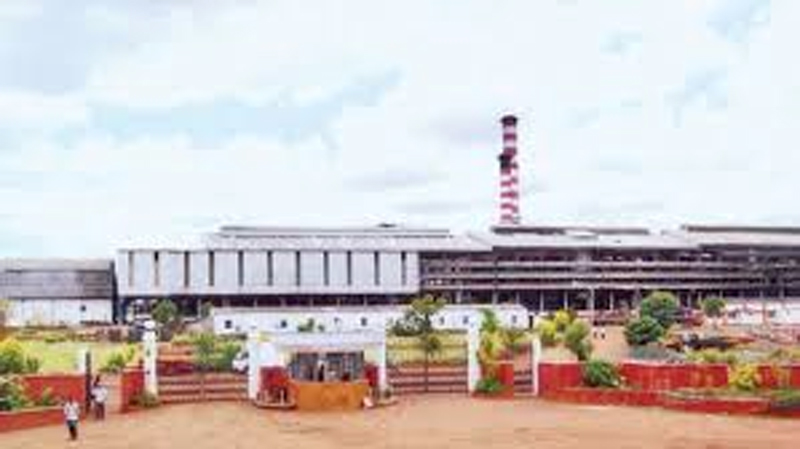
 Due to high temperature and dry condition available in Eastern part of the country, Sugarcane is an ideal crop to cultivate for sugar production. Monaragala and Ampara Districts are largely giving their contribution to sugarcane cultivation for uplifting the country’s economy while declining annual expenditure spent for sugar import. Four sugarcane plantations have largely involved to sugar production in Sri Lanka. They are Pellwatte, Hingurana, Sevanagala and Kanthale. Due to the terrorist war in the last few decades in the country Kanthale sugar processing plant and the plantation was closed and the production has not been started yet.   It is reported that the Government has taken steps to reopen the Kantale Sugar Factory, and tenders have been called from investors and the Sugar Corporation has received applications from 25 investors who are willing to reopen the Kantale Sugar factory.   It is believed that more than 5,000 job opportunities could be created and a saving of nearly Rs. 4,000 million could be made on sugar imports by commencing production at this factory.  The Governor of the Eastern Province Mrs. Anurahda Jayampath visited the Kantale Sugar Factory on an inspection tour recently and said steps would be taken to re-open the sugar factory under a new investor within the next three months.   She expressed hope that the factory would be ready to start production within the next three months. It was observed that the factory had remained out of commission for nearly 25 years thrusting machinery and equipment valued at nearly Rs. 5,000 million to neglect and ruin. The Kantale sugar factory which was received as a Czechoslovakian government aid grant began production on October 2, 1960. It was commissioned then by the first lady Prime Minister of the world Madam Sirimavo Bandaranaike.    In 1993 the UNP government handed it over in a private company and suffered closure by the end of 1999. Although the factory was again taken over by the government in 1997 it did not begin production.The factory boarders the Mahaweli river,” Seruwila, Kithul Uthuwa and Minneriya.   The factory was supplying quality sugar to the market for more than three decades from 1960. During the first and second decades since inception, the factory was running profitably. From 1980 to 1986, the factory earned a Rs. 70 million profit. It was considered as the most prosperous period of the Kantale Sugar factory in its history.   The privatization adversely affected the factory. The inefficient management and the issues of the workers reported to have led to the eventual closure of the factory. LTTE activities in the area also affected its operations.   The salaries, EPF, ETF and gratuity were also not paid to employees properly by the then administration after privatization. The workers staged a strike against the management demanding their rights.   There was only one plantation zone in the earlier period of the factory. After 1970 the plantation area was decentralized. During the development processof the Kantale Sugar Factory and Plantation, the plantation area was divided into four zones namely Zone 1, 2, 3 and 4.   Each zone had eight to 17 fields. Each field comprised 2,000 to 3,000 acres. During the prosperous period the factory granted various benefits to its employees and labourers. A working Director attached to the factory popularised the concept of planting coconut trees in every field in Zones 1, 2 and 3. Quality mango trees were planted along the approach roads of the factory. There was a bakery in the factory premises to provide bread to factory workers. There were ten small tanks in the factory. Small tanks were constructed at suitable places to facilitate the sugar cane plantation during the drought period and to improve the living standards of the workers. During the rainy period water was stored in the small tanks. There were enough fish in those tanks for the workers’ consumption.

Sri Lanka Freedom Party which was proud to have established sugar manufacturing factoring and thereby curtailing expenditure on sugar imports severely criticized the UNP government for privatising thee sugar factories to hand them over to their political cronies including Daya Gamage for financing their election campaigns.  This Gamage is alleged to have amassed undisclosed huge wealth and provides his own helicopter to UNP leader Ranil Wickremasinghe to facilitate his travel plans during elections. It has been found that these UNP cohorts who got these sugar factories heavily under-valued and almost free as political patronage instead of giving priority for the production of sugar were keen on producing Ethanol in these industries for production of alcohol in their liquor factories.  

The government of Prime Minister Mahinda Rajapaksa repealed the controversial Takeover Act in 2011 ans enacted the Revival of Underperforming Enterprises of Underutilized Assets Act of 2011and took over 37 institutions, including the two sugar companies that were privatised in 2002 by Ranil Wickremasinghe with the concurrence of Chandrika Kumaratunge..


Most of the institutions that were taken over under the Revival of Underperforming Enterprises of Underutilized Assets Act of 2011 have become profitable entities. Sevanagala and Pelawatte sugar factories were the most profitable business entities, and  their privatization directly affected the livelihoods of sugar cane farmers.

In 2002 Lanka Sugar Company Private Ltd. had a fixed deposit of Rs. 985 million and it has been dwindled to a fixed deposit of Rs. 781 million. However, the Lanka Sugar Company has not obtained funds from the Treasury since it was taken over in 2011 and Rs. 700 million has been transferred to Treasury annually since 2011.


Meanwhile, the Kantale Sugar Factory which has been closed for nineteen years is falling into ruin.

Residents say that the closure of the factory has led to them being deprived of numerous direct and indirect job opportunities. The Kantale Sugar Factory, which in the 1960’s was considered as the largest sugar production facility in Asia, provided about 10,000 direct and indirect job opportunities for the people residing in the vicinity.

They say that following a conflict between the administration and employees as a result of the privatisation of the company in 1994, the factory has been closed with no production whatsoever taking place.

The closure of the factory led to numerous residents losing their jobs.From 1960 to 94 it was under government control. In 1994 it was handed over to a private entrepreneur.. About 4000 people, 2000 permanent and 2000 non-permanent, were working in this factory. Rogues are reported to have made off with about 50 percent of the factory’s assets.

The factory complex which once comprised of luxury housing, a sports club, shopping complex and social club is now in a dilapidated state, and has become a burden on the treasury, wasting public funds.

25,000 acres that were allocated for the cultivation of sugar cane has now become a barren land that poses a threat of wild elephant incursions and the factory premises remain as a graveyard of metal beasts with abandoned trucks, tractors, and machinery rusting and becoming unserviceable. 

Sixth week of the GR Presidency

December 28th, 2019

by C.A.Chandraprema Courtesy The Island

*  No whinging and complaining
*  No daily rants about the previous government
*  Business of governing back on track

article_image

We are now past the fifth week of the Gotabhaya Rajapaksa presidency which officially began on November 18, but have not yet completed six weeks. The six weeks will be completed only on January 2. That we are now rid of the raving lunacy of the yahapalana regime seems almost too good to be true. But it is true, the yahapalanites are no longer in charge! We no longer have to switch on the TV and watch a demented yahapalana leader screaming into the camera that the ‘Raaajapaksas’ will be be jailed, that they will be made to wear jumpers, that they will be made to hang on to windows of the Medamulana walauuwa, that they should be reborn as earthworms so that they can be cut in two with a mammoty and more to that effect.  

 It was not just we Sri Lankans who realized that Sri Lanka had been taken over by madmen in January 2015. The whole world was aware of it. When Sri Lanka was under siege in the UN Human Rights Council in 2012, 2013 and 2014, there were a significant number of countries that supported us outright and voted in our favour. Yet another group while sympathizing with us, and even speaking in our favour in the Council refrained form voting due to pressure from the Obama administration which they could not resist because they were dependent on the USA for security or foreign aid or trade. Both groups of countries were our friends. In 2015, when the yahapalana government embarked on the self destructive course of co-sponsoring resolutions against itself, not one of these friendly countries joined Sri Lanka but chose to watch silently from the sidelines while Sri Lanka proceeded to shoot herself in her own rear end.

 Normally, one would expect countries that were friendly with Sri Lanka to support any decision that the elected government of Sri Lanka takes, and if Sri Lanka’s elected government decides to try its own armed forces for war crimes at the behest of foreign powers, then Sri Lanka’s friends would be expected to shrug their shoulders and say “well if that’s what you want, who are we to think that we know better?” and help Sri Lanka do whatever she wants. That however was not how our international friends saw things. They could see that Sri Lanka’s new government was treading a path that would not do Sri Lanka any good and indeed would even jeopardize the interests of the entire bloc of non-aligned nations. Hence, not a single friendly country joined in the co-sponsored resolutions that Sri Lanka passed against herself in the UNHRC. Sri Lanka was surrounded only by the traditional enemies of Sri Lanka when she co-sponsored resolutions against herself in the Council after 2015. No votes were taken because Sri Lanka was also a party to the resolutions. Our international friends were acutely aware that lunatics had taken over the reigns of power in Sir Lanka and they wanted no part in what Sri Lanka was doing to herself.

 Government by madmen 

In February 2018, on the day that campaigning closed for the local government elections held that year, no less a personality than the Auditor General of Sri Lanka called a press conference and announced publicly that he does not know how much Sri Lanka owes to foreign creditors. He said that foreign loans had been taken by the previous (Rajapaksa) government in a haphazard manner with foreign debt being taken on by certain state owned institutions as well in addition to the debt taken directly by the government and therefore, nobody had kept track of how much the country owed to outside parties. This was an extremely dangerous statement for a responsible state official like the Auditor General to make. This is the kind of statement that would make existing investors panic and withdraw their investments from the bond and stock markets and discourage any new investors from coming in. 

After listening to the Auditor General’s revelations, foreign investors in Sri Lanka should have been girding their loins to flee. But the Central Bank of Sri Lanka issued an immediate correction and said that even though the Auditor General says he does not know how much Sri Lanka owes foreign creditors, THEY knew exactly how much Sri Lanka owed and to whom and that Sri Lanka had never defaulted on a payment and that that there was no need to panic. It was not only the Auditor General who said that he did not know how much Sri Lanka owes, the President and Prime Minister of that government and many ministers were also in the habit of making public statements  to the fact that Sri Lanka was in the midst of a huge debt crisis created by the previous government.  

Statements like these would have destroyed the economy of any other country. The collapse in Greece was brought about as a result of the Greek government admitting that they had fudged the budget deficit figures and that their deficit was actually much larger than depicted officially. But in Sri Lanka despite important functionaries of the government ranging from the President, Prime Minister and Auditor General falling over one another to say how much in debt the country was, we did not suffer a similar fate.

 The reason for this was because everybody in the world, including friendly countries and investors knew that Sri Lanka had been taken over by madmen after January 9, 2015 and their statements need not be taken at face value. When prominent members of the government kept trying to accuse the previous government of taking on debt that could not be repaid, the Rajapaksa led Joint Opposition was forced to react and to point out that it was not the previous government that was responsible for the debt crisis and to bring to the attention of the public the quantum of foreign loans taken by the yahapalana government. Such matters have never been discussed publicly to such an extent under any previous government that this writer can remember. Truly there are guardian deities watching over this country. We were ruled by raving madmen for five years and the country is still here. The four guardian deities of Sri Lanka. Sri Vishnu, Kataragama, Sumana Saman and Vibhishana, have to be among the best there is in the world as far as guardian deities go.

After the yahapalanites captured the Presidency in January 2015, they had to face the inconvenient reality that they had lied and conspired their way into power leaving the public reeling with shock and disbelief after the result of the Presidential election was announced and they had to do something fast, to consolidate their hold on power or risk defeat at the Parliamentary elections that were to follow. So they set about bribing the voter by increasing public sector monthly salaries by Rs. 10,000 and reducing the taxes on many essential foodstuffs. Thus at one and the same time, government revenue decreased and expenditure increased resulting in the government having to make up the shortfall through borrowings.

  The salary hike alone increased public expenditure by about USD 1.1 billion a year without any concommittant increase in government revenue. When the salary increase went into the hands of the public with many families receiving an increase of Rs. 20,000 a month where both parents were state employees, this led to a spending and importing frenzy leading to balance of payments problems. Then inevitably, under the tutelage of the IMF, they started collecting taxes to raise revenue to meet the increased government expenditure.

At last a govt. of doers not whingers

 Within about a year, the economic chickens had come home to roost and taxes were increased all round. Ultimately, the public was actually made to pay for the privilege of having the lunatics whom they had elected to power, running the country! The total government debt which was Rs. 7.39 trillion at the time the yahapalana government came into power in January 2015, had skyrocketed to Rs. 12.64 trillion by the end of July 2019 – an increase of 71%. This due to no other reason than the expenditure incurred by the yahapalanites to get themselves elected to power at the Parliamentary election of 2015. This is the worst crisis in public finances ever experienced in this country. This country has never experienced such recklessness and irresponsibility in the management of public finances at any point in the past.

 The UNP government of 1977 when Ronnie de Mel was the Finance Minister had been very careful with public finances. Even Chandrika Kumaratunga, despite her ‘fish woman’ style of governance, was never as reckless as the yahapalana government when it came to public finances. In comparison to the yahapalanites even CBK was a paragon of probity and circumspection. No government in its right senses would mess with public fiances because finally it is those wielding power who will have to deal with the consequences sooner rather than later and every government wants to extend its stay in power for as long as is possible – this was the factor that brought self discipline into the system. That commonsense however did not apply to the yahapalana government.

 That is how government debt increased by over 71% in less than five years during which no investment was made on any major projects. All that happened during the past five years is the completion of some of the projects that had been started by the previous Mahinda Rajapaksa government. Public finances today are in the worst state ever. Yet we have not heard any whinging or complaining by anybody in the new government saying that the country is in debt and that the government is helpless.  Compare this with the persistent whinging by Maithripala Sirisena, Ranil Wickremasinghe and virtually everyone else in the previous government to the effect that the Rajapaksa government had taken on debt which could not be repaid. Despite this whinging for public consumption, what the yahapalanites had actually inherited from the previous Rajapaksa government was one of the strongest economies in Asia.

 The growth rate was second only to that of China, the stock market was at its peak, the Rupee had been holding steady for years, interest rates were the in the single digits, development projects that had been dreamed of by many governments but could never be implemented were being built and the country was poised for an economic take off. The change of government that took place in 2015 was undoubtedly the most destructive in Sri Lanka’s post independence history. It was like the sack of Rome by the Vandals. While sacking Rome, and in the midst of the burning and pillaging, the Vandals were loudly complaining that the Romans had been doing things the wrong way and that they had come to put things right for the people of Rome! From the time the yahapalana government came into power, they kept claiming that the economy was in a bad shape when they took over and that it was their job to put things right. This was obviously not true but they kept repeating it in the Goebbelsian hope that if it is repeated often enough, it will come to be accepted as the truth.

Envy of the Rajapaksas

 The yahapalanites came into power harbouring a visceral jealousy for what the Rajapaksa government had achieved. They claimed that all the infrastructure projects built by the Rajapaksa government were white elephants. They claimed that the economy was not doing as well as the Rajapaksas claimed and that the figures had been cooked. One of the first things that the yahapalanites did after capturing power was to redo the figures to show that the country had not been growing as fast as claimed by the Rajapaksa government. A time when we experienced a kind of insanity similar to that of yahapalana rule was when Chandrika Kumaratunga came into power in 1994. Where the CBK government of 1994 to 2001 was closest to the yahapalana government was in the relentless persecution of the opposition. However, the similarities end there.  

Even the persecution of the opposition by the CBK government never reached the levels of the yahapalana government. The insanity in that government was largely caused by the behavior CBK herself and her closest henchmen. CBK however never claimed that the previous UNP government had been cooking the books to make things look good. At one TV appearance she in fact acknowledged that considerable development had taken place under the 1977 UNP government. The yahapalanites however came into power with the sole intention of claiming that the Rajapaksa government had done nothing that was worthwhile. SLFP types always held the view that the UNP was better than them in running the economy and especially in achieving high growth. The UNP types for their part always thought they were better than the SLFP at running the economy. That in fact had been the actual historical experience until the Rajapaksas took over the SLFP.

 After 2005, for the first time in history, the SLFP started running the economy better than the UNP. This was obviously something that the UNP types simply could not stomach. Even the terms used to describe the SLFP ‘baiyyas’ as against the UNP ‘toyiyas’ shows a certain snooty attitude of mind. For the first time in history the Rajapaksa led SLFP outdid the UNP in economic development by a margin that could never be closed. This is obviously the reason why the UNP expended so much powder and shot trying to denigrate the Rajapaksa led SLFP’s achievements between 2006 and 2014. But the flatfooted, incompetent, ignorant and arrogant way the yahapalana government went about running the country has now ended up destroying for good the economic credentials of the UNP.

 After 2015, for the first time in history, the economy went into a tailspin after a UNP government took office. The growth rate plummeted, the stock market crashed. Now the historic roles have been reversed. The UNP have become ‘baiyyas’ the mere sight of whom sends the economy into reverse gear, and the SLPP which has emerged out of the old SLFP have become the new ‘toiyyas’ the doers, who can put the economy right. The UNP might as well now stop speaking in English and use only the vernacular. They might as well drop the traditional UNP attaire of jacket and tie and wear a traditional ‘amude’ (loin cloth) instead. The UNP is now not a party of economic managers, but a party of tree climbers at best. What they are fit for, is to shin up trees wearing amudes, to pluck coconuts.  

Today, less than six weeks into a new government, the difference is palpable. The English speaking tree climbers have been defeated and the economic managers are back. All complaining and whinging has stopped. Even though the new government has inherited the biggest debt crisis that this country has ever faced, no one has still spoken about it or complained. When Dr Nandalal Weerasinghe of the Central Bank was asked at a press conference last Friday, as to how much foreign debt will have to be paid back in the year 2020, he said it was about 4.8 billion USD. Without any doubt this country is in dire straits due to the debt crisis created by the yahapalana government.  

But the only sign that the new government has given of a crisis are the austerity measures that have been adopted by everyone from the President downwards. Despite the debt crisis, drastic tax cuts have been made in order to get the economy going again. There was no unavoidable global reason for the lack of economic growth during the yahapalana government. The economy was doing badly only due to their baneful presence as leaders of the country. During the past five years, countries like India and Bangladesh were growing at unprecedented rates while Sri Lanka stagnated. The international conditions were propitious for growth. World crude oil prices were less than half of what it had been before 2015 and yet the yahapalana government failed to make any headway.  

As of now, the new government is engaged in an effort to jump start the economy. If this government can’t do it, no one else can do it. Last month’s election result showed that the people wanted the insanity of the past five years to come to an end. The voters did ensure that it came to an end, and how!

A Report to the prison’s commissioner on Rajitha’s health

December 28th, 2019

Courtesy Hiru News

It has been observed today as to whether parliamentarian Rajitha Senaratne who is currently receiving treatment at the Lanka private hospital in Narahenpita subsequent to his arrest, could be transferred to the prison hospital.

The prison’s department said that this observation was made by a prison’s doctor this morning.

A report in this regard is scheduled to be given to the prison’s commissioner.

Parliamentarian Rajitha Senaratne is currently receiving treatment at the Lanka private hospital amidst security of prison officials.

Meanwhile several UNP Mps arrived at the hospital today as well to look into the wellbeing of the parliamentarian.

Meanwhile the New Sinhaley National organization lodged a complaint at the CID today regarding the details of the parliamentarian’s medical report which were revealed yesterday.

Meanwhile the Sinhaley organization lodged another complaint at the CID today requesting for legal action to be taken against those who encouraged parliamentarian Rajitha Senaratne to go into hiding following the issuance of the warrant.


We want to know the BRAINS behind the Easter Sunday suicide attacks in Sri Lanka

December 27th, 2019

Multiple venues were targeted on 21 April 2019 Easter Sunday causing death & mayhem across the island. What is tragic is that Sri Lanka’s Govt were given not just 1 warning but over 90 warnings over a period of 2 years. What is more baffling is that on the month of the attack and hours before the attack names of the suicide bombers, their phone numbers and even venues were given. Why were these venues not informed, why were police not dispatched are not as important as knowing who planned this attack and why?

We know who the suicide bombers were.

We need to know how connected they were to big local names and whether they too were aware of the plans.

We know who in Govt knew of the attacks but did nothing to stop it, but the other question we want answered is whether they knew who planned the attack.

The most important question we want answered is not about who executed the attacks and died but who thought of attacking Sri Lanka’s churches and hotels on Easter Sunday, for what reason, what were their other objectives and who else was involved in mapping out this plan.

Obviously those that plotted this had arranged for the suicide bombers to be brainwashed into carrying it out – who did the training, who acted as go-between and how much did every player in this chain know of the ultimate goal?

Were there a foreign involvement – if so whom? From what nation, what foreign intel agencies, where and how did they carry out the plan that eventually materialized in so many innocent deaths.

We are having in prison the IGP and the former Defense Secretary for neglect of their duties and true that is a major faux pas in their duties, but more important is that we identify the players and individuals who had planned this attack because if we do not catch them or at least identify them, there is more possibilities of them planning more attacks in the future changing their modus operandi.

Therefore, the Commission and the new investigation teams appointed must come to the bottom of this – we must know who planned the attack, why, who they co-opted, how much was paid to each, what other payments for their silence etc.

Without this all important question unanswered there will be no justice for the innocent dead.

Shenali D Waduge

මහ බැංකු මංකොල්ලය හෙළිවේ | Central Bank robbery revealed

December 27th, 2019

Siwhela TV

පාර්ලිමේන්තුව විසින් මහ බැංකු පිලිබදව සෙවීමේ කාර්යය කෝප් කමිටුවට භාර දී ඇති අතර එහි සභාපතිවරයා ලෙස කටයුතු කරන්නේ පා.ම. ගරු සුනිල් හදුන්නෙත්ති මහතා විසිනි. එහිදී එම කමිටුවට හෙළි වූ බැඳුම්කර වංචාව පිලිබඳව සාකච්ඡා කිරීමට සිව්හෙළ ටීවී අප එතුමාව සම්බන්ධ කර ගත්තෙමු… මහ දවල් සිදු වූ මහ බැංකු මංකොල්ලය සුල මුල මෙන්න

GOTABAYA RAJAPAKSE-A PRACTISING BUDDHIST-NEED TO PUT AN END TO “WHITE-VAN” SCARECROW!

December 27th, 2019

By M D P DISSANAYAKE

As Buddhists we do not believe in deities or spiritual powers. Qualities to be possessed by Leaders are contained in the Noble Eightford Path, viz.

1.  Right understanding (Samma ditthi)

2.  Right thought (Samma sankappa)

3.  Right speech (Samma vaca

4.  Right action (Samma kammanta)

5.  Right livelihood (Samma ajiva

6.  Right effort (Samma vayama)

7.  Right mindfulness (Samma sati)

8.  Right concentration (Samma samadhi)

President Gotabaya is a proud owner of a trained mind, for several years, in line with above eight concepts.   He did not practice Buddhism for Glory.  He did not practice Buddhism to win Votes.  He did not practice Buddhism to become the President of Sri Lanka.  

Several years ago, when a Media person asked Gotabaya what he would like to do in retirement, he replied with his famous offcut smile with his lips momentarily slightly moving to left horizontally: ” I like to go to the village, wear a Sarong. Meditate and have a quiet life with Gamay Minissu (Villagers)”.

But today, he is elevated to the highest rank in Sri Lanka and need to deal with Law-abiding citizens as well  as Crooks.  Except in Sri Lanka, there is no other better place to find majority Crooks wearing face-masks to deceive innocent people in your private life as well as public roles.

But, Venerable Sri Samanthabadra “Maha Arahat” Thero (Pitiduwe Siridamma at Sri Sadaham Ashramaya at Boralesgamuwa), Anura KumaraRanil, Sumanthiran, Sambandan, Mano, Rauf, Badudeen, Sajith, Maithree, Jayampathi W,  Champika, Rajitha, Sarath F, Karu J,  etc. are they Sri Lankans?  They are scoundrels.  Therefore, we need tobe cautious ofthese Puppet Sri Lankans, who are financed  by anti-Sri Lankans and misguided followers.

We need to put an end to White Van saga once and for all.  How much of mental pain must have been inflicted on President Gotabaya, before and after becoming the Leader of the Nation, for offences  never committed by this true Sinhala Buddhist man.    Gotabaya Rajapakse can be singled out as a Man above Politics.

President Gotabaya will never make under-hand Deals. He is a true Buddhist, perhaps a very rare true Buddhist, who strictly practice Buddhist principles, not just on Poya Days, but daily, including during working hours.

President Gotabaya is an exemplary character  practising Buddhist principles as a laymen.  We are nowhere near the standards of The Great man known as Nandasena Gotabaya Rajapakse.

Wishing you, your family and my country Samma Ditti under your leadership.

ඔබ තුමාගේ යහ පැවැත්ම මුසුවූ සම්මා දඨ්ඨිය තුලින් ඔබ තුමාටත් පවුලේ සැමටත් මගේ අසරණ රටටත් ඉදිරි නව වසරින් ඔබ්බට ගිය කාල සීමාවක් දක්වා සාමය සතුට ලබා දීමට ගෝඨාභය ජනපති තුමන්ට  උඨ්ඨාන වීර්යත්  භාහුවට වඩ වඩා ශක්තියත්  ලැබේවා යයි පතමි.

EELAM WAR SERIES 4. DEDICATION IN EELAM WAR IV.

December 27th, 2019

KAMALIKA  PIERIS

Eelam War IV was won due to the dedication of those who participated in it. The commanders of the armed forces were confident of victory and, for the first time, the forces experienced a firm political commitment to win. Their morale went up  and they fought with great dedication.  Unlike in previous years, there were no large scale desertions and disobeying of orders.

Gotabhaya Rajapakse said, the soldiers realised their responsibility to the nation and fought without complaint. They fought day and night, under continuous fire.  They did not ask for anything extra as a reward for their sacrifices.  They knew their country depended on them.  Their perseverance and sense of national duty won us the war”.   This came at a price. 6000 troops died, 5000 were disabled and 20,000 were injured. Some soldiers are shell shocked and out of their minds. 

There were numerous acts of heroism which the public do not know. A monk who worked with injured soldiers said that soldiers, even when disabled declared that they wished to return to the front. They were ready to sacrifice their lives in the final battle. There was a high standard of discipline. There was not a single instance where the army was found wanting in its conduct towards women. Soldiers have never been accused of rape. The LTTE had raped many of its women. (Stephen Long.  Island 5.10.09 p 4).

Troops suffered untold hardships in the battlefield. There was thirst and exhaustion. The Malaysian army faced insurgents armed only with rifles.  The Sri Lanka soldier faced an enemy equipped with sophisticated weapons. Army got its new ammunition only in 2008,   even then they never had all the ammunition necessary. Soldiers fought in heavily mined territory and .many lost their limbs.  There were no mine plucking machines   and the engineers had to de-mine the area.working ‘blind’, while LTTE fired at them.  Touching slowly with their hands, they detonated the mines using   S-Lon tubes.   This was done under fire almost every day.  Many engineers sustained injuries, most lost eyes, arms and legs.

Air Force declared that it had been stretched to the limit  and   that what it had had achieved with available resources was tremendous. The Indian Air Chief had admired the way they had used its limited resources.    The Air Force fought the war by itself. Pakistani pilots were not involved. Pilots performed under trying conditions. They carried out 1000 missions in the Vanni, amidst civilians. They had to airlift 500 army personnel using helicopters meant for 30 persons.

They underwent much hardship. When they were short of pilots, available pilots went up 3 and 4 times a day. ‘This is very tiring for a pilot.’ Surveillance pilots risked safety to obtain real time imagery. They burnt the midnight oil peering into the screen to catch enemy moves on the grounds.  They were on surveillance for 6-7 hours at a stretch. Pilots bravely  went as low as 7000 feet to attack targets. Around 38 pilots and 430 other officers and rankers died, around 350 were wounded.

The engineers and technicians also responded magnificently.They forgot about 24 hours notice. In an emergency, the time available for the technician was counted in seconds.  Aircraft were returned to the flight lines in record time. If a plane was to fly at 6 am the technicians started loading bombs around midnight. For each jet they had to load eight bombs each weighing 500 kg. Technicians worked round the clock to patch up damaged aircraft.  They sometimes worked continuously for 3-4 days. They innovated when spare parts were delayed. Battle damage and unserviceability did not deter them. They once took a badly damaged helicopter which was going to be destroyed and repaired it within a few hours. They coaxed tired engines back into fighting mode. They took a life expired engine, stripped it, and put it together again.

The electronics specialists kept the electronic systems going despite logistical and maintenance problems.

The navy also showed considerable dedication.  During the final blockade off Mullaitivu, Navy staff did not want to go on leave till they had finished off the LTTE.  The sailors had to stay in great discomfort on the seas, in small boats filled with equipment, with hardly any room to move. They had to swim to get there and stay in their wet clothes all night. They endured all this discomfort willingly.  

Military personnel injured in the war were treated at the government hospitals of Colombo, Anuradhapura, Sri Jayawardenapura, Kalubowila and Kandy. Anuradhapura teaching hospital had the biggest load. Anuradhapura staff nursed thousands of injured soldiers with great dedication. The army gave them a special upahara award. Anuradhapura sent its difficult surgical cases to Kandy.  They were looked after by the Kandy hospital staff with no additional assistance. Routine operations were cancelled   and surgeons worked round the clock.   All worked willingly, no one grumbled, though their security was also under threat. The minor staff had their leave cancelled but did not complain. The injuries were gruesome  and required complicated surgery. In the orthopedic wards,   no one had to have a higher amputation, no one died and there were no serious infections in spite of the severely contaminated wounds. At times there were over 100 seriously injured soldiers. Five beds in each ward were set aside for them and none of them were ever put on the ground.

The dedication of the Home Guards, now known as Civil Defence Force should not be forgotten.  This   was a force made up   of youngsters from remote areas, who were given a single barrel shot gun and asked to provide security for their villages, which had become soft targets for the LTTE. Though poorly armed and outmanned the home guards refused to budge and paid with their lives while trying to protect others from the LTTE .615 home guards both male and females were been killed. ( CONTINUED)

Gotabaya Rajapaksa government’s twin objectives

December 27th, 2019

By P.K.Balachandran/Daily Express Courtesy NewsIn.Asia

Gotabaya Rajapaksa government’s twin objectives

Gotabaya Rajapaksa, who won the Sri Lankan Presidential election on November 16 emphatically, and formed a government with his brother and former President Mahinda Rajapaksa as Prime Minister, appears to have two objectives at this point of time.

One is to put together a top-level team which will carry out his political and governance agendas, and the other is to secure two thirds majority or near two thirds majority in the April 2020 parliamentary elections in order to carry out the constitutional changes he has up his sleeve.

It is well-known that he is very keen on either repealing or drastically pruning the 19 th. Amendment which cut the powers of the President and increased the powers of other arms of the State in a haphazard manner making the government as a whole dysfunctional.

In his Council of Ministers, Gotabaya has had the gumption to keep some very senior party leaders who had been Cabinet Ministers earlier, away from the Cabinet. These leaders were made State Ministers without cabinet rank. From this it is clear that President Gotabaya wants to have his own handpicked group of Cabinet Ministers who will, by and large, owe their positions to him and not to any earlier President.

Senior leaders with years of cabinet membership like S.B.Dissanayake, Susil Premajayantha, Anura Priyadarshana Yapa, Mahinda Samarasinghe and John Seneviratne are now State Ministers.

Of course, there is a cap on the number of Cabinet Ministers and also coalition compulsions to contend with. But these are not the main reasons for keeping the seniors out.

Appointments to the top levels of the bureaucracy also show his interest in having a different kind of people, people who are technically qualified for the job. He has, as his Secretary, not a generalist, but an economist, Dr.P.B.Jayasundara. Gotabaya wants to put the Lankan economy on a sound and also a nationalistic footing. That is one of his top priorities apart from ensuring national security. Jayasundara is a nationalist.

Gotabaya has chosen as the Governor of the Central Bank, not a foreigner (like Arjuna Mahendran) or a foreign-oriented economist (like Dr.Indrajit Coomaraswamy) but a homegrown Colombo University economist Dr.W.D.Lakshman. Lakshman also has no links with the scam-ridden Central Bank. He can, therefore, start on a clean state.

For Provincial Governorships he has chosen persons of proven loyalty and expertise. The Governor of the Northern Province is P.S.M.Charles a nationalistic Sri Lankan Tamil and a distinguished and experienced administrator. The Governor of the Eastern Province is a politically loyal and successful woman entrepreneur, Anuradha Yahampath.

Since national security and experience in intelligence gathering and coordination is a key requirement after the Easter Sunday (April 21, 2019) suicide bomb attacks, Gotabaya chose Maj.Gen (Retired) Kamal Gunaratne to be Defense Secretary and General (Rtd) Daya Ratnayake to be Chairman of the Sri Lanka Ports Authority (SLPA). It was intelligence failure and failure to act on available intelligence that led to the Jehadi attack in April which took more than 250 lives.

With world powers, US and China, and regional power India, looking at Colombo and Hambantota ports as strategic assets over which they would like to have control, the SLPA will have to acquire an economic cum political cum strategic orientation. And President Gotabaya himself has doubts whether the 2017 agreement with the Chinese on Hambantota port fully addresses the security concerns of Sri Lanka. This is why he openly said that he would like two or three more clauses added to it to address these concerns. Gen.Ratnayake is expected to pursue the President’s goals in this regard as a security expert.

Given the importance given to security in a security-obsessed Indo-Pacific environment, the President has taken onboard as his foreign affairs advisor ( of Additional Secretary-rank) a former Navy Commander-cum academic, Adm.Dr. Jayanath Colombage.

It is also expected that Lankan Ambassadors in various countries will be either professional and committed personnel from the Foreign Service or experts from various fields including the armed forces, who have proven organizational skills. It is very unlikely that man many of the new appointees will be people only with political connections.

On the political front, it appears that President Gotabaya will continue to keep the Muslims at bay in order not to alienate the Sinhala-majority on whose vote he came to power. This is one of the reasons why he has made no deal with any of the Muslim parties or leaders including Rauff Hakeem of the Sri Lanka Muslim Congress and Rishad Bathiyudeen of the All Ceylon Makkal Congress who had been hardy regulars in every Lankan cabinet.

In fact, Gotabaya has even refrained from appointing a Muslim to his Council of Ministers, even though his alliance group in parliament has two Muslims, Kader Masthan (elected) and Faiszer Musthapha (Nominated/ National List).

His government has now asked the CID to investigate Rauff Hakeem and Rishad Bathiyudeen in regard to the Easter Sunday blast. It has re-started the probe into Dr. Seigu Shihabdeen Mohammad Shafi of the Kurunegala government hospital who had allegedly made 4000 Sinhala-Buddhist women sterile in order to restrict the Sinhala-Buddhist population. The probe is being reopened even though the CID had found no evidence to sustain the allegation.

Again with an eye on the April 2020 parliamentary elections, Gotabaya has kept up the chant that he will not devolve more power to the Tamil-speaking Northern and Eastern Provinces, than already devolved. He has bluntly said that he will not devolve powers over the Police and Land. He has openly said that the majority Sinhalas will not approve of devolution over police and land. The Gotabaya government has made it clear that the national anthem will be sung only in Sinhala at the next Independence Day function in Colombo.

The government has also said that it will re-examine the co-sponsored resolution in the UN Human Rights Council (UNHRC) and tell the February-March session of the Council that Lanka has objections to some of the accountability mechanisms. This angers the Tamils and could anger the Western democracies too, but government cannot approve of the existing resolution and still hope to keep the Sinhala-majority vote with it. Any major concession to the Tamils may not be liked by Gotabaya’s Sinhala vote bank.

On the economic front, the Gotabaya regime has not brought about any fundamental changes yet, given the time frame, but it has made prices come down through a slashing of taxes over a wide range of articles of common use. The slashing of taxes is expected to stimulate demand for goods and services and get the slumbering Lankan economy moving.

While conservative economists and international rating agencies have warned about a looming financial gap and an inability to repay government debts, the Presidential Advisor and the Treasury Secretary have maintained that these fears are baseless and alarmist.

The IMF would want the government to cut recurring expenditure and slash government spending , but in the pre-election months, government cannot do these things. In fact, the government is vigorously doing the very opposite. The President said that over the next few years, he will create 100,000 new unskilled government jobs for the very poor so that they can stand on their feet and indirectly help generate demand for goods and services in the economy as a whole. Government is also going to spend billions of rupees on rural development from January 2020 without any prospect of getting immediate returns.

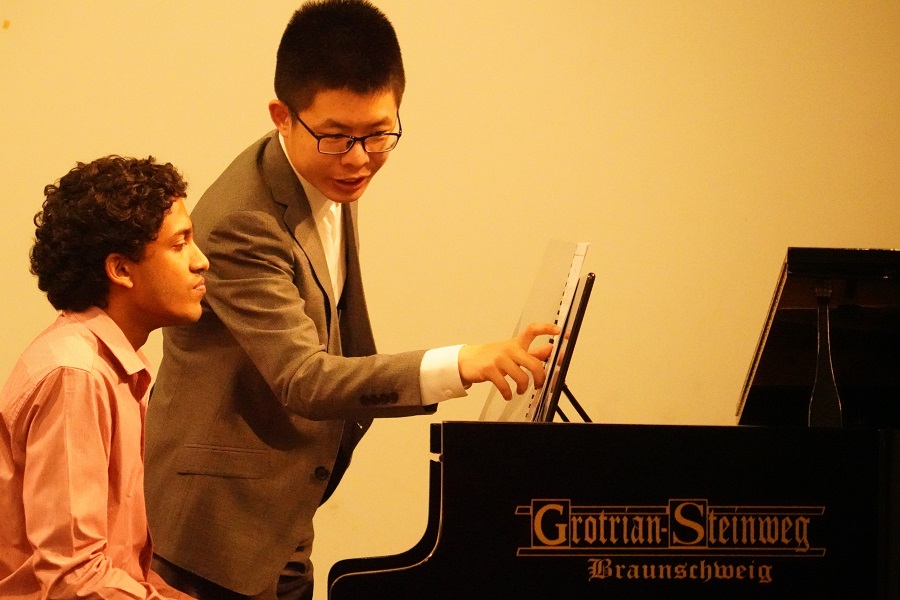
Chinese piano maestro Lu Yao adds a new dimension to Sino-Lankan ties

December 27th, 2019

by Shiran Illanperuma Courtesy Xinhua

COLOMBO, Dec. 25 (Xinhua) — Sri Lankans today know China mostly for its economic assistance, but concertmaster and president of the Chamber Music Society of Colombo (CMSC) Lakshman De Saram hopes that a recent recital by a piano virtuoso will help showcase China’s wealth of culture and musical talent.

When Lu Yao, an award-winning graduate of the Beijing-based Central Conservatory of Music, walked on to the stage of the Lionel Wendt Theatre at the city center of capital Colombo, Some audiences were taken aback by his boyish appearance,” De Saram said.

Lu’s masterful interpretation of classics by Chopin, Mozart and Beethoven revealed a maturity and depth, and quickly drew the audience into his world. His explosive duet with host CMSC was described as inspirational” by De Saram, and a moment for artists from two civilized friends to display their musical prowess.

A performance by someone as skilled as (Lu) Yao is something many Sri Lankans have never experienced,” said De Saram. Describing the Chinese musician’s interpretation of Pi-Huang by Zhang Zhao, a Peking Opera classic, De Saram said, brings out all the elements of Chinese Opera through a single instrument.”

De Saram said that he is grateful for the sponsorship from the Embassy of the People’s Republic of China to Sri Lanka which enabled the CMSC to host Lu for a cultural exchange in Sri Lanka.

Maestro Lu Yao received a standing ovation from the audience in Colombo after performing with the Chamber Music Society of Colombo. Photo: Tang Lu/Xinhua

Chinese companies AVIC International and Huawei and Sri Lanka-China joint venture Port City Colombo were also sponsors.

Nineteen-year old Avishka Wikramanayake, an audience and budding pianist himself, praised Lu’s performance. It was both intimidating and inspiring to watch (Lu) Yao perform and dance on the edge of the abyss with every track,” he said.

The day after the recital, Wickramanayake was one of around 20 pre-selected advanced students participating in a free-of-charge master-class led by Lu.

Lu watched closely as Wickramanayake practiced a piece by Chopin. When he said, Stop,” the entire class held its breath. Lu’s interventions were firm but constructive. Don’t be nervous,” he said. Wickramanayake’s next attempt at the piece was audibly augmented by Lu’s instruction.

Lu Yao instructing Avishka Wikramanayake. Photo. Tang Lu/Xinhua

For Wickramanayake, who hopes to study musicology some day, a one-on-one with Lu was a once-in-a-lifetime experience. It is great to interact with someone of that level of experience who makes you push yourself and aspire to be better,” he said.

Performing in Colombo was a new experience for Lu, who was visiting Sri Lanka for the first time and is more used to performing for audiences in China and the West. I think the Sri Lankan audience was unbelievable and better than a lot of those in Europe,” he said.

I am happy and honored to have played alongside the Chamber Music Society of Colombo who are at a very high level,” he added.

Lu had always wanted to visit Sri Lanka and try out the country’s famous tea, having heard many stories of his piano instructor’s travels to the scenic island. In China, many musicians want the opportunity to visit places like Sri Lanka and share our culture,” said Lu.

I hope more Chinese organizations sponsor cultural events like this and I hope I can come back as soon as possible.”

(The featured image at the top shows Chinese maestro piano Lu Yao instructing a Sri Lankan student.Photo: Tang Lu/Xinhua)

During Portuguese rule, Jaffna peninsula was entirely “Catholic”

December 27th, 2019

By P.K.Balachandran/Daily Express

Today, the Tamil-speaking Jaffna peninsula is a bastion of orthodox Saivism – a Hindu sect based on the worship of Lord Siva. But according to Prof. Tikiri Abeysinghe, in the 16th and the 17th centuries, under Portuguese sway, the peninsula was entirely Catholic, though only nominally so.

In Jaffna under the Portuguese”, which was first published in 1986, Abeysinghe (who taught history in Colombo University) says: Portuguese documents reporting conversions in Jaffna do so invariably in multiples of thousands. Even allowing for exaggeration, natural to this type of document, the success achieved by the missionaries was striking.”

Abeyasinghe notes that in the period 1624-1626, the Franciscans alone converted 52,000 Jaffna Tamils. Taking that figure as a rough basis for the calculation of the total number of Christians in Jaffna under the care of the 42 parishes, one gets the figure 115,000,” he says. Antonio Bocarro’s report of 1634 states that in Jaffna, nearly all natives are Christians”. Fernao de Queiros, the renowned Portuguese chronicler of Ceylon (as Sri Lanka was then called) had described Jaffna as being wholly Christian”.

Why Mass Conversion?

The reasons for the en-masse conversion of Jaffna Tamils were many. The first was the proselytizing zeal of the Portuguese, who unlike the Dutch and the English who followed them, were hell bent on converting people to Christianity as much as they were interested in trade and territory. The second was the unquestioned military and political power that the Portuguese exercised over the population of Jaffna. The third reason was the strategic importance of Jaffna, especially the western port of Mannar, for trade as well as security of the Portuguese in Sri Lanka. The fourth was the anti-Christian stance of some of the powerful rulers of Jaffna, which infuriated the Portuguese. The fifth reason was the docility of the Jaffna man. Philip de Oliveira, who led the expeditionary force, which captured Jaffna in 1619, described the Jaffna man as being generally passive or weak”.

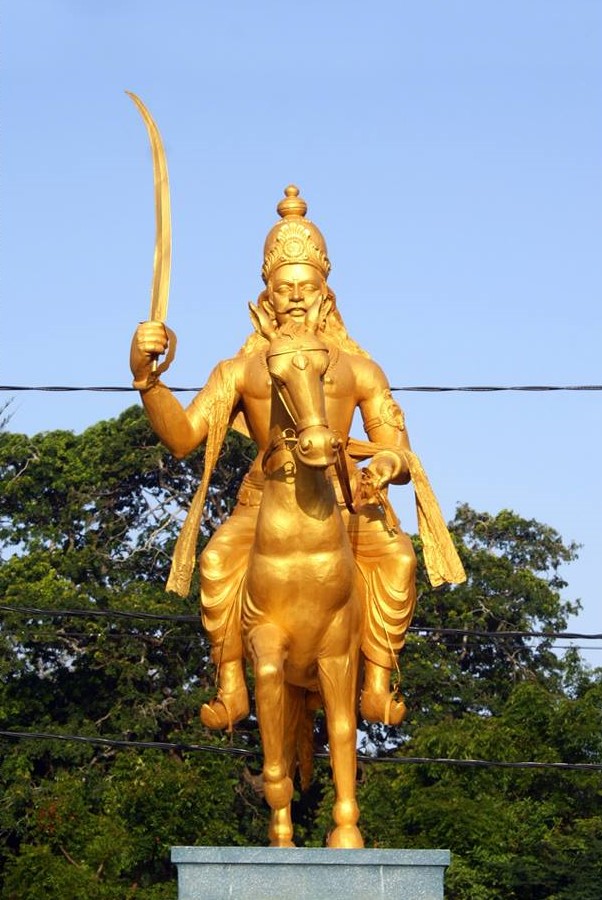
Statue of King Sankili II in Jaffna town.

Intrigues Against Portuguese

However, the Kings of Jaffna, in alliance with the Sinhala Kings of South Sri Lanka and the Nayaks of South India, did trouble the Portuguese at the initial stages. The Portuguese intervened in Jaffna for the first time in 1543, when Sankili, the King of Jaffna, seized some wrecked Portuguese cargo vessels and began persecuting Christian converts among the fishermen of the Parava caste in Mannar. In 1543, St Francis Xavier had visited Mannar and converted 600 Paravas. Since the converts were automatically deemed to be Portuguese subjects, Sankili was alarmed.He saw in this a grave threat to Jaffna’s economy and security. The immensely valuable pearl fisheries would be out of his control. The Parava area in Mannar could become a bridgehead for a Portuguese invading army.

Therefore, in 1543 itself, Sankili sent an expedition to Mannar and slaughtered the Parava converts. St.Francis Xavier appealed to the Portuguese state to punish the Jaffna King. But it was only in 1558 that Constantine de Braganca captured Jaffna. Sankili escaped to Trincomalee. Subsequently, he made peace with the Portuguese and came back to power, but without control over Mannar. He had lost control over the shipping and trade in the Gulf of Mannar and Palk Strait, a major source of revenue for his Kingdom.

The Jaffna Kingdom then went into a period of great political instability. As in other parts of Sri Lanka, rival claimants to the throne were using the Portuguese to press their claims. In 1570, the Portuguese put their protégé Periyapulle on the throne. But in 1582, Periyapulle was overthrown by Sankili’s son, Puviraja Pandaram. Like his father, Puviraja Pandaram followed an anti-Portuguese policy. He sought the help of the Zamorin of Calicut and attacked Mannar. But the expedition failed.

In 1591, the Portuguese took the battle to Jaffna and massacred 800 of Puviraja Pandaram’s soldiers who were South Indian mercenaries, including Muslims from Calicut. The Portuguese put Edirmanasingham, who took the title Pararasa Sekaran, on the throne. But under pressure from his Hindu subjects to break the shackles for the sake of their religion and culture, Edirmanasingham alias Pararasa Sekaran struck an alliance with the Nayak rulers of Thanjavur in Tamil Nadu and also the Kings of Kandy, Vimaladharmasuriya I (1593-1604) and Senarat (1604-1635) who were anti-Portuguese. He proceeded against the Catholic converts too.

When Pararasa Sekaran died in 1617, his chosen successor was assassinated by Sankili Kumaran, a nephew. Sankili Kumaran sought recognition from the Portuguese. But when there was no response, he invited the Nayaks of Thanjavur to help him get out of the clutches of the Portuguese. In 1619, the Portuguese marched on Jaffna and took it over completely.

Destruction of Local Leadership

According to Abeyasinghe, Sankili, his sister, his four nephews, and the heir to the throne, were exiled to Goa in Western India, the seat of Portuguese power in the region.

With the exit of the Sankili clan, the Jaffna man gave up all hopes of resisting the Portuguese. He accepted Portuguese rule, including the need to convert to Catholicism, though most unwillingly.

In Goa, these royal exiles lived under surveillance, many of the younger members being lodged with religious orders – males in the College of Kings at Bardez, and the females in the Convent of Santa Monica in Goa. Eventually, many of them, like the younger (Sinhala) royalty from Sitawaka and Kandy, entered holy orders,” Abeyasinghe says.

Baptism Under Duress

Although St Francis Xavier had begun conversion in 1543 itself, it was only after the complete take over of Jaffna in 1619, that conversions took on a mass character. The Franciscans were followed by the Jesuits in 1622. The Portuguese authorities fixed the number of parishes for Jaffna (minus Mannar and Mantota) at 42 to be divided among the Franciscans and the Jesuits.

In order to increase the number of converts rapidly, they resorted to what Abeyasinghe calls general baptism”.
Quoting Trinidade and Queiros, he says that in a typical case of general baptism in a village, the announcement of the arrival of the Portuguese missionaries would be made by tom tom. The villagers in question would be asked to assemble and then a missionary would ask them to reject their false” gods and accept one true God”.

It was not a request; it was almost a command backed by the authority of the Portuguese government” Abeyasinghe notes. The missionary would invariably be accompanied by the local Portuguese officials and the native chiefs who supported them.

Fear of a fine or corporal punishment with cane and stock would ensure their regular attendance at church on Sundays and feast days,” Abeyasinghe adds.

Economic Ruination of Jaffna

But Portuguese rule ruined Jaffna, Abeyasinghe says. Though the Jaffna peasant was not dispossessed, he had to pay heavy taxes, which the Portuguese kept hiking from time to time. As Bocarro said: the land has little commerce. It has no merchandise. It has no water other than that from the sky”. In addition to the rapacious government, the Catholic priests were extorting money.

The cash from the Jaffna treasury was being used to fund Portuguese settlements elsewhere. Nothing was ploughed back into the local economy. According to Fernao de Queiros, the Portuguese chronicler par excellence the people of Jaffna had been reduced to the utmost misery” under Portuguese rule.

In the absence of the possibility of waging war or revolting, the only option for the people was to migrate to the Wanni. Some went across the Palk Strait to Rameswaram on the Indian side.

It is, therefore, not surprising that when the Dutch overthrew the Portuguese in June 1658, the people of Jaffna were immensely relieved. The refugees not only came back to Jaffna, but shed Catholicism and reverted to Hinduism en masse. Only the coastal Paravas, who apparently saw Catholicism as a liberation theology, stuck to Catholicism.

රාජිත සේනාරත්න ගැන විවිධ අදහස්

December 27th, 2019

උපුටා ගැන්ම හිරු නිව්ස්

පාර්ලිමේන්තු මන්ත්‍රී රාජිත සේනාරත්න හදිසියේ රෝහල් ගතවීම සහ අත්අඩංගුවට පත්වීම සම්බන්ධයෙන් විවිධ පාර්ශ්ව අද අදහස් පළ කළා.

Prison officers arrive at Lanka Hospitals to take charge of MP Rajitha Senaratne

December 27th, 2019

Courtesy Hiru News

Prison+officers+arrive+at+Lanka+Hospitals+to+take+charge+of+MP+Rajitha+Senaratne

Prison officers arrive at Lanka Hospitals to take charge of MP Rajitha Senaratne who has been remanded till 30 December

The 2 white van drivers seek court permission to make a special revelation.

December 27th, 2019

Courtesy Hiru News

The two suspects remanded in connection with the white van media conference organized by MP Rajitha Senarathna were further remanded until January 6th.

They were arrested by the CID from a restaurant in Mahara on December 13th.

Meanwhile, responding to MP Senarathna’s lawyer, Navarathna Bandara, deputy solicitor general Dilipa Peries told the court that MP Rajitha Senarathna has been named as the 3rd suspect of the white van media conference.

He said the action was taken on the instruction of the Attorney general.

The Deputy Solicitor General further stated that a warrant has been obtained to arrest the Parliamentarian.

Rajitha Senaratne’s lawyer again questioned whether his client had been arrested at the time of the hearing of his case.

The Colombo Chief Magistrate Lanka Jayaratne inquired from MP Rajitha Senaratne’s lawyer whether he was unaware of it, and he said he was not aware of it.

The Deputy Solicitor General stated that they have been searching for MP Rajitha Senaratne for several days after obtaining the warrant but he had been in hiding.

At the same time, the deputy solicitor general told the court that the person who provided make-up to the two suspects has also been questioned

In addition, he said that investigations have been initiated on an individual called Room Mohamed who paid the make-up artist.

Meanwhile, the lawyers who appeared for the two suspects told the court that his clients are requesting court permission to make a special statement before the court.

Later, Colombo Chief Magistrate Lanka Jayarathna said that they will be given an opportunity to do so after the CID filed charges against them.

Central bank clarifies bond scam investigations

December 27th, 2019

Courtesy Hiru News

Central Bank Deputy Governor, Dr Nandalal Weerasinghe says necessary legal actions are being taken with regard to the bond scam according to the forensic audit report that has been given to the Attorney General.

Dr Weerasinghe was addressing a media conference held at the Bank premise today.

Prime Minister reveals a scheme to weaken national, religious and social harmony

December 27th, 2019

Courtesy Hiru News

Prime Minister Mahinda Rajapaksa says that a swift investigation will be done on the opinions which had planned to change the students’ mindset through school textbooks.

He was addressing a ceremony held at the Perakum Maha Vidyalaya at Iratta Periyakulam in Vavuniya.

Rajitha Senaratne remanded until December 30

December 27th, 2019

Courtesy Hiru News

Parliamentarian Rajitha Senaratne who was arrested by the Criminal Investigation Department (CID) has been remanded until the 30th.

The order was made after an additional magistrate visited the private hospital where the MP is receiving treatment.

In Colombo, a nativity play becomes a symbol of inter-ethnic and inter-faith unity

December 27th, 2019

by Melani Manel Perera Courtesy AsiaNews.it

The annual Christmas carols at Holy Family Convent (HFC) School highlight unity. The traditional nativity scene has been given further meaning by the addition of four characters representing Sri Lanka’s four main communities.

Colombo (Asia News) – Christmas carols are sung every year on the last day of class in all Sri Lankan schools. The Holy Family Convent (HFC) School in Colombo too holds its annual Christmas carol service before Christmas, but after school is closed.

This year, with an invitation open to all students, parents and alumni of the school, 200 students sang 12 carols in four languages: Sinhalese, English, Tamil as well as Latin.

HFC’s annual Christmas carols showed unity because We live in a multiethnic society where different religions and ethnic groups live and share their lives” during what was above all, an evening of praise for the Lord,” school principal Sister Deepa Fernando told AsiaNews.

Four characters representing the country’s Sinhalese, Tamil, Muslim and Burger communities were added to the traditional nativity play, broadening its meaning.

“Our principal wanted me to think differently and meaningfully about the nativity play this year,” said dance teacher Deana Vilashini Hettiarchchi, who organised the performance. Sister Deepa wanted to send a message to society to avoid the misunderstandings, suspicions and hatred that followed the Easter Sunday attacks.”

We wanted to invite Christians and others to rethink and remove the distance between ethnic groups and welcome each other as sisters and brothers because Jesus was born for everyone, not just for Christians. It is about unity, not division.”

Speaking to, AsiaNews Sister Deepa noted that “We are in the Christmas season and Christmas carols are something very common in this period.”

More importantly, We organise them to show unity in the birth of Jesus, because we live in a multiethnic society in which different religions and ethnic groups live together. We symbolise our unity in diversity, showing the richness of our nation.”

 In our nativity [play], we can see the arrival of the three kings and four other people who visit our Lord wearing their traditional costumes. This shows Jesus incarnate among people, beyond cultural differences.”

A student who took part in the play bemoaned that in our society the ethnic and religious harmony of the past no longer exist after the Easter Sunday attacks.”

In his homily, Father Quintus Perera OMI also focused on unity and sharing in a peaceful society.

Massive cocaine bust, LTTE arrests and cross-border smuggling among Malaysia’s top crime cases of 2019

December 27th, 2019

Courtesy Malay Mail

Inspector General of Police Tan Sri Abdul Hamid Bador and other officers examine the 12-tonnes of cocaine seized from three containers at Bayan Baru Police Station September 20, 2019. — Picture by Sayuti Zainudin

KUALA LUMPUR, Dec 27 — The Liberation Tigers of Tamil Eelam (LTTE), the continuing drug problems and smuggling at the country’s borders were among the crime issues of focus in 2019.

Apart from that, also receiving attention this year was the appointment of Tan Sri Abdul Hamid Bador as the inspection-general of police on May 4.

Abdul Hamid on August 21 exposed the involvement of police personnel and officers on drugs which led to the implementation of the Blue Devil Operation which saw the commitment of the Royal Malaysia Police (PDRM) to restore the image of the security forces.

Based on police statistics, as at November 14, 211 police personnel were held after being found positive for drugs via screening operations conducted nationwide.

On September 10, police also smashed an international drug smuggling syndicate when they seized 12 tonnes of cocaine with coal worth RM2.4 billion in three containers at North Butterworth Container Terminal, Penang, which was the largest seizure in the country.

From January to November, police also succeeded in uncovering 19 drug-processing laboratories throughout the country with most of them located in the rural areas.

Police also launched Op Damn Tokan in September and statistics showed 456 individuals were detained as small-time drug pushers in the country.

In this regard, a programme named Nurture for Betterment was also introduced by police to assist restricted drug offenders under the Dangerous Drugs (Special Preventive Measures) Act 1985.

The issue of terrorism also received focus this year when 12 people including Gadek assemblyman, G. Saminathan, 34 and Seremban Jaya assemblyman P. Gunasekaran were detained for having suspected links with LTTE.

Suspected Liberation Tigers of Tamil Eelam sympathiser Kalaimughilan Arjunan is pictured at the Kuala Lumpur High Court October 31, 2019. — Picture by Ahmad Zamzahuri

On October 10 and 13, police via Bukit Aman Special Branch Counter Terrorism Division arrested 12 individuals suspected of being involved in promoting, supporting, possessing materials and channelling funds involving LTTE.

Bukit Aman Special Branch Counter Terrorism principal assistant director Datuk Ayob Khan Mydin Pichay said the two assemblymen were apprehended after being suspected of attending an LTTE Warriors’ Day anniversary in Melaka in November last year.

Those detained were from Selangor, Perak, Penang, Kedah, Negri Sembilan, Melaka and Kuala Lumpur under the Security Offences (Special Measures) Act 2012 (Sosma).

They were charged in separate Sessions Court here and in several states on October 29 and 31 after being accused of having links with LTTE and re-mention of the cases were set in December.

Cross-border crimes involving smuggling cases also sent shock waves in the country when the Malaysian Anti-Corruption Commission (MACC) revealed videos of smuggling activities at the border on Oct 18.

MACC claimed it has thousands of video clips on corruption at the border since 2017 which received various reactions from several parties.

Simultaneously, 14 officers and personnel of the General Operations Force (GOF) who were identified as those involved in corrupt practices on cross-border smuggling in Padang Besar, Perlis, had actions taken against them.

Police statistics on smuggling also showed the matter should not be taken lightly when it was reported that between 200 to 300 kilogrammes of goods were smuggled daily including ketum leaves and cigarettes seized by Perlis police since September 3.

According to Padang Besar police headquarters, seizure of ketum leaves rose 51.1 per cent at 81,851.54 kilogrammes between January and October this year compared to 40,037.3 kilogrammes last year.

Meanwhile, 1,968,654 litres of liquor of various brands and 10.32 million sticks of cigarettes worth RM12.41 million which were smuggled into the country with duty unpaid, were disposed of by the Malaysian Customers Department on November 8.

Its director-general Datuk Seri Paddy Abd Halim said both items were seized from two operations at Port Klang in Selangor and on April 7 and November 7 involving unpaid duties amounting to RM61.87 million. — Bernama

Ideas being introduced into the minds of children to be scrutinised

December 27th, 2019

MEDIA RELEASE Prime Minister Mahinda Rajapksa 

(Translation of the speech made by Prime Minister Mahinda Rajapksa at the National Dhamma School Convention and Awards Ceremony held at Irattaperiyakulam in Vavuniya on 27 December 2019.)

Most Venerable Mahanayaka Theras, Anunayaka Theras and members of the Maha Sangha, Hon. Ministers, Parliamentarians, Secretary to the Ministry of Buddha Sasana, Cultural and Religious Affairs, Dhamma School Teachers, and students of Dhamma Schools,

Students enrolled in the Dhamma Schools today will be the generation that carries forward the Sinhala Buddhist national identity. Over the past several years, we saw the destruction brought upon in this country as a result of a significant section of the Buddhist population being alienated from the Temple, from the Dhamma and the Maha Sangha. It became fashionable for Buddhists to denigrate Buddhism and the Sinhalese. Even politicians who were elected to power by Sinhala voters, openly insulted the Maha Sangha.

People belonging to other religions and ethnic groups in this country will never insult their own religion or ethnic group in that manner. Even though a significant proportion of students from Sinhala Buddhist families are enrolled in Dhamma Schools, the number actually attending, is far fewer than the number registered. The present Sunday Dhamma Schools system commenced in 1895. Even before these Sunday Dhamma schools were instituted, the Temple imparted education to the laity. In pre-colonial times, the Temple was the main centre of education. 

A secular schools system came into existence during the Dutch and British colonial eras. The world also became a more complex place and an ever expanding formal education system came into being. Today, the secular education system and the Dhamma Schools exist side by side. Even though Buddhism is taught as a subject in the secular schools system, it is through the Dhamma Schools that the younger generation is brought close to the Buddhist philosophy, the Buddhist way of life, the Buddhist traditions and the Temple. It is through the Dhamma schools that Buddhist families are brought closer to the Temple. Sinhala Buddhist culture, and our national traditions are based on the relationship between the lay community and the Temple.

The Most Venerable Madihe Pannasiha Mahanayake Thera once said that the purpose of the Dhamma Schools was not to impart textual knowledge but to mould the character and way of thinking of the students. The purpose of Dhamma Schools is not to prepare students for examinations. Its purpose if to create an individual imbued with a Buddhist way of thinking. Madihe Pannasiha Mahanayake Thera identified five modes of conduct expected of a dhamma school student as follows:

Firstly, adhering to the Five Precepts and observing the Eight Precepts on Poya Days. Secondly, respecting the Maha Sangha, parents, teachers and elders. Thirdly, leading a simple life and maintaining a good relationship with one’s neighbours. Fourthly, developing restraint, good behaviour, and a sound knowledge of the Dhamma. Fifthly, devotion to the Buddha-Dhamma, and being motivated by national pride and indigenous traditions. These words are valid even today. We expect to improve the Dhamma Schools system and the programmes offered in them in order to enable those institutions to produce the Buddhist youth that the Ven Pannasiha refered to.

This is a time when we have to be very vigilant with regard to what is being put into the minds of school children. Foreign funded NGOs have influenced our education system in subtle ways. I heard some leading academic bhikkus explaining how school textbooks now have content that will have the effect of corrupting young minds. A lay organisation explained how some school text books have depicted the Northern and Eastern provinces of Sri Lanka as one province. It was also said that the Sinhala New Year has been dropped from some school textbooks.

We should realise that there is a concerted and ongoing attempt to divide the country, to destroy the Sinhala Buddhists, to disrupt the family as an institution among the Sinhala, Tamil, Chritian and Hindu sections of the population and to create divisions between children and their parents, between students and their teachers, between children and religions. Programmes aimed at achiving these objectives begin at the level of primary schools. After a few years, the way of thinking of the Sinhala population would have changed without anyone even realising it. An expeditious investigation will be carried out into the ideas being put into the minds of school children through school text books.

We will put in place a programme to attract more children and youth to Dhamma Schools under the guidance of the Maha Sangha. What should happen is that children and youth should be motivated to go in search of the temple and our national heritage. I believe that in order to achieve that objective, our approach also has to change with the times. A programme should be put in place to show appreciation for the voluntary work done by Dhamma school teachers. The Dhamma schools depend on their dedication. A special programme will have to be put in place to maintain the Dhamma Schools located in remote areas. 

We are gathered here today, for the awards ceremony of an all island competion among Dhamma School students. I wish to convey my best wishes to all Dhamma School students in the country, regardless of whether they participated in this competition or not.

Thank you,

May the blessings of the Triple Gem be upon you.

ළමුන්ගේ හිත් තුළට දාන මතවාද ගැන විමර්ශනයක්

December 27th, 2019

මාධ්‍ය නිවේදනය අග්‍රාමාත්‍ය මහින්ද රාජපක්‍ෂ මැතිතුමා

(2019 දෙසැම්බර් 27 වවුනියාවේ ඉරට්ටපෙරියකුලමේදී සමස්ථ ලංකා දහම් පාසල් සිසු ජාතික මහෝත්සවය අමතමින් අග්‍රාමාත්‍ය මහින්ද රාජපක්‍ෂ මැතිතුමා කළ කතාවේ පිටපත)

වැඩමවා වදාල මහානායක ස්වාමීන්වහන්සේලා, අනුනායක ස්වාමීන්වහන්සේලා ප්‍රමුඛ අතිපූජනීය මහා සංඝරත්නයෙන් අවසරයි, ගරු ඇමතිවරුනි, මන්ත්‍රීවරුනි, බුද්ධ ශාසන, සංස්කෘතික හා ආගමික කටයුතු අමාත්‍යංශයේ ලේකම්තුමනි, දහම් පාසල් ගුරුවරුනි, දෙමවිපියනි, දහම්පාසල් ශිෂ්‍යයනි;

අද මේ රටේ දහම් පාසල්වල ඉගෙනගන්නේ, සිංහල බෞද්ධ ජාතික අනන්න්‍යතාවය ඉදිරියට ගෙනයන්න ඉන්න පරම්පරාවයි. අපි පහුගිය අවුරුදු කිහිපය තුළ දැක්ක, බෞද්ධ ගිහියන්ගෙන් සැලකිය යුතු පිරිසක් පන්සලෙන් ඈත්වීම නිසා, ධර්මයෙන් ඈත්වීම නිසා, මහා සංඝරත්නයෙන් ඈතිවීම නිසා, මේ රටට සිද්ධ වුනු විනාශය. බෞද්ධයන් විසින්ම බෞද්ධකමට ගරහන එක, සිංහලකමට ගරහන එක ‘ස්ටයිල්’ එකක් බවට පත්වුනා. සිංහල ඡන්දවලින් බලයට පත්වෙන දේශපාලඥයන් පවා සිංහල බෞද්ධයන්ට, මහා සංඝරත්නයට  ප්‍රසිද්ධියේ අවමන් කලා.

මේ රටේ ඉන්න වෙනත් කිසිම ජාතියක හෝ ආගමක අය ඔය විදියට තමන්ගෙම ජාතියට ආගමට ගරහන්නෙ නැහැ. මේ රටේ සිංහල බෞද්ධ පවුල්වල ළමුන් අතරින් සැලකිය යුතු පිරිසක් දහම්පාසල්වල ලියාපදිංචි වෙලා හිටියත්, දහම්පාසල්වලට ඇත්තටම එන පිරිස ඊට වඩා අඩුයි. වර්තමානයේ, අපි ඉරිද දවස්වල පවත්වන දහම්පාසල් ක්‍රමය පටන්ගත්තේ 1895. නමුත් මේ ඉරිද දිනවල පවත්වන දහම්පාසල් ඇතිවෙන්නත් කලින් පන්සල කියන්නේ බෞද්ධ ගිහියන්ට අධ්‍යාපනය සපයපු තැනක්. ලංකාව යටත් විජිත බලවතුන්ට නතුවෙන්න කලින්, අධ්‍යාපනයේ කේන්ද්‍රස්ථානය වුනේ පන්සලයි.

ඊට පස්සේ ලන්දේසි, ඉංග්‍රීසි පාලන සමයන්වල මේ රටේ ඇති වුනා ගිහි පාසල් ක්‍රමයක්. ඒකත් එක්කම ලෝකයත් කලින් තිබුනට වඩා සංකීර්ණ වුනා. එන්න එන්නම පුළුල්වන අධ්‍යාපන ක්‍රමයක් ඇතිවුනා. ඉතින් අද ‍වෙනකොට සාමාන්‍ය පාසල් ක්‍රමය වෙනම තියනවා. දහම් පාසල් ක්‍රමය වෙනම තියනවා. පාසල්වලත් බුද්ධාගම විෂයක් හැටියට උගන්වන බව ඇත්ත. නමුත්, ළමා පරපුර බුද්ධ දර්ශනයට, බෞද්ධ දිවිපෙවෙතට, බෞද්ධ සම්ප්‍රදායට, පන්සලට ලං වෙන්නේ දහම්පාසල තුලින්. බෞද්ධ පවුල් පන්සලට ලං වෙන්නේ දහම්පාසල තුලින්. අපේකම, සිංහල බෞද්ධ සභ්‍යත්වය, අපේ සම්ප්‍රදායන්, දේශීයත්වයට ඇති නැඹුරුව, ඔක්කොම රඳා පවතින්නේ ගිහි ප්‍රජාවත් පන්සලත් අතර පවත්වන සම්බන්ධය උඩයි.

මඩිහේ පඤ්ඤාසීහ මහනායක හාමුදුරුවෝ කියල තියනවා දහම්පාසලෙන් වෙන්න ඕන පොතේ දැනුම ලබා දීමටත් වඩා, ළමයෙකුගේ පෞර්ෂත්වය, චින්තන රටාව ගොඩනගන එකයි කියලා. විභාග සමත් වීම නොවෙයි දහම් පාසල් අධ්‍යාපනයේ අරමුණ වෙන්නෙ. ඒකෙ අරමුණ වෙන්නෙ බෞද්ධ ගුණාංග වලින් හෙබි පුද්ගලයෙක් බිහි කරන එකයි. මඩිහේ පඤ්ඤාසීහ මහනායක හාමුදුරුවෝ දහම්පාසලෙන් ළමුන් තුළ ඇති කරන්න ඕන ගති පැවතුම් පහක් ගැන කියල තියනවා.

පලමුව, සිල් පද පහ අනුගමනය කරල පෝය දවස්වල අටසිල් සමාදම් වීම. දෙවනුව, මහා සංඝ රත්නයට, දෙමාපියන්ට, ගුරුවරුන්ට හා වැඩිහිටියන්ට ගරු කිරීම. තුන්වනුව, සරළ දිවිපෙවෙතකට හුරුවෙලා අසල්වාසීන් සමඟ සහයෝගයෙන් ජීවත් වෙන්න හුරු කිරීම. හතරවනුව, හික්මීම, මනා හැසිරීම් රටාවක් හා ධර්මය පිළිබඳ දැනුම වර්ධනය කිරීම. පස්වනුව, දේශීයත්වයට නැඹුරු වූ, බුදු දහම ගැන භක්තියක් ඇති, ජාතික වාදී හැඟීමකින් යුක්ත තරුණ පරපුරක් ඇති කිරීම. අදටත් ඒ වචන වලංගුයි. පඤ්ඤාසීහ මහනායක හාමුදුරුවෝ කියපු ඒ බෞද්ධ තරුණ පරපුර බිහිකරන්න පුළුවන්වෙන විදියට දහම් පාසල් ක්‍රමය හා ඒවායින් කරන වැඩසටහන් දියුණු කරන්න ඉදිරියේදී අපි කටයුතු කරන්න බලාපොරොත්තු වෙනවා.

අපි ළමයින්ගේ හිත් තුලට දාන්නේ මොනවද කියන එක ගැන  විශේෂයෙන්ම ප්‍රවේසම් වෙන්න ඕන යුගයක් මේක. විදේශීය මුදල්වලින් පවත්වාගෙන යන රාජ්‍ය නොවන සංවිධාන අපේ අධ්‍යාපන ක්‍රමයට බොහොම සියුම් විදියට මැදිහත් වෙලා තියනවා. මේ රටේ ප්‍රධාන පෙලේ විද්වත් භික්ෂූන් වහන්සේලා පාසල් ළමුන්ට බෙදා දෙන පොත්වල මුළු ළමා පරපුරේම හිත් විකෘති කරන ආකාරයේ දේවල් ඇතුළත් කරල තියෙන හැටි විස්තර කරනවා මම අහගෙන හිටියා. ඒකත් එක්කම ගිහි සංවිධාන පෙන්වලා දුන්නා සමහර අච්චු පොත්වල උතුරු නැගෙනහිර පළාත් දෙක එක පළාතක් වගේ පෙන්වලා තියෙන බව. සිංහල අලුත් අවුරුද්දත් සමහර පොත්වලින් හළලා. 

අපි කවුරුත් තේරුම් ගන්න ඕන මේ රට බෙදන්න, සිංහල බෞද්ධ ජනතාව විනාශ කරන්න, සිංහල,  දෙමළ, ක්‍රිස්තියානි, හින්දු සියළු දෙනාගේම පවුල් සංස්ථා බිඳ දමන්න, ළමුන් හා දෙමාපියන් අතර, ළමුන් සහ ගුරුවරුන් අතර, ළමුන් හා ආගම් අතර, සම්බන්ධතා බිඳ දමන්න, ඉතාමත් බලගතු වැඩපිළිවෙලක් ක්‍රියාත්මක වෙනවා. ඒ ගොල්ලෝ මේ අරමුණු ඉටුකරගන්න වැඩසටහන් පටන්ගන්නේ පාසල්වල බාලාංශයේ ඉඳලා. එතකොට අවුරුදු කිහිපයක් ගත වුනාම කවුරුවත් දන්නෙ නැතුවම සිංහල මිනිසුන්ගෙ හිත් ඉබේම වෙනස්වෙලා. පාසල්වල භාවිතාවන පෙල පොත්වලින් ළමුන්ගේ හිත් තුලට දාන මතවාදය ගැන කඩිනමින්ම විමර්ශනයක් කරන්න අපි බලාපොරොත්තු වෙනවා.

මහා සංඝරත්නයේ මඟ පෙන්වීම යටතේ, මේ රටේ දහම්පාසල් අධ්‍යාපනයට ළමුන් සහ තරුණයන් වැඩි වැඩියෙන් ආකර්ශනය කරගැනීමට වැඩපිළිවෙලක් යොදන්න අපි බලාපොරොත්තු වෙනවා. සිද්ධ වෙන්න ඕන දේ තමයි ළමා සහ තරුණ පරපුර පන්සල, ජාතිකත්වය, අපේකම සොයාගෙන යන එක. ඒ අරමුණ ඉටුකරගන්න කාලයත් එක්ක අපේ ප්‍රෙව්ශය වෙනස් වෙන්න ඕන කියල මම විශ්වාස කරනවා. දහම් පාසල් ගුරුවරුන් ස්වේච්ඡාවෙන් කරන මෙහෙවර නිසිලෙස ඇගයීමට වැඩපිළිවෙලක් තියෙන්නත් ඕන. ඔවුන්ගේ කැපවීමෙන් තමයි මේවා පවත්වාගෙන යන්න පුලුවන් වෙලා තියෙන්නෙ. ඒ වගේම දුෂ්කර පළාත්වල දහම් පාසල් පවත්වාගෙන යන්නත් වෙනම වැඩපිළිවෙලක් අවශ්‍ය වෙනවා. 

අද අපි මෙතනට රැස්‍වෙලා ඉන්නේ මුළු දිවයින පුරාම දහම් පාසල් අතර සිදු කෙරෙන තරඟයක ත්‍යාග ප්‍රදානෝත්සවයට. මේ තරඟයට සහභාගී වුන සහ නොවුන සියළුම දහම්පාසල් ශිෂ්‍ය ශිෂ්‍යාවන්ට මම සුභ පතනවා.

ස්තූතියි.

ඔබ සැමට තෙරුවන් සරණයි!

Rajitha Senaratne arrested

December 27th, 2019

Courtesy Ada Derana

Former Health Minister Rajitha Senaratne has been arrested by the Criminal Investigation Department (CID) a short while ago.

On 24th December, the Colombo Additional Magistrate issued a warrant to arrest the former Health Minister Rajitha Senaratne over the controversial white van” media briefing he had called last month.

However, officials of the Criminal Investigation Department (CID) were not able to arrest the former Health Minister despite arriving at both his residences in Colombo and Beruwala yesterday (26). It was then reported that Senaratne was admitted to the cardiovascular intensive care unit (CICU) of Lanka Hospitals in Narahenpita.

The two individuals, who” identified themselves as while van” drivers during this press conference led by the former Minister, were produced before the Colombo Chief Magistrate’s Court this morning. They were further remanded until January 06.

The parliamentarian had previously lodged two anticipatory bail applications with the Colombo Chief Magistrate, seeking the prevention of his arrest. The court had rejected the initial bail application and the second one was fixed to be taken up for hearing on the 30th of December.

In the meantime, lawyers representing the parliamentarian yesterday (26) filed a motion before the Colombo Magistrate’s Court this morning (26) to submit explanations for the recall of the arrest warrant on the MP, only to withdraw it later.

Magistrate orders to execute arrest warrant on Rajitha

December 27th, 2019

Yoshitha Perera Courtesy The Daily Mirror

Colombo Chief Magistrate Lanka Jayaratne today ordered the police to execute the arrest warrant issued on former minister Rajitha Senaratne over the ‘white van’ press conference.

The Magistrate made the order dismissing a request made by the counsel of the MP to withdraw the arrest warrant.
She also said the charges against the MP should be filed separately. 

Who masterminded Swiss local recruit ‘abduction’ story whether it happened or not

December 27th, 2019

Sri Lanka’s sleuths must conclude the investigation before Geneva sessions. Firstly, Sri Lanka must answer whether the abduction happened or not. Secondly, the Sri Lankan police must show if it didn’t happen the evidence to showcase this. Thirdly, if it did happen, Sri Lanka must arrest all those linked to & masterminds behind it. Fourthly, Sri Lankan police must also unearth the masterminds behind the fake abduction story and expose all involved and why.

If Garnier Barrister Francis/Sriyalatha Perera WAS ABDUCTED ……..we want to know

  • When she was abducted (date) (corresponding to date embassy claimed)
  • What time she was abducted (corresponding to time embassy claimed)
  • Where she was abducted (place corresponding to where she & embassy claimed)
  • By whom she was abducted (corresponding to what embassy & international media claimed)
  • If 5 men abducted her (claimed by international media) and have they been apprehended
  • If her phone was ‘unlocked’ and information taken (claimed by international media)
  • If she was sexually molested (claimed by embassy)
  • What type of vehicle abducted her (claimed by international media) has the vehicle been located
  • Have the international media releasing the news been asked for their statements
  • Has the Swiss embassy and Swiss Foreign Ministry also given statements accounting for the sources for their press releases?
  • If she was in ‘deteriorating health’ & required an air ambulance (claimed by embassy)
  • If she was asked ‘embassy-related information’ (claimed by embassy)

So in short we need to have the Sri Lankan authorities confirm if

  • All that the embassy claimed (BEFORE) Sri Lankan authorities questioned Sriyaltha Perera was true
  • All that the international media publicized (BEFORE) Sri Lankan authorities questioned Sriyalatha Perera was true
  • All that the Swiss Foreign Ministry press release issued on 27th November 2019 (BEFORE) Sri Lankan authorities questioned Sriyalatha Perera was true

Next we want to know if what Sriyaltha said (AFTER QUESTIONING BY POLICE) corroborated with all that the Swiss embassy, Swiss Foreign Ministry and International media reported.

If Sri Lankan sleuths conclude that

  • There was no abduction – it means all that the Swiss embassy claimed, all that the international media reported was NOT TRUE.
  • It is hUNLIKELY that neither the Swiss embassy nor the international media WILL APOLOGIZE for NOT TELLING THE TRUTH …. In all probability they will try to create another twist to the tale.

BUT, we must now be told or we must in the least start wondering

  • Why did the Swiss embassy take this version of ‘abduction’ for a length of time (they kept the woman inside the compound for virtually 13 days without producing her to personally file a statement with the police. It was only after the Colombo Magistrate gave a deadline and prevented her travel that the Swiss embassy produced her to file a complaint)
  • Who created the ‘abduction’ story – was it originally from Sriyalatha or anyone else? THIS IS THE MOST IMPORTANT QUESTION THAT NEEDS TO BE ANSWERED

Who created abduction story & Why?

  • If it was created by Sriyaltha – why? What was her reason?
  • If it was created by Swiss Embassy – why?
  • If it was created by International media – why?
  • Is there some other source who created this story? If so, WHO

There is no need to cite excuse of upsetting bilateral relations and hiding the truth. US strip-searched an Indian diplomat in the US in 2013 and Indo-US relations are on a roll now. There is no need to scare the Sri Lankan Government with these ‘upsetting bilateral relations’ stories.

Swiss FDFA is accusing Sri Lanka of not following due process, Sri Lanka must first put on record what the due process for any act of crime is – firstly the victim must make a formal complaint to the police & based on the statement given by the victim police begin investigations. Did the Swiss take the victim to record a statement? NO – they kept her inside the embassy compound for 13 days. It appears what the embassy said on behalf of her and what she says happened are two different versions. So naturally anyone will ask – WHO IS TELLING THE TRUTH? The Swiss embassy or Sriyalatha? So police need to get to the bottom of this too.

The Swiss FDFA is also accusing Sri Lanka of violating Sriyalatha’s human rights. If the law states that the victim must file complaint for the police to take action by virtue of Sriyaltha being a Sri Lankan national, it is the Swiss embassy that has violated her human rights for 13 days by keeping her inside the embassy compound. The Sri Lankan authorities have given Sriyaltha facilities not given to other Sri Lankan nationals (lawyer presence during CID interrogation) This is giving her special treatment over and above what other Sri Lankan nationals are given – isn’t this violating the human rights of other Sri Lankan nationals in prison? Swiss cannot ask for special human rights treatment for Sriyalatha while violating human rights of other Sri Lankan nations. By asking Sri Lanka to transfer her to a hospital when she is no deteriorating health condition is also seeking special privileges and causing a violation of human rights to others.

Certainly the presumption of innocence applies, what we are all concerned about is who is telling the truth or who is lying. This is what Sri Lanka as a nation demands conclusion over.

Whoever is behind this ‘abduction’ story if it happened or if it didn’t happen needs to be exposed.

Shenali D Waduge

https://menafn.com/1099472046/Alleged-abduction-of-Swiss-embassy-local-staffer-likely-to-be-taken-up-at-UNHRC

EELAM WAR SERIES 3: SRI LANKA’S ADMIRED INNOVATIONS IN WAR

December 27th, 2019

KAMALIKA PIERIS

The world watched with interest as Sri Lanka defeated the LTTE in the final Eelam War. Wall Street Journal announced ‘for all those who argue there no military solution for terrorism, we have two words: Sri Lanka’.  Washington Times editorial of 25.4.2009 said ‘Sri Lankans are winning; we should let them finish the job. Obama administration should mind its own business.’

Sri Lanka’s achievement was immediately recognized. Sri Lanka was unanimously granted Dialogue Partner status in the Shanghai Cooperation Organization in June 2009 .This is an important regional group, which pays special attention to terrorism and security. Its members are China, Russia, Kazakhstan, Kyrgyzstan, Tajikistan, and Uzbekistan. Dialogue Partner status is given to a state which shares its objectives and wishes to establish a partnership with the Organization. There was only one dialogue partner, Afghanistan, before the inclusion of Sri Lanka and Belarus. India, Pakistan, Mongolia and Iran have observer status. USA’s request for observer status was rejected.

Sri Lanka made several innovations in order to win the war.  The government started a website, “Defence.lk” in order to obtain public support for the war. This website was a great success. It became the most visited Sri Lanka website, with a daily average of 8 to 13 million hits. It provided hourly updates on the progress of the war.  ‘Defence.lk” was the subject of a MBA research project.

Sri Lanka devised a ‘unique arrangement’ to keep India briefed   on Eelam War IV .A team consisting of Defence Secretary, Secretary to President and Basil Rajapakse was formed, by passing the Foreign Ministry.  India was represented by its Foreign secretary, National security adviser and Defense secretary.  Gotabhaya Rajapakse said ‘We visited India many times, they came here and we discussed many issues. .Lines of communication were kept open at all times.  There was continuous dialogue   and the war continued unhindered’.  India is now considering using this model in its discussion with other nations.

The armed forces had to innovate if they wished to win the war. In 1983 Sri Lanka had created a Special Task Force (STF) of hand picked police officers with para military training.  STF is the only paramilitary organization in the world which   has police powers. STF officers were trained ‘jungle warfare techniques’ and handling infantry weapons. They were given special training in counter insurgency and counter terrorist operations. They could combat terrorism and insurgency with minimum casualties. The STF operated in teams of eight or less and could fight in a variety of situations such as built up areas, and close quarter battle. 

The STF was effective in Eelam war IV and the LTTE assassinated the head of its training school in order to halt its operations.  STF was mainly deployed in the eastern theatre. It destroyed 24 LTTE bases in Kanchikudichchi Aru jungle while the army went into Thoppigala. .This combined campaign continued till Thoppigala fell in 2007. In 2009, STF went after the LTTE in Yala and then took over the A9 road from Omanthai to Kanagarayakulam via Pulyankulam.  STF also protected the Sinhala villages around Kebethigollawa.  STF has been recognized internationally. It has trained military teams from Maldives and India.  It was one of the few agencies invited for security assessment duties at the Olympics at Beijing.

Starting in 2006, non-army service personnel were sent, after training, to hold territory taken by the army,  leaving the army free to go forward.   Air force was sent into the jungles, the navy to the coastal belt along Trincomalee.   STF took over the A9 road from Omanthai.  Civil Defence Force was sent to several places including Mavil Aru   and also to Nanthikadal lagoon to take over as the troops moved ahead.

 The main tactic used by the LTTE at sea was the ‘swarm attack’   of 20-25 boats with 5-6 suicide craft and sophisticated equipment. Each boat had about 15 persons, with each combatant donned in helmet, body amour and carrying a personal weapon. Swarms were used to attack isolated naval craft, to escort LTTE craft coming from deep sea carrying ammunitions, and also terrorists moving along the coastline. To counter this, the Navy decided to create its own ‘swarm’.

Navy engineers designed three types of small, high-speed, heavily armed inshore patrol craft, suitable for operations in different types of sea .These boats were built at Welisara where there were rudimentary facilities for boat building. 150 boats were manufactured in three years .It took just 8 days to complete and fully equip a single craft. Road engines were also used.  We manufactured these boats through day and night because we needed them quickly . They manufactured more than one hundred 23 feet long, fibre glass ‘Arrow’ boats, powered by Japanese 200 horsepower outboard motors.They were  equipped with weapons, including cannon and  automatic grenade launchers. The boats could operate in varying sea conditions.   ‘Arrow’   was very effective in shallow waters where Dvora could not go. There was also a 17 meter long command-cum- fighting boat. All boats were manned by highly trained sailors   from elite units, such as the Special Boat Squadron.

In 2007 the navy was able to launch a flotilla of Arrow” boats which outnumbered the LTTE boats. When LTTE launched 20 boats, the navy launched 40. It was ‘swarm against swarm’. The boats operated in groups of four. Squadrons consisting of 25-30 craft were kept at strategically important locations  Squadrons could be shifted from place to place in a very short time. They were combined when necessary and about 60 boats were   available for some battles. These boats used infantry tactics. They went in arrowhead formation or in three adjacent columns in single file so as to mask their numbers and increase the navy’s element of surprise.

Earlier there were long drawn out naval battles, some as long as 12 hours. But with the arrival of these small boats, the encounter became shorter.  In 2008 there were only three such encounters. The Sea Tiger capabilities declined dramatically with this.   They were not allowed to close in on valuable targets. Sri Lanka’s ‘Small Boats project’ was given an unprecedented 6 page write up in the prestigious ‘Jane’s Navy International” in March 2009. Jane’s International’s maritime reporterTim Fish noted that the western media had completely ignored this project.  He said that other navies should study the Sri Lanka Navy’s modus operandi, in particular its strategies for defeating a four-dimensional insurgent group, operating on land, air,   surface of the seas and underwater.

The Navy also created On Board Security Teams (OBST). These were deployed on merchant ships to provide security when the ships transited through dangerous waters. These well trained teams were an effective deterrent against terrorist attack.  Navy authorities said these teams could be used to combat modern day piracy. Recently, Sri Lanka’s Permanent Representative, Palitha Kohona pointed out to the UN Security Council, that the dense shipping lanes south of Sri Lanka had been free of any piracy in the past 28 years, despite heavy traffic. This was due to the On Board Security Teams.  They were a visible deterrent, they could react immediately to attacks. He said Sri Lanka was ready to share its expertise and personnel regarding the OBST with the rest of the world.

Had the govt ordered an all out war effort, ignoring civilian casualties, the war would have been over in February 2009. UN chief Ban Ki Moon had asked why they did not carryout an amphibious assault on the Mullativu beach to conclude the offensive, when he flew over the Vanni battlefield in the last stages of the war. Instead, in the final stages of the war, the President ordered a No Fire Zone, in the east where the LTTÉ was using the villagers as a massive human shield. . Air attacks were prohibited and army was ordered not to use heavy guns while LTTE continued to use them. The decision to create a No-fire Zone was Sri Lanka‘s own, innovative decision. International law did not demand this. This No-fire Zone is unique to Sri Lanka. Gotabhaya Rajapakse said that other countries should also follow its example. ( continued)

The Failure of Industries in Sri Lanka is the cause of its unemployment and poverty

December 27th, 2019

By Dr Garvin Karunaratne, formerly of the SLAS

Beautification of Sri Lanka

December 27th, 2019

By : A.A.M.NIZAM – MATARA

With the advent of GR government to power the jubilant youth of this country, heeding to the election campaign of Mr. Gotabhaya Rajapaka saying that ”you fulfil your responsibility and I will fulfil my responsibility” launched campaign of beautifying the old walls and towers covered with moss, dilapidated walls and betel chew spit walls with colourful, historically and culturally significant pictures.  This new wave I understand was started from Weeraketiya spread like a storm to all parts of the country and people belonging to all walks of life, all ages including school children, all ethnicity, (I say all ethnicity because there were TV pictures showing Muslim girls wearing Abaya and hijab were also participating in drawing the pictures) and even foreign tourists joined the trend.

This art popularly known as mural paintings or Graffiti art is not something new and alien to Sri Lanka.  It had been a tradition in Sri Lankan temples to make mural paintings on the underground chamber walls of Temples and during my schooling times I have seen such mural paintings at the underground chamber walls of the Veherahena Taemple in Matara and at kushtarajagala Temple in Weligama and understand that sch mural paintings are availab;e at the temples in Mulkirigala, Dambulla and many other temples.  These paintings mostly depict the Jathaka stories, Lord Buddha’s visits to Sri Lanka, arrival of Arahat Mihindu Thera to Sri Lanka and his meeting of the king Devanampiyatissa, and the arrival of Sagamitta Therani witjh the Sri Maha Bodhi sapling.  The the Sigiri Frescos is also a form of these arts and it has noe become a world heritage.  The dyes used for all these paintings had been home made with the sap extracted from various native herbs and plants.

The origin of this graffiti arts or mural paintings can be traced to pre-historic stone-age people who lived in caves and made imprints of their stone tools and the animals they hunted.  An article published in the Daily Mirror recently said thatalthough graffiti is considered to be an art form in the popular culture, it originated during the Paleolithic period and early civilizations made use of symbols carved on caves and other materials as means of communicating with one another.

As such Petroglyphs are considered to be the first form of graffiti which are created on a rock surface by incising, carving and abrading it. The article said that during World War II, ‘Kilroy was here’ was a graffiti phenomenon that flourished across the globe followed by the construction of the Berlin Wall which is a perfect example of modern graffiti and around the 1980s, graffiti was seen in many hip-hop tracks and it still has strong ties to this culture. Along with DJing, MCing and breaking, graffiti became a central part in hip-hop culture which could be traced back to Bronx in New York. From NYC graffiti art was then seen in London, Paris, Rome and many other countries. By the 20th century it had further advanced into a mode of communication between people. One of the 20th century artists that gained much popularity for his satirical work was Banksy. His street art and subversive epigrams combine dark humour with graffiti executed in a distinctive stenciling technique. It said that today graffiti art is one specialization in modern art and has taken its place in the popular culture and any artists use spray paints, stencils, stickers and new techniques for their creations.

Many people in sincere appreciation of what is being voluntarily done by our the youth devoid of politics giving meanings have identified these Activities with what Winston S. Churchill, the former British Prime1 Minister said tht A love for tradition has never weakened a nation, indeed it has strengthened nations in their hour of peril.”

Professor NAlin Abeysekara attached to the Faculty of Management Studies of the Open University in writing an article to the Daily Financial Times (Daily FT) has pointed out many incidents the youth volunteers carrying out other than mural paintings.  Theyinclude

  • Removal of posters, cleaning beaches and trying to keep the city clean and he says that they are enjoying their work despite gender, ethnicity or any other and heir smiles will tell us many positives for our future. 
  • A youth called Nalaka Senadeera has initiated a project of re-cultivating hundreds of acres of paddy fields in his village with a large number of young men and women supporting him.
  • Dulanjana Vithanage, a third-year student at the Department of Marketing Management, University of Sri Jayewardenepura has started to promote jack fruit in Sri Lanka (the jack tree is sometimes called bath gaha” or ‘rice tree’ by the Sinhalese).
  • A small trash bin is placed in some three-wheelers which had not seen before which the Professor says convey the message Please don’t throw garbage out. Keep them in the trash bin.” 

He says the above are one of the best indications that the common man in the country has changed drastically and in simple terms the people have overtaken politicians, which is a good sign for the country!

 In  conclusion of his article Prof. Abeysekera quotes from Rev. Dr. Martin LutherKing Jr. that One of the great liabilities of history is that all too many people fail to remain awake through great periods of social change. Every society has its protectors of status quo and its fraternities of the indifferent who are notorious for sleeping through revolutions. Today, our very survival depends on our ability to stay awake, to adjust to new ideas, to remain vigilant and to face the challenge of change”

Shown below are some of the wall paintings that can be seen in various parts of the country including Jaffna. Reports from the North said that the Sinhala and Tamil youth of the North also joined this trend.  It said that the Sinhala youth painted pictures depicting Sinhala cultural aspects at the Bus stand and other places while the Tamil youth painted pictures depicting Tamil cultural aspects.  The reports a;so said that Yoshitha Rajapaksa who was on a visit to the North with his wifw to worship at religious places also joined in the painting work.

Munasinghe. 

Youth from Batticaloa (COURTESY = Daily Mirror)

(Above picture shows that some racist hooligans in Norwood envious of the Mural painting programme have splashed some black oil on a wall cleaned for Mural paintings to prevent it taking place  – Courtesy – Lanka C News,lk)

While the new trend has been highly appreciated by almost all Sri Lankans with local paint manufacturing companies providing paint and brushes free of charge, neighbours providing meals and refreshments, and TV stations (not all) providing wide publicity some Tamil racist politicians who deserve to be banished from this country have come out with critical comments. 

The detestable Tamil racist alleged to be a descendant of a South Indian Kallathoni who invented the ‘white van’ story to discredit this country and who was a close ally of megalomaniac Prabhakaran has strongly criticised the programme and has said that drawing pictures relating to the war and war heroes will remind the Tamil youth about the repressions they had been subjected to by the Sri Lankan army and implies that our heroic army repressed people whereas in fact they rescued, fed and nursed nearly 300,000 innocent Tamil people who were being held by the Tiger terrorist as human shields.  This idiot should understand that the War Heroes represent the symbol that the people of this country would be admirably relished by the people of this country for several future generations.  It was these war heroes who were responsible for halting the people leaving the country with their kith and kin having lost hoprd for a future for them and were instrumental in building new hopes and stimulate the people to return to the country.

If this idiot cannot live in this country under the present setup it is better for him to go back to his motherland India or seek asylum anywhere else. This racist who day dream about creating a racist unit called Malai Nadu in the hill country areas was an insignificant character in the past and he had been elated to prominence by the UNP and he was even allowed to function as a spokesman on behalf of the UNP.  All patriotic voters in the UNP must make it a point not to vote for this racist and at the same time the media personnel should also shun all publicity to him. 

Prabhakaran’s cousin Sivajilingham has also criticised this programme saying that it will erase the cultural and religious prominence of the Tamil and Hindu people and hence it should not be carried out in Jaffna and in the North and his call has already been ignored by the Jaffna youth.

Role of diplomatic missions and the Swiss Saga

December 27th, 2019

JANAKI CHANDRARATNA Courtesy The Island

article_image

The international treaty known as the Vienna Convention on Diplomatic Relations of 1961 defines the code of practice for Diplomatic Missions. This treaty was based on principles of the UN Charter pertaining to the sovereignty of states, maintenance of peace and security and the promotion of friendly relations among nations.

Article 3 of the treaty explains the functions of diplomatic missions and they include to:

‘ a) Represent the sending State in the receiving State; b) Protect the interests of the sending State and its citizens in the receiving State; c) Negotiate with the govt. of the receiving State; d) Ascertain by lawful means conditions and developments in receiving State, and report thereon to the govt. of sending State; e) Promote friendly relations between the sending State and the receiving State, and develop their economic cultural and scientific relations’.

In order to fulfill the above functions, diplomatic missions are permitted to have diplomatic staff from the sending States subject to the approval of the receiving States. Diplomatic staff has diplomatic immunity from the local legal stipulations. Although Diplomatic Missions are able to supplement their staff numbers with local recruits, the diplomatic immunity provisions are not extended to local staff.

The alleged abduction case of Garnia Banister Francis, a local employee of the Swiss Embassy, is no doubt an embarrassment to both Sri Lankan and Swiss Governments and a speedy resolution is needed to avoid a potential diplomatic rift between the two countries. It is commendable that the Sri Lankan Govt. had taken timely action to inform the Swiss Mission that Garnia needed to be presented to the local legal system as per the Sri Lankan rule of law and the Vienna Convention provisions. However, a two-week delay was incurred by the Swiss Mission for Garnia to face the local Criminal Investigation Division (CID) for questioning in order to ascertain the veracity of her claims.

The said Garnia case however became murky after the preliminary investigations, as it was revealed that such an abduction had not taken place. The case became a Pandora’s box with so many unanswered questions as to why Garnia had made such claims to discredit the Sri Lankan Govt., whether anyone outside had instigated her to take this action and if so, for what purpose? The timing of the incident was also significant to the Sri Lankan Govt. as it was soon after the Presidential election, which gave a comprehensive victory to the incumbent President to run the country for the next 5 years.

There was finger pointing at several alleged stakeholders that may have had an interest in demonizing the current regime. Although the duty of care extended to Swiss Embassy employee was initially appreciated, the over enthusiasm of Embassy staff to airlift Garnia to safety to Switzerland, bypassing the local immigration processes, added an extra dimension to the case. Although the President’s observation that he does not believe in any Swiss involvement in the case did help to dowse the controversy temporarily, the potential allegation of a Swiss involvement is still fresh in the minds of Sri Lankan people. The decision of the Swiss Federal Council to send the former ambassador Jorg Frieden to Sri Lanka to resolve the controversy, perhaps because Ambassador Hanspeter Mock was too close to the incident, has given some hope for a speedy resolution. Yet the criticisms by the Swiss Federal Minister Ignazio Cassis of the Sri Lankan judicial process, in particular, the pretrial detention of Garnia despite her health conditions and the request to place her in a more conducive location such as a hospital, displays a lack of understanding of the Sri Lankan legal system. It is hoped that the Foreign Minister Gunawardena’s assurance that Sri Lanka has followed the due process in compliance with the national and international standards, and that medical investigations had cleared Garnia of any serious medical condition that necessitates her retention in a hospital, would allay the concerns of the Swiss Embassy.

It should be noted that Diplomatic Missions with many privileges are acceptable to any country, only if they comply with the Vienna treaty provisions and in particular, stay clear of local political matters. Sri Lanka has held such principled diplomatic relations for many years with hundreds of foreign nations until the last yahapalana regime. It is a well-known fact that the yahapalana regime was aided into governance in 2015 with Western support. During the yahapalana regime, the assistance of some western Diplomatic missions was actively sought to resolve political issues, in particular, during the aborted regime change in Oct. 2018. It appeared as if the govt. was incapable of dealing with the incident and the so called ‘independent’ Speaker of the House went to the extent of inviting Diplomats to witness the parliamentary meetings at the Sri Lankan Parliament premises, a feat possibly, not seen in any other sovereign State.

It stands to reason that Diplomatic Missions still believe that interference in local politics is acceptable in Sri Lanka, despite the recent change of the Presidency. They appear to have not noticed that there is a return to the ‘Rule of Law’ with the current President. The Diplomatic Missions may also not be aware of the new President’s policy of non-interference in the legal processes, and that it is difficult for local politicians to advise the judiciary on the places of detention for alleged offenders.

Sri Lankans are hopeful that the legal adjudication of Garnia case would satisfactorily resolve the Swiss diplomatic issue. It is also the hope that Diplomatic Missions would appreciate interference in local politics is not an option in Sri Lanka anymore with the current regime, if they are to enjoy the hospitality of Sri Lankan Govt., and continue with their mission roles as intended by the Vienna Convention.

JANAKI CHANDRARATNA

Colombo Law Faculty’s 1969 batch celebrates golden jubilee

December 26th, 2019

Senaka Weeraratna

The Batch that entered the Faculty of Law, University of Ceylon, Colombo Campus, in 1969 commemorated 50 years of friendship and solidarity with light – hearted speeches, singing and musical interludes at the Marino Beach Hotel, Colombo 3, on December 14, 2019.

They came from various parts of the world for the function. Former teachers mingled with former students in a spirit of camaraderie and fellowship. Many took the opportunity to walk down memory lane and recall the days gone by with nostalgia.

Dr. Anil Vitarana, in his welcoming speech laid stress on the teaching imparted at the Law Faculty reminding everyone that ‘we are what we are ‘ mainly because of the education received therein. Now we must take steps to ensure that we give something back to the Law Faculty in return, out of gratitude and appreciation, he added.

Emeritus Professor (Dr.) M. Sornarajah, who had taught for nearly thirty years at the University of Singapore, recalled his days at the Colombo Law Faculty with fervor and paid tributes to some excellent teachers that are no more such as the pioneering Dean of the Law Faculty, Professor T. Nadaraja, Dr. C.F. Amerasinghe, Dr. Mark Cooray and Dr. Ranjit Amerasinghe (later a Judge of the Supreme Court), among others.

Dr. Palitha Kohona, former Ambassador to the UN, said that this was a stellar batch which had achieved tremendous success not only in Sri Lanka but around the world. Some had even been honoured by the Governments of the adopted country. We should celebrate their successes and achievements, he added.

Mr. Ikram Mohammed, P.C., said that the Law Faculty had grown from a small two room building in his time in the late 1960s to a very large complex with hundreds of students following a range of exciting and interesting subjects including electives, and the duration of studies for the L.LB. degree had been increased from three to four years. We should welcome these changes for the better, he stressed.

Both Dr. Srilal Perera and Ms. Dhammika Amukotuwa nee Dandeniya, in their speeches laid emphasis on the need for the Law Alumni to interact with the current Staff of the Colombo Law Faculty with a view to extending help in whatever way possible including funding scholarships to assist poor students and making arrangements for both lecturers and students to continue further studies in reputed Universities overseas.

Mr. Senaka Weeraratna, a former President of the Law Faculty Students’ Union, said that this was a special occasion for all those who had entered the Law Faculty in 1969 as fifty years have elapsed since then. He thanked all those who had contributed in some ways towards organizing this re-union of both batchmates and former lecturers, and said that a very special thank was due to Ms. Chandana Jayaweera Bandara for her commitment and dedication in almost singularly organizing an elaborate and memorable event.  

Photo Standing left to right:  Dr.Srilal Perera, Tiru Vallal, Ms. Nelun Tennekoon (nee Ramanayake), Ms. Jezima Haseeb (nee Mihlar),  Ms. Dhammika Amukotuwa (nee Dandeniya), Maithri Panagoda, Ms. Tara Wickramanayake (nee David), Ms. Indra Peiris (nee Fernando), Ms. Vasi Aruliah (nee Rajasingham) , Dr. Anil Vitarana
Photo Seated left to right:   Ifthikar Hassim, E.L. Basnayake, Desmond Jordan, Paul Ratnayake, Professor (Dr.) M. Sornarajah, Professor (Dr.) G.L. Peiris, Ikram Mohammed, Dr. Hiran Jayewardene, Senaka Weeraratna, Ms. Chandana Jayaweera Bandara (nee Rajapakse), Ms. Shirin Cabral. 
   see  also
https://www.pressreader.com/sri-lanka/sunday-times-sri-lanka/20191222/282364041581718

Kollupititya

December 26th, 2019

Some of this information was obtained from a book titled Colonial Kollupitiya and its environs by H.M.M. Herath.

There was a time when Kollupitiya was known as Baradeniya.

It was a beautiful rustic village with coconut  gardens and cinnamon trees that grew wild and narrow cart-tracks which connected the few villas and homes here with the rest of the country.   

For the purpose of postal services ‘Colombo 03’ consists of Kollupitiya.   

How Baradeniya became Kollupitiya 

The year was 1664 and the king was Rajasinghe II whose cruel acts embittered his subjects. Three Kandyan chiefs sought to slay the king and place his 12-year-old son on the throne.

One of the conspirators was Udanuwara Ambanwela Appuhamy. When the plot failed, the king had two of the rebel leaders beheaded. However, instead of executing Abanwela Appuhamy, the most feared of the rebels, he handed him over to the Dutch to undergo what he thought would be a more brutal torture.

Instead the Dutch set him free. Ambanwela Appuhamy took the Dutch name of Van Ry-cloff and built up a good relationship with the Dutch who gave him a large plot of land by the sea where he grew a coconut plantation which soon expanded over the ancestral farms of the natives who dared not complain.

They could only retaliate by calling the plantation Kolla-ke-pitiya meaning ‘Plundered land’.

Today, there is still an area in Kollupitiya that is called Polwatte.   

The footprints of Galle Face    Colombo 03 begins with Galle face south of Colombo Fort (Colombo 01). Originally a vast swamp, the Portuguese and Dutch used this piece of land as a strategic defense.

It was the British who developed the Green into a leisure ground. The 19th century paintings of John Deschamps, show the Galle-Face esplanade with a high road running through the centre of it. Added later was a promenade by the sea and a driveway bordering the lake where the Dutch Military cemetery was. Deschamps describes it as forming not only the principal exercising ground of the garrison, but also the general promenade of the inhabitants of Colombo and its vicinity. “On foot, on horseback, or in carriages, people flocked to this salubrious setting to inhale the delicious breeze which is almost always to be found by the sea side of this part of the Island”.

The Galle Face esplanade or Green was established by Governor Ward in 1859. An inscription reads “in the interest of the ladies and children of Colombo “.    Cricket, football and polo were played on the Green.

In 1829, horse racing was established under the auspices of Sir Edward Barnes. “Everyone enjoyed a day at the races: the vendors poured in from early noon, servants on leave spent their day there, as well as schoolboys who didn’t make it to school, palanquin carriages with shutters down and curtain drawn conveying Mohammedan ladies” and of course the European community”.

A circular race stand was built by subscription. Initially it was a building of brick, coated with a plaster of chunam. Its conical roof was covered with an excellent thatch of kehjan (woven coconut leaves). From here a view of the whole course could be obtained. The race-balls were held here, the upper room being cool and airy for dancing; card-tables were placed in the verandahs, whilst the lower portion formed a good supper-room. Subsequently the roof was tiled. By the 1870s it had become a more substantial building and was known as the Colombo Club.

This building still stands, even though maybe not in its original modest form, and is now the Crystal Ballroom of the Taj Samudra Hotel Colombo.    At one end of the green was the Galle Face Boarding House, forerunner of the present Galle Face Hotel, which was constructed in 1887.

Today the green has lost much in its extent but after a long period of neglect has recently been restored back to the chief leisure ground of modern Colombo for people of all walks of life.    A temple, a church, a school  Kollupitiya Walukarama Buddhist Temple is said to be the oldest temple in Colombo.

It was founded in the 1800s by Ven. Panditha Valane Sri Siddhahatta Maha Nayake Thera, who was also the founder member of the Maha Sangha Saba of the Siyam Nikaya of the Kotte Chapter. The land for the construction of the temple was donated by a famous indigenous medicine physician of Kollupitiya, Arnolis Silva.   

St. Andrew’ s Scots Kirk founded in 1842 as a Church of Scotland by Scots living in Ceylon, has today become the International Church in Colombo welcoming into its fellowship people of all nations and denominations of the Christian faith.   

Jinaraja Kanista Vidyalaya down Dharmakirthi Ramya Road dates back to 1898. Then named “Jinaraja Buddhist English School” this was the oldest Buddhist English mixed school in Colombo. This school was established for boys and girls of Colombo managed by the Buddhist Theosophical Society, Colombo under the guidance of Col. Henry Steele Olcott.   

A jeweller, a textile dealer, a baker, a grocer, an optician and a private hospital    Galle Face Court 1 was the first multi storey block of flats in Sri Lanka and the domed addition which followed as Galle Face Court 2 were both buildings that were initiated by the Macan Markar family as residential, business and real estate ventures. The dome housed an observatory.

The road here was renamed Sir Macan Markar Mawatha on account of the contribution of the Macan Markar family towards industry, business, trading and politics in Sri Lanka.    More famous were the Macan Markar family for their gem and jewellery trade, which had, among its clientele, several members of the British nobility and Royalty including His Majesty King Edward VII (1875) as Prince of Wales and His Majesty King George V (1901) as the Duke of Cornwall and York.

The world famous Cat’s Eye, weighing 105 Carats referred to as the Blue Giant of the Orient, a Blue Sapphire weighing 225 carats named the Wonder Star of Asia and a Star Sapphire weighing 225 carats are said to be in the possession of the firm.    Victory Silk Store was established in 1947 and is the oldest Textile shop in Kollupitiya.

The founder, C Parsram, was a highly honored and respected Sindhi who had come to settle permanently in Ceylon from India in 1914. Parsram was the founder of member of the Sindhi Merchants Association of Ceylon and also held the prestigious position of its Presidency many times. He was also responsible for the establishment of the Ceylon Sindhi Community Center at Kollupitiya.   

Perera & Sons originated with K. A. Charles Perera who came to Colombo from a village called Kodagoda near Galle. He arrived in Colombo in 1888, with only 50 cents. He began his career as a cook in colonial mansions and then joined the Grand Oriental Hotel as a kitchen helper where subsequently he took up the responsibility of the hotel’s bakery. Perera commenced his own bakery in 1902 by renting two houses at Steuart Place, Kollupitiya. Today Perera & Sons, are perhaps the largest bakers in the country.   

Albert Edirisinghe Opticians is the very first optical firm dealing in eye testing and manufacture of spectacles in Kollupitiya, established in 1949. Albert Edirisinghe, hailed from Galle and originally joined the business of William Pedris & Company in 1936 where he worked in the optical section of the firm gaining valuable experience. After serving for almost 13 years, he started his own enterprise, which is today a very successful optical company in the country.   

Durdans Hospital established in 1945 at Alfred Place, Kollupitiya, is one of the oldest private sector hospitals in the country. This was the home of Charles Pieris. It was begun as the Principal British Military Hospital in Sri Lanka.

Premasiri Stores originally limited to groceries, was established in 1952 by Premasiri a young entrepreneur. Within a short time, Premasiri Stores built up a regular clientele from among the local population and a sizeable foreign community of the area. They ventured into the direct imports of certain products to cater to the mixed clientele. A “Wine & Spirits” department was also added to the stores.   

Temple Trees – where the rich and famous lived   

The house and premises a little over six acres named the ‘De Brandery’, meaning the Distillery, is believed by some to have housed an excellent cellar, while others say the building was used to make spirits.    Many have been its famous occupants in the past. Frederick Baron Mylius (from 1805) a judge in the Ceylon Civil Service social reformer and anti-slavery activist, John Walbeoff (1830) head of the Cinnamon Department, George Winter who was a pioneer of sugar cultivation on a commercial scale and other enterprises in Ceylon like manufacturing coir rope and distilling arrack in Kalutara, C R Buller (1840) Government Agent of the Western Province, after whom Bullers Road (now Bauddhaloka Mawatha) was named, the Layard family, Dr Christopher Elliot (1848) the Principal Medical Officer in Ceylon who was also the proprietor and editor of the ‘Ceylon Observer’ English daily newspaper.

It was during the occupancy of J P Green (1856), that the De Brandery was renamed as ‘Temple Trees’, so called after the two gnarled old temple trees growing in the front yard.   

Temple Trees was purchased by the Government in November 1903, for the use of the Governor and other high ranking British government officials. After Independence was granted in 1948, it was declared the official residence of the Prime Minister.

Today, it is the official residence of the President of Sri Lanka.    A mini zoo, a cattle farm, and Weliganna watte   

A mini zoo had been in operation at “IXORA” Green Path. This was earlier owned by Hagen Bech who was the originator of the Dehiwela Zoo. The animals were later transferred to Dehiwela.   

A cattle farm, referred to as ‘Kiri Pattiya’, had been in operation down Palm Grove Avenue. It is said that milk was distributed free to the people from beneath a huge tamarind tree that stood in this area.   

Weli Ganna-watte (the garden where sand was taken from) was an area between the Kollupitiya Railway Station and Galle Face Hotel, to its North. It was a highly profitable illegal business and people used to come from all parts of Colombo to take away sea sand, using bullock carts.

There used to be organized gangs who demanded ‘kappan’ (protection money) from the carters in order to guarantee them safe passage with their sand.   

Thus is a brief description of what was Kollupitiya or Colombo 03. 

The Northeastern NE India remains safe for scribes

December 26th, 2019

by NJ Thakuria

As the year 2019 is approaching the finish line, India appears to improve its journo-murder index with only two casualties and the northeastern region (NE) with none this year. The world witnesses murders of nearly 50 scribes for journalistic works and India’s share has also gone lower considerably from six to two. On the other hand, NE has evaded any incident of journalist’s killing for the second consecutive year. Amazingly, all the neighbouring nations to the region (except Bangladesh) avoided scribe’s murder during the year.
Often described as a disturbed zone because of relentless violence engineered by armed separatist militants, NE (except Tripura) has avoided journo-murder incidents for many years. Tripura reported the murder of five media persons in 2013 and 2017, whereas Assam and Manipur witnessed the last killing of media persons (Dwijamani Nanao Singh from Imphal and Raihanul Nayum from Dhubri) in 2012. In contrast, central Indian States continue pouring news related to the murder of journalists.
Till the recent time, the region with a population of over 60 million was a breeding ground for insurgents fighting against New Delhi with demands ranging from self-rule to sovereignty. Surrounded by Nepal, Bhutan, Tibet (presently occupied by China), Myanmar, and Bangladesh, the region supports hundreds of newspapers, published in various languages like English, Assamese, Hindi, Bengali, Mizo, Bodo, Meitei, Karbi, Khasi etc and few news channels and portals to cater the need of dedicated audiences.
For Indian working journalists, the year 2017 can be identified as a deadliest year as 12 scribes (Hari Prakash, Brajesh Kumar Singh, Shyam Sharma, Kamlesh Jain, Surender Singh Rana, Gauri Lankesh, Shantanu Bhowmik, KJ Singh, Rajesh Mishra, Sudip Datta Bhaumik, Naveen Gupta and Rajesh Sheoran) were either murdered or killed in suspicious situations. Among the casualties, Tripura reported two incidents of journo-murder (Shantanu and Sudip Datta).
Massive protests erupted across the country against the killings of journalists, more precisely the murder of Ms Gauri in Bangaluru. The then Communist chief minister of Tripura, Manik Sarkar also personally joined in a protest rally at Agartala demanding justice over her murder. But pathetic news was waiting for him as a young reporter from his State (Shantanu Bhowmik) fall prey to a mob violence on 20 September. Later one more journalist’s murder (Sudip Datta Bhaumik on
21 November) by a policeman put Sarkar in an awkward position.
India as a whole witnessed the killings of nine journalists in 2019, but only two incidents of murders are understood as being related to journalism related causes. Andhra Pradesh based journalist K Satyanarayana and Madhya Pradesh based journalist Chakresh Jain faced the fate because of their performances as working journalists.
However, seven other cases are yet to be confirmed that they were targeted for media related activities.
Committed reporter Satyanarayana, who worked for Telugu daily ‘Andhra Jyothy’, was hacked to death by miscreants at Annavaram village of East Godavari district on the night of 15 October. Local scribes reported that Satyanarayana was targeted in an earlier occasion too
and he informed it to the local police. Jain, a freelance journalist
died of serious burn injuries on 19 June as he was involved in a quarrel with the assailant at Shahgarh locality.
Others who were killed this year include Jobanpreet Singh (Punjab’s online journalist was killed in police firings on 19 December), Vijay Gupta (Kanpur-based scribe shot dead by close relatives on 29 October), Radheyshyam Sharma (Kushinagar-based journalist murdered by his neighbours on 10 October), Ashish Dhiman (Saharanpur-based photojournalist shot dead along with his brother by neighbours on 18 August), Anand Narayan (news channel contributor of Mumbai murdered by miscreants on 4 June), Nityanand Pandey (magazine editor in Thane killed by an employee on 17 March).
Earlier, Kerala-based journalist K Muhammed Basheer lost his life as a running vehicle, driven by a senior government officer, mowed down him on 3 August. Bihar’s scribe Pradeep Mandal was targeted by miscreants on 28 July, but he survived luckily. He contributed a number of news items against the local liquor mafia for Dainik Jagaran and invited enmities from the goons. Meanwhile, a Guwahati based scribe named Naresh Mitra died on 9 December after sustaining head injuries in a mysterious accident.
While Mexico, Syria, Somalia, Iraq, etc tops the list of journo-murders, our neighbours Pakistan and Afghanistan remain ahead of everyone in South Asia as both the countries witnessed the murder of five journalists each in 2019. Conflict-riddled Pakistan reported the killing of Zafar Abbas, Mirza Waseem Baig, Muhammad Bilal Khan, Ali Sher Rajpar, and Malik Amanullah Khan for journalistic activities.
Afghanistan lost Jabid Noori, Nader Shah Sahebzadeh, Sultan Mohammad Khairkhah, Shafiq Aria, and Rahimullah Rahmani to assailants.
Various national and international media rights bodies including Paris-based Reporters Sans Frontiers (RSF), New York-based Committee to Protect Journalists (CPJ), Brussels-based International Federation of Journalists (IFJ) etc have come out with separate reports that sizable number of journalists were murdered in the world during 2019, which is the lowest death toll in 15 years. Media rights organizations believe that the decline in journo-murders may be attributed to some stabilities in various conflict zones.
Defining journalists as individuals who cover news or comment on public affairs in print, radio, television, online outlets etc, those organizations highlighted the last year’s toll of 95 casualties. They also stated that more scribes are seemingly self-censoring for fear of retaliations over their works, where the mainstream journalists have shown more restraints if not the online contributors.
They however continue demanding due probes and punishments to the culprits. Also maintained that incidents of abuse, assault-attacks and imprisonment of scribes by government forces, political goons, anti-social elements, etc continue everywhere as over 350 journalists were imprisoned in 2019, where China, Turkey, Egypt, Saudi Arabia, Iran, Vietnam, etc have maintained the lead.
The author is a media activist based in northeast India


Copyright © 2026 LankaWeb.com. All Rights Reserved. Powered by Wordpress