ඉන්දියන් ටෙලි නාටක සමහ පේවී පෙන්නාවි කුසුමාසන දේවී

December 28th, 2018

මතුගම සෙනෙවිරුවන්

         මෙරට රූපවාහිනී නාලිකා මගින් ඓතිහාසික කතා ඇතුලත් ටෙලි නාටක පෙන්වීමට උනන්දු වී තව වැඩි කලක් ගතව නොමැත. උතුරේ ත්‍රස්තවාදී යුද්ධයෙන් පසුව ඇතිවූ ජාතික අභිමානන ප්‍රවණතාවය මීට හේතු විය. මෙම ඓතිහාසික කතා පුවත් පිළිබඳව ඉල්ලුමක් ඇති නිසා නිෂ්පාදකයන් ගේ නැඹුරුතාවයක් ඇති වන්නට ඇත. කෙසේ වුවත් මේ උනන්දුව සමග මෙරට ඉතිහාසය සමග බද්ධ වූ විශේෂිත කතා මාලා කීපයක් පසුගිය කාලයේ දී නිෂ්පාදනය වූ බව දැක ගන්නට හැකිය.මෙහි නවතම කෘතිය කුසුමාසන දේවීයයි. දාසය වන සියවසේ කෝට්ටේ සීතාවක සහ සෙංකඩගල මහනුවර අතර දෝලනය වූ බල අරගලය මෙයට පසුබිම් වෙයි.

    ටෙලි නාටකයට හෝ සිනමාවට ඓතිහාසික කතා පුවත් භාවිතා කරලීම අලුත් දෙයක් නොවේ. සිංහල සිනමාවේ ප්‍රකට ප්‍රබන්ධ පුවතක් වූ  ලෙස්ටර් ජේම්ස් පීරිස් ගේ සංදේශය එකල අතිශයින් ජනප්‍රිය විය. කඩුල්ල බෝගල සවුන්දිරිස් වැනි ඓතිහාසික ටෙලි නාටක ද්වීත්වය දහනව වන සියවස පසුබිම් කරගත් කතා පුවත් රැගෙන පැමිණි කලාත්මක ගණයේ නාටක දෙකක් විය.මෙවැනි නාට්‍යකරණයකදී මුළු ඓතිහාසික කතාවම නොකියා යම් යම් සංසිද්ධි පසුබිම් කරගෙන ප්‍රබන්ධ කරණයට පිවිසීම බහුලව යෙදේ. ප්‍රේමකතා වීර කතා මේවාට ඇතුලත් වන්නේ එලෙසය. එහෙත් සම්පූර්ණ ඓතිහාසික පුවතම දිග හරිමින් යම් නිර්මාණයක් කිරීමේදී මෙයට වඩා ඉතා පරිස්සමින් නාටක කරණයට ප්‍රවිශ්ට විය යුතුය. එයට හේතුව මහාවංශය චූල වංශය ඇතුළු වංශ කතා ප්‍රවෘත්තින් තුළ ඉතා විස්තරාත්මකව එවැනි කතා අනතර්ගතව තිබීමයි. කුසුමසාන දේවියට පසුබිම් වන කෝට්ටේ යුගය ඉතිහාස මූලාශ්‍ර බලහු යුගයකි. එක් අතකින් රාජාවලිය අලකේශවර යුද්ධය  රාජසිංහ රාජ්‍ය කාලය සීතාවක හටන රජ්ජුරු බණ්ඩාර අස්තාන ගේ ජන්ම පත්‍රය වැනි පුස්කොළයෙන් ලියැවුණු ග්‍රන්ථයන්ද ක්වේරෝස්  වැලන්ටයින් බල්දෙයස් වැනි පුරාවෘත්ත රචකයන් ගේ තොරතුරු ඇතුලත් ග්‍රන්ථයන්ද මේ විස්තර සැපයීමට සූදානම්ව සිටී. මේවා පරිස්සමින් පරිහරණය කරන තිර රචකයෙකු ඉතිහසයට පටහැනි නොවන ආකාරයට ඒවායින් පුවත් තොරා බේරා ගැනීමට දක්ෂ වෙයි. එසේ නැතහොත් එහෙන් මෙහෙන් පුවත් තෝරා ගෙන සම්පූර්ණ ඉතිහාස පුවතම විකෘති කිරීම සිදු කෙරේ. මේ දෙවනි තත්ත්වය ඉතා හානිදායක වෙයි. අනුරාධපුර යුගය වැනි මූලාශ්‍ර බහුල නොවන  යුගයකට අදාල කතා පුවත් මැවීමට අතිරේක ප්‍රබන්ධ වැඩි පුර ප්‍රමාණයක් යොදා ගත හැකි නමුත් නිශ්චිතව සටහන්ව ඇති  චරිත ඇතුලත් ඉතිහාසයක් යලි ප්‍රති නිර්මාණයේදී එහි සීමාවන් හඳුනාගැනීමට සිදු වේ.

    පසුගිය කාලයේ දී රූපවාහිනී තිරයේ ප්‍රදර්ශනය වූ හඬ කවන ලද කොරියානු ටෙලි නාටක පෙළ අතර වන සුජාත දියණි අභීත දියණී ඉසිවර වෙදැදුරු යහපත් මහරජ සිහිනකුමරා සිරිමැටි සිත්තරාවි වැනි නාටකයන්ද ප්‍රදර්ශනය නොවූ සයිම්ඩාන්  වැනි ඓතිහාසික ටෙලි නාටකයන් දෙස විමර්ශණ ශීලි ව බලන කල්හි කොරියානු ඉතිහාසයේ විවිධ යුග සහ ජනතා ක්‍රියාකාරකම් කෙතරම් හොඳින් අධ්‍යනය කර ඇත්දැයි සිතා ගත හැකියි. එහි චරිත හොබවන ඓතිහාසික පුද්ගලයන් ගේ චරිත වලට හානි නොවන පරිදි පෞරුෂය ට හානි නොවන පරිදි  ඒවා නිර්මාණය කර තිබීම විශේෂයක් විය. මේ අධ්‍යනයන් සඳහා දැඩි වෙහෙසක්ද නිෂ්පාදනයේ දී අධික පිරිවැයක් ද යොදන්නට සිදු වීම ස්වභාවිකය. නමුත් එහි ප්‍රතිඵලය වන්නේ ඔවුන්ගේ රටේ ජනතාවගේ ඉතිහාසය පිළිබද අභිමානයක් ජනිත වීමයි. ඓතිහාසිකව අපගේ මහාවංශ රචානා කරුවන්ද කර ඇත්තේ එයයි. ලෝකයේ ඉතිහාස කරුවන් විවිධ රාජ්‍ය වල රාජාවලිය ගැන පමණක් තොරතුරු දක්වන විට දී මහාවංශ රචක මහානාම හිමියන් සිංහල සමාජයට මග පෙන්වූ  බෞද්ධ පසුබිමට වැදගත් තැනක් දෙමින් කතා පුවත් විකාශනය කරයි. අපගේ වංශ කතාවන්හි වෙනස එයයි.

       කුසුමාසන දේවි හෙවත් දෝන කතිරිනා නාටකය මූලික වශයෙන් ඇගේ චරිතය පමණක්  විචිත්‍රවත් කරන්නක් නොවේ. සමකාලීනව දේශපාලනය තුළ සිටින ප්‍රකට චරිත වන ධර්මපාල රජු කරලියද්දේ බණ්ඩාර වීරසුන්දර බණ්ඩාර යමසිංහ බණ්ඩාර සීතාවක රාජසිංහ සහ කොනප්පු බණ්ඩාර දෙනවක මායාදුන්නේ සහ ඌවේ වීදිය බණ්ඩාර යන චරිත වටා දෝලනය වෙමින් ගොතන්නකි. එවිට මෙම ඓතිහාසික චරිත වලට යම් සාධාරණයක් ඉටු කරලීමට අධ්‍යක්ෂක වරයාට සහ තිර රචක වරයාට සිදු වෙයි. නමුත් මේ නාටකය තුළ එවැනි තත්ත්වයක් නිර්මාණය ව නැත. උදාහරණයක් ගතහොත් දෝන කතිරිනා චරිතය ඇගේ හැසිරීම් වයස ඇඳුම් පැළඳුම් හ ඇගේ පරපුර පිළිබඳව කෙරෙන විග්‍රහයේදී නාටක කරුවන් සම්පූර්ණ යෙන්ම නොමග ගොස් තිබෙන  බව පෙනේ. කුසුමාසන දේවිය කීරවැල්ලේ කුමරියක් නොවේ. ඇගේ මව වූ ගලගම අදසින් සූර්වංශික දාපුළුසෙන් පරපුරට අයත්ය. කරලියද්දේ රජු සවුළු ලේනව පරපුරට අයත්ය. නමුත් කරලියද්දේ රජු ගේ මව අයත් වන්නේ කීරවැල්ලේ පරපුරටයි(දෙවන ජයවීර ගේ බිසව ). එවිට කුසුමාසාන දේවියට රජකම උරුම වන්නේ ලේනව පරපුරෙන් ලැබුණ රජකීය උරුමයෙනි. කොනප්පු බණ්ඩාරයන් ට ඇයව විවාහ කරගන්නට සිදු වන්නේ මේ රාජකීය උරුමය තහවුරු කරගන්නටයි.නාටකයේ දී මේ ඉතිහාස පුවත විකෘති කර තිබේ. එසේම දෙනවක මායාදුන්නේ චරිතය ගෙන බලමු. ඔහු ඉතිහාසයේ ප්‍රකට චරිතයක් නොවේ. නමුත් රාජකීය උරුමය ඇති සිංහල කුමාරවරු අතර අවසාන පුරුකක් ලෙසට ඉතිහාසය විසින් අපට දක්වා ඇත. එය සිදු වන්නේ කරලියදදේ රජු ගේ බිසව වූ ගලගම අදසින් කුමරිය ගේ සොයුරු ගලගම කුමරු නොහොත් යකරජු  දෙනවක මායාදුනේ ගේ පියා වීම නිසයි.යකරජු වනාහි මන්නාරම පාලනය කළ සේතුපාල බණ්ඩාරයන් ගේ පුත්‍රයාය. ඒ අරුතින් දෙනවක කුමරු කුසුමාසන කුමරිය ගේ ඇවැස්ස මස්සිනාය. ඔහුට රාජකීය උරුමය අළුතින් තහවුරු කරලීමට අවශ්‍යතාවයක් නැත. විමලධර්ම සූරිය රජු ඔහුගේ අවසාන කාලයේ දී දෙනවක කුමරුට  ප්‍රධාන සෙනවිරත් ධූරයද ලබා දී ඇත.  විමලධර්මසූරිය රජුගේ අභාවයෙන් පසුව ඔහු දෝනකතිරිනා ගේ දුවණියන් දෙදෙන සමග එක් වී නව රජ පරපුරක් තැනීමට වෑයම් කරයි. නමුත් පරංගීන් සහ සෙනරත් විසින් ඇති කළ ප්‍රතිවිප්ලවය නිසා (කුන්ස්තන්තීනු හටන ) දෙනවක මායාදුන්නේ කුමරු චෝල දේශයට පලා ගිය  බව ඉතිහාසයේ සඳහන් වෙයි. මෙම පුවතේ අනෙක් චරිතය වන ඌවේ වීදිය බණ්ඩාර යනු දෙවන ජයවීර රජුගේ  සම්පාල බිසව ගේ මුණුපුරෙකි.සෙනරත් විසින් ඔහුව කිරිච්චියකින් ඇණ මරා දමන්නේ ඔහුටද රාජකීය උරුමයක් තිබෙන බැවිනි.

      නටකයේ අනෙක් වැරැද්ද නම් සීතාවක රාජසිහයන් දෙමළ පුද්ගලයෙකු ලෙසට ඉස්මතු කිරීමට උත්සාහ දැරීමයි. අප දන්නා පරිදි හයවන විජයබාහු රජුගේ පුත් මායාදුන්නේ රාජසිංහ හෙවත් ටිකිරි රජ්ජුරු බණ්ඩාර ගේ ගේ පියා වෙයි. නමුත් අප්‍රකට පුස්කොළ ග්‍රන්ථයක සඳහන් වන පරිදි එය එසේ නොවේ.භාතිරාජ වන්නියාර් නම් රදළවරයා මේ කුමරු ගේ පියා බව එහි සඳහනකි. එහෙත් මේ පුවත  ශාස්ත්‍රීයව තහවුරු කොට නොමැත. කතරගම දෙවියන් ගෙන් ලද වරයක් නිසා මේ කුමරු බිහි වූ බව ඉතිහාසය පවසන්නේ පරංගීන්ට විරුද්ධව නිසැකවම නැගී සිටිය හැකි වීරවරයා ඔහු බැවිනි. පසු කාලයේදී ඔහු ශිව ආගම ගත්තද භික්ෂූන්ට මරණය අත් කර දුන්නද ඔහු තුළ බුර බුරා නැගුණේ රට නිදහස් කර ගැනීමේ චේතනාවයි. එම නිසා මේ නාටකය තුළ ඔහුට සාධාරණයක් ඉටු වී නොමැති බව කණාගාටුවෙන් වුවද සඳහන් කළ යුතුය.මේ තත්ත්වය එසේ නමුත් පරංගින් ඇසුරේ ප්‍රාණ ඇප කරුවෙකු මෙන් සිටි වස පානය කිරීම නිසා ගොත බවට පත්ව සිටි ධර්මපාල ට අනවශ්‍ය ආකාරයේ චරිත නිරූපණයක් දී තිබීම පුදුමයට කරුණකි. ඉතිහාස අධ්‍යනයේ දී නාටක කරුවන් කිසිම සැලකිල්ලක් දක්වා නොමැති බව මේ අනුව පෙනී යයි. ඓතිහාසික චරිත අතපත ගෑමෙන් ඉතිහාසයට විශාල හානියක් කර තිබෙන ආකාරය පැහැදිලි වේ.එසේම මේ නාටකයේ චරිත කිසිවක් මහලු වියට පත් නොවේ. කොනප්පු බණ්ඩාර රජ බවට පත් වන කාලයේ ඔහු වයස්ගතය. නමුත් ටෙලි නාටකයේ දී ඔහු නව යොවුන් තරුණයෙකි.  දෝනකතිරිනා කුමරිය මන්නාරමෙන් උඩරට යළි රැගෙන එන විට ඇයගේ වයස යන්තන් අවුරුදු දහහතරක් පමණි. ඇගේ ඇදුම් පැලදුම් සියල්ල එකල ප්‍රභු කාන්තාවන් ඇඳි පරංගි ඇඳුමට යම් සමාන කමක් දැක්වුවද බල්දෙයස් පූජක තැනගේ ග්‍රන්ථය අනුව එය එසේම නොවේ.සැබවින්ම වර්තමානයේ රූපවාහිනී නාලික තුළ විකාශනය වන ඉන්දියන් ටෙලි නාටකද මෙසේමය. නළු නිළියන් කිසාදා වයසට යන්නේ නැත.  චරිත පාවෙන්නට හරිමින් නිරූපණයන් නැතිව ඉදිරිපත් කෙරේ. එලෙසම මෙම ටෙලි නාටකයන් තුළටද මේ සෝමාරි නිරූපණයන් රිංගවා තිබේ. එයට හේතුව ප්‍රේක්ෂකයන් දිගටම රඳවා තබා  ගැනීම විය හැකිය තරුණ පෙනුමෙන් පමණක් චරිත දැක්වීම ඊට හේතුවක් විය හැකිය. එහෙත් සිංහල ප්‍රේක්ෂකයන් කවදත් බොරු මවා පෑම් වලට වඩා යථාර්ථය අගයන්නන්ය.මෙම නාටකය පිළිබඳ මෙම විවේචනය හුදෙක් සදය විවේචනයකි. අද කාලයේ මෙවැනි කතාකෘති නිපදවීමට යන අධි මුදල් කන්දරාව සහ කැපවීම ගැන බලන කල්හි. මේවාට රජයෙන් පවා යම් දිරීදීමක් සිදු විය යුතුය.ඓතිහාසික කතා එතරම්ම ජාතියේ ඉදිරි ගමනට ප්‍ර යෝජනවත්ය.

මතුගම සෙනෙවිරුවන්

Relevance of re- reading “Protestant Buddhism “

December 28th, 2018

Punsara Amarasinghe Institute of Law and Politics Sant Anna Scuola Superiore Pisa, Italy.

In the realm of sociology and cultural anthropology academia in Sri Lanka writings of Gananath Obeyesekere has been mainly confined to sociology department of University of Colombo or among few intellectuals who are exclusively working in English. None of his main writings have been translated into Sinhala or Tamil despite the fact that Obeyesekare is regarded as a doyen of his field cultural anthropology. A need to re-read Gananath Obeyesekare arises with the fact that how some Sri Lankan leading scholars have relied on his work as gospel truth to deconstruct the Sinhalese national identity and Buddhism. The famous phase Protestant Buddhism was coined by Obeyesekare and Richard Gombrich in their monumental work Buddhism Transformed: Religious Change in Sri Lanka” has become a common thesis prevalent among Sri Lankan university academics to construct their narratives on Buddhism and role of Buddhist monks in national politics. However Obeyesekere’s approach to describe the Buddhist resurgence took place in late 19th century in colonial Ceylon as an offshoot of the external influences came from Theosophical movement pioneers such as Col. Olcott and Madam Blavatsky has been vehemently criticized by the nationalist brigade in Sri Lanka. But in tracing the manner how they have viewed Obeyesekere and his writings, it becomes evident that the criticism comes from nationalist writers in Sri Lanka against Gananath Obeyasekere is essentially based on sentimental antagonism on the writer.  As an example one of forefront thinkers in modern Sinhalese Buddhist nationalist ideology Nalin de Silva frequently attacks Gananath Obeyesekere as pseudo-intellectual driven by Greek Jewish Christian thinking. Nevertheless without being attached to any personal prejudices on the persona of Prof. Gananath Obeyesekere, I believe his idea of the Buddhist resurgence in Sri Lankan nationalist movement in pre independent and post-colonial context can be easily refuted in a pure academic ground.

One of basic contentions brought by both Obeysekere and Gombrich is that Buddhist resurgence in late 19th Century Ceylon was mainly attributed to the pioneering activities propounded by Col.Olcott, Madam Blavatsky and their theosophical activities in Ceylon. But in reality the religious debates occurred between Buddhists and Christians such as Panaduravadaya happened to the pivotal factor which compelled theosophists to reach Ceylon in search of Theravada Buddhism. Obeyesekere has depicted the influence infiltrated into Sinhalese society through theosophy activities as one of decisive moments helped the modernization process of Sinhala Buddhist monk. But this becomes a fallacy when closely examining the intellectual life style of Buddhist monks in 19th century Ceylon. For instance the key figure of Panadaura Vadaya Ven. Miggetuwatte Gunananda Thera was regarded as a well versed monk in both Buddhism and Christianity and Hikkaduwe Sumangala Thera was another liberal  intellectual who played a prominent role in the Buddhist resurgence in late 19th century Ceylon.  On the other hand there is structural ambiguity of the Obeyeskere’s word Protestant Buddhism in its actual affinity with Weber’s idea of Protestant Ethics. Weber associated the “spirit of capitalism” with Protestant and in particular Calvinist theology. The religious doctrines of Calvinism preached a culture centered upon the calling Beruf” which stressed that individual’s salvation had been predetermined by God without the individual’s knowing. When it comes to the Sinhalese Buddhist resurgence under Dharmapala in early 20th century was a powerful narrative of local level resistance and a protest against the supposed threat of Christian encroachment under the guise of colonial hegemonies imposed on the natives in island. In formulating their phase Protestant Buddhism” in Sri Lanka authors Obeyesekere and Gombrich believed that there was a palpable commonality between Calvinist virtues and the message of Sinhalese Buddhist reformists despite its doctrinal difference. As an example Dharmapala being the key figure in Buddhist revival and Sinhalese nationalist ideology insisted the importance of individual hard work and self-reliance. However besides the surfaced similarities between the Buddhist virtues and Calvinist moral code, there is a fundamental difference between the two when one considers them in the light of their ultimate goal. In the eyes of protestant order the worldly activity or hard work was necessary to reach the salvation. In short hard work was considered to be an indicator for the salvation. On the contrary in Buddhist resurgence under Dharmapala the worldly activity did not guarantee Nibbana , instead of it Dharmapala stressed the if one should strive for the attaining Nibbana as the ultimate goal , he should impeded himself from earthly activities. He suggested that “those who wish to live the higher life to realize Nibbana should wear the yellow robe, and live in a monastery, and beg his food and not touch or ask for gold and silver” (Guruge 1965 ). The activism conducted by Buddhist monks eventually focused on renunciation of materialism and whereas Calvin moral code based on hard work tirelessly invoked ceaseless reproduction.

This situation clearly explains why it becomes doctrinally and practically wrong in comparing the Weber’s Protestant doctrine of labor with the Buddhist resurgence in Ceylon. Apart from that having examined Buddhism Transformed I can certainly claim that both Obeysekere and Gombrich have made an attempt to illustrate Sinhalese Buddhist monks as a force of aggression and their critique has further narrated the secular involvement of Buddhist monks in social welfare was mainly started by the influence of Theosophy movement and its activities in Ceylon. But in reality social involvement of Buddhist monks was not emerged out of the blue as it dates back to many centuries ago. Especially Obeyesekere has forgotten the tremendous role played by Buddhist monks before Theosophists arrived in Ceylon as a crucial social and political force. As an example in the first few decades of British rule in the island monks played a pivotal role in resisting the colonial rule.

In contrasting Weberian argument on Protestant ethics with Protestant Buddhism, Weber argued that the Protestant sects were the outcome of a Christianity that had been transformed through the Reformation by liberating itself from the influence of priesthood, which was called “process of laicization”. But in his struggle to revive the Sinhalese Buddhist nationalist order, Dharmapala never tried to mar the significance of Buddhist monks.

All in all, the main comparison Obeyesekere and Gombrich attempted construct through their Protestant Buddhism as how Buddhist revival in Ceylon in late 19th and early 20th century was similar to the Calvinist moral order during Protestant reformation has been a fallacy. As I mentioned above the doctrinal difference between two movements and the way they were functioned have not been aptly analyzed by Obeyesekere and Gombrich, which is more akin to planting a tree in a unfit ground. The book written by Susantha Goonathilake Anthropologizing Sri Lanka: A Eurocentric Misadventure” is a book that has not been discussed widely in academia, yet it has answered several questions raised by Obeyeskere and Gombrich. In this text Goonathilake has pointed out how Theosophy movement of Olcott did not become a cause for local Buddhist revival as it belief on monotheism was later despised by Dharmapala and Sinhalese Buddhist monks. But the myth propounded by Obeyeskere and Gombrich carved the niche for modern day academia to disdain the Buddhist resurgence in Ceylon as an extreme nationalist force. History, Sociology and Political Science departments in University of Colombo have taken Protestant Buddhism as an overarching narrative to ascertain Sinhalese Buddhist nationalism and it is a pity that undergraduates studying at those departments are following this myth without knowing its substance.

අගමැතිතුමාගේ වාසනාවට අකුල් නොහෙලනු !

December 28th, 2018

ප්‍රවෘත්ති නිවේදනය ඩලස් අලහප්පෙරුම පාර්ලිමේන්තු මන්ත්‍රී

ප්‍රජාතන්ත්‍රවාදයේ ශුද්ධවන්තයන් ලෙස බටහිර ප්‍රජාවගේ නොමද ගෞරවයට පාත්‍රවූ රනිල් වික්‍රමසිංහ මැතිතුමා ප්‍රමුඛ පිරිස බලයෙහි පිහිටුවා ගතවූ දින දහයක කාලය තුළ ගනු ලැබූ ප්‍රධාන පියවර කිහිපයෙන් පැහැදිලිවනුයේ  ප්‍රජාතන්ත්‍රවාදයේ ධජය අඩකුඹ කිරිම සඳහා ඔවුන් තුල තිබෙන සැබෑ ලැදියාව නොවේද? සැබැවින්ම, බලය ලබාගත් පළමු දින කිහිපය ඔවුන් නැවතත්, නැවත නැවතත් අප හමුවේ අවධාරණය කරනුයේ ප්‍රජාතන්ත්‍රවාදයේ මූලධර්ම සිඳලිම වෙනුවෙන්ම භෞතීස්ම වූ සිය දේශපාලන නග්න භාවයයි.

දෙසැම්බර් 16 පිළිබද ඔවුන්ගේ විග්‍රහය වූයේ දැවැන්ත සටනකින් පසු ආණ්ඩුක්‍රම ව්‍යවස්ථාව ආරක්ෂාකරගත්, ප්‍රජාතන්ත්‍රවාදය නැවත අභිෂේක කරනු ලැබූ දිනය වශයෙනි. මන්ද, එය රනිල් වික්‍රමසිංහ මැතිතුමා නැවත අගමැති ලෙස දිවුරුම් දුන් දිනය වූ බැවිනි.

යුක්තියේ හඬ” අරගලය හරහා නැවත අගමැති ලෙස හඬ අවදි කල රනිල් වික්‍රමසිංහ මැතිතුමා සිය පළමු රාජකාරිය ලෙස ඉටුකළේ කුමක්ද? ආණ්ඩුක්‍රම ව්‍යවස්ථාවේ 46 (1) (අ) එනම්, අමාත්‍ය මණ්ඩලයේ මුළු සාමාජික සංඛ්‍යාව තිහ (30) නොඉක්මවිය යුත්තේය. වගන්තිය  අමු අමුවේ උල්ලංඝනය කරමින් කැබිනට් මණ්ඩලය සඳහා 36 දෙනෙකු පත්කරන ලෙස ජනාධිපතිවරයගෙන් ලිඛිතවම ඉල්ලා සිටීමයි. එහෙත්, අගමැතිතුමාගේ වාසනාවට ප්‍රජාතන්ත්‍රවාදය වෙනුවෙන් හඬ නැගූ සියල්ලෝම නිහඬව සිටින්නෝය.

ප්‍රජාතන්ත්‍රවාදයේ ආරක්ෂකයා ලෙස කිරුළු දරමින් නැවත අගමැතිවරයා වශයෙන් පත්ව, දෙසැම්ර් 18 දින පාර්ලිමේන්තුවට හා හා පුරා ගිය වික්‍රමසිංහ මැතිතුමා සමාරම්භක කතාව ලෙස සිදුකළේ කුමක්ද? කළු” ජනමාධ්‍ය වෙත සුදු” අගමැතිවරයා ලෙස තර්ජනය කළ එතුමා මාධ්‍ය ගැලරිය දෙස ඇඟිලි දිගු කරමින් තරවටු කළේ චෙක්පත්” සූදානම් කරගන්නා ලෙසයි. එහෙත්, වාසනාව තව දුරටත් අගමැතිතුමා තරයේ වැළඳ සිටින්නේ ප්‍රජාතන්ත්‍රවාදයේ යෝධ කුළුණක් ලෙස හැඳින්වෙන ජනමාධ්‍ය වෙත  පාර්ලිමේන්තු වරප්‍රසාදවලට මුවාවී කරනු ලබන තර්ජනය හමුවේ සාධාරණ සමාජයක් වෙනුවෙන් කෑ මොර දුන්නෝ නිහඬ වන පසුබිමකය.

ජනාධිපතිවරයා සහ අගමැතිවරයා අමාත්‍ය මණ්ඩල සාමාජිකයින් නොවන බැවින් ඇමති මඩුල්ල 32 ක් කරන බවට ආණුඩුවේ ඇමැත්තෝ ගුගුලති. ආණ්ඩුක්‍රම ව්‍යවස්ථාවේ 43 (3) ජනාධිපතිවරයා අමාත්‍ය මණ්ඩලයේ සාමාජිකයෙක් ද අමාත්‍ය මණ්ඩලයේ ප්‍රධානියා ද වන්නේය. උපුටා දක්වමින් මෙම ප්‍රජාතන්ත්‍ර විරෝධී දුෂ්ඨ උත්සාහයට එරෙහිවීමට කිසිඳු බලවේගයක් නැත. ප්‍රජාතන්ත්‍රවාදයේ ශුද්ධවන්තයින් සිටින්නේ මදන මෝදකය කෑ වුන් මෙන් අඩ සිහියෙන්දෝයි සැක මතුවිය හැක. මන්ද, අපේ අගමැතිතුමාගේ වාසනාව සියල්ලටම ඉහලින් තිබෙනා බැවිනි.

අමාත්‍යවරයෙකුගේ වරප්‍රසාද වෙත කෙළ හලන මජර දේශපාලුවන් සන්තර්පණය කොට පාර්ලිමේන්තුවේ 113 බහුතරය හදා ගැනිමට ඊනියා ජාතික ආණ්ඩුව” පිහිටුවීම සඳහා මුස්ලිම් කොන්ග්‍රසයේ තනි (1) මන්ත්‍රීවරයා ප්‍රමාණවත් යැයි ප්‍රජාතන්ත්‍රවාදයේ මුර දේවතාවුන් පවසති. ආණ්ඩුක්‍රම ව්‍යවස්ථාවේ 46 (5) ඉතා පැහැදිලිය. ජාතික ආණ්ඩුවක් යනු පාර්ලිමේන්තුවේ වැඩිම ආසන සංඛ්‍යාවක් දිනාගන්නා දේශපාලන පක්ෂය හෝ ස්වාධීන කණ්ඩායම  සහ පාර්ලිමේන්තුවේ අනිකුත් පිළිගත් දේශපාලන පක්ෂ” හෝ ”ස්වාධීන කණ්ඩායම්” එකතුව පිහිටුවනු ලබන ආණ්ඩුව වන්නේය.” එහෙත්, එක් මන්ත්‍රීවරයෙකු සමඟ ගිවිසුම්ගතව, ඔහුට මුවා වී කැබිනට් මණ්ඩලය 30 සිට 50 දක්වා 20 කින් වැඩි කරගැනීමට දරණ නිර්ලජ්ජිත උත්සාහය ඉදිරිපිට ලැජ්ජාවට පත් වූ ප්‍රජාතන්ත්‍රවාදයේ උරුමක්කරුවන් සොයාගත නොහැක. අපේ අගමැතිතුමා කොතරම් වාසනාවන්තද?

අමාත්‍ය මණ්ඩලය දිවුරුම් දුන් වහා එක්සත් ජාතික පක්ෂයේ උප නායක සජිත් ප්‍රේමදාස මහතා රට හමුවේ දිව්රා ප්‍රකාශ කර සිටියේ මීට පසු රැකියා අවස්ථා ලැබෙනුයේ එජාප පාක්ෂිකයින්ට පමණක් බවයි. උස අයට සිකියුරිටි සහ මිටි අයට කම්කරු ලෙස හෝ ඒවා එජාප පාක්ෂිකයින් තුළ බෙදී යනු නියතය. රටේ නීති රිති සම්පාදනය විය යුත්තේ සහ ආණ්ඩුව තීන්දු තීරණ ගත යුත්තේ එජාප පාක්ෂිකයින්ට පමණක් අනාගතයක් නිර්මාණය කිරිමට ද? එහෙත්, ප්‍රජාතන්ත්‍රවාදය වෙනුවෙන් කඩු / හෙල්ල අමෝරාගත් වීරෝදාර සෙබළුන් දැඩි නින්දකය. නිහඬය. අනේ, අපේ අගමැතිතුමා මොනතරම් වාසනාවන්ත ද?

අගමැතිවරයා වශයෙන් රනිල් වික්‍රමසිංහ මැතිතුමා පත්කරගැනිම සඳහා දමිළ ජාතික සන්ධානය (TNA) විසින් දිවුරුම් ප්‍රකාශ 117 ක් ලබා දිමට ද ගරු කතානායකතුමා ඉදිරිපිට අත් ඔසවා සිය නමින් ඡන්දය පාවිච්චි කිරිමට ද නෛතිකව සහ ව්‍යවස්ථානුකූලව කටයුතු කරන ලදි. ඉන් අනතුරුව, සම්පන්දන් මැතිතුමා විපක්ෂ නායක වශයෙන් ද, (TNA) කණ්ඩායම විපක්ෂය ලෙස ද ආරක්ෂා කරගත යුතු යැයි එජාපය සහ මුස්ලිම් කොන්ග්‍රසය ගුගලද්දී මීට සති දෙකකට පෙර කේශර සිංහයන් ලෙස ප්‍රජාතන්ත්‍රවාදය වෙනුවෙන් ගර්ජනා කළ ”බහුතර ප්‍රේමීන්” බටු මියන් සේ භූගත ගුල්තුලට ගාල් වෙමින් සිටි. එහෙත් මේ මොහොතේ වුව ද සිංහයන් බලු වී ඇතැයි උපකල්පනය කිරීමට කිසිවෙකුත් ඉක්මන් විය යුතු නොවේ.

ප්‍රජාතන්ත්‍රවාදය, ජනතා පරමාධිපත්‍ය, පාර්ලිමේන්තු සම්ප්‍රදායන් සහ ආණ්ඩුක්‍රම ව්‍යවස්ථාව උඩු යටිකුරු වුව ද, ඒ සියල්ල සිදු නොවූවාසේ නොපෙනූ දෙනෙත්ව නොඇසූ දෙසවන්ව සිටිනා සිවිල් සමාජයක් නිර්මාණය කරගැනීමට ලොව ලිබරල් ප්‍රජාතන්ත්‍රවාදී සන්ධානයේ කිසිම නායකයෙකු හෝ අසමත් විය. එනයින් බලන විට වික්‍රමසිංහ මැතිතුමාගේ වාසනාව කිසිවකුට ප්‍රශ්න කළ හැකිද?

දැන් ප්‍රශ්නය පැහැදිලිය.   විරූපී බව තිබෙන්නේ කණ්නාඩියේ ද?  රූපයේ ද? 2019 වසරේ කේන්ද්‍රීය ජාතික අධිෂ්ඨානය ලෙස කණ්නාඩියට පහරදී බිඳ දමන්නවුන්ට බුද්ධිය හා දේශපාලන ඉව ලැබේවායි ප්‍රාර්ථනා කිරීමින්  අපි නව වසරේ  එලිපත්තට පියවර තබමු !  අප එසේ ප්‍රාර්ථනා කරන්නේ 2019 ශ්‍රී ලාංකේය දේශපාලන ඉතිහාසයේ වඩාත් අර්බුදකාරී වසර විය හැකි බවට සියඵ පෙරමග ලකුණු දැනටමත් පහලවී ඇති බැවිනි.

ඩලස් අලහප්පෙරුම

පාර්ලිමේන්තු මන්ත්‍රී

2018.12.27 දින

පුංචි අපේ එංගලන්තේ

December 28th, 2018

ආචාර්ය වරුණ චන්ද්‍රකීර්ති

අපේ රටට කියන්නේ ලංකාව කියලා. නිකම් ම නිකම් ලංකාව නෙවෙයි – ශ්‍රී ලංකාව. දූපතකට කියන්න ඕන ලංකාව කියලා තමයි. මොකද ලංකාව” කියන වචනයේ තේරුම දූපත” කියන එකනේ. ඉතින් ශ්‍රී ලංකාව කියලා කිව්වාම මහා ශ්‍රේෂ්ඨ දූපතක් කියන එක ඒකෙන් කියැවෙනවා. ඒත් මේ ශ්‍රේෂඨ දූපතේ ඉන්න අපේ කට්ටිය කැමැති, මීටත් වඩා ශ්‍රේෂ්ඨ රටක් තියෙනවා. ඒකට කියන්නේ මහා බ්‍රිතාන්‍යය කියලා. මේ රටට මහා බ්‍රිතාන්‍යය කියලා කියන්නේ නැතුව ශ්‍රේෂ්ඨ බ්‍රිතාන්‍යය” එහෙමත් නැති නම්, ශ්‍රී බ්‍රිතාන්‍යය” කියලා කියන්න බැරි ද?

මහා බ්‍රිතාන්‍යය කියලා කියන්නෙත් දූපතකට. ඒක එක්සත් රාජධානිය කියලා කියන රටෙන් කොටසක්. ඔය වටේ තියෙන පොඩි පොඩි දූපත් ඇරුනාම එංගලන්තය, වේල්සය, ස්කොට්ලන්තය කියන රටවල්වලින්” වැඩි බිම් ප්‍රමාණයක් තියෙන්නේ මේ මහා බ්‍රිතාන්‍යය” කියන දූපතේ. මේ ලංකාවේ ඉන්න අපිට නම් ඔය වේල්සය, ස්කෝට්ලන්තය වගේ ඒවා ගැන වැඩි නිනව්වක් නෑ. අපි ඔය ඔක්කොට ම කියන්නේ එංගලන්තේ කියලා. කොහොම වුනත් පුංචි ලංකාවේ ඉන්න අපිට එංගලන්තේ කියලා කියන්නේ කොදෙව්වක් නෙවෙයි. ඒ දූපතේ ඉන්නේ අපි වගේ දූපත් මානසිකත්වයෙන් කොටුවෙච්ච අය නෙවෙයි. අපි වුනත් ලෝකය කියලා කියන්නේ ඒ අය හදලා දීලා තියෙන එකකටනේ.

අපි වාහන එළවන්නෙත් එංගලන්තේ මිනිස්සු එළවන විදිහට. ඒ වගේ ශ්‍රේෂ්ඨ පුරුදු හුරුවෙන එකේ වැරැද්දක් නැහැ. ඒත් මේ ලෝකයේ ගොඩක් රටවල්වල මිනිස්සුන්ට ඒ වාසනාව නෑ. මේ ලෝකයේ තියෙන රටවල් 163 ක ම මිනිස්සු වාහන එළවන්නේ පාරේ දකුණු පැත්තෙන්. හොඳ පුරුදු හුරුවෙන්න වාසනාවක් නො ලැබුණාම ඔහොම තමයි. ඒත් මහා බ්‍රිතාන්‍යයට පිංසිද්ද වෙන්න වනචාරි ගති නැති කරගත්ත රටවල්වල අයට ඒ දුක නෑ. මේ සිතියම බලන්න.

ජපානය, තායිලන්තය, සුරිනාමය කියන රටවල් තුන අරුනා ම වම් පැත්තෙන් වාහන එලවන අපේ හැම රටක් ම මහා බ්‍රිතාන්‍යයේ උතුමන්ලාගේ පාදස්පර්ශයේ පහස ලබන්න තරම් වාසනාවන්ත වෙලා තියෙනවා. ඒ උතුම් ආභාසය නො ලැබුණා නම්, අපිටත් වාහන එළවන්න වෙන්නේ පාරේ දකුණු පැත්තෙන් තමයි. මදැයි. පුදුම බේරිල්ලක්නේ අපි බේරිලා තියෙන්නේ.

ඔය මොකක් හරි පොට්ට චාන්ස් එකක් වැදිලා තායිලන්තයේ මිනිස්සු පාරේ වම් පැත්තෙන් වාහන එළෙව්වාට සමහර පැතිවලින් ඒ අය තාමත් හරි ම පසුගාමියි. හොඳ ම උදාහරණය තමයි තායිලන්තයේ මහ බැංකුව තායි භාෂාවෙන් ප්‍රසිද්ධ කරන වාර්ෂික වාර්තාව. ඒ වාර්තාවේ තාමත් ලියන්නේ බුද්ධ වර්ෂ කියලා. උදාහරණයක් විදිහට 2017 අවුරුද්දට නිකුත් කරපු වාර්තාවේ හැම තැන ම තියෙන්නේ 2560 කියලා. මොන තරම් පසුගාමී මිනිස්සු කොට්ඨාශයක් ද?

ලොකේ ජනගහනයෙන් පහෙන් පංගුවක් ම චීන්නු. ඒත් උන් ඉංග්‍රීසියෙන් ලියන වාර්තාවල විතරයි මිලියන, බිලියන, ට්‍රිලියන ගැන කතාකරන්නේ. චීනෙන් තාමත් ගණන් හිලව් කියන්නේ අර පරණ ක්‍රමයටමයි. ක (1 – 9), ෂි (10 – 99), පැයි (100 – 999), ඡියැන් (1000 – 9999), වන් (10000 – 99999999) විදිහට ගණන් හිලව් කියනවා. මොන තරම් පසුගාමී ද?

අපි එහෙම නෑ. බලන්න ශේක්ෂ්පියර් දිහා. එහෙම කෙනෙක් මේ තුන් ලෝකයේ වෙනත් කිසිම තැනක, කිසිම දවසක පහළවෙලා නැති බව අපි දන්නවා. අපේ මුළු අධ්‍යාත්මය ම ඒ උත්තමයාගේ නිර්මාණ රස විඳලා පෝෂණය කරගන්න පුළුවන්. කරුමේ තියෙන්නේ අපේ හුඟක් එවුන්ට තාමත් ඉංග්‍රීසි බෑනේ. ගෙඩි පිටින් අවුරුදු දෙසීයකටත් වඩා ආශ්‍රය කරලාත් ඒ වගේ භාෂාවක් ඉගෙනගන්න බෑ කියලා කියන්නේ ඉතින් කරුමේ තමයි.

කොහොම වුනත් අපිට පුළුවන් චීන්නුන්ට වඩා හොඳින් ඉංග්‍රීසි කතාකරන්න. ඒ අතින් අපි වගේ දියුණුවෙන්න චීන්නුන්ට මේ සම්ම කපේ බැරිවෙයි. උන්ට ඉංග්‍රීසි බැරිවෙන්න හේතුවෙච්ච මූලික කාරණයක් තියෙනවා. ඒ තමයි හැම වචනයකට ම චීන වචන හදන කර්මාන්තය. වෑන් එකකට, බස් එකකට කියන වචනවත් ඉංග්‍රීසි භාෂාවෙන් කියන්න බැරි ඇයි? තියෙන ඔලමොට්ටලකම තමයි ඉතින්.

අපි එහෙම නෑ. ඔය ලක්‍ෂ, කෝටි මඟුල් කිය කියා ඉන්නේ මේ ලෝකය යන පැත්ත ගැන දන්නේ නැති ළිං මැඩියෝ. සිය දහස්, මිලියන, බිලියන, ට්‍රිලියන කියලා කියද්දි තමයි නියම ඉන්ටර්නැෂනල් ගතියක් තියෙන්නේ. දෙලක්‍ෂ තිස් පන්දාහයි කියලා කියනවාට වඩා දෙසිය තිස් පන්දාහයි කියලා කිව්වොත් තමයි මිනිස්සුන්ට ඒක තේරුම් කරවන්න පුළුවන්. දෙසිය තිස් පන්දාහ කියලා කියන එක කාට හරි තේරුම්ගන්න බැරි නම් ඒක ඉතින් ඒ මනුස්සයාගේ අඩුපාඩුවක්. පවට පිං දෙන්න බෑනේ.

අපි අපේ උරුමය අත් අරින්න හොඳ නෑ. මේ වගේ උතුම් උරුමයක් ලබාගන්න හැම රටකට ම වාසනාවක් ලැබුණේ නැහැනේ. පුංචි අපේ එංගලන්තේ හැම එකෙක්ට ම දෙන්න ඕනත් නෑ. ඒක අපේ!

ආචාර්ය වරුණ චන්ද්‍රකීර්ති

2018 දෙසැම්බර් මස 28 වැනි දා

Right to Reply: R Hoole – don’t forget Sinhalese & Muslims were ALSO victims, they deserve justice too

December 27th, 2018

Daily Mirror issue of 21st December 2018 carried an interview with Prof. Ratnajeewan. Hoole by Susitha Fernando titled they must be tried to show that Tamil lives are as important” whether this is what Prof Hoole or Susitha Fernando conveys is left for the readers to decide, however there are some questions that need to be raised to counter the claims made.

http://www.dailymirror.lk/article/They-must-be-tried-to-show-that-Tamil-lives-are-as-important-Prof-Ratnajeevan-H-Hoole-160099.html


Prof. R Hoole is a member of the supposed to be ‘independent’ Election Commission of Sri Lanka and that ‘independence’ is questioned when a member of a supposed to be ‘independent’ ‘unbiased’ commission goes & files a petition against dissolving Parliament to hold elections. Certainly, no one is debarred from filing FR petitions but wouldn’t it have been proper to resign from the Commission & then file the FR? His response when asked if he was filing petition in the capacity of one of the 3 election commissioners or personal is both capacities, but primarily as a Member of the Commission… when I told Chairman Mahinda Deshapriya he simply shook my hand…I interpreted it as a positive encouragement”

Does an independent commission have a mandate to officially file FR petitions?


When nothing is black or white & any case is bound by interpretation which is why there are counsels that argue in favor & against the same case, it is natural that any determination by a court will have people agreeing with it & disagreeing with it. Even murderers have escaped the gavel on technicalities argued by lawyers. Therefore, there is little reason to now comment on the gazette notification on dissolution. But it does raise whether this dissolution was the ONLY violation committed since 2015 that ‘challenged rule of law” & ‘challenged reason itself” why was no FR filed on Central Bank Bond scam numerous other questionable Bills passed, appointing of MPs who had been rejected by People, not holding elections etc.


We would like Prof. Hoole to answer what is the Tamil problem” as it has to be a problem that fellow Sinhala, Muslims & Burghers or any other citizens do not also suffer from.


With all his academic knowledge Prof. Hoole must know that the National army is deployed by a government based on the national security risk or other threats that defense authorities are not duti-bound to spell publicly for national security reasons. Moreover, no one colonizes one’s own land. That is such a silly term being used. With regard to private land, what needs to be first asked is have these people shown title deeds & evidence to claim demand? No one can simply make a hue & cry & demand land & demand new title deeds if they cannot legally prove they held prior ownership.


Quite a lot of confederal promoting individuals & groups are now trying to psychologically make people believe UNITARY and UNITED mean the same – HOWEVER, unitary is what Sri Lanka is and united is simply a concept based on collaboration used for a confederal/confederacy/confederation system similar to that which the US had & abolished as it gave scope for separation. UNITED is a term we should not use. Unitary is the term Sri Lanka must retain.

To the question on UNP ‘deal’ with TNA, Prof.Hooles response is there is nothing wrong with making deals” the reality is the UNP leader would face the same predicament of having to resign as PM if he did not have the backing of the TNA & the JVP. The fate of 93 UNP Govt is virtually in the hands of the 15 TNA MPs – the manner backbench TNA MP came thundering down the stairs & began berating a senior UNP MP seated next to the UNP leader who did nothing shows the predicament of the UNP.


A supposed to be ‘independent’ member of a supposed to be ‘independent’ commission claiming the merger of the North & East provinces which can be simply done must be done to afford us a sense of security” is truly baffling when more Tamils are not only living outside of this terrain but are regularly increasing migration to non N-E areas. Moreover, readers must be cautious of the basis of this demand as it was exactly what the Tamil militant groups demanded, what the 13th amendment did, what most separatists are now demanding too.

If Sinhala is also an official language it means that Tamils must learn Sinhala too just as much as Sinhalese are learning Tamil.


Prof. Hoole also says that the Tamil community is despondent in the manner that the 2015 Government had not fulfilled the promises given to the Tamil community. Can we all know what these promises are and how can any government make promises only to 1 community completely ignoring that other communities exist. Isn’t one’s right only up to the point it does not infringe on the right of another?


As response, Prof. Hoole says full implementation of the Thirteenth amendment giving us our language rights, and police and land powers….we seek a temporary merger of the North & East”.


Let it be reiterated again that 36 of the 37 subjects in the 13th amendment in List 1 have been devolved to the provinces. Only land & police have not been dissolved & for good reasons too. Northern province is just 1 of the 9 provinces in Sri Lanka. No province can be regarded superior or given preferential treatment above the others. Before demanding the subject that has not been devolved how successful has the TNA been in delivering to the Tamil people the 36 subjects it has under its control? Statistics can prove that while the TNA demands budget allocations second to the Western province, that money is not spent & returns to the Treasury while the Central Govt spends its allocation in full for development in provinces.


Moreover, we must question this forcibly introduced 13th amendment as the reason to introduce it was a solution to a supposed ‘ethnic’ problem. Not only is it a monetary burden on the taxpayers – we do not see such a problem as existing – people from South travel North, people from North travel South, we eat, we live together, we are all friends. The only problem we have is politicians, NGOs, mainstream media, foreign groups telling us we have a problem when we don’t seem to know what it is. The Only problem we are beginning to now realize is that these groups for their own gain & for them to sustain their existence want us to presume a problem exists & that they are the one’s capable of solving it – when in reality they are creating the problems and demanding to solve it.


Prof. Hoole next raises issue against not releasing ‘political prisoners’ who is he referring to? Just for clarification purposes LTTE are not qualified to claim political prisoner tag. Sri Lanka’s conflict is categorized as a non-international armed conflict (NIAC). LTTE is a globally designated terrorist organization. Provisions of International Humanitarian Law (IHL) is applicable to LTTE while the government is bound to apply local laws and violation of IHL against LTTE. In Non-International Armed Conflict terms COMBATANT and PRISONER OF WAR does not apply. The term ENEMY COMBATANT is applicable to ONLY an International Armed Conflict. Therefore, LTTE cannot be referred to as ENEMY COMBATANT. LTTE are UNLAWFUL COMBATANTS.


It is interesting that Susitha Fernando asks the question don’t you think …certain Sinhala nationality based political parties are using the ethnic issue as a trump card to gather Sinhala majority votes… it is hard for any liberal thinking Sinhala government to survive in the vote game” Firstly, please name these Sinhala-nationality based political parties that have been government using the ethnic issue? Secondly, where has there been a ‘Sinhala government’? Who says that a government has to be only ‘liberal-thinking’? Thirdly, taking the registered political parties contesting elections how many of them are ethnic-based political parties & to which ethnic groups do they belong?


Let us also set something straight. The call to give foremost place to Buddhism is because for centuries the country has been led following the precepts of Buddhist teachings. There is nothing anyone can complain against those teachings. Keeping the Buddhist ethos in Sri Lanka is an entitlement that no new liberal thinkers/Govts can remove, replace or reduce. Before the law, every judge & jury treats complainant equally – no Buddhist has ever got a favorable sentence because he was Buddhist. If everyone is treated equally before the law that is all that should matter. But then how is it that Tamils have Thesavalami law that denies non-Tamils purchasing land in Jaffna, isn’t that against equality and fundamental rights? How is it that food has to be labeled according to a minority religion? Isnt that infringing other people’s rights? How is it that there are minority religious banking? We can name many more of privileges non-Buddhists enjoy while demanding Buddhists are being given preferential treatment. It is ridiculous for academics to stoop low as to project a false sense of inequality. If Buddhists have marginalized other religions how is it that there are more mushrooming churches, mosques, kovils and evangelical prayer centres all over the island most of which are illegally set up by shouting down objections as racist, minorities are being attacked etc.


To answer Prof. Hoole’s last statement on ‘war criminals’ let us first ask Who were the victims? Weren’t they the innocent unarmed (non-combat trained) civilians who were Sinhalese, Tamils, Muslims & even foreigners. NHow did they become victims? LTTE were killing them not in a conflict zone, so they become more victims than any other. LTTE killed people of all communities nullifying the TNA claim that LTTE is the ‘sole representative of the Tamil people” (TNA election manifestos) Everyone was living in fear throughout 30 years and that fear was erased by our national heroes. Their military operation to end LTTE terror came after failed peace talks, negotiations & foreign-assisted ceasefires, when LTTE refused to lay down arms & surrender when given a chance to do so, when LTTE declared it will fight to the end, therefore no one can shed crocodile tears now. That military operation was combined with a humanitarian rescue operation that saved some 300,000 Tamils as well as close to 12,000 LTTE unlawful combatants in civilian clothing & close to 600 child soldiers. The child soldiers were give a presidential pardon, rehabilitated & returned to families the example of singing sensation much loved by all is former child soldier Gokulan. Many of the LTTE rehabilitated unlawful combatants say they feel happier with the army than amongst their own who are not even giving them jobs. The manner entire villages of Tamils in Vishvadu & areas of Mullaitivu cried when Col. Ratnapriya Bandu was bidding goodbye is a slap to those trying to desperately project a false & untrue picture for their own petty gains.


There cannot be restorative justice for LTTE and retributive justice for Sri Lankan Armed Forces.


As an academic & supposed to be ‘independent’ Commission member Prof. Hoole by his comments should make the reader ask themselves is this how an unbiased, impartial, independent officer who is obtaining a salary from the taxpayer should comment. Who make up the majority of tax paying public? Are these independent members paid to be promoting the supposed interests of one community only? How fair & ethical are they while pointing fingers at others.


Shenali D Waduge

The Executive Presidency should be abolished

December 27th, 2018

Chanaka Bandarage

JR Jayawardane stated that in the Constitution that he drafted in 1978 he could do anything except, ‘change a man into a woman and vice versa’.

When the Executive Presidency was introduced, Dr NM Perera asked the question If an insane person becomes a president, what would be the state of the country?”

Proponents of the Executive Presidency argue that if not for the existence of that position, the country would not have eradicated terrorism.

It needs to bear in mind that the seed of terrorism was planted by the LTTE when the Executive Presidency was in existence.  True, it was during Sirima Bandaranaike’s time that Prabhakaran  made his first terrorist act –  killing of the Jaffna mayor, Alfred Durraiappah in 1975, but JR Jayawardane had ample opportunity to’ nip the LTTE terrorism in the bud’ but he spectacularly failed.  During his time not only did the seed of LTTE terrorism grow into a giant tree, despite the enormous powers he had, JR Jayawardane had absolutely no knowledge of how to curb or control it.

Looking back at the recent past, it was during JR Jayewardene’s Executive Presidency that so much of damage and destruction has happened to the country.  The causation for same – taking wrongful decisions, should be directly apportioned to him; the Executive President:

  • By introducing an open market economy on an ad hoc basis, the country became everyone’s dumping ground for goods. The country’s agriculture and local industries collapsed.  By 1977, the country had almost become self-sufficient in food thanks to the  previous Sirima Bandaranaike government.  But, JR Jayawardane recklessly opened the ‘flood gates’ allowing the import of almost every food item to the country.  Basically, all that was achieved through the hard work of Sirima Bandaranaike government was wiped off/destroyed.  He failed to introduce measures to protect local farmers and local industries.  Stringent tariffs that any country would impose on imports that are harmful to local producers were not introduced.  The result of the collapse of the local industry is that today we import almost everything that we require, from the paper clip onwards.
  • Large scale corruption that was previously unheard of became the norm of the day. A perception was created that not only corruption was alright, it was also respectable. The then President kept a blind eye allowing his ministers and faithfuls to plunder the country’s wealth willy nilly.
  • Communal riots broke out frequently where innocent Tamils were subjected to death and their properties were destroyed. We are still paying a huge price for the infamous ‘Black July of 1983’. The then President omitted to act fast, a grave lapse on his part.
  • When the brave armed forces had cornered the terrorist leader Prabhakaran and his cohorts in Vedamarachchi (in 1986), JR Jayawardane abruptly stopped the onslaught.
  • When the whole country opposed it, the then President signed the Indo-Lanka pact with India in 1987. He placed the country under curfew and signed it.  In the said document, he wrongfully acknowledged that the north and the east are traditional Tamil homelands.
  • The then President enacted the 13th Amendment which has caused enormous damage to the country. Under pressure from a foreign government, the then President quite unnecessarily agreed to create nine provincial governments in Sri Lanka.  Not only that they are useless, ineffective and infested with corruption – as alleged by many; they have become massive white elephants in their own right.
  • Re-emergence of the JVP insurrection in the late 1980s which not only destroyed the country’s economy but also thousands of precious lives.

This trend of terrorist killings, bomb blasts and destruction to property continued under subsequent Presidents, until Mahinda Rajapakse took control of the war between 2007 – 2009.

Under the Executive Presidents thus far, not only has the country’s economy deteriorated (we are one of the main debt ridden countries of the world), we have destroyed our natural environment.  We could not even stop the Human – Elephant conflict (due to extensive jungle clearing the conflict was exacerbated by the accelerated Mahaveli Development program).  Bribery, corruption and malpractices have become rampant and they have become part and parcel of our daily lives.  It has come to a position that corruption is tolerated and accepted as respectable.  In law and order, the country has performed badly and overall, we seem to have become a less loving and a caring society.

Mahinda Rajapakse showed brave leadership and crushed the terrorists in May 2009.  This is an extraordinary achievement.  It equals the Great War waged by King Dutu Gamunu against Elara.

The writer states that this reason alone should not be a reason to maintain the Executive Presidency.

Mahinda Rajapakse would have done same if he was the Prime Minister.  He could have still utilised the services of Gotabhaya  Rajapakse and Sarath Fonseka, the brave stalwarts who were directly responsible for bringing us the war victory (other leaders who worked with absolute commitment and dedication like Wasantha Karannadoda, Roshan Gunathilake etc should not be forgotten).

We should bear in mind that Sirima Bandaranaike as the then Prime Minister successfully repulsed the 1971 JVP insurrection.  She did not possess Executive Presidential powers then.

The writer stresses that though the Executive Presidency helped us to crush the terrorists, it is not a reason for us to keep same forever.

JR Jayawardane did not create the Executive Presidency to curb a terrorist war.  It was his mere desire to possess total power.

The writer states that the Executive Presidency has now reached its ‘expiry date’ and it should be abolished.  He outlines the following further reasons:

Since winning the war in 2009, the country has grown into a ‘different country’. Today our priority is not curbing a terrorist war, but, sustainable economic development.  Reconciliation has also become a main focus of the governments (the writer stresses that reconciliation should not be a ‘one-way street’; it is unfair to demand one section of the community (ie Sinhalese) to make all the commitments/sacrifices).

Sadly, since winning the war, the Executive Presidents rather than strengthening the military has taken action to weaken them.  Scores of military camps have been closed in the north and the east and the trend continues.  The military run cafes, cafeterias, guest houses that the southern visitors to the north used to patronage were closed down.  The valuable LTTE sites that the military maintained (like Prabhakaran’s mansions/swimming pools, LTTE bunkers, Soosai’s home etc), which southerners and foreign tourists were eager to view were demolished/destroyed.  They were incentives for the southerners to visit the north, such visits (seldom now) are an integral part of creating ethnic harmony/reconciliation.  Furthermore, the LTTE sites were important to be kept (under the military control) as the northerners would then not forget the atrocities committed by the meglomanic terrorist leader.

The governments under the Executive Presidents have failed to build hostels, pilgrims rests etc in the north and the east for the southerners visiting those areas as they are essential to their safety.  Today, Sinhalese visiting the north and the east are struggling to find safe accommodation, bearing in mind the emergence of various armed groups like the Ava group.

The Executive Presidents have failed to resettle the displaced Sinhalese and the Muslims in the north and the east.  Nothing was done to assist the average Sinhalese in the south who wants to set up a home for themselves in the north or the east.  Wigneswaran led NPC government took a heavy hand on the Sinhalese who wished to live in that province and did all it could to stop same from happening.  Even placing a new Buddha statue in a public place for worship was opposed by that administration.  The list of discrimination/racism against the Sinhalese by the Wigneswaran led Northern Provincial Government (NPC) is a long one.

In the recent past, under the rule of the Executive Presidents even the military that are stationed in the north and the east have been largely confined to barracks.  It is stated that more than 60,000 acres of land that the Army had occupied had been disbanded in the past few years.  The writer is unsure of these numbers.  There is more land to be  released before the end of this year.

Again all those decisions have been taken by the Executive Presidents in their capacity as the Defence Minister.

It is strange that such actions have received little criticism.  People in the south seem uninterested about the north and the east, as long as they remain parts of Sri Lanka.  This is not wise thinking on their part.

Whether a Prime Minister with executive powers would act differently is a matter that cannot be addressed now.  No one can predict who would become the country’s first and subsequent executive Prime Ministers.  It is not relevant to the matter that is at hand.

The good thing is that the proposed executive Prime Minster will be estopped from acting arbitrarily; it is a must that he/she will have to work in unison with the cabinet of ministers.

Under the present system, the President could take decisions willy nilly.  As enunciated above, since ending the war they have made lots of bad decisions.  It is possible that the country may pay dearly for them one day.

The writer states that overall, the Executive Presidency has failed the country.  It has not solved people’s problem. It has failed to find solutions to people’s new problems.

An important criteria of Westminster democracy is that important decisions of a country should not be taken by just one person.  They are taken by a cabinet of ministers presided over by a Prime Minister.  This is fundamental to most democratic governments such as UK, Canada, Australia, India, Malaysia, South Africa, New Zealand, Papua New Guinea and Singapore.  We were also like them prior to 1978.

One major drawback in the current system is that the Presidnet is not directly answerable to the Parliament.  He does not attend parliamentary sittings and answer questions.  But, under the proposed system the cabinet presided over by a Prime Minister will be directly answerable to the people, through the parliament.  This is the ‘Supremacy of the People’ maintained through the Parliament.

Some argue that in Sri Lanka the cabinet may be comprised of ministers who would favour separatism and also that the future executive Prime Minister may not act in the best interests of the country.  But, this is a hypothetical argument that cannot be addressed here.

If there is a fear that the executive Prime Minister as chairperson of the cabinet would heed to unfair minority demands, then same or more fear should exist if that person is elected by the people as the Executive President.


Say, a person against whom the people have doubts about becoming the proposed Prime Minister becomes the President after winning at a Presidential election, then those people should be extra alarmed.  This is because the current Executive President has more powers than the future executive Prime Minister.


Again, it is much better for a group of persons to discuss issues and make decisions consensually, rather than one single person (the Presidnet) making them of his/her own.  Note Dr NM Perera’s above statement.

What if an Executive President decides to act solely and close all military camps in the north and the east, merge the north and the east or release all political prisoners (as the Commander in Chief of the armed forces and Defence Minister he does have such powers).  We would have no recourse at all then.  Impeaching him/her would not be a solution as the ‘horse had then bolted’. The good thing in the proposed system is that the Prime Minister as chairperson of the cabinet would not have such exclusive powers to exercise.  His/her powers will be much limited.

Some argue that one would not be able to place trust in the cabinet and maintaining the status quo is the best option.  They see the current Executive Presidency as a safety net for the majority Sinhalese.  They argue that since the President of Sri Lanka would always be a Sinhalese, it is safer to have the present system.  This argument has no substance.  Under the proposed system, the likely Prime Minister will emerge either from the SLFP (Pohottuwa included) or UNP.  And leaders of those two parties have always been a Sinhalese.  In any case, our history is such that there had been Sinhala kings who had been unfaithful to the nation.  There had been kings who had betrayed the nation.

We should also realise that in the future no one would be able to win a Presidential Election without the minority’s support.  This means even a future Executive Presidnet will have to make promises to secure the minority vote.  This is what happened in the 2015 Presidential election.

The President is now carrying out the promises he had made to TNA at the 2015 election – to release military land in the north and the east to people and various provincial government instrumentalities.  It may perhaps be that certain military camps are required to be close down for this purpose.  The writer is unaware of the details.  He fears that these action could have serious ramifications.

A main reason why the Executive Presidency should be abolished is the emergence of the situation where the President and the Prime Minister coming from opposing political parties and failing to work as a team, and start to ‘fight’ among themselves. Such a situation is a recepie for disaster.  It is the country that will suffer and the people will have to pay a huge price for their leaders’ egos.  Due to close elections that we are bound to have in the future, such situations could become the norm of the day.

More reasons why the Executive Presidency should go:


Costs


Today the President’s office has become a mammoth establishment.  It is so giant; it is capable of running the country single handedly by itself.


The writer has read that at least Rs 200 million is required to sustain the Executive Presidency each day.  In the Parliament, it was recently revealed that an amount closer to Rs 5500 million was spent as the President’s expenditure over a 3 or 4 months period.  The writer is unsure about the correctness of these amounts.  They could be less or even more.  In any case, it seems that the money required to sustain the Executive Presidency is enormous in any standard – even for a rich country.

Duplicity in work

The government ministries and the office of the Executive President seem to carry out the same functions in different forms.  This is a clear duplication of work.

Currently, the government enacts policies in the parliament and implements them through the ministers.  The cabinet is presided over by the President.  At the same time the Presidential secretariat runs its own policies and implements them through various staff.  For this, a large staff is attached to the Presidential Secretariat.  The exact number of Consultants, Secretaries, Directors and other staff work for the President is unknown, they must be in the hundreds or even in the thousands.

Under the 19th Amendment the President’s authority is now restricted and the President is allocated only two ministries.  This is good.

But, it is not a secret that the Presidents are likely to interfere in the works of the government ministers, bypassing the authority of the Prime Minister, who is currently above the ministers.  The President can give direct orders to ministry secretaries.  This conflicts with the work that the ministers undertake.

Again, basically, the Presidnet and the ministers doing the same or similar work differently is a clear duplication of work.  Then, vast sums of money are wasted.  Especially as both the President and the ministers spend large amounts of money to publicise their work.

For example, the Agriculture department has its own grow organic food scheme, the President’s office runs a similar program.  The government’s social service programs such as Samurdhi, Gamperaliya and Enterprise Lanka are directly in conflict with the President’s Grama Shakthi program.  The government has grassroots level presence in the villages through Grama Sevakas, Samurdhi officers etc.  The President’s office has a Purawesi Athwela program.  There exists an Economic Development ministry, then the President runs his own National Economic Council.  The list goes on.

The President currently is in charge of the ministries of Defence (the ministry of Law and Order is included), Environment and Mahaveli, the President’s fund, and the Sanvardhana Lottery.

It is stated that the President’s fund is not subject to audits (from inception).  If this is true, it is not good.  There should be checks and balances against all public funds/accounts.

Usually the President makes appointments of the High Commissioners and Ambassadors.  Here, again one person making important appointments of his own.

Fortunately, the President’s powers are curtailed by the four Independent Commissions (19th Amendment).

Mismanagement and maladministration

There are hundreds or thousands of vehicles in the President’s Office vehicle pool.  Some of the vehicles used by the pre-2015 January administration were unable to be located several months into the new administration.

Thousands of people are attached to the Presidential security division.

Hundreds of people work in the President’s media section.

These are enormous bureaucracies within the President’s office.

The irony is that similar offices are maintained by another arm of the Executive – the office of the Prime Minister and the Cabinet.

A large number of prime governmental buildings have been allocated for the use of the President’s office.  A number of buildings, mainly in Fort, have been taken on lease, the rent paid is unknown, but must be substantial.

Sri Lanka, a heavily debt ridden country, cannot afford to sustain ‘two machinery of executive governments’ – the office of the Executive President and the Prime Minister and  the cabinet (ministries).  Surely, one of them must be disbanded.  It should be the office of the Executive President that must go.  This must happen as early as conveniently.

Proponents of the current system

Those who want to keep the current Presidential system in tact state that there is an attempt to divide the nation through the proposed 20th Amendment.  It is too premature to make such a critique as the bill to amend the Constitution through the 20th Amendment by JVP has not yet been released to the public.  In the event that it has been released (recently) the writer has not yet perused same.  Hence, he cannot comment about the criticism.

As patriots, we have fought tooth and nail to oppose provisions to amend the Constitution that are harmful to the country’s sovereignty and territorial integrity. We will continue to fight for same in the  future.

It is important to bear in mind that abolition of the Executive Presidency and amending the Constitution to grant more powers to the provinces (in realty to the north and the east) are two separate issues.  The TNA is hell bent on asking for the latter – the Constitutional amendments. It is difficult to see how abolishment of the Executive Presidency would advance secession.

It is the people through a referendum that could determine such things as whether or not a Tamil Eelam should be created (not by the incoming executive Prime Minister – whoever it would be).

13th Amendment

The writer states that when abolishing the Executive Presidency the 13th Amendment should also be abolished.  The Provincial councils are also a giant white elephant.  The provincial councils are a useless administrative machinery and are unsuitable for a small country like Sri Lanka.  It is good for geographically big countries like India, Canada and France. Note that Australia has provincial governments but smaller New Zealand does not have them.

What Sri Lanka needed is a strong central government with power decentralised through GAs, Pradeshiya Sabhas and Municipal Councils.   This is what we had under the old Saulbury Constitution.

We know that though majority of the people want the abolition of the provincial councils, unfortunately, there is no political will to do so.  All major  political parties want to preserve them.

There were opportunities to quash the 13th Amendment in May 2009 (soon after winning the terrorist war) and in 2012 before establishing the NPC.  What we demanded in 2012 was to abolish all 9 provincial councils through a nationwide referendum.  But, the then government was disinterested in the proposal.  The then government was determined to establish the NPC knowing well that Wigneswaran was becoming the TNA’s Chief Minister (his candidature was announced prematurely).

Since inception in 1987, so much ‘water has flown under the 13th Amendment bridge’, it is unlikely that the legislatures would agree to dismantle the provincial government system.  This is unfortunate (like many Sri Lankans, the writer will be extremely happy if this giant while elephant is abolished).

JVP proposals

The writer is not a proponent of the JVP proposals to abolish the Executive Presidency.  This is because he has not seen the full set of the proposal.  But, he states prima facie the JVP proposals sound good.  The writer fundamentally agrees with the fight launched by Ven Maduluwawe Sobhitha Thero that the Presidential system should be abolished.  In the ITN interview that the venerable Thero participated just prior to his demise in 2016; what he professed therein about the abolition of the Executive Presidency is totally correct.

Non-Executive President

The writer agrees that a non-Executive President should be appointed and he/she should be the nominal head of the state.  That position can be appointed by the majority vote of the Parliament.

The writer opposes giving extraordinary powers to the said nominal President such as the Defence power and any ministries.  Like in India the non-Executive Presidnet could be the ceremonial head of the defence forces, without specific powers such as giving orders to defence establishments. Defence should be a separate cabinet ministry and defence related decisions should be taken jointly by the cabinet and the Prime Minister.  If we have a smaller cabinet (less than 30), it is easy to maintain cabinet confidentiality.  The cabinet will arrive at defence decisions upon receiving briefs from the heads of the military.

Ideally, the future non-Executive President should be akin to HE William Gopallawala who undertook Presidential duties between 1972 to 1977.  If more powers are given, it will be creating a very complicated situation.

The Australian Governor General is also a good model to have a look at.

End

It is the stance of most of the patriots that the current Executive Presidency should remain in tact. Of course, their points of view must be given due regard and respect.

They say this also owing to placing faith in a particular individual, who if elected, would no doubt act in the best interests of the country.  But, laws cannot be enacted to suit any particular person, and about things that may or may not happen in the future.  A country’s interests are far more important and greater than that of an individual.

The writer opposes the inclusion of granting Land and Police powers to the provinces in the proposed 20th Amendment.  The 20th Amendment should be confined to abolishing the Executive Presidency only (and abolition of the 13th Amendment if the legislature and the people at a referendum so agree).

But, provisions could be included in the 20th  Amendment to dismantle the appointment of MPs by way of the National List (chit MP system) and allowing political parties to suspend/dismiss MPs who crossover to other parties.  These are important reforms that will strengthen our democracy.

Once a Constitution, is made (20th Amendment), it should not be subjected to further amendments.  Constitutions are not like a ‘Dogs Act’ that can be subjected to repeated amendments.  They should not be varied in accordance with the desires and fancies of individuals.  The British, Australian, New Zealand, US and Singaporean Constitutions have never or rarely been amended.  That is the main reason why those countries have no constitutional crisis.  They run strong governments.  From 1948 to 1977, we had no constitutional crisis.  Since 1978, we have amended our Constitution 19 times!

Once the 20th Amendment is enacted, it is possible that the legislatures would start discussing the 21st Amendment!

That way of governance is reckless and the consequences could be dangerous.

In this article, the writer has shown that abolishment of the Executive Presidency is a very good move.  It would allow us to achieve a stable, conflict less, one Sri Lanka.  He has also shown the huge costs benefits that such an abolition would bring us.

Chemistry and science are totally related to cooking

December 27th, 2018

Dr Hector Perera             London

All the food and drinks are made up of chemicals and we cook the food made out of chemicals. We cannot see these chemicals with the naked eye but instrumentals analysis confirms the presence of these chemicals. We can see these chemicals only in large quantities but cannot get a single molecule to view their structure and that is why instrumental analysis are required. A molecule of water has two hydrogen atoms linked to an oxygen atom but we cannot get a molecule of water to see the structure.

Brown rice is often considered a healthier rice than white rice, but white rice may actually be the healthier choice. Like anything from the grains family, rice contains a certain level of anti-nutrients like phytates which can make it hard for us to absorb the minerals it contains. Actually eating more than 5kg of rice in one sitting can cause the stomach to expand to a size which can be dangerous to your health and possibly lead to death. Other than that, just eat rice in moderation and you should be fine. Which Rice Has The Least Arsenic? Basmati rice from California, India, or Pakistan is the best choice, according to Consumer Reports data. These types of rice have about one third of the inorganic arsenic compared to brown rice from other regions. The 5 Healthiest Types of Rice

  1. Brown Rice. Varieties of brown rice such as Jasmine or Basmati still contain their germ and bran layers, meaning they provide fitness buffs with a range of important nutrients including B vitamins, bone-building phosphorus, and magnesium.
  2. Wild Rice.
  3. Sprouted Rice.
  4. Wehani Rice.
  5. Black Rice.

    Nuclear Magnetic Resonance (NMRspectroscopy is an analytical chemistry technique used in quality control and research for determining the content and purity of a sample as well as its molecular structure. For example, NMR can quantitatively analyse mixtures containing known compounds.

    When placed in a magnetic field, NMR active nuclei (such as 1H or 13C) absorb electromagnetic radiation at a frequency characteristic of the isotope. The resonant frequency, energy of the radiation absorbed, and the intensity of the signal are proportional to the strength of the magnetic field.

    Proton nuclear magnetic resonance (proton NMR, hydrogen-1 NMR, or 1H NMRis the application of nuclear magnetic resonance in NMR spectroscopy with respect to hydrogen-1 nuclei within the molecules of a substance, in order to determine the structure of its molecules.

    The spices such as cinnamon has a six sided ring attached to an OH with a C=C double bond link. Chillies have a six sided ring attached a long side chain. A family of compounds called capsaicinoids are responsible for the heat of chillies; within this family, several different compounds are found in the various varieties of chillies, but the dominant compound is capsaicin, a vanilloid, shown in the graphic. All the spices we eat are made up of very complicated molecular structures but when they get mixed then some may react and interact. When heat is applied or in cooking these ingredients gradually react with each other or may even break here and there to make other different chemicals.

    Imagine many different ingredients are mixed in cooking curries like chicken or fish then those chemicals again react with them to form different chemicals or even break up here and there to form many different chemicals.

    Some British TV cooking programmes

    These British TV chefs just add this and that and cook the food on fire without much control. I have a feeling one must have some knowledge of science as well in order to cut down too much cooking aroma given out while cooking then also must have some knowledge how to control fire in cooking. In some of these cooking programmes these chefs virtually shower with cooking aroma than controlling. Research have confirmed that inhaling cooking aroma might give some cardiovascular and breathing difficulties followed by other difficulties. If those chefs have some kind of knowledge about the chemicals and science, they would not shower with cooking aroma while cooking. One cannot totally cut down cooking aroma given out while cooking but must have some control while cooking.

    I have quite clearly demonstrated how to cook and save energy again by applying science. I am sure my method can be easily adopted by anyone so that they can save energy. If my method was given attention in four different TVs in Sri Lanka why not they let me help the people save energy in England? I am not a chef but I apply very well established scientific laws in order to save energy. I let things like rice reach the thermodynamic equilibrium condition so that it would cook evenly for a short time before it was switched off. These cannot be understood unless they are properly demonstrated. If my scientific method of energy saving cooking is good enough to Sri Lanka TVs why not they give me a chance in TVs in England? Your comments are welcomed perera6@hotmail.co.uk

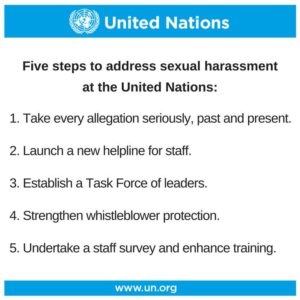
UN put your house in order first: Sri Lankan UN staffer accuses UN director of sexual harassment

December 26th, 2018

The UN self-appointed bully on behalf powerful countries of the world regularly issues demarches at countries through its associate bodies as if it is 100% perfect & morally eligible to do so. Surprise, surprise, UN has more skeletons in its closet than it will admit. Financial corruption/mismanagement, abuse of funds, harassment of whistleblowers, to sexual harassment are just a handful of the piling cases against the UN & its high & mighty officials. Shihana Mohamed a senior UN staffer has accused the head of the International Civil Service Commission (ICSC) of sexual harassment & what does the UN do…ask the ICSC head to retire 2 weeks before retirement & even gives him a farewell & no action is taken against him while she is transferred. So much for UN zero tolerance on sexual harassment.

Senior UN official resigns undermining sexual abuse charges” by Thalif Deen (14 Dec 2018) was the only article on the web. Mainstream media is also silent as are the usual band wagon of rights activists. All are now ganging up against the victims. The most likely reason for this institutionalized climate of protecting the perpetrators is that there is a likelihood that the entire system is corrupt apart from a handful & so naturally they each want to protect their own. And these are the supposed champions of good governance….

Kingston Rhodes, Chairman of International Civil Service Commission based in New York was accused of sexual harassment by 4 women including a Sri Lankan UN staffer in November 2017

How shameful of the UN system to hold a farewell party on the day of his abrupt resignation when he should have been booed out of office!

Antonia Kirkland of Equality Now had told IPS that UNSG Guterres acknowledged 10 months earlier (March 2018) that the allegations against ISCS head were ‘credible’ & serious” if so why has no action been taken against him – is asking him to resign two weeks before resignation the punitive action of UN? Why hasn’t the UNSG and the UN system protected the VICTIM instead of quietly asking the PERPETRATOR to leave & ensuring that the world media did not flag the crime?

Antonia Kirkland has voiced what we are all thinking All those who have been found to perpetrate sexual harassment should be held accountable. The UN is the premier international defender of human rights and should start by defending its own employees from sexual harassment in the workplace,”

Why did the OIOS taken over a year to complete investigations against the ICSC head? UN rules say an investigation should take 3 months!

Why is the OIOS and the ICSC hiding the contents of the report under the carpet? Isn’t this the UN preaching accountability, transparency & visibility in all matters so much so that they want to even change constitutions of countries!

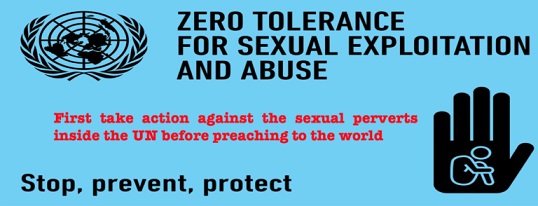
What is the point in having a ‘zero tolerance’ policy on sexual abuse if the UN officials are guilty of committing sexual harassment and the UN is siding with the culprit?

What a ridiculous response by the UNSG’s spokesperson to say that the ICSC is not part of the UN?

When the complaint was made against the ICSC head to the UN Ethics Office the response to transfer the COMPLAINANT without putting the ABUSER on administrative leave pending conclusion of inquiry. Why was the COMPLAINANT transferred? If the UNSG & UNGA President say ICSC is not part of the UN how can they transfer Ms Mohamed to another UN entity?

It is irrelevant that one of the complainant is a Sri Lankan, Ms Shihana Mohamed Human Resources Policies Officer working with ISCS since 2005 & in the UN system for over 20 years but her complaint cannot end up with her becoming the victim of sexual abuse PLUS victim of a UN system that takes the side of the sexual abuser & not the sexually harassed victim.

According to Ms Mohamed I was sexually harassed by the Chairman of the ICSC for over 10 years – and I was NOT THE ONLY ONE. Because I said NO” to his repeated sexual advances, he denied me promotions, and excluded me from duty travels, training, assignments, projects, Commission sessions & working groups” …. in 2016, I was on sick leave for 3 months due to the stress caused by the hostile office environment and retaliation by the ICSC management”.

What kind of sick set up is this? Does it mean that besides Kingston Rhodes there are more sexual perverts inside the ICSC and the UN system? Is sexual harassment part of the UN culture and do females have to grin & bear it? Is the UN response to cold-shoulder the victim & making life hell for her because she did the unforgiveable by reporting her superior for sexual harassment – isn’t this why the poor lady had to take 3 months sick leave due to stress?

If the ICSC head is a UN official elected by the General Assembly why is the UNSG and President of the UNGA saying they have no jurisdiction over the ICSC Chairman? If the UNSG or UNGA has no jurisdiction over Kingston Rhodes, who does?

Why is the UN using the 1946 Convention on Privileges & Immunities to PROTECT SEXUAL OFFENDERS inside the UN?

If Kingston Rhodes is not part of the UN system how can he enjoy the immunity from the 1946 Convention on Privileges & Immunities? This is truly an insult to the women who work in the UN system.

We are a little puzzled by the manner the UN & UNSG & UNSG’s spokesman claim to say they have no jurisdiction over ICSC head. Article 8 of the ICSC says For the purposes of the Convention on the Privileges and Immunities of the United Nations, the Chairman and the Vice-Chairman of the Commission shall have the status of officials of the United Nations.”

If ICSC members (Under-Secretary General & 40 employees) are elected by the UNGA how can they not be answerable to the Secretary General or the President of the UNGA? And this is the same UN that is trying to pin accountability to President & Armed Forces heads for isolated misdemeanors of soldiers in a conflict.

From the statements issued from the office of the UNSG & UNGA President it shows no sincerity except the usual flogged words that have no meaning except to endorse some statement was made.

International Civil Service Commission was established by the UNGA in 1974. ICSC regulates & coordinates the conditions of service of staff in the UN Common System. ICSC has 15 members who are appointed by the UNGA for a 4-year term. The Chairman & Vice-Chairman are full-time members based in New York.

ICSC can claim to be an ‘independent’ body however it statute clearly says that it is endorsed by the UNGA

Just because Article 7 of the ICSC statue says no appointment of a member of the Commission can be terminated unless, in the unanimous opinion of the other members, he or she has ceased to discharge the duties in a manner consistent with the provisions of the present statute” does it mean Kingston Rhodes can sexually harass staff and the staff have to grin & bear it?

If the UN system cannot conclude who Kingston Rhodes is accountable to – whether it is the UNSG, UNGA, President of the UNGA, ICSC Commissioners who meet only 2 a year, how can UN and their template machines go preaching accountability to the world?

ICSC is embroiled in not only sexual harassment – a proposed salary cut has triggered protests in UN offices in Geneva, Thailand, Ethiopia and likely to spread to UN field operations too (some 60,000 UN staffers are not very happy with the ICSC)

UN … pl put your house in order first & take care of the skeletons in your closet before you go pointing fingers at the rest of the world.

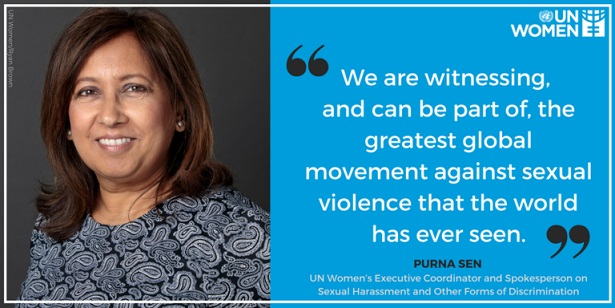
Not seen a single statement from her on the allegations against ICSC head or nothing to highlight taking the side of the victim… so what are these tamashas and wasteful propaganda posters for… who are they all fooling? Put that money to better use…

Shenali Waduge

http://www.ipsnews.net/2018/03/sexual-abuse-un-chief-no-jurisdiction-act/ (Mar 2018)

http://www.ipsnews.net/2018/12/senior-un-official-resigns-undermining-sexual-abuse-charges/ (Dec 2018)

British MP sexually harassed by UN senior advisor – https://thenewsarticles.com/british-mp-among-men-alleging-sexual-harassment-by-senior-un-adviser/

U.N. IPCC chair Rajenda Pachauri faces sexual harassment charges – https://freebeacon.com/issues/u-n-climate-change-head-removed-following-sexual-harassment-claim/

How the British divide & rule DIVIDED Sinhalese & Tamils

December 26th, 2018

There is a reason why history is important. Everything has a history. Unless people know the true background not only is the solution impossible, but too often the solution may aggravate the problem. Our island was never invaded but ceded to foreign invader rule from 1505 to 1972 when the island’s sovereignty and governance fell into local hands. This part of history everyone should know by now. The Kandyan Convention ceded the island to British in 1815. The divisive politics by the British together with that of the Portuguese & Dutch hold the roots to the legacy of ills that we today face.

British divide & rule – political & racist policies

1833 saw 1st Constitutional reforms came via Colebrooke Commission recommending a 18 member Legislative Council & an Executive Council.

The 3 Sri Lankan non-official members were to be nominated by Governor based on RACE (1 low country Sinhalese / 1 Tamil / 1 Burgher)

So who was discriminating people by race? The British! This was how the British planted the seed of communalism into politics.

In 1889 creating further divisions in the community the British nominated a Kandyan and Moor as non-official members.

1919 Crew-McCallum reforms should be forever remembered for REFUSAL by British to ABOLISH Communal Representation.

Legislative Council was increased from 11 to 21 & the 6 non-official SL members nominated by Governor was again by race – 2 low country Sinhalese, 2 Tamils, 1 Kandyan & 1 Muslim.

By enforcing communal representation as a policy the British succeeded in nurturing the communities to beat the communal drums & they encouraged the minorities to beat it more & this soon led to Tamils demanding additional seats claiming that to be the leverage to balance the numerical representation Sinhalese majority had by population. Thus, Tamils secured additional seats politically though these Tamils never represented or desired to represent the interests of their people, a scenario that has not changed much even in 21st century.

A striking example that communal politics was prevalent among Tamils more than Sinhalese can be given in the manner Sinhalese voted for Ponnambalam Ramanthan in 1917. The election brought Sinhalese on par with Tamils in terms of representatives in the Legislative Council though at this time even Indian Tamils out-numbered the Ceylon Tamils numerically.

1920/1923 Legislative Council continued communal representation but included territorial representation too.

1924 Registered voters were 204,997 – just 4% of a total population of 5m

1921/1924 Elections saw British flogging both communal & caste cards.

Ceylonese voter = born in Ceylon, graduate, barrister, advocate, proctor, authorized notary, registered medical practitioner, licensed surveyor, engineer

Ceylonese candidate = 25 years & above, not be bankrupt, no criminal case or debarred from practice.

The British had penetrated into society so much that even CNC had to plead with contestants not to campaign on caste lines.

Under Governor Hugh Clifford (1925-27) came the Donoughmore Commission & a new constitution in 1931 and Sri Lanka becoming first Asian colony to get universal franchise. Communal politics was such that the Sri Lankan Tamils opposed universal franchise as it meant the power of the Sinhala majority would surface. 1931 constitution replaced communal representation with territorial representation and British now shifted gears & pretended to side with the majority thus further aggravating communal hate. The British shifted back to favoring Tamils & encouraged G G Ponnambalam’s 50-50 representation which the Soulbury Commission rejected as a mockery of democracy.

1930 delimitation commission marked 1 seat per 100,000 persons.

1931 / 1936 General Elections with colour being used instead of symbols even on ballot boxes. Campaigning ended up on caste/religious lines & same party individuals contesting each other.

1946 Soulbury Commission introducing parliamentary system with House of Representatives & a Senate.

The British experiments on our people using communal divisions was succeeding. By infesting the psyche with communalism the British succeeded in engraving communal thoughts into the polity & though in later years they pretended to champion against it, in reality they were jubilant that their experiment was & would continue to succeed. Communalism & politics was now synonymous.

British & Caste system

British were quick to flog the caste differences to. Though caste played no role in political life or administration pre-colonial rule, post-colonial it became the perfect tool to divide people.

Till 1920, the Karawas were dominant in legislative council & then Govigama took over. Then British enabled Sinhalese Christians to dominate the legislature to upset the majority Buddhists. The British also succeeded in creating animosity between the Kandyans and the low country Sinhalese.

British divide & rule – education & employment policies

The British used education as a means of not only converting Buddhists/Hindus but to create a new group of elite first class society that would think like the British & act in future in the interests of the West (such people are infamously known as brown sahibs, sepoys, lascoreens) These individuals were taught to think only of themselves & their perks & not make demands on behalf of their own. Division between Sinhalese/Tamils were created by showering more privileges upon Tamils who became more educated than the Sinhalese & these elite class/caste were mentally brainwashed to think themselves more superior & deserved more entitlements than the Sinhalese. The ramifications of such brainwashing came out through the excessive demands made politically.

The reality was that it was ELITIST that were nurtured to rule along communal lines and 96% became non-voters. These ELITE actually opposed giving universal franchise to the 96%. They even opposed territorial representation.

The British had sown the seeds of communal disharmony into the political system by encouraging politicians to think communally, demand communally & act communally. It would filter with time to the rest of the populace & would be seen in voting trends & election campaigning & delimitation representations.

British divide & rule – Disunity sacrificing Unity

Sri Lanka did not offer as much resistance to British rule unlike in India. There was no nationalist organization like India’s Indian National Congress. The ‘educated’ Sri Lankans of all communities were those that shared commonalities amongst themselves & were neither representative or interested to speak on behalf of or fight for those suffering at grassroot levels though their political rhetoric displayed otherwise.

However, in 1919 the Ceylon National Congress was formed & it worried Governor Manning. The British did not wish for the communities to unite. When the CNC demanded territorial representation the British encouraged the Kandyan Sinhalese to demand a communal electorate & thus the British was able to divide the Sinhalese South/Kandyans. The British also upset the CNC by creating a rift within by favoring the Tamils which led to CNC split & Tamils living CNC to form Tamil Mahajana Sabha in 1921.

British nurtured Communal-Political system

1931 delimitation commission defined an electoral district as consisting of a population of 70,000 to 90,000 (50 electoral districts depending on population size)

Indians brought from Tamil Nadu by colonial British had also increased. by 1939 there were 235,000 Indians registered as voters.

First-past-the-post system (single member constituency) plus area weightage gave Tamils & Muslims in thinly populated North East additional representation where there was little or no Sinhala representation.

Multi-member electoral districts also enable minorities to secure representation in Sinhala dominated areas.

This system with time has caused much political imbalance and has become aggravated by territorial representation along communal lines. Politicians were taught to flag communal politics & voters were also drawn towards communal sentiments particularly in minorities.

Constituencies based on population

Western province making 5.65% of geographic area got 28% of seats

North Western province with 15.82% geographic area got only 2% of seats.

What is interesting is that even in 1947 … a year after UNP was formed, UNP functioned as a coalition combining the Ceylon National Congress, Sinhala Mahasabha, Ceylon Moor’s Association & the Ceylon Muslim League. This explains the natural affinity of Muslims towards the UNP. In just 5 years UNP faced its first challenge when SWRD Bandaranaike broke away to form the SLFP in 1951 and UNP leader D S Senanayake dies in an accident in 1952. Noteworthy too is the anti-Marxist/Communist line UNP adopted that aligned with the Western election propaganda. Dudley Senanayake (UNP) won the 1952 elections with the help of the Tamil Congress showcasing the post-independence UNP-minority alliance for electoral victory.

At every level since independence communal politics drained the country of properly policy-based leadership and the root of this malady is with the British. Confounding matters further in the 1965 elections the Roman Catholic church extended its support to the UNP & ITAK requested Tamils in Sinhala majority areas to vote for the UNP, a scenario that continues to this day.

What was also clear was that whenever the majority became disunited the minorities made bigger demands. ITAK’s 1965 demand to support UNP was on the condition that UNP would implement its demands – formation of district councils & making Tamil the language of administration in North & East.

As you can see by infusing the political system to think & act on communal lines the British not only drove this communal element into political parties but people also began thinking & voting on communal lines and with time & circumstances the rhetoric got worse.

If everyone knew their history they would be aware of how this division & communal rhetoric started as it was planted by the western colonial occupiers & institutionalized by the British.

Shenali Waduge


SriLankan carrier ‘World’s Leading Airline to the Indian Ocean’

December 26th, 2018

Courtesy The Gulf Today

Colombo: SriLankan Airlines, the National Carrier of Sri Lanka and a member of the oneworld alliance, won the prestigious ‘World’s Leading Airline to the Indian Ocean’ title once again at the Grand Final Gala Ceremony of World Travel Awards, in Lisbon, Portugal recently.

Congratulating SriLankan Airlines, World Travel Awards Founder, Graham Cooke said: SriLankan Airlines has demonstrated a relentless drive to improve its services and I am delighted that it has been acknowledged by both the travel trade and the public by being voted ‘World’s Leading Airline to the Indian Ocean.”

SriLankan Airlines’ Senior Manager Marketing, Saminda Perera said This award highlights our efforts to establish a consolidated presence in the Indian Ocean region. Our expansion efforts have been consistent and in line with the market demands. Whilst increasing frequencies to popular destinations based on passenger demands, we have constantly endeavored to upgrade our product in order to provide an unmatchable travel experience. Our global connectivity across key regions has invariably made us a choice of travel to and from the Indian Subcontinent via our Colombo hub.”

The Award proves SriLankan’s presence in the South Asian region, strongly supported by its connectivity of 119 flights a week to 13 Indian cities.

At Rs 200/kg, rat meat a prized delicacy in this Eastern Indian village

December 26th, 2018

Destined to be boiled, skinned and then cooked in a spicy gravy, rat is more popular than chicken and pork with customers at the Sunday market in the village of Kumarikata in Assam.

At Rs 200/kg, rat meat a prized delicacy in this Eastern Indian village

ALSOREAD |‘Masterchef Australia’ judge Gary Mehigan recommends insects asfuturefood option

Shoppers buy hundreds of freshly caught and skinned rats that local farmers say are hunted to avoid damage to their fields in the state which borders Bhutan. The ready-roasted kind also goes down well.

Rat has become a valuable source of income for the tribal people who struggle to make ends meet working in Assam’s famed tea gardens.

In the winter months when tea picking slumbers, the tribals go to rice paddies to trap rats for the market.

A kilogram of rat meat, which is considered a delicacy, sells for about Rs 200 — as much as for chicken and pork.

Farmers say the region has seen growing numbers of rats in recent years.

We put traps in the fields as the rats eat people’s paddy,” Samba Soren, a rat vendor at Kumarikatan, said.

The vendors have to work at night to make sure other predators do not get to the dead rats first. Some of the rodents are hunted at night during the harvesting season with traps made from bamboo.

The traps are placed at the entrance of the rat-holes in the evening and the rodents are caught as they come out to scavenge.

The rodents are hunted at night during the harvesting season with traps made from bamboo.

The traps are placed at the entrance of the rat-holes in the evening and the rodents are caught as they come out to scavenge.

The vendors have to work at night to make sure other predators do not get to the dead rats first. Some of the rats weigh more than a kilogram and the market traders say they get between 10 and 20 kilograms a night.

(The featured image at the top shows freshly caught rats being sold in this Assamese village bordering Bhutan. Photo: AFP)

Circles of Political Vengeance and End of Yahapalanaya!

December 26th, 2018

By Laksiri Fernando Courtesy The Island

“Men ought either to be indulged or utterly destroyed, for if you merely offend them, they take vengeance.” – Machiavelli
“Vengeance is mine, I will repay, says the Lord.” Romans 12:19
“Jesus taught his disciples to turn the other cheek.” (Matthew 5:39)

How Things Began?

Maithripala Sirisena left Mahinda Rajapaksa four years ago, after a hopper treat, because he was not given due recognition as a Minister, and the PM position. That may be true. Otherwise, he even voted for the 18th Amendment to allow the possibility of Rajapaksa to contest for the Presidency again and again without a term-limit. There must have been other reasons to do with family rule or authoritarian handling of things.

The Lord (the people) took vengeance from Rajapaksa on the 8th January 2015, and he left for Madamulana on the same night without a whimper, whatever Mangala Samaraweera talked about a military coup. Romans as quoted above were correct about the Lord. That was justice. After another attempt at power as the PM on 26th October 2018, Rajapaksa is again eating the humble pie, still waiting to be declared as the Leader of the Opposition. Justice often means punishment, and this time by the Supreme Court.

When Sirisena was elected as the President, to the surprise of many, he was quite amicable to Ranil Wickremesinghe, the schemer behind all the political gimmicks since then, and even called the latter ‘Sir.’ However, Ranil apparently didn’t like anyone above him and most certainly a ‘gamarala’ from Polonnaruwa. Most disliked was his continuous and rigmarole Sinhala talk. Sirisena was meekly humble at the beginning, and even gave Temple Trees back to the PM.

Then there was this 100-day program (whoever drafted it!) to clip the presidential powers of anyone above the PM, among other things, and Sirisena was obviously trapped. The only obstacle was the presidential constitution itself which could not be totally changed without the people’s consent, a referendum. Therefore, many constitutional jugglery had to be performed, as evident from the 19A. An expert from the left movement was hired for the job, who has some experience in these type of matters.

Naivety and Offence

Sirisena was obviously naïve at the beginning. When he realized his predicament, he was rather late. Therefore his anger was doubled, and trebled. This is where what Machiavelli said about ‘offence’ became true. Sirisena was not destroyed, but offended to the brim.

This is not to relate Machiavelli’s advice literally into democratic politics today. Complete destruction of an enemy is not possible today, except in a civil war or by punishing someone for criminal offenses. Now Jaliya Wickramasuriya, Mahinda’s first cousin, is trapped in the USA. Similar things might happen in the near future. Otherwise, politicians have to live with perceived enemies, whether they like it or not. Mahinda Rajapaksa (also his gang) is still there with renewed vigour, although slightly bruised after the abortive attempt at unjustified grabbing of the PM position. Sirisena is to be blamed mainly for this tragicomic happening.

There is no question that politicians should be punished for financial fraud and corruption. However, this should be done without bias, and equally for one’s own side, and not merely targeting the opposition. Otherwise, the Lord will be angry. The opposite is what has happened since 2015 and the appointment of Ravi Karunanayake would confirm the situation in the eyes of the people. Whatever said against Sirisena, he relatively appears clean in respect of financial matters (so far!). Although called Mr Clean, Wickremesinghe has become a prime suspect in the Bond Scam.

Revenging in Circles

What has happened since 2015 is revenging in circles, not mere circularity. The reasons are not so byzantine. Politics is understood, or used by politicians as power, and absolute power in the case of some. And power is used for personal interests rather than for public good. Politics should be for justice and public good instead. Sirisena took revenge from Rajapaksa as he was marginalized. Wickremesinghe took revenge from Sirisena as he was not toying his line as anticipated. There were overt or alleged policy differences as well.

The first policy difference between the two was the appointment of Arjuna Mahendran as the Governor to the Central Bank. This reminded Sirisena of old stories about Wickremesinghe – that he is inclined to work with his Royalists. By that time Wickremesinghe has taken over the Central Bank under his wings and was quite determined to control and direct the economy according to his neoliberalism. The obvious immediate result was the Bond Scam.

According to Wickremesinghe ideology, an uncle giving inside information to his nephew is not a big issue. What is important is money to the Treasury. It appears that Wickremesinghe wanted to fudge the situation from the beginning and even Sirisena corroborated by dissolving Parliament in June (2015) before the Parliamentary Committee on Public Enterprises (COPE) giving its damning report on the matter. There are so many other people who don’t consider the ‘bond scam’ as a financial fraud or corruption, according to probably their capitalist thinking.

Things soured between the two eventually and much after the general elections of August 2015. Even by that time Sirisena was like a bruised cobra because of the 19th Amendment and other matters. His first major counter attack was the appointment of the Presidential Commission on the Bond Issue in March 2017. Even that was a late reaction. Nevertheless, it was a major turning point of their soured relations. Although the national government marriage continued uneasily even thereafter, it was without a proper direction either from Sirisena or Wickremesinghe.

Overreaction?

Sirisena appears to be a slow, but over reactor. As he was leading the SLFP, the party’s performance at the local government election was woefully appalling. He correctly attributed that set back to his alliance with the UNP and its unpopular economic policies. First, without properly assessing the relative strengths between the opposition and the Wickremesinghe government, he encouraged the aborted no-confidence motion in April 2018.

Then came his major reaction in October 26th. He ousted Wickremesinghe, but Wickremesinghe refused to leave Temple Trees or his position as the PM. Now R. Sampanthan is doing a similar adventure without leaving the office of the Leader of the Opposition. What strength did Wickremesinghe get in October even without a clear majority in Parliament? It is not merely the support of the TNA or the JVP that allowed Wickremesinghe to come back to power. Some of the Western embassies and international NGOs were believed to be behind the comeback, not to speak about the local cohorts. Sampanthan might be banking on the same.

More importantly, it was possible because of the miscalculation on the part of Sirisena that Rajapaksa could muster a majority. S. B. Dissanayake was behind all the machinations based on pre-2015 experience of parliamentary politics. It was not purely a constitutional obstacle, but a political one. Whatever the objectives that the people or even Sirisena had in mind in bringing a change of government in January and also in August 2015, Wickremesinghe government probably survived and survives because of the backing of the Western powers.

This backing is premised largely on the objective of preventing Chinese influence in Sri Lanka. It was not by accident that the Chinese Ambassador was the first and also the last to greet Rajapaksa as the new Prime Minister. This created more fears or anxieties on the part of Western embassies.

Overreaction was accompanied by overconfidence on the part of both Sirisena and Rajapaksa. Rajapaksa’s overreaction became more evident by taking the membership of the SLPP, or allegedly applying for it, without considering possible legal ramifications. When Sirisena’s three trump cards of ‘Dismissal, Prorogation and Dissolution’ came one after the other, at a quick pace, the Western educated middle class or the Colombians also became genuinely alarmed. They were thriving under Wickremesinghe economics.

Sirisena’s actions and boasted overconfidence undoubtedly had an element of authoritarianism. The return of Rajapaksa also united the UNP ranks and it was only for a short while that people like Wasantha Senanayake could flirt with both sides. The UNP/UNF Ministers, State Ministers and Junior Ministers undoubtedly have generously gratified their support base through public funds. This is something that the SLFP had failed to do, giving priority to their acrimonious or talkative politics. There are clear indications that both Sirisena and Rajapaksa have not learnt the lessons of the 2015 democratic change, where people don’t want to go back to authoritarianism or even semblance of it.

A Lost Opportunity

When looking back at last four years, it is at best a lost opportunity. It was also a betrayal and treachery from almost all sides. What they promised and delivered as Yahapalanaya were different. When friends (although new) become enemies they obviously become extra bitter. This is what happened to the UNP and the SLFP or more correctly to Sirisena and Wickremesinghe. It was by chance that the UNF government was salvaged thanks to the TNA and the JVP. In actual sense it is still a minority government. No one knows at what time it will fall or disintegrate.

Was it too ideal or impractical to have a national government? Perhaps yes. Primarily because the objectives on the part of the leaders were short sighted or rather opportunistic. Nevertheless the positive achievements or people’s aspirations behind 2015 change should be continued and even enhanced. They are primarily (1) to have independent commissions to oversee not only appointments but also government performance and (2) to resist authoritarian tendencies on the part of the President or even the Prime Minister.

As most of the authoritarian deviations in the future might come from the PM or the new government, the President should step back and allow the PM to expose himself before the people. Unnecessary reactions or attempts at imposition of authority might confuse the situation and boomerang on the President himself. There is a need for a strong opposition in Parliament (not a fake one!) and in the country. Opposition activities in the country should not be destructive, but peaceful, engaging and constructive as much as possible.

There is no question that the so-called Yahapalanaya has exhausted its potential. It is a lost opportunity, par excellence. The problematic however in the New Year would be its alternative. Ranil Wickremesinghe has got a lease of life through the Supreme Court and therefore he should either deliver or get out. Jesus’ advice to his disciples was too ideal, at least on the part of the sovereign people of the country. If their living conditions are attacked, people should not turn their other cheek, but should give a good hammer!

මාවනැල්ල බුදු පිළිම කඩපු අය තව බුදු පිළිමයක් කඩන කොට මාට්ටු වෙයි.. ගම්මු අල්ලා ගස් බදී..

December 26th, 2018

සමන් විජය බණ්ඩාර  lanka C news

මාවනැල්ලේ මහ රාත‍්‍රියේ ප‍්‍රසිද්ධ ස්ථාන වල බුදු පිළිම කඩමින් ගිය සැකකරුවන් දෙනෙකු කඩුගන්නාව මාවනැල්ල සිමාවේ ඇති දිදුරුවත්ත මං සන්දියක බුදු පිළිමයක් කඩද්දි ප‍්‍රදේශවාසි තරුණයන් විසින් ඉන් එක් සැකකාර තරුණයකු අල්ලා ගම්වාසින්ගේ සහායෙන් මාවනැල්ල පොලිසිය භාර දි ඇති අතර එහි සිටි තවත් අයෙක් පැන දිව ගොස් ඇති බව අද 26 උදෑසන මාවනැල්ල පොලිසියෙන් වාර්තා විය.

යතුරු පැදියත් සමග මහත් පරිසමයකින් අලූයම 4 ට අල්ලා ගත් මෙම සැකකරු මාවනැල්ල හිගුල ප‍්‍රදේශයේ දෙල්ගහගොඩ ප‍්‍රදේශයේ පදිංචි මුස්ලිම් ජාතිකයෙකු වන බවද පොලිසිය පවසයි. මෙම සැකකරු අල්ලා ගත් ප‍්‍රදේශවාසි තරුණයාගේ එක් අතක් පැන හානි වි සිදුවිම නිසා ඔහු මාවනැල්ල මුලික රෝහල වෙත ඇතුලත් කිරිමටද මෙ වන විට පියවර ගෙන ඇති බව ද පැවසේ.

අදාල සැකකරු අල්ලා ගෙන ඇත්තේ එම බුදු පිළිමය අසලම නිවස පදිංචි තරුණයන් දෙදෙනෙක් විසිනි. වයස අවුරුදු 39 වන විවාහක ඒ.එම් සෙනරත් බණ්ඩාර හා මම උදේ පාන්දර ත‍්‍රීවිල් එකේ හයර් එකක් යන්න තමයි හිටියේ මම වෘත්තියෙන් ත‍්‍රීවිල් රථ රියදුරෙක් කඩුගන්නාව නගරයේ තියෙන පාක් එකේ තමයි ඉන්නේ. 3.30 ට විතර ඇහැරලා ඉන්නකොට ශබ්දයක් බුදු පිළිමය පැත්තෙන් ආවා. මම එළියට ඇවිත් බැලූවා එතකොට මම දැක්කා බුදු පිළිමය ගාවින් යතුරු පැදියක නැගලා දෙන්නෙක් යනවා. මම බයික් එක යනවත් එක්කම ලගට ගිහින් බලනකොට දැක්කා බුදු පිළිමය කඩලා තියෙනවා. ඊට පස්සේ ලග ගෙදරක මල්ලි කෙනෙක් ඉන්නවා බයික් එකක් තියෙන එයාට කතා කරලා මම කිවා අපි ගිහින් මෙ සිද්ධිය බලමු කියලා. ඒ යනකොට ඒ ගියපු බයික් එක ආපසු නැවත අපි ඉන්න පැත්තට ආවා. මම නැවත ඉන්නවා දැකලා බයික් එක හැරෙව්වා.

මාවනැල්ල බුදු පිළිම කඩපු අය තව බුදු පිළිමයක් කඩන කොට මාට්ටු වෙයි.. ගම්මු අල්ලා ගස් බදී..

මම බයික් එක හරවනවාත් සමගම බයික් එක සහ මෙ දෙන්නාගේ ඇග මතට පැන්නාට පස්සේ මෙ අය එක්කම පහත කැලයකට පෙරලූනා. අනික් මල්ලි අනිත් කොල්ලා අල්ලන්න හදනකොට එයා සමග පොර බදිනකොට ඒ චානක කියන මල්ලි පල්ලමකට තල්ලූ කරලා තියෙනවා. ඊට පස්සේ තමයි එයාගේ අත පැන්නේ. ඒ කරලා එක සැකකරුවෙක් දිවා අනිත් කෙනා යන්න දෙන්නේ නැතිව අල්ලාගෙන බයික් එකත් එක්කම පොලිසිය භාර දුන්නා යැයිද බුදු පිළිම කඩමින් ගිය සැකකරුවන් අල්ලා ගත් සෙනරත් මහතා අප සමග පැවසීය.

අපි අමාරුවෙන් ගමේ අය එකතු වේලා තමයි බුදු පිළිමය හදා ගත්තේ අපි හැම තැනම මාවනැල්ලේ බුදු පිළිම කඩන නිසා අවදානයෙන් හිටියා ඒ නිසා මැරුනොත් කමක් නැහැ කියලා තමයි වැඬේට බැස්සේ. බජාජ් ඩිස්කවරි බයික් එක්ක තමයි මෙ අය ආවේ. මෙ ජාතික අපරාධය කරපු අය අල්ලා භාර දිමට ලැබිම අපි ලබපු ජයග‍්‍රහණයක් මටත් දරුවෝ දෙනෙක් ඉන්නවා චානකටත් එහෙමයි. ඒ නිසා මෙ වාගේ දේවල් කරන අය අපේ රටේ අනාගතයට මහ ලොකු විවසනයක් සාපයක් කරන්නේ ඒ ගැන මම හෙළා දකිනවා.

මෙ වන විට සැකකරු සහ යතුරු පැදිය ඉදිරි විමර්ශන කටයුතු සඳහා මාවනැල්ල පොලිසිය විසින් කෑගල්ල බුද්ධි අංශය හා මූලස්ථාන පොලිසිය වෙත භාර දි ඇති අතර අදාල සිද්ධිය සම්බන්ධයෙන් පොලිස් කණ්ඩාමක් පරික්ෂණ සිදු කරයි. පලා ගිය සැකකරු සොයා මෙ වන විට ප‍්‍රදේශයේ මෙහෙයුමක්ද ක‍්‍රියාත්මක වන බව පොලිසිය කියයි.

මෙම සිද්ධිය මුල් කරගනිමින් ජනතාව අතර නොසන්සුන් වතාවරණයක් ඇති විමේ ඉඩ කඩක් ඇති බව පවසා විශේෂ කාර්ය බලකා සෙබළුවන් හා පොලිසිය මගින් ප‍්‍රදේශයේ ආරක්ෂාව තහවුරු කර ඇති අතර මෙම බුදු පිළිමය කැඩිමට පෙර හිගුල ප‍්‍රදේශයේද බුදු පිළිමයකට හානි සිදු කර ඇති බවට ප‍්‍රදේශවාසීන් විසින් පොලිසිය වෙත පැමිණි කර තිබෙනවා.

සිද්ධිය සම්බන්ධයෙන් බෞ්දධ ආගමික නායකයින් එක්ව මෙ වන විට රැස්විමක් මාවනැල්ල බෙලිගම්මන පොත්ගුල් විහාරස්ථානයේදි පැවැත්වෙන බවද පොලිසිය කියයි.

මාවනැල්ලේ බුද්ධ ප්‍රතිමා විනාශ කර ඇතතේ මුස්ලිම් තරුණයෙකු වීම සුවිශේෂි කාරණයක්..

බුදුගල ජිනවංස හිමි සභාපති lanka C news

මාවනැල්ලේ බුද්ධ ප්‍රතිමා විනාශ කර ඇතතේ මුස්ලිම් තරුණයෙකු වීම සුවිශේෂි කාරණයක්..

මෙහි දැක්වෙන්නේ හෙල බොදු සවිය සංවිධානය විසින් ජනාධිපති මෛත‍්‍රිපාල සිරිසේන මහතා වෙත යොමු කරන ලද ලිපියකි.

මාවනැල්ලේ බුද්ධ ප්‍රතිමා වැනසූ පුද්ගලයාට වහා නිසිදඩුවම් ලබා දෙන්න.

පසුගිය දිනක මාවනැල්ල ප්‍රදේශයේ ස්ථාන කිහිපයක බුද්ධ ප්‍රථිමා වනසා දැමූ පුද්ගලයෙකු තවත් එවැනි පිළිමයක් වනසා දමන්නට තැත් කරන්නට යෑමේ දී හසුව පොලිසිය වෙත භාර කළ පුවතක් මාධ්‍ය ඔස්සේ අනාවරණය වී තිබුණි.

ඉනික්බිතිව ප්‍රදේශවාසීන් විසින් හා ගරු ස්වාමින් වහන්සේලා අප වෙත එකී තරුණයා මුදා හැරීමට අවශ්‍ය කටයුතු පොලීසිය විසින් සකස් කරන්නේ යැයි චෝදනා ඉදිරිපත් කොට තිබේ.

සමස්තයක් ලෙස ගත් කල්හි රටක් ලෙස සමගියෙන් සහජීවනයෙන් ජීවත්විය යුතු මොහොතක මෑතකාලීනව සිදු වූ විවිධ කළහකාරී සිද්ධීන් හමුවේ විවිධ ජනකොටස් අතර ඇති වී ඇති නොසන්සුන්තාවයන් ද සැලකිල්ලට ගනිමින් වගකිව යුතු අංශ හා රටේ නීතිය හා සාමය සුරැකීමේ වගකීම ඇති ඔබතුමන් වහා මෙකී ක්‍රියාවලියේ දී වැරදිකරුවන්ට නිසි දඩුවම් ලබා දීමට කටයුතු කළ යුතුව ඇතැයි තරයේ විශ්වාස කරමු.

ඉතා සුළු කණ්ඩායමක් සිදු කරන සිදුවිම් වලින් සමස්ථ ජන කොටස් අතරම ජනවාර්ගික  හා ආගමික ගැටළු ඇති විමට හේතුවන්නේය.

මීට වසර කීපයකට පෙරද මෙවැනි සිදුවිම් මාවනැල්ල ආශ්‍රිත සිදු වු බව අප සිහි තබා ගත යුතය. එහි දී බුදු පිළිම පමණක් නොව ජිවිත ද විනාශ විය. මෙම බුද්ධ ප්‍රතිමා විනාශ කරන ලද්දේ ද මුස්ලිම් තරුණයෙකුවීම සුවිශේෂි කාරණයකි.

රටේ නීතිය හා සාමය කඩකරන්නවුන්ට වහා දඩුවම් පමුණුවන්නටත් නැවැත එවැනි ක්‍රියා සිදුනොවන්නට වග බලාගන්නටත් කටයුතු කළ යුතුය. මාවනැල්ල බුද්ධ ප්‍රතිමා විනාශ කිරීමේ සිදුවීම එක් පුද්ගලයෙකුගේ හෝ පුද්ගලයන් කිහිපදෙනෙකුගේ ක්‍රියාවක් බැවින් ඒ තුළින් සමස්ත සමාජය තුළ කිසියම් ආකාරයකින් ජාතීන් අතර ගැටුමක් දක්වා වර්ධනයවීම වැළැක්වීමටත්, මෙම පුද්ගලයන්ට විරුද්ධව නීත්‍යානුකුලව දැඩි ක්‍රියාමාර්ග ගැනීමට ඔබතුමන් හා ආරක්ෂක අංශ වහා මැදිහත්වනු ඇතැයි දැඩි ලෙස විශ්වාස කරමු.


Why Executive Presidency Must be Preserved and Prevailed? Part-2 of 3

December 26th, 2018

Geethanjana Kudaligamage

හාන්සිවෙයි කියා අපි සිතුවත්, හාන්සි නොවී අපිට ගහපු ජනාධිපති උතුමාණන් වහන්සේ

Executive presidency has become a point for a robust debate once again. Those who supported the Executive Presidency then in 1978 and beyond, are against it now. Those who opposed it throughout, are supporting it now. What are the real undercurrents for this strange change of hearts? The reason is nothing but the change of local and the global political culture, its policy shifts during last 30 years and the resultant nature of their effect into our local polity.

The main difference today is, unlike 1978 when Executive presidency was introduced, today Sri Lankan politics is not a matter that we can resolve within the local electorate anymore, it has become a global affair. It is not the people of Sri Lanka who are determining what is good or what is bad for us now. It is western embassies, western foreign offices, Tamil diaspora, Separatist organizations within and without, NGOs so-called civil society etc., etc. Where did our sovereignty go? Who had stolen it? Was that an inside job? If that so, who are the culprits collaborated with external forces to steal it?

It is clear now that the people of Sri Lanka do not enjoy their sovereign rights anymore but some others have taken it away from them. Those who have stolen it are more concerned about our internal affairs than the people of Sri Lanka, because they know that we do not have it. That is the reason why the entire western diplomatic community was shaken and demonstrated downright aggressive stance about internal political changes that occurred recently in Sri Lanka. They knew we would reclaim our sovereignty if they allow the changes to continue unchallenged.

What is clear now is that these forces have hijacked our entire parliamentary system, and have begun to run a puppet show there. Not only that, they pull strings here and there as they wish to mess with the system. Biggest danger of this is that they have taken our constitution into their hands to play with it. Simply speaking, now through this entire constitutional mumbo-jumbo, the future of Sri Lanka has been taken into the hands of Elam Separatists. Formerly, they tried to shape our lives through bullet. Now they try to do it through words. When you destroy a nation through words, the most important part of it will be played by those who interpret those words. That may be the reason why they want to keep our judiciary on their side.

The saddest and unexpected part of this entire circus is that JVP also has become part of this grand project of destroying the nation state of Sri Lanka. JVP challenged the earlier merger of NE provinces by JRJ, for Supreme court to rule that “The Proclamation made by the then President declaring that the Northern and Eastern Provinces shall form one administrative unit has been made when neither of the conditions specified in the Section 37 (1)(b) of the Provincial Councils Act No. 42 of 1987 as to the surrender of weapons and the cessation of hostilities, were satisfied. Therefore, the order must necessarily be declared invalid since it infringes the limits which Parliament itself had ordered.”

After 17 years, JVP has turned 180 degrees, and fighting for a new constitution now which eventually paves the way for not only remerging these two provinces, but also even allowing them to break away from SL to form a separate country. That once again proves that Anura Kumara doesn’t know basic logic and only speaking after getting drunk with රා Raa.

When I say that Sri Lankan politics has been turned out to be a global affair, some might say what I am saying is utter nonsense. But Ranil and Sumanthiran knows that it is the truth. JVP might pretend they do not understand, and might continue with the same band wagon of ‘preserving democracy.’ They all might try to limit our discussion into trivial areas excluding important parts and may try to draw our attention to insignificant things such as what Sumanthiran said and done, or what Ranil said and done to misguide us. But in real situation, Sumanthiran and Ranil are just finger puppets, the real string holders are not within our grasp. This revels that the internal problem we are facing today is just a fraction of a larger issue, just only the tip of an iceberg.

So then, what is the actual thing, big picture? What is this larger issue? Why and for what reason we have to go through this situation? What are the implicit and explicit reasons behind our current vulnerabilities? As I said, Sri Lanka is facing an existential treat for her survival as a unitary state. Then who are the internal and external forces posing this threat and why?

After the collapse of the Soviet Union, what we saw in Sri Lanka was strange; the USAID was downsized immediately. They almost closed the USIS as well. All US development aid that was given to the government of Sri Lanka earlier, was diverted to NGOs. Foreign funding from other donners came into the country for programs such as promoting human rights, democracy, transparency and accountability. Some money went to NGOs campaigning in the ethnic issues, peace and reconciliation, who were basically denouncing military operations discouraging war effort and demoralizing Sri Lankan military who were fighting in the thickest of the battle against terrorism at that time.

This new shift created a novel class in Sri Lankan society called civil society.

Millions of Dollars funneled to private hands, thus creating a very powerful fifth column that can influence the upper echelons of our administration, the opposition and the political decision-making process. They did this manipulation completely independently from the people of Sri Lanka but dependent to the external funding agencies’ whims and fancies. Who are these civil society? Are they representing the political aspirations of majority of the people of Sri Lanka? No! They represent their funding masters’ political objectives. This new culture alienated the people of this country, supposedly the true owners of the political system of Sri Lanka from the decision-making process. Now the people cannot decide the future of their own country, but only these externally funded charlatans have the voice to do it. People have become just spectators.

This new class never participated in any meaningful economic activity contributing into the development of the country. But they make their living by destroying it. Their sole responsibility is to sniff around like pigs for their pay masters, searching for garbage in addition to inventing flashy terms for the vocabulary of their new-found vocation of necrophiliac-desire of making money out of corpses. Their specialty is to find anything, but only related to minority grievances, not all minorities but only Tamil minority, to blame the government of Sri Lanka to justify their claim of discrimination of minorities, to justify their separatist agenda. This was a concerted effort, at that time, conducted only with the involvement of Tamil separatists, western countries and NGOs. But all three branches of the government of Sri Lanka on the other hand was in the mode of resistance at that time. The executive branch-the president, the legislative branch-the parliament, and the judiciary were resisting this. But now this balance has been shifted.

Now the legislative branch work hand in hand with these forces with large majority of members of parliament and with questionable role of the judiciary, leaving only the executive branch of government out of this large conspiracy. The executive branch also collaborated at the beginning but luckily changed its heart lately. The masses watching this entire theatrical parade in our legislature, now hope president to reverse this damage that has been done with his earlier collaboration.

This is the main reason why they have a new wave of demand for the removal of presidency ASAP. The entire western funded NGOs, the UNP and the JVP members of parliament demand abrogating it. Executive Presidency is not only a matter related to the electorate in Sri Lanka anymore; it has become a matter concerned to global players, regional players. They use their money power and influence to poison geopolitical situation, corrupt state of the internal pollical culture for this objective. The corrupt parliament and its members, the weakness of the Westminster system and everything possible will be utilized for that end.

Ranil knows that he will never be able to get elected as EP through the electorate so he is against it. It’s a personal reason. JVP knows they too cannot, so they too against it. The international community against it because Executive Precedency limits their ability to manipulate internal politics in SL and it has become biggest impediment for their separatist agenda. The Tamil separatists against it, because they too know that the fundamental obstacle for their separate state agenda is Executive Presidential system. And they know if they go back to violence again, they will learn the same lesson if EP is still there conducting the war machinery.

Large majority were against Executive Precedency then, when the polity was not so polluted like today, but support it now because it has become a counter force to balance this abject corruption in our parliamentary system and political culture. We support it today because there are so many external players playing in the internal politics now. There are so much corruption including bribery that has contaminated decision-making process in Sri Lanka today. Money power has become the decisive factor in the legislative branch, the parliament, bypassing the power of the ballot of people. We must consider money power as a national security threat and must deal with it in stern resoluteness.

Our personal experience about EP is very bitter. But time has changed. In 1980s it was a different time. The problems we grappled at that time were different to that of now.

If my memory serves right, JRJ’s sworn-in ceremony was held on Gall-face green in 1978 when he sworn-in as the first executive president. The announcers/commentators addressed him with this bizarre phrase Janaadhipathi uthumaanan wahanse,” (ජනාධිපති උතුමාණන් වහන්සේ) a weird phrase coined by Hudson Samarasinghe, I think.

When the general-strike in 1980 was gained some initial success in the first couple of days paralyzing the entire country, the ATHTHA” (ඇත්ත) newspaper came-up with this triumphant headline phrase saying… Wahanse Haansiyi.” (වහන්සේ හාන්සියි). But then what happened? ‘Wahanse’ වහන්සේ struck back taking everyone by surprise putting entire leftist movement to be fully hansiyi හාන්සියි forever. He hit below the belt, a knockout blow, permanently getting rid of ‘left’ from Sri Lankan politics once and for all. The left never recovered from it again. Then only we realized the real power of Executive Presidency. That experience made us to be even more antagonistic toward EP in our entire life.

Although I do not worship politicians, I am coming from a family background in which photograph of SWRD. Bandaranayake and Philip Gunawardene were venerated by the side of Buddha image. I even remember how they had been arranged. There was a Buddha image, then Sariyuth Mugalan images, the Seevalee image. Then on the side of the platform, it was SWRD Bandaranayake and Philip Gunawardene’s images hanging on the wall. Now one can guess the reason why I, as the youngest of our family, ended up having the name Geethanjana.

Under such political culture in our family, anyone can understand how hostile we could be to the Executive Presidential system and the referendum that was intending to give extension to the parliament that enjoyed 5/6th majority, through a referendum to cheat the sovereignty of the people. We believed N.M’s and Colvin’s critical evaluations of the 1978 constitution and its creation of the resultant executive presidency that virtually created totalitarian constitutional autocracy. As a reaction to such despotism, our family lost three jobs in that general strike in 1980. That was too much to handle for any family in Sri Lanka.

The parents of my wife also had lost everything including their businesses. They even have a personally signed letter sent by Mrs. Chandrika Bandaranayaka Kumaranathunga, promising to resolve the injustices they had to go through during J. R. Jayawardene’s referendum. However, when she became president, Mrs. kumaratunga had forgotten to fulfil her promise in the letter. For my wife’s parent’s bad luck, C. V. Gunaratne, who was sympathetic to my wife’s family-tragedy also died tragically in a suicide bomb attack putting end to the entire story. They had lost everything as a result of the political reprisals due to my wife’s parents’ support to the opposition force fought against JRJ’s gambit in the ‘kalagedi lampu sellama’ කලගෙඩි ලාම්පු සෙල්ලම during this most infamous referendum in our history. In the thickest in this battle, Weerasinghe Mallimaarachchi had threatened my wife’s father at the Kohuwala meeting. Following day, the ‘Aththa’ ඇත්ත newspaper had reported the incident with the caption, ‘Malli nikan jaathi epa’ ‘මල්ලි නිකං ජාති එපා!’

Our entire experience of the Executive Presidential system was a devastating family tragedy, never to recover from it for almost twenty years; a bitter enough experience for us never to say ‘yes’ for this Executive Presidential system ever again.

But we approve it now for the selfsame reasons/powers that it had exercised to destroy our lives. Do you know why? Because the Executive powers entrusted in that position by constitution had proved its worth during the climax of Elam war. Rajapaksha have done what even Bashar Assad of Syria couldn’t do without the Russian military direct intervention and diplomatic assistance. Bear in mind, that Rajapaksha did it by himself without having external military or diplomatic support.

If we need to protect our sovereignty, when it is in grave danger, executive presidency is the only hope we have now that can resist all the internal and external conspiracies that are hellbent on dividing our country. Today we fight to safeguard it because we have put our country first sidelining our personal feelings. Our parliament has gone to dogs and it’s a fact. Although Champika doesn’t know it, even the dogs know it. Champika speaks on stages as if he is in a political struggle like Nelson Mandela. We do not know if he speaks from the other end. At times he talks like Moses, the messiah who is promising his people to take into the promise land. To the promised land with a bunch of thieves in the UNP. What a joke? But he hides the fact that he and his cohorts are there to get sold at highest bidds.

We cannot trust them anymore. But since the executive president is a single person, the people have the opportunity to select the person they want. They can choose the candidate who has proved to be uncorrupt and patriotic. That’s why we support it now. (To be continued)

‘Dhatusena’ – Rehabilitating Kashyapa   

December 25th, 2018

By Rohana R. Wasala

History repeats itself, first as tragedy, second as farce. -Karl Marx

‘Dhatusena’(ISBN 978-955-0955-79-4/Visidunu Prakashakayo Pvt Ltd, Boralesgamuwa, Sri Lanka, 2017) is a short historical novel in Sinhala written by veteran novelist, poet, and socio-political thinker and activist Dr Gunadasa Amerasekera. It is a story related by a first person narrator who is inspired to do so by a dream vision of  king Dhatusena of Anuradhapura (455-473 CE), father of king Kashyapa of the Sigiriya citadel fame (473-495 CE). Dhatusena is celebrated in history as one of the hero kings of Sihalapveepa, who freed the island from foreign invaders.  But the tragic story of Dhatusena’s being walled to death on the bund of the mighty Kalawewa tank on the orders of his elder son king Kashyapa for failing to reveal where he was alleged to have hoarded his wealth is still indelibly etched on the collective historical memory of the Sinhalese. The first person narrator is struck by the remarkable analogies that he is able to make between Dhatusena’s royal court and the country’s current political scene, each in its specific historical context, riven with internecine rivalry, intrigue, treachery,  and personal hatred among political contenders. All this is focused on the heroic architect of victory over foreign aggression, who demonstrates the Buddhist ethical principles of humaneness, humility, loving-kindness, and goodwill towards all, and equanimity in situations of adversity. However, Amerasekera introduces rational alterations to some crucial elements of the traditional story without affecting the perceived correspondence between the Dhatusena period marked by the alleged succession crisis in the fifth century that we normally take for granted and the present tumultuous political situation persisting in the country. The novelist significantly modifies the traditional story to suit his thematic purpose, as the reader can soon discover. A net result of these well thought out modifications to the narrative is to suggest a historically highly plausible turn of events that rejects the traditional (Mahavamsa) version  of the Dhatusena saga that portrays Kashyapa as a patricidal villain.

The narrator is an irrigation engineer inspired by what he had read about the ancient hydraulic engineering system of Sri Lanka in scholar surveyor R.L. Brohier’s books (such as ‘Ancient Irrigation Works in Ceylon’, 1934). At the time of the story, the engineer narrator is  employed as the chief engineer in charge of a restoration project on the ancient Kalawewa water reservoir that Dhatusena had  built. In addition to his normal work, the engineer  is driven by a personal desire to find out something about the scientific irrigation technology that had been in use in ancient Sri Lanka. More centrally, however, he claims that he writes this story out of an irresistible internal urge to try to resolve the problem as to how, in a society like ours that boasts of an illustrious culture, a great king who had saved  the country and the people, having fought for thirty long years amidst immense hardships and untold suffering, could be put to death, demanding of him to surrender  supposedly hidden treasure. It is left to the reader to decide whether the novelist achieves this goal.

In the foreword, Amerasekera claims that he finds the Mahavamsa account of the Dhatusena episode very stimulating to his creative imagination. It contains events and scenes that take the reader to the heart of darkness in the human mind. Amarasekera  discovers a prototype of the present  in that past epoch. He points out that the Dhatusena chapter of our long history embodies a recurrent motif (i.e., that of betrayal of the patriotic national hero through personal envy and hatred, as I understand it). In Amerasekera’s opinion, even the present political situation illustrates the point.

Amerasekera argues that a novelist and a historian view history from two different angles: a historian tries to investigate the past with a view to recording events and information associated with the past as accurately as possible; a novelist on the other hand, looks at the past while being positioned in the present. The novelist does so in order to reveal the present hidden in the past, as it were. If the narrative in a novel differs from a historian’s record, that is because the novelist intends to achieve some special purpose (by deviating from what is historically recorded). The narrative that we find in the novel ‘Dhatusena’ is an imaginative reconstruction of the Mahavamsa story about the life and work of the monarch, and his tragic death as a prisoner executed  by being buried alive (or ‘walled to death’) in a niche in the bund of the Kalawewa. He was subjected to this punishment by his own son Kashyapa. (The Dhatusena story is recorded in Chapter XXXVIII  of the Mahavamsa, which is part of the 13th century CE Culavamsa, being the continuation of the Mahavamsa of the 5th century CE; the Culavamsa is traditionally ascribed to a Buddhist monk named Dhammakitti.) This is what the novelist calls the Mahavamsa account of the Dhatusena episode.

In his childhood, Dhatusena was ordained as a novice monk under the tutelage of his maternal uncle, the erudite Mahanama Thera (who later composed the Mahavamsa or The Great Chronicle at his nephew’s invitation). They lived in a monastery built by Dighasanda (rendered as ‘Diksanda’ in the novel), the general of king Devanampiyatissa (307-267 BCE) during whose reign Buddhism was introduced to the island according to the Mahavamsa tradition. The young royal disrobed when his leadership was found necessary to fight Tamil invaders from South India. King Dhatusena’s history writing project was most probably meant as a part of his farsighted plan of action for nation building and for keeping the country whole safe from foreign invasions. The book comes to a sudden end at the conclusion of Chapter XXXVII, which deals with king Mahasena (277-304 CE)’s reign. But the original plan could have been to describe the island’s history up to Dhatusena’s own time in order to perpetuate the memory of his achievements.

In the Mahavamsa, Dhatusena emerges as a saintly king, a compassionate human being. But he was a brave warrior as well. He always thought of the welfare of the people and worked to ensure the development of the agriculture based economy of the country.  Dhatusena was an extremely humble person. When he was being driven from the prison to Kalawewa (having been ordered to show his son the new king where his wealth was), he ate a portion of a meal of roasted corn offered by the charioteer. He wanted to reward the poor man for his kindness. So, he wrote a message for Mugalan on a palm leaf and gave it to the driver for future use. The message was a request that the charioteer be given a job when Mugalan became king. (This detail is not given in the novel.) The novelist conforms to the saintly image of Dhatusena that the Mahavamsa gives.

The narrator (the chief engineer) introduces his narrative with a description of a dream that he had in which Dhatusena appears before him determined to help him and to answer certain questions that he has been pondering. He is ‘awakened’ by the piercing sound of a favourite verse of his from the Mahavamsa (being recited):

iti mettaya mano tan aha senapatin pati – moggallane tvai veva eka citto ahan”

(Geiger translates these lines thus: I have the same feelings for thee as for Moggallana”.)

These words were addressed by the condemned Dhatusena to Migara the ‘brutal Senapati’ or general who was preparing to carry out Kashyapa’s orders. Moggallana or Mugalan was his beloved younger son, the legitimate heir to the throne.

In the dream, Dhatusena asks the engineer to stop digging various places around the tank as he is doing looking for the place where the original sluice gate (sorovva) was. He reveals that it is right below the place that he excavated last.  This is vital information for the engineer, because some disgruntled workers have spread the worrisome false allegation against him that he was not trying to find the old sluice, but was looking for hidden treasure.  The apparition of Dhatusena then denies the traditional charge seared into our national psyche that Kashyapa had his father murdered: It was our monks who historicized this baseless lie. They turned Kashyapa into a villain in order to prevent people from being enthralled by the Sigiriya art gallery. The monks were worried that if Kashyapa’s successors followed his example, it would be a threat to the Buddhist establishment”.

The apparition  continues, trying to resolve the listener’s perplexity on hearing this: Kashyapa was not a parricide. He was an innocent, maudlin person with a penchant for art. He was not fit to be a king. I didn’t make him king not only on account of his birth of a non-royal mother, but on account of the fact that he was unfit for kingship. My enemies used him….  Kashyapa should be absolved of this false charge at least now.”

It is my feeling that ‘Dhatusena’ will prove to be an interesting read for those who take an interest in history as a living force.

රටේ දූෂිතම ආයතනය විදේශ අමාත්‍යාංශයයි..! හිටපු නීතිපතිවරයෙකුද වන විදේශ ඇමතිගේ අවධානය පිණිසයි..!

December 25th, 2018

විදේශ සේවයේ පොඩ්ඩන් පිරිසක් උපුටා ගැන්ම ලංකා ඊ නිව්ස් 

(ලංකා ඊ නිව්ස් -2018.දෙසැ.25, ප.ව.10.45) ලංකාවේ ඇති රාජ් ආයතන අතුරින් පාරදෘශ් භාවයකින් තොර, රජයේ නීතිරීති තුට්ටුවකට මායිම් නොකරන, හොරුන් රකින, රටට යහපත් සේවයක් නොකරන හා කිසිදු මූල් විනයක් නැතිව ක්රියාත්මක වන එකම රාජ් ආයතනය වන්නේ විදේශ කටයුතු අමාත්යංශයයි. මෙය සැහැසි ප්රකාශයකැයි කිසිවෙකු කියන්නේ නම් අපට බව තහවුරු කළ හැකි සාක්ෂි තිබේ

මෙම වසරේදී රාජ්‍ය ආයතන පිළිබඳ සමාලෝචනයක් කරමින් විගණකාධිපතිවරයා මහත් ආන්දෝලනාත්මක ප්‍රකාශයක් කෙළේය. ඔහු කියා සිටියේ තානාපති කාර්යාලවලට වෙන් කෙරන මුදලින් රටට යහපතක් සිදු නොවන  අතර එම මුදල් වියදම් කිරීම සම්බන්ධයෙන් පිළිගත හැකි වාර්තා නැති බවයි. මෙය සම්පූර්ණ සත්‍යයකි. එක් පැත්තකින් තානාපති පරිචය ගැන මෙලෝ හසරක් නොදන්නා දේශපාලන පත්වීම් ලත් තානාපති මෝල්ලු  පිරිසක් තනාපති කාර්යාලවල සැප විඳින අතර තානාපති සේවය පිළිබඳ මෙලෝ හසරක් නොදන්නා නමුත් මුට්ටිය ඇල්ලීම හෝ රෙද්ද ඉස්සීමට සමත් නිලධාරි පිරිසක් ද රටේ මුදල් වියදම් කරමින් තානාපති කාර්යාලවලට වී කාලය මරති. තමා ලඟ කළු පොතක් අැතැයි කියමින් 2015 දී පිහිටුවන ලද රජයේ විදේශ ඇමැතිවරයා වූ මංගල සමරවීර මහතා ද විදේශ අමාත්‍යංශය නිසි මගට ගන්නට උත්සාහ ගත්තේ නැත. උත්සාහ කෙළේ නම් වනචර දශකයේ නොනිල විදේශ ඇමැති වූ සජින් වාස් ගුණවර්ධන තවමත් නිරුපද්‍රිතව විසීමට අවකාශයක් තිබිය නොහැකිය.

වර්තමානයේ සිදුව ඇති එකම යහපත් ක්‍රියාව නම් විදේශ සේවයේ අත්දැකීම් ඇති සක්‍රිය විදේශ සේවා නිලධාරියෙක් ලේකම් පදවියට පත්වීම පමණි. එහෙත් ඔහුද පෙර පාරේ ගමන් කරන්නේ නම් එම පත්වීමද වැඩක් නැති එකක් වනවාට කිසිදු සැකයක් නැත. එහෙයින් විදේශ අමාත්‍යංශයේ පරිපාලනයට සම්බන්ධ පත්වීම් හා ස්ථාන මාරුවීම් මෙන්ම විදේශ සේවයට අයත් විවිධ චෝදනාවලට වැරදිකරුවන් වූ නිලධාරීන් සම්බන්ධයෙන් නීතියට අනුව කටයුතු කළ යුතුය යන්න හිටපු නීතිපතිවරයෙකුද වන නව විදේශ ඇමතිවරයාගේ අවධානයට යොමු කරමු.

රෙද්ද උස්සා පත්වීම් ගැනීම

විදේශ අමාත්‍යංශයේ පත්වීම් සම්බන්ධයෙන් අතීතයේ පටන් විවිධ චෝදනා රාශියක් වෙත්. දේශපාලකයින්ට පශ්චාත්භාගය පුදා තනතුරු වරදාන ලබාගන්නට පිරිසක් සැදී පැහැදී සිටින නිසා තමන්ට හැකි තරමින් රට වෙනුවෙන් සේවයක් කරන අය පිටිපස්සට තල්ලු කිරීම නිරන්තරයෙන්ම දැකිය හැකි තත්ත්වයකි. අනෙක් අතට සුදුස්සාට සුදුසු තැන, ඔහු හෝ ඇය ලැබූ විෂය දැනුම, තානාපති පරිචය හා විශේෂඥ දැනුම අනුව තැන දීමක් කිසිසේත් සිදු වන්නේ නැත. වසරකට රුපියල් බිලියන දහසයක් වියදම් කර ලංකාවට මෙම සේවයෙන් ලැබෙන දේ කුමක්දැයි බොහෝ දෙනක් ප්‍රශ්න කර තිබේ.

පත්වීම්, ස්ථාන මාරු, තනතුරු ලබාදීම, අධ්‍යාපන අවස්ථා ලබාදීම යනාදි කරුණු සම්බන්ධයෙන් පිළිගත් ප්‍රතිපත්තියක් විදේශ අමාත්‍යංශය සතුව නැත. ක්‍රියාත්මක වන්නේ පුද්ගල මූලික ප්‍රතිපත්තීය. මේ නිසා ඉතා දක්ෂ අවංක බොහෝ නිලධාරීන් පසු වන්නේ ඉතා කණස්සල්ලෙනි. ලොක්කන්ට රෙදි උස්සන අයට හා දේශපාලන පන්දම් ඇති අයට තරඟ විභාගයෙන් මොන ලකුණු ගත්තද හොඳ රටකට පත්වීම් ගැනීම එතරම් කජ්ජක් නොවේ. තනතුරු ලබාගැනීමට කාන්තාවන් නම් ලිංගික අල්ලස් ලබාදීම අනිවාර්ය සාධකයක් බවට පත්ව තිබේ. එවන් අය නිතරම යන්නේ ඇමෙරිකාව බ්‍රිතාන්‍ය ඕස්ට්‍රේලියාව වැනි දියුණු රටවලටයි. විශේෂයෙන්ම එවන් අවස්ථා වැඩියෙන් ලැබෙන්නනේ තානාපතිවරු සහ රජයේ ලොක්කන්ගේ හොර ගෑනුන්ටයි.

ආණ්ඩුවක් නැති කාලෙත් තානාපතිලා පත් කරලා

මේ අතර ආණ්ඩුවක් නොපැවතිය දී ලහි ලහියේ තානාපති තනතුරු 15 ක ලැයිස්තුවක් පසුගිය දිනක ජනාධිපතිවරයා වෙත ඉදිරිපත් කර තිබේ. මෙම ලැයිස්තුව කරුණූ කීපයක් නිසා දෝෂ සහිතය. එකක් 2015 දී 1996 කණ්ඩායමේ සියලූ දෙනාට තනාපති තනතුරු ලබාදුන්නා මෙන්  මෙවර 1998 දී බඳවා ගත් කණ්ඩායමේ සියලූ දෙනාට තනාපතිකම් ලබාදීමට නියමිතයි. මෙහි ඇති වැරැද්ද වන්නේ  එක් පැත්තකින් නිලධාරීන්ගේ දක්ෂතාවන් හා හැකියාවන් පිළිබඳ අවධානයක් යොමු නොකිරීම, දැනටමත් වසර තුනකට වඩා වැඩි කාලයක් විදේශ රටවල සේවය කරන අයද මෙම ලැයිස්තුවට එකතු කිරීම, ඔවුන්ට වඩා ජ්‍යෙෂ්ඨ නිලධාරීන් ගැන තැකීමක් නොකිරීම සහ විවිධ චෝදනා සහිත නිලධාරීන් මෙම ලැයිස්තුවට ඇතුලත් කිරීමයි.

මෙම තත්ත්වය 2015 දී ද සිදුවිය. එහිදී නීති විරෝධි සැප බස් ගණුදෙනුවක සැක කාරයන් වූ මජින්ත ජයසිංහ හා ජිනීවා නුවර තානාපති කාර්යාලය අලූත්වැඩියාව සම්බන්ධයෙන් වූ වැරදි කටයුතුවලට චෝදනා ලත් ෂේනුකා සෙනවිරත්න හා ජව්හාර්ට තානාපති තනතුරු ලබාදීම සිදුවිය. එහෙත් කම්කරු ඇමති ඩිලාන් පෙරේරාගේ හොරුන්ට විරුද්ධව කටයුතු කළ නිලධාරීන්ට චෝදනා පත්‍ර ලබාදී ඔවුන්ට තානාපති තනතුරු දීමෙන් වැලකී සිටින ලදී.

දූෂිතයන්ට හොරුන්ට නම්‍යශීලී අමාත්‍යාංශය

මෙවර ලැයිස්තුවට නැවතත් කාර්යක්ෂමතා කඩඉම් විභාගයෙන් 06 වරක් අසමත්ව හොර පාරෙන් සහකාර අධ්‍යක්ෂ ධූරයේ සිය අතිරේක ලේකම් දක්වා උසස්වීම් ලත්, නාමල්ලාට සැපබස් ගෙන්වීම සම්බන්ධයෙන් චෝදනා ලත් මජින්ත ජයසිංහ අරාබි එක්සත් රාජ්‍යයේ තානපති ලෙස යෝජනා කර තිබේ. ෂේනුකා සෙනවිරත්න ජපානයේ තානාපතිකමට යෝජනා වී තිබේ. එසේම බැසිල් රාජපක්ෂගේ මග නැගුම ව්‍යාපෘතියේදී හොර වැඩවලට උදව් කළ බවට චෝදනා ලත් සරෝජා සිරිසේන හෙවත් ඩිලාන් පෙරේරාගේ හිටපු බිරිඳ ඔස්ට්‍රියාවේ තානාපති ලෙස නම් කර තිබේ. එසේම මිලානෝ නුවර කොන්සල් ජනරාල්ව සිටියදී මූල්‍ය වංචා ඇතුලූ වංචා රාශීයකට චෝදනා ලත් ප්රදීපා සේරම්දතානාපති ලෙස ඕමානයට පත් කිරීමට නියමිතය.

මේ තුළින් පෙන්නුම් කරන්නේ විදේශ අමාත්‍යංශය හොරුන් සම්බන්ධයෙන් බොහෝ නම්‍යශීලි ප්‍රතිපත්තියක් අනුගමනය කරන ආයතනයක් බවයි. මීට අමතරව දැනට තානාපති තනතුරු දරණ කීප දෙනෙක් සම්බන්ධයෙන් විවිධ චෝදනා රාශීයක් ඇති අතර ඒවා සම්බන්ධයෙන් කිසිදු පියවරක් ගැනීමට අමාත්‍යංශය අපොහොසත් වී තිබේ.

දෝෂ සහිත ජ්‍යෙෂ්ඨතා ලේඛනය; සෙල්වරාජ්, අසීස්, අම්සා

විදේශ අමාත්‍යංශය මගින් නිකුත් කර ඇති ජ්‍යෙෂ්ඨතා ලේඛණයේ ඇති දෝෂයන් රාශීයකි. 1992 පෙබරවාරි 03 දින විදේශ සේවයට බැඳුණු කණ්ඩායමේ පළමු ස්ථානයේ සිටින .එල්.එම්. අසීස් තමන්ගේ පළමු කාර්යක්ෂමතා කඩඉම් විභාගය 1995 මැයි මාසයේ සම්පූර්ණ කර තිබේ. ඒ අනුව ඔහු නියමිත කාල සීමාව ඇතුලත මෙම විභාගය සමත්වී නොමැති නමුත් ඔහු තමන්ගේ උසස්වීම වංචනික ලෙස ලබාගෙන තිබේ. මොහු ගිණුම් විෂය 06 වතාවක් අසමත්වී ඇති අතර එවකට පාලන අංශයේ අධ්‍යක්ෂ වශයෙන් සේවය කළ එම්. මහරුප් විසින් විභාග දෙපාර්තමේන්තුව මගින් නිකුත් කරන ලද කිසිදු සහතිකයක් නැතිව අසීස් මෙම විෂය සමත් යැයි සහතික කර තිබේ. අසීස් නැමති නිලධාරියා තමන්ගේ විදේශ භාෂා පරීක්ෂණයෙන්ද සමත්වී නැත. ඔහු ඒ සම්බන්ධයෙන් තමන් ජිනිවා නුවර පැවති පුහුණූ වඩසටහනකදී ප්‍රංශ භාෂාව ඊට අයත් වූවා යැයි කරන ලද ප්‍රකාශයක් භාෂා අවශ්‍යතාව වෙනුවෙන් එවකට සිටි විදේශ අමාත්‍යංශයේ බලධාරීන් බාර ගෙන තිබේ. ඔහු අද ජිනීවා හි ශ්‍රී ලංකා තානාපතිවරයාය.

පී. එම්. අම්සා නැමති නිලධාරියා තමන්ගේ දෙවන කාර්යක්ෂමතා කඩඉම් විභාගය සමත් වීමට වසර 07 ක කාලයක් ගෙන තිබේ. විදේශ භාෂා විභාගය සමත්වී නැති අතර ඒ වෙනුවෙන් ඉදිරිපත් කර ඇත්තේ තමන් බ්‍රිතාන්‍ය කවුන්සිලයේ තිබූ අරාබි භාෂා පන්තියට සහභාගීවීමේ ලේඛණයක් පමණි. සහභාගීවීමේ ලේඛණය විභාග සහතිකයක් ලෙස බාරගත නොහැක. එහෙත් ඔහුගේ පත්වීම ස්ථිර කිරීම පිණිස මෙම ලේඛණය භාර ගෙන තිබේ.

පී. සෙල්වරාජ් නැමති නිලධාරියා දැනට ඊශ්‍රායලයේ තානාපති වන අතර ඔහු විදේශ භාෂාව සමත් වී ඇති බවට ඉදිරිපත් කර ඇත්තේ එවකට රුසියාවේ ශ්‍රී ලංකා තානාපතිවරයා විසින් ඔහු රුසියන් භාෂාව හැදෑරුවා යැයි දෙන ලද ලිපියකි. ඔහුට භාෂා ප්‍රවීනතාව වෙනුවෙන් සහතිකයක් නැත. මේ නිසා ඔවුන් ජ්‍යෙෂ්ඨත්වයෙන් පහත හෙළිය යුතුයි.

ලැයිස්තුව තවත් දිගයි

තොරතුරුවලට අනුව අරුණි විජේවර්ධන, රොඩ්නි පෙරේරා, එස් නාකන්දල, එස් ගනේගමආරච්චි, ටී රවීන්තරන්, . ගිරිහාගම, . එල්. ලාපීර් යන නිලධාරීන් තමන්ගේ දෙවන කාර්යක්ෂමතා කඩඉම් විභාග නියමිත වසර 06 තුළදී සම්පූර්ණ නොකර සිටින අවස්ථාවක උසස්වීම් ලබා දී තිබේ. මෙම ජ්‍යෙෂ්ඨ නිලධාරීන්ට අමතරව තවත් මධ්‍ය මට්ටමේ නිලධාරීන් විශාල සංඛ්‍යාවක් නියමිත විභාග වලින් සමත් නොවී උසස්වීම් ලබාගෙන තිබේ.

එස්. . ජේ. මැන්ඩිස් බහරේනයේ ශ්‍රී  ලංකා තානාපතිවරයා වේ. ඔහු කිසිදු කාර්යක්ෂමතා කඩඉම්විභාග සමත්ව නැතිව තිබියදී රෝහිත බෝගොල්ලාගම ඇමති විසින් තමන්ගේ පුත්‍රයා සිංගප්පූරුවේ ඉගෙන ගත් අවධියේ ඔහුගේ ඉංග්‍රීසි  නිබන්ධන සකස් කර දීම නිසා ඒ හිලව්වට හොර පාරෙන් උසස්වීමක් කැබිනට් මණ්ඩලය හරහා ලබාදී තිබේ.

මේ අතර හිටපු ලේකම් පාලිත කොහොනගේ හොර අත්සනින් සහතික කරන ලද ව්‍යාජ ප්‍රංශ භාෂා සමත්වීමේ ලේඛණයක් ඉදිරිපත් කළ කීගල්ල නැමැත්තාද තවමත් යහතින් තානාපති කාර්යාලයක සේවය කරයි.

කරුණු මෙසේ තිබියදී කාර්යක්ෂතා කඩඉම් විභාගය අසමත්වීම නිසා කපිල ජයවීර, ප්රියදර්ශණී කරුණාරත්න, තිලෝමා අභයජීව, රන්සිරි පෙරේරා, හා ධම්මිකා සේමසිංහ යන නිලධාරීන්ගේ පමණක් වැටුප්  විලම්භනය කර සේවයේ උසස්වීම් අත්හිටුවා තිබේ. ධම්මිකා සේමසිංහ නඩුවක් පැවරීමෙන් තමන්ගේ උසස්වීම් ලබාගන්නට සමත්වී තිබේ.

දැනට තානාපති තනතුරු දරණ නිලධාරීන් හා විදේශ කටයුතු අමාත්‍යාංශයේ ඉහළ නිලධාරීන්ගෙන් හතර දෙනක් හැර සියලු දෙනාම උසස්වීම් වෙනුවෙන් සම්පූර්ණ කළ යුතු දෙමළ භාෂා පරීක්ෂණයෙන් අසමත්වී ඇති අතර ඔවුන්ගේ උසස්වීම් හිටපු ලේකම් වාගිස්වරගේ මැදිහත්වීම මත දෙමළ භාෂා සුදුසුකම නොසලකා ලබාදී තිබේ. මෙම නිලධාරීන්ද ජ්‍යෙෂ්ඨත්වයෙන් පහත හෙළිය යුතුයි.

මේ සොච්චමකි

මෙවන් දෝෂ සහිත අමාත්‍යංශයකින් රටට සේවයක් සිදුවේද යන්න සැක සහිතයි. ඉහත දැක්වෙන්නේ ඇති වැරදිවලින් සොච්චමක් පමණි. මෙම කරුණු ඇතුලූ විදේශ කටයුතු අමාත්‍යංශය තුළ ඇති ගැටලූ සම්බන්ධයෙන් සොයා බලන්නේ නැතිව එය තවදුරටත් ඉදිරියට ගෙන යා හැකි නොවේ. මේ සම්බන්ධයෙන් නව විදේශ ඇමතිවරයාගේ අවධානය යොමුවනු ඇතැයි අප බලාපොරොත්තු වෙමු. ඉහත වැරදි කළවුන් ආරක්ෂා කරන්නේ නම් විදේශ අමාත්‍යංශයේ කණිෂ්ඨ නිලධාරීන් වන අප හට බලවත් අසාධාරණයක් සිදුවන බව අවධාරණය කළ යුතුවේ.

Floods in the Northern Province and several other parts of the country

December 25th, 2018

MEDIA RELEASE Mahinda Rajapaksa Leader of the Opposition

Unprecedented floods have affected the Northern Province and several other parts of the country disrupting the lives of many thousands of people living in those areas. Houses have gone under water and roads have been rendered impassable. It is reported that the President has already issued instructions to the officials in those areas regarding the provision of relief services. In the absence of Provincial administrations in almost all the worst affected areas, the responsibility of managing the relief effort will have to be borne mainly by the line ministries concerned.

We request the Ministry of Disaster Management and other Ministries concerned to attend to the relief measures in an efficient and timely manner in order to alleviate the suffering of the people in the flood affected areas. While expressing our regret over the loss of homes and livelihoods due to the floods, the timely provision of compensation by the government will provide a measure of relief to those in distress.


උතුරු පලාත හා දිවයිනේ තවත් ප්‍රදේශ ගණනාවක ඇතිවී තිබෙන ගං වතුර ආපදා තත්වය

December 25th, 2018

මාධ්‍ය නිවේදනය මහින්ද රාජපක්‍ෂ විපක්‍ෂ නායක

2018 දෙසැම්බර්  25

අධික වර්ෂාපතනය නිසා උතුරු පළාත ඇතුලු දිවයිනේ තවත් ප්‍රදේශ ගණනාවක ගං වතුර ආපදා තත්වයක් ඇති වී තිබේ. මේ නිසා ඒ ප්‍රදේශවල ජීවත් වෙන ජනතාව දහස් ගණනින් අවතැන් වී ඇත. නිවාස වතුරට යටවී ඇත්තා සේම, ප්‍රධාන මහාමාර්ග පවා භාවිතා කළ නොහැකි තත්වයක් ඇතිවී තිබේ. ආපදාවට ලක් වී ඇති ප්‍රදේශ වල ජවතාවට සහන සේවා සැපයීම පිළිබඳ ජනාධිපතිතුමා දැනටමත් නිලධාරීන්ට උපදෙස් ලබා දී ඇති බවට වාර්ථා වේ. ආපදාවට ලක් වී ඇති සියලුම ප්‍රදේශවල පාහේ, පලාත් සභා නොමැති නිසා, ආපදා සහන සේවා සැපයීම කළමණාකරනය කිරීමේ ප්‍රධාන වගකීම දැන් අදාල අමාත්‍යංශ වලට පැවරේ.

ඒ අනුව ආපදා කළමණාකරන අමාත්‍යංශය ඇතුලු අදාල සෙසු අමාත්‍යංශ සහන සේවා සැපයීම සම්බන්ධයෙන් එම ප්‍රෙද්ශ වල ජනතාව විදින අපහසුතාවයන් අවම වෙන ආකාරයට යුහුසුළුව කටයුතු කරනු ඇති බවට අපි බලාපොරොත්තු වෙමු. තම නිවාස අහිමි වීම, ජීවනෝපාය නැතිවීම වැනි කාරණා නිසා අගතියට පත් වී සිටින ජනතාව විදිනා අපහසුතාවය හා ආර්ථික  දුෂ්කරතා ගැන අපි මේ අවස්ථාවේදී කණගාටුව ප්‍රකාශ කර සිටින අතර, අදාල වන්දි ආණ්ඩුව පැත්තෙන් නොපමාව ලබාදීම තුළින් යම් සහනයක් ඔවුන්ට ලැබෙනු ඇතැයි බලාපොරොත්තු වෙමු.

මහින්ද රාජපක්‍ෂ

විපක්‍ෂ නායක

Why Executive Presidency Must be Preserved and Prevailed? Part-1 of 3

December 25th, 2018

Geethanjana Kudaligamage

Anura Kumara Dissanayaka is Still Screaming from the ‘Kithul’ Tree Top About Democracy, While Robber Barons Looting the Country Through our Parliament.

When we take important political decisions, we always anticipate about the socio-political repercussions and overall end-results of such decisions we make. We foresee the impacts, short-term and long-term consequences of such decisions. This fundamental reality is valid for the most debated question of executive presidency as well. Bear in mind that this is not just another political decision, this is the most important constitutional decision you are going to make. We must carefully scrutinize the issue in our hand in every possible angle of it, before we hastily making any decision determining whether or not we need this powerful branch of our system of government is need to be abrogated.

First of all, we must see where this second wave of anti-presidential system slogan originated from. (I would say from 1978-2000 was the First wave) This new wave of demanding for abrogating the presidency originated in the post-war political culture with the anti Rajapaksha campaign that was led by same separatists and their supporters in Colombo, who campaigned for a separate state for last thirty years. This demand is mainly coming from a small group of people in Colombo, largely funded by western countries comprising separatists, the Eelamists, the foreign funded NGOs, so-called political pundits in Colombo, and so-called civil society. The majority of people do not demand this, because it has never been their burning political or economic issue. If anyone really want to find who the real culprits behind this campaign, then follow the money trail of it.

Let us go back to fundamentals to understand this. Every tool we have, or used in that matter by mankind has been invented by man to overcome his physical limitations. Each and every tool he invented had its designated purpose and function. For instance, a knife is there to cut, an axe is to chop wood, or a car is to travel from one point to another. Similarly, we have legal tools, administrative tools and governing tools. Executive presidency is another tool invented by man, for his community function, for its smooth administration, government, and also to ensure his security from all threats and perils, external or internal, to satisfy his community’s collective survival.

Now the question is, how if these above-mentioned tools being utilized to do things beyond its designated capacity and function? To say, a knife could have been used to kill a man. An axe could have been used to chop a head. Is it wiser to ban the use of all knifes just because someone had used it to kill another? The executive presidency also had been misused and abused before. If that is the case, then we must find out remedies for it, it may be by creating some constitutional checks and balances to limit such abuses or controlled by other remedies. But getting rid of the executive presidency entirely is a stupid solution similar to that of banning knives I would say. It is the shortcut to play into the hands of Sri Lanka’s enemies. This stupidity is exactly what our enemies desperately need us to entertain.

Of course, there are specific groups with vested interests and hidden agendas to get rid of the executive presidency to remove obstacles in pursuing their political goals. But abrogating Executive Presidency might not be the best remedy for our political ailments. Or, maybe not what is best for the country and its people. When we evaluate the executive branch in our constitution, we must evaluate it in a larger political context rather than limiting our scrutiny into the local political background of Sri Lanka. We should never forget that we are threatened not only from inside, but also from outside.

Let us be real, yes, J. R. Jayawardene abused the executive presidency. but who else abuse executive power in that scale? Did any president rob our central bank? I mean not any other bank, I am talking about the biggest bank, the damn central bank? Presidential office is located just about 200 yards away from the central bank. Could he break that bank? No, he couldn’t. But even without having executive powers, our prime minister has been accused of accommodating the central bank robbery. We thought LTTE had the record for biggest bank robberies in Sri Lankan history after ‘haara lakshe mankoole.’ But what is LTTE? They are just novices comparing to our robber barons in the parliament; our parliament has even bigger, sophisticated white-collar terrorists. Un like LTTE, our parliamentarians can rob banks with such magical powers without even touching a single weapon or firing a single shot. But at the same time, they can shoot down any investigation that is coming along to catch them. Isn’t that clever? Of course, one can argue that the glory of the central bank robbery also needs to be added into LTTE records after following where the money went and who pocketed the loot.

Isn’t that enough to be suspicious about our parliamentary democracy? The members of the parliament, the legislature, has been accused of being benefitting the robbery. Now together they are trying to cover it up. But now they are turning around and scream on the rooftop demanding abrogation of the presidency and entrust the executive powers on them. REALLY? Do you think this is a Mafia state to appoint you as our leaders? If Sri Lanka is a Mafias state, then we must select biggest criminals to run our country. At present, when entire legislature is trying to coverup the scam, only president is standing up against this coverup (However late that may be). So, under this condition, what really need to be abrogated, parliament or the presidency? Where is our sanity?

The biggest joke of the town now is the JVP. JVP thinks that our country must be handed over to a bunch of thieves in the parliament abrogating Executive Presidency. Since they well aware of the fact that Anura Disanayaka cannot be the prime minister of Sri Lanka, (well, in fairness to Anura, let us say at least for now he can’t,) they knowingly have become belligerent to pave the way for Ranil, the biggest thief, to become executive prime minister. But with straight face, Anura Disanayake still tells us that he and his party is only fighting for democracy, but they are not fighting to make Ranil the head of the country. Really? If you are seriously concerned about democracy, then come out of the fox-den and be with the chickens. Knowing very well that you will never find democracy at the end, still you are running in the wrong direction. That’s okay. But please don’t try to fool us.

As the old Sinhala saying goes, the man who got caught red-handed on the kithul tree (Caryota urens) for stealing රා ‘raa’ still had something to say; and had said that he climbed up there to cut grass but not to drink ‘kithul raa’ රා (Kithul toddy.) කිතුලට හොරාට රා බොන්ඩ  නැග්ග මිනිහ කිව්වලු නැග්ගෙ තණකොළ කපන්ඩ කියල  

Fair enough. Now we can understand the reason why Anura Kumara always speaks like රා බීල, intoxicated with toddy. Nowadays, Anura Kumara screams from ‘Kithul’-tree-top about democracy as if he has forgotten to climb down from it yet. However, the difference between ‘Raa’ drunken Anura Kumara screaming from the Kithul-Tree-top and the ‘Raa’ drunken Nattamy නාටාමි sitting on the pavement at ‘Dematagoda ‘Raa Kade’ is, that Natamy නාටාමි knows his basic logic but Anura Kumara does’t.

Dear JVP comrades, if you are so concerned about democracy, why didn’t you question about speaker’s anti-democratic decision of giving opposition leadership to Sambandan, when TNA had only 16 seats whereas joint opposition had over 80+ seats in the parliament?

Anura Kumara still has to answer us about his democratic logic behind his decision to accept the position of ‘chief opposition whip’ when his party had only 6 seats? Was that the way to safeguard democratic values in Sri Lanka for the people? Is that the mode of democracy you preach us? Where did you learn your Civics lessons from Hon. Mr. Anura Disanayake? Was that again from ‘Demetagoda Raa’ Kade’ දෙමටගොඩ රා කඩේ? If that is the case about the kind of democracy you prescribe for us to live in, then we also may have to get fully drunken with ‘Raa’ to live in it. සෑහෙන්ඩ රා බොන්ඩ ඕන වෙයි.

Executive Precedency has its pros and cons. Of course, yes; it still has. But we must try to evaluate these advantages and disadvantages within the context of current political threats that Sri Lanka is facing locally and internationally. Irrefutably, Currently Sri Lanka is facing an unparallel existential threat for its survival as a unitary state. This is a serious threat instigated from within and without.

Now, let me ask a question. What is the primary concern of the people of Sri Lanka today? Is it the tyranny of the executive presidency or the tyranny of corrupt political culture we have inside our parliament? Or is it the immoral and dishonest members of parliament and parliamentary system or the executive presidency that is not under the yoke of corrupt parliament? What is most dangerous and threatening?

People have many other concerns too. They question as to why is there a partiality of our parliamentary select committee catering for only NGO and so-called civil society whims and fancies and ideology? Why is there an unjustified ideological domination of internationally funded NGOs and the civil society upon our legislature and our entire parliamentary system? Why large part of our polity is working on behalf of NGOs and Civil Society while trying to implement imperial agendas upon us, and why are they trying to enforce their misplaced theories and explanations upon us that leading the nation into systematic sectarian division?

Isn’t this entire crisis a conflict between tyranny of this minority Colombian class’s political ideology vs. people of Sri Lanka issue? Is abrogating executive presidential system would be the panacea for all our ailments and would that be for the national interest of Sri Lanka today?

(To be continued)

Can Peace be established on earth by shedding blood of innocent animals to dine on their flesh for Christmas? 

December 25th, 2018

Senaka Weeraratna

Not a single Annual Christmas Day passes without an appeal by the heads of the Christian Churches to the good Lord for his benevolent intervention to establish peace on earth.

That appeal is also joined by the current political establishment of Sri Lanka both from the Government and the Opposition.

That is a nice gesture.

But what is horrifying is the underlying reality of mass killing of innocent animals to celebrate Christmas.

No such thing happens to commemorate Buddhist Vesak.

Leaders of Buddhist countries such as Sri Lanka that join hands with Christian Cardinals and Bishops to loudly proclaim Peace on Earth for Christmas and tacitly support without any reservation or objection to the killing of millions of animals for Christmas festivities (in contrast to the non – violence espoused for Vesak), lack moral scruples and moral leadership qualities based on Buddhist convictions.

Cakkavatti Sihanada Sutta (Digha Nikaya of the Sutta Pitaka)  

In the pre- colonial period the country’s Buddhist Kings had a clear sense of moral direction based on Buddhist moral values and ethics.

These rulers  were animal friendly and upheld a culture of tolerance towards all living beings.

The Mahavamsa lists the acts of kindness shown to both man and non – human animal by our Kings based on the wise advice given by the Buddha in the Cakkavatti Sihanada Sutta (Digha Nikaya of the Sutta Pitaka) where the Buddha in spelling out the duties of an ideal ruler declared:

“The Cakkavatti King (Righteous King) will give protection, shelter and ward both to the different classes of human beings, and also to birds and beasts”,

Sutta Nipata

In the Sutta Nipata, the Buddha warned of the grave consequences that follow to the society and the natural environment through a rise in deceases and calamities such as tremors, earthquakes, floods in the wake of mass killing of animals e.g. animal sacrifice in Nepal triggered a huge earthquake a few years ago.

Collective Karmic retribution is not fantasy stuff. It is a real threat and likely to strike those who have wronged by the curses and pain waves of the dying animals.

These karmic warnings and pious directions of the Buddha now fall on deaf ears. Things have changed.

Leading politicians want to placate  adherent of every religion to obtain their vote.

In such process Buddhist values that save and protect animals get de- legitimised and sidelined or get simply thrown overboard.

Animals – biggest losers since 1505 

Since the entry of the Portuguese in 1505 followed by the Dutch and the British the biggest losers in this country have been the innocent animals.

The first thing that the Portuguese did was to introduce Beef and Liquor to the local inhabitants.

The cow a highly protected animal lost its sanctity causing heartburn to both Buddhists and Hindus.

All kinds of animals were hunted down and destroyed for mere pleasure by our colonial rulers in the name of game or sport.

The British destroyed 10, 000 wild elephants to open up the hill country for coffee and tea plantations.

The crimes committed on the animals during the colonial period have yet to be accounted for and documented.

Today in modern Sri Lanka the animals have no voice nor the vote nor the protection that Buddhist teachings have extended to all living beings.

Unlike in more developed and enlightened countries almost all political parties in Sri Lanka have removed animals from their radar except to view them only for purpose of commercial exploitation.

Our pre-colonial rulers diligently followed Buddhist teachings in respect to safeguarding animals.

Not any more. Not even lip service.

Christmas complicity

Life is the most precious possession of all living beings. No religion can deny this simple fact. Reverence for life is the epitome of ethics. To confine the reverence for life to only one species and discard the claims to live un – harassed of the other eight million species that share the planet with humans is un – ethical and  unjust and morally indefensible.

Monotheistic religions ignore the ethical dimensions of this reality. But adherents of other religions such as Buddhists and Jains and free thinkers in the West are not prepared to do so.

This issue always comes up at time of Christmas. Because that is the time that the greatest amount of harm is caused to animals. However much one tries to deny or cover up with seemingly innocuous sounding language there is an underlying human complicity in this animal holocaust and savagery.

Christmas feasts are deeply associated with the consumption of the flesh of victims of violence. Meat is obtained by snuffing out the life of another living being that wants to continue to live. It is hypocritical to talk of love and peace to all at Christmas while gleefully tucking into the remains of a dead animal on your plate. This is what is called double speak. It is basically language used to deceive usually through concealment or misrepresentation of truth.

All the hosannas sung to the good Lord and his acolytes at Christmas calling for establishment of peace on earth  becomes nothing but hypocritical if one overlooks the enormous amounts of blood of innocent animals that is being shed on the eve of Christmas to bring the meat to your plate.

To eat meat without bothering to consider its true source is not right mindfulness. One must cultivate right mindfulness at all times particularly at times of religious observances. To disregard this requirement devalues the sanctity of the religious occasion. Christmas unfortunately has become a showboat festival sans true compassion for all living beings.

It is a ‘day of infamy’ from the point of view of dying animals. It is anything but a season of joy for them.

The screams of animals being slaughtered under most primitive unregulated conditions and in the backyards of homes during the Christmas season go unheard, unnoticed, and disregarded at times of prayer in Christian Churches, and more alarmingly in the corridors of power of this pre-dominantly Buddhist country.

Animal Welfare Bill

To talk of the high value of environmental conservation while ignoring the urgent need to enact the Animal Welfare Bill, is another instance of double speak that the Catholic Church is also guilty of. The Catholic Church and all other Christian Churches are maintaining a deafening silence on the necessity of bringing the Animal Welfare Bill onto the Statute Book. Animals have no votes. Sri Lanka’s self serving politicians can afford to ignore them. Their moral authority and credibility is nil. But religious institutions are a different kettle of fish. They are supposed to be the keepers of the moral conscience of a society. In this era of increasing awareness of the rights of others, how can one ignore the plight of other living beings?

A slaughter free religious festival would be a season of joy for all at least from the point of view of preservation of life. Humans and non – human animals alike. Vesak provides the best example where reverence and compassion for all forms of life is stressed and consequently on Vesak day an age-old custom is legally enforced – closure of slaughter houses and ban on sale of meat. A majority of the people abstain from flesh food consumption as part of the Buddhist religious tradition and practice on that occasion.

We in Sri Lanka can set an example to the rest of the world by doing likewise on Christmas day. The biggest beneficiaries would be the innocent animals. It is time that we all give consideration to their paramount interest in living until their natural life span ends just as much we humans do to each other.

Sri Lankans who celebrate Christmas should strongly consider commencing a new tradition of kindness and goodwill to all living beings by leaving meat off their plate on Christmas day. Instead of blindly aping foreign traditions mired in killing and bloodshed during Christmas, why not follow a more distinctive Buddhist (Vesak) tradition in Sri Lanka of total non-violence when celebrating the anniversary of the birthday of the founder of a religion.

It is never too late to start such a fresh endeavor this season. It will save lives. What can be more holy and noble than that?

Extend the spirit of goodwill to animals this Christmas by avoiding meat altogether on Christmas Day. That will be an unique and truly noble gesture.

All lovers of peace and non – violence (ahimsa) must campaign to make religious festivals in Sri Lanka slaughter free. That will bring a level of international recognition to Sri Lanka that no amount of empty rhetoric on Human Rights can bring.

Compassion for animals is intimately associated with goodness of character, and it may be confidently asserted that he who is cruel to animals cannot be a good man.”

Arthur Schopenhauer, The Basis of Morality

Namal Kumra tells of attempts to sweep VIP assassination plot under rug

December 25th, 2018

Namal Kumara, the Director Operations of the Anti Corruption Force, says that the investigations regarding the information he revealed on the VIP assassination plot are at a weak status.

According to him, information on the relevant investigations has been released to the media by some individual.

He mentioned these addressing a media conference held in Ampara today (25).

He also says that there is a conspiracy to sweep the investigations regarding the assassination plot under the rug.

Meanwhile, at a press conference held today, Police Media Spokesperson Ruwan Gunasekara rejected these allegations of Namal Kumara.

Responding to a media query, he said that adequate police protection has been provided for Namal Kumara.

Director (Operations) of Anti-Corruption Movement, Namal Kumara, on September, had uncovered information of the conspiracy and the alleged conversations that he has had with former DIG Nalaka de Silva regarding the matter and other controversial topics.

The CID subsequently commenced investigations regarding the alleged conspiracy and has recorded statements from both Namal Kumara and the former DIG on multiple occasions.

SLFP will contest future polls with SLPP: Prez

December 24th, 2018

Ranjan Kasthuri Courtesy The Daily Mirror

Making a firm statement yesterday, President Maithripala Sirisena said the SLFP has decided to contest the forthcoming election jointly with the Sri Lanka Podujana Permuna (SLPP) and warned that district and electoral organizers who obstructed this process would be removed from their positions.

Addressing an electoral organisers meeting at the President’s residence, the President also warned organisers who offered to join and strengthen the government to do so after quitting the SLFP.

A group of SLFP organizers had objected to the President’s proposal and demanded a sole SLFP programme.

They had expressed their displeasure to the party general secretary and some senior party organisers. Meanwhile, the party organisers meeting had come to an end before the scheduled time. District and electoral organizers, executive committee members, provincial council chief ministers and provincial governors were among the participants. Responding to inquiries, Party General Secretary Prof. Rohana Lashman Piyadasa said the President wanted to confine the number of electoral organisers to one per electorate.

Prof. Lakshman also said some managerial assignment would be entrusted to district organisers and new organisers will be appointed to vacant electorates.

දෙක ගොන්නු සහ තුන හරක්!

December 24th, 2018

ආචාර්ය වරුණ චන්ද්‍රකීර්ති

රෝසි සේනානායක මහත්මිය ඉදිරිපත් කරපු අයවැය විස්තරය අහගෙන ඉන්න එක ලේසි නෑ. අපේ හැමෝ ම වගේ මේ ලේඛකයාත් ඒක අහන ගමන් හිනාවෙන්න පටන්ගත්තා. ඒ අමාරුවෙන් හරි ඒ හිනාව පාලනය කරගත්තා. තව කාලයක් ජීවත්වෙන්න හිතාගෙන ඉන්න හින්දා පපුවට වැඩිය වදදෙන්න හොඳ නෑ. ඒ කොහොම වුනත්, මේ නෝනා කියපු සංඛ්‍යා ගැන හිතලා බලන එක වටිනවා. අපි මුලින් ම, ඒ සංඛ්‍යාවලින් ටිකක් සළකා බලමු.

…රුපියල් මිලියන හාරදහස් පන්සිය තිස් දෙකයි එක්දාස් පන්සීයක්, … රුපියල් බිලියන හතරයි මිලියන හත්දාස් දහනවයයි හයසිය පනස්දාහක්, … හැත්තෑහය මිලියන අටසිය පනස් දහසයයි, … හැත්තෑ හත් මිලියන හතළිස් දහයයි, … එක් බිලියන විසිහය මිලියන දෙසිය අනූ දහසයි, … එක් බිලියන එකසිය හතර මිලියන තුන්සිය අනූ දහසයයි, … පන් බිලියන තුන්සිය හැත්තෑ හතර මිලියන නවසිය හැත්තෑහත නව දහසයයි, … පන් බිලියන අටසිය දහහත් මිලියන නමසිය එකළොස් දහසයයි, … තුන්සිය හැට එක් මිලියන පන්සිය විසි හය දහසයයි, … තුන්සිය පනස් හතර මිලියන හාරසිය විසි හතර දහසයයි, … තිස් හත් මිලියන පන්සිය දෙදහසයි, … විසි මිලියන හයසිය විසි දෙදහසකි. … දෙසිය තිස් හතර මිලියන හත්සිය හැත්තෑ හත් දහසයි, … දෙසිය පනස් හතර මිලියන නමසිය හතළිස් දහසයයි, … එකොළොස් බිලියන හයසිය හතළිස් තුන් මිලියන හයසිය විසි හතර දහසකි, … දොළොස් බිලියන තුන්සිය හතළිස් අට මිලියන නමසිය හැත්තෑ හත් දහසයි. …”

මේ ගණන් හිලව් කියන්න ගිහිල්ලා බර්නඩීන් රෝස් නෝනා වැරැදි කීපයක් කළා. අපේ සිංහල ක්‍රමයට අනුව ගණන් කරද්දි අනූ නව දහස් නවසිය අනූ නවයට පස්සේ ලක්‍ෂය කියලා එකක් තියෙනවා. රෝස් නෝනා ඒක අමතක කළා. ඊට පස්සේ අනූ නව ලක්‍ෂ අනූ නව දහස් නවසිය අනූ නවයට ආවට පස්සේ කෝටිය කියලා එකක් තියෙනවා. රෝස් නෝනා ඒකත් අමතක කළා. එහෙම කරලා ඒ මැද්දට මිලියන, බිලියන දැම්මා. මිලියන, බිලියන, ට්‍රිලියන කියන වචන අපිට ආගන්තුක හින්දා පන් බිලියන, දොළොස් බිලියන වගේ ගණන් හිලව් අපිට දිරවාගන්න අමාරුයි.

ඉංග්‍රීසි සංස්කෘතියක ඉපැදිච්ච නෝනා කෙනෙක් සිංහල කියද්දි මෙහෙම වෙනවා කියලා කාට හරි කියන්න පුළුවන්. කොළඹ කියලා කියන්නේ කොහොමත් සිංහල මිනිස්සුන්ගේ නගරයක් නෙවෙයිනේ. මේ නගරයේ අදටත් සිංහල මිනිස්සු ඉන්නේ සීයට විස්සකටත් අඩු ප්‍රමාණයක්. කොළඹ මහ නගර සභාවේ වෙබ් අඩවියට ගියත් මේ ගැන දැනගන්න පුළුවන්. හදිසි ඇමැතුම්වලට අදාළ දුරකථන අංක තියෙන සබැඳිය ඒ වෙබ් අඩවියේ සඳහන් කරලා තියෙන්නේ හදිසි ගණන්” කියලා. සභාව අමතන්න කියන එක සඳහන් කරලා තියෙන්නේ ඇමතුම් සභා” කියලා. ඒ අයට සිංහල වැඩක් නෑ. ඉතින් මේවා ගැන දොස් කියන එකේ තේරුමක් නෑ.

ඒ හින්දා, මේ නෝනාගේ කතාවට හිනාවෙවී ඉන්නේ නැතුව අපිට පුළුවන් සිංහල අපි ගණන් හිලව් කියන විදිහ ගැන හිතලා බලන්න. සිංහල අපි බොහෝ වෙලාවට ගණන් හිලව් කියන්නේ අනිත් භාෂාවල තියෙන විදිහට නෙවෙයි. මේ වැඩේට අපිට ම ආවේනික ක්‍රමයක් තියෙනවා. අපි මුලින් ම ඒ ක්‍රමය ගැන හොයලා බලමු.

මොකක් හරි ඒකකයක් එක්ක ගණනක් කියද්දි අපි මුලින් කියන්නේ ඒකකය. ගණන කියන්නේ ඊට පස්සේ. උදාහරණ කීපයක් කියලා මේක පැහැදිළිකරන්න පුළුවන්.

ඉංග්‍රීසියෙන් ටෙන් රුපීස් කියන එක දෙමළෙන් පත්තු රුපායි කියනවා. ඒක හින්දි භාෂාවෙන් කියන්නේ දාස් රුපියා කියලා. මේක චීන භාෂාවෙන් කියන්න පුළුවන් ෂී ක්වයි ලුපී කියලා. මේ හැම කෙනෙක් ම ගණන කලින් කියනවා. ටෙන්, පත්තු, දාස්, ෂී කියන ගණන් දිහා බලන්න. ඊට පස්සේ තමයි ඒකකය කියන්නේ. රුපීස්, රුපායි, රුපියා, ලුපී කියන ඒකක භාවිතය ගැන බලන්න. ඒත් සිංහල අපි මේ වැඩේ කරන්නේ අග මුල මාරුකරලා. අපි මුලින් කියන්නේ රුපියල් කියන එක. දහයයි කියන එක කියන්නේ පස්සේ.

මේක නැවතත් බලන්න.

ටෙන් රුපීස්

පත්තු රුපායි

දාස් රුපියා

ෂී ක්වයි ලුපී

රුපියල් දහයයි

සල්ල ගණන් විතරක් නෙවෙයි. තව වැඩවල දි අපි මේක කරනවා.

ටූ හවුස්, පයිව් කිලෝ මීටර්, සෙවන් පීපල් කියන ඒවා සිංහලෙන් කියන්නේ ගෙවල් දෙකයි, කිලෝ මීටර් පහයි, මිනිස්සු හතයි කියලා. දෙමළ, හින්දි, චීන භාෂාවල කියන්නෙත් ඉංග්‍රීසි භාෂාවෙන් කියන විදිහට ම තමයි. මුලින් ගණන කියනවා. ඒ ගණනින් ගණන් කෙරෙන දේ ඊට පස්සේ කියනවා. ඒත් අපි මුලින් ගණන් කරන දේ කියනවා. ඊට පස්සේ ගණන කියනවා.

මේ අපේ භාෂාවේ අනන්‍යතාව පෙන්නන හරි අපූරු භාවිතයක්.

හැබැයි විශාල සංඛ්‍යා ඉහළට කියාගෙන යද්දි අපිත් මුල් තැන දෙන්නේ ලොකු සංඛ්‍යාවට. ඊට පස්සේ අඩුවෙන ක්‍රමයට අනිත් සංඛ්‍යා කියනවා. අපේ භාෂාවේ විශේෂ වචන යෙදෙන්නේ එකස්ථානය, දසස්ථානය, සියස්ථානය, දහස්ථානය, ලක්‍ෂස්ථානය, කෝටිස්ථානය කියන තැන්වලට. කෝටියෙන් පස්සේ ප්‍රකෝටිය, කෝටිප්‍රකෝටිය, නහුතය, නින්නහතුය වගේ යෙදීම් මහ ගොඩකුත් අපේ භාෂාවේ තියෙනවා.

එකස්ථානයේ යෙදෙන්නේ එක, දෙක, තුන, හතර කියන වචන. දසස්ථානයේ එකොළහ, දොළහ, පහළොව කියන වචන තුන අරුනාම දහ (දා), විසි, තිස්, හතළිස්, පනස් වගේ වචන යෙදෙනවා. එකසිය, දෙසිය, තුන්සිය, හාරසිය වගේ වචන සියස්ථානයේ යෙදෙනවා. එක්දාස් (එක් දහස්), දෙදාස්, තුන්දාස්, හාරදාස්, විදිහට අනූනවදාස් දක්වා දහස්ථානයේ වචන යෙදෙනවා. ඊට පස්සේ යෙදෙන්නේ ලක්‍ෂස්ථානයට අදාළ වචන. එක් ලක්‍ෂ, දෙ ලක්‍ෂ, තුන් ලක්‍ෂ විදිහට අනූනව ලක්‍ෂ දක්වා ඒ වචන යෙදෙනවා. ඊට පස්සේ එන්නේ කෝටිය. එක්කෝටි, දෙකෝටි, තුන්කෝටි කියන විදිහට නවසිය අනූනව කෝටිය දක්වා අවුලක් නැතුව කියන්න අපිට පුළුවන්.

හැබැයි ඊට පස්සේ අවුලක් මතුවෙනවා. මොකද ප්‍රකෝටිය කියන්නේ කෝටියේ ඒවා කෝටියකට. ඉතින් නවසිය අනූ නව කෝටි අනූ නව ලක්‍ෂ අනූ නව දහස් නව සිය අනූ නවයට පස්සේ කියන්නේ මොකක්ද කියලා අපිට හිතන්න වෙනවා. මේ ලේඛකයාට හිතෙන විදිහට එතැනින් ඉස්සරහට එක්දහස් කෝටි, දෙදහස් කෝටි වගේ ඒවා කියන එක එච්චර ගැලපෙන වැඩක් නෙවෙයි. මෙතැනට අලුත් වචනයක් ඕන.

ඉස්සර කාලේ ඉඳලා ම අපි මහා විශාල සංඛ්‍යා ගැන කතා කළා තමයි. සංසාරය ගැන කියද්දි අසංඛ්‍යය වගේ මහා විශාල සංඛ්‍යා ගැනත් කියනවානේ. අහසේ තියෙන තරු ගැන කියද්දිත් මහා ලොකු සංඛ්‍යා කියන්න පුළුවන්. ඒත් මේ ලොකු සංඛ්‍යා හරියට ම – ඒ කියන්නේ අන්තිම ඉලක්කම (එකස්ථානය) දක්වා කියන්න උවමනාවක් නෑ. සාරාසංඛ්‍ය, විසි අසංඛ්‍ය විදිහට කිව්වාම ඇති. ඒත් අයවැයක් ඉදිරිපත් කරද්දි, මුදල් ගනුදෙනු ගැන කතාකරද්දි එහෙම බෑ. ඒවා අන්තිම සතය දක්වා ම කියන්න ඕන.

දැන් කෙරෙන විදිහට මහා විශාල ගණන් හිලව්වලින් මුදල් ගනුදෙනු කියන ක්‍රමයක් අපේ භාවිතයේ තිබුණේ නෑ. අසූ කෙළක් ධනය තියෙන අය ගැන අපේ කතාවල තියෙන බව ඇත්ත. ඒත් ඒවා අන්තිම ඉලක්කම දක්වා ම කියලා නැහැනේ. ඉතින් මේ ලේඛකයා හිතන විදිහට නවසිය අනූ නව කෝටියෙන් පස්සේ බිංදු දහයෙන් පටන් ඇරගෙන කියන්නත් බිංදු දොළහෙන් පටන් ඇරගෙන කියන්නත් අලුත් වචන දෙකක් හදාගන්න එක වටිනවා. මේක අපේ බස් වඩුවෝ කරන්න ඕන වැඩක්.

බිංදු දහයක් තියෙන සංඛ්‍යාවට කියන්නේ මහසය කියලා හිතමු. එහෙම වුනොත් නවසිය අනූ නව කෝටි අනූ නව ලක්‍ෂ අනූ නව දහස් නව සිය අනූ නවයට පස්සේ එන්නේ මහසය. ඊට පස්සේ එක්මහස්, දෙමහස්, තුන්මහස් විදිහට ගණන් කරගෙන යන්න පුළුවන්. ඉතින් මේ විදිහට වචනයක් හදාගන්න පුළුවන් නම් රෝස් නෝනා කියපු දොළොස් බිලියන තුන්සිය හතළිස් අට මිලියන නමසිය හැත්තෑ හත් දහසයි” (12,348,977,000) කියන එක අපිට කියන්න පුළුවන් එක් මහස් දෙසිය තිස් හතර කෝටි අසූ නව ලක්‍ෂ හැත්තෑ හත් දාහයි” කියලා.

මෙතැන මහසයක් කියලා කියන්නේ බිලියන දහයකට. ඉතින් බිලියන පනහකට පස් මහසයක් කියලාත්, බිලියන සියයකට දසමහසයක් කියලාත් කියන්න පුළුවන්. ඉතින් මේ විදිහට ගණන් කරගෙන, ගණන් කරගෙන ගිහිල්ලා අනූ නව මහස් නවසිය අනූ නව කෝටි අනූ නව ලක්‍ෂ අනූ නව දහස් නව සිය අනූ නවයට ආවට පස්සේ ලැබෙන බිලියන දහස (ඒ කියන්නේ ට්‍රිලියනය) කියන සංඛ්‍යාව කියන්න අපිට තවත් වචනයක් හදාගන්න වෙනවා. ඒ හදාගන්න වචනය මෝතිය නම් මෝති සීයක් කියලා කියන්නේ ප්‍රකෝටියට. ඒ කියන්නේ ට්‍රිලියන සීයකට. ප්‍රකෝටිය කියන එක කටට හුරු හිංගල වචනයක් බවට පත් කරගන්න පුළුවන් නම් තවත් හොඳයි. ඊට පස්සේ නම් ආයෙත් කල්ප ගාණකට අලුතින් වචනයක් හදන්න ඕන වෙන එකක් නෑ.

කොහොම වුනත් කොළඹ මහ නගර සභාවේ සීමාවේ රැඳිලා ඉන්නේ නැතුව මුළු රටට ම බලපාන විදිහට මන්ත්‍රීකම්, ඇමැතිකම් ගන්නත් බලාපොරොත්තු වෙන හින්දා සිංහලෙන් ගණන්කරන්න ඉගෙනගන්න එක රෝස් නෝනාට වටිනවා. අපේ භාෂාවේ ගොන් බානක්, දෙබානක් වගේ වචනත් තියෙනවා. එක හරකෙක්, හරක් දෙන්නෙක් වගේ යෙදීමුත් තියෙනවා. එක හරකෙක් නොකියා හරකෙක් කිව්වත් ඇති. ඒත් ඉස්සරහින් එක කියන වචනය එකතු කළා ම පොඩි ගතියක් තියෙනවා. ඕන නම් එකමත් එක හරකෙක් කියලාත් කියන්න පුළුවන්.

දෙවැදෑරුම්, සිව්වැදෑරුම්, දස වැදෑරුම් වගේ යෙදීමුත් තියෙනවා. දෙජාතියක්, තුන් ජාතියක් වගේ යෙදීමුත් තියෙනවා. ඉතින් අපේ රෝස් නෝනාට පුළුවන් විවේක වෙලාවකට මේවා කියවලා පුරුදුවෙන්න. මේ අභ්‍යාසය පටන්ගන්න තැනකුත් කියලා දෙන්න පුළුවන්. මේක බොහොම බලගතු මන්තරයක්. කාන්තාවන්ට හොඳින් ම ගැලපෙනවා. එක දිගට දහ වතාවක්වත් කියන්න බලන්න.

රතු චීත්ත දෙජාතියයි. රතු චීත්ත දෙජාතියයි. රතු චීත්ත දෙජාතියයි. …”

අත් දුටුවයි! ප්‍රත්‍යක්‍ෂයි!!

ආචාර්ය වරුණ චන්ද්‍රකීර්ති

iamwaruna@yahoo.com

2018 දෙසැම්බර් මස 24 වැනි දා

ශ‍්‍රී ලංකා ජාතික රෝහලේ සායනික කුණු ගැටලූව ඔඩු දුවයි. හෙදියන් ඇතුළු කාර්ය මණ්ඩලයට ඩෙංගු…

December 24th, 2018

ජනමාධ්‍ය නිවේදනයයි ! සමස්ත ලංකා හෙද සංගමය

පසුගිය ඔක්තෝබර් මාසයේදී බරපතල තර්ජනයක් ලෙස ශ‍්‍රී ලංකා ජාතික රෝහල තුළ මතුව ආ සායනික අපද්‍රව්‍ය බැහැරලීමේ ක‍්‍රියාවලිය නැවතත් රෝගීන්ට, කාර්ය මණ්ඩලයට හා පරිසරයට බරපතල ගැටලූ ඇති කරවමින් තිබේ. මේ වනවිට ඉතා විශාල අපද්‍රව්‍ය ප‍්‍රමාණයක් ජාතික රෝහලේ අපස්මාර ගොඩනැගිල්ල පිටුපස ගොඩගසා තිබේ. මේවා මාස එකහමාරක පමණ කාලයක සිට එකතු වූ මිනිසුන් ගැවසෙන ස්ථානවල නොතැබිය යුතු අවදානම් ගණයේ කසළය. මේවා තුළ ශල්‍යාගාරවලින් ඉවත් කරන කුඩා ශරීර කොටස්, ලේ, සැරව මිශ‍්‍රිත ගෝස් පුළුන්, ග්ලවුස්, ඉඳිකටු, ශල්‍ය බ්ලේඞ් තල හා සිරින්ජර ආදිය වේ.

පසුගිය කාලයේදී බරපතල ගැටලූවක් බවට පත්වූ සායනික අපද්‍රව්‍ය ගැටලූවට ඉවත් කිරීමට අදාළව විධිමත් වැඩපිළිවෙලක් සැකසීමට සෞඛ්‍ය බලධාරීන්ට තවමත් නොහැකි වී තිබේ. මෙහි අවදානම පිළිබඳව ජනමාධ්‍ය සහ සමස්ත ලංකා හෙද සංගමය සෞඛ්‍ය බලධාරීන්ට පෙන්වා දුන්නද, එහිදී සෞඛ්‍ය ඇමතිවරයාගෙන් නිකුත් වූයේ අවලාදාත්මක ප‍්‍රකාශයන්ය.

පසුගිය මාස 02 ක කාලය තුළ පැවැති දේශපාලන බල අරගලය තුළ සෞඛ්‍ය සේවාව තුළ ජනතාවට සෘජුව බලපෑ ගැටලූ සමාජගත නොවූ තත්ත්වයක් තුළ සායනික අපද්‍රව්‍ය ගැටලූව මෙන්ම ජාතික රෝහලේ ප‍්‍රධාන විකිරණ අංශයේ පටකවේදීය පරීක්ෂණ සඳහා භාවිතා කළ ඉඳිකටු නොමැති වීම තුළ රෝගීන් විඳින පීඩාව, විකිරණ අංශයේ ෘී් යන්ත‍්‍රය මිලදී ගැනීමේ ටෙන්ඩර් අර්බුදය ඇතුළු බොහෝ සෞඛ්‍ය සේවාවේ ගැටලූ ජනතාවගේ අවධානයට ලක් නොවීය. ඒ තුළ අහිංසක රෝගීන් මෙන්ම රෝහල් සේවකයා ද බලවත් පීඩාවකට පත්ව ඇත.
කුණු ගැටලූවට විසඳුම් නොමැති තත්ත්වය තුළ ජාතික රෝහලේ ඩෙංගු රෝගය ද හිස ඔසවමින් තිබේ. අද වනවිට හෙද නිලධාරීන් තිදෙනෙකු ඩෙංගු රෝගය වැළඳීමෙන් නේවාසිකව ප‍්‍රතිකාර ලබති. තවත් සේවකයින් පිරිසකට ඩෙංගු රෝගය වැළඳී තිබේ. මේ තත්ත්වය තුළ ජාතික රෝහලේ සේවය කරන හෙද/හෙදියන් ඇතුළු රෝහල් කාර්ය මණ්ඩලය බරපතල අවදානමකට මුහුණපා සිටී. මීට පෙරදී ඇමතිවරයා ඇතුළු සෞඛ්‍ය බලධාරීන් තරඟයට මෙන් ඩෙංගු ශ‍්‍රමදාන, ඩෙංගු තුරන් කිරීමේ සති නම් කළ ද අද වනවිට ඔවුනට ඒවා අමතකව ඇති තත්ත්වයක් දක්නට ඇත.

මෙරට සෞඛ්‍ය සේවාවේ මහගෙදර වන ශ‍්‍රී ලංකා ජාතික රෝහල තුළ ඩෙංගු රෝගය හිස එසවීම ඉතා බරපතලය. තවමත් එම ඩෙංගු මදුරුවන් බෝ වූ ස්ථාන හෝ සොයා ගෙන නොමැති තත්ත්වයක් තුළ ජාතික රෝහලේ අනිකුත් හෙද/හෙදියන් ඇතුළු සමස්ත කාර්ය මණ්ඩලයත්, රෝගීනුත් ඩෙංගු වැළඳීමේ අනතුරකට ද මුහුණපා සිටී.

එබැවින්, සායනික කුණු ගැටලූවත්, අත්‍යාවශ්‍ය උපකරණ මිලදී ගැනීමත් ජාතික රෝහල තුළ මතුව එමින් ඇති ඩෙංගු පැතිරීම වැළැක්වීමටත් අදාළව කඩිනම් ක‍්‍රියාමාර්ග ගන්නා ලෙසත්, රෝගී වූ හෙද නිලධාරීන්ට අවශ්‍ය සියලූ ප‍්‍රතිකාර හා පහසුකම් ලබාදීමටත් වහා පියවර ගන්නා ලෙස සෞඛ්‍ය ඇමතිවරයා ඇතුළු සෞඛ්‍ය බලධාරීන්ගෙන් ඉල්ලා සිටිමු.

ස්තූතියි.

මෙයට,එච්.එම්.එස්.බී. මැදිවත්ත
වැඩබලන සභාපති
සමස්ත ලංකා හෙද සංගමය –

MS wrapped up in contradictions

December 24th, 2018

By Shivanthi Ranasinghe Courtesy Ceylon Today

Maithripala Sirisena’s speech, made after re-appointing Ranil Wickremesinghe as Prime Minister, on 16 December and thereby ending the 51-day impasse, was hailed as great by many of the Rajapaksa supporters. The reason being, the severe dressing down of the newly re-appointed premier received. However, those with a keener hearing were not as impressed. Throughout the speech, MS assumes a portrait of innocence, as he pushed all the ills of the Yahapalana Government onto RW’s lap. In doing so, he even contradicted himself.

MS claimed that during the Yahapalana Government’s tenure, numbers of worthy objectives were achieved. One of these he listed was the re-establishment of democracy through Independent Commissions through the 19th Amendment. Afterwards, however, he spent a considerable time in the over 40 minute tirade to list the issues wrought on by these Commissions.

Constitutional Councils

He noted that from the appointment of the Judges to that of the IGP must now be done through the Constitutional Councils, but whose independence, apolitical and fairness is questionable. MS observed that he had come under attack from the Judiciary for bypassing the senior-most and deserving to Judiciary posts to appoint juniors. However, he explained that all those names he is being accused of having overlooked had been sent to the Councils; for their recommendation. It is therefore the Councils that had rejected the names, to recommend only those who they prefer.

The methods these Councils have adopted to make their recommendations are thus, questionable as to whether those are moderate.

This is a very serious allegation with grave implications, which were subsequently revealed when MS explained his reasons for the 26 October and the decisions he took in the subsequent 51 days. It was very clear, he noted, that a deep political dispute was brewing in the country. Therefore, on the advice of renowned President’s Counsellors in our country, he took the actions he did. He stressed that none of the actions leading to 26 October or afterwards, was taken haphazardly or impulsively by him.

His intention was far from violating the Constitution, but to reaffirm the people’s mandate to govern, he insisted. Even from within the UNP emanated the call for a General Election to send home those who are corrupt in the Yahapalana Government. Given this growing dissent, MS explained that he wanted to give the decision over to the 11 million voters, but the Courts restricted it to the opinion of a mere 122 lawmakers.

Therefore, it is clear that the Constitutional Councils that were created by the 19th Amendment has given rise to a parallel governing body that is not answerable to the people. This has effectively isolated the legislature from the country’s governing machinery. The legislature comes to Parliament with a mandate from the people. However, the members of these Councils are neither responsible nor answerable to the people. Majority of these members are appointed to the Councils by the Premier and the Leader of the Opposition.

Theoretically this seems ideal as institutions, especially the Judiciary and the Police, becomes free from political interference. However, during these last 51 days, as well as in many other instances during the Yahapalana Government, the official Opposition was very much in cahoots with the government. Both worked towards a neo-liberal, separatist agenda.

Opposition’s role

TNA as the official Opposition of the Yahapalana Government must be the only Opposition in the world that has worked so hard to reinstate an ousted government. Earlier, TNA is on record beseeching Narendra Modi to protect the Yahapalana Government. If one thought this as a very strange request from the Opposition, the past 51 days would have made clear that the Yahapalana Government was without a recognised Opposition, which is in contravention of democracy that demands both a government and an equally strong Opposition.

Without a recognized true Opposition, the checks and balances that would be ensured by the Opposition had been perverted. It is this perversion that is reflected in the Constitutional Councils today. Instead of a healthy balance representing the Government and its Opposition, what we have today is obviously one viewpoint only, which the people are rejecting.

Even though the lawmakers are being rejected by the people, their ideologists are holding the control panel that determines who gets appointed, promoted or transferred within the government machinery. In short, only those holding to a certain ideology or those seen to be sympathetic to that ideology would be allowed to administer the country.

This situation is worse than an invasion, for there is no perceptible enemy to discern and fight against – only a set of key government officials who seem to be driven by an agenda of their own.

MS cannot, absolve himself from this dangerous situation that has befallen our country. When the 19th Amendment was brought into Parliament, many Constitutional experts warned against it. They foretold the very calamities that we are experiencing today. Yet on the day this Amendment was to be taken for a vote in Parliament, MS himself came to the Parliamentary complex and personally impressed upon the members of the SLFP, that is being headed by him, to vote for it. It was on his insistence that the Amendment was passed with only Rear Admiral Sarath Weerasekera representing Ampara voting against it.

After the 2015 General Elections, it was MS who appointed the TNA as the Opposition despite that alliance only representing 16 seats from just two sparsely populated provinces. He categorically refused to acknowledge the then Joint Opposition that had about 55 seats, representing eight out of the nine provinces, despite their written request. Furthermore, the 55 members who wished to be recognised as a separate group were not even honoured with adequate time to speak in Parliament, which seriously violated the rights of their voters. Very strangely, not a single advocator who took cudgels for democracy in the past 70 days perceived anything amiss in this arrangement.

MS contradicts himself when he claimed that the reason for the Rajapaksa administration to fall unprecedentedly was because of the serious lapses and corruption of that government. He said that according to financial experts the Central Bank Bond scams were taking place since around 2007-8 and the cost to the country is over 1,000 billion (presumably in Rupees).
These were allegations initiated by RW in the aftermath of the 2015 Bond scam. Ajith Cabraal as the Central Bank Governor during the Rajapaksa administration has openly challenged these allegations. Quite unlike Arjuna Mahendran, who MS claimed was appointed on RW’s insistence Cabraal has shown his willingness to corporate with any investigation. Mahendran on the other hand is nowhere to be found. By reiterating the charges nevertheless, MS contradicts himself when he reappoints MR on 26 October. It makes no sense to yo-yo the administration between two sets of thieves.

MS’s speech cannot be applauded, just because RW got a well deserved ticking off, for he carefully avoids assuming any responsibility for the Yahapalana mishaps. He blamed RW for agreeing to the international binding to hurl our war heroes before war crime tribunals when the terrorists who committed grave atrocities are living freely in those very countries. While RW is guilty as charged, but when questioning what actions did MS take to undo it and the answer them, it is, nothing. Likewise, in all other instances RW was only able to act as he did was because MS allowed him. MS’s unacceptable excuse is he allowed it as a mark of gratitude.

In this last lapse of his tenure, MS must understand that the executive powers he holds cannot be equated to a pair of boxer shorts to be lent as a mark of gratitude. He is only the executor of the people’s executive powers and must thus, guard it due sanctity. He must express any personal gratitude in his own personal capacity.

ranasingheshivanthi@gmail.com

BUILDING THE NATIONAL INTEGRATION IN SRI LANKA UNDER THE LEADERSHIP OF EXECUTIVE PRESIDENT

December 23rd, 2018

BY EDWARD THEOPHILUS

The most significant political and social issue in Sri Lanka is building the national integration for the prosperity of Sri Lanka.  What is national integration? Shona Khurana (2010) has defined as National integration is the awareness of a common identity amongst the citizens of a country.  It means that though we belong to different castes, religions and regions, speaks different languages we recognized the fact that we are all one nation.  This kind of integration is very important in the building of a strong and prosperous nation.” (Please read: Shona Khurana National Integration: Complete Information on the meaning, features, and Promotion of National Integration in India” and Abhishek Singh (2009).

Shona Khurana explains building the national integration in India where has a more circuitous environment than in Sri Lanka where the environment is less complex and the diversity has limited to tiny differences and the demographic changes have been incurred since 1882 massively support to the national integration, minimizing the problem.  The lack of political leadership under the constitutional reforms encourage activities against the national integration.  The 19th amendment to the constitution in 2015 has sowed the vicious seeds against the national integration and the political leadership for the national integration. The political parties such as UNP, JVP, TNA, Muslim Congress and some others and so-called civil society representatives have become refugees of the ill-advised constitutional reforms and the behaviour of them during the past several years clearly showed that these group of people are against the national integration. However, the indigenous leader in Sri Lanka clearly stated that the executive presidency should not be abolished as it gives the leadership for the national integration.

Historically, the national integration of Sri Lanka established under the leadership of Kings, who never discriminated citizens of the country based on religions or regions or speaking different languages. (Please read Sir John Doyly (1835) A Sketch of the Constitution of THE KANDYAN KINGDOM”).   For example, Kings respected to Buddhism and Hinduism, and believes that the King Parakrama Bahu the Great was a Sinhala, but a believer of Hinduism.  Kings in Kandyan era allowed Muslim religion and Malay people and Kings in Kotte allowed Christianity. These are clear example that historically, Kings in the country gave the leadership for the national integration.

Shona Khurana explained that the British had encouraged communalism because of division between Hindus and Muslim made easier for them to control the country. …it is a result of narrow mindedness, prejudice and lack of knowledge of other religions”.

In Sri Lanka, similar strategy used in establishing the State Council by the Donoughmore Reform Commission in 1928. The representation to State Council was based on communalism, the promotion for dividing the nation rather than considering as a one nation.  The national integration became an issue in Sri Lanka as the language used by people of the country especially Sinhala and Tamil were accustomed to divide the nation by the British rulers. Some of the strategies used by British rulers to divide the nation such as Upcountry Sinhala and Low country Sinhala. was not successful as such a division was not externally reflecting in the body of the Sinhala community.

The divisive policy of British rulers encouraged to begin a political party called a Federal Party (Tamil Arasu Kachchi) in Sri Lanka by a person, who came from Malaysia.  The democratic rule initiated by the State Council promoted divisive attitudes in the country and later divisive attitudes further promoted to register political parties for religions and races.  The British rulers were directly responsible for the issue of the national integration in Sri Lanka.  Before British rulers there were Indian, Portuguese and Dutch rulers in the country, however they did not promote divisions and maintained the national integration as a one nation.

The introduction of executive presidential system in 1978 strongly supported to promote the national integration.  Political analysts such as Taci Vittachi (Emergency in 1958) and Prof. A.J. Wilson (Political Science in Ceylon) reported and analysed that how Mr SWRD Bandaranaike as the Prime Minister of Sri Lanka struggled to control the communal problems in 1958 and Mr Oliver Gunatilake took executive power to his hand against the democratic traditions and successfully controlled the communal problems. Later Mr Premadasa as the Executive President controlled 1987-88 JVP Problem and Mr Mahinda Rajapaksa entirely controlled the Tamil Separatist terrorism.  These are examples for how executive presidential system plays a vital role to maintain the national integration and stability of the country.

The parliament of Sri Lanka has already lost its dignity and people have no faith on it.  Mr Sirisena clearly showed that the executive president can control any conspiracies against the unity of the country and it can gives the leadership for the national integration.

The need to end the tyranny of antics of minority politics in Sri Lanka -Part 1

December 23rd, 2018

Dr Sudath Gunasekara

20. 12.2018

Minorities in Sri Lanka

Demographically there are two groups of major minorities, as they are called, in this country at present, though we never had any before 1815 or even up to 1948,when the concept of minority was created by the British and entered it in the Soulbury Constitution, we had only one nation that was the Sinhala nation, who found  the civilization of this Island nation and ruled the land of the Sinhala people 2500 years at least from 543 BC.

They are Tamils and Muslims. Tamils are again divided in to 4 groups and in order of numbers they are a) Lankan Tamils mainly living in the North and East, comprising those who had been there  from mid-13th century and those who were brought by the Dutch and British to work on their projects and tobacco  farms after 1667, b) Estate Tamils, those who were brought to this country from South India in the late 19th century and early 20th  century by British as indentured labour  to work on their coffee and Tea plantations and left behind as stateless when they left in 1948: c) those who have come later from South India on temporary visa and living in  Colombo and suburbs and urban settlements like Kandy and Matale and finally d)  those illicit immigrant Tamils who have migrated from South India from time to time on their own or brought by Tamils living in the country, to increase their numbers.

Muslims on the other hand are of two major types. The fist category is those who have come from South India with their wives for trade. They are Tamils by ethnicity and  Muslim by religion. The other category are those who have come from the Arab world in middle ages  from the Middle  East on trade and settled down mainly in the South West littorals and subsequently  migrated to the Kandyan Kingdom in 1560s to escape from  Portuguese atrocities and found new settlements in the South East  littorals of Lanka and other parts of the interior under the protection of the King of Kandy as refugees.

In addition, there are few other minor minority groups like Burghers  who descend from European colonial invaders and smaller groups like Malays and Gypsies who do not create any problems like the Tamils and Muslims.

Ethnic Tamils and Muslims minorities are the subjects that come under discussion in this essay as the subject matter  of tyranny of  minority politics in Sri Lanka

The origin of tyranny and antics of minority politics, in modern Sri Lanka could be traced back to the divide and rule policies of the British colonial rulers in early 19th century. They were craftily and viciously designed by the British Colonial looters to divide and rule this country and eradicate the Sinhala Buddhist imprint on this Island nation. Subsequently these antics were subvertly carried on by Tamil and Muslim, has come to stay as the biggest stumbling-block for political stability, economic, social advancement and nation building in this country.  The second  reason is the absence of patriotic national leaders of standing who have a broad  understanding of the country’s history, its latent potentials,  love for the people and the motherland, and who lack a far-reaching vision of nation building and also don’t have  a back borne  and the courage  to call the spade a spade  and who lack dedication and selfless commitment to steer this country  to progress and development.

Historical background of anti- Sinhala, anti-Buddhist  ethnically generated politics in Sri Lanka

The history of minority being used as a leverage to suppress the native majority Sinhala people in Sri Lankan politics goes far back to the earliest days of British rule in this country. It started first with engaging crafty Muslims by the British in the 1817-1818 Uva Wellassa first freedom struggle by the Sinhalese against British colonial suppression and oppression where they were used as decoyers and transport agents to take British merchandise from the ports to the interior of the country. The appointment of Hajji Muhamdiram a local Muslim man to a high post in Wellassa was the first incident noted on record. Similarly, during the 1848 Matale uprising Governor Torrington used Indian Tamils to fight against the local Sinhalese. Torrington writing a letter to the Colonial Secretary in 1847 requested permission to import more South Indian Tamils, first to fight against the Sinhalese and then to settle them all over the central hill country to displace the native Sinhalese in future as a long-term strategy to wipe out the Sinhala nation and the Buddhist culture from this country. This was followed  by importing millions of South Indian indented labours to work on the Coffee and later tea plantations in the Central hill country. This influx of Indian labour radically changed the demography of central Sri Lanka by adding over 1.2 million Indian Tamils  between then and the next 60 years.

Direct communal intrusion through divisive politics however first began with the formation of the Legislative Council in 1910 by giving undue recognition to Tamil minorities ignoring the majority native Sinhalese who constituted nearly 90 % of the total population in the Island at that time. They  appointed Ponnambalan Ramamnadanelected (1911–21)  as the first elected Ceylonese representative under the educated Ceylonese label to the Legislative Council in 1911. This appointment on the part of the British Government clearly shows the carefully designed conspiracy,  and the discrimination the British hatched against the Sinhala Buddhists in this country right from the beginning. This also proves  the concentrated effort by the British to elevate the minority Tamils above the Sinhalese Majority.

This discriminatory trend is further proved by the following sequence of appointments made to the Legislative Council  over a prolonged period of 22 years until the State Council was formed in 1931.Part 11

Under  the  first Manning Report in 1920 out of the 4 members appointed by the Governor 2 were sihalese,1 Muslim and 1 Indian Tamil. The latter M&T Indian representation were made for the first time. Under the Second Manning Reforms of 1923 of the Legislative Council was increased  from 37 to 49, of which 12 were official and 37 were unofficial. Of the non-official members, eight were appointed by the governor (three Muslim, two Indian Tamils and three others) and the remaining 29 were elected (23 on a territorial basis, three Europeans, two Burghers, one Ceylon Tamil for the Western Province). The 23 territorial constituencies were distributed as follows:

Central Province 2

Eastern Province 2

Northern Province 5

North Central Province 1

North Western Province 2

Sabaragamuwa Province 2

Southern Province 3

Uva Province 1

Western Province 5

Note here that the Western Province that had a very much higher population and Northern Province were given equal  status which also shows the prominence the British gave to Tamils.

The Donoughmore Commission recommendations replaced the Legislative Council with the State Council of Ceylon in 1931.It was responsible for the creation of the Donoughmore Constitution in effect between 1931–47. In 1931 there were approximately 12% Ceylonese Tamils, 12% Indian Tamils (migrant and immigrant workers employed in the Tea plantations established in the late 19th century), 65% Sinhalese, 3% Ceylon Moors. The British government had introduced a form of communal representation with a strong Tamil representation, out of proportion to the population of the Tamil community. The Sinhalese had been divided into up-country and low-country Sinhalese.

The State Council gave universal adult franchise to the people of the colony for the first time in 1931.

There were only two State Councils: The First, elected in 1931, and the Second, elected in 1936. The 1947 Soulbury Constitution replaced the State Council with the Parliament of Ceylon, as part of a process of constitutional development leading up to independence, which took place on 4 February 1948.  Although communal representation under the new system was reduced vestiges of  representation in the legislature by communities remained, as I.D.S.Werawardhana has pointed out.

The imprisonment of all Sinhala leaders  during the Sinhahala-Musslim conflict in 1915 was also nether calculated conspiracy by the British against the native Sinhalese.

1948 fake Independence

Next the so-called Independence Act of 1948 and the  Soulbery Constitution meticulously couched in legal jargon, was the last trap of colonial divide and rule policy imposed on this nation by the British colonial looters. It first imposed long lasting limitations on the power of the native majority Sinhalese to make legislations and assert as aa fully independent nation by keeping the dominion under the British Commonwealth of ‘British nations’ under imposed a more dangerous barrier against sovereignty of the majority Sinhalese under the guise of protections for the minorities under sect 29 (2). This section prohibited legislation in violation of Sec 29 (2) without a 2/3 rd. majority in Parliament. What is more significant was it was the first time in the history of this country’s 2500-year-old history a subject called minority rights was recognized and entered in to the Law book by the British manipulators. This provision in the Constitution set a  permanent limitation, perhaps the most dangerous for the Sinhala majority to make laws for the governance of the country as a fully independent sovereign State.

It is a pity and a tragedy too that the leaders who blindly brazed this so-called independence in 1948 never realized that this provision killed the  spirit of true independence of the Sinhalese as the majority and the Sinhala State that was handed over to the British by mutual agreement in 1815 under the Kndyan Convention of 2 March 1815 between  the United Kingdom and the sovereign State called Sinhale (Ceylon =meaning the land of the Sinhala people -as they called it).

Regarding the religious rights of the Sinhala Buddhist Sec 29 (2) also was a blatant violation of the Sec  5 of the Kandyan Convention which provided the supreme place for Buddhism, the religion of the native Sinahalese continuously for 2500 years.

Again, up till 1815 for 2500 years there was no class of people called minority in this country. The whole country had only one nation and that was the Sinhala nation although few small areas in the north were temporally under South Indian usurpers for few years. No section of its populations was ever identified as a separate nation at any time. All minority communities  like Tamil and Muslim who lived within this country  at that time  and before were all called Sinhalese being the people of the Sinhale, the Independent sovereign State.

Now let us take a brief look at the political system and the machinery of governance  introduced by the British  to perpetuate their vicious and exploitation in the dominion. The Parliamentary system of government, political Party system, legal and administrative system, education, health and even food, dress  was all alien to us and inappropriate to our environments, both physical and social. The land forcibly occupied by the British for plantation for 133 years  were not returned. The Indian labourers the British brought to work on their plantations were not repatriated, though the law and justice required them to do so to hand over vacant possession of the law  to its original owners and thereby they left behind a legacy of Indian labour force over I million, that constituted an everlasting demographic, political social, cultural and economic headache for this country. The appellate power was reserved with the Privy Council, Trinco and Ratmalaan bases were not returned; the Governor was appointed by the Queen of England and the legislation in the so-called independent Lanka also continued to be enacted in the name of the Queen of England up to 1972, when Sri Lanka was declared as an Independent Republic. The MPP elected to the Independent Parliament of Sri Lanka also had to take their oath in the name of the Queen of England u to 1972. Therefore, I  say that  we never got any independence in 1948 and it is only a fake independence  our leaders blindly embraced in 1948. The independence act  was a huge bait to keep the Sri Lanka fish eternally hooked to the British colonial hook and  crafty deception conferred on this country and a vicious geopolitical trap laid by the British to keep us eternally dependent on them as a protectorate of the Commonwealth of the British Empire for ever. Trapped and bogged in this British Colonial conspiracy and remotely controlled strategic colonial mechanism even today  we remain under the control of the of British rule and their allies helplessly struggling to emerge as an independent Severing nation with no hope until we free our self from this ugly colonial trap.

Therefore, the Soubury Constitution with its paraphernalia is an externally  manipulated colonial trap laid down and left behind by the British to keep us permanently down trodden. As a country that has no nation, no law and order, no national leaders, divided on ethnicity, religion, language, party politics, has no clear national or foreign policy, no government,  fighting each other for language, land ownership,  territory, self-rule, equal rights, self-respect etc. In  addition to this boiling pot of activated by the colonial pandora’s box they also have now introduced additional traps like trade and economic sanctions and bans  to weaken the economy. The latest hegemonic colonial tools like Human rights, self-determination and RP2 etc which they have invented to  constrain other nations and to circumvent the restrictions laid down in international treaties like the Vienna and (1961) Geneva (1965) conventions  on non-interference in domestic matters of other countries and diplomatic relations  are  being discriminately  used to destabilize the governments of those countries that are not in their good books.

During the pre- Colonial times we had to defend the country only against the South Indians invaders. Since 1815 we had to face the brunt of the European invaders such as Portuguese, Dutch and the British. But today in addition to the remnants of the European colonial invaders we also must face their allies of the so-called international Community of white neo-colonial forces the world over and even India  that try to treat us as one of their protectorates without realizing that we too are an independent, free and sovereign State as much as they are. In this shameless exercise the ex-colonial countries and India violate all these international treaties for their own benefit with utter disregard for the independence and sovereignty of other States.

With regard to own country, there are many other  new enemy forces abroad such as those Tamils  living all over the world  ( mis-named as Diaspora), who have voluntarily gone there  for their own betterment and now  living in large numbers in these countries, and  the anti -Sinhala and anti -Buddhist Communal elements at Home such as extremist racist Tamils, Muslims fanatics, treacherous NGO vultures belonging to all communities who subsist on foreign funds, certain  sections of the Catholic Church and even some traitorous  Sinhala men and women and even some crazy Buddhist monks like Damabara Amila and unpatriotic  self-seeking payara politicians moulded in the Western crucible of  ideological and social  values and therefore who have completely lost their native identity and roots against whom we have to fight day and night  to protect our 2500 year old  pristine national identity.

Part 11 to be followed

CENTRAL BANK ROBBERS MUST BE CLEAN BOWLED

December 23rd, 2018

RANJITH SOYSA

We are moved and encouraged to hear that a high powered meeting had been held headed by the President with the officials including the Attorney General , CID and the Central Bank – Island report 22nd Dec- to pursue the master minds of the biggest bank robbery. We have already wasted nearly 20 months since the Central Bank alone incurred a loss of Rs 754 billion as a result of the unholy actions which took place on 29th March 2017. It is indeed a shame that the key player of the scam, fly by night Arjuna Mahendran has run a foil on our senior policy makers and powerful officials by flying into their faces. His is hanging out in  Singapore for last 20 months in the odour of sanctity!

The powerful legal machinery paid by the public appears hesitant to move the extradition orders while lesser mortals shoulder the burden of the heavy lifting caused by the loss of billions of rupees from the public purse for a long period of 20 months. This is in-spite of the fact that evidence provided by two parliamentary committees and a public commission of inquiry The chief architect, the chief operating officer and other partners who advised and opened the doors of state institutions to this perpetual crime and also who pocketed the loot, who destroyed the records and lied to the authorities pretend not to hear the sound and fury of the ailing public and continue to enjoy going on the bust.

It is high time to press the button. ACT NOW without further ado. The tired masses of the country is awaiting with a lot of hope so that the robbers will not be let off the hook AGAIN. We expect the President to take the initial step of publishing Bond report soonest and to bring justice to the criminals at the earliest opportunity,


YAHAPALANA AS A PUPPET REGIME Part 8

December 22nd, 2018

KAMALIKA PIERIS

Revised 18.1.19. 7.4.19

Janatha Vimukthi Peramuna (JVP) gets much attention in Parliament and on television today, because Its leader Anura Kumara Dissanayake keeps speaking and speaking  , holding audience attention,  using  long sentences,  in  slow measured tones. He ends up uttering empty statements. JVP is not a popular party. At the 2015 general election JVP only got 4.87 % and six seats. The Joint Opposition has openly stated that the JVP is there to support the America-influenced UNP and the TNA.  The Joint Opposition calls them ‘Rathu Ali’.

Godahewa Indradasa has written about the activities of the JVP in his book ‘Failed revolts in Sri Lanka.   Indradasa served in the top echelons of the Sri Lanka Intelligence service for nearly three decades, the major part of which was the investigation of insurgent activities.  The subversive activities of the JVP had come to the attention of the intelligence services and  a special unit has been formed in the CID to watch them.

Rohana Wijeweera, the creator of the JVP, was given a scholarship by Russia in the 1960s to study medicine at Lumumba University, Moscow.  His visa was thereafter revoked, when he came on a visit to Sri Lanka and he was not allowed to re-enter Russia. It is now alleged that Wijeweera was secretly recruited by USA when he was in Moscow in the 1960s.

Wijeweera on his return to Sri Lanka set about creating a radical movement in Sri Lanka. Wijeweera secretly sought support for a closely knit and well organized clandestine movement starting in 1965, said Indradasa. He began to build a base among the Sinhala youth. Wijeweera visited various parts of the country to obtain support for his movement. The movement gained support in the rural areas   where there were many alienated youth.

The JVP   organization consisted of a central committee and politbureau at the top,  followed by district leaders,  district secretaries, village committees, grass roots units and full time volunteers. The grass roots unit was a group of five, in each Police area. JVP also established contacts in temples. They   used them as hide outs   after the 1971 insurrection.

The high degree of security consciousness introduced into each of these committees, is significant, said Indradasa. JVP conducted their political affairs in secret. The leaders used aliases to prevent identification. The politbureau met every month in Colombo and the district secretaries would take the decisions back to their district and from there to the cadres. JVP started a propaganda section to conduct meetings all over the country, except North and East. JVP impressed the public through its poster campaigns. The same poster appeared island wide overnight. 

 JVP went into action soon after its formation. Several ‘farms’ were established, not for farming but for conducting secret classes and storing weapons. The first were in Anuradhapura, Tissamaharama and Kirinda. The Kirinda one was a poultry farm. The first educational camp was held in Akmeemana in 1967 followed by one in Tanamalwila.    Education camps were thereafter held secretly in remote parts of the country. Camps were held in Kurunegala, Anuradhapura   Tissamaharama, Elpitiya, Akmeemana, Tanamalwila, Tambuttegama, Kataragama and Middeniya. Each camp taught about   25 to 100 cadres.

The youth were told that armed struggle was necessary, and they must be prepared to fight. Instructions in the use of arms were done through diagrams. In 1970 there was a spate of robberies of guns and cartridges. They were removed from houses, taking nothing else.  There was an unprecedented increase in the theft of guns in the country, said Indradasa.  

The JVP also started making bombs. Bombs were made using condensed milk tins. These were collected in large quantities and sent to remote areas. Not surprisingly, there was an explosion at Nelundeniya. At a meeting in Ambalangoda In September 1970, Rohana Wijeweera ordered the distribution of 1000 bombs and 1000 Molotov cocktails (petrol bombs) to each JVP police division unit.

Wijeweera from the very beginning targeted the Sri Lanka navy. This is not well known. A list of navy personnel were submitted to him by a contact whose name is given in Indradasa’s book. Wijeweera met this group at Trincomalee navy base and spoke to them,   probably in 1965. A group of JVP navy men was created. Many naval personnel attended the JVP classes in 1966 and 1967. Naval ratings who were close to Wijeweera were among the instructors. Several members of the armed forces were also recruited and used very discreetly for this purpose, said Indradasa.

Uyangoda alias “Oo mahattaya” of the JVP had visited Karainagar naval base in 1971 and met one these JVP navy men.This navy man had succeeded in posting pro JVP sailors to work at the armories of the outstation navy bases, telling his superior that they were trustworthy men. The gullible superior had believed him. (names withheld)If the JVP plan had succeeded in 1971 it would have been disastrous for the navy as well as the country,  said Indradasa. Wijeweera also tried to recruit SLFP army personnel arrested on suspicion of trying to over throw the UNP government. But they were not interested.

There were scattered references to CIA, the Central Intelligence Agency of the USA.Dharmasekera, who was dismissed from the JVP, formed the Mathroo bhumi Arakshaka Sangamaya, which attacked the UN embassy in Sri Lanka in March 1971. Rohana Wijeweera said that this attack was engineered by the CIA agents.  Dharmasekera faction in turn accused Rohana Wijeweera of being a CIA agent. When a splinter group of ex JVPersm, theVikalpa kandayama’ emerged, sometime later, Wijeweera said its leader was a CIA agent. When the April insurrection occurred, N.M Perera stated that it was a CIA operation.

In 1971, the JVP   staged the first of its two insurrections. This has been described as a romantic, innocent revolution, an unplanned spontaneous attack. It was nothing of the sort. It had been planned beforehand and the purpose was to bring down the SLFP government of Sirimavo Bandaranaike.

 92 police stations, all in ‘Sinhala’ areas, were attacked. The electricity supply was cut. Approaches to police stations were sealed off, in some cases, by felling large trees. The idea was to take and hold certain Sinhala areas. At the Colombo end, Prime Minister Sirimavo Bandaranaike would be taken into custody from her Rosmead Place residence. The army cantonment at Panagoda would be attacked.  Navy personnel at Ragama and air force personnel at Katunayake were to be immobilized by introducing a purgative to their food.

 However, the insurrection failed. The April 1971 insurrection was amateurish, ill planned, and carried out hastily, said Indradasa.  Also, JVP was not a united organization at the time. This supports my view that the JVP had ‘jumped the gun’ and launched the attack prematurely, without waiting till its foreign handlers gave the order.

The JVP did not fade away after April 1971 as it would have done, had it been a purely local affair. Instead, JVP met secretly and reorganized.  JVP first retreated into their hideouts in the jungles of the North Central Province. They moved the camps from place to place.  They did not stay in one place for long. The leader at Namal oya camp was in a separate chena known only to couple of trustworthy members.

There were jail breaks. In November 1971 JVPers escaped from Vidyalankara, Vidyodaya and Weerawila camps. At Vidyalankara, they   escaped through a tunnel which they had dug.  Prison authorities had earlier reported that there was no tunnel  leading to the conclusion that JVP has accomplices in the prison. At Anuradhapura prison as they escaped, JVPers had freed the other prisoners as well.

According to Indradasa, 8000     JVPers, out of a possible 14,000, were arrested by government. The plan was to get back the original cadres rather than recruit new ones. JVP prisoners received visits by   persons pretending to be relatives. They carried JVP messages in and out of these camps and prisons.  JVP cadres   met them as they were released. One of the places used for this was the Peradeniya University.  It was done discreetly without arousing suspicions of undergrads, said Indradasa.

After 1971, JVP made changes in its structure. All key points in the organization were held by those loyal to Rohana Wijeweera. A secret Central Committee was established, which gave the main directions.  The identities of this secret committee were known only to the district organizers. The leading JVPers had code names. The JVP was wary of those who wanted to join them and they were first screened. There was tight control of information. Those who came for lectures were given places to meet at, from where they would be taken to a secret venue.

JVP established a branch in London, known as Ginipupura.  Ginipupura provided the JVP with contacts with Portugal, Spain and France. A military wing Deshapremi Janatha Viyaparaya (DJV) was established.  This wing was responsible for the violence of the 1987 period.

JVP also established   8 fronts in Sri Lanka. They were Youth Front, Student Front, Bhikku Front, Peasants Front, Trade union Front, Women’s front, Cultural front and Propaganda front. JVP created their own trade unions and also infiltrated the trade unions of other political parties. The bhikku front, “Manava hithawadi bhikku    Sangamaya”,  could be used to great advantage, observed Indradasa. The robe offered cover, and had impact on a Buddhist population.

Since 1960s JVP presence in campuses has been constant, observed Indradasa.    The most powerful organization formed by JVP in the universities was the Inter University Student Federation.  There was also the Interuniversity Bhikku Balamandalaya.    Daya Pathirana, head of the rival Independent Students Union was killed. JVP was considered responsible.

There was also the Patriotic Students Movement for secondary schools. This was entirely controlled by the JVP though they avoided getting identified directly with it.  Branches of this organization were set up in several schools in Colombo and outstations.  The intention was to build up a membership, especially in the ‘A’ level classes, from which these students would enter university. This would ensure a readymade membership from among freshers.

Cells were established throughout the country except North and East. Cells were set up in Colombo, Galle, Tangalle, Embilipitiya, Ratnapura, Polonnaruwa, Chilaw Kegalle and Moneragala. These were used for recruitment, indoctrination, and weapons training. The five lectures were revised. They now focused on the need to capture power by force. JVP was also compiling information regarding vital institutions which affected the country security and economy, said Indradasa. The motive clearly was to destabilize the country.

JVP also successfully infiltrated the lower rungs of the police and armed services. JVP planned to establish military units in each police area in the country. Infiltrating the army was not difficult as persons were recruited to army and police without full screening at this time. The army soon realized that its lower rungs had been infiltrated. There were acts of indiscipline and appropriation of arms. The army suspended its training of one batch of recruits suspecting that they were JVPers. The batch recruited in 1986 to the army was not sent for training until they were fully screened.

In the early 1970s JVP gave the impression that they were champions of the Sinhala race. This would have been done to capture Sinhala youth for the movement. After 1977 JVP changed its stance. JVP discarded its pro Sinhala attitude. JVP recognized the right of Tamil people for self determination and by 1980 they were supporting the secession of Tamil areas.

 Indradasa observed that JVP while pursuing concerted action in support of Tamils kept Sinhala masses guessing as regard to their attitude to ethnic issue. However there was evidence to show that they were pursuing a policy of support for the separatist Tamils though they attempted to give the impression that they were champions of the Sinhala race.

In Feb 1978 President J.R.Jayewardene declared an amnesty for JVP prisoners and all of them, including Rohana Wijeweera were freed. JVP was allowed to register as a political party in 1981.   At the same time, JVP was getting ready for violence.

Collection of weapons started in early 1987 .Guns were got after breaking into houses island wide. There was a set pattern in doing this. In the 1980s the JVP was running temporary training camps to familiarize member with various types of weapons such as T56, AK 47, said Indradasa. This was done mainly by hand drawn sketches, and pictures of rifles. A rudimentary military training was given.  There were also classes in physical training.

JVP then staged a second uprising which lasted from 1987 to 1989. This was not an open revolt, but a low intensity conflict with the JVP resorting to assassinations, raids and attacks on military and civilian targets. This campaign virtually brought the country to a standstill.

The timing of this 1987 insurrection is important. It came in between the first two Eelam wars, Eelam War 1(1983-1987) and Eelam war ii (1990-1995). The purpose was to paralyze the government, ruin the economy, and cripple the armed forces, so that Sri Lanka would not win the Eelam War. The foreign powers pushing for Eelam, knew that Eelam War 1 would most certainly be followed by Eelam War 2.

The first targets of the JVP in 1987 were, therefore, armed forces and police. The  insurrection started in April 1987 with attacks on Pallekelle army camp, Kotelawela defense academy and Air force base at Katunayake, in sequence. The daring and ingenuity of the Pallekelle raid in early hours of New Year day revealed the imprint of a well organized movement, said Indradasa.  

JVP issued threats to members of the armed services and police that they should resign or be killed. Police officers investigating JVP activity got death threats. Letters were sent to OIC of police directing them to release suspects already taken into custody.

JVP attacked police patrols and even resorted to killing unarmed constables on beat duty and traffic duty. JVP assassinated several servicemen and policemen in their homes or while on leave or off duty when they could not defend themselves. Director CID and Director, Counter subversive Drive were gunned down close to their homes while on their way to work.

JVP killed 122 members of families of security forces and police in the most brutal fashion. Some were hacked to death, some were burned alive in their homes which were set on fire, they made no discrimination regards old people or children. One such case was the murder of mother, brother, sister in law and two nephews of a DIG who was serving in the south. They were shot and whilst still alive, their residence was set on fire with them inside. The IGP had said he wanted to finish off the JVP.

JVP resorted to sheer terrorism to bring about work stoppages, disruption to transport services,    and trade  JVP burned down post offices, robbed the collections from bus conductors, and destroyed their ticket machines, damaged industrial and domestic electricity and water meters. JVP , forcibly collecting vehicle revenue licenses . JVP destroyed records held in kachcheries including files on local taxes and land registers. Almost two thirds of the country did not have an electricity supply for more than six weeks, because the power pylons in Matale were destroyed by the JVP.

JVP issued death threats to professionals, to lawyers and doctors so they could not work.  JVP called for hartals and work stoppages. As a result, trains were not functioning properly, schools and college did not hold exams for almost two years.  For four years no one had graduated from any of the state universities. Medical College was not functioning for almost five years. Factories and work place were forced to close down for long periods resulting in the workers undergoing severe hardship and production suffered.  Strikes paralyzed key government departments. Tourists were walking past immigration and customs   counters freely as the officers were not there.

JVP called upon the public to engage in a civil disobedience campaign by refraining from paying taxes and other dues such a bus fares. Posting letters’ without stamps. JVP said people must observe curfew and not leave homes, work places should shut down, transport must cease to operate, blackout must be observed from 6 pm. People should refrain from listening to radio or watching TV.

Initially the public did not take JVP orders seriously. But JVP started killing and the public realized that they dare not disobey these orders. Teachers who resisted interference of JVP activities were assassinated. JVP selectively conducted attacks on shopkeepers, drivers of public and private vehicles,   trade unionists, management staff of government and private institutions and burning buses of both private and public companies. These acts of terror served to create fear among the public.

JVP reacted violently to exposure of their activities by newspapers, TV and radio. Newspaper agents were killed, vehicles transporting newspapers were burned, and employees of TV stations, Rupavahini, ITN and SLBC were threatened and ordered to give up employment. When these were ignored JVP killed important media personnel, including  DG of Rupavahini and SLBC,  a director of SLBC,  a radio and TV announcer . Gladys Jaywardene, Chairman of the State Pharmaceutical Corporation was also assassinated for not stopping the import of Indian pharmaceutical.

JVP killed 1342 government supporters, 353 government servants, 250 policemen, 284 policemen, 163 servicemen, and 80 home guards. 3 university dons, 2 education officers, 44 principals of schools, and 57 teachers. They destroyed 430 post offices, 78 DDC offices, 59 GA/AGA offices, and 59 agrarian centers, 17 Superintendants of estates were killed. Many civilians including a cultivation officer in Anamaduwa, cooperative chairmen of Weuda and a CTB driver were killed   these killings were all in Sinhala areas. JVP also killed surrendering JVP cadres. They killed two families of surrendered cadres in Anuradhapura. Heads of people who were slain were arranged around the Peradeniya University pond.

The country did not tolerate this for long. The army and police started shooting suspected JVPers and their families and burning their houses. In Kandy road barriers were put up at night time,   in places like Lewella.   Private armed groups emerged to counter JVP terrorism. JVP were killed by private vigilante groups,  such as  Black Panthers and Yellow Scorpions.

Estates  employed private defence groups known as Green Tigers.  JVP had killed 17 estate superintendants. Lawyers who took up the causes of JVPers were also killed by these vigilantes. It was not possible for the security forces to  protect all threatened persons, so they encouraged the creation of these vigilance groups and provided them with shot guns. Political parties were given repeater shot guns for their protection.

When JVP issued threats,   these vigilante groups issued counter threats. When JVP issued death threats, other posters appeared which said ape ekata thope dolahak.” The ‘Deshapremi Sinhala tharuna Peramuna’ circulated a letter to JVP. This letter said  Dear father/ mother/ sister, your son, / brother/ husband has taken the lives of mothers like you, also sisters and innocent children.  They have killed the family members of heroic Sinhala soldiers who fought the Tamil tigers to protect the motherland.  Is it not justified  to put you also to death? Be  ready to die. May you attain Nirvana. Sgd Patriotic Youth Front. ( abridged )

Government of Sri Lanka eventually defeated the JVP. Intelligence cells  set up in police stations, had  good penetration and advance information  was received on JVP activities.  By November  1989 Rohana Wijeweera  and  12 of  the 13 JVP politbureau members  were arrested. Wijeweera was ‘a person easy to control,’ though his speeches  sounded fiery, said Indradasa.   Facing the camera for a video statement when arrested, the expression on his face was one of disappointment and dismay. He had spoken in a shattered voice, with emotion.

After the 1989 defeat, the JVP was rescued by its foreign contacts. The foreign links of the JVP came to light only then. This fact has not received the publicity it deserved. After 1987,  a large number of cadres set up active cells in France, Switzerland , Italy, Thailand , Japan and Australia. In Thailand alone about 60 cadres have been identified. The cell in Thailand not only looked after the cadres but also ferried them to Japan. JVPers had also ended up in Maldives.

 JVP received funds said to be from well wishers in the Middle East. Those in Thailand and Japan were also remitting funds. JVP  supported Iraq in the Iraq-Iran war and was given funds in return.   The sole Politbureau member to escape,  Somawansa Amarasinghe  left in March 1990 to France via India. He lived in Paris and London  for 12 years and  returned to lead the JVP in 1994. This essay shows that there are certain  similarities between the LTTE movement and the JVP movement.

Senator S. Nadesan (1904-1986) made a speech in the Ceylon Senate on 14 and 15 of May 1971 regarding the JVP insurrection of April 1971. This speech was published as a booklet in 1988, by the Nadesan Centre for Human rights. In the booklet, Senator Nadesan was compared to Cincinnatus, a Roman leader who lived in 5 BC.   The booklet also noted that Senator Nadesan was a founder member of the Civil Rights Movement of Sri Lanka and was very active in the cause of Civil Rights.  The Nadesan Centre is named after him.

The JVP insurrection of 1971 was met with stunned disbelief, said Suriya Wickremasinghe in her Introduction. It was marked with confusion, bewilderment, rumor and speculation. How could such a situation have come about, who were the leaders of the JVP, was there a foreign hand behind this extraordinary event,     and so on. There was a curfew and people could not easily meet and discuss. But Senator Nadesan had a curfew pass and ‘used it to the full’   to go about and make inquiries.  He used this information in his speech.

Nadesan’s speech on the 1971 insurrection in the Ceylon Senate,  was the first forthright objective assessment made in public on the matter, said Suriya.  The speech      was used as an appendix in the report made by Lord Avebury, who came  in September, on behalf of Amnesty International, to report on the 15,000 people in detention without trial.The Senate however did not show similar respect. There were interruptions to Senator Nadesan’s speech. Nadesan said, at one point,  ‘this is not an occasion for laughter,’  and again, ‘this is not a time for levity.

In his speech, Nadesan attributes the rise of the JVP to population growth, higher education and  unemployment. The insurgents were mainly poor undergraduates, staying in hovels, seven  or eight in a room, for their undergraduate studies and  exploited by the landlord  in Peradeniya and Colombo.

These students saw no future for themselves, said Nadesan. There were no jobs awaiting them.  They were studying because there was nothing else to do. They did not  go to the  campus gymnasium or playground,  instead they were seated discussing  jobs, their futures, and socialist politics. Politics was the principal diet of the students. The     voting age had been reduced to 18 years, so they were very much a part of the electorate too.

Nadesan says JVP  campaigned for the United Front government of 1971. The JVP youth stopped their work and organized house to house campaigns in support of the United Front.  The UF  victory was the victory of the youth vote.  A study of the voting patterns will show that it was the youth who defeated the UNP, said Nadesan.

But once this new government came into power there was an unprecedented outburst of lawlessness throughout the  country. JVP had infiltrated  government industrial concerns and had intimidated the workers.  There were work stoppages.  ‘ I do not know why that happened,‘ said Nadesan.

Nadesan  agreed that the   armed uprising  had attacked a duly established, democratically elected, popular government. But  he  listed several weaknesses in the government , such as nepotism, favoritism when it came to jobs. Also said Nadesan, there was unemployment. People were thrown out of jobs.

MPs gave themselves pensions, enhanced allowances and  wanted to import Peugeot cars for official travel. The JVP has also complained that the MPs took the Rs 50 allowance per day and vanished without staying for the Constituent Assembly meetings. The Senators listening to Nadesan, helpfully  added at this point, ‘there  were also objections to MPs foreign  travel  and safaris’. Nadesan said he   did not know of those and was speaking only of what he did know.

One of the first items referred to at the JVP rally held at Hyde Park in Feb 1971   continued  Nadesan was the fact that the  government had introduced compulsory retirement of those over 55.  Very  violent speeches were made by the sons of these dependants, observed Nadesan. JVP had also objected to the fact that  the government had gone to the agents of American imperialism such as World Bank, IDB  for loans like the previous government.

The government had failed to nationalize  banks as promised,  and put a ceiling on land ownership. So their only hope lay ,  JVPers said, in establishing by themselves a socialist society in this country. They proposed to give the government a little time and then take matters into their hands. These were the type of speeches made, said Nadesan.

The JVP leaders, instead of advising these youth that the government should be given a reasonable time and chance of redeeming its promise,  instead started propaganda against the government  and organized discontented youth to attack. The youth were impatient for radical measures, they had been prepared for warfare. They wanted results.

 The youth were either misled  or were foolish enough to think that immediate solutions were possible. The Youth may have thought that if they deferred their actions and make preparations quietly over the years, they would miss the bus,  because by that time the security forces would have hunted them down . That is my analysis. I am looking at this objectively, said Nadesan.

Government declared a state of emergency to wipe put this movement and the security forces ‘went  round to a number of places and sometimes through  good fortune and luck were able to find bombs, ammunitions and arms collected at various places and they started hot on the trail of this movement, continued Nadesan.

The significant part of Nadesan’s speech comes after this. Nadesan  draws attention to the weaknesses of the  Emergency Regulations enacted at the time, particularly Regulations 19 and 20  which deal with arrest, detention, cremation and burial. These Regulations say that any police officer may arrest without a warrant a person suspected of an offence under the Emergency Regulations.  The earlier safeguards that such a person must be produced before a magistrate within 24 hours and also that police must report to magistrate if they arrest a person without a warrant were removed.

Further, nothing need be done in any part of the country in respect  not only of person shot dead while in combat between security forces and insurgents but also of person who dies while in detention after they have been taken into custody, said Nadesan. Any ASP of officer in charge of a police station can bury or cremate any dead body without inquest, or death certificate.  And the burials needed not be recorded anywhere.

In  the case of those who die in combat, it is well known all over the world that a count is taken of the people who die and their identities established if they can be   ascertained.  a list is given of the wounded and the dead, so that people from the other countries can know whether somebody is a prisoner, dead or wounded. These are dispensed with here in Sri Lanka.

Nadesan observed that the police have many honorable capable people but ‘ there are also a  number of persons who oppress the public’. In certain police stations people are frightened that they will be assaulted,  even in normal times. When police are attacked some of them, not particularly educated,  may think of revenge. Some members of the police when their lives are not in danger have been guilty of  cowardly attacks.  One can just imagine what they will do at a time of  civil strife when they can without giving  account to anybody, be a law unto themselves.

 The bulk of the police will not take advantage of ht regulations to abuse their powers,  but in any society, particularly in a country like ours  there are bound to be certain people who will utilize the safeguards provided by these regulations to carry out some private  vendetta or misuse the power granted to them, said Nadesan.

Nadesan then listed a series of allegations regarding criminal behavior on the part of the  armed forces  while dealing with the insurgency. Allegations have reached my ears from  reputable sources  whose names I will not disclose here, that insurgents who surrendered or were captured were shot in a large number on the ground that there was no way of keeping them in prison and there were no faculties for transporting them or for accommodating them. Whether this allegation is true or not is a different matter.

 Allegations have been made that in areas far away from the place of actual confrontation between security forces and insurgents, a number of youth were arrested on suspicion, some were shot summarily, others assaulted, tortured, taken away and shot. Suspects were asked to run away from the police station and then shot when running.

Allegations have been made that  in some police stations torture and sadisms have been indulged in by some police officers, they were deprived of their wrist watches and then sent off. Nadesan had been able to verify one such case.

Allegations have been made that the houses of parents of a large number of young persons who were suspected of being insurgents have had their houses burnt down. Allegations have been made that some members of the police force and army have in broad daylight gone to shops, markets and other places and helped themselves to goods and in some cases they have indulged in looting of shops and boutiques, taking away jewellery.

Nadesan  repeated this a second time. Allegations have been made that after curfew house in places close to Colombo like Nugegoda and in faraway places like Badulla  members of security forces have gone into boutiques and shops and carried away jewellery and cash to the extent of Rs 5,000, 6000 and 7000. Allegations have been made that people’s residences, shops and boutiques with all valuables have been burnt down.

There were interruptions while Nadesan was narrating this list of ‘allegations’. Senator Kumarasuriar had interrupted Nadesan to say these allegations are false. Senator Somaratne asked to whom these allegations have been made. Nadesan’s reply was  people dare not complain, so they don’t. In any case the police will deny.”

I do not  say the armed force and the police are lawless. What I say is that there are certain allegations of lawlessness made against them which it is not possible in the present climate to investigate.  government should take up the position that it will investigate these when the time is suitable and every respondent who has a genuine complaint to make will be  given the opportunity.

Senator Nadesan then moved on to the main thrust of his speech, the need to tell the ‘truth ‘ about of  what the security forces had done  during the insurgency and after. The first casualty in civil  war is  truth” he said.  In a civil war, to ensure the security of the state, propagandists  prefer to  utter an untruth or  give a garbled version to the people, than to state the truth and run the risk of  more trouble.

‘I do not expect the government at a time like this, to come out with the truth, and to state the whole truth in respect of all that has happened. the time is not yet ripe for that. But eventually, it is necessary to report excesses committed by some members of the police and security forces.

  I implore the government  in respect of these allegations not to say whether they are true or false. I ask them not commit themselves one way or the other when they do not have the facilities’ for the purpose of investigating and arriving at the truth.  Better take the position.  well there are these allegations, we cannot say anything one way or other, at  present but later we will inquire into them.

In the process of combating the insurgents and putting down the movement with a firm hand we should not give the impression that we are at any  time  prepared to tolerate indiscipline or lawlessness on the part of the  armed forces or the police. Once  matters have settled,  the government must promise to investigate.    Nadesan then called for economic reform and the speech ended  with a statement on  banning the import of  potatoes and chillies. ( continued)

APPENDIX

 The following report appeared in Island 6.4.19 p 9  sent in by Janaka Perera,  former  chief of staff of the Sri Lanka  army.

Towards the end of March, 1971, the Trincomalee Naval Base received a letter from the Peradeniya University requesting to arrange a football match between university students and Navy personnel on the naval base grounds on April 5. The letter also requested the Navy to arrange for the university team to spend the night at the base, since it was difficult for them to return to Peradeniya the same day after the match.

The naval authorities were reluctant.  eventauly  the Navy decided it was not safe to allow a football match between the Navy and University team. the university authorities were informed that the naval base grounds could not be given for the match on the scheduled date.

If the match was held as planned, one of the Navy men who would have participated was Able Seaman H.M. Tillekeratne, one of the Navy’s best football players. He had also been selected as an all-island hockey champion.  A strong well-built man, Tillekeratne was serving at the Navy’s Elara Camp in Karainagar at the time. Tillekeratne was the ‘Coordinating Officer’ between the Navy and the JVP, which was planning to appoint him as North-East commander if they seized power.     He was in the habit of regularly travelling between the Elara Camp and the Trincomalee  Naval Base.  he was conducting political classes for some Navy personnel. 

On April 4, the date on which the Navy decided not to have the football match, Tillekeratne was on duty at the Elara Camp.  In the early hours of the following day the JVP insurrection began, with an attack on the Wellawaya Police Station, killing a policeman at his desk.  Fighting then commenced country-wide with attacks on 92 police stations. By this time the CID had got wind of Tillekeratne’s strong connection with the  JVP.

Within 48 hours of the JVP uprising, and the government declaring an island-wide curfew, the then Superintendent of Police Jaffna, Ramachandra Sunderalingam, received a message from Colombo of a suspected  move by Tillekeratne to put sleeping tablets into the water filters at the Elara Camp’s officers mess.  The police took immediate action.

Tillekeratne was ordered to go to Chunnakam and thereafter proceed to Palaly Airport for the flight to Colombo.  He knew the game was up.  There was no question he would be arrested as soon as he arrived in Colombo. Tillekeratne headed for Chunnakam in a Navy jeep What happened next was like a scene from a gangster movie.

 Upon reaching the power station Tillekeratne got off the jeep, instructing the driver to keep the engine running.  Tillekeratne then walked nonchalantly towards the power station, which was guarded by a detachment from the Elara Camp. They knew him well. When he entered the power station the Naval guards who had completed their duty the previous night were relaxing. They had kept their submachine guns aside. Suddenly, Tillekeratne picked up one of the guns ordered the other Navy men to raise their hands.

All obeyed Tillekeratne, except Petty Officers Cecil Gunasekera, N.J.T. Costa and another. Since the three men were his close friends they thought he was joking. He then repeated his order. “This is my last warning. Are you putting up your hands or not?”  But the three men ignored him.

Then Tillekeratne opened fire, killing two of them –Gunasekera and Costa – on the spot. several others were  Seriously injured , among them a Navy PT instructor, T.M.N. Abdul, who was crippled for life as a result.  He was the father of five children. His mother had fallen ill and died following the shock she had on hearing her son’s cruel fate. According to Abdul, whom this writer met eight years later in 1979, Tillekeratne had shot him because he wanted to ‘settle’ a score. Abdul was the man earlier detailed to escort him to Colombo for the CID interrogation.

Following the shooting Tillekeratne, according to Abdul, had forced two other Navy men at gun point to load the jeep with all the weapons and ammunition he had seized from his colleagues, and accompany him in the vehicle.  Tillekeratne’s aim was to join the insurgents waging guerilla war against the State to usher in ‘socialism’.

Suspecting that he would try to flee Jaffna, the SP Sunderalingam,promptly telephoned ASP Mendis, manning the Elephant Pass Police check point to be on the alert for the jeep carrying Tillekeratne.  As soon as the message was received, the policemen at the check point along with army personnel waited for the vehicle to appear. A short while later they saw the jeep at a distance. They waited until it came close and then ordered the driver to stop. Their guns were aimed at the jeep.  At first it appeared the vehicle was going to slow down. Suddenly Tillekeratne tried to grab the submachine gun on his seat. But those manning the check point were faster. Their shots killed Tillekeratne and the driver on the spot. Everything happened within a matter of three minutes, according to Sunderalingam.

After Tillekeratne’s death, police searched his personal belongings and found secret documents, and several bottles of sleeping tablets which were to be put into the water filters of the Elara Camp’s officers’ mess.  His plan was to seize all weapons and ammunition from camp’s magazine, before joining his JVP comrades after making naval officers unconscious. JANAKA PERERA”

Importance of 2008: ITAK amends its Constitution & endorses Vaddukoddai Resolution for separatism

December 22nd, 2018

2008 was significant for several reasons. LTTE was defeated in the East. Sri Lankan Military was moving to liberate the North. TNA that had been virtually functioning as LTTE’s political wing realized that its military arm would soon be permanently clipped. The next strategic & tactical maneuver was to internationalize what LTTE sought with gun & to do so ITAK needed to change its aims & objectives in its constitution given that by virtue of 13a Sri Lanka already had a federal system within a unitary constitution. ITAK decision was to amend its 1949 original constitution replacing ‘Shamashthi’ with ‘Innaipatchchi’ & thereafter endorse the 1976 Vaddukoddai Resolution for a sovereign socialist state of TAMIL EELAM”. Until such time ITAK/TNA re-amends its constitution we have to presume it is working towards fulfilling the Vaddukoddai Resolution quest for ‘Tamil Eelam’ and we should discard their verbal statements in toto.

Two factors place ITAK/TNA in a very sensitive situation.

Firstly, in 2008 ITAK decided to amend its 1949 original constitution replacing ‘shamashthi’ with ‘innaipachchi’ immediately after LTTE was defeated by Sri Lanka’s military in the East, liberating the Eastern province of LTTE.

The 1949 ITAK constitution in Tamil envisaged a federal system of governance, used the Tamil word ‘shamasthi’ to connote federalism.

Why should ITAK then replace ‘Shamasthi’ with ‘Innaipatchchi’ in 2008?

If ‘Shamasthi’ meant federal what does ‘innaipatchchi’ mean? ‘Innaipatchchi’ actually does not mean federal. ‘Innaipatchchi’ means confederal.

Anyone aware of what constitutes a confederal system would realize that every demand ITAK/TNA & even the Northern Province Chief Minister is making aligns with the features of a confederal system and not federal system.

http://www.onlanka.com/news/itak-stop-fooling-sri-lanka-is-your-constitution-federal-or-confederal.html

Just listen to MP Sumanthiran openly explain https://www.facebook.com/senaka.rajapakse/videos/10215483270588656/UzpfSTEwMDAyNDc3Mjg5MzQ5MjozMjEzMTYyMTIwMzc0NzM/?q=sumanthiran%20federal&epa=SEARCH_BOX

Secondly, ITAK after amending its original constitution, also included a clause that endorsed the 1976 Vaddukoddai Resolution.

Note the importance of Clause 17 (D) of the 1949 ITAK Constitution that ITAK amended in 2008.

The General Committee of the Illangai Tamil Arasu Kadchi decided on 24.04.2008 and 03.08.2008 to approve all resolutions and actions taken by the Tamil United Liberation Front (TULF) and the Illankai Tamil Arasu Kadchi from 14 May 1976”.

The importance of the endorsement of the Vaddukoddai Resolution by ITAK & its ramifications for Sri Lanka CANNOT be understood without being aware of the demands made by the Vaddukodai Resolution.

http://www.sangam.org/FB_HIST_DOCS/vaddukod.htm

‘This convention resolves that restoration and reconstitution of the Free, Sovereign, Secular, Socialist State of TAMIL EELAM based on the right of self-determination inherent to every nation has become inevitable in order to safeguard the very existence of the Tamil nation in this Country….And this convention calls upon the Tamil Nation in general and the Tamil youth in particular to come forward to throw themselves fully into the sacred fight for freedom and to flinch not till the goal of a sovereign socialist state of TAMIL EELAM is reached’

Therefore, when ITAK amends Clause 17 (D) of the 1949 ITAK Constitution on 24th April 2008 & 3 August 2008 approving ALL RESOLUTIONS & ACTIONS by TULF & ITAK on 14 May 1976 it means ITAK approves TULF’s quest for a sovereign, secular, socialist state of Tamil Eelam. ITAK unanimously upheld this in 2008.

This endorsement nullifies TNA’s verbal claims of wanting to live in a ‘united’ Sri Lanka

Notice how a flood of LTTE fronts also began blooming immediately before or immediately after 2009 – these foreign LTTE fronts were all basing their aims & objectives on this TULF Vaddukoddai Resolution of which ITAK was a signatory in 1976.

Starting the process of writing the Constitution of Tamil Eelam, based on the principles enunciated in 1976 Vaddukottai Resolution, Interim Self-Governing Proposal (ISGA), and the Tamil Eelam Freedom Charter and involving Tamils all around the world”

TGTE Dec 2015

The 2008 amendment to ITAK constitution & endorsement of Vaddukoddai Resolution is important as it came at a time when the LTTE’s political wing, the TNA knew that it could no longer depend on the military arm to illegally gain territory.

What ITAK probably next decided upon was to internationalize the demand for separatism through the amended aims & objectives of the constitution.

By amending ITAK constitution in 2008 & endorsing TULF/ITAK’s 1976 demand, ITAK is reconfirming it is working towards that goal. An amendment is important by virtue of the INTENT that it advocates. This is what makes ITAK amendment of importance in the present political discussion & constitution making.

When Vaddukoddai Resolution declares that Tamil Eelam state is to consist of people living in the North & East provinces

ITAK is also endorsing this

When Vaddukoddai Resolution declares that Tamils have a right to self-determination of Tamil Nation which LTTE demanded in Thimpu in 1985 – ITAK is also endorsing this

When Vaddukoddai Resolution demands recognition of Tamils of Ceylon as a nation which LTTE also demanded in Thimpu in 1985

ITAK is also endorsing this

When Vaddukoddai Resolution declares that the Tamil Eelam constitution is to be a secular state

ITAK is also endorsing this

When Vaddukoddai Resolution declares that Tamil will be the language of N & E provinces in their ‘Tamil Eelam’ and Sinhalese minorities living in Tamil Eelam can study in Sinhalese

ITAK is also endorsing this

When Vaddukoddai Resolution virtually asks youth to take up arms

ITAK is also endorsing this

TNA is an alliance created by LTTE in 2001. Its election manifestos of 2001, 2004, 2010 & NPC manifesto for 2013 elections unabashedly declares LTTE as sole representative of Tamils.

Anandasangaree in a letter to Indian PM Modi in 2014 too reconfirmed TNA as a LTTE proxy.

Tamil organizations got together and resolved on May 14, 1976 to establish a sovereign independent Tamil Eelam based on our inalienable right to self-determination.”

TNA manifesto 2004

Tamil People are entitled to the right of self-determination”

TNA manifesto 2010

ITAK and the other Tamil parties came together under a banner called Tamil United Liberation Front (TULF), and in 1976 passed a resolution calling for a restoration of our lost sovereignty in the background of the continued denial of the right of the Tamil People to self-determination” TNA manifesto 2010

‘Our expectation for a solution to the ethnic problem of the sovereignty of the Tamil people is based on a political structure OUTSIDE that of a UNITARY GOVERNMENT, in a UNITED SRI LANKA in which Tamil people have all the powers of government needed to live with self-respect and self-sufficiency’

Sambanthan at ITAK convention 2014

‘Tamil United Liberation Front, of which our party was a member took the historical decision to establish the separate government of Tamil Eelam in 1976’

Sambanthan at ITAK convention 2014

‘meaningful devolution should go beyond the 13th Amendment to the Constitution passed in 1987’

Sambanthan ITAK Convention 2014

In 2014 ITAK Resolution put forward 15 demands

https://www.colombotelegraph.com/index.php/full-text-of-the-itak-15-resolutions-including-merger-of-the-north-and-east-provinces/

our right to determine our destiny to ensure self-government in the Tamil Speaking North-East of the country within a united and undivided Sri Lanka.”

TNA manifesto 2015

Devolution of power on the basis of shared sovereignty shall be over land, law and order, enforcement of the law so as to ensure the safety and security of the Tamil People, socio-economic development including inter-alia health, education, higher and vocational education, agriculture, fisheries, industries, livestock development, cultural affairs, mustering of resources, both domestic and foreign and fiscal powers.”

TNA manifesto 2015 (basically means running a separate state)

Tamils did not ask for a separate state in 1948 when colonial British gave independence.

Why was ITAK formed on 18 Dec 1949 in Maradana (not even Jaffna)

Ironically it was ITAK founder Chelvanayagam’s son-in-law A J Wilsom who drafted the 1978 Executive Presidency constitution.

1949 ITAK aims & objectives, demands of elite & high caste Tamil leaders culminating in the 1976 Vaddukoddai Resolution created a cult of hate among Tamils against non-Tamils.

All of their demands have a connection. Terms used are virtually same. It always follows a formula of – ask a little now & keep demanding little more later.

Their statements & unsubstantiated demands drummed unfairly across the world speaks volumes of the lies that have been propagated over the years & continues still, challenged by only a handful while fear of being labelled & called racists silence the rest.

If there is any divide, if there is any genuineness by those advocating reconciliation, they must realize that it is this Vaddukoddai Resolution that seeks to create a separate Tamil Eelam that stands between harmony & peaceful coexistence & it is this Vaddukoddai Resolution that must be annulled.

Let no one forget that it is the goodwill of the Sinhalese that are stopping them from demanding ownership of the entirety of the island given that it is their civilizational heritage that built the nation. The moment that the Sinhalese start presenting their demands for Sinhala Homeland the entire lies surrounding the Tamil homeland myth will explode.

Until & unless ITAK removes this aim & objective & clearly redefines ‘shamasthi’ & ‘innaipatchchi’ ITAK/TNA should not have anything to do with drafting a new constitution for Sri Lanka.

Shenali Waduge

https://www.lankaweb.com/news/items/2017/07/11/the-secret-that-the-tna-doesnt-want-exposed/ (Dharshan Weerasekera)


Copyright © 2026 LankaWeb.com. All Rights Reserved. Powered by Wordpress