
How India rejoice and felicitate their Cricket stars while in stark contrast Sri Lanka sideline ingenuity and Cricket thinkers who transformed the game forever is deeply unsettling
Posted on June 1st, 2026
Source: AI Overview
Indian superstar Vaibhav Suryavanshi (age 15) was felicitated by both the Indian President and Prime Minister Narendra Modi while in contrast the Sri Lankan Cricket Thinkers who democratized and transformed world cricket from an authoritarian system i.e., umpire’s word is final, to one of fair play, transparent and a reduced tension game through the mechanisms of Third Umpire ( Mahinda Wijesinhe) and Player -Referral (DRS) (Senaka Weeraratna) remain sidelined by the envious and shameless Political and Cricket establishments of Sri Lanka. Jealousy, the scourge of Sri Lanka, has no limits.
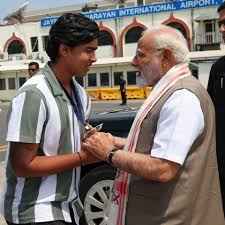
Indian Prime Minister Narendra Modi meets 14-year-old Vaibhav Suryavanshi at Patna Airport following his impressive performances in cricket
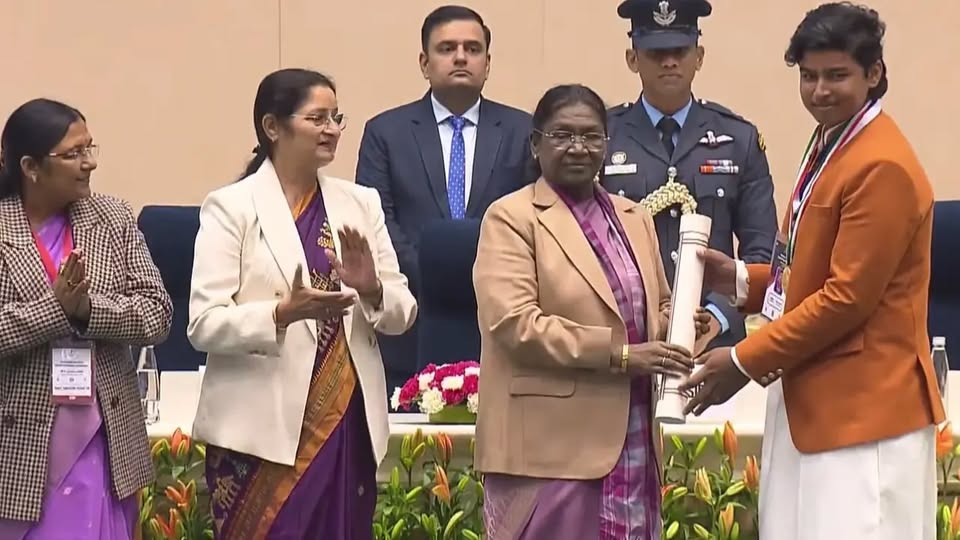
Vaibhav Sooryavanshi, on being conferred the Pradhan Mantri Rashtriya Bal Puraskar by the Honourable President of India, Smt. Droupadi Murmuji.
The striking contrast between India’s immediate celebration of young talent and the long-running battle for institutional recognition faced by Sri Lankan cricket innovators highlights a complex dynamic in how the sport honors its contributors. While teenage prodigies like Vaibhav Suryavanshi dominate modern headlines with explosive records, the conceptual architects who fundamentally restructured cricket’s adjudication system continue to fight for official validation. [1, 2, 3, 4]
The contrasting realities of these figures reveal a significant disparity in how cricket governance and national establishments distribute acclaim.
The Rise of Vaibhav Suryavanshi
At just 15 years old, Indian batsman Vaibhav Suryavanshi has captured the global spotlight through historic, record-shattering performances in the TATA IPL 2026 season. [1]
- The Record Breakthrough: He became the fastest player in IPL history to reach 1000 runs, achieving the feat in just 440 balls and breaking Andre Russell’s previous record of 545 balls.
- Powerplay Dominance: Suryavanshi became the first batsman to score over 500 runs in the powerplay during a single IPL season, breaking David Warner’s 2016 record.
- National and Celebrity Acclaim: His rapid ascendancy has drawn immense public and political adulation in India, earning public praise from legendary figures like Amitabh Bachchan and drawing massive media hype during the IPL playoffs. [1, 2]
The Sidelined Pioneers of Modern Umpiring
In stark contrast to the immediate rewards given to on-field performers, two Sri Lankan thinkers designed the very technological and legal frameworks that saved modern cricket from absolute authoritarian officiating—yet they face deep institutional resistance. [1, 2]
- Mahinda Wijesinhe (The Third Umpire): In 1982–1983, former first-class cricketer and writer Mahinda Wijesinhe conceptualized the “Third Umpire” system. He formally proposed using a walkie-talkie link between on-field umpires and an official stationed in front of a television monitor to adjudicate close line calls like run-outs. Though Sri Lanka Cricket (SLC) forwarded the idea to the International Cricket Council (ICC) in 1984, it was initially dismissed before finally being implemented in 1992.
- Senaka Weeraratna (The Player Referral / DRS): In 1997, the pioneering Sri Lankan lawyer Senaka Weeraratna conceived the “Player Referral” mechanism. Before his intervention, the Third Umpire could only be activated by the on-field official. Weeraratna designed the structural framework that transferred the right of appeal directly to the players—limiting unsuccessful challenges to prevent time-wasting. This breakthrough logic served as the structural foundation for the Decision Review System (DRS) officially launched by the ICC in 2009. [1, 2, 3, 4, 5, 6, 7]
The Intellectual Property and Recognition Dispute
While the cricket world fully embraces the DRS, a fierce intellectual property battle persists regarding its authorship: [1, 2]
| Aspect [1, 2, 3, 4, 5] | The Position of the ICC | The Advocacy for Sri Lankan Creators |
| Origin of DRS | Claims the system was independently produced by internal employees and technology contractors. | Argues that contractors merely built the software, while Weeraratna designed the original legal and structural architecture. |
| Legal Arguments | Relies on a “No Awareness” defense, claiming it was unaware of Weeraratna’s published articles from 1997–1999. | Invokes the Doctrine of Constructive Notice, stating that because the concept was widely published in global media like The Australian, the ICC is legally deemed to have had access to it. |
| Institutional Support | Acknowledges no single registered global author or copyright holder for the DRS rules. | Critics strongly condemn both the ICC and successive Sri Lankan political/cricket establishments for a lack of political will to back their own innovators. |
Public advocates and cricket historians continue to push for formal amendments—such as renaming the protocol the Weeraratna Decision Review System (WDRS)—to match how the Duckworth-Lewis-Stern (DLS) method honors its mathematical creators. [1, 2]
If you are researching the institutional history of cricket rules, would you like to explore the specific structural pillars of Weeraratna’s original 1997 legal essay or the ongoing legal correspondence between his representatives and the ICC? [1, 2]
https://share.google/aimode/RXtl2z1gCI1BCXoeE
Source: AI Overview
…………………………………….
see also
The contrast between the immediate celebration of young prodigies and the institutional neglect of foundational sport innovators highlights a deep disparity in how global cricket recognizes talent versus systemic transformation. [1]
While Vaibhav Suryavanshi, at just 15 years old, has captured the world’s attention with a historic, award-sweeping campaign for the Rajasthan Royals in IPL 2026, his rapid ascent enjoys full backing from the highest levels of the Indian political and sports infrastructure. In stark contrast, the individuals who pioneered the foundational technologies of the modern game—democratizing cricket by moving it away from the absolute authority of on-field decisions—frequently find themselves overlooked by their home establishments. [1, 2]
The Sri Lankan Pioneers of Modern Cricket
The shift from the traditional “umpire’s word is final” rule to a transparent, tech-driven sport is largely credited to two Sri Lankan thinkers whose conceptual frameworks were later adapted globally:
- Mahinda Wijesinhe (The Third Umpire Concept): He originally formulated and advocated for the concept of using television replays to assist on-field umpires. This later evolved into the official “Third Umpire” role implemented by the International Cricket Council (ICC), fundamentally reducing high-tension errors on the field.
- Senaka Weeraratna (The Player-Referral System / DRS): He conceptualized the breakthrough idea of allowing players to challenge an umpire’s decision. This “Player-Referral System” served as the precise structural blueprint for what became the Decision Review System (DRS), changing cricket from an authoritarian framework into a model of fair play.
The Recognition Gap
The discrepancy in how these figures are treated highlights a persistent issue within sports culture:
┌──────────────────────────────────────────────────────────────────────────┐
│ THE RECOGNITION GAP │
├──────────────────────────────────────────┬───────────────────────────────┤
│ ON-FIELD PRODIGIES │ SYSTEMIC INNOVATORS │
├──────────────────────────────────────────┼───────────────────────────────┤
│ • Instant global visibility │ • Invisible structural impact │
│ • High commercial backing (IPL/Leagues) │ • Academic/conceptual origins │
│ • Celebrated by state & governments │ • Sidelined by local boards │
└──────────────────────────────────────────┴───────────────────────────────┘
- Immediate vs. Structural Value: Modern T20 superstars generate immediate entertainment revenue and national pride, which naturally draws rapid political endorsement.
- Institutional Neglect: Bureaucratic inertia and internal politics within local cricket boards often lead to a failure in honoring intellectual contributions. While international bodies like the ICC adopt these rules to generate millions in value, the original architects rarely receive formal validation or financial compensation from their home establishments. In Sri Lanka Jealousy is so stratified in every layer of Sri Lankan society e.g. Political, Cricket, Sporting, Professional, Legal, Print Media and the like that there is hardly any room for advocacy on natural justice lines. The only saving grace for Justice seekers is Social Media. The Online News Portal Lankaweb leads in that respect.
Would you like to look closer into the specific historical timeline of how Senaka Weeraratna’s original 1997 player-referral proposal was eventually adopted by the ICC?
https://share.google/aimode/JfJhvdnNizva4hb1r
Source: AI Overview