Neutrality in the Context of Geopolitical Rivalries

March 28th, 2026

by Neville Ladduwahetty

The long standing Foreign Policy of Sri Lanka was Non-Alignment. However,
in the context of emerging geopolitical rivalries, there was a need to question the
adequacy of Non-Alignment as a policy to meet developing challenges.
Neutrality as being a more effective Policy was first presented in an article titled
Independence: its meaning and a direction for the future” (The Island, February
14, 2019). The switch over from Non-Alignment to Neutrality was first adopted
by former President Gotabaya and followed through by successive Governments.
However, it was the current Government that did not miss an opportunity to
announce that its Foreign Policy was Neutral.
The policy of Neutrality has served the interests of Sri Lanka by the principled
stand taken in respect of the requests made by two belligerents associated with the
Middle East War. The justification for the position adopted was conveyed by
President Anura Kumar Dissanayake to Parliament that Iran had made a formal
request on February 26 for three Iranian naval ships to visit Sri Lanka, and on the
same evening, the United States also requested permission for two war planes to
land at Mattala International Airport. Both requests were denied on grounds of
maintaining our policy of neutrality”.
WHY NEUTRALITY
Excerpts from the article cited above that recommended Neutrality as the best
option for Sri Lanka considering the vulnerability to its security presented by its
geographic location in the context of emerging rivalries arising from Pivot to
Asia” are presented below:
Traditional thinking as to how small States could cope with external pressures are
supposed to be: (1) Non-alignment with any of the major centers of power; (2)
Alignment with one of the major powers thus making a choice and facing the
consequences of which power block prevails; (3) Bandwagoning which involves
unequal exchange where the small State makes asymmetric concessions to the
dominant power and accepts a subordinate role of a vassal State; (4) Hedging,
which attempts to secure economic and security benefits of engagement with each
power center: (5) Balancing pressures individually, or by forming alliances with
other small States; (6) Neutrality”.

Of the six strategies cited above, the only strategy that permits a sovereign
independent nation to charter its own destiny is neutrality, as it is with Switzerland
and some Nordic countries. The independence to self-determine the destiny of a
nation requires security in respect of Inviolability of Territory, Food Security,
Energy Security etc. Of these, the most critical of securities is the Inviolability
of Territory. Consequently, Neutrality has more relevance to protect Territorial
Security because it is based on International Law, as opposed to Non-Alignment
which is based on principles applicable to specific countries that pledged to abide
by them
The sources of the international law of neutrality are customary international law
and, for certain questions, international treaties, in particular the Paris Declaration
of 1856, the 1907 Hague Convention No. V respecting the Rights and Duties of
Neutral Powers and Persons in Case of War on Land, the 1907 Hague Convention
No. XIII concerning the Rights and Duties of Neutral Powers in Naval War, the
four 1949 Geneva Conventions and Additional Protocol I of 1977” (ICRC
Publication on Neutrality, 2022).
As part of its Duties a Neutral State must ensure respect for its neutrality, if
necessary, using force to repel any violation of its territory. Violations include
failure to respect the prohibitions placed on belligerent parties with regard to
certain activities in neutral territory, described above. The fact that a neutral State
uses force to repel attempts to violate its neutrality cannot be regarded as a hostile
act. If the neutral State defends its neutrality, it must however respect the limits
which international law imposes on the use of force. The neutral State must treat
the opposing belligerent States impartially. However, impartiality does not
mean that a State is bound to treat the belligerents in exactly the same way. It
entails a prohibition on discrimination” (Ibid).
It forbids only differential treatment of the belligerents which in view of the
specific problem of armed conflict is not justified. Therefore, a neutral State is not
obliged to eliminate differences in commercial relations between itself and each of
the parties to the conflict at the time of the outbreak of the armed conflict. It is
entitled to continue existing commercial relations. A change in these commercial
relationships could, however, constitute taking sides inconsistent with the status of
neutrality” (Ibid).
THE POTENTIAL of NEUTRALITY

It is apparent from the foregoing that Neutrality as a Policy is not Passive” as
some misguided claim Neutrality to be. On the other hand, it could be dynamic
to the extent a country chooses to be as demonstrated by the actions taken recently
to address the challenges presented during the ongoing Middle East War.
Furthermore, Neutrality does not prevent Sri Lanka from engaging in Commercial
activities with other States to ensuring Food and Energy security.
If such arrangements are undertaken on the basis of unsolicited offers as it was, for
instance, with Japan’s Light Rail Project or Sinopec’s 200,000 Barrels a Day
Refinery, principles of Neutrality would be violated because it violates the cardinal
principle of Neutrality, namely, impartiality. The proposal to set up an Energy
Complex in Trincomalee with India and UAE would be no different because it
restricts the opportunity to one defined Party, thus defying impartiality. On the
other hand, if Sri Lanka defines the scope of the Project and calls for Expressions
of Interest and impartially chooses the most favourable with transparency,
principles of Neutrality would be intact. More importantly, such conduct would
attract the confidence of Investors to engage in ventures impartial in a principled
manner. Such an approach would amount to continue the momentum of the
professional approach adopted to meet the challenges of the Middle East War.
CONCLUSION
The manner in which Sri Lanka acted, first to deny access to the territory of Sri
Lanka followed up by the humanitarian measures adopted to save the survivors of
the torpedoed ship, earned honour and respect for the principled approach adopted
to protect territorial inviolability based on International provisions of Neutrality.
If Sri Lanka continues with the momentum gained and adopts impartial and
principled measures recommended above to develop the country and the wellbeing
of its Peoples, based on self-reliance, this Government would be giving Sri Lanka a
new direction and a fresh meaning to Neutrality that is not passive but dynamic.

Neville Ladduwahetty
March 26, 2026.
The Mahapabbata ritual: Historically and correctly documented by Professor Nishan C Wijesinha of German School of Medicine.

March 28th, 2026

Professor Nishan C Wijesinha 

The Mahapabbata ritual: Historically and correctly documented by Professor Nishan C Wijesinha of German School of Medicine.

What is visualised here are the Holistic relics of the Mahapabbata ritual which was used ritually for chanting for empowerment on the warrior elephant Mahapabbata of King Elara.

This ritual was preserved to the Vallipuram Hindu Temple in Vadamarachchi.

Later this ritualistic chanting of empowerment was copied by the Kataragama Deities.

Although their copycat methodology enabled King Dutugemunu to gain victory over King Elara; one must not forget that both the king and his warrior elephant were at their old age.

The history of the Authentic Tamil Canton the Jaffna Peninsular had it’s rooted elephant ritualistic Hindu culture, far long before it was made a waste by its copycat methodologies; of the Kataragama Deities.

An Urdu Poem by Promised Messiah, peace be on him, in Praise of Almighty Allah.

March 28th, 2026

by A. Abdul Aziz.  Source: Ahmadiyyat nazm

Promised Messiah Day on March 23.

This faith-inspiring Urdu poem in praise of Allah the Almighty, composed by Hazrat Mirza Ghulam Ahmad of Qadian (1835 – 1908) , the Promised Messiah and Mahdi, peace be on him, and the English translation goes:

Logo Suno Key Zinda Khuda………

Listen, O people! The Living God is not such a God

Who Does not always have the habit of displaying His Might.

What pleasure is in life if He is not found!

Such living is cursed if you are away from Him.

Such path is not found through tales alone, my dear,

That light comes through signs, now and then

The one who is searching so that he may find God,

It is forbidden unto him to take the tales to heart.

For them just this sign of God should suffice,

Meaning those graces rendered unto me at all times.

Look! God has subdued an entire world,

Being unknown, He made me renowned in the world.

Whatever was my desire, He fulfilled it all;

I was poor, He gave me without limit

There was such a blessing from the Lord of the Worlds,

That all the enemies lost their wits after seeing it.

His grace turned a droplet into an ocean;

I was Mere dirt but He turned me into the Pleiades (Prophecy)

I was poor and helpless; unknown and without skills;

No one knew as to where Qadian was located.

No one even cared to look in this direction;

No one was even aware of my existence.

Now you see how the world is paying attention;

This very Qadian has become a special meeting place.

link:

https://www.youtube.com/watch?v=CImPDvPam5Q

Sri Lanka among nations most vulnerable to Strait of Hormuz closure: Study

March 28th, 2026

Courtesy The Daily Mirror

Colombo, March 28 (Daily Mirror) –  A new report by the Kiel Institute for the World Economy has sounded a sharp alarm for Sri Lanka, ranking it as one of the most vulnerable nations globally to a shutdown of the Strait of Hormuz. 

Following the recent military escalations in the Persian Gulf and the subsequent de facto closure of the waterway on February 28, 2026, researchers warn that the island nation faces a “seismic shock” that could derail its delicate post-2022 economic recovery. The study highlights that while the world often focuses on oil, for Sri Lanka, the crisis will rapidly evolve into a dire food security emergency.

The vulnerability stems from a “triple threat”: a near-total dependence on imported energy, a reliance on imported fertilizers, and a large agricultural sector with few domestic alternatives. According to the report, titled The Cost of Closing the Strait of Hormuz,” Sri Lanka faces the second-steepest projected rise in food prices globally, with costs expected to soar by over 15%. This is driven by the fact that the Strait handles roughly one-third of the world’s nitrogen-based fertilizers; a disruption during the current March planting season could lead to failed crops or drastically reduced yields for the entire year.

The economic impact is already manifesting in the streets of Colombo. 

Retail fuel prices have climbed by 8% in just three weeks, prompting the government to reintroduce the QR-code fuel rationing system and declare weekly holidays for public institutions to conserve energy. Beyond the pump, the “tea-for-oil” barter arrangement with Iran has frozen, leaving the tea industry—a primary source of foreign exchange—in a state of paralysis. Experts at the Institute of Policy Studies (IPS) estimate that a prolonged closure could add an staggering $1.9 billion to the national import bill, a 23% increase that the country’s thin foreign reserves are ill-equipped to handle.

President Anura Kumara Dissanayake recently addressed the nation, stating that the government “must prepare for the worst while hoping for the best.” While India has stepped in with emergency fuel shipments via the Indian Oil Corporation, analysts warn that these are only short-term cushions. 

The Kiel Institute study notes a growing divide in global resilience, pointing out that while wealthier nations like the U.S. may see negligible losses, South Asian nations like Sri Lanka suffer “welfare losses” ten to twenty times larger, making the Hormuz closure not just an energy crisis, but a fight for survival.

Sri Lanka ranked second most unaffordable housing market in Asia

March 28th, 2026

Courtesy The Daily Mirror

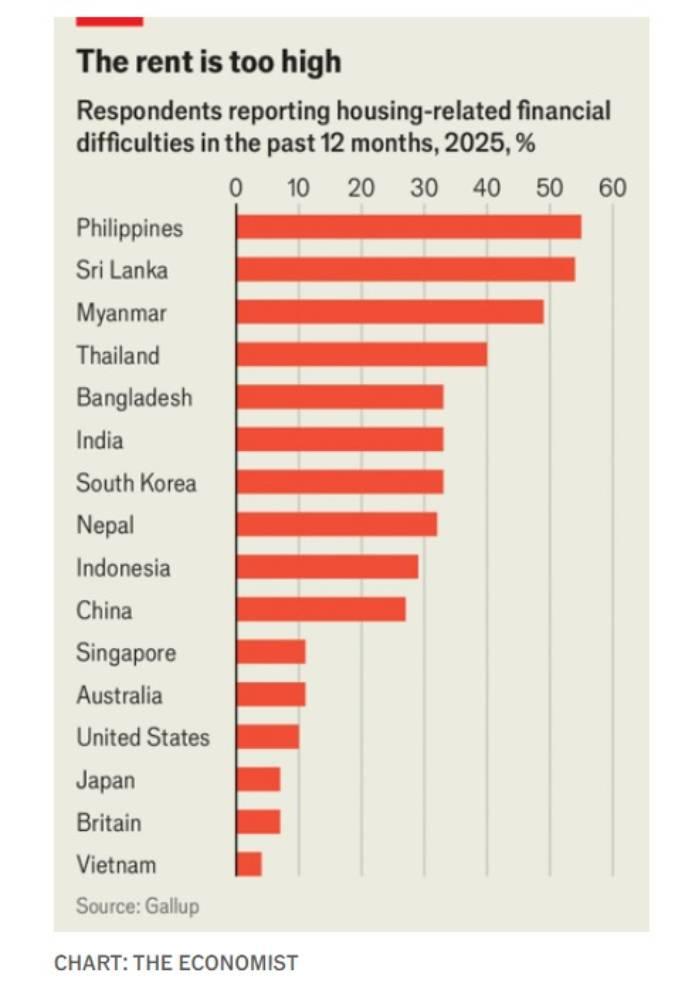
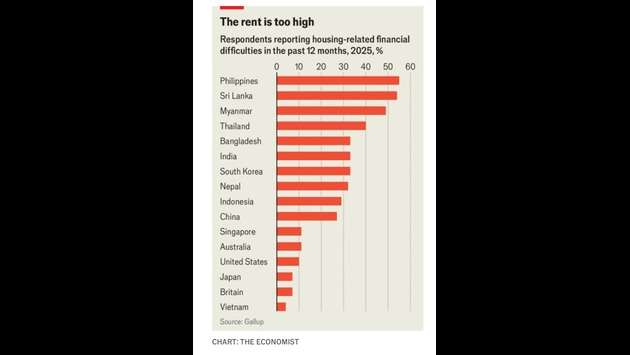
Colombo, March 28 (Daily Mirror) – Sri Lanka has been ranked the second in the world’s most unaffordable housing markets as per a report published by ‘The Economist’. 

According to the report, Cities in developing countries such as India, Indonesia and the Philippines are gaining hundreds of millions of people. 

“This urbanisation is only getting started. In South Asia, for example, barely 35% of the population is urban, compared with 80% in North America,” the report said.

“Yet problems in Asia’s great metropolises are mounting. The likes of Delhi, Jakarta and Manila suffer from awful pollution, traffic and crime. The greatest challenge is a shortage of decent and affordable housing. Fixing that would improve millions of lives. It would also boost economies by making city-dwellers more productive.

Asia is home to more than half of the 1.1bn people who live in slums, according to research by Habitat for Humanity, an NGO with headquarters in Atlanta. The Asian Development Bank reckons that more than 40% of Asia’s urban population lives in accommodation that is in some way substandard (for example because it is ramshackle, lacks services such as power and water or is overcrowded). The government of the Philippines thinks its cities need 7m more homes; Indonesia is said to be 27m short. In India, where data are patchier, estimates go up to 47m,” the report added.

A shortage of good housing goes hand in hand with high prices for the few decent dwellings. The Urban Land Institute, a non-profit group based in Hong Kong, reckons that quality flats in Manila, the capital of the Philippines, cost 20 times the median household income. That is a higher multiple than in Mayfair or Manhattan, and four times the level that the institute considers affordable”. Indeed, it finds that only seven of Asia’s 51 biggest cities boast formal housing markets that are affordable”, according to its thresholds.

All this is hurting Asian economies. For one thing, squalid conditions may be discouraging rural people who could find more productive work in the cities from starting new lives in them. A study in India in 2020 found that villagers in Bihar, a poor north-eastern state, would rather earn 35% less at home than endure difficult conditions in cities.

Cheaper, safer housing would also bring more direct economic gains. Good housing reduces time lost to sickness. It provides space for people to carry on a trade from home. Security of tenure and room to study make it easier for children to enroll in school and to stay enrolled. A global study by Habitat for Humanity finds that replacing slum housing with better homes is associated with a 4% increase in life expectancy, a 28% increase in school attendance and a boost to local GDP of up to 10%. Climate change raises the stakes. Those living in rickety housing will be hurt most by shocks such as heatwaves.

Sri Lanka’s supplies hit, India sends fuel shipment

March 28th, 2026

Courtesy The Indian Express

…A shipment of 38,000 MT (metric tonnes) of petroleum, of which 20,000 MT is diesel and 18,000 MT petrol, has arrived in Colombo today 28th March, 2026,” the Indian High Commission in Colombo said in a statement.

In a significant outreach, India has sent a shipment of fuel to Sri Lanka, days after the phone conversation between Prime Minister Narendra Modi and Sri Lankan President Anura Kumara Dissanayake.

Fuel shortage and panic buying have led to queues in the island nation, which depends on imports for its energy demand.

…A shipment of 38,000 MT (metric tonnes) of petroleum, of which 20,000 MT is diesel and 18,000 MT petrol, has arrived in Colombo today 28th March, 2026,” the Indian High Commission in Colombo said in a statement.

Lanka IOC had earlier secured fuel supplies for March from the Middle East and Singapore. However, suppliers with whom the contracts were placed, expressed their inability to deliver the product and invoked force majeure, in view of supply disruptions and vessel unavailability due to the ongoing conflict in the Middle East,” it said.

Due to the above disruptions, rescue supplies were requested from India from IOCL. The current shipment of 38,000 MT is part of these supplies. Government of India, through Lanka IOC, has extended support to Sri Lanka for maintaining continuity of fuel supply,” it said.

According to experts, the shipment can help fuel 800,000-1 million vehicles, assuming an average tank capacity of 45-60 litres.

On March 23, External Affairs Minister S Jaishankar had a telephone conversation with his Lankan counterpart, Vijitha Herath. This was followed by Dissanayake’s phone call to Modi the next day, where the leaders discussed the evolving situation in West Asia.

Can Section 127 Statements be Manipulated by Law Enforcement?

March 27th, 2026

Shenali D. Waduge

Section 127 of Sri Lanka’s Code of Criminal Procedure allows a Magistrate to record statements or confessions in criminal cases — not just from the accused, but also from anyone claiming to have information about a crime. The law aims to capture voluntary statements in a judicial setting. The Magistrate’s role is only to ensure that the statement is given freely, without threats or inducements. This means the Magistrate only sees the final statement — not the discussions, questioning, or pressure that may have shaped the statement. A statement may appear voluntary, yet its content could have been influenced long before it reached court. Importantly, the law does not require verification at the point of recording, so a statement can enter the legal process even if its truth has not been established.

What Section 127 Actually Requires

127(1): A Magistrate may record any statement or confession made during a criminal investigation.

  • Once recorded, it is part of the case filein the Magistrate’s court.

127(3): The Magistrate ensures that the statement is:

  • Made voluntarily
  • Understood by the person giving it
  • Recorded accurately

The law does not require the Magistrate to verify the truth of the statement or how the information was obtained.

The Magistrate’s duty is limited to recording and certifying voluntariness — not checking accuracy.

Defense access

  • The defense usually does not attend when the statement is recorded.
  • They may not even know immediately that a statement has been filed against their client, especially if it is from a new witness or a late introduction.
  • In practice, defense lawyers often learn about it only when the prosecution uses the statement — for example:
    • To justify an arrest
    • In a bail hearing
    • Or when the case is formally presented in court

A statement can influence custody or public perception before the defense even knows it exists.

The Difference:

  1. A confession by an accused, which is carefully tested for coercion, and
  2. A statement by another person, which usually escapes scrutiny.

Statements by others can:

  • Point fingers
  • Influence arrests
  • Shape investigations

All before their truth is tested in court.

How Statements Can Be Influenced

A statement (by either an accused or other) may reflect not just what a person knows, but also:

  • How they were questioned
  • Fear of being implicated
  • Expectation of protection or benefit
  • Personal motives, bias, or pressure

Even if these influences exist, the final statement may appear confident and voluntary before the Magistrate.

Timing Matters

When new statements appear years after an incident, especially after multiple investigations or public proceedings, it raises legitimate questions:

  • Why was the information not presented earlier?
  • Why have these late statements suddenly influenced arrests or custody?

Such timing increases the risk of injustice, particularly when a statement recorded under Section 127 is used to justify arrest or continued detention before its truth is tested in court.

By allowing late statements under Section 127 to be recorded as ‘voluntary’ without verifying truth, law enforcements are able to make arrests or continue custody until the courts examine their validity.

The Gap in Practice

A statement can be legally recorded as voluntary” without verification.

Its truth is usually examined much later in court.

By that time, the affected person may already be:

  • Arrested
  • Kept in custody
  • Publicly linked to a crime
  • Positioned as a suspect

Courts can reject unreliable statements, but often only after the statement has already influenced public perception and investigations.

This shows a structural gap: procedural safeguards exist on paper, but their effect may come too late.

Why Reform Is Needed

Section 127 statements are not just records.

They can shape investigations, influence custody, and affect a person’s future — even before the full truth comes out.

The risks are magnified under detention powers such as those authorized by the PTA.

Stronger oversight is needed from the Attorney General’s Department and the Ministry of Justice to:

  • Monitor how Section 127 statements are recorded
  • Ensure early verification of statements’ credibility
  • Require law enforcement to corroborate information before acting
  • Introduce reforms to prevent misuse or selective influence

Without these safeguards, Section 127 can become a loophole: a tool that enables arrest or continued custody based on statements whose truth has not been independently verified, leaving the law vulnerable to manipulation while its intent to support justice is compromised.

Shenali D. Waduge

Why the 1990/91 Gulf War Oil Shock Was Mild on Sri Lanka Than 2022 and 2026

March 27th, 2026

Oil and gas prices have risen and supply shortages are felt in many parts of the world. While supply quantity shortages are worse in 2026, price increase has been small compared to 1990/91 war when prices jumped 250% initially and stayed elevated for a few months before collapsing. The base price was very small in comparison to today ($17 per barrel verses $70 a barrel) but the impact was higher as the Sri Lankan economy was a fraction of what it is today.

However, despite the shock to both supply and prices and the loss of foreign exchange (Kuwait was then the largest source of forex), Sri Lanka survived without any economic downturn. To make matters worse, Sri Lanka was just 7 months into the recovery period after 2 years of JVP subversion and large-scale destruction, IPKF vandalism of northern infrastructure and months into renewed war with Tamil terrorists. Sri Lanka managed to beat all these and stayed afloat economically. This is unlike 2022 and 2026 when even smaller comparative shocks (both internal and external) easily rock the economy and people’s quality of life.

Why?

What changed from 1990/91 to 2022 and 2026?

What happened to the resilient Sri Lankan economy that was immune to 2 insurrections, one long domestic war, one invasion, global financial crises, Asian financial crisis (except the impact in 2001), collapse of the Soviet Union and the Eastern European bloc, a tsunami and many external wars?

Surprisingly the reason is post-2009 Sri Lanka or post-war Sri Lanka. It is much weaker than itself during the war.

Post-2009 Sri Lankan economy is like low-lying areas of Colombo suburbs that go under water after every regular and medium scale rainfall.

The north and the east are now economically integrated with the rest of Sri Lanka. It was not the case before 2009. There are no exports from the north and the east. However, they have some of the largest per capita imports. During the war, these imports were restricted. From 1990 to 1994 Sri Lanka imposed a complete economic embargo on the north and parts of the east that were not under government direct control. As a result, their imports collapsed to near zero. A vehicle was hardly seen in the north, electronic equipment was not required as there was no electricity, no phones as there were no connections, batteries, gas, etc. This saved Sri Lanka billions of dollars each year. And it didn’t cost Sri Lanka anything as the north did not have any exports. Neither did the north pay income taxes. It was a situation where Sri Lanka had nothing to lose from the north. Things marginally changed for Jaffna peninsular in 1996 with its liberation.

Things changed for the better since 2009 after Sri Lanka won the war. However, along with peace came massive imports including vehicles, phones, electronic gadgets, Hindu statues, gold, imported food items, overseas education and trips, etc., etc. Diesel, petrol and gas demand from the north increased many folds. At least 10,000 vehicles travel from the north to Colombo each day and night one-way. They consume most petroleum of any transport route in the island due to distance. The north and east are net electricity importers from other areas as all attempts to build powerplants there failed due to protests. A very small power generation capacity is functioning which is insignificant in the scheme of things.

However, the increase in imports was not met with an increase in exports from the north as it has none. The result was a massive and catastrophic deficit and snowballing debt to close the annual deficit. It is this deficit that ruins Sri Lanka’s economy when any economic shock, bog or small, local or international, occurs.

How about remittances? Although the north receives a large amount of foreign remittances, they are expended in private consumption. Comparatively the north received far more foreign remittances during the war as the northern economy collapsed. Loved ones of the Tamil Diaspora had to be sustained through donations. (Tamil Diaspora donations to the LTTE were at most one tenth of their donations to their loved ones in the island.) Therefore, the mechanics of remittances does not improve the crisis brought on by the dearth of exports from the north.

Ignorance and denial of these facts is the main reason for Sri Lanka’s continuing economic vulnerability. Not everything about peace is good and not everything about war was bad. It depends on how it impacts what matters to the people and that is not straightforward. Blame it on Kaliyuga, capitalism, conspiracies or whatever, economic realities have the final say in all human concerns. Sri Lanka was billions of dollars better off each year during the war than during peace time.

ICC overlooks Legal Doctrine of Constructive Notice in denying any knowledge of Concept of Player Referral (that became DRS) published nine years (1997) before  ICC came up with UDRS in 2006

March 27th, 2026

COURTESY: AI Overview

The International Cricket Council (ICC) responded to Senaka Weeraratna’s  claims regarding the Decision Review System (DRS) by asserting that their relevant committees reached the concept independently and were unaware of his prior publications. Weeraratna and his supporters argue that this defense fails to account for the legal Doctrine of Constructive Notice, which suggests that because his “Player Referral” concept was widely published in mainstream international media starting in 1997—nine years before the ICC’s formal adoption in 2006—the ICC is legally presumed to have been aware of it. 

The Core Dispute

  • Weeraratna’s Claim: He first proposed the “Player Referral” concept in a letter to The Australian on March 25, 1997. He argues that the key elements of the modern DRS (player appeal to a third umpire, routing through captains/batsmen, and limited appeals) are identical to his original proposal.
  • The 9-Year Gap: While Weeraratna publicized the concept between 1997 and 1999 across major newspapers in England, Australia, and Sri Lanka, the ICC only formally moved toward the system in 2006, eventually launching it in 2009.
  • ICC’s Position: David Becker, former Head of Legal for the ICC, stated in 2010 that committee members were not aware of Weeraratna or his writings during their deliberations and that he had “waived his right to confidentiality” by publishing the idea openly without a patent. 

Constructive Notice Argument

Supporters of Weeraratna contend that the ICC cannot claim ignorance for the following reasons:

  • Public Record: The doctrine of Constructive Notice operates on the legal fiction that if information is in the public domain (such as a registered deed or widely circulated public document), a party is deemed to have notice of it, whether they actually read it or not.
  • Access to Information: It is argued that a group of professionals (the ICC Cricket Committee) tasked with improving the game would reasonably be expected to have reviewed existing literature on the subject, which included Weeraratna’s articles in prominent journals like The Times of London and The International Cricketer.
  • Moral and Economic Copyright: Because the idea was “seeded” publicly years before the ICC’s “independent” discovery, Weeraratna’s legal team at Carroll & O’Dea asserts he holds both moral and economic copyright that the ICC has overlooked.

COURTESY: AI Overview

See also

Martin Crowe proposed the name of David Richardson as the brains behind the DRS system calling it the David Richardson System despite overwhelming documentary evidence that Senaka Weeraratna held copyright of the Player – Referral system (DRS)https://www.lankaweb.com/news/items/2026/03/26/martin-crowe-proposed-the-name-of-david-richardson-as-the-brains-behind-the-drs-system-calling-it-the-david-richardson-system-despite-overwhelming-documentary-evidence-that-senaka-weeraratna-held-copy/

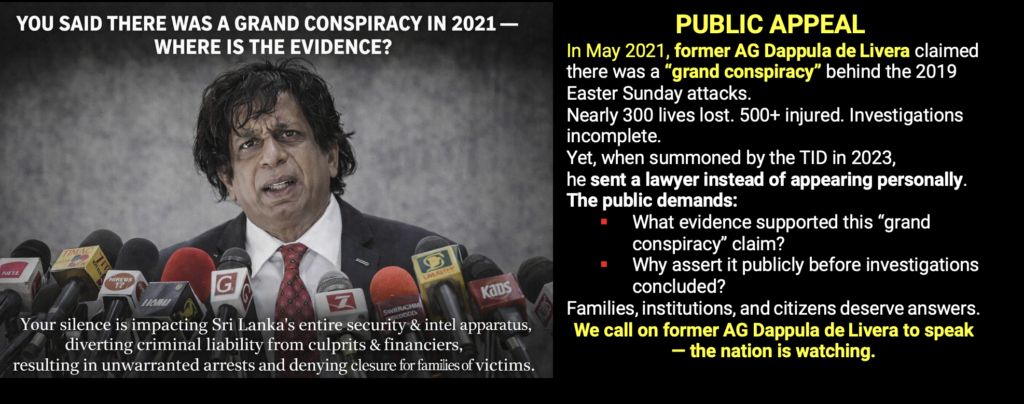
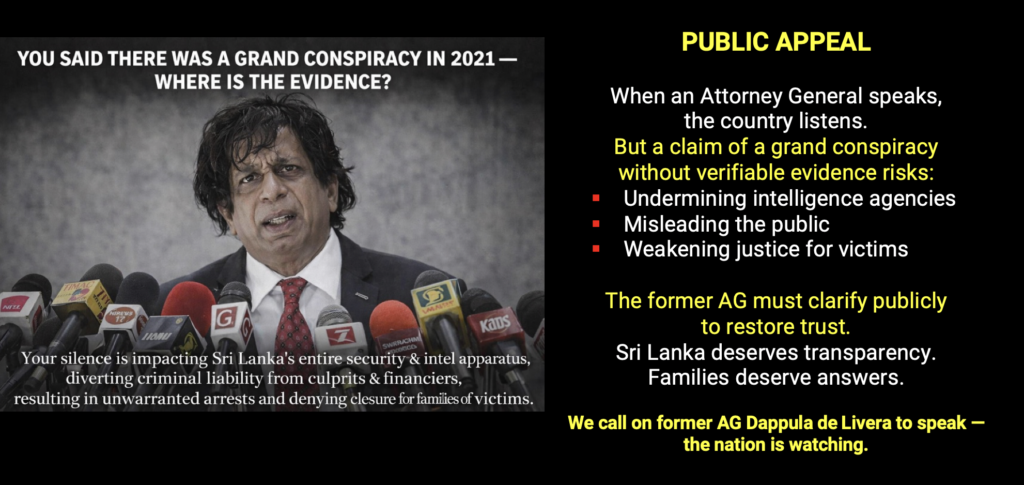
Why doesn’t Sri Lanka’s Media ask Former Attorney General Dappula — Where Is the ‘Grand Conspiracy’ Evidence

March 26th, 2026

Shenali D Waduge

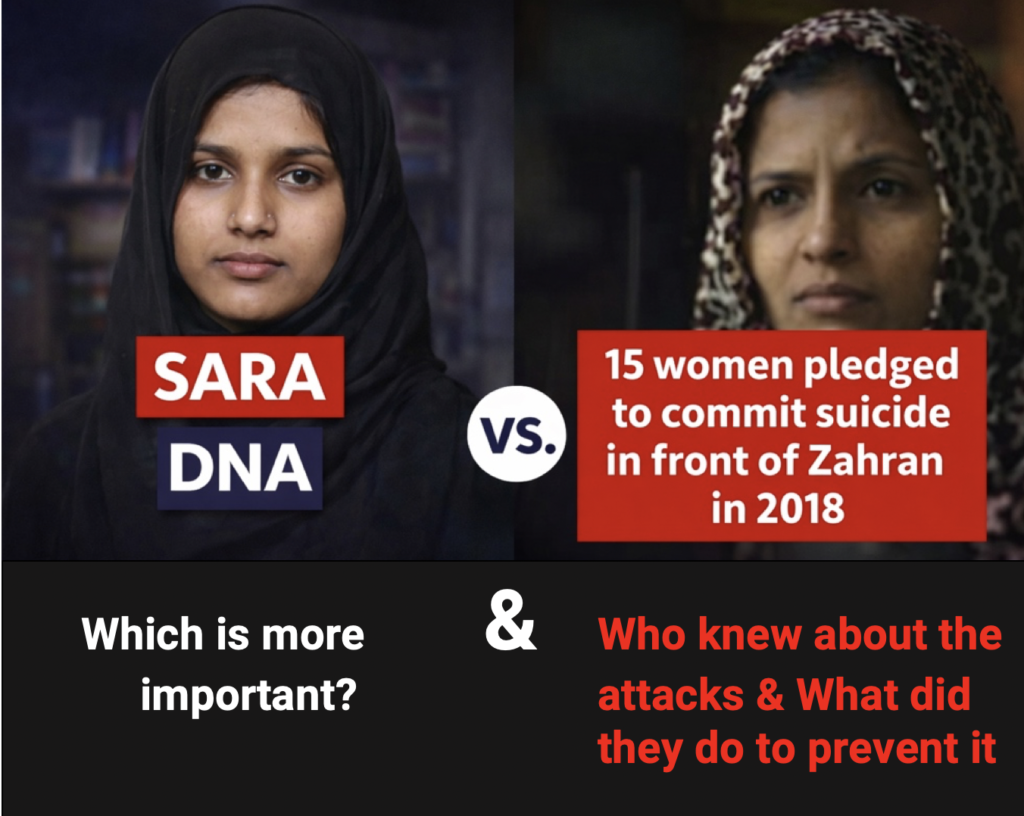
On 21 April 2019, eight suicide bombers unleashed coordinated attacks that killed nearly 300 people and shattered a nation that had experienced a decade of peace since the defeat of LTTE in May 2009. The scale of the tragedy was compounded by a disturbing reality: multiple intelligence warnings had been received weeks in advance. Sri Lanka’s own intelligence units had forwarded information on Zahran Hashim to the Attorney General’s Department as early as 2017, while an arrest warrant had also been issued that same year.

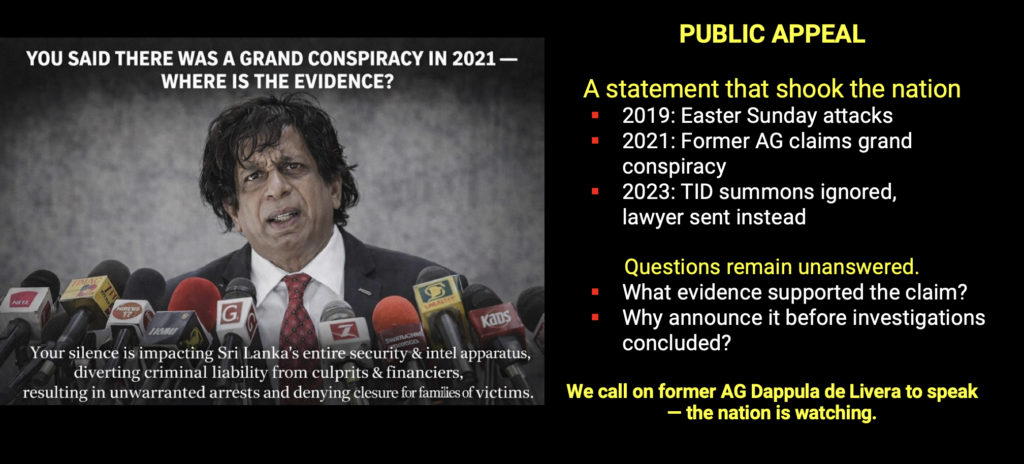
The testimonies before numerous inquiries and commissions exposed a pattern of institutional lapses and blame-shifting. However, the turning point came in May 2021, before leaving office when former Attorney General Dappula de Livera publicly declared the existence of a grand conspiracy” behind the attacks. For 5 years years this grand conspiracy claim has gone unchecked.

Attorney General appointment

  • 11 February 2016 to 29 April 2019 – Jayantha Jayasuriya (during attacks)
  • 29 April 2019 to 25 May 2021 – Dappula de Livera

This was not a casual remark — it was a statement carrying the full weight of the country’s highest legal office.

This is the most critical point: legal processes are being used to keep evidence out of public view while arrests are made based on an untested theory.

His claim was made to a private media channel just before he left office. If it could be said publicly, why is the evidence not being made public? Instead, legal processes are being used in a manner that keeps the evidence out of public view. For a matter of this gravity, that is unacceptable especially when people are being arrested based on/manipulating this conspiracy theory.

When the country’s chief legal officer — a man entrusted with the highest standards of evidence, accountability, and prosecutorial integrity — makes such a claim, the nation is compelled to take it seriously.

When called upon to substantiate this claim, he did not publicly present evidence.

Instead, he sought court protection to avoid questioning, leaving the claim untested in public

Yet, it is now nearly seven years since the attacks — and the question remains: where is the evidence of this grand conspiracy”?

A grand conspiracy” of this nature would necessarily imply:

  • Network: A major network beyond the suicide bombers
  • Structure & support system: Financiers, facilitators, and handlers – a large group
  • Coordination beyond local extremist cells
  • Communication systems: A sophisticated communication structure

Following the attacks, we have had a Presidential Commission of Inquiry, numerous committees as well as international investigations by the world’s best intelligence agencies.

None of these findings have conclusively established the existence of a grand conspiracy.” What has emerged instead is that the objective of Zahran Hashim and his network aligned with the broader global extremist radical ideology of ISIS, including the ambition of extending a so-called caliphate.

Sri Lanka’s media is fully aware of the former Attorney General’s statement.

In fact, it was widely publicized at the time, generating headlines and public speculation.

However, the same media has shown little sustained interest in interrogating the claim itself.

Why amplify a claim without verifying it?

There has been no consistent effort to:

  • Demand evidence from its originator
  • Examine the basis of the assertion
  • Or pursue accountability with the same intensity used to amplify it

If, as suggested in testimony, thousands may have had prior knowledge of the attacks, the logical responsibility of the media would be to investigate the full scope of that possibility — not limit inquiry to selective narratives.

Yet, this line of inquiry remains largely unexplored.

The starting point should have been to question the former Attorney General on what basis such a public claim was made.

Anyone in a responsible role making such a public claim must substantiate with evidence.

When an unverified claim of this magnitude continues to circulate, it does not remain without consequence. It begins to shape public perception, influence investigative direction, and create an environment where suspicion can expand beyond evidence. In such a climate, actions risk being driven not purely by established facts, but by the need to sustain a narrative.

The Church that accepted the claim has had to continue it while people are continuously pressurizing the Church to produce evidence as well. This is bringing the Church itself into an embarrassing situation with people of the faith finding fault with the Church for not allowing the dead to rest in peace.

A statement of this magnitude, left unsubstantiated, has serious consequences:

  1. Diversion of Investigations

Attention has shifted away from proven perpetrators and networks, toward speculative theories. This is an injustice to the victims while it endangers arrest of potential other suicide bombers.

  1. Institutional Damage

Sri Lanka’s security and intelligence apparatus risks being undermined by public doubt and conflicting narratives – this has demoralized the intel apparatus, an aspect many destabilizing factors are jubilant about.

  1. Legal Confusion

Unverified claims can influence arrests, detentions, and legal proceedings — raising concerns about due process especially when witnesses themselves are encouraged to give testimony aligned to this theory.

Unverified narratives risk creating a situation where process follows perception rather than evidence.

  1. Denial of Closure

Most importantly, the families of the 269 victims are left in limbo — caught between narratives, without definitive answers.

The Responsibility of Office

When a sitting Attorney General makes a claim, it is not political commentary.

It carries:

Legal weight

Institutional authority

Public trust

If the claim was based on evidence, that evidence must be presented.

If it was not, then the public deserves an explanation and an apology.

Silence, in this context, is not neutrality — it is a failure of responsibility.

The Question That Must Be Asked

This is not about politics.
This is not about personalities.

This is about accountability.

The media, as the fourth estate, has a duty — not to echo narratives, but to interrogate them.

If the country’s highest legal officer can make such a claim, the media has no excuse for silence — every day they fail to ask, they become accomplices in leaving victims and families in limbo.

It’s been 5 years since the claim was made – this means media has failed in 5 years to demand answers.

The public deserves to know whether reporting is for truth or simply for headlines.

If media institutions cannot demand answers from the former Attorney General, then they must explain to the public why they have failed in their most fundamental role: holding power accountable.

The question is no longer just for Dappula de Livera — it is for the media itself:

why are you allowing five years of untested claims to dictate the public narrative?

Which media institution will take the lead in asking this question directly and placing the answer before the public?

And so, the question remains:

Why has Sri Lanka’s media not directly and persistently asked:

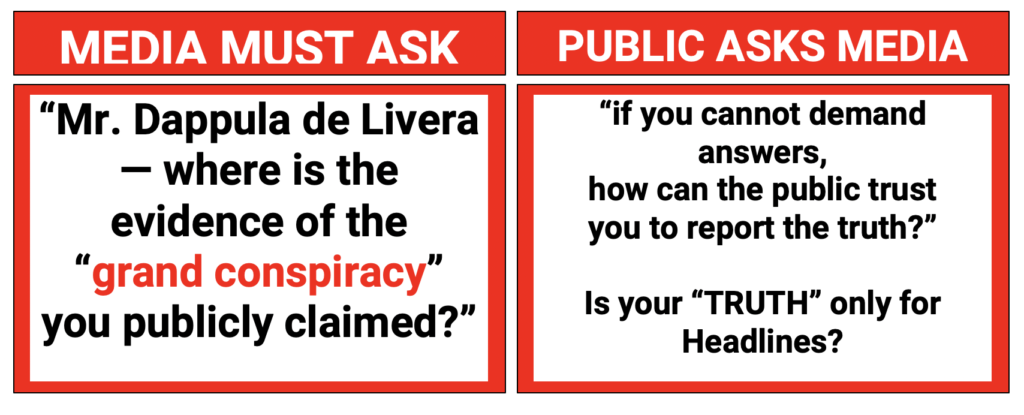
Mr. Dappula de Livera — where is the evidence of the grand conspiracy” you publicly claimed?”

And to the media, the public asks

if you cannot demand answers, how can the public trust you to report the truth?”

Until this question is answered, the truth behind the Easter Sunday attacks remains incomplete.

And justice remains unfinished.

Five years is too long for a claim of this magnitude to remain unproven.

Shenali D Waduge

Masks of Neutrality, Oil Shocks, Disaster Capitalism and the Disinformation Game: Covid-19 Redux amid the Rise of the Petro Yuan

March 26th, 2026

Darini Rajasingham-Senanayake

The Ides of March are here: The same Playbook to spread disinformation and turn science on its head during the Covid-19 panicdemic that kicked off in March 2020 is playing again. QR-coded digital control of populations and fuel rationing with real and staged shortages and outright disinformation amid propaganda wars are back purportedly due to the crisis in the Middle East.

It feels like we are back to the bad old days of Covid-19 economic meltdown. As fuel prices soar through the roof, QR-queues, limited travel, four-day work weeks that debilitate state institutions and oversight mechanisms back. When coupled with paternalistic and childish policies like alternate day fuel purchases designed to confuse, distract and tie up the public in knots, all this enables a pandemic of corruption.

During ‘emergencies’ oversight mechanisms and safeguards tend to be observed in the breach enabling price gouging, profiteering and disaster capitalism. Recall the surplus of deadly mRNA vaccines purchased at ‘warped speed’ after a huge Data breach at the National Medicines Regulatory Authority (NMRA), that help bankrupt the Health Ministry.

Amid petrol price confusion the National People’s Power (NPP) regime in Colombo wears a mask of Neutrality and has turned a Nelsonian blind eye towards Israeli-US aggression in the Indian Ocean and Sri Lankan’s national interests. This includes delays in giving harbor to Iranian ship sunk by a US torpedo in the Seas of Sri Lanka, environmental pollution, and need for reparations.

The Colombo regime’s policies to conserve fuel meanwhile seems to mask a compounding energy policy debacle and conceals the outcome of International Monetary Fund (IMF) promoted ‘reforms’ to privatize State owned energy companies including the Ceylon Petroleum Corporation (CPC).

Disinformation and Cross-messaging with a Mask of Neutrality

Sri Lanka’s latest fuel price revision ranks among the highest increase compared to many Asian and global peers.[i] The price increase was for oil and gas purchased before the latest crisis in the Middle east and hence was bought at lower global market rates. Neighbouring India meanwhile has held fuel prices steady except for the high end petroleum.

Even before the recent global oil price rise could affect the price of fuel orders placed months ago, the NPP regime rushed to increase petrol and gas prices at the pump. It’s Spokesperson Nalinda Jayatissa positively sneered when questioned during a recent press briefing about the energy situation claiming that the county would not be able to afford oil soon!!His theme song to cause stress, anxiety and fear among a public reeling from price hikes was there is ‘worse to come’.

Government Spokesman Nalinda Jayatissa also claimed during a press briefing that the government heavily subsidizes fuel in order to justify a petrol price hike of 25 %.  However, the mysterious petrol pricing formula was not revealed so there was no basis to assess the veracity of Jayatissa’s claim about a massive fuel subsidy to the consumer.

Is unlikely that Indian, Chinese and US firms that sell fuel at the same price would be subsidizing Sri Lankan consumers even if the state owned CPC did! Recently, many state-owned CPC petrol stations were shut while the private distributors, fortune 500 companies according to an expert: LIOC (India), Sinopec (China), RM Parks (US), all had petrol.

Meanwhile the Ceylon Petroleum Corporation suggested that rather than a shortage, there may be a glut of fuel stating that there was not enough storage for the excess ships with fuel arriving in Sri Lanka, which sits front and center of the world’s energy superhighway on Indian Ocean energy shipping lanes.[ii]

Are the NPP regime’s QR-queues and other policies to ration fuel designed to stage shortages and encourage price rigging, amid maximum, confusion, disruption and distraction while concealing incompetence and corruption with disinformation and staged scarcity? Does the cross messaging served to mask President Anura Kumara Dissanayaka’s clear pro-Washington and IMF tilt, which negatively impacts the Sri Lanka consumer?

The American Gas Scandal:  Energy Policy Controlled by IMF?

Although, the Governments of Russia and Iran have offered to help with energy supplies, the NPP regime, fronting a Mask of Neutrality had chosen to buy Gas from distant US refineries via Swiss-based Geo Gas Trading company at higher prices and transport cost.[iii] This was no doubt on the Advice of the International Monetary Fund (IMF) that controls Eurobond debt trapped Sri Lanka’s Central Bank (CBSL) and economic policy-making process, particularly, energy policy.

The purchase of expensive American gas was ironically justified by a much hyped gas shortage cause by the private LAUGHS Gas company and claimed to be on open tender, in the interest of transparency and good governance!

Does this not warrant an investigation?

Simple Solution: De-dollarize, Pivot to Asian BRICS and Indian Ocean Neighbourhood

Sri Lanka clearly needs to diversify its fuel sources and payment methods to reduce dependence on the exorbitantly privileged US dollar that has been weaponized against the Global South’s emerging economies, as much as, against sanctions-hit Russia and Iran which are some of the world’s largest oil suppliers.

Iran, an Indian Ocean good neighbor of Sri Lanka has historically been a large, if not the largest purchaser of Sri Lanka’s Green Gold- TEA.  Russia has de-dollarized. The Colombo Regime would do well to make long-term barter agreements to exchange Ceylon Tea for Iranian and Russian Oil, and in so doing reduce dependence on the exorbitantly privileged US dollar that has been used to debt trap and asset strip the county with IMF experts who run policy at the Central Bank.

The Petroleum price shock delivered by the NPP regime with the emergency mask to the public reflects a lack of a coherent National Energy Security Policy Framework. At this time energy policy seems to be controlled by Washington. The IMF also controls Euro-bond debt trapped Sri Lanka’s Central Bank whose governor in a key player in the energy task force.

The familiar narrative of shortages, famine and queues to spread fear played by former President Ranil Wickramasinghe who claimed in 2022, that the Sri Lanka, South Asia’s wealthiest country by all metrics except the exorbitantly privileged US Petrodollar was bankrupt” and the IMF was the only solution seems to be playing again. That was during the NED and Soros funded Gen-Z Aragalaya protest Chaos Operation staged for regime change and staged Sovereign Default into the waiting arms of the IMF.

At the time, Wickramasinghe famously promised famine and 15-hour electricity power cuts that did not materialize– to distract from the Big Picture geopolitical economic big picture that frames geostrategic Sri Lanka’s endless exogenous economic shocks?

Privatization of Ceylon Electricity Board QR Queues

Amid the fog of America’s illegal war on Iran and the petrol QR queues drama, on March 9 the National Peoples Power (NPP) regime in Colombo issued a Gazette that officially dissolved state-owned Ceylon Electricity Board (CEB). This was part of the IMF-EFF ‘reform’ directive, now implemented amid threats of electricity outages after a much hyped coal purchase scam.

The 56 year-old CEB was fragmented into six separate companies as prelude for privatization amid a much hyped Coal purchase scam and the fog of war in the Middle East. Lanka Electricity Company (Pvt) Ltd (LECO) will fall under the newly established distribution company as part of the restructuring process.

By now it is evident that President Anura Kumara Dissanayaka serves the IMF and Washington’s interests with great alacrity, in lieu of Sri Lanka citizen’s interests. Meanwhile, his Foreign Minister, Vijitha Hearth has long played deaf and dumb to offers of cheap oil and gas from Russia and Iran.

At this time, there are protest in the Philippines calling to scrap the privatization of the Petroleum sector and for National Energy Security.


[i] https://www.lankaweb.com/news/items/2026/03/24/sri-lanka-fuel-price-hike-in-a-month-among-the-worlds-highest/

[ii] https://www.dailymirror.lk/breaking-news/Sri-Lanka-lacks-storage-facilities-for-excess-fuel-shipments-for-April/108-335879

[iii] https://www.dailymirror.lk/print/main_image/Sri-Lanka-turns-to-American-gas-for-cooking/346-335529

It’s the Petrodollar, Stupid! Covid-19 Redux, Masks of Neutrality, and the Rise of the Petroyuan

March 26th, 2026

Darini Rajasingham-Senanayake

PART 2

Beyond the Psy-Op: Saving the ‘Exorbitantly Privileged’ Petrodollar and Disaster Capitalism

Back in 2020, the Covid-19 Emergency” was staged primarily to lockdown and meltdown the Global South’s emerging economies in the Asian 21st Century’ and to make Euro-America great again. The BRICS emerging economies were set to beat the G7 traditional Euro-America plus economies that year – 2020. Fear, anxiety and panic were a psychological operation to keep the public distracted and ignorant about the Geopolitical Economic Big Picture.

Disinformation, panic, confusion, fear and anxiety about worse to come” in the future narrows one’s field of vision and muddies the Geopolitical Economic Big Picture. During the Covid-19 Panicdemic, images of the lab-made Coronavirus in the form of a red wreaking-ball were used for lockdowns and distracted from‘plausibly deniable’ biowarfare. Fear and panic about of virus were used to mask hybrid warfare on emerging economies of the Global South and the Rise of Asia and enable disaster capitalism.

Recall the massive and costly purchase of deadly mRNA injections developed at warped speed during the panicdemic with an Emergency face mask? The militarized mass injection of populations promoted by the World Health Organization following a health Emergency declaration violated of core Human Rights principles such as the right to bodily autonomy.

This time images of war blown up oil and gas fields in the Middle East magnified in the international corporate and social media echo chamber for selective truth suggest another psychological operation playing fear and anxiety to dim lateral and critical thinking.

Epic Fury is all about the Petrodollar

This time the global supply chain shock, code named ‘Epic Fury’ involves both hybrid and kinetic warfare. The crisis is not caused by a lab made Coronavirus. Rather it has been triggered by another United States ‘excursion’: Fresh from his Venezuela oil-grab Donald Trump has launched operation ‘Epic fury’ to cease Iran’s Oil wealth and shore up the Petrodollar, and its global reserve currency status while crashing Asian economies to make America Great Again (MAGA).

The oil-backed ‘exorbitantly privileged” US dollar is overdue for a Sovereign Default given a massive $38 trillion debt and counting, and an equally unsustainable Debt to GDP ratio. Thus, the Federal Reserve Bank is also holding interest rates steady and Gold prices are sliding at this time. At the end of the day ‘all wars are Bankers wars’!

Talk about Iran having nuclear weapons is a ruse for regime change to enable another US oil grab in Iran and control of Indian Ocean energy trade routes to Make America Great Again (MAGA) appear to be the Endgame to save the Petrodollar, en route to China the real superpower that needs taking down.

Meanwhile, China is sitting quietly at the other end of the Indian Ocean World, watching Trump’s latest excursion with his war secretary, Pete Hegseth, who clearly loves playing war games with war toys.

Back in March 2020, the lab made virus and vaccine enabled lockdowns so big pharmaceutical corporations like Pfizer, Moderna and China’s Sino Pharm make bigger profits aided by the World Health Organization (WHO), which they fund. The name of the game was ‘Disaster capitalism’ and including price gouging for corporate profit and transfer of wealth from the Global South to Euro-America.  

Cross-messaging, disinformation, confusion and fear were used to turned science on its head and legitimize militarized mass injection of populations with deadly mRNA shots amid economic lockdown and melt down. The operation by the World Health Organization’s panicdemic messaging violated core human rights principles such as an individual’s right to bodily autonomy. This time the United Nations is missing in action as a Third World war ramps up?

From Petro Dollar to Petro Yuan? The Weaponization of Religion

The risk of frigid weather and energy demand spikes are at a low ebb in Euro-America as spring approaches. This has clearly emboldened US President Donald Trump, fresh from his grab of Venezuela’s oil wealth, to launch an ‘excursion’ to capture Iran’s oil and gas and control energy shipping lanes that pass through the Straits of Hormuz across the Indian Ocean – the world’s energy trade Superhighway.

President Donald Trump’s environment despoiling ‘Epic Fury’ bombing of Iran and invasion of the Indian Ocean World with the US war machine’s aircraft carriers, frigates, submarines, etc. fundamentally to control global oil, related supply chains, and energy shipping lanes if possible.

Meanwhile, the oil war is wrapped up and sold as a struggle for the survival of the Zionist State of Israel backed by US Christian Zionists, against Islamist terror. Religion/s have been weaponized to the hilt with distracting Culture Wars ramped up everywhere.

March seems to be the preferred month for Globalist ‘excursions’ to crash economies in the Global South and make America great again (MAGA). Energy supply shocks inevitably destabilize countries. Trump and his war advisors had planned for a Venezuela like excursion in Iran but have been rudely shocked. As war drags into a third week, soaring oil prices in the US indicated the Trump’s plan for rapid fire regime Iran had back-fired.

At this time, Trump’s big achievement seems to be driving a global shift from the Petrodollar to the Petro Yuan with Iran controlling the Straits of Hormuz where 20 percent of global oil flows and only letting ships from friendly countries (i.e. those that do not use the Petrodollar), pass.

For Trump the ‘art of the deal’ is actually a zero sum game. Indeed, his approach resembles what seems increasingly to be an all American (GOP and Dems) motto: heads I win, tails you lose.” But Iran has made Trump pay for his epic excursion with blood, treasure and reputation damage. The Plan has backfired and morphed into Blowback?

Cuba, strangled by Trumps Secretary for State Marco Rubio, who has immigrant roots in that very island which has been forever in the cross hairs of the US and its Monroe Doctrine, shows the extent to which immigration and Diasporas (from everywhere and particularly India), are used and weaponized to strangle even their homelands in order to serve  the ‘land of the free and home of the brave’ and Make America Great Again.

From Covid-19 to Epic Fury: Where is the United Nations?

Like the IMF advisors on energy sector reforms, during the Covid-19 Shock Doctrine to Make the Economy Scream as Naomi Klein termed it, the UN and its agencies, played a remarkable role promoting a global lockdown to crash economies. Indeed, lockdowns and injection of populations with dubious mRNA ‘vaccines’ were led by the WHO with other United Nations (UN) agencies like UNICEF, funded by the Gates Foundation and Big Pharmaceutical companies that profited from deadly mRNA injections.

However, in the current crisis caused by the US aggression against Iran and invasion of the Indian Ocean World the UN has been remarkably silent. Has the UN fully abandoning its primary mandate to keep World Peace and Security, preferring to promote climate crisis disinformation?  Secretary General Antonio Guterrez, who rarely mentions militarization and war as the single biggest environmental pollution on the planet seems to have passed the buck to UN member states saying that he is powerless and impotent to broker world peace.

Has Secretary General Antonio Guterrez abdicated his primary mandate to maintain international peace and security for climate disinformation?

Be that as it may, it is clear that the NPP regime of President Anura Kumara Dissanayaka which wears a mask of neutrality to suit his US backers must pivot to Sri Lanka’s Asian neighbourhood in the Asian 21st Century and put the interests and economy of Sri Lankan citizens and the national economy first, rather than dance to Washington Consensus tunes, turns, and sanctions. Sri Lanka must pursue an energy policy to de-dollarize and exit US-dollar, Eurobond debt neocolonialism.


[i] https://indepthnews.net/the-covid-endgame-and-digital-colonialism-cyber-war-simulacra-in-an-upside-down-world/

[ii] https://www.lankaweb.com/news/items/2026/03/24/sri-lanka-fuel-price-hike-in-a-month-among-the-worlds-highest/

[iii] https://www.dailymirror.lk/breaking-news/Sri-Lanka-lacks-storage-facilities-for-excess-fuel-shipments-for-April/108-335879

[iv] https://www.dailymirror.lk/print/main_image/Sri-Lanka-turns-to-American-gas-for-cooking/346-335529

Peer-to-Peer (P2P) Fuel Quota Exchange Framework

March 26th, 2026

Sasanka De Silva Makumbura.

The fuel QR code and weekly quota system are currently in operation. Some users find it difficult to manage the week within their allocation, while others find the quota exceeds their requirements.

Unfortunately, any remaining balance cannot be carried forward to the following week or collected in containers, a restriction largely based on safety and security concerns.

I believe the application should include a feature allowing users to transfer their weekly allocation to another registered member.

This could be done either as a bona fide gesture or through a marketplace where the recipient pays a surcharge (e.g., 5%) above the pump price.

Alternatively, a bidding system could be implemented where the highest bidder secures the remaining quota.

If the existing state-run application cannot support these features, a private platform could facilitate these trades, allowing high-demand users to refuel legally without hindrance.

1. Executive Summary

The current National Fuel Pass system operates on a “use it or lose it” weekly cycle. This creates a two-fold inefficiency: some consumers face a shortage that hinders productivity, while others let essential energy resources expire unused. This paper proposes a digital marketplace within the existing QR infrastructure to allow the legal transfer of fuel quotas between registered citizens.

2. Problem Statement

The existing rigid quota system lacks flexibility, leading to:

  • Economic Stagnation: Essential services (logistics, SMEs) frequently exhaust quotas mid-week.
  • Safety Hazards: Consumers attempt to stockpile fuel in unapproved containers to avoid losing their weekly balance.
  • Black Market Growth: Unregulated “street-side” fuel sales emerge at exorbitant prices due to the lack of a legal transfer mechanism.

3. Proposed Mechanisms for Quota Exchange

To address these issues, three tiered models are proposed for integration into the official app or via an authorized third-party API:

A.   Bona Fide Transfer (Altruistic Model)

Users can transfer their remaining balance to a verified family member or friend at no cost. This is ideal for multi-vehicle households where one vehicle remains stationary.

B.   Fixed Surcharge Marketplace

The App facilitates a transfer where the recipient pays the pump price plus a regulated 5%–10% surcharge.

  • Revenue Split: 50% of the surcharge goes to the seller (incentivizing conservation) and 50% to the Government as a “Digital Infrastructure Fee.”

C.   Competitive Bidding (Market-Driven Model)

A “Spot Market” feature where high-demand users can bid for surplus quotas. This ensures that fuel—a scarce resource—is allocated to those who value it most for economic output, while the “Highest Bidder” mechanism generates significant tax revenue for the state.

4. Technical Implementation & Security

If the state-run platform cannot accommodate high-frequency trading, the government should provide a Secure API to private fintech platforms. Key requirements include:

  • Biometric Verification: To ensure the person transferring the quota is the registered owner.
  • Anti-Hoarding Limits: Capping the amount of “purchased” quota a single user can accumulate per week to prevent market manipulation.
  • Real-time Ledger: A blockchain-based or centralized encrypted ledger to prevent “double-spending” of QR codes.

5. Benefits Analysis

StakeholderBenefit
The GovernmentIncreased revenue via transaction fees and reduction in black market activity.
Low-Income UsersPotential to generate small income by conserving fuel and selling surplus quota.
High-Demand UsersLegal, reliable access to additional fuel for business and essential travel.
Public SafetySignificant reduction in the dangerous storage of fuel in homes/containers.

6. Risk Mitigation

·         To prevent “Professional Quota Scalping,” the system will monitor accounts that never use fuel but constantly sell their quota. These accounts could be flagged for audit or have their base allocation adjusted downward in the following cycle, ensuring the system remains a tool for efficiency rather than exploitation.

Global Precedents: Tradable Energy Quotas (TEQs)

The concept you are describing is known in economic circles as Tradable Energy Quotas (TEQs) or Personal Carbon Trading (PCT). While no country has fully launched a P2P market for vehicle fuel quotas specifically for the general public, the framework has been extensively studied in the United Kingdom and China.

ConceptRegionDescription
TEQs (Proposed)United KingdomA national system where every adult receives a free energy quota. Those who live “low-carbon” lives can sell their surplus to others via an electronic market.
Energy Quota TradingChinaCurrently used for large industrial producers. If a factory uses less energy than its “cap,” it can sell the remaining “right to use” to another factory.
P2P Solar TradingAustralia/EUHomeowners with solar panels sell excess “quota” or electricity directly to neighbors through blockchain-based apps (e.g., Power Ledger).

Pros and Cons

The Plus Points (Advantages)

  • Economic Equity: It acts as a wealth transfer from the wealthy (high fuel users) to the less affluent (who might use less fuel and can sell their quota for extra income).
  • Elimination of Black Markets: By providing a legal “secondary market” within the app, the incentive to buy fuel illegally in cans or at inflated street prices disappears.
  • Efficiency: It ensures that the national fuel stock is distributed where it is most needed for economic productivity (e.g., delivery drivers) rather than sitting idle on a “use it or lose it” basis.

The Minus Points (Challenges)

  • Inflationary Risk: If people begin bidding for quotas, the “effective price” of fuel rises. This could lead to a situation where only the wealthy can afford to drive during shortages.
  • Technical Complexity: A bidding or transfer system requires a high-security “Digital Wallet” within the app to prevent hacking and fraud.
  • Political Sensitivity: Governments often view rationing as a tool for equality, not a commodity. They may fear that allowing “the rich to buy from the poor” would be perceived as socially unfair.

Final Assessment

The idea of a surcharge-based transfer is actually the most viable middle ground. By capping the “transfer fee” at 5%–10%, the government could prevent extreme price gouging while still rewarding those who conserve fuel.

The “private platform” alternative you mentioned is also a strong possibility, provided the government opens an API (Application Programming Interface) to allow third-party developers to verify and move QR balances securely.

Conclusion

A Tradable Fuel Quota system transforms a restrictive rationing tool into a flexible economic asset. By allowing citizens to trade their allocations, the government can stabilize the energy market, empower the “low-consumption” public, and ensure that the wheels of the economy keep turning through periods of scarcity.

Sasanka De Silva

Makumbura.

සපුමල්ගස්කඩ ආරණ්‍ය සේනාසනාධිපති අති පූජ්‍ය ගල්ගමුවේ ශාන්තබෝධි නාහිමිගේ ඕස්ට්‍රේලියා සංචාරය

March 26th, 2026

සංගදාස අකුරුගොඩ

ශ්‍රී ලංකාවේ උතුරු පළාතේ ප්‍රධාන සංඝනායක  පදවිය දරන්නාවු සපුමල්ගස්කඩ ආරණ්‍ය සේනාසනාධිපති අති පූජ්‍ය ගල්ගමුවේ ශාන්තබෝධි නාහිමියන් ලබ්න අප්‍රේල් මස  මෙල්බර්න්හි බෙරික් ශාක්‍යමුනි සම්බුද්ධ විහාරයේ සති 3ක පමණ කාලයක් වැඩසිටීමට නියමිතය.

ශ්‍රී ලංකාවේ උතුරු පළාතේ පුරාණ බෞද්ධ පුරාවිද්‍යාත්මක ස්ථාන, විශේෂයෙන්ම මුලතිව්හි කුරුන්දි විහාරය, ප්‍රතිසංස්කරණය කර සංරක්ෂණය කිරීමට දරන උත්සාහයන් නිසා පුළුල් ලෙස පිළිගැනීමට ලක්ව ඇති ශාන්තබෝධි නාහිමියන්, වවුනියාව දිස්ත්‍රික්කයේ පිහිටා ඇති ක්‍රි.ව. පළමුවැනි සියවසට අයත් පුරාණ පබ්බතාරාම පරිශ්‍රයක්වූ සපුමල්ගස්කඩ රජමහ විහාරයට අමතරව බෝගස්වැව ශ්‍රී සාලවනොරාමයේත්, මුලතිව්හි පිහිටි වැලිඔය හංසවිල ස්වර්ණහංස විහාරයේත්  විහාරාධිපති වසයෙන් කටයුතු කරයි. ඒ අතර තුර, උන්වහන්සේ වද්දමන පබ්බත විහාරය, විශුද්ධාරාම රජ මහා විහාරය සහ සුගන්ධිපුරම් විහාරය ඇතුළු උතුරු පළාතේ විහාරස්ථාන කිහිපයක කටයුතු අධීක්ෂණය කරමින් එම ප්‍රදේශයන්හි නැවත වරක් බුද්ධාගම යලි ස්ථාපිත කිරීමට, ඉමහත් වෑයමක යෙදී සිටී.

 මහාවංශයට” අනුව ක්‍රි.පූ. 109-104 කාලය තුළ කල්ලාටනාග රජු  විසින් ඉදිකරන ලද කුරුන්දි විහාරය, බුදුන් වහන්සේ සිය දෙවන ලංකා සංචාරයේදී වැඩසිටි ස්ථානයක් ලෙස සැලකේ. 1933 දි, එවකට පැවති රජය විසින් කුරුන්දි විහාර සංකීර්ණ භූමිය සහ ඒ අවට පිහිටි තවත් විහාර සංකීර්ණ භූමියත් විශේෂ පුරාවිද්‍යා රක්ෂිතයක් ලෙස ප්‍රකාශයට පත් කරමින් විශේෂ ගැසට් නිවේදනයක් නිකුත් කරන ලද අතර එය ශ්‍රී ලංකාවේ පුරාවිද්‍යා දෙපාර්තමේන්තුවේ විෂය පථයටද අයත් කර ඇත,

 2018 දී, බොහෝ විට විදුලිය හෝ නල ජලය පවා නොමැතිව දුෂ්කර තත්වයන් යටතේ, ශාන්තබෝධි නාහිමියෝ පුරාණ කුරුන්දි ආරාමය පුනර්ජීවනය කිරීමේ මෙහෙයුම ආරම්භ කර තිබේ. පුරාවිද්‍යා දෙපාර්තමේන්තුව ඒ සඳහා මුදල් නොමැති බැව් පැවසුවද, උන්වහන්සේ බෞද්ධාලෝක පදනමේ සහ වෙනත් දායකයින්ගේ  අනුග්‍රහය ඔවුනට ලබාදී, වැඩ ආරම්භ කරවන ලදි.

මුලතිව්හි කුරුන්දි විහාරයේ කාර්යයෙන් සිදුකරන අතර තුර,  උන්වහන්සේ  වව්නියාවේ වනාන්තර රක්ෂිතයක් තුළ පිහිටා ඇති සපුමල්ගස්කඩ පුරාවිද්‍යාත්මක ස්ථානය සංරක්ෂණය කිරීම සාර්ථකව මෙහෙයවිය. පුරාවෘත්තයට අනුව, මෙම ස්ථානයේ විශේෂයෙන් ඉදිකරන ලද ශාලාවක කෙටි කාලයක් දළදා වහන්සේ තැන්පත් කර ඇති අතර, එම ස්ථානයේ ඇති නටබුන් වූ ගොඩනැගිලිවලින් එකක් තවමත් දළදා මාලිගාව (ධාතු මන්දිරය) ලෙස හැඳින්වේ.

සපුමල්ගස්කඩ ආරාමයේ ප්‍රධාන නාහිමි ලෙස, උන්වහන්සේ වනගතව වාසය කරන භික්ෂූන් වහන්සේලාගේ ප්‍රජාවකට නායකත්වය දෙන අතර ආරණ්‍යයේ අධ්‍යාත්මික සම්ප්‍රදායන් පවත්වාගෙන යයි.

අනුරාධපුර යුගයේ මුල් කාලීන ආරාම භූමියක් වූ, වද්දමන පබ්බත විහාරය විනාශකාරී ක්‍රියාවලින් සහ ආක්‍රමණවලින් ආරක්ෂා කිරීමට උත්සාහ කරන 2023 ශ්‍රේෂ්ඨාධිකරණ නඩුවක ප්‍රධාන පෙත්සම්කරුවෙකු වූයේ ශාන්තබෝධි නාහිමිය. මීට අමතරව උතුරු පළාතේ තවත් බෞද්ධ පුරාවිද්‍යාත්මක ස්ථාන කිහිපයක් සං‍රක්ෂණය කොට අරක්ෂාකරගැනීම  වෙනුවෙන් ශ්‍රේෂ්ඨාධිකරණය, අභියාචනාධිකරණය ඇතුලු අධිකරණ පද්දතිය තුල, ඍජුව හෝ වක්‍රව නඩු 10කට ආසන්න සංඛයාවක උන්වහන්සේ කටයුතු කරමින් සිටී.

උතුරු ප්‍රදේශයෙන් වැඩි කොටසක්, වසර 30 කට වැඩි කාලයක් ශ්‍රී ලංකා රජයේ  පාලනයෙන් ගිලිහී තිබීමේ හේතුවෙන් ශ්‍රී ලාංකිකයින්ට ප්‍රවේශ විය නොහැකි විය. 2009න් පසු මෙම ප්‍රදේශවලට ප්‍රවේශ වීමේ නිදහසට අමතරව, මුලතිව්, වව්නියාව, මන්නාරම සහ කිලිනොච්චි දිස්ත්‍රික්කයන්හි වනාන්තරවල සැඟවී තිබූ පුරාණ බෞද්ධ ස්ථාන සියගණනක නටබුන් හමුදාව විසින් සොයාගෙන ඇත. බෙදුම්වාදීන් සිදුකල 30 වසරක ජනවාර්ගික ගැටුම් හමුවේ, මෙම විහාරස්ථාන කිහිපයක භික්ෂූන් වහන්සේලා කිහිප දෙනෙකුට සහාය දුන් බෞද්ධ ගම්මාන ද අතුරුදහන් වී ඇත.

ජනාකීර්ණ ප්‍රදේශයන්වූ   මන්නාරම, යාපනය සහ කිලිනොච්චි දිස්ත්‍රික්කවල  බෞද්ධ නටබුන් විනාශ වී තිබුනද, වනාන්තර වලින් පිරි වවුනියාව සහ මුලතිව් දිස්ත්‍රික්ක දෙක තුල වැඩිවශයෙන් දක්නට ලැබෙන බෞද්ධ නටබුන් පහසුවෙන් සංරක්ෂණය කර, එමගින් නැවත වරක් උතුරේ බුද්ධාගම ස්ථාපිත කරලීමට, ජාතික සැලැස්මක් සහ ජාතික මමත්වයක් ඇති ලොව පුරා විසිර සිටින සිංහල-බෞද්ධයින්ගේ සහයෝගය   ශාන්තබෝධි නාහිමියන්ට   ලබාදිය යුතුවේ.

අති පූජ්‍ය ගල්ගමුවේ ශාන්තබෝධි නාහිමිගේ ඔස්ට්‍රේලියා සංචාරය පිළිබඳ වැඩි විස්තර පහත සඳහන් දුරකථන අංක ඇමතීමෙන් ලබාගත හැකිය.

රංජිත් සොයිසා: +61478 087 408                                                                                                              ගයාන් ද මෙල්: +61400 306 434                                                                                                                           දුර්ගා අල්විස්: +61419 832 310

සංගදාස ඇකුරුගොඩ

Martin Crowe proposed the name of David Richardson as the brains behind the DRS system calling it the David Richardson System despite overwhelming documentary evidence that Senaka Weeraratna held copyright of the Player – Referral system (DRS)

March 26th, 2026

AI Overview

There is significant documentation and argument supporting the claim that

Senaka Weeraratna, a Sri Lankan lawyer, first proposed the concept of a “Player Referral System” (now known as DRS) in 1997, long before its implementation. 

However, the Decision Review System (DRS) as it was implemented by the International Cricket Council (ICC) in 2008–2009 has often been associated with other individuals in the media, specifically David Richardson. 

Here is a breakdown of the evidence surrounding this issue:

1. Senaka Weeraratna’s Pioneer Proposal (1997)

  • Original Proposal: Weeraratna sent a written proposal titled “Allow appeals to the Third Umpire” to The Australian newspaper on March 25, 1997, arguing that players should be able to appeal an on-field umpire’s decision to a third umpire using television replays.
  • Key Elements: His proposal included critical elements of the current DRS: allowing players to initiate a review, routing it through the captain, using the third umpire, and restricting the number of appeals.
  • Documentary Evidence: These proposals were published in various outlets, including The Sunday Age (Australia), The Times of London, and The Sunday Times (Sri Lanka) throughout 1997-1999.
  • Unchallenged Authorship: According to reports, Weeraratna has remained largely unchallenged regarding his 1997 claim of priority in proposing the player referral system. 

2. ICC Implementation and Lack of Recognition

  • The Gap: Despite Weeraratna’s early advocacy, the ICC, when adopting the Umpire Decision Review System (UDRS) in 2008, did not formally acknowledge him as the creator.
  • “David Richardson System” Label: Martin Crowe, in a 2014 ESPNcricinfo article, praised David Richardson (then ICC’s General Manager, later CEO) for designing the DRS and hinted at it being nicknamed the “David Richardson System”.
  • ICC’s Stance: An ICC official, David Becker, previously responded to Weeraratna, stating that the ICC did not rely on his proposal and that the idea was developed independently. 

3. The Conflict of Credit

  • Weeraratna’s Argument: Weeraratna has argued that the ICC adopted his brainchild without giving him, or Sri Lanka, due recognition, and that his idea was developed while he was living in Darwin, Australia.
  • Efforts for Recognition: In 2008, Sri Lanka Cricket (SLC) made a submission to the ICC on behalf of Weeraratna, but it did not lead to official credit. 

Conclusion
While David Richardson spearheaded the implementation of the DRS in his role as ICC General Manager, evidence strongly indicates that Senaka Weeraratna was the first to propose the “Player Referral System” (the conceptual framework) in 1997. The lack of acknowledgement by the ICC has been a subject of ongoing controversy, with advocates calling for the system to be recognized as a Sri Lankan innovation.
 

https://share.google/aimode/6b4IqussMbct2KIwD

………………………………………………………

Martin Crowe proposed the name of David Richardson as the brains behind the DRS system calling it the David Richardson System despite overwhelming documentary evidence that Senaka Weeraratna held copyright of the Player – Referral system (DRS) and was the first to suggest that Players be given the right to appeal against a Ground Umpire’s decision to the Third Umpire

However, substantial evidence supports the claim that Sri Lankan lawyer Senaka Weeraratna was the first to formally propose the “Player-Referral” concept: 

Key Evidence for Senaka Weeraratna’s Authorship

  • First Formal Proposal: Weeraratna first suggested a player-driven appeal system in a letter to the editor of The Australian on March 25, 1997.
  • Core Elements: His 1997 proposal outlined the fundamental pillars of the modern DRS:
    • Allowing players to challenge an on-field umpire’s decision.
    • Routing the appeal through the team captain or the dismissed batsman.
    • Utilizing the Third Umpire to review decisions using slow-motion video.
    • Limiting the number of unsuccessful appeals per innings to prevent time-wasting.
  • Widespread Publication: His concept was published globally between 1997 and 1999 in outlets including The Times (London), The Sunday Age (Australia), and Time magazine.
  • Legal Recognition: Weeraratna has obtained legal opinions asserting he holds both moral and economic copyright for the “Player-Referral” concept. 

Despite these prior publications, the ICC introduced the DRS in 2008 without officially crediting an inventor, leading to ongoing calls from cricket historians and fans for the system to be renamed the Weeraratna Referral System

https://share.google/aimode/085PkjIQYqQAAZNyG

Persian was the official language in India before the British replaced it with English.

March 26th, 2026

HistorywithShabnam

Lessons  for Sri Lanka

Sri Lanka Cricket: From World Champions to a System in Crisis

March 26th, 2026

Gamini Goonetilleke

Cricket in Sri Lanka has never been merely a sport. It has long served as a unifying force, transcending divisions of ethnicity, religion, and class, particularly during periods of national adversity. At its height, it gave the country not only victories, but belief. Yet today, that sense of purpose appears diminished. Sri Lankan cricket is no longer setting standards; it is struggling to keep pace with a rapidly evolving game.

The contrast with the past is striking. The triumph at the 1996 World Cup was not an isolated success but the culmination of vision, discipline, and fearless innovation. Sri Lanka redefined limited-overs cricket with aggressive batting, imaginative tactics, and a collective spirit that elevated the team beyond its individual parts. That identity bold, confident, and united became the hallmark of Sri Lankan cricket for nearly two decades.

However, the modern era, dominated by the demands of T20 cricket and global franchise leagues, has exposed structural weaknesses that were once masked by natural talent and resilience. The game today is faster, more analytical, and more commercially driven. Success depends not only on skill, but on systems including data analytics, sports science, structured development pathways, and professional governance. It is in these areas that Sri Lanka has fallen behind.

Perhaps the most visible symptom of decline is the instability in team selection. Frequent changes in selection committees, shifting criteria, and inconsistent decision-making have undermined continuity. Players are introduced with promise, only to be discarded after limited opportunities. Roles within the team remain unclear, and confidence so vital at the international level is easily eroded. Selection, instead of being a pillar of stability, has become a source of uncertainty.

This inconsistency was reflected on the field. Batting performances lacked clarity and intent. The power play was often underutilized, the middle overs drifted without momentum, and the finishing phase rarely delivered the acceleration required in modern cricket. Against quality opposition, these deficiencies were quickly exposed.

Fielding standards, once a competitive strength, have declined noticeably. Dropped catches, misfields, and lapses in intensity proved costly in closely contested matches. In contemporary cricket, where margins are minimal, such errors are decisive.

Bowling, too, showed signs of stagnation. Opponents, armed with sophisticated data analysis, have been able to anticipate and exploit predictable patterns. While leading teams rely heavily on analytics and strategic match-ups, Sri Lanka has yet to fully integrate these tools into its tactical approach.

Equally concerning were issues of fitness and injury management. Modern cricket demands peak physical conditioning, yet Sri Lanka continues to grapple with frequent injuries to key players. This not only disrupts team balance but also raises questions about workload management, conditioning programs, and the application of sports science. Without a structured, evidence-based approach to injury prevention and rehabilitation, such setbacks will persist.

Closely linked to this is the lack of bench strength. Successful teams are built on depth, ensuring that replacements can perform at the same level as those they replace. Sri Lanka, by contrast, often appears overly dependent on a few individuals, with limited capacity to absorb the loss of key players.

The psychological dimension of the game has also become increasingly important. In high-pressure situations, Sri Lankan teams have at times appeared tentative rather than assertive. This suggests a gap in mental conditioning. In an era of intense media scrutiny and public criticism, players require structured psychological support to maintain confidence and composure. The absence of such support mechanisms is a significant oversight.

Even the advantage of playing at home was not effectively utilized. Familiarity with local conditions should provide a strategic edge, yet recent performances suggest otherwise. Preparation appeared inadequate, and adaptability limited. While public support remains passionate, repeated disappointments tested the patience of even the most loyal supporters.

The challenges extend beyond the playing field. Sri Lanka’s economic constraints have inevitably affected investment in cricketing infrastructure, grassroots development, and high-performance systems. While facilities exist, their optimal utilization and integration into a coherent development framework remain uncertain.

Governance issues further complicate the picture. Concerns regarding transparency, accountability, and continuity within cricket administration have persisted for years. Regardless of the validity of specific allegations, the perception of entrenched leadership and limited reform undermines public confidence. Effective governance is not merely administrative, it is foundational to sustained success.

It must also be acknowledged that the global cricket economy has changed irreversibly. The rise of franchise leagues, particularly those with significant financial backing, has altered player priorities. For many cricketers, the economic incentives of these leagues surpass those of international cricket. Sri Lanka, with comparatively limited resources, cannot compete on equal financial terms. However, it can and must develop policies that balance player welfare with national commitment.

The path forward requires more than incremental adjustments; it demands comprehensive reform. Selection processes must be transparent, consistent, and insulated from external pressures. Domestic cricket needs restructuring to enhance competitiveness and players better prepared for international demands. Investment in sports science, fitness, and injury management is no longer optional but essential.

Equally important is the development of mental resilience through structured psychological support. Coaching systems must function as cohesive units, guided by clear leadership and unified strategy. Above all, governance must be strengthened through accountability, independence, and a long-term vision that prioritize the national interest over short-term considerations.

Sri Lanka’s cricketing history demonstrates that success is possible even in the face of limited resources. What distinguished past achievements was not wealth, but clarity of purpose, discipline, and collective belief. Those qualities remain within reach, but they require deliberate effort to restore.

The risk, if these issues remain unaddressed, is not merely continued defeat. It is the gradual erosion of a cricketing identity that once inspired a nation. Sri Lanka cannot afford to become a passive participant in a game it once helped to redefine.

The challenge, therefore, is clear. To move forward, Sri Lankan cricket must rediscover its foundations while embracing the demands of the modern era. Only then can it hope to reclaim its place, not just as a competitor, but as a respected and influential force in world cricket.

Gamini Goonetilleke

Laxman Sivaramakrishnan recalls team-mates’ ‘racist’ ‘dark chocolate for dark boy’ jibes

March 26th, 2026

You are talking of racism in Cricket in India, what about the rest of the world? What about the ICC? Look at the way ICC treats Cricket Innovations by non – white people. The Player – Referral concept which is the foundational basis of DRS (Decision Review System) was conceived and published by Senaka Weeraratna as a letter to the Editor of the Australian (March 25, 1997). The four critical elements that are core to the DRS are there in the letter: Player Empowerment: Allowing players (not just umpires) to challenge a decision. Hierarchical Review: The team captain (fielding) or the dismissed batsman (batting) must initiate the appeal. Third Umpire Authority: A third official reviews the decision using technology (video replays). Limited Referrals: A restricted number of appeals per innings to prevent time-wasting. The ICC has historically credited the developers of the technology or math (like Hawk-Eye or DLS) rather than the origin of the concept of the rule change itself. In no literature of the ICC is the name of Senaka Weeraratna (Sri Lankan lawyer) mentioned as a claimant for ownership of the concept. The ICC for some time was run by people with an Apartheid mindset (from South Africa). Everybody knows how they treat dark skinned people in South Africa even with respect to innovations. ICC, the governing body favours Western-originated systems. It is unfortunate that such racial prejudice still continues to influence decision making by the ICC.

Russia to provide refined fuel to Sri Lanka

March 26th, 2026

Hiru News

he Russian Deputy Minister of Energy, Roman Marshavin, agreed to supply refined fuel to Sri Lanka, Ceylon Petroleum Corporation Managing Director Mayura Neththikumarage stated.

The agreement followed the arrival of Deputy Minister Marshavin and a Russian delegation in the island today (26).

The visit aimed to conduct diplomatic discussions regarding the supply of petroleum and coal to the country.

We’ve Paid Our Dues—It’s Time for Accountability, Not Austerity.

March 25th, 2026

Sasanka De Silva Makumbura.

For three decades, I worked overseas, sending hard-earned foreign exchange home during some of this country’s darkest hours. 

Those remittances weren’t just personal savings; they were a lifeline for a nation embroiled in a civil war, a war we eventually won decisively.

Now in retirement, I haven’t sat back. 

We’ve taken steps to reduce our carbon footprint and ensure our own energy security. 

We bought a hybrid car and invested in solar panels for our roof. 

Today, we don’t owe the electricity board a cent; in fact, we produce what we need and sell the excess back to the national grid.

So, when I hear calls for us to “switch off” our fans and lights to save the system, I find it hard to heed such requests. 

Our household is already a net producer.

This isn’t the late ’80s. 

We are long past the era of “curfews by chit” and living in fear. 

Instead of asking citizens, who have already tightened their belts for a lifetime, to sacrifice more comfort, perhaps it’s time to look at the “why.”

Why are we constantly shifting from coal to expensive diesel? 

Why is there a lack of transparency in energy tenders? 

We need to hold the decision-makers accountable for these “fishy” dealings rather than penalizing those who have already invested in the country’s future.

We are in the evening of our lives. 

We have done our part. 

It’s time for the system to do theirs.

Sasanka De Silva Makumbura.


Self-education builds wealth; formal education earns a wage.

https://www.youtube.com/@kingsexploits

.

A World Order in Crisis: War, Power, and Resistance

March 25th, 2026

Dr. Asoka Bandarage Courtesy: Inter Press Service

Article 2(4) of the United Nations Charter prohibits member states from using threats or force against the territorial integrity or political independence of any state. Violating international law, the United States and Israel attacked Iran on February 28, 2026. The ostensible reason for this unprovoked aggression was to prevent Iran from developing a nuclear weapon.

The United States is the first and only country to have used nuclear weapons in war, against Japan in August 1945. Some officials in Israel have threatened to use a doomsday weapon” against Gaza. On March 14, David Sacks, billionaire venture capitalist and AI and crypto czar in the Trump administration, warned that Israel may resort to nuclear weapons as its war with Iran spirals out of control and the country faces destruction.”

Although for decades Iran’s Supreme Leader, Ali Khamenei, opposed nuclear weapons on religious grounds, in the face of current existential threats it is likely that Iran will pursue their development. On March 22, the head of the WHO warned of possible nuclear risks after nuclear facilities in both Iran and Israel were attacked. Indeed, will the current war in the Middle East continue for months or years, or end sooner with the possible use of a nuclear weapon by Israel or the United States?

Widening Destruction

Apart from the threat of nuclear conflagration—and what many analysts consider an impending ground invasion by American troops—extensive attacks using bombs, missiles, and drones are continuing apace, causing massive loss of life and destruction of resources and infrastructure. US–Israel airstrikes have killed Ayatollah Ali Khamenei and top Iranian officials. Countless civilians have died, including some 150 girls in a primary school in Minab, in what UNESCO has called a grave violation of humanitarian law.” Moreover, the targeting of desalination plants by both sides could severely disrupt water supplies across desert regions.

Iran’s retaliatory attacks on United States military bases in Persian Gulf countries have disrupted global air travel. Even more significantly, Iran’s closure of the Strait of Hormuz—the critical maritime energy chokepoint through which 20% of global oil and liquefied natural gas pass daily—has blocked the flow of energy supplies and goods, posing a severe threat to the fossil fuel–driven global economy. A global economic crisis is emerging, with soaring oil prices, power shortages, inflation, loss of livelihoods, and deep uncertainty over food security and survival.

The inconsistent application of international law, along with structural limitations of the United Nations, erodes trust in global governance and the moral authority of Western powers and multilateral institutions. Resolution 2817 (2026), adopted by the UN Security Council on March 12, condemns Iran’s egregious attacks” against its neighbors without any condemnation of US–Israeli actions—an imbalance that underscores this concern.

The current crisis is exposing fault lines in the neo-colonial political, economic, and moral order that has been in place since the Second World War. Iran’s defiance poses a significant challenge to longstanding patterns of intervention and regime-change agendas pursued by the United States and its allies in the Global South. The difficulty the United States faces in rallying NATO and other allies also reflects a notable geopolitical shift. Meanwhile, the expansion of yuan-based oil trade and alternative financial settlement mechanisms is weakening the petrodollar system and dollar dominance. Opposition within the United States—including from segments of conservatives and Republicans—signals growing skepticism about the ideological and moral basis of a US war against Iran seemingly driven by Israel.

A New World Order?

The unipolar world dominated by the United States—rooted in inequality, coercion, and militarism—is destabilizing, fragmenting, and generating widespread chaos and suffering. Challenges to this order, including from Iran, point toward a fragmented multipolar world in which multiple actors possess agency and leverage.

The BRICS bloc—Brazil, Russia, India, China, South Africa, along with Iran, the UAE, and other members—represents efforts to create alternative economic and financial systems, including development banks and reserve currencies that challenge Western financial dominance.

However, is BRICS leading the world toward a much-needed order based on equity, partnership, and peace? The behavior of BRICS countries during the current crisis does not indicate strong collective leadership or commitment to such principles. Instead, many appear to be leveraging the situation for national advantage, particularly regarding access to energy supplies.

A clear example of this opportunism is India, the current head of the BRICS bloc. Historically a leader of non-alignment and a supporter of the Palestinian cause, India now presents itself as a neutral party upholding international law and state sovereignty. However, it co-sponsored and supported UN Security Council Resolution 2817 (2026), which condemns only Iran.

India is also part of the USA–Israel–India–UAE strategic nexus involving defense cooperation, technology sharing, and counterterrorism. Additionally, it participates in the Quadrilateral Security Dialogue (QUAD) with the United States, Japan, and Australia, aimed at countering China’s growing influence. In effect, despite its leadership role in BRICS, India is closely aligned with the United States, raising questions about its ability to offer independent leadership in shaping a new world order.

As a group, BRICS does not fundamentally challenge corporate hegemony, the concentration of wealth among a global elite, or entrenched technological and military dominance. While it rejects aspects of Western geopolitical hierarchy, it largely upholds neoliberal economic principles: competition, free trade, privatization, open markets, export-led growth, globalization, and rapid technological expansion.

The current Middle East crisis underscores the need to question the assumption that globalization, market expansion, and technological growth are the foundations of human well-being. The oil and food crises, declining remittances from Asian workers in the Middle East, and reduced tourism due to disruptions in the Strait of Hormuz and regional airspace all highlight the fragility of global interdependence.

These conditions call for consideration of alternative frameworks—bioregionalism, import substitution, local control of resources, food and energy self-sufficiency, and renewable energy—in place of dependence on imported fossil fuels and global supply chains.

Both the Western economic model and its BRICS variant continue to prioritize techno-capitalist expansion and militarism, despite overwhelming evidence linking these systems to environmental destruction and social inequality. While it is difficult for individual countries to challenge this dominant model, history offers lessons in collective resistance.

Collective Resistance

One of the earliest examples of nationalist economic resistance in the post- World War II period was the nationalization of the Anglo-Iranian Oil Company and the creation of the National Iranian Oil Company in 1951 under Prime Minister Mohammad Mosaddegh. He was overthrown on August 19, 1953, in a coup orchestrated by the US CIA and British intelligence (MI6), and Shah Mohammad Reza Pahlavi was installed to protect Western oil interests.

A milestone for decolonization occurred in Egypt in 1956, when President Gamal Abdel Nasser nationalized the Suez Canal Company. Despite military intervention by Israel, the United Kingdom, and France, Nasser retained control, emerging as a symbol of Arab and Third World nationalism.

Following political independence, many former colonies sought to avoid entanglement in the Cold War through the Non-Aligned Movement (NAM), officially founded in Belgrade in 1961. Leaders including Josip Broz Tito, Jawaharlal Nehru, Gamal Abdel Nasser, Kwame Nkrumah, Sukarno, and Sirimavo Bandaranaike promoted autonomous development paths aligned with national priorities and cultural traditions.

However, maintaining economic sovereignty proved far more difficult. Patrice Lumumba, the first democratically elected prime minister of the Democratic Republic of the Congo, was assassinated in 1961 with the involvement of US and Belgian interests after attempting to assert control over national resources. Kwame Nkrumah was similarly overthrown in a US-backed coup in 1966.

In Tanzania, Julius Nyerere’s Ujamaa (African socialism”) sought to build community-based development and food security, but faced both internal challenges and external opposition, ultimately limiting its success and discouraging similar efforts elsewhere.

UN declarations from the 1970s reflect Global South resistance to the Bretton Woods system. Notably, the 1974 Declaration on the Establishment of a New International Economic Order (Resolution 3201) called for equitable cooperation between developed and developing countries based on dignity and sovereign equality.

Today, these declarations are more relevant than ever, as Iran and other Global South nations confront overlapping crises of economic instability, neocolonial pressures, and intensifying geopolitical rivalry.

Rapid Revegetation as a Post-Disaster Mitigation Strategy for Landslide Effected Slopes After Cyclonic Storm ‘Ditwah’, Sri Lanka

March 25th, 2026

By Ananda Wickramasinghe


This article appeared in the March 15th, 2026 Sunday Island


In late November 2025, Cyclonic Storm Ditwah stalled over Sri Lanka, unloading a deluge that would trigger one of the most devastating landslide events in recent memory. While the immediate toll—lives lost, homes destroyed, families displaced—captured the nation’s heartbreak, a slower-moving disaster is now unfolding on the denuded slopes of the central highlands. Unless urgent action is taken, the environmental aftermath could threaten the very infrastructure that powers the country’s economy for decades to come.

The storm’s relentless rainfall saturated the steep, fragile terrain of districts like Badulla, Matale, Nuwara Eliya, and Kegalle, triggering an estimated 1,200 landslides. According to data from the UNOSAT Geodata platform, these events scarred approximately 2,200 hectares of land. Kandy District bore the brunt with 618 hectares impacted, followed by Nuwara Eliya (507 ha), Badulla (434 ha), and Matale (262 ha).

These are not just blemishes on the landscape. The landslides have violently stripped hillsides of vegetation and fertile topsoil, leaving behind expanses of bare, compacted earth. In this state, the ground acts like concrete. Instead of absorbing rainfall, water rushes off the surface, carrying massive amounts of sediment with it.

This leads to a critical, and largely overlooked, threat: the siltation of Sri Lanka’s lifeblood—its major multipurpose reservoirs. Many of the landslide sites are located within the catchment areas of critical dams, including Kotmale, Victoria, Randenigala, and Moragahakanda. The sediment washing into these reservoirs accelerates siltation, which slowly but surely chokes their capacity. This directly undermines hydropower generation, threatens irrigation reliability for farmlands, and degrades water quality for millions downstream.

The Slow Recovery of a Wounded Forest

In a healthy forest, soil stability is maintained by a complex root system that binds the earth, while leaf litter together with the plant cover acts as a shield, absorbing the pounding power of raindrops, significantly reducing the risk of soil particle detachment and subsequent erosion. The exposed slopes are highly susceptible to even moderate rainfall, which carves deep gullies into the hillside and raises the risk of secondary mudflows. These subsequent events can be just as dangerous as the initial landslide, threatening villages, roads, and rivers below.

Nature does attempt to heal these wounds. Grasses and shrubs slowly creep in from the edges. But on poor, unstable soil, this natural regeneration is a process that can take centuries. Sri Lanka cannot afford to wait that long.

A Blueprint for Rapid Intervention

The solution, experts argue, lies in rapid revegetation. Re-establishing plant cover is the most effective, and most urgent, way to stabilize these fragile slopes. Plant roots bind the soil, leaves break the fall of rain, and organic matter slows runoff, allowing water to seep back into the ground.

However, replanting a landslide scar is not as simple as scattering seeds. It requires a coordinated strategy, beginning with a thorough geotechnical assessment to identify the most unstable areas. Some locations may require structural reinforcements like check dams or contour terraces to provide a stable foundation. Others need improved drainage to safely divert surface water.

The biological strategy is equally important. The focus must be on native species. In the first one to two years, fast-growing pioneer” species—grasses, sedges, and nitrogen-fixing plants—are essential to quickly cover the soil, control erosion, and create a nurturing microclimate. Once this initial layer is established, the focus can shift to planting slower-growing shrubs and trees that will, over the following five years, build a permanent, resilient forest.

Revegetation Operations: Restoring Stability to Landslide-Scarred Slopes

The method used to restore vegetation after a landslide depends largely on the size of the damaged area and how easily it can be reached. Smaller, accessible scars can often be treated through manual seeding with the support of local labour. But where landslides have carved out vast, steep and unstable slopes, mechanical solutions become essential. In such terrain, hydroseeding has proven to be one of the most effective techniques for rapid slope stabilization.

Hydroseeding involves spraying a carefully prepared mixture of water, seeds, mulch, fertilizers, soil amendments and binding agents onto exposed soil. In landslide zones—where both vegetation and nutrient-rich topsoil have been stripped away—this slurry provides immediate surface protection. The mulch layer softens the impact of heavy rainfall, conserves moisture and regulates soil temperature, while binding agents help the mixture cling to steep gradients. To compensate for lost topsoil, compost, biochar and suitable fertilizers can be added to improve soil structure and nutrient content. Fast-germinating grasses and legumes are typically included to establish quick ground cover, alongside selected native species to support long-term ecological recovery.

Traditional hydroseeding systems use truck-mounted tanks that spray large volumes of slurry through hoses or high-pressure cannons. Operations are most effective when timed with the onset of the main monsoon, when consistent rainfall promotes seed germination—usually within five to fourteen days, depending on the species used.

However, in extensive and inaccessible areas such as the central highlands affected by Cyclonic Storm Ditwah, drone-assisted hydroseeding offers a safer and more practical alternative. With appropriate technical modifications, unmanned aerial vehicles (UAVs) can distribute seed mixtures over unstable terrain without exposing ground crews to hazardous conditions. This approach allows rapid treatment of erosion-prone slopes and can cover tens of hectares in a single day—an important advantage in preventing freshly exposed soils from becoming long-term sediment sources during subsequent rains.

In addition, for hydroseeding drones can also be deployed for targeted broadcasting of grass and tree seeds. These seeds may be coated with soil-binding agents, nutrients and beneficial microbes to enhance establishment success. Similar technologies are already being applied in countries such as Australia, demonstrating their potential to accelerate vegetation recovery while minimizing operational risks.

Modern agricultural and reforestation drones further enhance precision and efficiency. GPS-guided flight paths ensure uniform seed distribution, while variable-rate dispersal enables higher seed densities in high-risk erosion zones identified through slope mapping and modelling. Compared with manual broadcasting or ground-based hydroseeding in remote hill terrain, drone-assisted seeding reduces manpower needs, lowers logistical complexity and minimizes long-term costs. Crucially, it eliminates the need for heavy machinery, preventing additional soil compaction or disturbance of the fragile surface layer essential for seed establishment.

A coordinated national strategy is now urgently needed. Key government institutions—including the Forest, Agriculture and Environmental authorities, together with the National Building Research Organisation—should develop a comprehensive restoration framework that can be applied not only to current landslide-affected areas but also to future events. Successful implementation will require collaboration with international funding agencies, the private sector and local environmental organizations. Without timely and technically sound intervention, landslide scars risk becoming chronic sources of erosion and sedimentation, with lasting consequences for Sri Lanka’s fragile hill country ecosystems.

Defence Secretary Graces India–Sri Lanka Defence Industry Seminar in Colombo

March 25th, 2026

Ministry of Defence  – Media Centre

The Defence Secretary, Air Vice Marshal Sampath Thuyacontha (Retd), graced as the chief guest of the India–Sri Lanka Defence Industry Seminar held today (25 March) at the Taj Samudra Hotel in Colombo.

 Upon his arrival, the Defence Secretary was warmly received by the Indian High Commissioner H.E. Santosh Jha. The third edition of this seminar is being organized by the Indian High Commission under the theme Identifying New Opportunities and Forging New Bonds.”

Speaking at the event, the Defence Secretary said that the enduring Indo – Sri Lanka partnership, built on mutual trust and shared security interests.

He further noted that India’s rapidly advancing defence manufacturing sector presents valuable opportunities for Sri Lanka. Access to reliable, cost-effective technologies, along with prospects for training, technology transfer and joint ventures, could enhance Sri Lanka’s operational readiness while strengthening long-term strategic cooperation between the two nations.

A large number of participants, including tri-forces Commanders, senior military officers, senior Indian High Commission officials, industry experts, and state officials were also present at the occassion.

SLC has caused nationwide anger with demands for public inquiry of corruption. Would an Asset Betterment Test of each and every SLC official help such an Inquiry?

March 25th, 2026

Source:  AI Overview

Answer

Chat GPT

An Asset Betterment Test (or method) would be a highly effective forensic tool for a public inquiry into Sri Lanka Cricket (SLC) corruption allegations. This method is a standard investigative technique used to identify unexplained wealth by comparing an individual’s reported income against their actual net worth and lifestyle expenditures over a specific period. 

How the Test Supports an Inquiry

The application of this test to SLC officials from their date of joining would help the inquiry in several critical ways:

  • Identifies Unexplained Wealth: The test calculates the net increase in an official’s assets (property, luxury cars, bank balances) each year and adds back non-deductible private expenditures (e.g., international holidays, private school fees). If this total significantly exceeds their official SLC salary and declared legal income, it serves as a “red flag” for potential bribery or embezzlement.
  • Relevance to Current Demands
  • Recent developments emphasize the need for such forensic measures:
  • Systemic Allegations: Demands for inquiries have been fueled by reports of massive financial losses in television broadcasting rights and alleged attempts by officials to destroy old documents.
  • Public Accountability: Sri Lanka’s Anti-Corruption Act No. 09 of 2023 already mandates the declaration of assets and liabilities, providing a legal basis for the Commission to Investigate Allegations of Bribery or Corruption (CIABOC) to use these forensic methods.
  • International Precedents: The ICC’s Anti-Corruption Unit (ICC-ACU) has previously investigated SLC and noted that the country has faced some of the highest numbers of cricket-related investigations globally. 
  • While asset betterment is a “blunt tool” that can sometimes be inaccurate due to fluctuations in asset values, its use in a high-profile inquiry would provide the necessary financial transparency to address public anger and hold officials accountable for any illicit enrichment. 
  • https://share.google/aimode/i05jakoWnTpMqqDry

Courtesy:  AI mode

……………………………………….

AI Overview

An Asset Betterment Test (forensic audit of wealth accumulation against income) would be a highly effective, objective tool for an inquiry into Sri Lanka Cricket (SLC). It would directly identify unexplained wealth, providing concrete evidence of potential corruption for accountability and public transparency

  • Evidence of Corruption: Such a test compares an official’s income, assets, and liabilities at the start of their tenure versus the present, highlighting any wealth increases that cannot be explained by legitimate earnings.
  • Accountability: The process helps uncover illicit enrichment, making it easier to identify, track, and potentially recover assets acquired through corrupt practices.
  • Public Confidence: Implementing this rigorous, independent audit would directly address widespread public anger by ensuring transparency and holding officials accountable.
  • Legal Basis: Findings from such a test could provide the legal basis for further investigations by law enforcement authorities. 

While the query raises a significant issue regarding Sri Lanka Cricket, the provided search results focus on the Debt Conciliation Board and World Bank policy, not specifically on Sri Lanka Cricket (SLC) corruption inquiries. However, asset betterment tests are widely recognized in forensic audits as key methods for identifying corruption, as outlined in this World Bank report

https://share.google/aimode/4ZjYhx1Pr8rw20lUY

Source:  AI Overview

Positioning Trincomalee as a Regional Energy, Industrial, and Logistics Hub in Alignment with India’s Sagarmala Initiative

March 25th, 2026

Prepared by: Sarath Obeysekera


1. Executive Summary

India’s Sagarmala Programme is transforming the maritime and industrial landscape of the region, particularly along its eastern seaboard. Ports such as Kakinada Port are being developed into integrated industrial and energy hubs.

Sri Lanka, due to its strategic location, is uniquely positioned to integrate with this regional growth. Trincomalee, with its deep natural harbor and historical energy infrastructure, presents a rare opportunity to emerge as a complementary hub.

This paper proposes a national strategy to develop Trincomalee as:

  • A regional energy hub
  • An industrial processing zone
  • A bulk logistics and maritime services center

while safeguarding Sri Lanka’s sovereignty and maximizing national economic returns.

2. Strategic Context

2.1 India’s Maritime Expansion

Under Sagarmala, India is:

  • Investing in port modernization
  • Creating Coastal Economic Zones (CEZs)
  • Linking ports with industrial corridors

Key east coast ports include:

  • Kakinada Port
  • Visakhapatnam Port
  • Chennai Port

These ports are increasingly integrated with:

  • Petrochemical industries
  • LNG infrastructure
  • Bulk cargo supply chains

2.2 Geostrategic Importance of Trincomalee

Trincomalee offers:

  • One of the world’s finest natural deep-water harbors
  • Proximity to East–West international shipping lanes
  • Existing oil tank farm infrastructure
  • Strategic positioning between India, ASEAN, and the Middle East

3. The Strategic Opportunity

Sri Lanka can leverage regional dynamics to develop Trincomalee into a multi-functional hub:

3.1 Energy Hub Development

  • Expansion of oil tank farms in collaboration with Indian Oil Corporation and other partners
  • Establish LNG terminals and regasification facilities
  • Develop bunkering services for global shipping

3.2 Industrial Zone Development

  • Establish petrochemical and fertilizer plants
  • Promote export-oriented manufacturing
  • Create Special Economic Zones (SEZs) linked to port operations

3.3 Logistics and Bulk Cargo Hub

  • Handle bulk imports (coal, clinker, LNG) for regional markets
  • Support India’s east coast industries as a complementary node
  • Develop ship repair, marine engineering, and offshore services

4. Risks and Strategic Concerns

4.1 Risk of Strategic Dependence

  • Over-reliance on a single partner may limit national policy flexibility
  • Existing agreements may contain restrictive clauses affecting future development

4.2 Underutilization of National Assets

  • Historical delays in developing Trincomalee have resulted in missed opportunities
  • Competing regional hubs may reduce future relevance if action is delayed

4.3 Governance and Institutional Weaknesses

  • Fragmented decision-making among agencies
  • Lack of a unified national port and industrial strategy

5. Policy Recommendations

5.1 Establish a National Trincomalee Development Authority

  • Empowered body with cross-ministerial authority
  • Fast-track approvals and investments 

5.2 Adopt a Balanced Partnership Model

  • Engage India, Japan, Middle East, and ASEAN investors
  • Avoid exclusive agreements that limit sovereignty
  • Ensure:
    • Revenue sharing
    • Technology transfer
    • Local employment generation

5.3 Develop an Integrated National Port Strategy

Align roles of:

  • Colombo – Financial and container transshipment hub
  • Trincomalee – Energy and industrial hub
  • Hambantota – Manufacturing and logistics hub

5.4 Legal and Contractual Safeguards

  • Review existing agreements for restrictive clauses
  • Introduce transparent, competitive bidding processes
  • Strengthen regulatory oversight

5.5 Infrastructure and Connectivity Development

  • Rail and road links to Trincomalee
  • Digital logistics platforms
  • Industrial township development

6. Implementation Roadmap

Short Term (0–2 Years)

  • Policy approval and institutional setup
  • Audit of existing agreements
  • Initiate priority energy and tank farm projects

Medium Term (3–5 Years)

  • Establish SEZs and industrial zones
  • Develop LNG and bunkering infrastructure
  • Attract anchor investors

Long Term (5–10 Years)

  • Position Trincomalee as a regional energy trading hub
  • Integrate with global supply chains
  • Achieve full operational capacity

7. Conclusion

India’s Sagarmala-driven expansion presents both an opportunity and a challenge. Sri Lanka must act decisively to ensure that Trincomalee becomes:

  • A national asset of strategic importance
  • A regional hub under Sri Lankan control
  • A driver of long-term economic growth

Failure to act promptly risks relegating Sri Lanka to a peripheral role in a rapidly evolving regional maritime economy.

8. Final Note

This policy direction requires:

  • Strong political will
  • Institutional coordination
  • Strategic clarity

Sri Lanka stands at a critical juncture. The decisions taken today will determine whether the nation becomes a regional maritime leader or remains a passive participant.

Regards


Dr Sarath Obeysekera

Public Push For Cricket Reform in Sri Lanka: Petition Highlights Alleged Fraud and Mismanagement in Sri Lanka Cricket (SLC) Board

March 25th, 2026

Newsfirst English

NDB Bank Hosts Analysts Earnings Call on FY 2025 Financial Results

March 25th, 2026

National Development Bank PLC

National Development Bank PLC (NDB) conducted its Analysts Earnings Call on 17th March, following the release of the financial results and annual report for the full year ended December 31, 2025.

The session, led by Kelum Edirisinghe, Director/ Chief Executive Officer of NDB Bank, together with the Bank’s senior management team, was held virtually via Zoom. During the call, the CEO delivered a comprehensive overview of the Bank’s financial performance for FY 2025, outlining key strategic priorities, operational highlights, and the Bank’s future plans. His presentation was followed by an interactive Q&A session, offering analysts the opportunity to gain deeper insights into NDB’s performance and future trajectory.

The forum attracted a wide cross-section of stakeholders, including research analysts, stockbrokers and fund managers among others, reflecting continued interest in the Bank’s progress and strategic direction. Organised by NDB’s Investor Relations Team, the session once again underscored the Bank’s steadfast commitment to transparency, accountability, and proactive stakeholder engagement. Since 2014, NDB has consistently hosted its quarterly and annual earnings calls, reinforcing a culture of openness and trust. Transcripts and recordings of the call will be made available on the Bank’s website, ensuring ongoing accessibility to key information.

During the presentation, the CEO highlighted the Bank’s performance in 2025, shaped by a disciplined strategic focus on strengthening core banking operations, enhancing portfolio quality, and driving sustainable, long-term growth. Continued investments in digital transformation, broad-based loan book growth, with notable expansion in the SME loan book, reflecting support extended to the sector,  and strong emphasis on transactional banking and fee-based income streams were other highlights.

The discussion also covered other key areas of interest, including deposits and CASA growth, capital and liquidity, and outlook on credit demand and interest rate movements. Participants engaged in insightful dialogue during the Q&A session, on the Bank’s growth drivers and performance aspects.

Amid a gradually stabilising economic landscape, NDB continued to demonstrate resilience, supported by its robust risk management framework and customer-centric approach. The Bank remains focused on leveraging opportunities, strengthening its market position, and delivering consistent value across all stakeholder segments, whilst being fully mindful of the risks emerging from the global geopolitical tensions with cascading impact on the Sri Lankan economy.

The Analysts Earnings Call continues to serve as a vital platform for NDB Bank, reinforcing its commitment to building investor community confidence and fostering long-term relationships. As the Bank looks ahead, it remains dedicated to empowering communities and supporting national economic progress through innovative, customer-focused financial solutions.

NDB Bank is the fourth-largest listed commercial bank in Sri Lanka. NDB was named Sri Lanka’s Best Digital Bank for SMEs at Euromoney Awards for Excellence 2025 and was awarded Domestic Retail Bank of the Year – Sri Lanka and Islamic Banking Initiative of the Year – Sri Lanka at the Asian Banking & Finance Retail Banking Awards 2025. NDB is the parent company of the NDB Group, comprising capital market subsidiary companies, together forming a unique banking and capital market services group. The Bank is committed to empowering the nation and its people through meaningful financial and advisory services powered by digital banking solutions.

Sri Lanka, Russia to strike oil purchasing deal next week

March 25th, 2026

 KELUM BANDARA    Courtesy Daily mirror

Colombo, March 25 (Daily Mirror) – Against the backdrop of disruptions to global oil supply, Sri Lanka expects to finalize an oil purchase deal with Russia next week, an official said.

Earlier, Minister of Foreign Affairs Vijitha Herath held discussions with Russian Ambassador Levan S. Dzhagaryan, on the possibility of purchasing Russian fuel to navigate the current energy crisis. After that, the Russian Embassy in Colombo forwarded Sri Lanka’s request to Moscow for consideration by the Russian authorities.

Ceylon Petroleum Corporation (CPC) Chairman D.J. Rajakaruna told Daily Mirror the matter is being discussed at the moment. He said that Sri Lanka expects to purchase both crude and refined products required for three months from Russia.

We hope to make a final decision next week,” he said.

Russia has largely shifted its oil exports away from the US dollar, requiring payment primarily in Russian Roubles (RUB) or Chinese Yuan (RMB).

Asked how Sri Lanka will address it, Mr. Rajakaruna said, Everything will be addressed next week.”

Earlier, Sri Lanka could not buy oil from Russia due to US sanctions.

The US has loosened sanctions preventing other countries buying Russian oil and petroleum already loaded on vessels at sea to try to ease the energy supply crunch sparked by the US-Israel war with Iran.

US Treasury Secretary Scott Bessent said the “short-term measure” was aimed at promoting “stability in global energy markets”.

According to figures from the Centre for Research on Energy and Clean Air (CREA), Russia earned an additional 672 million euros ($777m) in oil sales in the first two weeks of the war on Iran, which began on February 28 when Israel and the US launched strikes on Tehran, killing Ayatollah Ali Khamenei and other senior Iranian officials, as reported by foreign media.

When Sara Jasmin alian Pulasthini Mahendran fits multiple agendas.

March 24th, 2026

Shenali D Waduge

In complex investigations, facts are expected to lead the narrative. But sometimes, the narrative begins to lead the facts. When that happens, certain names rise above others — not necessarily because of proven significance, but because of how they are used and manipulated and spread. Such is the name of Pulasthini Mahendran, also known as Sara Jasmine. How is it that her name became the only name flogged across media from the time of the Sainthamaruthu suicide? On the same day, Saheeda — sister of two individuals linked to the Mawanella Buddha statue vandalism — was arrested. She claimed a group of 15 women including herself pledged ‘bayat’ (allegiance) in 2018. This raises a far broader concern regarding the scale and spread of indoctrination than the number of times a DNA is done. Yet, this dimension receives little sustained attention compared to the repeated focus on a single name. Whether Saheeda remains under arrest is not known but that potentially there are 14 women suicide bombers should pose more of a concern than Sara Jasmine. Yet, her name continues to surface — in court references, media discussions, political commentary, and public speculation. Yet, a simple question remains unanswered:

Why parrot only her name — and why repeatedly and who are repeating her name?

Not the Only One — But the Only One Highlighted

At Sainthamaruthu, multiple individuals died, including close family members of Zahran Hashim:

  • his mother
  • his father
  • his sister
  • his brother
  • his sister-in-law
  • his son
  • and six children

Yet:

  • their names are rarely mentioned
  • their roles are not debated
  • their identities are not repeatedly revisited

Silence surrounds them.

Not a hum is spoken about the wife of the Ibrahim brothers who detonated her suicide vest killing her pregnant baby and 2 children.

Why this imbalance?

Sara is the favored name in Parliament even among politicized Church fathers.

Their presence was immediate, expected, and directly tied to the core network.

We are really curious – why are Zaharans mother never mentioned, or his sister or sister-in-laws – why only Sara Jasmin – why is the spotlight only on a 24-year-old Hindu convert?

Shifting the narrative

What is the basis for her prominence?

  • She was married to a suicide bomber.
  • But so were other suicide bombers – why are their names not mentioned or highlighted?

These are important facts.

But there has been nothing to prove as evidence or even common-sense logic that any of them had any operational authority, planning, or command responsibility.

Pulasthini, meeting Hashtoon (Katuwapitiya suicide bomber) in 2015 itself, being married off to him the same year and then 6 months later in January going to Abu Dhabi to be with her mother and then returning 4 months later. Sara’s mother testifying before the Presidential Commission claims after returning her daughter was taken by Zaharan’s wife to a house in Narammala where Sara’s mother received the last call from her daughter on 19 February 2019 at 1230p.m. asking her not to call.

Yet over time, the narrative surrounding her evolved:

She was choreographed as a wife – a witness – a key link – even the one who had answers to who was the mastermind”.

This is not a progression of evidence.
It is a progression of narrative weight.

How one name becomes central

The law enforcement arrived in Sainnamaruthu

They were shot at

Those inside exploded themselves.

For any identification process:

  • A name must exist before DNA
  • A candidate must be selected before testing
  • A narrative must exist before repetition

At which point did this name become dominant — and why only this name?

Therefore, who brought up the name of Sara to its prominence for the DNA to be associated with her!

  • Who first introduced this name into the investigation?
  • Were all other possible identities tested with equal rigor?
  • What criteria elevated one individual above all others?
  • Where is the evidence of operational involvement?

There are several reasons why a single name can take on disproportionate importance:

  1. The Need for a Narrative Anchor

Complex networks are difficult to explain.

A single identifiable person becomes a convenient focal point — someone through whom the entire story can be told.

Whether they are dead – alive – fugitive makes the yarn more sensational and easier to manipulate and twist the minds of the people to the advantage of those that control the propaganda or the faces that promote propaganda.

Sara, with a traceable background and a known association, fits this role perfectly.

  1. The Power of the Unknown

Uncertainty amplifies attention.

Unlike others who were presumed dead, Sara’s status was, for a time, unclear.

That ambiguity transformed her into something more than a victim — into a question.

And questions attract repetition.

And repetitions attract doubt.

Seeds of mischief are planted

  1. The Link Between Worlds

She was not part of the immediate family structure of the core group.

She entered it through marriage.

That alone makes her appear — at least narratively — as a bridge between different individuals and locations.

But a bridge in narrative is not the same as a central pillar in evidence.

  1. Repetition Creates Importance

Once a name enters:

  • police reports
  • court documents
  • media headlines
  • tv debates/discussions etc

it begins to generate its own momentum and circulate independently

Each repetition reinforces the last, creating an impression of significance that may exceed the underlying evidence.

Over time, the question subtly shifts from:

Who is she?”

to
She must be important — why else is she mentioned so often?”

Different Actors, Different Uses

The repeated use of her name is not random — it serves different purposes:

  • Investigatorsuse her as a link between locations and individuals.
  • Legal narrativesuse her to demonstrate association within a network.
  • Mediauses her as a compelling, human-centered story.
  • Political voicesuse her as a symbol of unresolved questions and new breakthroughs and breaking news.
  • Public discourseturns her into a focal point for speculation.

The result?

One name — carrying multiple meanings, depending on who is using it.

The Critical Distinction: Evidence vs. Emphasis

Here lies the most important point:

Repetition is not evidence.
Emphasis is not proof.

There is a difference between:

  • being connected
  • being present
  • being central

That distinction must not be blurred.

The Question That Still Stands

The NarrativeWhat people are repeatedly hearing / seeingLegal / Evidentiary RecordWhat is established in law and investigation
·     Repeated references to Sara Jasmine·     Continued emphasis on DNA·     Speculation about links to broader narratives·     Frequent media and public discussion around one individual·     Ongoing attention on a single identity ·   Over 23,000 indictments filed in relation to the Easter Sunday investigations·   Extensive court proceedings and evidence submissions·   Multiple accused formally identified and charged·   No indictments naming Suresh Sallay·   No charges established against him within those proceedings 
Narrative OutcomeHigh repetition and public focus Evidentiary OutcomeNo corresponding legal linkage established

If one individual’s name continues to dominate discussion, a fair and necessary question arises:

Is this prominence based on proven evidentiary value — or on narrative utility?

And equally:

Were all others subjected to the same level of scrutiny, identification, and public emphasis?

Most importantly when the bigger questions are not being asked which returns to the main question of who knew about an attack but didn’t prevent or warn people” it creates the impression that the loudest repetition of the ‘Sara’ narrative may be drawing attention away from more uncomfortable questions.

The case of Pulasthini Mahendran (Sara Jasmine) is not just about one individual. It reveals something deeper about how investigations are understood, communicated, and remembered.

Those calling for justice must also address the broader issue of extremism and indoctrination, including reports that individuals within these networks — including women — had pledged allegiance and were drawn into violent acts of suicide.

Equally important are the unanswered questions regarding prior warnings and whether more could have been done to prevent the loss of 269 lives.

Answers to these are far more critical than repeated focus on DNA or evolving narratives.

It shows how:

  • a name can evolve into a symbol
  • a person can become a narrative anchor
  • and repetition can shape perception and merged together it can manipulate minds and divert the entire story to a different direction and more spice may be added by introducing more new faces to claim they saw” they heard” Suresh ….. when 23,000 indictments could not.

But in any serious inquiry, one principle must remain firm:

Facts must lead — not follow — the narrative.

Ultimately, it is evidence — not repetition — that must guide judgment.

Until that standard is consistently applied, the question will remain:

Why one name — and not the others?

When one name is repeated enough, it can begin to define the story.
The real question is — is it revealing the truth, or replacing it?

Names do not circulate on their own. They are introduced, repeated, and sustained through channels — for reasons not always made visible. It is for the public to question, not simply accept.

Let us not allow a name to divert justice on the pretext of justice.

Mohamed Suhail’s Supreme Court Verdict: Misuse of PTA and State Silence Pose a Serious Threat to Democracy!

March 24th, 2026

Sampath Samarakoon (Convenor) Internet Media Action (IMA)

The landmark Supreme Court verdict finding that the fundamental rights of Mohamed Rifai Mohamed Suhail have been violated has once again exposed the dark reality surrounding Sri Lanka’s law enforcement machinery and freedom of expression. As an Internet Media Action (IMA) standing for rights in the internet and social media space, we are deeply concerned about the serious democratic crisis emerging through this incident.

Stripping nine precious months from a person’s life under the Prevention of Terrorism Act (PTA) — based solely on a social media post and without a shred of evidence — is a deeply troubling state of affairs. This arbitrary detention carried out in the name of the law, and the unprofessional conduct of the police who presented fabricated grounds to justify it, is a fatal blow to the Rule of Law.

Of particular concern is the fact that this arrest took place under the very “NPP” government that came to power promising to repeal the PTA — and that under this same administration, repressive new legislation such as the Protection of the State from Terrorism Act (PSTA), which suppresses even digital rights, is being proposed. This gravely calls into question the political conscience of the government. Furthermore, the government cannot absolve itself of responsibility merely because a police officer offered an apology or paid compensation privately — and the President in particular cannot escape this accountability.

Therefore, as Internet Media Action (IMA), we urge the government on the following:

Stop the use of PTA immediately: The use of PTA to persecute those who express opinions must cease at once, and this repressive act must be repealed unconditionally.

Ensure accountability: Strict disciplinary action must be taken against the officers responsible for the arbitrary imprisonment of Suhail.

Protect freedom of expression: All new acts and draft legislation being introduced to suppress freedom of expression — a fundamental right in a democracy — must be withdrawn.

Bring about systemic change: It is essential to ensure that the Police Service operates on the basis of human rights and constitutional standards rather than political interests, and that the Sri Lanka Police be subjected to a deep reform process.

Justice is not merely the compensation received after a wrong has been committed — it is the complete and systemic closure, in law and in practice, of any possibility of such a wrong occurring again.

Sampath Samarakoon (Convenor) Internet Media Action (IMA) +94 777 248304


Copyright © 2026 LankaWeb.com. All Rights Reserved. Powered by Wordpress