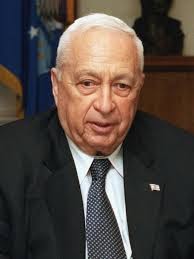
Open letter to Opposition Leader Hon.R.Sampanthan

November 12th, 2018

By Nallur Murugan

Dear Sir,

I thought of writing you this letter because you have become the custodian of democracy, rule of law and constitution of Sri Lanka and at the same time you are always in the news. Internal party dispute between you and the Northern Chief minister is now debated in the open and discussed in the media. Local authority election results conducted in 18 Feb 2018 have clearly shown there is nothing between you and EPDP leader Douglas Devananda whom your party and Tamil media supportive of you character assassinated Devananda. It has been proved your permanent interests prevail. Your feud with former Chief Minister also is not seriously taken by ordinary Tamil people. Moreover 16 SLFP MPs met you and discussed current political situation with you. On top of that you met the American delegation and complained to them about the other members of the National Executive Council of Good Governance of which you are also a party as members of National Executive Council. Tamil people over several years gave you a mandate to solve their problems but you are making petitions and complaints to the foreign  forces which are inimical to Sri Lankan interests. This is no surprise because your leader S.J.V.Chelvanayagam fondly known as Ceylon Ghandhi sent a telegram to Queen Elizebeth not to withdraw the British Air force base from Sri Lanka when former Prime Minister S.W.R.D. Bandaranayake in 1956 had demanded the British Air Force bases to be withdrawn from Sri Lanka. No one would dispute if supporters honour S.J.V.Chelvanayagam as Ceylon Ghandi. But the truth remains the original Ghandi the Mahathma was the face of the Anti-colonial movement  in India which demanded full freedom from British. Original Ghandi demanded closure of British military bases but the so called  Ceylon Ghandi demanded the  other way. Still you fascinated  the policy of venerating imperialist forces without any shame. History of your party is full of contradictions, manipulations and betrayals which the majority of Tamil population failed to grasp. It has been the consistent party (Federal Party) policy to fan the communal flames and grab parliamentary seats. Majority of the Tamils were not aware of the theme at election meetings and campaign conducted by major national parties UNP and SLFP. The theme was economy, unemployment, development and so on. However, you and your party along with the so called independent Tamil media manipulated and told the Tamil that the national parties fanned communal flames. Tamil people generally believed what was told by your colleagues. To make your memory fresh, in `1970 parliamentary elections SLFP coalition promised to bring rice even from moon. In 1977 parliamentary elections UNP under JRJ promised to distribute 8 KG food stuff on ration basis.

The manner in which Tamil National Alliance led by you untiringly engage in what some media describes hate speech”(propagate communal felling ) is clearly indicating your obsession with parliament seats and ensuring your party winning the seats without any opposition from the other political  parties  such as  United National Party, Sri Lanka Freedom party and the newly organized Sri Lanka Podujana Peramuna and host of other parties. It is not a secret the hate speech syndrome was orchestrated by the Official weekly organ, Suthanthiran  of Ilankai Tamil arasu katchi (ITAK)the  or Ceylon Federal Party under the stewardship of S.J.V Chelvanayagam. TNA has been the most powerful political alliance in the  north and somewhat diminished status in the East. Of course the federal party is the strongest single party in the alliance. Federal party was formed in 1949  as a breakaway faction of All Ceylon Tamil Congress led by G.G.Ponnampalam. Breakaway was attributed to G.G.Ponnampalam’s decision to join the D.S.Senanake’s government as a minister and also your party  blamed  G.G.Ponnampalam  for his support to disfranchise (Ceylon Citizenship Act of 1948 ) the upcountry Indian Tamils. This Act was aimed at weakening the influence of leftist parties, particularly LSSP among the Indian Tamils. Unchallengeable leader GG was instrumental along with Prime Minister D.S.Senenayake for the disfranchisement of Indian Tamils. Gradually your party  ITAK became the  political force in north and east of Srilanka. It is very fitting description to conclude that father of communal politics in Ceylon was none other than G.G.Ponnampalam leader of Ceylon Tamil congress who demanded for 50/50 parliament representation for the minorities of this island. I would like to remind you that late  M.Thiruchelvam became minister of local government in the 1965 UNP government led by Dudly Senenayake. M.Sivasithamparam of Tamil Congress was given the Deputy speaker position. Now  you became the opposition leader positon in the present Good governance coalition which is very controversial due to the fact you are part of the National executive council formed by the advocates of the Good governance along with many parties UNP, SLFP, JVP, JHU SLMC ACMC, Democratic party of Sarath Fonseka .It is not a rocket science to conclude that you are the Government sponsored opposition leader. We all boast Sri Lanka is a vibrant democracy which have resorted to a stupid precedent by selecting you as the Leader of the Opposition. Meanwhile your followers and the so called independent Tamil media never bothered about this aspect of governance and busy disseminating hate speech, (pure communalism) which has been the bread and butter of Tamil media in Srilanka notably since Independence.

I am eager to direct some questions at you as the leader of the TNA and the inheritor of the mantle of leadership from the leaders such as S.J.V.Chelvanayagam and late Appapillai Amirthalingam.

(i). Tamil mainstream leadership in the early seventies created the Tamil militancy and brainwashed and encouraged young innocent Tamil youths to take up arms against the Sri Lankan state. Government of Sirimavo Bandaranayake  in 1970s introduced the new University entrance system called standardization aimed at providing higher education opportunities to students from backward areas,  the main  accusation  by your party  was standardization had been introduced to deprive the Tamil students of higher education. Tamil youths of those years without  understanding the pros and cons blindly believed and the rest is history. The experience witnessed in the last three decades proved the benefits achieved by  Tamil students from Trinco your area Ampara, Batticaloa, Mullaitivu, Kilinochchi and Vavuniya. The  achievement of the students from these areas have been excellent. Don’t you think the Tamil leadership intentionally misguided the Tamil youths with the long term plan of  sustaining the parliamentary seats?

(ii).  Tamil leadership boasts of 70 long years of struggle for the rights of the Tamil citizens-Is it true that you have struggled other than retaining the parliamentary seats. Can you deny that the Tamil leadership aligned with UNP and alienated the SLFP and other progressive forces? It was the policy of the Tamil leadership to instigate the Tamil youths to oppose the  so called Sinhala government when the SLFP came to power. Can you adduce a correct answer why your party aligned with UNP, part of which your party shouted, was responsible for 1983 communal riot and the burning of Jaffna Public library? You and your colleagues never made self-inquiry whether it is right to carry out the so called struggle against the so called  Sinhalese governments while you and your team comfortably live in Colombo and visiting north and east only during election times. The 70 years political journey of ITAK and TNA gave you and your group excellent comforts. Have you ever thought of the untold sufferings of the former Tamil combatants who had made tremendous sacrifice for their cause they deemed right? They are now nobody, they depend on meagre government assistance and other well-wishers support for survival. Still their plight has also become a scoring point for you at election meetings.

(iii). who is responsible for the three decades of mayhem and agony of the Tamil people in north and east? The so called Tamil freedom fighters were the creation of the Tamil leadership and they believed what the Tamil leaders discoursed to them and the Tamil youth at the beginning of the struggle had faith on you. The Tamil leadership betrayed the Tamil youths, Tamil people and the country. When the LTTE turned against you, you and your colleagues without shame pleaded to the government and the security forces against whom you made lot of noises, protected you in fortified houses in Colombo. You and your party is responsible for the action and atrocities of the so called liberation fighters as you were the creators. Being a professional lawyer I don’t need to remind you about aiding and abetting.

(iv).The other day you were flanked by the SLFP 18 MPs who left the Government and the photographs illustrated how honorably these MPs were interacting with you. Don’t you feel ashamed of your many guided visits to Kilinochchi and sitting before LTTE political commissar as slaves when the LTTE was de facto rulers in the Vanni area? The whole world   is aware that that you and your colleagues were impotently watching the sufferings of the entrapped Tamil people in Vanni.

(v). during the last episode of Ealam war at Mullivaikal more than 300,000 Tamil people were protected by the security forces (including some of your MPs). Despite limitation of resources the security forces handled the situation diligently. During the former President’s tenure thousands of former combatants were rehabilitated and integrated with society. Vast amount of land under the control of the security forces were returned to the owners. Constructive programs were initiated to provide livelihood to the families of former combatants. Of course those programmes are still continuing.

Do you have credible evidence of the civilian deaths other than just repeating thousands?   Do you accept that credible evidence is lacking for dispassionate observers seeking truth? Geneva and other forums with the close cooperation of the selfish diaspora groups have become another stage for you betraying the Tamil people for your sole objective of retaining the parliamentary seats.

(vi). Are you not ashamed to use the word Sinhala Buddhist hegemony to incite the Sinhala people and the state? Can you raise your finger and say at least a single Tamil Hindu citizen was converted to Buddhism? Can’t you appreciate the fact that Srilanka in the past centuries were protected by the wise counsel of the Buddhist monks during time of invasion by Indian and European invaders? Why do you and your colleagues paint a wrong picture about Buddhism and Buddhists monks to the innocent Tamil population? How more than a million non-Buddhists cohabit with Buddhists in western and other provinces? I like to remind you that Buddhism associated with tolerance made the cohabitation so peaceful and smooth. Please tell the people what happened to the Sinhalese people lived in Jaffna and have you made any sincere efforts to relocate our Muslim brethren in Jaffna and other places in north who were ethnically cleansed in early nineties? Can you remember the displaced Tamils during the 1983 communal riots having temporarily dispatched in the government ships to Jaffna and other places returned to their original homes in Colombo and suburbs within one year? Returnees  did not encounter any problems as such other than some minor nature.

(vii). I would like to present you a question many people have been asking-what is the logic behind supporting former successful Army Commander who led the security forces to wipe out terrorism, Field Marshall Sarath Fonseka at the 2010 presidential election? You have been showing the face as the protector of Tamils rights and on many forums denounce the regime of former president (though you have good relationship privately with him) for killing thousands of innocent Tamils at Mullivaikal. Field Marshall Sarah Fonseka was the Commander of the Sri Lankan army which totally annihilated the LTTE and brought peace to Srilanka. How come you and your team decided to support the candidature of the leader of the  alleged killing force?

(viii). The other day former Minister of Economic development Basil Rajapakse during an interview with Tamil media in Jaffna told that TNA never extended any support to  the Government of Mahinda Rajapakse to solve  problems encountered by the northern people. While you and your party leaders were provided full security along with other parliamentary perks by the Mahinda ‘s Government your party chose not to extend support to the Government of Mahinda.

(ix). It is very strange  you have become the custodian of Sri Lanka constitution. I put it to you, have you or your party participated in the constitution making process in 1972 and 1977. Present generation may not be aware; you have boycotted 1972 constitution enacting process. Real reason was you were worshipping British colonialist and you were against Sri Lanka becoming a real independent country. Your political bankruptcy has been exposed. Now you are the custodian of the constitution which you denounced.

Before concluding I like to reiterate Sir, You cannot fool the Tamil people forever because they have started to think differently as illustrated by the results of the February 2018 Local authorities’ election. They are ready to vote for national parties even though you label the national parties as Sinhala chauvinist parties. I want to remind that the Tamil speaking people have been living in all 25 districts in Srilanka and you may find Hindu temples, Islamic mosques, Tamil medium schools  throughout the country. However you and your colleagues try to amplify isolated incidents.

Sir, Sri Lanka, our motherland has been a unique one and the free education and other welfare measures like free health facilities uplifted and emancipated impoverished citizens irrespective of race and religion.

Please abandon your communal politics which would not bring anything other than misery to Tamil people and as a responsible political outfit try to give up communal politics and lift the Tamil people from their poverty, landlessness and unemployment.

Thank you

Mahinda Rajapaksa as a balanced internationalist

November 12th, 2018

Dr. Palitha Kohona

Prime Minister Mahinda Rajapaksa has always been firstly a patriot. His priority has been Sri Lanka and its essential interests.

As a politician he proactively reflected the wishes of the people who elected him. This is abundantly clear in the way he conducted Sri Lanka’s international relations during his tenure as President.

This is the reason why he chose to confront the entrenched terrorist group, the Tamil Tigers, whose primary objective was to dismember the country, contrary to the highly vocal counsel to the contrary from different quarters, mainly from diplomats and NGOs. The Tamil Tigers who controlled significant parts of the country at the time, possessed frightful military capabilities, including feared naval and elementary air arms and were described by the CIA as the most sophisticated terrorist group in the world. Their pioneering use of suicide bombers had instilled a sense of uncertainty and  fear throughout the country. He succeeded, and eliminated them from Sri Lanka and brought thirty years of brutal terror to an end. Once the conflict within the country was ended, he was willing to share the expertise and experience of his battle hardened military with other friendly countries confronting terrorist challenges. He was also willing to provide military forces to the the United Nations which has always been short of well trained military personnel for its peace keeping operations.

His emphasis has always been Sri Lanka and all his initiatives were taken with the objective of advancing Sri Lanka’s interests, including the interests of its labour force. The well being of the people of his country was his first priority. He sought  financial assistance from China because China was the only available source of financing for the massive development projects he had planned for post conflict Sri Lanka. Chinese assistance was sought only after unsuccessful overtures had been made to other friendly countries. But at no stage did he compromise the nation’s sovereignty or integrity. Similarly, he was not going to create situations inimical to the interests of other countries in the region while seeking assistance from China. In many instances, he invited other friendly countries to participate in Sri Lanka’s development efforts prior to seeking Chinese assistance.

By nature he has also been an internationalist who, as executive President, insisted on maintaining warm relations with all countries. He visited many countries with a view to consolidating Sri Lanka’s network of friends. During his tenure as President, he visited the US every year. While he made friends easily, they were never at the expense of the country’s essential interests. His engaging nature made it easy for him to make friends even at the personal level. As Prime Minister, he could be expected to follow a policy that emphasises the primacy of Sri Lanka’s interests while maintaining warm relations with all friendly countries.

PRESIDENT SIRISENA’S TRUMP CARDS

November 12th, 2018

By M D P DISSANAYAKE

Mr Jayampathy Wickremaratne’s reputation as a President Counsel is now in tatters.  He sneaked through the legislation process, by passing Supreme Court decisions, during the late mid night hours of 19th Amendment.  He drafted Regulations approved at the Committee Stage during nights, to include the provisions Supreme Court did not give consent.   In doing do, Mr Jayampathy Wickremaratne’s shot himself in the foot. Sinhala version of the Amendments differs with the English contents as already clarified clearly by Mr Gammanpila.  In such a situation, the Sinhala version is legally enforceable, as it supersede the  English wordings.

CARD 1:

Frustrated and almost made him look like a fool for 3 years, the President Sirisena must be awarded the Best Actor prize for 2018 This mentally and physically exhausted man pulled his first Card in the Pack, sent Clayton Prime Minister Mr Wickremasinghe into doldrums. Extremists Tamils, Muslims and disgruntled few leftists in the JVP are now regularly checking their heart beat levels.

CARD 2:

The President simultaneously  installed Mr Mahinda Rajapakse as the  Second Executive Prime Minister of Sri Lanka.   The group in exile petitioned to the Supreme Court against the appointment.   The application was rejected.  .

The President  had suffered mentally and physically, the photos of President before October 26  and today, clearly display sadness vs. happiness on his face.  Mr Mahinda Rajapakse saved his life and he should be indebted to our great leader going forward.

CARD 3:

Gazetted to recall the Parliament on 14th.  Byuing time, in the process managed to get several minor parties and UNP few members to cross over, with  announcements that working majority has been established. The genuine desire of the new Cabinet Ministers of minor is still to be tested.  In the meantime, Mr Mahinda Rajapakse is doing what he does best, just to according to your plan.  He is now a member of SLPP.

CARD 4:

At a meeting with the former Speaker Karu, President instructed the Speaker to make all arrangements to make necessary seating arrangements to the newly crowned PM.  Speaker Agreed.  Parliament staff obeyed both President’s  and former Speaker”s orders.

Karu took a U turn, as he  was blasted by expelled PM Ranil. Karu issued a statement indirectly recognizing the expelled PM.

CARD 5:

President immediately dissolved, with the strongest advise from the Prime Minister.

CARD 6:

What if in the most unlikely event the Supreme Court determine the dissolution of Parliament as null and void?

The President can call for a Referendum to be held within 36 days, to ratify the legality of dissolution and seek a mandate to hold the General Election.

රෝහිත මුණසිංහ ජවිපෙ අභ්‍යන්තරය අනාවෘත කරයි

November 11th, 2018

සාකච්ඡා කලේ වෛද්‍ය රුවන් එම් ජයතුංග 

රෝහිත මුණසිංහ සුප්‍රකට  ලේඛකයෙකි. ඔහු ජවිපෙ හිටපු ක්‍රියාධරයෙකි. මීට මාස කීපයකට උඩදී මට රෝහිත මුණසිංහව ප්‍රංශයේ පැරිස් නගරයේදී හමු විය. පහත සාකච්ඡාව හරහා  ඔහු ජවිපෙ අභ්‍යන්තරය පිලිබඳව කතා කරයි.

  1. ඔබ ජවිපෙ සාමාජිකයෙකු වන්නේ ඇයි? 

එය හේතූන් කිහිපයක එකතුවෙන් සිදුවෙන්නක්. මම හැදුනේ වැඩුණේ විශාල ඥාති මිත්‍රාදීන් පිරිසක් නිතර ආව ගිය දේශපාලන සංවාද ඇතිවුන මගේ මවගේ මහගෙදර. මේ පිරිසෙන් මගේ පියා ඇතුළු වැඩි දෙනෙකු ශ්‍රී,ල,නි,ප, පාක්ෂිකයෝ. කොමියුනිස්ට්, සමසමාජ අයත් හිටියා. මගේ පුංචි මාමා හබරාදුවේ “ප්‍රින්ස් ගුණසේකර” මහත්තය සමග දේශපාලනය කළ සමසමාජ කාරයෙක්. අපේ පරම්පරාවටම මම දැනගෙන හිටපු එකම යු,එන්,පී, කාරී මගේ අම්මා. මට මතකයි මහා මැතිවරණ වලදී අම්ම ජන්දේ දාන්න යනකොට මගේ ආච්චිලා අම්මට කියනවා “බත්ගොට්ටි, උඹ ඉතින් අලියට ගහල ඒවි. ඊට වැඩිය හොඳයි ගෙදරට වෙලා ඉඳපන්” කියල.  යමක් කමක් තේරෙන කාලේ ඉඳලම මට හිතුනේ සමාජවාදය හොඳ දෙයක්. යු,එන්,පිය නරක මිනිස්සු ඉන්න පක්ෂයක් කියලයි. දෙවනුව, මම මාතර ශාන්ත තෝමසයේ 10 වැනි ශ්‍රේණියේ ඉන්න කොට ජවිපෙට සම්බන්ධ වුන යාලුවෙක් මගේ පන්තියේම හිටිය.( එයා 71 කැරැල්ල ට සම්බන්ධ වෙලා අතුරුදහන්ව ඉඳලා අවුරුදු 10 කට පස්සේ ජවිපෙ කළුතර දිසා ලේකම් ලෙස මට හමුවුණා. මම එතකොට වැලිගම සංවිධායක)  තෙවනුව, පාසල් වියේ ඉඳලම මම සෝවියට් සාහිත්‍ය පොත පතට ආශක්ත වුණා. “වානේ පන්නරය ලැබූ හැටි” කියවලා “පාවෙල් කොර්චාගින්” වගේ අපේ රටත් සමාජවාදෙන් ගොඩ නගන්න ඇත්නම් කියල හිතුනා.  වයස අවුරුදු 12 දී මගේ හොඳම යාලුවා උනේ හේවිසි ගහන පරම්පරාවක ළමයෙක්. දවසක් ඔහු අපේ ගෙදරට කැඳවා ගෙන ඇවිල්ල ඉස්තෝප්පුවේ ලොකු පුටුවක වාඩි කරවපු දවසේ මගේ වැඩිහිටියෝ මට දොස් කියපු වෙලාවේ  මගේ හිත හොඳටම රිදුන. ඒත් මම යාළුකම අත් හරියේ නෑ.( ඔහු පිළිකාවක් හැදිලා වයස 40 දී විතර මියගියා. නැත්නම් අදටත් ඔහු මගේ හොඳම මිත්‍රය) එසේම, අපේ ගෙදර කිළුටු රෙදි ගෙනියන්න එන උස-මහත ඩොබි මාමට වාඩිවෙන්න පුටු භාගයක් දෙන කොටත් මගේ හිත තදට රිදුන. මම එයට විරෝධය ත් පෑවා. ඒ අභිමානවත් මනුස්සය හිටගෙනම ඉඳල ගියා මිසක් කවදාවත් පුංචි පුටුවේ වාඩි උනේ නැහැ. සිව්වෙනි හේතුව මම අත් දැකපු ඒ වගේ සමාජ අසාධාරණ වෙන්න ඇති.  පස්වෙනුව, අපේ අසල් වැසියෙකුව හිටපු කොස්තාපල් කෙනෙක් පුද්ගලික කාරණාවකට මා සමග තරහ වෙලා මම චේගුවේර කාරයෙක් කියල  හංවඩු ගැහුවා.  හයවෙනුව, 1976 දී ගමනායක සහෝදරයා වැලිගම ට ඇවිල්ල අපේ ගෙවල් ළඟ පිට්ටනියේ රැස්වීමක් තිබ්බ. එතැනදී “කතරගම සිරිපාල නෙත්තිකුමාර” කියන හොඳ සහෝදරයා මට හම්බ වුණා. කොහොමටත් ඒ වෙනකොට මට විප්ලවවාදී ගාය හැදිලයි තිබුණේ.  

2.ඔබ ජවිපෙ පූර්ණ කාලීනයෙකු වෙන්නේ කොහොමද? 

මම එවිට අර්ධ කාලීනව වැඩ කළ සාමාජිකයෙක්. 1980 දී විතර පක්ෂයේ නායකයන්ගේ ගමන් බිමන් සඳහා කාර් කිහිපයක් ගත්තා. රෝහණ සහෝදරයට එකක්, බෝපගේ සහෝදරයට එකක් වශයෙන්. දවසක්, මාතර උයන්වත්ත පිට්ටනියේ පවත්වපු මහා රැස්වීමකට ආපු රෝහණ සහෝදරයා මේ කාර් එකෙන් රැස්වීම් භූමියටම ඇවිල්ල බැස්ස. “පොල්හේනේ යසන්තල” වගේ මෝටර් සයිකල් තිබුණ සහෝදරවරු කාර් එක ඉදිරියෙන් සහ දෙපසින් ආරක්ෂක භටයෝ වගේ ආව. කවුද සහෝදරයෙක් පැනල ලොකු මහත්තයට බහින්න දොරත් ඇරලා දුන්න. මේවා රෝහණ සහෝදරයා කියල කරපු දේවල් නෙවි. අනිත් අයට හිතිලා කරපු දේවල්. හැබැයි එයා ඒවා ඉවසුවා.   ඒත් මේ අපි පාරවල් ගානේ කැටවලට සල්ලි එකතු කරන කාලේ නිසා සාමාන්‍ය මිනිස්සුන්ට පේන්න රැස්වීම් භූමියටම ඇවිල්ල කාර් එකෙන් බහින එක මට ලස්සනට පෙනුණේ නෑ.  එතකොට වැලිගම සංවිධායක” නෙත්තිකුමාර.” මම මේ කාර් ප්‍රශ්නය ගැන නෙත්තිට තද විවේචනයක් ඉදිරිපත් කරලා ඒ විවේචනය පක්ෂ මුලස්ථානයට ලිඛිතවත් ඉදිරිපත් කළා. ඒක පත්තු වෙලා ගිහින් මාතර දිස්ත්‍රික් කමිටුවේත් ලොකු කැළඹීමක් ඇතිවෙලා. ඊට පස්සේ මාතර දිස්ත්‍රික්කේ ආසන හතේම අර්ධ කාලීන- පූර්ණ කාලීන සියල්ල රැස් කරලා අභ්‍යන්තර සාකච්ජාවක් තියල රෝහණ සහෝදරයා පැහැදිලි කළා ඇයි වාහන පාවිච්චි කරන්නේ කියල. “සහෝදරවරු කියනවා නම් මම වෙනද වගේ කෝච්චියේ, බස් එකේ යන්නම්. මට දුක මේවා අපේ සහෝදරවරු ම කියන එකටයි කියල හොඳටම ඇඩුවා. අපිටත් කඳුළු වැටුණා. ඊට පස්සේ රෝහණ සහෝදරයා මට කිව්වා,” රෝහිත සහෝදරයා අද ඉඳන් පූර්ණ කාලීනව පක්ෂේ වැඩ කරන්න ඕන” කියල. මම මේ කියන කතාව ඇත්ත බව දන්න කිහිප දෙනෙක් ඉන්නවා. ලයනල් බෝපගේ, කතරගම නෙත්තිකුමාර, අමරදාස කුරුප්පු, ආරියදාස රණවක යන සහෝදරවරු සහ කුසුමා බුද්ධිකෝරාළ සහෝදරිය.   

  1. ඔබ ජවිපෙ තුළ කොපමණ කාලයක් හිටියද? ඔබගේ ප්‍රධාන අත්දැකීම් මොනවාද?

1976 සිට 1993 දක්වා. අවුරුදු 16 ක් පමණ. 1984 සිට 89 දක්වා සිටියේ ත්‍රස්තවාදයට හා පුද්ගල ඝාතන වලට එරෙහි වූ පාක්ෂිකයකු ලෙස. එසේ සිටිමින් එවිට පැරිසියේ ගොඩ  නැගෙමින් තිබු ජවිපෙ හිතවාදී කණ්ඩායම සහ පක්ෂය අතර සම්බන්ධීකරණ කටයුතු කළේ මම.  අද පරපුර නමින් හා පින්තුර වලින් පමණක් දැන සිටින “රෝහණ විජේවීර, ලයනල් බෝපගේ, දයා වන්නිආරච්චි, සෝමවංශ අමරසිංහ, ඇල්ගිරියේ ප්‍රේමචන්ද්‍ර මුණසිංහ, කතරගම සිරිපාල නෙත්තිකුමාර, තල්පාවිල ධර්මේ, සහ වෙනත් නායකයන් සමග වැඩ කිරීමට ලැබීම. පොලිසි,හිරගෙවල්,හමුදා කඳවුරු, වධකාගාර වල අත්දැකීම් ලැබීම. (භාවිතාව) = ජවිපෙ දෙස පිටත සිට බලා සිටින කෙනෙකුට පෙනෙන ඉහළ තක්සේරුව මායාවක් බව එහි අභන්තරයට ගියවිට අත්විඳ ගැනීමට ලැබීම ප්‍රධානයි.    

  1. ජවිපෙ අභන්තරය විස්තර කරන්න පුලුවන්ද? 

පොතක් ලියන්න ප්‍රමාණවත් කරුණු තියෙනවා. ඉහළම නායකයාගේ සිට පහළම සාමාජිකයා දක්වා තිබුණේ අධිතක්සේරුව, අතිශයෝක්තිය, ප්‍රදර්ශනාත්මක බොළඳ බව හා  තමන්ම ඒ සිහින මායාවේ  ගිලී සිටින ස්වභාවය. ගුණ යහපත්, අවංක, එඩිතර සහෝදර සහෝදරියන් රාශියක් හිටියා. කාගේත් ඉංග්‍රීසි දැනුම, න්‍යායික දැනුම අන්තිම දුර්වලයි. තර්ක ශාස්ත්‍රය සහ කටින් ගසා ජය ගැනීම හරි ඉහළයි. කැපවීම අනර්ඝයි.  ප්‍රධාන සූත්‍රය තමයි නායකයන් කියන දේවල් කමිටු හරහා පහළට ගලා එමින් පුනරුච්චාරණය වීම සහ යට තියන සංක්‍යා ලේඛන ඉහළට ගොස් නායකයන් මුලාවීම. පහළ සාමාජිකයන්  හිතාගෙන හිටියේ නායකයන් සියලු දේ දන්නවා කියල. නායකයන් හිතාගෙන හිටියේ පහළ සාමාජිකයන් හැමදෙයම ඉටු කරයි කියල. අන්තිමට බලන කොට දෙගොල්ලන්ම දන්නේ නැහැ.   

  1. බිම් මට්ටමේ සාමාජිකයන් සහ නායකයන් අතර වෙනස කුමක්ද?

 නායකයන් ළඟ නිලධාරිවාදය ගොඩ නැගීමේ මූලික අවස්තාව ඇතිවී තිබුණා. පසුව ඝාතනයට ලක් උනත් 88-89 කාලේ වුවත් නායකයෝ තම දරු පවුල් සමග ගෙවල් දොරවල් වල හොඳින් හිටියා. ඔවුන්ට පහසුකම් සැපයීම වෙනුවෙනුත් සාමාජිකයෝ දිවි පිදුවා. එක් අයෙකු තමයි “තල්පාවිල ධර්මේ” බිම් මට්ටමේ සාමාජිකයෝ කන්න දෙයක්, නිදා ගන්න තැනක්, අතේ සතයක් නැතිව මාරාන්තික දුකක් එක්ක නායකයෝ කියන කියන විදියට සටන් කළා.  ඒක අදත් එහෙමයි. බලන්න අද ජවිපෙ නායකයෝ දිහා! පත්තරවල යනවා ඔවුන් පෙට්ටි කඩේකින් බත් පාර්සලයක් අරගෙන බෙදාගෙන කනහැටි! ඒත් “වෝටර්ස් එජ්” වගේ  හෝටල්වල ඉන්න පින්තුර වැටෙන්නේ නැහැ. නිර්ධන පන්ති ජනතාවගේ දහදිය සුවද විදින්න බස් එකක තෙරපිලා යන එක නායකයෙක් කාටවත් හමුවෙලා තියනවද? ආණ්ඩු පක්ෂෙ එවුන් මහජන මුදලින් රට සවාරි යනවා වගේම, බැලුවොත්  ජවිපෙ නායකයන්ගෙන් කවුරුම හරි කොහේ හරි පිට රටක! ඒවා සම්මන්ත්‍රණ! විදේශීය ශාඛා වලින් ලැබුණ ආරාධනාලු! 

6.රෝහණ  විජේවීර පිලිබඳ ඔබේ තක්සේරුව කුමක්ද? ඔහුගේ දක්ෂතා සහ දුර්වලකම් මොනවාද? 

මම මේ ප්‍රශ්න දෙකටම එක පිළිතුරක් දෙන්නම්. රෝහණ විජේවීර  කියන්නේ (අපිට) සිංහලෙනුයි ග්‍රීක් වලිනුයි ලියපු පොතක් කියවනවා වගෙයි. ඔහු අසාමාන්‍ය චරිතයක්! අපි සාමාන්‍ය මිනිස්සු කොහොමත් සාමාන්‍ය වගේ ඒ වගේ අසාමාන්‍ය චරිත ඇතුළේ තියෙන්නෙත් අසාමාන්‍ය චරිත ලක්ෂණ. ඔහු අතිශය දක්ෂ වගේම දුර්වල මනුෂ්‍ය ආත්මයක්! මොන විදියකින් හරි ඔහු රටේ පාලකය වුණා නම් කවදාක හරි ලියවෙන ඉතිහාසයේදී ඔහු ජනතාවගේ ආදරණීය මතකයක් වෙන්නේ නැහැ.  

7.ඔබගේ පොතෙන් හෙළි කරනවා විජේවීරගේ අනියම් බිරිඳක් ව සිටි “මොරීන්” නම් කාන්තාවක් ගැන! ඇයව ලිංගිකව සූරා කාගෙන අවසානයේ ඇයට CIA කාර්ඩ් එකක් ගසා පලවා හරිනවා. මොකක්ද මේ සිද්ධිය?  

රෝහණ සහෝදරයා මුහුණ හෝදපු වතුර බේසමට වස දාලා ඔහු මරන්න යොදවපු CIA කාරියෙක් අහුවුණා. ඔහු මුහුණ හෝදන්න කලින් බේසමෙන් වතුර බීපු පොල්කිච්චෙක් මැරිලා වැටුණ නිසා ඔහුගේ ජීවිතය බේරා ගන්න පුළුවන් වුණා. මේ 1981 හෝ 82 දී අපේ කමිටු හරහාම පක්ෂයේ ඉහළින් අපිට එවූ කතාවක්. පක්ෂයේ සාමාජිකයන් සියයට 99ක් මේ කතාව විශ්වාස කළා. ඒත් මෙතැන තියෙන්නේ වෙන කතාවක් කියල මට තොරතුරු ලැබුණේ මගේ මිතුරෙකු ගෙන්. ඔහු තමයි එවිට ජවිපෙ “RED POWER ” ඉංග්‍රීසි පත්‍රයේ සියලු ලිපි සකස් කළේ. ඔහු පක්ෂෙට දුන්නේ මමයි. 2006 දී මගේ “ජවිපෙ සැඟවුණ ඉතිහාසයන් බිඳක්” පොත පිට වුණා. එහි මෙම සිද්ධිය ඇතුළත් වුණා. ඕස්ට්‍රේලියාවේ පළ කරන “සන්නස” සිංහල පුවත් පතේ මගේ පොත කොටස් වශයෙන් සම්පුර්ණයෙන් පළ වුණා.” ලයනල් බෝපගේ ” සහෝදරයා පදිංචි ඕස්ට්‍රේලියාවේ නිසා මගේ පොතේ ඔහු ගැන වූ වෙන සටහනකින් සිත රිදවා ගෙන අපි දෙදෙනා අතර ඇතිවූ විවාදයේදී මේ සිද්ධියේ අපි නොදැන සිටි කරුණු සම්පුර්ණයෙන් හෙළි කරමින් “විජේවීර-මොරීන්” පොල්කිචි කතාවට සුජාත භාවයක් ලබා දුන්නේ ඔහුයි. බෝපගේ එහිදී ප්‍රකාශ කරනවා එවිට සිටි ප්‍රධාන ලේකම් වශයෙන් විජේවීර සහෝදරයට විරුද්ධව විනය පරීක්ෂණය පැවැත්වුයේ ඔහු බව හා දෙදෙනාගේම කැමැත්තෙන් ඒ අනියම් සම්බන්ධය පවත්වා ගෙන ගිය බව රෝහණ සහෝදරයා පිළිගත් බව. නිකම් නෙවෙයි, එය සාධාරණීය කරන්න තර්ක රාශියක් ඉදිරිපත් කරලා බැරි උනාට පස්සේ. ඒත් වැඩේ වැරදුනාම පව් කාරිය කරලා ගල් ගැහුවේ මොරීන්ට. මගේ “මර්දනය සඳහා කැරැල්ලක් ඕනා කර තිබේ”  පොතේ බෝපගේ සහෝදරයා හා මා අතර සිදුවූ විවාදය පළවී තිබෙනවා. විජේවීර විතරක් නොවෙයි විප්ලවීය සදාචාරයේදී මුහුණු දෙකක් පැළද ගෙන දෙබිඩි රඟපෑම් කළ ජවිපෙ මනමාල  නායකයන් ගැන මම තව තොරතුරු දන්නවා. ඇතැම් ඒවා අදහන්නත් බැරි, කියන්නත් ලජ්ජා ඒවා. බලය ලැබුනට පස්සේ මේ ආණ්ඩුවල ඉන්න සල්ලාලයෝ කරන දේවල් වලයි බලයක් නැතුවම ජවිපෙ නායකයෝ කරපු දේවල් වලයි වැඩි වෙනසක් නැහැ.(හැමෝම නෙවෙයි) ඒ අතින් ලයනල් බෝපගේ කියන්නේ පක්ෂේ හිටපු චරිතවත්, අවංක පෙම්වතෙක්. නෙත්තිකුමාර වගේ සහෝදරයෝ අදහන්න වටින චරිතවත් මිනිස්සු! 

  1. ඔබ කියන්නේ ලිංගික අපගමනීය චර්යාවන් තිබු පුද්ගලයන් ජවිපෙ නායකත්වය තුළ සිටියා කියාද? මේ සඳහා ඔබ ඉදිරිපත් කරන සාධක මොනවාද? 

ඔව් දේශපාලන මණ්ඩලයේම හිටියා. සාධක තිබුණත් හැමදෙයම කියන්න බැහැ. දැන් ජීවතුන් අතර නැති ඔවුන්ට මට පිළිතුරු දිය නොහැකි නිසා නම් වශයෙන් කියන එක සාධාරණ නැහැ. නායකයා ජීවතුන්  අතර නැතත් ඔහු පවත්වපු අනියම් ලිංගික ඇසුර දැන් ප්‍රසිද්ධ කාරණාවක් නිසා  ඒක කියන්න බාධාවක් නැහැ. තව නායකයෙක් ඝාතනය වනවිට ඔහු අතින් තරුණියක් ගැබ්ගෙන සිටියා. රෝහණ සහෝදරයාගේ අංක එකේ සගයෙකු වන දිසා ලේකම් කෙනෙකු 80 ගණන් වලදී පක්ෂ නායකයෙකුගේ නංගි කෙනෙකුගෙන් මට කිස් එකක් දෙන්න පුලුවන්ද කියල අහල ඒ සහෝදරී එය මම හිටිය ආසන  කමිටුවට පැමිණිලි කළා. පසුව දිස්ත්‍රික් කමිටුව තීරණය කළේ එය ඒ සහෝදරීගේ බොරුවක් කියල. මේ සටහන දුටුවොත් ඒ සහෝදරී පිළිගනීවි මම කියන්නේ ඇත්ත කියල. නිකමට හිතන්න රාජපක්ෂ සහෝදරයෙක් තමන්ගේ “පුංචි අම්ම ” එක්ක විවාහ වෙලා  හිටිය නම් ජවිපෙ මොනවා නොකියයිද? 

  1. ජවිපෙ නායකයෙකු වූ නලින්ද ජයතිස්ස සමරිසියන් ගේ අයිතිවාසිකම් හෙලා දකිනවා. මේ තත්වය ඔබ දකින්නේ කොහොමද?

ඒක එයාගේ පුද්ගලික මතය හෝ ජවිපෙ මතය උනත් ඒක ලංකාවේ දුප්පත් ජනතාවගේ දැවෙන ජීවන ප්‍රශ්නයක් නෙවි නිසා මට නම් එය වැදගත් නැහැ.එහෙම ඇසුරකට කවුරු හරි කැමති නම් ඒක එයාගේ පුද්ගලික ප්‍රශ්නයක්. ඒවා මිනිස්සුන්ගේ නිදන කාමරවල ප්‍රශ්න! පැරිසියේ, ශතලේ ප්‍රදේශයේ “මෝවේස් ගාර්සොන්” මාවත තියන  මුළු කලාපෙම ප්‍රසිද්ධ සමලිංගික ඇසුර ප්‍රිය කරන අය මුණ ගැසෙන කලාපයක් ලෙස. ප්‍රංශයට ඒවා ප්‍රශ්න නෙවෙයි. මොකද මේවා නියම සිස්ටම් එකකට දුවන දියුණු රටවල්. ලංකාවටත් ඕන හොඳ සිස්ටම් එකක්. එතකොට ඕවා ප්‍රශ්න නෙවෙයි. මම පොඩි කතාවක් කියන්නම්. ජවිපෙ හිටපු දිසා ලේකම් කෙනෙකු වන “රන්ජිත් පීරිස්” සම ලිංගික ඇසුරට තදින් ඇබ්බැහි වුවෙකු බව විජේවීරත් දැනගෙන හිටියා. විජේවීරට එය ප්‍රශ්නයක් වුණේ නැහැ.දවසක් මොකක් හරි වැඩකට රන්ජිත් පීරිස් හෝ  තවත් අයෙකු යවන්න ඕන උන වෙලාවේ ” හරි කවුද යන්නේ කියල බලන්න අපි ගලද? මලද? කියල බලමු.” කියල අත් දෙක මිට මොලවා ගෙන කතිරයක් වගේ තියා ගත්ත විජේවීර, “තමුසේ නම් ඉතින් කොහොමත් තෝර ගන්නේ ගල තමයි කිව්වලු. විජේවීර ඒ වගේ විහිළු කරන  කෙනෙක්.  

  1. ජවිපෙ ෆුල් ටයිමර් කෙනෙකුගේ ජීවිතය විස්තර කරන්න පුලුවන්ද?

ෆුල් ටයිමර් කෙනෙක් කියන්නේ පක්ෂේ සංවිධාන ව්‍යුහය ඇතුළේ ඉන්න කාඩර්වරයෙක්. ඔහු අඩුම තරමින් ආසන කමිටුවේ නියෝජිතයෙක් වෙන්න ඕන. මූලික පන්ති පහට පස්සේ දින 8 අද්‍යාපන කඳවුර, හැකිනම්, සති 4 ජාතික කඳවුර ට සහභාගී වෙන්න ඕන.පක්ෂය කියන ඕනෑම ප්‍රදේශයක වැඩට යා යුතුයි. පවරන  ඕනෑම කාර්යයක් කළ යුතුයි. කිසිම ගෙවීමක් නැහැ. පුළුවන් තරම් “කොකු” ගහල සාමාජිකයෝ එකතු කරගෙන ඔවුන් දෙන කෑම බීම වලින්,ඇඳුම් පැළඳුම් වලින්, බස් ගාස්තු වලින් යැපෙන්න ඕන. ධර්මය ප්‍රචාරය කරන ගමන් පිණ්ඩපාතයෙන් යැපෙන භික්ෂූන්ගේ ආදර්ශ චර්යාවෙන් තමයි පූර්ණ කාලීනයා කියන චරිතය ගොඩ නැගුවේ. අද විහාරස්තාන වලට වෙලා දානය ලැබෙන තුරු බලා ඉන්න හාමුදුරුවරු මිසක් පිණ්ඩපාතේ වඩින්නේ කීයෙන් කී දෙනෙක්ද? විවාහ නොවුන තරුණ සාමාජිකයන්ට ෆුල් ටයිමර් දුක කාලයක් දරා ගන්න පුළුවන්. විවාහක, දරුවන් ඉන්න, වෙන ආදායමක් නැති අයට හැමදේම අනුන්ගෙන් ලැබෙන තුරු බලාගෙන ඉන්න පුලුවන්ද? ඒක මොන ජීවිතයක්ද? ජවිපෙ නායකයෝ තමයි තමන් යැපෙන්නේ  එහෙමයි කියන්නේ!!!. ඒක පට්ටපල් බොරුවක්. කිසිම ප්‍රායෝගික බවක් නැති, තර්කානුකූල නැති කතාවක්. 

  1. විප්ලවය පිට දමා කළ මිනීමැරුම්,, මංකොල්ල කෑම් සහ පුද්ගලික උවමනාවන් වලට ඒවා කළ පිරිස් ගැන ඔබගේ අදහස? 

පුද්ගල ඝාතනය ත්‍රස්තවාදයක් කියල මම පිළිගන්න නිසා කොන්දේසි විරහිතව එයට විරුද්ධයි. ජවිපෙ විප්ලවය වෙනුවෙන් මංකොල්ල කෑම් වලින් මුදල් හොයන්න පටන් ගත්තේ JR ගේ පාලනය ඔවුන් අසාධාරණ ලෙස තහනම් කරලා, නීත්‍යානුකූල මාර්ග අහුරපු නිසා. අවසාන අරමුණ යහපත් නිසා විප්ලවය වෙනුවෙන් ගන්න ඕනෑම පියවරක් සාධාරණයි කියන මතයකුත් තියෙනවා. 1988-89 කාලේදී ජවිපෙ හැර පාදඩ නිර්ධන පන්තියේ විවිධ කොටස් මේ මංකොල්ල කෑම් කෙරුවා. හොඳයි! කොහොම වෙතත් මංකොල්ල කෑම් අනුමත කරන්න බැහැ කියමු.  විප්ලවය වෙනුවෙන් මංකොල්ල කෑම් කරන මිනිස්සු ඒවා කරන්නේ තමන්ගේ ජීවිතය පවා විප්ලවය වෙනුවෙන් පූජා කරමින්! ඒක සෙල්ලමක් නෙවි. එතකොට, මහජනයා ගේ ජන්ද වලින් බලයට ඇවිල්ල නීත්‍යානුකූල විදියට තෙල් සංස්ථාව, සතොස, මහා බැංකුව සහ රටේ වෙනත් දේවල් කෝටි ප්‍රකෝටි වලින් මංකොල්ල කාල කිසි දඩුවමක් නැතුව යහතින් ඉන්න දේශපාලුවෝ ගැන මොනවාද හිතන්න ඕන? ඒ දෙකෙන් වඩාත් අවලස්සන, නිර්ලජ්ජිත, පාහර වැඩේ මොකක්ද?     

12)  ජවිපෙන් ඉවත් වන පුද්ගලයන් ද්‍රෝහියන් ලෙස ලේබල් කිරීම සහ සමහරක් විට ඔවුන්ව ඝාතනය කිරීම ගැන ඔබ සිතන්නේ කුමක්ද? 

එය ජවිපෙට තියන බරපතල රෝගයක් සහ භීතිකාවක්. සාමාන්‍යයෙන් ලංකාවේ වෙන දේශපාලන පක්ෂවල ද්‍රෝහියෝ නැහැ. ඔවුන් වෙන් වෙනවා. එකතු වනවා.තරහ වෙනවා. යාලු වෙනවා. සදාකාලික වයිරක්කාරයෝ නැහැ. ඔය ද්‍රෝහියෝ කියන වචනය තොග ගණනින් නිෂ්පාදනය කරන ෆැක්ටරිය අයිති ජවිපෙට. නායකයෝ කිව්වම සාමාජිකයොත් ගිරව් වගේ ඔහේ කියනවා. තේරුමක් නැහැ. 1971 ලොකු අතුලගෙන් පටන් අරගෙන 1989 දී ජවිපෙ නියෝග නොතකා බස් එලවපු ඩ්‍රයිවර්ලා, තේ දළු නෙලපු කම්කරුවෝ, ගෙවල් වල ලාම්පු පත්තු කරපු මිනිස්සු සේරම ද්‍රෝහියෝ වුණා. ඒත් සැබෑම ද්‍රෝහියෝ හිටියේ ජවිපෙ ඇතුළෙමයි. දිගට හරහට පාවා දීල මුළු දේශපාලන මණ්ඩලයයි, මද්‍ය කමිටුවයි හමුදාවට අල්ලලා දුන්නේ කවුද? ජවිපෙම නායකයෝ. එතකොට එයාල ද්‍රෝහියෝ නෙවෙයිද?  හමුදාවෙන් පඩි අරගෙන පාවා දෙන ජොබ් එක කරපු වාස් තිලකරත්න කවුද? ජවිපෙ නිෂ්පාදනයක්! හිටපු දේශපාලන මණ්ඩල සභිකයෙක්! සෝමවංශ අමරසිංහ ජවිපෙන් ගිහිල්ල අනුර කුමාරට ප්‍රසිද්ධියේම තක්කඩියෙක්, බොරුකාරයෙක් කියල බැන්න. (දෙරණ 360) වෙනම පක්ෂයකුත් හදාගෙන අන්තිමට මහින්දගේ වේදිකාවටත් නැග්ග. අන්න එතැනදී විතරක් සෝමවංශට ද්‍රෝහියා කියන්න ජවිපෙ බයවුණා. කුමාර් ගුණරත්නම් ආණ්ඩුවට අල්ලලා දෙන්න අනුර කුමාර ගෝටාභය රාජපක්ෂට ඔත්තු දුන්න. එතකොට අනුර කුමාර මොකෙක්ද? හබරාදුවේ ජෝර්ජ් රත්නායක, නන්දන මාරසිංහ, විජය කුමාරතුංග, ප්‍රේමකීර්ති ද අල්විස් ද්‍රෝහියෝ කියල මරල දාන්න ජවිපෙට තිබුන අයිතිය මොකක්ද? ඒ කරපු කාලකණ්නි අපරාධ වල සාපය අද පවා ජවිපෙ පසු පස්සේ පන්නගෙන එන්නේ නැද්ද?

Confusion worse confounded

November 11th, 2018

By G. H. Peiris Courtesy The Island

The ‘Opinion’ co-authored by Professors Savitri Goonesekere and Camena Guneratne titled ‘Constitutional Governance in a Parliamentary Democracy’ (The Island of 7 November) is the third in a series of attacks by the ‘Friday Forum’ on President Sirisena’s alleged violation of the constitution. In the present onslaught, there is a shift of focus from their earlier advocacy of employing the ‘objective and intention’ of the framers for determining the impact of a disputed constitutional provision, to highlighting the preeminence of Article 33 A of the ‘19th Amendment’ which stipulates that the President “shall be responsible to parliament for the due exercise, performance and discharge of his powers, duties and functions under the Constitution”. Claiming that “it is parliament that must decide whether he has acted lawfully from the 26th of October 2018”, the two professorsurge the immediate summoning of the prorogued parliament without waiting until the 14th of November (as notified by the President) so as to enable the parliament to decide whether the ‘regime change’ the president initiated and his prorogation of parliament constitute violations of the Constitution.

Parliamentary and Presidential Powers

A component of the Goonesekere-Guneratne submissions that lacks clarity relates to the interpretation accorded to the phrase “shall be responsible to parliament”. Does this phrase mean that the president requires prior or postfactum parliamentary approval for exercising his powers, duties and functions – in short, did the ‘19thA’ enforce a transfer of presidential powers to the parliament?If it is ex post facto approval that are referred to in the submissions, is there any constitutional stipulation on how soon the president must seek such approval?

Having carefully gone through the Constitution of Sri Lanka as it stands at present (with all its amendments) I do not find any departure from the stipulation that the powers of adjudication over constitutional disputes are vested exclusively in the Supreme Court and not in the parliament. Indeed an implicit acknowledgement of this fact in the somewhat ludicrous professorial ‘alternative’ suggested for avertingthe crisis is “for the President to go before the Supreme Court, the third agency that represents the sovereignty of the people under Article 4 of the Constitution, and seek a clarification on the lawfulness of his action in this time of crisis”– a pronouncement endorsed by the entire ‘Friday Forum’ galaxy! If they actually believe in what the professorial duo say about this ‘Crisis’, one wonders why they have refrained from submitting their grievance to the Supreme Court?

Misrepresentation of the relevant Constitutional Provisions

I am reluctantly compelled to state that there is an element of intellectual dishonesty in the attempt made in this ‘Opinion’ to sanctify the Article 33A and to elevate it to the status of an overarching provision, and to link it to the principle of ‘Rule of Law’ that has been universally recognised as a corner-stone of democratic governance (which I was taught in the HSC course on ‘Government’) even before my first year at the university.

The version of the Constitution that could be accessed through the ‘Parliament’ website indicated how that Article has been incorporated

Paragraph 6 of ‘19A’ reads as follows:

6. The following Article is hereby inserted immediately after Article 33, and shall have effect as Article 33A of the Constitution:-

33A. The President shall be responsible to Parliament for the due exercise, performance and discharge of his powers, duties and functions under the Constitution and any written law, including the law for the time being relating to public security.”

THERE IS NO MENTION IN THIS PARAGRAPH THAT THE ENTIRE ARTICLE 33 IS REPEALED.This is confirmed by the fact that in the document published as The Constitution of the Democratic, Socialist Republic of Sri Lanka by the government after the insertion of the foregoing amendment, Article 33 in May 2015 reads as follows:

33. (1)It shall be the duty of the President to –

(a) ensure that the Constitution is respected and upheld;

(b) promote national reconciliation and integration;

(c) ensure and facilitate the proper functioning of the Constitutional Council and the institutions referred to in Chapter VIIA; and

(d) on the advice of the Election Commission, ensure the creation of proper conditions for the conduct of free and fair elections and referenda.

(2) In addition to the powers, duties and functions expressly conferred or imposed on, or assigned to the President by the Constitution or other written law, the President shall have the power –

(a) to make the Statement of Government Policy in Parliament at the commencement of each session of Parliament;

(b) to preside at ceremonial sittings of Parliament;

(c)to summon, prorogue and dissolve Parliament; (my emphasis)

(d) to receive and recognize, and to appoint and accredit Ambassadors, High Commissioners, Plenipotentiaries and other diplomatic agents…

Why is it that the two spokespersons made no comment on 33 (2) c?

If I have made an error here, I shall be most grateful for a well-informed correction.

Misunderstanding the Nature of the Crisis

I fully agree with what the ‘Friday Forum’ has said about the existence of a crisis. There is so obviously a crisis (stemming from geopolitical considerations) for those who installed the Yahapalana regime in 2015 – the more powerful members of the NATO, their allies and their lackeys (including those of the Colombo-based NGOs); the Modi government of India (referred to in an article authored by an Indian scholar which I have cited elsewhere); the pro-secessionist outfits in the “Diaspora”; and those whom the LTTE installed in the political mainstreams of Sri Lanka. There is also a crisis of sorts by those who secured prestigious posts in State-sector institutions as rewards from their political masters for loyalty and support. The seriousness of the crisis varies. Perhaps the most calamitous prospects are faced by several persons in the elite levels of the ousted regime who are likely to be called upon to answer for the damage they have caused to the nation, their abuse of power and their vindictiveness at a personal plane.

The irony I see in the Goonesekera-Guneratne ‘Opinion’ is their disregard of the fact that President Sirisena’s reforms were intended to avert an aggravating crisis. Even if the ‘Friday Forum’ does not care a damn about the alleged assassination plot, the unprecedented scale of the ‘Central Bank Scam’ and several other large-scale financial misdeeds such as those involving the airline and the Kerawalpitiya power plant, the imprisonment of members of the security forces who are regarded by the overwhelming majority of our people as “national heroes” who saved the country from peril,mainly for the appeasement of the western powers to whom the Wickremesinghe administration has made absurd commitments (while certain unrepentant collaborators with LTTE by word and deed have rewarded with all manner of favours), the bilateral economic agreements the former has entered into with the backing of only his close circle of cronies, the members of the ‘Forum’, if they wish to safeguard their self-respect, cannot ignore considerations such as the denial of the democratic rights of the people by the absurd delay of the Provincial Council elections, the evidence of the huge erosion of people’s support to the UNP indicated both by the Local Government polls of February this year, as well as the seething unrest at almost all levels of our society generated by the maladministration of the ousted regime.

Ranil’s untested constitutional theories?

November 11th, 2018

Have you heard about the Orange Book Liberal, Nick Clegg? He is in our constitution, having stealthily creeped in through the 19th Amendment in Article 70. Luckily, most strange (or Orange) theories are still in Ranil Wickremesinghe’s (RW) head and not in the constitution.

Can you remember that he (RW) touted the idea of an executive prime ministerial system in the late 1990s? He did that based on the system in Israel at that time (1992-2003), but Israel itself has since changed the idea after disastrous results. Nevertheless he continued with the idea and tried his best to implant some of the elements through the 19th Amendment.

article_image

Ousted Prime Minister Ranil Wickremesinghe, flanked by his aides, acknowledging crowds that had gathered to protest against his removal, in Colombo.

RW says that the “constitution doesn’t make provisions for personal prejudices,” as if to spite Maithripala Sirisena (MS). He only wants the constitution to work for his personal interests.

RW’s Hindu Interview

The recent most evidence of these strange orange theories is in the interview RW has given to The Hindu (reproduced in ‘The Island’ today, 9 November 2018). The following is the key paragraph from the report.

“Mr. Wikremesinghe, who has pegged his chances entirely to a floor test, has ruled out a court appeal on the matter, citing the Parliament’s “supreme judicial powers.” Reiterating the position, he said: “Even if you go to court they will send you back to parliament on this matter. We are different from yours [Indian context].”

According to RW, ‘we are different to the Indian democracy,’ not because of Sri Lanka’s presidential system, but because of his ‘imaginary parliamentary supremacy’ and subordination of the judiciary to it. Parliamentary supremacy was there in the 1972 Constitution, yet subordinated to the sovereignty of the people, but not in the 1978 Constitution even after the 19th Amendment.

There is nothing particularly wrong in pegging his or any other’s political chances entirely on the floor test. But if he wanted to question or challenge the constitutionality of his dismissal, he should have gone before the Supreme Court.

RW and his supporters, also in the ‘civil society’ sector, are obviously expressing an understandable political disappointment or despair on the Prime Minister’s dismissal by the President. But that is not a constitutional argument. According to Articles 125 of the Constitution, “the Supreme Court shall have sole and exclusive jurisdiction to hear and determine any question relating to the interpretation of the Constitution…” That is the right place to go without creating instability and chaos.

This is the matter that Wickremesinghe has shied away in the ‘The Hindu’ interview, lamely saying, “We are different from yours.” That is not true. In respect of the interpretation of the Constitution, the role of the judiciary, and the importance and independence of the judiciary, we are the same as India. RW or his supporters cannot snatch that judicial powers from the Supreme Court saying “we are different.”

Wickremesinighe has taken matters to himself (a lawyer of course) also saying “Even if you go to court they will send you back to parliament.” How does he know? Why does he hesitate? Why not test? Why create instability, chaos, now violence in the country instead?

Role of the Speaker

There are other strange and untested constitutional theories that have been put forward by several sections of society regarding the ‘role of the Speaker’ and related matters. First, they objected to the President’s dismissal of Wickremesinghe. Then they started lamenting his prorogation of Parliament as unconstitutional, the accusation which had no basis at all though one could claim it is not ideally democratic.

But what was most strange and even purely unconstitutional was to ask the Speaker to ‘convene Parliament forthwith,’ while the President was also being pressured revoke the prorogation. This was there in the so-called statement by ‘Professionals on Constitutional and Political Crisis’ (CT, 2 November 2018). These people are apparently not independent. Some of them are paid employees and legal advisors to RW. Some others have financial stakes in former government’s projects.

The origin of the idea that the Speaker has power (over President) in respect of convening Parliament is basically a RW’s orange theory. This is what ‘The Hindu’ reported: “The Parliament’s power is supreme and that is what the Speaker has upheld,’ he [RW] said, referring to Speaker Karu Jayasuriya’s statement on Monday.”

It was based on this theory that the Speaker attempted to convene Parliament on 7 November, but failed. Testing this possibility, he also issued a strong statement on 5 November, the main unconstitutional or controversial elements of the statement are as follows.

“It is my duty as Speaker to summon Parliament by 7th November and restore stability in the country [!]. I consider it as the duty of His Excellency the President too to extend his support to me towards this end.”

It is very clear that he was trying to take over the powers of convening Parliament from the President, based on RW’s theory that Parliament is supreme. This is what the so-called professionals, also quite unprofessionally asked the Speaker to do. In his statement, the Speaker also tried to assert the power ‘to restore stability in the country,’ which is clearly a task of the President. He also asked the President to extend support to him, quite arrogantly.

Arab Spring?

It appears that these people were or are attempting an ‘Arab Spring’ in Sri Lanka. They failed once on the 7th because the Secretary General of Parliament or other public servants did not want to heed the unconstitutional orders of the Speaker. The UNP also didn’t have the people’s support. The proposers or the instigators themselves were hesitant.

They might attempt it again. It is well known that Arab Spring was a disastrous process of regime change through violence and extra-constitutional means supported by certain sections of the ‘international community.’ Various statements and activities by some Western countries are of quite suspicious under these circumstances. The ultimate aim of Arab Springs appeared to be to destabilize the developing countries in the Middle East and North Africa, but also attempted elsewhere to achieve the same objectives.

The Speakers statement on 5 November have major constitutional implications. Other than trying to convene Parliament on his own, he was also trying to determine who is the Prime Minister on his own. This is again a RW’s orange theory that he had picked from several neoliberal in Britain (Nick Clegg, David Laws, Edward Davey etc.). They are almost nonexistent in politics today. The Speaker’s following statement is quite unwarranted and in defiance of the President.

“I wish to emphasize that I am compelled to accept the status that existed previously [RW as PM] until such time that they [UNP] and the new political alliance [Sirisena and Rajapaksa] prove their majority in Parliament,” he said.

Nick Clegg and Article 70

Given the uncertain political situation in Parliament after the collapse of the National (Unity) government and the subsequent volatile situation in the country, the advisability of going directly before the people have been proposed and discussed by many people. I myself suggested that it might be the best option available (‘Evolving Disaster: Agreeing to call for election might be the best option’). Because people are supreme and sovereign, and an election could defuse the uncertain situation.

Again the dissolution of Parliament is a matter for the President under our Constitution. However, then you confront Article 70 which says the following.

“(1) The President may by Proclamation, summon, prorogue and dissolve Parliament: Provided that the President shall not dissolve Parliament until the expiration of a period of not less than four years and six months from the date appointed for its first meeting, unless Parliament requests the President to do so by a resolution passed by not less than two-thirds of the whole number of Members (including those not present), voting in its favour.”

What is the connection between this Article 70 and Nick Clegg? With due respect to him, he was the person, then Deputy Prime Minister of the UK, who proposed and got through the ‘Fixed-term Parliaments Act 2011’ same as Article 70. Of course he is not responsible for the Sri Lankan folly, unless someone in the UK advised RW to include it in the 19th Amendment.

What is wrong with this article or the fixed term? In my opinion, it is not suitable to a country like Sri Lanka which should have more flexibility given the country’s still evolving democracy. In the case of UK, it was introduced after some discussion and study. In the case of Sri Lanka, it was done arbitrarily and stealthily. The Fixed-term Act in the UK tried to prevent a PM trying to arbitrarily dissolve Parliament, by advising the Queen to do so. But in the case of Sri Lanka, RW tried to prevent the President from dissolving Parliament, without his or party’s advice. Or perhaps it was just an imitation whatever our former British colonial masters were doing!

There is a clear flimsy character for the way the 19th Amendment was formulated and the way the economic policies and other policy matters were handled by RW and his clique. It is completely wrong for the President to talk about ‘Butterflies,’ if he meant LGBT communities. However there was definitely a flimsy character for whatever RW and his clique were doing. The correct word would have been not ‘Samanala’ but ‘Sarwapithala’ to mean flimsy or bogus.

Conclusion

The 19th Amendment is one of the clearest root causes of the present crisis. Many aspects (not all) were based on some flimsy theories and premises. Although RW has argued that personal prejudices have no place in the constitution, his personal interests have been built into the system. It has attempted, but has failed to install presidential powers to the Prime Minister.

Even in respect of Independent Commissions, while there is some progress from the 18th Amendment, the attempt was made to keep a political hegemony of the ruling party in the Constitutional Council. The constitutional council is also not an appropriate term and CC is not at all about the constitution.

Most alarming are the contractions, ‘cut and paste,’ the failures in doing so, and disparities between the Sinhala, the Tamil and the English versions. The current controversies or different interpretations about the President’s powers to dismiss a Prime Minister are also largely due to these fundamental weaknesses of the 19th Amendment, apart from political biases. Let me conclude this article by highlighting the contradictions on the matter of the dissolution of Parliament. Whatever said in Article 70 in respect of fixed term of the Parliament, Article 33 (2) unequivocally says:

“In addition to the powers, duties and functions expressly conferred or imposed on, or assigned to the President by the Constitution or other written law, the President shall have the power, (a) to make the Statement of Government Policy in Parliament at the commencement of each session of Parliament; (b) to preside at ceremonial sittings of Parliament; (c) to summon, prorogue and dissolve Parliament; …”

What a contradiction between the two! The power “to summon, prorogue and dissolve Parliament” here is quite unequivocal, whatever the views, opinions or ‘despair,’ you and me have on the situation.

It is also Article 33 (2) (c), namely “to make the Statement of Government Policy in Parliament at the commencement of each session of Parliament” that the Speaker and the Arab Spring advocates were trying to block on 14 November. This is not a matter for the Standing Orders but part of the Constitution.

Full text of Lankan Prez Sirisena’s explanation of his decision to dissolve parliament

November 11th, 2018

Colombo, November 11 (newsin.asia): Here is the full and unedited text of Sri Lankan President Maithripala Sirisena’s televised address on Sunday explaining the reasons why he dissolved parliament earlier this week:

This is the third occasion in 14 days I am addressing you to explain recent developments. First, on October 26 I explained my views to you after appointing Mr. Mahinda Rajapaksa as Prime Minister.

Full text of Lankan Prez Sirisena’s explanation of his decision to dissolve parliament

Then, at the meeting held at Ape Gama in Battaramulla on 5th November, I explained the political views to you. Today is the third occasion and significantly, this is the first time I address you after dissolving the Parliament. First, I must tell you the circumstances leading to the dissolution of the Parliament very briefly.

Our Parliamentary System began in 1947 after the end of the State Council System. Since then, the country was governed over the years with holding of elections and changing of governments. By the last week, in the highest institute that represents people’s supremacy to usher in a disciplined, ethical ad cultured society, the individual worth of Members of Parliament was estimated as Rs 100 million to Rs 150 million, and in one instance as high as Rs 500 million.

We have experiences about several political crisis and changes in the past. I remember the political crisis due to the opposition to the Lake House Bill in 1964. The government was changed due to that. However, since 1947 we have not seen of dissolution of parliament due to issues of corruption. The Central Bank robbery after 2015, the involvement in various corrupt practices since then and finally the political crisis during the attempts to show the majority support after the appointing of Mr. Mahinda Rajapaksa as Prime Minister and the value placed on Members of Parliament as I mentioned earlier were extremely unfortunate developments. All of you will acknowledge what a tragic situation in politics when the value of the Members of Parliament, who were elected to represent the people, were commercially evaluated.

That was one of the main reasons for the dissolution of the Parliament. The second reason was the most peculiar behavior of the former Speaker, Mr. Karu Jyasuriya. I am extremely sad about that. He is a good friend of mine. The Speakers of our Parliament since 1947, until now, traditionally conducted themselves in neutral and most impartial manner. I wish to state, that his behavior of disregarding Standing Orders and Parliamentary Conventions and attempting not to recognize the appointment of a Prime Minister by the President exercising his Presidential powers was the second reason for dissolving the Parliament.

I must remind you here that, as we take the situation in to account politically, following my victory on 2015 January 08th, when I appointed Mr. Ranil Wickremasinghe as the Prime Minister on the very next day, he had the support of a mere 41 members in the Parliament, whereas the sitting Prime Minister D.M. Jayaratne had the support of 162 members in the Parliament.

At that moment, as you know, those who talk about the majority today, were silent about that. Often, the custom is to appoint among the members of the Parliament, someone whom the President, in his opinion, can trust to get the support of the majority in accordance with the constitution. Following that appointment, the support of the majority is obtained in terms of the standing orders of the Parliament and in the Constitution of the country. However, in our Parliamentary tradition, there has been no occasion on which the majority support for a newly appointed Prime Minister has been tested by vote. Nothing of the sort happens under the standing orders. However, the second statement by Hon. Karu Jayasuriya violated those traditions. In his first statement, he accepted the appointment of Mr. Mahinda Rajapaksa as Prime Minister and stated that he would provide the rights and the privileges of the Prime Minister to him in the Parliament. That means, specially reserving the seat of the Prime Minister and the Office of the Prime Minister in the Parliament. His first press statement admitted this. However, his second statement was a complete deviation from it. In that he stated that he recognizes Mr. Ranil Wickremasinghe as the Prime Minister. I paid serious attention to this development. Members of Parliament from both sides issued various statements in media, that there would lead a big fight when the Parliament is convened on the 14th November. Some speculated that even death of some members would occur.

It appeared to me that, if I allowed the Parliament to be convened on the 14th, without dissolving it, it could have brought about commotion and fights, in every city and every village would lead to very unpleasant and difficult situation for the average citizens of my beloved country.

As such, the best solution was not to allow those 225 members in the Parliament to fight each other and allow that to develop into a street fights in every part of the country. It is my duty and the responsibility to take democracy to guide us, and create the situation for the fifteen million voters in this country take the ultimate decision by choosing their members to the Parliament through a free and fair election. As such, given the corrupt practices among Parliamentarians as well as the conduct of the Speaker, the best and fair solution to the political crisis that emerged was to allow the people decide in keeping with the principle of democracy. It was with that noble intention of upholding democracy that I dissolved the Parliament. I must state that a permanent and a clear solution to the current situation can be reached through a General Election.

The ultimate responsibility of holding the election rests with the elections commission. We need to extend our fullest support to the election commission. I humbly make the request from all those involved to extend their unwavering support to the elections commission, officers on election duty and the Tri-forces and the Police in their respective duties. We have chosen a new government. Now it is up to you to defeat the corrupt and elect clean Parliamentarians to represent you. I consider the decision uphold democracy by calling a general election is a welcome by all. The solution to many burning issues in the country such as the current high cost of living, achieving a prosperous economy, strengthening local industries, obtaining clean foreign investments, building a cultured and disciplined society, and strengthening democracy is to conduct an election and give the people the choice.

For this, purpose we take our Motherland to a new path. In order to create an intellectual young generation suitable for the technologically advanced world, we take steps while preserving our heritage of customs, traditions, ethics and culture for the present generation as well as the future generations.

Furthermore, you have an excellent opportunity now to elect intelligent and experienced representatives to govern. Hence, we give fullest support to the Gazette Notification on holding of General Elections and the steps taken by the Elections Commission accordingly. Here, I would like to remind you about one or two areas in which electoral laws have been violated in the past.

Firstly it is essential to stop misuse of public assets for the electioneering of political parties or candidates. Use of state vehicles for election campaigns must be stopped. As you are aware, during the former government as well as during the current interim government, the Ministries were provided with vehicles for the use of Members of Parliament. Today, we have an interim government comprising of the President, Prime Minister and Ministers. Under the 19th Amendment to the Constitution, the interim government will function during the elections period until a new government is established. As you know only the President, Prime Minister and Ministers are functioning in the interim government and in accordance with the regulations of the Elections Commission none of the former State Ministers, Deputy Ministers or MPs could use official vehicles for the election campaign. I request with respect to all the former Ministers and MPs to return their government vehicles to the Secretaries of Ministries immediately. If they do not act accordingly, I will have to ask the police to confiscate the vehicles and I will not hesitate to take strict legal action against the defaulters irrespective of their political party affiliations. I would like to kindly remind that use of government vehicles and public assets for elections is illegal and it should not be done.

Accordingly, we provide fullest cooperation to the Election Commission, Public Officials, Police and Tri Forces to conduct the elections. It is the responsibility of the Party Leaders, Ministers former MPS, candidates and the supporters and the public to ensure that elections are conducted peacefully without any acts of violence and conduct election by acting with dignified and responsible manner. While reminding all these, I urge you most respectfully to extend fullest cooperation to the efforts to take our great Motherland to be a peaceful, progressive and economically prosperous nation with a great governing structure and an ethical, cultured society that preserve our heritage, customs, traditions, ethics and culture.


Propaganda and Politics

November 11th, 2018

By Shivanthi Ranasinghe Courtesy Ceylon Today

The unexpected appointment of our former President Mahinda Rajapaksa as our new Prime Minister has made everyone an expert on the Constitution. The aggrieved party does not want to take the case to the Supreme Court. A final verdict delivered in a matter of time would put the issue to rest.

On the other hand, if such a resolute verdict is never reached, this could be the next beggar’s wound, just as with the war crime allegations, and be forever held against us to bully and browbeat.

Adverse propaganda

Rajapaksa administration’s Achilles’ heel has always been its inability to counter adverse propaganda. During the last years of MR’s presidency, they could not counter any of the allegations against them, not even the far-fetched and the most ridiculous ones or the ones that could easily be disproven.

That same fatal weakness continues presently with MR as the Prime Minister. The advantage of the element of surprise was with MR’s team. However, it is the ousted Ranil Wickremesinghe’s propaganda team that is on top of the game.

While MR’s team was busy congratulating each other over milk rice, they rebounded quickly to build a convincing case to garner sympathy for the ousted Premier.


Ousted and holed up in Temple Trees he may be, but it is definitely Wickremesinghe who is calling the shots. MR’s comeback had derailed the handing over of the East Terminal of the Colombo Port to India, prices of essentials have come down and with Mahinda Chinthanaya back in force, the local investor confidence has returned. Even though the Rupee’s vulnerability against the USD continues, the breakneck speed of the Rupee plummeting has been somewhat slowed down. However, these are not making headlines. It is the ‘constitutional coup’ (a coup sanctioned by the Constitution?) and the demand to prove the majority in the Parliament that is in the forefront.

The irony is that those who insisting on adhering to the Constitution are the ones expecting conditions not specified in the Constitution to be fulfilled. Maithripala Sirisena is being ‘urged’ by various foreign and diplomatic missions to reconvene Parliament urgently so that the appointed and the ousted may prove their majority in Parliament. However, the Constitution makes no such stipulation that to be Premier; the prospective MP must first prove to be commanding the majority in Parliament.

The Constitution is very clear that the candidate must be the one who in the President’s opinion has the confidence of the majority in Parliament. This is a very important clause and perhaps the one that citizens need to understand the most.

We have a Presidential system and not a Parliamentary system. Therefore, it is the President who is responsible for governance, irrespective of whether the President is from the political party that has a majority or not in Parliament. For this reason, his (or her) Prime Minister must be the one who can garner the support from the most number of MPs to follow the President’s leadership. That number is not to be confused with the majority in Parliament, which really is not a necessity.

The events in 2015 proved it so. Wickremesinghe who had the support of less than 45 MPs still managed as the Premier without a problem. Despite the then Opposition holding the majority, the Wickremesinghe-led government passed the necessary financial bills and even the 19th Amendment. Of course the 19th Amendment that was brought into clip the executive president’s wings ended up getting its own wings clipped by the Supreme Court, but that is another story.

The reason the Constitution specifically stipulates that the president’s opinion overrides the numerical value is to ensure that the president and the prime minister hold the same ideological values. Every time this golden rule was flouted, the country got into trouble. The first time was when Chandrika Kumaratunga found herself in the unenviable position as President, but with a UNP government.

Wickremesinghe’s government completely sidelined her though she was the executive president. He took decisions that adversely affected the country such as signing the infamous Cease Fire Agreement with the notorious terrorist group, the Liberation Tigers of Tamil Eelam. He did not keep her even informed. Perhaps those who are decrying autocracy now were not born at the time. He earned the presidential kick in the posterior, in the end.

The second time this golden rule was flouted was when the Yahapalana Government was formed in 2015. If the Kumaratunga-Wickremesinghe stint was a forced marriage, and destined to failure, then the Sirisena-Wickremesinghe partnership could be described as a marriage between two first cousins. While it is not the best of combinations, it need not have been the disaster it became.

Sirisena, in his address to the nation soon after MR’s appointment as the new Premier and at the rally held on the 5 of this month, tried to portray himself as a picture of innocence. However, he cannot absolve himself from the sins of the Yahapalana Government.

Willingly or otherwise, he did sanction the Central Bank bond scams. In 2015, he dissolved Parliament with the deliberate intention of preventing the DEW Gunasekera Cope Committee report from being presented in Parliament. In 2016, after the second scam, he did sack Arjuna Mahendran from The Central Bank Governorship, but failed to bring the culprits to justice or recover the money.

In the dark

Likewise, he allowed his Foreign Minister to cosponsor the US-led 30/1 resolution against Sri Lanka. Perhaps at the time he was kept in the dark, as was Kumaratunga with the 2002 CFA. However, he cannot plead ignorance when the whole country is aware of the attempts to infringe on our sovereignty under the guise of accountability. Yet, to date, he has not taken any steps to reverse this project.

Lord Naseby did our homework for us and proved that according to the British records the number of civilian deaths is less than 8,000 and not 40,000. Quarter of that number happened to be terrorists in civilian attire to avoid being distinguished, a war crime in itself. We are still waiting for the right moment to use that report.

He did not prevent paddy being stored at the Mattala Airport despite those storage facilities not being equipped to handle the fine dust. Nor did he oppose the long term lease of the Hambantota Port.

However, he did stop the Colombo Port East Terminal from falling into foreign hands. It was the shameful drubbing he received at the Local Government elections that strengthened his hand to take a nationalistic stance. At the same time, inroads were being made into MR’s camp by the breakaway Group 15.

Perhaps that gave him the strength to stand up to Wickremesinghe.

Prior to reconciling with MR, Sirisena was not without powerful friends. His then friends were much more powerful than MR; they are the regime makers and breakers. Today, they are aghast by Sirisena’s audacity to replace Wickremesinghe and it all happened right under their very noses. This will not look good in their job resume.

Unfortunately for them, they have only themselves to lay the blame on. When Wickremesinghe with his tiny inner circle was causing havoc with the economy, they kept quiet. They continued to ignore when he was flouting democracy by postponing elections. They allowed him to harass military intelligence officers and men, and let the Security Forces be tarnished as war criminals. They studiously ignored the burdens and sentiments of the people.

Today, they are ‘urging’ the Sri Lankan President to uphold democracy, law and the Constitution. They will not hesitate to throw money to win a No-Confidence motion against MR. However, little do they realize that the public have already passed a no-confidence motion against these west-led, west-fed missions and civil bodies and they are already just a joke in Sri Lanka.

ranasingheshivanthi@gmail.com

Trump card for democracy

November 11th, 2018

By Sugeeswara Senadhira Courtesy Ceylon Today

President Maithripala Sirisena’s categorical statement that he would not reverse the decision taken to remove Prime Minister Ranil Wickremesinghe from office and appoint Mahinda Rajapaksa as the Prime Minister instead is a clear indication that he is confident of the availability of several options.

Last week, he told the Executive Committee of Sri Lanka Freedom Party (SLFP) that he would not reverse the forward march commenced last month under any circumstance and assured Party members that he is in possession of several trump cards to face any eventuality.

Taking the country and the watchful international community by total surprise, he signed the gazette notification to dissolve Parliament late night, on Friday.

Now, the country will go to the polls on 5 January, 2019 in the backdrop of both President Sirisena and Prime Minister Rajapaksa expressing confidence that they could continue to work together to get the country out of the current economic downslide.


Sri Lanka opted for an Executive Presidency in 1978 and the 19th Amendment to the Constitution enacted in 2015 also could not alter that. The Clause 30 (1) of the 19th Amendment says, There shall be a President of the Republic of Sri Lanka, who is the Head of the State, the Head of the Executive and of the Government and the Commander-in-Chief of the Armed Forces.”

President Sirisena was elected by the people in a direct election held in January 2015, whereas Ranil Wickremesinghe was only one of 225 Members of Parliament elected in the August 2015 General Election. Former Minister D. E. W. Gunasekera pointed out last week that it was amusing to see one of the MPs trying to show that he was more powerful than the President of the country. He pointed out that  people power is supreme under the Constitution.

The United National Party (UNP) continues with the expired slogan that removal of Ranil Wickremesinghe was a violation of the Constitution. It is pointless to argue on this point as now everyone has the golden opportunity to prove their actual strength at the polls.

However, it is incorrect to say the President’s act of appointing a new Prime Minister was extra constitutional. Article 47 on ‘Tenure of the Office of Prime Minister, Ministers and Deputy Ministers’ states that The Prime Minister, a Minister of the Cabinet of Ministers, any other Minister or deputy Ministers shall continue to hold office throughout the period during which the Cabinet of Ministers continues to function under the provisions of the Constitution unless he – (a) is removed by a writing under the hand of the President.”

Furthermore, as legal experts point out, the withdrawal from the National Government, as defined in Article 46(5), of the Constitution by the United People’s Freedom Alliance (UPFA) means that the Cabinet of Ministers is dissolved and the serving Prime Minister, together with all other Cabinet Ministers cease to hold office.

Clause 48 (1) of the Constitution is about ‘Dissolution of the Cabinet of Ministers.’

It says,  On the Prime Minister ceasing to hold office by death, resignation or otherwise, except during the period intervening between the dissolution of Parliament and the conclusion of the General Election, the Cabinet of Ministers shall, unless the President has in the exercise of his powers under Article 70, dissolved Parliament, stand dissolved and the President shall appoint a Prime Minister, Ministers of the Cabinet of Ministers, Ministers who are not members of the Cabinet of Ministers and Deputy Ministers in terms of Articles 42, 43, 44 and 45.”

The above provision could well be one of the ‘trump cards’ President Sirisena referred to last week. However, the trump card he used was the one on dissolution of Parliament.

President Sirisena had several options or ‘trump cards’ in his hand. They included governing until the end of his tenure and going for a presidential election, dissolving Parliament and call for snap election or call a National Referendum to get the approval of the people. His selection of the second choice shows his absolute faith in the supremacy of the people.

This is not the first time Sri Lanka is going for a snap election. In fact, none of the first five Parliaments in independent Sri Lanka could finish their full term of
5 years.

When D S Senanayake died in 1951, his son Dudley dissolved  Parliament after taking over as Prime Minister and sought a fresh mandate, In 1955, Sir John Kotalawala called for a General Election before his term ended. Premier
W Dahanayaka dissolved Parliament in December 1959.

Prime Minister Sirimavo Bandaranaike’s Government called for fresh elections after losing a Bill by a single vote in Parliament in 1964. Dudley Senanayake was the only Prime Minister to complete his full term of office from 1965 to 1970.

The trend of snap elections continued under the Executive Presidency too.

Although President J R Jayewardene subverted democratic practices by extending the term of Parliament by the notorious National Referendum in 1982, several other subsequent Presidencies or Parliaments could not complete their full terms due to various constitutional or political reasons.

The democratic exercise of President Sirisena to dissolve Parliament cannot be criticized by any person who believes in democratic politics. This is a chance for every leader who claims of majority support to show their strength at the polls.

Critical international experts and so-called diplomatic well-wishers too must allow Sri Lankans to decide the issue democratically, without exerting undue pressures and interventions.

Special statement by President

November 11th, 2018

Sri Lanka News

Issuing a special statement, President Maithripala Sirisena addressed the nation this evening (11) with regard to the dissolution of the parliament.

President Sirisena states that one of the reasons behind the dissolution of the parliament was the ‘tragic situation’ that the value of MPs elected by the people, was commercially evaluated.

According to President Sirisena, the second reason that led to the dissolution of the parliament is the former Speaker Karu Jayasuriya’s ‘peculiar’ behavior by disregarding standing parliamentary conventions and attempt of refusal to accept the Prime Minister appointed by the President.

He also requested all parliamentary members, excluding the Prime Minster and the Cabinet Ministers, to immediately handover the state property allocated for them, to the relevant secretaries. The request was made to all state ministers, deputy ministers and former ministers and MPs. President further stated that failure to do so will require him to take necessary action.

President Maithripala Sirisena called on the public to give their support to hold a fair, just election and to elect a group of clean MPs through vote.

This is the third occasion in 14 days I am addressing you to explain recent developments. First, on October 26 I explained my views to you after appointing Mr Mahinda Rajapaksa as Prime Minister.

Then, at the meeting held at Ape Gama in Battaramulla on 5th November, I explained the political views to you. Today is the third occasion and significantly, this is the first time I address you after dissolving the Parliament. First, I must tell you the circumstances leading to the dissolution of the Parliament very briefly.

Our Parliamentary System began in 1947 after the end of the State Council System. Since then, the country was governed over the years with holding of elections and changing of governments. By the last week, in the highest institute that represents people’s supremacy to usher in a disciplined, ethical ad cultured society, the individual worth of Members of Parliament was estimated as Rs 100 million to Rs 150 million, and in one instance as high as Rs 500 million.

We have experiences about several political crisis and changes in the past. I remember the political crisis due to the opposition to the Lake House Bill in 1964. The government was changed due to that. However, since 1947 we have not seen of dissolution of parliament due to issues of corruption. The Central Bank robbery after 2015, the involvement in various corrupt practices since then and finally the political crisis during the attempts to show the majority support after the appointing of Mr Mahinda Rajapaksa as Prime Minister and the value placed on Members of Parliament as I mentioned earlier were extremely unfortunate developments. All of you will acknowledge what a tragical situation in politics when the value of the Members of Parliament, who were elected to represent the people, were commercially evaluated.

That was one of the main reasons for the dissolution of the Parliament. The second reason was the most peculiar behavior of the former Speaker, Mr Karu Jyasuriya. I am extremely sad about that. He is a good friend of mine. The Speakers of our Parliament since 1947, until now, traditionally conducted themselves in neutral and most impartial manner. I wish to state, that his behavior of disregarding Standing Orders and Parliamentary Conventions and attempting not to recognize the appointment of a Prime Minister by the President exercising his Presidential powers was the second reason for dissolving the Parliament.”

Ranil abused and subverted parliamentary democracy

November 10th, 2018

H. L. D. Mahindapala

 TIME: What was the immediate reason for calling an election?
President KUMARATUNGA: I was forced into it by a total breakdown of cohabitation in government. The Prime Minister (Ranil Wickremesinghe) was determined to harass me and chase me out. He has only one obsession: he wants to be the President. And he does not seem to care what happens to the country in the process. We came to an impossible impasse. The only way to resolve it was to ask the people for a mandate. —TIME’s Alex Perry at President’s House in Colombo, March 29, 2004

The comments of President Chandrika Kumaratunga on her friend Ranil Wickremesinghe cited above reveals how history never fails to repeat itself.  The total breakdown in cohabitation in government, the  determination of Ranil to harass and undermine the authority of the President, his  obsession to oust  the President, his utter disregard for  the fate of the country, and driving the political process to an impossible impasse are familiar to President Maithripala Sirisena too. In recalling his relationship with Ranil, it  is  not surprising to hear President Sirisena repeating almost the identical comments of his  predecessor with, of course, a serious difference: this time  he is alarmed that the threat of a bullet aimed at him is real. Besides, Ranil’s political ambitions were just  not a threat to the Presidency alone. His consistent political behaviour, as revealed by  his past and present  political friends,  projects him as a serial killer of democracy and its institutions.  Chandrika Kumaratunga’s comments confirm that his ambition to become the President overrides all other democratic norms. Her comments debunks Ranil’s posture as the defender of the nation or democracy. Her comments are most relevant to understand the prevailing climate of hysteria about the premature death of democracy. It is necessary, therefore,  to run through briefly past precedents that demonstrate how the nation had faced and triumphed over the fascist forces of the Right, Left and the North that attacked the democratic centre of the nation. Those going down memory lane will pass the following main milestones (leaving aside the minor ones) that marked the triumph of the democratic ballot over the fascist bullet:

  1. 1959 – Assassination of the elected Prime Minister, S. W. R. D. Bandaranaike. It was the first attempt of post-Independent Sri Lanka to overturn the ballot with a bullet. Democracy was restored in May 1960 with the election of Mrs. Sirimavo Bandaranaike, after a brief spell of clueless W. Dahanayake’s idiosyncratic premiership. Political violence failed and non-violent democracy triumphed at the polls.
  2. 1965 – The Right-wing coup against the elected government of Mrs. Sirimavo Bandaranaike. It was the first organised threat to democracy which had the full potential of establishing a military dictatorship considering the fact that the majority involved in it consisted of those drawn from the upper echelons of the Security Forces. Violence of the Right-wing amateurs collapsed riven by betrayals within its own rank. Once again, illegitimate political violence failed and non-violent democracy bounced back triumphantly.
  3. 1971 – The first organised militant  movement led by the fascist fanatics  of  the  Left, the JVPers, pretending  to be liberators committed to save the nation from oppressive capitalists, threatened to overthrow the democratically elected state. The rise of the first wave of JVP fascists led by the lumpen Marxist, Rohana Wijeweera and his gang of fascist extremists, who knew nothing about making a revolution, ( example: Jayadeva (Ooo-Mahatya) Uyangoda and Lionel Bopage led a band of school children to capture Mrs. Sirimavo Bandaranaike, the Prime Minister, dead or alive, and realising  the folly of  their  unattainable goal on the appointed day both abandoned the misled children and  ran away to hide under a bed in a Buddhist Temple in Panadura!) resorted  to violence without any consideration for the inevitable loss of human lives as a result  of their bovine politics that was going  nowhere. The legitimate violence of the state crushed them and brought them eventually to the democratic mainstream. Once again, illegitimate political violence failed and non-violent democracy bounced back triumphantly.
  4.  1976 – The Tamil political leadership of the North declared war against the elected state by urging Tamil youth to take up arms and never  cease until they achieve Eelam. The main objective of the Vadukoddai Resolution was to step out of the democratic mainstream and resort to violence. They decided to abandon the ballot and go for the bullet. In pursuit of this goal they militarised, legitimised, financed, propagandised, and directed violence for 33-years against the elected state of which they too were members. The Tamil leadership wanted to have it both ways: for international consumption they posed as moderates in the democratic mainstream and to collect votes in Jaffna they backed the Pol Potist LTTE. The fascist Tamil forces led by the violent children fathered by the Vadukoddai Resolution of 1976 crumbled under the mighty forces of the democratic South. The greatest achievement of the state led by President Mahinda Rajapaksa, has been the restoration of democracy to the Tamils of the North. Today they have been provided the opportunity to walk with dignity without bending into two before the fascist monsters they bred in the womb of the Vadukoddai Resolution. Once again, illegitimate political violence failed and non-violent democracy bounced back triumphantly.
  5. 1987 — The intervention of the Indian imperialistic forces in subverting the democratic will of the people – both Sinhalese and Tamil – was a humiliating experience to the fourth largest Army of the world. They first undermined the democratic state of Sri Lanka by training, financing, encouraging, supplying military hardware, and directing operations under the Machiavellian arm of India, RAW. The Indian operations were a direct threat to the democratically elected state of Sri Lanka. The largest democracy in the world sending its handpicked agents to undermine the oldest democracy in the Asia-Pacific region is an unpardonable political crime. Having held a gun to the head of J. R. Jayewardene India forced him to accept the intervention of  the Big Brother.  They marched in under the  pretext of being invited by the Sri Lankan government. Though the Indians would not admit  it  publicly they are smart enough to know that it boomeranged and forced them to run away with their tails between their legs. It was not only costly and humiliating to India’s status as a mighty power in the Indian Ocean Region, but also to its holy image of a peace-loving nation built on Gandhian principles. India’s threat to Sri Lanka’s democracy was resisted by the anti-Indian grass root waves that rose, both in the South and the North. Both forces resented Indian bullying and both forces never rested until the Indians were chased out. The defeat of Indian imperialism on Sri Lankan is a resounding victory for Sri Lankan democracy.
  6. 1988-1990 – The rise of the second wave of JVP fascists who obstructed with extreme violence the holding of elections. The democratic forces of the state fought back with all its might and defeated, once and for all, the Sinhala Pol Potists. Today the JVP fascists are growing fat and rich on the benefits of non-violent democracy. In fact, they have joined hands with the UNP forces that crushed them and are going shopping” (kaday yanawa) to save Ranil Wickremesinghe who was a Cabinet Minister of the regime that smashed them. At the end of the day it  is  heartening to  know that the power of democracy has triumphed over fascist violence.
  7. President Chandrika Bandaranaike was the first to offer power (TIME reported the offer  was  for ten years without holding elections) to Velupillai Prabhakaran, the Tamil Pol Pot. The ingrained forces of democracy lying dormant in the Sri Lankan political culture moved in and worked in its own mysterious way to possess Prabhakaran and make him reject the offer. In a sense, the nation is blessed with the repeated rise of the the congenital idiots of Jaffna” (Prof. Kumar David) whose attempts to kill democracy have ricocheted and ended  in killing more Tamils than all the other forces put together.” (S. C. Chandrahasan).
  1. 2002 – The much-vaunted Cease Fire Agreement was signed by Ranil Wickremesinghe, handing power to Prabhakaran with international guarantees. Once again the mysterious hand of democracy that protects Sri Lanka led Prabhakaran to shoot it down with utter contempt. The mysterious devas of democracy” blinded Prabhakaran who fell into the same trap as Hitler — the egotistic fascist who believed in his power to survive and thrive with authoritarian militarism. Like Hitler Prabhakaran failed, after his initial victories. . Ranil’s surrender to fascist tyranny confirmed not only his chronic inability to read the signs of his time but also his abysmal failure to handle with a degree of sanity the most critical affairs  of the nation. Had Prabhakaran accepted Ranil’s surrender, it would have legitimised Tamil fascism in the North and East and elevated the Tamil Pol Pot into the status of a Surya Devan”. The  hired hacks in academia and NGOs baptised Tamil fascism as Tamil nationalism/liberation”. Once against the hidden power of democracy triumphed over Tamil fascism. With his CFA Samanala” Ranil would have given birth to the first state of Tamil fascism in Sri Lanka. It so happens that in times of crises the South has decisively produced saviours of democracy. President Ranasinghe Premadasa crushed Sinhala Pol Pots in the South. And s President Mahinda Rajapaksa annihilated the Tamil Pol Pots in the North.
  1. 2015 — Ranil Wickremesinghe schematically attempting to convert the Parliament — the ultimate repository of the supreme will of the people — into a mechanical rubber stamp for him to use according to his whims and fancies. His parliamentary manoeuvres were fundamentally flawed because he has acted as if it is his private playground for his pet Samanalayas” to suck the erect stamens filled with the pollen of parliamentary privileges and power. By grabbing the powers of the president in the name of strengthening democracy” (Ranil imagines that he is the sole and legitimate symbol of democracy), he has proved to be the most criminal corrupter and debaser of democratic values in Parliament. He imagines that he has been given a mandate to impose his authoritarian ego to run the Parliament as his private estate. Within his party and in the larger theatre of national politics he has always acted to thrust his will down the people. A classic example is his Ceasefire Agreement with the Tamil Pol Pot, Velupillai Prabhakaran. It was done without informing the President, Parliament, Party and the people. The two big moves in his career – the CFA and the 19th Amendment – boomeranged and knocked him down. The 19th Amendment was nothing but a naked move to acquire all presidential powers into his hands. Once again the devas of democracy”, residing in the Sinhala version of the Constitution, had come to the rescue, along with other provisions, to save the nation from the Samanala supremacists” who were craftily acquiring the entrenched powers of the Presidency not to consolidate democracy in Parliament but to accumulate the powers of the presidency and combine it with those of the Prime Minister to make Ranil the all-powerful destroyer of democracy.  He was accumulating power to sell the nation to the defeated forces of Prabhakaran.

What then is the lesson to be learnt from history? The amazing fact is that with each challenge/threat democracy has bounced back with reinvigorated power and resolve to resist the next threat. That is why this current hysteria about the impending death of democracy can be dismissed as the insane fears of the Samanala sycophants”. They falsely equate Ranil’s loss of power to the end of democracy. They assume that he is the sole representative of democracy.  The verdict of history is different. It says that if democracy could defeat the gigantic threats  from  the North, East and South and  bounce back with renewed vigour the proroguing  of Parliament  for 11 days cannot by any measurement of pragmatic and rational thinking end in the death  of democracy. Ranil is now acting in the most  hilarious farce in Parliamentary politics by pretending to be the saviour of democracy with his hypocritical and ineffective act of hiding inside Temple Trees”. He fancies that he is leading the forces of democracy by locating himself in the comfortable residence of Temple Trees”.  Did Gandhi leads the swaraj movement in India by issuing press releases from a maharaja’s palace? Did Mao lead the Long March from rich potentates residence in China? Which leader heading a resistance movement hide in the safe havens of a state building? It is time that he ended his political farce and went home  for  the good of all. He looks like a prize idiot by pretending to be the Prime Minister when his writ does not run even to the neighbouring Police Station in Kollupitiya.

The loud cries of the impending death of democracy in the current political impasse should be tested against the cascading trend that flowed down in the post-independent era, listed above. Some hysterical political pundits have raised the spectre of Machiavelli rising from his grave to stalk Temple Trees”, which Ranil Wickremesinghe claims to be the latest symbol of democracy”  and  ”symbol of legitimacy” . He imagines that overnight he has turned into a high priest of democracy. The only reason why he fancies himself as the High Priest of democracy in the Temple of Trees is because he has parked his carcass there. He thinks that his fall is going to be the end of democracy. He fails to recognise that democracy existed at Temple Trees” from  the time D. S. Senanayake, one of his most revered ancestors, celebrated Independence Day on February 4, 1948 in that  hallowed premises and will continue to last long after he leaves  the  premises gracefully, if  he can.

Democracy does not reside in Temple Trees” alone. At least not when Ranil occupies it. In essence democracy resides in the humble huts in Angunukolapellassa, in Madagal and in Kathankudi. Democracy, as Greek word implies, has its roots in the people and not in posh places occupied forcibly by those who have lost power. Democracy also lives in places like Medamulana where the sympathetic people flocked voluntarily in their thousands to demonstrate their affinity and loyalty to a leader who had lost power.

That is the fundamental difference between Ranil and Mahinda: people flocked in their thousands to express their heart-felt empathy with Mahinda even though he retreated to his ancestral home, without any trappings of power. But even after occupying forcibly the symbol of power,  the Temple Trees”, Ranil has not been able to attract the people on the same mass scale as Mahinda. With all the allegations surrounding the” Rajapaksa” name Mahinda still remains the most popular national leader. But Mr. Clean” is still struggling to survive in the popularity contest without any mass support.

Why? Why is it that there is no mass rush to buy his latest marketing strategy of being the protector of democracy? By and large the people have never placed their trust in him as their reliable leader who would protect them in times of crises. Ranil too has never placed his total trust in the people. That is why he puts up surrogates to fight for him in presidential elections. He has more faith in Western embassies. That is why he runs to the foreign embassies to prop him up.

When she was president Chandrika Bandaranaike used to say that the only distance between her Prime Minister Wickremesinghe was a bullet. Perhaps, the memories of what happened to her father were haunting her. This time, however, the threat to President Sirisena has come from a bullet. Actually, there were two bullets : one for  him and the  other for Gotabaya. Who is it who would benefit if the bullets hit the targets? President Sirisena hasn’t revealed yet the full details of the plot to assassinate him and Gotabaya. Could this be the  reason this why Ranil is hiding inside Temple Trees” fearing the wrath of the truth ?

Sri Lanka : Foreign Envoys flout Principle of Non-Interference/Non-Intervention & Diplomatic Protocols

November 10th, 2018

There has been an unprecedented violation of diplomatic protocol of late. Tremendous pressures are being exerted on a small island nation in the South Asian continent simply because of its geopolitical presence & is a victim of a political tug-of-war between West-East / Colonial Imperial-Modern Neoliberal objectives.

Sri Lanka became independent in 1948 through it retain dominion status whereby Head of State remained the Queen. That status quo ended in 1972 with the first republican constitution which ideally placed Sri Lanka totally independent of any foreign rule. Head of State ceased to be the Queen. Sri Lanka was ruled by citizens of its country & on behalf of the citizens. Relations with foreign nations was based on the respect for the others sovereignty & territorial integrity. Non-interference in the internal affairs of nations was one of the guiding principles of the UN Charter that brought nations together onto a common podium where respecting each other’s sovereignty countries dealt diplomatically with each other. However, is all this confined to paper & statements?

Several treaties & conventions have been passed in the UN to confirm the commitment to non-intervention & non-interference in the internal/domestic affairs of sovereign states.

The 1981 declaration reaffirmed the following

  • No state has the right to intervene directly or indirectly for any reason whatsoever in the internal or external affairs of any other State.
  • Fundamental principle of the UN Charter was that all states were duty-bound NOT TO threaten or use force against the sovereignty, political independence or territorial integrity of other States
  • Countries were bound to respect sovereignty of States over their natural resources irrespective of their political, economic or social systems

The principle of non-intervention & non-interference in the internal & external affairs of States placed the following rights & duties

I

  1. Sovereignty, political independence, territorial integrity, national unity & security, national identity, cultural heritage of their people
  2. Sovereignty inalienable right of a State to determine its own political, economic, cultural & social system, permanent sovereignty over its natural resources according to the will of its people without outside intervention, interference, subversion, coercion or threat in any form whatsoever
  3. Right of states & people to have free access to information, their system of information & mass media, & to use their information media to promote their political, social, economic & cultural interests & aspirations

II

  1. States must refrain from threat or use of force in any form whatsoever to violate the existing internationally recognized boundaries of another state, to disrupt the political social or economic order of other States to overthrow or change the political system of another State or its Government (is this not what is now happening in Sri Lanka since 2015?)
  2. Duty of a State to ensure its territory is not used to violate the sovereignty, political independence, territorial integrity & national unity or disrupt the political, economic & social stability of another State (Sri Lanka has not done this but Sri Lanka’s immediate neighbor has done so to Sri Lanka)
  3. States must refrain from armed intervention, subversion, military occupation or any other form of intervention & interference, overt or overt, directed at another State or group of States
  4. e) States must refrain from attempting to destabilize or undermine the stability of another state or any of its institutions.
  5. f) States must refrain from promoting, encouraging or supporting direct or indirect rebellious or secessionist activities within other States (India was the logistics base for LTTE)
  6. g) States must prevent its territory being used for training, financing, recruitment of mercenaries or sending such mercenaries into another State (is this not what India did to Sri Lanka)
  7. h) States must refrain from agreements with other States designed to intervene or interfere in the internal & external affairs of third States (Is this not a violation that US-EU joint statements on Sri Lanka’s internal affairs are committing)
  8. J) States must abstain from any defamatory campaigns, vilification or hostile propaganda for the purpose of intervening or interfering in the internal affairs of other states (Isn’t this exactly what the Western envoys, Indian envoy & western/Indian media & think tanks are presently doing?)
  9. K) States must not use its external economic assistance program or adopt any multilateral & multinational corporations under its jurisdiction & control as instruments of political pressure or coercion against another State which is a violation of the UN Charter (Is this not what the West/Indian envoys & their media are directly conveying applying this as scare tactics – withdrawal of GSP, freeze on loans, bogus HR issues claiming to bring sanctions etc)
  10. L) States must refrain from exploiting & distorting human rights issues to interfere in the internal affairs of States, exerting pressure on other States, creating distrust & disorder within & among States or groups of States (isn’t this exactly what the Western/Indian envoys, Western/Indian press, Western/Indian think tanks, HR organizations & Western/Indian controlled monetary organizations are doing to Sri Lanka)
  11. N) States from refrain from organizing, training, financing & arming political & ethnic groups on their territories or the territories of other States for the purpose of creating subversion, disorder or unrest (this is what India committed, we have forgiven but not forgotten which is why we are always distrustful of India’s actions & we have every right to be too)

Point III d) gives the right & duty to States to combat, within their constitutional prerogatives, the dissemination of false or distorted news which can be interpreted as interference in the internal affairs of other States or as being harmful to the promotion of peace, co-operation and friendly relations among States & nations.

Point III e) also gives right & duty to States not to recognize situations brought about by the threat or use of force or acts undertaken in contravention of the principle of non-intervention & non-interference.

Alongside the principle of non-interference & non-intervention in domestic affaris of States is the violations being committed by foreign envoys also violating the Vienna Convention on Diplomatic Relations (1961) Article 41 which clearly denies foreign envoys to interfere in the internal affairs in the receiving country.

The Vienna Convention – https://link.springer.com/content/pdf/bbm%3A978-94-011-8792-3%2F1.pdf

Article 4I – I. Without prejudice to their privileges and immunities, it is the duty of all persons enjoying such privileges and immunities to respect the laws and regulations of the receiving State. They also have a duty not to interfere in the internal affairs of that State

Article 41 – 2. All official business with the receiving State entrusted to the mission by the sending State shall be conducted with or through the Ministry for Foreign Affairs of the receiving State or such other Ministry as may be agreed. (how many instances of Western envoys & Indian envoys did as they liked in Sri Lanka?

In addition to the Vienna Convention, Article 2.7 of the Charter of the United Nations also provides that – Nothing contained in the present Charter shall authorize the United Nations to intervene in matters which are essentially within the domestic jurisdiction of any state”

Having read the above declarations to which countries are bound by, please read the statements of the US – UK – EU and others on the situation in Sri Lanka and ask yourselves whether these statements not only qualify as violating the very principles of non-intervention & non-interference that countries have committed themselves to.

US State Department spokesman Robert Palladino told reporters,

It’s up to the parliament to decide who the prime minister is.”

We call on the president, in consultation with the speaker, to immediately reconvene parliament and allow the democratically elected representatives of the Sri Lankan people to fulfill their responsibilities to affirm who will lead their government,”

U.S. State Department spokeswoman Heather Nauert

In another tweet on 7 November Heather Nauert

We urge #SriLanka’s President to reconvene parliament immediately to resolve the political crisis. Further delay compounds uncertainty in Sri Lanka, and undermines its international reputation and the aspirations of its people for good governance, stability and prosperity.

Stéphane Dujarric, Spokesman for the UN Secretary-General issues message on his behalf

“He calls on the Government to respect democratic values and constitutional provisions and process, uphold the rule of law and ensure the safety and security of all Sri Lankans.”

Another message issued from his office stated

“to revert to parliamentary procedures and allow the parliament to vote as soon as possible”

We expect the Government of Sri Lanka to uphold its Geneva commitments to human rights, reform, accountability, justice and reconciliation,’

tweet by Bureau of South and Central Asian Affairs of the US Department of State

US Ambassador to Sri Lanka Alaina B. Teplitz tweeted after meeting the Speaker “These democratic institutions should serve the people of #SriLanka; let the elected representatives have their say,”

Neoliberal & former US official Samanthan Powers in a tweet

The dangers of #SriLanka constitutional crisis are clear: violence is possible & Rajapaksa’s return to power ”will likely end flagging efforts at ethnic reconciliation.” Where is US diplomacy? SL must know suspending aid, targeted sanctions on the table

Joining in is Australia’s Foreign Affairs Minister Ms Payne whose statement

We urge all parties to respect the democratic will of Sri Lankans, as exercised through their elected representatives. We encourage all parties to continue to resolve differences peacefully and refrain from confrontation and violence,” (democratic will of the citizens is directly exercised & outsourced to the President first & thereafter to Parliament)

Norwegian Ministry of Foreign Affairs tweet

Norway following events in #SriLanka. FM #EriksenSoreide urges all parties to act in accordance w/ constitution, follow due institutional process and respect independence of institutions. All parties must refrain from violence and respect the freedom of media

Statement by the Embassy of Switzerland in Sri Lanka:

The Embassy of #Switzerland is closely following the recent events in #lka and in particular the announcement to prorogue @ParliamentLK. It calls on all parties to act in accordance with the Constitution

While China & Pakistan congratulated Mahinda Rajapakse on his appointment as Prime Minister, not surprisingly India which took part in the 2015 regime change of Rajapakse as President issues statement virtually echoing the gibberish coming out of Western embassy statements we hope that democratic values and constitutional process will be respected,”

Indian External Affairs Ministry Spokesperson Raveesh Kumar

Mark Field Minister of State for Asia & Pacific UK

Following today’s developments in #SriLanka closely and with concern. We call for all parties and competent authorities to ensure that the constitution is respected and due political process followed

I have called on all parties to ensure that the constitution is respected and due political and legal process upheld. On October 29, I made a public statement urging the President, in consultation with the Speaker, to reconvene parliament immediately to give the democratically elected representatives of the Sri Lankan people their voice,

Mark Field has also added that UK recognized States & not Governments

Hugo Swire UK MP

Earlier this afternoon I questioned Foreign Secretary @Jeremy_Hunt about ongoing political situation in Sri Lanka. International community must press for the recall of Parliament to ensure due process regarding removal of Prime Minister Ranil Wickremesinghe. #SriLanka

Chairman International Democrat Union Stephen Harper

We are witnessing the breakdown of democracy in Sri Lanka. This is disgraceful in that the government of Prime Minister Wickremesinghe has fought to preserve one of Asia’s oldest democratic systems, to uphold the rule of law, and to fight against corruption. The lawful government of Prime Minister Wickremesinghe must be restored without further delay.” (This is nothing to be surprised over Ranil Wickremasinghe is the Vice President of IDU Asia)

Pratyush Rao lead analyst for India & South Asia at Control Risks calls it a

“a constitutional crisis,” Is he providing Control Risks the proper legal stand or is the intent to create a notion of constitutional crisis!

Shailesh Kumar, South Asia director at Eurasia Group says

“Investors will likely view the developments with concern because at best, it will limit the scope for economic policy/reforms, and at worst plunge the country into a prolonged political crisis,” – Sri Lanka may need investments but not at the cost of selling land freehold to foreigners & getting nothing out of it. We see no economic benefit to our people.

Going to the extent of even issuing travel advisories

You should exercise vigilance and avoid all demonstrations or large political gatherings. We will continue to monitor and update Travel Advice as appropriate,”

the UK Foreign Office advised British citizens.

Gro Harlem Brundtland, Acting Chair of The Elders and former Prime Minister of Norway, said:

Sri Lanka is facing an unprecedented constitutional crisis which must be urgently resolved by peaceful and legal means. The country has suffered so much from years of conflict and human rights abuses, and cannot afford reckless political manoeuvres. I urge President Sirisena to act in the interest of all Sri Lankans by respecting democracy and constitutional norms.”

Human Rights Watch

Rajapaksa’s return to high office without any justice for past crimes raises chilling concerns for human rights in Sri Lanka,” said Brad Adams, Asia director.

Wonder where these entities were in 1980s/1990s when UNP & JVP were killing thousands & none of these deaths are demanded accountability! And these dead actually have names & details unlike the nameless figures being alleged against Rajapakse.

Human rights must not become a casualty of Sri Lanka’s political crisis. The authorities must ensure that key freedoms are respected and protected at this time. People should be allowed to exercise their rights to freedom of expression, peaceful assembly and association.”

Minar Pimple, Senior Director Amnesty International

It’s very strange that Amnesty International has not issued any statement against Ranil Wickremasinghe’s Minister’s personal security who shot & killed a civilian immediately after the sacking of Ranil as PM.

As anyone can see from the clauses that countries are meant to respect & the manner powerful countries are flouting them, the tremendous pressures that Sri Lanka has to weather. Is it a wonder that the citizens are realizing these diplomatic coercions now taking place & realize that they need to now more than ever defend not only their Nation, their territory, sovereignty, their natural resources & assets as well as the safety of their citizens.

Every country flouting the UN declarations & the resolutions that necessitates them to abide & respect the clauses undermine their right to make demands on Sri Lanka. We can only say that these countries many of whom are former colonial power houses & have a history of bloodied hands by interfering, occupying, plundering nations & murdering natives must be finding it difficult to give up old practices.

Shenali D Waduge

Dissolution of Parliament: Legal or Illegal?

November 10th, 2018

by C.A. Chandraprema Courtesy The Island

The President unexpectedly dissolved Parliament on Friday night. The proclamation dissolving Parliament states that it was done by virtue of the powers vested in the President by Article 33(2)(c) of the Constitution and Article 70(5) which should be read with Article 62(2). What Article 33(2)(c) – which was a new provision introduced into the Constitution by the 19th Amendment – states is that the President will have the power to summon, prorogue and dissolve Parliament in addition to the powers, duties and functions expressly conferred or imposed on, or assigned to the President by the Constitution or other written law… Article 62(2) states that every Parliament shall continue for five years from the date appointed for its first meeting unless Parliament is sooner dissolved. Hence Article 62(2) buttresses the power conferred on the President by Article 33(2)(c) to dissolve Parliament.

article_image

President

The President’s proclamation dissolving Parliament also quotes Article 70(5) which stipulates among other things that upon the dissolution of Parliament by virtue of the provisions of paragraph (2) of Article 62, the President shall forthwith by Proclamation fix a date for the election of Members of Parliament, and shall summon the new Parliament to meet on a date not later than three months after the date of such Proclamation. The Gazette notification dissolving Parliament also mentions Section 10 of the Parliamentary Elections Act No.1 of 1981 which stipulates that “The President shall, in every Proclamation dissolving Parliament or in any Order requiring the holding date of an election, specify the period during which nomination papers shall be received by the returning officer; and the date on which the poll shall be taken.”

All those requirements have been met in the President’s proclamation dissolving Parliament. The duty conferred on the Elections Commission by Article 104B (1) of the Constitution is that “The Commission shall exercise, perform and discharge all such powers, duties and functions conferred on the Commission or the Commissioner-General of Elections, by the Constitution, and by the law relating to the election of Members of Parliament…”

Can the President dissolve Parliament?

Just before the dissolution actually took place, the UNP had been stressing at every press conference they held, that the President does not have the power to dissolve Parliament. At the same time, members of the Joint Opposition like Udaya Gammamila have been arguing that the President does have the power to dissolve Parliament. The arguments for and against the dissolution of Parliament hinge on the interpretation of Articles 33 and 70 of the Constitution. Dr Jayampathy Wickremaratne had written to the Colombo Telegraph recently, arguing that the President cannot dissolve Parliament because the 19th Amendment had amended Article 70 of the Constitution so that the President cannot dissolve Parliament until the lapse of four years and six months from the date of its first meeting, unless Parliament requests the President to do so by a resolution passed by a two-thirds majority.

President’s Counsel Manohara de Silva, on the other hand argued that the 19th Amendment added to Article 33 of the Constitution the following passage – “33(2) (c)In addition to the powers, duties and functions expressly conferred or imposed on, or assigned to the President by the Constitution or other written law, the President shall have the power…to summon, prorogue and dissolve Parliament.” This provision in Article 33(2)(c) did not exist in the earlier Article 33 and had been specifically introduced by the 19th Amendment to the powers vested in the President. Hence the argument is that this provision had been specifically placed there to confer the power on the President to dissolve Parliament.

To this argument, Dr Jayampathy Wickremaratne has responded by claiming that the new Article 33 only declares some of the ‘general powers’ of the President and that the manner in which that power of dissolution can be exercised is given in Article 70. What brings Dr Wickremaratne’s argument into doubt however, is the fact that Article 33(2)(c) has not in any way been made subject to the provisions of Article 70 by the Constitution and for all purposes and intents, the provisions of  Article 33(2)(c) and Article 70 are independent of each other. Thus we have in the same Constitution two independent provisions one giving the President unfettered power to dissolve Parliament and the other imposing restrictions on the power of the President to dissolve Parliament. How is this conundrum to be solved?

Dr. Wickremaratne himself has shown the way to resolve this. In his recent article in the Colombo Telegraph, he says the following –  “It is a golden rule that in interpreting a Constitution, the Constitution as a whole must be looked at, not at just one provision in isolation. If the issue is related to an amendment made to the Constitution, we need to look at the corresponding provisions before such amendment. The intention of the legislature in amending the Constitution must be considered. If the amendment was consequent to a pledge made at an election, then the circumstances of that election must also be considered. Constitutional provisions cannot be read in isolation, in a vacuum.”

Mutilation of parliamentary tradition by 19A

Going by what Dr. Jayampathy Wickremaratne has said in the above passage, we should start by examining how the old Article 70 of the 1978 Constitution was MUTILATED by the 19th Amendment. The Article 70 that J.R.Jayewardene had in his Constitution was a long section of more than two pages which incorporated some of the most hallowed traditions of a parliamentary form of government. What the old Article 70 contained were parliamentary traditions that had been in the 1948 Constitution and the 1972 Constitution and brought into the 1978 Constitution by JRJ.

This Article enabled Parliament to dissolve itself by a resolution passed by a simple majority. It empowered the President to dissolve Parliament if the Budget was defeated and made it mandatory for the President to dissolve Parliament if the Budget is defeated the second time. The old Article 70 also imposed certain mild, practical limits on the President’s power to dissolve Parliament. For example, when a general election has been held after an early dissolution of Parliament, the President could not dissolve parliament yet again until the the lapse of one year unless Parliament passes a resolution by a simple majority to dissolve itself. Another restriction on the President’s power to dissolve Parliament was that the President shall not dissolve Parliament on the rejection of the Statement of Government Policy at the very first session of Parliament after a General Election.

Thus we see that the old Article 70 imposed only mild and manageable restrictions on the President’s power to dissolve parliament so that we don’t have a situation where one dissolution follows another. The restictions were deliberately kept within limits because in a Parliamentary form of government, it was necessary to dissolve a Parliament if it comes to a state where proper governance of the country was not possible.

Providing for the dissolution of Parliament is one of the cornerstones of a parliamentary democracy. It is by dissolving Parliament and allowing the sovereign people to exercise their franchise that the democratic system of government is kept going. There was no need to impose draconian limits on the power of the President to dissolve Parliament because no President would dissolve parliament early, unless it was deemed to be absolutely necessary. If a situation has arisen in the country where a President feels that it is best to dissolve Parliament and hold elections then ipso facto it is always best for the sovereign people to be allowed to decide. That is how the system was supposed to work.

But the government that took office in January 2015 claims to have introduced changes to Article 70 through the 19th Amendment that make it impossible for the President to dissolve Parliament under ANY CIRCUMSTANCES until the lapse of four and a half years and that even if a government loses the budget, loses the vote on the statement of government policy, or loses a no confidence motion against the Prime Minister, Parliament still cannot be dissolved! According to this claim, a subsequent government can be formed only by the same Parliament without holding an election. This flies in the face of some of the most vital conventions that make the parliamentary system work.

The 1948 Constitution, the 1972 Republican Constitution, and JRJ’s 1978 Constitution all upheld the conventions where Parliament could be dissolved early if necessary for fresh elections to be held. If we go by the interpretation put forward by the likes of Dr.Wickremaratne, Parliament cannot be dissolved until the lapse of four and a half years, and only the Cabinet can be dissolved and a new Cabinet formed. That not only goes against the spirit of the parliamentary tradition, it is also impractical. Parliament cannot function for five years, like a bag full of 225 cats which is why every Constitution since independence had provisions for the early dissolution of Parliament if the circumstaces warrant it. Holding fresh elections was always the most important dispute resolution mechanism in the Parliamentary system.

The SC’s 19A Determination

Readers should take note of the fact that when the Supreme Court heard the petitions against the 19th Amendment in 2015, one of the questions that the three member bench made up of Chief Justice K.Sripavan, and Justices Priyasath Dep and Chandra Ekanayake never even considered was whether the 19th Amendment prohibited the President from dissolving Parliament until the lapse of four and a half years unless Parliament resolved to dissolve itself by a two thirds majority. Such a thing would have been too preposterous even to consider. As far as the three member bench of the SC led by Chief Justice Sripavan was concerned, the 19th Amendment sought to make 16 principal amendments to the Constitution which they listed.

Even though item 12 on that list mentioned “Amendments relating to the prorogation of Parliament”, there was no mention of any limitation of the President’s power to dissolve Parliament and the matter was never even discussed in the determination even though Dr. Wickremaratne claims that such a limitation was one of the intended cornerstones of the 19th Amendment. It seems to be quite clear that limiting the President’s power to dissolve Parliament was never considered by the Supreme Court to be among the changes that the 19th Amendment introduced to the Constitution. The SC may have deliberately refrained from considering the amendments that were supposedly made to the power of the President to dissolve Parliament for two reasons.

Firstly, the 19th Amendment itself introduced to Article 33 the new Subsection 33(2)(c) which stated quite clearly that the president had unfettered power to dissolve Parliament and secondly because it was so unusual, impractical and contrary to parliamentary tradition to impose restrictions of the kind envisaged by the likes of Dr. Wickremaratne, on the dissolution of Parliament. In any event, Article 70 of our Constitution both before and after the 19th Amendment, has the inbuilt safeguard that if Parliament is dissolved, the President’s proclamation dissolving Parliament has to mandatorily fix the date for the election and also to fix the date for the first meeting of the new parliament. Thus to the Supreme Court, and all of us as well, the dissolution of Parliament is obviously not a cause for worry at all because it will be an opportunity for the sovereign people to exercise their franchise.

No dissolution takes place without the dates beng fixed for the election, for the closing of nominations and for the first meeting of the new Parliament. So this is the ultimate exercise of the people’s sovereignty through the franchise. This is obviously why there is not even one sentence about the purported restriction on the power of the President to dissolve parliament, in the SC determination on the 19th amendment. It would be pertinent to note that the three member bench of the SC expressly based their determination on the 19th Amendment, on the following points which are self explanatory.

1.      The People in whom sovereignty is reposed made the President the Head of the Executive in terms of Article 30 of the Constitution and entrusted in the President, the exercise of the Executive power. If the people have conferred such power on the President, it must be either exercised by the President directly or someone who derives authority from the President. If the inalienable sovereignty of the people which they reposed on the President in trust is exercised by any other agency or instrument who do not have any authority from the President then such exercise would necessarily affect the sovereignty of the People.

2.      The transfer, relinquishment or removal of a power attributed to one organ of government to another organ or body would be inconsistent with Article 3 read with Article 4 of the Constitution. Though Article 4 provides the form and manner of exercise of the sovereignty of the people, the ultimate act or decision of his executive functions must be retained by the President. So long as the President remains the Head of the Executive, the exercise of his powers remain supreme or sovereign in the executive field and others to whom to such power is given must derive the authority from the President or exercise the Executive power vested in the President as a delegate of the President.

This makes it quite clear that the Supreme Court took the new provision in Article 33(2)(c) which the 19th Amendment added to the old Article 33 to mean that the President quite literally had unfettered power to summon, prorogue and dissolve Parliament which is a power conferred on the President ‘in addition to the powers and functions expressly conferred or imposed on the President by the Constitution or other written law’. Since Article 33(2)(c) has not been made subject to Article 70 by the 19th Amendment, the provision in Article 70(1) on which people like Dr. Jayampathy Wickremaratne bases the claim that Parliament cannot be dissolved for four and a half years, thus automatically falls into the category of the ‘other’ powers duties and functions imposed on the President by the Constitution.

As far as the Supreme Court was concerned, the changes made to Article 70 fall into the part of the determination where the judges say “We have considered the remaining provisions of the Bill with the assistance of the Hon. Attorney General and we do not see any other matters that would require consideration by this court in terms of Article 83 of the Constitution.” If changes to Article 70 actually imposed restrictions on the President’s powers to dissolve Parliament, there is little doubt that the Supreme Court would have had something to say about it, at least in passing.

Another reason why the three member bench led by Chief Justice Sripavan never even looked at the purported restrictions that the 19th Amendment is supposed to have sought to impose through changes to Article 70 is because the 19th Amendment had other very similar meaningless shuffling around of constitutional provisions. We have drawn attention to the fact that the 19th Amendment repealed Article 42 of J.R.Jayewardene’s Constitution and reintroduced the identical provision without changing a single word or comma, as Article 33A and then claimed that they had made the President responsible to Parliament in a situation where the President had always been responsible to Parliament under JRJ’s constitution from its inception in 1978!

In fact the Supreme Court had taken note of this childish perfidy in their determination on the 19th amendment and it appears as item 6 on their list of the 16 Constitutional changes that the 19th Amendment sought to make under the rubric “Effective renumbering of Article 42 as Article 33A”! So why would the Supreme Court be surprised if what was sought to be taken away by Article 70 was reintroduced through Article 33(2) (c)? It appears that the drafters of the 19th Amendment had inserted Article 33(2)(c) in the Constitution to prevent the Supreme Court from shooting down the changes they had made to Article 70. They may have thought that after a while, people would start following Article 70 without looking at the rest of the Constitution. The stock in trade of the yahapalana government was deception and dissimulation.

Who’ll petition the SC against an election?

Be that as it may, Parliament now has now been dissolved by the President, the dates for the nomination period and the election have been fixed and the date for the new Parliament to meet has also been fixed.  If someone goes to the Supreme Court against this dissolution, he will have to ask the SC to declare the dissolution to be illegal because article 70 says that Parliament cannot be dissolved until the lapse of four and a half years and that the 19th Amendment is more important than the right of the sovereign people to exercise their franchise. The judges of the Supreme Court no doubt observed the manner in which the yahapalana government tried to dodge holding elections and the strenuous efforts that were made to get them to finally hold the local government elections after a delay of nearly three years.

The judges of the Supreme Court have observed the manner in which the yahapalana government delayed provincial council elections by more than one year. They have observed the manner in which the yahapalana government brought committee stage amendments to Bills that had been introduced in Parliment for completely different purposs, in order to compeletely change the system of elections to the local government and institutions and provincial councils for the purpose of indefinitely putting off elections to those bodies on the excuse that delimitation issues were causing the delay. The Supreme Court knows that this reluctance to hold elections was itself adding to the unrest in the country. Now at long last an election has been declared. In a context where there was dissension spreading throughout society due to the continuous postponement of elections by the yahapalana government, can anyone expect the Supreme Court to say that the holding of an election to allow the sovereign people to exercise their franchise is illegal and that the Parliamentary election should not be held?

If any political party goes to the SC to obtain a declaration that holding a Parliamentary election is illegal and that the people should not be allowed to exercise their sovereign right through the franchise, simply because the election is being held before they completed their full term of office, what will that sound like to the voting public who have been complaining for more than three years about long delays in holding elections? The arguments the yahapalanites will have to make in court against holding an election and the response from the other side will be worth listening to!

Note: The present writer is opposed to the executive presidential system. This article is merely an explanation of the provisions of the Constitution as amended by the 19th Amendment. Perhaps this is a reason to redouble our efforts to be rid of the executive presidential system?

International Community please keep away. Ex PM was neither sacked nor dismissed, he became redundant when  Cabinet ceased to exist.

November 10th, 2018

By Charles.S.Perera

What a furore there is amoung UNP supporters in Sri Lanka, and Foreign Governments  supporting the puppet regime of Ranil Wickramasinghe ,  since a number of members from his Cabinet of Ministers refused  to work for him any more in a National Government,  resulting in  the Cabinet ceasing to exist?

That was not by all means the end of the world,  nor the end of the Democratic Socialist Republic of Sri Lanka.

But what we the Sri Lankans do not understand is why the so called  International Community- the USA, Norway, Switzerland , France, Germany, Italy ,Netherlands, Roumania and UK are interfering  demanding the President to show a majority in Parliament. That is not their business.

They say that it would damage Sri Lanka’s international reputation  and deter investors. But can these countries say how they helped Sri Lanka during the past three years and how many investors came from  amoung the countries of the West ?

Of course,  they of the International Community are always there to create trouble in developing countries , cast barriers, impose trade embargoes, stop GPS and purchase of fish, even kill political leaders as they did those day when the CIA was active,  but they are never there to help by making  investments  or providing technology.

It is surprising that Australia and Canada too jump into the band wagon to warn Sri Lanka of serious  consequences. But how about the neglected first Citizens of Canada and Maories of Australia. Why don’t they look after them instead of worrying about Sri Lanka ?

As for Canada tagging behind  its MP for Scarborough-RougePark which is far away from Sri Lanka and Thanigasalam MPP who is both physically and mentally far away from the Tamils of Sri Lanka, it is better that Thanigasalam is told that the Tamils in Sri Lanka  are left alone without mixing them up with the Canadian Tamils. Because Tamils here will not be  Tamils without Sri Lanka . Those Tamils  too Sri Lanka can manage without being interfered by far away Canada and still far away Thanigasalam and Scarborough.

Sri Lankans are well educated; they have a good Armed Force, they are  growing up in a very peaceful culture,  and they are a people of a generous heart. Sri Lankans-that include the Tamils have nothing to learn from Scarborough, Ontario or Canada least of all from Thanigasalam MP, nor from France, Germany, Italy, US, Roumania , Netherlands, Switzerland and all the rest as a matter of fact.

The so called International Community  are only interferers who do not want to help poor countries  develop and progress. Their World Bank and IMF give  loans  to condition our development  they  want it to be, and put us into their net of debt , to make us  remain poor,  and be  of  political and strategic importance to the International Community.

Therefore, International community if you can help us develop our country  you are welcome , but if you come to tell us what we should do and not do you are not welcome. In that case please keep away, as we both have nothing to gain or nothing to loose by being with one  another  in poverty or prosperity..

Now the International Community now lets turn to your problem about your interfering into Sri Lanka to defend  your puppet Ranil Wickramasinghe you raised into being the Prime Minister of Sri Lanka. You are now  demanding the Parliament of Sri Lanka to have the sittings on the 14th November to show a majority for the newly sworn in most popular Prime Minister Mahinda Rajapakse, firstly please take note that it is not your business.  Secondly believe us  there is nothing for you to worry;  Sri Lanka can settle the matter without your demands, threats and warnings.

There was nothing un- Constitutional about  your puppet Ranil Wickramasinghe loosing the office of Prime Minister. Read on and you may understand if you cut your bias and try to understand what really happened.

What really happened was simple. In 2015 there was a Presidential election  in which many political parties opposing the  popular President of Sri Lanka  Mahinda Rajapakse formed a union called the UNF to put forward their Common Presidential Candidate Mr. Maithreepala Sirisena .

The Foreign Governments  the USA, UK, France, Germany, U.E and  our neighbour India-which has a problem since India has a tradition of Rajaas –Kings. Hence the political leaders of India have a complex  to  tread the soil of the rich and well to do, hence rather than be with the  Communist China, it prefers to be with the Capitalist America ! So all these foreign States  helped the common Candidate of the Opposition  Mr. Maithreepala Sirisena to defeat the President Mahinda Rajapakse and win the election.

Hence the Common Candidate  Maithripala Sirisena won the Presidential election and formed an initial Government of 100 days on the 8th January,2015 until the next General Election in August,2015.  The General election  to elect Parliamentary candidates did not give a clear majority to any leading party to form a government of its own.

Hence the UNF the union of political parties who had put forward a common candidate for the Presidential election, and the members of the union of political parties the UPFA that had gathered around the new President Maithripala Sirisena  agreed to unite to form a National Government. In terms of the Constitution such a united National Government could have more than 30 members in the Cabinet. Therefore the National Government  the UNF and UPFA  which they called the Yahapalanaya Government had altogether a Cabinet of 45 Ministers.

From the beginning the  Yahapalanaya Government had conflicts within, many of the UPFA Ministers complaining  that the UNF Ministers are more priviledged  and those of the UPFA were neglected  when  taking Cabinet decisions. These differences came to a head  when the Joint Opposition brought a No Confidence Motion against the Prime Minister Ranil.Wickramasinghe.

16 members of the Yahapalanaya Government voted in favour of the NCM and  left the government to  join the Joint opposition.The Yahapalanaya yet managed to navigate as they still had a respectable numbers of Minister from both ranks-UNF and UPFA.  But the situation changed on the 26 October, 2018 when the remaining members of the UPFA wrote a letter to the Speaker of the Parliament stating that they are withdrawing from the Yahapalanaya National Government.

Therefore in terms of the relevant article of the Constitution the Cabinet of the Yahapalanaya National Government  could not exist with the other UPFA members of the Cabinet leaving it.

Therefore the  Cabinet of the Yahapalanaya Government ceasing to exist as a whole became dissolved and the Prime Minister became redundant or no longer needed  as the Office of Prime Minister became dissolved in the absence of a UNF and UPFA joint Cabinet.

But Ranil Wickramasinghe who did not interpret the Constitution correctly and knowing that,  that was the only chance he would have  to lead  a UNP Government,  holed himself in the Temple Trees the Official Residence of the Prime Minister of Sri Lanka along with his politically blinded  supporters and  appealed to the Western Countries  to come and help him as he is  still the Prime Minister with a majority in the Parliament, and that the President of Sri Lanka had undemocratically appointed another as the new Prime Minister.

That was the SOS on which the International Community  jumped into Sri Lanka like  a bull in a glass shop” and make all sorts of undiplomatic demands from a President elected by the People of Sri  Lanka a Sovereign State., which is blatant interference into the internal affairs of  Sri Labnka a Sovereign State.

The President did not have to dismiss Ranil  Wickramasinghe from the Office of Prime Minister  as he got automatically dismissed with the breaking up of the Cabinet. The President subsequently  appointed a new Prime Minister.

The President’s appointment of the new Prime Minister  is within the powers vested in him in the Constitution of Sri Lanka and that cannot be contested by any one,  least of all by the Speaker who is expected to be politically independent and the International Community  which has no right what so ever to interfere into internal affaires of the Sovereign State of Sri Lanka.

Parliament dissolved to form a People’s Government – Part I

November 10th, 2018

By : A.A.M.NIZAM – MATARA .

The illegal activities carried out by former Speaker Karu Jayasuriya since the day of Sri Lanka’s October revolution of ousting foreign servile Ranil Wickramasinghe of the Butterfly clan  (LGTBT+)rom the post of Prime Minister on 26th October and appointing Sri Lanka’s populist politician Mr. Mahinda Rajapaksa as the new Prime Minister and prorogued Parliament from 5th November to 16th November(the date of reconvening was subsequently changed to 14th November)    the President has been forced to dissolve Parliament and call for fresh elections on January 5th and call for nominations from 19th November to 26th November.

From 26th November night itself the former speaker who was acting in the Parliament as an arrogant tyrant was behaving as a bull in a China shop and like a person suffering from dementia.  He challenged the President over the appointment of the new government despite the President was constitutionally empowered to do so, used the Parliament illegally thinking that sacrosanct premises is a legacy from his parents and called for media conferences on and off to challenge the President, to parrot UNP statements, state that he accepts only Ranil as the lawful Prime Minister until the President proves otherwise (this is not a legal requirement as the constitution provides authority for the President any member of Parliament whom he thinks as the one commanding the popularity cam be appointed as the Prime Minister and the Head of the Cabinet of Ministers).  The most scornful thing done by this demented former speaker was inviting western ambassadors for a conference in his Parliament office and telling them that he rejects appointment of a new Premier by the President and reportedly asking them and make their countries to express officially their concern and objection to this matter.

It was under these circumstances the President was forced to dissolve the Parliament based on expertise opinion provided by many legal luminaries.  This position was clearly explained by the Attorney at Law Minister of Buddha Saasana and Religious Affairs Mr. Udaya Gammanpila addressing a media conference at his party office yesterday (9th November) said that the President should dissolve Parliament using the powers vested with him under 33 (2) C of the 19th Amendment to the Constitution. He said that dissolution of Parliament is the only solution for the crisis created by Speaker Karu Jayasuriya. Condemning the illegal and anti social activities of demented former speaker Mr. Gammanpila said that the Article 70(1) shows how a President should act in a general situation cannot dissolve Parliament without a two third majority. But the Article 32(2)C shows how the President should act when there is crisis and in such situation, the President has powers to dissolve Parliament.

Addressing another media conference today (10th) Mt. Gammanpila explained that in the Bribery Act there is provision saying that if anyone misuses his position or utilizes his position to support another person that person would become liable for a prison term of maximum 10 years and Karu Jayasuriya has committed both these offences and hence he should get ready to discard his traditional white dress and wear a prison jumper.

Many patriotic and erudite Sri Lankans resident overseas unlike some ungrateful Sri Lankans who have acquired overseas positions due to the free education they received here, have also rushed to hail the President for rescuing the country from the neo liberal foreign slavish butterfly clan who were hell bent on foreignization of our national assets and natural resources

Given below are brief extracts from lengthy articles they have presented to Lankaweb.com website.

Dr. P.A.Samaraweera from Australia says that the President had done the best thing for the country by dissolving Parliament and the arrogant Ranil, who scraped through in 2015 by getting a slight majority wrecked the country for 3 an a half year with his western touch up and with his circle of colleagues from the upper class of Colombo he has no sense of national mind or love for the country. Dr. Samaraweera says Rani made decisions as an autocrat completely ignoring the fact that the President was elected by the country whereas he was elected by an electorate and appointed as PM by the President. Dr. Samaraweera further states that Ranil had been going after Foreign Envoys and pleading them to come to his rescue.

Tamara Kunanayakam a former Ambassador/Permanent Representative of Sri Lanka to the UNHRC has very correctly pointed out ‘Sri Lankawasis fast losing its economic sovereignty under Ranil and People and the nation have become dispensable commodities; their labour, wealth, natural resources, economic activities are on auction with foreign bidders determining their values. She has stated that civil society leaders including the clergy as well as the great majority of Sri Lankans have welcomed the recent appointment of the new Prime Minister and Sri Lankans have already commenced to enjoy the several relief measures proposed by the new Prime Minister Mahinda Rajapakse and SriLanka now looks forward to a new era of happiness, peace and tranquillity.

Mr, Lakshman L. Keerthisinghe, an Attorney at Law resident in Canada welcoming the dawn of a new era has said that n action oppressed with the heavy burden of taxation in various forms, large scale virtual sale of national assets on the basis of 99 year leases without any long-term substantial benefits to the nation, wasteful expenditure and an administration beset with mismanagement, was awaiting relief eagerly.  He has commended the recent statement made by Prime Minister Mahinda Rajapaksa quoting out an ancient saying of Kauti;uya that Taxes should be levied on the people as a bee extracts nectar without crushing the flower. He points out that Prorogation of Parliament is at the sole discretion of the President for which power has been granted to the President by Article 70 of the Constitution and flays western meddling in this regard

Dr. Nalaka Godahewa is a former Chairman of the Securities Exchange Commission of Sri Lanka. addressing a conference attended by professionals this morning (10th) said that the President empowered by Article 70 Clause 5 to dissolve parliament and call for fresh elections if there is a crisis. He emphasized that if there is anyone who opposes the President’s action, they can go to Supreme Court about it.

Meanwhile political analysts point out that based on the results of the February 10th LG elections the Mahinda-Maithri has 6.4 million votes amounting to 58% (excluding votes received by Pohottuwa sponsored independent groups) and the UNP only 32%.  They have also presented the following map and tables to affirm their claims.

As the UJNP is suffering from a perennial election phobia and even went to courts during the previous government to get elections stalled and after 2015 postponed LG elections for 3 years and have postponed elections for 6 provincial councils due to their fear of facing people in elections there is every possibility that they would sabotage January 5th elections with the help of JVP hooligans which should be firmly countered by the all peace and democracy loving patriotic people.

(To be continued)

BASIL RAJAPAKSE CARNIVAL ON 5 JANUARY 2019

November 10th, 2018

By M D P DISSANAYAKE

Mr Basil Rajapakse has laid foundation  to build the New Leadership Talent with new blood much needed by Sri Lanka.  His plan and plan implementation worked with minute details with a fine time line clearly and cleverly established.

His power to convince the President and the Prime Minister, communication skills and ability to maintain confidentiality must be respected.  His power base is people. He does not derive power from his role.  As Management Guru Mary Parker Follett, The Mother of  Modern Management  (1868-1933)  described  the methodology  and art of getting things done through the people”.

She has established the mechanism to:

  1. Increase the number of Leaders rather than  decreasing;
  2. Train Leaders to move for  Powering With” instead of Powering Over”.   A leader pregnant with Over Power” will destroy himself and his followers.  A leader blessed With Power”  carry himself diagonally opposite direction and take his followers with him;
  3. Deal with Conflicts.  Analyse conflicts into Destructive Conflicts and Constructive Conflicts.  Capitalise on Constructive Conflicts, convert  Destructrive Conflicts into  Constructive Conflicts. ( For example you will notice each time you start your microwave it is likely to rotate in the opposite direction from that of its previous cycle.)

Basil is not  a big headed politician.  He is not unapproachable.    He is a good listener.  He work with small groups at the grass root level. He then build the pyramid. He has integrated Tamil and Muslim young leaders to work with Sinhala young groups throughout the island through Sri Lanka Podu Jana Peramuna.

Mr Basil Rajapakse’s masterly craftsmanship  skills generated  new political culture in Sri Lanka.  With the opportunity to elect new representatives free of corruption, Basil will be in the frontline in the battlefield.

Now not only Prime Minister Mr Mahinda Rajapakse, but President Sirisena has the confidence in Basil Rajapakse.   This new found chemistry should help the nation.

We must thank Rajapakse Brothers and President Sirisena for saving the nation, culture and religion from the clutches of Dictatorship and Corruption .

Mage ratata daladha himi sewanai

Mage deyata daladha himi saranai

Sapathin sapirunu niwahal deranai

Upathin maa hata mey hama urumai

Buddhist bomb explodes in yahapalana prison – I

November 10th, 2018

C. Wijeyawickrema, LL.B., Ph.D.

Forces of evil – 1956 vs. 2018

Buddhist pig and pork

The disposal of PM RanilW on Oct 26th becomes more meaningful when we examine the history of Sri Lanka as a [hi]story of a clash between rulers (white and black-white) and the temple (Sinhala Buddhists). The craving to make Sinhale a Christian kingdom began after 1505 with the first Catholic king Don Juan Dharmapala. The latest version of this plan to balkanize the Sinhala Buddhist state once and for all, designed craftly by a trio of RanilW, Mrs. Chandrika and an exam cheat, Marxist, JayampathyW, came to an abrupt end with the rebellious exit of its yahapalana prisoner MaithripalaS.

The Euro-centric historians of Sri Lanka, within the framework of Europeanization or Americanization of the world, divided the island’s history as periods of Portuguese, Dutch and British rule, and then got struck with 70 years after 1948, unable or unwilling to brand it as the period of black-white rule. But when we escape from this Eurocentric (Europe is superior) mindset, when we see history as an attempt made by white and black-white rulers to derail the Sinhala Buddhist state based on the Trinity of Gama-Vawa-Dagoba (Village-tank-temple), the emerging pattern is a Sinhala Buddhist society facing what the biologist Garett Harding described as a Tragedy of the Commons. History is past geography of a country. Historical processes create geographical patterns (landscapes). Thus, a decision to make profit by exporting tea create several processes resulting in landscape patterns such as tea plantations, Indian labor lines, roads, poverty-stricken Sinhala villages, soil erosion and landslides.

The Sinhala Buddhist civilization, the Buddha Sasanaya, meaning male-female monks and lay persons, and its monuments protected in the past by some dedicated white civil servants, became the commons used and abused by the ruler and the ruling class starting with Governor North in 1799. Suddage neethiya penetrated the Buddhist Commons and eroded everything local and national. Some significant phases of the ebbs and flows of this conflict during the past 200 years are listed at the end of this essay. The latest episode of this corroding process by the black-whites began with a new European-backed invention of a ‘common-candidate.’ Robert Blake was behind it first time with Sarath F, and Michele Sison’s visit to Nagaviharaya with ata pirikara marks the second successful effort.  Ven. Maduluwave Sobhita got trapped and perished. In this regard, the hurriedly erected pirith hut at the Temple Trees entrance is an attempt to invite the Maduluwave ghost to rescue façade of yahapalana devils.

Europeans gave up slave trade to begin a new venture of colonization. In this the strategy followed was divide and rule. But despite this and other unethical and bias methods the Sinhala Buddhist state survived, a miracle in world history like the survival of the Sinhala language in an ocean of rival Indian languages trying to swallow it. But by the year 2000 Sinhala Buddhist society reached a low ebb and Ven. Soma had his rise and fall (December 2003). Mrs. Chandrika branded BBS as a balu sena, and its leader was sent to a balu kuuduwa. What had happened in 2014 was not just a divide and conquer, but to use the proverbial pig’s flesh to cut pork. The new game was running so successfully, even homosexuality, which should have been a private affair of male ministers became an open public matter of weekly helicopter trips to Deniyaya. Buddha statutes became anathema to Wigneswaran in the north as well as to RosyS in the Colombo mayor’s office. Hunting of socially active monks using suddage neethiya made people sick.

In this dangerous climate when a new constitutional draft was about to be presented to seal the fate of Sinhale that existed for 2600 years, the second cat’s paw used by the international king makers (IKMs) led by Sison & Co. with Indian RAW and other whites and black whites behind it, exploded a yahapalana bomb sending international shock waves. His behavior reminds one of what Keppettipola and Konappu Bandara, (later king Wimaladharmasuriya I) did in the past. The unfair and unreasonable treatment given to him by MahindaR, despite how he helped MR against Mrs. Chandrika’s hostile conspiracies, compelled MithripalaS to embrace chilly leaving ginger. The late Maduluwave Sobhita, realized sooner that he was used as a pig, but MS did not want to betray the UNP that helped him to teach a lesson to MR. Impartially looking a break to MR’s behavior wearing emperor’s clothes was a good thing that had happened to MR as well as to the country, but MS did not expect that the price he had to pay for his personal salvation would be the betrayal of his country of birth. His numerous acts as president demonstrated that he is a Sinhala Buddhist villager from a peasant family. Otherwise, there was no reason for him to ask the man who takes fire under water, RanilW, whether he could continue to address him (Ranil) as Sir. To this day, we do not know if Ranil and Mrs. Chandrika addressed MS as Sir. May be MS will tell us this so that we know if there was mutual respect for each other, or it was one-way Christian Colombo seven domination.

The cartoon above appeared at the time of the parliamentary elections in April 1956, marked the helplessness of Sinhala Buddhists at that time. After 1956, the black-whites had a temporary set-back, but soon they (including black-white Marxists) started a process of derailing and sabotaging everything considered as remedial measures for Buddhist suffering. There was no room for a Buddhist approach to state craft. Buddhist reasonableness do not support arbitrary harassing of a Tamil for not knowing Sinhala. Thus, to give one simple example, the reasonable decision of making the majority language the official language so that English will no longer be the language of oppression and suppression, became an anti-Buddhist weapon in the hands of Tamil, Sinhala, Christian and Marxist black-whites.

The relevance of the 1956 cartoon to 2018 is so obvious. At that time, Buddhist society faced a tragedy of the commons. But now in 2018, Buddhists have become a society of pigs making pork. PMs and Ps of this island always operated with personal gain as their top concern. I challenged any one to prove otherwise. In such human tragedy, what MS did on Oct 26 was as equally significant as what MR did on May 19, 2009. Actually, MR ruined the war victory by his subsequent acts of unwise and unreasonable behavior.

Only a handful of persons, Nalin de Silva, Lalithasiri Gunaruwan and Gevindu Kumaratunga have so far looked at this explosion from a survival of the Sinhale perspective. Both Gomin Dayasiri and Nagananda Kodituwakku have missed the boat. Nirmal Ranjith Devasiri, the Marxist history teacher at Colombo University, a supporter of the just society movement led by the late Ven. Maduluvawe Sobhita, commemorating the one-year anniversary of the January 8, 2015 defeat of the MahindaR regime, rejoiced that it was the end of the Sinhala Buddhist hegemony found in the island since 1948 (Colombo today, January 11, 2016). He has been a supporter of Tamil separatism and like most other Marxists he was confused. If there was a Buddhist supremacy in the country as he claims, then the Ven. Soma phenomenon (tragically silenced in Russia in December 2003) and later the Bodu Bala Sena movement (began in May 2012) must be classified as stupid attempts by two monks to generate not light but heat. Instead, they spearheaded, a militant (disciplined) Buddhist reawakening movement revealing that the Sinhala politicians treat Sinhala Buddhists as if they were like the proverbial kind-hearted women.

Next essay will discuss how the same crowd who said, this war is not winnable,” are now behind the slogan this parliament is sacred,” or how the Western whites of USA, Canada, Australia, UK and EU openly prostitute democracy.

=========================

Stages of clash between black-whites vs. monks

  1. 1798-1873 – Buddhism = primitive idol worship
  2. 1840s-> Buddhism in death-bed
  3. 1880-1915->Olcott – Dharmapala period
  4. 1931-1948 – Donoughmore period; social service of Vidyodaya monks
  5. 1946-> political service of Vidyalankara monks
  6. 1956-1959 – Five Great Forces
  7. 1960-1978 – the Dark age
  8. 1978-2005 – The un-just Society
  9. 2000-2003 – Ven. Soma phenomenon
  10. 2004-2010-> Pirith Nuul outbreak
  11. 2012 May-> Bodu Bala Sena movement
  12. 2017 June 20 – Asgiriya Declaration, July 4th Asgiriya Notice
  13. 2018 Oct 26 – Explosion of the yahapalana bomb.

https://www.lankaweb.com/news/items/category/c-wijeyawickrema/

https://www.lankaweb.com/news/items/2017/07/30/%e0%b6%85%e0%b7%83%e0%b7%8a%e0%b6%9c%e0%b7%92%e0%b6%bb%e0%b7%92-%e0%b7%80%e0%b7%92%e0%b6%b4%e0%b7%8a%e0%b6%bd%e0%b7%80%e0%b6%ba/

ඒරියල් ෂැරෝන් ග්‍රහණය කලේ කුමක්ද ?

November 10th, 2018

පරිකල්පන අතික්‍රමණය ; වෛද්‍ය රුවන් එම් ජයතුංග 

වින්සන්ට් ලංකාතිලක ගේ දෙනෙත් යළිත් වරක් ඔරී රෙයිස්මාන් ගේ චිත්‍රය වෙත ගියේය. එහි දුඹුරු පැහැති ගස් වල කඳන් සහ විශාල කහ පැහැති කොල දෙස ඔහුගේ අවධානය යොමු විය. කුඩා ත්‍රිකෝණයක් ලෙස ගස් අතරින් නිල් පැහැති අහස දකින්නට තිබේ. ගුරු පැහැති පාර ඇඳ තිබෙන්නේ බුහුටි ලෙස නොවේ. මෙම චිත්‍රයේ මූලකෘතිය වින්සන්ට් ලංකාතිලක දුටුවේ ජෙරුසලමේ පිහිටි ඊශ්‍රායෙල ජාතික කෞතුකාගාරයේදීය. ඔරී රෙයිස්මාන් ගේ කැරොබ් ට්‍රී බුලවාර්ඩ් චිත්‍රය අග්‍රකෘතියක්ද ? ඔහු සිතුවේය. කැරොබ් ට්‍රී බුලවාර්ඩ් චිත්‍රය වැනි චිත්‍ර රැසක් බාලාංශ පන්තියේදී වින්සන්ට් ලංකාතිලක විසින් ඇඳ තිබේ. එහෙත් ඒවා අග්‍රකෘති නොවීය.

 කෞතුකාගාරයේදී වෙනත් චිත්‍රයක් ඔහුගේ නෙත ගැටුනේය. එය ඇඳ තිබුනේ පීටර් පෝල් රුබින්ස් විසිනි. The Death of Adonis නමින් හඳුන්වන ලද මෙම චිත්‍රයෙන් නිරූපණය වූයේ ග්‍රීක පුරාණෝක්ති කතාවකි. එම දේව කතාව අනුව ඇඩොනිස් යනු ඇප්‍රෝඩයිට් යන ග්‍රීක දේවතාවියගේ පෙම්වතාය.  ඇඩොනිස් මෘත්‍යුතාව හිමි මිනිසෙකි. ඔහු තම පෙම්වතිය මෙන් අමරණීය දේවත්වයක් ලබා නොමැත. එහෙත් ඔවුන් ප්‍රේමයෙන් වෙළී සිටියහ.

 වරක් ඔවුන් දඩයමේ ගිය අවස්ථාවක ඇඩොනිස් හට වලහෙක් විසින් පහර දෙන ලදි. මාරාන්තික තුවාල ලැබූ ඇඩොනිස් තම පෙම්වතිය වූ ඇප්‍රෝඩයිට් දේවතාවියගේ දෑත් මත වැතිරී සිටියේය. ඔහු මෙම මරණීය තුවාල නිසා මිය යන බව ඇප්‍රෝඩයිට් දැන සිටියාය. දේවතාවියක වූවද ඇඩොනිස් ගේ මරණය වලකාලීමට ඇය අසමත් වූවාය. අවසානයේදී ඇයගේ දෑත් මත ඇඩොනිස් මිය ගියේය.

 පීටර් පෝල් රුබින්ස් විසින් ඇඳ තිබූ චිත්‍රයේ මිය ගිය ඇඩොනිස් , ඇප්‍රෝඩයිට් ගේ උකුල මත සිටියි. ඔහුගේ මරණයට වීනස් සහ ක්‍යුපිඩ්  ද ශෝක වෙති. මෙම චිත්‍රය ඔරී රෙයිස්මාන් ගේ චිත්‍රයට වඩා උසස් බව වින්සන්ට් ලංකාතිලක සිතුවේය. පීටර් පෝල් රුබින්ස් ගේ චිත්‍ර මැඩ්‍රීඩ් වල සහ වොෂින්ටන් ඩීසී වල ජාතික කෞතුකාගාරවල ඔහු දැක තිබේ.

ඒරියල් ෂැරෝන් විසින් ග්‍රහණය කල අවකාශය තුල තිබුනේ කුමක් කියා ඔබ සිතනවාද වින්සන්ට් ? දාලියා යළි ඔහුගෙන් ඇසුවේය.

ඒරියල් ෂැරෝන් විසින් ග්‍රහණය කල අවකාශය තුල තිබුනේ කුමක්ද ? වින්සන්ට් ලංකාතිලක කල්පනා කලේය.  ඇඩොනිස් ගේ මරණය ඔහු කල්පනා කලේද ? ඔහු කැරොබ් ට්‍රී මාර්ගයේ ඇවිද ගියේද ?

සබ්‍රා සහ ෂටීලා කඳවුරු වලට පහර දෙන විට ඒරියල් ෂැරෝන් ආරක්‍ෂක අමාත්‍යවරයා විය. මේ ප්‍රහාර එල්ල කරන්නේ පලස්තීන අබු නිඩාල් කණ්ඩායමේ ප්‍රහාරයන් නිසාය. ලෙබනන් හි  බේරූට් වල බටහිර කොටසේ මෙම  ඝාතන  සිදු වූ බව ඒරියල් ෂැරෝන් දැන සිටි නමුත් ඔහු එය වසන් කලේය. අප්‍රාණිකව ඇඳේ වැතිර සිටින විට ඔහුගේ මනස පිරී තිබුනේ කුමකින් ද ?

කඳවුරට ඉහල අහසේ මිලිටරි පැරා පත්තු වේ. එම නිසා දිවා කාලයේ මෙන් එළිය තිබේ. බිය ගත් මිනිසුන් ගැහැනුන් සහ ළමුන් ඒ මේ අත දිව යති. පැරා එළිය නිසා ඝාතකයන්ට ඉලක්ක ගැනීම පහසුය. වෙඩි හඞ, මිනිසුන් ගේ මරණීය විළාපය ඇසේ. ඒරියල් ෂැරෝන් නිහඞය. ඔහුගේ මනසේ විවිධ චිත්‍රයන් මතුවී අතුරුදන්වී යයි.

විශාල බුල්ඩෝසරයක් ඉදිරියට එයි. එහි ගොරහැඞි නාදය සවනට වදයකි. එහි තියුණු තලය ගෙවල් සහ ගස් කොලන් පොඩි කර අඹරා දමයි. මිය ගිය මිනිසුන් ගේ මළ සිරුරු බුල්ඩෝසරයේ යකඩ දම්වැල් වලට අසුවී ඇඹරී යයි. මෘත ශරීර වල ඇටකටු පොඩිවී යන හඞ  බුල්ඩෝසරයේ ගොරහැඞි නාදය නිසා නොඇසේ. එහෙත් වෙඩි හඞ බුල්ඩෝසරයේ   නාදය පරයා ඇසෙයි.

” වින්සන්ට් , මහාචාර්‍ය මාටින් මොන්ටි පවසන පරිදි ඔහුගේ මනස සකර්මකයි ” දාලියා කීවාය.

 මාටින් මොන්ටි කැලිෆෝනියා විශ්ව විද්‍යාලයේ ස්නායුවේදය පිළිබඳ මහාචාර්‍යවරයෙකි. ඔහු ඒරියල් ෂැරෝන් ගේ මනස කියවන්නේ ඊ.ඊ ජී සහ සීටී ස්කෑන් හරහාය. එහෙත් මේ උපකරණ වලට හසු නොවන කොතෙකුත් දේවල් ඔහුගේ මනසේ  උප්පාදනය වී  වියැකී යයිද ?

වින්සන්ට් ලංකාතිලකගේ වයින් බෝතලයේ පතුල පෙනෙන තෙක් පානය කලේය. ඔහුට වාලීඩ් ගේ වදන් මතක් විය. වාලීඩ් ඔහු එන තෙක් හයිෆා වල සිටියි. වාලීඩ් පිළිබඳව දාලියාට පැවසිය නොහැක. පලස්තීන ජාතිකයෙකු වූ වාලීඩ් හමාස් සංවිධානයේ සාමාජිකයෙකි. ඔහුගේ හමාස් සබඳතාවන් පිළිබඳව වින්සන්ට් ලංකාතිලක දැන සිටියද ඔහු ඒ ගැන උනන්දු නොවීය. ඊශ්‍රායිල සහ පලස්තීන ගැටුම ඔහුට අදාල නැත. එහෙත් වාලීඩ් විසින් ලබා දුන් මැස්ඩා -3 රථය වින්සන්ට් ලංකාතිලක  හයිෆා සිට ජෙරුසලම් දක්වා ධාවනය කරගෙන ආවේය. පැය දෙකකට ආසන්න කාලයක් ගිය මේ ගමන ඉක්මන් කිරීම සඳහා ඔහු හයිවේ -6 මාර්ගය ගත්තේය.

 වාලීඩ් විසින් ලබා දුන් මැස්ඩා -3 රථයේ අභ්‍යන්තරයේ සඟවා තිබෙන්නේ කුමක්ද ? ආර්.ඩී.එක්ස් පිපුරුම් ද්‍රව්‍යද ? ගිනි අවිද ? සාමාන්‍යයෙන් හමාස් සාමාජිකයෝ ගිනි අවි සහ පිපුරුම් ද්‍රව්‍ය ගම්මිරිස් වල බහා රහසේ ප්‍රවාහනය  කරති.  ගම්මිරිස් සුවඳ නිසා බල්ලන් හට ගිනි අවි සහ පිපුරුම් ද්‍රව්‍ය වල සුවඳ දැනෙන්නේ නැත. වාලීඩ් මරාගෙන මැරෙන බෝම්බ කරුවෙක්ද ? වාලීඩ්ගේ කිට්ටු ඥාතීන් ෂටීලා කඳවුරේ සිටි බවත් ප්‍රහාරය නිසා ඔවුන් මිය ගිය බවත් වාලීඩ් වරක් වින්සන්ට් ලංකාතිලකට කීවේය. ඔහුට යුදෙව්වන් ගෙන් පළි ගැනීමට අවශ්‍යවීද ?

 මැස්ඩා -3 රථය හයිෆා සිට ජෙරුසලම් දක්වා පදවාගෙන ආවේ වින්සන්ට් ලංකාතිලක බව  ඊශ්‍රායල ආරක්‍ෂක වල සටහන් වී තිබේ. මේ වන විට රථය තිබෙන්නේ ජෙරුසලම් ගේට් හෝටලයේ රථ ගාලේය. එම රථයේ තවත් යතුරක් මොහොමඩ් අබ්දුල් රහමන් රවුෆ් හුසෙයිනී ලඟ තිබෙන බව වාලීඩ් කීවේය. මොහොමඩ් අබ්දුල් රහමන් රවුෆ්  හුසෙයිනී ජෙරුසලම් ගේට් හෝටලයේ සේවකයෙකි. ඔහු විසින් මෝටර් රථය ගෙන යනු ඇත. සමහරක් විට මරාගෙන මැරෙන බෝම්බකරුවා මොහොමඩ් අබ්දුල් රහමන් රවුෆ්  හුසෙයිනී විය හැක.

 මොහොමඩ් අබ්දුල් රහමන් රවුෆ්  හුසෙයිනී තම කබාය යටින් තිබෙන මාරක බෝම්බ කට්ටලය සෙමෙන් අතගාමින් යුදෙව්වන් බහුල ප්‍රදේශයක අවන්හලකට හෝ බස් නැවතුම් ස්ථානයකට එනු ඇත. මිනිසුන් දෙස යටි ඇසින් බලන ඔහු මහ හඞින්  අල්ලහු අක්බාර් කියා බෝම්බයේ යතුර ක්‍රියාත්මක කරනු නියතය. එවිට විශාල ගිනි ගුලියක් සමග මොහොමඩ් අබ්දුල් රහමන් රවුෆ්  හුසෙයිනී කැබලි වී යයි. ස්ඵෝටනය සමග අවට සිටින යුදෙව්වෝ  රැසක්ද මිය යනු ඇත.

 ඉන් පසු සිදු වන්නේ කුමක්ද ? ඊශ්‍රායල මොසාඩ් නියෝජිතයන් සහ ෂින් බෙත් ඒජන්තයන් මොහොමඩ් අබ්දුල් රහමන් රවුෆ් හුසෙයිනී ලඟ තිබූ මැස්ඩා -3 රථය සොයා ගනු ඇත. එම රථය හයිෆා සිට ජෙරුසලම් දක්වා පදවාගෙන ආවේ ශ්‍රී ලාංකිකයෙකු බව ඔවුන් අනාවරණය කර ගනිති. ඉන් පසු ඔවුන් තමාව සොයා ජෙසුසලමේ කප්ලාන් හෝටලයට පැමිනෙති.

 ඊශ්‍රායල මොසාඩ් නියෝජිතයන් සහ ෂින් බෙත් ඒජන්තයන් තමා අරබයා කුමන වධ ක්‍රමයක් යොදා ගනීද කියා වින්සන්ට් ලංකාතිලක මොහොතක් කල්පනා කලේය. සමහරක් විට ඔවුන් තමාගේ හිස වතුර බේසමක ඔබාගෙන සිටිනු ඇත. නැතහොත් දෑත් වලින් එල්ලා පහර දෙනු ඇත. එසේත් නොමැති නම් අත පය ඉතා වේදනාකාරී ලෙස බැඳ දෑස් වැසෙන සේ අතිශයින් ගඳ ගහන රෙදිකඩක් හිසට පොරවා අඳුරු සිර කාමරයකට විසි කරනු ඇත. එම සිර මැදිරිය සොහොන් ගෙයක් සේ නිසලය. වධකයන් එම නිසලතාව බිඳ යන පරිදි ලෙනාඩ් කොහෙන් ගේ First we take Manhattan, then we take Berlin ගීතය නොකඩවා වාදනය කරන්නේ එම ශබ්දය සිරකරුවාට මානසික හිරිහැරයක් වීම සඳහාය.

 ” දාලියා සමහරක් විට ඒරියල් ෂැරෝන්ට ලෙනාඩ් කොහෙන් ගේ ගීතයක් ඇසෙනවා ඇති ” වින්සන්ට් ලංකාතිලක කීවේය.

ඇයි ලෙනාඩ් කොහෙන් ගේ ගීතයක් ? දාලියා ප්‍රශ්න කලාය.

මම දන්නේ නෑ සමහර විට බ්ලැක් සැබත් කණ්ඩායම ගායනා කරන වෝ පිග්ස් ගීතය ඔහුට ඇහෙනවා ඇති ” වින්සන්ට් ලංකාතිලක පිළිතුරු ලෙස කීවේය.

වින්සන්ට් ලංකාතිලක මුල් වරට ඔසී ඔස්බර්න් සමග බ්ලැක් සැබත් කණ්ඩායම දුටුවේ 1972 වසරේ බර්මිංහැම් නගරයේදීය. ඒකාලයේදී ඔහු යෞවනයෙකු විය.

ඒරියල් ෂැරෝන්ට  බ්ලැක් සැබත්  ගීතයක් ඇසෙනවා විය නොහැකිද ? වින්සන්ට් ලංකාතිලකට සිතුනේය.  

හඩාෂා රෝහලේ ඇඳක නිසලව වැතිර සිටින මහල්ලා   විශාල බුල්ඩෝසරයක් , මිය ගිය මිනිසුන් ගේ විකෘතිව ගිය  මළ සිරුරු , විශාල ගිනි බෝලයක් ඇඩොනිස් , කැරොබ් ට්‍රී මාර්ගය, පැරා එළි සහ ඔසී ඔස්බර්න් දකියි. ඔහුගේ මනැස් චිත්‍ර විවිධාකාරය. යන්ත්‍ර ආධාරයෙන් ජීවිතය පවත්වාගෙන යාම ඔහුට   වධයකි. ඒනයින් සබ්‍රා සහ ෂටීලා කඳවුරු වල සිටි වින් දිතයන් වාසනාවන්තය. ඔවුන් මිය ගියේ එක් වතාවකි. එහෙත් ෂැරෝන් දිනපතා සෑම පැයකදීම සෑම මිනිත්තුවකදීද , සෑම තත්පරයකදීද , සෑම මිලි තත්පරයකදීද මිය යමින් සිටියි.

ඒරියල් ෂැරෝන් ග්‍රහණය කලේ  අවකාශය තුල තිබූ දේ පමණයි ” වින්සන්ට් ලංකාතිලක සෙමින් කීවේය. 


මහා රූස්ස ගසක් කපා දැමීමේ පාපය

November 10th, 2018

– උඩවත්තගේ ධම්මික (යූ.ඩී.)

දැනට අවුරුදු 35 කට පමණ ඉහත දී එනම්, අපගේ ආතා ජීවතුන් අතර සිටි කාලයේ අක්කරයකට වඩා මඳක් වැඩියෙන් වූ අපගේ වත්තෙහි කුඹුරු යායට මායින්ව පිහිටා තිබු විශාල පොකුණ අප කුඩා කල අප ගමෙහි ප්‍රසිද්ධම පොකුණ විය. එයට හේතුව කවර ඉඩෝරයක දී වුවත් එම පොකුණෙහි දිය සිඳී නො යාමයි. මුළු ගම ම දිය නෑවේ අපේ එම පොකුණෙන් යැයි කිවහොත් එය අතිශෝක්තියක් නො වේ. තවද, එකල වඳුලක් ලෙස පැවැති අප වත්ත නානාවිධ ගස්වලින් ගහණව පැවතිණ.

දෙදෙනෙකුට එකවර බැදිය නොහැකි ඉතා විශාල කොස්ගසද, පෙතන් කජුගසද, විශාල සියඹලා ගසද, විශාල කොහොඹ ගස ද එම ගස් අතර තිබූ සුවිශේෂී ගස් විය. මීට අමතරව පිණිජම්බු ගස් දෙක, ගොරකා ගස් දෙක, ඇඹරැල්ල ගස, කිතුල්ගස, ලොවි ගස, ලාවළු ගස, සැතපිල්ල ගස, නමිනං ගස, කරාබුනැටි ගස් කිහිපය, අඹ ගස් කිහිපය, අවුරුදු විසි පහක් පමණ වන කොස් ගස් තුන, වැල ගස් දෙක, ගෙඩි වලින් පිරී ගිය රඹුටන් ගස, බෙලි ගස, තවත් කුඩා කජු ගස් කිහිපය, වෙරළු ගස් දෙක, නවසි ගස, පැණි පොල්ග ස, දෙල් ගස අප වත්තෙහි වූ විවිධ ගස් අතර කැපී පෙනුන ගස් විය. වෙල් යායට මායින්ව පිහිටි විශාල ප්‍රදේශයක පැතිර තිබු උණ ගස් පඳුර සහ බටපදුර අප වත්තට විශාල අලංකාරයක් එක් කළේය.

මා ඉහතින් සඳහන් කල පොකුණට යාබඳව අඩි විස්සක් පමණ ඉහළට වැඩුනු කොළ වලින් පිරීගිය රම්පේ ගසක්ද, බිළිං වලින් පිරී ඉතිරි ගිය බිළිං ගසක්ද, බඹ දෙකක් පමණ ගැඹුරින් වූ අප වතුර බොන ළිඳ ළඟ වූ අවුරුදු විසිපහක් පමණ වූ කොස් ගස වටා එතී ගිය විශාල ගම්මිරිස් වැලද, වත්ත පුරාම තැන තැන පිහිටි පොල් ගස් විසිපහක් පමනද, තැඹිලි ගස් පහ හයක් පමනද, අප වත්තෙහි විය. අනෝඳා, කටු ආත්ත ගස් විස්සක් පමණ නිවසට ඉහළින් වූ බෑවුමෙහි පිහිටි අතර තැන තැන සිට වූ ගස් ලබු ගස් වලින්ද,  තැන තැන සිටවූ විවිධ වර්ගයේ කෙසෙල් ගස් විශාල ප්‍රමානයකින් ද, අන්නාසි ගස් ගාලකින්ද, විශාල සහ කුඩා ප්‍රමාන වලින් වූ කරපිංචා ගස් විශාල ප්‍රමාණයකින්ද, මනාව වැඩුනු කතුරුමුරුංගා ගස් දහයක් පමණකින්ද, විවිධ වර්ගයේ දෙහි ගස් ප්‍රමාණයකින්ද, කුරුඳු ගස්ද, කෝපි ගස්ද, පේර ගස්ද, අඩි විස්සක් පමණ උසින් වැඩුනු ඇඹුල් දොඩම් ගසකින්ද, ඉඟුරු සහ කහ ගස් ගාලකින්ද, ගමටම නිවිති බෙදු සාරවත් නිවිති වැලකින්ද, මාදම් ගස් වලින්ද, ඇඹුල් පේර ගස් වලින්ද, දෙළුම් ගස්වලින්ද, අඩි පහළොවේ පහළොවේ  ප්‍රමාණයෙන් යුක්තව වූ බුලත් කොරටුවකින්ද, වත්තේ වටේ මායිම දිගේ පැතිරගිය පුවක් ගස් සියයක් පමණකින්ද, පාරට මායිම්ම වූ වැටේ දිගේ එතී ගිය කුරිඤ්ඤං වැලකින්ද, පැෂන් පුට් වැල් වලින්ද, එකල අප වත්ත පිරී ඉතිරි තිබින. මීටත් අමතව ගහල, බතල, කිරිඅල, මඤ්ඤෝකා සහ කටුඅල ගස් ද අප වත්තෙහි වූ භෝග වර්ග අතර වූ අතර පොල්ගස් අවට සරුවට වැවී තිබු කුඩා කුඩා ගොටුකොළ පඳුරුද ඒ අතර විය.

අද වනවිට අප වත්තෙහි ඉහත ගස්වලින් තැන තැන ඉතිරිව ඇත්තේ පොල් ගස් කිහිපයක්ද, එක් අඹගසක්ද, ලොවි ගසද, ඇඹරැල්ල ගසක්ද, බෙලිගසද, පසුව අප පියා විසින් අලුත් වතුර බොන ළිඳ ළඟ සිටවූ කුඹුක් ගසද, මා විසින් පසුව සිටවූ අවුරුදු විසිපහක් පමණ වන අලිගැටපේර ගස සහ කොස ගස් දෙකද, අලුතින් අපේ අම්වා විසින් සිටවූ කුඩා රඹුටන් ගස් දෙක සහ කුඩා උගුරැස්ස ගසද, මාගේ දෙවෙනි අය්යා විසින් අලුතෙන් සිට වූ කුඩා අඹගස් කිහිපය ද පමණි. ඉතිරි ගස් සියල්ලම අපගේ ආතා මියගිය පසු මාගේ දැඩි විරෝධය නොසලකමින් අපගේ පියා මව විසින් අවට වතුවල පිරිස්ගේ දැඩි ඉල්ලීම ද පරිදි 80 දශකයේ අග භාගයේදී සහ 90 දශකයේ මුල් භාගයේ දී විවිධ අවස්ථාවන් වලදී කපා දමනු ලැබීය. අපගේ වත්තෙහි දැනට ඉඳිකර ඇති විවිධ ගොඩනැඟළි ඉඳිකිරීමට ඉඩ ලබා ගැනීම මෙම ගස් පද්ධතිය කපා දැමීම මාගේ දෙමාපියන්ගේ අරමුණ විය.

වඳුලක්ව පැවැති අපගේ කුඩාකළ ඉඩම අද ඉතා පිළිවෙලකට රට තණකොළ වැවු මල් ගස් වලින් සැරසු වත්තකි. දැන් එහි ඉහත සඳහන් කළ ඉතිරි ගස් ටිකද ඇත්තේ ඉතා දුරිනි. එකල කැප්පෙට්ටියා කොළ, මල්ලිනි කොළ පමණක් පොහොර වශයෙන් යෙදු පොල්ගස්වලට අද රසායනික පොහොර දමති. අද කුඩා පෑවිල්ලකට වුවද පොහොර සහ වතුර නොමැති වීම හේතුවෙන් ගස් වල අතු කහපාට ගැන්වේ. විදුලි පොම්පයෙන් ටැංකියට පිරවූ වතුර නැවතත් බට මඟින් පොල් ගස් වලට දමති. අවම වශයෙන් දිනකට පොල්ගසක් සඳහා වතුර ලීටර් 50 ක් අවශ්‍යය බව පොල් පර්යේෂණ මණ්ඩලයේ ක්‍ෂේත්‍ර නිළධාරීන්ද කියා සිටිති.

මීට වසර 35කට පමණ පෙර පොහොර සහ වතුර ඉල්ලා නොසිටි ගස් අද ඒවා ඉල්ලා සිටින්නේ ඇයි? මෙම ප්‍රශ්නයට පිළිතුර එකල මා විසින් අපගේ පියාට පැවසුවද ඔහු ඒ කිසිවක් එකල මායිම් නොකළේය.

වෘතියෙන් දුම්රිය දෙපාර්තුමේන්තුවේ විශ්‍රාමික නිළධාරීයෙකු වූ අපගේ ආතා සතුව විශාල පරිසර දැනුම් පද්ධතියක් විය. ඔහු විවිධ අවස්ථාවල මාහට කුඩාකල කියාදුන් වැදගත් පරිසර පාඩම් විශාල ප්‍රමාණයක් විය. කොලුවෝ උඹ දන්නවද ඇයි අපේ වත්තේ පොකුණ කිසිම ඉඩෝරයකට වතුර හිදෙන්නේ නැතිව පිටාරගලන තරමට වතුර තියෙන්නේ ඇයි කියලා? යනුවෙන් විමසමින් ඔහු විසින් මා හට විශාල පරිසර පාඩමක් කියා දී තිබින.

උඹට පේනවද මේ දෙදෙනෙකුටවත් බදන්න බැරි කොස්ගහ අන්න ඒ කොස්ගහ හින්දා තමයි අපේ මේ පොකුණෙ හැම තිස්සෙම වතුර තියෙන්නේ. පොකුනේ සිට අඩි 100කටත් වඩා දුරින් පිහිටි කොස් ගසක් නිසා පොකුණක් කිසි දිනක හිස් නොවන්නේ කෙසේද?. පොකුණ විතරක් නෙමේ මේ පොල්ගස් දෙල් ගස් හැම තිස්සේම ගෙඩි වලින් පිරිලා තියෙන්නේ මේ කොස් ගහ නිසයි.

උඹ දන්නවද මේ කොස් ගහ මම පොඩි කාලේ (අපේ සීයාගේ)  හිටවපු ගසක්. මේ වත්තේ තියෙන පොකුණ විතරක් නෙමේ මේ වත්තේ තියෙන අනෙකුත් ගස් සියල්ලම නඩත්තු කරන්නේ මේ කොස් ගසයි. දැන් මේ ගහට අවුරුදු 70ක් විතර වෙනවා කොලුවෝ. දැන් මෙයාගේ මුදුන් මුල බඹ 12කට වැඩිය පොළව යටට ගිහිලා තියෙන්නේ. ඒ වගේම මෙයාගේ අනිත් මුලුත් අඩි පන් හයසීයක අරයක අල්ලපු වතු වලටත් දැන් පැතිරිලා ඉවරයි. ඒ නිසා මෙයා දැන් පොළවෙ ලොකු ප්‍රදේශයක තිබෙන ඳිය උල්පත් ඔක්කොම වගේ මෙයාගේ අනසකට අරන් තියෙන්නේ. මෙයාගේ මුල් වලින් විහිදෙන ඇහට පේන නොපෙනෙන කුඩාම කුඩා හීනිම හීනි කේෂ නාලීකා වගේ මුල් ප්‍රකෝටි ගානක් පොළවේ හැමතැමනම පතුරොගෙනයි තියෙන්නේ. දවසකට මෙයා මෙයාගේ කුඩා කේෂ නාලීකා වගේ එක මුලකින් වතුර බිංදුවක් පොළව උඩට අරං ආවොත් මෙයාට පුළුවන් වතුර බිංදු ප්‍රකෝටි ගාණක් දවස ගානේ පොළව මතුපිටට අරං එන්න. ඒ කියන්නේ කොල්ලෝ මෙයා හැමදාම මහා ජල කඳක් පොළව මතුපිටට අරං එනවා. මෙයාගේ තැන ඉදන් අඩි පන් හයසියක අරයකට මෙයා ලොකු ජල කඳක් දවස ගානේ ගෙනත් දෙනවා. ඒ මහා ජලකඳින් කොටසක් පොකුණ පුරෝනවා.  කොටසක් පොල්ගස් වැනි මුදුන්මුල් නැති ගස් වලට දෙනවා. කොටසක් පසේ ඉන්න කුඩා සත්තුන්ට ජීවත් වෙන්න දෙනවා. ඒ සත්තු පස පෙරළ පෙරළා ගස්වලට පොහොර දෙනවා. ඒ නිසා පසේ වයනය පරිසරයට ගැලපෙන ලෙස හැදෙනවා. අන්න ඒකයි කොල්ලෝ අපේ වත්තේ මේ පොකුනේ වතුර කවදාවත් හිදෙන්නේ නැත්තේ. මේ වත්තේ ගස් මේ තරම් සශ්‍රීකත් එකයි. මේ වත්ත මේ වගේ සිසිලුත් ඒකයි. මේ වත්ත විතරක් නෙමේ කොලුවෝ අපේ වත්ත වටේ තියෙන අනෙකුත් වතුවලටත් අවශ්‍යය පොහොර සහ භූගත ජලය ගෙනත් දෙන්නෙත් මෙයාම තමයි. අපේ ආතාගේ එම කොස්ගසේ පරිසර පාඩම මා හට අදටත් මහා විද්‍යාවකි.

පසුව ගෙදරට මුල් අදිනවා යැයි පවසමින් මාගේ දැඩී විරෝධය නොසලකා අපගේ අම්මා, තාත්තා , පවුලේ අනෙකුත් සාමාජිකයින් සහ අවට වතුවල සිටි අයගේද බලපෑම පිට අප වත්තෙන් කපා ඉවත්කර දැමූ පළමු ගස් අතර එම මහා කොස් ගසද  විය. කොස් ගසේ මුල් අවට වතුවලට ඇඳ තිබීම හේතුවෙන් ඔවුන්ගේ වතුද පාළුවන බව කියමින් අපගේ කොස්ගස කපා ඉවත් කිරිමට අවට වතු වලද සහයෝගය ඒ ආකාරයෙන් ලැබිණ. මා තනිවිය. ඔවුන් සියල්ලෝම මහා රූස්ස ගසක් මෙන් වූ එම කොස් ගස කපා දමනු ලැබුයේ එසේය.

කොස්ගස කපා ඉවත්කර ටික කලකට පසුව ගමක් නෑවූ අපගේ මහා පොකුණ සිඳි ගියාය. පසුව එම පොකුණද ඔවුන් ගොඩ කර දැමුවෝය. පොල් ගස් කණාටු විය. අද වත්තෙහි වන පොල් ගස් ටික නඩත්තු කිරීමට ඔවුන්ගේ ව්‍යාපාර වලින් උපයන ධනයෙන් කොටසක් වැය කරති. පොල් ගසක් විසින් පොල් ගසක් නඩත්තු නොකරයි. ඒ සඳහා දැන් රැකියාවක් හෝ ව්‍යාපාරයක් හෝ කරන කිසිවෙකු විසින් තම ධනයෙන් කොටසක් වැය කළ යුතුය. එයට හේතුව පොල්ගසක් රැකියාවක් කර ලයිට් බිල් ගෙවා නල ජලය සපායාගනිමින් පොහොර ද මිලට ගෙන  තමන්ව නඩත්තු කරගැනීම පොල්ගසේ කාර්යභාරය නොවීමයි.

ඉහත ගස් කපා දැමීමෙන් කලකට පසුව කිසිවෙකුත් බලාපොරොත්තු නොවූ දෙයක්ද සිදුවිය. ඒ බඹ දෙකක් පමන ගැඹුර වූ අපගේ පැරැණි වතුර බොන ළිඳ ද කෙමෙන් සිදි යාමයි. අද එය බඹ පහකට හයකට වඩා සෑරූ ළිඳකි. මෙහි අවසානය යම් දිනක මෙම ළිඳ ද සම්පූර්නයෙන් සිදී යාමක් විය හැකිද.?

පසුව අපේ තාත්තා සහ අම්මා විසින් මහා රූස්ස ගහක් මෙන් වූ කොස් ගස අනෙකුත් විශාල ගස් අප වත්තෙන් කපා ඉවත් කිරීම පිළිබඳව ඔවුන් යම් පසුතැවිල්ලකින් පසු වූ බව ඔවුන්ගේ කථාවෙන් පිළිබිඟු විය. අපගේ පියාගේ එම පසුතැවිල්ල නිසාමදෝ වතුර බොන ළිඳ බැම්මේම කුඹුක් ගසක් එකල ඔහු විසින්ම සිටවුවාය. අදවන විට එය අඩි විස්සක් පමන උසකින් යුත් කුඩා කුඹුක් ගසකි. අපගේ මවද පසුව විවිධ ගස් කිහිපයක් අප වත්තෙහි සිටවනු ලැබීය.

කෙසේ හෝ අප වත්තෙහි වූ ඉහත ගස් කපාදැමීම හේතුවෙන් අදවන විට අවට වතුද කේඩෑරී වී ගියාක් මෙනි දිස්වේ. ගමෙහි වන අනෙත් වතුවලද අයිතිකරුවන් විසින් ඔවුන්ගේ වතුවල තිබූ විශාල ගස් කපා දැමීම හේතුවෙන් ගමෙහි සියළුම පොකුණු සිඳී යාම හේතුවෙන් දැන් අප ගමෙහි පොකුණු කිසිවක් නොමැත. සියල්ලෝම නාන්නේ ටැප් වතුරෙනි. පොල් ගස් වලට වතුර ලබා දීමට බඹ ගණනින් ගැඹුරට හෑරු ළිං වලින් නල බට යොදා ලබා ගන්නා වතුරෙන් පිරවූ ටැංකි වලින් වතුර සපයති. පොහොර ලබාදීමට මුදල් වැය කරති. ඒ ආකාරයෙන් වු සැපයුම් සඳහා ලයිට් බිල ගෙවිමටද, පොහොර යෙදවිමටද, ඔවුන්ට දිය නෑමටද ඔවුන් රැකියාවල් කර මුදල් සොයති.

මේ සියළු වියදම් වලට අමතරව එකළ අප එක් අයෙකු විසින් මසකට නොමිලයේ අනුභව කළා වූ අප වත්තෙහි වූ පළතුරු ප්‍රමාණය මෙකළ එක් අයෙකුට අනුභව කිරීම සඳහ රුපියල් දහ පහළොස් දාහක පමණ මුදලක් අවශ්‍යය බව මාගේ වැටහීමයි. අද අප කඩෙන් මිලදී ගන්නා පළතුරු එකළ වූ රසවත් ගුණවත් පළතුරු නොවන බවද සඳහන් කළ යුතුය.

යාබඳ වත්තේ පොල්ගස් හොඳටෝම කණාටු වී තිබු බැවින් මේ ගස් වලට වතුර පොහොර දමන්නේ නැද්දැයි මා ඔවුන්ගෙන් මෑත දී විමසු වීට මල්ලි මේ පාර රට ඉදන් සල්ලි එව්වාම පොහොර දාන්නයි ඉන්නේ. වතුර පොම්පෙත් කැඩිලා ඒකත් ඒ ගමන්ම හදා ගන්නවා. යනුවෙන් ඔවුන් මට පිළිතුරු දුන්නෝය.

අදවන විට අප රට මුහුණ දෙන ප්‍රධාන ප්‍රශ්න අතර පිරිසිදු පානීය ජලය නොමැති වීමෙන් සෑදෙන්නා වූ බෝ නොවන රෝග ප්‍රධාන ස්ථානයක වේ. සැතපුම් ගණන් ගෙවා පැමිණෙන විස සහිත අපිරිසිදු නල ජලය පානය කිරීම නිසාවෙන් වැළදෙන වකුගඩු රෝගය අප රටේ සෑම නිවසක්ම මේවන විට ආක්‍රමණය කරමින් සිටියි. මෙම නළ ජලය වතුර පිරිසිදු කර ගැනීමට ඇතැම් පිරිස් තමා උපයන වැටුපෙන් බටහිර ක්‍රමවේදයට සැකසූ මෙවලම් තව තවත් මිල දී ගනිමින් සිටිති. අද අපි විශාල පිරිසක් පරිසරයක් නඩත්තු කළ ගසක් කැපීම හේතුවෙන් කෘතිම පරිසරයක් මිලදී ගැනීමට රැකියාවන් කරමින් නොසිටින්නේමුද?.

හිතවත, හිතවතිය ඉහත ජීවන ක්‍රමය ගසක් කපා දැමීමේ පාපය නිසාවෙන් ඔවුන්ට උදා වි නැතැයි පවසන්නේ කෙසේද?. ඊනියා බටහිර විද්‍යාවට හෝ බටහිර සමාජ ක්‍රමයට මේ සඳහා දිය හැකි පිළිතුරක් නොමැත. ඔවුන් පය බරවායට පිටි කර බෙහෙත් බැඳීමේ බොරු වල්පල් විසඳුම් වලින් අපව මුලා කරති. එම විසඳුම් අනුව ජීවත්වන ඉහත පිරිසගේ ඇතැමුන් මල්ලි රට ඉදන් මුදල් එවනකම් පොල්ගස් ටිකට වතුර සහ පොහොර දැමීමට බලා සිටිති. අවුරුදු 80ක් පමණ පැරණි පරිසර පද්ධතියක් (ඔවුන්ටද නිවි සැලසිල්ලේ ජීවත්වීමට ඉඩ ලබාදුන් පරිසරය ද ඇතුළුව) නඩත්තු කළ ගසක් කැපීම හේතුවෙන් ඔවුන්ට මේ භවයේදීම ගෙවීමට පාපයක් සිදු වී නොමැතිද?. අවුරුදු 80ක් පැරැණි ගසක් කපාදැමීමෙන් මෙතරම් පරිසර විපර්යාසයක් වූවානම්, වසර දෙතුන් සියයක් පැරණි මහා රූස්ස ගසක් කපා දැමීමෙන් කෙතරම් පරිසර විපර්යාසයක් වෙත්ද? එය මහා පාපකර්මයක් නොවන්නේද?

– උඩවත්තගේ ධම්මික (යූ.ඩී.)

‘STILL BROKEN, STILL SUPPRESSED, WE ARE DALITS’

November 10th, 2018

ALI SUKHANVER

Let us go back to 2012; the CNN published a very heart-rending rather agonizing report on the painfully insulting situation, the Dalits in India were facing that time. The report included the story of Dr. Vinod Sonkar’s short visit to a teashop at Rajasthan. Dr. Vinod Sonkar was a PhD in law and was teaching at a Delhi university that time. He told the CNN correspondent that for years he had worked hard to leave behind his childhood of poverty, abuse at school and teasing at university. By the time he had walked into that teashop, he had turned his life into a success story. As the shop owner handed him his tea, he asked him what caste he belonged to. “I am a Dalit,” Dr Sonkar said. In that case, wash your glass when you are done,” warned him the tea- shop owner. Dr. Sonkar said, “He didn’t want to touch whatever I had touched. I made it impure because I am an untouchable.” Unable to bear that insult, Dr. Sonkar flew the glass across the room, straight into the wall, threw money on the counter – enough for the tea he drank and the glass he had smashed – and walked out.

Now it is the end of 2018 but situation for the Dalits is still the same there. Amit, a Dalit Video Volunteer says in a video message, Being a Dalit is like you are born with a stamp on your forehead and you can never get rid of it.”  The renowned Georgian journalist Natalia Antelava once said commenting on the worst circumstances faced by the Dalits in India, Dalits are at the bottom of the Hindu caste system and despite laws to protect them; they still face widespread discrimination in India.”

Dalit is a word of Sanskrit language. It means crushed, suppressed, smashed, broken to pieces; unfortunately the Dalits practically reflect the real meanings of this word. They are the people who are often denied the right to education and the right to employment through systemic discrimination and abuse in the Indian society. The Indian society does not let the Dalits get education, particularly the higher education yet some Dalits living abroad succeed in getting education but being educated does not make them ‘ honourable and respected’ in the Indian society. According to the Hindu caste system, the Dalits are meant for doing the things of very low and cheap category. But astonishingly, the upper-caste Hindus feel pride in using rather misusing the Dalit women for their brutal sexual desires. They think that sexual exploitation of the Dalit women is an undeniable right of the upper-caste Hindu men. If a Dalit woman shows any resistance in the way to her sexual exploitation, she has to face horrible consequences.

Recently on 2nd of this November, a 13-year-old Dalit girl was beheaded in one of India’s southern states. According to the police her assailant belonged to a higher, majority caste. This brutally cruel incident took place in the Salem district of Tamil Nadu. The victim had rejected the sexual advances of her assailant. He got angry and in his rage and fury beheaded the young girl. Though the local police have registered a legal case against the murderer but girl’s parents are very much sure that nothing would be done against that upper-caste Hindu. Certainly this situation regarding exploitation of Dalit’s rights is the ever-worst example of human rights violations. But it is the wicked stubbornness of the Indian authorities that instead of giving the Dalits their basic rights, they are raising a baseless hue and cry over the working of United Nation’s Human Rights Council.

The deputy permanent representative of India before the UN Ambassador, Mr.Tanmaya Lal said in the recent session of the UN General Assembly on Human Rights Council, Although the Human Rights Council continues to expand with an increasing number of resolutions and decisions, a greater frequency of meetings and special sessions, the effectiveness of its work however, it is not always clear though a very broad normative framework of human rights treaties and pacts has evolved.”

The UN authorities have expressed their serious reservations on the statement of Mr. Tanmaya Lal in a press release on 2nd November, 2018. The press release says, While many Member States commended the work of the Human Rights Council as crucial in the promotion and protection of universal human rights, others expressed concern over its subjectivity, double standards and politicization.” Experts are of the opinion that Tanmaya Lal’s criticism on the working of UN’s Human Rights Council was in fact a desperate reaction to the report which was presented last June by the UN’s High Commissioner for Human Rights. The report had referred to the Indian atrocities in the valley of Indian Occupied Kashmir.

The report had said, In responding to demonstrations that started in 2016, Indian security forces used excessive force that led to unlawful killings and a very high number of injuries in the Indian held Kashmir.” In response to that report, U.N. High Commissioner for Human Rights Zeid Ra’ad Al Hussein had called for maximum restraint and denounced the lack of prosecutions of Indian forces in Jammu and Kashmir due to a 1990 law giving them what he called virtual immunity”. He also insisted on formulation of an inquiry commission for the investigation of sites of mass graves in the Valley of Jammu and Kashmir. It is something very positive that UN’s Human Rights Council is well aware of the Indian atrocities in the Indian Held Kashmir but there must be someone who could take care of the millions of Dalits who are living a miserable life worse than animals in India. There must be someone who could listen to what once Dr.Vinod Sonkar had said talking to the CNN, Sixty-five years after Indian independence, we are still Dalits, still broken, still suppressed.”

මහින්දට ශ්‍රී ලංකා නිදහස් පක්ෂයේ නායකත්වය නැවත පැවරීමට කාලයයි

November 10th, 2018

තිස්ස ගුණතිලක සිඩ්නි නුවර සිට

රට ජාතිය විනාශකර තම වර්ගයා පෝෂණය කරමින් සිටි රනිල් ප්‍රමුඛ එජාප නායකත්වයට ‘ඉල්ලපු දේ’ ලැබී ඇ‌ත. ජනපති ව්‍යවස්ථාව මගින් ඔහුට ලැබී ඇ‌ති ප්‍රතිපාදන වලට අනුව, ජනතා හද ගැහෙන රාවය හඳුනාගෙන, රටටම පිලිකාවක්ව වෙමින් තිබූ දැලඹු ගොට්ට (මුන්ට සමනල නාමය කිසිසේත්ම නොගැලපේ) ඉවත්කර මහින්දව අගමැති තනතුරට පත්කර ඉතාම සාමකාමි සශ්‍රීක ශ්‍රී ලංකාවක් කරා අපව ගෙන යාමට කල්පනා කලා විය යුතුය. නමුත් රටේ යහපතක් නොපතන කාලකන්නින් එයට ඉඩ දුන්නේ නැත. ජනපති ව්‍යවස්ථානුකූලව ගත් තීරණයට එරෙහිව එය සිදුවූ දින සිටම මේ දැලඹු ගොට්ට ජනපති හා සංග්‍රාමයකට එලැඹුනි. රනිල්ගේ ලවුඩ්-ස්පීකර් එලිපිටම ජනපති තීරණයට එරෙහි ප්‍රකාශ නිකුත් කරන්නට විය. එමගින් ඔහු සිය හාම්පුතුන් වන බටහිරයින්ට අප රටේ දේශපාලනයට අත පෙවීමට දොර හැර දුනි. මෙවැනි තත්වයන් හමුවේ වගකිව යුතු රාජ්‍ය නායකයෙක් ගත යුතු තීරණය අප ජනපතිතුමා ගෙන ඇ‌ත. ව්‍යවස්ථාදායකයේ ඇ‌තිවිය හැකිව තිබූ ගැටුම හා එමගින් රට තුල ව්‍යාකූලත්වයක් ඇ‌ති නොවනු පිනිස පවතින පාර්ලිමේන්තුව විසුරවා හැර නව ජනතා තීරණයකට මග විවෘතකර ඇ‌ත.

මෙම තත්වය යටතේ නැවත ජනතාවට රට හා ජාතිය දිනවීමට අවස්තාවක් උදාවීම අප සියළු දෙනාම සතුටට පත්විය යුතු කාරනයකි. අප ඒ‌ සඳහා කැපවිය යුතු වන්නේ මතු උපදින දූ දරැවන් වෙනුවෙනි. ජනතා විශ්වාසය දිනාගැනීම මෙතිදී පලමු පියවරයි. ජනතාව ඉදිරියට යාමට මහින්දට අවශ්‍ය සියළුම ශක්තීන් අපට හැකි පමනින් සම්පූර්ණකර දිය යුතුය. ජයග්‍රහණය අබියස සිටි මහින්දට පසුගිය මැතිවරණයේදි ‘දිනුවත් අගමැතිකම නොදෙන බවට’ කල ප්‍රකාශයෙන්වූ හදිය තවමත් ජනතාවගේ මතකයෙන් ඇත්වී නැත. ඒ‌ නිසා ජනතා විශ්වාසය තහවුරැකීරීම අංක එකට ඇ‌ති ප්‍රධානම කාර්ය්‍යයි. මහින්දගෙන් නැතිකල දේ නැවත ඔහුට ලබාදී ඔහුව අප්‍රමාදීව ශක්තිමත් කිරීම ජනතා විශ්වාසය ගොඩනැගීමේ ප්‍රථම පියවරයි. ශ්‍රී ලංකා නිදහස් පක්ෂයේ නායකත්වය මහින්දට නැවත ලබාදීමෙන් එම පක්ෂයට ප්‍රාණයත් ජනතාවට ප්‍රබෝධයත් ලැබී මහින්ද වටා ජනතා පෙලගැසීමකටද ඉවල්වනු නොඅනුමානය. ලබන මැතිවරණය ජයග්‍රහනය කරවීමට නම් මෙය අදම කල යුතු කාරියකි.

එ මෙන්ම අපට පැවරී ඇ‌ති වගකීමවන්නේ බටහිර ඩොලර්වලට ගිජුවී රට ජාතිය වැනසීමට කැසකවන එජාප නායකත්වය ප්‍රමුඛ සිවළුන් කෙසේ හෝ පලවා හැරීම ප්‍රධානතම රාජකාරිය ලෙස සලකා අද සිටම සූදානම් වීමයි.

අද හෙටම සයිබර් අවකාශය එජාප තරැණ බලකාය අරක්ගනු ඇ‌ත. බටහිර ඩොලර්වලිනුත් මතබැංකු මංකොල්ලයේ මුදල් වලිනුත් විශේෂයෙන්ම ඡංදහිමි තරැණ සිත් සතන් දූෂණය ඇ‌රඹේ. මේ මොවුන්ගේ අවජාතක මානසිකත්වයයි. රට ජාතියට හෙන ගැසුවත් කම්නැත. මොවුන්ගේ පරම සතුට ප්‍රවුඩ සංස්කෘතියක් ලෙස අපට හිමි තැන නැතිකර බටහිරයන් ඉදිරියේ ලක්මෑණියන් දනගැස්සවීමයි. මෙවර එයට කිසිසේත් ඉඩ නොතබමු. එම ක්‍රියාවලියේ ප්‍රථම පියවර මහින්දට ශ්‍රීලනිපයේ නායකත්වය අදම පිරිනැමීමයි.


ඔබට සුභ පැතුම්

තිස්ස ගුණතිලක සිඩ්නි නුවර සිට

2018 නොවැම්බර් මස 11 වනදා

Thank god!!!….an election is in the horizon! Let’s end the current “Principal -Agent” problem in Sri Lankan Politics.

November 10th, 2018

Ruwan Perera Toronto-Ontario Canada 

Now, the general public as well as the political parties can exercise their democratic” rights.

MPs are merely the representatives of the public.

Its better to ask the opinion of the principal (People)” rather than the agent (MPs)”. A General election provides the best opportunity for that.

  • 19th amendment is an inconsistent /ill thought change/s made to the constitution
  • Somehow, it has become the law and thus be honored is a skin-deep argument with a limited scope. Their thinking resembles that of
  • Shylock of Shakespeare’s Merchant of Venice who insisted on abiding by an unfair agreement mistakenly signed by Antonio
  • Devadatta’s” insistence that all monks must follow his strict rules
  • Also, it reminds us of ‘Nari-Bena’ who insisted on upholding to the perceived promise made by the girl’s mother

Due to the practical difficulties of running a direct democracy, world has chosen representative democracy where elected officials represent public in the process of policy making.

An inherent flaw of the system is that the voters are compelled to make the difficult judgement that their chosen candidate/party will remain loyal to the line of thinking existed at the time of election.

During the elected term,

  • The voters form their own opinion based on the changing conditions such as living expenses, government performance, policies on key elements of the society/county to name a few
  • Expectation is that their representatives would change their course accordingly and represent the ever-dynamic expectations of their respective constituencies
  • However, there is no proper system to evaluate the performance of elected officials during their term of 4-5 years
    • Presidential approval rating is an unofficial way of measuring the President’s alignment with his voters/general public in the United States

Having frequent elections is one of the best solutions to evaluate performance and to correct the cause.

If the government approval rate has dropped below 35 % and the government is moving forward on a destructive trajectory, there are no adequate provisions in the constitution for cause correction. The only available solution is to dissolve the parliament and declare a general election which would enable public to correct the cause of the government in line with their thinking, through electing a new set of parliamentarians.


Dissolution of Parliament by the President

November 10th, 2018

Dr.P.A.Samaraweera

The President had done the best thing for the country by dissolving Parliament and going for the country. Arrogant Ranil, who scraped through in 2015 by getting a slight majority wrecked the country for 3 and a half years. With his western touch up and with his circle of colleagues from the upper class of Colombo he has no sense of national mind or love for the country. So no wonder, he and President Sirisena who comes from a typical country background are poles apart. A good example of Ranil’s irresponsibility is the Central Bank Bond scam by his friend Arjuna Mahendran. He made decisions as an autocrat. He completely ignored the fact that the President is elected by the country where as he is elected by an electorate and appointed as PM by the President.

Ranil and his UNP acolytes must have got a shock of their life with the dissolution of Parliament, as they know that they are not prepared to face the people after what they had done during the last three and a half  years. At the interview with the Hindu Correspondent, he had said that he is willing to go back and work with the President.  This is because having lost nearly 24 elections he knows that he can never win an election. With his defeat at the coming elections he will be ousted as leader of the UNP and will be in the ‘cold storage’.

Since he got the sack as PM he had been going after Foreign Envoys and pleading them to come to his rescue. As the President claimed he had used another trump card and I am sure the whole country backs him except the UNP torch bearers. The Foreign Envoys, NGO’s etc who were advising Ranil and Speaker Karu Jayasuriya must now be in a dilemma. The President had very cleverly tackled the critical state of the country giving a shock to Ranil and his henchmen. Ranil’s backers were saying that the appointment of Mahinda Rajapaksa as PM was ‘unconstitutional’. Will the so called legal experts say that the dissolution of Parliament as well is ‘unconstitutional’ ? Will Ranil hang around Temple Trees even after Parliament is dissolved? He may, but after January 5th he may have to pack up and go !

(ලවුඩ්)ස්පීකර් සංදර්ශණ නොහොත්  අනවශ්‍ය බහුතරයකට උඩගෙඩිදීම (Quest for unnecessary majority)

November 10th, 2018

තිස්ස ගුණතිලක

බහුතරයක් නොපෙන්නුවහොත් ජල්තරයක් දමන බව ගරැතර “ලවුඩ්-ස්පීකර්” තුමා පවසයි. අප රටේ ව්‍යවස්ථාව තුල බහුතරයක් පෙන්වීමේ අවශ්‍යතාවයක් හෝ අද ඒ‌ සදහා අනුමත න්‍යයාය පත්‍රයක් හෝ නැත. රටේ හා ජනතාවගේ සුභසිද්ධිය හා උන්නතිය පිනිස ජනපතිතුමා ‘තමාට හැගෙන පරිදි’ සුදුස්සෙකු අගමැති ලෙස පත්කරීම ජනතාව එතුමාට ව්‍යවස්ථාවෙන් පවරන ලද රාජකාරියයි. එම පත්වීම කල දින සිට රට කරවීම පත්කල අගමැතිට අයත් රාජකාරියයි. පත්කල නව අගමැතිට බහුතරය නොමැතිනම් ව්‍යවස්ථාදායකය තුල නව පනත් සම්මතය දුෂ්කර විය හැකිය. නමුත් රටපාලනය කරවීමට එය අදාල නොවේ. පවතින නීතිමය රාමුවතුල රට කරවීමට එය බාදාවක්ද නොවේ. මෙසේ දිගින් දිගටම නව පනත් සම්මත නොවන පරිසරයක්තුල ඔනෑම මහජන නියෝජිතයෙකුට අගමැතිට විරැදධව විශ්වාසභංගයක් ගෙන ඒ‌මට ප්‍රතිපාදන අප ව්‍යවස්ථාව තුල ඇ‌ත. එම විශ්වාසභංගය ජයගෙන අගමැති පරාජය කලහොත් පාර්ලිමේන්තුවේ වයස අවුරැදු 4 1/2 කට නොවැඩිනම් වෙනත් අයෙකු එම තනතුරට පත්කර රට කරවීමට ජනපතිට ව්‍යවස්ථාවෙන් වරම් ලැබේ. අවශ්‍යතාවය අනුව මෙය චක්‍රයක් මෙන් දිගටම සිදුවිය හැකි සරල ක්‍රියාවලියකි.

තවද පාර්ලිමේන්තුවේ වයස අවුරැදු 4 1/2 කට වැඩිනම් විශ්වාසභංගයකින් එවකට සිටිනා අගමැති පරාජය වුවහොත් වෙනත් අයකු එම තනතුරට පත්කිරීමට අමතරව පාර්ලිමේන්තුව විසුරවා හැර මැතිවරණයකට යාමට අවස්තාවද ජනපතිට ව්‍යවස්ථානුකූලව හිමිවේ.

තවද නව අගමැති යටතේ පාර්ලිමේන්තුව රැස්වන මුල්දිනයේම හෝ පසුව හෝ බහුතරයක් පෙන්විය යුතු බවක් හෝ අවශ්‍යතාවයක් හෝ ව්‍යවස්ථාව තුල අඩංගු නොවේ. මන්ද අගමැතිතුමා ව්‍යවස්ථානුකූලව ජනපති විසින් පත්කල අයකු බැවිනි. රනිල්ගේ ලවුඩ්-ස්පීකර්ට මෙන් බහුතරය බලාගැනීමට අවශ්‍යනම් පමනක් (පොඩි එකාගෙ සොමියට මෙන්) පාර්ලිමේන්තුව නැවත රැස්වු දිනක (මුල් දිනයේම විය යුතු නැත) යෝජනා සම්මතවී අයිතමයක්සේ න්‍යයාය පත්‍රයට ඇ‌තුළුවී විවාදයකට දින සම්මත කරගත යුතු තවත් එක් කටයුත්තක් පමනි. විවාදයකින් පසු ඡංද විමසීමකින් බහුතරය සොයාගත හැකිය. බහුතරය නැතත් ඉහත කී පරිදි ජනපති පත්කල අගමැති වරයෙක් (ජනපතිගේ අකමැත්තෙන්) ඉවත්කල හැකි නොවේ. ඒ‌ නිසා එම කර්තව්‍ය නිෂ්ඵල එකකි.

කොටින්ම පවසත හොත් අගමැතිවරයෙක් පත්කිරීමට හෝ නෙරපීමට ව්‍යවස්ථානුකූලව හැක්කේ ජනපතිට පමනි.

තනතුරෙන් පහකල රනිල් ශ්‍රේෂ්ඨාධිකරණයට නොයන රහසත් ගියත් පලක් නොවන හේතුවත් මෙයයි.

ශයිලොක්ගේ මස් රාත්තල මෙන් බහුතරයක්ම ඉල්ලන අයගේ (‘රනිල්ගේ ලවුඩ්-ස්පීකර්’ද ඇ‌තුළුව) නොදැනුම දුරැකරනු පිනිස මෙය මෙසේ ලියා දක්වා දන්වන බව කරැනාවෙන් සලකත්වා.

රටේ ජනතාවගේ හඞට සවන්දුන් හා ජනතා අවශ්‍යතාවය දැනුන ජනපති කෙනෙකු කලයුකු දෙය අද අපේ ජනපති විසින් සිදුකර ඇ‌ත. ඒ‌ ගැන කිසිවෙක් සැක පහලකල යුතු නැත. සියල්ල ජන හද ගැහෙන රාවයට අනුව සිදුවී ඇ‌ත.

රටේ රීරි මාංෂය බුදිමින් එහි දුවන රැධිරය උරා බීබී තම වර්ගයා පෝශණයකල එජාප නායකත්වය රට නිරැද්ධකර මරාදමා ලක්මෑණියන්ගේ ඇ‌ටකටුද කුඩුකර මිහිපිට අපායකට හැරවීමට ගත් උත්සාහය ජනපතිතුමා පමාවී හෝ අවබෝධකරගෙන ගත් මේ උදාර පියවර මව්බිමට ආ‌දරයක් දක්වන, දයාවක් පතන ඹබ සියළු දෙනාම අගය කල යුතු ක්‍රියාවක් වනවා මෙන්ම එය ආ‌පසු හැරවීමට කිසිසේත්ම ඉඩ නොතැබිය යුතුවන්නේය.

ලවුඩ්-ස්පීකර් නැති ව්‍යවස්ථා වියවුලක් ඇ‌තිකිරීමට මාන බලයි. විදෙස් බලවතුන් හමුවේ ඔබත් මමත් දිවි දෙවනි කොට රකින මව්බිම දැනටමත් අපකීර්තියට ලක්කර හමාරය. මේ තත්වයන් හමුවේ නැවත අප මව්බිමේ ප්‍රතිරෑපය ගොඩනගාගෙන ප්‍රවුඩ ජාතියක් ලෙස ලොව බලවතුන් සමග එකට සිට ගැනීමට නම් දැනට එජාප නායකයින් ප්‍රමුඛ ලවුඩ්-ස්පීකරයා ඇ‌තුඑ පරාජිතයින් ගෙනයන මේ වසල ක්‍රියාවලියට අදම තිත තැබිය යුතුය. ඒ‌ සදහා නව අගමැති මහින්ද මැතිඳුන් සමග පෙල ගැහෙමු. රට හා ජාතිය බටහිර ගැත්තන්ගේ නොව පරම්පරාවෙන්ම උරැම අපටම බව පෙන්නමු. රට රැකීමට පෙල ගැසෙමු.

මිතුරන් අතර බෙදාගන්න.

ඔබට සුභ පැතුම්

තිස්ස ගුණතිලක සිඩ්නි නුවර සිට

2018 නොවැම්බර් 10වනදා

SRI LANKA NEEDS TO CANCEL THE 19TH AMENDMENT TO THE CONSTITUTION AND INCLUDE AN ANTI DISCRIMINATION CLAUSE

November 10th, 2018

BY EDWARD THEOPHILUS

Current political crisis in Sri Lanka clearly indicates that 19th amendment to the constitution has led to a political crisis and it is baffled to take decisions. After the approval of the amendment, many issues emerged in relation to all segments of the state. According to the constitutional provisions, it is quite difficult to amend the various clauses of the constitution as it needs two third majority of the members of the parliament or an approval from a referendum. The writers of the 19th amendment is silent when problem arose.  It also seems that there are no people to take responsibility to the amendment.

In this situation, it is obvious from the current crisis that political parties need to take fresh mandate from the public at the next election to thoroughly review the constitution and to introduce a new constitution with other promises.  Under the yahapalana Regime of 2015 promised to introduce new constitution, it has not happened. The effort was a waste of government resources.  Political parties must educate public that with this confused amendment the country cannot be governed and cannot achieve the wishes of people.

The other important thing is that there should be a wider debate over the contents of the constitution with the participation of the public because the contents of the constitution impact on different people of the society.  The implied meaning of the clauses need be explained clearly.  In this way it would be a strategy to reduce possible mistakes and constitutional crisis in the future.

The recent statement of Mr Muralitharan also vital to concentrate as more than 75% of population of Sri Lanka are Sinhala Buddhists and any contents of the constitution must not go against the rights of Sinhala Buddhists while safeguarding the rights of Non-Buddhists and secular people.  People of Sri Lanka needs understanding that religious people cannot discriminate secular people and secular people also cannot discriminate religious people.  The same principle must be applied to sexuality too. The reality in Sri Lanka is that people in one sexuality attempts to discriminate people in other sexuality and the behaviour of religious and secular people also seems to be similar.  The best option is to include an ani-discrimination clause using the right wording.

People are subject to do mistakes.  There are many problems in the world in relation to misconduct of sexual behaviour and many kids are suffered by these types of misbehaviour.  In the same way it is needed to understand that without a sexual behaviour, human living of this world might be ceased to exist. Therefore, sexual behaviour, religions, people are important to existence of the country.  The constitution needs to recognized that people have rights as well as responsibilities.

Too much concentration on this type of issues in Sri Lanka reflects the stupidity of many people. On the other hand, many young people seem to be using religious, secular or sexual behaviour as a life style.  The behaviour of a person is a dynamic factor that is influenced by the environment, which has a good cultural design, which means that the society of the country has rules and regulations to control the human behaviour.

Dawn of a new era

November 10th, 2018

By Lakshman I. Keerthisinghe

A king with a depleted treasury eats into the very vitality of the citizens and the country. In the happiness of his subjects lies the king’s happiness; in their welfare his welfare. He shall not consider as good only that which pleases him but treat as beneficial to him whatever pleases his subjects.Kautilya – The Arthashastra – Penguin Classics

With the appointment of Mahinda Rajapaksa as the Prime Minister and the Finance Minister, a new era has dawned on Sri Lanka’s political landscape. A nation oppressed with the heavy burden of taxation in various forms, large scale virtual sale of national assets on the basis of 99 year leases without any long-term substantial benefits to the nation, wasteful expenditure and an administration beset with mismanagement, was awaiting relief eagerly. As Prime Minister Mahinda Rajapaksa addressing the Finance Ministry officials on assuming the role of Finance Minster quoting an ancient saying stated Taxes should be levied on the people as a bee extracts nectar without crushing the flower.” As that great ancient philosopher Kautilya stated and quoted at the outset, ‘a ruler’s happiness is in the happiness and welfare of the people’. Kautilya further stated: ‘The king shall be ever active in management of the economy. Root of wealth is economic activity and lack of it brings material distress. In the absence of fruitful economic activity, both current prosperity and future growth will be destroyed. A king can achieve the desired objective and abundance of riches by undertaking productive economic activity.’ People all over our motherland are celebrating the political change with heartfelt relief with the advent of the new administration under the well experienced and time tested leader Mahinda Rakapaksa, who now faces the challenge of extracting the nation from the economic crisis it is currently facing.

Several remedial measures such as reducing the price of fuel and many essential consumer goods have already been taken to grant relief to the consumers.

The Prorogation of Parliament is at the sole discretion of the President for which power has been granted to the President by Article 70 of the Constitution  as time is required to prepare the Vote on Account of the new Government. It is unfortunate that foreign intervention has been sought to resolve the conflict of opinion as to the removal of the former Prime Minister. It must be noted that Sri Lanka is an independent sovereign country no more under colonial rule. The Supreme Court of Sri Lanka is the proper forum to resolve such conflicts of opinion as the Supreme Court is the sole authority empowered by the Constitution to determine the interpretation of legality of the Constitutional provisions relating to any such conflicts. Arbitrary statements made by politicians about the legitimacy of the removal of the former Prime Minister and the appointment of the new Prime Minister are not acceptable under the law.

Regarding foreign intervention it is most unfortunate that the US-led resolution co-signed by the Sirisena-Wickremesinghe Government appears to encourage such unilateral intervention. The new Prime Minster has stated that steps would be taken to neutralize this resolution as Sri Lanka’s sovereignty-its supremacy in domestic policy and its independence in foreign policy are jeopardized under the said resolution.

As Tamara Kunanayakam a former Ambassador/Permanent Representative of Sri Lanka to the UN at Geneva very correctly points out ‘Sri Lanka is fast losing its economic sovereignty. People and nation have become dispensable commodities; their labour, wealth, natural resources, economic activities are on auction with foreign bidders determining their worth.’

It is relevant to note that addressing the 73rd Session of the United Nations General Assembly in New York, President Maithripala Sirisena called on the international community to allow Sri Lankan people to solve their problems on their own,” and said, as an independent country we do not want any foreign power to exert influence on us.” He also said Sri Lanka is taking action to consolidate peace and forge ahead to develop the economy, and such a nation deserves the support and understanding of the international community, and said I urge the international community to allow Sri Lankan people to solve their problems on their own.” It is obvious that the President was acting in taking steps to achieve the said objective when he removed the former Prime Minister and appointed the new Prime Minister in his place, which was done in the national interest as stated by the President.

In conclusion, civil society leaders including the clergy as well as the great majority of Sri Lankans have welcomed the recent appointment of the new Prime Minister and Sri Lankans have already commenced to enjoy the several relief measures proposed by the new Prime Minister Mahinda Rajapaksa. Sri Lanka now looks forward to a new era of happiness, peace and tranquillity.

(The writer is an Attorney-at-Law with LLB, LLM,MPhil.(Colombo) keerthisinghel@yahoo.co.uk

Wijedasa tells where UNP went wrong

November 10th, 2018

The selling of the Hambantota Harbor to a Chinese Company (Hong Kong Chinese) was done by Ranil against all the protests by the people. Since then all the other issues have followed as pointed out by Wijedasa Rajapaksa

YAHAPALANA VERSUS MAHA SANGHA Part 2

November 10th, 2018

KAMALIKA  PIERIS

The sangha had strong comments to make about the Yahapalana government in general and its attitude to Buddhism in particular. The Mahanayakes of all three nikayas went on television jointly, to say that the Buddhist population was facing problems and it was necessary to find solutions for these. (Derana news 4.11.17)

Ven. Elle Gunawansa said before television cameras, ‘ After 1948, there had never been a period when the sangha were attacked like now, when the Buddhists were insulted and ridiculed like now, when the Sinhalese were attacked like now. This is a conspiracy.’ He then added, ‘We know all about honda bauddhayo .We know where they come from.’  (Derana news 11.3.2018)

In the same interview, Ven. Gunawansa said he had told the President to tell his ministers to keep quiet. One lot are criticizing the sangha, another lot are criticizing Buddhists. They say that Buddhists should apologize to the Muslims, why should they? The Muslims were fooled by the politicians not us. Ven Gunawansa also advised the army not to interfere with Buddhist matters.  (Derana news 11.3.2018)

The sangha were contemptuous of the President too. At a function of the Amarapura nikaya, Ven Assaji, head of the Amarapura nikaya stated that President has said that this is a Buddhist country. Kiyavunada, kee vadda danne ne” he commented. ‘Some do not like to hear this.’ If we do not come forward to protect Buddhism and Buddhists, then who will, Ven Assaji asked. (Derana news 27.3.18 6.55 news)

The calculated animosity towards Buddhism was silently illustrated when television cameras featured the pindapatha conducted by the sangha in Kelaniya to provide money for the ‘sil redi’ case. The television camera showed a cripple and a little child dropping the coins in to the begging bowl.  Then they showed ‘hot dogs’ containing sausages entering the bowl. (Derana news 19.9.17)

Venerable Anamaduwe Dhammadassi Anunayake Thera of Asgiriya Chapter said that the Buddhist religious and archaeological projects in the North and East had run into resistance.  Problems had arisen in respect of the conservation of ancient and historic places of worship and putting up monasteries for the Sangha in the North and the East. His temple had received complaints from the people in those provinces.

The Inter-University Bhikkhu Federation held a demonstration saying that the regulations for Buddhist education were being revised. The Maha sangha led by Walawahengunawewe Dammaratana chief incumbent of Mihintale  Raja Maha Vihara, protested at government tax of Rs 3.2 million on Buddha statues brought by a Chinese delegation at his request to be distributed among poor  temples in the remote areas.

The Maha sangha were appalled to find that there was a movement to mislead Buddhists by distorting Buddhism. This  was connected to Yahapalana rule. There is a planned movement to mislead Buddhists by distorting Buddhism, said the Maha Sangha. Certain Buddhist monks and laymen were distorting Buddha’s teachings when preaching.  They were distorting the Dhamma very subtly by giving various interpretations.  They were propagating distorted versions of the ‘Tripitaka’ and the Dhamma. They said Gautama Buddha was born in Sri Lanka. They were using certain viharas for the campaign.

The monks engaged in this activity were known by name. Four monks who were acting against the Dhamma and Vinaya by distorting Buddhist teachings were summoned to the Malwatte Maha Vihara. Karaka Sangha Sabha of both Chapters warned them not to indulge in such activities in the future. If they continued, they would be expelled from the Sasana.  They were also asked to remove their sermons posted on social media, forthwith

The Karaka Maha Sangha Sabha of the Malwatte and Asgiriya chapters met to formulate a plan of action to prevent   bhikkhus from distorting Buddha’s teachings and behaving in a manner detrimental to Buddhism. . Among the participants at the meeting were Venerable Medagama Dhammananda  (Secretary General Asgiriya Chapter), Chancellor Kelaniya University Dr. Welamitiyawe Kusala Dhamma, Ven. Dr. Godagama Mangala , Ven. Urulewatte Dhammarakkitha Nayaka Thera and Ven. Anamaduwe Sri Dhammadassi .

After a lengthy discussion , and with the consent of the Pirivenadhpathis of the Vidyalankara and Vidyodaya Pirivenas, the Mahanayakes of Malvatu and Asgiriya   addressed a joint memorandum to the President of Sri Lanka, urging him to take stern action against the laymen and bhikkhus who were trying to bring the Buddha Sasana into disrepute. Various forces are in operation in the country to create division within the Buddhist community with an ulterior motive of destabilizing the nation, they said.

The Mahanayakes of the Malwatte and Asgiriya Chapters called for government intervention to defeat the nefarious forces trying to destabilize the country by creating disputes among the Buddhist community reported Daily News.  The Mahanayakes also said that the government should declare the Buddha Jayanthi Thripitaka Granthaya prepared by the Tripitaka Grantha Sampadaka Mandalaya as Sacred State property and legal provision should be brought to protect them.

Malwatte and Asgiriya Maha Nayakes also planned to organize a campaign to counter this attempt to mislead the Buddhists. A final document in this regard will be prepared and following approval by the Mahanayake Theras of both chapters, it will be presented to the Buddhasasna Ministry to implement it.

The sangha was strongly opposed to   Constitution reform.  Ven. Medagoda Abhayatissa said that not only the campaign against Buddhism but also the proposed 20th Amendment should be defeated. The 20th Amendment was a grave danger to the country, he said. Ven. Dhammadassi said that the JVP had presented the 20th Amendment with an ulterior motive.

Ven. Bellanwila Wimalaratana, addressing a press conference, in October 2017, said the Maha Sangha was firmly of the view that ‘the need of the hour’ was not a new constitution. The planned new Constitution would not only jeopardize peaceful co-existence of the citizens of Sri Lanka but also help promote separatism. The term federal was not used directly, but it had been subtly introduced by use of words that had different meanings in the different languages. In Sinhala version the word “Ekiya” (unitary) is used but the English version had the term, ‘United’.

Similarly, the special  position accorded to Buddhism had been diluted by the introduction of alternative amendments to Article 9 of the Constitution. “We stress that  amendments to the constitution at this point should be restricted to the electoral system,” Ven. Wimalaratana said.

The sangha noted that  this  so called Constitution reform was directed at diluting the powers of Parliament, taking away the powers vested in the President to monitor the Provincial Councils through the Governors appointed him, establishing a Constitutional Court that will usurp the existing powers of the Supreme Court to make rulings on constitutionality of legislation pertaining to key areas such as land matters, recognizing the Northern and Eastern Provinces, abolishing the Concurrent List in the 13th Amendment so as to eliminate the powers of government to intervene in any provincial issues with national implications and doing away with the prevailing provisions for the Government or the parliament to formulate national policies in any subject area.

“We do not think the government will be able to get a two-thirds majority in Parliament to bring in a new constitution or to amend the existing one. Even if it is passed by Parliament it will have to be placed before people at a referendum. Then we will bring out all members of Maha Sangha to the streets to defeat it, the sangha said.

Ven. Bellanwila Dhammaratana, Ven. Bengamuwe Nalaka and Ven. Hemaloka representing ‘Mawbima surakeema Jathika Vyaparaya’, spoke to the media In December 2017.  They said Sri Lanka was pandering to foreign forces and foreign countries. Yahapalana had made promises to these before the elections, to bring in a new constitution and put into it what the foreign countries wanted. Delimitation for elections was also done to suit the separatists. Faizer Mustapha went to Paris and met the LTTE leader Balachandran Nagalingam there .We have the photos, these bhikkus said.

Jathika Niyojitha Maha Sangha Samuluva  had a televised media conference in May 2018.They spoke out against 20th amendment, saying that it was a device to create a federal state. ‘It is to remove the few obstacles in the 13th amendment.’ It is the Maha sangha who had protected the country till now, they added.  Ven Medagoda Abhayatissa heavily criticized the JVP who had brought in the amendment. The JVP’s real position had now emerged. Ven Medagama Dhammananda also criticized the JVP.  Ven, Bellanwila Dharmaratana openly attacked Ranil Wickremasinghe by name, saying he had promised ten things to the TNA.

Ven. Vendaruwe Upali said it is India, America, UNHRC and the NGOs that are influencing Sri Lanka today. This is a very ‘avadanam’ time. Ven Induragare Dhammaratana said the National Freedom Front had distributed 10,000 pamphlets to the public at Fort railway station. Tri nikaya Maha Sangaratana has issued a 16 point statement against the amendments as well. Ven Medagoda Abhayatissa said at an Eliya media conference that they would not allow the government to proceed with the TNA ten point proposal. ‘If Ranil tries this we will stop him.’

The Mahanayakes of US, Singapore, Australia and India addressed a press conference at Abhayarama vihara in Narahenpita in August 2018.  Mahanayake of UK  Walpola Piyananda,  said the Buddhists abroad are worried.  There are many NGOs working overtime to destabilize the country.  This unfortunate situation would not have risen   had there been a stronger President and stronger government in power. Why were some of the UNP candidates using a poster with an Eelam map,   Vijayakala Maheswaran and other UNP candidates were using the UNP elephant. the UNP must reveal its stand.

Ven. Bengamuwe Nalaka, speaking on  behalf of  the Federation of National Organizations (FNO),  faulted former President Mahinda Rajapaksa for the current turmoil in the country. Elements waiting for an opportunity to cause mayhem exploited President Rajapaksa’s unwise decision to call presidential polls two years ahead of schedule. The change of government in January 2015 paved the way for anti-national elements to ruin the country. President Rajapaksa’s decision had caused irreparable damage.

Ven Nalaka dismissed President Sirisena’s often repeated claim that he saved the country from international intervention.  If the Sirisena-Wickremesinghe duo was allowed to remain in power for the remaining two years, the country would be ruined. He referred to the rapidly deteriorating situation and the failure on the part of the government to address grievances of the public. Ven. Nalaka alleged that the US was brazenly manipulating the incumbent government and exploring ways and means to use the country as a base against China.

At another media conference, Ven. Medagama Dhammananda     said they had no faith in those appointed to the Committee on Disappeared either. The government should take measures and implement projects to develop the country but that should not be done by selling the national assets to the foreigners, Chairman of the Trincomalee Sashanarakshaka Bala Mandala, Ven Nugegoda Chandrajothi Thera said.

Malvatu and Asgiriya viharas had a very  special delegation  visiting it in March   2018. The European Ambassador, Swiss Ambassador and  Romanian Ambassador visited Asgiriya and Malwatte  to learn the stance  of the Mahanayakes on the Muslim riots  in Kandy. Usually when visitors come to see the Mahanayake, he meets them alone,  looking utterly bored sometimes. This time it was different. The ambassadors faced a team of   bhikkus,  ready and waiting. The bhikkus had much to say to the Ambassadors.

The Mahanayakes said that the Digana event was a political one, not an ethnic one. It was not correct to highlight the recent unrest at several places in Kandy as racial conflicts since the Sinhalese, Tamils and Muslims in Sri Lanka have always lived in harmony.  There are a minimal number of extremists in any religion in any country, the ambassadors were told. Sri Lanka is no exception. The Buddhist monks had given protection to the Muslims in temples.  This would not have happened had it been a religion based conflict.

The bhikkus  rejected the allegation by these European Union representatives that the Sinhalese Buddhists had assaulted Muslims. The Bikkhus emphatically stated that it was not right to highlight a single incident as  an attack by the Sinhalese on the Muslims. There is a small group within the Muslim community that  is attempting to build up a separate identity and they make various  offensive statements about the Buddha and the Buddhist monks. The Bhikkus also pointed out that most of the mosques and the business areas have been constructed in the lands of the Asgiriya and Malwatu temples.

Yahapalana had planned to bring in a Sanghadhikarana bill to control the sangha. In August 2018, Ven. Prof. Medagoda Abhayatissa, Principal of Pepiliyana Sunethradevi Maha Pirivena, met the Mahanayakes of Malwatte and Asgiriya and leading members of the Karaka Maha Sangha Sabhas, to alert them to the dangers of the proposed Sanghadhikarana Bill the government was  ‘planning to rush through Parliament’. The Bill was intended to control the activities of the Sangha and bring the sangha  under laymen. The proposed bill would also create a division among the Maha Sangha as well. He urged Maha Sangha to oppose the proposed legislation.

Several members of the Karaka Sangha Sabha of Asgiriya including Ven. Dr. Godagama Mangala  and Secretary General of Asgiriya Venerable Dr. Madagama Dhammananda  also expressed their views. They pointed out that in the decades since Independence, the differences between the various Nikayas had progressively diminished to the point where to outsiders such differences would almost be imperceptible.

While the Siam Nikaya was engaged in  discussion, the Rammana nikaya walked in procession to President to ask that they be given  legal powers to maintain standards in the sangha. They must have statutory powers  for the decisions they take. ‘Our matters must be decided by us ‘ they said. ‘

The media seem to have seen this Bill and liked some of it. Chandraprema observed in June 2018,  that one version of a proposed amendment to the Buddhist Temporalities Ordinance had a Section numbered as 43(4)(a) which specified that if a person whose name has been struck off the register of bhikkus, continues to be in robes, the Commissioner General of Buddhist Affairs can bring it to the notice of the Magistrate’s court of the area and after due inquiries, the Magistrate has the power to order that individual to appear before him in the clothes of a layman. Such a system of giving practical effect to the disrobing of an expelled monk would have solved a major problem faced by the Buddhist dispensation in this country.

Senior monks have told   Chandraprema that there are several instances where monks who had been expelled by their Nikayas and whose names have been struck off the register of bhikkus,  have continued to wear robes. There is no  legal mechanism to expel and disrobe monks who behave in a manner unbecoming of a monk. Even if a bhikkhu had been expelled by his Nikaya and his name struck off the register of bhikkus maintained by the Commissioner of Buddhist Affairs, there was still no legal mechanism by which he could be disrobed, they said.

Bhikkus continued to be arrested as Yahapalana government went merrily on. Colombo Fort Magistrate issued an order in September 2018 for the arrest of Ven. Bengamuwe Nalaka, Ven. Magalkande Sudatta, Ven. Madille Pannaloka  and  Ven. Ittakande Saddhatissa  for unlawful assembly and  allegedly causing damage to police vehicles during a protest organized by the Disabled Soldiers Association on November 7, 2016. They were released on Rs.150, 000 surety bail each. The Fort Magistrate also ordered that the warrant issued on Ven. Athulugalle Siri Jinananda be reissued. He had failed to appear in court. Ven. Jinananda thereafter appeared before court.

Galagodaatte Gnanasara   has won the dubious distinction of being the only Buddhist monk to become a public figure entirely through thuggery, said Chandraprema. Gnanasara was the monk that the JHU deployed to break up meetings of the Norwegian funded Anti-War front during the early days of the last phase of the war against the LTTE. The Bodu Bala Sena CEO Dilantha Vithanage said very openly at a press conference that it was Champika Ranawaka who directed Gnanasara to violence (prachandathwayata yomu kale). Before he first appeared on the streets, he was completely unknown, said Chandraprema.

USA had granted Gnanasara thera a multiple reentry visa to the USA in 2011. This was canceled after the Sunday Island questioned the connection between this monk and the American embassy. Then came a trip to Norway In 2012, and a few months after that bhikku Gnanasara  emerged as a public figure by spearheading an anti-Muslim campaign, said Chandraprema.

Gnanasara  had  also helped to bring the Rajapaksa government down. This was once again an operation of the JHU as explained by a founding member of the JHU, Asoka Abeygoonesekera in his book ‘Yuga Peraliya’. The strategy was to use Gnansara to thrash the Muslims and Christians so that the Rajapaksa government becomes dependent only on the Sinhala-Buddhist vote and then at the last minute the JHU defected to the other side taking with them a crucial number of Sinhala votes so that the Rajapaksa government fell. This was a conspiracy more than two years in the making from 2012 onwards.

In July 2018 a Sinhala youth was killed In Kandy by four drunken Muslims. Gnanasara visited the area and a riot ensued. Now everyone is talking about the Sinhala -Muslim riot but nobody is taking about the Sinhala youth who was killed or whether action is being taken against the four Muslims who started the whole thing. The same thing can be said about Beruwela. It all started off with reports of a monk being assaulted by a group of Muslims. Gnansara went to Beruwela and a riot ensued and now nobody knows what happened to the monk who is supposed to have been assaulted or the Muslims who are supposed to have carried out the assault, continued Chandraprema.

All political leaders avoid Gnanasara like the plague. Nobody wants to be seen or photographed in his company. Nobody invites him for important functions. Some senior monks have lifted the phone only to find a familiar voice at the other end cursing and bellowing obscenities and unprintable adjectives in their ears. As the person at the other end is familiar with goings on within temples, these details are mentioned with many an imprecation laced with choice epithets concluded Chandraprema. Gnanasara was a hit man in robes, he said.

In July 2018, Gnanasara was sentenced to 6 months rigorous imprisonment by Homagama magistrate for intimidating Sandhya Ekneligoda in court. Gnanasara had never attended any of the court hearings when of members of the armed forces were charged, only the Ekneligoda hearing.    Gnanasara cannot be unaware that nobody can shout at witnesses inside a court house and expect to get away Scot free, observed Chandraprema. Gnanasara, protesting loudly, was led away by prison officials and put in Welikada prison.

The Maha Sangha reacted. They said they  had reservations about Gnanasara and they did not contest his remand. They were concerned only about two things. Firstly, about a bhikkhu having to disrobe in prison. This would be a violation of Vinaya rules. Secondly, that this may be a part of the current anti Buddhist agenda.  My view is that it is the second issue that  was important, not the first.

The sangha held demonstrations and protest marches across the country. There was a march from Galle to Colombo with daily media  reports of the progress of this march. The sangha also marched at Ampara, Badulla, Bandarawela, Dambulla Negombo., Moneragala, Pilimatalawa and  Suriyawewa.   The march at Pilimatalawa  showed a huge number of bhikkhu six or seven rows deep.

The main protest was held opposite the Fort Railway Station. It was attended by a large number of monks, who marched in rows ten deep, up to the Pettah Bo Tree and held an ‘adishtana pooja.’.Sangha Nayaka of Magampattuwa, Ven. Magama Mahanama said he was opposed to attempts to put Gnanasara Thera in prison uniform. But this was clearly   an anti Yahapalana protest.  We are not here to protest against the court verdict. We are here to draw public attention to the threats we face. There is an attempt to undermine Buddhism, the sangha said. It was organized by ‘Mathru bhumi surakhsa Sanvidhanaya’ and the posters said ‘jathiye satyagrahaya’ and ‘mathru bhumiya suraksha puja’.

When Gnanasara was released on bail, he was taken in perahera, walking on a pavada towards a puja. The media interviewed him. Gnanasara now became careful in his speech. He refused to say whether he had been stripped of his robes. Instead he said that during his stay in prison, he had observed the prison rules but without breaking Vinaya rules.   ( to be continued)

Fresh elections to Lankan parliament on January 5, 2019, new parliament will meet on January 17

November 10th, 2018

Colombo, Nov 9 (newsin.asia) – Sri Lankan President Maithripala Sirisena, late on Friday dissolved Parliament amid a severe political crisis which erupted in the island since Oct 26, a gazette notification said.

The notification also said that elections to parliament will be held on January 5, 2019 and the newly elected House will meet on January 17.

Fresh elections to Lankan parliament on January 5, 2019, new parliament will meet on January 17

The gazette notification said that the President is using his powers under Art 33  read with paragraph 5 of Art 70 and paragraph 2 of Art 62 to dissolve parliament and set dates for fresh elections and the re-assembly of the newly elected parliament.

Art  33 (2) says: The President shall have the power to summon, prorogue and dissolve Parliament. Paragraph (5) of Art 70 says that a Proclamation dissolving Parliament shall fix a date or dates for the election of Members of Parliament, and shall summon the new Parliament to meet on a date not later than three months after the date of such Proclamation.

Statement by Mr. Vijay Thanigasalam, MPP on Oct 30, 2018 in the Ontario Legislature

November 9th, 2018

Mahinda Gunasekera  Tambrook Drive Agincourt,  Ontario Canada

November 8, 2018

Honourable Doug Ford
Premier of Ontario
Queen’s Park, Toronto
Ontario  M74 1A1

Dear Premier Doug Ford:

Re: Mr. Vijay Thanigasalam, Conservative MPP for Scarborough-Rouge Park’s Statement at the Ontario Legislature on October 30, 2018 (Hansard) on Sri Lanka

I am writing to correct the twisted and erroneous views expressed by Mr. Vijay Thanigasalam, MPP, who had been greatly influenced by the internationally designated terrorist movement known as the Liberation Tigers of Tamil Eelam (LTTE), which is borne out by the contents of his Facebook wherein he carried pictures of the megalomaniacal leader Velupillai Prabhakaran, the Black Tiger Suicide Bombers and much more, as per the article written by Stewart Bell in the Global News of June 2018; viz. https://globalnews.ca/news/4256193/ontario-pc-candidate-apologizes-facebook-posts-terrorist/. The Tamil Tigers were so designated per the UN Security Council Resolution Number 1373 of September 2001 and banned by 32 countries including Canada.

Further to the letter addressed to you by Mr. Asoka Weerasinghe of Ottawa on November 7, 2018, I would like to add that the LTTE which resorted to ethnic cleansing massacres of non-Tamil residents of the North and East of Sri Lanka for establishing their mono-Ethnic Separate State called Eelam”, even used a battalion of 70 women Tiger cadres to conduct a night time attack on the rural hamlet of Gonagala in the Ampara District in September 1999 where they hacked to death nearly 56 men, women and children for no other reason other than their being from the Sinhalese ethnic community. The survivors of the impoverished village of Gonagala disregarding the violence perpetrated on them, were quick to respond to the needs of the Tamil residents of the neighbouring village who were severely affected by the tsunami of December 2004, by rushing cooked rice and other food items from their meagre resources to feed and comfort their Tamil neighbours.

The LTTE terrorists bombed the Central Bank in the financial district of the capital city of Colombo killing 114 and injuring nearly 1,400 others. They attacked the civilian international airport in Katunayake where they destroyed six passenger aircraft belonging to Sri Lankan Airlines and continued their violent destruction by planting bombs in trains, buses and shopping centres during rush periods causing numerous deaths and injury to innocent civilians during the ceasefire period (CFA) monitored by the Nordic countries. The Sri Lankan government of the day led by President Mahinda Rajapaksha withdrew from the CFA and engaged in a coordinated military action against the Tamil Tigers who launched their ‘Final War of Liberation’ in August 2006 in order to rid the terrorist menace and regain the country. In the process, the LTTE bastions in the east and north fell to the Sri Lankan forces compelling the Tamil Tigers to retreat to their final stronghold on the northeast coastal belt of Vellimullivaikal, along with the Tamil civilian population of the northern Vanni region who were forced to accompany the retreating Tigers to form a human shield. Despite 48 hour ceasefires and offers to surrender, the LTTE forces decided to fight to the last and even prevented the captive civilians from leaving their area of control under threat of death. The Tamil Tiger forces were totally defeated on the 19th of May 2009, with the Sri Lankan forces rescuing 295,873 civilians including almost 12,000 former Tiger fighters who surrendered, with the civilians being resettled in new or repaired homes while the LTTE cadres were rehabilitated with new life skills and released to society within a period of three years. Unsubstantiated allegations by INGO/NGOO, UNSG’s so called panel of experts led by Marzuki Darussman reporting directly to Ban ki Moon on accountability in Sri Lanka while sitting in New York and putting a lid on the information gathered by them for a period of 20 years till the year 2031, or biased media reports continue to remain mere allegations far from fact or truth.

What has taken place in Sri Lanka is a coming apart of a coalition government formed by the two main political parties, namely, the UNP and the SLFP, where the President of the country has had to intervene in order to ensure stability and continuance pending the holding of fresh general elections. The President has removed the sitting Prime Minister, Ranil Wickremasinghe and named Mr. Mahinda Rajapaksha who was the leader of the main opposition block as  the new Prime Minister to form a new government along with the SLFP and other members supportive of the new Prime Minister.

The allegations of rape, torture and genocide of Tamils spoken of by MPP Thanigasalam against former President Mahinda Rajapaksha is part of the propaganda line projected by the defeated Tamil Tiger supporters to demonize Sri Lanka.  Contrary to what the MPP said, the rape of women in the Jaffna region has been carried out by Tamil on Tamil, with only 11 of the 375 reported incidents from January 2007 to May 2012 which could be attributed to security forces personnel.  The offending military persons have been charged in the courts and thereafter court martialled by the military including the dismissal from the security force. With the increasing presence of Tamil diaspora in their home towns (places of origin), community women have told us that their daughters are often being viewed as sexual objects and in some cases, been sexually assaulted,” a leading woman’s activist working in the north told IRIN in an e-mail.  Refer:  http://www.irinnews.org/report/98978/abuse-marginalization-war-affected-women-sri-lanka%E2%80%99s-north.  The Tamil expat involvement in such crimes was observed in the abduction, rape and murder of 18 year school girl Sivaloganathan Vidya of Pungkuduthivu, Jaffna, on May 13, 2015, by a gang of Tamils including one Mahalingam Sivakumaran, alias Swiss Kumar who tried to flee to Switzerland with the help of Mrs. Vijayakala Maheswaran, State Minister of Child Affairs and one V.T. Thamilmaran, dean of the Faculty of Law of the University of Colombo which the latter two denied. (https://www.revolvy.com/page/Murder-of-S.-Vithiya)

MPP Thanigasalam should not attempt to use his position as an elected member of the Ontario Provincial Legislature to conduct propaganda for the terrorist LTTE whom he hero worshipped, and instead confine himself to serving the members of his riding which is his first and only priority.

Yours sincerely,

Mahinda Gunasekera

Cc: House3 Leader. Hon.Todd Smith  <todd.smithco@pc.ola.org>

Deputy Premier, Hon. Christine Elliot <christine.elliott@pc.ola.org>

Attorney General, Hon. Caroline Mulroney <caroline.mulroney@pc.ola.org>

Ontario NDP Leader, Hon. Andrea Horwath <ahorwath-qp@ndp.on.ca>

Ontario Liberal Leader, Hon. John Fraser <Jfraser.mpp.co@liberal.ola.org>

Vijay.Thanigasalam@pc.ola.org

Natalia kusendova <natalia.kusendova@pc.ola.org>


Copyright © 2026 LankaWeb.com. All Rights Reserved. Powered by Wordpress