Claim that Sri Lanka was in a ‘Debt Trap’ in 2014 due to ‘Chinese Loans’ – a response

September 14th, 2018

By Ajith Nivard Cabraal, Former Governor, Central Bank of Sri Lanka Courtesy The Island

Several Western analysts have carried out a relentless media campaign in keeping with their own geopolitical agenda to suggest that China was luring Sri Lanka into a carefully engineered Debt Trap. The Sri Lankan Prime Minister Ranil Wickremesinghe too, has regularly claimed that Sri Lanka was in a serious Debt Trap due to Loans obtained from China, and that the Hambantota Port was actually a “large swimming pool”. In fact, when in Opposition, the Prime Minister and a few of his colleagues stated that Chinese projects were reeking of corruption and that many such projects will be stopped when a government under Wickremesinghe’s leadership assumes office. His current Deputy Minister of National Policies and Economic Affairs, and then key Spokesman for Economic Affairs, Dr Harsha Silva even went to the extent of referring to China as an “Economic Hit-man”.

Nevertheless, the Debt incurred by Sri Lanka for the construction of the Hambantota Port was about LKR 158 billion (USD 1,322 million) : which was only 2.1% of the Total Debt of LKR 7,391 billion that Sri Lanka owed as at the end of 2014. Further, the total loans from China as at the end of 2014 amounted to approximately LKR 585 billion (USD 4.5 billion), or 8% of the total. At the same time, Sri Lanka’s debt related data as at the end of 2014 were as follows:

=Debt to GDP ratio: 71% (down from 91% in 2005)

= Total Debt – LKR 7,391 billion; of which, External Debt – LKR 3,113 billion: Domestic Debt – LKR 4,278 billion

= External Debt to GDP: 30.0% (down from 39.0% in 2005)

= Domestic Debt to GDP: 41.3% (down from 51.6% in 2005)

= Average time to Maturity of Domestic Debt: 5 years and 8 months (up from 2 years and 5 months, in 2005)

= Total Chinese Debt, mainly Project-related: USD 4.5 billion

= Percentage of Chinese Debt out of Total Debt: 8%

= Total International Sovereign Bonds outstanding: USD 5.5 billion

= Percentage of ISBs, (mainly held by US and Western Investors) out of Total Debt: 10%

= Interest cost was LKR 443 billion or 4.2% of GDP.

Hence, by no stretch of imagination could it be claimed that Sri Lanka was in a “Debt Trap” in 2014, or for that matter, in a “Debt Trap” due to the Hambantota Port loan or any “Chinese Loans”.

Even though the factual position was as above, the present Government when it came in to power, repeatedly announced that it could not afford what they termed the “expensive debt servicing” on the debt raised from China for the development of infrastructure in the past, which was probably to substantiate the claims made while they were in opposition. Based on that claim, the Government proceeded to hastily alienate the Hambantota Port (which many consider as one of Sri Lanka’s most strategic assets in the Indian Ocean). The Government also declared that the sales proceeds from the sale of the Port to a Chinese Company would be used to retire the loan raised for the construction of the Port. However, it did not apply the funds so received for the liquidation of the loan, but instead utilised those funds to finance the budget expenditure, and left the loan outstanding. Hence, Sri Lanka still has the same or more debt due to China in spite of the divestment of the Hambantota Port. In fact, rather than reducing the debt to China, Sri Lanka’s current portfolio of Chinese loans is now estimated to have reached nearly USD 8.0 billion, with further commitments in the pipeline for the on-going Expressway development projects. Meanwhile, the Government’s total external debt has also increased by a massive 33%: from USD 23.7 billion at end 2014 to at least USD 35.4 billion by July 2018, of which, International Sovereign Bonds which are mainly held by US and Western investors, now account for about USD 11.6 billion, or about USD 3.6 billion more than the Chinese debt.

In tandem with the Western media reports, there has also been a growing concern within the US and Western circles that it is the “Chinese Debt” that is crippling the Sri Lankan economy and pushing Sri Lanka to sell its strategic assets. In fact, according to a letter dated 3rd August 2018 addressed jointly to the US Secretary-Treasury and Secretary-State, 16 US Senators seem to have concluded that Sri Lanka’s debt to China is “unsustainable”, and that the Sri Lankan Government had been “unable to repay over $ 1 billion of Chinese debt for construction of the Hambantota Port”. The Senators have thereafter proceeded to further conclude that, as a result, Sri Lanka has “granted a Chinese state company, a 99 year lease on the facility”.

It is clear the Senators’ conclusion that Sri Lanka’s “debt to China” is “unsustainable” is not tenable, because if it is to be claimed that Sri Lanka is not able to pay its debt to China for any reason, it follows that Sri Lanka would also not be able to repay its debts to others as well. That would of course include the outstanding International Sovereign Bonds, which, at a value of about USD 11.6 billion, is substantially higher than the Chinese debt. However, the other assertion in the Senators’ letter will have to be acknowledged as being partially accurate, in that the present Sri Lankan Government did indeed enthusiastically alienate the Hambantota Port, after justifying the sale of the Port and the vast adjoining lands at a distressed value, by mischievously spreading the “Debt Trap” canard, to subdue the opposition protests.

In the meantime, over the past 3 ½ years, due to the current government’s unsound economic management, reckless borrowing, and severe discouragement of investors by the imposition of unbearable taxes, the financial risks in Sri Lanka have reached unprecedented levels. The staff reports of the IMF too have highlighted the fast-growing vulnerabilities. At the same time, the Sri Lankan people and businesses have experienced the bitter economic ill-effects in their day to day commercial activities, with high interest rates, rapidly depreciating currency, sluggish growth, and enhanced levels of non-performing loans.

As a result of this ultra-quick deterioration, Sri Lanka’s external finances have tumbled and the debt situation has now become seriously risky. In fact, by end July 2018, Sri Lanka’s Public Debt had zoomed to around LKR 11,971 billion: a staggering increase of LKR 4,580 billion or 59%, from the 2014 level. In addition, the estimated interest cost for 2018 has jumped to LKR 820 billion, or nearly double that of the 2014 interest cost of LKR 443 billion. The Debt to GDP ratio as at 31st July 2018 has also shot up to an alarming level of 87%, from 71% in 2014.

In that context, any suggestion that Sri Lanka is presently engulfed in a “Debt Trap” and is in an economically distressed condition would, sadly, be true, as the Sri Lankan Government’s debt situation is now fast approaching the “perfect storm”. In that background, it truly ironical that the Prime Minister has recently decided to proclaim that “Sri Lanka is not in a Debt Trap” when the country’s Debt to GDP ratio is at a perilous 87%, although he consistently claimed that “Sri Lanka is in a Debt Trap” when the Debt to GDP ratio was at a more benign 71%. That very assertion by the Prime Minister reflects the web of deceit woven around a hapless people by the team of manipulative and corrupt economic managers, and it is no surprise, therefore, that local and foreign economic stakeholders have lost confidence in the government’s ability to steer the economy, which is the foundation upon which successful economies are built.

President’s ire

September 14th, 2018

The Editorial Courtesy The Island

Saturday 15th September, 2018


The police have made President Maithripala Sirisena see red. He has taken exception to the manner in which high ranking military officers are treated when allegations against them are probed and legal action instituted.

There have been quite a few ‘show arrests’ under the yahapalana government. Some cantankerous government politicians publicly predict arrests, and their predictions invariably come true. This has lent credence to the Opposition’s claim that the police work according to a political agenda, as in the past. The failure on the part of the present-day leaders to ensure that justice is seen to be done has helped even the crooks of the previous regime make themselves out to be victims of a political witch-hunt.

Last Sunday, the police themselves told the media that Chief of Defence Staff (CDS) and former Navy Commander Admiral Ravindra Wijegunaratne would be questioned by the CID and arrested, the following day. He is alleged to have helped a Navy intelligence officer, wanted in connection with the abduction and murder of 11 youth, flee to Malaysia. The Colombo Magistrate’s Court asked the CID to arrest him if it had adequate evidence against him. However, much to the embarrassment of the guardians of the law, the CDS left for Mexico, on Monday, to represent Sri Lanka at an official event in that country. The TNA lost no time in claiming that Wijegunaratne would not have been able to leave the country without President Sirisena’s knowledge.

President Sirisena is reported to have declared at a hurriedly summoned Cabinet meeting, on Thursday, that the police should not drag cases against high ranking military officers and the duration of their detention should be reduced. All suspects, we believe, must be similarly treated regardless of their status. Nobody should be kept in the hellholes that are our remand prisons unnecessarily for political reasons or because the police are not capable of carrying out investigations into allegations against them expeditiously. Remand prisons are overcrowded and filthy, and detention therein is punishment enough, we reckon. The appalling conditions in those places cause unrest and even lead to riots, at times. They also function as training centres for young offenders who are kept with hardcore criminals.

The extremely low conviction rate, which remains around 4% means that most suspects are held on remand, in vain. This does not mean that all of the suspects taken into custody and produced in courts are innocent. The police are not competent enough to prove charges against them. Corruption in the police as well as other state institutions such as the Government Analyst’s Department has also contributed to this situation. During the last few months, two notorious suspects, indicted of drug trafficking, have been acquitted due to discrepancies in evidence against them.

There are many other issues that President Sirisena should address as regards the law enforcement and the dispensation of justice. The law of the land continues to be subjugated to the political needs of the government in power. It may be recalled that during a fragile ceasefire, under the UNP-led UNF administration (2001-2004), a group of armed LTTE combatants who moved into a government-held area and were arrested for committing a non-bailable offence were given bail and swapped for some soldiers the LTTE had abducted in retaliation. Mervyn Silva got away with a cheque fraud by just paying the state costs because the Rajapaksa government manipulated the Attorney General’s Department in his favour. Check kiting is an offence for which ordinary people get thrown behind bars. The present government helped former Central Bank Governor Arjuna Mahendran make good his escape so that he would not have to rat on the government politicians who got him to do what he did. The wheels of justice turn at a politically determined pace and the FCID (Financial Crimes Investigation Division) has become the Rottweiler of the government. The CID also acts in a similar manner and does a great deal of political work for the government in power.

If President Sirisena and other yahapalana leaders had made good on their pledge to restore the rule of law, depoliticise the police and render the justice dispensation system efficient, issues such as protracted detentions and the police dragging their feet on cases against anyone would not have arisen.

SINGAPORE’S GAY LAWS ARE NUTS, SRI LANKAN PRESIDENT DOES HIS NUT

September 14th, 2018

BY EDOUARD MORTON Courtesy The South China Morning Post

Singapore’s anti-gay laws face challenge as India celebrates ruling

A Singapore DJ has filed a court challenge against a colonial-era law that bans gay sex in the conservative city state following India’s scrapping of similar legislation. Johnson Ong Ming, 43, also known as DJ Big Kid, filed his challenge with the High Court on Monday, his lawyers said, just four days after India’s landmark ruling. Under Section 377A of Singapore’s Penal Code, a man found to have committed an act of gross indecency” with another man could be jailed for up to two years, although prosecutions are rare. The law does not apply to homosexual acts between women. Singapore’s leaders have said they will not enforce the law, but have been reluctant to remove it for fear of angering conservatives.

What next? Previous legal challenges to overturn the ban have failed, but a top Singapore diplomat called on the gay community to renew legal action against the law a day after India’s top court decriminalised gay sex. A public opinion survey released this week showed a slim majority of Singaporeans still support the law with 55 per cent of 750 Singaporeans polled in favour of it.

Sri Lanka’s President Maithripala Sirisena lashed out at a national airline after he found their cashews to be poor quality. Photo: AFP

Nut rage hits SriLankan Airlines as president slams cashews

Sri Lanka’s national airline says it has stopped serving cashews after the country’s president flew into a rage over nuts served to him on a flight to Colombo. Returning from Kathmandu, I was served some cashews on board a SriLankan flight, but it was so bad even a dog wouldn’t eat it,” Maithripala Sirisena said. I want to know who authorised the purchase of these nuts,” the president told a meeting of farmers. A spokesman for the airline said it had responded by clearing its stock of cashews – only served in business class – and would change its Dubai-based supplier.

What next? Last month Colombo renewed its search for an equity investor in the loss-making and heavily indebted SriLankan Airlines after the International Monetary Fund warned it was dragging the country’s economy down. This is not the first time that airline nuts have prompted outrage. In 2014 a South Korean heiress famously ordered a Korean Air plane back to its gate to eject a cabin crew member after she was served nuts still in their packet. Cho Hyun-ah was jailed one year for disrupting air traffic, but was released after 10 months.

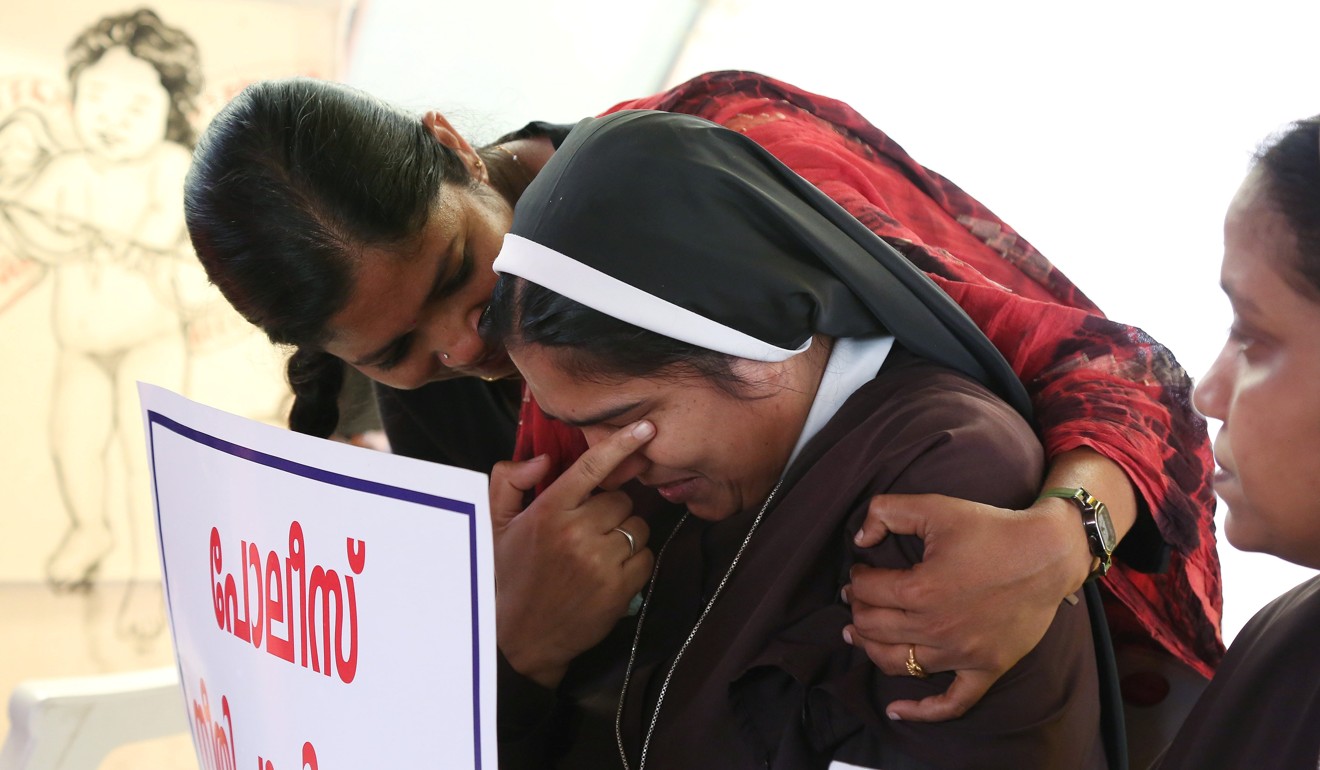
A woman consoles a nun during a protest demanding justice after an alleged sexual assault of a nun by a bishop in Kochi, in the southern state of Kerala, India. Photo: Reuters

Indian nuns stage six-day protest over alleged sexual assault by bishop

A group of Indian Catholic nuns staged a rare street protest in the southern state of Kerala demanding justice after an alleged sexual assault of a nun by a bishop. Police have called Bishop Franco Mullackal for a second round of questioning next week. Mullackal has denied wrongdoing. In a letter, the nun said she wanted the Vatican to intervene, and that she was forced to make matters public after several attempts to seek justice from within the church failed. The nun first accused Mullackal in late June of raping her 13 times between 2014 and 2016. Mullackal has called the whole scandal a conspiracy by those against the Church. The nuns’ protest, which ran for six days, attracted support from locals, writers, politicians and activists.

What next? The case comes at a time when the Christian community, which accounts for 19 per cent of Kerala’s population, is reeling after multiple abuse cases involving the clergy. Five priests were arrested last month in two different cases, while last year, a Catholic priest was arrested after a minor he is accused of having sex with gave birth.

Rajapaksa says he might make a bid for Presidency despite constitutional bar

September 14th, 2018

Courtesy NewsIn.Asia

New Delhi, September 15: Former Sri Lankan President Mahinda Rajapaksa has said that he might make a bid for the country’s Presidency for the third time despite a constitutional bar against it.

He told The Hindu: I will lead the SLPP (Sri Lanka Podujana Peramuna). There is a view that despite the Amendment I can fight elections and then fight it out in court. But I still have to decide whether to take that risk. Another option is to announce a candidate acceptable to all.”

The next Presidential election is expected to be held in late 2019 as the term of the current President Maithripala Sirisena ends on January 9, 2020.

In a wide ranging interview to Suhasini Haider and Amit Baruah in New Delhi, Rajapaksa said: My son [Namal Rajapaksa] can’t be a presidential candidate since they have now raised the minimum age to 35 years, instead of 30, so he can’t be considered in 2019. My brother is certainly a contender, but the party and the coalition will have to decide who the people want.”

Rajapaksa says he might make a bid for Presidency despite constitutional bar

Release of Rajiv Killers

On the decision on whether to release those convicted for the assassination of former Prime Minister Rajiv Gandhi by the LTTE is an internal matter” for India to decide, Rajapaksa said.

However, he indicated that he might have taken a different line” from the Tamil Nadu government’s resolution that recommended their release to the Governor.

I have no view on this. It is up to the government; it is an internal matter for India. If this was in Sri Lanka, we would have taken a different line,” he said.

Rajapaksa was in Delhi to deliver a public lecture on Wednesday on India-Sri Lanka relations: the way ahead”.

The former President, who says he is 100%” confident his party will come to power in 2019, proposed a new mechanism for India and Sri Lanka to resolve all issues, especially economic issues.

The mechanism would mirror the Troika” formed in 2008-2009 of three Indian officials — National Security Advisor M.K. Narayanan, Foreign Secretary Shivshankar Menon and Defence Secretary Vijay Singh — and three Sri Lankan officials — Advisor Basil Rajapaksa, Defence Secretary Gothabaya Rajapaksa and Permanent Secretary Lalith Weeratunga — to coordinate India-Sri Lanka ties during the war against the LTTE. in 2008-2009.

Rajapaksa also denied the charge that he set off incurred Sri Lanka’s debt trap by bringing Chinese companies into the Hambantota port project, saying that the situation had only been messed up” by the present government.

Excerpts from an interview:

You have had a rocky relationship with India. Is your visit here a sign of reconciliation with the Modi government after 2015?

Yes. Just before and after the elections [(in 2015], we had a lot of misunderstandings. Now of course, I think it is about time to move on.

In March 2015, in an interview to The Hindu, you had accused R&AW, the intelligence agency, of helping bring the opposition together, which led to your defeat. A few weeks ago you said that India must not meddle” in political affairs in Lanka. Are you worried it will?

It isn’t only India. I didn’t mention just India. I said no one should meddle with somebody else’s elections. It is an internal matter of a country whom the people decide to bring to power. That was in my mind. I think now they all have understood what went wrong at that time and what they did. So we need to forget about the past. This is the time to move forward and look forward.

On that subject, there were allegations that your party had accepted campaign funds from Chinese companies….

They have not funded me. But this is what people talk about because the [Maithripala Sirisena] government has nothing else to accuse us of. When they came to power, they were looking for my $18 billion, but they are still looking for it (laughs)… despite the help of the U.S. and other countries. They haven’t even found a dollar.

All eyes at present are on Sri Lanka’s Chinese debt. Do you think your original deal for Hambantota and the Colombo Port project could have been done differently?

Look, the loans that we took, Sri Lanka could have paid them back. But the [Sirisena government] has messed things up. For the Colombo Port City, we didn’t have to pay anything, it was a contract sharing arrangement, where they got a share of the land they developed. At the time of the Hambantota port deal, our debt from China was less than our debt from the U.S. and other countries and debt-to-GDP ratio was under control. So if the problem has grown now, and the government has not managed it, then how can you blame us?

What is your longer view of Sri Lanka’s relationship with India and China, which seemed to be the cause of the misunderstandings” at the time?

India is our closest relation, I would say, and our neighbour. And China has been a long-standing friend. In all our dealings with China, we never forgot about the interests of India. We had a very good understanding with the Indian government and we always told them that we would never allow our territory to be used for any activity against our neighbour.

India’s other concern at the time was a Chinese nuclear submarine being docked in Colombo harbour. Since then, there is Gwadar port, there are Chinese inroads in the Maldives. Was India justified in its concerns that it raised with you?

Look, the Chinese submarine was on a routine trip to the Gulf and South Africa. And they just stopped for a short haul. That’s all. I think this was used as an excuse [by India] at the time.

What was the reason for the deterioration in ties then?

Misunderstandings. My priority was always to develop my country and I always kept India informed and asked them first to build the port, to build the airport, to build the highways… we always came to India. We offered them first, then the next offer went to China, because they were the only people who could do it. And within eight months the Chinese had started [construction].

You say that, but recently your party opposed the Mattala airport being leased to India. What is your objection?

I am not opposing India, I am opposing the privatisation that is the policy of the Sirisena government. I never privatised the way they have. In fact I bought back the shares of the gas company, insurance company, and also the SriLankan Airlines that was sold to Emirates.

How do you see India-Sri Lanka ties at present? While the leadership says that relations are at their closest, many agreements are pending, including on the ETCA (Economic Technology Cooperation Agreement), Trincomalee oil farms, and Mattala airport.

Well they say there is a very good relationship between the two countries and the leaders, much better than earlier. I think it is all only talk from our side. I don’t want to criticise my government when abroad, and I appreciate all the meetings they have had, but no investments are coming in to Sri Lanka. The government isn’t stable. For the security of India, stability in Sri Lanka is very important. A weak government cannot give that guarantee.

If your party comes to power, what would be your first priority with India?

I think our first priority is investment. And better communication. We had a mechanism during the war [against the LTTE in 2009] called the Troika, where three officials from both sides were able to discuss any issue, even in the middle of the night. For economic purposes also, we must have a mechanism like that, where India and Sri Lanka coordinate on all the issues we have today.

You described your government as strong. Your government was in fact accused of being too strong and criticised for its policies too…

A government must be strong and speak in one voice. Currently, the [Sri Lankan] Prime Minister says one thing, the President contradicts him. Policies differ within the government.

Even so, despite the challenges and a no-confidence motion , the ruling Sri Lanka Freedom Party-United National Party (SLFP-UNP) combine of Mr. Sirisena and Ranil Wickremesinghe has stayed together. Do you think they will go into elections together?

I have my doubts. But even when they get together, I don’t think they can win.

Would you be willing to work with Mr. Sirisena, your former colleague and from your old party, the SLFP, again?

Unfortunately he is not prepared to work with me. We have a new party [Sri Lanka Podujana Peramunal], and our president is G.L. Peiris. So he must reach out to us since we got about 45% of the vote in a three-cornered fight.

In 2015, it wasn’t just the opposition that came together against you. Tamil populations, Muslim minorities felt marginalised and persecuted during your tenure. Why do you think they would vote for you?

I think they have understood the mistakes this government has done. The minister responsible for the anti-Muslim violence in 2014, for example, is a minister in this government. When we were in government, we rebuilt houses that were destroyed at that time itself. But this year, the government has done nothing for the victims of the Kandy violence. When the violence began [February 2018], I rushed to the area and convened a meeting of all the communities together along with the religious leaders. The PM and the President only went later.

But there is a worry that you represent a Sinhala-Buddhist muscular majoritarianism where minorities don’t feel as safe.

Look, we won 71% of the seats in the last elections [local elections in 2018], so I think most people are with us. This is just a canard spread by my opponents, I don’t think this is a perception amongst people.

How about your past role in the war against the LTTE and accusations of human rights violations? You were also recently questioned for the torture of a journalist… How much of a liability will those charges be?

I don’t think they will be a problem. People know these charges are just to harass us. Because all the cases are against only the Rajapaksa family, and their supporters. What about all the people in my government before, who are now in government? The evidence in these cases is in any case flimsy and unproven all these years. As far as international human rights groups go, let them come after me. We have nothing to hide. After all, defeating the LTTE, a terrorist organisation, was not done only for us, no? It was not just for a community or for one country. They killed Rajiv Gandhi, they were operating with other organisations in other countries too. They introduced suicide jackets to the world. So defeating them helped many other countries too.

In recent days, there has been the question in India of whether those LTTE cadres convicted for Rajiv Gandhi’s assassination should be released with a recommendation from the Tamil Nadu Cabinet. What is your opinion on this?

I have no view on this. It is up to the government, it is an internal matter for India. If this was in Sri Lanka we would have taken a different line. But how can I say anything when the issue is in India?

Who will lead the SLPP into elections in 2019, given that you have completed two terms and according to the 19th Amendment that is the limit?

I will lead the SLPP. There is a view that despite the Amendment I can fight elections and then fight it out in court.

But I still have to decide whether to take that risk. Another option is to announce a candidate acceptable to all.

Will it be a member of your family, or would you consider someone outside it?

My son [Namal Rajapaksa] can’t be a presidential candidate since they have now raised the minimum age to 35 years, instead of 30, so he can’t be considered in 2019. My brother is certainly a contender, but the party and the coalition will have to decide who the people want.

(The featured image at the top shows Mahinda Rajapaksa. Photo.The Hindu R.V.Moorthy)

War casualties may not have exceeded 8,000:Former President Mahinda Rajapksa

September 14th, 2018

Courtesy The Daily Mirror

Former President Mahinda Rajapksa, who is in New Delhi, has said that the number of war casualties in Sri Lanka including the terrorist casualties may not have exceeded 8,000, the Hindu reported.

Delivering a public speech on Wednesday, Mr. Rajapaksa said extravagant numbers reaching up to 40,000 have been recklessly bandied about as the alleged scale of fatal casualties.

This is false and malicious propaganda…the number of casualties, including terrorist casualties, would probably not have exceeded, 8,000,” he said in response to the international campaign for justice for the persons affected by the war.

He said that the Sri Lankan military saved 300,000 Tamil civilians who were trapped in the last stage of the war from a narrow strip of land in the east.

He reiterated that the war of 2009 was against terrorism of LTTE and not against the community.

Mr. Rajapaksa hit out at his international critics and said that allegations of human rights abuse against the victorious Sri Lankan military is false”.

We did not at any time, wage an ethnic war: the military action was certainly not directed against the Tamil community. It must not be forgotten that the reach of this terrorist organisation was not confined to Sri Lanka, but extended to Indian soil where they assassinated Shri Rajiv Gandhi and many others,” Mr. Rajapaksa said at the speech organised by Virat Hindustan Sangam led by BJP MP Dr. Subramanian Swamy.

The public speech, the first ever delivered by any Sri Lankan political figure in recent years dealt in detail with the war that began after the peace negotiation between the Sri Lankan government led by Mr. Rajapaksa, and the LTTE broke down in 2006.

Eradication of terrorism was not for the sole benefit of one community, or even for one country,” said Mr. Rajapaksa arguing that not completing the military campaign that led to the killing of LTTE leader Velupillai Prabhakaran, would have amounted to betrayal of coming generations.”

Earlier, introducing the speaker, Dr. Swamy said: Mr Rajapaksa is the frontrunner for the next government and hopefully he will be President of Sri Lanka soon. He took decisive action against terrorism and cleaned up the country. As a result Sri Lanka is today a favoured destination of international investment.”

Chinese loans amount to 8%, rest are from West and others: former President Mahinda Rajapaksa

September 14th, 2018

Courtesy The Daily Mirror

The amount of loans Sri Lanka obtained from China is only about 8 per cent from the total loan amount and the rest of the loans are from the Western and other countries, former President Mahinda Rajapaksa who is in India said.

In an interview with News X, Mr.Rajapaksa said if he is not mistaken, Chinese loans only amounted to 8 per cent.

He said Sri Lankans today complained of lack of development in the country and the previous government was able to initiate many development projects.

When asked whether the Hambantota Port’s feasibility study proved to be not viable, he said it was not so.

Now everybody is interested in it. Not only India, Pakistan or China, everybody wants to come there. It is a very important port. Now they have realised it. Even the US, that’s why they are talking about it,” he said.

He said the previous government never promised China that the Port will be given to them.

But this government gave it for 99 year lease. We would have settled the loan obtained for the Hambantota port from earnings of Colombo Port,” he said.

When asked about the issues faced by the people of Tamil Community in Sri Lanka, Mr.Rajapaksa said both the regional development and power devolution have to be done.

We will have to give that. However, Sri Lanka is a small country. We can’t just divide it and give them a federal state. That option is out. Unfortunately, the TNA party leaders didn’t want to come with me and discuss the issues because they thought Ranil will give them a better deal,” he said.

When asked whether he would contest the upcoming presidential election, Mr. Rajapaksa said he has not yet decided whether to contest or not.

We are looking for a good candidate. If there is no good candidate then I will have to,” he said.

CID to probe assassination plot: President

September 14th, 2018

Courtesy The Daily Mirror

Speaking on the alleged conspiracy to assassinate him and former defence secretary Gotabaya Rajapaksa, President Maithripala Sirisena said today the investigation into the incident would be handed over to the CID no sooner the Special Investigation Unit (SIU) concluded its probe and submitted its preliminary report.

Speaking to the Heads of Media Institutions at the President’s House, he said he spoke to IGP Pujith Jayasundara about this matter this morning as well.

The recording, which talks of assassination attempts on me and Gotabaya Rajapaksa, states that they want to do so because we are against drugs. I already spoke to the IGP and will discuss the issue further this evening as well,” he said.

පරණ වීඩියෝ ලීක් වෙයි.. ඇමති චම්පික ඇටිකෙහෙල් කෑ රිලවෙක්ලු.. [Video]

September 14th, 2018

 lanka C news

පසුගිය ජනාධිපතිවරණ වේදිකාවේදී මෛත්‍රී පාලනයක් යටතේ පෙට්‍රල් සහ ඩීසල් වල පනවා ඇති බදු සහමුලින්ම ඉවත් කරන බව කියූ ඇමති චම්පික රණවක අද සිටින්නේ ඇටි කෙහෙල් කෑ රිලවෙකු වගේ යැයි පාර්ලිමේන්තු මන්ත්‍රී ප්‍රසන්න රණවීර මහතා සඳහන් කරයි.

ඔහු මෙම අදහස් පළ කළේ කොළඹ දී පැවැති ඒකාබද්ද විපක්‍ෂ මාධ්‍ය හමුවකදීය.

මේ අාණ්ඩුව අද වන විට පෙට‍්‍රල් ලීටරයකින් රුපියල් 72ක් බදු වශයෙන් අයකරන බව ඔහු එහිදී කියා සිටියේය.

2010දී බොරතෙල් බැරලයක් ඩොලර් 80 මිල වෙද්දී පෙට්‍රල් ලීටරයක් රුපියල් 115 ක ට එවක රජය විසින් ලබාදුන් බව මාධ්‍ය හමුව අමතමින් පාර්ලිමේන්තු මන්ත්‍රී ජානක වක්කුඹුර මහතා පැවසීය.

Don’t turn me into a joke supplier – IGP requests media

September 14th, 2018

‘අම්මට හුඩු හතරක් හිටිය.. දෙකක් වැඩම කරලා.. ආතල්’ පොලිස්පති උත්සව සභාවක රංගනයේ.. භික්‍ෂුන්-ගුරුන්-සිසුන් තුෂ්නිම්භූතයි…[Video]

තමන් විහිළු සපන්නේ බවට ජනමාධ්‍ය ඔස්සේ ඉදිරිපත් කරන්න එපා යයා පොලිස්පති පූජිත ජයසුන්දර මහතා ඉල්ලා සිටියේය.

ඒ මහතා මේ බව කියා සිටියේ මාතර කොටපොල ජාතික පාසලේ ශිෂ්‍ය නායක නිල ලාංඡන පැළදවීමේ උත්සවය දීය.

එහිදී සභාවේ සිටි ගුරු මණ්ඩලය පොලිස්පතිවරයා විසින් අමතනු ලැබුවේ සිසුන් ඉදිරියේ දී බලවත් ලෙස අපහසුතාවයට පත් වන ලෙසින් යයි සමාජ ජාලාවන්හි චෝදනා එල්ල වෙයි.

එමෙන්ම උත්සවයට පැමිණ සිටි භික්ෂූන් වහන්සේලාට පොලිස්පතිවරයා ආමන්ත්‍රණය කළ ආකාරයට ද සමාජ ජාලාවන්හි එල්ල වන්නේ දැඩි විවේචනයකි.

‘අම්මටහුඩු දෙන්නයි.. හතරක් හිටිය.. දෙකක් වැඩම කරලා.. දානෙ දෙන නිසා පුදුමයි අනිත් දෙකක් වැඩ ඉන්නවා’ යැයි කී පොලිස් ‘ආතල්’ යයි කියමින් අත්පුඩියක්ද තැලීය.

Case filed against Ravi for giving false information to Bond Commission

September 14th, 2018

Courtesy Adaderana

The Criminal Investigations Department (CID) has filed a case with the Colombo Magistrate’s Court against MP Ravi Karunanayake for allegedly providing false evidence before the Presidential Commission of Inquiry appointed to investigate the Issuance of Treasury Bonds.

CID takes over probe on DIG Nalaka de Silva; PM calls for report

September 14th, 2018

Courtesy Adaderana

The Inspector General of Police (IGP) has ordered the Criminal Investigations Department (CID) to take over the investigations into the allegations against DIG Nalaka de Silva of the Terrorism Investigation Division (TID).

Meanwhile Prime Minister Ranil Wickremesinghe has called for a full report from the IGP on the investigation, Police Spokesman SP Ruwan Gunasekara said.

IGP Pujith Jayasundara yesterday instructed the Police Special Investigations Unit (SIU) to investigate the allegations which have been leveled against DIG Nalaka de Silva, who heads Sri Lanka’s Terrorism Investigation Division.

During a press conference held in Kandy on Wednesday (12), a social activist had revealed to the media certain audio recordings of alleged phone conversations between himself and the DIG.

The activist, Namal Kumara, a director of the ‘Dhushana Virodi Balakaya’ (Anti-Corruption Force), promises to expose the top police officer at the start of the media briefing and played some of the recordings of their phone conversations.

During the conversations, both individuals conspire to tarnish the image of several high-ranking police officers and also other conspiracies within the government.

The organisation also claims to have uncovered an alleged conspiracy to assassinate President Maithripala Sirisena and former Defence Secretary Gotabhaya Rajapaksa.

The organization filed a complaint at the Police Commission yesterday (13) regarding the alleged conspiracy.

The Anti-Corruption Force has disclosed several telephone conversations allegedly made by the Deputy Inspector General (DIG) of Police Nalaka de Silva.

Reportedly, DIG Nalaka de Silva has mentioned during the conversation that a plan should be prepared to extol the Prime Minister.

Director of Operations of Anti-Corruption Force Namal Kumara claims that he was introduced to DIG Nalaka De Silva through IGP Pujith Jayasundara.

DIG Nalaka De Silva has allegedly stated during the conversation that incumbent President Maithripala Sirisena will ally with former Defence Secretary Gotabhaya Rajapaksa in 2020 and that ‘something’ should be done using an underworld leader if an unavoidable situation arises.

Accordingly, a complaint had been filed at the National Police Commission with regard to the revelation made by Anti-Corruption Force.

Director of Operations of Anti-Corruption Force Namal Kumara has subsequently filed another complaint at the Police Division for Assisting and Protecting Victims of Crimes and Witnesses, seeking to ensure his personal security following the revelation of the conspiracy.

President to present set of proposals to UN General Assembly

September 14th, 2018

Courtesy Adaderana

At the 73rd Session of the United Nations General Assembly on September 25, President Maithripala Sirisena will announce a set of new proposals for consideration at the March 2019 session of the United Nations Human Rights Council (UNHCR).

He will also submit these proposals to the United Nations Secretary General António Guterres as well as UN High Commissioner for Human Rights, Michelle Bachelet. The President expects to meet both of them during his visit to New York in two weeks time.

Addressing the media heads, newspaper editors and heads of electronic media institutions at the President’s House in Colombo today (Sept 14), the President said that the proposals are aimed at solving issues and provide relief without causing harm to the pride of the security forces and safeguard independence, sovereignty and national security.

Furthermore these proposals would facilitate harmonious solutions to remaining issues with regard to the alleged acts of both sides during the conflict, he said.

The President is expected to lead Sri Lanka’s delegation to the 73rd United Nations General Assembly (UNGA) in New York, which begins September 18.

The 73rd UNGA will begin September 18 at the UN Headquarters, New York, while the General Debate will hold from September 25 to October 1.

The President will address the 73rd Session of the High-Level General Debate of the UN General Assembly at the UN headquarters in New York on September 25.

The President said that although a section of the media level baseless allegations that the government was placing national security in danger by reducing the military strength, the government has taken every possible step to ensure national security.

He pointed out the biggest budget allocation of Rs 230 billion is for defence and the forces have been provided with every requirement from modern weapons to aircraft and ships.

There is a positive recognition for the Sri Lankan armed forces internationally as a disciplined army and that is evident from the fact that United Nations Peace Keeping recruit increased number of army personnel from Sri Lanka, he pointed out.

Conceding that there are some shortfalls in the investigations conducted since 2015 on attacks of journalists and other civilians, abductions and killings, he said although several persons were detained in this connection, not a single person has been charge-sheeted or prosecuted.

Although military officers have been detained and placed under remand custody, there were no cases filed and such actions merely bring bad reputation to the government, he pointed out. The President said that he had given instructions in a stern manner to the officials of the Criminal Investigation Department (IGP) and the IGP in this regard.

Expressing his views further, the President said that under the administration of the present government the national security of the country has not weakened at any rate. The President pointed out that even though a restructuring process was executed, it does not mean this process weaken the strength of the security forces.

He said the course of maintaining a security force in a country where there is no war was different from peace times. At present our security forces receive the cooperation as well as training opportunities in powerful nations of the world than the previous era. He also said that even today the highest allocation of the budget is made to the Ministry of Defence.

President Sirisena, recalling the various statements made by some persons said that those comments were made by them are based on their personal agendas.

The President expressing his views regarding the criticisms on the fuel pricing formula said that according to the upcoming budget proposals it will be decided whether to continue with the fuel pricing formula or to take actions to make necessary alterations to the pricing formula with the aim of creating a better situation for the public than the existing situation.

President Sirisena, commenting on the development process of the country, apprised the heads of the media institutions regarding the mega projects of irrigation schemes and renovating tanks for the development of agriculture.

Today a higher price is offered for paddy and there is no proper response from media on that, said the President stating that even the price of paddy has increased, the government will work to ensure that the price of rice will not increase, thus providing a relief to the customer.

President Sirisena, when asked about the recent protest carried out in the Mullaitivu district that Sinhala people were being settled in the North, said that the policy is that every community holds the right to live in whatever part in the country.

The expectation in a country is that every one lives in reconciliation and harmony without regional barriers and the government has not got involved in any housing settlement programmes that could create controversies and will not do such things in the future said, the President said denying the accusations leveled against the government.

President Sirisena who spoke about the accusations against the Sri Lanka –Singapore Trade Agreement said that he has appointed a special committee of experts to conduct an inquiry and those inquires are being successfully moving forward and anyone is able to present ideas to the Committee.

If that committee report includes that this agreement will make a negative impact over the country he would take the responsibility to remove those harmful clauses, he said and added that if the committee finds it is a matter of serious harm, necessary decisions would be taken.

Deputy Minister Lasantha Alagywanna and Secretary of to Ministry of Defense Kapila Waiydyarathna were present in this event.

Mending Walls instead of Mending Fences:  Anticipatory comments on “Kanepahara (A Box on the Ears )”

September 13th, 2018

By Rohana R. Wasala

Something there is that doesn’t love a wall,

That sends the frozen-ground-swell under it,

And spills the upper boulders in the sun;

And makes gaps even two can pass abreast.

  • Robert Frost (‘Mending Wall’)

‘Kanepahara’ (lit. ‘A Box on the Ears’) is the title of a series of radio dramas scheduled to be broadcast over the government owned Sri Lanka Broadcasting Corporation (SLBC) for the promotion of so-called post-war reconciliation between communities. The serial dramas have been produced under the auspices of the Office for National Unity and Reconciliation (ONUR), itself a government body headed by Chandrika Kumaratunga, a former president, who played a main role in toppling her bête noire Mahinda Rajapaksa’s government in 2015. The broadcast of the drama series is reported to be currently in suspension due to the intervention of the minister responsible (Wijedasa Rajapaksa) amidst an eruption of vocal protests by several Buddhist monks and lay Buddhists against the titles of some of the episodes lined up for broadcast for being allegedly disrespectful of Buddhism. What this writer feels, after following news about the matter via online sources, is that the ONUR probably wants to educate, through these plays, the rural listeners of the country who, they arbitrarily believe, are  backward Buddhists, to think in unconventional  ways so that they become more amenable  to the Yahapalanaya’s alleged reconciliation process; however, its drama project is more likely to be an oblique scurrilous attack on the Sinhalese Buddhist majority who insist on safeguarding the age old Buddhist cultural foundation on which the Sri Lankan state still stands. It is this cultural foundation reinforced by many centuries of peaceful coexistence with the largest minority the predominantly Hindu Tamils, and the good neighbourly mainstream Muslims and Christians that always ensures communal harmony. There has been a groundswell of fresh awareness of the importance of replenishing customary inter-communal relations since the conclusion of separatist disturbances in 2009 for establishing a happy, secure, stable society. It is yet to be seen whether ‘Kanepahara’ is compatible with this trend or not.

The monks and lay Buddhists who so vehemently criticize the lewd language of the titles do not prejudge the plays as lacking in artistic merit simply on that account. Neither does the present writer. These comments, like theirs, focus the sponsor of the plays, the ONUR and its probable motives. No criticism of the plays as works of art is intended. When this writer first read  about the controversy and watched a video of the monks’ protest speeches (August 22, 2018), he was sceptical about the rationality of those protests. One reason for this was the fact that a group of very respectable, in fact, the most highly celebrated artistes available in the field in his opinion (such as Iranganie Serasinghe, Jayalath Manorathne, Wijerathne Warakagoda, Lakshman Wijesekera, Buddhadasa Vithanachchi, and Mahendra Perera, et al) had participated in the making of the radio plays: they had done the voice over. They wouldn’t have kept quiet if there was anything outrageously improper in the conversations they were required to utter. Of course, as professionals, they might have just followed directions.

In any case, drama is literature. In literature, even moral messages may be couched in phraseology normally considered immoral for creating a particular effect, without subverting their original meaning, while interpreting them in a truthful unconventional way. This writer remembers how some very prominent Buddhist prelates during the premiership of Madame Sirimavo Bandaranaike (1970-77) bitterly attacked a novel written by that doyen of Sinhala literature and culture Martin Wickremasinghe by the name of Bhavatharanaya”  or  Crossing (the Ocean of) Existence”, where he was accused of insulting the Buddha by misrepresenting his character. The monks agitated for the banning of the book, if my memory is correct. The wise Madame Bandaranaike, a true Buddhist leader and ruler, patiently listened to their protests, and did what had to be done: she got a competent official to read the novel and advise her whether the book deserved to be banned. The person did accordingly, and told her that there was nothing in the book that justified a ban. That was the end of the problem, as far as this writer can remember. He can also remember that when Stanley Tambiah published his Buddhism Betrayed” in 1992 (pl. see below), there was an even more strident outcry against it calling for a ban on it in Sri Lanka. The present writer, hearing about this from abroad, genuinely regretted that meaningless demand, for he felt that the publication of the book created a good opportunity for a patriotic Sri Lankan scholar, if possible, to authoritatively counter its suspected anti-Sinhalese Buddhist propagandist ideas.

Kanepahara” too, perhaps, contains its own rebuttal, if it is that bad. After all, even if it turns out to be an attack on the traditional practices of Buddhists, there is no problem. There is a chance that the criticisms are valid, and could point towards essential reform. However, since there are learned monks to point these out, radio listeners need not worry about that. What they should worry about or should be reminded to worry about is the real political motive behind the drama serial, and to be aware enough not to be misled by the plays if their message is subversive and harmful to them as a nation.

To return to the subject at hand after this necessary digression, it is well known now that there is a quasi, religio-politically motivated movement (with global ramifications) whose ultimate goal is to destroy the Sinhalese Buddhist  cultural base of the country, the associated history, and the indissoluble bond between the Sinhala people and their historic island homeland. This is becoming evident everyday to the discerning public. The nonchalant anti-Buddhist irreligiousness  of the play titles, while raising a smokescreen that conceals more serious mobilizations going on against the Sri Lankan state, accidentally betrays ONUR’s probable empathy with that global campaign (which seems to be aimed at extirpating the Buddhist cultural roots of the majority community the Sinhalese, thereby draining the lifeblood out of the veins of their national identity, and at finally disintegrating the unitary state).

What transpired in media reports suggested how the government and the main opposition each sought to exonerate itself from its obligation to do something about what looked like a flagrant lack of respect or regard for Buddhist cultural sensitivities shown by the ONUR. The fact that the drama series has been collectively named Kanepahara” (A Box on the Ears) is probably meant to be a slap in face of the Sinhalese Buddhist majority. However, such superficial perceptions that are easily provoked could deflect people’s attention from the real issues hinted at in the foregoing paragraph. The erudite monks and others who are getting involved  in the ultimately vacuous ‘blasphemy’ allegation (the idea of blasphemy is alien to Buddhism, in any case) had better investigate whether Kanepahara” could be seen as a cultural Trojan Horse bought at own expense, if it happens to be seen in a positive light.

It was Ven. Omalpe Sobhita Thera, one of the stalwarts behind the regime change of 2015, who was probably the first  to censure the titles of some of the plays. He took umbrage at perceived attempts at disgracing Buddhism through these plays with titles such as Taruwan Saranai” , Or May (Film) Stars Protect You”, Nihon Saepa laebewa”  or May You gain the Happiness of Japan”, and Nirwastram Paramam Sukhang”  or Nudity is the Highest Happiness”. These titles are irreverent parodies of some formulaic Buddhist expressions in common use, which correspond respectively, to Teruwan Saranai”  or May the Triple Gem Protect You”, Nivan Saepa Laebewa”  or May You Attain Nibbana”, and Nibbanam Paramam  Sukhang” or Nibbana Is the Supreme Bliss”. Absurd imitations of what are considered to be  inviolable by Buddhists are deeply offensive to Buddhist sentiments. (The arbitrary English translations of the Sinhala titles of the three plays are the present writer’s.)

Ven. Omalpe Sobhitha’s (erstwhile?) allies in the Jathika Hela Urumaya have adopted a less censorious line. A statement issued by the JHU suggests that they apparently have no problem with the content of the plays, which they seem to consider revolutionary; yet they object to the titles as being offensive to Buddhist sentiments. They have offered the following three alternative names for the three given above: respectively, Tharu Hamba Paeradunemi” (Lured to Ruin by Film Stars), Sakura Ratin Paniwidayak” (Letter from Japan), and Helu Saepa soya” (All for Lust), which have here been freely rendered into English as given in parentheses. Their statement ends with the aphoristic line: Learn to be revolutionary. Be revolutionary to learn!” The JVP has also come out in favour of the ONUR’s Kanepahara” drama series.

In the opinion of the present writer, it is the political context in which this dramatic confrontation between two organs of the government (the ONUR and the ministry involved) is being played out that should engage the attention of the people. As a member of the older generation of Sri Lankans, who is fairly au fait with the tumultuous history of post independence politics in the island nation at least since 1970, the present writer is perceptive enough to realize that a storm is currently brewing in its political firmament with a pall of darkness hanging over the country. In this highly volatile situation, an emotionally charged pre-broadcast controversy was triggered by the alleged profanity of the titles of some of the plays. The nearly simultaneous publication of a novel with a title that is considered even more sacrilegious (Budunge Rasthiyaduwa” which, in English, would be Buddha’s Time Killing”/”Buddha the Time Killer”) added fuel to the flames of downright denunciation of the authors and the anti-Buddhist forces suspected to be behind them.

In the absence of the scripts of the relevant plays for this writer to examine, their ostensible overall purpose may be guessed from the official remit of the ONUR: bringing allegedly estranged communities together and getting them to mend fences with one another. But the indications are that the plays are more likely to contribute to the opposite process of ‘mending walls’ between communities as is actually happening at present). What could be the connection between this purpose and the plays which have been given such outrageous titles that seem to ridicule the conspicuous Buddhist culture of the country? This writer’s hunch is that the ONUR project is predicated on the wrong assumption that the single great obstacle to the establishment of national unity and reconciliation is the unnecessary ‘supremacy’ (as they allege) accorded to the Buddhasasana, which according to them undermines the avowed secular democratic  nature of the state. The same argument is adopted by foreign meddlers in our affairs and political and religious enemies of the unitary status and the Buddhist cultural foundation of the country. Actually, Buddhist principles are most compatible with the secular political ideals that countries of the West claim to adopt. (It is a different matter that most of our politicians {of course, they may be pretending}, monks, and ordinary voters  do not know what actually ‘secularism’ as applied to governance means; they think that it means rejection of all religious values in governing! whereas ‘secularism’ denotes ‘the principle of separation of the state from religious institutions’, which is what the Christian {majority} USA, the Christian {majority} UK and other Western Christian {majority} nations are adopting, and what Buddhist {majority} Sri Lanka should be allowed to adopt in freedom.)  A frequent unrelated but true criticism that is raised by friend and foe alike against followers of Buddhism is that there is a glaring discrepancy between practice and precept. But the same criticism can be confidently raised against the followers of any religion. What matters is the fact that this charge is selectively applied to Sinhalese Buddhists by anti-Sinhalese Buddhist extremists. Politically motivated Tamil academic Stanley Tambiah wrongly accused Sinhalese Buddhist monks of being behind the anti-Tamil violence that was in reality, as  knowledgeable Sri Lankans came to justifiably suspect post-event, conspiratorially instigated by internal and external enemies of the Sri Lankan state on a number of occasions in the past. His 1992 book ‘Buddhism Betrayed – Religion, Politics and Violence in Sri Lanka’ was about this false claim of his. He excoriated Anagarika Dharmapala, the international Buddhist missionary and anti-British Sinhalese nationalist social reformer, and arguably the only great Sri Lankan who made the most significant impact on the rest of the world in the past 140 years as a mere irresponsible trouble maker (The Anagarika did this as a missionary of Theravada Buddhism, the really authentic version of the Buddhist doctrine that is most acceptable to the West). Misled by such racially prejudiced ‘intellectuals’ or determined to exploit their decidedly anti-Sinhalese Buddhist inauthentic  theories for their own purposes, those political and religious Sri Lanka bashers seem to be at present having the best time of their ‘crusade’.

This baseless assumption that the unitary character of the Sri Lankan state with its dominant Buddhist cultural identity is prejudicial to the minorities is flying in the face of reality. The reality is that traditional communal harmony has held among ordinary Sri Lankans despite nearly three decades  of civil strife, which ended in 2009. The strongest contributory factor that made this possible was the generous, inclusive, non-violent, accommodating nature of the dominant religious (Buddhist and Hindu) culture of the nation. The final stages of the civil war brought  all Sri Lankans closer together than ever before. The then government started addressing urgent concerns of the northern and eastern provinces even before the war was well over. The five year period that followed saw Sri Lanka moving in the correct direction in every sphere: national security, economic development, post war normalization of communal relations, return of democracy to the previously war-torn north and east provinces, etc. However, as now clear in retrospect, the ‘change’ that was forced on the country at the beginning of 2015 has gravely undermined the forward march of the Sri Lankan nation. Launching an unwanted cultural crusade against the majority community at this stage, while the whole nation is under siege as it were, even though it might possess some positive features, can only be counterproductive.

කුරුන්දක විහාරයට එල්ල වූ ජාතිවාදී ප්‍රහාරය

September 13th, 2018

මතුගම සෙනෙවිරුවන් 

      ලංකාවේ පුරා විද්‍යා නීතිය බෙහෙවින්ම ප්‍රබලය. පුරාවිද්‍යා රක්ෂිතයක යම් ඉදි කිරීමක් වෙනස් කිරීමක් කළහොත්  අත්අඩංගුවට ගෙන ඇප නොමැතිව තබා ගැනීමටද එම නීති රීති ප්‍රමාණවත්ය.පුරාවිද්‍යා නීති රීති වලට යටත් වූ පැරණි සංඝාවාස තිබූ ස්ථානවල රැඳී උන් භික්ෂූන් වහන්සේලා වරක් දෙකක් නොව කීප වරක්ම මෙම නීතිය යටතේ අත් අඩංගුවට පත් කොට තිබේ.ඒ  සමහර විට පන්සල් භූමියේ වැසිකිලි වලක් හෑරූ වරදටය. නැතිනම් ගල්ලෙන් සංඝාවාසයක් කළ වරදටය.එහෙත් පුරා වස්තු ඩෝසර් කළ සෙල් ලිපි ග්‍රයින්ඩර කල කිසිවෙක් හට තවමත් නීතිය නිසි පරිදි ක්‍රියාත්මක නැත. පුරාවස්තු ආරක්ෂණ කොට්ඨාශය නම් වූ ගෙවල පොලිසියක් පුරා විද්‍යා දෙපාර්තමේන්තුව තුළ පිහිටවා තිබෙන නමුදු පුරා වස්තු විනාශ කරන්නන්ට එරෙහිව ඔවුන් ගේ නීතිය ඉදිරියට නො එයි. පළාත් බද ඇතැම් පුරාවස්තු ආරක්ෂණ කොට්ඨාශ වල  නිලපටි ලද ඇත්තන් පුරා වස්තු විනාශ කරන්නන් ගෙන් යැපෙන්නන් බවට පත් වී  තිබේ.

      මෙවැනි ආයතනයකට දැන් බඩපුරා ජාතිවාදීන් ගෙන් සංග්‍රහ ලැබෙන්නට පටන් ගෙන ඇත.සිංහල ජනතාවට ක්‍රියාත්මක පුරා විද්‍යා නීතිය භික්ෂූන් වහන්සේලාට විරුද්ධ පුරා විද්‍යා නීතිය දෙමළ සහ මුස්ලිම් අන්තවාදීන් අරභයා ක්‍රියාත්මක නොවන බව හොද හැටි පෙන්නුම් කෙරේ.මේ සම්බන්ධව තිබෙන අලුත්ම සිද්දිය නම් පුරා විද්‍යා දෙපාර්තමේන්තුව සතු පුරා විද්‍යා ස්ථානයක සීමා මායිම් සළකුණු කිරීමට ගිය අවස්ථාවේදී ඇතිවූ කලබගෑනියයි.මෙම කලබලයට මුල් ව ඇත්තේ දෙමළ ජාතික සන්ධානයේ මන්ත්‍රී ටී .රවිහරන්ය.කරුඳු මලේ විහාරය නොහොත් කුරුන්දි විහාර පුරා විද්‍යා රක්ෂිතය සංරක්ෂණය උදෙසා පුරා විද්‍යා දෙපාර්තමේන්තුව ගත් උත්සාහය ආපිට හරවන්නට මේ ජාති වාදියා ට හැකිව තිබේ.දෙමළ ජාතික සන්ධානය දැන් සුලු සිදුවීමක් ඇත්නම් උද්ඝෝෂණ කරන තත්ත්වයට පත්ව ඇති අතර. සිංහලයන් ගේ උරුම භූමි කොල්ල කෑමේ පුරුද්ද ඔවුහු දිගින් දිගටම කර ගෙන යති. ඓතිහාසික පුරවිදයා ස්ථාන වලට පැමිනෙන නිළධාරීනට ද ඔවුහු අඩන්තෙට්ටම් කරති..උතුරු ප්‍ර දේශයේ සිංහලයන් පදිංචි කිරීම නැවැත්වීමට පළාත් සභාව හරහා නීතියක්ද සම්මත කර ගෙන තිබේ.

        ශ්‍රී ලංකා කඩයම් පොත දක්වන පරිදි රුහුණු මායා පිහිටි නම් තුන්සිංහලේ රට නමින් වූ ස්ථාන රාශියක් ඇත. පිහිටි රට යනු සිංහල ශිෂ්ඨාඡාරයේ හදබිමයි එය රජ රට යනුවෙන්ද ව්‍යවහාර වේ. පිහිටි රටේ පැවති කුරුඳු ගමු රට යනු කුරුන්දි රට්ඨ යනුවෙන් දැක්වූ බිම් පෙදෙසයි.     සිංහලයේ පැවති පැරණි හෙළ අටුවා අතර ජනප්‍රිය වූ කුරුන්දට්ඨ කතාවට එම නම ලැබුනේ කුරුන්දික විහාරයේදි ලියන ලද නිසා බව සඳහන් වෙයි. බල්ලාඨ නාග රජු විසින් කරවන ලද මෙම විහාරය කුරුන්දවාශෝක, කුරුන්දපාසක යන දෙනමින්ම මහවංශ පිටපත් වල සඳහන් වෙයි. පූජ්‍ය එල්ලාවල මේධානන්ද හිමි පවසන පරිදි      කුරුන්දවාශෝක කුරුන්දවාපි අශෝක යන්න අක්‍රමවත් ලෙස කෙටවීමකි. කුරුඳු වැව අසල අශෝක විහාරය ඒ නමින් හැඳුන්වූවා විය හැකිය. කෙසේ හෝ මේ සියල්ලේම කුරුන්ද යන කොටස සුරැකී තිබේ. මුලින් කී සෙල් ලිපියේ කුරන්ගම ගැන සඳහන් වෙයි. වර්ථමාන “කුරුන්දම” යන්න මේ නමේම ව්‍යවහාරයකි. ඒ අනුව සිංහල අට්ඨකතා රචනා කරන ලද යුගයේ එනම් මිහිඳු මාහිමියන් වහන්සේ ගේ ආගමනයෙන් පසු යුගයේ සිටම කුරුන්දගම හා එම විහාරය පැවත ඇත. එම නම අද දක්වාම වෙනස් වී නැත. සිංහල අටුවා සාහිත්‍යයට අනුව මෙම විහාරයේ දී ද එක් අටුවාවක් ලියැවී ඇත. එසේ නම් ක්‍රි.පූ. යුගයේදී මෙම ප්‍රදේශය ජනපදයක් ව දියුණුව පැවති බවත් සිංහල බෞද්ධයන් මෙහි විසූ බවත් පැහැදිලිය. මෙහි බෞද්ධ භික්ෂූන් වහන්සේලා සියගණනක් වැඩ සිටි බවටද සාධක හමුවෙයි. මනෝරථපූරණියේ සඳහන් වන එක් තෙර නමක් කුරුන්දක වාසී යනුවෙන් විශේෂණය කොට ඇත. උන්වහන්සේ ඵුස්ස්මිත්ත තෙර නමින් අටුවා වල දැක්වෙයි.  (නැගෙනහිර පළාත හා උතුරු පළාත සිංහල බෞද්ධ උරුමය -පූජ්‍ය එල්ලාවල මේධානන්ද හිමි)     

         පදී රට යනු පදවිය ප්‍රදේශයයි.පදින්නරු යනුවෙන්ද ව්‍යවහාරයකි.එයද ශ්‍රී ලංකා කඩයිම් පොතේ සඳහන් වෙයි.කුරුඳු රට සහ පදී රට අතර ඉපැරණි සිංහල ජනාවාස රාශියක් තිබී ඇත. 2 වන පැරකුම්බා රජු (1236 – 1270) විසින් විනාශ කරන ලද කාලිංඝ මාඝ ගේ එක් බලකොටුවක් කුරුඳු වෙහෙර ආසන්නයේ පැවති බව ඉතිහාස විමර්ශනයෙන් දත හැකිය.. මේ කාලයෙන් පසු මාඝ පරපුරේ  ජාවක චන්ද්‍රභානු ලංකාව ආක්‍රමණය කළ අතර ඔහුගේ කඳවුරක්  ද මෙහි පිහිටුවාගත් බවත්, එහි සිංහලයන් ඔහුගේ වසඟයට ගත් බවද දැක්වෙයි. තන්නිමුරුප්පු වැවෙහි සිට කුමලමුණේ මගෙහි සැතපුම 1.5 ක් පමණ ගිය විට මෙම කඳු වැටිය දර්ශණය වෙයි. මෙය සම්පූර්ණයෙන්ම වනයෙන් වැසුණු ප්‍රදේශයකි. නෙල්ලාරු ඔය හරස්කොට තන්නිමුරුප්පු වැව කරවා ඇත. එය කුරුන්දම්මලේ කන්දට දකුණින් පිහිටා ඇත. මේ කන්දට උතුරු පැත්තෙන් කුරුන්දන්වාපි ( කුරුන්දන්කුළම ) පිහිටයි. මේ වැව් දෙකම පුරාතන නිර්මාණ බවට මේ අවට විසිර පැතිර පවත්නා නටඹුන් සාක්ෂි දරයි. මේ කන්දට පියන්කල්ලු යන නමද ව්‍යවහාර කරයි. එය පියන්ගල යන්න දෙමළට හුරු වූවකි. කන්දේ භූමි ප්‍රමාණය අක්කර 100 කට වඩා වැඩි වනු ඇත.

          මෙවැනි දුරාතීතයක් පවතින කුරුඳු ගමු රටේ කුරුන්ද විහාරය පවතින භූමිය කලක් ඝණ වනයෙන් යටව පැවතිණ. මෙම ස්ථානය පුරා විද්‍යා රක්ෂිතයක් බවට පත් කරන ලද්දේ 2013 වසරේදීය. එයට ප්‍රථම විශේෂ විද්වතුන් ගේ පරීකෂාවට ලක්ව බොහෝ ලේඛන වල මෙම විහාරය  ගැන දක්වා තිබිණ. ටී රවිහරන් මන්ත්‍රී වරයා ඇතුළ දෙමළ ජාතිවාදීන් විසින් පුරා විද්‍යා නිළධාරීන්ට හරස් කපා බාධා කරන ලද්දේ මෙවැනි ස්ථානයක් සංරක්ෂණය කිරීමට යන අතර වාරයේය.පුරා විද්‍යා දෙපාර්තමේන්තුව පවසන පරිදි මෙම ගවේශණය සහ සංරක්ෂණ කටයුතු ආරම්භ කිරීමට මත්තෙන් පළතේ සියළුම පොලිසී ප්‍රාදෙශීය ලේකම් කාර්යාල මේ පිළිබඳව දැනුම්වත් කර තිබුණි. මෙම ඉඩම දැනට අයත්ව පවතින්නේ වන සංරක්ෂණ දෙපාර්තමේන්තුවටයි. එම ආයතන වල නිළධාරීන් ද දැනුම්වත් කිරීමට කටයුතු කළද ටී රවිහරන් මන්ත්‍රී වරයා මුලතිවු දිසා අධිකරණයට පෙත්සමක් ඉදිරපත් කරමින් පවසා ඇත්තේ මෙම විහාරය සංරක්ෂණය කරන මුවාවෙන් සිංහල ජනතාව පදිංචි කරන බවයි. මෙම පෙත්සම ගැන සලකා බලා මුලතිවු දිසා අධිකරණය මගින් දැනට තහනමක් ද පනවා තිබේ. සාමන්‍ය යෙන් ගැසට් කරන ලද පුරවිද්‍යා රකෂිතයක යම් කටයුත්තක කරලීමේදී අදාල බලධාරීන් දැනුමවත් කිරීම ප්‍රමාණවත්ය. විශේෂයෙන් ඉඩම් වෙන් කර මායිම් කණු පිහිටුවීමේදී අවට පුද්ගලික ඉඩම් පවතී නම් ඔවුන්ද දැනුම්වත් කිරීඹ සිදු විය යුතුය. එහෙත් ඝණ කැලෑවට යටව පවතින මේ ස්ථානය ගැන දැනුම්වත් විය යුත්තේ අදාල බලධාරීන් පමණකි. එවැනි අවස්ථාවක මුලතිවු අධිකරණය මෙවැනි තහනම් නියෝයක් ගැනීම පුරා විද්‍යා ආඥා පණත ඉක්මවා යෑමක් වුවත් එහිදී යම් නිරවුල් වීමක්ද වන බවට දැක්විය හැතිය. එනම් වාරණ නියෝගයක් ගෙන දින 14 කින් පසු අදාල පාර්ශවකරුවක් විසින් විරෝධතාවන්ට එරෙහිව කරුණ ගොනු කිරීමට හැකියාව පවතින හෙයිනි. එම නිසා තවත් දින දාහතරකින්  පසු දෙමළ ජාතික සංවිධානයේ ටී . රවිහරන් ඇතුල දෙමළ ජාතිවාදීන් ගේ වස්ත්‍ර ගැලවීමට  පුරාවිද්‍යා දෙපාර්තමේන්තුවට හැකි විය යුතුය.

       උතුර සහ නැනෙහිර යනු දුවිඩ නිජ භූමියක් නොවේ. මේ රටේ පාලකයන් සහ මහජනතාව එය දැන ගත යුතුය.මේ පීළිබඳ ශාස්ත්‍රීය ලෙස කරුණු දැක්වීමට අසූව දශකයේ සිටම මහාචාර්ය විමල විජේසූරිය   මහාචාර්යඅභය ආර්යසිංහ. වැනි විද්වතුන් නිබඳිවම උත්සාහ ගෙන තිබුණි. මෑතකදී මහාචාරය රාජ් සෝම දේව ටික්කම මහින්ද කුමාර පියසිරි සමරකෝන් වැනි විද්වතුන්ද මේ ද්‍රවිඩ නිජ භූමි කතාව සුණු විසුණු කළහ. එහෙත් ශාස්ත්‍රීය මත ඛන්ඩනයකින් පමණක් අද වන විට දෙමළ ජාතිවාදය පැරදවිය නොහැකි තත්වයකට පත්ව ඇත. මහින්ද රාජපක්ෂ යුගයේ ඉන්දීය බලධාරීන් හට කොලේ වසා හෝ උතුරු සහ නැගෙනහිර පෙදෙස් වල සිංහල ජනතාවගේ ප්‍රශ්ණ වලට විසදුම් දෙන්නට ගත් උත්සායක් පැවතිණ. එම වෑයම පරිපූර්ණ නොවූ නමුදු ප්‍රජාතන්ත්‍රවාදය උදෙසා දේශපාලකයන් අතින් සිදු වූ එම වැරදි කිසිසේත්ම පාවා දීම් නොවීය. එහෙත් වත්මන් රජය පැහැදිලිවම උතුර සහ නැගෙනහිර දෙමළ සහ මුස්ලිම් අන්තවාදීන් ට ලියා දෙමින් ඇත. ආණ්ඩුක්‍රම ව්‍යවස්ථාවේ නොලියවුණු රට දෙකඩ කිරීම භූමියේ අත්හදා බැලීම දිගින් දිගටම සිදු කෙරේ. නෙදුන් කේනි අසල මරතෝඩි නම් ගමේ දෙමළ පවුල් පදිංචි කිරීමේදී මෙරට පුරවැසි බව නැති ඉන්දියානු පුර වැසියන් පදිංචි කරලීමට රජයේ ආශිර්වාදය හිමි වීම එක් නිදර්ශනයකි. කෙසේ වෙතත් මේ ජාතිවාදයේ අවසානය සිංහල ජනතාවට පමණක් නොව දෙමළ ජනතාවටද එතරම් සුභදායි අවසානයක් ඇති කරන්නක් නොවනු ඇත. ඉන්දීය මර උගුලේ හිරවුණු ලංකාව නිදහස් කරගන්නට එවිට හැකි වන්නේ නැත.ලංකාව අධිරාජ්‍යවාදීන් ගේ දඩබිමක් වනු නිසැකය.

මතුගම සෙනෙවිරුවන් 

ශ්‍රී ලංකන් කජු ලණුව

September 13th, 2018

වාගිස ප්‍රනාන්දු – ශ්‍රී ලංකාව

බල්ලොත් නොකන ශ්‍රී ලංකන් කජු හින්දා
ඉන්ධන වැඩිවුනා,  මතකද අනේ   මන්දා?
හොර අණපණත් සම්මතයට හැකි   හින්දා
අවධිව සිටිමු! ලණු  දී, මුන් රට කන හින්දා  


Airline removes nuts after President’s disclosure……. To err is human but to forgive divine

September 13th, 2018

Dr Sarath Obeysekera

The proverbial phrase ‘To err is human’ is often heard in its fuller form ‘to err is human; to forgive, divine.’ This makes sense of the notion that the originator, the English poet Alexander Pope, was trying to convey. In the poem An Essay on Criticism, Part II, 1711. Pope explains that, while anyone can make a mistake, we should aspire to do as God does, that is, show mercy and forgive sinners:

Personal experience in me can elaborate about a similar incident in Sri Lankan when I was flying sometime back


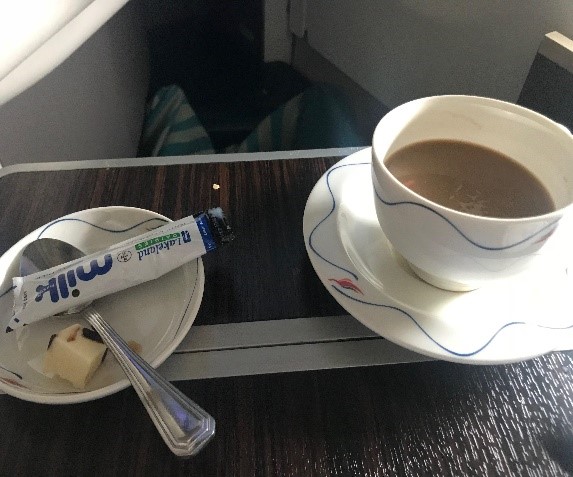
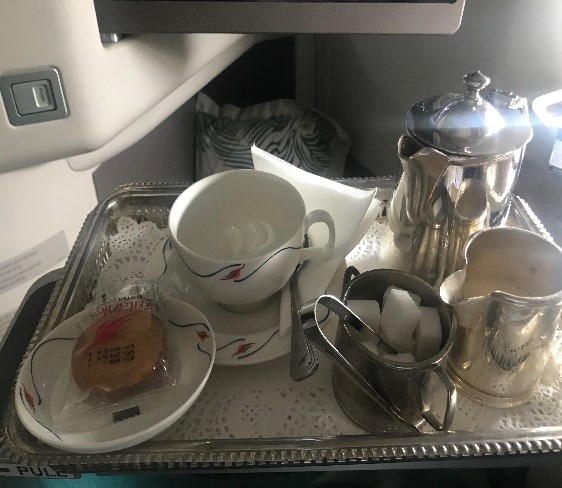
I asked for a cup of coffee in Business Class an I was served a cold coffee cup with a disposable milk packer by the staff .As the money I pay to fly  Business Class is quite high I expected a usual proper serving of a coffee in a tray as per the usual practice by Sri Lankan .

C called the stewardess and inquired about the coffee and asked whether Sri Lankan has gone bankrupt?

Excuse given immediately was that they are expecting turbulence, which was never in the public warning system as per usual practice

I was not happy but staff immediately brought me a proper coffee in a tray.

Even though I took photos at that time to write to Customer Care and complain I refrained as they corrected their mishandling.

Nevertheless I filled a compliment sheet with positive feedback about the general service rendered by Sri Lankan which is above par when you compare with many other airlines

So I thought Err is human but forgiving is divine!

Cashew saga has generated such a hype about Sri Lankan and Joins have gone to town

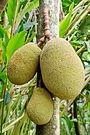
Villagers who were at the meeting where MS  made this startling reveal they may have thought cashew should be our National Fruit in Sri Lanka which is Jack ?

May be Sri Lankan should serve Roasted Jack Seeds rather than Cashew??

Dr Sarath Obeysekera

A strategy and programme for Yaha Paalanaya 2020

September 13th, 2018

By Professor S W R de A Samarasinghe Courtesy The Island

article_image

Many Sri Lankans are frustrated with President Maithripala Sirisena and Prime Minister Ranil Wickremesinghe for having failed to deliver good governance (Yaha Paalanaya – YP) and competent economic management. But lack of success with YP2015 is not a reason to abandon the concept of Yaha Paalanaya. We need a YP2020 to make a peaceful and prosperous Sri Lanka.

YP2020 needs a better strategy than the one in 2015. Such a strategy can consist of the following five components.

Analysis of YP2015 for lessons learned to design a better YP2020

Identify the key components of 2020 election strategy and program

Implementation of the 2020 strategy

Role of civil society in 2020.

* Transitional provisions

Part I: Lessons from Yaha Paalanaya 2015

Bribery and Corruption

In the 2015 election, about 50% of the voters considered bribery and corruption as a “major” issue with lack of law and order and bad governance coming a close second with 40%. Many Sri Lankans believe that both main political parties are very corrupt; “Degollama ekawagay horu” (Both (main parties) are equally (bad) crooks). Circumstantial evidence of widespread corruption is seen in how MPs and ministers get very wealthy very quickly after being in office for a period of time. Successive governments have failed to investigate allegations of bribery. But occasionally hard facts come to light. One is the recent revelation of a Chinese contractor paying the 2015 Mahinda Rajapaksa election campaign Rs 1,170m ($7.8m.). The Central Bank Bond scandal in which Prime Minister Ranil Wickremesinghe is implicated is another. The public perception is that the Rajapaksa regime was corrupt and YP2015 is no different.

Economic Mismanagement

In every recent Sri Lankan election the top priority for voters has been the cost of living, jobs and adequate income. The second main reason for voter frustration is gross economic mismanagement. Both the Rajapaksa government as well as YP2015 have been guilty of that.

1. Budget deficits: In recent years the government has spent about 40% more than it collected in revenue, and covered about half of the deficit with foreign loans. In the last three decades all governments have failed to collect a reasonable amount in taxes from the wealthy.

2. Unproductive public investment: Public funds have been wasted on high profile projects: Examples – Mattala International Airport (cost Rs 30,000m.); Hambantota Port (cost Rs 225,000m.), and Norocholai Lakvijaya coal-fired power plant (cost Rs 200,000m.) that frequently breaks down and reportedly has outdated technology. The government handed over the Hambantota Port plus 15,000 acres of land adjacent to the port to China for 99 years and got about Rs 150,000m. ($960m.) to service the foreign debt. On top of that the government is now planning to borrow another Rs 200,000m. from China.

3. Inflation of money paid to contractors for personal gain. During the second term of the Rajapaksa administration several roads were “improved” with China’s Exim bank loans taken at a rate of Rs 120m. per km. The principal contractors were Chinese firms that were paid about Rs 70m. to Rs 80m. per km, and they in turn paid the local contractors that did the actual work Rs 45m. to Rs 60m. per km. In comparison the major “rehabilitation” (2003-2007) of Gampola-Nawalapitiya-Nuwara Eliya 71 km road on hilly terrain financed with Japanese funding cost only Rs 44.0m per km. There has been no official explanation for the massive margins that were taken by the Exim Bank and the Chinese contractors for the road projects after 2009. It is suspected that there were substantial kickbacks to many parties, local and foreign.

4. Mismanagement of State-Owned Enterprises (SOE): Both governments are guilty of this. For example, Sri Lankan Airlines under professional management earned a profit of Rs 4,400m. in 2008. After Mahinda Rajapaksa appointed his brother-in-law as the CEO of the company, it started making massive losses. In 2015 the loss was Rs 107,000m. In 2015 Ranil Wickremesinghe appointed mostly his cronies to run the airline with equally poor results. “In 2016 the company lost Rs 12,000m and in 2017 Rs 28,000m. ”

5. Weak economic growth: Sri Lanka has failed to realize its full development potential under the present system: In 1976, the per capita income of Sri Lanka was around $200, Malaysia $860, and South Korea $670. In 2016 the figures were Sri Lanka $3,840, Malaysia $9,650 and South Korea $28,380.

The public’s perception of YP2015 economic mismanagement is so strong that many openly declare that they would rather have the “competent” crooks of the pervious administration than the “incompetent” crooks of the present administration. But this is a misnomer. Stealing public funds while doing some work is not a qualification to rule the country. Under the reforms proposed below no corruption, big or small, will be tolerated

The above are not mainly “economic” problems but problems of politics and governance.

Democracy

Rajapaksa democracy: Rajapaksa gets full credit for preserving universal franchise, holding a presidential election, and leaving office following the defeat. But the Rajapaksa government also made moves to undermine democracy. For example, the 18th amendment to the Constitution moved the presidency in an authoritarian direction. The Chief Justice was impeached and dismissed for political reasons. Recently a leading monk suggested that Sri Lanka needs a Gotabhaya Rajapaksa presidency that will mimic that of Hitler.

YP2015 Democracy: People have more freedom under YP2015There is no longer fear of white vans picking up critics of the government and make them disappear. But there are also serious blemishes. For example, the government has postponed elections for partisan reasons. It is yet to fully resolve the “missing persons” problem and find a lasting political solution to the ethnic problem.

Part II: 2020 Election

There is talk of a YP candidate that civil society activists wish to sponsor. Such a candidate has almost no prospect of winning, unless he or she has the support of a major political party.

If the three most likely candidates contest in 2020, Sirisena (UPFA/SLFP) would get about 10% to 15% of the total vote, Wickremesinghe or Premadasa (UNP) about 40% and a Rajapaksa (SLPP) about 45%. These calculations are based on the results of the 2015 election and the 2018 local government election. Even if this prediction is wrong and either Sirisena or the UNP candidate wins, there is no reason to believe that there would be an improvement in governance in Sri Lanka. All three parties have broken promises in the past. As the former editor of the Sinhala weekly RavayaVictor Ivan suggests, they are likely to do so again unless there are fundamental constitutional and institutional reforms accompanied by a sound strategy to improve the system of governance.

YP2020 Strategy

1. The anti-SLPP/Rajapaksa forces must unite under a NEW YP2020 Program that will genuinely fight corruption, improve economic management, make the system socially and economically more equitable, and find solutions to the grievances of the minorities.

2. Voters and civil society must insist on NEW checks and balances in the system that will make the political leaders adhere to YP2020.

3. Identify political leaders who are willing to accept, own and implement such a program.

4. The average voter has to be convinced – a difficult but not impossible task – that YP2020 will actually deliver on the promises made.

5. A mechanism outside government and functioning under civil society must be established to monitor the progress of YP2020.

Reforms for YP2020

The following can be the main components of the new YP2020 Reform Program. But compromise may be required to get the agreement of politicians who have the power to decide.

1. A Strong Executive Presidency must be retained but strictly subject to the Rule of Law. Justification: (i) A strong and clean government that strictly functions under the rule of law is the best government for the country that has to cope with a globalized and highly competitive 21stcentury world (The J R Jayewardene executive presidency gave unfettered powers to the office. The 19th amendment clipped its powers too much virtually paralyzing it. The challenge is to find a happy medium.) (ii) Choosing an executive president in a national election empowers the ethnic minorities and smaller political parties. (iii) It is false to assume that the old Westminster prime ministerial system guarantees good governance. In the period 1970-77 governance deteriorated under that system.

2. Need for a Vice President (VP) or Prime Minister (PM): Such an office will be necessary in case the president resigns or is incapacitated. The method of selecting a VP or PM – alternatives includes choosing from within parliament, directly by the people and so on – can be discussed and decided when constitutional reforms are made after the 2020 election.

3. The Executive President shall appoint his cabinet and deputy ministers from outside the parliament. This is a radical departure from the existing system. Justification: (i) 225 MPs do not constitute a good talent pool to run the executive branch of government. The president elected by the people must be able to have the best available talent in the country to govern. (ii) The proposed system gives people in the private sector a chance to serve the nation and the private sector benefits from the experience in the public sector. (iii) This system also allows the President to choose individuals across party lines.

4. Parliament shall be strengthened to make it more powerful and more efficient to perform its main tasks – making law, control public finances, and hold the executive branch – not more than 25 ministries – fully accountable. How parliament is strengthened under the proposed system: (i) Reform and strengthen the all-party parliamentary committees to supervise, investigate and hold accountable all ministers and officials: one committee for each Ministry plus sub-committees as needed. An MP from the majority party will chair the committee and the vice-chair will be an MP from the opposition. (ii) The President shall nominate ministers, and will have the power to dismiss them. But parliament has to approve appointments by a simple majority. (iii) Today the basic salary of an MP is only Rs. 54,285 plus some allowances. This is grossly inadequate. MPs who are independently wealthy can manage. Others, if even honest when they are elected, will be tempted to take bribes to survive. Under the proposed system MPs will be paid a very adequate salary to match their responsibilities and obligations and provided with offices, staff and other facilities to function effectively.

5. An independent Ministry of Justice is essential to reduce bribery and corruption and maintain rule of law. All institutions such as the Attorney General’s Department, Auditor General’s Department. Police, Judiciary, Bribery Commission, Elections Commission, Independent Procurement Commission, Office of Government Ethics (to be created), and so on should be attached to the Ministry of Justice. The Minster of Justice, once appointed by the president, should be allowed to function independently. She or he is answerable only to parliament and not to the president or prime minister. The Justice Minister will have the right to attend cabinet meetings. The Justice Minister can be removed from office only by impeachment approved by a vote of two thirds of all MPs. The Justice Minster will be accountable to the Parliamentary Committee for Justice.

6. Campaign finance reform to provide public funding, limit private funding, and ban foreign funding: Justification: (i) Public funding will make for a more level playing field for all parties and all candidates (ii) The current practice of the rich and the powerful funding campaigns and then demanding favours from politicians leading to corruption will be discouraged. (iii) Foreign funding of any type undermines democracy, encourages corruption and subverts sovereignty.

7. Prohibition of Nepotism: The President, Vice President (or Prime Minster), Cabinet Minsters and Deputy Cabinet Ministers and MPs as well as other elected officials at the provincial and local level will be prohibited by law from appointing any member of the immediate family to any public office and to any position in state-owned or state run agencies and enterprises. Justification: Such appointments lead to corruption, inefficiency and destroy integrity of the public sector.

8. Devolution will be enhanced using a formula such as Mahinda Rajapaksa’s “13th Amendment Plus” to empower provincial councils (PC) and local government authorities (LGA): Justification: (i) The Tamils in the north in particular will be more contended with enhanced devolution (ii) Devolution correctly designed and deployed can be a tool to promote national unity. (iii) Devolution can accelerate development because it will mobilize more local resources. (iv) While Colombo makes national policy, PCs and LGA can be required to impalement them adjusted to suit local conditions. This will improve efficiency and help minimize Central Government-PC clashes. (v) Devolution will help promote horizontal (geographic) equity.

YP2020 will have to handle very many other difficult problems. But those are secondary issues and not central to the YP2020 project that is proposed here.

Part III- Implementation of the YP2020 Strategy

The “New” YP2020 Coalition: A new YP program will be irrelevant if the 2020 election becomes a three-cornered contest that the SLPP is likely to win. Going by what SLPP leaders say and do today, it is doubtful that the party would accept and implement a YP2020 Program along the lines proposed above.

The essential pre-condition for a New YP Program is the formation of new YP coalition. In practice it will be a reincarnation of the 2015 coalition. UNP as the main political party will have to give leadership. Smaller parties representing ethnic minorities will have to support it. It is desirable that the JVP and other smaller parties in the South also give the coalition at least qualified support.

Politicians will Own YP2020 In 2015 the voter was given the impression that the civil society group under Rev. Sobitha had ownership of the YP agenda. This was a major strategic error. After the election both Sirisena and Wickremesinghe walked away from the program when it suited them. This mistake has to be corrected for 2020. The ownership should be with the politicians who promise the voter that they would deliver good governance. They alone have the power to do it. They, and not civil society leaders, must be held responsible.

Which Politicians?

Sri Lankan voters want new and younger leadership now. Those younger leaders must take ownership of YP2020. By 2020 twelve cabinet ministers, including Prime Minister Ranil Wickremesinghe, will be 70 or above. They and other veteran politicians in the governing coalition and also in opposition parties should retire by 2020 to make way for younger leaders of which there are plenty. The tension between the UNP old guard and the younger leaders that has been evident for sometime, was again on display at 72nd anniversary celebrations of the party held last week. While Wickremesinghe was talking about a transition in 2030 some younger members who spoke to the media were talking about a transition now.

Some of the veteran politicians in the 60-69 age group may choose to remain in politics, especially to pass on their experience to the younger leaders. By 2020 the UNP will have a minimum 50 MPs under the age of 60 with Sajith Premadasa (53) as the most prominent among them that can take over. Itwould be highly desirable if younger politicians such as UPFA’s Duminda Dissanayaka (41), JVP’s Anura Kumara Dissanayaka (50), JHU’s Champika Ranawaka (55), Tamil Progressive Alliance’s Palany Thigambaram (53) and TNA’s N. Sumanthiran (56) from the smaller political parties and their other younger party colleagues also take part ownership of the YP2020 agenda.

Convincing the Public

The 2015 experience has made Sri Lankan voters very cynical of promises of good governance in a generic sense. To overcome that cynicism YP2020 must be a formal “People’s Agreement for Good Governance.” It can be signed by the political parties that join the coalition plus representatives of civil society in a major public event, perhaps with the blessings of the religious leaders, in a venue such as Kandy in front of the Sri Dalada Maaligawa.

Common Candidate

This is the most difficult question to answer. Only a politically powerful candidate will be able to face the SLPP/Rajapaksa challenge. The two veterans that are available are Sirisena and Wickremesinghe. The reality is that Sirisena, for all his faults, is considered as the more acceptable of the two to a broad cross section of voters. Sirisena will be in a very strong position to win if he gets the full backing of the UNP, especially the younger generation of leaders, because his (SLFP) vote base of about 10% (about 13% of the Sinhalese vote) plus the UNP’s 25% (about 33% of the Sinhalese vote) and the Tamil and Muslim minority base of about 18% (about 75% of the minority vote) add up to an unbeatable 53% and very likely a little more. In such an arrangement the younger generation of MPs will have to hold Sirisena strictly accountable to implement the YP2020 agenda in full. Failure to do so should result in impeachment of the president. The public cannot be let down again.

Part IV – Role of Civil Society

In 2015 Rev. Sobitha did not have a formal organization with a secretariat to perform the duties of civil society in YP more effectively. This was a serious shortcoming. Civil Society leaders and organizations in 2020 (Civil Society Group – CSG-2020) must have a formal organization.

Pre-election: The principal pre-election functions of CSG-2020 will include the following (i) helping the cooperating political parties in the fleshing out of the strategy and program for 2020, (ii) assist in the drafting of the People’s Agreement for Good Governance, (iii) help the political parties to organize a public signing ceremony of the Agreement in Kandy(iv) assist in choosing the Common Candidate by acting as an impartial intermediary between prospective candidates, competing political parties and factions, (v) taking the YP2020 message to the public, (vi) ensure that the campaign funding of the common candidate is accountable and transparent, and (vii) explain YP2020 to the international community. CSG-2020 should avoid competing with political parties and concentrate on questions that political parties are not very good at answering. For example, explaining to the voters the link between bad governance on the one hand and the rising cost of living or the lack of well-paying jobs on the other; the rationale for the proposed constitutional changes, and so on.

Post-election: After the election, assuming the Common Candidate wins, the main function of CSG-2020 would be to independently monitor the progress of YP2020 program and hold government accountable. CSG will be able to mobilize the support of the media and independent think tanks, local and international, for this purpose.

Part V: Transitional Provisions

1. Funding for the 2020 Campaign of the Common Candidate: In order to set an example of good governance from the start, the YP candidate will be required to be fully transparent and accountable for the funds spent on the campaign. If the common candidate is popular “small” contribution alone may be sufficient to fiancé the campaign.

2. Constitutional Amendments: The new president will receive a mandate from the people for the program of reform that was presented to the people. Parliament has to comply with the wishes of the people and make a select number of suitable amendments to the current constitution to make provision for, among other things, the cabinet to be appointed from outside parliament. The caretaker cabinet will remain in office until a new cabinet is appointed.

3. Dissolution of Parliament: It will be dissolved and fresh elections will be held as per provisions in the current constitution

4. Constitutional Assembly: The president shall request the new parliament to sit as a constitutional assembly, draft and pass a new constitution that accords with the principles of good governance for which the people gave a mandate and would be further confirmed by the people in the next parliamentary elections.

Author: Professor Samarasinghe, BA (Ceylon), Ph.D. (Cambridge) is an economist by training. He taught at Peradeniya for about 20 years before moving to USA. In USA he held several positions including that of Senior Economist at USAID Development Studies Program, Director of the Tulane Institute for International Development, and Adjunct Professor of Economics at Tulane University. He won the Khan Gold Medal for Economics at Peradeniya, was Takemi Fellow at Harvard, and Cornell Distinguished Visiting Professor at Swarthmore College. He has consulted for major international institutions including several UN agencies and the World Bank. He also served as the Senior Consultant for the UNDP Sri Lanka Human Development Report 2018. He is widely published on Sri Lankan development issues.

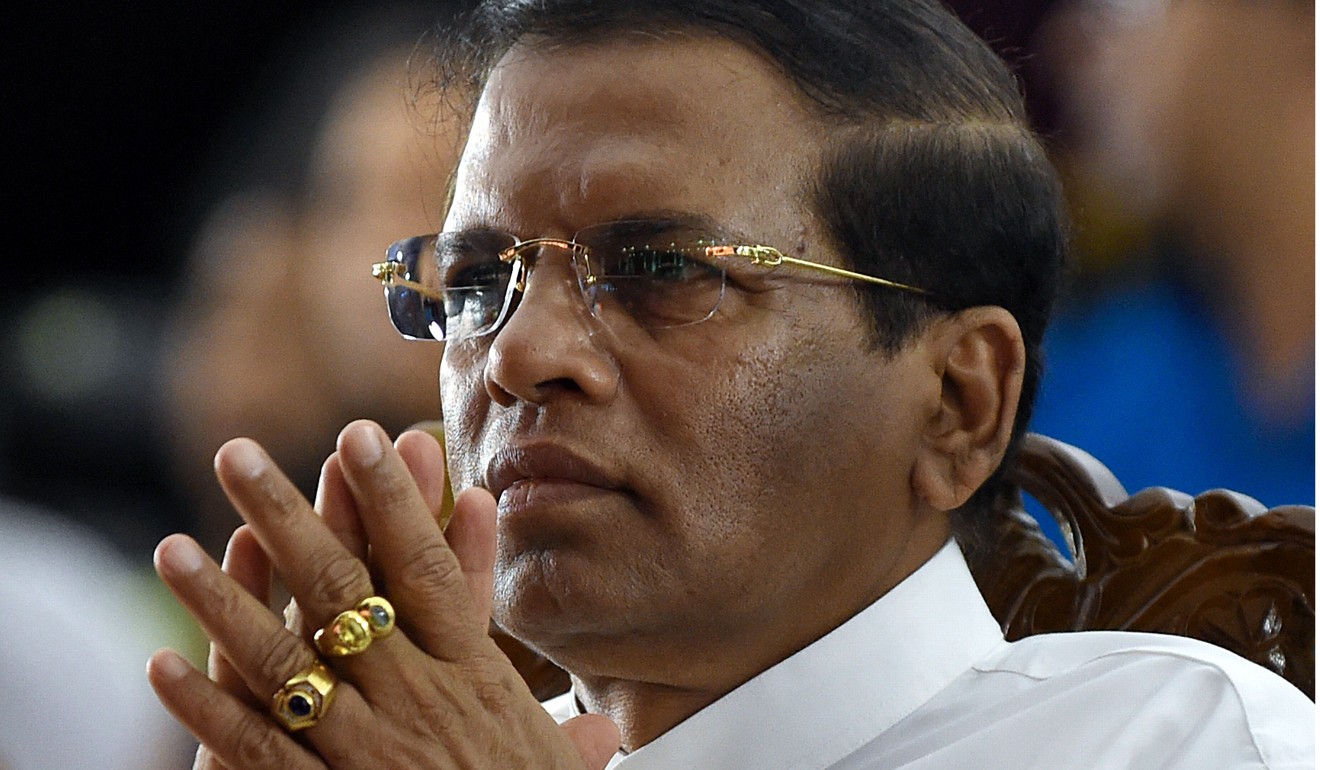
The 20th amendment

September 13th, 2018


These clear and distinct provisions illustrate that the sovereignty of the People were to be exercised by separate and distinct organs of government namely, the Legislature and the Executive, both elected by the People. What the 20th Amendment hopes to achieve is to eliminate one of the distinct and separate organs of government elected by them to exercise their executive powers. What this amounts to is an assault on the sovereignty of the People and this has nothing to do with whether Article 4 is included in the list of Article 83 as an entrenched Article.

The JVP has presented to Parliament the 20th Amendment to the Constitution under provisions of a Private Member’s Bill. The primary objective of the 20th Amendment is to abolish the Office of an Executive President being elected by the People as stated in Article 4(b) of the 1978 Constitution. It is reported that several petitions have already being filed in the Supreme Court.

article_image

The ongoing debate is whether the 20th Amendment would require ONLY a 2/3 majority in Parliament for the amendment to become law, or whether it would require a 2/3 majority in Parliament as well as approval by the People at a referendum for it to become law. Another angle to the debate is whether some provisions in the 20th Amendment would require a 2/3 approval by Parliament as well as an approval by the People at a referendum, while other provisions would require ONLY a 2/3 approval by Parliament. The pertinent question in such an eventuality is whether the Constitution permits provisions in a Bill to be subjected to different standards, or whether the entire amendment should be subjected to one standard as in Article 120 wherein the ONLY determination for the Court is whether a Referendum is needed or not. .

Article 120 (a) states:

“In the case of a Bill described in its long title as being for the amendment of any provision of the Constitution, or for the repeal and replacement of the Constitution, the only question which the Supreme Court may determine is whether such Bill requires approval by the People at a referendum by virtue of the provisions of Article 83”.

The fact that the ONLY question that needs to be determined by the Supreme Court is whether a Bill to amend any provision in the Constitution requires approval by the People at a referendum was made crystal clear by Ranasinghe. J, during the petition filed against the 13th Amendment to the Constitution. Having stated that “The provisions of Clauses 154 G (2) (b) and (3) (b) of the Bill to amend the Constitution of Sri Lanka…require approval by the People at a Referendum by virtue of the provisions of Article 83” he went on to state:

“There is just one other matter to be referred to. Article 123 (2) of the Constitution provides that, where this Court ‘determines that a Bill or any provision thereof is inconsistent with the Constitution’, this Court ‘may’ also ‘specify the nature of the amendments which would make the Bill or such provision cease to be inconsistent’. I have considered whether such a statement should be made. In view, however, of the fact that the Reference requires the Court only to state whether a Referendum is required, the fact that it was also submitted at the hearing that the only jurisdiction the Court exercises in these proceedings is to determine, in terms of Proviso (a) of Article 120 of the Constitution, whether the Bill referred to requires the approval by the people at a Referendum…”

Having stated that in the case of an amendment to the Constitution, the ONLY determination for the Court is to determine whether a referendum is needed or not, Ranasinghe. J goes on to identify the particular provisions that require a referendum. Whether such incursions into constitution making amount to judicial transgressions into the domain of the Legislature as called for under separation of powers or not, the fact remains that the provisions of Article 120 have been violated. The hope is that petitions against the 20th Amendment would be addressed by the Court in strict conformance of the provisions of Article 120 and not compromised by provisions of Article 123.

ABOLISHING the EXECUTIVE PRESIDENCY

Perhaps, the expectation of the JVP when they presented the 20th Amendment was that Court would rule that a referendum would not be needed. Such assurances would obviously be based on expert legal opinion. Such opinions rely on the fact that Article 4 is not listed in Article 83 as an entrenched Article requiring a special majority of 2/3 approval of Parliament and an approval by the People at a referendum. This is a simplistic and mechanical approach which ignores the very foundations of the separation of powers on which the Constitution is based.

When the sovereign People of Sri Lanka accepted the 1978 Constitution they accepted the principle of separation of Legislative, Executive and Judicial powers. This concept is embodied in Article 3 that state:

“In the Republic of Sri Lanka sovereignty is in the People and is inalienable. Sovereignty includes the powers of government, fundamental rights and the franchise”.

Article 4 starts by stating: “The sovereignty of the People shall be exercised and enjoyed in the following manner”:

And 4 (a) states: “the legislative powers of the People shall be exercised by Parliament…” and 4(b) states: “the executive power of the People …shall be exercised by the President of the Republic elected by the People”.

These clear and distinct provisions illustrate that the sovereignty of the People were to be exercised by separate and distinct organs of government namely, the Legislature and the Executive, both elected by the People. What the 20th Amendment hopes to achieve is to eliminate one of the distinct and separate organs of government elected by them to exercise their executive powers. What this amounts to is an assault on the sovereignty of the People and this has nothing to do with whether Article 4 is included in the list of Article 83 as an entrenched Article.

As a matter of historical interest, the former Chief Justice, Sharvananda, C.J. in his determination during the hearing of the 13th Amendment stated:

“The Bill for the repeal and replacement of the 1972 Constitution included Article 4in the category of entrenched Articles. However when the Bill was passed, Parliament omitted Article 4 from the list of entrenched provisions”. This statement is incorrect because a reference to the Hansard of the day reveals that it was included with the rest in Article 83. What we see today is a sleight of hand by those responsible for the edited version.

Be that as it may, the issue at hand is that what is being attempted by the 20th Amendment is that it impacts on the sovereignty of the People because their expectation was that an Executive directly elected by them would be responsible for exercising their executive powers while their elected representatives in Parliament would exercise their Legislative powers. What is being attempted by the 20th Amendment is to transfer such powers to an individual to be elected by Parliament thereby impinging on the sovereignty of the People to elect their President.

Continuing, the former C.J. stated:

“Similarly, an amendment to Article 4 (b) can be enacted by providing for the exercise of the executive powers of the People by a President and a Vice President elected by the People. However, to the extent that a principle contained in Article 4 is contained or is a necessary corollary or concomitant of Article 3, a constitutional amendment inconsistent with such principle will require a Referendum in terms of Article 83, not because Article 4 is entrenched, but because it may impinge on Article 3. In our view, Article 4 is not independently entrenched but can be amended by a two third majority, since it is complementary to Article 3, provided such amendment does not impinge on Article 3”.

The fact that Article 4 is complementary to Article 3 was recognized by Court during the 19th Amendment to the Constitution when it stated:

“…the Court in the Nineteenth Amendment Determination came to the conclusion that the transfer, relinquishment or removal of power attributed to one organ of government to another organ or body would be inconsistent with Article 3 read with Article 4…Though Article 4 provides the form and manner of exercise of the sovereignty of the people the ultimate act of decision of his executive functions must be retained by the President”.

CONCLUSION

The 20th Amendment is an attempt for a President to exercise executive powers of the People together with “…the Cabinet of Ministers as provided for in the Constitution” as per Article 4 (i) in the amendment. This provision impacts on the sovereignty of the People because as stated in the determination relating to the 19th Amendment “So long as the President remains the Head of the Executive, the exercise of his powers remain supreme or sovereign in the executive field…”. The attempt by the amendment for the President to share executive powers with the Cabinet of Ministers would be to dilute the exclusive executive powers the People expected the President to exercise on their behalf. Such an amendment has to require the approval of the People at a referendum.

The 20th Amendment also attempts for Parliament to elect the President as per Article 30 (ii) of the amendment instead of by the People as in Article 30 (2) of the 19th Amendment. This amendment too impacts on the sovereignty of the People because it denies the opportunity for the People to elect a President of their choice. This would be a serious dilution of the sovereignty of the People for which the consent of the People would be required through a referendum.

These two amendments alone would require the approval by the People at a referendum because they both impact on the sovereignty of the People and the Courts have ruled (cited above) that whenever such instances occur it is imperative that a referendum is held. There may be other amendments in the 20th Amendment Bill that may not meet the threshold to require a referendum. This means that they could be passed by a 2/3 majority. However, Article 120 very specifically does not make such distinctions. What it states instead is “whether such Bill requires approval by the people at a Referendum”, meaning that if only certain amendments require a referendum the entire Bill should be subjected to a referendum.

This principle was violated by Ranasinghe. J. when he identified which provisions required a referendum, and which did not. A similar approach was adopted during the determinations relating to the 19th Amendment. Such practices amount to the Judiciary participating in constitution making; a task the Judiciary is not expected to undertake under separation of powers. Instead it is the responsibility of the Attorney General’s Dept. to advise the government which provisions in a Bill require a referendum and which do not. Expecting the Judiciary to fulfill such a function is a dereliction of duty. The expectation of the People is that the Courts would abide strictly by the provisions of the Constitution, particularly in respect of compliance with Article 120, and not drift into fields assigned to ordinary Bills that come under provisions of Article 123.

The material presented above addresses the constitutional aspects of the 20th Amendment. However, the political implications of abolishing the Executive Presidency would inevitably lead to political instability because both Legislative and Executive aspects of the sovereignty of the People would be addressed by elected Members of Parliament. Since electoral practices both current and what is proposed are not likely to return stable majority governments, it would be foolhardy to abolish the Executive branch which by its very nature of being elected by the People has the potential to be stable.

Neville Ladduwahetty
September 13, 2018.


Admiral Wijegunaratne’s involvement with murder suspect: TNA alleges President interfered in CID probe TNA admits Lt. Commander Hettiarachchi not ‘Navy Sampath’

September 13th, 2018

By Shamindra Ferdinando  Courtesy The Island

Continuing controversy over Chief of Defence Staff (CDS) Ravi Wijegunaratne, wanted by the Criminal Investigation Department (CID) in connection with allegedly aiding and abetting Lt. Commander Chandana Prasad Hettiarachchi, a suspect in two major wartime cases, leaving for Mexico on Sept. 10 has taken a dramatic turn with the Tamil National Alliance (TNA) demanding that the entire range of accountability issues here should be subjected to international judicial process.

article_image

Jaffna District MP and TNA spokesman M.A. Sumanthiran, PC, yesterday morning told The Island that President Maithripala Sirisena’s direct intervention in the matter left the TNA with no alternative but to call for international help. Sumanthiran emphasised that interference by ‘highest authorities in the country’ meant that the victims couldn’t expect justice through domestic judicial process.

The TNA has gone on the offensive ahead of President Sirisena’s address to the UNGA on Sept 25. Comprehensive international participation in local judicial process is allowed in accordance with Geneva Resolution co-sponsored by Sri Lanka in Oct 2015. In March 2017, Sri Lanka, while reiterating its commitment to the Oct 2015 Resolution, assured Geneva it would be fulfilled by March 2019.

Sumanthiran stressed that Lt. Commander Hettiarachchi, a suspect in the high profile assassination of TNA lawmaker and attorney-at-law Nadarajah Raviraj in Colombo on Nov 10, 2006, though being acquitted by the Colombo High Court on Dec 24, 2016 wasn’t a free man.

Raviraja’s police bodyguard Sergeant Lokuwellamurage Shantha Laxman Lokuwella, too, was killed in the attack. The Colombo High Court acquitted all five accused-three Navy intelligence personnel and two members of the Karuna faction following unanimous decision by seven-member jury.

There were three matters-two appeals and one revision pending in the Court of Appeal in respect of Raviraj assassination, Sumanthiran said, adding that the Navy Officer went underground, while the caases were pending.

Sumanthiran said that in addition to the Raviraj’s killing, Lt. Commander Hettiarachchi was also wanted in connection with the abduction and disappearance of 11 Tamil youth during the period 2007-2008.

Referring to the officer’s recent arrest by the CID in the wake of accusations of him having fled the country with the help of Wijegunaratne, the President’s Counsel said that the highest ranking military official couldn’t have left for Mexico without President Sirisena’s knowledge. Sumanthiran asserted that President Sirisena couldn’t absolve himself of the responsibility for this situation.

Asked by The Island whether he could explain why Lt. Commander Hettiarachchi was being repeatedly wrongly identified as ‘Navy Sampath’, Sumanthiran, too, expressed surprise. The lawmaker said that Hettiarachchi was never called ‘Navy Sampath’ during Raviraj’s case. The TNA heavyweight admitted that something was amiss.

Referring to recent media reports, particularly ‘Annidda’ reportage of the CDS matter, Sumanthiran said that President Sirisena had intervened on behalf of military officers implicated in accountability issues. The Jaffna District MP said that the TNA was gravely concerned about ‘highest authorities in the country’ interfering in local judicial process. In spite of repeated promises since the change of government in January 2015 that the judiciary and law enforcement authorities would be free to proceed with investigations, the CDS matter had proved beyond doubt political interference at the highest level.

Asserting that those who had suffered in the hands of the military couldn’t expect justice under any circumstances here, Sumanthiran said that the TNA wanted the UN intervention to ensure proper investigations. International judicial process, Sumanthiran said was a must due to no less a person than the President interfering in investigations.

Accountability allegations included the alleged massacre of 40,000 Tamil civilians and deliberate denial of food and medicine to those who had been trapped on the Vanni east front in 2009. The war was brought to a successful conclusion on May 19, 2009.

The TNA made its move in the wake of Ports and Shipping Minister and SLFP spokesman Mahinda Samarasinghe defending Admiral Wijegunaratne’s conduct. Samarasinghe dismissed allegations directed at the Admiral while insisting the CID could record a statement once he returned from Mexico. Quoting from a brief statement issued by the Office of the CDS, Samarasinghe said that the highest ranking serving officer was representing the country.

Admiral Wijegunaratne is expected to return on Sept 19.

Fort Magistrate Lanka Jayaratne on Aug 29 directed the CID to arrest Wijegunaratne if sufficient evidence was available of him facilitating Lt. Commander Hettiarachchi leaving the country. The CID has sought to question Wijegunaratne on the basis of a statement given by a Lieutenant Commander this year presently serving at the Navy headquarters.

On the basis of his statement, the CID accused Wijegunaratne of smuggling Hettiarachchi out in a Fast Attack Craft. Wijegunaratne denied the accusation.

The police initiated investigations into the alleged abduction and disappearances case in May 2009 following a complaint received from the then Navy Commander Vice Admiral Wasantha Karannagoda.

Among those initially arrested in connection with the investigation during the previous Rajapaksa administration was Lt. Commander Sampath Munasinghe, Personal Security Officer (PSO) of Karannagoda. Munasinghe received bail.

During decade long investigation, the CID recorded statements from nearly 60 Navy officers, including Karannagoda and Adm.Travis Sinniah, who commanded the Navy for one year after returning from retirement during current dispensation. One time Navy spokesman Commodore D.K.P. Dassanayake became the highest ranking Navy officer arrested in connection with the abduction and disappearance case. Dassanayake, too, received bail this year.

Meanwhile, well informed sources told The Island that trouble erupted this week after President Sirisena summoned senior officers of the Attorney General’s Department, the police and two ministers to discuss the CID move to question and arrest Wijegunaratne.

Sources said that President Sirisena had expressed displeasure over the way the CID was handling the case, while the Attorney General’s Department suggested ways and means of overcoming the problem.

‘For the security of India, stability in Sri Lanka is very important’

September 13th, 2018

Suhasini Haidar and Amit Baruah Courtesy The Hindu

The former Sri Lankan President says he is ready to put past ‘misunderstandings’ with India behind him, and could lead his party in the 2019 elections

Sri Lanka’s former President, Mahinda Rajapaksa, is visiting New Delhi to deliver a public lecture and meet with various leaders, in the first such visit since his shock defeat in 2015, which he had blamed in part on Indian intelligence agencies. After sweeping local elections this year, Mr. Rajapaksa says he is confident his party will win in Presidential elections next year, and that a strong government in Sri Lanka is in India’s interest. Excerpts:

You have had a rocky relationship with India. Is your visit here a sign of reconciliation with the Modi government after 2015?

Yes. Just before and after the elections [(in 2015], we had a lot of misunderstandings. Now of course, I think it is about time to move on.

In March 2015, in an interview to The Hindu , you had accused R&AW, the intelligence agency, of helping bring the opposition together, which led to your defeat. A few weeks ago you said that India must not meddle” in political affairs in Lanka. Are you worried it will?

It isn’t only India. I didn’t mention just India. I said no one should meddle with somebody else’s elections. It is an internal matter of a country whom the people decide to bring to power. That was in my mind. I think now they all have understood what went wrong at that time and what they did. So we need to forget about the past. This is the time to move forward and look forward.

‘For the security of India, stability in Sri Lanka is very important’

On that subject, there were allegations that your party had accepted campaign funds from Chinese companies….

They have not funded me. But this is what people talk about because the [Maithripala Sirisena] government has nothing else to accuse us of. When they came to power, they were looking for my $18 billion, but they are still looking for it ( laughs )… despite the help of the U.S. and other countries. They haven’t even found a dollar.

All eyes at present are on Sri Lanka’s Chinese debt. Do you think your original deal for Hambantota and the Colombo Port project could have been done differently?

Look, the loans that we took, Sri Lanka could have paid them back. But the [Sirisena government] has messed things up. For the Colombo Port City, we didn’t have to pay anything, it was a contract sharing arrangement, where they got a share of the land they developed. At the time of the Hambantota port deal, our debt from China was less than our debt from the U.S. and other countries and debt-to-GDP ratio was under control. So if the problem has grown now, and the government has not managed it, then how can you blame us?

What is your longer view of Sri Lanka’s relationship with India and China, which seemed to be the cause of the misunderstandings” at the time?

India is our closest relation, I would say, and our neighbour. And China has been a long-standing friend. In all our dealings with China, we never forgot about the interests of India. We had a very good understanding with the Indian government and we always told them that we would never allow our territory to be used for any activity against our neighbour.

India’s other concern at the time was a Chinese nuclear submarine being docked in Colombo harbour. Since then, there is Gwadar port, there are Chinese inroads in the Maldives. Was India justified in its concerns that it raised with you?

Look, the Chinese submarine was on a routine trip to the Gulf and South Africa. And they just stopped for a short haul. That’s all. I think this was used as an excuse [by India] at the time.

What was the reason for the deterioration in ties then?

Misunderstandings. My priority was always to develop my country and I always kept India informed and asked them first to build the port, to build the airport, to build the highways… we always came to India. We offered them first, then the next offer went to China, because they were the only people who could do it. And within eight months the Chinese had started [construction].

You say that, but recently your party opposed the Mattala airport being leased to India. What is your objection?

I am not opposing India, I am opposing the privatisation that is the policy of the Sirisena government. I never privatised the way they have. In fact I bought back the shares of the gas company, insurance company, and also the SriLankan Airlines that was sold to Emirates.

How do you see India-Sri Lanka ties at present? While the leadership says that relations are at their closest, many agreements are pending, including on the ETCA (Economic Technology Cooperation Agreement), Trincomalee oil farms, and Mattala airport.

Well they say there is a very good relationship between the two countries and the leaders, much better than earlier. I think it is all only talk from our side. I don’t want to criticise my government when abroad, and I appreciate all the meetings they have had, but no investments are coming in to Sri Lanka. The government isn’t stable. For the security of India, stability in Sri Lanka is very important. A weak government cannot give that guarantee.

If your party comes to power, what would be your first priority with India?

I think our first priority is investment. And better communication. We had a mechanism during the war [against the LTTE in 2009] called the Troika, where three officials from both sides were able to discuss any issue, even in the middle of the night. For economic purposes also, we must have a mechanism like that, where India and Sri Lanka coordinate on all the issues we have today.

You described your government as strong. Your government was in fact accused of being too strong and criticised for its policies too…

A government must be strong and speak in one voice. Currently, the [Sri Lankan] Prime Minister says one thing, the President contradicts him. Policies differ within the government.

Even so, despite the challenges and a no-confidence motion , the ruling Sri Lanka Freedom Party-United National Party (SLFP-UNP) combine of Mr. Sirisena and Ranil Wickremesinghe has stayed together. Do you think they will go into elections together?

I have my doubts. But even when they get together, I don’t think they can win.

Would you be willing to work with Mr. Sirisena, your former colleague and from your old party, the SLFP, again?

Unfortunately he is not prepared to work with me. We have a new party [Sri Lanka Podujana Peramunal], and our president is G.L. Peiris. So he must reach out to us since we got about 45% of the vote in a three-cornered fight.

In 2015, it wasn’t just the opposition that came together against you. Tamil populations, Muslim minorities felt marginalised and persecuted during your tenure. Why do you think they would vote for you?

I think they have understood the mistakes this government has done. The minister responsible for the anti-Muslim violence in 2014, for example, is a minister in this government. When we were in government, we rebuilt houses that were destroyed at that time itself. But this year, the government has done nothing for the victims of the Kandy violence. When the violence began [February 2018], I rushed to the area and convened a meeting of all the communities together along with the religious leaders. The PM and the President only went later.

But there is a worry that you represent a Sinhala-Buddhist muscular majoritarianism where minorities don’t feel as safe.

Look, we won 71% of the seats in the last elections [local elections in 2018], so I think most people are with us. This is just a canard spread by my opponents, I don’t think this is a perception amongst people.

How about your past role in the war against the LTTE and accusations of human rights violations? You were also recently questioned for the torture of a journalist… How much of a liability will those charges be?

I don’t think they will be a problem. People know these charges are just to harass us. Because all the cases are against only the Rajapaksa family, and their supporters. What about all the people in my government before, who are now in government? The evidence in these cases is in any case flimsy and unproven all these years. As far as international human rights groups go, let them come after me. We have nothing to hide. After all, defeating the LTTE, a terrorist organisation, was not done only for us, no? It was not just for a community or for one country. They killed Rajiv Gandhi, they were operating with other organisations in other countries too. They introduced suicide jackets to the world. So defeating them helped many other countries too.

In recent days, there has been the question in India of whether those LTTE cadres convicted for Rajiv Gandhi’s assassination should be released with a recommendation from the Tamil Nadu Cabinet. What is your opinion on this?

I have no view on this. It is up to the government, it is an internal matter for India. If this was in Sri Lanka we would have taken a different line. But how can I say anything when the issue is in India?

Who will lead the SLPP into elections in 2019, given that you have completed two terms and according to the 19th Amendment that is the limit?

I will lead the SLPP. There is a view that despite the Amendment I can fight elections and then fight it out in court.

But I still have to decide whether to take that risk. Another option is to announce a candidate acceptable to all.

Will it be a member of your family, or would you consider someone outside it?

My son [Namal Rajapaksa] can’t be a presidential candidate since they have now raised the minimum age to 35 years, instead of 30, so he can’t be considered in 2019. My brother is certainly a contender, but the party and the coalition will have to decide who the people want.

In all our dealings with China, we never forgot about the interests of India.”

Indian and Tamil nationalisms clash over release of Rajiv Gandhi killers

September 13th, 2018

By P.K.Balachandran Courtesy NewsIn.Asia

Colombo, September 11(newsin.asia): Following the Indian Supreme Court’s stand that it is up to the Governor of the State of Tamil Nadu to decide whether the seven life convicts in the 1991 Rajiv Gandhi assassination case should be released or not, the Tamil Nadu cabinet on Sunday  recommended to the State Governor that the convicts be released forthwith.

Given the grave issues involved, Governor Banwarilal Purohit is expected to go by the advice of the Central government whose representative he is.

But the political powers-that-be at New Delhi will be on the horns of a dilemma because the conflict is between Indian nationalism and Tamil Nadu sub-nationalism or Tamil nationalism for short.

While the Bharatiya Janata Party (BJP) government led by Narendra Modi portrays itself as the staunchest upholder of pan-Indian nationalism, the Tamil Nadu government and Tamil politicians generally consider themselves champions of Tamil sub-nationalistic rights and repositories of Tamil consciousness.

Indian and Tamil nationalisms clash over release of Rajiv Gandhi killers

Indian nationalism would want the convicts to be in jail for life for committing a heinous crime” aimed at destroying the very roots of democracy and challenging the sovereignty of India. Rajiv Gandhi was a former Prime Minister and the assassins and conspirators were partly from Sri Lanka.

But Tamil nationalism would want the convicts released for a number of reasons: they had already spent 24 years in jail; they were not the actual killers (the assassin and her two handlers having killed themselves); and the assassination itself was the result of the atrocities committed on fellow Tamils by the Indian army which was sent to Sri Lanka by Rajiv Gandhi to maintain law and order in the later 1980s.

Rajiv Gandhi ,who was on a comeback train in 1991, was killed by a Tamil Tiger human bomb Dhanu at an election meeting in Sriperumbhudur near Chennai on May 21, 1991. While conspirators  Murugan, Perarivalan, Santhan, Jayakumar, Robert Payas, Ravichandran and Nalini were caught,  Dhanu died in the blast and her handlers Sivarasan and Suba killed themselves when cornered.

While initially, there was much anger in Tamil Nadu against the Tamil Tigers and sympathy for Rajiv, over a period of time, the award of the death sentence to all the accused was considered too harsh. Later, except for Murugan, Santhan and Perarivalan, the sentence on others got commuted to life imprisonment.

When a Tamil Chief Justice P.Sathasivam commuted the death sentences to life term in the case of four of the convicts, Tamil nationalists took up the cause of releasing all seven on humanitarian grounds”.

Tamil Nadu Chief Minister Jayalalithaa sensed that the issue could be electorally important and made a series of moves to get New Delhi to sanction their release.

But these moves failed, with New Delhi assuming an uncompromising stand.

Life convict Perarivalan’s mother Arputham Ammal with Tamil Nadu Chief Minister Edappadi Palaniswami. hoto. EanadhuIndia.com

But a change came about last week when the Supreme Court said that the  Tamil Nadu Governor could take a call in the matter.

All Tamil parties and the also the Communist parties hailed the Supreme Court’s ruling and urged the Tamil Nadu government to appeal to the Governor to release the convicts. On Sunday the State cabinet recommended to the Governor that they be set free.

With Tamil nationalism backing the bid for release, can Governor Purohit ignore it? Would New Delhi climb down from its high nationalistic horse and bow to Tamil nationalism?

Given the political realities in Tamil Nadu, New Delhi and the ruling BJP may not be in a position to clash head on with Tamil nationalism which is entrenched in Tamil Nadu since 1967.

It is noteworthy that only Tamil parties have come to power there since 1967. If the BJP wants to have a foothold in Tamil Nadu, it has to co-opt Tamil nationalism and not clash head on with it.

Further, Rahul Gandhi, Congress President and son of Rajiv Gandhi, has expressed no anger against the assassins of his father. He has said that assassinations such as those of his father and mother Indira Gandhi had their origins in a climate of violence.

Therefore, the Congress may tacitly support release and this may add to the pressure on the BJP-led Center to be conciliatory to Tamil nationalism in this case.

(The featured image at the top shows Indian Prime Minister Narendra Modi with Tamil Nadu Governor Banwarilal Purohit. Photo.Livemint)

Sword of Damocles hangs over Sri Lanka

September 13th, 2018

Courtesy The Star on line

PETALING JAYA: Sri Lanka is at risk of an exchange rate crisis mainly due to its still-weak fiscal finances and a fragile external position.

Sri Lanka charted the highest Damocles score of 175, among 30 emerging market (EM) economies.

The Damocles index by Nomura summarises macroeconomic and financial variables into a single measure to assess an economy’s vulnerability to a currency crisis.

A score above 100 suggests a country is vulnerable to an exchange rate crisis in the next 12 months, while a reading above 150 signals that a crisis could erupt at any time.

image: https://content.thestar.com.my/smg/settag/name=lotame/tags=all,Demo_Age_65plus_enr

Political stability also remains an issue, as recent resignations have weakened the government (its term ends mid-2020) and despite retaining a simple majority, complicates the task of continuing to implement International Monetary Fund (IMF)-induced reforms.

However, without IMF support, the risk of a currency crisis would be higher,” said Nomura in its global research report.

Meanwhile, South Africa, Argentina, Pakistan, Egypt, Turkey and Ukraine are currently vulnerable to an exchange rate crisis, having Damocles scores of more than 100.

Based on our definition, Argentina and Turkey are experiencing currency crises, while Argentina, Egypt, Sri Lanka and Ukraine have turned to the IMF for assistance, leaving Pakistan and South Africa as the standouts.

As investors focus more on risk, it is important not to lump all EMs together as one homogeneous group; Damocles highlights a long list of countries with very low risk of currency crises,” said Nomura.

Eight countries, namely, Brazil, Bulgaria, Indonesia, Kazakhstan, Peru, Philippines, Russia and Thailand, have Damocles scores of zero.

It is notable that China’s Damocles index has maintained since dropping to 36.9 in late 2017 from 62.4 in October 2017.

The index far below the 100 threshold suggests that the risk of an exchange rate crisis in China is limited.

Nomura concurred that China’s balance of payment position remains healthy, given it has the world’s largest foreign exchange reserves at US$3.1 trillion, as of July 2018.

However, we highlight that its pockets are not as deep as they once were, given that current account deficits at minus 0.4% of gross domestic product (GDP) in the first half of 2018 may occur more frequently, net direct investment inflows may moderate further, and external debt has risen significantly.

Moreover, we see domestic challenges from weakening aggregate demand and other fundamental problems, and external risks from the escalation in China-US trade tensions and trade protectionism,” said Nomura.

As for India, its Damocles score has fallen to 25 in the third quarter of 2018, from 56 during 2012 to 2013.

India’s most recent currency crisis occurred in 2013 and was due to weak domestic macro fundamentals and worsening external funding conditions. Since then, consumer price index (CPI) inflation has moderated to about 4.5% in 2018 from 9.7% in 2012, as has the current account deficit at an estimated -2.5% of GDP, compared to minus 5% in 2012. Furthermore, India’s central bank has a sufficient forex reserve buffer of 9.3 months of import cover versus 6.4 in 2012.

However, given India runs a current account deficit, it remains vulnerable to bouts of global risk aversion. Higher oil prices and portfolio outflows are its key external vulnerabilities.

Aside from these, the key risks stem from the government turning more populist ahead of the 2019 general elections (worsening domestic fundamentals) and a sharper-than-expected domestic growth slowdown (triggering equity outflows),” said Nomura.

The Damocles index comprises eight indicators that are found to be the best predictors of exchange rate crises in the 30-country sample, in which there have been 54 crises since 1996. It includes five single indicators which are import cover, short-term external debt or exports, forex reserves or short-term external debt, broad money or forex reserves and real short-term interest rate.

On the other hand, the three joint indicators are non-foreign direct investment (FDI) gross inflows of one-year and three-year, fiscal and current account, as well as current account and real effective exchange rate deviation. To date, Damocles has correctly signalled 67% of the past 54 crises in Nomura’s sample, including the Asian financial crisis (1997 to 1998), Russian financial crisis (1998) and the 2018 EM currency crises in Argentina and Turkey.

The advantage of Damocles lies in its objective nature in letting the data speak, not clouded by conventional misperceptions or biases based on past experiences. While the results achieved are encouraging, but given the inherent limitations of any early warning system, it would be foolish to make any exaggerated claims.

For instance, Brazil’s Damocles score of zero implies very low external vulnerability; yet the Brazilian real (BRL) has depreciated more than 10% in August alone due to an uncertain presidential election outlook,” said Nomura.

Read more at https://www.thestar.com.my/business/business-news/2018/09/12/sword-of-damocles-hangs-over-sri-lanka/#uq6HaBIrFdTPmFi4.99

Sri Lanka most at risk of the next emerging market currency crisis: Nomura

September 13th, 2018

New Delhi: Seven countries, including Sri Lanka, Pakistan and Turkey, are at risk of an exchange rate crisis as investors reassess their investments following the contagion in Argentina and Turkey, a new index by Nomura says.

According to the global financial services major, emerging markets are under pressure as investors reassess the risks amid monetary policy normalisation in developed markets, trade protectionism and China’s economic slowdown.

The new gauge, Damocles, which assessed the risk of exchange rate crises for 30 emerging market economies, noted that seven countries were at risk of exchange rate crises with scores over 100: Sri Lanka, South Africa, Argentina, Pakistan, Egypt, Turkey and Ukraine. A score above 100 suggests a country is vulnerable to an exchange rate crisis in the next 12 months, while a reading above 150 signals a crisis could erupt at any time.

Sri Lanka has a score of 175, followed by South Africa (143), Argentina (140), Pakistan (136), Egypt (111), Turkey (104) and Ukraine (100). India’s score stood at 25.

On India, the report said CPI inflation had moderated (to around 4.5 percent in 2018 from 9.7 percent in 2012), as had the current account deficit (around 2.5 percent of GDP versus 5 percent). Moreover, the central bank has a sufficient forex reserve buffer, as a result, India’s score has fallen to 25 in the July-September quarter.

Given that India runs a current account deficit, it remains vulnerable to bouts of global risk aversion,” Nomura said, adding that higher oil prices and portfolio outflows are its key external vulnerabilities”.

The other risk factors for the Indian economy stem from the government turning more populist ahead of the 2019 general elections and a sharper-than-expected domestic growth slowdown, which in turn would trigger equity outflows, it added.

The Indian rupee has depreciated 13 percent so far in 2018 and has touched a historic low of Rs 72.67 to a dollar.

CBSL refutes Nomura’s analysis that SL economy risks currency crisis

Nomura Holdings Inc., releasing their latest analysis, lists Sri Lanka among the seven emerging economies at risk of an exchange-rate crisis, reported several foreign media.

Nomura’s Damocles” model –an early warning model – showed Sri Lanka, South Africa, Argentina, Pakistan, Egypt, Turkey and Ukraine as the next in line for an exchange rate crisis.

The economists used eight indicators as they tried to predict the next emerging market currency crisis – import cover, short-term external debt/exports, exchange rate reserves/short-term external debt, broad money/exchange rate reserves and real short-term interest rate.

Nomura’s analysis lists Sri Lanka as the country that is most vulnerable to an exchange rate crisis. The article that appeared on www.ft.com quotes Nomura analysts as saying Sri Lanka had the worst outlook, and with high short term external debt (US$ 160 billion), [Sri Lanka]’s refinancing needs are large.”

However, the Central Bank of Sri Lanka (CBSL) has issued a statement contradicting these findings stating that Nomura had made a computational error.

According to CBSL Sri Lanka’s short term external debt is nowhere near the US$ 160 billion figure that Nomura analysts have quoted. CBSL claims, Nomura Holdings have made a serious computational error with regard to Sri Lanka’s external vulnerability”.

As such an erroneous report could to trigger an unwarranted panic amongst investors, particularly in the context of current volatile global market conditions, CBSL has already written to Nomura Holdings, and requested them to correct this error without any delay, stated CBSL.

සිරිසේන ජනාධිපති  තුමනි  දැන්  මේ  මළ ඉලව් සංහිදියාව  නවත්වන්න.

September 12th, 2018

චාර්ල්ස් එස් පෙරේරා  විසිනි

කා රවට්ටන්ටද මේ ඉලව් සංහිදියාව කරගෙන යන්නේ,? දෙමලුන්ගේ චන්දය බලාපොරුත්තුවෙන් ද   අපේ රට තේරුමක් නැති සංහිඳියාව වෙනුවෙන්  දෙමළුන්ට පාවාදෙන්නේ ?

මොන ව්‍යවස්ථාවක් හැදුවත් බුද්ධ සාසනයට  දියයුතු  විශේෂ තැන හෑල්ලුවට ලක්කරන ව්‍යවස්ථාවක් බෞද්ධ මහා ජනතාව කවරදාකවත් පිළිගන්නේ නැති බැව් සිරිසේන ජනාධිපති තුමා තරයේ සිහියෙ තබා ගතයුතුය.

සිංහල බෞද්ධයන් වැඩියෙන්  සිටි ශ්‍රී ලංකා යුද හමුදාව  විසින්  රටේ සිංහල දෙමල මුස්ලිම්  ජනතාවගේ සුභ සිද්ධිය සඳහා ජීවිත කැපකර  ත්‍රස්තවාදය නිමා කරමින් ත්‍රස්ථාවාදීන්ගෙන්  රටබෙරාගත්තේ  කලහිගුණ නොදන්නා අතලොස්සක් දෙමල දේශපාලන ජාතිවාදීන් වෙනුවෙන්  රටත් බෞද්ධ ආගම හා බෞද්ධ සංස්කෘතිය කැපකිරීමට නොවේ. 

සිරිසේන ජනාධිපති ඉඳහිට කියන පරස්පර විරෝධි කතා අහනකොට මෙ මනුස්සයාගේ  මොලයේ අභාදයක්වත් තියෙනවාදැයි  හිතෙනවා. සැරෙන්සැරේට මහආඩම්බරයෙන් කියනවා ලෝකයේ වෙන කිසි ජනධිපතිකෙනෙක් වගේ නොවෙයි මම ම මගේම විධායක ජනාධිපති බලතල  අඩූකරගත්ත කියල. නමුත් උනේ වේනත් දෙයක්.

සිරිසේන ජනාධිපති ඔහුගේ බලතල ඔහු විසින්ම අඩුකර්ගත්තා නොවේ. ඒක උනේ ඔහුගේ අගමැති රනිල් බටහිරින් ලබාගත්  අවවාදයන් අනුව 19 වැනි ව්‍යවස්ථා සංශෝධනයෙන් ජනාධිපතිගේ  විධායක බලතල අඩුකර  විධායක ජනාධිපති වරයාට තිබු  අගමැති අස්කර දෑමීමට හෝ පරලිමේන්තුව විසිරුවා හැරීමට තිබු  බලතල  කපා හැරීමයි. දැන් ජනාධිපතිවරයා  තටු  කපාපු නොන්ඩි තාරාවෙක්  වගේ.

සිරිසේන ජනාධිපති තුමනි ඔබට පෙන්නේ නැද්ද දැන් රනිල් අග්‍රාමාත්‍යවරයා ඔබේන් අහන්නේ නැතිව ඔහුට ඔන විධියට ඔබේ විධායක බලතල ඔහුපිට  පටවාගෙන රට අගාදියට ගෙනයන වැඩපිළිවෙල ?  සිංගප්පුරුව සමග අත්සන්කළ වෙළඳ ගිවිසුම ඔබට කියලා නෙවෙයි නේ අත්සන් කලේ. ඔබ එක එක තැන ගිහිල්ල පණ්ඩිත වාක්‍ය කියෙව්වත් අද රට කරන්නේ ඔබ නොවේ  ඔබේ රනිල් වික්රමසිංහ අග්‍රාමාත්‍ය වාරයායි. ඒ බව දැන්වත් තෙරුම්ගන්න.

ජනාධිපති තුමා දැන් කියනවා විශ්වාශකළ හැකි යහපත්  කෙනෙක් අග්‍රාමාත්‍ය තනතුර සඳහා සුදානම් කරගත යුතුයි කියල. ජනාධිපතිතුමන්ගෙන් අහන්ට කැමතියි එතුමා ජනාධිපති බවට පත්වෙලා තොරාගත්තේ  එවැනි සත් පුරුෂයෙක්ද  ? එදා  ජනාධිපති සිරිසේන තොරගත්තේ ආගමට, ජාතියට, රටට  කිසිම ආදරයක් ගෞරවයක් නැති අස්මත්ජාති අසත් පුරුෂ රනිල් වික්‍රමසිංහ .  ඒ කල පාපකර්මයට  සිරිසේන ජනාධිපති තුමාට ජාති ජාති පඩිසන්දෙනවා නො අනුමානයි.

දැන් හොඳ යහපත් අගමැති කෙනෙක් තෝරාගන්න අවවාදකරන සිරිසෙන ජනාධිපති  තුමා එදා තෝරාගත්තේ වදකාගාර පවත්වපු, ත්‍රස්තවාදී යුද්දයේදී  යුද හමුදාවට රහස් ඔත්තු සැපයු ඒකකය විනාශකරපු, ජනාධිපතිටවත් පාරලිමෙන්තුවටවත් නොදන්වා ප්‍රභාකරන් සමග යුද නැවැත්වීමේ ( CFA) ගිවිසුමක් අත්සන් කර දහස් ගණනක් මිනිස් ජීවත නැතිකිරීමට ත්‍රස්තවාදීන්ට ඉඩ ප්‍රස්තාව ලබාදුන්  රනිල් වික්‍රමසිංහ කියන අසත්පුරුෂයා. සිරිසේන ජනාධිපති එදා ඒක කලේ ඔහුගේ ම හුදු  ආත්මාර්තකාමි කමත්  මහින්ද  රාජපක්ස  ජනාධිපති තුමා කෙරෙහි තිබු වෛරය ක්‍රෝධය හා ඉර්ෂියාවත් නිසා.

සිරිසෙන ජනාධිපති තුමා  අනුන්ට අවවාද දෙනවා වෙනුවට කල යුත්තේ තමන්ගේම වෛරී හිත පාලනයකරගෙන රටේ ජනතාව ආදරය ගෞරවය කරන මහින්ද රාජපක්ස මැතිතුමන් සමග සහයෝගයෙන් කටයුතුකිරීමට  අවස්තාවක් ඇතිකරගැනීමයි.  එහෙම නැතිව සිරිසේන ජනාධිපති තුමන්ගේ අවවාදවලින්   රටට මොන යහපතක්ද  ?

අපේ රට දිනෙන්දින විනාශයට පත්වෙනවා. මෙතෙක් අපේ රටට සිටුවූ සියලු ආපදාවන්ට සිරිසේන ජනාධිපති තුමා වගකිව යුතුයි. එදා 2015 ජනවාරි 9වන දා අග්‍රාමාත්‍ය තනතුරට පත්කල අසත්පුරුෂයා පෙබරවාරි 27 වනදා පළමුවන මහා බැංකු වංචාව කළා. මහා බැංකුවේ පාලක තනතුරට සුදුසු බොහෝදෙනෙක් සිටියදී මේ අසත්පුරුෂයා සිංගප්පුරු ජාතිකකයෙක් ඒ පුටුවට නම්කරද්දී  ඊට විරුද්ධව වචනයක්වත් නොකියා ඔය සත්පුරුෂ සිරිසේන ජනාධිපති ඒ පත්වීමට අවසර දුන්නා.  ඊට අවුරැද්දකට පස්සේ 2016 මාතු 25 වනදා දෙවන බැංකු මංකොල්ලය සිදුකලා. සිරිසෙන්ක ජනාධිපති තුමාට තිබුනේ  නැද්ද එක නවත්වන්න පිළිවෙලක්.

ඊට පස්සේ අපේ රටට යු අන් පී නායකයා කල හැම අදුරදර්ශී ක්‍රියාවකට සිරිසෙන ජනාධිපති සම්මාදන් වුනා.  චීන ජනාධිපති පැමිණ පටන් ගත් නගරයේ වැඩ නැවත්තුවා, ජාතික ගීතය දෙමෙලෙන් ගයන්ට අවසර දුන්නා, කොළඹ වරායෙන් කොටසක් ඉන්දියාවට විකුනන්න ඉඩ දුන්නා, හම්බන්තොට වාරයයි ඉඩම් අක්කර ගණනකුයි  චීනයට විකුන්නුවා  ඒක විකුනුමකට සමාන බද්දක්, ඇමෙරිකාව ලංකාවට විරුද්ධව ගෙනා යෝජනාව ඉස ඉහලින් පිළිගත්තා. මංගල සමරවීර ඒ පාවාදීම කලේ සිරිසේන ජනාධි පතිගෙන් අහලද ?

සිරිසේන ජනාධිපතිටවත් ,පාරලිමෙන්තුවටවත් නොකියා සිංගප්පුරු වෙළඳ ගිවිසුම  සිරිසේන ජනාධිපතිගේ  අති උත්තම සත්පුරුෂ රනිල් වික්‍රමසිංහ අත්සන්කළා, දැන් ජනාධිපති තේරීමේ ක්‍රමය වෙනස්කරලා රට අගාදියට සදාකලිකව ඇදදමන්ට ක්‍රමයක් ජනතා වීමූක්තිපෙරමුන  යු අන් පියත් එක්ක එකතුවෙලා  20 වන සංශෝධනයක් පාරලිමේන්තුවට ඉදිරිපත් කරලා ඉවරයි. මේ පිළිබඳව සිරිසේන ජනාධිපති තුමා මේ වෙනකම් පක්ෂව හෝ විපක්ෂව වචනයක් වත් කියා නැ.  නමුත් සියල්ල ඉවර උනාට පස්සේ සිරිසේන ජනාධිපති තුමා කොමිසන් සභාවක් පත්කරයි මේ සම්බන්ධව සොයා බලන්න. එතකොට අශ්වගාලෙන් අශ්වයා පැනගිහින් හමාරයි.

සිරිසේන ජනාධිපති තුමනි ඔබ ටිකක් හිතා බැලුවද ගලගොඩ අත්තේ ඥානසාර හිමියන්ට උසාවියෙන් කරන වද හිංසා ? ඇයි මේ  ?  ඒත් රනිල් වික්රමසිංහයි  ඔබ තුමයි ගෙනයන ඊනියා සංහිඳියාව වෙනුවෙන්ද ?

ඥානසාර හිමියන්ට දෙන වද හිංසා බෞද්ධ රටකට සුදුසු නොවේ.ඒ කිසිම බෞද්ධයෙකුට  දරාගත නොහැකියි. ඒ හා සමාන  අපකිර්තිමත්   දඬුවමක් උන්වහන්සේට දෙන්නේ  මොන අපරාධයක් කලාටද ? උන්වහන්සේ පෙනීසිටියේ සිංහල බෞද්ධ ජනතාව වෙනුවෙන්. රට ජාතිය ආගමට සිදුවෙන අනතුරකදී ඒ වෙනුවෙන් පෙනීසිටීම, ඒ වෙනුවෙන් හඬක් නැගීමට අය්තියක් බෞද්ධ භිෂුවකුට තියෙනවා .

බෞද්ධ භික්ෂුන් වහන්සේලා ඒ කාර්ය වෙනුවෙන් හඬ නගනවා.  ඒ කාර්යයේ කොටසක්  ඥානසාර හිමියන් එදා උසාවියේ කළේ. බෞද්ධ සාසනය ආරක්ෂාකර  විශේෂ තැනක් බෞද්ධ සාසනයට දිය යුතුයයි ව්‍යවස්ථාවේ සඳහන් වෙනවා . බෞද්ධ භික්ෂුව ඒ බෞද්ධ සාසනයට හිමි  තුන් රුව්ණින් එක් රුවණක්. එබැවින් අපරාධයකට සම්බන්දනොවූ බෞද්ධ භික්ෂුවකට සිර දඬුවමක්දීම ව්‍යවස්ථාවට පටහැනියි.

ගලගොඩ අත්තේ  ඥානසාර  ස්වාමීන් වහන්සේ මිනිමරුකමක් හෝ අපරාධයක් කර නැ. එබැවින් සිරිසේන ජනාධිපති තුමාට යුතු කමක් තියනවා  ඥානසාර හිමියන්  සිර දඬුවමින් නිදහස් කරවන්න.  ඇයි ඔබතුමා බෞද්ධයෙක් වශයෙන් හා ව්‍යවස්ථාවේ ආරක්ෂකයා වශයෙන්  ඥානසාර හිමියන් සිර දඬුවමෙන් නිදහස් නොකරන්නේ ?

කල්නොයවා යු ඇන් පිය  අලුත් ව්‍යවස්තාවක්ද ඉදිරිපත් කරයි. ඒක අහේතුවකින් පාරලිමේන්තුවෙන් පාස්කර ගත්තොත් සිරිසේන ජනාධිපති තුමා ඒ ගැන සොයා බලන්න  තවත් කොමිසන් සභාවක් පත්කරයි. මේවා සියල්ලම කරන්නේ දෙමල දේශපාලකයින් අතලොස්සකගේ  හිත දිනාගැනීම ප්‍රාර්ථනා  කරගෙන ගෙනයන සංහිදියාව වෙනුවෙන් නේද ?

මෙහෙම තමයි ශ්‍රී ලංකාවේ යහපාලන ආන්ඩුවගෙන යන ක්‍රියා කලාපය. මහින්ද රාජපක්ස ජනාධිපති තුමා  රට හැදුවා සිරිසේන ජනාධිපති තුමා  අවුරුදු 2600 ක තරම් ඉතිහාසයක් තියෙන බෞද්ධ රට සංහිදියාව කියන මගඩියෙන් විනාෂකලා .

මයිත්‍රීරිපාල සිරිසේන ජනාධිපති තුමනි  දැන්වත් අවධිවන්න. නුවනින් හිතාබලා අග්‍රාමාත්‍යවරයා වෙනස්කරන්න. රටේ ජනතාවගේ ආදරය ගෞරවයට පත්වී සිටින මහින්ඳ රාජපක්ස මැතිතුමා සමග සහයෝගයෙන් කටයුතු කරන්න දැන්වත් වයිරය, ක්‍රෝධය, මාන්නය හැරදමා  අද අසරණවී සිටින අපේ මව් බිම වෙනුවෙන්,  ඉදිරිපත්වන්න. ජනතාව එය ඔබෙන් බලාපොරොත්තුවෙනවා.

Sri Lanka to ban Hindu animal sacrifice

September 12th, 2018

BBC

Sri Lanka’s government has agreed to ban the ritual sacrifice of animals and birds at Hindu temples on the island.

A government spokesman told the BBC the move was proposed by the Hindu Religious Affairs ministry, and said most moderate Hindu groups support it.

Some Hindus sacrifice goats, buffalo calves and chickens at temples as an offering to their deities.

But the practice has attracted years of protests in Buddhist-majority Sri Lanka, where critics call it inhumane.

Tamil Hindu women light small lamps while offering prayers at a temple in Matale, Sri Lanka.

Image copyrightGETTY IMAGESImage captionSome Hindus sacrifice animals as an act of religious devotion – though the majority do not

Animals sacrificed at Hindu and Muslim religious festivals are often left to bleed to death, which angers animal rights activists and some Buddhist groups.

Many practicing Hindus choose not to sacrifice animals – but those who do have argued that the ban would impinge on their religious freedoms. They say such sacrifices are an ancient part of their faith that must be allowed to continue.

It appears the law would not cover animal sacrifice by Muslims, who are the third-biggest religious group in Sri Lanka.

Sri Lanka has experienced deadly religious violence in recent years, including anti-Muslim riots that killed three people in March. Nearly 450 Muslim-owned homes and shops were damaged.

Military campaign was against LTTE and not against the Tamils: Mahinda Rajapaksa

September 12th, 2018

Kallol Bhattacherjee Courtesy The Hindu

Mr Rajapaksa hit out at his international critics and said that allegations of human rights abuse against the victorious Sri Lankan military is false”.

In a major public speech delivered here on Wednesday former Sri Lankan President Mahinda Rajapaksa reached out to the Tamil community and said that the war of 2009 was against terrorism of LTTE and not against the community.

Mr Rajapaksa hit out at his international critics and said that allegations of human rights abuse against the victorious Sri Lankan military is false”.

We did not at any time, wage an ethnic war: the military action was certainly not directed against the Tamil community. It must not be forgotten that the reach of this terrorist organisation was not confined to Sri Lanka, but extended to Indian soil where they assassinated Shri Rajiv Gandhi and many others,” Mr. Rajapaksa said at the speech organised by Virat Hindustan Sangam led by BJP MP Dr. Subramanian Swamy.

The public speech, the first ever delivered by any Sri Lankan political figure in recent years dealt in detail with the war that began after the peace negotiation between the Sri Lankan government led by Mr. Rajapaksa, and the Liberation Tigers of Tamil Eelam (LTTE) broke down in 2006.

Eradication of terrorism was not for the sole benefit of one community, or even for one country,” said Mr. Rajapaksa arguing that not completing the military campaign that led to the killing of LTTE leader Velupillai Prabhakaran, would have amounted to betrayal of coming generations.”

The leader who is keen on a political comeback after being ousted by current President Maithripala Sirisena in 2015, said that the Sri Lankan military saved 300,000 Tamil civilians who were trapped in the last stage of the war from a narrow strip of land in the east.

Extravagant numbers reaching up to 40,000 have been recklessly bandied about as the alleged scale of fatal casualties. This is false and malicious propaganda…the number of casualties, including terrorist casualties, would probably not have exceeded, 8,000,” he said in response to the international campaign for justice for the persons affected by the war.

Earlier, introducing the speaker, Dr. Swamy said: Mr Rajapaksa is the frontrunner for the next government and hopefully he will be President of Sri Lanka soon. He took decisive action against terrorism and cleaned up the country. As a result Sri Lanka is today a favoured destination of international investment.”

Mr. Rajapaksa criticised the current government of President Sirisena saying that it undermined the sovereignty of his country and said that Colombo under the present rule cosponsored a move at the Human Rights Council in Geneva blaming Sri Lanka and its Armed Forces for the consequences of the conflict.

Milk packets: Govt. should take responsibility: The Joint Opposition

September 12th, 2018

Kalathma Jayawardhane Courtesy The Daily Mirror

The Joint Opposition (JO) today said the government should take the responsibility and resign over the incident where milk packets containing poisonous substance were distributed among the protesters of the ‘Janabalaya Kolombata’ held last Wednesday.

JO MP Dullas Alahapperuma told a news conference that the same government which came into power guaranteeing people to provide toxin-free food had mixed a poisonous substance to the milk packets that were distributed during the protest.

We cannot point out our fingers at a specific MP or any other person. The government should be held responsible over this incident. This is not a political matter but solely a humanitarian matter. Accordingly, the government has no option but to resign” he said.

He said the Police had not taken any reasonable measure to arrest the persons who were involved in this incident even though they had provided the police with the vehicle numbers which distributed these milk packets containing poisonous substance.

My brother is certainly a contender – Former President Mahinda Rajapaksa

September 12th, 2018

Courtesy Adaderana

The decision on whether to release those convicted for the assassination of former Prime Minister Rajiv Gandhi by the LTTE is an internal matter” for India to decide, said former Sri Lankan President Mahinda Rajapaksa.

However, he indicated that he might have taken a different line” from the Tamil Nadu government’s resolution that recommended their release to the Governor.

I have no view on this. It is up to the government; it is an internal matter for India,” said Mr. Rajapaksa in an interview to The Hindu. If this was in Sri Lanka, we would have taken a different line,” he added.

Mr. Rajapaksa is in Delhi to deliver a public lecture on Wednesday on India-Sri Lanka relations: the way ahead”.

Speaking to The Hindu, the former President, who says he is 100%” confident his party will come to power in 2019, proposed a new mechanism for India and Sri Lanka to resolve all issues, especially economic issues.

The mechanism would mirror the Troika” formed in 2008-2009 of three Indian officials — National Security Advisor M.K. Narayanan, Foreign Secretary Shivshankar Menon and Defence Secretary Vijay Singh — and three Sri Lankan officials — Advisor Basil Rajapaksa, Defence Secretary Gotabaya Rajapaksa and Permanent Secretary Lalith Weeratunga — to coordinate India-Sri Lanka ties during the war against the LTTE in 2008-2009.

Mr. Rajapaksa also denied the charge that he set off incurred Sri Lanka’s debt trap by bringing Chinese companies into the Hambantota port project, saying that the situation had only been messed up” by the present government.

Excerpts from an interview:

You have had a rocky relationship with India. Is your visit here a sign of reconciliation with the Modi government after 2015?

Yes. Just before and after the elections [(in 2015], we had a lot of misunderstandings. Now of course, I think it is about time to move on.

In March 2015, in an interview to The Hindu, you had accused R&AW, the intelligence agency, of helping bring the opposition together, which led to your defeat. A few weeks ago you said that India must not meddle” in political affairs in Lanka. Are you worried it will?

It isn’t only India. I didn’t mention just India. I said no one should meddle with somebody else’s elections. It is an internal matter of a country whom the people decide to bring to power. That was in my mind. I think now they all have understood what went wrong at that time and what they did. So we need to forget about the past. This is the time to move forward and look forward.

On that subject, there were allegations that your party had accepted campaign funds from Chinese companies….

They have not funded me. But this is what people talk about because the [Maithripala Sirisena] government has nothing else to accuse us of. When they came to power, they were looking for my $18 billion, but they are still looking for it (laughs)… despite the help of the U.S. and other countries. They haven’t even found a dollar.

All eyes at present are on Sri Lanka’s Chinese debt. Do you think your original deal for Hambantota and the Colombo Port project could have been done differently?

Look, the loans that we took, Sri Lanka could have paid them back. But the [Sirisena government] has messed things up. For the Colombo Port City, we didn’t have to pay anything, it was a contract sharing arrangement, where they got a share of the land they developed. At the time of the Hambantota port deal, our debt from China was less than our debt from the U.S. and other countries and debt-to-GDP ratio was under control. So if the problem has grown now, and the government has not managed it, then how can you blame us?

What is your longer view of Sri Lanka’s relationship with India and China, which seemed to be the cause of the misunderstandings” at the time?

India is our closest relation, I would say, and our neighbour. And China has been a long-standing friend. In all our dealings with China, we never forgot about the interests of India. We had a very good understanding with the Indian government and we always told them that we would never allow our territory to be used for any activity against our neighbour.

India’s other concern at the time was a Chinese nuclear submarine being docked in Colombo harbour. Since then, there is Gwadar port, there are Chinese inroads in the Maldives. Was India justified in its concerns that it raised with you?

Look, the Chinese submarine was on a routine trip to the Gulf and South Africa. And they just stopped for a short haul. That’s all. I think this was used as an excuse [by India] at the time.

What was the reason for the deterioration in ties then?

Misunderstandings. My priority was always to develop my country and I always kept India informed and asked them first to build the port, to build the airport, to build the highways… we always came to India. We offered them first, then the next offer went to China, because they were the only people who could do it. And within eight months the Chinese had started [construction].

You say that, but recently your party opposed the Mattala airport being leased to India. What is your objection?

I am not opposing India, I am opposing the privatisation that is the policy of the Sirisena government. I never privatised the way they have. In fact I bought back the shares of the gas company, insurance company, and also the SriLankan Airlines that was sold to Emirates.

How do you see India-Sri Lanka ties at present? While the leadership says that relations are at their closest, many agreements are pending, including on the ETCA (Economic Technology Cooperation Agreement), Trincomalee oil farms, and Mattala airport.

Well they say there is a very good relationship between the two countries and the leaders, much better than earlier. I think it is all only talk from our side. I don’t want to criticise my government when abroad, and I appreciate all the meetings they have had, but no investments are coming in to Sri Lanka. The government isn’t stable. For the security of India, stability in Sri Lanka is very important. A weak government cannot give that guarantee.

If your party comes to power, what would be your first priority with India?

I think our first priority is investment. And better communication. We had a mechanism during the war [against the LTTE in 2009] called the Troika, where three officials from both sides were able to discuss any issue, even in the middle of the night. For economic purposes also, we must have a mechanism like that, where India and Sri Lanka coordinate on all the issues we have today.

You described your government as strong. Your government was in fact accused of being too strong and criticised for its policies too…

A government must be strong and speak in one voice. Currently, the [Sri Lankan] Prime Minister says one thing, the President contradicts him. Policies differ within the government.

Even so, despite the challenges and a no-confidence motion , the ruling Sri Lanka Freedom Party-United National Party (SLFP-UNP) combine of Mr. Sirisena and Ranil Wickremesinghe has stayed together. Do you think they will go into elections together?

I have my doubts. But even when they get together, I don’t think they can win.

Would you be willing to work with Mr. Sirisena, your former colleague and from your old party, the SLFP, again?

Unfortunately he is not prepared to work with me. We have a new party [Sri Lanka Podujana Peramuna], and our president is G.L. Peiris. So he must reach out to us since we got about 45% of the vote in a three-cornered fight.

In 2015, it wasn’t just the opposition that came together against you. Tamil populations, Muslim minorities felt marginalised and persecuted during your tenure. Why do you think they would vote for you?

I think they have understood the mistakes this government has done. The minister responsible for the anti-Muslim violence in 2014, for example, is a minister in this government. When we were in government, we rebuilt houses that were destroyed at that time itself. But this year, the government has done nothing for the victims of the Kandy violence. When the violence began [February 2018], I rushed to the area and convened a meeting of all the communities together along with the religious leaders. The PM and the President only went later.

But there is a worry that you represent a Sinhala-Buddhist muscular majoritarianism where minorities don’t feel as safe.

Look, we won 71% of the seats in the last elections [local elections in 2018], so I think most people are with us. This is just a canard spread by my opponents, I don’t think this is a perception amongst people.

How about your past role in the war against the LTTE and accusations of human rights violations? You were also recently questioned for the torture of a journalist… How much of a liability will those charges be?

I don’t think they will be a problem. People know these charges are just to harass us. Because all the cases are against only the Rajapaksa family, and their supporters. What about all the people in my government before, who are now in government? The evidence in these cases is in any case flimsy and unproven all these years. As far as international human rights groups go, let them come after me. We have nothing to hide. After all, defeating the LTTE, a terrorist organisation, was not done only for us, no? It was not just for a community or for one country. They killed Rajiv Gandhi, they were operating with other organisations in other countries too. They introduced suicide jackets to the world. So defeating them helped many other countries too.

In recent days, there has been the question in India of whether those LTTE cadres convicted for Rajiv Gandhi’s assassination should be released with a recommendation from the Tamil Nadu Cabinet. What is your opinion on this?

I have no view on this. It is up to the government, it is an internal matter for India. If this was in Sri Lanka we would have taken a different line. But how can I say anything when the issue is in India?

Who will lead the SLPP into elections in 2019, given that you have completed two terms and according to the 19th Amendment that is the limit?

I will lead the SLPP. There is a view that despite the Amendment I can fight elections and then fight it out in court.

But I still have to decide whether to take that risk. Another option is to announce a candidate acceptable to all.

Will it be a member of your family, or would you consider someone outside it?

My son [Namal Rajapaksa] can’t be a presidential candidate since they have now raised the minimum age to 35 years, instead of 30, so he can’t be considered in 2019. My brother is certainly a contender, but the party and the coalition will have to decide who the people want.

Source: The Hindu 

YAHAPALANA GOVERNMENT AND UNDERPINNING POLITICAL AND ECONOMIC ISSUES (PART 2)

September 11th, 2018

EDWARD THEOPHILUS

The unitary status of the country was a condition that had been existed since the establishment of Sinhala Kingdom. In addition, during the ice era where homo sapiens were occupying the country Sri Lanka was a unitary state. The national integrity of the country without any ethnic differences respected and ethnic issues of the country were created by Indian invaders in the past. Before embarkation of Western invaders in 1505, Sri Lanka had a system of power sharing (less than the level of the 13th Amendment) with the assistants of the Kings who used delegated authority in provinces (Paththuva).  The authority of the assistant to the King in Jaffna was abolished by Portuguese and such action was later confirmed by Dutch and British rulers. Therefore, the challenging to the unitary system by the supporters of yahapalana rule is going against the aspiration of Sinhala majority, which represents 76% of the total population in Sri Lanka.

The political biography of Mr. JR Jayewardene clearly indicates that when he introduced an executive presidential system in 1978, he wanted Sri Lanka to remain as a unitary state, but the 13th amendment to the constitution Mr. Jayewardene attempted to delegate the power of the central government to provinces similar to the style of the Sinhala Kingdom.  The increase in population at regional level needed the delegation of central government authority to provinces in various administrative area but it was not supposed to animate a base for the division of the country.  Large countries such as India, USA, China have provincial states in addition to the central government because of geopolitical requirements of such countries and provincial states operate subject to the authority of the central government.  No province can become a separate country without the approval of the central government, which take back the power delegated.  The history of India after the independence reported in several times taking over provincial powers to the central government.

According to the national census report of 2012, 74.90% of population in Sri Lanka are Sinhala who doesn’t want a federal system and 15.27% are Tamils, absolute Tamil population doesn’t demand a federal system. If we consider the current population estimates, about 76% are Sinhala, who have no interest in going against the traditional Buddhist values and the attitudes of NGO advocates and their hidden objectives are motivated by Indian and Western plans and they want a unitary system in the country and more than 50% of minority of 24% population don’t want a federal system and like a unitary system sharing the political role with the majority Sinhala people.  In this background, planning to abolish unitary status by the yahapalana regime is not logical and working against the fundamental right of majority of the country. Yahapalana advocates in 2015 did a tremendous mistake and during past three and a half years, they were failed to correct mistake what they have done during the elections in 2015.  Now there is no person or a group of persons to accept the responsibility for the wrong doing of the yahapalana regime.

The other connected problem with the constitutional issue is giving prominence place to Buddhism as a living religion of the country. The chapter two of the 1972 constitution stated that the Republic of Sri Lanka shall give to Buddhism the foremost place and accordingly it shall be the duty of the State to protect and foster Buddhism while assuring to all religions the right granted by section 18(1)(d)” in the dominion constitution introduced in 1947 and same contents were adapted in the 1978 constitution using different wording that the Republic of Sri Lanka shall give to Buddhism the foremost place and accordingly it shall be the duty of the state to protect and foster the Buddha Sasana while assuring all religions the right granted by articles 10 and 14 (1)e” of the 1972 constitution.

The giving foremost place to Buddhism is not a real issue in Sri Lanka as neither Hindu, nor Christians nor Muslim have questioned about it and Buddhism is a working religion and about 75% of total population of Sri Lanka is directly associated with Buddhism.  In fact, modern historians such as Prof Raj Somadeva expressed that, Buddhism had been working as a religion in Sri Lanka before the embarkation of Vijaya and the Buddha Sasana was established in the country when King Devanam Piyatissa was ruling the country centuries ago in the era before Christian and Muslim religions originated and all major ethnic groups in the country and why Western countries, India or NGO groups are working against this truth. Do yahapalana advocates believe that the working against Buddhism would support to establish yahapalana myths in the country.

The Kandyan convention that was signed by Sri Lanka’s Adigars and the British rulers clearly indicated that British rulers will give the foremost place to Buddhism while they will be protecting Buddhism.  However, British rulers breached the agreement on the basis of ill advices of Christian leaders, who were opportunists at that time rather than true believers of Jesus Christ.  After independence Christian leaders have changed their attitudes towards Buddhism because the changes of policies in global Christian church on other religions and now Christians and Buddhism are working together in Sri Lanka.  The major difference was only in regard to school administration.  Now Sinhala Buddhist and Christian work together as a one nation.  Mr Jayawardane included the clause to give prominence to Buddhism with a clear understanding of the unity of Sinhala ethnic group without any religious differences.  Why yahapalana advocates attempt to make divisions against the unity of Sinhala population.

The next concerned issue raised by educated Buddhist monks was the undermining of the national security of the country by the yahapalana regime.  The national security is the priority of all countries in the world. A recently General Sarath Fonseka also made a public statement that yahapalana government has seriously undermined the national security of the country.  The national security is a prominent responsibility of any government, which spends a colossal amount of funds to maintain the national security.  Sri Lanka’s national security was challenged by LTTE war.  Many leaders of the country unsuccessfully attempted to control the war and bring peace to the country, but such efforts were failed as LTTE movement had international supports with a strategic plan for diving Sri Lanka.  However, yahapalanaya associated with these evil international forces to defeat the Rajapaksa regime and general public of Sri Lanka have no pleasure on account of the policies of yahapalana regime. The wish of people (95% of population) is to maintain national security and a leadership similar to Mr. Mahinda Rajapaksa given to the country.

Sri Lanka needs an effective security plan, which shouldn’t be disclosed to any other. Majority of people in Sri Lanka are quite unhappy on what is going in the country as the current yahapalana government seemly attempts to undermine the role of security forces on the ill advices of NGOs.  It is essential to understand that no country in the world allows undermining its security system and other countries to put hands to make judgements on the behaviour of security forces.  There is no harm in independent investigation of doubtful war incidents by Sri Lanka, if there were anything wrong happened during the war period, but it shouldn’t be with a malice motivation to get revenge from the Rajapaksa regime as it was not surrendered to animosity advises of NGOs and some other countries.  The current experience in the middle eastern countries clearly indicate that there is a war situation and many undemocratic events and crimes against humanity are happening contrary to the prevailing law and democratic values.  Investigation of war related incidents needs an impartial and positive motivation rather than incitement of taking revenge of leaders of previous regime.  The current experience in Sri Lanka gives an impression that yahapalana government’s action were motivated by taking revenge from Mr. Rajapaksa, who is recognized as the war hero by the ordinary people of the county.  Why is this revenge requirement, there is no any other reason than Mr Sirisena was not given the Prime Minister position in that regime?  How can justify this vengeance?

The third issue highlighted by educated Buddhist clergies was securing subsistence agriculture and plantation based economic sector.  The conventional agriculture mainly based on rice production, which needs modernization.  Plantation industry successfully introduced to Sri Lanka during the British colonial rule and the combine economic sector with rice production and plantation industry has been the strategic economic focus of the country since independence.  After 1965 many views emerged to diversify this traditional conventional economic sector, which supports to eradicate the poverty of the country. All elected governments since independence given priority for the conventional agricultural sector.  However, yahapalana regime has not given due attention this area.

The current government ignored the required reforms and diversification strategies of this sector and variety of reformed began in rural sector, which is like string with disordered knots.  Since 1978 executive presidential system supported to quick decision making for resolving problems in rural sector, but yahapalana NGOs focused to abolish the major system of the executive president

The forth issue highlighted by educated Buddhist monks was the right of workers to engage in trade union actions to achieve their demands.  There is a nonstop strike wave in the country, in addition to workers tertiary students and doctors also engage in frequent strikes as the yahapalana regime clearly disregarded the rights of employees.

Finally, people of Sri Lanka need to understand the fact that they are in a transition. The new situation always advocates essentially needs deregulation of markets for the benefits of people.  The trade union system also must be in this transition needs facing to deregulation with providing protection for lower income earners. It is difficult to maintain a competitive economy with a highly regulated labour market.  The operation of the trade union system in the world show that they are too selfish and openly contradict with the government economic policy.  It requires changing trade union operations in Sri Lanka and it must deregulate and attract foreign investments.

The Naked Truth

September 11th, 2018

RANJITH SOYSA

We are grateful to Field Marshal Sarath Fonseka and the Island-7th Sept- for the discussion on the war crimes probe initiated by the OISL Geneva with regard to the last phase of war against the Tamil Tigers.

Field Marshall who commandeered the army in its fight to liberate 20 million Sri Lankans from the yoke of terrorist LTTE, have touched on very crucial issues which should receive the urgent attention of the President Maithripala Sirisena who had been reiterating the fact that he will not allow any measures to punish the men of the war winning armed forces by the international organizations.

Field Marshall had emphasized that the number of civilians killed were around 4000-5000 which is very close to figures compiled by UK military sources revealed to the world by Lord Naseby. He also stressed that the number of civilians killed had been exaggerated. He also recollected the presence of the ICRC in the theatre of war except for a very short period in which they operated a ship with observers.

With the reports of the UK and US military sources confirming that the Sri Lankan defence forces had conducted a disciplined military campaign and for them to walk off with a highly political agenda, the foreign powers and the OISL made a heavy weather of Sri Lanka.

Sri Lankan defence forces have been given a bad name and their fate is indeed uncertain with the OISL resolution being co -sponsored by the Sri Lankan government and pursued thro various organizations and visiting officials from Geneva.

It is in this context that the President Sirisena should intervene and inquire why the Prime Minister and some in the Cabinet had acted selectively and discriminately to accept only the  OISL pantomime but refusing to seek the most relevant views of the General who led the army, the men with the specialist knowledge in international affairs and most critically reports by Lord Naseby, the UK and the US military missives.

The Nation which owes a debt of gratitude to the Defence forces for liberating them from bomb exploding LTTE hopes that the President and the ex Army Chief will consider to turn the scale and find their tongues to restore the dignity of Sri Lanka.


Copyright © 2026 LankaWeb.com. All Rights Reserved. Powered by Wordpress