Balancing the Chinese presence in Sri Lanka: India and Japan’s game of the stag hunt

June 5th, 2018

Courtesy LSE blog

The rivalry existing between China and India is based on a long historical trajectory dating back to the epoch of the silk route. Understanding the context of India’s dominant position in South Asia  is important to ascertain the current changing dynamics and the emerging role of Japan, which can be viewed through the lens of the stag hunt in economics game theory, writes Eshan Jayawardena.

The rivalry existing between China and India is based on a long historical trajectory dating back to the epoch of the silk route. More recent conflict emerged at a time when both states strived to emerge as nation states after facing colonial encounters for centuries. Nevertheless, the present-day antagonism between the countries mainly arose as a result of the border dispute and later converted into the respective quest of each to be a super power. In the recent past both China and India have emerged as new powers in terms of economy, political stability and military strategy.

This newly developed status of both countries has simultaneously fed a mutual suspicion of each other, which is why India keeps a watchful eye on the Chinese influence in South Asia and China shows the same attitude when Indians expand their operation in Central Asia, which geographically is sandwiched between India and China.

Understanding India’s paramount position in the South Asian region since the day it became a nation state is important to ascertain the current changing dynamics. It is true that since 1947 India has kept a tight grip over its smaller neighbours in various circumstances. After gaining  its independence, Indian policy makers strived to recast India as a strong nation state and influencing the internal affairs of other neighbouring states in South Asia became the common factor in Indian post independent foreign policy.

Having realised India’s superior position in the region, many of its neighbours have become cautious in their policy planning, upholding healthy relations with both Beijing and New Delhi.

However, Indian’s indispensable position in South Asia cannot be solely attributed to Indian military power or its effective diplomacy. It is rather the outcome of the Indian strategy of keeping other super powers out of South Asia by maintaining their own bilateral relations with them.  In many modern political moments of South Asia , the US, UK, Soviet Union or China had not meddled with South Asian states in order to avoid any confrontation with India. Even in the few exceptions in the recent past, major super powers were reluctant to make any moves that would upset Delhi. More or less, small South Asian states envisage the Indian dominance as a fait accompli since no other power has been willing to act as a balancer.

Why did Sri Lanka and other South Asian states fail to provide balance against India? In examining this, one has to understand the indispensable position of India as the omnipotent political power in South Asia which has decisively staved off major powers from getting involved in regional politics. The biggest example of this is how Regan’s administration avoided intervening in the Sri Lankan civil ethnic conflict in the 80’s, instead deferring to India even though the then Prime Minister J.R Jayawardene, nicknamed Yanki Dicki for his pro American policy, considered the US a closer ally. His initial expectation was that the US would play a bigger role in mediating the tension between Tamil separatists and Sri Lankan government. But to his biggest surprise the US state department clearly mentioned Sri Lanka should allow the Indian government into these negotiations. Having gone through much turmoil and diplomatic hurdles it is a fact beyond dispute that India holds the helm over in its neighbour states in South Asia.

Nevertheless, this tendency reached its ebb in the last decade with the rapid growth of the Chinese economy and the decline of Indo-Sino relations. As a matter of fact, the political and military relations between the two states have been in tatters for the past ten years although their economic interests have grown considerablyWith affirmed political, military and economic stability, Beijing does not bother appeasing Indian before it enters into South Asia, even though it may cause agitation in New Delhi. With this in mind, India must either accept the end of its reign over South Asian politics or it should step up its game in a different way with Beijing.

India has presented a fascinating prism of the famous stag hunt method (as witnessed in Economics Game Theory) in which players must co-operate in order to hunt larger game, or in this case, to counterbalance China in the region.

In the mind of people in Sri Lanka, the image of India always has been hostile with its dominating involvement in Sri Lankan politics; many of Sri Lankans still despise New Delhi for its intervention over Sri Lankan ethnic conflict in 1987. However, China has been more astute and extended its clear support to Sri Lanka even during the hard times Sri Lanka underwent, for an example the country’s only international conference and international theatre were built under Chinese funds.

This rapidly increased during the last stages of the war where China unconditionally supported Sri Lankan financially, militarily, and in the International arena. Tamil Nadu’s pressure upon the Indian central government prevented them from aligning with Sri Lanka which created a public opinion on the island that India frequently hinders Sri Lanka’s stability.  Furthermore, even after the war ended China has extended its relationship with Sri Lanka, helping to develop its infrastructure.  The development projects embarked on by the Sri Lankan government in the post-conflict era were initially handed to India under the impression that India would heavily meddle with the nation building process in the island, but China took the plunge when such requests were denied by the Indian government, going on to develop its OBORas well as the ‘String of pearls’ strategy invested heavily in Sri Lanka.


Former Sri Lanka PM Mahinda Rajapaksa inaugurating the fuel bunker terminal, Hambantota port. Photo credit: President’s media, FlickrCC BY-NC 2.0.

The growing Chinese influence and presence in Sri Lanka during the regime of former president Mahinda Rajapaksa made New Delhi uneasy and the incident of arrival of Chinese submarine in 2014 was one of factors that that compelled New Delhi to pay its extreme concern over the Chinese presence in Sri Lanka. On the other hand when current SL president Maitripala Sirisena appeared as the common candidate in 2014 presidential election against Rajapaksa, his manifesto clearly illustrated that his future government would stop Chinese projects in Sri Lanka like Colombo Port city.

Following the unexpected defeat of Mahinda Rakapaksa and the present Prime minister’s open criticism of Chinese investments in Sri Lanka, including a statement that the massive port city project will be cancelled when they come into power, the government has since re-approved the project, paying a fine to the Chinese for its initial cancellation and subsequent delay.

India has realised it cannot stop the growing Chinese influence in Sri Lanka or in the Indian Ocean. Hence it has cultivated an alliance with Japan and USA to counter the Chinese influence in South Asia.  Even though the US has been a failure when it comes to investments in the subcontinent, it is apparent that the Japanese are going out of the way to counter the Chinese influence with the Japanese foreign minister who visited Sri Lanka extending unconditional support to Sri Lanka in terms of financial aid etc .

The Colombo South LG gas project India desired was initially not awarded on the grounds that the government was reluctant to award it to India alone. However in this instance, the economics stag hunt becomes apparent, as India managed to draw a partnership with Japan to work on this project. Similarly, India has partnered with Japan to develop the oil tanks in Trinco and the other ports in Sri Lanka as a measure to counter the growing Chinese influence.

The above mentioned foreign involvements in the Sri Lankan development project clearly show the continued role of the Indian influence and how it has come to also rely on other powers such as Japan in its attempt to balance the Chinese presence in Sri Lanka.

As the monopoly of the world economy is shifting towards Asia and Sri Lankan territory is been used in the geopolitics of the region due to its strategic location, leaders of Sri Lanka should be smart enough to play a moderate, but essentially diplomatic role in obtaining the better benefits for the country’s development.

This article gives the views of the authors, and not the position of the South Asia @ LSE blog, nor of the London School of Economics. Please read our comments policy before posting.

Eshan Jayawardena is a guest lecturer at the Open University of Sri Lanka. He studied Sociology at Delhi University and holds a Masters in International Relations from Jawaharlal Nehru University in New Delhi. He can be reached at eshan.jayawardena@gmail.com.

TNL Chairman to take legal action against TRCSL

June 5th, 2018

Lahiru Pothmulla Courtesy The Daily Mirror

TNL Chairman Shan Wickremesinghe today said the move to shut down their Polgahawela transmission centre was not only unjust but also sudden and that he would take legal action against the TRCSL.

He said he was not informed of the court order which had been obtained by the TRCSL to search the transmission centre.

The TRC has obtained the warrant on false grounds. We have been paying for the transmission centre for 25 years up to December in 2016. Afterwards, the TRCSL informed us there is an issue with the frequencies. Therefore, I stopped making any further payments awaiting clarification from the TRCSL on the issue of new invoices. Though we gave them several reminders, the TRCSL failed to send us new invoices. The fault is at their end,” Mr.Wickremesinghe told Daily Mirror.

He said the TNL has nine transmission centres including the one at Polgahawela and that the TRCSL has informed him they would raid other centres as well.

They said they would inspect the transmission centres at Karagahathenna and Hanthana as well. Closing down of the Polgahawela centre had already affected the TNL transmission in many areas. I will sue the TRCSL demanding compensation for the obstruction it had caused and the equipment it had confiscated,” he said.

Telecommunications Regulatory Commission (TRC) Seals TNL Transmission Towers Following Criticism Of President Sirisena

June 5th, 2018

The Telecommunications Regulatory Commission (TRC) which comes directly under President Maithripala Sirisena has moved to seal transmission towers operated by TNL, the electronic media outfit owned by Shan Wickremesinghe, brother of PM Ranil Wickremasinghe.

The TRC’s sudden decision follows a programme on comments made by the President at a ceremony commemorating the late Ven Madoluwawe Sobitha Thero  referring to contradictions in various statements made by Sirisena with regard to the 100-days programme and also implied that he had a hand in the controversial deal to purchase a Russian ship which, TNL suggests was the reason for the Navy Commander’s tenure not being extended as well as the resignation of the then Secretary to the Ministry of Defence, Karunasena Hettiarachchi.

A repeater transmission center belonging to the TNL media network in Polgahawela has reportedly been shut down and the broadcast equipment taken into police custody based on a court order.

This has disrupted the channel’s broadcasting services in Sabaragamuwa, North Western and Western provinces, according to TNL.

When inquired by Ada Derana regarding this, Police Spokesman SP Ruwan Gunasekara said that the Telecommunications Regulatory Commission (TRC) had registered a complaint yesterday for allegedly maintaining an unauthorized transmission tower.

Based on that complaint, police presented the relevant information to the Polgahawela Magistrate’s Court today (5).

The court ordered the police to carry out investigations and also instructed to take the broadcast equipment at the center into police custody.

He further said that currently Polgahawela Police is conducting further investigations with the assistance of the TRC.

Sri Lanka sounds ‘red alert’ over rat fever following monsoonal rains

June 5th, 2018

Courtesy NewsIn.Asia

Colombo, June 5 (newsin.asia) – Sri Lanka’s Health Ministry has issued a ‘red alert’ on the spread of rat fever in several districts across the island in the aftermath of heavy monsoonal rains which killed 24 people and displaced over 75,000, the local Sunday Times reported.

Health authorities said districts which were affected by floods, were at a risk of many diseases including rat fever and urged the public to take safety measures.

The Health Ministry said those identified in ‘high risk groups’, such as those working in paddy fields or in places where there is stagnant water, should obtain medicines prescribed by doctors to prevent the onset of rat fever.

The Ministry further said that those who suffered from wounds or even minor cuts on their feet, should refrain from working in paddy fields or standing in stagnant water.

Doctors explained that symptoms of rat fever include fever, headache and body ache. If left untreated, it can affect the kidneys and be fatal.

Following the recent monsoonal rains which lashed out across the country, districts such as Puttalam, Galle, Matara, Kalutara and Ratnapura were severely affected.

Provincial epidemiologists said that diseases could spread faster in these districts since they were the worst affected.
Over 75,000 were displaced and evacuated to safer shelters while a few were also reported missing.

ජනාධිපතිවරණය අහෝසිකර රටට ‘ශික්‍ෂණය’ ගෙන ඒමට අනුර දිසානායක පාර්ලිමේන්තු මන්ත්‍රීවරුන් මිලට ගත හැකි පුද්ගලයකු ජනාධිපති කිරීමට යෝජනා කරයි..

June 5th, 2018

අනුරුද්ධ බණ්ඩාර රණවාරණ මාධ්‍ය ලේකම් ජාතික නිදහස් පෙරමුණ

ශික්‍ෂණයට වඩා සමීප මුළු රටේම ජනතාවගේ කැමැත්තෙන් ජනාධිපතිවරයකු තෝරා පත්කර ගැනීම ද? නැතහොත් පාර්ලිමේන්තු මන්ත්‍රීවරුන් මිලට ගත හැකි අර්ජුන් ඇලෝසියස් වැනි පුද්ගලයකු ජනාධිපති ධුරයට පත් කර ගැනීම ද? යන ප්‍රශ්නයට ජනාධිපතිවරණය අහෝසිකර රටට ශික්‍ෂණය ගෙන ඒමට යෝජනා කරන ජවිපෙ නායකයා විසින් පිළිතුරු ලබා දිය යුතු බව ජාතික නිදහස් පෙරමුණේ නායක විමල් වීරවංශ මහතා පවසයි.

ඊයේ (03) ‘පරගැති ආණ්ඩුව, 20 වැනි සංශෝධනය හා ජාතියේ ඉරණම’ යන තේමාව යටතේ හලාවත ක්‍රවුන් ශාලාවේ දී විශේෂ දේශනයක් සිදු කරමින් ඒ මහතා මෙසේ පැවසීය.

එහිදී වැඩිදුරටත් අදහස් දැක් වූ විමල් වීරවංශ මහතා මෙසේ ද පැවසීය.

දින සීයෙන් අලුත් රටක්, කියන බේගලයට රැවටුණු 62 ලක්‍ෂයට දැන් බඩ කපාගෙන මැරෙන්න හිතෙන තත්වයක් රට තුළ උද්ගතව තිබෙනවා. තාවකාලිකව මේ රට භාරගත්තු මේ පාලකයන්ට එය සදාකාලිකව විපතකට ඇද දමන්න ඉඩ දී නිහඬව සිටීමට රටට ආදරේ කරන කිසිවකුටවත් බැහැ. අද මේ රට ආර්ථිකමය වශයෙන් පමණක් නොවෙයි, ජාතික ආරක්‍ෂාව අතිනුත්, දේශපාලනමය වශයෙනුත් බරපතළ අයුරින් අස්ථාවර වෙමින් තිබෙනවා. මේ සම්පූර්ණ චිත්‍රය අප පැහැදිලි කර ගත යුතුව තිබෙනවා. මේ විපතින් මේ රට ගලවාගත හැක්කේ රටට සිදු වෙමින් පවතින දෙය පැහැදිලිව තේරුම් ගතහොත් පමණයි.

අවුරුදු තුනක් තුළ මේ ආණ්ඩුව රටේ ආර්ථිකය ඇද වට්ටවා තිබෙන තැන දැනගැනීමට මා එක් උදාහරණයක් පවසන්නම්. ජාත්‍යන්තර මූල්‍ය අරමුදල අද ලෝකයේ පත්ලේම පවතින රටවල් තම සිතැඟි පරිදි නටවමින් සිටිනවා. මේ වන විට අපේ කලාපයේ එවැනි රටවල් දෙකක් පමණයි පවතින්නේ. එකක් මොංගෝලියාව, අනෙක තමයි අපේ මේ ශ්‍රී ලංකාව. ගෙවී ගිය වසර තුන පුරාම මේ ආණ්ඩුව ස්වදේශිකයාට බදු පෝරියල් එකක් දීලා විදේශිකයාට හැකි තරම් බදු සහන සහ වෙනත් සහන දුන්නා.

‘විනිමය පාලන පනත සංශෝධනය කිරීම’

අද ශ්‍රී ලංකාව කළු සල්ලි, සුදු සල්ලි බවට පත් කරන තිප්පොළක් බවට පත්ව තිබෙනවා. එසේ වූයේ විනිමය පාලන පනත සංශෝධනය කිරීම මගිනුයි. දැන් මහ බැකුවේ පාලනයකින් තොරව රට තුළට ඩොලර් ගෙන එන්නත්, ආපසු රැගෙන යන්නත් පුළුවන්. ඒ අනුව තමයි කොටි හිතවාදී ලයිකා මොබයිල් සමාගමට තමන්ගේ කළු සල්ලිවලින් ඊඒපී මාධ්‍ය ජාලය ඇතුළු සමූහ ව්‍යාපාරය මිලදී ගන්න හැකි වී ඇත්තේ. ඊඒපී මාධ්‍ය ජාලය මිලදී ගැනීමට දේශීය ව්‍යාපාරිකයකු වැඩි ලංසුවක් තබා තිබුණත් විශේෂ කැබිනට් අනුමැතියකින් එය ලයිකා මොබයිල් සමාගමට හිමිව තිබෙනවා. විදේශිකයන් කළු සල්ලි රැගෙන විත් ලංකාවේ ව්‍යාපාර මිලදී ගනිද්දි ඊඒපී සමූහ ව්‍යාපාරයට අයත් ඊටීඅයි සමාගමේ මුදල් තැන්පත් කළ ස්වදේශික ජනතාවට සිදුව ඇත්තේ කුමක්ද? ඒ අය හද්දා අනාථ වෙලා. ආණ්ඩුව කියන්නේ ජාත්‍යන්තර මූල්‍ය අරමුදලේ තීන්දුව අනුව, පෞද්ගලික සමාගමකින් සිදු වූ පාඩුව සඳහා මේ ජනතාවට රාජ්‍ය මුදලින් වන්දි ගෙවන්න බැහැ කියලයි. විදේශිකයාට කළු සල්ලි ගෙනවිත් ව්‍යාපාර මිලදී ගන්න පුළුවන් වුණාට මේ රටේ ජනතාවට තමන්ට සිදු වූ පාඩුව පියවා ගන්න ආණ්ඩුවෙන් කිසිදු පිළිසරණක් ලැබෙන්නේ නැහැ. ඒ වගේම මේ ආණ්ඩුව විදේශිකයන්ට තට්ටු නිවාස සංකීර්ණවල නිවාස මිලදී ගැනීමේදී පනවා තිබූ 100%ක බද්ද ඉවත් කිරීමටත් කටයුතු කර තිබෙනවා. 62 ලක්‍ෂය ජනවාරි 08 වැනිදා කතිරය ගැහුවේ ‘අපට බදු පෝරියල් එකක් දීලා, සුද්දන්ට බදු ගහන එක නවත්වන්න කියලා ද?’ කියා අපි අහනවා.

‘ගොවියාට සින්නක්කර ඔප්පු දීම පිටුපස කතාව’

දැන් මේ ආණ්ඩුවට ගොවියා පිළිබඳ මහා සත්ව කරුණාවක් පහළ වී තිබෙනවා. අවුරුදු තුනක් තිස්සේ පොහොර සහනාධාරය කපා දමලා, වී ටික සහතික මිලට මිල දී නොගෙන ගොවියා හද්දා අමාරුවේ දමපු මේ අය ගොවියාට සින්නක්කර ඔප්පු දීම පිටුපස තිබෙන කතාව කුමක්ද? මේ ගොවි ඉඩම් බොහෝ ඒවා බලපත්‍රලාභී ඉඩම්. ඒවා පවුලෙන් පිට විකුණාගන්න බැහැ. දැන් වැලේ වැල් නැතිව සිටින ගොවියාට සින්නක්කර ඔප්පුව ලැබුණාම එය විකුණාගත හැකියි. ඒ විකුණන ඉඩම් විදේශ සමාගම් අතට ගන්නත් වැඩක් මේ ආණ්ඩුව හදලා දීලා තිබෙනවා. ඒ තමයි කුඹුරුවල සෝලා පැනල් ගහන ව්‍යාපෘතියක් හඳුන්වා දීම. දැන් විදුලි බල මණ්ඩලය හා එක්ව කුඹුරුවල සෝලා පැනල් ගහන්න එන විදේශ සමාගම්වලට ගොවීන් තම කුඹුර විකුණන එක වළක්වන්න බැහැ. කුඹුරේ සෝලා පැනල් ගහන්න දුන්නාම අපට කන්න වී කොයින්ද? ඒකටත් මේ පරගැති ආණ්ඩුවට අපූරු උත්තරයක් තිබෙනවා. දැන් කැබිනට් මණ්ඩලයටත් කොලේ වහළා අත්සන් කරපු සිංගප්පූරු – ශ්‍රී ලංකා නිදහස් වෙළඳ ගිවිසුමේ තමයි ඒකට උත්තර තිබෙන්නේ. තායිලන්තයේ වී අතිරික්තයක් තිබෙන කාලයට සිංගප්පූරුව තායිලන්තයෙන් වී අරගෙන තමන්ට ඉහත ගිවිසුමෙන් ලබා දී තිබෙන බදු සහනය පාවිච්චි කරලා ශ්‍රී ලංකාවට වී ටික එවාවි. සිංගප්පූරු නිදහස් වෙළඳ ගිවිසුම අනුව භාණ්ඩවලට විතරක් නොවෙයි, වෘත්තිකයන් හා වෙනත් සේවා සපයන්නන්ට ද මේ රටට පැමිණ රැකියා කරන්න අවස්ථාව උදාකර දී තිබෙනවා. දැනටමත් අපේ කොල්ලො කෙල්ලො හූල්ලද්දි චීන්නු 12,000ක් සහ ඉන්දියානුවන් 10,000ක් මේ රටට පැමිණ රැකියා කරනවා. සිංගප්පූරු වෙළඳ ගිවිසුම අනුව සිංගප්පූරුවේ ලියාපදිංචි මෑන් පවර් සමාගම්වලට මේ රටට ඇවිත් සේවා සපයන්න පුළුවන්. ඒ අනුව ඒ මෑන් පවර් සමාගම් හරහා ඉන්දියානු වෘත්තිකයන් හා වෙනත් සේවා සපයන්නන් මේ රටට පැමිණ අඩු පඩියට වැඩ කරාවි. අපේ අනාගත පරපුරට රැකියා විරහිතව ඉන්න සිදුවේවි.

‘හොරකම නැමති ලිහිසි තෙල්’

විදේශිකයන්ට අපේ ආර්ථිකය තුළට රිංගන්න ඉඩ හදමින් යන මේ ආණ්ඩුව යටතේ රටේ ආර්ථිකය වර්ධන වේගය 3%ක අගයකට පහත වැටී තිබෙනවා. යුද්ධයකට සල්ලි පිච්චෙන කාලයේදීත් මහින්ද රාජපක්‍ෂ පාලනයට මේ රටේ ආර්ථික වර්ධන වේගය 7%ක පමණ අගයක පවත්වා ගන්න පුළුවන් වුණා. මේ පාලක ජෝඩුව දැක්කාම තියෙන වර්ධන වේගයත් බහිනවා. මේ අය පවත්වා ගෙන යන්නේ නව ලිබරල්වාදී ආර්ථිකයක්. එම ආර්ථිකය දුවවන්න නම් එහි එන්ජිමට ‘හොරකම’ නැමති ලිහිසි තෙල් දමන්න ඕනේ. ඒ කියන්නේ ලිබරල්වාදී ආර්ථිකයක් තුළ හොරකම නීත්‍යනුකූල කරන්න ඕනෙ, හොරකම ආයතනගත කරන්න ඕනෙ. ඒකනම් මේ ආණ්ඩුව අපූරුවට කරගෙන යනවා.

‘බැඳුම්කර හොරකම් නීත්‍යනුකූල කිරීම’

දැන් ලංකාවේ කුඩා දරුවකු පවා දන්නවා, රටේ අගමැතිවරයා මහ බැංකුව කඩා මුදල් හොරකම් කළ බව. බැඳුම්කර සොරකම කියන්නේ මේ රටේ සිදු වූ විශාලතම හොරකම. මේ හොරකම වහන්න නොකළ දෙයක් නැහැ. නමුත් දැන් බැඳුම්කර හොරකමේ මහ මොළකරු එළියේ හිටියාට ලොකු හොරු දෙන්නෙක් හිරේ ගිහින් තිබෙනවා. මේ හොරකම ගැන හොයන්න පත් කළ බැඳුම්කර කොමිසමේ වාර්තාවේ පාර්ලිමේන්තුවට නොදුන් පිටුවල අර්ජුන් ඇලෝසියස්ගෙන් මුදල් ගත් 118ක නම් තිබෙනවාලු. ඒ අතර පොතක් ලියපු කෙනෙකුට ලැබුණු ලොකුම කර්තෘභාගය වන මිලියන තුන, චෙක්පත් තුනකින් ලබා ගත්තු පාර්ලිමේන්තු මන්ත්‍රීවරයාත් ඉන්නවාලු. ගංවතුරට කෙසෙල් බෙදපු එයා ගැන දැන් කවුරුත් දන්නවා. මේ විදියට ඒ බැඳුම්කර හොරකම අහුවුණු හින්දා නීත්‍යනුකූලව බැඳුම්කර ගනුදෙනුවලින් හොරකම් කරන්න ‘සක්‍රීය බැරකම් කළමනාකරණය කිරීමේ පනතක්’ සම්මත කර ගත්තා. මේ මගින් ශ්‍රී ලංකාවේ සමස්ත ණය බර වන රුපියල් ටි්‍රලියන 10න් 10%ක ණයක් කැමති පොලියකට, කැමති හෙට්ටියකුගෙන් ලබා ලබාගන්න විෂය භාර ඇමතිවරයාට හැකි වෙනවා. මෙතෙක් රජය වෙනුවෙන් ණය ගත්තේ මහ බැංකුව විසිනුයි. දැන් මේ පනතින් රජය වෙනුවෙන් ණය ගන්න ඇමතිවරයකු පත්කර තිබෙනවා.

‘බදු හොරකම නීතිගත කිරීම’

යම් සමාගමක් හෝ පුද්ගලයකු බදු ගෙවීම පැහැර හැරියොත් හිරේ යන්න වෙනවා. නමුත් දැන් බලන්න, පාන්පිටි සමාගමට අවුරුද්දකට රුපියල් මිලියන 34,000ක බදු සහනයක් දෙනවා. සමාගම බදු ගෙවන්නේ නැහැ. මේ සහනය දුන්නට පාන්, බනිස් මිල අඩු වුණේ නැහැ. මෙය දුන්නාම මිලියන ගණනක් ඇමතිගේ සාක්කුවට යනවා. කිරි ගොවියා හූල්ලද්දි කිරිපිටි සමාගම්වලටත් අවුරුද්දකට රුපියල් මිලියන 18000ක බදු සහනයක් දෙනවා. කිරිපිටි මිල අඩු නොවී ඒකෙනුත් රුපියල් මිලියන ගණනක් ඇමතිගේ සාක්කුවට යනවා. මේ මහා පරිමාණ බහුජාතික සමාගම්වලට දැන් ප්‍රතිපත්තිමය තීරණයක් අරන් කැබිනට් අනුමැතිය ඇතිව බදු සහන දෙනවා. ඒ අනුව දැන් බදු හොරකම නීතිගත කර තිබෙනවා. ඒවා තමයි ආයතනගත හොරකම් කියා කියන්නේ. මේ ආණ්ඩුව එක පැත්තකින් හොරකම නීතිගත කරමින් අනෙක් පැත්තෙන් ආර්ථිකයේ සියලු අංග විදේශිකකරණය කරමින් යනවා. පසුගියදා ජනාධිපති මෛත්‍රීපාල සිරිසේන කියනවා, ‘මම නැත්නම් රාජ්‍ය බැංකු ටික ඉතිරි වන්නේ නැහැ’ කියලා. රනිල් වික්‍රමසිංහ අතේ තිබෙන න්‍යාය පත්‍රය සම්පූර්ණයෙන් ක්‍රියාත්මක වුවහොත් මේ රටේ ස්වදේශිකයා ආර්ථිකමය වශයෙන් අවතැන් වෙලා රටේ ආර්ථිකය සම්පූර්ණයෙන්ම විදේශිකයන්ගේ ග්‍රහණයට නතු වීම වැළැක්වීමට බැහැ.

‘හිතක් පපුවක් නැතිව කළ ආර්ථික ඝාතනය’

ශ්‍රී ලංකාව පිහිටා ඇත්තේ සේද මාවතේ වැදගත් තැනක. නැවක් මලක්කා සමුද්‍ර්‍ර සන්ධිය පසුකරලා එනකොට හමුවන පළමු ගොඩබිම තමයි ශ්‍රී ලංකාව. පළමු වරාය තමයි හම්බන්තොට වරාය. චීනය, තායිලන්තය හරහා ක්‍රා ඇල කැපුවාට පසුව සේද මාවත කෙටි වුණ. තායිලන්තයේ සිට දින 12ක් ගත වුණු ගමනට දැන් නවයයි ගතවන්නේ. නැවකට තෙල් ගහන්නේ දින දහයකට සෑහෙන්න. ඒ නිසා හම්බන්තොට වරායට දහවැනි දවසේ ළඟා වන නැවකට තෙල් ගහන්න වෙන්නේ ශ්‍රී ලංකාවෙන්. ඒ අනුව නැව්වලට තෙල් හා වතුර සැපයීම පමණක් සිදු කළත් හම්බන්තොට වරාය ලාභ ලබන තැනක් බවට පත් වෙනවා. හම්බන්තොට වරාය හදන්න ගත්තු ණය ගෙව්වේ මහා භාණ්ඩාගාරයෙන් නොවෙයි, ශ්‍රී ලංකා වරාය අධිකාරියෙන්. එහෙම තිබියදීත් හිතක්, පපුවක් නැතිව මේ රන් බිජු දමන කිකිළිය තුට්ටු දෙකට චීනයට විකුණා දැම්මා. දැන් ණය අපේ – වරාය චීනයේ. එහෙමයි අද මේ රටේ ආර්ථිකය විජාතිකකරණය කෙරෙමින් තිබෙන්නේ.

ආරක්ෂක හමුදා දුර්මුඛකර දුර්වල කිරීම

ආර්ථිකය දුබල කරන වැඬේ මේ අය හොඳටම කරගෙන යනවා. එහෙම කරලා විතරක් මදි. රටක් ගිලගන්න නම් ජාතික ආරක්ෂාවත් දුර්වල කරන්න ඕනේ. ඒකට ආරක්ෂක හමුදාවන්හි මිලිටරි ශක්තිය හීන කිරීම හා බුද්ධි අංශවල ශක්තිය කඩා වැට්ටවීම සිදු කරන්න ඕනේ. එවිට රජයේ ආරක්ෂක හමුදා දුර්මුඛ වී දුර්වල වෙනවා. දැන් කෙරෙමින් ඇත්තේ එය නොවේද?

‘රණවිරු දඩයම’

රණවිරු දඩයමට අවශ්‍ය නීති එකිනෙක හැදුවා. මුලින් අතුරුදහන් වූවන් පිළිබඳ කාර්යාලය පිහිටුවීමේ පනත සම්මතකර ගත්තා. අතුරුදහන් වූවන් පිළිබඳ කාර්යාලය පිහිටුවා අවසන්. එය රණවිරුවන්ට එරෙහි චෝදනා පැක්ටරියක් ලෙස ක්‍රියාත්මක වෙනවා. ඒ වගේම මංගල සමරවීර ඇමැතිවරයා ‘අතුරුදහන් කිරීම්වලින් තැනැත්තන් ආරක්ෂා කිරීමේ ජාත්‍යන්තර ප්‍රඥප්තියට’ ජිනීවාවලදී අත්සන් තැබුවා. පසුව එම ජාත්‍යන්තර ප්‍රඥප්තිය ශ්‍රී ලංකාවේ නීතියට ඇතුළත් කරමින් තවත් රණවිරු දඩයම් පනතක් පාර්ලිමේන්තුව තුළ සම්මත කර ගනු ලැබුවා. ඒ අනුව යුද අපරාධ අධිකරණයක් ලෙස ක්‍රියාකරන අතුරුදහන්වීම්වලට අදාළ නඩු අහන වෙනම මහාධිකරණයක් පිහිටුවීමට නෛතික ප්‍රතිපාදන ලැබී තිබෙනවා. අතුරුදහන් කිරීම් වැලැක්වීමේ ජාත්‍යන්තර ප්‍රඥප්තියට අත්සන් කළ රටක ජීවත්වන කොටි ත්‍රස්තවාදියෙකුගේ ඥාතියකුට දැන් ඒ රටේ අධිකරණයට පැමිණිලි කරන්න පුළුවන් තම ඥාතියා අතුරුදහන්වූ බවට. ඒ අනුව සැකකරුවන් හා සාක්ෂිකරුවන් ඒ රටට උදර්පණය කිරීමට ශ්‍රී ලංකා රජය බැඳී සිටිනවා. එසේ අපේ රණවිරුවන් උදර්පණය කරනු ලබන රට ජාත්‍යන්තර යුද අපරාධ අධිකරණය පිහිටුවීමේ ප්‍රඥප්තියට ද අත්සන් තබා තිබුනොත් ඔවුන්ව හේග් නුවර ජාත්‍යන්තර යුද අපරාධ අධිකරණය දක්වා ගෙනයාමට මෙමගින් ඉඩකඩ සලසා දී අවසන්. රණවිරු දඩයමට අදාළ තුන්වන පනත ද දැන් පාර්ලිමේන්තුවට ඉදිරිපත් කර තිබෙනවා. අන්‍යෝන්‍ය සහයෝගීතාව පළකිරීමේ නාමයෙන් ඕනෑම රටක් අපේ රණවිරුවකු, සාක්ෂිකරුවකු හෝ සැකකරුවකු ලෙස ඉල්ලා සිටින ඕනෑම මොහොතක ඔහු එම රට වෙත භාරදීමටයි මේ නීතිමය ප්‍රතිපාදනය සකස් කෙරෙන්නේ.

ගෝඨාභය කෙසේ හෝ හිරේ දමන්න හදනවා

කලින් සකසා ගත් නාම ලේඛනයක් අනුව රණවිරුවන් හිරේ දැමීමට දැන් සියල්ල සූදානම්. ආරක්ෂා හමුදාවන් දෙමළ ඩයස්පෝරාව සහ බටහිර බලවතුන්ගේ වුවමනාවන්ට අනුව පාවාදී ඉවරයි. දැන් ගෝඨාභය රාජපක්ෂ මැතිතුමා කෙසේ හෝ හිරේ දමන්න හදනවා. තමා අත්අඩංගුවට ගැනීම වළක්වන ලෙස ඉල්ලා ඔහු විසින් ඉදිරිපත් කරන ලද පෙත්සම විභාගයට ගැනීමේ නඩු කටයුත්තෙන් ශ්‍රේෂ්ඨාධිකරණයේ විනිසුරුවන් එකිනෙකා වරින් වර ඉවත් වන බව පෙනී යනවා. එහෙම වෙන්නේ නීතියට අනුකූලව තීන්දු ගැනීමට එතුමන්ලාට අපහසු තත්වයක් හදලා තිබෙන හින්දා නොවෙයි ද?

රාජ්‍ය ආරක්ෂාව දියකර හැරීම

දැන් යුද්ධය කාලයේ භාවිතයට ගත් යුද උපකරණ වෙනත් රටවල්ට විකුණා දැමීමට කැබිනට් අනුමැතිය ලබාගෙන තිබෙන බව පුවත්පත් මගින් වාර්තා කොට තිබෙනවා. යුද්ධයක් අවසන් වූවාට පසු රටකට යුද උපකරණ වුවමනා නැද්ද? පසුගිය කාලයේ බර අවි මූනිස්සම් මුහුදට දැමීමත් දැකගත හැකි වුණා. සාලාව අවි ගබඩාව පිපිරීම පිළිබඳ වාර්තාව තවමත් එළියට දමා නැහැ. අගමැති මාස තුනෙන් දෙනවා කියූ ඒ වාර්තාව තවමත් සඟවා ඇත්තේ ඇයි? ආර්ථිකය බෙලහීන කිරීම වගේම රාජ්‍යාරක්ෂාව දිය කර හැරීමත් මේ සැලසුමේම කොටසක්. එක පැත්තකින් ආර්ථිකය බෙලහීන කිරීමේ මෙහෙයුමත්, අනෙක් පැත්තෙන් රාජ්‍යාරක්ෂාව දියකර හැරීමේ මෙහෙයුමත් අපේ මේ මව් පොළොවට සතුරු බලවේග විසින් ක්‍රියාත්මක කරමින් සිටිනවා. ඔවුන්ගේ තුන්වන මෙහෙයුම තමයි ශ්‍රී ලංකා රාජ්‍යය දේශපාලනමය වශයෙන් බෙලහීන කිරීම.

ව්‍යවස්ථා සංශෝධනවලින් කරන වැඬේ

ශ්‍රී ලංකා රාජ්‍යය දේශපාලනය වශයෙන් බෙලහීන කිරීම සිදුකරන්නේ ව්‍යවස්ථා සංශෝධන මගිනුයි. ඒ සඳහා බලයට ආපු ගමන් රනිල් වික්‍රමසිංහ අගමැතිවරයා මුළු පාර්ලිමේන්තුවම ව්‍යවස්ථා සම්පාදක මණ්ඩලයක් බවට පත් කළා. කෙසේ වෙතත් එදා ජාතික නිදහස් පෙරමුණේ මන්ත්‍රීවරුන් පස්දෙනා ඉන් ඉවත් වූවා. ඊට පසු මෙම ව්‍යවස්ථා සම්පාදක මණ්ඩලය නියෝජනය වන දේශපාලන පක්ෂවල නියෝජිතයින්ගෙන් සමන්විත මෙහෙයුම් මණ්ඩලයක් ද අගමැතිවරයාගේ සභාපතිත්වයෙන් පත් කළා. අගමැතිවරයා දෙමළ ඩයස්පෝරාවට සහ බටහිර බලවතුන්ට පොරොන්දු වුණේ ඒ විදියට ඒ යාන්ත්‍රණය ඔස්සේ අලූත් ආණ්ඩුක්‍රම ව්‍යවස්ථාවක් ගෙනැවිත් රට බෙදලා දෙන්න. 2018 පෙබරවාරි 10 වැනිදා රනිල් – මෛත්‍රී හවුල ලබපු බරපතල මැතිවරණ පරාජයෙන් පස්සේ මේ වැඬේ බකල් වෙන තත්ත්වයක් ආවා. ‘ඒක හරි අමාරුයි’ කියා රනිල්ලා තේරුම් ගත්තා.

සිරිකොත ගජමිතුරු රතු අලි පැටියා

පසුව රතු කමිසධාරී සිරිකොත ගජමිතුරු රතු අලි පැටවාට රනිල් කීවා, ‘විධායක ජනාධිපති ක්‍රමය අහෝසි කිරීම නැමැති සුන්දර ලලනාව ඉදිරියේ තබාගෙන, මට දෙමළ ඩයස්පෝරාවට සහ බටහිර බලවතුන්ට මෙතෙක් ඉටු කර දීමට බැරි වී තිබෙන පොරොන්දුව ඉටු කරදීමට පාර කපා දෙනු මැනවි, අනුර මලනුවනි” කියලා. ඒක අහලා අනුරගේ හදවත උණු වුණා. අනුර කීවා, ‘ඔබ දුෂ්කරතාවට පත් වුවහොත් මාගේ හදවත පැලී මා මිය යනු ඇත. එබැවින් අගමැති අයියන්ඩි මා ඔබ වෙනුවෙන් ඕනෑම කුප්ප වැඩකට කර ගසන්නා සේ මේ කුප්ප වැඬේ ද ඉටු කර දෙන්නෙමි‘ කියා.

අනුරට ශික්ෂණය ගැන පාඩමක්

ඇන් අනුර දිසානායක පෞද්ගලික මන්ත්‍රී යෝජනාවක් ගෙනවිත් තිබෙනවා ‘විසි වැනි ආණ්ඩුක්‍රම ව්‍යවස්ථා සංශෝධන පනත් කෙටුම්පත්‘ කියා. පෞද්ගලික මන්ත්‍රී යෝජනාවකින් ආණ්ඩුක්‍රම ව්‍යවස්ථාව සංශෝධනය කිරීමට පුළුවන් කියා වත්මන් ආණ්ඩුක්‍රම ව්‍යවස්ථාවේ කිසි තැනක සඳහන්ව නැහැ. නමුත් ටික දවසක් යන විට මේක රජයේ යෝජනාවක් වේවි. රනිල් බලා ඉන්නවා මේ දරුවා තමන්ගේ දරුවෙක් වගේ වඩාගන්න. දැනට තාත්තාගේ නම තියෙනවා ‘අනුර’ කියලා. කොල්ලා ලොකු වන විට තාත්තාගේ නම වෙනස් වෙනවා ‘රනිල් ’ කියලා. කොල්ල ලොකු වෙනකම් අනුර කියනවා ‘විධායක ජනාධිපති ක්‍රමය අහෝසි කිරීම නැමති දරු පැටියාගේ නහය මෙහෙමයි. කට මෙහෙමයි මේ දරු පැටියා රටට ශික්ෂණය ලබාදෙනු ඇත’ කියා.

එදා ලිබියාවට, ඉරාකයට ගියෙත් ශික්ෂණය, ප්‍රජාතන්ත්‍රවාදය ලබා දෙන්න. ඒකාධිපතිවාදය පරදවන්න. අන්තිමේදී ඒ රටවලට ශික්ෂණයත් නැහැ. ප්‍රජාතන්ත්‍රවාදයක් නැහැ. ඒ රටවලූත් විනාශ වුණා. දැන් මෙයා අපට ශික්ෂණය විකුණන්න හදනවා. අපි අනුර දිසානායකට කියනවා ‘මේ මව් පොළොව ලෝකයේ ඉපැරණි දහමකින් ශික්ෂණය ලැබූ එකක්. නුඹලාගේ බටහිර ශික්ෂණය මෙතැන පැටව් ගස්සන්න වුවමනා නැහැ. ලෝකයේ මුල්ම රෝහල හදලා තමන්ගේ රටවැසියන්ට නොමිලේ බෙහෙත් ටික දුන්නේ, ලෝකයේ මුල්ම තට්ටු ගොඩනැගිල්ල වන ලෝවාමහාපාය හැදුවේ, තමාගේ සතුරාගේ සොහොනට පවා ගරු කරන්න ඉගැන්නුවේ බටහිරයන් ශික්ෂණය ලබන්න වසර දහස් ගණනකට පෙර මේ මව් පොළොව ශික්ෂණය ලබා තිබූ නිසයි. සුද්දන් කොළ අතු ඇඳගෙන ශික්ෂණය යන වචනයේ ‘ශි’ යන්නවත් නොදන්නා කාලේ අපේ මුතුන් මිත්තන් ශික්ෂණය ලබා සිටියා. දැන් ලැජ්ජා නැතිව, ජිප්සිස් නායකයා සමඟ එනවා අපට ශික්ෂණය ගැන කියා දෙන්න. ඔයා ශික්ෂණය කියන වචනය පෙරට දමා ගෙන එන්නේ මේ රටේ තිබෙන ශික්ෂණයටත් වැඬේ දෙන්න කියා අපි දන්නවා. ඒකට අපි ඉඩ තියන්නේ නැහැ’ කියා.

අනුරගේ ශික්ෂණයේ මාර්ගය

දැන් මේ 20 වැනි ආණ්ඩුක්‍රම ව්‍යවස්ථා සංශෝධනය පිළිබඳ පෞද්ගලික මන්ත්‍රී යෝජනාව මගින් විධායක ජනාධිපති ක්‍රමය අහෝසි කිරීමට යෝජනා කර තිබෙනවා ද? නැහැ. එමගින් යෝජනා කරන්නේ විධායක ජනාධිපතිවරයා තෝරන ක්‍රමය වෙනස් කිරීමට පමණයි. එනම් දැනට පවතින ජනාධිපතිවරණය අහෝසි කිරීමට පමණයි. මේක රනිල් වික්‍රමසිංහ අගමැතිවරයාට ඇදෙන ස්විප් එකක්. රනිල් කීවානේ ‘ජනාධිපතිවරණය ළං වෙලා මම එජාප නායකත්වයෙන් ඉවත් වෙලා සුදුස්සාට ජනාධිපති ධුර අපේක්ෂකත්වය ලබා දෙනවා කියා. දැන් අනුරගේ යෝජනාව අනුව ජනාධිපතිවරණය අහෝසි වන නිසා රනිල්ට නායකත්වයෙන් ඉවත් වීමට සිදු වන්නේත් නැහැ. ශික්ෂණයට වඩා සමීප මුළු රටේම ජනතාවගේ කැමැත්තෙන් ජනාධිපතිවරයකු තෝරා පත් කර ගැනීම ද? පාර්ලිමේන්තු මන්ත්‍රීවරුන් සල්ලිවලට ගත හැකි අර්ජුන් ඇලෝසියස් වැනි හොරෙකු ජනාධිපති ධුරයට පත්කර ගැනීම ද? ඔන්න අනුර කියන ශික්ෂණයේ මාර්ගය

අනුරගේ යෝජනාව අනුව ජනාධිපතිවරණය අහෝසියි. විධායක ජනාධිපති ධූරය පෙර පරිදිම තිබෙනවා, එයාට බලතල ටිකක් අඩු වී තිබෙනවා. නමුත් එයා තවමත් විධායකයේ ප්‍රධානියා සහ සන්නද්ධ හමුදාවන්හි සේනාධිනායකයා තමයි. අගමැතිවරයාෙ ආණ්ඩුවේ ප්‍රධානියා වෙනවා. මේකත් හොඳටම මඤ්ඤංනේ. දැන් අපට පෙනෙනවානේ එළ හරකා සහ මී හරකා එකට ගැටගහලා රටට සිදුවී තිබෙන විනාශය. මේ යෝජනාව අනුව අගමැතිවරයා තේරී පත් වන්නේ පාර්ලිමේන්තුවේ වැඩිම මන්ත්‍රී ‍ධුර සංඛ්‍යාවක් ලබාගෙන ඇති පක්ෂයෙන්. ජනාධිපතිවරයා තෝරන්නේ කොහොමද? දේශපාලන පක්ෂයක සාමාජිකයකු නොවන, බාහිර පුද්ගලයෙකු පාර්ලිමේන්තුවේ සරල බහුතර ඡන්දයෙන්.

ජනාධිපති බෙලහීන වන විට පළාත් ආණ්ඩුකාරවරයා…

අපි හිතමුකෝ, ලලිත් කොතලාවල වැනි පුද්ගලයෙකුට ජනාධිපති වෙන්න හිතුනා කියා. එයා සල්ලි මලූ ටික බෙදලා 113 හදාගන්නවා. ඒ අනුව ලලිත් කොතලාවල ජනාධිපති වෙනවා .දැන් ඉන්න ජනාධිපතිට වඩා එයාට බලතල ටිකක් අඩුයි. ඒ නිසා එදාට පළාත් ආණ්ඩුකාරවරයා පත් කරන්නේ අදට වඩා බෙලහීන ජනාධිපතිවරයෙක් විසිනුයි. ජනාධිපති බෙලහීන වෙනකොට එයා පත්කරන පළාත් ආණ්ඩුකාරවරයාත් බෙලහීන වෙනවා. එදාට ඒ ආණ්ඩුකාරවරයාට ද ක්‍රියාත්මක වීමට සිදුවන්නේ බෙලහීන කරන ලද ප්‍රමාණයට මිස ඉන් එහාට නොවේ. වර්ධරාජා පෙරුමාල්ලා වගේ ගැලවිලා යන්න හදන විට, ගැටුමක් ඇති වන විට, ඒක පාලනය කරන්න පළාත් ආණ්ඩුකාරවරයාට තිබෙන බලය නැති වෙනවා. අවසානයේ ශ්‍රී ලංකා රාජ්‍යය අස්ථාවර වෙනවා.

‘ඊළම නිර්මාණයකර ගැනීමේ දෙවන මෙහෙයුම

බෙදුම්වාදීන් දෙමළ ඊළම නිර්මාණයකර ගැනීමේ දෙවන මෙහෙයුම ජයග්‍රහණය කිරීමට හදන්නේ යුද්ධ කරලා නොවෙයි. ඔවුන්ගේ උවමනාව ගැටුමක් හදලා ඒ හරහා තම මෙහෙයුම ජයග්‍රහණය කිරීමයි. මේ අය අපේ රජය ලවාම අපේ ආරක්ෂක හමුදාවන් යුද අපරාධ සිදු කළ බව ඔප්පු කිරීමට අවශ්‍ය යාන්ත්‍රණයක් හදවා ගත්තා. අනික් පැත්තෙන් උතුරු පළාත් සභාව නිල වශයෙන් ජන සංහාරක සතියක් සමරනවා. දකුණු ඉන්දියාවේ ජන සංහාරක සතිය සමරන්න ගිහින් 50ක පමණ පිරිසක් අත්අඩංගුවට ගනු ලැබුවා. නමුත් ශ්‍රී ලංකාවේ ජන සංහාරක සතිය නිල වශයෙන් සැමරීමට ඔවුන්ට ඉඩ ලැබී තිබෙනවා. අද රජයේ නිල ප්‍රකාශකවරයා වන කැබිනට් ප්‍රකාශකවරයා දළදා මාලිගාවට බෝම්බ ගහපු, ශ්‍රී මහා බෝ සමිඳුන් ලේවලින් නැහැවූ, අරන්තලාවේ භික්ෂු ඝාතනය සිදු කළ, ජනාධිපති රණසිංහ ප්‍රේමදාස, ඇමති ගාමිණි දිසානායක ඇතුළු දේශපාලනඥයන් මරා දැමූ, ම්ලේච්ඡ කොටි ත්‍රස්තවාදීන් තම දරුවන් යැයි කියා පවසනවා.

විග්නේෂ්වරන් ලෝකයාට කියපු දේ

එදා ජන සංහාරක සතිය අරඹමින් උතුරේ මහ ඇමති සී.වී. විග්නේශ්වරන් සිදුකළ කතාව දිහා බලන්න. එයා කතා කළේ ජත්‍යන්තර ප්‍රජාවටයි. ඔහු කීවේ ‘ශ්‍රී ලංකා රජයේ හමුදා යුද අපරාධ කරලා තිබෙනවා. ඒ යුද අපරාධවල වින්දිතයන් සැමරීමයි අප සිදු කරන්නේ. අපට අපේ නිදහස හා ස්වාධීනත්වයත්වය ලබාදිය යුතුයි’ කියලයි.

රට බෙදන මාර්ග සිතියම

මේ අය දැන් කුරුමානම් අල්ලන්නේ උතුරු නැගෙනහිර පළාත් සභා ඒකාබද්ධ කරන්නයි. එහෙම පිහිටුවන උතුරු – නැගෙනහිර පළාත් සභාව මධ්‍යම රජය සමඟ දිගටම ගැටුම් හදා ගනීවි. මේ ගැටුම් විසදීම ජාත්‍යන්තරය බාර ගනීවි. ජාත්‍යන්තර නීතිය අනුව නඩු අහලා සර්බියාවෙන් කොසෝවෝ වෙන් කළා වගේ ඉන්දුනීසියාවෙන් නැගෙනහිර ටිමෝරය වෙන් කළා වගේ අපේ ඉරණමත් විසඳේවි. ඒකයි මේ රට බෙදන මාර්ග සිතියම.

ඒ මාර්ග සිතියම ජයග්‍රහණයෙන් කෙළවර කරන්න නම් ශ්‍රී ලංකා රාජ්‍යය අස්ථාවර වෙන්න ඕනෙ. විධායකය දුර්වල වෙන්න ඕන, එය තීන්දු තීරණ ගන්න බැරි තත්ත්වයකට පත් කරන්න ඕනේ. අන්න ඒ තත්ත්වය තමයි විසිවැනි සංශෝධනයෙන් ඇතිකරන්න හදන්නෙ. 20වැනි සංශෝධනය කියන්නේ අනුර දිසානායක බාරදුන් කෙටුම්පතේ තිබෙන කරුණු පමණක් නොවෙයි, කාරක සභා අවස්ථාවේදී බෙදුම්වාදීන්ට අවශ්‍ය අනෙක් උප්පරවැට්ටි ටිකත් එයට එකතු කරාවි. මේ ආණ්ඩුව සිදු කරමින් ඉන්නේ දෙමළ බෙදුම්වාදය සහ බටහිර බලවතුන්ගේ උවමනාව අනුව අනාගතයේ බෙදී වෙන්වී යාමකට ඉඩකඩ ලබාදෙන ආකාරයට රාජ්‍යය බෙලහීන කිරීම, දුර්වල කිරීම.

‘මව් පොළොවට සතුරුකම් කරන්නන්ගේ සතුරකු වීම’

මේ දියත් වන්නේ මේ මව් පොළොව ඔබේ දරුවාට අහිමි කිරීමේ මෙහෙයුමක්. මේ ඇත්ත අනතුරුදායක මෙහෙයුම, අපි දිනපතා රූපවාහිනියෙන් දකින මේ යහපාලන ආණ්ඩුවේ මැති ඇමතිවරුන්ගේ නරුමකම් සහ අමනකම්වලට යටින් දිවෙනවා. ඒ ඇත්ත අනතුරුදායක මෙහෙයුම කල්තියා දැකලා ඊට එරෙහිව ජනතාව පෙළගැස්වීම නිසයි අපි මේ ආණ්ඩු වේ වෛරයට හා පළිගැනීම්වලට නිබඳවම ලක්වෙන්නේ. මේ මව් පොළොවට සතුරුකම් කරන අයගේ සතුරෙකු වීම අපේ සතුටට කාරණයක්. ධර්මය රැක්ක මේ රට, මානව ශිෂ්ටාචාරයේ අභිමානවත් නැවතුම්පොළක් බවට පත්වූ මේ රට සුරැකීම අපේ අනුල්ලංඝනීය වගකීමයි.

අනුරුද්ධ බණ්ඩාර රණවාරණ
මාධ්‍ය ලේකම්
ජාතික නිදහස් පෙරමුණ

පාර්ලිමේන්තු මන්ත්‍රීවරුන් අර්ජුන්-පලිසේන සමග පැවැත්වූ දුරකථන සංවාද පිළිබද සම්පූර්ණ වාර්තාව කථානායකවරයා විසින් කැදවිය යුතුයි

June 5th, 2018

කීර්ති තෙන්නකෝන් Executive Director/CaFFE

පාර්ලිමේන්තු මන්ත්‍රීවරුන් අර්ජුන්-පලිසේන සමග පැවැත්වූ දුරකථන සංවාද පිළිබද සම්පූර්ණ වාර්තාව කථානායකවරයා විසින් කැදවිය යුතුයි – කීර්ති තෙන්නකෝන්

අප මාස 4 ½ ක් ඉල්ලා සිටි ලේඛන වලින් කොටසක් අද පාර්ලිමේන්තුවට ලැබී තිබෙනවා.  වැඩි කොටස තවමත් පාර්ලිමේන්තුවට ලැබී නෑ.  පාර්ලිමේන්තුවට අවශ්‍ය නම් මේ ලේඛන ලබා ගන්නට උසාවි නියෝගයක් ලබාගත හැකියි.  මේ ලේඛන සියල්ල නොමැතිව බැදුම්කර වංචාව ගැන කිසිදු විධිමත් හරවත් සංවාදයක් ඇති විය නොහැකි යැයි කිර්ති තෙන්නකෝන් මහතා අද රාජගිරියේ දී පැවසීය.

විවිධ පුද්ගලයින් ඇලෝසියස් හා පළිසේන සමග පැවැත්වූ සංවාද ඇතුළත් සී 350 ලේඛනයේ කොටස් දෙකක් පාර්ලිමේන්තුවට ලැබී තිබෙනවා. එකක් කෝප් කමිටුවේ සිටින අතර ඇලෝසියස්-පලිසේන සමග සාකච්ඡා පැවැත්වූ පුද්ගලයින් ගැනයි.  දෙවැන්න, රවී කරුණානායක ගේ පවුලේ සාමාජිකයින් පැවැත්වූ දුරකතන සංවාද ගැනයි.  නමුත්, කථානායකවරයාට දැන් අවශ්‍ය නම් පුළුවන්  පාර්ලිමේන්තුවේ සියළුම මන්ත්‍රීවරු ඇලෝසියස්-පළිසේන සමග පැවැත්වූ සාකච්ඡා පිළිබද වාර්තාවක් කැදවන්න.  එවිට මේ සගවන්නට හදන අබිරහස හෙළිදරව්වේවි.

බැඳුම්කර ගනුදෙනුව පිළිබදව පාර්ලිමේන්තුවට ලබාදී ඇති සභාගත විය යුතුයි. එපමණක් නොවෙයි, මේ වාර්තා පාර්ලිමේන්තුවට සීමා නොකොට ඒ පිළිබඳ උනන්දුවන පාර්ශව වලට විමර්ශනය කිරීම සඳහා මහජන ප්‍රසිද්ධියට පත්කළ යුතුයයි ද ශ්‍රී ලංකා මානව හිමිකම් කේන්ද්‍රයේ විධායක අධ්‍යක්ෂ කීර්ති තෙන්නකෝන් මහතා පැවසීය. අනිත් අතට පාර්ලිමේන්තුවට ලබාදී ඇති වාර්තා තුළින් මෙම බැඳුම්කර වංචාවට අදාල සත්‍යය තත්වය අණාවරණය නොවන බවත් සමස්ථ වාර්තාව නොමැතිව තෝරාගත් කොටසකින් පමණක් නිගමනවලට එළැබිය නොහැකි බවත් ප්‍ර‍කාශ කළේය.

බැඳුම්කර ගණුදෙනුවට අදාලව සිදුකල  සම්පූර්ණ ජනාධිපති විමර්ශන වාර්තාව පාර්ලිමේන්තුව වෙත ලබාදෙන ලෙස තමන් ද ඉල්ලීම් කළ බව සඳහන් කළ තෙන්නකෝන් මහතා මා ඉල්ලූ කිසිවක් ලැබී නෑ.  ඒ ඇයි ද කියා මම දන්නේ නෑ. නමුත්, සගවන්නට බොහෝ දේ ඇති බව නම් අද දවත් පැහැදිලි වුණා යැයි ද ප්‍ර‍කාශ කළේය.

කෝප් කමිටු සාමජිකයිගෙන් මුදල් ලබා නොගත් බවට දිවුරුම් ප්‍ර‍කාශයක් අවශ්‍යයි

බැදුම්කර මුදල් තමන් ලබා නොගත් බව, මැතිවරණ වියදම් සදහා මේ සමාගම්වල මුදල් නොලැබුණු බවට කෝප් කමිටු සාමාජිකයින්ගෙන් දිවුරුම් පෙත්සමක් ලබා ගත යුතු යැයි අද අප කථානායකවරයාට යෝජනා කළා.  පසුගිය කෝප් කමිටු දෙකක සාමාජිකයෝ පර්පචුවල් සමාගමේ මුදල් ලබාගෙන ඇති බව මේ වන විට හෙළිවී තිබෙනවා.  ඔවුන් තමයි ෆුට් නෝට් දමමින්, පොත් ලියමින් බැදුම්කර වංචාවක් සිදු නොවූ බවට තර්ක ඉදිරිපත් කළේ.  දැන්වත් කෝප් සමාජිකයින් බැදුම්කර වංචාව සැගවීමට දරණ උත්සාහය වැලැක්විය යුතුය.  මුදල් ලබා නොගත් මන්ත්‍රීවරු පමණක් කෝප් කමිටුවට පැමිණීම තහවුරු කළ හැක්කේ කථානායකවරයාට පමණයි, යැයි ද පැවසීය.

බැදුම්කර මුදල් ලැබූ පුද්ගලයින් කෝප් කමිටු සමාජිකයින් ලෙස කටයුතු කිරීම වැලැක්වීම

June 5th, 2018

කීර්ති තෙන්නකෝන් විධායක අධ්‍යක්ෂ/කැෆේ සංවිධානය

2018 ජුනි 5


කරු ජයසූරිය මැතිතුමා,

ගරු කථානායකතුමා,

ශ්‍රී ලංකා පාර්ලිමේන්තුව.                                                                        

ගරු කථානායකතුමනි,

බැදුම්කර මුදල් ලැබූ පුද්ගලයින් කෝප් කමිටු සමාජිකයින් ලෙස කටයුතු කිරීම වැලැක්වීම

ඔබතුමන් විසින් පත් කරනු ලැබූ නව කෝප් කමිටුව අද දින රැස්වීමට නියමිතය.  පසුගිය කෝප් කමිටුවේ සාමාජිකයින් වූ පාර්ලිමේන්තු මන්ත්‍රීවරුන්ට මේ වන විට බැදුම්කර මුදල් ලබා ගැනීම පිළිබද චෝදනා එල්ල වී ඇති බව ඔබතුමන් දනී. මෙම තත්වය, කෝප් කමිටුවේ ප්‍ර‍තිරූපයට, විශ්වසනීයත්වයට හේතු වන්නක් නොවේ.

එබැවින් අද පළමු කෝප් කමිටු රැස්වීමේ දී, පර්පචුවල් සමාගම, එයට අනුබද්ධ ආයතන, මෙන්ඩිස් සමාගම මගින් මුදල්, ත්‍යාග සහ මැතිවරණ ආධාර හෝ වෙනත් කිසිදු ප්‍ර‍තිලාභයක් ලබා නොගත් පුද්ගලයින් පමණක් කෝප් කමිටු සාමාජිකයින් ලෙස කටයුතු කරන බවට වග බලාගැනීම ඔබතුමන්ගේ යුතුකමක් වන්නේය.

ඒ සදහා, කෝප් කමිටුවේ සාමාජිකයින් ලෙස කටයුතු කිරීමට බලාපොරොත්තුවන සියළුම පර්ලිමේන්තු මන්ත්‍රීවරුන්ගෙන් තමන් ‘පර්පචුවල් සමාගම, එයට අනුබද්ධ ආයතන, මෙන්ඩිස් සමාගම මගින් මුදල්, ත්‍යාග සහ මැතිවරණ ආධාර‘ ලබා නොගත් බවට දිවුරුම් කොමසාරිස්වරයෙකු ඉදිරියේ අත්සන් තබන ලද දිවුරුම් ප්‍ර‍කාශයක් ලබා ගැනීම කෙරෙහි ඔබගේ කාරුණික අවධානය යොමු කරන ලෙස ඉල්ලමි.

මෙයට විශ්වාසී, 


කීර්ති තෙන්නකෝන්

විධායක අධ්‍යක්ෂ/කැෆේ සංවිධානය

In the name of a misunderstood identity, Lankan Muslims are getting isolated: Prof. Ali

June 4th, 2018

By Frances Bulathsinghala Courtesy Daily FT

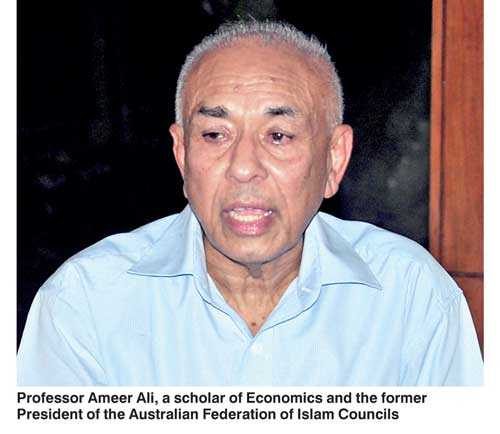
Sri Lanka is currently wedged between Buddhist fundamentalism and rigid Orthodox Islam that have made inroads into the country in the past 40 years or so. Both Buddhists and Muslims have forgotten the magnanimity and tolerance of the Sinhalese who welcomed Muslims into the country centuries ago. Sadly, Muslims have forgotten that they embraced Sri Lankan and not Arabian culture when they decided to live in Sri Lanka as Sri Lankans. It was Buddhist compassion, which made Buddhist monarchs of ancient Sri Lanka welcome believers of other religions and extended their unparalleled hospitality. The experience of the Muslim minority in Sri Lanka until ethno-nationalism raised its ugly head in the 20th century was pleasantly unique,” says Professor Ameer Ali, a scholar of Economics and the former President of the Australian Federation of Islam Councils. Prof. Ameer Ali juxtaposes his analysis of the history of Buddhist compassion in Sri Lanka with explanations of the cosmopolitan outlook of Islam in the medieval era that allowed the Caliphate to welcome intellectuals and theologians of other faiths to settle in Baghdad, Cordoba, Istanbul and Delhi, which ultimately produced a civilisation unmatched by any other at that time. He explains that the convivencia” model in Muslim Spain, which allowed people of different faiths to administer their affairs according to their own religious principles and traditions, had a parallel in ancient and medieval Sri Lanka where the Buddhist monarchs also did not interfere in the administration of Muslim affairs. Muslims in turn did not have any qualms in living peacefully amongst their Buddhist hosts. This is how religious harmony and social equilibrium was built in Sri Lanka. This is the need of the day,” states Prof. Ameer Ali who holds a doctorate in economics from the University of Western Australia and has taught Economics in the University of Ceylon, Murdoch University, University of Brunei and the University of Western Australia.

Below is a discussion with Prof. Ameer Ali:
Q: Why don’t the Muslim intelligentsia, writers, opinion leaders including political leaders, address the issue of the growing cultural gap between the Muslims and other Sri Lankans? Why don’t they even introspect and debate this issue among themselves? 

A: Everyone is scared of the orthodox ulema controlled by ACJU, who may issue a fatwa calling such scholars as heretics. The tragedy is that the so called intellectuals do not want to speak out in public although in private they concede that the community needs progressive leadership. One can forget about the politicians because they will lose votes if they criticise the status quo.

Q:Until Wahabi–Salafi Islam was imported into Sri Lanka ​fromSaudi Arabia, Sri Lankan Muslims had a strong Lankan identity that was especially strong during the days of the Lankan monarchy, which led to Muslims being given refuge in the East of the country by the then Lankan King so they could escape fromconversions to Catholicism forced by the Portuguese. And we know Muslims were very much part of the Buddhist culture and traditions of Sri Lanka, such as making offerings to the Kandyan Pererahera festivities. But this has been changing with the rise of puritanical Islam. Do you think this distancing away from Lankan identity by Sri Lankan Muslims and embracing a Saudi Islamic identity and a dress code, is the root of Sinhala Buddhist fears and extremist views/phobias by some members of the Buddhist clergy and some Sinhala Buddhists? 

A: Muslims confuse culture with religion. Religion is only one of the elements that make up one’s culture. Local history and traditions, geography and climate, population mix and language are other elements that influence culture. In the case of dress any dress can be Islamic as long as it complies with the requirement about modesty as emphasised in the Holy Quran. Muslims still do not have a clear idea about the term modesty. Extravagant display of one’s beauty is frowned upon in Islam. In fact that sort of display is not encouraged in any religion.

However, the dress one wears must be suitable to the climatic environment of one’s country. What is necessary in a hot desert environment is not suitable in a humid climatic environment like Sri Lanka. The cotton sari worn by Indian and Sri Lankan women for centuries with a piece of it covering the head is Islamic enough and satisfies the modesty requirement. The Pakistani shalwar with a shawl thrown over the head also satisfies Quranic expectation and climatically suitable.

I remember that in the ‘60s and ‘70s even Sinhalese and Tamil girls were wearing the shalwar to schools and work. But the abaya, niqab, and burka belong to another culture, history and environment. They are a product of a patriarchal society which treated the woman as a piece of property.The colour black, which was the colour of the Abbasids who succeeded the Umayyads in the 8th century, was chosen to mourn for the loss of members of the Prophet’s family killed by the Umayyads. It has now been misconstrued as the Islamic colour. Who are these people mourning for now?

Q:Modesty is equally emphasised in the Quran for men and women. Am I right? If so, in practice, why is it taken out of proportion for women, where it is a common sight in venues such as restaurants or outdoors to see fully covered women accompanied by men in shorts?

A:Modesty is both for men and women. I know several incidents where fully covered women have been unnecessarily put into embarrassing situations. This is unwanted and should be avoided.Only education can bring changes and that education has to come from the pulpit from more enlightened imams. Where are they in Sri Lanka?

Q:In basic social psychology it is clear that when a human being dresses covered up from head to toe, with only eyes visible, (and that too at times covered in net or cloth) that there can be no social interaction. In schools and universities this can lead to serious segregation and promotion of the ghetto mentality that is displayed by sections of the Muslim community of Sri Lanka. Do you think being covered up like this is actually a requirement of Islam which was at one point of history seen as being more progressive than Christianity?

A: In the name of a misunderstood identity, Muslims are getting isolated. This is a regrettable development since 1980s. There is also something unfair about the fully covered dress with a window for the eyes to see. While it allows the wearer to see clearly the full figure of a man in front of her, that opportunity is denied to the man in front to see the wearer’s face. Is this fair? There is a saying in Tamil to the effect that one’s face is the reflection of the beauty of one’s heart. That means those who cover their face actually are covering their heart. May be their heart is ugly.

Q:After your recent talk ‘Buddhist Compassion and Islam’s cosmopolitanism’, at the Walpola Rahula Institute on 15 May, you referred to a recent incident in a Tamil school in the East where one Muslim teacher insisted on dressing in the abaya. You took the side of argument of the Tamil teachers stating that the dominant culture of the school should be respected and that the ‘human rights argument’ was not valid in this context. As an observer, I would simplify your comments as meaning that in a multi cultural society there must be some compromise and give and take between communities, depending on the dominant culture of the district/community/location, etc. How would you elaborate on this and advice both Buddhists and Muslims on how to adjust their ideologies and beliefs and avoid rigid carved in stone mentalities. 

A: Tolerance and compromise are essential elements of successful democracies. If someone wants to join or work for an institution then that person should abide by the rules and regulations of that institution. If unwilling to do that one should not go there at all. It is this principle that was broken at that school in Trincomalee, which led to unwarranted accusations and insults. If you want to enter a mosque you should take off your shoes. You cannot enter with your shoes and then argue in terms of human rights.

Q: Soon after your recent talk you mentioned in the discussion that ensued, that the Sharia Law tells Muslims how to behave towards and live with religious groups that make up a minority populace but that it does not teach Muslims how to live as a minority community under a majority ethnic group. What are your recommendations and advice to the custodians of Islam (the Islamic clergy of Sri Lanka)?

A: What the clergy refers to as Sharia is the fiqh or rules and regulations derived from the Quran and Hadiths by Muslim Jurists who lived in the 8th and 9th centuries. They did an excellent job at that time. These rules fall into different schools of interpretation. What we have in Sri Lanka belong to the Safiite school of Islamic jurisprudence even though there is a small minority that follows other schools of jurisprudence. These rules were derived and prescribed for Muslims by Muslims when Muslims were a hegemonic power.

Today more than one-third of world Muslims live as minorities in more than 100 countries. Time and circumstances have changed and the laws need reforms. Muslim experts in the West are currently engaged in compiling a new set of fiqh to meet current challenges. This is a vast topic impossible to cover adequately in this answer. All I can say is this: There is hardly any Islamic religious scholar or religious institution in Sri Lanka today that is equipped with the vast knowledge which is required to reinterpret the holy texts to meet modern challenges.

Q: In the discussion that took place after your lecture at the Walpola Rahula Institute, I asked you a question on whether the Muslim clergy (as in the case of the Catholic Jesuits) are involved incomparative religious studies (for the cause of promoting similarities in religious philosophies and not for the cause of nitpicking and fault finding, as Salafi Islamic preacher Zakir Naik does) and you replied that under the current Wahabi–Salafi surge that there is ‘no chance of it’. Then, where do we begin? I ask this question in the backdrop of Saudi Arabia currently going on a ‘modernising’ spree and where interestingly some social media posts by Lankan Muslims criticise this move.

A: Comparative religious studies and analytical religious studies stopped in the Muslim world after the 12th century. The study of Kalam as it was known then came to a halt and it should be reintroduced. In a plural society like Sri Lanka, everyone should have an understanding of each other’s religion, not to belittle the others or to convert one to the other, but to create a harmonious relationship among believers of different religions. This should be introduced in our schools.

Q: So you think comparative religious philosophy should be incorporated into the Lankan school curricula and education on ethno religious lines abandoned?

A: This is imperative.

Q: Would you agree that it is important to study one’s own religious roots through other lenses (other than faith alone) such as history, anthropology, philosophy and psychology? 

A:This is a must. It was on that basis that the Muslim philosophers of the Abbasid era were able to provide rational explanations to the verses in the Quran.

Q: Islamic history is replete with poets who shone in their wisdom and mystical poetry where pure love equals the concept of God and beauty is spoken of as a pure wonder of God. Sadly this richpoetic legacy is not kept alive or promoted widely today.Your thoughts?

A:It is a strange irony in history of Islam that the entire poetic works of Rumi, Hafiz, Saadi, Nijami, Khayyam and many other Sufis are bubbling with beauty and divine romance, and the revolt of orthodoxy in the 12th century has killed this heritage. The Wahabi imams have even prohibited music. According to the Quran, Prophet David was given the gift of music. If God has given music as a gift to one of his prophets, who is man to prohibit it? What an irony?

Q: In attending many interesting public seminars held in Sri Lanka such those on Vedic philosophy/Buddhist philosophy, I have found the audience is mixed to include Sri Lankan Christians, Catholics, Buddhists and Hindus (including clergy members) but almost always (unless it is some specifically NGO funded event) Muslims are notable absentees. Could you comment?

A: This is unfortunate and adds further to the isolation of Muslims.Even secular Muslim scholars find it difficult to attract a Muslim audience when they want to speak on a mundane subject. To that extent the clergy has indoctrinated the Muslim masses with anti-secular teachings. This indoctrination has a long history for me to elaborate in full.

Q:You opined during your recent talk that ‘if one cannot live with a Sinhala Buddhist villager, one cannot live with anyone’. You referred to many humane qualities inherent in the Sinhalese villager. How do you think the situation has come to current state that there is a lot of hate against Muslims expressed by some Sinhalese Buddhists?

A: They can see a definite change in the external appearance of Muslim men and women which is confronting. To the ordinary villager something that is unordinary creates fear and suspicion. This is natural in any society.Why do we make ourselves the other” by unwanted changes? This is not intentional on the part of Muslims but an unintended consequence of mimicking features foreign to this country and its culture.

Q: Sufis and Malay Muslims are some of the Islamic communities in Sri Lanka that are struggling to keep their identity and beliefs amidst the Wahabi dominance that has asserted itself in this country. Sufism was once dominant in Sri Lanka and Sufi saints/poets/preachers who propagated universal love and wisdom based from the Quran have won much love and popularity across the world. Do you think that the philosophy of Sufism, which is seen as a pacifist branch of Islam as opposed to the current militant Islam, could ‘save the world’ so to speak?

A: Sufism is inclusive whereas Wahabi conservatism is exclusive. By condemning Sufism and destroying sufi shrines these conservatives have caused irreparable damage to a cosmopolitan civilisation. I will give you a simple example, which I observed while in Sri Lanka a few days ago. The mosque at Kataragama, which also has a sufi shrine, is neglected by the community while it has constructed ostentatious mosques in other places. Kataragama is a place where all religions meet and all worshippers gather. In addition, tourists from foreign countries also visit this place. Shouldn’t this mosque be kept beautiful and attractive?

Compare the beauty of the mosque and its shrine in Nagoor in Tamil Nadu, which attracts not only Muslim devotees but also Hindus, Christians, Buddhists and so on. I feel that either the Department of Muslim Religious Affairs or the Wakf Board should take over this mosque and manage it. Wahabism hates the Sufis and that explains the neglect of this shrine. This again is a vast topic for me to cover in this answer. While militant Islam, like militant Buddhism divides communities, Sufism like the true Dhamma unites them.

Q: You described yourself as a rationalist. Could you explain from the rationalist point of view the freedom for people not to believe in God (where their morals are dictated by rationale and conscience, which functions independently of religion)? I ask this in context where in some parts of the world people are lynched for even a vague questioning of what Islam expects people to believe although the actual reality is that the crux of religions such as Christianity and Islam is based more on the individual versions of Prophets across the Old Testament, the New Testament and also the Quran. Don’t you think it is intellectually normal for a person to question, if they wish,accounts of people down the ages who thought they were God or Son of God or Prophets of God? Where do you stand in the argument of rationality that allows people to question, debate or even debunk ‘religion’?

A:In the history of Muslims there were many who remained agnostics or atheists. Freedom of and from religion coexisted especially during the Abbasid rule from 750-1258.Some of the Mu’tazilite rationalists did not believe in God and God’s revelation. The Syrian blind poet Abu al-Ala Ahmad ibn Abd Allah al-M’aarri (973-1057) who in his ‘Risalat al Ghufran’ or A Divine Comedy, visits paradise and meets heathen poets who have found forgiveness. Ma’arri was a sceptic of religions. Here is one of the gems he wrote: Each generation of men follows another and turns the old lies into the new religion. Which generation was given the right path?” A statue of this poet remained proudly preserved in Syria until the ISIS murderers destroyed it.

Q: Across ages there has been hundreds of belief systems, many originally connected with animism. Reflecting philosophically, would you agree that these forms of ‘religions’ were far less harmful to society that the current ones, which functions mainly as political labels and are used by countries and communities to dominate, conquer or control human beings?

A:Animism, although less harmful to societies, was the product of a particular age when reason was not the supreme arbiter of human actions. This is why it died before the power of human reasoning.

Q:A person’s diet is generally based on the produce available in the country of birth. Christianity and Islam originated in arid, desert land where there was no abundant vegetation. Because of this lack of vegetation, meat eating was considered to be necessary and was interpreted as God giving man command over all other beings, to use them for consumption if necessary.Meat eating is however not really necessary in the Sri Lankan context and beef eating in particular is known to have caused a cultural gap between the Muslims and Christians vs. the Buddhists. This is a sensitive subject and I do not infer that all Buddhists are pure vegans or vegetarians or practicing ahimsa which should be towards all beings and not just select beings. But I nevertheless ask the question as to why we do not find many Muslims choosing the non violent path of diet in a country such as Sri Lanka when there are hundreds and hundreds of vegetables, grains and fruits to eat? (I would ask the same question from Christians, Catholics and Buddhists). 

A: Even among animals there are herbivorous, omnivorous and carnivorous creatures. So too among humans. Is one better than the other, I don’t know. I myself do not like beef but I prefer other meats. My problem with animal slaughter is the way the animals are treated in Sri Lanka. We do not have modern abattoirs. There is absolute cruelty to animals when dragged to the slaughterhouses. An island that is fertile and surrounded by the ocean should consume more vegetables and fish than meat. Why is this country not self-sufficient in the consumption of fish?

Currently there is a countrywide protest in Australia against live sheep export to the Middle East. Some of the videos showing animal cruelty in Muslim slaughterhouses that I saw made me join this protest movement. In a Buddhist society like Sri Lanka I agree that animal slaughter is abominable. However, when some Buddhists, themselves consume meat how can we prevent others from consuming it?


Prostituting ifthar for political gain

By Prof. Ameer Ali

Ifthar, the Muslim tradition of breaking fast during Ramadan comes from the Arabic word ‘fatoor’ meaning ‘breakfast’. It is a solemn occasion for the devotees who fast as required by their creator, and end the fast also as required by the same.  The occasion is concluded by performing the evening obligatory or maghrib prayer.

It was some time last year that I published a piece in the Colombo Telegraph titled Ostentatious Ifthars and Obscene Poverty”.  I was critical of holding lavish ifthar parties in five-star hotels, organised by publicity seeking individuals and institutions, and inviting politicians and diplomats, while constituencies of poverty remains the most obnoxious feature of the Muslim community.  One only has to go to the mosques during the fasting month to witness the crowd of beggars gathering there for handouts. The month of Ramadan is notable for charity and charitable activities.

Ifthar is neither a religious ritual nor an elaborate custom, but a normal daily feature of fasting. Simplicity is Islam’s requirement in all its religious observations. The Holy Quran warns the Muslims of those who want to be seen” (chapter 107, verse 6), and Islam is against showiness. Muslims should remember that it was their showiness in practising their religion in the past that had contributed the most to Buddhist-Muslim tensions in the country.

One of the most pleasing traditions of ifthar practised for a long time in Sri Lanka is the distribution of kanji, or rice porridge, at mosques, which, for many poor Muslim families, constituted part of their dinner. With a couple of dates, preferably and not compulsorily, that kanji is often almost a lifesaver to the poor. If the ifthar party organisers would spend their money in distributing more kanji even to non-Muslim poor families this month, they would be earning more reward from their creator.  The kanji will bring communities together.  I remember in the 1970s when there was a food shortage in the country and a number of estate worker families depended entirely on the Ramadan kanji for survival during those thirty days.

In this context, it is shocking to read an elaborate advertisement from Beruwela, announcing ifthar parties for three days for which the chief guests would be the political stalwarts of the Rajapaksa family. There is nothing wrong in hosting them for any celebration organised by Muslims. Having betrayed by the MS-RW government, most Muslims are quite willing to fall back on MR for solutions to their problems. Whether they are changing pillows to cure their headaches is another question.  However, what is inappropriate is to prostitute an ordinary religious tradition to gain political favour. Rather, it is better to invite them to the festival dinner or lunch than to the solemn ifthar. Stop prostituting religion for political gain. Contrast this to what Bosath Tharuna Ekathuwa had done in a Dansala in Maradana to mark the Poson Full Moon Poya, where the Sinhalese youth served ifthar to Muslims.  While the event in Beruwela is for seeking political favour, that in Maradana is to unite communities. Let Muslim leaders stop prostituting religion for political gain.

Prof. Ameer Ali holds a doctorate in Economics from the University of Western Australia, and has taught Economics in the University of Ceylon, Murdoch University, University of Brunei and the University of Western Australia.

බැදුම්කර වාර්තාවේ අතිරේක ලේඛන, ඇමුණුම් පිළිබද ජනාධිපති ලේකම් පාර්ලිමේන්තුවට කැදවා ප්‍රශ්න කළ යුතුයි – කීර්ති තෙන්නකෝන්

June 4th, 2018

මාධ්‍ය ඒකක/ CaFFE

බැදුම්කර වාර්තාවේ අතිරේක ලේඛන, ඇමුණුම් සම්බන්ධයෙන් ජනාධිපති ලේකම් ඔස්ටින් ප්‍ර‍නාන්දු මහතා පාර්ලිමේන්තුවට කැදවා ප්‍ර‍ශ්න කර සත්‍ය අනාවරණය කර, පාර්ලිමේන්තු මන්ත්‍රීවරුන්ගේ ගෞරවය ආරක්ෂ කීරීම කථානායක කරු ජයසූරිය මහතා ගේ වගකීමක් බව කැෆේ සංවිධානයේ විධායක අධ්‍යක්ෂ කීර්ති තෙන්නකෝන් මහතා අද පැවසීය.

රාජගිරියේ පැවති පුවත්පත් සාකච්ඡාවක දී අදහස් දැක්වූ තෙන්නකෝන් මහතා, 2018 ජනවාරි 19 බැදුම්කර වාර්තාවේ අතිරේක ලේඛන පිළිබද ‘නිසි පරිදි කටයුතු කර ඇති බව‘ ඔස්ටින් ප්‍ර‍නාන්දු මහතා පවසනවා.  පසුව, තොරතුරු පනත යටතේ ලේඛන ඉල්ලුවාම නීතිපති අවසරය සහිත ලේඛන සියල්ල දුන් බව පවසනවා.  ඊට මාස 4 කට පසුව රාජ්‍ය ලේඛනාගාර දෙපාර්තමේන්තුවෙන් ලේඛන ලබා ගන්නා ලෙස කියනවා.  දැන් ඒ ලේඛන තමන්ගේ ලාච්චුවේ තියාගෙන ඒවා පෙන්න පෙන්නා, ඒ ලේඛන අවුරුදු 30 කට සගවන්න ජනාධිපති ලේකම්වරයා කටයුතු කර තිබෙනවා. බැදුම්කර වාර්තාවේ තිබෙන දේ දන්නේ එය ලියූ කොමිෂන් සභාවේ සාමාජිකයින් සහ ජනාධිපති ලේකම් ඔස්ටින් ප්‍ර‍නාන්දු මහතා පමණයි. එය අතේ තියාගෙන, තොරතුරු ජනතාවට නොදී පිටු අංක අපෙන් අහලා වැඩක් නෑ.  මේ අවුල ගැන සත්‍ය තොරතුරු පාර්ලිමේන්තුව දැනගත යුතුයි. ජනාධිපති ලේකම්වරයා පාර්ලිමෙන්තුවට කැදවා මේ අවුල විසදා ගත යුතුය.

එජාප සභාපති හිටපු මහ ලේකම් කබීර් හෂිම් ට අභියෝග කරමින් එක්සත් ජාතික නිදහස් පෙරමුණේ මහ ලේකම් මෛත්‍රී ගුණරත්න බැදුම්කර මුදල් ලබා නොගත් බවට හැකිනම් ප්‍ර‍කාශයක් සිදු කරන ලෙස පවසා තිබෙනවා.  දෙවන බැදුම්කර වංචාව අවස්ථාවේ ප්‍ර‍ශ්නගත ජාතික ඉතිරිකීරීමේ බැංකුව, ලංකා බැංකුව භාර විෂය අමාත්‍යවරයා වූයේ කබීර් හෂිම් මහතා යි.  අඩුවෙන්න් ලංසු තැබීම හා දෙවන බැදුම්කර වංචාව අතර සම්බන්ධය බැදුම්කර කොමිෂන් විභාගයේ දී මතුවුණා.  දැන් හිටපු එජාප මහ ලේකම්වරයා මේ අභියෝගයට පිළිතුරු දිය යුතුයි.  2015 මහ මැතිවරණයේ දී අපේක්ෂකයින්ට රු. ලක්ෂ 10 සිට ලක්ෂ 25 දක්වා මුදල් බෙදුවේ මේ සල්ලි ද කියා පැහැදිලි කරන ලෙස මම කබීර් හෂිම් මහතාගෙන් ඉල්ලනවා.

දැන් මැතිවරණයට තරග කළ අපේක්ෂකයෝ මගෙන් අහනවා ‘මටත් රු. ලක්ෂ 10 ක් පක්ෂයෙන් දුන්නා. ඒ බැදුම්කර සල්ලි ද කියලා. ඒ අයට ලැබිලා තියෙන්නෙත් බැදුම්කර සල්ලි ද කියලා.  මේ ප්‍ර‍ශ්නයට පිළිතුරු දිය හැක්කේ කබීර් හෂිම් සහ මලික් සමරවික්‍ර‍ම හිටපු සභාපති හා මහ ලේකම්වරයාට පමණයි.  මේ ගැන පැහැදිලි කිරීම ඔවුන්ගේ වගකීමක්.

දැන් ලක්ෂයක්, මිලියනයක්, මිලියන තුනක් ගත්ත අය ගැන තියෙන අවධානය අර්ජුන මහේන්ද්‍ර‍න් ගැන නැති වෙලා තියෙනවා.  ඔහු ලංකාවට ගෙන්වා ගන්නට, උදර්පන නීතිය යටතේ කටයුතු සිදුවන්නේ ඉතා හෙමින්.  ඔහු ලංකාවට ගෙන්වා ගැනීම වැදගත්. එවිට මහ බැංකු ‘ඔෆීස් ඇසිස්ටන්‘ ලා ලවා මිලියන ගණන් චෙක් මාරුකළේ කාට දෙන්නදැයි පහසුවෙන්ම අනාවරණය කර ගත හැකියනු ඇතැයි ද තෙන්නකෝන් මහතා පැවසීය.

මාධ්‍ය ඒකක/

2018 ජූනි 4  

Rajith Keerthi Tennakoon
Executive Director/CaFFE
Executive Director/CHR-Sri Lanka
100/19 A, Welikadawatta Road,
Rajagiriya,Sri Lanka.

Rajapaksa promises 20% tax cut if …

June 4th, 2018

Former President Mahinda Rajapaksa yesterday said a new government, under his leadership, would lower taxes by 20%.

“People are suffering due to extremely high taxes. They can’t even eat properly or save any money because of the staggering taxes. When we form a government we will reduce taxes by 20%.”

Rajapaksa also condemned the decision taken by the government to privatise the railway system in the Hambantota District.

article_image

The Cabinet last week approved a proposal to call for an international tender to build a 100 km railway line linking Beliatte to Hambantota, Kataragama and the Mattala airport on a Build-Operate and Transfer (BOT) basis. The estimated project cost is USD 800 million (Rs. 127 billion). The successful bidder will also be able to set up restaurants, cargo storage facilities and shopping complexes in the areas coming under its purview.

“This is the first step in privatizing the railway department. There is no need for us to privatize the railways because we have a long tradition of government run railways. This is what happens under UNP administrations,” he said.

Rajapaksa added that the government had started selling state assets as soon as it came to power and it was a further reflection of the anti-national disastrous economic policies of the regime.

SC fixes contempt case against Ranjan for June 18 

June 4th, 2018

By Chitra Weerarathne Courtesy The Island

The Supreme Court yesterday fixed, for June 18, the next date of mention of the allegation of contempt of court filed against State Minister Ranjan Ramanayake.

Two petitioners, Ven. Magalkande Sudantha Thera and retired Air Officer Sunil Perera have complained to the Court that on August 21, 2017, Ramanayake made a public statement injurious to the dignity of judicial officers.

article_image

Ramanayake should be punished under Article 103(5) of the Constitution of Sri Lanka for having committed the offence of contempt.

Additional Solicitor General Priyantha Navarna PC told the Court that there was a prima facie case against Ramanayake. The video tape of the speech by Ramanayake was being perused by the Judges of the Supreme Court to decide whether the suspect should be charged and tried for contempt under Article 103(5) of the Constitution of Sri Lanka.

Counsel Rasika Dissanayake and Suraj Walgama appeared for the petitioners.

M. A. Sumanthiran P.C. appeared with Viran Corea for the suspect Ramanayake.

The bench comprised Justice Eva Wanasundera and Justice L. T. B. Dehideniya.

CaFFE wants Austin summoned before Parliament

June 4th, 2018

By Rathindra Kuruwita Courtesy The Island

Parliament must summon Secretary to the President, Austin Fernando and question him on the Presidential Commission of Inquiry (PCoI) report on the bond scam, Executive Director of Campaign for Free and Fair Elections (CaFFE), Keerthi Tennakoon said yesterday addressing a press conference.

“Parliament has power to do so. Fernando has continuously attempted to mislead people who want to access the PCoI report.”

Tennakoon said that he had written to Fernando on January 18, asking for the complete report of the PCoI. “In response, he said he had sent the report to all MPs. But by January 24, I realised around 5,000 pages were missing and when people ask for the full report, Fernando says that the report is with the National Archives.

“Fernando also stated that the AG and the Bribery Commission had asked him not to reveal information that was vital for the continuing investigations.”

MPs who took PTL money number 164?

June 4th, 2018

By Rathindra Kuruwita Courtesy The Island

About 164 MPs have received donations from Perpetual Treasuries Limited (PTL), Keerthi Tennakoon, Executive Director of Campaign for Free and Fair Elections (CaFFE) says.

“The PTL has given donations to those who contested the 2015 general election. Now, MPs tell us they received money from PTL. They ask us whether their names are in the Bond Commission report. Most of them got Rs. 1 million each and a select group of politicians got another Rs. 1.5 million each afterwards.”

Many MPs who received PTL funds and defended the company in and outside Parliament had now switched their mobile phones off, Tennakoon said.

“The only way to put the matter to rest is to release the complete bond scam report so that the public will be able to identify the PTL hirelings.”

ජවිපෙ රට අනතුරේ දාලා -ගෙවිඳු කුමාරතුංග

June 4th, 2018

අංජුල මහික වීරරත්න උපුටාගැණීම ලංකාදීප

ජනතා විමුක්ති පෙරමුණ තම ඡන්දදායකයාට අවංක නම් කළ යුත්තේ 20 වන සංශෝධනය හරහා වත්මන් අගමැති සහ පාර්ලිමේන්තුව තවත් ශක්තිවත් කරනවා වෙනුවට පාර්ලිමේන්තුව විසුරුවාහැර නව රජයක් පත්කර ගැනීමට උපකාර කිරීමකැයි යුතුකම” සංවාද කවයේ සභාපති ගෙවිඳු කුමාරතුංග මහතා මාධ්‍ය හමුවකදී ඊයේ (3) පැවසීය.

වත්මන් පාර්ලිමේන්තුවට රටේ ජනපති පත් කිරීම සඳහා කිසිදු ජනවරමක් නොමැති බව කී කුමාරතුංග මහතා, 20 වන සංශෝධනය මගින් ජනාධිපති ධුරය බල රහිත කර විධායකය සහ ව්‍යවස්ථාදායකය අනතුරට ඇද දමන බව ද කීය.

කොළඹ බෞද්ධ සංස්කෘතික මධ්‍යස්ථානයේදී මෙම මාධ්‍යහමුව පැවැත්විණි.
එහිදී තවදුරටත් අදහස් දැක්වූ ගෙවිඳු කුමාරතුංග මහතා මෙසේද පැවසීය. 

ජනතා විමුක්ති පෙරමුණ ඉදිරිපත් කර ඇති 20 වන ආණ්ඩුක්‍රම ව්‍යවස්ථා සංශෝධනය ගැන අදහස් දැක්වීම අපේ අරමුණයි.
ජනතාව විසින් පත්කරන ජනාධිපති වෙනුවට පාර්ලිමේන්තුවෙන් තෝරන අගමැතිට රටේ නායකත්වය පැවරීම 20 වන සංශෝධනයේ අරමුණයි.

ජනතා විමුක්ති පෙරමුණ අවංක නම් මේ යෝජනාව ඉල්ලා අස්කර ගත යුතුයි.

පාර්ලිමේන්තුවේ රහස් ඡන්දයකින් ජනපති පත්කර ගත යුතු බව 20 වන සංශෝධනයේ කියැවෙනවා. විධායක ජනපති ජනතා ඡන්දයෙන් පත්වීමෙන් ස්ථාවර බවක් තිබූ නිසා අස්ථාවර පාර්ලිමේන්තු තිබියදී හෝ රජය පවත්වාගෙනගොස් තිබෙනවා.

කිසිම පක්ෂයකට තනිව ස්ථාවර රජයක් පිහිටුවීමට නොහැකි මැතිවරණ ක්‍රමයක් තබාගෙන ජනාධිපති ධුරය බල රහිත කිරීම විධායකයට සහ ව්‍යවස්ථාදායකයට යන දෙකටම අනතුරක් බව කිව යුතුයි.

මෙයින් වාසි සැලසෙන්නේ කුඩා ජාතිවාදී කල්ලිවලටයි. මහජන නියෝජිතයන්ට ජනතාවගෙන් සැඟවී ජනපති පත් කිරීමේ විධි විධිවිධානවලට මෙම නව සංශෝධනයෙන් ඉඩ ලැබෙනවා.

නව ව්‍යවස්ථාවක් ගෙන ඒමේ ක්‍රියාවලිය යටපත්වී ඇති මොහොතක ජනතා විමුක්ති පෙරමුණ මෙම 20 වන සංශෝධනය ගෙන එන්නේ යටපත් කරගත් යෝජිත නව ව්‍යවස්ථාවේ අඩුව පිරවීමටද?

මහ බැංකු හොරකමට සම්බන්ධ අයට පවා මන්ත්‍රීවරුන් මුදලට ගෙන 20 වන සංශෝධනය යටතේ රටේ ජනාධිපති ධුරයට පත් වීමට හැකියාව තිබෙනවා.

පාර්ලිමේන්තුවෙන් ජනාධිපති තෝරන යෝජනාවක් සමග එලෙස පත් කරන්නේ රහසිගත ඡන්දයකින් විය යුතු බවට යෝජනාවක් ඇතුළු කළේ ඇයිදැයි ජනතා විමුක්ති පෙරමුණ රටට හෙළිදරව් කළ යුතුයි.

අපට කිව හැක්කේ මෙය රට අනාථ කරන සංශෝධනයක් බවයි.

වත්මන් පාර්ලිමේන්තුවට ජනපති පත් කිරීමට ජනවරමක් ලැබී නැහැ. දැන් රජයේ තිබෙන අස්ථාවර බව ගැන කියන්නේ අප නොවෙයි. ජනපති කියන කතා ඇසූ විට ඒ බව හොඳින්ම අවබෝධ කරගත හැකියි.

දැන් පවතින්නේ ණයට පවත්වාගෙන යන ජාතික ආණ්ඩුවක්. ප්‍රජාතන්ත්‍ර විරෝධී ආණ්ඩුව මගින් මහ බැංකුවේ වංචාවක් වූ බව රහසක් නොවේ. ඒ සම්බන්ධයෙන් අගමැතිට ගෙන ආ විශ්වාස භංගයට පක්ෂව ඡන්දය දුන් ජනතා විමුක්ති පෙරමුණ දැන් 20 වන සංශෝධනය හරහා අගමැතිවරයා තවත් ශක්තිමත් කිරීමට කටයුතු කිරීම පිළිබඳව ජනතා විමුක්ති පෙරමුණ රටට පැහැදිලි කළ යුතුයි.

මේ ක්‍රියාවලියෙන් වන්නේ රට සම්පූර්ණයෙන්ම අරාජිකත්වයට පත්වීමයි. ජනතා විමුක්ති පෙරමුණ ඡන්දදායකයන්ට අවංක වෙනවා නම් කළ යුත්තේ වත්මන් රජය තවත් ශක්තිමත් කරනවා වෙනුවට රජය වහාම විසුරුවා හැර නව රජයක් පත් කිරීම යැයි ද කීය.

‘100-day’ prepared by those supported Maithri, not only UNP: Harin

June 4th, 2018

Yohan Perera Courtesy The Daily Mirror

The 100-day programme was not a part of the UNP manifesto but a policy document which was prepared and marketed by those who supported the common candidate Maithripala Sirisena for the presidency, UNP Spokesman and Publicity Unit Chief Harin Fernando said today.

The 100-day programme slogan which we marketed at that time was ‘Maithri palanayak dina seeyakin aluth ratak’ (A Maithri administration and a new country in 100 days). This was a creation of all political parties and civil society groups which rallied round the common candidate for the 2015 presidential election,” he told a media conference.

This is the first official statement made by the UNP after the President publicly criticized the 100-day programme last week.

Mr. Fernando said January 8, 2015 was the day on which a silent revolution toppled the then government.

It was not the UNP which decided to field a common candidate and neither was it the only party that wanted to end the previous regime in 2015. This was a decision arrived at by all those who opposed the then regime. However, the UNP also endorsed the fielding of a common candidate at the presidential election,” he said.

It is also true that people endorsed the common candidate, the then SLFP General Secretary Maithripala Sirisena. People trusted him more because of the 100-day programme. We were not able to fulfill some of the pledges we made under this programme because some of those who supported former president Mahinda Rajapaksa sabotaged it. However, we fulfilled a several of the promises. This includes national pharmaceutical policy, the 19th Amendment and the Right to Information Bill,” he said.

President Maithripala Sirisena has power to disclose names of the 118: Gammanpila

June 4th, 2018

Sheain Fernandopulle Courtesy The Daily Mirror

Pivithuru Hela Urumaya (PHU) leader and MP Udaya Gammanpila said today there was no legal barrier to disclose the names of the 118 individuals who had obtained funds from Arjuna Aloyisus and pointed out that President Maithripala Sirisena had the power to order their release.

He claimed there was political pressure that prevented the names being released.

A Presidential Commission does not possess the authority to give orders to the President. It makes recommendations. Hence, the President has the power to release the full report of the Presidential Commission on the controversial bond scam,” the MP said.

We can’t fathom as to why President’s Secretary Austin Fernando sought the Attorney General’s opinion on releasing the full report when the President has the power on that,” Gammanpila added.

‘මහ බැංකුවේ මුදල් කොල්ලය’ මෙගා ටෙලි නාට්‍යයක් වෙලා

June 4th, 2018

ඉෂාරා සිල්වා  උපුටාගැණීම  මව්බිම

අර්ජුන් ඇලෝසියස්ගෙන් මුදල් ලබාගත් බව කියන පාර්ලිමේන්තු මන්ත්‍රිවරුන් 118 දෙනාගේ නම් වහාම හෙළි කරන ලෙස කථානායකවරයාගෙන් ඉල්ලා සිටින බව පාර්ලිමේන්තු මන්ත්‍රි බන්දුල ගුණවර්ධන පැවැසීය.

ඒ මහතා සඳහන් කර සිටින්නේ මෙම සිදුවීම හේතුවෙන් සමස්ත පාර්ලිමේන්තු මන්ත්‍රිවරුන් කෙරෙහි තිබෙන විශ්වාසය කඩ වී තිබෙන බවයි.

ඊයේ (03දා) පුංචි බොරැල්ල, වජිරාශ්‍රමයේ පැවැති ඒකාබද්ධ විපක්‍ෂයේ ආර්ථික පර්යේෂණ ඒකකයේ මාධ්‍ය හමුවට එක් වෙමින් මන්ත්‍රිවරයා වැඩිදුරටත් මෙසේද කීය.

”මහ බැංකුවේ ඇති වූ මුදල් කොල්ලය, භාණ්ඩාගාර බැඳුම්කර මෙගා ටෙලි නාට්‍යයක් ලෙස කොටස් වශයෙන් විකාශය වීමට පටන් ගෙන තිබෙනවා. මෙය බැඳුම්කර නාට්‍යයක් ලෙස ගලාගෙන යෑම තුළ පැරැණි මොළකරුවෝ සහ පැරැණි නළුවෝ තාවකාලිකව ඉවත් වෙනවා. අලුත් මොළකරුවෝ, අලුත් නළුවෝ සහ අලුත් කොටස් මේ නාට්‍යයට එක් වෙනවා. මෙහි ප්‍රධාන මොළකරුවෙක් වන සිංගප්පූරුවට පැනගොස් සිටින අර්ජුන මහේන්ද්‍රන් මහතා මේ නාට්‍ය කොටසෙන් ඉවත් වෙලා පර්පචුවල් ට්‍රෙෂරීස් සමාගමේ නියම් හා අනියම් ආකාරයෙන් ලාභ ලැබූ පාර්ලිමේන්තු මන්ත්‍රිවරුන්, ඇමැතිවරුන්, නගරාධිපතිවරුන්, වෙනත් මහජන නියෝජිතයන් සිය ගණනකගේ නම් එළියට එමින් පවතිනවා. මේ මහජන නියෝජිතයන් සහ මේ මහ බැංකු මුදල් කොල්ලයේ මහ හොරු සියලුදෙනා දෙවැනි අදියර ක්‍රියාත්මක කිරීම ආරම්භ කරලා තිබෙන්නේ.

දෙවැනි අදියර තමයි රට ඇතුළේ සමස්ත බැංකු ක්‍රමය, මුදල් ක්‍රමය පාලනය කරන ශ්‍රී ලංකා මහ බැංකුව පිළිබඳ විශ්වසනීයභාවය නැති කරලා දැවැන්ත මූල්‍ය අර්බුදයක් රට ඇතුළේ නිර්මාණය කිරීමෙන් පසුව බංකොලොත් වෙන දේපළ සහ බංකොලොත් වෙන මිනිසුන්ගේ ආර්ථිකයන් සූරාගෙන කෑම සඳහා ඔවුන් විසින්ම ඇති කළ සිංගප්පූරු නිදහස් වෙළෙඳ ගිවිසුම ක්‍රියාත්මක කරනවා සිංගප්පූරුවේ ඉඳන්. මේ මහ මුදල් මංකොල්ලයේත් නිදහස් වෙළෙඳ ගිවිසුමෙත් ප්‍රධාන මොළකරුවෝ තමයි අර්ජුන මහේන්ද්‍රන් ප්‍රමුඛ ජාවාරම්කරුවන් කණ්ඩායම. ඔවුන් විසින් ජනාධිපතිවරයාව, පාර්ලිමේන්තුව, කැබිනට් මණ්ඩලය නොමඟ යවලා දැනට අත්පත් කර තිබෙන මෙම ගිවිසුම ක්‍රියාත්මක කිරීමේ කාර්යය මේ දිනවල සිදු කරනවා.

1964 අංක 28 දරන ඉඩම් අත්පත් කර ගැනීමේ පනත යටතේ ඔවුන්ට රිසි සේ අනාගතයේදී මේ මහ පොළොව හිමි කර දීම සඳහා විවිධ ව්‍යාපෘති යටතේ ඉඩම් අත්පත් කරදීම මේ වනවිට ආරම්භ කරලා තිබෙනවා. සාමාන්‍ය ලෙස ගමක වාසය කරන මිනිසුන්ගේ ඉඩම් බලහත්කාරයෙන් අත්පත් කර ගැනීම සඳහා ප්‍රාදේශීය ලේකම්වරු විසින් නිවේදන නිකුත් කර තිබෙනවා. එම නිවේදනයේ සඳහන් වෙනවා ”මෙම පනතින් සංශෝධිත පරිදි ඉඩම් අත්පත් කර ගැනීමේ පනතේ දෙවැනි වගන්තියේ පළමු උප වගන්තිය යටතේ ගරු ඉඩම් හා පාර්ලිමේන්තු ප්‍රතිසංස්කරණ ඇමැතිවරයා විසින් මට කර තිබෙන නියමය පරිදි පහත සඳහන් ප්‍රදේශවල පිහිටි ඉඩම මහජන කාර්යාල සඳහා වුවමනා වී තිබෙන බව එකී වගන්තියේ උප වගන්තිය ප්‍රකාරව මහජනයාට දැනුම් දෙමි” යනුවෙන්. ඒ වගේම සඳහන් වෙනවා ඉහත සඳහන් ප්‍රදේශවල ඕනෑම වෙලාවක මිනිසුන් ප්‍රමාණයද භාණ්ඩ උපකරණද, රථ වාහනද, සතුන්ද රැගෙන එම ඉඩම මැනීමට, යටි පස හැරීමට, මායිම් සීමා ලකුණු කිරීම අගල් කැපීමටද හැකියාව තිබෙන බව.

ඒ කියන්නේ ස්වජාතිකයන්ගේ ඉඩමක් කිසිදු දැනුම් දීමකින් තොරව සියලුදෙනා රැගෙන ඉඩම් මැනීමට අවසර තිබෙන බවයි. මේ ඉඩම් මැනලා ලැහැස්ති කරන්නේ කාට දෙන්නද? සිංගප්පූරු ව්‍යාපෘතිය යටතේ තාක්‍ෂණික නගර හදන්න. එහෙම තමයි මේ ඉඩම් වෙන් වන්නේ. එල්.ටී.ටී.ඊ. ඩයස්පෝරාව සහ අනෙක් විජාතිකයෝ ස්වදේශිකයන් සතු ඉඩම් රිසි සේ ලබා ගැනීමට අවශ්‍ය යටිතලය සකස් කිරීම තමයි මේ සිදු කරන්නේ. භූමියේ සැබෑ උරුමකරුවන්ට අයිති මහ පොළොව පවා පාවා දීලා තිබෙන්නේ මේ පනත හරහා. මීට එරෙහිව අරගල කරන්න අවශ්‍ය කාලය දැන් එළැඹිලා තිබෙන්නේ.

මේ නිසා දැන් පාර්ලිමේන්තු මන්ත්‍රිවරුන් 225 දෙනා කෙරෙහිම තිබෙන විශ්වාසය කඩ වෙලා තිබෙන්නේ. පසුගිය සිකුරාදා දින කථානායකවරයාට ලිපියක් ඉදිරිපත් කළා පාර්ලිමේන්තු මන්ත්‍රිවරුන්ගේ වරප්‍රසාද සම්බන්ධයෙන්. පාර්ලිමේන්තු මන්ත්‍රිවරුන්ගේ භාරකරු හැටියට කථානායකවරයා වහාම මේ පාර්ලිමේන්තු මන්ත්‍රි වරුන් 118 දෙනාගේ නම් හෙළි කළ යුතුයි. අපි නම් පියවි ලෝකයේදී හෝ සිහින ලෝකයේදී මූල්‍ය ක්‍ෂේත්‍රයේ මුදුන් මල්කඩ කොල්ලකෑ අයගෙන් මුදල් ලබාගෙන නැහැ. නමුත් දැන් ජනතාව හිතන්නේ අපිත් හොරු කියලා. මොකද සෙක්කුව ළඟ ඉඳලා චොකලට් කෑවත් හිතන්නේ පුන්නක්කු කනවා කියලානේ.”

ජවිපෙ මේ කරන්නේ මහා භයානක විහිළුවක්

June 4th, 2018

හර්ෂනී අර්සකුලරත්න  උපුටාගැණීම  මව්බිම

විධායක ජනාධිපති ධුරය අහෝසි කිරීම සඳහා ප්‍රජාතන්ත්‍රවාදයේ නාමයෙන් මැදිහත් වන බව පැවැසූ අනුර කුමාර දිසානායකගේ යෝජනාවේ කිසිදු තැනක විධායක ජනාධිපති ධුරය අහෝසි කිරීමක් සඳහන් නොවන බව ජාතික නිදහස් පෙරමුණේ ප්‍රධාන ලේකම් නීතිඥ කපිල ගමගේ පවසයි.

ඔහු මේ බව පැවැසුවේ ඊයේ (31දා) පිටකෝට්ටේ පිහිටි ජා.නි.පෙ. ප්‍රධාන කාර්යාලයේ මාධ්‍ය හමුවකට එක්වෙමිනි.
එහිදී ඔහු මෙසේද පැවැසීය.

අපේ ආණ්ඩුක්‍රම ව්‍යවස්ථාවේ කිසිම තැනක විධායක ජනාධිපති ධුරය කියලා තනතුරක් නැහැ. එහි 7 පරිච්ඡේදයේ 30 වගන්තිය යටතේ ජනරජයේ ජනාධිපතිවරයා කියලා යෙදුමක් තියෙනවා. ඒ වගන්තියේ තියෙනවා ‘ශ්‍රී ලංකා ජනරජයේ ජනාධිපතිවරයෙක් වන්නේය. ජනාධිපතිවරයා රජයේ ප්‍රධානියාද, විධායකයේ ප්‍රධානියාද, ආණ්ඩුවේ ප්‍රධානියාද, සන්නද්ධ සේවාවන්හි සේනාධිනායකයාද වන්නේය’ කියලා. විධායක ජනාධිපති කියලා සුළු හරි හැඟවීමක් තියෙන්නේ මේ වගන්තියෙ. එහෙම නැතිව විධායක ජනාධිපති කියලා වචනයක් ව්‍යවස්ථාවෙම නැහැ. ඒක සංශෝධනය කරන්න අනුර කුමාර යෝජනා කරන්නේ ආණ්ඩුවේ ප්‍රධානියා කියන එක ඉවත් කිරීමට පමණයි. එතැන තියෙන අනෙක් කරුණු එහෙම්මමයි. ඔහු මෙතැනදී උත්සාහ දරන්නේ ආණ්ඩුවේ ප්‍රධානීත්වයෙන් ජනාධිපතිවරයා ඉවත් කිරීමට පමණයි.

විධායක ජනාධිපති ක්‍රමය අහෝසි කිරීමට නම් මේකේ ඇත්ත අරමුණ මේ සංශෝධනයේදී විධායකයේ ප්‍රධානියා කියන කොටසයි ඉවත් විය යුත්තේ. හැබැයි ඒකට අත තියන්නෙ නැහැ. ඔහුට හදිසි ජනාධිපතිව ආණ්ඩුවේ ප්‍රධානීත්වයෙන් ඉවත් කිරීමටයි.

මොවුන්ගේ ප්‍රධාන අරමුණු 3ක් තියෙනවා. එහිදී පේන්න තියෙනවා විධායක ජනාධිපති ධුරය අහෝසි කිරීමක් කිසිදු තැනක සඳහන් නොවීම. දෙවැන්න ජනාධිපතිවරයාට දැනට තියෙන බලතලවලින් අතිශය බහුතරයක් අගමැතිවරයාට ලබාදීම. තුන්වැන්න තමයි අප මුල පටන් අනතුරු අඟවපු රට ෆෙඩරල් කරණය කිරීමේ මාර්ගයට යා හැකි ආකාරයේ හිස් තැන් ගොඩක් මෙහි පැවතීම.

මේ යෝජනාවෙ හැටියට 2020දී ජනවාරි 09 වැනිදා ඉඳලා පත්වෙන මේ ජනාධිපති කොහෙන් හරි එන කෙනෙක් නම් අනිවාර්යයෙන්ම ඔහු රටට හිතැති කෙනෙක් කියලා හිතන්න බෑ. ඔහු වෙනත් න්‍යාය පත්‍රයකට ඉත්තෙක් වීම අනිවාර්යයි.

ඒ නිසා මේක එක පැත්තකින් විහිළුවක්. අනෙක් පැත්තෙන් අතිශය භයානක විහිළුවක්. මොකාටද එන්න හදන්නෙ කියලා අප පැහැදිලි කරගන්න ඕන.

මේ කෙටුම්පත පාර්ලිමේන්තුවට ඉදිරිපත් කළොත් අනිවාර්යයෙන්ම ජනමත විචාරණයකට යා යුතුමයි. කොහොම වුණත් මේක ජයග්‍රහණය කිරීමේ හැකියාව ඉතාම අවමයි. ඒකාබද්ධ විපක්‍ෂය තීරණය කරලා තියෙන්නේ මේකට නිල වශයෙන් සහාය නොදී ඉන්න. එතකොට 2/3 ලැබෙන්නෙ නෑ. ජනමත විචාරණයකට ගියත් ඒකාබද්ධ සහාය නැතිව ඒක ජයග්‍රහණය කරන්න බැහැ.

මං හිතන්නෙ නැහැ ඔවුන් මේක නොදැනයි ආවේ කියලා. ඔවුන් දන්නවා. ඔවුන්ගේ අරමුණ තමයි ඊළඟ ජනාධිපතිවරණයට විධායක ජනාධිපති ක්‍රමය අහෝසි කිරීම යන සටන් පාඨය නැවත කර තබාගෙන යන පොදු අපේක්‍ෂකයකු ගෙන ඒමට පසුබිම සැකසීම.

ජ.වි.පෙ. නායකයා පසුගිය මාර්තු 2 එක්තරා පුවත්පතක සම්මුඛ සාකච්ඡාවකට එක්වෙමින් කියනවා මේ ව්‍යවස්ථා කෙටුම්පත ගෙන ඒම ප්‍රමාද වෙන නිසා එතකන් ඉන්න බැහැ. ඒ නිසා අපි ඊට කලින් විධායක ජනාධිපති ක්‍රමය අහෝසි කරනවා. ඒකටයි මේ පෞද්ගලික මන්ත්‍රි යෝජනාවක් ගෙන එන්නෙ කියලා.

මේකෙන් පැහැදිලි වෙන්නේ එදා සම්මත කර ගන්න බැරිවුණු ෆෙඩරල් යෝජනා ටික වෙන වෙන ක්‍රමවලින් ලහි ලහියේ කරගන්න උත්සාහ දරන බව. කවුරුත් දන්නවා ජ.වි.පෙ.ට ඓතිහාසික නෑකමක් තියෙනවා විධායක ජනාධිපති ක්‍රමය අහෝසි කිරීම සම්බන්ධයෙන්. ඒ නිසා ඔවුන් මේ සටන් පාඨය කරේ තියාගෙන යන්න සුදුසු පුද්ගලයන් එහෙම සුදුසුකමක් තියෙන කෙනෙක් ලව්වා විධායක ජනාධිපති ක්‍රමය අහෝසි කිරීමට කියන සටන් පාඨය පෙන්නලා වෙනත් යමක් කරගැනීම තමයි අද වන විට සතුරාගේ අවශ්‍යතාව වෙලා තියෙන්නේ.

සල්ලි ගත්තු අයගේ නම් හෙළි නොකළොත් ජනාධිපතිත් වංචාවේ කොටස්කරුවකු වෙනවා

June 4th, 2018

අනුරාධා හේරත්  උපුටාගැණීම  මව්බිම

කුප්‍රකට මහ බැංකු බැඳුම්කර වංචාවෙන් මුදල් ගසා කෑ පුද්ගලයන් කවුද යන්න ජනාධිපති මෛත්‍රිපාල සිරිසේන විසින් හෙළි නොකළොත් ඔහුද එම වංචාවේ කොටස්කරුවකු වනු ඇතැයි “දූෂණ විරෝධී හඬ” කැඳවුම්කරු වසන්ත සමරසිංහ කියයි.

අදාළ වංචනිකයන් කවුද යන්න රටට හෙළිකිරීමට මහා ප්‍රාතිහාර්යයක් පෑමට අවශ්‍ය නොවන බවද සමරසිංහ මහතා පෙන්වා දෙයි.

සමරසිංහ මහතා පැවැසුවේ බැඳුම්කර වංචාවෙන් මුදල් චෙක්පත් ලබාගත්තවුන් 118ක් සිටින බවට මතයක් ප්‍රචාරය කළේ සත්‍ය වසන් කිරීමට බවත් මීට පෙර රුපියල් මිලියන 1190කට අයත් චෙක්පත් එකම පෞද්ගලික බැංකුවක් හරහා මාරු කර ඇති බවත්ය.

මෙකී වංචාවෙන් රුපියල් මිලියන 1190ක් නොව මිලියන 3000කට අධිකව බෙදා ඇති බව අර්ජුන් ඇලෝසියස්ට සමීප කිහිපදෙනෙක් විවිධ ස්ථානවල පවසා ඇතැයි දැනගන්නට ලැබී ඇති බවද ඒ මහතා කීය.

ඔහු වැඩිදුරටත් පැවැසුවේ එකී වංචාවෙන් මේ වනවිට රටට සිදුව ඇති පාඩුව රුපියල් මිලියන 24,000ක් පමණ වන බවය.
සමරසිංහ මහතා මේ බව පැවැසුවේ ඊයේ (03දා) මරදාන සමාජයීය හා සාමයික කේන්ද්‍රයේ පැවැති මාධ්‍ය හමුවේදීය.
එහිදී ඔහු වැඩිදුරටත් මෙසේද කීය.

පළමු කොමිසම අවසන් වෙලා කාලයක් ගත වෙලා. වහාම දෙවැනි ජනපති කොමිසම දාලා මීට අදාළ තොරතුරු හෙළි කරන්න. පළමු කොමිසමේ වාර්තාවේ පිටු 106ක් ගැලෙව්වා. මෙහි සංවේදී තොරතුරු තියෙන නිසා ඒවාට අදාළව කඩිනම් පරීක්ෂණ කළ යුතුයි කියලා. දැන් ආරංචියි ඒ පිටු 106 නැති වෙලා කියලා.

හොරු රකින්න මේ ආණ්ඩුව කටයුතු කරන්නේ. දේශපාලනඥයන්ට, මාධ්‍යවේදීන්ට, මාධ්‍ය ආයතනවලට, තව අයට මේ බැඳුම්කර මුදල් ලබාදී තියෙනවා. මේ වංචා සහගත මුදල්වලින් මිලියන අටදහස් ගණනක් අයිති සේවක අර්ථ සාධක අරමුදලේ සල්ලි. ඒවා වහාම නිදහස් කළ යුතුයි.
2015 පෙබරවාරි 27 සිට අප පර්පචුවල් ට්‍රෙෂරිස් සමාගම අවස්ථා ගණනකදී මෙන්ඩිස් අරක්කු සමාගමක ගිණුමකින් මුදල් හුවමාරු කරලා තියෙනවා. අධිකරණයට වාර්තා කරපු කරුණු අනුව 166 වතාවක් ගනුදෙනු සිදුවෙලා තියෙනවා. පෞද්ගලික බැංකුවකින් මිලියන 1190ක්. දැන් මේ බැංකුවේ සල්ලි නෑ. අල්ලස් දෙන්න මේවා යොදාගෙන. අර පිටු 106 තුළ මේ රුපියල් මිලියන 1190 බෙදලා දුන්නෙ කාටද කියලා අපිට දැන් පැහැදිලි සැකයක් තියෙනවා. දයාසිරි මන්ත්‍රිගේ ආරක්ෂකයෙක් තමයි මේ මිලියනයක චෙක්පත මාරුකර තියෙන්නෙ. මේ ඉතිරි චෙක් 166 හොයන්න ප්‍රාතිහාර්ය පාන්න අවශ්‍ය නෑ. මේවා හෙළි වූදාට විශාල සුනාමියක් ඇතිවෙලා ඒ අයට පාර්ලිමේන්තුව හැර යන්න වෙයි.

අපි අද මේ ගැන සඳහන් කරලා ජනපතිට ලිපියක් යැව්වා. අපේ ජාතික විධායක සභාව එතුමා හමුවෙලා මේ ගැන සාකච්ඡාවක් කරන්න සූදානම්. තැන් තැන්වල ඇලෝසියස්ලාගේ ගෝලයෝ කියලා තියෙනවා මිලියන 1190ක් නෙවේ මිලියන 3000ට වැඩිය බෙදලා තියෙනවා කියලා.

දැන් ආණ්ඩුවට වගකීමක් තියෙනවා මේ චෙක් පත් බෙදුවේ කාටද කියලා. හැබැයි හොයන්නෙ නෑ. නොකෙරෙන වෙදකමට කෝඳුරු තෙල් හත්පට්ටය වගේ ජනාධිපතිත් කටයුතු කරන්නෙ. සමහරුන් අද ඇටිකෙහෙල් ගිලපු උගුඩුවන් වගේ. සද්දයක් නැහැ. ඒකාබද්ධ විපක්ෂය අය අද හැසිරෙන්නෙ බැඳුම්කර වංචාවක් සිදුවුණේ නෑ වගේ.

අර්ජුන මහේන්ද්‍රන් තවම සිංගප්පූරු වරෙන්තු තියෙන අය. මේ රටට වහාම ගෙන්වන්න. සිංගප්පූරුව සමඟ රාජ්‍ය තාන්ත්‍රික ගනුදෙනුවකින් මෙය කළ හැකියි. ඒ කිසිවක් කරන්නෙ නෑ. අපි ජනපතිගෙන් ඉල්ලනවා වහාම මේකට මැදිහත් වෙන්න කියලා.

IMF releases $250 million of Sri Lanka loan, seeks airline shake-up

June 4th, 2018

Courtesy wionews.com

The International Monetary Fund announced the release of the latest instalment of Sri Lanka’s $1.5 billion bailout on Saturday, but warned that restructuring the loss-making national airline was essential to sustain economic recovery.

The IMF welcomed the island nation’s increase in fuel prices last month — a precondition for it to receive $252 million of the three-year loan approved in June 2016.

Sri Lanka’s economy has been on the mend since the IMF bailout, but growth in 2017 was more sluggish than expected and at 3.1 per cent was the slowest in 16 years.

The release of the latest tranche of the loan had been held up pending the government agreeing to raise fuel prices to recover production costs and do away with subsidies.

The IMF said the price hike by state-run Ceylon Petroleum Corporation, in some cases by as much as 130 per cent, was a “major achievement” that would reduce fiscal risk.

The price of kerosene oil, widely used in rural Sri Lanka for cooking and in lamps, was also more than doubled last month, while gasoline prices increased by just under 15 per cent.

The IMF said Sri Lanka should also implement a pricing policy for electricity, which is currently subsidised for households and small businesses.

“It is essential for the authorities to implement an automatic pricing formula for electricity and a restructuring plan for Sri Lankan Airlines,” IMF’s Deputy Managing Director Mitsuhiro Furusawa said in a statement.

One of the biggest drags on the country’s balance sheet is national carrier Sri Lankan, which has accumulated losses and debts of over $2 billion and is a huge burden on taxpayers.

The government has failed to privatise the airline due to a lukewarm response from investors while an attempt to find an international partner to revive it has also failed.

Meanwhile, Sri Lanka’s real estate sector has been expanding rapidly — raising concerns of a bubble — and the Central Bank of Sri Lanka has said the sector is under close watch to prevent fallout for banks.

“While financial soundness indicators remain stable, continued credit growth in the real estate sector warrants close monitoring,” said Furusawa.

IMF $250 million Sri Lanka loan to help airline

June 4th, 2018

Courtesy aviationnews-online.com

The International Monetary Fund (IMF) has released the latest installment of Sri Lanka’s $1.5 billion bailout, but warned that restructuring the loss-making national airline was essential to sustain economic recovery.

The IMF welcomed the island nation’s increase in fuel prices last month — a precondition for it to receive $252 million of the three-year loan approved in June 2016.

It is essential for the authorities to implement an automatic pricing formula for electricity and a restructuring plan for Sri Lankan Airlines,” IMF’s Deputy Managing Director Mitsuhiro Furusawa said in a statement.

Tamil leader Sampanthan tells US that Lankan leaders lack courage to solve ethnic issue

June 4th, 2018

Courtesy NewsIn.Asia

Colombo, June 2 (newsin.asia): R.Sampanthan, the Tamil National Alliance (TNA) leader and Leader of the Opposition in the Sri Lanka parliament has told the United States House of Representatives Armed Services Committee delegation led by McClellen Thornberry, that the island nation’s leadership lacks courage to solve the Tamil issue despite the fact that the masses are ready to accept a reasonable solution.

The majority of the people in this country are willing to address the national issue once and for all. What is lacking is that the courage from the Sinhala leaders to go out to the people and explicitly tell them on the need for a new Constitution and the benefits of framing a new Constitution.” he said.

Tamil leader Sampanthan tells US that Lankan leaders lack courage to solve ethnic issue

Some Sinhala political leaders are trying to satisfy the hardliners than being just and equal to all people in this country, they cannot go on this path forever, it will only end up in history being repeated,” Sampanthan added.

We may have to rethink and our people will be forced to rethink our position if things do not go well and if things are not achieved within a certain timeframe Sampanthan,” he warned.

The US House Armed Forces Committee delegation comprised: McClellen Thornberry,  Enrigue Cullar, Vicky Hartzler, Carol Shea-Porter met Sampanthan here on May 31. United States Ambassador to Sri Lanka Atul Keshap was also present at the meeting which lasted for 45 minutes.

Sampanthan went  on to say that the President Maithripal Sirisena and Prime Minister Ranil Wickremesinghe must go to the Sinhala people and genuinely explain the need for a new Constitution. Since 1988 every successive government and President have made several attempts to change the present Constitution, therefore, this should not be a difficult task for the majority of Sinhala people to understand.”

The TNA leader emphasized the importance of both President Maithripala Sirisena and  Prime Minister Ranil Wickremesinghe working together in order to find solutions to fundamental issues and taking this country forward.

We are unhappy about the way the country is progressing,” Sampanthan said.

UNHRC Resolutions Should Be Basis of US-Lanka Relations

Sampanthan said that role of the International community with regard to Sri Lanka must be defined in relation to the UNHRC recommendations.

The International community must ensure that the promises and the commitments given by the Sri Lankan Government are adhered to and implemented. The International community cannot be a spectator anymore with regard to Sri Lanka, if the government of Sri Lanka continues to fail in their commitments the international community must clearly state their position on their follow up mechanisms to safeguard the victims and ensure the non-recurrence of the past,” Sampanthan emphasized.

He said that the Tamils want a solution within a united undivided and indivisible Sri Lanka. The power-sharing arrangements should be in accordance with the international covenant on Civil and Political Rights, International Covenant on Economic Social and Cultural Rights and the Universal Declaration of Human Rights, he added.

Deadlock Over Constitution    

Expressing his concerns on the stalled process of drafting a new Constitution, the Tamil leader said that the efforts to draft one should not be abandoned.

The legitimate demands of the Tamil people in finding a lasting solution to the national question could only be addressed through adopting a new Constitution, he argued.

Sampanthan highlighted that his party is confident that if the Constitution is passed in Parliament with a two-thirds ajority it will be approved by the people at a referendum, which is necessary for a new Constitution he said.

The Tamil leader reminded the delegation that the Government of Sri Lanka has given a Commitment to fully implement the UNHRC resolution adopted in 2015 before March 2019.

They must fast-track their process to achieve those commitments,” Sampanthan said.

(The featured image at the top show TNA leader R. Sampanthan with UN House Armed Forces Committee chairman McClellen Thornberry and and US envoy Atul Keshap)

Wigneswaran likely to launch new Tamil Diaspora-backed party in two weeks

June 4th, 2018

Courtesy NewsIn.Asia

Colombo, June 3 (newsin.asia): The Chief Minister of Sri Lanka’s Tamil-majority Northern Province, C.V.Wigneswaran, is likely to launch a Tamil Diaspora-backed political party in two weeks’ time, reliable sources said.

The new party will challenge the long-established top dog” of Lankan Tamil politics ,the Ilankai Tamil Arasu Katchi (ITAK). It will have the  existing Tamil Peoples’ Council (TPC), as its core.

Wigneswaran likely to launch new Tamil Diaspora-backed party in two weeks

The TPC had been founded by Wigneswaran earlier after he developed irreconcilable differences with ITAK leaders R. Sampanthan and M.A.Sumanthiran.

The yet unnamed party is likely to include the Tamil National Peoples’ Front (TNPF) led by Gajendrakumar Ponnambalam; the Eelam Peoples’ Revolutionary Liberation Front-Suresh (EPRLF-Suresh) led by Suresh Premachandran;  and the Peoples’ Liberation Organization of Tamil Eelam (PLOTE) led by D.Sidharthan, among other smaller groups.

Rival to ITAK

The ITAK is the single largest constituent of the Tamil National Alliance (TNA), the main Tamil political formation in Sri Lanka.The TNA presently comprises the ITAK, EPRLF (S), PLOTE and Tamil Eelam Liberation Organization (TELO). However, the EPRLF (S) and PLOTE are on the verge of leaving the TNA.

The ITAK is the oldest and the strongest party in the Northern and Eastern Sri Lanka. But it is now seriously  challenged.  In the February 10, 2018, Local Bodies elections, it had to lose ground and struggle to keep its ‘top dog’ status.

The ITAK could face major challenges in the coming elections to the Northern Provincial Council and to the Lankan parliament  in August 2020.

It is being faulted for not delivering on its promise to give the Tamils a new constitution with greater powers to the Tamil-speaking North and East.

The constitution-making process has got stuck after reaching the final stage- the Steering Committee chaired by the Prime Minister. The reports of the various subject sub-committees which it the Steering Committee is considering, are a political  bombshell for the ruling Sri Lanka Freedom Party (SLFP) and the United National Party (UNP).

The SLFP and the UNP fear that greater devolution of power to the Tamil minority will alienate their base – the majority Sinhalese community.

A growing section of Tamils feel that the ITAK-led TNA has not pushed the Tamils’ case strongly enough. The ITAK appears to them to be in a cozy relationship with the Sri Lankan government led by President Maithripala Sirisena and Prime Minister Ranil Wickremesinghe.

On the other hand, the Northern Province Chief Minister Wigneswaran has been consistently voicing radical Tamil demands and lambasting the ITAK for its alleged failures.

Ways To Form New  Party

However, the process of forming a new  political party is not easy because the registration process is complicated.

No new political party can be registered with the Election Commission, if there is an election pending. And elections are pending in Sri Lanka now.

But Wigneswaran can get an already registered party with its name and symbol by negotiating a takeover. There are about 64 registered political parties in Sri Lanka which are dormant and can be taken over.

Wigneswaran’s team could approach the office bearers of one of the parties and request it to pass a resolution to hand over the party (and symbol if needed) to him and his team.

According to political sources, a deal of this sort could cost LKR 40 lakhs or LKR. 4 million at present. This is peanuts for the wealthy Tamil Diaspora.

Controversy Over Party Symbol

A key sources in the ITAK said that the new party had asked if it could adopt the tiger” as the election symbol. But this was shot down because the Liberation Tigers of Tamil Eelam (LTTE),  much admired by the Tamil Diaspora and radicals among Tamils resident in Sri Lanka but banned by the government of Sri Lanka, had the tiger” as their symbol. Reportedly, it  was then decided to ask if the springing tiger” which was on the flag of the Chola kingdom in Tamil Nadu could be used. But it is not clear if this idea is still being pursued.

Will He Take The Plunge?

Be that as it may, there is a school of thought which believes that Wigneswaran might back out at the last moment.

According to informed sources in the ITAK, Wigneswaran will not form a party and field himself in the next elections without a guarantee of a convincing win.

While he himself is popular, the parties with him are small and not popular. At any rate, they are no match to the ITAK.

The other snag is to keep some of his potential allies in control. He is said to be at odds with Gajendrakumar of the TNPF and Suresh Premachandran of EPRLF-Suresh ,sources in TELO said.

But the most important deterrent could be India’s hostility, a TELO source said.

India would not like a pro-LTTE or very radical political formation to gain control of North Sri Lanka which is close to the Indian State of Tamil Nadu, home to 60 million ethnic Tamils.

(The featured image at the top shows Northern Province Chief Minister C.V.Wigneswaran.Photo: The Hindu)

Re-organized SLFP structure signals Sirisena-Rajapaksa rapprochement

June 4th, 2018

Significantly, former Presidents Mahinda Rajapaksa and Chandrika Kumaratunga and former Prime Minister D.M. Jayaratne have been made members of the Party Advisory Committee. And the re-organized committees have MPs and former Ministers who had earlier walked out and sat in the opposition benches to negotiate unity with the Joint Opposition leader and former SLFP President Rajapaksa.

Re-organized SLFP structure signals Sirisena-Rajapaksa rapprochement

Thus, the 16member rebel group has now been re-absorbed by the SLFP.

Current SLFP leader and Sri Lankan President Maithripala Sirisena and former party chief and former Sri Lankan President Mahinda Rajapaksa have been bitter rivals since late 2014 when Sirisena broke away from the party and fought the January 8, 2015 Presidential election as a Common Opposition Candidate propped by the UNP. Rajapaksa had then gone on to float his outfit ,the Sri Lanka Podujana Peramuna (SLPP).

However, after the utter defeat of the SLFP (Sirisena faction) in the February 10, 2018 Local Bodies elections at the hands of the SLPP, his party men and MPs have been campaigning for a rapprochement and unification of the SLFP (S) and SLPP.

They felt that Rajapaksa’s mass appeal combined with Sirisena’s executive power will enable a unified SLFP to defeat the UNP in the coming elections.

When they failed to convince Sirisena to bury the hatchet and accommodate Rajapaksa, 16 MPs of the SLFP(S) including some cabinet ministers left the government benches and sat with the opposition.

They announced their plan to be bridge of understanding  between the SLFP (S) and SLPP so that the SLFP of  yore is recreated to defeat the UNP in the coming provincial, Presidential  and parliamentary elections between now and August 2020.

At the joint meeting of the Sri Lanka Freedom Party’s Executive Council and All Island Committee held under the patronage of party leader and President Sirisena, Sirisena was re-elected party President. Prof. Rohana Lakshman Piyadasa was elected as the party’s General Secretary replacing Minister Duminda Dissanayake.

Minister Dissanayake was appointed as the SLFP National Organiser and former Minister S.B. Dissanayake was elected as Party Treasurer. S.B.Dissanayake is among the 16 rebels now sitting with the opposition.

The SLFP will have four Senior Vice Presidents including Minister Nimal Siripala De Silva, former Ministers W.D.J. Seneviratne, Anura Priyadarshana Yapa and Susil Premajayantha. The last three belong to the Group of 16 rebels”

A.H.M. Fowzie, Sarath Amunugama, Mahinda Amaraweera, Dayasiri Jayasekara, Reginold Cooray, Piyasena Gamage, Vijith Vijayamuni de Soyza, Mahinda Samarasinghe, Dilan Perera, Southern Province Chief Minister Shan Vijayalal de Silva, MP Angajan Ramanadan were elected as SLFP Vice Presidents.

Several others were elected as new Deputy Secretaries of the party. They are, Minister Ranjith Siyambalapitiya, Central Province Chief Minister Sarath Ekanayake, North-Western Province Chief Minister Dharmasiri Dasanayake, Western Province Chief Minister Isura Devapriya, Uva Province Chief Minister Chamara Sampath Dasanayake, Deputy Minister Lasantha Alagiyawanna, former Deputy Minister Dr. Sudarshanee Fernandopulle and Sumedha G. Jayasena.

All Parliamentarians representing the SLFP at present were elected to the party Central Committee (CC)

Senior Vice President and one of the 16 rebels, John Seneviratne, said that since SLFP has contributed much to the betterment of the general public of the country it should not be destroyed.

Asked if the SLFP Group 16 made any special observations at the joint meeting, Seneviratne said that they did not, as the group of 16 is still part of the Sri Lanka Freedom Party.

We walked out of the government because we disagreed with some policies taken up by it. But we are still a part of the SLFP,” Seneviratne said.

With the SLFP heading towards re-unification, President Sirisena announced later that the stalled elections to some Provincial Councils will be held at the earliest.

Political observers said that the unification of the SLFP and the accommodation shown to Rajapaksa and the rebels will further sharpen contradictions within the coalition government. The SLFP and the UNP are bound to end the coalition sooner or later, they added.

That Million Rupees Gift

June 3rd, 2018

Sugath Samarasinghe   

He has admitted having received it (albeit within the confines of Parliamentary immunity). He is a good boy! But some questions remains to be clarified. How did he qualify to receive such a bonanza, unasked?

By this time. the donors had already done the first Bank robbery and the Government had prevented its formal disclosure, by dissolving Parliament. before the Gunasekera COPE report could be presented. Let us presume that Dayasiri in his innocence did not know that the donors of this Million Rupee cheque were the culprits among others. at that time. How could this innocent boy know that beforehand? Of course it remains coincidental that he was appointed to the new COPE Committee of the new Parliament. He could not have known that either when he received that cheque, though it was of course well known that he would be elected with a substantial majority. He would himself have not known that when he was elected, he would be on Unity Government side when some others crossed over to occupy the Opposition benches. So naturally when the robber Company called him later when things were getting hot again, he like a typical good boy he politely told them that he could not help. That, my friends is Integrity! But his conscience did not spur him to return the gift they had given him unasked! Neither did he decline to serve in the COPE committee since he had already received a retainer from the suspected robbers. Naturally, because any person is presumed innocent until he is proved guilty. Poor Mr. Ravi Karunanayke, another innocent, was made to give up his Ministerial post by an ungrateful UNP. Mr. K was so innocent that he did not even know that he was bribed!

Even after all this, MP Jayasekera did not feel the qualms of his conscience to declare that he had once received such a bonanza from a Bank robber. May be that was too much rectitude to be expected of politicians in our country unlike some of them in Australia. In our country too we have heard of Anil Moonasingghe who was then Chairman of the CTB who received as a gift of Volks Wagen car from a German Company with whom he had dealt with, handed it over to the CTB. That kind of personal Integrity is a far cry from today’s ilk.

Another matter of interest is that Mr. Jayasekera is such a clean man that he did not want to touch the filthy lucre with his own hands that he got his Security Officer to encash the cheque for him. Unfortunately for him the man squealed. And his ‘clean’ image became tarnished, if not for which he would have continued with his ‘cleanliness’.  He is so innocent in these matters that he forgot the elementary belief that most commonly held by all criminal as gospel : ”Never trust a policeman !

Sugath Samarasinghe

නලීන් ද සිල්වා සහ වාහනය

June 3rd, 2018

වෛද්‍ය රුවන් එම් ජයතුංග 

වරක් මහාචාර්‍ය නලීන් ද සිල්වා සැන්දෑවක මහ පාරේ ඇවිදින්නට ගියේය​. එසේ ඇවිදින විට ඈතින් හෝන් ගහගෙන එන බෙන්ස් රථයක් දුටුවේය​. එම රථය දුටු නලීන් ද සිල්වාට මෙසේ සිතුනේය​
” මා ඉදිරියට වාහනයක් පැමිනෙයි. වාහනය යනු බටහිර විද්‍යාව විසින් නිර්මාණය කරන ලද ප්‍රපංචයකි. බටහිර විද්‍යාව පට්‌ටපල් බොරුවකි. බටහිර විද්‍යාවේ  කිසිවක්‌ ඔප්පු කෙරෙන්නේ නැත. එහි දී කෙරෙන්නේ යම් ප්‍රස්‌තුත කිහිපයක්‌ සත්‍ය බව උපකල්පනය කරමින් ඇරිස්‌ටෝටලීය ද්විකෝටික න්‍යායට එකඟ ව තර්ක කර තවත් ප්‍රස්‌තුත ලබාගැනීම පමණ ය.   බටහිර වෛද්‍ය විද්‍යාඥයන් තමන් ගේ ආකෘතියෙහි හිඳ හේතු සොයාගැනීමට උත්සාහ ගනිති. ඒ සඳහා ඊනියා පර්‍යේෂණ ගණනාවක්‌ කළ යුතු ව ඇත. බටහිර විද්‍යාවට හේතුකාරක කවරේ දැයි තීරණය කෙරෙන්නේ ඊනියා නිර්ණායක රාශියක්‌ මත සම්භාවිතා පදනමකිනි. එය බටහිර ග්‍රීක යුදෙවු ක්‍රිස්‌තියානි චින්තනය වෙයි. බටහිර විද්‍යාවේ දාර්ශනිකයන් හා බටහිර විද්‍යාඥයන් බටහිර විද්‍යාවට ආවේණික වූ ඊනියා විද්‍යාත්මක විධික්‍රමයක්‌ ගැන කතා කරති. බටහිර විද්‍යාවට විශේෂිත වූ ඊනියා විද්‍යාත්මක විධික්‍රමයක්‌ තිබේ.  පංචෙඳ්‍රිය පද්ධතියට හා මනසට සාපේක්‍ෂ ය ඊනියා යථාර්ථයක් තිබිය යුතුයි. ඊනියා මනසෙන් තොර වාස්තවිකත්වයක් ඇති බව පෙන්විය යුත්තේ මනසින් තොරවයි!  බටහිරයන්ගෙ වියුක්තය යනු එකක් නොව දෙකකි. දෙවියන්  සමග සන්නිවේදනයේ දී ප්‍රියන්තා සේනානායක මහත්මිය විසින් මේ බව පෙන්වා දී තිබේ. එම නිසා   නාථ දෙවියන්ගෙන් දැනුම ලබා ගැනීමට විරුද්ධ ව ඊනියා යථාර්ථවාදීන්, ද්‍රව්‍යවාදීන් ආදී එකී නොකී බටහිර අනුකාරකයන් අවි අමෝරා ගෙන ආවද අප බටහිර ස්වාභාවික විද්‍යා පට්ටපල් බොරුවක් බව දනිමු. බටහිර ඥානවිභාගය හා මගේ ඥානවිභාගය අතර ගණු දෙනුවක් නැති නිසාද  සහ බටහිර විද්‍යාව පට්ටපල් බොරුවක් නිසාද මම මහා මාර්ගයෙන් අයින් වන්නේ නැත​. වාහනය යනු බටහිර විද්‍යාව විසින් නිර්මාණය කරන ලද මිත්‍යාවකි  “
මෙලෙස කියූ නලීන් ද සිල්වා මහ පාර මැදට වී සිටියේය. වේගයෙන් ආ බෙන්ස් රථය නලීන් ද සිල්වාව හප්පාගෙන ගිය අතර ඔහු විසිවී ගොස් මඞ වලක වැටුනේය​. අසීරුවෙන් මඞ වලෙන් ගොඩ එන ගමන් නලීන් ද සිල්වා මෙසේ මිමිනුවේය ” කල යුත්තේ වියුක්තය සංයුක්තය බවට පත් කර ගැනීමයි. උද්ගමනයේ දී සංයුක්තය වියුක්තය බවට පත් කෙරෙනවා.බටහිර විද්‍යාවේ ඊනියා විධික්‍රමයක්‌ නැතැයි අපි කියමු. අප ඒ බව අවුරුදු විසි පහකට අධික කාලයක්‌ තිස්‌සේ ප්‍රකාශ කර ඇත “

The 100-day manifesto – a contemporary account

June 3rd, 2018

By Prof. Rajiva Wijesinha Courtesy The Island

Since there is now some confusion about the 100-day manifesto, with lots of contradictory claims, I thought I should republish the first clear account of what happened, which was written soon after the events themselves. Though it may be claimed that my memory too may be at fault (not a charge usually made against me), the fact that this was written soon after should be an argument for its relative credibility.

I have highlighted points of particular interest, and I have annotated the items pledged in the 100 day manifesto to make it clear what was ignored.

I was quite heavily involved in preparation of the manifesto for the Presidential election. This was not an easy task, for there was little concern about the structural reforms that seemed to me so essential. Instead there was stress on what some of those involved in the process seemed to think was all that was needed, namely abolition of the Executive Presidency.

I was particularly upset by the approach of Jayampathy Wickremaratne, whom I had thought of as committed to constitutional principles. He startled all of us by declaring that there had been an agreement that the presidency would be abolished and power transferred to the Prime Minister within a day if Maithripala Sirisena were elected.

This struck me as both impractical and wrong. It was impractical because it would give back to Mahinda Rajapaksa the situation in which he had assumed that he would win easily, namely a straight fight between him and Ranil. And it was wrong because we could not ask people to vote for Maithripala Sirisena and tell them that he would immediately turn himself into a cipher and hand over power to the Prime Minister.

I argued this point strongly and the next day Jayampathy said he accepted it, but I believe what he accepted was the practical argument since he seemed to imply that, without saying it, we would do what he had suggested. Even so, this was not enough for Ranil for, when he was given the finalized manifesto, he sent it back with a few changes, one of which was to reiterate that power would be transferred to the Prime Minster.

I thought the situation was urgent enough to warrant my going to see Maithripala, who I came to realise was quite understated in his approach to issues. All he said was that that was not what he had anticipated, but that convinced me that the point should be strongly argued. I believe the JHU representatives involved in the process also made the point so what Ranil and Jayampathy wanted was not in the final version of the 100-day manifesto.

The JHU had been the only other party in government to come out strongly in favour of the common candidate from the very start. We did assume that the Muslim parties would have no option, and so it proved, though it took time for them to take a stand openly. However, I did not worry about that, being heartened for what a Muslim lady for whom I had great regard said when she congratulated me for the stand I had taken. When I said I was hoping that now Rauff Hakeem of the Sri Lanka Muslim Congress and Rishard Bathiudeen of the All Ceylon Muslim Congress would follow suit, her response was that we would be better off without them and that they were not at all necessary to ensure that Muslims voted for Maithripala.

The JHU contribution however was invaluable not only because they helped to ensure that the manifesto did not simply talk about abolishing the Executive Presidency but also because they were instrumental in producing a manifesto that addressed wider issues instead of focusing only on the obvious reasons for dissatisfaction that required remedial action.

In this regard, I was pleased that the individual who, in effect, produced the longer manifesto gave me due credit, declaring in his book on the election entitled ‘The Revolution of the Era’ that ‘I would like to mention that important submissions and recommendations were made by Dr. Rajiva Wijesinghe who subsequently became the State Minister for Education. He especially recommended the language related to sustainable development for this document. Although I had been a vociferous advocate of sustainable development, I was somewhat hesitant, even fearful of inserting these aspects into the draft manifesto. With Dr. Rajiva’s recommendations, my doubt cleared up’.

This was written by Asoka Abeygunawardena, who turned up at the office at Chandrika’s residence, where we were drafting what was to be the 100-day manifesto. Since that was taking up so much time, he said he would take the ideas we had each produced for the larger manifesto and put them together. Within a few days he had produced an excellent document, along with an English version which he asked me to finalize.

Unfortunately, this document did not get the publicity it deserved. More attention was given to the 100-day manifesto. That had been a brainwave of Mangala Samaraweera, who said that the people wanted something short and sharp and easy to digest, which would make it clear that the new President was serious about reform and intended to move swiftly on the structural changes that were essential. In fact, we did put forward a number of suggestions which, if taken forward as would have been easily possible, would have transformed the body politic. But the government concentrated as Jayampathy had indicated was its priority, only on the constitutional amendment to reduce the power of the presidency and practically ignored all the other structural changes promised in the manifesto. Though in some cases there were cursory attempts to take things forward, none of the following was done properly –

Sunday January 11

A Cabinet of not more than 25 members including members of all political parties represented in Parliament will be appointed with Leader of the Opposition Ranil Wickremesinghe as Prime Minister, Ranil was sworn in, on Ravi Karunanayake’s suggestion, immediately after the President, which contributed to his assuming he was practically equal. And not all parties were put into Cabinet, though the number exceeded the promise.

Monday January 12

In order to strengthen democracy, a National Advisory Council will be set up inclusive of representatives of parties represented in Parliament as well as Civil Society organizations – This was a very small body, and it hardly ever met subsequently.

Tuesday January 20

The Standing Orders will be amended and, in terms of Proposal 67/10 now tabled in Parliament, Oversight Committees will be set up comprising members of Parliament who are not in the Cabinet and their Chairmanship will be given so as to ensure representation of all parties, after consultation with the leaders of all parties represented in Parliament. No attention at all was paid to amending Standing Orders, except that the motion I had put on the table some months earlier was taken up towards the end of the month, and the former committee met – but then Ranil insisted on putting things off because he had asked Priyani Wijeyesekera to prepare a paper on Consultative Committees. When it seemed she was delaying I upbraided her, but she told me she had handed it in but Ranil did not want to proceed then

Wednesday January 28

An all-party committee will be set up to put forward proposals to replace the current Preference Vote system and replace it with a Mixed Electoral System that ensures representation of individual Members for Parliamentary Constituencies, with mechanisms for proportionality. This was completely forgotten, and ignored in the draft 19th Amendment. Though Maithripala promised to ensure reform before dissolving Parliament, he broke his promise under pressure.

Monday February 2

An Ethical Code of Conduct will be introduced legally for all representatives of the people Did not happen

Thursday February 19

The National Audit Bill will be introduced and passed within three weeks. This did not happen, a draft was produced in April but not discussed.

Friday February 20

The Right to Information Bill will be introduced and passed within three weeks. This did not happen, a draft was produced in April but not discussed.

Keerthi asks Aloysius to name beneficiaries of PTL largesse As Austin gives everyone the runaround

June 3rd, 2018

Director of the Campaign for Free and Fair Elections (CaFFE) Executive, Keerthi Tennakoon, yesterday handed over a letter to Perpetual Treasuries (Pvt) Ltd (PTL) owner Arjun Aloysius and its former CEO Kasun Palisena, through Welikada prison officials, requesting them to reveal the names of politicians who had received money from PTL.

“Neither President Maithripala Sirisena nor his Secretary Austin Fernando has any intention of releasing the Presidential Commission of Inquiry (PCoI) report on the bond scams.

Fernando has sent us on a wild goose chase and that is why we have decided to ask Aloysius and Palisena directly about their campaign contributions.”

Tennakoon said that according to Sri Lankan laws a person could donate money to political campaigns and such donations were not illegal under election laws.

article_image

Keerthi Tennakkon at Welikada Prison to hand over a letter to Aloysius and Palisena yesterday

“Thus, there is no legal barrier for revealing the names of politicians who received money from the PTL. I have requested Aloysius to reveal the names of individuals who received his donations between January 01, 2010 and December 31, 2017,” he said.

“Due to the revelation that a large number of individuals had received money from PTL, almost all politicians are asked whether they, too, have received PTL money.”

Austin Fernando, the Secretary to the President, last week stated that anyone could obtain the full Presidential Commission of Inquiry (PCoI) report on the bond scam from the National Archives. However, when CaFFE attempted to access these documents it was revealed that those documents had been embargoed for 30 years.

Prez Sec attempts to cover up 118: Keerthi

June 3rd, 2018

Sheain Fernandopulle Courtesy The Daily Mirror

The move of President Secretary Austin Fernando to seek the Attorney General’s opinion on releasing the full report of the Central Bank Bond Commission was to defend the 118, who had obtained funds from the Perpetual Treasuries Limited, Centre for Human Rights and Research (CHR) alleged today.

The President’s Secretary had misled us for more than four months when some groups including the CHR were requesting him to release the full report of the bond scam,” CHR Executive Director Keerthi Tennakoon said.

On one occasion, President Maithripala Sirisena has pronounced that people can have the access to a part of the bond report under the Right to Information Act (RTI). President’s Secretary said on Thursday (31) said that people could get access to the bond report from the Department of National Archives.

However, when we approached the Archives Department, it stated that it would take 30 years for the Archives Department to release the full Presidential Report,” Tennakoon said.

This whole story is to put the records of bond scam under the carpet and prevent the names of 118 from being disclosed to the public domain. The hierarchy knows that if the entire report is out, the general public would get the real picture of everything and what has really transpired following the bond scam,” Tennakoon added. 

Release the swindlers’ list: Karu asks Austin

June 3rd, 2018

Sandun A Jayasekera and Ajith Siriwardana Courtesy The Daily Mirror

Speaker Karu Jayasuriya has written to the Secretary to President Austin Fernando to send him the list of names mentioned in the Presidential Commission of Inquiry (PCoI) Report as those who had allegedly received financial gratuities from Perpetual Treasuries Ltd. boss Arjun Aloysius.

Mr Jayasuriya has made the request several times to Mr Fernando but there has been no positive response up to now.

An official of the Speaker’s Office told the Daily Mirror that a third request had been made to the Presidential Secretariat a few days ago by Speaker Jayasuriya under the Parliamentary Privilege as the issue involved Parliamentarians.

Speaker Jayasuriya expects a positive response by next week from Mr Fernando as the disclosure of those names is of national interest,” the official added.

Meanwhile, Director General of National Archives Department Dr Nadeera Rupesinghe said she could release any document connected to a Presidential Commission Report only if and when the Secretary to President made a formal request.

Normally, all confidential documents or reports sent to the National Archives can be released to the public domain only after 30 years,” Dr Rupesinghe added.

Meanwhile, former Minister Susil Premajayantha said the Presidential Secretariat must publish the list of names of those who got money from Mr Aloysius sooner than later because it had caused a huge controversy among the public, the media and in the political field.

The delay in releasing the names of those mentioned during the CoI proceedings as beneficiaries of companies connected to Central Bank bond scandal creates an unnecessary and negative dialogue in the country,” he said.

We are aware that Dayasiri Jayasekara has been given only Rs. one million. But we have information that there are many others, who have received fat financial gratuities and assets from Mr Aloysius,” he stressed.

Mr Premajayantha who is also a former COPE member told the Daily Mirror that the main concern of politicians like him was to clear their own name from this allegations because he had not received a cent from Mr Aloysius.

Media reports indicated that there are 118 names in the list as those who got these unethical gratuities from Mr Aloysius, who is the second suspect in the bond scam case.

We want to know whether all of them are politicians and if not who?. We want a clear picture of this sordid affair and know who did what to save suspects involved in the bond scam,” Premajayantha added.


Copyright © 2026 LankaWeb.com. All Rights Reserved. Powered by Wordpress