Budget 2018 noncommittal to Central Bank’s inflation targeting crusade

November 14th, 2017

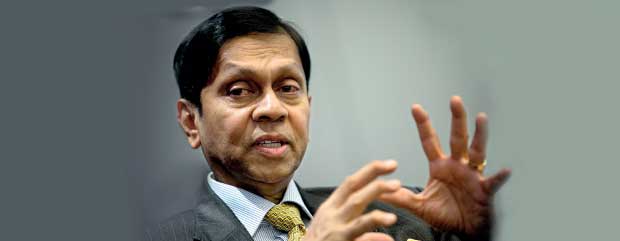
By Prof. Sirimevan Colombage Emeritus Professor, Open University of Sri Lanka Courtesy The Island

It would be a suicidal mission for the Central Bank to undertake inflation target-based monetary policy without strictly enforcing budget discipline by the government as I cautioned in my article in The Island of November 1, 2017. Although I anticipated it would spark a heated debate, several writers have expressed similar sentiments favouring my argument in their subsequent newspaper articles.

The point that I have raised is that the Central Bank alone cannot tackle inflation whilst the fiscal authority, which is the Ministry of Finance, continues to fuel inflation by financing its budget deficit through bank borrowings. The problem becomes acute when such borrowing is obtained from the Central Bank, which is known as seigniorage. It causes an increase in the monetary base accompanied by new money printing and multiple expansion of the total money supply leading to speed up inflation. Hence, reduction of the budget deficit becomes crucial in inflation targeting.

article_image

From monetary targeting to inflation targeting

Since the 1980s the Central Bank has been conducting monetary policy with a targeted monetary aggregate. Globally, monetary targeting is found to be problematic due to the instability between monetary aggregates and goal variables such as inflation. As a result, monetary targeting frameworks have been downplayed or abandoned in several countries.

A number of monetary authorities have begun to use inflation targeting for the conduct of monetary policy following the success in New Zealand which launched inflation targeting in 1990. Accordingly, the central bank assumes the responsibility of maintaining a pre-announced inflation target using a monetary policy tool such as interest rates. In this case, the Central Bank is totally accountable to keep inflation within the target. The success of inflation targeting depends on several factors. In particular, fiscal policy considerations should not dictate monetary policy.

The Central Bank is to embark upon a monetary policy framework in due course with an inflation target of 4-6 percent envisaging a decline in the budget deficit to 3.5 percent of GDP by 2020.Leaving aside the practical difficulties in attaining such an optimistic fiscal target, a disturbing feature in the Budget 2018 is that it makes no reference to the critical need of adhering to strict fiscal discipline in the context ofthe envisaged inflation targeting framework.

Blue-Green economy vs. fiscal rules

The theme of the Budget 2018 is “Blue-Green budget; the launch of enterprise Sri Lanka”. In my opinion, fiscal rules aiming at inflation target-based monetary policy should have been the underlying theme of the present budget speech rather than peripherals such as ‘blue ocean’ and ‘green environment’ that are given prominence in the Budget speech, though they may be important in their own right.

But as far as macroeconomic stability is concerned, nothing is important than enforcing fiscal rules so as to bring down the budget deficit, which has given rise to multiple economic hazards –toname a few, inflation, high cost of living, low real interest rates, overvalued exchange rate, anti-export bias,import rise, balance of payments deficits,uncertain investment climate and asset bubbles.

Unattainable deficit targets

The projected budget deficit for 2018 is 4.8 percent of GDP, according to the Budget speech. It is doubtful whether the actual budget deficit could be retained within this target next year, given the poor track record in the past and the possible spending spree with the upcoming elections. The projected deficit for 2017 was 4.7 percent of GDP as per last year’s budget speech, but the actual deficit has gone up to 5.2 percent of GDP.

A major reason for overstepping the deficit target is the accommodation of a large number of supplementary estimates each year to cover up huge amounts of additional expenditure, which were not in the original budget estimates. The most recent example is the seeking of parliamentary approval for supplementary estimates just two days ahead of the budget speech to the tune of Rs. 11,206 million to cover up the contingent liabilities incurred by several Ministries for foreign trips, vehicle maintenance etc. A series of such supplementary estimates were approved this year for purchasing of new vehicles for parliamentarians and similar extravagant expenses.

Elections goodies

In order to satisfy the voters so as to retain power at each election, politicians have a tendency to offer various welfare benefits to households such as handouts, cash transfers and food subsidies, and also to create jobs for them in the public sector. Such populist policy preferences invariably lead to raise the government expenditure, budget deficit, public debt, money supply, inflation balance of payments deficits. The outcomes are high cost of living, food shortages, subsidy cuts and various other hardships. This is the kind of political culture nurtured in this country throughout the post-independence period.

By and large, the society has got accustomed to the habit of depending on such benefits provided by the government to meet their basic needs. This dependency syndrome has led to inefficiency, corruption and various other economic ills pulling down the economy over the decades.

This process is continuing even now in the midst of the local government elections to be held soon. Just two days ahead of the Budget speech, for instance, the government reduced import duties on selected food items – potatoes, big onions, dhal, dry fish and sprats.

Fragile revenue outlook

Tax revenue is the main source of government revenue accounting for 88 percent of the total receipts projected for 2018. The entire burden of fiscal improvement falls on indirect taxes imposed for goods and services consumed largely by the ordinary people. The additional tax revenue expected for 2018 is Rs. 285 billion, of which as much as Rs 218 billion or 77 percent is to be collected from indirect taxes consisting of taxes on goods and services and tariffs on foreign trade.

The increased revenue to be generated from income tax in 2018 is only Rs. 67 billion accounting for 23 percent of the tax revenue hike. The generous tax concessions granted to investorsand widespread tax evasion have restricted the growth of income tax revenue over the years.

As a result, the indirect tax component will continue to remain high at 82 percent of the total tax revenue in 2018, in contrast to the repetitive policy announcements made by the government to reverse the indirect to direct tax ratio to 60:40. The government expects that the ongoing inland revenue reforms including the newInland Revenue Act would raise the revenue in years to come facilitating fiscal consolidation.

Unmanageable expenditure outlays

The recurrent expenditure is expected to account for 75 percent of the total government expenditure (15.8 percent of GDP) in 2018 leaving the balance 25 percent for public investment (5.4 percent of GDP).

As in the previous years, the bulk of the recurrent expenditure in 2018 will go to interest payments, salaries and wages, subsidies and transfers. The interest payments on accumulated public debt will be Rs. 820 billion.The widening fiscal deficits have compelled the successive governments to rely on extensive domestic borrowings and foreign commercial borrowings augmenting the debt service burden to unsustainable levels.

The expenditure on salaries and wages will amount to Rs. 705 billion next year. The government’s wage bill has gone up mainly due to an unprecedented expansion of the public sector with a huge work force running into over 1.3 million employees. In other words, one person out of every 15 persons is a government employee.

Welfare subsidies to households and transfers to loss-making state-owned enterprises amount to Rs. 507 billion. The populist concessions introduced in successive budgets have contributed to augment the subsidies and transfers continuously.

Fiscal rules essential for inflation targeting

In 2018, the banking system will be compelled to finance as much as Rs. 120 billion accounting for 18 percent of the budget deficit. This figure is likely to go up further in the background of this year’s phenomenal increase in actual bank borrowings to the tune of 170 billion as against the original estimate of only Rs. 32 billion indicated in the Budget 2017.

A part of the anticipated bank borrowings will undoubtedly be raised from the Central Bank by way of printing new money causing a multiple rise in the total money stock. The expansionary financingby fiscal authoritiesgoes against the Central Bank’s transition towards inflation targeting.

Central Bank’s lonely battle

This brings us to the problem of fiscal dominance over monetary policy, in which the fiscal authority prepares the annual budget on its own compelling the Central Bank to finance the unbridged portion of the budget deficit by way of printing money so as to secure fiscal solvency. In such a situation, the space available to the Central Bank to conduct independent monetary policy is extremely limited, and as a result, inflation targeting becomes unviable.

The expansionary borrowing by the government from the banking system has been a major source of core inflation, which shows an increasing trend in recent years, as shown in the Chart. The core inflation, which is calculated by removing the temporary price effects of supply shocks from the headline inflation, reflects the underlying inflation caused by monetary factors.

The present fiscal consolidation initiatives are limited only to the revenue side leaving the expenditure side intact. Inflation targeting calls for robust fiscal policy reforms to reverse the fiscal deterioration not only by mobilizing more revenue but also by rationalizing the expenditure structure for which unwavering political commitment is imperative.

The Central Bank cannot fight a lonely battle against inflation. Its inflation targeting drive would become futile unless it is effectively supported by stringent fiscal rules with a long-term economic focus putting aside short-sighted political motives, as I reiterated in my previous columns. This approach is lacking in the present Budget speech too.

Who are ‘My people’?

November 14th, 2017

By Shivanthi Ranasinghe Courtesy Ceylon Today

Last week, for Ceylon Today, Mirudhula Thambiah interviewed leader of the newly-formed political party, Rehabilitated Liberation Tamil Tiger (RLTT)-and a former LTTE-Intelligence operative for Trincomalee, Kandaswamy Inbarasa. Inbarasa declared that they have not been defeated, but have entered the democratic path to serve their people. If Inbarasa is to succeed, he must seek the truth and be truthful. Otherwise, he will either lead his people to the death trap his former leader Prabakaran did, or become a hostage to international powers, as Sri Lanka’s incumbent Opposition Leader Sampanthan.

When Prabakaran was alive, Sampanthan was forced to acknowledge him as the supremo, and the Tamils’ only representative.

Inbarasa recalls, “In 1994, Sampanthan was under the influence of the Government, and he was given a house and a vehicle. Our organization was dissatisfied with his stance. He was a politician groomed by our leader. LTTE Leader Prabhakaran said that intellectuals like Sampanthan should be protected even if he was not on the correct path at that time. Our community should safeguard our intellectuals, the leader said. Prabhakaran influenced the formation of the Tamil National Alliance (TNA) as a coalition of some Tamil political parties like the ITAK.”

Emelda Sukumar refutes this statement in her interview with Sunday Observer. She was the first Tamil woman to be appointed as a Government Agent of Killinochchi and Mullaitivu. She served for more than eight years, and was the Mullaitivu GA when the LTTE was at its strongest and weakest. She explains that most of the LTTE leadership had only studied up to Grade 5 and none beyond Grade 8. She asserted that their fall was because they undermined the values of the educated people.

Indeed, among the noted intellectuals assassinated by the LTTE are:

– 27 July 1975: Alfred Duraiappah – former Sri Lanka Freedom Party MP for Jaffna District and former Mayor of Jaffna; 20 April 1980: M. Canagaratnam, former TULF MP for Pottuvil; 26 June 1985: C.E. Anandarajah, educationist and former principal of St. John’s College, Jaffna; 12 February 1988: S Nadarajah, lawyer, politician and former member of the Senate of Ceylon; 01 May 1989: VM Panchalingam, leading Tamil civil servant and former Jaffna District Secretary;

13 July 1989: A. Amirthalingam, former Opposition Leader; 13 July 1989: V. Yogeswaran, former TULF MP for Jaffna District;21 September 1989: Rajani Thiranagama, university lecturer, human rights activist and feminist; 9 May 1990: Sam Tambimuttu, former EPRLF MP for Batticaloa District; 19 June 1990: G Yogasangari, former EPRLF MP for Jaffna District; Abducted on 30 August 1991 and executed thereafter, Chelvy Thiyagarajah, founder of feminist journal Tholi, International PEN award winner in 1992; 5 July 1997: A. Thangathurai, former TULF MP for Trincomalee District; 17 May 1998: Sarojini Yogeswaran, former Jaffna Mayor; 15 July 1998: S. Shanmuganathan, former DPLF MP for Vanni District; 7 November 2000: Nimalan Soundaranayagam, former TULF MP for Batticaloa District; 16 August 2004: BalanadarajahIyer, Sri Lankan Tamil activist, writer and poet; 12 August 2005: Relangi Selvarajah, Tamil broadcaster and actress; 12 August 2006: Ketheesh Loganathan, Tamil political activist, human rights advocate and deputy Secretary General of the Secretariat for Coordinating the Peace Process.

Therefore, Prabakaran did not “protect” Sampanthan because he was an intellectual. The Tamil National Alliance got Prabakaran’s support to win 16 seats from the North and the East and became LTTE’s political proxy. Thus with Sampanthan’s face, Prabakaran managed to infiltrate our Parliament.

Prabakaran’s legacy continues to dominate Sri Lanka’s politics because Sampanthan is still in Parliament. While the hardcore LTTE are still under detention and others spent time in rehabilitation, Sampanthan’s role had never been judged.

It was a strange twist of fate that Sampanthan outlived the younger, more ruthless terrorist who had his head metaphorically on the block. When Sampanthan accepted the LTTE as Tamils’ sole representative, he did it to save his life. He did so when the LTTE forcefully conscripted thousands of children without once protesting against this despicable practice.

Today, Sampanthan continues the LTTE legacy for his political survival. If he was to move out of this political thinking line, no longer insist on a merger of the Northern and Eastern Provinces, refrain from demanding more power devolution for Tamils, desist the devious plot to hoodwink the Constitution to say ‘unitary’ but be ‘federal’, would he still be the Opposition Leader? Would the west-led international community recognize a man whose alliance has only 16 seats from two provinces out of the nine as the Opposition Leader? Would they still claim democracy has been restored? Would they continue to ignore the group whose alliance has won over 50 seats from almost all provinces?

Self focus

Sampanthan’s only focus has been his political career. The LTTE may have established Sampanthan’s political career, but Sampanthan knew exactly where he stood with the LTTE. Having outlived his hostages, he is not grateful to them and certainly will not care for them.

It is the same with the Tamil Diaspora. Their own importance lies with how much confusion they create in the country. When enough fuel is poured to a small community to continue a demand that no other reasonable citizen will support, that country is distracted from developing economically and socially. This creates the grounds for interference in the name of ‘assistance’.

The ex-LTTE cadres are ostracized in their own community. It is to them that the Tamil Diaspora injects hope, by forming a political party, only to discredit it and disband it. Thus, as Inbarasa explains, it is one man who is behind the three political parties formed to represent rehabilitated ex-LTTE cadres and the Tamil community. That very same person is engineering disharmony among the ex-LTTE cadres.

Inbarasa is fudging

However, Inbarasa himself is fudging the truth. First, he says that they struggled for 30 years for a political solution. They did not. They engaged in terrorism to forcibly make two provinces as their exclusive homeland. Each successive Government, often with the international community, tried to negotiate with the LTTE, but they wanted nothing less than an exclusive homeland for “their people”. As such, it was not a political struggle, but an illegal armed struggle. Therefore, those still under detention are not political prisoners, but terrorists who engaged in crimes against humanity.

Second, he claims that the fight was not against the Sinhala or Muslim community. Then, why were so many innocents killed?

Third, he accuses “the former Government did not treat us well with any livelihood assistance.” Factually, a unique scheme was launched after the war by the International Organization for Migration (IOM) with the support of international donors. The project provided assistance to those who fought for the LTTE to help them return to civilian life in a dignified and timely manner. This assistance provided grants, jobs, educational opportunities or vocational training. They also provided specialist services that gave the ex-LTTE access to health, psycho-social and legal support.

Then, he outlines his vision as “to obtain equal rights for our people similar to the majority community of this country”. There are no exclusive rights for the majority community. Vithya’s murder trial was conducted entirely in Tamil. One reason those convicted need to wait five years for the Supreme Court to hear their appeal is because of the time needed to translate the judgement that runs into 5,600 pages. This is a privilege a Tamil has anywhere in Sri Lanka but not in countries like India, Malaysia and Canada that have larger Tamil populations than in Sri Lanka.

The above list of lives destroyed by the LTTE is not comprehensive. The same day that Selvarajah was killed along with her husband, leaving their daughter who was less than a year old orphaned, former Foreign Minister Lakshman Kadirgamar was also assassinated by the LTTE.

Nine days after Tambimuttu was killed, his wife also died from the gunshot wounds received from the same gunman. Their only child incidentally happens to be the same age as Inbarasa. While Inbarasa is from Trincomalee, Tambimuttu is from Batticaloa.

Tambimuttu was 15 years old when he lost his parents. Ironically, Inbarasa joins the LTTE exactly four months later on 9 September 1990.

The difference between Tambimuttu and Inbarasa today is that Tambimuttu no longer sees only Tamils as his people, but all Sri Lankans. Well educated, widely travelled, Tambimuttu refuses to harp the same rhetoric that had cost him so much. He is back in Sri Lanka and is also keen to serve, but by “his people” he means every Sri Lankan.

ranasingheshivanthi@gmail.com

The March of Folly The sad death of liberal Karu

November 14th, 2017

By Rajiva Wijesinha Courtesy Ceylon Today

The saddest casualty of the Yahapalanaya Government determination to abandon all pretence of promoting democracy, let alone good governance, has been Karu Jayasuriya. I once thought of him as a decent man, weak but never doing dastardly deeds on his own. When he first started abusing the Office of Speaker, I made excuses for him, and even wrote to apologize for harsh criticism since I thought he must have been affected by the family bereavement he suffered.

But his latest chicanery has convinced me that he is the worst Speaker this country has had to endure, totally subordinating the Legislature to the Executive with no attention to parliamentary norms. Previously I had thought Bakeer Markar the worst, beginning from the days when he admitted a second member for Kalawana into Parliament. This little trick precipitated a crisis when the Jayawardene Government then brought legislation to perpetuate this. The Supreme Court said, obviously, that this required a Referendum, which worried Jayewardene since consulting the country on such a subject was obviously ridiculous. My father came to the rescue declaring that, if the obnoxious extra member whom Bakeer Markar had brought in by sleight of hand resigned, he would let the matter lapse. Jayewardene told my father that he was required to report any vacancy (for the Elections Commissioner to then work on filling it), the operative word being ‘shall’. My father noted that the operative word was ‘vacancy’ and that, if he thought there was none, he was entitled to keep quiet.

Jayewardene argued that that was going against the Speaker’s decision, but my father said that he was not responsible for the Speaker’s illegal rulings, and he could not be bound by them as opposed to the law. He added that, if a case were brought against his decision, he should be allowed to defend himself, without the Attorney General’s Department confusing matters. Jayewardene was relieved and accepted the advice, and so the additional member for Kalawana lapsed.

This time round, in what is an even worse ruling, Karu also brought in the Attorney General’s Department for good measure. This was I think to obscure his own responsibility for perverting the Constitution and the ruling of the Supreme Court. After all, he needs to consult the Attorney General only about new Bills, so indeed what he did was in effect an admission that this was a new Bill.

And then, when the Attorney General threw the ball back at him in citing Erskine May and saying the decision was up to Parliament, he shirked the responsibility and took refuge behind the Attorney General’s inconsistent claim that a two thirds majority was enough. Since that figure comes from the Constitution, the more important provision in the Constitution, upheld by the Supreme Court, that anything affecting the franchise requires a referendum too, should also have been taken into account.

But Karu sadly is hell bent only on hanging on in office, and to do this he has to please those in power. Some years back, when Sagarica Delgoda wanted to send someone from the UNP to a meeting of the Council of Asian Liberals and Democrats, and mentioned Karu, I welcomed this since I thought he understood the basic tenets of liberal democracy. Characteristically, for her main focus was Ravi (who even elevated her to chair the holding company of the Hilton Hotel), she then sent Ravi instead, and for years he masqueraded as a Liberal while his Party was firmly entrenched in the international association of Conservative Parties.

But Karu I thought belonged to the liberal wing of the party, which I associated with Dudley Senanayake. Unfortunately, having floundered when he might have provided leadership that would have revived the national standing of the party, he has now turned into a time server, anxious only to please those in power. As when the historian George Dangerfield diagnosed the death of Liberal England, so too it now seems that, with this entrenchment of Jayewardene style authoritarianism, the last hope of a revival of the Senanayake’s liberal UNP has vanished.

Sri Lankan Dairy Farmers Get US$21M

November 14th, 2017

Courtesy TheCattleSite News Desk

SRI LANKA – US Department of Agriculture through the Food for Progress Program announced a new US$ 21 million project to help increase the productivity of Sri Lanka’s dairy sector, and connect thousands of Sri Lankan farmers to local and regional markets, Under Secretary for Political Affairs Thomas A. Shannon, Jr. said.

Mr Shannon was speaking at the US-Sri Lanka Partnership Dialogue.

“Renewing our commitment towards strengthening the bond between Sri Lanka and USA, the United States Peace Corps will work with the Sri Lankan government to return American volunteers to Sri Lanka’s English classrooms.

“As we know, English language ability opens doors to greater economic and educational opportunities, and opens a window on to a wider world. We stand ready with the talents of our best and brightest Americans in recognition of the progress Sri Lanka has made towards ensuring peace and stability for its entire people.

The United States will also offer a second US Coast Guard cutter to the Sri Lankan Navy, pending completion of Congressional notification.

“As the government of Sri Lanka moves ahead with its reforms to promote justice, accountability, reconciliation, and human rights, the United States will continue to partner with Sri Lanka to foster economic development and advance equal rights and opportunities for all persons in Sri Lanka,” Mr Shannon concluded.

TheCattleSite News Desk

Incorporating Ayurvedic Treatments, Sri Lanka’s Spas Are Worth The Trip

November 14th, 2017

I cover drinks, travel and food, and the intersection of all three. Opinions expressed by Forbes Contributors are their own.

Sunset fishing off the southwest coast of Sri Lanka.

Over the last few years, this tear-drop shaped country off the tip of India has become a travel writer’s darling. Earning accolades for its ring of beaches, enduring ruins, distinct cuisine, vibrant culture, and wild game-viewing, this up-and-coming destination” for tourists seeking India Light” was pure, untouched and unspoiled” and ready for its close-up.” Sri Lanka sounded like a veritable Shangri-La. Encouraged by high expectations set by effusive media praise, I booked a two-week trip to see for myself.

The truth, I would discover, was murkier than the crisp images printed in travel mags. For example, game parks were burdened by hours-long entrance lines and competitive (dangerously so) racing to spot animals. Traffic congestion snarled for hours beyond the capital. Ugly Chinese construction proved Asian developers were already reimagining parts of the island. However, despite my frustration with the disputable adjectives lavished, notably pristine” and undiscovered,” I was also surprised at how little was written about one of the island’s most compelling distinctions: Ayurvedic medicine and the accessibility of treatments through some of the world’s loveliest spas.

Combing ayuh” (life) with veda” (science), Ayurveda is one of the world’s oldest holistic wellness systems based on restoring balance between mind, body and spirit. Ayurvedic medicine has been passed down from generation to generation for 5,000 years in Sri Lanka. It outlines a healing scheme that offers rejuvenating pathways: from purifying skin, balancing and grounding the emotions, alleviating stress and fatigue, to treating a wide range of specific ailments,” according to the description on the Anantara hotel spa’s website.

You might call it Ayurveda Light,” what was offered at the hotels. The full spectrum of Ayurvedic medicine, as opposed to spa therapies, was offered in Sri Lanka’s Ayurvedic hospitals. But I was told by our driver treatments there were reserved for serious medical patients, not tourists. Either locals with calamities like broken bones or the rare foreigner who had flown in to treat cancer, he said. But unless your ailment exceeded a stiff back from the long flight to Colombo, the spas would suffice in providing an enjoyable introduction to the concept, especially since most employed trained specialists to preside over their programs.

Lauren Mowery

Breakfast at Kalutara overlooks the lagoon.

Anantara Kalutara

Starting at the Anantara Kalutara, the upscale hotel brand’s latest property an hour south of Colombo, I discovered a wellness center setting a new standard in serenity. On a secluded beach near the Indian Ocean and Kalu Ganga River, this sprawling resort offered private lagoon frontage. The property, inspired by the architectural vision of the late Geoffrey Bawa, Sri Lanka’s most famous architect, felt a bit out of the way and disconnected from the island. But for a peace-seeking mission, it was perfect.

The spa employed a resident Ayurvedic Specialist, Dr. Nadeesha De Silva. She wasn’t available the day of my treatment, so I met with a different professional. He assessed my dosha (energies believed to circulate in the body and govern physiological activity) and current state of health. After, I was escorted to a room and instructed to climb atop a wooden table and relax.

Flat on my back, hair strewn around my shoulders, I felt the first rivulets of warm oil from a stream positioned above my forehead. It drew ticklish trails down my ears and scalp and pooled around my head mimicking submersion in water. Prior to the treatment, known as shirodhara, I’d been instructed by the doctor to focus on my third eye. He advised this form of meditation would calm my restless New York mind, but instead it reminded me of the time I was told not to move during an MRI. By the end of the treatment, however, I’d relaxed enough to feel I’d sunk into the floor.

Outside of the spa, I took advantage of the pavilion to practice yoga and meditation, disciplines deeply connected to Ayurveda’s holistic approach to wellness. For those with little experience, the hotel offered a calendar of classes led by local practitioners.

Lauren Mowery

The Tsunami Memorial can be viewed on the road from Kalutara.

While the hotel’s wellness offerings were my primary focus, the nearby village of Kalutara offered an afternoon’s worth of exploring — the 12th century Richmond Castle, the world’s only hollow Buddhist shrine and Kalutara Vihara, held vivid murals illustrating Buddha’s life. Lobster restaurants in ramshackle joints offered the first chance to eat off hotel premises, a feat I’d find difficult over the course of the trip outside of Colombo. (As advised by our driver, due to concerns over sanitation, we stopped just twice for street food.)

Surprisingly for a hotel, Kalutara boasted one of the best restaurants I dined at in two weeks – Spice Traders. And while the Ayurvedic doc might have shaken his head at alcohol consumption, the sophisticated cocktail program incorporating local spices and herbs occupied a few hours’ time in the quiet of night.

Lauren Mowery

The lighthouse in Galle is a prime attraction.

Amangalla in Galle

After Kalutara, I headed south to Galle. The former trading port popular with tourists for its Dutch-colonial architecture, replete with old mosques and churches and a romantic lighthouse, also housed the Amangalla. Home to a beautiful spa, pool, and grounds, the hotel seduced with its nod to a genteel time (for some of the population, anyway). Built in 1684, a careful restoration of the edifice preserved every architectural and decorative detail. It was nothing short of transporting, a signature effect of the Aman brand.

Flinging my windows open to reveal an ocean view had a restorative effect. The room decor evoked a bygone era resurrected with antiques, a porcelain claw-foot tub, and a four-poster bed neatly pintucked with crisp white linens. I sat at the spindly desk to scribble a version of wish you were here” on a postcard stamped with a vintage scene of the hotel from several centuries back.

Lauren Mowery

Morning at Amangalla.

Any Amangalla spa experience should start with the booking of a private complimentary hour in The Baths.” The website even advises guests take the waters as a restoration for body and mind.” After my scheduled soak, I padded silently through the shadows to the spa desk. Cloaked in darkness lifted only by the candlelight of lanterns, the hallway’s lighting produced a dreamy effect.

The spa had five treatment rooms plus two hydrotherapy suites containing hot and cold plunge pools as well as steam rooms and saunas. The menu proposed a range of therapies, any one of which could be personalized by the Ayurvedic doctor. Treatments included massages, anointments, reflexology and scrubs. I chose a massage with aromatherapy, hoping to ease the pinch in my neck and shoulder inflicted by flying.

In the gray light of early morning, grass still dewy, I met the yoga instructor for an hour of pleasant stretching. She offered daily classes in the wooden pavilion. Normal breathe, normal breathe, relax” she advised as we swept our arms to the sky then bent down in our dogs. Normal Breathe.” That would become my mantra for the rest of the week.

Lauren Mowery

The Anantara Tangalle is one of the most beautiful hotels in Sri Lanka.

Anantara Peace Haven Tangalle

The last stop on my coastal circuit was another Anantara Hotel called Peace Haven Tangalle. Located on a gorgeous patch of secluded sand on the southeastern tip of the island, it was the property that most lived up to the promise of paradise . Coconuts in the swaying trees, landscaping sympathetic to the environment, beach chairs equipped with sundries, plus another magnificent spa, made the stay a highlight of the trip.

I opted for another Ayurvedic treatment, this time a massage using medicinal herb-filled sachets called pindas. The benefits, I read, were numerous. The packets carried anti-inflammatory properties and would aid in relaxation, detoxification, muscle flexibility, and improve skin moisture and circulation, among other things.

Again, I climbed on to a teak platform, as distinguished from the soft, padded massage tables used in the West. Warm compresses were applied to various places on my back and legs, and left to work their magic. I rose an hour later feeling lighter, refreshed, and reinvigorated.

The aura didn’t last long, however, as I spent the latter part of the day tasting wine and grazing. I met the sommelier in the wine bar El Vino then indulged in pasta and seafood at the cliffside fine dining restaurant Il Mare. Under the stars, hair brushed by warm winds off the Indian Ocean, how could I resist a second (or third) glass of wine? Peace Haven boasted the best hotel list in the country.

Lauren Mowery

Welligama beach is a surfers’ haven.

As two weeks wrapped up with a final night in Colombo, I thought about how the island had missed or exceeded expectations. Had I spent enough time in Sri Lanka to make such a calculation? On the road I had seen a concerning mix of unchecked development projects, yet tasted fantastic curries; sat for hours in traffic, but enjoyed Ayurvedic treatments in gorgeous hotels; wept at the monument to the tsunami victims, then met welcoming locals. I discovered a surfer’s paradise, drank a coconut from the tree, experienced the backbreaking labor of tea-picking, discovered a people just trying to carry on with life after decades of conflict, and was introduced to Ayurveda’s notion of healing mind and body together –the former, perhaps, the most enduring lesson from the Sri Lankans.

Lauren Mowery

Tea pickers in the highlands work incredibly hard.

When she’s not in a vineyard or the ocean, Lauren Mowery covers drinks, food & adventure/luxury travel. Follow her around the world 

Convict in Rajiv assassination case seeks suspension of life term

November 14th, 2017

Courtesy Deccan Herald  News Service, New Delhi, 

The Supreme Court on Tuesday asked the Centre to respond to a plea by a convict in Rajiv Gandhi assassination case to suspend his life term until the CBI probed the role of the man who prepared the improvised explosive device (IED) for the LTTE.

 The convict, A G Perarivalan, contended he has been jailed for 26 years for supplying nine-volt batteries, while the CBI had not investigated the role of the explosive maker.
 Advocate Gopal Sankaranarayanan, representing Perarivalan, submitted that the CBI’s Multi-Disciplinary Monitoring Agency (MDMA) has so far not conducted an investigation into the role of that man, who is lodged in a jail in Sri Lanka.
Rajiv Gandhi. DH file photo.
 “The MDMA, till date, has not questioned him while the man who supplied batteries has spent 26 years of his prime in solitary confinement,” he submitted before a bench of Justices Ranjan Gogoi and Navin Sinha.
 The convict, now 46, urged the apex court to use its power under Article 142 (orders passed to do complete justice) under the Constitution to suspend his sentence. He claimed that one of the suspects as per CBI’s MDMA, Kumaran Padmanaba alias KP, was the chief arms procurer for Liberation Tigers of Tamil Eelam (LTTE) at the relevant time and was presently in the custody of the Sri Lankan government.
 The court asked the Centre to file its response within two weeks. It posted the matter for further consideration on December 6.

Origin of Self-determination for Tamils is Tamil Nadu: Homeland for World Tamils is Tamil Nadu  

November 13th, 2017

Shenali D Waduge

We must first understand the premise that the same ethnic group cannot evolve in 2 different countries and both cannot seek self-determination separately in the two different countries. If we agree to this fundamental theory, we can move forward to see which country Tamils first birthed in for it is that country that must have the right to seek self-determination. Were Tamils born in Tamil Nadu FIRST or in Sri Lanka is a question no one has asked or even cared to answer. The answer is crucial to the solution. In terms of timeline the original demand for self-determination for Tamils was in 1938 in Tamil Nadu and not Sri Lanka.

Madras Province consisted of Tamil Nadu (Tamil speakers) parts of Andhra Pradesh (Telugu speakers), Karnataka (Kannada speakers), Kerala (Malayalam speakers) and ruled by British. Other parts of Andhra, Karnataka & Kerala were ruled by kings who were ‘subservient’ to the British. In 1947 with Indian independence, Madras Province was renamed Madras State.

It is important to note that the independence of Tamil Nadu movement started FIRST before it drew the interests of non-Tamil but Dravida language speaking others who wanted independence for states of Dravida Nadu. The Tamil Nadu Independence movement is very clear that its independence from Indian rule began far before the Dravida Munneta Kazagam in 1949 (DMK) or Dravidar Kazahagam (DK) were formed.

In the mid 1950s India divided itself along linguistic states and with that ended the Dravida Nadu demand. 17 September 1949 was celebrated as ‘Dravida Nadu Liberation Day”.

Dravidar Kazahagam (DK) became an offshoot of the Self-Respect Movement / Justice Party formed by Periyar E V Ramaswamy in 1925.

Dravida Munnertra Kazhagam (DMK) founded on 17 September 1949 by C N Annadurai after splitting from Dravidar Kazhagam (DK).

Justice party members Periyar E V Ramaswamy and C N Annadurai initially called for Tamil Nadu independence in 1938. Periyar also headed the Self-Respect Movement. Periyar went on to head the Dravidar Kazhagam (DK) and Annadurai the Dravida Munnetra Kazhagam (DMK)

Addressing a meeting in October 1938, Periyar declared

The best way to preserve the liberty of Tamils is to agitate for separation from the rest of India and the proposed All-India Federation”.

Periyar went on to become elected President of the Justice Party in December 1938 declaring its aim was the separation of Tamil Nadu from the rest of India. A few months before T P Vedachalam of the Justice Party founded Tamil Nation Liberation Association in August 1938.

The Justice Party was renamed Dravidar Kazhagam (DK) in 1944.

The Dravida Munnetra Kazhagam (DMK) was formed in 1949 by C N Annadurai. The same year Chelvanayagam formed the Tamil Nation party ITAK in Sri Lanka.

T M Parthasarathy on the DMK History says Tamil Nadu, Kerala, Karnataka, Andhra should each SEPARATELY become independent countries and THEN the four should join to form a ‘Dravidian Federation”.

Again what needs to be understood is that the terminologies of self-determination

Tamil Nadu’s bid for self-determination follows these argument:-

  • British India” was formed putting together independent princely kingdoms and territories.
  • Tamils lost their sovereignty with the fall of the 3 major kingdoms of Chera, Chola and Pandya around 1311 by Sultans, Nayaks, Maharaashtrians & Nawabs followed thereafter by arrival of Europeans – all of Tamil Nadu was ruled by colonial Britain while Pondycherry was ruled by the French.
  • 1947 – At independence Muslims in northwest and northeast objected to the creation of one country and so Britain created 2 countries – Pakistan & India. Tamil Nadu objected to this though Britain ignored this.
  • 1938 August – Formation of Tamil National Liberation Association (Tamil Desa Viduthalai Sangam) by T P Vedachalam of the Justice Party became the 1st Tamil Nadu independence movement.
  • 1938 October – E V Ramaswamy (Self-Respect Movement & later leader of Justice Party which became DK in 1944) declared the best way to preserve the liberty of Tamils is to agitate for separation from the rest of India and the proposed All-India Federation”.
  • 10 December 1939 C N Annadurai (founder of DMK) demanded independence –  ‘Tamil Nadu for Tamils’
  • 17 December 1939 Periyar of DK raised slogan Dravida Nadu for Dravidians” changing his earlier Tamil Nadu for Tamils’ but changed again to Tamil Nadu for Tamils’ in 1960s evidenced in the Viduthalai magazine. Periyar died in 1973.
  • 27 December 1939 – Provincial Tamil Conference in Vellore discussed Tamil Nadu independence.
  • 24 August 1940 – Justice Party State Conference in Thiruvarur passed a resolution that to protect Dravidian culture, arts and economy Dravidian homeland of Madras Province needed. Thus the Tamil Nadu Independence Movement transgressed into Dravida Nadu Independence Movement. (refer article on DMK & the Tamil Nadu Independence Movement”) From 1940 – 1962 calls for Dravida Nadu by DMK. The reason for this is said to be due to Telugu leaders A C Parthasarathy Naidu, Ragavaiah Naidu, K V Reddy Naidu all striving for Dravida Nadu independence.
  • The British delegation (Cripps Mission) that came in 1942 refused the request for a separate Tamil state upon Indian independence.
  • 1944 – C N Annadurai at DK Conference in Trichi India is a continent and it should be divided into separate nations(countries).”  There is no need for it to be under a single government”. India should be divided according to racial lines to prevent future bloodsheds”. Aryan dominance grows under a single Indian country. Other races are destroyed”. Dividing India into separate countries would allow for each to develop its economy according to its circumstances and prevent one region taking the wealth of another”.
  • 14 October 1947 – Dravida Nadu Separation Conference held in Cuddalore, Tamil scholar V Kalyana Sundaram speaking about Aryan-Dravidian problem. Resolution calling for Dravida Nadu independence passed.
  • V Kalyana Sundaram unveiled a map of Dravida Nadu at Dravidar Kazhagam Conference in Erode.
  • 8 November 1950 – Madras State DMK Students Conference passed resolution for the independence of Dravida Nadu.
  • 12-16 December 1951 – DMK State Conference called for ‘Dravida Nadu for Dravidians’
  • DMK leaders demanded independent Dravida Nadu during 1952, 1957 and 1962 election campaigns.
  • 13-16 July 1961 – DMK General Conference in Madurai called for ‘Dravida Nadu for Dravidians’
  • 16-17 December 1961 – DMK Special Election Conference in Coimbatore ahead of February 1962 General Elections called for ‘Dravida Nadu for Dravidians’. DMK won 50 seats at the State Legislative Assembly & 7 seats in the Indian Parliament. DMK founder C N Annadurai was elected to the Rajya Sabha in 1962 and in his May 1st maiden speech he reiterated demand for ‘Dravidians demand the right of self-determination….we want a separate country for Southern India’ His response to Indian President Dr. Radhakrishnan who said India was one country because Rama & Krishna are worshipped from Kanyakumari to Himalayas was Jesus is worshipped throughout Europe, yet there are many countries in Europe”.
  • 11 August 1962 – What is noteworthy is that when a by-election was held in Thiruchengodu following the resignation of Dr. Subarayan of Congress Party, Congress leaders campaigned asking people not to vote for DMK as it was a separatist party but the DMK candidate won leading to DMK leaders claiming it was a victory for ‘independence’.
  • 22 September 1962 – DMK celebrated ‘Dravida Nadu Independence Festival’ in Chennai with over 200,000 participating.
  • 1963 – Bids for separate independent Dravida Nadu & Tamil Nadu had to be abandoned when Indian Centre passed 16th amendment prohibiting anyone to advocate separatism.
  • 13 November 1963 – DMK abandoned independence for Dravida Nadu after Indian Centre threatened to ban it from contesting elections if it continued with the independence demand.
  • However, the 1967 election manifesto of DMK included the demand for increasing the devolution of powers of state governments. It won them a landslide victory no different to how TULF in SL won following the racist/separatist Vaddukoddai Resolution in 1976.
  • 1994 – Poet Pavalareru carried sentiment of freedom for Tamil Nadu till his death in 1994.
  • However, Thamizaharasan formed the Tamil Nadu Liberation Army (TNLA) in the mid-1980s though he was killed by the Indian Army though the group remains active.

What is noteworthy is that both Tamil Nadu and later Sri Lankan Tamils changed tactics – when the direct attempts to cede looked bleak they adopted the next strategy of asking for more devolutions without interference by the Centre to build the grounds to prepare to eventually cede. The present constitutional demands being made by racist Tamil leaders connected to the LTTE are very much aligned to this tactic & strategy. Even the call for a referendum in the North & East Sri Lanka is a copied version of the same call asked by Tamil Nadu far earlier.

However the quest for a separate Tamil state undeniably began in Tamil Nadu and not Sri Lanka. Open advocacy for it began in Sri Lanka only in 1976 with the Vaddukoddai Resolution

Some answers are certainly needed

  • Did Tamils seek self-determination when British was decolonizing? Yes & Tamil Nadu made this request before India was given independence but was rejected. It must be remembered that there was never a nation called India until 1947 when the British cobbled independent territories and kingdoms to declare independence as India. This means that every state that artificially turned into an Indian state has the right to argue for self-determination and this is what will lead to the eventual balkanization of India by the West as they did to the Soviet Union and Yugoslavia. There was no such demand for self-determination by Tamils at the time of independence in Sri Lanka – the Tamil elite were only worried about losing what they were disproportionately enjoying under British rule.
  • Where did the ethnic group Tamils originate? Where did the Tamil culture, language originate – it is where all these originated that can seek right to self-determination. The golden rule is – the same ethnic group cannot use the same arguments for self-determination in two separate and independent countries. In short it means – One & the same ethnic group cannot demand several mono-ethnic-homelands in different continents and countries – this is likely to create an ugly precedence globally, the UN and the West must NOT ignore this fact.
  • Isn’t it because Tamils in Sri Lanka descend from Tamil Nadu that both Tamil Nadu leaders & even the Indian Government are eternally interfering in Sri Lanka’s internal affairs to look into the ‘grievances of the Tamil people’. How do we differentiate Tamils who were either brought from Tamil Nadu or came as illegal immigrants from Tamil Nadu to Sri Lanka over the past centuries?
  • If the Tamils in Sri Lanka has no link to Tamils in Tamil Nadu why would they call themselves Tamils and why would India and/or Tamil Nadu keep interfering in Sri Lanka claiming the Sri Lankan Tamils to be their brothers/sisters?! Similarly, Sri Lankan Tamil leaders have themselves like Ponnambalam etc openly claimed they are proud Dravidians than Sri Lankans (Ceylonese). Again showing where the root allegiance lies.

So the place where the first calls initiated for self-determination is where the real Homeland of the Tamils is and that place is nowhere else but Tamil Nadu as can be seen from the examples and demands given above.

Therefore, it is very clear that the real Eelam or Homeland of Tamils is and should be in Tamil Nadu and nowhere else. Those claiming homeland in Sri Lanka must argue their case not as Tamils but in another name. The moment calls for a Tamil Homeland emerges it automatically rests in Tamil Nadu not Sri Lanka where all the ingredients for self-determination prevails.

It is possible that even Tamils in Sri Lanka and even Tamils in Tamil Nadu may not be aware of these ground realities. But its about time they did as should the Sinhalese leaders and citizens as well.

Independence for Tamil Nadu is our Birthright! We will ask for it! We will fight for it! We will achieve it!!

TamilTribune

http://www.tamiltribune.com

Shenali D Waduge

Further reading : https://www.spur.asn.au/2012/10/22/shouldnt-tamil-eelaam-be-in-tamil-nadu/

Canada, Transpacific Deal and the national interest

November 13th, 2017

Ranjith Soysa

Justin Trudeau did not sign the TPP, the trade agreement  which was the central issue of the recent APEC meeting held  in Vietnam.

He stated ” Let me remind everyone  Canada will not be rushed into a deal that is not in the best interest

of Canada and Canadians. I have always been very clear that I will stand up for Canadian jobs, Canadian

values, that is exactly what we will do here.”

The protection of the national economy should be the primary consideration of any policy maker

negotiating “liberal’ trade arrangements especially when such discussions are between a giant of

 a country and a small nation like Sri Lanka. Even to those who rush into invite  the unbridled

foreign capital the words of the Canadian Prime Minister should serve as a useful guideline unless

the decision  makers are keen on destroying purposely the Sri Lankan Nation State

Ranjith Soysa

Budget aims to make Sri Lanka a dependency – Part I

November 13th, 2017

By :A.A.M.NIZAM – MATARA

The lingerie designer Mangala Samaraweera who in his  eagerness to demonstrate his American and western slavishness signed without any hesitation the U.S sponsored UNHRC resolution No, 30/2015 against Sri Lanka betraying the sovereignty and the territorial integrity of the country and subjecting the country obligatory to implement malicious allegations against the country which included that our war heroes have committed war crimes and these allegations should be investigated by foreign judges and prosecutors, despite the commendable rescue operations carried out by our war heroes to rescue around 300,000 innocent Tamils who were held by the ruthless inhuman tiger terrorists as human shields, has submitted his maiden budget in his new capacity as the Minister of Finance.

This lingerie designer budget has completely transgressed from the usual norms of budgets which were tailored to focus on the expenditure/revenue aspects covering the ensuing year.  The critics point out that this lingerie designer budget’s strategic policy intends to cause a tragic shift in Sri Lanka’s economy and its destiny from autonomy to irretrievable dependency. They point out that the budget is intended to shift ownership, power, preferences and resources from national to foreign, from medium and small capital to big capital mainly foreign, from the working people including the middle classes to big capital, and from the peasantry to the comprador capitalists.

In his budget speech, Mangala claims our laws are archaic and emphasizes the urgent need to revamp our treasured laws such as Paddy Lands Act, The Excise and Customs Ordinance, Rent Act, Agriculture Lands Act, Shop and Office Employees Act, Labour laws and bankruptcy laws in order to induce and encourage foreign participation in building the country.   Critics also point out that the budget continues with the policy of robbing the ordinary people and making the rich richer. They say that the budget bears all the hallmarks of unbridled capitalism with curtailment of relief and burdening the people, and instead of increasing national production the budget has increased taxes. Some critics brand the budget as the Sale of Lanka budget” and say that it totally revisits to the open economic policy of 1977 which was proved an utter failure.

Critics resident overseas have pointed out that the lingerie designer is attempting to do through the budget the same complete abdication of the economy that he did with Foreign Policy where Pablo de Greiffs ,  Zeid al-Husseins, and Atul Keshaps can legitimately come to Sri Lanka to set the framework for judging, devolving, dissolving  and auctioning the country. They say that opening up all boarders via the budget goes parallel with closing  of borders between the so-called traditional homeland” of the Tamils and the rest of the country.

The agnostic Mangala who some months ago advocated to keep wine and liquor shops opened on Poya days and public holidays to facilitate the foreign tourists has placed much emphasis in his budget to his beer promotion policy.  He expects a major portion of the government revenue for the next year through alcohol sales. Addressing media in the parliamentary complex, he said that the government had introduced a price formula based on the alcohol percentage of liquor in the budget proposals and according to the global trends, majority of people of many countries consumed soft liquor such as beer and wine instead of hard liquor. But, in Sri Lanka, only 13% of alcohol users consumed soft liquor. He said.49% of alcohol consumers here are addicted to moonshine and we should save the general public, especially our youth from moonshine.  He said that drinking beer is healthier than drinking fizzy soft drinks which cause obesity and diabetes.

The budget has introduced a new tax structure for soft and hard drinks.  Accordingly all soft drinks will get its prices increased by about Rs. 50 per litre.  The price of a 2.2 litre CocaCola bottle will get increased to Rs. 350 from Rs. 250. The price of a bottle of GingerBeer will get increased to Rs. 320 from Rs. 220. The price of a bottle of Elephant House soft drinks will get increased to Rs. 75 from Rs. 50.  Meanwhile, there will be a drastic reduction of Beer prices.  The price of an imported Beer-Can will get reduced to Rs. 400 from the current price of Rs. 800.  The price of a bottle of Lion Larger beer will get reduced to Rs. 250 from the current price of Rs. 390.

In a ruse to show that he is against the beer price reductions the spineless Eunuch Sirisena is reported to have criticised the beer price reduction. This is another act of Sirissena’s baba-hukum” (I do not know but I came to know only through newspapers/TV) shows whereas it is reported that the matter has got the tacit approval of the cabinet before the budget was presented.  If Sirisena is genuinely against it why can’t he, as the President of the country, order to expunge the whole section related to liquor taxes from the budget? This cheat may be thinking that all Sri Lankans are stupid damn fools! Where the so-called Mathata Thitha policy had gone to? As per the latest reports in the grapevine there is speculation that Moonshine producers in the North Central Ptovince area (Sirisena’s area) have attempted to bribe Mangala Rs. 50 Million to get the beer prices increased again as this reduction would drasticall affect their business.  Is Sirisena’s  antipathy for reduction too a part of this game?

The Government Medical Officers Forum has, meanwhile, severely criticized Mangala’s claim that drinking beer was better than drinking sweetened soft drinks. The President of the Forum Dr. Roshna Bellana has said that the sugar content in beer is high and the beer promotion could have disastrous impact on the population. Warning that that the country would become a laughing stock if an attempt was made to promote beer as a healthy drink Dr, Bellana has emphasized that drinking of hard liquor, beer as well as smoking shouldn’t be promoted by any government under any circumstances. The President of Sri Lanka Diabetes Association Dr. Prasad Katulanda has also criticized Mangala’s beer promotion saying that the promotion of beer would cause a catastrophic health situation. He has pointed out that beer contains a certain percentage of alcohol and therefore a vast majority of beer consumers invariably end up taking to liquor consumption.

The convenor of the Joint Opposition Parliamentarian Prasanna Ranunga severely criticising the government said that the agnostic Mangala was trying to make this country blessed by the Lord Buddha by making three historical visits a country of drunkards and destroy the younger generation and said that all those who love this country should oppose the budget.

The leader of the National Freedom Front addressing the JO meeting at Anuradapura on 12th Sunday referred to Mangala’s Budget as Nalla Maley” budget and said the budget while imposing taxes on all possible fields has introduced measures to repeal all laws that protected the farmers, the working masses, small traders and local industrialists. He said that this  Nalla Maley” budget expects to double the amount of tax income next year.  He said that when the people of this country will become powerless due to extensive poverty the Indians and foreigners will creep into the country to buy our lands, industries and other properties and make this country a dependency


The Budget has allowed the import of cigarettes and cigars.

This proposal may have been made to facilitate foreign tourists.

In the run-up to the 2015 elections there were full page newspaper advertisements and TV ads by the vicious misinformation and mud-slings gangs saying that with the change of government even the poor segments of the people will be able to go in vehicles and become proud owners of cars.  The racist JHU also claimed that it is their objective to facilitate each and every family to own a vehicle.  Fooled by these advertisements, misinformation and campaign rhetoric many people unsuccessfully dreamed for this opulence during the last two years but only Ministers/State Ministers/Deputy Ministers and government MPs who get recurrent back aches got the most expensive luxurious vehicles. They thought at least this budget will allow them to realize their dream. Shattering all their dreams and hopes the exorbitant vehicle price increases in the budget have made their dreams illusory and never achievable. The vehicle importers in the meantime have exposed the idiocy of the budget proposal relating to slashing taxes on imported brand new electric vehicles.  At a news conference attended by Mangala and Finance Ministry officials it has been pointed out to this ignorant Minister and the officials that Japan does not export to Sri Lanka brand new electric vehicles, coming under the category of tax reduction, but export only reconditioned electric vehicles for which tax reduction is not applicable..

(To be continued on Part II)

SMALL COUNTRY LIKE MALDIVES IS FAR AHEAD SRI LANKA IN FISHING INDUSTRY LESSONS TO  LEARN-Part 2

November 13th, 2017

Dr Sarath Obeysekera

SUPPLY OF  MOTHER VESSELS  TO COLLECT AND STORE THE FISH  CAUGHT BY THE MULTI DAY LONG LINE BOATS AND TRANSPORT TO SHORE IN SRI LANKA

Purpose

In the light of GSP concessions granted to Sri Lanka by European Union,Sri Lanka expects a boom in Fishing Industry .Therefore the country needs to improve fish collecting method with enhanced quality of fish to be exported .

Current practice by fishermen in Sri Lanka where multiday vessels goes out to sea for a period of over 2-3 weeks to catch fish such as tuna ,store them in Ice boxes and transport back to the harbour .Most of the owners carry large amount of ice in holds and depend on the low temperature to be maintained in the fish holds with Ice .In the event of ice being melted harvest get rotten and high percentage of catch may have to disposed. Salt stcoks maintained on board will be used to make dry fish ,using the catch reaching the state of losing the freshness suitable for human consumption .

Over 21 days are spent by the fishermen in their multi-day boats. Once they leave the shore due to slow speed  ( 7-8 knots) of the boats to reach catchment  areas .They tend to spend 7days to sail to location, seven days to catch and another seven days to reach home ,They carry large amount of water ,fuel and ice in the boat thus depriving the fishermen in storing more fish.

Notes

Sri Lankan fishermen will carry ice made out of fresh water.

This can only bring down the fish temperature to + 2 deg C at it’s best.

Fresh water ice temperature at best will be at -1deg C.

Fresh water ice will remove heat from fish faster as it melts faster, it will melt by removing heat.

At this temperature keeping fish for more than 4~5 days will not maintain fish quality.

If properly bleeding and flushing are done and remove GUT and Gill and put in proper ratio they can maintain Tuna for about 7 days. But fishermen must remove water from melted ice from fish box or fish hold and keep adding fresh ice sufficiently to maintain quality of fish and temperature constant, variation of temperature will deteriorate fish condition.

Sea water Ice can bring down fish back bone temperature to about – 1 degree.

At this temperature fish will stay in in good condition for 10 days

If proper bleeding is done and remove GUT and Gill and put in proper ratio they can maintain Tuna for about 10 days. But fishermen must remove water from melted ice from fish box or fish hold and keep adding fresh ice sufficiently to maintain quality of fish and temperature constant, variation of temperature will deteriorate fish condition

Sea water ice will remove heat from fish slower than fresh water ice as it melts slower, it also will melt by removing heat. Due to density it takes more energy and longer time to freeze too, it will take longer time than fresh water ice to melt..

Sea water ice temperature at best will be – 4 deg C.

At this temperature fish will stay in in good condition for 8~10 days.

If properly bleeding is done and flush the blood circuit of the fish with fresh clean sea water or fresh water and remove GUT and Gill they can maintain Tuna for about 10 days. But fishermen continuously must drain water from molten from fish box and keep adding fresh ice sufficiently to maintain quality of fish and temperature constant, variation of temperature will deteriorate fish condition.

For flushing boats must carry a pressure pump with nozzle fixed to a hose to inject water into the water into the blood veins of the fish.

The mother vessel which is  proposed shall have an efficient Refrigerated Sea Water system. Refrigerated sea water must be adjusted to cool to – 4 degrees C

If one try to bring temperature below – 2 deg C, water in the sea water will start freezing inside the fish forming crystal like ice drops that will spoil the tuna fish. In fresh water it will be more.

Tuna fish of Ä” grade chilled to 0 ~ 2 deg C, within first 4 day if landed on shore can be consumed as Shashimi.

If require to bring temperature lower than – 2 deg C  one must freeze fish below- 12 deg C at back bone straight, best will be to bring down the temperature to – 14~14.7 degrees. This can be achieved only by means of brine freezing or blast freezing. After that immediately this fish must be stowed in cold room or refrigerated fish hold and achieve -18 deg C or below as a stowage temperature. Best stowage temperature for this kind of product will be between -20 – 25 deg C. if lower than that fish will become too dry and loose fresh taste when thawed, or become light when weigh for sale.

Next is Super blast freezing, as fish is caught to bring temperature below – 55 degree C and stow at – 60 degrees to consume as Shashimi, or sell to Japan.

The mother vessel  proposed shall have an efficient Refrigerated Sea Water system. Refrigerated sea water must be adjusted to cool to – 4 degrees C. Fish from the catcher boats to be preserved as explained above ( instantly kill the fish by hitting the brain spot on the head with a wooden hammer of batten not to allow the fish to struggle due to suffocation, remove gut and gill and put in ice in proper ratio 1 kilo fish to 1.5 kilo ice and maintain ice properly and until deliver to the mother vessel within 4~5 days, as soon as deliver to the mother vessel, the people on immediately put the fish pre chilled refrigerated sea water tanks in proper ratio -3 ~ 4 deg C temperature sea water maintain till the fish is lands on shore for butchering and loining them and deliver to the consumers with ice, if delivery will take longer than 1 day add packs of 100 grams of gel ice to each 1 kilo of normal ice with 1 kilo chilled fish

1)         If fishermen can afford you can fix slurry ice machine or horizontal drum slice ice (flake ice) machine on the catcher boats. There are small units that can produce 3 tons of ice of sea water daily consuming only  10 KW per hour,. Buy one or two of them from Korea, bring to Colombo open up and copy and start producing same in Sri Lanka. They use very simple components in those machines. Like 8 KW hermetic refrigeration compressor (like what you have in a domestic fridge in the houses), one small condenser receiver and a shell and tube chillier and two small pumps and small electronic controls. A simple slurry ice machine for catcher boats

2          recommend to buy a 1200 GT second hand reefer vessel built with 1 hold (250 Cubic meter) super freezing to stow and carry fish in 55 ~ 60 degrees C temperature for shashimi grade of tuna fish. Other two holds to maintain at -18 ~ 25 deg C. ( to carry material for canning or domestic use to cook curry or make other eatables) this fish will fetch at present 1800 ~2000 USD per ton if you maintain quality and sell to canneries in Bangkok as frozen light meat tuna for canning.

This vessel will have capability to carry 400 tons of fuel, 150 tons of fresh water, lot of space for provisions.

Suggest to install a 50 ton Sliced Ice (Flake ice) or Tube ice fresh water/sea water on shore with a 200 ton ice storage.

Suggest to build two blast freezers on board the 1200 ton vessel. 1 for super freezing,1 for normal blast freezing. Select a ship that has enough refrigeration capacity to operate blast freezers in her, if not install one additional compressor to cater for blast freezing.

Put a good quality controller (Marine Biologist) and an experienced fish grader on the 1200 Gt ship.

Produce Sliced ice or tube ice two full load for one hold on shore in the above said ice plant onshore. Produce ice for full store capacity prepare and put ice in normal gunny bags what we use now (not hessian cloth bags) and load and stow in one of the holds other than the super freeze hold.

The vessels of this kind will have a hospital room with lot of facilities on board, employ a doctor to stay on the ship to treat the sick in the hospital room of the vessel. Most of the vessels will have lot of utensils and other requirement for sick in the hospital room and ship’s medical chest to treat the sick crew. If any crew is sick on any vessel transfer his to the big vessel for treatment. If hospitalization is require transfer him to commuter boat and send to shore for further treatment.

Send and keep the 1200 GT vessel in the fishing ground and broadcast her GPS position to let the catcher boats to track her. Keep her fully stocked all what will require by the fishermen, provisions and fresh water fuel oil and ice, medicine and all else to supply to the fishermen. .

Let the catcher boats come to the 1200 GT vessel, deliver their catch once they have enough fish to deliver. The operator of the mother vessel and 1200 GT vessel can pay cash to fishermen buy and process on board if they wish..

For fresh fish trade you may put insulated FRP boxes stow ice and send to shore. On shore you can have a small EU approved packing facility for fish, you can employ tuna butchers who are experts to cut and loin fish, you process and vacuum pack them in sallow fin bags of about 125 micron thick put them in Styrofoam or Regiform boxes with ice and gel ice and export to Europe.

Through the grader and quality controller on board select A and B grade fish either freeze them to -55 deg C and stow them in ships super freezing fish hold or put them in above said Insulated FRP box with ice and transfer to mother vessel  and send to Colombo every week to export to EU after processing. The fish will fetch a price between 15/= to 20/= USD per Kg depending on the quality. Fish catcher boat people and people on 1200 GT ship and commuting mother vessels must be trained and teach them to maintain fish as explained above.

This way Sri Lanka can benefit very well from the tuna fish resources

1) A” grade fish in ice in FRP boxes to land every week.

2) A/B” grade fish to super freeze stow in the freezer hold of 1200 GT vessel, when full bring the ship to port to ship in super freeze transport containers (FCL or TEU). Or ship them on a Reefer Carrier.

3) Normal frozen fish when the ship’s  holds are full bring the ship to port transfer into reefer containers (FCL or TEU) or transfer into a carrier and export.

4) C” grade fish lowest quality fish transfer to the commuter mother vessel’s RSW tanks and send to the fish market for sale.

All spoiled fishes sell to make fish meal producers to make fish meal, this also fetches about 800/= Per ton.

Next, introduce pole and line fishing  .We  have enormous lot of bait fish around Sri Lankan waters Anchovies (Haalu Messa)  one of the fishes use as live bait for skipjack and tuna fishing. Or can aqua culture milk fish on shore to sell to the fishermen to use as live bait.

World catch is 3,500,000 tons year. Maldives catch about 125,000 tons and export as frozen fish about 55,000 tons a year. MIfco ( Maldivian fishing Company) 75,000 ton of skipjack and tuna a year were caught. And also produced and exported 40 TEU of canned tuna to European union every month. We had about 1100 Sri Lankan beautiful ladies in our employment in the cannery.

Maldives has only 30,000 fishermen and 6000 fishing boats.

Sri Lanka has 4,000,000 fishermen and 250,000 fishing boats.

Maldives earn close to 800 million dollars from fish exports.

Ministry of Fishery and Aquatic Resources and Ceylon Fishery Corporation intends to find a long lasting solution to assist the fishermen by deploying  Fish  Collector Vessels ( Mother vessels )  to facilitate the Multi Day Long Line Boats to store their catch at large thus enabling the fishermen to save time and energy to invest on enhancing the productivity thereby boosting the profitability along with an easy life at sea.

The proposal detailed below provides the methodology to implement the program.

Proposed Fish collector ( mother ) vessel shall carry sufficient amount of fresh water fuel and Ice an ice making machine and make them available to fishermen and be equipped with first aid and medicines and also with communication system to contact the shore and the navy in case of an emergency..

Number of boats the proposed mother vessel will serve is important to know  that there are hundreds of boats out there to get the services of the facility proposed.

In the event of a seriously sick fisherman on board fishing boat ,emergency medical attention shall also be provided and transport the sick person back to shore by the mother vessel.

Current practice incurs a considerable amount of money unnecessarily on fuel, other consumables, wear & tare and also results in losing their precious time that could have invested in maximizing the productivity at sea.

A separate company   with equity allocated to each party depending on financial and other type of input shall be formed

A Maldivian Company which has extensive experience in Fish Collecting and processing has also expressed their willingness to provide expert knowledge and join the Joint Venture as the Operator.

Dr Sarath Obeysekera

“Dual Citizenship Fiasco”

November 13th, 2017

Sarath Wijesinghe (Solicitor, Attorney-at-law, former Ambassador to UAE and Israel)

Restrictions on Dual Citizenship

It appears GK has given up” the fight having exhausted all possible remedies after the nomination of PG the next in line in the list to the Parliament, despite unforeseen and unfortunate personal tragedies. An energetic and committed MR supporter was trapped on the bait set for Rajapaksa Clan” to keep them away from active politics by MS and RW resulting killing many birds with one stone by the hurriedly passed 19th amendment to the constitution. There appear to be no international conventions which determine the laws of states available provisions to streamline the complicated nationality laws. The issue on nationality laws could be traced back to 1867 when Fenin Rising” an Irish American was charged with treason in Ireland. The British recognized perpetual obligations in a citizen issues and American Congress passed the Expatriation Act” in 1868 allowing Americans to freely denounce US citizenship. The British followed suit by formulation the British nationality law in 1948 removing restrictions on dual citizenship and in Sri Lanka now follows British principles, models and allowed dual citizenship to qualified Sri Lankans. Dual citizenship is applicable to a person whose Sri Lankan citizenship has ceased under S 10/20/21 of the citizenship act and other options are available for different categories in the act with many uncertainties and grey areas. Today grant of granting dual citizenship is liberalized unlike before.

Dual Citizenships in other countries

Dual Citizenship is applicable and allowed in Sri Lankan in special circumstance following U S A, UK, Switzerland and other counties where it is allowed and some countries such as Japan, Nepal, China, and Malaysia are countries restricting this facility/privilege to their citizens. By international customs each sovereign country has a right freely to determine who it will recognize as its national citizens. Nationality law is the law in each jurisdiction and the manner in which citizenship is acquired as well as how citizenship may be lost. A person who has no recognized nationality or citizenship is regardless stateless, yet they are global citizens who has rights are protected by the world community including the United Nations Organisation a world bodies. Indian labour force in Sri Lanka was once stateless who were granted Sri Lankan citizenship based on negotiations and agreements. Currently there are stateless global citizens in Myanmar, and African countries. States adopt different procedures laws and practices in restricting immigration control to non-nationals with strict border controls when the movement of immigrants’ takes place takes place continually despite restrictions and barriers. Most stringent and difficult border controls can be found in rich counties such as USA, Japan, UK, and EU countries with high economic levels when border controls in almost all states are streamlined today. Unofficial reports show Sri Lanka has over few hundreds and thousands of Indian, Pakistani, and other labour from other third world countries employed under the protection of errant politicians and employers. The amount is to be increased due to underemployment and want of labour in Sri Lanka with lazy attitudes of Sri Lankan labour.

Citizenship Act

Citizenship act (16/11/19480) of Sri Lanka was amended on 18/48, 4/50/13/55, 45/87/15/93/47/93/16/67 until incorporated on 22nd may 1972 with two categories of citizens based on descent and registration in order

to determine the states of citizens in Sri Lanka. British and states of English Law extended to commonwealth including Sri Lanka (Ceylon then) with introduction of British Nationality act 1948 until 1960 when UK tightened rules due to influx of the commonwealth citizens to the United Kingdom Citizens as of right as a member of the member of the commonwealth citizens until British Act of 1981 came into force with many restrictions to acquire British Citizenship. Sri Lanka being a colony followed the English jurisprudence law and conventions until Sri Lanka settled to be independent. One wonders whether Sri Lanka is still changed or settled to keep in pace with the changing world. There was mass exodus of Indian Labour brought by the colonial masters thereby the ethnic balance of the traditional up county was changed by the addition of the 11% population and full citizen was granted to almost all except few left voluntarily under the Sirima Sharathi pact”. Differences between citizen by decent and registration were introduced by incorporating the change of law to the legislature. Illegal immigrants have been a threat to Sri Lanka that changed the ethnic balance in the upcountry and brought about changes to the citizenship act that needs immediate and drastic changes.

Citizenship and validity of laws

Citizenship has a direct bearing on the election procedure and franchise Sri Lanka is enjoying from 1935 as a colony and from 1948 after independence embracing parliamentary democracy quite successfully despite long term terrorism by LTTE and ruthless killings and attempts to overthrow the legally formed government then- by JVP now trying to be in the mainstream indirectly siding with the government in power. Election law is introduced to the already complicated Legal system with a mixture of English, Roman Dutch, English and personal laws of major communities with barrage of case laws and highly contested litigation. Writ of Quo Warranto” against Geetha Kumarasinghe” challenging the validity of the election to the Parliament from the Galle PA list and unseating her by the Supreme Court, has shaken the Parliament with number of uncertainties with fears of unseating the entire list of candidates and changing the balance of the Parliamentarians as UNP 106, UPFA95, JVP6, TNA 16, EPDP1, and SLMC 1. Hastily passed 19th Amendment to the Constitution to prevent Rajapaksa clan” contesting future elections and extend the life of Parliament by 4 ½ years akin to the infamous referendum on 1982 to extend the life of Parliament by Lamb and Pot votes which resulted two JVP insurrections and rise of LTTE which has ruined the country taking decades backwards. Now that Piyasena Gamaga is nominated in place of Geetha Kumarasinghe ,It appears that the matter is resolved leaving many legal complications for the future. Is dual Citizen a Sri Lankan Lankan Citizen in the eyes of law declarations and affidavits? – may be considered as a grey area. But the legal position is that scar on the dual citizen is applicable only to Rajapaksa brothers and future contenders to be elected to the parliament with the impediment of being a dual citizen.

Citizenship and Election law

Most leading legal experts were involved in this highly contested case of GK of her eligibility to be a member of the Parliament on the grounds she is a dual national with Switzerland and Sri Lanka. In nutshell the court observed she has admitted at some stage on the facts of the nationality and tried to take back the Nationality in writing before nominations with her position she was never acquired a Switzerland citizenship though the host country allegedly have offered it to her based on her marriage. The case was fought in CAA and SC on facts with no impact on the Nationality Law or Election law thereby the arguments and views of all schools of thoughts are left unchanged with uncertain grey areas including the dangers of disqualifying the entire list of nominees on the grounds that the other political parties objected to her nominations rejected by the Election Commissioner’s agent the returning officer based on section 115 of the Act which accursing to him is not authorised to refuse the list of candidates. Now that the SC has determined GK has been a Dual Citizen will the list be cancelled or the opportunity is given to the next in line is the issue before the Executive not decided on the matter yet but prevented GK from entering the Chambers of Parliament. There was no litigation demanding cancellation of the entire nomination list!

Unanswered and unresolved matters

There are unanswered and unresolved matters that require clarifications and decision as a result of this episode that has bombarded the Parliament with accusations that there are over twelve members of Parliament holding dual or with other nationalities not known to the Election Commissioner. Had GK not mentioned somewhere of the issue she claims to have resolved before nominations her case too world be at a dead end as foreign countries are reluctant to give information to nationality matters unless requested by the state in question. There is expert opinion that the Speaker, Secretary General, Election Commissioner or even the Controller of Immigration can communicate with the respective Embassies would have resolved the matter before going through all the complicated and comprehensive procedure. Therefore it is timely for the speaker to write to the Embassies or states making inquiries for clarifications which amount to writing to the State but whether the speaker would take such a step is questionable and doubtful. For a citizen to initiate such an action there should be facts and materials to be submitted to the courts in a writ application.

This situation raises unfortunate and ambiguous situations for the country in need of expert expatriates productive and love the country and ready to serve as in other countries. In Israel Nationality law the citizen has the right to return and serve the state when most of the Israelis live outside motherland bu powerful in other parts of the world especially UAA, UK, West and developed countries.

Way Forward

It is time to rethink for changes to the outdate ineffective and complicated Nationality act towards more productive proactive peace of legislation to enable the expatriates holding different nationalities to serve the country better and to get them engaged and involved in political economic development programs with no or little restrictions maintaining the integrity of the country they are prepared to serve clearing the different and difficult areas preventing them return. The complications in the act are to be clarified and streamlined. Stigma and barriers based on the political enmities’ are to be removed with freedom to enjoy freedom of movement and return as in the Israel. Children of parents and grandparents of citizens by birth who was born due to fathers’ been academics international services who wants to get involved in serving motherland should be given opportunity to actively and deeply involved in local politics for development and prosperity of the nation whilst taking a cautious approach in granting dual citizenship. It is time to rethink and reconsider the legal basis of citizenship law on the needs current demands aspirations and challenges for development and prosperity.

Author takes responsibility to the contents and could be contacted on sarath7@hotmail.co.uk

Article titled ‘Sri Lanka’s military aren’t ready to be peacekeepers’ published by the Toronto Star on 3 November 2017

November 13th, 2017

High Commissioner for Sri Lanka in Canada

11th November 2017

The Editor
Toronto Star
1 Yonge Street
Toronto, ON

M5E 1E6

Dear Editor,

Article titled ‘Sri Lanka’s military aren’t ready to be peacekeepers’ published by the Toronto Star on 3 November 2017

I write with reference to the article titled Sri Lanka’s military aren’t ready to be peacekeepers by Member of Parliament Gary Anandasangaree, published in the Toronto Star of 3 November 2017.

Unfortunately, the content of the article does not portray the factual position regarding Sri Lanka’s contribution to UN peacekeeping missions, or the progressive developments in the country under the National Unity Government. Therefore, I would appreciate if you could kindly publish this response.

Sri Lanka values its membership in the UN which spans over 60 years, and is committed to contributing positively to its work. Sri Lanka’s contribution to the work of the UN, for long years, is well acknowledged. Since the election of President Maithripala Sirisena in January 2015, and the formation of the National Unity Government, Sri Lanka’s engagement with the UN has been renewed, reflecting the vision of the Government and the people of the country to re-engage with the international community and contribute to the UN’s multifaceted agenda including peacebuilding, peacekeeping, and sustainable development.

The Government’s commitment to the promotion and protection of human rights; ending impunity; upholding the rule of law; strengthening good governance and democracy; fostering reconciliation and sustainable peace; and ensuring equitable and inclusive development, for the benefit of all citizens, is firm.

Sri Lanka has contributed to UN peacekeeping missions for more than 50 years, and is committed firmly, to ensuring the best possible training and assessment for peacekeepers from Sri Lanka, in order to uphold the highest standards of peacekeeping. In keeping with this commitment, Sri Lanka works closely with the UN, and has put in place stringent vetting procedures for military personnel who are deployed to UN peacekeeping missions. Most recently, in order to ensure that all possible steps are taken to ensure the effectiveness of the screening procedure, the National Human Rights Commission of Sri Lanka was invited to also be part of this process. In September 2015, Sri Lanka endorsed the Kigali Principles on the Protection of Civilians; in August 2017, Sri Lanka pledged a contribution of US $ 10,000 to the UN Trust Fund in support of Victims of Sexual Exploitation and Abuse; in September 2017 Sri Lanka joined an initiative of the UN Secretary-General to sign a Compact to eliminate sexual exploitation and abuse; and demonstrating firm commitment, Sri Lanka also joined the Secretary-Generals ‘Circle of Leadership on the prevention of and response to sexual exploitation and abuse in UN operations’. This month, Sri Lanka endorsed the ‘Vancouver Principles on Peacekeeping and the Prevention of the Recruitment and use of Child Soldiers’.

Regrettably, Sri Lanka, similar to several other member states contributing troops to UN peacekeeping, has had to face situations where some of its troops had committed acts of sexual misconduct. The Government of Sri Lanka maintains a strict zero tolerance policy on sexual exploitation and abuse and accordingly, any such allegations of transgression by its troops, have been properly investigated, and the UN kept informed of the progress and the results of such inquiries and action taken.

When allegations of sexual exploitation and abuse having taken place in 2006 and 2007 implicating some members of the Sri Lanka military contingent deployed to MINUSTAH were brought to the notice of the Government of Sri Lanka by the UN at the time, prompt action was taken for their immediate removal from MINUSTAH. Two separate Courts of Inquiry were conducted by the Sri Lanka Army and the Sri Lanka Navy, and disciplinary action taken against any breach of discipline. The UN, as per due procedure, was informed of the processes followed, and the UN Secretariat has acknowledged in writing, action taken by the Government, and informed that the UN Secretariat, as of 29 September 2014, considers the matter closed.

In addition, the Government arranged for a one-off ex gratia child support payment to a lady in Haiti. The Under-Secretary-General for Field Support of the UN has, in a letter to the Government, conveyed the appreciation of the UN for this action taken and Sri Lanka’s communications and engagement with the UN on this matter, which not only serves as a best practice, but as exemplifying the spirit of the commitment and partnership between the UN and Member States.  Therefore, the accusation in the article, that victims in Haiti are still awaiting answers is incorrect.

Following the allegation of the rape of a Haitian lady in 2013, the Government extended the fullest cooperation to the UN investigation team in Haiti to inquire into the complaint. The Army also appointed a Court of Inquiry comprising senior officials who travelled to Haiti and met with a number of witnesses, including the alleged victim. They also examined medical and legal reports provided by the UN investigating team in Haiti and concluded at the end of the Inquiry that the allegation of rape was false.

It is regrettable that the errant actions of a few, which the Government condemns in the strongest terms and does not condone in any way, are being used to tarnish the good work carried out by a large number of dedicated and devoted Sri Lankan troops in UN peacekeeping missions.

The National Unity Government is determined to work with all the citizens of Sri Lanka and the international community including the United Nations in realizing its vision of a reconciled, peaceful, stable, and prosperous nation. It is with this sincerity of purpose that the Government proceeded to co-sponsor resolution 30/1 titled Promoting Reconciliation, Accountability and Human Rights in Sri Lanka”, in September 2015, and resolution 34/1 in March 2017 at the UN Human Rights Council, and work towards their adoption by consensus.

This vision is not one that can be realized in a hurry, no matter however much we desire to do so. But we are determined to achieve the best for all the citizens of the country and we are committed to processes of truth-seeking, justice, reparation, and guarantees of non-recurrence.

Since the matter of land was addressed in the article, I wish to state that nearly 82% of all the civilian land held by the security forces have been released. With regard to the Mullativu district of Sri Lanka, which is specifically referred to, the military has released a total of 20,784.16 acres of land as at 31 October 2017. A total of 6,704.87 acres of land is currently held by the military in Mullativu district, out of which 5,679 acres is state land and 1,025.87 acres is civilian land. A comprehensive plan is being worked on for the release of remaining land and for the payment of compensation. The accusation in the article that the army occupies as much as 60,000 acres of civilian land just in the Mullativu district”, is untrue.

Sri Lanka is presently at a historic moment when the two main political parties in the country are working together with a common vision for strengthening democracy, reconciliation and economic development, and to take steps to guarantee non-recurrence of conflict. This is the time when Sri Lanka requires the support of the international community to ensure that the lives, especially of those affected most by conflict, are restored, and they are given every opportunity required to rebuild their lives.

It is our fervent hope that all persons of Sri Lankan origin overseas would join hands at this time to support the people of Sri Lanka realize their long-cherished dream of peace, stability, and prosperity in a reconciled nation. .

Yours sincerely,

Ahmed A Jawad

High Commissioner for Sri Lanka in Canada


Rectify error of postponing PC polls: Wijeyadasa to Speaker

November 13th, 2017

Yohan Perera and Ajith Siriwardana Courtesy The Daily Mirror

MP Wijedasa Rajapakshe today has in a letter dated November 11 requested Speaker Karu Jayasuriya to abolish the Constitutional Assembly and take steps to rectify the error made by Parliament to postpone the provincial council elections by violating the Supreme Court verdict.

The former minister in his letter said the decision to appoint a constitutional assembly on March 9 2016 was illegal.

He the people had not given a mandate to set up a constitutional assembly because no party had secured a majority at the 2015 general elections. The traditional concept adopted by the whole world is that pledges given by a political party at an election does not hold true when that party had not secured a majority in the legislature,” he said.

Mr. Rajapakshe said a new constitution has to be approved by the people at a referendum and by a two-thirds majority in Parliament taking into account the MPs who were absent during the voting and that it was not possible to form another institution to exercise legislative powers under Section 76 of the Constitution.

He said it was possible to appoint a select committee if the legislature requires assistance of such a committee under Standing Order 94. However, he said it only provides provisions to appoint a special select committee comprising MPs with expertise on a particular sector pertaining to the drafting of the document.

Mr. Rajapakshe recalled that the Sirimavo Bandaranaike government had to appoint a committee which had no connection to the legislature to draft the Republican Constitution because there was provision to set up another body with legislative powers. He also said the 1978 Constitution was presented to Parliament because of the same reason.

“The people expected the government to follow a transparent process in enacting a new constitution but what had taken place today is that a number of NGOs, international advisers and pro-federalism idealists held the Steering Committee of the Constitutional Assembly to ransom,” Mr. Rajapakshe said in his letter to the Speaker.

Referring to the 20th Amendment, he said it was passed in Parliament by neglecting the Supreme Court verdict that the amendment could be approved only through a special majority in the House and through a referendum.

“You have the power to rectify matters whenever wrong decisions are made by the legislature and therefore it is your responsibility to do so. If not it is you who will be held responsible in the event of an unrest,” Mr. Rajapakshe said.

ඒකාබද්දයට එරෙහි අලුත් අවලාදකාරයන් ටිකක් මහින්ද පිලෙන්ම කුලියට ගනී- විමල් වීරවංශ

November 13th, 2017

අනුරුද්ධ බණ්ඩාර රණවාරණ මාධ්‍ය ලේකම් ජාතික නිදහස් පෙරමුණ

පළාත් පාලන ඡන්දයත් සමඟ ආණ්ඩුවේ මහින්දවාදීන්ට එරෙහි පරණ අවලාදවලට පණ එමින් ඇති බවත් ඒ අතර අලුත් අවලාදකාරයන් ටිකක් මහින්ද පිලෙන්ම දැන් කුලියට හොයා ගෙන ඇති බවත් පෙන්වා දෙන ජාතික නිදහස් පෙරමුණේ නායක විමල් වීරවංශ මහතා ඒ ජවනිකා බලමින් ඡන්දය දිනයේ දී ආණ්ඩුවට නිසි පිළිතුරක් ලබා දෙන ලෙස ජනතාවගෙන් ඉල්ලා සිටියි.

ඊයේ (12) අනුරාධපුරයේ දී පැවති දැවැන්ත ජන රැලිය අමතමින් ඒ මහතා මෙසේ ඉල්ලා සිටියේය.

එහිදී වැඩිදුරටත් අදහස් දැක්වූ විමල් වීරවංශ මහතා මෙසේ ද සඳහන් කළේය.

ක්‍රිස්තු පූර්ව 1-2 සියවස්වල තට්ටු නවයක ගොඩනැගිල්ලක් වූ ලෝවාමහාපාය ඉදිකිරීමට තරම් වූ ඉංජිනේරු දැනුමක් සහිත මිනිසකු බිහි කළ, ලෝකයේ පැරණිම රෝහල වූ මිහින්තලා රෝහල ඉදිකළ, ඊට අදාළ වෛද්‍ය විද්‍යාත්මක දැනුම සහිත මිනිසකු බිහි කළ, විස්මිත වාරි තාක්ෂණ දැනුමෙන් ‘සැතපුමට අඟලක් වන සේ’යෝධ ඇළ නිර්මාණය කළ මිනිසකු බිහි කළ භූමිය මතයි අපි අද මේ සිට ගෙන ඉන්නේ.

ඒ විතරක් නොවෙයි සාගත, නියඟ අතොරක් නැතිව ආවත් ශ්‍රී මහා බෝ සමිඳුන් රැකගත්, මහරජ ගැමුණුගේ සේනාවන්ගේ පා පහසලත් පුණ්‍ය භූමිය මේ අනුරපුරයයි. එවැනි උතුම් පුණ්‍ය භූමියක සිටයි අද අප මේ පරගැති ආණ්ඩුව ගෙදර යවන සටනේ මුල් අදියර එනම් පළාත් පාලන ඡන්ද සටන අරඹන්නේ. වාසුදේව සහෝදරයා පැවසුවා වගේ මේ ආණ්ඩුවට බොහෝ කලක් තටමමින් ඉඳලා අවසානයේ පළාත් පාලන ඡන්දයට අදාළ ගැසට් නිවේදන දැන් නිකුත් කිරීමට සිදුව තිබෙනවා. මේ බලවේගය සීසීකඩ විසුරුවා හරින්න, අපිව හිරේ දාලා දණ ගස්වන්න පුළුවන් වෙයි කියලා හිතලා තමයි ආණ්ඩුව මේ පළාත් පාලන ඡන්දය කල් දැමුවේ. නමුත් ඒ බලාපොරොත්තු සියල්ල සුන් කර ගෙන ආණ්ඩුවට දැන් පළාත් පාලන ඡන්දය දෙන්න වුණා. දැන් අපි අපේ වැඬේ හරියට කරමු. මේ ඡන්දයෙන් විජයග්‍රහණයක් ලබමු.

‘රටේ ලෙවල් එක පහත දැම්මා’

මහින්ද රාජපක්ෂ පාලනය මේ රට එක ලෙවල් එකකට ගෙනාවා. ආර්ථිකය, දේශපාලන ස්ථාවරභාවය, සමාජීය සංහිඳියාව යන සියල්ල යම් ලෙවල් එකකට ගෙනාවා. ඒ ලෙවල් එකෙන් පහළ ලෙවල් එකකට මේ රට ඇද දැමීම තමයි මේ ආණ්ඩුව කළ එකම වෙනස. මේ ද්‍රෝහී ආණ්ඩුව මේ රටට කරන්න පුළුවන් උපරිම විපත කරන්න දැන් පටන් අරන් තිබෙනවා. දෙමළ ජාතිවාදී බෙදුම්වාදයට උවමනා ආකාරයට මේ රට බෙදන වැඬේ මේ ආණ්ඩුව පටන් අරන් තිබෙනවා. අද ඇමෙරිකාවේ USAID සංවිධානය විකල්ප ප්‍රතිපත්ති කේන්ද්‍රයට රට පුරා ෆෙඩරල්වාදය පිළිබඳ දේශන පවත්වන්න සල්ලි පොම්ප කරමින් තිබෙනවා. එක්සත් ජාතීන්ගේ සංවිධානය මේ ෆෙඩරල් ව්‍යවස්ථාව හදන වැඬේට රනිල්ගේ ගෝලයන්ට පඩි ගෙවමින් සිටිනවා. ඇමෙරිකා එක්සත් ජනපදය හෝ එක්සත් ජාතීන්ගේ සංවිධානය ලෝකයේ කවර රටකට හෝ හිතවාදී ආණ්ඩුක්‍රම ව්‍යවස්ථාවක් හදලා දීලා තිබෙනවා ද?

එදා මේ බටහිර බලවේග තමන්ගේ කුලී සේනාංකයක් ලවා මේ රට යුද්ධයෙන් බෙදන්න හැදුවා. මහින්ද රාජපක්ෂ මැතිතුමන් ඇතුළු රණවිරුවන් එහි දී ඔප්පු කර පෙන්නුවා ‘මේ රට යුද්ධයෙන් බෙදන්න බැහැ’ කියලා. රනිල් සටන් විරාම ගිවිසුමක් ගහලා, චන්ද්‍ර්‍රිකා සුනාමි සහන මණ්ඩල පනත ගෙනල්ලා බෙදන්න ගිය රට ඒ සියල්ලෙන් රැකුණා. දැන් රනිල් වික්‍රමසිංහ බලනවා ඒ සියල්ලෙන් බෙදන්න බැරි වුණු රට නීතියෙන්, ව්‍යවස්ථාවෙන් බෙදන්න. මේ රටේ ඒකීයභාවය අවසන් කරලා දෙමළ ජාතිවාදී, බෙදුම්වාදයට උවමනා ආකාරයට දෙමළ ඊළම නිර්මාණය කර ගැනීමට පාර කපා දීම තමයි යමකුට මේ රටට කළ හැකි ලොකුම ද්‍රෝහීකම, ලොකුම පාවාදීම. මේ ආණ්ඩුවේ අයියලා අද ඒක තමයි කර ගෙන යන්නේ. එදා මහරජ ගැමුණු දිවි දීලා මේ රටේ ඒකීයභාවයට පණ දුන්නා. රටේ සිව් දිසාවේ ඒකම නීතියක් ක්‍රියාත්මක වන ආකාරයට කටයුතු කළා. ජාතියක් ලෙස අපි එකට නැගිට්ටා.

‘ආණ්ඩුවට තවදුරටත් ඉඩ දෙනවා ද?’

අද බලනවා, පළාත් ආණ්ඩුවට සියලු බලතල දෙන්න. පරමාධිපත්‍ය බලය නියෝජනයට ඉඩ ලබා දීම, ආණ්ඩුකාරවරයාගේ බලය බෙලහීන කිරීම, විධායක ජනාධිපතිගේ අතපය ගැටගහලා පළාත් සභාවක් මධ්‍යම ආණ්ඩුවෙන් ගැලවෙන විට ඒක නතර කරන්න බැරි කිරීම ආදිය ඒ යටතේ සිදු වේවි. එකට ඉඩ දෙනවා ද? ඒ දෙය කිරීමට මේ ආණ්ඩුව තවදුරටත් තබාගත යුතු නැහැ. පාර්ලිමේන්තුව තුළත්, ඉන් පිටතත් මේ ආණ්ඩුවේ බලය අවම කළ යුතුයි. පාර්ලිමේන්තුවෙන් පිටත, ජනතාව අතර මේ ආණ්ඩුව කුජීත වෙලා ඉවරයි. ඡන්දය තිබ්බාම මේක හොඳට බලා ගන්න පුළුවන් වේවි.

‘දැන් බස් එක ගිහින් ඉවරයි’

ළඟදී මේ රටට ආපු එක්සත් ජාතීන්ගේ සංවිධානයේ නියෝජිතයෙකු කුමක්ද කීවේ? ‘දේශපාලනඥයන් කුමක් කීවත් යුද අපරාධ චෝදනා එල්ල වන මේ රටේ හමුදා නිලධාරීන් මේ රටේ හෝ විදේශ රටවල අධිකරණ හමුවට පමුණුවනවා’ කියලයි කීවේ. මංගල සමරවීර විදේශ අමාත්‍යවරයා ලෙස ‘බලහත්කාරයෙන් අතුරුදහන් කිරීම්වලින් වැළැක්වීමේ ජාත්‍යන්තර සම්මුතියට’ අත්සන් කළාට පසු එම ජාත්‍යන්තර සම්මුතියට අත්සන් කරපු ඕනෑම රටක උසාවියකට, අපේ රණවිරුවකුට එරෙහිව පැමිණිල්ලක් ලැබුණාම ඔවුන්ට එරෙහිව නඩු පැවරිය හැකියි. ඒ අනුව තමයි බ්‍රසීල උසාවියක හිටපු හමුදාපති ජෙනරාල් ජගත් ජයසූරියට එරෙහිව නඩු පැවරුණේ. ජනාධිපති මෛත්‍රීපාල සිරිසේන මහතා අවංකවම හිතා ගෙන හිටියත් ‘රණවිරුවාව යුද අපරාධ අධිකරණ ග්‍රහණයෙන් මුදා ගන්නවා’ කියලා ඒත් වැඩක් නැහැ. දැන් බස් එක ගිහින් ඉවරයි. ජනාධිපතිවරයා මැදිහත් විය යුතුව තිබුණේ මංගල පින්සිරි විදේශ ඇමති ලෙස ජාත්‍යන්තර ප්‍රඥප්තියට අත්සන් කිරීම වැළැක්වීමටයි. එහෙම නොකර, එම ජාත්‍යන්තර ප්‍රඥප්තිය ශ්‍රී ලංකාව තුළ බලාත්මක කෙරෙන පනත් කෙටුම්පත විවාදයට ගැනීම දෙවතාවක් කල් දැම්මාට වැඩක් නැහැ. අපේ දරුවන්ට නිදහසේ හුස්ම ටිකක් ගන්න පුළුවන් රටක් හදලා දුන්නු රණවිරුවන් යුද අපරාධ අධිකරණ ඉදිරියට ගෙන යන්න ඉඩ දීලා බලා ඉන්නවා නම් අපි පණ ඇති ජාතියක් වෙන්න බැහැ. ඒ නිසා ඒ අපරාධය වෙන්න ඉඩ දෙන්න බැහැ. ඒ විදිහට අද රට දේශපාලනිකව අසරණ කරලා ඉවරයි. ආර්ථිකයත් හතරගාතෙන් ඇද වට්ටවලා.

‘ජාත්‍යන්තරය ජය ගෙන ඇත…’

වාහනවලට තෙල් ටිකක්වත් හරියට ගහගන්න බැරි ආණ්ඩුවක් තිබියදී විදේශ ආයෝජකයන් මේ රටට ඒවි ද? ‘ජාත්‍යන්තරය නම් ජය ගෙන ඇත. එහෙත් තෙල් ස්ටොක් එක සතියකටවත් ප්‍රමාණවත් නැත. හදිස්සියකට තෙල් ටිකක් ඉල්ලා ගැනීමට මොනම ජාත්‍යන්තර මිතුරෙකු ද නැත. ඉන්දියානු IOC සමාගම බාල තෙල් ගෙනැවිත්, ත්‍රිකුණාමලයෙන් ගොඩබාමින් ඇත. ඒවා නවත්වන්නත් මේ කොන්ද පණ නැති ආණ්ඩුවට නොහැක. (ජනතාවගේ හූ හඬ) අම්මපා මේ ජාතියේ බෙලහීන මඤ්ඤං ආණ්ඩුවක්. මෙහෙම ආණ්ඩුවක් ආපු නිසා තමයි අද තරුණ පරපුරට හිතෙන්නේ ‘මහින්ද මහත්තයාගේ ආණ්ඩුව මාර ස්මාර්ට් නෙ’ කියලා. පසුගිය දිනවල ‘නෙවෙස්කෝ ආර්යාවට’ ජනාධිපති ආර්යාවටත් වඩා තැනක් තිබුණා. එයා ආවේ නැත්නම් අපට තෙල් නැතිව අද අනුරාධපුරයටවත් එන්න වෙන්නෙ නැහැ. ‘බලය බෙදන්න කලින් තෙල් ටික හරියට බෙදපල්ලා’ කියලයි එදා මුහුණු පොතේ තරුණයෝ කීවේ.

‘මොකුත් නැති මංගලගේ අය – වැය…’

මෙහෙම ආණ්ඩුවකට රට ගෙනයන්න බැහැ. රජරට ගොවියා අසරණ වෙලා. උතුරේ ජනතාවගේ ආර්ථිකය කඩාවැටිලා. කිලිනොච්චියේ පවුලක අම්මත් වහ කාලා දරුවන් තුන්දෙනාටත් වහ දුන්නා. මේ ආණ්ඩුවට ඒවා වැඩක් නැහැ. උතුරට බෙදන්න හදනවා බලය. පසුගිය දිනවල මංගල පින්සිරි අය-වැයක් ගෙනාවා. ගොවියාට, රාජ්‍ය සේවකයාට, විගාමික ශ්‍රමිකයාට මේ අය-වැයෙන් මොකුත් නැහැ. ඇත්තේ බියර් බීමට අනුග්‍රහයක් පමණයි. මොකුත් නැති මංගලට හැක්කේ මොකුත් නැති අය – වැයක් ගෙන ඒමට පමණි.

‘ගණ දෙවියන්ට බිරිඳක් ගේනවා වගේ’

දෙමළ කියමනක් තිබෙනවා ‘ගණ දෙවියන්ට බිරිඳක් ගේනවා වගේ’ කියලා. ගණ දෙවියන්ගේ අම්මා පාර්වතී. ඇය ඉතාමත් රූමත්. ගණ දෙවියන්ගෙන් ඇය අහනවා, ‘ඇයි ඔබ විවාහයක් කර ගන්නෙ නැත්තේ?’ කියලා. ‘පාර්වතී වැනි රූමත් කෙනෙකු ලැබුණොත් විවාහයක් කර ගන්නවා’ කියලයි ගණ දෙවියන් කියන්නේ. මේ කතාව අහලා කෝප වුණු පාර්වතී ‘පාරක් පාරක් ගාණේ ගිහින් බිරිඳක් සොයාගෙන එන්න’ කියලා ගණ දෙවියන්ට කියනවා. ඒකයි ගණ දෙවි කෝවිල් තුන්මං හන්දිවල තිබෙන්නේ. පාර්වතී වගේ කෙල්ලක් එනකන් තමයි ඒවා තුන්මං හන්දියේ සිට බලා ඉන්නේ. මට පෙනෙන්නෙ අද මේ රට පාලනය කරන ගොඩක් එවුන්ට වෙලා තියෙන්නෙත් ගණ දෙවියන්ට වුණු වැඬේ. පාර්වතී ගණ දෙවියන්ට කියන්නේ ‘විවාහයක් කර ගන්න’ කියලා අර්ථයක් ඇතුවයි. දරුවෙක් මල්ලෙක් ඉන්න විටයි බරක්, පතලක්, අනාගතයක් ගැන සිතෙන්නේ. මේ නායකයනුත් ගණ දෙවියන් වගෙයි. නමුත් ගණ දෙවියන්ට නුවණ තිබුණා. මේ හාදයන්ට මොළයකුත් නැහැ.

‘බදු බර’

2014ට වඩා මෙවර අය අය-වැයෙන් රුපියල් කෝටි 98,400කින් බදු බර වැඩි කර තිබෙනවා. එදා රතු අලි පැටියා කට උල් කර ගෙන කිව්වා ‘බදු බර පටවලා රාජපක්ෂ පවුල රජ සැප විඳිනවා’ කියලා. ඒත් අද ඒ රතු අලි පැටියා මහන්සි වෙලා ගෙනාපු ආණ්ඩුව එදාට වඩා අද රුපියල් කෝටි 98,400ක් වැඩියෙන් බදු අය කරලා තිබෙනවා. මේ රටේ බදු ගෙවන අයෙක් 2014ට වඩා 2018 වසරේ දී වැඩිපුර රුපියල් එක්ලක්‍ෂ විසිදහසක බද්දක් ගෙවනවා.

‘2018 අප්‍රේල් 01 වැනිදා සිට…’

ඒ විතරක් නොවෙයි, 2018 අප්‍රේල් 01 වැනිදා සිට නව දේශීය ආදායම් පනත ක්‍රියාත්මකයි. ඒක ක්‍රියාත්මක වීමත් සමඟම මේ රටේ මැද පන්තිය නැත්තටම නැති වෙනවා. එමගින් අය කරන අලුත් බදු ප්‍රතිශත නිසා කර්මාන්ත, ව්‍යාපාර කඩා වැටෙනවා. මේ රටේ ආර්ථිකය ගැඹුරු ආගාධයකට ඇද වැටෙනවා. මහින්ද රාජපක්ෂ මැතිතුමා මේ රටට සාමය, ස්ථාවරභාවය හා ආර්ථික වර්ධනය ගෙනාවා. එහෙම ගියානම් දිගටම මේ රට නැගිටිනවා. ඒක වළක්වන්නයි මේ දෙන්නා බලයට ගෙනාවේ. මේ දෙන්නගේ එක කොන්ත්‍රාත්තුවක් තමයි මේ රටේ ආර්ථිකය බෙලහීන කරලා විදේශිකයන්ට එය ගිල ගැනීමට අවශ්‍ය ඉඩ හදලා දීම.

‘කිසිම වැඩක් නොකර ගත්තු ණය ට්‍රිලියන 4.7යි’

මේ ආණ්ඩුව බලයට ආවට පස්සේ රටේ ණය බර 64%කින් ඉහළ දමා තිබෙනවා. මහින්ද රාජපක්ෂ පාලනය සිය දසවසරක පාලනය තුළ (යුද්ධයකුත් කරල මහා මාර්ග නවීකරණය ඇතුළු දැවැන්ත සංවර්ධන ව්‍යාපෘති රැසක් අරඹලා) ගත්තු සම්පූර්ණ ණය ප්‍රමාණය ට්‍රිලියන 5.2යි. නමුත් කිසිම වැඩක් නොකරපු මේ ආණ්ඩුව මේ වසර තුන තුළ ගත්තු ණය ප්‍රමාණය ට්‍රිලියන 4.7ක්. ඇමති සැප විඳින්න, කාර්යාල, වාහන ගන්න, මේ පරපුටු ඇමති මණ්ඩලය වෙනුවෙන් තමයි මේ මුදල් වියදම් කරන්නේ.

‘මේකත් හරියට ලොතරැයිකාරයා වගේ’

මෙහෙම ණය ගත්තු මේ ආණ්ඩුවේ අයියලා ණය ගෙවන විටත් බද්දක් අය කරනවා. ඒකට නම දාලා ‘මැදමුලන බද්ද’ කියලා. මේකත් හරියට ලොතරැයිකාරයාගේ කතාව වගේ. ලොතරැයිකාරයා හැම තිස්සෙම කියන්නේ ‘අදිනවා, අදිනවා, අදිනවා’ කියලා. රෑට නින්දට ගියාමත් කියන්නේ ‘අදිනවා, අදිනවා’ කියලයි. රෑට නෝනත් බලන් ඉන්නවා. ඒත් අදින ඇදිල්ලක් නෑ. ඊට පස්සේ උදේට නෝනා ලොතරැයිකාරයා එළවා ගන්නවා. ‘පල යන්න උඹ ඇදපු ඇදිල්ලක් නැහැ’ කියලා. මේ ආණ්ඩුවත් ඒ වගේ හැම එකටම ‘රාජපක්‍ෂ, රාජපක්‍ෂ, රාජපක්‍ෂ’ කියනවා. වැඩක් වෙන්නේ නැහැ. දැන් අවුරුදු තුනයි. දැන් ජනාධිපතිවරයාත් ඇමැතිවරුන්ට කියනවා ‘මේ අවුරුදු තුන නිකම්ම ගියා. ඉතිරි අවුරුදු දෙක එහෙම යන්න දෙන්න එපා!’ කියලා. ‘මෙහෙම ආණ්ඩු දකින්න හරි වාසනාවන්ත වෙන්න ඕන බ්‍රෝ’ ෆේස්බුක් භාෂාවෙන් නම් එහෙම තමා කියන්න වෙන්නේ.

අපේ ආණ්ඩුව කාලයේ 2014 මුළු බදු ආදායම රුපියල් බිලියන 1050යි. 2018 මුළු බදු ආදායම බිලියන 2034යි. ඒ අනුව 2014ට වඩා 2018 දී ගන්නා බදු ආදායම දෙගුණයකින් වැඩියි. මේ පරපුටු පාලන තන්ත්‍රය නඩත්තු කරන්න විතරක් නොවෙයි දෙමළ ඩයස්පෝරාව සතුටු කරන්න දාපු අතුරුදහන් වූවන් පිළිබඳ කාර්යාලය නඩත්තු වෙන්නෙත් අපෙන් මේ විදියට ගන්න බදු මුදලිනුයි. රණවිරුවාට තොණ්ඩුව දාන අලුත් උසාවි හදන්නෙත් අපෙන් මේ අය කරන බදු මුදල්වලින්.

ජාත්‍යන්තර මූල්‍ය අරමුදලට ඕනෙ විදියට රටේ ආර්ථිකය නට්ටං කරන අතරේ විදේශිකයන්ට දෙනවා සහන. මේ අය – වැයෙන් සුද්දාට මේ රටේ ඉඩම් ගන්න තිබුණු බාධා ඉවත් කරනවා. චීන්නු, ඉන්දියානුවන් ඉඩම් ගනියි. මේ රට උන්ගේ කොලනියක් වෙයි. ජාතියේ අවසානය ඒකෙන් ලියැවේවි. මේ අපරාධය සිදු වන තුරු අපට නිහඬව බලා සිටීමට බැහැ.

තවත් දෙමළ කියමනක් තිබෙනවා ‘ගස් නඟින්න ආසා නම් ඝානාර් කුලයේ ඉපදෙන්න’ කියලා. ඝානාර් කුලය කියන්නේ රා මදින කුලයටයි. ඒ කුලයේ නම් තමයි ආසා වුණත් ගස් නගින්න වෙන්නේ. ඒ වගේම තමයි ‘යූඑන්පී කුලයේ’ ඉපදුනොත් තමයි මේ වගේ ආණ්ඩු බලන්න පුළුවන් වෙන්නේ. 2013 දී සිංගප්පූරුවේ දී දකුණු අප්‍රිකාව සහ තවත් යුරෝපා රටවල් දෙකක් එකතු වෙලා දෙමළ ඩයස්පෝරාව සහ මේ යහපාලන කල්ලිය අතර ඇති කරවපු එකඟතාව අනුවයි අද මේ ‘ෆෙඩරල් ව්‍යවස්ථාව’ හැදෙන්නේ. ‘පුංචි කාර් අඩු ගාණට දෙනවා’ කියපු පොරොන්දු ඉටු නොවුණාට 2013 දී සිංගප්පූරුවේ දී කොටියාට රනිල් වික්‍රමසිංහ දුන්නු පොරොන්දු තමයි අද ක්‍රියාත්මක වෙන්නේ.

‘අලුත් අවලාදකාරයෝ’

දැන් පළාත් පාලන ඡන්දයට පිට්ටනිය සකස් වී තිබෙනවා. ආයෙත් තාජුඩීන්, ලැම්බෝගිනි, රත්තරන් අශ්වයෝ ගැන අවලාද තොග පිටින් වපුරාවි. ආණ්ඩුවේ නාලිකාවලින් මේ සුපුරුදු අවලාද ගහන අතරේ අපි අතුරින්ම අලුත් අවලාදකාරයෝ හොඳ කුලියක් ගෙවලා ළඟට ගනිවී. මුන් මොන පිල්ලි – ජවුසං නැටුවත් පළාත් පාලන මැතිවරණය අවසානයේ අපි අපේ ශක්තිය පෙන්වමු. එක අරමුණකට – ඉලක්කයකට වැඩ කරමු. චිත්‍රපටයක් ඉවර වෙන්න විනාඩි දෙක තුනකට කලින් ගහන ‘එලාම් එක’ වගේ අපිත් මේ ‘පළාත් පාලන ඡන්දය’ ආණ්ඩුවට ගෙදර යන්න කලින් ගහන ‘එලාම් එක’ බවට පත් කර ගනිමු. රජරට, මැදරට පමණක් නොවෙයි මුළු රටම ඒ ‘එලාම් එක’ ගහලා ‘දැන් ගෙදර පලයල්ලා’ කියන පණිවිඩය මේ ආණ්ඩුවට ලබා දෙමු!”

අනුරුද්ධ බණ්ඩාර රණවාරණ
මාධ්‍ය ලේකම්
ජාතික නිදහස් පෙරමුණ

Residents of Perbál mistake Sri Lankan volunteers for migrants, call police

November 13th, 2017

Courtesy The Budapest Beacon

Police were called in the Pest County town of Perbál on Friday after local residents spotted three students from Sri Lanka and mistook them for illegal migrants, mno.hu reports. The three young Sri Lankans had come to work as volunteers in a home for injured and mentally disabled people in Perbál, and had scarcely been in Hungary one day before attracting police attention.

According to a Facebook post from a resident, the students, who have dark hair and skin, were spotted waiting for a bus to Budapest when police were called. The students are participating in a six-week volunteer program under the auspices of AIESEC, a UN-related global youth non-profit, where they assist at the Tovább Élni Egyesület (Live Longer Association), a Perbál home for injured and disabled children and adults.

Residents of Perbál mistake Sri Lankan volunteers for migrants, call police 1
Home for families with injured or disabled children in Perbál | Photo: Facebook/Tovább Élni Egyesület

In the local man’s Facebook post, he assures everyone that they are not migrants. They have passports, visas, student cards and plane tickets back home. So you don’t have to call the police again, once was enough for them.”

AIESEC also commented on the incident, writing that They came here to work as volunteers without pay with injured children and adults for the benefit of Hungarian society. They aren’t doing any harm, but rather giving to us. They aren’t taking our opportunities but creating them for the people they work with.”

‘Ethnic Frost’ Staring At Sri Lankan Tamils – OpEd

November 13th, 2017

By N. Sathiya Moorthy  Courtesy eurasiareview.com

With the three-day Constitutional Assembly session recently ending without any breakthrough, Sri Lanka seems heading for yet another era of ‘ethnic chill’ leading to a possible frost. The ‘long-ago exit’ of the LTTE may be a saving grace as the much-delayed, nation-wide local government (LG) polls, set for January, can challenge the pyrrhic stability at the Centre, carefully managed over near-three years of the Sirisena-Ranil government’s five-year term, ending 2020.

At the Constitutional Assembly session and outside, political stake-holders and their civil society backers have been reiterating their decades-old positions with boring repetition and practised ease. Even the timing of each move, starting with the promise of a new Constitution ahead of the historic presidential polls of January 2015, was well choreographed, as if by a hidden hand, as the various players were daggers drawn, both on the large stage for public-viewing and the small green-rooms where they respectively belonged.

The crescendo was again reached when the majority Sinhala-Buddhists’ Maha Sangha declared that the nation had to prioritise corruption, price rise and larger economic issues over a new Constitution. It was all well known that the prelates and other Buddhists monks held the key to any major decision on power-sharing with the minority Tamils, and that they would hit when, and only when, the iron was hot.

Confidence from the past that they could count on the latter to hit and halt any progress made on the ethnic front that seemed to have encouraged to commit themselves to a new constitutional formulation that was not to be, almost from the start.

Shadow-boxing

For the long years he has been in politics, observers of the Sri Lankan scene have known Sirisena only as a ‘silent torpedo’ ready to burst at the right time. Like on other issues en route to becoming President and afterwards, he has been waiting for the (Sinhala) public mood to set in, before striking back.

Even while going along with majority-partner UNP in the Government of which he is the head, President Sirisena has been having his last laugh on all matters administration after the Ranil camp had pushed itself to a corner. The ‘Central Bank bond scam’ and the ‘Hambantota equity-swap’ are only two of the more prominent ones.

On the very eve of the Constitutional Assembly session, called to discuss and debate draft proposals of the steering committee, Sirisena talked about setting up an all-party committee to go into the issues and concerns flagged, especially by the Maha Sangha. PM Ranil’s on-floor commitment to talk to the prelates and the rest before finalising the draft Constitution could not restore credibility and seriousness to the debate, which anyway was absent even without Sirisena’s declaration.

Through the past years since coming to share power, the Sirisena faction of the SLFP and the unified UNP have been indulging in a great game of shadow-boxing, trying to outsmart the other at every turn, even as they proclaim unity against the strong common enemy in the name of former President Mahinda Rajapaksa. The two are declared to contesting the LG polls on their own, with the UNP hoping to show the Sirisena faction its place in the nation’s electoral scheme, and re-negotiate the unsettled political terms of the past from a position of proven strength.

Without being able to delay it beyond now, the Government side has handed over to Rajapaksa, the Constitution issue, where he excels for reasons of contemporary history and traditional imagery.

During his post-war term as President, Rajapaksa delineated contested issues like primacy of Buddism, ‘Unitary State’ and ‘Executive Presidency’ and directed political negotiations with the Tamil groups, exclusively on attainable goals on the ethnic front. By promising a new Constitution even before coming to power, the present leadership bit more than the nation could chew, and deliberately so, with the result, the ethnic issue has also been allowed to be lost in the melee.

Tamil predicament?

Western sympathisers of the post-war Tamil community and political leadership may not have understood the in-built scenario-building already on in the majority Sinhala arena, all along. They also did not provide for the vertical split in the TNA leadership post-LTTE, though it was/is an elementary rule in politics that a strong leadership has to find its opposition only from within.

On the one hand thus, the TNA leadership in Parliament, where R Sampanthan is the Leader of the Opposition, is battling for the Tamil rights, both within the Constitutional Assembly and outside. Inside the party and the community, they are busier, trying to stave off the hard-liner challenge spearheaded Northern Province Chief Minister, C V Wigneswaran, identified and promoted by the Sampanthan leadership.

At issue was the demand for the immediate release of around 200 Tamil prisoners, retained from among the 12,000 ‘LTTE cadres’ taken into custody when ‘Eelam War IV’ concluded in May 2009. Truth be acknowledged, through the post-war years, the hard-liners, operating mostly as legitimate citizens in the West, have carefully repositioned themselves as the extra-constitutional authority back home, by adding on more recipes to their political fare to the international community.

It had started with the launch of the ‘trans-national government of Tamil Eelam’ (TGTE) only weeks after the conclusion of the war, sending jitters down the spine of the Sri Lankan State and Sinhala polity, and confusing the moderate TNA leadership even more after the exit of the LTTE. When the TNA and the Rajapaksa leadership began shedding mutual suspicions and were focussing on substantial issues in their negotiations, came the demand for ‘war-crimes probe’.

More recently, the Tamil concerns were focussed on ‘missing persons’, about which the present Government promised much to the international community but did precious little (as was only to have been gauged, given the complexities involved). The international community that backed the present team when in the Opposition, blaming the Rajapaksa regime for ‘shifting the goal-posts’ constantly either has not understood the present happenings or does not want to acknowledge it, as yet.

‘Nimitz’ parallel

The options before the international community are even more limited. It would look as if the Ranil leadership has got the West where he wanted, rather than the other way round. Should the dual-leadership experiment fail the nation ultimately, none of the stake-holders involved would have a place to go. Besides the international community, this includes the moderate TNA leadership, whose campaign for the Tamil vote against Rajapaksa alone got the present leadership to power.

If nothing else, citing economy and foreign debt as the reason, the Ranil leadership agreed to China’s debt-for-equity swap on Hambantota Port. Sirisena could project himself as the ‘saviour of the Sri Lankan cause’ in public but could not deny the Chinese their due, he having been part of the Team Rajapaksa that had entertained them in the first place.

Understanding the Government’s predicament and the internal divisions even more, sections within the JO have drawn a parallel to the Indian concerns over the Rajapaksa regime offering berthing facilities for Chinese nuclear submarines and the neighbour’s purported silence over the recent port-call by US nuclear-powered aircraft-carrier group under ‘USS Nimitz’. Some defence experts have also chipped in their views, which can have consequences in political, electoral and strategic terms, all over again.

LG polls and after

For now, the nation is tuning for the LG polls, with the Constitution-making taking a deliberate back-seat all over again, though it cannot be avoided as an electoral issue. The Ranil camp seems wanting it this way, as if to reverse the current drift in governance and head a coalition on their terms or fashion another one in its place. They hope that the continued SLFP-split will put them on the top in the LG polls and that which follow.

The Rajapaksa camp has set down conditions for working with the Sirisena SLFP, the long and short of it being snapping ties with the UNP, after blaming the latter for larger corruption than under their regime, state of the economy and even law and order situation. The Sirisena camp continues to be confused, hoping for yet another miracle to save the day.

The Rajapaksa camp also seems going by the numbers from the twin polls of 2015, when they got 47 per cent for the presidency and 45 for Parliament. They calculate that even with the Muslim votes but without the overwhelming Tamil backing, the rivals cannot win back the presidency.

Within the Tamil community, the hard-liners met with unprecedented post-war success on their call for boycotting Sirisena during his Northern sojourn. This has since been followed by the mercurial Jaffna University students returning to their old ways, this time over the ‘Tamil prisoners issue’, leading to an indefinite shut-down that has since been lifted.

In all these, the Constitution-making and power-sharing were never ever the issue. Instead, Catalonia-like referendum in the future in the Tamil areas could well assume the centre-stage, both in the Tamil and Sinhala communities, with the Muslims left in the lurch and hardening their own stand on the re-merger of the North and the East, all over again.

In between, horse-trading for power at the Centre could take the centre-stage, post-LG polls, with no one still talking about the need for an anti-defection law, a la the Indian neighbour. Leave aside the international community’s ‘growing concerns’ about the ethnic issue, and past promises of this Government on the war-crimes probe and the like, they may not even know whom to talk, and make sense out of it all.

Sri Lanka detains top Rajapakse aide on fraud allegations

November 13th, 2017

Courtesy MailOnline 

Sri Lanka Monday detained a senior aide to former strongman president Mahinda Rajapakse on allegations of fraud, the second official close to the ex-leader swept up in a blitz on corruption.

Gamini Senarath turned himself in to authorities on Monday and will face court over allegations of fraud involving the construction of the Hyatt Hotel in Colombo.

Police told a court last month that Senarath was wanted in connection with the disappearance of $27 million in state funds earmarked for the hotel building.

“He surrendered to the Colombo Fort magistrate’s court and was remanded till Wednesday when another hearing will take place,” a court official said.

In September another close aide of Rajapakse was jailed for three years for redirecting $4 million of government money toward Rajapakse’s unsuccessful 2015 re-election bid.

Lalith Weeratunga (3L) is escorted from the Colombo High Court in September after being convicted on corruption charges

The former top civil servant, Lalith Weeratunga, has since appealed the conviction.

Current President Maithripala Sirisena has vowed to investigate allegations that Rajapakse’s family and friends siphoned billions from Sri Lanka’s coffers during his nearly 10-year rule.

Two of Rajapakse’s three sons, including legislator Namal, have been charged with money-laundering. Those cases are still pending.

Other family members face allegations of corruption. The former president himself is not under investigation.

Finance Minister Mangala Samaraweera recently announced the freezing of $33 million in bank deposits belonging to members of the former regime, pending money-laundering investigations.

Supreme Court grants six weeks to Centre to clarify stand on Ram Sethu

November 13th, 2017

Courtesy The Economic Times

The Supreme Court today granted six weeks to the Centre to clarify its stand on the mythical Ram Sethu, a chain of limestone shoals between Indian and Sri Lankan coasts.

A bench of Chief Justice Dipak Misra and Justices A M Khanwilkar and D Y Chandrachud asked the Centre to file its reply in six weeks on a plea filed by BJP leader Subramanian Swamy.

Also known as the Adam’s bridge, the Ram Sethu is a chain of limestone shoals between Pamban or Rameswaram Island off the south-e ..

Read more at:
//economictimes.indiatimes.com/articleshow/61631394.cms?utm_source=contentofinterest&utm_medium=text&utm_campaign=cppst

Where clashes of geopolitics, politics and economic interests intersect

November 13th, 2017

Meera Srinivasan Courtesy The Hindu

Hambantota, a theatre for India-China geopolitical conflict, is also a battleground for the political aspirations of scions from two families

Home to about six lakh people and investments worth billions of dollars, the district of Hambantota, along Sri Lanka’s southeastern coast, is currently witness to at least three clashes.

At the geopolitical level, China and India have competing interests. From being almost invisible within the island to becoming the most-watched district in Sri Lanka, Hambantota’s image makeover with ‘mega development’ foretells Sri Lanka’s pivotal role in the Indian Ocean Region, more so after Colombo sold majority of its stake in the Hambantota port to China.

India in turn has offered to run the nearby Mattala airport, famous for its emptiness. While there is no final word yet, New Delhi is exploring options of using the airport facility to manage its own surging air traffic and to run a flight school.

Also watching from India’s side are countries such as the U.S. and Japan. They share India’s concern over the heightened presence of China, which pumped in billions of dollars into infrastructure projects in post-war Sri Lanka. China sees the port town as a valuable transshipment hub in its ‘One Belt One Road’ initiative.


A protest in Colombo in February this year against the proposed sale of stake in the Hambantota port.   | Photo Credit: ISHARA S. KODIKARA

In domestic politics, it is the constituency where Sajith Premadasa and Namal Rajapaksa are building their political futures. Their fathers, both former Presidents — Ranasinghe Premadasa and Mahinda Rajapaksa — rose to power with a strong rural backing.

Living in uncertainty

The third clash, which is the least apparent but the most telling, is that between the people of Hambantota, the animals inhabiting the district and the ‘development’ that is threatening to shake its ecosystem.

Our lives have remained uncertain from the time of the tsunami in 2004,” says G. Milani Harim, an aspiring politician who plans to contest local polls in 2018. People are in perpetual fear, worrying when their land might be gazetted for development activity,” she said, flagging the apprehension of farmers and fisher-folk who constitute over 90% of the district’s population.

With forest cover diminishing in the wake of development, locals point to an increase in incidence of human-elephant conflict — often leading to destruction of agricultural fields, damage to houses, and, at times, grave injury or death to humans encountering the tusker. At least 25 people in the district died between 2010 to 2017 succumbing to wild elephant attacks, local newspaper The Sunday Times reported. As many as 57 elephants got killed in the same period.

However, Prithiviraj Fernando, Chairman of the NGO Centre of Conservation and Research, argued that there is scope for pursuing both conservation and development. Nearly 6,000 elephants in Sri Lanka are found in 62% of the country’s expanse. Of those, 70% live outside national parks and that is because elephants can coexist with humans,” he said, countering popular anxiety. In his opinion, planned development where elephant paths are clearly demarcated with electric fencing can make a difference.

Development question

On the one hand are farmers, fishermen and community leaders like Ms. Harim who remain sceptical of the huge projects surrounding them. On the other are local businessmen who are counting heavily on the mega development and the investment they hope it will bring.

It does not matter if the investment comes from China, India or America, we want businesses in our district to benefit,” said K.A. Hemantha Padmalal, a former president of the Hambantota Chamber of Commerce, an organisation with representatives from the 4,000-strong local business community. India being like a brother” could invest in the local agriculture and information technology sectors and boost them, Mr. Padmalal said. India can also set up an automobile assembly facility, considering that car manufacturers in India transship their vehicles through the port,” he added.

Ms. Harim has a different perspective. In her view, development should speak to the needs of an entire family. Be it education, health, or access to jobs — all these should improve. At present, we can see the development, but not feel it.”

රනිල් මෛත්‍රී කෙස් වලු පටලවගනී. දීගය අවසානද?

November 13th, 2017

SL VLOG

https://youtu.be/EauEuUYrmf8

SMALL COUNTRY LIKE MALDIVES IS FAR AHEAD SRI LANKA IN FISHING INDUSTRY LESSONS TO  LEARN

November 13th, 2017


Dr Sarath Obeysekera

Budget 2017 has given a meagre amount of rupees to build boats of 55 feet or more length ,for which government intends to cover 50 % of the cost and to install ice making plants in multiday fishing boats

 I raised this matter at the forum organized by Ernest and Young ,on how does the government intend to implement such scheme.

Deputy Secretary to treasury promised to have weekly follow up meetings and ensure implementation of budget proposals.

Government or Ministry of Fisheries has no clue how to implement such a plan.

After a thorough investigation on how Maldives developed their fishing Industry which was far behind ours .I decided to educate our politicians and technocrats on how to proceed with such plan

As a boat /ship builder in Sri Lanka .we investigated how such a small country like Maldives has gone very far in developing fishing industry

This was 1977 when we opened our free market economy ……..

1977 Maldives drew a development loan from Kuwait Fund, just before president Nasir step down.

The Development project had 280 fishing boats of 45 feet with a 45 Hp, Yanmar Diesel, with all the navigational and lifesaving equipment..

Under the project a Boat Yard was developed and prior to that a young man was sent to Australia educated him in Naval Architecture.

A second generation fishing boat from the old Maldivian fishing dhoani ( traditional long wooden fishing boats in Maldives)  was developed and produced the boats. Up to then the fishing boats were of Maldives were owned by  Mudalalis” All the small time fishermen were working  for  Mudalalis”  and just earn daily bread living in huts. Government indiscriminately selected fishermen capable of handling and operating fishing boats. Boats were awarded to fishermen on hire purchase basis for a small price of about 8000/= dollars per boat. And gave an incentive of 10,000.00  $ for them to buy fishing gear and fuel and lube oil etc to begin the work.

In the meantime 3 mother vessels of 900 Gross Tonnage  were built in Korea, and 10 fish collecting boats with Cooling Faciities  were built locally to collect fish from the fishing boats and to deliver to the mother vessels for freezing and storing. Three  Salt water flake ice plants were built in different location.

1978 president Gayyoom’s took over and his government further developed by buying more second hand 1000 GT  mother vessels from Japan and a further 9 used collector vessels from Japan. Built further 50 numbers  3rd generation fishing vessels of 55 feet and gave to the fishermen who took interest to purchase the boats on hire purchase. After that Felivaru ( Fist Male Fish canning)   factory that was built during President Nasir time was upgraded and developed, 4 more collectors vessels built in Colombo Dockyard .

Today you see the difference Maldives fishing industry. Those fishermen who got the 45 and 55 feet boats has 80,90,100, up to 120 feet fishing vessel with fully air conditioned accommodation, with western style toilets fitted in them.

Those Maldivian fishermen sent their children to overseas universities for higher education.

Now Maldives has large cold storages and deep freezing facilities built onshore. With deep drafted wharfs in fish collecting and processing centers.

Maldivian  fishermen earns average 1500 dollars a month. Fishing boat master over 2000 dollars per month

Why can’t our Sri Lankan fishermen cannot earn same.

Sri Lanka is bigger and has better opportunities to develop this industry .

Ministers in the government talks about blue economy, but there no proper advisers to the government

We need a new budget to develop blue economy and dedicated government is a must

Dr Sarath Obeysekera

Yahapalana is going to turn Sri Lankans to landless citizens like Hawaii

November 12th, 2017

Shenali D Waduge

When Ranil Wickremasinghe Government took power in 2001 they allowed foreigners to purchase land and even coastal graveyards were bought. Returning to power again the Wickremasinghe Government has decided to continue to again facilitate sale of land to foreigners. What are the repercussions and consequences that the citizens will have to face in the future by governments with shortsighted gains? Greedy businessmen took Hawaii from Hawaiians – it can happen to Sri Lanka too.

Hawaii is made of 132 islands of which only 8 islands are livable. The eight major islands are Niihau, Kauai, Oahu, Molokai, Maui, Kahoolawe, Lanai, and Hawaii. Honolulu, the capital, is located on Oahu. Total population is 1.4million with a total 10,931 sq.miles. The state owns only 39% of land. In 1778, English explorer Captain James Cook arrived in Hawaii and its population declined by 80%. In 1794 George Vancouver, a British navigator, drafted an agreement with island chiefs to transfer ownership of the islands to Great Britain.

By 1878, the native population had dropped to an estimated 40,000 to 50,000 people. There are fewer than 8,000 pure Hawaiians living today. Most Native Hawaiians today have less than 50% pure Hawaiian blood. Fewer than 2,500 people speak Hawaiian as their mother tongue.

Japan bombed Pearl Harbor on December 7, 1941.

Hawaii has been invaded thrice – in 1941 by the Japanese, in 1920s by tourists and in 1893 by American businessmen who overthrew Queen Liliuokalani illegally annexing Hawaii to the US. Christian missionaries arrived in 1820. With time tourists didn’t care about Hawaii culture except to enjoy in a luxury hotel.

In 1877, some 400 American businessmen forming the ‘Hawaiian League’ planned to overthrow the monarchy forcing King Kalakaua to sign the revised Hawaiian constitution which meant cutting his powers (Bayonet Constitution) which never went for a vote because people opposed it. No different to the present sentiments by the public against Sri Lanka’s constitution. Queen Liliuokalani, his sister took over in 1891 after the King’s death and planned to rescind the Bayonet Constitution and replace with one restoring power to herself & the natives. What is interesting is that Queen Liliuokalani was a follower of Buddhism & Buddhist philosophy and followed the teachings of Buddha in her rule. She imposed restrictions on foreign immigrants and decreased reliance on imports and foreign trade. She rejected American businessmen’s requests for immigration reform and reestablishment of trade-routes. American missionaries helped plot her overthrow and annexation to US in January 1893 with the help of 163 strategically placed American troops. The Queens ‘non-violence’ attitude proved her downfall. The Queen was arrested in 1895 charged with treason forced to abdicate and give up her throne. The US was quick to change things to their advantage – even Chinese immigrants were denied entry. Act 24 vested power in corporations. Even the Hawaiian language was banned. English replaced Hawaiian as the official language of government, business and education. Children were punished in school for speaking Hawaiian.

We must wonder how many such are already stationed in Sri Lanka and look at the subtle manner Buddhism and the Buddhist ethos of Sri Lanka is currently being targeted to elimination – education, social, cultural, political, religious, constitution etc.

Native Hawaiians launched a massive petition drive to stop the formal annexation of Hawai’i to the U.S. Of the known population of 39,000 Native Hawaiians, 21,269 signed the petition. This was an incredible majority. But, Hawai’i was illegally annexed as a U.S. territory in 1898, along with 1.2 million acres of Hawaiian crown lands that had belonged to the monarchy and to the nation of Hawai’i. No compensation was paid to anyone.

Hawaii was administered as a U.S. territory until 1959, when it became the 50th state in August, 1959, following a referendum in Hawaii in which more than 93% of the voters approved the proposition that the territory should be admitted as a state. What was sold to the people was that America was working in the best interest of the Hawaiians & their economy. No different to the story sold in Sri Lanka. Hawaii’s natural resources became her downfall. Sri Lanka’s geopolitical position must its unknown & unappreciated resources will become Sri Lanka’s downfall too.

In 1983 President Ronald Reagan signed Proclamation 5030 granting US full control over all living and non-living resources within 200miles of US coastlines.

In 1993, Congress (President Clinton) issued an apology to the people of Hawaii for the U.S. government’s role in the overthrow and acknowledged that the native Hawaiian people never directly relinquished to the United States their claims to their inherent sovereignty.”

Apologies however does not return land to its rightful owners.

Hawaiʻi has one of the largest United States military populations in the world – 11 bases. More than 100,000 US service members and dependents live in Hawaii. A 2011 study by the RAND Corporation showed that military spending in Hawaiʻi was linked to 18 percent of the state’s economy, and direct military and civilian jobs made up 16 percent of the state’s workers (about 101,000 jobs).

An interesting article by Nate Gaddis in 2014 titled How much of Hawaii is concrete” a question most of us are now raising in Colombo viewing the massive structures coming up. Before tourism and U.S. military on the islands, agriculture was the biggest industry in Hawaii. Sugar, coconut, and pineapple formed the core of the plantation system. When the large plantations were established in the 1820s and 1830s, native Hawaiian men were employed as farm workers while Hawaiian women worked in the houses of white immigrants as maids and washerwomen. This is going to be the eventual outcome for Sri Lankans too.

With native Hawaiian population decreasing, importing of Chinese, Japanese and Portuguese took place and around 400,000 came between 1850 and 1880. This is no different to the importing of Tamils from South India by the European colonials to Sri Lanka.

Over the past century, 70 % of beaches on the islands of Kaua’i, O’ahu, and Maui have experienced long-term erosion. Everything and anything is now private owned and people are taxed. https://www.theguardian.com/technology/2017/jan/23/mark-zuckerberg-hawaii-land-lawsuits-kauai-estate

By privatizing water and sewer systems, local government officials abdicate control.

Privatizing local water and sewer systems usually does far more harm than good for our communities. In Hawaii, a privately owned water utility service costs 59% more than the public water service. After privatization, water rates increased at about three times the rate of inflation, with an average increase of 18 percent every other year. The situation is no different in other areas where privatization has taken place too.

What can be more humiliating than the thought of indigenous Hawaiians having to take a blood test to prove their land right! Will this not be the future of the Sinhalese too!

Shenali D Waduge

The Constitution of the Anuradhapura Kingdom

November 12th, 2017

Dharshan Weerasekera, Attorney-at-Law

‘Statutes are designed to meet the fugitive exigencies of the hour.  A Constitution states or ought to state not rules for the passing hour, but principles for an expanding future.’ – Benjamin Cardozo, The Nature of the Judicial Process

Author’s note:  The present paper is part of a proposed 2-Volume work titled, ‘The Principles that Must Guide a Future Constitution of Sri Lanka.’ Volume-1 deals with Western constitutional principles – i.e. Westminster Parliamentary principles, American separation of powers doctrine, and so on – which form an integral part of the constitutional history of this country.  It is impossible to entirely disengage oneself from that tradition if and when a new Constitution is drafted.

However, there is now widespread recognition among many Sri Lankans that, whatever may be the value of western constitutional principles, as far as Sri Lanka is concerned, they have not produced the expected results, such as ensuring the rule of law, good governance and so on.  Therefore, it is necessary to turn to the older constitutional traditions of this country in order to see whether they can supply what the western principles have thus far failed to deliver.

The purpose of Volume – 2 is to explore some of those ancient constitutional principles.  I focus on the Anuradhapura Kingdom – for purposes of this work defined as the period spanning roughly 65 AD – 460 AD (Vasabha to Datusena).  It is a period that is generally considered the most prosperous and peaceful in the long history of this country, and so the best period from which to extract principles that might be useful for today.  In the present paper, I endeavor to recreate the Constitution of the Anuradhapura Kingdom as it might have looked had it been written out in a single document.

In a future paper, I propose to comment on the different aspects of the Anuradhapura Constitution recreated here – for instance, the nature of the State, relations between the Centre and the Provinces, and so on – with respect to whether the principles that underpinned those particular aspects Constitution are still valid today, and if so, how we can incorporate those ancient principles into a modern Sri Lanka Constitution designed to meet the political, economic and social needs of the present.

I urge readers not to nitpick too much over the historical details set out here.  I am no historian.  I am mainly interested in getting at the principles behind the various institutions of State to the extent such principles can be extracted from the relevant historical facts.  However, if I have got either the facts or the principles wrong, I request readers, especially those with technical knowledge in fields such as ancient Sri Lankan history, archeology, epigraphy and philology, to tell me where I’m wrong, and point me towards the relevant source material.

The Constitution of the Anuradhapura Kingdom

Contents:

  1. The State
  2. Territory of the State
  3. Central and Provincial Governments
  4. The Law
  5. Social relations
  6. Buddhism

Article 1:  The State[1]

  • The King

All executive, legislative and judicial power reposes with the King

  • The Conduct of the King

The conduct of the King is controlled by:

  1. Personal moral/ethical code – Dasarajadhamma[2]
  2. Advice and guidance of the Mahasangha[3]
  • Duties of the King

The primary duties of the King are to:

  1. Maintain law and order[4]
  2. Provide for the national defence[5]
  3. Maintain and improve the irrigation system and other vital infrastructure of the State[6]
  4. Ensure the health of the people[7]
  5. Preside over important religious/cultural festivals and rituals – in order to prevent natural disasters, ensure good harvest, etc.[8]
  • Administrative Structure of the State

In performing his duties, the King shall function through the following 3 institutions:

  1. ‘Ekthan-Samyan’[9]
  • This is a Council of Ministers including a Prime Minister, and chaired by the King in person.[10]
  • This institution helps formulate the overall policies of the State, and proposes the necessary legislation to further such policies.[11]
  1. ‘Sabhava’ (Assembly)[12]
  • This institution is headed by an official called the ‘Pirinthi Rath’ and has jurisdiction over land matters including the power to pass laws and regulations with respect to maintaining the irrigation system[13]
  • This institution also hears appeals on both criminal and civil matters[14]
  1. ‘Lekam Geya’[15]
  • This institution functions under the Assembly, and is headed by an officer called the ‘Samdaruwan.’[16]
  • The institution is responsible for executing the decrees of the Assembly
  • The institution has a secondary set of officials called ‘Kundasalas’ who convey the order of the institution to the outstations.[17]
  • In addition to the above three institutions, the King is assisted in his duties by the following officials:
  1. The following three officials attend the King in person at all times, and are also ex officio members of the Ekthan-Samyan’:
  2. ‘Senapathi’[18] (Army Commander)
  3. ‘Bandagarika’[19] (Treasurer)
  4. ‘Purohita’[20] (Spiritual and legal Counsel)
  5. A number of officials of ‘Samdaruwan’ rank who are commissioned directly by the King with respect to particular subjects.[21] For example:
  6. Doctors
  7. Irrigation engineers
  8. Judges

These officials go on circuit throughout the country and report directly to the King.

Article 2:  Territory of the State[22]

2.1     Extent of the State

The State encompasses the entire island of Sri Lanka, bounded on all sides by the Indian Ocean.

2.2      Main Territorial divisions of the State

The State consists of 6 main units of Government with corresponding territorial divisions, as follows;

  1. Anuradhapura and the North Central Region[23]
  2. Uttara[24]
  3. Pashchina[25]
  4. Prachina[26]
  5. Malaya[27]
  6. Ruhuna[28]

2.3     Secondary Divisions

In addition to the above, there are smaller semi-autonomous areas, as follows:

  1. ‘Rata’[29] (A Rata is a combination of a number of ‘Gamas’ or villages)
  2. ‘Mandalama’[30] (A Mandalama is a combination of Ratas)

Article 3:  Central and Provincial Governments[31]

3.1     The distribution of powers between the Center and the Peripheral Units

The distribution of powers between the Center and Peripheral Units is as follows:

  1. Anuradhapura and the North Central region come under the direct control of the King or Maharaja resident in Anuradhapura.[32]
  2. The five main Provinces (Uttara, Pashchina, Prashchina, Malaya and Ruhuna) are ruled by kings (Uvarajas), Regents, Viceroys, as the case may be, appointed directly by the Maharaja in Anuradhapura, or are members of the hereditary nobility of those particular Provinces, but functioning under the overall sovereignty of the Anuradhapura monarch.[33]
  3. The Ratas or Mandalayas as the case may be are semi-autonomous units. Their relationship with the Maharaja in Anuradhapura is based on a Charter or contract with the Maharaja, with respect to specific subjects or areas over which the Maharaja has exclusive jurisdiction within those areas (for example, tariffs over certain specified types of goods), while other matters are left to the discretion of the locals.[34]
  4. A Rata is headed by a ‘Rataladda,’ below whom is a ‘Pasladda,’ followed by other officials such as tax collectors, judicial officers, etc.
  5. The aforesaid officials (i.e tax collectors, judicial officers, etc) are appointed by the King, and the residents of the Rata have a right of appeal against those officers in the event they find those officers to be abusing their powers including acting ulta vires of their powers.

Article 4:  The Law[35] 

4.1     The law of the land       

The primary law of the land is the accumulated body of customs of each institution of society.[36]  (The main such institutions are:  king, village, clan, caste and family and shall be further explained in Article 5 hereinafter.)

4.2     Secondary bodies of law

The aforesaid body of law is supplemented from time to time by the edicts, decrees and pronouncements of the king, promulgated in order to advance particular policies and objectives of the King.[37]

4.3     The power of the King vis a vis the law of the land

The King does not have the power to act contrary to the customary law or to change or repeal any part of it.[38]

4.4     Who decides what is or is not the customary law of a particular institution of society

In finding out what is the customary law applicable to a particular institution of society, the King must consult the authorities and/or experts recognized by the customary law of those institutions as being persons competent to pronounce on or interpret the law at issue.[39]

4.5     The jurisdiction of the king over particular categories of offences

The King has jurisdiction over the following matters:

  1. All violations, infringements, and/or usurpations of the decrees, edicts and pronouncements of the Central Government, i.e. the King and related institutes of state
  2. All capital crimes

Article 5:  Social Relations[40]

5.1     The institutions of society

There are five main institutions of society:

  1. King
  2. Village
  3. Clan
  4. Caste
  5. Family

5.2     The King

This institution is a legal/religious construction.  The authority of the King derives from a contractual relation between the King on the one hand and the subjects on the other, and is sanctified by religion.

5.3     The Village

This institution is a political unit.  It is the smallest political unit of the State, and consists of a collection of extended families of a particular caste.

5.4     The Clan

The Clan is an ethno-racial construction.  It is an identity shared by a group of people and can include different castes.

5.5     Caste

Caste is determined by a person’s occupation or livelihood, and is accompanied by a host of social and cultural rules as to how such person should behave or act in his or her interactions with members of the other castes.

5.6     Family

Family is a unit based on blood-relations and can include an extended family, consisting of a number of smaller nuclear families.

Article 6:  Buddhism[41] 

6.1     Position of Buddhism in the State

Buddhism is the State religion, which is to say, the religion of the King and the majority of the People of the country.[42]

6.2     The role of Buddhism

The role of Buddhism as the State Religion (as opposed to personal religion) is to provide cultural cohesion, intellectual depth and moral guidance to the State.[43]

6.3     The relationship between Buddhism and the State

The relationship between the State and Buddhism is one of mutual dependence or symbiosis – with the State committed to protecting and fostering the institutions of Buddhism (i.e. the Sangha and related institutions) and those institutions in turn committed to providing the three services set out in Article 6.2 above.

6.4     The duties of the State in protecting and fostering Buddhism

The duties of the State in protecting and fostering Buddhism are:

  1. Building and maintaining temples, stupas, Buddha statues, and so on.
  2. Providing food and other material needs for the upkeep of the Sangha
  3. Giving patronage to important religious festivals
  4. Building, maintaining and advancing Buddhist Centers of Learning.

6.5     The reciprocal obligations of the institutions of Buddhism with respect to the State

The reciprocal obligations of the institutions of Buddhism with respect to the State are to:

  1. To make themselves available to preside over all important State festivals and functions.
  2. Maintain Centers of Learning capable of producing scholars the highest caliber capable of expounding on Buddhist doctrine, but also on other subjects, including law, essential for the functioning of the State.[44]
  3. Make themselves available for public discussions, lectures and debates on Buddhist doctrine.
  4. Diligently work towards providing from among themselves (i.e. the member of the Sangha) persons who have attained one or more of the levels of spiritual/mental refinement recognized in Buddhist doctrine, to wit – ‘Sovan,’ ‘Sakrudhagami,’ ‘Anagami’ or ‘Arahat’ – so that they can be living examples of the strength of the doctrine, and be a light not just to the country but to the entire world.[45]

To the best of my knowledge, the aforesaid system of government helped the Sinhalas reach the very pinnacle of peace and prosperity during the Anuradhapura Kingdom, and sustained their civilization in subsequent years until 1815, when the last Sinhala Kingdom, the Kandyan Kingdom, fell or rather was ceded by the Kandyan Chiefs to the British.

The aforesaid system also helped the Sinhalas protect their identity and independence during their darkest days, especially during periods of foreign invasion.  This latter included nearly three centuries between of sustained assault, from 1500 to 1800, by three of the most powerful European powers of the related period, the Portuguese, Dutch and the British respectively.

What remains is to consider which elements of this system are still valid today, and how we can incorporate such elements into a modern Sri Lanka Constitution capable of meeting the political, economic and social needs of the present.

The reader will see even at a cursory glance that, there are certain elements in the Anuradhapura Constitution recreated here, that are not viable today.  For instance, recreating the monarchy is no longer an option.  Similarly, recognizing social divisions such as caste at the level of the Constitution is no longer feasible or moral.  However, there are other elements that hold great promise and relevance for today.

For instance, it is clear that the Anuradhapura Constitution permitted and in fact was predicated on a diffusion of power between the center and the provinces.  It appears there was in ancient Sri Lanka what in modern parlance could be called a ‘federal’ system – at any rate an arrangement that followed the principles of federalism as set out in authoritative modern dictionaries.[46]

This should be instructive to those Sinhalas who are obsessed with the word ‘Unitary’ when it comes to discussions as to the system of government they prefer.  To digress a moment, generally speaking, persons who have been in a position to contribute in material ways to determining if their country will follow a ‘Unitary’ system or a ‘Federal’ system have understood ‘Unitary’ to mean a system where the members of subsidiary legislative bodies, if such exist in the country, are appointed by the central government.

For instance, the above is the way that Nehru understood the word ‘Unitary.’  Extracts from the draft minutes of a crucial meeting of the Union Constitution Committee which he headed, contains inter alia the following:

‘Pandit Nehru stated that the point [i.e. whether India should be a unitary State with provinces functioning as agents or delegates of the central authority, or a federation of autonomous units leaving certain specified powers to the centre] was discussed… and its conclusions were as follows:  1)  that the Constitution should be a Federal structure with a strong centre…etc., etc.’[47]

The point is this.  If one understands by the word ‘Unitary’ a system where the legislatures of the peripheral units are agents or delegates of the central legislature, Sri Lanka does not have such a system now, and perhaps never did at any time in its long history.

It appears that, the system of government that this country had during the Anuradhapura period, whether one chooses to label such system ‘Unitary’ or ‘Federal,’ involved a federation of Provinces, with a very strong central authority capable of exerting its will without question on the peripheral units, but where those peripheral units also enjoyed a limited degree of autonomy.

This notion, in my view, ought to be very useful to contemporary discussions over the form of government – i.e. ‘Unitary, Federal or even Confederal – that Sri Lanka should ultimately adopt.  In the commentary that follows, I propose to pursue these and other related matters in some detail.

[1] The primary reference materials I have relied on for this section are:  the chapter on ‘Government’ in Anuradhapura Ugaya, Amaradasa Liyanagamge and Ranaweera Gunawardena, Vidyalankara University Press, Colombo, 1961; Univesity of Peradeniya, History of Ceylon, Volume One, Part One, ed. Sir Nicholas Attygala, Colombo, 1959; and, Early History of Ceylon, G. C. Mendis

[2] Anuradhapura Ugaya, p. 222

[3] Ibid, p. 222

[4] Ibid, p. 223

[5] Ibid, p. 223

[6] Ibid, p. 223

[7] Ibid, p. 223

[8] Ibid, p. 223

[9] Ibid, p. 234

[10] Ibid, p. 234

[11] Ibid, p. 234

[12] Ibid, p. 234

[13] Ibid, p. 234

[14] Ibid, p. 234

[15] Ibid, p. 234

[16] Ibid, p. 234

[17] Ibid, p. 234

[18] Ibid, p. 224

[19] Ibid, p. 224

[20] Ibid, p. 224

[21] Ibid, p. 235

[22] The primary reference materials I have relied on for this section are:  The chapter on ‘Government’ in Anuradhapura Yugaya, Amaradeva Liyangamge and Ranaweera Gunawardena, Vidyalankara University Press, Colombo, 1961, and; ‘The Territorial Divisions of Ceylon from Early Times to the 12th Century,’ C. W. Nicholas, UCR IX

[23] Anuradhapura Ugaya, p. 236

[24] Ibid, p. 236

[25] Ibid, p. 236

[26] Ibid, p. 236

[27] Ibid, p. 236

[28] Ibid, p. 236

[29] Ibid, p. 236

[30][30] Ibid, p. 236

[31] The primary reference materials I have relied on for this section are:  The chapter on ‘Government’ in Anuradhapura Ugaya, Amaradasa Liyangamge and Ranaweera Gunawardwena; ‘The Territorial Divisions of Ceylon from the Earliest Times to the 12th Century,’ C. W. Nicholas; ‘Proprietary and Tenurial Rights in Ancient Ceylon,’ Lakshman S. Perera, CJSHS, Vol. 2, No. 1.

[32] Anuradhapura Ugaya, p. 236

[33] Ibid, p. 236

[34] Ibid, ps. 236 and 237.  Also see Vevalketiya Inscription  which explains how the administration of justice is to be carried out in the related Rata, and also, Badulla Inscription  which sets out regulations with respect to the sale of certain goods, measures, tarrifs etc. in the related Rata (p. 237 Anuradhapura Ugaya)

[35] The primary research materials I have relied on for this section are:  A. R. B. Amarasinghe, The Legal Heritage of Sri Lanka, Royal Asiatic Society, Colombo, 1999; Walter Pereira, Institutes of the Laws of Ceylon; Niti-Niganduva, C. J. R. Le Mesurier and T. B. Panabokke, 1880; F. A. Hayley, A Treatise on the laws and Customs of the Sinhalese including the portions still surviving under the name Kandyan Law, H. W. Cure and Co, Colombo, 1923

[36] Legal Heritage of Sri Lanka, p. 7 – 8, also page 2019 citing Hayley:  At the time of the Kandyan Convention, Sinhala law was the Common Law in the strictest sense.  It was contained in the books; it was almost untouched by legislation; it acknowledged no judicial decisions; it was essentially the customs of the realm, known to the people, administered by the judges, free from all interference by the courts of the King, and marred by no sophistries of interpretation.”  See also page 222 of Legal Heritage.

[37] Legal Heritage of Sri Lanka, p. 143

[38] Ibid, pages 138 – 139 citing Davy:  Should a King act directly contrary to the rules [prescribed for Kings], contrary to the example of good princes, and in opposition to the customs of the country, he would be reckoned a tyrant, and the people would consider themselves justified in opposing him, and in rising in mass and dethroning him; nor are there wanting instances in extreme cases of oppression, of their acting on this principle and successfully redressing their wrongs.”  Also see page 222.

[39] Ibid, p. 224

[40] The primary research materials relied on for this section are:  H. Ellawela, History of Early Ceylon; S. B. Hettiarachi, Social and Cultural History of Early Ceylon; Bryce Ryan, Caste in Modern Ceylon

[41] The primary research materials relied on for this section are:  Walpola Rahula, History of Buddhism in Sri Lanka; University of Peradeniya, History of Ceylon, Volume One, Part One, ed. Sir Nicholas Attygala, Colombo, 1959

[42] See pages 62 – 63, History of Buddhism in Ceylon; also page 75:  The offering of the kingdom to the Sasana, which was not uncommon in ancient Ceylon, was also symbolic of the principle that the State is run for the good of Buddhism.  Devanampiyatissa offered his kingship to the Mahabodhi; Duttagamani –Abbaya is reported to have bestowed the kingdom of Ceylon on the Sasana five times – each time for seven days.  It would be very interesting of we could get some information about the way the government was administered during these short periods.’

[43] See page 75 of History of Buddhism in Ceylon:  ‘The monasteries formed the centers of national culture, and bhikkus were the teachers of the whole nation – from prince to peasant.’

[44] See page 163 of History of Buddhism in Ceylon:  ‘The accomplishments of monks in the sphere of learning including a knowledge of the law seems to have been so complete that a thera named Abhidammika Godatha of the Mahavihara was raised by King Bhatiya (38 – 66 AC) to a position virtually equivalent to the office of the Chief Justice of Ceylon.’

[45] See for instance page 208 of History of Buddhism in Ceylon:  ‘Monks, therefore, made strenuous efforts to gain some definite attainments during the rainy season, for during that period they had a quiet and comparatively comfortable life.  The story of some 50 monks who undertook a vas retreat at Galambatittha-vihara shows how strenuous this effort sometimes was:  These monks made an agreement among themselves on the first day of the rainy season that they would not talk to one another till they had attained arahanthood.  When they went to the village on pindapatha they had some water in their mouths so that they could not talk.  If anyone inquired about the date or some other matter, then they swallowed the water and just answered the question to the point….In the same manner another thera, called Mahanaga of Kalavallimandapa, spent 23 years in meditation without talking to any one, except to answer an unavoidable question.  He is said to have spent the first seven years only walking and standing.  He never sat or lay himself down those seven years. (The fame of this thera as a holy man had spread as far as India)’

[46] The Supreme Court in the landmark case, H. K. D. Chandrasoma v. Mervai Senathiraja (SC/SPL/03/2014) has now defined the word ‘federal’ for the purposes of Sri Lankan Constitutional jurisprudence.  The court has relied on the definition of ‘federalism’ given in Black’s Law Dictionary, 6th Edition.  The essence of that definition, which is the same as the definition found in other reputable dictionaries, is that federalism is a union of semi-autonomous provinces or units with the distinctive characteristic that the power of the central government reaches to the individual residents of each province, as opposed to just the Governments of those provinces.  Federalism is always juxtaposed to confederalism or confederation, the distinctive characteristic of which is that in such unions the power of the central government reaches only to the Governments of the individual provinces.

[47] Collected papers of Jawaharlal Nehru, Vol.3 (Second Series) page 53

Damning evidence Confounds UN Panel of Experts Based On Credible Statistics

November 12th, 2017

Insight by Sunil Kumar

Nov12th 2017

There has been damning evidence coinciding with the Lord Naseby report from the UK published recently to suggest that:

The critical analysis of POE which  according to the  UN report shows that the civilians killed as a result of co-lateral damage is approximately 6,356 and not 40,000 as UN report fabricated. It further lends credence to the reality that  when an Army is fighting a war operating within civilian population and where civilians are killed it is a result incidental to the conduct of military operations.

As an example- The New York Times in its 19 June publication says that the US led coalition air strikes have killed nearly 4,000 civilians in Syria. An average of 1,371 civilians killed per month in cross fire during the period of last 4 ½ months in a final stage of war against an enemy considered to be a credible national threat which is not a war crime.

Despite all claims mostly by enemies of the State as well as sources who pledge allegiance to the eliminated Tamil Tigers- where one can without exception cite the TNA and affiliated groups who continue to conduct covert operations with the objective of reviving the objectives of Tamil Ealam, it can be safely concluded that they are innaccurate.

There have been recent warnings from many prominent analysts who have raised their voices against the amending of the National Constitution that it could also provide a means and a link towards the very plausible objective of reviving  Tamil Secessionist objectives.

Sri Lanka today has changed from a war zone to one headed towards prosperity and rapid development and can ill afford to take chances in entertaining secessionist idealogies some of which appear to be part of the fabric of the proposed new constitution which entities like the TNA seem to be agitating for.

Immediately following the May 2009 defeat of the LTTE, Germany led resolution at the UNHCR against Sri Lanka ultimately ended up with a counter resolution favourable to Sri Lanka commending the Nation for eliminating terrorism. This resolution confirms that LTTE kept civilians as hostages against their will and that the Government liberated almost 300,000 citizens kept by the LTTE.

Now it is up to the GOSL to build on Lord Naseby’s findings and to present with a force the matters in correct perspective to the  International Community and save the dignity of Sri Lankan Armed Forces as well as an impending peril to the Nation through a misguided constitution that could eventually complicate Sri Lanka’s progress.

Mahinda begins campaign in Anuradhapura-මහින්ද අනුරාධපුරයෙන් වැඩ අරඹයි

November 12th, 2017

නැවත රැවටෙන්න සූදානම් නෑ.. ශ‍්‍රීලනිපය සමග කිසිදු සන්ධානයක් නෑ..- කටකතා සුණු විසුනු කරමින් ප‍්‍රීතිඝෝෂා මැද මහින්ද කියයි..

එක් වරක් රැවටුනු පසු තවත් වරක් රැවටෙන්නට සූදානම් නැති බව හිටපු ජනාධිපති මහින්ද රාජපක්‍ෂ මහතා පවසයි.

ශ‍්‍රී ලංකා පොදුජන පෙරමුණ ප‍්‍රධාන ඒකාබද්ද විපක්‍ෂය විසින් අනුරාධපුර සල්ගාදු පිටියේදි සංවිධානය කර තිබූ රටරට මහා ජන රැුළිය අමතමින් ඔහු මේ බව කියා සිටියේය.

අනිල් වික‍්‍රමසිංහ සමග මෙන්ම අනෙක් කෙනා සමගද තමනට ඩීල් නැති බවත් එකම ඩීල් එක දමන්නේ ජනතාව සමග පමණක් බවද් ඔහු එහිදී පැවසීය.

වීඩියෝව මෙතනින්

 Mr President the doom is almost at your door step.

November 12th, 2017

Dr Sudath Gunasekara.

12.11. 2017.

Mr President the doom is almost at your door step. Either act now as wisely as possible, as the Executive President and go down in history as a true SLFPer and savior of this nation or go down in to oblivion as a man disgraced and discarded by the very people who incited you to be the President, by remaining inactive and passive.                 

 If Sirisena care about his own safety (political and personal) he must immediately remove Ranil. Otherwise the fate of Gamini Dissanayake (and Lalith and Premadasa) awaits him.

Sirisena is in a very bad position, isolated. Ravi, Wijeyadasa and their supporters in the UNP are against him. All MPs of the JO are gunning for Sirisena’s blood since 2015. Some SLFPers removed from their posts are also against him. Now Ranil and the UNP mainstream are turning against Sirisena.

 He must appoint a loyal MP as PM (at least privately under his signature and with a private oath ceremony). No one should be allowed to derail democracy, particularly Ranil and company that could never win a presidential election”.

                                                                                  Dilrook Says: Lankaweb November 11th, 2017 at 5:43 pm: 

In the light of the above proposition made by Dilrook in response to Lankaweb article by Gagani Weerakoon  under the caption ‘Will President Maithri ask Ranil to quit as PM? posted on November 11th, 2017 (Courtesy Ceylon Today), I would like to repeat what I wrote on 30.4.2017 on the same subject but covering a broader spectrum for all readers to remind  of what I said seven months before.

President Sirisena should immediately take meaningful and effective steps on the following 16 key disastrous and burning issues facing the country right now.

Part 11

Posted on April 30th, 2017

Dr Sudath Gunasekara President Mahanuwara Sinhala Bauddha Jestha Puravesiyange Sanvidhanaya and retired Perm Sec to Prime Minister Sirimavo Bandaranayaka. 30. 4.2017.

These 16 issues are in addition to the four (4) issues already discussed in details that appeared on 29th Lankaweb

The four issues are

1 Agitation by Tamils and Muslims to withdraw military and other Armed forces from North and East and returning land armed forces are occupying in the North and the East and Mannar area.)

2 Agitation by Tamils and Muslims against the Government declaring certain forest areas as reservations and sanctuaries in the north and east and in Mannar District particularly by the Gazette Notification of 24 March 2017 declaring four forest areas north of the Wilpattu sanctuary as reserves

3 Vandalizing ancient Buddhist Monuments, Encroaching on Temple land donated to Buddhist temples by the ancient Kings in the yore for their sustenance and protesting against restoring and rehabilitation of ancient religious monuments in the Northern and Eastern Provinces  jointly by Tamil and Muslim politicians and even media men and women and activists of the two ethnic groups like Sulochana Ramiah Mohan and Muslims vandalism against Buddhist places even in the interior of the country, (for example in Kuragala and Katarantenna in Mawanella area).

4 The Crisis of Disintegration of SLFP

(Please see Lankaweb 29th for details)

Part 11

1 Assume full authority as the Executive President of this country and sack the illegally appointed Prime Minister, Ranil Wickramasinha, by you on 9th Jan 2015, for having failed to deliver the goods in his role as the PM as expected by you and now who is only going round the world selling the country and its resources on a public selling spree on the advice of India and his Western allies, having laid down the trap to push you in to the political dustbin at all elections in future, while Sri Lanka is on Fire

In the event you fail to take this crucial step in the first place, you are passing on the destiny of the country on a silver tray to Ranil the dictator, the leader of the Un-Patriotic Party, even before you find your alignments.  Secondly if something unexpected happens to you ( which I never dream of) due to natural causes or other reasons like an impeachment, conspiracy or possible assassination, by your own people on the advice of Raw or the West or the Church, thereafter it is Ranil who will be the Executive President until 2020 Jan. Ranil knows very well that he can never win a Presidential election. That is why he is waiting for a chance to become the President by some other way. The whole world knows, though you may not know, both India and the Western world now do not like you. Their honey moon with you is now over. They will remove you as well, either physically or otherwise the same way they removed MR with your help, for which you are mainly responsible, In that process you should not expect civility or morality. You may not have fully understood who Ranil is. Who knows what conspiracy he may have hatched in India with Modi promising him not only Trinco harbor, all the oil tanks at Trinco with 850 acres and part of Colombo harbor and Mattala Airport. It can happen at any time before you or anybody else could even realize what happened, as he did in 2002by entering in to a cease fire Agreement with LTTE and handing over 10 oil tanks from Trinco to India for 29 years without informing Chandrika. You are now very badly trapped in Ranils net. He like an octopus has netted you all round. You have no escape. Your own trusted friends like Rajita, Champaka and many others could change their colours at any time. What is the guarantee that they will not betray you the same way they did to MR? They are so untrustworthy and ambitious. People have no permanent friends: they have only permanent interests.

Being a frustrated and vengeful man with no Sinhala Buddhist values and who has never got a popular mandate to rule this country, but armed only with the legacy of his uncle JR, who wanted to hand over this country on a platter to India as early as 1943 and who actually did it in 1987 through the JR-Rajiv Accord and the infamous 13th Amendment, Ranil will play hell with the full support of UK, USA, Norway, India and all other anti-Sinhala and anti-Buddhist countries of the so-called International Community, to destroy this country and the Sinhala nation along with Buddhism, though his friend Malwatta Prelate cannot understand it.

2 Forget the past and reconcile with Mahinda Rajapaksa in the name of the Country, Nation, the Sambuddha Sasana and the SLFP and ask him to form a new interim Government under you with your blessings until 2020 and appoint a person who can command the majority in the Opposition as the legitimate Leader of the Opposition in Parliament for the democratic process to function legitimately within the Parliament. I can assure you that you will be much safer with MR as PM than with Ranil.  He will not harm you as he loves the SLFP than you do.

As I have no authority as a citizen, either  Constitutional, Conventional, religious or social to warn you over this imminent danger, therefore I opt to advice you all in good faith  as a man who loves his country, nation and the Sasanaya  than his own life to give up your vengeance against MR and reconcile as he is the only person who could be called the Man of the Hour’ as he has already demonstrated and  been accepted by the people of this country as the Man who won the LTTE war and brought about an unprecedented infra-structure development Programme in this country covering the entire Island and who has already gone down in the annals of history of this country as a great statesman of the 21st century Sri Lanka, whether you like it or not, who liberated the country from LTTE band once again brought it under one parasol, like the ancient warrior Sinahla Kings did. So no one can erase him from the pages of Mahavamsa. It is now history.  You have to accept it.

If you continue with this UNP contract and stick to it, your so-called opportunist SLFP faction will not get even 5 seats from the whole Island at a general election. You will get humiliated even before if you have the local Government elections. You also must remember that you won the Presidency last time not as the General Secretary of the SLFP but purely as a UNP nominee of the UNP, though you were labeled as the Common Candidate. All you polled were the UNP, Tamil, Muslim and JVP votes.  You mark it you will see your real strength only after future poll.

It is in this backdrop I am making this fervent appeal to you Mr President in the name of our holy Trinity ‘The Rata, Deya and Samaya because I personally prefer you to Ranil as the President as a former SLFPer in this country, the heritage of the Sinhala Buddhist nation.

3 Reduce the Cabinet at least to 30 immediately as stipulated by the 19th Amendment and re-classify portfolios on a meaningful and functional basis, grouping allied subjects together For Eg Ministry Agriculture, irrigation and Lands and not like Higher Education and High Ways or Samaja Subhasadana saha Samaja Balagenviime Amatyansaya as if all other Ministries are doing nothing for social welfare. I personally prefer a still thinner Cabinet of 15 under the present economic situation in the country.

4 Take immediate steps to bring down the sky rocketing cost of living, to relieve people and enable the suffering masses to keep their heads above water.

5 Immediately stop the criminal sellout of Trico Oil Tanks and Harbour to India and Hambantota to China by Ranil Wikramasinha on terms the Government has agreed. Also reverse the 2002 Ranil’s deal with the IOC and return the Tanks and distribution of petroleum and allied fuel to the CPC

6 Take immediate steps to abolish the JR/Rajiv Accord of 1987 and the 13th Amendment together with the Huniyama called Provincial Councils that have completely disorganized and destabilized the District administration in this country, burdened the nation with a gang of parasitic third grade politicians and   impoverished the country in trillions during the past 30 years.

7 Stop entering in to any International, whether bilateral, tripartite or otherwise including ETCA with India without first getting the approval of the Parliament

8  Immediately stop the duty free permit system to all politicians, selected Officials or any other and also all extravagant payments to politicians (it will save billions for you to meet Government bills)

9 Ban all ethnic and religious Parties like TNA, Muslim Congress and encourage  them to join the National Parties

10  Immediately take all steps to arrest invasion and colonization of this Sinhala Buddhist Land especially in the North and East by illicit immigrant Tamils from South India and Muslim Jihadist illicit immigrants from some Arab countries and repatriate them to countries from where they have come within three months from now (you need to have a full survey of land in these districts illegally occupied by these illicit immigrants.)

11 Rescind the Pension system to all politicians and their personal staff

12 Immediately stop all actions on the proposed new Constitution aimed at dividing the country on the so-called devolution of power and reconciliation

13 If anyone is sincerely interested in reconciliation with the native Sinhalese who constitute 75 % of the total population, whether they are Tamil, Muslim or any other ask them to learn the language of the land that is Sinhala and embrace Buddhism, take Sinhala names and get integrated with the sons of the soils as it was done right throughout history. This is the only way you can achieve sustainable reconciliation in this country. This was how it was done from Vijatya to the end of the Kandyan period. The best example is the present day Salagama and Karave people in the SW coastal belt who had come from Kerala and other parts of South India in Medieval times. Today they are better Sinhalese Buddhists than even some of the Mahanayakas of this country. If they could have volunteered or compelled to do so under Royal direction why can’t the present day South Indians who were brought here by Colonial powers as slaves to work on their farms and plantations and Muslims some of whom  had already taken even Sinhala ge -names like Vidanelage and Mudiyanselage do the same thing if they want to live in somebody else’s country. The so-called fake Tamil diaspora can live where they are at present as they are already citizens of those countries

This was and it is the custom and practice all over the world. For example President Putting and Australian PM have clearly said that all those who want to live there has to learn the language of the natives (that is Russian and English) and live as Russians and Australians only. Those who cannot were asked to go back to their own countries and they cannot live in either Russia or Australia. Even President Trump has said the same thing. That is reality. Either you agree or disagree. Those who disagree will certainly have to leave to their loved countries without asking for EELAM and Jehadian lands on this soil of ours.

Why can’t our leaders also say this openly and clearly to these minority trouble makers just as Putting, Trump and the Australian PM have done. This is how our ancient Kings too did.  All of them loved and love their Motherlands. But none of our leaders do. They only love votes, power and wealth for themselves. This is the tragedy on our land.

If it cannot be done, then resign and go home so that a true Sinhala Buddhist leader who will emerge like the proverbial phoenix from ashes from among the masses will definitely do that.

I am no soothsayer like the one who cried  Beware of ides of March”  but I would like you to take my sincere advice seriously and request you to discard all advices of Chandrika, the well-known destroyer of Bandaranayaka policies, for your own good. She is only an assorted lump of meat, neither fish, chicken beef, Polk or nor lamb.

14 Hold the local Government election delayed by you by two years immediately and allow democracy to come back and let people solve their simple problems like water, garbage, roads etc

15 Immediately create a Ministry of Buddhasasana directly under you and assume the role of its custodian as the Kings of the yore did it.

And finally (For the time being)

16 Create a supreme Advisory Council of 15 advisors as given below.

1The Mahanayaka Theras of the Three Nikayas

Asgiriya, Malwatta  Ramanna and Amaarapura                                   4

2 Nayaka Theras of Kalyani and Rohana Sects Dambulla and               3

3 Two erudite monks nominated by the 7 Mahanayaka Theras             2

4 Three representative from Hindu, Catholic and Islam                          3

5The chief Justice                                                                                   1

6 President of the Uttara Mantarana Sabha                                            1

7Head of the Public Service (Sec to Treasury and M/Finance)                   1

 Powers and Functions of this Council will be

1Advising the Government on all matters pertaining to State and National policy, Foreign Policy, Agreements and treaties with foreign countries and appointments to key posts both at Home and abroad

2The Government must obtain the consent and approval of this Council for all matters pertaining to above matters

This will serve as a strong check and balance mechanism against arbitrary action by the government and always provide a guarantee to national interest

If you do this you will go down in the history of this nation as the modern as the Diyasena Kumaraya whom Totagamuve Rahula Predicted as the one who will save this country, the Sinhala Nation and the Sambuddha Sasana. On the other hand if you strict to your present clumsy agenda you will be either assassinated or deposed by the very people who made you President on Jan 8th 2015.

The choice is entirely your’s.?

An “Aiyoo See” (IOC) budget that pretends to be green.

November 12th, 2017

Chandre Dharmawardana, Ottawa, Canada

What caught my eye regarding the  Mangala” budget were the headiness claiming that it is an eco-green  budget. On reading more about it, one can only say in Colombo English, Aiyoo!  See”, i.e.,  Alas ! Look (at this scam)”. But the Aiyoo-see” can also be written as IOC, the Indian Oil Company! The IOC and its impact on Sri Lanka is a good iconic symbol for what the budget really stands for, while it masquerades as a green budget” !

The budget is green in its homage to the US dollar,  also called Green” after the greenbacks of the American civil  war. The budget actually promises to bring in all the horrors of unregulated third-world industrialism, pollution and poverty as seen in weak  countries colonized and cannibalized by multinationals while a few individuals become extremely rich. Pathetically, the budget even gets the technology behind the little bit of ecology” it attempts to impose completely wrong,  in promising to tax cell-phone towers and limiting the internet. This is probably driven by the unsubstantiated claims of modern-day Luddites that cell-phone radiation and Wi-Fi  can cause brain cancer!

An even better bit of green advice from the minster’s mouth is to drink beer instead of pop soda. The minster has said nothing about the need to import (and eat) three times the usual amount of Genetically modified US flour (abhorred by the Greens”) than in previous years.  The flour is needed to meet the total failure of harvests due to a drought whose effect has been made much worse after the short-sighted policies on fertilizers and herbicides.  The most popular, most effective and least toxic herbicide, known as glyphosate, has been banned by the Ayatollahs and their acolytes, who have rallied from Athuraliya to take over agriculture and even  the health department, with false claims that glyphosate causes kidney disease.

Of course, the environmental issues of Sri Lanka needs to be fixed very soon, before it passes beyond no return and turn into a canker of a  Calcutta. Sri Lanka  is a country where mounds of garbage rot and periodically  explode due to the build up of methane. The density of particulate matter in the streets and homes is some 2000 times the maximum advocated by the WHO. Coal-fired power stations are still being planned with manipulation of  contracts to get the biggest commissions, while diesel is burnt to produce power.  Leaded gasoline is still allowed in the country and widely used in small two-stroke farm equipment.  Lead comes  also from road markings and gray-paint  anticorrosives. Mercury is emitted from the combustion of premium gasoline, and diesel vehicles exhaust arsenic among other things.  Nickel,  Cadmium and Zn are  emitted from the constant abrasion of tire rubber. The incessant  wear of asphalt roads  release toxic nickel, vanadium and other stuff!  These sources of toxins far over-weigh the minute amounts of toxins (parts per million) found in modern fertilizers. Scientists have documented these in great detail. The minister, a past master of modern political ecology, having turned from blue to green,  has perhaps decided to solve” road pollution by periodically importing duty-free electric cars that the MPs can sell to the public in the black market. Surely, President Trump will applaud the Green finance Minister’s ecological acumen and issue him a very Green Card. The constitution can be changed to allow dual citizens to become MPs and rob the people, while Singaporens can rob even central banks.

Or is this electric-car stuff  just a ploy to let all the MPs, tired of their BMWs and Benz cars,  get the new highly touted high-end Tesla electric car worth over a million dollars  each?

But let us come back to the IOC which is the icon of the Ayioo-See”  budget. The IOC  petrol” that is sold even in the top-tier Colombo filling stations are adulterated with kerosene to different extents. The composition of petrol” in remote areas may stump even a seasoned analytical chemist. The IOC may ship substandard but passable petroleum due to deals within deals at the source, in India. But more significantly, the IOC represents the hegemony of a foreign power over the sovereignty of Sri Lanka, and the crass consequences of an Indian corporation controlling not only the shipment of Gasoline, but also its local distribution. The Budget opens the door to the ready entry of not just IOC, but every manner of robber baron and syndicated mafia that can sell their wares under the radar or launder their ill-gotten money. The more they are, the more avenues for commissions for the local partner”. What a boondoggle of a budget! Many will soon live in free”  penthouses.

The Hon. Minster says Mr. Speaker …The country needs to shift away from being more protectionist and inward-oriented. Sri Lanka’s border measures need to see a complete revamp through well-targeted and time-bound trade reforms promoting growth. Our over dependence on non-tradable drivers challenges growth in the coming decade”. This should warm the hearts of the CEOs of Wallmarts, Arab or Chinese conglomerates, sweatshops and multinationals. It fits into Ranil W’s vision of a bridge connecting India and Sri Lanka within the proposed Economic and Technical Cooperation agreement (ECTA)”.  Then Sri Lanka’s 22 million will be subsumed into a one-billion demographic with a ready supply of cheap labour and millions of unemployed “clerks”. Clive’s East-India company is being resurrected in modern Sri Lanka.

Going even beyond JRJ’s Reaganite  economics, Managla attempts to do the same complete abdication that he did with Foreign Policy where Pablo de Greiffs ,  Zeid al-Husseins, and Atul Keshaps can legitimately come to Sri Lanka to set the framework for judging, devolving, dissolving  and auctioning the country. When is Jared Kushner due in Sri Lanka? Or can he just order Sri Lanka  online via the Mangala portal of  Amazon.com?

Meanwhile, opening up all boarders via the budget goes parallel with  the closing  of borders between the so-called traditional homeland” of the Tamils and the rest of the country. This exercise of devolution”  is demanded only by pro-Eelam ultra-conservative castiest  Tamil” leaders who traditionally live in Karuvakkaadu (Kurunduwatte or Colombo 7),  and dared not even enter their homelands” during the decades when a de facto Eelam existed, while also being their political proxy!

The Northern Chief Minister” has even called for racial purity in marriage, surely to be imposed  under the radar  once power is devolved into their hands. After all, according to a report  by Ahilan Kadirgamar,  even the unwritten Caste distinctions continue to thrive in the post-LTTE homeland”.  But the devolution of power is just from Diyawanna to Karuvakaddu! Since the TNA leaders vote with the government,  helped to elect the president, and run a pretend opposition while supporting the government, it is clear that they get what they want, the big-money Maharajas get what they want,  the multinationals get what they want, while the general public is given  green ecological medicine replete with  beer (if they can afford it) instead of cream soda”, and  electric cars instead of three-wheelers!

However, as the Prime Minster explained, most MPs do not know treasury Bonds from James Bond. But they know that the Aya Vaeya Lekhanaya” can always be superseded by a supplementary rush” estimate for  new comfort  allowances or for new vehicles for the MPs who will vote YES” in unison.

කැතයි, හිරිකිතයි,ගදයි, ලැජ්ජයි මත්තයෝ ඔබලාගේ අයවැය.

November 12th, 2017

චන්ද්‍රසේන පණ්ඩිතගේ විසිනි

උබලගේ ආණ්ඩුව, ආපු දවසේ ඉදන් කතා කරන්නේ ජාතික සංහිදියාව ගැන. හරියට මේ රටේ ඉන්න 70%ක්වූ සිංහල මිනිස්සු අනිත් එවුන්ට එලව එළවා පහර දෙනවා වගේ, බලපල්ලා උබලගේ ආණ්ඩුව මේ රටේ සිංහල,හා දෙමල මිනිස්සුන්ට එළව එළවා පහර දෙන නිර්ලජ්ජිත ආකාරය. උබලාගේ මහා ලොකු අයවැය, මේ රටේ ජාතිවාදය හා ජනතාව හිතා මතාම බෙදා බින්න කරන ආකාරය බලපල්ලා!

188. මුස්ලිම් අවතැන්වුවන්, නැවත පදිංචි කිරීම, නිවාස හා යටිතල පහසුකම් සැපයීම, වෙනුවෙන් රුපියල් මිලියන 2500ක් කර්මාන්ත හා වාණිජ කටයුතු අමාත්යංශයට ලබාදීම තුලින් උබ්ලාඅ බලාපොරොත්තුවන්නේ කුමන ආකාරයේ සන්හිදියාවකද?

ලැජ්ජයි මහත්තයෝ ලැජ්ජයි. හිරිකිතයි මිනිහෝ හිරිකිතයි. උබලාමේ එක ජාතියකට වෙනම සලකන බව අයවැයෙන් පෙන්නන්නේ වැරදිලා නොවෙයි. දැන දැනමයි. උබලගේ ඉලක්කය ජාතික සංහිදියාව නොවෙයි. මේ රටතුල තව මහා ලේ ගංගාවක් නිර්මාණය කිරීමයි.මුස්ලිම් ජනතාවට එරෙහිව, මහා ජාතියේ හා දෙමල ජනතාවගේ වෛරය ගොඩනංවා මහා ජාතික ව්යසනයකට අර අදින මේ අයවැය පිළිකුලෙන් යුතුව අපි හෙලා දකිමු.

70%ක්වූ සිංහල ජනතාවගේද 15% වූ දෙමල ජනතාවගේද මුදල් වලින් බදු අයකොට මුස්ලිම් ජනතාවට නම්කොට වෙනකොට විශේෂිතව පළාත් වෙනකොට යටිතල පහසුකම් සපයාදීමට උබලාට අවසරදුන්නේ කවුද?

දැන් උබල කියන මුස්ලිම් මිනිස්සු පදිංචිකළ ප්රදේශවල පදිංච්යට සිංහල හා දෙමල මිනිසුන්ට පදිංචි විය නොහැකිද?

ඇයි මේ විදියේ තුට්ටු දෙකේ ජාතිවාදී මර උගුල් අටවන්නේ?

මේ උබල කරන්නේ, විල්පත්තුව තව තව විනාශ කිරීමට දෙන අවසරයක් නොවෙයිද?

පුළුවන්නම උමලා ජාතියට හඩනගා කියපල්ලා, ඔය කොයි මුස්ලිම් වරුන්ටද අවතැන්වුවායයි කියමින් වෙනම පළාත් නිර්මාණය කරන්නේ කියලා?

අපි චෝදනා කරනවා මේ උබලා නිර්මාණය කරන්නේ, මෙරට අවත්න්වූ මුස්ලිම්වරුන්ට ලබාදෙන පසුකමක් නොව විදේශීය රටවල අවතැන්ව්ය් මුස්ලිම්වරුන්ට නිර්මාණය කරන ගම්මාන බවට. මෙරට අවතැන්වූ මුස්ලිම්වරුන්ට මේ රටේ ඕනෑම තැනක ජීවත්වෙන්න අවසර තියෙනවා. ඔවුන් සිංහල මිනිසුන් තුලින් ගොඩනැංවී ඇති නිසා. ඔවුන්ට වෙනම මුස්ලිම් පළාත් අවශ් නැහැ.

සිංහල හො දෙමල භාෂාවන් කතාකිරීමට බැරි විදේශීය රටවල ත්රස්තවාදී කටයුතුවල නිරතව සිටි අන්තවාදීන්ට අද යනෙන මන් නැතිව සිටින තත්වයක් තුල උබල විදේශීය ඒජන්තයින් සමග එකතුව මේ රට උන්ගේ කෙළිබිමක් බවට පත් කරන්න අපේ සල්ලිවලින්ම විදේශීය ත්රස්තමුස්ලිමුන් සදහා වෙනම පළාත් නිර්මාණය කරන බව අපේ චෝදනාවයි.

මෙරට මුස්ලිම් වරුන්ට නිවස හා යටිතල පහුකම් සපයන්න කර්මාන්ත හා වාණිජ අමාත්යාංශයට මුදල් වෙන්කළේ ඇයි?

මුස්ලිම්වරුන් පදිංචිකරවීම කර්මන්තයක්ද? එක වාණිජ කටයුතක්ද?
තක්කඩි පලකයිනේ ඔය ජඩ වැඩේ නවතාපල්ලා නවතපල්ලා!

මේ රටේ සියලුම ජනතාව අවතැන්ව ඇත. ඔවුන් සිංහලද දෙමළද මුස්ලිම්ද යනුවෙන් වර්ග නොකරප්ල්ලා! සැමට එකසේ සලකපල්ල! එකිනෙකා තුල වෛරයේ බිජ නොකරපල්ලා! එසේ කිරම වාණිජ හා කර්මාන්ත කටයුත්තක් සේ සලකා කටයුතු නොකරපල්ලා! මිනිසුන්ට නිදහසේ සහාජිවනයෙන් ජීවත්වීමට ඉඩදියල්ලා!

රටේ අනිකුත් ජනතාවනි, ඉවසපල්ලා! ඉවසපල්ලා! මෙවැනි පාහර කටයුතු නිර්ලජ්ජිතව පාර්ලිමේන්තුව ට්ඨුලින්ම සිදුවෙන ආකාරය දැක දැක ඉවසපල්ලා! සිංහල, දෙමල, මුස්ලිම් මිනිසුනේ මේ යටි උගුල්වකට නුබලා අසුනොවෙල්ලා! සමගිවෙල්ලා මුන්ව පලවා හැරීමට සැරසෙයල්ලා! වහ වහාම සැරසෙයල්ලා! ජාතික සමගියට ජයම ඉල්ලා සටන්කරල්ලා!

හඳේ බර සහ ගමේ මුල!

November 12th, 2017

වරුණ චන්ද්‍රකීර්ති

හඳ ගැනයි ගම ගැනයි කිව්වා ම අපිට මතක්වෙන්නේ හඳගම. එතුමා අපේ චිත්‍රපට අධ්‍යක්‍ෂවරයෙක්නේ. ඒත් හඳේ බර ගැන කියද්දි මේ ලේඛකයාට මතක්වෙන්නේ වෙනත් චිත්‍රපට අධ්‍යක්‍ෂවරයෙකුත් එතුමා නිර්මාණය කරපු චිත්‍රපටයකුත්. ඒ චිත්‍රපට අධ්‍යක්‍ෂතුමා තමයි සත්‍යජිත් රායි. හ‍ඳේ බරට අදාළ ව එතුමා නිර්මාණය කරපු ඒ චිත්‍රපටය තමයි ජන අරණ්‍යය. ඉංග්‍රීසියෙන් ඒ චිත්‍රපටිය නම්කරලා තියෙන්නේ අතරමැදියා කියන තේරුම ලැබෙන විදිහට.

සෝම්නාත් කියන තරුණ හාදයා ගේ චරිතය වටා තමයි මේ චිත්‍රපටිය හදලා තියෙන්නේ. විභාග පාස්කරලා සමාජයට ආපු සෝම්නාත් රස්සාවක් හොයන්න පටන්ගන්නවා. එක එක තැන්වල සම්මුඛ පරීක්‍ෂණවලටත් යනවා. අන්තිමේ දී ඔහු සහභාගී වෙන සම්මුඛ පරීක්‍ෂණයේ දී ඔහුට උත්තර දෙන්න වෙන්නේ “හඳේ බර කීය ද?” කියන ප්‍රශ්නයට. ඊට පස්සේ සෝම්නාත් රස්සා හොයාගෙන යන වැඩේ අත අරිනවා. බිෂුදා කියලා මැදිවියේ මනුස්සයෙක් ඔහුට මුණගැහෙනවා. ඉතින් සෝම්නාත් මේ තලත්තෑනි මනුස්සයා ගේ උපදෙස් පිළිපැදලා අතරමැදියෙක් බවට පත්වෙනවා. දවසෙන් දවස ඒ වැඩේ ඉගෙනගන්න ඔහු අන්තිමේ දී මහා වංචාකාර දූෂිත පුද්ගලයෙක් බවට පත්වෙනවා.

සෝම්නාත්ට බැරිවුනාට අපේ ඉස්කෝලවලට ගිය අයට නම් පුළුවන් මෙ ලොව ඉඳන් එ ලොව අතගාන මේ වගේ ප්‍රශ්නවලට උත්තරදෙන්න. බුර්කිනා ෆාසෝ කියන රටේ තියෙන තෙනකෝරෝ කන්දේ උස, කැෂ්පියන් මුහුදේ ජල ධාරිතාව, අසර්බයිජානයේ ව්‍යවහාර මුදල්වලට කියන නම, ඉරාන – ඉරාක යුද්ධයේ දී මියගිය සාමාන්‍ය වැසියන් ගණන, සෙනසුරු ග්‍රහයා ගේ වායුගෝලයේ තියෙන හීලියම් ප්‍රතිශතය වගේ දෙයක් ගැන වුනත් අහලා බලන්න. අපේ විභාගවල දී බෙදන සාමාන්‍ය දැනීම ප්‍රශ්නපත්‍රවලත් මේ වගේ දේවල් අහනවා. ඉතින් දැන් අපේ ළමයි සාමාන්‍ය දැනීම පවා පාඩම්කරන්න පෙළැඹිලා. ඒ වෙනුවෙන් ටියුෂන්වලට යන අයගෙත් අඩුවක් නෑ.

ඉස්කෝලවල විෂය නිර්දේශයට වුනත් මේ විදිහේ ඈත ඈත රටවල්වල, ලෝකවල තියෙන දේවල් ඇතුළත් කරලා තියෙනවා. මේ විදිහට බාහිර දේවල් ඉගෙනගන්න එකේ වැරැද්දක් නෑ. අපි ළිං මැඩියෝ වගේ එක තැනකට කොටුවෙලා ඉන්න ඕන නෑ. හැබැයි ඒ එක්ක ම අපිට අපේ අහළ පහළ ගැනත් යමක් ඉගෙනගන්න පුළුවන් නම් කොච්චර හොඳ ද?

ඒත් අපේ ගම් ගැන කියලා දෙන එක ම එක පාඩමක්වත් අපිට උගන්නන පොත්වල නෑ. ඇමේසන් වනාන්තරේ ඉන්න ගෝත්‍රික පිරිසක ගේ සමාජ සම්ප්‍රදායයන් ගැන කියලා දෙන අතර ම තමන් ගේ ගමේ සිද්දවෙන්නේ මොනවා ද කියලා හොයලා බලන්න ළමයින් ව පොළඹවන්න බැරි ඇයි? ඒත් අද අපේ ළමයි ගමේ මායිමවත් දන්නේ නෑ. ගමේ ඉතිහාසය මොකක්ද කියලා දන්නේ නෑ. ගමේ ඉන්න මිනිස්සු ගැන දන්නේ නෑ. ගමේ තියෙන සම්පත් ගැන දන්නේ නෑ. ගමේ තියෙන ප්‍රශ්න ගැන හෙවිල්ලක්, ඉගැන්නිල්ලක් නෑ. ඒ ප්‍රශ්න විසඳගන්න පුළුවන් කොහොමද කියලා කෙරෙන සාකච්ඡාවක් නෑ.

රටේ ලෝකයේ සිද්දවෙන දේවල් ගැන කියලා දෙන අතර ම ඇයි අපිට බැරි අපේ ළමයින්ට ගම ගැනත් කියලා දෙන්න? දැන් පරිගණක ශිල්පය ගම් මට්ටම දක්වා ම පැතිරිලා තියෙන හින්දා මේ දේවල් ගැන කියන පොත් පත් ගම් මට්ටමින් වුනත් පළ කරගන්න පුළුවන්. වෙබ් අඩවි වුනත් හදාගන්න පුළුවන්. එක එක වයස් මට්ටමට ගැලපෙන විදිහට පවා පොත් ලියන්න පුළුවන්. මේ දේවල් කියලා දෙන්න, හොයලා බලන්න උදව්කරන්න වෙනත් සන්නිවේදන ක්‍රම පවා යොදාගන්න පුළුවන්. ගමේ වාර්ෂික ව සංවිධානය කරන අවුරුදු උත්සව වගේ අවස්ථාවලටත් මේ දේවල් ගැන දැනුම සම්බන්ධ කරන්න පුළුවන්.

අකුරු තියෙන පොත් වගේ ම අකුරු නැති පොතුත් තියෙනවා. අපි සමාජය ගැන බොහෝ දේවල් ඉගෙනගන්නේ අකුරු නැති පොත්වලින්. අපේ රටේ අතදරුවෝ ඇරෙන්න හැම මනුස්සයෙක් ම අඩුවක් නැතුව කුණුහරුප දන්නවා. අපි ඒවා ඉගෙනගෙන තියෙන්නේ පොත් කියවලා නෙවෙයි. අධ්‍යාපනය විධිමත් විදිහටත් අවිධිමත් විදිහටත් ලබාදෙන්න පුළුවන්. හැබැයි අවිධිමත් විදිහට උගන්නනවා කියන්නේ මිනිස්සුන්ට ඉබාගාතේ යන්න සලස්වනවා කියන එකට නෙවෙයි. පොත්වල නැති දේ, පොත්වලින් කියන්න බැරි දේ වෙනත් විදිවලින් සන්නිවේදනය කරන කටයුත්ත හොඳින් හිතලා මතලා පිළිවෙළකට සංවිධානය කරන්න ඕන. ළමයාට ඒ දැනුම සන්නිවේදනය වෙන්නේ විධිමත් ආකාරවලින් පංති කාමරවල දී නොවෙන්න පුළුවන්. ඒත් ඒ විදිහට සන්නිවේදනය කරන්න ඕන දැනුම මොකක්ද කියලා අඳුරගෙන ඒවා සන්නිවේදනය කරන ක්‍රම හදන එක වැඩිහිටියන් ගේ වැඩක්.

ගමට අදාළ දැනුම ඇතුළත්කරලා පොත් ලියන වැඩේ ජාතික අධ්‍යාපන ආයතනය වගේ තැන්වල වැඩකරන අයට කරන්න බෑ. ඒක ගමේ මිනිස්සු ම කරගන්න ඕන වැඩක්. ඒ වැඩේ අවශ්‍යතාව පෙන්නලා දීලා ඒකට ඕනකරන දැනුම ලබාදෙන එකයි ඉගෙනගෙන උඩට ගිය අය කරන්න ඕන. ඒ විදිහට ලියැවෙන පොත්පත් සුදුසු විදිහට සංස්කරණය කරලා, පිටු සැලසුම්කරලා දෙනවා වගේ වැඩවලට බාහිර අයට වුනත් දායකවෙන්න පුළුවන්. හැබැයි අපි කරන්න ඕන මේ විදිහට පොත පත් ලියන වැඩේ විතරක් නෙවෙයි කියන එක නම් අමතකකරන්න හොඳ නෑ. ගම්වල සංවිධානය කරන සංස්කෘතික උත්සව, ඉදිකරන ස්මාරක, ගම්වල මාර්ගවලට බස් නැවතුම් වගේ තැන්වලට යොදන නම් හරහාත් මේ වැඩේ කරන්න පුළුවන්.

චීනයේ හැම බස් නැවතුම්පොලකට ම නමක් තියෙනවා. මේ නම් දැමිල්ල ඒ ඒ තැන්වලට අදාළ විවිධ කරුණු කාරණා පදනම් කරගෙන කෙරිච්ච එකක්. මේ වැඩේ කරලා තියෙන්නේ ඒ ඒ ප්‍රදේශ පාලනයකරන ප්‍රාදේශීය ආණ්ඩුවලින්. ඉතින් සිතියම් සකස්කරගන්න වැඩේ, පාරක් තොටක් හොයාගන්න වැඩේ, ප්‍රවාහන සේවා විධිමත් විදිහට පවත්වාගෙන යන වැඩේ වගේ කටයුතු සෑහෙන ප්‍රමාණයක් හරි පහසුවෙන් කරගන්න මේ හින්දා පුළුවන් වෙලා තියෙනවා. මේ වැඩවලට අදාළ පරිගණක මෘදුකාංග, ජංගම දුරකථන නියැලුම් හදාගන්න එකත් ඒ හින්දා ම ලේසිවෙලා. ඒත් අපි තාමත් බස් එකේ යද්දි කියන්නේ කන්ද උඩ හෝල්ට් එකේ බහිනවා,” කන්ද පල්ලමේ බහිනවා” වගේ කතා. ඊට වඩා කොච්චර හොඳ ද ඒ ඒ තැන්වලට, ගම්වලට අදාළ දැනුමක් සංනිවේදනය වෙන විදිහට නම් හදලා ඒ නම්වලින් බස් නැවතුම් හඳුන්වන්න පුළුවන් නම්. ඉතින් ගම්වලට අදාළ සමහර දැනුම බෙදන මාර්ගයක් විදිහට එ් වැඩෙත් කරන්න පුළුවන්.

මෙයට පෙර ලිපියෙන් කියපු විදිහට ගමට අදාළ සංඛ්‍යාලේඛන වාර්තා සකස් කරගැනීම ගමේ ම සභාවකින් කෙරෙද්දි ඒකත් ගමට ම අදාළ දැනුමක් බවට පත්වෙනවා. එහෙම වුනා ම ඒ දැනුම ප්‍රයෝජනවත් වෙන්නේ කොළඹ ඉඳලා ගමට, රටට සැලසුම් හදන මහත්තුරුන්ට නෝනලාට විතරක් නෙවෙයි. ඒ දැනුම ගමේ ම අයටත් ප්‍රයෝජනයට ගන්න පුළුවන් වෙනවා. බාලදක්‍ෂ ව්‍යාපාරයට සම්බන්ධ වැඩට යොමුකරනවා වගේ ම යම් යම් ප්‍රාථමික මට්ටමේ සමීක්‍ෂණ, සංගණන කටයුතු කරන්නත් ළමයින් ව යොදවන්න පුළුවන්. ඒ වගේ වැඩවලිනුත් ළමයින්ට පුළුවන් ගම ගැන ඉගෙනගන්න.

අනිත් වැදගත් ම කාරණය තමයි ගම්වල තියෙන ප්‍රශ්න ගැන ළමයින්ට උගන්නන එක. දැන් කුරුණෑගල පැත්තේ, අනුරාධපුරය පැත්තේ හුඟක් ගම් වතුර නැතුව වේලෙන්න පටන් ඇරන්. බොන්න වතුර ටිකක් හොයාගන්න එක පවා ඒ ගම්වල මිනිස්සුන්ට අමාරු වැඩක්. වැස්සත් පොළොවට වැටෙන වතුර ටික නිකම් ම මුහුදට ගලාගෙන යනවා. වැව් බැඳි රාජ්‍යය කියලා මහ උජාරුවෙන් කියපු පළාතකට මෙහෙම වුනේ කොහොම ද? අපේ මුතුත්මිත්තෝ හදලා තිබුණු වැව් නැත්තට ම නැතිවුනේ කොහොම ද? මිනිස්සුන්ට බොන්න, ආහාර පිසින්න, නාන්න, රෙදි හොදගන්න, වගාවක් කරගන්න, සතෙක්ට සීපාවෙක්ට ජීවත්වෙන්න, ගහකට වැළකට පණගහලා නැගී හිටින්න ඕන වතුර ටික දැන් සපයාගන්නේ කොහොම ද? මෙන්න මේ වගේ ගැටලු ගැනත් හිතන්න, ඒවාට විසඳුම් හොයන වැඩේට මනස යොමුකරවන්න ළමයින් ව පුරුදුකරන්න පුළුවන්.

ඒත් අද අපේ අධ්‍යාපන ක්‍රමයට පුළුවන්කමක් නෑ මේ උවමනා එපාකම්වලට උත්තර හොයලා දෙන්න. නයිල් ග‍ඟේ දිග ගැන කියලා දෙන්න ගුරුවරු හිටියාට ගමේ තියෙන ඇල කදුරු ගැන කියලා දෙන්න කවුරුවත් නෑ. අස්වාන් වේල්ලේ දිග පළල කියලා දෙන්න ගුරුවරු හිටියාට ගමේ වැව් බැම්ම ගැන කියලා දෙන්න කවුරුවත් නෑ. ඇමේසන් වනාන්තරේ දිග පළල කියලා දෙන්න ගුරුවරු හිටියාට ගමේ – එහෙම නැතිනම් ගම මායිමේ; තියෙන කැලෑ ගැන කියලා දෙන්න කවුරුවත් නෑ. ඩොල්පින් ගැන, හිම වලස්සු ගැන කියලා දුන්නාට ගමේ හැදෙන සත්තු ගැන, කුරුල්ලෝ ගැන කියාදීමක් නෑ. බංග්ලාදේශයේ ජන ඝනත්වය ගැන ඉගැන්නුවාට තමන් ගේ ගමේ මිනිස්සු කී දෙනෙක් ඉන්නවා ද කියලා අපේ ළමයි දන්නේ නෑ!

අපේ ළමයින්ට ඉර, හඳ, ග්‍රහ තාරකා ගැන කියලාදෙන්න ඕන බව ඇත්ත. ඉලෙක්ට්‍රෝන, ප්‍රෝටෝන, න්‍යුට්‍රෝන ගැන කියලාදෙන්න ඕන බවත් ඇත්ත. ඒත් උන්ගෙන් යම් ප්‍රමාණයකට හරි ගම ගැන කියලා දෙන්න ඕන කියන එකත් අපි අමතකකරන්න හොඳ නෑ. අපේ මිනිස්සු වැඩි හරියක් අදටත් ජීවත්වෙන්නේ ගම්වල. ඒ මිනිස්සු ඔක්කොම නගරවලට දක්කාගෙන ඇවිල්ලා රට දියුණුකරන්න පුළුවන් කියලා හිතන අය අපි අතර නෑ. ඒත් කෝකටත් හරියන තෛලයක් වගේ හැමෝට ම එක විදිහට එක ම අධ්‍යාපනයක් ලබාදෙන්න කරන උත්සාහයේ වැරැද්ද ගැන හිතන්න අපි පෙළැඹෙන්නේ නෑ. මේ වැරැද්ද ගැන අපි දැන්වත් හිතන්න ඕන. එහෙම වුනොත් අපේ ළමයින්ට හඳ ගැන වගේ ම ගම ගැනත් කියලා දෙන අධ්‍යාපන ක්‍රමයක් හදාගන්න අපිට පුළුවන් වේවි.

වරුණ චන්ද්‍රකීර්ති ෴

Ada Derana First At 9.00 – English News

November 12th, 2017

I am with the people – Mahinda


Copyright © 2026 LankaWeb.com. All Rights Reserved. Powered by Wordpress