ශ‍්‍රී ලංකා විදේශ දූත මණ්ඩලවල රාජ්‍ය කළමනාකරණ සහකාර සේවයේ පුරප්පාඩු පිරවීමේ දී සිදුව ඇති අක‍්‍රමිකතාව සම්බන්ධවයි.

October 4th, 2017

Public Service Management Assistant Union 

ලේකම්
විදේශ කටයුතු අමාත්යාංශය,
කොළඹ 01

ලේකම්තුමනිි,

රී ලංකා විදේශ දූත මණ්ඩලවල රාජ් කළමනාකරණ සහකාර සේවයේ පුරප්පාඩු පිරවීමේ දී සිදුව ඇති අකරමිකතාව සම්බන්ධවයි.

ඉහත මාතෘකාවට අදාළව 2017.08.21 දින ජනාධිපති ලේකම්ට යොමුකළ ලිපියේ පිටපත් ඔබට හා රාජ්‍ය පරිපාලන හා කළමනාකරණ අමාත්‍යාංශයේ ලේකම් වෙත ද යොමුකළෙමු. මේ වන විට රාජ්‍ය පරිපාලන හා කළමනාකරණ අමාත්‍යාංශයේ ලේකම්වරයා ඒ පිළිබඳව ඔබගෙන් වාර්තාවක් කැඳවා ඇති බව දන්වන ලිපියේ පිටපතක් අප වෙත එවා ඇත.

අප විසින් ඔබට ද පිටපත් සහිතව ජනාධිපති ලේකම් වෙත යොමුකළ එකී ලිපියෙන් උක්ත විභාගයට පෙනී සිට මූලික වටයෙන් සමත් වූ නිලධාරීන් පිරිසකට සිදුව ඇති අසාධාරණය සම්බන්ධව කරුණු ඉදිරිපත් කළෙමු. නමුත් මේ වනතුරුත් ඒ සම්බන්ධව ඔබ අමාත්‍යාංශය වෙතින් කිසිදු කරුණු දැක්වීමක් මෙතෙක් නොලැබීම සම්බන්ධව අපගේ බලවත් කණගාටුව ප‍්‍රකාශ කරමු. 

විශේෂයෙන් ම එකී තෝරාගැනීම්වල දී ඔබ විසින් නිකුත් කරන ලද ගැසට් නිවේදනයට ද පටහැනිව සම්මුඛ පරීක්ෂණය පවත්වා ඇත. එපමණක් ද නොව අපගේ මීට පෙර ලිපියෙන් අවධාරණය කළ පරිදිම සම්මුඛ පරීක්ෂණයේ දී ලකුණු ලබාදීමේ ක‍්‍රමවේදය සම්බන්ධව දක්වා නො තිබීම රාජ්‍ය සේවා කොමිසමේ කාර්ය පටිපාටික රීතීන්වලට ද පටහැනිව සිදුකර ඇති බවත්, අදාළ ගැසට් නිවේදනයට ද රාජ්‍ය සේවා කොමිසමේ නිර්දේශ ලබාගෙන නොතිබීම ද මෙහිදී සිදුකර ඇති බරපතල වරදක් සේ අප පෙන්වාදෙමු. තවද මෙකී විභාගයට පෙනී සිටිය නොහැකි දුම්රිය සේවයේ නිලධාරිණියක ද සමත්ව ඇති අතර ඇය ද සම්මුඛ පරීක්ෂණයට කැඳවා ඇති බව දැනගන්නට ඇත. ඊට අමතරව විනය චෝදනා ලැබූවන් කිහිප දෙනෙකු ද මේ අතර සිටින බව අප සංගමයට වාර්තා වී ඇත. 

අප සංගමයේ සභාපති යූ. පලිහවඩන සහෝදරයා ඔබතුමාව දුරකථනයෙන් සම්බන්ධ කරගැනීමට ගත් උත්සාහය අසාර්ථක වූ අතර අනතුරුව විදේශ දූෂිත මණ්ඩල පාලන අංශයේ අධ්‍යක්ෂ  ජනරාල්  සරත් 

දිසානායක මහතා වෙත මෙම අසාධාරණ්‍ය ගැන අවධාරණය කිරිමේ දී වරදක් සිදුවී ඇති බව එතුමා විසින් පිළිගත් අතර ඒ අනුව දැනට සම්මුඛ පරීක්ෂණයට කැඳවූ 102 අතරින් විනය චෝදනා නොමැති සියලූ දෙනාට සාධාරණයක් ඉටුකරන බව පවසා ඇත. 

එහෙත් අවස්ථා කීපයකදී මෙම සම්මුඛ පරීක්ෂණයට පෙනී සිටි අසාධාරණයට ලක්වූ නිලධාරීන් කිහිප දෙනකු විදේශ දූත මණ්ඩල පාලන අංශයට දුරකථනයෙන් කථා කළවිට එයට පිළිතුරු දුන් අය පවසා ඇත්තේ නැවත විභාගය සඳහා ගැසට් කළවිට අයදුම් කර විභාගයට ලියා සමත්ව එන ලෙසයි. මේ අනුව සරත් දිසානායක මහතා අප සභාපතිවරයාට කර ඇති ප‍්‍රකාශයන් අතර දැඩි පරස්පරතාවක් ඇති බව පෙනී යයි. 

එබැවින් ඉහත සියලූ තත්ත්වයන් සම්බන්ධව සැලකිල්ල යොමුකර මේ සම්බන්ධව සාකච්ඡා කර විසඳුමක් ලබාගැනීමට කඩිනම් සාකච්ඡාවක් අප සංගමයට ලබාදෙන මෙන් දැඩි  ඕනෑකමින් යුතුව ඉල්ලමු.

ස්තූතියි.

මෙයට,                                                                                                                  

චන්දිම විමලසුරේන්ද්
රධාන ලේකම්
යූ. පලිහවඩන
රධාන සභාපති

ආණ්ඩුකාර පාලනය යටතට පත් කළ පළාත් සභාවන් හි මහජන දේපළ අයථා පරිහණය වැලැක්වීමට ආණ්ඩුකාර හා පළාත් ප්‍ර‍ධාන ලේකම්වරුගේ වගකීමකි

October 4th, 2017

පුවත්පත් නිවේදනය කැෆේ සංවිධානය   

ආණ්ඩුකාර පාලනය යටතට පත් කොට ඇති පළාත් සභාවන් සතු වාහන හා වෙනත් සම්පත් තම භාරයට ගැනීමට ආණ්ඩුකාරවරුන් හා ලේකම්වරුන් කටයුතු කළ යුතුය.  උතුරු මැද, සබරගමුව හා නැගෙනහිර පළාත් සභා සතු වාහන 32 ක් එයට වැඩි ප්‍ර‍මාණයක් හිටපු ප්‍ර‍ධාන අමාත්‍යවරුන්, අමාත්‍යවරුන්, විපක්ෂ නායකවරුන් හා ඔවුන්ගේ කාර්ය මණ්ඩලය විසින් රැගෙන ගොස් ඇත.  පළාත් සභා සතු තවත් භාණ්ඩ විශාල ප්‍ර‍මාණයක් නැවත බාරදීමට ඔවුන් කටයුතු කර නැත.  දේශපාලන කටයුතු සදහා  අඛණ්ඩව මෙම සම්පත් යොදා ගනිමින් සිටින බව පසුගිය දින කිහිපයේ දී නිරීක්ෂණය විය.

උතුරු මැද පළාත් සභාව සතු වාහන ගණනාවක් ඔක්තෝබර් මස  2 දින අනුරාධපුර පැවති රුස්වීම් මාලාවකට උපයෝගී කොට ගත් බවත්, පළාත් සභාවේ හිටපු දේශපාලනඥයින් එදින පළාත් සභා ශ්‍ර‍වනාගාරයේ පැවති රැස්වීමකට සහභාගි වී ඇති බව කැෆේ සංවිධානය උතුරු මැද ආණ්ඩුකාරවරයාට පැමිණිලි කොට ඇත. 

පළාත් සභා ආණ්ඩුකාර පාලනයට නතු කිරීමෙන් පසුව එම සම්පත් හිටපු දේශපාලනඥයින් විසින් දේශපාලන කටයුතු සදහා යොදා ගැනීම  මහජන දේපල අයථා පරිහරණයකි.  එමෙන්ම සාවද්‍ය පරිහරණයකි. එවැනි ක්‍රියාවක් සිදු කරන පුද්ගයින් ද, එයට අනුබල දෙන හා පහසුකම් සපයන පුද්ගලයින් ද ලංකා නීතිය දඩුවම් ලැබිය යුතු වරදකට චෝදනා ලබති. මෙවැනි ක්‍රියාවක බරපතල බව හා  එල විපාකය උතුරු මැද පළාත් සභාවේ බහුතරයක් නිලධාරීන් තවමත් අවබෝධ කර නොගැනීම කණගාටුවට කරුණකි.

ආණ්ඩුකාර පාලනය යටතට පත් කොට ඇති අවස්ථාවක එහි මහජන දේපල අයථා පරිහණය වැලැක්වීම ආණ්ඩුකාරවරුන් හා පළාත් සභාවේ ප්‍ර‍ධාන ලේකම් හා අනෙකුත් නිලධාරීන්ගේ ද වගකීමකි.

සබරගමුව, උතුරුමැද හා නැගෙනහිර පළාත් ආණ්ඩුකාරවරුන් හා ප්‍ර‍ධාන ලේකම්වරුන් වෙත ලිපි යොමු කරමින් කැෆේ සංවිධානය දන්වා ඇත්තේ මෙයට පෙර සිවිල් සංවිධාන සහ ලලිත් වීරතුංග, අනුෂ පැල්පිට ඇතුළු රාජ්‍ය නිලධාරීන් අතර ඇති වූ ප්‍ර‍සන්න නොවන තත්වය පළාත් සභා සම්බන්ධයෙන් ඇතිවීම වලක්වා ගැනීමට ආණ්ඩුකාරවරුන් හා ලේකම්වරුන් කටයුතු කළ යුතු බවයි.

කීර්ති තෙන්නකෝන්

විධායක අධ්‍යක්ෂ/කැෆේ සංවිධානය                                        2017 ඔක්තෝබර් 4

Constitution Law expert Manohara R. De Silva, PC says One Govt in ‘Unitary’ several Govts in ‘United’

October 4th, 2017

BY PANCHAMEE HEWAVISSENTI Courtesy Ceylon Today

Although, Sri Lanka’s Constitution declares that the country is a ‘Unitary State’ some are of the view that the country should be a ‘United State’. Legal experts say that 13th Amendment would affect the sovereign power of the people and it annuls and destroys the unitary nature of Sri Lanka by devolving authority such as Land and Police to regional governments (provinces) and abating the authority of the Central Government, paving way to a Federal State.

At a time when arguments and debates over ‘Unitary State’ and ‘United State’ concepts are being spoken of, Ceylon Today conversed with President’s Counsel and Constitutional Lawyer Manohara R. De Silva to obtain his opinion on the Constitutional Reforms the Government is attempting to bring in.

De Silva said that many separatist groups are of the notion that Sri Lanka should be a United State rather than a Unitary State and said that United State is also another term for a Federal State, “In compliance with the objective of separatist groups, this Government is attempting to bring in reforms to the Constitution. Separatists at present endeavour to win an Eelam State by means of the 13th to 19th Amendments to the Constitution,” he noted.

De Silva reproached the Government for imperilling the unitary status of the country, sovereign power of the people, territorial integrity and national security. He added that the Government contravenes the rights of people and breaches the trust of the public by bringing in unsuitable Amendments to the Constitution.

Below are excerpts of the interview:

There is a huge debate taking place in the country over Unitary and United concepts. The ordinary public is finding it difficult to comprehend these two terms. Could you explain the terms?

A: If I put it in a simple form, Unitary State is where you find one government, but there are several governments in a United State. In a Unitary State there is one supreme legislator and there are no subsidiary bodies which are sovereign. The executive is also supreme in a Unitary Government. In a United State the sovereignty is divided between several States. United State is another term for a Federal State.

Between Unitary and United, what is more appropriate for a country like Sri Lanka?

A: Certainly Unitary State. This is a small country and there is already a movement for separation. Therefore, United State concept should not be encouraged, at all. United State of federalism can be approved and embraced for a country where it is already divided and wanting to reunite. It is the opposite case in Sri Lanka. Those who are obsessed with obtaining federalism want to separate. They now have come up with a new term ‘United State’.

Creating a separate State is one of the objectives of certain groups of people, so, federalism or the United State concept will certainly pave the way for separation. Hence, there is no doubt that Sri Lanka should remain as a Unitary State.

What do you think is the reason for some politicians, politically motivated individuals and movements to be so obsessed with United State concept?

A: Separatists were preoccupied with creating a background for a Federal State so that they can one day form an Eelam State.

The strategy of the separatists is to promote federalism or the United State concept and to weaken the Central Government. That is why they clamoured to bring in the 13th to 19th Reforms to the Constitution.

Even prior to independence, the primary objective of the separatists was a separate State. The Chavakachcheri and Vaddukoddai Resolutions of 1976 and also the Batticaloa Declaration aimed for a separate Eelam State. Those movements have not given up their fight for a separate State yet. Federalism is only a stepping stone to separation. However, the 6th Amendment prevents the separation of the country. So, according to the 6th Amendment these groups cannot directly demand a separate State. That is why they craftily encourage a ‘United State’ concept that is another term for Federal State.

Is there any provision in the Constitution to preserve the Unitary State concept?

A: Speaking in favour of separation or promoting separatism is an offence as per the 6th Amendment to the Constitution.

Will the 13th Amendment to the Constitution pave the way for a United State?

A: The 13th Amendment facilitates a federal or United State structure. There were certain inbuilt provisions in the 13th Amendment which will safeguard the country from being federal. Due to these safeguards, it cannot serve the separatists objectives. Separatists for instance wanted devolving of Police and Land authority to Provincial Chief Ministers and provisions for the amalgamation of North and East provinces.

There were certain provisions to safeguard the unitary status of the country in the 13th Amendment such as – the President is vested with the power to appoint a governor for the provinces and under article 154 B2 the governor should act in accordance with the executive power of the President. The President and the Government are vested with the power to have control over the Provincial Chief Minister in cases of misbehaviour or if they act in conflict with the interests of Sri Lanka.

So, the separatists wanted to do away with this provision. They proposed that the governor should be appointed by the CM and be his choice. If this happens there will be not be any control over the Provincial Councils by the centre.

There are proposals to the 13th Amendment, which are in support of implementation of provisions which were hindered due to the safeguards that were present in the 13th Amendment. The separatist groups want to dismantle the safeguards that are in the 13th Amendment.

If you carefully study new proposals, their sole purpose is to remove the safeguards. If the safeguards are removed it can lead to separatism.

It is said that the mere intention of the 19th Amendment is to prevent the former President Rajapaksa’s regime coming to power.

Do you agree that there is an ulterior motive in implementing 19th Amendment?

A: Yes. There are provisions in the 19th Amendment which prevent former President Rajapaksa coming to power again. Addition of 31 (2) clause aims at preventing a person from contesting presidential election if he has contested, the latter, twice already.

This deprives people of their democratic rights because they cannot appoint the former President again even if they want him to be the President of the country. According to 31 (2) clause of the 1978 Constitution, a person cannot contest presidential elections on more than two occasions. However, that hindrance was eliminated by the 18th Amendment.

Many people objected to the 18th Amendment saying that it will enable a President who is already in power to abuse his power to be re-elected as the President.

My personal opinion is that a former President, who is not in power, can contest again, in future, because he has no power to abuse. If the people of the country prefer such a person to become the President preventing it is a blow to the democratic rights of the people.

By bringing in changes to 91 Clause in the 19th Amendment, the present Government intends to prevent those who hold dual citizenship to contest the Presidential Election. That is also aimed at the Rajapaksa family. It is a known fact that former President Rajapaksa’s brothers hold duel citizenships.

The Tamil National Alliance (TNA) consists of only 16 MPs and represents only a minority ethnic group in Sri Lanka. Why didnt the Government recognize the JO as the true Opposition?

A: This Government appointed R. Sampanthan of TNA as the Opposition Leader. Many political analysts and experts are of the view that a person who can form a government in the future should be appointed as the Leader of the Opposition. It is difficult to predict that TNA, with only 16 MPs can form a government on its own. Hence, it is unconstitutional and undemocratic to appoint Sampanthan as the Leader of the Opposition and the TNA as the Opposition. After the 17th and 19th Amendments, Leader of the Opposition is vested with a vast gamut of responsibilities. As a member of the Constitution Committee, the Leader of the Opposition is vested with the power of electing people of his volition to high positions in Government, as well as to the special Commissions. He has executive powers. Although the leader of TNA is the Leader of the Opposition, he is in support of the Government. This is not good governance, appointing Sampanthan as the Opposition Leader and not recognizing JO as the true Opposition, the Government contravenes the democratic rights of the majority ethnic group.

President Chandrika Bandaranaike attempted to bring in the Constitution Draft Bill in 2000. Is this Government too bringing it?

A: Yes. But this will be worse than what President Chandrika wanted to bring in. The Draft Bill that was introduced in 2000 was also to facilitate Federalism. What PM Ranil Wickremesinghe has brought this year also facilitates a Federal State under a ‘United State’ label.

Auditor General and empty wallet

October 4th, 2017

Editorial Courtesy The Island


Auditor General Gamini Wijesinghe has recently been adjudged ‘Ada Derana Public Servant of the Year’. Public officials of his calibre and integrity with an unfaltering resolution and courage to carry out their duties and functions without fear or favour in the face of political pressure and other such evil influences deserve to be honoured. Let Wijesinghe be congratulated and Derana thanked.

Derana should thank the incumbent government for making the task of selecting the Public Servant of the Year easy albeit unwittingly. If the yahapalana leaders hadn’t arbitrarily put off elections indefinitely and left the National Election Commission (NEC) open to mockery and public ridicule in the process––of course for no fault of the good commissioners of that vital institution––the Derana panel of judges would have had a hard time, trying to choose between the polls chief and the Auditor General. The incumbent NEC Chairman won laurels for the courageous and impartial manner in which he conducted the last presidential election, whose outcome led to a regime change. But, today, he is like a gallant knight who has lost his steed, sword, shining armour and, above all, bearings. He has been one of the many casualties of yahapalanaya, which has eaten into many state institutions and rendered them hollow.

Auditor General Wijesinghe has, in a brief interview with this newspaper, likened the public purse to a wallet which has fallen on a street; anyone is free to do whatever he or she likes with it. He has beautifully driven his point home. But, we think it is more like an empty wallet discarded by a gang of pickpockets aka politicians and their cronies.

Wijesinghe says he has brought the need to pass the National Audit Bill (NAB) without further delay to the notice of President Maithripala Sirisena. The problem is that the President is not unaware of the situation; he knows the National Audit Commission will remain an empty shell unless the NAB is ratified by Parliament. But, he does not care to have it ratified as a national priority. There’s the rub.

Transparency is to corrupt politicians what light is to demons. It is only natural that the yahapalana politicians are wary of passing the NAB.

President Sirisena talks the talk in such a way that listeners think he really means what he says. But, he does not walk the walk. Addressing Parliament on Tuesday, he waxed eloquent on the ill-effects of the executive presidency. But, he won’t have it abolished! He contested the last presidential election on an anti-corruption platform. The top guns of the then Opposition, who threw in their lot with him, also undertook to implement the NAB within 100 days of forming a government. But, ensconced in power, they can now line their pockets at the expense of the public; they are, therefore, all out to stifle the NAB as they fear it will be used against them and their cronies whose rackets have caused colossal losses to the state coffers.

The Joint Opposition (JO) has chosen to ignore the NAB issue, which is about 13 years old. Its leaders and their equally corrupt bureaucratic lackeys did not allow the NAB to be presented to Parliament for 10 long years! Today, they only make some noise about it from time to time to prove their existence but do precious little to ratchet up pressure on the government to have it ratified without watering it down further. The JO worthies apparently think they will be able to savour power again and the NAB, if passed, will prevent them from plundering the state coffers.

Political leaders of every stripe talk a blue streak about the need for battling corruption but never do they put in place robust mechanisms which can be used against them. It may be recalled that in the early 1990s under the People’s Alliance government, the UNP, the SLFP and the JVP (which had an MP elected on the Sri Lanka Progressive Front ticket) worked in tandem to strip the Commission to Investigate Allegations of Bribery or Corruption of powers to initiate investigations without waiting for others to make complaints. This is why, as for the government and the Opposition, the irate public says, ‘unuth ekai, munuth ekai—there is no difference between them.

CIABOC moved against PM, Speaker, AG et al over putting off PC polls

October 4th, 2017

Courtesy The Island

Close on the heels of former Chief Justice Sarath Nanda Silva moving Supreme Court against yahapalana government causing the postponement of Provincial Council elections by the recent passage of the Provincial Councils Elections (Amendment) Act, attorney-at-law Nagananda Kodituwakku has complained to the Bribery and Corruption Commission against the Attorney General, Speaker, Prime Minister, Provincial Councils and Local Government Minister and those who had voted for that particular Bill.

Kodituwakku has handed over the complaint to the Secretary to the Commission to Investigate Allegations of Bribery or Corruption (CIABOC) yesterday.

The public litigation activist said that in accordance with Section 4 of the CIABOC Act No 19 of 1994, the independent commission was duty-bound to inquire into the accusation. Kodituwakku said so when The Island inquired about the rationale behind charging members of parliament and Attorney General at the CIABOC in respect of a political decision.

The process adopted by those who had suspended the elections clearly undermined the authority of the judiciary, violated the rule of law thereby fell within the offence of corruption as defined in the Section 70 of the Bribery Act, Koditiwakku said.

The lawyer lambasted so called genuine Opposition in the parliament for not really pursuing the matter. Kodituwakku called celebration of 70 years of parliamentary democracy a joke in a country where elections weren’t held since the change of government in January 2015.

In an affidavit, submitted to the CIABOC, Kodituwakku has explained the circumstances under which Speaker Karu Jayasuriya allowed government members to manipulate the entire process to achieve political objectives of the ruling coalition. Their objective was to put off PC polls as they were fearful of facing the electorate for obvious reasons, Kodituwakku told The Island (SF)

Sri Lanka opposition party to protest airport deal to Indian company

October 4th, 2017

By PTI  | 

COLOMBO: Sri Lanka’s main opposition party, mostly comprising loyalists of former president Mahinda Rajapaksa, said today it will stage a protest against the proposed lease of an airport to an Indian company.

The Joint Opposition, a political alliance formed by a right-wing faction of the Sri Lanka Freedom Party (SLFP) and several left-wing parties, said they will protest on Friday against the proposed 40-year lease to an Indian company of the Mattala Mahinda Rajapaksa International Airport (MRIA), located in the Mattala town, 18 km from Hambantota.

“We will go to Mattala on October 6 to protest against the deal. We are opposed to selling of state assets by this government,” Dullas Alahapperuma, a Joint Opposition parliamentarian told reporters here.

“We tell the government to stop selling state assets. We will protest against the government in the language they understand,” Alahappruma said.

In mid August, a Cabinet paper presented by Transport and Civil Aviation Minister Nimal Siripala de Silva approved the lease of the MRIA to an Indian company for 40 years.

“We stress that the government should not allow our country to be a battle ground of super powers,” Alahapperuma said.

An Indian company had made a bid to develop the MRIA, which was built by the Rajapaksa government under massive borrowings from China.

MRIA built at a cost of USD 209 million has been dubbed the world’s emptiest international airport due to the fewest number of flights operating from it.

Leasing out MRIA to India comes in the wake of a similar deal to hand over an adjoining sea port at Hambantota to a Chinese company for 99 years.

Camping and Caravanning Club confirms Sri Lanka motorhome tour

October 4th, 2017

outandaboutlive.co.uk

Worldwide Motorhoming Holidays by the Camping and Caravanning Club has announced a new escorted motorhome tour of Sri Lanka that kicks off in March 2018

Earlier this year, escorted tours of Japan and western Australia were introduced, adding to an already established list of worldwide motorhoming destinations. The new tours proved very popular, with the first Japan tour selling out almost immediately.

Jason Purkiss from the Camping and Caravanning Club said of the new Sri Lanka tour: This small yet vibrant nation has a dramatic and varied landscape, from sweeping central highlands to lowland rainforests, and Worldwide Motorhoming Holidays will be the first tour operator to offer a 30-day fully guided and chauffeur-driven motorhome tour of Sri Lanka.”

Full details of the new Escorted Tour, including 2018 dates, will be officially announced at the Motorhome and Caravan Show at the Birmingham NEC.

Most profitable Asia cigarette maker faces competition from beedis

October 4th, 2017

financialexpress.com

British American Tobacco Plc’s unit in Sri Lanka says it’s poised to lose its dominant position in the market to leaf-rolled cigars made by small local rivals.

 The gap between the price of cigarettes and beedis, cheap tobacco wrapped in a coarse leaf, has widened after the government raised excise duties and slapped a 15 percent value-added tax last year. (Reuters)

British American Tobacco Plc’s unit in Sri Lanka says it’s poised to lose its dominant position in the market to leaf-rolled cigars made by small local rivals. Ceylon Tobacco Co.’s profit margin will continue to narrow as an increase in levies on cigarettes prompts some smokers to switch to the cheaper alternative, said Emma Ridley, finance director of the Colombo-based BAT unit. The company’s operating profit margin, the highest among listed Asian peers, narrowed to 64 percent in 2016 from 67 percent a year earlier in a cigarette market estimated at about $1.1 billion.

The gap between the price of cigarettes and beedis, cheap tobacco wrapped in a coarse leaf, has widened after the government raised excise duties and slapped a 15 percent value-added tax last year. The lowest-priced offering sold by Ceylon Tobacco — the only licensed manufacturer of cigarettes — is about four times more expensive than leaf-rolled products, which are produced by a segment of the industry that’s relatively less regulated and has seen smaller increases in levies.

In 2017, we foresee the beedi industry capturing at least half the tobacco market, posing a serious threat to the legal cigarette industry,” said Ridley. As the affordability of legally manufactured cigarettes continues to diminish, more consumers are expected to downgrade to this cheaper alternative.”

Beedis accounted for about 44 percent of the total tobacco market last year, up from 20 percent in 2007, Ridley said. The share of smuggled cigarettes is expected to rise to about 8 percent this year from 2 percent in 2016, according to the company.

The numbers for the market share shift being claimed for beedis are exaggerated, said Health Minister Rajitha Senaratne. The government is in discussions with farmers cultivating tobacco to wean them away from the crop, he said.

Sri Lanka hasn’t seen any evidence of an increase in the market share of beedis as imports of tendu leaf haven’t climbed, said Palitha Abeykoon, chairman of the National Authority on Tobacco and Alcohol. Tighter regulations on the beedi segment are being considered, he said. The authority estimates market share using surveys that are based on prevalence of use and not stick count.

The government statistics are based on officially imported tendu leaves, according to Ridley. Since there has been evidence of a local source of tendu leaves as well as seizures of smuggled tendu leaves, these are additional components” that need to be included in the calculation, she said.

Some smokers of Capstan cigarettes, the company’s lowest-priced brand, have cut back on the number of sticks they buy after the price increases and also purchase beedis, said K.K. Badra, 58. She runs a kiosk that sells soft drinks, packaged snacks and other food items apart from tobacco products in Maligawatta, a Colombo suburb.

Ceylon Tobacco is looking to contain the impact from higher levies. It has shut some of its leaf depots and reduced factory shifts to curb costs. To sustain profitability it’s working on smart cost management, streamlining processes, identifying consumer segments and addressing their needs,” said Ridley.

The company is also widening its portfolio. It started selling its popular Gold Leaf brand in a smaller packet of 12 sticks apart from the 20-stick packet, introduced a new product Gold Leaf Red and is unveiling John Player Navy Cut, which will be sold for 40 rupees a stick.

Still, those efforts may not completely offset the impact from the higher levies. Both revenue and net income will grow at a slower pace this year, according to Chayanika Ranasinghe, an analyst at CT CLSA Securities Ltd., in Colombo. The steep decline in sales volume seen after the November action is expected to moderate, particularly if there are no further drastic tax increments or regulations,” she said.

Shares of Ceylon Tobacco fell 2.9 percent to 971 rupees as of 9:31 a.m. in Colombo. The stock has climbed 20 percent this year, compared with the 4.3 percent gain in the nation’s benchmark Colombo All-Share Index.

Measures being taken by Sri Lanka are in line with those by governments across the world to curb smoking. In 2015, the island nation ordered 60 percent of a cigarette packet’s surface be covered by pictorial health warnings and a few months later increased it to 80 percent. China, where 44 percent of all cigarettes are smoked, banned smoking in public places in 2015. And India and Indonesia have been raising cigarette taxes.

Per capita incomes in Sri Lanka have more than doubled in the past decade. Government data show expenditure on liquor and tobacco in urban households has fallen even as incomes have risen, said Mangalee Goonetilleke, an analyst at Asia Securities. While consumers would continue to spend on tobacco, the allocation as a proportion of household expenditure has dropped over the years.

This is mainly due to households allocating more toward health care, education and transportation as income levels grow,” Goonetilleke said. However, in the case of improving income levels, the beneficiaries would be the legal players.”

Emirates SkyCargo reports boom in flying fish from Sri Lanka

October 4th, 2017

Emirates SkyCargo has reported a boom in fish volumes from Sri Lanka to Europe after a ban on their export was lifted by Brussels last year.

The airline said it is currently transporting about 100 tons of edible fish a week from Colombo to markets in Europe and the US.

In the second half of 2016, Emirates SkyCargo transported more than 2,400 tons of edible fish from Sri Lanka, double the volume it had transported in the corresponding six months of the previous year.

The cargo consisted of tuna in fresh, chilled and frozen forms, shrimp, prawns, crabs, lobster, fish maws, sea cucumbers, cuttlefish, squid and sprats to the UK, France, Italy, Japan, Netherlands and the USA.

The export of Sri Lankan fishery products to the European Union resumed in June 2016 after a ban was introduced in January 2015 because of a failure to comply with international rules and shortcomings in the introduction of control measures.

Emirates SkyCargo reports boom in flying fish from Sri Lanka

In the 12 months that followed the resumption of exports to Europe, demand grew by 20%, the airline said.

“European markets account for more than 60% of the country’s fish exports, valued at approximately $110m, benefitting thousands of fishermen and their families,” the airline said.

Emirates Cargo Manager Sri Lanka & Maldives Kapila Santhapriya said: The support Emirates SkyCargo provides Sri Lanka’s seafood export industry reflects our wider commitment to the national economy.

The many innovative facilities developed by Emirates SkyCargo for the transport of perishables including temperature-sensitive seafood combined with our four daily flights from Colombo to Dubai.”

Earlier this year, the airline launched its SkyFresh product to cater for the perishables market, while it transported almost 400,000 tonnes of perishables on its network last year.

Read more cargo airline news

U.S. 2019 Diversity Visa Lottery Begins

October 4th, 2017

The U.S. Embassy in Colombo is pleased to announce the start of the 2019 Diversity Visa Lottery Program, also known as the Green Card” Lottery.

The program will be open for online registration from October 3, 2017 to November 7, 2017.

The Diversity Visa Lottery allows randomly selected applicants the opportunity to interview for an immigrant visa and become legal permanent residents of the United States.

The program is the 2019” lottery because applicants enter in 2017, interview in 2018, and—if selected and approved—receive Green Cards in 2019.

A few items to keep in mind:

* The lottery application entry period is open from October 3, 2017 to November 7, 2017;

* The lottery is open to those born in qualifying countries – both Sri Lanka and Maldives qualify;

* Applicants may only apply once; multiple entries will result in disqualification;

* Applicants must meet all qualifications for the Diversity Visa Lottery;

* Applicants should keep the application confirmation number received after applying;

* There is no cost to register for the Diversity Visa Lottery. Beware of scams, of persons or companies making claims of affiliation with the U.S. Government, and of those who promise improved odds of selection. No third party assistance is needed to complete and submit an application.

Please go to U.S. Embassy Colombo’s website at https://lk.usembassy.gov/visas/immigrant-visas/diversity-visa/ to find out more about the program, including qualification requirements and detailed instructions on how to apply in Sinhala, Tamil, and English. The only way to apply is online at www.dvlottery.state.gov.

Notifications and next steps

Beginning in early May 2018, applicants may go online to the Entrant Status Check page on www.dvlottery.state.gov to see if they have been selected for the Diversity Visa program. Those selected will be asked to submit additional information and will be notified when they are selected for an interview.

The in-person interview will be with a U.S. Consular Officer, who will decide if the applicant is eligible to receive the visa – documents required will include medical and police clearance and payment of visa fees at the Embassy.

Six reasons why Sri Lanka needs to boost its ailing private sector

October 4th, 2017

BY TATIANA NENOVA Courtesy worldbank

Sri Lanka experienced strong growth at the end of its 26-year conflict. This was to be expected as post-war reconstruction tends to bring new hope and energy to a country.
And Sri Lanka has done well—5 percent growth is nothing to scoff at.

 Joe Qian / World Bank
A view of the business district in Colombo. Credit: Joe Qian / World Bank

However, Sri Lanka needs to create an environment that fosters private-sector growth and creates more and better jobs. To that end, the country should address these 6 pressing challenges:

1. The easy economic wins are almost exhausted

For a long time, the public-sector has been pouring funds into everything from infrastructure to healthcare. Unfortunately, Sri Lanka’s public sector is facing serious budget constraints. The island’s tax to growth domestic product (GDP) ratio is one of the lowest in the world, falling from 24.2% in 1978 to 10.1% in 2014. Sri Lanka should look for more sustainable sources of growth. As in many other countries, the answer lies with the private sector.

2. Sri Lanka has isolated itself from global and regional value chains

Over the past decades, Sri Lanka has lost its trade competitiveness. As illustrated in the graph below, Sri Lanka outperformed Vietnam in the early 1990s on how much of its trade contributed to its growth domestic product. Vietnam has now overtaken Sri Lanka where trade has been harmed by high tariffs and para-tariffs and trade interventions on agriculture.

Sri Lanka dropped down by 14 notches to the 85th position out of 137 in the recent  Global Competitiveness Index.

3. The system inhibits private sector growth

Sri Lanka’s private sector is ailing. Sri Lankan companies are entrepreneurial and the country’s young people are smart, inquisitive, and dynamic. Yet, this does not translate into a vibrant private sector. Instead, public enterprises are the ones carrying the whole weight of development in this country.

The question is, why is the private sector not shouldering its burden of growth?


From the chart above, you can see how difficult it is to set up and operate a business in Sri Lanka. From paying taxes to enforcing contracts to registering property, entrepreneurs have the deck stacked against them.

Trading across borders is particularly challenging for Sri Lankan businesses. Trade facilitation is inadequate to the point of stunting growth and linkages to regional value chains. The chart explains just why Sri Lanka is considered one of the hardest countries in the world to run a trading business. Compare it to Singapore–you could even import a live tiger there without a problem.

4. The right kind of foreign investment isn’t coming in

Another concern is the need for investment. When you drive around Colombo, you can see all these construction trucks and sites creating traffic jams– even on the weekend.

Construction has been the sector attracting the largest share of foreign investment in the last 5 years. But this is not the kind of investment Sri Lanka needs—the country needs foreign companies to set up shop here, bringing jobs and access to international markets.

The truth is, foreign investment to Sri Lanka has been lower than in peer countries despite its prime location. And only a relatively small proportion of foreign investment reaches sectors of the economy that are associated with global production networks.


5. Small and Medium Enterprises are hitting a glass ceiling

We look around and wonder why local companies are hitting a glass ceiling. Are small and medium enterprises staying that way because business registration, taxes, and bureaucratic headaches make it difficult to expand?

Currently, Sri Lanka ranks 110 in the Ease of Doing Business index. The recent Vision 2025: A Country Enriched”document articulates the country’s ambition of improving its rank to the 70th position through legislative and regulatory changes.


We can see there is a high degree of informality in the Sri Lankan economy. There are a bunch of small and medium-sized enterprises out there, and they could be the unicorns and gazelles, the most successful companies, of the future. To get there, the state needs to champion these companies as they pay taxes, create jobs, generate profits and bolster the economy. Improvements in trade policy and facilitation, investment policy and an environment that supports business are critical to this happening.

6. Trade facilitation reform and private sector growth in Sri Lanka are linked

Going forward, Sri Lanka needs growth that is driven by better productivity. Trade is the answer, offering a sustainable, viable solution. Trade can actively promote technology absorption, skill upgrading, and increased competitiveness—all crucial to Sri Lanka right now. Currently, Sri Lanka ranks 90th in Trading Across Borders (Doing Business Ranking) and 89 out of 160 in Logistics Performance.

For workers, more trade can mean more, and most crucially, better jobs. Consumers will benefit from lower prices, better quality goods and more choice. Producers can expect world-class inputs at competitive prices. And the government will benefit from higher revenues and an improved trade balance. By integrating into regional and global value chains, Sri Lanka can leverage its unique location to overcome the economic disadvantage generated by its small size.

By supporting the growth of its private sector, Sri Lanka has a better chance of realizing its ambitions of becoming a high-income country.

Volunteers help children in remote Sri Lankan schools to learn coding

October 4th, 2017

http://theirworld.org

A young tech expert is helping children in rural areas to get valuable skills that will be crucial for their future.

Winning an award for creating a digital dictionary while he was still in school has inspired Prabhath Mannapperuma to foster a legion of budding young programmers in remote corners of Sri Lanka.

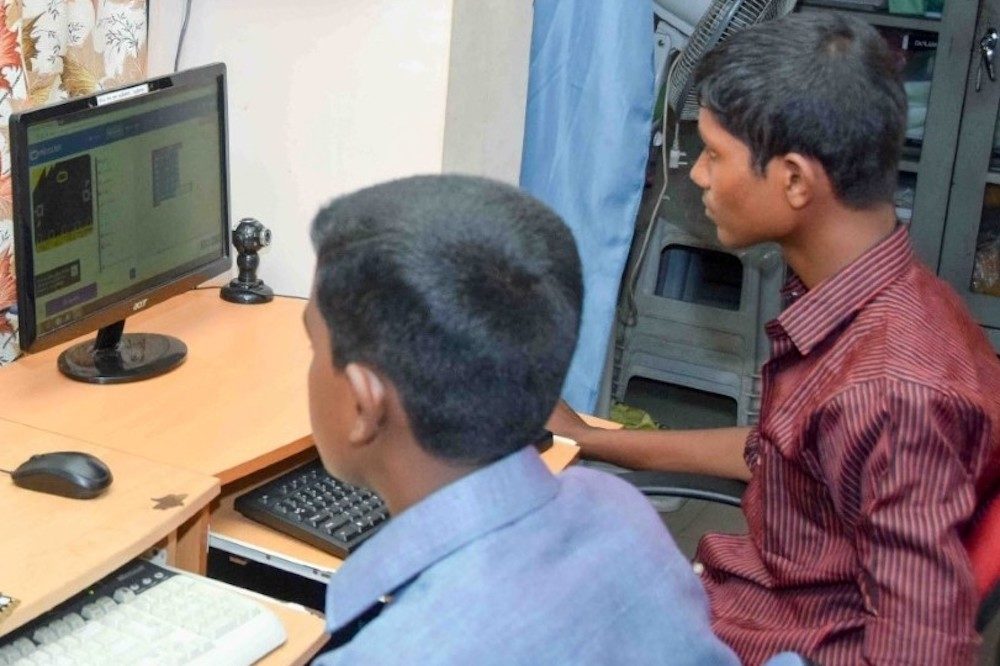
Mannapperuma, 24, heads a team of volunteers who fan out all over the country – firing up students with the Micro:bit, a tiny programmable device, and the message that writing computer code is no arcane art but within the reach of inquisitive fingers and curious minds.

“Kids come up with new solutions for their day-to-day problems. Having the required computational thinking is vital for their future,” says Mannapperuma, an IT professional and self-styled tech-evangelist.

Students outside privileged urban areas are getting the opportunity to learn new technology skills

— Photo credit: Micro:bit Foundation

Microbit’s appealing block-based programming designed to familiarise youngsters with coding and interconnectivity spurred Mannapperuma to introduce it in his country.

He approached the UK-based Micro:bit Education Foundation a year ago with his idea of encouraging schoolchildren outside the more privileged urban areas to learn coding skills.

The tiny programmable device helps children develop coding skills— Photo credit: Micro:bit Foundation

With the foundation’s backing, he created an online group to enlist like-minded people who would go to distant villages and towns carrying the Micro:bit developed by Microsoft and the BBC.

The volunteers instruct children aged 11 to 18 in using the Micro:bit website to write simple commands for the device enabling it to act as a motion detector, sound sensor or as a message flasher among other things.

Over 2000 children in schools and government-sponsored computer labs have been taught how to write script for the micro circuit board in the first seven months of the year.

Four keen students have already submitted entries for the Micro:bit Educational Foundation’s Mothers and Carers worldwide challenge and were mentioned in the final tally of winners.

Their ideas for lightening the load of their mothers and caregivers include an alarm that rings when the trash can is full, a fridge door alarm, a pressure gauge that measures the weight of a portable cooking gas cylinder and a sensor which switches off a fan that has been left running.

These projects may be baby steps for hardcore programmers but for children with limited access to technology, they are giant strides.

Mannapperuma’s Microbit Sri Lanka User Group (SLUG) is a non-profit organisation run by some 150 volunteers drawn from professional organisations and universities.

“Our volunteers are passionate about what they do. Now we are requesting the general public to be part of our organisation as volunteers,” said Mannapperuma.

He has plans for more collaborative workshops and micro hackathons in the months ahead reaching some 5000 students. About 100 Micro:bits have also been distributed to volunteers.

Mannapperuma’s first group of potential programmers came from his hometown Asswedduma, a village nearly 90 kilometres from the capital Colombo, where he himself dabbled with mobile phone applications as a youngster.

Learning to code is an achievable goal for all children with help— Photo credit: Micro:bit Foundation

At 13, he participated in a competition held by Microsoft Sri Lanka for students.

Although he did not win any prizes then, he earned a merit award two years later when he created an English-to Sinhala online translator for a lexicon of words from his English Literature textbook to help his friends doing their first public exam that year.

“It’s too early to identify the impact of our project,” says Mannapperuma. However, the SLUG website’s alternative versions in Sinhala and Tamil, the two main languages spoken in Sri Lanka along with English, have proved successful with many children registering to learn coding skills.

The SLUG is offering trilingual support and video tutorials in local languages to help young learners. They seek more volunteers as they expand in all 25 districts of the country which is emerging from a decades-long Tamil separatist war that ended in May 2009.

Mannapperuma has an ambitious mission: to increase the programming skills of every child in Sri Lanka.

He said: “With the help of Microbit, we can lay the foundation of programming to enrich their lives.”

Daya Gamage Analyzes Washington’s Foreign Policy on Sri Lanka in Book

October 4th, 2017

Las Vegas, NV – WEBWIRE – Wednesday, October 4, 2017

A desire to achieve a common objective is a force that motivates a strong leadership.

Success is the outcome of a well-organized plan.

Author Daya Gamage, who was a public affairs assistant and political specialist of United States Department of State, shares his own insights on Washington’s overt and covert foreign policy with the aim of reviving Sri Lanka’s military organization Tamil Tigers” back in the global arena.

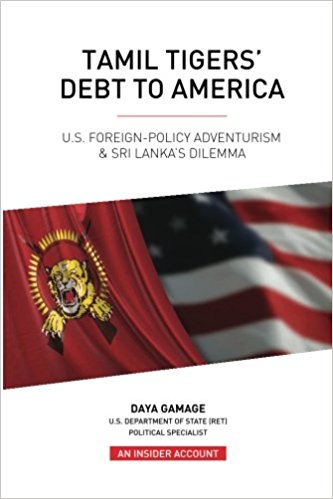
The book Tamil Tigers’ Debt to America: US Foreign Policy Adventurism and Sri Lanka’s Dilemma” describes how Washington’s foreign policy is carefully designed to aid in a global supportive instrument of a terrorist organization to weaken Sri Lanka. The analysis and interpretations found in this book are uniquely documented and these cannot be found in other works. The title itself speaks of Washington’s adventurism in handling Sri Lankan issues. Washington’s failure to win Sri Lanka’s Tamil Tigers Leadership motivated them to create conducive ambience through its foreign policy.

The book helps political observers and history students gain a better understanding about reviving Sri Lanka’s annihilated organization Tamil Tigers”, without reservation.

Tamil Tigers’ Debt to America: US Foreign Policy Adventurism and Sri Lanka’s Dilemma” will be displayed in 2017 Frankfurt Intl Book Fair on October 11, 2017. Get a copy of this book now to acquire the best information on the controversial issue.

Tamil Tigers’ Debt to America: US Foreign Policy Adventurism and Sri Lanka’s Dilemma
Written by: Daya Gamage
Published by: CreateSpace Independent Publishing Platform
Published Date: November 9, 2016
Paperback Price: $39.93

About the Author
The author, Daya Gamage, is a retired public affairs assistant and a political specialist during the 1970-1994 at US Diplomatic mission in Sri Lanka. Because of his excellent performance and professionalism, he earned a Meritorious Honor Award in 1988 given by the U.S. State Department. Currently, he works for Asian Tribune, an online daily newspaper, as a political-foreign affairs correspondent.

Students strip-searched in school in the Muscat capital area

October 4th, 2017
Muscat –

The horrified parents of Class 11 students of Sri Lankan School Muscat have called for the strictest possible action against a teacher at the school after she strip-searched a student who was accused of stealing money”.

The teacher, who is said to be responsible for handling disciplinary matters at the school, decided to cross all limits after a student of Class 11 complained that money which had been kept in her bag for paying school fees was missing and that she suspected a classmate of having stolen it.

Soon afterwards, some of the teachers segregated the students and checked their bags and pockets. Unable to find the missing money, some of the male students and female students were taken to the toilets where they were checked in greater detail”, with male students even being asked to strip to their underwear.

With no success in recovering the missing money, the female teacher then forced the ‘alleged suspect’ to completely strip off all her clothes despite the student’s objections. All this while, nobody from the school administration bothered to call the parents of the concerned student to the school and try and resolve the issue in a civilised manner.

While the school principal and the vice-principal refused to answer repeated calls over two days by Muscat Daily, a member of the school’s board of directors confirmed that the incident had indeed taken place. The official said that he did not condone the incident and said that he had reported the matter to the relevant ministry as this was a ‘clear case of child rights abuse’. He expressed hope that the concerned legal authorities in the country would take strict action against the teacher, as he was not sure anything much would be done given what he claimed were vested interests that were acting to cover up the whole issue.”

Read more: http://www.muscatdaily.com/Archive/Oman/Students-strip-searched-in-school-in-the-Muscat-capital-area-53y5#ixzz4ua4yGNRi
Follow us: @muscat_daily on Twitter | muscatdaily on Facebook

Provinces, Provincial Councils, political lackeys of the West, Indian expansionism and the proposed new Constitution.

October 3rd, 2017

Dr. Sudath Gunasekara

10.2. 2017

Provinces, Provincial Councils, political lackeys of the West, Indian expansionism and the proposed new Constitution; all these hang together in one bunch as a cluster of a mega conspiracy to destabilize and dismantle the Sinhala Buddhist State of Sri Lanka. This has become more than obvious and clearly revealed after the Interim Report of the Constitutional Council was tabled in Parliament by its architect Ranil Wickramasinha last week followed by the ongoing public debate on its content. It appears as if the cat has finally come out of the bag now.

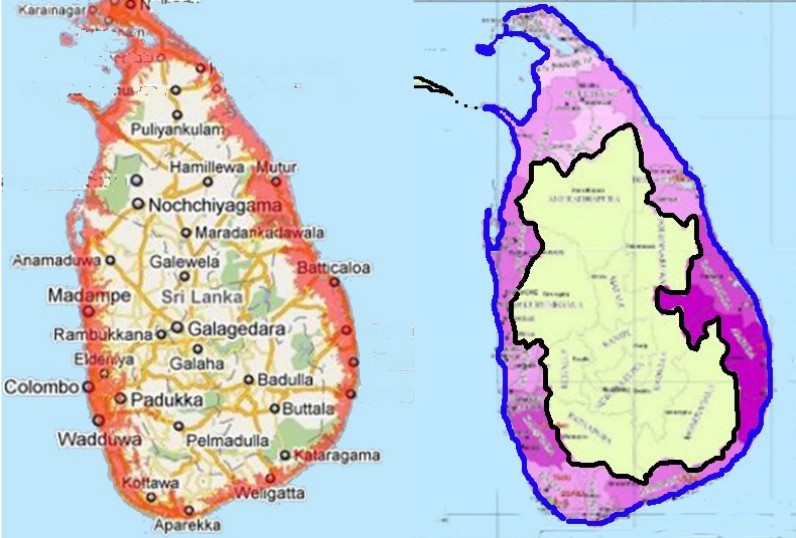
Provinces we have today in this country were first invented by the British along with the Colebrook reforms in 1832 for administrative convenience to establish their colonial hegemony. It was the first step in this colonial conspiracy to divide this Island nation. Since then it was shrewdly used by the British as a mechanism of divide and rule policy by them to consolidate their colonial grip on this Island nation. They originally started with five provinces and completed this conspiracy with nine Provinces in 1897. The carefully demarcated two contiguous provinces, the Northern and Eastern, covering 1/3 the area of the Island and 2/3rd of the coastal belt of the Island, starting from north of Puttalam through Jaffna-Trinco- Batticalloa to north of Kataragama was the turning point and the underpinning of this treacherous act of their future dream EELAM. Simultaneously starting from 1815 they carried out a systematic policy of settling south Indian Tamils in these two provinces to change the demography of these regions which had been invaded by the jungle tide after the collapse of the Raiarata Sinhala civilization, following the Magha invasion in the 12th century.

Next the British took all steps to elevate the Tamils above the native Sinhalese, both in quality and numbers. The invaders provided the best facilities for English education in Jaffna with the assistance of American missionaries. Though they did not provide the same facilities in the eastern province they took care to settle sufficient number of Indians, so that they could, together with those in the North in future could claim over these two provinces as their traditional Homeland. At the same time they created a separate South Indian Tamil enclave up on the hills in the plantations on the advice of Governor Torrington, who made a fervent request from the Home Government in 1845 to import South Indians in large numbers to be used as a formidable force against the native Sinhalese in future. This early colonial policies were the initial steps taken by them to weaken the Native Sinhalese and they laid the firm foundation for a divided future Sri Lanka on ethnic grounds.

What we saw in 1987 as Provincial Councils established at the behest of India with provisions for merging two or three adjoining Provinces was the most comprehensive                                                                                                                                                                                                                                     and effective step of this long hatched British conspiracy to carve out a separate State for Tamils called EELAM comprising 1/3 the area of this Island. What the Western colonial powers led by the USA and its allies including UK and India expected to achieve through the 13th Amendment in 1987 was to drive the last nail to the coffin of the 2500 year old Sinhala Buddhist nation in this country, which all three Western colonial powers, Portuguese, Dutch and British together could not achieve for 443 long years of colonial rule from 1505 up to1948.

The proposed new Constitution is the latest conspiracy, hatched by the same old colonial forces together with India, the historical enemy of this country, to realize their sinister motives lying dormant from time history began. This time all these forces have hired Ranil as a cat’s paw to impose this new constitution on us, which nobody asked  for. Ranil together with Chandrika, both of whom represent the local proxies of the western Catholic Church act with abject servility and subservience to commit this heinous betrayal. It is very unfortunate that the President, though he is a SLFP product (which is more pro Sinhalese and pro Buddhist than all other political parties in this country), has not understood this coup de ta. The conspirators have cleverly got him to play the Jekyll and Hyde role simultaneously assuring the Sinhala Buddhists that he will not allow anyone to do any harm to the place of Buddhism and the Sinhala people or to make a constitution against their interests on the one hand, while at the same time openly declaring on another platform that his priority is to retrieve the so-called injustices done to the Tamils and Muslims and more specifically to Tamils who have voted him en block. He too like his two mentors shows the same degree, if not even more, of servility and subservience to the Western powers and India, obviously for political survival.

Today he being a man full of contradictions and blatant lies for he says one thing and does just the opposite is not taken seriously by the majority and the intelligent, including Buddhist monks and intellectuals. For example few days back he promised the Mahasangha of Asgiriya and Malwatta in Kandy that he will not allow a new Constitution to be formulated. But even today (10.3.2017) he told the Parliament that his Government is committed to make a new Constitution to achieve much hyped so-called reconciliation and justice to all communities, perhaps except the Sinhalese Buddhists who constitute 75 % of the population of this country.

Andure atagema   

Even the majority including those in the JO who talk and write on the ongoing debate on the proposed new constitution don’t seem to have realized the true colour of this conspiracy I have outlined above.  That is why perhaps all of them confine to the inconsistencies of the details of the new Constitutional proposals like devolution of powers relating to land, police administration, limiting the governors powers, the role of the Chief Minister, the debate between the powers of the Centre, the devolved and concurrent lists, giving foremost place for Buddhism, whether to call it a Unitary or United Sri Lanka etc without realizing the real danger behind it. This reminds me the famous Indian parable of the seven blind men formed in to a circle, holding their walking sticks going round and round trying to find the starting point of the circle.   As I see it the new constitution is nothing but the last chapter of the above colonial and Indian joint conspiracy first of destabilizing the Sinhala Buddhist nation and then finally dividing this country in to a land of eternal conflicts chaos among different ethnic and religious groups.

It is against this disastrous backdrop sketched above that I am demanding the Government to drop the new Constitution in Toto. Firstly as they have never got a public mandate for a new Constitution and secondly people have never asked for such Constitution either. Thirdly there are many more urgent and burning issues than the need for a new Constitution at present.  It was the Asgiriya Chapter realizing the traditional role of Mahasangha in this country that sensed this danger and requested the President not to proceed with the new Constitution las month and asked him to drop it. Though the President has promised to do so to the Mahasangha in Kandy, the way he has behave and acted since then raises many a question regarding his honesty on this issue. To me the way how things are taking shape on this subject appears to be really alarming. It is now obvious that the President has no power or the capacity to stop this. It is more than evident that he is helpless and clueless too as to what his Prime Minister is doing behind the curtain. The President has been reduced to a mere puppet in the hands of anti- Sinhala and anti-Buddhist forces both at Home led by Chandrika, Ranil and cohort, the NGOO, minority Tamils and Muslims and the Tamil Diaspora and the international community  . Probably his stern and sworn animosity towards Rajapaksas may be the root cause of this tragedy. The much hyped Nobel Prize dream may be another reason preventing him from realizing the reality. He appears to have not realized that even if he gets the Noble Prize in Norway he will definitely go down in history of this country as a traitor of the first order, if he fails to act promptly and stop this historic national disaster by invoking his Executive power he still enjoys.

It is a well-known fact that this Government has never got a mandate to go for a new Constitution either on Jan 8 or August 17th in 2015. Now that the Statement of the Buddha Sasana Karya Sadaka Mandalaya on the interim report of the Steering Committee of the Constitutional Assembly of Sri Lanka headed by the two Mahanaayaka Theras of Amarapura and Ramanna Nikayas comprising three other prominent monks like Ven Bellanvila Wimala ratana and Welamitiyawe Kusaladhamma have already pointed out the inconsistencies and dangers of the new proposals of the report of the Constitutional Council to the President, I hope he will take serious notice of their objections and be wise enough to take their advice as it was the customary practice of the ancient Kings in this country and  order the Government of Ranil Wickramasinha to drop this mad idea of a new constitution at least now, before the whole country is set on fire and disaster. The country expects the President to take a bold and wise decision on this extremely crucial matter without any fear or hesitation.

I hope he will realize the stark reality that he was elected President by the people of this country and not by America and its allies or India. It is my considered view that the only way left for him to escape from this Constitutional death trap laid by Ranil at the behest of the West and go down in history as a national hero who saved the Sinhala Buddhist nation is by conforming to the age old traditions. If he fails to take the correct decision Mahavamsa will record him as a ruler who succumbed to external pressure and self- interest than the love for his country and people as a patriotic Statesman.

What Ranil did in Parliament last week by presenting the Interim Report of the Constitutional Council I think is a trial rehearsals of ‘putting the pot first’ like what a house burglar does to see whether the inmates are asleep. The whole nation must rise up against this betrayal and prove that we are not dead asleep as yet but fully awake. This is no time to sleep. Your sleeping will end up in Runil-Chandrika-Maitree Trio the burglars completely emptying Sri Lanka with no trace of Sinhala Buddhist mark for the future world to see.

Therefore instead of beating about the bush we should directly attack now on the head of the curse that is the Provincial system including the very concept of the Provinces and the Provincial Councils, the disastrous white elephant and more particularly the new Constitution, the death trap of the 2500 year old Sinhala nation. Of cause the first step in this rescue operation should be the defeating of the Constitutional conspiracy. That is the only way to avoid this national disaster of destabilizing and dismantling the nation.  Every second we miss in doing so we are nearing the death of this illustrious nation that protected and upheld the Sambuddha Sasana for 2600 years. As for me, I hear the ominous sounds of the distant death –knell of an illustrious Nation in the world, getting closer and closer every second that passes.


Abolition of Provinces and Provincial Councils will bring the following benefits

First take the abolition of Provinces

1 It will once and for all remove a sad colonial legacy that was intended to divide, destabilize and dismantle this nation

2 It will protect the territorial integrity, sovereignty and independence and freedom of the Island nation having removed the threat of having future enemy territories almost right round the Island from Puttalam to Kataragama across Jaffa and Batticalloa.

3 Will remove all divisive tendencies based on ethnicity, territory and religion and foster national unity as one nation

4 Stop the danger of North and East becoming two separate ethnic states, one Tamil and the other Muslim

5 It will also encourage the Indian Tamils who get qualified for Sri Lankan Citizenship to integrate with the native Sinhalese instead of trying to agitate for separation following suit of the Northern Tamils ad Eastern Muslims

6 Will minimize the inflow of illicit South Indian immigrants and also control Indian expansionist tendencies

7 Will guarantee the freedom for all Sri Lankans to engage in fishing in Sri Lankan waters and consolidate the Republic’s rights over the entire maritime Zone of the Island covering almost five times the land area of the Island including the monopoly over using its economic, naval and strategic potentials.

8 Will defeat all external interferences in the Sovereignty and internal matters and freedom of the Republic

Now look at the benefits of abolishing the Provincial Councils

1 It will save billions of rupees annually wasted and sent down the drain for no return to the country other than political, administrative and social tension, complete breakdown of District Administration that was far more efficient, economical, effective, lawful, people centered and democratic.

2 Eliminate nearly 800 parasitic and lotus eater politicians including 9 political refugees and misfits appointed as Governors, 9 Cheap Ministers. 40 Ministers and thousands of other political henchmen who have become a burden, a nuisance and a disaster to the country’s economy and socio political harmony in the periphery

3 Leave behind a large number of buildings, officials, vehicles and equipment that could be gainfully used for development activities of the country under the District Administration

4 Eliminate all claims and agitations for devolution of power, such as political, land and police and all divisive ethnic, religious and separatist tendencies.

5 Close the debate on the subject of Provincial, Reserved and Concurrent lists once and for all

6 Evaporate the dream of local autonomy and guarantee political stability in the country.

7 Close the door permanently for anti-Sri Lankan elements like Vignesvaran, Nazeer Ahamed who are engaged in anti- government activities 24 hours round the clock and even making representations against the Sri Lanka Government at international fora while agitating for separate States.

8 People all over the country will once again begin to think as one country and one nation and one sovereign, Ekachatra or Eksesath Republic of Sri Lanka. (not aekiya, unitary or orumaththanadu as this Government says).

(It may be noted here that Unitary means Government of or relating to a system of government in which the executive, legislative, and judicial powers of each state in a body of states are vested in a central authority) SO why adopt an alien term when we have a much better term of native origin that was used by our people for thousands of years.

9 There will be one strong Government at the center with effective and efficient governance and law and order with no nuisance of Provincial mini Governments at the periphery.

Finally if we abolish the Provinces and the Provincial Council as proposed above, I am confident, it will put an end to all political, economic, social, administrative and legal problems we are faced today, both at home and also those that have their genesis abroad and once again usher in a new era of stability, strength, peace and prosperity to this Island nation

To make this dream a reality, I strongly propose that we go back to the traditional Tun Rata Divisions that have provided the unique underpinning for political stability and prosperity of this Island nation, for nearly 2500 years with no parallel in the whole world. The political machinery I propose is three Regional Councils for the three Regions and one strong central Government at the center under an Executive President elected by the people of the whole country. For detail of this proposal I refer my readers to articles I have posted in Lankaweb for the past several years regularly on this subject. This new system will reduce the present expenditure of government; number of politicians, government institutions and even the number of public servants by 2/3 the present volume and number. All the savings resulting from this change could be used for development of the country. So that the Paradise that was Sri Lanka could be regained in no time.

දේශපාලන වේදිකාවේ නැටවෙන සරණාගත සහ ත්‍රස්තවාදී රූකඩ

October 3rd, 2017

තේජා ගොඩකන්දෙආරච්චි

ශ්‍රී ලංකාවට ඇතුලුවී සිටින රොහින්ග්‍යා සරණාගතයින් පිරිස පිලිබඳ ප්‍රශ්නය මේ වන විට රට තුල දැඩි කතාබහට ලක්ව ඇත. රට තුල පමනක් නොව ජාත්‍යන්තරය තුල පවා මෙය මහත් ආන්දෝලනයකට තුඩු දී තිබුනේ රොහින්ග්‍යාවරුන් ජීවත්වන රට වන මියන්මාරයේ නායිකාව වූ අවුන් සාං සුකී එක්සත් ජාතීන්ගේ 72 වන සැසිවාරයට සහභාගී නොවන බවට පලවූ පුවතත් සමගය. ඉතින් සියල්ලටම පෙර මේ රොහින්ග්‍යාවරුන් යනු කවුද කියා විමසා බැලීම වටී.

ලක්ෂ 8 – 10 ක් පමන වූ මෙම ජනතාව පරම්පරා බොහෝ ගණනක් තිස්සේ ජීවත් වනුයේ මියන්මාරයේ රාඛීන් දිස්ත්‍රික්කයේය. ‘රොහින්ග්‍යා’ යන නම මේ ජනවර්ගයට මියන්මාරයේ සිටින සහ හිටපු බලධාරීන් ලබා දී ඇති නමයි. ඒ මොවුන් බංග්ලාදේශයෙන් පලාවිත් නීති විරෝධීව රැඳී සිටින සංක්‍රමනිකයන්ය යන පදනමේ රැඳී සිටිමිනි. නමුත් මේ ජනවර්ගය එම නම ප්‍රතික්ශේප කරති. ‘අරකාන්’ යනු ඔවුන් තමන්ව හඳුන්වා ගන්නා නමයි. ඔවුන් කතා කරන භාෂාව සමග සසඳා බලන කල්හි එම ඉතිහාසය පිලිබඳ නොබිඳිය හැකි සාක්ෂි තිබේ.

කෙසේ වුවද ඒ බව තබා, දැනට තිබෙන කරුණු මත ඔවුන් පරම්පරා ගණනක් තම රටේ ජීවත් වුවත් ඔවුන් මියන්මාර වැසියන් සේ පිලිගැනීමට එරට රජය සූදානම් නැත. එක්සත් ජාතීන්ගේ මණ්ඩලය තුල මොවුන් හැඳින්වෙන්නේ ‘රටක් නොමැති ජන කොට්ඨාශයක්’ ලෙසය. බෞද්ධ රටක් ලෙස පිලිගැනෙන මියන්මාරය තුල ජීවත්වන මේ ජන කොටස අදහන්නේ මුස්ලිම් ආගමයි. අරකාන් යන නමින් ගත්කල මොවුන්ගේ ඉතිහාසය ශත වර්ෂ ගණනක් ඈතට දිවෙයි. ඊට අනුව 8 -9 ශත වර්ෂ කාලයේදී  මුස්ලිම් ආගමට හැරුන මොවුන් මේ වනවිට පවතින්නේ සුන්නි මුස්ලිම් නිකායෙන් බිඳී ආ තවත් ප්‍රභේදයක් ලෙසය.

මොවුනට පුරවැසිබව ලබා නොදෙන තත්වය මත මෙම ජන කොටසට රටේ තමන් කැමති ස්ථානයක පදිංචි වීමට, රජයේ අධ්‍යාපනය ලැබීම සහ රජයේ පිලිගත් රැකියාවල නිරතවීමට වැට බැඳී ඇත. මෙසේ ඔවුනට ලැබෙන සැලකිලි, මානුෂිකත්වයට එරෙහිව කෙරෙන අපරාධ ගනයේ ලා සැලකේ. දරිද්‍රතාවයෙන් සහ අඩු අධ්‍යාපනයෙන් පීඩා විඳින මෙම ජනතාව වෙත රාජ්‍ය මර්ධනයේ දැඩි හස්තය ක්‍රියාත්මක වනුයේ ඉතා ඛෙදජනක ආකාරයෙනි. රජයේ හමුදාවන් මගින් සිතුමතේ අත්අඩංගුවට ගැනීම, වදහිංසා පැමිනවීම, මරා දැමීම ආදිය සිදු වන්නේ අද ඊයෙක සිට නොවේ. මියන්මාරය මේ සියල්ල සිදු කරනුයේ මොවුන් එහි සිටින නීති විරෝධී බංගලාදේශ වැසියන් බව පවසමිනි. නමුත් අසල්වැසි බංගලාදේශයද ඒ තමන්ගේ රට වැසියන් බවට පිලි නොගනී. රොහින්ග්‍යා ත්‍රස්තවාදීන් බිහිවන්නට ඇත්තේ ඒ අනුවය. 2017 අගෝස්තු 25 දා රොහින්ග්‍යා ත්‍රස්තවාදීන් විසින් ප්‍රදේශයේ පොලිස් ස්ථාන කිහිපයකට පහරදී පොලිස් නිළධාරීන් 12 දෙනෙකු මරා දැමූ පසු, රජයේ හමුදාවන් විසින් ප්‍රදේශය ‘සුද්ධකර දැමීමේ මෙහෙයුමක්’ අැරඹූ අතර, සැප්තැම්බරය වනවිට රොහින්ග්‍යා වැසියන් 3000 ක් පමන මරා දැමිනි. ගම්මාන පිටින් ගිනි තබන ලද අතර තුවාල සිදු කිරීම්, ස්ත්‍රී දූෂණ දරාගත නොහුන තැන රොහින්ග්‍යාවරුන් 400,000 ක් පමන අසල්වැසි රටවල් කරා පලා යමින් සිටිති. මේ කරුණු සොයා බැලීමට මියන්මාරයට පැමිනි එක්සත් ජාතීන්ගේ මානව හිමිකම් කොමිසමේ නිළධාරීන්ට එම ප්‍රදේශවලට ඇතුලුවීමට එම රජය ඉඩ තැබුවේ නැත. මියන්මාරයට පැහැදිලිවම අවශ්‍යව ඇත්තේ මේ ජන කොට්ඨාශයේ බරින් නිදහස් වීමටය.

මොවුන්ට එරෙහිව මෙවැනිම මිලිටරි පහරදීම් 1978, 1991, 2012 සහ 2015 දී ත් සිදු කෙරුන අතර එවන් තදබල පිපිරීමක් අවසානයේ බොහෝ දෙනෙකු මියයන බව කිවයුතු නොවේ. එමෙන්ම ඒ අතරවාරයේ තත්වය මඳක් සමනය වී තිබෙන අවස්ථාවල රටෙන් පලාගොස් තමන්ට ආරක්ෂිතය කියා වැටහෙන තැනකට සේන්දු වීමටද මේ රොහින්ග්‍යාවරු උත්සාහ දරති. ඒ සඳහාද තම ජීවිත පරදුවට තැබීමට ඔවුනට සිදුවී ඇත. මෙසේ පලායන්නට තැත් කරන අයට ඒ සඳහා මුදලට සේවා සැපයීමට සැදී පැහැදී සිටින මිනිස් ජාවාරම්කරුවන්, පාලු පෙදෙස්වලදී ඒ මිනිසුන්ගේ අත ඇති මුදල් පැහැරගෙන ඔවුන්ව මරා දමන්නටද පසුබට නොවෙති. 2015 මාර්තුවේදී මැලේසියානු දේශ සීමාවේදී සොයාගත් මිනී වලවල් මෙවන් අමානුෂික සිදුවීම්වල සලකුණුය.

2008 දී මෙසේ පැමින මුහුද මැද බෝට්ටුවක අතරමංව සිටි පිරිසක් නාවික හමුදාව විසින් මුදාගෙන රට තුලට ගෙනවුත්, ඇමරිකාව සහ කැනඩාව සමග සාකච්ඡාකොට එම රටවලට පිටත්කර හැරීමට එවක සිටි රජය කටයුතුකල අතර 2013 දී ද එවැනිම සිද්ධියක් සිදුවිය. එවකට සිටි රජය එම සිදුවීම සෑහෙන තරම් සාධාරණව ඉටුකල අතර මේ රජයද එලෙස නොකරාවිය කියා කියන්නට අප ඉක්මන් විය යුතු නැත.

රොහින්ග්‍යා ත්‍රස්තවාදීන් සිටින්නේ 600 ක පමන ප්‍රමානයක් යයි කියනු ලැබේ. ඉතින් මෙසේ පලායන සියලුම මිනිසුන් ත්‍රස්තවාදීන් ලෙස හඳුන්වනුයේ කෙසේද?

ඔබ පරම්පරා ගණනාවක් තිස්සේ ජීවත්වන රට ඔබව පුරවැසියෙකු සේ පිලිගන්නට නොහැකිය කියනවා නම්, ඒ හේතුවෙන්ම ඔබට මනුෂ්‍යයෙකු සතු මූලික අයිතිවාසිකම් නොලැබී යනවා නම්, එම තත්වය දඩමීමා කරගෙන ඔබ හැරුනත්, කතාකලත් ඔබව වරදකරුවෙකු කර, සිර ගතකර වද හිංසා පමුනුවනවා නම්, හිතු මනාපයේ ඔබේ බිරිඳ, දියණිය දූෂණය කරනවා නම්! ඔබ තෝරා ගන්නේ කුමක්ද? කූඹියෙකු වුවද තමන්ව පාගන්නට උත්සාහ කරනවා නම් තමන්ට හැකි වේගයෙන් දිවගොස් ආරක්ෂාව සලසා ගන්නට බලන අතර, එසේ බැරි වුනොත් දෂ්ඨ කරන බව සොබා දහමේ රීතියයි. මේ රොහින්ග්‍යාවරුන්ට, ජාත්‍යන්තරයේ ගර්හාවට ලක්වූ මියන්මාරයේ මිලිටරි ජුන්ටාවෙන් මෙන්ම, ජාත්‍යන්තරයේ ප්‍රසාදය හිමිව සිටි අවුන් සාං සූ කී වෙතින්ද ලැබුනේ එකම ප්‍රතිචාරයකි.

නමුත් ප්‍රශ්නය වනුයේ මේ ප්‍රශ්නවලට අවස්ථාවාදීන් සහ අන්තවාදීන් අත දැමූ විට සිදුවන දේය. මියන්මාරයේ, රාඛීන් ප්‍රදේශයේ සිටින, එම රජය විසින් ‘බෙංගාලි මුස්ලිමුන්’ ලෙස හඳුන්වන මේ මිනිසුන්ට ‘මියන්මාර වැසියෙකු’ ලෙස අවශ්‍ය නීත්‍යානුකූල තත්වය ලබා ගන්නට සටන් වදිනවා වෙනුවට, වෙනම රාජ්‍යයක් සඳහා සටන් වදින තරමට කරුණු දුරදිග ගොස් ඇත්තේ එහෙයිනි. මියන්මාරය ථෙරවාදී බුද්ධ ධර්මය පිලිගත් රටක් වුවද, රොහින්ග්‍යාවරු මුස්ලිම් ආගම අදහන්නෝය. එබැවින් අන්තවාදී මුස්ලිම් කණ්ඩායම් ඉතා සතුටෙන් මේ සඳහා ඉදිරිපත් වනු ඇත. අවාසනාව වනුයේ රටේ සාමකාමීව ජීවත්වීම පසෙකලන එරට බහුතර බෞද්ධාගමිකයෝද රොහින්ග්‍යා සංහාරය පිනිස නැගී සිටින්නේ බුද්ධාගමේ හරයද පසෙකට ලමින් වීමයි. 

මෙවන් ප්‍රශ්නවලදී ලෝක බලවතුන් මෙන්ම රොහින්ග්‍යා සරණාගත ප්‍රශ්නය බලපාන රටවල දේශපාලකයන්ද ක්‍රියා කරන්නේ මහත් සේ අවස්ථාවාදී වෙමිනි.

ඊට හොඳම උදාහරණය 2008 දී සහ 2012 දී, මුහුදේ අතරමංව සිටියදී අප රටට රැගෙන ආ රොහින්ග්‍යාවරුන් පිරිසයි. මේ පිරිස බේරා ගත්තේ ශ්‍රී ලංකා නාවික හමුදාව විසිනි. එකල ආරක්ෂක ලේකම් වූයේ ගෝඨාභය රාජපක්ෂය. ශ්‍රී ලංකාවට එරෙහිව යුද අපරාධ චෝදනා නගන ජාත්‍යන්තරය මෙම සිදුවීම් දකිනුයේ කෙසේද? අඩු තරමින් අන්තර්ජාලයේ රොහින්ග්‍යා සරණාගතයිනට පිලිගත හැකි රැකවරණයන් සැලසූ රටවල් අතර ශ්‍රී ලංකාවේ නම සහ මේ දින වකවානු ගැන සඳහනක්වත් නැත. අද මතුවී ඇති ප්‍රශ්නයේදී, සුලු ජාතික ඡන්ද පදනම මත විශ්වාසය තබා බලයේ සිටින යහපාලන රජයට පහර දෙන්නට රජයට එරෙහි පිරිස් ඉදිරිපත්ව ඇත. එබැවින් යමෙකු යුධ අපරාධ සම්බන්ධව, හිටපු ආරක්ෂක ලේකම්වරයාගේ සහ හමුදාවන්හි නිර්දෝශීභාවය ගැන කතා කරත් නම් ඊට හොඳ අවස්ථාවක් සපයන මෙවන් සිද්ධීන් ගැන කතාකල යුතුය. නමුත් ඒ වෙනුවට මෙතැන සිදුවන්නේ රජයේ බලය සිඳ දැමීමට ගල්කිස්සේ  සිද්ධිය උපයෝගී කර ගැනීමයි. ඒ තුල අපේ ජනතාව සමහරෙකු, 1983 දී එදා ලොව හමුවේ ප්‍රදර්ශනයකල අමානුෂිකත්වයම යලි චිත්‍රණය කරන්නට සැරසෙති. ඊලඟට පවතින රජයේ සමහරුන්ද තම ඇඟ බේරා ගන්නට උත්සාහ දරන්නේ ‘අපි නෙමෙයි ඔන්න ගෝඨාභයලා  තමයි අපට කලින් මේව කලේ’ කියමිනි.

එක්සත් ජාතීන්ගේ උපදෙස් මත ගල්කිස්සේ රඳවා තැබූ සරණාගතයින් ‘දරුණු ගනයේ ත්‍රස්තවාදීන්ය’ කියා ලේබල් කරනුයේ කෙසේද? ඒ ද තම පණ කෙන්ද රැකගෙන, උපන් මහ පොලොව මත මිනිසෙකු ලෙස ජීවත්වීමේ අපේක්ෂාවෙන් පැමින සිටින පිරිසකි. 

ශ්‍රී ලංකාවෙන් වෙනත් රටවල සරණාගත රැකවරනය පතා යන පිරිස් ඕනෑ තරම් සිටිති. මෙසේ පවසන කල්හි බොහෝ දෙනෙකුට මතක් වනු ඇත්තේ දෙමල ඩයස්පෝරාවය. නමුත් අප විශ්ව විද්‍යාල සිසුන්ව සිටි 80 දශකය අග භාගයේ, තරුණ කොටස් ලෙස අපට බලපෑ, දරාගත නොහැකි ජීවිත අවදානම හමුවේ යුරෝපා රටවල හෝ ඇමරිකාව, කැනඩාව, ඔස්ට්‍රේලියාව යන රටවල සරණාගත රැකවරන පතා පලාගිය පිරිස් ඕනෑ තරම් සිටියහ. යම් හේතූන් නිසා එදා එසේ පලා නොයන්නට තීරණය කලද, අප ද පණ කෙන්ද රැකගත් අසීරුවද, එදා අප විඳි මරණ භයද මතක් වනවිට, අද අර මිනිසුන් බිහිසුණු ත්‍රස්තවාදීන්ය කියා හඳුන්වන්නේ කෙසේද? මන්ද එදා තිබූ දේශප්‍රේමී ජනතා ව්‍යාපාරයේ අනිවාර්යෙන්ම ත්‍රස්තවාදී ස්වරූපයක් විය. නමුත් රජයේ මර්ධන හස්තය ක්‍රියාත්මක වනවිට එහි බලපෑම දැනුනේ ත්‍රස්තවාදීන්ට පමනක් නොවේ. එදා රජය තම සතුරන් සේ මූලිකවම සැලකූ විශ්ව විද්‍යාල ප්‍රජාවට අපිද අයත් වූයෙමු. නමුත් අප අතින් කිසිදු ත්‍රස්ත ක්‍රියාවක් සිදු වුනේ නැත. ඒ හේතූන් නිසා රටින් පලාගිය පිරිසද ත්‍රස්තවාදීන් නොවූහ.  දේශපාලනික වේවා, ජනවාර්ගික වේවා, මෙවන් සරණාගත ප්‍රශ්නයකට සම්බන්ධ වන පිරිස අරභයා කියැවෙන්නේ එකම කතාවකි. ජන කොටසක් තලා පෙලා දැමීම, මෙය නොඉවසන ත්‍රස්තවාදයක් බිහිවීම, ඊට එරෙහි මර්ධනය සහ මේ ආරවුල් මැදට කොටුවන අසරණයන් යන පාර්ශ්වයන් හරහා දේශපාලනීකරනය වෙමින් දිග හැරෙන කතාවයි.

ශ්‍රී ලංකාවේ මෙම රොහින්ග්‍යා ප්‍රශ්නය විශාල මාතෘකාවක් වී ඇත්තේ මෙසේ දේශපාලනීකරනය වීමේ ප්‍රතිඵලයක් ලෙසය.

ශ්‍රී ලංකාවේදී සරණාගතයින් භාර ගැනීමේ කතාව වෙනස්ය. අපේ රට පොහොසත් රටක් නොවේ. තවත් අය පිටතින් රට ඇතුලට ගෙනත් දමාගෙන ඔවුන්ගේ ප්‍රශ්නවලට පිලිතුරු සොයනවාට වඩා දැනට සිටින මිනිසුන්ට උත්තර සොයන්නත් තිබෙන ප්‍රශ්න ඉහටත් උඩිනි. එමෙන්ම මෙවන් සරණාගතයන් පිරිසක් තාවකාලිකව රඳවා ගන්නාවිට, ඔවුන් අරභයා තමන්ට කල හැක්කේ කුමක්ද, ඔවුන්ගේ වියදම දරන්නේ කෙසේද අාදී දේ රජයක් ලෙස විනිවිද භාවයෙන් පැවසීමේ හැකියාව රජයකට තිබිය යුතුය. එමෙන්ම අප්‍රේල් මාසයේ සිට ගල්කිස්සේ රැඳී සිටි මේ පිරිස පිලිබඳව ආරවුල මතුවුනේ අසාද් සාලි, මරික්කාර් ඇතුලු පිරිස මියන්මාර් තානාපති කාර්යාලය ඉදිරිපිට උද්ඝෝෂණය කල පසුවයි. ඔවුන්ද අන්තවාදී මුස්ලිම් දේශපාලකයන් වන අතර, ඔවුන්ගේ අරමුණද අවස්ථාවෙන් ප්‍රයෝජනය ගෙන මේ සරණාගතයන් පිරිස මේ රටේ රඳවා ගැනීමටයි. 6.7%ක ජනගහනයක් දරිද්‍රතා රේඛාවෙන් පහල සිටින තත්වයක් මත, ඇති නැති පරතරය දිනෙන් දින පුලුල් වෙමින් යන රටක ප්‍රායෝගික වශයෙන් සරණාගත ජනතාවක් භාරගත නොහැකිය. එක්සත් ජාතීන්ගේ සරණාගත කොමිසමේ ප්‍රඥප්තියට ශ්‍රී ලංකාව අත්සන්කර නොමැති නිසා ඊට බලයකුත් නැත. ආදායම මෙන්ම ජනතාවගේ මූලික හා ක්‍රමෝපායි අවශ්‍යතා සැපිරී ඇති ප්‍රමානය අනුව ශ්‍රී ලංකාවට එවන් දෙයකට මැදිහත් වීමේ ඉඩකඩක්ද නොවෙයි.

ඊලඟට අසාද් සාලිලා, නසීර් අහමඩ්ලා කියන පරිදි මෙසේ මෙවන් පිරිසක් රටේ නවත්වාගෙන ඔවුන්ට ඉඳුම් හිටුම් දෙන්නේ කොහේද? දැනටමත් මේ දේශපාලකයින් තම වර්ගයා අතර තම දේශපාලන ප්‍රතිරූපය ගොඩනගා ගැනීමේ ආත්මාර්ථකාමී අරමුණෙන් සිදු කරන වන විනාශය, පුරාවස්තු කෙලෙසීම ආදිය සඳහා මෙය තවත් හොඳ හේතුවක් සපයනු නියතය. අද වනවිට තිරුකෝවිල්හි ඇති වට්ටමඩු තෘණ භූමියට අත්ව ඇති ඉරණම දකින විට මේවා ගැන සැකයක් සිතන්නට අවශ්‍ය නොවෙයි. ඒ සමගම සුලු ජාතික ඡන්ද පදනම සහ ජාත්‍යන්තරය දිනා ගැනීමේ අරමුණ මත රැඳී සිටින යහපාලන රජයෙන් මෙවන් ප්‍රශ්නවලට පිලිතුරු අපේක්ෂා කිරීමත් අසීරුය.

ඒ සමගම සරණාගතයින් ගැන සැක ඇතිවන සිද්ධීන්ද ලෝකයේ සිදු වේ. බර්ලිනයේ, පැරිසියේ හෝ බාසිලෝනාහිදී සිදුවූ ත්‍රස්ත ප්‍රහාර මීට උදාහරණ සපයයි. එබැවින් මෙවන් සිද්ධියකදී ජනතාවගේ සිත් තුල සැක බිය ඇති වීමද වැලැක්විය නොහැක්කකි. මෑතකදී ජර්මනියේ අලුතින් නැගී එන අති දක්ෂිණාංශික නාසිවාදී දේශපාලන පක්ෂයක් ගැන ලිපියක් කියවීමි. එහි සඳහන්ව තිබුනේ අප සරණාගතයින් දෙස වෙනස් කෝණයකින් නොබැලිය යුතු බවටත් ජර්මනියට පැමින ස්ථිර වීසා ලැබී වසර දෙක තුනක් යනවිට සිරියානුවාත් නියම ජර්මානුවෙකු වන බවයි. මම නම් එයට එකඟ නොවෙමි. මෙයට පෙර තමන් හසුව සිටි සංස්කෘතියේ බලවත්කම මත එය පදනම් වන බව මගේ හැඟීමයි. මහා බ්‍රිතාන්‍යයේ මැන්චෙස්ටර් සහ ලන්ඩන් බ්‍රිජ්හි දී සිදුවූ ප්‍රහාර සිදුකලේ බ්‍රිතාන්‍යයේම උපත ලද මුස්ලිමුන් විසිනි. අයි එස් සංවිධානයට බැඳීම සඳහා නිවෙස්වලින් පලා ගිය යුරෝපීය රටවල උපන් තරුණ තරුණියන්ගේ සංඛ්‍යාව 600 ක් පමන වෙතැයි කියති. නමුත් මෙය මෙසේ වූවාට සියල්ලන්ටම එක හැන්දෙන් බෙදීම යුරෝපීය රටවල ප්‍රතිපත්තිය නොවේ.

ඒ ත්‍රස්තවාදී ගැටලුවයි. එයින් පිටත ලෝකය ගත්විට පවා යුරෝපයේ ඉපදුනාය කියා තම ජීවන රටාව වෙනස්කර ගෙන යුරෝපීයයන් බවට පත්වන්නට අසතුටු මිනිසුන් ඕනෑ තරම් සිටිති. ඔවුන් තම ජනවර්ගයට අනුව තමන් වෙසන රටේ එකම පෙදෙසකට සංක්‍රමනය වී, එතැන උප සංස්කෘතීන් නිර්මාණය කරගෙන ජීවත් වනවා විනා, තමන් ජීවත්වන රටේ භාෂාව කතා කිරීමට ඉගෙන ගන්නටවත් උනන්දුවක් නොදක්වති. මේ රටවලින් යම් කටයුතුවලදී මෙවන් මිනිසුන් ගැන මානුෂීය කෝණයකින් බලා භාෂා පරිවර්තන සේවාවක් ලබා දීමට කටයුතු කරන නිසා ඔවුන්ටද එය ගැටලුවක් නොවේ. මේ උප සංස්කෘතීන් තුල මානවයාගේ සදාචාරාත්මක පැවැත්මට හානි සිදුවන දේ ද සිදුවීම මෙහි අහිතකර ප්‍රතිඵලයයි. සෝමාලියාව ඇතුලු අප්‍රිකානු රටවල බහුලව සිදුවන කාන්තාවන්ගේ අයිතිවාසිකම් දරුණු ලෙස උල්ලංඝනය කරන සංස්කෘතිකමය චාරිත්‍රයක් වූ කාන්තා ලිංගික අවයව කප්පාදුව පිලිබඳ සිද්ධින් 1200 ක් ලන්ඩන් නගරයේදී පමනක් 2010 -2014 කාලය තුල වාර්තා වූයේ එය මෙරට තුල නීතියෙන් තහනම්ව තිබියදීය. ඒ හැර මෙම අමානුෂික චාරිත්‍රයට භාජනය කරනු පිනිස ගිම්හාන නිවාඩුවේ දැරියන් දහස් ගණනින් තම මව් රටවලට ගෙන යන්නේද මෙසේ පුරවැසි භාවය ලද්දවුන්ය.

පකිස්ථානු – බ්‍රිතාන්‍යයන් බොහෝ ජීවත්වන බ්‍රැඩ්ෆර්ඩ් නගරයේ සිදුවූ පවුලේ ගරුත්වය වෙනුවෙන් කල මිනීමැරුම් සිද්ධීන් කිහිපයක් පසුගිය කාලයේදී රට තුල මහත් ආන්දෝලනයකට තුඩු දුන් අතර ඒ සියල්ලෝමත් පරම්පරා ගණනාවක් තිස්සේ එංගලන්තයේ ජීවත් වූවෝය. ඒ හැර දැරියන් බලහත්කාරයෙන් විවාහකර දීම, ලිංගික වහලියන් රඳවා ගැනීම, ගෘහස්ත හිංසනද මෙවන් උප සංස්කෘතීන්ට අයත්ය.

මේවාද සිතේ මතු වුවත් අප මෙම සරණාගතයන් දෙස තරහෙන් බැලිය යුතු නොවේ. මන්ද කවුරු කෙසේ නැටුවත් මොවුන් රටේ නවතා ගැනීමට ශ්‍රී ලංකාවට බලයක් නැත. ‘අරය තමයි අපට කලින් මේව කලේ’ කියමින් බෝල පාස් නොකර රජය මේ සිද්ධිය පිලිබඳ ජනතාවට හරිහැටි වටහා දිය යුුතුය. එසේ නොවන තැන ජනතාවගේ සැකය මතුවීම වැලකිය හැක්කේ කාටද? නමුත් මේ සරණාගතයින් හෙලා දැකීමට ආගම් යොදා ගැනීම නම් අනුමතකල නොහැකිය. මෙතැන ගැටෙන්නේ ආගම් දෙකක අන්තවාදයන් විනා දර්ශනයන් නොවේ.

පුවත්පතක ශීර්ෂ පාඨයක් දුටුවෙමි. ‘ට්‍ර්ම්ප්ට හොඳයි. සූකීට නරකයි’ හැබැයි අප කල යුත්තේ මෙවන් සාධාරණීකරනය කිරීම් නොවේ.  ‘අරය කල නිසා එයත් කලා. ඉතින් අපිත් කරමු’ කියමින් ත්‍රස්තවාදයේ බීජ වැපිරීමට භූමිය සකස් කිරීම නොව මේ ප්‍රශ්නවල අග මුල වටහාගෙන එදෙස බැලීමය.

මෙවන් ආකල්ප ඔස්සේ සිදුවූ අත්වැරදීම් නිසා අපි දශක තුනක් විඳවූයෙමු. අද තවත් ජාතික ප්‍රශ්නයකට අත වනමින් පටු හැඟීම් සහිත වැකි සමාජ වෙබ් අඩවි පුරා වපුරවන තරුණ අයට වඩා ඒ විඳවීම අප දන්නේ ඒ දශක තුනේ ඇරඹීමේ සිට ප්‍රායෝගිකව අත්දුටු හෙයිනි.

Nation should salute members of the Global Forum who fought for Sri Lanka at the UNHRC

October 3rd, 2017

By: A.A.M.NIZAM – MATARA

It is shame that this Tamil slavish government which maintains a Permanent representative and a staff in Geneva allowed separatist Tamils and the tiger terrorist rump throughout the world to shred Sri Lanka at the 36th session of the United Nations Human Rights Council which ended on 29th September. When all other States which had accusations of violations of human rights used their ‘Right of Reply’ to answer those allegation and to clarify any confusion Sri Lanka has failed to present an official response to these blatant allegations as if  that this government accepts those allegations.

These allegations have been made by ABC Tamil Oli, ANAJA, Association culturelle des Tamouls en France, Association Bharati Centre Culturel Franco-Tamoul, Association Solidarité Internationale pour l’Afrique, Association for Victims of the World, Association des étudiants tamouls de France, LEPONT, Alliance Creative Community Project, Observatoire Mauritanien des Droits de l’Homme et de la Démocratie, Society for Development and Community Empowerment, Tamil Uzhagam, Association Thendraln Tourner la page and Anti Sri Lankan politicians such as Vaiko and Seamen of Tamil Nadu.,

Their allegations and demands included that Tamils in Sri Lanka were suffering from systematic discrimination, withdraw all its armed forces from the Tamil lands, allow the Tamils to conduct a self-determination referendum, Tamils face decades of political violence and disenfranchisement, Tamil women headed households and war widows experience socio-economic commussionand physical vulnerabilities due to heavy militarization, the Government of Sri Lanka continued to utilize PTA to discriminate and marginalize the Tamils, ethnic communities do not have the right to their chosen faith without hindrance, military forces of Sri Lanka had been in the territory since 1945, many Tamil civilians had been detained without any charges, the present Government had detained numerous Tamil civilians without filing any charges against them., illegal and arbitrary arrests and detention, abductions and enforced disappearances, rape and torture in custody, extrajudicial killings and internal displacement of the Tamil communities continue, the military presence interfere in economic activities, education and cultural events of the Tamils, Tamils are being subjected to genocide, and 146,000 Tamils had been killed in 6 months in a “genocidal war”!.

When the government remained silent giving credibility to these allegations and as if to justify the demands the members of the Global Forum of Sri Lanka who participated in this session as a non government agency of Sri Lanka led by Ven. Bemgmuwe Nalaka Thero and consisting Rear Admiral Sraath Weerasekera, Dr. Nalaka Godahewa, Mrs. Anuradha  Yahampath, the Chairman of the Global Forum Mr. Wasantha Keerthiratne and several others of the Global Forum have filled the void created by the Sri Lanka’s Permanent Representative in Geneva and countered the terrorist sympathisers with valid arguments. The Sri Lankan delegation has also flayed The United Nations High Commissioner for Human Rights, Zeid Ra’ad Al Hussein as well for his bias against Sri Lanka.

Speaking at this session first Dr. Nalaka Godahewa, Former Chairman of the Securities Exchange has said that in Sri Lanka there is no hindrance for a Tamil National to rise up to the highest level.  He gave the following examples to show the highest positions and privileges being enjoyed and did enjoy by the Tamil nationals. There were powerful Tamil Ministers in all the post independence governments, our former Foreign Lakshman Kadiragamar was a Tamil, he was illed by the Tamil terrorists in 2005.  At the time he was killed he was even being considered to appoint as the Prime Minister of the country. He was not killed at that time he may have become even the President of the country today.  The Chief Justice Sri Pavan retired recently was a Tamil national.  The present Governor of the Central Bank Mr.Indrajith Kumaraswamy is a Tamil national.  The former Governor of the Central Bank Arjun Kahendran is a Tamil national. The former President of the Bar Association Jeffrey Alagaratnam was a Tamil national.,  The well known cricketer Muttiah Murtalidaran is a Tamil national. One of the former Inspector General if Police Rudra Rahasingham was a Tamil national. The present Navy Commander Travis Sinniah is a Tamil national. One of the three members of the Elections Commission Ratna Jeevan Hoole is a Tamil national. The Opposition Leader in the Parliament R.Sambndan is a Tamil national There are 33 Tamil members of Parliament in the 225 member Parliament.  The Chief Minister of the Northern Province C.V.Wigneswaran is a Tamil national and he was a Supreme Court Judge earlier.  The former Chairman of the Colombo Stock Exchange Krishan Balendra was a Tamil national. Sri Lanka’s largest digital media network the Sirasa and MTV belongs to the Tamil family Maharaajahs.  Sri Lanka’s largest food stores chain Food City belongs to the Tamil family Jeff.  Sri Lanka’s largest beer manufacturing Firm Carsons belongs to the Selvanathan Tamil family.

In the National flag of Sri Lanka special places have been given to Tamils and Muslims.  It has an orange colour band for Tamils and Green colour band for Muslims.  Dr. Godahewa queried whether there is any other country which has given recognition for minorities even in their national flag?

Both languages Sinhala and Tamil are being used in all documents printed by the Government.  Birth Certificates, Death Certificates, Marriage Certificates, Immigration and Emigration forms can be cited as examples.  Even in the currency notes the value of the notes are mentioned in both Sinhala and Tamil. Any child in Sri Lanka has the right for free education and any person in Sri Lanka has the free medical rights.   Nationality does not become applicable for any of these matters.  There is no place reserved only for Sinhalese in Sri Lanka.  The public transport can be equitably used by Sinhala, Tamil, Muslim m and Burghers.  Nationality is not applicable for any sport activities.   Only the talent is taken into consideration in the selection for the national squads.

But in the Tamil majority North there is a Law that discriminates other nationalities.  That is the Law named Desawalamai” related to sale of lands.  According to this Law only a Tamil can buy a land.  Actually speaking discriminations to Tamils are meted out only by Tamils.  It is due to the Caste problem which cannot be understood by foreigners.

It is known to everyone that Tamils in the North consider Tamils in the East as inferior and both Tamils in the North and Tamils in the East jointly consider Tamils in the Hill Country as inferior to them. These divisions even existed in the LTTE which demanded for a separate state.

I am asking whether even today a high caste Tamil in the North partake meals with a low caste Tamil? Do they approve a marriage with a low caste boy or a girl?     .

There was a time in Sri Lanka that low caste people were not even admitted to paces of religious worship.  I will remind an incident which gained much popularity in 1957.  A former Cabinet C.Sunderalingam slept across the entry gate of the Nallur Kovil when the enacted a Law saying that low caste people should also be permitted to enter Kovils. Such a law was enacted only under a Sinhalese Prime Minister Mr. S.W.R.D.Bandaranaike.  The Act brought by Mr. S.W.R.D.Bandaranaike prohibited denial of employment on caste basis, denial of education facilities on caste basis, prevention of anyone’s entry to a restaurant on class basis, denial of anyone’s entry to a cemetery on class basis, prevention of anyone wearing a dress on his like on class basis, prevention of anyone drinking water from a public place etc.  The Act stipulated a long list.

Even today these discriminations prevail in Jaffna.  The best example is the reluctance of the people of Jaffna to donate blood to hospitals there because they fear that their blood will get mixed with the blood of low caste people.  During the war period it was Sinhala soldiers who donated blood to hospitals in Jaffna and even the wounded terrorist cadres were treated with this blood.  Even a few weeks ago around 200 soldiers donated blood in Jaffna follwing an SOS received from the Blood Bank.

After receiving independence from the British colonialists in 1948 the English educated high class Tamils became very much disappointed.  Owing to the fear that they will have to share their special privileges with the ordinary people, they spread the notion that it is better for Tamil people to separate from the Sinhalese people.  They spread many lies for this purpose. Unfortunately many Tamil people fell into this trap.  It was this notion that helped also to the beginning of the LTTE Terrorism.

All of us suffered from terrorism for 30 years.  At least now we should rectify our mistakes.  Sinhala people have already extended their arms of friendship to the Tamil people.  Most of the investments of the government after 2009 May were spent for reviving the infrastructure facilities of the North and East shattered by the war.  Today Tamil people of Sri Lanka can live any part of the country and engage in their business activities.

But even after the war the forces which misled the Tamil people have not ceased their vicious activities.  Tamil Nadu politicians such as Vaiko who helped Prabhakaran is visiting Geneva and attempts to mislead the Sri Lankan Tamils disguising as the saviours of the Sri Lankan Tamils. The puppet regime in Sri Lanka has also become helpful for them.

The intelligent Sinhala, Tamil and Muslim people, especially the future generation should come out from this chauvinist trap. I hope and pray that they will become interested to live amicably as a one nation in a Unitary State.


Rear Admiral Sarath Weerasekera addressing the session next has said in his course of speech that no contry in the world has won a separatist war while rescuing 300,000 people. The present government in Sri Lanka has co-sponsored the UN resolution to appease the separatist Tamil diaspora and has thereby severely betrayed the country.   The separatists are attempting to achieve what they could not get achieved through a 30 year war.  He has expressed the belief that the Council will not get misled by the blatent lies of the Tamil Nadu politicians.

Sri Lanka was a country that suffered for nearly 30 years because of the inhuman tiger terrorism.  30 countries in the world proscribed the tiger outfit alias the LTTE since it was a ruthless terrorist organisatiin in the world.  It was the tiger terrorists who introduced the suicide bomb to the world.  They inhumanly killed several thousand innocent cmmon people of Sri Lanka.  They forcibly recruited women and children to their forces. Our gallant war heroes completely vanquished these ruthless terrorists in 2009 and succeeded in safeguarding the human rights of all the people of Sri Lanka. In the year 2011 this very Human Rights Council adopted a resolution lauding Sri Lanka for defeating terrorism.

But in the recent times the UN Commissioner of Human Rights going against the UN Convention saying that no interference should be made in respect of internal affairs of a member country, has started issuing statements outlining changes that should be made to the constitution and legal framework of Sri Lanka and has expressed their displeasure about this matter.  He has said that they would like to see his eagerness for finding out the mistakes of our war heroes are shown not only for the dead tigers but also towards the Tamil diaspora which provided funds and assistance to the terrorists and politicians of Sru Lanka and Tamil Nadu as well.  Bloods of innocent people killed in Sru Lanka for a period of 30 years are soaked in the hands of all those who supported the tiger terrorists. Therefore they have no right today to come to Geneva and talk about human rights.

The Commissioner of Human Rights should respect the UN convention and act at least in the future without any bias and without causing any injustice to Sri Lanka.

Mrs. Anurada Yahampath addressing the Council when Vaiko was also present queried how can anyone allege that Sei Lankan forces committed war crimes when the same soldiers come forward to donate blood for the use of Tamil patients and pointed out that more than 50% of the Tamil people in Sri Lanka live in the South side by side with Sinhala people and it is the Tamil politicians who project a wrong image about Sri Lanka.

It was reported that members of the Global Sri Lanka Forum from many countries including Switzerland, France, UK, Italy, Germany, Kuwait, and Australia gathered in Geneva to express solidity with the Sri Lankan delegation and hold Lion-flag carrying demonstrations outside the UNHRC headquarters.

Reports from Tamil Nadu said that after a humiliating return from Geneva, Vaiko and the film producer Seaman in their fury held anti Sri Lankan demonstrations in Chennai and set fire to Sri Lankan flags.

Participating in the Mokada Vune” news cut of the Derana News cast on 1st October upon returning to Sri Lanka for a rousing welcome at the Airport in the morning on that day Rear Admiral Sarath Weerasekera expressed displeasure about the government’s failure to respond to terrorist allegations and emphasized that the government should take a firm stand on these matters without trying to appease the Tamil separatists who are hell bent on destroying the image of Sri Lanka.

It is however sad to note that the pint size nincompoop former bus conductor Mahinda Amaraweera who is a Sirisena’s bone chewer in the government has ridiculed the Sri Lankan delegation’s activities in Geneva saying that their action was not worth even five cents.  He has labelled the meetings held by them as talk shop events held in small committee rooms.  (niz).


Sri Lankan lawyer calls Asia to unite in claiming compensation for colonial crimes

October 3rd, 2017

Janaka Perera

At a seminar on Foreign Policy and International Law held at the Organisation of Professional Associations (OPA) auditorium, Colombo yesterday (October 2, 2017) a member of the audience, Attorney Senaka Weeraratna, called for unity among Asian countries in claiming compensation from Western colonial powers which ravaged Third World nations including Sri Lanka (then Ceylon), during question time.

 Weeraratna said:

 The biggest proponents of Human Rights today are the very same countries that had decimated ancient civilizations in the two Americas (Aztec, Inca, Mayan and other Native American – the so-called Red Indian), Australia ( 40,000 year old Aboriginal civilization), Africa, Middle East, and Asia, within the last 500 years. There is mounting evidence of these crimes”.

He stressed that the West has been able to get away with these genocidal crimes because the cry for redress has been weak particularly in Asia whereas Africa and the Caribbean were far ahead.

He added:

 They i.e. Caribbean countries have set up Government machinery for this purpose. In India so far the demands for restitution has been confined to pure rhetoric. In Sri Lanka we are going in the opposite direction such as celebrating our country’s destruction at the hands of the foreigners. The British Tea Planters are projected as the new heroes without any reference to the plunder of the lands of the Kandyan Sinhalese by unjust ‘ grab lands ‘ laws (Wastelands Ordinance 1841), and who were made destitute without any compensation paid to them. The Kandyan Peasantry Commission Report gives a good account of the injustice meted out to the Kandyan peasantry by the British Raj.”

Likewise, Weeraratna pointed out that the Indentured Labour (now increasingly referred to as‘ reinvented slaves’) who were brought down from India in their thousands suffered heavily from malnourishment, lack of medical care, poor pay, harsh treatment etc.  He said that the tea planters were brutal to both humans and animals, especially wild elephants, which they hunted down as game for pure pleasure. About 10, 000 wild elephants were killed within a few decades by the British to clear the dense forests for tea cultivation. This is a forgotten holocaust of elephants.

 These negative aspects are all missing in the new narrative being constructed by interested parties including the local press to project colonial rule as benign and in turn convey the message that the Sinhalese are unfit to govern themselves. The story line that is emerging from Face Book exchanges is that the Sinhala Buddhists are the villains of our history, and whatever good that has been done on this land was due to foreign influence faithfully carried out by those who had embraced the religions of the West and transferred their allegiance from the local sovereign to the foreign sovereign.”

 Weeraratna drew attention to the upcoming 200th anniversary of the British suppression of the independence struggle which began at Uva – Wellassa leading to genocide and crimes against humanity (1817 – 2017) . It will be an appropriate time to call for an apology, restitution and reparations”, he said.       

Continuing Senaka Weeraratna said Former Indian diplomat Shashi Tharoor and several others are now making their voices heard in the International arena. Sri Lanka must not hesitate to join hands with them and the whole of Asia must unite to call for compensation and apology. An international inquiry on colonial crimes all over the world must precede such demands. International Conferences must be held on this issue. Asia will come of age only when we ask for accountability from those who have oppressed the people of Asia. The time for finger pointing in the reverse direction has come. Naming and shaming countries should not be allowed to be a monopoly of a few countries, who think that they have been mandated by heavens to perform that role. Defiance in the face of aggression in the past and present must be admired and encouraged. Decolonization of the mind is the next step forward in Asia’s path to true liberation.”

Weeraratna also suggested the holding of a public seminar prior to the 70th anniversary of Sri Lanka’s independence due next year 2018 on the subject of ‘ Who won freedom for Sri Lanka ‘.

The foreign funded NGO sector must not be allowed to dominate this subject and re – write the historical narrative to suit their sinister agenda,” he concluded.

Among those who addressed the gathering were Academic and former diplomat  Dr. Dayan Jayatilleke, Admiral Sarath Weerasekera, Senior Journalist Mohan Samaranayake, Sri Lanka’s former Permanent Representative in the U.N. Dr. Palitha Kohona, Attorney Manohara de Silva and Major General Kamal Gunaratne.

The moderator was Sri Lanka’s former Ambassador in Israel, Sarath Wijesinghe.

A “Tenth province” or Coastal authority to deal with climate change. A must for a 21st century constitution of Sri Lanka.  

October 3rd, 2017

By Chandre Dharmawardana, Ottawa, Canada

The proposed constitution has provoked much debate, but mainly within the framework of traditional thinking with emphasis on the usual issues, i.e., Unitary and  Devolved power, the place of Buddhism, or the executive presidency.  Whether devolution should be district-based  or province-based has been debated for at least 50 years, with the same arguments being brought out. While the demand for devolution originally came from the Tamil Nationalist politicians, the majority ethnic group has  not supported this, as has been the case all over the world. The ensuing violence between the government and the  Tamil minority led to the entry of India into the fray. Rajeev Gandhi  kept two Indian armed frigates in the Colombo harbour to impose its solution in terms of provincial devolution.  But, given the first opportunity, even Prabhakaran  rejected the Indian solution, fought the Indian army and assassinated Rajeev Gandhi to show his capacity for vengeance. India failed to keep its side of the agreement, making it null and void. But Sri Lanka is still in labour with the fetus of a  13A , her legs held apart by international agents and NGOs, while the mistrust between communities has long snuffed out the fetus.

The two communities are still licking their war wounds and angling to wound the other with international tribunals and sanctions. They invent new words like Aekeeya Rajya”, and Orumitta Nadu” but threaten each other under their breath, and over their breath, hurling accusations of genocide or of creating terrorism to break up the country. They fail to see that a major threat of global scale has completely changed the stakes.

 Climate change and its dramatic effect on the maritime region.
Just after the defeat of the LTTE, in 2009 I presented a talk to a gathering of officials at the Presidential secretariat,   entitled Four Challenges to Sri Lanka and their Technological solutions”. One of the challenges was the looming danger of global warming and the rising  sea level. This is a national tragedy requiring a concerted national effort. The North and a good part of the East are the most affected, and will indeed go under water even if preventive steps are launched right now.

But politicians and constitutional pundits are oblivious to the harsh reality of global warming and the rising sea levels all over the world. Sri Lanka, being at the equator will face a larger increase in the sea level than off-equitorial latitudes.  Current constitutional debates ignore  the most urgent issues that Sri Lanka will  face in the next decade due to climate change as well as the on-going technological tsunami.  I discussed how we may  harness the digital revolution to our advantage in a previous article (Island, 25 September 2017)  entitled Unit of Devolution – look in cyberspace”.  Someone will ask, what has climate change to do with the constitution? Here I try  to show that it has everything to do with the constitution in enabling us to deal with the inundation of large parts of the country that will occur in the coming decades. The creation of an over-arching supreme authority that transcends districts, provinces, and even religious monuments since the choice is between saving the maritime region of Sri Lanka, or letting it become part of the sea.

The inter-governmental panel for climate change (IGPP) and other bodies studying climate change have published predictions of the expected rise in sea level due to global warming. Figure 1 shows the predictions done in 2013 (these documents are  available at:  dh-web.org/place.names/posts/CD-long-10thProv.pdf).  Today it is believed that the more dangerous prediction (i.e., higher sea levels, marked RCP8.5) is most likely to hold, as most nations have defaulted in cutting down on carbon and green-house gas emissions. The rise in sea level may be as high as 0.5 to 0.8 meters within the next 15 years. This occurs with the warming of the oceans and melting of the polar caps. This is accompanied by increased humidity in the air. According to a law in chemical physics, the increase in humidity follows an exponential law, i.e., it is proportional to exp{-H/T} where H is the heat of evaporation and T is the temperature. Hence  even  a few degrees of heating can have a dramatic effect. The excess water and heat powers up tornadoes and torrential rain where precipitation is not in rain drops, but sheets of down pour! The world has already seen this intensified catastrophic weather events of recent times. Sri Lanka too has seen unprecedented floods, earth slips and inundation.

                                                                  Fig.1 Rise  in sea level with time.
The flooding pattern from recent storms are a  guide to how much inundation can occur. Topographical maps show the extent of Sri Lanka’s coastal  low-lying areas  that go under with a one meter sea rise. In fact, the Tsunami inundation gives an extreme measure of what could happen when the sea flows in. In  figure 2, the left panel shows the region inundated in the January 2011 floods, while the right panel shows the areas affected by the 2004 Tsunami, adapted from an official  emergency response map issued at the time. Waves varying from one to twelve meters in height hit the shores of Sri Lanka, with the bigger waves hitting the Eastern province and the Northern province.

Fig. 2 The map on the left shows the inundation from the floods due to rain storm in Jan 2011. The right panel shows the extent of the area affected by the 2004 December Tsunami to varying degrees.

It is not just the rise in mean sea level that matters. The dynamic level, driven by wind, waves and currents is what counts. If the sea rises by a meter, and if we can expect tsunami-like high waves due storm conditions aggravated by a heated ocean, we need a strong raised wall (bund or dyke)  along the marine periphery of the Island  to hold off the sea.  A protective maritime region and its facilities have to be designed from the outset with a grand vision if we are to reap some benefits out of this unavoidable calamity.  The protective dyke also holds a track for an electric bullet train”,  communication lines, security and heliports  (for landing drones), pumps to send out flood waters and power supplies  integrated into it.  Constant security is essential as a breach in the bund is unthinkable.

Some one will say, is this pure futuristic dreaming”? Not at all. drone delivery may well be an only approach under extreme conditions of flooding.  Defeating terrorism was claimed to be an impossible dream. The de-mining and  infra-structure development just after 2009, inclusive of the completion of the Yal Devi train in 2014  seemed  an impossible dream to some economists who pointed to the 2008 market collapse.  They predicted that the 300,000 IDPs rescued from Nadikadal will still be there in Manik Farm,  even after a decade! They were wrong.

The region that is likely to go under water should be declared a Tenth province”, but in effect an entity similar to the Mahweli Board, and held under the central government because of its encompassing nature,  affecting the security of the whole island.  The width of the maritime strip will vary as the need changes. The 10th Province is empowered to acquire any inland areas that it may needed.  We have precedents for this, in the over-riding trans-provincial mandate vested in national projects like the Galoya project or the Mahaweli Project. The newly launched port city,  the capital city and many other maritime cities and ports will automatically fall under the purview of the 10th province. If necessary, we may avoid the name 10th Province” and call it the Maritime Protection Authority (MPA) to avoid misunderstandings.  Its powers can be legislated  to deal with climate change, unstoppable rise of the sea level, tsunamis and floods, sea erosion, refugees, smuggling and naval operations, mineral rights in the sea etc. Evacuation of the residents in the coastal cities of Sri Lanka and re-settling them in higher  ground will be one of the major tasks of the MPA. These are  traditional powers of  the central government and they can be delegated  as needed. But where necessary, the constitution can be amendment. Furthermore, the Tenth province” will effectively create a geographic ceinture” ensuring the unitarity  of the country at a level unmatchable  by any constitutional tinkering.

The first maps seen in Fig. 2 shows the flooding from heavy rain that we can expect in the future.  The 10th province has to acquire all of the Jaffna province and  initially about 20 km inland in most provinces, even from the very outset, while this width may need further increase as the threat increases. The boundary of the 10th province will not split” any intervening cities, but  include them whole, with the need for security from the effects of global warming as the primary criterion to be satisfied.

Colombo residents know of frequent floods stretching from Colombo to Padukka, and  how even the parliament in Kotte became accessible only by boat.  An additional cause of storms  (besides heated oceans) hides in the Indonesian sea bed. The 2011 rains storms and simultaneous flooding in many parts of the world may have been triggered by the effect on the weather due to the tipping of the Indo-Australian Plate. According to the Zetas ThinkTank, tipping up to a predicted three-meter rise along the curve under Sumatra and Java or a drop on the western side may have happened. Indonesia has likewise started to slowly sink since  December 2010.

Once a dyke or bund is built to prevent the water coming in, heavy rain cannot flow out into the sea.  In fact, even without the bund, the recent flood waters remain blocked by human constructions. Hence the coastal regions marked in the maps as the protective 10th   province (maritime strip) will become flood basins. Existing rivers will also overflow. Their banks need to be strengthened, widened and raised – a program cutting across provincial boundaries. In addition, large-capacity flood pumps to lift the water above the dyke and discharge to the sea are needed. The energy needed has to be generated by innovative harvesting of  solar  and wind forces that trigger the storms, and waves in the overheated ocean. The Dutch, with a third of the land below sea level used their windmills for pumping out the water. Today electric pumps coordinated by computers and sensors do the job.  Holland has voted two billion euros for their new flood freedom for rivers” project  addressing global warming, while Sri Lanka has no programs in place.

The fate of the Jaffna Peninsula.
The Jaffna peninsula is doomed for several reasons. It is a series of low-lying locations connected by causeways built during the days of the D. S. Senanayake government and prior to it, often in the face of dire opposition from Northern MPs who feared low-caste” villages  becoming uppity” if free access becomes available. The low elevation of peninsula makes it an  easy victim of inundation, as testified by both maps in Fig. 2.

Another serious problem arises from the unusual hydrology of the Peninsula. The fresh water of the Jaffnese depends on the  existence (via the so-called Herzberg mechanism) of several lenses” of fresh water supported by an underlying lens of brackish water (see Fig. 3  extracted from Sirimanne’s 1952 Presidential Address to the CAAS).  The maximum thickness of a freshwater lens is roughly the thickness of the soil above the mean sea level. Hence, the rising sea will drive out and destroy the fresh water lenses.  That is, besides the permanent inundation of the Jaffna peninsula,  Jaffna will completely loose its water supply. Before this happens, archeological and other irreplaceable objects, places of worship etc.,  should be raised  and protected, while the population has to be evacuated to the south. The destruction of the fresh water limestone aquifers will happen long before the actual rising of the sea level, due to more frequent marine storms and waves generated by the heightened low-pressure conditions in the Bay of Bengal.

A dyke around the Peninsula will not protect the land or its water since the sea will percolate through the lime stone via the brackish-water lens. The only way to avoid total abandonment is to build an artificial elevated city  dependent on rainwater and  desalination for its drinking water.

Fig 3 The  hydrology of the Jaffna peninsula after Sirimanne, 1952. The salt water lens is marked BWF”, while FWZ indicastes Fresh Water Zones. The numbers (1)-(4) indcate four types of wells. For details see  Arumugam, or Panabokke and Perera, Ground Water resources of Sri lanka (2005).

The effect of global warming will have a similar serious effects on the coastal regions of Tamil Nadu.  Jaffna can expect no help from TN, but there may even be refugees arriving from TN to Sri Lanka.
Given that the Jaffna Peninsula  will go under the sea, and also loose its drinking water, it  will be abandoned. But it is still important to have a raised dyke to access the area. The land (i.e., the  peninsula) under salt water may be used for   marine culture of  lobsters, shrimps, crabs, cephalopods, bony fishes, sharks, batoid fishes etc.  The low-lying Madakalapuwa (Batticaloa) area will also need evacuation. However, unlike in Jaffna, the Eastern coast need not loose its fresh water.

The Problem of IDPs
The rising  sea level will displace everyone from the Jaffna peninsula and large parts of the remaining NP.  The coastal  Eastern province too  will produce many IDPs . This is seen from the 2011 flood pattern as well as the 2004  map of Tsunami affected regions. As many of these IDPs will be Tamil speakers from the less fortunate strata, direct absorption into any region will be resisted by the host populations, even in preponderantly Tamil regions. Bambalapitiya, Wellawatte and such areas  in the coastal belt of the 10th province will need evacuation, and the available free land will be severely limited as priority will be  for coastal buffers of flood basins. Ironically, the IDP camps in Menik Farm, Dollar Farm, etc will have to be reopened and maintained indefinitely welcoming a constant stream of IDPs as the sea level rises. Judging from the Mahawamsa account, the Manik Farm” region was known as Mahathalithagama”, and even then housed refugees, e.g., in the 9th century, during the invasions of the Pandyan king Sri Vallabha”!

The IDPs evacuated from the low-lying parts of the coastal cities in the south can be more easily accommodated in the central high ground. Thus we see that a major responsibility of  MPA  is the evacuation and re-settlement of displaced people.

The role of the remaining provinces.
Given the impact of global warming on a tiny island like Sri Lanka, she has no option but to take  drastic steps. They may seem draconian today, but the more we wait, the more difficult it will be. At the beginning it will be  surveyors and scientists marking out the topography and planning how to tackle the project, just as with the Mahaweli program. Once it is recognized that Jaffna is doomed, and that much of the Eastern coast will be a lake of brackish water, the leaders of the Jaffna peninsula well entrenched  in Karuavkaddu  (Cinnamon Gdns) will find little solace or loginc in devolution. The south has never supported such devolution. Hence the provincial administrations can be disbanded and replaced with local bodies (as existed prior to 13A) to have a more efficient and inexpensive government.

In any case, all administrative entities will be subject to  trans-provincial authorities like the Mahawel Board, or the MPA, i.e., the proposed 10th Province along the coast. Here we digress to review a peculiar proposal to re-demarcate the provincial boundaries along the river boundaries. In our view, it is a very retrograde proposal because one side of the river, e.g., the left bank, will be placed under one administration, while the other side of the river (right bank) will be under another administration, splitting villages bound by close kinships and commerce. In reality, the communities on both sides of the river are unified by the river, use it as a conduit for transport, fishing, social and economic activity. They are linked by ecological concerns and should not be under different administrations, as proposed by Dr. Madduma Bandara. However, since the Provincial Councils  (i.e., 13 A) model becomes  irrelevant under the permanent-emergency” conditions created by global warming, PCs  can be disbanded.

The cost of the project.
Someone will say, what about the cost?  At the start  it is only a bund” some 900 miles along the shore, and a region with a floating inner boundary set at least 20 km inland.  The MPA may have to spend as much as the state spent to fight the Eelam wars in fighting the sea. In this case it is a recurring expense that we have to maintain for decades to come. If the project is delayed the costs will mount fast, especially as other countries also face the same problems and lock up the available engineering talent and raw materials. Not doing so will devastate the whole country irrevocably and cause human suffering. The next round of floods may well  engulf Meethotamulla and float the rotting garbage back to the Presidential secretariat alleged to be part of the toxin-free nation”!  A weak government cannot engage or galvanize the people to do it. It will be an immense challenge involving much pain and hardship. But doing it is  a do or die”, while the do” will create jobs, stimulate economic activity and innovation. The modern Sri Lankans can be proud of an achievement paralleling the genius of their ancient hydraulic civilization. But if they fail, a large part of their land will become a brackish swamp, with 22 million people crowded into the middle area of the right-hand map of Figure 2, with little to eat, poor housing and subject to frequent bad weather, disease and untrammeled crime. We see it in Haiti, a land buffeted by hurricanes and other forces of nature.

The initially needed money can be raised by abandoning stupid projects destined to create more urban concrete,  asphalt, and polluted spaces. The  already technologically obsolete megalopolis project should be replace by a modern eco-friendly re-planning of the whole country. A good part of the meagalopolis”, being in the 10th province, will be marked out for buffer flood basins. The towns will have to evacuate to the country.   Commuting to office is unnecessary as most work can be done from home online.   Video-conferencing and social media usage from playing bridge to courting and flirting are now routine. All that can be personalized and less robot-like” since holographic  reality is almost at the market place. A developing country has an advantage as it can leap-frog over several stages of technology, just as Sri Lanka moved to  cell-phones while skipping land-line phones. Commuting to work causes enormous traffic jams, pollution and  stress. Costs of maintaining multi-lane highways, office buildings and services  are staggering. They will not be viable with the battle against the sea. Cost of having office space  in Colombo estimates to at least Rs. 20,000 per year per employee! It will cost more with global worming. Cost of bringing them to office is 70% of the cost of the imports of the petroleum corporation. Health costs due to stress, causing diabetes and hypertension,  congestion and crime in cities etc., are incalculable.  The petroleum and diesel fumes, particulate dust and other class-I  toxins are more deadly than anything banned in Ven. Ratana’s so-called  toxin-free nation”.

The planned coal-fired power stations, needed to keep the megalopolis running, and the mounds of garbage that it will generate  add to this megalopolis-pollution that will asphyxiate the whole nation and its ecosystem. Every roof top should be mandated to carry solar panels, and the power will be sorely needed to run the pumps pushing the  regularly occurring flood waters out to sea.

We are forced to  abandon the megalopolis and re-structure work, commuting etc., to save money and build the 10th province that will girdle round the island and protect it from the sea. Of course this cannot be done overnight – it will take decades. But the moment it is written into the constitution or legislated as a Maritime protection authority, defining its  scope and powers, it will have a start. All the traditional provinces will give up  their maritime areas in forming the 10th province.  We expect ready movement of people and cultural integration within it, linking closely with the Port city being built by the Chinese.

Of course, while we are barely thinking of all this, Singapore and even Maldives have already got planners working on such protective structures that will ring their lands and keep the sea away. Holland, the masters of dykes and below-sea level lands are spending big money.  All this can be true in Sri Lanka only if it can dare to have the vision and legislate for it.

The 10th Province will also ensure the unitary integrity of the land by its geographic encirclement of the whole country and administered by the central government. We can also take a cue from Singapore, which has ensured ethnic harmony by requiring that no local region will have a preponderantly  mono-ethnic or mono-cultural character.  The ocean will claim the traditional homelands” claimed by Eelamists to be its own. The cry of a dissident Tamil writer speaking for the depressed” citizens of the North will come true due to the forces of nature. Sebastian Rasalingam was a frequent voice about a decade ago. His essay on the need to Sinhalize the North and Tamilize the South” (June 29, 2007 Sri Lanka Guardian http://www.srilankaguardian.org/2011/06/sinhalization-of-north-and-tamilzation.html), should be compulsory reading for the constitution makers of Sri Lanka. Ironically enough, the people of the North and the South will be forced to live in the high ground of the land, irrespective of their respective ethnic prejudices.

දේශපාලන වාසි ලබා ගැනීම නවතා මැතිවරණයට පෙර දිවිනැගුම සංවර්ධන නිලධාරී III ශ්‍රේණියට බදවා ගැනීමට ආණ්ඩුව වහා පියවර ගත යුතුයි.

October 3rd, 2017

Samurdhi Development Officers Union 

සමෘද්ධි සංවර්ධන දෙපාර්තමේන්තුව වෙත දිවිනැගුම සංවර්ධන නිලධාරී III ශ්‍රේණිය සදහා බදවා ගැනීම සදහා පවත්වන ලද සම්මුඛ පරීක්ෂණයට අනුව අදාල බදවා ගැනීම් සිිදු නොකර ප‍්‍රමාද කිරීමෙන් ආණ්ඩුව පැවැත්වීමට නියමිත මැතිවරණ වෙනුවෙන් දේශපාලන වාසි ලබා ගැනීමට කටයුතු කරන බව අප මෙයින් අවධාරණය කරන්නෙමු.

2016.01.14 දිනැති සමෘද්ධි සංවර්ධන දෙපාර්තමේන්තුව විසින් නිකුත් කරන ලද ගැසට් නිවේදනයට ප‍්‍රකාරව 2016.09.18 දින පවත්වන ලද දීප ව්‍යාප්ත තරග විභාගයක් පැවති අතර ඒ සදහා 250000(දෙලක්ෂ පනස් දහසකට* ආසන්න අපේක්ෂකයින් පිරිසක් මෙම විභාගය සදහා පෙනී සිට ඇත. මෙම තරග විභාගයට පෙනී සිටි අය අතුරින් 9316 විභාගය සමත්ව ඇති අතර එයින් 7542 වෙත පසුගිය ජුලි 11 වන දින සම්මුඛ පරීක්ෂණ පවත්වා එහි අවසන් වාර්ථාවද සකස් කර මාසයකට වැඩි කාලයක් ගත කර ඇත. තවද මුදල් අය කරමින් පවත්වනු ලැබූ මෙම තරග විභාගයෙහි ප‍්‍රතිඵල අපේක්ෂාවෙන් හා මහත් උනන්දුවකින් විභාගය සදහා පෙනී සිටි සෑම කෙනෙකුම පසු වන අතර අදාල ප‍්‍රතිඵල නිකුත් කිරීමේ වගකීමද සමෘද්ධි සංවර්ධන දෙපාර්තමෙන්තුව මේ වන විටත් පැහැර හැර ඇති බව අප සංගමය මෙයින් අවධාරණය කරන්නෙමු.

මෙම තරග විභාගයට පෙනී සිටි සෑම අයෙක්ම රැුකියාව මෙන්ම ප‍්‍රතිඵල මහත් අපේක්ෂාවෙන් සිටින අතර පවතින මෙම තත්වය ආණ්ඩුවේ දේශපාලඥයින් විසින් සිය දේශපාලන උවමනාව වෙනුවෙන් උපයෝගී කර ගනිමින් සිටින බවත් ඊට අදාල ලැයිස්තු සකසමින් සිටින බවට අප වෙත විවිධ පාර්ෂව විසින් වාර්ථා වෙයි. තවද අදාල තනතුර සදහා පුරප්පාඩුව 3771 තිබුනද 1904 දෙනෙකු පමණක් බදවා ගැනීමට අනුමතව තිබියදී විභාගය සමත්ව සම්මුඛ පරීක්ෂණය සදහා සහභාගී වු සෑම කෙනෙකුම බදවා ගන්නා බව නොමග යවනා දේශපාලන ¥ෂමාන ආරංචියක්ද පතුරවා ඇත. 

දේශපාලන මැදිහත් වීම මත සුදුසුකම් සපුරා ඇති අයට සිදු විය හැති අසාධාරණය පිළිබදව සැක සිතු අප තොරතුරු දැන ගැනීමේ පනතට අනුව අදාල විභාගය සමිබන්ද සියලූ තොරතුරු සමෘද්ධි සංවර්ධන දෙපාර්තමේන්තුවෙන් මේ වන විටත් ඉල්ලා ඇති අතර එය ලද විගස මෙම ප‍්‍රමාදය සම්බන්දව ඉදිරි කි‍්‍රියා මාර්ග ගැනීමට නියමිතව ඇත. 

2018 එළඹෙන වසර යනු මැතිවරණ වසරක් වන බව ආණ්ඩුව පවසා තිබියදී සිය දේශපාලන වාසි වෙනුවෙන් කටයුතු කිරීමට අවශ්‍ය මග විවෘත කර නොදී අදාල පුරප්පාඩු සදහා බදවා ගැනීම මැතිවරණයට පෙර කඩිනමින් ලබා දීමට කටයුතු කරන ලෙසත් තරග විභාගය සදහා පෙනී සිටි අයගේ ප‍්‍රතිඵල නිකුත් කිරීමටත් වහා පියවර ගන්නා මෙන් අප සංගමය බලධාරීන් හට මෙයින් අවධාරණය කරමු.

ස්තුතියි. 

මෙයට,

චාමර මද්දුම කළුගේ, සම්බන්ධීකරණය

Ailing parliament and moribund democracy

October 3rd, 2017

Editorial Courtesy The Island


Sri Lankan Parliament, housed in a palatial building complex constructed with Japanese funds and equipped with computers from China, has celebrated its 70th Anniversary on a grand scale. One wonders whether the celebrations were also sponsored by a foreign government. As parliament turns 70, the need, we believe, is for sober reflection and not scenes of jubilation. What we are witnessing is like celebrating a terminally ill person’s birthday.

Democracy has faced a double whammy at the hands of the very politicians who organised yesterday’s grand event. First, they manipulated the local government election laws and postponed mini polls indefinitely without allowing the people to exercise their franchise, which is a fundamental right of theirs. Thereafter, emboldened by the success of their despicable mission and the impotency of their opponents, they went a step further; they stuffed an ordinary bill, at the committee stage, with sections of the 20th Amendment, which the Supreme Court had deemed inconsistent with the Constitution, and secured its passage in the most undemocratic manner. They have not only demonstrated their callous disregard for the hallowed principle of the separation of powers and the revered parliamentary traditions but also violated the people’s sovereignty by denying the public and the judiciary their right to have a say as regards lawmaking. Worse, when a division was called, sittings were adjourned for a long time until the government members and their allies came running to Parliament and mustered a two-thirds majority for the draconian Bill.

It is a supreme irony that the yahapalana government which reinstated Chief Justice Dr. Shirani Bandaranayake in 2015 by claiming that proper procedure had not been followed in impeaching her under the Rajapaksa government has acted in contravention of parliamentary procedures to postpone PC polls! Who guards the guards––quis custodiet ipsos custodes?

Parliament has, no doubt, undergone numerous improvements under successive governments which allocated funds for feathering lawmakers’ nests with a generous hand. MPs are blessed with all luxuries in Parliament. They have separate desks and comfy chairs (in which they can doze after scarfing heavily subsidised sumptuous meals). This alone will make their British counterparts who sit in a crowded House turn green with envy. The parliament restaurants easily compare with the best in the world. MPs are paid better than most professionals in this country. They are entitled to pensions, duty free vehicles and soft loans besides numerous allowances. But, parliamentary standards continue to plummet at an alarming rate like the value of the rupee. Slanging matches and even fisticuffs pass for debates. More often than not, sessions are inquorate and there are times when even the members billed to open debates are absent. Questions posed by the Opposition often go unanswered. An Opposition MP has been trying for more than one year to elicit information about President Maithripala Sirisena’s foreign travel, but in vain.

Paradoxical as it may sound, the government is not a government; some of its members function as the Opposition. The Opposition is not an Opposition; its members co-habit with the government. The government has ‘appointed’ the Opposition and the latter is at the beck and call of the former out of gratitude. It is wrong to call this a political marriage of convenience; it is a ménage à trois. They fully cooperate to undermine democracy as evident from their collusion to postpone the PC polls. There has emerged an alternative to the official Opposition in the form of what has come to be called the Joint Opposition. But, that outfit, too, runs with the masses and hunts with the government; its leaders have chosen to remain silent on the biggest ever financial crime in the country, the bond scams, which have caused some state banks and the workers’ superannuation fund to haemorrhage funds.

The UNP, the SLFP and the JVP have abused the National List to bring candidates rejected by the people at the last general election into Parliament. Some of them have been made ministers. Never has parliamentary democracy been undermined in this manner!

There is no bigger threat to a country’s parliament and democracy than a government which fears elections and has no sense of shame.

Mahendran questioned on conflict of interest as Son-in-law was a primary dealer

October 3rd, 2017

Shehan Chamika Silva Courtesy The Daily Mirror

Additional Solicitor General Dappula De Livera yesterday questioned former CBSL Governor Arjuna Mahendran on whether he had conveyed information relating to the Government’s immediate fund requirement of Rs. 15 billion to Aloysius, since PTL’s total bid at the February 27, 2015 auction was a ‘magical figure’ similar to the Government’s requirement.

Continuing the cross-examination of Former Central Bank Governor Arjuna Mahendran, Additional Solicitor General Dappula De Livera yesterday questioned the witness for the second day after a break of on week of the Presidential Commission of Inquiry (PCoI) proceedings.

At the very beginning, ASG DeLivera questioned the witness on the appointment of the CBSL Governor in January 2015 and the legally bound oath that had to be administered before assuming duties in the position.

It was said that Mr. Mahendran had not taken an oath as the Governor of CBSL at his appointment in January 2015.

ASG De Livera was of the view that section 164 of the Constitution requires the person who was about to hold the position of CBSL Governor should take an oath.

However, Mr. Mahendran replied that he was unaware about that law.

Are you pleading ignorance of the constitutional provision?” ASG De Livera asked.

Mr. Mahendran said: It was not ignorance. I was never asked to do so and was told that there was no necessity”

ASG De Livera was of the view that it was a mandatory requirement of a person who was serving in a corporation and the oath would reflect on serving the country faithfully.

ASG De Livera: I suggest to you that you never took an oath. And it was a grave omission with regard to the post you held in the country

Witness: Can’t answer on that.

ASG: You had no intention of serving the country but only yourself and the son-in-law.

Witness: Completely disagree.

ASG De Livera thereafter moved to the February 27, 2015 incident and questioned again about the auction process.

ASG De Livera: You walked into the Public Debt Department (PDD) twice on that day. And on the second visit to the PDD, you came with two other Deputy Governors (Dr Weerasinghe and Ananda Silva). So you called them didn’t you?

W: It was a collective decision to go to the PDD

ASG: These two Deputy Governors gave evidence before this Commission in contradiction to your stance and would there be any reason for them to lie?

W: That I don’t know. I didn’t call them. It was a collective decision.

It was revealed that Mr. Mahendran, Dr. Weerasinghe (Dep. Gov.), Ananda Silva (Dep. Gov.), Mrs. Muthugala (Superintendent of PDD), Dr Aasim and Ms. Srimali (official of PDD) were present at the PDD when the decision was discussed regarding the auction around 12.30 pm on February 27, 2015 after the auction floor was closed.

ASG De Livera was of the view that Dr. Aasim and Mr. Mahendran had an argument with regard to the acceptance volume of the bids. ASG Livera said that Dr Aasim had informed Mr. Mahendran about the PDD’s recommendation of only Rs. 2.6 billion to be accepted from the auction.

Mr. Mahendran however said that there was no argument took place at that moment and it was only a counter proposal of Rs. 2.6 billion to be raised through the auction and rest of the money to be raised through Direct Placement Method. (fund requirement of the time was amounting to Rs. 13.5 billion by March 2)

I was skeptical about the PDD’s capacity. So, I said if I were you I would have accepted Rs.10.05 billion from the auction and walked away. It was a civil argument”, Mahendran said.

It was explained that after the suggestion by Mr. Mahendran, the PDD had prepared another option sheet recommending Rs. 10 billion to the Tender Board (TB), where the final approval would be given before the Governor’s signature.

After a series of questions, ASG Livera suggested to the witness that he had directed the PDD to first accept Rs. 20 billion and after the discussion at the PDD, he reduced that amount to Rs. 10 billion.

However, witness Mahendran said he never directed the PDD to do so, because he had only made the suggestion to the PDD considering the huge government fund requirement at that time.

ASG De Livera: PDD made a recommendation of Rs. 10 billion to suit your direction, right?

W: Disagree

ASG: You prevented PDD officials from making an independent recommendation to the Tender Board and you prevented them making a recommendation of Rs. 2.6 billion, which they considered as appropriate, right?

W: I never prevented them

ASG: The recommendation (Rs. 10 billion) of yours sent to the Tender Board had no economic basis, wasn’t it?

W: Disagree.

At this moment, Justice Prasanna Jayawardena questioned the witness.

Justice Prasanna Jyawardena: You became aware about the PDD recommendation of Rs. 2.6 billion after visiting the PDD for the second time, right?

Witness: Yes. Dr Asim told me about it holding an option sheet.

J: Subsequently, another option sheet had been prepared recommending Rs. 10 billion which is similar to your suggestion or the direction as the ASG said.

W: Yes

J: The second option sheet (Rs. 10 billion) which replaced the Rs. 2.6 billion option sheet was precisely what you suggested to the PDD, right?

W: I can’t say precisely on the first option sheet and can’t say the option sheet reflect someone’s view.

Justice Chitrasiri at this moment asked: The PDD would have recommended only Rs. 2.6 billion if you wouldn’t have suggested such an amount, right?

Witness went on to explain what made him to suggest Rs. 10 billion in the backdrop of the Government’s urgent fund requirement.

Justice Jayawardena: There was an option sheet recommending Rs. 2.6 by the PDD and another option sheet thereafter recommending Rs. 10.05 billion, which coincide with your suggestion, right?

W: Yes

ASG Dappula De Livera: You initially suggested to the PDD to accept Rs. 20 billion (all bids at the auction) without knowing or verifying the rates at which the bids had been placed at the auction.

W: I only asked, can we take Rs. 20 billion.

ASG: You went there with the sole purpose of accepting Rs. 20 billion at any cost and you were not considered about the rate but only at fixing the auction.

Witness Mahendran completely rejected that stance.

It was explained that after the discussion at the PDD around 12.30pm on February 27, 2015, Mr. Mahendran had visited his daughter’s residence at Flower Road to have lunch and had returned around 2.00 p.m.

It was revealed that at this moment the Tender Board (TB) meeting had taken place regarding the bond auction at the CBSL and Mr. P. Samarasiri had chaired it.

During the deliberations of the meeting Mr. Samarasiri had telephoned Mr. Mahendran questioning about the situation and at that moment the witness said he was in the car.

Mr. Samarasiri said that TB members indicated to him about the suggestion made by me regarding the acceptance of Rs. 10 billion. So I told him about the reasons that made me take that decision”, the witness said.

The witness while explaining said that there was a miscalculation by the PDD with regard to the thirty year bond appetite in the market and that made him suggest to accept Rs. 20 billion.

ASG De Livera: So, you told him to take Rs. 10 billion?

Witness: I didn’t direct him. I told that it was reasonable.

When questioned, the witness was of the view that Mr. P. Samarasiri had not conveyed to him about any disagreement among the members of the Tender Board over the acceptance of Rs. 10 billion nor conveyed about the request made by the members seeking an immediate meeting with the Governor.

ASG Dappula De Livera: I suggest to you that Mr. P. Samarasiri and you connived to prevent the Tender Board members from changing the decision.

Witness totally rejected that stance.

ASG De Livera thereafter moved the questioning to a new area and asked about the governments Rs. 75 billion fund requirement discussed at a meeting held on February 26, 2015 with Ministers Ravi Karunanayake, Kabeer Hashim, Prime Minister’s Advisor at that time Malik Samarawickrame and other RDA officials.

However, the witness also explained to the Commission about an immediate Rs. 15 billion fund requirement which was discussed at that meeting on February 26, 2015.

At this moment, ASG De Livera intensively objecting to the witness’ stance said that he had never mentioned about a Rs. 15 billion fund requirement in his previous testimony. The ASG was of the view that it was he who drew the attention over the remark made by the Prime Minister in Parliament on March 2015, stating about a funding requirement of Rs. 15 billion.

ASG De Livera was of the view that earlier the witness had stated about an urgent fund requirement of Rs. 75 billion and had submitted documentary evidence in a letter given by the then Finance Minister Ravi Karunanayake, to the Commission which reflects a Rs. 75 billion money requirement.

The ASG said that even the then Finance Minister Ravi Karunanayake had not mentioned about a Rs. 15 billion urgent requirement before the Commission. ASG De Livera said the witness was contradicting his own evidence at the moment.

However, Mr. Mahendran said there was a halt in road development projects at that time due to funding issues and at the February 26 meeting the ‘economic research department’ officials had suggested a Rs. 15 billion requirement to start those paused projects immediately.

Justice Prasanna Jyawardena questioned at this moment: However that was the funding requirement for the March of 2015 and not an immediate requirement in February 2015, right?

Witness: Yes

ASG Dappula De Livera questioning the witness suggested that there was no single word reflected in the statement given by the witness to the first COPE (D.E.W. Gunasekara) regarding such an urgent fund requirement.

ASG: You did not utter a single word about an urgent fund requirement to this COPE?

W: I have to check about that.

ASG: You had mentioned about neither a Rs. 15 billion nor a Rs. 75 billion urgent requirement any time in 2015, right? There was no such requirement. Your testimony is false.

W: Can’t answer that without checking.

It was revealed that a Cabinet sub committee meeting took place on February 24, 2015 in the presence of Mr. Mahendran, the Prime Minister, Ravi Karunanayake, Kabeer Hashim, Dr Harha de Silva, Saman Ekanayake, Dr Samaratunge (Secretary to the Treasury) and other RDA officials, where matters relating to road development projects were also discussed.

ASG De Livera submitting the minutes of that meeting said: These minutes say that all RDA projects should be prioritized with the available funds. So there was no decision taken at that meeting regarding an urgent fund requirement”

However, the witness was of the view that the minutes would not state what was exactly discussed at the meeting.

At this moment ASG De Livera brought out the minutes of another meeting held at Temple Trees with the same people on March 3, 2015. He said that even in that meeting such urgent fund requirement for RDA projects had not been discussed.

The ASG was of the view that the witness was unable to support his stance with other evidence except the document provided as AM 22, which was given to him by the then Finance Minister verifying the holding of a meeting on February 26, 2015.

After a short adjournment of yesterday’s proceedings, ASG De Livera questioned Mr. Mahendran again about the urgent fund requirement of Rs. 15 billion.

ASG De Livera: This Rs. 15 billion is a magical figure wasn’t it?

W: Can’t see any magic in it.

ASG: At the February 27 auction, it was only Rs. 1 billion that was advertised and somehow your son-in-law’s company bid 15 times more than the advertised amount, right?

W: Yes

ASG: So, Aloysius received 50% of the accepted bids (Rs. 10.05 billion)

W: Yes

ASG: And PTL had bid 15 billion at the auction, which is 75% of the total bids, right?

W: Yes

ASG: So, don’t you think this Rs. 15 billion is a magical figure?

W: No

ASG: As a stand alone Primary Dealer, how would he have this information?

W: I can’t answer for him

ASG: Would you consider this practice as unusual of a primary dealer?

W: I told this earlier also. PTL would have gone bankrupt if all of the Rs. 15 billion were accepted.

ASG: So, Rs. 5 billion of PTL was ultimately accepted at the auction. When compared with the track record of PTL it was a lifetime achievement, wasn’t it?

W: I don’t know about lifetime achievement. That was well within the permitted regulatory amounts.

ASG: Have you given a gift to Arjun Aloysius by providing price sensitive information?

W: No

At this moment President’s Counsel Romesh De Silva observed that the ASG was denying about a requirement of a Rs. 15 billion at one point but contrary to that again he questioned about the Rs. 15 billion requirement relating to the Auction.

However, ASG De Livera said that the Commission was in the process of revealing the truth, so that he needs to question the witness.

During this questioning it was also revealed that there was a Criminal investigation initiated by the Criminal Investigation’s Department as well on the Bond issue.

When questioned it was also revealed that Mr. Mahendran in his capacity as the Governor had never initiated an internal inquiry regarding the February 27, 2015 auction. According to the witness, when the ‘Pitipana Committee’ was appointed by the Prime Minister to scrutinize the incident Mr. Mahendran had voluntarily kept away from his position until the investigation was over.

ASG De Livera and the Commission thereafter questioned the witness regarding the decision to stop the use of the ‘Direct Placement Method’.

According to the witness, the Prime Minister had been instructing him to have a transparent process in CBSL matters since his appointment as the Governor in January, 2015.

Mr. Mahendran said he interpreted that this transparency should include the procurement process at the CBSL as well.

The witness said yesterday that on February 24, 2015, the Prime Minister precisely advised him to stop direct placement and raise funds through public auctions only.

And thereafter, on February 27, 2015, 12.30 p.m. Mr. Mahendran had decided to stop raising money through the direct placement method and told the PDD to accept funds only through public auctions, after the February 27 auction floor was closed. This auction was however, initially advertised for only Rs. 1 billion and the raising of other money was expected to be done through direct placements.

During a series of questions, Justice Prasanna Jayawardena asked the witness: Be careful of facts of your evidence. According to you the Prime Minister wanted public auctions in so many words, right?

W: Yes

Justice Jayawardena: And you conveyed this to the PDD on February 27, 2015?

W: Yes

J: Did the Prime Minister tell you about the complaints received by him from Primary Dealers regarding Direct Placements?

W: Yes

J: Who were those Primary Dealers?

W: That I didn’t know

The witness was of the view that he was told by the Prime Minister at the meeting held on February 24, 2015 to stop the direct placement method.

It was revealed that there was a Monetary Board meeting on February 23, 2015 and another on March 6, 2015.

It was said that in order to implement the policy decision to stop the Direct Placement method, it had to go through the Monetary Broad.

However, on this occasion, Mr. Mahendran had decided about stopping direct placements on February 27, 2015 and then obtained the approval of the Monetary Board later on March 6, 2015.

ASG De Livera questioning the witness contested that there was no decision taken by the Monetary Board with regard to the Direct Placement method on March 6, 2015.

However, the witness was of the view that there was no objection raised at that meeting held on March 6 and rejected the ASG’s stance saying that there was another occasion in June, 2015 where, the Monetary Board did not re-instate the Direct Placement method.

At this point, Justice Prasanna Jayawardena questioned the witness.

Justice Jayawardena: You have said that you and the Prime Minister were having discussions over the removal of the Direct Placement method?

W: Yes

J: So, why didn’t you discuss about that at the Monetary Board meeting held on February 23?

Witness was silent for a while and said Yes I did not talk about it at that meeting”

During Justice Jayawardena’s further questioning it was revealed that the witness had provided information to the Prime Minister continuously regarding shortfalls of the Direct Placement Method and then based on that instruction, the Prime Minister had decided to stop DPM on February 24, 2015.

However, ASG De Livera also submitting the Minutes of the February 24, 2015 cabinet sub committee meeting said that the minutes reflect no decision regarding the Direct Placement Method at that meeting.

The witness said Minutes are very sketchy. I would say that what transpired at the meeting are not reflected in the minutes”

You are lying again”, ASG said

I’m not”, said the witness.

ASG: According to your evidence, you were privy to this information (about the stoppage of Direct Placement Method) from February 24, 2015, right?

W: Yes

ASG: And the auction was held on February 27, 2015, right?

W: Yes

ASG: Would it be correct to say that it was you who conveyed this vital information to Arjun Aloysius before the auction?

W: Not at all.

ASG: And that information enabled Aloysius to succeed in the auction.

W: Totally disagree. I would not have done such a foolish thing destroying my carrier after having an experience in the field for years.

ASG: You never expected to testify before this Commission, wouldn’t you?

W: Since my appointment, I was well aware about this issue and therefore I had to work always in arms length with Aloysius. I never discussed matters with my Son-in-law.

ASG: You, daughter and son-in-law, Aloysius, lived in the same house at flower road, right?

W: Yes

ASG: So, when did you got your appointment as the Governor?

W: January 23,2015

ASG: At that time Aloysius was the CEO of Perpetual Treasuries Ltd, right?

W: That I didn’t know

ASG: Don’t you know about what your Son-in-law does (asked in a sarcastic manner)

W: No

After a series of questions, the witness said that he was unaware about the ownership of the companies relating to the PTL but knew about who were running the Company.

ASG: Aloysius resigned from his position as the CEO on January 16, 2015, and that is well before your appointment right?

W: He told me something to that effect. Even though my appointment was given on January 23, it was communicated to me a week before.

ASG: That was not known to the General Public. So, how would Aloysius have known it?

W: I would have told them

ASG: You told him, right?

W: Yes

ASG De Livera in a sarcastic manner quipped at this moment that it tells that you have been telling him things quite earlier since January 2015”

The witness was of the view that considering the potential conflict of interest between Aloysius and him, he maintained an arms length distance in his CBSL matters with Aloysius as there was also speculation in Media with regard to that interest at that time.

ASG: Why did Aloysius resign from PTL?

W: That I can’t answer.

ASG: So, considering the potential conflict of interest, why didn’t you decline the position as the Governor?

W: I talked about this matter with others too and subject to the proviso that I would do my activities keeping an arms length, I continued.

ASG: So, the Prime Minister agreed to your stance and continued with the post, having known the conflict of interest, right?

W: Not only the PM other Ministers also agreed to it.

ASG: So, having known the fact that you would have to approve the Tender Board decisions on bids and having known the fact that you would be the regulatory supervisor regarding the bond auction, you still continued to hold the position as the Governor?

W: Despite the conflict of interest, I practiced the arms length distance in my activities as the Governor of CBSL.

ASG: Show us what your arms length would be like.

Witness raised his hand and the court room burst out in laughter.

Justice Prasanna Jayawardena at this moment made an observation in relation to the revelation that transpired during the previous proceedings.

Justice Jayawardena considering that two wrong doings don’t’ make it right, said that there was also an incident where former Governor Cabral’s sister happened to be a director of PTL in 2014.

The Justice also said that this has happened in the past and that past practice should not be an excuse for what happens in the future.

Justice Jayawardena also quipped: Wonder whether Nivard Cabral and his sister lived in the same house too”

Questioning the witness on his relationship with Aloysius, ASG De Livera questioned the witness whether he had ever disclosed about the relationship to the CBSL. The ASG was of the view that Mr. Mahendran had not disclosed it to the Monetary Board or the CBSL and the witness said that he could prove that he did.

Justice Jayawardena finally asked the witness.

J: You saw potential conflict of interest, right?

W: Yes

J: And maintained an arms length due to that

W: Yes

J: Despite all other things, do you think it was appropriate to live in the same house with Aloysius, who was a primary dealer.

W: Yes. I never consider it bad, because in my family we don’t talk about such matters with each other.

When Justice Jayawardena asked about comparable incidents where he and his family ever worked with potential conflict of interest, earlier the witness was of the view that when he was working at the HSBC bank in Singapore his daughter was an analyst in an investment company while his son was an employee at the KPMG audit firm.

Justice Jayawardena: Are you really telling that these two instances are comparable to living with a Primary Dealer while being the Governor of CBSL?

W: Yes

At the end of the yesterday’s proceedings Justice Jayawardena observed that the Commission was concerned about the time constraints and therefore would like to finish its proceedings by next week considering the importance of writing the report. ()

The present Constitution Is it Federal or not?

October 3rd, 2017

By Gunadasa Amarasekara Courtesy The Daily Mirror

At the moment when proposals for drafting a new Constitution or amending the present Constitution are underway, it would be extremely relevant to understand the true face (nature) of the present Constitution, since it is from this premise that we will have to proceed either to abolish or amend it. Further the confusion created to obfuscate the issues demand clearance of the ground on which we stand presently. For such an understanding the observations made by Raja Wanasundara the senior most Judge who sat on the panel to adjudicate the Constitutionality of the 13th Amendment would be indispensable.

  • 13A laid the foundation for a Federal State
  • Full implementation of 13A all denied powers would be brought back
  • The most urgent and pressing duty on us is to remove these pieces of legislation from our statute book

These observations were made by him in the report-‘Report of the National Revival Commission’- initiated by the Patriotic National Movement and headed by him. I was the coordinating member for that Commission. This extract is from his report:

Provincial Councils Bill

We now turn to the Provincial Councils Bill. The chequered course they followed in the process of the enactment and a detailed analysis of their provisions should be made public knowledge. These Bills were apparently placed on the Order Paper of Parliament on October 9, 1987. Having normally obtained the opinion of the Attorney General under Article 77, the President proceeded to invoke the jurisdiction of the Supreme Court under Articles 120 and 121 to determine whether the 13th Amendment required the approval of the people at a referendum by virtue of the provisions of the Article 83”

 It is that difficult task we now approach. The division of the country and creation of a separate Dravidian state is being done step by step covertly and incrementally

As regards the so called majority judgment of the Chief Justice Shravanada, Justice Atukorale, Percy Colin Thome and Thambiah along with that of Justice Parinda Ranasinghe (who, by and large agreed with them, but dissented on one important matter) the wealth of informed and learned opinion in legal circles is that the reasoning in those judgments are mistaken and patently erroneous. The views of just two eminent legal experts bear this out. H.L.de Silva, one of our most eminent and distinguished lawyers and later our Resident Representative to the UN has this to say of those judgments.

It is difficult to agree with the view of the majority of the Court that the changes brought about by the 13th Amendment did not take the effect of the Constitution becoming at least quasi-federal, for the presence of certain unitary features in a constitution does not prevent the system of government from being federal in practice. In a sense, therefore, the constitution position now obtaining in Sri Lanka is not substantially different from the kind of federal system that prevails in India’.

Justice Shirani Bandaranayake, now the most Senior Judge in the Supreme Court, and often acting in the office of the Chief Justice, before her elevation to the Bench and then a respected Senior Lecturer in the Faculty of Law, University of Colombo, expressed the following opinion when the judgment was publicized. She said:

The 13th Amendment, at the least, sets up a quasi federal structure. As Rajiv Gandhi himself described it to the Tamils, it goes beyond the Indian model

Provincial Councils are on a par with the Parliament and the Councils come within the category of subsidiary sovereign bodies. This demonstrates the division of legislative power”

Secondly, Article 154,G(B) clearly points out that in a conflict between the statues of Provincial Councils and an existing law ( passed by the Parliament) with regard to a matter on the Provincial Council List, the existing law (passed by Parliament) shall remain suspended and be in operation within the Province so long as that statute is in force”.

‘Moreover, this leads to the further argument that the provisions of the 13th Amendment are contravening Article 2 of the 1978 Constitution. Article 2 precisely announces that Sri Lanka is a unitary state, and in the present circumstances, one could argue that Provincial Councils, which are empowered to make statues which are on a par with laws made by the Parliament, and to enact statues that can suspend and render inoperative laws made by Parliament. This has made the country federal in nature. This illustrates clearly that the devolution of power has not been carried out within the framework of the Constitution”.

The dissenting judgments of Justice R.S. Wanasundara, Justice O. S. M. Seneviratne and Justice I. H. de Alwis and Justice H.A.G. de Silva point out the numerous violations of the Constitution.

The 13th Amendment, at the least, sets up a quasi federal structure. As Rajiv Gandhi himself described it to the Tamils, it goes beyond the Indian model; which is a federation with strong centralization features. India’s relentless pressures continue. Within two days of the death of Prabhakaran, high Indian officials were at our doorstep to remind us to get on with the implementation of the 13th Amendment. Every visit of them here and whenever our high officials visit New Delhi, the burden of the talks is to remind us to implement the 13th Amendment plus! plus!!.

The 13th Amendment has laid the foundation for a federal state. It is a matter of time for a division to take place. The existing structure is sufficient to be used by India and the Tamils to prise open the unity of this country and divide our country. Leaving India apart, even if our own opposition had been in power, we would be having an Eelam by now. Therefore, the most urgent and pressing duty on us is to remove these pieces of legislation from our statute book. It is that difficult task we now approach. The division of the country and creation of a separate Dravidian state is being done step by step covertly and incrementally.”

The existing structure is sufficient to be used by India and the Tamils to prise open the unity of this country and divide our country

What masked the federal nature of this Constitution were the non-granting of Police and land powers and the appointment of a Governor with presidential powers. With the full implementation of the 13th Amendment all those denied powers would be brought back revealing the true nature of this deceptive Constitution.

Those words of Justice Wanasudara, leaving India apart; if our own opposition had been in power, we could be having an Ealam by now” keeps reverberating within me at this juncture. Don’t they sound prophetic when we are beginning to realize ultimately that what matters are not who constitutes the opposition but the role
they play?

1,333 refugees, asylum seekers in the country: Minister

October 3rd, 2017

Courtesy The Daily Mirror

While claiming that the group of 35 Myanmar refugees would be sent to third country, the Government today revealed that a total of 1,333 asylum seekers and refugees were residing in the country under the protection of the United Nations High Commissioner for Refugees (UNHCR).

Addressing the media at the weekly media briefing today at the Sri Lanka Freedom Party (SLFP) Head Quarters the Minister said according to an MoU signed between the UNHCR and the Government, the Myanmar refugees should be sent to a third country as soon as possible.

The Minister pointed out that Sri Lanka was not a party to the 1951 Refugee Convention and because of that and the country could not take any responsibility based on the convention.

But according to the international law countries should approach this kind issue with a humane aspect. India worked to provide temporary facilities for refugees. Though we did not sign the 1951 Refugee Convention we have worked to provide facilities for refugees since 2008,” The Minister said.

He said the refugees who came to Sri Lanka in 2008, 2012, 2013 and 2014 had been sent to third countries such as the US and Canada for permanent residence through the intervention of the UNHCR.

Those countries expressed willingness to grant residency to refugee as part of the UNHCR Convention,” he said.

The Myanmar refugees, who recently came to the country, were from a camp in South India but not from Myanmar. The boat was captured by the Sri Lankan Navy after they entered to the Sri Lankan waters. Later the refugees were handed over to the UNHCR as usual since 2008.

After handing over the refugees to the UNHCR the Sri Lankan Government is not in a bond to provide facilities for them. All infrastructure facilities should be provided by the UNHCR.

There are 728 refugees in the country as at August 31 this year- such as 113 from Afghanistan, 7 from Iran, 8 from Maldives, 35 from Myanmar, 533 from Pakistan, 10 from Palestine, 1 from Somalia, 14 from Syria, 1 from Tunisia and 6 from Yemen.

The UNHCR had taken the responsibly to send these people to a third country.

If the people in society know the true story behind the refugee situation in the country they would not have acted like extremists,” Minister Samarasinghe said. (Chaturanga Pradeep)


Abandoning the Foremost place given to Buddhism

October 3rd, 2017

Courtesy Ceylon Today

The Steering Committee of the Constitutional Assembly of Sri Lanka submitted its interim report to the Constitutional Assembly on 21 September 2017. When the report was presented, the Prime Minister and the Members of Parliament representing the Government stated that their constitutional proposals have not deviated from the foremost place given to Buddhism.

This interim report however proposes two alternative provisions to the existing Article 9 of the Constitution. The proposed alternative provisions are reproduced below:

n Sri Lanka shall give to Buddhism the foremost place and accordingly it shall be the duty of the State to protect and foster the Buddha Sasana, while assuring to all religions the rights granted by Article 10 and 14(1)(e).

OR

n Sri Lanka shall give to Buddhism the foremost place and accordingly it shall be the duty of the State to protect and foster the Buddha Sasana, while treating all religions and beliefs with honour and dignity, and without discrimination, and guaranteeing to all persons the fundamental rights guaranteed by the Constitution.

Although the first alternative proposal looks very similar to the present Article 9, it may be noted that the words “Republic of Sri Lanka” in Article 9 is changed to “Sri Lanka”. It is obvious that this amendment has a sinister motive. The existing Article 9 states that it is the duty of the “Republic of Sri Lanka” to give foremost place to Buddhism to enable State patronage being given to Buddhism.

The removal of the word “Republic” will necessarily do away with the State’s responsibility to give Buddhism the foremost place.

Thus the meaning it will then convey is that although in Sri Lanka Buddhism has the foremost place, the Government of the Republic of Sri Lanka is not obliged to treat Buddhism as being given the foremost place.

The second alternative provision asserts that other religions should not be treated differently. It is impossible to give Buddhism the foremost place without treating other religions differently. It is obvious that this is an attempt to alter the meaning of Article 9 which gives Buddhism the foremost place.

Changing the unitary status to federal

There is no doubt that these proposals have the effect of changing the unitary character of Sri Lanka.The Constitution includes a clear provision to ensure the unitary character of the State since 1972. In 1978, the 2nd Republican Constitution was enacted without any alteration to this provision. For the past 45 years, these provisions have remained without change.

Under both the First and the Second Republican Constitutions, Sri Lanka’s Government structure is described in Article 2 as “”Q z¹Y£ cpycx AÄx y£c³x.””. In the English version of the Constitution it is described as «Republic of Sri Lanka is a Unitary State.» The proposed alternatives seek to replace the word ‘Unitary State’ in the English version of the Constitution with the Sinhala and Tamil words ‘aekiya rajya/orumiththanadu’.

The provisions proposed to be included in the English version of the Constitution are as follows:

n Sri Lanka (Ceylon) is a free, sovereign and independent Republic which is an aekiya rajya/orumiththanadu, consisting of the institutions of the Centre and of the provinces which shall exercise power as laid down in the Constitution.

In this Article aekiya rajya/orumiththanadu means a State which is undivided and indivisible, and in which the power to amend the Constitution, or to repeal and replace the Constitution, shall remain with the Parliament and the People of Sri Lanka as provided in this Constitution.

Proposed Provisions in the Sinhala version are reproduced below:

ශ්‍රී ලංකාව නිදහස්, ස්වෛරී සහ ස්වාධීන ජනරජයක් වනු ඇති අතර, ව්‍යවස්ථාවෙන් නියම කර ඇති බලතල ක්‍රියාත්මක කරන මධ්‍යම හා පළාත්බද ආයතනවලින් සමන්විත වන ඒකීය රාජ්‍යයක්/ඔරුමිත්තනාඩු වනු ඇත.
මෙම ව්‍යවස්ථාවෙහි ඒකීය රාජ්‍යය/ඔරුමිත්තනාඩු යන්නෙන් අදහස් වන්නේ නොබෙදූ සහ බෙදිය නොහැකි, ආණ්ඩුක්‍රම ව්‍යවස්ථාවේ ඕනෑම සංශෝධනයක් සඳහා හෝ එය පරිච්ඡින්න කොට ඒ වෙනුවට වෙනත් ආණ්ඩුක්‍රම ව්‍යවස්ථාවක් පැනවීම සඳහා වන බලය ආණ්ඩුක්‍රම ව්‍යවස්ථාවේ දක්වා ඇති ආකාරයට පාර්ලිමේන්තුව සහ (අදාළ වන තැන්හි) ශ්‍රී ලංකාවේ ජනතාව වෙත පවතිනු ඇති රාජ්‍යයක් වනු ඇත.

The Tamil version of the present constitution uses the term ‘Ottriachchi’ which gives the meaning ‘unitary’ to describe the ‘unitary’ nature of the State. The constitutional proposals of the government have used the word ‘orumiththanadu’ instead of the word ‘outriachchi’. The word ‘orumiththanadu’ means ‘united’ (federal), ‘otteriachchi’ means ‘unitary’. It is important to note that the Constitution does not provide, unlike in ordinary statutes, that the Sinhala version shall prevail over the Tamil version of the Constitution.

Further, the constitutional proposals of the Steering Committee have given a new interpretation to the word ‘Unitary State’ in the Sinhala text. Accordingly, a Unitary State is called an indivisible State. A federal State is not necessarily a divisible State. Merely because a State cannot be divided, it does not become a Unitary State. India cannot be divided but it is a federal State. Adding a new meaning to the term ‘unitary’, saying that it means an ‘indivisible State’ is simply an attempt to deviate from the accepted meaning of the English word ‘unitary.’

Sinhala text books written on Constitutional Law are few. Therefore, it is necessary to refer to English texts on Constitutional Law to understand the meaning of the term ‘Unitary State’. The term ‘unitary’ is well explained in books written in English. Even our own Supreme Court described the meaning of this term unitary in the English language in the 13th Amendment determination. The term ‘Unitary State’ has been removed from the English text for the purpose of giving a new meaning beyond the internationally recognized, definition of ‘Unitary State’.

The ultimate effect of these alterations would be that when interpreting the Constitution of Sri Lanka the structure of the State shall be interpreted to mean a united state (federal State). It seems that not only the alteration of the meanings of the Constitution is fraudulent it is also an attempt to mislead the Sinhala masses.

We regret to note that these fraudulent proposals have been made in contempt of the Sinhala people and is an insult to their intelligence. We must condemn the efforts made to conceal the true nature of these proposals made at the behest of various foreign forces. Therefore, we strongly urge thegovernment not to engage in such fraudulent machinations.

Amalgamation of the Northern and Eastern Provinces and other proposals made to alter the unitary character of Sri Lanka
Among the proposals put forward is the proposal to amalgamate the Northern and Eastern Provinces with the objective of legalizing the false and fraudulent demand for a historical Tamil homeland pursued by Tamil separatists.

The removal of the concurrent list, the deprivation of the right of the central government to enact legislation on national policy, the appointment of the Governor on the advice of the provincial board of ministers and vesting of State land and Police powers in the Provincial Councils is an apparent manifestation of the separatists’ agenda.

One would expect lawmakers to unite everyone in Sri Lanka under one banner. Proposal to create a “Praja Sabha” (Community Council) based on Ethnicity, Religion and Caste is certainly not a proposal to strengthen reconciliation. It is clear that these proposals have been made by separatists with a mindset to divide Sri Lanka.

The appointment of a TNA member, campaigning for a Federal State, as the chairman of the Centre-Periphery Relations Sub-committee and appointment of members with a federal mindset to the Steering Committee, and other committees, including experts affiliated to such sub-committee whilst ensuring that no patriots with a nationalist ideology are appointed shows that this whole exercise is a plan to pursue the needs of the separatists.

We express our deepest disappointment at the attempt to implement the 13th Amendment as presently constituted which provides for Police and land powers to be exercised by the Provincial Council and to provide for the amalgamation of the Northern and Eastern Provinces. We would also like to point out that the advice given by the Maha Sangha on various occasions not to engage in such a distorted constitutional process has been ignored by the Government. We advise the Government and its leaders to dedicate themselves only to constitutional reform which would ensure the country’s development and that too to be implemented through a proper mechanism which sufficiently represents the majority of the people of the country, without opening the doors to secession.

බුදු දහමේ ප්‍රමුඛස්ථානය අහිමියි.. ව්‍යවස්තා කමිටු වාර්තාවේ වගන්ති මෙන්න..

October 3rd, 2017

 අරවින්ද අතුකෝරල lanka C news

පිවිතුරු හෙල උරුමයේ නායක පාර්ලිමේන්තු මන්ත‍්‍රි උදය ගම්මන්පිල මහතා එම පක්‍ෂ මූලස්ථානයේදී පැවති මාධ්‍ය හමුවකදී මෙසේ අදහස් පල කලේය.

බුදු දහමට ලබා දී ඇති ප්‍රමුඛස්ථානයට සහ ඒකීයභාවයට අත නොතබන බවට ජනාධිපතිතුමාත් අගමැතිතුමාත් නැවත නැවතත් ප්‍රකාශ කරනවා. නමුත් මහ නායක හිමිවරු ඇතුළු බුද්ධ ශාසන කාර්ය සාධක මණ්ඩලය කියන්නේ ප්‍රමුඛස්ථානයට හානි කර ඇති බවයි. ඊට පිලිතුරු දෙමින් ඊයේ ජයම්පති වික්‍රමරත්න මන්ත්‍රිතුමා කියන්නේ හානියක් නොකර ඇති බවයි. මම මාධ්‍යවේදී ඔබට ආරාධනා කරනවා ජයම්පති වික්‍රමරත්න මන්ත්‍රිතුමන් සහ එතුමන් සමග මාධ්‍ය හමුවට පැමිණි සුරෙන් ප්‍රනාන්දු නීතිඥතුමත් එක් පාර්ශවයක් ලෙසත් ජනධිපති නීතිඥ මනෝහරද සිල්වා මැතිතුමන් සහ මා අනෙත් පාර්ශවය ලෙස ගෙන මේ පිළිබද සංවාදයක් තියන්න. එතකොට වඩා හොදින් රටේ ජනතාවට දැන ගන්න පුළුවන් වේවි මේ ව්‍යවස්ථා උප්පරවැට්ටිය හරහා බුදු දහමට කරන්නේ කුමක්ද කියලා. අතුරු කමිටු වාර්තාවෙන් ඉතාම සූක්ෂමව බුදු දහමේ ප්‍රමුඛස්ථානය විනාශ කරලා තිබෙන හැටි දැන් අපි බලමු.

මෙම වාර්තාවේ බුදු දහම පිළිබඳ කියැවෙන නව වන වගන්තියට විකල්ප දෙකක් ඉදිරිපත් කර තිබෙනවා. පළමු විකල්පය බොහෝ දුරට පවතින වගන්තියට සමානයි. ඒ නිසා අපි දෙවන විකල්පය බලමු.

ශ්‍රී ලංකාව බුද්ධාගමට ප්‍රමුඛස්ථානය පිරිනමන්නේය. එහෙයින් සියළු ආගම් සහ විශ්වාසයන්ට ගෞරවයෙන් හා අභිමානයෙන් සලකමින් හා වෙන් කොට සැලකීමකින් තොරව සහ ආණ්ඩුක්‍රම ව්‍යවස්ථාවේ සහතික කර ඇති මූලික අයිතිවාසිකම් සියළුම පුද්ගලයින්ට සහතික කරමින් බුද්ධ ශාසනය සුරක්ෂිත කර පෝෂණය කිරීම රජයේ වගකීම විය යුත්තේය.

අපේ වත්මන් ආණ්ඩුක්‍රම ව්‍යවස්ථාවේ නවවෙනි වගන්තියේ මේ ගැන කියවෙන්නේ කොහොමද?

ශ්‍රී ලංකා ජනරජය බුද්ධාගමට ප්‍රමුඛස්ථානය පිරිනමන්නේය. එහෙයින් දහවෙනි ව්‍යවස්ථාවෙන් සහ දාහතරවෙනි ව්‍යවස්ථාවේ පලවෙනි අනු ව්‍යවස්ථාවේ (ඉ) ඡේදයෙන් සියළුම ආගම්වලට පිරිනැමෙන අයිතිවාසිකම් ආරක්ෂාකරදෙන අතර බුද්ධ ශාසනය සුරක්ෂිත කර පෝෂනය කිරීම රජයේ වගකීම විය යුත්තේය ලෙසයි.

දැන් අපි මේ වාර්තාවේ අඩංගු කරුණු වෙත නැවත අවධානය යොමු කරමු.

එහි මේ ජේදයේ පළමු වගන්තියෙන් බුද්ධාගමට ප්‍රමුඛස්ථානය පිරි නමනවා. නමුත් දෙවන වගන්තියෙන් කිසිම ආගමකට වෙනස් කර සලකන්න බෑ කියනවා. ඉංග්‍රිසියෙන් ලියූ මුල් පිටපතේ තිබෙන්නේ විත්අවුට් ඩිස්ක්‍රිමිනේෂන් කියලා. ඒ කියන්නේ හැම ආගමටම සමානව සලකන්න ඕනෑ. වෙනත් වචන වලින් කියනවා නම් බුද්ධාගමට දෙන ප්‍රමුඛස්ථානය අනිත් ආගම් වලටත් එනම් හින්දු ආගමට ක්‍රිස්තියානි ආගමට ඉස්ලාම් ආගමට දෙන්න ඕනෑ. ඒ කියන්නේ බුද්ධාගමට ප්‍රමුඛස්ථානයක් නෑ කියන එකයි. පලවෙනි වගන්තියෙන් බුද්ධාගමට ප්‍රමුඛස්ථානය දෙනව. දෙවෙනි වගන්තියෙන් ආපසු ගන්නවා

ඒ වගේම දැනට පවතින ඡේදයේ තිබෙන්නේ 10 වැනි ව්‍යවස්ථාවෙන් සහ 14 වන ව්‍යවස්ථාවේ (1) අනු ව්‍යවස්ථාවේ (ඉ) ඡේදයෙන් සියළුම ආගම් වලට පිරිනැමෙන අයිතිවාසිකම් ආරක්ෂා කර දෙන අතර කියලා. 10 වන වගන්තියෙන් කැමති ආගමක් ඇදහීමේ නිදහස සෑම තැනැත්තෙකුටම ලබා දී තිබෙනවා. නමුත් 14(1)(ඉ) වගන්තියේ දැක්වෙන ආගම ප්‍රසිද්ධියේ ඇදහීමේ සහ ඉගැන්වීමේ අයිතිය තිබෙන්නේ පුරවැසියන්ට පමණයි. නමුත් යෝජිත වගන්තියෙන් සෑම පුද්ගලයෙකුටම ඒ අයිතිය ලබා දීලා. එහි කියනවා ආණ්ඩුක්‍රම ව්‍යවස්ථාව් සහතික කර ඇති මූලික අයිතිවාසිකම් සියළුම පුද්ගලයන්ට සහතික කරමින් කියලා. ඒ කියන්නේ ලංකාවේ ආගමික ඉගැන්වීම් කරන්න විදේශීය මූලධර්මවාදින්ට ලංකාවට පැමිණීමේ අයිතිය ව්‍යවස්ථාවෙන්ම සහතික කර තිබෙනවා. ඒ කියන්නේ සුගතදාස ගෘහස්ථ ක්‍රීඩාංගනය නැත්නම් ගාළු මුව දොර වගේ තැන් වල යාඥා මෙහෙයන් පවත්වන්නේ. අන්න ඒ වගේ දේවල් විදේශිකයන්ට කරන්න පුළුවන් විතරක් නෙමෙයි මූලධර්ම වාදී විදේශිකයන්ට වස්ථාවෙන්ම ඒ සදහා අයිතිය සහ ආරක්ෂාව ලබාදෙනවා.

ඒ නිසා වත්මන් ආණ්ඩුක්‍රම ව්‍යවස්ථාව සහ ‍අතුරු කමිටු වාර්තාව අතර ලොකු වෙනසක් තියෙනවා. මෙතනින් බුදු දහමට අනතුරක් කර තිබෙනවා.

ඒකීය භාවයටත් බුදු දහමේ ප්‍රමුඛස්ථානයටත් අත තබන්නේ නෑ කියා ජනපතිතුමන් සහ අගමැතිතුමන් නිතරම කියනවානෙ. එහෙම නම් ඉතින් ඔය වගන්ති දෙක තිබෙන විධියට තිබ්බොත් වැඩේ ඉවරනෙ. ඇයි ඕකේ පද පෙරලි කරන්නේ?

ජයම්පති මන්ත්‍රිතුමා ඉතා වැදගත් කාරණයක් ගැන රටේ අවධානයට යොමු කළා. ඒ තමයි මහනායක හිමිවරු පෙරමුණේ තබා ගෙන බුද්ධාගමට ප්‍රමුඛස්ථානය දෙන නව වන වගන්තිය රැක ගන්න අපි සටන් කරද්දී බුදු සසුණ රැකගන්න බිහි කරපු ජාතික හෙළ උරුමයේ පා ච රණවක ඇමතිතුමා කමිටුවට කියනවා බුදු දහමට ප්‍රමුඛස්ථානය ලබා දෙන නව වන වගන්තිය හුදු සැරසිල්ලක් පමණි කියා. එතුමා දන්නේ නැති වුණාට නව වන වගන්තියෙන් කාරණා තුනක් ඉටු වෙනවා. බුදු දහමට ප්‍රමුඛස්ථානය පිරි නැමීම, බුදු සසුන පෝෂණය. එනම් පන්සල් ආදිය හදන්න උදව් කිරීම අර සිල් රෙදි වගේ දේවල් ලබා දීල බුදු සසුණ පෝෂණය කරන්න ආණ්ඩුව නැත්නම් රාජ්‍යය බැදී ඉන්නවා. තෙවනුව බුදු සසුන සුරක්ෂිත කිරීම. මූලධර්මවාදි සංවිධාන පාර්ලිමේන්තු පනත් මගින් සංස්ථාපනය කිරීමට උත්සාහ කළ අවස්ථාවන් හි දී ඒවා නතර කරමින් හිටපු අගවිනිසුරුවරුන් වන සරත් එන් සිල්වා මැතිතුමාත් ශිරාණි බණ්ඩාරනායක මැතිණියත් තීන්දු ලබා දුන්නේ ඔය සැරසිල්ලක් කියන නව වන වගන්තිය යටතේ තමයි. මම ගරු පා ච රණවක ඇමතිතුමාට ආරාධනා කරනවා නව වන වගන්තිය බුදු දහමට කළ සේවය ව්‍යවස්ථා නීතිය දන්න නීතිඥයෙකු ගෙන් අසා ගන්න.
අති උතුම් කාදිනල්තුමාත් අබෞද්ධයෙකු වන මනෝ ගනේෂන් ඇමතිතුමාත් නව වන වගන්තිය රකින්න ඕනෑ කියනවා. බෞද්ධයින් රැකීමට බිහි කළ ජාතික හෙළ උරුමය නියෝජනය කරන පාච රණවක ඇමතිතුමන් ඒක තිබුණත් එකයි නැතත් එකයි හුදු ව්‍යවස්ථාමය සැරසිල්ලක් පමණයි කියනවා. කාලය මැවු වෙනසක අරුමේ. කාලය ද ඩොලර් ද කියන එක කියන්න ඕනෑ එතුමාම තමයි.

– අරවින්ද අතුකෝරල

Case of a modern day Arahant – II

October 2nd, 2017

By Rohana R. Wasala

September 16, 2017

(What was published in The Island of September 18, 2017 under same title was an edited version of the concluding part of my article. The following re-revised text is closer to the original.)

Continued

Incidentally, disparagement or what appears to be attempted desacralization of the Tooth Relic by various individuals  is not new. The famous Colonel Olcott (1832-1907), who greatly contributed to the revival of Buddhism in Sri Lanka and who initiated a school system for the education of the children of Sinhalese Buddhists (something denied them under the British), showed little respect for the Tooth Relic. When Anagarika Dharmapala, Olcott’s junior colleague in his Buddhist work, quarreled with him over this, Olcott abandoned his longstanding friendship with him. A well known Buddhist teacher of the time associated with the activities of Buddhist Theosophical Society, and later made head of a school founded by Olcott, who probably shared the latter’s skepticism regarding the authenticity of the Tooth Relic, caused great displeasure and consternation among the Buddhist public when he used the same comparison that Ven. Samanthabhadra Thera used a few weeks ago to describe the Tooth Relic. The American’s knowledge of Buddhism and his practice had so impressed Anagarika Dharmapala that he claimed that Olcott was an Arahant!  In spite of his reluctance to accept the genuineness of the Tooth Relic , Olcott had a clear understanding of its inestimable importance for the Sinhalese as a historical and cultural symbol, which has not changed to this day. The Dalada Maligawa or the Temple of the Tooth Relic is regarded as the palladium of the Buddhist world, particularly the Theravada Buddhist world. There was also the time-honoured royal tradition that the Sinhalese monarch had to have the custodianship of the Tooth Relic to gain legitimacy as sovereign over the country, of which the British were so powerfully convinced during the famous 1818 Rebellion. Authentic or not, the Tooth Relic has not lost its symbolic value for the Sinhalese Buddhists. (There is an interesting account of the opposing views of the genuineness of the Tooth Relic during that period on pp. 192-5 of senior politician Dr Sarath Amunugama’s book titled THE LION’S ROAR Anagarika Dharmapala & the Making of Modern Buddhism” {Vijitha Yapa, 2016} to which I owe most of the information in this paragraph; but the bit about the sacred relic being  dishonoured by a Buddhist teacher of the Anagarika’s day is not from that source.)

Ordinary Buddhists  know about the symbolism involved in Buddhist ritual worship. Objects of veneration such as sacred relics, the Bodhi tree, dagabas enshrining relics or things believed to have been used by the Buddha, statues of the Buddha hewn out of rock or sculpted using other materials symbolize the Buddha. Buddhists express devotion to the Buddha who resides in their hearts. In fact, their veneration extends to the Dhamma and Sangha as well, all three together known as the Triple Gem. Buddhist worship does not include praying to the Triple Gem or to any deity. Whereas devotees of theistic religions pray to the god they believe in, particularly in times of distress, Buddhists turn to the Triple Gem. ‘May the Triple Gem Protect You’ corresponds to similar formulas in theistic religions. But Buddhists only pay homage to the Buddha, Dhamma and Sangha, reflecting on their virtues and express their devotion to them. This is in order to morally strengthen themselves through the ‘power’ of the Triple Gem. Actually, the power that protects them is within themselves, which Buddhism teaches them to tap (by following the Dhamma, without succumbing to superstitious beliefs). So, when Buddhists worship at the Temple of the Tooth Relic, or at a dagaba enshrining the Frontal Bone Relic, or other sacred relics, they are not indulging in superstition; they are not committing an akusala kamma (an unwholesome volitional activity) that will lead to birth in a distressful plane of existence, as Ven. Samanthabhadra Thera erroneously warns.

Buddhists know   that the essence of Buddhism is expressed as the Four Noble Truths. Mere worship of something considered sacred is not central to Buddhism. However, this knowledge is not necessarily apparent when Buddhists engage in normal devotional observances. Of course, in ritual worship the (really extraneous) liturgical aspect is given prominence. But, with regard to offerings or puja, Buddhists are regularly reminded that offerings in Buddhism are of two types: amisha puja and pratipatti puja. (This we were taught when we were small kids.) The first means showing respect to the Buddha by offering flowers, food, lighting lamps or burning incense before a Buddha statue, a sacred relic, or some object believed to have been sanctified by physical association with him. The better way to show respect/pay homage to the Buddha, however, is the second, which involves cultivating sila (virtue or morality), Samadhi (concentration achieved through mental discipline) and panna (wisdom). The Buddha’s teaching went ‘against the current’ (patisotagami) in that it deviated from the normal religious traditions of the day, which, he explained, were designed to feed  the egoistic desires of human beings (e.g., imagining a supreme power that is supposed to protect one like a father does his children, perhaps, and believing in an eternal soul, that ensures one’s preservation for eternity). It appears that the Buddha devoted all his life to the task of curing people of the affliction called religion.

This idea of religion as an affliction I owe to Richard Dawkins (b. 1941), University of Oxford  professor, who is a noble human being I greatly admire. He is famed as the world’s foremost evolutionary biologist; his speciality is study of evolution from a gene-centred perspective, in which he has introduced to the world of science, among other contributions, the concept of the meme, which he elaborates in Chapter 11 of his THE SELFISH GENE (Oxford University Press, 1st pub. 1976). The meme idea is implicit in his statement, Cultural transmission is analogous to genetic transmission……it can give rise to a form of evolution,” something relevant to our topic. He is a prolific writer, a promoter of scientific knowledge and science based ethics among common people, and an avid critic of religion.  In the Author’s introduction (which he wrote soon after a ‘breathtaking’ visit to Arizona’s Grand Canyon, sacred to native American tribes) to the anthology of his writings entitled SCIENCE IN THE SOUL: Selected writings of a passionate rationalist” (Transworld Publishers, UK, 2017), which is dedicated to the memory of Christopher Hitchens (1949-2011), another distinguished author and critic of religion, Dawkins writes: The Grand Canyon confers stature on a religion, outclassing the petty smallness of Abrahamics, the three squabbling cults which, through historical accident, still afflict the world.” (This brings to mind Dr Sam Harris’s idea of spirituality without religion”.)

I imagine that Ven. Samanthabhadra would endorse the idea of faith-based religion as a disease.  Though he has not, I think, described it that way, a principal defect that he has identified and seems to work to remedy is that most ordinary Buddhists have turned Buddhism into your average religion. According to the Buddha’s teaching, emancipation from the unsatisfactoriness of samsaric existence cannot be secured by  praying to and propitiating some external divine agent or agency; those who profess Buddhism turn inside instead, and engage in mental culture or meditation.  The Fourth Noble Truth is that of the Path. There are eight steps which are collectively known as the Noble Eightfold Path. These eight steps are divided into the aforementioned three categories.

If there is anything wrong with his interpretation of the Dhamma, monks and lay Buddhists who are well versed in it (I am not in this category; it would be ridiculous even to suggest such a thing), ought to point it out to him in a suitable way, for he always invites questioning or debate. He challenges those who disagree with him to come and argue. Most probably, they will find that what he is saying is true. (As far as I am concerned, I have no quarrel with him on that score). However, considering the fact  that the Buddhasasana (meaning the Buddhist religious establishment comprising the bhikkhus, laity, Buddhist places of worship, temporalities, educational institutes, rituals such as peraheras, and everything else connected with Buddhism) professed by 70% of the Lankan population) is under threat, this is a time when all Buddhists must remain united and strong, and powerful enough to fend off attacks in the ideological field as well as in the socio-political interface where we have to peacefully interact with persons of other faiths. The way Ven. Samanthabhadra Thera behaves himself is not supportive of the aforementioned crucial aims of Buddhism (social harmony and individual happiness), and belies his Arahanthood claim.

His preaching seems to still have its popular appeal, but his actions generally do not seem to match his words (i.e., there is a mismatch between his talk and his walk: simply, he talks the talk, but doesn’t walk the walk). Some reasons for saying this: While claiming to have attained Arahanthood, Ven. Samanthabhadra Thera sometimes implicitly refers to himself in the third person, as when he talks about those noble ones who have become Arahants, anagamis or non-returners”, etc. There is no re-becoming for him, he claims. When asked about the suitability of making such claims, he answered that the Buddha himself did that! Doesn’t this amount to comparing himself to the Supreme Buddha?  When he is shown quietly descending the stairs of his palatial residence like a designedly holy man, one feels that he cares too much about his public image. Once he was heard praising his own imposing looks. He gave the impression that he imagined that he was one like a medieval ‘prophet’ (he didn’t explicitly use this word, though) expressly ‘sent to this world’ for the benefit of ordinary worldlings. The question arises ‘Who sent him to the world?’ God? Brahma? Such a belief is alien to Buddhism. He describes himself as a ‘Dharmaraja’. Aren’t these utterances contrary to his claims of renunciation, asceticism, etc.? Does he sit in a throne because he is a Dharmaraja (king of the Dhamma)?

The video recently posted by his Siri Sadaham Ashramaya in which he is shown insulting the sacred relics, he is in a robe that is stitched in a way that is entirely new. A Buddhist monk’s robe is not pleated, but his is pleated as seen in the video mentioned. I imagine that if someone drew attention to this he would at once say something like Don’t look  at my robe; see whether my words are true”! Of course, he would be right. But can he deviate from the hallowed traditions that give legitimacy to his identity as a Buddhist monk in the first place? In the same video one can see that he seats himself in a throne-like chair as he has been normally doing  presumably from the time of his alleged ascension to Arahanthood. He describes himself as a Dharmaraja. What is the point of this showing off? It is not only a showing off, but a way of distancing himself from others he considers to be lower than himself. How can an Arahant be so preoccupied with self? An Arahant is supposed to have overcome that illusory notion (something that Richard Dawkins scientifically explains in the first of the two of his books mentioned here).

Is the genuinely learned Ven.  Samanthabhadra Thera unaware of the fact that there are religious fraudsters in the country today who claim that they have become Buddhas? They have substantial numbers of followers among innocent,  ignorant, gullible  ordinary Buddhists in rural areas. Often anti-Buddhist subversives are behind them. I heard one of them named Siriwardana explaining (in a video) that a monk’s yellow robe is called ‘sivura’ because it has siv ura, four ‘ura’, so siv+ura  = sivura! I can’t remember how he explained ‘ura’. But  it is common knowledge that the Sinhala word sivura derives from the Pali word ‘civara’ (robe). There is another monk (apparently a retired engineer turned Buddhist monk after retirement in old age when his faculties cannot usually be expected to function well) propagating the ridiculous myth that Gautama Buddha was born in Sri Lanka and he is preaching a heretical version of Buddhism. These rogues appear to be well supported financially. There are others writing books interpreting the Dhamma in various fantastic ways that threaten to divide the Buddhist community internally. There appear to be concerted efforts by certain non-Buddhist sects to dilute the distinct Buddhist cultural identity of the country. In such a context, it is natural that even the most genuine Buddhist reformists who pose challenges to the established order become subject to suspicion. Ven. Samanthabhadra should give priority to saving the Buddhasasana from religious subversives, before trying to rescue it from its traditional custodians who may not be perfect in their knowledge and practice of Buddhism, but somehow protect the Buddhist establishment.

In almost all the videos I watched on the internet, Ven. Samanthabhadra refers to Buddhists he judges to lack the level of intellect that he thinks a rational thinking Buddhist should have, using  very derogatory terms such as fools, donkeys, animals, etc. He has no empathy  for people with perceived weaknesses. He also betrays an inability to listen to others even when they want to confirm his point of view. Often, he puts a question to the audience (usually, he adopts what appears to me to be an intimidating tone, and most listeners, on their part, seem hopelessly uncomprehending and confused), and if a rare soul boldly offers to answer, Ven. Samanthabhadra Thera interrupts that person, and takes over even before the answerer has had enough time to make a proper start, and completes the answer for him, which apparently sounds incomprehensible even to the person who offered to answer!

We know some people exhibit a penchant for constant adulation and recognition for their achievements. It looks as if this monk is making a special effort to make himself acceptable to and popular among the young. I think he may be genuinely interested in making Buddhism popular among the young. He seems to be adopting unconventional methods for the purpose. He has even appeared in a song video of a popular young musician with near explicit sexually suggestive scenes, where a disillusioned young man previously given to a hedonistic lifestyle comes to the great sage Ven. Samanthabhadra seeking ultimate solace. The sage waits with calm smiling face to admit the young rake into the ambit of his spiritual grace. He also defended another controversial video of the same singer featuring a male homosexual couple wallowing in a stream indulging themselves without a care in the world. The monk’s argument was, as I remember, that one should concentrate on the central artistic merit of a work of art, but not on those peripheral factors. The young musician is said to be a successful businessman in the musical field. Though they represent two widely divergent domains (spiritual and mundane) one common goal unites them: Both the monk and the musician have declared their altruistic intentions in respect of the average Sinhala-Buddhist-culture-dominated  Sri Lankan society which, including the youth, they think, tends to be backward, change-resistant, superstitious, hypocritical and immoral, and hence is in need of immediate reformation. Though their goal is the same, that of curing a sick society, it may be that either is trying to promote himself through the other among their supposedly captive young fans. Both seem to have reached the acme of unconventionality while promoting themselves in their respective fields.

The saying that necessity makes strange bedfellows is usually more applicable to politics and business than to the spiritual domain. Who is more likely to be at the receiving end of this unholy alliance between a monk and a musician is clear. Ven. Samanthabhadra is probably being used as a stalking horse to approach the fashionably lumpen, immature sections of Sri Lanka’s youth who come from a relatively affluent economic background. They are, however, not representative of the majority of young Sri Lankans, who are educated, cultured and uncommonly creative.  How can we be sure that Ven. Samanthabhadra is not being used as an unwitting battering ram against Sri Lanka by vested interests in other more important contexts, with extremely critical national implications? Concluded

Eating Out? These restaurant deals give you the most bang for your buck & dishes that are essentially a heart attack on a plate

October 2nd, 2017

Dr Hector Perera   London

Eat as much as you like for one price in Sri Lanka

If you travel along Kandy Colombo road, turn off to Kirindiwela road. A few miles from there you would be surprised to see a restaurant that offers meals for just one price. You can eat as much as you like for just one price. Sounds not bad at all. There are plenty of choices as well. One morning we went there then there were milk rice, appa, pittu, string hoppers and pol roti and many more. I am sure Sri Lankans know exactly what I mean. I cannot name them all here so why not drop in there and see for yourself.  They have extended their branches to Mount Lavinia as well. Then once we dropped in there for lunch, I couldn’t believe the choice of dishes and different kinds of rice available, just for one price. Now may be they have more branches as well. One thing, the takeaway or eat in food in Sri Lanka are much healthier than other takeaway food. Nearly all five star hotels have, eat as much as you like service but at a price.

Greasy unhealthy food

If you have no time to go out to get a takeaway meal, just give them a ring and pay cash or card, it will be delivered to your doorstep in a matter of minutes so who would be tempted to home cook? I have seen mopeds are on the move especially in Colombo city area and even in highly developed Battramulla area.

Don’t get us wrong, we love to cook as much as the next person, but sometimes we need a break. Whether you’re celebrating a special occasion or didn’t have time to buy groceries, it’s good to treat yourself to a night on the town. And luckily, eating out doesn’t have to break your budget. Many restaurants offer great deals on appetizers, pasta and more. Lots of tasty food for a super low price? Sounds like a win-win to us. Check out the best restaurant deals at your favourite chains.

Buffalo Wild Wings: Buy One, Get One Wings

It’s no surprise that some meals are loaded in calories, as it’s essentially three meals in one. When you order this dish they have to choose three different meats and two different sides and that’s on top of the roasted street corn, French fries, Chile-garlic toast, and pickles that already come with the dish. Indulging in this kind of meal will have you consuming over three days’ worth of the recommended sodium limit, and clocking in at 2,440 calories. This dish would require about 7.5 hours of walking just to burn it off so would you like it?

How about double cheeseburger omelette

Serving eggs wasn’t enough, so they add burger patties and hash browns to this omelette too. And just in case you’re still not full from that, each Cheeseburger Omelette comes with a stack of three buttermilk pancakes, bringing this breakfast to a whopping 1,990 calories and 44 grams of sugar, wow. It is better to an omelette which contains only 890 calories, or better yet, an egg white vegetable omelette, which is a mere 330 calories.

Italian pasta Napolitano

Finish this pasta and you’ll hit your calorie limit for the day. Not only does this Pasta Napoletana contain 2,310 calories, but it also has 79 grams of saturated fat and 4,370 mg of sodium which should come as no surprise considering the dish is loaded with Italian sausage, pepperoni, meatballs, and a cream sauce. If you’re really craving meat, skip this heavy bowl and opt for regular old Spaghetti and Meatballs instead, which will help save you almost 1,000 calories.

Buffalo Wild Wings Cheese Curd Bacon Burger

Deep fried cheese curds are already an indulgent food on their own. Now imagined them piled onto a cheeseburger with bacon and mayo. Eating this entrée along with the side of fries that comes with it—is the same as eating five Burger King Bacon Double Cheeseburgers. Skip the cheese curds and bacon, and opt for a regular cheeseburger instead, which contains half the calories. Buffalo Wilde Wings is another business just like Mc Donald’s.

Carnivore Pizzadilla

It’s no surprise that a 12″ quesadilla served pizza-style would be one of the least healthy foods out there. All that meat and cheese can do some major damage, especially considering it contains over 3 days’ worth of your recommended saturated fat. To burn off this pizza-quesadilla hybrid, you’d have to run for almost 4.5 hours. Learn the signs you’re eating too much bad fat.

Texas Roadhouse 16 oz. Prime Rib with Loaded Sweet Potato

Order this Prime Rib alone, and it will still set you back 1,570 calories. But the real trouble comes in when you add in a side of a seemingly-healthy sweet potato. This far from nutritious tuber clocks in at 770 calories, as this Loaded Sweet Potato is buried under mini marshmallows and caramel sauce. Eating all of this, plus a side Caesar, brings you to almost 3,000 calories, over 70 grams of saturated fat, and 51 grams of sugar. If you want to stay even remotely healthy, skip the sides, and opt for a 10 oz. prime rib instead, which has just over 1,000 calories.

Cheesecake Factory Flying Gorilla Cocktail

Adding a fancy cocktail to your dinner can seem like no big deal, but it might come as a shock to you when you realize this liqueur-infused milkshake contains 950 calories and 60 grams of sugar. That’s the equivalent to drinking a 20 oz beer over five scoops of chocolate ice cream. If you want to indulge in a libation, consider ordering a margarita or mojito from their Skinnylicious menu. Both of these will only set you back 150 calories.

Uno Pizzeria & Grill Ridiculously Awesome, Insanely Large Chocolate Cake

Most desserts don’t tend to have nutritional redeeming factors, but this Uno dessert takes the cake—pun intended. This giant slice of chocolate cake has a whopping 168 grams of sugar, which is more than you should be eating in three days. If you’re really craving chocolate, choose a mini option from Uno Pizzeria instead. They have a brownie sundae which only contains 310 calories, or you can opt for a mini chocolate peanut butter cup, which only has 360 calories. If you really can’t help yourself, opt for one of these healthy frozen desserts at home. Your comments are welcomed perera6@hotmail.co.uk

NITC/SEARCC Conference and IFIP Meetings Wrap up Successfully in Colombo

October 2nd, 2017

MEDIA RELEASE

Wednesday 20 September 2017 – Colombo, Sri Lanka – Nearly 1,000 people took part in last week’s highly successful NITC/SEARCC Conference and preceding IFIP/SEARCC meetings in Colombo.

IFIP, the global federation of national computer societies, and SEARCC, its SE Asian regional counterpart, both held annual general meetings for their key executives and decision-makers in the lead-up to the Computer Society of Sri Lanka’s (CSSL) National IT Conference (NITC), which was held in cooperation with the SEARCC Conference.

The six-day event attracted 100 international delegates from almost 50 different countries around the world, including 20 overseas speakers who shared their knowledge and experience in different ICT-related disciplines.

Keynote speaker and SEARCC President, Professor Nick Tate discussed valuable strategies to help CIOs successfully navigate today’s highly complex and challenging environment, while entrepreneur Mark Lloyd highlighted the vital role commercial lighting is starting to play as an emerging network and integrated application platform.

CSSL President, Yasas V. Abeywickrama said the multi-faceted event also included an academic stream and a two-day programming competition involving 25 high school students from around the world, in which a Taiwanese team emerged victorious.

The diversity of activities and large number of international guests and participants made this the largest international ICT event ever staged in Sri Lanka,” he said.

The feedback has been overwhelmingly positive and we are pleased to have provided an opportunity for local businesses and government agencies to tap into the knowledge and expertise of our international speakers and delegates, and create opportunities for future collaboration.”

A highlight of the event was the CSSL ICT Awards, which were presented in the following categories to:

CSSL ICT Student award –School category –  Pasindu Chathuranga Wijesena

The CSSL ICT Student award-Undergraduate category – Keet Malin Sugathadasa

CSSL ICT Researcher of the year – Dr. Lakshman Jayarathna

CSSL Emerging ICT leader of the year – Mohamed Shehan

The Best start-up of the year – LIVEROOM

CSSL CIO of the year – Udana Wickramasinghe

CSSL ICT Leader of the year – Dulith Herath


SEARCC International Awards 2017 were also presented during this event and winners were:

ICT professional of the year – Professor Gihan Dias (Sri Lanka)

ICT researcher of the year –  Professor Han-Chieh Chao (Peoples republic of China)

ICT Educator of the year – Dr. Siddhartha Bhattacharyya (India)

Tea Talk with Dr Ajith Colonne on 12th October

October 2nd, 2017

Tea Talk with Dr Ajith Colonne on 12th October Imperial Institute of Higher Education has organised a Tea Talk session the interesting topic of ‘Chaos’, to be delivered by Dr Ajith Colonne.

Dr Collonne is a military and business studies lecturer, with significant experience. Dr Ajith Colonne is also a Security Analyst and a former Deputy Director (research) attached to Sri Lankan Military Intelligence.

He devotes a considerable amount of his time doing a national service by conducting lectures on Decision Making, Intelligence Analysis and Economics among many other areas.

At this evening talk, which is held free of charge, the speaker will discuss about managing chaos. It will be an interesting session for those who are in business and also for professionals as well as for students.

The Tea Talk will be held on 12th October at 5.30pm at IIHE No. 25 1/2, Tower Building, Station Road‎, Colombo 4 (In front of Bamabalapitiya Station). Those who are interested can call 0771352246 to book their seat.


Copyright © 2026 LankaWeb.com. All Rights Reserved. Powered by Wordpress