Alliance for Economic Democracy (AED) is an organization formed by a group of persons who insists upon the importance of economic justice. Ceylon Today interviewed Ahilan Kadirgamar, a member of the AED, who in the course of the interview insisted how the possible outcomes of the IMF Agreement hurt the ordinary people of the country. Very often, when tax increases are suggested it is the indirect tax such as Value Added Tax (VAT) that increases, which hurts the public. Most importantly, in
Sri Lanka 80 per cent of tax revenue come from indirect taxes such as VAT. That means the ordinary people will pay for it. It seems that, it is the ordinary people who pay for the government’s economic mismanagement, of the country.
Following are excerpts of the interview:
?: You have been very vocal about the loan from the International Monetary Fund. What are the reasons behind your strong opposition to this IMF loan?
A: Before we come to the IMF Agreement, we should understand why the government had to go for this agreement. There was an economic crisis that pushed us towards it; a lot of people interpret this as a Balance of Payments (BOP) crisis. In other words the country does not have sufficient foreign reserves to pay for all our imports. That means our exports do not bring sufficient revenue to fill the expenditure for imports. Then it becomes a crisis.
This government introduced a mini Budget in 2015; and then came up with the Budget 2016 in November. By then elections were over; they could have addressed all the economic issues through the Budget 2016, but they did not. By March they suddenly said we are in an economic crisis. They said that we do not have sufficient foreign reserves and our debts are too high and our revenues are too low. The question is, why were they not aware of this when the Budget 2016 was prepared. They came up with Amendments to the Budget and increased the VAT.
The Government of Sri Lanka entered into an agreement to obtain a loan of US$ 1.5 billion with the International Monetary Fund (IMF) in June 2016. In addition, loans worth US$ 650 million were raised via bi-lateral and multi-lateral donors including the World Bank (WB) and Asian Development Bank (ADB). Under this Extended Fund Facility Agreement, the IMF is prescribing medium-term structural reform policies for Sri Lanka. While the conditions proposed by the IMF will have far reaching impact on the Sri Lankan economy, there has been very little public discussion about it.
The issue is, why the government was not prepared for such a crisis? The problem with the IMF Agreement is that the conditions of the IMF Agreement will be reflected in the Budget 2016. That will not be beneficial to the ordinary people in the country as there will be a lot of austerity measures.
?: In the context of opposing the option of going for a IMF loan, what is the alternative you suggest?
A: The question here is that the crisis hit us in March; what was the government doing from November to March to prevent such a crisis. In fact, the government through Budget 2016 made it much easier for imports to come into the country including luxury items. That was what led to a very large import bill which subsequently resulted in the BOP crisis. If they wanted to address this crisis, the government could have reduced imports and increased our exports. However, no action was taken to do so. Increasing exports takes a long time, but reducing imports is something we can do in the short run. Yet, the government did not do that. As we see the government does not have a clear policy on trade or industry. There is no proper strategy regarding increasing exports or reducing imports. The government just follows the neoliberal ideology of trade liberalization. While we are in this crisis what we do is expanding the trade liberalization which increases the chances of future BOP crisis. If imports increase again we will again face the same crisis. The crisis is also linked to the massive loans taken. It is true that most of these loans were obtained by the Rajapsksa Government, but this government is not doing anything different. After the IMF Agreement, it had made it easier for our government to obtain more and more loans; and the government did so. Recently, the government sold sovereign bonds for US$ 2 billion. They are not thinking of any alternative. The government is not thinking about economic reforms to increase exports or reduce debts.
?: Do you think that the government has any long-term plan to address BOP crisis?
A: There is no long term plan of the government to address the BOP crisis. The previous government too did not have one; I will talk about two first conditions of the IMF Agreement. First one is raising tax revenue and the other was to bring down the Budget deficit. Both these targets are fiscal targets and both are not directly related to the BOP crisis. In economics we call this a twin deficit. BOP deficit is about current account deficit affiliated to external trade. Budget deficit is mostly about the government revenue and expenditure. As a result of this the people too are confused. IMF is using the BOP crisis, to urge the country to reduce the Budget deficit and increase revenue.
How such revenue does it generate? Taxes imposed on ordinary people, most often tax increase is suggested. It is the indirect tax such as VAT that increases, which hurt the public. Most importantly, in Sri Lanka 80 per cent tax revenue comes through indirect taxes such as VAT. That means the ordinary people will pay for it. It seems that for the government’s mismanagement of the economy, the ordinary people will have to pay.
If they do not increase the revenue, the government will have to bring down the expenditure in order to reduce the Budget deficit from 6 per cent of the GDP to 3.5 per cent. When the government cut the expenditure it is likely that they will cut funding for education, health or the Samurdhi payments. Again the ordinary people pay the taxes. As we do not have a proper plan to address the BOP crisis in the long term, in a few years the government will ask the people to pay more taxes again. In that context, we are caught in a trap.
In 2009, Mahinda Rajapaksa went with the IMF Agreement and in seven years we find ourselves in the same crisis again.
?: Although you criticize the IMF, the reason for setting up the IMF was to provide assistance to countries to overcome BOP crisis. In that context, the option was picked up by the government. Doesn‘t it seem to be correct?
A: The IMF is insisting on several structural changes in the years ahead, including the consolidation of the fiscal deficit to 3.5 per cent of GDP by 2020, increasing taxes, restricting public expenditure, reforming state-owned enterprises, liberalising trade and deepening financialization. At the outset, these recommendations may seem necessary and even beneficial to the country. However, these solutions result in increasing the economic burden on the people.
The IMF and the World Bank were formed soon after the end of world war, in 1944, at the Bretton Woods Conference. The initial mandate of the IMF was to address short-term inconsistencies in the balance of payments and foreign exchange rates. The WB’s role was to enable reconstruction and development through long-term loans. However, with the breakdown in the Bretton Woods Agreement in 1970s and abandoning of a pegged foreign exchange system and the gold standard, the IMF and the WB took on a new agenda and new roles. Together, the IMF and the WB began dictating structural economic reforms to countries. The mandate of the IMF had changed after the so called Washington Consensus. Now the IMF acts beyond its mandate. For example, the IMF is advocating for trade liberalization which is none of their business.
For example, instead of increasing direct taxes (i.e. income taxes, corporate taxes and capital gains tax) which target the rich, taxes affecting ordinary people, like the recent VAT increases, are imposed. Similarly, while reforming loss making State owned enterprises may seem essential, they are transformed to operate as commercially focused private companies, including allowing electricity, fuel and water to reflect market prices, disregarding how it might affect the people. Can fishermen cope with the sudden fluctuations in market prices of kerosene to run their boats? The IMF encourages Free Trade Agreements and facilitation of foreign investments and loans. However, workers’ wages and labour rights are threatened by such moves. While liberalisation of capital flows and deepening of financial markets are encouraged, no consideration is paid to the cost of capital flight and the financial crisis. Furthermore, the aggressive fiscal consolidation targets set by the IMF are likely to restrict the Budget for 2017, with cuts to spending on essential services.
Such IMF interventions have been based on problematic assumptions. Firstly, the inevitability of neoliberal globalization; particularly, the free flow of capital and goods, along with a floating foreign currency. Therefore, the IMF sanctioned liberalisation of capital markets and trade led to increased global flows of capital and goods, with tremendous market fluctuations.
?: While insisting upon increasing tax revenue, has the IMF insisted upon increasing indirect taxes? If not, does the government have the option of increasing direct taxes?
A: What IMF has insisted upon is, is the increase of revenue and they have not mentioned about increasing indirect taxes. In fact, IMF itself notes that the indirect taxes are very high in Sri Lanka. IMF also stated that the government expenditure in Sri Lanka is not too high; it is the revenue that should go up. But they put strict conditions to reduce the Budget deficit, and then what does the government do? They just increase indirect taxes and take the easy way out.
Recently, a research conducted by a few IMF researchers also highlighted the danger of neoliberal policies. In the article ‘Neoliberalism oversold’ it was noted that the evidence of the economic damage from quality suggests that policymakers should be more open to redistribution than they are. Of course, apart from redistribution, policies could be designed to mitigate some of the impacts in advance – for instance, through increased spending on education and training, which expands equality of opportunity (so-called predistribution policies)
It has been reported in the press that the Bar Association of Sri Lanka (BASL) will be filing papers in the Supreme Court, seeking a revision of the apex court’s judgment in the landmark 2006 case Nallaratnam Singarasa v. The Attorney General, popularly known as the Singarasa case. The Secretary of the Bar Association Amal Randeniya confirmed this when contacted by this writer. The BASL’s proposed action will have far reaching implications for Sri Lanka and the public should be made aware of what exactly the Bar Association intends to do. The importance of the Singarasa case is that it was a landmark judgment which defined the limits of executive power.
Singarasa was convicted by the High Court on five charges that he, between 1 May 1990 and 31 December 1991 together with LTTE leaders like Sornam and Pottu Amman, conspired to overthrow the lawfully elected government and attacked Army camps in Jaffna Fort, Palaly and Kankesanthurai. The charges against him had been brought under the Emergency Regulations and the Prevention of Terrorism Act. He was sentenced to 50 years RI. Singarasa appealed against his conviction to the Court of Appeal, which dismissed his case on 6 July 1999, but they reduced his sentence to 35 years RI. Singarasa then sought special leave to appeal from the judgment of the Court of Appeal and a Bench of the Supreme Court comprising of Justices Mark Fernando, Wadugodapitiya, and Wijetunga refused special leave to appeal on 28 January 2000.
On 19 June 2001 Singarasa petitioned the Human Rights Committee in Geneva. The Human Rights Committee should not be confused with the Human Rights Council which is a body made up of states representatives. The Human Rights Committee on the other hand is an international tribunal set up under the provisions of the International Covenant on Civil and Political Rights (ICCPR) to hear petitions from citizens of member states about the violations of rights guaranteed under the ICCPR. Sri Lanka had acceded to the International Covenant on Civil and Political Rights on 11 June 1980 and to the Optional Protocol of the ICCPR on 3 October 1997. It is under the provisions of the Optional Protocol that states recognize the competence of the Human Rights Committee in Geneva to receive petitions from individuals in member states.
Since Sri Lanka had acceded to the Optional Protocol of the ICCPR, Nallaratnam Singarasa appealed to the Human Rights Committee in Geneva claiming that Article 14(1) of the ICCPR which guarantees the right of persons facing criminal charges to ‘a fair and public hearing by a competent, independent and impartial tribunal’ had been infringed by the Sri Lankan state in his case because he had been convicted on the sole basis of his alleged confession, which had not been made voluntarily. Singarasa argued that reliance on his confession, in a situation in which (under the PTA) the burden was on him to prove that the confession was not made voluntarily, rather than on the prosecution to prove that it was made voluntarily, amounts to a violation of his rights under Article 14(3)(g) of the ICCPR which guaranteed the rights of the accused ‘not to be compelled to testify against himself or to confess guilt’.
On 30 July 2004 the Human Rights Committee in Geneva held in favour of the petitioner and recommended that the Sri Lankan state should provide Singarasa with ‘an effective and appropriate remedy, including release or retrial and compensation’. Armed with this ruling, Singarasa’s lawyers filed an application in the Supreme Court on 16 August 2005 for revision of the SC judgment of 28 January 2000 which refused Singarasa leave to appeal, and to set aside the conviction and sentence imposed on him. This case was heard before a five-member bench with Chief Justice Sarath N Silva and Justices Nihal Jayasinghe, N.K. Udalagama, N.E. Dissanayake and Gamini Amaratuga. In its judgment, the SC made the following observations.
1. Our constitution is based on the dualist theory where there are two separate and independent legal systems, one national and the other international.
2. In our constitution, there is a functional separation in the exercise of power by the three organs of government, the executive, legislature and the judiciary.
3. International treaties entered into by the President and the Government of Sri Lanka which are consistent with the Constitution and written law would bind the Republic but still has to be legislated for by the Sri Lankan parliament to have internal effect.
4. The limitation on the power of the executive to bind the Republic is contained in Article 33(f) which states that the president has the power ‘to do all such acts and things which are not inconsistent with the provisions of the Constitution or written law’.
5. If the President enters into a treaty or accedes to a Covenant the content of which is inconsistent with the provisions of the Constitution or written law it would be a transgression of the limitation in Article 33(f) cited above and ultra vires. Such act of the President would not bind the state.
6. Thus, the President is empowered to represent Sri Lanka and enter into a treaty or accede to a Covenant, the contents of which are not inconsistent with the Constitution or written law.
7. Judicial power forms part of the sovereignty of the people and could be exercised in terms of Article 4 (c) of the Constitution only by courts, tribunals or institutions established or recognized by the constitution or by law.
8. The Petitioner cannot seek to ‘vindicate and enforce’ his rights through the Human Rights Committee in Geneva, which is not reposed with judicial power under our constitution.
9. The President is not the repository of the legislative power of the people which in terms of Article 4(a) is exercised by Parliament and by the people at a referendum.
10. The Supreme Court quoting Article 2(2) of the ICCPR observed that the Covenant itself is based on the premise that legislative measures would be taken by each state party to give effect to the rights recognized in the covenant. Under Article 2(2) of the ICCPR each state party undertakes to take the necessary steps to adopt ‘such laws as may be necessary’ to give effect to the rights recognized in the Covenant.
11. No legislative measures were taken to give effect to the Optional Protocol of the ICCPR and therefore it does not have internal effect in Sri Lanka.
12. A recognition of the power of the Human Rights Committee to receive and consider petitions from Sri Lanka is an exercise of legislative power which comes within the realm of Parliament and the people at a referendum.
13. According to Article 76(1) of the Constitution, Parliament shall not abdicate or in any manner alienate its legislative power and shall not set up any authority with any legislative power.
14. Under Article of the constitution,76(2) the only instance in which Parliament could even by law empower the President to exercise legislative power is restricted to the making of regulations under the law relating to public security.
15. Therefore the accession to the Optional Protocol of the ICCPR in 1997 by the then President is in excess of the power of the President as contained in Article 33(f) of the Constitution and does not bind the state.
The foregoing would show that what the Supreme Court said in the Singarasa case was very simple. There are certain limits on the power of the executive arm of the state headed by the President. The executive arm can enter into treaties and international conventions that are not inconsistent with the constitution of Sri Lanka. If the executive arm enters into treaties or accedes to conventions that are inconsistent with the constitution, such acts are ultra vires. Even when the international treaties and conventions entered into by the executive arm are consistent with the constitution, they still have to be legislated into law so as to have effect in Sri Lanka. Article 2(2) of the ICCPR itself expects all member states to pass laws to give effect to the convention within those states. However Sri Lanka had not passed laws to give effect to the Optional Protocol of the ICCPR which allows for petitions to be addressed from Sri Lanka to the Human Rights Committee in Geneva which means that rulings of the Human Rights Committee have no legal effect in Sri Lanka.
If the necessary legislation had been passed, the Supreme Court would of course have given effect to the law. Now by petitioning the Supreme Court to have the judgment in the Singarasa case overturned, the Bar Association of Sri Lanka is in effect asking the Supreme Court to submit itself to the Human Rights Committee in Geneva without parliament having passed laws to give effect to the Optional Protocol of the ICCPR. This will have a direct impact on the judicial structure in this country and the authority of the Supreme Court as the highest court in the land. Any attempt to get the Supreme Court to accept the ruling of the Human Rights Committee in Geneva without the necessary legislation being passed by Parliament smacks of an attempt to get the Supreme Court to circumvent the legislative power of the parliament and the people.
Any attempt on the part of the BASL to move the Supreme Court to accept the ruling of the Human Rights Committee in Geneva will undermine the legislative authority of parliament and also the authority of the Supreme Court as the highest court in the land. In recent times, the Supreme Court has upheld the authority of parliament as in the VAT case where the SC held that parliament has to pass legislation to enable VAT to be increased and that taxes could not be imposed or increased simply through executive fiat. Then when it came to the Coal tender case, the Supreme Court once again very clearly pointed out the limits of executive power. That is one of the factors that made Noble Resources International Pte Limited v Minister of Power and Renewable Energy et al, a landmark case in its own right. (See: http://www.island.lk/index.php?page_cat=article-details&page=article-details&code_title=151110 )
Nallaratnam Singarasa v The Attorney General was an earlier case which dealt with similar issues. The question that arises here is, instead of asking the government to pass the necessary laws to give legal effect to the Optional Protocol of the ICCPR why is the BASL trying to get the Supreme Court circumvent the legislative power of parliament while at the same time undermining its own authority by overturning the judgment given in the Singarasa case? This is not merely an appeal to the Supreme Court in a criminal case. Singarasa initiated this particular case in the Supreme Court on 16 August 2005 and asked for a revision of the earlier decision of the court regarding his case entirely on the basis of the findings of the Human Rights Committee in Geneva and it is not possible to overturn the judgment in Nallaratnam Singarasa v the Attorney General delivered on 15 September 2006 without very serious and far reaching constitutional implications.
The issue here is not about Singarasa as an individual. If anybody feels that he has been denied a fair trial because he was charged under the provisions of the PTA, they can always ask the President to give the person concerned a pardon. Given the kind of former LTTE functionaries who have been released, it would make no difference if Singarasa himself was given a full pardon and let out of jail. The reason why the President has been given sweeping powers to pardon just about anybody regardless of the crimes he may have committed is to be able to fine tune the relationship between the criminal justice system and wider society. However, we don’t hear anybody talking about Singarasa as an individual. Everybody seems to be interested only in the constitutional implications of the Singarasa case. That is precisely what worries us as well.
C V Wigneswaran Chief Minister of Northern Provincial Council, one of 9 provincial councils in Sri Lanka has written ‘My Request to Sinhala Youth’. It is a pity he never chose to write anything to the Tamil youth who were taking up arms to kill innocent civilians or the LTTE who were training Tamil children to become child combatants instead of studying to educate themselves to become somebody’s in life just as how C V Wigneswaran studied at a Sinhala school, lived all his life in Colombo, went on to become a judge in the Supreme Court.
The message from the Sinhala youth to Chief Justice Wigneswaran
Please admit that it was the political issues and activities of the Tamil vellala high caste political leaders together with the LTTE who made life precarious for the people of the North and no other.
Please admit that the Tamil youth did not revolt, they were taken secretly to India under the Indira Gandhi government and trained in numerous camps in Tamil Nadu. These are detailed in the Jain Commission report. Therefore any ‘revolt’ came only after training and when these armed militants were sent back to Sri Lanka by India.
The Tamil Mayor of Jaffna Alfred Duraiappah was killed in 1975 the same year Prabakaran changed his militant group’s name from New Tamil Tigers (formed in 1972) to LTTE (1975). When LTTE leader did not even study beyond grade 8 is it the fault of the Sinhalese? When Prabakaran did not do a job his entire life is it the fault of the Sinhalese?
The rest of the world believing the lies of the separatists need to remember that separatism started in 1949 with the forming of ITAK by Chelvanayagam (translate its tamil meaning and it is separate state – the English name Federal Party was just to hoodwink the people), where was the discrimination in 1949 barely months after independence? The first victim of LTTE was a Tamil mayor, the 2nd victim of LTTE were Tamil policemen on duty…so how can the Chief Minister refer to discriminations! These are all nothing but lies spun over the years and believed by naïve people and manipulated by people for their own agendas.
LTTE and Tamil separatism arose not because of Sinhalese but because of their own inclinations and aspirations. The Sinhalese became an easy political scapegoat. If the Tamils are angered by riots were these riots not instigated by the UNP governments? Why do the Tamils continuously vote for the UNP yet complain about the riots?
It is the country that has one identity combining the history and heritage of those who toiled to build the country. No provincial or district identity can become the country’s identity and come above that of the country’s identity. It is the island-nations identity that has to be incorporated into the Constitution not one province only.
The whole reconciliation game is a hoax and a means to fool people into abdicating their history and heritage in the false premise that they are bridging bridges. Sri Lanka’s Army fought against terrorists and terrorism not against Tamils. No country reconciles with terrorists without punishing them for destroying people and property. Sections of the Tamil political leadership cannot ride on the reconciliation bogey by trying to steal power upon themselves to fulfil their insidious agendas.
We would like to ask why the Tamil politicians objected to the 1957 Social Disabilities Act and even went to the extent of writing to the Colonial British office to plead with them to stop the act. This Act gave to Tamil low caste and poor youth the opportunity to attend school and study. The Tamil leaders today bragging about ‘our community’ and ‘our rights’ have conveniently forgotten that they objected to their own people studying and attending school and when these poor children were admitted to schools they high caste/class children and teachers forced them to sit on the floor and study. Please don’t preach forgetting facts!
We are also well aware that the whole ‘military control’ is just another Tamil propaganda stunt taking people on a guilt trip and projecting as if the military are evil and wicked people. When Justice Wigneswaran did not raise a single word to the LTTE in fear of their dear lives, it was the Sinhala soldiers who saved close to 300,000 Tamils from being shot at by the LTTE when fleeing. We have enough of the lies, distortions and fabrications by groups who are now netting themselves in their own lies because one lie leads to another bigger lie to conceal the first. C V Wigneswaran your 70 plus years life was spent mostly in Colombo amongst the Sinhalese and after living just 4 years in the North you have hardly any right to make any comments!Did you raise one objection with Prabakaran when he was forcibly taking Tamil adults and children? You did not, and if you did not you can hardly talk now! The Sinhalese people opposed the JVP when they went on a killing spree and so they have every right to have their say…. The Tamil leaders did nothing against the LTTE and the TNA manifestos have openly advocated LTTE militancy (refer 2004 and 2010 TNA manifestos)
There is no such ‘traditional homelands of the Tamil people’ – there is nothing to even prove with historical evidence that the Tamil race evolved in Sri Lanka, Upto 1911 all Tamils were referred to as Malabar Tamils by the colonials. Every aspect of Tamils – language, religion, behaviors etc are all rooted to Tamil Nadu.
The standardization is another battering ram used often to fool gullible people. This system enabled people from rural areas to gain admission to university for higher education. Prior to that the high caste Tamils were privy to the best of missionary education, jobs and well secured life. This ended with the standardization which allowed poor Tamil people to gain admission as well. What is wrong with that? Without admitting this the propagandists went on a guilt trip and the authorities are faulted for not correcting the story with statistics and facts. C V Wigneswaran says that youth took up arms because of standardization in 1974 but why kill Alfred Duraiappah in 1975? Does it mean that anyone going against Tamil leaders have to get killed?
Good question by C V Wigneswaran ‘how could the unfortunate parents who had lost their dear ones accept them as incidents of the past’ – please explain to the parents of every man, woman, child the LTTE killed since 1980s… this includes the many unarmed soldiers and others killed by LTTE and 5000 missing soldiers whom their brothers, sisters, mothers, fathers, children mourn every day….the CM and the TNA are dutibound to explain given that they supported the LTTE and were part of the LTTE. What is the relief to these innocent people that the LTTE used by killing them to instil fear to the country and the world? Yes ‘those who have lost their loved ones have a right to expect justice and fair play’ – the people who were killed by LTTE must deserve justice before those who killed LTTE terrorists can be brought to any trial. And certainly ‘these are questions that loom large among’ ALL PEOPLE who are not supporters of LTTE or separatism.
We have some questions about treatment of the people of the South … why are you and TNA calling for the destruction of all Buddhist temples in the North, why are you forbidding Tamils to marry Sinhalese when your own sons are married to Sinhalese politically connected people too? Why have you allowed your people to destroy a Buddha statue and disfigure Buddha’s head, what is the message you are trying to convey from these vandalism? Why have buses taking pilgrims to Nagadipa been stoned, such incidents never took place before 2015 and after 2009?
All these calls for independence are coming Tamil politicians who had been living in the South amongst the Sinhalese and parachuted to the North like CV Wigneswaran and other Tamils living overseas holding foreign passports and coming to Sri Lanka only on holidays.We do not hear anything from the Tamil ordinary people calling for independence. What we cannot understand is how for over 70 years C V Wigneswaran lived without speaking a word on self-determination and no sooner he goes to live in North in 2012 all that he vomits is self-determination and homelands!
The reference to ‘united’ are oft used in confederacy which is a step towards separatism. The US gave up confederacy because it was too vulnerable to hold a country together. We should not make the same mistake.
In reference to foreign leaders coming and TNA sharing their dreams with them… we can say that we know the drill pretty well. That was how Kosovo and South Sudan were created and then the same leaders dumped the newly independent countries and now they are worse off and their dreams have turned into nightmares. We will not allow our island nation to be divided to face the same fate wherein the rest of us will have to end up dressing the wounds while the Tamil leaders who plotted all the destruction would quickly depart for foreign destinations. The same has happened in all of the newly created countries. We will not fall for these ‘right to self-determination within a united Sri Lanka’ recently Tamil youth themselves came out to say they do not want to divide the country and instead they want homes and jobs. What have you done about this? https://www.lankaweb.com/news/items/2016/05/02/attention-international-community-we-want-homes-not-merging-of-north-east-says-tamils/
The reference to South Africa Truth and Reconciliation Commission is good – what has it achieved, have the blacks got back their lands from the white occupiers. South Africa cannot be compared to Sri Lanka, South Africas case was one of apartheid where the people of South Africa were discriminated by foreigners who took over their lands and natural resources. Sri Lankas case was a non-international armed conflict with LTTE using terrorism. All the communities were targets and TNA at that time were dead scared to utter a word against the LTTE for fear of ending up like Amirthalingam and a host of other Tamil leaders.
If youth are the backbone of our country, why did the Tamil leaders including Justice Wigneswaran keep silent while LTTE were denying the fundamental rights of children and even their parents, kidnapping them and turning them into killers, handing them not books but cyanide capsules and ordering them to commit suicide if caught. Why did Wigneswaran and Tamil leaders as well as the Tamil Diaspora now quoting human rights books not tell LTTE to leave their children alone, these children never enjoyed their youth or their teenage? The only sports they did were digging underground bunkers, marshalling their way through dirty and muddy waters to escape their enemy, staying up guarding their leaders who were sleeping while they were getting bitten by mosquitos,
Was it not the Sri Lanka Army who rehabilitated these cadres and allowed them to study and pursue their goals – some of these child soldiers are today film stars and some are singers and having their own business ventures. All these facilitates were not given by LTTE, TNA, the UN or foreign governments or even Tamil Diaspora but the Sri Lankan Government and the Sri Lankan Army.
Why is the Chief Minister silent on IPKF war crimes – did the LTTE not say that 3000 Tamil women were raped by the IPKF who were garlanded by the Tamils as being their savior? Did these Indian soldiers not end up killing innocent Tamils and LTTE had to turn their guns on them when Prabakaran himself realized the foolishness of getting Indian involved and his anger was such that Prabakaran forgot the gratitude for Indira Gandhi for training him and others and assassinated her son Rajiv Gandhi in India and even the Indian intelligence failed to foil the plot! This too after Rajiv Gandhi had gifted his own bullet proof vest to Prabakaran – we can well understand why Tamil leaders like Sambanthan and even Wigneswaran would have lived in fear! They are lions now but when LTTE and Prabakaran were alive they were silent as mice!
Good that you have mentioned drugs and alcoholism – who are bringing drugs, where are they coming from – are these not coming from India and does LTTE not continue to have an illicit narcotic network running globally.
Chief Minister, the Sinhala youth do not need preaching’s from you unless you are willing to admit and place facts out into the open. Why do you know address Tamil Nadu leaders and complain to them about poaching on Sri Lanka’s waters and stealing profits that should come to Sri Lanka? Why don’t you demand Indian fishermen stop stealing the livelihoods of the Sri Lankan Tamil populace, why don’t you say a word against the Tamil Nadu fishermen who are destroying the marine bed of the coast belonging to Sri Lanka? You cannot be selective in your preachings! We view these Tamil Nadu incursions no different to the 17 times South India invaded our island nation and destroyed the many Buddhist temples and historical artefacts and killed many Sinhalese as well. Where is the accountability for these deaths and destructions? The ICC ruling has created cultural genocide as a war crime and all the destructions of ancient Buddhist sites by either LTTE or TNA will constitute a war crime. The late Cyril Mathew has documented these destructions well and has submitted to UNESCO in 1983.
The Sinhala Youth of Sri Lanka wish to tell the Tamil Youth to be aware of the enemies within them – the Tamil leaders who lived in the South, educated their children overseas, married their children overseas and happily stood silent while LTTE kidnapped children from remote villages where poor and low caste Tamils lived. Where are the children of Sambanthan and other bigwigs – all are living overseas! Let us also remind the Chief Minister that when the UN govt unleashed their thugs in 1983 it was the Sinhalese people who saved their Tamil friends and neighbors and this is why the Sinhalese will never accept any guilt trip to feel sorry for 1983 – the Sinhalese had nothing to do with the attacks and therefore should not be apologizing. The people who stole from Tamil homes included thugs and thieves from all communities who were happily removing items from households.
The Tamil leaders are eternally putting the reconciliation card and is asking what Sinhalese have given, we would like to in turn ask what has Tamils given to nation building prior to colonial rule and even after independence other than eternally moaning about what they have not been given.
The youth certainly have a role to play. Tamil youth must now identify the bogus politicians and other Tamil leaders living in Sri Lanka and abroad and completely shun them. Some of them need to now retire and allow the youth to take over – they have done enough damage to the country and people. The same applies to the Sinhala youth – they too must identify the bogus politicians and other Sinhala leaders who are continuing to fool the masses and completely shun them. Voters must cease voting them into power to fool the people once more.
There are smart and young leaders with vision. They must inspire others by coming forward. The system where money rules who leads and who comes to power must stop. Only people who has money to throw and buy over voters end up in Parliament. This is not a healthy democracy. Elsewhere the same trend prevails and that is why all nations of the world are in peril. None of the leaders elected are listening to the people are leading in the interests of the people except to ensure they remain in power and after them their children are propped into power. We must end this system. We are not getting anywhere with such a system. Youth of the North and South should refuse to be misled once again by the same set of evil politicians who are manipulating media and propaganda just so that they can sit and enjoy power for eternity.
We need more youth to tell all politicians are Emperor’s in clothes.
A group of Tamils initially identified as members of the so-called Tamil Diaspora in Malaysia held rowdy protests against former Sri Lankan president Mahinda Rajapaksa who was visiting Malaysia to attend the 9th General Assembly of the International Conference of Asian Political Parties (ICAPP) held at the Putra World Centre in capital Kuala Lumpur from September 1 to 4, 2016. It has now been found that the protesters were mostly Eelamist Indian Tamils. But there were some Sri Lankan Tamils as well. (The anti-Sri Lanka Tamil diaspora does not comprise voluntarily dispersed Sri Lankan Tamils alone; their ranks are surreptitiously augmented by Tamil economic refugees from other countries. Sri Lanka has no way to counter this circumstantial anomaly.)
Mahinda Rajapaksa addressed the ICAPP assembly as its past president (Some Malaysian and Sri Lankan media tried to underplay his role as well as his high profile image as the war winning former Sri Lankan president). On his return he told reporters that he cancelled only one scheduled visit at a temple on his itinerary because he didn’t want to put the chief monk of that temple in trouble as he (the monk) had been warned by some Tamil persons of serious consequences if he allowed Rajapaksa to enter that temple. This must be the temple known as the Sri Lanka Buddhist Temple at Sentul in Kuala Lumpur. The Tamil intruders assaulted Ven. Saranankara Thera, the head monk of the temple and some novice monks, allegedly as a warning to monks in other Buddhist places of worship that the former Sri Lankan president was to visit. As far as we know, Malaysia, unlike present day Sri Lanka, is a democratic country run by a government that is not subservient to unreasonable pressure from minorities or to Western dictates. But these unruly individuals were violating the democratic right of Malaysian Buddhists of Sri Lankan origin of meeting and greeting former president Rajapaksa who is himself known to be a devout Buddhist. (Buddhists form 20% of that country’s Muslim majority population, whereas Hindus only about 6%.) In another place, protesters were shouting slogans calling on the Malaysian authorities to expel ‘war criminal’ Rajapaksa immediately, and others holding placards demanding ‘killer’ Rajapaksa to be hanged. Then, after many insulting rituals such as slapping his picture with slippers, and trampling on his picture underfoot, he was burnt in effigy. It was very painful to see the most popular, and the single most acceptable, Sri Lankan national leader alive today, conspiratorially ousted from power in January 2015, who has not done anything wrong other than rescue all Sri Lankans from the scourge of thirty long years of mindless terrorism insulted in that manner by a few rootless ruffians.
The worst outrage in this rash of riotous displays of hatred on foreign soil against Mahinda Rajapaksa was committed when the Sri Lankan High Commissioner in Malaysia, Ibrahim Anwar, was mercilessly assaulted; he was kicked and punched for no reason by a gang of five or six cowardly attackers. It has been reported that even the Second Secretary, a female, (Mrs) L.R. Sandanayake, was similarly physically attacked. They had just escorted to the Kuala Lumpur airport some Sri Lankan MPs including Minister Daya Gamage and Deputy Minister Mrs Gamage, his wife, of the ruling UNP, and former minister Dinesh Gunawardane of the UPFA, a prominent member of the Joint Opposition, leaving Malaysia for Sri Lanka after the conclusion of the ICAPP meeting.
A High Commissioner (in the Commonwealth organization consisting of countries of the former British empire like Malaysia and Sri Lanka) ranks the same as an ambassador. An ambassador is the highest diplomatic official appointed by one sovereign state to be its resident representative in another sovereign state. Sri Lankan High Commissioner in Malaysia, Ibrahim Anwar, is not an ordinary Sri Lankan visiting or working and residing there. He is entitled to all the honour and recognition that is due to the representative of the Sri Lankan head of state the president within Malaysia to which he has been accredited. By attacking HC Ibrahim Anwar the Tamil terror sympathizers have knowingly created a potential threat to diplomatic relations between the two countries. The long standing mutual trust and friendship between them is a different matter. The Sri Lankan government has already asked HC Anwar to come back to Colombo apparently in protest against the incident, as reported in Lankan papers today (September 7, 2016); he is secure in his job, a foreign ministry source was quoted as saying; he has only been called back until the Malaysian authorities finish investigating the matter. Obviously, the assault on the diplomat will have international implications involving not only Sri Lanka, but India as well, besides Malaysia’s own internal security (vis-à-vis suspected international terror sympathizers active against a friendly neighbouring country while enjoying economic refugee status among Malaysians).
The Sri Lankan government’s response has been strangely low-key because the incident centred on the former president’s visit in Malaysia; it has been a rather sheepish protest for fear that it might be risking an arousal of Tamil diaspora misgivings about its vaunted reconciliation process (My foot!). A certain deputy minister has suggested that Mahinda himself had engineered these demonstrations and attacks against him! That is his way of insulting the real national leader Sri Lanka now needs whom he is not even worthy of speaking about.
The fact that Indian Tamil Eelamists are mainly involved in the protests suggests that once virtual separation is achieved in the form of a federal state in the north and east of Sri Lanka, its annexation to Tamil Nadu, the original homeland of the Tamils, will be the next stage; Tamil separatism will first destroy the unitary status of Sri Lanka, and then begin to plague India. India which is now opportunistically conspiring with the so-called international community (the West) to destabilize Sri Lanka will eventually find that chickens come home to roost. India knows this, but does not seem to be so concerned, because it is confident that the powerful centre can easily deal with it. The present Indian attitude to the problem appears to be: ‘Let us cross that bridge when we come to it. Meanwhile, in collaboration with the West, we will (virtually, for the time being)separate the north and east provinces from the rest of Sri Lanka through fake constitutional reforms, and allow the new unit to assume statehood as a federal state to satisfy the Eelam objective that Prabhakaran fought for and that the TNA is committed to. But that new ‘autonomous state’, whether it is called Eelam or something else, will be a part of Tamil Nadu for ever, or it will be made the 30th state of the Republic of India. Then the mineral oil resources being discovered in the region will be ours. The fish in the sea north of Sri Lanka will be ours too, without Tamil Nadu Tamils having to steal it from their Sri Lankans co-ethnics (as they are doing now) ’.
But, in the event of their current goal of a federal solution being realized, the Lankan Eelamists are not likely to agree to such a finale willingly. With their co-ethnics across the Palk Strait they will lead the struggle for the greater Tamil state of their dreams, which will be a permanent pain in the neck for India. Prabhakaran did not dream of being under Indian hegemony in that way after the ‘liberation’ he wanted to achieve. That is why he rejected the 1987 Indian intervention in Sri Lanka, and fought the IPKF, and slaughtered some 1500 Indian jawans. India’s current policy is to try to offer the small unitary state of Sri Lanka (one fiftieth of its size in area)to the lurking Tamil separatist demon astride the Palk Strait as a sop to Cerberus.
India will not create another Prabhakaran under the current circumstances as it did the one that died in Nandikadal in 2009. It didn’t mind the elimination of Prabhakaran then because he was not the sort of puppet it wanted him to be. Had there been no independent minded leader like Mahinda Rajapaksa, Prabhakaran would still be alivetoday and our agony would have continued. By balking the West’s wish to keep the terror leader alive and his ability to create trouble intact for its own purposes in the region, Rajapaksa earned their wrath, and is now paying the price. UN chief Ban Ki Moon’s baseless disgraceful remark comparing the Vanni war to the genocidal conflicts in Rwanda and Bosnia in the mid-90s is a cynical lie nonchalantly uttered to add cogency to the necessity of Sri Lanka implementing the Geneva resolution. This is in pursuance of big power geopolitical ends in the region. Geography is destiny for Sri Lanka in a very negative sense.
A strong national leadership that is acceptable to all Sri Lankans across the country, like the one provided by president Rajapaksa, is urgently needed to save the unitary status of Sri Lanka. Who else is there to do that at the moment except Mahinda himself?
It is well known that ecosystems and societies are complex systems that do not permit careless tinkering. Social revolutions led by visionaries – usually with tunnel vision narrowed down by some ideology- have almost always ended in reigns of terror or long-lasting social chaos. However, when the government, goaded by eco-extremists and fanned by the fear of an epidemic of kidney disease in the Rajarata announced the ban on a popular herbicide, it did not think of this except as a “move towards a toxin-free nation”. Never mind the fact that the nation is awash in a sea of diesel fumes, mounds of rotting garbage, pits of pollutants and noxious plastics. The traditionalists, tied down by their tunnel vision, dazzled by ancient dreams of being the “granary of the orient”, hold that traditional farming with home-grown compost, manual weeding and traditional agriculture can sustain the nation without the need for mineral fertilizers and modern herbicides to rid weeds.
Just recently (9. Sept. 2016), a number of scientists, doctors and academics submitted an appeal to the president in the following terms *: “We the undersigned bring to the kind attention of His Excellency the President and the government of Sri Lanka the need to consider, as a matter of highest priority, lifting the ban on the weed killer Glyphosate, in order to save Sri Lanka’s agricultural sector from an unprecedented decline, at least until such time that an alternative, equally safe and cost–effective weed control method is made available.” [* The present author is a signatory to the document.]
The agricultural sector consists of the tea, rubber, coconut, paddy as well as the vital vegetable and horticultural crops (e.g., cut flowers). Most of these depend crucially on Glyphosate as a weedicide since the manual labour needed is unavailable, and even if available, the added labour force will over-whelm the financial, housing and infrastructure resources available to the land. Consequently, plantations are forced to close down and release their existing labour force and swell the ranks of the unemployed.
While this will affect all types of farming everywhere, let us simply examine the hill country where tea and vegetables are the main crops. These heavily depend on large inputs of mineral fertilizers and correspondingly large quantities of herbicide. Thus we can expect a rapid decline in production and closure of plantations due to unprofitability in the hill country, and indeed in other plantation areas as well. This deadly BOLO PUNCH on the hill-country plantation sector is just one of a series of debilitating attacks on it. The first of them was land-reform and nationalization that brought many extremely well-run profitable plantations under a government corporation. That nationalization hardly had time to prove or disprove itself when it was de-nationalized and plantations were handed over in 1992 to political buddies who ran Regional Plantation Companies (RPCs). An estimated 0.8 million workers were employed in RPCs as well as in smaller private holdings, vegetable farming etc. All these actions were driven by political ideology (“political science” !) and not agricultural science or principles of good business! The new owners of RPCs quickly began to resell or mortgage even the door knobs, and take assets away, if possible out of the island. Meanwhile, more recently, self-styled “eco-activists”, NGOs led by the concerns of Californians about a few parts of Glyphosate in a billion parts of water, and the “psychic visions” of a Kelaniya lady successfully used public fear to ban glyphosate.
The ban on glyphosate has not been gradual, but abrupt and unplanned. It is like the effect on an economy of banning gasoline (petrol) overnight. The over a million employed in the hill country in the tea sector, vegetable farming sector, in their transportation, distribution and retail will rapidly see their employment vanish within an year or two. Many of these workers are young Tamils who have so far remained at arms length from the Tamil militancy that morphed into LTTE terrorism in the North. Although the LTTE was vanquished in 2009, the problems of the Tamil youth have languished unresolved. LTTE recruitment was strongest in the Roman Catholic Tamil villages where family planning in any form was unacceptable, with bulging youth populations with no gainful employment. While the current youth unemployment levels in the Vanni and in the Jaffna peninsula are an order of magnitude higher than in the Western province, the Glyphosate ban and the consequent closure of the plantation sector will push unemployment in the hill country to unprecedented levels well beyond those in the Vanni. There is thus the necessary and sufficient conditions for the rise of violent political movements in the Hill country, and these are very likely to take a sharply ethnic character.
The situation in the low country will also become worse with the decline in the coconut, rubber and paddy sectors faced with rapid weed growth, parallel growth of rodents, snakes, mosquitoes and other pests characteristic of unmanaged tropical ecosystems. Such new and unregulated ecosystems take decades to self-regulate and become healthy.
Meanwhile, the rising youth unemployment will add to the increasing militancy of the students in universities and schools. Today, the government is approaching the status of a failed state, with many of its bills, and even the budget, being mere pieces of irregular legislation. The parliament itself no longer functions smoothly. The administrative system cracks under the strain of the times, and impending social chaos is the only certain prediction. The big powers interested in Sri Lanka sitting on the silk route will certainly welcome such a weakened country that will be malleable to their whims.
When can we expect the next youth uprising? It takes about 15-20 years for a new group of young people to grow up and become militant. Thus the 1971 JVP uprising was followed by 1989, while the 1957 Tamil Sathyagraha militancy fanned by Sinhala-only agitation was followed by the 1977 rise of armed Tamil youth groups. The Eelam-war provided a killing machine that engaged the youth of both ethnicities. Now, after 2009, and hastened by the collapse of farming employment due to the Glyphosate ban, we can expect the next youth uprisings by 2020-2024, i.e., within the span of this government.
Hopefully, the government and also the opposition will understand that they have to leave their personal political agendas aside and review the nation’s problems within a scientific, evidence-based and humane perspective if much misery and bloodshed are to be avoided in the near future.
acebook post commemorating the victims of the 9/11 attacks, Hollande criticized the way the administration of then President George W. Bush responded to the tragedy.
“The response that the American administration gave to these attacks… far from eradicating the threat, expanded it over a wider area. Namely to Iraq,” the French leader wrote, as quoted by AFP.
“And even though France, through [ex-President] Jacques Chirac, rightly refused to join the intervention [in Iraq] which it condemned, it has nonetheless been a victim of the consequences of the chaos it caused.”
The French president added that Islamists are targeting democracy, freedom, tolerance and culture, but that those values would ultimately triumph.
On September 11, 2001, terrorist group Al-Qaeda organized the hijacking of four planes, resulting in the biggest attack on America in modern history. Washington’s immediate response was to attack Taliban-controlled Afghanistan, which harbored the terrorist organization’s leader, Osama bin Laden.
Two years later the US invaded Iraq, with the allegations that Saddam Hussein’s government had links to Al-Qaeda being among the key arguments for the move. No such links were found after the country was occupied.
Islamic State (IS, formerly ISIS/ISIL) – the most notorious modern terrorist organization and the perpetrator of a number of high-profile terrorist attacks on Western countries – rose to power in Iraq, which descended into sectarian violence after the US installed a new government.
France has seen the heaviest toll in civilian lives among Western countries targeted by IS.
In his post, Hollande said each such attack was like a re-enactment of 9/11, with its consequences of “buried lives, broken destinies and grieving families.”
One of the largest losses of life took place in November 2015 in and outside Paris, when terrorist attacks claimed the lives of 137 people and injured 368 others. Claimed by Islamic State, the attacks targeted the Stade de France stadium in Saint-Denis and various locations across the capital, including the Bataclan Theater where hostages were taken. The attack was the worst in France since World War II and the deadliest in the EU since the 2004 Madrid train bombings, when 192 people were killed.
“All of the problems we’re facing with debt are manmade problems. We created them. It’s called fantasy economics. Fantasy economics only works in a fantasy world. It doesn’t work in reality.”
This profound quote came from Michele Marie Bachmann (6 April 1956), an American Republican politician. She is a former member of the United States House of Representatives, who represented Minnesota’s 6th congressional district and she was a candidate for the Republican nomination in the 2012 US Presidential election…
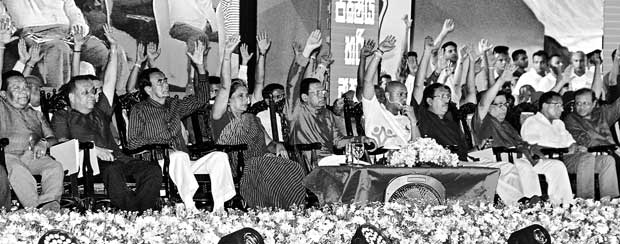
Prime Minister Ranil Wickremesinghe, addressing the 70th Anniversary celebrations of the United National Party, of which he is also the Leader, at Campbell Park in Colombo on Saturday, said, inter-alia, that he and the government were to reduce the government debt by the year 2020.
All well and fine. If the government has such lofty ideals for the economy, all it has to do is to stick resolutely to its Financial Consolidation Plan which is envisaged from the time it was in the Opposition and when the development plans were strategized at that time.
The eventual target to reach that elusive goal is the reduction of the Budget Deficit to 3.5% of GDP which is also in consonance with the dictates of one of the two Bretton Woods Institutions, the International Monetary Fund. If these lofty plans are stuck to, the plan is to bring the budget deficit to 5.4% in 2016, 4.5% in 2017, etc which will also mean that the target will be 3.5% in 2020. The lesser the budget deficit is, this will also mean that there will be lesser need for borrowings, both locally and overseas.
This will also mean that the Revenue will also have to improve which has to be ahead of the 12% of GDP now. This will have to be raised to around 20% of GDP by 2020. Then the first step would have to mean that the tax revenue also has to increase.
The increase of export revenues will also mean that there will be less pressure on the Balance of Payments (BOP) and the Current Account deficits. It will also address the concerns in the Balance of Payments issues. Then the government will not have to borrow from the Current Account.
That is essentially and effectively what the Prime Minister is saying. He is saying that we have to reduce the budget deficit and increase revenue.
Noble economic ideals
While lauding the Prime Minister for his noble economic ideals, it will only remain to see how it would be practically implemented. It also depends on what commitments that the government is having with so many Bond issues and what fate these have on the future.
One has to decide which is better. The economy and its growth have to improve. There are three options for the government. The first is to ensure that there is higher economic growth while the second is to reduce borrowings as a percentage of GDP which were hitherto for mega infrastructure projects which have yet to generate any form of returns and the third option is to repay all the loans.
Let us now compare the Sri Lankan economy and its taxation. According to the Central Bank Annual Report 2015, the debt to GDP ratio stands at 76%. However, few months back, the government claimed that the real debt to GDP ratio in the country exceeds 80% as the previous government had borrowed large sums of money through State-owned enterprises. The massive amounts of debt certainly reflect the crisis that the government has faced. What is more concerning is the increasing foreign debt and the increase of commercial borrowings. As per the Annual Report, domestic debt amounted to 44.3% of the GDP while foreign debt amounted to 31.7% of the GDP. The increase of foreign borrowings can cause serious economic issues, including a Balance of Payment crisis which the country faced early this year.
Sri Lanka, also, cannot raise loans at concessionary rates. It is now a middle income country and Multilateral and Bilateral institutions will also not have concessionary funding at the time it had only the status of a low income country.
However, contributing lavishly to the precarious situation is the foreign debt which is a legacy left behind by the previous regime from China, predominantly at prime Commercial rates which have not brought in any returns. That had made the situation from bad to worse.
These loans, despite being given as professional loans for Hambantota Port and Mattala Airport, have to be collected. We are eagerly awaiting your reminiscences. Ambitious plans are good but, these debt- driven funds would have benefitted of the money circulation locally. Now who is going to bell the cat? The government in its bid to pamper the voters, who brought them to power, lowered the fuel prices. Also the Rs 10,000 allowance which it promised, which has come a cropper.
There is also the need to increase the Direct Taxes but whom is the government targeting? The poor and the masses also have to pay for the settlement of the loans which have been taken at exorbitant interest rates and they are not even drawing the benefits. For instance, loans being paid for the expressways do not benefit the masses as they cannot even take a trishaw on those. So, there!
Conclusion
It is also a strange paradox, that this government is also adopting the practices of the previous regime. There has been a tender given to Indian company to repair the Northern railway line when the Railway Department had the capacity to do the same task at a lower cost which is the exact same thing that Rajapaksa regime did. Taking loans at a higher interest rate and awarding tenders to foreign companies will bring no good to the country.
There is also no proper plan to address the Balance of Payment issues.
The economic woes of the country are not something that this government has suddenly found out in a major discovery.
So, in order to have higher revenues, will the government stop or reduce subsidies such as Samurdhi, health and education?
At the moment the government has been caught in a catch 22 situation. The increase of revenue is not an option, but a must.
Given the conditions of the IMF, revenue increase alone may not be sufficient. The government will likely have to cut the expenditure. However, it is the job of the government not to hurt the common man in the process of implementing these reforms. Failing to protect the common man, will certainly not be an element of so-called social market economy which the government is boasting about.
September 10, 2016, 8:53 p
Stressing the importance of rescuing the country from the debt trap, Prime Minister Ranil Wickremesinghe yesterday expressed confidence that the government would overcome the obstacle “without leaving the challenge of resolving it to the future generations”.
Addressing the UNP Convention to celebrate its 70th anniversary in Colombo, he assured that “we will resolve it without leaving the burden to generations to come”.
“As a UNPer, I am proud of the immense good the party had done to the nation. But as a party, we may have taken wrong decisions as well. I apologize for all the wrong the UNP has done,” he said.
“This is not the time to talk about the past as the county should steadfastly move forward. It should forge ahead to fulfill the aspirations of the people and rescue the country from the debt trap,” the UNP leader stressed.
Did the United Nations’ Secretary General Ban Ki-moon commit a serious error when he lumped the Rwanda and Srebrenica genocides with our war against terrorism? The Joint Opposition (JO) charged that he deliberately tarnished our image, ahead of the proposed war crimes probe.
Skills Development and Vocational Training Minister Mahinda Samarasinghe, in a special media briefing, insisted that the media had misunderstood. Ban, he stated, never equated Sri Lanka with the above massacres, but as situations far worse than was in Sri Lanka. The UN Spokesperson Farhan Haq, however, stated that the UNSG’s words spoke for itself.
Ban’s words were, “Something more terrible and serious that happened in the past. In 1994 in Rwanda, there was a massacre. More than one million people were massacred. United Nations felt responsible for that. Of course, it was their war and massacres. But the United Nations was not able to act on it. We said repeatedly, “Never again, never again”.
“It happened just one year after in Srebrenica. Again, many people were massacred when they were not fully protected by the United Nations Peacekeeping Operations. So we repeated again, “Never again”.
Never again, never again
“How many times should we have to repeat, “Never again, never again”? We did it again in Sri Lanka. We have to do much more not to repeat such things in Sri Lanka, Yemen and elsewhere.”
UN.org skips over this contentious quote and highlights that Ban commended the efforts to a comprehensive transitional justice agenda, the Constitutional reform process, as well as singing the National Anthem in Sinhala and Tamil on the Independence Day. He however said, “More can and should be done to address the legacy of the past and acknowledge the voices of the victims…There is still much work to be done in order to redress the wrongs of the past and to restore the legitimacy and accountability of key institutions, particularly the judiciary and the security services.”
UN.org further highlights, “In the conflict’s decisive final stages, tens of thousands of civilians perished. The war was ended – an unquestionable good for Sri Lanka, the region and the world. But we also know that even in its ending, the price was high.
“I again commend Sri Lankans for examining the difficult period you have now begun to leave behind. I am sure those efforts will continue to generate important lessons for the international community that can save many lives in many places.”
Civilian deaths
Ban must expose his source that testifies “tens of thousands of civilians perished”, as that has been denied by legitimate investigations.
Sri Lanka’s humanitarian mission that rescued the largest hostage situation in recent history certainly holds important lessons for the world that is increasingly besieged with terrorism. The tragedy is that the focus is not on such crucial lessons.
Be that as it may, disputing the JO leader Dinesh Gunwardena’s interpretation of Ban’s remarks, acting Foreign Minister Dr. Harsha de Silva opinionated in Parliament that Ban’s visit and remarks improved Sri Lanka’s image overseas.
On that note, it is pertinent to visit the Ruwanda and the Srebrenica genocides.
The Rwandan genocide
The majority Hutu aimed to wipe out the minority Tutsi from Rwanda in 1994. From 7 April to mid-July, it is estimated that as many as 70 per cent of the Tutsi and 20 per cent of the Rwandan population perished.
Historically, Hutu and Tutsi are of the same ethnicity, but of different castes. Traditionally, Tutsi herded cattle while Hutu farmed land. Since the 18th century, Tutsi became increasingly dominant and in a corvee system Hutu were forced to work for Tutsi chiefs. During the colonial era the Tutsi were favoured, while Hutu’s traditional lands privatized and hardly compensated. Though the Belgians modernized Rwanda with large scale projects in health, education, agriculture and public works, Hutu were disenfranchised and subject to large scale forced labour.
After World War II, Hutu agitated for their freedom. Tutsi also agitated, but on their own terms. The Belgian administration sided with Hutu and Rwanda regained its independence in 1964 with a Hutu-dominated republic.
To avoid Hutu reprisals, more than 300,000 Tutsi fled to neighbouring countries. They formed armed groups and frequently attacked Rwandan territory, which led to a cycle of further reprisals and more exiles. With President Juvenal Habyarimana ascending to power in 1973, violence against Tutsi reduced somewhat.
Guerrilla warfare
However, Tutsi refugees continued to intervene militarily. Chiefly, the Rwandan Patriotic Front with the backing of Uganda engaged in guerrilla warfare. After two peace negotiation attempts, Arusha Accords were agreed upon in 1993. It accommodated RPF in the Broad-Based Transitional Government and in the national Army. The peacekeeping force, United Nations Assistance Mission for Rwanda (UNAMIR) arrived during the setting up of the BBTG.
The events earned Habyarimana his government’s and military’s wrath. Racist propaganda increasingly ridiculed and belittled Tutsi. The civil defence force trained and armed with machetes by the Army in early ’90s to combat RPF’s terrorism now transformed to radical militia.
In 1993, Burundi’s first ever Hutu President was assassinated by Tutsi army officers. This exacerbated hatred towards Tutsi.
On 11 January 1994, UNAMIR commander, General Romeo Dallaire, appraised UN headquarters on the developing situation. The then UNSG Kofi Annan refused to intervene – even three months later, after the killings began.
Parties to the conflict
His reasons are unclear as the UNAMIR was established with the consent of both parties to the conflict. Thus, the intervention would have been by the UN and not a member State. Then, UNAMIR could not be charged with intervening as it was requested and consented by both parties and authorized by the UN Security Council.
On 6 April President Habyarimana was assassinated. However, PM Agathe Uwilingiyimana was not allowed to take over – despite Dallaire’s insistence. When 10 UNAMIR Belgium soldiers escorted her to Radio Rwanda to address the nation, soldiers and civilians overwhelmed her escort and forced them to surrender. They were then tortured and killed. PM and her husband too were killed. Then onwards, prominent politicians and journalists were hunted down and killed. Dallaire notes, by 7 April noon, the political leadership was either dead or hiding.
Anarchy and genocide followed. The military hierarchy blamed the RPF for the President’s assassination and ordered the Hutu to “begin their work” and spare none – not even babies. In villages where families knew each other, Tutsi were easily identified and killed. In towns, roadblocks were set to identify Tutsi by their identity cards and summarily executed.
HIV-infected men were formed into “rape squads”. Tutsi women and even Hutu women who were married to Tutsi men or harboured Tutsi were raped. Thus, many survivors were infected with HIV and/or with unwanted pregnancies.
800, 000 Rwandans killed
It is estimated that in the first six weeks, as many as 800, 000 Rwandans were killed. Yet, RPF was the only advancing counterforce. UNAMIR was expressly forbidden to intervene, except in self defence.
Early on, the French launched a military operation with Belgians’ and UNAMIR’s assistance to evacuate expatriates from Rwanda. They however separated Tutsi spouses and only evacuated their families of foreign nationality. Those who boarded the evacuation trucks were forced off at checkpoints, where they were killed. The French, who were close to Habyarimana, rescued several high profile members of Habyarimana’s government. RPF was a threat to their influence.
On 23 June the French-led UN returned with about 2,500 soldiers. However, their humanitarian mission went awry, when genocidal authorities also displayed the French flag on their vehicles, luring Tutsi from their hiding.
As RPF slowly gained control, Hutu en masse, fearing reprisals, fled to neighbouring countries. By 18 July the genocide was officially over.
The Srebrenica genocide
Following WWI, Bosnia was incorporated into what became Yugoslavia. On 29 February 1992, in the referendum held, the result was in favour of independence. At the time, the Bosnian multiethnic composition comprised 44 per cent Bosniaks, 31 per cent Orthodox Serbs and 17 per cent Catholic Croats.
Though Bosnian Serbs firmly rejected the outcome, the European Community and America formally recognized the Republic of Bosnia and Herzegovina. Bosnian Serbs, supported by Serbian Government of Slobodan Milosevic and the Yugoslav People’s Army (JNA), attacked the newly formed republic to unify and secure Serb territory.
The region around Srebrenica was of primarily strategic importance to Serbs. Without it, their new political entity, Republika Srpska had no territorial integrity. Therefore, they sought to expel Bosniaks from Srebrenica.
Bitter conflict
In the bitter conflict for territory, Srebrenica became isolated in the Serb-controlled territory. The advancing Serb military cut off Srebrenica’s only link to Bosnian controlled land and reduced the enclave to 150 square kilometers. As residents of outlying areas sought refuge in the Srebrenica town, the population swelled to 50,000-60,000.
When Commander of the UN Protection Force (UNPROFOR), General Philippe Morillon of France visited Srebrenica in 1993, the town was overcrowded and under siege. There was no running water, proper electricity and scarcity in food, medicine and other essentials. He assured the panicked residents that they were now under the UN protection and would never be abandoned.
The UN High Commissioner for Refugees began to evacuate thousands of Bosniaks. The Bosnian Government however opposed it, claiming it contributes to ethnic cleansing. Even after Serbs warned that the town would be attacked in two days unless Bosniaks surrendered and agreed to be evacuated, Bosniaks refused.
From 1992-1995 the besieged population was deliberately starved. The world attention however was on the fight for Sarajevo and the peace process. Srebrenica was far removed geographically from Sarajevo. Thus, its rapidly deteriorating plight rarely came to focus. Only Dutchbat – the fourth tier in the UNPROFOR command chain – was assigned responsibility for the Srebrenica Safe Area.
Hostile acts
On 16 April 1993, the UN Security Council passed a resolution demanding that Srebrenica and its surrounding areas be considered a safe area and free from all hostile acts. On 8 May it was agreed to demilitarize Srebrenica. The Bosniak forces within the enclave were to handover their weapons, ammunition and mines to UNPROFOR. Serbs would then withdraw their heavy weapons and units.
This safe area agreement was violated by both parties. The Bosnian Government forces used the area as a convenient base to launch counter offensives, which UNPROFOR failed to prevent. The Serb forces prevented Dutchbat personnel, equipment and ammunition from getting through to Srebrenica. UN headquarters issued specific instructions to UNPROFOR not to be zealous in searching for Bosniak weapons and that the Serbs must withdraw their heavy weapons before Bosniaks gave up their weapons. The Serbs did not withdraw their weapons.
By early 1995, fewer supply convoys made it through to the enclave and even the UN forces started running dangerously low on essentials. On 6 July the Serb offensive began in earnest and UNPROFOR posts rapidly fell. The Dutch soldiers either retreated into the enclave or surrendered. NATO bombers could not attack VRS artillery positions due to poor visibility. Then it capitulated to VRSs’ threats to kill Dutch and French military hostages and attack refugee sites with 20,000-30,000 civilians. Thereafter, Dutchbat commander was captured on film, drinking a toast with General Mladic of VRS under whose command the killings perpetrated.
Young girls gang raped
In the following days and months to come, as Dutchbat failed to protect Srebrenica, boys and men, mostly but not necessarily of fighting age, were massacred. Even young girls were gang raped. Though 25,000-30,000 women, children and elderly were forcibly transferred, not all buses apparently reached safety.
It is baffling how Sri Lanka came out smelling of roses when Ban laments that the UN failed in Rwanda, Srebrenica and again in Sri Lanka. The government insists that the international community is good with Sri Lanka. However, Ban grouping Sri Lanka with the carnage indicates otherwise.
Hence, it is imperative for the government to stop playing politics with national security and immediately rectify this errorneous statement. After all, our war was not one without witnesses. Ban’s ardent defenders can extensively brief him the significant role India, America and other prominent diplomatic bodies played bringing humanitarian aid including medical attention to the civilians held hostage by the terrorists.
ranasingheshivanthi@gmail.com
A week after the UN Secretary General visiting Jaffna, President Maithripala Sirisena who was invited to the 200th anniversary celebration of Jaffna Central College on Friday (9) said the decisions that should be taken regarding the development of the country cannot be postponed under any circumstances. If that happened the people of the country will suffer from poverty, the President pointed out while adding that the swift measures will be taken to ensure the carrying out of the development work of the North without any delay.
President Sirisena also said, he will tour the province in the future to take necessary steps to prevent any delays of the development work and to find out causes for those issues.
The students warmly received the President when he arrived at the venue and he was seen engaged in a very cordial and friendly discussion with them.
A book released to mark the Jaffna Central College Scout Centenary Celebrations was presented to the President by the Principal of the College. A commemorative stamp was also issued in this regard.
The Principal, presented a special memento to the President.Expressing his views further, the President said, he will fulfil every responsibility to make the dreams of the children in the North as well as the South, a reality.
The present government allocated the maximum amount of funds in history for the development of education in the North, he added.
Meanwhile, the President opened a newly built state-of-the-art Police Station in Jaffna. Later he also made an inspection tour of the Police Station.
The Chief Minister of the Northern Province, C.V. Wigneswaran, Ministers and MPs, including, Minister Sagala Ratnayake, State Minister Vijayakala Maheswaran, Douglas Devananda, Angajan Ramanathan, MP, Inspector General of Police, Pujith Jayasundara, Jaffna Security Force Commander Major General Mahesh Senanayake and many others participated in this event.
Maithri applauded
President Sirisena went to Jaffna in a jubilant mood after concluding the Sri Lanka Freedom Party (SLFP)’s 65th Anniversary Convention, with gloomy clouds of being a flop looming over up until last Sunday.
Even though, Rajapaksa loyalists backed out, the rally was a complete success with many describing it as having the true identity of the SLFP with many cultural events taking place.
Despite the lack of support by these SLFP members, the 65th SLFP Convention attracted a massive crowd, which according to many party stalwarts was the biggest an SLFP convention has ever attracted.
As it was made clear that former President Mahinda Rajapaksa was not attending the Convention as he had already undertaken a tour in Malaysia, a seat was not allocated for him.
Unlike on many previous occasions where Rajapaksa received a remarkable cheer from crowds than Party Leader President Sirisena ever received in the recent past, a warm reception and a loud applaud thundered whenever President Sirisena’s name was referred to.
Addressing the packed Maligapitiya ground, he stressed that the SLFP will contest upcoming Local Government elections under the party’s traditional ‘Hand’ symbol.
He invited other political parties supporting the SLFP and those that are willing to do so in the future to contest as a common front at future polls under the ‘Hand’ symbol. President Sirisena also invited SLFP parliamentarians in the Joint Opposition group to work within the party to form an SLFP led government in the future.
“I took over the leadership to form an SLFP led government,” the President added.
While observing that some were attacking him both openly and in secret, the President questioned whether they were conspiring against him as he is a man from a humble background.
He pointed out that he is the President who is most close to the general public as he came from a humble background when compared to the other six Executive Presidents in the country. “We need the support of all for this endeavour,” he added.
Meanwhile, all 38 SLFP parliamentarians in the Joint Opposition, the group of MPs loyal to former President Rajapaksa, stayed away from the 65th SLFP Convention as predicted.
Earlier, MP Dullas Alahapperuma said that the 38 SLFP members supporting the Joint Opposition will boycott the convention.
What is noteworthy was not giving former President Chandrika Kumaratunga, a chance to speak at the party convention.
Maithri goes green
Meanwhile, upon returning from Jaffna, President Sirisena yesterday attended the 70th Convention of the United National Party (UNP) held at Campbell Park in Colombo under the patronage of UNP Leader and Prime Minister Ranil Wickremesinghe.
President Sirisena was undecided whether he would make a speech at the UNP Convention till the last minute as he came under heavy criticism by SLFPers for not only becoming the first SLFP leader to attend a UNP Convention, but going ahead with a speech too.
However, despite these concerns expressed President Sirisena continued the trend he set by making a strong speech at the UNP Convention.
Former President Chandrika Kumaratunga was also seen at the UNP Convention.
The Convention which began by singing the National Anthem in Sinhala concluded with it being sung in Tamil.
CBK at crucial UNP meeting
In the run-up to the 70th Anniversary Celebrations a special dinner was arranged at the Water’s Edge to discuss the preparations for the Convention.
Prior to this, the UNP Working Committee also met under the leadership of Premier Wickremesinghe and unlike on an ordinary day, UNP MPs who are not in the Working Committee were also invited to it.
Leader Wickremesinghe, in a lengthy speech, described the sacrifices he made from 1994 to 2015 when the UNP was in the Opposition, to make sure that party was not split.
Hinting at the party’s leadership he said that he has no intention to be the UNP leader when Party celebrates its 80th Anniversary. This remark prompted whispers amongst many who saw it positively while there were those who attempted to read between the lines.
For them, it was the way Wickremesinghe indirectly implied his wish to serve two more terms as the UNP leader.
After the Working Committee meeting PM Wickremesinghe arrived with his wife Prof. Maithree Wickremesinghe to the dinner party at the Water’s Edge.
Everyone was amazed to see another VIP arriving at this UNP special dinner and it was none other than former President Kumaratunga.
Protest against MR
Former President Mahinda Rajapaksa was in Malaysia to address the International Conference of Asian Political Parties (ICAPP) organized by the Malaysian Government at the Putra World Trade Centre (PWTC).
According to Malaysian media reports, some 50 people of Indian ethnicity had gathered outside the Putra World Trade Centre to protest against Rajapaksa, whom they dubbed a “war criminal”.
The group claimed Indian Malaysians have been insulted by Rajapaksa’s presence in the country and criticized the government for according ‘VIP treatment’ at the International Conference of Asian Political Parties (ICAPP) to the Sri Lankan whom they accused of having killed thousands of Tamils in his country.
Demonstrators held up banners and posters featuring his likeness horned and fanged with messages that read “Rajapaksa is a killer”, “Sri Lankan Idi Amin” and “Get out Rajapaksa”.
MR pays no heed
However, Rajapksa paid no heed to the protests and in fact was roaming around the country meeting people and visiting places as previously planned.
After his address he briefly met the Malaysian Prime Minister upon the latter’s invitation and was engaged in a cordial discussion.
However, Rajapaksa did not visit the temple where a Buddhist monk got assaulted as Sri Lankans in Malaysia as well as Malaysian security advised him against his intention to visit the temple and meet the victimized monk.
The Chief Incumbent of the Sri Lankan Buddhist temple in Sentul was assaulted by a small group of demonstrators who were against Rajapaksa visiting the temple, Free Malaysia Today reported.
Members of the Malaysian Indian Progressive Association, Malaysian Tamilan, and the Malaysian Indian Education Transformation Association began their protest by burning an effigy of Rajapaksa. When the Chief Incumbent, Sri Saranankara Maha Nayaka Thera (a Sinhalese), came out of the temple, some persons went to question him about Rajapaksa’s visit, and abused him using vulgarities and obscenities.
One person touched the monk’s face, prompting another to punch him in the face. Two members of the crowd also kicked the monk, forcing Sri Saranankara to run back into the temple.
Sentul Police arrived in time to prevent the crowd from pursuing the monk into the temple.
Subsequently, the President of the Malaysian Indian Educational Transformation Association (MIETA), A. Elangovan, went into the temple with the police and apologized to the monk.
He said his group had gathered at the temple “because we want to give a stern warning to all Buddhist temples not to allow the mass murderer here.”
HC attacked
However, Rajapaksa protests went out of proportion when a group assaulted Sri Lankan High Commissioner to Malaysia Ibrahim Sahib Ansar last Sunday, in a restricted area of the Kuala Lumpur International Airport.
The CCTV footage of the incident, shows the group of men cornering Ansar and questioning him before beating him down to the floor.
According to sources, the attackers had actually come in search of Mahinda Rajapaksa, and asked Ansar about the whereabouts of ‘war criminal Rajapaksa’.
“When he replied that they should go and find out from security officers, they beat him and left him bleeding,” sources said.
On Monday, the Sri Lankan Government condemned the incident and lodged a strong protest with the Malaysian High Commissioner in Colombo for failing to provide him adequate security.
BIA blackout
When Rajapaksa arrived at the Bandaranaike International Airport, Katunayake, ending his tour full of drama in Malaysia his supporters had gathered at the normal arrival entrance to welcome him.
A commotion erupted when the security personnel attempted to prevent Rajapaksa from using the ordinary exit.
MP Prasanna Ranatunga was adamant against security concerns and demanded that Rajapaksa would leave the airport from the normal arrivals gate and would speak to his supporters who have gathered there.
However, when Rajapaksa arrived at the normal arrivals gate to exit, the power supply was interrupted only in that section prompting MPs Mahindananda Aluthgamage , Lohan Ratwatte, Dullas Alahapperuma, Piyal Nishantha, Prasanna Ranaweera, Indika Anurudda, Johnston Fernando and Roshan Ranasinghe to flock around Rajapaksa and escort him out under their security.
An Executive Director, UN, in his keynote address on the Rule of Law organised by the Institute of Justice, Thailand, sometime back had stated Weak rule of law and lack of good governance pose a major threat to social and economic development the world over and they have hindered attaining Millennium Development Goals (MDGs)”. He had added that investments in justice systems and the rule of law were pre-requisites for long term prosperity”.
Didn’t we experience the country becoming worse day after day? We began to hear about drugs, kidnappings, murder, rape, death-threats and underworld gangs including politicians taking law into their hands. Prisons became overcrowded with people who did not have access to political power. Politicians involved in criminal activity and their henchmen due to the culture of impunity escaped without being legally punished. Didn’t we elect representatives since 1970s, who created carnage, chaos and instability in the country?
Considering all these, don’t we need long-term durable solutions. We need statesmen to lead the country. Integrity is doing the right thing. Even when no one is watching them” C.S. Lewis. Do we have such leaders to lead our country? Do our leaders deceive the masses to remain in power? Isn’t that the kind of governance they had mastered since 1970s?
Why did President in Kurunegala while addressing the 65th SLFP Convention say My intention is to form an SLFP government by strengthening the party? I was invited to accept the leadership after my victory and I happily accepted it with the intention of building this great party and steering it to victory”.
“Our future policies should therefore be based on morality imbued with compassion, kindness, affection, truthfulness, sincerity, moderation, love, simplicity, tolerance and respect for life of all living beings, whether they are fauna or flora”
It was the President and the Prime Minister who convinced us that a National Government” was needed to take the country forward. The President in an exclusive interview with Sunday Times had also told that the two parties together would work for the benefit of the people. The people having placed immense trust in their words had voted overwhelmingly to elect the good governance team.
The President at a meeting held in the Presidential Secretariat with newspaper editors and media recently had said We have to forget our greed for power and remain united to create a better country for the next generation”. President had added that the national unity government, in which the two main political parties function as the key stakeholders had laid the perfect foundation to find solutions to long-drawn socio-economic issues”.
Why should the President waste his energies to build up a party? A vast majority campaigning in support of the JO did not attend the convention in Kurunegala. They had defied the decisions taken by the SLFP leadership time and again.
He must not forget that he came forward as the common candidate for a specific purpose? It also appears the President is vigorously planning in order to gain control over the SLFP, when in fact it should be the last item among the priorities. There has been severe criticism that President Sirisena should take the blame for splitting the SLFP. The Former President had also said that the decision to remove 16 SLFP electoral organizers has resulted in fragmenting the SLFP into pieces. He added that popular stalwarts had been replaced with individuals who have been defeated. Has the President filled the vacancies with people with integrity, honesty, moral courage, kindness, generosity and the like? NO.
Shouldn’t the President therefore place trust continually on people who had elected him? People expect the President to continue with the programmes he had already begun under the Unity government. Couldn’t the President gauge his own performance so far as the Head of State? Hasn’t he done well so far? Shouldn’t he act in a more responsible manner as a Statesman in the making?
I am surprised why the President did not use his communication skills to tell his party men to support his cause to establish the rule of law and good governance. In fact, he is the President of the entire country including the UNP. The President supported by the Prime Minister previously had said that the UNP and SLFP should unite and sink their differences in order to take the country forward. President also had said There are several reasons why I should be happy. I took over a country which did not have proper democracy. The country was plagued with corruption. There was disregard for human rights and fundamental rights. The judiciary was corrupt and the country was burdened with debt. The foreign debt remained at Rs. 9,000 billion”.
This is why people believe that the President should standby firmly in support of Unity Government. The President should not cause any embarrassment to those who voted them and extended the support to constitute the present government. President should not shatter the people’s hope because it is those corrupt self-centred politicians who would come back if he strengthened the SLFP. Country needs new blood for statecraft. If not, who knows whether the former regime could also use all their gimmicks to come back to power? Weakness of attitude becomes weakness of character – Albert Einstein. As President, he had rightly pointed out about Sri Lanka’s crippling burden of debt, absence of rule of law, bad governance, corruption, civil unrest, ethnic violence, overloaded and inefficient public sector. WB, IMF, and other international agencies too have pointed out public sector corruption or the use of public office for personal gain had hindered development and economic growth.
Didn’t we expect the present leadership to change the destiny for the benefit of the people? If they are good leaders, they should be able to make things happen, things that otherwise could not have happened? If they do not work together it would no doubt be impossible to fulfil the aspirations of the masses.
Do you think most of our politicians have been self-aggrandisers and self-perpetuators who subvert and degrade key institutions, programmes, legislation etc of government to serve their interest and not that of the people? Saddam Hussein has stated Politics is when you say you are going to do one thing while intending to do another. Then you do neither what you said nor what you intended”.
“The rulers must administer the country with affection, care and discipline considering that it is the responsibility of that of a father. Aren’t they duty bound to look in to their welfare and happiness too? Haven’t they instead feathered their nests to-date? “
Nevertheless, dishonest inconsiderate politicians without moral courage, assisted by shady public officers under the present government, too spend billions for luxury motor vehicles. having curtailed essential public services. Shouldn’t they think that economic and other impediments faced by the people had stemmed from the way that the political power had been exercised and monopolised by selfish politicos since 1970s.
It is therefore encouraging that President professes his commitment to poverty alleviation”. They should professionally study the systemic causes of poverty and the need to change present economic and social policies for achieving the goals for the benefit of the people. President also announced that he did not want to reside in the Official Residence in Fort because he does not like wasting government resources.
Paradoxically, with an abundance of potential and natural resources, we are mired in steaming squalor, misery, deprivation and chaos. Due to these reasons, even locally produced food stuff has gone up in prices by leaps and bounds pushing food stuff nearly out of bounds for the poor masses. Eating has therefore now become a luxury in Sri Lanka. President himself has pointed out around 20% of the population is suffering from malnutrition.
The rulers must administer the country with affection, care and discipline considering that it is the responsibility of that of a father. Aren’t they duty bound to look in to their welfare and happiness too? Haven’t they instead feathered their nests to-date?
Shouldn’t we therefore change the electoral system and nominate clean, capable people who do not seek fame, luxury cars and official bungalows. There should be people who are willing to sacrifice to take the country forward and who would dedicatedly work towards the well-being of the people. Why is that SLFP nominating mavericks as organizers as yet? President said at a meeting in Jaffna that the government does not want to earn bigger revenue from Liquor. If so how can the President appoint liquor shop owner as an organizer in Colombo district? People seem to be unhappy about the way how the leaders handle these affairs.
Dr. Abdul Kalam, former President of India had said creative leadership is the essence of good governance” and a creative leadership requires qualities – (a) A Vision (b) Passion to realise the vision (c) Leader must be able to travel into an unexplored path (d) Knowledge of how to manage a success and failure (e) Courage to take decisions (f) Nobility in management (g) Transparent in every action (h) Leader becomes the master of the problem, defeats the problem and succeeds (i) Leader must work with integrity and succeed with integrity. Dr. Kalam had expressed confidence that the creative leadership qualities will be the foundation which will transform a country into a performing nation.
Our future policies should therefore be based on morality imbued with compassion, kindness, affection, truthfulness, sincerity, moderation, love, simplicity, tolerance and respect for life of all living beings, whether it is fauna or flora.
Resources will have to be sparingly used. It is unfortunate that both the President and the Prime Minister are hell-bent to provide elected representative with luxuries we cannot afford.
Denis Halliday, UNDP’s Deputy Resident Representative to Singapore in 1970s had said the Singaporean Government had used aid wisely focussing heavily on education, industrial development and the urban planning, on every aspect of the now successful industries”.
In the recent times, the architecture of politics has changed. Didn’t the party bosses do that for their own benefit? Nevertheless, the Buddha’s exhortation to the first monks was ‘go forth monks for the good of the many, out of compassion for the world, for the good. Let not two go by one way’. Buddha on several occasions advised the kings to lead a path of righteousness and non-violence. To build may have to be the slow and laborious task of years. To destroy can be the thoughtless act of a single day” Winston Churchill.
Shouldn’t we therefore turn the whole thing upside down? Shouldn’t we remove the tyrannical Machiavelvlian type dynamics, which have proved to be dysfunctional? It is not too late if there is political will to make it better for the citizens and achieve growth and development.
– See more at: http://www.dailymirror.lk/115636/ARE-PEOPLE-HAPPY-ABOUT-LEADERSHIP-That-HANDLES-GOVERNANCE-#sthash.TNOeZ4Oc.dpuf
Matara district Joint Opposition MP Mahinda Yapa Abeywardane, in an interview with Daily Mirror, says it will continue to fight against the government come what may. He says the government seems to be trying to postpone national elections.
Excerpts:
Q Amidst the present state of affairs, how does the Joint Opposition plan its political activities?
We carry out our political activities as usual. We meet people. We go for funerals and weddings. It is as usual. Q Still you do not have a proper political identity in the form of a new party or movement. How are you proceeding with it?
Actually, there is no need for us to build a new identity. We have already carved it out in politics. This is my 33rd year in politics. People know me well in my electoral district and vice versa. We will continue to do politics. Q You were expelled from the organiser post of the party. What do you feel about it?
For me, it was a foregone conclusion. It is nothing new. I knew it would happen at one point given the manner in which the party affairs were conducted.
Q How does the Joint Opposition plan its political activities?
We continue to agitate against the atrocious political activities of the government. We will not stop it at any cost. Q But, public perception is that you will form a new party. What is the actual position?
Actually, we will contest the next elections definitely if we remain alive. It is premature to announce from what side we will contest. One thing is clear. We are contesting. Q You are referring to the parliamentary elections. What about the local government elections?
We will field candidates for that election. We will support them. We have not yet decided modalities for it. We intend to form a political force. As things stand at the moment, we do not even need a political party. People will rally behind us even if we contest as independent groups. If we explain to people the dangerous trend the country is heading towards, they will accept. Both the country’s sovereignty and future are at stake. Clear signs are emerging in this regard. A lame duck government is there. It does not have a proper plan. Its only plan was to unseat former President Mahinda Rajapaksa. There is nothing more than that for them. Virtually, the country is caught in a heap of creepers. The Ministers contradict each other. There is contradiction within contradiction and confusion within confusion. Is this a government? Where is it heading? What will be the end result?
There is growing public unrest against the government. It is our duty to give leadership to these people and unite them for a common front.
“We did not listen to anyone. We assumed that we were correct all the time. We did a lot of development work. But, they received scant publicity. We disregarded giving publicity. Instead, there was negative publicity by the other side. We did not counter it well “ Q You were a Cabinet Minister of the previous rule. In your view, what are the reasons for its defeat at the January 8th election?
It was defeated merely because of falsehood established in society by the forces with vested interests. There was a malicious propaganda campaign. There was one form of propaganda targeting the Muslim community, and another for the Sinhala community. It was a well calculated and well planned move. It was a conspiracy planned systemically over a period.
The western countries and some other countries in the neighbourhood pumped in hordes and hordes of money for this conspiracy. Everyone possible was bought over. Regional politics also played a role. The end result was the defeat of the government. Q Then, why did you fail to counter such false propaganda?
Of course, our shortcomings made way for establishments of such false propaganda in society. Some of our activities served as impetus for untruths spread by these forces. Q What are your shortcomings?
We did not listen to anyone. We assumed that we were correct all the time. We did a lot of development work. But, they received scant publicity. We disregarded giving publicity. Instead, there was negative publicity by the other side. We did not counter it well. We could have done so. Q How have you corrected it now?
Actually, at this time, the current government is giving us opportunities to be seized for publicity. The Central Bank bond scam was one. The conduct of some Ministers was another for us to campaign against the government. There is ongoing political victimisation and vendetta. It is loathsome for people. There are corruption allegations against the government. The government is virtually helping us. Corruption involving local politicians is talked about in the Australian media. Q How do you plan your role in Parliament now?
We are planning it amid various hurdles. The government is placing all possible stumbling blocks. We are not recognised. The Speaker is yet to recognise our group formally. We are not allotted time adequately. We have the support of 51 MPs. Time is not allotted for them adequately and proportionately. However, the Tamil National Alliance (TNA) with 16 MPs and Janatha Vimukthi Peramuna (JVP) with six MPs get time more than enough time.
“We feel that the government will not go for the elections. It is scared of elections. The government seems to be planning to postpone even the parliamentary elections”
Q Do you intend to fight for it?
Yes, we will. We will request the Speaker to recognise us as an independent group. Q But, you contested the election on the ticket of the United People’s Freedom Alliance (UPFA). It is a party to the government. Then, don’t you see any legal barrier for it?
We contested on the UPFA ticket. Its leader President gave us permission to sit in the opposition. Otherwise, he should have asked to stay with the government. We were permitted to sit in the opposition as a group opposed to the government. In fact, we voted against the government’s budget last time. Then, why can’t we be recognised as a group formally. This is nothing but repression. We seek the help of the Speaker as the custodian. Q Are you planning yet another Pada Yatra?
No, we won’t do it. One is enough. Next, we will have a series of meetings at village level. Q Is it in view of the local government elections?
We feel that the government will not go for the elections. It is scared of elections. The government seems to be planning to postpone even the parliamentary elections. Instead, there will be a referendum seeking the extension of the present parliament as done by late President J.R. Jayewardene. It is being planned with the support of international forces. Q How do you make such allegations without substantial evidence?
That was what we heard from reliable sources. We can sense what the government is up to. Foreign nations never help us. They deal with those dancing according to their tune only. They won’t deal with us. Q The government is talking about a massive development drive in the south. You are a politician from the southern province. What are your views?
The government talks very highly of its planned development projects. But, nothing is planned out other than those laid down in ‘Mahinda Chintana’ policies. The government sees whether it is possible to implement at least what was there in that policy document at that time. We promised to give 1000 acres for Chinese projects. Now, the government is promising 15,000 acres. The government has virtually admitted that our policy was correct.
The government vowed to scrap the Port City Project. Now, they have decided to go ahead with it even with the offer of more land for China. They are going after China with a begging bowl. We had a plan for the development of the country. Q The alienation of minority groups was yet another reason for the defeat of the previous government. What is your position?
It is like this. It was false propaganda. It is clear who was behind Bodu Bala Sena that carried out an anti-Muslim campaign. Now, I think Muslims have realised it. Their business operations are down. Recently, a Muslim businessman was abducted. Had it happened during our time, the government would have been blamed. Today, there is a Police Force trying to bend the law. It is called law bending Police. The Police are used to carry out political victimisation.
– See more at: http://www.dailymirror.lk/115637/JO-to-fight-for-recognition-in-Parliament-as-a-separate-group-Mahinda-Yapa#sthash.ONmId2Zv.dpuf
The pledge that has been given by the Government to protect the foremost place of Buddhism must be credited, Bishop of Colombo Malcolm Cardinal Ranjith says.
He expressed this view while participating at a religious ceremony held at the Holy Cross Church in Gampaha.
We thankful for the President and the Prime Minister as they have vowed to give the right status and respect deserved for Buddhism,” he added.
Cardinal Ranjith also went on to say that there was a move to add a new term to the proposed Constitution in a bid to promote atheism in Sri Lanka.
This was also a reason why I stressed that the right status and respect deserved for Buddhism should remain intact in the Constitution. The 9th clause of the Constitution should remain unchanged,” he added.
– See more at: http://www.adaderana.lk/news.php?mode=beauti&nid=36895#sthash.2EyJvyQ8.dpuf
BY SÖNKE IWERSEN HANDELSBLATT EXCLUSIVE Courtesy Handelsblatt Global Edition
From a hotel in Hong Kong, Edward Snowden shocked the world in 2013 by disclosing the extent of U.S. intelligence spying. Then he vanished ore flebefeing to Moscow. Handelsblatt found the people who hid Snowden — refugees with nothing, and everything to lose. read
Six refugees who sheltered NSA whistleblower Edward Snowden in 2013 in Hong Kong, before he fled to Moscow. They wanted to be identified only by first names. From left to right: Ajith, a former soldier from Sri Lanka; Vanessa, a domestic helper from the Philippines and her daugher, Keana; Nadeeka, a refugee from Sri Lanka with her husband, Supun, and their daughter, Sethumdi. Source: Jayne Russell
Edward Snowden doesn’t like vegetables. Nadeeka* smiled at this as she washed the dishes in her small kitchen. The guest who had slept in her room for the last three days may have been the world’s most-wanted man, but when it came to his eating habits, he strongly resembled her daughter, Sethumdi. The meat disappeared, the side dish stayed on the plate. Now, on this hot summer day in 2013, Mr. Snowden and Sethumdi were playing in the hallway. Times like these, the American acted normal.
Nadeeka, a petite woman with jet-black hair, finished the dishes and went into the hallway. Her guest had withdrawn to his room again. She knocked on the door, opened it and found him bent over his laptop, as usual. Nadeeka told him she was going shopping. She felt sorry for the young American for having to spend so much time in the stuffy room. He looked at her for a moment, without moving. Then he said: Nadeeka, I’m alive in this room. I’m dead outside.”
The world had never seen a spy like him before. My name is Edward Snowden. I am 29 years old. I worked for Booz Allen Hamilton as an analyst for the NSA,” he said at the beginning of his interview, which was broadcast on June 9, 2013. Then he told viewers about all the things an analyst for the National Security Agency could do.
The interview sent shockwaves around the globe. People were already suspicious of intelligence agencies but Mr. Snowden’s revelations sent shivers down their spines. Here was a young man talking calmly about how the NSA was recording and storing every single email and text message sent anywhere in the world. Every telephone number in use was archived, as was every internet address visited and every online purchase. All of this was being done without court orders or political mandates. The world was outraged.
One reason Mr. Snowden’s revelations found such resonance was that he had prepared them so well. Weeks before his interview, he had traveled to Hong Kong with a collection of USB sticks in his luggage. The storage devices contained countless U.S. intelligence service documents. Then he set up a meeting with a journalist from British newspaper The Guardian and U.S. documentary filmmaker Laura Poitras.
video: Interviews with the Hong Kong Refugees Who Hid the NSA Operative En Route to Moscow.
Articles began appearing in June about PRISM, the massive eavesdropping program the NSA was using to access data from Apple, Facebook, Google, Yahoo and other tech companies. The disclosures drew outrage. For several days, the world puzzled over who the source of the revelations could be. Until Snowden outed himself in his own interview. Going public, Mr. Snowden became the face of the protest movement against U.S. surveillance activities.
Despite the care he had taken preparing his revelations, the young man had given precious little thought to what would happen afterwards. The interview with the Guardian journalist, Glenn Greenwald, took place on June 6, 2013, at Hotel Mira in downtown Hong Kong. The whistleblower was still staying at the hotel when the interview was broadcast three days later.
Now the whole world could recognize his face. Mr. Snowden could no longer set foot outside. And Mr. Greenwald, who had checked into a different hotel, no longer felt safe visiting him. Other journalists were at his heels. The whistleblower was trapped.
One reason Mr. Snowden’s revelations found such resonance was that he had prepared them so well. Weeks before his interview, he had traveled to Hong Kong with a collection of USB sticks in his luggage. The storage devices contained countless U.S. intelligence service documents.
The attorney
The sun had just set over Lantau, the biggest of Hong Kong’s 263 islands, on Monday, June 10, 2013, when Robert Tibbo’s phone rang. The 49-year-old attorney opened his eyes and looked at the clock. Annoyed, Mr. Tibbo rolled over and closed his eyes again. The phone rang again a few minutes later. On the third try, Mr. Tibbo finally picked up.
He was sitting in his Mazda 20 minutes later. He was heading to Kowloon, where Hotel Mira is located. Mr. Tibbo felt queasy. He had been working as a lawyer in Hong Kong for eight years. In an earlier life, the Canadian had worked as a chemical engineer for Monsanto in Australia. Then he set up shop in Hong Kong as a corporate consultant, and went to law school, specializing in human rights. About 12,000 refugees were living in Hong Kong at the time, many under miserable conditions. There was plenty of work for Mr. Tibbo.
Edward Snowden and the Canadian lawyer who helped him escape to Moscow in Hong Kong, Robert Tibbo, photographed in late July 2016 at an undisclosed hotel in Moscow. Source: N.Y. Jennifer
The lawyer drove quickly. Hong Kong, a special administrative zone on the southern coast of China, has a population of 7 million. But thanks to an extremely high automobile tax and excellent public transportation, Hong Kong has fewer traffic jams than most other major cities. Mr. Tibbo drove as fast as he could. What a Monday! He reached for his phone.
Where are you now? What? Oh, no, that’s too dangerous. I’ll be right there,” he said, breathlessly to the person on the other end.
Mr. Tibbo walked into the lobby of the W Hotel, the hotel, where Glenn Greenwald, the Guardian journalist, was staying. He looked around.
Dozens of journalists were camped out in the lobby. In their frenetic search for Mr. Snowden, they had discovered Mr. Greenwald’s whereabouts. They still didn’t know the identity of the man they were looking for. But they had a simple plan: Follow Mr. Greenwald until he led them to Mr. Snowden.
Mr. Tibbo was shocked. Like millions of other people in the world, the attorney had seen Mr. Snowden’s interview on television the night before. He had marveled at the American who appeared relaxed as he chatted about the NSA. But hours later, Mr. Tibbo’s admiration had turned to consternation. Had Mr. Snowden and the journalists actually betrayed the biggest secrets of the U.S. intelligence agencies and then simply gone to bed?
Shortly after Mr. Snowden’s television bombshell, Mr. Greenwald received a call from a long-time aquaintance. The man warned the journalist the entire world would soon be looking for Mr. Snowden. The American needed a lawyer, and fast, his friend told him. Mr. Greenwald’s reader knew two of the best human rights lawyers in Hong Kong: Robert Tibbo and Jonathan Mann.
At the W Hotel, Mr. Tibbo went into action. Jonathan Mann headed to went the Mira Hotel to speak with Mr. Snowden, while Mr. Tibbo went to the office of the United Nations High Commissioner for Refugees. Mr. Greenwald was ordered to stay put.
Mr. Tibbo rushed out of the W Hotel straight to the head of the UNHCR. He made his case: An American was in Hong Kong urgently needed political protection. The official was reserved and perplexed by the puzzling request. Mr. Tibbo’s phone rang again.
It was Mr. Snowden.
He was nervous. Earlier, Mr. Snowden had said his testimony was more important than his freedom. But now, the consequences of his disclosures were starting to sink in, and he realized he would be arrested if he left his hotel. Where was he supposed to go?
Don’t worry about it,” Mr. Tibbo said. He had an idea.
A HANDELSBLATT EXCLUSIVE Q&A WITH EDWARD SNOWDEN
Snowden shows up
Nadeeka didn’t recognize Edward Snowden when she met him. The young man was standing in front of her apartment door, wearing a baseball cap and carrying a blue plastic bag. Robert Tibbo stood beside him. The attorney, to whom Nadeeka owed her freedom in Hong Kong, had called a short time earlier. There was someone who needed protection, he said, and asked Nadeeka to help.
That night, Mr. Snowden slept where Nadeeka and her daughter usually sleep, on an old mattress in a 100-square-foot room with bare concrete walls. Nadeeka and her daughter Sethumdi slept in the hallway.
The next morning, Mr. Snowden asked his host to buy him a newspaper. When Nadeeka opened the South China Morning Post, she was dumbfounded. The man whose photo she was looking at was sitting on her bed. Nadeeka was harboring the world’s most-wanted man.
When Handelsblatt met Nadeeka in Hong Kong, she wasn’t doing well. It was a hot summer day in 2016, with temperatures reaching 31 degrees Celsius (88 degrees Fahrenheit) and 90 percent humidity. Nadeeka was just out of hospital, and wanted to hold her three-month-old son, Dinath, in her arms. But Dinath was still in hospital, with ear problems following a kidney infection. The doctors decided to keep him there.
Her apartment is on the fourth floor of a high-rise in Kowloon. We walked up through a cluttered stairwell, passing piles of garbage and fuse boxes with cables hanging out. Looking out the windows as we climbed the stairs, we saw the illegal structures people built on top of buildings nearby.
The four members of Nadeeka’s family live in a two-room apartment. The shower is in the stairwell and the stove is next to the toilet. The walls are bare, and the only spot of color is a colorful landscape Nadeeka’s husband Supun painted onto the walls.
When Nadeeka opened the door, her daughter Sethumdi jumped excitedly behind her. The five-year-old is seemingly unaffected by the poverty of her surroundings. Bright-eyed, the little girl showed her plastic toys and lost herself in a fantasy world where she is a princess. Nadeeka stroked her daughter’s head. Then she pulled out a tattered chair and a plastic stool, sat down, and told how she had ended up in Hong Kong.
Nadeeka and Supun’s apartment is on the fourth floor of a high-rise in Kowloon. We walked up through a cluttered stairwell, passing piles of garbage and fuse boxes with cables hanging out. Looking out the windows as we climbed the stairs, we saw the illegal structures people built on top of buildings nearby.
The seamstress
Nadeeka was born in Colombo, the capital of Sri Lanka, in 1983. Her father was a bus driver and her mother a housewife. When Nadeeka turned 18, she started working as a seamstress in a factory, where she made baby clothing for Nike and Marks & Spencer. She worked 10 hours a day, six days a week, and overtime was standard. Workers had to ask the foreman for permission to use the bathroom. If Nadeeka did not complete the required number of garments, she had to continue sewing without pay until she fulfilled her quota. When there were urgent orders to finish, the 600 female employees had to work all night long.
But hard work wasn’t the reason Nadeeka left her country. The reason was Nuwan. He was the man Nadeeka saw every day on her way to work. Nuwan was from a politically influential family. He spoke to Nadeeka, a shy young woman, for the first time in March 2003. He asked to go on a date with him, but she turned him down.
For six months, Nuwan followed Nadeeka from the factory where she worked to her parents’ house, begging her to be his girlfriend. Nadeeka relented – at least a little – in October, telling Nuwan he should speak to her parents. They took a look at the young man and told him to come back with his parents. Finally, they gave him permission to go out with their daughter.
Supun and Nadeeka, two refugees in Hong Kong from Sri Lanka, who were the first to shelter and hide Edward Snowden after he disappeared from his Hong Kong hotel in 2013. Source: Jayne Russell
Four months later, they were sleeping together. Nadeeka, whose upbringing forbade premarital sex, was against it at first. But Nuwan was persistent, and because Nadeeka was certain that she would marry this man, she finally gave in.
Nuwan went abroad in late 2004. Soon there were rumors that he was living a very loose life. When he returned to Sri Lanka in mid-2006, Nadeeka’s parents told him that his relationship with their daughter was over. That was when the torture began.
Under a false pretext, Nuwan lured Nadeeka to a friend’s apartment, where he raped her. From then on, he demanded sex several times a week. If Nadeeka refused, Nuwan beat her and raped her. Fearing she would be stigmatized, Nadeeka didn’t go to the police or the hospital. When she threatened to press charges against Nuwan, he showed her a video he had secretly made when they were having sex. He told Nadeeka that he would publish the video if she resisted. At the same time, Nadeeka discovered that Nuwan was married and that his wife was expecting a child. Nadeeka felt dishonored and feared that she would never find a husband. She tried to commit suicide by swallowing insecticide.
Ajith, a former soldier from Sri Lanka, acted as Edward Snowden’s bodyguard and protection while he went underground for two weeks in June 2013 before fleeing for Moscow. Source: Jayne Russell
After doctors saved her life, Nadeeka hid at a relative’s house. But Nuwan found her and threatened to kill Nadeeka, her parents and anyone who helped her. Because his family was closely aligned politically with the governing party, he had political protection. The police wouldn’t touch his family. In December 2007, Nadeeka fled to Hong Kong, where she met the man she wanted to marry.
THE EDWARD SNOWDEN TIMELINE: FROM MARYLAND TO MOSCOW
Romeo and Juliet in Colombo
Supun* was once a proud man. As a teenager in his native Sri Lanka, he was a promising cricket player, the country’s national sport. He was popular and a heartthrob in school and dreamed of being famous. Today, he sits next to Nadeeka in their run-down apartment, with bloodshot eyes, and is ashamed.
Supun has been stuck in Hong Kong for 11 years. All that time, he has been dependent on his father, who sold his house to help his son. Supun would like to provide for his family, but he can’t. As an asylum seeker, he is not permitted to work in Hong Kong, and because his legal status is unclear, he is not allowed to leave. He is a prisoner in a system that makes no sense.
War drove him away. Supun was nine when he heard the first bomb, on May Day in 1993, as he was fixing his bicycle. He suddenly heard a huge explosion that shook the ground. A suicide bomber had blown himself up at a rally, killing then President Ranasinghe Premadasa and many bystanders.
A civil war had been raging in Sri Lanka for years. The government and rebels were ruthless in their combat and recruiting methods. It was almost impossible not to take sides and anyone who supported one side immediately became a target for the other. Supun regularly saw charred corpses on his way to school, the bodies of people insurgents had killed by placing tires soaked in gasoline around their necks and setting them on fire. As a deterrent, the police often hung in front of the school the bodies of beheaded students who had opposed the government.
Supun started playing cricket when he was six. His talent and love of the game helped him get chosen for all-star teams. Sri Lanka won the World Cup when Supun was 12. No one in Sri Lanka earned more respect than someone who knew how to hold a cricket bat. Supun hoped to become a professional cricket player, and later an actor or a singer.
Supun fell in love at 17. It was a problem. His girlfriend Inoko was from a family that actively supported the opposition, while his parents and relatives supported the governing party, the UNP. It was a Romeo and Juliet scenario.
Inoko’s family threatened to kill Supun when they realized their daughter was seeing someone from the opposition. The family wanted to marry Inoko off to a man she didn’t know, but who fit the family’s plans. Supun and Inoko married secretly in October 2003.
In Sri Lanka the political situation worsened dramatically in 2004 when the UNP lost an election. Soon after, Supun received a call from his wife, who told him to go into hiding. She had overheard a conversation between her brothers, who had found Supun’s new address in Colombo and were going to hunt him down.
Supun moved from one hiding place to the next, but his wife’s brothers were on his trail. They beat him with metal bars and sticks and demanded he leave their sister alone. But the couple kept meeting nevertheless.
The situation got worse when Inoko’s family found out the couple had married. Inoko’s brothers beat Supun severely and placed their sister under house arrest. They forced Inoko to file for divorce, threatening to kill her husband if she refused to comply. Inoko obeyed her brothers, but Supun refused to accept a divorce. Again, Inoko’s brothers beat him with sticks in broad daylight, this time before his wife’s eyes.
Supun finally went to the police, but it was no use. The party Inoko’s family supported was now in power. The police didn’t lift a finger. Instead, Supun was beaten again after filing charges. He fled to Hong Kong in March 2005. There was only one reason he chose Hong Kong: It had no visa requirement – all he needed was a ticket. Supun left Sri Lanka with one suitcase to start his new life.
The Mira Hotel in Hong Kong is one of the city’s most stylish hotels. Dressed in jeans and a faded T-shirt, holding a Rubik’s cube to identify himself, Mr. Snowden met journalists Laura Poitras and Glenn Greenwald on June 1, 2013.
Misery in paradise
At first, Hong Kong seems like the land of milk and honey. With its picturesque location on the South China Sea, the city has a magnificent skyline. The world’s major banks all have skyscrapers there and the streets are lined with fancy cars. The Ritz Carlton in the International Commerce Center is the tallest hotel in the world. Hong Kong has a budget surplus of €1.7 billion ($1.9 billion). Tiny apartments with 20 square meters (215 square feet) of space cost close to €1 million. An luxurious apartment recently sold for €69 million.
This is the side of Hong Kong that Edward Snowden experienced when he arrived in May 2013. The Mira on Nathan Road is one of the city’s most stylish hotels. Limos line up in front of the entrance and visitors enter a lobby with curved white walls and designer furniture. Here, dressed in jeans and a faded T-shirt, and holding a Rubik’s cube to identify himself, Mr. Snowden met journalists Laura Poitras and Glenn Greenwald on June 1, 2013.
Ten days later, on the run from U.S. intelligence agents, Mr. Snowden became acquainted with the other side of Hong Kong.
The apartment where Nadeeka and Supun live, and where Mr. Snowden first took refuge, is managed by International Social Services, a company headquartered in Switzerland. Officially a non-governmental organization, ISS has a lucrative contract with Hong Kong to manage housing for asylum seekers. In 2015, major protests forced city administrators to shut down more than 60 slums: ISS employees had reportedly sent refugees to slumlords, who were housing asylum seekers in pigsties and pigeon sheds, for which they were paid millions from the city’s welfare coffers. Party members, ISS directors and slumlords are still linked today.
ISS has denied the reports, defending the status of its properties in Hong Kong.
The Mira Hotel in Hong Kong, one of the city’s finest luxury hotels where Edward Snowden gave his fateful interviews in June 2013 to Guardian journalist Glenn Greenwald and documentary filmmaker Laura Poitras. Source: Jayne Russell
Hong Kong’s welfare support for refugees has also come in for criticism. Refugees receive food vouchers that are only valid in the ParknShop supermarkets, a chain owned by Li Ka-Shing, one of Asia’s richest men. And no matter how many times people like Nadeeka and Supun complain that prices at ParknShop are higher than at other stores, and that the vouchers don’t last until the end of the month, nothing changes.
The first refuge
This was the world Mr. Snowden discovered in June 2013. His interview with The Guardian made him an enemy of the state. The United States issued a warrant for his arrest, and U.S. Attorney General Eric Holder pressured Hong Kong to find and extradite Mr. Snowden. The Americans also conducted their own search, in what intelligence insiders called the biggest intelligence manhunt in history. U.S. Senator Lindsey Graham at the time said: I hope we’ll chase him to the ends of the earth, [and] bring him to justice.”
For Mr. Snowden, the end of the world was Nadeeka and Supun’s apartment. Neither hesitated to take him in. When they first saw the American, Robert Tibbo was standing next to him. They would have done anything for Mr. Tibbo. The human rights lawyer was the reason the two asylum seekers hadn’t been deported. Both had been arrested several times, and Mr. Tibbo secured their release each time. In the special administrative zone, where only 0.3 percent of applicants gain asylum, Mr. Tibbo’s voice is one of the few on behalf of refugees. It was no surprise Nadeeka and Supun welcomed the man everyone was looking for into their home.
Mr. Snowden was shy and nervous. All he said to them was: They’re coming after me” before falling silent. In the next few days, the whistleblower spoke very little with his hosts. Mostly, he would sit at his laptop with earplugs in his ears. Nadeeka and Supun had no idea what he was typing.
It was the beginning of a surreal period for them. The world’s most-wanted man was sitting in their apartment, and they couldn’t speak to anyone about it. Mr. Tibbo instructed them to remove the batteries from their phones and not to Google terms like ”Snowden” or ”NSA” on their computer. The attorney had deliberately hidden the American where no one would look for him, and he was determined to keep it that way.
As little as Mr. Snowden spoke, his hosts quickly gained a taste for their role. The entire city was talking about the American. Everyone wondered where the man who had opposed the omnipotent U.S. intelligence service could be. We are protecting a hero,” Supun told his wife. A few days later, when Mr. Snowden told them it was time for him to leave, the family wept. But his attorney insisted that he be moved for security reasons.
The maid
Vanessa* couldn’t quite place Edward Snowden when he stood before her.
This man needs a place to hide,” Robert Tibbo told her on a summer evening in 2013. That was good enough for Vanessa. She led the stranger into her apartment, gave him a pillow and a blanket, and asked him if he was hungry. I like muffins,” Mr. Snowden said. Vanessa reached for her wallet. As he was leaving, her attorney took her aside and said: Speak with no one. When you open a newspaper tomorrow, you’ll know who he is.”
When Vanessa, 42, went out the next morning to buy muffins and fresh underwear for her guest, she got a shock. The face of the man she had let into her apartment the day before was everywhere — in newspapers, on TV and on websites. I was shaking with fear,” she recalled. The world’s most-wanted man was sleeping in my apartment. If anyone had found out, my daughter and I would have been in a lot of trouble.”
But Vanessa didn’t send Mr. Snowden away. I couldn’t do that,” she said. Hiding Edward was an important task, and Robert Tibbo asked me to do it. I didn’t want to let him down, and I was proud that he had asked me for help.”
There is hardly anything Vanessa wouldn’t do for her attorney. Mr. Tibbo is her anchor in a city that doesn’t want her. She hid from the authorities for years, and it was only through Mr. Tibbo that she learned she had a right to stay in Hong Kong.
She was 24 when she arrived in Hong Kong. She thought her entry visa for a job as a maid was a ticket to a happier future. She grew up in a village in the northern Philippines, in a province where rebels with the New People’s Army, the military arm of the Communist Party, were entrenched. Battles with government forces were common. As a child, Vanessa could tell how far away the fighting was from the sound of the explosions.
The world seemed better in Hong Kong, a city that would grind to a halt without foreign domestic help. More than 300,000 people, mostly from the Philippines and Indonesia, work in Hong Kong as domestic servants. Vanessa was pleased in the first few years. But then a wedding sealed her fate.
In the summer of 2000, Vanessa attended a friend’s wedding while home in the Philippines. One of the guests wanted more from Vanessa than she felt comfortable with. It wasn’t a big problem at first. She was already looking for her next job in Hong Kong, but then realized she didn’t have enough money to pay the employment agency. The longer she stayed, the more Vanessa was harassed by the man, who she realized was a well-connected member of the NPA rebels. He raped Vanessa in December 2001, and then he abducted her.
Vanessa said she tried to escape three times, and each time the rebel caught her and beat her. Then she gave birth to a son. The rebel allowed her to visit her parents. With their help, she eventually secured a contract for a job in Hong Kong. She hid her son with her parents and planned to return for him later.
But her plan failed. A few weeks after fleeing the Philippines, Vanessa received a call from the man who had made her life a living hell. He had taken her son and threatened to kill Vanessa if she returned to the Philippines. To this day, she doesn’t know how her son is or whether he is even alive.
Unable to return home to the Philippines, her life in Hong Kong became harder overnight. Domestic servants live under difficult circumstances in Hong Kong.
This man needs a place to hide,” Robert Tibbo told her one summer evening in 2013. That was good enough for Vanessa. She led the stranger into her apartment, gave him a pillow and blanket, and asked him if he was hungry. I like muffins,” Edward Snowden said.
Modern-day slavery
In Hong Kong, maids are required by law to live in their employers’ homes. The young women are usually housed in children’s rooms. When children cry at night or wake up at 5 a.m. and refuse to go back to sleep, the maids get up.
Many of these women see themselves as modern-day slaves. Vanessa’s employers often sent her to their parents to clean there as well. But her pay, like that of all domestic help, was below the legal minimum wage. And if she were fired, Vanessa would have just two weeks to find a new job – or face deportation.
Domestic servants in Hong Kong only have Sundays off, when anyone strolling through the city can witness a strange spectacle — thousands and thousands of young women having picnics, sitting on flattened cardboard boxes on bridges and streets, and in overcrowded parks. The women are too poor to eat in restaurants. The groups of young Filipino and Indonesian woman look like protesters, but they are not. They are simply poor and living on subsistence wages.
Those who do not conform are weeded out. Vanessa lost her last job as a maid in 2010. Unable to return to the Philippines, she scraped by, staying with friends. But she was caught in a police raid, and unable to produce valid papers, was arrested. For more than two months, she was held in a jail cell with 12 women, sleeping on metal beds without mattresses.
Robert Tibbo found Vanessa and told her she had rights. She became a founding member of the Refugee Union, which has registered more than 2,500 of Hong Kong’s 12,000 asylum seekers. The group draws attention to people who are all but forced into crime by Hong Kong’s bureaucracy.
Handelsblatt Investigative Team Chief Sönke Iwersen in Hong Kong with Supun, a refugee from Sri Lanka who helped hide Edward Snowden in June 2013, and Mr. Snowden’s Hong Kong-based human rights lawyer, Robert Tibbo. Source: Jayne Russell
The money refugees earn in Hong Kong isn’t enough to survive. But they are banned from working and those who work illegally risk 22 months in jail. The penalty for robbery is two to three months, while drug dealers usually spend less than a year in prison. More refugees are arrested in Hong Kong for working illegally than for dealing drugs, which is far more lucrative.
Ed has to go
The refugee sitting in Vanessa’s apartment in summer 2013 had other problems. He had been accused of treason by Dianne Feinstein, the chairwoman of the U.S. Senate Intelligence Committee. The Americans were determined to catch Edward Snowden at any price.
Besides hosting Mr. Snowden in her apartment, Vanessa was his messenger, shuttling documents to his attorney. She wore a different baseball cap each time, to avoid being identified on security cameras. Mr. Snowden’s passport was now in her refrigerator. For his 30th birthday, Vanessa bought him a chocolate cake. Ed liked anything sweet. My daughter and I sang Happy Birthday to him. Then Ed blew out the candles. It was nice.”
The happy moment was brief. One morning, Ed suddenly said that he had to go,” says Vanessa. Mr. Snowden seemed very anxious, she said. He told me he was afraid to die. But I said to him: Don’t worry, Robert Tibbo will take care of you.”
Mr. Tibbo’s office doesn’t look like the office of a man capable of taking on the U.S. intelligence community. It has no marble floors, no lobby, not even a reception desk. He works in a single room on the 14th floor of a high-rise in Tsim Sha Tsui, a building in a neighborhood located next to a Thai massage business.
His office is full of desks and cardboard boxes. Files are stacked high on shelves, on tables and on the floor. Each file contains one person’s story. People constantly stop by to thank him for his work. Ajith*, who served as Mr. Snowden’s bodyguard during his two weeks underground in Hong Kong, was in the office when Handelsblatt interviewed Mr. Tibbo.
Ajith’s job began the afternoon Mr. Tibbo asked him to go to the UNHCR office in Hong Kong. He wanted me to see if white men were standing outside the door,” Ajith said. Then Mr. Tibbo left the building with a stranger. I know you,” Ajith said right away. You’re the one on TV.”
Snowden’s bodyguard
Ajith was 18 when he joined the military in Sri Lanka. He had dropped out of school three years earlier when his parents were no longer able to pay the tuition. Ajith was unable to find a real job. His parents were confident that if he joined the army, at least he would have something to eat. The reality turned out to be different.
Ajith enlisted for 22 years. He had hardly arrived at the Ambepussa Army Camp in southwestern Sri Lanka when the nightmare began. The young recruits were sexually molested and often raped daily by their supervising officers. Those who complained were brutally punished. Ajith ran away after two weeks. He spent the next three years hiding from the military policy and surviving on occasional jobs.
Ajith returned to the army in 1993, because he felt he had no alternative. He enlisted under a false name. In the new camp, the recruits were also sexually assaulted by supervising officers, but this time Ajith did his best to avoid the assaults. He was sent to the front after three months, serving as a soldier with government forces fighting Tamil Tiger rebels. When he was injured in fighting and received no medical care, he ran away again.
For the authorities, Ajith was a two-time deserter. He spent six years on the run. During that time he worked as a fisherman and in the mines, hid in the jungle and once in a Buddhist temple. He was seized by the military police in 2002 and put in prison. That was when the torture began. Ajith was beaten with sticks, helmets and chains. Some days, his tormenters poured gasoline on his open wounds. On others they almost drowned him. Then they threw him into a garbage pit.
Ajith had given up on life when he was suddenly released. His family took him in and tried to nurse their severely abused son back to health. A few months later, the military police returned with more questions. They had discovered that Ajith had been in the military not once but twice, and both times left without permission. The family panicked, knowing Ajith would not survive a second round of torture.
The family decided Ajith had to leave the country. They found a man who said he could obtain forged documents so that Ajith could flee to Canada. Ajith’s father mortgaged their house and the family gave the stranger all their money and some passport photos.
In October 2003, the broker and Ajith flew to Hong Kong – a stopover, the man said. From the airport, he took Ajith to Chunking Mansions, a hostel operation of 2,000 rooms. The stranger got out of the taxi and told Ajith to wait for him. Ajith never saw the man again. He was stranded in Hong Kong.
Ajith’s only stroke of luck was that there were tens of thousands of Sri Lankans in Hong Kong. A few took him in under their wing, and Ajith lived underground for three years. He only found out in 2006 that as a torture victim, he could apply for asylum. His status is still unresolved.
But in 2013 he had a guest: Edward Snowden.
Ajith spoke hesitantly about his time with the American. Sitting in Robert Tibbo’s office, the heavily tattooed man had trouble concentrating. He experienced things in Sri Lanka that people don’t recover from. It seems unlikely that Ajith had the strength to protect Mr. Snowden. But when asked by Handelsblatt why he did it, Ajith said: He was like me. Ed was a refugee, and I was a refugee. Of course I helped him.”
The two didn’t talk much. Sometimes Ajith would pick up food for his American guest. Snowden liked McDonald’s. Otherwise, Ajith accompanied his charge whenever he moved from one hiding place to another. I simply felt more comfortable when Ajith was there during the transfers,” said Robert Tibbo, adding: Ajith was the only one with experience on the front.”
Like in free fall
Nadeeka and Supun, the couple from Sri Lanka. Vanessa, the maid from the Philippines. Ajith, the former soldier. Robert Tibbo called upon an odd group in summer 2013 to protect Mr. Snowden but nobody else was there.
Handelsblatt asked the fugitive’s videographer, Laura Poitras, how she came to film her famous interview with Mr. Snowden on June 6, 2013, which was broadcast on June 9. Why hadn’t the journalists taken Mr. Snowden to a safe place long ago?
We had no time to make plans,” Ms. Poitras said. Things were just moving faster than we could think. We were in free fall.”
Robert Tibbo rescued Mr. Snowden. He was the one who really knew what he was doing,” she said. Rob immediately had a plan for how to get Ed out of the hotel. And what to do after that. We would never have made it without him.”
Vanessa, right, a Hong Kong refugee from the Philippines, with her mother, her daughter, Keana, and Robert Tibbo, a Canadian human rights lawyer in Hong Kong who asked Vanessa to shelter Edward Snowden in her cramped apartment for a few days in June 2013. Source: Jayne Russell
Mr. Snowden, in an internet interview, spoke highly of Mr. Tibbo. Robert was a man who carried the weight of human lives on his shoulders every day,” the American wrote to Handelsblatt through an encrypted channel from Moscow. Every day, he fought against a system that is designed to ensure that you can never win. And as far I’m concerned, his plan was brilliant.”
How come Mr. Tibbo was the only one with the overview of what was happening with Snowden the summer of 2013? He shrugged. As a human rights attorney, you often find yourself in extreme situations,” Mr. Tibbo said. Of course, none of his other charges was ever as famous. Still, matters of life and death – winning residency for his clients, preventing deportations that could lead to their deaths – is the core of his work. I was just doing my job,” Mr. Tibbo said.
The two weeks with Mr. Snowden left their mark. Sleep was rare during those summer days. Aside from taking naps here and there, he worked around the clock to find ways to get Mr. Snowden out of Hong Kong. In the end, the American chose Moscow. On June 23, 2013, Mr. Tibbo drove Mr. Snowden to the airport.
But that wasn’t the end of the attorney’s adventure. Mr. Tibbo said he was followed for a year after Mr. Snowden’s departure. He communicates almost exclusively through encrypted channels, concerned anything could be intercepted by intelligence agencies. Smartphones are banned in Mr. Tibbo’s office – visitors must place their phones in his refrigerator.
Mr. Tibbo said he is still Mr. Snowden’s attorney. He visited him in Moscow a few weeks ago, but was unwilling to say what the two men discussed. He said that Mr. Snowden seemed exhausted. But it was important to him to meet his client in person.
Oliver Stone wasn’t interested
The refugees who hid him would also like to see Mr. Snowden again, but the chances of that happening are close to zero. Vanessa, the single mom from the Philippines, can’t afford schoolbooks for her daughter Keana. Ajith continues to suffer from the torture he endured and needs psychiatric care. Nadeeka’s and Suduka’s tenuous existence is still day-to-day.
When Handelsblatt met Nadeeka and Suduka again in July, their situation had deteriorated. In Kowloon it was pouring. Supun huddled under a plastic tarp with Dinath, their three-month-old son, leaning against the building wall in rage and despair.
The landlord had shut off their power. It’s 10 p.m. and outside it’s 28 degrees Celsius (82 degrees Fahrenheit). the apartment is pitch-dark. Without power, there is no ventilation from fans. Supun’s son had a kidney infection and his medicine needed to be refrigerated. Supun had bought a bag of ice.
The children, sweaty and squashed on a small bed and mattress with their parents, cried through that terrible night. Their parents didn’t get any sleep and the next day, the family was exhausted. They went to the office of the building administrator, ISS, where a clerk said he had no idea why the electricity was shut off. Eventually, he said it was likely a billing error. It took half the day before the apartment had power again.
This is also part of Edward Snowden’s story. The refugees who harbored him three years ago still live in miserable conditions in a wealthy city that doesn’t want them. Their asylum applications are still being processed for 10 years or even longer. Their children don’t have passports – they were stateless when they were born.
Others have done better from their contact with Edward Snowden. Journalist Glenn Greenwald turned his experiences into a bestseller. Laura Poitras became world-famous for her documentary Citizen Four,” and won an Oscar. Together, they launched a new journalism project with $250 million from EBay billionaire Pierre Omidyar. Hollywood director Oliver Stone’s $50 million film about Mr. Snowden, called Snowden,” is to debut this month.
Mr. Stone didn’t talk with the refugees who saved Edward Snowden’s life, the Hong Kong lawyer said. The subject didn’t seem to interest him,” Mr. Tibbo said. Would he watch the film? No. I know what happened.”
The Nobel Prize-winning Russian poet and writer Boris Pasternak became world famous for his controversial novel Doctor Zhivago which underscores the plight of the Russian upper middle class during the Bolshevik Revolution. Pasternak was a great composer of images. His grand novel is full of humanism and Pasternak presents the character formation in a poetic vision. He saw the gigantic social changes of 1917 in a human kaleidoscope.
Although the novel was written during the years surrounding the revolution (1910-1920), it was published several decades later. Pasternak’s vision of cosmology, and passion for the individual as well as for life splendidly written in this great novel. It is a snapshot into Russian life Russian Revolution and the early Soviet era of life.
Pasternak highlights the problem of modern sociopolitical existence through his masterpiece Dr Zivago. It is a panoramic social and political chronicle, which describes the social turmoil during and after the Russian Revolution and how the Russian upper middle class was despondently affected by it. Pasternak’s revelation highlights a dramatic question. Is it fare to sacrifice personal freedom and personal life for a social ideology?
In every generation there has to be some fool who will speak the truth as he sees it. Boris Pasternak
The concept of ideology is most generally associated with power relations and often has no regard to human feelings. The ideology can be interpreted as the way in which people think about the world and their ideal concept of how to live in the world. It is a shared belief of a group of people, groups deliberately planning to oppress people or alter their ‘consciousness. In this process violence, torture and terror are used and people are judged by their ideological views.
The Bolshevik Revolution had brought about a fundamental change in the organization of Russian society. The Bolshevik idea of “building a new man via social construction was an indigestible paragon for people like Uri Zhivago. Such people should adopt, perish or leave the system. When there is a dynamic social, change it, gives no place for personal feelings and everybody should get used to a collective life. Ideology and slogans become the center of life. People are judged politically. In such an environment, individuals are given less choices. DrYury Zhivago was one of the countless victims of such a system.
The romance between Yuri Zhivago and Larissa Antipova was a personnel issue and it had no place in the Bolshevik concepts although Lenin enjoyed his private married life with Krupskaya and Stalin with Nadia Alliluyeva. Even though the Red hardliner Strelnikove states that, the personal life is dead in Russia it was not applicable for everyone.
Uri Zhivago a doctor and a sensitive man dramatically torn apart by forces beyond his control. Dr Zhivago became a victim of a personal tragedy as well as a collective tragedy. Yuri’s mother died when he was a child, leaving him only a balalaika. Young Uri was adopted by his uncle. While living in Moscow he had a passionate interest in poetry. Doctor Uri Zhivago was recognized as a professional as well as a poet in the Russian society. But his life was torn between his two lovesTonia Gromyko his wife and Lara Antipova the beautiful nurse.
When the Civil War erupted, Doctor Zhivago was forcibly removed from his wife and family by the Red Partisans and eventually his wife Tonia escapes to Paris with the children. When Strelnikove was arrested, Lara’s life was in danger and she was compelled to go with Victor Komarovsky –the immoral man and an opportunist. Thus, Dr Uri Zhivago lost Lara as well and becomes a fragile man. Lara disappeared off the street during Stalin’s Great Purge. “Perhaps in a labor camp,” narrated General Yevgraf, “A nameless number, on a nameless list which was later mislaid.” Love and innocence lost he was aimless. Dr Zhivago dies of a heart attack while pursuing a woman he believes to be Lara down a Moscow street.
The collective tragedy fell upon on him with the Revolution. The bourgeois Moscovites grand lifestyle of enjoying champagne, caviar and vodka came to a hold with the Revolution. Their lives became topsy-turvy. Doctor Zhivago’s family wealth was confiscated and their house had been divided into tenements by the new Soviet Government. Zhivago’s family was confined to a small room. Dr Uri Zhivago was hated by the Bolsheviks because of his middle class bourgeois roots. His poetry was considered as lines of petty indulging verses.
The revolution brought them misery and disappointments. Thousands were shot dead. The Revolutionary Committee could arrest or execute anyone labeling a counter revolutionary. Wealthy landowners were exterminated classifying them as Kulaks. There was no clear definition or a demarcation of a Kulak. A person owned thousand hectares of land was considered a Kulak. At the height of the state terror under Joseph Stalin, a farmer owned two pounds of grain also labeled as a Kulak and executed.
Bolsheviks believed that they had found the pathway to Utopia. They rationalized the devastation followed by the Revolution stating that if you want to make an omelet, you’ve got to break some eggs.’ Boris Pasternak indirectly puts the question to Bolsheviks through his book Dr Zhivago.Pasternak is questioning –`I see the broken eggs, but Where’s the omelet?’
Pasternak passionately renounced the Bolshevik idea of “building a new man” according to the Revolutionary measurements. Pasternak knew it was against nature. He argued that you could cut the tumors of injustice, which is a painful operation, provided that the patient should be kept alive.
The novel Dr Zhivago is a saga, spanning Zhivago’s life depicting several authentic characters.Boris Pasternak adored the poet Alexander Block Dr. Zhivago may have been based in part on the real life Russian poet Alexander Blok who was the most famous and influential in Russia. Alexander Block was a symbolist poet who sought to convey individual emotional experience through the subtle, suggestive use of highly metaphorical language. In the years after the revolution, Blok was very involved in social and political journalism and in criticism. Blok’s disillusionment with the Soviet bureaucracy and censorship is suggested in his fierce and eloquent essay in 1921 “On the Poet’s Calling” Blok died in Petrograd on Aug. 7, 1921 at the age of thirty-seven. Like the fictitious character, Dr Uri ZhivagoBlock died under physical and emotional exhaustion and with a great disillusionment.
The second character Pavel Antipov or Strelnikov’s personality is much similar to Leon Trotsky (Lev Davidovich Bronshtein). Pavel Antipov was a son of a railway worker. He marred Lara and moved to the Urals. He joined the army as a volunteer during the World War One and fought in the German lines. Wounded in the battle Pavel Antipov was presumed dead but later returns, using the pseudonym Strelnikov with a total personality change. He was not a warm caring man anymore, turned in to a bloodthirsty military commissar.
Like Pavel Antipov, Trotsky was against the Bolsheviks in the early stages but later deeply embraced the Bolshevism. Leon Trotsky formed the Red Army that fought with the White Guard in the Civil War. Leon Trotsky spent his time during the civil war in a train traveling widely across the young Soviet Union. According to the novel Pavel Antipov alias Strelnikov was a ruthless character who travels by a special guarded train destroying villages and eliminating people who help the Whites.
When Dr Zhivago accidentally encountered Strelnikov’s well-protected locomotive he was arrested and taken before Strelnikov. When Strelnikov sees Dr Zhivago he immediately recognizes the famous Russian Poet. These were the words of Strelnikov when he denounced Zhivago ’s poetry.
I used to admire your poems. I shouldn’t admire it now. I should find it absurdly personal. Don’t you agree? Feelings, insights, affections… it’s suddenly trivial now. You don’t agree; you’re wrong. The personal life is dead in Russia. History has killed it. I can see why you might hate me.
Leon Trotsky and Strelnikov shred a common fate. Both of them fell from grace. The Bolsheviks relinquished both. Strelnikov committed suicide while he was taken to a firing squad and Trotsky was murdered in Mexico.
Yevgraf Zhivago is another Character Pasternak introduced in this novel. According to the bookYevgraf was Dr Uri Zhivago ‘s younger illegitimate half-brother who was working for the Cheka.Cheka was a secret police force that was founded soon after the Revolution. Cheka had power to arrest people. No judicial process was involved in assessing the guilt or innocence of any of its prisoners. Punishments, including the death penalty, were arbitrarily applied. The Cheka was granted the power of summary trials and execution of death sentence.
There are much resemblance between Yevgraf Zhivago and Felix Dzerzhinsky – the founder of Bolshevik secret police the Cheka. Dzerzhinsky was not a Russian, he was a Polish. InPasternak’s book Yevgraf Zhivago was illegitimate (non Russian ?). Like Dzerzhinsky, Yevgraf Zhivago combats internal political threats executing suspects.
Dzerzhinsky once publicly stated that “We represent in ourselves organized terror — this must be said very clearly and the terrorization, arrests and extermination of enemies of the revolution on the basis of their class affiliation or of their pre-revolutionary roles.”
Yevgraf Zhivago ‘s words correspond to the power that Cheka members had.
Indeed as a policeman I would say, get hold of a man’s brother and you’re halfway home. Nor was it admiration for a better man than me. I did admire him, but I didn’t think he was the better man. Besides, I’ve executed better men than me with a small pistol.
Chekabecame ill famous for large-scale human rights abuses, including torture and mass summary executions, carried out especially during the Russian Civil War.
Another relatively small but rousing character was introduced in the novel whose name is Lieutenant Razin. He was categorically against demobilizing Dr Zhivago from the Red Army Partisan unit. In a public debate, he expresses his opinion thus …
As the military struggle draws to a close, the political struggle intensifies. In the hour of victory, the military will have served its purpose – and all men will be judged politically regardless of their military record. (Please compare this with the power struggle between President Rajapaksha and General Sarath Fonseka. Was Pasternak a genius?)
Lieutenant Razin could be Kliment Voroshilov who was the commissar of the 1st Cavalry Army and later became the People’s Commissioner for Military and Navy Affairs and Chairman of the Revolutionary Military Council of the USSR. Voroshilov gave his full support to Joseph Stalin’s 1930 Great Purge, denouncing a large number of his colleagues who served in the Army.
John Locke and Jeremy Bentham described society as comprising individuals interacting through market relations. However, Bolsheviks went further and wanted to create a socialist Utopia through revolution and subsequently via Stalinism. Nonetheless, Pasternak viewed it as a colossal social upheaval caused millions of human lives in Gulags or slave labor concentration camps that became a symbol of tyranny and oppression.
Pasternak’s novel Dr Zhivago was banned in Russia for 30 years when he attempted to publish in 1957. As the protagonist of the novel,Uri ZhivagoPasternak was once considered by the system as a misfit. He was persecuted by the Soviet authorities as a traitor. Pasternak won the Nobel Prize for Literature in 1958, but he was compelled to deny it following the pressure put by the Soviet regime. In 1987, the Union of Soviet Writers posthumously reinstated Pasternak.Doctor Zhivago was finally published in Russia in 1988 after the collapse of the Soviet Union.
Pasternak left us with moral questions that are convoluted to find answers. But words of Alexander Berkman coincide Pasternak’s inner thought about the revolution.
“No revolution has yet tried the true way of liberty. None has had sufficient faith in it. Force and suppression, persecution, revenge, and terror have characterized all revolutions in the past and have thereby defeated their original aims. The time has come to try new methods, new ways. The social revolution is to achieve the emancipation of man through liberty, but if we have no faith in the latter, revolution becomes a denial and betrayal of itself.”
Above news has been published in today’s Silumina about Mutwal Harbour being mortgaged and where it says that company is trying to runaway !
The writer has not put all the facts after verification ,and I may have to resort to legal action unless he insert a verified factual version in your esteemed newspaper
Your own Dinamina and Observer recently published much about the good things about the Shipayrd being built in the Mutwal Harbour
This shipyard with an investment of 10 million US $ and Ceylon Fishery Harbour is a partner where they will be paid 10% profit of the venture in addition to the lease rental .
Please ask the writer and the editor to contact myself so that I invite them to the yard and show what the whole project is
Your are a state owned venture and you should make sure that any news item published which may damage Yahapalanya concept should be verified before publishing
( I wonder whether Lakehouse is also becoming a Tabloid press ?)
When I read above new item, I find that every country which underwent a difficult time during wars has developed quite fast and started their own industries. After the second world war Japan,Germany ,and many European countries including Russia developed quite fast .They started their own Industries.Germany and Russia built tanks and warships and now building ships .Japan is building cars and electronic equipment .
We had war and we built Fast attack crafts and tugs during my time in dockyard .We built passenger vessels .Dockyard built supply boat to India .
Now SLPA being a state organization is buying or hiring tugs despite the fact that Sri Lankan Yards can build them .
I can guess the reason .
Politicians go for foreign purchases for some obvious reasons, Officers keep rejecting offers from local yards as they can travel to foreign countries when they give order .
It is high time that the government identifies the companies who can build Tugs etc and ask for offers and evaluate .I am sure that our prices will be lower .Sri Lanka will not only develop industries but save money going out of the country.
This is how India and China and even Vietnam is growing fast.
We have to develop a nationalistic feeling not by encouraging various extreme elements but giving recognition to what we can do in the island .
We are good in making Galkatas and Hakkapatta” and the business is surely flourishing !!!!!
But we import even shoes and helmets for the soldiers even now !
Whether one stays at home, travels by bus, train or car or even happens to be a pedestrian on the road you cannot escape from an earful of blares emanating from radios to blast your ear drums, but certainly not for any personal listening pleasure.
Currently in Sri Lanka there are around 37 radio stations operating under licence, which commenced broadcasting in 1993. The only exception is the good old pioneer Radio Ceylon, which has been transformed into Sri Lanka Broadcasting Corporation. ‘Lak Handa’ (government owned) is also owned by Independent Television Network (ITN). A variety of radio stations broadcast only in one language, Sinhala, English or Tamil, but the majority conforms to broadcasting in Sinhala.
Later the Ceylon Broadcasting Corporation adopted rather a conservative approach in its broadcasting style which still it maintains adhering to traditional Sinhala and correct grammar in pronunciation by announcers, but the private FM channels have set the trend of broadcasting in a completely different style (more or less in ordinary day- to-day spoken language) which has paved the way as a “benchmark of the entertainment industry“.
Latest digital technology
‘Sirasa FM’ is equipped with the latest digital technology, up-to-date transmission equipment and the DJ style broadcasting studios – a totally new concept to Sri Lanka. It was the first to launch a Sinhala radio channel with crystal clear reception island-wide. They were the first to launch a non-stop 24/7 transmission in Sri Lanka, and has gone on record as the “first to launch interactive radio programmes with listeners over the phone”, to go on line with a webcast to become “the first ever worldwide Sinhala radio station in the world”.
Some broadcasters use local transmitters to relay their broadcasts. Deutsche Welle broadcasts are relayed via Trincomalee on medium and short wave bands. Trans World Radio India broadcasts on medium wave using SLBC’s transmitter in Puttalam. The International Broadcasting Bureau transmits programmes from Voice of America, Radio Free Afghanistan, Radio Free Asia, Radio Liberty, Radio Sawa and Radio Azadi on short wave using Iranawila relay station.
Development
Radio broadcasting and commercialisation developed in the 19th century along with electromagnetic waves and experimentation, wireless communication and technical development. In 1894 Italian Gugliemo Marconi initially developed the commercial wireless telegraphy system based on radio Hertzian waves. He later developed portable transmitters and receiver systems that enabled long distance operations and finally his idea of antenna became the first successful ‘engineering-complete’ in radio transmission system.
In 1896 Marconi received the ‘British patent 12039’ and established the first radio station on the Isle of White, in an offshore island in England. Subsequently, in 1903 an amalgamation of Siemens and Halske and the General Electric Company formed the Telefunken Company which led the way towards the progress of the radio industry.
Frequency Modulation
The licensing of public radio stations in the world took place in October 1920 in the US with the very first broadcast going on the air to announce the American Presidential Election results. This was followed by the arrival of Frequency Modulation (FM) of the radio wave, which is commonly used today in many of the modern radio stations. Immediately prior to the FM invention in 1933, by Edwin Armstrong, US Federal Communications Commission introduced the Analog television broadcasting in some parts of Europe and in North America to receive television sound. During the World War II, Germany was equipped with a number of medium-wave frequencies only, which were inadequate for broadcasting. This urged Germany to come up with the novel idea of broadcasting on shortwave bands, which later became popular as VHF.
Copyright and Intellectual Property
In the 1920s the general public got accustomed to the radio as wireless broadcasting became extremely popular. Commercial enterprises, which always kept their eyes open and ears glued to grab every possible opportunity, deliberated in promoting the radio service as a business. However, there were other sections in society who dreaded the drastic consequences on the sale of records and live performances. Such moves and fears made companies which had engaged popular artistes at the time to enter into official contracts and agreements thus restraining their clients from appearing for the radio.
Seemingly the copyright owners woke up from their slumber and became alert and concerned with their loss from the popularity of the radio and the ‘free’ music it provided. This made them seek protection out of the already existing copyright law. Finally, the copyright holders for songs had full control over every public performance for profit. The problem became somewhat complex when the radio industry was just contemplating on ways and means of making money from advertising while free music was offered to anyone with a receiver and profiteering out of songs. This made the American Society of Composers, Authors and Publishers to initiate a licensing fee of $250 from radio stations in 1923 initially, which has ballooned subsequently.
Advertising
There is a difference between advertising and promotion, which are often used by marketers interchangeably. In advertising, a product or service is viewed against competitors to condition the minds of consumers. Brand impartiality and individuality are believed to develop over the longer term. Many advertising exposures, therefore, require the responsive jerk for the consumer to feel towards an offering product or service.
In Sri Lanka the advertising industry spends hundreds of millions on TV, print and radio advertising. Quite often TV is made the scapegoat to advertise some of the radio stations, mostly when the TV and radio belong to the same organisation. Advertising today has become part and parcel of everyone’s life, whether one likes it or not, and it can be a hindrance to a listener of a radio or television viewer. This is due to the fact that advertising is regarded as a tool to sell, woo and condition customers or listeners to a particular brand, a specific product or a service.
In any developed society there is a code for marketing which limits advertising to a number of spots per hour, both on the radio and television, and a maximum permissible percentage in newspapers or magazines not to override the news content. In Sri Lanka unfortunately, from the viewpoint of radio listeners and TV viewers, advertising tends to surpass the programme content to such an extent that half a hour programme, for instance, becomes limited to 10 or 15 minutes the maximum where the rest of the time is eaten up by advertising.
This has become a most irritating aspect in the eyes of listeners and viewers as programmes are interrupted mercilessly willy nilly to give prominence to advertisements repeatedly to the repugnance of the public. This often happens on TV these days with the announcement of time at every quarter or half hour intervals with a particular brand name. It makes worse, when a cricket enthusiast watches a test match on TV and a series of advertisements are pushed through at the most crucial moment of play e.g. when a controversy arises on the playing field and the matter referred to the third umpire for a decision.
In the eyes of the viewer, he loses all the excitement and entertainment out of watching the match. International TV operators such as HBO have fixed blocks for advertising and some channels even denote through an electronic indicator on top of the TV screen how long the advertising continues. At least this gives the viewer the option of moving out from watching the programme and to have a breathing space to put the kettle on to make a cup of tea or coffee.
Bribing the public
The most impolite, inapt and boorish means of advertising in Sri Lanka is the adaptation of a down grade method of bribing the public with money openly by the so-called reputed radio stations that employ staff to go round the country and speak to the public at random for millions of viewers to see and pop the question as to what the interviewee’s favourite radio channel is? The recipient shows his thirty-two teeth and comes out with the name of the radio channel the advertiser represents.
This is followed by a hearty laugh and an obnoxious display of handing over thousands of rupees in Rs 1,000 notes where the guy from the radio channel comes out with the slogan, ‘Kivvath Salli, Ahuvath Salli and the interviewee concludes the sentence by saying Salli Thamai‘ (it’s money whether you say it, or listens)!
This certainly is a cheap way of promoting a service where each radio organisation is trying to compete with one another by increasing their ‘give away money’ while inducing bribery indecorously. The million-dollar question is whether one is inclined to ask these organisations would be that when they claim to be the top brand radio stations of repute in Sri Lanka why on earth have they stoop to such gutter level of advertising despite having the whole world of air space and programme time unto themselves to convey any message to the public in any manner they wish to advertise. After all, it’s the quality of programmes that count rather than cheap advertising and belittling themselves.
Japan prevents the use of mobile phones in trains, restaurants and indoors.
For first to sixth primary year, Japanese students must learn ethics in dealing with people.
Even though one of the richest people in the world, the Japanese do not have servants. The parents are responsible for their house and also their children.
There is no examination from the first to the third primary level because the goal of education is to instill concepts and character building.
If you go to a buffet restaurant in Japan you will notice people only eat as much as they need without any waste because food must not be wasted.
The rate of delayed trains in Japan is about 7 seconds per year! The Japanese appreciate the value of time and are very punctual to minutes and seconds.
Children in schools brush their teeth (sterile) and clean their teeth after a meal at school, teaching them to maintain their health from an early age.
Japanese students take half an hour to finish their meals to ensure proper digestion because these students are the future of Japan.
The Japanese focus on maintaining their culture. Therefore,
No political leader or a prime minister from an Islamic nation has visited Japan. Not even the Ayatollah of Iran, the King of Saudi Arabia or a Saudi Prince!
Japan is a country keeping Islam at bay by putting strict restrictions on Islam and all Muslims.
1) Japan is the only nation that does not give citizenship to Muslims.
2) In Japan permanent residency is not given to Muslims.
3) There is a strong ban on the propagation of Islam in Japan
4) In the University of Japan, Arabic or any Islamic language is not taught.
5) One cannot import a ‘Koran’ published in the Arabic language.
6) According to data published by the Japanese government, it has given temporary residency to only 2 lakhs Muslims, who must follow the Japanese Law. These Muslims should speak Japanese and carry their religious rituals in their homes.
7) Japan is the only country in the world that has a negligible number of Embassies in Islamic countries.
8) Muslims residing in Japan are the employees of foreign companies.
9) Even today, visas are not granted to Muslim doctors, engineers or managers sent by foreign companies.
10) In the majority of companies it is stated in their regulations that no Muslims should apply for a job.
11) The Japanese government is of the opinion that Muslims are fundamentalist, and even in the era of globalization they are not willing to change their Sharia laws.
12) Muslims cannot even rent a house in Japan.
13) If anyone comes to know that his neighbor is a Muslim then the whole neighborhood stays alert.
14) No one can start an Islamic cell or Arabic ‘Madrasa’ in Japan ..
15) There is no Sharia law in Japan .
16) If a Japanese woman marries a Muslim, she is considered an outcast forever.
17) According to Mr. Kumiko Yagi, Professor of Arab/Islamic Studies at Tokyo University of Foreign Studies, ” There is a mind frame in Japan that Islam is a very narrow minded religion and one should stay away from it.” The Japanese might have lost World War II, but they are in charge of their own country. There are no bombs going off in crowded business centers, “Honor Killings”, or killing of innocent children or anyone else.

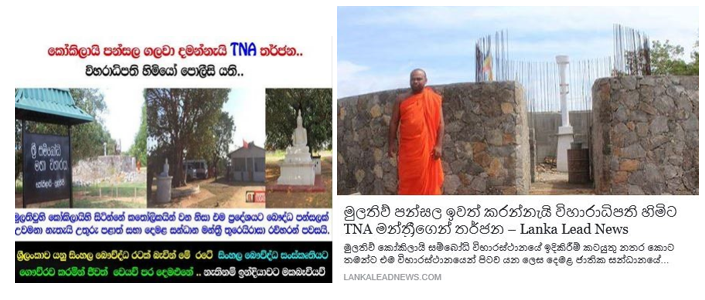
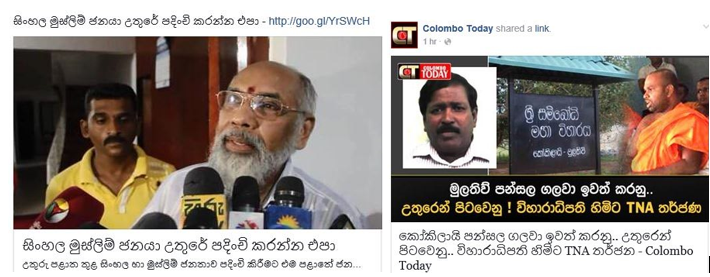
-DMP-9.jpg)
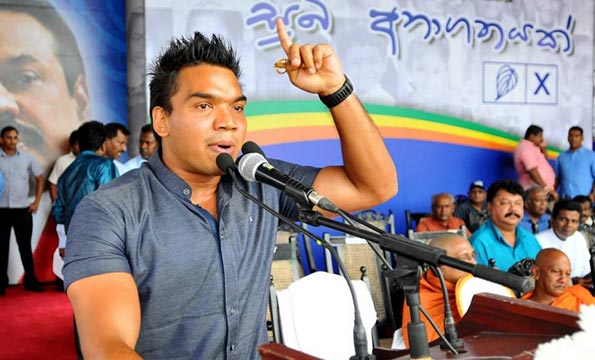 ් දුන්නා කී සමාගම මෙන්ම මුදල් ගත්තා කියන සමාගම යන දෙකම මෙවැනි පැමිණිල්ලක් කර නැත.