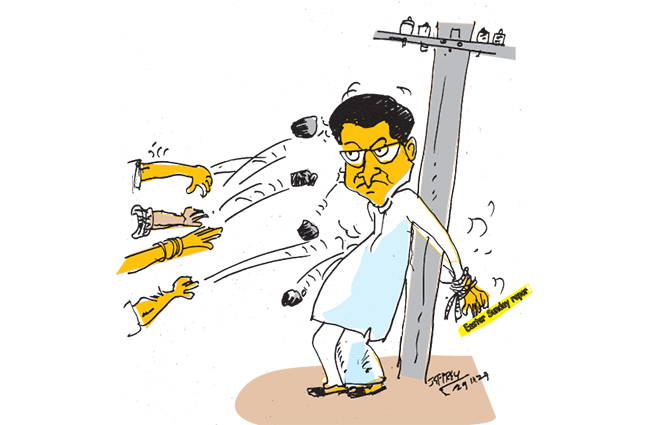
The British High Commissioner to Sri Lanka Andrew Patrick has expressed eagerness to further strengthen the strong bilateral ties between Sri Lanka and the United Kingdom.
During a meeting with Secretary to the President Dr. Nandika Sanath Kumanayake today (6), the British High Commissioner has proposed that steps be taken to educate Sri Lankan parliamentarians about the British parliamentary system to further enhance governance in Sri Lanka, while emphasizing the significance of the British local government system, noting its potential to reduce fraud and corruption.
Mr. Patrick has also highlighted the British Government’s appreciation for Sri Lanka’s ongoing partnership with the International Monetary Fund (IMF) and expressed readiness to support the government’s efforts to combat fraud and corruption while boosting state revenue.
On the 23rd of October, the United States embassy in Sri Lanka issued a travel advisory warning of a potential attack targeting tourist sites in Arugam Bay, a popular surfing destination in the Eastern Province of Sri Lanka. The embassies of the United Kingdom and Russia soon followed suit. Given the mysterious circumstances of the 2018 Easter Attacks that occurred following a warning by Indian intelligence services, this has understandably stirred much anxiety and speculation among Sri Lankans.
What the recent travel advisories did not mention is the operation of illegal businesses by Israeli tourists in the Arugam Bay area, and the opening of Jewish places of worship in close proximity to local Muslim mosques. To make matters worse, it is reported that many of these tourists are possibly IDF soldiers engaging in the proliferation of Zionist propaganda.
While there is much to be said about these developments, there is also an opportunity here to discuss the more general shortcomings of tourism as an economic sector and Sri Lanka’s toxic dependence on it.
Integrated development
In a 1975 essay on class contradiction in Tanzania, the Guyanese historian and political activist Walter Rodney wrote about how university students in the newly independent United Republic of Tanzania debated the place of tourism in economic development. Rodney summarised the views of the opposing camp thus:
They were saying that our workers and our peasants are not concerned with those who want to come and watch the lions and gazelle and to watch the Masai and so on, and call themselves tourists: that this will not do anything for the mass of our population. On the contrary it will inhibit a development of serious economic options which could lead to real integrated development.”
Rodney’s use of the words integrated development” is key. Tourism is at best a stop-gap measure in conditions of serious economic and technical backwardness to raise foreign currency. The barriers to entry in tourism, in terms of skills and technology, are fairly low. While tourism can raise revenue, it historically has been incapable of re-investing resources into more dynamic economic activities.
Like agriculture, tourism is subject to diminishing returns. It is a classic rentier activity dependent on natural endowments like land and its proximity to ‘attractions’. The scope for value-addition in tourism is also fairly low. Tourism lacks the economies of scale, division of labour, and capital deepening that are characteristic of manufacturing and large-scale industry. At best, it may help augment the home market for domestically produced goods. However, this in turn requires activist policies to improve local content.
The lobbies and interest groups surrounding the tourism sector have congealed to such an extent that it seems impossible to have a productive conversation on the place of tourism in a national development strategy. A whole public-private institutional nexus exists to support the tourism sector. Every political party, left or right, must pay heed to the sector.
There is a case to be made that Sri Lanka’s overreliance on tourism diverts productive resources such as land, labour, and even state capacity (if we wish to view it as a precious resource) away from productive economic activities that could have a more long-term impact on developing the country. Revenues from tourism, rather than being invested in new industries, tend to perpetuate a speculative cycle of underdevelopment.
The missed wake-up call
The pandemic should have been a wake-up to Sri Lankan policymakers that non-tradable services such as tourism, are no foundation on which to build a modern economy. It is instructive that the economies of our regional competitors in tourism, such as Vietnam, Malaysia, and Thailand, did not collapse the same way Sri Lanka did during the pandemic. This is because they are rising manufacturing powers first and tourist attractions a distant second or third.
One measure of dependence on tourism is the share of international tourism receipts in exports. In 2019, on the eve of the pandemic, tourism receipts accounted for nearly a quarter of Sri Lanka’s exports (24%). By contrast, the figure was 20% for Thailand, 9.3% for Malaysia, and only 4.2% for Vietnam. While the Sri Lankan economy imploded during the pandemic, Vietnam boomed, as its dynamic industrial sector was able to adapt to shifts in global demand for manufactured goods. Vietnam was also agriculturally self-sufficient enough to feed its own population.
Aside from the economic case to be made against tourism as a core component of development strategy, there are also social and cultural arguments that warrant consideration. Is tourism a dignified way to rebuild a country after the ravages of 500 years of colonialism? Should we not have the clear-eyed and sober goal of developing our productive and technological capabilities so that our people can partake in world trade as equals, and not just beggars and debtors?
I am reminded of a quote by the freedom fighter Philip Gunawardena, who said that the need to industrialise was not simply to attain power but to get rid of poverty, improve living standards, and to give our people, when they are free from the pursuit of inadequate food and shameful housing, the leisure and serenity to enjoy our beautiful country; to develop their culture in their own way.”
Our collective dependence on tourism amounts to a perverse inversion of this dream. Foreigners enjoy our beautiful country, and our culture debases itself in order to entertain them. Yet the majority of our people remain in poverty and in search of food, housing, and, most shamefully, better countries in which to raise their children.
(Shiran Illanperuma is a researcher at Tricontinental: Institute for Social Research. He holds an MSc in Economic Policy from SOAS University of London. He can be reached at shiran.illanperuma@gmail.com)
Figure 1: International tourism receipts as a percentage of total exports of goods and services (Source: World Bank)
This is one of my early papers published four years ago. It is hoped that the new Government may find interesting ideas to follow to enable Sri Lanka’s economy to develop.
A Story from Coffee. Ideas for our economic revival.
Posted on September 14th, 2020. Republished in November 2024 to waken our new giants
The other day, locked down in Sri Lanka because of the Corona, I ran out of the Starbucks Coffee I had brought with me. Being a coffee connoisseur, the tastes of Island, Hariischandra and Wijeya Coffee did not satisfy me. I have yet to find Soul Coffee. They are all the same- the same taste as half a century ago. They were all pure coffee, not blended to different tastes. I went to Coffe Bean, the leading coffee maker in Colombo that has a countless number of coffee outlets in Colombo . Most of those joints only sold the coffee as a drink and ultimately they directed me to go to their headquarter store on Ward Place . At Ward Place they offered me a pack of coffee beans imported from the USA- at Rs 2400. That was a pack of 8 ozs. That size of packet is sold at around five pounds at Starbucks in London and Island Coffee sells this quantity for around five hundred rupees
They ground the coffee and it tasted good.. I made inquiries.. The coffee beans, all roasted to taste, had been imported from the USA- California, Camarillo CA 93012. California does not produce coffee. So the coffee comes from a non producing country to us, a coffee producer! Coffee beans come mainly from African countries. the pack is sold in Califorrnia for around seven dollars come to us and gets sold to us at Rs 2400 the equal of some ten pounds.
Sri Lanka instead of growing coffee has been importing from China, Malaysia, Thailand all countries visited by me where I have been struck with how they organize their agriculture. We also import from Mid East countries that do not grow coffee.
That is where our foreign exchange has been going since 1977. Once we did produce the best coffee in the world. On my irrigation inspections in Kitulgala long ago I have seen coffee bushes full of coffee beans, bright red in colour. I have not seen that much of luscious growth anywhere else. I have also seen similar coffee in coffee bushes at Kotmale when I worked in Nuwara Eliya. But now Kotmale has been axed by the Kotmale Dam- all to produce some 200 MW of power- some power that we could have easily produced from some 70 wind turbines scattered in Kotmale itself and the luscious productive land in Kotmale and the charming people would have been saved. But that is another story. See my Paper: Sitawaka Hydro Project: in Lanka Web11/8/19. to understand the nuances in our development order where we sacrifice what development and production we have and more we justify doing it. I am sad that Sri Lanka had no leaders who could avoid getting bluffed by interested influentials and I hope that our new President will tackle problems efficiently. That brain that tackled the LTTE will I am dead cert will stand up to that task.
Kitulgala is our coffee belt. We do need to ban the import of coffee which our President has done, I think. Simultaneously we have to encourage the picking of coffee pods from the existing coffee bushes, immediately get going with encouraging the coffee growers to put some manure and cow dung, and wear a mask and additional clothes when plucking because coffee bushes are also full of mosquitoes . There has to be a village organization to activize the coffee growers and also the Government must offer a guaranteed price to buy coffee-like what we did in the Marketing Department in the Fifties when we offered guaranteed prices for many items that we imported- that was in the Fifties and when production increased we ended that scheme. But now we have no organization to buy the produce. Both the Marketing Department and the worthwhile sections of the Agrarian Services have been axed at the dictate of the International Monetary Fund that the Government should not attend to any commerce.
We do talk big about having guaranteed prices but the IMF axed the organization that we had built to implement that scheme. Motoring around Sri Lanka today I often spot the Agrarian Services stores- now overgrown with shrubs, neglected. Then they were places vibrant with life, where the multipurpose cooperatives that purchased produce from producers and handed over. It is easy to talk of guaranteed prices but we should know that we do not now have the officialdom to purchase the produce. Take paddy we talk big about what we collect every season, but we forget that the benefit of the premium price has fattened the trader. The paddy producers have no cooperative stores to hand it over and sell to the traders for a song who hands it over to the government stores and benefit from the premium price. And our economic sleuths in our Ministries fail to grasp that the producer is left in the lurch while the traders benefit. The main aim of a guaranteed premium price is to help the producer gain a premium price so that he will be encouraged to grow more.
Once in the Fifties working in the Agrarian Services in charge of the Anuradhapura District I had ten smart and able, very vibrant divisional officers, who could even sell ice to the Eskimoes. Under them I had some fifty trained overseers and they manned two hundred and ninety eight cultivation committees- where farmers would meet very often and get coaxed by me and my team to use fertilizer, improved seed and that was how the Green Revolution brought Sri Lanka to the brink of self sufficiency in paddy- all while implementing a scheme to offer rice at reduced rates to the needy- a target that had never been achieved in any country. Then I had the organization,. In fact then I remember we did import maize and I offered to produce all the maize that was imported in one season. One word from me and my giants- they were real giants and I was proud of them, would have mobilized the people through the vibrant cultivation committees.. The Government did not approve my suggestion and we worked only on paddy. Now we talk. The Government has to bring back the Marketing Department and the sections of the Agrarian Services that were axed. There is no other way.
Let us use our expertise to see what can be done for coffee. To start with sad to say the Department of Agriculture is dead at the village level today. They have no organization at the village level and no men. This happened some twenty eight years ago in 1992 when President Premadasa in one of his unguarded moments promoted all Agricultural Overseers, some 2400 of them to the rank of Grama Niladhari. The specialists in agriculture the trained overseers all became white collar workers as Grama Niladharis, pushing pens on paper instead of working in the villages.
Sad to say till today there is no field level overseer trained in agriculture. Today the closest trained agricultural officer works at the divisional level. This officer has a few thousands of farmers to cater to = the needs of some 3500 farmers in Ranorawa and as much as 13,000 farmers in Yodakandiya, (From patriot Ranith Mulleriyawa : The Island 04/06/2013) In short today our specialist agriculture department has no base and as far as organizing be it coffee or any other crop our officers can plan on paper and send it to the divisional level. After that there can be no action whatsoever other than the Agricultural Instructor at the divisional level meeting a few farmers and writing something back to the District Agricultural Officer. Then the statistics get transformed to documents on glazed paper and ably documented. The Department of Agriculture, figuratively is a monster with provincial ministers, secretaries and directors with no legs, producing only reams of reports without a base!
So ends anything in agriculture, be it coffee, potatoes, maize or any other crop.
What we need immediately for Coffee is a guaranteed price and an organization to help the producer to produce more. There has also to be subsidies offered to get people to plant more coffee bushes. Further it is necessary that some government organization gets cracking to the task of finding how coffee can be blended to taste. Therein comes what I directed in Matara as the Government Agent in 1971. Our President has got the State Ministers on the move. It is necessary to get the mass of Government Agents and their vast staffs amounting to thousands cracking. Perhaps what I did at Matara may offer ideas.
I wanted to find the art of making a crayon to establish an industry. We requisitioned the science lab at Rahula Collage every evening from six to midnight and we- my Planning Officer, a chemistry graduate and katcheri officers were hard at work helped by the science teachers of Rahula to find the art of making crayons. It took a myriad of experimental trials and we did find the art of making crayons in three months. Then we dragged in the cooperatives to establish Coop Crayon, which was a great success. Sumanapala Dhanayake the Member of Parliament for Deniyaya happened to be the President of the Coop Union at Morawaka and I can in nostalgia recall getting down to make crayons. It was done in double quick time-in three weeks working on a 24 hour basis- on most days I too broke rest. It was hailed as great success by the Minister of Industries Mr Subasingfhe and crayons were sold islandwide. That is what we immediately require for coffee- someone to experiment. Recently I stayed a few nights in a leading star resort in Anuradhapura and got to know the chief chef. I had a chat with him trying to entice him to blend coffee with a flash of vanilla and the likes to get different tastes. I can do no more- only talk. The Government has to take the lead to find the blends and get cracking in production so that we can chase away Nescafe from our shores and save our valuable foreign exchange and also creating employment for our own people..
In the days of Sirimavo we did have that organization – the Divisional Development Councils, the brain of Dr NM at work. Dr NM is no more. . Our President is kindly requested to get cracking with a programme like the DDCP, a better one which will get down to work in producing what we need and thereby save foreign exchange as well as finding employment for our people. Stopping imports is the first step. This has to be supplemented with a production base which we do not have. My own work the Youth Self Employment Programme does flash in my mind. Then I was marching with the Youth Officers in the villages and marshes of Bangladesh, guiding vocationally trained youths to establish ventures and they did succeed. Today the Ministry of Youth Development has reformed to a role of guiding youth to establish enterprises and mind you by now three million of them are at work- the largest employment creation programme the world has known. . My Paper Youth Employment: A Prime Necessity” in Lanka Web: 11/10/2019 tells it all. . (www..lankaweb.com/news/items/2019/10/11/youth-employment-a-prime-necessity)
We need new thinking for Sri Lanka to emerge under our new President.
I hope this paper will somehow reach the eyes of our new leaders.
Garvin Karunaratne, , Ph.D in Non Formal Education and Agricultural Economics (Michigan State University) garvin_karunaratne@ hotmail.com
Former Senior Assistant Commissioner of Agrarian Services and G.A. Matara
13/09/2020
One Response to A Story from Coffee. Ideas for our economic revival.”
4 decades ago one of my American friends told me that they enhance the taste of packed coffee with peanut powder developed by an ethnic scientist named George Washington Cavo.(sounds like that)
1. Procedural Irregularities in Awarding the Project
The best argument we have to counter the arbitrary award of this project to Adani Green Energy Limited (AGEL), is to ask the question, whether AGEL would have been awarded such a project and at a PPA price of $0.0826 in India under Indian regulations and to insist in consideration of the justification of the project from the perspective of Indian regulations.
Under the usual standards applied by India’s own energy regulatory bodies, the Solar Energy Corporation of India (SECI) and Ministry of New and Renewable Energy (MNRE), projects of this scale would require strict procedural compliance and competitive bidding by tender. This is especially true for projects expected to secure government land or investment or impact national energy infrastructure. In this case, however, Adani was granted the Mannar wind energy project on government owned land without adhering to such a transparent process.
2. Excessive PPA Price Setting a Risky Precedent
A core concern with the Adani Mannar project is the high PPA rate of $0.0826 per kWh, which significantly exceeds standard wind project tariffs.
In renewable energy projects, the PPA price is bench marked to the Levellised cost of energy” LCOE. In the determination, of the LCOE wind energy availability is a significant factor along with the capacity utilization factor CUP. Wind energy is determined by the following formula:
Wind power = ½ x wind density x (wind speed)3. Upon applying this formula wind energy is availability for Gujarat is found to be 43,905 units which is significantly lower than that in Mannar which is 149,776 units. Yet as the following table will show when in wind poor Gujarat AGEL gets PPA rates of the range $0.029 -0.034, AGEL has been awarded a PPA rate of $ 0.0826. One of the ways this price has been manipulated is by getting the Public Utilities Commission to carry out a fake study to get a capacity utilization factor CUP much lower than the actual, by misaligning the anemometers. This fraud has been pointed out in CEB reports on this project.
To illustrate:
Region
Wind Density (W/m²)
Wind Speed (m/s)
Typical PPA Rate (USD/kWh)
Gujarat (India)
283
6.77
$0.029 – $0.034
Mannar (Sri Lanka)
522
8.31
$0.0826 (Adani)
From the above table for an altitude of 100m, it will be evident that the wind energy conditions in Mannar are highly favorable, with energy availability estimated to be 3.4 times higher than that of wind conditions in Gujarat, yet the project’s PPA rate does not reflect this advantage.
In India the PPA rates given to wind power projects vary between $0.029 -0.034. Whereas Adani has been awarded a PPA rate of $0.0826, and the projected annual income at this rate is $ 211,500,000 ($ 211.5 million per year). If we assume the same rates as in India would apply for the Mannar project, the following table shows the pricing and the potential excess costs from a PPA set at $0.0826 awarded to Adani for the Mannar project compared to typical rates.
Proposed LCOE (USD/kWh)
Projected Annual Income at 250 MW (USD)
Excess Annual Payment at $0.0826 PPA (USD)
$0.029
76,650,000
134,850,000
$0.034
89,910,000
121,590,000
The excess payment (if we consider PPA rate of $ 0.034 to be fair for Mannar) is $ 121.59 million. This excess payment (even after considering the higher PPA rate of $0.034, over a 25-year project lifetime will be $ 3.039 billion!!
Such a pillage would be detrimental to Sri Lanka’s economy, in many ways – not only the by the drain of our money by itself. The more damaging aspect of such a PPA rate would to discourage foreign investors, as higher energy prices lead to uncompetitive manufacturing costs and make it difficult for new industries to thrive.
3. Comparison with Global Standards and LCOE Trends
The Levelized Cost of Energy (LCOE) is a key benchmark for pricing PPAs globally. LCOE for wind projects worldwide has declined steadily over the years, a trend documented by the International Renewable Energy Agency (IRENA). Below are global LCOE averages for onshore wind energy in recent years:
Year
LCOE Global Average for Onshore Wind (USD/kWh)
2018
$0.046
2020
$0.039
2023
$0.034
If the LCOE of $0.046 was valid for Mannar’s smaller CEB-funded project in 2018, it is reasonable to expect that current rates would be lower due to increased efficiency and economies of scale. Adani’s 250 MW project is over 240% larger than the CEB’s 103.5 MW project, which should lead to an even lower LCOE, than $0.034. The fact that Adani’s PPA is priced at $0.0826 raises questions, especially since no recent Indian project awarded to Adani has exceeded $0.034 per kWh.
4. Environmental Concerns and Site Alternatives
Beyond the financial issues, the Mannar project site is problematic due to environmental concerns. The area is a crucial habitat for migratory birds, making it sensitive to large-scale developments. Bird migration routes could be severely affected, harming local biodiversity and eco-tourism, an important aspect of Mannar’s economy.
Alternative sites such as those in Anuradhapura have been identified as wind-rich areas with fewer environmental constraints. This region, which also shows promise according to Danish Technical University’s Global Wind Atlas studies, could serve as a suitable alternative if the Mannar project is reconsidered.
5. The Larger Implication for Sri Lanka’s Economic Development
The future economic growth of Sri Lanka hinges on affordable, abundant energy. A central factor in attracting foreign direct investment (FDI) is the availability of low-cost electricity to support industries and boost economic growth. For example, Vietnam, with its low electricity prices, attracted $36 billion in FDI in 2023 alone. It is clear that competitive electricity rates are essential to industrialize and create jobs. An artificially high PPA, such as Adani’s, would definitely hinder Sri Lanka from realizing its economic potential.
To further illustrate, let’s look at electricity prices for industries in the region:
Country
Average Industrial Electricity Price (USD/kWh)
India
$0.084
Vietnam
$0.074
Bangladesh
$0.096
Sri Lanka
$0.144
If Adani’s high PPA becomes a standard, Sri Lanka’s industrial electricity rates could soar, undermining competitiveness against neighboring countries and discouraging investment in local industry. If Sri Lanka continues with such high-priced agreements, it will lose a critical edge in attracting FDIs needed for economic growth.
Conclusion
The Mannar wind energy project granted to Adani must be reconsidered in light of its procedural irregularities, inflated PPA rate, environmental impact, and potential to stifle Sri Lanka’s economic prospects. By re-evaluating this project and adopting a fair, transparent approach to awarding energy projects, Sri Lanka can position itself as a competitive, investment-friendly nation. A fair and economically viable approach to energy pricing is essential if Sri Lanka is to realize its vision of industrial growth and long-term prosperity.
Procedural Irregularities in Awarding the Project The best argument we have to counter the arbitrary award of this project to Adani Green Energy Limited (AGEL), is to ask the question, whether AGEL would have been awarded such a project and at a PPA price of $0.0826 in India under Indian regulations and to insist in consideration of the justification of the project from the perspective of Indian regulations. Under the usual standards applied by India’s own energy regulatory bodies, the Solar Energy Corporation of India (SECI) and Ministry of New and Renewable Energy (MNRE), projects of this scale would require strict procedural compliance and competitive bidding by tender. This is especially true for projects expected to secure government land or investment or impact national energy infrastructure. In this case, however, Adani was granted the Mannar wind energy project on government owned land without adhering to such a transparent process.
A: Fact – No procedural irregularities in awarding the Project: •CAMCI approval under Fast tracking of Investments” – Adani’s proposal was considered as part of this process too. Thereafter, Cabinet Approval was granted to enter into MOU with Adani Green. •Ministry of Finance’s notification states that in cases where CAMCI’s decision prevails, there is no need for tendering process. •The Project complies with the provisions of Electricity Act – oCabinet of Ministers have also approved the project as G-2-G. oPUCSL has granted approval to procure power from Adani under Section 43 (4) and its other provisions. oProjects form part of the LTGEP 2023-2042 approved by PUCSL. •The Govt. has in the recent time has received single bidder with single location based RE proposals and the Govt. has approved them too. The procurement process followed for these projects i.e., Technical Evaluation by Project Committee (PC) and Tariff Negotiations by CANC, is also followed for Adani’s projects. •Proposal also complies with the recent MOU between India-Sri Lanka on Renewable Energy Co-operation” allowing both private & public sector participation from both Countries. B: The argument to evaluate projects in Sri Lanka basis the Indian or other Country Regulations, seems illogical! •First of all, unlike Sri Lankan Electricity sector, the Indian Electricity sector provides lot of incentives to private developers in implementing the RE projects. (e.g. All RE projects are termed as Green” projects under EIA and don’t have to undergo the EIA process and its associated costs, this reduces the implementation timeline by 1-2 years, as compared to that of SL. However, the Financial Institutions/Lenders conduct the EIA in parallel) •Second, India as a stable economy has an Investment Grade rating thereby making the external funds easily available at competitive borrowing rates. •Thirdly, government owned land is also made available to private players on sub-lease basis without having constraints of mortgaging to foreign lenders & without any restriction on mortgaging for initial 5 years. •All the above reduce implementation time for the project coupled with standard Project Agreements (e.g. PPA), enable faster approval of Projects. •Having said that, the regulatory bodies of India (which are CERC & SERC i.e. Central Electricity Regulatory Commission & State Electricity Regulatory Commission) are empowered to adopt the tariffs discovered by SECI. So, if the tariff discovered is
DRS is a gift from Sri Lanka to the world of cricket. Its impact is bigger than Sri Lanka winning the world cup in 1996. Why ?
Because this innovation of Sri Lankan lawyer Senaka Weeraratna has completely transformed the game. It is the biggest change in the Rules of the Game since its birth. Today Cricket is more transparent, accurate and fair. Thanks to DRS.
The colossal mistake that Umpire Steve Bucknor made in the Sydney Test 2008 when he gave out Master Batsman Sachin Tendulkar wrongly and changed the course of the direction of the game and its final outcome, is no longer possible. The days of the ‘ Hora’ Umpire ( ‘Hora’ in the Sinhala language means Cheat) are gone.
We must cherish these changes for the betterment of the game of Cricket. DRS has also influenced other major sports including Soccer, which now uses Goal
line technology to determine the accuracy of a Referee’s decision by use of Video Replay technology as in Cricket.
DRS is a huge achievement for Sri Lanka in the field of Cricket. Any other cricket playing country would go to town with it. Broadcast it and highlight it like England did when it honoured the inventor of the World Wide Web (WWW) Sir Tim Berners-Lee at the London Olympics held in 2012.
But not Sri Lanka unfortunately. Always falling short of maintaining ethical standards and allowing Jealousy to heavily influence decision making, Sri Lanka’s Govt. in the past had let down the cricket loving public who have always wanted a clean, transparent, and accountable body to govern Cricket.
Neither the Govt of Sri Lanka nor Sri Lanka Cricket (SLC) has so far shown any interest in gaining recognition from the ICC for Sri Lanka for the invention of DRS.
SLC has singularly failed to lobby the rest of the cricket world particularly South Asian countries to support Sri Lanka’s claim for recognition of inventing DRS.
Sri Lanka has much to gain in terms of revenue. The intellectual property of DRS belongs to a Sri Lankan not the ICC.
The ICC is unable to disclose a single name as coming from its stables as the author of DRS.
But it is using DRS without the consent and licence of the Sri Lankan owner Senaka Weeraratna, who has both the economic and moral copyright to DRS.
Neither the ICC nor SLC has paid one red cent to the author of DRS for unauthorized use of this facility.
Millions can be gained from the ICC as revenue for Sri Lanka for use of DRS.
Despite Sri Lanka being a visibly Bankrupt nation always begging other countries for help, yet nobody from Sri Lanka is pushing the ICC to pay Royalties for use of the DRS. ICC had admitted that it has no copyright over DRS.
Both the SLC and the Govt. of Sri Lanka are guilty of betrayal of the country vis a vis the ICC.
We are as a country always short of money. But when money is available on a platter (if we demand from the ICC) on ground of ownership of DRS, we tend to back down or retreat. What cowardice.
In such a context of abandonment of the nation for purely petty reasons, jealousy and spite, one can only hope that the popularly elected new President of Sri Lanka Mr. Anura Kumara Dissanayake and his fresh team would render Justice and support their own countryman to gain recognition for inventing DRS and obtain due compensation from the ICC for illegal use of DRS by the ICC and the SLC without consent of the true owner.
The government reversed the Electricity Act, approved in June this year under then-president Ranil Wickremesinghe’s government
The new National People’s Power (NPP) government in Sri Lanka on Tuesday announced its first reversal of a key element in the ongoing IMF bailout programme concerning the loss-making state-owned enterprises.
The government reversed the Electricity Act, approved in June this year under then-president Ranil Wickremesinghe’s government, introducing major reforms to the state power entity Ceylon Electricity Board (CEB).
The Marxist NPP trade unions had then agitated against the bill.
A CEB trade union leader who led the agitation is an NPP candidate in the parliamentary election scheduled for November 14.
A CEB statement on Monday said the entity’s privatisation programme would be scrapped and vowed to amend the CEB Reforms Act of 2024.
It said there would be no privatisation of state-owned power plants, transmission and distribution processes.
The CEB Reforms Act of 2024 paved the way for private sector competition in power generation. The move was aimed at easing the burden on public finances and increasing the share of renewable energy to 70 per cent by 2030.
The CEB reforms aimed at minimising losses to the treasury was a key commitment made by Sri Lanka to the IMF in the near USD 3 billion bailout sealed in 2023.
The news on the CEB Act comes as the IMF had been delaying its third review until the conclusion of elections on the island.
The fourth tranche of the facility would not be released until the completion of the third review.
The government of NPP leader Anura Kumara Dissanayake, who won the September presidential election narrowly with just 42 per cent of the vote, claims the CEB privatisation was against the mandate of the new president.
This was the second reform policy reversal indicated by the NPP government following the announcement not to privatise the national carrier Sri Lankan Airlines.
Except for the headline, this story has not been edited by The Telegraph Online staff and has been published from a syndicated feed.
Secretary to the Ministry of Public Security, retired SDIG Ravi Seneviratne, had transferred a senior police officer who was conducting a probe into his alleged failure to act on an intelligence warning to prevent the Easter Sunday carnage (2019), former MP Udaya Gammanpila, said yesterday.
Addressing a media conference, Pivithuru Hela Urumaya Leader Gammanpila said former DIG Palitha Siriwardena had complained to the then IGP C. D. Wickramaratne that the Easter Sunday attacks had resulted from the dereliction of duty on the part of SDIG Seneviratne, and called for legal action against him (Seneviratne).
IGP Wickramaratne had assigned Chief Inspector (CI) Induka de Silva to investigate the complaint against Seneviratne, Gammanpila added.
Gammanpila said: In March 2022, Seneviratne submitted a petition seeking a court order to prevent the CID from arresting him. In his statement, he claimed that on 10 Feb. 2022, he had become aware that Chief Inspector Lalitha Dissanayake had filed a ‘B’ report, alleging that ‘serious omissions by Seneviratne and former CID Director SSP Shani Abeysekara had led to the Easter Sunday attacks’. Seneviratne claimed that respondents were attempting to falsely implicate him by initiating a biased, unlawful, and unreasonable investigation, based on an anonymous petition that accused him of neglecting his duties in respect of investigations into the National Thowheed Jama’ath.”
Regardless of the ongoing investigation and legal issue, the JVP/NPP government had appointed Seneviratne the Secretary to the Ministry of Public Security, said Gammanpila. CI Induka de Silva continued his investigation and Seneviratne transferred him to the police HQ,” Gammanpila said, noting that Seneviratne was now in a position to suppress the probe against him.
Gammanpila challenged Minister Vijitha Herath to a debate on national security and public debt.
Our attempts to contact Seneviratne for comment yesterday were in vain as he did not answer his telephone.
Colombo, November 05 (Daily Mirror) – A tense situation arose between the security officers of Pastor Jerome Fernando and villagers of Nawalapitiya when Jerome arrived in the area to oversee the construction of a rehabilitation centre for children.
Villagers claimed that he was planning to build a religious facility instead.
The police had to intervene to bring the situation under control. Amid massive protests, Pastor Jerome left the scene.
Sri Lanka’s development policy included state-sponsored colonization schemes which transferred people from the densely populated wet zone to the sparsely populated areas of the dry zone. The places best suited to such colonization schemes were located in the north and east of the island. These provinces were the least populated, the land was suitable for agriculture and there were rivers than could be dammed.
These colonization schemes had a dual purpose. They helped ease the acute land hunger of an expanding population, now well beyond the carriage rate for the island. They also opened up vacant land for agriculture. The first colonization schemes concentrated exclusively on paddy cultivation, but the later schemes included agro industries .The reservoirs were used to generate hydro-electricity as well as provide water for irrigation.
Sri Lanka was very proud of itsstate-sponsored colonization schemes. They were intended for national development. The first colonization scheme was at Kantale in 1948 (Trincomalee district), then Gal Oya in 1949 ( Batticaloa ) Allai 1953 ( Trincomalee ) Padaviya 1958, ( Anuradhapura ) Morawewa 1960( Trincomalee ), Weli Oya 1984 ( Mullaitivu ) and Yan Oya2012 in progress ( Trincomalee).
Tamil Separatist Movement vehemently objected to state aided colonization schemes. Tamil settlers considered the north and east to be exclusively theirs. They feared the arrival of the Sinhalese and saw these colonization schemes as a threat to Settler Colonization.
The main strategy of Settler colonialism is to somehow get exclusive possession of sovereign territory, usually by chasing away its original occupants, then sit down on that land and refuse to budge. State aided colonization schemes were a threat to this strategy.Settler colonialism is not interested in national development, only in consolidating its own position.
The Tamil separatist movement has opposed the Sinhala colonization of ‘Tamil lands’ at every opportunity. At the 4th annual convention, 1956, the Illankai Thamil Arasu Kadchi (ITAK) resolved that “colonization, policies pursued by successive governments since 1947 of planting Sinhalese population in the traditional homeland of the Tamil speaking people is calculated to overwhelm and crush the Tamil speaking people in their own national areas.’
The Bandaranaike-Chelvanayagam Pact of 1957 had a specific Clause that the Regional Councils shall have the power to select allottees for colonization schemes in the Region. And the Resolution passed at the 5th National Convention of the Illankai Thamil Arasu Kadchi, in 1957 declared: State aided Sinhalese colonization of the Northern and Eastern provinces will be effectively stopped forthwith.”
TULF Manifesto, 1977, stated that the territory from Chilaw through Puttalam to Mannar, up to the Jaffna Peninsula and then past Trincomalee and Batticaloa down to Kumana, and the Kumbukkan Oya, were ‘firmly established as the exclusive homeland of the Tamils. This is the territory of Tamil Eelam.”
Tamil Separatist Movement knows that its position in Sri Lanka is very shaky. The Tamil settlers do not have their own declared state in Sri Lanka. Nor do they have a long history of settler residence in Sri Lanka .They only came in the late 19th century and they are settled in two artificial provinces created by the British, the Northern and Eastern provinces, with arbitrary boundaries.
The homeland” assertion of the Tamil Separatist Movement has been laughed at and dismissed.Critics wanted to know whether any other ethnic group has two homelands, one in India and another in Sri Lanka. KM de Silva in his ‘Traditional homelands of the Tamils’ has squashed the historical claims of the Tamils. G. H. Peiris has demolished the demographical claims.
The government took no notice of the Tamil protests. It continued with its colonization schemes. It is the duty of a government to utilize the resources of a country, including land, in the greater interest of the total population, the government said. The government also said that does not recognize the division of land on an ethnic basis and there can be no restrictions on internal migration in a democratic society.
The UN supports this view. UN repeatedly affirms the right to freedom of movement and residence within the border of the state. Article 13 of the UN Declaration of Human rights, (1948) says everyone has the right to freedom of movement and residence within the borders of each state.
UN resolution 1803(XVII) of 14.12.1962, to which Sri Lanka is a signatory states that the ‘right of peoples and nations to permanent sovereignty over their natural wealth and resources must be exercised in the interest of their national development”
Article 12 of the International covenant on Civil and Political rights (1966) says Everyone lawfully within the territory of a State shall, within that territory, have the liberty of movement and freedom to choose his residence. .
Article 5d (i) of the International convention on the Elimination of all forms of racial discrimination (1969) said signatories undertake to guarantee the right of everyone, without distinction as to ethnic origin, the right to freedom of movement and residence within the border of the State.
Population density also had to be considered when selecting lands for Colonisation schemes. The government found that the Northern Province had the most space. It was the least populated. Census 2012 showed that Mullaitivu, Mannar, Killinochchi, Vavuniya, had low populations. The population density of 38 persons per square kilometer in Mullaitivu is the lowest density recorded in 2012. Populating density in Eastern Province was also low, 60 persons per square kilometer. Therefore the colonization schemes were located in the north and east.
Census of Sri Lanka 2012 showed that 5% (1,061,315) of the total population of Sri Lanka live in the Northern Province. Vavuniya had a total population of 171,511, of which 82% were Tamil, 10.2% were Sinhala. Kilinochchi had total population of 113,510 of which 97% Tamil, 0.85 Sinhala. Mullaitivu had had total population of 91,947 of which 86% Tamil, 9.63% Sinhala.
The outrageous notion of an ‘ethnic compact’ was invoked on behalf of the Tamil settlers. It was suggested that land settlement should not disturb the existing ethnic ratio. A Marga Institute study, Inter racial equity and national unity” (Marga 1985) suggested that ‘settlement policies should take into account the ethnic balance of the region in which settlements are taking place. New settlements should not significantly alter the ethnic balance in that district. There should be agreement on the ‘tolerance limits’ of any changes in ethnic balance.[1]
Critics responded. There is no such thing as an ethnic compact regarding land, they said. Land is a national resource. The request is outrageous. It should not be entertained. Agreeing to ethnic quotas would mean accepting that ethnic priorities mustbe respected in all land settlement projects.
It is reported, from a Tamil source, not an official one, that the Mahaweli Development Scheme used the national ethnic ratio. Mahaweli land, it said is distributed according to the all island ethnic ratio. The Provincial Councils have no say and 96% of the beneficiaries have been Sinhalese, moaned Tamilnet. [2]
However, in the 1980s, the Mahadiulwewa colonisation scheme, Morawewa recognised the ethnic ratio of the district. The Mahadiulwewa project was historic because it was decided that for a medium scale project, settlement should reflect the ethnic ratio in the district in which the project was located. This was the first time such a policy had been enunciated, said Jayatissa Bandaragoda. A land Kachcheri was held, the selection made and the selected allottees informed. Most were landless chena cultivators, who had been living in the project area for a long time. [3](Continued)
[1] ‘Inter-racial equity and national unity in Sri Lanka’ p 14, 41
Tamil Separatist Movement was highly critical of the state colonization schemes of the 1950s. They were not in the least interested in the development aspect of the schemes, only on the impact of Sinhala settlements on their precious Eelam.
Tamil Separatist Movement charged that the colonization schemes, from the very beginning, were intended to Sinhalise the north and east, not develop the country. Ever since independence it has been the policy of both the UNP and the SLFP to undertake state aided Sinhala colonization schemes with the sole aim of altering the demographic profile of Northeast, said V. Thangavelu. [1]
Irrigation schemes such as Allai, Kantale and others in 1950s and 60s saw old tanks restored, new tanks constructed, and forests cleared to give land to landless peasants. These became instruments used for Sinhalisation of the district, said Oakland Institute, repeating what it was told.[2]
The objective of the government is to break the continuity between the Northern and Eastern Provinces. . That is why the Padaviya and Allai schemes were started on the northern and southern sides of their districts observed UTHR.[3]
There was a substantial increase of Sinhalese population in Tamil districts, especially in the Eastern Province, due to the aggressive policy of settling thousands of Sinhalese in Tamil districts by the government, said C. Manogaran.[4]
It is estimated that almost a quarter of the island’s population was moved from the Wet Zone to the Dry Zone between 1946 and 1971, under peasant colonization schemes. These colonization schemes drastically altered the ethnic composition of Tamil provinces, Manogaran continued.
Comparison of the ethnic composition of the administrative districts for the census years 1881 and 1981 indicates that, Sinhalese population had increased substantially in the Ampara, Trincomalee, and Vavuniya districts. In the Amparai District, Sinhalese population increased from 7.0% to 38%, while the Tamil population declined from 37.0% to 20.0% between 1911 and 1981, said Manogaran
The rise in Sinhalese population between 1953 & 1963 was due mainly to the Allai and Kantale schemes and from 1963-1971 to Morawewa scheme. Padavi Siripura brought in a further 14, OOO in 1981.
The Kantale and Morawewa schemes become dangerous during periods of ethnic tension. They are located on the Trincomalee – Vavuniya and Trincomalee -Kandy roads. The Allai and the Padaviya schemes cause problems on the Trincomalee-Batticaloa and Trincomalee – Mullaitivu roads said UTHR.
Kantale was a Village Headman’s division in Thampalakamam AGA’s division, in the early 190O’s. The Kantale tank irrigated the paddy fields belonging to the Thampalakamam and Kinniya farmers, said UTHR. Farmers who had worked the land for more than 30 years and cultivated about 4,000 acres of paddy were chased away without compensation, and their lands were awarded to the Sinhalese in 1954, said Oakland institute.
It is estimated that about 40,000 of the present Sinhalese population of 86,000 in the district came in as a result of the Kantale colonization scheme. The intake was 77% Sinhalese and 23% Thamil speaking. After colonization, Kantale became a separate AGA’s division with 23 Grama Sevaka divisions, said UTHR.
The Allai Scheme began by constructing an amicus across the Verugal river, a tributary of the Mahaweli Ganga. Under Allai colonization scheme 65% of the allotments were given to Sinhalese, 35% to Muslims and Thamils none, said V Thangavelu. Thangavelu was working in Trincomalee Kachcheri (1957-59) during this time.
The Koddiyar AGAs division to which Allai belonged was replaced by three divisions, Muthur, Seruvila, and a Verugal AGA’s division. Seruvila was created in the late 196O‘s and Verugal division centered on Ichchilampattai was created in the mid 198O’s.
Names were changed. Serunuvara was originally Arippu. Kallar is Somapura today. Neelapalai is now Neelapola. A part of Poonagar is called Mahindapura and Thirumangalai is now Srimangalagama.
Seruvila AGA division contained new Sinhala villages such as Dehiwatte, Lankapatuna and Pulasthigama. This division has a population of 20,187 with 17 Grama Sevaka officers divisions. 99% of the 11,665 Sinhalese living in this division were brought from the south by the government, said Thangavelu.
The restoration of Padaviya tank led to the creation of Padaviya, Padavi Parakramapura and Padavi Sripura colonization schemes. Padavi SIripura, located in Trincomalee district had a population of 11,804, almost all of them Sinhalese said UTHR in 1993.
Padaviya colonization scheme extended into Trincomalee but was administered by Anuradhapura. Land which came under Trincomalee districts was also given to the Sinhalese said Oakland Institute .
Padaviya scheme played a key role in the 1958 riots and the activities of the Land Development Department employees during the riots has been vividly described in the book Emergency ‘58 by Tarzie Vittachi.
Morawewa is the Sinhalese translation of the Tamil word Mudalikulam, said UTHR. Morawewa tank was earlier under Katukulampattu East, which included the present Kuchaveli division. In 1961 a colonization scheme was started at Morawewa tank, 24 km west of the Trincomalee town. This scheme included Tamils as beneficiaries, said UTHR. Allotments were made on a proportionate basis, confirmed Thangavelu, but subsequent violence directed against Thamil settlers on a regular basis by Sinhalese forced many Thamils to evacuate.
A new AGA’s division was created in the early 1970s for Morawewa. Morawewa AGA’s Division has a population of 9271 and 10 Grama Sevaka officers divisions. The Sinhalese constitute 56% of the total population while the Tamils constitute 37%. A considerable percentage of the present population of 5101 Sinhalese in the Morawewa are outsiders, said UTHR in 1992.
In the late 60s the government started an Air Force farm near the headworks at Morawewa. Tamils became subject to small scale attacks by air force men and Sinhalese hooligans. The largest number of killings of Tamils took place along the Anuradhapura Road and the matter was raised in Parliament. This was the first instance in the island of the forces being stationed permanently in the middle of an agricultural scheme. The proportion of Tamils kept falling, said UTHR. With the violence of the 8Os the gradual displacement of Thamils became a total retreat said Thangavelu.
In the 1980s, the Mahadiulwewa colonisation scheme was begun in the Morawewa AGA’s Division. More Sinhalese were brought in under this scheme and their proportion rose to 56%, said UTHR.
The Mahadiulwewa project was historic because it was decided that settlement should reflect the ethnic ratio in the district where the project was located. [5] This was the first time such a policy had been enunciated. A land Kachcheri was held, the selection made and the selected allottees informed. Most were landless chena cultivators, who had been living in the project area for a long time.
Then an objection was raised by MP for Trincomalee that persons from Trincomalee should also have been selected. However, the selection already made could not be altered for legal reasons. It was suggested that the blocking out plan could be redrawn to increase the number of allotments by reducing the area allocated to an allotment.
Gamini Dissanayake, Minster for Mahaweli, accompanied by NGP Panditeratne and Gamini Iriyagolle, came to investigate. Amirthalingam and Sampanthan were present. I also participated at this unprecedented meeting, said Jayatissa Bandaragoda. It was agreed that applicants from Trincomalee should also be interviewed and selected and the final list should reflect the district’s ethnic ratio. The plan would be redrawn to include more allotments by reducing the extent of land per allotment (Continued)
On Sunday, August 4, 2024, H.E. Mr. Nadhavathna Krishnamra, Ambassador of Thailand, along with his spouse, Ms.Viphawan Benniman, Minister and embassy officials, participated in the International Buddhist Conference Academic to make the occasion of the 100th Anniversary of Das Buddhistische Haus, the first Buddhist House in Europe, at the Zehlendorf Community Hall, Berlin. The event was organized by the Embassy of Sri Lanka in Germany and the German Dharmaduta Society with the participation of by ambassadors and representatives from embassies of countries practicing Buddhism, including Cambodia, India, Pakistan, Myanmar, Sri Lanka and Thailand, as well as over 40 Buddhist monks from various countries, including Thailand and 50 participants from relevant academia and general public.
The Conference involved presentations and discussions on a wide range of topics, including the profound contributions of Buddhism to global peace and unity, the motivations that led Dr. Paul Dahlke to establish Das Buddhistische Haus and his tireless efforts to spread the teachings of Buddhism in Europe, and the relevance and application of Buddhist teachings in the modern world. The Royal Thai Embassy also supported the activity with a Thai traditional dance performed by Members of the Thai community in Berlin.
Das Buddhistische Haus was established in 1924 by Dr. Paul Dahlke, a German physician who purchased land in Berlin-Frohnau to establish the “Buddhist House” to spread Buddhist teachings and purify the mind. It combined the Buddhist way of life within a Western environment. Later, Mr. Asoka Weeraratna, the founder of the Lanka Dhammaduta Society (now known as the German Dharmaduta Society), purchased the property from the heirs of Dr. Paul Dahlke in 1957. He transformed it into a Buddhist vihara with monks from Sri Lanka and other countries, including Thailand.
Education Minister Anders Adlercreutz (SPP) told Yle News he wants to take that step. If his legislation is approved by parliament, high schools would be in a position to begin offering a curriculum in English by the autumn of 2026
Education minister “confident” Finland will introduce English-language matriculation exam by 2028
The upper secondary exam is currently only available in Finnish or Swedish, but there has been growing demand to offer some high school students the option of taking it in English.
The matriculation exam, which high school students take at the end of their studies, is currently only available in Finnish or Swedish. Image: Henrietta Hassinen / Yle
Ronan Browne
4.11. 6:02
Could some high school seniors don their white graduation caps in the future after taking the matriculation exam in English?
If it comes to fruition, a proposal now going through parliament could see an expansion in English-language high school provision by 2026 in some cities.
That would resolve a key issue in the education of kids from mixed or foreign backgrounds, who can go through the Finnish schooling system in English up until the age of 16 — but face drastically reduced options at that stage.
The first step in expanding that range of options is making sure they will be allowed to take the matriculation exam from Upper Secondary school in English.
Education Minister Anders Adlercreutz (SPP) told Yle News he wants to take that step. If his legislation is approved by parliament, high schools would be in a position to begin offering a curriculum in English by the autumn of 2026, and the first-ever matriculation exam in English would be available two years later — by the autumn of 2028.
Express Your Opinion – Read What Others Say! The Independent Interactive Voice of Sri Lanka on the Internet.
India’s central bank – the RBI – has announced that it secretly repatriated around 102 tonnes of gold stored in the Bank of England vaults. The gold, which is part of the RBI’s reserves, had been pledged in London during the 1990s financial crisis. Why did the RBI decide to bring it back? Palki Sharma tells you.
When I wrote Will SL govt. do better than the UK Labour administration?” (The Island, 18 October), I never imagined that there would be the need for a follow-up anytime soon but, as it happens, a downward spiral seems to have started already and cracks are appearing in the new administration of Sri Lanka. On top of the fracas about the Easter Sunday bomb attack probes, the pretty mask of the NPP, which won votes from even those sceptical about the JVP, seems to be coming off revealing the real JVP underneath.
Many who supported Anura Kumara Dissanayake (AKD) to win the presidency, in the belief that he was a true democrat committed to changing the political culture of Sri Lanka, would have been surprised and felt let down when AKD said at a public rally that there was no need for an Opposition and Parliament should be filled with only NPP members. For sceptics, that call came as no surprise at all, as the JVP is showing its true colours as a Marxist party. Afterall, they believe in the dictatorship of the proletariat!
Worse still is the fracas about the two committees set up by the then President Ranil Wickremesinghe to investigate two aspects of the Easter Sunday bomb attacks. The reports have cast doubts about the judgement of the president and his two ministers responsible for appointing to high positions two retired senior police officers, who are found to have neglected their duties by one of the committees. These two police officers—one arrested last October after crashing his jeep on to a tourist bus and a car, presumably due to inebriation and the other exposed by Ranjan Ramanayake’s audio recordings of telephone conversations—actively campaigned for the NPP.
We do not know what motivated them to play such a prominent role in the AKD presidential campaign; maybe it was because they were convinced by the policies of AKD or maybe they joined the winning side to get into positions of power or may be even avoid being charged with dereliction of duty while they were in the CID. Whatever it is, they got more than adequately rewarded and seem well protected as Minister Vijitha Herath has declared that they would not be removed under any circumstances. His skewed logic is well exposed and heavily criticized in the editorial Probe reports, skewed logic and emerging threats” (The Island, 24 October)
Salvos fired by the veteran politician, Udaya Gammanpila, and the awkward responses, not only from the government but also from the Catholic Church are well analysed in two previous Island editorials; ‘Mastermind at large; Udaya in crosshairs’ on 21st October and ‘Of that damning report’ on 22nd October. Gammanpila claimed that he was in possession of two reports; one headed by former Justice S. A. Imam, who was tasked with probing some allegations UK Channel-4 levelled against Sri Lanka’s military intelligence in respect of the Easter Sunday carnage and the other, chaired by former judge A. N. J. de Alwis, whose purview was to inquire into intelligence coordination and investigative processes related to the Easter Sunday bombings. Gammanpila challenged the government to release these reports and Minister Herath threw a counter-challenge and issued a veiled threat of legal action.
When Gammanpila released the Alwis committee report, as he said he would, on 21 October, Minister Herath’s response was that they rejected the report, which is puzzling. What one would have expected a government that came to power on the promises of transparency and elimination of corruption to publish the report in keeping with their demand whilst being in the Opposition. Interestingly, initially it was the spokesman of the Catholic church, Father C G Fernando, who gave the reason: that Justice Alwis had conflict of interest as her brother had been disciplined by the two police officers concerned and, subsequently Minister Herath carried out a personal attack on her. Why weren’t those objections raised, if valid, when she was appointed? And, why did her critics wait until they found the committee report was critical of their two favourite ex-cops! Is this good governance that was promised?
Gammanpila released the Imam report 28 October, and one wonders what Father Fernando, who lamented about the loss of that report at a book launch on 01 October, has got to say? Meanwhile, JVP supporters have mounted a massive social media campaign ridiculing Gammanpila. Perhaps, it is the shape of things to come!
Interestingly, at a ceremony held at one of the affected sites, St. Sebastian’s church in Katuwapitiya, conducted by Cardinal Ranjith, President AKD was questioned emotionally by a bereaved mother/wife what action the government was planning to take. His response was that as he was not a judicial officer, he would leave it to the judiciary to take action. As there is an element of doubt, for the sake of the promised transparency and eradication of corruption, he should get the Attorney General to file action against these two officers, as recommended in the Alwis report. If they are cleared by the judiciary, then they can resume their jobs. This would help prevent embarrassment for the government. It looks as if the new government is unaware of the dictum Justice must not only be done, but must also be seen to be done”.
Then came the sudden issue of the US travel advisory. The government’s response that it had been aware of the threat and had already taken action, seemed an excuse. Had the government liaised with the foreign diplomats, a less damaging advisory could have been issued as the way they had been issued is likely to damage the tourist sector which is reviving. Of course, it is quite possible that this was done purposely, as it was issued the day after the government announced that it had signed the resolution, spearheaded by Chile, supporting the UN Secretary General who had been declared a persona non grata by Israel. If so, the government is heading for a very turbulent period engineered by foreign viceroys!
The credibility of the government is falling fast as they seem to be doing just the opposite of what its leaders preached while they were in the opposition.
The Illankai Thamil Arasu Kadchi (ITAK) yesterday (03) dismissed Sarvajana Balaya claim that it had reached a post-general election understanding with the NPP government on the setting up of a federal structure in the Northern and Eastern Provinces and the inclusion of ITAK frontliner M. A. Sumanthiran, PC, in President Anura Kumara Dissanayake’s cabinet as the Minister of Foreign Affairs.
A senior party spokesperson said so when The Island sought the ITAK response to Sarvajana Balaya Colombo District candidate Udaya Gammanpila’s recent accusations regarding a clandestine agreement between the two parties. We wouldn’t have responded to Gammanpila’s baseless claim on our own,” the official said, alleging that this was nothing but the former Minister’s figment of imagination.
Sumanthiran is contesting Jaffna on the ITAK list under the ‘House’ symbol.
Attorney-at-law Gammanpila also alleged that the government had reinstated SSP Shani Abeysekera and brought in retired Senior DIG Ravi Seneviratne as Secretary to the Public Security Ministry to kick-start investigations in terms of the Geneva accountability resolution adopted in 2015.
Another ITAK source pointed out that they had not accepted ministerial portfolios during the Yahapalanaya administration (2015-2019) though it backed the government. Obviously, a blatant lie was being propagated ahead of the General Election scheduled to be held in less than two weeks,”
he said. In fact, at every national election since the end of the war in May 2009, various interested parties alleged secret agreements between the ITAK and the party in power, the ITAK source said.ITAK is contesting on its own in Jaffna, Vanni, Batticaloa and Digamadulla districts whereas ITAK and Democratic Tamil National Alliance (DTNA) fielded a joint team in Trincomalee. The DTNA consists of former ITAK-led TNA members EPRLF, TELO and PLOTE. DTNA is in the fray under the Conch’ symbol.
ITAK sources said such unsubstantiated allegations wouldn’t have a negative impact on their election
Parliament consists of 196 elected and 29 appointed members. ITAK sources said they were confident of securing the majority of seats from the five northern and eastern electoral districts. Of the 29 elected from Jaffna (07), Vanni (06), Batticaloa (5), Digamadulla (07) and Trincomalee (04), we would definitely have the majority, they said.
In the last Parliament, five Tamil political parties shared 16 seats, including National List slots with the ITAK-led TNA having 10 seats.
Gammanpila accused the NPP of having reached a secret understanding with the ITAK in the wake of President Anura Kumara Dissanayake meeting S. Sritharan of the ITAK and EPDP’s Douglas Devananda.
President Dissanayake is on record as having said that after the NPP’s triumph in the presidential election Tamil political parties were under pressure from voters to work with the government.
Colombo, November 04 (Daily Mirror)- NPP member Tilvin Silva refuted making any allegations of hidden money in Uganda, while saying that such claims were made by the SJBers.
He told a news conference that it was the NPP which said the so-called containers of US Dollars were printed here and taken to Uganda.
“We did not say any Uganda story. It was the SJBers who said that. We said those days that there could be hidden money in Uganda and other countries. We said the alleged containers full of dollars were printed here and taken to Uganda. Their policy is that they themselves utter lies and say those lies were uttered by us,” he said.
The Department for Development of Agricultural Marketing(Marketing Department)
My desk at Tripoli Market had three telephones. Tripoli Market was a very large hanger, perhaps the largest hanger fixed by the British Armed Forces during the Second World War, taken over by the Marketing Department where the headquarters of the vegetable and fruit marketing scheme was housed. This was in 1957 when there were no hand phones and it was even difficult to get a phone connection. It was rare for three telephones to sit on a single table, but so it was and they always rang- at times two or all three at the same time from all directions and often Divisional Marketing Officer Livera rushed in to help.
There were fifteen Assistant Commissioners in all parts of the island and around thirty five or more Marketing Officers purchasing vegetables at fairs all over the island every day. They were all active workers whose day on at least four days in the week started at around four in the morning. That was to be at the fairs that began early in the morning by five or six. The Marketing Officers, with a lorry or two, with weighing scales and a few Assistants were active in purchasing; they . were required to purchase in competition with the traders..
In charge of the Vegetable and Fruit Marketing Scheme at Tripoli Headquarters I had a senior Marketing Officer at the Wholesale Vegetable Market in Colombo. His task was to see what quantities came in and to find the prices at which the wholesalers sold their produce. This was actually a listening exercise, listening to people buying and the wholesalers quoting prices. These had to be kept in the head and reported to me on the phone. The Marketing Officers at the fairs would also report the prices at which the traders bought and me- my task was to fix the buying prices for all our units in the entire island- prices that had to be always above the prices at which traders bought the produce at the fairs. The idea was to enable the producers to get a high price. That was always a difficult exercise- however we got used to it. If the COPE were now to inquire about how I decided the purchasing prices- I would find it difficult to explain because the system had no rules to follow. It was based on hind sight, flash decisions based on information that poured in every minute, more kept in my head, never written down. There was no time to write it down as within a flash another telephone call came in or a problem occurred in one of the sections that accepted goods and I had to be eternally on the move..
The guideline of the Department for Development of Agricultural Marketing was firm and definite- offer a higher price to the producer, always higher than the prices offered by the traders and simultaneously fix selling prices as low as possible- keeping a margin of around fifteen to twenty percent to cover up wastage and handling. The aim was to get the traders who purchased goods at the Fairs to offer higher prices and simultaneously to offer the goods at cheap rates in some fifty or more small sales outlets all over the City of Colombo and in other main cities.. That compelled city traders too to offer goods at competitive rates. We were compelling all private shops sell at low rates
Tripoli Market was the hub that ran the country’s purchasing and selling of vegetables and fruits. Twenty or more rail wagons and the same number or more lorries would roll in every morning. Many producers in Colombo would also bring in some veg and fruits that were bought and put up for sale. Veg and fruit . were being unloaded, weighed, sifted and repacked and sent off in minutes to around fifty small sales shops of our own for sale- at rock bottom prices- generally fifteen percent over the buying price. At the sales units the good were whopped up by people. The rock bottom prices made the private retailers too to sell at low rates, otherwise there will be no buyers. That entirety was aimed at controlling inflation, caused by traders fixing high prices. This was a method I have never seen anywhere else in my world wide travels in the USA, UK, Europe, Canada, India, Bangladesh, Thailand, Vietnam, Mexico —etc.
It was all done under the strict eyes of the Commissioner BLW Fernando, a chartered accountant who had all eyes on every detail that did happened in the entire island. In my year at Tripoli he never turned up but knew every detail that did happen. All Assistant Commissioners were summoned for a conference in the first week of every month when the performance of every district and Tripoli Market was carefully looked into. For every unit a profit and loss had to be prepared and presented and if a loss was recorded or if the profit was over fifteen percent the Assistant Commissioner was held responsible. We got used to walking on this tight rope and on the second day of the conference all Assistant Commissioners were invited to dinner at the Commissioner’s residence.
It was always a hive of activity. The telephone will ring eternally.
It was once a call from the Marketing Officer who had gone to the Hanguranketa Fair. He was expected to buy around two thousand pounds of tomatoes- the amount that was essential for our shops.
There is an enormous amount of tomatoes. Traders will buy some and the rest will go waste.”
How many lorry loads?”
Around Four.”
Hold the line.” I said, dropped the phone on the table and grabbed the other telephone.
Fonseka, can you get me three lorries now.”
Fonseka the Transport Officer said yes. I could depend on Fonseka. He had some one hundred or more lorries in good order.
Get the three lorries to go to the Hanguranketa Fair straight away.”
Then back to the Marketing Officer at Hanguranketa,
Buy everything. Three lorries will leave in minutes . They will roll in some four hours. Do you have enough cash to pay.”
Hardly sufficient.”.
I dropped the phone again, grabbed another phone and dialled the Assistant Commissioner in Kandy.
Your Marketiing Officer at Hanguranketa Fair is purchasing all the tomatoes- three lorry loads- lorries are on their way from Colombo. The Marketing Officer needs cash send cash now.”
I spoke back to the officer at Hanguranketa, I phoned the AC at Kandy. He will send you cash which will get to you in around an hour.”
Then a call to our Canning Factory at Narahenpita.
Three lorry loads of tomatoes will come by day break. ”.
It was lucky to be tomatoes as the Canning Factory could make it into Tomatoe Sauce and Juice.
That was the end of an episode and similar episodes were many; before one had the time to write down the phones rang again. This time it was the Assistant Commissioner at Jaffna,
Instead of the normal five waggon loads of Red Onions, I am increasing it to ten waggon loads per day. This will go on for at least a month. I have to buy red onions-there is a bumper crop and I have to clear my stores. .”
OK done.” I dropped the phone, called Adhikari, another Marketing Officer.
We will be getting ten waggon loads of Red Onions from tomorrow morning. Increase the amount of red onions to each shop from now and get five lorries ready to do van sales of red onions. We will fix a rock bottom price tomorrow morning. Get Fonseka to have the lorries ready. Find the men. Tell them that they have to work selling till late at night till the entire stock is sold.”
In the meantime a known party- a mother and a daughter came in to purchase vegetables. I greeted them offered the mother a seat and offered my seat to the daughter. It was a revolving chair and she looked delighted. Revolving chairs were rear those days. I called one of the Assistant Managers and asked him to attend to their request-purchases. .A message came from one of the sections inside and I rushed out. Before I could reach that section an officer comes chasing behind me,
Sir, a call on your phone..” from London.
I rushed back, found Divisional Marketing Officer Livera and told him to go to that section to which I was going. Back in my room, I grabbed the phone.
It was Tikka, Oswald Tilekeratne the Assistant Commissioner who had gone to Europe- his task was to find buyers for our pineapples.
I have clinched a large order for pineapple pieces. Get the Factory to get going three shifts a day .We have to send off a thousand tins next week to London.” In Tikka’s absence I was also in charge of the Cannery.
I phoned Pathmaperuma, at the Cannery told of the order and instructed him to get three shifts- 24 hour working from the next day on pineapple pieces..
The phones would go on sounding for ever, and people would come buying, friends dropping in to buy and that was an unending story till I clocked off somewhere at around six though I should I had been away by five.
Two years later I was stationed at Ambalantota. Covering all activities in the Southern Province. It was the red onion season when waggon loads of red onions purchased from producers in Jaffna and would be loaded and despatched all over to Galle in the south, to Tripoli Market, to Kandy, to Badulla and everywhere where the Railways went. It was a task for the Assistant Commissioners to get sales done. I was stationed at Ambalantota and Galle was handled by a Divisional Marketing Officer.
One day I had been to our Shop and stores in Galle and they had cleared all the waggon loads of red onions in time and were actively selling at retail prices to the people and at wholesale prices to shops. I casually dropped in at some private shops and saw them too selling red onions. I was satisfied that red onions were available to people and drove back to Ambalantota and slept. That was my day’s task. The next morning as I sat at my desk, a telegram was delivered. All urgent messages were then telegraphed. The phone at my desk never worked. It took at least two hours to get a call. I had to wind it to the postmaster and I could get a connection in at times an hour or two. The telegram said; Member of Parliament for Galle Dahanayake complains to the Minister that there are no red onions for sale in Galle shops. Investigate and report”. I was angry. This was false. But I had to take action. I left for Galle at once racing along as fast as my Peugeot 203 would take me. I raided my shop and found them selling red onions and found the store full, like what I saw the earlier day. Then I went to many private shops to observe whether they had onions and they were selling onions briskly. I then went to meet the member of parliament that had complained, Mr Dahanayake. It was around six and I went to his residence. He was not in. I was offered a seat and I waited. It was a long wait. He came in at around ten and inquired why I was there,
‘Sir, you reported to the Minister that my shop did not have red onions and that there is a shortage in Galle and I got a telegram. I was in Galle yesterday and have been to shops mine and private shops and all have red onions for sale.”
, Mr Dahanayake did not answer at once. He was rolling his eyes.
You should have informed me first if there is a shortage.” I added.
Yesterday one of my supporters came and said that there are no red onions for sale in the shops and to satisfy him I sent a telegram. I have to keep my supporters happy as I face an election next year and I need them. ”
But my boss will have a poor opinion of my work. It will be a black mark. There is never a shortage. I am here every week checking the situation and there never was a shortage.”
What you say is true. I will inform the Minister of the circumstances why I sent that telegram. You need not worry.”
That was all. I drove back to Ambalantota by night reaching there by about four in the morning.
I was late to get to my office. I never heard from Head Office again about this complaint. Mr Dahanayakae had kept his word to contact the Minister. That episode ended.
We Assistant Commissioners were on pins. We had vast areas to cover and had to be everywhere to ensure that marketing officers were purchasing properly and despatching vegetables and fruits.
An important task was to meet main producers and advising them about what varieties to grow.
Another aspect was our fifty or more small shops in Colombo that were stocked with vegetables and fruits several times a day. In addition the shops were full of essentials- sugar, flour, dhall, red chillies had to be there- that was the method to ensure that the traders did not sell at increased prices. This was a shrewd method of making all the private shops sell at reasonable prices. If they sold at high prices people will come to our shops and buy and the traders would not have any sales. There were no hordes of inspectors prying whether the traders sold at high prices. No cases of prosecutions in courts. Our MD shops will full stocks was a deterrent- it ensured that the traders automatically fell in line, selling at reasonable prices.
That was in a nutshell the working of the Marketing Department, It began in the days of our founding father DS and continued to serve the producers by making traders buy from them at reasonable rates and also staved off high prices against inflation without resorting to prosecutions etc. The first Commissioner was an English member of the Civil Service R.H. Basset. It was perhaps the idea of Basset, varied by our founding father DS, whose imprint is there on the sands of time.
This Marketing Scheme was lost as the IMF axed the Marketing Department with the rule that the Government was not to attend to any commercial activities. That was the Structural Adjustment Programme forced upon us when President Jayawardena sought financial assistance in 1977.
The ethos of the Marketing Department system was not to supplant the private sector, but to influence the private sector traders to offer higher prices to the producers and also influence the retailers in the cities to sell at low rates. It was a system built up in Sri lanka and found in Sri lanka only.
It was a great department which has to be brought back- with its Cannery that made Sri Lanka self sufficient an all jam and juice within the three years 1955 to 1958. Recently it was flashed that the farmers in Mahaweli had no sales for their crop of pumpkin. In the days of the Marketing Department lorries would have rolled and the Red Pumpkin would have become Golden Mellow Jam at the Cannery. It is important to note that the Cannery established in 1956 made Sri Lanka self sufficient in all fruit products- jam jelly and juice within three years 1956 to 1958,
The Marketing Department is a development system that needs to be brought back to serve our producers and consumers.
Over to our new leader, President Anura Dissanayake for kind consideration.
‘Before you study the economics, study the economists!’
e-Con e-News 27 October – 02 November 2024
History is a joker who slaps us awake while its paid-up historians (anaesthetists, really) try to dope us asleep. Yet history is also recorded in our muscles & memories. More & more Sri Lankans are forced out of the country to seek more dollared work. The state keeps being obstructed from enabling skilled employment. We end up having to contend with the wage slavemasters of the world. And history, if we do not recognize it, wishes us to turn the other cheek, to give us another slap.
*
One candidate for next week’s s/election for President in the USA – the most powerful imperialist state the world has ever known – turns out to be the child of parents both linked to the profiteers off England’s slave trading from Africa, and from India. Linking the 17th-21st centuries, chattel to indentured to wage slave, Atlantic to Indian Ocean – this ee awakens us to a future we can’t refuse.
Trafficking in labor, free and unfree, remains the most lucrative capitalist industry, more profitable than weapons & opium. Its roots pierce deep into our bodies. Our failure to track it, trips us. What they are deliberately showing us of Gaza, is also of their ‘settler success’ stories through genocide. Chattel slavery came next. Indenture, after that…
This ee examines the ‘coolie trade’ out of South India, and the great machinery that arose from it for the displacement & recruitment & exploitation of workers. We also look at the consequences of imposing a plantation system & ‘alien’ workforce on the peasants & workers of Sri Lanka.
One of the favorite top-of-the-pops songs of our economists is the laziness of Sinhala workers, and their riotous indiscipline. The English called the Tamil worker in India lazy too, but miraculous baptism in the cool waters of the Palk Strait scrubbed them diligent in Sri Lanka. Another favorite pop-song has been to play plantation workers against rural workers, whose lands were stolen for the plantations. Land acknowledgements are the latest fad in white settler countries. But no such acknowledgement is forthcoming here.
The plantation economy, like some crippling dye, corrodes and shrivels the rest of the body politic. The JVP was charged at one time of wishing to uproot and fling the tea bushes into the Arabian Sea. Indeed, if we really wish to root out so-called ‘corruption’, we could first haul up English multinationals Unilever and Ceylon Tobacco Co, and Imperial Chemical Industries (ICI-CIC). We could invite the Congo to join in the trial (the biggest funder of the butcher Leopold was William Lever of Lever Bros fame) and maybe invite Zimbabwe to sue CTC. Let us examine, where their profits have gone, and into what?
*
As this ee Focus recalls, indentured populations have helped colonial government to expand territory. The power of the multinationals to pay plantation workers the most minimum of wages has also operated as a brake on the rest of wages in the economy. Colombo’s rich do not have to venture far to encounter this phenomenon. Look at the terms & conditions under which supermarket workers are employed, by Keells & Cargills etc. See which villages these workers hail from? Foolish is the employer who does not play ex-plantation workers against urban worker, and vice-versa. Then again such is the nature of an economy dependent on exporting raw materials and low-level assembly of garments & electronics, plucking tea, serving tourists. As SBD de Silva (to whom this blog is dedicated) pointed out:
*
The predominance of labour-intensive sectors of production, in which
any given wage increase has a substantial impact on production costs,
also makes employers more averse to granting wage increases…
*
So why are we not permitted to perambulate beyond the ‘labor intensive’ to the ‘capital intensive’? Instead, we are destined to be relegated to the media’s fake ‘manufacturing’ and ‘assembly’ as ‘industry’. Meanwhile most of Sri Lanka’s so-called art ‘industry’ extols handicraft etc – acts amounting to quasi-necrophilia – fornicating with the half dead. The Sunday Times has an almost regular paean to such ancient acts, like this:
*
‘Ruk Kala: Preserving traditional wood carving in a modern world’
*
These features are usually accompanied by a photo of a long-bearded, bald, thickly bespectacled sarong-wearing shirtless hairy-chested denizen amidst ancient tools. Who made those tools? What happened to those makers of tools? Dripping with the melodrama of dubious despair, we are told, this ‘art’ is facing ‘growing pressure from mass production & modern manufacturing’. Oh really? Since when? So, what does the Sunday Times propose we do about it? Nothing. Weep and turn the page. Judging from their glossy 4-color ‘Education’ supplement – the weightiest of their news sections – we should all get the hell of out of town, posing as ‘foreign students’ to deliver almost-frozen burgers in the freezing subarctic (see ee Random Notes, Canada Restricts Brown Immigration?)
*
• The white man never hands over ‘aid’ without the alms-getting beggar having to endure severe sermons. The US envoy, a brainwashed Korean mandu (dumpling), who apparently has to pay out a lot of dollars to keep her photo & name & dire wardrobe in the news, informed us once again this week that ‘transparency & governance reforms’ are ‘key to attracting manufacturers to Sri Lanka’. And who are these manufacturers? The Indiana-based Shield Co wishes to shift its seatbelt factory from China to Sri Lanka – ‘a testament to the growing interest of US investment in Sri Lanka’. Really? And why is this? What skills will they impart? No idea? Instead:
‘The USA is already the largest export market for Sri Lanka…
From boosting farmers’ crop yields to, expanding the school lunch
program to address the urban poor in Colombo, to strengthening
Sri Lanka’s maritime security, our collaboration is driven by a common vision.’
Really! And what, pray, is this vision? Will we make the machines that make seatbelts, or even a button? Will our vision keep being blinded by further largesse?
As a local ‘assembler’ of seatbelt-related accessories, Rohan Pallewatta pointed out about Toyota, there are certain operations modern industrialists will not outsource ‘to a labour-intensive countrysuch as Sri Lanka’. Any outsourcing needed the approval of the Automobile Association of Japan (see ee 16 Oct 2021).
*
‘Sri Lanka’s Central Bank responds to reports of ‘money printing’.’
– AdaDerana
*
‘Govt Denies Claims of New Loans & Money Printing’
– Financial Times, News1st, The Morning, The Island
*
‘Sri Lanka prints Rs100billion through open market operations’
– Bellwether, EconomyNext
*
Much of this week’s economic news headlines were dedicated to whether the government was secretly printing billions. The ease with which such accusations are made (rarely in a court of law), and the sheer amounts (who has seen a billion?) involved, are only meant to dish out cynicism and distrust in its wake. The JVP’s detractors argue: they are getting what they dished out. But the overall purpose is to keep preventing the government guiding investment in modern industrialization.
This is why the Central Bank has been declared ‘independent’ of the need to invest in our real independence. The World Bank, their mentor, has also always diverted local policymakers from large-scale industry and promoted ‘peasant colonization, services, & micro-entrepreneurship’ (fake cutlis-making MSMEs) instead. Meanwhile, we hear that the World-Bank funded Commercial Bank’s Chairman met the Central Bank Governors of Bangladesh & Maldivesin Washington, to check on the private bank’s investments in those countries’ industries. The Commercial Bank is supposedly Sri Lanka’s largest so-called local private bank, which gets a lot of funds from so-called development (read: imperialist state) banks.
The pseudonymous Bellwether column (see above) invokes the word ‘print’ as in ‘printing money’ 14 times in his/her recent column! Now this word ‘printing’, is a trigger word, meant to invoke profligacy, inflation, devaluation! Colonized governments like the poor are to be always accused of living beyond their means. The idea is that the state must not invest and guide the economy, but rely only on the so-called private sector. What this covert printing of money by the new administration is for – industrial investment? – is not mentioned.
Bellwether goes on to blame the ‘malnutrition of children (which led to start the Thriposha program)’ in the 1970s on ‘import controls, import substitution & price controls which created blackmarkets & hit the food production base.’ Bellwether only loves his Miss Margaret: ‘Thatcher… kept tight monetary policy, cut direct taxes, boosting individual freedoms and raised VAT.’
Indeed, if we are to remain an import-export colonial appendage of the USA, maybe Bellwether’s prognoses are the way to go. A recipe for further colonization. Bellwether is the pseudonym behind which the main columnist of the US government’s Colombo newsmonger EconomyNext hides. Bellwether echoes all the shibboleths of the Advocata Institute, & Cato Institute, thinktanks set up by the Atlas Network, founded by Exxon’s Rockefeller-funded Mont Pelerin Society (MPS) (see ee 16 March 2024: Economists in SL Echo White Atlantic’s War on the World).
So how will our children (not to mention adults) learn about the need for modern machine production? The Ministry of Education bribed by the World Bank will not tell us. We did hear this week that a ‘shift from state- to donor-funded higher education (including the World Bank & Asian Development Bank) started in Sri Lanka in the late 1990s, specifically with the 1997 educational reforms’ under the earnest Tara de Mel (now Executive Director, Bandaranaike Academy for Leadership & Public Policy, BALPP).
We are indeed confused about all the brouhaha about travel advisories & tourism. We imagine intelligence services are constantly sending each other warnings. These particular warnings came in the run up to the 16th BRICS Sunmit, and a UN resolution against the USA’s favorite parked aircraft carrier, Zionist Israel, the IMF & World Bank Annual, and that gloriously misnamed Commonwealth meeting in Samoa, again signalling virtue about reparations by non-dollar apologies! Two of these meetings the USA would have liked us to desist from? And desist we kind of did.
But was the warning a fake alert to observe and chart the chain of command in the new government’s security apparatus? Also, is tourism, really ‘local’ and an ‘industry’? Most of the profits that accrue to this tourism business always stay outside the country. We make no airplanes or ships or cars or buses to transport tourists. Iron & steel and most hotel construction material & machinery, linen and cutlery are imported. It bends backs bent by lifting over half-a-millennia of colonialism, and bends them even further, as service workers often have to do, to do what they do best – serve.
*
• For Sri Lankans, elections are the number one sport, with cricket a distant number 2. So, it is said. And bookies (the turf accountants & stock exchange mavericks) are involved in both. US & European elections provide the most elaborate performances of capitalist democracy that power & money can buy. In US elections, the identity of mega rich donors are hidden, while in Sri Lanka, the USA many envoys give us lectures on transparency.
The nominally Nikkei-owned Financial Times of London portrays the US election as a battle of billionaires. Billionaires appear now to be a dime a dozen, so 5 minutes ago, etc. They even appear on unpaid television channels as ‘celebrities’ & ‘entrepreneurs’ begging for our attention. As far as we can count, zillionaires are the new trillionaires.
Financial Times lists the names of some of these billionaire donors. The Mellon bankers of Pennsylvania, a so-called swing state, are listed among Mr Trump’s biggest donors. The Mellons financed the Duponts (who sell us paint for our walls). The Duponts were 19th century refugees from 2 revolutions: in France & in Haiti. Napoleon’s rainmaker & PM, and later architect of his employer’s downfall, Charles de Talleyrand gave the Duponts the contract to make dynamite for the French in Delaware (De la War!). Delaware is now the USA’s main inland corporate tax hideout, which their demented President Biden represented. Dupont is also linked to India’s polyester prince, DhirubhaiAmbani, whose war over DMT had certain ‘side-effects’ on Sri Lanka (see ee 11 Sept 2021: How to Buy a News Editor). Yet Mellon’s Pennsylvania is all about oil, and industry. And so it turns out that the billionaires (& bankers) on both sides of this battle, are satraps of Rockefeller’s Exxon. Recall that Exxon demanded Trump change laws promoting corporate bribery before they allowed their CEO Rex Tillerson to become US Secretary of State (see ee 28 Sept 2019 – Making Made-in-Sri-Lanka)
The Mellons financed the white-supremacist ‘Black Legion’, ‘an armed anti-labor terrorist group active in the 1930s, reputedly also financed by sections of the automotive industry’ – so recalls the George Jackson, one of the theoreticians of Black liberation in the USA. Jackson was assassinated by prison officials in San Quentin prison in 1971. ee publishes excerpts of his 1971 classic Blood in My Eye, which discuss the rise of industrialization in the USA, and how it helped bring white supremacism into sharp focus for Black workers. We should recall how Europe’s WWI caused a shortage of European migrants to the Americas. Also, European workers had built unions in industrial North America and the US state responded by bringing 500,000 rural Black workers from the south to the north where they encountered about 30,000 migrants from the Caribbean.
SBD de Silva observed the relationships between the employment of Black (& migrant) workers in ‘unproductive’ sectors where automation was yet to take place. Black industrial workers, who were a considerable section of the overall working class & trade union movement, formed the core of the US Black liberation movement, whose leadership was imprisoned and killed, midst the move to offshoring, de-industrialization, dis-unionization, biological (health) & chemical (drugs, food) warfare, and imprisonment.
Half of Asia, most of Africa, almost all of Europe & the rest of the Americas, remain colonized, now under the USA. The Americas includes the Caribbean. The soil and culture of resistance is rich. The situation is as much then as now. But the world keep changing… and surprises are always brewing…
*
This ee concludes our recent look at the industrial path taken by the USSR, the first socialist country in the world. 20 years after independence, by 1937 the USSR’s industrial production was first in Europe and second in the world. By 1940, the share of means of production in gross output of all industry was over 60%. In 1928, on the eve of the first 5-Year Plan, the USSR imported one-third of all its machinery. By 1940, they not only ceased to import automobiles, tractors and other agricultural machinery from the capitalist countries, but exported them.
We understand why the US Treasury and its underlings, IMF et al, have been so concerned about any lessons we may still learn from the USSR. There were many even then, Soviets, who opposed the USSR Communist Party’s path to industrializing the country. They were accused of wishing to return the USSR into ‘an agrarian appendage of imperialist countries’ – just as has been done with Sri Lanka.
The Soviet Union had to mainly rely on itself to build socialism amidst capitalist invasion, and quickly develop all the basic branches of heavy industry. They learned: ‘A large-scale machine industry is the material basis of socialism’, and ‘heavy industry is of decisive importance for building socialism’.
Meanwhile, ‘the process of industrialization in each country taking this path depends on both internal & external conditions’, as China had to learn after 1949. China did not have much industry and its agriculture was underdeveloped, ‘at a low cultural and scientific level’. China set out to ‘learn all that is genuinely good in the political, economic, scientific & technological fields and in literature & art’ from other countries.
On the other hand, as ‘a colonial & semi-colonial country’, yet ‘not an imperialist power’, who ‘was always bullied by others’, there were still in China, ‘people who, having been slaves too long, feel inferior in everything and don’t stand up straight in the presence of foreigners’.
ee therefore also concludes our recent look at the lessons China learned from the USSR, on the need to seek criticism so as to learn, and to criticize people while being aware that people have 2 sides and can correct themselves. ‘How to deal with people who have made mistakes’…
*
The world consists of contradictions.
Without contradictions the world would cease to exist.
*
‘Since it is easier for those who have not erred to become cocky,
they are prone to make mistakes. Let us be careful, for those
Today is 3rd November when All Saints (1st Nov) & All Souls (2nd Nov) are Peacefully-in-Slumber in Heaven when the Results of USA Elections Tumbled them from Slumber!
The Two Options – Who Wins!
1: Donald Trump Wins!
*Democrats Accept Defeat and Walks away with their Tails between their Legs!
*Kamala Harris decides to open Mc Harris Potato Fries with Spicy Indian Fish Curry chain!
*Elon Musk becomes the Globally First Trillionaire!
*Vladimir Putin Announces that he will Unilaterally Declare Cease Fire subject to Russia Keeps what Russia Won in Ukraine.
*Volodymir Zelensky retires to a Chalet in the Swiss Alps, with NATO granting him unlimited Swiss Cheese For Life!
*Israel releases one Nuclear Device to Iran, and flattens Beirut, and Gaza, and declares Peace!
2: Donald Trump Loses!
*The Red Hat Brigade MAGA declares Civil War in USA!
*President Kamala Harris is loaded into Air Force One surrounded by a Fleet of USAF and takes off to safer skies!
*Vladimir Putin releases a massive array of Drones to attack Ukraine, brings North Korean soldiers to the front, threatens NATO Members with Nuclear War in case NATO decided to venture forth.
*Volodymir Zelensky crippled without direct NATO support ,decides to capitulate, to save Ukraine and citizens.
*Iran responds directly to Israel Nuclear threat and releases its own devices on Israel with support from Houthis, Hamas & Hezbolla, creating a giant flame in the Middle East!
*His Holiness the Pope Francis Prays at the Vatican!
Express Your Opinion – Read What Others Say! The Independent Interactive Voice of Sri Lanka on the Internet.
(for Sri Lanka and Sovereignty amid Digital Hype?)
November 1, 2024
(Opinion) The Kenyan government’s recent decision to grant diplomatic immunity to the Bill & Melinda Gates Foundation has sparked significant controversy and raised alarm bells about power, accountability, and the timing of this move.
This unprecedented decision shields the foundation and its staff from legal consequences for actions taken in their official capacity, a privilege typically reserved for diplomatic missions and international organizations.
The timing of this decision is particularly noteworthy, as Bill Gates faces mounting legal challenges worldwide. He is set to stand trial in the Netherlands over alleged COVID-19 vaccine misinformation.
This coincidence has led critics to question whether Kenya is providing a convenient legal shield for Gates at a time when he needs it most.
The Gates Foundation’s agricultural programs in Africa, particularly through the Alliance for a Green Revolution in Africa (AGRA), have faced severe criticism.
AGRA, which received at least $872 million from Gates, has been accused of promoting industrial agriculture methods that benefit large corporations at the expense of local practices and ecosystems.
Reports indicate that these programs have increased food insecurity rather than alleviating it. Under the new status, the foundation and its staff are exempt from legal proceedings for actions taken in their official roles.
They are also exempt from taxes on their salaries and have the right to own property in Kenya. This level of immunity is unusual and has raised concerns about accountability and national sovereignty.
Critics argue that this decision sets a dangerous precedent, potentially encouraging other wealthy philanthropists to seek similar protections.
Concerns Over Agricultural Practices in Kenya
Daniel Maingi from the Kenya Food Rights Alliance warned that this immunity could turn Kenya into a testing ground for controversial agricultural practices. He cautioned that such developments could undermine the country’s food sovereignty and democratic processes.
The announcement comes just after farmer associations and religious leaders across Africa demanded reparations for damages. These damages were caused by the foundation’s Green Revolution” program.
The foundation’s practices have been criticized by human rights and environmental groups globally for prioritizing corporate interests over local needs.
Independent investigations have shown that AGRA-supported initiatives have failed and sometimes led to increased hunger.
The Gates Foundation‘s involvement in public health initiatives has also been contentious. Gates has been a major funder of vaccine programs, including those for polio, HPV, and COVID-19.
However, these programs have faced significant controversies. One notable issue is the use of a dangerous DPT vaccine in Africa, which had been banned in the United States.
Additionally, experimental HPV vaccine trials conducted in India resulted in severe side effects and even deaths among participants.
The foundation is advising Kenya on the introduction of a new digital ID system called Maisha Namba. This system aims to assign a digital ID to every newborn and will track them throughout their lives.
This initiative has raised additional concerns about privacy and the potential for misuse of personal data. In response to the criticism, the Gates Foundation stated that their agreement to operate in Kenya complies with the country’s Privileges and Immunities Act.
They also noted that they work within standard agreements for nonprofits in Kenya. However, this response seems ironic given that they now operate beyond the reach of Kenyan laws.
The decision to grant diplomatic immunity highlights the significant influence of wealthy philanthropists in developing countries.
As Tim Schwab, author of The Bill Gates Problem: Reckoning with the Myth of the Good Billionaire,” noted, this move underscores the antidemocratic influence and power of Gates.
He can shape policy decisions affecting millions without any democratic mandate. This situation raises serious questions about accountability, transparency, and the role of private philanthropy in public policy.
The implications for national sovereignty and democratic processes are deeply concerning. It remains to be seen whether this will be remembered as a pivotal moment in Kenya’s development or as a cautionary tale of unchecked philanthropic power.

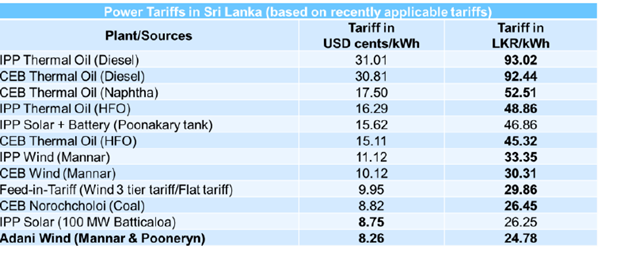
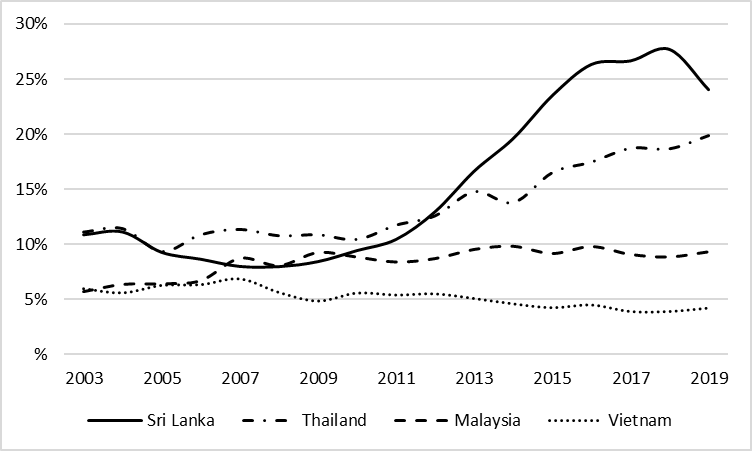
 Nimal Says: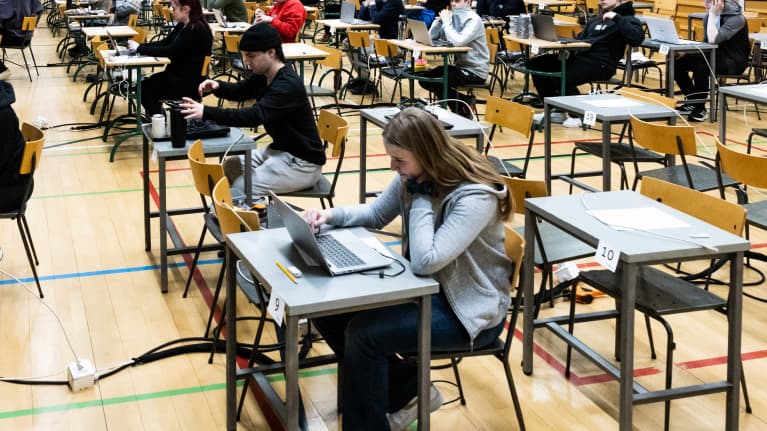
 මැතිවරණ කොමිසමේත් කනෙන් රිංගා රාජකාරි අවශ්යතා මත යනුවෙන් සඳහන් කර සී අයිද්ධියේ ප්රධාන පොලිස් පරීක්ෂක ඉන්දුක ද සිල්වා මහතාව සීඅයිඩියෙන් පොලිස් මුලස්ථානයට මාරු කිරීමට රවි සෙනෙවිරත්න මහතා ක්රියාකළ බවත්, රාජකාරි අවශ්යතා මත යැයි පැවසූවද කිසිම රාජකාරියක් ඔහුට පවරා නැති බවත් සර්වජන බලය කොළඹ දිස්ත්රික් අපේක්ෂක සහ පිවිතුරු හෙළ උරුමය නායක නීතිඥ උදය ගම්මන්පිල මහතා පවසයි.