Joint Statement from the Fifth Session of the United States-Sri Lanka Partnership Dialogue

July 15th, 2024

The statement is released by the Governments of the United States and Sri Lanka

The following statement is released by the Governments of the United States and Sri Lanka on the occasion of the Fifth United States-Sri Lanka Partnership Dialogue held on July 12 in Washington, D.C.

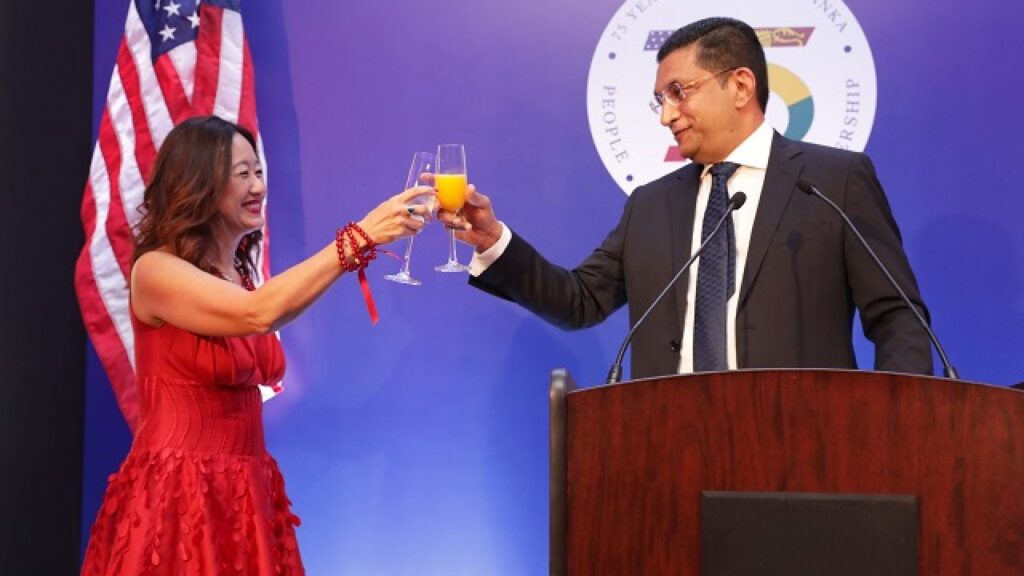
The United States and Sri Lanka convened the Fifth U.S.-Sri Lanka Partnership Dialogue on July 12, 2024, in Washington, D.C. to express their shared commitment to economic prosperity, security cooperation, sustainable development, democracy and human rights, and people-to-people exchanges.  The meeting was co-chaired by Acting Under Secretary for Political Affairs of the U.S. Department of State John Bass and Foreign Secretary of the Ministry of Foreign Affairs of Sri Lanka Aruni Wijewardane.  The United States and Sri Lanka reaffirmed their commitment to the bilateral relationship, firmly rooted in upholding shared democratic values and respect for national sovereignty, and expressed a desire to further strengthen the partnership.

The United States welcomed the signs of economic stabilization in Sri Lanka and Sri Lanka’s steadfast commitment to the IMF program and reforms, which will lay the groundwork for recovery, financial governance, and future growth.  Sri Lanka expressed its sincere appreciation for U.S. economic assistance during the past crisis, totaling more than a quarter-billion dollars.  The United States continues to support Sri Lanka’s debt restructuring and economic and governance reform agenda to promote sustainable growth.

Both delegations reiterated their intent to explore new opportunities to enhance market access, bilateral trade, investment, and tourism.  The United States expressed its commitment to supporting Sri Lanka’s progress in its IMF program by encouraging private-sector investment, enhancing its capacity to combat corruption, and addressing food insecurity for vulnerable populations.  The U.S. delegation welcomed the Sri Lankan government’s increased investment in the social protection network, including measures to support women through the Women’s Empowerment Act.  Sri Lanka welcomed the role of the U.S. International Development Finance Corporation (DFC), which is committing $553 million to support the development of the West Container Terminal at the Port of Colombo, an investment that provides critical infrastructure and jobs.  DFC continues to explore additional opportunities to invest in Sri Lanka.  The delegations also welcomed continued discussions under the U.S.-Sri Lanka Trade and Investment Framework Agreement in the coming year, where they will discuss bilateral trade issues.

Both countries committed to continue working together to address climate change and other environmental challenges.  The United States welcomed Sri Lanka’s goal to produce 70 percent of electricity from renewable energy by 2030 and to attain carbon neutrality by 2050.  The United States is providing assistance under the U.S. Agency for International Development’s Sri Lanka Energy Program.  Sri Lanka expressed appreciation for ongoing U.S. grant assistance to help meet these goals, including technical assistance to support energy sector reform and a pipeline of renewable energy projects.  Sri Lanka appreciated U.S. support to achieve global climate financing targets and welcomed U.S. support on financing its energy transition as discussed during the COP 28 in 2023.

The United States expressed its intent to continue supporting the sustainable development of Sri Lanka through the U.S. Agency for International Development, including through programs to strengthen transparency, governance, and economic resilience; enhance environmental and climate resilience; and improve energy security and sustainability.  This includes the announcement of USAID’s forthcoming five-year activity to foster inclusive and sustainable agriculture-led economic growth in Sri Lanka.

The U.S. delegation reaffirmed its commitment to promote school nutrition and education cooperation for Sri Lankan children in consultation with the Sri Lankan Government.  Both sides recognized that these measures would facilitate Sri Lanka’s efforts to achieve the Sustainable Development Goals.  Sri Lanka appreciated the successful nutrition campaign conducted by the U.S. Department of Agriculture (USDA)/Foreign Agricultural Service McGovern-Dole Food for Education Program PALAM/A project with Save the Children and the new five-year, $32.5 million project expansion to provide meals to about 200,000 students covered under Sri Lanka’s national school meal program.

The U.S. delegation affirmed their commitment to a free, open, and prosperous Indo-Pacific region.  Sri Lanka and the United States resolved to continue cooperation on maritime security aimed at a safe maritime domain in the Indian Ocean, including through activities undertaken under Sri Lanka’s tenure as Chair of the Indian Ocean Rim Association (IORA).   Sri Lanka welcomed the planned arrival of the fourth High Endurance U.S. Coast Guard Cutter transferred through the U.S. Excess Defense Articles program and a King Air aircraft to strengthen Sri Lanka’s maritime domain awareness and respond to humanitarian and post-disaster needs, totaling $30.18 million.

Both delegations welcomed ongoing bilateral defense and security sector cooperation, including U.S. support for humanitarian demining and disaster relief and response, joint military engagements, cooperation on cyber security, and port security.  The United States resolved to explore opportunities to increase support for Sri Lanka’s hydrographic mapping capabilities and training and development of personnel in this field.  The United States also expressed gratitude to Sri Lanka for its participation and support in activities aimed at safety, security, and freedom of navigation in the Red Sea.

The United States welcomed steps taken by Sri Lanka to promote reconciliation and human rights and encouraged continued efforts on these issues.  Sri Lanka apprised the United States of the recent developments on reconciliation and domestic mechanisms to uphold democracy and further good governance, the rule of law and the promotion and protection of human rights.  The United States encouraged Sri Lanka to continue forward on these issues inclusively, incorporating input from stakeholders.  The United States appreciated the passage of anti-corruption legislation and the release of government-held lands back to the original owners in the Northern and Eastern Provinces of Sri Lanka.

Both delegations expressed strong support for ongoing cooperation between the two countries in education and culture.  The delegations welcomed ongoing efforts to recognize and preserve Sri Lanka’s rich cultural heritage through the funding received from the United States over the last 23 years.  The United States emphasized the value of educational exchanges, such as the Fulbright program, and expressed interest in working together to further expand opportunities for university partnerships, joint research endeavors, and overseas study and exchanges that would benefit both countries.  The United States highlighted the launch of the U.S. Government’s Young South Asian Leadership Initiative, a regional leadership training program based out of Colombo.  The delegations decided to continue collaboration on English Language teaching, teacher training, curriculum development, and other support to strengthen Sri Lanka’s education sector. The delegations lauded the return of the Peace Corps to Sri Lanka in 2024 after a 26-year hiatus.

The United States and Sri Lanka emphasized the importance of their 76-year partnership and reaffirmed their commitment to encourage progress in a broad range of areas, including in economy and development, anti-corruption, climate change, security cooperation, governance and human rights, and people-to-people exchange.

Lawyer’s petition against Presidential election dismissed with Rs. 500,000 cost

July 15th, 2024

Courtesy The Daily Mirror

Colombo, July 15 (Daily Mirror)- The Fundamental Rights petition filed by a lawyer seeking a declaration that the Presidential election should not be held without a referendum on the 19th amendment to the Constitution, was dismissed by the Supreme Court with a Rs. 500,000 cost a short while ago.

The Supreme Court three-judge-bench comprising Chief Justice Jayantha Jayasuriya, Justice Arjuna Obeysekera and Justice Priyantha Fernando decided to dismiss the petition citing that there is no merit in the petition.

The petitioner was ordered to pay the cost before July 31 this year.

In his petition, Attorney-at-Law Aruna Laksiri challenged the holding of a Presidential election this year under the provisions of the 19th amendment to the Constitution, as he believes that the 19th amendment was not properly passed with a referendum.

ජනාධිපතිවරණය කල්දැමීමට ඉල්ලූ දෙවැනි පෙත්සමත් විසිවෙයි

July 15th, 2024

ජනාධිපතිවරණය කල්දැමීමට ඉල්ලූ දෙවැනි පෙත්සමත් විසිවෙයි අගවිනිසුරුගෙන් පෙත්සම්කරුට දෝස් මුරයක් “මෙච්චර කියලත් තේරෙන්නේ නැත්නම්…”

අරුම පුදුම ආණ්ඩුව – ”අනුර පෙන්නපු ගොඩක් ෆයිල් හිස්… ඔර්ජිනල් බඩු මං ළඟ”

July 15th, 2024

ප්‍රායෝගිකව ජීවිතයට මුහුණ දිය හැකි පුරවැසියන් බිහි කෙරෙන අධ්‍යාපන ක්‍රමවේදයක් අවශ්‍යයි – ආරක්‍ෂක රාජ්‍ය අමාත්‍ය ප්‍රමිත බණ්ඩාර තෙන්නකෝන්

July 15th, 2024

Ministry of Defence  – Media Centre

අතිගරු ජනාධිපති රනිල් වික්‍රමසිංහ මැතිතුමාගේ සංකල්පයකට අනුව අඩු ආදායම්ලාභී පවුල්වල දරුවන් හට ශිෂ්‍යත්ව පිරිනැමීමේ වැඩසටහන යටතේ ඔවුන්ගේ අධ්‍යාපන කටයුතු වෙනුවෙන් අවශ්‍ය මුල්‍ය ප්‍රතිපාදන ලබාදීම මේ වනවිට දීප ව්‍යාප්තව දිස්ත්‍රික් මට්ටමින් ක්‍රියාත්මක කෙරෙමින් පවතී.

ඒ අනුව පසුගිය දා (ජුලි 13) මාතලේ එඩ්වඩ් ක්‍රීඩාංගනයේදී පැවති මාතලේ දිස්ත්‍රික්කයේ අඩු ආදායම්ලාභී පවුල්වල සිසුන් වෙනුවෙන් ජනාධිපති ශිෂ්‍යත්ව පිරිනැමීමේ උත්සවයට ආරක්‍ෂක රාජ්‍ය අමාත්‍ය ප්‍රමිත බණ්ඩාර තෙන්නකෝන් මැතිතුමා සහභාගි විය.

එහිදී අදහස් දක්වමින් රාජ්‍ය අමාත්‍යවරයා, පාඩම් පොතට සීමා නොවී ප්‍රායෝගිකව ජීවිත ගොඩනගා ගැනීමට හුරුකරන අධ්‍යාපන ක්‍රමවේදයක් අප රටේ ක්‍රියාත්මක කල යුතු බවත්, ඒ ඔස්සේ රටට වැඩදායී පුරවැසියන් බිහිකිරීම අත්‍යවශ්‍ය කරුණක් බවත් ප්‍රකාශ කලේය. එමෙන්ම ප්‍රබල මූල්‍ය ස්ථාවරත්වයක් සහිත රටවල පවා ක්‍රියාත්මක නොවන, අප රටේ සිසු දරුවන්ට මහඟු දායාදයක් වන නිදහස් අධ්‍යාපනය තුලින් එහි උපරිම ප්‍රථිපල ලබාගැනීම අප කාගේත් වගකීම බවද අවධාරණය කලේය.

එමෙන්ම අධ්‍යාපනයේ වැදගත්කම හඳුනාගනිමින්, රජය මගින් ක්‍රියාත්මක ‘කඳුකර දශකය’ සංවර්ධන ව්‍යාපෘතිය යටතේ දඹුල්ල හා මාතලේ දිස්ත්‍රික්ක සඳහා ලබාදී ඇති අරමුදල් වලින් 85%කට වැඩි ප්‍රමාණයක් පාසල් වල සංවර්ධන හා ප්‍රතිසංස්කරණ කටයුතු වෙනුවෙන් භාවිතා කෙරෙන බවද, එම සංවර්ධන ව්‍යාපෘති දැනටමත් ක්‍රියාත්මක බවද අමාත්‍යවරයා ප්‍රකාශ කලේය.

අතිගරු ජනාධිපති රනිල් වික්‍රමසිංහ මැතිතුමාගේ සංකල්පයකට අනුව ක්‍රියාත්මක වන ජනාධිපති ශිෂ්‍යත්ව වැඩසටහන” යටතේ 2024 වසර සඳහා ශිෂ්‍යත්ව එක්ලක්‍ෂ දහසය දහසක් ප්‍රදානය කිරීමට නියමිතය. ඒ අනුව අ.පො.ස (උසස් පෙළ) හදාරන සිසුන් 6000කට මසකට රුපියල් 6000ක් බැගින් මාස 24ක කාලයක් දක්වා ශිෂ්‍යත්ව ලබාදීම වෙනුවෙන් රුපියල් මිලියන 824ක් වෙන් කර ඇති අතර, 1 ශ්‍රේණියේ සිට 11 ශ්‍රේණිය දක්වා අධ්‍යාපනය හදාරන සිසුන් 100,000කට මසකට රුපියල් 3000ක් බැගින් මාස 12ක් දක්වා ශිෂ්‍යත්ව ලබාදීම වෙනුවෙන් රුපියල් මිලියන 3600ක මුදලක් ද වෙන් කොට ඇත.

ඊට අමතරව පිරිවෙන් සහ ශීල මාතා අධ්‍යාපන ආයතනවල ඉගෙනුම ලබන ශිෂ්‍ය භික්ෂූන් සහ ශීල මාතා වහන්සේලාට මෙන්ම ගිහි ශිෂ්‍ය ශිෂ්‍යාවන් සඳහා පිරිනැමෙන ශිෂ්‍යත්ව වැඩසටහන සඳහා රුපියල් මිලියන 288ක් වෙන් කර ඇත. තවද, අ.පො.ස (උසස් පෙළ) සඳහා විෂයක් ලෙස තොරතුරු තාක්‍ෂණය හදාරන සිසුන් වෙනුවෙන් නියාමන කොමිෂන් සභාව සහ ජනාධිපති අරමුදල එක්ව පිරිනමන ශිෂ්‍යත්ව වැඩසටහන වෙනුවෙන් රුපියල් මිලියන 720ක් වෙන් කර තිබේ. ඒ අනුව දැනට පවතින ශිෂ්‍යත්ව වැඩසටහන්වලට අමතරව මෙම ශිෂ්‍යත්ව වැඩසටහන් සඳහා පාසල් සිසුන් වෙනුවෙන් තවත් රුපියල් මිලියන 5000ක් වෙන් කෙරේ.

මේ අනුව මාතලේ දිස්ත්‍රික්කය තුල ක්‍රියාත්මක ශිෂ්‍යත්ව ප්‍රදාන වැඩසටහනෙහි පළමු අදියර යටතේ ශිෂ්‍යත්වලාභීන් 3114ක් වෙත සංකේතාත්මකව ශිෂ්‍යත්ව ප්‍රදානය සිදුකළ අතර, අනෙකුත් සිසු දරුවන් වෙත ඉදිරියේදී කඩිනමින් එම ශිෂ්‍යත්ව ලබාදීමට අවශ්‍ය කටයුතු සලසා ඇත.

Politics and Culture of some Tamil Doctors

July 15th, 2024

By Engr. Kanthar Balanathan DipEE (UK), GradCert (RelEng-Monash), DipBus&Adm (Finance-Massey), C.Eng., MIEE, Former Director of Power Engineering Solutions Pty Ltd, Consulting Electrical Engineers Leading Engineer of the World 2006, UK Authority Award

Recent unrest at the Chavakacheri Base Hospital (CBH) and the A9 roadside has prompted me to write this small narrative of the politics and culture of Tamil doctors from my experience with the Tamil doctors in SL.

I was on holiday and in my village which is about six miles from Jaffna town, I experienced pain in my right side of the belly. My dad who was a retired Police officer (Sub-Inspector) took me to the Araly West unit and the Apothecary there asked my dad to take me to the Jaffna Hospital immediately as I had an appendectomy (serious). He took me to the Jaffna hospital and the doctor immediately checked me and fixed me for operation. This was on a Sunday around 5 pm and the operation was fixed for 10 am on Monday. I was taken to the theatre and the Surgeon did the operation on Monday at 10:00 am and I was looked after well. After one week I was discharged, and the doctor asked me to check with him every three days for two weeks. This was in 1964 April. During this time the Jaffna Hospital was clean, effective, and efficient with Tamil doctors performing their duties with care. For the one week there I observed every patient was looked after well. It was the love of the medical facility towards the patients that attracted me. There was no bribery or corrupt act during this period.

In November 1965, I was given a job with the DGEU (Electricity department). I had to come to Jaffna for the medical examination that was required by the DGEU. All the tests were okay and finally, the ECG test and the signing-off were given to the recently returned Physician. His name was Dr Jeyasingham, I think (Dr. J). Recently returned as FRCP. He said that I had a heart issue and that he could not sign (based on the ECG). He said that I might die within three years if I did not have surgery to fix it. My dad spoke to the senior Physician Dr. Aanantharajah (Dr. A) and Dr. A came and checked me. He told the Junior physician that it was okay to sign me off as fit for duty. I noticed when Dr A came the junior doctor was a bit worried. Anyway, I worked with the DGEU until I left for the UK to finish my studies and came back and worked with the Cement Works at KKS up to 1977. Cement is hard work as a Works Engineer. After this, I worked in Nigeria, Zimbabwe, New Zealand and Australia. Nothing happened to me, and I was quite well.

In 2003 at 60 years of age, I had a heart issue and went through an Angioplasty in Australia. AT 60 I would have retired in Sri Lanka. However, I worked until I was 75 as a Consulting Engineer and retired in Australia. Today, I am 81+.

The issue here is that I presume that the Junior Physician, Dr. J may have expected a bribe from me. He was from Heartley College, and I was also from Heartly College. The doctor was from Point Pedro.

In 2003 I was surprised to meet Dr. A at Gladstone, Australia. What I gathered is that ECG was not a true examination for heart issues as in Australia doctors do not value ECG, however, other examinations. Dr. A also expressed his opinion. I am bringing this information to propagate that some young doctors from the North have a blown head and think that they are superior, just because they are doctors. Only a few doctors are blown-up characters.

There is a Forensic Pathologist here in Australia who talks about caste, and he is great. The guy looks like an African, dark black and from Karaitivu (Karainagar). Whatever it is, he deals with dead bodies.

The issue at CBH is that even if the relatives want to claim the corpse of their relative dead bodies, the hospital staff demands a bribe. What a sick country is SL!

When I was in Nigeria, I went to see a doctor and it was a Tamil woman (Dr. Mrs Arumugam). She is crazy and a sick person. I never went to see her after two times. I managed my medical affairs.

In NZ and Australia, I have never consulted a Tamil doctor.  Always go to a Sinhala doctor or an Australian. In Australia and NZ Tamil doctors want to be the President or the Chairman of Tamil societies or organisations and temples. One doctor was the President of the TRO.

At CBH:

  • Why is the Northern administration keen on getting rid of RA?
  • Are these jokers scared that their malpractices may be leaked with proof?
  • The proof is that the people are with Dr. RA.
  • Why have some threatened Dr RA?
  • What happened to the expensive medical equipment that was allocated to CBH?
  • The Maffia group do not function the total time allocated to function but takes unofficial leave.
  • Maybe the private clinics have been throwing/dumping the Medi-waste at Ariyalai/Kallundai.
  • The Tamils cannot be corrected as they are not flexible, but rigid in their thoughts and actions.
  • Why cannot the government act against Dr. Ketheeswaran?
  • The 25 doctors get paid by the government and they also get paid by the private clinics they own.
  • How can they shift the state-of-the-art equipment to their private clinic? This is smuggling.
  • The character of Tamils is that they are always violent and in a fighting mode.
  • Does SL have an Attorney General? Do we have a law in SL?
  • During the NPC time, all four ministers were involved in bribery and corruption.
  • Why cannot Tamils correct themselves and live peacefully?
  • Most Tamils are megalomaniacs.
  • The Minister of Health should get up from sleep and act accordingly.
  • The Governor of the NP should be given authority to deal with the health department.
  • We all know that Keheliya Rambukwella was jailed for fraudulent practice.
  • It is recommended that doctors shall be dealt with judicially and prudently.

I am 81+. I have a daughter who is a Surgeon, a Son who has a PhD, and a daughter-in Law who has a PhD and is a Scientist. (The difference between Sri Lanka and Australia). Why cannot SL get up from malpractices and grow up?

රටක මහජන සේවාවේ වැදගත්ම පුරුක පළාත් පාලනයයි…අග්‍රාමාත්‍ය දිනේෂ් ගුණවර්ධන මහතා

July 15th, 2024

අග්‍රාමාත්‍ය මාධ්‍ය අංශය

අග්‍රාමාත්‍යවරයා මේ බව සඳහන් කළේ 2024.07.15 දින බස්නාහිර පළාතේ පළාත් පාලන ආයතන හී ස්ථිර නොවූ, අනියම්, ආදේශක, කොන්ත්‍රාත් තාවකාලික, සහන පදනම් සේවකයින් 1720ට ස්ථිර පත්වීම් ප්‍රදානය කිරීම නිමිත්තෙන් අරලියගහ මන්දිරයේ පැවැති උත්සවයේදීය.

මෙහිදී වැඩිදුරටත් අදහස් දැක්වූ අග්‍රාමාත්‍යවරයා

පළාත් පාලන ආයතනවල සේවය කරමින් සිටි ඔබ ස්ථිරත්වය ලබන දිනය අදයි. ඔබ වෙනුවෙන් මේ  දිනය උදා කිරීමට ආණ්ඩුවටත්, පළාත් සභාවටත්,  අපේ අමාත්‍යංශයටත් විශාල ශක්තියක් වුන රාජ්‍ය අමාත්‍ය ජානක වක්කුඹුර මහතාට ස්තූතිවන්ත වෙනවා. එතුමා මන්ත්‍රීවරුන්ගේත්, ඔබේත්, රාජ්‍ය අමාත්‍යංශයේත් හඩ ඉදිරියට ගෙනාවේ අපේ රට අඛණ්ඩව මූල්‍ය ප්‍රශ්නයකට මුහුණ දෙමින් සිටි අවස්ථාවකයි.

පසුගිය වසර අපට බොහෝම දුෂ්කර වසරක් වුණා. සිටි තැනින් හිස එසවීමේ දැවැන්ත භාරකාරත්වය ගත්තේ ජනාධිපති රනිල් වික්‍රමසිංහ මහතායි. ඒ සියලු අභියෝග මැද පළාත් පාලන ආයතනවල අස්ථිර, තාවකාලික, කොන්ත්‍රාත් සේවකයින් වෙනුවෙන් විශේෂ සහයෝගයක් ලබා දීමට ජනාධිපතිතුමා මැදිහත් වුණා. අපේ මන්ත්‍රී කණ්ඩායම පළමුවෙන් ඔබ වෙනුවෙන් කතා කරපු දවස, අපේ වෘත්තීය සමිති එකමුතුව ඔබ වෙනුවෙන් කතා කරපු දවස වගේම ජනාධිපතිතුමා හා අප මුණ ගැසුනු අවස්ථාවේත් මූල්‍ය තත්ත්වයේ අමාරුකම නිසා ඔබව ස්ථිර කරන්න බැහැ කිව්වේ නැහැ. තාවකාලික හෝ කොන්ත්‍රාත් ඉන්න කිසිම සේවකයෙක් අයින් කරන්න එපා යි එතුමා උපදෙස් දුන්නා. ආර්ථිකය ජය ගෙන ප්‍රශ්නය විසදන්න ශක්තියක් ලැබෙන තෙක් අඛණ්ඩව ඔබේ සේවා කාලය දිගු කරමු කිව්වා. ජනාධිපතිතුමා ඒ විශ්වාසය අපිට ලබා දුන්නා. මහජනයා කෙරෙහි තිබුණු විශ්වාසයයි, අමාරු තත්ත්වයෙන් රට ගොඩගන්න පුළුවන් කියන විශ්වාසයයි එතුමාට තිබුණා. පසුගිය වසරේ අපේ අමාත්‍ය මණ්ඩලයත් ජනාධිපතිතුමත් සාකච්ඡා කර අභියෝග රැසකට මුහුණ දෙමින් සරලව ඒ ප්‍රශ්න හරහා ගමන් කළා.

ඔබ කුමන රැකියාවක් කළත් අද ස්ථිර පත්වීමක් ලැබුණා. මේ දවස අමතක නොවන දිනයක් විදියට බොහොම ආඩම්බරයෙන් කතා කරන්න. ඔබේ ජිවිතයේ අලුත්ම පරිච්ඡේදයකටයි අවතීර්ණ වෙන්නේ. අපි ඔබගෙන් ඉල්ලන්නේ තමන්ගේ රාජකාරිය එලෙසම ඉටු කරන්න. වෙලාව පිළිබඳවත් නොසලකමින්, මුහුණ දෙන්න වෙන තත්ත්වයන් ගැන නොසලකමින් පළාත් පාලනය හරහා ඉටු කරන ජනතා සේවය ඔබ එලෙසම ඉටු කර තිබෙනවා. ඉදිරියටත් එසේම ඔබේ සේවය ලබා දෙන්න.

රටක මහජන සේවාවේ වැදගත්ම පුරුක පළාත් පාලනයයි. ඈත එපිට ගම්වල වාහනයක් දකින්න නැති, කඩමණ්ඩියක් නොපෙනෙන ගම්වලට සභාපතිවරයා හෝ මන්ත්‍රීවරයා හරහා පළාත් පාලන සේවය ගමන් කරන්නේ ඔබේ සහායෙන්. ඔබේ ජීවිතයට පමණක් නොවෙයි ඔබ සේවය කරන ආයතනයත් ලද ජයග්‍රහණයක් ලෙස ආයතනයත් ආරක්ෂා කරගනිමින් ඔබේ ආයතනය ඉදිරියට ගෙනියන්න පුළුවන්කම ලැබෙනවා. ”

බස්නාහිර පළාත් ආණ්ඩුකාර එයාර් මාෂල් රොෂාන් ගුණතිලක මහතා

අගමැතිතුමා මහජනතාවගේ ප්‍රශ්නවලට ඇහුම්කන් දීලා සේවකයාගේ පැත්ත ගන්නවා. එතුමාගේ ඉතිහාසය එහෙම එකක්. එතුමා මේ අවස්ථාවෙත් ඔබ වෙනුවෙන් පෙනි සිටියා. අගමැතිතුමා කැබිනට් පත්‍රිකාව දානකොට ඒ පිටුපස ජානක වක්කුමුර රාජ්‍ය ඇමැතිවරයාත් හිටියා. අද ස්ථිර පත්වීම් ලබන ඔබ සියලු දෙනා නිවාඩු දිනවලත් සේවය කළා. කම්කරු දිනයේ පවා ඔබ සේවය කරනවා.  මහජනතාව සමඟ සම්බන්ධ වන අත්‍යාවශ්‍ය පුරුකක් ඔබ. අද පත්වීම ලැබීමෙන් පසුව ඔබේ කාර්යක්ෂමතාවය තවත් වැඩි වෙන්න ඕනේ.

රාජ්‍ය අමාත්‍ය ජානක වක්කුඹුර මහතා

වසර ගණනාවක් ස්ථිර නොකළ සේවකයින් අටදහස් ගණනක් සිටින දැනගත්තාට පස්සේ ඔබ ස්ථිර කරන්න නව වතාවක් කැබිනට් පත්‍රිකා දාලා දෙවතාවක් අනුමත කරන්න උනා.  පත්විම ස්ථිර වුනත් විශ්‍රාම වැටුප නොලැබෙන්න ගිය නිසා අගමැතිතුමාට දෙවැනි වරටත් කැබිනට්  අනුමතිය ගන්න වුණා. එබේ පත්වීම ස්ථිර කරලා දෙන්න ලොකුම කාර්ය භාරය කලේ අගමැතිතුමා. කිසිම පැකිලීමකින් තොරව මේ දරුවෝ ස්ථිර කරලා පවුලේ අයත් එක්ක සතුටින් ජිවත් වෙන්න අවස්ථාව දෙන්න ඕනේ කියලා අගමැතිතුමා කිව්වා. ඒ වගේම ජනාධිපති රනිල් වික්‍රමසිංහ මහතා කිව්වෙත් මුදල් අමාත්‍යංශයේ ගැටළු විසදලා ඉක්මනින් මේ වැඩේ කරනවා කියලා. වැඩ කරන දින ගණනට අනුවයි ඔබට වැටුප් ලැබුනේ.

පහුගිය මාසේ 11 වැනිදා ඉදලා ඔබ ස්ථිර සේවකයෙක්.රජයෙන් ලැබෙන  වරප්‍රසාද හිමියි. දැන් ඔබේ කාලාත්‍රයාට දරුවන්ට ඔබේ ප්‍රතිලාභ හිමිවෙනවා. අපේ විශ්‍රාම වැටුප් දෙපාර්තමේන්තුවට ඔබ වෙනුවෙන් තවත් ෆයිල් අටදහස් ගණනක් විවෘත කරන්න වෙනවා.

මෙම අවස්ථාවට අමාත්‍යවරුන් වන විදුර වික්‍රමනායක, නලීන් ප්‍රනාන්දු, රාජ්‍ය අමාත්‍යවරුන් වන ජානක වක්කුඹුර,  ප්‍රසන්න රණවීර, පියල් නිශාන්ත, පාර්ලිමේන්තු මන්ත්‍රීවරුන් වන සරත් වීරසේකර, මදුර විතනගේ, යදාමිණී ගුණවර්ධන, සහන් ප්‍රදීප්, මිලාන් ජයතිලක, උපුල් මහේන්ද්‍ර, ඒ. එච්. එම්. ෆවුසි, සංජීව එදිරිමාන්න, අමාත්‍යාංශ ලේකම් ප්‍රදීප් යසරත්න, බස්නාහර පළාත් ප්‍රධාන ලේකම් එස්. එල්. ධම්මිකා කේ. විජේසිංහ, දිසාපතිවරුන් ඇතුළු පළාත් පාලන ආයතන  ලේකම්වවරු, රාජ්‍ය නිලධාරීන් හා පත්වීම්ලාභීන් රැසක් මෙම අවස්ථාවට එක් වූහ.

අග්‍රාමාත්‍ය මාධ්‍ය අංශය  

ආන්ඩුවට ජන ප‍්‍රසාදය තුන් ගුණයකින් ඉහලට..- වෙරිටේ රිසර්ච් අලුත්ම සමීක්‍ෂණය එයි..

July 15th, 2024

උපුටා ගැන්ම ලංකා සී නිව්ස්

දැනට මාස හතරකට පෙර තත්ත්වය හා සසඳන විට රජයේ වැඩපිළිවෙළ එදා මෙන් තුන් ගුණයකට වඩා පිරිසක් අනුමත කරමින් කර ඇතැයි වෙරිටර් රිසර්ච් ආයතනයේ නවතම සමීක්ෂණයක් හෙළි කරයි.

ආණ්ඩුව ගැන ජනතා අනුමැතිය 2024 පෙබරවාරි මාසයේ තිබූ සියයට 7ක අගයෙ සියයට 24ක් දක්වා එනම් තෙගුණයකට වැඩියෙන් ඉහළ ගොස් ඇත.

වර්තමාන ආර්ථික තත්ත්වය හොඳ හෝ විශිෂ්ට මට්ටමක පවතින බවට සමීක්ෂණයකට සහභාගී වූවන්ගෙන් සියයට 28ක ප්‍රතිශතයක් වර්ගකර තිබෙන අතර එය 2024 පෙබරවාරි මාසයේ තිබුණු සියයට 9ක අගයට වඩා තුන් ගුණයකින් ඉහළ යාමකි.

රටේ ආර්ථික තත්ත්වය යහපත් අතට හැරෙන බව විශ්වාස කරන ජනතාවගේ කොටසත් තෙගුණයකින් ඉහළ ගොස් තිබෙන අතර එම පිරිස ප්‍රතිශතයක් ලෙස සියයට 30කි. 2024 පෙබරවාරි මාසයේ එසේ සිතා ඇත්තේ සියයට 9ක පිරිසක් පමණි.

2024 ජූලි මාසයේ දැනගත හැකි මෙම ධනාත්මක පෙරැළිය 2023 ජූනි මාසයේ පැවැති මට්ටම හා සමාන වනවා මෙන්ම ඇතැම් අංශවලින් තරමක් ඉහළ දළ වේග 2022 ජනවාරියෙන් පසුව රට, ආණ්ඩුව සහ ආර්ථිකය ගැන වැඩිම පිරිසක් ධනාත්මකව සිතූයේ 2023 ජුනි මාසයේ බවද මෙම ප්‍රතිඵල ඉදිරිපත් කරමින් වෙරිටේ රිසර්ච් ආයතනය පවසයි.

යහපාලන දූෂණ මර්දධන ප්‍රධානී, මා මිත‍්‍ර අනුර පෙන්නුවේ හිස් ලිපි ගොනු..- ජනපති

July 15th, 2024

උපුටා ගැන්ම ලංකා සී නිව්ස්

යහපාලන ආණ්ඩුවේ දූෂණ මර්ද ඒකකයේ ප්‍රධානියා ලෙස කටයුතු කළ අනුර කුමාර දිසානායක මහතා වංචා දූෂණ ලිපිගොනු 400ක් පෙන්වුවද ඒවායෙන් 360ක් පමණ හිස් ලිපි ගොනු බවත් ඒවායේ මුල් ලිපිගොනු ඇත්තේ තමන් සතුව බවත් ජනාධිපති රනිල් වික්‍රමසිංහ මහතා සඳහන් කරයි.

ජනාධිපති රනිල් වික්‍රමසිංහ මහතා මේ බව සඳහන් කර සිටියේ නීතිඥවරු සමඟ ජනාධිපති කාර්යාලයේ පැවති හමුවේදීය.

”අනුර ෆයිල් 400ක් පෙන්නුවා ඒ ටික මං ගාව තියෙන්නේ. ෆයිල් 400න් 40කට නඩු දැම්මා. ඉතිරු ෆයිල් 360 හිස් බලන්න අවශ්‍ය කෙනෙක් මට කියන්න. ෆයිල් 400ක් නොපෙන්වා 40ක් පෙන්වන්න තිබුණා.”

දේශපාලනය කිරීමට ඕනෑම අයෙකුට අයිතිය තිබෙන නමුත් රට ඉදිරියට ගෙන යන ආර්ථික රාමුව බිඳ දැමීමට කිසිවෙකු කටයුතු නොකළ යුතු බව පැවසූ ජනාධිපතිවරයා, ජාත්‍යන්තර මූල්‍ය අරමුදල සමඟ ගිවිසුමට අත්සන් තැබීමත් සමඟ පසුගිය සති කිහිපය තුළ මෙන්ම ඊට පෙර සිදු වූ වැඩවර්ජන ඉදිරි ජනාධිපතිවරණය ඉලක්ක කර ගනිමින් ක්‍රියාත්මක වූ ඒවා බවද පෙන්වා දුන්නේය.

මෙහිදී වැඩිදුරටත් අදහස් දැක්වූ ජනාධිපති රනිල් වික්‍රමසිංහ මහතා මෙසේද පැවසිය,

පසුගිය වසර දෙක තුළ මේ රටේ දේශපාලන සංස්කෘතිය වෙනස් වුණා. එහිදී රට ගැන සිතා වැඩකරන කණ්ඩායමක් බිහි වුණා. ඔවුන් සම්ප්‍රදායික දේශපාලනයෙන් ඉවත්ව කටයුතු කළා. ඒ නිසා අද විවිධ පක්ෂවලට අයත් අය වගේම කිසිදු පක්ෂයකට අයත් නැති අයත් මෙම ස්ථානයේ සිටිනවා. 2022 මැයි 09 වනදා සිදුවීම පිළිබඳ මම අලුතින් සඳහන් කළයුතු නැහැ. රටේ ජනතාව පීඩාවට පත්වීම නිසා උද්ඝෝෂණ ඇති වුණා. ඇතැම් අය එම උද්ඝෝෂනවලින් ප්‍රයෝජන ගැනීමට උත්සාහ කළා. අවසානයේ සිදු වුණේ සාම්ප්‍රදායික පක්ෂවලට රටේ නායකත්වයට පැමිණීමට නොහැකි වීමයි.

2021 දෙසැම්බර් මාසයේ ජාත්‍යන්තර මූල්‍ය අරමුදලේ කළමනාකරණ අධ්‍යක්ෂවරිය සමඟ සාකච්ඡා කිරිමට මට අවස්ථාව ලැබුණා. රට තුළ ඉදිරියේ දී ආර්ථික ගැටළුවක් ඇති විය හැකි බවත්, ඒ පිළිබඳ කඩිනමින් කටයුතු කරන ලෙස ජනාධිපතිතුමාට දැනුම් දෙන ලෙසත් එතුමිය මා සමඟ ප්‍රකාශ කළා.

මම ඒ බව හිටපු ජනාධිපතිතුමාට දැනුම් දුන්නා. ඒ වගේම ලෝක බැංකුවේ නියෝජිතයන් පැමිණි අවස්ථාවේදීත් අප මේ පිළිබඳ සාකච්ඡා කළා. ඒ සමඟම ජනාධිපතිතුමා පාර්ලිමේන්තුවේ සිටින දේශපාලන පක්ෂ කැඳවා මේ පිළිබඳ සාකච්ඡා කිරීමට කටයුතු කළා. එහිදී හැම පක්ෂයක්ම විවිධ අදහස් ඉදිරිපත් කර තිබුණා.

ඒ සඳහා විපක්ෂයෙන් සහභාගී වුණේ ද්‍රවිඩ සන්ධානයේ ආර්. සම්බන්ධන් මහතා සහ එම්.ඒ. සුමන්තිරන් මහතා පමණයි. එක්සත් ජාතික පක්ෂයෙන් සම්බන්ධ වුණේ මා පමණයි. විපක්ෂයේ අනෙකුත් පක්ෂ ඒ සඳහා සහභාගී වුනේ නැහැ. එය වැරිදි ක්‍රියාවක් බව කිවයුතුයි.

එම අවස්ථාවේ රට ඉදිරියේ අර්බුදයක් තිබුණා. ඒ සඳහා ගතයුතු පියවර කුමක්ද කියා සොයා බැලීම අප සියලුදෙනාගේ වගකීම වුණා. එම වගකීමෙන් කිසිවෙකුට ඈත් වෙන්න බැහැ. විපක්ෂ නායකයා කියන්නේ විකල්ප අගමැතිවරයායි. ඔහු බස් රියදුරෙකු නොවෙයි. ඒ නිසා මේ සඳහා සහභාගිවීමට ඔහුට වගකීමක් තිබුණා. නමුත් ඒ පිළිබඳ එක් දේශපාලන පක්ෂයක්වත් කිසිදු පියවරක් ගත්තේ නැහැ.

ඉන් පසුව මැයි 09 දා මහින්ද රාජපක්ෂ අගමැතිවරයා ඉල්ලා අස් වුණා. එම අවස්ථාවේදී පොහොට්ටුවට ආණ්ඩු බලය පවත්වා ගැනීමට හැකි තත්ත්වයක් පැවතුණේ නැහැ. අප එය පිළිගත යුතුයි. ඇමතිවරුන් ඉල්ලා අස් වුණා. අප බ්‍රිතාන්‍ය ක්‍රමය ගැන කතා කරන නිසා විකල්ප අගමැතිවරයාට එය භාර ගැනීමට තිබුණා.

බොහෝ අය කිව්වා මහින්ද රාජපක්ෂ මහත්මයා ඉල්ලා අස් වුණොත් සම්ප්‍රදාය අනුව විපක්ෂනායකතුමාට එම පළමු අවස්ථාව ලබාදිය යුතුයි කියලා. මම කිව්වා මට ඒ ගැන ප්‍රශ්නයක් නැහැ, අපි ඕන කෙනෙකුට උදව් කරන්නම් කියලා. නමුත් මැයි 10 වනදා පැමිණෙන ලෙස දැනුම් දුන්නත් ඔහු පැමිණියේ නැහැ. අගමැති ධූරය භාර ගන්නේ නැහැ කියලා ඔවුන් තීරණය කර තිබුණා. ඔහු තමන්ගේ යුතුකම ඉටු කළේ නැහැ. කෙටි දේශපාලනයෙන් යන්න උත්සාහ කිරීම නිසා ඉදිරියට එන්න බැරි වුණා.

ඇතැමුන් අය වැය විවාදයේදී රට ගොඩගන්නේ කොහොමද කියලා අදහස් ඉදිරිපත් කළා. නමුත් වගකීම භාරගන්න අකමැති වුණා. ජනතා විමුක්ති පෙරමුණ ඊට උත්සාහයක්වත් දැරුවේ නැහැ. නමුත් අප මේ වගකීම භාරගත්තා. ඒ වන විට රටේ බංකොළාත්භාවය ප්‍රකාශ කර තිබුණා. එයින් රට ගොඩගන්න පුළුවන් කියන විශ්වාසය මා තුළ තිබුණා. ජනාධිපති කවුද කියන එක මට ප්‍රශ්ණයක් වුණේ නැහැ. නමුත් ඒ වෙලාවේ මට රට බේර ගැනීමට අවශ්‍ය වුණා.

අප විටින් විට මෙවන් අභියෝගවලට මුහුණ දී තිබෙනවා. 1971 කැරැල්ල තිබු අවස්ථාවේ ජේ.ආර්. ජයවර්ධන මැතිතුමා විපක්ෂනායක ලෙස සිටිමින් සිරිමාවෝ බණ්ඩාරනායක මැතිණියට සහාය ලබා දුන්නා. එතුමාගේ පුතත් එක් අවස්ථාවක අත්අඩංගුවට ගත්තා. නමුත් ස්ථාවරය වෙනස් කළේ නැහැ. 1989 දී සිරිමාවෝ බණ්ඩාරනායක මැතිණිය සහ රත්වත්තේ ඇමතිතුමා පැමිණ රටේ නීතිය හා සාමය ඇති කිරීමට සහයෝගය ලබා දෙන බව ප්‍රේමදාස ජනාධිපතිවරයාට ප්‍රකාශ කළා. එවිට එම දෙදෙනාගෙන්ම හමුදාපතිවරයා ඇහුවා අපි මේ වැඩේ කරන්නම් පස්සේ අපට දොස් කියන්න එපා කියලා. දෙදෙනාම එකඟතාව පළ කළා. මේ ආකාරයට විවිධ අවස්ථාවල අප සාකච්ඡා කර කටයුතු කර තිබෙනවා.

ඉන්දු – ලංකා ගිවිසුම අත්සන් කරන විට සිරිමාවෝ බණ්ඩාරනායක මැතිණිය සහ ඩඩ්ලි සේනානායක මැතිතුමා එකට කටයුතු කළා. අනෙකුත් වෙලාවට ගැටුම් තිබෙනවා, නමුත් එය ප්‍රශ්නයක් නොවෙයි. කොච්චර ගැටුනත් ඡන්ද ප්‍රතිඵල අනුව බලය ජයග්‍රාහකයාට ලබා දී ඉවත්ව යන ආසියාවේ එකම රට ශ්‍රී ලංකාව පමණයි.

අධිකරණ නිදහස ගැන කොච්චර කතා කළත් අධිකරණය ක්‍රියාත්මක වන්නේ ලංකාවේ පමණයි. ඉන්දිරා ගාන්ධි මැතිණිය යටතේ ඉන්දීය ශ්‍රෙෂ්ඨාධිකරණයේ ඇති වූ ප්‍රශ්න අප දන්නවා.

මේ වැඩකටයුතු කරන අතරතුර ජූලි 09දා සිදුවීමට මුහුණදීමට අපට සිදු වුණා. ජුලි 09වනදා හිටපු ජනාධිපතිවරයා ජනාධිපති මන්දිරයෙන් පිටවෙලා ගියා. එම අවස්ථාවේ අගමැතිවරයා ලෙස මටත් ඉල්ලා අස්වෙන්න කියලා කිව්වා.

මම කාටද අස්වීමේ ලිපිය භාර දෙන්නේ. මහ මුහුදුට ගිහින් ජනාධිපතිවරයා සොයන්නද, මම කිව්වා මට ඉවත්වීමට නම් බහුතරයක් ඇති කෙනෙක් ඉදිරිපත් කරන්න කියලා. විපක්ෂ නායකයා අපිට කියනවා නැහැ අපට කවුරු හරි ගන්න ඔබ ඉවත් වෙන්න කියලා.

එහිදී මම කිව්වේ ඉන්න කෙනා පළමුව ඉදිරිපත් කරන්න කියලයි. ඊට පස්සේ ඔවුන් කියනවා කථානායකතුමාට භාර ගන්න කියලා. කථානායක තුමා කිව්වා මට පාර්ලිමේන්තුව පාලනය කරන්න පුළුවන්, ඒත් ආර්ථිකය පාලනය කිරීමේ වගකීම මට ගන්න බැහැ කියලා. මේ විදියට රටේ දේශපාලන ක්‍රමය කැඩී ගියා.

අවසානයේ පාර්ලිමේන්තුව වැටලීමට උත්සාහ කළා. එම අවස්ථාවේ පක්ෂ නායකයන් සියලුදෙනා පාර්ලිමේන්තුව ඇතුලේ සිටියා. හමුදාපතිවරයා ඒ බව දැනුම් දුන් විට ඔවුන් පැවසුවේ අගමැතිවරයා ඉවත්විය යුතුයි කියලා. එම අවස්ථාවේ හමුදාපතිවරයාට පණිවිඩයක් ලැබුණා විරෝධතාකරුවන් පාර්ලිමේන්තුවට පැත්තට එනවා කියලයි. ඉන් පසුව මිනිත්තු 05න් සියලු දෙනා පාර්ලිමේන්තුවෙන් පිට වෙලා ගියා. පාර්ලිමේන්තුව ආරක්ෂා කරන්න කියලා හමුදාපතිවරයාට දැනුම් දෙන්න මට සිදු වුණා. මම ඒ පිළිබඳ කථානායකවරයාටත් දැනුම් දුන්නා.

ඔවුන් අවශ්‍ය අවස්ථාවේ වගකීම් භාර නොගෙන සටන් පාඨ ඉදිරිපත් කරමින් සිටියා. සාකච්ඡාවක් සඳහා පැමිණෙන ලෙස කිහිප අවස්ථාවකදීම දැනුම් දුන්නත් එක්කෙනෙක්වත් ආවේ නැහැ. ඉන් පසුව මේ රටේ අලුත් දේශපාලන සංස්කෘතියක් ගොඩනැගුණා. මම ජනාධිපති ධූරය භාර ගන්නා විට සෑම පක්ෂයකින්ම මට සහාය ලබා දුන්නා. ඒ වගේම සෑම පක්ෂයකින්ම මට විරුද්ධවත් ඡන්දය ලබා දුන්නා. පොහොට්ටුවේ සභාපතිවරයා ඇතුළු කණ්ඩායමක් විරුද්ධ පක්ෂයට ගියා. සජබෙ කණ්ඩායමක් මට ඡන්දය දුන්නා. අපි ආණ්ඩුවක් හැඳුවා. හිටපු ඇමතිවරු සමඟ මම වැඩ ආරම්භ කළා. මම ඒ කිසිවෙක් මාරු කිරීමට ගියේ නැහැ. ඇතැම් අය අයින් වුණා. ඒක වෙනම කාරණයක්. නමුත් මම කිසි කෙනෙක් මාරු කරන්න ගියේ නැහැ.

දේශපාලන පක්ෂ ගණනාවකට අයත් පිරිස එකතු වී රට වෙනුවෙන් වැඩ කළා. පාර්ලිමේන්තුවේ මන්ත්‍රීවරුන් පක්ෂ බේදයෙන් තොරව තමන්ගේ සහාය ලබා දුන්නා. ඒ වගේම පිටිනුත් සහයෝගය ලැබුණා. එදා ඉදලා අරුම පුදුම ආණ්ඩුවක් විදියට මේ ආණ්ඩුව ඉදිරියට පැමිණියා. අද අප පක්ෂ බේදයෙන් තොරව එකට වැඩ කර මෙම ජයග්‍රහණ ලබාගෙන තිබෙනවා. මේ වන විට අපි බංකොලොත් භාවයෙන් ඉවත් වුණා විතරයි. දැන් ණය ගෙවීමට හැකි හැකි රටක් ලෙස අපව ලෝකය පිළිගෙන තිබෙනවා.

අප ජාත්‍යන්තර මූල්‍ය අරමුදල සහ ශ්‍රී ලංකාවේ ණය හිමියන්ගේ කමිටුව, චීන එක්සීම් බැංකුව හා පුද්ගලික බැදුම්කරුවන් සමඟ එකඟ වූ ගිවිසුම් ඒ අයුරින් ක්‍රියාත්මක කරනවා. අපිට විවිධ පෙරොන්දු දෙන්න බැහැ. තවදුරටත් පැරණි දේශපාලනයේ නිරතවීමට අවස්ථාවක් නැහැ. අප එය වටහා ගෙන තිබෙනවා. ඒ වගේම රට ඉදිරියට ගෙන යනවා නම් රට තුළ ආර්ථික පරිවර්තනයක් ඇති කළ යුතුයි. එහිදී අපනයන ඉලක්ක කරගත් නවීන ආර්ථික රටවාවකට ගමන් කළ යුතුයි. ඩොලර් බිලියන 85ක් වූ දළ දේශීය නිෂ්පාදනය 2048 වන විට ඩොලර් බිලියන 350ක් දක්වා ඉහළ නංවාගත යුතුයි. හරියට වැඩ කළොත් අපට එම ඉලක්කයට යන්න පුළුවන්. සිංගප්පූරුව, වියට්නාමය, වැනි රටවල් එක් ස්ථාවරයක සිට කටයුතු කිරීම නිසා අද දියුණු වී තිබෙනවා. දේශපාලනය කරන විට මූලික ස්ථාවරත්වයක් ඇති කර ගැනීමට අප කටයුතු කළ යුතුයි.

පාර්ලිමේන්තුව තුළ විවිධ අදහස් තිබෙන්න පුළුවන්. නමුත් රටේ ආර්ථික රාමුව නොකඩා ඉදිරියට ගෙන යා යුතුයි. අද බොහෝ දෙනෙකුට අවශ්‍යව ඇත්තේ මෙම රාමුව බිඳ දැමීමටයි. අප ජාත්‍යන්තර මූල්‍ය අරමුදල සමඟ ගිවිසුමට අත්සන් කළ පසු පසුගිය සතියේ සහ ඊට පෙර වැඩ වර්ජන කීයකට මුහුණ දුන්නද, එහෙම වෙන්නේ මේ වසරේ සැප්තැම්බර්, ඔක්තෝබර් වල ජනාධිපතිවරණයක් පැවැත්වෙන නිසායි. වැඩ වර්ජන කරන්න අවශ්‍ය නැහැ. තමන් එක් පක්ෂයකට කැමති නැත්නම් වෙනත් පක්ෂයකට ඡන්දය දෙන්න. ඔවුන් උත්සාහ කළේ මෙම ආර්ථික රාමුව බිඳ දැමීමටයි. නමුත් ජනතාව ඊට විරුද්ධ වුණා. දැන් අපට තිබෙන්නේ රට ලබාගත් ජයග්‍රහණය තහවුරු කරගෙන රට අලුත් මාර්ගයක ගෙන යනවාද, නැත්නම් පැරණි ක්‍රමය අනුව කටයුතු කරනවාද කියා තීරණය කිරීමයි.
අද මෙම අවස්ථාවට ඔබ සියලුදෙනාගේ පැමණීම විශාල ශක්තියක් බව ප්‍රකාශ කළ යුතුයි. අපි සියලුදෙනා එකතුවෙලා රට ඉදිරියට ගෙන යමු. ඉන්පසු නැවතත් වසර 05කින් පසු පක්ෂ දේශපාලනයේ නිරත වෙමු.

රටට ස්ථාවර ආර්ථික ක්‍රමයක් අවශ්‍යයි. ප්‍රංශයේ පාර්ලිමේන්තු මැතිවරණයේ පළමු වටයේදී සියලුදෙනා සිතුවේ අන්තවාදී දක්ෂිණාංශය ජයග්‍රහණය කරනු ඇති බවයි. නමුත් එහි මැද අවස්ථාවේදී දක්ෂිණාංශයක්, වමත් තිරණය කළා අපි තරගයකට යන්නේ නැතිව ඒ ආසනවල තුන්වැනියා ඉවත් කරමු කියලා. මගේ පක්ෂය නම් තුන්වැනියා මගේ පක්ෂයෙන් අයින් කරනවා, ඔබේ පක්ෂයෙන් ඔබ අයින් කළ යුතුයි කියලා. දැන් මේක අනෙක් පැත්තට පෙරළී තිබෙනවා. ඒ අනුව එකට වැඩ කර ඉදිරියට යාමට අවස්ථාවන් තිබෙනවා. අප මේ රට තුළ ඇතිකළ යුත්තේ එම තත්ත්වයයි.

අපි රට තුළ සිදු කළ දේශපාලන පෙරළිය තහවුරු කරගෙන ඉදිරියට ගොස් රටේ අනාගතය ගොඩනඟමු. අපට හැමදාම සිඟමන් යදින ජාතියක් වෙන්න බැහැ. ආර්ථික වශයෙන් පහළට යන්නත් බැහැ, රට ශක්තිමත් ආර්ථිකයක් තුළ ඉහළට ඔසවා තැබිය යුතුයි. එම වගකීම ඉටුකිරීමට සියලුදෙනා එක්වෙමු කියා ආරාධනා කරනවා. අද ඔබේ පැමිණීම පිළිබඳවද අප ස්තූතිවන්ත වෙනවා

– Media unit

Sri Lanka’s Supreme Court orders ex-president Sirisena to complete compensation payments to Easter terror attack victims before Aug 30

July 15th, 2024

Courtesy Hindustan Times

Colombo, Sri Lanka’s Supreme Court on Monday ordered former President Maithripala Sirisena to settle the full payment of compensation to the victims of the 2019 Easter terror attacks before August 30.

Sirisena informed the Supreme Court that, out of the ₹100 million ordered to be paid as compensation for the victims of the Easter attack, Rs. 58 million has already been paid and he also requested for six years for the remaining amount to be paid.

In 2019, over 270 people, including 11 Indians, were killed when suicide bombers belonging to the local Islamist extremist group National Thawheed Jamaat linked to ISIS carried out a series of blasts that tore through three churches and as many luxury hotels in Sri Lanka on the Easter Sunday.

The Supreme Court on Monday ordered Sirisena to pay the outstanding compensation to the victims of the Easter attacks before August 30.

In January 2023, the Supreme Court ordered Sirisena, the then president, and his police and defence hierarchy to pay compensation to the victims in a fundamental rights petition.

The Supreme Court ruled that the respondents named in the Fundamental Rights petitions for failing to prevent the 2019 Easter Sunday attacks, despite having credible information of an imminent attack, had violated the fundamental rights of the petitioners.

The respondents named in the petitions were former president Sirisena, former defence secretary Hemasiri Fernando, former police chief Pujith Jayasundara, ex-National Intelligence Service chief Sisira Mendis, and former State Intelligence Services chief Nilantha Jayawardena.

The court ordered former president Sirisena to pay a compensation of ₹100 million, former police chief Jayasundara & former State Intelligence Services chief Jayawardene were ordered to pay a compensation of Rs. 75 million each, ex-defence secretary Fernando to pay a compensation of Rs. 50 Million.

Former National Intelligence Service chief Mendis was ordered by the court to pay a compensation of Rs. 10 Million.

The Supreme Court said that all these funds need to be collected and used to compensate the victims of the 2019 Easter attacks.

The deadline to complete the relevant compensation payments was originally set for July 12, 2023.

Public Utilities Commission of Sri Lanka approves 22.5% electricity tariff reduction from tomorrow

July 15th, 2024

Courtesy Hiru News

The Public Utilities Commission of Sri Lanka (PUCSL) has approved a significant reduction in electricity tariffs, amounting to 22.5%, which will take effect from midnight today (16), according to PUCSL Chairman Prof. Manjula Fernando.

Key Tariff Reductions for
Domestic Consumers:0-30 units: Reduced from Rs. 8 to Rs. 6 (25% reduction)
31-60 units: Reduced from Rs. 20 to Rs. 9
61-90 units: Reduced from Rs. 30 to Rs. 18 (55% reduction)
91-120 units: Reduced from Rs. 50 to Rs. 30
121-180 units: Reduced from Rs. 50 to Rs. 42
More than 180 units: Reduced from Rs. 75 to Rs. 65
Religious Places: Tariffs reduced by over 30%
Hotels and Minor Industries:
Daytime tariffs reduced by 33% for both low voltage and 33kV systems
Prof. Fernando highlighted that the revisions address stakeholder concerns, particularly the need for reductions for minor industries and hotels.

These changes aim to alleviate financial burdens and support various sectors by making electricity more affordable across the board.

The Bollywood-Media Manufacture of Mock Entrepreneurs

July 14th, 2024

e-Con e-News

blog: eesrilanka.wordpress.com

Before you study the economics, study the economists!

e-Con e-News 07-13 July 2024

‘Stay order issued on Gazette increasing daily wage of plantation workers’

– Ada Derana, July 04

‘National Chamber of Exporters expresses concern over Customs disruptions’

– Financial Times, July 12

‘Nearly 1,000 railway termination letters sent for print’

– Daily Mirror, July 11

Pantomimes keep being performed from port to plantation, and on the trains in between – the principal pressure points of the colonial import-export fraud of a merchant economy. The capitalist media (avenging teflon tribunes of the squeaky clean) egg-on the face-off between government & trade union officials. Rail services – left to rot at the behest of the car-import financiers – only have deadly problems when workers go on strike, or when trains fail to deliver fuel to the fast movers & high flyers.

     But behold! We were treated once again to the ruddy pink faces of the departing old World Bank Group Country Management, coyly bidding ta-ta. The WB even got a supine media to publish yet another WB press release, issuing a public ‘Thank you!’ For what? ee (1 Jan 2022) already reported on The World Bank Driving Madness on Our Roads.

     Perhaps the World Bank’s thank you is for the ‘good news’ about bondholding baldheads taking the shortest crewcuts, with odious debts being repackaged as dubious IMF my-way-or-the-highway package-tours to paradise (via Wall Street)… All this was reported out loud and in technicolor, and in the higher algebra of usury. All this in the week following the National Bankers Association’s celebratory  gathering at Colombo’s Galle Face Hotel, Friday, July 5, of which there was less than the ever-little news we hear from bankers, other than their rates.  Oh wait! They want their powers – to foreclose & dispossess defaulters on their loans provided for speculation – sustained, if not expanded.

*

     The Employers’ Federation of Ceylon (EFC) held their 95th Annual General Meeting this week. Remember 1929? It was a harbor & tramways strike, with the English police killing 5 unnamed workers, that led to the formation of the EFC. The signing of the first collective agreement on wages & working conditions with AE Goonesinghe’s Ceylon Mercantile Union (CMU), began trade union legislation in Lanka. (That was a ‘sweetheart’ agreement signed after Goonesinghe was wined and dined and whatever-elsed in London in preparation for the Donoughmore Commission’s constitutional shenanigans to ‘reorient’ colonial rule through the ‘depression’).

• This week also saw the Ceylon Chamber of Commerce (led by England’s Standard Chartered Bank, John Keells, Ernst & Young, etc) swarming the President to drape their Vision 2030 over his eyes.

     The President may not have asked them why, as Sunday Times headline records: ‘Imported inputs eat up US$ 1billion of apparel trade export income of $1.9bn’ And then, about an almost adjacent headline of an upcoming ‘Global Textiles Sourcing Exhibition in Colombo 7-9 August’,where the‘SL RMG (Ready-Made Garment) industry sources [aka imports, a] vast array of natural & manmade textiles, trims, accessories, dyes, chemicals & software solutions by connecting with over 200 suppliers from over 15 countries.’ How long can this go on? It’s not that we should not have international relations. It’s just that this fancy rag trade proudly does not make a pin, refuses to reinvest profits in upgrading skills & making machinery, and instead parks its profits abroad. Are these all entrepreneurs too?

     As SBD always said, if the country became one giant ‘garment’ factory, we would not need schools! Meanwhile, the white media celebrated, with white celebrities (incl. English mass-murderers Tony Blair & Boris Johnson!) in tow, the over-the-top half-billion dollar wedding of a scion of the family Ambani, which draped Indian & Sri Lankan bodies in plastic (for Ambani links to US Exxon & Dupont: ee 11 Sept 2021, How to Buy an Editor – Media & the Rise of the Polyester Prince).

     It may also be timely to recall it was the EFC that called for the mass sackings of 60,000 workers in July 1980, that then escalated the carnage of the 1980s and beyond. It may also be timely to contrast their attitude to the latest branding in the North Atlantic to bribe (& weaponize) their workers, while threatening nuclear war:

*

Unions are my domestic NATO

– US President Joe Biden (see ee Workers)

The traders’ media in Sri Lanka, rather than examine the merchants’ failure to invest in workers and technology, have to conjure various failings on the part of the population for their inability to employ people with dignity to build the country.

*

Entrepreneurship the new mantra? – Well, I am writing

about entrepreneurship as it has suddenly become

the rave among politicians, trying to provide an avenue

for youngsters to enhance their skills & transform

into innovative businesspersons, & thereby secure their vote.’

– Feizal Samath, Sunday Times (see ee Economists)

*

The Sunday Times’ snipers are being super snide. Their actual target is the new political manifesto on ‘The Entrepreneurial State’ by the Sarvajana Balaya (SB, see below). Also, the word ‘entrepreneur’ has been thrown around in English in Sri Lanka since the 1950s, and in the North Atlantic since the 1930s at least.

‘In underdeveloped economies… entrepreneurs are an extremely small tribe

& this is one important reason why development is so slow.’

BB Das Gupta, ‘Theory & Reality of Economic Development’,

Bulletin, Central Bank of Ceylon, Oct 1955

Entrepreneur: As far as we can tell, Gupta’s usage is the first official registration of this English word in Sri Lanka. ‘Entrepreneur’ is now part of the latest abracadabra invoking modernity, being used by politicians & their parties. It is apparently another civilizing trait we lack. Infected by economists, these civilizers like to piss these heavily machined words on our heads to display the power of their funders & their cojones.

     SBD de Silva countered: Gupta assigns the capitalist entrepreneur ‘the role of a creator rather than the creature of the process’. Entrepreneurs are what underdeveloped countries supposedly lack. Yet what we really need is a process that produces entrepreneurs, invents inventors, manufactures manufacturers. (see ee Random Notes)

     Our economic departments & their curricula appear nonchalant about such subjects. How the Indian University of Lucknow’s BB Das Gupta, Sri Lanka’s 1st teacher of economics (with the Hayekist BR Shenoy as assistant lecturer), came to be parachuted into University College of Sri Lanka’s Modern History & Economics department under the imperialist SA Pakeman, is indeed interesting, and tied into the history of the word ‘entrepreneur’ itself .

            The USSR led by Joseph Stalin was at that time offering the world: the example of the first socialist state whose workers had rapidly transformed their country to become one of the most powerful industrial nations, and remains so to this day. English imperialism therefore sought to destroy the USSR & prevent any such transformations anywhere else, by imposing fake labor-intensive industrialization and a fake middleclass.

*

The Central Bank has been hailed as

the counterpart of our political freedom.

– Walter Ladduwahetty, 1950 (see ee Random Notes)

This ee also examines the ‘colonial’ & ‘Indian’ origins of the Central Bank, which keeps promoting funny-money games, and has actively prevented investment of the country’s vast wealth, in modern industry. The new Central Bank Act proclaiming its so-called independence imposes similar constraints as were imposed by colonial England rule via India. Even after independence, the CB could ‘issue Rupees in Ceylon only when Rupees were deposited in India, with the Reserve Bank of India’ (see ee Random Notes)

     By having to target inflation alone, the CBSL can now only respond & react to external shocks & changes in the prices of imported essentials like fuel, which drive inflation. The CB cannot expand the money supply to initiative productive economic activity. Neither can it selectively lower the price of money to fuel productive activity. The interest rate is the price of money. That is why it is so expensive to be poor, because money costs more when you are not ‘creditworthy’.  Such shenanigans, all perfectly legal and not corrupt at all, have shut down the dream of a true development bank, which could have given flesh to deposed former-CB-governor WD Lakshman’s dream of a ‘school of development’:

*

‘Yet, a dream I had of seeing the evolution of a distinct ‘school

of development‘ within the Sri Lankan university system remains

unachieved: an administrative outfit located in a university complex,

devoted for advancing its own independent thinking and policy positions,

particularly in issues of development. I hope the future generations of university

economists will seriously undertake this challenging task of developing

such an independent Sri Lankan school of development.

– WD Lakshman, ee Focus

An incomprehensible arithmetic has taken over the debates over odious debt bondage. Discussions of finance disengage economics from its exact effects on human relations. If wages & prices represent hidden labor, the media’s economists do not tell us in simple words what will happen to whom & when.

     Clues as to how this number-crunching nonchalance has come about may be found in ee Focus’ final episode of WD Lakshman’s survey of the ‘Beginnings of Economics Teaching at University Level’. He examines how faculties of Management & Business Studies (but does not tell who – & how & why they were – funded) tremendously impacted the teaching of Economics. The increasing use of mathematics in teaching and writing on subjects in Economics, also enhanced student apathy towards Economics. WD recalls how with the ‘strong push towards a neoliberal package of economic policy in the 1990s, the earlier interdisciplinarity in Economics teaching, was dropped in favor of neoclassical hardcore Economics.

     We have already tasted the toxic harvest of such pedagogy in the current crop of pronouncers on Economics. Check Chanuka Wattegama’s seemingly tongue-in-cheek ‘Should an Econ student take Harshanomics 201?, in the Financial Times, which gently laments the CTC-AOG twins Harsha & Eran, etc, for shunning Premadasa’s garment fraud. He provides witty summary of how newspaper column economists & thinktanks have come to unanimously toe the same Chicago gangsta gospel… (see ee Random Notes)

*

_________

Contents:

Ridiculous Sri Lankan Constitution Changes Every 2 Years and 1 Month!

July 14th, 2024

Dilrook Kannangara

Sri Lanka’s constitution has lost its gloss, credibility, supremacy and worth as it is regularly changed to suit politicians in power. In fact, the 47-year-old constitution has changed 21 times already and the 22 attempt is now being made. That is 22 changes within 47 years. No country has such a worthless piece of paper as Sri Lanka’s constitution that keeps changing every 2 years.

It is both a tragedy and a comedy. The parliament and the president have 5 years in a term but the constitution changed every 2 years and 1 month! Sri Lanka is the only nation where the constitution changes faster than the term of the parliament or the president.

This shows the unsuitability and irrelevance of the current Constitution. It must be replaced by a suitable constitution that has some lasting power.

It cannot be done by a government of Ranil or Mahinda. Both were in parliament when two failed constitutions were enacted and amended. These two political clans and the current constitution must be done away with as soon as possible. A brand-new constitution is needed.

In order to put the supreme law of the nation in order, a presidential election must be held immediately. Further constitutional gimmicks are loathsome and foolish. It shows the extreme greediness of Ranil who is doing everything he can to grab on to power when the whole nation wants him go to hell. Constitution-making must not be done by politicians alone. The general public must be consulted in every step of the way and individual equal rights must be upheld in it. If unable to agree to a constitution, Sri Lanka must adopt a constitution from a successful Asian nation with obvious changes.

ජනපති සජබය ට සහ ජවිපෙ ට කළ ආරාධනය “රාජපක්ෂ ලා ආරක්ෂා කරන්නේ නෑ…බස් ගන්න සල්ලි දුන්නේ කවුද?.

July 14th, 2024

BUDDHIST VIHARAS AND EELAM Part 21Ha

July 13th, 2024

KAMALIKA PIERIS

The Ramayana trail of Sri Lanka seems to have started in 2008.In 2008, 50 sites related to the ‘Ramayana trail’ have been selected by Sri Lanka Tourism in order to promote visits by Indian tourists.  The tours were from one to three weeks duration and contained a maximum of 25 locations spread across central and western Sri Lanka.

Hindustan Times stated in 2008 that the Ramayana trail was a hit with Indian tourists. Batches of 50 to 120 visitors had already toured these sites. The tours were from one to three weeks duration and contained a maximum of 25 locations spread across central and western Sri Lanka.  It is a 7 day package includes visits to at least 10 temples in south and central Sri Lanka. The 12 day package covers at least 54 sites identified by the Tourist Board. About 500 passengers had used 350 Ramayana packages, middle aged and elderly persons like the package.

 Sunday Times said in 2008 a group of 90 pilgrims from India went on a Ramayana trail. There are estimated 50 Ramayana sites in Sri Lanka it says, starting with the only Hanuman temple in Colombo at Kalubowila, then Munneswaram, Ashok vatika in Nuwara eliya, and Divurumpola.

In 2009 The Sri Lanka Convention Bureau was promoting Ramayana pilgrim tours to Sri Lanka. It held a Ramayana cultural programme presented to a group of 200 swamis and devotees.

Daily News said in 2010, thousands of Indian is coming to see the historic sites. They are on an 8 day tour to visit 16 legendary sites out of 52 already identified. They include Hanuman kovil at Saranankara Rd, Colombo 5, Rumassala, seethe Amman temple in Nuwara eliya, and Munneswaram in Chilaw. Ramayana Research Centre will be commissioned on June 5th 2010 at Divurumpola.

A group of high profile ministers from India with a group of 150 pilgrims arrived in 2010 on an 8 day Ramayana trail. This is the first time that an Indian VVIP group is in Sri Lanka on a pilgrimage of the Ramayana trail, said the media. It is to visit 60 legendary sites of which 52 have already been identified. It was organised by Bernard Tours in Sri Lanka and Ashok Vatika Dharshan Yathra Samithi of New Delhi. The visit started with a Bhajan at Cinnamon Grand hotel with the participation of the 14 Indian lawmakers and two Sri Lanka cabinet ministers.

Also in 2010, another 15 VVIPs comprising Union ministers and business men from India are in Sri Lanka on a pilgrimage to see locations where king Ravana had kept Sita Devi. This tour was handled by Vikas Travels, New Delhi, reported Daily News in 2010. There was a special reception and Bhajan at Hotel Taj Samudra.

In 2015, the media said that Sri Lanka had re-launched the Ramayana trail from Bangalore. Ramayana trail is to be revived for tourists, with 52 heavily promoted sites.  They will include the places that Sita is supposed to have travelled according to Ramayana. This is the shared cultural heritage of Indian and Sri Lanka, said Daily News.

Sunday Times reported in 2018 that the Ramayana trail, a popular pilgrim attraction among Hindus is gaining momentum with a number of operators offering travel plans. Most believe this is a true account of history in the Indian sub continent while others are undecided on the history and mythology behind the story, said Sunday Times.

A release issued by the Sri Lanka Tourism Promotion Bureau(SLTPB)  states that in Sri Lanka according to popular belief the story is indeed a true account of what took place many millenniums ago. This belief has been supported by research, analysis and reasoning, continued Sunday Times.

To date, Sri Lanka has identified over 50 sites in and around its territory that have a direct connection to the legendary story and is further supported by local folklore and linguistic connections with the text especially with regard to the names of a few locations and villages in the territory, the release noted.

While this trail has gained interest among Indians it has now become possible to introduce organized tours for those interested in visiting these historic sites scattered across Sri Lanka. However due to accessibility issues, only around 20 sites are currently being recommended for visitors. It has been estimated that a travel period of around 9 to 14 days will be required to visit all 20 sites, continued Sunday Times.

Sri Lanka is working towards identifying many other locations and also making these locations accessible to visitors and this is further detailed in a dedicated website on Ramayana Yathtra that has all the necessary information for a traveler said Sunday Times.

.Sri Lanka Tourism Development Authority and SLTPB are now actively working towards creating awareness of this important part of human history and are also developing programmes to assist devotees and pilgrims in choosing itineraries that suit them best and also assist in planning trips continued Sunday Times.

.There have been 206,337 Indian visitors to Sri Lanka up to June this year and it is believed that about one per cent of the traffic would be visiting the country solely as pilgrims on the Ramayana trail. But it was noted that other Indian travelers would also visit the attractions on the trail during their holiday in Sri Lanka as well, concluded Sunday Times in 2018.

In 2022 a total of 78 Indian passengers arrived in Sri Lanka to visit the places mentioned in Ramayana. Other than those mentioned in the Ramayana, these passengers intended to visit other Hindu religious sites too .800 such Indian tourists will visit the country in groups over the next six months, said Daily Mirror.

Now to 2024.There are dozens of tour firm offering Ramayana tours in 2024.The time period varies, from 5 to 12 days so does the itinerary. In addition to the Ramayana temples, tourists are also taken to other Hindu temples such as  Kataragama,  and Koneswaram . They are also shown non- religious sites such as a  tea factory, Ramboda falls, Hakgala gardens, and Galle fort as well the Dalada Maligawa, Kandy. That is also included if the tour goes to Kandy. ( Continued)

BUDDHIST VIHARAS AND EELAM Part 21Hb

July 13th, 2024

KAMALIKA PIERIS

Ramayana trail is a pilgrimage to the Ramayana sites in Sri Lanka .The main sites of the Ramayana trail have been given in the earlier essays. This essay looks at some of the lesser known Ramayana sites,  as listed in the tourist itineraries shown on Google.

A selective collection of the lesser known Ramayana stops” is given below, with the Ramayana connection of each place. The absurdity of the so called Ramayana connections, the weak, ridiculous assertions and howlers can be spotted straightaway.

Anjaneyar Temple. Panchamuga Anjaneyar Temple located Colombo is the first Anjaneyar temple in Sri Lanka and also the only temple in Sri Lanka which is  dedicated to Lord Hanuman in his Panchamuga form, meaning five faces.

Ashok Vatika Is situated near the Hakgala Botanical Garden. Ashok Vatika is the place where Ravana kept the Sita captive.  Findings include the rock on which Sita used to sit and meditate.

Dolukanda Sanjeewanee Mountain. The beautiful rural village located near Hiripitiya is believed to be one of the five places where parts of the piece of Himalaya lord Hanuman brought fell on.

Dunuvila. Located in Laggala, Matale, Dunuvila is a rural village with natural beauty and historical value. The place is believed to be the location where Lord Rama’s army was firstly sighted by king Ravana’s troops. Dunuvila lake is believed to be the place where Lord Rama killed king Ravana by a single combat. As the folklore goes lord Rama had fired the Brahmaastharam at King Ravana from the lake you can still see in Dunuvila. King Ravana had meditated and prayed to Lord Shiva from the Laggala rock, as the rock was the highest peak of his Kingdom.

Gayathri Peedam. This temple is located in the city of Nuwara Eliya. This place has a deep religious significance. Many people believe that this is the place where Indrajit or Prince Meganath, son of the Demon King Ravana, performed the Shiva Thapa and Nikumbala Yagna with such concentration and devotion that the Holy Trinity – Shiva, Vishnu, and Brahma – appeared before him to grant him his boon. This place holds significance and importance amongst the locals and many people come here to seek blessings and liberation.

Istripura   is situated in the Welimada area. This was one of the places to which King Ravana shifted Seetha Devi as a precautionary measure. Seetha Devi took a bath in the stream close by and had dried her hair sitting on a rock and put clips to her hair, hence this rock is known as Konda Kattu Gala.

Kanniya hot springs. One legend about Kanniya’s origin is that this is the place where King Ravana carried out the last rites for his mother. When he was unable to find water to duly perform the rites, he pierced his Trishula into the ground seven times. Water started gushing out immediately. The very hot water cooled down to the present degree when Ravana’s anger calmed down.

Kelaniya Raja Maha vihara. The Kelani River is mentioned in the Valmiki Ramayana and Vibeeshana palace was said to be on the banks of this river. After King Ravana’s death, Vibeeshana was coroneted as King of Lanka by Lakshmana at Kelaniya. In the temple, you can see ancient murals of the Vibheeshana’s coronation. Many devotees that visit king Vibeeshana’s shrine pray to him asking his intervention to their problems

Kotmale. When King Ravana was taking Sitha Devi to Sitha Eliya on his chariot, Sitha Devi dropped the vitaminized rice balls King Ravana gave her as refreshment, along the journey. So, Lord Rama can find where she was taken. Kotmale is a place where you can still see these rice balls (Sitha Goli) that the locals now use as a cure for stomach disorders and headaches and as a charm that brings prosperity.

Manavari is aHindu temple situated 6km north of Chilaw. It is the first lingam installed by Lord Rama and to date this lingam is called Ramalinga Shivan. This was done as a remedy for committing Brahminicide by killing King Ravana. Lord Rama was advised to build 4 lingams by Lord Shiva, in Manavari, Thirukoneshwaram, Thiruketheeswaram and Rameshwaram in India

Munneswaram Hindu kovil, located in Chilaw, is one of the oldest Hindu temples in Sri Lanka that bear close connections to Ramayana. The temple  is believed to be the place where King Rama prayed to Shiva asking for remedies after  killing King Ravana who was a priest of Brahmin caste and committing ‘Brahmahasti’ the biggest crime according to the Hindu Dharma.

Nilawari is a famous village in Jaffna, a pilgrim site that attracts thousands of locals and tourists each year. According to the folklore, the underground well of unknown depth is a well Lord Rama created when his army faced a water crisis during the war against king Ravana. Lord Rama had shot a magic arrow to the ground and the water sprung out which haven’t dried up until this day.

Pothgul Vehera In Polonnaruwa. To the north of the Pothgul Vehera is a granite boulder, adorned with a large statue. This is one of the finest statues in the Island and measures 11 feet 6 inches in height. The historians and the archaeologists have not confirmed its identity to date. Some refer to it as the statue of King Parakramabahu because its closeness to one of his major irrigation works; others refer to it as Rishi Pulasthi’s statue. The presence of a Brahmanical sacred thread that runs from the left shoulder across the body and the Ola leaf book that he carries confirms that it is of Rishi Pulasthi.

Ravana tunnels. These tunnels prove beyond doubt the architectural brilliance of King Ravana. The tunnels served as a quick means of transport through the hills and also as a secret passage. They networked all the important cities, airports and dairy farms. A close look at these tunnels indicates that they are man-made and not natural formations.
Existing tunnel mouths are situated at Ishtripura in Welimada, Senapitiya in Halagala, Ramboda, Labookelle, Wariyapola in Matale, and Seetha Kotuwa in Hasalaka and in many more places.

Ritigala has 70 caves that have been used as dwellings by the earliest inhabitants of Sri Lanka and subsequently as monasteries. Ritigala in the Anuradhapura District is associated with the episode in the Ramayana where Hanuman is sent to the Himalayas to fetch medicinal herb to treat the injured Luxmana. However, the mountain fragment slipped and fell while Hanuman was over Lanka, and it broke into pieces.

Rumassala is a massive hill oddly out of place in the landscape just outside the Galle harbour. Legend details that during the Rama – Rawana war Rama’s brother Ludhiana, was injured and Hanuman was sent to Himalayas to fetch medicinal herbs. Hanuman forgot the name of the herb but he brought a chunk of the peak containing many herbs. the mountain fragment slipped and broke into five pieces of which one fell to Rumassala. Other 4 places where the parts believed to fell on are Rumassala in Galle, Ritigala in Habarana Anuradhapura road, Thalladi in Mannar and Kachchativu in the north.

Sigiriya has a cave known as the Cobra Hood Cave. There is a distinct link between Sita and the cave. Tradition states that Sita was held in captivity here. There are many pre-historic drawings on its ceiling.  One inscription found there states ‘Parumaka naguliya lene’. It would have been inscribed after Rawana’s period but positively it has a connection to Sita’s stay in this case, as the word ‘naguliya’ refers to Sita.

Sitha Kotuwa is located at Gurulupotha, Hasalaka. According to the legend, this is the place where Sitha Devi was held captive. The place was King Ravana’s queen, Mandothari’s palace and was surrounded by waterfall and beautiful streams. Later the palace was called ‘Sitha Kotuwa’ or ‘Sitha fort’ as Sitha Devi stayed here

Sitha Tear pond is located in the jungle on the top of Ramboda Hills, on the Kandy – Gampola – Nuwara-Eliya road. The barren land here is believed to be the route along which Ravana took Seetha Devi from his capital city Lankapura to Ashoka Vatika, to show her the beauty of his kingdom which was a paradise on earth. To date no vegetation grows on this passage except grass.

Shankari Devi  Temple. Adjacent to Koneswaram temple there is another small shrine; with some significance for Hindu pilgrims. The original Shankari Devi temple was said to be built by Ravana, but its whole cliff was destroyed by Portuguese cannon balls. Only a pillar for commemoration is placed on that spot now. And it is believed that the original idol of the Goddess has been preserved and is venerated now in this nearby new Shankari Devi temple.

Vessagiriya. The stone monument placed at the celebrated Vessamuniya presently known as Isurumuniya Viharaya is of a bare bodied personality in deep meditation and significant bearing. A head of a horse can be seen behind the right shoulder. This sculpture has a head dressing and a sacred thread” (poona noola), a thread which is worn by ancient monastic personnel can be seen. The histories of these monuments are not properly explored by the archaeologists. They have a very irregular view about this outstanding sculpture and have named it as Man and Horse”. How they have come to these conclusions are not known.  This celebrated sculpture is of Rishi Visravasmuni and his white horse

Ussangoda. This is situated in the southern coast between Ambalantota and Tangalle. According to Ramayana, after meeting Seetha Devi Lord Hanuman decided to test the strength of the mighty King Ravana and his army of Rakshasas. In the   process Lord Hanuman’s tail was set on fire by the Rakshasas, who in turn went on to torch some parts of King Ravana’s empire. Ussangoda is one of the torched areas, which is said to have been an airport used by King Ravana.

Yahangala is believed to be the place where locals paid their respect to king Ravana for the last time and kept the body. The place located along the Mahiyanganaya – Wasgamuwa road is ideal for a hike and offers you amazing views of the surrounding. You can see the Yahangala rock from miles away. (continued)

Sinhala Nation Should Save Itself from Sri Lanka Which is Succumbing to India

July 13th, 2024

Dilrook Kannangara

Sri Lanka is fast coming to its end. Having struggled a miserable 75 years of poverty, wars, insurrections, riots, bankruptcy, etc. it is now on its last legs. It will succumb to India within the next few decades if not years. Although it is resisted by some, there are supporters. India is home to 20 times more Tamils than Sri Lanka and India is home to 100 times more Muslims than Sri Lanka. Therefore, India will be a better nation to be part of than Sri Lanka for most Tamils and Muslims in the island. They need no Sinhala spokespersons to say otherwise.

This division of islanders was there since 1833 when the island was unified into one multiethnic nation which failed miserably. Sri Lanka has no reference point in history. Sinhala and Tamil people were at war since 205 BC at the latest. Sinhals lived in the island nation while Tamils lived in Tamilakam in south India as the world was made up of ethnicity-based nations. Invasions were short-lived and there was no concept of multiethnicity. That is a modern concept. However, the ethnic composition of Sri Lanka today is different and old boundaries are no longer valid.

There are only two choices for Sinhalas. Remain united with Tamils and Muslims and succumb wholesale to India or split Sri Lanka into mono ethnic nations and tread its own sovereign path to freedom and true independence from where it was lost in 1815.

Balkanizing Sri Lanka unifies India and ensures its security. Even if every islander is united, there is no way to fight off India. There are no guardian gods to save Sri Lanka. They have let down the island nation. Something must be given to defuse India’s expansionist agenda before the next round of war and violence. Politicians’ sweet talk has no place in reality. The Sinhala nation must save what is near and dear to Sinhalas and leave the sinking Sri Lanka ship. It is Sinhala people’s right of self determination

An eye opener to all Sinhala people.

July 13th, 2024

Dhesamaanya Dr Suddath Gunasekara. Mahanuwara

I want all patriotic Sinhala people of this country, to immediately open their eyes before they become extinct and take a closer look at this wanton and unprecedented destruction done by this government to the Geographical Heartland of this country, that decides the fate of the entire life system and the civilization of this Island nation.

 If you people don’t open your eyes and take immediate action to arrest this criminal destruction by the Indian Government all over the Hill Country, the day of the disappearance of this 2566-year-old Sinhala Buddhist civilization, from the surface of this planet is not that far.

First of all, the central hill country is the heart of this island from where all its rivers (103) that guarantee the survival of entire life system and the civilization of this Island. The perennial flow of these rivers depends entirely on the physical stability of the central hill country. Therefore, if these rivers cease to flow one day, that will draw the curtain on the civilization of this Island.

Second, the hill country with its hills was the bastion of the Kandyan Kingdom from 1505 to 1815that protected this island nation from three powerful invaders, Portuguese, Dutch and the British for 305 years in spite of the fact the all the coastal areas right round were captured by them. As such the loss of the central highlands will also be a threat to the security and territorial integrity of this country.

Therefore, the need to protect its physical stability and the devastation done to it by an Indian population, with their hearts and minds in India, while they have only their physical bodies here.

Secondly, getting it converted to Malaya Nadu with an Indian Airport at Nuwara Eliya, before long,  converting it to be the 29th State of India, the place from where India will deploy its last operation of taking control of the whole Island, a dream that never came true from the days of Rama over 5000 years ago.

Thirdly, the 2566-year-old land of the Sinhale Kingdom getting converted to EELAM, the dream of Prabhaakaran, Karupaiya and Suppayiya’s.

And

Finally, the disappearance of the 2566-year-old   Sinhala Buddhist civilization from the surface of this planet,

pigeon hole houses constructed in Bogawanthalaava at 5700 ft above sea level

by the Indian Government with the consent of this treacherous Government

Dr Sudath Gunasekara. Mahanuwara  13,7,2024.

45 Sri Lankan organised criminals still at large overseas

July 13th, 2024

DARSHANA SANJEEWA BALASURIYA   Courtesy The Daily Mirror

Colombo, July 13 (Daily Mirror) – As many as 45 Sri Lankan criminals –red noticed by Interpol are stationed overseas – mostly in the United Arab Emirates (UAE) – and carry organised criminal activities in Sri Lanka, a top police source said.   

The government has initiated action to trap and bring them here for prosecution in terms of the Extradition Treaties signed with these countries. The source the UAE, as a country, is extending cooperation in tracking them.  
 
In recent investigations into the shooting incident in  Athurugiriya, it has been revealed that notorious criminal Kanjipani  Imran masterminded the attack with the assistance of other criminals identified as Loku Patty and Gonakovile Shantha who are hiding in Dubai.  

It has been reported that several wanted criminals and drug traffickers, who initially sought refuge in Dubai to evade capture while continuing their illegal activities in Sri Lanka, have now relocated to other countries.  

Kanjipani Imran, who fled the country after being bailed out from a court case, is plotting criminal activities in Sri Lanka.  

Recently, Sri Lankan authorities, in collaboration with  Dubai authorities, arrested some Sri Lankan criminals based on Red  Notices and subsequently extradited them to Sri Lanka. Besides, five criminals have been arrested in Sri Lanka.   

The Criminal Investigation Department (CID) repatriated two wanted underworld figures allegedly involved in multiple murders and other illegal activities in Sri Lanka from Dubai.  

The suspects, 48-year-old Dinesh Samantha de Silva alias  Babi” from Nugegoda and 26-year-old Kankanamlage Dimuthu Chaturanga  Perera alias Samitpura Chathu” from Samitpura, Mattakkuliya, were brought back to Sri Lanka at the Bandaranaike International Airport  (BIA) in Katunayake.  A team of four senior police officers from the CID escorted them back from Dubai.  

Police said that ‘Samitpura Chathu’ will be handed over to the Colombo Crime Division (CCD), while ‘Babi’ will be transferred to the Homicide and Organised Crime Investigation Division.  

On February 15, 2024, Hapuarachchige Don Piyum Hastika alias Piyuma,” identified as a primary accomplice of notorious drug trafficker Salindu Malshika alias Kudu Salindu,” was arrested in Dubai and subsequently extradited to Sri Lanka.  

In May of this year, notorious underworld figure and drug trafficker Ruwan Jayasekara alias Midigama Ruwan,” as well as notorious criminal Ramesh Mihiranga alias Manna Ramesh,” were arrested by Dubai  Police and extradited to Sri Lanka. Midigama Ruwan” was arrested based on an Interpol warrant.  

ADB approves $100mn loan for power sector reforms in Sri Lanka

July 13th, 2024

Courtesy Times of Oman

Manila: The Asian Development Bank (ADB) approved a $100 million policy-based loan to support and facilitate reforms in Sri Lanka, aimed particularly at enhancing the financial sustainability of the power sector in the island country.

As per a release from the regional development bank dated July 11, the Power Sector Reforms and Financial Sustainability Program will complement the International Monetary Fund’s Extended Fund Facility arrangement and bolster the operational efficiency and competitiveness of the island country’s power sector.

The program will help create a conducive environment for private investments, boosting renewable energy development, and modernizing power grids.

“Developing cost-competitive renewable energy and providing reliable and affordable electricity supply–with a transparent and independent power sector regulatory framework–will help Sri Lanka drive economic growth and address the current financial and economic crisis,” said ADB Principal Energy Specialist Jaimes Kolantharaj.

“The program will also support the development of renewable energy to accelerate the country’s transition to clean energy as envisaged under Sri Lanka’s nationally determined contributions.”

It will support regulatory reforms with the implementation of the new national tariff policy that will improve financial sustainability of the sector through cost-reflective tariffs.

To help accelerate investments in renewable energy, the program will assist multiple initiatives under the renewable energy expansion plans for 2023-2030. The key initiatives include implementing a periodic revision of feed-in tariffs for small power plants and rooftop solar users, facilitating the integration of renewable energy projects into the national grid, and effective application of a competitive procurement framework for renewable energy projects.

ADB said it will provide an additional USD 1 million technical assistance grant from its Technical Assistance Special Fund to support the power sector reforms in the island nation.

The island nation’s economy is stabilizing from a crippling financial crisis of 2022, which was triggered by depleting foreign exchange reserves. Sri Lanka faced a severe economic crisis as a result of past policy missteps.

Its economy has shown signs of recovery in recent months since then.

The island nation defaulted on its overseas debt in May 2022 after depleted foreign exchange reserves triggered the worst financial crisis since its Independence.

Satellite launch planned for next year – ACCIMT

July 13th, 2024

Courtesy Adaderana

The Arthur C. Clarke Institute for Modern Technologies (ACCIMT) has plqnned to launch a satellite next year. 

Chairman of the institute Prof. Chandana Jayaratne emphasized the need for further infrastructure development to educate school children regarding satellite technology. 

He made these remarks while participating in a programme aimed at educating students on the subject.

India, Sri Lanka looking at trading in national currencies: State Minister Balasuriya

July 13th, 2024

Courtesy Adaderana

Sri Lanka’s State Minister of Foreign Affairs Tharaka Balasuriya has said that India, and Sri Lanka are working to trade in national currencies, a development that comes even as both sides have been focusing on financial connectivity.

Speaking to our diplomatic correspondent Sidhant Sibal, he said, it makes more sense to pay for those goods in the local currency. So I think it’s a very good proposal, and it will also be very easy for the Indian tourists to come and they come to Sri Lanka and pay in Indian Rupees”.

The minister was in Delhi for the BIMSTEC grouping’s foreign minister retreat. He termed the India Sri Lanka ties being at all time high”, and pointed to India’s economic support during the financial crisis his country faced.

He explained, India’s role in helping Sri Lanka was fundamental in Sri Lanka making a quick recovery..”. On BIMSTEC, he backed increased connectivity and focus on FTA within the 7 member grouping. He also spoke on the expansion of the sea bed issue, Katchatheevu island issue etc. Full interview:

Sidhant Sibal: How do you see India, Sri Lanka ties?

Tharaka Balasuriya: It’s always good to be back in Delhi. Last time I was here was for the Raisina dialogue. The relationship between Sri Lanka and India is at an all time high. And we have our bilateral ties are very good. We are collaborating in different spheres. And I think what we need to do, is to make sure that some of the things which we have discussed will materialize in the future very soon. So, I will say that the relationship between Sri Lanka and India is at an all time high.

Sidhant Sibal: If you can talk about the current economic situation and the Indian support for your country.

Tharaka Balasuriya: I wouldn’t say we’re out of the woods, we still have a long way to go. We our debt restructuring has pretty much finished bilateral and also we have made the agreements with the bondholders, but we need in terms of generating new revenue streams, we need to be looking at new avenues to generate new revenue streams, and  the India’s role in helping Sri Lanka was fundamental in Sri Lanka making a quick recovery whereas the multinational institutions should have stepped in, in such a scenario, it took a little bit of time for the multilateral institutions to step in.”

So it was India who stepped in with the $4.5 billion loan. At that time, we had queues which were two or three miles long, we did not have cash, we were short of  medicine. It was very gloomy in Sri Lanka, but now I think you know, if you have visited Sri Lanka, you will see that most things are back to normal. And tourism is thriving. Tourists are back in numbers,” he said.

The economy’s doing quite well. In this year,  the growth rate was 5.3% in the first quarter. So I think we are on the right track. And of course, in order to achieve that we also had to take very difficult measures, such as raising the taxes , such as not extending the public service and also such as making sure that reducing subsidies and making sure that the pricing was cost based. So we had to go through a tough period but I am optimistic to say that most of it is now behind us,” Balasuriya said.

And from my overseas travels, maybe one year back when you meet foreign dignitaries, the first thing they ask is how’s the situation in Sri Lanka, is there food to eat? most of the foreign dignitaries would ask those questions, but I think that you know now when you visit other countries, most of the foreign dignitaries are asking how are you how  able to make such a quick recovery. And also the interest in Sri Lanka from all over is growing due to its location. So I’m very optimistic for the medium term and the long term prospects of Sri Lanka,” Balasuriya added.

Sidhant Sibal: India has also stepped up its support to Sri Lanka in terms of infrastructure development, whether it’s the oil fields we have been talking about or whether it is providing training to your civil servants.

Tharaka Balasuriya:  So yes, indeed. I think one of the new revenue streams which we are looking at is pertaining to energy. Both my President and Prime Minister Modi are interested in making Trincomalee an energy hub. We are also looking at grid connectivity with India. So we are looking at connectivity with India in different spheres, people to people connectivity is very important. They are looking at the sea connectivity, maybe restarting the ferry service, maybe on a roll on- roll off basis, ferries, then we are looking at the air connectivity. Now there are flights flying to Chennai, flying to Jaffna but we are also in discussions with India to increase the length of the tarmac, So, large planes can come to Jaffna. Then we are looking at grid connectivity. So, we are looking at connectivity with India in a large way. 

Sidhant Sibal: Are you also looking with India Sri Lanka and a third country for example, India, Japan and Sri Lanka when it comes to ports are India, Russia and Sri Lanka when it comes to the airports

Tharaka Balasuriya: Will you know depends on the industry I think, now if you look at the Mattala International Airport, it’s India, Sri Lanka and Russia and from the perspective of Sri Lankans, the highest number of tourists come to Sri Lanka from India. Second place number is from Russia. So it makes all the sense to have a tri party agreement and to make sure that more tourists visit Sri Lanka. So I think you know, we should not just be looking at India, but also through India, we should be looking at it as a gateway to the rest of South Asia and also to Southeast Asia.

Sidhant Sibal:  So, you mentioned connectivity. Now, one connectivity which has been discussed is the land connectivity between India and Sri Lanka. This was one of the key outcomes from the earlier visit of the Sri Lankan President. How’s it going about and what’s the view in Sri Lanka regarding it

Tharaka Balasuriya: It’s proceeding well at the highest level. I think the terms of reference has been done and then also an RFP has been given to Sri Lanka. Now we need to select a consultant in that regard. The bridge itself will, I think, take about four years to build. So that will be a game changer. The BIMSTEC foreign ministers had a time with the Prime Minister Modi ji, and one thing I again emphasized was the bridge. And one point which the Prime Minister made was that if you look at the EU, and if you look at South Asia or Southeast Asia, for that matter, what he pointed out was that the reason that the EU succeeded is simply because of connectivity. So be you know, India and Sri Lanka or be it you know, the road network between India and Myanmar and Thailand, we need to improve connectivity in all its forms. So there’ll be more business transactions taking place if there’s better connectivity.

Sidhant Sibal: So you mentioned bridges in four or five years any year you’re looking at.

Tharaka Balasuriya: I hope construction on the bridge will start as soon as possible. I mean, just think in terms of tourist numbers. I believe that you know if you look at the internal tourists, local tourists, Tamil Nadu gets the most number of tourists, they get about 140 million tourists .Rameshwaram alone gets 10 million tourists. So whether Sri Lanka stands this. Sri Lanka at the moment, we have got about 1.1 million tourists this year. And we are looking to get 2.4 million tourists at the end of the year. I think you know if we have a bridge that 2.4 million or 5 million tourists coming from India can take place within months. We’ve been building walls for too long. So we need to build the bridges now.

Sidhant Sibal: Sri Lanka plans to expand its seabed. India also plans to expand its seabed, it has put up a proposal as well. What’s the update? Like? Is this an issue that is a thorny one between India and Sri Lanka.

Tharaka Balasuriya:  No, certainly, not. I think we know each country has a right to claim beyond 200 nautical miles. So if there are areas of contention, those areas can be discussed and resolved bilaterally and we plan on having discussions with India and resolving this matter amicably.

Sidhant Sibal: Have you raised it with the Indian side so far?

Tharaka Balasuriya: No, this was the BIMSTEC meeting. So it wasn’t a bilateral meeting. I did have a meeting with Dr. Ashok. But we didn’t discuss this issue. There was other bilateral matters which we discussed in

Sidhant Sibal: In the past, has this been discussed because it looks like an old proposal?

Tharaka Balasuriya: I don’t think that it is a major issue, pertaining to this. We had a similar issue with the Maldivians and then we decided we will discuss with the Maldivian government bilaterally and can be sorted out amicably. So I don’t think these are these areas of contention. 

Sidhant Sibal: Coming back to connectivity, I believe there’s so much to talk about connectivity. Financial connectivity, we saw the UPI being agreed on between India and Sri Lanka that will help a lot of Indian tourists go into your country. What are the other proposals? We are looking at the usage of the Indian rupee? Is this also on the anvil?

Tharaka Balasuriya: Yes, I think, from the Sri Lanka side we become less dollar dependent. If more Indian tourists come to Sri Lanka, you can pay for the Indian goods in Indian rupees, then you only save a lot of money in terms of the commissions and converting all money to dollars and paying your receipts in dollars. So it makes more sense to pay for those goods locally in the local currency. So I think it’s a very good proposal, and it will also be very easy for the Indian tourists to come and they come to Sri Lanka and pay in Indian Rupees.

Sidhant Sibal: So is there work happening on trading in the national currencies between India and Sri Lanka? 

Tharaka Balasuriya: Yes, the work is proceeding well and I think by next year we will have identified a certain number of locations where these machines/ATMs can be used in order to trade.

Sidhant Sibal: There is another issue that maybe Sri Lanka and India might not see eye to eye. One is the visit of the Chinese research vessels. How have you assured New Delhi?

Tharaka Balasuriya: There’s a moratorium which is in place and will be until the end of the year, and at the end of the year, we will renew our position. But we are also very interested in developing our own capacity. So I think once we develop our own capacity as a sovereign country, then we can do the research ourselves. So this in terms of Sri Lanka’s issues is not a major priority. Of course time and again we have stated that we are very interested in India’s security interest. We want to make sure that no country uses Sri Lanka in order to threaten India’s security and we have given that assurance and we will work towards that. But we will also want to trade with other countries.  Certainly, India does far more trade with China than you know Sri Lanka does with China. I think India’s trade with China is about $140 billion, whereas Sri Lanka’s trade with China is a fraction of that. So, perhaps, maybe even Sri Lanka can be an opportunity for these two countries to, to trade.

Sidhant Sibal: Any conversation on Katchatheevu island?

Tharaka Balasuriya: That’s an internal matter and it has not been raised by the Indian partners and it has been addressed in the 1970s. So I don’t think that’s a matter which we need to raise up. I think certain Indian politicians raised that matter from a historical perspective, to show that , from India’s perspective, perhaps it was a mistake. But Indians have not raised the matter of Katchatheevu to Sri Lanka and three or four occasions when the matter has been raised by the Indians, once when Sri Lanka was still dominion of the United Kingdom, the Royal Air Force used for bombing purposes, India raised concerns. Then regarding the fishing rights, and then later on there were discussions on the islands being used by the smugglers. But I think historically, the sovereignty of the island has not been questioned. And I think it’s a matter which is done and dusted.

Sidhant Sibal: Last few questions this time on the multilateral aspect. You’re here for the BIMSTEC foreign ministers meeting. Where do you see this grouping going forward?

Tharaka Balasuriya: I feel that you know, there’s more political will. And I feel that you know, there’s 2 billion people which have been represented in the BIMSTEC. And certainly that we need to have closer integration within the BIMSTEC. We have been talking about an FTA within the BIMSTEC. And certainly, certainly, I think A FTA should come into place hopefully, and there’s more political will. Now just imagine BIMSTEC alone represents 2 billion people and in Thailand and Myanmar, are also represented in ASEAN. And then ASEAN represents a further 2 billion people. So you’re talking about 4 billion people. So I would think that within the next few years, there will be a closer dialogue with the BIMSTEC members and it’s only seven members so we can have close dialogue. One proposal which was agreed was at the United Nations, in September every year for the BIMSTEC foreign ministers also to meet and have discussions. So this was a foreign minister’s retreat. These discussions were very open and frank. It was very informal where our ideas and suggestions were taken into consideration. So we will be looking at the verticals in terms of energy security, in terms of food security, and in terms of the people’s security. And in all these the other subclasses can be put into the three areas.

Sidhant Sibal: What are your hopes from the upcoming summit in Thailand?

Tharaka Balasuriya:  We want the summit to be successful and we want the things to materialize in terms of BIMSTEC itself, it is 27 years old. So the charter was passed during our presidency. But we want something concrete to come out of the group. . Now, if you say that you are a member of the EU, then you feel like you’re a member of the EU, you know you can travel freely within each country. So I think you know in order for the BIMSTEC to be successful, people in these countries, ordinary people in these countries need to feel that there’s an organization called BIMSTEC, and because of this organization, there are certain benefits that the people are gaining. And we are also hopeful that you know, FTA will come through in the BIMSTEC, there are other areas such as medical visas, e Visas to India are allowed. So, there was an array of areas which we discussed.

Source: WION
–Agencies

Some politicians focus solely on gaining power or ousting rivals from office – President

July 13th, 2024

Courtesy Adaderana

Some politicians focus solely on gaining power or ousting rivals from office - President

President Ranil Wickremesinghe emphasized his commitment to building a robust economic framework that ensures long-term stability for future generations, steering away from short-term solutions that could risk economic collapse. He made these remarks today (13) during the inauguration of the state-of-the-art swimming pool at the Anuradhapura Central College.

Reflecting on past economic and political crises, President Wickremesinghe highlighted the necessity of a national-level political apparatus capable of strategic governance beyond the five year electoral cycles. He underscored the need for governance focused not merely on short-term power dynamics but on sustainable national development.

During the ceremony, President Wickremesinghe inaugurated the state-of-the-art swimming pool and engaged with students participating in various activities. He also formally handed over the swimming pool premises to the Anuradhapura Central College and congratulated students who excelled in the 2023 GCE Advanced Level Examination, personally acknowledging their achievements.

Principal Mr. Percy Mahanama presented a donation of Rs. 10,000 to the President’s Fund, contributed by the students of the Anuradhapura Central College, as a token of appreciation.

President Ranil Wickremesinghe further commented;

The Government, along with support from the Alumni Association, has contributed to the construction of this swimming pool, providing your school with a valuable addition. This school, where the educational reforms initiated by Mr. C. W. W. Kannangara began in the North Central Province, holds the distinction of being its first Madhya Maha Vidyalaya.

Since then, the school has made significant strides. The principal has requested a three-storied building, and I will personally notify the Ministry of Education to facilitate its construction.

As we approach the 77th anniversary of the college and celebrate the completion of the swimming pool, I am pleased to announce that the President’s office is actively working towards establishing a fully-equipped fitness center for the college.

During a student’s speech on behalf of the school, the aspiration for a better future was prominently expressed. This aspiration is both reasonable and timely, especially considering recent years. It is imperative that we strategize on how to build this envisioned future.

By averting bankruptcy, we have achieved our first milestone. However, continuing with the current economic trajectory risks accumulating unsustainable levels of debt, jeopardizing the future these students aspire to. In the next 15 years, we could potentially face a severe economic crisis unless we chart a sustainable course forward.

As a nation, we must decide whether to advance or risk economic collapse once more. Considering that you will reside here for at least another 50 years, our focus as a government should extend beyond 2050 and aim towards securing prosperity by 2075.

Therefore, we are planning to transition our country’s economy from one reliant on imports to one driven by exports. This necessitates a fundamental overhaul of our existing economic structures, for which we have introduced the Economic Transformation Act.

Central to this transformation is the agricultural modernization program, crucial for revitalizing our economy. Thanks to the dedication of our farmers, who received essential fertilizer support, we achieved successful harvests in 2022, 2023, and 2024. In recognition of their contributions, we launched the inheritance tax exemption program, benefiting farmers across the North Central Province.

Looking ahead, the global population is projected to increase by an additional 2 billion by 2050, necessitating a focus on utilizing modern technology to maximize agricultural output and ensure food security worldwide. From these arid regions, we aim to achieve self-sufficiency in rice production, which will drive economic prosperity in Anuradhapura, Dambulla, and Vavuniya.

Furthermore, these provinces possess significant potential for solar energy projects and tourism development. Embracing innovation, we are embarking on ambitious initiatives such as the Trincomalee port development project in collaboration with India, which will also benefit Anuradhapura.

In line with our forward-thinking approach, plans are underway to establish three new technological universities, supported by foreign institutions offering technical expertise. Embracing advancements in artificial intelligence, we are poised to chart a new course towards a prosperous future.

As we navigate this transformative journey, it is imperative to continuously reassess and innovate for sustained growth and development.

Some politicians focus solely on gaining power for a five-year term or on ousting their rivals from office. This narrow approach to politics has historically led to economic and political crises in our country.

Through collaboration across political divides, I successfully revitalized the national economy. This effort marked the establishment of a national-level thinking group for the first time in our history. Such a system is crucial for our future, transcending partisan interests to prioritize the nation’s well-being.

Regardless of political affiliation, it is essential that every representative prioritizes the nation’s interests. Our collective success as a nation hinges on the decisions we make in the coming years. Therefore, I urge everyone to focus on the future and work towards our shared prosperity.

State Minister of Finance Shehan Semasinghe;

Today marks a significant milestone as the swimming pool of this school, which holds a special place in Anuradhapura, is handed over to the students. The completion of this project faced challenges amidst recent turbulent conditions in the country. However, following successful economic stabilization efforts led by President Ranil Wickremesinghe, funding was secured to finalize its construction. Under the President’s strategic initiatives, comprehensive measures were implemented to advance the nation’s economic recovery while restoring stability.

Through effective decision-making and a partnership with the International Monetary Fund, the government swiftly restored both the economy and livelihoods. President Wickremesinghe continues to spearhead reforms aimed at safeguarding the economy from future collapses, with new legislation and programs already underway. Concurrently, transformative initiatives are enhancing infrastructure across education, healthcare, and the broader economy, fostering a brighter outlook for the nation’s future.

The ceremony was attended by North Central Province Governor Mahipala Herath, Members of Parliament S.M. Chandrasena, Duminda Dissanayake, Rohana Bandara, former Minister P. Harrison, former Chief Minister S.M. Ranjith, Anuradhapura Central College Principal Mr. Percy Mahanama, members of the staff, parents, alumni, and students.

EU backs promoting Ceylon cinnamon exports to higher-value markets

July 13th, 2024

Courtesy Adaderana

The European Union (EU) is backing Sri Lanka’s initiative of the newly established Department of Cinnamon Development through the Export Agriculture in Sri Lanka project, the EU Delegation to Sri Lanka and Maldives said in a statement.
 
The statement highlighted that the EU will bring in the expertise of the International Finance Corporation (IFC) to promote Ceylon cinnamon exports to higher-value markets by focusing on quality improvement efforts.
 
The project supports the implementation and enforcement of quality, builds the capacity of field officers and farmer organisations and provides technology, it added.
 
President Ranil Wickremesinghe recently inaugurated the newly established Department of Cinnamon Development, dedicated to the cultivation and enhancement of cinnamon production. This department aims to boost cinnamon output, leveraging advanced techniques and support systems to elevate the industry.
 
During the ceremony, selected cinnamon entrepreneurs were awarded the Geographical Indications (GI) certificates. These distinctions recognize the highest standards in cinnamon cultivation and production, setting a benchmark for quality and excellence in the industry, the EU delegation’s statement added.

CJ-led bench to consider FR petition filed over Presidential Election

July 13th, 2024

Courtesy Adaderana

A three-member panel of judges has been named to take up for consideration the Fundamental Rights (FR) petition filed seeking an order to prevent holding of the Presidential Election as the 19th Amendment to the Constitution has not been properly passed in Parliament.

Accordingly, the petition filed by Attorney-at-Law Aruna Laksiri, is slated to be taken up for consideration before a bench comprising Chief Justice Jayantha Jayasuriya, Justices Arjuna Obeysekara and Priyantha Fernando.

The relevant petition has been fixed for consideration before the aforementioned judge panel on Monday (15), Ada Derana reporter said.

The petition argues that the 19th Amendment to the Constitution was not properly passed in Parliament and therefore calls for a referendum to ensure its proper passage.

The Election Commission and its members, the General Secretary of Parliament and the Attorney General have been named as respondents.

The petitioner claims that through the 19th Amendment to the Constitution, Article 70 of the Constitution has been amended to deprive the President of the power to dissolve an elected Parliament after one year has passed.

The petitioner asserts that the amendment has not been approved by a referendum, even though a Supreme Court bench ruled that the amendment should be referred to a referendum.

The petitioner points out that the amendment cannot be considered as a law because it has not been approved by a referendum and signed by the President.

Therefore, the petitioner argues that it is wrong to continue to accept the 19th Amendment as a law.

On Monday (08), the Supreme Court dismissed a fundamental rights (FR) petition seeking an order preventing the calling of a Presidential Election until the Supreme Court delivers its interpretation on the date of the presidential poll.

The petition, which was filed by an entrepreneur named C.D. Lenawa last Wednesday (03), had requested that an interim order be issued to prevent the holding of the presidential election within the currently scheduled period until the court delivers its interpretation on the date of the next presidential election.

Sleeping Sabry – Can US envoy Chung summon Public Officials & question their work?

July 12th, 2024

BY  SHENALI WADUGE

 · 12TH JULY 2024

The soon to depart US envoy continues to interfere in Sri Lanka’s internal affairs with impunity primarily because the Minister in charge does not wish to question her on breaking diplomatic protocols & violating the Geneva Conventions. As a result the envoy has come to believe she can summon public officials to her office, question them & even give orders to them. Such was the fate that befell the head of the Office of Missing Persons. What is the pressing need for her to summon a public official, it is nothing but a gravesite in Kokkuthuduwai for which the govt has spent Rs.5.7m so far of public tax payers money. The said gravesite however dates back to 1996 & is of dead LTTE. Unable to name the alleged dead since 2009 or locate the skeletons, it is natural to want to unearth any grave and try to pin a number to prove their lies. We can understand the frenzy as the clock is ticking & with each year it is becoming more & more evident that the 40,000 dead” was a figment of imagination in the minds of many for political gain. But the more important issue here is the need to stop envoys from interfering in internal affairs of sovereign nations.

On top of interfering envoys, there are numerous other entities in the form of USAID-NED-NRI-IRI operating at grassroot levels under numerous camouflaged programs indoctrinating school children-youth-adults, elders & even public servants. None of these programs are being vetted by the State purely because of funds that silence the Minister & Secretaries approving these programs. Taken together, these programs eventually resulted in what took place in 2022 where it did not take rocket science to put together how the initiatives that were funded since 2021 became the outcome of 2022. It is not difficult to piece together what their other programs entail too.

An elected Government is tasked to not only preserve the sovereignty of the nation but to protect the people & ensure even the Public Sector serves the state not foreign entities who think they are above the law while promoting rule of law.

Too many envoys are going beyond diplomatic protocols and these violations are too many. There will soon come a time where public officials may be listening to the diplomats & not the elected government!

Shenali D Waduge

Sri Lanka Must Renegotiate IMF Agreement for Sustainable Recovery from Crisis : An Open Letter by Charles Abugre and Fellow Eminent Economists

July 12th, 2024

Charles Abugre and Fellow Eminent Economists Courtesy Networkideas.org

  • June 25, 2024

There should be a change of orientation in dealings with the IMF and Sri Lanka’s creditors. The aim must be to protect the living standards of the people and to promote the growth of the economy in ways that expand incomes, create good-quality jobs, and improve the trade balance. This means that the debt restructuring process has to be based on ensuring that the debt stock does not increase with interest payments; on a haircut on commercial debt that is far more than 30%; on multilateral and bilateral agencies also accepting a reduction of their contribution to the debt stock”

We* were invited to Sri Lanka between 9-11 June 2024, where we participated in consultations in Colombo with academics, researchers, activists and political parties.

We do not believe that the current economic policy program defined in the 17th Agreement with the International Monetary Fund (IMF) provides a sustainable path of recovery for Sri Lanka or a credible means of resolving its external debt crisis. This is based on our analysis of the factors leading to the economic collapse, our assessment of the agreement and the policy package that accompanies it, and our estimation of the economic, social, and political burdens of fiscal consolidation under the current program. As political parties prepare for the upcoming Presidential and parliamentary elections, it is in the best interests of the Sri Lankan people that all actors commit to renegotiating the terms and conditions of the Extended Fund Facility (EFF) with the IMF. The need for such renegotiation arises from the following.

  • The program does not emphasise the urgency and relevance of countercyclical measures to stimulate employment and livelihoods while ensuring the basic needs of the people including education, health, and social protection.
  • The economic growth targets in the program are excessively optimistic, and do not recognise the adverse impact that the fiscal measures embedded in the program would have on economic activity.
  • This is turn means that the targets for a primary budget surplus, external debt servicing, gross financing needs and the public debt to GDP ratio are overly optimistic and unlikely to be met despite the very severe squeeze on the living standards of ordinary people.
  • The benchmarks and the quantitative goals take no account of structural conditions leading to Sri Lanka’s crisis or the global instability that will inevitably also affect Sri Lanka.
  • There is lack of sense in the methodology of the IMF’s debt sustainability analysis (DSA). The estimates of needed external debt reduction are extremely low. This is sought to be concealed by a diversionary inclusion of domestic debt in the restructuring process, and an emphasis on gross” financing rather than external financing needs. While domestic debt restructuring will not yield any foreign exchange to address the external debt crisis, it imposes burdens on the working people, by imposing haircuts on sovereign debt held by pension funds that are the repositories of the savings of workers. This should be reversed. In addition, the crucial problem of repaying foreign debt is underplayed, resulting in low haircuts from foreign creditors who lent at high interest rates that included a risk premium, which are unlikely to deliver the relief that is essential. Indeed there is likely to be little change in the total external debt. So, debt restructuring must focus on foreign exchange-denominated debt.
  • The benchmarks for economic reform and the austerity conditionalities in the IMF program impose a large burden of adjustment on the poor and vulnerable sections of society, which have already been severely hit by the crisis. The increase in indirect taxation is regressive, as the poor pay a disproportionately higher share of incomes than the rich. The increase in energy tariffs on electricity, cooking gas, and kerosene has increased the burden on working households in both urban and rural areas. Austerity policies have already led to electricity disconnection of one million households; falling school attendance; unemployment and under-employment. The devastating impact of such measures is largely borne by women and children in these households.
  • The legislative drive to take policy measures from a flawed agreement and convert them into binding laws through the Economic Transformation Bill, is detrimental and dangerous. It is an attack on democratic norms and the system, intended to tie to the hands of the incoming Government, irrespective of the mandate it receives from the people. The Parliamentary approval of the program should have been sought before the deal between the Sri Lanka’s Government and the IMF Staff was approved by the IMF Executive Board, not afterwards. On the verge of an election, the untimely approval of a Program already in place should not be seen as proof that the IMF Exceptional Access Criterion #4, Ownership”, is met.
  • Such legislation is also oblivious to future developments both external and internal that could require a change of policy. If such legislation is passed now, future governments seeking to change it could face investor-state-dispute-settlement cases brought under different Bilateral Investment Treaties that Sri Lanka is a signatory to.

Overall, there should be a change of orientation in dealings with the IMF and Sri Lanka’s creditors. The aim must be to protect the living standards of the people and to promote the growth of the economy in ways that expand incomes, create good-quality jobs, and improve the trade balance. This means that the debt restructuring process has to be based on ensuring that the debt stock does not increase with interest payments; on a haircut on commercial debt that is far more than 30%; on multilateral and bilateral agencies also accepting a reduction of their contribution to the debt stock.

The next Government should undertake that all future borrowing in foreign currency and under foreign law, or from the IMF, has to be scrutinised and approved by Parliament. Any prospective loan agreement should be disclosed to the public with adequate time for discussion. In renegotiating its current agreement with the IMF, a starting point is for Sri Lanka to embark on its own debt sustainability analysis, based on an open and consultative process. A minimum condition for any progressive and humane way out of this crisis is that the democratic space for citizens must be defended and extended.

* Martin Guzman is a Professor, Columbia University, New York, USA and former Minister of the Economy, Republic of Argentina;
Charles Abugre, Executive Director, International Development Economics Associates, (IDEAs);
Jayati Ghosh, Professor of Economics, University of Massachusetts Amherst, USA and former Professor, Jawaharlal Nehru University, New Delhi, India; and
C.P. Chandrasekhar, Director of Research, International Development Economics Associates (IDEAs) and former Professor, Jawaharlal Nehru University, New Delhi, India.

https://www.networkideas.org/news-analysis/2024/06/sri-lanka-must-renegotiate-imf-agreement-for-sustainable-recovery-from-crisis/

අගමැති යාපනයට…උතුරේ ගොවි ජනතාවට අග්‍රාමාත්‍යවරයාගේ විශේෂ ප්‍රණාමය..*ගොවියා රජයේ නෙවෙයි.ඒත් ඔහු රටට දෙන විසල් දායකත්වය මිල කළ හැකිද…- අග්‍රාමාත්‍ය  දිනේෂ් ගුණවර්ධන මහතා

July 12th, 2024

අග්‍රාමාත්‍ය මාධ්‍ය අංශය

යාපනය දිස්ත්‍රීක් සම්බන්ධීකරණ කමිටු රැස්වීම අද (2024.07.12) යාපනය දිස්ත්‍රික් ලේකම් කාර්යාලයේදී අග්‍රාමාත්‍ය දිනේෂ් ගුණවර්ධන මහතා ගේ ප්‍රධානත්වයෙන් පැවැත්විණී.
බිත්තර රැක්කවීමේ යන්ත්‍ර  බෙදාදීම සහ අඩු ආදායම් ලාභීන් වෙනුවෙන් සහල් බෙදාදීමද මෙහිදී සිදු කෙරිණී.
මෙහිදී අදහස් දැක් වූ අග්‍රාමාත්‍ය වරයා –

“යාපනය අර්ධද්වීපයේ ජීවන තත්ත්වය නඟා සිටුවීමට රජය කැප වී සිටිනවා. ජීවන තත්ත්වය ඉහළ නැංවීම සඳහා රජයේ ආයතන වලට අවශ්‍ය බොහෝ වියදම්, ඒ වගේ ම පළාත් පාලන බල ප්‍රදේශයේ ග්‍රාමීය හා නාගරික සංවර්ධනය සඳහා විශේෂ ප්‍රතිපාදන වැඩි කිරීම අප ආරම්භ කර තිබෙනවා.
අගමැතිවරයා ලෙස ඔබ සියලු දෙනා විසින් ඉටු කර ඇති ප්‍රගතිය නිරීක්ෂණය කිරීම සඳහා මෙන් ම ලබා දී ඇති වාර්තා සම්බන්ධයෙන් වත්මන් ප්‍රගතිය පිළිබඳ ප්‍රතිපෝෂණයක් ලබා ගැනීමට අද මෙහි පැමිණීම ඉතා වැදගත්.
යටිතල පහසුකම්, සේවා සහ ජීවන තත්ත්වයන් ඉහළ නැංවීමට ජනාධිපතිතුමා සහ රජය කැප වී සිටිනවා. එබැවින්, සංවර්ධනය කිරීමට අවශ්‍ය එම පහසුකම් සැපයීම, ඔබ ප්‍රදේශයට ඉතා වැදගත්.
ගොවීන් සියලු දෙනා ම පෞද්ගලික අංශයේ. ඔවුන්ගේ අපරිමිත අධිෂ්ඨානශීලී උත්සාහය අපි අගය කරනවා.
අපි අමතක නොකළ යුතු යි, ගොවීන් සියල්ලන් ම පෞද්ගලික අංශයේ, අයිතියෙන් හෝ අඳ ගොවීන් වශයෙන්. ඔවුන් ආර්ථිකයේ ජාතික සංවර්ධනය සඳහා පුද්ගලික දායකයන් වෙනවා.
අධ්‍යාපනය සඳහා ඉහළම ප්‍රමුඛත්වය ලබාදීමට ජනාධිපතිතුමන් සහ රජය මුළුමනින්ම කැපවී සිටිනවා. සෑම දරුවෙකුට ම අධ්‍යාපනය ලැබීමට සහ විශ්වවිද්‍යාලවලට යාමට හා ඉන් අනතුරුව පුහුණුව සඳහා නව වැඩසටහන්, තාක්ෂණික හා වෘත්තීය ක්ෂේත්‍ර සඳහා ද අවස්ථාව ලබාගැනීමට අවශ්‍ය වෙනවා. ඒ සඳහා අයවැය ප්‍රතිපාදන ද වෙන් කර ඇති අතර, අපි සියලු දෙනාම එකතු වී අරමුණු සාක්ෂාත් කළ යුතුයි.

අප රටේ දරිද්‍රතාවය ඉතා සතුටුදායක ලෙස කළමනාකරණය කර තිබෙනවා, එය ඕනෑම ආර්ථිකයක, ඕනෑම රටක ප්‍රධාන ප්‍රශ්නයක්. එක්සත් ජනපදය කියන ධනවත් ම රටෙහි, ආහාර මුද්දර ලබාදී තිබෙනවා. ඒ නිසා ලෝකයේ සියලු ම ආර්ථිකයන් දුප්පතුන් සම්බන්ධයෙන් දුෂ්කර තත්ත්වයකට මුහුණ දෙමින් සිටිනවා.
උතුරු පළාතේ දුෂ්කර ගම්මානවල සිටින අඩු ආදායම්ලාභීන්  ගැන වැඩි වශයෙන් සොයා බැලිය යුතු වෙනවා.”
අමාත්‍ය ඩග්ලස් දේවානන්දා, ආණ්ඩුකාර පී.එස්.එම්. චාල්ස්, පාර්ලිමේන්තු මන්ත්‍රීවරුන් වන එම්. ඒ. සුමන්තිරන්, අංගජන් රාමනාදන්, සී. විග්නේෂ්වරන්, ධර්මලිංගම් සිද්ධාර්ථන්, යදාමිණී ගුණවර්ධන, රාජ්‍ය පරිපාලන  අමාත්‍යාංශ ලේකම් ප්‍රදීප් යසරත්න, දිසාපති අම්බලවාණර් සිවබාලසුන්දරන් ඇතුළු සියලු රාජ්‍ය හා රාජ්‍ය නොවන ආයතනවල නියෝජිතයින්, මෙම අවස්ථාවට සහභාගී වූහ.
         
අග්‍රාමාත්‍ය මාධ්‍ය අංශය

DR THOMAS JEYENDRAN’S HISTORICAL BOOK ON HISTORY

July 12th, 2024

Rohan Abeygunawardena

There are books written on history, economics, and wars. But the book written and published by Dr. Thomas Jeyendran (BA (Hons), MBA, Cert. Ed, DBA, FCMI, FIC) ‘The EVENTS THAT MADE HISTORY IN CEYLON AND BEYOND’ includes the story of the development of International Trade over the years,

The Battles for Trincomalee and HMS Trincomalee.

I consider this a must-read Historical Book on History.

I was inspired to write this article after reading his book which he presented to a few of his classmates including me. He also presented copies to His Excellency Ranil Wickremesinghe and the library of his alma mater Royal College, Colombo.

The article is also a review of his book from which much information is reproduced. I have also emphasized HMS Trincomalee as it is a Royal Navy Leda-class sailing frigate built shortly after the end of the Napoleonic Wars named after an important city in Sri Lanka.

  • Ancient Trade Routes

There had been hundreds of trade routes around Africa, Asia, and Europe. But the most significant trade routes were The Silk Road, The Incense Trade Routes, The Salt Trade Routes, the Saharan Trade Routes, The Amber Road, The Tin Trade Routes, The Tea-Horse Trade Routes, and The Spice Trade Routes. The author has discussed in detail the historical perspectives of each of these routes.

The Silk Road stretched to 4000 travel miles (approx. 6438km) and was deemed a difficult task for a single group of travellers to make the entire journey. As a result, so many trading points were evolved as trans-shipment hubs. These middlemen could also handle local customs, and taxes and provide security against highway robbers.

However, the Spice Trade Routes are significant in developing International Trade which was largely maritime-based. The maritime Trade Routes enabled the merchants to link east and west without entering various tribal and other forms of chiefdoms and kingdoms. As they can move their commodities avoiding taxes levied by the Chieftains and Kings. The sea routes were a cheaper option. 

Historically Arab traders have been between the producers and the consumers. Their maritime capabilities and understanding of the seasonal variations, such as the Southerly winds and monsoons enabled them to move the goods safely. However, threats began to appear to undermine the Arab traders from European merchants. It was the beginning of the power politics played by the European Countries and the consequential military wars. Countries such as Ceylon and India had to endure many of these battles.

  • Colonial Era” of Ceylon

The author has identified the period between 1594 and 1948 as the Colonial Era” of Ceylon. During this period, three European powers colonised the Island. Initially, it was the Portuguese who came as visitors in 1505 and colonised the Maritime area in 1594. The Dutch expelled the Portuguese in 1658 and ruled the maritime area up to 1796 when on an agreement its possession in Ceylon and other countries were handed over to the British. Ceylon was made a Crown Colony of British in 1802.

In the year 1815, the British managed to capture the Kandyan kingdom (located in the central and eastern portion of the Island) and ruled the entire country till 1948 when independence was granted.

  • Trincomalee

Trincomalee was one of the world’s finest natural harbours located on Sri Lanka’s Northeastern coast. It was in early times a major settlement of Indo-Aryan immigrants. The Temple of a Thousand Columns (also called Koneswaram Temple), located at the extremity of the peninsula, came into use as a Hindu temple sometime in the 7th century or earlier (Encyclopaedia Britannica.)

The name is derived from the old Tamil word “Thiru-kona-malai” meaning “Lord of the Sacred Hill.” Thiru is a generally used epithet denoting a “sacred” (probably referring to Koneswaram temple site.) The word Ko, or Kone means in Old Tamil, a Lord or a king temple site, and Malai means mountain or hill. In Sinhala   Trikuṇāmaḷaya, also known as Gokanna and Gokarna.

Dr. Thomas Jeyendran (left) presenting the book to Rohan Abeygunawardena 

The author’s research indicates that Trincomalee was the sea farers’ marketplace for millennia. The spice and silk from East Asia, and metal and other goods from West Asia were the primary commodities exchanged in this market. The Chinese and Arabs were active in this trading centre in the Middle Ages and there were many claims that Chinese Warlords demanded protection money from Kings in Ceylon. The archaeological findings of pieces of porcelain and metal objects near the China Bay Sea confirm the status of Trincomalee.

[As you are aware China has embarked currently on a project called Belt and Road Initiative (also known as One Belt, One Road (OBOR)) aiming to strengthen Beijing’s economic leadership through a vast program of infrastructure building throughout China’s neighbouring regions. – History repeats]

The first Europeans to occupy the Trincomalee town and Port were the Portuguese in the 17th century (1624); they razed the temple and used the debris to construct a fort. It was a triangular fort equipped with guns captured from a Danish fleet ship. They named it Fort of Triquillimale.

This fort was captured by a Dutch fleet under Antonie Caan in 1639 and in 1665 a new fort was built by the Dutch to defend against the advancements of the British and the French. However in the late 18thcentaury British took over the fort after the Fourth Anglo-Dutch War, but allowed the Dutch to man it. British named it Fort Fredrick.”

During the time of King Louis XVI who was competent in Latin and English saw himself and France as significant players in the international arena. For him, Trincomalee was seen as a central hub for French maritime activities and trade in the Indian Ocean.

The Anglo-French war started in 1778 and continued until 1783 with continuous skirmishes off the coast of Trincomalee.

On August 30th, 1782 French fleet commanded by Admiral Bailli de Suffren captured Trincomalee Fort manned by the Dutch and annexed it to France.

Later it was captured by the British Admiral Sir Edward Hughes but allowed the Dutch to occupy it.

As a result of the Treaty of Paris, the Dutch agreed to hand over Ceylon to the British on 26th August 1795.

  • HMS Trincomalee

At the end of the Napoleonic Wars between 1800 and 1815, Great Britain emerged as a growing Empire and the world’s dominant superpower. It was mainly due to its powerful Royal Navy (British Navy).

Royal Navy then decided to modernise its fleet with speedier and more maneuverable ships. The design of the 47 new vessels based on HMS Leda, Royal Navy constructed at Chatham Dockyard and launched on 18th November 1800. Leda’s design was based on the French frigate Hébé, which the British captured in 1782.

There was an oak shortage in Britain due to shipbuilding drives for the Napoleonic Wars. Despite the challenges, the Royal Navy continued to build ships strategically. They used other types of wood, such as elm, fir, spruce, and teak (mainly from India) for decking, yardarms, and masts.

A typical example was building HMS Trincomalee.

Royal Navy placed an order with Bombay (Mumbai) Dockyard for a new warship.  Jamsetjee Boanjee Wadiya of Wadiya Group of Shipbuilders constructed a 46 gun Frigate using Malabar teak under this order. The cost of construction was 23,000 pounds back then.

It was named ‘HMS Trincomalee’ after the 1782 Battle of Trincomalee off the Ceylon port of that name. The shipbuilder Wadiya ceremonially hammered an engraved silver nail into the ship’s keel according to Parsi Zoroastrian tradition before the launch on October 12th 1817.

On its maiden voyage under Commander Philip Henry Bridges ship arrived at Saint Helena on 24th January 1819. This island was the place of exile the British government selected for Napoleon Bonaparte, after his defeat at the Battle of Waterloo. HMS Trincomalee stayed for 6 days and left with an additional passenger, Mr John Stokoe, a surgeon who had attended Napoleon at Longwood House. Longwood was specially constructed for the special refugee, Napoleon.  

HMS Trincomalee received its first commission in 1847 and left Portsmouth on September 21st with a crew of 240 and Richard Laird Warren as the captain. The ship provided protective cover in the North American and West Indies region until August 9th, 1850. Some of the duties she undertook were to quell riots in Haiti and stop a threatened invasion of Cuba. She also served on an anti-slavery patrol. It returned to Devenport, (formally Plymouth Dock) in Great Britain when its first commission ended.

On April 30th, 1819 the ship arrived at Portsmouth Dockyard in Hampshire, She received its second commission under the command of Captain Wallace Houstoun in 1852. In August she was deployed to the Royal Navy’s Pacific Squadron based in Vancouver and she patrolled the west coast of North America and the Pacific Ocean. This six-footer disciplinarian, Houstoun, was much respected by his crew. He dressed his men in stylish red shirts and caps. At this time no formal uniforms were available for ratings, so more affluent captains often clothed their crew from their pocket.

When the Crimean War was declared by Imperial Russia against an alliance of the Ottoman Empire, France, the Great Britten, and Sardinia-Piedmont on 28th March 1854, HMS Trincomalee joined an Anglo-French Squadron of 11 ships assigned to destroy Russian frigates in the North Pacific.

In 1856 when the war ended, she was moved to Esquimalt (Vancouver Island). Her duties included mainly to make courtesy visits to Pacific Colonies and to undertake hydrographic surveys.

She returned to England in 1857, she was put back ‘in ordinary’ after arriving at Chatham on 4th   September. Then in 1862 she was moved to West Hartlepool and was made a drill ship to train teenage Naval Volunteers.

On completion of its training duties, she was placed in reserve again in 1895.  Geoffry Wheatly Cobb, an entrepreneur bought it two years later when the Royal Navy decided to sell it for scrap. He renamed it Foudroyant in honour of HMS Foudroyant, his earlier ship that had been wrecked in 1897.

HMS Trincomalee, renamed HMS Foudroyant, was used in conjunction with HMS Implacable as an accommodation ship, a training ship, and a holiday ship based in Falmouth. 

After the death of Mr. Cobb in early 1931, his widow handed the ship over to the Implacable Committee of the Society for Nautical Research (ICSNR) where she was moored in Portsmouth as extra accommodation for the youth.

From 1947 to 1986 she remained an adventure training base for Sea Cadets, Sea rangers, and Sea Scouts under the Foudroyant Trust. She was then moved to shipyards of the Hartlepool.

Soon after HMS Warrior, the Victorian battleship completed restoration work at Hartlepool the elderly frigate HMS Foudroyant floated into Hartlepool on July 30, 1987 to begin its restoration.

Hartlepool has been at the centre of maritime shipbuilding in the North East of England for centuries and now it is the National Museum of the Royal Navy. Most of the historical sailing ships used during Napoleonic wars and before were restored at Hartlepool.

Her restoration commenced on 1st January 1990. In April 1992, the name of the Foudroyant Trust was changed to HMS Trincomalee Trust and HRH the Duke of Edinburgh became the Trust’s patron.

The 1854 figurehead has been in storage for decades (from BBC)

The restoration work continued till 2001. The restoration personnel realised the unique figurehead, the four-foot-tall turbaned man was made by the well-known carver Hellyer and Sons in 1845. It was a nobleman from the Chettiyars business community then believed to be living in Trincomalee region in ancient Ceylon.

HMS Foudroyant was restored and renamed back to HMS Trincomalee in 1992.

This ship which can boast two centuries of history has sailed more than 100,000 miles worldwide since 1817. She was the last ship to be built in India for the Royal Navy. While she is the oldest Royal Navy warship afloat, the oldest warship afloat in the world is the USS Constitution. She is 20 years older than HMS Trincomalee.

She is now a museum ship and the centrepiece of the National Museum of the Royal Navy based in Hartlepool and a major tourist attraction.

  • An opportunity for the Sri Lanka Tourism 
HMS Trincomalee celebrated its bicentenary in 2017 (BBC)

There is an opportunity for the Sri Lanka Tourism Development Authority (SLTDA) to promote ‘Visit Sri Lanka’ among those visiting HMS Trincomalee. SLTDA and the High Commission of Sri Lanka in the UK should establish some mechanism to educate visitors on the history of Trincomalee and the wars that took place in the vicinity.

Do not forget the famous British admiral, Horatio Nelson, called Trincomalee ‘the finest harbour in the world.’

Rohan Abeygunawardena ACMA, CGMA

Buddhism and Artificial Intelligence

July 12th, 2024

By Prof. Wasantha Gunathunga Courtesy Ceylon Today

This article delves into the realms of Buddhism and Artificial Intelligence (AI) and their potential interrelationship. Understanding this interrelationship is crucial in a world where the teachings of the Buddha are often misconstrued. It’s therefore, essential for those engaging in this dialogue to be fully aware of the subjects at hand. To achieve this, it’s necessary to grasp the true essence of the Buddha’s teachings, untangling them from cultural and rhetorical interpretations.

Hence, this article will briefly describe what people today know as Buddhism, what it really is, what AI is, and whether any partnership or alliance is possible with what the Buddha taught.

The writer wishes to share his knowledge and wisdom gained through a two-decade-long expeditious research into what the Buddha taught and his experience as a medical specialist. This expedition was started to find what complete mental wellbeing is to impart this knowledge and wisdom to the trainee doctors. It included practising the Buddha’s teachings and getting into the Path to Nirvana with insight meditation. Hence, what the writer pens here is based on research into what the Buddha taught and his basic understanding of Artificial Intelligence. This expedition also included studying the fundamentals of many other contemporary religions and appreciating their contribution to human well-being.

Buddhism as it appears

In the contemporary world, many Buddhists engage in spiritual activities for temporary relief by being faithful and offering flowers, incense, lighting lamps offering alms, etc. They also listen to sermons, try to be virtuous and visit religious places for a favour in return. This is easier than pursuing a path that transforms a person to attain the final goal, called Nirvana. A lot of priority is given to the fun during festivals while deviating from this more meaningful and stable target. Though these activities provide temporary relief, they are not what the Buddha expected people to practice. Others, lay and ordained, seriously strive to enter the path to attain Nirvana but are either stalled or going on a tangent.

All these groups do not seem to have captured the essence of what the Buddha taught though all of them look for lasting happiness, contentment and peace.

What the Buddha taught

All in the animal kingdom are afflicted with a problem many do not understand but suffer from. This is mental and physical distress that takes many forms, varying from subtle to unimaginably grievous, that persists throughout life fluctuating in different degrees. This distress is felt frequently by many (code named ‘hell’) and less frequently by a small proportion that lives in comfort for long durations (code named ‘heaven’). One never understands fully what the other is going through. Hence, this distress that one goes through is mostly invisible and incomprehensible to others, making the concepts of hell and heaven mostly unfathomable and not discernible on physical scales.

People only know temporary measures to manage this distress that bounces back invariably after a short period of relief.

The Buddha found a permanent solution for this and taught it to people with the inclination and capacity to take it. This solution leads to four outcomes: first, comprehending this distress; second, eliminating its cause; third, experiencing the profound inner peace associated with the final attainment of Nirvana; and fourth, completing the necessary practice in reaching the final target.

Buddhist practice propagates from one enlightened teacher to his students, who will subsequently become enlightened through their own practice. This practice entails a precisely spelt-out mode of training of meditation, including complete physical and verbal discipline (Seela), contemplative exercise leading to a mental quietude (Samadhi) and an ontological self-reflection (Pragna), all three happening simultaneously. This description is deceptively short of the real experience, particularly because this training takes the person beyond the normal cognitive process and describing such experience to another using ordinary cognitive means is deceptive. The cognitive process, our regular operating system, cannot capture it. On this account, the reader is advised to exercise caution in interpreting these terms without experience in the Path. Only personal research in the Path will give this advanced inner peace and ontological wisdom. In what the Buddha taught, there is no serious belief in a supernatural power but a commitment to practice towards a meaningful target. Hence, this method is in line with the basic principles of modern science, experiment-observation-conclusion. A person of any faith can practice this while keeping their original religious identity if they wish.

Nirvana

I reiterate that Nirvana cannot be described using language to convey its true feel and wisdom. I make this mostly futile attempt for the sake of the article and for a minority with the mental capacity and personality traits conducive to taking up this challenge.

Nirvana signifies two major outcomes: profound inner peace and ontological wisdom. The profound inner peace is a quietude that is experienced with a complete cessation of thoughts that disconnects the physical body from the external environment and its own memory, which are the three sources of thoughts. This happens during meditation, and the person technically ceases to exist for this duration of meditation. These episodes give 100 per cent freedom from all distress a person goes through, which signifies one outcome of Nirvana. This article does not discuss how this status is maintained while not meditating.

The second outcome, ontological wisdom, is understanding what happens when this disconnection occurs. This understanding is fourfold. The first is comprehending that myself or ‘I’ is an ongoing interrelationship between the physical body, an array of thoughts occurring in it called the mind and a store of memories. This physical body-mind

-memory trio constitutes an individual, often, also divided into five aggregates, and termed in texts as dukkha. I have used the term distress interchangeably with dukkha in this article. Second, there is a driving force within the person to propel this process and connect the person with the three sources of thoughts: the environment outside the person captured through five sensors, the physical body of the person and the store of memories located in the physical body. This propeller is called desire or thanha. The third understanding is that this process can be halted, bringing total freedom from all the distress associated with its profound inner peace called nirodha or Nirvana. The fourth is that when this freedom is personally experienced, the endorsement that the method of training can deliver this outcome to a person who truly practices it, the patipada.

Both these outcomes occur simultaneously. Once the two outcomes are experienced, it is a matter of how long the person can maintain them during a meditation session. The final outcome is achieved when a person is able to maintain them for as long as he wants.

In daily life, such a person can engage in routine activities without getting attached and dragged into a ruminating thought process. Such a person is called an Arahath and has profound inner peace and permanent wisdom of ontological insight. What is important in this final achievement is that it is possible while living.

Computers versus the operating system in humans

The computer is very much analogous to how the human body, mind and memory operate. Taking from five sensors, eye, ear, nose, tongue and the body, processing in the mind and storing it in the memory for future use is very similar to how a computer works. Computers have input devices such as a keyboard, mouse, camera, scanner and joystick as sensors; processors do a job similar to humans’ minds and hard discs to memory.

The human operating system includes a command centre that is unique to each individual. This command centre selects what to accept from what falls onto the sensors and subsequently processes and stores it in the memory. This system has natural algorithms for retrieving such stored information, advanced decision-making, learning, adjusting reasoning, etc. No two individuals are identical in their operating systems, so diverse, complex and covert are these systems in humans. The command centre is linked and influenced by the transmigration of the mind across many births. This fact is often debated, and I will not expect the reader to accept or reject the occurrence of transmigration at this point. This is because one must know the phenomenon’s details to accept or reject it. In studying matters related to analysing the mind, one has to have sufficient experience on the path to Nirvana, where the transmigration of a mind can be comprehended. Two options are available; either stay neutral concerning it while accepting the ignorance about it or explore it to find out. This method of exploration is spelt out in what the Buddha taught.

Scientists in medieval times developed theories of monism and dualism of mind. These theories are based on thinking using the regular cognitive operating system, which has no mechanism to penetrate into how the mind works. I do not wish to dwell on this area because the objective of this article is peripheral to the body-mind dialogue of medieval or modern philosophers.

Artificial Intelligence (AI)

AI is the technological capability of simulating human intelligence using computers. These capabilities include learning, reasoning, perceiving, problem-solving and language use, to name a few. AI can take some burden off humans and perform certain functions faster and more accurately. It will also perform functions that average humans may not be able to do.

Why AI is required

In a world where the population is growing and expectations are escalating, more facilities for better living are required. Compounded by competition among different entrepreneurs and the quest for supremacy among nations, more high-tech acquisitions are being tried out. The circumstances have created a huge and undisputed place for AI to create a better material world for people.

Similarities and differences

AI systems can simulate this operating system of humans. However, the diversity of the command centre cannot be simulated easily as this command centre in humans has programming transmigrated across an innumerable number of births to come to the present shape. It is too detailed to be programmed by an outside agency, and the method of tracking between births is not yet possible with cognition-based modern sciences. Capturing information from the sensors, memory and hardware of the physical body for routine functioning is programmed and re-programmed across many births and still continuously changing. Even the person himself or an outside agency cannot halt or govern this process in which algorithms are naturally formed, and some are deleted on an ongoing basis.

AI creates an autonomous system of generating information and automating functions in addition to nature’s autonomous systems. Then, the AI systems can stand between the natural environment and human perception, giving a doctored and unreal picture to a person in place of reality. It may create an altered perception of the external world in place of a more real picture that was there before. Is this for the betterment of human civilisation, or for desire-driven more political, economic and socio-cultural requirements? need a broad discussion. The dialogue on AI ethics is already ongoing and will be essential for the responsible use of AI to minimise its potential harm.

However, AI is more likely to create an unreal external world that an individual can get attached to, taking him in a direction diagonally opposite to non

-attachments that the Buddha advised. It will create more desire, aversion and dependence in an artificial system that one-day surrenders to the inevitable destiny of impermanence. This can lead to a chaotic situation within and outside a person.

Conclusion

AI has the capability to replicate a significant portion of human functions. This enables the realisation of materialistic achievements that were previously beyond human capabilities, catering to humanity’s ever-evolving desires. This is an over-expansion of the materialistic world from which we are encouraged to detach in pursuit of stable inner peace, happiness, contentment and wisdom offered by the teachings of the Buddha.

Though machines cannot fully supplant humans, there remains the potential for catastrophic outcomes of AI, particularly associated with weapons of mass destruction due to unforeseen algorithmic mutations or deliberate acts. Hence, the limits of AI and the directions of its applications need serious consideration.

About the author:

Professor Wasantha Gunathunga, Centre for Meditation Research, Faculty of Medicine, University of Colombo


Copyright © 2026 LankaWeb.com. All Rights Reserved. Powered by Wordpress