
China to keep supporting Sri Lanka on debt sustainability – spokesman
June 21st, 2024Courtesy Adaderana
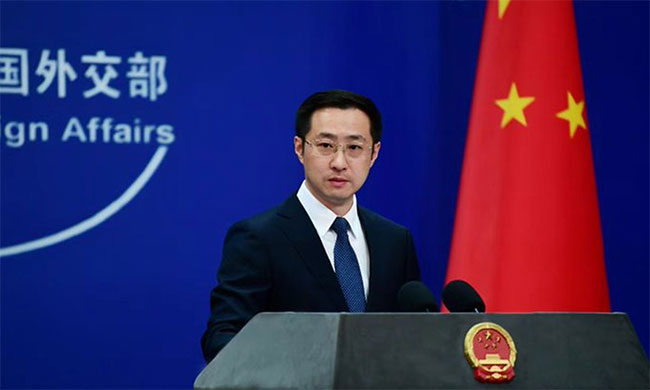
China will keep supporting Sri Lanka to achieve debt sustainability as it has always been doing to help the country’s socioeconomic development, said a Chinese Foreign Ministry spokesman in Beijing.
Lin Jian, the spokesman, made the remarks at a regular press conference in response to a media question about the recent diplomatic consultations between China and Sri Lanka in the Chinese capital.
On the 13th round of China-Sri Lanka diplomatic consultations, China has released a readout, which you may refer to. What I can tell you is that the Chinese side has been providing assistance to Sri Lanka’s socioeconomic development to the best of our capability.”
We stand ready to continue to work with relevant countries and international financial institutions to support Sri Lanka’s debt sustainability,” he said.
–Agencies
Under RW’s watch economy has further deteriorated – Prof. Peiris
June 20th, 2024By Shamindra Ferdinando Courtesy The Island
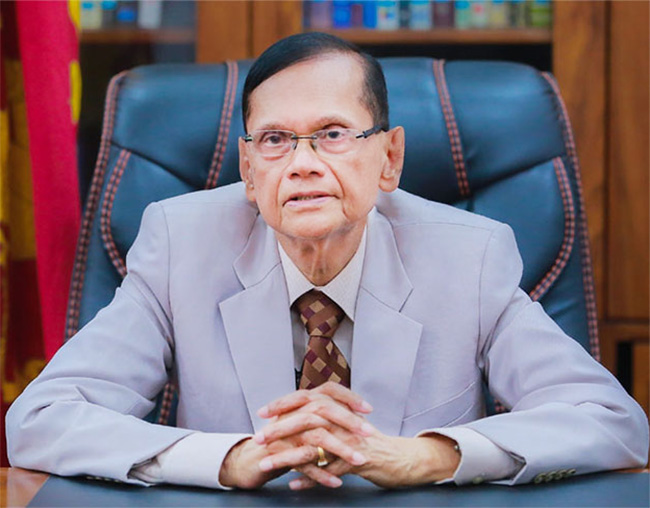
Prof. G. L. Peiris
…interest payments alone increased by USD 2.8 bn; foreign debt USD 100 bn
Declaring that the economy had further deteriorated under President Ranil Wickremesinghe’s watch since July 2022, dissident SLPP parliamentarian Prof. G. L. Peiris said that the government was working overtime to depict a much improved situation.
Addressing the media at the weekly media briefing held by the Jathika Nidahas Sabhawa at Nawala, the former External Affairs Minister having compared the Gross Domestic Product (GDP) and national debt as at April 2022 when Sri Lanka declared bankruptcy and current figures pointed out the further deterioration of the economy.
Lawmaker Peiris stressed that the foreign debt has increased to USD 100 bn from USD 82 bn in April 2022.
Referring to the latest IMF report that dealt with Sri Lanka, the former Minister emphasised that the IMF assessment of the economy here is contrary to the government propaganda. Prof. Peiris explained how the interest payments had increased by USD 2.8 bn during this period whereas the government propaganda chiefs continued to propagate lies claiming the contrary.
The ground reality is that instability increased and the country absolutely lacked the wherewithal to start paying back its debt and the accompanying interest, MP Peiris said.
Commenting on ISB (international sovereign bonds) amounting to USD 12 bn, Prof. Peiris said that Sri Lanka couldn’t reach consensus on an agreement favourable to the country and the situation remained the same. The recent talks held in London failed to resolve the issues at hand with regard to ISBs, Prof. Peiris said, drawing the public attention to USD 6.2 bn and USD 4.3 bn owed to the ADB and the World Bank, respectively.
Responding to The Island query, Prof. Peiris said that the ISB amounting to USD 12 bn had been included in USD 100 bn foreign debt.
The ex-Minister said that the country seemed somewhat comfortable at the moment as the repayment of debt hadn’t been resumed. Declaring that the crisis couldn’t be addressed through propaganda, the internationally reputed law academic said that the domestic debt, too, increased by 9% in the first quarter from USD 52.6 bn to USD 57.2 bn.
Commenting on the continuing controversy over the possibility of the Presidential Poll being put off by at least one year, Prof. Peiris said that, too,was part of their propaganda project.
The UNP leader Wickremesinghe has been elected by Parliament to complete the remainder of ousted President Gotabaya Rajapaksa’s five-year term.
Failures of the Caretaker Government—It Should be Replaced
June 20th, 2024by Dr. Sunil Wimalawansa, MD, PhD, MBA, DSc., Prof of Medicine
With misplaced priorities, the caretaker government continues to make significant financial and policy errors that harm the country. It engages in untransparent secret deals and takes deliberately destructive and risky actions. With such a pitiful history and flawed policies designed to benefit themselves and stay in power, the trustworthiness of any member of parliament and the president is highly questionable. Meanwhile, the trend of intimidating and discrediting the judiciary under the parliamentary ‘cover-up’ by the unelected executive is unprecedented and threatens the democracy of Sri Lanka.
Flawed Policies, Misplaced Priorities, Tretcherous Laws by the Caretaker Government
To date, the caretaker government has failed to focus on economic recovery, a safety net for people experiencing poverty, and job creation. Instead, the government desperately attempts to pass new legislation with nothing to do with the economic recovery but to centralize and strengthen its power base. This is vivid in observing their actions of selling national assets (illegally), contracting unnecessary mega-projects when the country is bankrupt, benefitting themselves and their cronies, and suppressing freedom of speech, unity, progress, and growth. These short-sighted acts threaten the unitary nature and sovereignty of Sri Lanka.
The temporary caretaker government, led by an unelected president, is hastily privatizing national resources, public assets, and state-owned enterprises, despite they have no right to do so. Besides, they are blindly emulating failed and disastrous approaches aimed at destroying Sri Lankan culture, Family Units, and religious entities by introducing wholly unnecessary and dangerous trends like transgender and attempting to legalize marijuana (leading to an epidemic of addiction to hard drugs), prostitution, etc., seemingly driven by the USA (democratic party, leftist) agenda. These actions raise questions about whether these sales and long-term leases are meant to benefit the public or serve the personal gains of executives and their political survival.
None of the current politicians seem true patriots who love the country. The interventions mentioned have deep motives, intended to break the ties between the family and the religious entity (i.e., temple or church) and destroy the unique Sri Lankan culture, leading to a socialistic/communist system in Sri Lanka for political purposes. Nevertheless, these actions threaten the religious beliefs, family units, and culture of Sri Lankans, as well as the country’s unitary nature, security, and sovereignty. Moreover, these unnecessary and desperate actions by the executive will harm the economic recovery and long-term sustainability. If those mentioned are allowed to be enacted, Sri Lanka might end up like Venezuela.
Rotten Constitution and Worthless Amendments
The poorly constructed 1978 constitution has been tainted with multiple amendments to strengthen political authority and control over the public. None of the constitutional amendments enacted by the parliament over the past two decades were designed to help the country, economy, or its citizens. Instead, they were crafted to protect themselves, strengthen the political power base, restrain the judiciary, facilitate treasury looting, and open additional doors for corruption. None of the amendments benefitted we the people.”
Missed Opportunities and Out-of-Focus Plans
During the past two years, instead of reducing the deficit (and loans), government erroneous policies have significantly increased it. The executive (who opted to be the finance minister) must be made accountable for his failures to reduce government expenses (size), increase GDP (not what faithlessly portrayed recently), and reduce the debt-to-GDP ratio (i.e., comparing what a country owes with what it produces) to a sustainable level—bring down to less than 90% allowing paying off high-interest loans. Two years was sufficient to implement actions to lower government expenses and increase productivity, exports, and GDP, allowing loan repayment. This would have re-established confidence among investors and creditors, balancing the budget, reducing the deficit, and creating a path to food and energy security and prosperity. However, the current government has completely failed in all these goals and targets, including restructuring debt properly.
Apart from enforcing multiple tax burdens that added more hardship to the population, it has done little to revamp economic growth, export industry, and reduce governmental expenditure. Despite the country’s bankruptcy, government expenses have increased, and it still relies on additional loans to run the government. The unelected president and conflicted cabinet continue failing to take crucial steps toward debt reduction and sustainable economic recovery—as per recent economic data, debt and interest payments have increased!
International Monetary Fund (IMF)—Are They Honest Brokers?
The dealings of the IMF in developing countries illustrate a duality of interest. They ensure the best deal for themselves—the capital and the interest paid to them first, while their enforced policies often keep the recipient countries poor with a poverty trap. The current IMF conditions that Sri Lankan leaders accept are beyond a debt trap—a death trap. As per the agreement, a significant portion of the 2023 IMF loan was paid back to the IMF to service previous loans,” allowing little to be utilized for the country’s growth. The IMF has provided no specific plan or solutions for the growth, expansion of exports or GDP but it prolonged public suffering.
Sri Lanka needs a complete system change and a change in people, replacing the current, tainted constitution. That should allow complete separation of the executive branch (which should be abolished soon with the new constitution) from the legislative and judiciary branches of the government. Without that, Sri Lanka has no bright future and will likely lose its unitary nature.
Qualities of the Leaders Sri Lanka Needs Now
The above summary shows the lack of honest leaders in Sri Lanka to recover from its current state. Sri Lanka needs new and younger leadership. Voters should make them all retire at the next presidential and parliamentary elections.
The country’s next leader must be young, preferably under 55, intelligent, able to multi-task, a true patriot, and a champion of honesty and integrity. He/she must be fully conversant with macroeconomics, uphold freedom of speech and the country’s laws, and treat all Sri Lankans equally. The new leader must be educated with a minimum degree from a credible university and 15+ years of business and international experience. Must be broad-minded, analytical, and capable of making data-driven, informed decisions and actions for the country’s benefit.
These qualities would allow the restoration of the economy and the confidence in all elected democratic institutions, appointed bodies, and the judiciary—i.e., protecting the interests of all Sri Lankans—united under one law, one flag, and one anthem. It must re-establish judiciary independence and eliminate corruption by creating United Sri Lanka” by replacing the current constitution as soon as possible. The country had a 76-year history of pitiful party-political maneuvering by failed selfish leaders only interested in maintaining power and benefiting themselves. For them, people and the country come last. So, why would any Sri Lankan trust or vote for the current lot of politicians?
Conclusion Sri Lanka needs new, competent leadership to steer the country (currently a sinking ship) away from economic and social disasters and ensure a prosperous future. The current government’s flawed policies and misplaced priorities harm the country’s recovery, long-term stability, prosperity, and sovereignty
Former DIG Munidasa no more,
June 20th, 2024Garvin Karunaratne
It is sad to reflect that DIG Munidasa (Muni) is no more. As a relative of mine he was very close to us and very helpful on many an occasion.
Muni hails from a family group from Pilane, Galle, that has greatly contributed to Mother Lanka- he as a senior officer in the Police Force, another of his generation becoming a Commissioner of Inland Revenue, a Professor in Medicine and in the next generation a leading outstanding doctor, Dr Ananda Wijewickrema
We kept in close touch in Sri Lanka, he in the Police Force and me in the Administrative Service working in many a District. His work was always perfect, kind to all and a concerned servant of Lanka , an officer of very high integrity.
Later he moved to Oregon USA, where he was madly involved with growing roses and keeping bees. We have had the occasion to enjoy his hospitality in Oregon and I would never forget his showing me his vast collection of roses with such depth of knowledge.
His love for his Motherland made him move back to Sri Lanka where he made a home with his children at Maharagama, where I have had the occasion to meet him again and experience the abundant hospitality of his home in the past two years and talk and think of old times when we did contribute to our Motherland through turbulent years.
I feel sorry that I will not have Muni to see and chat when I next get home.
May his path in Samsara be short.
Garvin Karunaratne, once G.A Matara 20th June 2024
මේ රටේ සියළුම දේශපානඥයින්ගේ දෑස් ඇරවීම සඳහා විවුර්ත සන්දේශයක්?
June 20th, 2024ආචාර්ය සුදත් ගුණසේකර මහනුවර
රට ජාතියට කිසිදු ආදරයක් නැති, තම ජාතිකත්වය පිලිබඳ කිසිදු අවභෝධයක් හෝ හැඟීමක් නැති බලතල නිද්රාවේ නිදාසිටින මේ රටේ සියළුම දේශපානඥයින්ගේ දෑස් ඇරවීම සඳහා විවුර්ත සන්දේශයක්?
මේ රටේ ජාතික දිනය වියයුත්තේ පොසොන් දෙපෝය දිනයයි.
සුද්දා රටින් ගිය පෙබ 04 නොවේ.
ඕනෑම ජාතියක ජාතික දිනය වන්නේ එම ජාතියේ ආරම්භය සිදුවූ දිනයයි.
මහාවන්ශයේ දැක්වෙන පරිදි මේ රටේ සිංහල ජාතියේ ආරම්භය සිදුවූයේ ක්රි. පූ. 543 දි සිදුවූ විජය කුමරුගේ ලංකාආගමනයත් සමඟය. එම සිද්ධිය වූ ක්රි පූ 543 දින බුදුන්හන්සේ පිරිනිවන් පෑ වෙසක් මස පුන් පොහෝ දිනයද වූ බැවින් බුදුන් වහන්සේ පිරිනිවන් පෑ දිනයේ උපන් ජාතිය වශයෙන්ද සිංහල ජාතිය හැඳින්විය හැක.
එහෙත් අද මේ රටේ පවතින සිංහල බෞද්ධ ජාතියේ සැබෑ උපත ලැබුවේ ක්රි පූ 307 පොසොන් මස පාලොස්වක පෝය දින සිදුවූ ඒ ආශ්චර්යමත් මහින්දාගමනයත් සමඟය.ජාතියක් වෂයෙන් සිංහල බෞද්ධ සන්ස්කෘතියේ පදනම වැටුනේ පොසොන් පෝයදාය.ඒ අනුව මේ සිංහල රටේ සිංහල බෞද්ධ ජාතිය උපන් පොසොන් පෝය දිනය ඔවුන්ගේ ජාතියේ පරම උත්තරීතර දිනයද වියයුතුය.එබැවින් ජාතික දිනය වශයෙන් පොසොන් දෙපෝයට වඩා වැදගත් වෙනත් කිසිම දිනයක් මේ සිංහල රටේ වන්ශකථාවේ තිබිය නොහැක. එමනිසාම සිංහල බෞද්ධ ජාතියේ ජාතික දිනය වශයෙන් එම දිනය හැර වෙනත් කිසිම දිනයක් මේ රටේ ඉතිහාශය දන්නා කිසිවෙකු ප්රකාශ නොකරණු ඇත. එසේම කිසිවෙකු ප්රකාශ නොකළ යුතුද වේ. බුදුන් වහන්සේ පිරිනිවන්පෑ දිනයේ ආරම්භවී මහින්දාගමනයත් සමඟ සිංහල බෞද්ධ සන්කෘතික පදණමක් සහිතව උපතලැබ වර්ධයනයවූ ලෝකයේ ඇති එකම ජාතිය වශයෙන් ගෞරවාදරයට පත්විය හැකි ලොකයේ ඇති එකම ජාතිය වශයෙන් අපට ආඩම්බර විය හැක. ළෝකයේ අසමසම ජාතියක් වශයෙන් තම ආරම්භය සටහන් කල හැකිව තිබියදී මේ රටත්,ආර්ථිකයත් ජාතියත් ශිෂ්ඨාචාරයත් වසර 133 ක් තිස්සේ විනාශකළ, බ්රතාන්ය ජාතික කාන්තාවකගේ උපන් දිනයක් සිහිකිරීම සඳහා ලංකාවට ඊනියා නිදහසක් ප්රධානය කළේයයි කියන 1948 පෙබ 04 වනදා සිංහලයින්ගේ ජාතික දිනය වශයෙන් නම්කළේ මොන සිංහල යෙක් දැයි සමස්ථ ජාතියම ඇසිය යුතුව ඇත. එම ද්රෝහිකමේ බරපැන 1978 ව්යවථාවේ පියාවූ ජේ. ආර්. ගේ ගිණුමට බැරවනු ඇත.
අනෙක් අතින් 1948 පෙබ 04 වනදා නිදහස් රාජ්යකට තිබිය යුතු ව්යවස්ථාදායක, විධායක සහ අධිකරණ යන මුලික බලයන් තුනම ලංකාන්ඩුවට දී තිබුණේ නැත. 1972 වනතුරුම ඒ තුනම තිබුණේ බ්රතාන්යයේ බල අධිකාරිය යටතේය.1815 භාරදුන් භූමියේ නිරවුල් අයිතිය (12 ලක්ෂයක් ඉන්දීය වහල් කමකරුවන් රහිතව), රටේ ස්වෛරීභාවය, පරිපාලන, සන්ස්කෘතික , භාෂා සහ ආගමික නිදහස ඇතුලු කිසිවක් නැතිව ආරක්ෂක, සහ ජාත්යන්තර ගිවිසුම් පිලිබඳ යදම් වලින් බැඳ නිදහස් නැමැති ප්රෝඩාවක් වූ ඇස්බැඳුමක් තමන් ගේම නියෝජිතයින් වූ කලුසුද්දන් පිරිසකට භාරදි සුද්දන් ශාරීකව මේ රටින් පිටව ගිය 1948 පෙබ් 04 දා ජාතියේ නිදහස් දිනය වශයෙන් නම්කලද එය 1972 වනතුරු ඒ ඊනියා රජයේ ක්රියාකාරිත්වය අනුව චෙතිය මුසාවකි.
1948 ප්රෝඩාවේ කොටස්කරුවෙකුවූ ජේ.ආර්. විසින් වසර 2500 යකට වැඩි ශ්රේෂ්ඨ සන්ස්කෘතීයකට හිමිකම් කියන ප්රෞඪ ජාතියක ජාතික දිනය වශයෙන් වශයෙන් පෙබ 4 ම නම්කොට තවදුරටත් එය 1978 ව්යවස්ථාවේ 8 වන වගන්තිය යටතේ මේ රටේ ජාතික දිනය වශයෙන් නීතියක් බවටද පත්කළේය. තවද මහජන නියෝජිතයින් යයි කියාගන්නා 225 න් යටත් පිරිසෙයින් 200ට ආසන්න ගානක් සිංහලයින් සිටි ඊනියා පාර්ලිමේන්තුවේ එක සිංහලයෙක් හෝ මෙම දේශද්රෝහී ජාති ද්රෝහී තිරණයට එරෙහිව එක වචනයක් හෝ කථාකොට නැත. මේ අනුව අදටත් මේ පාර්ලිමේන්තුවේ ඉන්නේ මොන වර්ගයේ සිංහලයින්දැයි ඇසිය යුතුව අත.
එමනිසා මේ 225 න් එක්කෙනුකු හෝ පවතින ව්යවස්ථාවේ මේ ජාතිද්රෝහී දේශද්රෝහී විළිලැජ්ජානැති වගන්තිය වහාම අහෝසිකොට පොසොන් පෝය දිනය මේ සිංහල රටේ ජාතික දිනය වශයෙන් දැන්වත් ප්රකාශකොට ව්යවස්ථාගත කරනමෙන් දේශප්රේමී සිංහලයෙකු වශයෙන් මම ඉල්ලමි.
(2024 ක්වූ අප්රේල් 14 දින පොසොන් දෙපෝය මේ රටේ ජාතික දිනය වශයෙනුත් මැයි 22 නිදහස් දිනය වශයෙනුත් ප්රකාශ කරනමෙන් ඉල්ලා මවිසින් ජනාධිපති වරයාවෙත සන්දේශයක් යැව්වද අද දක්වාම ඊට පිළිතුරක් පමණවත් ලැබී නැති බවද මෙහිලා සඳහන් කරණුයේ බලවත් කණගාටුවෙනි.)
Arrival of Arahant Mahinda at Mihintale
June 20th, 2024Senaka Weeraratna
An inspiration to take a Buddhist Mission to Germany from Sri Lanka and establish the Buddha Sasana in Germany
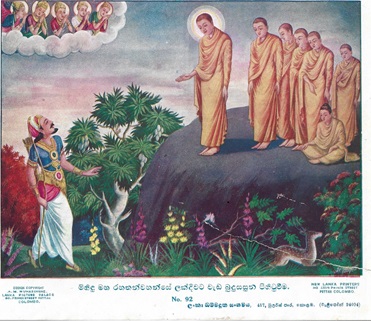
This blurb was distributed by the Lanka Dhammaduta Society (later known as the German Dharmaduta Society) at public meetings held
all over the country in 1956 and 1957 to publicise the oncoming First Buddhist Mission to Germany (1957) from Sri Lanka and raise funds to support the Mission.
The poignant message in the blurb is that just as much as Arahant Mahinda introduced Buddhism to Sri Lanka beginning at Mihintale via his encounter with King Devanampiyatissa 2300 years ago likewise the German Dharmaduta Society will take a Buddhist Mission and establish the Buddha Sasana in Germany.
Elections Are Here: Exploring Political Landscape Through the Lens of Voting Donkeys Are you Vote Donkeys?
June 20th, 2024By Palitha Ariyarathna
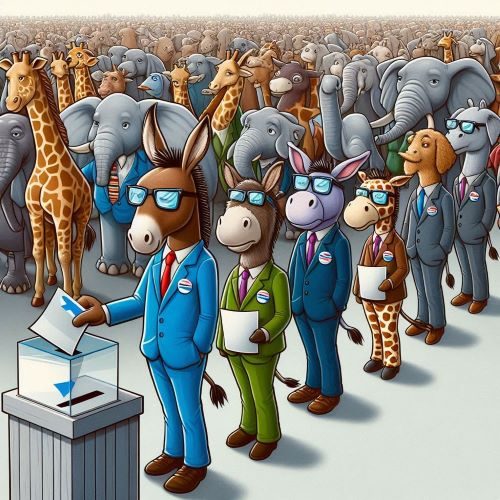
As sudden thunder hit my ears, I tried to awaken but couldn’t. Politics, political parties, debates over political rights—this is our time, claims of who will win, arguments over who is the best leader, who has improved the economy and established stability—these thoughts swirled around me. There were too many noises around me. I tried to wake up again amidst the noise but couldn’t. Was I hallucinating? Was this a dream? It felt like I was in a place resembling Argalaya Land in Golf Face,” still running.
However, as I finally woke up, I realized that elections were just around the corner. I found myself in another land, almost like a dream world filled with donkeys. I wondered what I could do, feeling disheartened that true leaders may never emerge in this land.
Suddenly, I fell back into the world of donkeys in my sleep. I witnessed these symbolic donkeys amidst people’s noise, fighting, shouting, burning, and firing. I wanted to put an end to this nonsense that had continued for the past 77 years. As I woke up, I remembered teachings, and in my dream, I felt compelled to convey this message to the world.
Exploring the Donkey Realm of Politics:
The Grand Old Donkey (GOD)
The Grand Old Donkey (GOD) stands as the oldest and most traditional party in the political landscape. Like a steadfast mule, GOD promises stability rooted in long-established principles. However, critics argue that its reluctance to embrace change may hinder progress. Voters must consider whether GOD’s commitment to tradition outweighs the potential benefits of innovation and adaptation.
The New Age Donkey (NAD)
In contrast, the New Age Donkey (NAD) represents a newer generation of leadership characterized by innovation and modernity. This party, akin to a sleek racehorse, emphasizes youthfulness and tech-savvy solutions to contemporary issues. However, NAD’s untested policies raise uncertainties about its ability to sustain momentum and deliver on promises. Voters are tasked with evaluating whether NAD’s potential outweighs concerns about inexperience.
The Rebel Donkey (RAD)
Lastly, the Rebel Donkey (RAD) defies conventional norms and challenges the status quo with its unconventional approach. Similar to a wild stallion, RAD brings unpredictability to the political arena, appealing to those seeking bold change. Yet, RAD’s departure from traditional ideologies can be both refreshing and unsettling. Voters must decide whether they are prepared for a dynamic shift in governance or prefer the stability of familiar paths.
Additional Types of Donkeys:
The Regional Donkey (RED)
The Regional Donkey (RED) advocates for regional or ethnic interests within the country, emphasizing specific geographical or cultural communities.
The Issue-Based Donkey (IBD)
The Issue-Based Donkey (IBD) focuses on advocating for a single critical issue, such as environmental protection, human rights, or anti-corruption measures.
The Coalition Donkey (COD)
The Coalition Donkey (COD) forms alliances with other parties to gain majority support in parliament, combining different ideologies and policy agendas for collective governance.
Decision-Making in Elections
Elections transcend mere party affiliations; they shape the trajectory of our nation’s future. It is imperative for voters to engage in thorough research, scrutinize each party’s manifesto, and critically evaluate proposed policies. By doing so, voters can make informed decisions that align with their vision for the country’s development and prosperity.
As elections approach, citizens face crucial decisions embodied by GOD, NAD, RAD, RED, IBD, and COD. Each party offers unique perspectives and approaches, reflecting diverse aspirations within our electorate. Remember, the power to influence our nation’s future lies in each citizen’s vote. Let us approach this responsibility with diligence, mindful of the profound impact our decisions will have on the path forward.
Special Message: On this auspicious Poson Poya Day, we reflect on the timeless teachings of compassion, wisdom, and leadership that guide us. As we commemorate the arrival of Buddhism to our land, let us draw inspiration from the noble principles preached by Lord Buddha. Leadership, in its true essence, is not merely about authority but about serving with integrity, empathy, and a deep sense of responsibility. It is about leading by example, fostering unity amidst diversity, and working tirelessly for the well-being of all. Today, as we honor this sacred day, let us renew our commitment to embodying these values in every facet of our lives.
Poson Poya Day reminds us of the transformative power of righteous leadership. Just as Emperor Ashoka embraced Buddhism and led his people with compassion, let us strive to be leaders who prioritize kindness, justice, and humility. By upholding these ideals, we can nurture a society where everyone thrives in peace and harmony. May the spirit of Poson Poya Day inspire us to be compassionate leaders who strive for harmony, justice, and progress in our beloved nation. Let us emulate the wisdom of Buddha and lead our country towards peace, prosperity, and happiness for all.
Awake. Be the witness of your thoughts. You are what observes, not what you observe.”
— Buddha
By Palitha Ariyarathna
Analyst of Buddhist affairs, Desha Abhimani Surya Vansa Ratna Vibhushan Palitha Ariyarathna from Senkadagala Sinha Dwaraya
TCFBI PEC President Unethical Conversion of Buddhist
TCFBI International Co-ordinator
JBB Convenor and President and Founder Sinhala Buddhst Policy Centre
Hela Abimani National Foundation-Secretary
Author Publisher and Journalist
ජනාධිපති ධූරකාලය වසර 6 කිරීමට 2/3 හෝ ජනමතවිචාරණයක් අවශ්ය නෑ. චමල් රාජපක්ෂ කතානායකවරයා 2015 දී 19ට යෙදූ වැරදි සහතිකය නිවැරදි කිරීම පමණක් සෑහේ.
June 20th, 2024නීතීඥ අරුණ ලක්සිරි උණවටුන B.Sc(Col), PGDC(Col) සමායෝජක, වෛද්ය තිලක පද්මා සුබසිංහ අනුස්මරණ නීති අධ්යාපන වැඩසටහන
19වන ආණ්ඩුක්රම ව්යවස්ථා සංශෝධනය මුල් වරට පාර්ලිමේන්තුවට ඉදිරිපත් කර ඇත්තේ වර්ෂ 2002 දී බව නීති ක්ෂේත්රයේ අය දන්නා කාරණයකි.
19 වන ආණ්ඩුක්රම ව්යවස්ථා සංශෝධන පනත් කෙටුම්පතක් වර්ෂ 2002 දී පාර්ලිමේන්තුවට ඉදිරිපත් කර තිබූ අතර වසරකින් පසු පාර්ලිමේන්තුව විසුරුවා හැරීමෙන් ජනාධිපතිවරයා සීමා කරන විධිවිධාන ඇතුළත් කිරීමට එනම් ආණ්ඩුක්රම ව්යවස්ථාවේ 70වන ව්යවස්ථාව සංශෝධනය කිරීමට ඉන් ප්රයත්න දරා තිබුණි.
19 වන ආණ්ඩුක්රම ව්යවස්ථා සංශෝධන පනත් කෙටුම්පත මුල්වරට පාර්ලිමේන්තුවට ඉදිරිපත් කර තිබුණේ 2002 සැප්තැම්බර් මස 19 වන දින ව්යාපාර සංවර්ධන, කර්මාන්ත ප්රතිපත්ති හා ආයෝජන ප්රවර්ධන සහ ආණ්ඩුක්රම ව්යවස්ථා කටයුතු අමාත්යවරයා විසින් වන අතර 2002 සැප්තැම්බර් මස 11 වන දින එය ගැසට් පත්රයේ එය පළ කර තිබුණි.
එම 19 වන ආණ්ඩුක්රම ව්යවස්ථා සංශෝධන පනත් කෙටුම්පත මගින් හඳුන්වා දී තිබූ වසරකට පසු පාර්ලිමේන්තුව විසිරවීමට ජනාධිපතිවරයාට අවශ්ය වන්නේ නම් පාර්ලිමේන්තුවේ නොපැමිණි මන්ත්රීවරයන්ද ඇතුළුව පාර්ලිමේන්තුවේ මුළු මන්ත්රීවරයන් සංඛ්යාවෙන් තුනෙන් දෙකක සංඛ්යාවකට නොඅඩු සංඛ්යාවකගේ සම්මතය ඇතිව යෝජනා සම්මතයක් මගින් පාර්ලිමේන්තුවේ අනුමැතිය ලබා ගත යුතු බවට වන විධිවිධානය ආණ්ඩුක්රම ව්යවස්ථාවට පටහැනිය යන පදනමින් ශ්රේෂ්ඨාධිකරණයේ අභියෝගයට ලක්කරන ලද අතර සරත් නන්ද සිල්වා (අ.වි), වඩුගොඩුපිටිය (වි), බණ්ඩාරනායක (වි) ඉස්මයිල් (වි) එදිරිසූරිය (වි) සහ යාපා (වි) ජේ. ඒ. එන් ද සිල්වා (වි) යන ශ්රේෂ්ඨාධිකරණ විනිසුරුවරුන් 7 විසින් 2002 ඔක්තෝබර් 1 සහ 3 යන දිනවල ඒ සම්බන්ධව ශ්රේෂ්ඨාධිකරණයේ විභාගයට ගන්නා ලදී.
එහි තීරණය අනුව ජනාධිපතිවරයාට වසරකට පසු පාර්ලිමේන්තුව විසුරුවීම වළක්වන විධිවිධානය නීතියක් වන්නේ පාර්ලිමේන්තුවේ නොපැමිණි මන්ත්රීවරයන්ද ඇතුළුව පාර්ලිමේන්තුවේ මුළු මන්ත්රීවරයන් සංඛ්යාවෙන් තුනෙන් දෙකක සංඛ්යාවකට නොඅඩු සංඛ්යාවකගේ සම්මතය සහ ජනමතවිචාරණයකදී ජනතාව විසින්ද අනුමත කිරීමෙන් පසුව බව දක්වා ඇත. ඒ හේතුවෙන් 2002 දී පාර්ලිමේන්තුවට ඉදිරිපත් කළ 19වන ආණ්ඩුක්රම ව්යවස්ථාව සංශෝධනය පනත් කෙටුම්පත් අදියරේම අවසන් විය.
වර්ෂ 2015 දී දෙවන වරටත් නැවත, පාර්ලිමේන්තුවට ඉදිරිපත් කළ 19වන ආණ්ඩුක්රම ව්යවස්ථා සංශෝධන පනත් කෙටුම්පතේ ඇති ආණ්ඩුක්රම ව්යවස්ථාවේ 70 ව්යවස්ථාව සංශෝධනය කරමින් වසරකට පසු පාර්ලිමේන්තුව විසුරුවා හැරීමෙන් ජනාධිපතිවරයා වළක්වන විධිවිධානයත් තවත් ආණ්ඩුක්රම ව්යවස්ථා විධිවිධාන 16ක් පමණ සංශෝධනය කිරීමට ගෙනවිත් තිබුණි.
වර්ෂ 2015 දී දෙවන වරටත් පාර්ලිමේන්තුවට ඉදිරිපත් කළ 19වන ආණ්ඩුක්රම ව්යවස්ථා සංශෝධන පනත් කෙටුම්පතේ ඇති ආණ්ඩුක්රම ව්යවස්ථාවේ 70 ව්යවස්ථාව සංශෝධනය කරමින් වසරකට පසු පාර්ලිමේන්තුව විසුරුවා හැරීමෙන් ජනාධිපතිවරයා වළක්වන විධිවිධානයත් තිබූ හෙයින්, 2002 ශ්රේෂ්ඨාධිකරණ තීරණය අනුව ජනමත විචාරණයකින් ජනතාව අනුමත කිරීම අවශ්යම විය.
වර්ෂ 2015 දී දෙවන වරටත් පාර්ලිමේන්තුවට ඉදිරිපත් කළ 19වන ආණ්ඩුක්රම ව්යවස්ථා සංශෝධන පනත් කෙටුම්පත සම්බන්ධයෙන් අගවිනිසුරු කේ. ශ්රීපවන්, ඩෙප් සහ චන්ද්රා ඒකනායක ශ්රේෂ්ඨාධිකරණ විනිසුරුවරුන් විසින් තීරණ පාර්ලිමේන්තුවට යොමු කළ අතර එම විනිසුරුවරුන් 3නා මීට පෙර 2002 දී විනිසුරුවරුන් 7දෙනකු ලබා දී තිබූ තීරණය වෙනස් කර තිබුණේ නැත.
ඒ අනුව වසරකට පසු පාර්ලිමේන්තුව විසිරවීම ජනාධිපතිට සීමා කිරීමේ ව්යවස්ථා සංශෝධනයක් නැවත 2015 දී සිදුකරන්නේ නම් ජනමතවිචාරණයකට යාම අවශ්ය විය. නමුත් මේ දක්වා එය සිදු වී නැත.
පාර්ලිමේන්තුව, ශ්රේෂ්ඨාධිකරණ තීරණවලට එකඟව කටයුතු කරන්නේ නම් වසරකට පසු පාර්ලිමේන්තුව විසිරවීම ජනාධිපතිට සීමා කිරීමේ ව්යවස්ථා සංශෝධනයක් නැවත 2015 දී සිදුකරන්නේ නම් එයට පාර්ලිමේන්තුවේ නොපැමිණි මන්ත්රීවරුද ඇතුලුව 2/3 කට නොඅඩු සංඛ්යාවක් අනුමත කළ පසු ආණ්ඩුක්රම ව්යවස්ථාවේ 80.2 ව්යවස්ථාව අනුව ජනාධිපතිවරයා විසින් නීතියක් බවට පත්කරන ආකාරයේ සහ 79 වන ව්යවස්ථාව යටතේ (අවසන් විධානය) පනත් කෙටුම්පත හෝ ඒ විධිවිධානය ජනතාව විසින් ජනමත විචාරණයක දී අනුමත කරනු ලබන තෙක් නීතිය බවට පත් නොවිය යුතු බවට වන කථානායකවරයාගේ සහතිකයක් සඳහන් සටහනක් තබා යොමු කළ යුතු විය. නමුත් එවකට කතානායකව සිටි චමල් රාජපක්ෂ කතානායකවරයා නොපැමිණි මන්ත්රීවරුද ඇතුලුව 2/3 කට නොඅඩු සංඛ්යාවක් අනුමත කළ පසු පමණක් නීතියක් බවට සටහන් කර ඇත. එය වැරදි සටහනකි. (Per incuriam)
මේ දක්වා 2015 දී ගෙනා 19වන ආණ්ඩුක්රම ව්යවස්ථා සංශෝධනයට
එය සිදු වී නැත. එනම් ශ්රේෂ්ඨාධිකරණ තීරණ අනුව නීතියක් වී නැති 19වන ආණ්ඩුක්රම ව්යවස්ථා සංශෝධනය බලහත්කාරයෙන් නීතියක ආරෝපණය ලබා දී ක්රියාත්මක කරගෙන යාමට පාර්ලිමේන්තුව සහ වර්තමාන ජනාධිපතිවරයාද කටයුතු කරන බව පෙනී යන අතර එය නිවැරදි නැත.
වර්තමාන කතානායකවරයාට පෙර කතානායකවරයා කළ ඒ වැරැද්ද නිවැරදි කළ හැකිය.
2015 දී ගෙනා 19 ට පාර්ලිමේන්තුවේ නොපැමිණි මන්ත්රීවරුද ඇතුලුව 2/3 කට නොඅඩු සංඛ්යාවක් අනුමත කර ඇති හෙයින්, ආණ්ඩුක්රම ව්යවස්ථාවේ 80.2 ව්යවස්ථාව අනුව ජනාධිපතිවරයා විසින් නීතියක් බවට පත්කරන ආකාරයේ සහ 79 වන ව්යවස්ථාව යටතේ (අවසන් විධානය) පනත් කෙටුම්පත හෝ ඒ විධිවිධානය ජනතාව විසින් ජනමත විචාරණයක දී අනුමත කරනු ලබන තෙක් නීතිය බවට පත් නොවිය යුතු බවට වන කථානායකවරයාගේ සහතිකයක් සඳහන් සටහනක් තබා එය ජනාධිපතිවරයාට යොමු කළ යුතුය. එවිට ජනාධිපතිවරයා එකී 19ට පැවැත්විය යුතු ජනාධිපතිවරණ පැවැත්විය යුතු අතර, ජනතාව අනුමත කළහොත් එය නීතියක් බවට පත්වන අතර ජනතාව අනුමත නොකළහොත් එය එතනින් අවසන් වේ.
ජනාධිපති ධූරකාලය වසර 6 කිරීමට 2/3 හෝ ජනමතවිචාරණයක් අවශ්ය නොවන අතර, චමල් රාජපක්ෂ කතානායක 2015 දී 19ට යෙදූ වැරදි සහතිකය නිවැරදි කිරීම පමණක් සෑහෙන බව ඒ අනුව පැහැදිලි වේ.
http://neethiyalk.blogspot.com/2024/06/6-23-2015-19.html?m=1
නීතීඥ අරුණ ලක්සිරි උණවටුන B.Sc(Col), PGDC(Col) සමායෝජක, වෛද්ය තිලක පද්මා සුබසිංහ අනුස්මරණ නීති අධ්යාපන වැඩසටහන දුරකථන 0712063394 (2024.06.19)
Is the Reign of the Dollar Coming to an End?: The Twenty-Fifth Newsletter (2024)
June 20th, 2024Tricontinental: Institute for Social Research.
In early June, a rumour began to circulate – which was widely reported in the Indian press as true – that the government of Saudi Arabia had allowed its petrodollar agreement with the United States to lapse. This agreement, made in 1974, is quite straight-forward and fulfils various needs of the US government: the US purchases oil from Saudi Arabia, and Saudi Arabia uses that money to buy military equipment from US arms manufacturers while holding the income from the oil sales in US Treasury Bills and in the Western financial system. This arrangement to recycle oil profits into the US economy and the Western banking world is known as the petrodollar system.
This non-exclusive arrangement between the two countries never required the Saudis to limit their oil sales to dollars or to recycle their oil profits exclusively in US Treasury Bills (of which it holds a considerable $135.9 billion) and Western banks. Indeed, the Saudis are free to sell oil in multiple currencies, such as the Euro, and participate in digital currency platforms such as mBridge, a trial initiative of the Bank of International Settlements and the central banks of China, Thailand, and the United Arab Emirates (UAE).
Nonetheless, the rumour that this decades-long petrodollar agreement had come to an end reflects the widespread expectation that a seismic shift in the financial system will overturn the rule of the Dollar-Wall Street regime. It was a false rumour, but it carried within it a truth about the possibilities of a post-dollar or de-dollarised world.
The invitation extended to six countries to join the BRICS bloc last August was a further indication that such a shift is underway. Among these countries are Iran, Saudi Arabia, and the UAE, although Saudi Arabia has yet to finalise its membership. With its expanded membership, BRICS would include the two countries with the largest and second largest gas reserves in the world (Russia and Iran, respectively) and the two countries that accounted for nearly a quarter of global oil production (Russia and Saudi Arabia, all figures as of 2022). The political opening between Iran and Saudi Arabia, brokered by Beijing in March 2023, as well as the signs that the US allies UAE and Saudi Arabia seek to diversify their political linkages, demonstrate the possible end of the petrodollar system. That was at the heart of the rumour in early June.
However, this possibility should not be exaggerated, as the Dollar-Wall Street regime remains intact and significantly powerful. Data from the International Monetary Fund shows that, as of the last quarter of 2023, the US dollar accounted for 58.41% of allocated currency reserves, which is far more than the reserves held in euros (19.98%), Japanese yen (5.7%), British pound sterling (4.8%), and Chinese renminbi (short of 3%). Meanwhile, the US dollar remains the main invoicing currency in global trade, with 40% of international trade transactions in goods invoiced in dollars despite the fact that the US share of global trade is just 10%. While the dollar remains the key currency, it nonetheless faces challenges around the world, with the share of the US dollar in allocated currency reserves declining gradually but steadily over the last twenty years.
Three factors are driving de-dollarisation: the US economy’s lack of strength and potential that began with the Third Great Depression in 2008; the aggressive use of illegal sanctions – especially financial sanctions – by the United States and its Global North allies against one quarter of the countries in the world; and the development and strengthening of relations between countries of the Global South, especially through platforms such as BRICS. In 2015, BRICS created the New Development Bank (NDB), also known as the BRICS Bank, to navigate a post-Dollar-Wall Street regime and to produce facilities to further development rather than austerity. The creation of these BRICS institutions and the increased use of local currencies to pay for cross-border trade created an expectation of hastened de-dollarisation. At the 2023 BRICS summit in Johannesburg, Brazil’s President Luiz Inácio Lula da Silva repeated the call to increase the use of local currencies and perhaps create a BRICS-denominated currency system.
There has been a vibrant debate about de-dollarisation amongst those who have worked in the BRICS institutions and in the large countries that are interested in de-dollarisation, such as China, about its necessity, prospects, and the difficulties of finding new ways to hold currency reserves and invoice global trade. The most recent issue of the international journal Wenhua Zongheng (文化纵横), a collaboration between Tricontinental: Institute for Social Research and Dongsheng, is dedicated to this topic. In the introduction to ‘The BRICS and De-Dollarisation: Opportunities and Challenges’ (volume 2, issue no. 1, May 2024), Paulo Nogueira Batista Jr., the first vice president of the NDB (2015–2017), summarises his considerable reflections on the importance of moving away from the Dollar-Wall Street regime and on the political and technical difficulties of such a transition. BRICS, he correctly asserts, is a diverse group of countries with very different political forces in charge of the different states. The political agendas of its members – even with the new mood in the Global South – are particularly diverse when it comes to economic theory, with many of the BRICS states remaining committed to neoliberal formulas while others seek new development models. One of the most important points raised by Nogueira is that the United States ‘will in all likelihood use all the many instruments at its disposal to struggle against any attempt to dethrone the dollar from its status as linchpin of the international monetary system’. These instruments would include sanctions and diplomatic threats, all of which would dampen the confidence of governments that have weaker political commitments and are not backed by popular movements committed to a new world order.
De-dollarisation was moving at a very slow pace until 2022, when the Global North countries began to confiscate Russian assets held in the Dollar-Wall Street financial system and anxiety spread across many countries about the safety of their assets in the North American and European banks. Though this confiscation was not new (the United States has done this before to Cuba and Afghanistan, for instance), the scale and severity of these confiscations operated as a ‘confidence-destroying’ measure, as Nogueira puts it.
Nogueira’s introduction is followed by three essays by leading Chinese analysts of the current shifts in the world order. In ‘What Is Driving the BRICS’ Debate on De-Dollarisation?’, Professor Ding Yifan (senior fellow at Beijing’s Taihe Institute) charts the reasons why many Global South countries now seek to trade in local currencies and to offload their reliance upon the Dollar-Wall Street regime. He emphasises two factors that put into question whether or not the dollar will be able to continue to serve as an anchor currency: first, the weakness of the US economy due to its reliance upon military spending over productive investment (the former of which accounts for 53.6% of total world military spending) and, second, the US’s history of breach of contract. At the close of his article, Ding reflects on the possibility of the Global South countries accepting the Chinese renminbi (RMB) as their reference currency, since China’s manufacturing capabilities make the RMB valuable as a way to buy Chinese goods.
Yet, in his essay ‘China’s Foreign Exchange Reserves: Past and Present Security Challenges’, Professor Yu Yongding (member of the Chinese Academy of Social Sciences) is cautious about the possibility of the RMB supplanting the dollar. For the RMB to become an international reserve currency, Yu argues, ‘China must fulfil a series of preconditions, including establishing a sound capital market (especially a deep and highly liquid treasury bond market), a flexible exchange rate regime, free cross-border capital flows, and long-term credit in the market’. This would mean that China would have to eschew its capital controls and begin to offer RMB treasury bonds for international buyers. RMB internationalisation, Yu argues, ‘is a goal worth pursuing’, but it is not something that can take place in the short run. ‘Distant water’, he writes poetically, ‘will not quench immediate thirst’.
So, where do we go from here? In his article ‘From De-Risking to De-Dollarisation: The BRICS Currency and the Future of the International Financial Order’, Professor Gao Bai, who teaches at Duke University in the United States, concurs that there is a pressing need to overcome the Dollar-Wall Street regime and that there is no easy way forward at this time. Local currency use has expanded – such as between Russia and China as well as between Russia and India – but such bilateral arrangements are insufficient. Increasingly, as a recent report from the World Gold Council shows, central banks around the world have been buying up gold for their reserves and thereby driving up its price (the spot price for gold is over $2,300 per ounce, far above the $1,200 per ounce price where it hovered in 2015). If no immediate currency is available to supplant the US dollar, Gao argues, then the Global South countries should establish a ‘reference value for settlements in their local currencies and an exchange platform to support such settlements. The great demand for such a valuation provides an opportunity for the creation of a BRICS currency’.
The new issue of Wenhua Zongheng provides a clear and thoughtful assessment of the problems with the Dollar-Wall Street regime and the need for an alternative. The wide array of ideas that are on the table reflect the diversity of discussions taking place within policy circles around the world. We are keen to summarise these ideas and test their technical feasibility and their political viability.
It is important to note that two of the BRICS countries have elected new governments this year. In India, the far-right government led by Prime Minister Narendra Modi returns to power, but with a much-reduced mandate. Given that the Modi government has put forward a policy of ‘national interest’, it is likely that it will continue to play a role in the BRICS process and to use local currencies to buy goods such as Russian oil. Meanwhile, South Africa’s ruling alliance, led by the African National Congress (ANC), has formed a government with the right-wing Democratic Alliance, which is committed to US imperialism and is not keen on the BRICS agenda. With the likely entry of Nigeria into the BRICS bloc, BRICS’ centre of gravity on the African continent might shift northward.
During the hard years of struggle against the apartheid government in South Africa, ANC member Lindiwe Mabuza (known as Sono Molefe) began to collect poems written by women in the ANC camps. Guerrilla fighters, teachers, nurses, and others sent in poems that she published in a volume called Malibongwe (‘Be Praised’), which referred to the 1956 Women’s March in Pretoria. In her introductory essay, Mabuza (1938–2021) wrote that in struggle ‘there is no romance’; there is ‘only pounding reality’. That phrase, ‘pounding reality’, merits reflection today. Nothing comes from nothing. You have to pound reality to make something, whether a new political opening in places such as India and South Africa or a new financial architecture beyond the Dollar-Wall Street regime.
Neighbors are most important for us and there is tremendous goodwill in India for Sri Lanka – Indian External Affairs Minister
June 20th, 2024Prime Minister’s Media Division
Indian Minister of External Affairs, Dr Subrahmanyam Jaishankar called on Prime Minister Dinesh Gunawardena at the Temple Trees today (June 20).
The Prime Minister congratulated Dr Jaishanker on the election victory of the BJP-led National Democratic Alliance and reassured Sri Lanka’s commitment to work together to further strengthen close bilateral relations. He thanked India for the assistance given at recent difficult times after Covid pandemic and the economic crisis.
Minister Jaishankar said the neighbours like Sri Lanka are extremely important to India and there is tremendous goodwill for Sri Lanka in India. He said the Indian government reaffirms the Neighbourhood First Policy and the main purpose of his visit is to underline India’s continued commitment to Sri Lanka as its closest maritime neighbour and time tested friend.
The Prime Minister and the Indian Minister discussed Indian investments, development projects, connectivity projects and other mutually beneficial cooperation in different spheres.
The Indian delegation included Indian High Commissioner Santosh Jha, Additional Secretary (Indian Ocean Region) Puneet Agarwal and Joint Secretary Sandeep Kumar Bayapu of Ministry of External Affairs and Deputy High Commissioner Satyanjal Pandey.
Minister Douglas Devananda, MP Yadamini Gunawardena, Secretary to the Prime Minister Anura Dissanayake, Prime minister’s Advisor Sugeeswara Senadhira and Director General (South Asia) of the Foreign Ministry, Niluka Kadiragamuwa were also present on this occasion.
One more Pakistani journalist killed: PEC expresses shock
June 20th, 2024Geneva: Press Emblem Campaign, the global media safety and rights body, expresses utter shock over the relentless murder of journalists in Pakistan, as the south Asian nation has lost its seventh scribe to assailants this year. Condemning the gunning down of Khalil Afridi Jibran (55), a television journalist of Khyber Pakhtunkhwa province on 18 June 2024, PEC demands a high level probe into his murder and nab the culprits to punish under the law.
According to local Pak media outlets, the senior journalist was associated with privately owned Pashto-language news channel Khyber TV, which is influential in Pakistan’s north-western province. Khalil, also a popular civil society activist, was targeted by unidentified gunmen in the night hours as he was returning home after daily work in Landi Kotal town. The former president of Landi Kotal Press Club died on the spot. Family friends claim that Khalil used to receive threats from miscreants for some months. Local journalists organised a protest demonstration before his burial.
Khalil Afridi Jibran becomes the 55th journalist to be killed this year around the world. Unfortunately Pakistan continues to lose journalists to perpetrators with impunity and thus emerges as a most dangerous country for media persons in the recent past. We extend moral support to the family members and colleagues in their fight for justice and urge Khyber Pakhtunkhwa chief minister Ali Amin Gandapur to do the needful,” said Blaise Lempen, president of PEC (https://pressemblem.ch/pec-news.shtml).
PEC’s south Asia representative Nava Thakuria revealed that since 1 January this year, prior to Khalil, Pakistan witnessed the killing of journalists namely Nasrullah Gadani (from Sindh province), Kamran Dawar (Khyber Pakhtunkhwa), Mehar Ashfaq Siyal (Punjab), Maulana Mohammad Siddique Mengal (Balochistan), Jam Saghir Ahmad Lar (Punjab) and Tahira Nosheen Rana (Punjab). Its neighbour India witnessed the murder of television journalist Ashutosh Shrivastava, who worked for nationalist channel Sudarshan News and was shot dead in Uttar Pradesh.
කල්මුණේ ප්රාදේශීය ලේකම් කාර්යාලයට ස්ථිර ගණකාධිකාරිවරයෙකු පත් කිරීම සම්බන්ධයෙන් මතුව ඇති ගැටළුව විසඳීමට කටයුතු කරනවා– අගමැති
June 20th, 2024පාර්ලිමේන්තුවේ සභානායක කාර්යාලය
කල්මුණේ ප්රාදේශීය ලේකම් කාර්යාලයට ස්ථිර ගණකාධිකාරිවරයෙකු පත් කිරීම සම්බන්ධයෙන් මතුව ඇති ගැටළුව විසඳීමට කටයුතු කරන බව, අග්රාමාත්ය සහ රාජ්ය පරිපාලන, ස්වදේශ කටයුතු, පළාත් සභා හා පළාත් පාලන අමාත්ය දිනේෂ් ගුණවර්ධන මහතා කියා සිටියේය. පාර්ලිමේන්තුවේදී 2024.06.19 දින ඔහු මේ බව සඳහන් කළේ, සෙල්වරාසා ගජේන්ද්රන් සහ ෂානක්කියන් රාජපුත්තිරන් රාසමාණික්කම් මන්ත්රීවරුන් මතු කළ ප්රශ්නයකට පිළිතුරු දෙමිනි.
අග්රාමාත්යවරයා මෙසේද කීය.
“ගරු සභාපතිතුමනි, ගරු මන්ත්රීවරුන් දෙදෙනා විසින් කියපු කාරණය සත්යයි. ඒ අනුව එතුමාලා මාව හමුවුණා. ඒ අනුව අම්පාරේ දිසාපතිතුමාට අපි අවශ්ය උපදෙස් දීල තියනවා. ඒ වාගේම ගණකාධිකාරීවරයෙක් ජංගම වශයෙන් ගමන් කරලා ඒ කාර්යාලයට, මහජනයා එක්ක ඒ අවශ්ය කටයුතු සිදු කිරීමට දිසාපතිතුමා කටයුතු කර තිබෙනවා. ඒවාගේම කල්මුණෙයි උද්ඝෝෂණයක් පවතිනවා, ශ්රේෂ්ඨාධිකරණයේ නඩුවක් තියෙනවා. ඔබතුමන්ලා දෙදෙනාම දන්නවා ඒක. ඒ අනුව අපිට ඒ ප්රදේශයේ යම් යම් පරිපාලනමය කරුණු යළි ප්රතිසංවිධානය කිරීම ගැන ගැටළු තිබෙනවා. ඉතින් අපි සාකච්ඡා කරලා ඒ ප්රශ්නය විසඳීමට එදා එකඟ වුණා මන්ත්රීතුමා, අපේ අමාත්යංශ ලේකම්තුමත් එක්ක කල්මුණේට ගිහිල්ලා සාකච්ඡාවක් කරලා ප්රශ්නයට විසඳුමක් ඇතිකර ගැනීමට. ඒ අනුව කටයුතු කරන්න අපි බලාපොරොත්තු වෙනවා. අපි ප්රශ්නය ප්රතික්ෂේප කරල නෑ.”
ධම්ම කරුනු – පලමුවන කොටස-ස්කන්ධ-පටිච්චසමුප්පාද ක්රියාවලිය හා භවය සකස්වීම.
June 20th, 2024තිස්ස ගුණතිලක
මේ සියඑම ක්රියා ආරම්භ වන්නේ ස්පර්ශයෙනි. භාහිර පවතින වස්තුන්වලින් නිකුත්වන අංශු තරංග අදාල පංචේන්ද්රිය හා ස්පර්ශවීමෙන් රූප හටගනී. භාහිර රූපය මත පතිතවන ආලෝක තරංග පරාවර්තනය වී අපේ ඇස හා ස්පර්ශවීමෙන් වර්ණ රූප හටගනියි. භාහිර ශබ්ද තරංග අපේ කන හා ස්පර්ශවීමෙන් ශබ්ද රූප හටගනියි. භාහිර ඇති රස තරංග අපේ දිව හා ස්පර්ශවීමෙන් රස රූප හටගනියි. භාහිර ඇති ගන්ධ තරංග අපේ නාසය හා ස්පර්ශවීමෙන් ඝාණ රූප හටගනියි. භාහිර ඇති සීතල, උනුසුම, තදගතිය ආදිය තරංග ලෙස පැමින අපේ ශරීරය හා ස්පර්ශවීමෙන් පොට්ඨබ්බ රූප හටගනියි.
ඒසේනම් රූප ඇතිවීමේ ‘හේතුව’ මෙසේ පස් ආකාරයකින් වන ස්පර්ශයයි. බුදුන්වහන්සේ ‘රුපපංතිකො ආවුසෝ රූපං‘ යයි පැවසුවේ මෙම සංසිද්ධියයි.
ස්පර්ශය සංසිද්ධියක්වන අතර එමගින් හටගන්නා ක්රියාවලිය ‘ප්රසාදය’යි. ප්රසාදය සද්ධර්මය තුල හමුවන වැදගත්ම ක්රියාවලියකි. ප්රසාදය යන ක්රියාවලිය ස්කන්ධය හා පටිච්චසමුප්පාදය යන ක්රියාවලියන්ට මූලික වෙයි. එනම් ප්රසාදය මූලිකව ස්කන්ධයත්, ස්කන්ධය පසුපස පටිච්චසමුප්පාදයත් ඇතිවෙයි.
මව් කුසින් බිහිවන ලදරුවාට සිය පංචේන්ද්රිය හරහා ස්පර්ශය සිදුවෙයි. එම ලදරුවාගේ ස්පර්ශය නිසා (ඇස, කන, දිව, නාසය හා ශරීරය යන පංචේද්රියන් භාහිර රූප වන වර්ණ, ශබ්ද, රස, ගන්ධ, සීතල උනුසුම තද ගතිය ආදී පොටඨබ්බ රූප) සමග ස්පර්ශවීම නිසා ස්කන්ධ ක්රියාවලිය හටගනියි. ලදරුවාට ඇතිවන ස්කන්ධ ක්රියාවලිය සීමිත එකකි. එය රූප, වේදනා, සංඥා යන අවස්ථා තුනට පමක් සීමාවෙයි. ලදරුවාට පෙර මතකයක් නැති නිසා සංකාරය හා ඒ උපකාරයෙන් – පච්චයා, ඇතිවන විඤ්ඤාණ දැනුම ඇති නොවෙයි.
රූප වේදනා සංඥා වලට සීමාවන ලදරුවාගේ ස්කන්ධය ‘ප්රභාශ්වරයයි’. ලදරුවා මෙම ස්කන්ධ ස්වභාවය තුල භාහිරය විදියි. එනම් දිට්ඨ සුත මුත විඤ්ඤාත වෙයි. ලදරුවාට ඇතිවන දිට්ඨ – දැකීම, සුත – ඇසීම, මුත – රස, ගන්ධ, සීතල උනුසුම හා තද හා සුමට ගතිය දැනීම හා විඤ්ඤාත – විඳීම ස්කන්ධ මට්ටමේ – sensory level එකක්වන අතර එය රාගාදි කෙලෙස්වලින් නොකිලිටිවූ එකකි. ඒ නිසා ලදරුවාගේ ස්වභාවය “ප්රභාශ්වර’ යයි හඳුන්වමු.
මව සහ පියා එකතුවීමෙන් ස්වභාවික සංසිද්ධියක් වන ලදරු උපත සිඳුවෙයි. රූප වේදනා සංඥා යන සීමිත ස්කන්ධ ක්රියාවලියක් පමනක් සිඳුවන ලදරුවා තවමත් ස්වභාව ධර්මයට අයත් ප්රභාශ්වරය තුල ජීවත් වෙයි.
note: මවගේ ඩිම්බ ප්රබල ස්වභාවයක පවතීනම් ඇතිවන ජීවය ස්ත්රියක් ලෙස බිහිවෙනවා. පුරුෂයාගේ දායකත්වය ප්රබල නම් ඇතිවන ජීවිය පුරුෂයකු ලෙසත් බිහිවෙනවා. කුමක් ප්රබලද යන්න තීරනයවන්නේ ස්වභාවධර්ම නියාමනයක් වන බීජ නියාමනයෙනුයි. මේ සියල්ලම ස්වභාවධර්ම ක්රියාවලියට අයත්ය.
මවගේ උනුසුම, මවගේ කටහඩ, කිරි රසය, සිතල උනුසුම තද ගතිය ක්රමයෙන් හඳුනාගන්නා ලදරුවා ක්රමයෙන් භාහිර ලෝකය හඳුනාගැනීමට පටන්ගෙන ‘මතක’ රැස් කරයි. තවද ලදරුවාට රූප හා ශබ්ද හරහා ලෝකය පිලිබද තව තවත් දත්ත data රැස් වෙයි. ලදරුවා මෙම දත්ත හා මතකය හරහා සංකාර කිරීමට පටන්ගනියි. එනම් තමන් දත් කරුනු තමන් දන්නා පරිදි මනස තුල ගොඩනගයි – construct කරයි. සංකාර කරයි.
භාහිරයෙන් පැමිනෙන තරංගය ලදරුවාගේ අදාල පංචේන්ද්රිය හා ස්පර්ශවී ස්කන්ධ ක්රියාවලිය ආරම්භ වෙයි. ප්රසාදය සිඳුවෙයි. මුලින් රූප වේදනා සංඥා වලට පමනක් සීමාවී තිබූ ස්කන්ධය දැන් පෙර මතකය හා විමසීමකට (විතක්ක විචාර) ලක්වී ස්පර්ශයට විෂය වූ භාහිර රූපය පිලිබද මාන (characters) තමා දන්නා පරිදි සකස්කරයි – සංකාරය. සංකාරය යනු භාහිර රූපයේ අනුරෑපය (ප්රතිබිම්භය) නොව එහි මාන (characters) පමනක් සිත තුල විද්යමාන (manifestation) වීමයි. එනම් අදාල භාහිර රූපයේ label එක, නාමය සකස්වීමයි.
මෙසේ සකස්වන භාහිර රූපයේ මාන (characters) එම රූපය පිලිබඳව සම්පූර්ණ දැනුම ඇතිවීමට ඉවහල්වෙයි. මෙය අදාල භාහිර රූපය පිලිබඳ විඤ්ඤාණ දැනුමයි. සංකාර උපකාරයෙන් – පච්චයා විඤ්ඤාණ යන සංසිද්ධිය මෙයයි. විඤ්ඤාණ දැනුමද නාමයකි.
භාහිරව පවතින රුපයේ ප්රතිරූපය (රූප සංඥාව) නිසා එම රූපයට අනුරූප නාමය (label – සංකාර) ද, ඒ නිසාම අදාල භාහිර රූපය පිලිබඳ පූර්ණ දැනුමද (විඤ්ඤාණය – විඤ්ඤාණ දැනුම) සකස් වෙයි. ‘නාම රූප පච්චයා විඤ්ඤාණ‘ යනුවෙන් සද්ධර්මය තුල හමුවන සංසිද්ධිය මෙයයි.
එනම් සංකාර හා විඤ්ඤාණ දැනුම යන දෙකේම එකතුව අදාල භාහිර “රූපයේ’ අනුරූප ‘නාම’ යයි.
පටිච්ච සමුප්පාද ක්රියාවලිය ආරම්භවන්නේ ස්කන්ධ ක්රියාවලිය තුල හමුවන සංකාර හා විඤ්ඤාණ (දැනුම) මූලිකවය.
තුන් ලෝකය
භාහිර රූපයට අනුරූප රූප සංඥාව එක තලයකත් (one layer) එම රූපයට අනුරූප නාම සංඥාව තවත් තලයකත් (another layer) පවතියි. රූප සංඥාව පවතින තලය රූප ලෝකය ලෙසත් නාම සංඥාව පවතින තලය නාම ලෝකය ලෙසත් ගතහොත් එම තලයන් දෙකම සංකලනය වීමෙන් (fuse) හටගන්නා තලය ආශ්වාදය (හෝ ගැටීම – ද්වේශය) ඇතිකරන කාම ලෝකයයි.
රූප හා නාම සංඥා පවතින තල (ලෝක) දෙක සංකලනය (fuse) වී ඇතිවන කාම ලෝකයට ඉවහල්වන (දොර හරින) සංඥාව ‘නාමරූප’ ලෙස පටිච්චසමුප්පාදයේ හැදින්වෙයි. ‘විඤ්ඤාණ පච්චයා නාමරූප‘ යන සංසිද්ධිය මෙයයි.
එකිනෙක දරා සිටින දරමිටි දෙකක උපමාව තුල පැහැදිලි වන්නේ ඉහත සඳහන් ‘නාම-රූප පච්චයා විඤ්ඤාණත්’ මෙහි සඳහන්වන ‘විඤ්ඤාණ පච්චයා නාමරූප’ යන සංසිද්ධීන් දෙකයි.
බුදුන්වහන්සේ දේසනාකලේ තුන් ලෝකයම අරමුන නැතහොත් සිත තුල සකස්වන බවයි.
නාමරූප උපකාරයෙන් සලායතන පහලවෙයි. නාමරූප පච්චයා සලායතන.
සලායතනවල ස්පර්ශයෙන් හා විඳීමෙන් උපාදානවන කාම ලෝකය භාහිරයේ පවතින්න ‘දෙයක්, යමක්, කෙනෙක්’ ලෙසත්, ඒ නිසාම භාහිරයේ පවතින්න ආශ්වාදජනක ලෙසත් (ආත්මීය ලෙස) සිතට දනවයි. ‘භවය’ සකස්වීම යනු මායාවක් වන මෙම ක්රියාවලියයි.
භාහිරයේ පවතිනවිට කිසිම ආශ්වාදයක් ඇතිනොකරන (අනාත්මීය) එහෙත් ස්පර්ශ,ස්කන්ධ හා පටිච්චසමුප්පාද ක්රියාවලියට භාජනයවීම නිසා ආශ්වාදයක් ඇතිකරවන ස්වභාවයකට පත්වන භාහිර රූපය, විඳිනා කෙනෙක් (මම) ‘භවය‘ සකස්වීම නිසා ඇතිවෙයි. ජාති හෙවත් ආත්මය නැමති මායාව ඇතිවීම යනු මෙම සංසිද්ධියයි. ‘භව පච්චයා ජාති’.
ප්රසාදය නිසා ස්කන්ධයත් ඒ පසුපස සලායතනත්, සලායතනවල ස්පර්ශයෙන් භවයත් ජාතියත් හටගනීයි. ‘ඛන්ධානං (ස්කන්ධය) පාතුභාවො (manifestation) ආයතනානං පටිලාභො (acquisition), අයං (this) වුච්චතාවුසො (is called) ජාති (මම, ඉත්ථභාවය, අස්මිමානය, ආත්ම දෘශ්ඨිය, ආත්මය ඉපදීමයි) – සචිචවිභංග සූත්රය.
මම හෙවත් ජාතිය සම්භූත වීම නිසා ජාති පි, ජරා පි, ව්යධි පි, මරණ පි, සෝකපරිදේව දුක්ඛදෝමනස්ස ආදි උපායාසයන් ඇතිවෙයි. උපායාසයන් යනු දැඩි සිත්තැවුල් ඇතිකරවන චෛතසිකයෝය. එනම් දැඩි ආතතියක් ඇතිකරවන චෛතසිකයෝය. (Tribulations, despair). ජාති පච්චයා දුක්ඛ යනු මෙම සංසිද්ධියයි.
මෙසේ විපරිනාමයට භාජනය වන සංඥාව අවසන්වන්නේ අදාල භාහිර රූපය, භවය සකස්කරනා, මම හෙවත් ආත්මයක් ඇති, දුක් සහිත රූපයක් ලෙසයි. ස්පර්ශයේත් ස්කන්ධ හා පටිච්චසමුප්පාද ක්රියාවලියේත් අවසන් ප්රතිඵලය (end result) මෙයයි.
මෙම ක්රියාවලිය ‘භවය සකස්කරනා විඤ්ඤාණයයි නැතහොත් භවය සකස්කරනා දිවිපෙවතයි, අට පිලිවෙතයි, අනාර්ය අශ්ඨාංගික මාර්ගයයි‘.
මෙම භවය සකස්කරනා, ආත්මය හෙවත් මම ඇතිකරනා දුක් සහිත බව භාහිර රූපයට අදේශවී (update its character) ඒ අයුරින් මතකයේ තැන්පත්වෙයි. අනුශය තන්හාව යනු මෙම සංසිද්ධියයි.
නැවත එම රූපය භාහිරව හමුවනවිට විතක්ක විචාර හරහා සංකාරවන්නේ ඉහත අයුරින් සකස්වී මතකයේ තැන්පත්වුන රූපයයි. එනම් භවය සකස්වී මම ඇතිවුන ආත්මීය රූපයයි.
නැවත නැවත එම රූපය හමුවනවිට නැවත නැවත සකස් වන්නේ භවය සකස්කරනා දුක ඇතිකරනා ආත්මීය විඤ්ඤාණයයි. සත්වයා විශේෂයෙන් පෘතග්ජනයා දුක ඇතිකරනා සමුදය ස්කන්ධය තුල සිරවී සිටින්නේ මෙම හේතුව නිසයි.
මීලඟ ලිපියෙන් සත්වයා දුක ඇතිකරනා සමුදය ස්කන්ධ ස්වභාවයෙන් මිදෙනා අයුරු සාකච්ඡා කරමු.
තෙරුවන් සරණයි
තිස්ස ගුණතිලක
‘Sandahiru Maha Se Poson Zone’ begins on Poson Poya Day at Anuradhapura
June 20th, 2024Press Release MOD Media Centre
‘Sandahiru Maha Se Poson Zone’ organized by the Security Force Headquarters – Wanni in coordination with the Ministry of Defence will be opened in the evening on Poson Poya day on June 21 at Anuradhapura Sandahiru Stupa premises under the patronage of Defence Secretary General Kamal Gunaratne. All arrangements have been made to continue the Poson Zone until June 30.
The vicinity around Anuradhapura Sandahiru Stupa will be illuminated with a spectacular pandal and lanterns on this momentous Poson Poya day, celebrated by Sri Lankan Buddhists. This allows devotees to celebrate the Poson festival with great festivity.
It is a unique feature that Buddhist devotees who visit the ‘Sandahiru Maha Se Poson Zone’ have the great opportunity to witness and worship the sacred relics that are to be enshrined in the Deegawapi Stupa. These sacred articles will be taken in a procession around Sandahiru Stupa at around 07.45 in the morning on Poson Poya day and will be placed in the Ransivige built in the Buddha Shrine, for veneration.
Among the colorful features at the Sandahiru Stupa premises on this day are the illumination of the Sandahiru Stupa, Vankagiri and Poson lanterns, exposition of the sacred relics to be enshrined at the Deegawapi Stupa and the opportunity for its public veneration. Stalls offering free rice (Dansal) for devotees on this day will be open from 05.45 p.m.
The Defence Secretary will grace the opening ceremony as the Chief Guest, and will light the Sandahiru Stupa at 06.30 p.m. The spectacular pandal built on the premises will also be lit at the auspicious time.
The entire area will be lit up with stunning views of the ‘Sandahiru Maha Se Poson Zone’ with colourful lanterns and other decorations made by members of the armed forces and the Civil Security Department (CSD) personnel, showcasing their excellence in traditional craftsmanship. Bakthi Gee (Songs of religious devotion) recitals by cultural troupes of the Tri Forces and CSD is among the major highlights of the Poson Zone.
The Defence Ministry invites all devotees to join the occasion and witness the beauty of the ‘Sandahiru Maha Se Poson Zone’, which consists of colorful lanterns and displays, dansals, devotional songs recitals and various other cultural items.
ග්රාම නිලධාරී සේවා ව්යවස්ථාව සහ වැටුප් පිළිබඳ ස්වදේශ කටයුතු රාජ්ය අමාත්ය අශෝක ප්රියන්ත මහතා පාර්ලිමේන්තුවේදී 2024.06.19 දින කළ ප්රකාශය
June 20th, 2024පාර්ලිමේන්තුවේ සභානායක කාර්යාලය
(විපක්ෂ නායකවරයා 2024.06.18 ඇසූ ප්රශ්නයට පිළිතුරු ලෙස)
ගරු කතානායකතුමනි, බොහොම ස්තුතිවන්ත වෙනවා ඔබතුමාට මට පුංචි කාලයක් ලබාදීම පිළිබඳව. ඊයේ ගරු විපක්ෂනායකතුමා පාර්ලිමේන්තුවේදී ප්රශ්නයක් නගලා තිබුණා. ඉතිං ඒ ප්රශ්නෙට එතුමා ඒ අවසානයේ තිබුණා ගරු ඇමතිතුමා විසින් මේ පිළිබඳව අදත් හෙටත් අනිද්දත් ඇතුළත පිළිතුරක් ලබා දෙන්න කියලා. ඒ ප්රශ්න වෙලා තිබුණේ ගරු කතානායකතුමනි ග්රාම නිලධාරීවරුන්ගේ සේවා ව්යවස්ථාවේ සහ ග්රාම නිලධාරීන්ගේ දීමනාවන් පිළිබඳව සහ අලුතෙන් බඳවා ගත්, මේ අමාරු අසීරු අවස්ථාව තුළ වුණත් අපිට ග්රාම නිලධාරින් 1942ක් බඳවාගන්න පුළුවන්කම ලැබුණා. රාජ්ය පරිපාලනයේ තියෙන කුඩාම එකකය වන ග්රාම සේවා වසම පුරප්පාඩු කරලා යන්න බැරි නිසා. ඔවුන්ගේ දීමනාවන් පිළිබඳව. ගරු විපක්ෂනායකතුමා යොමුකරලා තියෙන ප්රශ්න සාධනීය ප්රශ්න. ඒ වගේම මෙම ප්රශ්න යොමු කිරීම පිළිබඳවත් ස්තුතිවන්ත වෙනවා.
නමුත් මේ පාර්ලිමේන්තුවේදී ගරු කතානායකතුමනි, මේ ප්රශ්න පිළිබඳව විටින් විට විවිධ අවස්ථාවල නිතර නිතර ප්රශ්න කිරීමට ලක් කළා. ඒ හැම අවස්ථාවකම විෂය භාර අමාත්යවරයා විදියට මම මේ පිළිබඳව ක්රියා කරපු ආකාරය, ක්රියා කරන ආකාරය දිනෙන් දින මේ සභාව දැනුවත් කළා. විපක්ෂ නායකතුමා පවසලා තිබුණා මේ සේවා ව්යවස්ථාව අනුමත කරලා හෙඩ්ලයින් ගහගත්තා කියලා. ඉතින් අපිට ගරු විපක්ෂනායකතුමනි, ලබා දිය හැකි රාජ්ය සේවා කොමිසම සහ වැටුප් කොමිසම් සභාව අනුමත කරපු ව්යවස්ථාව අපි ලබා දුන්නා. ඒක ලබා දුන්නයි කියලා, ඒ වගේම ඒක රාජ්ය සේවා කොමිෂන් අනුමත කළා කියලා මේ වෙද්දී ගැසට් පත්රය සැකසෙමින් ඉන්නවයි කියන එක අදාළ සංගම්වලට සහ අදාල ආයතනවලට සහ මේ දැනගත යුතු අයට මම විෂයභාර අමාත්යවරයා හැටියට දැනුවත් කිරීම මගේ වගකීමක් යුතුකමක් විදිහට මම දකිනවා. ඒ නිසා අමාත්යාංශය මගින් ඒ පිළිබඳව මම දැනුවත්වීමක් කළා. ඒ වගේම විපක්ෂ නායකතුමාගේ ප්රශ්නය තුළ තිබුණු එක තැනක ග්රාම නිලධාරී සංගම් ඉල්ලා සිටි සහ ඊට පෙර අනුමත කර කෙටුම්පත නොවෙයි රාජ්ය සේවා කොමිසමට යවලා තියෙන්නේ කියලා.
ගරු කථානායකතුමනි පුංචි වෙලාවක් දෙන්න. 2020.02.06 වෙනිදත් මේ පිළිබඳව ග්රාම නිලධාරී සංගම් එක්ක කතා කරලා තියනවා. ඒ වගේම ඔවුන් හා අදාළ බලධාරීන් එක්ක 2020.10.23 ත් මේ පිළිබඳව දැනුවත් කරලා තියෙනවා. ඒ හා එකඟත්වය පළ කරමින් ඔවුන් එක්ක හදන ලද ව්යවස්ථා කෙටුම්පත 2021.06.01 වෙනිදා වැටුප් කොමිසමට යොමු කරලා තිබෙනවා. ගරු කතානායකතුමනි වැටුප් කොමිසම 2023.05.31 වෙනි දින විසුරුවා හරිනු ලබනවා. ඒ අවස්ථාවේදීත් ග්රාම නිලධාරී ව්යවස්ථාව පිළිබඳව යොමු කරන කොමිස් කෙටුම්පත වැටුප් කොමිසම කිසිදු නිර්දේශයක් නොදක්වා, අධ්යක්ෂක ජෙනරාල් වෙත යොමු කරලා තිබෙනවා, ආයතන අධ්යක්ෂ ජෙනරාල් වෙත. 2023.08.25 වන දින අධ්යක්ෂ ජෙනාරල් තුමා සහ අපේ අමාත්යංශය මේ පිළිබඳව කතා කරලා, ග්රාම නිලධාරී සංගම් එක්ක කතා කරලා තීන්දුවක් ගන්නවා. ඒ ඉදිරිපත් කරන ව්යවස්ථා කෙටුම්පත පිළිබඳව වැටුප් කොමිසමත්, ඒ වගේම රාජ්ය සේවා කොමිසමත් එකඟත්වය පළ නොවෙන නිසා ඒ පිළිබඳව කැබිනට් පත්රය අනුව ග්රාම නිලධාරී සේවය යනුවෙන් සේවා ව්යවස්ථාවක් ස්ථාපිත කිරීමට යෝජනා ගන්නවා.
ඉතින් ගරු විපක්ෂ නායකතුමනි, ඔබතුමාගේත් අවධානය යොමු කරන්නේ මේ පිළිබඳව අවස්ථා ගණනාවකින් අනතුරුව 2023.10.23, 2023.11.30, 2023.12.20, 2024.01.05, 2024.02.09, 2024.05.13, 2024.05.15, 2024.05.22 අවසානයේදී රාජ්ය සේවා කොමිෂන් සභාව විසින් මෙහි අවසාන ප්රතිඵලය ඉදිරිපත් කරන කෙටුම්පත 2024.06.06 වන දින අනුමත කරලා එවලා තියෙනවා. ඒ වගේම, මගේ අතේ තියෙනවා අර විපක්ෂ නායකතුමා කියපු මීට පෙර ඒ වෘත්තීය සංගම් යොමු කරයි කියන එක. මම මේක ඊයේ ගෙන්න ගත්තා. පරිශීලනය කළා. විපක්ෂ නායකතුමනි, මේ තුළ කිසිදු රාජ්ය නිලධාරියෙක් මේකට අත්සන් කරලා නැහැ. මේකේ ඒ අය ඉල්ලපු එක ඒ කියන්නේ ග්රාම නිලධාරී සංගම් ඉල්ලලා ඒ අය හදලා, ඒක හිතලා ඒගොල්ලෝ හදලා කෙටුම්පතක් අපේ අමාත්යාංශයේ එවකට බාර දීලා තියෙනවා. එවකට විෂය භාර අමාත්යවරයා මම නෙමෙයි. ඒ භාර දුන්න එක කිසිදු රාජ්ය නිලධාරියෙකුගේ නිර්දේශයක්වත්, එකඟතාවයක්වත්, අත්සනක්වත් නැතුව සංගම් එවන එක යොමු කරලා තියෙනවා වැටුප් කොමිසමට. ඉතින් සංගම් එවන එක වැටුප් කොමිසමට යොමු කරාට ඒ කිසිදු විදිහකට එකඟතාවයකට එන්නේ නෑ. ඉතින් සංගම් එවපු එක වැටුප් කොමිසම ප්රතික්ෂේප කරලා කිසිදු නිර්දේශයක් ලබා නොදී නැවත ලබාදුන්නා.
චමල් රාජපක්ෂ මැතිතුමත් මේ පිළිබඳව අදහසක් පළ කරලා තියෙනවා. එතුමත් කියලා තියෙනවා ඒ හදන ලද, යවන ලද කෙටුම්පත ඒ නිලධාරීන් ලාච්චුවල තබාගෙන හිටියා කියලා. ඒ කාලසීමාව තුළ එහෙම වෙන්න ඇති. හැබැයි අපේ කාලසීමාව තුළ අපි කළේ ලාච්චුවල තිබුණු ඒ ලිපිගොනු ටික එළියට අරගෙන අද වෙද්දි ගරු කථානායකතුමනි ග්රාම නිලධාරී දීර්ඝ කාලයක් ඉල්ලා හිටපු ග්රාම නිලධාරී සේවා ව්යවස්ථාව ලබා දීලා තියෙනවා. එහි ගැටලු සහගත තත්වය ඔවුන් ඉල්ලන්ගේ MN2 වැටුප් තලය. ඒ වගේම පරිපාලන ග්රාම නිලධාරීන් ඉල්ලන්නේ SL1 කියන වැටුප් තලය SL1 කියන වැටුප් තලයට අධි ශ්රේණියේ අපි GN2 කියන වැටුප් තලය අපි අනුමත කරලා තියෙන්නේ. SL1 කියන්ගේ ප්රාදේශීය ලේකම්ගේ වැටුප් තලය. ඉතින් මේකේ එක සේවාවක ගරු කතානායකතුමනි විසඳන්න ගියොත් තව සේවා ගණනාවක් ගැටෙනවා, විපක්ෂනායකතුමනි. එතකොට ග්රාම සේවා නිලධාරීන්ගේ පරිපාලන නිලධාරී ඉල්ලනවා ප්රාදේශීය ලේකම්ගේ වැටුප් තලයේ පිහිටුවන්න කියලා. ඉතතින් ඒකට එකඟ වෙන්නේ නෑ. ඒ එකඟතාවය දෙන්නේ නෑත. ඒ නිසා ඔවුන්ට GN2 වැටුප් තලය නිර්දේශ වෙලා තියෙනවා. MN5 කියන එකට GN1 කියන වැටුප් තලය එකඟතාවය ලබා දීලා තියෙනවා.
හැබැයි මේකේ වැදගත් සහ වටිනා දෙයක් තියෙනවා. මේ ව්යවස්ථාව අපි සංශෝධනය කර හැකි ආකාරයකට තමයි ඕනෑම වෙලාවක මෙහි තියෙන යම් දේවල් ඉවත් කරන්න හෝ මේ ව්යවස්ථාවට ඒ ඒ කාලයන්වලදී යම් යම් එකඟතාවයන් ඇතුව ඇතුල් කිරීමක් කරන්න පුළුවන්. ඒක කවුරුහරි ඒ පිළිබඳව අවධානයකින්, අවබෝධයෙන් ඉන්නවා නම් යම් කාලයක ගරු කථානායකතුමනි ඇතුල් කරන්න පුළුවන්. ඒ වගේම දීමනා පිළිබඳව දීමනා කිසි දෙයක් වැඩි කරල නෑ කියල සභාව දැනුවත් කරලා තියෙනවා. ගරු විපක්ෂ නායකතුමාගේ දැන ගැනීමට මම මේ පිළිබඳව දීමනා ලබා දෙන්න කොමිසමක් පත් කළා. මං ඒක 2024 අයවැය ලේඛනයට ඉදිරිපත් කරන්න අගමැතිතුමාගේ උපදෙස් පරිදි, ජනාධිපතිතුමාගේ එකඟතාවය මත ඉදිරිපත් කළත්, එවකට හිටපු අමාත්යාංශ ලේකම්තුමා අශෝක මහත්මයා ඒක ඒ හදපු නිර්දේශය මට ලබා දුන්නෙ නෑ. නමුත් ජනාධිපතිතුමත් එක්කත් කතා කරලා අගමැතිතුමත් එක්කත් කතා කරලා දීමනා කීපයක් වැඩි කරා. දීමනා දෙගුණයකින් වැඩි කරා කාර්යාල දීමනාව. එතුමා කියන එක හරි ඒවා වර්තමානයට නොගැලපුනත්, 200%කින් දීමනා වැඩි කරගන්න පුළුවන්කම ලැබුණා.
ඒ වුනාට යෝජනා කරලා තියෙනවා 2025 අයවැය ලේඛනයට එක ඉදිරිපත් කරන්න අමාත්යාංශයෙන් හදලා ඒ 2025 අයවැය ලේඛනයට ඉදිරිපත් කරන්න දාලා තියෙනවා. ඉන්න අයට සම්මත කරන්න පුළුවන්. එකේ ඉතාමත් පැහැදිලි තියෙනවා, නිල ඇඳුම් සඳහා වාර්ෂිකව 15000කුත්, සන්නිවේදන දිමනා සඳහා 1500කුත්, ගමන් වියදම් සඳහා මෙතෙක් නොතිබුණු සාධනීය කාරණාවක් මම යෝජනා කරලා තියෙනවා. තෙල් ලීටර් 20ක් මේකට නිර්දේශ කරලා තියෙනවා කොමිසම. ඒ නිසා ග්රාම නිලධාරීන්ට 2025 ඔවුන්ට නිශ්චිත තෙල් දීමනාවක් ලබාදෙන්න, ඒ කියන්නේ තෙල් ලීටර් 20ක් ලබා දෙන්න කටයුතු කර තිබෙනවා. ඒ කියන්නේ යෝජනා කරලා තියෙනවා 2025ට දාලා අනුමත කරන්න පුළුවන්. වාර්ෂික ලිපි ද්රව්ය පිළිබඳව රුපියල් 3000ක්, 1500ට තිබුණ එක කාර්යාල දීමනාවත් දැන් මේ වෙද්දි ගෙවන්න කටයුතු කරලා තියෙනවා.
ඒ නිසා ගරු කතානායකතුමනි, මම සියඹලා ගෙනාවෙම නෑ ගානට දාලා කතා කරන්න හොද නෑ. මට විෂය භාර අමාත්යවරයා විදිහට මේ කාරණා පිළිබඳව මැදිහත් විය හැකි සාධනීයත්වයෙන් මම මැදිහත් වෙලා තියෙනවා. නමුත් ඔවුන් ඉල්ලන සියලු දේ දෙන්න ග්රාම නිලධාරීන්ව උසස් නිලධාරීන් සහ වැටුප් කොමිසම සහ රාජ්ය සේවා කොමිසම එකඟ නොවෙනවා නම් අපිට පුළුවන් වෙන්නේ ප්රතිපත්තිම තීන්දු අරගෙන අදාළ කමිටු දාලා කමිටු වාර්තා කඳවලා ඒ වාර්තාවල තියෙන නිර්දේශයන් ගෙනල්ලා අදාල ක්රියාත්මක කරන්න යොමු කරන්න විතරයි. ඉතින් පාර්ලිමේන්තුවේදී අපිට මේ අවස්ථාවේදී ග්රාම නිලධාරීන්ව දිනා ගැනීම වෙනුවෙන් විෂය භාර අමාත්යවරයා හැටියට මම මොකුත්ම කරේ නෑ කියලා ප්රකාශ කරනවා නම් ඒක මම කණගාටු වෙනවා. ඒ වගේම අමාරුම අවස්ථාවේ රජය සේවකයෝ බඳවා ගන්නේ නැති අවස්ථාවේ 1942ක් බදවගෙන තිබෙනවා. ගරු විපක්ෂ නායකතුමාගේ අවධානයට යොමු කරලා තිබෙනවා.
ඒ අයට මේ වෙනකොට මාසික පුහුණුව දෙන්න රුපියල් 3000ක දීමනාවක්. මමත් එකඟ වෙනවා ඔවුන්ට සම්පූර්ණ පඩිය දෙන්න පුළුවන් නම් මම එක යෝජනා කරලා තියෙනවා. නමුත් අමාරු සහ අසීරු අවස්ථාවක ඔවුන් රාජ්ය සේවයට ඇතුල් කරගන්න නිසා අපිට ඒ අදාල තැන්වලින් නිර්දේශ කරලා තියෙන්නෙ පුහුණු දීමනාවක් විදියට 3000ක් ලබා දෙන්න. ඒක මම එකඟ වෙනවා. ඒ රුපියල් 3000 දීමනාව මම ඊයෙත් කතා කරා පුලුවන්නම් ඒක වැඩි කරලා ඔවුන්ට මාසික වැටුප හෝ ඒ හා සමාන දීමනාවක් ලබා දෙන්න පුළුවන් නම් ඒ පිළිබඳවත් කටයුතු කරනවා.
ගරු කතානායකතුමනි මම ඉල්ලීමක් කරනවා, මේ පිළිබඳව ඩලස් අලහප්පෙරුම මැතිතුමා මට පෞද්ගලිකව කතා කරා, විපක්ෂයේ මන්ත්රීවරයෙක් හැටියට. මම මේ පිළිබඳව මට උදව් කළා. එතුමා දිගින් දිගටම මාත් එක්ක මේ ව්යවස්ථා හදද්දී එතුමාගේ දැනුම බෙදාහදාගත්තා. ඒ වගේම විපක්ෂයේ ගොඩක් ඇමති ඇමැතිවරු ජේ.සී. අලවතුවල මැතිතුමා මාත් එක්ක කතා කරා. ඉතින් කතා කරල මේ හැම දෙනාගේම සහයෝගය අරගෙන වර්තමානයේ වෙද්දී ග්රාම නිලධාරී ව්යවස්ථාව හදලා තියෙන වෙලාවක මේ සමහර අවස්ථාවලදී මේක වෘත්තිය සංගම් දිනාගන්න උත්සාහ කරනවා. සමහර අවස්ථාවල දේශපාලන කණ්ඩායම් දිනාගන්න උත්සහා කරනවා. ඉතින් ඒ තුළ නේනේ අපි කරගත්තු දීර්ඝ කාලයක් කර ගන්න බැරිවෙලා තිබුණු විසඳගත්තු මේ ජයග්රහණය සමාජගත කරගන්න බැරිවෙනවා. මම ගෞරවයෙන් ඉල්ලා සිටිනවා මේ සියලු මැතිවත් මැතිවරුන්ට මේකට සහයෝගය ලබා දෙන්න. අපිට පුළුවන් මේක වෙනස් කරගන්න ඕන වෙලාවක. ස්තූතියි.”
BUDDHIST VIHARAS AND EELAM Part 19c
June 20th, 2024KAMALIKA PIERIS
When the rest of the world is getting Buddhistized, why not the north and east of Sri Lanka, asked critics and why not by the Sinhala-Buddhists. There is a worldwide emphasis on Buddhism today specially at Wesak Sri Lanka plays an important role in these celebrations.
Two UN organizations recognize Wesak. United Nations held international Day of Vesak,2024 in Bangkok, Thailand . 73 countries participated. In March 2024 UNESCO adopted a Decision to commemorate the International Day of Vesak at the UNESCO. The Decision was led by the Permanent Delegation of Sri Lanka to UNESCO with the co-sponsorship of a cross-regional group of 38 member states .The Decision requested UNESCO to issue an annual message on Wesak day, commemorate Vesak annually at UNESCO Headquarters and to forward this Decision to UNESCO’s General Conference in November 2025 for adoption.
The White House, in Washington celebrated Wesak for the fourth time this year. Venerable Katugastota Uparathana of Maryland International Buddhist Temple officiated. A sapling from Sri Maha Bodhi was planted in the Buddhist temple in Bendigo, Australia.
South China Sea Buddhism Roundtable, an annual event organized since 2016 by the Hongfa Temple in Shenzhen, China, was hosted, by the Hunupitiya Gangarama Temple in 2024. 22 countries participated.
Sri Lanka has helped strengthen Buddhism in Vietnam. The Embassy of Sri Lanka in Vietnam, gifted a sacred sapling of the Jaya Sri Maha Bodhi in Anuradhapura to be planted at Bai Dinh Temple in Vietnam. Nearly 40 Buddhist monks and officials including Bai Dinh Pagoda Chief Abbot visited Anuradhapura to receive the sacred Sapling. Once the sacred sapling was handed over, 40 monks and officials from Bai Dinh along with the North Central Province Chief Monk and the Chief Incumbent of Ruwanwelisaya Stupa, along with Sri Lankan Buddhist monks visited Bai Dinh Pagoda for planting the sapling at the Bai Dinh Pagoda.Chief Incumbent of Ruwanwelisaya Stupa Most Ven. Eeethalawatunawawe Ganathilaka also participated at the event.
Several countries in Asia, which do not have a large Buddhist population, also celebrated Wesak. South Korea, where Buddhism is visibly giving way to Christianity, celebrated Wesak with a large parade at Seoul in 2024. https://youtu.be/7-ovMmRhxk0.
There was an Exposition of the Sacred Relics from Sri Lanka and Vesak Day Commemoration on 25 May 2024 at the Wisdom Park in New Manila, Quezon City, Philippine.. It was organized by Sri Lanka embassy in collaboration with the Universal Wisdom Foundation . This was the first time that sacred relics from Sri Lanka were brought to the Philippines.
Buddhists in Bhopal, Madhya Pradesh, India, were planning to celebrate Vesak in a grand manner for the first time, in 2024, in association with the Sanchi Mahabodhi Chetiyagiri Maha Vihara,Ven. Banagala Wimalatissa said. There will be a procession and dansala directed by Karuna Buddhist Society in Bhopal. Participation of Buddhists from Sanchi, Vidisa and Bhopal areas in Madhya Pradesh, followed by a Buddha Pooja. Many dansalas will be held with the support of the local residents for the visiting devotees on Vesak Poya, Ven. Udugama Thapassi said.
Buddhism has been gently introduced to Africa. Uganda Buddhist Centre, founded by Venerable Buddharakkhita, of Sri Lanka ,in 2005, celebrated Vesak Day 2024 with the ordination of 12 children as novice monks and the inauguration of phase one of the Sangha Building. The Sangha Building, will serve as a residence for 54 monks from across Africa.H.R.H William Gabula Nadiope IV of Busoga Kingdom graced the occasion as Chief Guest, Ronald Kalema, the Mayor of Katabi Town Council and Sri Lankan High Commissioner to Kenya, were also present. ( continued)
President: SC determination on Gender Equality Bill amounts to act of judicial cannibalism
June 20th, 2024By Saman Indrajith Courtesy The Island
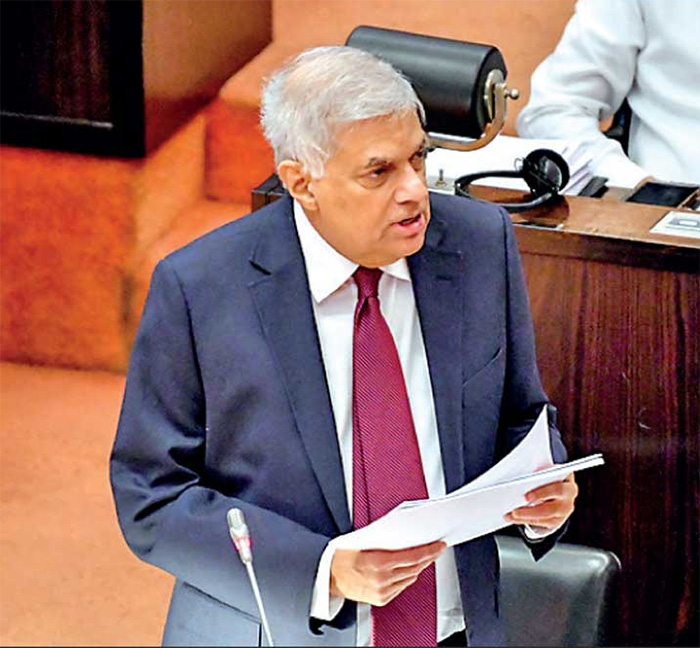
Ranil
Calls for appointment of PSC to review SC ruling Opposition condemns move as unhealthy
President Ranil Wickremesinghe told Parliament yesterday that the Supreme Court determination on the constitutionality of the Gender Equality Bill had violated the powers of Parliament under Article 4 of the Constitution and called for the appointment of a special parliamentary select committee to study and make recommendations for the review of that determination.
Raising a point of Order, the President said that the determination was in contravention of women’s rights and an affront to the constitutional mandate on the government to ensure foremost place for Buddhism.
The President said that the Supreme Court had engaged in judicial cannibalism with regard to its determination on the Gender Equality Bill. The Supreme Court has ignored a certain section which the Gender Equality Bill has addressed. It has eaten up all the judgments, including one which had been given by a bench of 10 judges with regard to women’s rights. It has engaged in judicial cannibalism. The Court has also ignored an amendment to the penal code by the Chief Justice. The determination also challenges the Piriven Education Bill. I don’t propose to summon judges before Parliament, but I propose that we appoint a majority of members from the Parliamentary Women’s Caucus to the select committee,” he said.
The Opposition MPs, however, stated that the Executive should not bring the legislature and the judiciary on a collision course by appointing a PSC to review a Supreme Court determination.
TNA MP M.A. Sumanthiran said it was better to refer the Bill to the Supreme Court for a re-determination. It is better to refer the Bill for a re-determination rather than challenging the Supreme Court. It is not a healthy move to appoint select committees to look into each determination given by the Supreme Court,” Sumanthiran said.
NFF leader Wimal Weerawansa said challenging the determinations of the Supreme Court could not be approved of as it would lead to undesirable consequences. Why should we have a Supreme Court if we are going to challenge it every time? There is no issue with granting equal rights to women and upholding the rights of those whose gender is difficult to determine as a result of hormone disorders from which they suffer. However, we cannot endorse providing legal provisions to the mafia with regard to gender equality. Even children are given the choice to change their gender equality prevailing in Western countries, sexual organs are sold for USD 4,000 in those countries. We should not allow that kind of development in this country,” he said.
SLPP dissident MPs Dullas Alahapperuma and Ven. Athureliye Rathana Thera also pointed out that the President’s move to appoint a PSC may result in a collision between the judiciary and the legislature and such a crisis was the last thing this country needs at the present juncture.
Supreme Court Declares Gender Equality Bill Inconsistent with Sri Lankan Constitution
June 20th, 2024Courtesy News 1st
COLOMBO (News 1st); Sri Lanka’s Supreme Court has determined that the promulgation of the Bill titled Gender Equality” is inconsistent with Article 12 of the Constitution.
The Supreme Court has determined that the Bill as a whole cannot be enacted into law, unless the appropriate procedure laid down in Articles 83 and/or Article 84 and read with Article 80 of the Constitution which requires that the number of votes cast in favor thereof must amount to not less than two-thirds of the whole number of Members of Parliament (including those not present), and is approved by the People at a Referendum.
The speaker of parliament, Mahinda Yapa Abeywardena announced the determination to the house on Friday (7)
“I wish to inform Parliament that I have received the Determination of the Supreme Court in respect of the Bill titled Gender Equality” which was challenged in the Supreme Court in terms of Article 121(1) of the Constitution.
In the said determination, the Supreme Court has determined the Constitutionality of the Bill as follows:—
-The Supreme Court held that the promulgation of this Bill is inconsistent with Article 12 of the Constitution.
The Supreme Court also has held that the objects of this Bill in Clause 2 read with Clause 3, Clause 4 would be inconsistent with Article 9, 10, 12, 14(1)(e) and27(1)(g) of the Constitution.
The Supreme Court has also held that Clause 4, 7, 17, 18, 25, 26 and 27 are inconsistent with Articles 9, 10, 12(1), 14(1)(e),14(1)(f), 27(1)(g) of the Constitution.
The Supreme Court has held that power being vested in the Council set up under Clauses 5 and 6 read with clause 7 are inconsistent with Articles 9, 10, 12(1), 14(1)(e),14(1)(f) and 27(1)(g) of the Constitution.
Therefore,clauses 17 and 18 of the Bill which set out the requirement of the office of Gender Focal Point” and the provisions in Clauses 8 to 16 and 19 to 24 of the Bill, which are incidental provisions for the existence, management and exercise of powers and duties of the Council are also inconsistent with Articles 9, 10, 12(1),14(1)(e), 14(1)(f) and 27(1)(g) of the Constitution.
-The objects of the Bill are inconsistent with Articles 3,4(d), 9 & 10 of the Constitution, and they are inseparable from the other provisions of the Bill. Therefore, the Supreme Court has determined that the Bill as a whole is inconsistent with Articles 3, 4(d),9 &10 of the Constitution.
-The Supreme Court has determined that the Bill as a whole cannot be enacted into law, unless the appropriate procedure laid down in Articles 83 and/or Article 84 and read with Article 80 of the Constitution which requires that the number of votes cast in favor thereof must amount to not less than two-thirds of the whole number of Members of Parliament (including those not present), and is approved by the People at a Referendum.
I order that the Determination of the Supreme Court be printed in the Official Report of today’s proceedings of the House.”
Then and Now
June 20th, 2024Sugath Kulatunga
I am fortunate that I started my career in the public service in the Department of Agriculture the major government department most close to the lives of the ordinary people. Following the example of my colleague Garvin Karunaratne I wish to relate my experience in the Department, pointing out the difference in the commitment and work ethics of public officers then and now.
I cut my teeth as an Administrative Officer of the Department in a new cadre introduced by Minister Philip Gunawardane to relieve the technical officers of the Department from nontechnical functions. They reveled in these administrative functions as that gave them a sense of power over subordinates. The job of the Administrative Officer was the management of the functions of financial, personnel, logistics(supplies) all rolled into one. My induction to the Service in late 1958 at Polonnaruwa was not auspicious as we had suffered one of the worst floods of December 1958 where all irrigation tanks breached. The next disaster which hit us was the communal riots which in fact started in Polonnaruwa. I experienced my first let-down by the Department when the Directors did not approve my plan to evacuate Tamil families to safety when threatened by marauding mobs. The result was the ruthless killing of 13 Tamils in the Polonnaruwa farm. The tragic events in Polonnaruwa was also a result of the political rivalry between Philip and C.P de Silva. Amidst all the setback we restored production in the farms and initiated the ambitious Thamankaduwa Livestock Development Project. My good work resulted in pushing me from frying pan into the fire and being handpicked by the Minister for the Kantale Sugar Plantations the key development project of the Ministry.
Kantale Sugar Plantation was tasked to establish a new sugar plantation in a jungle tract. It involved jungle clearing of about 6000 acres,in the first stage and laying out the fields and irrigation canals and planting the cane. Subsequently the Plantation also had to cut and deliver the cane to the factory. To undertake all these there was only a General Manager, A Research Officer, and an Administrative Officer and a Mechanical Superintendent stationed in the Plantations. There was a labor force of over 2000 workers, which increased to over 3000 during the time of harvesting. The mechanical side of land clearing was the responsibility of a team of Russian technicians led by a Mechanical Engineer who had 10 assistants and 60 tractors with tree dozers and other implements. In the present context a project of that magnitude would have a large team of Project Managers provided with all facilities. We lived under primitive conditions without electricity and clean water which was delivered from the irrigation canal In barrels in a cart. The harsh conditions did not deter us from our responsibilities.
After of the first harvest of cane I was transferred to Head Office and attached to the Animal Husbandry Division and designated as Administrative Officer Development. My task involved substantial and demanding responsibilities in the implementation of the Animal Husbandry Development Program of the Agriculture Development Plan of Philip Gunawardane. In the Animal Husbandry Division, we had a very young team of Veterinary Surgeons led by an indomitable Deputy Director. We had a plan, a strategy, and an action program with clear targets. We worked as a team and were committed to achieve the ambitious targets which became our personalized goals.
When Philip Gunawardane banned overnight the import of eggs our immediate challenge was to make the country self-sufficient in eggs. In this, the first task was to import parent stock to build a quality flock. This was the time where all imports had to be done through Crown Agents. They refused to airfreight us day old chicks, as at that time, without direct flights and many transfers from one carrier to another the mortality rate of chicks was very high and insurance cover was not available. We did not give up but with difficulty involving several visits to Colombo convinced the Treasury to permit us to take the risk and import the chicks ourselves without insurance cover. Treasury agreed when we undertook that at every transit point, we would have competent personnel to ensure the safety of the chicks. The effort was a success. By this means we were able to build a substantial flock of parent stock. We also increased the incubator capacity by over 20-fold. The Department also promoted small scale deep litter systems and arranged with the Peoples Bank to provide project finance. Within one year the country became self-sufficient in eggs and poultry meat and also generated a substantial number of productive employment. It was a well-coordinated campaign among a number of organizations with the belief that if there is a will all obstacles can be overcome.
We undertook a crash program and succeeded. But today we have continued to import eggs from India to control the unfair price of eggs in the market where both the production and marketing is controlled by big players. If we had given 20 chicks each to selected Aswesuma beneficiaries with a loan to start a small deep litter project we would have alleviated the problem of shortage and price of eggs.
The next challenge which was to make the country self-sufficient in dairy products in the long tern. It was known that with artificial insemination of every new generation a quality herd comparable to the semen donors could be established in 5 generations or around 25 years. We already had quality herds of Ayrshire and Frisian breeds at Ambawela and Bopattalawa farms. A Jersey herd was established at Ambawela by importing heifers from New Zeeland. There was a herd of Murrah buffalo at Ridiyagama. While an intensive AI program was being implemented island wide, we faced a problem of a mother herd for the Thamankaduwa Livestock Development Project. Tenders were called for the supply of heifers, but the effort failed. A young team of two veterinary surgeons and I (the Administrative Officer Development (AOD) volunteered to travel round the country and buy the animals paying spot cash. A major problem encountered was at this time there were no Banks in the outstations and the money required had to be drawn from the Head Office. The Chief Accountant took the risk of approving me carrying substantial sums of money and travel around the country. The local veterinary surgeons organized the cattle fairs which attracted good response as the cattle owners were to get spot cash. The team travelled to remote places in the Eastern Province and the deep South and bought over 2000 heifers on a live weight basis which was very economical.
I mentioned this episode as this was a test of trust that existed at that time between higher authorities and junior officers. I am certain that today no staff officers would take the risk of travelling to remote areas and most time staying overnight carrying large amounts of cash without any security and buying cattle outside the normal procedure. We could have manipulated the figures and pocketed a tidy sum of funds. The only record of the transactions was kept by me in a CR book. There were no detailed instructions and or supervision, only trust.
In contrast to the slow but steady action of those days, today the politicians have infiltrated the decision-making process and resort to instant solutions with instant profit to themselves. A good example was the import of milk cows from Australia which was a total disaster. Even with the bitter experience of the first import there was a second attempt to import cows which did not take place due to public outcry.
We had the same problem when a Tender to import goats from India for the goat development project in Kotukacchhiya failed. On a visit to the Veterinary Office on Kew Road I found a herd of imported goats quarantined in the adjoining Municipal Quarantine station. There were around 250 male and female Jamnapari goats in good condition in the compound. I immediately requisitioned the whole lot and paid the importer a fair liveweight price. He was delighted and we launched the goat project. I obtained covering approval on what I had done from the Permanent Secretary Srikantha only after the transaction was completed. I had the confidence of dealing with the Secretary direct and there were no objections but compliments from him or the Director of Agriculture. However, when I had to face the interview board for promotion to the then Class of the SLAS the Board chaired by the Secretary to the Treasury did not question me on my past record although they had my personal file with them but asked me about foreign exchange budget of which I was not familiar and gave me poor marks.
Before 1972 there was no political interference in administration. The rot of political interference commencd with the 1972 Constitution, where the Independent Public Service Commission of the1947 Constitution was abolished and the public service was taken over entirely by the Political Executive. Article 55 of the1972 stipulated that the Cabinet of Ministers shall provide for and determine all matters of policy relating to public officers, including policy relating to appointments, promotions, transfers, disciplinary control and dismissal. With this change public servants resorted to patronage of politicians to better their prospects in the service. This led to the collusion between politicians mainly the members of parliament resulting in the abuse of power and corruption. The 1978 Constitution merely repeated this provision.
To my utter surprise and disappointment, I came across the decadence in even the new recruits of the Administrative Service. In 1974 at the Academy of Administration I had the challenging task of coordinating the induction training of SLAS recruits. The 1974 batch was one of the large intakes of 67 cadets to the SLAS and the training program was the most comprehensive. It was a 6-month in-house training, a six-month attachment and a further six months of classroom studies ending with the examination of Diploma in Management. It was envisaged that after the 18-month program there will be no more examinations an SLAS officer had to undergo.
By about the fourth month a few of them had made a submission to the Prime Minister that they were keen to serve the country as early as possible and instead of attachments they should be posted to substantive posts. They had pointed out that there are many vacancies in the cadre of Divisional Secretaries where they could provide a useful service to the people. The populist Prime Minister who was impressed with their enthusiasm to serve the people agreed with them and ordered the Induction Training to be reduced to 12 months. The PM was not impressed with the need for professionalization of the service.
I disbelieved this convoluted logic and asked for an explanation from a few of the trainees who preferred the 18 month training ending in a Diploma What I heard was alarming. They divulged in confidence that the persons who wanted to go to the field were keen on making quick money. One trainee said that some of them have already identified field positions where they could make money jointly with political patrons who would ensure their posting to these lucrative positions. Some of these trainees had even calculated the number of permits, licenses and approvals which were opportunities to make money. Fortunately, this clique was a tiny minority. But we were releasing a virulent virus into the public service.
9වන ව්යවස්ථාව ඇතුලු ආණ්ඩුක්රම ව්යවස්ථාව රැක්ක ස්ත්රී පුරුෂ සමාජභාවිය සමානත්මතාවය පිළිබඳ පනත් කෙටුම්පතේශ්රේෂ්ඨාධිකරණ තීරණයට අභියෝග කිරීමට රනිල් වික්රමසිංහ ජනාධිපතිවරයාට හැකි වෙයිද?
June 20th, 2024නීතීඥ අරුණ ලක්සිරි උණවටුන B.Sc(Col), PGDC(Col) සමායෝජක, වෛද්ය තිලක පද්මා සුබසිංහ අනුස්මරණ නීති අධ්යාපන වැඩසටහන
9වන ව්යවස්ථාව ඇතුලු ආණ්ඩුක්රම ව්යවස්ථාව රැක්ක ස්ත්රී පුරුෂ සමාජභාවිය සමානත්මතාවය පිළිබඳ පනත් කෙටුම්පතේ
ශ්රේෂ්ඨාධිකරණ තීරණයට අභියෝග නොකර 2002 දී ගෙනා 19ට දුන් ශ්රේෂ්ඨාධිකරණ තීරණය උල්ලංඝනය කළ 2015 දී ගෙනා 19 වැරදි ලෙස නීතියක් කරගැනීම, නිවැරදි කිරීමට රනිල් වික්රමසිංහ ජනාධිපතිවරයාට හැකි වෙයිද?
19වන ආණ්ඩුක්රම ව්යවස්ථා සංශෝධනය මුල් වරට පාර්ලිමේන්තුවට ඉදිරිපත් කර ඇත්තේ වර්ෂ 2002 දී බව නීති ක්ෂේත්රයේ අයද රනිල් වික්රමසිංහ ජනාධිපතිවරයාද නොදන්නා කාරණයක් විය නොහැකිය.
19 වන ආණ්ඩුක්රම ව්යවස්ථා සංශෝධන පනත් කෙටුම්පතක් වර්ෂ 2002 දී පාර්ලිමේන්තුවට ඉදිරිපත් කර තිබූ අතර වසරකින් පසු පාර්ලිමේන්තුව විසුරුවා හැරීමෙන් ජනාධිපතිවරයා සීමා කරන විධිවිධාන ඇතුළත් කිරීමට එනම් ආණ්ඩුක්රම ව්යවස්ථාවේ 70වන ව්යවස්ථාව සංශෝධනය කිරීමට ඉන් ප්රයත්න දරා තිබුණි.
19 වන ආණ්ඩුක්රම ව්යවස්ථා සංශෝධන පනත් කෙටුම්පත මුල්වරට පාර්ලිමේන්තුවට ඉදිරිපත් කර තිබුණේ 2002 සැප්තැම්බර් මස 19 වන දින ව්යාපාර සංවර්ධන, කර්මාන්ත ප්රතිපත්ති හා ආයෝජන ප්රවර්ධන සහ ආණ්ඩුක්රම ව්යවස්ථා කටයුතු අමාත්යවරයා විසින් වන අතර 2002 සැප්තැම්බර් මස 11 වන දින එය ගැසට් පත්රයේ එය පළ කර තිබුණි.
එම 19 වන ආණ්ඩුක්රම ව්යවස්ථා සංශෝධන පනත් කෙටුම්පත මගින් හඳුන්වා දී තිබූ වසරකට පසු පාර්ලිමේන්තුව විසිරවීමට ජනාධිපතිවරයාට අවශ්ය වන්නේ නම් පාර්ලිමේන්තුවේ නොපැමිණි මන්ත්රීවරයන්ද ඇතුළුව පාර්ලිමේන්තුවේ මුළු මන්ත්රීවරයන් සංඛ්යාවෙන් තුනෙන් දෙකක සංඛ්යාවකට නොඅඩු සංඛ්යාවකගේ සම්මතය ඇතිව යෝජනා සම්මතයක් මගින් පාර්ලිමේන්තුවේ අනුමැතිය ලබා ගත යුතු බවට වන විධිවිධානය ආණ්ඩුක්රම ව්යවස්ථාවට පටහැනිය යන පදනමින් ශ්රේෂ්ඨාධිකරණයේ අභියෝගයට ලක්කරන ලද අතර සරත් නන්ද සිල්වා (අ.වි), වඩුගොඩුපිටිය (වි), බණ්ඩාරනායක (වි) ඉස්මයිල් (වි) එදිරිසූරිය (වි) සහ යාපා (වි) ජේ. ඒ. එන් ද සිල්වා (වි) යන ශ්රේෂ්ඨාධිකරණ විනිසුරුවරුන් 7 විසින් 2002 ඔක්තෝබර් 1 සහ 3 යන දිනවල ඒ සම්බන්ධව ශ්රේෂ්ඨාධිකරණයේ විභාගයට ගන්නා ලදී.
එහි තීරණය අනුව ජනාධිපතිවරයාට වසරකට පසු පාර්ලිමේන්තුව විසුරුවීම වළක්වන විධිවිධානය නීතියක් වන්නේ පාර්ලිමේන්තුවේ නොපැමිණි මන්ත්රීවරයන්ද ඇතුළුව පාර්ලිමේන්තුවේ මුළු මන්ත්රීවරයන් සංඛ්යාවෙන් තුනෙන් දෙකක සංඛ්යාවකට නොඅඩු සංඛ්යාවකගේ සම්මතය සහ ජනමතවිචාරණයකදී ජනතාව විසින්ද අනුමත කිරීමෙන් පසුව බව දක්වා ඇත. ඒ හේතුවෙන් 2002 දී පාර්ලිමේන්තුවට ඉදිරිපත් කළ 19වන ආණ්ඩුක්රම ව්යවස්ථාව සංශෝධනය පනත් කෙටුම්පත් අදියරේම
අවසන් විය.
එකී ශ්රේෂ්ඨාධිකරණ විනිසුරුවරුන් 7දෙනාගේ තීරණය අනුව වර්ෂ 2015 දී දෙවන වරටත් පාර්ලිමේන්තුවට ඉදිරිපත් කළ 19වන ආණ්ඩුක්රම ව්යවස්ථා සංශෝධන පනත් කෙටුම්පතේ ඇති ආණ්ඩුක්රම ව්යවස්ථාවේ 70 ව්යවස්ථාව සංශෝධනය කරමින් වසරකට පසු පාර්ලිමේන්තුව විසුරුවා හැරීමෙන් ජනාධිපතිවරයා වළක්වන විධිවිධානයටත්, 2002 ශ්රේෂ්ඨාධිකරණ තීරණය අනුව ජනමත විචාරණයකින් ජනතාව අනුමත කිරීම අවශ්යම විය.
වර්ෂ 2015 දී දෙවන වරටත් පාර්ලිමේන්තුවට ඉදිරිපත් කළ 19වන ආණ්ඩුක්රම ව්යවස්ථා සංශෝධන පනත් කෙටුම්පත සම්බන්ධයෙන් අගවිනිසුරු කේ. ශ්රීපවන්, ඩෙප් සහ චන්ද්රා ඒකනායක ශ්රේෂ්ඨාධිකරණ විනිසුරුවරුන් විසින් තීරණ පාර්ලිමේන්තුවට යොමු කළ අතර එම විනිසුරුවරුන් 3නා මීට පෙර 2002 දී විනිසුරුවරුන් 7දෙනකු ලබා දී තිබූ තීරණය වෙනස් කර තිබුණේ නැත.
ඒ අනුව වසරකට පසු පාර්ලිමේන්තුව විසිරවීම ජනාධිපතිට සීමා කිරීමේ ව්යවස්ථා සංශෝධනයක් නැවත 2015 දී සිදුකරන්නේ නම් ජනමතවිචාරණයකට යාම අවශ්ය විය. නමුත් එය මේ දක්වා සිදු වී නැත.
පාර්ලිමේන්තුව, ශ්රේෂ්ඨාධිකරණ තීරණවලට එකඟව කටයුතු කරන්නේ නම් වසරකට පසු පාර්ලිමේන්තුව විසිරවීම ජනාධිපතිට සීමා කිරීමේ ව්යවස්ථා සංශෝධනයක් නැවත 2015 දී සිදුකරන්නේ නම් එයට පාර්ලිමේන්තුවේ නොපැමිණි මන්ත්රීවරුද ඇතුලුව 2/3 කට නොඅඩු සංඛ්යාවක් අනුමත කළ පසු ආණ්ඩුක්රම ව්යවස්ථාවේ 80.2 ව්යවස්ථාව අනුව ජනාධිපතිවරයා විසින් නීතියක් බවට පත්කරන ආකාරයේ සහ 79 වන ව්යවස්ථාව යටතේ (අවසන් විධානය) පනත් කෙටුම්පත හෝ ඒ විධිවිධානය ජනතාව විසින් ජනමත විචාරණයක දී අනුමත කරනු ලබන තෙක් නීතිය බවට පත් නොවිය යුතු බවට වන කථානායකවරයාගේ සහතිකයක් සඳහන් සටහනක් තබා යොමු කළ යුතු විය.
නමුත් මේ දක්වා 2015 දී ගෙනා 19වන ආණ්ඩුක්රම ව්යවස්ථා සංශෝධනයට
එය සිදු වී නැත. එනම් ශ්රේෂ්ඨාධිකරණ තීරණ අනුව නීතියක් වී නැති 19වන ආණ්ඩුක්රම ව්යවස්ථා සංශෝධනය බලහත්කාරයෙන් නීතියක ආරෝපණය ලබා දී ක්රියාත්මක කරගෙන යාමට පාර්ලිමේන්තුව සහ වර්තමාන ජනාධිපතිවරයාද කටයුතු කරන බව පෙනී යයි.
එසේ තිබියදී අද දින (2024.06.18) රනිල් වික්රමසිංහ ජනාධිපතිවරයා විසින් ස්ත්රී පුරුෂ සමාජභාවිය සමානත්මතාවය පිළිබඳ පනත් කෙටුම්පතේ ශ්රේෂ්ඨාධිකරණ තීරණය සම්බන්ධයෙන් පාර්ලිමේන්තු තේරීම් කාරක සභාවක් පත් කිරීමට පාර්ලිමේන්තුවේදී ප්රකාශ කිරීම පාර්ලිමේන්තු වරප්රසාදවලට මුවා වී, නීතියේ පාලනයට සහ ශ්රේෂ්ඨාධිකරණයට කළ අයුතු මැදිහත්වීමක් නොවන්නේද යන ප්රශ්නය සමාජයේ පැන නගී.
ස්ත්රී පුරුෂ සමාජභාවිය සමානත්මතාවය පිළිබඳ පනත් කෙටුම්පතේ ශ්රේෂ්ඨාධිකරණ තීරණය 2024.06.07 දින පාර්ලිමේන්තුවට ඉදිරිපත් කළ මහින්ද යාපා අබේවර්ධන කතානායකවරයා එම පනත් කෙටුම්පතේ ඇතැම් වගන්ති සහ විධිවිධාන ආණ්ඩුක්රම ව්යවස්ථාවේ 3, 9, 10, 12, 14.1.e, 14.1.f, ව්යවස්ථාවන්ට පටහැනි බවත් ඒ අනුව පාර්ලිමේන්තුවේ නොපැමිණි මන්ත්රීවරුද ඇතුලුව 2/3 කට නොඅඩු සංඛ්යාවක් අනුමත කිරීම සහ ජනමතවිචාරණයකින් ජනතාව අනුමත කිරීමද අවශ්ය බවට ශ්රේෂ්ඨාධිකරණය තීරණය කර ඇති බව ප්රකාශ කළේය.
එසේ තිබියදී 2024 ජුනි 18 දින පාර්ලිමේන්තුවේදී ප්රකාශයක් කළ ජනාධිපතිවරයා එකී ස්ත්රී පුරුෂ සමාජභාවිය සමානත්මතාවය පිළිබඳ පනත් කෙටුම්පතේ
ශ්රේෂ්ඨාධිකරණ තීරණය මගින් පාර්ලිමේන්තුවේ වරප්රසාද අහිමිකරන බව ප්රකාශ කරමින් ඒ සම්බන්ධයෙන් පාර්ලිමේන්තු තේරීම් කාරක සභාවක් පත් කිරීමට සහ එකී ශ්රේෂ්ඨාධිකරණ තීරණය විවේචනය කරමින් අදහස් දක්වනු ලැබීය.
හිරු පුවත් (2024.06.18)
https://m.youtube.com/watch?v=E5c7Z6Y3mBI&pp=ygVe4Lai4Lax4LeP4Law4LeS4La04Lat4LeSIOC2tOC3j-C2u-C3iuC2veC3kuC2uOC3muC2seC3iuC2reC3lCDgtq3gt5rgtrvgt5Pgtrjgt4og4Laa4LeP4La74LaaIA%3D%3D
9වන ව්යවස්ථාව ඇතුලු ආණ්ඩුක්රම ව්යවස්ථාව ආරක්ෂා කරමින් ස්ත්රී පුරුෂ සමාජභාවිය සමානත්මතාවය පිළිබඳ පනත් කෙටුම්පතේ ශ්රේෂ්ඨාධිකරණ තීරණය පාර්ලිමේන්තුවේදී විවේචනය කිරීම සහ ඒ සම්බන්ධයෙන් පාර්ලිමේන්තු තේරීම් කාරක සභාවක් පත්කරගන්නවා වෙනුවට 2002 දී ගෙනා 19ට දුන් ශ්රේෂ්ඨාධිකරණ විනිසුරු 7 දෙනාගේ තීරණය අනුගමනය නොකර 2015 දී ගෙනා 19 වැරදි ලෙස නීතියක් කරගත් ආකාරය සෙවීමට තේරිම් කාරක සභාවක් පත් කිරීම වඩා යෝග්ය බවට ජනාධිපතිවරයා ක්රියා කිරීම සුදුසු වන අතර එය වැරදි ලෙස නීතියක් පවත්වාගෙන යාම නිවැරදි කිරීමක් වෙයි.
රනිල් වික්රමසිංහ ජනාධිපතිවරයා කළ යුත්තේ, 2002 දී ගෙනා 19ට දුන් ශ්රේෂ්ඨාධිකරණ විනිසුරු 7 දෙනාගේ තීරණය අනුගමනය නොකර 2015 දී ගෙනා 19 නීතියක් කරගත් ආකාරය සෙවීමට පාර්ලිමේන්තු තේරිම් කාරක සභාවක් පත් කිරීමට ක්රියා කිරීම මිස ස්ත්රී පුරුෂ සමාජභාවිය සමානත්මතාවය පිළිබඳ පනත් කෙටුම්පතේ ශ්රේෂ්ඨාධිකරණ තීරණය සම්බන්ධයෙන් පාර්ලිමේන්තු තේරීම් කාරක සභාවක් පත් කිරීමට යාම නොවේ.
2002 සහ 2015 ශ්රේෂ්ඨාධිකරණ තීරණ අනුව
මේ දක්වා නීතියක් වී නැති 19 වන ආණ්ඩුක්රම ව්යවස්ථා සංශෝධන පනත් කෙටුම්පත පාර්ලිමේන්තුවේ 2/3 බහුතර ඡන්දයෙන් සම්මත වී ඇති හෙයින්, එකී පනත් කෙටුම්පතට 2015 සිටි කතානායකවරයා නීතියක් බවට යොදා ඇති වැරදි සටහන නිවැරදි කර එය ජනමත විචාරණයකට යොමු කිරීමට තමන් වෙත යොමු කරන ලෙස මහින්ද යාපා අබේවර්ධන කතානායකවරයාට දැනුම් දී ආණ්ඩුක්රම ව්යවස්ථාවේ 79 ව්යවස්ථාවේ අවසන් විධානය අනුව සටහන් යොදා, 80.2 ව්යවස්ථාව යටතේ 19 වන ආණ්ඩුක්රම ව්යවස්ථා සංශෝධන පනත් කෙටුම්පත නීතියක් බවට පත් කිරීමට අවශ්ය ඉදිරි පියවර ගන්නා ලෙස දැනුම් දීමයි.
එනම් 2015 ගෙනා 19වන ආණ්ඩුක්රම ව්යවස්ථා සංශෝධනයට දැනටමත් පාර්ලිමේන්තුවේ තුනෙන් දෙකකට නොඅඩු බහුතර ඡන්දයක් ලැබී ඇති හෙයින් 19වන ආණ්ඩුක්රම ව්යවස්ථා සංශෝධන පනත් කෙටුම්පත ජනමතවිචාරණයකට යොමු කිරීමට අදාල වන 80.2 ව්යවස්ථාව පියවර රනිල් වික්රමසිංහ ජනාධිපතිවරයා විසින් ගැනීමයි.
එනම් 2015 දී 19 වන ආණ්ඩුක්රම ව්යවස්ථා සංශෝධනයට සිදු කර ඇති ශ්රේෂ්ඨාධිකරණ තීරණ උල්ලංඝනය කිරීමේ වැරැද්ද නිවැරදි කිරීමයි.
නීතීඥ අරුණ ලක්සිරි උණවටුන B.Sc(Col), PGDC(Col) සමායෝජක, වෛද්ය තිලක පද්මා සුබසිංහ අනුස්මරණ නීති අධ්යාපන වැඩසටහන දුරකථන 0712063394 (2024.06.18)
Ahmadi leaders detained for 30 days in Pakistan. Police call their Bakrid plans “unlawful”
June 20th, 2024Eid-ul-Adha Sermon by Ahmadiyya Khalifa
June 20th, 2024by A. Abdul Aziz. Sri Lankan Correspondent Al Hakam, London.
Condition for the acceptance of our sacrifices is righteousness: Ahmadiyya Khalifa delivers Eid al-Adha sermon 2024
(Given below is an excerpt of the Eid-ul-Adha Sermon delivered by Hazrat Mirza Masroor Ahmad, Supreme Head of the world-wide Ahmadiyya Muslim Community in Islam, on 17th June, 2024, at ‘Masjid Mubarak’, Islamabad, Tilford, U.K.)
On Monday, 17 June 2024, Ahmadiyya Supreme Head Hazrat Mirza Masroor Ahmad, Khalifatul Masih (May Allah be his Helper) arrived at the Mubarak Mosque in Islamabad, Tilford, UK to lead the congregation in Eid-ul-Adha prayer and subsequently deliver the Eid sermon.
After reciting the tashahhud, ta‘awwuz, and Surah al-Fatihah, Hazrat Mirza Masroor Ahmad said:
Today, by the grace of Allah, Eid-ul-Adha is being celebrated in many parts of the world. It is known as the Qurbani ki Eid (Festival of Sacrifice) in Pakistan, India, and other regions. Countless animals are sacrificed as an act of faith, following Prophet Abraham’s (peace be on him) example. Similarly, those performing Hajj in Mecca partake in the sacrifice of millions of animals. This act of sacrifice is a profound symbol of the complete devotion and obedience of Prophet Abraham and Prophet Ishmael, who were ready to give their lives and sacrifice the son at Allah’s command.”
His Holiness explained that Eid al-Adha is celebrated in remembrance of the aforementioned act when both father and son, divinely inspired in a dream, were prepared to lay the knife on the neck and be sacrificed. However, Allah the Almighty acknowledged their devotion, which they showed following His revelation, and instead, commanded them to sacrifice a lamb. Consequently, in commemoration of their sacrifice, Muslims across the globe sacrifice thousands upon thousands of animals.
Ahmadiyya Khalifa briefed when we possess such passion to sacrifice everything while treading the path of righteousness, only then will this spirit be considered the true sacrifice. However, these days people are seen bidding on animals of sacrifice and the essence of sacrifice is absent.
Hazrat Mirza Masroor Ahmad said:
As for the so-called religious scholars, they have poisoned people’s minds in the name of religion. In Pakistan, the concept of religious scholars’ monopoly has grown to such an extent that they can go to any lengths of oppression. Ahmadis, in particular, are targeted by this injustice. According to these clerics, for Ahmadis to perform Eid prayers or offer sacrifices is considered a grievous crime, and they are willing to go to any extreme to enforce punishment for it.”
His Holiness emphasized that these clerics go as far as ordering the killing of Ahmadis in the name of Islam and rewards of Paradise. Incidents in previous years show that authorities imprisoned many Ahmadis on the basis of practicing Islam. Some similar incidents this year have emerged as well.
Ahmadiyya Supreme Head highlighted that only God Almighty accepts the sacrifice of His servants. Many Ahmadis kept themselves from performing sacrifice owing to the given circumstances. His Holiness gave the example of the acceptance of Hajj of a person who did not even go to perform the pilgrimage but his Hajj was accepted owing to a righteous deed, and God rejected the Hajj of thousands even though they performed it. Ahmadiyya Khalifa expressed that Allah the Almighty, in the same way, can surely accept the sacrifices of Ahmadis. God says:
Their flesh reaches not Allah, nor does their blood, but it is your righteousness that reaches Him.” (Surah al-Hajj, Ch.22: V.38)
His Holiness said Ahmadis know the spirit of the above verse and tread the path of righteousness. Surely, Ahmadis feel anxious when they can’t perform the sacrifice but understanding the essence of righteousness, they are satisfied. May Allah grant guidance to these clerics.
Hazrat Mirza Masroor Ahmad said:
Instead of following the commands of the Holy Prophet Muhammad (PBUH) these people want to spread their self-made religion. Allah Himself says that those who kill someone who recites the creed or practice their faith will face His punishment and end up in Hell. So, can they escape Allah’s wrath? [They can save themselves] if only they would use their reason and listen to the words of Allah and His Messenger (PBUH) and act accordingly
Ahmadis, who are steadfast in their faith and are sincerely sacrificing their lives, wealth, and emotions, surely their deeds are accepted in the eyes of Allah. This is indeed a period of sacrifice, which, God willing, shall pass. Therefore, in these circumstances, we should bow even more before Allah. We should intensify our supplications so much that Allah’s mercy hastens to help the oppressed and seize the oppressors.
We should ask Allah that we are prepared to follow the practice of Prophet Abraham (peace be on him)and perfectly obey the Holy Prophet Muhammad (PBUH) by being ready for every kind of sacrifice, be it of life, wealth, or emotions. Whether our goats and cows are sacrificed or not, we are ready for this sacrifice. So, if Allah accepts our prayers and intentions, surely, He will accept our sacrifices as He has promised. However, the condition for all of this is piety.”
Ahmadiyya Khalifa added that if we tread the path of righteousness, and fulfil the rights of God and His creation, we will surely bring about a revolution in the world. We should always remember that the sacrifice of Prophet Abraham and Prophet Ishmeal was symbolic for the future revolution.
Founder of the Ahmadiyya Muslim Community Hazrat Mirza Ghulam Ahmad – the Promised Messiah and Imam-al-Mahdi, peace be on him said:
The true sacrifice lies in the purity of hearts. Flesh and blood are not the real sacrifices. While ordinary people offer the sacrifice of, the special ones sacrifice their hearts. However, God has not abolished apparent sacrifices [of animals] either, to show that these sacrifices also have a connection with mankind.”
Ahmadiyya Khalifa said this is the spirit of sacrifice that we should instil in every member of the Jamaat. Only then we can bring about a revolution for which the Promised Messiah was sent in servitude of the Holy Prophet Muhammad (PBUH). God willing, we will not heed to temporary efforts of these clerics. It is the promise of God to Hazrat Mirza Ghulam Ahmad – the Promised Messiah. We should not feel concerned that these nominal scholars have stopped us from practicing Islam, as they are no way near Islam and its teachings.
His Holiness emphasised that these people are trying to become God, but we should focus on righteous and the true spirit of sacrifice. Ahmadiyya Founder – The Promised Messiah said it is necessary for our Jamaat to tread the path of righteousness, as they are connected to such a person who has been appointed by Allah the Almighty, so that all those who are spiritual ill may regain health.
The Promised Messiah said the prayers of a righteous person are accepted.
Hazrat Mirza Masroor Ahmad said these hardships and persecutions are there to help us rise and soar even higher. We should not be worried about these vain efforts of clerics. We should never be concerned about any kind of hostility and always seek the pleasure of Allah the Almighty.
Hazrat Mirza Masroor Ahmad said:
May Allah make this Eid blessed in every way for Ahmadis around the world, and may we soon witness a revolution resulting from their sacrifices.
Eid Mubarak to the Ahmadis of Pakistan as well. For the past several days, [my] focus has been on them. The situation has been quite dire there. May Allah bring about the fruition of their sacrifices soon. Even today, on Eid, rioters attacked in Kotli, vandalising the mosque. In some places, Ahmadis were not even allowed to perform Eid prayers. Despite the government’s promises of protection, local authorities often act according to their own will. Nevertheless, our complete reliance is on Allah, and we must continue to bow before Him.
May Allah swiftly turn the suffering of Ahmadis into joy. Wherever in the world Ahmadis are enduring pain and sacrifice, may relief come soon. Remember to continuously bow before Allah in all circumstances and strive to elevate the standards of your worship.
Keep the families of the martyrs in your prayers. May Allah regard every drop of the martyrs’ blood with such love that it brings about a revolution. May the sacrifices of these martyrs lead to a profound transformation in their progeny, strengthening their bond with faith more than ever before.
Pray for the Palestinians as well; may Allah swiftly rescue them from the grinding oppression they face, and show them mercy. May this Eid be filled with blessings for all Ahmadis. May peace, tranquility, and safety prevail globally, and may the people of the world come to recognise the One True God, for only then can true peace be established on earth.”
After the conclusion of the Eid sermon, Ahmadiyya Khalifa led everyone in silent prayer, and then conveyed Eid Mubarak” to all.
Source: Al Hakam – London.
PART IV OF THE MYTH OF “MALIMAWA”: A COMPASSWITHOUT THE MAGNETIC NEEDLE
June 20th, 2024By Sena Thoradeniya
(Continued from May 25, 2024)
[The previous version of Part IV of this essay and background material for the remaining parts were lost beyond retrieval due to a technical mishap. As a colleague said that it was good and recreation may make it better, the writer attempted to recreate it; but found something else reshaping.]
1. 1989 Parliamentary Elections: JVP Getting its 1st MP from Hambantota Electoral District Under a Fraudulent Method
Although the JVP entered mainstream politics contesting parliamentary elections in 1977 in four electorates, six years after its first insurrection as independents under the symbol bell (this was how bell became its registered election/party symbol later), Tangalle, Anuradhapura West, Hakmana and Horowpotana electorates respectively ; Galle and Anamaduwa by-elections held subsequent to 1977 General Elections; Tangalle, Ratgama, Akuressa, Devinuwara,Beliatta constituencies and supported one of its godfathers at Habaraduwaconstituency at the by-elections held subsequent to the Referendum of 1982, JVP was able to secure its first MP only in 1989.
After its unsuccessful bids to enter the Parliament, JVP contested 1989 General Elections in Hambantota electoral district under Sri Lanka Progressive Front (SLPF) and obtained 15,309 votes (6.2%) and secured one seat, thanks to Ranasinghe Premadasa for lowering the cut-off point to 5% to appease minority parties. Janith Priyantha Vidyatillaka Vipulaguna obtained the highest number of preferential votes under SLPF ticket, 1791 or 11.70% of the votes polled by the party or 0.73% in the district. In theory he was duly elected as an MP to represent Hambantota electoral district. But JVP did not allow him to take oaths. All ten candidates who were in the list, according to the number of preferential votes they obtained were asked to resign one after the other. JVP had a torrid time in finding one candidate who was hiding in a safe house in Wadduwa.
All were afraid about the fate hung over their heads as JVP assassinating its erstwhile comrades who did not toe the party line was lingering in their minds.
Finally, Nihal Galappaththy (later a presidential candidate and Deputy Minister of Fisheries and Aquatic Resources under CBK) who was not in the original list was nominated and was sworn in as an MP for Hambantota electoral district. Thus, a JVP MP entered the parliament for the first time under a fraudulent method, abusing the loopholes in the PR system. While all the other MPs took oaths on 25, August 1994, this nominating -resigning drama continued for several months until Nihal Galappaththy, a person who had not secured a single vote took oaths as an MP, replacing the original winner Vipulaguna.
In an interview published in The Sunday Leader” on 25, April 2004, Vipulaguna said that he spearheaded the JVP towards its first electoral victory at a time when all other JVP senior members feared to go before the public seeking a mandate. At the time of the interview, he was supporting RW and UNF.
After the second insurgency JVP members faced public wrath as murderers and were unable to visit their hometowns. There was a high level of public rejection of those associated with the JVP that many a senior felt that they should not seek public office”. Leaders felt that their lives were in great danger and refused to contest”. I had to persuade some members to agree to the inclusion of their names on the nomination papers, so great was their reluctance to dabble in democratic politics then.”
Vipulaguna served a jail term for involving in JVP politics. But there was not a single well-known person in his nomination list; many were recruited from outside the electoral district.
Some highpoints of Vipulaguna’s interview throw some light to present-day JVP/NPP leaders: JVP has no inner party democracy; members who criticize its corrupt practices and racist approach were labeled as traitors; it is completely divorced from socialist ideals; the leaders lead lives more luxurious than the lives of leaders of feudalistic parties or privileged classes; lifestyles of these leaders are appalling; some maintain their good looks at great cost to the party; some are fashion icons; they are of lower middle class origins having no ancestral wealth or business holdings; the innocent grassroot level activists must understand this; JVP is built on attractive slogans, rhetoric and emotions.
The interviewer was not smart enough to ask why did Vipulaguna resign and whether Nihal Galappaththy’s namewas included in the list.Nor did Vipulaguna reveal the reasons for his resignation and the pressure mounted on him by the JVP hierarchy.
One of Vipulaguna’s criticisms about JVP, JVP’s inability to recognize the need for a federal solution to the ethnic solution”, has being invalidated now, as Anura Kumara has pledged his support for the full implementation of the 13th Amendment, paving the way for a federal state!
2. Following JRJ’s Footsteps: Obtaining Letters of Resignation
JRJ despite the massive mandate he received in 1977, obtained resignation letters from his MPs. Insiders say that the JVP for Provincial Council and Parliamentary elections brought busloads of candidates to Colombo New Town Hall to sign nomination papers. Soon after signing, they were directed to another desk to hand over their resignation letters, pledging to resign if elected.
3. Abusing the National List
National list was introduced to bring in experts and professionals from various fields, whose knowledge, education, experience, maturity would be useful in parliamentary affairs and law making, assuming such persons does not want to entangle in electioneering, does not have the mass appeal to bring votes. But national list was abused by all political parties, by appointing either individuals who were not included in the list, coalition partners, stooges of party hierarchy, defeated candidates or moneybags who bankroll party funds.
JVP followed suit. At the 2000 parliamentary elections JVP got 10 MPs, 8 elected on district basis and 2 national list slots. For the two national list slots Anura Kumara (aka Aravinda Sahodaraya, his nom de guerre) who joined the party around 1995 and Ms. Anjan Umma were nominated respectively. Both did not fit the national list criteria. It was the first occasion that rabble-rouser Kuragamage Don Lal Kantha entered parliament from Anuradhapura electoral district securing 4304 votes (or 1.198%).
At the 2001 parliamentary elections JVP was able to increase its number of MPs to 16, 13 elected on district basis and 3 national list slots respectively. For the second time Anura Kumara secured a national list slot. Anjan Umma was bold enough to contest in Gampaha electoral district. She was elected securing 10,834 votes (or 1.089%). A JVP candidate who obtained 5957 votes (or 1.20%) winning in Mahanuwara electoral district was the strangest thing that happened in 2001. Later this person decamped and joined the UNP.
In 2004 JVP which obtained 41seats, was generous enough to give 2 national list slots to its UPFA coalition partner. JVP’s 2004 tryst with CBK will be discussed later.
At the 2010 General Elections, the first General elections held following the successful completion of the war against LTTE terrorists, the JVP true to its nature entered an unholy alliance with Sarath Fonseka-led DNA. DNA obtained 7 seats which include 2 national list slots. JVP secured 3 seats on district basis (Colombo, Gampaha and Galle respectively; later Galle JVP MP became an independent). For the third time Anura Kumara had to seek refuge in the national list. A poor show of a leader who polled 153,868 votes in Kurunegala electoral district leading the UPFA list in 2014. Thus, a party which commanded 39 seats was reduced to 4 seats within 6 years.
In 2008, 12 JVP MPs left ranks and formed NFF under Wimal Weerawansa and joined the UPFA. At the 2010 General Elections Wimal Weerawansa, who obtained 237,185 votes in 2004 topping the Colombo electoral district, topped again in the Colombo electoral district with a staggering 280,672 votes (polling more than RW of UNP, who polled 232,957 votes in Colombo electoral district), and was appointed as Minister of Construction, Engineering Services, Housing and Common Amenities under MR.
Sarath Amunugama who recently resigned as Chairman of Dilith Jayaweera’s MJP, criticizing MJP’s move to form Sarvajana Balaya” with racists” and extremists” was the Minister for International Monetary Cooperation under MR. Furthermore, Amunugama served as the Minister of Finance under CBK when 3 JVPers were in her Cabinet of Ministers. At that time, he had no qualms to sit in the same Cabinet with political assassins”.
At the 2015 General Elections, JVP secured 4 seats, one each from Colombo, Gampaha, Kalutara and Hambantota electoral districts. Anura Kumara polled 65,966 votes from Colombo electoral district, while Wimal Weerawansa secured 313,801 votes from the same electoral district contesting in UPFA ticket. Sunil Handunnetti who was elected on three occasions from Colombo electoral district polling 9438 votes at the 2001 General Elections, 152,942 votes at the 2004 General Elections and 78,126 votes at the 2010 General Elections respectively was sent to Galle electoral district in 2015 and was defeated. Thus, Anura Kumara saved himself cunningly sending a seasoned campaigner out of the district. Otherwise Anura Kumara’s re-entry to the parliament was problematical. JVP leaders know the Machiavellian and devious ways to make decisions, even to the detriment of their senior cadres. This is another learning point for those adventurers who jumped over to NPP bandwagon.
JVP’s national list slot was given to Mayadunne, a former Auditor General, an anti-corruption crusader (later exposed by social media); he took oaths as an MP and made a speech; unashamedly the JVP, immediately after he made his inaugural speech in the parliament dumped him and appointed defeated candidate Sunil Handunnetti as its national list MP. Mayadunne entered the annals of parliamentary history as the first MP who made his first and last speech in the parliament on the same occasion!
Another prominent person in the JVP national list was (Prof) Kapila Perera, who was later appointed as a Ministry Secretary by Gotabhaya. Father of Easter Sunday suicide bombers was in the JVP’s 2015 national list. Unashamedly Nalin Jayatissa, the then JVP MP for Kalutara electoral district sat in the Parliamentary Select Committee probing Easter Sunday massacre! These are the inherent features of Janus-faced JVPers.
Capitalist press who lauded Handunnetti’s role as the Chairman of COPE completely ignored the way he entered the parliament. So, if the academics, lawyers, doctors, engineers and other professionals, retired armed forces and police personnel who have flocked around NPP eyeing for national list slots should be mindful about the ignominious fate befallen on the former Auditor General Mayadunne.
At the 2020 General Elections JVP was reduced to 2 seats, but fortunate enough to get one national list slot. JVP nominated Harini Amarasuriya, a neo-liberal outsider, even though its national list contained names of old Trotskyite ideologues, old Communist” Revisionists, yahapalana constitution makers and a few NGO overlords. It is said that the foreign-funded NGO cabal, some western embassies and LQBTIQ+ lobby in Sri Lanka were behind this move. Their party stalwarts, defeated candidates including a few former ministers and deputy ministers were overlooked by the JVP. Her caste and class affiliations to landed gentry, comprador-bourgeoise and multi-national business conglomerates were compatible with the born-again JVP in nominating her. Thus JVP/NPP nominated a Colombo upper class NGO activist, a political part-timer, using its rural and subaltern votes. She was the first activist of the JVP/NPP to state that she supports full implementation of the 13th amendment. Anura Kumara followed suit. If the tail were smarter, then it would wag the dog!
4. Battle for Preferential Votes
It is common knowledge that almost all candidates of the same party fighting with each other to secure the highest number of preferential votes. Capitalist press extols JVP as the only exception in this regard. But insiders who contested elections under JVP have told us that a subtle campaign goes on promoting the candidature of leading cadres. They argue that otherwise internal migrants such as Vijitha Herath (from Welimada to Gampaha), Anura Kumara (from Tambuttegama to Kurunegala/Colombo) and Bimal Ratnayaka (from Tangalle to Kurunegala) cannot poll what they have polled in the electoral districts they represented. This was openly manifested at the 2004 parliamentary elections. The Final Report on 2004 Parliamentary Elections of the EU Election Observation Mission too sheds some light on this aspect.
5. JVP’s 2004 Tryst with CBK
How did JVP secure 39 –theoretically41- seats in the 2004 Parliament? JVP having entered into an agreement with the UPFA made an innocent” request to allow it 2 or 3 slots from an electoral district.
But against all expectations and predictions JVP was able to win in almost all electoral districts it contested. This phenomenon needs some more elaboration. SLFP was reduced to 62 seats (56 district level and 6 national list). In Colombo electoral district first 3 slots of the UPFA was bagged by JVP, Wimal Weerawansa topping the list polling 237,185 votes. First, third and fourth places in Gampaha electoral district were won by JVP displacing Anura Bandaranaike, heir-apparent of SLFP to the second place. 1st, 2nd and 6th places in Kalutara electoral district, 1st and 3rd places in Mahanuwara electoral district (an upstart of the JVP secured the first slot in the list over and above seasoned campaigners and former ministers and MPs of SLFP. D. M. Jayaratne, later Prime Minister had to be satisfied with the 5th place) were won by JVP. First place in Matale electoral district went to an unknown lady teacher of JVP (later disgraced for plagiarizing a literary work and getting a literary award for the plagiarized work). First 3 places in Galle electoral district, 2nd and 3rd places in Matara and Hambantota electoral districts, 2nd place in Digamadulla electoral district, 1st place in Trincomalee electoral district, first 3 places in Kurunegala electoral district, 2nd and 4th places in Puttalam electoral district, first two places in Anuradhapura electoral district, 2nd place in Polonnaruwa electoral district, 1st place in Badulla electoral district, 2nd and 4th places in Ratnapura electoral district and first 2 places in Kegalle electoral district were secured by the JVP over and above seasoned politicians and former MPs and ministers of SLFP.
The Final Report on 2004 Parliamentary Elections of the EU Election Observation Missionstates that, The alliance between the SLFP and the JVP was very controversial…. there are substantial ideological differences between them. In addition, the JVP is considered responsible for the assassination of the President’s husband in 1988”.
JVP made the best use of the preferential vote”.
JVP’s policy was to present only 3 candidates on the UPFA district lists”. They also managed in many districts to get these candidates appear consequently on the lists, so that it would be easy for their voters to mark JVP candidates’ numbers on their ballot papers. As a result, in almost all districts, JVP preferential votes were concentrated on their 3 candidates. On the contrary preferences expressed for the SLFP candidates were much more dispersed among them and were therefore less efficient” (our emphasis).
Another thought-provoking observations are: based on the total number of votes received by the UPFA, The Report discloses the total number of preferences SLFP candidates received and the total number of preferences JVP candidates received; shows the number of preferences useful” and effectively translated into SLFP and JVP candidates taking a seat won by the UPFA; points out preferences lost and did not allow candidates to take a seat. This accounted for the fact that39 candidates presented by the JVP being elected at district level. (Since there are several discrepancies in the statistics shown in The Final Report, we omitted those taking only the argument it makes).
The Final Report provides a table depicting JVP/SLFP translation of preferences into votes. Accordingly, total JVP non-elected votes were only 18,771 votes, which was in Badulla electoral district. SLFP’s all-island useful” votes as a percentage was 56.78%. JVP’s useful” percentage was 99% (Badulla electoral district: 84%; all other districts:100%)
It is easy to make analyses after things have happened.
If CBK or any of her campaign managers at least guessed what would happen beforehand as a result of this electoral arrangement, voting patterns would have taken a different shape. Intentions always mask what happens. What is more important? Historical events or intentions? Event goes to the history; not the intention.
6. What Are the Reasons for This Upsurge?
i. CBK’s stupidity and miscalculations allowing JVP 2 or 3 slots in the UPFA list in all Sinhala dominated electoral districts; In 1970 under the first-past-the poll system, in a 145 House of Representatives LSSP secured 17 seats and CP 6 seats respectively. This result was expected under the no-contest pact between the 3 major parties, not something came out of the blue.
But in the Proportional Representation (PR) system the mechanism is different. As a result, JVP was able to secure first 2 or 3 slots in the electoral districts they contested as explained above.
ii. SLFP candidates, candidates of the main constituent party in the UPFA, considering JVP as a friendly force advised their supporters to give one preferential vote to JVP. This was reflected by the votes polled by winning JVP candidates, SLFP stalwarts polling a lesser number of votes and some SLFP seniors completely being wiped out in the process. On the contrary JVP canvassers in a subtle way promoted their candidates only as explained earlier. Insiders who campaigned for the JVP were very much pleased with the magnanimous behavior of some SLFP stalwarts while criticizing rigid, uncompromising, sectarian attitudes of their own men and women.
iii. Since the annihilation of the Old Left with no foreseeable revival and loss of confidence of its present leaders, Old Leftists and Socialists were persuaded for voting for JVP. This was just a temporary phenomenon as JVP was unable to woo these segments in the subsequent elections, a most decisive factor leading to its downfall.
iv. Ideologues such as Dr. Gunadasa Amarasekera put forward the theory that SLFP is a headless body (decapitated body; leaderless; headless horseman”) and it needs a head (Kavandayata Hisak”). JVP was thought capable of fixing the head SLFP was searching for. Later a prominent SLFPer tried to fix X” (a group of postmodernist” middle class debaters) as its head! (X” was founded by a Muslim who lived among the Sinhalayas acquiring a Sinhala” name. This iconoclastic pretender, who propagated counter-culture muck imported from the decadent West against Sri Lankan culture, died recently and was accorded a Muslim burial. Among the chief mourners was Anura Kumara! Some academics who now provide theoretical costumes to NPP and many NPP kalakarayas and sahithyakarayas were either in the inner circles of X” or orbiting around X” and were influenced by its muck respectively).
v. Support of National organisations and anti-LTTE elements as JVP at that time was supportive of war efforts.
vi. Muragala” organ of the Jathi Hithaishi Vyaparaya” gave the required ideological guidance to the people (this writer on invitation contributed articles to this periodical on Angels of Mercy” (foreign-funded NGOs), foreign-funded films and teleplays supporting LTTE separatism, euro-centric art and literary criticism, cultural aggression etc.).
7. JVP in CBK’s Cabinet: Biting off More Than It Could Chew
JVP held four very important portfolios in CBK’s 2004 government: Agriculture, Lands, Irrigation and Livestock Development (Anura Kumara), Fisheries and Aquatic Resources (Chandrasena Wijesinghe), Rural Economy (Lal Kantha) and Culture and National Heritages (Vijitha Herath) respectively. Their deputies also were selected from the JVP.
We have reiterated many times in our previous essays that these four Ministries were like main entities of economic and socio-cultural fabric of a nation and if these ministers and their deputies were smart enough to initiate pathbreaking ventures they could have planted millions of seeds to germinate paving the way for them to capture power (democratically or otherwise). These ministries had direct influence over millions of paddy cultivators, highland and dairy farmers, fisherfolk, small scale industrialists, rural artisans and craftsmen, artists, writers, cultural activists, those who were engaged in film industry, archeology and related matters which consist most of the rural, semi-urban and urban populations. At least they were not able to increase their voter bases individually.
Of these ministers and deputies only Vijitha Herath and Handunnetti (deputy to Lal Kantha) were elected at the 2010 General Elections. Anura Kumara entered the Parliament through the national list. At the next General Elections held in 2015, Anura Kumara had to abandon Kurunegala District, one of the largest agricultural areas in Sri Lanka and find refuge in Colombo District which has the strongest middle class backing to JVP.
Of the 39 MPs elected to the Parliament in 2004 only Anura Kumara and Vijitha Herath remain in the Parliament. Others joined either NFF, FSP, UNP, SLFP or faded into oblivion. Few others remain in the JVP vowing to take our innocent voters to New Jerusalem, NPP’s Messianic Kingdom!
Although JVP’s marriage of convenience with the UPFA was short-lived, JVP failed to make any lasting imprints in the socio-economic fabric in Sri Lanka. Philip Gunawardena remained as a Minister of SWRD government for a very short period. But he is still remembered for his epoch-making legislation such as Paddy Lands Act, Multi-Purpose Cooperatives etc.
N.M., Colvin, Leslie, Anil (in 1963) and Pieter were the other Ministers in coalition governments who had done things which resonate still in the political memory of a nation. (By saying so the writer does not condone their shortcomings, weaknesses, political blunders made and Trotskyite and revisionist ideologies they upheld).
Still people scorn Anura Kumara’s ambitious tank restoration programme. That was the only other thing the JVP is remembered for other than the destruction, arson and bloodbath it brought forward.
In a recent talk show Anura Kumara was heard saying that his tank restoration programme was successful and it was ruined as there was no maintenance of the projects undertaken. This is a funny statement. Any project of this nature has its maintenance component. If he was a people-oriented leader-manager having wellbeing of peasantry in his mind he should have entrusted these tasks to farmer organisations and local level leaders reviving ancient irrigation management systems.
Insiders say that in certain villages, waterbodies having no flow of irrigation water- habitats of buffaloes- were dredged.
It was a time of plain sailing without any turbulent winds and mighty waves to wreck the vessel. Anura Kumara failed miserably. Can such a person who failed to steer the work of a single Ministry rescue a country from this economic, political and socio-cultural turmoil? On top of all US and Indian hegemonic interventions?
Anura Kumara who went to the Iranian Embassy in Colombo soon after the death of Iranian President, was seen writing his message of condolences looking at a smart phone! (A wag said it was in Persian!) Does Sri Lanka need Presidents of this caliber? Displaying photos in a London double-decker, brisk walk to the stage, putting both hands in trouser pockets and gesturing (signs of arrogance coupled with inferiority complex), ridiculing opponents using nonce words such as paw” do not make a leader.
It is out of the question discussing about how the other three ministries were managed by the other three JVPers. Neither the fisherfolk nor, the small-scale industrialists, rural artisans and craftsmen, artists, writers and cultural activists received any stimulus or square deal from them.
The writer remembers the Minister of Culture and National Heritages appointing a mediocre JVP art teacher as the Chairman of Sri Lanka Arts Council, the umbrella organization of State Literary Panel, State Drama Panel and many more panels. In 2010 this person was among the JVP national list aspirants.
8. Reasons for Leaving
Again, we rely on the information provided to us by insiders. The four ministries became millstones tied to the necks of JVP ministers. They did not know how to act efficiently and effectively even in a normal situation, let alone in contingencies.
i. They did not possess any maturity and personal attributes to manage a ministry and above all else political acumen;
ii. They did not have any knowledge of bourgeois laws and regulations even a village level Grama Seva Officer was conversant with;
iii. They were like kids groping in dark when dealing with officialdom, public administration and as a result did not command trust and confidence;
iv. They were not doers; could not translate rhetoric into action; arrogant, conceited without any practical knowledge, who parroted pseudo-proletarian and revolutionary rhetoric;
vi. Conducting political classes, addressing meetings and pasting posters are far fromacquiring management skills, enhancing them and utilizing them to achieve results in the society as a whole;
vii. They realized that holding portfolios was a severe headache and were looking for an escape route. A course correction attempted establishing a separate apparatus to streamline the affairs of the 4 ministries under an underground cadre did not bring required results, except revealing the identity of the underground cadre (later this person decamped).
JVP had not learnt anything from the Chinese, Vietnamese and Kampuchean cadres how to harmonize with legally allowed work.
Then came the escape route with CBKs bombshell Post-Tsunami Operation Management Structure (PTOMS). Even Wimal Weerawansa in his book Neththa Wenuwata Aththa” says that the JVP ministers were stressed at working within a coalition government.
9. Neththa Wenuwata Aththa”
Wimal Weerawansa after breaking away from the JVP wrote a book titled Neththa Wenuwata Aththa” (Facts of JVP Crisis) in 2008. Like Somawansa Amarasinghe he describes JVP leadership as fundamentalist, archaic, bureaucratic, sectarian, conspiratorial, dogmatist, who lacks even bourgeois ethics. In this book Weerawansa excerpts several documents submitted by JVP Central Committee/ Politburo members for intra-party discussions. But says Anura Kumara had never presented any document either to the Central Committee or Politburo; all his submissions were made orally.
Weerawansa in his book mentions about a spy who refused to contest 1994 General Elections, who was leading a carefree life in the university and joined the JVP realising that it was taking great strides. Weerawansa has not named him. Who should be credited for exposing this spy? One answer is Julie Jiyoon Chung, the outgoing US Ambassador!
NEXT: PART V
Derana 360 | උදය ගම්මන්පිල | With Udaya Gammanpila
June 20th, 2024Response to UNHRC Resolutions 46/1 and 51/1
June 20th, 2024by Neville ladduwahetty Courtesy The Island
Himalee Subhashini Arunatilaka speaking at UNHRC, Geneva
Sri Lanka’s Permanent Representative to the UN in Geneva, Himalee Subhashini Arunatilaka, in her statement to the HR Council stated that Sri Lanka has consistently rejected Resolutions 46/1 and 51/1”, because Sri Lanka is in fundamental disagreement with its unacceptable content in particular the so-called evidence gathering mechanism, the establishment of which is unprecedented”. Furthermore, Sri Lanka added that it goes beyond” the Mandate conferred by the General Assembly on the Human Rights Council by UNGA Resolution 60/251 in 2006.
The UNGA Resolution 60/251 that set up the Human Rights Council in 2006, to replace the Commission that had existed until then, has no mandate to collect evidence relating to the Human Rights situation in any Member State. All it has in para. 5 (e) is: Undertake a universal periodic review, based on objective and reliable information of the fulfilment by each State of its human rights obligations and commitments in a manner which ensures universality of coverage and equal treatment” (emphasis added). It is therefore clearly evident that the HRC has taken a unilateral decision to graduate from objective and reliable information” stated in 5 (e) of its Mandate to an accountability project” that involves collecting, consolidating, analyzing and preserving information and evidence.
The decision to unilaterally extend and reinforce the capacity of OHCHR in this manner is not only unprecedented” as stated by Sri Lanka, but also underscores the fact that no prior precedent had existed in respect of any other country prior to this decision by HRC to single out Sri Lanka in complete violation of the principle of universality of coverage and equal treatment” of all States as stated in the HRC Mandate. Since equal treatment of all States is one of the key pillars of the Charter and the entire edifice of the UN system, it is unlikely that the UN General Assembly would have been a party to extending and reinforcing the capacity of the OHCHR without formally revising the mandate of the HRC
If the UNGA had given its blessings informally, its own accountability is in serious doubt. On the other hand, IF the HRC’s decision was unilateral the legitimacy of Resolution 46/1 is questionable, thus making the entire exercise of strengthening HRC capacities and the exercise of evidence gathering unlawful, for which the Council has to be held accountable. Furthermore, the States that sponsored Resolutions 46/1 and 51/1 and those that voted in support, are complicit in participating in an exercise that unilaterally amends Mandates conferred by the General Assembly; an act that undermines its own credibility as for its capacity for due process. Therefore, while Sri Lanka’s Representative should be commended for raising the issue that the HRC has gone beyond its Mandate, the opportunity should have been seized to bring to the attention of all the Members of the HR Council the legitimate grounds why Sri Lanka consistently rejected Resolution 46/1 and 51/1 is because these Resolutions have been authenticated without seeking the authority of the UN General Assembly thus violating established practices that are identified with Institutions of the UN.
RESOLUTION 46/1
According to an explanatory note by the OHCHR the Human Rights Council Mandate, under which the team will operate, is not limited to violations and abuses by a particular party to the conflict or to particular victims, a particular period in time, or any one geographic area of Sri Lanka. It will collect, consolidate, preserve and analyze information and evidence on violations and abuses of international law regardless of which parties or individuals are alleged to have committed them ….”
In exercising its mandate, it will be possible to provide information to parties in criminal or civil proceedings in national, regional or international courts of competent jurisdiction ….”
Accordingly, the OHCHR appointed team” would be collecting so-called evidence without limiting it to a period of time or area of Sri Lanka and regardless of who was responsible for them. It is this evidence that would be analyzed and made available to parties engaged in civil or criminal proceedings by courts with competent jurisdictions.
Sri Lanka has serious doubts as to the authenticity of the evidence gathered given the complexities involved. For instance, during the period February 2002 to May 2009 the conflict in Sri Lanka was categorized as an armed conflict by none other than the OHCHR in their report of 2015. Thus, as for an armed conflict, the report states that the applicable law is Common Article 3 to the four Geneva Conventions, which means any violations or abuses committed during the armed conflict must be judged under provisions of International Humanitarian Law and derogated Human Rights Law during a declared emergency as provided by ICCPR that operated from May 2000 to June 2010. On the other hand, since the state of emergency applied to all of Sri Lanka, the derogated Human Rights apply throughout Sri Lanka from May 2000 to June 2010. These complexities, not to mention the lapse of over 15 years makes the authenticity of the evidence gathered highly questionable.
DEROGATED HUMAN RIGHTS
The derogated Human Rights under emergency rules as permitted by ICCPR provisions are:
Articles 9 (2); 9 (3); 12 (1); 12 (2); 14 (3); 17 (1); 19 (2); 21 and 22 of the ICCPR.
Article 9 (2): Anyone who is arrested shall be informed, at the time of arrest the reason for the arrest…”.
Article 9 (3): Anyone arrested or detained on a criminal charge shall be brought before a judge ….”
Article 12 (1): Everyone lawfully within the territory of State shall have the right to liberty of movement…”.
Article 12 (2): Everyone shall be free to leave any country, including his own”.
14 (3): In the determination of any charge, everyone will shall be entitled to: informed promptly; time to prepare defence; tried without delay; tried in his presence; to examine witnesses against him; access to an interpreter; not to testify against him”.
Article 17 (1): No one shall be subjected to arbitrary or unlawful interference with his privacy, family, home or correspondence nor to unlawfully attack his honour….”
Article 19 (2): Right to freedom of
expression ….”
Article 21: …right to peaceful
assembly ….”
Article 22: …right to freedom of
association ….”
The OISL report concludes the list of derogated human rights during the period of the armed conflict by stating: Measures taken pursuant to derogation are lawful to the extant they comply with the conditions set out in international human rights law as provided in Article 4 of ICCPR. This Article states: In times of public emergency which threatens the life of the nation and the existence of which is officially proclaimed, the State Parties to the present Covenant to the extent strictly required by the exigencies of the situation, provided that such measures are not inconsistent with their other obligations under international law ….”
In keeping with this provision successive Sri Lankan Governments have derogated over a period of 10 years, 9 Articles out of a total of 19 Articles in Part III of the ICCPR that the OISL has declared as being lawful. Despite the adoption of such lawful measures it is only by making Members of the HR Council aware of the extent to which Sri Lanka has gone, that its image could be made to be seen in a more favourable light.
IMPLICATION of NON-COORPORATION
In her highly commendable statement made by Sri Lanka’s Representative in Geneva said: Many countries have already serious concerns on the budgetary implications of this Resolution given its dubious mandate. Sri Lanka has repeatedly pointed out that this is an unproductive and unhelpful drain on the resources of the Council and its Members. For all the reasons stated above, Sri Lanka will not cooperate with it.”
The stand of non-corporation taken by Sri Lanka, if it means having to gather evidence without visiting Sri Lanka, would present not only logistical issues but also impact on the quality and acceptability of the evidence in a Court of Law, particularly after the lapse of 15 plus years. Furthermore, whatever evidence that is gathered has to be undertaken not only while being outside Sri Lanka, but also from sources outside Sri Lanka. How authentic would such evidence be without the ability to verify it on the ground?
The intention of the accountability project is to provide information to parties in criminal or civil proceedings in national, regional or international courts ….” A fact that has to be borne in mind is that since the overwhelming majority of violations and abuses occurred within the territory of Sri Lanka, the primary applicable Law is the Penal Code of Sri Lanka backed by International Customary Law with other Laws acting in their complementary capacities. Whether such courts have the required competency to function effectively is in serious doubt.
CONCLUSION
While it must be acknowledged that the stand taken by Sri Lanka and forcefully articulated by Sri Lanka’s Representative in Geneva was highly commendable, the question that needs to be asked is this: What has caused the issue of accountability to reach such unprecedented” proportions? Is it the refusal by successive governments to accept that the conflict was a non-International armed conflict as in Common Article 3 of all Geneva Conventions advocated by OHCHR and the applicable framework to address accountability is International Humanitarian law along with derogated Human Rights Law, or was it the misguided notion that accountability should be addressed from a Human Rights perspective e. g. LLRC, because the focus was on reconciliation? The Foreign Ministry has consistently adopted the latter approach and couched the two approaches as Political vs. Legal. Is it this divergence of approaches to address accountability that is the cause for the current state of affairs?
While one can argue for and against either approach, the legal approach resonates with the OHCHR, while the political does not. However, one fact that stands out as a sore thumb is the failure to harness an effective team to articulate Sri Lanka’s position consistently among individual Members of the Council. Instead, the approach has been an individual effort by committed members of the Foreign Ministry. For instance, how many in the Council or the Ministry would know the difference between International Humanitarian Law and Human Rights Law. How many in the Ministry or in the Council would know the extent to which Sri Lanka derogated Human Rights during the armed conflict in keeping with ICCPR provisions. The common opinion in the Ministry is that since Sri Lanka has not ratified Additional Protocol II, its provisions are not applicable to Sri Lanka. They are unaware that the ICJ downward accept Protocol II as part of Customary Law.
Therefore, there is an urgent need to revisit the road Sri Lanka has taken thus far and organise a team that could consistently present to the members of the UNHRC an accurate narrative as to how Sri Lanka conducted itself during and after the armed conflict and also bring to their attention the fact that Resolutions 46/1 and 51/1 are products of a mandate conceived beyond the Mandate conferred by the General Assembly, the consequences for which the HRC has to be held accountable.
වැල් පාළමේ පැද්දීම ආර්ථික පරිවර්තනීය ගමනක් ද?
June 20th, 2024මතුගම සෙනෙවිරුවන්
ජාත්යන්තර මූල්ය අරමුදලේ ණය ලබා ගැනීම සහ ඔවුන් විසින් නිර්දේශ කරන ලද ආර්ථික මග අනුගමනය කරනු වස් වර්තමාන ආණ්ඩුව ආර්ථික පරිවර්තන පනතක් ගෙනවුත් තිබේ.මෙම පනත ව්යවස්ථාවට එකඟද නැතිද යන්න මේ වන විට ශ්රේෂ්ඨාධිකරණයෙන් සළකා බලා ඇති අතර එය ඉදිරියේ දී ප්රකාශයට පත් කරනු ඇත. විශේෂයෙන්ම එම පනතේ සඳහන් විදේශ ආයෝජකයා සහ දේශීය ආයෝජකයා ට ලැබෙන සමාන ඉඩ ප්රස්ථා පිළිබඳ තත්වය අභියෝගයට ලක්ව ඇත.
ලංකාවේ ආර්ථිකය ඉතා බෙලහීන තත්වයක තිබෙන බව කවුරුත් දන්නා කරුණකි.කාලයක් තිස්සේ අනුගමනය කරන ලද වැරදි ආර්ථික ප්රතිපත්ති අයවැය සමතුලිත කිරීමට සහ යටිතලපහසුකම් සංවර්ධනයට ලබා ගත් ණය මෙන්ම නාස්තිය දූෂණය වැනි කාරණා නිසා මෙලෙස මෙරට ආර්ථිකයේ විශාල පසුබෑමක් වාර්තා වී ඇත.මේ සඳහා වන එකම විකල්ප මාර්ගය ජාත්යන්තර මූල්ය අරමුදලෙන් ලබාදෙන ණය මත නිර්දේශිත මාර්ගය බව ආණ්ඩුවේ මතයයි. ණය ගෙවීම පිණිස ණය ලබා ගැනීම යනු බැංකු කටයුත්තකදී නම් මහත් අවදානම් කාරණයකි.පුද්ගලයෙකුට ඉන් ගොඩ යෑමට හැකි වන්නේ ඔහුගේ ව්යාපාරික වටිනාකම් එක පැහැර ඉහළ ගියහොත් පමණකි.ලංකාවේ ආර්ථිකය තුළ උදාව තිබෙන තත්වය අනුව එවැනි විශ්වකර්ම නැග්මක් දකින්නට බලාපොරොත්තු විය නොහැකිය.
1833 දී ලංකාවට පැමිණි කෝල්බෘක් සහ කැමරන් සාමි වරුන් විසින් ඉදිරිපත් කරන ලද ආර්ථික ප්රතිසංස්කරණ මාලාව අනුව මෙරට ස්වයංපෝෂිත ආර්ථිකය උඩුයටි කුරු කරන ලද්දේය.ජනතාව භූමියෙන් බැහැර කොට මුදලක් ගෙවන සේවකයෙක් බවට පත් කිරීමේ අභිප්රායෙන් රාජකාරිය අහෝසි කොට ආර්ථික වික්ෂිප්ත තත්වයකට ඇද දැම්මේය. එහි ප්රතිඵලය වූයේ ගැමි කෘෂි ආර්ථිකය කඩා වැටීමයි. වාර්මාර්ග බිඳ වැටීම සහ ඒ මතින් පැණ නැගුණු වසංගතතත්වයන් මත ඇතිවූ සෞඛ්ය පිරිහීම නිසා ඉංග්රීසීන්ට විශාල අභියෝගයක් ඇති විය.ඊට වහා ප්රතිකර්ම යෙදිය යුතු බව ඔවුන්ට වැටහී ගියේය.අනතුරුව විවිධ අණ පනත් මගින් ලංකා භූමිය අත්පත් කර ගැනීමට ඉංග්රීසීන් දක්ෂ විය.1840 අනවසර ඉඩම් ආඥා පනත 1889 බෞද්ධ විහාර ඉඩම් ආඥා පනත 1897 මුඩුබිම් ආඥා පනත ආදිය මේ අතර විය.ඒ ඉඩම් වැවිලි ආර්ථිකය සඳහා විකුණා දැමින. ඉඩම් අහිමි ගොවීන් ගේ දුක් අදෝනා අසන්නට කිසිවෙකු සිටියේ නැත. උඩරට හදබිම වනසා කෝපි තේ සහ පසුව පහතරට රබර් ආදේශ කිරීම නිසා මෙරට ජාතික ආර්ථිකය සහමුලින්ම බිඳ වැටුණි.එදා සිට අද දක්වා ක්රියාත්මක වන ආර්ථික ප්රතිපත්තීන් අතර මේ යටත් විජිත ආර්ථික ප්රභවයන් අඩු වැඩි වශයෙන් දක්නට හැකිය. 1977 විවෘත ආර්ථික ප්රතිපත්ති පවා බ්රිතාන්ය කොලණි ආර්ථිකයේ දිගුවක් විලස හැඳින්විය හැකිය. වර්තමාන ආර්ථික පසුබෑමට හේතු සාධක ඇති වන්නේ මෙකී යටත් විජිත ආර්ථිකය බරවා කකුළක් ලෙසට පවත්වා ගෙන යෑම මිසක එය පදනම් ව නිර්මාණය වූ වංචාව දූෂණය ආදී මානව ක්රියාකාරකම් නිසා නොවේ.ඒ නිසා සැබෑ ආර්ථික පරිවර්තනය යනු මෙකී යටත් විජිත ආර්ථිකයෙන් බැහැර ව කල්පනා කරන ඒ පිළිබඳ සැලසුම් සකස් කරන ප්රතිපත්ති සම්පාදකයන්ට අවස්ථාව දීමක් විය යුතුය.ඒ පර්වර්තනයට පදනම් විය යුත්තේ මූලිකවම ලංකාවේ දළ ජාතික නිස්පාදනය යන යටත් විජිත මෙවලමයි. ඒ වාක්ය නැවත නිර්වචනය කිරීම තුළ අපට ගැලපෙන ජාතික ආර්ථික සැලැස්මක් සකස් කර ගැනීමට මාවත සැකසෙනවා නියතය. වසරක කාලයක රටක නිෂ්පාදනය වන භාණ්ඩ හා සේවා වල මූල්යමය වටිනාකම දළ ජාතික නිෂ්පාදිතය ලෙසට සැළකේ. එනම් කිසියම් කාල සිමාවකදි යම් නිශ්චිත භූගෝලීය ප්රදේශයක් තුළ නිශ්පාදනය කෙරෙන අවසාන භාණ්ඩ හා සේවා වල වටිනාකමයි . රට වැසියන්ගේ පරිභෝජන වියදම, ව්යාපාර වල ආයෝජන සහ රජයේ වියදම් වලට අපනයන වලින් ලැබෙන ආදායම යන සියළු අංශ එකතු කිරීමෙන් පසු ලැබෙන අගයට විදේශ වෙළඳාමේ වාසිය හෝ අවාසිය එකතු කෙරේ. විදේශ වෙළඳාමේ වාසිය හෝ අවාසිය සේ සලකන්නේ අපනයන ආදායමෙන් ආනයන වියදම් අඩු කරන ලද විට ලැබෙන උත්තරයයි. ගණනය කිරීමෙන් පසු ලැබෙන අගය සාමාන්ය දළ දේශීය නිෂ්පාදිතය සේ සලකයි.
1936 දී එළි දුටු කේනිසියානු ආර්ථික මූල ධර්ම සහ නව කේනිසියානු නිගමනයන් අනුව 1960 දශකයේ සිට ක්රියාත්මක මෙම ආර්ථික මූල ධර්මයන් සකස්ව පවතින්නේ වෙළෙඳ පළ ක්රමය ප්රවර්ධනය කිරීමට පමණි.ඒ මත යම් කිසි බලවත් රටක මූල්ය ඒකකය පදනම්ව ආර්ථිකය හැසිරවීම සිදු වේ. අතීතයේ දී ලංකාවේ ආර්ථිය හසුරුවන ලද්දේ පිරිවැය මූලික කරගත් නෛසර්ගික මූල්ය ඒකකයක් මගිනි. තඹ කාසි හෝ රන් කාසි ඒ සඳහා අච්චු ගසන ලදහ. රටින් බැහැරට යන අමුද්රව්ය මෙන්ම රටට පැමිණෙන අමු ද්රව්ය මිළ දී ගනු ලැබූයේ ඒ පිරිවැය මූලික කරගත් මුදල් ඒකක මගිනි. වර්තමානයේ දී මහ බැංකුව විසින් අච්චු ගස්සවන කාසි වලට හෝ නෝට්ටු වලට එවැනි නෛසර්ගික මූල්යමය වටිනාකමක් නැත. ඒවා කඩදාසි වශයෙන් සහ ලෝහ කැබලි වශයෙන්ද ගණන් ගත හැකිය. නමුත් මහ බැංකුව විසින් සම්මතයක් නියම කර ඇති හෙයින් ඒවාට මූල්ය වටිනාකමක් ලැබේ. එහෙත් ඩොලර්යට සාපේක්ෂව මේ වටිනාකම් වෙනස් වන ආකාරය කවුරුත් දනී. වෙළෙඳපළ ක්රමය ට සාපේක්ෂව ක්රියාත්මක දළ ජාතික නිෂ්පාදනයට නොවැටෙන නොසලකා හැර තිබෙන ආර්ථික මූලයන් රාශියක් ලංකාවේ තිබේ. ධාන්ය එක් රැස් කිරීම එකකි. ස්වභාවිකව ලැබෙන ආහාර තවත් එකකි. අතීතයේ දී ධාන්ය රැස් කිරීමට සහ ඒ මගින් ආර්ථිකයට සවියක් වීම සඳහා ධාන්ය බැංකු ක්රමයක් ක්රියාත්මක විය. තෝනිගල ශිලා ලේඛනය ඊට උදාහරණ සපයයි.තැන්පත් කරන ලද ධාන්ය ප්රමාණය හුවමාරු කිරීමෙන් හෝ අලෙවි කිරීමෙන් ලැබෙන පොළිය අරියවංශ දේශනාව පැවැත්වීමට යෙදවීය යුතු යැයි එදා රජ අණ විය.තිඹිරිවැව ලිපිය සහ මිහින්තලා මහා සෑය ට පහළින් ඇති ලිපියක ලැබෙන ආදායම කොටස් හතරකට වෙන් කර බෙදා දෙන ආකාරය දක්වා තිබේ.මේ ක්රම එක්තරා ආකාරයක වෙළෙඳ පළ ක්රමයකි. පිරිවැය මත පදනම්ව ආර්ථිකය තීරණය කරන ක්රමයකි. මේ ක්රමයම වර්තමානයට ගැලපෙන සේ පරිවර්තනය කර ජනතාව සතු වත්කම් රටේ ආර්ථිකයට ප්රයෝජනවත් පරිදි යෙදවිය හැකිය. එවිට දළ ජාතික නිෂ්පාදිතයට කාෂිකර්මයේ දැනට තිබෙන දායකත්වය වන සියයට හයේ ප්රතිශතය සීඝ්රයෙන් වර්ධනය කර ශක්තිමත් මට්ටමකට පැමිණවිය හැකිය.දැනට තිබෙන සේවා ආර්ථිකයට ඒ සඳහා යටිතල පහසුකම් සැපයීමට මේවායින් පළක් නැතැයි යමෙකුට කියන්නට හැකිය.එහෙත් ඒ කොයිවත් කළමනාකරණය කර ගත හැක්කේ අලුත් ආකාරයකට සිතීමෙනි.
ණය ගැනීම සහ පරිභොජ්නය පිළිබඳ මෙරට බෞද්ධ ආර්ථික ක්රමවේදයක් අවුරුදු දහස් ගණනක සිට අත්හදා බලා තිබේ. සිඟාලෝවාද සූත්රයේ එන පරිදි තමන් උපයන ආදායමින් එක්කොටසක් පරිභෝජනයටද කොටස් දෙකක් ව්යාපාර සහ ගොවිතැන් කටයුතු සඳහා යෙදවීමටද අනෙක් කොටස අපදාවකදී ගැනීමට ඉතිරි කර තබා ගත යුත්තේය යන උපදේශය දී ඇත. ගිහියෙකු ගේ මෙලොව දියුණුවට අවශ්ය උපදෙස් ද ව්යග්ඝ පජ්ජ සූත්ර දේශනාවේ ඇත. විශේෂයෙන්ම ආරක්ඛක සම්පදා සහ සම ජීවිකතා යන කාරණා දෙක සළක බැලුවහොත් ලබාගන්නා ආදායම ආරක්ෂා කර ගන්නේ කෙලෙසද ආදායම ඉක්මවා වියදම් නොකරන්නේ කෙසේද ණයක් නැතිව වැය කර ගන්නේ කෙසේද යන්න උගන්වයි. මේ උපදේෂයන් අද නොසලකා ඇත. ජාත්යන්තර මූල්ය අරමුදලෙන් ණය රැගෙන රටේ එදිනෙදා වියදම් වලට වැය කර ආර්ථික දියුණුවක් ලබන්නේ යයි ප්රකාශ කරති.එය වැල් පාළමේ ගමනක් යයි උදම් අනති.අවසානයේ මුදල් නැති නිසා රට පුරා සුරාසැල් විවාත කර සුරාබදු ආදායමෙන් රට කරවන්නට සිතා ගනිති. මේවා මහා අපරාධයන්ය. සැබෑ ආර්ථික පරිවර්තනයකට යෑමට නම් අප අපගේ මූලය සොයා යා යුතුය. යටත් විජිත ආර්ථිකයෙන් ගැලවී ජාතික ආර්ථිකයක් නිර්මාණය කර ගැනීමට උත්සුක විය යුතුය.උට්ඨාන සම්පදාව ඇත්තේ ඒ සඳහාය.
මතුගම සෙනෙවිරුවන්
ON ROUTE TO PRIVATIZE SRI LANKA RAIL, PROMOTING ELECTIC VEHICLES (EVs)?
June 17th, 2024Deshika Mendis
I write this because I love travelling by train and am very sad about the condition of Sri Lanka Railways and train travel in this beautiful island. In recent times, several of my planned trips had to be cancelled causing great inconvenience due to sudden service disruptions, including derailments, breakdowns and train cancellations.
Train travel is both cost-effective and environment friendly. Trains carry a large number of passengers and hence cause lower Carbon emissions per capita than do cars. A country like Sri Lanka, caught in a Eurobond debt trap and subject to International Monetary Fund (IMF), austerity programs should ensure that good Public Transport is available and a National Policy Priority.
Several studies have shown that labour force participation, particularly of women, increases when there is good public transport available.
Derailments, Accidents, Cancellations: Privatization on the Cards?
However, given a high number of mysterious ’accidents”, derailments, delays and outright cancellations (listed below), and the halting of the Colombo-Jaffna Yal Devi train for Six months purportedly to repair a small part of the track (from Maho to Anuradhapura), there appear to be coordinated attempts to sabotage Sri Lanka Railways (SLR), at this time.
Is SLR being turned into a ‘loss- making enterprise’, in order to privatize it? There is after all an ongoing IMF Firesale of State Owned Enterprises (SOE), and national infrastructure and assets including profit-making SOEs like Sri Lanka Telecom at this time. Simultaneously, the Government of Sri Lanka (GoSL), is promoting the import of expensive Electric Vehicles (EVs), rather than urgently make Public Transport, particularly, investing in and upgrading the Sri Lanka Railways a top Development Policy priority at this time.
Of course, the Sri Lanka Railways that started operating in the 1850s still carries out a valuable service to the nation but it could be far more efficient, effective, modern, and passenger friendly. There is an urgent need for a reliable train service to better serve passengers, whether occasional travelers or daily commuters, in addition to upgrading and maintenance of many stations with a high volume of passengers, such as the Colombo Fort station.
Yal Devi Out of Action
The Colombo-Jaffna Yal Devi Train has not been running since January this year due to purported construction of the Railway line between Mahawa and Anurdhapura. Passengers are forced to take private coaches instead.
The Maho-Anuradhapura stretch constitutes 67 killometers of the 405 Km Colombo-Jaffna trip. Should this railway line upgrade, which just one sixth of the entire Colombo Jaffna route, take so long and are they now using the absolutely predictable arrival of the South West Monsoon Rains in May to further delay this construction and the operation of the Yal Devi?
Last year when a friend and I tried to take the early morning train from Batticaloa back to Colombo it was suddenly cancelled. We discarded the tickets and hired a car for our trip back to Colombo. So too, last year, my one and only train journey on the Kandy Intercity Express train from Colombo to the University of Peradeniya had to be aborted when a lorry purportedly got stuck across the train tracks and the Intercity express train was delayed by 4 hours. I was unable to reach the meeting on time.
Reducing Train Passenger Volumes and Marketing EVs
In the wake of the economically devastating two years of Covid-19 Lockdown and Economic Meltdown when the Railways was shut down and infrastructure crumbled, there appear to be (hybrid) attempts to sabotage train travel, reduce passenger volumes and privatize Sri Lanka Railways.
SLR has a lot of valuable state lands. Is SLR being turned into a loss- making enterprise, in order to privatize it — in line with the International Monetary Fund’s Firesale and privatization of State Owned Enterprises (SOE) without a proper accounting of SLR’s assets and liabilities.
Privatization of SOEs are being done without a proper accounting of their ‘assets’ and ‘liabilities’ in a context where the IMF conveniently does not differentiate between the ‘illiquidity” and ‘insolvency’ of a country or in the rush to declare ‘bankruptcy’ and sell assets! Meanwhile, BlackRock which is Sri Lanka’s largest private creditor/vulture fund is on a global infrastructure buying spree.
The Millennium Challenge Corporation (MCC), project which was aborted in 2019 had targeted the Sri Lanka Railways, also with a proposal for a train track from the BIA International Airport in the Southwest of strategic Sri Lanka to the Trincomalee Harbour on the North East Coast.
Rather than rushing to buy expensive Electric Vehicles (EVs) , marketed by the US, European Union and China as they engage in EV tariff wars and blame games), amid a staged Anthropocene climate catastrophe” promoted by various United Nations Agencies, EV and other Greenwash Corporations, profiting from a lucrative Green Energy Transition, the Government of Sri Lanka should urgently make Public Transport, particularly, investing in and upgrading the Sri Lanka Railways a top development priority at this time.
Indeed, the current EV trade war between the West and China is reminiscent of the Covid-19 Emergency Use injections trade war, when their big Pharma companies made huge profits during the economically devastating Covid-19 Panicdemic Lockdowns. Three years later there is growing evidence now that mRNA injections causing significant adverse reactions, injuries and excess deaths.
Inquiry Needed: Multiple Causes for Train Disruptions Erosion of Public Trust:
Disruption of Sri Lanka Railways at this time appear be both internally and externally driven: These include strikes and labour union activities and actions or inaction of other railway employees. There have also been apparently random incidents of lorries running into train infrastructure or trees falling across railway lines, as well as, staged climate ‘disasters”.
Given the high number of disruption in the Railway services which appear to form a pattern, it is incumbent on the Minister of Transport to conduct an inquiry and analysis of the entire railway system and infrastructure in a systematic fashion. So too, should not the head of SLR take note of and act upon the regular disruptions and delays of the Sri Lanka Railways, also given the inconvenience caused to Passengers?
Given the incredible list of seemingly small and random train accidents and incidents (listed below), in the past few months that appeared in major newspapers, the question arises do these amount to a pattern? Are there subtle attempts to sabotage the Sri Lanka Railways (SLR), damage passenger confidence, reduce the number of passengers and the SLR’s profits and then privatize it also given valuable land holdings?
Please see below a random sample from the national newspapers of incidents that have caused delay and disruption of Sri Lanka Railway services in the past months and make your own assessments.
June 13, 2023
Derailment disrupts train services on coastal line June 13, 2024 Ada Derana News
A slow train plying from Panadura to Maradana has derailed near the Panadura railway station, disrupting services on the coastal line, Sri Lanka Railways announced. Accordingly, the trains operating on the coastal line will experience delays, according to Sri Lanka Railways.
One of the compartments of the derailed train has collided with a nearby railway signal board, causing a complete breakdown of the railway signaling system in the area. Meanwhile, a spokesperson for Sri Lanka Railways stated that it will take a considerable amount of time to restore the railway line for regular train operations.
https://www.adaderana.lk/news.php?nid=99852
———————————————-
June 9, 2024 Daily Mirror
Ongoing Railway Strike disrupts Services: Colombo, June 9 (Daily Mirror) – A total of 35 trains were canceled this morning due to the ongoing strike by the Sri Lanka Railways Locomotive Operating Engineers’ Union.
05 Jun 2024 The Morning Newspaper
Train services delayed due to derailment: Train services between Colombo Fort and Maradana were delayed due to a derailment today (5), according to the Department of Railways Accordingly, due to the derailment, the train services will operate with a considerable delay.
https://www.themorning.lk/articles/3gtfDsTVuEJX7bIVT15G
_____________________________________
June 2, 2024 Daily Mirror
Bridge collapse disrupts Kelani Valley Railway Services
(Daily Mirror)- Train services on the Kelani Valley line have been severely disrupted following the collapse of a bridge between Waga and Kosgama. The collapse has forced Sri Lanka Railways to limit train operations on the line to Waga station.
May 25, 2024 Ada Derana New
Fallen trees and signal failures continue to disrupt train services: The night mail trains to and from Badulla and other special trains on the up-country line have been cancelled today (25) due to trees and rocks falling onto the tracks, Sri Lanka Railways announced.Meanwhile, Deputy General Manager of Railways, N.J. Indipolage, stated that over 15 incidents of trees falling on to the rail tracks have been reported so far.
Additionally, power interruptions have caused critical issues in maintaining the railway signaling system, especially beyond Nanu Oya railway station, he added. The Department of Railways also urged motorists to be vigilant while driving across railway crossings, as signal failures are possible at level crossings due to power breakdowns. Drivers are advised to be cautious when crossing level crossings if there is no signal or if the electric bells continue to ring with only a red signal at the crossings.
https://www.adaderana.lk/news.php?nid=99431
April 24, 2024 Hiru News
Train Services Disrupted on Mainline
Train services on the mainline have been disrupted following a breakdown of a train from Mahawa to Colombo at Ambepussa according to the Railway department. The Incident has led to delays and cancellations affecting commuters on this route
https://www.hirunews.lk/english/366516/train-services-disrupted-on-main-line
March 21, 2024 Train derailment disrupts coastal line operations in Sri Lanka
COLOMBO, March 20 (Xinhua) — Sri Lanka’s Railway Department had to cancel 18 trains on Wednesday morning in the country’s coastal line due to the derailment of a train between Colombo Fort and Kompannaveediya railway stations on Tuesday evening, a senior official said.
______________________________________________________
January 15, 2024
Train on upcountry line derailed January 15, 2024
The special express train operating from Badulla to Kandy has derailed.The train has been derailed between the Nanu Oya and Great Western railway stations, the Department of Railways said.
————————————
December 9, 2023
Trains between Colombo and Jaffna to be suspended for 6 months
https://www.newswire.lk/2023/12/09/trains-between-colombo-and-jaffna-to-be-suspended-for-6-months/
Sri Lanka Railways department has announced the temporary suspension of train services between Colombo and Jaffna/ Kankasenthurai due to maintenance work.
Issuing a notice, the railway department said that the 2nd phase of the scheduled maintenance work in the northern railway line will be carried out between Mahawa and Anuradhapura Railway Stations.
The maintenance work will be carried out from 7th January 2024 and expected to be completed within a period of 6 months.
Therefore, the department has announced that during this period trains will be running from Colombo Fort to Mahawa Railway station and from Kankesanthurai to Anuradhapura only (NewsWire)
WHEN WILL THE YAL DEVI TRAIN BETWEEN COLOMBO AN JAFFNA START RUNNING?
Should train-track repairs take so long? What are the SL Railway Authorities upto?!
Finance Ministry issues clarification on proposed imputed rental income tax
June 17th, 2024Courtesy Adaderana
Sri Lanka’s Ministry of Finance, Economic Stabilization and National Policies states that the recent publication of the International Monetary Fund (IMF) supported Extended Fund Facility (EFF) programme related documents make reference to a proposed property tax is to be implemented as an imputed rental income tax.
Issuing a clarification on certain speculations and misconceptions regarding the relevant tax, the Finance Ministry said that one of the key reasons for Sri Lanka’s deep, complex and unprecedented economic crisis is the sharp decline in government tax revenue that led to high budget deficits and resultant escalation of public debt to unsustainable levels.
Accordingly, the remedial measures to recover from the crisis have entailed a focused effort to improve the revenue of the government. Revenue based fiscal consolidation has been implemented during the last two years in an attempt to bring Sri Lanka’s government revenue from a record low 8.3% of GDP in 2022 to 15% of GDP by end 2025”, it added.
Meanwhile, the statement highlighted that: In the year 2023, tax reforms focused on progressive corporate and personal income tax measures. In 2024, revenue enhancement is supported by Value Added Tax (VAT) reforms, including elimination of most exemptions and rate adjustments. Thus far, the revenue targets for 2023 have been largely met and target for 2024 is on track to reach the required level of 13.5% of GDP by end 2024. Therefore, there remains 1.5% of GDP revenue gains expected in 2025 in order to reach the 15% of GDP revenue target.”
Furthermore, the Finance Ministry explained that the main revenue measure expected to help achieve the 2025 target is a wealth tax that is focused on property.
From the outset of the IMF programme approval in March 2023, the revenue measures expected in 2023, 2024, and 2025 have been clearly presented in the public domain. The envisaged property tax is in an advanced stage of design and therefore, it is premature to outline specific details of rates and thresholds”, it mentioned.
The Ministry expressed that however, the focus of this tax is on high wealth individuals, and not on average income earners. This objective will be achieved by a suitable tax-free threshold to ensure that the tax is targeted on very high value property or multiple properties that are owned by wealthy members of society”, it added.
This specific targeting is evidenced by the fact that the tax is expected to yield 0.2% of GDP by 2025 and 0.4% of GDP in a full year in 2026. The design of the tax will also ensure appropriate set off mechanisms to avoid double taxation and any elements that distort economic incentives”, as per the statement issued by the ministry.
Moreover, the statement pointed out that the property taxes are implemented in many countries including developing countries like India since they are considered to be a highly efficient, progressive, and non-distortive means of generating revenue to fund public services.
The tax is expected to go through the regular legal process of amendments to the required legislation and is expected to come into force in April 2025. In addition to completing the legislative process, there is significant administrative work required to be done in terms of improving valuation mechanisms and databases in order to implement this proposed tax measure that was first announced in March 2023 with the publication of IMF programme documents”.
In fact, that is not a new tax measure. The Inland Revenue Act No. 10 of 2006 included a similar imputed income calculation termed Net Annual Value”, it added.
The Ministry also stated that the property in Sri Lanka is also subject to existing taxes such as local authority Rates and Stamp Duty – therefore, there is significant precedence for such a property tax.
The continued improvement of government revenue and associated reduction in budget deficits has supported the government’s efforts to restore economic stability, and has helped bring down interest rates and support appreciation of the currency, which brings with it material improvements to all citizens”, it said.
Additionally, the Finance Ministry stated that a failure to reach the required level of government tax revenue that can fund public expenditure would lead to a recurrence of the economic crisis that had devastating impacts on the entire country.
KD buffaloeing KDLK
June 16th, 2024By Rohana R. Wasala
Praise to Kumar David (Quo vadis?/Sunday Island/June 2, 2024) for writing such an entertaining and informative essay. It is hoped that the ex-professor will forgive me for being so presumptuous as to comment on his writing. He was grumpy on Vesak Day, he says, due to the rainy weather that prevailed that day. In his eighty years of life he had never experienced such a rain soaked Vesak before. It was the kind of weather that inclined the likes of him to a couch, according to him. Ensconced in his sofa, he wrote the essay in two parts mentioned above, instead of being a couch potato lazily watching a lot of television. No doubt, its hate filled humour made delightful reading for some readers who share his admirable mindset.
The first part of his essay is an indiscriminate stereotypical condemnation of ‘the 225’ (who certainly don’t deserve better) that the old woman speaking in ‘pristine Sinhala’ grumbles about having to feed. However, KD’s allusion to the biblical miracle of Jesus feeding 5000 with just five loaves of bread and two fish (Matthew 14: 13-21) has no relevance to the matter at hand. Actually, on that occasion, Jesus fed even more than 5000 (men, which KD is careful to leave out) for verse 21 actually says: ‘….. five thousand men, besides women and children’. Isn’t KD’s biblical freference really blasphemous, I wonder, because, while sharing the old woman’s anger at the 225, he was filled with simmering hate at the ‘infamous’ 69 lakhs” (see below) who returned most of the 225 to parliament at the 2020 general election!
Where Jesus is mentioned there should not be any hate; there must only be love, compassion even for your worst enemy according to his teaching. On the other hand, KD’s venomous criticism of a large group of fellow humans based on unwarranted racial prejudice is a violation of the spirit of Vesak which celebrates the three hallowed events of the life of the Buddha, who preached, and practiced on all sentient beings absolute compassion and loving-kindness five centuries before Jesus taught his followers to ‘Love thy neighbour as thyself’. Perhaps KD is too irreligious (not believing in a religion) to have such qualms.
KD has a habit of pretending to be a Sinhala speaker or a Sinhalese (though he is ethnically a Tamil) in negative contexts, as I have noticed, especially when he wants to denounce the Sinhalese for their alleged racism. It is more than obvious that he loves to hate the ethnic Sinhalese for a plethora of other baseless reasons that he imagines as a spent Marxist of a bygone era. A native speaker of Sinhala will tell you that the Sinhala that KD puts in the mouth of the old woman does not sound like pristine Sinhala at all; it sounds more like Sinhala spoken by a Tamil speaker, going by how he transliterates into English those Sinhala words allegedly spoken by the old woman.
However, it didn’t take long for KD to understand what the old woman meant by talking about ‘having to feed the 225’: she was saying that rampant corruption among politicians was diverting the money away from the citizenry, the money that should be spent on them for allowing them to live a comfortable life free from want. The woman was not wrong in her criticism of corrupt politicians, but she was exaggerating the truth unnecessarily. Meanwhile, KD exonerates fewer than a dozen among the 225 from the charge of corruption. No objection to that. Even ‘a dozen’ could be an exaggeration in that context.
KD predicts that at the coming presidential polls, the battle will be between Ranil and Anura, with ‘Sajith wailing in the wilderness’, while the utterly hopeless SLFP and SLPP will find refuge with Ranil Wickremasinghe. Probably, KD is trying wishfully to discern emerging signs of such a pre-poll division of political loyalties that will be advantageous to RW. The gist of what KD wants to say in this section, as I understand it, is that the Anura-led faction will identify with the (in his possible estimation, retrograde) nationalist forces as KD hopes it will, and be routed by the Western oriented camp supporting Ranil; so he (Ranil) will eventually be elected as president, thereby reversing the nationalist victory achieved with the defeat of separatist terrorism in 2009, a victory that was not to KD’s liking. There are certain recent revelations that RW made before a group of legal professionals he addressed at the Presidential Secretariat on May 28, 2024 as reported in the press. RW’s claims sound almost similar to what NFF leader MP Wimal Weerawansa had earlier said in and out of parliament, and even wrote a book about, titled ‘Nine: the Hidden Story’ (April 2023). RW’s revelations were about certain alleged Western-led attempts to force him out of his premiership immediately after the former elected president Gotabaya Rajapaksa fled his official residence in Colombo on July 9, 2022 amidst violent chaotic scenes created by the so-called Aragalaya (Struggle), but before he formally quit his post. As Wimal Weerawansa had revealed before, Speaker Mahinda Yapa Abeywardane was coerced to take over as executive president, but only as a nominal head of state who could be led by the nose according to the whims of the powers that be. To his credit Mahinda Yapa refused to accommodate that unconstitutional demand of a particular foreign ambassador.
TNA MP Sumanthiran was seen among the Aragalists, advising them, apparently unchallenged, unlike a number of other MPs, including Opposition leader Sajith Premadasa of the SJB, who were actually physically attacked while trying to associate themselves with the evidently hijacked protest movement. This is something that suggested a link between the Aragalaya and the Tamil diaspora among other infiltrators.
KD was the progenitor of the ‘single issue candidate’ idea that was discussed just before the presidential election at the end of 2014. The choice he originally suggested then as a ‘single issue candidate’ was the late Maduluwawe Sobitha Thero of Naga Viharaya, Kotte, with his revolutionary but nonviolent reputation. This was against the venerable monk’s own conviction and the accepted wisdom prevailing then as now among ordinary Sinhalese Buddhist voters that a Buddhist monk is not suitable for that post and that he won’t stand a chance of winning at an election. Later, then incumbent war winning president Mahinda Rajapaksa’s right-hand man Maithripala Sirisena who, apparently, had been disgruntled with his boss for denying him the premier’s post that he coveted, betrayed him and decamped in order to challenge him as the single issue candidate, and the rest is history.
The JVP also contributed to the success of the foreign engineered regime change campaign that had co-opted Sirisena, and played an active role in the resultant Yahapalana government, though from a nominal opposition position. KD, being an elderly ex-Marxist sympathetic to that party, was believed by critics to have misled the half-baked Marxist JVPers to support the pro-West alliance. The above suggested contest between Ranil and Anura has been made more likely, according to KD, by ‘Buffalo Lal Kantha’s pronouncements’. KD calls Lal Kantha a buffalo not for the now well known, notoriously stupid statements of K.D. LalKantha of the JVP-NPP, but for the latter’s claim in support of the JVP as alleged by KD ‘that ……. only the JVP and the Udaya Gammanpila party took a stand against the Tamils, opposed any form of devolution and supported the military in the war against the Tigers’. In fairness to K.D. Lal Kantha, it should be stated that he would not have uttered such a thing. The JVP and Gammanpila (leader of Pivituru Hela Urumaya, PHU) never took and will never take a stand against Tamils for being Tamils; they only opposed Tamil Tiger terrorists, for whom KD’s coethnic empathy is understandable, and excusable. But KD’s innocuous looking piece of casual misinformation is a subtle attempt to recirculate the malicious lie that the government fought against the Tamil community, not, as it was the real case, against violent Tamil separatist terrorists. Members of the JVP and the PHU are not racists, unlike KD. Their attitude to devolution is not likely to be so inflexibly rigid either; they were against a form of devolution that could only be an easy step to separation.
It is only KD’s ingrained anti-Sinhalese Buddhist prejudice that has instilled such ideas into his hate imbued mind. KD adds that the ‘import of his (Lal Kantha’s) words is that ‘the JVP-NPP is going to be identified at the polls as a Sinhala party and this will have consequences. Will it draw the already radicalised Sinhala-Buddhist youth in larger numbers into the JVP camp or will it damage the JVP’s image? Time will show.’ What balderdash is this? If the JVP cannot attract anti-extremist peaceful Sinhalese Buddhist youth (those that the prejudiced call ‘radicalised’) and their counterparts in other communities into its fold, will it survive in politics, let alone save its image?
Where are these ‘radicalised Sinhala-Buddhist youth’, KD? There are none, as you know in your heart of hearts. Why don’t you dare even hint at the confirmed existence of internationally known radicalised youth belonging to certain fundamentalist cults, who have actually caused unspeakable unprovoked terrorist violence within Sri Lanka? Why do you level false allegations of violent extremism against innocent Sinhalese Buddhist youth? Actually, the false ‘radicalised’ label was stuck on some young peaceful Sinhalese Buddhist activists who warned against early signs of the emergence of some extremist Islamist groups whose activities eventually led to the 2019 Easter Sunday bombings.
The JVP-NPP is not a Sinhalese only party or alliance, but like any major pan-Sri Lankan national party, it has a majority of ethnic Sinhalese in its ranks as they form the majority of the total Sri Lankan population. But its leaders have already alienated the Sinhalese Buddhist voters by making inane utterances smacking of anti-nationalist prejudice in the hope of winning the approval of foreign interventionist forces and the minorities that they offer to look after as alleged victims of ‘Sinhalese Buddhist majoritarianism’ which is a malicious false fabrication against a hapless global minority. Only race- or religion-based parties have members who exclusively belong to a specific religious or racial group. It is not necessary to mention examples as these are well known to you KD and our readers.
Then KD makes an interesting revelation: ‘The monks went on an expedition to Europe and the US, sought out Tamil links such as the Global Tamil Forum and others and initiated a dialogue. The initiative is now in motion and grass-roots activities are in full swing. Important figures like Karu Jayasuriya (former Speaker), Austin Fernando, Sarvodaya, Jehan Perera’s National Peace Council and Pakiasothy Saravanamuttu’s CPA are involved. Branches have been established in many localities and an active movement is in swing.’ So, is that why the present Canadian government leaders have declared an utterly baseless Tamil Genocide Week and have been issuing statements bullying Sri Lanka with egregious lies about human rights violations, communal attacks on innocent Tamils, etc., without any credible, transparent investigations. Is this ‘initiative’ also your brainchild, KD, like your ‘single issue candidate’ stratagem of late 2014, which has brought the country to this sorry pass today? The Sri Lankan foreign affairs minister Ali Sabry has correctly characterised such treacherous anti-Sri lanka gimmicks as being prompted by sought-after domestic vote bank benefits in that country.
Who are these monks who went on an expedition to Europe and the US, seeking to establish links with the GTF and other Tamil organisations? They could well be of the same fraternity of yellow-robed Buddhist monk impersonators to which sixty-four year old Saman Ratnayake (a wanted crime suspect according to social media reports) who has found asylum in Norway posing as Ariyamagga Thero or the eighty-two year old retired Dept of Agriculture statistical officer Sirisena Hapuarachchi with an embezzling history who has assumed robes in old age as Meewanapalane Siridhammalankara belong to? The first of these is propagating a fictitious history of Buddhism according to which Gautama Buddha was born, attained Buddhahood, preached and died in Sri Lanka; the second has declared himself to be a Buddha and misleads gullible Buddhists with a wrong interpretation of the Tripitaka which is in the Pali language, himself having no knowledge of that language. Their activities seem to be lavishly funded by foreign donors. Eighty-four year old Karu Jayasuriya (former Speaker mentioned above) seems to be his main backer, who protects him from protests and challenges by concerned Buddhists, though he knows that he has already been expelled from the nikaya he’d joined. The activities of these two imposters and several monks who became their followers have already caused divisions within the Sangha community and the Buddhist laity, which are very harmful to the Buddha Sasana.
I have no comment to make on KD’s proposals about identifying and advancing national economic goals (as I know little about political economics), except that his ideas may be expected to give a boost to the president’s authoritarian national assets selling economic policies, which are meeting strong opposition from nationalist patriots of all communities.
KD adds a maliciously false, hateful NOTE at the end, which needs a comment:
‘The absolute core Sinhala vote in the country is the infamous 69 lakhs”; maybe 70 now by natural increase. I reckon that the minorities – Ceylon Tamils, Upcountry Tamils, Muslims and Catholics – are about one third of the core Sinhala vote. That is (1/3) x70 about 23 lakhs. This is why I reckon that RW is making a play for a clear majority of this 23-lakhs in the presidential poll’. This could be a deliberate ploy that KD slily suggests for the UNP and the non-Sinhalese communalist parties led by racists and religious opportunists to use, persuading them to form into a common alliance against the majority community at the polls (as it mostly happened even in 2019 and 2020 elections, despite the urgent and genuine appeals of the nationalist leaders to the contrary; their eventual betrayal of the victory achieved is a different story).
KD describes what he calls ‘the absolute Sinhala vote’ as ‘the infamous 69 lakhs”’, and that this figure may be 70 now by natural increase’! Hey, octogenarian KD! Can all the new voters of any specific ethnic community be expected to exactly follow their elders’ politics without any deviation? This is a shameless exhibition of your inexplicable visceral hatred of the Sinhalese in general. The hatred you inspire in the hearts of the young will poison the minds of generations to come. This is not worthy of a venerable old man like you, Kumar David!