President meets youth group to discuss Govt’s Policy Statement, future plans

February 19th, 2023

Courtesy Adaderana

President Ranil Wickremesinghe has met with a group of youth to discuss his policy statement and the government’s plans for the country’s future on February 16.

The group of young people expressed their views on the government’s policies in a newspaper article and the President had invited them over for a follow-up discussion along with the two young journalists, Anoushka Jayasuriya and Shannon Salgadoe who had written the article. During the discussion, they had expressed what they expect from the government, and discussed a range of issues with the President, the President’s Media Division (PMD) reported.

One of the major topics discussed was the shortcomings in the education sector, with the youth group highlighting the need for proper mental health education at the school level and a proper education mechanism for the inclusion of the differently abled. They asked, Will your government get some real mental health education in Sri Lanka, in schools especially?”

The President agreed that attention paid to mental health in schools was insufficient and acknowledged that much needs to be done with regard to those with mental health issues and those who are differently abled. He noted, however, that one of the main issues facing the country is the lack of trained personnel in this field, according to the PMD.

The youth group also brought up the issue of taxes, adding that while taxes are not a novel concept in many other countries, it is not so in Sri Lanka.

The President explained that the government budget can be examined by the Parliament to ensure they are adhering to it. He noted that there are many committees to examine the budget, such as the Committee on Public Enterprises, Committee on Public Accounts, and Public Finance Committee. He added that they are also bringing in the Parliamentary Budget Office Bill to strengthen the process further.

They questioned, Transparency is a big question with the new taxes. People are feeling it because suddenly they are forced to pay a huge portion of their salary.”

The transparency is there because in a big budget we have line items. If you read it, you can never say what it is. It’s in any budget, it’s the parliament that ensures the money is spent wisely, and it takes 2 to 3 years. So the parliament must exercise the powers now. Last time, I think the Opposition didn’t fill their quota of Chairman in the oversight committees. So all that went by board, even this time for selection, they hadn’t come to Parliament to the selection committee. But I think the remaining people just got some opposition names into it. So that is where the transparency comes in and nowhere else. You can ask them as to why you spend and all,” the President explained.

The President also discussed the country’s economic situation and the challenges the government faces, noting that Sri Lanka was in an abnormal economic situation and had to restructure debts to get out of it. He added that the government had to cut down on some expenditure and find money in other areas, such as raising the electricity tariff. The President acknowledged that it is not an easy job, but someone has to do it, it added.

Sri Lanka was in a very abnormal economic situation, and we had to get out of it. But to get out of it, we have to restructure debts. To restructure the debts we had to cut down our expenditure or find money for it. In some areas we have cut down, but for other areas, we have to find money. Like yesterday we had to raise the electricity tariff, but then there is a Rs. 230 billion loss. So if you don’t raise it, you won’t have power. We are all paying for the past sins. This is how we get out of it fast and this is what we have to do. I don’t think there’s any other way out.

It’s not a job, that anyone would like to do, but someone has to do it.”

The youth group also raised the issue of individual accountability and suggested that parliamentarians should have some degree of education. The President agreed but noted that it will take some time for this to happen. He explained that many younger people either have a degree or business experience and it is up to the voters to choose the type of member they want to elect, said the PMD.

When the individual accountability is concerned, the members of Parliament, well you have a system where you can give a preference. If you don’t want any of them, you vote for the party and you can choose whom you want. However, it’s a very expensive procedure. So I want to appoint Committee to look into how we can have a better system of elections without spending all the money that we spend.
In a parliamentary election, the bulk of the money is spent by the individual candidates, not by the parties.”

The youth also asked the President Why does everyone shout in parliament? Do you think they shout to avoid responding to questions posed to them?”

In response, the President said that it is done to get media attention and is not appropriate. He noted that he has seen similar behaviour in other countries and that it is not unique to Sri Lanka.

That is bad. Now it’s done to get media attention. There are people when they argue, may shout at each other. But, not like this, they just keep shouting. Now, it’s bad and setting a bad example to the country. There is a price. When we look at the UK, it is not so. There are times when people cheer but this is just being done. I think we have to bring some control over it,” he added.

Overall, the meeting was an opportunity for the President to hear the views of the youth and discuss the government’s plans for the future. The youth group expressed their concerns and ideas, and the President listened and responded to their questions and comments, the PMD said.

President meets with Sangha Sabha Committee of Malwathu, Asgiri chapters

February 19th, 2023

Courtesy Adaderana

President Ranil Wickremesinghe said that he has given his consent to several requests made by the Maha Nayaka Theras of the Malwatu and Asgiri Chapters, during a discussion held today (19) between the Sanga Committee members and the President at the President’s House in Kandy.

The President stated that he will urgently work to appoint a competent authority to the Pali and Buddhist University and to turn it into an International Centre of Buddhist Studies”. This proposal made by the Sangha Committee members is essential and will definitely be implemented to raise the quality of Piriven education.

During the discussion, the President also accepted the invitation by the Maha Nayaka Theras of the Malwatu and Asgiri Chapters to hold the 2023 Vesak festival under the government’s sponsorship in a way that would bring about Buddhist revival in the country. The President also mentioned that all possible solutions would be provided for the issues of the Buddhist monks and the temples, which were discussed at length during the meeting.

The President emphasized his commitment to creating economic stability in the country within the next year and a half. He stated that he will build an economy in the country that can provide relief to the people before the end of this year.

President Ranil Wickremesinghe further said;

In 2019, the government’s tax revenue, which was 15 per cent of the Gross Domestic Product, had decreased to 9 per cent. Therefore, the economy of this country was in a bad state. The International Monetary Fund informed us that our income has been lost. The International Monetary Fund also noted that if we expect other countries to give us money earned by taxing their people, we should also ensure that our country’s income is also increased.

When I took office as President, the country’s inflation was rising and the rupee had collapsed. But at the beginning, we negotiated with the International Monetary Fund to find a solution. As a result, many of the problems that people faced back then have now been resolved.

I requested to go to the International Monetary Fund even during Mr. Gotabaya Rajapaksa’s regime. And I also intervened in that regard.

Unfortunately, the negotiations with the International Monetary Fund were called off due to the incident of May 9th. Following that, President Gotabhaya Rajapaksa invited Mr. Sajith Premadasa to become Prime Minister and he had also invited other members of the opposition to attend.

Only the United National Party and the Tamil National Alliance attended Mr. Gotabaya Rajapaksa’s call for discussions to go to the International Monetary Fund by establishing political stability. Others did not participate in these discussions and did not accept the position of Prime Minister because they were aware of the country’s situation.

Nevertheless, despite the people’s accusations, I accepted President Gotabhaya Rajapaksa’s request because I had a strong belief that the country’s economy could be improved.

As a result, I’m working hard to get the country’s economy back on track within the next year and a half. After that, we’ll get into politics. However, everyone must contribute to this nation-building effort. We intend to prepare an economy that will be able to provide relief to the people by the months of May, June, and July of this year. Despite the difficulties, Sri Lanka has the potential to become an economically strong country with everyone’s help during this difficult period.

Meanwhile, Senior Adviser to the President on National Security and Chief of Staff to the President, Mr. Sagala Ratnayake stated, At a glance that we are attempting to forcefully implement an International Monetary Fund-imposed tax policy. However, what has actually occurred is a realignment of state revenue streams that were not completed at the appropriate time.

People are suffering today as a result of having to implement all these at once. We would not be in this situation today if previous governments had implemented these policies. This is, in fact, a program that will kick-start massive economic development in Sri Lanka. It is not a difficult task to bring about the country’s economic development if the program is carried out properly.”

Most Ven. Anamaduwe Dhammadassi Anunayake Thera Anunayaka of the Asgiri Chapter, Dimbulkumbure Sri Wimaladhamma Thera, Anunayake of the Malwatu Chapter, Venerable Dr. Niyangoda Vijithasiri Thera, Anunayaka Thera of the Malwatu Chapter, Secretary of Supreme Sangha Council Asgiri Maha Viharaya Venerable Medagama Dhammananda Thera, Registrar of the Malwathu Chapter Most Venerable Pahamune Sri Sumangala Thera and Most Venerable Sanghas of the Committee, Minister of Cultural Affairs Vidura Wickramanayake President’s Senior Adviser on National Security and Chief of Presidential Staff Sagala Ratnayake, President’s Secretary Saman Ekanayake, and other officials attended this discussion.

–PMD–

Blame game between Superpowers? Alternatives to the IMF and the Future of the Welfare State

February 18th, 2023

Darini Rajasingham-Senanayake

The economic proxy war between the rising and fading Superpowers is escalating and expanding. This was apparent in an (un)diplomatic exchange between Chinese and United States officials over the International Monetary Fund’s (IMF) debt restructuring delays in Sri Lanka which was the venue of the recent CARAT/MAREX war games. These happened in the run up to the country’s February 4 commemoration of 75 years of ‘Lost Independence, Democracy and economic sovereignty’ as a commentator put it.

Before the MAREX US war games India’s Foreign Minister, Dr. Jaishankar paid a flying visit to the island which sits front and center of some of the busiest energy, trade and Submarine or Undersea Data Cable Routes in the world. India, being a good neighbor, had bailed out Sri Lanka to the tune of $4 billion ex-post its first ever sovereign Default in April last year.

The strategic island is a test case for 54 other Global South countries caught in post-Covid 19 Eurobond debt traps given an international development and financial architecture that no longer seems fit for purpose. The end game of the current IMF Debt restructuring operation appears to be quite illogically enabling a country that had accumulated Odious Debt to the point of Default, to return to borrowing again from the same private capital markets that were the main source of the economic crisis. These bond traders charge predatory interest rates. Thus, it is increasingly apparent that long-term solutions and alternatives to the Washington Twins and the Colonial Club de Paris ‘Bailout Business” are needed for Sri Lanka to extricate herself from the clutches of Eurobond money lenders.

Civil society groups meanwhile have been discussing options including constitutional amendments to ban official borrowing from private capital markets by corrupt politicians and their Central Bank appointees who conveniently pass odious ISB debt to impoverished citizens, regardless of the outcome of IMF negotiations. Simultaneously, there have been efforts to muddy the waters and miss-diagnose the causes of the crisis by various experts who call for structural adjustments, reforms and trade liberalization. They attribute the country’s first ever Sovereign Debt Default in April last year to its once envied Welfare State and a culture of government ‘hand-outs.’

Envy of the Developing World: Ceylon’s Welfare State

Dr. Amartya Sen, renowned economist and Nobel Laureate often cited Ceylon as a model of and for Third World development in the sixties and seventies. He explained that Sri Lanka (like India’s Kerala State), was a ‘outlier in World development’ as the island had excellent social and human development indicators, on par with many advanced industrial countries despite low per capital GDP and growth. The country had high literacy rates, excellent healthcare, and later near gender parity in education for many decades of independence. It was hence too that the Prime Minister of Singapore, Lee Kwan Yew, had said that Singapore sought to emulate Sri Lanka at the time.

Dr. Sen throughout his long and distinguished career has consistently challenged neo-liberal growth Fetishism and advocated ‘capabilities approach’ in development.  Sri Lanka’s developmental Welfare State with a mixed-economy held the country in relatively good stead during 30 long years of often debilitating externally networked, Cold War linked, internal armed conflict, and enabled a quick bounce back once war with the Liberation Tigers (LTTE), ended in 2009.

Thus in 2019 the World Bank listed Sri Lanka as South Asia’s only Upper Middle Income Country (MIC), with the best human and social indicators. However, that same MIC listing by the Washington Twin disabled the country’s access to concessionary borrowing, that was needed after the mysterious Islamic State (IS) claimed Easter Sunday attacks on its tourism-dependent economy. Being listed as an MIC forced the country to borrow at predatory interest rates from private market bond traders (ISB), which begs the question: was the strategic island pumped and dumped into a US dollar debt trap enabling Washington to make inroads, and if so, why now?

After all, Sri Lanka is a lush and fertile country with a geostrategic resource boon, though some call it a geostrategic resource curse. It is wealthy by most metrics-whether nature’s largess, resources, or in terms of human and social capital, but now suffers from a US dollar debt trap. As such, it is clear that the island’s first ever Default was directly related to factors in recent global and local economic history: 1) increased private market borrowing from predatory hedge funds since 2015 by succeeding governments, and, 2) a series of exogenous economic Shocks that were administered in the past four years including mysterious ISIS claimed terror attacks in 2019, and Covid-19 Lockdown (on which more shortly).

However, various economic experts and IMF ‘advisors’ have attempted to muddy the waters and causes for the current economic crisis and project way back into the past to blame the developmental Welfare State for the current Debt Default. They claim that a purported lack of neoliberal ‘economic reforms’, trade liberalization and structural adjustments caused the default while referencing a no doubt increasingly bloated and corrupt state bureaucracy.

But to suggest that the solution to the problem of a bloated and corrupt state bureaucracy in some sectors is to de-structure and privatize the Welfare State and related infrastructure and services, which for decades made Ceylon / Sri Lanka the envy of the developing world is to throw the baby out with the bathwater! However, this is precisely what the opposition Samagi Janabalaya (SJB) economic dream team, that include, Dr. Harsha de Silva, Kabir Hashim and Eran WIckramaratne, propose quoting IMF advisors, Dr. Sharmini Cooray and Shanta Devaraja.

Economic reforms’, trade liberalization and structural adjustments have become code words for IMF austerity measures that shrink the economy of countries in debt traps, forcing privatization of the Welfare State and related services. The proposed IMF Firesale of State owned enterprises and related services including transport, energy, telecom infrastructure and the Ceylon Electricity Board to assuage ISBs, while using the Green Energy climate catastrophe narrative would certainly jeopardize national energy security among other things.

These same advisors repeat the mantra about the private sector being the ‘engine of growth’ and captains of industry, although it has been quite lacking in innovation and leveraging the island’s valuable minerals and marine, particularly, fisheries resources in the past five decades to diversify exports and markets through transfer of technology and value addition. In fact, the private sector has part of the problem of the illicit outflow of capital through transfer pricing and trade mis-invoicing over the past 15 years, and there is no guarantee that privatization would reduce corruption!

In fact, the dichotomy between State and private sector–led growth is in the final analysis a red herring as both are enablers or disablers of industrialization and leveraging of valuable resources. Both state and private sector corruption were at the root of Sri Lanka’s Debt Default.  In China the State leads, in the West Corporations lead development and innovation.

Role of the IMF and Development Models

The recent exchange between Chinese and United States officials over the International Monetary Fund’s (IMF), debt restructuring operations revealed the geopolitical standoff behind Sri Lanka’s first ever sovereign debt Default that was triggered by Eurobond lenders. High ranking US officials called out China for Sri Lanka’s economic woes in the run up to the strategic Indian Ocean island ’s February 4th celebration of 75 years of ‘Lost Independence, Economic Sovereignty and Democracy’ –as one commentator put it.

Victoria Nuland, Under Secretary of State for Political Affairs, who was in Colombo on February 1 blamed China for the IMF’s Sri Lanka debt restructuring delay claiming, What China has offered so far is not enough ….. We need to see credible and specific assurances that China will meet the IMF standard of debt relief”. In response, the Chinese Foreign Ministry Spokesperson, Ms. Nao Ning was equally blunt: rather than point fingers at China’s close cooperation with Sri Lanka, the US might as well show some sincerity and actually do something to help Sri Lanka weather through the current difficulties” she said.

Nuland’s comment did not conceal the fact that the IMF is essentially Washington’s proxy in its on-going Economic War on China and the Belt and Road Initiative (BRI), for global connectivity.  China, meanwhile has signaled that it will not bend to the increasingly obsolete Bretton Woods twins’ rules and debt restructuring standards in the Asian 21st Century”. Rather China affirmed that it would pursue bi-lateral engagement on debt restructuring with Sri Lanka while providing immediate relief with a moratorium on payments for two years. The Chinese authorities had separately sent a letter of support to the IMF.

The China-US stand-off distracted from big questions about Sri Lanka’s debt Data, which has become a numbers game, regarding the quantum of external and internal, dollar and non-dollar denominated debt to be restructured. Although debt restructuring in a small county like Sri Lanka, should be a fairly straight forward calculation, it has been turned into veritable ‘rocket science’ with a black hole of infinite regress: The IMF’s ISB ‘Bailout Business’ is unduly complex, technical, and jargon filled, conceals more than it reveals to mask the opaque and un-transparent nature of private market International bond transactions (ISB), and vested interests in the OECD’s informal colonial Club de Paris and Washington Consensus with their gravy train of legal and accounting firms like Lazard, Clifford and Chance and various ‘advisors’ on board.

Amidst the geopolitical tensions, Debt Data gaming, and talk of ‘intercreditor compatibility treatment”, key information like the identities of the bond holders the quantum of funds held, how they were spent, as well as, the external causes and substantive solutions to Sri Lanka’s (and indeed the debt crisis affecting 54 other Global South countries), have been obscured. Parts of the IMF’s Debt Sustainability Analysis (DSA), that are available are also contested given clearly unrealistic assumptions and projections.

Statement of 182 Academics: It’s Geopolitics, Stupid!

Amid the propaganda and blame game between the US and China over the strategic Indian Ocean island’s first ever Sovereign Default last year, a statement signed by 182 international economists and academics provides some objectivity in support of citizens caught in debt traps Not of their making; ”Instead of geopolitical manoeuvring, all of Sri Lanka’s creditors must ensure debt cancellation sufficient to provide a way out of the current crisis”  they state.

The statement by a constellation of distinguished intellectuals from across the ideological spectrum, include Jawahalal Nehru University’s Jayati Ghosh, Harvard’s Dani Rodick, former Greek Finance Minister, Yanis Varoufakis, Thomas Picketty the author of Capital, and points out that private market or Eurobond traders who are represented by the Paris Club own almost 40 percent of the island’s total dollar debt stock. Interest payments to these amount to more than 50 percent since they lend at predatory rates in Global South countries claiming high risk. Since these bond trading hedge funds make high rewards, once the risk matures should not these predatory hedge funds take their losses in so-called frontier markets” rather than expecting the lender of last resorts to bail them out?

While China which is Sri Lanka’s largest bi-lateral creditor, holds about 15 percent of Sri Lanka’s total debt, the country’s first ever default was triggered and staged due to Eurobond debt in April last year (2022). The Hamilton Reserve Bank, a shadowy off-shore banking outfit in St. Kitts and Nevis had filed a case against Sri Lanka in the New York courts. BlackRock which got huge US government Covid-19 Bailout funds to asset strip around the world (during unnecessary World Health Organization Covid-19 lockdowns in 2020-21), partners with India’s troubled Adani corporation, and is Sri Lanka’s biggest ISB debt holder.

Alternatives to the IMF and its Shock Treatment

In the context China appears to be hedging its bets, playing for time and working with the BRICS while seeking reform of the highly inequitable, un-transparent and conflict-of-interest-ridden International Financial Architecture. Alternatives to return to borrowing from capital markets include de-dollarization, currency swaps and trading in a basket of currencies, joining the new regional development finance architecture and borrowing from the New Development Bank (NDB), or the Asia Infrastructure Investment Bank (AIIB), given an increasingly weaponized US dollar with high interest rates and US-EU sanctions on Russia, Iran, Venezuela etc.

Sourcing oil and gas, which is Sri Lanka’s biggest import expense from Russia at discount rates like India and paying with Rupee-Ruble exchanges or bartering Sri Lanka’s Green Gold (tea) for Russia’s Black Gold (oil), would certainly help get the island beyond the US dollar Eurobond debt trap once the data on Sri Lanka’s export –import expenditure data is clarified.

Simultaneously, diversifying export products and markets while leveraging Sri Lanka’s valuable rare earth minerals and extensive living and non-living marine resources though the transfer of technology and industrialization would enable growing the economy to escape the USD debt trap. Fisheries in the island’s rich and extensive maritime Exclusive Economic Zone is a low hanging fruit.

In the final analysis the solution to the Eurobond debt trap is elementary dear Watson; simple and elegant to boot; definitely not rocket science!  But we need to get beyond mind numbing data, numbers games, and jargon about ‘extended fund facilities’, ‘intercreditor agreements’, etc. and above all not panic about Famine, or Covid, or any other disaster narrative, but rather, keep our cool. We would then see solutions that are under our noses! Familiarity with Naomi Klein’s book; The Shock Doctrine: The Rise of Disaster Capitalism’ may help).

THE US CREATES CONFLICT FOR THE WORLD-John Mearsheimer

February 18th, 2023

Chris Hedges Fan Club

https://youtu.be/CmqojuijtFg

John Joseph Mearsheimer is an American political scientist and international relations scholar, who belongs to the realist school of thought. He is the R. Wendell Harrison Distinguished Service Professor at the University of Chicago. He has been described as the most influential realist of his generation. Mearsheimer was born in December 1947 in Brooklyn, New York City. When he was eight, he moved with his family to Croton-on-Hudson, a suburb in Westchester County. When he was 17, Mearsheimer enlisted in the US Army. After one year as an enlisted member, he obtained an appointment to the US Military Academy at West Point, which he attended from 1966 to 1970. After graduation, he served for five years as an officer in the US Air Force. In 1974, while he was in the Air Force, Mearsheimer earned a master’s degree in international relations from the University of Southern California. He entered Cornell University and in 1980 earned a Ph.D. in government, specifically in international relations. From 1978 to 1979, he was a research fellow at the Brookings Institution in Washington, DC. From 1980 to 1982, he was a postdoctoral fellow at Harvard University’s Center for International Affairs. During the 1998–1999 academic year, he was the Whitney H. Shepardson Fellow at the Council on Foreign Relations in New York. Since 1982, Mearsheimer has been a member of the faculty of the Department of Political Science Faculty at the University of Chicago. He became an associate professor in 1984 and a full professor in 1987 and was appointed the R. Wendell Harrison Distinguished Service Professor in 1996. From 1989 to 1992, he served as chairman of the department. He also holds a position as a faculty member in the Committee on International Relations graduate program, and he is a co-director of the Program on International Security Policy. Mearsheimer’s books include Conventional Deterrence (1983), which won the Edgar S. Furniss Jr. Book Award; Nuclear Deterrence: Ethics and Strategy (co-editor, 1985); Liddell Hart and the Weight of History (1988); The Tragedy of Great Power Politics (2001), which won the Lepgold Book Prize; The Israel Lobby and U.S. Foreign Policy (2007); and Why Leaders Lie: The Truth About Lying in International Politics (2011). His articles have appeared in academic journals like International Security and popular magazines like the London Review of Books. He has written op-ed pieces for The New York Times, the Los Angeles Times, and the Chicago Tribune. Mearsheimer has won several teaching awards. He received the Clark Award for Distinguished Teaching when he was a graduate student at Cornell in 1977, and he won the Quantrell Award for Excellence in Undergraduate Teaching at the University of Chicago in 1985. In addition, he was selected as a Phi Beta Kappa Visiting Scholar for the 1993–1994 academic year. In that capacity, he gave a series of talks at eight colleges and universities. In 2003, he was elected to the American Academy of Arts and Sciences. He is the recipient of the American Political Science Association’s 2020 James Madison Award, which is presented every three years to an American political scientist who has made distinguished scholarly contributions. The Award Committee noted that Mearsheimer is “one of the most cited International Relations scholars in the discipline, but his works are read well beyond the academy as well.” Mearsheimer’s works are widely read and debated[according to whom?] by 21st-century students of international relations. A 2017 survey of US international relations faculty ranks him third among “scholars whose work has had the greatest influence on the field of IR in the past 20 years.”

Nedumaran-Dwaraka Conspiracy

February 18th, 2023

By Engr. Kanthar Balanathan DipEE (UK), GradCert (RelEng-Monash), DipBus&Adm (Finance-Massey), C.Eng., MIEE, Former Director of Power Engineering Solutions Pty Ltd, Consulting Electrical Engineers

The recent bluff by the old snake gourd/bitter gourd Nedumaran is keeping the media on their toes busy. Every media unheard of is trying to depict everything about LTTE and Prabakaran which cannot be true in the sense of rightness and honesty. However, one or two reasons may be true in the correct sense. (A) China’s influence on Sri Lanka could be one reason to intimidate SL by (i) India (ii) USA and (iii) Other European nations by creating a story that Prabakaran is alive. Also, by bringing Dwaraka into the picture. (B) To engage in a terrorist war on SL, by resurrecting the LTTE via Nedumaran and to placate the people in sympathy for donations from both in SL and overseas. This option (B) is not possible in SL at this stage. Another version by another media is that an investigation has been initiated by the Indian intelligence in the name of Dwaraka”. This is absolute foolishness. The intelligence always allocates different unknown code words for investigations. Will not bring Dwaraka’s name. These are simple mistakes that can upset the entire investigation. The other story is that an organisation is to be formed with Dwaraka as a leader, like TGTE or TGTE to fight for Thamil Eelam (TE) politically and or with armed guerrilla warfare.

The uprising by the Buddhist clergy on the 13th amendment may have upset the regional power. Could this and other elements of assumptions led to initiating a cold war between SL and the regional powers?  The Tamils and the Sinhalese patriotic people in SL must realise that the guerrilla war started in 1970 with Kuttimani attacking and robbing rural banks. Subsequently, the LTTE was responsible and destroyed multi-million dollars’ worth of assets on the island. The cement factory ceased to function in 1991. Production loss is estimated at approximately 275,000 tons of cement per year. Readers can work out the loss in money each year. Several 132kV electricity towers were destroyed. Central Bank building was bombed. Several assets were bombed /destroyed. Thousands of Tamils and Sinhalese were killed. If another cold war or guerrilla war starts people should value, the destruction and their future. Just to satisfy the cold war initiating owners, Sri Lankans should not sacrifice their lives and comforts. Already people are suffering because of the bribery and corruption by the Rajapaksa/Sirisena regime. It is up to the Tamils and Sinhalese people to think and act carefully. The Buddhist clergy should not interfere in politics. They should address the goods of Buddhism and propagate it.

Addressing the TGTE with Dwaraka, is this another form of scooping money and wealth for the organisers? This is never ever possible, and another form of ethnic annihilation will upsurge again. The enmity between the Sinhalese and Tamils will escalate and widen with atrocities committed against Tamils as the Sinhalese are the majority. Tamils are already suffering with Tamils taking boats.

If India wants to help the Tamils, then they should decide to take over the North & East and make it another state (Tamil Eelam State) of India leaving the rest to the Sinhalese. India’s cunning mode acts may cause several obliterations as India is trying to throw stones from a glass house. Sinhalese also must think and act like humans. Buddhist clergy should have nothing to do with politics or racism. That’s not what Buddha preached. Why is it that some Sinhalas from Tangalle, Kurunagala, Kegalle etc are xenophobic against Tamils?

As far as the writer is concerned Prabakaran died in Nandikkadal in 2009, and Dwaraka and Mathivathani are not fit to lead politics or another guerrilla war. TGTE will disband very soon. The world may turn against the Tamils very soon if not careful. Canada will initiate the kick-off of Tamils followed by other European countries.

Sri Lankans should be careful in their acts and finances. Their attitude since 1948 brought the country down to a level of bankruptcy.

‘ජීවිතයේ බොහෝ දේ වෙනස් වුනත් වෙනස් වන්නේ ඉතා සෙමින්ය.’

February 18th, 2023

Malinda Seneviratne


අසූව දශකයේ ඉංග්‍රීසි රොක් සංගීත ක්ෂේත්‍රය වර්ණවත් කල එක් සංගීත කණ්ඩායමකි ‘ඊගල්ස්’.  ‘හොටෙල් කැලිෆෝනියා’, ‘ඩෙස්පරාඩෝ’, ‘ටේක් ඉට් ඊසි’, ‘ටේක් ඉට් ටු ද ලිමිට්’ වැනි ගීත හරහා ප්‍රසිද්ධියක් ලැබූ මේ කණ්ඩායම එම දශකය තුල ග්‍රැමී සම්මාන 6ක් සහ ඇමරිකානු සංගීත සම්මාන 6ක් දිනා ගත්තේය. 

ඉහත සඳහන් ගීත වලට වඩා අඩුවෙන් ජනප්‍රියත්වයක් ලැබු එකකි ‘සෑඩ් කැෆේ’. විශ්‍රාම ගිය අරගලකරුවන් නැත්නම් අරගලය තුලම ජයග්‍රහණ නොමැතිව වයසට ගිය අය ගැන කියන කතාවක් ‘සෑඩ් කැෆේ’.

පද කිහිපයක් ගනිමු. 

‘කියන්න බැරි බොහෝ දේ 
මහා හඬින් ගායනා කළෙමු,
‘ආදරය’ ‘නිදහස’ වැනි වදන් වලින් 
ලොව වෙනස් කළ හැකි වෙතැයි සිතුවෙමු’

පසුව මෙවන් නිගමනයකට එළඹෙනවා: ‘වෙනස් වෙනවා නම් ජීවිතයේ දේ වෙනස් වන්නේ ඉතා සෙමින්ය.’  විප්ලව ගැන ම නෙවෙයි මෙතන කියන්නේ.  වෙනස් වෙන්නේ සමාජය විතරක් නොවේ. වෙනස් වෙන එකටත් ප්‍රමාණයන් තියෙනවා.  සමහර දේවල් හිතාගන්න බැරි තරම් වේගයෙන් වෙනස් වෙන අතර වෙනත් දේවල් නොවෙනස්ව පවතිනවා වගෙයි දැනෙන්නේ.  

දේශපාලනයේ අපි මේ තත්ත්වය නිතරම දකිනවා. ආණ්ඩු මාරු වෙනවා. ලොකු පුටු වල ඉන්න අය වෙනස් වෙනවා. එහෙම වෙනකොට විප්ලවයක් වුනා කියල ජයග්‍රාහිකයෝ පුරසාරම් දොඩනවා. සිස්ටම් වෙනස් වුනාද, සිස්ටම් එකේ ක්‍රියාකාරකම් වෙනස් වුනාද, ජීවිත වෙනස් වුනාද…මේවා ගැන වැඩිය හිතන්නේ නැහැ. මතුපිට සිද්ද වෙන වෙනස්කම් නම් ඉක්මනට පෙනෙනවා, දැනෙනවා; අන්තර්ගතය වෙනස් වුනාද නැද්ද කියල කල්පනා කරන්නේ පසුවට. 

මැටි කතාව පටන් ගන්නේ මෙතනින්. වුන දේවල් ගැනවත් වෙන දේවල් ගැනවත් නෙවෙයි, විය හැකි දේවල් ගැන. කල හැකි දේවල් ගැන.

මැටි කියන්නේ යකඩ නෙවෙයි.  යකඩ වලට වඩා පහසුවෙන් හැඩය වෙනස් කල හැකි ද්‍රව්‍යයක්.  මැටි ගුලියකට තදින් පහරක් ගැහුවොත් හැඩය වෙනස් කරන්න පුළුවන්. ඒත් සුළු වශයෙන්. මැටි ගුලිය අතට ගෙන බොහෝ වෙලාවක් අරගෙන හෙමීට ඇඟිලි තුඩු වලින් ඇත ගෑවොත් කැමති විදිහකට හැඩය වෙනස් කරන්න පුළුවන්. 

සරල කාරණයක්. සරල කතාවක්.  බොහෝ දේවල් වලට ආදේශ කරන්න පුළුවන් කතාවක්.  හෙමින්, කාලය අරගෙන, සංයමයෙන්, ඉවසීමෙන් දේවල් වල යෙදෙන්න වැඩි දෙනෙක් කැමති නෑ. ක්ෂණිකව සතුට ලඟා කරගන්නයි බලන්නේ. එක්තරා ආකාරයකට මේ යුගය විස්තර කරන හොඳම තනි වචනය ‘හදිස්සිය’ කියල කියන්න පුළුවන්. සල්ලි අවශ්‍යයි. ආදරය අවශ්‍යයි. ගෙයක් දොරක්, පවුලක් පන්සලක්, රස්සාවක්, උසස්වීමක්, කීර්තියක්, පිළිගැනීමක් අවශ්‍යයි. මේ හැම දෙයක් ම අවශ්‍ය හැකිතරම් ඉක්මනට.  හරියට මැටි ගුලියකට ඇත මිට මොලවාගෙන පහරක් එල්ල කරලා ගුරුලේත්තුවක් නැත්තම් මල් බඳුනක් තප්පර ගානකින් හදාගන්න උත්සාහ කරනවා වගේ වැඩක්.   

විප්ලවයත්, සංවර්ධනයත්, පාලනතන්ත්‍රයක් ඉවත් කිරීමත් ඔය වගේ ම තමයි.  තනි පුද්ගලයින් හිතන්නෙත් වැඩකරන්නේත් එහෙමයි.  සමූහය කටයුතු කරන්නෙත් එහෙමයි.  

මෙතන අදහස් කරන්නේ නෑ දේවල් වෙනස් වෙන්නෙත් නැහැ, වෙනස් කරන්නත් බැහැ කියල.  වරෙන් පහර දීල දේවල් වෙනස් කරන්න අමාරුයි.   යටපත් කරන්නත් අමාරුයි.  

ඊගල්ස් සංගීත කණ්ඩායමේ ඒ ගීතය රචනා කල පදරචකයා ජීවිත අත්දැකීමෙන් ඉගෙනගත්ත දෙයක් වෙන්න ඕන. ඒ පාඩම ඉගෙන ගන්න බොහෝ පාසැල් තියෙනවා. වට පිට බලන්න විතරයි තියෙන්නේ.         

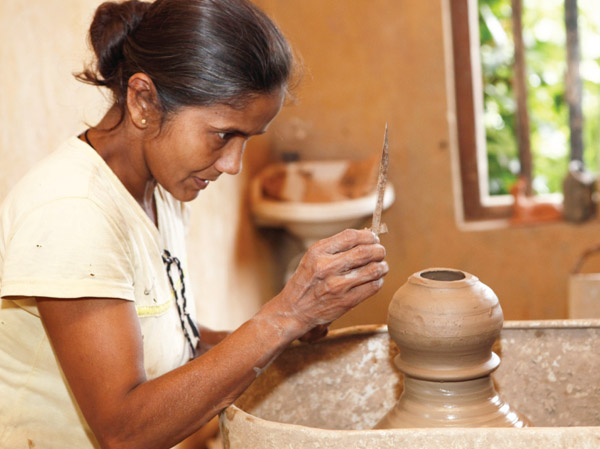
මැටි කර්මාන්තයේ යෙදෙන කෙනෙක් වළඳක්, බඳුනක් හදන හැටි ටික වෙලාවකට බලාගෙන හිටියොත් අමතක නොවන පාඩමක් වෙයි කියලයි මට හිතෙන්නේ. 

ඇත්තටම කියාගන්න බැරි දේවල් අපි මහා හඬින් ගායනා කරනවා. කරන්න බැරි දේවල් ගැන බෙරිහන් දෙනවා. ආදරය, නිදහස, ප්‍රජාතන්ත්‍රවාදය, යහපාලනය, සාමය, සංහිඳියාව, සමෘධිය වගේ වචන බහුලව පාවිච්චි කරන්නේ ඒවා නැවත නැවත උච්චාරණය කරනකොට ඉබේටම ඒ ඒ දේවල් පහල වෙයි කියල හිතාගෙන වගේ.  එහෙම වෙන්නේ නෑ නේ. 

ගමන දිගයි. අසීරුයි. ඊගල්ස් සංගීත කණ්ඩායම ගායනා කරන මේ ගීතයෙන් කියවෙන්නේ සදාතනික සත්‍යයක් කියලයි මටනම් හිතෙන්නේ. මැටි ගුලියක් වෙනස් වෙන, වෙනස් කරන ආකාරය ගැන පොඩ්ඩක් හිතන්න.  ‘වෙනස් වෙනවා නම් ජීවිතයේ දේ වෙනස් වන්නේ ඉතා සෙමින්ය.’  

“මගේ ඇස අග” තීරුවේ තවත් ලිපි

සිංහල අවුරුද්ද කියන ‘මළඉලව්ව’ ගැන කෙටි සටහනක් 

දුක අදේශපාලනික ද?

අද ගුරුවරුන්ගේ දිනයයි.  හෙටත් එහෙමමයි. 

ෆිල්ම් බලද්දී තිර නොපෙනීම

කඩුව පාවිච්චි කරමු 

පොඩි එකාගේ ඔළුවට ගැහුවම වීරයෙක් වෙන්නේ නැහැ මචෝ

යසස් වෙනුවට යසස්ලා 

දූවිල්ලෙන් සැදුනු පවුල් සහ ගම් 

දෑස නිසා

වැඩ්ඩන්ගේ ෂෝ වැඩම තමයි 

ගම සුජීලගේ, ගම හදන්නෙත් සුජීලා හොඳේ?
ලාස්ට් මෑන් හැව් චාන්ස්
සඳට නොලියූ කවියක් 
අහඹු පොතක අහඹු පිටුවක හමුවිය කවියක් අහඹුම නොවන

මේවා මොන ජීවිත ද බං?’    

විප්ලවයේ ආරම්භය සහ අවසානය

February 18th, 2023

Malinda Seneviratne

ඒ වන විට ‘භීෂණය’ ජනගත වෙලා තිබුණේ නෑ. ඒත් පෙරනිමිති පහළ වෙමින් තිබුණා. ඒ භීෂණයේ මුල් අවධිය කියල කියන්න පුළුවන්. මතක හැටියට 1988 වසරේ සැප්තැම්බර් මාසයේ. පාසැල් ශිෂ්‍ය ශිෂ්‍යාවන් සහභාගී වුණ උද්ඝෝෂණයකට පොලිසියෙන් වෙඩි තියල නුගවෙල මාධ්‍ය මහා විද්‍යාලයේ අවුරුදු 15ක සිසුවෙක් මැරුණා. ඒ පිළිබඳව විරෝධය ප්‍රකාශ කරන්න පේරාදෙණිය සරසවියේ ශිෂ්‍යයින් මහනුවර පිකට් කෙරුව.

සුපුරුදු විදිහට පොලීසිය බැටන් පොලු ප්‍රහාරයක් දියත් කෙරුවා. පාරේ එක පැත්තක කඩ පේලියක්, අනිත් පැත්තේ තාවකාලිකව අටවගත්ත රෙදි කඩ. උද්ඝෝෂකයින් කඩවල් ඇතුලට රිංගුවා බේරෙන්න. පාරේ අනිත් පැත්තේ පෝස්ටර් උස්සගෙන හිටපු අයට දුවන්න තැනක් තිබුණේ නෑ.

කඩවල්වලට රිංගපු ළමයි උඩ තට්ටුවට ගිහින් සිද්ධිය බලාගෙන හිටියා. පාරේ එහා පැත්තේ ළමයිට අනුකම්පා විරහිතව පොලීසිය බැටන් පොලුවලින් ගහනවා.

විශ්වවිද්‍යාල සටන්වලට සම්බන්ධ වෙන්නේ ලොකු දේශපාලන දැනීමක්වත් මතවාදී කාරණා විශ්ලේෂණය කරලා සමස්ත සමාජ ආර්ථික දේශපාල වටපිටාව ගැන පුළුල් අවබෝධයක් ලබාගත් අයම නෙවෙයි. සටන සාධාරණයි කියල දැනෙන නිසා, යාලුවෝ සහභාගී වන නිසා, කළ යුත්තේ මෙයයි කියල පොදු මතයක් ඇති වෙලා තියෙන බව තේරුම්ගත නිසා වගේ සරල කාරණා පදනම් කරගෙන සටන් කරන අය තමයි වැඩිපුරම ඉන්නේ.

එවැනි කෙනෙක් එක්තරා කඩයක බැල්කනියේ හිටගෙන මේ පොලිස් පහරදීම් දිහා බලාගෙන හිටියා. ඒ තරුණයා දේශපාලනය ගැන කිසි දෙයක් දැනගෙන හිටියේ නෑ. දේශපාලනය ගැන කිසිම උනන්දුවක් තිබුණෙත් නෑ. එයා ආදරය කෙරුවේ කලාවට, විශේෂයෙන්ම සංගීතයට. සංගීත විශාරදයෙක්, ඒ කාලේ වෙද්දීත් විශිෂ්ට දිල්රුබා වාදකයෙක්.

‘මේක වැරදියි මචං,’ ඒ නිහඬ චරිතය එච්චරයි කිව්වේ.

ශිෂ්‍ය ව්‍යාපාරයටවත් ජනතා විමුක්ති පෙරමුණටවත් දේශප්‍රේමී ජනතා ව්‍යාපාරයටවත් මේ තරුණයා ඍජුව සම්බන්ධ නොවුණත්, පොදුවේ ආණ්ඩු-විරෝධී කුලකයට එකතු වුණා. යුක්තිය සාධාරණත්වය වෙනුවෙන් පෙනී සිටියා. අවශ්‍ය තැන් වලදී බය නැතිව කතා කෙරුවා. විප්ලවවාදියෙක් නොවුණත් නායකයෙක් වුණා.

විප්ලව පටන් ගන්නේ එහෙමයි. තමන්ගේ පුද්ගලික අරමුණුවලට එහා දෙයක් දකින මොහොතක. පොදු බව ගැන අදහසක් ඇති වෙන මොහොතක. පහසු දේ වෙනුවට කළ යුතු දේ ගැන හිතන්න පටන්ගන්නකොට. බෙදාහන්න උවමනාවක් උපදින තැනක. මතුපිට තියෙන බොරුව විනිවිදින කවියකින්.

දේශපාලනය දන්න අය, අරගල කරන අය එකඟ නොවෙන්න පුළුවන්. මම කියන්නේ විහිළු කතා කියල හිතන්නත් පුළුවන්. ‘විප්ලවය කියන්නේ තේ පැන් සාදයක් නොවේ’ කියල කියන්නත් පුළුවන් මාඕ උපුටා දක්වමින්. ‘අහෝ! කවි බිඳුවකින් හෝ ආදර බිඳුවකින් මෙලොව ඇති ක්‍රෝධය සමනය කරන්නට හැකි නම්! එහෙත් ඒ සඳහා දෘඩ හදවතම අවශ්‍යයි” — කවියම විප්ලවයේ අවියක් කරගත් පැබ්ලෝ නෙරුඩා මෙහෙම කිව්වා නේ කියලත් කියන්න පුළුවන්.

ඒත් මේ කතා කරන්නේ විප්ලව ගැන නෙවෙයි, අරගලවල ඇරඹුම ගැනයි. කවියෙන් තෙත් කරන හදවත්වල වරද දකින්නත් එය නිවැරදි කරන්නත් උවමනාවක් අධිෂ්ටානයක් උපදිනවා කියල හිතෙනවා මට.

බොරිස් පැස්ටනැක් ගේ ‘ඩොක්ටර් ශිවාගෝ’ නවකතාවේ එක මොහොතක් මතක් වෙනවා. ශිවාගෝ විප්ලවවාදියෙක් නොවේ, කවියෙක්. ඔහු ආදරය කළේ ලාරා ඇන්ටිපොවාට. ලාරාගේ නිත්‍යානුකූල ස්වාමියා ස්ට්‍රෙල්නිකොව්. විප්ලවවාදියෙක් නමුත් බෝල්ෂෙවික් පාර්ශවයට විරුද්ධ වුණ කෙනෙක්. මේ දෙන්නා අහම්බෙන් මුණගැහෙන්නේ ශිවාගෝ, ඔහුගේ පවුල සමඟ යූරියැටින් බලා ගමන් කරද්දී. ඒ බව දැනගත් ස්ට්‍රෙල්නිකෝ ‘යූරියැටින්?’ කියා මුමුනන්නේ ලාරා එහෙ වෙසෙන බව දැනගෙන.

ශිවාගෝ එවිට ලාරා සමග යුධබිමේ තුවාල වුවන්ට ප්‍රතිකාර කළ බවත්, ලාරා පළමුවෙන්ම දුටුවේ ඊට අවුරුදු ගණනකට පෙර බවත්, ඒ මොහොතේ ස්ට්‍රෙල්නිකොව් ද ඈ සමඟ සිටි බවත් පවසන්නේ ඔවුන් දෙදෙනා ඒ අවස්ථාවේ දී අන් සියලුදෙනා ලැජ්ජාවට පත් කළ බවත් මතක් කරමින්.

ස්ට්‍රෙල්නිකොව් මොහොතක් නිහඬව සිට මෙහෙම දෙයක් කියනවා. පුද්ගලික ජීවිතය අවසාන වෙලා ශිවාගෝ; ඉතිහාසය එය ඝාතනය කරලයි තියෙන්න.’

විප්ලවය අවසන් වුණේ කවද්ද කියල හරියටම කියන්න බෑ. සමහරු කියන්නේ 1990 කියලයි. විප්ලවය අවසන් වුණේ ලෙනින් මැරුණ දවසේ කියලත් කියන්න පුළුවන්. ස්ටාලින් බලය ලබාගත් මොහොතේ නැත්තම් ට්‍රොට්ස්කිට පලා යන්න සිද්ධ වුණ මොහොතේ කියලත් කියන්න පුළුවන්. මේවාගෙන් එකක් නැත්තම් ඒ වගේ ‘සිදුවීමක්’ විප්ලවයේ අවසානය සනිටුහන් කරපු බවට තර්ක ඉදිරිපත් කරන්න පුළුවන්. ‘අවසානය’ ගැන වෙන විදිහකටත් හිතන්න පුළුවන්.

ආදරය අතහරින්නේ යම් මොහොතකද ඒ මොහොතේම විප්ලවයත් අවසන් වෙනවා. මට හිතෙන්නේ එහෙමයි.

“මගේ ඇස අග” තීරුවේ තවත් ලිපි

කුදුබව සහ කුදුකම නොහොත් සාකෝසිකරණය

ෂෝට් ඇන්ඩ් ස්වීට් අහිංසකත්වය

අයන්න කියන්න ලොවටම ඇහෙන්න

හිරවෙන හිරකරන වචන ගැන 

සතුරාගේ ධම්මපදයත් කියවමු 

ළිං මැඩියන්ට උපහාර පිණිසයි 

‘ජීවිතයේ බොහෝ දේ වෙනස් වුනත් වෙනස් වන්නේ ඉතා සෙමින්ය.’

සිංහල අවුරුද්ද කියන ‘මළඉලව්ව’ ගැන කෙටි සටහනක් 

දුක අදේශපාලනික ද?

අද ගුරුවරුන්ගේ දිනයයි.  හෙටත් එහෙමමයි. 

ෆිල්ම් බලද්දී තිර නොපෙනීම

කඩුව පාවිච්චි කරමු 

පොඩි එකාගේ ඔළුවට ගැහුවම වීරයෙක් වෙන්නේ නැහැ මචෝ

යසස් වෙනුවට යසස්ලා 

දූවිල්ලෙන් සැදුනු පවුල් සහ ගම් 

දෑස නිසා

වැඩ්ඩන්ගේ ෂෝ වැඩම තමයි 

ගම සුජීලගේ, ගම හදන්නෙත් සුජීලා හොඳේ?
ලාස්ට් මෑන් හැව් චාන්ස්
සඳට නොලියූ කවියක් 
අහඹු පොතක අහඹු පිටුවක හමුවිය කවියක් අහඹුම නොවන

මේවා මොන ජීවිත ද බං?’  

Email ThisBlogThis!Share to TwitterShare to Facebook

Sujith Rathnayake and incarcerations imposed and embraced

February 18th, 2023

Malinda Seneviratne


‘Crisis & Struggle’ is the title of an art exhibition that was recently held at the Lionel Wendt Art Gallery. Sujith Rathnayake, the artist, calls it a visual art attack. Nice line. It is presented by, so the poster claims, ‘Art Gallery of the Galle Face Protest Site.’

Sujith Rathnayake’s stature as an artist got considerably enhanced during the ‘Aragalaya.’ Put another way, his stature as a conscious objector to perceived tyrannies or rather tyrannies perceived was elevated during those months.

Now we do know that the Aragalaya spawned a lot of unsavoury characters or rather brought them to the fore. Among them were ‘artists’ and some of them were funded directly or indirectly by the US State Department, especially through NED (National Endowment for Democracy), the successor to the CIA in overseas operations designed to destabilise nations considered ‘unfriendly’ or bring them under Uncle Sam’s sway. It is unlikely that Sujith Rathnayake had membership in that particularly distasteful club of con-artists.  

The artistic worth of Sujith’s work will have to be evaluated by art critics. Political fellow travelers will no doubt celebrate a comrade, but perhaps the full significance of one particular exhibit might be lost on them — the installation piece where a prison door and a mirror compels ‘viewer’ to consider his/her incarceration(s), aptly captioned with a Vicent van Gogh quote, ‘conscience is a man’s compass.’

It is pertinent that the quote is an extract from a letter Vicent wrote to his brother Theo (in December 1882) who supported the artist financially and emotionally. The entire letter makes fascinating reading, but let’s limit this to the paragraph that contains the quote, as translated by Theo’s wife Johanna van Gogh-Bonger:

‘One must go on working silently, leaving the result to the future. If one prospect is closed, perhaps another will open itself – there must be some prospect, and a future too, even if we do not know its geography. Conscience is a man’s compass, and though the needle sometimes deviates, though one often perceives irregularities when directing one’s course by it, one must still try to follow its direction.’

Sujith’s invitation is one for self-examination, a consideration of possible complicity. The image of the artist, self-incarcerated and self-framed by a reference to the conscience, is certainly powerful. It cries out, ‘I shall begin with myself.’  Maybe Sujith will, accordingly, express in art or in other form what he contended with in this journey.  He hasn’t yet, that much is clear from the rest of the exhibition.

It is a call nevertheless and since the entire exercise is Aragalaya-toned, so to speak, one cannot be faulted for wondering whether the comrades-at-arms were spurred to engage in the self-reflection prescribed.

The target of the ‘attack by art’ is the status quo, the state, the government then in power, the rulers of that time. The installations and the paintings state the artist’s discontent and indeed livid objection to all that. Perhaps in the calculation of ‘musts’ and ‘perhaps later’ Sujith decided not to question himself, his comrades, fellow-aragalists, relevant paarshava of the Aragalaya with regard to the choice of slogans, the tone of protests, arson, robbery, murder and other despicable acts which, ironically were important issues ranted and raved about by the agitators. Perhaps it was not the time to question, for example, the petikiriya of fellow-aragalists or unwrap the contradictions that were so apparent at Galle Face or, as they called it, GGG (Gotagogama).

Sujith Rathnayake is an artist. He is an activist. He stands up for what he believes. It is not unfair to ask him to subject himself to the tests he has prescribed for others. Time has passed.  A lot of time. Things have happened. One could ask, ‘what kind of reflection has the artist done in the time that has passed?’

Sujith will, I am sure, respond as he will. When he feels it is appropriate. For now, what’s most important, for me at least, is the invitation he has so eloquently ‘worded’ with mirror and frame, incarceration forced, willing submission submitted to imprisonment of one kind or another.

No struggle is perfect. No struggle is smooth. All struggles are marked by setbacks, confusion, betrayal etc. Sometimes, the worst betrayals are those perpetrated on account of ignorance and arrogance or, indeed, those which resolutely refuse self-criticism.

Sujith Rathnayake has put many things in perspective. Sujith Rathnayake has turned a searchlight inwards. The light has also fallen on the agitators and the agitation, whether or not this was intended. It is an important and necessary intervention by an accomplished artist and a man for whom conscience is a compass for it could result in the realization that conscience too can be subjected to incarceration. Self-incarceration. 

[‘The Morning Inspection’ is the title of a column I wrote for the Daily News from 2009 to 2011, one article a day, Monday through Saturday. This is a new series. Links to previous articles in this new series are given below]

The West hates those who fight against them and their rapacious Colonialism

February 18th, 2023

Senaka Weeraratna

The wartime Japanese Prime Minister Hideki Tojo was clearly in the forefront of that fight.  His fault was that his side lost. But that should not de-legitimize the worldwide struggle to end Western colonial domination and rule in Asia and Africa which was finally achieved at huge cost mostly to the Japanese people. The demonization of the Japanese soldiers as ‘savages’ , cannibals, and ‘barbarians’  in a non ending propaganda war against Japan now sprouting on the social media sponsored by mostly Anglo – American academics and historians in the most shameful way, must stop. 

The people of Asia and Africa must confront the historical truth at some point in time sooner than later that if WW2 did not take place the entire world would have become a Western ‘ white’ colony. Whatever ‘mischievous’ intention is attributed to Japan by its detractors the plain simple truth is that Japan is the only non – white country during the last 500 years that fought effectively and as well as the white imperial countries that stunned the western world. Not only that when the Japanese armies marched into Singapore, Jakarta, Saigon, Kuala Lumpur in 1942 the first thing they did was to dismantle ‘ whites only’ apartheid clubs. What was continuing in South Africa until Nelson Mandela stopped it in 1994 was already happening in the Dutch East Indies (Indonesia) in 1942. The natives (local Indonesians) were not allowed to walk on the same side of the Road as the Dutch. There are eye witness accounts to this day.

Nobody likes to be second class citizens in one’s own country. That is why people of Asia supported  the catch cry invented by Japan ‘ Asia for Asians’ . It was valid then and it is even valid today. 

The pivot that brought the liberation of the black man, brown man and yellow man was the second world war. In 1939 there was not even an empty promise to give freedom to the subjugated people in European colonies. The end of WW2 in 1945 saw an array of countries being granted independence. Thanks to Japan and the freedom fighters of India, Indonesia, Burma, Vietnam, Malaya, etc. who achieved in the mid 20th century what was thought impossible at the beginning of the 20th century. 

In Sri Lanka we are told to forget colonial history because it is the darkest chapter in the country’s history which is both morally and even legally indefensible. Colonialism under the Portuguese, Dutch and British was in essence a strict form of religious despotism though differing in degrees of ferocity with each other. The Catholic Inquisition was introduced to Ceylon by the Portuguese after Father Francis Xavier brought it to Goa. The objective of European colonial rule overall was not only to convert the locals to their religion i.e. Christianity, but also to suppress other religions especially Buddhism and de- legitimize Buddhist ways of thinking and the right of the Buddhist Sinhalese to assert their culture. This was most profound in the Portuguese era (1505 – 1658). In missionary Schools the notional wisdom that was planted in school children in their impressive age was that European civilization  was the only true and authentic civilization and all others were primitive and / or Satanic.  The Portuguese and the Dutch saw Buddhism as ‘ Devil worship’ and, for example, promulgated Dutch ‘Placaats’  to prohibit the practice of Buddhism. The most insidious injury was the creation of a mindset of ‘coloniality ‘ in the locals from the time of school to grave. It is this state of mind that underpinned and drove European colonialism in Sri Lanka. .

Sri Lanka’s independence in 1948 was helped greatly by external factors

https://www.sundaytimes.lk/230129/75th-independence/japans-blitzkrieg-and-indian-freedom-struggle-helped-lanka-win-independence-509904.html#:~:text=Sri%20Lanka%20gained%20independence%20on,British%20to%20vacate%20the%20country.

see also

https://youtube.com/shorts/OV807zgLalQ?feature=share

Senaka Weeraratna

Justice has nothing to do with victor nations and vanquished nations, but must be a moral standard that all the world’s peoples can agree to. To seek this and to achieve it – that is true civilization -Hideki Tojo (1894-1948)

Prime Minister of Japan

Poor prospect of elections in Sri Lanka till the 2024 Presidential poll

February 18th, 2023

By P.K. Balachandran Courtesy NewsIn.Asia

Colombo, February 19: Sri Lankan President Ranil Wickremesinghe firmly believes that no elections should be held in the island nation before the Presidential election in 2024 on the grounds that the country cannot afford elections in the midst of an unprecedented economic crisis,

Sources in his United National Party (UNP) say that the economic crisis, marked by shortages and sky-rocketing prices, calls for the maintenance of discipline and national unity without frittering away precious time and energy on politicking.

Wickremesinghe himself has said this in parliament and outside.

UNP insiders also say that Wickremesinghe is likely to be the Presidential candidate of the UNP in 2024 in alliance with the Sri Lanka Podujana Peramuna (SLPP), the party headed by the Rajapaksas. Wickremesinghe believes that his chances will be bright in a Presidential election if he gets adequate time to set the economic house in order, untrammelled by elections to the local bodies and Provincial Councils. These polls could throw up unnecessary issues and controversies and derail the economic recovery.

Devious Ways

Since Wickremesinghe is unable to admit this plan openly, he has chosen devious (though legal) ways to postpone the Local Bodies elections due on March 9.

Although it has been officially announced that the elections will be held on March 9, the prospect of their being held is getting dimmer by the day due to various factors. The latest is that the Elections Commission’s plans to file a special motion before the Supreme Court citing difficulties in getting adequate funds to hold the polls on March 9. A local daily quoted the Chairman of the Elections Commission (EC) as saying that the EC has no money to print ballot papers and make provisions for transport.

Earlier, in January, a retired army Colonel, W.M.R.Wijesundara, had filed a case in the Supreme Court against holding the local elections. The case is to be heard again on February 23. The petitioner questioned the benefit to the public and the country from holding an election at this juncture when Sri Lanka is in the midst of an economic crisis. He noted that the EC had informed him in writing that LKR 10 billion would be required to hold the polls. He cited the current income of the country, the onerous conditions imposed by the IMF,  the ratings given to Sri Lanka by international credit rating agencies, and the Government’s income and expenditure over three years to argue his case for postponement.  

The petitioner also pointed out that the government is engaged in electoral reform, formulating laws for controlling election expenditure, and for the representation of youth and women in elected bodies. It would be wasteful to hold the local elections before the completion of the work on hand, he argued. He also cited the struggle of the common man in making ends meet.  Interestingly, the Treasury Secretary, Mahinda Siriwardena, told the court that funding for the election is a challenge” given the financial situation of the government.

Meanwhile, the Opposition parties had sought a Supreme Court order to the EC to hold the polls as scheduled. The Court said in reply that the EC has already informed the court that it is prepared to hold the elections on March 9.

Sri Lankans are therefore waiting with bated breath for the Supreme Court’s hearing on the army colonel’s petition on February 23. Even if the court rules in favor of postponement, Wickremesinghe will be the butt of severe criticism from the opposition parties and civil society, which will expose the tactics used by him to create the conditions for postponement.

When the talk of holding Local Bodies elections was in the air, Wickremesinghe said that his government plans to reduce the total number of local body members from 8,000 to 4,000. And although a Parliamentary Select Committee had submitted a report on electoral reforms in June 2022, the government proposed to set up another committee in November. A Private Member’s bill was presented by SLPP member Premnath Dolawatte seeking 25% representation of youth in the Local Bodies. Though these measures have their merit, mooting them just before the Local Bodies elections smacked of an ulterior motive.   

Meanwhile, it was reported that Elections Commissioners S.B.Diwaratne, K.P.P.Pathirana and M.M.Mohamed had received death threats demanding their resignation. Another EC member P.S.M.Charles had resigned and the President accepted her resignation. Both the death threats and the reasons for P.S.M.Charles’ resignation remain a mystery.

Good News On IMF Bailout

Even as the chances of the Local elections being postponed are high, Wickremesinghe is getting good news about the possibility of getting the US$ 2,9 billion IMF bailout. International media have reported that Sri Lanka could get the bailout without waiting for China to fall in line on the issue of giving the necessary financial assurance”. It is reported that it will be enough if the Paris Club of lenders plus India give the necessary financial assurances. And these entities have expressed readiness.  China, on the other hand, has been dragging its feet although it is the single largest bilateral lender to Sri Lanka.  China’s offer of a two-year moratorium on the payment of principal and interest on loans taken from its EXIM Bank is not considered enough.

But China does not want to be left out of the international effort to shore up Sri Lanka’s finances. It has geopolitical stakes in Sri Lanka. There are reports of China sending a large delegation to Colombo to discuss Sino-Lankan economic ties.

Wickremesinghe has said that the IMF will make its decision known in March and that the decision will be in Sri Lanka’s favor. However, the IMF has set certain stringent financial conditions or goals which Sri Lanka will have to reach within a given time frame. For Wickremesinghe the challenge will be to meet these requirements which call for grit and determination to face and overcome the opposition of politicians and trade unions  and the apathy of the bureaucracy.

Geopolitical Challenges  

Then there are international pressures to comply with certain geopolitical demands from Lanka’s creditors. The Western nations and India have geopolitical expectations from the Wickremesinghe government. The US would like Sri Lanka to be a key partner in its anti-China Indo-Pacific Maritime Security system. India would like Sri Lanka to be part of its maritime security schemes and keep China at bay. Both the US and India would like Sri Lanka to marginalize China economically and strategically. Germany would like Sri Lanka to lift curbs on imports and Japan would like Sri Lanka to adhere to signed agreements and not renege. China would like Sri Lanka to accommodate its military vessels, give it infrastructure projects and sign a free trade agreement.

Therefore, for Wickremesinghe going is not going to be easy. But if he is able to meet some of the IMF’s conditions and deftly manage the diverse geopolitical pressures, he would be on a good wicket when he faces the Presidential election in 2024.

President vows to prioritize economic recovery, maintain law & order

February 18th, 2023

Courtesy Adaderana

President Ranil Wickremesinghe today pledged to prioritize the country’s economic recovery while ensuring that law and order is maintained to prevent anarchy.

He made a commitment to restore the country’s economy and establish a functioning democratic society before the end of this year.

Speaking at the ‘Imagine’ 32nd Rotary District Conference in Colombo this morning (Feb 18), the President emphasized the importance of economic recovery and improving citizens’ quality of life. He affirmed that all government decisions would be based on these priorities.

In his address, President Wickremesinghe stated that democracy depends on the maintenance of public order which requires law and order. He underscored that without these essential components, democracy would be replaced by anarchy. He assured the audience that he would do his utmost to prevent such a scenario from occurring.

The President lauded the Rotary District 3220 for its invaluable assistance during past crises, such as the anti-polio campaign, tsunami, and medicine shortages.

He also stated that following the country’s economic recovery, next year it would be in a position to decide on the future it wants, with the use of the ballot.

Several distinguished figures were in attendance at the ‘Imagine’ 32nd Rotary District Conference, including the Conference Chairman and Past President Anisha Dharmadasa, the District Governor of Sri Lanka and Maldives Pubudu de Zoysa, and the District Advisor on Public Image and Past President Pradeep Amirthanayagam.

All of these individuals provided their valuable perspectives on the conference’s theme and emphasized the importance of community service.

Additionally, the event was graced by the presence of Ms. Valarie Wafer, who represented Rotary International President Jennifer Jones.


-PMD

Coal stocks available to ensure uninterrupted power supply until Sep – LCC

February 18th, 2023

Courtesy Adaderana

Lanka Coal Company (LCC) says payments have been settled for 13 shipments of coal imported to Sri Lanka.

According to the company’s general manager Namal Hewage, the 12th shipment is currently being unloaded while the unloading of the 13th shipment is expected to begin tomorrow (Feb 18).

Meanwhile, plans are afoot to bring down a total of 36 coal shipments to the country this year, Hewage said further.

Lanka Coal Company is in possession of adequate stocks to ensure an uninterrupted electricity supply until this September, he added.

Meanwhile, Minister of Power & Energy Kanchana Wijesekera says that banks have agreed to provide additional financing to the Ceylon Electricity Board (CEB) based on the revenue that it will generate from the approved new cost-reflective tariff.

As directed by the President, CEB will ensure an uninterrupted power supply with the additional bank financing & new tariff,” Wijesekera said further taking to his official Twitter account.

Sri Lanka has been experiencing daily power interruptions since last February.

Local Govt polls: EC to file special motion before Supreme Court

February 18th, 2023

Courtesy Adaderana

The Election Commission has decided to file a special motion before the Supreme Court detailing the difficulties it is facing during the preparations for the 2023 Local Government Election on March 09.

Chairman of the election body, Attorney-at-Law Nimal G. Punchihewa says inadequate funds, inadequate supply of fuel for transportation, the delays in ballot paper printing by the Government Printer and several other issues stand in the way of LG election preparations.

Punchihewa also noted that adequate security measures are not in place for the Department of Government Printing to ensure that ballot paper printing work is carried out smoothly.

The Election Commission, recalling the recent undertaking it gave before the Supreme Court to hold the Local Government Election on March 09 as scheduled, said it expects to brief the top court about not being able to uphold its pledge.

On Friday (Feb 17), Punchihewa disclosed that the Treasury Secretary has informed the Election Commission that funding the Local Government Election at the moment is challenging.

Meanwhile, Government Printer Gangani Liyanage mentioned that the printing work for the Local Government Election continues to face hindrances without adequate security measures.

Against this backdrop, the Election Commission was compelled to indefinitely postpone the postal voting of the Local Government Election, which was scheduled to be held on February 22, 23, 24 and 28.

Several protests were also staged in many parts of the country against the government’s attempts to defer the election.

Health, petroleum and electricity again gazetted as essential services

February 18th, 2023

Courtesy Adaderana

The supply of electricity and all related services, the supply and distribution of petroleum products and fuel and health services have been declared essential services once again.

This was announced in a special gazette notification, issued by Presidential Secretary Saman Ekanayake under the directives of President Ranil Wickremesinghe on Friday (Feb 17).

It was published in accordance with the powers vested in the President under Section 2 of the Essential Public Services Act No. 61 of 1979.

Previously, four announcements dated August 03, 2022, September 03, 2022, October 04, 2022, and January 03, 2023, were issued by President Wickremesinghe, declaring that these services as essential.

Israel agrees to recruit 2000 female Caregivers from Sri Lanka this year

February 17th, 2023

Manusha Media

A special delegation from Israel visiting Sri Lanka has assured the Minister of Labour and Foreign Employment Manusha Nanayakkara, that their country will offer 2000 job opportunities for female caregivers from Sri Lanka, this year.
The delegation comprising Shiely Raisin Sason, director of Israel’s Population and Migration Institute and members Zindani Mary, Yaccow Kabilau, Margarita Gaorodnitsky among others met Minister Manusha Nanayakkara today. The minister during the meeting requested from the delegation to provide more job opportunities to caregivers from Sri Lanka and in response the delegation assured the Minister that their country will recruit 2000 female caregivers from Sri Lanka this year.
The delegation pointed out that according to the existing culture in Israel, women have more opportunities for patient care, and the number of opportunities for male caregivers is very limited, and accordingly, the delegation also requested the Minister to give priority to females when providing training in the caregiver sector in the future.
The delegation also pointed out the importance of accelerating the recruitment process for caregiver jobs. Accordingly, the Minister assured the delegation that only those who meet the relevant qualifications will be recruited for training. Here, the Israeli delegation informed the minister that Sri Lankan workers with English language proficiency, who have received professional training, will always get the opportunity for Israeli employment opportunities.
The delegation said their country is ready to give opportunities up to 8000 qualified workers on an annual basis.
Both parties pointed out the importance of recruiting workers through a transparent process. The minister pointed out that some private recruiters are acting like a mafia in the process of recruiting caregivers to work in Israel. The minister also clarified the facts about the allegations against some Sri Lankans in Israel regarding the recruitment process. The Minister also mentioned that there are allegations that some people are taking money for providing Israeli jobs.
The Minister also presented to the Israeli representatives the requests to open up the opportunities to hire caregivers for jobs in Israel by the private sector as well. Responding the delegation said that the process of recruiting caregivers should be carried out only with the intervention of the Foreign Employment Bureau.
The delegation from the Population and Migration Institution of Israel requested that any information regarding people who are taking money to provide caregiver jobs in Israel should be given to them to take necessary action. They also assured that the security and confidentiality of the persons giving such information will be fully protected. The delegation also assured that maximum action will be taken according to Israeli law against people who take money through the recruitment process.
The minister also mentioned that the safety of workers who leave for work abroad is always a high priority and added that there have been no allegations of harassment of workers who have left for work in Israel. The minister expressed his thanks to Israel in that regard.

In this discussion, the minister also asked the Israeli delegation that since there are many trained professionals in the country for jobs in the agricultural sector, it would be better if they were given an opportunity for that as well. Here, the Israeli delegation stated that they are not able to open jobs in the agricultural sector at this time, and that necessary steps will be taken in the future.

සම්ප්‍රදායික ලෙස බලන්නේ නැතුව ඊට පිටින් හෝ ගොවි ජනතාවගේ බලාපොරොත්තු ඉටු කළ යුතුයි. -අග්‍රාමාත්‍ය දිනේෂ් ගුණවර්ධන මහතා.

February 17th, 2023

අග්‍රාමාත්‍ය මාධ්‍ය අංශය.

2023.02.17 දින කොළඹ අග්‍රාමාත්‍ය කාර්යාලයේ පැවති  වී මිලදී ගැනීම සහ බෙදාහැරීම සම්බන්ධ සාකච්ඡාව අමතමින් අග්‍රාමාත්‍යවරයා  සඳහන් කළේ අඩු ආදායම් ලබන පුද්ගලයින් සඳහා සහන සැලසීමේ රජයේ වැඩපිළිවෙළ සාර්ථක කරගැනීමට නම් මෙවර මහ කන්නයේ වී මිලදී ගැනීම් සහ බෙදාහැරීම්  නිසි සැලසුමකට අනුව සිදු කළ යුතු බවයි.

 වී මිලදී ගැනීමේ කර්තව්‍යය සහ වත්මන් තත්ත්වය, සමාජ ආරක්ෂක ප්‍රතිශෝධනය පිළිබඳ දැනට පවතින තත්ත්වය විමර්ශනය කිරීම, සහ ආහාර නිෂ්පාදනය පිළිබඳ වැඩකටයුතුවල වත්මන් තත්ත්වය සම්බන්ධයෙන් මෙහිදී වැඩි අවධානයක් යොමුකරනු ලැබීය.

දිස්ත්‍රීක් රැසක වී මිලදී ගැනීම දැනටමත් ආරම්භ කර ඇති බවත් ඉදිරි සති කිහිපය තුළ අනෙකුත් දිස්ත්‍රීක්ක වල අස්වැන්න නෙලීම සහ වී මිළදී ගැනීම ආරම්භ කරන බවත් මෙහිදී අනාවරණය කෙරිණී.

සමාජ ආරක්ෂක ප්‍රතිශෝධන වැඩපිළිවෙළ සම්බන්ධයෙන් ඇතිව තිබෙන ගැටළු කඩිනමින් විසඳා ගැනීමටත් රජයේ නිළධාරීන් හැකිතාක් ඊට යොදවා ගැනීමටත් එසේ කළ නොහැකි අවස්ථාවේදී රාජ්‍ය පරිපාළන අමාත්‍යාංශ ලේකම් වරයාගේ චක්‍රළේඛයට අනුව පුද්ගළයින් යොමු කිරීමටත් මෙහිදී තීරණය කරනු ලැබීය.

එහිදී වැඩිදුරටත් අදහස් දැක් වූ  අග්‍රාමාත්‍ය වරයා-

ජනාධිපතිතුමා දින තුනකට පෙර විශේෂ රැස්වීමක් පවත්වා අපේ රටේ කෘෂිකර්මය සහ ආහාර ස්වයංපෝෂිත  වැඩසටහන  පිළිබදව විවිධ තීරණ ගනු ලැබුවා.

විශේෂයෙන් මේ කන්නය ඉතා සාර්ථක සහල් අස්වැන්නකට අපට ලැබී තිබෙනවා. එය ප්‍රකාශයට පත් කරමින් ජනාධිපතිතුමා එම අස්වැන්න එකතු කර ගැනීමේදී වී සඳහා රුපියල් එකසිය 110 ක  උපරිම මිලක් නියම කළා.

 වී මිලදී ගැනීම සඳහා  මුදලක් සෑම දිසාපති  කාර්යාලයකටම  වෙන්කර තිබෙනවා. වී මිලදී ගැනීමේ වැඩසටහනේ සහයෝගයට  අවශ්‍ය ආරක්ෂක හමුදාවල හෝ වෙනත් ආයතනයක සහයෝගය අවශ්‍ය නම්  එය ලබා ගැනීම සඳහා රජය අවශ්‍ය උපදෙස් ලබා දී තිබෙනවා.

 ශ්‍රී ලංකාව ගැන ලෝකයට අලුත් විශ්වාසයක් ඇතිකරමින් අපේ රටේ ගොවි ජනතාව සාර්ථක අස්වැන්නකට අපේ රට ගෙනවිත් තිබෙනවා.  ඒ විශ්වාසය අපට දේශීය වශයෙන් වගේම ජාත්‍යන්තර වශයෙන් විශාල ශක්තියක්. දැන්   නෙලා ගන්නා අස්වැන්න සඳහා මුදල් ලබා දීමත්, ඒවා ගබඩා කර ගැනීමත්,   මහා පරිමාණ සහ කුඩා පරිමාණ වශයෙන් වී කොටන මධ්‍යස්ථානවලට යොමු කිරීමත්  සිදුකරමින් තිබෙනවා.

 ආහාර ලබා ගැනීමට අමාරු පවුල් වලට වලට  සහන ලබාදීමේ වැඩසටහනක් මේ සමගම සමාන්තරව ගෙනයන්නට පැහැදිලි වැඩපිළිවෙලකට  රජය  අවතීර්ණ වෙලා තිබෙනවා.

 සම්ප්‍රදායික ලෙස බලන්නේ නැතුව ඊට පිටින් හෝ අලුතෙන් හරි මැදිහත්වීමෙන් ප්‍රායෝගිකව ඒ ස්ථානවල ගොවි ජනතාව බලාපොරොත්තු වෙන කාර්යය අප ඉටු කළ යුතුයි.

 අඩු ආදායම් ලබන කොටසට ලබාදෙන සහනය වැඩි කිරීමට ලෝක බැංකුවේ සහයෝගය අපට තිබෙනවා. නමුත් අප විසින්   දත්ත  සැපයීම සඳහා ගෙන ඇති කාලය වැඩියි.  

රාජ්‍ය අමාත්‍යවරුන් වන  මොහාන් පී සිල්වා, ඩී. බී. හේරත්, කාදර් මස්තාන් අනූප පැස්කුවල්, දිස්ත්‍රික් සම්බන්ධීකරන කමිටු සභාපතිවරුන් වන චමල් රාජපක්ෂ, ප්‍රදීප් උදුගොඩ, සංජීව එදිරිමාන්න, අකිල එල්ලාවල, රාජිකා වික්‍රමසිංහ, සහන් ප්‍රදීප්, ආරක්ෂක අමාත්‍යාංශ ලේකම් කමල් ගුණරත්න, ආරක්ෂක මාණ්ඩලික ප්‍රධානී ජනරාල් ශවේන්දු සිල්වා සහ අමාත්‍යාංශ ලේකම්වරුන්, රජයේ නිලධාරීන් මෙම සාකච්ඡාවට එක් වූ අතර zoom තාක්ෂණය ඔස්සේ කෘෂිකර්ම අමාත්‍ය මහින්ද අමරවීර,  එස් බී දිසානායක, සියලු දිස්ත්‍රික් ලේකම්වරුන් ද  සාකච්ඡාව සඳහා  එක්විය.

අග්‍රාමාත්‍ය මාධ්‍ය අංශය.

Some defend the boyfriend, who killed his girlfriend by slitting her throat |

February 17th, 2023

Open Letter to the Chief Minister of Thamizhaham (TN-India)

February 17th, 2023

By Engr. Kanthar Balanathan

By Engr. Kanthar BalanathanDipEE (UK), GradCert (RelEng-Monash), DipBus&Adm (Finance-Massey), C.Eng., MIEE, Former Director of Power Engineering Solutions Pty Ltd, Consulting Electrical Engineers

With due respect to the Chief Minister, Mr MK Stalin, the son of a great writer/politician in India, Mr M. Karunanithi, I would like to point out that some people who are not in politics, or any other discipline in TN are involved in fashioning stories to disturb the peace in India and Sri Lanka and the Tamils overall. The purpose of creating these stories is not clear to the common mass.

Mr Pala Nedumaran, of Madurai, was speculating that Prabakaran was alive after the war in 2009, and repeatedly in the years, 2010, 2012 and so on. No one knows the reason for this act by Nedumaran.

It can now be construed that he is acting on the instruction of those who are opposed to the growth of India, TN, and Sri Lanka. It is not my intention to speculate who they are. However, there is a time that a citizen of a country should be patriotic and abide by the laws of the country.

Tamils as they historically have no vision and mission, engaged in forming associations, congresses, Forums etc to collect the money have reached the end of their act. Some of the forums have been closed and become inactive. Some Tamils reached India in Tamil Nadu (Thamizhaham) for safe heaven and are enjoying their life while Tamils in Sri Lanka are economically suffering. Most Tamils who are crooks in nature have collected money and acquired more wealth and they have shut their vocals and acts.

In, Sri Lanka, some of the politicians like the Rajapaksas have swept more wealth and now thinking of leaving politics.

Sir, addressing the act of Mr Nedumaran: What is the objective of such a new story that Prabakaran is alive? Mr Kasi Ananthan is by the side of Nedumaran supporting this story. People like Seeman are trying to attain political popularity through the Sri Lankan Tamil question.

  1. Is Nedumaran trying to pose a threat to the Sri Lankan administration by stating that Prabakaran is alive?
  2. Or is he trying to help the Tamil crooks (diaspora) to collect money to acquire more wealth and distribute it among themselves?
  3. Or Intimidate the Sri Lankan military? This act is foolish because the entire balance system will be disturbed, and the peace will be disturbed.
  4. Or is he helping the diaspora forums?
  5. The GTF, Father Emanuel should confine himself to promoting religious beliefs and not terrorism.

Sir, at this stage, it is a belief that Nedumaran is trying to upset the balance, and progressive development of India, and some countries may be behind this act. India is coming up in her abreast of technological advancement along with IT. People like Nedumaran, Kasi Ananthan, Seeman, and Vaiko are not capable of understanding this technology and its effect on society. They only understand power, wealth, and popularity.

Sir, you are being the Chief Minister who is responsible for the security and peace of TN, are kindly requested to order the Q” branch to pay a visit and interrogate Nedumaran and Co.

People in Sri Lanka are suffering from a lack of money, medicine, food transport etc, and you are aware of this because you have helped SL. Tamils constitute only 11.1% of the total population and please understand whether the 11.1% should be the cause for the suffering of the balance 88.9%  percentage of the people in SL.

Demographics of Sri Lanka. (2023, February 14). In Wikipedia. https://en.wikipedia.org/wiki/Demographics_of_Sri_Lanka

It is kindly requested from the CM put an end to this false propagation of Prabakaran is alive”.

Prabakaran in 2008 was inactive suffering from a complex of serious health disorders according to the media. He was suffering from BP, Sugar, Bi-Polar disorder etc. As people say, Prabakaran was not intellectual and intelligent. He can only shoot to kill people.

It is a school of thought that Nedumaran & Co are trying to disturb the balance and development of India as a country. This is not the time to play dirty politics.

Thank you, Sir.

IMF said to discuss Sri Lanka loan approval even as China stalls

February 17th, 2023

Courtesy Adaderana

(Bloomberg) – The International Monetary Fund is considering approving Sri Lanka’s bailout even without the formal assurance of debt-restructuring support from China, the nation’s biggest bilateral creditor, according to people familiar with the discussions.

Under a rarely used policy on lending into official arrears, the IMF may consider approving Sri Lanka’s loan because China’s assurance is the only prerequisite missing, according to the people who declined to be identified because the information isn’t public.

This provision is aimed at preventing a creditor from blocking assistance to a country in dire need of financing and has shown commitment to meet loan conditions.

An IMF spokesperson said that it’s premature to discuss the precise IMF policies that could be applied to lending to Sri Lanka, and that the nation’s authorities continue to seek financing assurances so that the fund’s executive board can consider their request for a loan. IMF staff also continue to engage with the Sri Lankan authorities who are working on completing upfront policy measures, the spokesperson said.


IMF Policy

The IMF can use the policy on lending into official arrears if it deems prompt financial support is essential and sees the country pursuing appropriate policies and making good-faith efforts to reach an agreement with creditors, according to an explanation on the fund’s website.

Moving forward with loan approval would be a shift from its position earlier this month, when it said the approval of Sri Lanka’s $2.9 billion Extended Fund Facility will depend on whether the nation can secure assurances from all bilateral creditors. 

The development comes as World Bank President David Malpass said Thursday that long extensions of debt are among the options that G-20 nations and others are considering to help ease the burden for poor countries.

The IMF, World Bank and Group of 20 nations chair India separately held virtual discussions Friday on global sovereign debt ahead of the finance ministers and central bank governors’ meeting in Bangalore next week.

Sri Lanka and Pakistan count on IMF loans to provide immediate relief by shoring up their foreign-currency reserves and unlocking more funding.

Pending China’s creditor assurance, Sri Lanka is trying to meet other reform conditions set by the IMF, including increasing electricity tariffs and clearing a new monetary law for parliament approval. The government may also loosen its grip on a currency band to meet the fund’s requirements.

The Paris Club — an informal group of rich, mostly western creditors — and India have provided formal support to Sri Lanka’s loan recast, leaving China as a holdout. 

China, which accounts for about 52% of the bankrupt nation’s bilateral debt, has instead offered term extensions via the state-owned Export-Import Bank.

Debt negotiations have dragged since Sri Lanka defaulted in May, causing severe supply shortage, depleting its foreign-currency reserves, sending inflation and borrowing costs soaring and pushing the economy into a recession.

While the nation has repurposed some funds to ease the shortage and damp price pressures, it would need IMF’s bailout and other funding to turn the situation around.


Source: Bloomberg
-Agencies

Treasury Secretary informs EC of difficulties in funding LG election

February 17th, 2023

Courtesy Adaderana

Treasury Secretary Mahinda Siriwardana has informed the National Election Commission of the difficulties in funding the 2023 Local Government polls.

The election body says that the Treasury Secretary has cited the current adverse financial situation and the administrative decision taken by the government to allocate funds only for essential services as the reasons for the inability to release the funds required for the election.

The Treasury Secretary conveyed this to the election body’s chairman, Nimal G. Punchihewa during a meeting held today (Feb 17) between the Election Commission and Finance Ministry officials on funding the upcoming LG polls.

Earlier this month, President Ranil Wickremesinghe, in his capacity as the Minister of Finance, Economic Stabilization and National Policy, instructed the Treasury Secretary to provide funds only for essential public services.

Accordingly, the list of expenditures to be funded includes salaries, debt servicing, pensions, medical supplies for hospitals, subsidies for low-income groups, scholarships, farmers’ pensions, school nutrition programs, payments for war heroes and disabled soldiers, utility payments, food supplies for hospitals and prisons, and others. 
The government stated that this move is expected to have a significant impact on the economy, as it will prioritize the most important needs of the people while also preventing the misuse of funds.

Finance Ministry officials, during today’s meeting, have pointed out that the permission of President Wickremesinghe, needs to be obtained in order to release funds to public institutions that are not listed under the ‘essential services’ category.

President hopeful about reducing bank interest rates

February 17th, 2023

Courtesy Adaderana

President Ranil Wickremesinghe says reducing bank interest rates in relation to the gradual decline in inflation is currently under consideration.

The Head of State further expressed hopes about receiving the USD 2.9 billion under the International Monetary Fund’s extended fund facility (EFF) program by March.

His remarks came during a meeting at the Presidential Secretariat on Thursday evening (Feb 16) to discuss the issues faced by small- and large-scale paddy mill owners, the President’s Media Division (PMD) said.

During the discussion, the mill owners raised concerns about the soaring fuel prices, electricity tariffs, equipment maintenance costs, transportation charges and other costs pertaining to production and administration work that have led to an increase in the production cost of 1 kilogram of paddy.

Further, the mill owners drew the attention of President Wickremesinghe to the challenges they are facing by having to pay an interest of 28% for the bank loans they have obtained.

රටට මර බිය දන්වන 13වන විවස්ථා සංශෝධනය සහ ලංකාවේ දේශපාලනය

February 16th, 2023

Sanka Chandima

13 සංශෝධනය සම්පූර්ණයෙන්ම ක්‍රියාත්මක කරන කිසිවෙකුට මේ රට පාලනය කිරීමේ කිසිදු අයිතියක් කිසිසේත්ම නොමැත. #Decolonise our constitution & abolish the provincial councils. Build a new constitution for us based on who we are, not on what imperialists want us to be: slaves. We haven’t forgotten how the Indian Army invaded #SriLanka to the tune of 150,000 soldiers.

ඉන්දියානු ‘රෝ‘ සංවිධානය මෙරට මෙහෙයුම් සිදුකරන්නේ කෙසේ ද? – රෝ සංවිධානයේ සාමාජිකයකු අනාවරණය කරයි

February 16th, 2023

Lanka Lead News

භූ දේශපාලනික රහස් හෙළිදරව් කිරීම් අතින් පසුගිය දශකයේදී ලෝකය උඩුයටිකුරු කළ එඩ්වඩ් ස්නෝව්ඩන් වඩාත් ලොව ප්‍රකට වූයේ ඔහු විසින් CIA සංවිධානය ගැන කළ විශේෂ හෙළිදරව් කිරීම් නිසාය.

CIA සංව්ධානය විසින් දෙස් විදෙස් භූදේශපාලන නායකයන්ගේ දුරකථන ඇමතුම්, ඊ මේල් සහ සමාජ ජාලා ගිණුම වලට හොර රහසේ ඇතුල්වී තොරතුරු සොරා ගන්නා බව මෙන්ම ශුද්ධෝත්තම පාප් වහන්සේද CIA ඉලක්කයක් වූ බව ස්නෝව්ඩන් කළ හෙළිදරව් කිරීම් නිසා ඇමෙරිකාවේ දතකට පූට්ටු වූයේ එම තොරතුරු සාක්ෂි සහිතව ලෝකය හමුවේ අනාවරණය වූ බැවිනි.

කෙසේ වෙතත් ස්නෝව්ඩන් වැනිම පුද්ගලයෙක් පසුගිය දා ශ්‍රී ලංකාව තුළ ක්‍රියාත්මක වන ඉන්දියානු රෝ සංවිධානයේ රහසිගත මෙහෙයුම් පිළිබදව ආන්දෝලනාත්මක අනාවරණයක් සිදුකර තිබේ.

නමින් ගෞරව් වන ඔහු රෝ සංවිධානයේ ඉහළ ස්ථරය නියෝජනය කළ ඉන්දීය ජාතිකයකු වන අතර, ඔහු හෙළි කළ කරුණු අතිශය රහසිගත කරුණු වුවද එහි ඇති ප්‍රවෘත්තිම වටිනාකම නිසා සහ සමාජය දැනගත යුතු කරුණු ලෙස සලකා මෙලෙස පළ කරන්නෙමු.

ඔහු පවසන ලෙස ලංකාව කිසිම දිනක ඉන්දීය භූමිය තුළ රහසිගත මෙහෙයුම දියත්කොට නොමැති වූවද ඉන්දියාව ශ්‍රී ලංකා භූමියේ නිරන්තරව රහසිගත මෙහෙයුම වල නියලී සිටියි. රෝ බුද්ධි අංශ නියෝජිත ගෞරව් වසර ගණනාවක් පුරා මෙරට රහසිගත මෙහෙයුම් දියත් කොට තිබේ.

මෙරට සිදුවූ දැවැන්ත ඛේදවාචකයක් වූ පාස්කු ප්‍රහාරයෙන් පසු ඔහුව යළි ඉන්දියාව වෙත කැඳවා තිබේ.

2019 මැතිවරණ උණුසුම තුළ ද ඔහු ලංකාවට පැමිණ ඇති අතර, එම ගමනේ මූලික අරමුණ වී ඇත්තේ රාජපක්ෂ පවුල බලයට ගෙන ඒම සදහා ඔහුට පැවරුණු කාර්ය ඉටුකිරීමට ය.

ඔහු සදහන් කරන ලෙස ලංකාවේ සමාජ සහ දේශපාලන බලයක් හිමි පුද්ගලයන් තමන් වෙත නංමවා ගැනීම සදහා රෝ සංවිධානය නිරන්තරයෙන් මෙහෙයුම් දියත් කරයි.

මෙරට කැබිනට් ඇමතිවරු, පාර්ලීමේන්තු මන්ත්‍රීවරු, ආගමික නායකන්, අධිකරණ නිළධාරීන්, රාජ්‍ය ආයතන වල ස්ථිර ලේකම්වරු , ජනමාධ්‍යවේදීන්, හමුදාවේ සහ පොලීසියේ ඉහළ නිළධාරීන්, වෛද්‍යවරු, සිවිල් ක්‍රියාකාරීන් පිරිස් මුදල් සහ වෙනත් වරදාන ලබා දී රෝ සංවිධානය වෙත ඇද ගැනීම සදහා, ගෞරව් කැපවී වැඩකොට තිබේ.

ඔහු එම නම් ලැයිස්තුව ද හෙළිදරව් කොට තිබේ.

කොරෝනා වසංගතය පැමිණීමත් සමග ලංකාව බිඳ වැටෙන බව රෝ සංවිධානය නිෂ්චිත ලෙසම දැන සිට ඇති අතර, ආර්ථිකයේ කඩා වැටීම වේගවත් කිරීමට ඔවුන් සැලැසුමක් ද දියත්කොට තිබේ.

පාර්ලිමේන්තුවට නොදන්වා ‘රට බංකොළොත්‘ බවට මහ බැංකු අධිපති කළ ප්‍රකාශය ද රෝ සංවිධානයේ කුමන්ත්‍රණයක් බවයි ඔහු හෙළිදරව් කර ඇත්තේ.

2022 වසරේ ලංකාවේ පැනනැගුණු අරගලය තුළ ද රෝ සංවිධනය විශාල කාර්ය භාර්යක් සිදු කොට අති අතර, රෝ සංවිධානය තොරාගත් කන්ඩායම් කිහිපයකට මුදල් ආධාර ලබා දී ඇත. එමෙන්ම ඇතැම් මාධ්‍ය ආයතන වලටද මුදල් පොම්ප කර ඇති බවත් ඔහු හෙළිදරව් කරයි.

ගෞරව් පවසන පරිදි රෝ සංවිධානය ශ්‍රී ලංකාවේ ශක්තිමත් ජනමූල සිංහල නායකයන් බිහි වනවාට කැමති නැත.

මේ වන විට රෝ සංවිධාන ශ්‍රී ලංකාව තුළ ක්‍රියාත්මක වී සිටින්නේ පූර්ණ බලතල සහිතව පළාත් සභා ක්‍රමය ක්‍රියාත්මක කිරීම සදහාය. එසේ නොකළ හොත් ලංකාව අස්ථාවර කිරීමට රෝ සංවිධානය සැලසුම් කොට තිබේ. මේ සදහා රාමනාථපුරම් සරණාගත කදවුර සහ රෝහින්ගයා සරනාගත කඳවුරු තුළ ‍තෝරාගත් පිරිසක් අදාළ False flag ops සදහා පුහුණු කොට ඇති බව ද ඔහු තොරතුරු හෙළි කරයි.

ශ්‍රී ලංකාවේ විදේශ කටයුතු අමාත්‍යංශය මුළුමනින්ම පාහේ මේ වන විට රෝ සංවිධනයේ පාලනයට නතු වී ඇති බවත්, ඔවුන්ගේ Paid agent කෙනෙක් ලෙස කටයුතු කරන කාන්තා නිලධාරිනියක් ගැන ද සියලු තොරතුරු ඔහු හෙළිදරව් කොට තිබේ.

ඉතිහාසයේ සිටම රට දෙකඩ කිරීමේ මෙහෙයුම් ක්‍රියාත්මක වුණා – වඩමාරච්චි සටන හරියට අවසාන කරන්න ඉඩ ලැබුණා නම් රටේ තත්ත්වය වෙනස් වෙන්න ඉඩ තිබුණා – විශ්‍රාමික ලුතිනන් ජෙනරාල් ජගත් ඩයස් (වීඩියෝ)

February 16th, 2023

Lanka Lead News

දෙමළ ජනතාවට රටක් නැති බවත්, එනිසාම ඔවුන් රටක් සොයන්නේ අතීතයේ සිටම බවත් විශ්‍රාමික ලුතිනන් ජෙනරාල් ජගත් ඩයස් ඩයස් මහතා පවසයි.

මාධ්‍ය නාලිකාවක් සමග සාකච්ඡාවකට එක්වෙමින් ඒ මහතා මෙම කරුණු සදහන් කරයි.

ඊශ්‍රායලයට ද රටක් නොතිබුණු අවදියේ බටහිර බලපෑම මත ඔවුන්ට රටක් අත්පත්කර ගැනීමට හැකි වූ බවද, දෙමළ ජනතාවට රටක් නොමැති නිසා එය මුලින්ම ඉන්දියාවෙන් ලබාගැනීමට උත්සාහ කළ බවද, ඉන්දියාව තම රට තවදුරටත් බෙදීමට කිසිසේත් එකග නොවීම මත ඔවුන් ශ්‍රී ලංකාව දෙසට හැරුණු බවද ජගත් ඩයස් මහතා අතීතයේ උදාහරණ ගෙනහැර දක්වමින් ප්‍රකාශ කරයි.

1983 මෙරට සිදුවූ කෝලහාලය සහ එම කාලයේදී ඇරැඹි වඩමාරච්චි ක්‍රියාන්විතය පිළිබදවද සදහන් කරන ඒ මහතා, ශ්‍රී ලංකා ඉතිහාසය තුළ ඉතා සංවිධානාත්මකව ත්‍රස්තවාදීන්ට එරෙහිව ක්‍රියාත්මක කළ පළමු මෙහෙයුම වන්නේ ද එය බවයි පවසන්නේ. එම ක්‍රියාන්විතය හරියට කිරීමට ඉඩ ලැබුණා නම් අද වන විට රටේ තත්ත්වය බොහෝ වෙනස් වන්නට ඉඩ තිබුණු බවද ඒ මහතා පවසයි.

කෙසේ වුවද ඉන්දියානු බලපෑම මත එම ක්‍රියාන්විතය ද නතරවූ බවත්, ඉන්දියාව දිගින් දිගටම මෙරට බෙදීම වෙනුවෙන් සැලසුම් සහගතව ක්‍රියාත්මක වූ බවද ඒ මහතා පෙන්වා දෙයි.

13 වැනි සංශෝධනය එම ඉතිහාසය පුර පැවැති බෙදුම්වාදී මෙහෙයුමේ දිගුවක් බවත්, නිදහසින් පසු මෙරට පාලනය කළ නායකයන් බොහෝ දෙනෙකු ප්‍රතිපත්තියක් මත පිහිටා කටයුතු නොකළ බව හා ඔවුන්ට සැලසුමක් නොතිබූ බවද ඒ මහතා වැඩිදුරටත් පෙන්වා දෙයි.

වීඩියෝව පහළින්…

https://www.facebook.com/plugins/video.php?height=314&href=https%3A%2F%2Fwww.facebook.com%2FJayatv.lk%2Fvideos%2F1372501696625273%2F&show_text=false&width=560&t=0

Facebook

ජනපති හා සිටි රවිට සමන්තභද්‍ර හිමි අමතයි

February 16th, 2023

උපුටා ගැන්ම  අරුණ පුවත්

පසුගිය බ්‍රහස්පතින්දා ජනාධිපතිවරයා මුදල් අමාත්‍යාංශයේ නිලධාරීන් සමග සාකච්ඡාවක නිරත විය. සාකච්ඡාව අවසානයේ ජනාධිපතිවරයා රවි කරුණානායක හිටපු මුදල් අමාත්‍යවරයා සමග කිසියම් දෙයක් පිළිබඳ කතා කරමින් සිටින විට රවිගේ ජංගම දුරකථනය නාද විය. ‘‘එහෙමයි ස්වාමීන් වහන්ස, එහෙමයි. ඉන්න මම ජනාධිපතිතුමාට දෙන්නම් එතුමාටම කියන්නකෝ‘‘ යනුවෙන් දුරකතනය රනිල්ට දුන්නේය.

‘එහෙමයි ස්වාමීන්වහන්ස, මම දැන් මේ මුදල් අමාත්‍යාංශයේ නිලධාරීන්ටත් කිව්වේ ඔබ වහන්සේගේ වැඩපිළිවෙළ ගැන. මම කිව්වා ඒ වැඩපිළිවෙළ ආදර්ශයට අරගෙන කරන්න පුළුවන් දේවල් කරන්න කියලා. ඇත්තටම ඔබ වහන්සේ හොඳ වැඩක් කරලා තියෙනවා ආදර්ශයට ගන්න වටිනා

‘‘යනුවෙන් ජනාධිපතිවරයා කියාගෙන කියාගෙන ගියේය. ජනාධිපතිවරයාගේ අගය කිරීමට මේ අයුරින් ලක් වුණේ උමන්දාව නිර්මාතෘ පිටිදූවේ සිරිධම්ම හෙවත් සිරි සමන්තභද්‍ර හිමියන්ය. ‘‘ඔවු ජනාධිපතිතුමා, ඕනම වෙලාවක මම ලෑස්තියි මම දන්න දේ රටට කියලා දෙන්න. ඒ වගේම ඔබතුමාගේ රාජාසන කතාවත් හොඳයි. කතාව වගේම ඒක යථාර්ථයක් කරගන්න වැඩ කරනවා නම් ඊටත් වඩා හොඳයි

‘‘සිරිධම්ම හිමියන් ජනාධිපතිවරයාට පෙරළා පැවසීය. සිරිධම්ම හිමියන්ට පසුගිය කාලයේ දිගින් දිගටම ජීවිත තර්ජන එල්ලවීම හේතුවන් උන්වහන්සේගේ ආරක්ෂාව පිළිබඳ කටයුතු යොදන ලෙස සිරිධම්ම හිමියන් රවිට පවසා තිබේ. රවි සිරිධම්ම හිමියන්ගේ දීර්ඝ කාලීන මිත්‍රයකු වන අතර ඔහු වහාම ක්‍රියාත්මක වී ජනාධිපතිවරයා දැනුවත් කර ආශ්‍රමයේ ආරක්ෂාවට කටයුතු සම්පාදනය කර තිබිණි. එකී ආරක්ෂක විධිවිධාන සම්බන්ධයෙන් සාකච්ඡා කිරීම සඳහා සිරිධම්ම හිමියන් රවිට අමතනවිට රවි සිටියේ ජනාධිපතිවරයා සමගය. එහෙයින් සිරිධම්ම හිමියන්ට සෘජුවම ජනාධිපතිවරයා සමගද සාකච්ඡා කිරීමට අවස්ථාව උදාවිය.

රනිල් එක්ක බෑ, රනිල්ට බෑ, රනිල් ඉන්නකං බෑ කියා පසු ගිය කාලේ කියපු බොහෝ දෙනා දැන් දැන් රනිල් ට විතරයි පුළුවන් යනුවෙන් කියන තැනට පරිවර්තනය වී තිබේ. විශේෂයෙන්ම එක්සත් ජාතික පක්ෂයේ බිම් මට්ටමේ සිට ජාතික නායකයන් දක්වා පසුගිය කාලේ ‘‘රනිල් ඉන්නකං බෑ‘‘ කියමින් පක්ෂය හැර යාම සුලබ දෙයක් වී තිබිණි. එක්සත් ජාතික පක්ෂයේ හිටපු ජාතික සංවිධායක නවීන් දිසානායක සිය තනතුරින් ඉල්ලා අස්වුණේද කඩිනමින් පක්ෂ ප්‍රතිසංවිධානයක් නොකරන්නේ නම් පක්ෂයට අනාගතයක් නෑ කියමිනි. නමුත් නවීන් පසුගිය දවසක සිරිකොත පක්ෂ මූලස්ථානයේ පැවති මාධ්‍ය හමුවකදී පැවසුවේ රට මීට මාස 6කට කලින් තිබුණ තැන හා සසඳද්දී මේ වන විට රට ගොඩ එමින් තියෙන බවයි. ඒ සියල්ලට හේතුව රනිල් සිය දේශපාලන පන්නරයෙන් තනියම ගහන ගේම් එකක් බවත් ඔහු වැඩි දුරටත් පවසා තිබේ. මේ වන විට රටේ නිල විදේශ සංචිතය ඇමරිකානු ඩොලර් බිලියන දෙකකට පැමිණ ඇති බවත් රනිල් වික්‍රමසිංහ රට භාර ගන්නා විට විදේශ සංචිත තිබුණේ ඍණ මට්ටමක බවද මෙහිදී නවීන් පවසා තිබේ. කිසිම මැතිවරණයක් පවත්වන්න එපා යැයි එක්සත් ජාතික පක්ෂය කිසි විටෙක කියන්නේ නැතැයිද රට ස්ථාවර කිරීම සඳහා ජනාධිපතිවරයාට තව මාස හයක්වත් දිය යුතු යැයිද ඊට පසුව ඕනෑම මැතිවරණයකට යා හැකි යැයිද ඔහු මෙහිදී අවධාරණය කර තිබේ.

High level US Defence delegation discuss regional security stability with SL officials

February 16th, 2023

Courtesy The Daily Mirror

State Minister of Defence Premitha Bandara Tennakoon and Defence Secretary Kamal Gunaratne today held discussion with the delegation led by U.S. Principal Deputy Assistant Secretary of Defence for Indo-Pacific Security Affairs (PDASD) Jedidiah P Royal over the matters of defence cooperation enhancement and regional security stability.

Jedidiah P Royal paid a courtesy call on the State Minister of Defence and Defence Secretary during two separate occasions today.

U.S. PDASD accompanied by Defence Attaché of the US embassy Lt. Col. Anthony Nelson on arrival at the State Ministry of Defence.

The brief discussion held during the occasion was centred on matters of further strengthening the existing ties between the U.S. and Sri Lanka.

Assistant Defence Attaché in the U.S. Embassy Mr. Seth Nevins, U.S. South Asia Desk Officer Lt. Col. Christian Mitchell and Sri Lankan Defence Ministry’s Senior Assistant Secretary (Defence) Mr. Harsha Withanarachchi were also present during the meeting.

Prior to the meeting with the State Minister, the U.S. delegation met Kamal Gunaratne at the Defence Headquarters Complex in Sri Jayewardenepura.

Defence Secretary held a cordial discussion with Mr. Jedidiah P Royal and the mutually supportive relations existed between the two countries were recalled. 

Military Liaison Officer (MLO) of the Ministry of Defence Maj. Gen. Dinesh Nanayakkara, Assistant Defence Attaché in the U.S. Embassy Mr. Seth Nevins and U.S. South Asia Desk Officer Lt. Col. Christian Mitchell were also present at the occasion.

The high-level US delegation arrived in the country on Tuesday night.(Darshana Sanjeewa Balasuriya)

Sri Lanka, India to sign power grid linking pact within two months – envoy

February 16th, 2023

Courtesy Adaderana

Sri Lanka and India will sign a pact to link their power grids and start negotiations on an upgraded trade agreement within two months, a Sri Lankan diplomat said on Wednesday, as the island nation seeks a way out of its worst economic crisis in decades.

India has provided some $4 billion in assistance to its southern neighbour since the crisis hit early last year, but Sri Lanka is now seeking to enhance trade and investments as it moves to close a $2.9 billion loan from the International Monetary Fund, the country’s envoy to New Delhi told Reuters.

We have to have growth, otherwise basically the economy will shrink,” Milinda Moragoda said.

As far as growth is concerned, India offers that prospect. So we will have to move on that. Tourism from India, investment from India, integration with India. That’s what we have to do.”

A key part of Sri Lanka’s economic recovery plan rests on developing its renewable energy resources in the island’s north, from where power can be transported into southern India through a cross-border transmission cable.

The two countries resumed talks on linking their electricity grids last year, and Moragoda said a memorandum of understanding on the project would be signed within two months, which will be followed by a feasibility study.

First proposed more than a decade ago, the project has made little progress so far. But Moragoda said Sri Lanka hoped to get the transmission line in place within two to three years so that renewable power produced on the island can be sold to India.

We need to have more sources of foreign exchange and electricity will be ideal,” he said.

The neighbours will also start negotiations within weeks on enhancing an existing free trade agreement, Moragoda said, as part of a push by Sri Lanka to seal deals with key trading partners, including China and Thailand.

On our side, we are just about to nominate the (negotiations) team,” he said, adding that the focus would be on enhancing trade in sectors including textiles and garments, a major foreign exchange earner for Sri Lanka.

India is Sri Lanka’s biggest trading partner accounting for about $5 billion each in bilateral trade in 2021.


Source: Reuters
-Agencies

Funding LG election problematic due to unprecedented economic crisis – Justice Minister

February 16th, 2023

Courtesy Adaderana

Minister of Justice, Prison Affairs and Constitutional Reforms Dr. Wijeyadasa Rajapakshe says the government has requested the Ministry of Finance to look into how the upcoming local government election can be financed in order to safeguard the people’s franchise.

Speaking during a panel discussion ‘At HydePark’ on Ada Derana 24, the Justice Minister said funding for the election has become problematic due to an unprecedented economic crisis which has never been experienced during the time of any election.

Dr. Rajapakshe also noted that the Election Commission is vested with the powers to make decisions on holding elections via the 21st Amendment to the Constitution.

Meanwhile in response to a question raised during the discussion regarding whether the government is interested in holding the election, Dr. Rajapakshe claimed that they must continue with the election to safeguard the public franchise.

The Minister, who pointed out that the Treasury says they are prioritising the essential services, also requested the Finance Ministry to look into how the election can be financed.

Furthermore, the Minister replying on what the time frame government looks at to hold elections, expressed that the decision on holding elections is vested with the Election Commission via the 21st Amendment to the Constitution, adding that the government is trying their best to conduct the election.

Uninterrupted power supply from today

February 16th, 2023

Courtesy Hiru News

An uninterrupted power supply will be provided for the whole of Sri Lanka with effect from today, Minister of Power and Energy Kanchana Wijesekera said on Thursday (16).

Addressing the media today, Minister Wijesekera said this is being made possible following the electricity tariff hike approved by the Public Utilities Commission of Sri Lanka (PUCSL).

Minister Kanchana Wijesekera clarified that electricity tariffs have not been increased to cover longstanding losses of the Ceylon Electricity Board (CEB).

He explained that the tariff hike has been proposed only to manage the current costs of the CEB.

The Minister of Power and Energy assured that this proposal in no way covers the long-standing costs of the CEB or enables an additional income to the state institution.

Minister Kanchana Wijesekera further stated that arrangements have also been made with state banks to obtain the necessary fuel, naphtha, and coal for the production of electricity.

He said that due to this arrangement and the electricity tariff hike, the CEB will be able to provide an uninterrupted power supply from today.

The Minister added that once the recent tariff hike is implemented, there will be no need for another increase in electricity tariffs soon.

The announcement comes after the PUCSL approved an electricity tariff hike of 66% with effect from Wednesday, 15th February 2023.

MAY THE MOST VENERABLE MAHANAYAKES ADMONISH MAHINDA RAJAPAKSA AS WELL

February 15th, 2023

By Rohana R. Wasala

Is former prime minister and president, Mahinda Rajapaksa still bluffing?

The Most Venerable Mahanayake theras of the Three Nikayas (Siyam, Amarapura and Ramanna) wrote to president Ranil Wickremasinghe admonishing him not to fully implement the 13th Amendment to the Constitution two weeks ago, on February 2, as reported in The Island (‘Mahanayakes tell President not to implement 13A’/February 3, 2023). The Buddhist prelates reminded the president that his predecessors did not implement 13A fully because of the devastating consequences this would have on the country, and that the executive presidency was established to safeguard the people’s sovereignty. The Mahanayake theras warned him of public anger rising against him if he carried out activities that tend to weaken the central government. It is evident that the senior monks are aware of the current economic crisis that the country is going through. They understand that Sri Lanka needs the assistance of global powers to overcome these difficulties. However, they correctly point out that proposals that undermine the sovereignty and territorial integrity of the country must be rejected. According to The Island report, the Mahanayakes also told the president that the country as a whole.. ….”faced many difficulties during the war. The government must do more to develop the North and East and uplift the livelihood of people who faced the most damage. Politicians who come from those parts hold Cabinet posts and can do a lot to develop these areas. At such a time, fully implementing the 13th amendment will create confusion….”

Is this dabbling in politics on the part of the Mahanayakes? Absolutely not. They are just attending to the hallowed duty assigned to the bhikkhus of our country by a tradition that began 2260 years ago with the official introduction of Buddhism: to come forward/usually to offer advice to the ruler when the country, the people and the Buddha Sasana are in jeopardy. Sri Lanka is a Buddhist majority country. Countries that possess such a long unbroken history of the same spiritual culture are extremely rare. Doesn’t that imply something about the dominant cultural background of the country and the people’s beliefs and ideas about the living of life, worldly happiness, social obligations, spiritual fulfillment, and so on?  As the spiritual guides of at least 70% of the Sri Lankan population, they have a historic responsibility to advise the ruler when they realize that the interests of the people of the country (including non-Buddhists) are threatened as understood at present by a large majority of the population. 

The Maha Sangha are arguably the most democratic community of clerical men and women on earth. They are averse to totalitarian control of any kind (something hinted at by the president in the Buddha’s admonition to his followers Be a lamp unto yourself” with which pithy quote he ended his policy statement, though its appositeness in that context may be in question). 

In their missive, the Buddhist hierarchs express their sincere concern about the need to address the current economic issues with special attention to the livelihood problems of the people of the North and the East who faced the brunt of the civil conflict. At the same, they urge the president not to carry out the full implementation of the 13th Amendment. (Though the Venerables didn’t mention it, the 13th Amendment was forcibly imposed on Sri Lanka grossly violating her sovereignty in 1987 in less than ideal, less than democratic circumstances as the older generation of Sri Lankans knew at first hand.)

While presidents, prime ministers, and governments come and go from time to time, changing their powers and policies as appropriate or otherwise, the Mahanayakes who are symbols of wisdom and compassion remain more permanent, like the sovereign state itself. However, hardly ever do they usurp a ruler’s role. The intrinsic secular nature of Article 9 (relating to Buddhism) of Sri Lanka’s existent republican constitution is something that Western observers, and even our own politicians including the nationalists among them do not or do not want to understand; the latter seem to be abysmally ignorant of the term ‘secularism’, and play havoc with it.  

Contrary to what people expected, in his ceremonial policy statement from the Speaker’s chair in parliament on February 8,  president Wickremasinghe did not seem to respond to the Mahanayakes’ earnest advice conveyed to him nearly a week previously, but he did so by implication, towards the end of his speech. Some of his utterances, probably, increased their apprehensions. He talked about having to take unpopular decisions. I am not here to be popular!”, he said. Ranil Wickremasinghe can well say that since it was not because he was popular that he became executive president. He, as a would-be technocrat, can take unpopular decisions, as he thinks fit, in dealing with purely economic issues. But if his economic policies are based on wrong political decisions, it’s a different issue, where his personal moral values get tested (in spite of his indispensability at this juncture).

The president devoted the first half of his speech to dealing with strictly economic matters: Rebuilding the nation, foreign reserves, IMF negotiations, revival of tourism, economic reforms, etc. To properly handle these it will be helpful for him to keep in mind the concerns raised by the monks. For example, one of the worries of these leading monks, though not mentioned in the letter, relates to the preservation of the Buddhist archaeological heritage of the northern and eastern areas. The archaeological treasures connected with the history of Sinhalese habitation in the northern, north central and eastern parts of the island have been under threat for decades; some of them have been  deliberately destroyed, reburied, built over or falsely claimed by non-Buddhists.  There is history written on rock in the form of rock inscriptions right across the country from north to south and from east to west that bear witness to the presence of the Sinhalese throughout the island. Archaeological remains and sites are great tourist attractions, which means their preservation is economically very important, too.

Most of the other half is about establishing communal harmony.  President Wickremasinghe takes great pains to convince the Tamil and Muslim minorities about his determination to solve their problems. He had discussed with R. Sampandan MP in 1977 (i.e., 45 years ago) about how to resolve the Tamil ethnic issue. The time has come at long last for them to achieve their goal. Ranil had been made aware of problems of the Muslims by minister A.C.S. Hameed, presumably in the latter 1980s, i.e., 35 years ago. All sensible Sri Lankans appreciate Ranil Wickremasinghe’s desire to resolve minority problems, but he should remember that no politician has a moral right to disregard the human rights interests of the majority community.

While listening to the policy statement streamed live on February 8th, I felt that the president displayed less enthusiasm in talking about the problems that the majority community suffer from. It looked as though he thought those problems were less substantive than the ones that the minorities faced. His single apathetic utterance in this regard was: The Sinhalese community is also facing issues of their own which require open discussion. We expect to recognize the communities that are marginalized in society especially due to caste discrimination”. This is tantamount to associating the caste issue with the Sinhalese instead of the Tamils, particularly those in the North, who are persecuted by religion sanctioned casteism. The caste problem among the Sinhalese – historically borrowed from Tamil Hindu culture – is very mild, confined perhaps to party politics and matrimonial occasions, and is fast disappearing. Tamil civil society activist Arun Siddharthan often mentions this problem among Tamils. Rear Admiral (Retd) Sarath Weerasekera MP said in Parliament recently stated that blood needed for blood transfusion in Jaffna hospitals was in short supply due to (Hindu religion based) caste discrimination and had to be donated by Sinhalese soldiers. Of course, how seriously the particular form of social injustice affects the Tamil society can’t have escaped the president’s attention.

Paradoxically, though, in stark contradiction with basic Buddhist teachings, caste distinctions are still observed by Sri Lankan Buddhist monks, who have divided themselves into caste-based nikayas, something initiated by the Siyam nikaya in unalterable historical circumstances in the 18th century. It’s an evil that the Mahanayakes could have corrected, at least decades before, had they been less worldly, and more devoted to the Dhamma, and more dedicated to the welfare of the Buddhist laity, and the society in general. At least now, they must bury these undue divisions among themselves, and unite as a single body and realize and demonstrate to the world what the power of the Maha Sangha is. This is urgent for the survival of the Buddha Sasana.

President Wickremasinghe expressed his determination for bringing in maximum devolution of power within a unitary Sri Lanka (not united Sri Lanka as he used to say in the past). How he can secure this is yet to be disclosed. The people must be wary, for the devil is in the details. He says quite correctly that reconciliation alone will not bring about economic development: people’s attitudes must change. (Of course, this should apply not only to the majority, but also to the minorities.) This is perhaps a reference to his decision to get Tamil diaspora entrepreneurs involved in the development of the war-damaged North, for which he will create a separate department. We remember that, even months before, diaspora representatives indicated their readiness to bring in foreign funds to ease Sri Lanka’s dollar crunch, but that was with the proviso that those funds will be utilized exclusively for the economic development of the North.  

During his closing words, president Wickremasinghe said: 

,,,,,,,We are all bound to protect the State of Sri Lanka. Any citizen has the opportunity to democratically change Governments through the elections. However, no one has the right to create anarchy in Sri Lanka. Not any political party. Not any group.

We cannot allow our motherland to become an economic or social colony. Anarchy cannot be allowed. No one who truly loves the nation will allow such a situation. We all should stand on the side that supports the nation and not that which is bent to destroy the country..”.

That is a kind of assurance given that the sovereign Sri Lankan state will remain whole; there will be no division of the country. Governments will be changed democratically through elections. This means that the sort of annihilationist anarchy that the chaotic medley of leaderless directionless political and religious desperados of the foreign funded, anti national, conspiratorial ‘Aragalaya’ will not be allowed. The president promised that his proposals will be implemented through the National Assembly of the Parliament. What better guarantee can be given than this that the kind of undemocratic coercion that forced the 13th Amendment on a hapless Sri Lanka in 1987 under a dictatorial president who had succumbed to undue Indian pressure will not be applied in the present situation?

If the 13th Amendment must be implemented in full, let it be implemented in that democratic way. But we know that the present parliament doesn’t have a legitimate mandate to achieve that end. The SLPP was returned to power with a near two thirds majority, having fought elections on the platform of ‘One country, One law’. It is still an SLPP government. So they do not have the moral right to pass legislation that is entirely opposed to the original rallying cry that brought it to power. To cut a long story short, it is only Mahinda Rajapaksa MP who can persuade the unelected, president by default, Ranil Wickremasinghe from using the sitting parliament to enact 13A in its entirety without consulting the public regarding it through a referendum or a general election. Of course, in the past, Mahinda Rajapaksa used to repeat that he’d offer a 13A+. But I thought he was just bluffing then. Now Ranil seems to have called his bluff. Almost all members of parliament including Mahinda Rajapaksa, except a small splinter group who have left the SLPP alliance, have expressed agreement to the president’s decision to execute the full implementation of 13A. So, legally, there is no obstacle to his plan. But it is undemocratic and immoral.

It is the conscientious assertion of a nation’s dominant moral values by the three branches of government in a democracy – the executive, the legislature and the judiciary – in their activities that saves that nation from collapse and disaster. In the final analysis, Mahinda Rajapaksa, former president and prime minister, despite his, perhaps, unmatchable past achievements, is responsible for the present unprecedented crisis, especially, the ruinous political chaos. Only he can put an end to it by putting the country before himself, if possible. He used to say that his  Priority Number One, Number Two, and Number Three was the same: the Motherland/the Nation. Let him redeem his lost honour and popularity, and also win back the love of the people he tried to serve. 

Most Venerable Mahanayake Theros, I would like to beseech you Reverend Sirs, in all humility and with the deepest respect, to please write to Mahinda Rajapaksa MP or summon him before you Reverends, to demand that he explain to the nation why he now supports a measure that is likely to prolong the suffering and insecurity of the people and to endanger the survival of the Buddha Sasana, and, if it is something unavoidable at this stage, how he is going to make the proposed change harmless. Please remind him that he was a former prime minister, president, and a minister for Buddha Sasana.


Copyright © 2026 LankaWeb.com. All Rights Reserved. Powered by Wordpress