චීනය සමඟ සමග ඉතා සමීප සම්බන්ධතාවයක් ගෙන ගිය පිලිප් ගුණවර්ධන මහතාට ගරු කිරීමක් ලෙස එතුමාගේ සංවත්සර දිනයේ දී ප්‍රදේශයේ තරුණ පෙළට පරිගණක පුහුණු මධ්‍යස්ථානයක්  ලබා දෙනවා.. – -ශ්‍රී ලංකාවේ චීන  තානාපති කාර්යාල උපදේශක Chen Xiangyuan පවසයි

January 12th, 2023

අග්‍රාමාත්‍ය මාධ්‍ය අංශය

චීනය සමඟ සමග ඉතා සමීප සම්බන්ධතාවයක් ගෙන ගිය පිලිප් ගුණවර්ධන මහතාට ගරු කිරීමක් ලෙස එතුමාගේ සංවත්සර දිනයේ දී ප්‍රදේශයේ තරුණ පෙළට පරිගණක පුහුණු මධ්‍යස්ථානයක්  ලබා දෙනවා..  
 -ශ්‍රී ලංකාවේ චීන  තානාපති කාර්යාල උපදේශක Chen Xiangyuan පවසයි.
ශ්‍රී ලංකාවට උදව් අවශ්‍ය සෑම මොහොතේම සැබෑ මිතුරෙකු ලෙස චීනය අප සමග එකට සිටියා.              
  -අග්‍රාමාත්‍ය දිනේෂ් ගුණවර්ධන මහතා  
අග්‍රාමාත්‍යවරයා මේ අදහස් පළකලේ  2023.01.12 දින චීන රජයේ සහයෝගය මත කොස්ගම ,බොරළුගොඩ ඉදිකරන ලද චීන ශ්‍රී ලංකා මිත්‍රත්ව තොරතුරු  තාක්ෂණ කේන්ද්‍රය විවෘත කිරීමේ උත්සවයට සහභාගී වෙමිනි.
 එහිදී වැඩිදුරටත් අදහස් දැක් වූ අග්‍රාමාත්‍ය දිනේෂ් ගුණවර්ධන මහතා –
අද දවසේ සීතාවක යෞවනයින්ට මේ ලැබෙන තිළිණය ලැබෙන්නේ චීනය කියන ලෝකයේ ඉන්න දැවැන්ත යෝධයාගෙන්. චීනයත් ශ්‍රී ලංකාවත් අතර ගොඩනැගෙන දිගුකාලීන මිත්‍රත්වයේ පදනම දමන්නට දිවංගත පිලිප් ගුණවර්ධන මැතිතුමා විශාල කාර්යභාරයක් ඉටු කලා. එහි ප්‍රතිඵලයක් ලෙස   මේ පරිගණක විද්‍යාගාරය චීන රජයේ පරිත්‍යාගයක් ලෙස  අද දවසේ ඔබේ අයිතියට පැවරෙනවා. රටක් ලෙස අපට උදව් අවශ්‍ය සෑම මොහොතේම චීනය සැබෑ මිතුරෙකු ලෙස අප සමග එකට සිටියා. මෙවැනි වටිනා සම්පතක් අපේ තරුණ ප්‍රජාව වෙත ලබා දීමට කටයුතු කිරීම පිළිබඳව චීන රජයට මාගේ  ස්තූතිය පිරිනමන්නට කැමතියි. පිලිප් ගුණවර්ධන මහතාගේ 122 වැනි ජණ්ම දිනය සමරණ දිනයේම මේ වටිනා තිළිණය ඔබ වෙත ලබා දෙන්නට මූලිකත්වය ගත්තේ මෙරට චීන තානාපති කාර්යාලයේ කාර්ය මණ්ඩලයයි.
 තොරතුරු තාක්ෂණ දැනුම අනාගතය තීරණය කරන වැදගත්ම මෙවලම බවට අද වන විට පත්ව තිබෙනවා. මේ තොරතුරු තාක්ෂණ ආයතනයෙන් අධ්‍යාපනය ලබා පිටවෙන  ඔබගේ ජීවිතයට විශාල වටිනාකමක් එකතු කර ගන්නවා. තමන් ඉපදුන ප්‍රදේශයටත්,රටටත් විශාල වටිනාකමක් එක්කරනවා. මේ තොරතුරු තාක්ෂණ විද්‍යාගාරය මගින් අපේක්ෂා කරන්නේ දැණුමින් සහ සංවර බවින් යුතු තරුණ ප්‍රජාවක්.
මෙම මධ්‍යස්ථානය සාම්ප්‍රදායික පරිගණක මධ්‍යස්ථානයකින් ඔබ්බට ගමන් කරමින් ද දවසේ වැඩි කාලයක් දරුවන්ට දැනුම බෙදන කේන්ද්‍ර ස්ථානයක් වනු දැකීම මගේ ප්‍රාර්ථනාවයි. මේ තොරතුරු තාක්ෂණ මධ්‍යස්ථානය ප්‍රදේශයේ දූ දරුවන්ට මේ ලෙසින් ලබා දීමට පාර්ලිමේන්තු මන්ත්‍රී යදාමිණී ගුණවර්ධන, හිටපු අමාත්‍ය ගීතාංජන ගුණවර්ධන මහත්වරුත් විශාල මහන්සියක් දැරුවා.
සීතාවක උරුමය පදනම මෙම කටයුතු සම්බන්ධීකරණය කළා. ශ්‍රී ලංකාව මුහුණ දෙන මේ අසීරු මොහොතේ වැඩබලන තානාපතිතුමන් සඳහන් කලා සදාකාලික මිතුරෙකු ලෙස චීනය නිරන්තරයෙන් ශ්‍රී ලංකාව සමග සිටිනවා කියන කාරණය.
1956 බණ්ඩාරණායක මැතිතුමා වගේම පිලිප් ගුණවර්ධන මැතිතුමන්ලා එක්ව මෙරට ඇතිකල දැවැන්ත සමාජ විප්ලවය පිළිබඳ චීන රජයට තියෙන්නේ විශාල ගෞරවයක්. ඒ නිසාමයි 1957 සිට අප රට සමග තානාපති සබඳතා ගොඩනගා  ගන්නට චීන රජය කටයුතු කලේ. මේ සියල්ල සමග කිව යුතු තවත් වැදගත් කරුණක් තමයි ඉදිරියේදී පත්වන මහජන නියෝජිතයින් වගේම වර්තමාන පාර්ලිමේන්තු මන්ත්‍රීවරුන් ජනතා අපේක්ෂා අවබෝධ කරගෙන රට වෙනුවෙන් කටයුතු කිරිම  අවශ්‍යයි කියන දෙය. එය මේ මොහොතේ ඔබගෙන් රට අපේක්ෂා කරන දෙයක්. ඒ කරුණ හැම මොහොතේම හදවත් තුල දරාගෙන මහජන සේවයට කැපවෙන්න කියන ඉල්ලීමත් මම කරන්න කැමතීයි.
මේ අවස්තාවට පාර්ලිමේන්තු මන්ත්‍රී යදාමිණි ගුණවර්ධන,හිටපු අමාත්‍ය ගීතාංජන ගුණවර්ධන,   ශ්‍රී ලංකාවේ චීන තානාපති කාර්යාල උපදේශක  Chen Xiangyuan   , සීතාවක ප්‍රාදේශීය සභාවේ සභාපති ජයන්ත රෝහන මහතා  ප්‍රමුඛ පළාත් පාලන නියෝජිතයින් ඇතුලු විශාල පිරිසක් එක්ව සිටියහ.

 අග්‍රාමාත්‍ය මාධ්‍ය අංශය

Sri Lanka’s central bank urges China and India to reduce its debts

January 12th, 2023

By Ben Chu Economics editor, Newsnight Courtesy BBC

Sri Lanka’s central bank has urged China and India to agree a write-down of their loans as soon as possible.

The crisis-hit Indian Ocean state defaulted on its debt repayments and negotiated a $2.9bn (£2.4bn) bailout.

But the International Monetary Fund will not release the cash until China and India first agree to reduce Sri Lanka’s billions of dollars of debt.

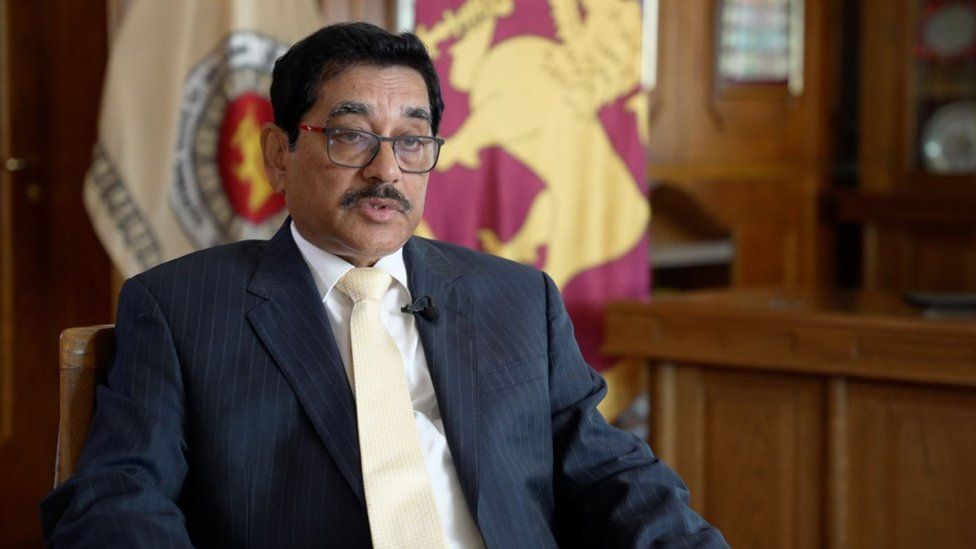
The governor of Sri Lanka’s central bank told BBC Newsnight it was in the interest of all parties to act quickly.

P. Nandalal Weerasinghe said: “The sooner they give us finance assurances that would be better for both [sides], as a creditor, as a debtor.”

“That will help us to start repaying their obligations,” he added.

“We don’t want to be in this kind of situation, not meeting the obligations, for too long. That is not good for the country and for us. That’s not good for investor confidence in Sri Lanka.”

Though inflation in the country has eased slightly since last year, food prices in Sri Lanka last month were still 65% higher than a year earlier.

The World Food Programme estimates that 8 million Sri Lankans – more than a third of the population – are “food insecure”, with hunger especially concentrated in rural areas.

The economic turmoil sparked mass protests last year, which resulted in the former president fleeing the country in July.

P. Nandalal Weerasinghe
Image caption,The governor of Sri Lanka’s central bank P. Nandalal Weerasinghe urged China and India to act quickly

The World Bank estimates that Sri Lanka’s economy shrank by 9.2% in 2022 and that it will contract by a further 4.2% this year.

Beijing’s lending to Sri Lanka stands at around $7bn while India is owed around $1bn.

The Sri Lankan government had initially hoped to agree a new payment plan with China and India by the end of 2022.

Mr Weerasinghe said it was possible an agreement could come later in January but added “this all depends on the other parties – our creditors really have to make that decision”.

He added that Sri Lanka had now provided them with all the information on the country’s borrowings they needed.

Independent analysts say China is concerned about what a substantial Sri Lankan debt write down could mean for its extensive lending to other developing countries through its Belt and Road programme.

Meanwhile, India is said to be wary of getting inferior terms on debt restructuring to China, its regional rival.

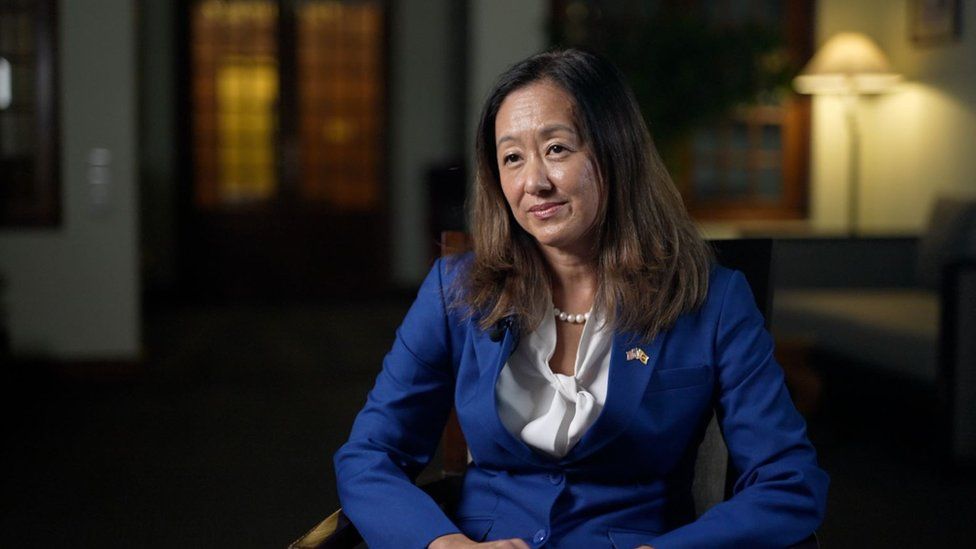
The US ambassador to Sri Lanka, Julie Chung
Image caption,The US ambassador to Sri Lanka, Julie Chung said Sri Lanka had no time to delay in resolving its debts

The US ambassador to Sri Lanka, Julie Chung, said the greater onus to move was on China, as the biggest bilateral lender.

“We hope that they do not delay because Sri Lanka does not have time to delay. They need these assurances immediately,” ambassador Chung told BBC Newsnight.

“For the sake of the Sri Lankan people, we certainly hope China is not a spoiler as they proceed to attain this IMF agreement.”

But if India and China do ultimately agree to write down their loans to Sri Lanka another potential problem looms in the form of private creditors, who account for 40% of the country’s external debt stock.

In the years after Argentina plunged into economic crisis and default in 2001, some American hedge funds, rather than accepting a restructuring of the sovereign bonds they had bought on the open market, demanded full repayment and took the country’s government to court in the US to achieve it.

A large group of international economists on 8 January called for Sri Lanka’s bonds, to be “cancelled”, writing: “All of Sri Lanka’s creditors must ensure debt cancellation sufficient to provide a way out of the current crisis.”

Asked about Sri Lanka’s private bondholders, Mr Weerasinghe said: “We engage with private creditors in good faith negotiations. And what we are seeing is that they are very positive and they are willing to engage with us.”

The governor said he expected that once agreement from bilateral creditors has been agreed the IMF funds could be distributed to Sri Lanka within “four to six weeks”.

Additional reporting by Jack Garland and Scarlett Barter.

Newsnight Global is broadcast from Sri Lanka on Thursday 12 January

‘කටාර් චැරිටි‘ සංවිධානයේ තහනම ඉවතට – තහනමට හේතු වූ වැරදි නිවැරදි වූ බව නොකියයි

January 12th, 2023

 Lanka Lead News

ට්විටර් පණිවිඩයක් නිකුත් කරමින් විදේශ අමාත්‍ය අලි සබ්රි මහතා ඩොලර් මිලියන 11.7ක සහනාධාර ලබාදීම පිළිබදව කටාර් චැරටි සංවිධානයට ස්තුතිය පළ කරයි.

ඊට අමතරව කටාර් චැරටි සංවිධානයේ ශ්‍රී ලංකා කාර්යාලය නැවත විවෘත කිරීමේ අවස්ථාවට සහභාගි වූ නිලධාරින් දෙදෙනෙකු සමග අමාත්‍ය අලි සබ්රි මහතා ගනුලැබූ පින්තූරයක් ද මාධ්‍යවල දක්නට ඇත.

ඉස්ලාම් අන්තවාදයට සෘජුව සහ වක්‍රව සහාය දැක්වීමේ චෝදනාව යටතේ මීට පෙර කටාර් චැරටි සංවිධානය තහනම් කරනු ලැබීය.

එහෙත් තහනම ඉවත් කිරීමට අදාළව වැරදි නිවැරදි කිරීමක් සිදුවී ඇති බවට වාර්තාවක් හෝ ප්‍රකාශනයක් ඇමැතිවරයා විසින් නිකුත්කර නැත.

කටාර් චැරටි සංවිධානය මුස්ලිම් ජනතාවට විශේෂිතව ආධාර ලබාදෙන කටාර් රජයට අයත් සංවිධානයකි.

මෛත්‍රීට පෞද්ගලිකව දඬුවම් විඳීමට සිදු වුවද පාස්කු ප්‍රහාරයට පාර කැපුවේ මංගල, රනිල් ප්‍රතිපත්තියයි – ජාතික සංවිධාන කියයි

January 12th, 2023

Lanka Lead News

පාස්කු ප්‍රහාරයට අදාළව වගකීම් පැහැර හැරීම පිළිබදව රාජ්‍ය නිලධාරීන් 4 දෙනෙකු සහ ජනාධිපතිවරයකු පෞද්ගලිකව වගකිව යුතු බවට ලබාදී ඇති නඩු තීන්දුව පිළිබදව ලංකා ලීඩ් විසින් ජාතික සංවිධානවල මතය විමසන ලදී. මේ මාධ්‍ය ප්‍රකාශක වෛද්‍ය වසන්ත බණ්ඩාර මහතාගේ මතය ඔහුගේ වචනයෙන්.

ජාතික ආරක්ෂාවට අදාළව විධායකයේ වගකීම් පැහැර හැරීමේ වගකීමෙන් ජනාධිපතිවරයකුට පවා ගැලවිය නොහැකි බව මෙම නඩු තීන්දුව මගින් ප්‍රකාශයට පත්වෙලා තියෙනවා. එය ශ්‍රී ලංකා ඉතිහාසයේ වැදගත් නඩු තීන්දුවක් බවට විවාදයක් නැහැ. අනාගත පාලකයන්ට ඒ මගින් ඉතා බරපතළ පිණිවිඩයක් ලබාදී තිබෙනවා.

ඒත් නැගෙනහිර පළාතේ ඔත්තු සේවා බිඳ වැටීම මගින් පාස්කු ප්‍රහාරයට මග පාදන්නේ මංගල – රනිල් විදේශ ප්‍රතිපත්තියයි.

2015 දී මානව හිමිකම් කවුන්සිලයේ 30/1 යෝජනාවට ස්තූති පූර්වකව අනුමැතිය ලබාදීමෙන් පසුව ආරක්ෂක හමුදා නිලධාරීන්ට පරිපාලන වශයෙන් දඬුවම් කිරීමේ ක්‍රියාවලිය ඇරඹුණා.

ඒ අනුව නැගෙනහිර පළාත බාර ඔත්තු සේවා නිලධාරීන් අත්අඩංගුවට ගත් අතර එම අංශ වසාදමා ලිපිගොනු පවා අත්අඩංගුවට ගත්තා. එහි අවසන් ප්‍රතිඵලය තමයි පාස්කු ප්‍රහාරය.

එහෙත් අධිකරණය සලකා බලන්නේ අධිකරණයට ඉදිරිපත් වන කරුණු පමණයි. ඒ නිසා දැනට පරලොව සිටින මංගල සමරවීර මහතාට සහ මෙලොව සිටින රනිල් වික්‍රමසිංහ මහතාට තම වගකීමෙන් ගැලවීමට හැකි වෙලා.

Judgement delivered…

January 12th, 2023

Courtesy The Daily Mirror


The Supreme Court today ordered former President Maithripala Sirisena to pay a sum of Rs.100 million as damages to the victims of Easter Sunday attacks.

Former IGP Pujith Jayasundara and former SIS director Nilantha Jayawardhane were ordered to pay Rs.75 million each as compensation. Former Defence Secretary  Hemasiri Fernando was ordered to pay Rs. 50 million and former Chief National Intelligence Sisira Mendis was ordered to pay Rs.10 million. 

The Court held these respondents have violated the fundamental rights of petitions filed in connection with Easter Sunday attacks.

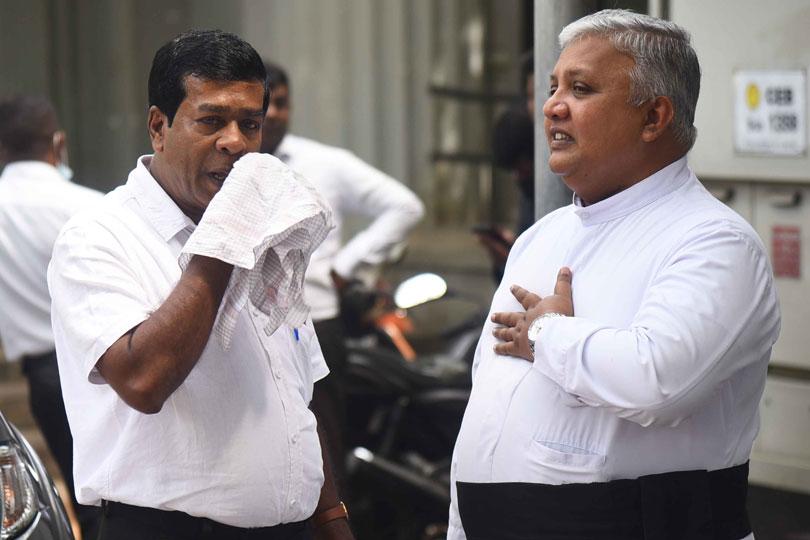
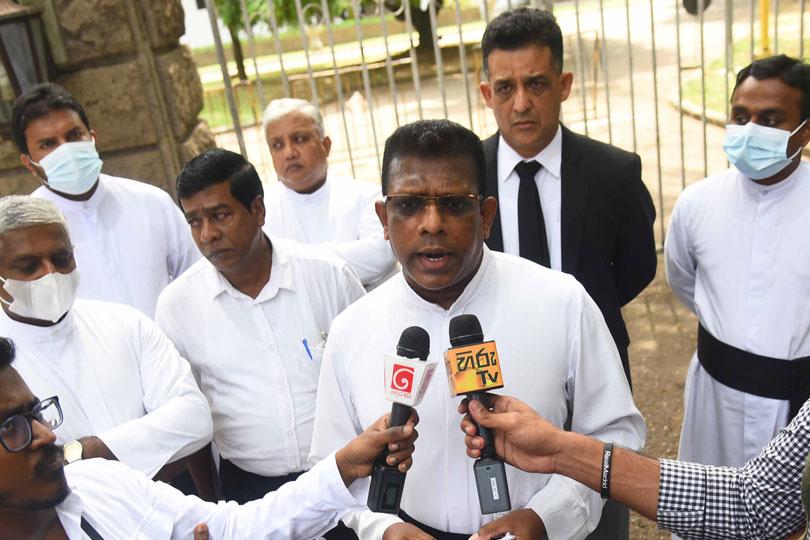
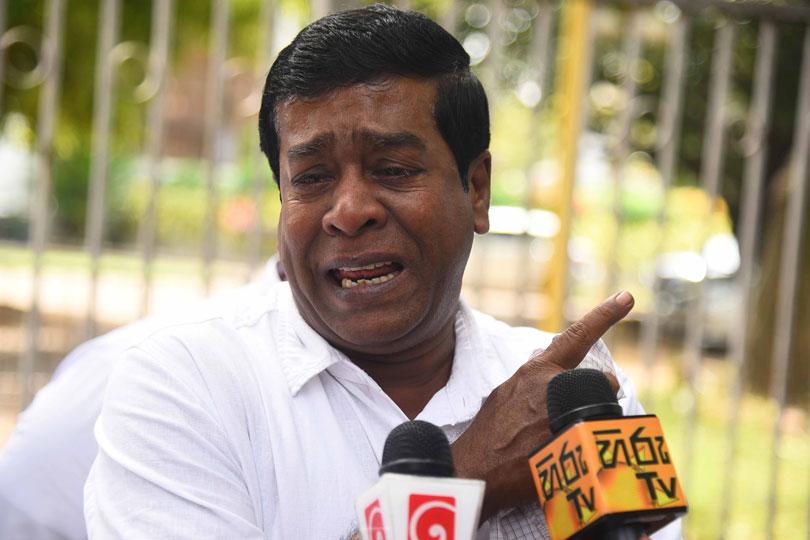
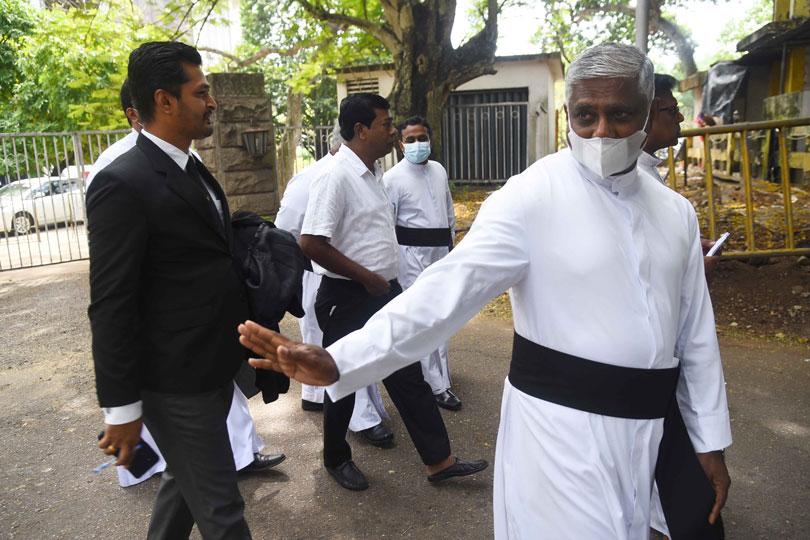
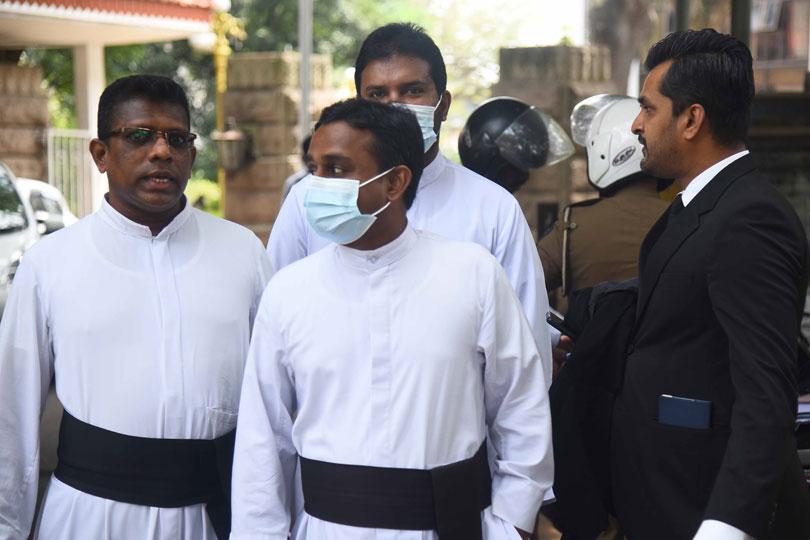
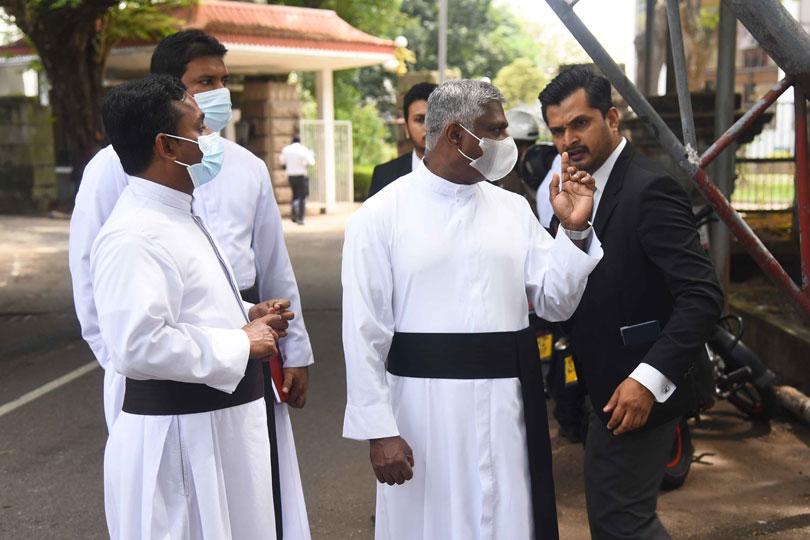
A group of Catholic priests leaving the Supreme Court complex following the landmark judgment in connection with the Easter Sunday Attacks. Pix by Samanatha Perera 


Powered By

Board approval for IMF bailout expected in 2023 Q2 – report

January 12th, 2023

Courtesy Adaderana

The International Monetary Fund (IMF) board approval for Sri Lanka’s Extended Fund Facility (EFF) is now expected in the second quarter of 2023, Standard Chartered’s Global Research report revealed.

Accordingly, the prediction was made owing to delays in securing financial assurances from its bilateral creditors, the report read, adding that this could further delay negotiations with commercial creditors, which are also expected to be pushed back to the second half of 2023.

As a result, we expect a restructuring deal to be reached only by the end of 2023. Achieving the IMF’s qualitative and quantitative targets, including the timely restructuring of commercial debt, could pose challenges and potential disrupt the IMF programme”, the report read.

Moroever, it was stated that Sri Lanka’s economy is likely to contract in 2023, while the external sector has improved due to import contraction.

Meanwhile, solvency and liquidity risks within the financial-sector are also building, along with the looming domestic debt restructuring, it stated.

The report read as follows:

IMF approval likely to get pushed back to Q2-2023

IMF board approval for Sri Lanka’s Extended Fund Facility (EFF) programme has been delayed as negotiations with bilateral lenders have taken longer than expected. We now expect board approval to happen in Q2-2023 (versus Q1 previously), given delays in securing financing assurances from bilateral creditors. This could further delay negotiations with commercial creditors, which we expect will be pushed back to H2. As a result, we expect a restructuring deal to be reached only by the end of 2023. Achieving the IMF’s qualitative and quantitative targets, including the timely restructuring of commercial debt, could pose challenges and potential disrupt the IMF programme.

Against this backdrop, we expect Sri Lanka’s economy to contract a further 1.0% in 2023, following an estimated 7% contraction in 2022. This would make achieving a primary deficit target challenging. We now expect a primary deficit of 2.2% of GDP in 2023, versus the 0.7% target set by the IMF; thereby further pushing our 2023 fiscal deficit forecast to 11.0% from the previously estimated 9.0%. The suspension of external debt service and the suppression of imports have helped to balance the external accounts; a gradual recovery in remittances and tourism flows has also helped. However, we are concerned about the liquidity and solvency of the banking sector, given its exposure to a weak economy and sovereign debt.

We refresh our debt restructuring model to reflect our latest views on the economy and the restructuring timeline. Based on an exit yield of 11-15%, we calculate a recovery value of 22-33 for the Eurobonds. Under our base-case assumption of a 13% exit yield, we estimate a recovery value of 28. Since our fair value estimates are similar to where the SRILAN curve is currently trading, we remain Market weig

Adarsha Karandana granted bail for alleged sextortion charges

January 12th, 2023

Courtesy The Daily Mirror

Adarsha Karandana arrested for allegedly blackmailing former Parliamentarian Prof. Ashu Marasinghe after threatening to post sexually-explicit videos on websites was ordered to be released on bail by Colombo Chief Magistrate’s Court.

Colombo Chief Magistrate Prasanna Alwis ordered Adarsha Karandana to be released on two sureties of Rs.500,000 each.

Adarsha Karandana was arrested by the Police Cyber Crimes Division over a complaint lodged by Prof. Ashu Marasinghe alleging that she threatened to upload  sexually-explicit videos if he fails to pay up a sum of Rs 100 million. (LAKMAL SOORIYAGODA)

Fitch downgrades 10 SL banks, CEB, SLT & Lakdhanavi

January 12th, 2023

Courtesy The Daily Mirror

Fitch Ratings has downgraded the National Long-Term Ratings of 10 Sri Lankan banks, Ceylon Electricity Board (CEB), Sri Lanka Telecom PLC (SLT) and Sri Lanka-based Lakdhanavi Limited. 

Accrdingly, Fitch Ratings has downgraded the National Long-Term Ratings of 10 Sri Lankan banks following the recent sovereign downgrade and recalibration of the agency’s Sri Lankan national rating scale.

The recalibration is to reflect changes in the relative creditworthiness among Sri Lankan issuers following Fitch’s downgrade of Sri Lanka’s Long-Term Local Currency Issuer Default Rating (IDR) to ‘CC’ from ‘CCC’/Under Criteria Observation on 1 December 2022. Fitch typically does not assign Outlooks or apply modifiers to sovereigns with a rating of ‘CCC+’ or below.

National scale ratings are a risk ranking of issuers in a particular market designed to help local investors differentiate risk. Sri Lanka’s national scale ratings are denoted by the unique identifier ‘(lka)’. Fitch adds this identifier to reflect the unique nature of the Sri Lankan national scale. National scales are not comparable with Fitch’s international rating scales or with other countries’ national rating scales. 

The National Ratings of the Sri Lankan banks consider their creditworthiness relative to other issuers in the country. The recalibration of the Sri Lankan National Rating scale has resulted in downgrades of the National Long-Term Ratings of the following banks:

Bank of Ceylon (BOC) to ‘A(lka)’/Rating Watch Negative (RWN) from ‘AA-(lka)’/RWN

People’s Bank (Sri Lanka) (PB) to ‘A(lka)’/RWN from ‘AA-(lka)’/RWN

Commercial Bank of Ceylon PLC (CB) to ‘A(lka)’/RWN from ‘AA-(lka)’/RWN

Hatton National Bank PLC (HNB) to ‘A(lka)’/RWN from ‘AA-(lka)’/RWN

Sampath Bank PLC (Sampath) to ‘A(lka)’/RWN from ‘AA-(lka)’/RWN

Cargills Bank Limited (CBL) to ‘A(lka)’/RWN from ‘A+(lka)’/RWN

DFCC Bank PLC (DFCC) to ‘A-(lka)’/RWN from ‘A+(lka)’/RWN

National Development Bank PLC (NDB) to ‘A-(lka)’/RWN from ‘A(lka)’/RWN

Seylan Bank PLC (Seylan) to ‘A-(lka)’/RWN from ‘A(lka)’/RWN

Nations Trust Bank PLC (NTB) to ‘A-(lka)’/RWN from ‘A(lka)’/RWN

A full list of ratings is at the end of this commentary.

Other Sri Lankan banks’ national ratings, which are not mentioned in this commentary, have not been affected by the recalibration exercise.

Also, Fitch Ratings has downgraded Ceylon Electricity Board’s (CEB) National Long-Term Rating to ‘B(lka)’ from ‘AA-(lka)’. The Outlook is Stable. Fitch has simultaneously downgraded the National Long-Term Rating of CEB’s outstanding senior unsecured debentures to ‘B(lka)’, from ‘AA-(lka)’.

The rating action follows the downgrade of the Sri Lankan sovereign’s Long-Term Local-Currency Issuer Default Rating (IDR) to ‘CC’ from ‘CCC’ on 1 December 2022, and the subsequent recalibration of Sri Lanka’s National Rating scale to reflect changes in the relative creditworthiness among the country’s issuers. 

CEB’s ratings are equalised with that of its parent, the Sri Lankan sovereign, in line with Fitch’s Government-Related Entities (GRE) Rating Criteria. This is based on our assessment of a very strong likelihood of support from the state. CEB is the country’s monopoly electricity transmitter and distributor and accounts for around 75% of power generation.


Meanwhile, Fitch Ratings has downgraded Sri Lanka-based Lakdhanavi Limited’s National Long-Term Rating to ‘A(lka)’, from ‘AA-(lka)’. The Outlook is Stable.

The downgrade follows Fitch’s downgrade of the Sri Lankan sovereign’s Long-Term Local Currency Issuer Default Rating (IDR) to ‘CC’ from ‘CCC’ in December 2022, and the recalibration of our Sri Lankan National Rating scale to reflect changes in the relative creditworthiness among the country’s issuers. For details, see “Fitch Downgrades Sri Lanka’s Long-Term Local-Currency IDR to ‘CC’; Affirms ‘RD’ Foreign-Currency IDR” and “Fitch Ratings Recalibrates Sri Lanka’s National Rating Scale”.

The rating action reflects the heightened counterparty risk stemming from Lakdhanavi’s key counterparty – Ceylon Electricity Board (CEB). Fitch downgraded CEB’s National Long-Term Rating to ‘B(lka)’/Stable from ‘AA-(lka)’/Stable on 12 January following the downgrade of the parent, the Sri Lankan sovereign’s Long-Term Local-Currency IDR.

Further, Fitch Ratings has downgraded Sri Lanka Telecom PLC’s (SLT) National Long-Term Rating to ‘A(Ika)’ from AA-(lka). The Outlook is Stable. Fitch has also downgraded the National Long-Term Rating on SLT’s senior unsecured debentures to ‘A(lka)’ from ‘AA-(lka)’.

The rating action follows the downgrade of the Sri Lankan sovereign’s Long-Term Local-Currency Issuer Default Rating to ‘CC’ from ‘CCC’ in December 2022, and the subsequent recalibration of our Sri Lankan National Rating scale to reflect changes in the relative creditworthiness among the country’s issuers.

SLT’s ratings are influenced by parent Sri Lankan sovereign’s weak credit profile, under Fitch’s Parent and Subsidiary Linkage (PSL) Rating Criteria. SLT’s Standalone Credit Profile (SCP) is stronger than that of the state, reflecting the company’s market leadership in fixed-line services and second-largest share in mobile, its ownership of an extensive optical fibre network and a strong financial profile.

Easter Sunday attack: Supreme Court orders Maithripala Sirisena to pay Rs.100 mn as compensation

January 12th, 2023

Courtesy The Daily Mirror

The Supreme Court today ordered former President Maithripala Sirisena to pay a sum of Rs.100 million as damages to the victims of Easter Sunday attacks.

Former IGP Pujith Jayasundara and former SIS director Nilantha Jayawardhane were ordered to pay Rs.75 million each as compensation. Former Defence Secretary  Hemasiri Fernando was ordered to pay Rs. 50 million and former Chief National Intelligence Sisira Mendis was ordered to pay Rs.10 million. 

The Court held these respondents have violated the fundamental rights of petitions filed in connection with Easter Sunday attacks. ( Lakmal Sooriyagoda)

Make Party Manifestos Legally Binding on Political Parties/Individuals

January 11th, 2023

Shenali D Waduge

Prior to elections, political parties prepare party manifestos laying out what they propose to do once in power. It is in presenting their proposals before the people, that they appeal for votes. The people who align with the proposals outlined give their votes. Therefore, the unwritten understanding is that people vote for a party to implement what they propose to do when canvassing for votes. However, the reality is the opposite.

Political parties do spend time & money preparing manifestos but is it really sincere? Do they actually intend on fulfilling what they propose to do? Are these promises meant to simply fool the masses into believing them & secure their vote?

Article 3 of Sri Lanka’s Constitution clearly establishes that sovereignty is in the People & is inalienable where the Executive – Legislative & Judiciary are only DELEGATORY roles. Which means the People have delegated their executive powers to the President, the legislative powers to the Parliament & Legal powers to the Judiciary.

A President contests elections also promising his vision for the Nation & assuring the People what he intends to do upon being elected the President. It is the belief in his/her vision & his/her objectives that People cast their vote. Therefore, the President-elect cannot relegate on what he has promised he would do once elected. He cannot do a volte-force & do the opposite. He sits on the pedestal of President based on people believing he would fulfill what he has promised in his manifesto. There is little point spending time or money on manifestos if they are only to become cosmetic showpieces to fool the masses and meant for panel discussions and political debates.

Similarly, people elect members to Parliament, be they Govt or Opposition based on what they propose to do once elected to power. There is little need for any party to prepare manifestos if they do not intend to follow them.

How many of the voting masses actually read manifestos and base their vote on the manifesto?

How many of the voting masses simply vote because of their personal preferences or biases based on listening to propaganda?

Do politicians take people for granted thinking that manifestos are simply part of an election and people don’t expect politicians or political parties to follow through on what they assure to do.

What ails Sri Lanka is the lack of policy, the inability to prepare policies and stick to policy is a key reason for foreign counterparts to lose faith in Sri Lanka. Countries that have progressed & developed prepare vision plans and policies and stick to them. They ensure what they decide does not get changed with every elected government. In Sri Lanka, every new government ends up changing the education, the entire admin structure & whatever they can derive benefit from.

This ugly practice must stop. The first place to usher discipline is to legalize the party manifesto. If sovereignty is inalienable and in the hands of the People, the people’s representatives are those they elect as President & Parliament. These politicians get elected to office not because of their party, the colour, their gender, their ethnicity or their religion. They should get elected because of their vision, their policy & their plans for a better Sri Lanka.

This is enshrined in what is called the Manifesto. This is a sacred document and one that should not be taken lightly.

It is not a piece of decorated printed matter to be idling in party offices and taken out simply to present at conferences or events.

Manifestos need to regain its lost stature. It must be made into legally binding document where a voter has every right to file FR in the event the politician has relegated on what he/she assured to do.

Ex: a person vying for President promises to not allow state entities to be privateized. People are happy with this pledge & decide to vote for him because of his assurance not to allow privatization of state entities.

However, what if the President-elect completely ignores his pledge not to privatize and goes ahead with orders to privatize. This is relegating on what he promised he would not do & based on which he was voted to power. This act nullifies Article 3 that gives sovereignty to the People & People delegates that power to their elected politicians based on what they present to the people in the form of their manifestos.

Therefore, for some discipline to prevail where people too, vote for politicians based on their vision & policies, the politicians should also get used to entering politics with a genuine vision to develop the nation and have a policy outlined for this endeavor.

Can the lawyers elucidate the rights people have vis a vis the current violation of election manifestos & the rights of the people & advise the people what legal action can be take for any elected politician relegating on what they promised to do.

If there is no legal provision currently for voters to file FR action, what are the legal amendments that can be added to make it possible for voters to file FR against a politician/political party for going back on their word as assured on their manifestos. People vote for candidates based on their manifestos, the importance of this document needs to be given a legally binding position.

Shenali D Waduge

The 10 Rules of Successful Nations by Ruchir Sharma

January 11th, 2023

Ruchir Sharma

Ruchir Sharma is an investor, author, fund manager and columnist for the Financial Times. He is the Chairman of Rockefeller International, and was an emerging markets investor at Morgan Stanley Investment Management. He is considered one of the best 10 global thinkers of the day. His recent book The 10 Rules of Successful Nations was reviewed by Piyush Jain”

This is an extract of the review.

The 10 Rules of Successful Nations By Ruchir Sharma is a fact-filled book, analyzing the trends over the year and various dependent variables on how the trends have shaped the nations. He also states that what worked and what did not work. We think many facts are against common sense but is done to maintain the system’s growth.

The author states that no matter which economy we talk about, economic trends will vary. Sometimes the economy will go high, and some time will slip south. Any long term forecast for the century or based on a few factors is bound to fail. WorldBank uses tons of factors to study the trends and develop a possible forecast; still, they do not get accurate results. Political, cultural, or some other factor may influence the course of history. No matter how thriving or broken a country’s economy is, it is more likely to return to the long-term average growth rate for its income class than to remain abnormally hot or cold indefinitely.

Watch for balanced growth, and focus on a manageable set of dynamic indicators that can anticipate turns in the cycle. With these principles in mind, the rules can help turn the dismal science” into a practical art, and perhaps nudge economists to think in ways that could help anticipate the next big crisis.

Chapter 1: Population

Successful Nations Fight Demographic Decline.

The author states that the population plays an integral part in the economic growth of a country. Any country that has a negative population growth rate will lead to slowing down in the economy. Specifically, the working population, which comprises the age group between 18 to 60 years, female people, immigrants, educated people, contribute to the economy. Countries face challenges, and they mitigate it using various measures, like increasing the working-age, including more women in the workforce, encouraging immigrants, encouraging education is the necessary measures. We see big economies like the US immigrants have majorly impacted the economic growth of the nation. Russia and other countries promoted the women workforce. 

Many countries like Singapore, Canada, Australia, France, and others promoted childbirth. China abandoned its one-child policy in 2015. The impact of state encouraged measures to increase population is relatively slow and unpredictable due to cultural and political reasons.

The population rise didn’t need to always result in economic growth. Political will and the right reform measures are essential along with the same. Else this may also fuel the civil unrest like Arab spring in 2010 and general turmoil during the 60s and 70s in Africa, China, and India state contrary to this fact.

When the population growth is negative, then it is bound to show negative growth at the point where it fails to provide the replacement in the workforce. We see that this bad news for nearly all the developed economies, while the population rises in Singapore, Australia will power the economic growth engine.

The US and Canada will have to maintain an influx of at least 3% of their workforce’s immigrants every year to support economic growth. Germany has to allow 1.5 million immigrants every year until 2030 to keep up. Japan will face similar pressure if it does not open up to immigration due to political and cultural reasons. They have to increase the intake from 50K immigrants to 500k. A similar situation holds for the South Koreans. Australia has successfully been able to maintain this influx and thus maintain economic growth.

Keeping the ratio of the dependent population low is another measure to fuel economic growth. Including the women workforce, increasing the retirement age adds to the output to the economy and the number of workers. Countries like Germany, Italy, Portugal increased the retirement age to 67 and are now thinking of increasing it to 70, corresponding to the average life expectancy age.

Countries that did not include women workforce in the economic output faced growth pressure. While the advanced countries increased the women workforce to maintain the growth, countries like Brazil had to include the women workforce to keep the economy going. Many countries like Russia, middle-east countries removed restrictions to include them in the economy.

Robots: Did the inclusion of robots cause a scarcity of jobs? No. It fueled it. Now the earlier ignored areas had people to work on, while the industrial output also increased. When banks started using ATMs, did it reduce the tellers’ jobs? Instead, the bank could now open more branches in many other locations, thus increasing its reach, business, and therefore jobs. Few economies like that of China could subsidize the population decline by the use of robots.

Chapter 2: Politics

Successful Nations Rally behind a Reformer

The author has given a punch statement In the circle of political life, a crisis forces a nation to reform, reform leads to good times, and good times encourage an arrogance that leads to a new crisis.”, which states it all.

The book narrates multiple examples where the leader first comes in as a reformer, conducts the reforms, and benefits society. Due to the excellent time and reputation, he becomes arrogant. Now he focuses on how to keep the power. Arrogance gives rise to another crisis. And the cycle continues. He states that Putin in Russia, Suharto in Indonesia, Mahathir Mohamad in Malaysia, and Recep Tayyip Erdoğan in Turkey are the living examples. 

Most of the states’ heads do good work in their first term, and they want to maintain power, so go in for the next term without a vision of reform. They live on their laurels, slowly wane down, and enter a pack of stale leaders. After that, their main focus is to maintain power by becoming dictators, such as Putin, in Russia and Xi Jinping, in China, who have got themselves a seat secured till decades. They are now in the pack of stale leaders with fictitious agendas. The only exception observed was that Lee Kuan Yew governed Singapore for three decades and never ran out of steam.

Further, the author states that the head of the state should be the masses’ man and not a technocrat. A man of the masses can convince and communicate with people for the reforms, while the reforms done by a technocrat will not be visible as there is a communication gap between him and the people. He states the example of Dr. Manmohan Singh. He was not a politician or a man of masses, and his reforms were not visible to the people. Technocrats can serve the reformer politicians and turn things around. An example is Bernard R Bell. President Suharto appointed him as the representative of the World Bank in Indonesia. His recommendations transformed the economy and gave Indonesia the status of the mini-Asian giant for the next two decades.

The progress should be in line with the people’s sentiments, or else it can fire back as in the case of Argentina, where all efforts to stabilize the peso fired back and messed up the economy.

The book also states that democracies tend to do better than autocracies. Autocratic rules could maintain the growth rate only to a certain level or time. After that, the economy messed up due to the first statement. Rulers run out of ideas, tend to focus more on power, culture, and meaningless things.

Chapter 3: Inequality

Successful Nations Produce Good Billionaires

The author states that there are two types of billionaires. Good and bad billionaires. The difference is like a business. Industries like manufacturing, infrastructure, services, technology, or of similar nature make good billionaires. In contrast, industries like commodities (mining, oil, etc.), real estate, renting, or similar nature make the bad ones. Various factors decide if the nation is on the right track or not.

What is the total percentage of a country’s wealth in the hand of the billionaires?

  1. When a high percentage is in the hands of the billionaires, there is a good possibility of unrest. Few extreme cases are that of Robert Mugabe of Zimbabwe, Kenneth Kaunda of Zambia, and Julius Nyerere of Tanzania.
  2. Compared to the total billionaires’ wealth in good economies, the percentage of bad billionaires’ wealth is relatively less. The US has 14% bad billionaires wealth compared to 67% to that in Russia.
  3. Billionaires due to family ties and self-made billionaires is another parameter. The person may inherit wealth from his family or get benefits due to political connections. The number of self-made billionaires would be the parameters that decide whether the economy is growing or not.
  4. Self-made billionaires like Google, Microsoft, and Facebook were also subjected to scrutiny to stop monopolistic practices.
  5. Bad billionaires look forward to shifting the balance of wealth in the society, while good billionaires look forward to increasing the pie.

Chapter 4: State Power

Successful Nations Have Right-Sized Governments

How big should the Government be in a country? Big enough to sustain a crisis and small enough to do the basic governance tasks. The governments should be able to generate revenue out of taxes and activities and spend on necessary public conveniences like infrastructure and facilities.

There have been various cases where the government earned money in taxes but did not spend on public welfare. Sometimes the government spent the money on general interest. Still, they dolled out the cash in freebies & subsidies and not as facilities (Like India did on MNREGA and not on infrastructure).

The governments should increase the tax base (like India is doing), the country’s economy can crumble, like that of Pakistan, Nigeria, and Egypt. In these countries, more than 30% of the economy is running the black market. People avoid banks, deal in cash transactions to avoid tax. Even rigorous enforcement may be harmful, as per the example of Indonesia, where tax enforcers were everywhere, leading to a slowdown in the economy.

Another excellent example the author quotes is that of China. China though a communist country, how did it’s economy grow exponentially? The Key was to let decrease the control over the business and allow them to expand and flourish. When China let loose it’s rigid control; the business grew 300 times. China also protected a few of its state-run companies like that of PetroChina. As soon as that protection was out, the company dropped from 1st to 14th position on the world index.

The author further states that the economies with less state-owned banks perform better as the state can not use the money for their political benefits. While China, Brazil, and Thailand governments have a 45% stake in the banking system, India, Malaysia, and Russia, Governments hold a 60% stake. They should look forward to decreasing the control there to reduce the risk of bad debts on government systems.

Similarly, the governments should reduce their holdings in the state-run companies, as they will be prone to exposure of subsidies and freebies to the public from the political system. While some countries give out freebies, like welfare schemes, free gas, subsidized fuel, etc., countries who could do it and were relatively affluent like Taiwan and South Korea concentrated on building the basic infrastructure to promote the private economy.

Chapter 5: Geography

Successful Nations Make the Most of Their Location

The author stresses the point that successful economies have made the best use of their geographical location. Again the example is China. It built deep seaports in the fishing villages and has the top 6 of 10 worlds’ busiest harbors.

Prosperous countries have good ties with their neighbors to promote each others’ trade. The price would be competitive, and the region flourishes collectively. In Europe and Southeast Asian countries where the countries there have the least of trade embargos. Somehow South Asian countries (India, Pakistan, Bangladesh, and Sri Lanka) could not resolve their frictions and take advantage of this. China is further planning to connect to all countries in Europe. It is spending $300 B to build the new silk route and promote its trade with other countries. China is also funding projects in various countries (Sri Lanka, Pakistan, and a few African nations) to get trade advantages.

Countries also look for opportunities to grab businesses. When manufacturing becomes costly in one state or our own country, other countries on a lookout will seize it to enhance its trade, like what Vietnam and Taiwan are doing.

Countries also need to decentralize. They should develop additional 2nd cities. Decentralization reduces the citizens’ frustration that the development and jobs are just in few metros, stops anger, and gives more space for trade and gives benefit to the region. Again, stating China’s example, the author says that 19 cities have developed, while in India, two cities come in the list (Mallapuram and Kollam). Decentralized economic activities are considered useful in the long run. The author explicitly states that India tried creating Special economic zones to promote trade, but the government bureaucracy left that ineffective.

Finally, the author says that a country needs to focus on opening its doors on three fronts: to trade with its neighbors, the wider world, and its provinces and second cities. Many countries have converted themselves and got out from deep poverty to prosperity and strength by effectively using their geography.

I would suggest that if you want to understand geography’s effect on a country, please read.

Chapter 6: Investments

Successful Nations Invest Heavily, and Wisely

All eyes, all economics students (at some points of time), GDP is the sum of spending by consumers & government plus investment and net exports. (C + G) + (I + X) = GDP.

The I (Investment by the government and the private sector) is the key here. The investment parameter shows how much is the government and the private bodies investing in the factories, infrastructure, services to generate jobs and products. Investment fuels all the other factors as C, G, and X.

How much should be the G? Government spendings ideally should be between 25-35 % of the GDP. Weaker economies have this value of around 20%. When you see the people traveling on the rooftops, unpaved roads or no connectivity between areas, rampant corruption, and difficulty accessing public services, this indicates that the government is not doing enough on the same. 

Investment also matters where it is done. Good investment goes on roads, bridges, railways, ports, technology, manufacturing, while the bad investment goes to real estate or commodities and may lead to problems in the long term. Any asset which leads to less increase in productivity will not be beneficial in the long run. Investment in infrastructure will further reduce transportation costs to the consumers or the exporters, which will give an additional advantage to the manufacturers. Only Investment in commodities like mining, lumbering will lead to problems in the long run. While it may also happen that investment in commodities and technology may give a long term advantage like the example, is Shale gas. This research in the petroleum area got techniques that reduced the price of extraction of oil and gas, thus cheaper fuel.

Investment in services is another area which many countries are focusing on. But it has to let that surpass the manufacturing sector. The service sector still employs a tiny percentage of the workforce. Yet, it should not be ignored in the time to come.

The manufacturing sector gives a strong foundation for any country. Manufacturing builds its shock resistance against many things like an economic shock like that of 2008 or even social unrest. A good example is that of Indonesia. Indonesia had six coups since 1930 and the latest one in 2014, still due to a good manufacturing base, it’s economy maintained a growth rate of 4 percent.

The author further emphasizes on the investment in the technology sector. He states that acquisition of any kind in the technology sector reaps benefit sometime or the other. An example is setting up the optical fiber network in the US in the dot-com boom time. The cables lay idle till a specific time, but later the US is getting the advantage of high-speed internet now. Similarly, China’s investment in robotics is reaping the benefits from all walks of life, from personal use to the manufacturing industry. Though many jobs may be lost due to automation, other sectors will create jobs for people, as shown earlier historically. Any country that facilitates the tech boom in their country will be in advantage. Smaller economies like Mexico, Israel, are doing everything for the tech companies to establish their countries’ bases.

Startups are other prominent areas. The companies which are in the current top 10 will not be there in the coming decade. Which will be, will be decided by the strength of some startup in the country.

After a lot of investment in all good things, the economies tend to move towards the real-estate part. Again the example is China. After the saturation of investment in good things, Chinese people started investing in real estate. This development of real-estate led to the build-up of multiple ghost towns, under-utilized, and slower growth due to non-productive investment. Once people recognize this, they will start investing in productive areas again. Investment in bad areas like commodities and real estate, will initially give a boom to the local economy and decrease it back to initial levels. The author has given various examples of the data.

It also happens that the good economy due to the excellent investment, later on, leads to a boom in bad investment too. Like as people get more money in hand, they will buy houses (more than they need) or gold.

The right fit of a good investment in the economy lies between 25 to 35 percent for balanced growth.

Chapter 7: Inflation

Successful Nations Control the Real Inflation Threats

The author states that there is no other parameter that impacts ALL in the economy more than inflation. Inflation affects the citizens’ day-to-day living and worries the economist for the macro-level parameters on which the economy runs.

There are a few ways to control inflation. 1st is keeping the economy open to global trade. If inflation increases, then procure the goods from cheaper places. International trade will itself push the prices down. These price cuts will weed out inefficiencies in the manufacturing sector. The 2nd way is to control the cost of money. Only an independent central bank can do this. They should control the repo rates as per inflation. If the central bank is not independent, then politicians may be lured to decrease the repo rates to please the voters. Many countries fighting inflation gave their central banks independence and could control inflation in a few years.

An increase in inflation also leads to social unrest. Many Governments have toppled/lost due to high inflation. The incoming investment from any source also fuels inflation. The initial investment is equivalent to sparks flaring as the engine starts. Subsequently, as the development happens, the inflation will settle down. Real estate doom may decrease inflation as when one has a property, it will feel more inadequate and spend less.

Industrial development, in turn, decreases inflation. As the production cost decreases, the value of goods decreases, and thus fall in price. This industry also leads to consumers holding back until the prices drop further. Deflation (or negative inflation) is not good as this slows down the economy. Deflation also may be a sign of growth. When the economy progresses, due to technology growth, the prices decrease, and there is a high availability of goods at lower prices, thus fueling demand. The right fit in a growing economy is to have a little inflation. The magic number is 2% inflation.

Chapter 8: Currency

Successful Nations Feel Cheap

Feel” is an important word here. How does one feel when he travels to another country? Does he feel that things are cheap there, so he spends on items, tourism, and travels there without remorse? Then that country is booming. The author gives a few examples, which we can correlate with, ceteris paribus applied. Another aspect; It is not essential that only the feel is important. If one feels cheap, still the money is not coming into the economy, something is wrong. That means the currency will depreciate further, or the policies in the country are not good enough.

If the money is coming into the country through either means like remittance from people working abroad, interest payments, or investments, then the economy shows a good sign. Paying the imports bills will be more comfortable. In case this export-import deficit is more than 5 percent of the GDP, then this is a sign of an economic recession coming in the country. Apart from this, some amount of deficit is ok, like 3%. It also matters on what is the reason for the deficit. If it is due to luxury goods then not right, while it is good for the economy due to the import of machinery for factories, it is good for the economy. 

Further, the author states that the US Dollar is the currency of the world. The US economy is 24% of the total world’s GDP. All the central banks of the countries in the world hold $12 trillion as their foreign reserves. Many countries use the USD as their de facto currency.

Globalization of banking also has changed a lot of paradigms. Now a country with good economic policies will attract a lot of capital inflow like China did before 2007. Their foreign reserves swelled to $9 trillion (16% of the GDP) and deflated to $1.2 trillion in the 2008 crisis. The deficit tipping point for the economy may be at 3% in the coming time.

Further, the author states that money has no loyal, be it locals or FIIs. It will be the locals who are first to flee the market when they see the signs of depression coming in. Locals will have an understanding of the local issues better compared to the FIIs. They will convert their money to gold or shift to other currencies. The flow of money is the best indicator of the looming crisis. In 2014, the rouble crashed, and the money started flowing out of Russia 2 years earlier, on some of the other pretexts to greener pastures.

Why don’t countries devalue their currencies to gain an advantage in global exports? Because the states do not only export. They have to import too. They have foreign debts also. If they devalue, then paying off the debts would be more difficult. If their import comprises essential goods, then it would become difficult for the economy to get them. Apart from this, the competitor countries would immediately devalue their currency to remain competitive in the market.

Further, the author says that the state control on the currency would be punished in the market, and cannot sustain for long. It would lead to less confidence in the market and flight of capital. In most cases, it would be a subsidized move for the capital flight as they would get out safely without losses due to currency fluctuation.

Chapter 9: Debt

Successful Nations Avoid Debt Mania (and Phobia)

In this chapter, the author states various examples where the debt can be an economic booster when used in the right manner, while it can wreak havoc on the economy if used in the wrong way.

A society/nation can have a debt mania or phobia. When it is on debt mania, the people/the industry will take debt for their growth. In case the rate of economic growth is greater than the rate of increase in debt, then it is ok, while if it is the reverse, then the financial system is in for a big problem. This was the case in many countries in different years, where the portion of debt rose substantially high. The debt to deposit ratio of the banks rose, and banks were in a problem. When this ratio is 0.8, then the system is healthy as the outflow and inflow are as expected.

When mania strikes and banks are overly bullish on the economy, they may tend to give loans to even those who cannot afford it. This is the time when the banks enter the bad loan area. To support the banking system, when the state jumps in, they start owning the loan, and further, they too join the crisis.

The author states the example of China. China has been a loan maniac as they bought everything on loan. Even after the 2008 crisis, till 2018, $80 trillion loans were distributed worldwide; of this, $35 Trillion was alone China’s share. They bought factories, houses, even stocks on loan. There was such a hysteria in China that we can achieve any growth rate, and patriotism is linked to it. But lately, they could not sustain that growth, as real-estate prices also fell, and companies could not perform to those levels on which the stocks were selling.

When citizens lose trust in the banking system, they will not trade with it. They would keep the money out of the banking system. Mexico is one such example. They did not take loans or mortgages to expand on the industry or real estate, leading to a slow rise in economic growth. At the same time, Brazil and Chile grew their economy three times faster.

When the banking system enters the crisis mode, what should it do? Should it punish the debtors and forfeit their property to retrieve the money? Should they forgive the loans and inject fresh capital into the economy? If they penalize the debtors, they will decrease the citizens’ confidence in the system, and the time to recover will be very high. If they forgive the debtors, then the economy will rise faster, as the citizens’ confidence will remain in the banking system, and debtors will not be scared away.

Chapter 10: Hype

Successful Nations Rise outside the Spotlight

The author states that one should not follow the media hypes too seriously. The countries that were were once hyped for hyper-growth fell flat due to various reasons. Countries that were looked upon as inflicted with poverty and corruption slowly rose to be the world’s economic powerhouse. The author states that there is a sort of a curse, that one who is hyped and comes on the cover story of the Times Magazine, would have a high probability of falling the expectations. More than 55% of the promoted stories have fallen below even the normal.

The author states a few simple observations: Wise national leaders try not to let the hype go to their heads and keep pushing reform even when the economy is roaring, and the world is applauding. Right forecasters know to look for the next big success stories not among the nations most loved or hated by the markets and media, but among the forgotten and ignored.

Finally:

The author states that to understand that to assess where exactly the economy is going, one should use these 10 rules. It will rarely happen that all the 10 fit the bill on some economy but it will give a fair idea of where it is heading.

13-A plus: police powers in a Tamil homeland

January 11th, 2023

C. Wijeyawickrema, LL.B., Ph.D

<තැටිය රත්වුන වේලාවේ රොටිය පුච්චා ගන්න ඕන>

          හිත් වේදනාවෙන් අපවත්වූ මාදුළුවාවේ සෝභිත හිමියන් 2014 දී

<මං ආයිත් සැරයක් 2022 දී කොළඹට ආවේ ලංකාවට උදව් කරන්න> – එරික් සොල්හයිම්

<13-A + ආරම්භය පමණයි> මනෝ ගනේෂන්

<අපට ඕනෑ ආපහු ගන්නට බැරි විධියේ බලය බෙදීමක්>ඒබ්‍රහිම් සුමන්තිරන්

වර්ෂ 74 මාස 10 ක් තුලම සිංහල කළුසුද්දන් විසින් අච්චාරුවක් කරගත් දෙමළ නිජබිම් බෙදුම්වාදය, ඔවුන් විසින්ම 2023 පෙබරවාරි 4 දාට පෙර විසඳා ගන්නට යෑම සිහිපත් කරන්නේ සෝභිත හාමුදුරුවන් යහපාලන ප්‍රොජෙක්ට් කාරයින්ට අසුවී මුහුණපෑ අකරතැබ්බයය. කාලයේ සෝභිත හිමියන් සමඟ ලඟින්ම පන්සලේ සිට වැඩකල මගේ මිත්‍රයෙක් වූ තේනුවර කී පරිදි යහපාලන ප්‍රොජෙක්ට් නායකයින් හැමදෙනාම හාමුදුරුවන් වන්දනාවට පිට කෝට්ටේ නාග විහාරයට වැලනොකැඩී ගලා ආවේය. ඔවුන් ලඟට හාමුදුරුවන් ගෙන්වා ගන්නට ඔවුන් කල වෑයම තේනුවරලා වැනි ලඟින්ම සිටි උපදේශකයින්  විසින් වලක්වන ලදී. මිෂෙල් සිසන් පවා අටපිරිකර රැගෙන පන්සල් ගියේය (මෙය සිහිකරන්නේ දැන් ඉන්න කතෝලික නෝනා ජනාධිපති ගෝඨාභය ඉදිරියේ දණ ගසා ඔහුට දේව බැල්ම ඉල්ලා කල දේව යාඥාවය).

දැන් රොටිය නම් 13-A+ . තැටිය වනාහී අසරණවූ සිංහල බෞද්ධ ජනතාවය. රොටිය පුච්චා දෙන ලෙස ඉල්ලන්නේ 13-A+ පාරේ ඊළම් යන දෙමළ නායකයින් අතලොස්සය. එය පුච්චා දෙන්නට වලිකන්නේ සඳහා දැනට ලංකාවේ ඉන්නා හොඳම කෝකියා වන තොප්පිගල කියන්නේ කැලයක් කියූ රනිල් මහතාය. සල්ලි තියෙනවා නම් ඕනෑම ගොනෙකුට  යුද්ධකරන්න පුළුවන් යයි කී කිරිඇල්ලේත්, අලිමංකඩ යනවා කියා පාමංකඩ යනවා, සරත් ෆොන්සේකා සැල්වේෂන් ආමිකාරයෙක් යයි කී රවි කරුණානායකත්, තිස්ස විතාරණ, වාසුදේව වැනි පරණ මාක්ස්වාදීනුත්, පෙරටුගාමී කොටසුත්ය. කොටින්ම කියනවා නම් <මේ යුද්ධය නම් කවදාවත් දිණන්න බෑ> යයි කෑගැසු පිරිසය. යුද්ධ කරන්නේ ලබ්බෙන්ද කියා පාඨලී චම්පික ගෙන ඇසුවායයි කියන මහින්ද හිටපු ජනාධිපතිද දැන් දැන් 13-A+ එකට හිස වණන බවක් පෙනේ. කොටි බාලසිංහම්ට හිස් එක්සලන්සි යයි කී GL ලා වැන්නන් ගැන කුමණ කතාද? මේ කතා දැන් සිංහල තරුණ පරම්පරා දන්නේ නැත. ඉතිහාසය කන්නද කියා ඒකාලයේ JR ලා මෙන් දැන් අභිෂේකා ප්‍රනාන්දු වැනි යූටියුබ්  කෙළීලා පවා අවඥාවෙන් අසයි!

ක්‍රිස්තියානි පල්ලිය හා මාක්ස්වාදීන් මුල සිටම දිගටම පෙඩරල්වාදීන් විය. එය ඔවුන්ගේ ප්‍රතිපත්තිය විය. එහෙත් 13-A විරුද්ධවූ JVP කොටස හා SLFP පිරිස හා SLPP අය මේ වනවිට චංචල වෙමින් සිටින්නේ මන්ද? රටේ භූගෝල විද්‍යාවට අනුව විද්‍යාත්මකව 13-A එකඟ විය නොහැකිය. එසේ නම් මේ අය දැන්  කරණම්ගසන්නට හදන්නේ දෙමළ චන්ද සඳහා රට ජාතිය පාවාදීමටද? බණ්ඩාරනායක හා ඩඩ්ලි යන අගමැතිවරු ගිවිසුම් මඟින් දෙමළ නිජබිමකට අනුබල දුන්නේය. 13-A ආරම්භය එයය.

මිසිස් B ඉතිහාසය හා භූගෝල විද්‍යාව පාසැල්වලින් ඉවත් කිරීමේ බදියුද්දීන් උගුලට අසුවිය. දෙමළ භාෂාව රටේ පලාත් නවයේම රාජ්‍ය භාෂාව කිරීමටත්, සිංහල දකුණේ පලාත් හතේ පමණක් රාජ්‍ය භාෂාව කිරීමටත් අශ්‍රොෆ්ගේ චන්ද ගැනීමේ අරමුණින් R ප්‍රේමදාස ජනාධිපති විසින් 1988 දී ක්‍රියාකර සිංහල ජාතිය පාවාදුන් අන්දම ගැන කල්යානන්ද තිරණාගම මහතා ලියා ඇත (ව්‍යවස්ථාවේ 22 [1&2] වගන්ති) . සටන් විරාම හොර ගිවිසුම (CFA), ISGA, PTOM, නීලන්GLපැකේජ් ඩීල් යනාදී දුෂ්ට ක්‍රියා ගැන දැන් මතක තිබෙන්නේ කාටද?

රටේ ආර්ථික මර්මස්ථාන වලට පහරදීමෙන් ප්‍රභාකරන් බලාපොරොත්තුවූ රට බංකොලොත් කිරීම මේ වන විට සිංහල ජනාධිපතිලා/ අගමැතිලා විසින් ඉෂ්ට කරදී ඇත. දැන් මේ කඩිමුඩියේ හදන්නේ ජනයාගේ ඇස්වලට වැලිගසා පොලිස් හා ඉඩම් බලතලදී බංකොලොත්වූ රට දෙකඩ කැඩීම ඉෂ්ට කිරීමය. රටෙන් පිට සිට හරියට හෙලිකොප්ටරයකින් උඩට නැඟ බිම බලනවා මෙන් මේ සිදුවන  විනාශය දකිණ විට ඇතිවන්නේ බලවත් කම්පණයකි.

Little now, more later

සිංහල පක්ෂ දේශපාලකයින් පිස්සු නටද්දී සුමන්තිරන්ලා හෙමින් හෙමින් රේල්පාරේ ඇදෙන කෝච්චියක් මෙන් ඊළම් පාරේ යමින් සිටී. මෙය චෙල්වනායගම්ගේ තියොරි එකට අනුවය. දැනට ටිකක් ඉදිරියේදී ගොඩක් යනු ඔහුගේ උපක්‍රමය විය.

1815 දී උඩරට රදලයින්ගේ කුලල්කා ගැනීම් නිසා ඔවුන්ටත් රටටත් අත්වූ ඉරණම මෙන් සිංහල දේශපාලකයින්ගේ ජාති ද්‍රෝහී සුනඛ හැසිරීම නිසා ඊළම සඳහා අවශ්‍ය තීරණාත්මකම පියවර වන 13-A+ (පොලිස් හා ඉඩම් බලතල) දීමට 2023 පෙබරවාරි 4 දා  ජනාධිපති හා ඔහුට චන්දය දුන් 134 දෙනා හිතුවක්කාරී තීරණයක් ගත්තොත් එය මීට පෙර, අගමැතිලාවූ බණ්ඩාරනායක, ඩඩ්ලි, ප්‍රේමදාස ((1988) දෙමළ පලාත් නමයේම රාජ්‍ය භාෂාව කර සිංහල දකුණේ පලාත් හතට සීමා කිරීම) රනිල් (2002) හා ජනාධිපති චන්ද්‍රිකා යන අයවළුන් විසින්  වරින් වර හාරන ලද මිනීවලට ඇස් ඇරගෙනම ජනාධිපති රනිල්ගේ පැනීමක් වන්නේය.

13-A සම්පූර්ණයෙන්ම ක්‍රියාත්මක කිරීම යන මාතෘකාවෙන් නෙවිල් ලද්දුවහෙට්ටි විසින් ලියන ලද ලිපියකින් පෙන්වා දෙන්නේ (අයිලඩ්, 26/12/2022) ප්‍රාන්තවල පොලිස් බලතල දේශපාලකයෙකුගේ අතට නොදී නිලධාරියෙකු යටතේ තබා ඇති ඉන්දියාව, 1987 දී ලංකාවේදී එය දේශපාලකයින්ට ලබාදීමට බලකිරීම ජුගුබ්සා ජනක බවය.

…Realizing the need for the Provincial Police to be free to act independently, India for instance, has made sure that the authority over a state

police is held by the State’s Home Department led by a chief or principal secretary, who essentially is an Administrative Officer. How the provisions in 13A relating to Police powers came to be so different from that in India, notwithstanding the fact that the Executive power of the Governor and the powers of the Provincial Council are nearly identical to powers in Indian States, is indeed a mystery.”

ඉන්දියන් සාම හමුදාව ලංකාවෙන් ගියේ ප්‍රේමදාස ජනාධිපතිගේ බලකිරීම නිසා නොව ටැමිල්නාඩ් පොලිසියේ දිල්ලි ද්‍රෝහී ක්‍රියා නිසා බව එලිදරව්වූ තොරතුරු සහිත ලිපියක් මා විසින් ලංකා වෙබ් වෙබ් අඩවියට ලියූ ලිපියකින් පෙන්වා දෙන ලදී. එය මේ ලිපිය සමඟ අමුණා ඇත.

13- A යටතේ පොලිස් බලතල නැතුවත් උතුරු-නැඟෙනහිර සිංහල ජනයා දිනපතාම වාගේ ග්‍රාම සේවා නිලධාරින්ගෙන්, ප්‍රාදේශීය ලේකම්ලාගෙන් හා සමහර මැජිස්ට්‍රේට්ලාගෙන් අත්විඳින හිරිහැර හා අසාධාරණකම්, මඩකලපුවේ ඇති එකම පැරණි රජමහා විහාරයේ අම්පිටියේ සුමනරතන හිමියන් විසින් පෙන්වා දුන්නත් කොළඹ සිංහල පාලකයින් නිහඬය. කුරුන්දි විහාර ප්‍රතිසංස්කරණයට අදාලව දෙමළ මැජිස්ට්‍රේට් දුන් මෝඩ තීරණය පසුව ඔහු විසින්ම ඉවත්කර ගන්නා ලදී. යාපනේ නීතිඥයින් ඉංග්‍රීසි නොදන්නා දෙමළ ජනයා සූරාකන අන්දම නාගානන්ද කොඩිතුවක්කු විසින් එලිදරව් කලේය.

1978-81 කාලයේ ත්‍රිකුණාමළයේ දිසාපතිව සිටි ජයතිස්ස බණ්ඩාරගොඩ විසින් ලියන ලද යන පොත ගැන කමලිකා පීරිස් විසින් ලියන ලද සටහනක් 12/12/2022 ලංකා වෙබ් වෙබ් අඩවියේ පලවිය. ඔහු විසින් අත්විඳින ලද දුෂ්කරතා ගැන සිතන විට පොලිස් බලතල නොව දමිළ පොලිස් කොස්තාපල්ලා වත් උතුරේ රැඳවිය යුතුද  කියා සිතේ. පොලිස් බලතල ඊළම් දේශපාලකයින්ට දීම ලංකා මාතාවගේ ගෙල සිඳ ලීමක් හෙවත් රට කැබලිකර, එකිනෙකා මරා ගන්නා රටවල්  දෙකක් හෝ තුනක් සහිත පලස්තීනයක් බිහිවනු ඇත. අවුරුදු 74 +කාලයක් මහජනයාට දුන් දුක 75 හේ සිට දහ දුකක් වනවා දකින්නට  මේ ජාති භ්‍රෂ්ටයින් සිටින්නේ නැත.දෙකක් , පලස්තීනයක්

POLITICS TURNED INTO AN INDUSTRY

January 11th, 2023

By Dr Tilak S. Fernando

The political disarray in Sri Lanka is akin to ‘Nero playing the fiddle while Rome was burning.’ The 225 representatives who are democratically elected by the people to serve the citizens of this country appear to be only interested in their affairs. MPs keep mum about the facilities and perks they get on a plate. Why aren’t politicians in this country hell-bent on grabbing more and more? Most Ministers appoint their kith and kin as their secretaries and officials. After being in Parliament for four to five years, MPs qualify for a pension. Stable government servants or private sector employees must toil for years until they are eligible for a pension. Does no one among MPs or laypeople suggest abandoning this pension scheme for MPs? The citizenry is pressed to the wall and unable to have a decent meal these days. Every commodity is so expensive, and so many young children are recorded as undernourished (according to the latest report from UNICEF).

Suppose the Sri Lankan Government wants to cut down on unnecessary expenses.  As the first President, there are enough of J.R. Jayewardene introduced schemes, such as abandoning pensions to widows of Ex-Presidents. Maithripala Sirisena is supposed to draw the Ex-Presidents pension and the current MP’s salary. Chandrika Kumaratunga is also entitled to a pension. Why should Hema Premadasa (wife of the late Ranasinghe Premadasa) still get so much Police protection? So, is Chandrika Kumaratunga Bandaranaike with an ‘army’ of police protection. Indeed there are no threats to their lives now, unlike during the LTTE war.

Fundamental Problem

The fundamental problem in Sri Lanka is how police protection is given to every parliamentarian and Ex-Presidents’ living wives. According to statistics, most police officers are allocated ceremonial duties as ‘bodyguards’ for MPs’ safety, leaving a massive vacuum for implementing law and order in the country.

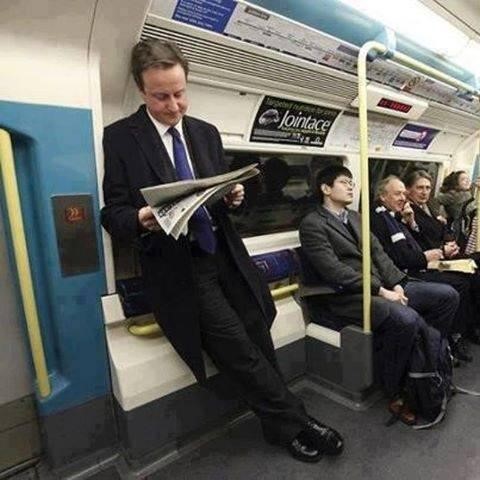
Why is Sri Lankan  Ministers cum state ministers need luxury vehicles for travel? They use costly vehicles amounting to millions of Rupees. And the worst is that they are exempt from customs and excise duties, which amount to another couple of million for importing luxury vehicles. Like in other countries, why cannot our local ministers emulate their foreign colleagues? A former Prime Minister of Britain, John Major, who is on holiday in Sri Lanka, much liked to travel by underground Railway (tube trains) in the UK. Generally, UK Prime Ministers have been keen to be seen mixing with other passengers, while London mayors have praised the London Underground network, which opened over 150 years ago. Why cannot the Sri Lankan Ministers use public transport?

Why cannot the Sri Lankan Ministers use public transport like  John Major?

MPs might comment that public transport in Sri Lanka needs to be developed. The answer to such a question would be that two major political parties have been running the country for the last 74 years, and they should have resolved the problem many years ago! Numerous Sri Lankan Ministers have been galivanting in foreign lands, and have not seen complex transport systems for many years! Still, have they done anything to develop the transport systems?

Escorting Vehicles

When a Minister commences a journey, several police jeeps and dozens of escorting vehicles (even today) are seen following the Minister’s car. During the LTTE war, one would have assumed there was a threat to their life. Continuation to this day means a waste of government money and being pompous. These are only a few examples of government wastage.

Politics is becoming an Industry

The current politicians in this country have turned politics into an industry. They spent a fortune during elections to come to power and had to satisfy those who backed them financially. So, once the contestant becomes an MP or Minister, one is under an obligation. Every audit report indicates there is bribery and corruption at the highest level. Whether it’s a corporation or a ministerial tender, interested dealers and suppliers will keep an eye on such tenders and get involved with the Minister concerned, as bribery and corruption are imminent in millions. At the same time, the masses are pressed against the wall, with taxes and commodity prices hitting rocket levels. So, how can Sri Lanka get out of this mess? Sri Lanka once proudly stood among the international community but is now a bankrupt country. Today Sri Lanka has to go to the international colleagues and the IMF with a begging bowl! There is so much waste in the government. When people suffer to such an extent, representatives of the so-called people behave as if they are deaf and blind! Why can’t they contribute at least some portion of their salaries and allowances and other perks to build up the country? No! It’s not their choice to wait until US dollars are earned from tourism!

Emulate Britain

The UK is an excellent example to emulate. Politicians of all parties, in unison, dispelled their political ideologies and supported the country when the UK entered a war with the Falklands Island under Margaret Thatcher’s (Conservative Party) Premiership.

Politicians in Sri Lanka haven’t got the bottle to follow suit. Their thinking and motto are to come to power by hook or by crook. If the country is allowed to deteriorate this way, MPs will have no Sri Lanka to engage in politics, and a foreign government will be back again to rule Sri Lanka.

This disturbing factor has been a significant topic of conversation among all classes of people in the country and internationally. A logical thinker becomes perplexed about how the so-called dedicated political parties of all hues continue their power struggle.

Adding to such chaos, a different kind of debate is in progress among political researchers and analysts, including legal luminaries, with a difference of opinion about the members of the Parliament,

Any national-minded citizen of Sri Lanka would prefer to avoid any interference by foreign countries in Sri Lanka’s domestic affairs.

A sensible person needs to understand that foreign diplomats or international non-governmental organisations (INGOs) should not try to interfere with Sri Lankan domestic or political affairs. After all, their duty should be to promote trade and cordial relationships with the host country and not to interfere and dictate terms to the host government on domestic issues.

Any practical person needs to understand that foreign diplomats or INGOs should not try to interfere with Sri Lankan domestic or political affairs. After all, their duty should be to promote trade and cordial relationships with the host country and not to interfere and dictate terms to the host government on domestic issues.

The country needed dedicated rulers with young blood who would not tolerate any boloney, thus replacing a set of geriatrics responsible for the present situation. We also need an efficient diplomatic corps that is well aware of the boundaries of Sri Lanka in promoting trade and tourism and capable of intermingling with foreign diplomats. In the past, some of the diplomats coming to the Sri Lanka High Commission were not fluent in English; as such, they could not perform one hundred per cent, resulting in one diplomatic family inviting their friends of the High Commission staff and vice-versa, thus neglecting their duty. The writer has lived in London for many years, acted as the London correspondent for all the Sri Lankan English newspapers, and has always intermingled with the Sri Lanka High Commission at No. 13, Hyde Park Gardens, London, West 2.  

tilakfernando@gmail.com

By Dr Tilak S. Fernando

DIPLOMATIC BUNGLE OR A MISUNDERSTANDING? SRI LANKA CANADA ISSUE ON SANCTIONS

January 11th, 2023

Sarath Wijesinghe President’s Counsel former Ambassador to UAE and Israel Satath 7@hotmail.co.uk

Sanctions imposed by the Canadian government on four Sri Lankans including two Former Presidents ‘’Gotabays Rajapaksa’’,  ‘’Mahinds Rajapaksa’’ and two others are unprecedented and controversial as a step taken by a friendly country on another friendly country is extremely rare and taken only in very exceptional circumstances. Both countries have many similarities. Both Canada and Sri Lanka are members of Commonwealth countries and maintained friendly relations over a long periods especially during the time when ‘’Trudo’’ was the Prime Minister who maintained very close relations with Sri Lanka during the Summit headed by Sri Lanka and Prime Minister ‘’Sirimova Bandaraneika’’. Unfortunately things have changed with allegations by Canada on Human rights abuses by Sri Lanka and Sri Lanka in return on interference on internal matters of a sovereign state which are complicated and controversial matters based on diplomatic practices and foreign relation issues.

Bungling is blunder over mismanage, Is the mismanage of blander on diplomacy and international relations was made by Canada or Sri Lanka or both is an interesting matter to discuss. Management of the foreign policy properly is the task entrusted to the leader of the state and his team headed by the foreign Minister and the foreign Ministry of the country. Diplomacy and Foreign Relations are governed by the accepted conventions and practices based on diplomacy and diplomatic norms and practices adopted and practiced.

One of the vital instruments often used in this area is the Convention of Diplomatic Relations adopted and commenced in Viana in 1815 and Havana in 1928 subsequently improved due to practices and international documents adopted, Convention of Diplomatic Relations is the document that gives in detail the privileges immunities and functioning of the mission under the head of the state. Now the two heads of State are no longer hold office on  the sanctions are imposed may be effective and may  not enjoy the privileges and immunities as a head of a state /Diplomat except respect and recognition as a former head of the state. Former heads of State such as Nelson Mandala received recognition even after leaving power as they were not controversial unlike the two Sri Lankan former Presidents were controversial and targeted by certain human right groups and even Human Rights Commission which is a part of the UN system. Is it because the Two ‘’Rajapaksa’’ brothers bungled conduct of the management of human rights issues or the human rights groups targeting ‘’Rajapaksa’’ brothers were more powerful are matter that needs discussion in detail.

In Sri Lankan context they eradicated the war waged that lasted over three decades by LTTE claiming carving out a part of Sri Lanka for an independent state which was ferociously objected by the majority of Sri Lankans in the South that ignited the continuous war that the world and mainly the human rights groups were interested. After having won the war militarily in 2009 did governments under Rajapaksa’s take steps for peace and reconciliation adequately are matters to be discussed today. Ambassadors Forum published 8 volumes of foreign policy and two important volumes are on Geneva Process and the volume on Peace and Reconciliation with 50 chapters on the subject with suggestions and proposals on peace and reconciliation which is available free soft copies available at request.

Foreign and Relations are an important segments for a nation which are fore runners of the governance the governance must take notice of for a peaceful and prosperous nation to thrive. Do Sri Lanka have a proper foreign Policy maintain and conducting friendly relations with the rest of the world including Canada listening to the views of the friendly countries who are of the view that they have a legitimate avenue to inquire into the human rights abuses in another country despite the fact that nations are sovereign and no other party can intervene which has different viewpoints monitored and supervised by the UN subsidiary human rights instruments. A nation must have a proper and correct on country friendly foreign policy giving sufficient priority to economy and foreign relations. Is Sri Lanka living up to the expected standards is doubtful. A country must have a powerful foreign ministry and able group of Ambassadors to represent the nation to carry forward the vision and policies of the state and dealing in damage controls and promoting the image of the Nation. Is the Ministry of foreign affairs and the cluster of Ambassadors living up to the expectations and for the purposes is an interesting question international community is carefully watching? Definitely Canada has a questionable past and present n human rights issues when accusations are still made for hunting aborigines and denying some ethnic groups of privileges and rights in certain ethnic areas. These are matters that has to be resolved on discussions and arriving at conceptual agreements between and among parties. But in this instance have we bungled or misunderstood the issues?

Bungled or Misunderstood

This is a matter that should not have happened and resolved amicably. When you are a party of the group of nations each member should know the limitations, powers and responsibilities. We are a senior member of the United Nations and being a signatory we should know our obligations and conduct with other nation and the international organizations as we have to live with them and to abide by rules being dependant nation on others for assistance. Economically we are in a bad shape due to even after the continuous bad management and massive corruption by all successive governments which is a reality which we must agree and admit.

Unlike earlier we can no longer dictate terms to others nor to have independent views. Even after the decisive decisions by the friendly country mislead by us and some member of the community and NGO s we do not appear to hand the issue well using diplomatic skills and previous goodwill through the High Commissioner who is directly responsible to the bungling of the unfortunate episode reaching out of control. Sri Lankan High Commissioner in Canada has to play a pivot role in the resolution of the issue using his good office. In Canada and minority Tamils are in large number to influence the government during lections and otherwise as they hold important positions to influence and misdirect the government against the Sri Lankan state they have a grievance. Sri Lankan State should be aware of the ground situation and international realities and take steps accordingly. We wish and hole the Sri Lankan government will understand and appreciate therealiaties and take steps accordingly. 

Wickramaarachchi Weda Mahaththaya –  a Sex Trap Victim?

January 11th, 2023

Chanaka Bandarage

Kadawatha Weda Mahaththaya (KWM) states that because he received complaints that Wickramaarachchi Weda Mahaththaya (WWM) is promiscuous, he sent a woman to WWM in order to expose his alleged vulgarism nationally. KWM has achieved his objective.   WWM seems to be in hiding. He is very badly castigated nationally as a dirty, perverted man.

Is this fair?

No.

The allegation whether WWM is promiscuous is subjective; KWM has not proved it with clear-cut evidence. What he utters is mere hearsay.

The woman he telephoned in the Maldives could be dubious. If she is indeed in the Maldives, being out of the jurisdiction, she may not be able to give evidence in our Court of law.

To the best of the writer’s knowledge in social media, not a single woman has come forward alleging that she was a WWM’s sex victim.  On the contrary many of his female patients have posted very positive comments about him. These go to his good Credit. It is believed that WWM has dealt with thousands of women in his professional and social life.

KWM alleges that WWM sexually wooed the woman that he sent to him.  Surely, this would have been what he expected WWM to do.

Did he or anyone else coach the woman to arouse WWM sexually? We do not know.

The answer could be yes or no.

But, there is little doubt that the objective of the entire plot was to entrap WWM. The onus will be on KWM and the female participant to rebut this. There is a Civil course of action available for WWM.

We are unaware what exactly transpired between WWM and the woman at  Homagama and Kanthale; both of them have not divulged much information about it.  WWM correctly states that because the matter is now before the Police (he has lodged complaints against people), he cannot make comments.

If any sort of sexual conduct took place between them, WWM cannot be charged/blamed as a criminal pervert. This is because the key ingredient required for a sexual act – consent on the part of both of them – was present.

KWM states that WWM held the woman’s hand for 1 – 1 ½ hours and rubbed the same smoothly; surely no one can then say that the woman’s consent was non sensual. She could have easily grabbed the hand away. Why did she not remonstrate with WWM?

In a dating or relationship, men look for sex and women want security.

It is reasonable to raise the argument that in order to entrap WWM, the woman offered WWM sex or indicated a willingness to partake in some kind of a sexual act with him without seeking a commitment for security (KWM states everything was videographed by a hidden, secret camera; it is time that they disclose them – if not to the public, at least to the Police).

For WWM, it may had been an offer that was hard to turn down. For him, it could have been like someone offering him free money.

Men know deep down that having sex with their opposite outside of wedlock means costing them something. But, when it is offered without any consideration possibly by an attractive woman (according to KWM, she was also paying him loads of money for the Kanthale work), for many men it is like why am I saying no to this now?”

(By stating this, the writer in no way condones such behavior).

If any form of sexual act took place, then WWM being a married man was committing infidelity. It is being unfaithful to his wife – an immoral/unethical act.  Being a high profile individual, he should have behaved much better.  He often preaches people to lead a pious life.

Because he is married, this is an issue that must be sorted out by WWM and his wife. If the wife has no concerns about the incident or is willing to forgive him, the matter must rest then and there.  We are outsiders; we have no right to give them lessons. 

It may perhaps be that no sexual act whatsoever took place.

WWM is truly a national figure.  He is extremely popular in this country, especially among the common people. He has embarked on numerous good causes to promote Sinhala and Buddhism. He has helped people immensely during Corona. It was believed that he would soon enter politics and that his prospects as an emerging young political leader were very high. If he runs in the forthcoming local government election, his chances of entering the Homagama Pradeshiya Sabha and even becoming its President are very high.

It seems that those who despise him have been successful in taking action to avenge him?

Sri Lanka is a country where Tall Poppy Syndrome is in full swing. There is the expectation here that poppies should grow together in the same height. The moment one grows too tall, we are ever ready to cut it down to size.

When a person becomes successful, we relentlessly attack, resent and criticize them. We try our best to cut them down.

This very bad habit is more prevalent among the Sinhalese (the majority race) than among the Tamils and Muslims.

People do not understand that by these deeds we are digging our own graves.

It is high time that we get rid of these bad habits. If we continue to maintain them, the country cannot go forward.

There are about 15 million Sinhalese living in the entire world. It is like a drop in the ocean. But, we continue to quarrel among ourselves.

The behavour of KWM is suspicious. He seems stating that he will never release his secret camera recordings. If so, why? The woman who alleges that she was molested by WWM implies that she would not file a complaint against WWM with the Police. This is very strange. They are making massive accusations against a leading figure of our society. When they are challenged, they go backwards stating that they will never take the matter before a Court of Law.  They have not even filed a complaint against WWM with the Police!

WWM is accused of covering his legs with cricket pads and hitting them with a cane, after wearing a sarong over. This is not a serious charge.  Surely WWM would be able to explain this. What fool would hit their legs with a cane without any guard?

KWM admits that he forcibly took into custody of WWM’s car keys. They did not want him to flee the scene. The video clip shows that they were ill-treating him. This behavior amounts to falsely imprisoning WWM. It seems they had subjected him to common assault. These are clear breaches of our Criminal Code.

උග්‍ර පිළිකා නාශක ඖෂධ හිඟයට කඩිනම් විසඳුම් ලබාදෙන ලෙස ඉල්ලා සිටීම.

January 11th, 2023

සමස්ත ලංකා වෛද්‍ය නිළධාරීන්ගේ සංගමය.

කෙහෙළිය රඹුක්වැල්ල මැතිතුමා
සෞඛ්‍ය අමාත්‍ය,
සෞඛ්‍ය අමාත්‍යාංශය,
385, සුවසිරිපාය
පූජ්‍ය බද්දේගම විමලවාංශ නාහිමි මාවත
කොළඹ – 10.

ඇමතිතුමනි,

උග්‍ර පිළිකා නාශක ඖෂධ හිඟයට කඩිනම් විසඳුම් ලබාදෙන ලෙස ඉල්ලා සිටීම.

මහරගම අපේක්ෂා රෝහල ඇතුළු වූ පිළිකා රෝගීන්ට ප්‍රතිකාර කරනු ලබන ප්‍රධාන පෙළේ රෝහල් 15 ක පමණ පිළිකා රෝගය සඳහා බහුලව භාවිතා කරනු ලබන අත්‍යවශ්‍ය පිළිකා නාශක ඖෂධ වර්ගවල උග්‍ර හිඟයක් ඇත. මේ වන විට වෛද්‍ය විද්‍යවේ දියුණු ප්‍රතිකාර ක්‍රම මගින් සුව කළ හැකි පිළිකා වර්ග ගණනාවක් ඇත. එසේ වුවත් එම ප්‍රතිකාර නියමිත් කාල සටහනට අනුව ලබා නොදීමෙන් අපේක්ෂිත සාර්ථකත්වය අත්පත් කරගත නෙහෙැක එහෙත් අද වන විට බොහෝ පිළිකා රෝගීන්ට නියමිත කාල සටහනට අනුව ප්‍රතිකාර කිරීමට නොහැකි වීම නිසා එම රෝගීන් දහස් ගණන් ජීවිත දැඩි අවදානමකට ලක්වී ඇත. උක්ත්‍ කාරණය පිළිබඳ ඔබගේ කඩිනම් අවධානය යොමුකොට පිළිකා රෝගීන්ට අත්‍යාවශ්‍ය ඖෂධ අදාල රෝහල්වලට ලබා දීමට මැදිහත් වන ලෙස ඉල්ලා සිටිමු.

ස්තුතියි.

මෙයට,
වෛද්‍ය ජයන්ත බණ්ඩාර
ලේකම්
සමස්ත ලංකා වෛද්‍ය නිළධාරීන්ගේ සංගමය.

පාර්ලිමේන්තු මන්ත්‍රීවරුන්ගේ මෙන්ම  පාර්ලිමේන්තුවේ ප්‍රජාතන්ත්‍රවාදය සහ ආරක්ෂාව ශක්තිමත් කිරීමට පොදුරාජ්‍ය මණ්ඩලය සහාය…  CPA Asia Region කාර්යාලය ශ්‍රී ලංකාවේ විවෘත කෙරේ…

January 11th, 2023

අග්‍රාමාත්‍ය    මාධ්‍ය අංශය

පාර්ලිමේන්තු මන්ත්‍රීවරුන්ගේ මෙන්ම  පාර්ලිමේන්තුවේ ප්‍රජාතන්ත්‍රවාදය සහ ආරක්ෂාව ශක්තිමත් කිරීමට පොදුරාජ්‍ය මණ්ඩලය සහාය ලබා දෙන බව පොදුරාජ්‍ය මණ්ඩලීය පාර්ලිමේන්තු සංගමයේ (CPA) මහලේකම්,( Stephen Twiggs ) ස්ටීවන් ට්විග්ස් පවසයි.
ඔහු මේ බව පැවසුවේ 2023.01.11 අරලියගහ මන්දිරයේදී අග්‍රාමාත්‍ය දිනේෂ් ගුණවර්ධන මහතා හමුවූ අවස්ථාවේදීය.
 පාර්ලිමේන්තු මන්ත්‍රීවරුන්ට එරෙහි මෑත කාලීන ප්‍රචණ්ඩ ක්‍රියා සම්බන්ධයෙන්  ඔහු සිය දැඩි කනස්සල්ල පළ කළ අතර, ශ්‍රී ලංකා පාර්ලිමේන්තුවේ  සාමාජිකයින්ගේ සහ කාර්ය මණ්ඩලයේ ප්‍රජාතන්ත්‍රවාදය සහ ආරක්ෂාව ශක්තිමත් කිරීම සඳහා CPA වෙතින් සහාය ලබා දෙන බව කීය.
පොදුරාජ්‍ය මණ්ඩලීය පාර්ලිමේන්තු සංගමය ශ්‍රී ලංකාවේ පාර්ලිමේන්තු මන්ත්‍රීවරුන් සහ පාර්ලිමේන්තු කාර්ය මණ්ඩල සාමාජිකයින් සඳහා ලබා දෙන පුහුණු වැඩසටහන්  වලට පළාත් පාලන ආයතනවල සාමාජිකයින් සහ කාර්ය මණ්ඩලය ඇතුළත් කිරීමට හුවමාරු සහ පුහුණු වැඩසටහන් පුළුල් කරන ලෙස අග්‍රාමාත්‍යවරයා කළ ඉල්ලීම පිළිබඳව සොයා බැලීමට ද ඔහු එකඟ විය.
විශ්ව විද්‍යාල සිසුන්ට කෙටි කාලයකට ග්‍රාමීය ප්‍රදේශවලට ගොස් ග්‍රාමීය පාසල්වල ඉංග්‍රීසි භාෂා ඉගැන්වීමට උපකාර කිරීම සඳහා එක්සත් රාජධානියේ සීමාවාසික පුහුණුව යලි ආරම්භ කිරීම සඳහා සහාය වන ලෙස ද අග්‍රාමාත්‍යවරයා ඔහුගෙන් ඉල්ලා සිටියේය.
වසර 91කට පෙර සර්වජන ඡන්ද බලය හඳුන්වාදීමෙන් පසු ශ්‍රී ලංකාව තුළ වෙස්ට්මිනිස්ටර් ආකාරයේ පාර්ලිමේන්තු ප්‍රජාතන්ත්‍රවාදය වර්ධනය වීම පිළිබඳව පොදුරාජ්‍ය මණ්ඩලීය පාර්ලිමේන්තු සංගමයේ මහලේකම්වරයා දැනුවත් කළ අග්‍රාමාත්‍ය ගුණවර්ධන මහතා, ශ්‍රී ලංකාවට ලබාදුන් අඛණ්ඩ සහයෝගය වෙනුවෙන් ස්තුතිය පළ කළේය.
ශ්‍රී ලංකාවේ දේශගුණික විපර්යාස විශ්ව විද්‍යාලයක් පිහිටුවීමට ජනාධිපති රනිල් වික්‍රමසිංහ මහතාගේ යෝජනාව පිළිබඳව ඔහු නියෝජිත පිරිසට කරුණු දැක්වූ අතර මහලේකම්වරයා කියා සිටියේ යෝජිත විශ්ව විද්‍යාලයට පොදුරාජ්‍ය මණ්ඩලයේ නිල ප්‍රඥප්තිය යටතේ සහය ලබා දෙන්නේ කෙසේදැයි තමා  සොයා බලන බවයි.
ශ්‍රී ලංකා පාර්ලිමේන්තුවේ සහ පළාත් පාලන ආයතනවල කාන්තා සහ තරුණ නියෝජනය ඉහළ නැංවීම සඳහා යෝජිත ප්‍රතිසංශෝධන වැඩසටහන් පිළිබඳව ද අග්‍රාමාත්‍යවරයා  මෙහිදී පැහැදිලි කළේය.
පොදුරාජ්‍ය මණ්ඩලීය පාර්ලිමේන්තු සංගමයේ ආසියා කලාපය නුදුරේදීම ශ්‍රී ලංකාවේ විවෘත කරන බව ට්විග්ස් මහතා කීය. ආසියා කලාපය ව්‍යවස්ථාදායක අටකින් සමන්විත වේ – පකිස්ථානය, ශ්‍රී ලංකාව, බංගලාදේශය සහ මාලදිවයිනේ ජාතික පාර්ලිමේන්තු මෙන්ම පාකිස්ථානයේ උප-ජාතික ව්‍යවස්ථාදායකයන් ද ඇතුළුව. CPA ආසියා කලාපය අන්තර් කලාපීය වශයෙන් වැඩසටහන් ගණනාවක් සිදු කරයි. පොදුරාජ්‍ය මණ්ඩලීය කාන්තා පාර්ලිමේන්තු මන්ත්‍රීවරුන්  කලාපය පුරා ඉතා ක්‍රියාකාරී වන බව ඔහු පැවසීය. CPA ආසියා ප්‍රාදේශීය ලේකම් කාර්යාලය දැනට ශ්‍රී ලංකා පාර්ලිමේන්තුවේ පිහිටා ඇත.
මෙම හමුව සඳහා අග්‍රාමාත්‍ය ලේකම් අනුර දිසානායක, පොදුරාජ්‍ය මණ්ඩලීය පාර්ලිමේන්තු සංගමයේ  උපාය මාර්ග සහ නියැලීමේ ප්‍රධානී එමිලි ඩේවිස් සහ පාර්ලිමේන්තු වැඩබලන මහලේකම් කුෂානි රෝහණදීර යන මහත්ම මහත්මීන් ද එක්ව සිටියහ.
 
  අග්‍රාමාත්‍ය    මාධ්‍ය අංශය

Points to ponder on debt restructuring and cancellation

January 11th, 2023

By P.K.Balachandran Courtesy NewsIn.Asia

Colombo, January 11: Given debt-ridden Sri Lanka’s difficulty in getting creditors to agree to haircuts and the problem it has in meeting the IMF’s onerous conditions, the subject of debt servicing has gained public attention across the world. Recently, a group of 182 international academics issued a statement on the question of Sri Lanka’s foreign debt restructuring. Among its key observations were (1) the unsatisfactory performance of international institutions like the IMF and the World Bank; (2) the opacity of debt negotiations; (3) profiteering by private creditors holding International Sovereign Bonds (ISB).  

Though international financial institutions like the World Bank and the IMD were set up to assist funds-strapped countries reach financial stability and provide resources for development, they have not been ot living up to these responsibilities.

They have been slow to respond to the crisis, and are apparently requiring onerous policy and fiscal conditionalities, such as moving to a primary fiscal surplus in a very short time, even as the economy continues to plunge. The implications are already evident in the recent Budget of the Sri Lankan government, which has unrealistic revenue assumptions that are unlikely to be met. Revenue shortfalls would then necessitate further austerity and likely cuts in essential public spending. The Budget also proposes public asset stripping and privatization of strategic lands, marine resources, energy, transport and telecom infrastructure and public enterprises. These policies will harm the most vulnerable groups in Sri Lanka, exacerbate poverty and inequality, and lead to further economic decline,” the statement said.

Instead the focus should be on legal and regulatory changes to stem the illicit outflow of capital through transfer pricing and trade mis-invoicing over the past 15 years, which is estimated to be far more than the aggregate foreign debt of Sri Lanka, and on taxation of wealth and consumption of the super-rich,” the academics added.

They also said that the current debt crisis in Sri Lanka (and other such countries) is partly due to the lack of transparency in the debt negotiation process and in the accountability of the holders of ISBs. There had been risky lending to corrupt politicians, leading to what is now recognized as odious debt”. And such ‘odious debt’ has been  a significant factor generating the current debt crisis.

Private Creditors

The signatories observed that private creditors owned almost 40% of Sri Lanka’s external debt stock, but given the higher interest rates at which they had lent, they would receive over 50% of external debt repayments.

Over the last decade of liquidity expansion and low-interest rates in the world economy, private lenders provided loans to low and middle-income countries at higher interest rates than for advanced countries. These higher rates were purportedly due to greater risk exposure that could make debt repayment more difficult in such countries. That risk has now materialized, firstly through a global pandemic, and then the price shocks and interest rate increases of 2022,” the academics pointed out.  

Therefore, lenders who had benefitted from higher returns because of the risk premium, must be made to take the consequences of that risk, the statement suggested. Apart from revealing the identity of ISB holders, it is also important to disclose how the ISB funds were used.

Turning to the big bilateral creditors they said: Instead of geopolitical manoeuvring all of Sri Lanka’s creditors must ensure debt cancellation sufficient to provide a way out of the current crisis.” Since debt negotiations in Sri Lanka are now at a crucial stage, all lenders—bilateral, multilateral, and private—must share the burden of restructuring, with assurance of additional financing in the near term.

Debt Restructuring/Cancelling

As many Third World countries are in deep debt and unable to repay, debt restricting and cancellation are suggested by some. Writing in The Guardian on May 17, 2003, Bob Geldof said that annual debt payments by 26 countries were cut by 40% , thus  freeing-up money to be spent  on health and education. However, simultaneously, the rich creditors also slashed aid and rigged trade. Total resource flows in terms of aid to the 53 countries identified as highly indebted, fell sharply.

Debt relief had come with conditions, Geldof pointed out.  G7 leaders required countries to jump impossible economic hurdles. Open up your markets” they said, but don’t expect us to do the same!”. Structurally adjust your economies – but don’t expect the same of us – even though we are living well beyond our means!”. Lower the prices of your commodities, but don’t expect us to lower the prices of our exports!”. Get out of commodities – but God help you if you try and compete with our value-added industries!”.

It’s a dreary tale: the age-old story of the playground bully, picking on the weak and vulnerable, Geldof comments.

But the IMF/WB has defended their funding policies. In a joint note dated November 30, 2022, under the title: Debt Relief Under the Heavily Indebted Poor Countries (HIPC) Initiative theysaid that, to date,  debt reduction packages under the HIPC Initiative was approved for 37 countries, 31 of them in Africa, providing $76 billion in debt-service relief over time.

In 2005, to help accelerate progress toward the United Nations Sustainable Development Goals (SDGs), the HIPC Initiative was supplemented by the Multilateral Debt Relief Initiative (MDRI). The MDRI allows for 100 percent relief on eligible debts by three multilateral institutions—the IMF, the World Bank, and the African Development Fund (AfDF)—for countries completing the HIPC Initiative process. In 2007, the Inter-American Development Bank (IaDB) also decided to provide additional (beyond HIPC”) debt relief to the five HIPCs in the Western Hemisphere.

But a condition was that the beneficiary country should have established a track record of reform and sound policies through IMF- and World Bank–supported programs; and should have developed a Poverty Reduction Strategy Paper (PRSP) through a broad-based participatory process in the country.

In a July 2001 paper, the IMF and World Bank Staff had said that a recipient country should have the capacity to deliver on social policy, better expenditure management, and the many other elements of economic, social, political and institutional reform.

On the role of the international community, the paper said that they must respond by providing more official development assistance on appropriate terms, opening markets for poor countries, assisting with building capacity, and providing well-targeted debt relief.

The agreements in place for the 23 countries envisaged reduction of  their total debt by two-thirds, and bringing their indebtedness to levels below the average for all developing countries. Cash debt service savings in these countries were about US$1.1 billion annually for the next three years. Debt service payments as a percentage of exports, GDP and government revenues would fall dramatically,” the paper said.  

It further said that debt reduction under the HIPC Initiative should be seen as a one-time action”, as the first step toward enabling the HIPCs to stand on their own feet. Their growth and poverty reduction strategies need financial support, which for many will mean a need for a much higher level of concessional official aid for many years to come.

In time, they will be able to gain access to private international capital, including both direct investment and further borrowing,” the note said.

Rejecting calls for total debt cancellation, the paper said that those who call for 100% cancellation for the HIPCs must recognize that this would be inequitable for other poor countries. Across-the-board debt cancellation will reduce the capacity of the richer countries to give grants or aid on concessional terms, the paper pointed out.

‘නිදහස් ජනතා සන්ධානය’ ජනගත වෙයි!

January 11th, 2023

Lanka Lead News

උත්තර ලංකා සභාගය නියෝජනය කරන ජාතික නිදහස් පෙරමුණ, ප්‍රජාතන්ත්‍රවාදී වාමාංශික පෙරමුණ, ශ්‍රී ලංකාවේ කොමියුනිස්ට් පක්ෂය, ලංකා සම සමාජ පක්ෂය, පිවිතුරු හෙළ උරුමය, විජයධරණී ජාතික සභාව හා යුතුකම ජාතික සංවිධානය ද ශ්‍රී ලංකා නිදහස් පක්ෂය, නිදහස ජනතා සභාව, ජන ජය පෙරමුණ, ශ්‍රී ලංකා මහජන පක්ෂය, නිදහස් ජනතා පෙරමුණ ද ‘නිදහස් ජනතා සන්ධානය’ නමින් අද කොළඹ දී සන්ධානගත විය.

https://www.facebook.com/watch/live/?ref=external&v=889121092217695

නිදහස් ජනතා සන්ධානය පිහිටුවීම සංකේතවත් කරමින් නිදහස් ජනතා සන්ධානයේ ප්‍රධාන ලේකම්, හිටපු පාර්ලිමේන්තු මන්ත්‍රී තිලංග සුමතිපාල, උත්තර ලංකා සභාගයේ ප්‍රධාන ලේකම් වෛද්‍ය ජී. වීරසිංහ, නිදහස ජනතා සභාවේ කැඳවුම්කරු, පාර්ලිමේන්තු මන්ත්‍රී, මහාචාර්ය ජී. එල්. පීරිස්, ශ්‍රී ලංකා නිදහස් පක්ෂයේ ප්‍රධාන ලේකම්, පාර්ලිමේන්තු මන්ත්‍රී දයාසිරි ජයසේකර, ජන ජය පෙරමුණේ නායක, පාර්ලිමේන්තු මන්ත්‍රී අනුර ප්‍රියදර්ශන යාපා, ශ්‍රී ලංකා මහජන පක්ෂයේ නායක, පාර්ලිමේන්තු මන්ත්‍රී, අසංක නවරත්න, නිදහස් ජනතා පෙරමුණේ ලේකම්, පාර්ලිමේන්තු මන්ත්‍රී නාලක ගොඩහේවා යන මහත්වරු සන්ධාන ගිවිසුම් පත්‍රයට අත්සන් තැබීම ද මෙහිදී සිදු විය.

මෙම අවස්ථාව අමතා ජන ජය පෙරමුණේ නායක, පාර්ලිමේන්තු මන්ත්‍රී අනුර ප්‍රියදර්ශන යාපා, උත්තර ලංකා සභාගයේ සභාපති, ජාතික නිදහස් පෙරමුණේ නායක, පාර්ලිමේන්තු මන්ත්‍රී විමල් වීරවංශ නිදහස ජනතා සභාවේ නායක, පාර්ලිමේන්තු මන්ත්‍රී ඩලස් අලහප්පෙරුම, ශ්‍රී ලංකා නිදහස් පක්ෂයේ සභාපති, හිටපු ජනාධිපති මෛත්‍රීපාල සිරිසේන යන මහත්වරු අදහස් දැක්වූහ.

Sri Lanka registers strong protest against Canadian sanctions

January 11th, 2023

Courtesy The Daily Mirror

Foreign Minister Ali Sabry summoned the Canadian Acting High Commissioner Daniel Bood today and expressed the deep regret of the Government on the announcement of unilateral sanctions brought against four individuals including two former Presidents of Sri Lanka by the Government of Canada based on unsubstantiated allegations, the ministry said.

Earlier, the Foreign Ministry had called the move by the Canadian government as ‘harmful’ to the local reconciliation process.

Sri Lanka’s output expected to contract again in 2023 – WB

January 11th, 2023

Courtesy Adaderana

Sri Lanka’s output is estimated to have fallen by 9.2 percent in 2022 as the government ran out of the foreign exchange needed to cover food and fuel imports while the rupee plummeted and imports contracted sharply, and to service external debt, the World Bank says.

In its Global Economics Prospects in January 2023, the global financial institution raised concerns about the continuing shortages of food, energy and medical supplies facing Sri Lanka nation while the authorities are implementing a stabilization program.

Stating that the crisis and its repercussions have increased poverty and reversed much of the country’s income gains over the past decade, the World Bank went on to note that tourist arrivals, an important source of foreign exchange, continue to be depressed with international arrivals last October about one-third of their 2019 level.

The World Bank expects Sri Lanka’s output to contract again this year by 4.2 percent. The forecast for 2023 growth has been revised down owing to the ongoing foreign currency shortages, the effects of higher inflation and policy measures designed to restore macroeconomic stability.

The global financial institution, in its outlook for the South Asia, mentioned that the region continues to be adversely affected by spillovers from the Russia’s invasion of Ukraine, rising global rates and weakening growth in key trading partners. 

The regional growth is estimated to have slowed down to 6.1 percent in 2022 and is projected to slow further to 5.5 percent in 2023 – below the projections on global spillovers – before picking up to 5.8 percent in 2024.

According to the World Bank, some economies in the region such as Sri Lanka and Pakistan, the deterioration in economic conditions has led to a substantial rise on poverty. Many households are consuming less nutritious food, and rolling electricity blackouts have become common as fuel has been rationed, it added.

With regard to the soaring food prices in the South Asian Region, especially in Pakistan and Sri Lanka, the World Bank said the situation has increased the incidence of food insecurity in the region. In Sri Lanka, for example, more than, one-third of the population are food insecure, from less than one-tenth in 2019.”

The World Bank’s latest Global Economic Prospects report has highlighted that the outlook is particularly devastating for many poorest economies where poverty reduction has already ground to a halt.

The report mentions that the World Bank expected global gross domestic product growth of 1.7% in 2023, the slowest pace outside the 2009 and 2020 recessions since 1993. In its previous Global Economic Prospects report in June 2022, the bank had forecast 2023 global growth at 3.0%.

It forecast global growth in 2024 to pick up to 2.7% – below the 2.9% estimate for 2022 – and said average growth for the 2020-2024 period would be under 2% – the slowest five-year pace since 1960.

CID arrests Adarsha Karadana over complaint filed by Ashu Marasinghe

January 11th, 2023

Courtesy Adaderana

Adarsha Karadana, who was recently in the spotlight after releasing a controversial video of her estranged partner former MP Ashu Marasinghe, has been arrested by the Police Computer Crimes Division of the Criminal Investigation Department (CID). 

Accordingly, Karadana was arrested over a complaint lodged by the former Presidential Advisor, pertaining to a video released by the former in which Marasinghe is allegedly seen sexually abusing her pet dog. 

On 24 December, Marasinghe had filed a complaint with the CID against Karadana, accusing her of doctoring the video in question, which was widely circulated on social media, and attempting to defame him. 

The Colombo Magistrate’s Court yesterday (10 Jan.) rejected a petition filed by Karadana on 03 January, requesting that she be released on anticipatory bail. 

The petition was rejected on the grounds that allowing for such a petition to proceed would hinder the ongoing investigations into the accusations of beastiality levelled against Marasinghe. 

Calling a media briefing along with SJB politician Hirunika Premachandra on December 23, Karadana released a video of Marasinghe allegedly sexually abusing her pet dog. 

Marasinghe subsequently vehemently denied the allegations, and went on to demand Rs. 1 billion from both Premachandra and Karadana for defamation.

Accordingly, notices were issued to both Premachandra and Karadana, demanding Rs. 500 million from the former, and Rs. 1 billion from the latter, over recent claims made by the duo at the aforementioned press conference.

New coalition “‘Freedom People’s Alliance”‘ launched

January 11th, 2023

Courtesy Adaderana

The ‘Nidahas Janatha Sandhanaya’ (Freedom People’s Alliance), a new coalition with the combined participation of 10 different political parties, was launched a short while ago. 

The novel party was ceremonially launched today (11 Jan.), at the Headquarters of the Sri Lanka Freedom Party (SLFP) in Colombo 10. 

Accordingly, 10 political parties, including the SLFP, the ‘Uttara Lanka Sabhagaya’ (Supreme Lanka Coalition) and the Freedom People’s Congress, collated to form the ‘Freedom People’s Alliance’, with the aim of jointly contesting for the upcoming Local Government elections. 

A total of 35 MPs who entered Parliament under the Sri Lanka Podujana Peramuna (SLPP), including former President Maithripala Sirisena, Wimal Weerawasna, Dullas Alahapperuma and Anura Priyadarshana Yapa are already part of the newly-formed alliance.

10 parties to unite to form new political alliance

January 11th, 2023

Courtesy Adaderana

A new political alliance under the name ‘Nidahas Janatha Sandhanaya’ (Freedom People’s Alliance) is scheduled to be announced, with the combined participation of 10 different political parties, including those representing the opposition.

Accordingly, it is reported that nearly 35 MPs will join the alliance, including former President Maithripala Sirisena, MPs Dullas Alaheppruma and Wimal Weerawansa, with 10 political parties, including the Sri Lanka Freedom Party, the ‘Uttara Lanka Sabhagaya’ (Supreme Lanka Coalition) and the Freedom People’s Congress also collating. 

The would-be members met for a discussion about the formation of the alliance in Colombo yesterday (10 Jan.), with several MPs expressing their high hopes for the new political faction.

MP Dr. Nalaka Godahewa deemed the alliance a ‘very strong one’, being formed on behalf of the people.

WHITHER UNIVERSITY EDUCATION REFORMS IN SRI LANKA?

January 10th, 2023

BY EDWARD THEOPHILUS

The complicated picture of university education in Sri Lanka sends a message that University Education Reforms are required to make radical changes in higher education and is a vital part of the higher education system in Sri Lanka since 1960s and no attempt of reforms have been successful as the misunderstanding of reforms has not been appropriately adjusted by the authority using relevant and required strategy. The most regrettable way of working was attempting to enforce reforms without clearly educating about reforms and without understanding the possible impact of reforms to the country. The major reason for the delinquency in reforms could be identified as misguided politics in universities which were a part of the economic, social and other crisis of the country. The lack of knowledge on reforms and the possible impact of such reforms have not been clarified by the authority using simple language to the public and opening opportunities to use university problems like a beggar’s wound for education problems in the country.

Many university education policy makers were lack of understanding of the relationship between changes coming on the way resulting from the reforms to modify education, and how to apply such changes in practical environment for making the quality education that will support to resolve problems of the society.   University students have been used by various political parties with selfish motives and there was not a creative debate on this matter among university students and their parents and how should reforms be structured to generate benefits to the country. This means stakeholders of university education should have a part of reforms planning. Educators on the reforms were lacking experience on the expected modern changes and the majority of educators were like pupil teachers or university tutors, and how they prepared to adapt the education environment of Sri Lanka were a grave problem and the knowledge of proposed reforms. The understanding of the expected changes among students and educators looked like groping in the dark.

It has been a fundamental issue that have not come to the vision of academic policy makers and they converted education reforms to a joke.

While the views and ideas of reforms were going on critical issues for political parties to adapt for expected changes and the idea of reforms to gain advantages for political parties was fishing in contaminated water not because they needed quality and productive higher education in the country but they wanted to gain political advantages using ideas of reforms and possible impact of education in the higher education to the country.

As I can remember a conflict against the reforms which was commenced in 1969 by the Wilmot Perera Commission wanted to introduced drastic reforms which purposed to provide competency skills for university students in various trade areas.  At that time university students and student organizations had no knowledge about work competencies and the significance of such skills and knowledge for the success of higher education in the country.

Lord Sheh’s Love of Dragons: Galle Face and Dalada

January 10th, 2023

By Sena Thoradeniya

Chairman Mao concluded his article titled, Report on An Investigation of the Peasant Movement in Hunan” (1927) quoting the parable of Lord Sheh who loved dragons. As told by Liu Hsiang (77-6 B.C.) Lord Sheh was fond of dragons that he adorned his whole palace with drawings and carvings of them. But when a real dragon who heard of his infatuation for dragons and paid him a visit, Sheh was frightened and ran for his life.

Bible says: For they have sown the wind and they shall reap the whirlwind” (Hosea 8:7). We should anticipate suffering serious consequences as the outcome of our own actions.

Foreign funded NGOs, Sarvagamika priests wearing saffron robes, white cassocks and skull caps, media personnel and anglicised Western embassy cocktail party scribes, some sections of the so-called professionals and academia, gentlemen criminals” donning black coats and pseudo theorists who theorised   the Galle Face Carnival making modern myths jointly created a Frankenstein at the Galle Face Green.  They celebrated it and glorified it not knowing that it will be morphed into a sinister monster. All of them were descendants of Lord Sheh who sang hosannas to the so-called  ”Aragalaya, Porattam, Struggle” (their words) colouring 2022 as the year of victories”, describing Galle Face Carnival as a popular uprising”, birth of a revolutionary movement”, bloodless revolution” etc. Thus, they sowed a wind without realising that they are going to reap a whirlwind.

The monster first appeared at Peradeniya University soon after the end of Galle Face charade, on September 14, 2022, when a group of IUSF members (or Raggers”) attacked a group of Law students (anti-Raggers”) while they were dinning in it and subsequently prevented them from entering the canteen. Protests erupted against the Dean of the Faculty of Arts threatening his ouster. The rallying call was if we can oust an elected President ouster of a Dean is child’s play”.  Peradeniya Arts Faculty Teachers ‘Association (PAFTA) was compelled to issue a statement condemning this act, becoming a set of descendants of Lord Sheh notwithstanding their unstinted support to Galle Face Protesters, as the most violent segment at the Galle Face was IUSF members.

We cannot recall whether various Teachers’ Associations at Peradeniya and elsewhere came forward in support of the besieged Dean.

In December 2022, about 300 student- marauders attacked a former Vice Chancellor of the University of Peradeniya, his son and inflicted considerable damage to his official residence forcibly trying to enter it and injuring some residents. No doubt all of them may belong to a group who spearheaded the campaign against the former President.  

Very same television anchors, editorialists who celebrated, lauded, championed and supported the Galle Face Protesters saw these students as savages in Universities”. All of them condemned this attack unreservedly and preached about the virtues of discipline. This is how they began to feel the rage of the whirlwind. FUTA had to ask the police to arrest the group of students accused of assaulting the former V.C.  PAFTA decided to observe a complete work stoppage for five days from December 14, 2022. The statement issued by it says, this decision has been taken over the Peradeniya University administrators’ failure to protect the University staff”. Protection from whom? From the very same people whom they had suckled a few months ago.  A bourgeois-liberal academic who pays lip service to Gramsci, Althusser and other Marxist Revisionists were happy to write that the university academics supported the former V.C. making a statement denouncing the attackers.  TheseLord Shehs had to hide behind press statements!

Then came the So-called Porattam” of unshaven, saffron- robed marauders at Pali and Buddhist University. One saffron- robed student was audacious enough to state at a press conference that he was ready to become its V.C. and solve the problems immediately. This is a sign of the caliber of people going to man top institutions after capturing political power in their Cloud Cuckoo Land.

The worst happened when a pro-JVP/NPP You Tuber, a Galle Face activist made sacrilegious remarks about the sacred Dhanta Dhatu, insulting the sacred relic as a Labba” (literary a bottle gourd, metaphorically male genitalia). This is the culmination of debasing Buddhism in general and Vesak in particular by the Galle Face Protesters. (For how the Galle Face Protesters celebrated” Vesak making Veask a multi-religious masala, please read my article, Culture of Galle Face Protesters” posted on September 3, 2022). Some saffron- robed pretenders commenced a false Was at Galle Face Green against Vinaya rules.

All these activities took place under the shadow of a political monk who visited the Galle Face Green at crucial times accompanied by the Cardinal with the sole intention of making   press statements. Now the same Ayatollah in saffron robes urges the government to enforce law against those who make blasphemous statements against Buddhism and regulate unobstructed social media usage.  Did not this monk understand how the Galle Face Protesters abused social media when he was acting as their patron-saint along with other religious leaders?  Now all have realised how dangerous the morphed Frankenstein which they all have jointly created.

Time has come for all of these Shehs to run for their lives!  

Bourgeois liberal press in Colombo described the above-mentioned You Tuber as a freethinker, a non-believer and outspoken man”, well-known for his unorthodox views that challenge what he claims are parochial tradition and customs”, famous for his biting, unfiltered political commentary”. What more they have to say about the Frankenstein they have created other than giving him kid glove treatment, joining him to debase Dalada as an object associated with parochial tradition and custom”?

As a person who knows about this person as an acquaintance of his parents, from the day he came to the big city from Sabaragamuwa as a tiny tot winning a fifth standard Shishyathwa scholarship until his metamorphism as a You Tuber vilifying every target, better not to reveal the sick mind and unsavory reputation of a psychopath.

A big mistake done by various columnists and people who have domiciled in foreign countries who do not know the ground realities here except what they have experienced a few decades ago is branding these people as Marxists. It’s the biggest insult they can make to Marxism-Leninism. Even the saffron- robed marauders of Pali and Buddhist University were painted as Leninists by some! One basic question they should ask from these marauders is how many volumes of Collected Works of Lenin are available in print form published by the former Soviet Union and name at least the title of a single article authored by Lenin.

Similarly, naming JVPers as Rathu Sahodarayas” has become an occupational disease of media men and women. How they have metamorphosised from an ultra-left, adventurous, roving rebel” killing squad into a petty-bourgeois, liberal grouping with a penchant for sartorial elegance displaying best of designer wear, haute couture for their unsuspecting listeners    should be a case study for political and cultural analysts. (I repeat here what I have stated in 2015 at a press interview).

A woman writer reminiscing 2022 stated that Aragalaya” opened their eyes, ears and more importantly their mouths. Now see with open eyes, ears, mouths and more importantly with bleeding hearts and dissected body parts what your (P)aragalaya” has brought to Sri Lanka!

Dr. Gunadasa Amarasekera, the elder statesman of Sinhala literature told the writer recently that economic or political disasters can be remedied within a few years. But the cultural disasters and devastations cannot be rectified even after generations. South Korea, the Philippines, many Latin American countries and US Protectorates provide ample evidences to this conjecture.  Western powers, INGOs and their bogeymen here have understood this very well.

How living as a true Buddhist could avoid an environmental catastrophe

January 10th, 2023

By Raj Gonsalkorale

“In my mind I see a group of chickens in a cage disputing over a few seeds of grain, unaware that in a few hours they will all be killed,” -Venerable Thích Nhất Hạnh

Zen Master late Thich Nhat Hanh was a global spiritual leader, poet, and peace activist, renowned for his powerful teachings and bestselling writings on mindfulness and peace. A gentle, humble monk, Dr. Martin Luther King, Jr. called him an Apostle of peace and nonviolence” when nominating him for the Nobel Peace Prize. Exiled from his native Vietnam for almost four decades, Thich Nhat Hanh has been a pioneer bringing Buddhism and mindfulness to the West, and establishing an engaged Buddhist community for the 21st Century – https://plumvillage.org/thich-nhat-hanh/biography/

Jo Confino writing in the Guardian many years ago  (https://www.theguardian.com/environment/blog/2010/ sep/02/buddhism-environment) said quote Venerable Thích Nht Hnh teaches that the world cannot be changed outside of ourselves. The answer is for each one of us to transform the fear, anger, and despair which we cover-up with over-consumption. If we are filling our bodies and minds with toxins, it is no surprise that the world around us also becomes poisoned. He also argues that those who put their faith in technology alone to save the planet are bowing to a false god”

Confino goes on to say Like many other spiritual leaders, he sees the genesis of our pain as coming from our dualistic mindset that sees our connection to God, or Buddha, or spirit as outside ourselves and accessible only after our death. As a result, we have developed a strong ego that sees itself as separate and threatened and needs to amass things like wealth to feel strong and protected. But none of these can fill the chasm created by our deep sense of separation”

Venerable Thích Nhất Hạnh believed that within every person are the seeds of love, compassion and understanding as well as the seeds of anger, hatred, and discrimination. Using a gardening metaphor, he said our experience of life depends on which seeds we choose to water. His words are very profound and yet, they are simple and very logical. They remind one of the words of a Buddhist Monk of repute in Sri Lanka, Venerable Galkande Dhammananda, the only Monk pupil of late Ven Walpola Rahula, who constantly refers to the mental wounds that all human beings carry and the chain of events that follow whenever such a wounded person thinks, talks and acts in a particular way. Practicing the tenants of Metta, Karuna, Muditha, and Upekka (loving kindness, compassion, sympathetic joy or empathy and equanimity) at all times, towards all living beings, is what Ven Dhammananda espouses at all times. This would be the seed of love, compassion and understanding that Ven Thich Nhat Hanh referred to above.

Venerable Thích Nhất Hạnh’s words “The energy we need is not fear or anger, but the energy of understanding and compassion. There is no need to blame or condemn. Those who are destroying themselves, societies and the planet aren’t doing it intentionally. Their pain and loneliness are overwhelming and they want to escape. They need to be helped, not punished. Only understanding and compassion on a collective level can liberate us.” are identical to what Ven Dhammananda has been saying about the need to understand and do one’s utmost to heal the mental wounds of oneself and in others by extending Metta, Karuna, Mudith and Upekka to all others.

Buddhist Monks like Ven Thích Nhất Hạnh and Ven Dhammananda have expounded what Buddha taught about the oneness and interdependence of all living beings.  The National Library of Medicine in an article titled Cosmic design from a Buddhist perspective (https://pubmed.ncbi.nlm.nih.gov/11797750/) says one of the basic tenets of Buddhism is the concept of interdependence which says that all things exist only in relationship to others, and that nothing can have an independent and autonomous existence. The world is a vast flow of events that are linked together and participate in one another. Thus, there can be no First Cause, and no creation ex nihilo of the universe, as in the Big Bang theory. Since the universe has neither beginning nor end, the only universe compatible with Buddhism is a cyclic one. According to Buddhism, the exquisitely precise fine-tuning of the universe for the emergence of life and consciousness as expressed in the “anthropic principle” is not due to a Creative Principle, but to the interdependence of matter with flows of consciousness, the two having co-existed for all times

Margaret Blaine, author, Buddhist teacher and a former mental health counselor, who lives in Eugene, Oregon, United States in a concise but an in-depth observation says Buddhism teaches the principle of the oneness of life and its environment. That means as though our subjective self and our objective surroundings might appear to be two independent realities, they are in fact two dimensions of a single reality, each arising in relationship with the other. As Nichiren Daishonin, the founder of this form of Buddhism says, Environment is like the shadow, and life, the body. Without the body, no shadow can exist, and without life, no environment. In the same way life is shaped by its environment.” 

The Buddhist concept of interdependence which says that all things exist only in relationship to others, and that nothing can have an independent and autonomous existence is the key to the survival of everything one sees before their eyes and feels in their inner selves. This and Buddha’s words that We don’t inherit the earth from our ancestors, we borrow it from our children” is the context in which the those who are causing untold harm to the environment should consider why the broader view of what comprises the environment is important and why it should be saved and preserved.

Efficient and effective land and water resource management, the criticality of forest cover, development of renewable energy sources to replace fossil fuel generated energy to lower carbon dioxide and other harmful emissions, realization and acceptance of the universality of the value of all living beings, not just human beings, to sustain and maintain a safe and healthy environment are all vital elements that should be integral to thinking of people of Sri Lanka and of course the entire world.

The destruction of forests, the indifference to any value to life, both fauna and flora, the wanton destruction of wild life habitats are clear examples of people not realizing and recognizing what Margaret Blaine said about our subjective self and our objective surroundings in fact being two dimensions of a single reality, each arising in relationship with the other.

It is sad and unfortunate to note the reported decline in Sri Lanka’s forest cover down to 16% now, whereas Bhutan’s forest cover is in excess of 70%, (As reported in News 1st, Rain Forest Protectors of Sri Lanka movement has said that Sri Lanka’s forest cover that stood at 82 percent in 1881 has dropped drastically to 16 percent https://www.newsfirst.lk/2021/02/02/sri-lankas-forest-cover-at-17-percent-environmentalist/. The Conservator General of Sri Lanka has denied this reported decline in forest cover). However, whether it is 29% as reported in 2015, or 16%, it is best for the country if an assessment could be carried out by an independent body as the general belief amongst many is that there is degradation and exploitation of forest cover and opening up of land for cultivation” and development” purposes at the behest of politicians. What matters for the future generations is the truth. Hiding the truth is a sure way to bring forth the destruction of all living beings.

The Buddhist concepts outlined here are logical, common-sense concepts. They need not be Buddhist concepts, but simply common sense concepts. The Buddhist doctrine relating to greed and anger as clearly explained by Dalai Lama, True happiness comes from having a sense of inner peace and contentment, which in turn must be achieved by cultivating altruism, love and compassion, and by eliminating anger, selfishness and greed” are clear pointers that accumulation of wealth, engaging in armed conflict and war, and lack of empathy and sympathy with and towards the less fortunate are, among other things, the drivers of ignorance, the root cause of unhappiness and suffering. Buddha’s fundamental message that he teaches only two things, suffering and end of suffering clearly applies to life in general but to the environment as well as it is the ignorance about the reality of interdependence of all living beings and that all things exist only because of others that causes human beings to destroy what in fact sustains them.

Whether Buddhism provides a way to save the environment or whether common sense provides the way, what influences negatively on it is political shortsightedness and ignorance.

In saying this, politicians are not solely identified as the cause as they are a product of a political system which only people create and which they only can continue with or change. Such a change can only come from the younger generation through a more informed, questioning, and challenging education system. If this generation is not exposed to rational thinking and objectivity, they will behave in the same manner as their forebearers and before they realize it, the environment would have become irreparable. What has been borrowed from them would be of no use to them when it is passed onto them. They will have nothing to pass onto their succeeding generations.

දරුවෝ  තුන් ලක්ෂයකට අධික පිරිසක් මෙවර උසස් පෙළ විභාගයට පෙනී සිටිනවා. උසස්පෙළ විභාගය අවුල් කරන්න කිසිවෙකුට ඉඩ තියන්න එපා. ඒ අපරාධයට හවුල් වෙන්නත් එපා. -අග්‍රාමාත්‍ය දිනේෂ් ගුණවර්ධන මහතා

January 10th, 2023

අග්‍රාමාත්‍ය මාධ්‍ය අංශය

” අලුත් ගමක්, අලුත් රටක් ජාතික ඒකාබද්ධතා සහභාගිත්ව සංවර්ධන වැඩසටහන  සම්බන්ධයෙන්  දිස්ත්‍රීක් ලේකම්වරුන්  සමග 2023.01.10 දින ස්වදේශ කටයුතු අමාත්‍යාංශයේ පැවති  සාකච්ඡාවකදී  අග්‍රාමාත්‍ය දිනේෂ් ගුණවර්ධන මහතා මේ බව  අවධාරණය කළේය.

එහිදී  වැඩිදුරටත් අදහස් දැක් වූ අග්‍රාමාත්‍යවරයා –

 නැවතී තිබුණු ආර්ථිකය දැන් මේ වෙනකොට වැඩ කරනවා.  වෙනදාට වැඩිය ආර්ථික යන්ත්‍රය  සහ සේවා යන්ත්‍රය වැඩ කරනකොට ඔබතුමාලට එන වගකීම ඔබතුමාලා මත පැවරෙන අලුත් අභියෝග ජයගැනීම සඳහා ඕනෑ කම වැඩියි .  

පාසල් දහ දහස් එක සියයක් ලංකාවෙ තියෙනවා. එයින් භාගයකට වැඩිය පාසල් වල  අක්කරයකට වැඩි  වගේම අක්කර 10ක් 12ක් තිබෙන භූමි භාගයන් තිබෙනවා.  ඒවා හරියාකාරව හෝ අත්හදා බැලීම් වශයෙන් කෙටිකාලීන බෝග වගාවට පත් කර තිබෙනවාද නැද්ද යන්න පිළිබඳ  වාර්තාවල කිසිතැනක සඳහන් වෙන්නේ නැහැ.  

 නමුත් ඵලදායිතාවයට පත් කිරීම සඳහා සෑම බිම් අඟලක්ම පරිවර්තනය කර ගැනීමට උපදෙස් දීම සහ මග පෙන්වීම හා එහි අඩුපාඩුව මොකක්ද කියලා සොයා බැලීම අපගේ වගකීමක්. අපි සංඛ්‍යා ලේඛනවලට පමණක් සීමා වෙන්නේ නැහැ.

 නොබෝ දිනකින්  අපේ උසස්පෙළ විභාගය තිබෙනවා. කිසිම විභාගයක් ප්‍රාදේශීයව  අවහිර නොවී පවත්වාගෙන යාම පිළිබඳව දිසාපතිවරුන්  අවදියෙන්  සිටිය යුතුයි. ඔබතුමාලට අයිති නැහැ විභාග කොමසාරිස්ටයි අයිතිකියලා ඉන්න බැහැ. විභාග කොමසාරිස් සමග දුරකථනයෙන් සම්බන්ධ වෙලා සාකච්ඡා කරලා හෝ ඒ පිළිබඳ කටයුතු කරන්න.  විභාගය අවුල් කරන්න  කිසිවෙකුට ඉඩ තියන්න එපා.  ගුරුවරු දහස් ගණනක් එහි සේවාවට අනුයුක්ත කර තිබෙනවා. විභාග තියෙන්නෙ මේ මාසේ සිට එන මාසේ තුන්වැනි සතිය දක්වා. ඔබේ  දරුවෝත් ඉන්න පුළුවන්. ජනතාවගේ දරුවෝ ලක්ෂ ගණනක් මේ විභාගයට පෙනී සිටිනවා. මේ වාරය කඩාකප්පල් වුනොත් තව අවුරුද්දකට විශ්වවිද්‍යාලයට යන්න බැහැ. ඒ අපරාධයට හවුල් වෙන්න එපා. ප්‍රශ්ණයක් තියේ නම් අපිට වාර්තා කරන්න.   අපේ දරුවන් වෙනුවෙන් මේ  විභාගය තියෙන්නෙ දැනටමත් ප්‍රමාද වෙලා. ඒ අයගේ ඉල්ලීම නිසයි ප්‍රමාද කළේ.  

 අපේ රජය ගුරුවරුන්ගේ වැටුප් වර්ධක අධ්‍යාපන  අමාත්‍යාංශයට ලබාදීලා තියෙනවා. උහුලන්නට බැරි බරක් වුනත් අවුරුදු ගණනාවකට පස්සේ අපි එය ලබා දුන්නා. අපි අධ්‍යාපන   සේවයට අවශ්‍ය මූලික ඉල්ලීම් ඉෂ්ට කරලා නැහැ කියලා ඒ කිසිම කෙනෙක්ට කියන්න බැහැ.

 ඒ වගේම රජයේ සේවයේ විශ්‍රාම යාමෙන් හිස්වන පුරප්පාඩු  පුරවලා  අවුල්  නොවී ගෙන යාමට අතිරික්තයක් සිටිනවා.  පසුගිය කාලයේ   රාජ්‍ය සේවයට අපි 56000 ක් බඳවා ගත්තා. ඒ කාලයේ රාජ්‍ය පරිපාලනය  අන්තර් ගත කිරීමේ කමිටුවේ  සභාපති සිටියේ මම.

   ගුරු සේවයට විසිහතර දහසක් මෙන්ම  සංවර්ධන කටයුතු සහ අනිකුත් රාජ්‍ය සේවයට අනෙක් සියලු දෙනා අනුක්ත කරලා තියෙනවා. තවත් අතිරික්තයක් ඉන්නවා දිස්ත්‍රික් කාර්යාල වල සහ ප්‍රාදේශීය ලේකම් කාර්යාලවල. ඒ අය ඵලදායීතාවයට පත් කරන්න ඕනේ.  

 පෞද්ගලික මහා කර්මාන්ත කුඩා කර්මාන්ත වල අය ඉන්නවා.  දිසාපති කාර්යාල වලට මේ අය  ගෙන්නගෙන මේ මහා කර්තව්‍යට අපට උදව් වෙන්න කියලා කියන්න. අපේ විවිධ ක්ෂේත්‍රයන් සහ සුභ සාධක වැඩපිළිවෙළට උදව් ගන්න.   වෙනස් වෙමින් තිබෙන කාල කාලපරිච්ඡේදයක මා යළිත් කියන්නේ ඔබතුමාලගේ වාර්තාවල කිසි තැනක හිඩැසක් තියෙන්න බැහැ. “

   රාජ්‍ය අමාත්‍යවරුන් වන අශෝක ප්‍රියන්ත, ජානක වක්කුඹුර,‍ ෂෙහාන් සේමසිංහ, සිසිර ජයකොඩි, අග්‍රාමාත්‍ය ලේකම් අනුර දිසානායක,  මුදල් අමාත්‍යාංශයේ ලේකම්  මහින්ද  සිරිවර්ධන, රාජ්‍ය පරිපාලන, ස්වදේශ කටයුතු, පළාත් සභා හා පළාත් පාලන අමාත්‍යංශ ලේකම් නීල් හපුහින්න, ජනාධිපති උපදේශක ආචාර්ය සූරේන් බටගොඩ, ඇතුළු දිස්ත්‍රීක් ලේකම්වරුන්  මෙම අවස්ථාවට සහභාගී වූහ.

 අග්‍රාමාත්‍ය මාධ්‍ය අංශය

මසකට ලක්ෂ 14 ක මුදල් ඉපයීමේ අරමුණක් – සේපාල් අමරසිංහ තවත් සතියක් රිමාන්ඩ් (වීඩියෝ)

January 10th, 2023

උපුටා ගැන්ම  හිරු පුවත්

ශ්‍රී දළදා වහන්සේට අපහාස වන අයුරෙන් ප්‍රකාශ සිදුකිරීම සම්බන්ධයෙන් අත්අඩංගුවට ගත් සේපාල් අමරසිංහ ලබන 17 වනදා දක්වා යළි රක්ෂිත බන්ධනාගාර ගත කෙරුණා.

ඒ කොළඹ ප්‍රධාන මහේස්ත්‍රාත් ප්‍රසන්න අල්විස් හමුවේ අද යළි නඩුව කැඳවූ අවස්ථාවේදීයි. <br /><br />විත්තියේ පාර්ශවයෙන් ඉල්ලා තිබූ ඇප ඉල්ලීම සම්බන්ධයෙන් වන තීන්දුව එදිනට නිකුත් කරන බවද මහේස්ත්‍රාත්වරයා එහිදී ප්‍රකාශ කළා.

සේපාල් අමරසිංහ විසින් දළදා වහන්සේට අපහාස වන අයුරින් ප්‍රකාශයක් සිදුකර ඇත්තේ, 172,000 ග්‍රාහකයන් පිරිසක් සිටින සිය සමාජ මාධ්‍ය පරිශීලකයන් හරහා එය බෙදාහරිමින් මුදල් උපයා ගැනීමේ අරමුණින් බවටයි පැමිණිල්ල වෙනුවෙන් පෙනී සිටි ජ්‍යෙෂ්ඨ නියෝජ්‍ය සොලිස්ටර් ජනරාල් දිලීප පීරිස් අධිකරණයට පෙන්වා දී ඇත්තේ.

ඔහු මෙම ගිනුම් මඟින් මසකට රුපියල් ලක්ෂ 14ක මුදලක් උපයා ඇති බවටද ජ්‍යෙෂ්ඨ නියෝජ්‍ය සොලිස්ටර් ජනරාල්වරයා සඳහන් කළා.

මේ අතර සේපාල් අමරසිංහ විසින් සිදුකළ මෙම ප්‍රකාශය චේතනාන්විතව, දළදා වහන්සේට හෝ බුදුදහමට අපහස වන අයුරින් නොකළ බවට සේපාල් අමරසිංහ වෙනුවෙන් පෙනීසිටි නීතිඥවරුන් අධිකරණය හමුවේ කියා සිටියා.

කෙසේ වෙතත් අතිරේක සොලිස්ටර් ජනරාල්වරයා ප්‍රකාශ කළේ සැකකරු පුරාවිද්‍යා අඥා පනත යටතේද වරදක් සිදුකර ඇති බවට කරුණු අනාවරණය වන බවයි.

“සේපාල් නිදහස් මාධ්‍යවේදියෙක් නොවෙයි- ඔහු ජාවාරම්කරුවෙක්

Controversial YouTuber Sepal Amarasinghe further remanded

January 10th, 2023

The Colombo Magistrate’s Court today (10 Jan.) further remanded YouTuber Sepal Amarasinghe until 17 January.

Amarasinghe was remanded until today on 06 January, on orders of Colombo Additional Magistrate Tharanga Mahawatta, over the recent controversial statements he made about the Temple of the Sacred Tooth Relic in Kandy, commonly known as the ‘Sri Dalada Maligawa’.

He was arrested in Bellanwila by the Criminal Investigation Department (CID) on 05 January after the public complaints division of the CID commenced probes into the matter.

Investigations into the matter commenced when the Inspector General of Police (IGP) C. D. Wickramaratne received several written complaints in this regard.

Meanwhile, the chief prelates of Malwatta and Asgiriya chapters, Most Ven. Thibbatuwawe Sri Siddhartha Sumangala Thero and Most Ven. Warakagoda Sri Gnanarathana Thero also wrote to President Ranil Wickremesinghe, raising concerns about the offensive statements made by Amarasinghe, and urged the government to take necessary measures to nip the matter in the bud.

Justice Minister Wijeyadasa Rajapakshe also vowed legal action against Amarasinghe, stressing that the religious harmony in the country cannot be allowed to be disrupted.

Pursuant to the International Covenant on Civil and Political Rights (ICCPR) Act, No. 56 of 2007, propagating war or advocating national, racial, or religious hatred that constitutes incitement to discrimination, hostility or violence is a punishable offense with rigorous imprisonment for a term not exceeding 10 years.


Copyright © 2026 LankaWeb.com. All Rights Reserved. Powered by Wordpress