Minister of Foreign Affairs Ali Sabry says Sri Lanka categorically rejects the new resolution on the human rights situation in the country, which was presented without Sri Lanka’s consent or consultation.
Speaking at the United Nations Human Rights Council (UNHRC) in Geneva today (Oct. 06), the lawmaker pointed out that this resolution is not helpful to Sri Lanka.
The new resolution on the human rights situation in Sri Lanka, sponsored by the Core Group on Sri Lanka and supported by 30 other countries in total, was taken up for action at the concluding segment of the 51st Regular Session of the UNHRC a short while ago.
The final draft of the new resolution on Sri Lanka was submitted to the 51st UNHRC session in Geneva along with the UN Human Rights High Commissioner’s report on the human rights situation in Sri Lanka on Wednesday (Oct. 05).
The draft resolution, titled ‘Promoting reconciliation, accountability and human rights in Sri Lanka’ was initially sponsored by the Core Group on Sri Lanka including the UK, US, Germany, Canada, Malawi, Montenegro and North Macedonia.
It has now been signed also by Albania, Australia, Austria, Belgium, Canada, Czechia, Denmark, Estonia, Finland, France, Germany, Iceland, Ireland, Latvia, Liechtenstein, Lithuania, Luxembourg, Marshall Islands, the Netherlands, New Zealand, Norway, Slovakia and Sweden.
The draft requests the Office of the High Commissioner for Human Rights (OHCHR) to enhance its monitoring and reporting on the situation of human rights in Sri Lanka, including on progress in reconciliation and accountability and on the human rights impact of the economic crisis and corruption.
The office has also been requested to present oral updates to the Human Rights Council at its 53rd session and 55th sessions and a written update at its 54th session and a comprehensive report that includes further options for advancing accountability at its 57th session in 2024.
The new resolution also expresses concern over the human rights developments since April 2022 including violence against and arrests of peaceful protesters as well as violence against government supporters, resulting in deaths, injuries, destruction and damage to the houses of MPs.
The resolution has also sought to extend and reinforce the capacity of the Office of the High Commissioner to collect, consolidate, analyse and preserve information and evidence and to develop possible strategies for future accountability processes for gross violations of human rights or serious violations in Sri Lanka.
SLPP MP Prof. Ranjith Bandara was elected as the new chairman of the Committee on Public Enterprises (COPE) with a majority of votes.
He was elected at the first meeting of the COPE held today (Oct. 06) for the third session of the Ninth Parliament.
The name of Prof. Bandara was proposed by MP Mahindananda Aluthgamage and seconded by MP Rohitha Abeygunawardena.
Meanwhile, the name of MP Eran Wickramaratne for the position of COPE chairperson was proposed by MP S.M Marikkar and seconded by MP Rohini Kumari Wijeratne.
At the division, Prof. Bandara received 15 votes in his favour while MP Wickramaratne received 07 votes.
Addressing the committee, the new COPE chairman said that one of the primary tasks of the Committee on Public Enterprise is to consider how to upgrade public enterprises.
He said that he expects the support of all members to carry forward the activities of the committee.
Accordingly, the Chairman said that the Coal Tender, which has been considered by the Committee Public Finance so far, is expected to be discussed in the COPE and that he intends to call the officials of the Public Enterprises Department under the Ministry of Finance and inquire about the steps taken so far on the management of public enterprises.
State Ministers Lohan Ratwatte, Indika Anuruddha, Shantha Bandara and Jagath Pushpakumara, and MPs Jagath Pushpakumara, Patali Champika Ranawaka, Mahindananda Aluthgamage, Rohitha Abeygunawardena, Dr. Harsha de Silva, Nimal Lanza, S.M.M. Musharraf, S.M. Marikkar, Mujibur Rahman, Rohini Kumari Wijeratne, Sanjeeva Edirimanna, Jagath Kumara Sumitrarachchi, Upul Mahendra Rajapaksa, Shanakkian Rasamanikkam, Rajika Wickramasinghe and Madura Vithanage were present at the meeting.
Meanwhile, MP Kabir Hashim was unanimously elected yesterday (Oct. 05) as the new chairman to the Committee on Public Accounts (COPA).
The Committee on Public Accounts (COPA) held its inaugural meeting last morning.
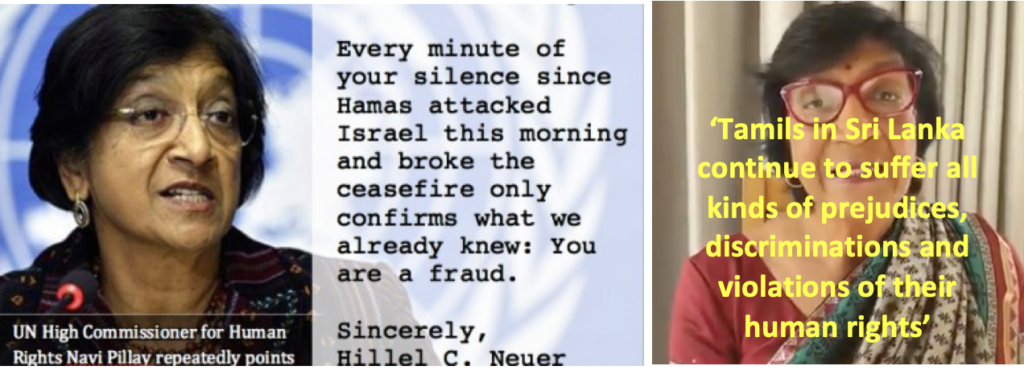
Israeli campaign in Germany blocks award to Navi Pillay” by Barbara Crossette is of particular interest to Sri Lanka for several reasons. It shows how powerful nations like Israel can exert diplomatic power & remove an award, while it also highlights how less powerful nations like Sri Lanka face the brunt of biased UN officials manipulating the UN system. Where do we draw the line?
Navi Pillay was to receive an award by the UN Association of Germany for her work on human rights & international criminal law. She didn’t receive the award because Israel contested it and prevented it.
Israel accused Pillay of being critical of Israel.
She had headed a 3 member Independent International Commission of Inquiry created by the UNHRC on Israel & the Occupied Palestinian Territory.
If it is alright for Israel to accuse Navi Pillay of being part of the Boycott Divestment-Sanctions movement (a Palestinian initiative to undercut Israeli economy) why is it taboo for Sri Lanka to accuse Pillay of siding with pro-LTTE fronts?
While we do not wish to contest or contradict Israel’s allegations against Navi Pillay, we need to raise a difference in reactions to this decision by the so-called international community.
While Israel raised objections, Pillay was denied the award.
When Sri Lanka raised objections against Pillay, Sri Lanka was reprimanded for doing so. Why is Israel treated differently & why is Sri Lanka treated differently with regard to the same person?
The HRC is not part of the UN organization nor is it under the control of the UN Secretary General. It functions as an independent body since 2005-2006 after replacing the discredited Human Rights Commission. The HR Council is no less controversial than the HR Commission.
HR Council has 47 member states nominated regionally by govts with the presidency rotating as per UN geographic blocs.
The Commission of Inquiry on Israel & occupied Palestine was an inquiry by the HR Council.
This is a stark difference to the PESONALLY commissioned Panel of Experts appointed by the UN Secretary General on Sri Lanka. The difference must be noted given that HRC is not under control of the UN Secretary General while this report was not a HRC Commissioned Panel (as the Israel CoI)
All it took was a report in a German tabloid, Israel’s envoy to Germany calling the Berlin Mayor to call off the ceremony & even banned the use of the Community Hall for the ceremony, a week before the award was to be given.
Sri Lanka has been highlighting the controversial decisions and actions by Pillay since she took office as OHCHR Head, which have all fallen on deaf ears.
The legality of the resolutions against Sri Lanka based on a personally commissioned report is one of the key arguments that the UN system has evaded responding to. Moreover, Pillay being a Tamil, should have recused herself from handling Sri Lanka given that the so-called grievances being drummed by Tamils took centre stage. What is more alarming is that Pillay upon retirement has been a frequent invitee to pro-LTTE terrorist events & her statements thereafter negate or contradict what she made officially. Her new stand only reconfirms the allegations of bias against her stand on Sri Lanka while in office. https://www.shenaliwaduge.com/open-letter-to-un-former-unhrc-head-navi-pillays-bias-exposed-investigate-her-role-as-unhrc-head-remove-bogus-charges-against-sri-lanka/ Open Letter to UN: former UNHRC head Navi Pillay’s bias exposed – Investigate her role as UNHRC head & remove bogus charges against Sri Lanka. While she speaks on Tamil grievances has she uttered or highlighted the sufferings of Sinhalese or Muslims in Sri Lanka by LTTE violence!
Now that Israel has raised objections to Pillay, it is a good time for the UN & OHCHR/HRC to relook at their stand on Sri Lanka from the point of time Pillay took office and went on a personal crusade against Sri Lanka. It is time a proper investigation is launched into the legalities of all the actions taken against Sri Lanka from 2010 onwards.
I read the following news item in Newswire September 23, 2022 at 10:59
Leaders of the political parties representing the Ninth Parliament have proposed the names of their party representatives to the newly formed National Council.
Addressing the Parliament today, Speaker Mahinda Yapa Abeywardena announced the names of those appointed to serve the National Council.
The Speaker will Chair the National Council, while the Prime Minister, Leader of the House of Parliament, the Leader of the Opposition in Parliament, the Chief Government Whip, and other Members of Parliament have been appointed to the Council.
The resolution proposed by the Prime Minister Dinesh Gunawardena to constitute the Parliamentary Committee called ‘National Council’ was passed in Parliament yesterday.
The members of the National Council Mahinda Yapa Abeywardena
Dinesh Gunawardena
Sajith Premadasa
Prasanna Ranatunga
Douglas Devananda
Naseer Ahamed
Tiran Alles
Sisira Jayakody
Sivanesathurai Chandrakanthan
Johnston Fernando
Rauff Hakeem
Pavithra Wanniarachchi
Wajira Abeywardena
L.A.L.M Athaulla
Tissa Vitharana
Rishad Bathiudeen
Wimal Weerawansa
Vasudeva Nanayakkara
Palani Digambaram
Mano Ganesan
Udaya Gammanpila
Rohitha Abeygunawardena
Namal Rajapaksa
Jeevan Thondaman
G.G Ponnambalam
Athuraleiya Rathana Thero
Asanka Navaratne
Ali Sabry Raheem
C.V. Wigneswaran
Weerasuma Weerasinghe
Sagara Kariyawasam (NewsWi)
I would like to make few pertinent comments on this Proposed National Council in Parliament for the benefit of the helpless and bankrupt spectator citizens of this country.
Objectives as Stated in the above press release.
*To determine the general priorities of Parliament
*To agree on short-term and medium-term common minimum programs related to economic stabilization and
*To organizing special meetings with the Ministers of the Cabinet, the National Council, the Chairperson of Special Committees and Youth Observers of Youth Organizations.
With the power to summon reports from the Sectoral Oversight Committees, the Committee on Public Finance, the Committee on Public Accounts, the Committee on Public Enterprises and any committee that controls the public finance.
Highlights in this article
*There isn’t single national minded MP in the present Parliament. Even if here one or two they have no role in decision making in this government on national matters as such you can never form a National Council in this Parliament. See what happened to Charitha Herath, the Ex Chairman of the Cope.
8 Therefore, to begin with it can never be called a National Council
* Most of the subjects assigned to the Council are outside the purview of a council of legislators. Nor are they competent to handle such business either
*Already there are enough committees in the Parliament appointed under the standing orders. As such there is no need for new councils or committees
*It will be only a waste of time and money and paper
*Opposition and breakaway groups have not taken it seriously. The fact that most of the opposition party leaders have only nominated their representative show that this will end up as a joke just like the Specialists Committee appointed by Gota to draft a new constitution in Nov 2020
* It is only an assortment of men and women, of diametrically opposed views each trying to outsted the other and determined to come to power to form their own governments
* This Council is therefore like the proverbial Kandaheliya of the seven Aandis. So obviously there want be even any Kenda at the end of their term.
* What is more is, this is an attempt to hoodwink the mases and distract the attention of the disgruntled masses on the one hand and on the other hand it is a shrewd invention to pacify those MP who have not got any ministerial posts by providing with some extra privileges at the expense of the suffering public
* It will also end up as another NATO council of 37 Andis.
*Furthermore, it is like a gathering of foxes and chicken and snakes and frogs each one eternally fighting to make the other his prey.
* At the end, definitely Natapu thovilayakuth ne bere palawakuth ne” is the conclusion one has to make
*Therefore, I strongly request the government to withdraw this proposal
According to the Standing Orders, the Sri Lanka Parliament, apart from the Committee of whole Parliament, has the following types of Committees
Select Committees
Sectoral Oversight Committees
Ministerial Consultative Committees
Legislative Standing Committees
Committees for Special Purposes
Beside these Committees they also have the teethless COPA and COPE
But on the overall, going by the 74 years of history of this Parliament not only these Committees but the whole Parliament has miserably failed to do its duty by the country. Had they done their job properly the country would not have been in the present despicable situation. A country that had the second highest per-capita income in Asia in 1948 has become the Ethiopia od Asia.
Today we have Parliament with 225 Members and a bunch of Ministers of about 70 (30 Cabinet and 40 State) and already a long list of Committees as given above. Therefore, the first question I would like to pause here is as to what is the necessity for another new appendage called a National Council inside the Parliament when the Parliament as the highest Council in this country itself can do all this work without additional new appendages involving additional expenditure, when the country’s economy is already struggling to turn the wheels on its rim. Isn’t this another shrewd political invention by the politicians firstly, to hoodwink the people and distract the attention of the disgruntled masses temporally just to mark time until the next election and simultaneously to pacify the Parliamentarians who have not got any ministerial posts, with some additional perks, again at the expense of the suffering general public. The general public now is completely disgusted with all 225 and that is why they openly agitate for a change in the whole system. Therefore, it is high time that all the members of Parliament from the President down to the last MP realize and act accordingly with responsibility at least now to convince the masses that they fully understand the ground situation in the country and try their level best to arrest this unfortunate situation in the country. But you cannot hoodwink the angry masses by resorting to this kind of meaningless political tricts..
Why can’t the functions listed under item 1 assigned to this so-called National Committee be done by the existing Committees or by the whole House. What is more is items assigned to this Council under item 1are matters to be formulated by a National Planning Council of subject matter experts. In which none of the Council members are competent in.
Matters listed under 2,3 and 4, I think are subject that could be dealt with by the Cabinet or other Committees already available in Parliament. That also make this Council redundant and useless. What is even worse is some of the Party leaders are also not int as they have already nominated some other members from their parties to this council. That itself shows they are not so serious about this Council and they do not treat it as worthy of attending.
Therefore, the proposed National Committee in my opinion will be another duplication and an appendage like the Provincial Councils that will only incur additional expenditure by way of additional payment for Members and additional staff putting the ailing economy from the prying pan to the hearth. Setting up a superfluous Council like this will only complicate, confuse and more over delay the statutory and legislative work of Parliament incurring additional expenses and wastage. Therefore, it is advisable to drop this move immediately. Otherwise, I am sure thit will also end up as an abortive step like the formation of the all-party government
What is more is this Council can never be called a National Council as it is only another assortment of the members of rival political parties in the Parliament who are struggling to get the power to form their own governments. This committee in my opinion is big fast. As such it will definitely end up as another NATO subcommittee of the Members of Parliament and another venue for them to fight each other to pursue their own party interests and personal interests at the expense of the g public coffer. Furthermore, it can never be called a National Committee since it is only an assortment of men and women of different political, social and ethnic ideologies. It is like a gathering of foxes and chicken or snakes and frogs. This is particularly so with the Tamils and Muslims who have only their extremist communal agendas on their heads.
Among all the Sinhala parties on the other hand like SLPP.SLFP.UNP.JVP the most distinctive feature is none of them talk about his/her nationality. In the first place none of them are patriotic, none of them are committed to protect the Sinhala nation All of them are concerned only in political power the source of wealth and aggrandizement. What is more is none of them have a Jathiya or they are afraid to call themselves Sinhalese as they fear, then they want get the Tamil and Muslim votes, even though in reality they don’t get any Tamil or Muslim vote in reality. Because, Tamils vote only Tamils and Muslims votes only Muslims. The present system of voting on district basis and preferential system have laid the foundation for this system of mono ethnic voting. These are well thought out and very well-planned political intrigues to destroy the political power of the Sinhalese majority in Parliament and destroy the nation. In my experience none of the Sinhala politicians belonging to any party. is committed to protect the Sinhala people. They behave deaf, blind and blind when Tamil and Muslim extremist behave like bulls in a China shop. Added to this are the external interferences from neighboring India and the West driven by their own economic, geopolitical and strategic interest in world domination. Absence of visionary and patriotic leaders with integrity, competence and commitment among the Sinhala politicians for nation building to overcome this tragic situation is the main cause of our downfall.
The men who took over the country in 1948 never asked even to restore the name of the country, Sinhale, that was there in 1815. Instead, they used the word Lankaa/Lankaava. Tamil called it Ilankai and later it was commonly called Sri Lanka after adding the prefix Sri which mean prosperity. This name was legalized by the 1972 Constitution when it was declared an independent Republic. But even the British and all other countries in the world called it Ceylon up to 1972 meaning Sinhale, the land of the Sinhalese. I wonder whether our politicians knew even this much. Still the majority who constitute nearly 75% of the total population are Sinhala. At least 99% if it is not 100% of the whole country can speak and understand Sinhala. This proves the millennia old Sinhala Buddhist claim and legitimacy of the Sinhala nation to this land. The pristine Buddhist archaeological evidence found both on land and underground from Point Peduru to Devudara in the south and Thonigala in the west to Lankapatuna in the far east bare living testimony to this great civilization. The tragedy facing the nation is we don’t have a single Sinhala politician in any political party in Parliament who understand these hard facts and stand for the cause of their protection
So that until this hard fact is first understood by the Sinhala politician and the whole world is told about it and finally the Tamils and Muslims living in this country either accept this gospel truth voluntarily or compelled to accept it and are either prepared to accept the status quo, give up their claims of self-determination in somebody else’s country that does not belong to them and agree to live amicably with the Sinhala nation or else get back to their own motherlands from where they migrated, this cantankerous situation causing misery for everybody will continue.
In this backdrop this idea of a National Council of men and women who have no nationality or any national feeling on the one hand, with representatives from all the minority with extremist and divisive claims on the other and this silly political day dream should be dropped forthwith as it is not going to serve any purpose.
Even if you set it up It will only create a duplicate of 37 quarrelsome MPP of the same useless gang who are behaving like a bunch of monkeys in Parliament making cat call against each other and mudslinging across the floor just wasting the few coins left at the bottom of the national coffer.
Instead, I propose the appointment of a true National Council of national figures and professional experts in different fields from outside this monkey cage, if the government is really interested in nation building at least now. I should be an independent apolitical Supreme Advisory Council as stated below as I have suggested long ago and it should be above the Parliament and even above the President as given below.
Permanent Supreme National/ Rajya Advisory Council at the Centre
The Mahanayaka Theros of Malwatta, Asgiriya, Amarapura and Ramanna Nikaya 4
Mahanayaka Theras of Kotte, Ruhunu, Dambulu Sects 3
Two eminent scholarly monks nominated by the 7 Mahanayaka Theras preferably from Vodyodaya and Vidyaalanakaaar Pirivea 2
The three Religious leaders of Catholic, Hindu and Islam 3
Speaker Rajya Sabha 1
Governor of the Central Bank 1
Head of the Public Service (Secretary to the Treasury) 1
Total & All ex officio) 15
(The Secretary to the Treasury like in the Civil Service days should be the most senior and competent Public Servant from the Sri Lanka State Administrative Service. SLAS should also be fully upgraded and reorganized to the level of the unchallengeable Premier Public Service and the steel frame of the machinery of the State)
(To be appointed by the President of the country)
This will be a non-political Supreme National Advisory Council that stands above all state institutions and individuals in the country. It is an independent National Institution set up primarily and solely to protect and safeguard national interest and welfare of the people. It is expected that this Council will act as the guardian god to protect this country and the nation
Permanent Supreme National Planning Council
It is also proposed that we also set up a Permanent Supreme National Planning Council consisting of 10 or 15 eminent persons in fields like Economics, Industries, Finance, Administration, State craft, Agriculture, Industry Education, Trade and Commerce, history and culture of this country etc, to prepare the overall National Plan so that politicians will have only to implement national policies after they get elected.
Every item in such plan has to be formally approved by the legislature and the President of the Republic in consultation with the Supreme National Advisory Council.
[S1]Formulation of national policies is theduty of a National Planning Council of subject matter experts
o Create a unique number at birth for all citizens, and it should be their
o National Identity Card,
o Tax Reporting &
o Social security numbers,
o Embrace the Open Market economy,
o Set up a Task Force to educate the masses about the benefits of the market economy on an urgent basis,
o The government should only take care of a few things.
o The national security,
o Monetary,
o Health,
o Education and
o Formulation of national standards & policies,
· Setting up a big and independent income Tax office.
o Independent tax office with sweeping powers,
o Mandatory for everyone eligible to vote to submit their income tax return yearly.
o, Recruit capable investigators with analytical skills.
o All banks and other financial institutions, land and motor vehicle registries, stock exchanges, and other such entities where ill-gotten wealth can be easily hidden should be linked to the income tax authority.
o Work out a system where the big tax office can have access to all the entities above and troll their databases for any unusual but not reported financial activities, but without being a hindrance to their activities and or being overly intrusive.
· Adopt the best available procurement methodology for all future dealings.
· Do away with the current import/export licenses and restrictions.
o Anyone who can fulfil the national standards and requirements should be able to import and/or export without any hindrance.
· Make it illegal to seek, share and or give any information unless only on digital request,
· Setting up an independent Currency Board with a unique possibility of lender of last resort provision.
Ahead of the Mekong Tourism Forum in Quang Nam, Central Viet Nam, 12-13 October, Mr Doan Van Viet, Viet Nam’s Deputy Minister of Culture, Sports and Tourism, outlines the vision and latest tourism priorities for his country
Deputy Minister Outlines Viet Nam’s Tourism PrioritiesAhead of the Mekong Tourism Forum in Quang Nam, Central Viet Nam, 12-13 October, Mr Doan Van Viet, Viet Nam’s Deputy Minister of Culture, Sports and Tourism, outlines the vision and latest tourism priorities for his countryDEPUTY MINISTER OF CULTURE, SPORTS AND TOURISM, MR DOAN VAN VIET [Download images and this press release in Word format here.]1. What are your targets for Viet Nam tourism in 2022? In the last normal” year, 2019, we attracted over 18 million foreign visitors. China, South Korea, Japan are traditionally our biggest markets. We have the ambitious target of attracting five million foreign tourists in 2022, up from almost zero in 2021, which was due to Covid-19. In the first eight months of 2022, we welcomed over 1.2 million international tourists. Besides the international market, Viet Nam’s tourism industry aim was to serve 60 million domestic tourists by the end of 2022. However, the number of domestic visitors has already exceeded the target, reaching 79.8 million visitors. Domestic tourism is forecast to fully recover in 2022.
2. Is there a new emphasis or focus in Viet Nam’s 2022-23 tourism promotion campaigns? We completely re-opened the door for tourism from 15 March, 2022. Viet Nam is one of very few countries in the Asia-Pacific region opening to international tourism without any entry conditions required. We promote communication to attract international tourists to Viet Nam with the campaign Live fully in Viet Nam”. The Viet Nam tourism marketing plan 2022 – 2023 is to bring an image of a safe, friendly and hospitable Viet Nam to the world. We are focussing on smart and sustainable tourism development followed by green and responsible travel.
3. What role does Quang Nam province play in Viet Nam’s tourism marketing plans? It plays an increasingly important role as part of our tourism cluster strategy. Quang Nam together with Da Nang, Thua Thien Hue will be one of the clusters in Central Viet Nam. The national tourism year 2022 was chosen to be held in Quang Nam with the theme of ‘green destination’ because of its potential. It is already known as a visitor-friendly destination thanks to its natural resources and wonderful coastline. It offers a vibrant culinary scene, many cultural attractions, and a diverse history, especialy Hoi An ancient town. For tourists seeking a sustainable travel experience where you can learn as well as appreciate nature, Quang Nam is home to productive farms, handicraft villages, rivers, mountains, and unspoiled natural attractions.
4. Which new tourism-related infrastructure projects will improve the tourism sector in Viet Nam? We have a lot going on, much of it guided by the Viet Nam Tourism Development Strategy to 2030. The strategy clearly defines our goal in developing modern and holistic infrastructure, especially transport infrastructure in tourism clusters, national tourist sites and areas with tourism potential. We are taking an inclusive approach to tourism infrastructure development, which focuses not only on international-class tourism destinations, such as Hoi An, Sapa, Ha Long, Da Nang, Nha Trang and Phu Quoc, but also on secondary tourism destinations, especially ones with potential to connect to regional tourism networks. Regarding Greater Mekong Subregion cooperation, for the last 20 years, Viet Nam has participated in four regional tourism infrastructure development projects sponsored by the Asian Development Bank, among which the latest is the Second GMS Tourism Infrastructure for Inclusive Growth Project. These projects were designed to improve the accessibility to secondary tourism destinations in provinces along GMS economic corridors as well as to enhance the environmnental conditions and urban infrastructure for tourism development.
5. What does Viet Nam Tourism hope will be the positive outcomes from the 2022 Mekong Tourism Forum? There are three outcomes we would like. First, to strengthen linkages between the leaders of the sub-region’s tourism industry, with the aim of rapidly recovering the tourism industry in a sustainable, resilient and comprehensive way, to promote the sub-region’s tourism as a common destination. Second, to introduce the city of Hoi An, voted as one of the 25 best cities in the world; also, to introduce Quang Nam in Central Viet Nam as an ideal destination for green and sustainable tourism, rich in cultural values, full of amenities of a top-class beach resort. Third, the Forum demonstrates the recovery of the tourism industry, the return of sellers and buyers in the region, after a period of travel freeze. Our aim is to promote a rapid recovery of international tourism and create sustainable tourism supply and demand.
6. What message do you have for tourism leaders and delegates attending the Forum? We should focus on practical goals that make the travel and tourism industry better for the benefit of our populations. My message is, Let’s act together for sustainable tourism growth.” I hope all delegates arrive in a positive state of mind to listen, learn and return home motivated to Rebuild Tourism, Rebound with Resilience” – the theme of the 2022 Mekong Tourism Forum.
SJB MP Kabir Hashim was unanimously appointed as the Chairman of the Committee on Public Accounts a short while ago, Communications Department of Parliament said. (Ajith Siriwardana and Yohan Perera)
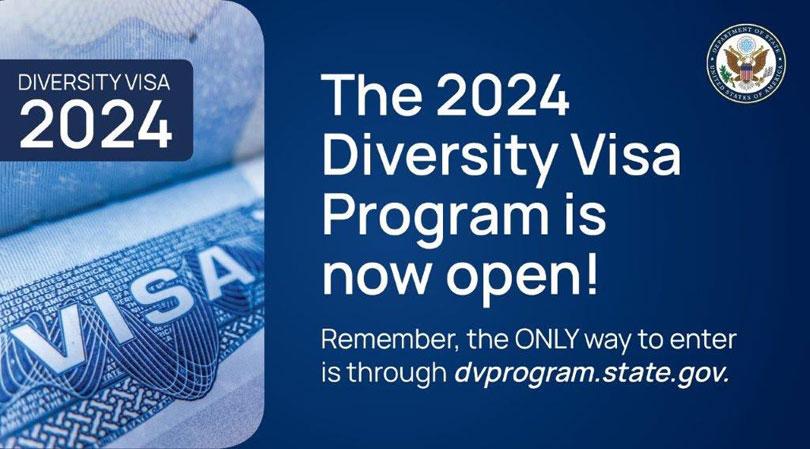
The US Embassy in Colombo announced that the 2024 Diversity Immigrant Visa Lottery Program, popularly known as the ‘Green Card Lottery’, will be accepting online applications starting tonight.
According to the US Embassy in Colombo, the DV2024 Diversity Visa Program (http://dvprogram.state.gov) is the only way to enter, and all processing is done electronically, with no paper entries permitted.
The lottery application period will be open from October 5 (9:30 am) to November 8 (10:30 pm) – both local time.
Tourists Fuel Pass was introduced this evening allowing foreign tourists coming to Sri Lanka to be able to get fuel according to their needs, outside the QR Code system.
Tourists can obtain their fuel needs from 300 Ceypetco and LIOC fuel stations islandwide, according to Tourism Minister Harin Fernando.
According to the invitation of the Ministry of Power and Energy and the Ministry of Tourism and Lands, Dialog Axiata PLC, the leading communications provider in Sri Lanka, together with Sampath Bank, launched the Tourists Fuel Pass to facilitate foreign tourists visiting Sri Lanka to carry out their tourism activities more easily and without any hindrance.
The unveiling took place at the auditorium of Dialog Axiata with the participation of the Ministers in charge of the respective Ministries and the heads of the respective institutions.
With this Tourist Fuel Pass system, foreign tourists coming to this country will be able to get fuel according to their needs, separate from the existing fuel quota system in the country.
They have the convenience of visiting any Sampath Bank branch islandwide and purchasing tourists fuel passes in any foreign currency, as well as the convenience of getting fuel easily from over 300 Ceypetco and LIOC fuel stations islandwide.
Dialog Axiata PLC and MillenniumIT ESP instituted technical cooperation for the introduction of the Tourists Fuel Pass.
Medical supplies worth over USD 2.74 million have been donated by HOPE Worldwide, a leading international humanitarian organization in the United States, to provide immediate relief to Sri Lankans.
This is in collaboration with the Embassy of Sri Lanka in Washington DC.
This brings the total medical assistance to Sri Lanka from American organizations to over USD 12 million during the past week.
We are thankful for the generous donation of $2.74 million in medical supplies from Hope Worldwide coordinated by the Sri Lankan Embassy in US to provide immediate relief to Sri Lankans, bringing the total medical assistance from American organizations to over $12 million in the past week,” the US Embassy in Colombo said in a tweet.
Steps have been taken to provide medicines and medical supplies worth over Rs. 4,600 million (USD 12 million) with the intervention of the Sri Lankan Embassy in Washington DC.
Mr. Mahinda Samarasinghe, Ambassador of Sri Lanka to Washington DC, recently said that he would continue to work with humanitarian organizations and agencies to get assistance for the vulnerable people in Sri Lanka and expressed his gratitude to the institutes, Heart to Heart International, Hope Worldwide, and Americares for their generosity extended at this occasion.
Heart to Heart International had sent a shipment of drugs worth of USD 9.131 million last July as well. The value of the aid sent by Americares in September was over USD 773,000. The value of the aid to be sent to Sri Lanka in the first week of October by the Hope Worldwide is over USD 2.74 million.
The Ministry of Health which takes charge of the shipments will provide detailed distribution reports to the donors specifying the recipients and local destinations for these medicines and medical supplies.
GO TO INFOLANKA AND LISTEN TO THIS 90-MINUTE MEDIA CONFERENCE IN GENEVA – I know you are very much interested, so, have patience and listen to this.
Socrates once said: The only wisdom is in knowing you know nothing”. What does Socrates mean when he said this: Socrates was considered by many to be the wisest man in ancient Greece, his spoken words are still listened to and followed today. Meaning of – An unexamined life is not worth living. Through this statement, Socrates means that an unexamined human life is deprived of the meaning and purpose of existence.
Then, I’ll quote you what former U.S. Defense Secretary – America’s minister of defense – said, and refer to the last expression in the last two lines:
There are known knowns. These are things we know that we know. There are known unknowns. That is to say, there are things that we know we don’t know. But there are also unknown unknowns. There are things we don’t know we don’t know”.
I quote the above because – listening to this 90-minute media event – I strongly felt (1) Foreign Minister Ali Sabri ‘did not know what he did not know’ (2) Still with all these years – past two decades – Sri Lanka does not know how to combat global misinformation/misinterpretations unleashed by both the Western Powers and separatist elements within the Tamil Diaspora (3) How Sri Lanka – insinuated by Foreign Minister Sabri – is damn scared of the United States and other Western powers to tell the truth while saying that the US and other Western Powers are still ignorant of the ground situation in Sri Lanka (4) Sabri told at this media event – referring to the Prevention of Terrorism Act – that the U.S. too has a similar one – the PATRIOT ACT – but has not done his homework to examine and study the obnoxious elements of the PATRIOT ACT because the feeling one get is that Sri Lanka is damn scared of these Western Powers, especially the U.S.
PLEASE HAVE PATIENCE TO LISTEN TO THIS.
Daya Gamage/USA
Dilrook Says;
Sabry is being reasonable. He was the minister of justice, finance and foreign affairs within a very short time and it seems he understands how they are all inter-related. Well done!
UNHRC resolutions are only symbolic. So no use harming trade and other interests over them. Countries that vote against SL are SL’s most important export partners, top tourism dollar sources and largest weapons suppliers/donors. They also hold key votes in IMF decisions.
UNHRC is driven by geopolitical interests, not human rights or humanitarian concerns. If not for this, they will find another excuse to bash SL.
This is just a bi-annual distraction. SL should not change anything. Nothing happens even if SL doesn’t deliver on these resolutions.
If they are serious, they will pass a resolution at the UN Security Council. They cannot because China will veto it. Until then SL should do nothing. Go for the circus and drop the matter.
Ahead of the vote on the new UN resolution on Sri Lanka, Foreign Minister Ali Sabry says it is difficult to compete with powerful nations in the UN Human Rights Council (UNHRC).
However, whatever the vote result Sri Lanka will stand firm against the new UNHRC resolution, he said speaking to the media from Geneva.
He said Sri Lanka would oppose the proposed UN resolution for accountability that would also include responsibility for economic crimes, emphasising that external forces” should not guide it on how to manage the country’s economy.
A new draft resolution, which is to be put to vote on October 7 at the Human Rights Council (UNHRC), is to additionally call for accountability on the island nation’s ongoing economic crisis.
We will not allow external forces to tell us how to manage our economy, we have taken our own measures for economic recovery,” Sabry told reporters through a video link from Geneva where he is attending the 51st session of the UNHRC.
The resolution’s initial draft read to enhance its monitoring and reporting on the situation of human rights in Sri Lanka, including on progress in reconciliation and accountability, and on the human rights impact of the economic crisis and corruption.
It also talks to present oral updates to the Human Rights Council at its 53rd sessions (June-July 2023) and 55th sessions (February-March 2025), and a written update at its 54th sessions (September-October 2024) followed with a comprehensive report that includes further options for advancing accountability at its 57th session (September-October 2025).
Sabry said the UNHRC lacked expertise to determine economic affairs.
Asked if Sri Lanka was tolerant of international mediation on resolving the economic crisis while opposing international mechanisms on human rights protection, Sabry said the island was having friendly cooperation on its economic recovery when the countries, mostly the West, tended to interfere in the human rights front.
He said the core group of countries led by the US, UK and others are being heavily lobbied by the Tamil diaspora domiciled there to move against Sri Lanka.
We have to defend our sovereignty as it is clear that these groups want to perpetuate these accusations to undermine us,” Sabry said.
He reiterated Sri Lanka’s position that international mechanisms to try service personnel was an impingement of the Sri Lankan Constitution.
Our war heroes must be protected, they can’t be allowed to be tried by external forces,” he said.
Sabry insisted that Sri Lanka had taken measures to address the accountability issues with certain local mechanisms set up already such as the office of missing persons, office of reparations and action initiated to repeal the Prevention of Terrorism Act.
We have released 94 per cent of the private properties (held for military purposes during the war with LTTE),” Sabry said.
He said the truth seeking mechanism which is to be set up soon would enable anyone to complain against the troops for any wrong doings.
He said Sri Lanka defeating the resolution was remote as some of the countries who had previously been members of the UNHRC to support Sri Lanka were no longer members.
The number in our favour would be significantly less, this is the reality,” Sabry said in the vote adding that powerful countries lobbying against us doesn’t reflect the will of the people”
The final draft of the new resolution on Sri Lanka was submitted to the 51st UNHRC session in Geneva today (05) along with the UN Human Rights High Commissioner’s report on the human rights situation in Sri Lanka.
The draft resolution, titled ‘Promoting reconciliation, accountability and human rights in Sri Lanka’ was initially sponsored by the Core Group on Sri Lanka including the UK, US, Germany, Canada, Malawi, Montenegro and North Macedonia.
It has now been signed also by Albania, Australia, Austria, Belgium, Canada, Czechia, Denmark, Estonia, Finland, France, Germany, Iceland, Ireland, Latvia, Liechtenstein, Lithuania, Luxembourg, Marshall Islands, the Netherlands, New Zealand, Norway, Slovakia and Sweden.
The resolution, Promoting reconciliation, accountability and human rights in Sri Lanka, will be voted this week at the UN Human Rights Council in Geneva.
It was published in a newspaper that president Ranil Wickremasinghe has proposed to the Asian Development Bank to establish an International University on climate change. The proposed university is to be established in Sri Lanka and my view is the Mullaitivu area would be the best place to establish the university. Climate change is a broader subject area that associates with science, commerce and art and technology and requires broader research and policy developments to be performed and to disclose research outcomes for further research and policy development. It should be a university that offers education and research in several media such as English, French, Japanese, Chinese, Hindi, Sinhala, Tamil and many languages.
For researching Climate change, it needs many research facilities and the original cost should be calculated the US $ 500 Million, which might need for establishment cost. Annually the proposed university requires US $ 250 million to perform practical and desk research for students and administration from a variety of countries.
This proposal was the cogitation of the performance of Mr Ranil Wickremasinghe after becoming the president of Sri Lanka. It should not be like the Colombo Plan proposal made by JR.Jayawardane.
All what BBS tells is, come and discuss with us, we have issues.”
Source: Triumph of the Sinhala Buddhist voter-1931, 1956 & 2014, Lankaweb-2/27/2014
In the past I used to write essays such as, Navanethem Pilley and BBS; BBS and Mrs. Chandrika; Wijedasa Rajapakse and BBS; Friday Forum and BBS, BBS and DBSJeyaraj.com, and Colombo Telegraph Website and BBS, to explain why they were wrong in attacking the BBS movement which was/is more than its leader, Ven. Galagodaatte Gnanasara Thero (GG). Sepal Amarasinghe’s recent Youtube video clip cited above, about Ven. GG’s visit to the Saudi embassy celebration in Colombo prompted me to send him a reply, because he is repeating like a parrot the same old black whites’ common song against BBS in an unfair (sinful?) manner. His prejudice against the monk is apparent when we compare his fact-based piece a few days ago about university ragging.
Unlike the other slanderers of BBS leader, Sepal was critical of Ven. GG even before the formation of BBS in May 2012. Once he had to report to the CID for calling the monk ‘ඥානසාර මචං.’ Sepal and others such as Sannasgala, Suda, Handungoda, Abhisheka kella and even Nagananda have a habit of calling monks (not supporting their line of Marxist, Omar Khayyam way of life) as ‘yellow pets,’ without mentioning their names, which is unprofessional because we all know robe is a jungle robbers could hide. Sepal should name his list of pets. In this behavior he is only competing with Ranjan Ramanayake.
Difference between Shamindra and Sepal
I just read Shamindra Ferdinando’s report in Island Midweek Review (Sept 28, 2022), about the cheating game played by Norway to break Sri Lanka and how Sinhala politicians acted in a stupid and dishonest manner betraying the nation. Ven. GG and a small group of monks (e.g., Ven. Elle Gunawansa, Athureliye Rathana) spearheaded a movement to defeat Prabakaran despite all these treacherous acts. People like Sepal have forgotten this national service by these monks and attack them with no fear or shame. This service could not be limited only to Bodhi Pujaas and other sermons. For example, Ven. GG once got on to the political stage organized by Mangala Samaraweera and Kumar Rupasinghe as part of their white lotus peace appeasement project, where the peace king Mervyn Silva was speaking, grabbed microphone from his hand and lifted him up from his waist belt. It reminds what the bodhisatva nagaya did to the old woman who mistook it as a garandiya. One monk said he had to keep a gun next to him while having lunch. Does Sepal have any idea about the monk Ampitiye Sumanarathana Thero’s lonely struggle in Batticaloa to protect and save Sinhala Buddhist people from harassment by local Muslim and Tamil GSNs instigated by Sharia/Eelam remnants under the cover of 13-A debacle. Whether we like it or not
Sepal and others operate with only a Marxist mirror of history. Does he know that the story of Sinhale since 1802 has been a history of a continuous conflict between the White rulers and their black-white agents (after 1948), on one side and the Temple on the other? There are about 12 interconnected phases of this conflict. Each phase had one or two monks playing a leadership role against the discrimination of Sinhala Buddhists. The first was dominated by an argument that Buddhism was a false religion. It was defeated in 1873 at the Great Panadura Debate. The latest phase began with the Asgiri Declaration on June 20, 2017, and the Asgiri Notice on July 4th regarding the unfair harassment of Ven. GG by the black-white establishment. It reiterated that they are in full agreement with his (BBS) ideology. LankaWeb – අස්ගිරි විප්ලවය
Vigneswaran’s failed attempt to get Asgiri monks on to his Eelam dream boat was one incident happened during this phase. The attempts to arrest Ven. G stopped, but subsequently he was sent jail based on an unusual set of facts. He was released from the prison because of the Pasku bombing tragedy. Earlier, Mrs. Chandrika boasted that ‘soon balu sena will be put in balu kuudu.’ Finally, Asad Sali, Ravi Karunanayake and Mano Ganeshan wanted the monk released, while PakiyasothyS and Mrs. MaithreeW petitioned MaithreepalaS not to release him!
Ven. Gangodawila Soma became a ‘threat’ to Sinhala politicians when he signaled the possibility of contesting the upcoming presidential election. His death in Leningrad, Russia in December 2003 is still a mystery. On this subject Victor Ivan completed a book contract aimed at providing ‘evidence’ that it was a natural, normal death (පන්සලේ විප්ලවය, 2006). Perhaps, Sri Lanka is unique on the number of socially active monks faced with untimely demise, and the BBS leader is living with calls coming to him threatening revenge. In fact, on the recommendation of the Pasku Commission he is now given police protection. There is evidence that even black magic powder was used within his temple premises aiming harm.
The irony is that this threat to his life is a result of a vicious campaign leveled against the monk, spearheaded by the so-called Sinhala Buddhist politicians in the country, ever since the formation of the Bodu Bala Sena organization. He had a simple request to the Sinhala black-white political establishment: ‘come and discuss with us, we have issues.’ And he became a real or imaginary survival threat to them all. Sepal’s YouTube piece is the latest example of this fear psychosis. Otherwise, why is he taking a path of blind leading the blind?
To be fair by Sepal, my purpose is to provide him with an explanation about the phenomenon called BBS and its leader. I hope either he would offer an apology to the monk (and the Saudi embassy in Colombo) about the factual errors he made in his Video clip. Or do a revised new Video clip. Our knowledge on any subject is based on the quantity and quality of the information we receive/have. Data must be factually correct. Otherwise, we face a garbage in-garbage out dilemma.
Birth of BBS
My first ever contact with Ven. GG took place only in June 2022, after the One Law-One Country Report was submitted by his committee to former president Gotabhaya. But since its formation in May 2012 and its meteoric rise thereafter, I was following its’ activities with interest. After seeing what had happened to Ven. Gangodawila Soma’s vision and mission, I felt that BBS has been following a scientifically and ideologically appropriate path to tackle the ‘anti-Mahavamsa establishment’ in the country, and I agreed with the project 90%. It was a Gandhian type disciplined pragmatic movement based on the Buddhist Middle Path and the vision ‘සියළු සත්වයෝ නිදුක්, නිරෝගී, සුවපත් වෙත්වා.’ Unlike Anagarika Dharmapala’s controlled use of sharp words such as para balla, Ven. GG in the past appeared to have fallen into a trance when faced with gross injustice. He admitted this involuntary weakness in him.
From the year 2013 I have been voluntarily and independently defending BBS against unfair and unreasonable attacks made by politicians of all kinds aimed at shooting the messenger because he disclosed the truth, ‘that Sinhala Buddhists in the country have had no leader for them.’ Except one or two, all PMs and Presidents in the country had a Christian in the immediate family or in the bedroom. Both top-and low-level politicians in the country alleged that BBS was a Norway-funded agency without providing any evidence. It was all false propaganda to derail the BBS movement like what they did to the JHU before it. They wanted Ven. GG’s pound of flesh. The unique nature of Ven. GG’s approach was his castigation of bogus politicians identifying them by name.
Sepal has been a harmless anti-establishment Marxist, perhaps following the lifestyle of Omar Khayyam. But lately he acts like a wounded wild boar, due to what has happened to his Galle Face-based Aragalaya dream. In this angry mood his video clip about the Saudi embassy affair is like a summary reiteration of all kinds of slandering taken place against BBS during the past ten years. What are some statements made by him:
*1. minute 3:35 of the video
Ven. GG drank only a coffee; he did not eat buriyani at the embassy party. Sepal’s question if buriyani is tasty was unfair because monks are not supposed to eat solid food in the night. In Sepal’s mind maybe he wanted to be sarcastic, but some people could get the impression that the monk ate buriyani.
*2. 6:30 – Sepal agrees with what Ven. Soma said before his demise about asymmetrical concentration of economic power (trade) in the hands of Muslims. This is exactly what Ven. GG pointed out after 2012 as a problem to be worried. So why is Sepal blaming Ven. GG for raising that issue?
*3. 8:40 – Sinhala Buddhists are beggars compared to Muslim traders. BBS capitalized this situation of poverty to capture power to harass Muslim community. Muslims pretended to be giving up in the face of BBS aggression but continued expanding their economic power as usual.
*4. 9:33 – Ven. GG got trapped in a political game. Went to jail. Went full circle and now at the Saudi embassy eating, drinking, and shaking hands with ‘Habeebs.’
*5. 9:58 – Dilanthe’s wife should have gone to the party with a hijab (But women in Iran fighting for this freedom).
*6. 10:21 – Ven. GG (Gnanasaara in Sepal’s words) told Sinhala Buddhists that Muslims are their enemy.
*7. 10:31 – Aragalaya proved that this act by Ven. GG was wrong. All ethnic groups worked in unison.
*8. 11:14 – Religious discipline is good. Muslims traders are disciplined by their religion. But religion can brain wash people to go mad and undertake suicide bombing world over.
*9. 12:11- Sinhala Buddhists have no religious or any other discipline. Gnanasara was able to manipulate these people to go against Muslims
*10. 12:38 – Saudi embassy knew that Gnanasara has had the trigger in his hand to create trouble. So, it invited him to the party and got hold of him by his neck.
*11. 13:30 – Gnanasara created ethnic unrest and benefitted immensely by way personal gain.
*12. 13:46 – People like Gnanasara receive vehicles from Muslims.
*13.14:01 – Saudi embassy was able to trap Gnanasara to show Muslims in Sri Lanka that he is under its control and Muslims are now safe.
*14. 15:11 – But a photo of Gnanasara at the embassy with the ambassador does not create ethnic harmony or disharmony.
*15. 15:39 – Politicians and religious agents are the common enemy of people. They thrive by fooling people. People do not know this game until exposed by photos like this embassy party.
The Untold story
Fifteen statements listed above represent not just what Sepal thinks but an entire world’s impression about the role of BBS in the island. But shrewd politicians, their state agencies, black-whites and NGOs, state and private media have all engaged in a dirty game of suppressing BBS from telling its story. This monopoly control has gone to the extreme of preventing any mention of BBS on outlets like Facebook. Fighters for freedom of media are silent on this discriminatory treatment. The only website which prints BBS-related news and essays is Lankaweb website. I have collected about 50 essays from the Lankaweb archives to prepare two books in Sinhala and English respectively, to explain the BBS’ story to the world in an objective fashion. In the meantime, people like Sepal could, if they care, visit Lankaweb and learn the other side to this unfair campaign. Presented below is a short ‘educational’ tour for Sepal & Co. in point form.
*1. Like other anti-BBS agents, Sepal thinks BBS is solely an anti-Muslim bulldozer. It is not a movement against any minority group in the island, religious or ethnic. In its mission as a continuation of a struggle to regain in a reasonable manner what was deprived to Sinhala Buddhists after 1815, it is forced to face two new invasions of Sharia aggression and unethical conversions by Christian fundamentalists such as the born-again sects. After 1994 Sinhala politicians helped these two elements at the expense of Buddhists for personal and political gain. Therefore, BBS had an urgent mission of tackling these religious extremists. But BBS did not harm or attack any of them. It has been an ideological war.
Lately, Buddhists and Hindus face an existential threat from these two groups. Buddhists faced systematic discrimination after 1815, with two episodes of genocide in 1818 and 1848. Tamil separatism was lurking in the dark, but lost its ability to create havoc with suicide bombing etc. Christian dominated TNA (Sumanthiran & Rasamanikkam) lost their grip over the Hindu/non-Vellala Tamils because of growing affiliation between Hindu leadership and Sinhala Buddhists plus the people friendly army. The non-Vellala educated and dedicated young rebel, Arun Siddharthan has become a serious headache to separatist politics in Jaffna.
Ven. Gangodawila Soma came back from Australia when Sinhala Buddhists were caught in a ‘humiliation trap’, especially after 1994. He was actively engaged on two fronts: how to rescue people from going after all kinds of gods and goddesses looking for outlets of salvation. The other was the tragedy of unethical religious conversions and the Sharia threat. In addition, Ven. Soma warned against dangerous concentration of economic power in Muslim business hands. Sepal appreciates this foresight of Ven. S. Ven. GG became a monk in 1989 and became the principle of a pirivena in 1997. Ven. S and Champika Ranawaka (1996) were role models for Ven. GG, and he resigned from his teaching post to become a full-time social/national worker. Sinhala Buddhists realized the value of the service Ven. Soma did only after his death. Ven. Omalpe Sobhitha and Champika took part in forming JHU but failed to get a law passed to regulate the unethical conversion issue (today there are over 500 hundred fundamentalist churches in the island). BBS was formed in May 2012 to face the twin challenges of Christian fundamentalism and Sharia/Wahabism. Attempts to reduce the role of BBS as a Muslim (Islam?) nemesis is slanderous. If Ven. GG is wrong, then Sepal must declare Ven. S was also wrong. Sepal highlights women in Iran fighting against hijab, but BBS never opposed hijab. It was all about the security concerns of covering the entire face (billas) in public. BBS did not support rumors relating to වඳ බේත් හෝ වඳ තනපට. It was neutral on the question of burial of Muslim Covid corpses.
We must separate real threats from fake propaganda. Just, yesterday on Sept. 28, ‘India’s Ministry of Home Affairs (MHA) declared the Popular Front of India (PFI), a Muslim organisation, as an unlawful association” under the Unlawful Activities (Prevention) Act (UAPA) and banned it for five years. The ban applies to its eight front organisations, including the Campus Front of India (CFI), its student wing.’
King Kosol’s Sixteen Dreams
BBS has a vision and a mission to rescue the Buddha Sasanaya (monks, female monks, male-female laypersons) from rapid decline especially after 1977 with the creation of a society which allowed the big fish to eat the small fish (මත්ස්ය න්යාය). King Kosol’s sixteen dreams have come true. The so-called Sinhala Buddhist politicians are responsible for this hopeless situation. While they were acceding to all kinds of demands by Muslim and born-again groups via the device of private members’ bills, recommendation made by several Buddhists Commissions to rectify defects relating to the Sanga fraternity were ignored by the governments in power (latest was the 2004 Report of the Presidential Commission appointed by Mrs. Chandrika). The late Prins Gunasekera, MP, who lived in exile in London, in his book, විහාර නීති විත්ති (1958) pointed out how colonial laws ruined the orderly managerial system existed in temples; how English judges suggested a separate system of courts to settle temple/monk related disputes.
Whether Sepal’s grandmother knew about the මුරදේවතා සංකල්පය or not, no other country in the world has this concept. This island did not succumb to South Indian and European invasions because of the power of this concept. With all their human weaknesses the monks saved the Sinhala Buddhist civilization from extinction. They gifted the Tripitaka to the world. With the first and only Christian king Don Juan Dharmapala (1551-97), a Sinhala Christian minority community developed with the support of respective ruling power in Colombo, and for over 500 years of Sinhala Buddhists suffered in the only piece of real state they have in the world as their homeland. Rectification in a reasonable manner, injustices done to them is not discrimination against the minorities who benefitted in every possible way under the colonial policy of divide-and-rule. Christians changed their religion to fit in with the religion of the new ruler. After 1931 they became the so-called Donoughmore Buddhists to benefit from the universal suffrage (Discrimination with reason: the policy of reservations in the United States, India, and Malaysia, Devanesan Nesiah, 1997).
Saudi Arabia and BBS
The link between Saudis and BBS goes back to September 2014. A delegation visited Ven. GG and after a fruitful discussion Saudis decided to cut off funds for several entities engaged in malicious propaganda against Buddhism and BBS by way of printing books, conducting classes etc. The delegation requested Ven. GG to facilitate a meeting with Ven. Ashin Virathu in Myanmar (969 Movement) and there was a dialogue in Colombo with the participation of Vens. Virathu and GG.
So, for Sepal the embassy gathering in Sept 2022 was exciting news, but an understanding was growing between Saudis and BBS for some time. We need to promote this type of linkages with other Muslim embassies too. Discussions instead of confrontations which is the Buddhist Way.
Sepal needs to understand that winds of change is everywhere in the Middle East, even though the western press reports only the acts by extremist elements. Just a few days ago (Sept 27) the Saudi King Salman bin Abdulaziz appointed the crown prince Mohammed bin Salman as prime minister, and several other princes already function as ministers. We need to understand the difference between evolution versus (r)evolution. In Oman, in 1970, the son removed the inefficient Sultan father by a bloodless coup and Oman is now a progressive country. In all these countries a younger generation with new ideas is in power. Even in Denmark, the queen grandmother is reducing the number of royal titles in the family. King Charles in UK is watching how it goes in Europe!
One Law-One Country Report (2022)
One Law-One Country Report is a good example to understand the new rational approach of the Saudi government. When Ven. GG was appointed to chair this committee there were objections of all kinds from Muslim (and separatist Tamil) politicians. They expected the project to fail, but Ven. GG was able to win over the support and confidence of Muslim and Tamil people at large. His recommendations were not different from what the 2004 Buddhist Commission Report submitted to Mrs. Chandrika or the 2020 parliamentary sectoral oversight committee report on national security (headed by Malith Jayathilake) prepared after the Pasku bombing massacre. But Muslim politicians got president RanilW to shelve this report even though the report made very reasonable suggestions. Pasku report used the report submitted to it by Ven. GG. Most of the facts in the Pasku report are research work of Ven. GG. It was the traditional Muslims who provided information about Sharia activities to Ven. GG seeking his intervention.
Just like in 1956 with SWRD, Gotabhaya was only the midwife of the Sinhala Buddhist reawakening in 2019. It proved that a Sinhala Buddhist candidate can become the president without providing bribes to Muslim politicians. Saudi embassy was observing this development. It would not have invited Ven. GG for the celebration along with the PM etc. if it felt that the OL-OC report as an instrument against Muslims in Sri Lanka. Sepal’s imagination that the embassy trapped Ven. GG and used him to project an assurance to Muslims that they are safe from Ven. GG’s antics is based on his rigid and bias views on both the Saudi embassy officials and Ven. GG. As mentioned earlier Embassy-BBS link goes back to 2014. There is no ‘common enemy.’
Buddhism in Sunaparantha, Arabia
As the late Indian president Abdul Kalam once said, if Buddhism provides solutions to world’s problems, we should look for bridges of cooperation and mutual understanding among different cultures. The essay by the late Prof. A.D.T.E Perera which appeared in the Daily News, May 23, 2005, discussed the historical links between Saudi Arabia and the Buddhist India during Buddha’s time (Punnovada Sutra, Majjhima Nikaya 5.3:145). Tapassu-Bhallika brothers were Muslim traders who built the first Buddhist stupa in Lanka, the Girihandu Seya at Thiriyaya, near present day Trincomalee. Buddhists did not have any religious war with other religions and always accommodated other religions to function with freedom. The conflict arose only when aggression was used against the host by the guests!
Muslim scholars think that Kapil mentioned in Koran is a reference to the Buddha.
Ven. GG says what he saw on road junctions in Saudi Arabia are Bo trees. Then why was it that Hisbulla with a Sharia theology institute decided to plant date trees saying that he did it because of the dry climate in Kattankudi? Bo trees could have become a sign of peace and harmony between Muslims and Buddhists. Both Ghaddafi and Yasser Arafat promoted procreation as a weapon of war, and Sharia funded one such human factory was found in Negombo with 3 men, a dozen women and 17 children! Saudi embassy does not support such plans, but unfortunately Sharia operatives in Sri Lanka connect Saudi name to them to hide their wider secret funding sources.
Sinhala politicians did every trick humanly possible to silence Ven. GG. Sepal tries to link him to No Limits shop attack. He was accused of Aluthgama controversy, but his challenge for a commission of inquiry to ascertain the truth was ignored. It was the monk Watareka Vijitha (of Mahiyangana) who was funded by the Sharia sects. But Sepal tries to sling mud at socially active monks in general. Ven. GG was given a vehicle by the Los Angeles Sinhala Buddhist philanthropist Dr. Walter Jayasinghe and not by a Muslim businessman.
The end of Gotabhaya presidency is not the end of the Sinhala Buddhist desire for a country with peace and prosperity under the One Country-One Law umbrella. At present the country is mired in a bogus democracy trap called the representative system of part politics. By 2015 Sinhala Buddhist politicians were a thoroughly confused lot. Today it is economic, social, and political chaos and on the brink of anarchy. An Evil Triangle of politicians-officers- cruel businessmen/NGOs, sucked the blood out the mother Lanka. Their mismanagement (අවපාලනය) had no limit or end.
Politicians who stripped the country even of its soil and sand are now facing the anger of people who are without food, medicine, and other basic necessities. Politicians have become the proverbial cats on rocks, still fooling people asking for power as if they (JVP/Sajith/Sirisena/Welgama/Champika/ Wimal/Gammanpila/
Dulles-GLP) have magic formulas compared to the failed SLPP. RanilW could be a modern-day Abraham Lincoln if he comes out of his past sins against the Sinhala Buddhists and follow the Buddhist Middle Path.
All these panchaskandas behave like headless chicken. If they understood in 2012 what BBS message was- that it was a peaceful, Buddhist aragalaya (compared to the violent Galle Face Aragalaya in 2022) seeking a system change- the country would not fallen into this abyss. With selfish politicians who think this is an opportunity to capture power by bullet or ballot, the landing of UN Peacekeeping Forces (with India and USA behind it) under the cover of R2P is a real possibility. An alternative is a military junta to control political conspiracy of sabotage in the name of democracy at the Colombo level, while empowering people at the village level with a Jana Sabha system. BBS approach was the people’s councils path demanded and forgotten by the Galle Face innocent factions. Saudi embassy’s public recognition of Ven. GG’s ideology kills double games played by both Sinhala Buddhist politicians as well as Muslim and TNA politicians.
A Brisbane-based company that invented a smartphone app it says can diagnose COVID-19 and other respiratory illnesses by listening to someone cough has been purchased by Pfizer for nearly $180 million.
ResApp Health Limited uses diagnostic technology developed by Associate Professor Udantha Abeyratne and his research team at the University of Queensland (UQ) to record and analyse a patient’s coughs on a smartphone.
The app also considers the self-reporting of simple symptoms like a runny nose or fever to diagnose and measure the severity of a range of pulmonary diseases, including asthma and pneumonia.
Pfizer, which is one of the world’s largest bio-pharmaceutical companies, offered to buy ResApp earlier this year when the company announced positive results for its COVID-19 screening test.
Recent studies had shown the app had a 92 per cent success rate in diagnosing the virus among symptomatic patients, but more clinical trials were needed for it to gain regulatory approval.
A Pfizer spokesperson said they were encouraged by the data they had seen so far and the $179 million acquisition, finalised on Monday, was another move toward enhancing the company’s expertise in digital health.
“We believe the COVID-19 screening tool is the next step to potentially provide new solutions for consumers that aim to quell this disease,” they said.
“We look forward to refining this algorithm further and working with regulators around the world to bring this important product to consumers as quickly as possible.”
UQ Vice-Chancellor Professor Deborah Terry said it was an “outstanding” outcome for ResApp and associated researchers as well.
“The value of translating research into new point-of-care diagnostics to improve healthcare on a global scale cannot be understated,” Professor Terry said.
UQ’s commercialisation company UniQuest licensed the technology to ResApp in September 2014.
‘Information super highway’
Associate Professor Udantha Abeyratne developed diagnostic technology used in ResApp Health.(Supplied)
Dr Abeyratne, from the School of Information Technology and Electrical Engineering, said the research that led to the breakthrough began more than a decade ago with grant funding from the Bill and Melinda Gates Foundation.
“When I open up my lungs, open up the airway, that is what I call an ‘information super highway’, so I wondered whether it’s possible to use cough sounds, advanced signal processing and AI technology to pick out features,” he said.
“From the very beginning, I had a big vision to develop scalable, cheap technologies to diagnose pulmonary diseases all over the world – not only in remote sub-Saharan Africa, but even in developed urban cities like New York and Brisbane.”
Dr Abeyratne said the smartphone technology, which was developed in consultation with medical practitioners, operates similarly to a doctor using a stethoscope to listen for sounds produced by a patient’s body.
“The diagnosis comes immediately, within a minute or so, telling the patient whether they have a particular disease, using only their smartphone – nothing else – and there’s no need for a network connection either,” he said.
A Pfizer spokesperson said ResApp’s solutions in respiratory health align well with their own areas of focus.
“As the world becomes more digitally connected, and as respiratory illnesses — including COVID-19 — increasingly threatens the global population, digital apps provide consumers and patients with easy to use, non-invasive and cost-effective ways to detect, suspect and eventually, diagnose respiratory illness,” they said.
“Ultimately, we believe that science and health technology can be advanced in ways that can provide better information for clinicians and regulators, reduce patient and physician burden, and reduce time and costs across the development cycle.”
Dr Abeyratne said he is hopeful Pfizer’s acquisition of the app will help realise his dream of improving patient outcomes around the world.
“I hope they will be able to diagnose killer diseases like pneumonia in very remote communities in Africa and Asia because they don’t have access to sophisticated hospitals,” he said.
He said the technology could also benefit GP clinics and hospitals in developed countries by speeding up the screening process and preventing costly hospital admissions.
“It could be used in telehealth services, so patients don’t have to visit the doctor in-person. The doctor can do a diagnosis using the app on their smartphone first.
“In a pandemic or disaster-stricken area, respiratory diseases come quickly. So the technology could be used at airports or in areas affected by hurricanes and flooding.”
Dr Abeyratne said the app could also be used to monitor and manage chronic illnesses like asthma from home.
“I think in the future, with more resources, more could be done,” he said.
“There are many other applications … there are other skills, techniques and instruments that can be added [to the diagnostic technology] at low cost.”
JVP disappeared from public view for a few years after the second insurgency failed in 1989, but resurfaced within five years as a mainstream political party. From 1994 JVP has been represented in Parliament.
However, JVP’s performance in Parliament has not been impressive. JVP has a history of propping up crumbling regimes and supporting unpopular governments, said critics. In 2001, the JVP offered to shore up the Chandrika Kumaratunga government, which was teetering on the brink of collapse, owing to a spate of crossovers, and undertook to introduce the 17th Amendment.
In 2015 JVP supported Yahapalana government. .JVP was a member of the National Executive Council set up by the Yahapalana government. In 2018, JVP defended the UNP-led UNF government against President Maitripala Sirisena, and Mahinda Rajapaksa. It voted with the UNP, enabling the latter to retain a working majority in the House.
JVP entered the 2020 General election under the banner of the National People’s Power NPP, a broad alliance of 28 organizations, comprising political parties, civil society organizations, intellectuals and other professionals. There is little information on the different groups involved in the NPP but it is clear that the dominant force is the JVP. In Parliament NPP is associated almost exclusively with JVP.
It is more than 20 years since the JVP came into mainstream democratic politics. Yet, it has failed to increase its vote base. In the 2020 election NPP got 45,958 votes, a mere 3.84% of the total votes polled. It won two seats, Colombo West and Gampaha, both multi member seats.
In 2014, in an attempt to increase its voter base, JVP decided to approach the Veddah community. Somawansa Amarasinghe, Central Committee member Sudath Balagalle and a few other representatives went all the way to Dambana and met Veddah chief Uruwarige Wanniyelaththo at Kotabakiniya village.
They gave the Veddah leader a copy of the new JVP policy statement titled ‘Our vision’. JVP leader and Veddah chief discussed the present political situation in the country and problems faced by Veddah community. JVP may have decided that that they could not increase their vote base any more and must seek the support of even Veddah community, said the media.
This year, JVP has turned to the Muslim vote. In June 2022 JVP led by Sunil Handunnetti visited Eravur town and together with the JVP’s Eravur organizer they distributed handbills to shop owners and pedestrians in Eravur town.
Handunnetti said that the Muslims are misrepresented and made to look like enemies of the country by interested parties. People should read the Holy Quran and come to know the real teachings of Islam. This will dispel the wrong opinions that people have about Muslims and their religion, Handunnetti said. A copy of the Holy Quran in Sinhala was presented to Handunnetti by youth activist J.R.A. Sajith.
In July 2022 JVP representatives met Sri Lanka Muslim Congress leader Rauff Hakeem. There was a photograph in the media of.JVP meeting Rauf Hakeem for discussion.
The JVP has a history of violence. Their atrocities, especially during 1987-89, continue to haunt the party still, acknowledged Anura Kumara Dissanayake. More than 30 years later, it is the JVP’s actions during its second insurrection that its enemies still use to attack the party, he said. JVP has had to continuously defend itself against allegations and rumors that the group was re-arming for another insurrection.
IN 2021, at an interview with Sunday Times, Dissanayake acknowledged its past violent actions and publicly accepted responsibility for what it did. We have done this on campaign platforms and at media conferences since 1994. We have expressed regret time and again,” he stressed, Dissanayake however, did not elaborate on whether the party has ever expressed regret for violent acts committed specifically during the 1971 insurrection, observed the interviewer.
The party has proved its sincerity through its commitment to non violence since reentering democratic politics in 1994, Dissanayake argued. Dissanayake pointed out that several JVP supporters, candidates and local politicians have been murdered since 1997. We however, have never thrown so much as a rock in retaliation.”
The JVP are not the only killers in Sri Lanka Dissanayake said. The governments of J.R. Jayewardene and R. Premadasa were guilty of slaughtering over 60, 000 people alleged Dissanayake. This distortion” has created a lasting impression among the people regarding the JVP and this perception continues to persist even today, he said.
The older generation, who suffered at the time, still associates the JVP with violence, making it difficult for the party to gain votes from those who had experienced the horrors. Although the JVP has rebranded itself as a mainstream, non-violent, and non-insurgent force, some voters, especially the older generation who lived during the insurgencies, may have reservations about voting for the JVP. They have not forgotten its gory history of killings, observed Roshni Kapur and Chulanee Attanayake.
These senior citizens are getting alarmed. Over the past 50 years, I have observed the activities of the JVP. This is a brief attempt to revive readers’ memories and warn of coming danger said G.R. Morrel and related some of the JVP doings he had seen.
The younger generations did not live through the 1970 and 1980 periods of JVP terror and the older generation is concerned that they will fall for JVP propaganda said Old Soldier writing to the Island newspaper in 2019 .
Sri Lanka must never forget how in 1987 the JVP ordered the closing down of hospitals and made death threats to the doctors and staff if they attempted to work. They threw the entire health system into disarray. It caused the deaths of hundreds if not thousands of seriously ill patients adding to the 60,000 deaths they were responsible for by murder, said Old Soldier.
Once again, the country is forced to seek a bailout from the IMF – with all the costs and benefits that entails.
The ongoing economic crisis in Sri Lanka is one of the worst that the world has seen in recent times. The island nation has an unprecedented inflation rate reaching as high as 69.8 percent in September 2022.
Sri Lanka has been facing a host of macroeconomic issues, which eventually snowballed into a humanitarian disaster in early 2022. Several mismanaged political moves – such as the election-induced tax cuts in 2019 or the sudden switch to organic farming in 2021 – combined with the repeated use of external credit to mitigate Balance of Payments (BOP) crises and the COVID-induced downfall of the tourism sector combined to result in today’s massive crisis. The long lines at fuel stations across the country, civil protests ousting first the sitting prime minister and then the president, and the unavailability of necessary commodities like medicines and milk powder give a mere glimpse into the tremendous economic mess the country has run into.
Against this background, while countries such as India, Bangladesh, Japan and China have provided financial assistance and other aid to Sri Lanka in the last few months, the island nation was able to reach a preliminary agreement with the IMF for a 48-month Extended Fund Facility (EEF) of $2.9 billion. The IMF loan is intended to restore macroeconomic stability and debt sustainability, to unlock the growth potential in the economy. While safeguarding Sri Lanka’s financial stability and stepping up the structural reforms that are crucial to address corruption issues in the country, the IMF facility also aims to aid the poor and vulnerable, who are disproportionately affected by the pandemic and the ensuing economic crisis.
The IMF program has seven key elements:
Major tax reforms to raise government revenue for fiscal consolidation.
Cost-recovery based pricing for fuel and electricity, in order to minimize fiscal risks arising from public sector enterprises.
An increase in social spending and improvement in the coverage and targeting of social safety nets, aiding the poor and vulnerable.
Data-driven monetary policy, fiscal consolidation, phasing out monetary financing, and strong central bank autonomy to restore price stability and allow for a flexible inflation targeting regime.
Restoring the market-determined and flexible exchange rate to restore foreign exchange reserves.
Ensuring a healthy and adequately capitalized banking system, while upgrading the regulatory standards and safety nets in the financial sector.
Fiscal transparency, public financial management and laws/policies to reduce corruption vulnerabilities.
Sri Lanka has had a bittersweet relationship with the IMF in the past. It has gone to the IMF for bailout five times since 2000, not counting the current EFF program, for a grand total of $4.9 billion in approved funds (although not all the money was disbursed in the end).
Sri Lanka’s IMF Structural Adjustment Programs (2000 – 2020)
There is no denying that IMF bailouts are the most unfavorable option for any economy. The IMF conditionalities are often difficult to keep up with and could build added pressures on the domestic economy, as seen in Sri Lanka in the last decade. Given internal issues that have ranged from the constitutional crisis in October 2018 to multiple monsoon failures that threatened agricultural productivity in the last decade, the economy couldn’t keep the IMF stipulated budget deficits at around 5 percent of GDP, and also failed to achieve no significant improvement in exports or economic growth. Between 2015 and 2019, Sri Lanka’s government revenue contracted from 14.1 percent to 12.6 percent of GDP, and the growth rate slumped from 5 percent to 2.9 percent.
Nevertheless, it was important for the country’s administration to fathom the depth of the current economic crisis and the consequences it could have. Sri Lanka’s lack of pragmatism with the IMF in the earlier stages of the crisis made things worse and reduced its options to avert this meltdown. In fact, former Finance Minister Basil Rajapaksa, who was instrumental in negotiating the Indian relief package to Sri Lanka, was removed from his position days before his scheduled trip to the United States for discussions on a possible bailout package with the IMF in April 2022.
The recent IMF agreement requires debt restructuring with all external and private creditors. Although the country is eyeing a December 2022 deadline for the bailout, the debt relief measures throw this timeline into doubt. Japan has been endowed with the responsibility of holding talks with Sri Lanka’s major bilateral creditors such as India and China. However, the diplomatic coldness between India and China, along with China’s hidden loans and Belt and Road Initiative (BRI) ambitions in Sri Lanka, might dampen the debt restructuring process.
As Sri Lanka and the world were getting ready to recover from the pandemic’s macroeconomic impacts, the Russia-Ukraine war has added fresh wounds to the island nation. Not only has the conflict deteriorated Sri Lanka’s tourist revenues from Russians and Eastern Europeans, who previously visited the country every year in large numbers, but it has also resulted in serious energy and food security concerns from soaring fuel prices and disrupted food supply chains. Considering this, although the IMF program is moving out of its previous deadlock, swifter actions on this seems to be imperative in the Sri Lankan economy’s recovery process.
IMF operationalises new Debt Sustainability Analysis framework while methodology kept confidential
A history of over-optimistic IMF assessments casts doubt on whether latest changes will make a difference
Compounding economic, climate, health, and food security crises call for comprehensive large-scale debt workout
In July, massive protests engulfed Sri Lanka as the debt-distressed country sank deeper into crisis. Two months later, the IMF announced a $2.9 billion package for Sri Lanka, and shortly thereafter another $1.3 billion loan to Zambia, which had defaulted on its debts in 2020. The latter comes with tough conditions: According to the loan agreement, Zambians will have to shoulder a large, front-loaded and sustained fiscal consolidation.” But further interventions from the Fund may soon be needed. Based on the IMF’s latest numbers from 29 August, eight low-income countries are already in debt distress and 29 at high risk. Meanwhile, Pakistan’s climate disaster risks unravelling their recent IMF loan restart (see ObserverAutumn 2022).
Against this backdrop, on 8 August the IMF published a staff guidance note to operationalise its new Sovereign Risk and Debt Sustainability Framework for advanced and emerging market economies – a process which is key to determining whether countries’ debt is ‘sustainable’ as global economic headwinds worsen (see Observer Spring 2021). With rising inflation and interest rates compounding the economic, climate, health, food and fuel crises, the time for the establishment of a long-demanded comprehensive multilateral sovereign debt workout mechanism has never been more urgent. Yet, with increasing complexity of the creditor landscape, the international sovereign debt architecture remains a melange of inadequate and insufficient attempts, including the expired Debt Service Suspension Initiative (DSSI) and the hardly-used G20 Common Framework (see ObserverSummer 2022, Spring 2022).
While comprehensive multilateral solutions may not currently be politically feasible, decisive action is needed to prevent a domino of defaults. However, the IMF’s unfounded optimism about countries’ ability to service debts, along with unrealistic fiscal consolidation targets and resistance from large private and multilateral creditors to debt haircuts, has meant that the debt restructuring has fallen short.
Excess IMF optimism can involve pretending that countries face illiquidity and not insolvency, letting creditors avoid significant upfront losses and blithely dissembling that debt can simply be rolled over
MARK SOBEL, FORMER US IMF EXECUTIVE DIRECTOR
Determination of liquidity vs solvency crisis is highly political
While the Fund has released its overall framework for debt sustainability analysis (DSA), its precise methodology remains strictly confidential”, with the argument that it is market-sensitive” and nondisclosure avoids disruptive reactions…particularly if judgement is needed.” This continued lack of transparency is problematic, as the DSA framework is legally and macroeconomically biased towards…underestimating sovereign insolvency problems,” according to Dr Karina Patricio of University of Leeds (see At IssueAutumn 2022), resulting in a persistent pattern…that underpins the widespread trend of post-pandemic austerity in the Global South.” This bias has created a history of self-admitted heroic” over-optimism, which can involve pretending that countries face illiquidity and not insolvency, letting creditors avoid significant upfront losses and blithely dissembling that debt can simply be rolled over and extended,” wrote former US IMF representative Mark Sobel in the Financial Times in August. As a result, private sector lenders have repeatedly been paid off with IMF-backed public funds, while the local population bears the burden of ensuing austerity and deepening inequality (see Dispatch Springs 2022;ObserverAutumn 2020). Denying countries adequate debt relief thus not only has significant human rights implications, but also contributes to the erosion of the public sector and the financialisation of development, in line with the World Bank’s Billions to Trillions and GRID agenda. As the IMF itself has noted, these dynamics contribute to social unrest.
Research by Boston University’s Global Development Policy Center has also shown that DSA is far from politically neutral: Borrowing countries with high foreign direct investment from Western European private lenders face harsher austerity conditions, while those whose trade and diplomacy align with Europe get lighter ones. Moreover, the lack of adequate early restructuring extends a debt crisis, leading to prolonged suffering and frequent failure of later IMF programmes, as evidenced by the Fund’s 2018 Review and a September report from Germany-based civil society organisation (CSO) Erlassjahr. The massive failure of Greece’s IMF program demonstrated many of these dynamics: excessive over-optimism, politicised decision-making, dire austerity, delayed restructuring, and deep recession (see ObserverSpring 2015). While Zambia’s announcement called for a large-scale debt restructuring, it remains unclear how much will be cancelled or simply rescheduled by a decade, as highlighted by Tim Jones, of UK-based CSO Debt Justice, on Twitter.
Effective DSA needs transparency and developmental lens
A lack of transparency in sovereign debt is a major hurdle to more realistic assessments, something leading IMF and World Bank economists have stressed. The arguments for not disclosing its analysis then seem specious, especially given the major signalling power of the IMF’s debt sustainability assessment as the lender of last resort”. Making its criteria public and assessments more conservative would create greater legitimacy and accountability. It might also enable the Fund to make a credible assertion that it will not rescue a country without serious debt restructuring, including by private creditors, thus eschewing the current moral hazard-inducing expectation that IMF-facilitated official debt relief will eventually enable private debt repayment, something over 100 experts called out in September.
A DSA fit for the current global context requires a view of debt sustainability that is conducive to long-term development strategies and is based on consistent macroeconomic policies and the sustainability of the balance of payments in the longer term, rather than short-term debt service goals,” writes Patricio. Otherwise, there is a significant risk that many low-income and climate-vulnerable countries will remain trapped in a spiral of debt, austerity, and bailouts from which they are unlikely to emerge (see ObserverAutumn 2022), while the prospects of regaining the fiscal space needed for achieving sustainable development, realising human rights, and responding to climate change effectively fade into the distance.
Experience shows that the resolutions and the voting patterns reflect the geopolitical interests of rival powers with no bearing on the human rights situation in Sri Lanka.
On October 6, when there is voting in the UN Human Rights Council (UNHRC) on a resolution on the human rights situation Sri Lanka, the island nation is expected to lose the vote as it did in March 2021.
But, as seen earlier, the resolution is expected to be infructuous with no follow-up action taking place.
The reason for the continuous stalemate in regard to the implementation of UNHRC resolutions is that the issues taken up by Council and the forces ranged against each other in the Council, reflect geopolitical impulses rather than a genuine interest in the establishment of human rights in Sri Lanka (or any other country for that matter).
Indeed, the UNHRC appears to be just another international arena for playing big-power politics. The teams put together by the big powers reflect existing geopolitical lineups. While the West (the US-led Core Group”) arm-twists Sri Lanka to tow its geopolitical line (vis-à-vis China), China, Russia and other countries that are at odds with the US, support Sri Lanka. India has its own complex geopolitical axe to grind. It tries to achieve its aims by abstaining”. Abstention sends out mixed signals to Sri Lanka. On the one hand, India gives a lot of financial and material aid to Sri Lanka, but on the other hand, by not voting for it at the UNHRC, it conveys the message that Sri Lanka should abide by New Delhi’s political and geostrategic wishes viz., implement its plan for devolution of power to the Tamil areas and keep China at bay.
The balance of power in the UNHRC is generally in favor of the West. But this does not really matter to Sri Lanka because no follow-up action ensues from its resolutions. It was only once, in 2010, that the EU withdrew its GSP Plus trade concession. But even that was restored in 2017 supposedly because Sri Lanka had ratified and implemented measures contained in a number of international conventions on human and labor rights, environment protection and good governance.” But the fact was that there had been no improvement in the rights situation by the yardstick of the UNHRC. The real reason for the restoration was to prevent Sri Lanka from going closer to China.
Sri Lanka lost the March 2021 vote. Out of the 47 members, 22 voted in favor, 11 against and 14 abstained on a resolution empowering the UN to collect and store information that could lead to international criminal proceedings. India, Nepal and Japan abstained while China, Russia, Pakistan and Bangladesh supported Sri Lanka. Currently, Bangladesh is not a member.
The October 2022 draft resolution has been sponsored by 26 countries including ten Council members. It has the same objective of empowering the UN to collect and store information that could lead to international criminal proceedings. It calls for the extension and reinforcement of the Office of the High Commissioner to collect, consolidate, analyze and preserve information and evidence and to develop possible strategies for future accountability processes for gross violations of human rights or serious violations of international humanitarian law in Sri Lanka.”
However, Sri Lanka is belligerent and will ask for a vote. One of its aims is to show the futility of censure. Sri Lanka’s Foreign Minister Ali Sabry told the Council that the draft resolution providing for an external judicial process is against the Lankan constitution. He also said that economic crimes”, included in the list of charges this time, are outside the purview of the UNHRC and therefore inadmissible.
Sabry said that Sri Lanka cannot agree to an outside evidence gathering mechanism and the long-term prosecution of the Sri Lankan armed forces outside Sri Lanka.” He added that if crimes were committed, they must be prosecuted in Sri Lanka (though the domestic commissions and judicial mechanisms to ensure accountability have proved to be ineffective). Whether we win or lose, there are things on which we cannot compromise,” he declared.
UNHRC resolutions are non-binding. The Council cannot impose any sanctions. However, the UN will have an office with an annual budget of US$ 2.8 million to collect information about war crimes and crimes against humanity committed in Sri Lanka, which is expected to be the Sword of Damocles hanging over its head.
Carrot and Stick Policy
Even as they bring resolution after resolution condemning Sri Lanka, Western nation have not flinched from helping Sri Lanka and supporting its governments. Recently, USAID said that it will provide an additional US$ 65 million in assistance over a five-year period. The assistance falls under the Development Objectives Assistance Agreement (DOAG). This funding is in addition to over US$ 60 million of new humanitarian and fertilizer assistance that Administrator Samantha Power announced in response to the current economic and political crises in Sri Lanka.
At the G7 Summit in June 2022, President Biden announced US$ 20 million in additional assistance to strengthen food security in Sri Lanka. Building on other recent funding announcements from the United States, this newly posted assistance will target Sri Lankans most in need during the current economic crisis. The funding aims to support a school nutrition program that will feed over 800,000 Sri Lankan children and provide food vouchers for over 27,000 pregnant and lactating women over the next 15 months. The U.S. government also announced a third tranche of new funding to address the immediate needs of people hardest hit by the economic crisis in Sri Lanka. This humanitarian assistance, totaling US$ 5.75 million, will provide cash assistance, short-term jobs, and agriculture supplies such as seeds directly to crisis-affected people to meet their basic needs.
The US is also collaborating with Sri Lanka in the field of defense. The Offshore Patrol Vessel P 627, which was formally handed over to the Sri Lanka Navy by the US Coast Guard in October 2021, recently departed for Sri Lanka from the Port of Seattle.
The UK too is helping Sri Lanka manage the economic crisis. The UK is providing £3 million of lifesaving support to the most vulnerable and will continue to work with international partners to help crisis-ridden Sri Lanka.
The West is expected to carry on with its carrot and stick policy to bring Sri Lanka under its control so that the island nation stops its lurch towards China.
China too has adopted the carrot and stick policy to keep Sri Lanka under its thumb. Realizing that Sri Lanka needs its money, Beijing closed the financial tap during the 2022 financial crisis to punish Sri Lanka for approaching India and the IMF for help without taking it into confidence. But China has now come back with some aid if only to counter Indian aid of US$ 4 billion and the possibility of an IMF bailout following the conclusion of a Staff level agreement between Sri Lanka and the IMF.
The Chinese government has announced that it will provide a total of US$ 74.2 million in emergency humanitarian aid to Sri Lanka to help the country cope with its current difficulties. In July, 1000 tons of rice arrived. China has now said it would supply 70% of uniforms for school kids.
Given Sri Lanka’s critical geopolitical location, neither the West, nor India nor China, can afford to lose its goodwill and cooperation. And the method adopted to achieve this objective is also the same, namely, using the carrot and the stick.
For quite some time the Government of Sri Lanka stands accused of grabbing Tamil Land on various pretexts as security, preserving historical sites or establishing agricultural communities. This would have been a very serious charge, one amounting to racism, if not for one detail.
There is not a single square inch of this Island that has been designated to a particular race. Hence, there is no area in Sri Lanka exclusively for Tamils or for that matter, any other community. As such, not an inch on this Island has been designated for even the majority community, the Sinhalese.
This is apparent as those who claim the North and East of the Island as Tamil Land” never declare that the rest of the island is Sinhalese Land”. If they did, they must then explain the reasons for nearly 52 percent of the Tamil population to live outside the Tamil Land” and inside the Sinhalese Land”.
This includes most of the politicians who fight for the Tamil’s exclusive homeland, which is perhaps the greatest irony of all. They not only live mostly in the Western Province, but are also protected by the Sinhala Policemen and officers tasked with the parliamentarians’ security.
The Native American’s Plight vs the Tamil Land
When the majority community does not claim exclusive ownership of any part or whole of the Island, there is only one way a minority community could have a designated land mass. That is, if they are forced to live in a certain area – usually the least desirable.
This is not a farfetched theory. Despite the modern civilisation we claim, as present times, the original settlers of the lands that are now recognised as the United States of America are still confined into very specific areas known as the ‘reservations’. The term reservation however is misleading as these so-called reservations have done little to preserve the values of this ancient civilization.
The natives do not choose to live exclusively in these designated areas due to some historical nostalgia. If they had a say, they would claim a right to live in any part of the USA of their choosing without losing their culture or traditions.
Instead, they are forced to live in these reservations. The opportunities for education, employment or even healthcare within these reservations are very limited, which forces these communities to live in deprivation. It is thus a matter of little wonder that social ills as crime and alcoholism rank high in these communities.
Without adequate resources and support to move out of these reservations these people are without choice or freedom of movement. It is not by accident that these natives are over represented in the US’s homeless statistics.
Funny how this contentious matter is yet to attract the attention of the UNHRC or any other righteous organisation. Conversely, every real and perceived misstep taken by Sri Lanka gets added to its ‘accountability’ file by the UK led core group at the UNHRC.
A Land of Opportunities
The so-called ‘Tamil Land’ is not an area designed or designated to hold a minority community at gun point or by deliberately depriving opportunities. The genesis of this Tamil Land story is the complete opposite to that of the American natives’.
The North, which is a peninsula, is the most parched land of the Island. Yet it is not an area without opportunity or resources. Some of the best, A-grade facilitated schools are found in the main district of the North – Jaffna also has its own university. Likewise, the healthcare available in Jaffna is comparable to the other major cities.
It is noteworthy that in Sri Lanka, both education and health are funded exclusively from the Sri Lankan Government’s coffers. However the taxes collected only from this so-called ‘Tamil Land’ are insufficient to meet the expenses of either of these services. Hence, the schools and hospitals are mostly financed by taxes paid by non-Tamil citizens such as Sinhalese and Muslims living in the rest of the Island.
Thus, if the North and East were to be actually recognised as ‘Tamil Land’, its entire system would collapse. Taxes are not only used to fund schools and hospitals but the entire administration.
False Friends are Never Good News
Between the North and East holds one third of the Island’s coastal belt. While the eastern coast is a popular tourist destination for surfers around the world, the sea surrounding the peninsula is rich with marine life.
Interestingly, the livelihood of the northern fishermen are not threatened by the Sinhala or Muslim fishermen. In fact, during off seasons, these fishing communities migrate into each other’s spots and so enjoy a sense of co-habitation.
These northern fishermen however face almost daily attacks from the Indian poachers. They not only steal the catch that is rightfully the northern fisherman’s but also cause damage – sometimes irreparable – to the marine floor with their bottom trawling.
The only force that stands between the northern fishermen and the Indian poachers is the Sri Lankan Navy. It is especially noteworthy that those who promote the ‘Tamil Land’ claim are opposing the presence of the Sri Lankan Military in these contested lands. If the Sri Lankan Military was indeed removed, it is obvious that the northern fishermen would be absolutely helpless against these poachers, who do not hesitate to use violence to chase away the legitimate fishermen.
India, both as the Central Government and as a State (Tamil Nadu), has always played an active role in supporting self-autonomy for Sri Lankan origin Tamils (but curiously not the Indian origin Tamils, living in the centremost parts of the Island). Yet, they not only refuse to intervene and deter their own fishermen from attacking the Sri Lankan Tamil fishermen, but have attempted to justify it. One Indian judge had allegedly suggested legalising it and so resolve” the recurring problem.
Tamil Land – Seed of a Poisoned Fruit
Unfortunately for the separatists, the so-called Tamil Land has never been Tamil only. Fuelled by separatism and extremism, the other non-Tamil communities living in the North and East were terrorised and forcibly cast out from these areas during the 1980s and 1990s. Forced to flee with nothing more than a few possessions as clothes, the ousted Sinhalese and Muslims lived for decades as refugees in camps maintained by the Sri Lankan Government.
Since the conclusion of the war against terrorism, those residents and their descendants wish to return to their ancestral properties. This must be facilitated before anymore talk of this ‘Tamil Land’ can take place. Otherwise, it would amount to immorally justifying the ethnic cleansing that took place.
After nearly 30 years of terrorism this continued talk of a non-existent ‘Tamil Land’ is not a step forward but backwards. To escape terrorism, both the wealthy and educated left the country. Having settled in mostly in the West, these who had emigrated do not have any plans on returning. Their properties lie abandoned and forlorn.
During this time, nearly two generations lost their future as well as their families. Those who survived the war have since then rebuilt their lives. Sadly for these survivors, the UNHRC and its satellite groups were and are still too caught up in the hypothetical dead and missing numbers to worry about the surviving. Fortunately though for these victims, both the Sri Lankan Government and local philanthropists helped them get back on their feet.
It is time, we as a nation learn from our past and refuse devil’s advocates a place in our heads to mess it again.
ranasingheshivanthi@gmail.com
(The views and opinions expressed in this column are writer’s own and do not necessarily reflect the official policy or position of Ceylon Today)
Fresh hurdles have emerged in the way of the enactment of 22nd Amendment to the Constitution after Sri Lanka Podujana Peramuna (SLPP) which commands the majority support in Parliament objected to it in its present form, Daily Mirror learns .
The bill which is listed for debate in Parliament today and tomorrow was taken up for discussion at the parliamentary group meeting of the government on Monday evening. It seeks to reduce powers of the president to be vested with Parliament.
The ruling SLPP MPs expressed their opposition to the bill in the current format.
Asked for a comment, SLPP General Secretary Sagara Kariyawasam told Daily Mirror yesterday that his party had taken a consistent position that powers of executive presidency should be pruned only in a manner that protects the unitary character of the Constitution.
Otherwise, he said the Constitution should not be amended in an ad hoc manner.
After the enactment of the 13th Amendment, the unitary nature of the country remains protected because of executive presidency with full authority. Therefore, the amendment of executive presidency has a bearing on the unitary character. We should look at overall changes to the Constitution rather than amending it in a piecemeal manner,” he said.
However, he also said his party is not opposed to empowering Parliament.
SLPP MP S. B. Dissanayake said executive presidential powers are needed today to maintain stability and revive economy at this juncture.
In 1988/89, the JVP unleashed terrific violence. With a warning on a small piece of paper, the JVP could ensure the closure of shops and doors of houses. The members of the police and the armoured forces were warned that their family members would be slaughtered unless they resigned from service. Then President R. Premadasa quelled the rebellion by killing more than 60,000 insurgents. Executive powers were helpful for him to bring back normalcy. Then, former President Mahinda Rajapaksa militarily crushed the LTTE, the most ruthless terrorist outfit, using executive powers,” he said.
He said the country risks the resurgence of similar violence with parties such as the JVP and the Frontline Socialist Party trying to create anarchy and therefore executive powers are needed to deal with any possibility.
Mr. Dissanayake said only authoritarian rulers had developed their countries in recent history. He cited examples from Singapore, China and South Korea to drive home his point. (Kelum Bandara)
The government would not hesitate to introduce additional laws and regulations if and when necessary despite the withdrawal of regulations issued to set up 8 High Security Zones (HSZ) in Colombo to restraint recurrence of what the government called ‘acts of terrorism’ Cabinet spokesman, Mass Media, Highways and Transport Minister Bandula Gunaardana said today.
In response to Daily Mirror when asked yesterday at the weekly post cabinet news briefing as to why no action has been taken against the Defense Secretary, General Kamal Gunaratne and Public Security Minister Tiran Alles who have dragged President Ranil Wickremesinghe and the government in particular and the country at large into an extremely embarrassing position by issuing an illegal gazette notification under the provisions of the obsolete Official Secrets Act of 1955’ to set up HSZs, Minister Gunawardana said the country faced more embarrassment domestically and globally when an innocent law maker was beaten to death in a beastly manner on the highway and dozens of houses, personal property and vehicles of government ministers worth millions of rupees came under arson attack on May 9th.
I have personal experience in this regard. After hearing and watching what happened in Sri Lanka on that day, foreigners now ask us whether it is safe to travel to Sri Lanka. Would not they be stopped on the road when they leave the airport or can they pump gasoline to their vehicles un-interrupted? This is the stigma Sri Lanka has to face. Not the issuance of that gazette,” he stressed.
The government and President Wickremesinghe would introduce appropriate laws if necessary in a different strategy to combat violence, Minister Gunawardana added.
It has now been revealed that the gazette notification announcing HSZs was a brainchild of General Kamal Gunaratne and Minister Tiran Alles. They had failed to consult the Attorney General Sanjaya Rajaratnam PC, as the norm before submitting the draft of the gazette to President Wickremesinghe for his signature which later proved to be a big blunder. (Sandun A Jayasekera)
The Cabinet of Ministers has granted approval to the proposal submitted by President Ranil Wickremesinghe to take appropriate steps to provide a wholesome lunch to another one million school students.
The procedure will further extend the school lunch program which is already being implemented based on district-level data on poverty and nutrition, the Cabinet Spokesperson Minister Bandula Gunawardene mentioned at the Cabinet press conference held this morning (Oct 04).
A press release from the Department of Government Information read that the government has annually implemented the school lunch program aiming at 1.08 million students in 7, 926 schools by spending Rs. 4 billion.
Under the policy of eradicating poverty, the government expects to immediately implement the programs aimed at addressing concerns raised over nutrition, the statement added.
I read the following news item in Newswire September 23, 2022 at 10:59
Leaders of the political parties representing the Ninth Parliament have proposed the names of their party representatives to the newly formed National Council.
Addressing the Parliament today, Speaker Mahinda Yapa Abeywardena announced the names of those appointed to serve the National Council.
The Speaker will Chair the National Council, while the Prime Minister, Leader of the House of Parliament, the Leader of the Opposition in Parliament, the Chief Government Whip, and other Members of Parliament have been appointed to the Council.
The resolution proposed by the Prime Minister Dinesh Gunawardena to constitute the Parliamentary Committee called ‘National Council’ was passed in Parliament yesterday.
The members of the National Council Mahinda Yapa Abeywardena
Dinesh Gunawardena
Sajith Premadasa
Prasanna Ranatunga
Douglas Devananda
Naseer Ahamed
Tiran Alles
Sisira Jayakody
Sivanesathurai Chandrakanthan
Johnston Fernando
Rauff Hakeem
Pavithra Wanniarachchi
Wajira Abeywardena
L.A.L.M Athaulla
Tissa Vitharana
Rishad Bathiudeen
Wimal Weerawansa
Vasudeva Nanayakkara
Palani Digambaram
Mano Ganesan
Udaya Gammanpila
Rohitha Abeygunawardena
Namal Rajapaksa
Jeevan Thondaman
G.G Ponnambalam
Athuraleiya Rathana Thero
Asanka Navaratne
Ali Sabry Raheem
C.V. Wigneswaran
Weerasuma Weerasinghe
Sagara Kariyawasam (NewsWi)
I would like to make few pertinent comments on this Proposed National Council in Parliament for the benefit of the helpless and bankrupt spectator citizens of this country.
Objectives
*To determine the general priorities of Parliament
*To agree on short-term and medium-term common minimum programs related to economic stabilization and
*To organizing special meetings with the Ministers of the Cabinet, the National Council, the Chairperson of Special Committees and Youth Observers of Youth Organizations.
With the power to summon reports from the Sectoral Oversight Committees, the Committee on Public Finance, the Committee on Public Accounts, the Committee on Public Enterprises and any committee that controls the public finance.
According to the Standing Orders, the Sri Lanka Parliament, apart from the Committee of whole Parliament, has the following types of Committees
Select Committees
Sectoral Oversight Committees
Ministerial Consultative Committees
Legislative Standing Committees
Committees for Special Purposes
Beside these Committees they also have the teethless COPA and COPE
But overall, going by the 74 years of history of this Parliament not only these Committees but the whole Parliament has miserably failed to do its duty by the country. Had they done their job properly the country would not have been in the present despicable situation. A country that had the second highest per-capita income in Asia in 1948 has become the Ethiopia od Asia.
Today we have Parliament with 225 Members and a bunch of Ministers of about 70 (30 Cabinet and 40 State) and already a long list of above Committees as given above. Therefore, the first question I would like to pause here is as to what is the necessity for another new appendage called a National Council when the Parliament as the highest Council in this country itself can do all this work without additional new appendages involving additional expenditure, when the country’s economy is already struggling to turn the wheels on its rim. Isn’t this another shrewd political invention by the politicians firstly, to hoodwink the people and distract the attention of the disgruntled masses temporally just to mark time until the next election and simultaneously to pacify the Parliamentarians who have not got any ministerial posts, with some additional perks, again at the expense of the suffering general public. The general public now is completely disgusted with all 225 and that is why they openly agitate for a change in the whole system. Therefore, it is high time that all the members of Parliament from the President down to the last MP realize and act accordingly with responsibility at least now to convince the masses that they fully understand the ground situation in the country and try their level best to arrest this unfortunate situation in the country. But you cannot hoodwink the angry masses by resorting to this kind of meaningless things.
Why can’t the functions listed under item 1 assigned to this so-called National Committee be done by the existing Committees or by the whole House. What is more is items assigned to this Council under item 1are matters to be formulated by a National Planning Council of subject matter experts. In which none of the Council members are competent in.
Matters listed under 2,3 and 4, I think are subject that could be dealt with by the Cabinet or other Committees already available in Parliament. That also make this Council redundant and useless. What is even worse is some of the Party leaders are also not int as they have already nominated some other members from their parties to this council. That itself shows they are not so serious about this Council and they do not treat it as worthy of attending.
Therefore, the proposed National Committee in my opinion will be another duplication and an appendage like the Provincial Councils that will only incur additional expenditure by way of additional payment for Members and additional staff putting the ailing economy from the prying pan to the hearth. Setting up a superfluous Council like this will only complicate, confuse and more over delay the statutory and legislative work of Parliament incurring additional expenses and wastage. Therefore, it is advisable to drop this move immediately. Otherwise I am sure thit will also end up as an abortive step like the formation of the all party government
What is more is this Council can never be called a National Council as it is only another assortment of the members of rival political parties in the Parliament who are struggling to get the power to form their own governments. This committee in my opinion is big fast. As such it will definitely end up as another NATO subcommittee of the Members of Parliament and another venue for them to fight each other to pursue their own party interests and personal interests at the expense of the g public coffer. Furthermore, it can never be called a National Committee since it is only an assortment of men and women of different political, social and ethnic ideologies. It is like a gathering of foxes and chicken or snakes and frogs. This is particularly so with the Tamils and Muslims who have only their extremist communal agendas on their heads.
Among all the Sinhala parties on the other hand like SLPP.SLFP.UNP.JVP the most distinctive feature is none of them talk about his/her nationality. In the first place none of them are patriotic, none of them are committed to protect the Sinhala nation All of them are concerned only in political power the source of wealth and aggrandizement. What is more is none of them have a Jathiya or they are afraid to call themselves Sinhalese as they fear, then they want get the Tamil and Muslim votes, even though in reality they don’t get any Tamil or Muslim vote in reality. Because, Tamils vote only Tamils and Muslims votes only Muslims. The present system of voting on district basis and preferential system have laid the foundation for this system of mono ethnic voting. These are well thought out and very well-planned political intrigues to destroy the political power of the Sinhalese majority in Parliament and destroy the nation. In my experience none of the Sinhala politicians belonging to any party. is committed to protect the Sinhala people. They behave deaf, blind and blind when Tamil and Muslim extremist behave like bulls in a China shop. Added to this are the external interferences from neighboring India and the West driven by their own economic, geopolitical and strategic interest in world domination. Absence of visionary and patriotic leaders with integrity, competence and commitment among the Sinhala politicians for nation building to overcome this tragic situation is the main cause of our downfall.
The men who took over the country in 1948 never asked even to restore the name of the country, Sinhale, that was there in 1815. Instead, they used the word Lankaa/Lankaava. Tamil called it Ilankai and later it was commonly called Sri Lanka after adding the prefix Sri which mean prosperity. This name was legalized by the 1972 Constitution when it was declared an independent Republic. But even the British and all other countries in the world called it Ceylon up to 1972 meaning Sinhale, the land of the Sinhalese. I wonder whether our politicians knew even this much. Still the majority who constitute nearly 75% of the total population are Sinhala. At least 99% if it is not 100% of the whole country can speak and understand Sinhala. This proves the millennia old Sinhala Buddhist claim and legitimacy of the Sinhala nation to this land. The pristine Buddhist archaeological evidence found both on land and underground from Point Peduru to Devudara in the south and Thonigala in the west to Lankapatuna in the far east bare living testimony to this great civilization. The tragedy facing the nation is we don’t have a single Sinhala politician in any political party in Parliament who understand these hard facts and stand for the cause of their protection
So that until this hard fact is first understood by the Sinhala politician and the whole world is told about it and finally the Tamils and Muslims living in this country either accept this gospel truth voluntarily or compelled to accept it and are either prepared to accept the status quo, give up their claims of self-determination in somebody else’s country that does not belong to them and agree to live amicably with the Sinhala nation or else get back to their own motherlands from where they migrated, this cantankerous situation causing misery for everybody will continue.
In this backdrop this idea of a National Council of men and women who have no nationality or any national feeling on the one hand, with representatives from all the minority with extremist and divisive claims on the other and this silly political day dream should be dropped forthwith as it is not going to serve any purpose.
Even if you set it up It will only create a duplicate of 37 quarrelsome MPP of the same useless gang who are behaving like a bunch of monkeys in Parliament making cat call against each other and mudslinging across the floor just wasting the few coins left at the bottom of the national coffer.
Instead, I propose the appointment of a National Council of national figures and professional experts in different fields from outside this monkey cage, if the government is really interested in nation building at least now. I should be an independent apolitical Supreme Advisory Council as stated below as I have suggested long ago and it should be above the Parliament and even above the President as given below.
Permanent Supreme National/ Rajya Advisory Council at the Centre
The Mahanayaka Theros of Malwatta, Asgiriya, Amarapura and Ramanna Nikaya 4
Mahanayaka Theras of Kotte, Ruhunu, Dambulu Sects 3
Two eminent scholarly monks nominated by the 7 Mahanayaka Theras 2
The three Religious leaders of Catholic, Hindu and Islam 3
Speaker Rajya Sabha 1
Governor of the Central Bank 1
Head of the Public Service (Secretary to the Treasury) 1
Total & All ex officio) 15
(The Secretary to the Treasury like in the Civil Service days should be the most senior and competent Public Servant from the Sri Lanka State Administrative Service. SLAS should also be fully upgraded and reorganized to the level of the unchallengeable Premier Public Service and the steel frame of the machinery of the State)
(To be appointed by the President of the country)
This will be a non-political Supreme National Advisory Council that stands above all state institutions and individuals in the country. It is an independent National Institution set up primarily and solely to protect and safeguard national interest and welfare of the people. It is expected that this Council will act as the guardian god to protect this country and the nation
Permanent Supreme National Planning Council
It is also proposed that we also set up a Permanent Supreme National Planning Council consisting of 10 or 15 eminent persons in fields like Economics, Finance Agriculture, Industry Education, Trade and Commerce, history and culture of this country etc, to prepare the overall National Plan so that politicians will have only to implement national policies after they get elected.
Every item in such plan has to be formally approved by the legislature and the President of the Republic in consultation with the Supreme National Advisory Council.
[S1]Formulation of national policies is theduty of a National Planning Council of subject matter experts
The year 2022 has been a very busy year for the JVP. In the year 2022 JVP has taken a series of contradictory positions. JVP has offered to run the country, has sponsored an Aragalaya intended to destablise the country and in between treated us to a spectacular display of arson by burning down politicians houses.
In March 2022, JVP held a largely attended rally in Nugegoda. Police estimates placed the crowd in Nugegoda at more than 30,000. When it comes to crowds, the JVP’s skills are unmatched. But its members lament that the large numbers do not translate into votes at an election said the media.
Then in May 2022 JVP focused on corruption. It held a media conference at the Sri Lanka Foundation where Anura Kumara Dissanayake presented a set of files which showed the corrupt activities of the Rajapaksas and other politicians. JVP said the party had in its possession of over 500 such files. These files were already in the public domain, said Sena Thoradeniya. They are known files. They were exposed in Sunday newspapers many years ago.
JVP is trying a Guatemalan type struggle in Sri Lanka, said Sena. Activities like this were seen in Guatemala. They preceded the protests that took place outside the Presidential Palace in Guatemala. A 22-minute video, shown at GotaGogama, draws parallels between Guatemalan rulers and Rajapaksas in Sri Lanka. Unlike in 1971, this time JVP intends to move forward incrementally, observed Sena Thoradeniya.
The 1954 Guatemalan coup d’état, was a covert operation carried out by the CIA which led to the overthrew of the democratically elected President Jacobo Árbenz. It installed the military dictatorship of Carlos Castillo Armas, the first in a series of U.S.-backed authoritarian rulers in Guatemala.
However, in May 2022, JVP went back to violence. JVP successfully burnt down houses of parliamentarians. This shows that JVP has not given up violence. The manner in which they burnt houses, hotels, and vehicles, the way they stopped buses and using lists of names to identify SLPP supporters, who were dragged out, assaulted and stripped naked, reminds us of earlier JVP insurgencies. Are they now preparing for a far more sinister political project, media asked.
In July 2022 JVP Leader Anura Kumara Dissanayake called a press conference and said that he was ready to accept the Premiership for a five month period . If Ranil Wickremesinghe steps down from the Premiership, I am ready to accept the position, he said and promised to bring normalcy to the country within a very short period . He does not say how this is going to be done, observed the media.
If JVP is allowed to govern, it will be able to raise enough foreign revenue to overcome the current economic crisis , said the JVP leaders. If the JVP takes over the Government today, dollars will flow into Sri Lanka from tomorrow. JVP will be able to attract US$ 1.5 billion a month from migrant workers alone. JVP has party branches in countries around the world and they could be used to bring in dollars to the country.
The Centre for Policy Alternatives carried out a Confidence in Democratic Governance Index- Wave 3 survey and issued its report in August 2022. According to the survey, Anura Kumara Dissanayake leads on trust in leaders to do the right thing to resolve the economic crisis, with a poll of 48.5%.
JVP is free of allegations of corruption or involvement in activities, said JVP proudly. Dissanayake said , JVP has consistently exposed corruption, wastage of public funds and voiced concerns of the people. The public are skeptical. JVP has absolutely no economic or development plan for the country, critics said. JVP has never had any such plans. JVP speeches are verbose but empty.JVP leader speaks in slow measured tones, holding audience attention, using long sentences, but his statements do not contain anything new or original.
JVP played a significant role in the Galle Face Aragalaya. The JVP General Secretary, Tilvin Silva, confirmed that Our party has been there right from the beginning. We have our youth, cultural, student and women wings, at the Galle Face.” JVP-led Socialist Students’ Union is One of the leading forces of the Galle Face Aragalaya, said the media. When Anura Kumara Dissanayake visited the Galle Face Aragalaya site on May 9th he was received like a hero.
Peratugami Samajavadi Pakshaya (Frontline Socialist Party) along with its undergraduate front Inter-University Students’ Federation were heavily involved in the Aragalaya. Both organizations are linked to JVP. The Peratugami Samajavadi Pakshaya is composed of the members who defected from the Janatha Vimukthi Peramuna (JVP). There was competition between these two parties.JVP remained ahead in that race until July 2022 uprising which was led by Peratugami. There it overtook the JVP.
The Frontline Socialist Party was launched on 9 April 2012 by dissident members of the JVP. It was led by Premakumar and Ranjitham Gunaratnam. The Gunaratnam brothers were of mixed parentage. Tamil father and Sinhala-Tamil mother. Family lived in Anguruwella in Kegalle district, mother was a teacher. The three children studied in the Sinhala medium and were fluent in Sinhala. Both brothers entered University of Peradeniya engineering faculty, got immersed in JVP politics and dropped out.
DBS Jeyaraj spoke flatteringly of Premakumar who, he said was a very important member of the JVP. His comments were dismissed by an amused Chandraprema. I knew this Gunaratnam, said Chandraprema. All the flattering thing said about him are false. Gunaratnam was not in Central committee of the JVP. He was only the district secretary for Trincomalee . He was sent there to make contact with the Tamils. And he did that very successfully. He did not carry out any attacks on the IPKF in Trico. That is nonsense. Premakumar Gunaratnam was not a military leader. He was a fixer, concluded Chandraprema.
Gunaratnam was supported by Australia. Australian High Commissioner Robyn Mudie had helped him when he was arrested. Australia gave him a passport under the name Noel Mudalige. ( JVP series concluded)