Sri Lankan Foreign Minister, Prof. G.L. Peiris says there are serious anomalies and weaknesses in the report presented to the United Nations Human Rights Council (UNHRC) by the High Commissioner for Human Rights Michelle Bachelet.
The minister’s remarks came on Friday (04 March), during the interactive dialogue on the Office of the UN High Commissioner for Human Rights (OHCHR) report on Sri Lanka.
Delivering his statement, Prof. Peiris noted that the fundamental deficiency is its intolerably intrusive character, impinging as it does on core functions and responsibilities of organs of the Sri Lankan State, overwhelmingly mandated by the people of Sri Lanka at three successive elections.
He also alleged of a clearly discernible element of discrimination, in that the Council would certainly not take it upon itself to embark on a similar inquisitorial procedure in respect of other Member States. This, in itself, strikes at the very root of the foundations of the United Nations system.
He added that the issue of uniformity and consistency of standards applied by the High Commissioner to Member States, irrespective of their size and influence, and in steadfast conformity with the essential principle relating to the sovereign equality of all members of the United Nations fraternity, is cynically transgressed in several portions of this report.
Read the foreign minister’s full statement below:
Mr. President,
The Resolution 46/1 on Sri Lanka was adopted by a divided vote in this Council. Sri Lanka and other Member States opposed this resolution in fundamental disagreement with its deeply flawed procedure and unacceptable content, in particular its OP para 6 regarding a so-called evidence-gathering mechanism. The Resolution was directly contrary to the Council’s founding principles of impartiality, objectivity and non-selectivity. It went well beyond the mandate that Member States conferred on it by UNGA Resolution 60/251. I have stated Sri Lanka’s views on this matter to this Council on 01 March. We also submitted in a timely manner our comments on the High Commissioner’s report. We note with regret that the Secretariat failed to publish this simultaneously with the High Commissioner’s written update.
Despite our rejection of the resolution, we will continue our voluntary international undertakings on human rights and engage with the United Nations, including with this Council. As stated by President Gotabaya Rajapaksa of Sri Lanka to our Parliament on 18 January 2022, We are a nation that respects international laws and conventions”. We have regularly shared our progress and challenges in a candid and open exchange with this Council and other relevant organs of the United Nations system.
We are convinced that there are serious anomalies and weaknesses in the report presented to this Council by the High Commissioner. The fundamental deficiency is its intolerably intrusive character, impinging as it does on core functions and responsibilities of organs of the Sri Lankan State, overwhelmingly mandated by the people of our country at three successive elections. There is, as well, a clearly discernible element of discrimination, in that the Council would certainly not take it upon itself to embark on a similar inquisitorial procedure in respect of other Member States. This, in itself, strikes at the very root of the foundations of the United Nations system. The issue of uniformity and consistency of standards applied by the High Commissioner to Member States, irrespective of their size and influence, and in steadfast conformity with the essential principle relating to the sovereign equality of all members of the United Nations fraternity, is cynically transgressed in several portions of this report.
To our minds, this is particularly disturbing because the strength and prestige of the United Nations, and especially the Human Rights Council, derive from the widespread regard of the international community, as a whole, for the moral and ethical basis underpinning the attitudes of the Council. We fervently believe that it is vitally important to retain this confidence undiminished, especially having regard to the fate of the Human Rights Commission, the predecessor of this Council. It is a matter for deep regret that numerous instances of unsubstantiated allegations and superficial conclusions insensitive to the complexity of ground situations have found their way into the report. We have commented on these in extensive detail in our written response.
We are dismayed by the High Commissioner’s unwarranted onslaught on seminal institutions of our country which function under the aegis of Sri Lanka’s Constitution and legal system, emanating from a rich and varied cultural heritage, and are subject to stringent review processes which form an integral part of our tried and tested laws.
There is also the question of use of stringently limited resources in such a manner as to achieve optimal benefit for all of humanity at a time of unprecedented crisis. The colossal expenditure of millions of dollars in a partisan and specifically targeted pursuit of Sri Lanka is hardly consonant with this obvious imperative. It seems to us a great pity that the report shows scant regard for these considerations which appear to a wide swath of nations to be crucially important at this time.
The Government of Sri Lanka is firmly resolved to maintain the security and stability that we have restored for our people and ensure sustainable progress in an equitable manner. My country reaches out to the international community with the sincere exhortation to join us as partners on a footing of equality and mutual respect to face the challenges ahead.
The Health Ministry says that another 639 persons have tested positive for Covid-19 today, as the daily count of new cases continues to rise in the country.
This brings the tally of Covid-19 cases registered in the country thus far to 649,632.
According to official figures, 609,822 positive cases have recovered.
Following the new development, the number of virus-infected people who are undergoing treatment moved to 23,489.
Meanwhile, the Director-General of Health Services confirmed 14 new coronavirus-related deaths for March 04, pushing the country’s death toll from the pandemic to 16,321.
The deaths reported today include 07 males and 07 females, according to the figures released by the Department of Govt. Information.
Two of the victims are between the ages of 30-59 years. The remaining 12 are in the age group of 60 years and above.
by Dr. Garvin Karunaratne (Michigan State University)
In the words of Rene Dumont, a former French Minister, ‘We are first and foremost exploiters of the poor, because of an economic system based on dominance that has been cunningly devised by and for the rich nations’. (Stranglehold in Africa). This statement encapsulates the currently followed paradigm for development. Food production – essential for Third World self- sufficiency When the newly independent Third World countries in their quest for achieving economic development and full employment, commenced action through various programs designed with guidance and advice from the United Natis, with the help of Developed Countries and the cream of academia at leading universities and were achieving some success, the Developed Countries found that they were losing markets for their agricultural produce and manufactures. Something had to be done and they resorted to subversive methods of neocolonialism. This took on a multi-pronged form. The USA came up with the PL 480 Program, whereby the excess wheat produced in the USA was dumped on the developing countries. The wheat was offered at low prices undermining the local production. This was the ‘bread trap’ to which many countries have fallen: ‘We taught people to eat wheat who did not eat it before’. While PL480 can be utilized to help crisis situations and support Third World development, today it is used purely to create markets for U.S. produce. Consequently many countries like Mexico that formerly exported food became importers. Then the World Bank and the International Monetary Fund came up with the Structural Adjustment Program(SAP), which comprise a number of policies that when implemented together inevitably cause poverty within any country. The SAP provisions include: * The country should follow a high interest rate policy. This makes local manufacturers and producers obtain money at high interest rates while competitors from abroad can obtain loans at very cheap rates. This causes the death knell of local production and causes unemployment. The country has to follow free trade policies and reduce import tariffs. When import tariffs are reduced local producers cannot compete and give up production for the market. Free market policies mean that imports cannot be restricted and this amounts to create an Import and Sell Economy which leads to increased prices. Every Developed Country has used tariffs on imports in their formative years to boost their local production. Third World leaders are brain washed to think of Free Trade Agreements as achievements; in actual practice local production is sacrificed and unemployment increases. * Removal of subsidies are insisted on, while the superpowers can continue with subsidies. What is not well-known is that the subsidies offered to producers in developing countries is based on the cost of production while the subsidies offered in Developed Countries is based on the premise of enabling the farmer to live a life of affluence. Privatization of national assets is insisted upon. When assets are privatized it gets into the hands of the private sector where the aim is not national development. The aim of the private sector is to make profits fast and ultimately the asset ends up in the hands of foreigners, where goals of national development, creation of employment are all secondary concerns. Then the prime aim is to make profits for the shareholders in the mother country. It is a well-known strategy of foreign corporations to control raw material assets and manage it not in the national interest but in the company’s interest to bolster the sale of items manufactured in the Developed Countries. Devaluation of local currencies is advocated on the grounds that the local currency should find its correct value in terms of supply and demand. Next, the IMF advises countries to Free Float the currencies. Free Floating means that the State- the Central Bank has no control over the foreign exchange that comes in and allow the commercial banks to determine the exchange rate. The modus operandi is to privatize the State Banks, get foreign banks in so that the currency can be controlled by foreign banks. In reality, the foreign banks hoard foreign currency collections and bid the foreign exchange value upwards when a large bill has to be paid in foreign currency. This happened in Sri Lanka in January 2001, when the Rupee was free floated and the Rupee plummeted. When the Turkish Lira was freefloated in 2001, the Lira suffered a devaluation of 36 percent. In 2003, the USA pressurized China to free float the Yuan but the Chinese were not gullible. The Sri Lankan Rupee has plummeted in value from Rs 15.70 to the Ao in 1977, (when Sri Lanka started following the IMF advice) to Rs 35 to the Ao in 1983 to Rs. 180 to the Ao in 2003, marking a drop of 1046 percent in 1977 to 2003 and a drop of 415 percent in the period 1983 to 2003. In Indonesia the Rupiah has been devalued from Rs 1330 to the Ao in 1983 to Rs. 14,575 to the Ao in 2003, a drop of 996 percent. The Turkish Lira has dropped in value from Lira 336 to the Ao in 1983 to Lira 2,395,000 to the Ao in 2003, marking a devaluation of 712,000 percent. The Ghanian Cedi has been devalued from 5.7 Cedi to the Ao in 1983 to 15,711 Cedi to the Ao in 2003, a devaluation of 275,000 percent. The Nigerian Naira has been devalued from Naira 1.11 to the Ao in 1983 to Naira 240 to the Ao in 2003- a drop in value of 21,800 percent. This devaluation of currencies is done by induced supply and induced demand- all designed to trash the value of the currencies. Increasing the demand happens when foreign exchange is liberalized as insisted by the IMF, while restricting the supply is automatic because no economy can earn endless foreign exchange to support unrestricted imports and liberal use. In addition the supply is further restricted by foreign banks that hoard the foreign currency it can get hold of. The IMF plan is to privatize local banks so that foreign banks can act undeterred in their manipulations. The effect of these devaluations on any economy has to be assessed against the fact that under the terms of the SAP, the economies have become an Import and Sell economy because many consumer items are imported and the prices of all imports have skyrocketed because of the devaluation itself, making them beyond the reach of the people, whose incomes are stagnant. Though meagre wage increases are given the value of wages dwindle in real terms. Abject poverty, unemployment and high inflation is the inevitable result. It is important to note that through this process of Devaluation all exports are automatically discounted which enables the Developed Countries to obtain imports at very low prices and this helps them to keep the inflation in their countries at a very low level. I served as a member of the Sri Lanka Administrative Service for 18 years and have worked at first as an Assistant Commissioner and finally at Head of Department level being in charge of a major District in charge of social and economic development. I worked in Bangladesh for two years as the Commonwealth Fund Advisor to the Ministry of Labour and Manpower. Bangladesh is the most fertile country I have ever seen. In my experience, there is no problem of these two countries achieving development- self sufficiency in food and small consumer goods within a few years. I can make this statement without reservation. I have traveled widely in Mexico, Turkey, Indonesia and Thailand and can state that there is no necessity for these countries to be indebted or to have their currencies trashed. All these countries have a tremendous potential, with ample land resources. Indonesia too has been advancing in development till the IMF forced them to dismantle the infrastructure the countries had built up to help the peasants to become productive farmers. However these countries can develop only if the Developed Countries and their protages the World Bank and the IMF stop their manipulations. It has to be stated that almost all the work of these two Bretton Woods Institutions since the mid Seventies has been schrewdly designed to sabotage development in the Third World countries. The current paradigm of development has totally failed in developing the Third World. Though this process has enabled the development of the Developed Countries, it has caused poverty, untold misery and sheer deprivation in the Third World. It is time that the Third World countries take a hard look at countries like India and Malaysia where they have managed to follow strict tariff controls and develop their agriculture and industries and keep their currencies intact in value. Mahatir Muhammed showed the entire world that in order to bring Malaysia out of the East Asian Crisis in 1997/98 he had to follow the obverse of the SAP provisions. Malaysia succeeded and that offers hope to every Third World country. In the Sixties the United States was genuinely interested in finding out how development can be brought about. They selected a poverty stricken Thana (area of 102 square miles) in Comilla, Bangladesh, funded Programs for development with the help of expertise from Michigan State University. This was the Comilla Program of Rural Development. The aim was self sufficiency in food, full employment, the development of agriculture and industries in both the private and cooperative sectors. The method was to use community development and non-formal education techniques to ‘build people’ in the words of its legendary director, Dr Akhter Hameed Khan. In less than nine years the yield of paddy was more than doubled, full employment achieved and the employment created spilled over into adjoining areas. It is an achievement without any parallel in the annals of development. Despite the intrinsic success, the WB and the IMF in drafting the Structural Adjustment Program, ignored the strategies that were instrumental in enabling development in this Program. In 1982, the Ministry of Youth Development of Bangladesh commenced a Youth Self Employment Program, in order to combat the growing tide of youth unemployment. It was based on the development of agriculture, poultry, dairy products and industries. The core elements were: to teach vocational trainees basic elements of economics, encourage trainees to prepare a project to be self employed and start implementing the project, not to offer any subsidies but to offer free training and a fast and efficient extension service- remedial action- technical assistance at the doorstep of the project and all training institutes had to provide extension services when any trainee commences self employment. The thrust was on non-formal education where the capacities of the youths were built up as they engaged in commercial activities aimed at making them self reliant entrepreneurs. This Program has by November 2002 enabled 709,993 persons to become self employed- derive incomes by creating production. Since 1997, annually 160,000 youths are given intensive training and guidance to become self employed. This is easily the largest self employment program the world has seen. I designed and established this Program when I worked there as a consultant in 1982 and 1983. Both the Comilla Program of Rural Development and the Youth Self Employment Program of Bangladesh have stood the test of time and stand as a beacon of hope for prospective developers. There was once a time when the premier universities concentrated on teaching disciplines- strategies to bring about development viz., community development and non-formal education. The Universities even directed projects to develop the Third World. I functioned myself as a Research Associate on the Michigan State University Non-Formal Education Project in Indonesia. This was funded by the U.S. Agency for International Development. The earlier mentioned Comilla Program of Rural Development was another such attempt. These were genuine attempts of the excellence in academia. The thrust was not only at providing Aid, but to explore ways and means of utilizing the Aid to bring about development. These studies and projects were stopped and universities were given second place to Non Governmental Organizations- the latter working on a profit basis while the Universities went bent on providing a service. In the Business Schools the concentration was on methods to make profits, how to get workers to work more, methods of hiring and firing workers, how companies can show profits by selling assets – even by retrenching staff- the aim was to grope for methods to enable profits for the shareholders and in this craze, the aim of rounded development – creating local production – self sufficiency, looking after the interests of the country, the people – their well-being and employment was totally sacrificed. In agricultural economics, management techniques and financial analysis were used to enable farmers to become profitable, how small industries could be developed, how cooperatives and marketing systems could be designed and implemented to help a peasant economy. Community Development techniques were used to enable people to become partners in development and for communities to take charge of development. Non Formal Education was taught to equip professionals to guide and enable people to develop their capacities and become self-reliant. The Business & Management Studies that rapidly gained ground had no place for these concepts. Instead financial analysis and management techniques were devoted to amass profits for the shareholders. It may be worthwhile if the Business Schools could address their minds to the development of entrepreneurs in peasant economies and the building up of the commercial infrastructure to enable peasants to march from production in their subsistence economies towards production in a market economy. It is not the creation of mega entrepreneurs, but the idea of enabling a bold peasantry to succeed. It would behove of the Developed Countries to listen to the words of Joseph Stiglitz, the Chief Economist of the World Bank when he tried to correct the IMF in Indonesia. In his own words: “I suggested that the excessively contractionary monetary and fiscal program could lead to political and social turmoil in Indonesia. The IMF pressed ahead, demanding reductions in government spending. And so, subsidies for basic necessities like food and fuel were eliminated at the very time when contractionary policies made these subsidies more desperately needed than ever.” Indonesia blew up in riots deposing Suharto and the flames are yet taking their toll in human misery, easily evident when I visited in 2003. Stiglitz was actually thrown out of the World Bank for his words of wisdom. Even the ‘Wall Street Journal’ has been extremely critical of the IMF. In their words: “The IMF Drill is as follows. A Third World poor country with a pegged currency is working towards taming its inflation. Instead of a growth formulae, it gets the IMF’s old austerity dosage which slows down the economy. The Banks begin to falter in paying their old debts. The currency slumps and the banks are now in real trouble?. Is this any way to run an international monetary system” (Feb 22, 2001). Once when Robert McNamara assumed duties as the President of the World Bank he said that the World Bank had been going on the wrong track. He tried to correct it but miserably failed. The latter part of his tenure is noted for creating indebtedness among the Third World countries. It is time that the World Bank, the IMF and the Developed Countries do understand what is really happening in the Third World and instead of engaging in further exploiting the Third World, commence groping for a paradigm that will usher in development first in their own countries by arresting the recessions that scourge their economies, eliminating poverty and finally bring about development in the entire world. They have the ability and the strength to attend to this task. Today the attempt of the Developed Countries is to squeeze the assets of the Third World and thereby usher development in their countries. A paradigm for development based on the tears and tribulations of the people in the Third World is unethical. Let that not continue. Surely there is a paradigm by which development can be ushered in the First, Second and Third Worlds. Let us hope that the leaders of the Developed Countries, the World Bank and the IMF, the Presidents and Vice Chancellors of the premier Universities – the depositories of academic excellence, may take on this challenge in the name of humanity.
The country is facing a severe foreign exchange crisis. Our foreign reserves are almost zero now.
Due to lack of dollars to import fuel, there are daily power cuts; long vehicle queues can be seen in petrol filling stations. The banks have no dollars to pay to clear the thousands of shipping containers that have piled up in the port. We import almost everything in Sri Lanka; due to the dollar crisis there is a huge scarcity of some imported items.
The list of difficulties and inconveniences we face is endless.
With time to come, the problems will exacerbate. They will become unbearable to the citizens.
Due to the Ukrainian war, there is no doubt that the world fuel prices will further escalate. Already a petrol barrel fetches above US$ 120 in the world market. This is the highest price for petrol in 9 years (after 2013). They will definitely increase further.
The government is faced with an unprecedented situation. Omicron peak has still not reached. More than 20 people die a day. At least US$ 7 billion of foreign debts are required to be paid soon. Strikes are propping up in every corner. One needs to sympathies with the government. No one would want to manage a finance in such situation.
Finding dollars is the key solution to all the problems. This has become an essential issue in everyone’s lives.
Sadly, the government does not seem to be proactive to secure dollars. Bribery, corruption and bureaucratic inefficiency are rampant. And there is apathy on the part of the citizenry in regards to the government’s attitudes. Hence, this article.
Rather than exploring new dollar avenues the government continues to rely on the older, traditional methods. The government must realise that these methods have failed.
The government does not seem to have new ideas. Inflation is skyrocketing. The suffering that people undergo is tremendous.
The government is obsessed in building useless new expressways, causing enormous environmental, wildlife and agricultural land destruction. Many projects employ Chinese labourers denying locals employment opportunities. Everybody knows expressways are a good source for the politicians to earn huge illegal incomes. More than 70% of the population receives no benefit from expressways. More than 60% of the country’s registered vehicles (InterCity Buses, motorcycles and three wheelers) are banned on expressways. In developed countries they are allowed – they do not have three wheelers. Rather than reducing the overall traffic congestion the expressways have sometimes contributed to exacerbate traffic problems. Another foolish venture is the nonstop building of walking tracks. The government even tried to build a walking track on the bund of the Great Tank – Parakrama Samudraya.
These projects do not contribute to the direct increase in the country’s GDP.
The government still foolishly thinks that mega projects is the way to development. Very little is done to introduce micro loan schemes to improve the lives of the down trodden.
In regards to solving the dollar crisis, the government believes that obtaining currency swap assistance is the only and best solution forward. We have even borrowed from Bangladesh.
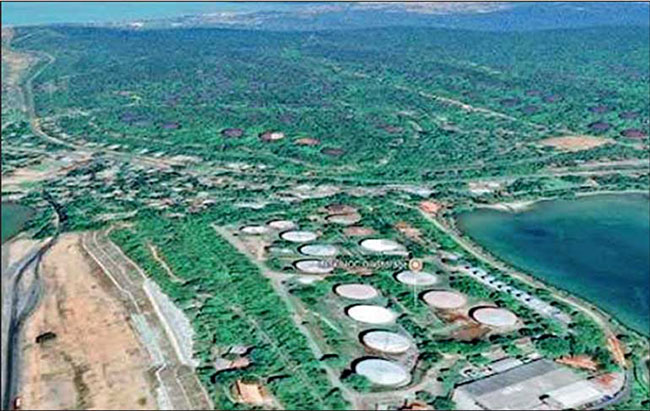
The government must realise that these are only stopgap measures. Also, none of the assistance comes free of charge. They are all loans. As it is obvious that we do not have the means to pay off these loans, we will end up selling our valuable assets to foreigners, especially real estate. Already we have given away precious Colombo lands to China, Trincomalee Oil Tanks to India, Kerawalapitiya LNG Electricity plant to USA and thousands of fertile Wellassa lands to Singapore.
Despite all these efforts, the dollar crisis has worsened. There is no sign of the economy improving. Every day the economy is nose diving. Are we already a bankrupt country?
The government must act fast, it must stop the country from becoming not just Asia’s but World’s ‘basket case’.
The government has not done anything substantial to increase exports. Expanding the garment industry is a good way to earn extra dollars. This is how Bangladesh somewhat prospered. We have the niche in the world’s lucrative tea market, but we have failed to capitalize. It is doubtful that the government has skilled, capable people to undertake such tasks. The cabinet is full of lethargic persons.
Why the government is not seeking or reluctant to obtain IMF assistance is a million dollar question.
Lebanon has sought active IMF assistance, and it is gradually coming out of its grave economic crisis. Argentina was also rescued by the IMF. Greece was rescued by the EU. Like Venezuela, there is no one to rescue us. Thus, we may not be able to survive.
If the government is not going to IMF solely due to IMF’s strict loan conditions, then the government is not acting in the best interests of the nation. This is like denying a dying patient medicine. If IMF imposes strict conditions – that is in order to streamline that country’s economy. They do so in good faith.
Currently this is exactly what we need (strict conditions). Of course we could negotiate the conditions with them.
If the government is refusing IMF assistance due to any other reasons, it has a duty to tell those reasons to the people. It is ours and our children’s future that is at stake.
Some say if the IMF is involved, they will ask the government to scrap the government’s efforts to keep the Rs/Dollar rate static (Rs 203 = US$1). True, currently this artificial arrangement is serving the government well in managing inflation. But, this lower dollar rate has dissuaded expatriates from sending remittance to Sri Lanka. Furthermore, the IMF will ask the government to stop printing money. It will want the government to reintroduce the corporate taxes that the government scrapped soon after coming to power in 2019. The government’s ‘best friends’ will resist the reintroduction of the high-end taxes. The IMF will definitely ask the government to cut costs and reduce the public service (we have one of the Asia’s largest, on a per capita basis). Under an IMF assistance package, the perks and privileges enjoyed by the politicians and top government officials will have to be drastically reduced.
How to raise new dollars – few suggestions
We have an abundance of men and women working overseas. They number at least two million. Lots of them are good patriots. The government must tap into them in this moment of grave economic calamity – to secure dollars from them. Surely, if they are approached correctly, these patriots will reciprocate kindly.
Most of our brethren working oversees are smart, hardworking and intelligent. In the past they have remitted to the country large amounts of foreign exchange, say up to US$7 billion per year. Now they are not sending money here. Since recently they have resorted to sending money through the Undiyal system. Thus, the country has missed out on receiving much needed dollars. Given that the banks are buying dollars at a much lesser rate than the registered private money lenders, the expatriates will continue with the Undiyal system. The government must try to break this. For this, it ought to give incentives to expatriates to send money to the banks, just like in the past.
There are other ways and means to encourage the expatriates (include the Diaspora in the West and workers in the Middle East) to send dollars (or applicable currencies) to Sri Lanka.
One sound idea is to allow them (long term expatriates) to send a vehicle (car, van. motorbike, three wheeler) to Sri Lanka (without opening L/Cs here), and to pay their customs duty in dollars. As Sri Lanka’s vehicle import duties are very high, this will be a good source of dollar revenue for the country. This will also ease the current vehicle shortage in Sri Lanka that has arisen due to the prevailing vehicle import ban. The ban has existed for 2 years.
The government is not doing this as the motor car dealers strenuously oppose the scheme. The government must look at the benefit of the scheme to the country and the public at large. It should not be biased towards a small group of people.
Apart from vehicles, customs duty for all other imports should be allowed to be paid in foreign currency, and such payees should be afforded incentives/discounts.
Expatriates used to send lots of monies to Sri Lanka through the NRFC scheme. Local banks offered them good interest rates. Thus, they bypassed their resident countries and sent money here. Due to the foreign exchange crisis very few people are using the NRFC scheme now. People are scared that they will lose their hard earned money (dollars and other currency). The government must alley the fears that the depositors have.
Foreign tourists to this country and Sri Lankan citizens living here who have dollars (and other foreign currencies) must be encouraged to pay for their goods and services in foreign currency. For example, those who patronize elite hotels, holiday destinations should be allowed to pay their bills in dollars. Foreign tourists must be encouraged to pay various entrance fees (Temple of the Tooth, Sigiriya, Dambulla, various botanical gardens etc) in foreign currency. Fees should be slightly lowered to those who pay in dollars.
Sri Lankans who are buying electrical appliances like TVs, refrigerators, washing machines etc from leading stores should be given the option to pay in dollars. Then, Incentives must be afforded to them such as tax concessions.
A Duty Free shopping complex must be opened in Colombo where trading must be done in foreign currency.
The government must ensure that the Central Bank will buy those dollars from the respective businesses promptly after paying the dollar collectors a reasonable commission in addition to the actual item price that they have sold.
The Central Bank must have a scheme to buy dollars from the private money exchange market. There are large scale dollar deals occurring in the private market each day.
Another suggestion is that the government can set up a ‘Support Sri Lanka’ dollar account with the Public Trustee and the Government Auditor as Joint Trustees to manage it. If it is honestly managed, expatriate Sri Lankans and Sri Lanka’s overseas friends will contribute. Ukraine has just established such a fund.
What we need to realise is that all these new dollar revenues would collectively add to a sizable amount. Today, every dollar is valuable to the country.
Sri Lanka is currently hemorrhaging and unless the government becomes proactive to secure the much needed dollars, the economy could well sigh its last breath. Currently, we are all tremendously suffering. In the near future, we could lose all our life savings in banks and many other calamities could happen. Lots of people could commit suicide (like in Argentina, Greece).
Sadly some of the people who run the country’s finances and some in the cabinet are extremely corrupt, inefficient, unintelligent and lethargic. The leaders do not seem to have a vision. They have brought the country to a day-to-day situation. The whole country pays a huge price for their actions and in-actions.
Why our citizens are so passive, incredibly quiet and disinterested in public affairs is also a million dollar question. There are no other people like Sri Lankans. They want to keep dancing well knowing that the ship is sinking. Many of them think only about their and their families’ wellbeing, not the country. Many are unbothered about corruption because if given the chance they would also engage in corruption. By the time our people wake up, the ship would have sunk.
Emilia Fernandez University of Lucerne, Switzerland
On December 10, 2021, the Biden administration imposed sanctions on Bangladesh’s elite paramilitary force, the Rapid Action Battalion (RAB) and seven of its current and former officials accusing of human rights abuses and abductions. Even though US-Bangladesh has been enjoying a cozy relationship since the birth of Bangladesh, this sudden human-rights related sanctions have raised concern in the South Asian Nation especially as it has been imposed “unilaterally” without any “prior information”.
Sanction, an instrument of foreign policy, can be used to create pressure on a state or non-state actor to influence those decisions and actions that are being perceived as threatening to security or violating international behavioral conducts. The US government normally slaps sanction, using it as a carrot and stick policy, on those countries that US thinks as enemies, e.g., rogue states, and threatening to its national interest or to coerce the target to do something. As Bangladesh is neither a rogue state nor a threat to the US interest, the recent US sanction on Bangladesh, one of the most trusted US allies in South Asia, surprised the political analysts across the world.
Generally, when the US imposes sanctions, the opponent states react in way that worsen the situation further. As a friendly country, how Bangladesh responded to the US sanction deserves analysis since it will help to understand how the US ally reacts to such sanctions compared to that of the US enemies.
The Bangladesh’s Responses
Initially, Bangladesh followed the diplomatic way to communicate with the US government to explain its stance against the allegations. Diplomatic efforts, on the part of Bangladesh, was mainly focused on convincing the US government by conveying the message that Bangladesh has been misrepresented by vested groups. This is how Bangladesh differentiated itself from other countries on which the US has imposed sanctions so far. For example- the North Korea fires fresh missiles in response to US sanctions. Instead of accepting the criticism, the rogue states just react negatively against any sanctions. But Bangladesh showed positive attitude and welcomed constructive suggestions from the US government.
In response to human rights violations, the Foreign Ministry of Bangladesh has established a human rights cell under the United Nations (UN) to look into human rights issues and abuses with required importance and attention. Besides, the cell will present the facts and figures of the human rights situation of Bangladesh before the international community by analyzing the situation properly. As it has been established under the UN, it can be expected that the situation will be monitored properly and the real data will be presented.
According to Bangladesh government, they have already sent data on the country’ human rights situation and its progress in rescuing the people, who allegedly fell victim to enforced disappearances. The law enforcing agencies of Bangladesh have also rescued several people which was also mentioned in the report. It was also mentioned that government is working relentlessly to find the whereabouts of the rest of the people.
The US Reactions
Gregory W Meeks, the chair of the House Committee on Foreign Affairs and an influential US Congressman, in one of his speeches, delivered at fundraising luncheon function in New York, said that there is no plan of the USA to impose further sanctions against security forces of Bangladesh. Also, Meeks hinted about certain vested groups who are strongly lobbying with the Biden Administration for slapping further sanctions against more Bangladeshi officers and politicians. Though he clearly mentioned that he supports the Biden administration’s stance on RAB, he also made it clear that wholesale sanction against Bangladesh is currently unwarranted by the US government.
The April 4, 2022 will mark the golden jubilee of US-Bangladesh relations. In order to celebrate the 50 years of the establishment of their diplomatic ties, the US Secretary of State Antony Blinken invited Bangladesh’s Foreign Minister AK Abdul Momen to Washington. This also indicates that the Biden administration has taken Bangladesh’s responses to the US sanction in a positive light. And, the relations of these two countries still intact and friendly as before.
Instead of reacting like rogue states, Bangladesh handled the US sanction on RAB professionally with much emphasis on diplomatic maneuvers. The crisis may be resolved soon, but Bangladesh should decode the hidden motive of Washington behind such sanction. What does the US actually expect from Bangladesh? The Quadrilateral Security Dialogue (QUAD), a strategic security dialogue between the United States, India, Japan and Australia, may be a relevant issue to be considered in this context. May be, the US is trying to create pressure on Bangladesh to join its Indo-Pacific military pact to contain China. Probably, Biden administration may slap more sanctions, in future, if Bangladesh fails to meet the US expectation on Indo-pacific which is to join the QUAD.
Bangladesh’s economy is now at take-off stage with its potential of graduating from LDC by 2026 and has an aspiration to be a developed economy by 2041. Considering Bangladesh’s economic conditions, the global powers should not involve the country into any geopolitical tug-of-war. Neither Bangladesh can ignore the US and India nor China considering the current global geopolitical situation. Also, it does not comply with Bangladesh’s balancing foreign policy which emphasizes on Friendship Towards All, Malice Towards None”. Now, Bangladesh has to ensure neutrality and strike a fine diplomatic balance among the major global powers for its development discourse. Otherwise, the country is going to face more sanctions which will worsen the US-Bangladesh relations and will ultimately push Bangladesh towards the strategic orbits of China.
Ukrainian President Volodymyr Zelensky earlier said that he has not left the country’s capital Kiev due to the ongoing Russian military operation in Ukraine to “demilitarise and de-Nazify” the country.Ukrainian opposition lawmaker Ilya Kiva claimed that the president “urgently” left for Poland and is hiding in the US Embassy there.”This is where he is set to continue to utilise the Ukrainian Army and civilians while making insane orders that cost thousands of human lives”, Kiva said in a video message on his Telegram channel.Neither the Ukrainian president nor the US Embassy in Poland have commented on his claims.Earlier, Russian State Duma speaker Vyacheslav Volodin also asserted that Zelensky fled Ukraine and headed to Poland.”Zelensky left Ukraine. Deputies of the Verkhovna Rada said that they could not get to him in Lvov”, he wrote on his Telegram channel. “He is now in Poland”.Shortly after Volodin’s statement, Verkhovna Rada asserted that Zelensky did not leave Ukraine and remains in Kiev.Several Western countries have expressed concern in regard to Zelensky’s safety. Particularly, French Foreign Minister Jean-Yves Le Drian said Paris was ready “to help him if necessary”. It was also reported that the United States offered him evacuation, but he refused.Reports that Zelensky left the Ukrainian capital emerged earlier last week, with the president refuting them and posting several video messages in which he said he remained in Kiev.In late February, Russia launched a military operation in Ukraine with the goal to “demilitarise and de-Nazify” the country. The operation began after a request for help from the Donetsk and Lugansk People’s Republics. After the start of the operation, a massive wave of anti-Russian sanctions followed from the West.
A fire erupted outside the Zaporozhskaya Nuclear Power Plant on Friday, with Russian MoD spokesman Igor Konashenkov saying that it was the result of actions by Ukrainian saboteurs who had attacked Russian troops there. After Russian forces fired back, the saboteurs fled and set the building on fire when leaving.Claims that Russian troops attacked the Zaporozhskaya Nuclear Power Plant are false, Russia’s Permanent Representative to the United Nations Vasily Nebenzia said on Friday.
“This is all part of an unprecedented campaign of lies and disinformation against Russia”, Nebenzia told a UN Security Council meeting. “You are trying to present the case in such a way that the Zaporizhzhya Nuclear Power Plant was allegedly shelled by the Russian military and a fire broke out there. These statements are not true”.According to the envoy, Russian forces are not interfering with the work of the nuclear power plant, and their goal is to provide its security.”The goal is precisely to prevent Ukrainian nationalist or other terrorist groups from using the current situation to organise a nuclear provocation, to ensure the safety of the station, and also to prevent interruptions in the supply of electricity to the population of Ukraine and European consumers”, the Russian envoy explained.Nebenzia stressed that there is no threat to the NPP, citing the estimation of the International Atomic Energy Agency (IAEA): earlier in the day, it confirmed that the security and safety systems at the Zaporozhskaya plant were not compromised.”We are the most interested in maintaining nuclear and general security in Ukraine, physical and nuclear security, to be properly maintained and ensured in Ukraine,” Nebenzia underlined.The Russian envoy also said that the UN Security Council’s emergency meeting on the power plant fire is another attempt by Kiev and its supporters in the West “to kindle artificial hysteria” around the events in Ukraine.The US Embassy in Ukraine decried the incident, tweeting that “it is a war crime to attack a nuclear power plant”. However, reports emerged later that the US State Department urged all European embassies to not retweet the message or delete it in case it was already done.On Friday night, according to the Russian Ministry of Defence, “the Kiev regime” attempted to carry out a provocation at the Zaporozhskaya NPP in order to accuse Russia of creating a source of radioactive contamination. The ministry’s spokesman Igor Konashenkov said that the fire at the NPP occurred after a group of Russian National Guard officers was attacked by “Ukrainian saboteurs” who “opened fire from the building of the station’s training centre”. When the Russian troops fired back and forced the “saboteurs” to leave, the latter set the building on fire, according to Konashenkov.
Ukraine was a cornerstone of the Soviet Union until it voted overwhelmingly for independence in 1991, a milestone that turned out to be a death knell for the failing superpower. After the collapse of the Soviet Union, NATO pushed eastward, bringing into the fold most of the Eastern European nations that had been in the Communist orbit. In 2004, NATO added the former Soviet Baltic republics Estonia, Latvia and Lithuania. Four years later, it declared its intention to offer membership to Ukraine some day in the distant future — crossing a red line for Russia. Putin has indicated he sees NATO’s expansion as an existential threat, and the prospect of Ukraine joining the Western military alliance a “hostile act.” In interviews and speeches, he has emphasized his view that Ukraine is part of Russia, culturally, linguistically and politically. While some of the mostly Russian-speaking population in Ukraine’s east feel the same, a more nationalist, Ukrainian-speaking population in the west has historically supported greater integration with Europe. In an article penned in July 2021, Putin underlined their shared history, describing Russians and Ukrainians as “one people”.
Sri Lanka Podujana Peramuna (SLPP) Member of Parliament Dilum Amunugama was sworn in as the new Cabinet Minister of Transport, the President’s Media Division (PMD) announced today.
Accordingly, he took oaths before President Gotabaya Rajapaksa today (March 04) at the Presidential Secretariat.
Amunugama’s appointment came after Pavithra Wanniarachchi, who was serving as the Transport Minister, was sworn in as the new Minister of Power last evening (March 03) following the sacking of Udaya Gammanpila.
Amunugama previously served as the State Minister of Vehicle Regulation, Bus Transport Services and Train Compartments and Motor Car Industry and State Minister of Community Police Services.
Meanwhile, C.B Ratnayake was sworn in as the Cabinet Minister of Wildlife Protection & Forest Resources Development.
Further, Arundika Fernando, who recently resigned from his position over the assault at the Kelaniya University’s Faculty of Medicine in Ragama has been reinstated after the committee appointed by the President to inquire into the incident of an attack on medical faculty students found not guilty of the accusations of his alleged involvement.
Thereby, Fernando was sworn in again as the State Minister of Coconut, Kithul and Palmyra Cultivation Promotion, Related Industrial Product Manufacturing & Export Diversification.
According to the PMD, SLPP MP Wimalaweera Dissanayake took oath today as the new State Minister of Disaster Management. He previously served as the State Minister of Wildlife Protection, Adoption of Safety Measures including the Construction of Electrical Fences and Trenches and Reforestation and Forest Resource Development.
The reshuffling of several key ministerial portfolios first came yesterday after Wimal Weerawansa and Udaya Gammanpila were stripped of their posts.
Accordingly, SLPP MP Gamini Lokuge took oaths yesterday as the Minister of Energy while SLPP MP S.B. Dissanayake was sworn in as the new Minister of Industries, replacing Gammanpila and Weerawansa, respectively.
Reshuffled ministerial portfolios are as follows:
Gamini Lokuge – Minister of Energy
Pavithra Wanniarachchi – Minister of Power
S.B. Dissanayake – Minister of Industries
Dilum Amunugama – Minister of Transport
Arundika Fernando – State Minister of Coconut, Kithul and Palmyra Cultivation Promotion, Related Industrial Product Manufacturing & Export Diversification
C.B. Ratnayake – Minister of Wildlife Protection & Forest Resources Development
Wimalaweera Dissanayake – State Minister of Disaster Management
The Health Ministry says that another 583 persons have tested positive for Covid-19 today, as the daily count of new cases continues to rise in the country.
This brings the tally of Covid-19 cases registered in the country thus far to 648,993.
According to official figures, 609,680 positive cases have recovered.
Following the new development, the number of virus-infected people who are undergoing treatment moved to 23,006.
Meanwhile, the Director-General of Health Services confirmed another 20 coronavirus-related deaths for March 03, pushing the country’s death toll from the pandemic to 16,307.
The deaths reported today include 08 males and 12 females, according to the figures released by the Department of Govt. Information.
One of the victims is between the ages of 30-59 years. The remaining 19 are in the age group of 60 years and above.
Great opportunity for investors looking for digitally native brands with the potential to outperform
AUDICI wins 1st place in the Digital Entertainment category at the prestigious e-Swabhimani Award
Android App is released. iOS App will be available soon.
Friday, 4th March, 2022 Colombo Sri Lanka: AUDICI is an award-winning global music platform. It provides the solutions of; splitting any song into 5 backing tracks for musicians to assess vocals compared with the original song, improve pitching, timing and enables the conversion of a recording into a karaoke instantly.
This ground-breaking innovation enables the use of any music track for singing, intense practice, recording cover versions, pitch assessment, timing comparisons against the original and publishing on popular digital channels in-order to drive public attention and reviews.
Being a Digitally Native Brand, the team at AUDICI believes in technological advancements of the music platform in-order to perform in the global arena. The platform is powered by artificial intelligence (Al), machine learning (ML), augmented reality (AR) and blockchain technologies (BT).
AUDICI is also adding ‘AudiciProtect,’ an in-built tool based on Blockchain and Smart Contract technologies on the Ethereum platform to protect copyrights of singers, writers and composers. This protects the originality of the song, copyright revenue and allows rights-holders to authorize and manage copyrights on a public ledger. It limits the need for intermediaries in the promotion process; ensuring rights-holders receive greater shares of royalties from the music industry automatically and instantly. The tool also uses encryption and watermarking methods to deal with piracy and a versioning mechanism that updates data in the smart contract to correct mistakes made by the publisher.
Mark Weisbrot Center for Economic and Policy Research
Fort Lauderdale Sun-Sentinel, September 8, 1999
Knight-Ridder/Tribune Media Services, September 1, 1999 Charleston Post and Courier, September 3, 1999
What were they thinking? When executives at the Bank of New York saw billions of dollars floating in from the home computer of a Russian businessman with ties to organized crime there, did they really believe that these were just ordinary profits?
The biggest money-laundering scandal in history has prompted calls for a fresh look at the role of American and IMF funds in Russia. To say this is long overdue would be an understatement.
The corruption is certainly mind-numbing in scale and scope, with some of the West’s favorite reformers”– including Konstantin Kagalovsky, the former Russian representative at the IMF– at the center of the investigation. But the tribute that the Russian mafia skims off the top is just one part of the looting of Russia.
The other part has been scripted by Washington and its most powerful financial institution: the International Monetary Fund. It is a different form of pillage, to be sure. The robber barons who have taken over the Russian economy since the fall of the Soviet Union have adopted the practice of the Medici family of fifteenth century Florence: money to get power, power to protect the money.
Washington’s money mandarins, on the other hand, descended upon Russia with enormous wealth and power already in their possession. They have used both to colonize Russia, turning a once developed economy into a Third World country.
The results have been devastating. Over the last eight years, the economy has shrunk by more than half. Russian men can now expect to die in their fifties. The chief economist of the World Bank, Joseph Stiglitz, has noted that the number of Russians living in poverty climbed from two million to sixty million in just a few years.
Stiglitz, who is one of America’s most accomplished and respected economists, has recently argued that these results are not just due to sound policies being poorly implemented.” Rather, they are based on a misunderstanding of the very foundations of a market economy, as well as an excessive reliance on textbook models of economics.”
The experience of the last year shows just how 180-degree wrong the foreign experts can be. August 17th marked the first anniversary of the collapse of the ruble, which fell from its fixed rate of about 6 to the dollar one year ago to 25 today. The IMF poured in billions of dollars to prop up the overvalued currency, and Washington predicted disaster for the Russians if they did not maintain the fixed exchange rate. There would be hyperinflation, they said, and sources of foreign capital would dry up. The economy would fall apart.
A year later, it is clear that the sky did not fall with the ruble. The threatened hyperinflation did not occur– inflation is running at about 45% for the year. The currency’s collapse made imports much more expensive, and gave Russian industry a chance to get back on its feet. Industrial production in July was up 12.8% over last year, and Russia’s trade surplus has risen more than tenfold.
Even Russia’s default on $40 billion of foreign debt, almost unthinkable until it happened, has not really hurt the economy. True, foreign capital inflows have fallen off sharply over the last year. But since these funds did little more than inflate a speculative bubble in the financial sector–encouraged by the IMF’s high interest rate, fixed exchange rate policy– the productive sectors were not greatly affected when the bubble burst.
It has been one debacle after another since the IMF introduced its shock therapy” program in 1992. Like a battered spouse who sees no alternative but to return to her abuser, Russia comes back to the IMF for more credits. But the hundreds of billions that have fled the country in the 1990’s have cancelled out this aid,” as well as the meager foreign direct investment, many times over. At the same time Russia has accumulated more than $150 billion in foreign debt, with the burden of debt service now reaching a crushing 29% of export earnings.
At some point any rational, non-corrupt political leader in Russia has to question whether the country’s friendly relations with Washington are worth the price of continued impoverishment. That time may be approaching, as Russia elects first a Parliament and then a President over the next 10 months. There will be calls from across the political spectrum to break, or at least loosen, the chains that bind Russia to its Western tormentors.
The American press will mostly dismiss these demands as nationalist finger-pointing, and attribute Russia’s demise to its failure to hew more closely to the IMF’s prescriptions. And Washington will pour in money, as it did in the 1996 elections, to support its friends.
But the Russians might well be better off cutting this toxic umbilical cord, which could give them at least a fighting chance against the powerful domestic criminal class that our own government– and private sector– has helped to create.
People stand in a queue to buy diesel fuel at a petrol station in Sri Lanka, which is currently in the throes of an energy crisis
The International Monetary Fund warned crisis-hit Sri Lanka on Thursday that its foreign debt was “unsustainable”, and called for devaluation and higher taxes to revive the almost bankrupt economy.
The pandemic pushed the South Asian island’s tourism sector — a key foreign-exchange earner — off a cliff, and the government in March 2020 imposed a broad import ban to try to shore up foreign currency.
But more than two years on, Sri Lanka is grappling with food and fuel shortages, which this week saw its public transport crippled as buses ran out of diesel and the state imposed blackouts.
Following its annual review of the cash-strapped country, the IMF said its fast-dwindling foreign reserves were inadequate to service the country’s current foreign debt of $51 billion.
Official data shows Sri Lanka needs nearly $7 billion to service its foreign debt this year, but the country’s external reserves at the end of January were only $2.07 billion — just enough to finance one month’s imports.
The IMF stressed “the urgency of implementing a credible and coherent strategy to restore macroeconomic stability and debt sustainability”, recommending a return to a “market-determined and flexible exchange rate” — meaning a devaluation of the Sri Lankan rupee.
While the central bank’s set rate is 197 rupees to the dollar, a thriving black market offers 260 rupees for US currency notes.
This disparity has led to a more than 50 percent decline in foreign remittances through official banking channels.
But the IMF noted the country’s economic woes began pre-pandemic.
Soon after taking office in November 2019, President Gotabaya Rajapaksa cut several taxes nearly in half, the IMF said, driving down government revenues and forcing it to borrow more.
Among recommendations to address the crisis was to raise income taxes and VAT, “complemented with revenue administration reform”, the IMF said.
The lack of dollars to import fuel has led to a serious energy crisis.
Besides bringing public transport to a halt on Wednesday, the state’s electricity company also imposed a daily seven-and-a-half-hour electricity blackout — the longest scheduled power rationing in over a quarter of a century.
Without dollars to finance essential imports, rice, milk powder, sugar and wheat flour are in short supply, while local industries are unable to bring in raw materials and machinery.
The shortages pushed inflation to 16.8 percent in January — the fourth consecutive record rise — and the IMF said it expected it to remain in the double digits.
International rating agencies have downgraded Sri Lanka over expectations it may not be able to service its foreign debt, though the government insists it can meet its obligations.
On Thursday, Russia’s Defence Ministry spokesman, Igor Konashenkov, said that the West has increased the dispatch to Ukraine of contract soldiers from private military companies and several European countries are sending mercenaries.The military operation in Ukraine is going according to plan, and all tasks are being implemented “successfully”, Russian President Vladimir Putin said during his address to the Russian Security Council.”Our soldiers fight steadfastly, with a full understanding of the justice of their cause, even after being wounded, they remain in formation, sacrifice themselves […] in order to save comrades and civilians,” Putin said, noting that Russian troops are striving to prevent civilian casualties in Ukraine.Putin also said that nationalists and foreign mercenaries in Ukraine are using civilians as human shields. They have not kept their promise to remove heavy military equipment from residential areas, he continued.
“Instead of fulfilling promises to remove this equipment from residential areas, from kindergartens, hospitals, on the contrary, tanks, artillery, mortars are being additionally deployed there,” he said.
Foreigners Held Hostage
The Russian president also said that foreign citizens are being held hostage in Ukraine: particularly, among them are some 3,179 citizens of India.
“Neo-Nazis also opened fire on Chinese students who were trying to leave Kharkov. Two of them were injured. I repeat: hundreds of foreigners are trying to leave the war zone, but they are not being allowed to do so,” Putin stressed.But the way “neo-nazis treat their own citizens” is even worse, according to him, as Russian soldiers have witnessed residents of apartment buildings being “herded into the middle floors of buildings”, while in the lower floors “they break through windows and walls, put up heavy equipment there”. On the roofs and on the upper floors, machine guns and snipers are placed, the president said.Still, the Russian troops “have provided corridors in all collision zones without exception, provided transport so that civilians, foreign citizens have the opportunity to go to a safe place” – something that “nationalists do not allow to be done”, Putin outlined.US Military Intel Launched Large-Scale Campaign to Recruit PMC Contractors for Ukraine – Russian MoD11 hours agoPutin’s address came shortly after Russia’s Defence Ministry spokesman, Igor Konashenkov, said that the West has increased the dispatch to Ukraine of contract soldiers from private military companies, with the US military intelligence launching a massive campaign to recruit PMC contractors for Ukraine.Ukrainian President Volodymyr Zelensky, in his turn, stated that Ukraine expects some 16,000 foreign mercenaries to come and fight for the country.According to estimations from the Russian Defence Ministry, 200 Croatian mercenaries have already arrived in Ukraine, with the UK, Denmark, Latvia, and Poland also giving the green light to sending mercenaries there. Konashenkov said that foreign soldiers who are already in Ukraine “commit sabotage and raids on Russian convoys of equipment and material supplies, as well as aircraft covering them.”
Previously, Ukrainian President Volodymyr Zelensky threatened to withdraw Ukraine from the Budapest Agreement, under which the newly independent Ukraine gave up the nuclear arsenal that it inherited from the USSR in exchange for security guarantees.The head of the Russian Foreign Intelligence Service (SVR), Sergei Naryshkin, has stated that the SVR had obtained intelligence showing that Ukraine was working on building its own nuclear weapons. Naryshkin stressed that President Volodymyr Zelensky’s threats to abandon the Budapest Agreement were “not an empty promise”.Naryshkin noted that Ukraine has preserved technical potential to create nuclear armaments and that this is higher than those of Iran and North Korea.“Not only did [Russia] know about this, but the Americans also did. At the same time, not only did they not interfere in their plans, but [they] were also ready, as they say, to lend a helping hand to the Ukrainians, apparently hoping that Ukrainian nukes would be aimed not to the west, but to the east”.The Russian intelligence chief further slammed the inaction of EU countries, who failed to take any action following Zelensky’s threats at the Munich Security Conference to withdraw his country from the Budapest Agreement – a 1994 accord under which newly independent Ukraine gave up the nuclear arsenal that it had inherited from the USSR and vowed to stay non-nuclear.Russian Foreign Minister Sergei Lavrov earlier said that Moscow could not allow weapons that would threaten Russia to be deployed on Ukrainian territory. President Vladimir Putin on 24 February ordered to launch a special operation of the Russian armed forces in Ukraine to demilitarise and “denazify” the country.
The walkout raises serious questions about the future viability of the UNHRC because it suggests that the Council has degenerated into theater, pantomime and farce. In these circumstances, it is incumbent on the General Assembly to immediately launch a thorough assessment of the work of the Council since 2006 to find out whether the UNHRC is worth the enormous cost that goes into maintaining it and what reforms if any can be implemented in order to ensure that the institution or any successor to it really conforms to and abides by the principles that are embodied in their founding statutes.
On 01 March 2022, an extraordinary scene unfolded at the UNHRC when nearly 100 diplomats from Western countries including the US, U.K, Canada, Germany and others walked out when Russian Foreign Minister Sergei Lavrov was addressing the Council via a video-link. According to reports, the gesture was in protest over Russia’s ongoing military action in Ukraine. Two questions arise, first, whether this sort of conduct is proper and second, what does it entail for the future of the UNHRC?
In my opinion, the walkout was completely improper because, first, according to the UNHRC’s founding statute (UN General Assembly resolution 60/251) a fundamental principle that must guide the Council in its work is constructive international dialogue.” Obviously, if diplomats simply walk out when the other side is speaking then no dialogue, constructive or otherwise, is possible.
Secondly, the countries whose delegates walked out are heirs to two of the most illustrious legal traditions in history, the Roman Law in the case of the European countries and the Common Law in the case of the US, the U.K, Canada and others. An indispensable component of both those traditions is respect for natural justice and one of the pillars of natural justice is the injunction to hear the other side.” Therefore, the nations that walked out during Mr. Lavrov’s speech have repudiated their own historical traditions.
This is unfortunate because, regardless of how Westerners today might view their historical traditions, many people especially in developing countries including Sri Lanka which were once colonies of Western countries may still believe in concepts such as natural justice and the walkout sends the wrong message to such people because it suggests that the related concepts have no real meaning or force in the lands of their birth.
To turn next to the question of what the walkout means for the future of the UNHRC, in my opinion it represents the absolute nadir of the UNHRC as an institution. The General Assembly created the UNHRC in 2006 to replace the U.N. Commission on Human Rights because the
General Assembly was persuaded that the latter institution had become too politicised. Accordingly, in setting out the principles that were to guide the new institution, the General Assembly stated:
The work of the Council shall be guided by the principles of universality, impartiality, objectivity, non-selectivity, constructive international dialogue and cooperation.” (Paragraph 4, resolution 60/251, 3rd April 2006)
To turn to the walkout, according to the participants the reason for it was to show their outrage at what the Russians had done and also to show solidarity with the Ukrainians. Canadian Foreign Minister Melanie Joly, one of the diplomats who walked out, is reported as saying:
Minister Lavrov was giving his version, which is false, about what is happening in Ukraine and so we wanted to show a very strong stance together.” (1st March 2022.)
Certainly, each of the delegates in question has an inherent right to show his or her outrage at what the Russians had done especially if they consider that the reasons given by the Russians for their actions are wrong or false. However, given the principles that are supposed to guide the UNHRC set out inter alia in paragraph 4 of the founding statute, if a delegate considers that what the Russian Foreign Minister or anyone else is saying is false they have an obligation to objectively demonstrate it both for the benefit of the Council as well as the rest of the world.
A walkout does not demonstrate in any way the truth or falsity of the Russian Foreign Minister’s assertions. It simply makes a political point, namely, that one disagrees with the said assertions. It gives the impression that the Western nations consider that the UNHRC is a forum for people to discuss only ideas or matters with which they (i.e. the Western nations) agree.
However, the UNHRC has a mandate to promote and protect human rights worldwide and reason and common sense suggest that this would require a consideration of contrary or opposing viewpoints, that is, viewpoints with which one may disagree. If the UNHRC could not provide a forum for such discussions, then of what use is the institution? In sum, the walkout negates the very purpose behind the UNHRC as envisioned by the General Assembly when it created the institution.
Conclusion
The walkout raises serious questions about the future viability of the UNHRC because it suggests that the Council has degenerated into theater, pantomime and farce. In these circumstances, it is incumbent on the General Assembly to immediately launch a thorough assessment of the work of the Council since 2006 to find out whether the UNHRC is worth the enormous cost that goes into maintaining it and what reforms if any can be implemented in order to ensure that the institution or any successor to it really conforms to and abides by the principles that are embodied in their founding statutes.
The writer is an Attorney-at-Law and also consultant to the Strategic Communications Unit (Lakshman Kadirgamar Institute)
Sri Lanka continues to be in the grips of many high profile crises of recent origin such as the COVID–19 pandemic, chronic difficulties in servicing foreign debts, shortages of essential items such as food and fuel, skyrocketing cost of living, and crop failures due to the ban of chemical fertilisers, to name a few . However, the national question, which has tormented the country for decades, continues to be one of her biggest problems, if not the greatest.
Sinhala Buddhist nationalism features prominently in any discourse on Sri Lanka’s national question. Its detractors often derogatorily call it by terms such as Sinhala Buddhist imperialism, Sinhala Buddhist chauvinism, and Sinhala Buddhist racism, whilst its protagonists call it Sinhala Buddhist patriotism or simply patriotism. Meanwhile, somewhat esoteric and ephemeral terms such as Sinhala Buddhist majoritarianism, kinguistic nationalism, and ethnocracy are used for it in learned discourse. Further, Sinhala Buddhist nationalism is very often discussed with reference to personages of Sri Lanka’s ancient history such as Dutugemunu and Elara. Hence, it is useful to trace the genesis and early phases of development of Sinhala Buddhist nationalism during Sri Lanka’s ancient past, in order to enhance our understanding of the subject.
Sri Lanka’s ancient agrarian revolution powered by irrigation engineering
As in our own age, in the distant past too, various races migrated from one land to another for various reasons such as the search for greener pastures and the forced eviction by intruding tribes. From about the sixth century BC, Sri Lanka too, which until then was thinly populated by primitive hunter gatherers, experienced an influx of migrants from overseas. Some of them, who had a knack for agriculture, settled in the arid north central plains of the island, which were covered with wooded forests and shrub jungles, as those one could still see in places such as Wilpattu. As direct rain water was often inadequate and undependable for growing paddy, these pioneer settlers cultivated the art of conserving water by building small artificial reservoirs called tanks, and convert the hostile arid terrain into paddy fields with the water thus conserved. Thereby they were able to establish a firm foothold in pre-historic Sri Lanka. These rough, tough, and enterprising pioneer settlers came to be known as ‘Sihala’ or Sinhalese, whose founding fathers were, according to legends, Vijaya and his band of seven hundred followers, who came to Sri Lanka from northern India. Other migrant tribes, either perished in this hostile physical environment, like the traders devoured by Kuveni, or got suppressed and assimilated by the dominant Sinhalese. This was a social process, which had some affinity to the process of natural selection in the biological world – a case of social Darwinism, so to speak. The Sinhalese went on to build progressively bigger tanks, weirs, canals, and complex irrigation systems connecting all such innovative creations with rivers which flowed from the distant wet mountains. As a result, the erstwhile wild and hostile terrain of Sri Lanka’s north central plains were converted into a vast blue and green tapestry of thousands of artificial lakes and lush paddy fields studded with dagobas of immaculate white. The formidable physical challenges posed by the nature were surmounted with an audacious human response. This monumental transformation, which took place more than thousand years ago, inspired many people of modern times. A notable person amongst them was the British planter, archaeologist, and author John Still ( 1880 – 1941 ) of Jungle Tide fame, who in turn drew the insightful attention of Arnold Toynbee, the eminent scholar of comparative history and civilizations ( Arnold J Toynbee; A study of history ; abridgement by D C Somervell ). The agrarian revolution powered by advanced irrigation systems was the bedrock, the backbone, and the material basis of the fully-fledged hydraulic civilization of ancient Sri Lanka. The elaborate social, political, cultural and religious institutions of that civilisation constituted, as Marx would say, its superstructure.
The birth of the ancient agrarian revolution based on irrigation engineering pre-dates the arrival of Buddhism in the island in the third century BC. The medium sized tank ‘Abhaya Wewa’, which is also known as Basawak Kulama, in Anuradhapura, built in the fourth century BC by king Pandukabhaya, proves the point. The next important tank, Tissa Wewa, was built in Anuradhapura during the reign of Devanampiyatissa ( 250 BC – 210 BC ). Irrigation engineering witnessed a quantum leap during the reign of the great Vasabha ( 67 AD – 111 AD ). During his reign, in addition to many large tanks, the Elahera canal was built. This canal diverted the waters of the Ambanganga, a tributary of the Mahaweli river originating from the Matale hills, to the tanks in the arid north central plains. The next great period of tank building was the reign of Mahasena ( 274 AD – 301 AD ), during which many tanks including the giant Minneriya Wewa was constructed. Mahasena’s achievements were equaled or surpassed during the reign of Dhatusena ( 455 AD – 473 AD ), during which huge tanks such as the Kalawewa and the Yoda Wewa were constructed, damming the Kala Oya and the Malwathu Oya respectively. However, the greatest irrigation engineering feat during the reign of Dhatusena was the construction of the Yoda Ela, also known as Jayaganga, a fifty four mile long canal which carried water from the Kalawewa to the Tissawewa in Anuradhapura. Further significant additions to the irrigation infrastructure were made during the reigns of Moggallana II ( 531 AD – 551 AD ) and Aggabodhi II ( AD 604 – AD 614 ). The former constructed the huge Nachchaduwa Wewa near Anuradhapura, augmented the Nuwara Wewa in Anuradhapura ( History of Ceylon, University of Ceylon: editor; S. Paranavitana ) and built the Padaviya tank by damming the Ma Oya (K M De Silva; A History of Sri Lanka ), whist the latter constructed the Kantale, Giritale, and Kaudulla tanks. Thereafter, the expansion of the irrigation systems seems to have subsided for several centuries till the time of Parakramabahu the Great ( 1153 – 1186 ). This king is considered to be the greatest tank builder of Sri Lanka (ibid ). The massive Parakrama Samudraya in Polonnaruwa, which was created by combining three tanks including the Topawewa, is undoubtedly his finest achievement in the field of tank building. It has to be been noted no other king after him built major tanks.
The ancient agrarian revolution powered by irrigation engineering had many important economic, social, political, religious, and cultural implications and outcome. On the economic sphere, it phenomenally increased the extent of arable land by making it possible to bring vast swathes of erstwhile arid forest land under the plough through irrigation. Further, it would have, most probably, facilitated a significant migration from small scale peasant subsistence farming to more productive large scale farming. Anyway, the obvious economic outcome of the ancient agrarian revolution was the generation of ever increasing agricultural surpluses over and about what was needed to feed the peasants and other agricultural labourers. These massive economic surpluses enabled the kings and their ruling elites to invest enormous resources in the expansion of the irrigation infrastructure, in maintaining the irrigation technocracy and the royal bureaucracy, in building impressive Buddhist monuments such as the great stupas, in patronizing outstanding Buddhist scholarship of international repute, and in constructing awe inspiring secular monuments such as Kasyapa’s Sigiriya rock fortress and royal palace.
On the social and political spheres, the elaborate irrigation systems stretching across vast swathes of farmlands, inexorably led to centralized control of agriculture through irrigation management. The technocrat who controlled the spills and the sluices of the tanks and weirs came to dominate the peasant who ploughed the fields, sowed the seeds, and harvested the crops. This entailed the ascendency of the state bureaucracy including the irrigation engineering technocracy, which in turn called for a unified and highly centralized state.
Pandukabhaya and birth of Sinhala state
It was mentioned earlier that the first significant tank was built by Pandukabhaya in the fourth century BC. It is interesting to note that he was also the first ruler of the Anuradhapura kingdom. Prior to him, the main Sinhala presence in Sri Lanka constituted a conglomerate of Sinhala settlements situated between the Kala Oya and the Malvattu Oya, loosely connected by tribal and family ties. It is evident that Pandukabhaya forcefully subjugated these semi-autonomous settlements and united them under his leadership. Thus the first Sinhala state was born. No doubt, this was in response to a historical necessity of the agrarian revolution, which called for an efficient centralized state. Certainly, this nascent state had nothing to do with Sinhala Buddhist nationalism or patriotism. In the first place, Buddhism was yet to be introduced to Sri Lanka. Further, the Sinhala state was yet to perceive a real threat from non – Sinhalese. It was young, vibrant and self- confident. It was, in modern parlance, an absolute monarchy.
Devamanpiyatissa and the birth of the Sinhala- Buddhist state
Buddhism was introduced to Sri Lanka by the great Mauryan emperor Asoka during the reign of Devamanpiyatissa ( 250 – 210 ) at a time when the ancient agrarian revolution was in full swing. As already mentioned, it was during this period that the Tissa Wewa was built. The peaceful conversion of the country to Buddhism received unreserved royal patronage. The nascent Sinhala state became a Sinhala Buddhist state. Numerous lands and viharas were gifted to the Maha Sanga. These included the Thuparama dagoba, and the spacious Mahamegha park in Anuradhapura, in which the sacred Bodhi tree Sri Maha Bodhi was planted. This signaled the establishment of the Mahaviharaya, the centre of Theravada Buddhist Church in Sri Lanka. No doubt, the doctrine of the Buddha, which laid down a well –structured spiritual path to freedom from existential suffering through the taming of the senses, struck a chord with the well-structured thinking of the Sinhalese irrigation engineers, which provided a path to freedom from material want by taming wild and hostile nature, with technological innovations.
Like Pandukabhaya’s Sinhala state, the nascent Sinhala Buddhist state during Devanampiyatissa’s had nothing to do with Sinhala Buddhist nationalism or patriotism. It did not perceive a real threat from non – Sinhalese or non-Buddhists. Like Pandukabhaya’s state, it was young, vibrant and self- confident.
The Sinhala Buddhist state under siege
Devanampiyatissa’s Sinhala Buddhist kingdom was in state of blissful harmony, arguably unparalled in Sri Lanka’s long history. However, this state of affairs was to be dramatically disrupted after a short period of time due to game-changing external and internal interventions. The major external challenge came from Tamil adventurers from south India bent on plundering the growing wealth of Sri Lanka’s hydraulic civilization. The main internal challenge came from the growing Mahayana tendencies amongst sections Sri Lanka’s Maha Sangha, which had traditionally been the custodian and standard bearer of Theravada Buddhism in Sri Lanka and abroad. Sinhala Buddhist Nationalism was born as a response to these challenges from within and without.
The first major challenge to the young Sinhala Buddhist state emerged thirty years after the death of Devanampiyatissa. Sena and Guttika, two Tamil brothers engaged in horse trading, captured the Anuradhapura kingdom and reigned for twenty two years. A few years after the Sinhalese regained the kingdom, the second successful invasion from South India was launched. This was led by the Chola prince Elara, who reigned in Anuradhapura for forty four years. The Sinhalese under Dutugemunu vanquished Elara and regained the kingdom. Dutugemunu’s reign ( 161 BC – 137 BC ) was a watershed in the Sri Lanka’s history. The island, which hitherto consisted of several kingdoms, was unified under his leadership. The Sinhala Buddhist state became, in present day parlance, a unitary state. However, less than four decades after Dutugemunu’s death, Anuradhapura was captured and occupied again by south Indian Tamils from 103 BC to 89 BC. They were expelled by Vattagamini ( Valagamba ) , who reigned from 89 BC to 77 BC. Thereafter, for more than five hundred years, Sri Lanka was free from foreign occupation. It was during this period that her ancient irrigation witnessed its first great flowering. However, it was during this period that the serious internal threats to the Sinhala Buddhist state emerged. They came in the form of Mahayana challenges to the uncontested supremacy of the Mahavihara led Theravada Buddhist Church, which was a main pillar of the Sinhala Buddhist state. The initial threat came in the first century BC with the establishment of the rival Abhayagiri monastery by Valagamba, which harboured dissenters. The immediate response of the Theravada Buddhist Church to this was the writing down of the Tripitaka at Aluvihara during that king’s reign. The next threat, which was of a much greater magnitude, was the intrusion of Mahayana thinking in the form of Vaitulyavada in the third century AD, during the reign of Mahasena ( 274 AD – 301 AD ), with the fanatical support of that monarch. This was somewhat contemporaneous with the rise of Mahayana in south India under the guidance of great masters such as Nagarjuna. Anyway, the Theravada Buddhist Church eventually prevailed by winning back the king to its side with great difficulty.
The long peace of half a millennium, which commenced with the reign of Valagamba, ended with the invasion from south India in 429 AD. This resulted in the reign of six Tamils kings in Anuradhapura for twenty seven years, until Dhatusena liberated the country from the foreign yoke. Thereafter, the country did not experience invasions from abroad for about four centuries. Ancient Sri Lankan irrigation witnessed its second great flowering. However, during ninth and tenth centuries, Sri Lanka got caught up in the geo-political rivalries amongst south Indian Tamil kingdoms of Pallavas, Pandyas and Cholas. At that time the Hindu Tamil civilization of south India was in its ascendency, whilst the aging Sinhala Buddhist civilization was in a state of stagnation, if not decay. The end result was the conquest of Anuradhapura and the north central plains of Sri Lanka by the Cholas in the closing decade of the tenth century. This dealt a crippling blow to Sri Lanka’s ancient hydraulic civilization. The Sinhalese were, under Vijayabahu I, able to expel the Cholas from the Island in 1070, and under Parakramabahu the Great, revive the ancient hydraulic civilization. Sri Lanka’s ancient irrigation witnessed its third and last flowering. However, the revival was short lived. The invasion by the marauding Kerala army of Magha of Kalinga in 1215 dealt the death blow to the ancient hydraulic civilization. The Sinhalese, who had populated the north central plains since sixth century BC, migrated en masse to the south west and the central hills. The irrigation works were abandoned and went into disrepair. The hostile arid jungles, which were banished by Sinhalese pioneers, returned to the north central plains with a vengeance. The ancient hydraulic civilization of the Sinhalese, which had flourished for more than one thousand five hundred years, came to an end.
The ancient hydraulic civilization and Sinhala Buddhist Nationalism
Sinhala Buddhist Nationalism, like many other –isms, constitute an ideology; an outlook. As already mentioned, it was born as a response to the external and internal challenges to the ancient Sinhala Buddhist state, which was an integrate part of the ancient hydraulic civilization. But, how do we conceptualise this ideology of Sri Lanka’s distant past? Fortunately, the ancient chronicles – Dipavamsa, Mahavamsa, and Chulavamsa, and the last two chapters of the Pujavaliya, come to our assistance. However, it should be cautioned that the ideologies contained in these ancient documents represent , more likely, the views held by their respective authors and their contemporary societies than by the personages of their narratives.
It seems that the internal threat to the Theravada Buddhism by Mahasena’s aggressive promotion of Vaitulyavada prompted the writing of the two oldest exiting chronicles of Sri Lanka – the Dipavamsa, written in the fourth century AD, and the Mahavamsa, composed in the sixth century AD. The fact that the narratives of both works end with the death of Mahasena points in that direction. Anyway, both emphasize that the island was freed from the Yakkas by the Buddha to make way for the Sinhalese settlers and the establishment of the Buddhist doctrine. This amounts to an imprimatur for Sinhala Buddhist exclusivity in Sri Lanka, which goes back, at least, as far as the fourth and sixth centuries. However, the treatment of the Sinhala king Dutugemunu and the Tamil king Elara by the two authors differ significantly. For instance, whilst the Dipavamsa devotes a mere twelve verses to Dutugemunu, the Mahavansa devotes eleven out of its thirty two chapters to him. Clearly, Dutugemunu is the favourite king of the author of the Mahavamsa. Further, whilst both chronicles admire Elara as an incomparably just king, the Dipavamsa, unlike the Mahavamsa, takes note of his outstanding spiritual qualities. More strikingly, the Mahavamsa, in chapter twenty five seeks to lend a Buddhist imprimatur to Dutugemunu’s war with Elara. This is certainly inconsistent with the letter and spirit of the Metta Sutta, as much as the crusades of medieval Christendom authorized by the papacy was inconsistent with the letter and spirit of Jesus’ utterance ” Put your sword in its place, for all who take the sword will perish by the sword” ( Matthew 26; 52 ). In fact, the Mahavamsa’s stance on the Dutugemunu- Elara war is reminiscent of the ideas on ‘just war’ advocated by St. Augustine and the Bhagavad Gita. Most probably, the south Indian invasions of the fifth century prompted the sixth century author of Mahavamsa to take a more militant Sinhala Buddhist stance than the fourth century author of the Dipavamsa.
The first part of the Chulavamsa, which was most probably composed in the early part of the thirteenth century, provides useful information about the period from the death of Mahasena to the end of the ancient hydraulic civilization. The last two chapters ( chapters 33 and 34 ) of the Pujavaliya briefly covers this period in addition to history up to the death of Mahasena. The Pujavaliya was composed in the mid thirteenth century, shortly after the collapse of the hydraulic civilization. Whilst the three chronicles were composed in Pali, the Pujavaliya was written in Sinhala.
The Chulavamsa and the Pujavaliya, in comparison with the Dipavamsa and the Mahavamsa, take a more hostile approach towards non – Sinhala Buddhist actors. For instance, unlike the Dipavamsa and the Mahavamsa, the Pujavaliya perceives Elara merely as a malevolent personage bent on destroying the Buddhist Church. The more virulent Tamil invasions from the ninth century onwards, would have contributed towards this more aggressive Sinhala Buddhist nationalism.
We have seen how the dynamics of the ancient hydraulic civilization gave birth Sinhala Buddhist Nationalism. The hydraulic civilization itself perished as a result of the devastating invasion of Magha of Kalinga. However, Sinhala Buddhist Nationalism did not perish with that civilization. On the contrary, it has continued to live as a potent ideology of Sri Lanka, right up to the present day.
A document on the United States Indo-Pacific Strategy issued by the White House, in February 2022 states: The United States will pursue five objectives in the Indo-Pacific – each in concert with our allies and partners, as well as with regional institutions”. We will:
* ADVANCE A FREE AND OPEN INDO-PACIFIC
* BUILD CONNECTIONS WITHIN AND BEYOND THE REGION.
* DRIVE REGIONAL PROSPERITY.
* BOLSTER INDO-PACIFIC SECURITY
* BUILD REGIONAL RESILIENCE TO TRANSNATIONAL THREATS”.
Continuing, the document states Our collective efforts over the next decade will determine whether the PRC (Peoples Republic of China) succeeds in transforming the rules and norms that have benefitted the Indo-Pacific and the world. For our part, the United States is investing in the foundations of our strengths at home, aligning our approach with those of our allies and partners abroad, and competing with the PRC (Peoples Republic of China) to defend the interests and vision for the future that we share with others … Our objective is not to change the PRC but to shape the strategic environment in which it operates, building a balance of influence in the world that is maximally favourable to the United States our allies and partners, and the interests and values we share”.
As far as the Pacific is concerned, with the conclusion of World War II the US has been developing, what the document describes as ironclad treaty alliances with Australia, Japan, the Republic of Korea, the Philippines and Thailand”. Treaty arrangements of a similar order do not exist with countries in and around the Indian Ocean. Consequently, it is in the interest of the US to support a strong India as a partner” to Bolster Indo-Pacific stability”. In such a context the US strategy is to strengthen the Quad as a premier regional grouping and ensure it delivers on issues that matter to the Indo-Pacific”. With the US, India, Japan and Australia making up the Quad and Japan and Australia being in the Pacific, it remains for India to be the premier” member of the Quad to deliver on matters of interest to the Quad in and around the Indian Ocean.
IMPLICATIONS of ‘A STRONG
INDIA’ on SRI LANKA
Since the stated strategy of the US is to build influences that would be ‘maximally favourable to the US, and if India is to be the ‘premier’ partner in the equation there is no doubt that Sri Lanka would not be able to escape unscathed. It is in such a background that the report in The Island titled India, SL close to sealing three defence-related pacts to boost maritime security” (February 25, 2022), should be treated with extreme caution. Continuing the HT report cited in The Island states: While a USD 1 billion line of credit to be provided by India to Sri Lanka to purchase food, medicine and essential items will be the focus of Minister Rajapaksa’s visit, the two sides are close to finalising three defence-related agreements and arrangements that will bolster the capabilities the capabilities of Sri Lanka’s armed forces and boost corporation for maritime security”.
In addition to arrangements for the purchase of two Dornier aircraft and the acquisition of a 4,000 tonne naval floating dock by Sri Lanka, Colombo has agreed to post a naval liaison officer at the Indian Navy’s Information Fusion Centre-Indian Ocean Region (IFC-IOR) in Gurugram … The centre tracks merchant shipping and monitors threats such as maritime terrorism and piracy in regional waters. The Sri Lankan liaison officer will join counterparts from 10 of India’s partner nations, including Australia, France, Japan the Maldives, Singapore, the UK and the US. The naval floating dock is a facility equipped with automated systems for the quality and swift repairs of warships. Such docks have the capability to lift large ships such as frigates and destroyers, and are designed to be berthed alongside a jetty or moored in calm waters to carryout planned or emergency repairs of ships”.
Another potential area for defence corporation is the expansion of training for Sri Lankan military personnel in Indian facilities and institutions. Along with the erstwhile Afghan national security forces, Sri Lanka has been one of the biggest beneficiaries of military training programmes offered by India”.
Over the past few months, India has extended financial assistance to Sri Lanka as part of a four pillar package decided during Minister Rajapaksa’s las visit to New Delhi in December. The Indian side has provided a USD 500 million line of credit for purchasing fuel and a currency swap of USD 400 million under Saarc facility. It has also deferred the payment of USD 515 million due to the Asian Clearing Union”.
The finalization of the long-gestating project to refurbish and develop the British era Trincomalee oil farm, and 850-acre storage facility with a capacity of almost one million tonnes, has also given a boost to bilateral corporation”.
MEASURES ADOPTED TO MAKE A STRONG INDIA”
The Trinco Oil Tank Farm deal that was signed on 06 January 2022 is claimed as a major achievement by Energy Minister Minister Gammanpila. Such a claim could be justified considering that all 99 tanks had been leased for 99 years according to the agreement signed in 2017 by the former government, and the current agreement reclaims 24 tanks to be developed and operated exclusively be Sri Lanka, and the remaining 61 tanks are to be developed and operated jointly by India and Sri Lanka.
However, it cannot be overlooked that the timing for the deal is such that it favours India’s strategic interests as the premier’ member of the Quad in and around the Indian Ocean, more than Sri Lanka’s economic interests. Since the scope of the three defence-related agreements are not in the public domain, it is not possible to ascertain the extent to which these defence-related agreements would favour India’s strategic interests and whether they are at the expense of Sri Lanka’s interests or not.
A clear example of this is in the HT report cited above that refers to agreements for the purchase of two Donier aircraft and the acquisition of a 4,000 tonne naval floating dock by Sri Lanka”. The question is, whose interests would be served by these assets? Since Sri Lanka already handles all repairs to naval vessels in existing dry dock facilities at the Colombo Port, why should Sri Lanka acquire a floating dock?
The strangest aspect of this arrangement would be if Sri Lanka acquires these assets through the Lines of Credit generously offered by India. Under such circumstances, why should Sri Lanka be grateful because Sri Lanka would be acquiring assets beneficial to India’s interests with money that has to be paid back to India by Sri Lanka. On the other hand, are these Lines of Credit in exchange for the West Container Terminal, in which case should Sri Lanka be grateful because it is a case of pure balancing. Instead, if Sri Lanka acquires the aircraft and floating dock and grants the West Container Terminal to India as well, Sri Lanka would be a big-time loser and it will be a win-win for India.
As far as Lines of Credit (LoC) arrangements go, a reported experience with India was the delivery of items for the Sri Lanka Railway. According to media reports the carriages were not only made of inferior material but also that they cannot run on the existing tracks. This means Sri Lanka has decided to accept substandard goods from India without a murmur unlike its response to China for the delivery of sub-standard fertilizer.
LoCs are essentially arrangements where a loan is advanced to a country to facilitate the sale of goods of the lender that cannot face competition in the open market. In short, it is a loan given to advance the lender’s products and self-interest. In such a context, acquisition of a floating dock by Sri Lanka and mooring it the Trinco harbour to service the ships that serve the restored oil tank farm would serve the interests not only of India but also the wider interests of the Quad – all provided by the Credit Line offered to Sri Lanka by India.
Although the Oil Tanks at Trincomalee by themselves do not have a utilitarian value, they are transformed into a valuable asset when they are coupled with a functioning harbour. Since it is the harbour coupled with the tanks that make the Tanks a vital asset, assigning 49% shares to an Indian Oil Company is totally disproportionate. This makes the agreement of 06 January 2022 unacceptable and therefore grounds for rejection. The tanks should operate under the full control of Sri Lanka and servicing any naval vessels would then be a commercial undertaking without any strategic overtones.
If instead, the tanks and the harbour operate under the terms of the current agreement, where an Indian Company owns 49% of the shares, Sri Lanka would inadvertently be sucked into the vortex of India’s role as a premier” partner of the Quad. How such a perception would be viewed by China is an unknown. Whatever it may be, such a perception would compromise Sri Lanka’s stated position of neutrality, because the measures that must necessarily be adopted under these agreements and arrangements would be seen as leaning towards India and away from relationships that exist between China and Sri Lanka.
Notwithstanding the exuberance of Minister Gammanpila, if he understands that the utilitarian value of the Tanks depends on the services that the Trinco Harbour is able to offer, not only in terms of direct costs associated with them but also with the cost to relations with China, he as a nationalist, should explore a different track so that the tanks could be developed without having to balance the strategic interests of major powers. That track would be to cancel the agreement of 06 January 2022 and retake all 99 tanks and develop a few tanks at a time as a national venture in keeping with the pace of development to improve the service at the Trinco harbour.
CONCLUSION
The intent of the US, declared in a document issued by the White House dated February 2022 titled Indo-Pacific Strategy states: Our collective effort over the next decade … is not to change the PRC (People’s Republic of China) but to shape the strategic environment in which it operates, building a balance of influence in a world that is maximally favorable to the United States”. To achieve this objective, the US is prepared to support a strong India as a partner in this positive regional vision” as a premier partner of the Quad, the others being the US, Australian and Japan. The Maldives has already signed defence-related agreements with the US and India. According to a report in The Hindustan Times cited by The Island of February 25, 2022, India and Sri Lanka are close to finalizing three defence-related agreements and arrangements that are expected to boost corporation for maritime security”. The scope of these agreements is not known to the public. The public is also not aware whether there are similar defence-related agreements with the US and China. The concern of the public however is what kind of impact these and other agreements would have on Sri Lanka’s sovereignty and independence, and to what degree all of this would compromise its stated policy of neutrality.
If the purchase of aircraft and the acquisition of a 4000 tonne floating dock is to support a strong India and assigning the West Container Terminal also to India is an attempt at strategic balancing, China is likely to perceive such developments as leaning towards India and the Quad. Such perceptions would have serious consequences on China-Sri Lanka relations. Furthermore, while China’s relations with Sri Lanka are mainly driven by strategic issues relating to its Belt and Road Initiative, in the case of India, the relationship goes beyond strategic issues because it is compounded by Sri Lanka’s nagging national question that impacts on India’s internal stability. Therefore, there cannot be strategic balancing as far as Sri Lanka’s relations are concerned with India and China. Consequently, Sri Lanka has no alternative but to stay free of being dragged into the vortex of a strong India supported by the Quad. One clear signal of staying free is to disengage from the agreements signed on January 6, 2022, and restore a few of the tanks at a time as a national venture and rent them for the storage of petroleum products.
The understanding under the Indo-Sri Lanka Accord was that the tanks should be developed and operated jointly with India. However, with Quad supporting a strong India the strategic environment has changed substantially from what existed at the time of the Accord. Consequently, in today’s context agreements that favour India would be perceived as leaning towards India and the Quad. Such a perception is not in the interest of Sri Lanka because it contradicts its policy of Neutrality. Therefore, Sri Lanka should stay clear of defence-related agreements with any power block, as it did with the MCC, if Sri Lanka is to be independent and to stay true to its principles and protect the sovereign rights of its people.
Ministers Wimal Weerawansa and Udaya Gammanpila have been removed from their respective ministerial portfolios by President Gotabaya Rajapaksa.
The President’s Media Division said that under the powers vested in him by the Constitution, the President has removed the two MPs from their Cabinet minister posts with effect from this evening (03).
This was followed by the reshuffling of several ministerial positions.
Gamini Lokuge was sworn in as the Minister of Energy while Pavithra Wanniarachchi was sworn in as the Minister of Power before the President this evening at the Presidential Secretariat, the PMD said.
Secretary to the President Gamni Senarath was also present on this occasion.
Meanwhile SLPP Member of Parliament S.B. Dissanayake has been sworn in as the new Minister of Industries, the position held by MP Wimal Weerawansa.
PHU leader Udaya Gammanpila has served as the Minister of Energy while NFF leader Wimal Weerawansa served as Minister of Industries.
It was reported earlier today that the President has decided to reshuffle several key Cabinet positions.
Minister Gamini Lokuge had confirmed that he was sworn in as the new Minister of Energy, the position previously held by MP Udaya Gammanpila.
The minister revealed this while speaking to reporters outside the Presidential Secretariat in Colombo his evening, following the sudden Cabinet reshuffle.
Minister Lokuge also said that Pavithra Wanniarachchi, who was serving as the Transport Minister, was sworn in as the new Minister of Power, the post previously held by him
SLPP Member of Parliament S.B. Dissanayake has been sworn in as the new Minister of Industries before President Gotabaya Rajapaksa at the Presidential Secretariat this evening (03).
Secretary to the President Gamni Senarath was also present on this occasion, the PMD said.
This comes after Ministers Wimal Weerawansa and Udaya Gammanpila were removed from their respective ministerial portfolios by President Gotabaya Rajapaksa.
The President’s Media Division said that under the powers vested in him by the Constitution, the President had removed the two MPs from their Cabinet minister posts with effect from today (03).
This was followed by the reshuffling of several key ministerial positions.
Gamini Lokuge was sworn in as the Minister of Energy while Pavithra Wanniarachchi was sworn in as the Minister of Power before the President this evening at the Presidential Secretariat, the PMD said.
PHU leader Udaya Gammanpila has served as the Minister of Energy while NFF leader Wimal Weerawansa served as Minister of Industries.
The Director General of Health Services has confirmed another 20 coronavirus related deaths for March 02, increasing the official Covid-19 death toll in Sri Lanka to 16,287.
This figure includes 09 males and 11 female patients, according to the Government Information Department.
Two of the victims are between the ages 30-59 years while the remaining 18 are persons over the age of 60 years.
Yet again, after the comprehensive defeat of the armed struggle in Nandikadal, in 2009 to create a separate racist enclave, seven Tamil leaders and their political parties have written to the Prime Minister of India that the Tamils do not enjoy equal rights , they are discriminated and marginalized and therefore India should intervene practically to restore the traditional homeland of Tamils in the North and the East”.
Their claims to the North and the East have been discussed many a times and the history and the archaeological evidence have proved beyond any doubt that the North and the East had been an integral part of the land of Sri Lanka and the indigenous people of Sri Lanka – Yakkas, Nagas , Devas and Rakkahs -were living in the hill country and in the southern plains from about 45,000 BC as per archaeological evidenced discovered in Fa Hein and Bata-dombe caves, There is archaeological and historical evidence of Sinhala people living in the whole island for more than 2500 years while it is believed as per strong evidence that Yakkas and Nagas were assimilated into the Sinhala who wielded the political power of the Island. It is also a well- known fact that the Tamil people too were living in the North for about 2000 years, first as a few invaders from South India and then as migrants from about 16th century, But, they were originally restricted to the North and there is hardly any evidence that they have contributed any appreciable input to the island’s civilization other than adopting South Indian value systems.. Therefore, the erroneous fact mentioned in the Tamil parties’ letter that ‘ the Tamil antiquity from pre -Buddhist times has to be recognized’ should be treated with a pinch of salt as there is no historical evidence to prove such a proposition.
But, as Sri Lankans today. Sinhalese, Tamils , Muslims and other minorities are recognized as citizens of Sri Lanka with equal rights, They have to share the land they live and enjoy the benefits as well as vicissitudes they encounter, as a community, To go with a begging bowl to seek rights from another country is a traitorous act against the country one lives, especially begging interference to create division and balkanizing the country as proposed by the Tamil leaders.
The letter outlines various discussions , concept papers and proposals submitted and discussed with the political leaders to satisfy the demands of some of the Tamil leaders from 1944 to 2010 and had purposely omitted the demands finalized through discussions. Among the matters finalized were the Tamil being recognized as an official language, recognition of Tamil ethnicity in the national flag. Further, one can recognize the following to show that the Tamils as a community enjoys equal an equal opportunity to live and progress themselves.
More than half of the Tamil population live outside of the north and east and among the Sinhalese (why would they live if they are discriminated)
Sinhala and Tamil are official language (this is for just less than 10% of the population)
Tamils enjoy right to study in their language up to university with Tamil medium schools in all 25 districts of Sri Lanka. There are 3000 Tamil medium schools
Tamils enjoy health facilities (health and education are free services by the State)
All Government documents, circulars, emblems, logos, forms etc are in Sinhala & Tamil including passports, currency and notes, postal stamps, road signboards (street names).
Tamils are elected to parliament and local government institutions
Tamils can register political parties and there are nearly 15 are Tamil political parties.
Tamils have a right to live anywhere in Sri Lanka, to do business and own property and work anywhere in Sri Lanka (however Tamil parliamentarians continue to deny the right of Sinhalese to own property, live and claim that these are Tamil areas. (In the Tamil leaders letter to the Indian PM they have outlined their exclusive racist demand under the section on Demography, Land Grabbing, Delimitation and Gerrymandering” The narrow minded racist approach of the Tamil leaders have expressed their views by rejecting the principles of demarcating the electorates based on the Constitution. the principle of preserving the places of importance to the archaeology and the history of the country and the utilization of the land for the development of the country and the nation. For Tamil leaders any attempts to build the nation and the nation’s history will have to be brought to a stand sill ‘if it affects the myth of traditional homelands of Tamils. The Indian policy makers should attempt to recognized this mythical dreams of the racist Tamil leaders and venture to educate them of their reactionary attitude as in India too there are similar groups who are creating barriers to the wholesome development” (from an article by Shenali Waduge)
The demands outlined in the letter reminds one of the Battakotte -Vadukoddai -Resolution which legitimized the violence of Vellalar claims and dreams of disguising same as Tamil claims to continue their domination and ride into power. Unfortunately , it was Prabhakaran that came out of the Vellalar gun” (HLD Mahindapala)
In the letter of the Tamil Leaders, following controversial and factually absurd matters too have been included, may be to twist the addressee’s finger. Here , the Tamil leaders invite that attention to the a) Citizenship and equality b) Prisoners under PTA Act c) Electoral reform and One Country one Law concept.
While under the Citizenship and Equality of Tamils of Indian origin the facts mentioned are false , if at all if there are issues relating to this community, there are recognized representatives who will continue their discussions with the Sri Lankan governments democratically without dragging this subject with the political leader of another country.
PTA is being reviewed from a long time. But, the LTTE war and the Easter bomb incident are reminders to that fact that a blood thirsty group can create havoc among the unarmed civilians and the state should have the power to meet such challenges. How can one demand that PTA should be repealed and all suspects should be released UNCONDITINALLY. Can the Tamil leaders assure the Sri Lankan public that the terrorism will not raise its head and kill and cause bodily injuries to the unarmed civilians.?
The electoral reforms should continue based on the population growth and the land development as accepted under the constitution and its’ provision for delimitation. How can a group of political leaders appeal to a foreign leader to intervene in such a procedure to protect two ethnic groups?
Tamil political leaders as usually continue their claims by including demand for more meaningful power sharing, Tamil’s legitimate aspirations and their majority in the North and the Eastern provinces. The rights the Tamils enjoy under a nation state constituting only 11.9% of the total population have to be assessed in comparatively to the rights of the other minority groups in most of the other countries and as an issue how to prevent the balkanization of the sovereign territory of this small country, if the racist aspirations of a minority group has to be given recognition. The solutions” to the issue offered and discussed as mentioned in the Tamil political leaders’ letters from 13th A proposed in 1987, Mangala Munasinghe report, Oslo recommendations, APRC etc which were rejected by the majority Sri Lankans as they were of the view that it will only lead to the establishment of two countries.
Another issue pointed out in the letter is their concerns about the one law , one country” and they are of the view that such a proposition will prevent practising their customary laws preserving their culture, …and will do away with their distinct identity” If all who live in this Island are called Sri Lankans and their rights are upheld under the Constitution of the country, isn’t it unreasonable to evaluate special laws applicable to different ethnic and religious groups to enable adoption of some laws which are found to be fair under the general legislation and on the other hand if some set of laws are unfair and provide special treatment to a given group to take out such laws from the accepted legislation. Their point of view again favours separatist concept instead living under one flag.
While the Tamil leaders clamour for more and more ‘powers’ to Tamil people the stark reality of the ridiculous behaviour of the Vellalars , vis a vis the so called low caste Tamils proves that their demands are only a pretext to protect their privileges in a divided land.
The suffering of the Panchama’s is vividly depicted. The details are well researched. What was the impact of Vellarism on the post-independent political landscape? Out of the 700 years of Vellalarism, the elected democratic state ruled only for 74 years. Even out of that, Vellupillai Prabhakaran ruled his quasi state for 33 years – (1976 – 2009). Nevertheless, isn’t the 74 years, with all its infirmities, the best years that gave dignity, equality and justice to all the citizens?
Compare that period to the taboos that ruled Jaffna. Thiruchandran gives a sample of the taboos:
* Taboo on wearing a shirt or covering the upper part of their bodies, the shawl having to be lowered in the presence of Vellalar.
* Taboos on tying the tali, and having a wedding procession or musical accompaniment during weddings.
* Taboo on naming their children with high caste names and using common ponds and common wells.
* Taboo on cremating dead bodies. (They have to be buried, but in their special cemeteries not in the Vellalar cemeteries.)
* Taboo on equal seating and equal dining in schools and churches.
* Taboo on temple entry and on worshipping Gods of the high caste.
* Taboo on entry into cafes, restaurants and equal seating in public transport.
* Taboo on wearing slippers or any kind of foot-wear and holding umbrellas. (pp. 57 -58 – Ibid)
So, in what period of the 700 years of Vellalarism did the Tamils get any dignity, equality and justice? The Panchamars had to leave Jaffna and come down South to get a fair ride in a bus! On balance, won’t a fair and objective assessment of the two periods lead to the conclusion that Tamil who could get a ride in a bus without being forced to sit on the floor boards had a better deal among the Sinhalese than their arrogant and nasty fellow-Tamils? (HLD Mahindapala)
Our request to the policy makers of Sri Lanka is to IGNORE the letter of Tamil Leaders and to advise the Indian PM and their foreign office that the majority Sri Lankans do not agree with the ‘Tamil’ leaders’ proposition, expose the dubious Vellalar racist plot and also point out the benefits of Sri Lanka remaining as a unitary sovereign state in the region amidst new developments in and around the Indian ocean. Further, the fact that nearly 75% of the Sri Lankans do not agree with the gerrymandering of the local administration. Another, important fact which should be remembered by all is that any further nourishing of Tamil” demands can only reignite the separatist cry in the country and in India