By Garvin Karunaratne
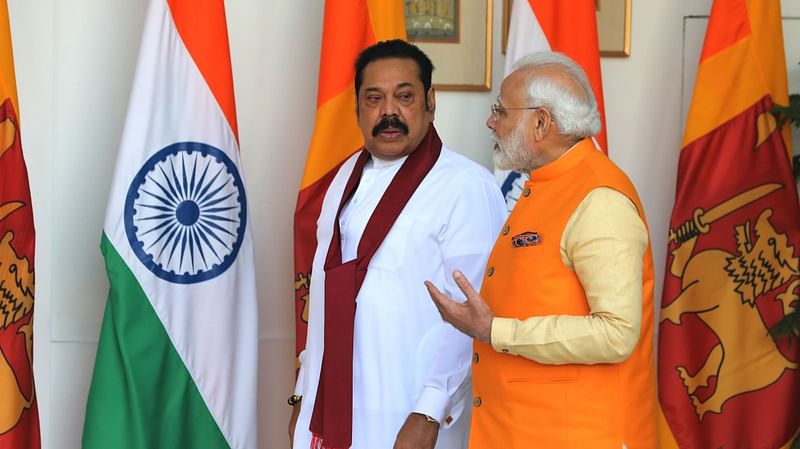
President Rajapaksa and Prime Minister Mahinda have stated that
two years were lost, but the promise of a glorious country will be achieved in
the three years that remain. Can we re assert the economy of our country within
three years?
Having served in the Administrative Service of Sri Lanka where one
gets posted to different positions very often for a year or two and having
worked as a foreign consultant for two years terms, I have been charged to show
quick results and my frank answer is that three years is enough to bring about
development. However we have to work fast and steady.
Once in 2019 I was on the way from Batticaloa to Polonnaruwa when
I suddenly saw a Board Valachenai Paper Mill. I was enticed to turn in as I had
stayed there in its Circuit Bungalow many a time on my circuits in the Sixties.
I went upto the gates and gazed at the buildings overgrown with trees and
creepers and wondered what a calamity. On my next visit to the east in August
2020 I heard that the mill was being resurrected by the Paper Corporation and
the Army. In a few months the papers splashed that the mill was in action
turning out paper. It was a miracle done so fast- within a year accomplished by
the Gotabhaya administration. Resurrecting the Valachenai Mill within one year
tells me that three years is enough.
To start with we have to see the end of queues for essentials. Get
back to the days of Dudley and Sirimavo before 1974, when every dollar that
came in was carefully collected and allocated for importing essentials- not a
dollar for foreign study – essentials first and a small allocation for fridges
and other useful supplies. . I was then in charge of allocating imports for
small industrialists and they were provided with enough dollars to import
essential supplies for their production, so I speak from sheer experience. That
is a foolproof blue print to follow.
Let me also delve into the depths of what officers known to me
have achieved within two to three years. That will provide the answer. This is
not hearsay, not economic projections, instead it is what our officers actually
did achieve. Mind you, they were tough, never taking No for an answer.
I can relive my working in Anuradhapura in the early Sixties when
celebrity Nissanka Wijeyratne was the Government Agent and directed the
building up of the New Town – it was a colossal task, moving an entire town
from the precincts of the Sri Maha Bodhi and Ruwanweliseya to the New Town,
constructing buildings, ordering companies to move, pulling down buildings all
done with precision within some three years. He gave a hearing to all protests,
but was very firm and today we enjoy the sacred city. It is a great
achievement.
Let us remember the Gal Oya Development Programme where a
very large tank, over three times the size of Parakrama Samudra was built from
scratch, 60,000 hectares were brought under paddy, a tile factory, rice mill,
sugar factory, a 10MW power plant, 30,000 families moved in and an entire
District – Amparai was created, construction work done within some three years-
1950-1953.,
The Divisional Development Councils Programme of 1970-1977,
comes to my mind. It was the largest employment creation programme our country
ever implemented. That was the programme which DrNMPerera said would fulfil
the aspirations of thousands of young men and women for whom life will lose all
meaning unless they can find a useful place in our society.”(Budget Speech,
1970.) The Government head hunted the most eminent economist of the time,
Professor H A de S Gunasekera and made him the Permanent Secretary of a new
Ministry, created directly under the Prime Minister, provided with ample funds
and even a helicopter was allowed for his travel to get the programme moving.
The Government Agents were entrusted with the implementation.
The achievement of this programme is commendable:
By 1972, the DDCP was implemented islandwide. By 1973, 590
Councils were fully established and these councils had submitted 1900 project
proposals of which 900 projects were approved and special allocations of funds
were made for their implementation… These projects comprised 341 agricultural
projects, 512 industrial projects and 47 infrastructural projects. Nearly 2000
acres were brought under cultivation, 68 poultry projects and these enabled
7904 youths to find employment….over 1971-1976 Rs 127 million was spent and
33,271 jobs were created.” (From: Papers on the Economic Development of Sri
Lanka:Godages, 2012)
The aim of the programme was to bring about employment to 100,000
youths in the first year. Why the low achievement? Apart from some deficiencies
in the programme one of the main causes was the JVP insurrection of 1971 which
controlled the hinterlands for over a month with kangaroo courts and instilled
fear and terror. Estate owners, rice millers etc. who invested and created
development in rural areas migrated to the cities, instead of developing their
land they sent children overseas and even today five decades later officers on
circuit are scared; some owners have never sighted their estates.
Many are the achievements of the DDCP. Special mention is worth of
the Paper making industry at Kotmale entirely accomplished by the
Divisional Secretary. It was based on waste paper and it will be of interest to
note that today we do not make any paper with our waste paper. Instead we
collect waste paper and cardboard in Colombo and ship it to India- some 8,000
tons per month and earn some 4 to 5 million rupees a year. The waste paper we
send to India is processed into paper and cardboard which we buy for treble
that price- that is unfortunately, our economic accumen for the last few
decades! We import everything that we did make earlier.
Under the DDCP there were agricultural projects in every district.
In the Baddegama Divisional Area, the Divisional Secretary Wilson Perera, in
addition to his normal duties, built up a a cooperative farm with 60 youths-
they took over an neglected estate and established 40 acres of tea,112 acres of
rubber and 50 acres of paddy, and a small industry making high quality forks,
mammoties and spades-all done within three years-1973-1976.
I served in Matara only for two years and perhaps what was done
within my two years may be useful to think whether something worthwhile can be
done within the three remaining years of the Gotabhaya Presidency. Without
mentioning the many small agricultural and industrial projects like in
Baddegama, the main projects established were a Mechanized Boatyard at
Matara. It was a cooperative making 40 foot seaworthy boats. It made around
thirty five inboard motor boats a year, all done by youths trained on the job.
These boats were sold to fishermen’s cooperatives and plied on the high seas
fishing, increasing the fishing catch. It may be of interest to note that this
boatyard was established within two months, including the building to house it,
the machinery bought and fixed and brought to the production stage. This was
ably handled by Development Assistant Kumarasiri and Divisional Secretary the
late Ran Ariyadasa.
The Councils suggested many special projects- to make water
colours, to increase milk production and establish a creamery making butter and
cheese and I vehemently pursued, but Ministry approvals were not forthcoming.
The Ministry sang praises of the Boatyard and was highly satisfied. I and my
stalwart officers were not to be outdone. I had worked as a Deputy Director of
Small Industries and working with some twenty Inspectors of Industries and with
eternal inspections I had a good knowledge of industries. What I knew of making
water colours was fed to our Planning Officer who was a chemistry grad and he,
closeted in the Rahula College science lab, aided by the science teachers, for
three months from 6 pm to midnight found the art of making crayons. Then we
wanted it to be established as a cooperative. Sumanapala Dahanayake the Member
of Parliament for Deniyaya happened to be the President of the Morawak Korale
Coop Union and I directed him to establish a factory producing crayons using
cooperative union funds. He willingly agreed and the katcheri stalwarts- the
Planning Officer Vetus Fernando, Development Assistant Palihakkara, District
Land Officer, Chandra Silva and Divisional Secretary Wimalaratne moved to
Morawaka where twenty youths were trained day and night for two weeks- it was a
hand made crayon where every stick had to be crafted for quality. It was 24
hour operation till crayons were made, put into packets and two rooms filled. I
was not expected to establish an industry without Ministry of Planning
approval, so the operation was a secret and done at speed. Sumane and I took
samples to the Minister of Industries Subasinghe, who was surprised at the
quality and accepted the offer of opening up sales. With that approval our
clandestine operation was declared safe.
Next we had to buy dyes in the open market at high prices. We were
denied a foreign exchange allocation by the Ministry of Industries because we
were a cooperative. We were lost. We heard that the Ministry of Imports was
about to import crayons and Sumane and I moved in. We convinced Harry Guneratne
the Controller of Imports that by giving us a small amount of foreign exchange
to import dyes he could do away with all imports of crayons, saving foreign
exchange. He was an immediate convert but as this had never been done earlier
wanted us to get the approval of his Minister, Illangaratne. The Minister was
surprised at the quality of the product. He not only gave approval but insisted
that we should open a factory in his electorate at Kolonnawa. This illustrates
how our industries save foreign exchange. This Crayon factory was developed to
have island wide sales and became the flagship industry of the DDCP, all done
by Sumanapala Dahanayake the member of parliament .
The first LESSON is that it was a chemistry grad with no
experience that found the art of making crayons. A Crayon is a sophisticated
product and the recipe for making Crayola crayons manufactured in USA is
patented, worth millions and held locked up. If we could produce crayons
there is no import product that we cannot produce. We have to get our
chemistry graduates and science teachers on the job of finding methods of
producing everything that is imported. Another LESSON is that the industry was
established in two weeks working on a 24 hour basis. It is a forgone conclusion
that we can produce everything we import if only approval is granted. We can
thereby provide employment and income not to thousands but to hundreds of
thousands only if we want to do it.
Another area is fruit juice and food preparations. In 2020
Cargils sold tomatoes sauce made in the USA, and fruit juice from Cyprus and
Australia. Till 1954 Sri Lanka was importing all fruit juice and food
preparations from Australia and other countries. The Marketing Department where
I was working as an Assistant Commissioner established a Cannery in 1955 and by
1957 we were producing the country’s full requirements of tomatoe sauce,
tomatoe juice, pineapple jam, juice and slices. We even built up exports in
pineapple products. The Marketing Department fixed floor prices, i.e. prices at
which all quantities offered will be purchased for red pumpkin which was turned
into Golden Melon Jam , Ash Pumpkin which was turned into Silver Melon Jam and
for pineapple. Producers, mainly chena cultivators made a windfall. All that
was lost with the dictate of the IMF that we had to privatize the Cannery. Our
fruit trees- mango and creepers- red pumpkin, ash pumpkin and melon are full of
fruit, few buy them as food to eat and the rest go to waste. In the meantime
the country buys jam, juice, tomatoe sauce etc. from foreign countries and pay
with dollars. In 2020 we imported banana crisps from Vietnam, while we have a
glut of banana in Godakawela and Rambukkana and it is a simple process to make
banana crisps.
It is important to note that before Sri Lanka started following
the IMF prescriptions of neoliberal economics in 1977 Sri Lanka produced all
its textiles. This was done by 96,000 handlomers, many powerlooms and
Textile Factories. The Department of Small Industries imported yarn and sold
them to the units and the textiles manufactured were sold through LakSala, and
cooperatives. The entire operation was guided by a specialist research and help
unit called Velona sited at Moratuwa. As the Government Agent I was held
responsible for powerlooms in Matara District and I may mention that the
suiting done at Hakmana Powerloom was even on demand by Sri Lankans living in
London. The specialist was Ranjith Wimalaratne, the Divisional Secretary,
placed in charge of the Hakmana Powerloom. The textile industry has to be
resurrected, Velona re established and this can provide employment for
hundreds. This can easily be done in a year or two at most.
Let me further support this theory that we can create employment
with details of what I did within two years in my consultancy as the
Commonwealth Fund Advisor for youth development in Bangladesh. As
usual there were fights in the Bangladesh Parliament and it did not meet for
one year. The Army took over the country one night in a bloodless coup d’etat.
In a few days the Minister for Labour and Manpower, Air Vice Marshall Aminul
Islam held an evaluaton of all programms of youth development and training and
expressed dissatisfaction. Identifying me as an outsider he inquired who I was.
Being told that I was the Advisor from the Commonwealth Fund, he ordered me;
What can you contribute for Bangladesh?” I replied that though the Ministry of
Youth, trained 40,000 youths a year in various vocations most of the trained
continue to be unemployed and it would be ideal to establish a Programme of
Employment Creation to guide the trainees to become self employed. The
Secretary to the Treasury, the Head of the Public Service, the highest official
in Bangladesh, objected stating that the ILO failed to create a self employment
programme in Tangail, Bangladesh and the country had lost a massive amount of
money and will not have another failure. He contested my ability and insisted
that I will fail because the ILO in their attempt had brought experts from all
over the world and yet failed. The serious arguments between both of us went on
for over two hours, till the Minister ordered us to stop, said that I have
convinced him and ordered me to establish a Youth Self Employment Programme and
added that he will come personally to inspect progress. The Secretary to the
Treasury immediately said that the Government will not provide any funds to
which I replied that I needed no new funds, but asked for approval to find
savings in approved budgets and re-write the remits of officers to create the
self employment programme. The Minister approved my request.
I commenced work the next morning training all youth directors and
lecturers of training institutes in economics and methods of guiding youths to
establish employment ventures producing what the country needed to stave off
imports, we organized a countrywide extension service to supervise enterprises
established by the youths. My ideas were fully supported by the two Secretaries
of the Ministry, Ayubur Rahaman and Asafuddowlah. I never had the occasion to
ask for any thing twice and no one ever contested a word of what I said. I
stared addressing the youths who were being trained in various vocations and
guiding youths that established small ventures and by the end of my consultancy
I with the youth officers and lecturers was guiding 2000 youths, many of them
earning the salary level of a clerical officer in the government service within
seventeen months.. After I left, the programme of youth self employment was
directed by the Secretary to the Ministry and other officers all trained by me,
and by 2011, the Government of Bangladesh reported to the IFAD(FAO) one of the
funders that two million youths had established commercially viable
enterprises. By now, 2022 over three million youths have established viable
ventures. This Youth Self Employment Programme is today the leading employment
creation programme the world has known.
Relating my experiences to the situation we face in Sri Lanka
today.
Today Sri Lanka is faced with a shortage of foreign funds to
import essentials and is also saddled with a massive foreign debt of $ 56
billion. The foreign debt is due to the fact that since 1977 the country was
fooled by the IMF to follow its Structural Adjustment Programme which advised
Sri lanka to use foreign exchange freely and find loans to meet the expenses.
Before 1977 we managed with our incomes and in 1976 we had no foreign debt. The
foreign debt of Sri Lanka grew from no debt in 1976 to $ 9 billion by 2000, $
18 billion by 2009 $ 42.9 by the end of 2014,and to $ 56 billion today. Once
our country accepted the IMF advice of living on loans, abolished the development
infrastructure we had developed to get the public sector establishing
development, it was purely a case of confining the public service to the
barracks and living on loans. The foreign debt and the shortage of dollars
today is absolutely not a creation by the present Government. It is the debt
that has cumulated by following the advise of the IMF to close public sector
development, free imports and live on loans.
However there has to be an end to this and Sri Lanka has the
resources to commence becoming self reliant. The one and only method to do
this is by establishing a massive employment creation programme to make
everything that is being imported. If we could have found the method of
making crayons equal to the Crayola crayons of today and established a crayon
making factory all done within five months, with islandwide sales, we do hold
the ability to produce all what we import.
It has to be a major programme for employment creation directed by
the Government Agents and managed by the Divisional Secretaries. This Programme
has to be directed by an Additional Secretary under the Prime Minister.
The aim is to have an employment creation- agricultural and
industrial unit in every Divisional Area using resources available in the area.
.
In 2000 I wanted to buy a step ladder and I could not find a step
ladder made in Sri Lanka in all the shops at Nawala. We import easily over 80%
of our step ladders from Singapore and Thailand. In the meantime we train
annually thousands in metal work. The answer is simple- to get cracking with
making the trained people produce what the country requires. In addition there
are a host of resources to work on: wood shavings and saw dust to make
timber, made in most countries and even by Damro , ceramic industries to
make all cups and saucers- tableware, medicinal oil can be distilled and sold
in foreign markets. We can make all ladders and wood and metal items in demand.
Many quick crops can be planted and industries built up like Aloe Vira- to
make perfumes-Pasikuda soils are ideal
Making Jam, Fruit Juice and Tomatoes Sauce
A decade ago I came across a distant relative of mine, a graduate
in food technology who works as a clerical officer in a government department.
He said that he would have been in food technology if he had the opportunity.
Our trees will be full of mangoes in April and the chenas will be full of red
pumpkin, ask pumpkin and melon by February.
The ANSWER is to import three small canneries and fix them in
Tissamaharama, Naula and Anuradhapura, fix floor prices, buy all
fruits-mangoes, red pumpkin, ash pumpkin, pineapple, avocadoes etc. and make
jam, juice and sauce. We will not only save foreign exchange but also find
employment for our unemployed. This is exactly what we did in the Marketing
Department(MD). The MD even exported pineapple within three years. This is
something that has to be done immediately. Send a food technician and an
engineer from the Army Engineers to inspect small canneries in India or China
and buy three . In the meantime get the sites with water and other facilities
ready, get temporary buildings done and get the machinery fixed. Collect the
produce, process them into juice, jam and market. It is a three months
operation and that is the speed at which we did work at Matara in 1971. It is a
challenge that can be taken on.
The cost of importing the three canneries can be recouped within
the very first year of sales. Within three years we can make Sri Lanka self
sufficient.
Many agricultural crops can be easily grown and self sufficiency
achieved. Take Maize that grows in chenas. We were never self sufficient in
maize. In 1963 when I was in charge of the Anuradhapura District paddy
cultivation and had vibrant cultivation committees, I offered to make the
country self sufficient in maize. I just had to get the cultivation committees
to attend to maize in addition to paddy . This was not approved and even today
five decades later we import Maize. Making Sri Lanka self sufficient in maize
is a one years’ task. That is also true of potatoes and many other crops. Sorry
to state that President Premadasa promoted all Agricultural Overseers the only
trained agricultural officer at the village level to be Grama Niladharis in
1992 and till today- three decades have gone by without any trained
agricultural officer at the village level. The problem is that the Ministry of
Agriculture itself does not realize that it is a monster that has no legs to
stand on.
Sri Lanka in the Seventies and Eighties was producing around half
our requirements of Paper and Cardboard. The Gotabhaya Government has
been able to repair the machinery at Valachenai Paper Mill and it is
functioning now. In Mahawillachchiya there is plenty of ILLUK grass that can
also be used to make paper. It is suggested that a few small scale Paper making
machines be imported from India or China and set up in the colony areas of
Polonnaruwa, Anuradhapura, Mahawillachciya and Amparai to make paper out of
straw and illuk. The cost of importing the paper making machinery can easily be
recouped within the very first year. It is suggested that an expert from the
Paper Corporation and an engineer from the Army should be immediately sent
either to China or India to identify small scale paper making machines and
select the four machines that have to be imported. I am certain that these
paper making industries can easily be established within six months in colony
areas using straw and illuk, and could be in production within a year.
We import a lot of perfumes. Perfumes are made out of
flowers and I have trailed behind lorries of flowers in South France. We have
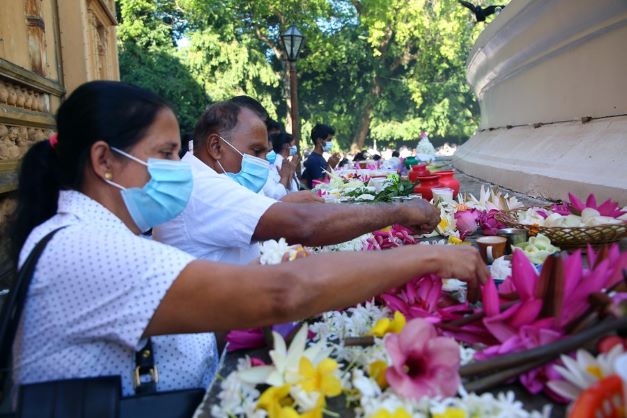
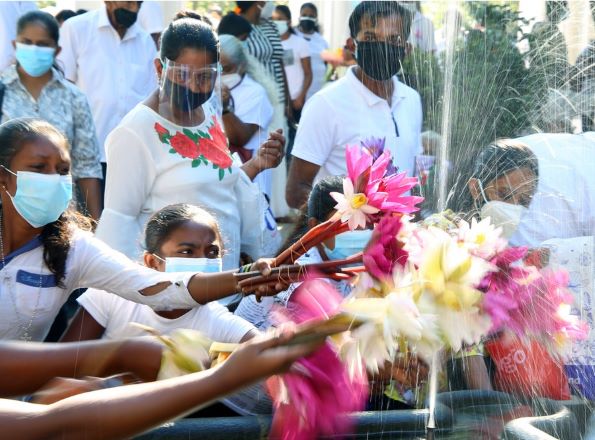
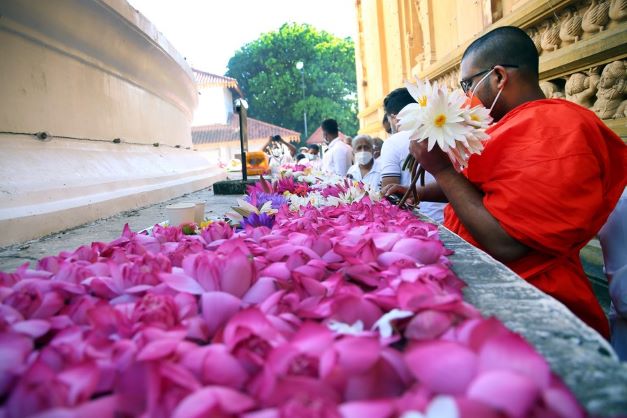
problems in disposing the flowers at Anuradhapura temples and the Dalada
Maligawa in Kandy. Import two small distilleries and get cracking on making
perfumes.
Finally the question of finance. In the
DDCP easily ninety percent of the work was done by officers in addition to
their duties. All officers and payments for setting up industries and
agricultural farms, payment of stipends to youths till production and sales are
realized etc was all in local Rupees. Foreign exchange- dollars are required
only for the import of Canning and Paper making machinery and
the amount spent can easily be recouped within the first year of
operation. May I mention that the Youth Self Employment Programme of
Bangladesh, which is today the largest employment creation programme the world
has known was entirely implemented with savings from approved budgets in the
first four years. .
A major programme has to be established and implemented
islandwide, directed by the Government Agents and by the Divisional Secretaries
using the staff under them. The suggestions of the individual projects
suggested by me earlier in this paper can be within this major programme. The
Divisional Secretaries know their areas and the resources available and with
his staff should come up with ideas of developing industries which will be
further developed upon by the district staff comprising the Assistant Director
of Small Industries and the Assistant Director of Planning in the District,
with inputs from the various Ministries. They will have to obtain support from
the Industrial Development Board and such organizations and draft feasible
reports for approval by the Ministry.
May I suggest that a cadre of specialists is approved with a
higher salary scale than agricultural instructors and science teachers in
schools for drafting and implementing projects. I am aiming at agricultural
instructors as they hold the ability and training to attend to agriculture and
livestock development projects while I am suggesting science teachers because
they do have the background to experiment and bring about industrial
development. In the crayon and batik industry in Matara in 1971, the science
teachers played an important role.
Wind Turbines to turn out power. Today
we do not have the dollars to import crude oil and coal to make power, but all
this while the winds howl and force their way through our hills. Our current
wind power programme is based on using the coastal breeze. The areas where wind
power is really available is in the hills but the Environmental Ministry has
ruled that no wind turbines should be established in the hill country.
Countries like the USA and Spain who are leaders in wind turbines today have
their wind turbines on the hills and not by the coast. I know this for certain
as I have often travelled there. I would suggest that wind turbines should be
installed at Hunnasgiriya, Madugoda and Ramboda. In the USA some 5000 wind
turbines are sited at Altamont Pass and I have passed by that site several
times. At Ramboda and Hunnasgiriya one can easily locate a few Altamont Passes
as there is wind power with sheer force at many spots in these two areas. My
book: Wind Energy For Sri Lanka’s Power Requirements(2019) proves that
we can easily produce all our power requirements within a few years.
May I suggest that the Engineering Section of the Army be
entrusted with this task. At Avukana I have seen the tall concrete columns
built by the Army Engineers holding a canopy above the statue. . May I suggest
that same unit be called upon to design and build the wind turbine towers and
wings. Only the turbine has to be imported. That too can be made if Jinasenas,
the makers of Jinasena Pumps are requested. The columns and wings are all made
of concrete and in the USA and Spain this is a major source of employment for
the people. I have seen many small units at work making and repairing them. I
am told that our grid capacity is a problem. We can site the wind turbines at
places where the grid has capacity May I suggest that our Army Engineers may be
put on this task. In the USA the US Army Engineers attend to many civilian
tasks, like day and night maintaining the levees built in New Orleans to save
the city which is below the sea level. The Chesapeake Bay Bridge tunnel, 17
miles long was done by the Army. On the Columubia River the McNary Dam done by
the US Army creates 950 MW.
What I state may not be believed by many. May I suggest that the
officers whom I have named be summoned by the President or the Prime Minister
and they will further substantiate the details of work accomplished.
I am dead certain that we can build Sri Lanka from scratch within
three years.
Garvin Karunaratne 16/1/2022
Ph.D. Michigan State University 12/1/2022 garvin_karunaratne@hotmail.com
Author of:
Microenterprise Development…The Way Out of the World Bank and
IMF Stranglehold(Sarasavi:1997)
How the IMF Ruined Sri Lanka & Alternative Programmes of
Success(Godages:2006)
How the IMF Sabotaged Third World Development(Godages/Kindle:2017)
Papers on the Economic Development of Sri Lanka(Godages,
2012)
Resource Papers in support of the facts in this Paper:
New Initiatives in the Economic Field: A Progressive Move”
(LankaWeb: 27/1/2018
(www.lankaweb.com/news/items/2018/01/27/new-initiatives-in-the)
How the Army of the USA is used for development work”
(Lankaweb:6/8/2010)
(www.lankaweb.com/news/items/2010/08/06/how-the-army-of-the-usa-is-used-to)
Lankaweb, September 23rd, 2020
Lankaweb, August 15th, 2020
Lankaweb, January 7th, 20201
1