Total COVID deaths climb over 9,900 with 145 new victims

September 4th, 2021

Courtesy Adaderana

The total number people who fell victim to COVID-19 infection in Sri Lanka soared yet again as 145 more fatalities were confirmed by the Director-General of Health Services on Friday (Sep. 03).

The new development has pushed the official death toll from the virus outbreak in Sri Lanka to 9,951.

According to the data released by the Department of Government Information, the latest victims include 77 males and 68 females.

As many as 117 deaths were reported among the elderly people who are aged above 60 years.

In addition, 24 individuals aged between 30-59 years and four others below 30 years have also succumbed to the virus infection.

Daily COVID cases count hits 3,333 today

September 4th, 2021

Courtesy Adaderana

The Epidemiology Unit of the Health Ministry reports that another 693 persons have tested positive for COVID-19 in Sri Lanka, moving the daily total of new cases to 3,333.

This brings the total number of confirmed cases of coronavirus reported in the country to 459,459.

As many as 382,476 recoveries and 9,951 deaths have been confirmed in Sri Lanka since the outbreak of the pandemic.

The Epidemiology Unit’s data showed that 67,032 active cases are currently under medical care.

BUILDING A DIGITAL ECONOMY IN SRI LANKA

September 3rd, 2021

BY EDWARD THEOPHILUS

Mr. Namal Rajapaksa recently expressed that he intends to build a digital economy in Sri Lanka. It is an astonishing challenge and the task will attract enormous resources and time. It is not a simple task in the way the Minister assumes because Sri Lanka has no resources to build a digital economy. A digital economy relates to information and data. Each cent of earning and expenditure should be digitally recorded if the economy becomes a digital economy. It might be a recording system like in heaven or hell. Sri Lanka converting to heaven or hell is the nature of a building digital economy that is hard and gigantic work. As we imagine in heaven or hell, there are no manual records and they contain records of each person not only in this world but also in the entire universe. The other notable character is when a person does a good thing, quickly records it in heaven and hell. In this way, recording information is a role and expectation in a digital economy.  

When critically look at the intention of Mr. Namal Rajapaksa, it can be assumed that Mr.Rajapaksa wants to convert Sri Lanka to heaven or hell. This means he wants to maintain recording information of the economy like in heaven or hell. The other vital aspect of a digital economy is treating information technology as a major sector of inter-industrial analysis and the current aggregate economy of Sri Lanka has divided into sectors like agriculture, industry, construction, and services. In the current recording system of the aggregate economy, the digital areas are components of other major areas and how can they separate a digital area is to be a massive task. When broadly think about the role or a task, it is impossible and it might be a dream.

A digital economy is a broader concept that encompasses every activity of the economy that would be related to modern digital management and it would support the decision-making process. Mr.Namal Rajapaksa supports modernization and if we think about the development history of Japan, many reasons that contributed to Japanese development have been modernization that supports innovation and making profits and advantages from all economic activities. When hearing the view of Mr. Rajapaksa, it is my question whether people of Sri Lanka understand the wish of the minister. About 70% of contributors to the economy of Sri Lanka do not understand digital operation and management. They engage in activities for living that contribute to add value to the economy.

Mr.Nimal Rajapakshe is an adolescent minister in the cabinet with enthusiasm and willingness to contribute to the modernization and he also needs more marks to be the future leader of Sri Lanka as people will judge him considering the contribution made to the economy and society. The disguise intention of Mr.Rajapaksa is to generate efficiency in the economy and it is a good intention. The concept of digitalization of operation in the economy came to policy-makers several decades ago and few areas have been digitalised and the operational efficiency of those areas is a question because the operational efficiency seems to be much lower than an assumption. The concept of digitalization demands investments for technological changes and application, and the capacity for adapting such an investment process in Sri Lanka is bounded and affected by spending capacity in all sectors of the economy.  

As we understand, it is an unachievable task within the period of the current government and the major reason behind the important task is the lack of resources and knowledge which many consider as human and non-human apparatus associated with building a digital economy. Building a digital economy should not be a political party-based activity and whether this government is in power, the role should be continued to achieve the goal.

Building a digital economy is just an expression for publicity of a planned task to achieve might be a question for people because people do not know whether Mr. Namal Rajapaksa designed an idea with a comprehensive plan or it is a just talk to mislead people. A comprehensive plan means it needs vision (what people see the economy after the plan period), mission (the combination of objectives and activities) to achieve the vision, objectives, activities, and the budget for all activities, monitoring, and evaluation, remedial management, and audit of the plan. All these are complicated and massive tasks.

Sri Lanka had many plans, and no plan has been implemented until seeing the achieved vision. For example, in 1954, the government developed a four-year development plan with good objectives and activities and it was to put to the rubbish bin in 1958 presenting a ten-year development plan. The joke related to these plans was the person who developed a four-year development engineered a ten-year plan for monitoring the four-year investment program.

Many organizations in the country have individually digitalised, and they are not linked to a control centre. My feeling is the authority of the economy should be the Ministry of Finance or the Central Bank. People of Sri Lanka understand which one is the authority of the economy. This is a vital issue that should be resolved when the economy becomes a digitalised system. The president of Sri Lanka should be decided the authority of the economy and link all major areas into a single authority. In this way, the economy could digitalise and there should be an authority to make policy decisions. The president of Sri Lanka must be the authority and leader of the economy that should be operated without political influence and managing the data structure.

The digitalization of the economy could initially provide 50000 graduate employment then annually 10000 jobs in all fields without difference in educated fields and it would be the best strategy to provide employment opportunities to the economy. There will be other opportunities and unemployment would not be an issue for the country if the economy is successfully digitalised.

Many universities could change curriculum and annual intake and more students could be given opportunities to enter universities and technical colleges. The digital process would enhance the popularity of the government.

The next consideration would be cost and needs to attract competent cost projectors who could, and should, be estimated the cost and identified area. How to find funds for various purposes.

The digitalization of the economy supports creating a strong training industry that supports maintain the digital economy.

When the economy is digitalized, it would create risk from various areas and the major risk aspect is problems would be created by hackers. China has the best techniques to avoid hackers and the government should get help from China.

Bangladesh-Maldives Ties: Sky’s the Limit?

September 3rd, 2021

MD Pathik Hasan

Maldives President Ibrahim Mohammed Saleh’s recent visit to Bangladesh has added multidimensionality to the two countries. Because the country has expressed its determination to work together with Dhaka on bilateral, regional and international issues. Not only that, a total of six Memoranda of Understanding (MoUs) has been signed between Dhaka-Male within a month; Of which four have been completed in the presence of the President during his visit to Dhaka to mark the Birth Centenary celebration of Founder of Bangladesh Bangabandhu Sheikh Mujib in March.

The Indo-Pacific Strategy (IPS), a new dimension in the region’s diplomacy, shares Bangladesh’s ideological aspirations with Maldives, the geopolitically important country. For this reason, the country intends to work together with Bangladesh while maintaining peace and stability. At the same time, the two countries have agreed to increase connectivity by air and sea.

Maldivian President Ibrahim Mohammed Saleh arrived in Dhaka on a two-day visit on the occasion of Bangabandhu’s birth centenary and golden jubilee of independence. During his bilateral meeting with Prime Minister Sheikh Hasina, four MoUs were signed between Bangladesh and Maldives. The memoranda include the formation of a Joint Commission (JCC), regular meetings at the Foreign Secretary level, assistance in the extraction of marine resources and cultural exchanges.

The two leaders also discussed bilateral trade, customs co-operation and avoidance of double taxation, investment, migration issues, human resource and youth development, education, health care and medicine, agriculture, tourism, Rohingya issues, climate change issues and natural disasters. And mitigation. The two top leaders also agreed to expand mutual cooperation on these issues.

In addition to First Lady Fazna Ahmed, the Maldivian President was accompanied by 28 guests, including Foreign Minister Abdullah Shahid and the Minister for Economic Development.

The Maldivian president’s visit added a new dimension to the ongoing goodwill between the two countries. This is especially a reflection of Bangladesh’s geopolitical importance in the region and the support it has from neighboring countries. This visit provides an opportunity for the Maldives to support Bangladesh’s rivalry over connectivity in the Indian Ocean.

Saleh congratulated Bangladesh for its economic progress and socio-economic development by celebrating the Golden Jubilee across the path of friendship. He also expressed his gratitude to Bangladesh. Highlighting the assistance of Bangladesh, provided to the Maldives during the coronavirus epidemic, Saleh said the Maldives is grateful for the friendship of the people of Bangladesh. This friendship is helping us to meet the challenges posed by the epidemic. This cooperation is a sign of friendly relations between the two countries.

On the second day of the visit, the two leaders held a private meeting before the bilateral meeting. Later, in their presence, a memorandum of understanding was signed on four issues, including the formation of a joint commission to strengthen overall cooperation between the two countries. In addition to emphasizing on enhancing communication and trade between Dhaka and Male, the two countries also agreed to sign a preferential trade agreement at a bilateral meeting chaired by the two leaders.

After the Sheikh Hasina-Saleh meeting, the two foreign ministers of the two countries came to the joint press conference at Hotel Intercontinental in Dhaka in the afternoon. AK Abdul Momen and Abdullah Shahid. Abdul Momen said the two countries have agreed to operate direct ships and flights to the Maldives. Bangladesh and Maldives have agreed to sign a Preferential Trade Agreement (PTA) to boost trade and investment.

On the other hand, Abdullah Shahid said the country welcomed Prime Minister Sheikh Hasina’s announcement to increase connectivity. We want to increase communication by air as well as by sea. We will work to maintain peace and stability in the Indian Ocean. Shahid also promised that Maldives would stand by Bangladesh in resolving the Rohingya crisis.

Regarding the Bangladeshi expatriates in the Maldives, Shahid said the Prime Minister appreciated the decision of the Maldivian President to provide free coronavirus vaccine to the expatriates in the country. President Salih praised the contribution of Bangladeshi expatriate workers in Maldives. He met with Abdul Hamid. There is also talk of increasing connectivity

Meanwhile, a joint statement issued by the two countries said that Bangladesh’s support for the Maldivian Foreign Minister as President of the UN General Assembly this year has been confirmed. On the other hand, Maldives will support the Bangladeshi candidate for the post of Regional Director of the World Health Organization’s Southeast Asia Regional Office for 2023.

We can say, this is the sign of eternal brotherhood between Bangladesh-Male.  Even though the Maldives is a small island state, it has a geopolitical significance. Bangladesh got multi-dimensional benefits during the visit of Maldives President to Dhaka. We have always good relations with the Maldives. This visit has created an opportunity to strengthen this relationship. The agreements reached between the two countries strengthen the relationship between the two countries and reflect the geopolitical importance of Bangladesh in the region and the support that neighboring countries have for Bangladesh

There are huge sectors of potentials to work together such as tourism, tackling covid-19, counter-terrorism approach, maritime cooperation, Climate change issue, fishing, supporting each other at common regional and international fora. Maldives always supports the stance of Bangladesh regarding Rohingya refugees’ repatriation, relocation of Rohingyas to Bashanchar. These are very appreciable.

The Maldives bilateral relations with Bangladesh and the maritime cooperation with Bangladesh in the Indian Ocean in terms of a regional cooperation or connectivity will give a new dimension to Maldives’ assistance there. Bangladesh is going to become a full member of Colombo Security block.  All in all, it will benefit mutual diplomacy and the economic and other interests of bilateral relations between both parties. The Maldivian economy is not very big, but it has geopolitical advantages and diplomatic importance.

The people of Bangladesh and Maldives will be befitted ultimately. Bangladesh-Maldives ties would be more fraternal.

Writer: MD Pathik Hasan

Dhaka based NGO worker, Researcher and Freelance Writer (Particularly on current international affairs)

ජනාධිපතිතුමනි, උද්දච්චකම පැත්තකින් තියලා ජනතාවගේ ප‍්‍රශ්ණවලට විසදුම් දෙන්න – මනුෂ නානායක්කාර

September 3rd, 2021

Manusha Media

උද්දච්චකම පසෙකින් තබා රටේ ප‍්‍රශ්ණවලට විසදුම් ලබාදෙන්නැයි ජනාධිපතිවරයාගෙන් ඉල්ලා සිටින බව සමගි ජන බලවේගයේ මාධ්‍ය ප‍්‍රකාශක පාර්ලිමේන්තු මන්ත‍්‍රී මනුෂ නානායක්කාර පැවසුවේය.

ජනාධිපතිවරයා තමන්ගේ උද්දච්කම පසෙකින් තබා රටේ ආහාර සුරක්ෂිතතාවය සම්බන්ධයෙන් ගැටලු ඇති කරන පොහාර ප‍්‍රශ්ණයට විසදුම් ලබාදිය යුතු බවත්, ගුරු වැටුප් ප‍්‍රශ්ණයට විසදුම් ලබාදී දරුව්න්ගේ අධ්‍යාපනය යථා තත්වයට පත් කිරීමට කටයුතු කළ යුතු බවත් ඔහු සදහන් කළේය.

ජනතාවගේ ගැටලුවලට විසදුම් ලබාදෙන්නේ නම් ජනාධිපතිවරයා ෆේල් බව නොකියා සිටිය හැකි බවද මන්ත‍්‍රීවරයා පැවසුවේය

වැඩිදුරටත් අදහස් දැක්වූ මනුෂ නානායක්කාර මන්ත‍්‍රීවරයා මෙසේද කීවේය.


සීනි වලට අලුත් ගැසට් එකක් ගහලා තියෙනවා. ගිය අවුරුද්දේ නොවැම්බර් 10 වැනිදා සීනිවලට ගැසට් එකක් ගැහුවා. ඒ කාලේ සුදු සීනි පැකට් එකක උපරිම සිල්ලර මිල වුනේ රුපියල් 90ක්. පැකට් නොකළ සුදු සීනි කිලෝවක් රුපියල් 85යි. ආනයනයකරු විසින් විකිණිය යුතු උපරිම මිල රුපියල් 80ක් වුනා.


මේ කාලයේදී තමයි අවුරුද්දකට ඇති තරම් සීනි ලංකාවට ගෙනාවේ. සීනි බද්ද සත විසිපහට අඩු කරපු නිසා තමයි මේ ආකාරයට අති විශාල සීනි තොගයක් ලංකාවට ගෙන ආවේ. ඒ වෙලාවේ තමන්ගේ ගජ මිතුරන් අවුරුද්දකට ප‍්‍රමාණවත් විදියට සීනි ගෙනවිත් ගබඩාවල තැන්පත් කරගත්තා.

දැන් සීනි හිගයක් මවා පාලා සීනි මිල ඉහළ දැම්මා. ආණ්ඩුව සීනි මිල, හාල් මිල පාලනය කිරීමට අවශ්‍ය නිසා හදිසි නීතිය ගෙනවිත් සීනි තියෙන තැන් හොයන්න ගත්තා. සීනි තියෙන තැන් දන්නේ නැද්ද? සීනි තොග තියෙන තැන් බලන්න මාධ්‍ය ආයතන ගිහින් බලන්න ඔ්නද? රේගුවෙන් සීනි තොග රට ඇතුළට එන විට ඒ තොග යන්නේ කොතැනටද කියන එක ගැන රජයේ තොරතුරු තියෙනවා.

ඒ වෙලාවේ සීනි තොග එක් රැුස් කළේ කවුද කියලා සොයලා විගණනයක් කරන්න කියලා ඉල්ලීම් ඉදිරිපත් වුනා. ඒත් ඒ ගැන සොයා බැලුවේ නෑ. දැන් මේ සීනි තොග රජයේ නිලධාරීන් අත්අඩංගුවට ගත්තා. මේ අත්අඩංගුවට ගත්ත සීනි ජනතාවට අඩු මිලට ලබාදේවි කියලා අපි විශ්වාස කළා. රුපියල් 85 ට සීනි දේවි කියලා අපි හිතුවා.

දැන් ගබඩාවලින් ආණ්ඩුව සීනි සල්ලිවලට අරගෙන රුපියල් 130 ගානේ සීනි විකුණනවා. මෙච්චචර කල් ගජ මිතුරන්ට මුදල් හම්බකරගන්න ඉඩ දීලා, ආණ්ඩුවම සල්ලිවලට ගන්නවා. මේ සීනි රාජසන්තක කළානම් සල්ලි දෙන්නේ මොකද? දැන් මේ සීනි රාජසන්කත කරනවා වෙනුවට ආණ්ඩුව බිස්නස් එකක් කරනවා. තොග මිල රුපියල් 116ක් දාලා, සිල්ලර මිල රුපියල් 122 සිට 127 දක්වා මිල ගණන් දාලා ගැසට් එකක් ගහනවා

රුපියල් 75 ට ලංකාවට ගෙනාපු සීනි තමයි තොග කරුවන් සීනි 116ට විකුණන්නේ. ගුදම්වල තිබුණ කාලයේදී අසීමිත ලාභයක් උපයාගෙන තියෙනවා.

මෙච්චර සීනි තොගයක් ආනයනය කිරිමට ඉඩ දුන්නේ කවුද? බද්ද අඩු කළේ කවුද?

සීනි හංගන් ඉන්නේ කියන්නේ විපක්ෂය කියලා මහාචාර්යකෙනෙක් ඇවිත් කියනවා. ඔහුට මහාචාර්ය කියලා කියන්නත් ලැජ්ජයි. සීනි හංගන්න විපක්ෂයට පුලුවන්ද? සීනි ගෙනාපු ව්‍යාපාරිකයින් කවුද, මේ අයත් එක්ක ආණ්ඩුවේ තියන සම්බන්ධය මොකක්ද කියලා ඔ්නම කෙනෙක් දන්නවා


දැන් බලන්න ඇන්ටිජන්. රුපියල් දෙසීයට, තුන්සීයට ලෝකයේ ඇන්ටිජන් ගෙන්වීමට හැකියාව තිබියදී ඒ අයට ඇන්ටිජන් කට්ටල ගෙන්විමට අවසර දෙන්නේ නෑ. ඖෂධ නියාමන අධිකාරිය හරහා එන්න දෙන්නේ නෑ. ඖෂධ නියාමන අධිකාරියේ දත්ත මැකිලා. අපිට අපේ ඇන්ටිජන් පරීක්ෂාව කරගන්න තිබුණ අවස්ථාව නැති කරලා. මේ දත්ත තිබුණේ කොහේද? ශ‍්‍රී ලංකා ටෙලිකොම් ආයතනයේ තමයි මේ දත්ත තියෙන්නේ. ඖෂධ නියාමන අධිකාරියේ දත්ත ගබඩා කරලා තියෙන ශ‍්‍රී ලංකා ටෙලිකොම් ආයතනයේ සභාපතිවරයා, සහ ඇන්ටිජන් ගෙන්වන අය අතර තියෙන සම්බන්ධය මොකක්ද කියලා හොයලා බලන්න. එකට  ලියුම් ගහලා අත්සන් කරන අය තමයි මේ කොල්ලකෑම් කරන්නේ. කොරෝනාව ගරානාවක් කරගන්නේ.

ඒ විතරක් නෙමෙයි ලංකාවට නිරෝධායනයට එන අයත් නිරෝධායනය කරන්නේ ගජ මිතුරන්. ආණ්ඩ ගෙන ආපු අයට ලබාදෙන උදව්වක් විදියට තමයි මේ අයට හම්බකරගන්න දීලා තියෙන්නේ.

පොහොර ප‍්‍රශ්ණය විසදන්න

අද වන විට අත්‍යවශ්‍ය භාණ්ඩ හිගයක් ඇතිවෙලා තියෙනවා. සීනි කිලෝ එක කිලෝ එක ගන්න පෝලිමේ ඉන්න වෙලා. ගෑස් සිලින්ඩරය ගන්න පෝලිමේ යන්න වෙලා. අද වාහනවලට ටයර් එකක් දාගන්න විදියක් නෑ. මේකෙන් නිෂ්පාදන ආර්ථිකය කඩාගෙන වැටිලා, රටේ ආර්ථිකය කඩාගෙන වැටෙනවා.

දැන් පොහොර තහනම් කිරීමට ගැසට් එකක් ගැහුවා. පොහොර තහනමට ගැසට් ගැහුවට පස්සේ එළවළු ගොවියාගේ ඵලදාව සියයට 40කින් අඩුවෙලා. තේ කර්මාන්තයේ යෙදෙන අයගේ ඵලදාව සියයට 50කට අඩුවෙලා. වී ගොවියාගේ නිෂ්පාදනය පහළ වැටිලා. බඩ ඉරිගු ගොවියා ලබන කන්නය වගා කරනවාද නැද්ද කියලා කල්පනා කරනවා. ආහාර සුරක්ෂිතතාවය පිළිබද බරපතල ප‍්‍රශ්ණයක් ඇතිවෙලා.

පොහොර ආනයනය තහනම් කිරීම නිසා ආහාර හිගයක් ඇතිවෙන්නේ නෑ කියලා ජනාධිපති මාධ්‍ය ප‍්‍රකාශක ඇවිත් කියනවා. මොන දත්ත මත පදනම් වෙලාද මේ කතා කියන්නේ. කොම්පෝස්ට්වලින් වගාවට අවශ්‍ය නයිට‍්‍රජන් ප‍්‍රමාණය ලබාගත හැකිද? ලංකාවේ නිපදවන කොම්පෝස්ට් වල නයිට‍්‍රජන් ප‍්‍රතිශතය මැනීමට හැකියාව තියෙනවාද?

ජනාධිපතිතුමනි, ඔබේ උද්දච්චකම නිසා, කලට වෙලාවට එන්නත් නොගෙනාපු නිසා, අවුරුදු හැටට වැඩි අය මැරෙනවා. ඔබේ උද්දච්ච කම නිසා නියමිත වෙලාවට රට වැහුවේ නැහැ. රෝගය තවතදුරටත් ව්‍යාප්තවෙන්නේ ඔබේ උද්දච්චකම නිසා. පොහොර ගෙන්වීම තහනම් කරලා උද්දච්ච ආකාරයෙන් කටයුතු කිරීම නිසා රටේ ගොවි ජනතාවගේ ආර්ථිකය කඩාගෙන වැටෙනවා.

ඒ නිසා ගරු ජනාධිපතිතුමනි, අපි ඔබතුමා ෆේල් නොකිය ඉන්නම්. ගැසට් රිවස් කළා නොකියා ඉන්නම්. ලංකාවේ මිනිස්සුන්ට ඔ්න පොහොර ටික ගෙනත් දෙන්න. අපි කෑ නොගහා ඉන්නම්, ගොවීනට අවශ්‍ය වල් නාශක, පොහොර ගෙනැත් දෙන්න.

දැන් කොරෝනානිසා නම දහස් ගණනක් මිය ගිහින්. ජනතාවට බඩගින්නේ මැරෙන්න අරින්න එපා. ඔබතුමාගේ උද්දච්චකම පැත්තකට තියලා පොහොර ටික ගේන්න දෙන්න. ඒ වගේම එක් අයෙක්ට පමණක් පොහොර ගේන්න දීලා, ඒකත් ගජ මිතුරන්ගේ ව්‍යාපාරයක් බවට පත් කරගන්න දෙන්න එපා.

ජනතාවට බඩගින්නේ මැරෙන්න අරින්න එපා

පළමු කොරෝනා කාලයේදී ආණ්ඩුඩව ගැසට් ගහලා, පරිප්ප 65 ට සැමන් 100ට දුන්නා. හාල් වලට ගැසට් හතරක් පහක් ගැහුවා. හැබැයි අපිට අදටත් සම්බා කිලෝවක් කඩෙන් ගන්න බෑ. සීනි කිලෝවක් රුපියල් දෙසීය විස්සක් තිහක් වෙනවා. කිරි පිටි ගන්න නෑ.

දැන් හාල් නැගලා, පරිප්පු නැගලා, සැමන් නැගලා, ඩොලර් එකත් දෙසීය පැනලා. දවසකට සිදුවන මරණ සංඛ්‍යාවක් දෙසීය පැනලා. මේ හැම එකක්ම දෙසීය පැනලා. ඒක දෛවෝපගත සිදුවීමක්ද මන්දා

මිනිසුන්ට බඩගින්නේ මැරෙන්න දෙන්නේ නැතිව ආහාර සුරක්ෂිතතාවය වෙනුවෙන් වැඩ කරන්න. පොහොර ටික ගේන්න ඉඩ දෙන්න. ගොවියාගේ ගොවිකම ආරක්ෂා කරලා දෙන්න. ජනතාවට බඩගින්නේ මැරෙන්න දෙන්න එපා. මිනිසුන්ගේ බඩගින්න නැති කරලා, ජීවිත ආරක්ෂා කරන්න ලබාදිය හැකි උපරිම සහයෝගය ලබාදෙන්න සූදානම්.

මෙහෙම කතා කියන්නේ මහාචාර්යවරයෙක්ද?

එන්නත්කරණයට විපක්ෂය බාධා කළා මහාචාර්යතුමෙක් ඊයේ කියනවා. එන්නත්කරණය කරන්න කියලා බලපෑම් කළේ, එහෙම කියනකොට ඒකට උසුළු විසුළු කළේ කවුද? අපි එන්නත්කරණය කරන්න කියනකොට ඒකට බාධා කළේ කවුද?

සීනි හැංගුවේ විපක්ෂය කියලා ඒ මහාචාර්යවරයා කියනවා. සීනි වංචාව සිදුවන විට පාර්ලිමේන්තුවේදීත්, ඉන් පිටතදීත් කරුණු ඉදිරිපත් කළේ අපි. ඔබතුමා දාගෙන ඉන්න කණ්නාඩි නිසා ඒවා පේන්න නැතිව ඇති.

පාස්කු ප‍්‍රහාරයේ මහ මොලකරුවන් අල්ලන්නේ නැති එක ගැන විපක්ෂයට අමාරුවක් තියෙනවා කියලා කියනවා.ඒ ගැන එවකට සිටි ආරක්ෂක ඇමැති, සේනාධිනායකයා තමයි ප‍්‍රහාරය ගැන දැනුවත් කරලා තියෙන්නේ. පාස්කු ප‍්‍රහාරය  විකුණලා තමයි ඔබලා බලයට ආවේ. පාස්කු ප‍්‍රහාරයේ මහ මොලකරුවන් අල්ලනවා කියලා තමයි ඔබලා බලයට ආවේ. එහෙම බලයට ආපු අය හොරගල් අහුලමින්, පාස්කු සැකකරුවන් අල්ලන්න කියන අය අත්අඩංගුවට ගන්නේ ඇයි? අල්ලගෙන ගියොත් වල්ගේ ඇල්ලුවා වගේ තමන්ගේ වල්ගය අහුවෙන් නිසාද ඔබලා පාස්කු ප‍්‍රහාරයේ සැකකරුවන් අල්ලන්නේ නැත්තේ

මේ මහාචාර්යතුමා කියන තර්ක එක්ක බලනකොට ඔබතුමත් රජරට විශ්ව විද්‍යාලයෙන් ගනිපු ආචාර්ය උපාධියක් වගේ එකක් තියෙනවාද කියන සැකයක් තියෙනවා.

අර රජරට විශ්ව විද්‍යාලයේ ඉදපු මහාචාර්යතුමත් බෙහෙත් මිල වැඩි කළේ ඉල්ලුම කළමනාකරණය කරන්න කියනවා. එතකොට බෙහෙත් ආසාවට බොනවාද? ගෙදර තියෙනවාට බොනවාද? සුදර්ශනි පැනිය හැදුවේ භූත බලවේග එකතුකරගෙන කියලා කියනවා. දැන් අලුතින් කැදක් දෙන්න හදනවා. සායනික පරීක්ෂණයකින් පසුව සාර්ථක නම් රටක් විදියට අපි ඒකට සහාය දෙනවා.

මහාචාර්ය පට්ටම ඉස්සරහින් දාලා, එදා නයි නටවලා, මිනිස්සු රටවන්නද හදන්නේ. නයි ගෙනාවා වගේ, පැණි ගෙනාව වගේ මිනිස්සු රවටන්නද හදන්නේ.

2018 ඔක්තෝමර් 26 වැනිදා පාර්ලිමේන්තුව බලහත්කාරයෙන් අල්ලාගත්ත කළු අතීතයත් එක්ක බලනකොට මේ අය ගැන නම් ලොකු ප‍්‍රශ්ණයක් නෑ. ඔ්ක්තෝබර් 26 වැනිදා බලහත්කාරයෙන් ආණ්ඩුව අල්ලාගත්තා වගේ, තලෙයිබාන් ත‍්‍රස්තවාදීන් රටක් අල්ලාගත්තම ආණ්ඩුව සුබපතනවා. මොන රටේ මොන ආණ්ඩුවද ත‍්‍රස්තවාදී කණ්ඩායමක් රටක් අල්ලාගත්තම සුබපතන්නේ?

දරුවන්ගේ අධ්‍යාපනය විනාශ කරලා අනාගතය කඩාකප්පල් කරන්න එපා

දැන් ගුරු වර්ජනයට දවස් 55ක් වෙනවා. දරුවන්ගේ අධ්‍යාපනයෙන් දවස් 55ක් කියන්නේ බරපතල තත්වයක්. දරුවන් පාසල් පංතිකාමරයේ අත්දැකීම ලබාගන්න බැරිවෙලා. ඔන්ලයින් ක‍්‍රමයට හරි දරුවන්ගේ අධ්‍යාපනය කරගෙන ගියපු එකත් නැවතිලා දවස් 55ක් වෙනවා.

ආණ්ඩුව විදියට මේ කාලයේ මොනවද කළේ? කමිටු දාලා, රැුවටීම් කරලා, රුපියල් පන්දහසේ අල්ලස් දීලා, ලොසින්ජර විසදුම් දෙන්න හැදුවා මිස දරුවන්ගේ පැත්තෙන් බලලා විසදුම් දෙන්න ගත්තේ නෑ. ගුරුවරු පාරට බස්සන්නේ දේශපාලන හස්තයක් විසින් බවත්, ගුරුවරු කියන්නේ ත‍්‍රස්තවාදීන් බවත් සමහරු කිව්වා.

ගුරුවරු එලියට බැස්සේ විපක්ෂයේ බලපෑමට නොවෙයි. ඔවුන්ගේ සැබෑ ප‍්‍රශ්ණය වෙනුවෙන් තමයි එළියට බැස්සේ. දශක දෙකහමාරක් තිස්සේ මේ ප‍්‍රශ්ණය තිබුණා. ගුරුවරුන්ගේ විසදීමට හැම ආණ්ඩුවක්ම කටයු ුනොකිරීම ප‍්‍රශ්ණයක්.

කොරෝනා ගුරු පොකුරක් හදන්න හැදුවා. ගුරුවරු මැරුණා කියලා පිටරට ඉන්න අයගේ ඡුායාරූප දාලා නරක, කැත ප‍්‍රචාරණ යාන්ත‍්‍රණයක් අරගෙන ගියා. වයස්ගතවෙලා ගුරුවරු මිය යන විට ඒ අයගේ නම් දාලා කොරෝනාවලින් මැරුණා කියලා බොරු කිව්වා. සක්කිලි වැඩ කළා.

දරුවන්ගේ අධ්‍යාපනය අවුරුදු දෙකක් පස්සට ගිහින් තියෙනවා.ඒක ලේසි පහසු දෙයක් නෙමෙයි. දරුවන්ගේ ජීවිතයෙන් දශයක් පස්සට යනවා. කැපවීමක් තියෙන දරුවන් විතරක් ඉදිරියට යාවි. පහසුකම් නැති ගම්වල දරුවන් පාසල් හැර යන තත්වයට පත්වේවි.

ආණ්ඩුව එක සාපයක් ගෙවීමට නොහැකිව සිටිනවා. අනාගත දරු පරපුරේ අධ්‍යාපනය කඩාකප්පල් කිරීමේ සාපයත් ආණ්ඩුවට එල්ලවෙනවා. මේ නිසා උද්දචකම පැත්තකින් තියලා ගුරුවරුන්ගේ ප‍්‍රහ්ණයට විසදුමක් දෙන්න. දරුවන්ගේ අධ්‍යාපනය වෙනුවෙන් ඉක්මන් ක‍්‍රියාමාර්ගයක් ගන්න.

අද මහානායක හාමුරුවෝත් මේ වෙනුවෙන් ඉල්ලීම් කරනවා. ගුරුවරුන් නිවරදි වැටුප් ප‍්‍රතිපත්තියක පිහිටුවා මේ ප‍්‍රශ්ණයට විසදුම් දෙන්න කියලා අපි ඉල්ලා සිටිනවා.  Video – https://we.tl/t-amoqGElJID

Why Sri Lanka is not like Singapore.

September 3rd, 2021

Sugath Kulatunga

Among Sri Lankans, there are two distinct ideologically opposing groups. One group trust in the slogan Loken Utum Rata Lankawai”. And the other claim Sudda Hitiyanam wada hondai.” Yet others pray for a Lee Kwan Yew and argue that Sri Lanka is a failed state because we have not adopted the development models followed, for example by Singapore or South Korea. Every country is subject to unique internal and external demands and constraints. The geography and history of a country play a crucial role in its destiny and are inescapable.

Some of these dynamics which have influenced the destiny of Sri Lanka are indicated in point forms for reasons of brevity.

1. SL inherited an economy dominated by plantations run with imported Indian labor resulting in the neglect of non-plantation agriculture.

2. The presence of a large number of Indian labor in Ceylon gave a platform for Indian interference in the domestic affairs of the country.

3. Indian Interference continued from the time of Independence with increasing detriment to Sri Lanka as given below:

i) On the Citizenship issue, India did not act in the spirit of Article 8 of their own Constitution.

ii) India did not take any serious measures to curb illicit emigration to Sri Lanka.

iii) India harbored, trained, and armed separatist groups to fight against Sri Lanka.

iv) India forced an Accord and a 13th Amendment to the Constitution of Sri Lanka, which has been grossly unfavorable to the unity and peace in Sri Lanka.

V) In a dubious procedure of letters exchanged, India dictated terms on our foreign policy, use of our harbors and airports, Trincomalee Oil farm, and broadcasting.

Vi) India continues to impose unequal trade and investment conditions on Sri Lanka.

Domestic Constraints

1. Inability to forge a Sri Lankan identity due to non-acceptance of the majority status of the Sinhalese by the minority community. This was due to Tamils, though a minority of around 12 percent enjoyed during British rule privileges inconsistent with their numbers and were determined to perpetuate them. The favored status of the Tamil minority at Independence is described by former Indian High Commissioner in Sri Lanka J.N. Dixit (who cannot be considered as a friend of Sri Lanka’) in his book Assignment Colombo. He concedes at page 10 Tamils were disproportionally influential in the management of Sri Lankan political and economic affairs right till the country’s independence despite their being a minority. Tamils were also dominant in the non-agricultural sectors of Lankan society”. Tamils considered that the Sinhalese were in every aspect inferior to them and were resolute in demanding lopsided rights even before Independence.

a) they demanded 50 –50” representation for a 12 % of the Tamils in the 1930s.

b) they opposed universal franchise.

c) They established a Tamil Maha Jana Sabhai on a communal basis which led to the establishment of a Sinhala Maha Jana Sabha.

d) Federal party proposed the joining of North and Eastern Provinces to Tamil Nadu. (A.J. Wilson -Biography of SJV)

e) At the ‘Throne Speech’debate in the first House of Representatives on the 26th of November 1947 Chelvanayakam said: – “If Ceylon is fighting to secede from the British Empire why should not the Tamil people if they feel like it, secede from the rest of the country?”

f) Launched Illankai (Thamil Arasu Kachchi (Tamil State Party) on December 18, 1949.urging a separate state.

These were years before grievances on Colonization, Sinala only or Standardization.

g) After the signing on 26 July 1957 Bandaranayake/Chelvanayagam Pact-on 28 July, FP repudiated the Agreement at the National Convention held in Batticaloa and reiterated the unalterable determination to achieve an autonomous Tamil linguistic state.”( Appendix D- Reimagining Sri Lanka, Published by International Centre for Ethnic Studies 1999)

h) Rejection of the 1972 Republican Constitution by the Tamil representatives.

i) Vadukoddai Resolution in 1976 called the Tamil Nation in general and the Tamil youth, in particular, to come forward to throw themselves fully into the sacred fight for freedom and to flinch not till the goal of a sovereign state of TAMIL EELAM is reached.

j) TULF Election Manifesto 1977-proposed a constitution for the State of Tamil Eelam and to establish the independence of the Tamil Eelam by bringing that constitution into operation either by peaceful means or by direct action or struggle.

Tamil Eelam will be born only through violent struggle and bloodshed. We are ready for the bloody struggle” – Amirthalingum at TULF victory meeting at the Ramakrishna Hall, Wellawatte (1977).

k) In Thimphu proposals –demanded the recognition of a Tamil homeland and the right to self-determination.

l) 1987 -A.J. Wilson before the Sub Committee on Foreign Affairs submitted that the contiguous Provinces of Northern, Eastern and Uva should be made recognized as a single Tamil Unit.

m) The continuing intransigence of the Tamil parties reflected in the speech of Sampanthan at the 14th Annual ITAK convention (May 2012) describing the development programs of the government as a ‘death trap”

The Tamil separatist project was encouraged by the action of the UNP with the –

a) Violent resistance of the legislation on Sinhala only and Reasonable use of Tamil by every opposition party.

b) Sabotage of the District Council scheme agreed to by Tamil parties,

c) With the Black July 1983, which resulted in the violence against Tamils resulting in expansion of the cadres of the LTTE and mass emigration to Western countries and creating pockets of anti-Sri Lankan agitation abroad.

The Indian interference and the domestic constraints resulted in a 30-year bloody war, which according to India’s former National Security Adviser and Foreign Secretary, Shivshankar Menon cost the country around US$ 200 billion. https://www.newindianexpress.com/world/2016/dec/13/sri-lankas-internal-war-cost-us-200-billion-1548433.html. This is around two and half times the GDP of Sri Lanka. The war may have resulted in the loss of 150,000 lives. The opportunity cost of the war in the loss of production and investment was enormous.

JVP insurgencies resulted in 60,000 mainly youth killed and the wanton destruction of buses, trains, rail tracks, railway stations, electric transformers, pylons, power lines, power stations, electricity substations, tea factories, agricultural extension centers, and telephone lines. JVP insurrection in 1987-89 froze economic activities and brutalized the community.

In addition the 2004 Tsunami resulted in the destruction of 79,100 houses, damaging about 4,500 industries and left more than 45,000 dead and 1.5 million displaced. The economic loss was estimated at 1454 million US $.

https://www.iucn.org/sites/dev/files/import/downloads/social_and_economic_impact_of_december_2004_tsunami_apdc.pdf

and <https://www.asiafoundation.org/News/summit/tsunamiresponse.html>.

All these events placed enormous pressure on the government, curtailed production, discouraged investments, and traumatized society. The attention of the government was diverted away from development and the best talent was wasted in the war.

The impact of these terrible episodes on the economy and society and the psychology of the people are immeasurable.

These destructive experiences were not shared by Singapore and most East Asian economies. They had free play in development.

We must be thankful that Sri Lanka has survived the tribulations of the past and yet maintained our human development achievements at a high level.

මංගල ගේ දේශපාලන භූමිකාව

September 3rd, 2021

ජානක පෙරේරා විසිනි

මංගල සමරවීර මියගිය දා පටන් හැම පැත්තෙන්ම අපට අසන්න ලැබෙන්නේ ඔහුගේ ගුණ වැයුම්ය. පක්ෂ විපක්ෂදෙපිරිසේම අය කියන්නේ ඔහුගෙන් රටට වූවා යයි කියන සේවය ගැනය. නැතිනම් ඔහු කල හොඳ පමණක් වැඩියෙන් ඉස්මතු කිරීමෙන් කිරීමය.

දැන් අපට අවශ්‍ය වන්නේ  මෙරට භෞමික අනන්‍යතාවය පිළිබඳව ඔහුගේ දේශපාලන භූමිකාවේ  නිවැරදි තක්සේරුවකි.  මා දන්නා තරමින් කිසිම මාධ්‍යයකින්  එය කර නැත.  මංගලගේ පුද්ගලික දිවිය හෝ දේශපාලන පිල් මාරු කිරීම් අපට මෙහිදී අදාල  නැත. එය බොහෝ දේශපාලකයන් කරන්නකි

 වසර 1987-1990 භීෂණ සමයේදී මෙරට මානව හිම්කම් උල්ලංඝනය වීමට විරුද්ධව ඔහු ඉතා කැප වී   ක්‍රියා කල බව ඇත්තකි. එහෙත් කොටි-විරෝධී  යුද සමයේ ඔහු කලේ කුමක්ද?  ඒ කාලයේ සිට ඔහු මියයන තෙක්ම පෙනී සිටියේ ෆෙඩරල් ‘විසඳුමක්’  සඳහාය. ඉන්දියානු රජය මගින් අප රට මත බලෙන් පටවන ලද 13 වැනි ව්‍යවස්ථා සංශෝධනය පවා ඔවුන්  පිළිගත්තේ නැත.    

කොටි රට සහමුලින්ම දෙකට කැඩීමේ තම අරමුණ ඉටුකරගැනීම හැර වෙන කිසිම  විසඳුමකට සූදානම් නැති බව සිහිබුද්ධිය ඇති කාටත් එකල පැහැදිලි විය. එහෙත් මංගල ඇතුළු ‘සාම’ ක්‍රියාකාරීන්ට මේ කිසිවක් නොපෙනුනි. ඔවුන් සිතා සිටියේ කොටින් ගේ අරමුණු නොතකා කොටි ත්‍රස්තවාදය මර්දනය නොකර ජාතික සමගිය ගොඩ නැගිය හැකි බවය.   

මේවා දැන දැනම   මංගල  ‘සුදු නෙළුම’ වැනි විගඩම් වලට පූර්ණ අනුග්‍රහය දැක්වීය. සිංහල ජාතිවාදය විවේචනයට ලක් කල ඔහු කොටින්ගේ  මිනීමරු ත්‍රස්තවාදය හෙලා දකිනු අප  අසා කියවා නැත. ඊනියා ජාත්යන්තර මානව හිතවාදීන් ශ්‍රී ලංකා ආරක්ෂක හමුදා ‘සිංහල හමුදාව’ යනුවෙන් හඳුන්වමින් ඔවුන් දෙමළ සංහාරයක යෙදුනේ යැයි කෑගසන විට මංගල නිශ්ශබ්දව සිටියේය.

එමෙන්ම අපේ රණවිරුවන් කොටි  පරාජය කිරීමට සිය ජීවිත පූජා කිරීම මංගලඅගය කරුණු අප අසා කියවා නැත. වසර 2009 කොටි පරාජය කිරීමේ ජයග්‍රහණය සැමරීමට ඔහු හිතා මතාම සහභාගී නොවීය

මේ සියලු ක්‍රියා ඔහුගේ පුද්ගලික මතයයි සලකා ඇතැමෙකුට අමතක කල හැකිය.  එහෙත් සමාවක් නොදිය හැකි බරපතලම ද්‍රෝහී ක්‍රියාව මංගල කලේ පසුගිය යහපාලන සමයේ ජිනීවා නුවර පැවති ජාත්‍යන්තර මානව හිමිකම් සමුළුවේදීය. ඒ අපේ රණවිරුවන්ට විරුද්ධව ඔප්පු නොවූ යුද අපරාධ චෝදනා විභාග කිරීමට ඉදිරිපත් වූ යෝජනාවට සම අනුග්‍රහය දැක්වීමය. අපේ හමුදා මෙසේ පාවා දුන්නේ බ්‍රිතාන්‍යයේ නෙස්බි සාම වරයා පවා ඒ චෝදනා බොරු බව පැහැදිලි කරමින් අපේ  සෙබළුන් වෙනුවෙන් පෙනී සිටීමද නොතකමින්ය.  සමහරවිට මේ පාවා දීම පිටුපස එවකට අගමැති රනිල්  වික්‍රමසිංහ ද සිටින්නට ඇත.  ලොව කිසිම රටක් තමන්ගේ ආරක්ෂක හමුදා සම්බන්ධයෙන් එසේ ක්‍රියා කර නැත. 

වසර 2005-2010 මහින්ද රාජපක්ෂ පාලන සමයේදී ප්‍රතිපත්තිමය කරුණු මත එම රජයෙන් ඉල්ලා අස්වීමට තරම් මංගලට පිට කොන්දක් තිබුනේ යයි කියති. එසේ නම් ජිනීවා මානව හිමිකම් සමුළුවේ ඉදිරිපත් විය හැකි යෝජනා ගැන දැන දැනම ඊට සම අනුග්‍රහය නොදක්වා සිටීමට හෝ විදෙස් ඇමති  ධුරයෙන් ඉල්ලා අස්වීමට හෝ පිට කොන්දක් ඔහුට නොතිබුනේ ඇයි?

වසර 1987 ඉන්දු ලංකා ගිවිසුමට විරද්ධව ගාමිණී ජයසුරිය ඒ.ජා.ප රජයේ  ඇමති ධුරයෙන් ඉල්ලා අස් විය. එම වසරේදී අපේ ආරක්ෂක හමුදා වඩමාරච්චියේදී කොටි පරාජය කිරීමට ඔන්න මෙන්න කියා තිබියදී එවකට ජනපතිව සිටි ජේ.ආර්. ජයවර්ධන එම  ගිවිසුම අත්සන් කලේ ඉන්දියාවේ  ආක්‍රමණකාරී බලපෑම නිසා මිස ඔහුට එවැන්නක් කිරීමට සැබවින්ම වුවමනා වූ නිසා නොවේ.  එහෙත් යහපාලන කාලයේදී මෙරට රජයට එවැනි බලපෑමක් නොවීය.

එසේ නම් මංගල ජිනීවා යෝජනාවට විරුද්ධ නොවුයේ ඔහු ඊට ඉත සිතින්ම පක්ෂ වීම නිසා බව පැහැදිලිය. ලොව කිසිම රටක් ජාතන්තරයෙන් තමන්ගේ ආරක්ෂක හමුදා වලට සමස්තයක් වශයෙන් එල්ලවන සනාථ නොවූ උද අපරාධ චෝදනා විභාග කිරීමට සහාය දී හෝ අනුමැති දී නැත. ලංකාව එසේ කල පළමු රාජ්‍යය විය හැක. එය අපේ රණ විරුවන්ට කල අවමානයකි, නිගරුවකි . අපේ ජාතික අභිමානය සමච්චලයට ලක් කිරීමකි.  

ජ.වි.පෙ. භීෂණයට විරුද්ධව මංගල ගේ නැගී සිටීම අගය කලයුතු නම් ඔහු ජිනීවා හිදී කල ක්‍රියාවෙන් ඔහු කලේ තමාම දෙවූ කිරිකලයට තමාම ගොම බිංදුවක් දැමීම වැන්නකි.  එහෙත් මංගල මියයන තෙක්ම ඒ වරද පිලිගත්තේ නැතුවා පමණක් නොව ඔහු එය සාධාරණීය කරන්නටද  තැත් කලේය .

ජිනීවා පාවා දීමෙන් පසු ඇතැමුන් ඔහුට අවමංගල යනුවෙන් නමක් පට බැන්දේද ඒ නිසයි.

වයස අවුරුදු 20ත් අවුරුදු 30ත් අතර තරුණ ප්‍රජාවට එන්නත්කරණය ඇරඹෙයි. – තරුණ හා ක්‍රීඩා අමාත්‍ය නාමල් රාජපක්ෂ මහතා –

September 3rd, 2021

තරුණ හා ක්‍රීඩා අමාත්‍යංශය, සංවර්ධන සම්බන්ධීකරණ හා අධීක්ෂණ අමාත්‍යාංශය, ඩිජිටල් තාක්ෂණ හා ව්‍යවසාය සංවර්ධන රාජ්‍ය අමාත්‍යංශය.

හම්බන්තොට දිස්ත්‍රික්කයේ වයස අවුරුදු 20ත් 30ත් අතර තරුණ ප්‍රජාව වෙත එන්නත්කරණය සිදු කිරීම අද (02) දින ආරම්භ වූ බව තරුණ හා ක්‍රීඩා අමාත්‍ය නාමල් රාජපක්ෂ මහතා පැවසීය.

අතිගරු ජනාධිපතිතුමාගේ හා අග්‍රාමාත්‍යතුමන්ගේ උපදෙස් පරිදි සෞඛ්‍ය අමාත්‍යතුමාගේ මගපෙන්වීම අනුව සෞඛ්‍ය අමාත්‍යාංශ නිර්දේශ මත වයස අවුරුදු 30ට වැඩි ජනතාව වෙනුවෙන් සිදුකරගෙන යනු ලබන එන්නත්කරණ ක්‍රියාවලිය මේ වනවිට ඉතාමත් ම සාර්ථක අන්දමින් දිවයින පුරා ක්‍රියාත්මක වේ.

ඉදිරි කාලයේදී රට විවෘත කළ පසු ජන ජීවිතය සාමාන්‍ය අයුරින් පවත්වාගෙන යාම හා ජාතික ආර්ථිකයට ශක්තියක් වන තරුණ ප්‍රජාව එන්නත්කරණය කිරීමේ අවශ්‍යතාව මූලික කර අතිගරු ජනාධිපතිතුමාගේ හා අග්‍රාමාත්‍යතුමාගේ උපදෙස් පරිදි සෞඛ්‍ය අමාත්‍යතුමාගේ මගපෙන්වීම අනුව සෞඛ්‍ය විශේෂඥයන්ගේ නිර්දේශ මත මෙරට වයස අවුරුදු 20ත් 30ත් අතර තරුණ ප්‍රජාව එන්තත්කරණය කිරීම සදහා අනුමැතිය හිමිවී තිබේ.

ඒ අනුව,  සෞඛ්‍ය අමාත්‍යතුමාගේ මගපෙන්වීම අනුව සෞඛ්‍ය අංශ, කොවිඩ් කාර්ය සාධන බලකාය, ජාතික තරුණ සේවා සභාව හා ශ්‍රී ලංකා යුද්ධ හමුදාව එක්ව ඉදිරි සති කිහිපය ඇතුළත දිවයින පුරා විසිරී සිටින වයස අවු. 20ත් 30ත් අතර තරුණ ප්‍රජාව වෙත එන්නත්කරණය සිදුකෙරේ.

අද (02) දින හම්බන්තොට දිස්ත්‍රික්කයේ යෞවන සමාජ හා සම්මේලන මධ්‍යස්ථාන 03 ක් කේන්ද්‍රකරගනිමින් ආරම්භ  වූ එන්නත්කරණ මධ්‍යස්ථාන නිරීක්ෂණය සඳහා අමාත්‍යවරයා එක්විය.

එහිදී අදහස් දැක්වූ අමාත්‍යවරයා මෙසේ ද කීය.

විශේෂයෙන් ම අතිගරු ජනාධිපතිතුමා හා අග්‍රාමාත්‍යතුමාත් සෞඛ්‍ය අමාත්‍යතුමාත්, කොව්ඩ් කමිටුවත් මේ රටේ අවුරුදු 20ත් 30ත් අතර තරුණ පිරිසට එන්නත්කරණය කළ යුතුයි යන තීන්දුව අරගෙන ඉදිරි සති කිහිපය ඇතුළත දිවයින පුරා ම එය ක්‍රියාත්මක වන පරිදි එන්නත්කරණය කිරීමේ වැඩපිළිවෙළ ආරම්භ කළා.

ඒ අනුව, අද හම්බන්තොට දිස්ත්‍රික්කයේ තිස්සමහාරාමය, අම්බලන්තොට, රන්න යන මධ්‍යස්ථාන 03හි එම එන්නත්කරණ කටයුතු ක්‍රියාත්මක වෙනවා.

මේ පිළිබඳ තරුණයන් තුළ විශාල උද්යෝගයක් තිබෙන බව අපි දකිනවා.

ග්‍රාමීය කමිටු, යෞවන කමිටු, යෞවන සමාජ ව්‍යාපාර හා තරුණ සේවා සභාව  හරහා තරුණ තරුණියන් දැනුම්වත් කළා.

හැම දිස්ත්‍රික්කයක ම මේ රටේ එන්නත් කළ යුතු සියලුදෙනා ම එන්නත්කරණය කිරීම අතිගරු ජනාධිපතිතුමාගේ බලාපොරොත්තුව යි.

ඒ ඒ ග්‍රාමීය කමිටු, යෞවන සමාජය ඔබව දැනුම්වත් කරන වෙලාවට පැමිණ වෛද්‍යවරුන්ගේ උපදෙස් පරිදි එන්නත් ලබාගැනීමයි ඔබ කළ යුත්තේ.  

අපි හිතනවා ඉතාමත් කඩිනමින් මේ පැමිණ සිටින පිරිසට එන්නත්කරණය සිදුකර අවසන් කර ඉදිරියේදී ලංකාව පුරාම වයස අවුරුදු 20ත් 30ත් අතර පිරිසට කඩිනමින් එන්නත්කරණය සිදු කර අවසන් කළ හැකිවෙයි කියලා.

ලබාදෙන එන්නත පිළිබදව තීරණය කරනු ලබන්නේ සෞඛ්‍ය බලධාරින්. අපිට තිබෙන වගකීම තමයි එම එන්නත් ලබාදෙන ප්‍රදේශය සෞඛ්‍ය අංශ විසින් නියම කළ පසු එන්නත ලබාගැනීමට ඒ ඒ ප්‍රදේශවල වයස අවු 20ත් 30ත් අතර පිරිස දැනුම්වත් කිරීම කියන කාරණය.

ලබාදෙන එන්නත හා එන්තත් ලබාදෙනු ලබන ප්‍රදේශ තීරණය කරනු ලබන්නේ කොවිඩ් කමිටුව විසින්. එම එන්නත් ලබාදෙන්නේ සෞඛ්‍ය අමාත්‍යාංශයේ අධ්‍යක්ෂතුමාගේ උපදෙස් පරිදි.

අපිට තිබෙන්නේ ඒ සඳහා ජනතාව මෙහෙයවීම හා එන්නත්කරණ මධ්‍යස්ථාන වෙත ජනතාව එක්රැස් කර එන්නත්කරණය පිළිබඳ ජනතාව දැනුවත් කිරිම සිදු කිරීමටයි.

අද මේ රටේ එන්නත් ලබාදිය යුතු සියලුදෙනාට ම අවශ්‍ය වන එන්නත් ප්‍රමාණය අතිගරු ජනාධිපතිතුමා පෞද්ගලිකව ම මැදිහත්වෙලා ගෙනවිත් තිබෙනවා.

එම නිසා නිවැරදි සෞඛ්‍ය මාර්ගෝපදේශ අනුගමනය කරමින් එන්නත් මධ්‍යස්ථාන වෙත පැමිණ එන්නත් ලබාගන්න යැයි අමාත්‍යවරයා වැඩිදුරටත් පැවසීය.

ගෝලීය වශයෙන් පවතින වසංගත තත්ත්වය හමුවේ ජනතාවට අවශ්‍ය එන්නත් ලබාදීම වෙනුවෙන් කැප වී කටයුතු කරන අතිගරු ජනාධිපතිතුමන්ට, අග්‍රාමාත්‍යතුමන්ට සහ සෞඛ්‍ය අමාත්‍යතුමන්ටත් ස්තූතිය පුද කර සිටිමු.

නියමිත සෞඛ්‍ය මාර්ගෝපදේශයන්ට අනුකූලව ඔබ ප්‍රදේශයේ සෞඛ්‍ය නිලධාරීන් දැනුම්වත් කරන එන්නත් මධ්‍යස්ථානවලට පැමිණ එන්නත් ලබාගන්නා ලෙස දිවයින පුරා සිටින වයස අවුරුදු 20ත් 30ත් අතර තරුණ ප්‍රජාවට ආරාධනා කර සිටිමු.

මාධ්‍ය ඒකකය,

තරුණ හා ක්‍රීඩා අමාත්‍යංශය, සංවර්ධන සම්බන්ධීකරණ හා අධීක්ෂණ අමාත්‍යාංශය, ඩිජිටල් තාක්ෂණ හා ව්‍යවසාය සංවර්ධන රාජ්‍ය අමාත්‍යංශය.

ලෝක පොල් දිනයට අග්‍රාමාත්‍යතුමාගේ ප්‍රධානත්වයෙන් සමරු මුද්දර 10ක්

September 3rd, 2021

අග්‍රාමාත්‍ය මාධ්‍ය අංශය

ලෝක පොල් දිනයට සමඟාමීව මුල්දින කවරයක් සහ විශේෂ සමරු මුද්දර 10ක් නිකුත් කිරීම ගරු අග්‍රාමාත්‍ය මහින්ද රාජපක්ෂ මහතාගේ ප්‍රධානත්වයෙන් අද (02) දින අරලියගහ මන්දිරයේ දී පැවැත්විණි.

1969 වසරේ ආරම්භ කරන ලද ආසියා පැසිපික් පොල් ප්‍රජාව මඟින් 1998 වසරේ පවත්වන ලද 25 වන රැස්වීමේ දී ප්‍රථම වතාවට සැප්තැම්බර් මස 2 වන දින ලෝක පොල් දිනය වශයෙන් ප්‍රකාශයට පත් කර ඇත.

පොල් බෝගය සඳහා පර්යේෂණයන් වෙනුවෙන් 1929 දී ආරම්භ කරන ලද ලොව පිහිටි එකම ආයතනය ශ්‍රී ලංකා පොල් පර්යේෂණ ආයතනයයි.

මෙවර ලෝක පොල් දිනයට සමඟාමීව ශ්‍රී ලංකා පොල් පර්යේෂණ ආයතනය මඟින් යෝජිත වැඩසටහන් රැසක් කොවිඩ් වසංගත තත්ත්වය හේතුවෙන් ඉදිරියේ දී ක්‍රියාත්මක කිරීමට සැළසුම් කර තිබේ.

ශ්‍රී ලංකා පොල් පර්යේෂණ ආයතනය තැපැල් දෙපාර්තමේන්තුව සමඟ එක්ව මෙලෙස විශේෂ සමරු මුද්දර 10 ක් එකවර නිකුත් කර ඇත්තේ ලංකා ඉතිහාසයේ පළමු වතාවටය. පොල් ආශ්‍රිත විවිධ නිෂ්පාදන 10ක් නිරූපනය කරමින් මෙම සමරු මුද්දර නිකුත් කර තිබේ.

වැඩබලන නියෝජ්‍ය තැපැල්පති (මෙහෙයුම්) තුසිත හුලංගමුව මහතා මුල්දින කවරය සහ සමරු මුද්දර අග්‍රාමාත්‍ය මහින්ද රාජපක්ෂ මහතාට පිළිගැන්නුවේය.

මෙම අවස්ථාවට වැවිලි රාජ්‍ය අමාත්‍ය අරුන්දික ප්‍රනාන්දු, පොල් සංවර්ධන අධිකාරියේ සභාපති කීර්ති ශ්‍රී වීරසිංහ, වැවිලි රාජ්‍ය අමාත්‍යාංශයේ ලේකම් තිස්ස හේවාවිතාන, අතිරේක ලේකම් ඩී. එස්. විජේසේකර, පොල් පර්යේෂණ ආයතනයේ තාක්ෂණ හුවමාරු නිලධාරී හේමමාලා ෆොන්සේකා, වැඩබලන නියෝජ්‍ය තැපැල්පති (මෙහෙයුම්) තුසිත හුලංගමුව, මුද්දර කාර්යංශයේ අධ්‍යක්ෂ ශාන්ත කුමාර මීගම මහත්ම මහත්මීහු ඇතුළු පිරිසක් එක්ව සිටියහ.

ඉරානයේ කානට් වාරි ක්‍රමවේදය ලෝක උරුමයක්. ඒත්, අපේ වැව්?

September 3rd, 2021

Newsfirst Sri Lanka

අසෝක ඩයස් ශ්‍රී ලංකා රජරට විශ්ව විද්‍යාලයේ සමාජීයවිද්‍යා යා මානවශාස්ත්‍ර පීඨයේ  පීඨාධිපති මහාචාර්ය චන්දන රෝහණ විතානාච්චි මහතා සමග පැවැත්වූ පැතිකඩ සංවාදය Asoka Dias interviews, Prof Chandana Rohana Withanachchi, Professor in Archaeology, Dean, Faculty of Social Science and Humanities, Rajarata University of Sri Lanka  පරාක්‍රම සමුද්‍රය ඇතුළු අපේ වැව් පද්ධතිය ලෝක උරුමයක් කර සුරැකිය යුතුයි! – වාරි පුරාවිද්‍යාඥ, මහාචාර්ය විතානාච්චි

The organic farming revolution that may kill Sri Lanka’s tea industry and threatens its rice, pepper and cinnamon crops, according to growers

September 3rd, 2021

Courtesy The South China Morning Post

  • Aiming to be the world’s first 100 per cent organic food producer, Sri Lanka has banned chemical fertilisers. That could cause a crop disaster, critics say
  • President Gotabaya Rajapaksa says the ban will stop people being poisoned and improve nutrition and food security. Experts say the opposite is likely

Sri Lanka’s drive to become the world’s first 100 per cent organic food producer threatens its prized tea industry and has triggered fears of a wider crop disaster that could deal a further blow to the beleaguered economy.

President Gotabaya Rajapaksa banned chemical fertilisers this year to set off his organic race but tea plantation owners are predicting crops could fail as soon as October, with cinnamon, pepper and staples such as rice also facing trouble.

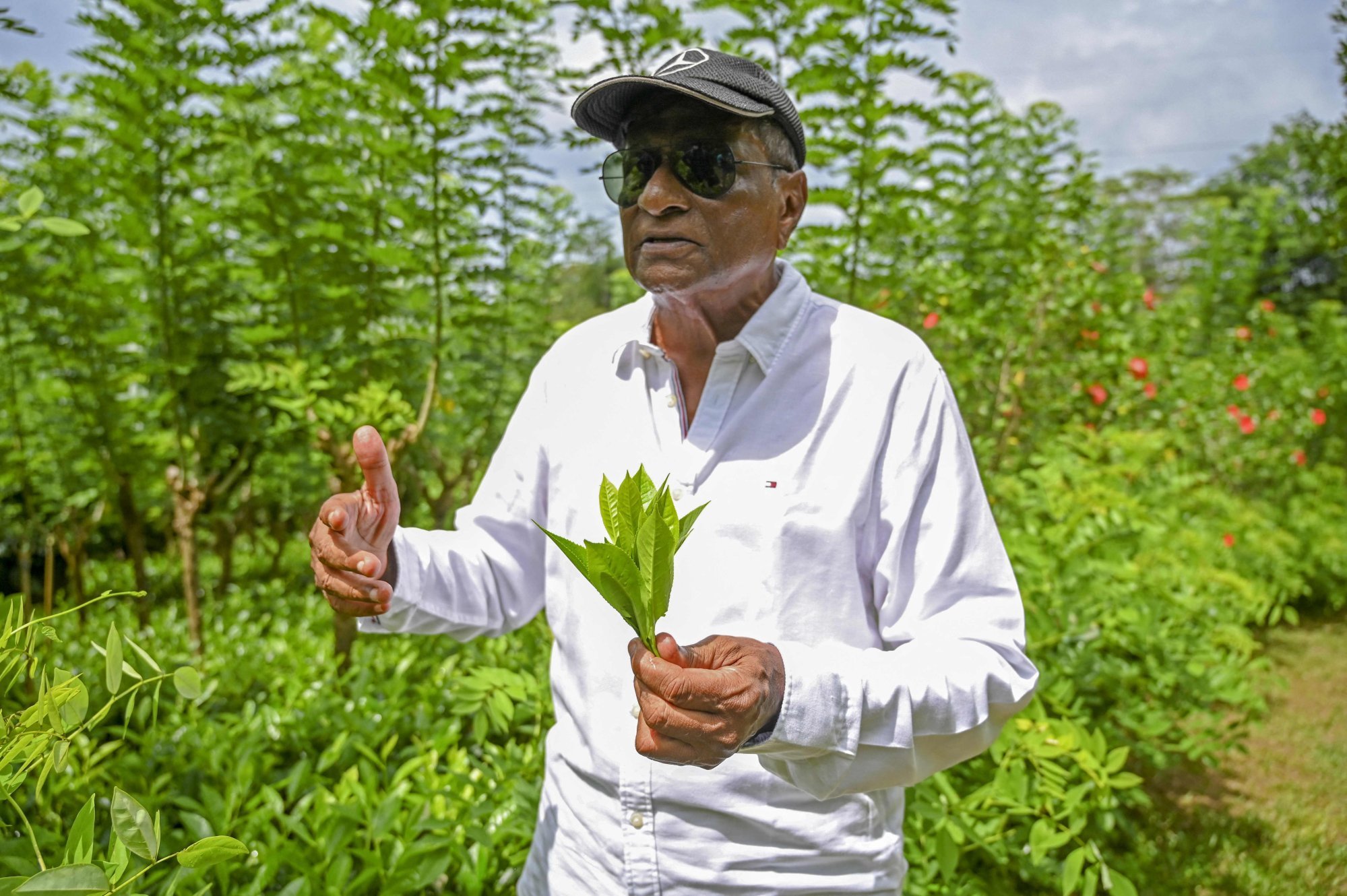
Master tea maker Herman Gunaratne, one of 46 experts picked by Rajapaksa to guide the organic revolution, fears the worst.

The ban has drawn the tea industry into complete disarray,” Gunaratne said at his plantation in Ahangama, in rolling hills 160 kilometres (100 miles) south of Colombo. The consequences for the country are unimaginable.”

Sri Lanka’s ‘organic revolution’ threatens country’s prized tea industry

The 76-year-old, who grows one of the world’s most expensive teas, fears that Sri Lanka’s average annual crop of 300,000 tonnes will be slashed by half unless the government changes course.

Sri Lanka is in the grip of a pandemic-induced economic crisis, with gross domestic product contracting more than three per cent last year, and the government’s hopes of a return to growth have been hit by a new coronavirus wave.

Fertiliser and pesticides are among a host of key imports – including vehicles and spare parts – the government has halted as it battles foreign currency shortages.

But tea is Sri Lanka’s biggest single export, bringing in more than US$1.25 billion a year – accounting for about 10 per cent of the country’s export income. Rajapaksa came to power in 2019 promising subsidised foreign fertiliser but did a U-turn, arguing that agrochemicals were poisoning people.EVERY SATURDAYSCMP Global Impact NewsletterBy submitting, you consent to receiving marketing emails from SCMP. If you don’t want these, tick hereBy registering, you agree to our T&C and Privacy Policy

Gunaratne says the country’s Ceylon tea has some of the lowest chemical content of any tea and poses no threat. The tea crop hit a record 160 million kilos in the first half of 2021 thanks to good weather and old fertiliser stocks, but the harvest started falling in July.

Master tea maker Herman Gunaratne at the Virgin White tea plantation in Ahangama, Sri Lanka. He fears the worst for the Sri Lankan tea industry. Photo: AFP

Master tea maker Herman Gunaratne at the Virgin White tea plantation in Ahangama, Sri Lanka. He fears the worst for the Sri Lankan tea industry. Photo: AFP

Sanath Gurunada, who manages organic and classic tea plantations in Ratnapura, southeast of Colombo, said that if the ban continues the crop will start to crash by October and we will see exports seriously affected by November or December”.

He said his plantation maintained an organic section for tourism, but it was not viable. Organic tea costs 10 times more to produce and the market is limited, Gurunada added.

W.A. Wijewardena, a former central bank deputy governor and economic analyst, called the organic project a dream with unimaginable social, political and economic costs”.

A labourer works at a tea plantation in Ratnapura. Photo: AFP

A labourer works at a tea plantation in Ratnapura. Photo: AFP

He said Sri Lanka’s food security had been compromised and that without foreign currency it is worsening day by day”.

Experts say the problem for rice is also acute, while vegetable growers are staging near daily protests over reduced harvests and pest-affected crops. If we go completely organic, we will lose 50 per cent of the crop, [but] we are not going to get 50 per cent higher prices,” Gunaratne said.

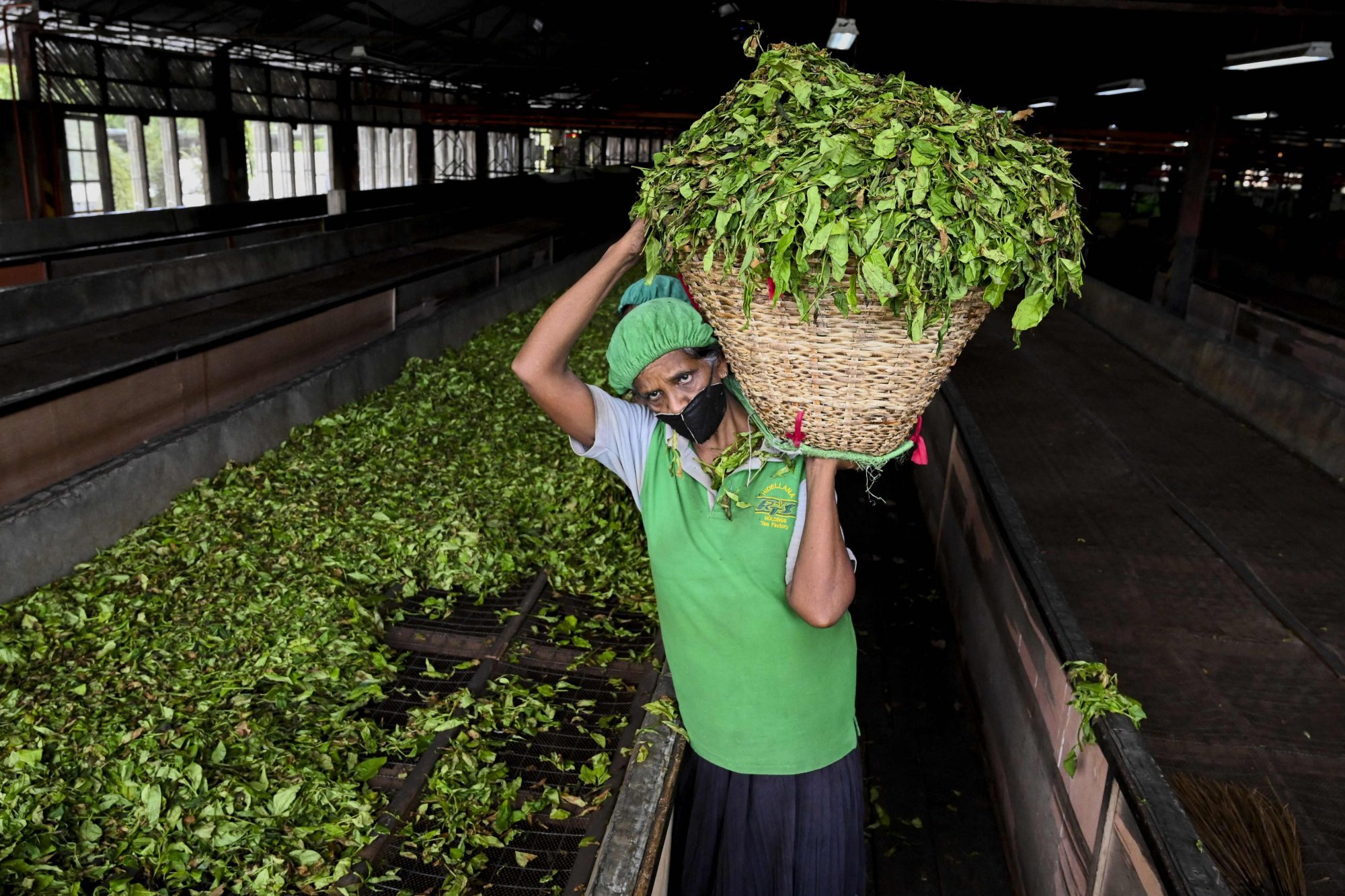
Tea plantation owners say that on top of the loss of earnings, a crop failure would cause huge unemployment, as tea leaves are still picked by hand. With the collapse of tea, the jobs of three million people will be in jeopardy,” the Tea Factory Owners Association said.

A tea plantation worker in Ratnapura. Photo: AFP

A tea plantation worker in Ratnapura. Photo: AFP

Plantations minister Ramesh Pathirana said the government hoped to provide organic compost in place of chemical fertilisers. Our government is committed to providing something good for the tea industry, fertiliser-wise,” he said.

Farmers say Sri Lanka’s exports of cinnamon and pepper will also be affected by the organic drive. Sri Lanka supplies 85 per cent of the global market for Ceylon Cinnamon, one of the two leading types of the spice, according to United Nations figures.

Still, Rajapaksa remains wedded to his course, telling a recent UN summit that he was confident his organic initiative will ensure greater food security and nutrition” for Sri Lankans.

Auckland attack and Sri Lanka’s radical Islam

September 3rd, 2021

Courtesy AsiaNews.it

Police in New Zealand killed a Sri Lanka man after he stabbed six people inspired by jihadi ideology. In the South Pacific nation, Muslims are a fraction of the local Sri Lankan community, compared to over 9 per cent of the population in their country of origin. Extremism is growing as evinced by the 2019 Easter Sunday tragedy, also fuelled by tensions with Sri Lanka’s Buddhist majority.

Wellington (AsiaNews/Agencies) – Police in New Zealand killed a Sri Lankan-born extremist after he stabbed at least six people in an Auckland supermarket.

New Zealand Prime Minister Jacinda Arden said the attacker had been in New Zealand for 10 years and acted on his own, inspired by the ideology of the Islamic State group.

The man, whose identity have not yet been disclosed, had been under surveillance for at least five years.

According to the 2018 New Zealand census, 16,830 ethnic Sri Lankans (Sinhalese, Tamil Burgher) live in the South Pacific nation, most of them Buddhist.

Informally known as Sriwis”, most New Zealand Sri Lankans were born outside the country.  About 4 per cent of them are Muslim, compared to 9 per cent in their country of origin.

In Sri Lanka, Muslims are heterogenous, sometimes at odds with each as evinced by past clashes between extremist groups and Sufis.

Although blamed on a lone wolf”, today’s Auckland attack puts the spotlight on jihadi groups within New Zealand’s Muslim community.

After the 2019 Easter Sunday attacks in Sri Lanka against churches and hotels, killing over 300 people and injuring 500, the Sri Lankan government adopted anti-terrorism measures, among other things, banning Thowheeth Jamaath, a local jihadi group that had pledged allegiance to the Islamic State.

However, the special commission of investigation into the 2019 attacks also recommended the dissolution of Buddhist extremist groups, which, according to experts, had contributed to the radicalisation of some Muslims.

Certain observers argued instead that terrorists attacked three churches and three hotels because their ideology of global jihad sees Western institutions as the greatest enemy.

After the end of the civil war in 2009, the Bodu Bala Sena (Buddhist Power Force, BBS) carried out a series of anti-Muslim attacks for which it was never held responsible.

Despite calls by Card Malcolm Ranjith to have the organisation outlawed, the government of Maithripala Sirisena, in power at the time of the 2019 attacks, did not include the BBS among the banned groups.

In April of this year, Sri Lankan President Gotabaya Rajapaksa – who was elected in November 2019 thanks to the support of Buddhist organisations and promising justice – outlawed 11 jihadi groups and banned women from wearing the burqa, a sign of religious extremism” that has a direct impact on national security”.

In addition, the Sri Lankan government is considering closing at least 1,000 unregistered Islamic schools (madrasas).

It is unclear whether these measures will stimulate radicalisation, but such steps risk increasing resentment within the Muslim community, which, if exploited by jihadist groups, could exacerbate sectarian tensions.

One fact is clear, most poor Muslim families send their children to Islamic schools because they cannot afford to enroll them in public schools, which fuels a vicious circle of marginalisation.

In the capital Colombo alone, some around 5,000 children fail to be admitted in government schools each year.

Jailer who supplied a mobile phone to Rishad transferred

September 3rd, 2021

Courtesy Adaderana

A jailer has been transferred to the Vavuniya Prisons after it was revealed that he had provided a mobile phone to MP Rishad Bathiudeen, who is incarcerated at the Magazine Prison.

The transfer came into effect following a disciplinary inquiry, the Prisons Spokesman, Commissioner of Prisons (Administration) Chandana Ekanayake said.

The mobile phone was found in possession of the parliamentarian yesterday (Sep. 02).

When the chief jailor and another jailor of the prison were walking by the former minister’s cell, they had observed him speaking on the phone and he had then thrown it out of a window in the cell. 

The mobile phone was subsequently taken into custody and handed over to intelligence units for further investigations. 

MP Bathiudeen is expected be presented before a prison tribunal with regard to the offence.

COVID: 202 new deaths confirmed as daily cases climb over 3,600

September 3rd, 2021

Courtesy Adaderana

The Epidemiology Unit of the Health Ministry reports that 864 more people have tested positive for COVID-19 in Sri Lanka, moving the daily total of new cases to 3,644.

This brings the confirmed tally of coronavirus infections reported in the country to 451,401.

A total of 380,166 recoveries have been confirmed in Sri Lanka since the outbreak of the pandemic last year.

As per official data, more than 61,000 active cases are currently under medical care at hospitals, treatment centres and homes.

Meanwhile, Sri Lanka registered 202 new COVID-related fatalities confirmed by the Director-General of Health Services on Thursday (Sep. 02).

The new development has pushed the official death toll from the virus outbreak in Sri Lanka to 9,806.

According to the data released by the Department of Government Information, the latest victims include 113 males and 89 females.

As many as 155 of them were senior citizens aged 60 years and above. Five others were below the age of 30 years and the remaining 42 were aged between 30-59 years.

Sri Lanka further extends island-wide quarantine curfew

September 3rd, 2021

Courtesy Adaderana

The Sri Lankan government has decided to further extend the quarantine curfew orders, currently enforced across the island, by another week.

Accordingly, the restrictions will be in effect until 4.00 a.m. on September 13 (Monday).

The decision to further extend the quarantine curfew was taken during the virtual meeting of the Special Committee on COVID-19 Control convened under the patronage of President Gotabaya Rajapaksa this morning (September 03).

Recommendations determine that progress will be made through the ongoing national inoculation drive in the interim to curb the recent spike in COVID-19 figures, Minister of Health Keheliya Rambukwella said in a tweet announcing the decision.

The minister urged the members of the public to adhere to health regulations and to use the locked-down period to get themselves vaccinated against the novel coronavirus.

A ten-day island-wide quarantine curfew was first imposed on August 20 in a bid to mitigate the spread of the virus and to ramp up the vaccination process. However, the Special Committee on COVID-19 Control last week decided to carry on the restrictions until next Monday (September 06).

Long Covid: What is it and what are the symptoms?

September 2nd, 2021

By Rachel Schraer Health reporter Courtesy BBC

Most people who catch Covid-19 won’t become severely ill and get better relatively quickly.

But significant numbers have had long-term problems after recovering from the original infection – even if they weren’t very ill in the first place.

However, new research suggests fewer children are experiencing “long Covid” than previously feared.

What are long Covid symptoms?

Guidance for UK health workers describes long Covid as symptoms continuing for more than 12 weeks after an infection – severe or mild – which can’t be explained by another cause.

According to the NHS, symptoms include:

  • extreme tiredness
  • shortness of breath, heart palpitations, chest pain or tightness
  • problems with memory and concentration (“brain fog”)
  • changes to taste and smell
  • joint pain

Surveys have identified tens and even hundreds of other complaints. A large study by University College London (UCL), identified 200 symptoms affecting 10 organ systems in people with long Covid, at higher levels than in those who had fully recovered.

These include hallucinations, insomnia, hearing and vision changes, short-term memory loss and speech and language issues. Others have reported gastro-intestinal and bladder problems, changes to periods and skin conditions.

The severity of symptoms varies, but many have been left unable to perform tasks like showering, grocery shopping and remembering words.

What causes long Covid?

We don’t yet know for sure.

One possibility is the infection makes some people’s immune systems go into overdrive, attacking not just the virus but their own tissues. That can happen in people who have very strong immune responses.

The virus itself getting into and damaging our cells might explain some symptoms like brain fog and a loss of smell and taste, while damage to blood vessels in particular could lead to heart, lung and brain problems.

media captionIt’s been more than a year, will I ever recover? – BBC reporter Lucy Adams explored long Covid in a Panorama film

Another theory is that fragments of the virus could remain in the body, possibly lying dormant and then becoming reactivated.

This happens with some other viruses, like herpes and the Epstein Barr virus which causes glandular fever.

However, there isn’t much evidence for this happening with Covid at the moment.

It’s likely there are several different things going on in different people, to cause such a wide range of problems.

Who gets long Covid and how common is it?

This is really difficult to pin down at the moment, because doctors only recently started recording long Covid as an official diagnosis.

However, there is a substantial body of research suggesting the condition becomes increasingly likely with age, and is twice as common among women.

Some, but not all, long Covid symptoms are more common in people who were very ill or ended up in hospital.

Analysis of several studies and health record databases by King’s College London suggested 1-2% of people in their 20s who had the virus would develop long Covid, compared with 5% of people in their 60s.

“But 1-2% of 100,000 cases a day is a lot of people,” points out Dr Claire Steves, one of the study’s authors.

Dr David Strain at the University of Exeter Medical School, who works with patients with long Covid, said most people being referred to his clinic were in their 20s, 30s and 40s.

That might be because these symptoms, though slightly less common in younger people, have a bigger impact on them.

It may also be because older people were vaccinated first, so are are more likely to be fully protected.

Senior author on the UCL paper Dr Athena Akrami said: “We’re going to deal with a big wave of seemingly mild infections where maybe one in seven is going to develop long Covid, and that will be among young people”.

What about children?

Children are less likely than adults to catch Covid and so by definition less likely to develop long Covid – but some still do.

However, leading experts say they are reassured about scale of long Covid in young people after the biggest study in the world showed persistent symptoms were less common than feared.

Some early estimates had suggested as many as half of all children who caught coronavirus would develop long Covid.

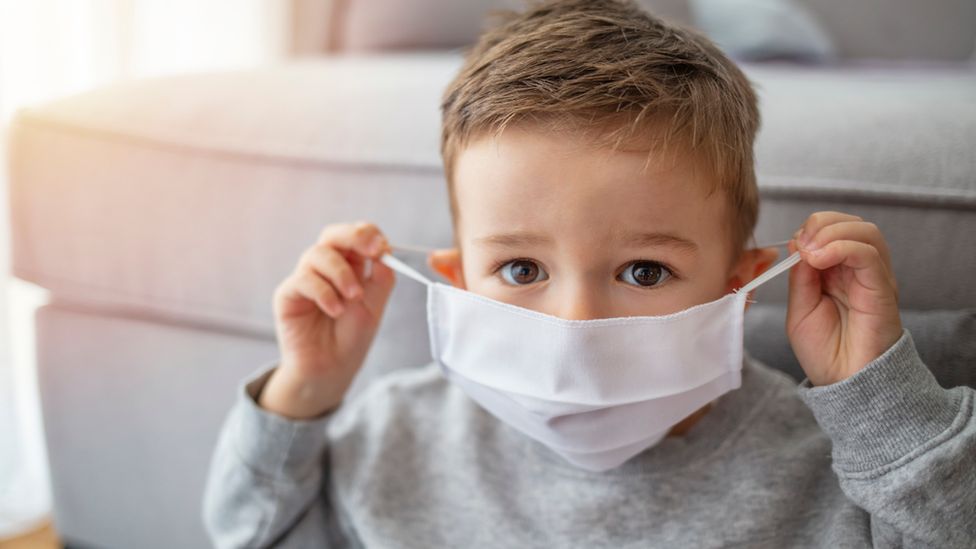
young boy wearing a face mask

But a team of researchers, led by the Great Ormond Street Institute of Child Health, investigated more than 200,000 positive cases among 11 to 17-year-olds between September and March.

They think that between 4,000 and 32,000 of those were still experiencing symptoms 15 weeks later.

We don’t have know how debilitating the symptoms were, but there was little evidence that children were left bedridden or unable to go to school.

The study team will keep keep tracking the children’s symptoms in the coming months.

But the researchers stressed the risk to young people is “not trivial”, and said it’s vital that children who are still experiencing headaches, tiredness and breathing difficulties get the medical support they needed.

How will I know I have long Covid?

There is currently no test – instead it is currently a “diagnosis of exclusion”, according to Dr Strain, with doctors first ruling out other possible causes.

They test for other issues like diabetes, thyroid function and iron deficiency, before offering a diagnosis.

blood test for long Covid could become available in the future. And in research settings more sophisticated tools are already being used to identify organ damage – but you won’t be able to get these at a standard GP appointment.

Can the vaccine help?

Roughly half of people with long Covid reported an improvement in their symptoms after being jabbed – possibly by resetting their immune response or helping the body attack any remaining fragments of the virus, say experts.

Vaccination can also help prevent people contracting the virus and developing long Covid in the first place.

Woman being vaccinated in Penrith, England, in March

What treatments are available?

In England, 89 specialist long Covid assessment centres have been set up.

Similar clinics are expected to open in Northern Ireland in the coming months, while in Scotland and Wales patients will be referred to different services by their GPs, depending on their symptoms.

At the moment there are no proven drug treatments and the main focus is on managing symptoms and gradually increasing activity.

A formal clinical trial into drug treatments is expected to launch soon.

Covid-19 continues to kill journalists globally, visible improvement recorded in India

September 2nd, 2021

T Navajyoti

Geneva/Guwahati, 2 September 2021: The list of journalists dead from Covid-19 is still growing, where more than 1,754 media workers have succumbed to the novel corona virus in 80 countries during the last 18 months, said the global media safety and rights body Press Emblem Campaign (PEC) on Thursday in the picturesque Swiss city.

Given the new variants, PEC warns that the number of journalists who have died from Covid-19 is likely to reach the 2,000 marks by the end of the year. The average age of victims is now younger. During the months of July and August, at least 117 more journalists died from the corona virus infection, or nearly two per day.

Journalists on the ground remain one of the most exposed professions.

The number of registered victims has slowed down since June, but the vaccination rate remains insufficient in many countries,” said Blaise Lempen, general secretary of PEC (www.pressemblem.ch) adding that some politicians, also a section of media, continue spreading false information at a high cost, as in the USA, where three news presenters opposed to vaccination recently died of Covid-19.

More deaths have been reported from the Philippines to Algeria, from Indonesia to Russia, from Brazil to the United States, from Cuba to Bangladesh.  Brazil is the country with the highest number of victims with at least 280 journalists dead from the virus, ahead of India with at least 270 victims. After an explosion of cases in these two countries in the spring, the situation has fortunately stabilized this summer.

Three Latin American nations Peru (164 dead), Mexico (120) and Colombia (77) follow them passing over Bangladesh (65), Italy (59), United States of America (55), Venezuela (53), Ecuador (51), Argentina (43), Indonesia (41), Russia (33), Iran (32), Great Britain (31), Dominican Republic (28), Pakistan, Turkey (27 each), Bolivia (20), Nepal (19), South Africa (18), Egypt (17), Panama, Spain (16 each), Ukraine (15) etc.

They are followed by Nigeria (11), Afghanistan, Guatemala, Zimbabwe

(10 each), France, Nicaragua (9 each), Algeria Paraguay (8 each), Cuba, Uruguay (6 each), Kenya, Philippines (5 each), Morocco (4), Cameroon, Costa Rica, Iraq, Sweden  (3 each), Canada, Austria, Azerbaijan, Belgium,  Ghana, Kazakhstan (2 each), Myanmar, Germany, Israel, Japan, Poland, Saudi Arabia, Switzerland (1 each), etc.

By region, Latin America leads with 920 media workers dead from Covid-19, more than half of the total, ahead of Asia 485, Europe 206, Africa 86 and North America 57. The total number of victims is certainly higher, because the cause of death of journalists is sometimes not specified or their death not announced. In a few countries, there are no reliable statistics, added the PEC statement.

India has significantly reduced the number of corona victims among journalists in July and August as the populous country lost only four scribes during the period,” said Nava Thakuria, PEC’s India representative adding that it surfaced the recent news relating to media corona-deaths of Syndor Singh Syiem (67 years old scribe based in Shillong), Lairenjam Bijen Singh (45, Imphal), Rajiv Ghosh (59,

Kolkata) and Manik Lal Das (58, Kumarghat).

BBC Wildlife Photographer of the Year: Two Sri Lankans named in the list.

September 2nd, 2021

 by Moiz Mustafa Courtesy NewsIn.Asia

Sept 2 (newsin.asia) – From triumphant conservation stories to devastating fishing disasters and everything in between, the new Wildlife Photographer of the Year exhibition demonstrates the sheer resilience of the natural world.

The latest competition received a record-breaking number of entries from professional and amateur photographers from 95 countries around the world.

Nature lovers Buddhilini de Soyza and 10-year-old Gagana Mendis Wickramasinghe have been included in the list. 

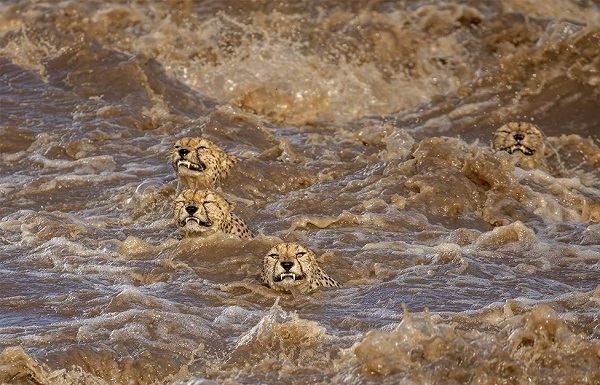
The great swim by Buddhilini de Soyza shows male cheetahs paddling across the flood-swollen Talek River in Kenya’s Maasai Mara.

Buddhilini de Soyza

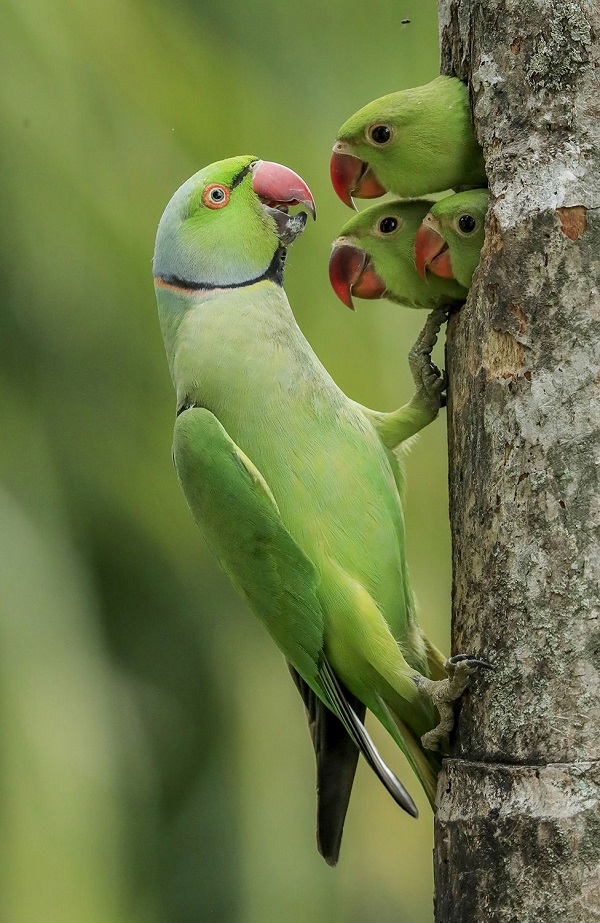
Lockdown chicks by Gagana Mendis shows three rose-ringed parakeet chicks emerged from their nest to greet their returning father.

The winning images, along with the two grand title winners, will be announced during a virtual awards ceremony, broadcast live from the Museum’s famous Hintze Hall on the evening of Tuesday 12 October.

Why hide the truth about CKDu? An open letter to the new Minister of Health

September 2nd, 2021

By Dr PARAKRAMA WAIDYANATHA Courtesy The Island

The chronic kidney disease (CKDu) has been a major non-communicable disease prevalent essentially among the Rajarata’s agricultural communities in the last three decades that had, on average, killed several thousand people annually. The disease aetiology is now known, with a high degree of certainty to be hard water in dug wells on high ground contaminated with fluoride. Because it largely affected the farming families, agro-chemicals were justifiably suspected as the cause although without evidence; and many, especially the ignorant politicians, including several key ministers without knowing the facts of the matter, have blamed agrochemicals.

In fact, the term wasa visa krushikarmaya (toxic- agriculture) was coined on conventional agriculture largely because of the misinformation. Ridiculous boards displaying that fruits and vegetables sold in wayside shops are ‘toxin-free’ have been a common sight. The shopkeeper hardly knows the origin of the produce!

Then, there was the much-hyped ‘toxin-free agriculture” or organic farming drive of the Yahapalana government, led by the then President and Ven. Ratana, which again was on the premise that agrochemicals are the cause of the disease. It was, however, a total failure. And it would appear that the current President too, rushed to organic farming with the misinformed judgment that agrochemicals are the cause of CKDu, and probably also of other non-communicable ones, although there has been no evidence for it! He should have consulted the scientists and academics in the relevant fields before rushing to the decision.

However, the new Finance Minister has, in a recent gazette notification, dated 31st July 2021, claimed to be published in order to regulate the importation of chelated minerals and micronutrients” which were previously banned, has also ‘surreptitiously’ reverted the Presidential decision; allowing imports of virtually all straight chemical fertilizers and mixtures thereof, but on license! So, hopefully, farmers should have access to chemical fertilisers for the coming Maha season!

Be all that as they may, the writer’s concern is that despite the overwhelming research, as also supportive numerical evidence the Health Ministry/Department has been generating on the prevalence of CKD, through a broad surveillance with nationwide sentinel sites that has also supported the observation that drinking water quality is the major cause of the disease, it has hitherto made no formal pronouncement on the disease causation. Regrettably, neither the former Health Minister nor the Agriculture Minister seem to be aware of this fact, from the utterances they have made recently in Parliament and outside. In fact, both of them were seen yelling in Parliament, some days ago, that the cause for the kidney disease is agrochemicals! Further, at a meeting with the farmers some weeks ago, the Agriculture Minister exclaimed that the government has rushed into organic farming to save the kidneys of farmers!

Mr. Minister, please be aware of the following facts and take necessary action to clear the myth in the minds of the President, ministers and other authorities, that agrochemicals are the cause of CKDu, the number one non-communicable in the country:

1.

The scientific and medical community have developed an understanding of the origins of this chronic disease. Steps to control it have shown increasing success as the numbers stricken by the disease have decreased since 2016, following supply of clean drinking water to the residents of the endemic areas. And it is now critically important that people of all affected areas are provided with good quality drinking water. Apparently, when the Yapahalana authorities then flogging the dead agrochemical horse” came to learn that polluted water was the cause of the disease, rumour was doing the rounds, that the authorities did not want people told about it for fear of an outcry for quality water!

2.

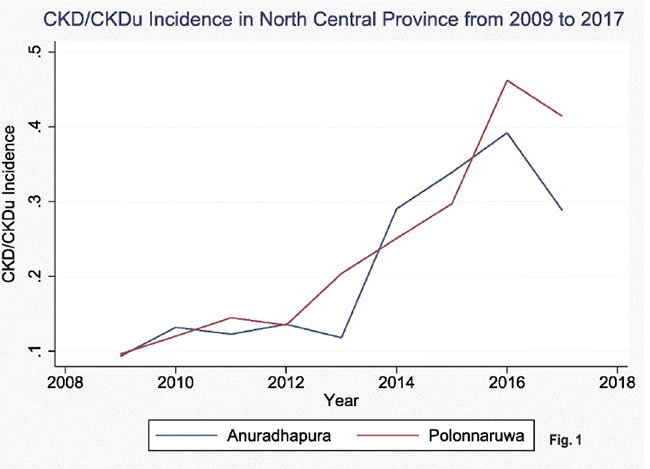
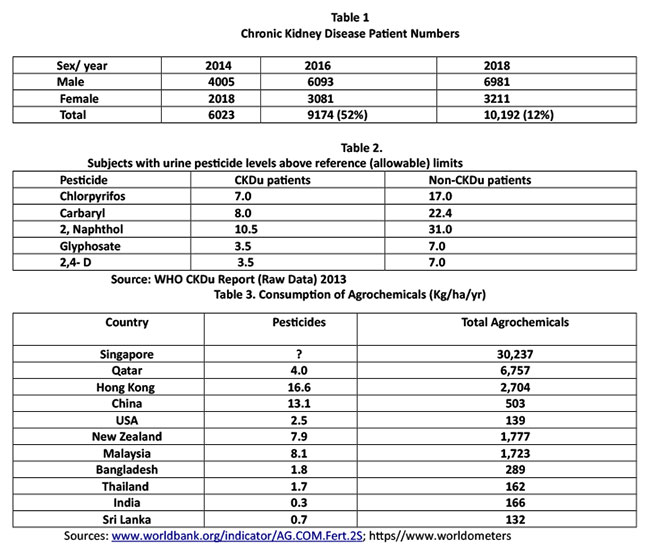
Research by at least five groups and many individuals, local and foreign, have shown that the disease is caused by the consumption of water from wells containing hard water and fluoride, found in geological formations known as Regolith aquifers that hold the water in the relevant dry zone areas. People who were settled rapidly during the Accelerated Mahaweli Programme on higher ground in the late 1970s, had to dig shallow wells or tube wells for their water supply. Estimates reveal that there are some 176,000 such wells in the Rajarata! CKDu is found essentially in villages drinking water from such wells. Residents who get their water from agricultural canals, rivers or reservoirs DO NOT CONTAMINATE CKD, whereas one would have expected them to do so if agrochemicals were the cause of the disease. Please see the attached graph (Fig. 1) from a publication by none other than Dr Asanga Ranasinghe, Coordinator of the CKDu Programme, Ministry of Health and others (BMC Nephropathy, Aug 2019) that reveal a sharp drop in the number of patients in the two most CKD affected districts of Anuradhapura and Polonnaruwa. This was a consequence of provision of safe drinking water, and in fact the people themselves in the affected areas realised that polluted water was the cause of the disease, and not drinking it. Further, the Table 1 below compiled from the data of 2018 Annual Health Bulletin (page 70), also confirm a sharp decline in the increase in patient numbers from 52% between 2014 and 2016 to just 12% between 2016 and 2018, which should essentially be a consequence of drinking good quality water. There is no other evidence to explain this prominent decline.

Sadly, however, the 2019 Annual Health Bulletin does not carry any information on the CKDu status, despite there being a nationwide Sentinel Survey of patient numbers; and the 2020 Annual Health Bulletin too has not been published to date! Why are the health authorities so negligent about the number one non-communicable disease in the country! Table 1

3. There is CKDu in areas like Mullaitivu where no agro-chemicals whatsoever have been used due to the Eelam wars. So it is now amply evident that residents who drink hard water rich in fluoride contract CKDu, but not those who drink water from streams, reservoirs and wells in the planes.

4.

No CKDu is found in the Hill Country (vegetable and tea cultivation) and in most other areas such as Kalpitiya (vegetable cultivation) where agrochemicals are used much more heavily than in the Rajarata.

5.

The WHO Report, 2013, concluded, amongst other things, that some CKDu patients secreted pesticide residues above the reference (permissible) levels, but did not refer to the pesticide residue status in the urine of the control subjects (from Hambantota) in the trial! Our subsequent analysis of the pesticide residue raw data, revealed that the numbers of subjects with urine pesticide levels were two to three times higher from the non-CKD (Control) arethan among the CKD patients (See Table 2). Why did the WHO Report omit this critically important control data? Referring to pesticides, the Report merely stated that some CKDu patients had residues of some pesticides above reference limits! Was it to give the impression that pesticides were probably the cause? However, an International Expert Consultation held in 2018 on CKDu in Colombo, concluded that there is no evidence to implicate agrochemicals in the causation of the disease.

6.

Several ministers and most importantly even the President of the GMOA, Dr Padeniya have been repeatedly claiming that Sri Lanka is the country consuming the highest quantities of agrochemicals in the world. However, the published data of the World Bank (see Table 3) reveals that in this part of the world, we are the country consuming the lowest amount of fertiliser and the second lowest amount of pesticide per unit area!

In conclusion, the disease is evidently caused by consuming naturally contaminated well water. It has nothing to do with fertilisers or pesticides. The disease is prevented by supplying clean water to the endemic villages. This has been done largely by the distribution of rain-water collection tanks, and by the installation of reverse-osmosis water filtration plants by benevolent donors. Moreover, people in the affected areas are now aware of the cause of the disease and are taking preventive measures themselves, as evident from the data.

Please bring this information to the attention of the President and other authorities, so that vital national decisions are based on facts, and not myths!

UK decides to maintain ban on LTTE

September 2nd, 2021

Courtesy Adaderana

The Government of Sri Lanka says that it has been made aware that the UK Home Secretary has decided to maintain the proscription of the Liberation Tigers of Tamil Eelam (LTTE) as a terrorist organization under the UK Terrorism Act No. 7 of 2000.

The Home Secretary’s decision, which has been taken following the judgement of the Proscribed Organizations Appeals Commission (POAC), rejects the application of a LTTE front organization to de-proscribe the LTTE in the UK, the Sri Lankan foreign ministry said.

The LTTE, therefore, remains a proscribed organization in the UK, as in over 30 other countries worldwide, including in the EU region,” the statement said.

The Foreign Ministry further said: 

LTTE was initially proscribed in these countries due to the group’s brutality and atrocities targeting civilians and democratically elected leaders, involvement in organized crime and other criminal activities that impacted global and regional security. 

The continued retention of the LTTE’s proscription worldwide, is a recognition of the continued threat posed by the remnants of the group working through its international network, which continue to finance terrorist activities, radicalize youth towards violent extremism and cause ethnic disharmony and disrupt cohesive living in every country in which they are active.

The Government of Sri Lanka is appreciative of the partnership with the UK, and all governments, in the global fight against terrorism, and remain committed to working with the UK in all efforts to mitigate terrorism and violent extremism, that threaten the lives of citizens, and endanger global and regional peace and security.”

Maximum retail price of rice and sugar gazetted

September 2nd, 2021

Gazette notifications have been issued today declaring maximum retail prices for sugar and rice with effect from today (September 02). 

The Gazette notifications have been issued by order of the Chairman of the Consumer Affairs Authority (CAA) Maj. General (Retd.) Shantha Dissanayake, under Section 20(5) of the Consumer Affairs Authority Act, No. 09 of 2003. 

The maximum retail price (MRP) of White Sugar is declared as Rs. 122 per kg (Unpacketed) and Rs. 125 per kg (Packeted) while the MRP of Brown or Red Sugar is listed as Rs. 125 per kg (Unpacketed) and Rs. 128 per kg (Packeted).

Meanwhile the maximum retail prices of Keeri Samba, White and Red Samba, White and Red Nadu and White and Red Raw Rice have also been gazette.

Maximum retail prices of rice and sugar:

RICE
Keeri Samba – Rs. 125/- per kg
White/Red Samba – Steamed/Boiled (excluding Suduru Samba) – Rs. 103/- per kg
White/Red Nadu – Steamed/Boiled (excluding Mottaikarupan and Attakari) – Rs. 98/- per kg
White/Red Raw Rice – Rs. 95/- per kg

SUGAR
White Sugar (Unpacketed) – Rs. 122 per kg
White Sugar (Packeted) – Rs. 125 per kg
Brown or Red Sugar (Unpacketed) – Rs. 125 per kg
Brown or Red Sugar (Packeted) – Rs. 128 per kg

Malwatta and Asgiriya chapters call on the teachers and principals to call off strike

September 2nd, 2021

Courtesy Hiru News

The Malwathe and Asgiriya Chapters request the principals and teachers to suspend the strike, considering the children and to be somewhat flexible to the solutions provided by the government.

However, the teachers  and principals unions said that in order to suspend the strike, a circular should be issued recommending cabinet approval to eliminate pay anomalies.

It has been 53 days since the commencement of the trade union action withdrawing from online teaching due to a salary issue.

The ministerial subcommittee to find a solution to this problem recently submitted its recommendations to the cabinet for approval but the trade unions did not agree to those solutions.

It is against this backdrop that the Asgiriya and Malwathe Chapters have requested teachers to resume online teaching activities with children in mind.

Govt says mechanism devised to provide organic fertilizer for Maha Season without any shortage

September 2nd, 2021

Courtesy Adaderana

The government says that a mechanism has been formulated to provide the organic fertilizer required for the Maha Season to the farmers without any shortage.

Accordingly, the Government Officials of the respective line institutions say the entire process including farmer awareness, technical assistance and financial assistance is being continued uninterrupted.

This was revealed at the media briefing held at the Presidential Media Centre today (02) via video conference.

The weekly media briefing of the Presidential Media Centre was held via Webex App due to the COVID-19 pandemic and today’s topic was ‘The Use of Organic Fertilizer and Regulation.’

The key government officials in the field and the representatives of all electronic and print media institutions joined the briefing.

Though the government has taken steps to manufacture local organic fertilizer, achieving the goal to manufacture the fertilizer quantity required for the farmers was hampered due to the current situation. 

Accordingly, it was revealed that arrangements have been made to import organic fertilizer of high international standard to address any shortage and also use bio-pesticides that are covered by the Pesticides Act.

The full approval of the Fertilizer Advisory Committee has been granted for this. The officials also ensured that these organic fertilizers will be made available to the farmers after subjecting to laboratory and biodiversity research and testing.

Financial incentives of Rs. 12,500 per hectare up to a maximum of two hectares will be provided to farmers to encourage organic fertilizer production. Applications have already been issued for this and the officials said the completed application forms can be submitted to the Agricultural Research and Production Assistants or the Agrarian Service Centers.

The money will be credited to the personal account of the relevant farmers and plans have been made to provide financial assistance to the farmers who do not have bank accounts, under a special scheme. It was also stated that farmers who do not have the facilities to produce organic fertilizer have the opportunity to obtain organic fertilizer from other parties and the money will be reimbursed to them.

It was also revealed that a QR code will be issued for all imported and locally produced organic fertilizers in the future and through this facility anyone can check the quality of the organic fertilizer.

The ‘1920’ hotline provides solutions to farmers’ problems and a team of technical officers covering all districts have been prepared for field inspections.

Responding to the questions raised by the journalists on the challenges faced by the tea industry with the use of organic fertilizers, the officials said that the Tea Research Institute already examines the imported fertilizer samples and will recommend the most suitable organic fertilizer for the tea industry in the future.

Responding to the questions, the public officials pointed out that a total cost of Rs. 26.62 billion will be spent for the entire process including the required fertilizers for the Maha Season, local production, imports, subsidies, technical assistance and awareness.

They also said that with this initiative, a considerable amount out of the Rs. 22.71 billion spent on the importation of chemical fertilizers will remain with the farmers in our country.

With the use of organic fertilizer, the country has developed a young entrepreneurship. The state banks are already in the process of granting them loans up to one million rupees at a concessionary interest rate, while low income earners will be provided with necessary machinery at a concessionary price, officials pointed out.

The Government officials assured that the farmers would never be isolated at any cost and further stressed that there would be no food shortage or famine risk in the country as a result of the organic fertilizer policy, as claimed by some media and various groups.

Dr. Ajantha de Silva, Director General of the Department of Agriculture, Commissioner General of Agrarian Services Department H.M.L. Abeyratne, Additional Secretary to the State Ministry of Agriculture Mahesh Lasantha Gammanpila, Dr. J.B. Hemantha Wijewardena, Consultant – Organic Fertilizer at the Ministry of Agriculture and Dr. M.S. Nijamudeen Additional Director, Sustainable Agriculture Research and Development Center joined the media conference.

-PMD

Daily count of new Covid-19 cases climbs to 3,627

September 2nd, 2021

Courtesy Adaderana

The Ministry of Health reports that another 854 persons have tested positive for the novel coronavirus, increasing today’s tally of new cases confirmed to 3,627.

This includes 846 new cases associated with the ‘New Year Covid-19 cluster’ and 08 returnees from abroad. 

This brings the total number of Covid-19 cases identified in the country thus far to 447,757.

Over 60,000 infected patients are currently undergoing treatment at hospitals, treatment centers and home-based care while total recoveries have risen to 378,168. 

Sri Lanka confirms another 204 coronavirus deaths

September 2nd, 2021

Courtesy Adaderana

The Director General of Health Services has confirmed another 204 coronavirus related deaths for September 01 (yesterday), increasing the official death toll in the country to 9,604.

According to the figures reported by the Department of Government Information today (01), the victims include 109 males and 95 females while five of the deceased, including two females, are below the age of 30.

Fifty of the Covid-19 deaths are individuals between the ages of 30-59 and the remaining 149 are persons aged 60 and above. 

Racism, Nationalism and Supranationalism – III

September 1st, 2021

By Rohana R. Wasala

(continued from August 28, 2021)

Misrepresentation and distortion of history by colonialists and separatists

The independence or dominion status that Sri Lanka (then Ceylon to foreigners) was granted by the departing British colonials was not more than a hangover from the British imperialism of the previous one and a half centuries (1798-1948) until real independence was realised through the constitutional change of 1972. The promulgation of the republican constitution in that year was arguably the first most momentous event in post-independence Sri Lanka, because it definitively reversed the total loss of independence of the country of Sinhale that happened in 1815 with the deposition of Sri Wickrema Rajasinghe the king of Kandy (1798-1815). 

The small minority of aging Tamil separatist leaders do not like to accept this palpable truth. They hang on to the facile and factless two nation or two countries generalization incorporated in the Cleghorn Minute of 1799 (which had been prompted by administrative convenience with hardly any regard for the facts of history, based entirely on the then existing demography of the region. Hugh Cleghorn was the colonial secretary; he must have been familiar with the efficacy of the imperial divide and rule strategy (which made potential allies against the invader turn against each other). Chief justice Alexander Johnstone twenty-eight years later (in 1827) was guilty of an even more outrageous falsehood; he thought it reasonable, on casual observation, to assume that Tamils had inhabited the north and east provinces at the period of their greatest agricultural prosperity” (as claimed in a paper presented at an Eelam promotion London seminar in 1992).  This erroneous assumption by that servant of the British empire carelessly attributed the unparalleled achievements of the well known hydrological/hydraulic civilization of the Sinhalese that flourished in the Dry Zone from at least 5th century BCE to 13th century CE to Tamils! (It was Magha of Kalinga’s invasion at the beginning of the 13th century that put an effective end to that period not only of agricultural prosperity, but booming trade with neighbouring countries, achieved by the Sinhalese. Tens of thousands of large and small water reservoirs or wewas (Sinhala)/wapi (Pali) and irrigation channels, whose exquisite engineering sophistication still amazes the world, dot the island and serve the nation, by enabling the cultivation  of paddy in two seasons unhindered by the annual occurrence of rainless months. Latest archaeological finds in the hilly Walapane district indicate that the concept of storing water by damming streams pre-existed even the construction of artificial lakes (wewas) by kings Abhaya and Pandukabhaya in Anuradhapura in the 5th century BCE, where water reservoir building has traditionally been thought to have originated.

Concept of a Tamil homeland in Sri Lanka debunked 

Eminent historians including Professor K.M. de Silva who wrote a research paper in 1995 specifically addressing the subject have comprehensively debunked the Tamils’ homeland concept. There is absolutely no historical evidence to justify the claim that Tamils had total control over the vast area that now constitutes the north-eastern region. The nearest the Tamils got to that was when they established themselves in the Jaffna peninsula in the north and some areas adjacent to it in the south in the Vanni (vana means jungle or forest in Sinhala) district for about three centuries between the 13th and 16th centuries (i.e., following the defeat and escape of invader Magha of Kalinga that put an end to his tyrannous occupation of twenty-one years, 1215-1236 CE).

The truth: A history of foreign invasions and dogged resistance from native Sinhalese 

By the time of the beginning of the European involvement in Sri Lanka with the arrival of the Portuguese at the dawn of the 16th century, the island had survived seventeen armed Dravidian invasions from South India, the first of which happened in 230 BCE (i.e., horse traders Sena and Guttika’s usurpation of the throne in Anuradhapura; the two ‘reigned righteously for twenty-two years’ as the Buddhist bhikkhu Mahanama Thera, the Mahavansa author,  says in Chapter XXI, without any trace of anger or vengeful thoughts). There is no doubt that these invasions and later European interferences and interventions in the internal affairs of the island were primarily triggered by exclusive trade interests, rather than political or territorial ambitions of imperial powers. Dravidians had occupied and ruled parts of the north and east of the country intermittently for about 300 years of the first 2000 years of its 2500 year recorded history. King Vijayabahu I (prince Keerthi born c. 1039) ) reigned from 1055 to 1110. He expelled the Chola invaders who were occupying parts in the north of the country after a seventeen year struggle and brought the island ‘under one canopy’ as under Dutugemunu (161-137 BCE) before him. South Indian invasions again came after Vijayabahu’s death during the rule of his weaker successors, until his grandson Parakramabahu I (1153-1186) beat the invaders back and unified the country once again. This monarch who took great interest in the economic and cultural development of the country  was so powerful that he even invaded South India and Burma (modern Myanmar) to ensure the free flow of trade between the island and neighbouring states. 

Kalinga Magha invasion

Kalinga Magha’s invasion of Sinhale in the first half of the 13th century (1215-1236) took place at a particularly unstable period of royal disputes caused by rivalries and intrigues between pretenders to the throne, which had led, as can be guessed, to much internecine feuding and violence, disorder and anarchy, that attracted hostile foreign adventurers. Those  ‘wicked and cruel and grievous deeds that the inhabitants of Lanka had done’ (as admitted by the Mahavansa author, would have seemed, at least in the marauder Kalinga Magha’s eyes, to extenuate the enormity of the cruel excesses committed by him on his Sinhala victims. About invader Kalinga Magha, Chapter LXXX of the Mahavansa (continued in the form of Culavansa) says (The author monk’s language does not reflect the actual economic, political and military background to this event) : 

And it came to pass that, because of some wicked and cruel and grievous deeds that the inhabitants of Lanka had done, the gods who had been placed in different parts thereof to watch over them and to protect them cared no longer for the country, and looked not any more after their safety. Thereupon a certain wicked prince of the Kalinga race, Magha by name, invaded the country at the head of twenty thousand strong men from Kalinga and took possession of the island of Lanka. And he was a follower of false faiths, and had a mind only to do mischief…” (quoted from Mudaliyar L.C. Wijesinghe translation/1889). (Note again the detached, equanimous tone of the monk author – it’s a monk of a later age who composed this Culavansa part of the Mahavansa.) The Magha invasion dealt a near death blow to the historic hydraulic engineering based civilization of the Sinhalese in the dry zone, which arguably had reached its apogee under Parakramabahu I. After twenty-one year occupation of the Lanka kingdom, Magha was beaten and driven away by the Sinhalese; apparently he did not return to his country Kalinga unlike earlier invaders, but stayed on in the north and started ruling there.

After this fortuitous disintegration of the country of Sinhale, there appeared in its southern part, several Sinhalese kingdoms, including the Kandyan kingdom in the central interior, which remained independent until 1815. However, the idea of one country one state seems to have survived the post-Magha division of the country; the division was something that was not  psychologically accepted by the Sinhalese. The Sinhalese kingdom that emerged the most powerful at any time laid claim to lordship over the whole of the island, at least in principle. No authority I have read has articulated this conception of the land of the Sinhalese (Tri Sinhale) as a single sovereign nation, cherished by them over the millennia, better than the distinguished former professor of anthropology Gananath Obesekere of the University of Princeton:

In his 2017 book The Doomed King: A Requiem for Sri Vikrama Rajasinha”, he writes: ….. all Sri Lankan kings believed that the ‘nation’ as a whole constituted an entity known as Tri Sinhala (the three parts of the Sinhala land)………….. Tri Sinhala refers to the division of the nation into three broad semi-independent regions in a kind of loose unity: Rajarata or Pihitirata in the north, part of the ancient kingdom; Maya, the western part; and Ruhuna, the very south and east. In that conception foreign invaders were there on sufferance and it is the duty of kings to redeem that historic unity…”. 

In this book, Obesekere paints a positive vision of the king using both British and Sinhala sources until his final capture and banishment…”. He thinks that the king was depicted by the intriguing British as a brutal tyrant who committed cruel excesses against his own people that he suspected of disloyalty, and who thus caused resentment and disaffection among his subjects. This was to justify their own aggressive designs on the kingdom. In reality, Sri Vikrama was ruling as a good king amidst many challenges he had to face because of the treachery of the Kandyan aristocrats engaged in intrigues with the prowling British. The researcher calls Sri Vikrama a ‘doomed king’ because the dream of Sri Lankan kings of restoring the unity of the nation (mentioned above) which he also  must have entertained had become unrealistic and futile when the maritime provinces were conquered by the Portuguese and the Dutch, especially after the British turned them into a crown colony under the British empire in 1798. The king was doomed to be removed sooner or later, for they would not have allowed the Kandyan kingdom to be independent, posing a threat to their overlordship. Both governor Thomas Maitland (1805-1811) and the spying intermediary between the Kandyans and the British in Colombo John D’Oyly knew that the Kandyan kings claimed the whole of the island as their legitimate right (p.53). So, what was ceded to the British in 1815 was the whole of the land of Sinhale. That, I think, is the reason why Obesekere says that probably the deposition of king Sri Vikrama was the most momentous event in Sri Lankan history (i.e., the complete loss of independence for the first time in its over 2500 year recorded history).     

(Incidentally, separatists make much of Sri Vikrama Rajasinha being allegedly a Malabar/Tamil. That is a fallacy, too. He was not a Tamil at all. He belonged to the Telegu speaking Nayaka dynasty who had come  to Tamil Nadu from the north to rule there (hence called the Vadugas or northerners; they were a warrior class who had come from Andhra Pradesh and Karnataka) ; they were not Tamil themselves. The Kandyan kings maintained relations with the Vadugas. In the Kandy royal court, Sinhala, Telegu, and of course Tamil were used. But most ordinary Kandyan Sinhaese were ignorant of Telegu; neither did they understand  these fine distinctions. They revered the Nayaka kings including Sri Vikrama as Sinhala Buddhist kings, though they knew that they were not Sinhalese by blood, and though they thought they were Tamil. As Obesekere says, those Kandyan Sinhalese labelled even the Portuguese as Tamils! Sri Vikrama was consecrated as a Buddhist king to rule over the kingdom of Sinhale. He was crowned king not because he was a Tamil or a Vaduga, but because he was the legitimate heir to the Sinhale throne according to the rules of succession of the time.)

The last native sovereign to unify the whole of Lanka after the breaking away of parts of the kingdom caused by the Kalinga Magha invasion of the 13th century was Parakramabahu VI of the 15th century (1412-1467). He was able to do this by 1450, having conquered the northern Jaffna kingdom. However, following his death ten years later, Jaffna and Kandy broke away again. When the Portuguese made their initial moves, the kingdom of Sitawaka was the most powerful of the Sinhalese kingdoms. Despite the vicissitudes of fortunes of history over millennia the Sinhalese never gave up their sovereign claim to the whole of the island. From 1505 to 1815, the European imperial powers – the Portuguese, Dutch, and English – separately occupied the maritime provinces, while the Sinhale kingdom was reduced to the hilly interior of the island (the Kandyan kingdom), which still occupied more geographical territory than the invaders, with free access to the Trincomalee and Batticaloa harbours in the East.  

The Portuguese were in Sri Lanka from 1505 to 1658, in which year they departed permanently, giving way to the Dutch. Until about 1530, Portuguese involvement in the country was limited to trade. But it became more determined and more menacing following the death of king Bhuvanekabahu VII of Kotte in 1551. The Dutch were already dominating by 1640. But their power gradually declined. The Dutch occupied territories were ceded to the British in 1796. The British overcame the entrenched Kandyan resistance through intrigue in 1815, and brought Ceylon under one rule/the British empire, having thus subjugated the whole of the land of Sinhale as a single entity. It was this unified country that was granted independence from foreign  domination in 1948, at least nominally. 

Vaddukoddai Resolution of 1976

 The so-called Vaddukoddai Resolution unanimously passed and adopted at the first National  Convention of the Tamil United Liberation Front (TULF) held under the leadership of S.J.V. Chelvanayagam MP Kankesanturai in May 1976  resolved primarily that the restoration and reconstitution of the (alleged) Free, Sovereign, Secular, Socialist State of Tamil Eelam based on the right of self determination inherent to every nation, has become inevitable in order to safeguard the very existence of the Tamil Nation in this Country”. It was based on a completely questionable reading of history, which arbitrarily and erroneously claimed that the Sinhalese and Tamil nations have divided the possession of Ceylon, the Sinhalese inhabiting the interior of the country in its Southern and Western parts from the river Walawe to that of Chilaw and the Tamils possessing the Northern and Eastern districts…..and …..that the Tamil Kingdom was overthrown in war and conquered by the Portuguese in 1619, and from them by the Dutch and the British in turn, independent of the Sinhalese Kingdoms…… The British colonialists joined the Tamil and Sinhalese Kingdoms for purposes of administrative convenience on the recommendation of the Colebrooke Commission in 1833…”.  It directed the Action Committee of the Tamil United Liberation Front to formulate a plan of action and launch without undue delay the struggle for winning the sovereignty and freedom of the Tamil Nation, and called upon the Tamil Nation in general and the Tamil youth in particular to come forward to throw themselves fully into the sacred fight for freedom and to flinch not till the goal of a sovereign state of Tamil Eelam is reached”. 

The reality behind the Portuguese conquest of Jaffna in the early 17th century does not support the implicit claim in the Vaddukoddai Resolution that a significant Tamil  kingdom was then in existence there. The truth was that the Portuguese defeated the Pandyan ruler who had been placed in power there and who was maintained by a mercenary army from Tanjore. When he lost to the Portuguese, that army left, and most of the inhabitants with them. Jaffna was almost totally emptied of its small population. The Portuguese had to import several thousand coolies from south India to work on their tobacco plantations. Even the few thousands made the place congested, which prompted the Dutch governor of the time to remark how overpopulated it was in as given in ‘Memoirs of Recloff Van Geons’ (December 26, 1663, translated by Reimers): Jaffna was so full of people that they were on each other’s way, on which account the country was too small to feed…..”. 

The historically unsupportable wild demands of the Eelamists involved more than one third of the geographical territory of the country including particularly the ancient city of Anuradhapura, that had remained the seat of government of Sinhale for more than one thousand five hundred years, and also the eastern province the very bedrock of the unique hydrological civilization of the Sinhalese that made them world renowned, and in addition to this, two thirds of Sri Lanka’s coastline, and hence two thirds of its territorial waters! All this for just 11% of the population! 

Task assigned to Tamil intellectuals by the separatists

The leaders of the then fast militarizing separatist movement assigned a special task to the Tamil academics and intellectuals, and harassed those who didn’t agree with them. This was for them to provide theoretical and ideological support through their learning and superior intellect, particularly to convince the powerful international players in world politics of the alleged justness of their cause. Since the established facts were otherwise, they had to fabricate lies, which they started asserting with increasing vehemence. 

Even Karthigesu Indrapala was compelled to virtually recant the conclusions that he provided much scientific evidence to support in his 1965 PhD thesis, that had proved that Tamil history in Sri Lanka began only in the 12th century CE. So he came out with The Evolution of an Ethnic Identity: The Tamils in Sri Lanka” (2005), which favoured the separatist cause. Stanley Tambiah of Harvard university (who had graduated from the then University of Ceylon before attending Cornell University for his postgraduate studies in the early 1950s), a social anthropologist,  wrote ‘Buddhism Betrayed: Religion, Politics, and Violence in Sri Lanka’ in 1992. It was a  shockingly shallow work of a biased academic (I regret having to use that oxymoron in this context) that was designed to feed the anti-Sinhala Buddhist misinformation drive of the separatists. The title itself is gravely misleading. There has never been any violence committed by Buddhists on religious minorities. There was no connection between Buddhism and violence in Sri Lanka. It was all politics. It is unfortunate that no politician in the country has thought about setting the record straight in this regard. No worthwhile Sri Lankan academic has attempted to answer this pseudo work of scholarship, probably because it is not worth their attention.

Tamil youth misled

The misguided Tamil youth formed themselves into several separatist groups and after  years of internecine clashes among them, the most violent LTTE got rid of all rival formations by killing off their leaders and emerged victorious. Its leader Velupillai Prabhakaran was from the downtrodden fisher caste in the caste-ridden Jaffna society. It is a fact that Tamils, especially Tamils in the north and east, actually suffer from the Hindu caste discrimination, and not from non-existent Sinhala majoritatianism. Caste-free Tamil intellectuals of today, because they are correctly informed through their scholarship, and are intelligent enough to know fact from fiction, know the truth about the justness or otherwise of the separatist cause that they are now promoting through academic misinformation about everything that is important for the survival of the Sinhalese with their essentially Buddhist cultural traditions and practices, and for the preservation of the records of their ancient history and the rich archaeological heritage.

Bamboozling intervention

Ironically, while it is being demonstrated that America’s policy of intervening in other countries is disastrous folly as  in the case of Afghanistan, TNA MP MA Sumanthiran was reported (The Island/August 27, 2021) as having called for American mediation in Sri Lanka for resolving alleged issues faced by Tamils in the North and East of the country. He pointed out that pushing this during Michelle Bachelet’s tenure as High Commissioner for Human Rights was advantageous for them. R. Sampanthan had earlier urged American ambassador Alaina B. Teplitz to get involved in getting the Sri Lankan government to fix the so-called issues affecting the Tamils in the North and East, and that those two provinces should be merged and administered by the ‘Tamil people’. The TNA was asking for a meeting with the president to discuss the implementation of the UN recommendations passed in respect of Sri Lanka during the previous sessions. This is racism taking refuge in supranationalism, for baiting nationalism.

Greatest achievement of the Sinhalese

To my mind, the greatest single achievement of the Sinhalese is their having remained a single sovereign nation with the same linguistic (Sinhala) and cultural (Buddhist) identity intact for over twenty-three centuries in the face of so many devastating onslaughts mounted throughout that long period not only on its sovereign independence but its very survival by South Indian and then European invaders (during the initial 2000 years and the last 500 years, respectively). These ever-present threats to Sri Lanka’s sovereignty, unity, security, and economic wellbeing, mainly caused by the fact of its geostrategically important location, have not ceased yet.

Potential for Sri Lankan national unity

 It is internal divisions that encourage external attacks on our independence. The greatest potential for national unity, in my view, comes from the easy religio-cultural symbiosis  between the Tamil Hindus and the Sinhala Buddhists. Since the last mentioned  circumstance above – geographic location – cannot be changed by any means, it must be accepted as an unalterable physical reality in a nationally proactive spirit, not as a curse, but as a blessing. It is up to the youth of the country of diverse ethnic backgrounds untainted by historical baggages  to take up this challenge and forge ahead as one sovereign nation without allowing foreign powers to walk over us, as they have done over the last seventy three years. I wrote this long essay, not to stoke fires of racial hatred, but to douse them by ascertaining the truth about our past as far as possible, which will enable us to see our way forward more clearly. (Concluded)

ERASING THE EELAM VICTORY Part 23 Da

September 1st, 2021

KAMALIKA PIERIS

Britain was the third country to support the LTTE in the Eelam war. Britain   provided a home for the LTTE   very early on in the Eelam war. Tamil Refugee Action group had got a British National Lottery grant in 1998.    LTTE had continued to openly run its offices from London even after the LTTE became a proscribed organization.

LTTE demonstrations were allowed to take place in London. LTTE supporters chanted the name of Prabhakaran, brandished the Tamil Tiger flag and other regalia in public demonstrations. Such activities are prohibited by UK’s Terrorism Act, however Britain’s law enforcement officials, did not take steps to prosecute,   observed critics. When Mahinda Rajapaksa arrived at Heathrow, the LTTE had provided female demonstrators with small children which made it difficult for police to move them on. This shows that these demonstrations were   directed by an outside agency. They were not spontaneous.

LTTE’s theoretician and chief spokesman, Anton Balasingham    was given UK citizenship and lived in London from 1971. Balasingham had earlier worked as a translator at the British High Commission in Colombo. He was allowed to function as the LTTE’s advisor in spite of proscription of the group.

He enjoyed special status in the UK during the Eelam wars. Britain facilitated a secret meeting between a high level Norwegian delegation and Balasingham, in the UK, to discuss implications of the Kadirgamar assassination in 2005. After Balasingham’s death in 2006, his wife Adele Balasingham, who had encouraged the use of child soldiers and even presented cyanide capsules to terrorists, continues to live in the UK, complained critics.

UK had offered the same training to Lankan police and LTTE, critics reported. 12 LTTE cadres were sent on a three month training programme to Northern Ireland shortly after   the Ceasefire Agreement of 2002.  A six member group of Police were   given a training programme at Scottish Police College then taken to Northern Ireland for two days familiarization. 

Evidence of Britain’s support for the Eelam war emerged in 2009 at the trial of Shanthan in London. Arunachalam Chrishanthakumar known as Shanthan was found guilty in a London court of law, in 2009,   of supplying material to the LTTE. It also convicted him of receiving documents for the purposes of terrorism. Details of the links between the LTTE and Britain were revealed at this trial.

British MP Clare Short, former Secretary for International Development appeared as a defence witness. She stated that the British government gave millions of pounds in humanitarian aid to areas of Sri Lanka held by the LTTE during the four year ceasefire. She said that. LTTE had frequents meetings with the Foreign and Commonwealth Office, and Shanthan regularly met with Special Branch officers and was contacted by M15.

The ship Vanangaman sailed from Southampton  in  March  2009 carrying cargo designated for the LTTE it was carrying over 2000 metric tons of food an and medical aid for civilians collected by British politicians and celebrities, British Tamil charities and the  UK based  organization  ‘Act Now.’  The ship was to load war material on the way, according to intelligence reports. Vessel was intercepted by the navy and ordered to move to Panadura   then turned back and return to England,Its entry into Sri Lanka waters was illegal.  Christia Goomesta, from Iceland, a former member of the Sri Lanka Monitoring Mission had been in charge of the crew.

Tamils who immigrated into London congregated in areas which were known politically as ‘key marginals’. Parliament seats are considered marginal   if the majority is under 10%, usually around      5000 votes. ‘Key marginals’ are the ones that could decide the final outcome of the elections.   Lord Naseby asked, was the arrival of Tamil emigrants into key marginals sheer chance.

Labor government was particularly keen on wooing the Tamils from Sri Lanka as they were concentrated in key marginals, said Naseby.   Gareth Thomas, MP for Harrow,  Simon Hughes MP for Bermondsey, described as aggressively pro LTTE” were two of these MPs who needed the support of the Tamil voters. They had attended Tamil events in London.Simon Hughes had wanted to bring a resolution against Sri Lanka in Geneva in 2008.

David Miliband’s strategy to win the support of expatriate Tamils living in key Labor marginal seats came to light when a US diplomatic cable, quoting one of his own Foreign Office staff, was posted in Wikileaks. William Hague, Shadow Foreign Secretary addressed the Global Tamil Forum and said they all congratulated the GFT on its formation. MPs dependant on Tamil vote had, in 2008, organized two meetings of the House of Commons to discuss the situation in Sri Lanka .This was quite unprecedented said diplomat K Godage.

 An All Party Parliamentary British-Sri Lanka Group was in existence, but around 2007, a rival Sri Lanka Parliamentary Group, which was pro-LTTE , was set up. This was done suddenly in Parliament, by passing the usual procedure, observed Naseby. There was pressure elsewhere too. In August 2013 UK theatres were forced to cancel screening of Shoojit Sircar’s “Madras Cafe” that dealt with the assassination of Rajiv Gandhi by the LTTE.

Britain supported the Tamil separatists at the UN Human Rights Council, in Geneva.  UK brought a resolution against Sri Lanka in Geneva in 2006. The UNHCR Resolution of 2021 was also led by Britain. The Core Group chaired by the UK tabled a shoddy motion based on a hostile UNHRC Report riddled with factual errors and unproven allegations, none of which qualifies as robust evidence,” said Lord Naseby.

The British embassy in Colombo was also against the Government of Sri Lanka on the Eelam matter. Rajiva Wijesinha said that the Deputy High Commissioner Mark Gooding was very negative about the government. He probably worked for intelligence as well as the Foreign Office, said Rajiva.

British High Commissioner had told Rajiva that they could not contribute to the government initiatives to promote peace since they worked through NGOs, such as Centre for Policy Alternatives and Foundation for Coexistence.

Back in London, Lord Naseby wanted to see the defence dispatches sent from Sri Lanka by Anton Gash, military attaché, between January 1 to May 19, 2009. Lord Naseby got the   data after two years of persistence.

 The Defence Department said that this was a matter for the Foreign Office.  Lord Naseby made his request to Foreign office. Foreign office refused. Naseby then appealed to the Information Commissioner. The Information Commissioner supported the request and Foreign and Commonwealth Office made available 39 pages of heavily redacted dispatches from Gash. Naseby’s book Sri Lanka paradise lost paradise regained”, gives the Gash reports in the appendix   indicating the extent of the redactions.

British Foreign office refused to release the Gash dispatches in full. Naseby then went before the First-tier Tribunal, which is part of the law courts of the UK, asking for the non redacted text. But the Tribunal upheld the position of UK Foreign and Commonwealth Office   who said that the material that was redacted was sensitive in terms of UK relationship with friendly countries.  

However, UK had provided the Gash Dispatches in their unredacted form to the UN Human Rights Commission. ” During the inquiry into the matter, Naseby had, by mistake, received the full 39 pages of the dispatched, unredacted.  He had handed them back without looking.

In 2019, Lord Naseby tabled a question to UK’s Foreign & Commonwealth Office in the House of Lords seeking full disclosure of British diplomatic dispatches from Colombo hitherto withheld from the public as confidential documents. .”

The Foreign Office informed Naseby that dispatches written by Lieutenant Colonel Gash were based on isolated information from a number of different sources, without any independent verification of the information. As such, they cannot be considered an evidenced-based assessment”.

Why were the reports so heavily censored if both the Defence Ministry and the Foreign and Commonwealth Office believed the reports were useless, asked Naseby.UK never questioned the legitimacy of  these documents during the conflict, said Naseby. Why wait till over a decade after the end of the war.  

It is increasingly clear to me that these refusals may well hide data that may exonerate Sri Lanka or they will expose some actions that the UK took to undermine Sri Lanka, said Lord Naseby.

The Foreign Office  on the other hand,  decided to get rid of its documents. The Foreign Office  has shredded nearly twice as many files on the Eelam war than it previously admitted, a freedom of information request by the Morning Star has found, it said in 2019. Morning Star is a left-wing British daily newspaper with a focus on social, political and trade union issues.

 The Morning Star has found that the Sri Lanka recordsdating from the mid-1980s   were destroyed in 2014, and the process is continuing. Foreign Office admitted to destroying nearly 400 diplomatic files from the start of a Tamil uprising in Sri Lanka. Only lists of file names survive, many of them relating to arms sales. 

.Dr Rachel Seoighe, a Sri Lanka expert at Kent University, told Morning Star that the destruction of files is happening on an even larger scale than initially thought.”So far, diplomats have rejected her freedom of information requests to declassify the surviving files, forcing her to appeal to the Information Commissioner. She is  trying to rescue the remaining files.

She told the Star, the British government’s role in the conflict, particularly in arming and training the Sri Lankan forces, is not yet fully understood. That’s why its eagerness to destroy files from that period is suspect and concerning.

Campaign Against Arms Trade (CAAT)  also condemned the destruction, saying the Foreign Office cannot be allowed to erase its complicity in Sri Lanka’s war crimes. These files contain details about political asylum applications, training of Sri Lankan forces in Britain and nine volumes on arms sales, CAAT said.

Analysts observed that Britain  has its own difficulties. There is Brexit. Compulsory competitive tendering was introduced to the government sector some time back. Carillion, the government’s second largest supplier collapsed in 2018, taking with it around 420 contracts, including contracts for serving school dinners, building railways and cleaning prisons. A BBC documentary of 2013 indicated that UK army had carried out targeted assassinations on suspected IRA operatives. ( continued)

අම්පාර, මඩකලපුව, දෙහිඅත්තකණ්ඩිය, මහියංගනය වල් නාශක නැති නිසා වී ගොවියෝ අමාරුවේ -වල් නාශක නැතිව ගොවියටන් ඊලඟ කන්නයට කුඹුර හාන්න බෑ-කෘමිනාශක නැතිව බීජ වී, බීජ ධාන්‍ය හා බීජ අර්තාපල් විනාශ වෙනවා

September 1st, 2021

රජිත් කීර්ති තෙන්නකෝන් දකුණු පළාත් හිටපු ආණ්ඩුකාර  

නැගෙනහිර පලාත, දෙහිඅත්තකණ්ඩිය, මහියංගනය ප්‍රදේශවල වී ගොවීන්, වල් නාශක නොමැති කමින් ඉදිරි කන්නයේ වී වගාව සඳහා බිමි සකස් කිරීමේ දැඩි අර්බුදයකට මුහුණ දී ඇත. ලංකාවේම වල් නාශක මේ වන විටත් ව්‍යාපාරිකයින් සහ මහා පරිමාණ ගොවීන් විසින් නැගෙනහිර පලාතටත්, දෙහිඅත්තකණ්ඩිය – මහියංගනය සීමාවටත් රැගෙන යමින් තිබේ. පසුගිය කන්නයේ කෘමිනාශක හා දිලීර නාශක නොමැතිව වී ඇස්වැන්න අඩුවීමට වඩා වැඩි විනාශයක් වල් නාශක නොමැතිවීම නිසා බිම් සකස් කර ගත නොහැකිවීමෙන් සිදුවන බව හිටපු ආණ්ඩුකාර රජිත් කීර්ති තෙන්නකෝන් නිවේදනයක් නිකුත් කරමින් පවසයි.

නැගෙනහිර පලාතේ සහ ඒ ආසන්න කලාපයේ ගොවීන් ඊලඟ වගාවට අවශ්‍ය බීජ සහ කෘෂි රසායන රැස් කිරීම ආරම්භ කර ඇත.  බීජ වී, හේන් ගොවිතැනට යොදා ගන්නා ධාන්‍ය බීජවල කෘමිහානි වලක්වා ගැනිම සඳහා යොදන කෘමිනාශක නොමැති වීම නිසා බීජ විනාශවීමේ දැඩි අවදානමක ගොවීහු පත්ව ඇත.  ඔක්තෝබර් කන්නය සඳහා අර්තාපල් බීජ ගබඩා කොට ඇති ගොවීන් ද, කෘමි හා පණු නාශක නොමැතිවීම නිසා සිය බීජ අර්තාපල් රැක ගැනීමට නොහැකිව සිටී. වගාව සඳහා බීජ නොමැතිවන්නේ නම් ගොවිතැන් කළ නොහැකි බවත්, කෘමි හානි සහිත බීජවලින් හොඳ අස්වැන්නක් ලැබිය නොහැකි බවත් කෘෂිකර්ම දෙපාර්තමේන්තුවට, කෘෂිකර්ම අමාත්‍යාංශයට සහ ආණ්ඩුවට නොතේරීම ගොවියාගේ අවසනාවකි. 

ලංකාවේ වැඩිම වී අස්වැන්න ලැබෙන්නේ නැගෙනහිර පලාත එයට මායිම් වන කලාපයෙනි.  වල් නාශක යොදා මිස ගොවිතැනට මහා පරිමාණයෙන් බිම් සකස් කිරීම සිදු කළ නොහැකිය.  වල් බීජ සහ කදන් කොටස් විනාශ කිරීම අතින් සිදු කළ නොහැකි අතර, ට්‍රැක්ටර් යොදා දෙතුන් වරක් බිම සකස් කිරීමෙන් පසු වගාව ආර්ථික වශයෙන් එලදායී නොවේ. එමෙන්ම ගොයම් වගාවෙන් පසුව ද, බඩ ඉරිඟු ඇතුළු හේන් වගාවෙන් පසුව ද යොදන වල් නාශක නොමැති නම් කිසි ලෙසකින් හෝ එලදායී කෘෂි ආර්ථිකයක් පවත්වා ගැනීමට නොහැකි වේ.

සිය ගජමිතුරු ව්‍යාපාරිකයෙකුට කෘෂිරසායන අලෙවියේ 87% ක් ඒකාධිකාරයක් ලැබෙන පරිදි කෘෂිරසායන අලෙවියට ඉදිරිපත් වූ යෝජනාව මේ සතියේ කැබිනට් මණ්ඩල රැස්වීමේ දී ප්‍රතිකේෂ්ප වී ඇත. කෙසේ නමුත්, විවෘත වෙළෙඳපොළේ කෘෂි රසායන ලබාගත නොහැකි නම් ඊලඟ මහ කන්නය අතහැර දැමීම හැර වෙනත් විකල්පයක් ‍නොමැත.

වගාව සඳහා අවශ්‍ය කෘෂිරසායන අඛණ්ඩව සැපයීම රජයේ වගකීමක් බව අවධාරණය කළ යුතුය.

රජිත් කීර්ති තෙන්නකෝන් දකුණු පළාත් හිටපු ආණ්ඩුකාර  

ජනපති විධායක බලය පෙන්වයි.. සීනි ටොන් 29000ක් පවරා ගනී.. සමාගම් ලයිස්තුව මෙන්න.. පිරමිඩ් විල්මාත් ඒ අතරයි..

September 1st, 2021

lanka C news

ගබඩා තුළ සඟවා තිබියදී සොයාගත් සීනි මෙට්ට්‍රික් ටොන් 29,900ක ප්‍රමාණයක් අද (01) සිදු කෙරුණු විමර්ශන සහ මෙහෙයුම් ක්‍රියාවලියෙන් පසු රජයට පවරා ගත් බව අත්‍යාවශ්‍ය සේවා කොමසාරිස් ජනරාල් මේජර් ජෙනරාල් එන්.ඩී.එස්.පී. නිවුන්හැල්ල මහතා පවසයි.

මෙම සීනි තොගය පාලන මිලක් යටතේ රාජ්‍ය සහ පෞද්ගලික වෙළෙඳ ආයතන මගින් පාරිභෝගික ජනතාව වෙත අළෙවි කිරීමට සැලසුම් කර තිබේ.‍

සීනි කිලෝවකට අය කළ රුපියල් 50ක් වූ ආනයනික බද්ද පාරිභෝගිකයාට සහනයක් සැලසීමේ අරමුණින් 2020 ඔක්තෝබර් මස 14 වන දින සිට ශත 25ක් දක්වා අඩු කරනු ලැබීය. එදිනට රට තුළ තිබූ සීනි ප්‍රමාණය මෙට්ට්‍රික් ටොන් 88,878කි.

2020 ඔක්තෝබර් 14 දා සිට 2021 ජුනි 30 වන දින දක්වා සීනි මෙට්ට්‍රික් ටොන් 5,84,000ක් ආනයනය කර ඇති බව පාරිභෝගික කටයුතු පිළිබඳ අධිකාරිය පෙන්වා දෙයි. මෙරට මාසික සීනි අවශ්‍යතාව මෙට්ට්‍රික් ටොන් 35,000ක් පමණ වේ.

එහෙත් වාර්ෂික සීනි අවශ්‍යතාව ඉක්මවමින් සීනි ආනයනය කර ඇති බව පාරිභෝගික කටයුතු පිළිබඳ අධිකාරියේ දත්තවලට අනුව අනාවරණය වී තිබේ. කෘතිම සීනි හිඟයක් රට තුළ ඇති කර, පාරිභෝගිකයා දැඩි අපහසුතාවයට ලක් කරමින් ඉතා ඉහළ මිලකට සීනි අළෙවි කිරීමේ උත්සාහයක් පසුගිය කාල සීමාව තුළ දැක ගත හැකි විය.

මහජන ආරක්ෂක ආඥා පනතේ 2වන වගන්තියෙන් පැවරී ඇති බලතල ප්‍රකාරව, එම ආඥා පනතේ ii වන කොටසේ විධිවිධාන බලාත්මක කරමින්, 5 වන වගන්තියේ විධිවිධාන ප්‍රකාරව සකස් කරන ලද, අත්‍යාවශ්‍ය ආහාර සැපයීමට අදාළ හදිසි නීති රෙගුලාසි 2021-08-30 මධ්‍යම රාත්‍රියේ සිට බලපැවැත්වෙන පරිදි ජනාධිපති ගෝඨාභය රාජපක්ෂ මැතිතුමා විසින් ප්‍රකාශයට පත් කෙරිණ.

ඒ අනුව අත්‍යවශ්‍ය සේවා කොමසාරිස් ජනරාල්වරයෙකු පත් කර සාමාන්‍ය ජන ජීවිතය යථා පරිදි පවත්වාගෙන යාම සඳහා අවශ්‍ය වන්නාවූ වී, සහල්, සීනි ඇතුළු අනෙකුත් පාරිභෝගික ද්‍රව්‍ය බෙදාහැරීම සම්බන්ධීකරණය සඳහා බලතල ලබාදීමට ද ජනාධිපතිතුමා පියවර ගත්තේය.

සඟවා තිබූ සීනි තොග රජය භාරයට ගෙන පාරිභෝගිකයා ආරක්ෂා කිරීමේ අරමුණින් වැටලීම් සිදු කර පාලන මිලකට වෙළෙඳපොළට නිකුත් කිරිමට පියවර ගත් බව අත්‍යාවශ්‍ය සේවා කොමසාරිස් ජනරාල්වරයා සඳහන් කරයි.

2021-09-01 රජයට පවරාගත් සීනි තොග පිළිබඳ විස්තර පහතින් දැක් වේ

Organic push threatens Sri Lanka’s tea growers

September 1st, 2021

Courtesy DW

Sri Lankan President Gotabaya Rajapaksa wants to make the country’s tea organic. But his plan comes with huge risks. Tea growers fear that their plants can’t make it without the nutrients from fertilizers.

https://www.dw.com/en/organic-push-threatens-sri-lankas-tea-growers/av-59050852


Copyright © 2026 LankaWeb.com. All Rights Reserved. Powered by Wordpress