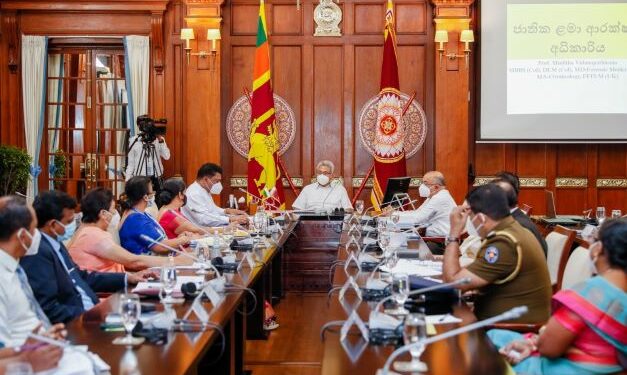
On What Conditions should Teachers on the Street be Allowed Back in the Classroom?

August 9th, 2021

By Shivanthi Ranasinghe Courtesy Ceylon Today

How to resolve the issues of the principals and teachers is no longer the question. The real question is whether we should allow these individuals to teach, influence and mould the character of our children. A teacher by definition would be an educated person. However, the ongoing trade union action by the primary and tertiary academic staff has challenged the very definition of an educated person. 

A misconstrued education 

The purpose of an education ought to be to understand the correct method of pursuing a matter. The sophistication of an educated person thus overrides all other adornments, may it be money or muscle. A person’s insight on specific subjects or overall surroundings becomes the measurement of his education standards. Independence in thought and action is the ultimate hallmark of a well-educated person. 

Most unfortunately in Sri Lanka, education is not a means of personal growth in terms of character or knowledge. Instead, it is simply a stepping stone to society. Without even the most basic education certificate, an average Sri Lankan citizen cannot gain a foothold in society. Therefore, the entire Sri Lankan education system is geared towards pushing its students to collect these paper qualifications. 

The children must push past the numerous bottlenecks in the system to collect these papers. Students in schools less facilitated than the established schools in developed cities are challenged not only by lack of labs for science and computer subjects. They also suffer from a teaching staff with a high turnover. These schools are often without even water for sanitation or drinking or a proper ground for sports. 

The solitary path to degree courses are by gaining the required marks at the Advanced Level exams. Gaining university entrance is however not an automatic process for the deserving. Out of nearly 300,000 students who sit the Advanced Level exam, only about 30,000 students gain admittance to a tertiary education. A student in rural areas may enter a better facilitated school via the grade V scholarship programme. However, that student may still lose a place in university to a student from the home area. The reason being, the aggregate needed for university entrance from a rural area school is much less than from an urban area school. 

There are other avenues now to gain different levels of qualifications, especially in vocational fields. However, the entrance to these is often constrained by narrow minded criteria. This writer once interviewed a chef who had achieved the rare feat of consecutively winning two gold medals at the Culinary Olympics – the highly competitive International Exhibition of Culinary Art. He shared his difficult journey to the culinary field as the Hotel school rejected his application on the grounds his fluency in English was poor. 

Naturally, this highly competitive rat race to gain paper qualifications breeds a generation entirely absorbed in their own advancement. They do not have the space for compassion for even their own fellow students. From the day a child enters the Sri Lankan education system the focus is to get him (or her) through the Ordinary Level exams – the basic of qualifications. That same pressure is applied for the subsequent qualifications to be achieved. 

Hence, the child’s other experiences are greatly curtailed. Our education system, a leftover by the British forced occupiers, does not cultivate patriotism or nationalism. Empathy and compassion, as noted above, are devalued currencies. Memorising instead of reading is encouraged for a scripted answer is assured of a good grade. Independent work that might deviate from the standard answer is a risk students are discouraged from taking. 

Our education system fails to realise that all these exams and qualifications are to enhance the quality of life and not the life itself. If we were to approach life the way our education system approaches education then we from the day of birth will feel compelled to lie still in our coffins for we would only be concerned of the final destination and not the journey itself. 

In summary, our education system has degraded education into a mere certificate. This is producing a citizenry demanding that the society be responsible for their individual needs, whilst refusing to be responsible for the society. 

This is the background to the ongoing trade union actions by school principals and teachers at the height of an unprecedented pandemic that has engulfed the entire world. This situation is not to be taken lightly. The education system’s narrow framework contributes to psychopaths as Rohana Wijeweera and Vellupillai Prabhakaran being able to manipulate teenagers and young adults. 

Students have been trained from a young age onwards only to rely on a given note as the only true doctrine. Teachers extract these notes from the Government issued text books without challenging its veracity. The shocking contents of Government issued text books for Islam lessons in the aftermath of the Easter Attack is a case in point. Neither the teacher nor student is encouraged to broaden their knowledge base. 

Hence, the generations that are coming forth are increasingly behaving mindlessly and selfishly. On the pronouncements of an individual entity, the followers of the JVP and LTTE perceive mostly imagined grievances against society. Those two eras destroyed too many of our promising youth. Those who escaped the clutches of those two devils are now in responsible positions as school principals and teachers. However, it is obvious that they are still susceptible to becoming someone else’s pawns. 

Teachers pay hikes: an unjust call

KLL Wijeratne who retired from the Sri Lanka Administrative Service and functioned as the Secretary of Salaries & Cadres Commission from 2006-2009 and Chairman of the Salaries & Cadres Commission from 2016-2019 gave the background of the salary anomalies in ‘The Island’ of 03 August   . 

Prior to the establishment of the Teachers Service on 06 October 1994, teachers’ salaries were based on their qualifications as trained teachers, non-trained teachers, honours graduates, general degree holders and diploma holders. Thus five salary scales determined the pay of nearly 25 categories of teachers providing neither a grading system nor a promotional scheme” writes Wijeratne.

On 27 September 1994 the Minister of Education & Higher Education Richard Pathirana sought Cabinet approval to establish a Teachers’ Service. Chandrika Kumaratunga as the Finance Minister whilst accepting the proposal on principle to establish such a Teachers’ Service cautioned that the salary scales included therein would create anomalies on the Public Service Salary Structure and emphasised the need to first examine and compare other sectors of the Public Service depending on work norms and other conditions of service. Irrespective of these observations the Cabinet Paper 94/14/13 was approved by the Cabinet of Ministers on 28 September 1994.”

Wijeratne continues to say This approval included the implementation of the proposed salary scales. In response, Finance Minister Kumaratunga sought Cabinet approval for amending the Cabinet decision by including the words ‘it was decided to refer the proposals to the Salaries & Cadres Committee for a comprehensive examination and report before implementing the proposals’.”

However, this caution was thrown to the wind when UNP Presidential candidate Srima Dissanayake issued a full page notice promising to implement the proposed salary scale, recalls Wijeratne. Immediately, Kumaratunga who was also contesting at the 1994 Presidential Elections gazetted the salary scale. This is the first time a salary scale was gazetted before establishing a Service” observes Wijeratne. 

As expected this paved the way for anomalies to arise in the education sector and other parallel services – especially in the Principals Service Salaries.  To resolve this issue the Supreme Court directed principals’ salaries to be increased. This created anomalies between the salaries of Teacher Educators Service and the Sri Lanka Education Administrative Service (SLEAS).” The matter again ended up in the Supreme Courts” states Wijeratne.

This was finally resolved in 2006 with the Mahinda Rajapaksa Government issuing a new National Wage Policy with a salary structure and promotional scheme considering all the grades of the Public Service, removing the anomalies between the Principals Service and the SLEAS. Therefore there are no anomalies between the Principals Service, the SLEAS and other Services due to the overall, overarching comprehensive new salary structure and promotional scheme adapted across the entire Public Service.

Moreover the pensionable salary of all public servants has been increased by more than 100 per cent between 2016 to 2020” concludes Wijeratne.

The Treacherous Target

If as Wijeratne explains there are no salary anomalies, then arises the question the reason for the protests. Even if Wijeratne is wrong and the principals and teachers do have a justifiable grievance, gives rise to the question as to the reasons for the trade union actions to erupt at this particular juncture of time. After all, by the admission of the protesters themselves, this is an issue that has been festering for nearly quarter of a century. 

These protesters could have taken to the streets with this same intensity during the last Government. After all, the then Education Minister Akila Viraj Kariyawasam earned the wrath of teachers for his ill-conceived decisions. His directive to forcibly transfer teachers who had served in the same school for a decade was deeply resented. Teachers personally felt that they were being punished for a wrong they did not commit. Many felt humiliated for having to exchange places where they had to take up positions due to lesser qualified teachers whilst the lesser qualified took places that required greater experience. Consequently, teachers with training to teach larger classes ended in smaller numbered classes. They were replaced with teachers who could not handle a large group of students. Many suspected that the then Minister took this foolish decision to justify the appointment of his supporters to teaching positions without the necessary teaching experience. 

The same protest organisers

The protests initially started to oppose the proposed Kotelawala Defence University Bill. When Ceylon Teachers Union General Secretary Joseph Stalin and other organisers were detained and sent to a quarantine centre, releasing him became another demand. It was on top of this the grievances alleged to salary anomalies was added. 

Before the principals and teachers began their protests, the farmers protested over the agrochemical fertiliser ban. In all these protests, the same organisers could be seen. 

Judging by the response generated in social media, it is clear that the public too is beginning to suspect a scam. 

Sri Lanka is on a very tight rope. It must balance both the raging pandemic and the directly impacted economy. This is the opera that the Opposition never dreamed of getting. If not for the COVID-19 pandemic the Opposition would have been sulking ducks they were soon after the successful completion of the war against terrorism. 

Despite the challenges and doomsday predictions, the Gotabaya Rajapaksa Administration is still holding the economy together. When the Administration recently settled the USD 1 billion loan, the Opposition was left speechless. They see their only recourse to discredit the Government is to upset the carefully managed pandemic. 

Despite sadistic expectations from certain quarters including credit rating agencies, the Government managed to get honor the USD one billion loan ahead of time. Whether the trade unionists’ protests that has intensified since then is coincidental is quite questionable. Trade unions that were dormant during the Yahapalana Government to suddenly rise to an issue that has been festering for 24 years seems to be motivated by more than an actual grievance. 

When the Health sector too tried to kick the Government in the belly via its trade union muscle the military took over the vaccination drive and produced far better results. By August, 86 per cent of those above age 30 had been vaccinated with at least one dose; 19 per cent has been given both vaccines and 50 per cent will have got both vaccines by mid-August. 

Instead of supporting this effort as responsible citizens a total of 120 protests have been held across the country on the month of July alone. Each protest has had over 1,500 participants. The sudden spike in COVID-19 infected, especially with the dreaded delta variant, is due to these protesters who refuse to follow the health guidelines has been the observation of the intelligence services. 

The trade unions of principals and teachers have stated that until they get the pound of flesh, they will continue to agitate in the streets. According to Minister Gamini Lokuge, Rs 56 billion would be needed per month to fulfil this anomaly. This is an impossible demand. Yet, the trade unionists have rejected Education Minister Professor GL Peiris pledge to address these anomalies at the forthcoming budget proposals that are only three months away. 

As State Minister Dr Nalaka Godahewa noted that the annual state sector salary and pension bill is a staggering Rs 1.2 trillion. To meet this commitment in the face of the dwindling revenue is a mean task. 

Responding to a question raised by the Opposition Leader Sajith Premadasa Health Minister Pavithra Wanniarchchi noted that in comparison to the 1000-1500 infected per week detected in the past, the new numbers have jumped to 2000-2500 per week. Ragama hospital among others are now treating patients three times its capacity. If this situation continues, the country will be again forced into another lockdown. This is clearly the target of the unionists. Minister Lokuge recalls that even in 2014 similar protests, instigated by foreign funded NGOs took place. 

The discerning public should understand the objectives of these foreign funders’ attempt to derail the incumbent Government. Memories of the Yahapalana Government are still fresh. These western oriented funders applauded and praised the servitude of a weak and bumbling Government even as the country’s economy and national security crumbled. 

Way Forward

Whether these trade unions are politically motivated or acting on the orders of foreign agents is a moot point. Either way, this issue needs resolving. 

If the principals and teachers want a higher salary, then the Government as the negotiator of Sri Lankan citizens must also forward certain demands. Chief among these must be that teachers must prove their performance. Teachers’ salaries are paid by the people’s taxes. Then, it is grossly unfair for the parents to pay more to meet teachers’ salaries AND also pay to privately tutor their children. The burden of coaching children should not fall on the parent either and nor must the child be overburdened with homework. The education ministry must play an active role to ensure that children have adequate play and rest time after school hours, which means that the set homework must be reasonable and possible for children to attend without a parent’s intervention.

This is a most reasonable demand and would be much welcomed by all parents. Teachers today have lost their respectable standing in society. They, who have flouted healthcare regulations and are holding the entire nation hostage, will have an uphill journey to be taken seriously as disciplinarians. Their only recourse too would be to prove their commitment to their profession. 

(ranasingheshivanthi@gmail.com)

45,000 of COVID-19 cases so far are children, Lady Ridgeway overcrowded

August 9th, 2021

Courtesy Adaderana

Nearly about 45,000 of the total coronavirus cases reported so far (out of 329,994 of total) in Sri Lanka have been children, Dr. Nalin Kitulwatta of Lady Ridgeway Children’s Hospital stated.

He pointed out that a total of fourteen children have died from COVID-19 in Sri Lanka

Dr. Kitulwatta says that the COVID-19 wards at the Lady Ridgeway Children’s Hospital are overcrowded as the COVID-19 infection is rapidly spread among children.

We have taken steps to open two more wards elsewhere in Rajagiriya. As of this morning, about 150 children are being treated at Lady Ridgeway Children’s Hospital and the other two wards under its control.

According to statistics, 45,000 children with COVID-19 have been reported in Sri Lanka so far. About 20,000 of them are children under 10 years of age. Fourteen of them have died.”

Dr. Nalin Kitulwatta states that there is no need to hospitalize children with COVID-19 infection who show normal symptoms.

Not every child needs to be hospitalized. If possible, it is better to take care of children with colds and mild fever at home without bringing them to the hospital.

However, the child could be brought to the hospital anytime if they have high fever and do not eat or drink, with symptoms of vomiting and diarrhea.”

COVID-19 Survivors Have Broad, Longer-Term Immunity

August 8th, 2021

BY RAJEE SURI Courtesy The Epoch Times

People who have recovered from COVID-19 retain broad and effective longer-term immunity to the disease, according to a new study.

Findings of the study, which is the most comprehensive of its kind so far, have implications for expanding understanding about human immune memory as well as future vaccine development for coronaviruses.

For the longitudinal study in Cell Reports Medicine, researchers looked at 254 patients with mostly mild to moderate symptoms of SARS-CoV-2 infection over a period of more than eight months (250 days) and found that their immune response to the virus remained durable and strong.

The findings are reassuring, especially given early reports during the pandemic that protective neutralizing antibodies didn’t last in COVID-19 patients, said Rafi Ahmed, director of the Emory University Vaccine Center and a lead author of the paper.

The study serves as a framework to define and predict long-lived immunity to SARS-CoV-2 after natural infection. We also saw indications in this phase that natural immunity could continue to persist,” Ahmed said.

The research team will continue to evaluate this cohort over the next few years.

The researchers found that not only did the immune response increase with disease severity but also with each decade of age regardless of disease severity, suggesting that there are additional unknown factors influencing age-related differences in COVID-19 responses.

In following the patients for months, researchers got a more nuanced view of how the immune system responds to COVID-19 infection. The picture that emerges indicates that the body’s defense shield not only produces an array of neutralizing antibodies but activates certain T and B cells to establish immune memory, offering more sustained defenses against reinfection.

We saw that antibody responses, especially IgG antibodies, were not only durable in the vast majority of patients but decayed at a slower rate than previously estimated, which suggests that patients are generating longer-lived plasma cells that can neutralize the SARS-CoV-2 spike protein.”

Ahmed said investigators were surprised to see that convalescent participants also displayed increased immunity against common human coronaviruses as well as SARS-CoV-1, a close relative of the current coronavirus. The study suggests that patients who survived COVID-19 are likely to also possess protective immunity even against some SARS-CoV-2 variants.

Vaccines that target other parts of the virus rather than just the spike protein may be more helpful in containing infection as SARS-CoV-2 variants overtake the prevailing strains,” Ahmed said. This could pave the way for us to design vaccines that address multiple coronaviruses.”

The researchers said the study more comprehensively identifies the adaptive immune components leading to recovery, and that it will serve as a benchmark for immune memory induced by SARS-CoV-2 vaccines.

We can build on these results to define the progression to long-lived immunity against the new coronavirus, which can guide rational responses when future outbreaks occur,” Ahmed said.

The National Institutes of Health funded the work, which is a collaboration between Emory University and the Fred Hutchinson Cancer Research Center in Seattle, Washington.

යුනිවර්ස් හෙවත් ලෝක ධාතුව

August 8th, 2021

වෛද්‍ය රුවන් එම් ජයතුංග 

යුනිවර්ස් හෙවත් ලෝක ධාතුව තුල චක්‍රාවාට නොහොත් ගැලැක්සීස් බිලියන 125 (1.25×10¹¹) පමණ තිබෙනවා. සත්‍ය අගය මීට වඩා වැඩි වෙන්නටත් පුලුවන්. මෙහි විශ්කම්භය ආලෝක වර්ශ බිලියන 93 පමණ. අපට පෙනෙන ලෝක ධාතුව එනම් ඔබ්සවර්බල් යුනිවර්ස් එකට වඩා තත්‍ය ලෝක ධාතුව අති විශාලයි. අපට පෙනෙන ලෝක ධාතුව ෆුට් බෝලයක සයිස් එකක් නම් තත්‍ය ලෝක ධාතුව ෆුට් බෝල් පිට්ටනියකටත් වඩා ලොකුයි. යුනිවර්ස් එකේ වයස වසර බිලියන 14 පමණ වෙනවා. ලෝක ධාතුව (යුනිවර්ස් ) එක  ප්‍රසාරණය වෙමින් පවතිනවා. 

යුනිවර්ස් එක ආරම්භ වුනේ බිග් බෑං හෙවත් මහා පිපුරුමත් සමග. මහා පිපුරුම වීමට ප්‍රථම යුනිවර්ස් එක ටීක් බෝලයක් තරම්. එය පිපිරීමෙන් තමයි තරු ඇතුළු චක්‍රාවාට හට ගත්තේ. පිපුරුමත් සමග අධි විශාල තාපයක් ඇති වුනා. මේ තාපය ක්‍රමක් ක්‍රමයෙන් සිසිල් වෙමින් පවතිනවා. තව වසර ට්‍රිලියන ගනනකට පසු මුළු ලෝක ධාතුව අධි ශීත වෙනවා. ඒ වන විට ලෝක ධාතුවේ සිටින ජීවීන් සියල්ල මිය ගිහින්. තරු , චක්‍රාවාට පවා මිය ගිහින්. ඒ වන විට ලෝක ධාතුව යළි සංකෝචනය වෙනවා. යම් කාලයකට පසුව  ලෝක ධාතුව  ඇරඹි අවස්ථාව වන අර ටීක් බෝලයේ ප්‍රමාණයට පත් වෙනවා. ඉන් පසු යලිත් වරක් බිග් බෑං හෙවත් මහා පිපුරුම ඇරඹිලා යලිත් තරු , චක්‍රාවාට ඇති වෙනවා. මෙය චක්‍රයක් වගේ ක්‍රියාවක් ඒ නිසා යුනිවර්ස් එකේ උපත කවදාද කියා කියන්න බැහැ.  

අපි යුනිවර්ස් හෙවත් ලෝක ධාතුවක් ගැන කතා කලාට තව ලෝක ධාතු තියනවා. සමහර තාරකා විද්‍යාඥයන් පැරලල් එනම් සමාන්තර යුනිවර්ස් එකක් පවතින බවත් කියනවා. නමුත් බොහෝ විට ලෝක ධාතු අති විශාල ප්‍රමාණයක් පවතින මල්ටිවර්ස් එකක් (බහු ලෝක ධාතුවක් තිබෙන්න පුලුවන්. තරුවක් මිය ගිය පසු බ්ලැක් හෝල් එකක් එනම් කළු කුහරයක් ඇති වුනු පසු බ්ලැක් හෝල් එක හරහා වෙනත් යුනිවර්ස් එකකට යන්න පුලුවන් බව සමහර තාරකා විද්‍යාඥයන් පවසනවා. යුනිවර්ස් හෝ මල්ටිවර්ස් එක දෙවියෙකු මවන ලද්දක් නොවෙයි. එය ඇති වූයේ ඉබේටම. උදාහරණයක් කියනවා නම් දිය ඇල්ලක් වැටෙන කොට දිය බුබුළු ඇති වෙනවා. ඒවා කිසිවෙකු මැව්වේ නෑ. එය හට ගත්තේ යම් හේතුවක් නිසා. මේ අපරිමිත විශ්වයේ දෙවියන් කියා ප්‍රපංචයක් නොමැති බව ස්ටීවන් හෝකින්ස් තම අවසාන කාලයේ කියා සිටියා. එඬේර යුගයේ මිනිසුන් විසින් තම පරිකල්පනය තුල නිර්මිත ඊෂ්වර,  ජෙහෝවා හෝ අල්ලා යන දෙවිවරු විසින් මේ නිමක් කොනක් නොමැති ලෝක ධාතුව මවන ලද බව කීම තර්කාන්විත නෑ.

පෘතුවිය හැරුනු කොට මේ ලෝක ධාතුව තුල විවිධ වර්ගයේ ජීවීන් සිටිය හැකියි. සමහර ජීවීන් ඉතා කුඩා ක්‍ෂුද්‍ර මට්ටමේ සිට ඩයිනසෝරයන්ටත් වඩා විශාල විය හැකියි. සමහරක් ජීවීන් ඔක්සිජන් නොව හයිඩ්‍රිජන් ආශ්‍රිත කොට ජීවත් වන ප්‍රභේදයක් විය හැකියි. එසේම ප්‍රභා සංස්ලේෂණය මගින් දිවි ගැට ගහ ගන්නා මිනිසුන්ට සමාන ජීවීන් ඉන්නටත් පුලුවන්. සමහර ජීවීන් මිනිසාට වඩා උසස් දියුණු – එනම් භෞතිකව සහ ආධ්‍යාත්මිකව දියුණු ජීවීන් විය හැකියි. තවත් සමහරක් ප්‍රිඩේටර් වර්ගයේ දරුණු ජීවීන් විය හැකියි. ඒ නිසා අපගේ පැවැත්ම පිලිබඳව විශ්වයට රේඩියෝ පණිවිඩ යැවීම ඉලාගෙන කෑමක් වෙන්නටත්  පුලුවන්. සමහර විට පිට සක්වල ජීවීන් පෘතුවියට ඒම ස්පාඤඥ ජාතිකයන් ඉන්කා මායා ශිෂ්ටාචාර සොයා ඒමක් වගේ ව්‍යසනයකින් කෙලවර වන දෙයක් වෙන්නටත් පුලුවන්. නමුත් යම් දිනක අපිට පිට සක්වල ජීවීන් සමග ගනුදෙනු කිරීමට සිදු වන බව නම් ඒකාන්තයි.

In Sri Lanka, the Tamil link with Buddhism is brushed under the carpet

August 8th, 2021

By P.K.Balachandran Courtesy NewsIn.Asia

Colombo, August 8 (The Citizen):  Unsustainable claims put forward by the Sinhalese and the Tamils on language, religion and ethnicity, have muddied Sri Lankan politics in the post-independence era.

The Sinhalese loudly proclaim that Buddhism is quintessentially and exclusively, a Sinhala” religion. The Tamils, on the other hand, claim with equal vehemence, that they have always been unalloyed Hindus, who had never ever had anything to do with Buddhism, which they identify with Sinhala hegemony.”

Sinhala-Buddhist radicals claim that Buddhist archaeological sites in the Tamil-dominated Northern and Eastern Provinces are relics of a Sinhala-Buddhist past over there, and therefore, the Sinhala’s ownership of those lands should be retrieved. The Tamils, on the other hand, feel that these archaeological findings will go against their claim on the lands in question as they too identify Buddhist relics with the Sinhalese and see the discovery of such relics as a threat to their existence.

In some cases they have reportedly destroyed the relics forcing the government to think of ways of protecting them. In May 2020, President Gotabaya Rajapaksa formed a Presidential Task Force under the Defense Secretary to conduct a comprehensive survey of archaeological sites in the East and to take measures to protect them as several parties had voiced their concern regarding the destruction of historical monuments. Significantly, the Task Force was wholly Sinhala- Buddhist. 

Dr. Gintota P.V. Somaratna, former Head of the Department of History and Political Science, University of Colombo, in his paper entitled: Tamil Buddhism in Sri Lanka argues that the Sinhala-Buddhists’ claim about these relics being Sinhala” and the Tamils’ insecurity over the issue, are both unfounded if history is seen in the correct perspective. The fact is that the majority of Tamils were also Buddhist in the past. Sinhalese Buddhism, as practiced had, and still has, many elements of Tamil Hinduism. Sri Lanka has always had a syncretic culture. Buddhists and Hindus had both peacefully co-existed and fought each other down the ages. In fact, there has never been a clear cut division between the two because beliefs and practices were shared. For example, Lankan monarchs of Indian origin could practice Hinduism in private so long as they were nominally Buddhist and stoutly protected Buddhism in their realm. The Kandyan Kings of the Nayakar dynasty (1739-1815) were Hindus but they were accepted by the Sinhala-Buddhist majority because they protected Buddhism.

Historian K.M.de Silva says that prior to the advent of the British, there was hardly any evidence of ethno-religious tension. The historian of the Catholic church, V. Perniola, noted that in the Dutch period, there was no racial distinction between Sinhala and Tamils, only caste divisions. According to Dr.Somaratna, it was because of the introduction of the ten-yearly population census in 1871 and the institution of universal adult franchise in 1931, that ethnic identity began to be used to garner political support.

Buddhism in Sri Lanka was closely linked to Buddhism in Tamil Nadu, Dr.Somaratna points out. Buddhism flourished in Tamil Nadu in three phases:  (1) between the 3 rd. and the 7 th. Centuries); (2) during Pallava rule (400 to 650 AD); and (3)  in the Chola period (mid 9th to  early14th century AD).

Asokan Rock Edicts II, V and XIII mention Kerala, Chola,Pandya and Chera kingdoms in Tamil Nadu apart from Tambapanni (Sri Lanka).These were places to which Emperor Asoka had sent Buddhist missions. A number of caves with inscriptions in the Brahmi script have been found in Madurai, Tiruchi, Tirunelveli, Tanjaur andseveral other districts in Tamil Nadu. The Brahmi script had come to South India through Asoka’s missionaries. There is evidence that Mahinda Thera, the son of Emperor   Asoka, spread the Dhamma in Tamil Nadu before his arrival in Sri Lanka. He had travelled by sea from a North Indian port and called at Kaveripattinam on the Tamil Nadu coast before heading for Dambakolapatuna or Jambukolapatuna (the modern Sambuthurai) in Jaffna. King Devanampiya Tissa’s delegation to the Mauryan court of Emperor Asoka (around 230 BC) had embarked from the port of Jambukolapatuna.

Among the greatest Pali scholars in Tamil Nadu were Buddhaghosa, Buddhadatta, and Dharmapala. The Chinese Buddhist monk-scholar, Hsuan Tsang, who visited India in 7th Century AD, describes Kanchipuram, the Pallava capital, as a flourishing city of Buddhists with over 100 Buddhist monasteries and over a thousand monks.

Interactions between the monks of Tamil Nadu and Sri Lanka are mentioned in the 2 nd. Century AD Tamil classic Manimekalai, authored by Seethalai Sathanar, a Buddhist. Protagonist Manimekalai’s request to the Chola king to convert prisons to places of piety with Buddhist monks is mentioned. Buddha‘s teachings on the compassionate way of life are presented.

Among other Tamil literary epics which show the influence of Buddhism are the Silappadhikaram, Valaiyapathi,  Kundalakesi  and  Jivaka Cintamani . Tolkappiyam the earliest Tamil grammar (3rd century BC), was written by a Buddhist. A section of Tamils continued to patronize Buddhism well into the 10 th., Century. Dr.Somaratna points out that Hsuan Tsang recorded instances of Tamil Buddhist monks fleeing to Sri Lanka when they were worsted in religious debates and feared the repercussions of their rulers’ change of religion. The Chulavamsa states that in the 13th. Century King Parakramabahu VI of Dambadeniya (in North Western Province) brought down Buddhist monks and scriptures from the Chola country to resuscitate Buddhism in his kingdom.

The Mahavamsa is cited to show that several Buddhist Viharas existed in the Jaffna peninsula. Devanampiya Tissa himself built two Viharas close to Jambukolapatuna – the Tissamaha Vihara and the Pachina Vihara. Monks from Piyangudipa (Pungudutivu) participated in the meritorious acts of Dutthagamani. King Dhatusena (455-473 AD) restored the Mahanaga Vihara.

There are remains of Buddhist establishments datable to the early centuries of the Christian Era in Kandarodai, Vallipuram, Ponnalia, Makiyapini, Nilavarai, Uduvil, Nainativu, Punkuditivu, and Neduntivu in Jaffna. The Buddhist archaeological ruins found in Vallipuram near Velvettiturai show the historical presence of Buddhism in Jaffna. Kandarodai has very rich archaeological remains that point to early settlements. It was probably an emporium in the first centuries AD, Dr.Somaratna says.

In 1917, an administrator cum historian, Paul E. Pieris, identified the ruins as the ancient Kandarodai Vihara. This group of Dagobas situated close together at the site, served as a monastery for Buddhist monks. Pieris found remains of a shrine room, several Buddha images, coins, about 60 small and large stupas (pagodas), pieces of pinnacles of stupas, pieces of stone with imprints of the Buddha‘s foot, and tiles from the site. Black-Red ware Kandarodai potsherd with Tamil Brahmi scripts from 300 BC were excavated and Roman coins, early Pandyan coins, early Chera Dynasty coins were found.

Both Manimekalai and the Mahavamsa describe the Buddha settling a dispute between two Naga princes of Jaffna over a gem-set throne in Nainativu.

However, Dr.Somaratna rues that Sinhalese writers take these findings to be evidence of Sinhalese” presence in the area on the assumption that all Buddhists in every period of time in Sri Lanka were Sinhalese. It is forgotten that the majority of Tamils were Buddhists at that time.

The finding of Buddhist places in the Jaffna peninsula today has created tension in the minds of both Sinhalese and Tamils because of its political implications.”

COVID death toll moves up with 94 new victims

August 8th, 2021

Courtesy Adaderana

Sri Lanka has registered 94 more COVID-19 related fatalities confirmed by the Director-General of Health Services on Saturday (August 07).

The new development has pushed the official death toll from the virus outbreak in Sri Lanka to 5,111.

According to the data released by the Department of Government Information, the latest victims confirmed today include 69 males and 25 females.

Reportedly, among the victims are one male aged below 30 years, 22 victims aged between 30-59 years and 71 others aged 60 and above.

Sri Lanka confirms 2,956 COVID cases within the day

August 8th, 2021

Courtesy Adaderana

A total of 726 more people tested positive for COVID-19 today (August 08), bringing the daily count of positive cases to 2,956.

The new development has brought Sri Lanka’s confirmed coronavirus cases tally to 329,9942.

As per official data, as many as 293,357 patients who were infected with the virus have returned to health so far while 31,620 are still under medical care at selected hospitals and treatment centers across the country.

In the meantime, the death toll from coronavirus now stands at 5,111.

Demise of Dilip Kumar the demigod of Hindi cinema.

August 7th, 2021

By Rohana R. Wasala

I have always strongly endorsed the necessity for actors to possess a reasonable degree of social responsibility. The actor who is adored by millions of people owes something to the society, which has given him an elevated and highly respected position.

Dilip Kumar 

Dilip Kumar was born in Peshawar (which is now in Pakistan, but then part of India) on December 11, 1922, and died in Mumbai on July 7, 2021  at the ripe old age of 98. Named Mohammad Yousuf Khan at birth, he was better known and idolized by his stage or industry name Dilip Kumar.  He was the oldest and the most renowned surviving representative of the Golden Age of Hindi cinema. Considered as the brightest and the most creative period of Hindi cinema (both artistic and commercial)  by historians of the Indian film industry, the Golden Age spanned more than two decades from the late 1940’s to the 1960’s. 

This era saw a historic conglomeration of talented cine artistes including such legendary playback singers as the sister duo Latha Mangeshkar and Asha Bhonsle, Mohammed Rafi and Manna Dey, such innovative music directors  as Naushad and S.D. Burman, such great actors as Ashok Kumar, Bharat Bhushan, Raj Kumar, and Sunil Dutt, such exceptionally beautiful and equally talented female artistes as Nargis, Suraiya, Meena Kumari, and Madhubala, and such respected film directors as Kamal Amrohi and Shakti Samantha. During this period were produced, among many memorable films, masterpieces like Chetan Anand’s Neecha Nagar (1946), Raj Kapoor’s Awaara (1951) and Shree 420 (1955), Ritwik Ghatak’s Nagarik (1952), Bimal Roy’s Do Beegha Zameen (1953) and Madhumati (1958), Satyajit Ray’s Pather Panchali (1955), Guru Dutt’s Pyasa (1957), Mehboob Khan’s Mother India (1957), K. Asif’s Mughal-e-Azam (1960), A. Bhimsingh’s Khandan (1965), and Devendra Goel’s Ek Phool Do Mali (1969). 

The artistes and their works were nationally and internationally acclaimed: Neecha Nagar won the Golden Palm award at the Cannes Film Festival in1946; Mother India was the first Indian entry for the Academy Award for the Best Foreign Language Film in 1958, and got shortlisted for the same; Dilip Kumar was approached for a role in British director David Lean’s Lawrence of Arabia (1962), but Dilip didn’t accept the offer because he was so choosy about films he did. Being one of the ‘Big Three’ of that era (the other two were Raj Kapoor and Dev Anand), Dilip Kumar graced the Indian cinema’s centre stage the longest, even beyond the Golden Age.

 While the above extremely simplified background note may be adequate to give the readers an idea about the glory of the Golden Age of Hindi cinema, even for me of the older generation of Sri Lankans, the Indian cine artistes of that time and their films were no more than fast receding echoes from a past lost in the dimming brightness of a golden sunset; in other words, I had only a nodding acquaintance with that era of Hindi cinema. (Today I hardly watch Hindi films, but I listen to Hindi songs, particularly, new renditions of Golden Age classics.) I myself had seen only a couple of the last of the Golden Age Hindi films before the 1980’s. 

However, thanks to modern technology in the form of the Internet, they are available to us on the computer screen at a click on a relevant link and at little cost. This, no doubt, is a great boon to those old-timers like me who are besotted with Hindi films and film music of that vintage. It is doubtful whether the average young Sri Lankans of today could experience the linguistic (Sinhala and Hindi being sister languages belonging to the same Indo-European language family) and cultural affinity we still nostalgically feel with the characters and incidents in those classic Hindi films. Of course, we can’t blame them if they fail to see anything remarkably great or interesting in them just as many film-goers of the previous generations find nothing absorbing in the average Hindi films on offer today that are obviously much loved by youngsters; it’s only that times have changed. At the same time, we shouldn’t forget the fact that there are enough young fans of old Hindi films who admire them especially for their music. This essay, written to mark the passing away of a demigod of Bollywood, is dedicated to all lovers of the great Hindi movies of the Golden Age, and all admirers of the heroes and heroines that starred in them.

As stated at the beginning, Muhammad Yousuf Khan (later ‘Dilip Kumar’ to the film world) was born in  Peshawar (now in Pakistan) on 11 December 1922. His father Lala Ghulam Sarvar was a fruit trader who had orchards in Peshawar and in Deolali in Maharashtra, India. Lala Ghulam moved to Bombay (modern Mumbai) with his large family of twelve in the late 1930’s. Dilip went to Puna (now Pune) somewhere in the early 40’s. While engaged in a canteen business there, the young Yousuf Khan was spotted by actress Devika Rani, wife of Himanshu Rai, the owner of Bombay Talkies, himself an actor.  

Devika Rani gave him his first break in films in Jwar Bhata (1944), a film that was hardly noticed. His second film was Jugnu (1947) where he was paired with Noorjehan, and it became his first major hit. Dilip Kumar starred in Andaz (1949) with Raj Kapoor and Nargis; the film was based on the classic story of a love triangle. Following these initial ventures, he played tragic roles in a number of successful films in the 1950’s, which earned him the sobriquet Tragedy King”. Some of these films were Jogan (1950), Deedar (1951), Daag (1952), Devdas (1955), Yahudi (1958) Madhumati (1958) and Kohinoor (1960).

When in 1964 he played the role of a youthful, rebellious, anarchist law graduate in Leader, he was already into his middle age. But he continued to work in films till 1998, that is, just past his 75th birthday. He withdrew from films for a short five years from 1976 to 1981. Dilip Kumar and his contemporary Raj Kumar played the lead roles in the 1991 mega movie Saudagar based on the drama of a feud between two estranged childhood friends, Veeru Singh and Rajeshwar Singh (played by Dilip and Raj Kumar respectively); a forbidden love affair between their grandchildren (Manisha Koirala and Vivek Mushran in the film) is a sort of sub-plot, as critics have correctly shown. 

In his nearly sixty years in films he acted in over sixty films. This is against the seventy-two films that his erstwhile sweetheart Madhubala managed to do within a comparatively short span of less than twenty years. In the case of Madhubala, only fifteen of her many films became successful at the box-office, and she did not win any awards (which, however, was no reflection on her abilities). Her fault was that she apparently didn’t think of choosing her films with care. Dilip Kumar said, commenting on this lapse on her part, years after her death: Had she selected her films with more care, she would have been far superior to her contemporaries.”  Dilip Kumar himself exercised forethought before he signed on to do films. It is known that he rejected a role in his friend Raj Kapoor’s film Sangam, which later became a big hit. Similarly, when the British film maker David Lean invited Dilip Kumar to take up the role of Sherif Ali in his film Lawrence of Arabia (1962), he declined the offer. This role was played by the Egyptian actor Omar Sherif with great aplomb. Dilip was not the sort of man to later regret his decision to reject certain films that became successful. He had character, and he believed in his principles.

Romantic alliances between stars excited great interest among their fans then as they do now. But such relationships were less raunchy and had fewer cheap publicity stunts than what we hear about nowadays. In the case of Dilip Kumar, there were at least five women who were romantically linked with his name. It appeared that Dilip and Vyjayanthimala enjoyed proper professional rapport, and made a good screen couple.  They acted in seven films together. That was the largest number of films Dilip did with a single female colleague. Though they were romantically linked by cine gossips, there was no evidence of any such serious connection between them. Actually, there were four women in his life in a serious sense, but Vyjayanthimala was not one of them.

Kamini Kaushal who starred in Chetan Anand’s award winning Neecha Nagar (1946) was the first woman Dilip got romantically involved with. They wanted to marry, but the girl’s family forced her to marry the brother of her dead husband instead, for she was at that time a young widow. Then it became Madhubala’s chance to form an alliance with the handsome actor who had thus been thwarted in his first affair; they gelled marvelously in their professional and personal lives, though she was more than ten years younger than Dilip. Unfortunately, Madhubala’s family bonds, especially those with her father, put paid to their six or seven year long affair (1951-1956). 

In 1966, Dilip Kumar got married to beauty queen Saira Banu who was twenty-two years his junior in age. Saira has said that she fell in love with the man when she was only twelve. Then in the early 80’s (1981-83), Dilip had a brief marriage with a Pakistani woman called Asmaa, after which he returned to Saira Banu, and remained with her until his death. Perhaps Dilip Kumar never reached the ideal of perfect lover in real life, which revealed his feet of clay, confirming the authenticity of his humanity. 

However, he was meticulous about guarding his honour in his professional and personal relationships with his female co-stars, as actresses like Nimmi, Vyjayantimala, and Nanda attest in the ‘Reminiscences’ section of Dilip Kumar’s autobiography Dilip Kumar: The Substance and the Shadow” (Hay House India, 2014) compiled by Udayatara Nayar. The last of the three stars mentioned above, Nanda (1939-2014) was the youngest. After many years of dreaming of getting a chance to act opposite Dilip Kumar whom she had adored so much, she was able to work with him in ‘Mazdoor’ (released in 1983) and she said to herself, Now your track record is complete, Nanda!” Nanda died in March 2014, about six months before Dilip’s autobiography was published.

Dilip Kumar was a conscientious performer; he was a true professional who employed conscious artistry. He was the ultimate method actor” according to Satyajit Ray. Amitabh Bacchan described Dilip as the greatest actor ever. Shahrukh Khan once said: No one can copy him, and idiots like me try to copy him.” Acting as compere at a function to felicitate the celebrated senior actor, Sharukh by himself unrolled the red carpet for him. When Dilip was awarded the Filmfare Best Actor Award for the eighth and last time in 1982 a number of mega stars of younger generations than his (such as Dharmendra and Rajesh Khanna) had already come and gone, or were in decline.

He was the first to win the Filmfare Best Actor Award, which was in 1954. It was awarded for his role in Daag (1952). Dilip was given the same award again for Devdas (1955), and yet again for Kohinoor (1960). He won another Filmfare Best Actor Award for Shakti (1982) in which he played Amitabh Bacchan’s father (the lead role in the film). In fact, he was honoured with the Filmfare Best Actor Award eight times. He received the Filmfare Lifetime Achievement Award in 1993. It would be educative for young actors today to watch all those films for which Dilip won the Filmfare Best Actor Award.

While Dilip Kumar was thus honoured by the industry, he was also honoured  by both the Indian and Pakistan governments. In 1991 the Indian government  gave him the Padma Bhushan Award, and later, in 1994, the Dadasaheb Phalke Award. He was also nominated to the Rajya Sabha, the Upper House of the Indian parliament for a term. The government of Pakistan conferred on him the title of Nishan-e-Imtiaz in 1997. Dilip was honoured with the CNN-IBN Lifetime Achievement Award in 2009.

An opportunity to serve the nation as a politician came to him when he was nominated to the upper house of the Indian parliament. He served in this capacity from 2000 to 2006. Just as he did in his chosen field as a professional, Dilip Kumar played a conscientious role in politics. He dedicated his efforts to bringing the Indians and Pakistanis together, and in this he succeeded to a certain extent. He didn’t allow politics to shake his belief in principles. The Kargil War, fought between India and Pakistan (both nuclear states) from May to July in 1999 provoked by alleged Pakistani intrusions along the line of control (LOC) between the two countries, led to much anger and agitation on both sides. Following the Kargil conflict, the Shiv Sena chief Bal Thackeray demanded that Dilip return the Pakistan government’s title given him the previous year. Thackeray wanted Dilip to do this in protest against that country’s blatant aggression on Indian soil”. Predictably, the latter refused to do so. His explanation was:

 “This award was given to me for the humane activities to which I have dedicated myself. I have worked for the poor, I have worked for many years to bridge the cultural and communal gaps between India and Pakistan. Politics and religion have created these boundaries. I have striven to bring the two people(s) together in whatever way I could. Tell me, what does any of this have to do with the Kargil conflict?”

This was in consonance with his claim in a TV interview: I have always strongly endorsed the necessity for actors to possess a reasonable degree of social responsibility. The actor who is adored by millions of people owes something to the society, which has given him an elevated and highly respected position” With such personal political and socio-ethical attitudes  Dilip Kumar proved that he was not just a successful celluloid hero, but that he was a real life hero. 

The substance endures, though the shadow has vanished.

Tamil Genocide / Mullivaikal Massacre Remembrance Day In Auckland – Stirring Up Communal Strife In New Zealand Based On A Disproven Allegation

August 7th, 2021

Dr. Chula Rajapakse MNZM
Spokesperson  , United Sri Lanka Assn, Wellington NZ

Rt Hon Jacinda Arden
Prime Minister of New Zealand.

Dear Prime Minister,

Tamil Genocide / Mullivaikal  Massacre Remembrance Day In Auckland –  Stirring Up Communal Strife In New Zealand  Based On A Disproven Allegation

The United Sri Lanka Association (USLA) of Wellington and it’s members are both frustrated and distraught at learning of a planned  Tamil Genocide Remembrance Day” meeting on 18th of May at 6.30pm at 202 Hillsborough Road, Hillsborough , Auckland. This allegation of Tamil Genocide” , during the final weeks of liberation of Sri Lanka from three decades of Tamil Tiger Terror, on the 19th of May 2009 at Mulivaikal, was  first levelled by the international funders of the Tigers, within days of their defeat at the hands of the Sri Lankan security forces , to discredit the latter.  The allegation was that in these last few weeks the civilian casualty rate was of the order of 40 to 120 thousand , disproportionately  high suggesting directed shooting at civilians by the SL forces and hence justifying the charge of Genocide,

However, this claim has now been shown  to be clearly false through a impressive volume of evidence . Most notable among them were the war time dispatches in May 2019,from UK Defense Attache Lt Colonel Anton Gash from Colombo,  first tabled by Lord Naseby in the UK House of Lords in September 2017 and many times thereafter, having obtained them with great difficulty using the official information act. The heavily redacted 39 dispatches  Lord Naseby tabled ,   showed clearly that the civilian casualties were of the order of seven thousand , quite proportional to the scale of the fighting. This number was also similar to the estimates of US Defense  attache  Lt Col. Lawrense Smith, estimates of Sir John Holmes the UN resident representative in Colombo in May 2019  and the findings of the SL Tamil University Teachers census   carried out a few months later.  

Sir Desmond de Silva QC of UK, a former United Nations Chief War Crimes Prosecutor in Sierra Leon, providing a legal opinion to respond to these Tiger allegation, following examination of extensive information provided on the conflict  concluded that the great mass of civilian deaths which occurred in the final stages of the war were regrettable but permissible collateral damage.”

Additionally , it is recognised that in war the number of injured would be two to three times of the fatalities. Ten years after the end of the war  those found injured were not anything  like the 120 to 300 thousand that should have been found. Nor have any sites of burial for the 40 to 120 thousand  allegedly killed , even ten years after the event.

The claimed support for this Tiger  allegation from the UN , their  only significant support, was in fact  not from the UN and the basis of their support was of questionable credibility. It came  from a panel of three experts, all with recent adverse interactions with SL ,appointed by the UNSG against the wishes of the UNSC , to advice  UNSG on accountability provisions in SL. Going beyond their brief, they indicated  the presence of credible allegations” of disproportionate civilian loss of life, but refused to reveal their sources for thirty years, so bringing in to question the credibility of this observation.    

Despite this volume of evidence against Tamil Genocide” ,importing this claim from Toronto Canada where this claim is rife will inevitably import also the consequent inter communal discord and even violence within the Sri Lankan community, that is commonplace there , to hitherto peaceful New Zealand.  

This prospect is horrifying to contemplate for  Sri Lankan New Zealanders , especially to those of us who came to New Zealand fleeing Tiger Terror and have enjoyed decades of peace. This is a flagrant misuse of the democratic freedoms of New Zealand to spread  what are now clearly falsehoods,  with no regard to the discord it would lead to. It’s  aim is to avenge the defeat of the Tigers they sustained with funds and propaganda for decades  .

It is for these reasons that USLA seek your help and urge  you to use the power and resources at your disposal to prevent this agenda of Tamil Genocide” being pursued as planned, in NZ.

On the other hand if it is to be a Remembrance of  Tamil Victims of the Three Decade Long Conflict”  , then  we would have no objection and would be happy to even support.

Thank you very much for your help as requested.

Yours Sincerely,

Dr. Chula Rajapakse MNZM
Spokesperson  , United Sri Lanka Assn, Wellington NZ

5.5.21

UK suppressed ‘robust evidence’ at Sri Lanka’s expense at UNHRC – Lord Naseby

August 7th, 2021

Courtesy The Island

‘It is unforgiveable and a black day for my UK Govt.’

 It was reprehensible that the UK, as the leader of the Core Group on Sri Lanka and a member of the UNHRC, had suppressed ‘robust evidence of utmost importance’, Lord Naseby said on Tuesday (23).

The Conservative party member said in his capacity as the President of the All Party Parliamentary UK – Sri Lanka Group: It is unforgivable and is a black day for my UK Government.”

 The following is the text of a statement made available by Lord Naseby’s Office in the aftermath of the UNHRC adopted accountability resolution with 22 voting for, 11 against and 14 countries, including India skipping the vote: The Core Group chaired by the UK tabled a shoddy motion based on a hostile UNHRC Report riddled with factual errors and unproven allegations going back to 2009; none of which qualifies as robust evidence.

It is a gross intrusion on the sovereignty of a state, Sri Lanka, based on a simple majority vote when Motions of this significance would need a 2/3rds majority. Even worse, the UK Minister for Human Rights Lord Ahmad is the same Minister, who despite a series of Written Questions from me has purposely and consciously withheld ‘Robust evidence’ of the utmost importance being sent to the UNHRC. I refer to the UK Military Attaché, Lt. Col. Gash’s Dispatches from the War front. Dispatches that highlight the care the Sri Lankan armed forces took not to kill civilians, indeed how nearly 300,000 civilians were rescued. He also witnessed the war actions of the Tamil Tigers in recruiting and putting in the front line several thousand Child soldiers, a War Crime in itself, plus the 250,000 poor Tamil civilians forced out of their homes to be a human shield. Finally, Lt Col Gash makes his own estimate as 7,000 civilians sadly killed of which 25% were probably LTTE cadres.

I find it unacceptable that the senior UK Minister responsible for Human Rights policy should state that the UNHRC did not ask for these Dispatches. The Minister knew how crucial the contents of these Dispatches are to the truth. He should have sent them unredacted to create an informed Report. The action is made even worse by the UK Chairing the Core Group and is absolutely reprehensible. It is unforgiveable and is a black day for my UK Government.

As we approach Easter, I remember a phrase from St Mathew in the Bible: ‘Why beholdest thou the mote that is in thy brother’s eye, but considerest not the beam that is in thine own eye?’

Give some comforts to the sick citizens

August 7th, 2021

Dr. Mareena Thaha Reffai, , Dehiwela

Letter to the editor:

Give some comforts to the sick citizens

We hear and see the absolute destitute situation of the patients in the hospitals. Will it be too much to ask the government to think of alternative arrangements?

We see very sick people, mildly sick people, and even dead people mixed up in the wards and doctors/nurses seeing the patients while they are even on the floor. Meanwhile, we get umpteen calls about the inability to get the patients admitted even when they are PCR positive or are seriously sick.

Why not give a little comfort to the patients? All it needs is a little considerate thinking and planning.

1.       Why not put up some tents in the compounds of the hospitals and mobilize some beds so that people who are not too serious, but need hospital care are kept there until they get better?

2.       Why not convert some wedding halls or schools into wards and send the patients who need only supervision there with a skeleton staff with volunteers?

If we want, we can always find alternative avenues to make our people  comfortable.

Sent by:

Dr. Mareena Thaha Reffai, , Dehiwela

Overcoming the COVID-pandemic:

August 7th, 2021

Dr. Sunil J. Wimalawansa Prof. Medicine, Endocrinology, & Nutrition

While vaccines are a temporary solution, there is no possibility of generating herd immunity through vaccines to eradicate the pandemic.  The current delta mutants, highly infectious, might direct the nations in that direction as nearly achieving in India, certain parts of the USA, and Sri Lanks in months to come. 

Protective effects against delta variant from Sinopharm or Sinovac (the worst vaccine) is abysmal, 31%, ~80% of Sri Lankans have had so far: they are little better than a placebo injection.   Despite spending over $250 million to purchase the mentioned worse two (inactivated viral) vaccines (apparently had the highest commissions: coming from China!): they have little effect in controlling the spread of the pandemic.  

With $2.4 million invested in a mass-scale distribution of vitamin D, it provided free to people across the country.  Within a few weeks, it would have markedly improved the immune systems of everyone in the country, allowing effectively to fight against any SARS-CoV-2 and all its variants.  This is with no curfew and no economic loss. 

That would have allowed overcoming SARS-CoV-2 and its mutants lasting for a year naturally (but little or no commission for crooks).  Although the latter approach is highly cost-effective, it was flatly rejected by the administration.  If employed, it would have efficiently reduced ~80% of hospitalisations, ICU bed use, and deaths AND entirely avoided the current crisis.  

People should demand accountability: 

It is time that people start demanding responsible folks accountable for the ongoing tragedy, including deaths.  Meanwhile, Sri Lanka leaders seem not interested in prevention, have no listening skills, and doing none to prevent the tragedy, but a lot of worthless talking /noise.  

Expanding structural facilities (e.g., beds), as the army has been ‘proudly’ doing since the mid-last year, is a wholly wrong approach: it only expands patient population and deaths.  Prevention of the disease and stopping developing complications and deaths are the right approach. Virtually nothing is done in this regard.  Why? 

Importance of sun exposure: 

At the minimum, the government should have advised, as we requested several times (but rejected), using the mass media to benefit the public.  It should have advised on daily exposure of a third of the skin surface to direct sunlight, between 10.30 AM and 1.30 PM, between 30 to 60 minutes (while covering eyes and face).   

Although it cost nothing for the government, they would not do it because senior doctors advised against it.  Thus, they are also accountable for the mess.  It would have reduced COVID complications and avoided the major crises in last October, and 2021 April and the current crises.   

Longer-term approaches needed,: 

However, sun exposure takes several months to build up blood levels of vitamin D [25(OH)D level above 50 ng/mL] necessary to boost the immune system.  So, it is a long term strategy to prevent diseases and keeping the population healthy.   

Sri Lankans are lucky to have year-round sunshine.  If we started a countrywide sun exposure program in April 2020, as I was strongly advising, there would not have a crisis today.  

Dr. Sunil J. Wimalawansa (7th August 2021) 

Prof. Medicine, Endocrinology, & Nutrition 

https://vitamindwiki.com/Boosting+Immunity+with+Vitamin+D+to+reduce+COVID-19+risks+-+Aug+2021

Following is an article that might interest you (published this week/NSF):
Please review the first article on the following website (it can be download, forward, or print, free): 

https://www.researchgate.net/profile/Sunil-Wimalawansa/research:

Boosting Immunity with Vitamin D for Preventing Complications and Deaths from COVID-19 

It summarises research data, including RCTs, of the “effects of vitamin D and calcifediol on preventing COVID-19 complications and deaths.” 

https://www.linkedin.com/posts/sunilwimalawansa_vitamin-d-for-covid-19-real-time-meta-analysis-activity-6829607580164349952-Ty-4

Ahmadiyya Khalifa delivers a faith-inspiring address from the Ahmadi Ladies marquee at UK Convention 2021

August 7th, 2021

By A. Abdul Aziz

On the second day of U.K. Convention (7th August), Ahmadiyya Khalifa Hazrat Mirza Masroor Ahmad delivered an address for the Ahmadi Ladies, the gist of which as below:

Ahmadiyya Khalifa said:

Nowadays, such a notion of so-called freedom has taken hold in the name of enlightenment, which, rather than ensuring enlightenment, is in fact a means of pushing people further into the darkness. It is a superficial and shallow concept, that nobody has even cared to compare its real impact; its supposed benefits and harm. Aspects of this so-called freedom and enlightenment have more harm than benefits. It is being completely ignored that in the name of this so-called enlightenment and freedom, the future of posterity is being jeopardized, which is not only causing people to fall into the pits of darkness but also pushing their future generations into them. This so-called freedom is being extensively propagated and exploited through social media. It is being presented in a way that people seem to have given up their faculty of thinking, which would enable them to think as to what destruction they are calling upon themselves. When worldly people try to save themselves from evil, they fall into another evil, for their spiritual eyes are closed. Moreover, worldliness and a detachment from religion have pushed people so far away from religion, that they do not even wish to take religion into any consideration. 

As for the religion of Islam, generally, very harsh criticism is levelled against it. Islam is particularly targeted in this regard. The teaching of Islam is described as outdated, which does not have any room in this modern world. This is what is said about Islam. However, in fact, it is only the religion of Islam, that has teachings that stipulate the rights of everyone in the society. It gives guidance on freedom as well as its bounds and limits. It also guides us as to how there can be a balance between the two.

Today, I would like to mention certain things with regard to women. Generally, an allegation is raised against Islam that it does not give rights to women. This criticism is unfounded and stems from ignorance of the teachings of Islam. 

The most fundamental Islamic principle with regards to rights is that one should not merely emphasize gaining more rights. Rather one should also pay full attention to fulfilling the rights owed to others in order to establish an atmosphere of peace and tranquility in society and everyone should also fulfil their respective obligations. Where on the one hand, Islam explains the rights of everyone, on the other hand, it also expounds everyone’s responsibilities. Islam does not only tell women that they should attain their rights, but it also warns them with regards to realizing their status and safeguarding themselves from all evil. The Islamic teaching with regards to rights is such that it cannot be matched by any other religious teaching or worldly law. 

Ahmadiyya Khalifa then outlined the Islamic teachings on marriage in Islam, on the rights owed to the family, on the just and kind treatment of women and the equal spiritual rewards for women in Islam. 

Source: Al Hakam.

Police launch operation in Colombo to trace those who are not vaccinated

August 7th, 2021

Courtesy NewsIn.Asia

Colombo, August 7 (NewsWire) – Sri Lanka Police has commenced a special operation in Colombo to trace those who have not been vaccinated with even a single dose, Police Spokesman SDIG Ajith Rohana said.

He said they had Police Community Policing Division has been assigned to identify people who are over 30 years not vaccinated yet and take them to get vaccinated.

Those over 30 years of age in Colombo city & still not vaccinated against Covid-19 are requested to go to the Sugathadasa Stadium & obtain their 1st dose” Police Spokesman added.

Sri Lanka’s study: Sinopharm vaccine efficient against Delta variant

August 7th, 2021

Courtesy CGTN

Researchers from one of Sri Lanka’s leading universities, the Sri Jayewardenepura University, have found that China’s Sinopharm COVID-19 vaccine is highly efficient against the Delta variant which has become the dominant variant across the world. According to the study, 95 percent of individuals who received two doses of the Sinopharm vaccine have developed antibodies similar to a naturally infected COVID-19 person.

Reports on Japura hospital packed with COVID patients are false

August 7th, 2021

Courtesy The Daily Mirror

The Sri Jayawardenepura General Hospital today dismissed media reports that the COVID-19 patients are lying in corridors due to the insufficient space to treat patients at the hospital.Hospital Director Dr Rathnasiri A Hewage said none of their COVID or other patients are lying in corridors or on floor at the moment.”We have adequate number of beds to treat and accommodate COVID and other in-house patients at the hospital,” he added.

2,796 fresh COVID-19 cases detected today

August 7th, 2021

Courtesy The Daily Mirror

A total of 2,796 more COVID-19 patients were detected within today increasing the number of patients reported in Sri Lanka to 327,019, the Government Information Department said.

Covid death toll exceeds 5,000 with 98 more deaths

August 7th, 2021

Courtesy The Daily Mirror

The Covid-19 death toll exceeded 5,000 mark with 98 more deaths being reported today, the Government Information Department said.

Accordingly, a total of 98 more COVID-19 related deaths that occurred yesterday (06) were confirmed by the Director-General of Health Services today pushing the death toll to  5,017.

According to the Government Information Department,51 females and 47 males are among the deceased.

Special operation to trace unvaccinated people in Colombo

August 7th, 2021

Sheain Fernandopulle Courtesy The Daily Mirror

The Community Policing Division of the Sri Lanka Police has commenced an operation to trace those who have not been vaccinated with even a single dose in the Colombo city, Police Spokesman SDIG Ajith Rohana said.

He said they had observed that a number of people in the Colombo city had not received the vaccine against COVID-19 owing to several reasons.

However, the police personnel attached to the Community Policing Division will trace such individuals from today and take them to the Sugathadasa Indoor Stadium with their consent,” he said.

The Police Spokesman also requested those who have not still been vaccinated in Colombo city to get the vaccine without further delay and hesitation. 

Anyone over 30 can receive first dose from any centre where second vaccine is given: Prez

August 7th, 2021

Courtesy The Daily Mirror

The President has decided to allow anyone over the age of 30 to receive the first dose at any of the centres where the second vaccine is given.

The decision was taken during a meeting with the COVID Suppression Special Committee on Vaccination and Operations at the Presidential Secretariat this morning.

He said there has been an escalation in the number of patients visiting hospitals in several major cities, including Colombo, on a daily basis due to COVID symptoms.

Meanwhile, SPC Chairman (Consultant Neurosurgeon) Dr. Prasanna Gunasena said both doses have been ordered to be given to the entire population of the country over the age of 18 before September. The government is ready for even a third dose. However, it was unfortunate that there was a lack of support from the public to prevent the spread of the disease.

There are around 120 protests held across the country during the past month. At least 1,500 people attended each protest. However, according to intelligence sources, this mobilization without following health advice has accelerated the spread of COVID across the country.

Framework for a new Sri Lanka; a Union of Regions

August 6th, 2021

By Raj Gonsalkorale

We cannot solve our problems with the same thinking we used when we created them. – Albert Einstein

Sri Lanka is in dire economic strife, its politicians are a discredited lot, and are produced by a system that perpetuates corruption, inefficiency and ineffectiveness. Inter community harmony is as facile as the cloak of ritualism that passes as Buddhism. A new governance model is needed that meets the inherent psyche of its people, and which lessens the power of politicians and enhances the real power of people.

It is strongly suggested that the concept of a Union of Regions authored by late Dr Neelan Tiruchelvam is given serious consideration. Dr Tiruchelvam was murdered by the LTTE for bringing forth this proposal, but mercifully the murderous LTTE is no more. The climate is right to revisit this proposal and build on it to introduce a governance model that can take the country towards the future and not to its dark past. People are sick and tired of the current system and what it produces as politicians. The system has to change if it is to produce the undoubted talent that the country has, and which remains and will remain silent on account of the flaws in the current system.

Tamil ethnic conflict

At the outset, readers could perhaps consider the possibility, some might say the reality, that the ethnic issue involving the Tamil and Sinhala communities in Sri Lanka was created by the leaders of these two communities, and not by the Sinhala & Tamil communities in the country. True, they had grievances but at the time of the creation of the contemporary issue, which one could identify with the British colonial period, they were not unmanageable and compared to what it became over time, miniscule in extent and intensity. It could be argued that a mole hill became a mountain over time, and a volcanic mountain that that. It erupted in 1983 in the hands of the then government. The rest, as they say, is history.

To the best of the writer’s knowledge, Sinhala and Tamil people have not engaged in any major conflict between them even during the times of Kings and Queens of the country.  The island is replete with a history of invasions from India from time to time to gain control of local Kingdoms, conquer territory and battles fought by the country’s Kings to defeat invaders.

The population of the country comprises of migrants mainly from India who arrived at different times throughout history with the indigenous people of the country being the Aadi Vasi people or the Veddah’s. In this context, the rest are all occupiers who have made the island their home.

But, has it been the home for Tamils in recent times? Their ethnicity has rendered them targets for violence. State sponsored goons demonstrated in 1983 in no uncertain terms that Tamils were not safe in the country, except in areas where they were the majority. It also sent rightful signals to the Tamil community that the State could repeat such inhuman acts whenever and wherever they chose.

In looking for a solution to the conflict, what perhaps is paramount is how Tamils could be safe in their homes and workplaces wherever they live in the country. This has to be the aspiration of all Sri Lankans.

Tamils of Sri Lanka

In contemporary Sri Lanka, it needs to be mentioned that in any discussion concerning the Tamil ethnic issue in Sri Lanka, there are different aspirational dimensions amongst the Tamils that needs to be considered depending on the Tamil group concerned, that is,  whether it is the group referred to as Sri Lankan Tamils who are the Tamils from India with a very long history in the island, in particular the Northern part of the island, or the more recent arrivals from India who are domiciled mostly in the central part of the country, who are also referred to as plantation Tamils. 

All are Sri Lankan Tamils now but the ethnic issue that has drained the country for decades concerns the former category, although the latter category too has their grievances and aspirations.

The Tamil community in Sri Lanka is not a homogenous community, although both groups have faced issues in common, primarily with regard to their safety and security in the country.

The writer wishes to suggest a discussion on a way forward for all Tamils, and the country as a whole, having regarded some of the reasons that were responsible for creating the problem, and as Einstein said, to explore a way forward with a mindset that the problems cannot be solved with the same thinking that were used to create the problem.

No doubt many people and groups contributed, wittingly or unwittingly, to creating the problem beginning with the British Colonialists. Tamil politicians as well Sinhala politicians too contributed to creating the problem, and some, still continue to do so. One can add sections of the Maha Sangha too for adding fuel to the fire and from a contemporary perspective, that they still influence the perpetuation of the problem. Then, there is the powerful Tamil Diaspora, or at least a section of it, which continues to perpetuate the problem. The first point for discussion could be that the factors that contributed, and, used to create the problem, are still being used to as the basis to find a solution to the contemporary situation, and whether this is what the country should be doing.

Governance models that have failed

One can argue that the context to the problem creation had some differences during the colonial and post-colonial period, when, during the colonial period, the Sri Lankan Tamil and Sinhalese politicians were more concerned about a common enemy, the British colonialists, rather than each other, although seeds were being sown towards the creation of the problem.

Much has been written, still being written, discussed and debated about a solution that the Sri Lankan Tamils in the North and East are seeking based primarily on self-determination for Tamils living in the North and the East, within a merged province.

The goal of self-determination for the North and East within the framework of the political governance model introduced by the British colonialists, the Westminster model, is a phenomenon that had little relevance prior to that as the governance models that preceded the Westminster model were decentralised, lose structures. On the whole, for a variety of reasons, there were varying degrees of ipso facto self-determination for Kingdoms and other forms of governance bodies that existed within the island.   

In the context of this historical perspective, the British colonial masters, and the country’s Sinhala, Tamil and Muslim political elite who worked with them to introduce the Donoughmore constitution followed by the Soulbury constitution, removed the inherent, historical nature of governance in the country. Sri Lankans continued on this trajectory when introducing the 1972 and 1978 constitutions.

Fissures began to appear in these models after independence, and Sinhala, and primarily Buddhist, domination of governance led to widening of these fissures. Attempts were made by some political leaders to address these fissures with proposals like regional councils (Bandaranaike/Chelvanayakam Pact), District Councils (Senanayake/Chelvanayakam Pact) and the Union of Regions bill (Kumaratunga/Tiruchelvam proposals) and finally the introduction of Provincial Councils at the behest of India.

Enter the LTTE

In the absence of an acceptable solution to the conflict, the problem escalated to violent means of achieving a separate State within the island as the solution. While there cannot be any justification for this violence perpetrated by the LTTE, which became the sole armed as well as the unarmed political group campaigning for Tamil” demands, the fundamental aspirational mindset amongst Tamils in the North and East was never understood or addressed.

During the period of LTTE dominance, efforts were made by various parties to find a negotiated solution. The most noteworthy of all was the effort by Norway to mediate between the LTTE and the Sri Lankan government to find such a solution. It failed, and the full scale war between the LTTE and the Sri Lankan government Armed forces saw the military demise of the LTTE in 2009.

In a very interesting and revealing article titled Let Us Be Clear On What We Buried In Nandikadal Lagoon by Sanjeewa Ranaweera published in the Colombo Telegraph on the 26th of July 2021 (https://www.colombotelegraph.com/index.php/let-us-be-clear-that-what-we-buried-in-nandikadal-lagoon/), the Norwegian led peace process is comprehensively summarised. The role played by Eric Solheim is also examined and an interview with him also included as part of the article.

The article as well as the Solheim interview portrays the dynamics and thinking of the LTTE leader Prabakaran, and the political ideologue and Prabakaran’s adviser and confidante Anton Balasingham, and the highlights strategies adopted by Ranil Wickramasinghe, then Prime Minister, to find a peaceful solution to the conflict.

One is not sure whether these strategies were aimed at finding a solution to the conflict with the LTTE, or whether they were directed towards finding a solution to the conflict with the Tamils and their aspirations. The reason for saying this is because if the objective of the strategy was the latter, then, there would have been an acceptance that the LTTE was the sole representative of the Tamils as no other Tamil political entity from Sri Lanka was associated with the effort made by Prime Minister Wickramasinghe. Such an acceptance would have meant an acceptance of the LTTE political philosophy as well as their violent tactics. This is mentioned not as a critique of the effort, but to highlight it as one of the many problems that were created in the perpetuation of the ethnic conflict. It is also revealing that Anton Balasingham had reportedly been consistently taking the position that a solution had to be found through negotiation and not through violent means.

The future direction?

Given this backdrop, and moving forward to the future rather than looking backwards to the past to look for a solution, and with the benefit of hindsight, a solution has to be found which stands the test of time in a future that will be so different to the past when the problem was created in the first place.

The future will be one of currently unimaginable technology, innovation and life styles. Governance models will change and those governing will have to change. Most of the types currently in political governance will become Dinosaurs when looking at the future. Some may say they already are!

Religious traditions, cultural traditions of course will continue as they have for centuries, albeit perhaps with less conviction as it is already happening.

In respect of political governance models in Sri Lanka so far, they have fundamentally failed to chart a peaceful, contented path towards the future. There is mistrust and degrees of animosity amongst communities and a decline in values.

The primary community conflict is with the Tamil community and this can only be addressed through a governance mechanism that provides a degree of self-determination, not just for its sake, but because the models that does not provide it, but which have been tried and tested, have failed to ensure the safety and security of the Tamil community and even the Muslim community, and affected the country as a whole.

In this context, it is strongly suggested that the conceptual framework of the Union of Regions model authored by late Dr Neelan Tiruchelvam is considered as the framework to move onto the future.

It will assist in negating the negatives of the provincial council system including ineffective, costly duplication and lessen the politicisation of administrative activity.

Regional governments within the framework of a national governance model, provided its primary function would be to engage in policy settings to maximise resources in the region both material and human, and to ensure the safety and security of people in the region, by people from the region, would address the issue of self-determination substantially, and assist in decentralising governance power far more effectively than the current model.

Personality centric, highly centralised models will not work and Sri Lanka will be saddled with all associated drawbacks in its attempt to move onto the future. Hopefully, it will dawn on the current set of politicians that the model in operation has been diminished because of them, and by them, and the model has precluded efficient, honest and credible persons from participating in the model.

A new model based on the framework of a Union of Regions should not replicate the negatives of the current system. The thinking should be directed to the future and not the baggage of the past or even the present.

Courtesy Island newspaper, Sri Lanka

Malaysia: From COVID role model to a mini-India

August 6th, 2021

James Chai Political analyst based in Kuala Lumpur Courtesy Aljazeera

What Malaysia’s raging COVID-19 crisis tells us about failed leadership.

Family members of a victim of COVID-19 pray at a hospital mortuary before burial, in Kuala Lumpur, Malaysia on May 23, 2021 [Reuters/Lim Huey Teng]

The horrific and heartbreaking scenes at Malaysian hospitals are akin to a disaster movie. An overwhelmed healthcare system and overworked medical staff have struggled to cope with the exponential growth in COVID-19 admissions.

Canvas beds have been put up in hospital car parks, several patients have had to share the same oxygen canister, and some life-saving procedures had to be performed on hospital floors. Doctors have reported that whole families have been admitted together to hospitals and some have died together.

Keep reading

United Airlines latest US firm to mandate COVID jabs for staffUS economy adds 943,00 jobs in July as recovery powers onPhilippine capital in new lockdown as thousands rush for vaccineFear of arrest among undocumented risks Malaysia vaccine push

To keep up with the rising death counts, bodies have had to be stacked up on trolleys and pushed to the morgues. Volunteer undertakers have been handling nearly 30 times more bodies than they did last year.

Now, I just have no emotions, it is what it is … death has become so frequent that you become numb,” one front-line worker told Malaysian outlet Malaysiakini.

Malaysia’s biggest COVID-19 fear was becoming a mini-India and unfortunately, it has come true. Its daily infection and death counts per capita surpassed India’s peak. At the end of July, Malaysia’s daily cases per million people stood at 515.9 and its daily deaths per million were at 4.95; by contrast, at its peak, India reached 283.50 cases and 3.04 deaths. The country also has the highest per-million cases in Asia, and one of the highest per-million deaths in Southeast Asia.

This is a dramatic reversal of fortunes for a country once deemed the role model in handling the pandemic. Just a year ago, Malaysia celebrated as local transmissions reached zero for a few days, garnering praise from foreign experts, academics, and organisations such as the World Health Organization. The Malaysian government’s swift actions to implement a full-scale lockdown, invest in testing and medical facilities, and deploy proactive communication with the public resulted in fewer cases than in the rest of Southeast Asia.

Malaysia’s director-general of health, Dr Noor Hisham, was given the highest civilian honour and was named alongside the US’s Dr Anthony Fauci and New Zealand’s Ashley Bloomfield as the top health officials in the battle against COVID-19.

But the country’s success was also its curse.

Government complacency

Not unlike India’s early celebration of success, Malaysia was too quick to self-congratulate for containing the virus. The government grew overconfident with the good results of its anti-pandemic measures in 2020 and in August decided to hold a state-wide election in Malaysia’s poorest state, Sabah.

During the campaign period, airlines increased flight frequency to ferry politicians and supporters in and out of the state. In total, 257 rallies were approved and many were held with little social distancing, mask-wearing or adherence to health guidelines. On election day, 1.1 million voters turned up at polling stations.

Researchers from the National University of Singapore found that the Sabah election contributed 70 percent of cases in the state itself and at least 64 percent in the rest of the country.

In the following months, as the number of cases continued to rise, the government engaged in rounds of denialism, stating that the situation was still manageable” and under control”. Interstate travel was allowed and restrictions loosened in December, although the country experienced a nearly tenfold increase in cumulative cases from October to December.

In January, medical professionals wrote an open letter to Malaysian Prime Minister Muhyiddin Yassin about the impending disaster at hospitals if the contagion were not controlled. But government complacency meant little effort was made to avert it. Restrictions were half-hearted and unscientific, and when a nationwide blanket lockdown finally came in June, it could not stop record-high infections numbers, with cases nearing a million – in a country of only 32 million.

Lack of unified chain of command

Apart from its complacency, the health emergency of 2021 also uncovered the absence of a unified chain of command in Muhyiddin’s government. His cabinet comprises ministers from different parties who are political rivals and therefore, are mistrustful and uncooperative in their collective work. Public spats between the different factions of the prime minister’s party, BERSATU, and UMNO, the largest party in government, have resulted in contradictory decisions and confusing policies.

In May, as the health crisis was accelerating, Zahid Hamidi, the president of UMNO, asked the public not to link Muhyiddin’s failures to his party, despite UMNO being a member of the coalition government. It is true that [we] are part of [the] government … [but] most of our views and advice about COVID-19 do not get much attention,” he said.

As the situation worsened, so did cabinet infighting. In June, Defence Minister Ismail Sabri from the UMNO party posted a photo of himself with the cryptic caption I have closed the front door but …” The image implied that the lockdown measures he introduced were ineffective because Azmin Ali, the international trade minister from the BERSATU party, continued to allow non-essential industries to operate.

Many Malaysians were furious after local media outlets reported that non-essential businesses like photography studios, electronic goods factories, and leather furniture workshops were able to obtain an approval letter from Azmin’s ministry to continue work.

Confusion about contradictory policies, such as the temporary closure of some malls and bazaars and the issuance of police permissions to travel, have only worsened the situation. Clear communication and policies were absent when they were most needed.

Loss of legitimacy

Another contributing factor to the massive COVID-19 crisis is the government’s diminishing legitimacy, which has resulted in low public compliance with anti-pandemic measures. Instead of acting as role models, ministers and elected officials have consistently broken COVID-19 rules, giving rise to claims of double standards.

Ministers are exempted from the compulsory 14-day quarantine period upon return from overseas, while members of parliament have been allowed to travel abroad freely. There have been reports of officials not abiding by lockdown restrictions, including ministers dining at restaurants when it was not allowed. When they have been caught in violation of the anti-pandemic measures, punishment has been far lesser than what ordinary Malaysians would have faced.

These incidents have fed growing public resentment, which has discouraged many Malaysians from abiding by the COVID-19 rules. Inter-district and inter-state travel bans have been ignored, while barricades set up by the police have been burned as a form of defiance.

This anger and frustration came to a boil when hundreds of mostly young protesters took to the streets to demand the prime minister’s resignation. The rally, featuring banners, placards, black flags, and effigies of dead bodies”, passed through Kuala Lumpur’s major roads on July 31.

But perhaps the most significant indication that the government has lost legitimacy is that Malaysians are increasingly looking to each other for help as the pandemic has left them impoverished and desperate.

Many, including the prime minister, believe that the poorest 40 percent of Malaysian society, called the B40 (bottom 40 percent), has now expanded to B50. Average salaries have fallen for the first time since 2010, cutting across all demographics. Suicide cases have soared, and the number of calls to distress hotlines has risen to concerning levels. Millions are out of work and trapped at home with little savings.

Having lost faith that the authorities can provide for them, families have started putting up white flags to ask their neighbours for help. Whole communities have mobilised to provide for those struggling to cope. Ordinary people have set up food banks nationwide to help others.

One mini-market owner in the small town of Johor Bahru set up a rack in front of her shop as a makeshift food bank. Though many came and took what they needed, the supplies never seemed to run out. Then she realised that the food bank was quietly replenished by nameless and faceless donors on her behalf.

Stories like this one demonstrate Malaysians’ resilience and the strength of their community spirit. When this pandemic is all over, those who survive will celebrate this spirit for helping them pull through, and not the failed policies of a chaotic government.

No congestion of COVID patients at hospitals, says Health Ministry

August 6th, 2021

Sheain Fernandopulle Courtesy The Daily Mirror

In a situation where videos and photos circulating online of patients lying in hospital corridors raising alarm among the public and medical community, the Health Ministry said they were not reported of any incidents where there is massive congestion at hospitals as shown in pictures and videos.

Addressing a news briefing at the Health Promotion Bureau, Deputy Director General of Health Services Dr. Hemantha Herath said all hospitals have been informed to act in times of an emergency situation of this nature.

It is difficult to say whether people in those pictures being circulated are all COVID patients. Normally, COVID patients are kept in sealed wards where outsiders are not allowed to enter. Even health officials have to wear personal protective equipment when entering the wards,” he underscored.

He said wards in several hospitals where COVID patients are treated are overflowed. However, there is a system in all the hospitals to act when situations of such a nature happen.

To my knowledge, the relevant authorities at the hospitals where the capacity has exceed have taken prompt measures to accommodate the patients and to ensure that they are treated well,” he added.

Dr. Herath said this is nothing to do with the lack of beds at hospitals to treat COVID patients.

The Director General of Health Services has given necessary instructions to the concerned hospitals to allocate more beds for COVID patients act swiftly at emergency situations,” Dr. Herath added. 

A king of Burma and the Sacred Tooth Relic

August 6th, 2021

By Maung Htin Aung

The June 10, 1962 edition of the Times of Ceylon contained the following tales about the tooth relic, the Burma connection and other legends surrounding the relic. Excerpts from the article:

Kandy Perehera
Cartoon

Maligawa Tusker steps on the Pavada carrying the casket of relics
A recent statement in the popular ‘Believe it or Not’ series that a broom made with the hair of King Bayinnaung of Burma and his Queen was being used to sweep the Temple of the Sacred Tooth at Kandy, seemed to have been received with some seriousness in Ceylon because the “Sunday Times” published a refutation of the statement.

In Burma, however, it caused only amusement because the absurdity of the statement was at once noticed by the average Burmese newspaper reader for Bayinnaung lived and died before the Temple at Kandy was built.

The refutation that human hair had too evil a smell to be used as a broom in the temple, also puzzled the Burmese reader firstly, because the Relic originally arrived in Ceylon hidden in a woman’s hair, and secondly because in Burma brooms made of human hair are never meant to be used in relic chambers and special shrine rooms where the gods themselves come to worship.

Conquests

Bayinnaung was one of the greatest kings of Burma and also one of the great patrons of Buddhism. He united not only the whole of Burma into a single kingdom but also conquered the whole of Indo-China and parts of China and India, thus establishing the Second Burmese Empire.

He built a magnificent palace at Pegu and dazzled with his power and glory such hardened European travellers as Caesar Frederic, the Venetian, and Ralph Fitch the Englishman, who left to posterity glowing accounts of the Second Burmese Empire and its founder.

The Portuguese documents of the period referred to him with awe as Great Braginoco and he was the one oriental despot to whom the Portuguese of those days showed respect and consideration.

Bayinnaung came to the throne of Burma in 1552, the very same year that Dhammapala came to the throne of Kotte, already shaken by the ill wind of Portuguese power.

In the midst of his victories, Bayinnaung was perturbed by the news of the “raid” on Kotte by the Portuguese Viceroy soon after Dhammapala came to the throne, and in 1554, he sent an embassy to Kotte to enquire after the safety of the Sacred Tooth, in the face of persistent rumours that the Relic was no longer in its Temple.

Tooth was safe

The embassy returned with the good news that although the Temple had been despoiled and damaged by the Portuguese “raid”, the Sacred Tooth itself was safe. Bayinnaung in 1555 sent back another mission, bearing gifts for the Temple.

The mission included among its members leading craftsmen who were building his great palace at Pegu. Under the instruction of the King, the Burmese Ambassador bought a piece of land and donated it as an endowment to keep lights always burning in the Temple. The King also sent a broom made of his own hair and the hair of his chief queen to sweep the steps of the Temple.

The mission returned only after the craftsmen had repaired and re-decorated the damaged Temple.

The Burmese mission during its stay was royally entertained by the Regent Tammita Suriya who had lately replaced Vidiye Bandara, King Dhammapala’s own father. Before leaving the Burmese Ambassador promised all necessary assistance to help the Regent defend the Sacred Relic and its Temple.

We now know from Sinhalese sources that by that time the Sacred Relic was no longer in the Temple, but the Burmese could not know that because it was a well guarded secret and it may well be that the Regent himself did not know. It was a period of stress and uncertainty and of conflicting rumours.

In 1560, a Portuguese ship arrived at the port of Pegu with the disturbing news that the Portuguese had captured the Sacred Tooth. The King learned from the Captain the following circumstances of the capture.

The father of Dhammapla and erstwhile Regent, Lord Vidiye Bandara, had arrived in Jaffna, fleeing from the Portuguese and had been killed with the result that all his treasures fell into the hands of the King of Jaffna, then the King of Jaffna himself had been captured by the Portuguese and among the treasures of Bandara was found the Sacred Tooth Relic.

Bayinnaung, after hearing the story, believed that the Tooth now at Goa was the genuine one. One cannot accuse Bayinnaung of being too credulous, because the Portuguese themselves really thought that the Tooth in their possession was the genuine one, and perhaps even some of their Sinhalese contemporaries themselves shared in this opinion.

After all, Vidiye Bandara was known to be a bold and ambitious man who would not hesitate to carry off from the Temple the Sacred Tooth, fully aware of the prevailing belief “that he who held the Tooth would hold Ceylon.” Bayinnaung at once chartered the ship and loaded it with treasures assessed by the Portuguese to be worth eight lakhs of rupees at prices prevailing at that time, sent it to Goa with an ambassador with full plenipotentiary powers to buy the Relic at any cost.

Flying the Burmese flag of a golden Peacock on a white background, the ship arrived at a port near Jaffna where the Burmese Ambassador made further inquiries as to whether the captured Tooth was a genuine one. Fully satisfied of its genuineness, the ambassador proceeded in the chartered ship to Goa.

Bitter debate

The Burmese Ambassador met the Viceroy of Goa and asking for the Tooth, offered to sign, in addition to the eight lakhs worth of treasure brought on the ship, a contract in perpetuity to supply a shipload of rice, whenever necessary, to the Portuguese garrison at Malacca. The Captain of the chartered ship proved to be an eloquent advocate on behalf of the Burmese offer.

The Viceroy whose treasury was almost empty at the time was very much interested, but unfortunately, the Archbishop heard about the matter and rushing to the vice-regal lodge, argued with him, pointing out that the main purpose of the Portuguese intervention in the East was to save the souls of its pagan inhabitants. The Viceroy, in return pleaded that with an empty treasury nothing could be done.

The Viceroy, in fear of ex-communication summoned his advisory council and for days there was a bitter debate between the priests and the soldiers.

The Archbishop and the other priests referred to the Sacred Tooth as “that accursed thing”, and they were of the belief that it had to be destroyed in full view of onlookers, so as to demonstrate to all Buddhists that the Relic had no supernatural powers.

Tooth crushed

Finally, on an appointed day and hour, in the square before the great Cathedral, the Archbishop solemnly placed the Tooth in a mortar, ground it to powder and burnt the powder in a brazier. The brazier was taken to the river and the ashes cast on the waters.

G. E. Harvey, in describing the scene, stated that the Burmese envoys had a look of horror on their faces as they watched the proceedings. In actual fact, the look was one of utter surprise because they were now sure that the Relic was merely a replica and not genuine. Harvey, with due sarcasm, also stated that according to the Burmese envoys, the Tooth had slipped through the bottom of the mortar, mounted up into the sky, flown 750 miles to Kandy, and alighted on a lotus there.

The Burmese as a race are sceptical of miracles, but as devout Buddhists, certain beliefs are ingrained in them and one of such beliefs is that no relic of the Buddha can be destroyed by any external agency. Just as a Buddha would die only a natural death. Therefore, the Burmese envoys were surprised to see the supposed Tooth ground into powder.

A suggestion

So the Burmese embassy sailed back to Burma, but on the way they touched at Kotte and suggested to their old friend, the Regent, that should disorders continue in the kingdom, the Tooth together with the Alms Bowl, could be sent to Pegu for safe custody. Dhammapla, by then had become a Christian, but the Burmese seemed to have thought that he did so for political reasons only and he would always remain a guardian of Buddhism as his name implied.

Historians have commented on the fact that Dhammapala, in spite of his baptism, remained ever popular with his people, and that was perhaps because like the Burmese envoys, they never could believe that Don Juan Dhammapala would ever be Don Juan rather than Dharmapala.

It may be mentioned also that the sole aim of Bayinnaung in endeavouring to procure the Tooth, was to save it for future generations of Buddhists to worship.

The ship finally reached Pegu safely in 1562, and the fact that this treasure ship could sale the Portuguese infested seas without molestation, testified how high was the prestige of the Burmese King.

Alms Bowl

In 1567, a mission from Kotte arrived, bringing with it a stone Alms Bowl which the mission assured was the genuine Begging Bowl of the Buddha, which had reposed together with the Sacred Tooth for many centuries. Bayinnaung showered the mission with rich presents.

It must always remain a matter of conjecture as to whether the Alms Bowl gifted to Bayinnaung was the genuine relic or otherwise. The Sinhalese sources do not seem to mention this particular mission, let alone its gift of the Alms Bowl .

On the one hand, one could argue that no Sinhalese king would part with such a priceless treasure. On the other hand, one could argue also that as Dhammapala was a devout Christian, he did not value it much.

It may well be also that either Dhammapala or his trusted Tammita, the former Regent and now the Chief Chamberlain, wanted the Alms Bowl to be taken to a place of safety across the sea from the scene of strife and struggle, especially as Colombo was now the capital.

There is one curious feature regarding this Alms Bowl: it disappeared from public worship in Ceylon about this time and Sinhalese sources, including the Mahavamsa, suddenly ceased to mention it. Both Hocart and Geiger noticed this, and the latter commented thus:

“The Sinhalese Kings liked to keep the palladium of the Kingdom (namely, the Tooth and the Bowl Relics) in their immediate neighbourhood. It is remarkable how in the later part of the Mahavamsa the Pattadhatu – the Bowl Relic – is relegated to the background and how the whole religious and political interest centres in the Dathadhatu – the Tooth Relic”.

Nell’s view

Nell in his “Annals of the Tooth Relic” stated that during the troublous times at Kotte the Bowl Relic was for security secretly removed to Senkadagala (Kandy), just as the Tooth Relic was removed to Delgamuwa. However, he cited no authority for his statement regarding the Bowl.

In any case, when Portuguese power had waned, it was only the Tooth Relic which emerged for public worship.

Doubtless Bayinnaung was approached by emissaries from other Sinhalese kings for assistance and in 1574, he sent another embassy to Dhammapala with the suggestion that the friendship between the two kingdoms be sealed by his marriage to Dhammapala’s daughter.

In fact, Dhammapala was childless, but we do not know whether this fact was known to the Burmese.

In any case Dhammapala offered an “adopted daughter” to be Bayinnaung’s queen. The Burmese ambassador was overjoyed, and made his preparations to return to Pegu with the supposed princess, but there was some delay.

Secret shrine

The venerable monks who accompanied the embassy expressed to Lord Chamberlain Tammita their burning desire to worship the Tooth before they left the shores of Ceylon. The Chamberlain took the Burmese monks and envoys to a place some distance from Colombo and under an oath of secrecy, they were one night ushered to a secret shrine and shown the Tooth Relic to worship.

The embassy and the princess arrived in Pegu in due course, where she was accorded the highest honours and inducted as one of the three chief queens. Learning that the Tooth was still with Dhammapala, Bayinnaung sent back the embassy in haste, with much treasure and with the request that the Relic be gifted to him.

After obtaining the Tooth Relic from Tammita himself, the embassy returned to Pegu in 1576. The arrival of the Tooth was a joyous occasion for the King and the people of Pegu. Bayinnaung received on his head the Sacred Relic, and surrounded by the vassal kings of his empire and his lords and ladies, he led the procession round the city.

Then the King enshrined the Alms Bowl which he had kept in a temporary temple in his palace and the Tooth in the great Mahazedi Pagoda. However, another Sinhalese mission arrived in great haste, this time, from the King of Kandy. The mission asked for Bayinnaung’s help and assistance for their King to conquer Colombo and punish Dhammapala and Tammita, whom the mission accused of treachery and insult to Bayinnaung for palming off a common maid-of-honour as a Sinhalese princess and a piece of the horn of a stag as the Sacred Tooth.

Despondent

“Great King” announced to the Sinhalese ambassador “our master has a real daughter and also the genuine Tooth”.

But Bayinnaung was not interested, and saying that in the Burmese viewpoint only Dhammapala was rightful King of Ceylon, dismissed the embassy courteously but curtly.

Bayinnaung continued to extend his friendship and patronage to Dhammapla and in the great siege of Colombo during 1579-81, he sent his crack regiments consisting of Burmese, Mon and Siamese veterans to the beleaguered city.

In 1582, Bayinnaung died and the son who succeeded him proved to be a great soldier but a poor administrator and soon in the far-flung marches of his dominions.

Kinglets and Viceroys began to plot, and on the high seas, the Portuguese began to wonder whether their dream of empire should cover Pegu after all.

Then Siam and the neighbouring provinces declared their independence, and even the Burmese provinces and Toungoo in Middle Burma and Arakan on the western sea-board, became kingdoms on their own.

When news came from Ceylon that Vimaladharmasuriya who became King of Kandy in 1592, had brought the Sacred Tooth Relic from Delagamuwa and had installed it in a specially built temple, in the corridors of the great Pegun Palace itself, men dared to express their doubt as to the genuineness of the Tooth enshrined in Bayinnaung’s great pagoda.

When further news came that Vimaladharmasuriya had invited a mission of Burmese monks from the new Kingdom of Arakan to worship the Tooth Relic and also to re-establish the Buddhist Order in Ceylon, even those who belonged to the inner circle of the King of Pegu felt weary and despondent.

Finally in 1600, on an appointed date, the armies of Arakan, Toungoo, Siam and a Portuguese adventurer by the name of Phillip de Britto converged on Pegu from all four directions and after a great siege, conquered it.

Executions

As the Portuguese, the Siamese and the soldiers of Arakan were busy looting the great palace of its untold treasures the Toungoo army quietly slipped out of the city to the Mahazedi Pagoda five miles away, and breaking it open, took away the Sacred Alms Bowl and the Tooth Relic to Toungoo where they were enshrined in another pagoda.

De Britto who had made himself King of Syriam was impaled, and thousands watched him suffering in agony until he died three days later.

All the surviving Portuguese including De Britto’s queen herself were sold as slaves. Arakan submitted and escaped lightly because Anaukpetlun appreciated its action in sending the mission of monks to Kandy.

On his way back, Anaukpetlun broke open the Pagoda at Toungoo and took away the Alms Bowl and the Tooth to Ava, where they were re-enshrined.

His successor, Tharlun (1629-48) thought the Pagoda was not magnificent enough and sent his craftsmen to Ceylon to study the dimensions and the structure of the Maha Thuparama Dagoba at Anuradhapura.

These craftsmen on their return built at Sagaing across the River Irrawaddy from Ava, a full-sized replica of that Ceylon Dagoba, which came to be known as “Kaunghmudaw” or the “Royal Deed of Merit”. In that magnificent pagoda, the Alms Bowl and the Sacred Tooth have reposed up to the present day.

Courtesy: Sunday Times (April 06, 1997)

රාජ්‍ය අමාත්‍ය සීතා අරඹේපොල මහත්මියගේ උපදෙසින් දීප ව්‍යාප්තව වෘත්තීය පුහුණු මධ්‍යස්ථාන සුර්ය ශක්තියෙන් බල ගැන්වීමේ ජාතික වැඩසටහන ඇරඹේ සුර්යබල තාක්ෂණ විදුලි කාර්මිකයින් 10,000 ක් බිහි කිරීමට ද අවධානය යොමුවේ.

August 6th, 2021

නිපුණතා සංවර්ධන වෘත්තීය අධ්‍යාපන පර්යේෂණ හා නව නිපැයුම් රාජ්‍ය අමාත්‍යාංශය

පරිසර හිතකාමී සූර්යකෝෂ භාවිතය  ශ්‍රී ලංකාව වැනි  සූර්ය තාපය බහුලව ලැබෙන රටකට විදුලි අවශ්‍යතාවය ජනනය කිරීම සදහා භාවිතා කළ හැකි ජනප්‍රිය විකල්පයකි.  එමගින් ගෘහස්ත හා ආයතනික  විදුලිබල අවශ්‍යතාවයන් අවම පිරිවැයකින් සපුරා ගත හැකිය.

නිපුණතා සංවර්ධන වෘත්තීය අධ්‍යාපන පර්යේෂණ හා නව නිපැයුම් රාජ්‍ය අමාත්‍යාංශයේ වෘත්තීය පුහුණු ආයතන වල සුර්ය කෝෂ ස්ථාපනය කරමින් පරිසර හිතකාමි සූර්ය බලශක්තියෙන් විදුලිය උත්පාදනය කරමින් එම ආයතන ක්‍රියාත්මක කිරිම පිලිබදව රාජ්‍ය අමාත්‍ය විශේෂඥ වෛද්‍ය සීතා අරඹේපොල මහත්මියගේ අවධානය යොමු වු අතර අමාත්‍යතුමියගේ ඉල්ලීම මත ඒ සම්බන්ධ සාකච්ඡාවක් අද (06) සූර්යබල, සුළං හා ජලවිදුලි ජනන ව්‍යාපෘති සංවර්ධන රාජ්‍ය අමාත්‍ය දුමින්ද දිසානායක මහතා සමග සුනිත්‍ය බල ශක්ති අධිකාරි පරිශ්‍රයේ පැවැත්විණි.

මෙහිදී අදහස් දැක්වූ අමාත්‍යතුමිය

” අපි ස්තුතිවන්ත වෙනවා දුමින්ද දිසානායක අමාත්‍යතුමන්ට, කෙටි දැනුම් දීමකින් මේ පිළිබඳව සාකච්ඡාවක් ලබා දීම පිළිබඳව. අතිගරු ජනාධිපතිතුමන්ගේ තීන්දු තීරණ යථාර්ථයක් බවට පත් කිරීමේ  මෙම ක්‍රියාවලියේ එක් අවස්ථාවක් ලෙස මෙම අවස්ථාව සලකිය හැකියි.  අපේ සමහර ආයතනවල දැනටමත් ආරම්භ කරලා තියනවා මෙම වැඩපිළිවෙළ.  කාර්මික විද්‍යාලයේ අධ්‍යක්ෂ ජනරාල්තුමා මේ වන විටත් එතුමාගේ ආයතනික වපසරිය තුළ ආයතනවලට සූර්ය බල ශක්තිය ලබා දීම පිළිබඳ වැඩපිළිවෙළක්.  ඒ අනුව එයට සහයෝගය දෙන්න මට හිතුණා.  එතුමන්ලා ගන්නාවු තනි තනි උත්සාහයන්වලට අමාත්‍යාංශ මට්ටමින් සහයෝගය ලබා දිය යුතුයි.  අපේ වෘත්තීය පුහුණු ආයතන රාශියක් තියනවා. ඒවායේ විශාල වපසරියක් සමග විශාල ඉඩම් ප්‍රමාණයක් තියනවා අපට. ඒ නිසා අපට මෙම සූර්ය බල ශක්තිය ලබා ගැනීමේ වැඩිපිළිවෙළ මැනවින් ක්‍රියාත්මක කළ හැකියි.”

ඒ අනුව අදහස් දැක්වූ සූර්යබල, සුළං හා ජල විදුලි ජනන ව්‍යාපෘති සංවර්ධන රාජ්‍ය අමාත්‍ය දුමින්ද දිසානායක මහතා

 ”අමාත්‍යතුමිය පාර්ලිමේන්තුවේදී මගෙන් ඉල්ලීමක් කළා වෘත්තීය පුහුණු මධ්‍යස්ථානවල සූර්ය බල ශක්තිය භාවිතා කිරීමේ වැඩපිළිවෙළක් සකස් කර දෙන ලෙස. මෙයින් විශාල මුදලක් රජයට  ඉතිරි කර ගැනීමේ හැකියාව පවතිනවා. මෙය ක්‍රියාත්මක අවශ්‍ය සහයෝගය අපට ලබාදෙන්න පුළුවන් ඒ වගේම වෘත්තීය පුහුණු ආයතන හරහා මෙම ක්ෂේත්‍රයට හොද වෘත්තීය පුහුණුවක් ඇති කරන්න ඕන”

ඒ අනුව මෙහි පලමු අදියර වශයෙන් තෝරාගත් වෘත්තීය පුහුණු මධ්‍යස්ථාන කිහිපයක සුර්ය කෝෂ පද්ධති නොමිලේ සවි කරදීමට ඒකගත්වය පල කළ කරන ලදි. මේ වන විට ජාතික ආධුනිකත්ව හා කාර්මික පුහුණු කිරිමේ අධිකාරිය (NAITA) මගින් කෙරිගෙන යන  සුර්ය ප්‍රකාශ වොල්ටීයතා තාක්ෂණ ශිල්පි (Solar photovoltaic systems technician)   NVQ 3 හා NVQ 4 මට්ටමේ පාඨමාලා තවදුරටත් ශක්තිමක් කරමින් විදුලිකාර්මිකයන් දසදහසක් බිහිකිරිමට මෙම සාකච්ඡාවේදි අවධානය යොමු විය

කෙටි කාලීන පාඨමාලා ලෙස ක්ෂේත්‍රයේ අවශ්‍යතාව අනුව ආධුනිකයින් පුහුණු කිරීම ආරම්භ කිරීමට මෙන්ම පුහුණුව අවසානයේ රැකියාව සුරක්ෂිත කිරීමට තීරණය කෙරිණි . නුදුරේදී එයට අවශ්‍ය අවබෝධතා ගිවිසුම අමාත්‍යාංශ අතර අත්සන් කැරෙනු ඇත.  එයට අමතරව ඔවුන්ට සුදුසු ආරක්ෂික ඇදුම් (overall kit) සහ උපකරණ කට්ටල (Tool kit) ලබාදීමට  කටයුතු යොදනු ලැබේ .

 සූර්යබල, සුළං හා ජලවිදුලි ජනන ව්‍යාපෘති සංවර්ධන රාජ්‍ය අමාත්‍යංශය ආරම්භ කරන සුර්ය කෝෂ සවිකිරිමේ ව්‍යාපෘති සදහා වෘත්තීය පුහුණු පාඨමාලා හදාරා අවසන් වන ආධුනිකයින් එක්කරගනිමින් ක්ෂේත්‍ර පුහුණුව ලබා දීමටත් අවසානයේදි රැකියා ලබාදීමටත් රාජ්‍ය අමාත්‍ය දුමින්ද දිසානායක මහතා  මෙම සාකච්ඡාවේදි එකගතාවය පල කරන ලදි.

මෙම අවස්ථාව සඳහා නිපුණතා සංවර්ධන වෘත්තීය අධ්‍යාපන පර්යේෂණ හා නව නිපැයුම් රාජ්‍ය අමාත්‍යාංශ ලේකම් දීපා ලියනගේ මහත්මිය,  සූර්යබල, සුළං හා ජල විදුලි ජනන ව්‍යාපෘති සංවර්ධන රාජ්‍ය අමාත්‍යාංශ ලේකම් හේමන්ත සමරකෝන් මහතා, සුනිත්‍ය බලශක්ති අධිකාරියේ සභාපති සුලක්ෂණ ජයවර්ධන ඇතුඵ වෘත්තීය පුහුණු අධිකාරිය, ජාතික ආධුනිකත්ව හා කාර්මික පුහුණු කිරිමේ අධිකාරිය, කාර්මික අධ්‍යාපන හා පුහුණු කිරිමේ දෙපාර්තුමේන්තුව යන ආයතන වල ප්‍රධානීන් සහභාගී වූහ.

මාධ්‍ය ඒකකය

නිපුණතා සංවර්ධන වෘත්තීය අධ්‍යාපන පර්යේෂණ හා නව නිපැයුම් රාජ්‍ය අමාත්‍යාංශය

කොවිඩ් රෝගීන්ගේ පහසුවට අචාර්ය බෝදාගම චන්දිම නාහිමියන්ගෙන් අග්‍රාමාත්‍යතුමාට ඔක්සිමීටර් පරිත්‍යාගයක්

August 6th, 2021

අග්‍රාමාත්‍ය මාධ්‍ය අංශය

රුධිරයේ ඔක්සිජන් මට්ටම මැන ගැනීම පහසු කරන ස්පන්දන ඔක්සිමීටර් (PULSE OXIMETER) 300ක් ආචාර්ය බෝදාගම චන්දිම නාහිමියෝ අද (06) දින අරලියගහ මන්දිරයේ දී ගරු අග්‍රාමාත්‍ය මහින්ද රාජපක්ෂ මහතාට භාර දුන්හ.

කොවිඩ් ආසාදිත වී ප්‍රතිකාරවලට යොමුවන රෝගීන්ගේ පහසුව සඳහා බෙදා දීමට මෙම ස්පන්දන ඔක්සිමීටර් තොගය  පරිත්‍යාග කෙරිණි.

වසංගත තත්ත්වයට මුහුණ දෙමින් කොවිඩ් රෝගය පාලනය කිරීම උදෙසා රජය ගෙනයන එන්නත්කරණ  වැඩපිළිවෙල අගය කරන බව කැලණිය මානෙල්වත්ත විහාරාධිපති, නාගානන්ද අන්තර්ජාතික බෞද්ධ අධ්‍යන ආයතනයේ උපකුලපති හා තායිවානයේ ප්‍රධාන සංඝනායක ආචාර්ය බෝදාගම චන්දිම නාහිමියෝ මෙහි දී පැවසූහ.

එන්නත්කරණය ඔස්සේ ජනතාවගේ ජීවිත ආරක්ෂා කර ගැනීමට ප්‍රමුඛත්වය දී කටයුතු කරන බව පෙන්වා දුන් අග්‍රාමාත්‍යතුමා, රජය ගෙන යන එන්නත්කරණ වැඩපිළිවෙල ශක්තිමත් කිරීමට මෙන්ම ප්‍රතිකාර කටයුතු වෙනුවෙන් විවිධ ස්වෙච්ඡා සංවිධාන සහ පෞද්ගලික ආයතනවලින්  ලැබෙන දායකත්වය ද අගය කළේය.

This is the place where we can find REAL PHILOSOPHY OF THE LORD BUDDHA

August 6th, 2021

මා ඇසූ උතුම් සද්ධර්මය

This is the place where we can find REAL PHILOSOPHY OF THE LORD BUDDHA -Jethawanarama Forest Monastery-

Getting Vaccinated

August 6th, 2021

By Dr. Tilak S. Fernando 

The emergence of COVID-19 in December 2019 in China spread like wildfire. In January 2020, despite China imposing a lockdown in Wuhan, the virus spread to the mainland and eventually worldwide. The pandemic has affected millions of people worldwide. 

The death rate is over four million up to date. Sri Lanka managed to control the initial stages of the pandemic, where even the WHO commended the actions taken by the Sri Lanka Government. People had to stay at home, and workers had to work from home during the lockdown period to control the epidemic. 

The Government decided to pay substantially to those who depended on a daily wage. Unfortunately, the Opposition Parties and the JVP continue with adverse comments in criticising the Government rather than supporting it during the pandemic. With the Delta variant, there appears to be a new wave causing countless deaths. 

Health authorities strongly emphasise how to refrain from getting infected by the coronavirus. However, many tend to ignore such instructions, and as a result, the number of Covid-19 cases has increased. With all such restrictions and despite those who defied health instructions, the Government recently decided to ease restrictions to a certain degree and ‘open’ the country for economic purposes with special conditions in force. 

Once the pandemic began to spread throughout the world, various countries started developing numerous vaccines of different types. Some vaccines were sent free of charge to Sri Lanka by friendly countries, and the rest had to be purchased by the Government. President Gotabaya Rajapaksa has instructed the health authorities to end the vaccination programme by the end of August 2021, as Sri Lanka is already receiving adequate supplies. 

On 20th July 2021, Sri Lanka took the lead in the world community relating to vaccination programmes. The Sri Lankan Government has now embarked on a vigorous vaccination programme. Though it has not been made mandatory by law, rumours have unsettled those reluctant to be vaccinated. It is rumoured that a vaccination card will have to be produced to board public transport when seeking treatment at hospitals etc. Critics maintain this is equivalent to an illegal mandatory requirement adopted by public bodies. 

Public Opinion 

Most people harbour a reluctance to get vaccinated owing to the fear of long-term side effects. Their view is that compulsive vaccination cannot be made mandatory as it stifles the freedom of choice of the masses. Some even say it violates freedom of choice due to the provisions enshrined in the Sri Lankan Constitution! Critics also say it goes against good social ethics and makes an entire society cow down by restrictions.

 Indeed, it is their understandable fear as each one should have the freedom to choose because it concerns one’s body and life. In the UK, for instance, anyone has the space to tell their GP or a consultant doctor that, “No, I am not going to listen to your instructions because this is my body, and it is my life – and you cannot take decisions on my life and my body.” But it is a different kettle of fish in Sri Lanka. 

Critics against vaccination maintain that “unusual blood clots are a possible side effect of the vaccine”, and studies have proved it to be so. Blood clots in circulation are deadly as they may precipitate pulmonary embolism, strokes, and heart attacks! The development of blood clots places lives in danger, and what about other risk factors yet to come? Therefore, critics claim that guidelines should be given to service providers such as hospitals, transport organisations, cinema halls etc., not to demand vaccination cards and allow people to exercise their choice. 

Strikes and protests 

Due to the non-availability of toxic fertiliser for this Kanne, the opposition and the JVP have organised protests and strikes through trade unions, including the education sector, against the Kotelawela National Defence University (KNDU) Bill. Protest campaigns have taken place in different parts of the country. The Ceylon Teachers Union (CTU) General Secretary was arrested during such a demonstration and moved to the Mullaitivu Quarantine facility for breaking health guidelines. The Police proceeded to control people as they were gathering while ignoring the law. 

By behaving so, health authorities say another cluster may break out soon! Meanwhile, the online education system crashed when teachers withdrew in support of the protesters breaking health regulations. The Police naturally had to take appropriate action and send them to quarantine centres. People have a different opinion on Police behaviour in a chaotic state of affairs. The demonstrators had to be carried by the Police taking risks to their own lives whenever they submitted meekly.

The Government had no option but to utilise Army personnel under the circumstances to vaccinate people rather than sending them home being irritated and frustrated. It resulted in Sri Lanka coming on top of the list amongst vaccinated countries. Public opinion is that ‘with any dispute with the Government, the protesters should take it up with the regime and not interfere with online education of innocent children. 

Meanwhile, social media has gone viral with criticism that some of the JVP stalwarts’ children are studying in overseas countries while they turn a blind eye to the helpless children in Sri Lanka. Therefore, it is crystal clear what the opposition and the JVP are playing a political game to make the present Government unpopular. 

Homoeopathy, Ayurveda, and Traditional Treatment 

A few Homoeopathy drugs are highly effective against the COVID-19 virus and cure those afflicted with the disease, immaterial of the variants, within 48 hours, with no complications or hospitalisation, says Dr. Mass R. Usuf (President of the National Association of Homoeopaths & Affiliates). He furthers advises that the Government Homoeopathic Hospital in Welisara can be utilised as a centre to cure those affected by Covid-19 – with mortality reduced to zero and fast recovery with no severe complications! Thousands of people would prefer to have homoeopathic, ayurvedic treatment or traditional methods rather than being subjected to vaccination and making their bodies vulnerable to serious side effects. 

It is especially so among those who believe in conventional medicine, which has been in existence from time immemorial, state that Sri Lankans had weathered many an infectious disease in the past. With the onslaught of COVID19, many Homoeopaths, Ayurvedic doctors, traditional doctors (vedamahattayas) have invented numerous methods to fight against the Covid-19 virus and its variants, enabling a boosted immune system to fight against any infection and as a prophylactic. 

The latest is a germ killer inhaler, using rare traditional herbs available in this country where our ancestors used to combat any epidemic. It is available in the local market and is said to address any virus, be it COVID-19 or any other variant – obviously more convenient than gobbling. It would violate human rights to compel the masses to undergo vaccination by law or by an illegal mandatory requirement adopted by public bodies. Critics are getting ready for setting up an anti-vaccination lobby to resort to legal action against any such moves! 

(tilakfernando@gmail.com)

Lankan President blames public rallies for spurt in COVID cases

August 6th, 2021

Courtesy NewsIn.Asia

Lankan President blames public rallies for spurt in COVID cases

Colombo, August 6 (newsin.asia): Sri  Lankan President Gotabaya Rajapaksa has pointed out that a rash of protest rallies across the island recently has contributed to the spurt in the spread of the COVID-19 virus.

The intelligence agencies have found that the spurt giving rise of unprecedented congestion in the hospitals is due to the over 120 demonstrations across the country with over 1500 people participating in each of them, the President said on Friday.

People getting together in this manner without following health guidelines have led to the rapid spread of COVID-19, the agencies had told him. There has been an increase in the number of patients being treated at hospitals in several major cities including Colombo with COVID-19 symptoms.

The President emphasized that the patients should not be inconvenienced due to the congestion. He said that intermediate treatment centers have been set up in several major cities recently. The President pointed out the need to refer those who show symptoms first to the Intermediate Treatment Centers and then to the hospitals after monitoring the patient’s condition.

The President made these remarks at a meeting held with the Special Committee on Prevention of COVID 19 Outbreak on vaccination drive and its future plans, at the Presidential Secretariat today (06). 

Many of the personnel who are involved in the operations to contain the COVID-19 virus spread take indigenous medicines daily and this has greatly contributed to enhance immunization, said Indigenous Medicine Promotion State Minister Sisira Jayakody. He stated that even if the vaccine is administered, taking indigenous medicines daily with steam inhalation will help minimize the risk of contracting the virus.

President Rajapaksa further stated that it is the responsibility of health professionals to constantly advise the public through the media to avoid contracting the virus.

It was also decided to provide facilities for anyone over the age of 30 to receive the first dose at any of the vaccination centers that administer the second dose. Vaccines have been ordered to provide both doses to all citizens over the age of 18 before September. The government is even prepared for a third dose.

Consultant Neurosurgeon Dr. Prasanna Gunasena said it is  disappointing to note the lack of support from the public to prevent the spread of the virus.

India Failed To Fulfill Its Obligations But Wants Sri Lanka To ‘Fully Implement’ 13th Constitutional Amendment – OpEd

August 6th, 2021

By Sugeeswara Senadhira Courtesy Eurasia Review

View of South India and Sri Lanka from the payload bay of the Space Shuttle in earth orbit. Source: NASA, Wikipedia Commons.

View of South India and Sri Lanka from the payload bay of the Space Shuttle in earth orbit. Source: NASA, Wikipedia Commons.

India Failed To Fulfill Its Obligations But Wants Sri Lanka To ‘Fully Implement’ 13th Constitutional Amendment – OpEd

Deployment of Indian troops in Sri Lanka and establishing of provincial councils by the 13th Amendment to the Constitution are two of the main results of the Indo-Sri Lanka Agreement (ISLA) signed on July 29, 1987. The 34th anniversary of the ISLA gives an opportunity to assess its achievements, failures, and its relevance today to the bilateral ties between the two countries.

As far as Sri Lanka is concerned ISLA and the deployment and subsequent withdrawal of the Indian Peace Keeping Forces (IPKF) are part of history, without any relevance to its current developments and communal relations.

However, some Indian foreign policy analysts believe the ISLA is yet alive and provides an ideal instrument for India to undertake actions in its best national interest. Old IPKF hand, Col. (Retd) Rajinder Singh Sidhu said in a recent article that Sri Lanka is being recalcitrant in meeting its full obligations under the Accord. This is in direct contrast to the alacrity shown by it in meeting the sensitivities of China even to the extent of amending its constitution. There is thus a case for India to secure its interests by more forceful interjection with the Government of Sri Lanka,” he said.

The IPKF was doomed from the very beginning as it failed to disarm the Tamil militants within 48 hours of assignment, the very first task given to it. However, the IPKF cannot be blamed as it was due to India’s failure to understand the terrorist leader Prabhakaran and his devious designs. The LTTE refused to surrender arms as agreed under the ISLA. Prabhakaran was airlifted by the Indian air Force from Bangalore to Jaffna on July 30, 1987 and was compelled to tell his people that he had accepted the ISLA, which envisaged the disarming of Tamil militants in two days. India was well aware the IPKF operation was doomed from the very onset.  The LTTE had double-crossed them.

Two former Indian Diplomats

Two Cabinet Ministers trusted by Prime Minister Narendra Modi are old Sri Lanka hands who served in Colombo and played a crucial role in ISLA and IPKF in the 1980s. External Affairs Minister Subramaniam Jaishankar and Petroleum & Urban Development Minister Hardeep Singh Puri were posted at the Indian High Commission in Colombo in that crucial decade. As first secretary (political) in the Indian mission in Colombo, Puri played an important role by discussing the ISLA draft with Prabhakaran and finally getting Prabhakaran to travel to New Delhi to meet Prime Minister Rajiv Gandhi, who persuaded him to accept the ISLA.

Jaishankar succeeded Puri as First Secretary in the high commission and during the tenure he was also the political adviser. That was the most difficult period for India, as the IPKF had to fight the LTTE for more than two years during which they lost the loyalty of the Tamil population in the North and East. Finally, President Ranasinghe Premadasa gave the IPKF quit notice and the last batch of IPKF left in March 1990. Within 3 years Rajiv Gandhi and Premadasa were assassinated on the orders of Prabhakaran.

Minister Hardeep Puri in his book on Sri Lanka experiences, titled Perilous Interventions, acknowledged that the decision to deploy the IPKF in Sri Lanka to implement the accord was, in hindsight, perceived as a high-level policy failure, and rightly so.”

The ISLA ran into trouble when the IPKF was instructed to implement the most important clause, A cessation of hostilities will come into effect all over the island within 48 hours of signing of this agreement. All arms presently held by militant groups will be surrendered. The process of surrendering arms and the confinement of security personnel moving back to barracks shall be completed within 72 hours of the cessation of hostilities coming into effect.”

Dumping the waste

The LTTE refused to surrender arms and after a series of negotiations and arm-twisting, five truckloads of old weapons, ranging from homemade bombs to rusting anti-aircraft cannons were surrendered in August 1987. Prabhakaran refused to attend the much Media-hyped surrender ceremony in Jaffna and his political deputy, Dilip Yogi, instead of symbolically surrendering his German Luger pistol, silently placed it on a table and Defence Secretary, Gen. Sepala Attygalle, placed his hand on the pistol to complete the symbolic exchange. This is a token gesture,” IPKF Commander, Lt. Gen. Depinder Singh said. A beginning,” he expressed the hope.

However, India as well as Sri Lankan forces were aware that the LTTE had not surrendered its vast stocks of weapons. The Indian High Commissioner J N Dixit told media later, Our troops are only half an hour away by air if any trouble arises,” obviously a warning to the LTTE. Two months later fighting broke out between the IPKF and the LTTE.

Prime Minister Gandhi also warned Prabhakaran. If the LTTE does not agree and wants to take on the Indian Army, we will finish them within a week or 10 days,” he said. However, the war between IPKF and LTTE lasted a little over two years and claimed the lives of 1,240 Indian officers and soldiers and left over 3,000 maimed.

Although there were several peace proposals from India since 1983, serious talks on ISLA started only after the invasion of Sri Lankan airspace in June 1987 by India in its notorious ‘parippu’ (dhal) drop. In few weeks the ISLA draft was prepared and it had many ambiguities leading to uncertainties. Many clauses were one-sided and lacked reciprocity. The ISLA clause that This agreement and the annexure thereto shall come into force upon signature”, is also indicative of the urgency, as are the short timelines for accomplishing the political and military resolutions within the Accord. 

Four omitted clauses

Four most important clauses were not in the ISLA, but they were included in two letters exchanged by President J.R. Jayewardene and Prime Minister Rajiv Gandhi. The ISLA also states, Residual matters not finalised during the above negotiations shall be resolved between India and Sri Lanka within a period of six weeks of signing this agreement.” 

The Government of India will underwrite and guarantee the resolutions, and co-operate in the implementation of these proposals,” the ISLA stated, but when IPKF left Sri Lanka in 1990, fully armed LTTE cadres were controlling the North and East, enjoying the amnesty and facilities given by President Premadasa.

President Jayewardene fulfilled Sri Lanka’s obligations under the ISLA by passing the 13th Amendment to the Constitution and holding of Provincial Council elections, where former militant Vartharaja Perumal became the Chief Minister of the temporarily amalgamated North and East Provincial Council. The LTTE boycotted the elections and took up arms against IPKF and later against Sri Lankan forces until the terror group was annihilated in 2009. The Supreme Court later found the amalgamation of North and East was unconstitutional and temporary merger was held null and void.

Two Indian cabinet ministers Puri and Jaishankar are among the most knowledgeable experts on what went wrong with ISLA, IPKF debacle and the Provincial Councils Act enacted as a result of ISLA, and they will be happy to leave the subject for historians, researchers and retired armed force members to debate without getting New Delhi and Colombo involved.


Copyright © 2026 LankaWeb.com. All Rights Reserved. Powered by Wordpress