The Epidemiology Unit of the Health Ministry reports that another 479 persons have tested positive for COVID-19 in Sri Lanka, moving the daily total of new cases to 2,259.
This brings the total number of confirmed cases of coronavirus reported in the country to 225,922.
As many as 190,464 recoveries and 2,203 deaths have been confirmed in Sri Lanka since the outbreak of the pandemic.
The Epidemiology Unit’s data showed that 33,255 active cases are currently under medical care.
We,
hereby, vehemently condemn the derogatory and misleading remarks made by Dr.
Anuruddha Padeniya – who seems to be a consummate politician and is a medical
trade union leader – during a recent media release, in which he challenged the
Agricultural officers’ knowledge on organic agriculture. Furthermore, we
believe that his conduct is highly unethical, unprofessional, and amounts to
crossing someone else’s border to a field in which he is not at all an expert.
Dr. Anuruddha Padeniya, not only shows and challenges his own understanding on
agriculture at this vital point, but also dishonours his own professionalism.
However, his baseless remarks don’t appear to have had any impact on men and
women who are attentively serving in the agricultural sector in the country
with a view to making Sri Lanka self-sufficient in food.
We
wish to question and challenge Dr. Padeniya’s knowledge as to how he can
comment on the knowledge of agricultural specialists on organic agriculture as
his immature and irresponsible behaviour may establish a bad precedent for
other professionals as well in the country. Therefore, we take this opportunity
to categorically condemn the unfounded claims made by a trade union leader
against other reputed professionals in order to obtain cheap popular political
mileage.
It
appears that Dr. Padeniya is unaware of the Green Revolution which occurred in
1950/1960 in the world. During the green revolution, the crop/food production
was increased significantly by introducing high-yielding crop varieties (HYVs)
which replaced the low yielding traditional varieties. These HYVs, which is
grown today across the globe, need chemical fertilizers and pesticides and,
otherwise, they do not give the expected yields no matter what measures we
take. If we want to stop the use of chemical fertilizers/agrochemicals, we need
to have a holistic approach and design an operational model. This cannot be
accomplished in a few months/years. We are not surprised to observe that Dr.
Padeniya cannot understand simple facts like these as they have no
qualification/training what-so-ever in Agriculture. The unscientific and sudden
ban of chemical fertilizers/pesticides in the country will undoubtedly push the
country to a chaotic situation soon where the prices of food will skyrocket and
the poor and vulnerable communities would even starve.
We,
hereby, dispute Dr. Padeniya’s baseless allegations inferring that the
recommendations made by the agricultural specialists in state
agencies/departments are made with a strong bias towards such companies,
because the agricultural specialists get direct benefit from chemical
fertilizer and pesticide companies. As we clearly described earlier, the
present crop varieties cannot simply grow and give anticipated high yields
without chemical fertilizers and pesticides. In this backdrop, the remarks of
Dr. Padeniya are highly deceiving and can mislead the general public, thereby
jeopardizing the dignity and integrity of agricultural specialists. Their
apparent motive of gaining cheap fame and personal benefits amounts to
low-quality and unprofessional ethical wrongdoing. Further, it is pitiful that
Dr. Padeniya is deliberately ignoring and tarnishing the good name of
agriculture professionals who have guided the Sri Lankan farming community to
nourish this proud nation for centuries in the past. According to his
misleading statement at a media briefing, all agricultural teaching and
training institutes, agriculture faculties, and research institutes in Sri
Lanka are no longer necessary. Dr. Padeniya should better understand the
difference between “ගොවිතැන”
and the science behind agriculture before making false
statements about reputable professionals in the country.
We
wish to remind him that, at this critical point, the country’s most vulnerable
and pressing worry is not the knowledge of agricultural officers on organic
agriculture, but the rising COVID-19 pandemic, in which Dr. Padeniya is also
deliberately misleading the wider public and concealing the dire situation in
his sector. Therefore, we respectfully suggest that he focuses more on COVID-19
pandemic, smoking, drug addiction and the non-communicable disease incidences
occurring throughout the country, without making false and unconfirmed
references and links to agricultural inputs in relation cancer, CKDu, etc. We
believe that he can act more confidently in his designated profession rather
than making derogatory remarks on other reputed professions. Further, we would
like to ask and invite Dr. Padeniya to accept full responsibility for the country’s
possible future food crisis, which may occur in the near future as a result of
assertions of this nature, rather than blaming the agricultural professionals
who have helped feed the nation for millennia. Finally, we respectfully suggest
that Dr. Padeniya devotes more time on his own profession rather than
commenting on skills and talents of other professions, thereby, causing
problems to the society and destroying his own credibility.
The main
charge against Sri Lanka at the UNHRC is that they deliberately killed
thousands of civilians in the last phase of Eelam War IV. Rajiva Wijesinha was
Secretary-General of the Sri Lankan Government Secretariat
for Coordinating the Peace Process (SCOPP) from
2007–2009. In that capacity Rajiva had access to war data.
Rajiva found that
very few allegations of civilian deaths were made to the Peace Secretariat until
the end of January 2009, when for the first time there was allegations of
hundreds killed. In 2008 when forces took Kilinochchi, the total civilian deaths
according to Tamilnet was only 78. It
was only on Jan 26th 2009 that a massive number of civilian deaths
were announced, just after the first No Fire Zone was declared. UN Resident Coordinator Neil Buhne said he
thought most of the firing in the NFZ came from LTTE, said Rajiva.
Analysts
observed that the government’s offensive in the Eastern Province had succeeded without civilian
casualties. The army would have followed
a similar policy in the North. Analysts noted that the international community has been closely watching the
conduct of the war. Had there been any loss of civilian lives the international community would have definitely tried to
stop the offensive.
The intelligentsia
in Sri Lanka took a similar position. If the army had targeted civilians
outside the conflict area, then we would have known, said Lalith de Mel, former
head of Reckitt and Colman. There would have been some information. But there was none. There can be no truth in
this story. (Lalith” p 151-2)
Rajiva
commented on the paucity of civilian casualties in the war. The reports of the
Sri Lanka Monitoring Mission indicated
that there were hardly any civilian casualties. This is almost unique in the
history of this type of military operation. Western nations are much less cautious,
Rajiva observed. In Fallujah, Iraq, in 2004, the US army completely destroyed homes,
schools, hospitals and killed civilians in droves, said analysts.
I have been
able to establish that the armed forces have been concerned only with military
targets. There certainly had not been wanton attacks on civilians, said
Rajiva. Air Force gave me full accounts
of whatever they had targeted, and their record was impressive. In the period
preceding the last phase there has been allegations of just 76 civilian deaths arising
from over air force 500 sorties Air force had refused to take certain targets
saying it would lead to civilian casualties.
We took our
targets in the air force when we were 100 percent certain that they were solely LTTE targets, Air Force
said. We abandoned over 150 targets where we could inflict massive destruction
on LTTE as they were close to civilians. LTTE lasted two years and ten months
only because the Air Force had gone out of their way to avoid civilian
casualties.
IDAG-S [1]
in its book The Numbers Game” , stated that
high resolution satellite imagery of the
second and third No Fire Zones, showed that shells fired by the army, during
the months of February to May, 2009
avoided civilian settlements.
IDAG-S found that the aerial photographs of the zone confirmed this. The Tamil civilian camp,
their ‘tent city’, was vast and stretched for several hundreds of miles. The
tents were so densely packed together that if the area had been attacked by army
mortars, the resulting fires would have destroyed vast swathes of tents. But the photographs show the tents
practically untouched. The majority
of the permanent structures in this zone were also intact.
[1] Independent Diaspora Analyst
Group, Sri Lanka . IDAG-S is a think tank of academics,
professionals and analysts from the Sri Lankan diaspora in Europe, North
America and Australia. The lead author is an aerospace engineer who was able to
bring a wide range of multidisciplinary skills to the task. https://groundviews.org/2013/05/28/sri-lankas-numbers-game/
By Dr.Nirmala Chandrahasan/The Island Courtesy NewsIn.Asia
Colombo, June 9: The recent discovery of name- boards in public institutions which have omitted one of the national languages, namely Tamil, only to replace it with Mandarin Chinese has caused a furor with Tamil members of Parliament and other politicians voicing their protests.
Certainly, this is most unfortunate but rather than blame the Chinese it is the Government Authorities in charge of the implementation of the Official languages policy who should be blamed. They have been remiss in this instance which is only a small part of the general malaise in respect of the implementation of the official languages policy.
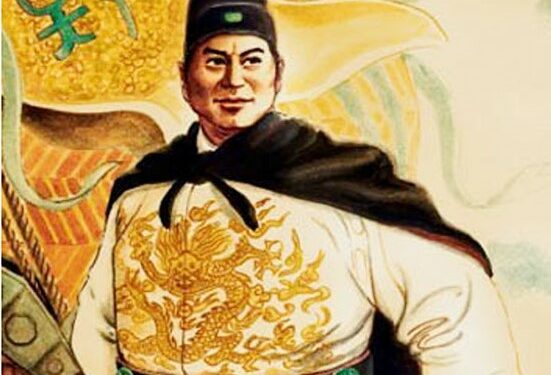
This however is not within the remit of this article. In this article, I would like to focus on another trilingual inscription on a stone tablet stele, left by the Chinese Admiral Zheng He, and dated 15th February 1409, in Sri Lanka.
It was originally inscribed in Nanjing in China itself and discovered in 1911 in Galle, and now preserved in the Museum in Colombo. This stone tablet with inscriptions in Chinese, Persian and Tamil signals the arrival of the Chinese fleet and invokes the blessings of Buddha and the Hindu God Vishnu whom the inscription mentions as Thenavaran Nayanar” and refers to an endowment that Zheng He, had presented to the Vishnu Devale at Devinuwara and to a Mosque.
Prof. Sasanka Perera in a very interesting and historically researched article titled Veera Alakeshvaras Phlight signals from the past,” published in The Island of 28th April 2021, to which I am indebted, refers to this inscription as a subtle but obvious way of appealing to the socio political sensibilities of large and important communities in The Island at the time”.
So it would appear that the Tamils were an important community in the island at the time. Sinhala does not feature in the inscription.
Veera Alakeshwarar’s clash with the Chinese which I refer to in my article is part of the historical perspective which I wish to draw attention to. It has many lessons for the present , and brings to light the Chinese presence in this country many centuries ago.
To continue with the purpose of Admiral Zheng He’s naval journey, it was part of what was known as the Ming Treasure voyages”. To quote Prof. Perera, the seven voyages under this naval scheme took place between 1405 -1433 AD and was the brainchild of the Ming Emperor Yongle. These voyages were undertaken to expand China’s military, political and commercial Authority across the oceans and to find local allies and establish Chinese spheres of influence in different parts of Asia, parts of the Middle East and places like Mogadishu and Mombasa in Africa.
Before arriving in Sri Lanka Zheng He’s fleet had visited other south east Asian countries where also steles were left behind. All these interventions were made to ensure the stability of maritime routes for Chinese vessels. This is very much in line with what is happening today, with the Chinese Belt and Road initiative”.
The Chinese of that era were aware of the Tamil language and culture both because of the maritime traditions of the Tamils during the era of the great Chola empire but also because Tamil Buddhist monks from Kancheepuram had brought Buddhism to China. The Chola empire in South India which held sway over Sri Lanka also included parts of south east Asia, and had a large maritime fleet and merchant navy. Furthermore, Tamil traders and merchant guilds were active in the Indian ocean and in south east Asia. With the decline of the Chola empire the seas were open for a new naval power and we find the Ming emperor making a strategic move.
To turn to Sri Lanka and Veera Alekeshvara’s encounter with the Chinese, I will have to go back in time to the Alagakkonara/Allagakone family, of which he was a member. This feudal family originally from Madurai or Kancheepuram in Tamil Nadu, settled down in Lanka and became very powerful in the Gampola Kingdom. The father of Veera Alakeshvara also known as Alakeshvara became a Minister in the Kingdom. He fortified a marshy region around the present city of Colombo and called the fortress he built there Jayawardenepura, and the area around became known as Kotte, (which means ‘fort’ in Tamil).
From his fortifications he drove out the northern army of the Arya Chakraverti, who ruled the kingdom of Jaffna, and the tax collectors from this kingdom who were raiding the south western region. Thus, he came to overshadow King Vikramabahu I11rd of Gampola. Subsequently after some infighting with family members Veera Alakeshvara, his son, became king of the Gampola kingdom as Vijayabahu VI , and ruled from 1397- 1411 AD.
However, Veera Alakeshvara like some of our present China critics, was hostile to Chinese intentions in Sri Lanka and launched piracy attacks on the Chinese fleet in Sri Lankan waters with the help of some Muslim chieftains. As a consequence, Zheng He, left Sri Lankan waters as he had other ports of call, but returned to take revenge on Alakesvara.
In 1410/11 Zheng He and his troops attacked Kotte and captured Veera Alakeshvara and his family together with other key political figures allied with him. He was taken as a prisoner to China. In the collected works of Yong Rong 1515, his capture is described as well as his subsequent pardon by the Emperor as follows: thus the August Emperor spared their lives and they humbly kowtowed making crude sounds ( a reference to their language) and praising the sage like virtue of the Imperial Ming ruler.”
But this was not the end of the matter. As Prof. Sasanka points out regime change was the object, and Parakramabahu the Sixth ascended the throne. Chinese records reveal that the new king was chosen by Sinhalese emissaries present at the Ming Court, nominated by the Emperor and installed by Zheng He, using the Chinese military and naval power at his disposal, as a ruler more amenable to Chinas intentions. Parakramabahu VI created a political alliance with the Chinese that allowed expansive political projects such as the Ming Treasure fleet easy access to local waters as well as local political support.”
It is also of interest to note that Sembagha Perumal alias Sapumal Kumaraya, an ethnic Tamil and adopted son of Parakramabahu the Sixth, subsequently conquered the northern Jaffna Kingdom and built the Nallur Kandasamy kovil in Jaffna. His exploits are commemorated by the poet Sri Rahula thera in the Kokila Sandesaya and the Selahini Sandesaya.
Aside from the sense of ‘deja vu’, which Prof. Perera remarks upon, Alakeshvarar’s story has many lessons for us today. We learn that the Tamil community in Sri Lanka was a powerful and respected one, hence the inscriptions in Mandarin along with Tamil and Persian. In the north the Kingdom of Jaffna under the Arya Chakravarti dynasty was as powerful as the other kingdoms and at that time was threatening Kotte and even extracting taxes from regions in the South.
Here too it was ethnic Tamils such as Alakeshvara senior who led the defense of the Kotte and Gampola kingdoms, and built Jayawardenapura, and it was Sembagha Perumal who later defeated the Arya Chacraverti and brought the Jaffna kingdom under the rule of Parakramabahu VI.
Ethnic differences were subsumed, and Sinhalese and Tamils worked together as one people. The wars were for territory, with kings fighting kings and not between ethnic groups. It was only with the arrival of the Western colonial powers starting with the Portuguese that ethnic differences surfaced, perhaps as a consequence of a divide and rule policy.
Another lesson we learn is that the Chinese political presence in the island is not something new. Furthermore Chinese trade was a key factor in the Sri Lankan economy as vindicated by the large collection of Chinese coins in Yapahuwe, which fact is adverted to in Prof. Perera’s article citing Prof. Sudarshan Senviratne. So, the resumption of Chinese political and economic activity in the island is not suprising.
Chinese history records that after the great naval expeditions of Zheng He, there was a change in China’s policy and internal constraints made the country turn inwards. It is now clear that China is resuming its old policy as evidenced by Admiral Zheng He’s naval expeditions, and is once again engaging in expanding its military, political and commercial authority across the globe vide the Belt and Road Initiative.
The Port City project in Sri Lanka is part of this grand design. The Port City project can bring benefits to Sri Lanka too, but it is the responsibility of the Sri Lankan Government and people to see that Sri Lanka’s interests are adequately protected and they cannot fault China for any short fall as every country looks after its own interests.
In the context of the lessons we learn from the Veera Alakeshvara episode, Tamil politicians would be well advised to be more mindful when making protests at what they perceive to be Mandarin taking precedence over Tamil. We do not have to kowtow to the new Emperor in Beijing, and protests must surely be made when called for, but made courteously, recognizing that our cultures Tamil and Chinese, have co -existed enriching each other over many centuries as in the spreading of Buddhism by monks from the Tamil country, and the extensive trade as in the exchange of cotton goods for silk between the two civilizations.
We have seen from the Galle Inscription that China gave the Tamil language pride of place in Sri Lanka at a certain point of time, and I may mention similar inscriptions have also been left by them in other south Asian countries. At that time Tamil was a language of commerce and trade in the Indian Ocean region and the Tamil Kingdoms of South India were powerful entities.
Similarly, the Persian language held sway for these reasons. Interestingly we learn from the Moroccan Traveller of the 14th Century, Ibn Batuta, who visited the kingdom of Jaffna, that the king Arya Chackraverti held control of the trade in pearls, had contact with foreign merchants and could speak Persian.
It remains to be seen whether the Tamil language once again regains its lost position and the respect that entails. The Trilingual stele in Galle invokes the blessings of the Hindu deity the Thenavaran Nayanar” Vishnu, for a peaceful world built on trade.
For the present. we have to recognize that China has come to stay as a power in the region, in a world built on trade. We can be proud that two Asian nations India and China are emerging as the super powers of the 21st century and go with the trend giving due consideration to both countries in our political and economic policies.
The Federation of Sri Lankan Muslim Associations Qatar (FSMA-Q), under the guidance of the Sri Lankan embassy in Qatar, has provided 60 medical oxygen cylinders to help in the fight against Covid-19 back in Sri Lanka.
The Federation of Sri Lankan Muslim Associations Qatar (FSMA-Q), under the guidance of the Sri Lankan embassy in Qatar, has provided 60 medical oxygen cylinders to help in the fight against Covid-19 back in Sri Lanka.The support from FSMA-Q came in response to the call of the Sri Lankan government to expatriate Sri Lankans across the world in the fight against the pandemic by way of assisting in the provision of emergency medical supplies. In a statement yesterday, FSMA-Q, the apex body of all Sri Lankan Muslim organisations in Qatar affiliated to the embassy, said it rallied all its member organisations to “support this noble cause by answering the government’s call to help their motherland during this hour of need”. With the generous assistance of its member organisations, FSMA-Q was able to donate 60 medical oxygen cylinders through the embassy, to be airfreighted to Sri Lanka as urgent medical relief supplies. This will be a significant addition to the medical supplies that have already been provided as donations by other community organisations and well-wishers in Qatar, the statement notes. A ceremony was held observing Covid-19 precautionary protocols to hand over the oxygen cylinders to the Sri Lankan ambassador to Qatar, Mohamed Mafaz Mohideen, on June 11. Besides the ambassador, present on the occasion were FSMA-Q president Mohamed Rinoz, vice-president and project co-ordinator Mohamed Lafir and Executive Committee members. Mohideen thanked FSMA-Q and its member associations for giving their support and co-operation to help their motherland during this time of need by providing 60 medical oxygen cylinders, which will go a long way in saving the lives of fellow Sri Lankan citizens back home. The FSMA-Q president thanked all the members for giving their full support to this initiative in addition to focusing on the projects of their respective associations. He added FSMA-Q has always been at the forefront of supporting the Sri Lankan community back home during any calamity or disaster in the past, and thanked the ambassador as well as the embassy for the encouragement and guidance provided in making this project a success.
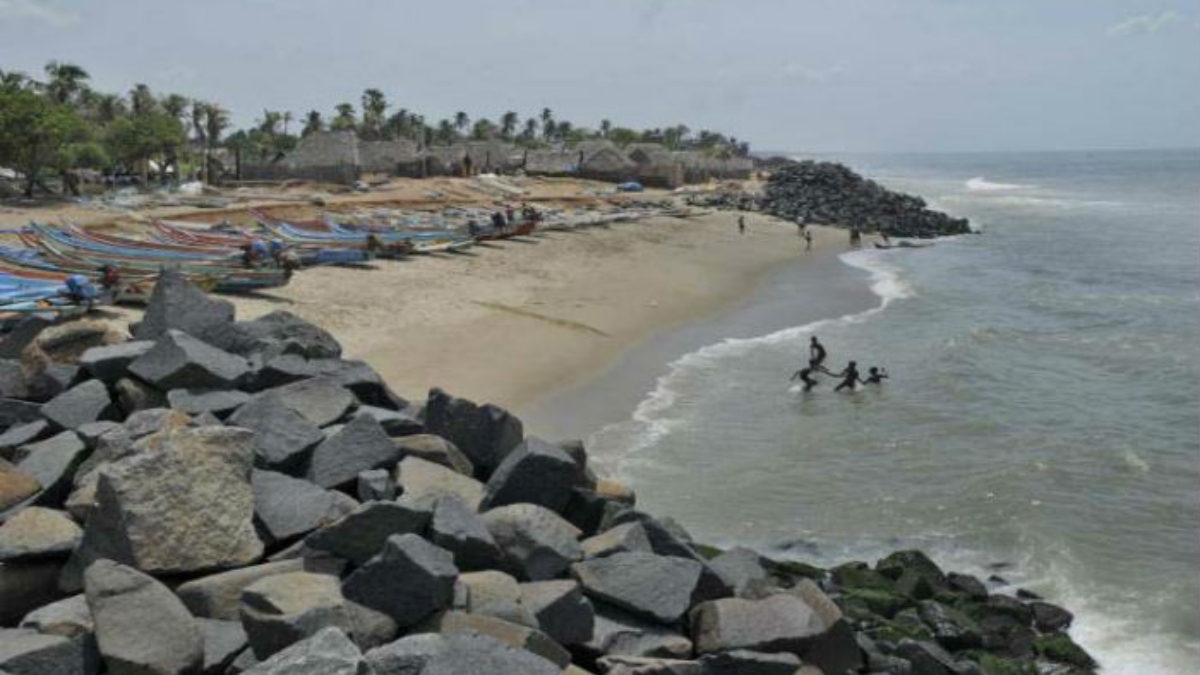
The Tamil Nadu state police and Central intelligence agencies have been on their feet and high vigilance after threats of an armed group trying to infiltrate from Sri Lanka were received.
The Tamil Nadu state police and Central intelligence agencies have been on their feet and high vigilance after threats of an armed group trying to infiltrate from Sri Lanka were received. Security has been tightened along TN coastal areas after receiving news of infiltrators attempting to enter with rifles.
https://youtu.be/vLGjdH8PPkM
According to sources, an alert was issued by a Central intelligence agency on Saturday evening and the police have stepped up vigil in the towns of Kanyakumari, Toothukudi, Rameswaram, as well as in Chennai.
According to informed intelligence sources, a boat carrying armed operatives was seen heading towards Rameswaram coast. However, the sources revealed to one media houses that the exact identity of these people are not known and no details also of the organization that they belong to.
According to inputs received, security has been beefed up and an intense vigil is being maintained in the border areas with Karnataka as well. On other hand, recently Tamilian leaders called upon the state government to urge the Centre to pursue legal action over Chinese domination and not to allow a Galwan like situation to develop in the state.
Citizens from India, Nepal, Pakistan, Bangladesh and Sri Lanka are affected
Bahrain has indefinitely suspended giving work permits to people from coronavirus red list countries who are outside the kingdom, a representative of the Labour Market Regulatory Authority told The National on Sunday.
For the time being, individuals who are in India, Pakistan, Sri Lanka, Bangladesh, and Nepal are not able to gain work permits in Bahrain,” he said.
“The decision was put in place on May 24, and we are still unsure of when it will be lifted.”
Near the end of May, Bahrain suspended the entry of travellers from countries on its red list in response to the rising number of Covid-19 infections and deaths.
If individuals holding citizenships from countries that are on the red list are inside of Bahrain then they can apply or renew their work permits,” the representative said.
Bahrain’s national medical committee, established to address the pandemic, will assess which countries will be added to or removed from the list according to certain criteria, he said.
Bahraini citizens and residency visa holders arriving from red list countries are allowed in but must present a negative PCR test taken no more than 48 hours before flying.
The kingdom also reintroduced mandatory quarantine for all non-vaccinated travellers arriving in Bahrain.
Travellers now have to take a PCR test before flying and on arrival, and then complete a 10-day home or hotel quarantine.
Last week, the government announced an extension of its measures put in place to curb the spread of the pandemic.
Shopping malls, stores, restaurants, coffee shops, swimming pools, beauty salons and barber shops will be closed for another two weeks.
“In order to achieve the goals set and based on positive results, we have decided to extend the national lockdown for a period of two weeks starting from Friday, June 11, to Friday, June 25,” the medical committee said.
Authorities first announced the closures on May 27.
Minister of Energy Udaya Gammanpila, addressing the criticisms over the recent price hike of fuel, says that all he did was informing the public of a collective decision made by the government including the President and the Prime Minister.
Holding a press conference today (June 13), the Minister of Energy responded to the heavy criticisms and calls to step down from his position over the fuel price hike.
On Friday (June 11) the Ceylon Petroleum Corporation (CEYPETCO) and Lanka Indian Oil Corporation (LIOC) announced an increase in fuel prices.
Sri Lanka Podujana Peramuna (SLPP) General Secretary MP Sagara Kariyawasam, yesterday (June 12) issued a statement that the subject minister must take complete responsibility for pushing the people into more difficulties with a fuel price hike amidst the COVID-19 pandemic. The statement called the subject minister to step down from his position.
Explaining the process behind the increase in fuel prices, Minister Udaya Gammanpila stated that the decision was taken on June 09 by the Cabinet Sub Committee on Cost of Living following lengthy discussions.
The Minister further pointed out that the Sub-Committee consisted of President Gotabaya Rajapaksa, Prime Minister Mahinda Rajapaksa, Minister of Trade Bandula Gunawardena, Minister of Agriculture Mahindananda Aluthgamage, Minister of Power Dullas Alahapperuma, Minister of Sports and Youth Affairs Namal Rajapaksa, State Minister of Finance Ajith Nivard Cabraal, and State Minister of Consumer Affairs Lasantha Alagiyawanna in addition to himself, as the Minister of Energy.
He further said that he received written consent from the Prime Minister on June 10 regarding the price hike.
All I did was inform the public of a collective decision made by the government including the President and the Prime Minister,” he said.
Gammanpila pointed out that, while a fuel price hike is usually announced by the Ministry of Finance, volunteered for this task in order to ‘protect the President and the Prime Minister’.
Sagara Kariyawasam did not attack me; he attacked the only President made from his party, President Gotabaya Rajapaksa, and his party leader Prime Minister Mahinda Rajapaksa,” he said.
The Energy Minister says that the SLPP General Secretary inconvenienced the Prime Minister by inflicting a blow on the Prime Minister using a statement issued with the letterhead containing the Prime Minister’s photograph.
Kariyawasam has committed a grave mistake by inflicting a heavy blow on their decision, Gammanpila said.
Minister Udaya Gammanpila further said, The intelligent people of this country will decide whether it is I or Sagara Kariyawasama who should resign from their post”.
The Energy Minister also revealed that many senior members of SLPP had informed him that there had been no internal party decision to issue such a statement against him. Further, neither party leader Mahinda Rajapaksa nor party chairman Prof. G. L. Peiris had been aware of such a statement, he added.
Thereby, Gammanpila says that he challenges Kariyawasam to reveal the names of the senior members of SLPP who took part in making a decision to issue the relevant statement.
Further, Gammanpila also publicly challenged Kariyawasam to a public debate if he is able to prove that Gammanpila is behind the country’s energy crisis.
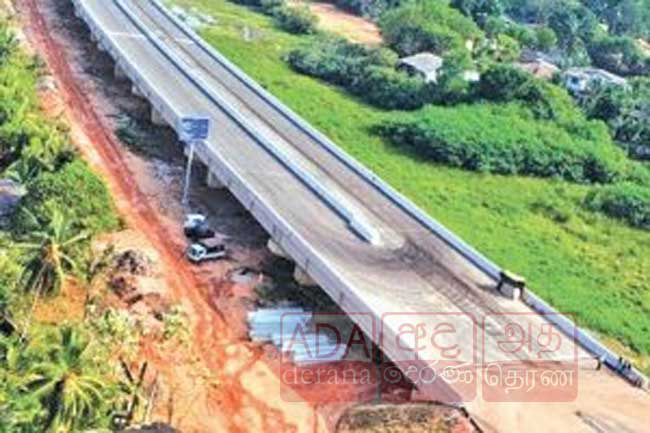
The construction work on the Central Expressway in the Gampaha District will be temporarily suspended, said Minister of Tourism Prasanna Ranatunga.
The work will be suspended until a final decision is reached after reviewing the construction plan, he said.
A number of areas in the Gampaha District have been inundated due to the recent heavy rains and there have been allegations from various parties that such a situation has arisen due to the construction of the Central Expressway.
The latest fuel price hike is a step taken to stabilize the national economy, bank interest rates, and foreign reserves as well as to secure and improve the health and welfare of the public, President’s Media Division said.
Issuing a statement, the PMD stated that the Cabinet Sub Committee on Cost of Living chaired by President Gotabaya Rajapaksa, with the participation of Prime Minister Mahinda Rajapaksa and the Ministers in charge of the subject, focused on a number of key reasons for the increase in fuel prices.
These price increases are just one key factor in a common plan to strengthen the local economy, the PMD said.
It is a decision to strengthen the country’s banking system, maintain low interest rates, reduce foreign exchange spending, strengthen the exchange rate, secure the health and well-being of the people, and transform the import-dependent consumer economy into an investment and consumption economy based on domestic production, PMD further said.
World leaders meeting in Cornwall are to adopt strict measures on coal-fired power stations as part of the battle against climate change.
The G7 group will promise to move away from coal plants, unless they have technology to capture carbon emissions.
It comes as Sir David Attenborough warned that humans could be on the verge of destabilising the entire planet”.
He said G7 leaders face the most important decisions in human history.
The coal announcement came from the White House, which says it is the first time the leaders of wealthy nations have committed to keeping the projected global temperature rise to 1.5C.
That requires a range of urgent policies, chief among them being phasing out coal burning unless it includes carbon capture technology.
Coal is the world’s dirtiest major fuel and ending its use is seen as a major step by environmentalists, but they also want guarantees rich countries will deliver on previous promises to help poorer countries cope with climate change.
The G7 will end the funding of new coal generation in developing countries and offer up to £2billion for poorer nations to stop using the fuel.
Climate change has been one of the key themes at the three-day summit in Carbis Bay, Cornwall.
Leaders of the seven major industrialised nations – the UK, US, Canada, Japan, France, Germany and Italy – are expected to set out global plans to reduce emissions from farming, transport, and the making of steel and cement.
And they will commit to protecting 30 percent of global land and marine areas for nature by 2030.
They are also expected to pledge to almost halve their emissions by 2030, relative to 2010 levels.
The UK has already surpassed that commitment, previously promising to cut emissions by the equivalent of 58% on 2010 levels.
Prime Minister Boris Johnson will hold a press conference on Sunday afternoon, the final day of a summit where he has clashed with EU leaders over the Brexit deal’s requirements for checks on goods from Britain to Northern Ireland.
And after the summit, US President Joe Biden will be met by a Guard of Honour at Windsor Castle, where he will have tea with the Queen.
‘Plain to see’ A video message from Sir David Attenborough will be played to world leaders in Cornwall at the summit on Sunday as they set out their plans for meeting emissions targets.
Speaking beforehand, Sir David said: The natural world today is greatly diminished. That is undeniable.
Our climate is warming fast. That is beyond doubt. Our societies and nations are unequal and that is sadly plain to see.
But the question science forces us to address specifically in 2021 is whether as a result of these intertwined facts we are on the verge of destabilising the entire planet.
If that is so, then the decisions we make this decade – in particular the decisions made by the most economically advanced nations – are the most important in human history.”
As well as the measures on coal and ending almost all direct government support for the fossil fuel sector overseas, the G7 are expected to phase out petrol and diesel cars.
BBC environment analyst Roger Harrabin said there had been a crucial lack of detail on two questions so far: the proposed green masterplan to help developing countries get clean technology and the amount of cash richer [countries] will hand to the poorer to tackle the climate crisis.”
China, which according to one report was responsible for 27% of the world’s greenhouse gases in 2019 – the most of any country – is not part of the G7.
The G7 leaders will endorse a plan aimed at reversing the loss of biodiversity – a measure of how many different species live in ecosystems – by the end of the decade.
Prime Minister Boris Johnson, who is hosting the summit, is also launching a £500m fund to protect the world’s oceans and marine life.
The blue planet fund” will help countries including Ghana, Indonesia and Pacific island states, tackle unsustainable fishing, protect and restore coastal ecosystems like mangroves and coral reefs, and reduce marine pollution.
Hundreds of protesters brought streets to a standstill in Cornwall on Saturday, with many campaigning for cleaner seas and action on climate change.
A major UN report from 2019 said that global emissions of carbon dioxide must peak by 2020 to keep the planet from warming more than 1.5C – the so-called safe limit.
Mr Johnson said protecting the planet was the most important thing we as leaders can do for our people”.
There is a direct relationship between reducing emissions, restoring nature, creating jobs and ensuring long-term economic growth,” he said on Saturday.
As per the main news item that appeared in The Island dated 9/06/2021 under the title ‘Covid time bonanza: Luxury SUVs for MPs coming, after all!’, the government was not in a position to cancel the order placed for the import of luxury vehicles for the 225 MPs as the opening of Letters of Credit meant guaranteed payment and Letters of Credit had been opened through a State Banks, Sri Lanka faced the prospect of being blacklisted if a unilateral decision was taken on the matter.
The above reveals expressed by the Media Minister and co-Cabinet spokesperson Keheliya Rambukwella is in contrary to what we learned earlier after reading a statement issued from The Prime Minister’s Office in the last week of May which stated that the previous cabinet paper for the import of 399 vehicles at a cost of Rs 3.7bn had been withdrawn as the financial situation was not conducive to import vehicles. It is also in contrary to the SLPP’s 2019 presidential election manifesto which assured that vehicles wouldn’t be imported for members of parliament for a period of three years.
It is interesting to note how the current opposition politicians who were barking at every and each move made by the government, since its inception, have gone dumb and deaf when the government move on vehicles made at a time the country was struggling to cope with Covid-19 fallout.
It is hard to believe
that a single MP, including new MPs, in the current Parliament does not possess
his/her own vehicles. Unlike during 1950s,
it is also hard to believe that any one of the current MPs uses public
transport or hire vehicles to attend parliamentary sessions or any of their
activities. We remember how the government Ministers like D.S. Gunasekera , W.
Dahanayake etc who were MPs in the 1956-1960 Parliament used public transport
when attending Parliamentary sessions. We also remember, around 1959, how
Minister Gunasekera was fined by the railway ticket checkers for his failure to
show his railway pass issued for MPs.
On the other hand, as
per media reports, the
Government, including the Minister Pavithra Wanniarachchi, has requested
affluent locals, INGOs, local NGOs and Sri Lankan living in foreign countries
to donate their allocated funds for the remaining quarters of the year for the
battle against the COVID-19 pandemic which has surged to critical proportions
in recent weeks.
While our politicians are attempting to import
luxury vehicles costing billions of Rupees at this crucial stage, New Zealand’s
Parliamentarians, including PM, ministers and public service chief executives made
an example to the entire world by making a commitment to take a 20% pay cut
lasting six months to show solidarity with those affected by the corona virus
outbreak.
What the government should do at this stage,
if the withdrawal of the said cabinet paper is not preventing the import of
luxury vehicle for MPS and the Prime Minister’s office is really keen in
avoiding the waste of money, is to auction the vehicles soon after arrival (or
if already arrived) and use proceeds to counter the epidemic, as the death toll continues to rise.
The Darusman Report (2011) which was commissioned by the UN Secretary-General pointed out that that there was a need for the UN to review its actions in the Eelam War IV. Clearly, it was felt that the UN had failed in its task of manipulating the Eelam war. Sri Lanka had won the Eelam war.
UN Secretary-General then established an Internal Review Panel under Charles Petrie, to review UN actions in Sri Lanka during the final stages of the war in Sri Lanka and after. The Petrie report stated that from 2003 to 2007, the UN had wanted to establish a human rights operation in Sri Lanka, but failed.
In 2007 and 2008, the UN Department of
Political Affairs (DPA) in New York, considered various tactics in Sri Lanka, which
included a political solution to the conflict, a special envoy, establishing a
human rights field presence and ensuring accountability for past human rights
abuses and violations of international humanitarian law.
Out of these, UN decided in 2007, to focus on high-level visits by
senior UNHQ officials who could present UN concerns and suggestions to the
government .In 2007 alone Sri Lanka was visited by * USG-Humanitarian Affairs , *Head of the
Office for the Coordination of Humanitarian Affairs *the Under Secretary-General
(USG)-Humanitarian Affairs, *Head of the Office of the High Commissioner for
Human Rights and *the Representative of
the Secretary-General on the Human Rights of Internally Displaced Persons
(RSG-IDPs).
USG-Humanitarian Affairs, conducted more
visits to Sri Lanka than any other official, the Petrie Report said. However, the Government rejected most of the
proposed initiatives, including the appeal by the UN for a field operation, which meant
a sort of peacekeeping mission.
The UN’s relationships with the Government
were difficult, said Petrie Report, due to the Government stratagem of UN
intimidation.” Government of Sri Lanka had
used visas to control UN staff critical of the government. The Government
declared several Resident Coordinators persona non grata, or made them
understand that their visas were at risk of being withdrawn, while also
rejecting proposed replacements with previous experience in crisis
situations. The Government refused to
give them visas when UN tried to send in more staff to deal with the
humanitarian aspect of the War, continued Petrie Report.
In 2007 the Government formally launched its
military campaign in the Wanni against the last remaining area under LTTE
control. Over the following 18 months, the fighting gradually intensified and
in September 2008, as the conflict entered its final stages, the Government
officially informed the UN it could no longer guarantee the safety of staff in
the Wanni.
Within
three weeks, the UN withdrew all international staff, effectively ending UN
assistance operations from within the Wanni. The UN also tried to withdraw its
entire national staff, but the LTTE prevented staff dependents from leaving,
and many national staff consequently chose to remain behind.
The Petrie report also looked at developments
at the apex of the UN system. By 2007, UN was discussing Sri Lanka at its
Headquarters in New York. At UNHQ Sri Lanka was on the agenda not just of the
Policy Committee but also of the Executive Committee on Humanitarian Affairs
(ECHA), and an Inter-Agency Working Group on Sri Lanka (IAWG-SL), said Petrie
Report.
But Sri Lanka was never formally considered by
Member States at the UN, whether at the Security Council, the Human Rights
Council, or the General Assembly, the report said. From late 2008, a small
group of non-permanent members of the Security Council had become deeply
concerned by events and by early February 2009 wished the Security Council to
formally consider the situation in Sri Lanka. However, they did not have sufficient
support within the Security Council for this.
Sri Lanka was discussed in ‘informal
interactive dialogue’ at the Security Council, but this had no formal status,
led to no outcomes and left no formal minutes of its deliberations. The Sri
Lankan ambassador to the UN participated in the meetings, providing the
Government’s version of events and potentially influencing discussions.
Foreign Ministers from two member countries of
the Security Council went to Sri Lanka in late April 2009. On 12th May, 2009 they called for
Sri Lanka to be placed on the Security Council’s agenda. But this came too late
to change the course of events, said Petrie Report.
Above all, UN action in Sri Lanka was not
supported by Member states, said Petrie Report. In the absence of clear Security Council
backing, the UN’s actions lacked adequate purpose and direction. Member States
failed to provide the Secretariat and UN Country Team in Colombo with the
necessary support.
Petrie report said that the UN office in
Colombo had insufficient political expertise and experience in armed conflicts,
human rights and humanitarian law issues to deal with the extraordinary
challenge” that Sri Lanka presented.
A UN staffer had told Rajiva
Wijesinha that
the UN had ‘got this wrong.’ Most of the UN staff had worked in countries with
no established government and no regular provision of basic social services. They did not know how to negotiate with a
strong government.
The UN representation in Sri Lanka was too
weak to be effective, said Petrie Report. The UN office in Sri Lanka was headed
by Resident Coordinator who reported to the Secretary-General through the UN
Development Programme (UNDP).
The Resident Coordinator was
supported by a Human Rights Adviser who provided a link to OHCHR, a
Reconciliation and Development Adviser who provided a link to DPA, a
communications adviser who was also a spokesperson, and a gender adviser.
As the
Eelam issue escalated a Crisis Management Group was established with Resident
Coordinator, the country heads of
UNICEF, the UN High Commissioner for Refugees (UNHCR), the World Food Programme
(WFP), and the UN Office for Project Services (UNOPS) and UN office for the
Coordination of Humanitarian affairs, (OCHA). The group’s initial focus was on
the logistical and operational aspects of UN action in the war area.
The events in Sri Lanka highlight the urgent
need for the UN to update its strategy for engagement with Member States in
situations where civilian populations caught up in the midst of armed conflicts
are not protected in accordance with international human rights and
humanitarian law, said Petrie Report. The International Resource Panel of the
UN found a systemic failure” in the UN response during the final months of Sri
Lanka’s conflict, evoking comparisons to UN failures in Rwanda in 1996 and
Srebrenica in 1995, said Petrie Report.
The report was presented to the
Secretary General in November 2012, and led to a new policy within the UN
called Rights-up-Front. In
2013, in direct response to the Petrie Report, the Secretary-General launched
the Human Rights Up Front initiative. He issued a Human Rights Up Front
Detailed Action Plan (updated March 2014). This called on the UN system to play
a strong role to prevent human rights crises.
There has been a new development in the role
of the UN Resident Coordinator, observed Leelananda de Silva writing in October
2019. For the past 50 years or so, the UNDP Resident Representative has also
been the UN Resident Coordinator. It was an office involved with development”.
The UNDP funded the post of UN Resident Coordinator in all developing countries
where they were present.
A few months ago, the UN Secretary General
delinked the role of the UN Resident Coordinators from the UNDP and brought it
under Secretary General. The office of Secretary General of the UN is a
political one. By
changing the role of the RC, the Secretary General has now a largely political
representative in Colombo.
Sri
Lanka needs to be more aware of this changed role of the UN Resident
Coordinator. What does this official do? And what kinds of reports does this
official send to the Secretary General?
I
understand that recently there was a request from the UN Human Rights office in
Geneva, to appoint a representative in Colombo, and that was turned down by the
Government. Now with this appointment, the UN has got a political office on the
ground here. The government should be aware of his precise role in this country.
Leelananda
also looked at protocol. UN personnel in Colombo are expected to meet
government officials at an appropriate level. In the 1970s,
when I was Director of Economic Affairs in the Planning Ministry, I met the UN
Resident Coordinator and the UN Resident Representative in my office from time
to time. The RC hardly met the Permanent Secretary or a Minister. The
Prime Minister they never met unless on some ceremonial occasion. In New York
or Geneva, High level UN officers meet our
Ambassador. They do not meet first or second secretaries of our Embassy.
Now,
the practice has changed. Recently I saw some photographs of the UNDP Resident
Representative (not the UN Resident Coordinator) meeting the President and the
Prime Minister. This UNDP representative is a mid-level official of the UN. He
does not have official access to President and the Prime Minister. This means
that High level UN officers do not need
to seek an appointment with Head of state, the junior
officials can attend to the matter for them.
There
is another problem when protocol is discarded, said Leelananda. When UN
officials in Colombo can conduct their business at the ministerial level, why
should they bother with officials? They can go above their heads.
Leelananda also looked at UN aid. Initially, there was a certain amount of
development aid, especially in the form of technical assistance from UN bodies.
Now that has ceased, as Sri Lanka is no longer eligible for concessional
assistance.
UNDP
offices are now channeling aid from various bilateral donors. The aid funds
come from bilateral donors to UN bodies and these UN bodies fund projects in
Sri Lanka. These UN bodies have to report to these bilateral donors. In fact,
their very existence in a country now depends on bilateral funding of projects.
These UN bodies are no longer independent aid donors, as they used to be,
warned Leelananda. (Continued)
Covid-19 has mutated significantly, and the virus is now much harder to treat than it used to be. That’s according to the head of Moscow’s Kommunarka Hospital, which last year became the city’s main coronavirus treatment facility.
Speaking to Moscow radio station Ekho Moskvy on Thursday, the hospital’s chief physician, Denis Protsenko, who became a household name in 2020 due to his role at the forefront of the country’s battle against Covid-19, explained that it has become much harder to treat ill patients.
This makes us think that the virus has also changed and has mutated in this year and a half,” he said, before encouraging people to get vaccinated against the disease.
According to Protsenko, the Kommunarka hospital is now filled with a large number of elderly patients, as well as people who are overweight or diabetic. Furthermore, collective immunity in the capital is still under 50%, he said.
On Wednesday, Deputy Moscow Mayor Anastasia Rakova revealed that the city would open up additional hospital beds in the upcoming days, boosting its capacity by 1,500. That announcement came after Mayor Sergey Sobyanin ordered local authorities to ramp up enforcement of sanitary measures, such as the wearing of masks on public transport. However, he also noted that he had no plans to introduce any new lockdowns.
According to the official numbers, Russia recorded 12,505 new cases nationwide on Friday – the highest figure since February 22. The capital is bearing the brunt of the latest wave, with 5,853 new infections detected in just 24 hours – 47% of all cases recorded. Moscow is home to just 10% of the country’s population.
However, perhaps most worryingly, Moscow’s coronavirus spread, measured by the so-called R rate, soared to 1.6 in the past 24 hours – the highest seen since September 30 last year.
According to recent US research, Covid-19 may lead to the type of brain changes common in Alzheimer’s disease, and a team of scientists has identified the mechanisms by which it may be causing such impairments.
Cognitive disorders, including dementia, are increasingly being reported as a complication of the highly contagious SARS-CoV-2 virus that causes Covid-19, researchers behind the recent study at the Cleveland Clinic in Ohio have revealed.
Reports of neurological complications in Covid-19 patients and ‘long-hauler’ patients whose symptoms persist after the infection clears are becoming more common, suggesting that [the virus] may have lasting effects on brain function,” said the authors of the study, which was published this week in the journal Alzheimer’s Research & Therapy.
The researchers’ aim was to uncover the mechanisms responsible for brain-associated complications such as delirium and the loss of taste or smell that are often found in novel coronavirus patients. In order to do so, they compared on a molecular level the host genes of Covid-19 and those responsible for some neurological disorders.
Having collected the data of both Covid-19 patients and people suffering from Alzheimer’s disease, they used artificial intelligence to measure the proximity between them. They also analyzed any genetic factors that might allow the new virus to infect brain tissues and cells, identifying significant network-based relationships” between Covid and Alzheimer’s. They also concluded that Alzheimer’s patients may be more defenseless against the deadly virus, as they have a decreased number of certain protective antiviral genes.
While the researchers found little evidence that the virus targets the brain directly, they discovered close network relationships between the virus and genes/proteins associated with several neurological diseases, most notably Alzheimer’s, pointing to pathways by which Covid-19 could lead to Alzheimer’s disease-like dementia,” the Cleveland Clinic stated.
Having proved the overlap between Covid-19 and brain changes common in Alzheimer’s, the researchers will now study the processes by which the novel coronavirus may lead to cognitive disorders and how it might be prevented from doing so. Identifying how Covid-19 and neurological problems are linked will be critical for developing effective preventive and therapeutic strategies to address the surge in neurocognitive impairments that we expect to see in the near future,” the study’s lead author, Feixiong Cheng, said.
Brain-affecting complications in Covid-19 patients and those ill with other coronaviruses have been confirmed by previous studies, the Cleveland researchers point out. One in five patients who have recovered from the severe acute respiratory syndrome (SARS-CoV-1) or the Middle East respiratory syndrome (MERS) have reported memory impairments, while people suffering from the novel coronavirus have also experienced symptoms such as disorientation, inattention, and confusion. Covid-19 survivors who required intensive care unit admissions might be at an even greater risk of neurological and psychiatric disorders, another study of more than 230,000 patients has shown.
COLOMBO: Sri Lanka is seeking an interim claim of US$40 million from the operator of a fire-ravaged cargo ship to cover part of the cost of fighting the blaze, officials said on Saturday (Jun 12).
Sri Lanka’s attorney general has sent the claim to lawyers representing X-Press Feeders, the ship’s operating company, said Darshani Lahandapura, head of the state-run Marine Pollution Protection Authority.
She said authorities were still assessing the total damages, and the interim claim seeks compensation for expenses from May 20, when the ship caught fire, through Jun 1.
The fire broke out while the Singapore-flagged MV X-Press Pearl was anchored about 9.5 nautical miles (18km) northwest of the capital, Colombo, and waiting to enter the country’s main port.
The Sri Lankan navy believes the blaze was caused by the vessel’s chemical cargo, which included 25 tonnes of nitric acid and other chemicals, most of which was destroyed in the fire. But debris including burned fiberglass and tons of plastic pellets have already polluted nearby beaches. There are concerns that a spill of remaining chemicals and oil on the ship could devastate marine life.Advertisement
However, Sri Lankan authorities and the ship’s operator say there’s still no large oil spill.
The fire burned for 12 days before being extinguished last week. The ship then began sinking, and attempts to tow it into deeper waters failed when the vessel’s stern sank to the seabed.
The ship remains partly submerged in waters about 21m deep.
On Friday, the government said it was testing water samples to determine whether the ship is leaking oil. The tests were prompted by satellite images from Planet Labs. that showed a substance that could be oil in the water near the ship.
A Colombo court has banned the ship’s captain, chief engineer and assistant engineer from leaving the country.Source: AP/jt
62 more COVID-19 deaths confirmed by the Director General of Health Services increasing the total COVID 19 deaths in Sri Lanka to 2,073.
Death toll due to COVID 19 from 08 to 31 May 2021 as confirmed yesterday (11) by the Director General of Health Services – 07 Death toll due to COVID 19 from 01st June to 10th June as confirmed yesterday (11) by the Director General of Health Services – 55 No COVID death was reported so far yesterday, June 11.
May 08 – 01 death May 15 – 01 death May 23 – 02 deaths May 26 – 01 death May 31 – 02 deaths June 01 – 07 deaths June 03 – 02 deaths June 05 – 04 deaths June 06 – 07 deaths June 07 – 08 deaths June 08 – 08 deaths June 09 – 14 deaths June 10 – 05 deaths Total number of COVID 19 deaths as confirmed so far yesterday (June 11) – 2073
Details of the deceased Gender Female – 27 Male – 35 Area of Residence Panadura, Moratuwa, Alubomulla, Gonawila, Govinna, Kandy, Galle, Thimbirigaskatuwa, Kochchikade, Negombo, Santhiveli, Balangoda, Ninthavur 10, Sammanthurai, Pathana, Baduraliya, Walallawita, Bombuwala, Waskaduwa, Mahagama, Kalutara, Dodangoda, Melsiripura, Ambakote, Kurunegala, Panagamuwa, Maduragoda, Merahawatta, Kinniya, Kattankudy 04, Eravur 01, Kattankudy 03, Raththota, Monaragala, Anuradhapura, Mathugama, Kotikawaththa, Nagollagama, Colombo 12, Kadugannawa, Gampola, Seeduwa, Hemmathagama, Pitigala, Niyagama, Karandeniya and Kahaduwa. Age Group 30-39 years – 02 40-49 years – 03 50-59 years – 04 60 -69 years – 13< 70-79 years – 21 80-89 years – 17 90-99 years – 02 Over 99 years – 00
Place of Death At home – 13 On admission to hospital – 05 While being treated in hospital – 44
Causes of Death COVID 19 infection associated with diseases such as COVID Pneumonia, Severe COVID 19 pneumonia, Hypertension, Ischaemic heart disease, Chronic renal disease, Diabetes, Dyslipidaemia, Cerebro vascular disease, Acute kidney injury, Multi organ failure, Acute<br />respiratory distress syndrome, Occlusive coronary artery disease, Sepsis, Chronic kidney disease, Chronic renal failure, Chronic lung disease, Large pulmonary embolism, Cecal adenocarcinoma, Acute respiratory failure, Stroke, Bronchial asthma, Chronic obstructive pulmonary disease and the complications of Respiratory diseases
The Epidemiology Unit of the Health Ministry reports that another 707 persons have tested positive for COVID-19 in Sri Lanka, moving the daily total of new cases to 2,340.
This brings the total number of confirmed cases of coronavirus reported in the country to 221,277.
As many as 186,516 recoveries and 2,073 deaths have been confirmed in Sri Lanka since the outbreak of the pandemic.
The Epidemiology Unit’s data showed that 32,688 active cases are currently under medical care.
Europe’s drug regulator on Friday identified another very rare blood condition as a potential side effect of AstraZeneca’s (AZN.L) COVID-19 vaccine and said it was looking into cases of heart inflammation after inoculation with all coronavirus shots.
The European Medicines Agency’s (EMA) safety committee said that capillary leak syndrome (CLS) must be added as a new side effect to labelling on AstraZeneca’s vaccine, known as Vaxzevria.
People who had previously sustained the condition, where fluids leak from the smallest blood vessels causing swelling and a drop in blood pressure, should not receive the shot, the EMA added.
The regulator first began looking into these cases in April and the recommendation adds to AstraZeneca’s woes after its vaccine was associated with very rare and potentially lethal cases of blood clotting that come with a low platelet count.
Last month, the EMA had advised against giving a second AstraZeneca shot to people with that clotting condition, known as thrombosis with thrombocytopenia syndrome (TTS).
The committee reviewed six validated cases of CLS in people, mostly women, who had received Vaxzevria, including one death. Three had a history of the condition.
More than 78 million Vaxzevria doses have been administered in the European Union, Liechtenstein, Iceland & Norway and Britain.
In a statement, AstraZeneca pointed to the extreme rarity of CLS cases, at less than 1 in 10 million vaccinated individuals.
We are working actively, in collaboration with regulatory authorities, on risk minimization measures… that includes information to those being vaccinated…information to drive early diagnosis and intervention, and appropriate treatment,” the company said.
Britain’s regulator, the MHRA said it was considering precautionary advice for people with a history of CLS but does not see a causal link with the vaccine.
Two of eight reports of capillary leak syndrome following AstraZeneca vaccination in the UK were in people with a history of the condition, and 40 million doses of the vaccine had been given, it said.
Separately, the EMA said it was continuing its probe into cases of heart inflammation known as myocarditis and pericarditis, primarily following inoculation with the Pfizer/BioNTech (PFE.N), (22UAy.DE) and Moderna mRNA shots, but also after the J&J (JNJ.N) and AstraZeneca vaccines.
U.S. health officials said on Thursday they had registered a higher-than-expected number of heart inflammation cases in young men who received a second dose of the mRNA shots, though a causal relationship could not be established.
Israel’s Health Ministry said this month it had found a likely link to the condition in young men who received the Pfizer/BioNTech shot.
Both Pfizer and Moderna have acknowledged the observations but said a causal association with their vaccines has not been established.
BioNTech said adverse events, including myocarditis and pericarditis, are being regularly and thoroughly reviewed by the companies and regulatory authorities.
More than 300 million doses of the Pfizer-BioNTech COVID-19 vaccine have been administered globally and the benefit risk profile of our vaccine remains positive.”
The United States and Israel have been months ahead of the EU in vaccinating men below 30, who are particularly prone to heart inflammation, giving them potentially more cases to analyse.
The Sri Lanka Podujana Peramuna stated that the Minister in charge of the subject should take the responsibility of increasing fuel prices at a time when the people are under severe pressure due to the COVID-19 pandemic.
A statement issued by the General Secretary of the party Attorney-at-Law Sagara Kariyawasam states that the Minister in charge of the subject should take full responsibility and resign.
The statement stated the party was “deeply concerned” about the government’s decision to increase fuel prices and make it more difficult for the public affected by the COVID-19 pandemic
The completed city will have reclaimed 269 hectares with 116 hectares being handed over to China Communications Construction Company (CCCC), which is the parent company of China Harbour Engineering Company (CHEC). The remaining land, which will be owned by the Sri Lankan Government and will be divided with 62 hectares to be used to set up a financial city and 91 hectares to be used as public spaces.
Since
the 1930s policy changes in education with a bull’s eye on a broader spectrum
of policies that included expanding literacy skills of the population and
ability to use a second language, besides mother tongue. The accomplishment of
the policy was unsuccessful because of many reasons. Before the Donormore
reforms, education provision stuck to religious organizations and the prime aim
of the education was to provide literacy skills and professional skills that
have been provided by professionals in various trades. The invasion of British
attitudes and caste dictions the ability to choose a profession restricted and
the government policy didn’t change the vicious attitudes of society.
The
policy of the State Council on education had been replaced by politics-based
language policy and the media of education provision was especially
disadvantaged to the Sinhala population, which comprised over 65%. Muslim and
Tamils gained language abilities in English because the SLFP government wanted
to attract Muslim votes. Because of not expanding English medium education in
semi-urban and rural schools, Sinhala kids studied in Sinhala medium and gained
an opportunity to receive higher education and gain administration positions
purely based on subject knowledge, ignoring language skills.
The
communication abilities in English had been limited to few schools in urban
areas, educated Sinhala people frustrated with this misguided policy, and many
kids had to gain English communication skills through private tuition. If the
government education policy directed to provide education in Sinhala and
English medium in semi-urban and rural areas Sinhala community would have not
being disadvantaged and the language issue in education might not arise. In the
meantime, financially advantaged urban people are associated with an imprudent decision
that people who can communicate in English are high-class people. This was not
accepted in other countries. The government education policymakers would have
reacted by offering education in English and Sinhala media in all schools in
the country, including schools in interior rural schools. However. Education
policy was not changed and the vicious system being continued by all political
parties in power.
This
issue has not been resolved by the authority and politics, class struggles,
attitude of people, and many other factors involved in deciding on the media of
provision of education. If rural schools offered education in Sinhala and
English media, social changes, especially racism, language problems, caste
dictions, class struggle, and many vicious divisions. Education policymakers
reluctant to make the right decision and they are also involved in vicious
attitudes.
I
observed many countries are successfully using three languages providing
education in Asia-Pacific countries, African, and Latin America and people have
avoided adoring one language over other languages and students have attached as
one nation, resulting from the offer of education in three languages. The three
languages comprising traditional language, major of communication in the home
environment, and a language that communicates at the international level
(English or French or another). The experience in education policymaking and
implementation show it has failed to implement two languages (English and
Sinhala or Tamil and English) as the government did not give priority to the
policy. A certain group of people using religious and cultural factors
prevented the policy implementation process in English and Sinhala or Tamil and
English.
In
Sri Lanka, Sinhala, Tamil, and English have been identified as national
languages and the provision of education could be done in three languages in
any area of the country. For example, kids can provide education using three
languages from early childhood level to complete university education, and the
current problems related to communication, class struggle, socialization can
easily resolve without becoming an issue to address on political platforms.
Neither community group nor a religious group opposed to such language policy.
The reason public statement of the secretary to the ministry of education
reflected education policymakers and agents are reluctant to three languages
policy and why such negative attitudes are major question in Sri Lanka
Sri
Lanka has many facilities for this option, especially books on three languages
available, and teachers also ready for this situation and policymakers are
reluctant to make the judgment because they are associated with vicious
attitudes. I identified the major reason to averse to the policy is top
officers in the department of education hesitant to three language policy and
politicians don’t motivate the three-language policy.
Education
policy development concerns with a broader aspect and needs to consider the
experience in other countries. Sri Lanka needs a policy revolution.
Education could offer
three languages in all schools, from grade one and until university education.
If grade one student learns six subjects: two subjects in Sinhala, two subjects
in English, and two subjects in Tamil could be offered. Some schools in Colombo
offer education in this way and it is successful. The practice could be
expanded to the entire country. In this way, education policy can change. Some
countries in the world successfully offer education in this way.
Sri Lanka can find
resources such as books and teachers from India at a lower cost and the
government can stop scholarship examination and grade 10 examination to conduct
at the school level and save a massive volume of funds. Saved funds in such a
way could use for offering education in three languages.
Vocational education at
certificates two and three could offer in secondary schools in English medium
and students could be provided internationally marketable skills. For this
purpose, schools can combine with technical vocational schools.
School teachers should be
given four-week training each year and the knowledge and skills should be
updated for the education policy.
The
education department has not taken radical policy accomplishments and has not
taken steps to good policy development and education reforms have limited talks
during election periods.
I
watched an interview with the secretary at the department of education it
reflected that the secretary is not a capable person to change education
policies and lead the education system in Sri Lanka. He does not understand
education policies and experience in policy development.
International
schools in Sri Lanka are a joke either government should regulate them or
should organize to give returns to the cost of offering education. Many
International schools do not offer education in three languages and they should
be regulated to respect national policies. International schools do marketing
for schools in developed countries and this should be stopped. For
example, Australia has international
schools but students are like studying in national schools.
School
authorities and parents need to understand fundamentals of education would not
be changed by the ownership style of education. The education should focus to
provide knowledge, skills, value practice at a high quality.
Sarath Wijesinghe President’s Counsel, former Ambassador to UAE and Israel, President Ambassador’s Forum, (currently in United Kingdom) sarath7@hotmail.co.uk
(Sri Lankan Lawyers in the United Kingdom (ASLLUK) made a request from
the British Prime Minister Boris Jonson for vaccinations for Sri Lanka and it
will be followed by a webinar organized by the Ambassador’s Forum and the
Expats Community with the same request, urging the Sri Lankans worldwide to
follow suit. We are informed that many countries have made the same request and
there is a possibility for a favourable response considering the circumstances.
Read below for details on British PM 0044207219568 Boris Jonson Prime Minister
of the United Kingdom, House of Commons, Westminster SW1AOAR to whom the
Lawyers Association has made the request)
We have messed up but must get over the crisis
It is admitted that we have messed up in the second and third waves and
the entire operation on the vaccine process, not having managed well and not
taking prompt steps on time and professionally not meeting the unexpected and
unforeseen demands. Please do not get angry with us on our constructive remarks
to correct ourselves when we are in real danger on looking for a solution. Somebody
must bell the cat and we though we should do it however risky it is. Rich
countries had sufficient funds to combat with expert and scientific knowledge
which we discuss below taking the success story of UK as an example. But to the
credit to the Armed forces and the medical sector we won the first wave over
successfully in an exemplary manner setting an example to the rest of the world
mainly to the credit to the health sector and dedicated armed forces. News we
receive are frightening on possible predictions of thousands and millions of cases
on the way threatening to exceed the Indian situation fearing of deaths, and
uncontrolled crisis situation. This is not the time for a blame game, and not
to find who is responsible; instead we must find a temporary and a permanent
solution by setting aside al differences in the interest of the nation. UK has
proved that vaccines have answered the call to bring the death to zero from
thousands. It may be an uphill task to vaccine majority of citizens until a consorted
effort is exerted by Sri Lankan, and the community world over, including the
network of the Ambassadors, Human Rights Commission in Sri Lanka with funds and
contacts world over and Sri Lankans spread worldwide as one with determined aim
to mobilize on countries with sufficient and excess vaccines to help us win the
war on Covid19.
Covid 19 fast spreading like wildfire
‘Covid 19’ situation is fast increasing worldwide with no visible signs
of a permanent solution preventing deaths, infections and spread of the
pandemic with a tremendous speed compared to the world trends. Virus is so
crafty that it adopts itself with different variants. Despite the developments
in science and technology, no country or a multinational company has come even
near to a permanent cure to the virus attach and the vaccines invented are of
quality and stranded to meet the change, faced by the world. Sri Lanka won the
first wave with ‘’0 ‘’deaths when UK was facing deaths facing over tens of
thousands. Today UK is zero deaths with Sri Lanka facing average 38 deaths
daily with 2123 deaths these days, which is horrifying and worrying indeed.
Apparently UK went through 3 and 4 months continuous lock downs and got ready
to bail out the economy by pumping 5 billion pounds to the business,
industrial, government and private sector pumping funds and paying 80% salary
of all government and private sectors with a long master plan on economic
recovery while strictly adhering to the advice of the experts and scientist
leaving them to fight the pandemic war interfered. Prime Minister Boris Jonson
who himself a victim said that he will be in the back seat allowing the experts
to fight providing them with all facilities. Penalty of breaking the law was at
tiles 10,000 pounds which is far excessive but it worked.
It is north worthy for us to find out what went wrong in the second and
third waves and to find out ways and means for complete eradication of the
crisis, whilst looking for interim solutions. Let us admit we blundered by politicising the
issue without strictly adhering to the expert advice like UK, and also
misbehaviour of the citizen and their indifference and regardless to the law
and procedure. It is never too late in life of a nation!
Nation
Nation is a large body of people united by common descent, history
culture or language inhibited by particular country or territory. United
Kingdom and Sri Lanka are such two nations situated in Europe and Asia with
distinct people living different parts of the hemisphere. United Kingdom found
the way to Sri Lanka in Asia due to the naval power then and colonized as a
part of the Kingdom then under the Queen. Both nations are victims of the
ferocious Cvid19 that has engulfed the entire world mercilessly killing thousands
with no notice or giving an opportunity to cure themselves in this highly
scientifically advanced society. Covid19 has ferociously and successfully won
over the modern science and developments that has been a threat to the nature
with miraculous inventions and scientific cures with modern science and
advancements in the field of medicine. There is first, second and third worlds categorized
by the economic strength and poverty as they say which varies from time to time as in Korea an emerging power stepping up to the
developing world leaving away from the stigma once of poorest of the poor. It is interesting and noteworthy to note
how two nations UK and Sri Lanka managed to hold the covid 19 enemy
temporarily, in different ways to what it is today. Death rate in UK have been in
hundreds and thousands once on covid 19 has now come down to two figures on infections
and less infections and zero deaths,
only fearing of the Indian variant and other possible variants from other countries. UK did not talk proper
precautionary measures in the first wave, but tightened the rules and acted
swiftly and scientifically strictly based on scientific advice and not
politicians who kept away leaving the campaign to the professionals. NHS the
health service in UK appear to have taken full control of the situation today
bringing down the situation near normalcy except for new threats. Vaccination
process is swift, methodical and no pressure was exerted to the NHS in any way
disturbing them due the process and the programme. United Kingdom is an
economically stable world power experienced in world trade as a world business
centre and swiftly took steps to manage trade, economy, and the trader
including Banks to strengthen them economically despite Corona menace in the
peak with thousands of deaths per day which has now come to two figures due to
hard and committed work by the committed and professional health sector. I
arrived UK with the first vaccine, and compelled to go through the compulsory
ten day quarantine at home under the online supervision of NHS who sent the PRC
kit with advice and assistance by post. End of ten days we went through the PCR
again and called for the second vaccine at a public surgery on appointment
close to my residence. The reception at the surgery have been warm and friendly
and it is a matter of few minutes for me to go through the second test in this
world with law and order in a disciplined society, reminded of the first
vaccine taken in so harsh and not that friendly atmosphere. It was in a website
that in Australia the wait for a vaccine in four to five hours showing the
problem is worldwide and serious. Sri Lankan doctors in UK are so friendly and
polite to the patients giving kind advice and detailed assistance in information
are completely changed in Sri Lanka assuming a most serious unfriendly attitude
especially to the poor is something we cannot understand as it seems the
attitude changes on changing the boundaries of the new nation of theirs which
we understand common to many Asian and African countries. Funniest part and the
matter we cannot understand is very kind and professional Sri Lankan Doctors in
the United Kingdom when serve in Sri
Lanka completely changed to be most unfriendly
and arrogant! (Not all only some).Today the good news in UK is there is no
single corona death that has come down to three figure numbers, few months ago.
When the situation is worsening in Sri Lanka with number of deaths and
suspected positive cases positive cases, which is worrying in a country where
the first wave was successfully contained. What went wrong and what is the
remedy we presume is within ourselves where we ourselves had messed up probably
on excessive intervention of the politicos and by passing the scientific and
health advice and guidelines in the system messed up by the media, politicos,
and those enjoyed in giving voice cuts in the guise of professionals and
experts. System in this nation is systemic, orderly with application of due
process and law and order with an excellent control on the systems of
governance with control of private and state sector which the other nation too
have inherited not taken notice of. United Kingdom handled the ‘Covid 19’
menace in an exemplary and professional way with directions and advice of the
professionals unlike in Sri Lanka where the politicians and business interests
took control and precedence over the professionals.
Sri Lanka’s worrying story with death on coid19 in thousands
Sri Lanka with unsuccessful story in fighting coid19 with in Lanka with
a reasonably advanced medical system in South Asia imported from the UK NHS
model, with western qualified doctors among Sri Lankans with commendations from
the WHO as reasonably good system compared to many developing nations, having
gone through Malaria, Small Pox, and many pandemics previously until the
invasion of Covid19 having now going through three waves to date. It is to the
credit to the then governance, the health workers and the security forces the
first wave was successfully controlled with the minimum number of deaths and
infections standing on lower levels in line with the other countries fighting
hard to contain. Reason for the initial containment is not known, but could be
presumed as discipline, acting on and following basic rules, inbuilt immunity
and administer of traditional precautionary measures, or all the death toll and
the infections were minimum at the first wave. Today the situation has
escalated to the worst situation with 1484 deaths and 189241 detected cases to
date a sorry state when UK has come down to zero from three figure numbers
months ago – we must somehow contain short and long term, learning from our
mistakes and success stories of other countries. Obviously it is a world
pandemic the world powers too in a pathetic position with the maximum number of
deaths and cases spreading fast by the ferocious virus spreading at will
worldwide with no control or sympathy and it is not the time to engage in the
blame game today instead of finding a solution short and long term with the
world over. Bhutan is a Buddhist country living with nature with 80% forest
cover which is carefully and jealously guarded, and supposed to be in the
highest in the index of happiness, is a case study, when we destroy our nature at
a terrible rate actively engaged in deforestation, sand mining, and many other
destructive ways. Ship disaster is the worst among generation when generations
are bound to suffer on the environmental disaster due to the mismanagement and
lack of professionalism and knowledge of the subject and lacking required
supervision and discipline on the subject matter which has add to fuel to the
volatile situation brewing out of control.
In the United Kingdom we observe an orderly nature, displayed in every
respect and following the rules on health and other ways of many other steps in
life, which unfortunately is lacking in Sri Lanka. It is a pity today things
have turned around United Kingdom with zero deaths down from three figures and
Sri Lanka is rising to three figures fast with worst news and many more to come
with unsatisfactory and disturbing information from all corners. At the same
time please keep in mind that we are not the worst compared to the world
situation when in Australia it is in news that sometimes the citizen has to be
in a queue for four to five hours to receive the vaccination being a
comparatively rich country with enormous resources and vaccines in stock
showing that the issue is no simple and we are not alone in the maize of
complicated world crisis. Having said that we should keep in mind we should be
quick and smarter in winning the war as proved to the world in the first wave
as a successful nation to contain and control then. Then what went wrong?
Economy and the covid-19 control is interconnected with the measures taken
strictly on professional advice and guidance. UK gave full attention an
prominence to economy and to strengthened the business community and trade an
economy with the Banks giving facilities to the business community and the
professionals giving sufficient hand-outs for their maintained and existence
despite lock downs strictly on the advice of the professionals and the medial
sector, using the reserves and other funding available for a rainy day when Sri
Lanka is compelled to think hard and long for lock downs due to eh economic
constraints. It was too late to take strict and strain measures in Sri Lanka
due to compulsion and until it was necessary and compelling. In the UK the
system is orderly and the law and order is strictly adhered to by imposing
heavy fines to the community breaking the law on regulations and rues made by
the health sector. NHS in UK is the most advanced spread length and beneath of
UK through the network of GPs and teaching hospitals, monitoring and
supervising the covid19 an addition, was doing a wonderful job in controlling
the pandemic to what it is today. Legal system and the administrative set us
contributed immensely in strengthening the system supported with the free legal
aid scheme and the police station mechanism with the computer links with the
courts, police stations, legal aid and other government institutions. The prime
Minister of UK who himself a patient and the Chancellor of Germany publicity
declared that they will be in the backseat allowing the professionals and the
medical team backed by NHS to fight the crisis. In UK the lock down is
effective with airports closed and the state seriously clamping down with the
help of friendly and effective police force, when in Sri Lanka even today there
are thousands of vehicles and commuters driving through with lame excuses in
the corruption full system in place. This is the time the Unions, Professional
bodies such as OPA, BASL, and NGO’s be active on the roads to feed the 80% the population
with no proper wages and income with hand to mouth existence. Top fat cat
companies in Sri Lanka are exploiting the citizen with 500% profits linked to
international companies with soring profits adding injury to the wounds.
Duty of all to work together
to save the globe from Pandemic spreading fast
We compared the two nations and the conduct of the crisis to learn from
each other and help each other when every world citizen is faced with the same
danger in various degrees, with no success in sight, requiring a joint effort
of the countries and the world over with a common plan and strategy which is
formulated by the UN with greatest difficulties that requires world attention
and support. It is time for the world citizens, diplomatic community worldwide and
countries to act as one and fight together against this unseen, undetectable,
enemy of all for the betterment of all.
Ronald Senaratne in action with an Indian Actress.
The late Ronal
Senaratne called himself a ‘self-made psychoanalyst.’ He was popular among the
Indian folk in London. Those who believed in ‘Chakra’ in the human body thought
in Ronald Senaratne’s predictions. ‘Chakras’ are various focal
points used in multiple ancient meditation practices. He had travelled to the
UK for the first time in 1988. News
spread among the Sri Lankan community about a mystic practitioners’ presence in
London. He later used to rent a room in London
and survived the entire period in London out of his psychoanalytic
readings.
His
technique
He adopted a
technique by walking into any ‘Indian Corner shop’ in London and studied the eyes of the person who sits at the cashier’s
desk and revealed a recent event the cashier had experienced. (Usually,
the owner of the corner shop sits at the cashier’s desk). When the cashier dismissed his theory, Ronald
approached the cashier and placed his thumb on
the cashier’s forehead and said something additional
that confused the victim! The cashier would then ask Ronald: ” How did
you work that out”? Next,
Ronald grabbed hold of his the casher’s thumb with his
right hand and revealed another (domestic)
problem which only the cashier was ware of. From there
onwards, he said: ” I am a psychoanalyst, and if you need any more
information, the reading will cost you £10/-”
So, those who were convinced paid him money to help Ronald survive in London. Ronald saved
all his earnings in Pound Sterling and deposited every penny in a Bank of
Ceylon NRFC ( Non-Rupee Foreign Currency) account. When he visited
Germany, the USA or France, usually he stayed with friends. Lager he became a regular visitor to London, and his savings in the NRFC bank account always helped him obtain tourist visas
to travel and mainly because he had not abused the visa
period.
First
Meeting.
The writer first
met him at the MCC Cricket Grounds at
Lord’s, during a cricket match between Sri Lanka vs England. During the
conversation, the writer gathered that at the age of 15, Ronald had researched
into the universal powers of pre-historic ‘Hela Yakka’ that
developed over generations covering Ravana, Mandori, Vibishana, Pulasthi
etc., He also acquired knowledge through Ramayana and folk stories in Sri
Lanka. This experience of tapping into the invisible forces helped him energise
his subconscious mind through meditation. He seemingly developed a unique
technique of touching various ‘chakras‘ in a person’s body to
come out with the recipients’ problems.
A book based on ‘Astral
bodies and human body aura’ by
Lombasam Lomba strengthened his knowledge. It helped him delve into
palmistry, astrology, psychic reading, hypnotherapy, clairvoyance, and
numerology.
In 1979 he was sent
to an International Exhibition held in Frankfurt as a delegate to represent Laksala,
where he worked as the Manager at the Fort Branch. From Germany, he proceeded
to France and met with the Sri Lankan Ambassador, Tissa Wijeratne, who
introduced him to many personalities in Paris.
En route to Sri Lanka, via England, he was
introduced to the Leader of the then Liberal Party, the late Jeremy Thorpe,
through a friend of Tissa Wijeratne. Ronald was also introduced to the late
Dame
Contact
with British politicians
Ronald Senaratne was introduced to Mrs Margret Thatcher by Tissa
Wijeratne’s friend. Ronald predicted that Mrs Margaret Thatcher would become ‘the Prime Minister of
England with a landslide victory and bring about a great victory for the Conservative Party; and Mrs Thatcher would govern the UK
for over ten years!’
Ronald predicted
that Jeromy Thorpe would get involved in an embarrassing court case, but he
would be acquitted of all allegations, ‘yet his political
career would be in danger!’ A
few years later, as Ronald envisaged, Jeremy Thorpe faced trial on a scandalous
‘gay’ accusation. Finally, he was acquitted, but he lost his party
leadership and disappeared from the political scene forever.
Ronald Senaratne
also predicted Mrs Sirimavo Bandaranaike’s
civil rights case in advance, yet he maintained that she would continue her
political career without any hindrance in the future. Ronald Senaratne also
predicted Mrs Indira Gandhi’s political comeback and her son Rajiv Gandhi’s
transformation from an airline pilot to an international young political
leader. This Sri Lankan psychoanalyst has also recorded Pakistan’s
President Zia Ul-Haq’s tragic end. The writer did write about Ronald Senaratne for the first time in the Sri Lanka Sunday Observer on
November 27 1988, under the caption: ‘Sri Lankan
clairvoyant uses tactile phenomena.‘
With an
unpredictable tactile phenomenon on a person’s chakras, he managed divulge many controversial
facts about a recipient – face to face, irrespective of
one’s social background. It no doubt shocked many
seekers to become dumbfounded in front of him.
Hallmark
During the UK
elections in 1979, Mrs Thatcher won a landslide victory for the Conservative
Party. She was elected as the Prime Minister and continued for over ten years,
as Ronald predicted. She later wrote a letter to Ronald, personally appreciating his
talents. Jeromy Thorpe, too wrote to Ronald, thanking him for his accurate
predictions.
Ronald used such
letters to his advantage and exhibited those complimentary letters to whoever
was cynical about his tactile approaches. He always had a soft touch towards
Mrs Thatcher, akin to the Ancient Mariner in Samuel Taylor Coleridge’s poem – ‘The
Rime of the Ancient Mariner.’
He maintained
that ‘Sri Lanka needed to be thankful to
Mrs Thatcher for the Mahaveli Victoria dam project in Kandy, as it was named to
honour Queen Victoria, one of the greatest monarchs, who ruled England and the
British Empire for an extended period’.
Psycho-analytical
sojourns
The accurate
predictions on two staunch British politicians encouraged Ronald to become more
prevalent in his readings. They helped him to develop new contacts in many
parts of the West and the USA. He became more popular as a ‘psychic
consultant’ among his new fans. They always invited him regularly to
visit them in their countries and provided board and lodging for him. Such
invitations helped him to see the West,
India and the USA annually. He called such travels “psycho-analytical sojourns”.
Ronald Senaratne’s Motto.
His motto was, “seeing is
believing“, “touch is fascinating and real“,
and “practical experience is nature consciousness“. In
attempts to put such theories into practice, he often experienced barrages of
criticism from the UK Sri Lankan community, but his fans did acknowledge his
astuteness.
Ronald identified
those chakra points in the human body connected to one aura. They helped him to find out about the person past and predict future
experiences, who sits in front of him. When he met with the Hollywood actress Goldie
Hawn with Shirley Temple, he followed the protocol of advising Goldie Hawn
about his technique of tactile phenomenon. He explained to the American actress
many native doctors do recognise a patient’s diseases by feeling the
patients’ pulse. Likewise, in his psychic readings, it was akin to the feeling of recipient’s pulse. Goldie Hawn
allowed him to follow his style. Having done so, Ronald predicted several
personal details to her, which convinced her immeasurably. On June 13, 1966, he
received a fax message from Goldie Hawn,
which read, in part, as follows:
“Dear
Ronald,
I had the most enlightening
experience with you today. More than forecasting the future, you saw my soul
through your gift of reading the light chakra energy – Goldie
Hawn”.
Ronald’s meeting with the Hollywood
actress became public knowledge, by word-of-mouth, and Sri Lankans in the
USA and Americans sought after him, which increased his USA clientele.
Before leaving the
USA, Ronald revisited Goldie Hawn in her mansion in Hollywood
to bid
her goodbye. At that moment, she was relaxing in her private swimming pool at home.
She welcomed him and issued a cheque for $500 as a gift token. On his return to
London, and visited the writer with this fascinating story and showed the
cheque, the writer immediately published it in a Sri
Lankan English newspaper, with a copy of the cheque. The writer was accredited as the London
Correspondent for a Newspaper Group in Sri Lanka at the time.
Essence of nature
Delving further
into the subject of nature, he referred to the Sidashwatha ( Bo )
tree, which protected Prince Siddhartha during his tedious process of seeking
enlightenment to become the Buddha. The Bo-tree and Prince Siddhartha’s
relationship appears to be a symbol of
interwoven natural elements blending with everything in individual consciousness. In other words, it develops the sixth sense
aura in man, who then realises the amount of permanency and impermanency within
one.
His
first book.
His first book was
his travel experiences named “Sangna Lokayen Vihidena Rahas” (secrets
that emanate from the universe ). The book covered topics about his
meetings with eminent universal Personalities; Human
Aura; Radiation of Energy out of the Bo Tree; the Kingdom of Death;
Under-Water Eye; Mighty ocean; ‘Naga Lowa’ (Kingdom
of snakes) et al.
Ronald Senaratne handing over his first copy to Dr. Walter Jayasinghe –
Los Angeles – USA
Dr Praneeth
Abayasundara of Sri Jayewardenepura University once commented on Ronald
Senaratne’s
book. He said that “a psychic expert had gained a profound knowledge
of meditative forms“. He raised some questions to every reader of
this book by asking:‘Whether people should accept only things that can be
seen and heard? Are there not many facets to life where people are unable to
see and hear? How many research papers are there concentrating on such
topics, and can such work be considered good science?”
Mrs.
Sirimavo Bandaranaike
He always
associated with Mrs Sirimavo Bandaranaike – studying, analysing, and discussing
the planetary movements that affected her life. When Mrs. Bandaranaike’s future appeared to be ‘clouded’ with a pending
civic rights case against her by J.R.Jayawardene, she consulted
Ronald Senaratne and wanted to know the case’s outcome. He predicted it appeared to be bleak. As predicted,
she had to go through twelve years of traumatic experience. He also predicted
that after her traumatic experience Mrs. Sirimavo Bandaranaike would shine
again in the political arena.
As Ronald Senaratne propasised Mrs Bandaranaike
became the Prime Minister of Sri Lanka
for the third time, but she became the world’s first woman Prime
Minister. Many other females such as Indira Gandhi,
Margaret Thatcher and Golda Meir followed suit.
Mrs Bandaranaike
always invited Ronal Senaratne to her birthday parties at Horagolla, whenever he was in
Sri Lanka , and introduced him to her friends and
relations. He always maintained that her aura helped the Sri Lanka Freedom Party gain
power within a short period of its formation. Also, he predicted
that her daughter, Chandrika Bananalike Kumaratunga, would become the President
of Sri Lanka and govern the country for eleven consecutive years.
At the time of his
demise, Ronald Senaratne was working on an English version of his second book in-depth with concise additional
material and revelations out of his latest experiences.
Ronal
Senaratne’s ultimate ambition in life was to retire as a ‘global senior
citizen’ by travelling around the world and tapping into peoples’
auras.