Prime Minister Boris Johnson has announced a second national lockdown for England to prevent a “medical and moral disaster” for the NHS.
He said Christmas may be “very different” but he hoped taking action now would mean families can gather.
Non-essential shops and hospitality will have to close for four weeks on Thursday, he said.
But unlike the restrictions in spring, schools, colleges and universities can stay open.
After 2 December, the restrictions would be eased and regions would go back to the tiered system, he said.
Mr Johnson said: “Christmas is going to be different this year, perhaps very different, but it’s my sincere hope and belief that by taking tough action now we can allow families across the country to be together.”
The prime minister told a Downing Street news conference that he was “truly, truly sorry” for the impact on businesses, but said the furlough system paying 80% of employee wages will be extended through November.
He said hospitals even in the south-west of England, where cases are among the lowest, will run out of capacity in weeks.
“Doctors and nurses would be forced to choose which patients to treat, who would get oxygen and who wouldn’t, who would live and who would die,” Mr Johnson said.
Takeaways will be allowed to stay open as pubs, bars and restaurants close and people are being told they can only meet one person from outside their household outdoors.
Mr Johnson, who chaired a cabinet meeting on Saturday afternoon, will make a statement to Parliament on Monday.
The UK recorded another 21,915 confirmed coronavirus cases on Saturday, bringing the total since the pandemic began to 1,011,660.
Another 326 people were reported to have died within 28 days of a positive test.
The UK is the ninth country to reach the milestone of a million cases – after the US, India, Brazil, Russia, France, Spain, Argentina and Colombia.
But the true number of infections is expected to be higher due to a lack of widespread testing at the start of the pandemic.
Names reflect beliefs and attitudes and give an insight into the manifold influences a people have been subjected to in the past, says Asiff Hussein, in his article in Roar.lk.
Little do we realise that names are the foundation of all knowledge. Naming people and things makes it easier for us to make sense of our world. In the Muslim creation story, for example, we are told how God taught Adam the names of all things, thus giving him knowledge of matters even the angels could not fathom. The names we give ourselves not only help us identify one another, but are also replete with meaning. However, our names have not always been the same; they have been changing over the ages and have intriguing stories to tell.
The earliest names Sri Lankans gave themselves were very simple. One has only to look at the names of the founding fathers of the Sinhalese nation to realise this. There was Vijaya, whose name literally means ‘victory’ or ‘conquest’. Then there were his ministers, like Anuradha and Upatissa, all of whom had names of a very simple kind.
Simple names continued to be used in the Brahmi inscriptions of the 3rd century BC – 3rd century AD in Sinhala Prakrit (an early form of Sinhala), where we find names like Abaya, Data, Guta, Deva, Mita and Sena. Abayameant ‘fearless’, Mita ‘friend’ and Sena ‘Army’. These simple names continued until the 10th century, as we find in the Sigiri graffiti of the 8th to 10th centuries, where there are names like Agbo, Bodur, Dev, Kasub and Mihind, though we also meet with a few double-barelled names like Mahamal Bud, Golagamu Niladevala and Salame Dev. These compound names reflected a trend slowly catching on then, that in later centuries would result in some really long names that peaked during the colonial era with the addition of names of European origin. That’s when we come across names like Johannes Franciscus Dias Wijeyasekere Bandarenayeke and Julius Valentyn de Saram Wijeyasekere Goenatilakaratne figuring in a list of Sinhalese headmen in the Ceylon Almanac of 1844.
Family Names
A few of the composers of the Sigiri verses a little over a thousand years ago were already identifying themselves as belonging to the house of so and so, such as Kasub himiyan-ge Mihind (Mihind of the House of Lord Kasub) and Magalamb Mihidala-malun-ge Agboy (Agboy of the House of Mahadala-Mal of Magalamb).
The suffix -ge used here means ‘of the house of,’ and serves a similar purpose to the ‘Von’ of German names. To this day, the Sinhalese use family ge-names such as Hevage (House of the Soldier), Liyanage (House of the Scribe) and Bambaravanage (House of the Forest of the Bees). These preceded the proper names of persons and in the olden days served as a sort of surname. Today, they may simply be adopted as surnames. For instance, Luvishewage Dayapala’s children would be called Chaminda Luvishewa and Lakmali Luvishewa.
E.B. Denham, in his Ceylon at the Census of 1911 (1912), already noted the tendency of ge-names to be adopted as surnames after the European fashion by dropping the -ge at the end. Among the examples he cites are Kodituwakkuge Andiris becoming Andiris Kodituwakku and Ratnayakage William becoming William Ratnayaka. He noted: The tendency to-day in the towns is to drop the ge-name altogether and to adopt surnames after the English fashion. In the interior and in the villages the ge-name is scrupulously regarded”.
Women’s Names
In the earliest Brahmi inscriptions of the country c. 2nd century BC, women tended to identify themselves as the daughter of so-and-so. For instance, Revati called herself the daughter of Mitapala (Mitapalasa jhita Revati) while Princess Anuradi described herself as the daughter of Prince Abaya (Aya Abayasa jhita Abi Anuradi). In later medieval times, as we gather from the Sigiri graffiti, the ladies tended to identify themselves more with their husbands, as the wife of so-and-so. One female composer identifies herself as Sevu, the wife of Nidalu Mihid (Nidalu Mihid Abu Sevu), while another calls herself Lady Nal, wife of lord Mahamet (Mahamet-himiya abu Nal himiyabuyun).
This does not necessarily reflect a patriarchal society, since there is a case of a man named Mahasattay identifying himself as the husband of Lady Boya (Boya kala semi Mahasattay). We also know that even up to Kandyan times, Sinhalese women did not take their husbands’ surnames, but kept their family names. It was only as a result of British rule that local women gradually took to adopting their husbands’ surnames. This British practice was no doubt a spillover from the days of Roman rule, reflecting the wife’s transfer from the patria potestas, or paternal power of the father, to that of her husband.
Caste Factor
Both personal names and family ge-names differed by caste. For instance, the name Banda in forms like Heen Banda, Tikiri Banda and Dingiri Banda was commonly borne by members of the Govi caste.
The fairer members of this caste bore names like Menike(Jewel) in forms like Ran Menike, Podi Menike, and Dingiri Menike. The untouchable Rodi caste had names that were vastly different. Hugh Nevill, the well-known British Civil Servant and Orientalist, in his Taprobanian (August 1887) mentions names like Asura, Wisiya, and Suruwana borne by Rodi men and Asurangi, Bingumali, and Singowalli borne by Rodi women.
As for ge-names, we would find that the Govigama, who have been traditionally considered farmers and hence much rooted to the land, have names based on localities like Bovattegedara (the House of the Garden of Bo Trees) and Siyambalagodage (the House of the Grove of Tamarind Trees). Karava ge-names may reflect a sea-faring and military tradition like Marakkalage (House of the Skipper), Galappatige (House of the Caulker, one who puts away water from a ship), Hennedige (House of the One prepared for War), Gardiya Punchi Hevage (House of the Little Soldier of the Guard) and Patabendige (House of those bound by the Band). Patabendige refers to a titular rank by some Sinhalese monarchs of old for some heroic deed by means of fastening a band of silk or gold round the forehead.
The Vahumpura have names like Devage and Hevage, testifying to a warrior tradition in the olden days, Deva being a synonym for the Aryan warrior caste known as Kshatriyas and Heva meaning ‘Soldier’. The Radawa commonly bear names connected to washing, like Haluge and Apullanagedara, Halu meaning ‘shawl’ and Apullana meaning to ‘wash clothes by beating them against a rock’, which is the manner by which they used to wash clothes in the olden days.
The Navandanna have names referring to their artisan tradition like Acharige, Badalge, and Abharana Gedara, and the Bathgama very often have Pedige of dubious meaning prefixed to their names.
Portuguese Names and Titles
The arrival of the Portuguese on our shores in 1505 had a profound impact on local society, not the least in the names of low country Sinhalese.
For one thing, the Portuguese title of Dom, originally applied to nobles and churchmen, caught on by undergoing a slight corruption to Don to precede the proper names of local men. Its feminine form, Dona, applied to ladies of very high standing (to this day the first lady of Brazil, which used to be a Portuguese colony, is called Dona), was also adopted by local women, especially of the south.
J.W. Bennett noted in his work, Ceylon and its Capabilities (1843), how the Sinhalese of his day still aspired for Portuguese names and titles, adopting names such as Don Louis and Don Christoffel. German Barons” he says, are scarcely less plentiful than Ceylon Doms and Dons, and the latter appendage is just as easily assumed as the former title”. Who can, after all, forget our well known Queen Dona Catherina, whom the conquistadors installed on the throne of Kandy? Or our first Prime Minister, Don Stephen Senanayake?
The Portuguese also left a very large number of their surnames behind, although this does not mean that those who bear them have Portuguese ancestry. Rather, these surnames seem to have been adopted by their forebears when they converted to Christianity, possibly taking after the names of Portuguese godfathers. Such Portuguese surnames were called alukunna from the Portuguese alcunna, which in turn had derived from the Arabic al-kunya.
While common Sinhalese surnames like Almeda, Cabral, Costa, Dias, Silva, Perera, Fonseka, Fernando, Pinto, Rodrigo, and Salgado are pretty straightforward Portuguese, there are others that have undergone slight variations such as Aponsu (Affonso), Livera (Oliveira), Grero (Guerrero), Peiris (Peres), Nonis (Nunes), Gomas (Gomes), Mendis (Mendes), Suwaris (Soares), Sigera (Siqueira), Pigera (Piqueira), Tisera (Teixeira), Thabrew (D ‘Abreu), Doluvira (De Oliveira), and Salpadoru (Salvador). Many of these Portuguese names have lovely meanings. For example, take Silva (of the Woods), Costa (Sea Coast), Perera (Pear Tree), Oliveira (Olive Tree), and Correa (Place covered with Carriolas plant). Yet others are diminutives, like Pinto (Chick) or suggestive of a heroic tradition, like Guerrero (Warrior).
Dutch Names
The Dutch influence on Sinhalese names was not as profound as the Portuguese whom they succeeded in 1658. They did not bestow any surnames on the Sinhalese or Tamils as they were more keen on trade than converting or culturally influencing the local populace. However, they did leave behind a number of personal names, many of which continued to be borne by the Sinhalese of the humbler classes until very recent times.
In fact, one may still come across such names borne by an older generation of men. Thus we have Karolis, Tepanis, Harmanis, Yohanis and Girigoris,which have arisen from the Dutch Carolus, Stephanus, Hermanus, Johannes and Gregorius. Not all such names are, however, of Dutch origin. Paulis is from the English Paul, Jaamis from the English James, and Chaarlis from the English Charles.
Tamil Names
The Tamils are fervent Hindus and believe that adopting the names of Hindu divinities are the best form of flattering the gods. Popular names include Arumugam (‘the six-faced one’, a reference to Skanda), Kanapati (a reference to Ganesh, the elephant-headed god), Murugan (another ancient name for Skanda, the god of war) Nadaraja (King of the Dance, meaning Siva in his manifestation as the cosmic dancer) for men and Lakshmi (Goddess of Fortune) and Sarasvati (Goddess of Knowledge) for women. There are also a few corrupted names like Lechchumi (a corruption of Lakshmi) and Meenachchi (a corruption of Meenaakshi meaning ‘the fish-eyed one’, the tutelary goddess of Madura). Although most Jaffna Tamils are Saivites or worshippers of Siva, they also bear Vaishnava names like Alvar, Gopal and Krishnan, which are connected with Vishnu (Personal Name in Jaffna Society, in the research journal Tamil Civilization, 1986).
Colour Names For Untouchable” Castes
The untouchable” castes were hardly, if ever, given the names of deities. Rather, they were often given names that indicated colour, height, or terms referring to demons. They bore names like Karuppan (black one), Kattaiyan (short one) and Muniyan (demon). The women were given names like Karuppi (black girl) and Puti (devil lady) (Caste and Language in Jaffna Society by S. Suseendirarajah, Anthropological Linguistics, 1978).
The Tamils of Jaffna, especially those of the Vellala caste, had a practice of prefixing their father’s names to their personal names by adding the word pillai or pullai (son) to it. Thus, Velu’s son Shanmugam would be called Velupillai Shanmugam. Even today this is known among older sections of conservative Tamils, though the practice has declined of late. In the olden days, this was fairly common. For instance, in a list of Tamil headmen of Jaffna given in the Ceylon Almanac of 1844, we come across one Sangerapulle Velyden.
To this day among the Jaffnese, one’s initials generally stand for one’s father’s name in the case of males and unmarried females. In the case of married women, it often stands for the husband’s name, perhaps a result of Dutch rule in Jaffna.
Muslims’ Ge Or House Names
It is a little-known fact that many Muslims of the country, more properly known as Moors, bear Sinhala ge-names. This is especially so of the Moors of the Kandyan areas, among whom one could find ge-names like Galgedara, Lindegedara, Kandegedara, Muhandiramla-gedara, and Nagahadeniya-gedara. These ge-names precede the personal names of individuals. Thus we have names like Alakoladeniya Gedara Yusuf Lebbe, Kurugoda Vidanalage Gedara Abdul Hameed Wahabdeen, and Kandegedara Abdul Gafoor Sitti Nafiya.
However, what is interesting is that the Moors of maritime districts like Aluthgama, Beruwala, and Maggona also formerly bore ge-names which are widely attested in the Dutch Tombos covering the period 1766-1771, where we find such names like Ibrahim Tandellage Ahamadoe Nainde, Daroebesie Lienege Oemoer Lebbe, Iratnewalli Aratjege Oedoema Lebbe, Ismail Mokedonge Oemoer Lebbe, Pawelekodige Sleman Lebbe, Kopeaediaerlage Ibrahim Lebbe, Mamina Marekelage Ahamadoe, and Assena Lebbelage Potoema Natja.
These ge-names could have come into existence among the Kandyan Moors due to one of two reasons: they were either borne by the Sinhalese ancestresses of these Moors, who passed it down to their offspring; or else might indicate the readiness of the Moors to adopt the salient features of the host culture, so as to identify themselves more closely with their Sinhalese neighbours, with whom they maintained friendly relations. Parallel situations were found among the Turkic-speaking Muslim peoples of Central Asia, who, after Russian practice, follow their personal names with the names of their fathers suffixed with –ov e.g. Karimov, Sultanov, and Rakhmanov. However, there is reason to believe that at least a few ge-names such as Muhandiramlage, borne by a number of Moor families, were acquired as a result of their ancestors being appointed to the high office of Muhandiram etc. by the Kandyan kings.
Funny Names Among Muslims
The Moor Muslims of old commonly bore nicknames. Such patta-perus, as nicknames were called, included Baba (Baby), Kolanda (Infant), Echchi (Miserly), Pushana (Indolent), Shoththian (Feeble-handed), Shemata (Brown or Tan), Dada-bada (Noise made when walking), Munda kan (Big-eyed), Poona kan (Cat’s eye), Madayan (Fool), Jemmi (Jewel) and Poo (Sweet).
There were others like Karupati (Jaggery), Kochchika(Chillie), and Pila kotta (Jak seed), perhaps referring to their tastes for these particular items of food. More interesting were names like Aana Bulingi ‘Swallower of elephants’, Baang Koli ‘Turkey’, Koli Kunji ‘Chick’, Porichchakoli ‘Fried Chicken’, Kumbala Mashi ‘Maldive Fish’, Karapothan ‘Cockroach’, Katchcha Karupatti ‘Bitter Jaggery’, Shappatayan ‘Flat Nose’, Velli Baba ‘Silver Baby’, Vengalam‘Loud-mouthed’, Bavulthavaly ‘Stomach ache’ and Anjishazathu Mapulle‘Five Cents Bridegroom’ who traveled as such in a decorated tramcar with his entourage” (Some Nicknames of Sri Lanka Moors by M. M. B. Ansari 1981).
There was a very good reason as to why some nicknames gained currency among the Moors. This was the similarities in many personal names borne by Muslims, which called for some way of distinguishing them. This is suggested by M. M. Thawfeeq who, in his Muslim Mosaics (1972) refers to the practice of calling people by nicknames in the early part of the last century and observes that: It just happened that there were scores of Hamids, Yoosoofs, Haniffas, Mohideens etc. in that concentration of Ceylon Moors”. The easiest way out, he says, was nicknames emphasising their attributes, penchant, and failings – even physical defects.
To conclude, we can see that the names we give ourselves say a lot about us as individuals and as communities. They give us identity and a sense of belonging to a particular group and help others identify us as such; they reflect our beliefs and attitudes and even give an insight into the manifold influences we have been subjected to in the past. In essence, they capture in a word or two what we are all about. There’s really no such person as a nobody if he or she has a name ‒ and therein lies the power of names.
Following is a statement issued by the State Minister of Money & Capital Markets and State Enterprise Reforms Ajith Nivard Cabraal on 30th October 2020
With the spread of the COVID-19 pandemic, all countries including Sri Lanka, observed a contraction in economic activity, reduction in foreign exchange earnings, decrease in revenue collection, and increase in health and welfare related expenditure. However, the prompt and measured policy support provided by the Government and the Central Bank enabled Sri Lanka to contain the unfavourable effects of Covid-19 to a great extent, and return the economy to near-normalcy by mid-May 2020. In fact, most economic activities have displayed a notable revival from May onwards, and this recovery is on-going. The recent detection of a new Covid cluster is now being decisively addressed by the Government, and this wave is also expected to be short-lived. Accordingly, the expansion of the fiscal deficit and the increase in debt levels in 2020, should not be generalised as a prolonged debt distress, but rather as a one-off” deviation from the clear fiscal consolidation path that has been well articulated in the new Government’s policy framework.
The election of a new President in mid November 2019 and the formation of a single-party Government with a sizable majority in August 2020, has enable the new Government to address the uncertainties in the political and policy spheres observed during the period 2015 to 2019. Consequently, Sri Lanka has been able to address public health concerns swiftly, as well as take difficult economic decisions with greater confidence. For example, when the Government was of the view that it was necessary to conserve forex, given the likelihood of low foreign exchange earnings due to the pandemic, and the need to prioritize foreign debt service obligations, the Sri Lankan authorities imposed restrictions on non-essential imports from March 2020. Such decisive and bold action, along with the reduction in global petroleum prices, resulted in a substantial saving of nearly US$ 3 billion in terms of expenditure on merchandise imports in the first nine months of the year, compared to the same period of the previous year. This saving, along with the better-than-expected outcomes in terms of merchandise exports, services exports other than tourism, and workers’ remittances, is now projected to compress the external current account deficit to below 1.5% of GDP in 2020.
It would also be noted that capital flows and official reserves were also affected during the early months of the global outbreak of Covid-19. However, growing business confidence due to decisive action by the Government and the Central Bank has enabled the country to stabilize the exchange rate with only a marginal depreciation of around 1.5% so far this year, even while the Central Bank was able to purchase/absorb US$ 300 million from the domestic foreign exchange market during the year. As a result, official reserves remain close to US$ 6 billion, after settling foreign debt service repayments of around US$ 4 billion thus far during the year, including the repayment of the matured International Sovereign Bond of US$ 1 billion in October 2020. In the meantime, it would be further noted that the Sri Lankan authorities are presently negotiating a loan of USD 700 million from the China Development Bank which is expected to be at an interest rate and terms of repayment that are significantly more favourable than the USD 1 billion Sovereign Bond that was just re-paid. In addition, an attractive, exchange rate risk-free, Forex SWAP facility has been introduced for any foreign investor who invests in Sri Lankan government securities, which is expected to boost foreign exchange inflows particularly from the Middle-East, in the period ahead.
In terms of growth performance, Sri Lanka is once again set to embark on a growth path, following the setback in the first half of 2020 caused by the pandemic. The formulation of the new Government Cabinet and State Ministerial structure, with clear performance indicators has been geared towards improving the efficiency and effectiveness of the economy. These new governance structures are bound to enhance agriculture and agro-based and mineral-based industries, increase export opportunities, as well as facilitate large projects within the Port City, Hambantota Port, and dedicated industrial zones. The expected revitalization of state owned enterprises, together with the private sector-led growth projects would also revert the Sri Lankan economy to the high growth path that was observed prior to 2015 whereby annual growth rates of over 6.5% were regularly recorded.
In the meantime, Sri Lanka’s entire local debt stock of about Rs. 7.7 trillion (USD 42 billion) as at end July 2020 is being rolled-over and re-priced now at interest rates which are almost half of what was paid in 2019, while the Rupee remains stable. It may also be noted that a new trend has been established where greater reliance is being placed on domestic financing, and that strategy has already improved the domestic: foreign” ratio of the debt from 51:49 at end 2019 to 56:44 now, which trend the authorities are keen to improve further in the period ahead. It is therefore clear that the Government’s commitment and support towards better debt management, both directly and indirectly, has already started to take effect.
Sri Lanka is justifiably proud of its immaculate debt service record, without a single default. It would also be noted that Sri Lanka has experienced similar challenging circumstances previously, with high levels of debt. For instance, during 2001-2004, the country’s debt to GDP ratio was well over 100%, and by end 2005, it was at 91%. Nevertheless, Sri Lanka was able to gradually reduce the debt to GDP ratio to just 72% by end 2014 through decisive and innovative action.
The police have traced 454 individuals in total who had left the Western Province on the 29th of October, before quarantine curfew came into effect.
They have been placed under self-isolation at the establishments they are currently staying at, the Police Spokesperson DIG Ajith Rohana said.
Addressing a special media briefing held this evening (31), he said these persons were found while holidaying at tourist hotels in Bandarawela, Batticaloa, Ampara, Jaffna, Tangalle and Nuwara Eliya areas.
Further search operations to trace people who left the province on the 29th and 30th of October are underway, the police spokesperson added.
Quarantine curfew was imposed in the Western Province from midnight on Thursday (October 29) until 5.00 am on Monday (November 02) in an attempt to prevent long weekend getaways amidst the alarming pandemic outbreak in the country.
The members of the public were requested to refrain from leaving the Western Province before curfew is enforced, however, a large number of people have disregarded the announcement issued by the health authorities and security forces.
The police spokesperson said those who enter the Western Province on Monday will be strictly monitored and will be directed to quarantine procedure if it is revealed that they had left on the aforementioned two days.
He also noted that legal action will be sought against these persons for violating quarantine regulations.
The unfortunate news of a young special needs boy committing suicide after his mother was admitted to the hospital by public health inspectors due to symptoms related to the coronavirus was reported from the Dolahena, Homagama.
The infected woman had bought fish from a fish market in Maharagama and was admitted to the Kalubowila Teaching Hospital yesterday (30) due to her coronavirus symptoms.
She lives alone at home with her 25-year-old son with special needs. The residents of the area stated that the son who was shocked when his mother was taken, had committed suicide by hanging himself inside the house.
Health Minster Pavithra Wanniarachchi, states that her Ministry has received the research report on the new coronavirus strain.
A special statement was made at the Ministry of Health today (31) regarding the relevant research report.
The Minister of Health stated that the research conducted by the team led by Professor Neelika Malavige, Director of the Dengue Research Unit of the University of Sri Jayewardenepura on the instructions of President Gotabhaya Rajapaksa has revealed that there is only one variety of the Covid 19 virus in Sri Lanka.
Meanwhile, Prof. Nilika Malavige has further pointed out in the report that the corona variety which is currently spreading in several parts of the island including Minuwangoda and Peliyagoda has been revealed to be similar to the fastest spreading virus variety in Europe.
The scientists at the Department of Immunology and Molecular Medicine and Allergy, Immunology and Cell Biology Unit of University of Sri Jayewardenepura embarked on carrying out whole genomic sequencing of the virus, to determine to see if the current outbreak is due to spread of different strains, if there are certain mutations that result in the rapid spread of the virus and to investigate the relationship between the current circulating virus strains to previous strains circulating in Sri Lanka.
<strong>Key findings of the study were: The current circulating strain is different to the strains that circulated previously. It has the mutation associated with high transmissibility due to high viral loads.
The same virus strain is so far responsible for the infections detected in the Minuwangoda, Colombo Municipality area and the Fish market cluster
16 virus strains originating from Brandix, Minuwangoda, the Colombo Municipality area, Beruwala fish market and patients admitted to tertiary care hospitals were subjected to sequencing.
The team of scientists that carried out the sequencing work are Dr. Chandima Jeewandara, Dr. Deshni Jayathilaka, Dr. Dinuka Ariyaratne, Mr. Laksiri Gomes and Mr. Diyanath Ranasinghe led by Prof. Neelika Malavige
When
it talks about investment nobody can ignore the views of Schumpeter, who is
regarded as a classical economist that investment is built upon on the level of
returns that an investor gains and expected, which is based on the cost of
investment plus the risk that could be tolerated by an entrepreneur. Investors
are compensated by the return from the investment. Beyond the classical era, the attraction of
investment to a country has been generally dependent on the return from the
investment. Mr. Mike Pompeo indirectly confirmed the view of Schumpeter at the
interview with Ms. Indiwari Amuwatte that the making of investment would
be a pure decision of entrepreneurs, and there are no easy ways either
government or government-sponsored investments in America. Theoretically, it is
a liberal concept of investment that interprets no government intervention or
influence for investments from the point of view of America.
The
wording of Mr. Pompeo summarized the concept of investment in the USA, and it
was a challenge to the attitudes of Sri Lankans concerning investment, and from
the point of view of China. American aspect of the investment is when the
private investor cannot invest the government participates such as space
discoveries.
Before
and soon after the independence from the British imperial administration, Sri
Lanka’s economic policies were built on the idea of Schumpeter, and it was
changed after the political remodeling in 1956.
The role of the private sector took to the government hand through
various strategies such as the nationalization of private investment (transport
system and ports), direct government investments in public corporations, and
contributions to public companies. The strategic changes of government
investments have achieved negative repercussions on macroeconomic factors, such
as budget deficit in the fiscal system, problems in the balance of payment
adjustment process, terms of trade, borrowing for investment by the government,
and many other issues created in the economy. The most hated economic issue was
the public enterprises becoming refugees of the government.
Politicians
and people of Sri Lanka trusted the government investment, but it seemed that
the policy was economically challenging the beginning from the 1970 decade,
creating fiscal and monetary problems that were difficult to comprehend and
coped by politicians and the public. It seemed that except for a few educated
people public did not concern about the matter.
Under
the political administration of Mao Test Tung, China followed opposite views to
American aspects of investment, and Den Zio Ping attempted to change the
Chinese aspects of Investment by promoting cooperation with the US relating to trade and investment, American
policy allowed to give the most favorite nation status to China looking at
changes, however, China did not deviate from the fundamental views of Marxism
and attitude of hegemony and continued investment with the ownership of private
and public. China also helped many
countries in Asia, Africa, and Latin America. During the regime of Xi Jinping,
billions of dollars invested in developing countries, and they were made in public
enterprises. The volume of Chinese investment in Sri Lanka, Pakistan, Nepal,
and other countries is with public enterprises and they could be considered
more than American investments in those countries. The other vital aspect of
Chinese investment was the strategic cooperative partnership based on the
consciousness reached by two countries.
Mr.
Mike Ponmpeo stated that American investment in any country is decided by
respective investors and the investment decisions are purely investors’
judgments despite the decisions of the government. The nature of the Chinese
investments demonstrates that China wishes to engage in government investment,
most probably the Chinese decisions associated with protecting of Investors and
attracting comforts from the respective governments. However, it could be seen
that the Chinese government adopted the capitalist system establishing
government companies for investment in developing countries such as private
companies for the management of investment in the Port City, Hambantota Port,
and others. It is seen that there is a fundamental difference between Cina and
the USA concerning the policy approach, and Mr.Mike Pompeo openly expressed
American views despite the expectation of people.
I
have not visited China, many of my friends who have experience in living in
China told me that they cannot see a vast difference between modern China and
democratic countries, and investment in China dependent on the view of
Schumpeter and practically people of China have capitalist views like in the
USA.
In
this background, why politicians created public opinion against the management
of investments by private investors, and continuing government investment than
they are privatizing to get out from economic burdens to the government? This
is a root cause of economic problems in Sri Lanka and I pointed out the issues
in many of my articles.
The
views of Mr.Pompeo showed the disguised direction to Sri Lanka that the country
is in misguided footage, that the public investments must stay as they are, and
despite the global policy changes after the cold war that the ownership of the
public enterprises should be changed by privatizing or offering shares to
private investors as it happened in many western countries. Sri Lanka could have to get out of the
problem in the 1990 decade, but the cunning politicians and public managers
killed the opportunity at the birthplace.
The
investment talks of Mr.Pompeo directed excellent advice to the country that it
needs to make wise decisions. To increase or stabilize the exchange value of
Sri Lanka’s monetary unit, and to gain relief from the repayment of a massive
quantum of debt could be achieved if the government of Sri Lanka offers the
ownership of public enterprises to the Chinese government than borrowing for
the management of public enterprises.
The same process could be done by American investors too. Chinese public
investment and American private investment could play a similar role. The
difference is the approach of both countries. This action will give a massive reduction of
foreign debt and increase the efficiency of public enterprises with management
acumen and investment stewardship of China or America. The journalist, Ms. Indiwari Amuwatte made an
excellent contribution to Sri Lanka directing the innovative questions to
Mr.Mike Pompio.
If
the government of Sri Lanka allows China to gain ownership of public
enterprises the volume of foreign reserves in Sri Lanka could be increased to
dollars 25 billion and the volume of the foreign debt of the country would be
reduced by 50%. In this way, Mr.Gotabaya
Rajapaksa can uplift Sri Lanka with less foreign debt, a higher value of Sri
Lanka Rupee.
Mr.Pompeo
made a good idea on American investment and private investors in America could
work consistent with the view of Mr. Pompeo, and the government of Sri Lanka
could make toward a positive approach to make to change ownership of them. I don’t think American investors will behave
like the characters in the famous novel Ugley Americans”, they will be more
responsible in the current environment.
The experience of the Asian crisis in the late 1990s guides Sri Lanka to
manage investment policy.
The
views of Mr.Pompeo on the investment would be beneficial to the US, China, and
India as well as Sri Lanka. If Mr. Gotabaya Rajapaksa promotes his policies to
create producing and production economies with balanced growth in sectors and
provinces the country would be a developed nation.
‘We are not now that strength which in old days Moved earth and heaven, that which we are, we are; One equal temper of heroic hearts, Made weak by time and fate, but strong in will To strive, to seek, to find, and not to yield And Mahinda we call to lead the field’ -With apologies to Tennyson
The underlying basic premise of the
Animal Rights movement is the regard for the sanctity of life.
Sanctity of life of all living
beings.
This is highly regarded in Buddhism.
Buddhism and Jainism (both Dharmic
religions) see kinship with animals in the Sansaric journey.
One American Buddhist writer ( Norman
Phelps) in his book ‘ The Great Compassion – Buddhism and Animal Rights’
said as follows:
“Buddhism ought to be an animal rights religion par
excellence. It has long held that all life forms are sacred and considers
kindness
and compassion the
highest virtues. Moreover, Buddhism explicitly includes animals in its moral
universe. Buddhist rules of
conduct―including the first precept, Do not kill”―apply to our
treatment of animals as well as to our treatment of other human beings.”
When someone says ‘all lives matter’
it should not be seen as all lives of only one species i.e. human beings, but
rather as all lives of all species.
Once you are born you have a right to
life until you die of natural causes.
This applies to all species.
This is the natural law.
One sidedness in this context means
that you value only the interests of your species and disregard the claims of
all other species to live in freedom and contentment in a natural environment.
We evolve when we give up
self-serving and self-centeredness, and extend care for others, who are in need
and would benefit from such care. Others must necessarily include animals.
Our moral conscience and life are
diminished when the precious life of another being is taken away by the hand of
a human.
No unacceptable conduct however
painful can justify the killing of another person.
That is the huge difference between
Buddhism and other major world religions.
That is why as Buddhists we must
condemn the killings of 4 people in France recently.
Killing another because he or she
belongs to another faith is wrong.
Three innocent people were killed in
a church in France in a barbaric fashion two days ago for no reason other than
they belonged to another faith.
Such conduct must be condemned
unreservedly.
Likewise, iconoclasm i.e. the
rejection or destruction of religious images of people of other faiths as
heretical, is also wrong and should not be entertained.
Calling
adherents of one’s faith in sacred texts to destroy idols of other religions is
tantamount to hate speech.
Such
conduct must be criminalized through amendments introduced to the Penal
Code.
What
happened at Mawanella in Sri Lanka in December 2018 constitutes the best
example of people blindly following hate speech in the religious texts
and destroying what was sacred to others.
Prime Minister Mahinda Rajapaksa was never scheduled to meet US Secretary of State Mike Pompeo during the latter’s visit to Sri Lanka, officials said on Friday.
There has been much speculation about PM @PresRajapaksa not meeting @SecPompeo.To set the record straight: #SriLanka PM was never scheduled to meet Mr. Pompeo. Given Sec. Pompeo’s short visit, meeting with one member of the senior #lka leadership was deemed sufficient,” Director General (International Affairs) of the Prime Minister’s Office Anuradha Herath tweeted.
Multiple scenarios have emerged in the hunt for patient zero linked to the Minuwangoda and Peliyagoda coronavirus clusters.
Head of the National Operations Centre for the Prevention of COVID-19 (NOCPC), Chief of Defence Staff and Commander of the Army Lieutenant General Shavendra Silva said that 80 percent of the investigations to find patient zero was now complete.
He said that the investigators are looking into at least six possible scenarios and once the probe is over the results will be made public. Of the six possibilities, one is the possibility of patient zero being linked to returnees from overseas.
However, Silva ruled out that possibility as the quarantine process of overseas returnees is handled by the military. The other possibilities are seafarers and pilots who are quarantined in hotels for short stopovers, flight crew members who arrive at Mattala or the Bandaranaike International Airport and are quarantined at hotels, ships docking at Sri Lankan ports or those linked to smuggling turmeric from India.
The other possibility linked to the Minuwangoda cluster is a Ukrainian national who had arrived from Turkey and tested positive while staying at a hotel in Seeduwa.
The Army Commander said that the hotel management had failed to follow the health guidelines at the time the Ukrainian national was quarantined at the hotel. There are reports that some hotel employees had gone home and later reported for work. The Army Commander said there is strong suspicion this could be the main source behind the Minuwangoda cluster, as no cases were detected in the country during the few months prior to this arrival.
Meanwhile, the Army Commander said that the main source behind the Peliyagoda cluster could be linked to fishermen purchasing fish from Indians and distributing it in Sri Lanka. He said that all the possibilities are being investigated and a clear conclusion will be reached. (Vyshnavy Velrajh)
Sri Lanka Police today (30) received information regarding a wedding ceremony organized at a star-hotel in Kollupitiya police division, Police Spokesperson DIG Ajith Rohana says.
The police officers who visited the reception hall have observed that the ceremony was taking place in violation of quarantine regulations.
Nearly 35 guests had attended the wedding ceremony in question, DIG Rohana revealed.
A team of police officers subsequently launched an investigation into the incident, he said, adding that legal action will be sought against the hotel management, the organizers as well as the guests, under Quarantine and Prevention of Diseases Ordinance.
The members of the public were informed yesterday and the day before that a wedding or an event of any sort which gathers a large number of persons should not take place within the Western Province, the police spokesperson recalled.
Meanwhile, the son of MP V. Radhakrishnan, Thivaharan Radhakrishnan, taking to his Facebook account, dismissed the social media claims on his involvement in the said wedding ceremony.
Sri Lanka Police have mounted a special operation to trace those who had stepped out of the Western Province yesterday disregarding the request made by the authorities.
Legal action will be taken against such persons under the Quarantine and Prevention of Diseases Ordinance, Police Spokesperson DIG Ajith Rohana warned.
He added that reports regarding persons who had avoided police checkpoints to leave the Western Province to lodge at tourist hotels in other provinces have been received.
We had informed those residing in the Western Province yesterday not to leave the limits of the province under any circumstances before quarantine curfew is imposed,” DIG Rohana said adding that details on people who disregarded the request will be collected and those who enter the Western Province after curfew is lifted on Monday morning will be strictly monitored.
Cases will be filed against them if it is revealed that they had left the province on Thursday or Friday, he stressed.
The police spokesperson further said movement of vehicles on expressways have been limited. He added that those who reside in southern areas and wish to use the Southern Expressway for any unavoidable reason are allowed to do so, however, only up to the Kurundugahahetekma interchange.
In the meantime, 24 persons were arrested for violating quarantine curfew within the past 24 hours. According to reports, 1,259 curfew violators have been taken into custody since quarantine curfew came into effect following the outbreak of Covid-19 cases in Minuwangoda. A total of 176 vehicles have also been seized.
It was a great sight to see Paper roll out of Valachenai once
again.
Thanks to our President and his team, including Minister
Weerawamsa, officials of he Paper Mill and the Armed Forces that
contributed to Mother Lanka to bring
back Valachenai to life.
Two years ago I had spent a few cosy nights at Bay Vista in Arugam
Bay and on my way to Laya Waves, Pasikuda, I ventured out to see what was left
of the Valachenai Paper Mill, one of my favourite haunts on my never ending
circuits long ago. I motored to the gates that were shut, held firmly by trees
and shrubs. I alighted from my car walked upto the gates, held the gate firmly
with my hands and gazed at the buildings in ruins, with creepers and trees
growing in them. I was sad, and gazed
for at least ten minutes.
That was my humble veneration. It was the Circuit Bungalow of this
Mill that offered me a home perhaps a dozen times on my circuits to the East
long ago. The purring engine of my Humber Hawk did that distance with easy with
a single stop at a store inspection at Polonnaruwa.
Very recently we had the occasion to get lost in the jungles
around Tantirimale. We were motoring to
Sandamal Eliya to the temple to donate a
wheel chair, to anyone who needs it, in
the ancient manner in inscriptions- agata anagata chatudiga sagasa”(for
the Ven. Monks that came or will come from the four directions)_ and having known the roads once, turning here
and there we got lost in the illuk jungles of Mahawillachchiya. I had for a
moment forgotten that the roads I traveled on in the Sixties, when I commanded
my troops in agrarian services in the march at paddy cultivation, succeeding in
reaching self sufficiency by 1970, had been changed with new roads. We were
lost and illuk was everywhere. It took long to find our way back as the illuk could not speak back to show us
the way. Finally when we reached Sandamal Eliya, very late, Ven Sangarakkita
greeted us and provided dane- a mid day meal to the weary travellers, I inquired
about the illuk that was threatening human existence- growing everywhere. He
replied
Illuk is a nuisance. We set fire to it when it invades us. We
know not what to do with it.”
On the way back after a cosy nights sleep at Miridiya, in
Anuradhapura, it struck me that originally the Valachenai Paper Mill machinery
was intended to make paper out of illuk. Illuk is a stronger product than straw
and did provide both the long fibre and the short fibre that was required to
make paper. Valachenai mill proved great
and devoured the illuk all around and the machinery grounded to a halt in a few
years. All was lost. But not so, due to
the ingenuity of our engineers and scientists. They unearthed for the first
time how straw can be used to make paper. It was then that I came on the scene,
going behind the straw lorries for miles on
end, enroute to the East. The
straw provided only the short fibre and we had to import paper pulp to mix with
the straw. Even then we produced paper till the LTTE took over.
The irony of it all is that we, who unearthed how to make paper
out of straw do not use straw( till
President Gotabhaya got it working recently) while India and China have marched
miles ahead.
I have in my Papers suggested that a few small paper mills be
imported from China or India, set them up in Padaviya, Tissa and
Mahavillachchiya and turn our straw into paper. The cost of the paper machines
and installing it can be recouped in one year from the savings on the obviated
imports of paper. Actually we need not import any paper from the end of 2021,
if only the Government will allow the import of three small scale mills costing
less that a fifth of the cost of paper imports in any one year. If required I
will be there to bell the cat.
Once long ago in 1982 in the Bangladesh Secretariat, about the third day after the military coup,
in the room of the Hon Minister for Labour and Manpower in the Military
Government of General Ershard I was commanded; What can you do for
Bangladesh?”. In short, as an Advisor I
was not wanted. I replied that the Government should approve my establishing a
Youth Self Employment Programme to guide the 40,000 youths that were being
trained every year to become self employed. The Secretary to the Treasury, the
highest official in the land, objected. No one can establish self employment
programmes. The ILO failed miserably in the past three years at Tangail and
Bangladesh is not going to waste any money again. The ILO are the United
Nations specialists and they did fail.” I argued with the Secretary to the
Treasury for a full two hours, with the Minister listening. Finally the
Minister stopped our duel and ordered me to design and establish a self
employment programme. The Secretary to
the Treasury thought he could stop me by telling that he will provide no funds
to which I replied that I needed no funds. I said I would find savings within
approved budgets and vary the remits of officers. That was approved by the
Minister. The rest is history. The self employment programme I designed and
established is today the largest and premier employment creation programme the
world has known, having guided over three million youths to be self employed.
I am quoting instances of my work to indicate that what I suggest
is not out of the blue, but targets that can be achieved.
To get back to the Illuk at Tantirimale I wrote a paper and fanned
it out. Prabath at The Island took up the cause and did publish a version:
Illuk can reduce poverty and save foreign exchange” in the Island of 29/9/20. Lanka Web published it on 23/9/20-
Mahavillachchiya Illuk to alleviate poverty and also to save foreign
exchange”.
Making Paper is a clear area where we can be self sufficient in
any one year. The resurrection of
Valachenai proves it to the hilt.
Once the Divisional Secretary at Kotmale set up a small industry
to make paper out of waste Paper. It was a great success. It is sad to note
that Sri Lanka is perhaps the only country in the entire world that wastes its
waste paper and not make paper out of it.
Go about anywhere in Colombo and one can see people collecting waste
paper and waste cardboard. We do not process it to paper. Instead we export – some 30 tons a month to India
and the ridiculous part of it is that we buy paper and board from India. Truly we need to have our heads examined.
I remember that a few youths on my Youth Self Employment programme in Bangladesh were collecting waste
paper to make paper and they made incomes out of it.
To get back to the Illuk at Sandamal Eliya the Ven Sangarakkhita
had spoken to the chief Venerable Chrandaratana the chief at Tantirimale Raja
Maha Vihare, and he came on the phone to me. I have told him that it is only President Gotabhaya or Prime
Minister Mahinda that can call the shots.
Installing a small scale paper mill at Sandamal Eliya can be done
in three months, working at the speed I did once in 1971 in establishing the
Mechanized Boatyard at Matara. Then my
team did also unearth how to make crayons, within the small science lab at
Rahula College Matara, and Sumanapala Dahanayake the Member of Parliament at
Deniyaya in his capacity of the President of the Morawak Korale Coop Union
established the hand made crayon factory working day and night in two weeks and
that Coop Crayon Factory provided all the crayons we needed. Harry Guneratne
the Import Controller cancelled the import of all crayons and Coop Crayon ruled
the waves till President Jayawardena put a stop to the factory in 1978. That
was the development” that the UNP brought to our country!
Today I can only write out my ideas and hope that my thoughts
reach his Excellencies President Gotabhaya
and Prime Minister Mahinda and spur them to action.
Garvin Karunaratne, Ph D
Michigan State University
Former Government Agent, Matara
Author of How the IMF Ruined Sri Lanka & Alternate
Programmes of Success, Godages 2006
How the IMF Sabotaged Third World Development,Kindle/Godages, 2017
Speaker of Parliament Mahinda Yapa Abeywardena has assented the draft bill of the 20th Amendment to the Constitution today (29).
Speaker Mahinda Yapa Abeywardane has put his signature validating the 20th Amendment to the Constitution which was passed in Parliament with 2/3 majority on October 22nd, the Parliament’s Department of Communication said.
The Speaker signed the blueprint of the constitutional amendment at around 11.30 am this morning, the Secretary General of Parliament Dhammika Dasanayake said.
The Deputy Secretary General and the Chief of Staff Neil Iddawala were also present during the event.
Thereby the 20th amendment to the constitution will be implemented in full from today (29).
On October 22nd, the Parliament approved the second reading of the Bill with 156 in favor and 65 against. Subsequent to the Committee Stage, the third reading was passed with a majority of two-thirds after having taken a division (156 in favor and 65 against with 01 absent).
The new constitutional amendment will now be considered as the law of the country with immediate effect, Chief of Staff and Deputy Secretary General of Parliament Neil Iddawela stated.
Hence, the existence of Constitutional Council has been abolished forthwith, he said adding that all provisions of the Act (Law) will now be in operation.
The draft bill has been signed at the office of the Speaker in the presence of Secretary-General and Deputy Secretary-General of Parliament.
The 20th Amendment was passed with a two-thirds majority in parliament on October 22, as 156 legislators voted in favour of the constitutional amendment while 65 MPs voted against.
SJB MPs Dayana Gamage, Ishaq Rahuman, M. Raheem, Ahamed Nasir, Mohomed Harris, Faisal Cassim, Aravind Kumar and M.S. Thowfeek had voted in favour of the draft bill, much to the surprise of many.
Former President and current SLPP Parliamentarian Maithripala Sirisena was absent during the vote.
Apart from the abolishment of Constitutional Council, several other major constitutional changes including the following will take place with the introduction of the new amendment.
Under the observation of Parliament, the President possesses the power to appoint the Chief Justice Justices to the Supreme Court, President of Court of Appeal and its judges, the Attorney General, the Inspector General of Police, the Auditor General and the Ombudsman.
The Article which says the President shall, on the advice of the Prime Minister, appoint from among Members of Parliament the ministers to be in charge of ministries will be repealed in the 20th Amendment, and the President will have the power to appoint the Prime Minister and the ministers at his discretion.
The President also possesses the power to hold a ministerial post under his purview.
The number of Election Commission members has been revised to 05 and the President is given the power to appoint members of the election body as well as its chairman.
The President has been empowered by the new constitutional amendment to dissolve the parliament after two-and-a-half years of its sitting, amending the previous Article which stated that the parliament cannot be dissolved until four-and-a-half years of its sitting.
The Constitutional Council will be abolished and instead the Parliamentary Council has been introduced.
Being a dual citizen will no longer serve as a disqualification to run for the Presidency or contest a parliamentary election as the barrier was removed by the newly-passed amendment.
The power to appoint the Heads of Departments is now vested with the Cabinet.
Through the 20th Amendment, the number of Supreme Court judge has been increased from 11 to 17 while the number of Court of Appeal justices was raised from 12 to 20.
The Western Province Health Services Office has introduced a new application designed for the benefit of those who are in the medical sector and combatting COVID–19, the President’s Media Division said.
The new app will be instrumental in providing a wealth of vital data, including information on COVID infected, their close associates, quarantine, PCR testing services, observations, decision making and areas closest to the infected.
The app was introduced by a team led by Western Province Health Services Director Ms. Dhammika Jayalath on Thursday (29) during the meeting of the Task Force on COVID – 19 prevention chaired by President Gotabaya Rajapaksa, which meets at the Presidential Secretariat on a daily basis.
The President pointed out that the new application should be further improved so as to make relevant information on latest developments always available.
There are 350 Medical Officers Health divisions throughout the country. COVID-19 infected persons have been identified in 28 out of these divisions. Members of the Task Force said that maximum possible measures have been taken to prevent the spread of the pathogen to other areas.
A total of 41,000 people, including first and second associates, have been quarantined to prevent the virus from spreading. President Rajapaksa emphasized the need of conducting random PCR tests covering every part of the country.
It is important to comprehensively understand the causes of the increase in COVID-19 infected on several occasions and prevent its recurrence. Random tests were carried out continuously within the limits of Colombo Municipal Council. However, unexpected COVID-19 clusters emerged near the Peliyagoda fish market and Minuwangoda.”
Support from all parties is essential to prevent the virus from spreading locally through supply chains. The President stated that it is the social responsibility of people from all walks of life to follow health guidelines to the maximum possible extent.
Random tests should be carried out at economic centers including Dambulla. The President highlighted the importance of paying constant attention to the possible occurrence of COVID-19 clusters.
Curfew has been imposed in the Western Province effective from midnight on Thursday (29). The responsibility on the part of the health sector during the relevant period is enormous. Curfew violators should severely be dealt with. Curfew passes will not be issued by any Police Station. However, cases of extreme urgency will be exempted.
People should not gather in risk zones. President emphasised that no opportunity should be available to congregate people at events such as weddings and religious functions within the Western Province.
Minister Pavithra Wanniarachchi, Secretary to the President P. B. Jayasundera, Principal Advisor to the President Lalith Weeratunga and members of the Task Force on COVID-19 prevention were present during the discussion.
Attorney General Dappula de Livera has given instructions to transfer the probes into the Brandix apparel factory from the Colombo Crimes Division (CCD) and to a special investigating team from other units.
Acting Inspector General of Police (IGP) C.D. Wickramaratne was directed to take the relevant measures in this regard.
The coordinating officer of the Attorney General, State Counsel Nishara Jayaratne said the directives came after it was revealed that certain CCD officers were tested positive for Covid-19.
On Tuesday (27), the Attorney General directed the Acting IGP to investigate the spread of COVID-19 from the Brandix apparel factory in Minuwangoda.
He also called for a progress report on the investigations within two weeks.
The Minuwangoda facility became the new epicentre of a surprise resurgence of COVID-19 cases in the country after a female employee of the factory had tested positive for the virus earlier this month.
There are reports that some who had organized excursions and pilgrimages were planning to leave the Western Province before the curfew is imposed tonight (29), stated Police Media Spokesperson DIG Ajith Rohana.
Speaking to media, he said that only a limited number of individuals will be allowed to enter or exit the boundaries of the Western Province.
He added: No persons who are not involved in essential services will have the opportunity to cross these boundaries. The same will apply for the expressway. In addition, roadblocks have been set up at the exits and entrances of the Western Province from this morning.
We have received some reports that people who had planned pilgrimages and trips are trying to leave the Province as the curfew is imposed at midnight today.
The meaning behind this curfew is not that COVID-19 will spread after 12 midnight. The aim is to prevent infected persons within Western Province leave the province. Some are allowed to leave within reason. We will look into it if people leave the province without a proper reason.”
We have a team of 4 led by US who are going around Asia trying to build alliances against China and signing defense pacts with each other, conducting naval exercises and even chiding China for being undemocratic, calling China a predator and a violator of human rights & the list of insults goes on. If all that is true, why do these nations have China as their largest trading partner? While China trades with them and calls it exercising mutual goals & objectives, the Quad nations while going to China to forge trade ties and deals have no hesitation in building blocks to go to virtual war with China. Why spend so much on defence pacts, weapons etc when all that they need to do is to simply stop trading with China. They must match rhetoric with action. It looks rather silly blowing hot & cold at China and then going to China for trade or being dependent on China for trade! The Quad should not be jealous of China’s rise.
China is one of the world’s fastest growing countries producing 9.3% of global GDP. China is also the largest exporter of goods. In 1978 China’s GDP equaled that of Zambia. It raised its GDP from $155 in 1978 to $7590 in 2014 and lifted 800million people out of poverty. China’s population equals the total population of North & South America, Australia, New Zealand & Western Europe.
If China could do it, so can other countries and China will not stop them.
China also has the world’s largest foreign exchange reserves of 3.21 trillion US Dollars.
China owns about $1.1 trillion in U.S. debt
Over 1million Chinese are working overseas. Over 1million Chinese students are studying overseas. Over 131million Chinese tourists travelled overseas in 2017 alone.
US-China
Over 41% of imports to US are by China with a 2.6% increase since 2019.
In short, US imports from China more than US exports to China.
Almost 80% of US imports from China are telephones for cellular networks or for other wireless networks
As for US exports to China – Aeroplanes and other aircraftaccount for 9%
The U.S. trade deficit with China in 2019 was $345.2 billion. The trade deficit exists because U.S. exports to China were only $106.4 billion while imports from China were $451.6 billion.
Americans of Chinese descent, including those with partial Chinese ancestry constitute 1.5% of the total U.S. population – 3.8million Chinese Americans.
Nearly 400,000 Chinese students were enrolled in U.S. colleges and universities in 2019 – more than one-third of the country’s international students.
In 2018, there were almost three million visitors from China to the U.S,
India-China
China is India’s second-largest trading partner after the US. And two, it accounts for nearly 12% of India’s imports across sectors such as chemicals, automotive components, consumer electronics and pharmaceuticals. 70% of India’s drug intermediary needs are fulfilled by China(Indian Pharmaceutical Alliance)
Chinese companies Alibaba and Tencent are pumping billions of dollars helping Indian startups such as Zomato, Paytm, Big Basket and Ola.
More than 90 Chinese investments have helped Indian startups, most of them made over the last five years.
China’s share in India’s total export and import are 9% and 18% respectively in 2019-20. 327 items form 3/4th of imports from China
India imported goods worth USD 62.3 billion from China during April – February FY20 out of a total import of $442billion (Dept of Commerce)
More than 14 per cent of India’s total imports come from China. India still imports 41 of 96 major items from China. Growth in imports in some cases has been over 200% and going up to 5,400%.
Chinese firms supply about 80 per cent of solar cells and modules to India.
The 4G network of Bharti Airtel and Vodafone Idea is largely built by Huawei and ZTE
India’s imports of arms and ammunition parts and accessories from China were to the tune of Rs 3.24 lakh last year and this year till June, it has been Rs 52.3 lakh, an increase of over 1,500%.
China is also a major destination for India’s exports.
India earns over $15 billion by exporting its goods to China. During April-February FY20, India exported goods worth $15.5 billion to China, which was 5.3 per cent of India’s overall exports. Mineral fuel, mineral oil, and aquatic products are the main products that India exports to China.
Japan-China
Trade has increased from $1 billion to some $317 billion over the past 45 years and now represents more than 20% of Japan’s total trade
Japan exports to China was US$134.68 Billion during 2019,
Japan imports from China was US$169.22 Billion during 2019
70% to 80% covid masks are produced in China
Australia-China
China exports to Australia was US$47.55 Billion during 2018
Australia’s main imports from China are manufactured goods, which were worth more than AUD 21 billion in 2018
Australia imports from China was US$56.95 Billion during 2019
In 2018, annual two-way trade between China and Australia reached almost AUD 215 billion.
China is also the largest foreign buyer of Australian agriculture, forestry and fisheries products, with imports totalling around AUD 13.5 billion in 2017-18.
China is Australia’s largest source of international students with the services export market worth AUD 11.7 billion in 2018.
China is Australia’s second largest inbound tourist market (as measured by arrivals), and the largest when measured by tourism expenditure. More than 1.4 million Chinese visited Australia in the year ending September 2018 and were the largest source of tourism expenditures (AUD 10.9 billion) into the Australian economy.
Chinese investment in Asia and Oceania was $38.01 billion in 2017. From 2005 to 2017, Chinese firms invested $324 billion into Europe, which constitutes 31.03 percent of China’s global outbound FDI. Over 43 percent ($238.2 billion) of these investments were concentrated in the UK, Switzerland, Russia, Italy, France, and Germany.
Europe and North America (excluding Mexico) has received $544.5 billion of China’s total global FDI outflows from 2005 to 2017.
According to Harvard Business Review Chinese state and its subsidiaries have lent about $1.5 trillion in direct loans and trade credits to more than 150 countries around the globe turning China into the world’s largest official creditor surpassing World Bank & IMF.
While all of the Quad nations are nicely trading with China, they demand other countries not only stop dealing with China but allow Quad greater stakes in their countries on the premise that they are nicer than China & they would protect their nations from China. While the Quad may want to drum war notes, none of these countries want to be at war with China. What the situation looks like, is a sheepish attempt to use China as an excuse to get a foothold into countries and build up their economies – China is just a convenient scapegoat!
How much is China more of a threat to India than US, will be a question India must continue to ask, as it rushes to sign agreements with US. Whether India will become ornamental allies like Montenegro & North Macedonia is yet to be seen. Who would have thought that India leaning Soviet Union and US aligned to Pakistan would end up allies in 2020? Let’s also not forget that both India’s Nehru and China’s Mao Zedong in 1954 shard anti-US sentiments. China has come far but can India match the strides China has taken? China has lifted 800million from poverty, has India matched this? Can India come near the economic reforms & entrepreneurship steps China has successfully taken? Can India measure up and equal itself with China? While China has been busy raising its nation to greater heights, India has been vocalizing only nationalist sentiment. In the case of China – action has begot results, for India inaction has left it no choice but to tag to US to show off its might.India has shown that its might cannot come on its own but requires prop ups. This is hardly a recipe for an aspiring super power demanding UN Security Council membership. India should certainly strive to be great just as China, but not by becoming a poodle – President Trump had no hesitation but to call India a filthy nation even while his Secretary of State landed for a crucial trip to seal pacts. President Trump didn’t even know India & China shared a border! But India has to now put up with all these side-ridicules. Can security cooperation with US alone bring India to the level of matching China? Eventually India will be signing military pacts allowing US to use its borders and shores against China, Indians & India will remain in stalemate situation while China will be rising and raising its portfolio.
So the question before India is – will all these pacts feed the poverty stricken Indians? Will military pacts solve all of India’s problems? How far has India progressed as against China’s progress? US will be more than willing to spur India to go to war – US can sell their arms and ammunition, but who will be sacrificing their lives – Indians. Is this what India wants? Has it occurred to India, the more US & India are waging war flags, China is game for every challenge and able to build its counter defenses quicker? Eventually, what would ensue for India would be a rising number of unhappy Indian states, more calamity within India and even quests to separate from the Centre. Shouldn’t India think that this could also be Plan B in America’s pivot to Asia? A weakened and fragmented India would allow US to have bigger stakes and call the shots & come closer to both its arch enemies – China & Russia. India by its rush to become an ally of the US would have weakened Asia, fragmented India & invited the enemies to Asia. As you can notice every Indian official seems to only be parroting the need to partner with US – in short exposing that India has no ability to stand on its own strength. If India thinks by tying with US it can goad over China and have China worried, India would be living in a dream world. In fact, the nations of South Asia are also worried about the manner India has made vulnerable all of South Asia. India is now a partner of US but not on India’s terms. India would be expected to simply carry out what US now orders.
Is US striking these military pacts with India for the love of safeguarding India or its own interests.
According to Watson Institute of International and Public Affairs at Brown University, more than 801,000 people have died as a direct result of fighting. Of those, more than 335,000 have been civilians. Another 21 million people have been displaced due to violence. Post-9/11 wars in Iraq, Afghanistan, Pakistan and Syria have expanded to more than 80 countries.
Japan allocates only 1% of its GDP for the military, Australia allocates 1.8%, India allocates 2.4% & US allocates over 3.2% of its GDP for the military.
U.S. wars in Afghanistan, Iraq, Syria and Pakistan have cost American taxpayers $6.4 trillion since they began in 2001.
Does India want to be an ally to a new wave of destruction in Asia?
Can the QUAD be Asia’s NATO?
Will Asian nations wish to militarily take on China and do they have the military means to do so? All of Asia’s economies are dependent on China. Will they take the risk and can US provide what China provides in same measure?
Could it also not be possible that the Indo-Sino break-up was engineered to win India into become a main player in US-Quad operations?
India is playing a bigger role than Japan or Australia. Yet, India depends on China to help revive a post-covid economy. US cannot provide what China can except the sets of military pacts US is ever ready to produce for signature. Will all these defense pacts with US mean India will depart from the non-aligned bloc and an independent foreign policy its predecessors have adopted?
Will future leaders of India and Japan follow the same sentiments & approach to US & against China that Modi & Shinzo Abe followed? Japan’s new leader has already displayed his attitude to China is not going to be as antagonistic as Abe’s.
As for India, PM Modi is all out to be a US-ally & partner. But is this sentiment shared by the political parties of India. Who is Modi’s successor?
After MODI – who?
Anyone pausing to answer with name only reiterates what dire straits India has landed itself in which obviously has been well calculated by USA. A weak successor will only be a lottery for US goals in the Indo-Pacific war theatre and it will also result in a weak India, a weakened India & a fragmented India. All of India’s hopes for supremacy will be lost unless it asserts itself as a sovereign & independent nation – aligning with a war monger will only cost India its sovereignty & only time will show India its error. A country as big as India does not need to be tagging onto any country for supremacy. It should learn to stand on its own. Global respect would must be earned not demanded or by bullying. Two lessons both US & India have not learnt.
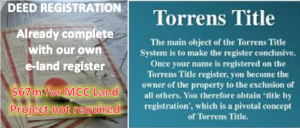
The test of the success of this title
registration system (Bim Saviya) has to be judged by what has been achieved
since the time the Act was introduced in 1998. Implementation began in 2007. Information
available to date says so far only 0.72 million blocks have been registered in the
Bim Saviya Register out of 12 Million blocks of land. This registration is less
than 5% of the total number of blocks identified. It has taken 12 years to
achieve this. How long will it take to complete it?
Much has been written and is being written about the Bim Saviya or
the land registration system based on the Australian Torrens title law. While there may be issues relating to land titles including fraudulent
titles, for all intents and purposes, Bim Saviya is more about land commercialism
rather than about land productivity or land used or needed for dwelling
purposes. Bim Saviya registration process has failed as it is an impractical
one that requires officials to visit all land blocks, at least once if not more
than that.
Sri Lankans may
not be aware that changes to the land registration system in Sri Lanka was
pushed by the World Bank as far back as the 1970s, and possibly even before.
Thanks to legal luminaries like Hon Justice A.R.B. Amerasinghe, and erudite and upright politicians like Mr T B Ilangaratne, who
as the subject cabinet minister vetoed the revision of land registration pushed
by the World bank, these intentions never translated to realities. It is
understood that a World bank delegation revisited this in 1994, and managed to
get a Parliamentary Act passed in 1998 in a hurry and without debate. Thus Bim
Saviya was born. Implementation had begun in 2007. It is difficult to come to
terms with a notion that the World Bank and associated foreign agencies were
interested in land registration in Sri Lanka for the sole benefit of Sri Lanka.
These agencies, as their countries are wont to do, undertakes projects in other
countries primarily to seek an advantage for themselves. The World Bank aids and
abets powerful countries to establish a particular world order of their design
by advocating projects that supports such a design.
Privatisation
of State land and making available such privatised land and land that is
already privately owned, for sale to foreign entities has been such a strategic
design so that in turn, the political fortunes of a country could well and
truly be tied to such a design.
This Act goes
against the grain of Sri Lankan culture and its community understandings. It
has no way of dealing with what is very traditionally Sri Lankan like anda goviya”
or tenant farmer or sharecroppers, shared water resources and land paths. This
is probably why Bim Saviya has failed.
There is a
fundamental concept that should govern land and land management. Land should
not be regarded as a tool for man to exploit and to trade for profit. Land is
the composite of life itself. Diminish land and the consequence is that it
diminishes life itself. Land is the whole, not part of the whole, human beings
are only part of the whole along with other animal and plant life, and natural
resources.
This was
recognised by ancient civilisations, the indigenous people (or Veddah’s) of Sri
Lanka, and by the indigenous people of Australia and in other countries
including the Native Americans. They did not destroy land for profit, they
nurtured it for survival. Those who invaded Australia destroyed much of this
valuable land and introduced their Torrens titles replacing the concept of
community guardianship of land. The very same Torrens titles are now attempting
to colonise and destroy the traditions of Sri Lanka.
It is
interesting to note the turning point in land titles in Australia. The
following is quoted from the Sydney University web site (https://www.sydney.edu.au/news-opinion/news/2017/06/02/five-things-you-should-know-about-the-mabo-decision.html#:~:text=On%203%20June%201992%2C%20the,and%20can%20still%20exist%20today).
Quote” On 3 June 1992, the High Court of Australia decided that
terra nullius should not have been applied to Australia. This decision – known
as the Mabo decision – recognised that Aboriginal and Torres Strait Islander
peoples have rights to the land – rights that existed before the British
arrived and can still exist today.
The Mabo decision was a turning point for the recognition of
Aboriginal and Torres Strait Islander peoples’ rights, because it acknowledged
their unique connection with the land. It also led to the Australian Parliament
passing the Native Title Act in 1993.
1. Terra nullius nullified
Until 1992, land laws claimed that Australia was terra nullius
or ‘land belonging to no one’. Effectively, these laws denied the fact that
Indigenous peoples had prior occupation and connection to the land.
2. The man behind the fight
The Mabo decision was named after Torres Strait Islander Eddie
‘Koiki’ Mabo who led the fight to change land laws to recognise Indigenous
connection and traditional ownership of land in Australia. He worked on the
Mabo case for 10 years, but unfortunately passed away just months before he
could learn the High Court’s decision on his legal battle.
3. Our alumni played a role
Three University of Sydney law alumni were members of the High
Court of Australia which made this decision: Sir William Deane, AC, KBE, QC,
Mary Gaudron, QC (first female Justice of the High Court of Australia) and Sir
Anthony Mason, AC, KBE, QC, who was Chief Justice at the time.
4. Creation of the Native Title Act
The 1992 Mabo decision led to the Native Title Act (1993) which
created a framework that recognises Aboriginal and Torres Strait Islander
peoples have rights to, and interests in, certain land because of their
traditional laws and customs. It allows access to land for living, traditional
purposes, hunting or fishing and/or to teach laws and customs on the land.
5. Recognition of land ownership today
Today,
native title has been recognised over more than one million square kilometres
of Australian land and water (approximately 15% of Australian territorial land
and waters). There are currently 629 registered Indigenous Land Use Agreements
– a voluntary agreement between a native title group and others about the use
of land and waters – in place -unquote
Sri Lankans
should note that this historic decision paved the way for recognising what was
termed a turning point for the
recognition of Aboriginal and Torres Strait Islander peoples’ rights, because
it acknowledged their unique connection with the land”. Sri Lankans should also
note that it is another Australian land title termed Torrens Title” that was
introduced to Sri Lanka via Bim Saviya that did not recognise the traditional
and unique connection with land”
Sri Lankans,
barring a few concerned individuals, probably have not questioned this
dichotomy, and how a land registration system that does not recognise what is
truly Sri Lankan, had been introduced to replace what is Sri Lankan.
Any type of law
or registration system relating to land should have regard to the history,
culture and traditions of Sri Lanka, and not be based on a foreign system,
particularly where such a system had managed to destroy the life giving
vitality of land. Any system that does not recognise the concept of community
guardianship rather community ownership or individual ownership, should not be
entertained in Sri Lanka. It is community guardianship of land that must
underpin land management in Sri Lanka
Given the above
concept, the first and very basic point that should be considered by advocates
of Bim Saviya is that land utilisation has no relationship or a dependency on
land registration as envisaged by Bim Saviya. When it suits, many are quick to
recount that Sri Lanka had been referred to as the granary of the East during
the reign of King Parakramabahu I. There is no mention about land registration
or titles or deeds during his time as having been pre requisites for the
massive food production during his time.
Even in
contemporary times, agricultural land utilisation will be greater if there is
water, if there is a better distribution system for the produce, if there is
value adding of agriculture products, and very fundamentally, if the grower
gets a better price, consistently, for what is being grown. None of these have
anything to do with land registration or titles or deeds.
The ethos of
Bimsaviya to promote land utilisation is even against another fundamental
principle that should be part of land management. The principle in land
management should be to use less and produce more, not the other way around.
Agriculture
research should underpin efficiency and effectiveness in land management where
rather than opening land for more production, existing underperforming land
holdings should be made more productive through agriculture research. The long
goal of land reform should be to increase forest cover by allowing some land to
become forests and by stopping deforestation.
Bimsaviya is likely to increase deforestation and further decrease the
country’s forest cover.
It is also well
to remember that the future of the rubber industry as well as the tea industry
has question marks and large tracts that are currently planted with tea and
rubber, especially rubber, may be available for other agriculture use. This has
to be factored in any land management strategy as it would make additional land
for specific agriculture products unnecessary. These lands no doubt are already
registered under laws that existed before Bimsaviya and have titles and deeds.
So in the first
instance Bim Saviya advocates should separate better land utilisation” through
the Bim Saviya registration system as there is no relationship between the two.
It could
address some of the other drawbacks mentioned as problems and examine whether
Bim Saviya is able to address these problems. Judging by the record on title
registration, clearly, Bim Saviya has not succeeded.
Bim Saviya is
not an indigenous document as it is based on the Australian Torrens title law
and introduced at the behest of the world bank, and supported with funds and
manpower by USAID. Amongst the outcomes stated, the following is worth special
attention Secured and clean title ownership is a critical factor in property
sales. Bim Saviya will enhance the higher potential in terms of market value of
property. and also Its provides solution to land disputes”. This statement
appears to be real intent and motive of Bimsaviya as several other subsequent
developments seem to indicate, with the latest being the MCC agreement.
As maximising
utilisation of land has no link to a registration process as has been pointed
out, the use of this erroneous outcome slogan has to be to provide
opportunities for exploitation of land simply as a tradeable commodity. The
creation of a land bank, selling land to foreign nationals, removal of
restriction on extent of land ownership, seem to revoke the intents of land
reform introduced since 1956 by SWRD Bandaranaike and Phillip Gunawardena and in
the seventies by Sirimavo Bandaranaike.
Background
The Land
settlement departments website states the following as the reasons why the Bim
Saviya or the Registration of Title Act No.21 was introduced by the Parliament
in 1998 (http://www.landsettledept.gov.lk).
Land
disputes
Land
cases
Breach
of peace among the communities
Fraudulent
land transactions
Decrease
of productivity in lands
Non-
receipt of income to the Government due to the absence of proper land
management.
With a view to
eliminating these unfavourable conditions and to use lands for the development
purpose, a system of issuing title certificates for lands together with a plan
showing correct boundaries of respective land was started with the enactment of
the Registration of Title Act No.21 of 1998 by the Parliament. This Act
confirms the state ownership and the private ownership of land and the
possibility of identifying suitable lands for development of the country is
another benefit gained for this Act” unquote.
The
test of the success of this title registration system has to be judged by what
has been achieved since the time the Act was introduced in 1998. Information
available to date says so far only 0.72 million blocks have
been registered in the Bim Saviya Register out of 12 Million blocks of land.
This registration is less than 5% of
the total number of blocks identified. This cannot be termed a success by any
measure. In fact, the following confirms it
It is possible
that laws and processes that existed for land management and registration prior
to Bimsaviya may have needed some adjustments as they were enacted many years
ago. However, any changes to the laws that were formulated recognising Sri
Lankan historical and cultural practices, should be changed within the context
of such practices. Land management laws based on an alien culture such as the
Torrens title system, is not suited for Sri Lanka. Besides the unsuitability,
the complexities associated in applying the system in Sri Lanka has been
evident judging from reports
Given the
failure of the Bim Saviya program, questions naturally arise as to why it is
being promoted by foreign agencies (World Bank, USAID) and proposed agreements
(MCC) without any consultations with Sri Lankan legal experts and reports. It
is ironic that the MCC agreement should include the management of the eRegister
and as per Section 3.9 of the agreement, all intellectual property
rights of the e registry to be given to MCC when Sri Lankan expert reports state that it is nearly complete and
it can be managed locally without difficulty. A senior lawyer from the Sri
Lanka Study Circle has noted the following
1] Samarasekera
Committee Report. A committee appointed by President Mahinda Rajapakse.
They recommend to do away with compulsory conversion to a foreign
law. It concludes that it is an impossible task and totally
unworkable. The Law Reform Commission has also consistently opposed compulsory
implementation of the foreign law. 2] The amendments to the
colonial statutes by a committee appointed by the Ministry of Justice to
prevent fraud [when Mr Milinda Morogoda was the Minster] 3]
Amendments to the Bim Saviya Act 21 1998 by the Bar
Association 4] Reports from the Banks of Sri Lanka by legal
officers who are experts in land ownership laws.
It is understood that the eRegister is almost ready to
be operated with the law of the country. It is time to seize the opportunity to
take advantage of the situation to research and revise the existing deed
registration system to govern the e register with the Common law of the
country.The laws of this country have to be revised only to
prevent land fraud; that is to include the owner identification and
verification laws to the notarial process and the registry and this will
not require foreign funding.
It is also understood that Sri Lanka does not have a
proper building to house the land registry and to securely safe guard title
documents. It is a priority to have such a building and equip it with the
necessary storage conditions and other equipment to manage the eRegistration
process. It should be noted that the law which introduced electronics to Sri
Lanka, namely the Electronic Transaction Act 19 of 2006 Section 23 specifically
required paper needs for the eRegister. Bim Saviya in fact violates this
law.
Sri Lanka also has ample expertise to manage the
eRegistration process and an institution like the Moratuwa University, the hub
of Sri Lanka’s IT expertise, could be partnered with to build the IT
infrastructure, implement the eRegister and build capacity amongst the land
registry staff to manage this process. Funding for such a project could easily
be sought from an institution like the Asian Development Bank.
The failure of Bim Saviya as outlined and yet, the
eagerness of interests via the MCC agreement to manage the eRegister raises
valid questions about the intent of these projects. These have been articulated
in many writings and to quote a few, the following
A foreign interest in what
has been found to be ineffective, and in the case of the eRegister, an interest
in managing the deed registration process for 5 years, with full intellectual
rights, despite Sri Lanka’s ability to manage it, have all cast concerns over the
real intent of these projects, in particular the MCC agreement.
A pre requisite in the MCC agreement is reportedly the passage
of the the Land
Special Provisions Act, which provides for absolute land grants to be
included in the title registration system, aka Bimsaviya. The MCC Annex 1—31[b] is conditional that the eRegister
should be governed by this law which is familiar to them and not any historical
Sri Lankan law that Sri Lankans are familiar with. A legitimate question that needs to be asked is why the MCC Agreement
is insistent on introducing Bim Saviya to operate the eRegister.
Whenever land registration crops up, the MCC agreement seems to
be lurking behind it. It is understood that an explicit or implicit requirement
of the agreement is the full implementation of the Australian law based Torrens
title registration process. An offer to manage the land project component of
the agreement for 5 years with a budget of USD 67 million has been included and
it is conditional on registration via Bim Saviya which is based on the Torrens
titles. If only less than 1% of land plots have been registered in 12 years,
one does not have to be an Einstein to work out how many allotments would be
registered in 20 years. One could suspect that MCC would be there for the long
term as it will take decades for the land blocks to be registered.
The Government
appointed a new official called Commissioner of Title. The department under him
has several officials responsible to determine ownership of each
block by visiting homes of 12 million people and compulsorily taking over all
the deeds [ Judicial function handed over to the administration]. See
Commissioners report of 2018 – impossible task he says as the law does not
fit in to the legal frame work of this country https://www.parliament.lk/uploads/documents/paperspresented/performance-report-land-title-settlement-department-2018.pdf
Bim Saviya is an inefficient, ineffective process
which is inconsistent with the traditional customs and practices in Sri Lanka.
It is an impractical registration process which would take decades if not more
to resolve land registrations, if indeed a resolution is possible. It is
strongly suggested that the government considers the following courses of
action
Rescind the Act
and appoint a committee of legal experts to revise laws that existed prior to
1998 to address any shortcomings and formulate a land registration Act that is
consistent with Sri Lankan customs, practices and conventions.
While this is
being done, an extraordinary gazette notification to be issued by His
Excellency the President to identify the key requirements for the eRegistration
process. Among other legal and administrative requirements, evidence of
ownership and verification of identity, along with a provision for a land
holder or even the land registry to challenge a deed in a court of law if fraud
is suspected, could be included in such a gazette notification.
Take immediate
steps to house land titles in a safe and secure building and recruit adequate
number of competent staff who have basic computer skills.
Enter into a
partnership with the Moratuwa University to manage the eRegistration process
for 3 years. During this period, the capacity of registration staff to manage
the eRegistration system should be built so that they will manage it after the 3-year
period. Utilisation of local resources will be consistent with His Excellency’s
directive pertaining to maximising local resource input into Sri Lankan
commercial activities.
Consider the
involvement of any foreign entity, or a local arm of such an entity,
unnecessary for the land registration process.
Bim Saviya
serves no purpose for Sri Lanka as has been more than amply demonstrated by
legal, banking and land management experts. It has no benefit for Sri Lanka. It
is time Sri Lanka cut its losses and moved on to something that is beneficial,
something that is Sri Lankan and something that will serve its interests, and
not any foreign interests. Digitalising records and completing the eRegister is
a priority and this certainly should not take decades to complete and Sri Lanka
has enough local expertise to do this.
President
Rajapaksa should consider this important activity as a priority amongst
objectives contained in his Presidential Manifesto Vistas of Prosperity &
Splendor”, with the use of local resources and expertise to build the country’s
capacity to be as self-sufficient as possible in all spheres of economic
activity. The eRegistration process falls clearly within the ambit of use of
local resources to implement it. In regard to land utilisation, and in relation
to agriculture, the principle of maximising utilisation with less rather than
more, should underpin the government’s policy on land management. Agriculture
research, crop diversification, distribution improvements, insurance schemes to
safeguard cultivators in times of droughts, floods, value adding initiatives
that will yield better returns for growers are some of the activities that can
maximise land utilisation.
In respect of
use of State land for other commercial or industrial purposes, it is difficult
to understand how Bim Saviya or what is envisaged under the MCC Agreement could
produce better utilisation results, unless the real intention of the MCC
project is to use the land banks in the eRegister, registered under Bim Saviya
with Torrens titles, to privatise State land and sell them to locals and
foreigners.
[I refer to the article appearing in the Daily FT on the 22nd titled ‘ History repeating – Are we going to
lose MCC or not by an
international development expert– ]
It is understandable if a
non-lawyer does not understand
the Legal Packages included
in the MCC to change the land
policy of the country and to change
the land law of the country to
the Australian law to suit the expansion
of large-scale industrial farming complex
The Australian law is known as the Torrens
law or Title registration. The law
which took away the rights of the indigenous people of Australia in 1858,
where farming and grazing
lands were often used and managed
communally under customary laws. Sri Lanka has
given a Sinhala name Bim Saviya to the law, curiously
repeated in the MCC. This is a misnomer as this law
makes lands untenable for owners, specially farmers and accessible for sale and mortgage with the
elimination of traditional land rights that had existed in the country for 100 years.
Sri Lankan Lawyers Ignored at Inception.
The MCC was created after the Government coordinated with the
MCC of USA in partnership with the Harvard
University’s Centre for
Information International Development to introduce a document known as the Sri Lanka Constraints Analysis Report.
During the compact development process efforts
were made by the Government to keep the US
Embassy , USAID, and other US Government
Actors updated on the land interventions under consideration according
to the MCC Annex 1—33. It
is unpardonable that efforts were not made to keep the BRILLIANT LAND LAWYERS and the SRI
LANKAN ACTORS updated on the land
intervention. They researched and
published the following that provided
solutions for the functioning of an efficient land market —-1] Amendments to the Bim Saviya Act
21 1998 by the Bar Association 2] Samarasekera Committee Report . A committee appointed by President Mahinda
Rajapakse. They concluded that
it is an impossible task to forcibly register land
under Bim Saviya and this was totally
unworkable. The Law Reform Commission has also consistently opposed compulsory
implementation of the foreign law.
3] The amendments to the colonial
statutes by a committee appointed by
the Ministry of Justice to prevent fraud [when Mr Milinda Morogoda was the Minster] 4] Reports from the Banks of Sri Lanka by legal officers who are experts in land
ownership laws.
The three legal
packages included in the MCC Land Project
1st
Legal package . MCC directs
to
implement Bim Saviya the
Australian law, which the government failed to implement for the past 20 years.
MCC has offered to manage it for 5 years according to Annex 1 –page 30 and Annex 1—page
31.
MCC of USA and the Harvard University’s Centre for Information International Development; were they not aware; that the implementation of Bim Saviya attempted by the Government failed for 20
years, because they could not register the ownership rights of the poor
traditional farmers. Is it
correct to exclude from the e register rights of owners essential for paddy cultivation and small
farming such as, Ande
cultivation rights of paddy lands
,Co-ownership rights , right of Pre-emption
and
Rights to waterways. The Bim Saviya law
even eliminates all the inheritance laws of the Sinhalese, Tamils and the Muslims
according to the Samarasekera Committee
report.
Failure of Bim Saviya was also due to the period required to implement Bim Saviya which was estimated to be over 100 years, according to the Performance Report of 2018 issued by the government.
ttps://www.parliament.lk/uploads/documents/paperspresented/performance-report-land-title-settlement-department-2018.pd.
Although
the government had consented to the MCC, according to the World Bank’s ICR report, Sri Lanka’s titling project Bim Saviya was a failure as the laws of the country does not
fit into the legal framework of Australia that does not recognise rights of our
local farmers.
2nd
legal packge Includes a strict
order, that is government lands must be privatised and be governed by the Title
registration law another name for Bim Saviya before signing the MCC . This is for the poor to obtain bank loans. All who
support the MCC should refer the
books authored by Hon Justice A.R.B Amerasinghe and Justice
Weeramanthry to realise the untruth In
Sri Lanka, it is common knowledge
that the banks are not interested in ‘ownership deeds’, Banks are interested in the loan applicants’ financial statements, to determine whether they are credit worthy. The
banks grant loans for lease hold
interest of government land.
3rd
legal package [Section 3—9
and Annex 1—29] MCC to attend to the preparation of the e
register under the law of Bim Saviya .
This is presently not necessary
as the
e-register (e-LR) is almost completed
and can be operated without changing to a foreign law, according to the Electronic Transaction Act 19
of 2006 based on the
standards established by United Nations Commission on International Trade Law
(UNCITRAL) . which specifies that deeds are required [ Bim
Saviya takes away deeds ]
Gift 67 Million Cost
Millions More
The Bim Saviya introduces a massive economic burden to the
Government?The government has to set up an ‘Assurance Fund’ to provide monetary compensation to land
owners in lieu of judicial remedies as the law repeals
the rights of land owners to
access court. Can the funding agencies compel nations to reduce their judicial authority ?
The E register is almost complete. Do we need funding from the MCC , to introduce a law that will be an economic burden to the government, to introduce a foreign law which takes a period of 100 years to be implemented or have only 5 million beneficiaries as given in the MCC for a period of 20 years[ MCC Annex 1—20] . I am sure the Hon President and the Hon Prime Minster will look into this matter. Present parliamentarians and Sri Lankans may not be aware that changes to our land law was pushed by the World Bank as far back from 1960s. However, thanks to our legal luminaries like Hon Justice A.R.B. Amerasinghe and erudite and honest politicians like Mr T B Ilangaratne , the President of the Law society, Governor of the Central Bank Mr William Tenekoon, these intentions never translated to realities. They provided local solutions for a functioning land market where the poor could get loans from banks. Their esteem collaboration to prevent the Australian law is given in Hon Justice Amerasinghe’s book– Title Insurance.
The visit from Secretary off State Pompeo and his tone and manner provided a refreshing
contrast to the US sponsoring of the
infamous UNHCR resolution or British Prime Minister David Cameron’s Antics at
the CHOGM in 2013.
On both of these occasions , the players were singing off
the song sheets of he Tigers. No longer are the Tigers calling the shots. If
that is not an achievement , what is. Let the Foreign Ministry and their
ambassadors and High Commissioners ensure that it stays that way.
No longer is the Rajapakse administration as alleged,
visited only by unknown head’s of State. They are visited by emissaries from
the head’s of the two most powerful states
and economies US & China, within a space of a few weeks, even
putting aside trivial’s like a Presidential Election.
Like he said, US investments come through private sector
investments that create jobs, enhance economy
knowledge and technical know how of the indigenous people. This is what
happened in Japan, South Korea, Singapore ,China, Malaysia ,Thailand , Vietnam that contributed in no small way to these
companies transforming their economies. None of this countries have become US
satellites to achieve this . They had strong leadership at home to prevent this
Besides ,we have a Colombo Port City and Hambantota free trade zone , with
wonderful opportunities for would be investors , especially eying export.
But it needs transparency he says to provide confidence
for the investors. We also say , we can provide political stability. Let us provide
both.
Let us also not forget that it was US intelligence that
enabled the Navy to locate and destroy
six of the eight arms supplier vessels the SL navy destroyed during the
war.This was crucial to the ultimate war victory.
Making use of what is on offer from US should not in
anyway get in the way of the special relationship between SL and China.
The challenge for SL and it’s people is to get the best
from both for their betterment and keep
the US away from the Tigers . There is no question, it is easier to do this
with the Republicans rather than the Democrat’s . However, the importance of
the East West sea lanes for US and the
QUAD alliance is a strong stick in SL’s hand to keep even the Dems from the Tigers.
Let SL and it’s people exploit this to the full for it’s
benefit and may all Sri Lankans realise the importance of this opportunity and
grasp this with skill and wisdom.
The Lankan President told US Secretary of State Pompeo that he cannot compromise the independence, sovereignty and territorial integrity of Sri Lanka for the sake of foreign relations whatever the circumstances.
President Gotabaya Rajapaksa with US Secretary of State Mike Pompeo and US Ambassador Alaina Tiplitz
Colombo, October 28: The US Secretary of State, Mike Pompeo, aggressively pushed the Trump Administration’s anti-China agenda in his talks with Sri Lankan President Gotabaya Rajapaksa and Foreign Minister Dinesh Gunawardena here on Wednesday. But the Sri Lankan leaders refused to fall in line and instead pressed for US investments and economic cooperation.
The President told Pompeo that he is not ready to compromise the independence, sovereignty and territorial integrity of the nation for foreign relations whatever the circumstances may be, a press release from the President’s Office said.
Noting that China had assisted in the development of the country’s infrastructure since the end of the separatist war, the President asserted that Sri Lanka is not caught in a debt trap as a result.
Investments Not Loans
What Sri Lanka wants is not obtaining loans continuously but to achieve a high level of economic growth by attracting more foreign investments, the President said. We have already begun to remove bureaucratic red tape that hinder foreign investment. Sri Lanka is a country that possesses necessary factors to achieve a high agricultural development. Our agriculture sector should be modernized. Scientific research should be conducted in order to reach this goal. We expect your assistance towards this end”, Gotabaya stressed.
In response, Pompeo said that the US would continue to work closely with Sri Lanka in achieving a high level of economic development and that priority will be given to promote US investments in the island. Tourism is a key sector that contributes to employment and income generation, he noted and said that the US is ready to give a helping hand to the development of this area under a carefully prepared action plan.
With China upper most in his mind, it appears that the controversial (and now stalled) Millennium Challenge Corporation Compact (MCC) was not discussed. Asked about the MCC in his interview to Rupavahini TV, Pompeo said that it was up to the Sri Lankan government to decide on it, a far cry from the earlier US stand. The other controversial US demand that Sri Lanka sign the Status of Forces Agreement (SOFA) was apparently not even discussed as Sri Lanka had rejected it earlier on.
Anti-China Tirade
At the press conference with Lankan Foreign Minister Gunawardena, Pompeo concentrated on vilifying China even calling the Chinese Communist Party a predator”. He said that the US wants the people of Sri Lanka to be successful and sustained in development, but China has a very different vision.”
The US seeks to strengthen partnership with democratic, peaceful, prosperous, and fully sovereign Sri Lanka,” Pompeo said. A strong sovereign Sri Lanka is a powerful strategic partner for the US on the world stage. It can be a beacon for a free and open Indo-Pacific,” he added.
However, this is quite a contrast from what China seeks, he pointed out. We see, from bad deals, violations of sovereignty, and lawlessness on the land and sea that the China Communist Party, as a predator. And the US comes in a different way. We come as a friend and as a partner,” he claimed.
Ethnic Relations and Human Rights
Turning to the locally sensitive issue of ethnic relations in Sri Lanka, Pompeo said that the US fully expects” Sri Lanka to fulfill its pledges to take meaningful, concrete steps to promote accountability, justice, and reconciliation.
On the other touchy issue of human rights he said: The US wants people of all faiths to live together in a peaceful nation where their Human Rights are respected. In his victory speech last year President Rajapaksa stated that he is the president of all citizens not of only those who voted for him. As our two nations move forward the United States is counting on those words to hold true.”
These remarks are unlikely to go down well with the majority Sinhala community in Sri Lanka which believes that they amount to unduly interfering in the internal affairs of an independent country which has its own ways of ensuring ethnic justice and harmony.
On economic ties, Pompeo said that great American companies” such as Coca-Cola and IBM are in Sri Lanka and claimed that they are the most reliable partners on the planet as they are accountable to the law, transparent, and are assets to the communities in which they operate.”
Good governance, transparency, policy consistency will attract even more American investments as those principles are deeply consistent with Sri Lanka’s history, its heritage as the oldest democracy in Asia,” he said. He was suggesting that democratic Sri Lanka should not entertain investments from dictatorial and lawless China ruled by the Communist. a predator”.
The US wants Sri Lanka to have sovereignty and independence, be successful, and have sustainable development and that the US as a friend and partner offers just exactly that,” the Secretary of State said.
The US and Sri Lanka have a shared vision as democratic nations for free and open fishing lanes, the capacity to trade, for people to travel to wherever they want to go. These are the visions of the people of Sri Lanka share with the US.” However, the Chinese have a very different vision, he added.
We want to make sure that the People of Sri Lanka have the capacity to execute their sovereign rights to remain independent, to have the freedom to hold the elections like that you all have held. Those are the visions that democracies work on together, those are the visions that we share,” he emphasized.
Lanka’s Stand
Elucidating Sri Lanka’s position, Foreign Minister Dinesh Gunawardena stated that Sri Lanka being a sovereign, free, and independent nation, will maintain a neutral, non-aligned and friendly foreign policy.”
Referring to the Presidential and Parliamentary elections recently held in Sri Lanka, Gunawardena said that they reflect the people’s mandate to safeguard the unitary state, sovereignty, territorial integrity, national security, economic progress, presenting a clear opportunity for all our friendly nations, especially the United States to join in our forward journey for a stable, secure country with economic advancement.”
Here was a hint that Sri Lanka’s decisions on issues would be determined by its commitment to the principles stated above and mandated by the elections. The government cannot deviate from them.
Further Gunwawardena said: Sri Lanka will be conscious of the opportunities and responsibilities that come with its strategic location. We see the importance of maintaining freedom of navigation in our seas and air space and also protecting the sea lines of communication and undersea cables. We believe, all countries should adhere to and respect international law including the UN convention on the law of the sea (UNCLOS).”
The reference to UNCLOS is interesting inasmuch as the US is still to ratify UNCLOS although it is constantly accusing China of having scant respect for rule-based” navigation.
Scope For US-Lanka Cooperation
On US-Lanka economic cooperation, Gunawardena said: The U.S. remains Sri Lanka’s largest single markets with exports of USD 3.1 billion in 2019 and even the present context of Covid-19 related market downturn remains in a smaller position with USD 1.1 billion for the first half of this year. The U.S. has been a friend and assisting Sri Lanka in times of difficulty and we remain deeply grateful for your support.”
The Foreign Minister expressed his gratitude to the US for extending assistance to Sri Lanka following the tsunami disaster in 2004. He also recalled the assistance rendered by it in the aftermath of the Easter Sunday terrorist attacks on April 21, 2019, as well as during Covid-19 outbreak.
I also extend my sincere thanks and appreciation once again for proscribing the LTTE terrorist organization even before the 9/11 attack and up to now,” the Lankan Minister added.
Trade and Investment Pact
In furtherance of making the bilateral relations more robust, the two countries have agreed to convene the next session of US-Sri Lanka partnership dialogue in early 2021, Gunawardena said. The joint council for the Trade and Investment Framework Agreement will also be convened on the earliest possible timeframe.
Gunawardena sought broadening the bilateral engagement in areas such as ICT, cyber-security, agriculture, science-technology, innovations, trade & investments, business and climate change.
In the run-up to Mike Pompeo’s Sri Lankan visit, the US Principal Deputy Assistant Secretary Dean Thompson asked Colombo to make difficult but necessary decisions,” referring to cutting reliance on Chinese investment. However, America’s hopes were dashed on Wednesday as Sri Lankan foreign minister told Pompeo that Colombo will stay “neutral”.
The US lacks the political will to invest in big-ticket infrastructure projects in the South Asian region to compete with China, Professor Sumit Ganguly, a South Asian expert and the Rabindranath Tagore Professor at US’ Indiana University, tells Sputnik.
“The US certainly has the resources. However, I do not yet see the configuration of political forces to support a massive set of infrastructural investments in the region,” reckons Ganguly, also a member of New York-based think tank Council on Foreign Relations (CFR).
The heyday of such US programmes ended with the Cold War,” he adds.
The remarks come amid a renewed push by the US seeking a greater involvement of smaller South Asian countries, particularly Sri Lanka and the Maldives, in the Washington DC-backed ‘Indo-Pacific Strategy’. US Secretary of State Mike Pompeo arrived in Colombo on Tuesday evening for a two-day trip, which will be followed by a stopover in the Maldives, before he heads off for Indonesia in his four-nation tour that kicked off in India on 26 October.
During his joint press briefing with Pompeo on Wednesday, Sri Lanka’s foreign minister Dinesh Gunawardena emphasised that Asia’s oldest democracy would remain “neutral” and “non-aligned”.
Foreign investments in the post-COVID economies of smaller South Asian nations are being viewed as major means of economic support. Reports in Sri Lankan media ahead of Pompeo’s trip claim that Colombo was more concerned about foreign inflows than getting involved in the US-China geopolitical rivalry.
The US has always had a certain level of interest in India’s South Asian neighbors. However, with the Chinese Belt and Road Initiative (BRI), it has taken a greater interest in them. This was virtually inevitable given that the influence of Beijing in these states has grown significantly within the past decade,” highlights Ganguly.
China is the biggest foreign investor in Sri Lanka, dwarfing foreign inflows from other countries by a significant margin. Although the US is Sri Lanka’s biggest export market and a major development partner, it has been unable to match the Chinese economic might in the region.
Among the big-ticket projects, China Harbour Engineering Company (CHEC), a subsidiary of state-owned China Communications Construction Company Limited, is currently developing the $1.4 billion Colombo Port City Project.
According to a March 2020 study by the London-based Chatham House think tank, Chinese infrastructure investment in Sri Lanka amounted to $12.1 billion between 2006 and July 2019.
Similarly in the Maldives, where Pompeo will be the first US Secretary of State to visit in 16 years, China has also emerged as the biggest investor in recent years.
In fact, Beijing is the largest foreign source of investment in Pakistan, Myanmar, Sri Lanka and Maldives, according to a 2018 study by Mumbai-based Gateway House think tank.
Commenting on US’ policy towards South Asia, Ganguly recalls that it was only during the second term of former President Barack Obama that the US started to take note of increasing Chinese influence in the region.
Quite frankly, the Obama administration should have taken cognisance of the steady Chinese penetration of the region but it did not as it was preoccupied with other matters,” he says.
Now Pompeo, quite belatedly, is trying to play catch up as the first (and perhaps only) Trump administration is coming to a close,” adds the American expert.
Ganguly dismisses speculation that a potential Joe Biden presidency would significantly change America’s policy towards South Asia, though he does concede that the tone” of US foreign policy could well be different.
Though the tone will change under a Biden presidency I do not think that China policy will undergo a drastic transformation. There is a rough and ready consensus in the United States on China policy,” he explains.
Ganguly also underlines that the US’ designation of India as a major defence partner” and Pivot to Asia” were significant developments for the overall South Asian region, which India has traditionally viewed as its own backyard.
US Secretary of State Mike Pompeo and his wife Susan yesterday visited Colombo’s St Anthony’s church, which was among the sites of last year’s militant suicide attacks in Sri Lanka on Easter Sunday.PHOTO: AGENCE FRANCE-PRESSE
COLOMBO • US Secretary of State Mike Pompeo called China’s communist government a “predator” yesterday, during a trip to boost ties with Sri Lanka, which has received huge investment and diplomatic support from Beijing.
He made his latest attack on China after talks with Sri Lankan President Gotabaya Rajapaksa on security cooperation to keep open vital Indian Ocean sea lanes just south of Sri Lanka.
“A strong sovereign Sri Lanka is a powerful strategic partner for the United States on the world stage,” Mr Pompeo told reporters as he wrapped up a 12-hour visit, the second stop on a four-nation tour.
He described how Washington has provided military training and recently gifted two coastguard vessels, contrasting its assistance with China’s.
“The Chinese Communist Party is a predator,” he declared.
The Chinese embassy in Colombo hit back, tweeting a promotional image for the “Aliens V Predator” video game.
“Sorry Mr Secretary Pompeo, we’re busy promoting China-Sri Lanka friendship and cooperation, not interested in your Alien v Predator game invitation,” it said.
Sri Lanka’s Foreign Minister Dinesh Gunawardena made no reference to China, but at a press conference with Mr Pompeo, told reporters that the country maintains a non-aligned foreign policy.
Sri Lanka borrowed billions of dollars from China for infrastructure when Mr Rajapaksa’s brother Mahinda was the country’s leader from 2005 until 2015.
Unable to service a US$1.4 billion (S$1.9 billion) loan to build a deep sea port, the country was forced to lease the port to a Chinese company for 99 years in 2017.
On Tuesday, the Chinese embassy accused Mr Pompeo of trying to “coerce and bully” Sri Lanka with his visit.
Earlier this month, Mr Yang Jiechi, a high-ranking Chinese Communist Party politburo member, pledged more economic help to Sri Lanka when he was in Colombo.
Anti-China comments have been a key theme of Mr Pompeo’s Asian tour this week, which began in India and will now take him on to the Maldives and Indonesia.
China has in the past helped Sri Lanka fight off allegations of human rights violations, particularly in the final months of a decades-long civil war, when the current president was the country’s top defence official.
Washington has insisted on credible investigations into charges that Sri Lankan troops killed at least 40,000 civilians as they crushed Tamil Tiger separatist rebels in 2009.
Mr Pompeo wrapped up his Sri Lanka visit by placing flowers and praying at a Roman Catholic church where 56 people were killed in militant suicide attacks on Easter Sunday last year. Five Americans were among 279 people killed in the coordinated attacks on three churches and three hotels in and around Colombo.
Aerial photo taken on Sept. 23, 2020 shows a view of the construction site of the Colombo Port City in Colombo, Sri Lanka. Photo:Xinhua
US Secretary of State Mike Pompeo is in Sri Lanka to pressure the South Asian country to stand with the US in containing China, but China has expressed strong confidence in its ties with Sri Lanka on Wednesday.
A Chinese expert said the US has underestimated the interests that other countries can get from the China-proposed Belt and Road Initiative.Chinese Foreign Ministry spokesperson Wang Wenbin said at a routine press conference on Wednesday that “It is so typical for some US officials to force small- and medium-sized countries to choose sides.”
“I noticed an article written by a Sri Lankan diplomat saying the country will handle foreign relations according to its Constitution, laws and people’s will, and doesn’t need any external lecturing on state governance,” he said.
Pompeo said the US vision for Sri Lanka is “very different” from that of “predator” China in Colombo on Tuesday, as he met the leadership of the South Asian country. Pompeo, who became the highest ranking official from the Trump administration to visit Sri Lanka, said that the US and Sri Lanka “shared a vision for democracy.”
Hu Zhiyong, a research fellow at the Institute of International Relations of the Shanghai Academy of Social Sciences, told the Global Times on Wednesday that Pompeo’s nonsense stigmatization of China will be rejected by not only Sri Lanka but most countries along the routes of the China-proposed Belt and Road Initiative in the region.
Sri Lanka is at a significant location of the 21st Century Maritime Silk Road, and the economic interests that the country gets from cooperating with China are something that it has never gained from either the US or India. By using Cold War-style ideological tricks, Pompeo will fail to instigate those countries against China, he said.
China and Sri Lanka are traditional friendly neighbors. We have been developing bilateral relations based on the Five Principles of Peaceful Coexistence, and conducting friendly cooperation based on equal consultation and mutual benefits, which has substantively improved the well-being of people in Sri Lanka, Wang said at the press conference.
Hu said Sri Lanka’s leaders, whether pro-India or pro-China, all understand that the destiny of the country’s economy is intertwined with China, and they are receiving unprecedented economic benefits from development opportunities from its participation in the Belt and Road.
“These are facts that cannot be shaken by any smear. We will continue working with Sri Lanka to deepen and expand the bilateral strategic cooperative partnership, deliver benefits to the two peoples, and contribute to regional peace and stability,” Wang said.