The TNA has woken up to the fact that the people are undergoing difficulties owing to the breakdown of the provincial administration in the North. It says annual transfers of state officials, under the Northern Provincial Council (NPC), cannot be effected without gubernatorial approval and, therefore, the government should appoint a Governor without further delay.
The TNA’s concerns should be appreciated, but here is a textbook example of irony. The TNA has a history of fighting running battles with Governors, whom it accused of usurping the devolved powers, under the previous Rajapaksa administration. It even demanded their removal. But, today, it is urging another Rajapaksa government to appoint a Governor!
The TNA should be asking the government to conduct the much-delayed provincial council polls to elect representatives to the Northern PC. Instead, it is demanding the appointment of a Governor, who will be a representative of President Gotabaya Rajapaksa, whose election it went all out to prevent albeit in vain, claiming that the country would be headed for a dictatorship if he was elected President.
The question of the NCP or any other PC, for that matter, becoming inoperative would not have arisen if the previous government had not abused the Provincial Councils Elections (Amendment) Bill to postpone the PC polls indefinitely. It smuggled in several sections, sans judicial sanction into the Bill, at the committee stage, to put off the PC elections indefinitely. It was ably assisted in the task by the TNA, the JVP and the UPFA. Together, they made a mockery of their commitment to good governance.
Having shamelessly collaborated with the yahapalana government to deprive the people of their right to elect provincial councillors, the TNA is now complaining of the breakdown of the provincial administration in the North! It must be too embarrassing for the TNA to ask the new government to conduct the PC polls.
Chairman of the Elections Commission (EC) Mahinda Deshapriya minced no words, on 17 Nov., when he called upon President-elect Rajapaksa and other political leaders present at the Election Secretariat to conduct the PC polls, which, he jokingly said, had been made to disappear. None of the political parties seem to have heeded his call. All of them are now readying for a general election. It is now clear that though the yahapalana leaders and their cheerleaders boasted that the 19th Amendment would strengthen the independent commissions, the EC can only bark when the political authority meddles with the election schedule.
The delimitation process has got caught in a parliamentary logjam and until it is over and passed by Parliament, the delayed PC polls cannot be held either under the Proportional Representation system or the new mixed electoral system. The Review Committee report that the rejection by the House of the Delimitation Report necessitated was not presented to Parliament last year. There is reason to believe that the yahapalana government did not do so deliberately as it was scared of facing the PC polls. The Supreme Court has ruled that the President cannot conduct the PC elections until the Delimitation report is completed and passed by Parliament. Everything that the yahapalana legal pundits touched turned into an unholy mess. Now, it is up to Parliament to rectify the situation by making new laws.
The TNA and the UNP have created a situation where the Governors, appointed by the President, are ruling the provinces in the absence of elected councillors, and thereby proved that the country can do without the PCs. It is, therefore, doubtful whether they will be able to obtain a popular mandate for devolving any more powers. There have been calls, in some quarters, for the abolition of the PC system, which has become a drain on the public purse and led to an administrative mess. They have struck a responsive chord with the people who pay through the nose to maintain nine white elephants.
Gambia
is a Muslim majority state and member of 57-OIC states. Gambia on behalf of OIC
has taken Myanmar to the ICJ on charges of ‘genocide’. The more important
question is why has Gambia or the OIC not take US or NATO to ICJ for all of the
bombings and killings in Iraq, Afghanistan and scores of other Muslim-majority
nations? Why are Muslim nations simply watching Muslims get killed by US-NATO while
a surprising number of Muslim nations are even siding with US NATO making us
ask why are Muslims helping to kill Muslims but championing the cause of
Muslims!
ICJ & ICC
ICJ
was set up in 1946 to adjudicate issues between nations.
ICC
was set up in 2002 with jurisdiction to prosecute
individuals for the international crimes of genocide, crimes against humanity,
war crimes, and crimes of aggression. United
States, China, India, Iraq, Libya, Yemen, Qatar and Israel are not
members. 139 States have signed the Rome
Statute, while only 118 have ratified.
Gambia
became the 3rd country to threaten to leave ICC in 2016 when South
Africa and Burundi formerly announced their departures. Ironically, ICC Chief
Prosecutor Fatou Bensouda, is Gambian. Of ICC’s 6
cases all have been only against Africa nations. Gambia’s information minister
claims at least 30 western countries have committed war crimes against since
ICC was founded but ICC has done nothing against them. Why didn’t Gambia take
this complaint to the ICJ?
According
to the US – Gambia acted as conduit to terror financing (Tajideen brothers, supporting the Iran-backed
Lebanese terror group Hezbollah)
Prof Anthony Clark
Arend of Georgetown University says an ‘invasion’ must meet 3 criteria
Violates UN Charter Article 2 Paragraph 4 member
states shall refrain from threat or use of force against the territorial or
political independence of any state”
Didn’t qualify as permitted except for use of force
under UN Charter. Charter allows military action in case of ‘self-defense if an
armed attack occurs” or if UNSC authorizes armed force.
Foreign ground troops entering another country.
Under this criteria
the following constitute invasions
Grenada invasion by 5000 US troops on
25 Oct 1983 which 5
members of the Organization of Eastern Caribbean States and UNGA adopted a
resolution disapproving invasion. UNSC Disapproval Resolution failed due to US
veto.
Panama invasions between 1988 &
1990 by US sending troops to support the 10,000 US troops already stationed in
Panama. UNGA passed
resolution condemning invasion but UNSC disapproval resolution was vetoed by US
– UK & France
Iraq invasion in 2003 to oust Saddam Hussein did not have UN approval and UNSG Kofi Annan
declared it ‘illegal’
Military historian
Lance Janda of Cameron University defines ‘invasion’ as ‘seizure of territory
by military force from the government of another country, regardless of
motivation or justification’. Thus US invasions on Muslim nations include
Kuwait in 1991
Iraq in 1991
Afghanistan in 2001
Somalia in 1992
Haiti – 1994/1995 but US received UN backing to
reinstall ousted Jean-Bertrand Aristide
Bosnia 1990s – US & NATO with UN support
Kosovo 1990s – US & NATO – UN did not support
directly
Libya 2011 – US & NATO with UN support
US-NATO
airstrikes on Sudan in 1998, Mali, Angola and Syria.
In 2016
alone, the Obama administration dropped at least 26,171 bombs on 7 Muslim
nations. US has been illegally occupying Afghanistan since 2001 – why is Gambia
and OIC not taking US-NATO to the ICJ at least!
Nearly
half of US arms exports go to the Middle East – Saudi Arabia is world’s
second biggest importer and these are being dumped on Yemen leading to a
humanitarian crisis. Why is the OIC silent on a fellow Islamic country suffering
malnutrition and starvation! Why are OIC nations not going to Yemen’s
assistance?
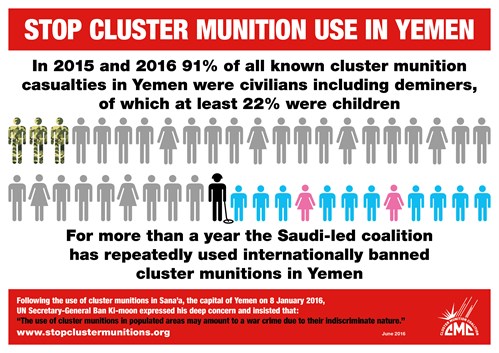
Yemen
9
Muslim countries joined an
alliance to bomb Yemen in 2015 – Egypt, Morocco, Jordan, Sudan, the United Arab Emirates, Kuwait, Qatar, Bahrain. Other Muslim countries provided
logistics support – Djibouti, Eritrea,
and Somalia made their airspace, territorial
waters, and military bases available to the coalition.
In
October 2018, United Nations warned 13 million were faced with starvation
in one of “the worst famine in the world in 100 years.” 85,000
Yemeni children have died from hunger – how many of the OIC Muslim nations came
to feed Yemen?
Al
Qaeda, Bin Laden and all of their Islamic militant outfits are proscribed
internationally and declared foreign terrorist organisations. But they are all
Muslims and they are used by the West to inflict harm and terror on mostly
Muslim nations that the West wishes to either keep destable or wish to place
Western boots on ground.
Why
are Muslim countries allowing their nationals to enroll in these terror camps
to inflict harm to a fellow Muslim nation. The West are providing the arms,
ammunition, training etc but the terrorists are all Muslims and easily enrolled
even after scores and scores are just killed by the very arms that the West
gives each Islamic terror group. These facts are nothing no one knows about.
But they are not spoken or put on to the table openly. It is taboo to ask why
Muslims are killing Muslims. It is taboo to ask why Muslim nations are not
taking Muslim asylum seekers or refugees especially by the richer Muslim
majority nations. If Rohingyas are living unhappily, shouldn’t the 57 Member
states magnanimously divide the people and welcome them to their nations? Why do
Rohingyas end up being dumped by UNHCR to non-Muslim nations – is it to
purposely create tensions after they start increasing their flock?
But
Gambia and OIC are not bothered to stop Muslims from killing Muslims, or ensure
Muslims do not enroll in any of the terrorist movements created and armed by
the West or feed the Muslims that are in hunger or having issues but Gambia can
exploit a little-known and rare-invoked provision in the 1948 Convention on the
Prevention and Punishment of the Crime of Genocide and take Myanmar to the ICJ.
Why didn’t Gambia or OIC do the same against US and NATO nations for the
killings and destructions caused to Iraq, Afghanistan, Libya, Somalia, Yemen
etc? While Myanmar’s case is only an allegation, there are enough of statistics
and evidence against the US-NATO nations and their leaders for their role in
the killings of innocent people.
ICJ’s
first genocide convention case against Serbia in 1993 took 14 years to declare
Serbia had violated its duty to prevent and punish genocide in
Bosnia-Herzegovina. As for the alleged Srebrenica massacre ‘genocide’ given
much hype turned out to be a political lie – eventually Serbian leader
Milosevic was also exonerated of allegations of war crimes but sadly he had
mysteriously died in his prison cell. The international justice system had
failed – had lied and had left a leader dead. There was no ‘genocide’ only some
So to Gambia and OIC member states what’s the deal in taking Myanmar to ICJ for ‘genocide’ or does this have anything to do with playing your role in encircling China/Russia via Myanmar or alternatively India?
No. No way. An embassy would never try that kind of lark now, would it? It’s incredulous. Unthinkable. Out of the questions. Well, such sentiments are not out of order, really. Nations and embassies do indulge in all kinds of nefarious activities. They are careful about it. Even the most powerful nations don’t want to take the risk of looking like global idiots. The Swiss Embassy in Colombo, one must assume, is not an exception. And yet, the saga of the Sri Lankan employee allegedly abducted, questioned and sexually harassed, does make one wonder.
Let’s consider the sequence of events. At 9.44 pm on November 26, 2019, a website with a sordid back story ‘reveals’ that a female Sri Lankan employee of the Swiss Embassy had been abducted in a white van on the previous day and that the Swiss Ambassador was to meet Prime Minister Mahinda Rajapaksa on the following day regarding this incident.
The Embassy did not lodge any complaint regarding this abduction until the Ambassador met with the Prime Minister. This is strange considering the seriousness of the matter. Nevertheless, a Swiss website, quoting the Sri Lankan website reported the incident.
Upon being informed by the Ambassador, the Prime Minister moved to deploy a team led by Acting IGP, Chandana Wickamaratne and the Director, CID, Senior SP W. Thilakaratne. The Swiss Embassy, strangely, refused to provide any information to these officers. However, after investigations were thus launched, the Swiss did lodge an official complaint with the Police, under the signature of the Ambassador, no less. Rather late in the day so to speak, of course.
And yet, the Swiss were cagey about the identity of the ‘victim’. According to the complaint, she had left the Embassy around 4.15 in a Uber cab, stating that she had to attend a parents’ meeting at St Bridget’s Convent, the school her two daughters attended. The Embassy also stated in the complaint that she had been abducted near the school by persons in a white van and that she was harassed and sexually assaulted. Her personal mobile phone had apparently been confiscated and examined, the complaint also claimed. She had also been questioned about her relationship with Inspector of Police, Nishantha Silva, a man who recently fled the country, apparently to evade investigation and possible arrest. The investigators, whose work was deliberately blocked by the Embassy, turned their attention to CCTV footage in and around both the Embassy and the school. There was absolutely no evidence of any abduction of the kind alleged. However, they found out, from school records, the name of the alleged victim: Ganiya Banister Francis is her name and she had been resident in an apartment complex in Maligakanda.
On the said day, the lady had not, contrary to the claims of the Embassy, attended any parents’ meeting on November 25. One teacher had called the parents of eight students, but this group did not include the ‘victim’s’ daughters. Perusal of phone call records and information from the can service revealed that she had in fact left the Embassy in an Uber vehicle, red in color. Accordingly, the investigators were able to obtain information of the lady’s movements that day. She had not gone to St Bridget’s Convent. Instead she had gone to the house of a teacher in Bambalapitiya. After about an hour and a half she had proceeded to Maligakanda in the same vehicle. There’s CCTV footage of a woman matching the description given by the Uber driver getting into a three wheeler, but it was not possible to identify the number of the vehicle.
When the CID visited the apartment complex, her mother had simply said that her daughter had collected her clothes and gone abroad. Indeed, on December 1, Secretaries of the Ministry of Defense and the Ministry of Foreign Affairs, along with other officials, visited the Embassy and appraised the Ambassador about these findings and obvious discrepancies. They requested access to the victim in order to obtain a statement˘. The Embassy has stubbornly insisted that her health condition is deteriorating and that a Swiss doctor has ascertained the same via a video conversation. They refused. The Embassy has requested that permission be given to airlift her to Switzerland along with her family. Interestingly the lady’s husband, a bank employee has gone missing. There is no word on their daughters. In any event, this is not legally possible. A court order has now temporarily stopped her from leaving Sri Lanka. Summons have been issued at all possible addresses of her husband, including the bank that employs him to appear in court. It makes sense. There’s a wild accusation against Sri Lanka. The Swiss are blocking investigation. Their story is full of holes. There’s every reason to suspect that the Swiss either fell hook, line and sinker to a tall tale concocted by a Sri Lankan employee or else is party to a sordid conspiracy poorly executed, aimed at tarnishing Sri Lanka’s name and of course that of the newly elected president. White vans, one observes, have amounted to a tired and highly exaggerated story used for political purposes by the previous regime and conveniently picked and further inflated by certain sections of the so-called international community intent on punishing Sri Lanka for essentially subverting an outcome preference related to the denouement of the war against terrorism. In other words, to use the trope, the Swiss Embassy, knowingly or unknowingly now finds itself mired in an effort to ‘white van’ Sri Lanka.
malindasenevi@gmail.com This article was first published in ‘The Sunday Morning’ [December 8, 2019]
The Criminal Investigation Department (CID) yesterday questioned Swiss Embassy employee Garnier Banister Francis aka Sriyalatha for the third day, Dec 10.
Having been in the protective care of the Swiss Embassy, Colombo, Sriyalatha reported to the CID headquarters on Sunday, Dec 08.
On behalf of Sriyalatha, Swiss Ambassador Hanspeter Mock on Nov 27 complained to Prime Minister Mahinda Rajapaksa of the alleged abduction of the staffer on Nov 25.
The police identified the embassy employee as the daughter-in-law of Bevan Perera, who contested the Gampaha District on the UNP ticket at the 2010 parliamentary election.
Sources said that Bevan Perera had switched allegiance to the UNP along with the late Anura Bandaranaike.
Sources said that the police were in the process of verifying her statement. Responding to another query, sources pointed out that Swiss Ambassador Mock’s statement had been proved not factual and the envoy himself told about the outcome. Sources said that her statements were being examined vis-a-vis Ambassador’ Mock’s complaint and the revelations made by the CID following investigations into Swiss complaint.
The Fort Chief Magistrate has prohibited the embassy employee leaving the country till Dec 12.
Meanwhile, UPFA Kalutara District MP Piyal Nishantha de Silva said that MP Dr. Rajitha Senaratne, who claimed that the embassy staffer had been threatened by putting a pistol into her mouth should be questioned.
Authoritative
sources told The Island that the inquiry was now primarily focused on
the embassy employee in the absence of any evidence to back
Ambassador’s Mock’s accusations.
The allegedly abducted locally recruited Swiss Embassy staffer Garnia Banister Francis was escorted to the CID again after she was produced for a medical examination today.
She was produced before the Colombo Judicial Medical Office after the CID recorded a statement for four hours.
Her statements were recorded today for the third day.
Later, the embassy staffer left the CID after recording fresh statements this evening.
Meanwhile, a close associate of the Embassy staffer, who introduced himself as Manjula Perera invited the media to a house on Barnes Place yesterday.
Several media crews including our news team waited at that particular house for the whole of yesterday but neither Manjula Perera nor the embassy staffer turned up to make a statement.
Meanwhile, our news team learnt that the true owner of the particular house on Barnes Place is domiciled in Australia.
She informed our news team; she bought the house from the wife of Manjula Perera in February last year.
At the same time, it is reported that Manjula Perera who lied to the media is believed to be a close associate of the Embassy staffer.
However, it is not confirmed yet whether he is the husband of the Embassy staffer.
In the meantime, UNP former electoral organizer of Kelaniya Bevan Perera verified that Manjula Perera is his son.
The
International Court of Justice was set up in 1946 to settle international
disputes. ICJ is taking up a complaint made by little known Muslim majority
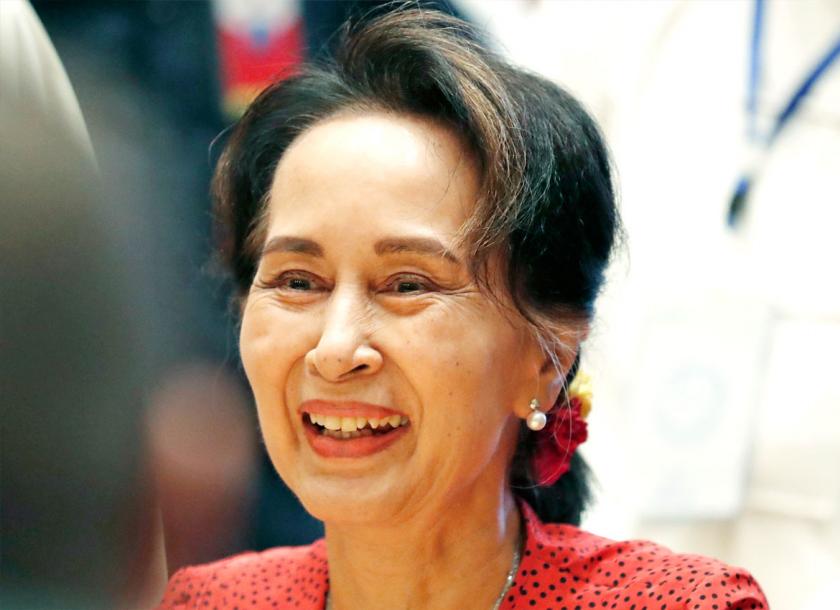
Gambia on behalf of the 57 OIC member states against Myanmar. Aung San Su Kii,
Myanmar’s leader along with Government officials and scores of supporters
arrived in Hague and faced the ICJ on 10th December 2019. ICJ cannot
evade answering the legal status of Rohingyas in Myanmar vis a vis the colonial
legacy that Myanmar carries. Is Rohingya issue an excuse for Western
imperialists and its OIC partners to enter Asia with real intent to encircle
China/Russia while as an additional bonus acquiring Asia’s natural
resources/oil etc? Should Asia not be concerned about the geopolitical aspect
of the Rohingya issue, a factor India must be concerned about too. Both India
& Myanmar are on line to be balkanized as western imperialist with their
Islamic state partners strategically draw the pawns on the chessboard.
Historical anomalies by Western Colonial/Islamic
invaders cannot be unjustly used against post-independent victim countries under
periphery of international bodies set up by them & influenced by them
Colonial legacy
The British
colony of Burma was made part of the British run-state in India
(though Burma was never part of pre-colonial British India), the Empire
of India, from 1824 to 1937. A
decade before India was given independence Burma was separated from the Indian
Empire in 1937. Burma was actually the geographically largest province in
India, it only had 9 million people in 1908. Its neighbor Bengal (East Bengal
became Bangladesh) had 75million people. In 1872, when the earliest reliable
census was taken, the highest concentrations of Muslims (more than 70%) were
found in eastern Bengal. It is only from
the late sixteenth century, and after the Mughal conquest (1574), that solid
evidence of a Muslim peasant population anywhere in Bengal.
Also
noteworthy is the formation of the Muslim League in 1906 demanding a separate
Muslim ‘homeland’ in British India.
When Burma became Burma – India became India.
Legacy of CONQUER –
COMMERCE – CONVERT continues
Artificial borders drawn by colonial invaders is one of the main
reasons for contentions between nations even today. Forced migrations and
dumping of indentured labor is another factor that has given rise to more
ethnic problems in former colonies. Colonial rulers of these nations must take
accountability for these intended divide and rule policies. Many a separatist
ethno-religious movement today were encouraged and covertly funded by these
countries a policy they continue to practice even in 21st century.
Trail of insurgent/terrorist movements will take you to one or more of the
western imperial or OIC member states who secretly support them. Drive for
global hegemony, land grab in resource-rich countries are very much the same
reason then and now. We cannot be naïve not to link the similarities.
Obsession with
China/Russia
An additional feature has become the obsession with China’s
development. The aim is to get to China and Russia either through Myanmar or
India. These endeavors are happening parallel through various modus operandi. Unfortunately,
India has invited the enemy to Asia and must be regretting now.
It is reason why Asia must back Myanmar including the Muslim
majority countries for no Rohingya can be more important than helping turn Asia
into a war zone similar to Middle East. Once countries allow an enemy that does
not think twice to drop chemical bombs/drones etc no ICJ or ICC can stop them.
The crime of ‘Genocide’ means acts committed with the intent
to destroy, in whole or in part, a national or racial group. It has become
fashionable to use term ‘genocide’ but population statistics cannot prove any
reduction in population figures for Rohingyas. However, the ‘intent to destroy
a racial group’ did very much take place by colonial/Islamic expansionists
wherein they used to sword to exterminate entire populations. Who is going to
hold their crimes to account?
Presume
the ‘international bodies’ deem it is old news, what about the illegal
invasions & killings by carpet bombings, chemical bombings, atomic bombs,
drone killings that have killed millions too in this side of the century? Were
these not committed by Western/Middle East nations – the most recent being the
bombing campaign in Yemen. How is it that these acts do not make it to the
‘genocide’ table? Why are these not investigated or action taken against them?
Is it because their political power and financial influence makes all others
lesser than them?
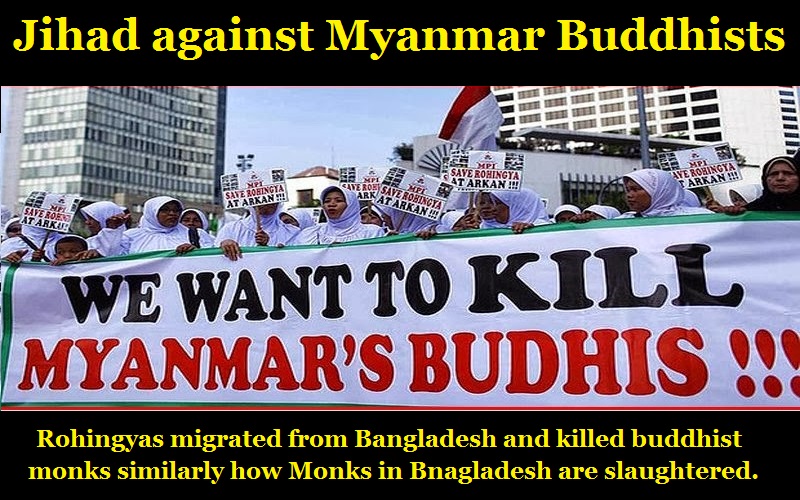
How innocent are Rohingyas
Are
Rohingyas illegal immigrants, did colonial Britain include them in their census
are questions that need firm answers. How innocent are Rohingyas when it is
having an armed group & has also committed heinous crimes against Myanmar
people in particular Buddhist theros. Are OIC-member states arming the
Rohingyas as ICG report 2016 confirms.
Can
Gambia explain how Arakan Rohingya Salvation Army if innocent is carrying ARMS
& AMMUNITION and also engaged in attacks? Who provides weaponry to ARSA and
who is paying for this supply?
Myanmar
cannot be accused and hurled up before any international court if it is only
defending its nation & people against armed militant Rohingya. If Myanmar was
attacking unarmed Rohingya it would be a different story but Rohingyas are no
innocent people!
Why
don’t these 57 majority Muslim nations agree to give refuge to these Rohingyas
in their countries and look after them as fellow Muslim nations where they
would be all the happier?
Myanmar’s Buddhist heritage at risk
It
is no secret that the Buddhist world expanded from Persia to far East Asia
without forced conversion or sword.
It
is also no secret that the Buddhist world has shrunk as a result of the sword
used by both Islamic expansionists and Christian invaders. The Buddhist world
is now down to just 5 shrinking and regularly under threat majority Buddhist
nations of which Myanmar and Sri Lanka are included. It is natural that the
Buddhists in these countries have every right to fear and these fears should
not be laughed upon or degraded.
While
ancient tactics are not used the multiple methods presently used are more
sinister and dangerous and come in the cover of many insidious forms that cover
the real intent (loans/grants are given with hidden message to turn the other
way to incursions / politicians are bribed to also do the same / powerful
international blocs ensure international pressure to prevent any legal actions
taken to protect the incursions).
India,
China, Russia and rest of Asia must take stock of the geopolitical agenda
behind using Rohingyas just as Sri Lanka’s Tamils have been used to similarly
exert power to influence Sri Lanka to give in to various bullying tactics. When
it is very clear that the target is China & Russia, the two barriers are
India & Myanmar and it is natural that Rohingyas provide the best pawn to
use to exert international pressure and presence in Myanmar as bogus conflict
resolutionists whereby on the ground they will subtly plan to encircle
China/Russia.
Asia
must stand in solidarity with Myanmar and China, Russia and India must protect
all Asian nations from numerous other manipulated tactics that will be used in
time to come.
My dear Ambassador Mock, It may be that you are so dumb not to understand the racist mentality of the world’s number one liars the racist Sri Lankan Tamils, or you were involved in coocking up of a failed attempt to campaign against Rajapakse government. You need 100 lies to cover a lie. Tamil local staffer put you in an embarrasing situation in the eyes of the civilised society. You are caught up with your pants down. Lies, lies and more lies is the motto of the bogus Tamil refugees scattered all over the western countries. Bash Rajapakse government campaign will extend their visas. Those bogus Tamil refugees’s suvival rest upon the mercy of the host countries. They need to tell the world through lies of victimisation and not a safe country to the Tamils expecting the western countries sympathy. Tamils in Sri Lanka are illegal immigrants from Tamil Nadu. They do not seek refuge in India. Those bogus Tamil refugees seek refugee status only in the western countries and those western countries jump into the band waggon to secure the votes. The Tamil diaspora contributed to Hillary Clinton’s Presidential elction campaign fund a sum of $125,000. Then Hillary Clinton said there are good terrorists to white wash LTTE Terrorist. If a white man joinig the bash Rajapakse government, it means they expect the Bogus Tamil Refugees to vote for their political party. There are 25,000 Bogus Tamil Refugees in Switzerland. Hanspeter Mock the Swiss Ambassador in Colombo is playing the game of politics and not playing the diplomacy. Corrupt Mock’s lie about the abduction and sexually assaulting of Local Tamil Staffer is a drama authored by the Bogus Tamil Refugees to tarnish the image of Rajapakse’s week old new government hoping their visas extention and more and more Tamils to leave for the western countries. Native Sri Lankan Sinhalese are clever to understand the motive behind the local Tamil staffer: 1. To cover up the smuggling out of Sri lanka of a crimal and wanted Tamil police officer Silva and bring disrepute to a week old Rajapakse government. 2. To highligt the fact that Sri Lanka is not safe to the Tamils which was in conniving with the Bogus Tamil Refugees. Whatever it is one thing is for sure that Swiss Ambassadore Hanspeter Mock became a disgraceful liar and a Tamil sucker. It is now up to the Swiss Ambassador Hanspeter Mock to leave Sri Lanka ASAP if Sri Lanka did not deport the roiuge Ambassador. Please make sure when you go to take with you the lying and disgraceful Tamil staffer together with over a million lying Tamils living in the North of Sri Lanka. When you did that we peace loving patriotic Sri Lankans can live in peace and harmony. Yours Truly, Stanley Perera Melbourne, Australia.
Western Civilization Is Now A Caricature of Absurdity –
PaulCraigRoberts.org
Western Civilization Is Now A Caricature of Absurdity. This Is
Not A Joke. Dear Readers: If you have concluded that a small handful of
crazed morons control the words we are permitted to use, you are correct.
www.paulcraigroberts.org
Officials, donors and well-wishers led by Union Ministers Dr Myo
Thein Gyi and Nai Thet Lwin attend the third mass alms-giving ceremony
for 30,000 monks at the Chanmyathazi Airport in Mandalay
yesterday. Photo: MNA
Supervised by Mandalay Region
Government, Myanmar well-wishers and Thailand’s Dhammakaya Foundation
jointly organized third mass alms-giving for 30,000 monks at the
Chanmyathazi Airport in Mandalay yesterday.
Present at the event were Union Ministers Dr Myo Thein Gyi and Nai Thet
Lwin, Deputy Minister U Kyi Min, Mandalay Region Minister for
Electricity, Energy and Construction U Zarni Aung on behalf of Mandalay
Region Chief Minister, Mandalay Region Hluttaw Speaker U Aung Kyaw Oo
and cabinet members, Hluttaw representatives, departmental officers,
consuls general of the People’s Republic of China and the Republic of
India, invited guests, social organizations, donors from Thailand and
well-wishers.
Mandalay Region Minister U Zarni Aung and Deputy Minister U Kyi Min
lighted candles, and representatives from Myanmar and Thailand offering
flowers, the alms-giving ceremony was opened with the three-time
recitation of Namo tassa bhagavato arahato samma sambuddhassa” .
That was followed by the congregation receiving the Five Precepts from
the State Sangha Maha Nayaka Committee member Sayadaw Thanlyin Min
Kyaung Sayadaw Agga Maha Pandita Bhaddanta Candima Bhivumsa.
Union Minister Nai Thet Lwin and officials donate offertories to the Members of Sangha at the alms-giving ceremony. Photo: MNA
Afterwards, the audio message sent by
Luang Por Dhammajayo, the patron of Dhammakaya Monastery in Thailand,
was played and Members of Sangha recited parittas.
Six donors from Thailand led the recitation of offering the Four Requisites and donated offertories to the monks.
Supplicating the Members of Sangha at the event, patron of the
alms-giving organizing committee Mandalay Region minister for
Electricity, Energy and Construction U Zarni Aung on behalf of Mandalay
Region Chief Minster expressed delights for getting opportunity for
doing merits by peoples of Myanmar and Thailand.
Deputy Minister U Kyi Min supplicated religious matters, Thai donors
expressed delights and followed by U Soe Lin, the chairman of the
alms-giving event organizing committee, saying words of thanks.
The congregation listened to the sermon given by Mogok Nyaung Thone Bin
Pariyatti Thamanaykyaw Monastery Sayadaw Dr Bhaddanta Tejosara Bhivamsa
and shared merits they gained.
The ceremony concluded after reciting Buddha Sasanam Ciram Titthatu” three times.
The officials, donors and well-wishers led by Union Ministers Dr Myo
Thein Gyi and Nai Thet Lwin donated K 30,000 each monk and offertories
to the Members of Sangha.
Foods and soft drinks for congregation were also donated by well-wishers
at the event. The first Myanmar-Thai friendship alms-giving ceremony
was held for 10,000 monks on 20 September 2015 at the foot of the
Mandalay Hill and the second was held for 20,000 monks on 21 January
2018 at the Chanmyathasi Airport. This was the third alms-giving in
Mandalay and donated to 30,000 monks. —Min Htet Aung (Sub-Printing House) (Translated by Kyaw Zin Tun)
Thousands of
supporters in Myanmar have waved banners and colorful portraits of State
Counsellor Aung San Suu Kyi, on Saturday, December 7, in a show of their
loyalty on the eve of her departure for the U.N.’s top court i.e. International
Court of Justice (ICJ), to face genocide charges over the Rohingya crisis.
One supporter named
Damien Chakma in a comment on the Internet has said:
What Suu Kyi is
doing is absolute right, protecting Myanmar’s interest in the face of OIC
funded propaganda. So called Rohingyas are illegal immigrants from Bangladesh. Where was ICJ and UN when Bangladesh was ethnic cleansing Buddhist
tribes (Chakma, Marma, Tripura etc.) from Chittagong Hill Tracts?”
China, Russia,
Vietnam, Cambodia and Laos, and several other countries such as Ukraine and
Israel, have unreservedly given their unqualified support to Myanmar at the UN.
India, is sympathetic towards Myanmar and on December 09, passed legislation
amending India’s Citizenship laws excluding Rohingyas from seeking asylum in
India or claiming Indian Citizenship on the basis of Muslim refugees.
The Chinese Foreign Minister Wang Yi made a two-day visit to
Myanmar at the invitation of State Counselor Daw Aung San Suu Kyi on December
07.
U
Maung Maung Soe, a political analyst, has said that When it comes to the
Rohingya issue, China has always shown their strong support for Myanmar,”
Myanmar is highly likely to discuss with China how
the country has prepared for the lawsuit, and China will likely give Myanmar
some tips for the hearings as well,” said U Maung Maung Soe.
He added that China does not want to see Myanmar get
into trouble, as the country is strategically and geographically important for
China’s agenda and its sphere of influence in the region.
In another
development, Twenty-eight supporters from Myanmar on Sunday (December 08)
joined Daw Aung San Suu Kyi in her trip to The Hague.
U Kyaw Htay Oo, one
of the supporters, said that ICJ case is related to all Myanmar citizens
because it could have huge impact on the dignity of the country.
It is not only a
case for Daw Aung San Suu Kyi or the Military,” he told The Myanmar Times.
“We want to show that we always follow and obey the leader we believe in.
Therefore, we are supporting our leader with all the money and all the people
we have.”
The 28 supporters
are spending around US$2,000 per person for a round trip to The Hague. According
to the supporters, they are going to The Hague using their own money.
The ICJ will hold
hearings in the case from Tuesday to Thursday (December 10 – 12, 2019).
About 350
supporters of Myanmar based in European countries such as France and Norway will
also be travelling to The Hague during the hearing of the case.
Earlier on Saturday
(December 07), thousands of people gathered at the administrative capital of
Nay Pyi Taw to show their support for the State Counsellor.
Gambia’s lawsuit
Gambia, acting on
behalf of the Organization of Islamic Co – operation (OIC), has filed a lawsuit
against Myanmar at the International Court of Justice (ICJ), allegedly on the
ground of committing the crime of Genocide.
The Government of
Myanmar has taken up the challenge to contest this case at the ICJ and the
State Counsellor, Aung San Suu Kyi, in her capacity as the Minister for
Foreign Affairs, will lead the legal team to defend her nation.
Myanmar’s legal
team is expected to argue that genocide did not occur, that the top U.N. court
lacks jurisdiction and that the case fails to meet a requirement that a dispute
exists between Myanmar and Gambia.
Under the Charter
of the United Nations (UN), all member states of the UN, including Myanmar, are
bound by the Statute of the ICJ.
The crime of
‘Genocide’ means acts committed with the intent to destroy, in whole or in
part, a national or racial group. It is an issue that concerns all civilized
nations and peoples, especially those who were victims of colonial rule during
the last 500 years against whom much of the brazen acts of Genocide were
committed in many parts of the world.
Both the Government of Myanmar and its armed forces face many internal
problems related to ethnic tensions. Turning to recent
events in Myanmar, the ARSA (Arakan Rohingya Salvation
Army) with links to radical Islamic terrorist groups have been responsible in
Rakhine for acts of terrorism and slaughter of the innocents.
The
ICG reported on 14 December 2016 that in interviews, the leaders of ARSA
claimed to have links to private individuals in Saudi Arabia and Pakistan. The ICG also claimed in unconfirmed reports
that Rohingya villagers had been “secretly trained” by Afghan and
Pakistani fighters.
On
25 August 2017, Hindu villages in a cluster known as Kha Maung Seik in the
northern Maungdaw District of Rakhine State in Myanmar were attacked and 99 Bengali Hindu villagers were massacred, by Muslim insurgents from the Arakan
Rohingya Salvation Army (ARSA). A
month later, the Myanmar Army discovered mass graves containing the corpses of 45 Hindus, most
of whom were women and children.
Ni Maul, a Hindu leader who helped Myanmar’s authorities with
the search of the bodies, told the media that the mass-graves were found from
testimony of eight Hindu women whose lives were spared and brought to
Bangladesh after they agreed to convert to Islam.
Four Hindu women in Bangladesh told Agence-France Presse that they were among the
eight who escaped. They stated that they were forced to marry the attackers in
order to save their lives and they were later taken to camps of Rohingya
Muslims in Bangladesh.
The Hindu women stated that the militants found them beautiful
and decided to convert them. They added that later the eight women along with
children were taken to a house in Bawtalar village where they were forced to
eat rice with meat, which is prohibited in their religion. They were then
brought to Kutuparlaung refugee camp on August 28 where they were housed with
Muslims and forced to wear burqas.
The
Myanmar authorities accused the Arakan
Rohingya Salvation Army (ARSA)
of perpetrating the Hindu massacre in the Kha Maung Seik area.
Tirana
Hassan, Crisis Response Director at Amnesty International,
said, ″It’s hard to ignore the sheer brutality of ARSA’s actions, which have
left an indelible impression on the survivors we’ve spoken to.…………….In this
brutal and senseless act, members of ARSA captured scores of Hindu women, men,
and children and terrorized them before slaughtering them outside their own
villages. The perpetrators of this heinous crime must be held to account″.
On 25 August 2017, the Arakan Rohingya
Salvation Army (ARSA) claimed
responsibility for coordinated attacks on police posts and an attempted raid on
an army base. The Myanmar government announced a death toll of 77 Rohingya
insurgents and 12 security forces in northern Maungdaw following
the attacks. The government stated that they had attacked a police station in
the Maungdaw District with a handmade bomb alongside
the coordinated attacks on several police posts.
In late August 2017, the Burmese government accused ARSA of
killing 12 civilians, including Hindus and Muslims, some of whom were suspected
by ARSA of being government informants. On 24 September 2017, Myanmar’s
military accused ARSA of killing 28 Hindus in Ye Baw Kya village in the
previous month after they uncovered their bodies in a mass grave
The elected Government of
Myanmar with a mandate to protect the citizens of Myanmar, had no choice but to
send its armed forces to Rakhine in order to protect Buddhists, Hindus, and
various indigenous Tribal Groups, who faced the wrath of ARSA and the Bengali
Muslims who have infiltrated Rakhine heavily with intent to grab land and
dispossess the original inhabitants namely the citizens of Myanmar, from their
traditional home land in Rakhine.
A propaganda war has been
launched against Myanmar by the OIC and the highly prejudiced international
media such as Al Jazeera that totally ignores the Bengali Muslim land grab that
blights Rakhine, the Chittagong Hill Tracts (Bangladesh), and various parts of
India including Assam.
A similar situation of
organized and co -ordinated violence arose in Sri Lanka, when on Easter Sunday
April 21, 2019, suicide bombers linked to radical Islamic terrorist groups
killed 259 people and injured over 500 people. Three churches and three luxury hotels in
Colombo were targeted in a series of coordinated terrorist suicide
bombings.
Both Myanmar and
Sri Lanka have a shared past linked to Theravada Buddhism running for over a
thousand years. History shows that both countries had assisted each other in
times of crisis when the survival of each country was at stake. An existential
threat from a common source intending to displace Buddhism in both countries
persists today. This trend is clearly visible in the narrative of the
disappearance and replacement of Buddhism in several Asian countries during the
last one thousand years.
The Dharmic (Indo –
Buddhist) world must take cognizance of these historical developments and ask
the question whether the current happenings in Myanmar, Sri Lanka and Thailand
(all Theravada Buddhist countries now besieged ) are but a continuation of a
calibrated process set in motion over a thousand years ago to dislodge and
finally replace Buddhism from its traditional primacy in Buddhist Asia.
It is worthy of
note that Indian civilizational influence outside India prevails largely in
Buddhist countries of Asia. The failure to counter aggressive Abrahamic
incursions can only lead to the shrinking of Buddhist and Hindu space in South
Asia, South East Asia and the Far East. It is in India’s long – term interest
as a rising world power to extend both support and protection to countries
where India’s Dharmic civilizational influence prevails and continues to be
valued and deeply respected.
What can India and
Buddhist majority countries do at the UN and International Court of Justice?
a) Sri Lanka, India,
Thailand, Nepal must join hands with China, Russia, Vietnam, Cambodia and Laos,
and several other countries that have unreservedly given their unqualified
support to Myanmar at the UN.
b) It is open to any
country to intervene at the International Court of Justice in the capacity of
an amicus curiae. What is ‘amicus curiae’? Latin ‘for friend of the court’. In
other words, amicus curiae is an instrument for the benefit of the court, that assists
it in some manner. Black’s Law Dictionary
defines amicus curiae as ‘[a] person who is not a
party to a lawsuit but who petitions the court or is requested by the court to
file a brief in the action because that person has a strong interest in the
subject matter.’ It is within the power of the ICJ to accept Amicus Curiae briefs
from countries that have a strong interest in the proceedings and its outcome.
OIC is in the picture via Gambia. The
absence of the equivalent of an OIC in the Buddhist world such as a summit
level League of Buddhist Nations, is worrisome.
While European Christian heritage
nations are protected heavily by the European Union (EU) and NATO, and Islamic
countries have the powerful 57 member OIC to take up their cause at the drop of
a hat, Buddhist countries lack an international Buddhist organization with
clout to adequately defend them at a time of crisis.
Between Turkey and Indonesia,
there are only four non – Muslim countries, namely the pre-dominantly Hindu
India, and three predominantly Buddhist countries, Sri Lanka, Myanmar and Thailand.
They all face threats to their
survival from armed violence and demographic change.
UNP General Secretary Akila Viraj Kariyawasam says that former Prime Minister Ranil Wickremesinghe will contest the forthcoming General Election in the capacity of the party leader.
He was addressing a media conference held at UNP Headquarters Sirikotha this morning.
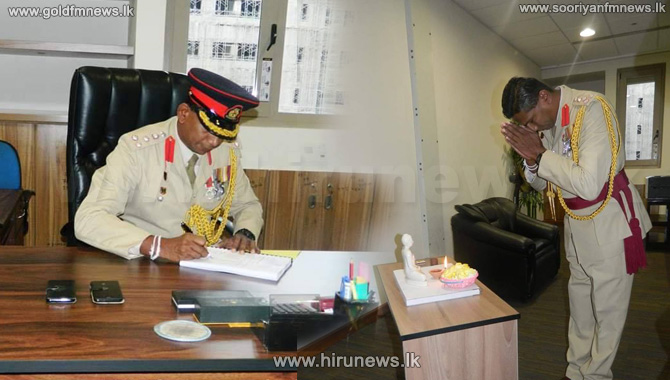
Former Defence Advisor attached to the Sri Lankan High Commission in Britain Brigadier Priyanka Fernando has been appointed to a new position at the Army Headquarters.

The army media stated that he has been appointed as the Director of land, property and housing in the army.

Earlier the Westminster Court found him guilty of making a threatening gesture during a protest held in front of the Sri Lankan High Commission in Britain by a group of LTTE sympathizers and, a fine for 2400 sterling pounds was imposed on him.

Subsequent to the said incident, Brigadier Priyanka Fernando was called back to Sri Lanka, and started working at the Ranviru Resources Centre in Wattala.
Sri Lankan President Gotabaya
Rajapaksa’s Indian tour concluded on a positive note. This was despite
Rajya Sabha MP Vaiko staging a protest opposing the Sri Lankan
president’s visit to India.
What’s striking about the former
military man turned lawmaker is his show of calmness in the face of
opposition. There is much talk about Gotabaya being a vegetarian and a
Buddhist and these factors could be attributed to his composure.
Gotabaya’s travels in and around India
made him realise that there was an arm of hospitality extended to him.
India being concerned about the last stages of the Sri Lankan civil war
now wanting close ties with one of the island’s chief defence officials,
who oversaw military operations that crushed separatist rebels, merits
note. It may be that India wishes to look to the future with its
neighbour, Sri Lanka, at a time when some of the European countries are
hell-bent on raking war crimes that took place in the island.
The only little issue which would not
have been to Gota’s liking would have been the many cutouts and posters
that decorated the streets; put up to welcome the arrival of the Sri
Lankan president.
It seems India wishes to look to the future with Sri Lanka at a time when some European countries are raking on war crimes
Gota has also set the example for the need for lawmakers to live like ordinary citizens
Back at home the Sri Lankan President
has called for the complete stop of wasteful ways. He has also set the
example for the need for lawmakers to live like ordinary citizens. The
president used the entrance for ordinary passengers before boarding the
flight to India. This culture is now catching up in the Rajapaksa clan
with Basil Rajapaksa too using the entrance meant for civilians when
boarding a flight to make a quick visit to USA days ago.
Though the Indian trip for Gotabaya
seemed a mere courtesy call, he was presented with opportunities to
discuss matters of great importance. One such issue was the existing
mafia associated with the import of western medicine to Sri Lanka. A
businessman who is reported to have sought an audience with the Sri
Lankan president, while in the flight, had highlighted the fact that
medicine of low quality is being imported to the island nation by
certain individuals whose sole intention is to make profits. The
president was informed that the problem also affected the State
Pharmaceutical Corporation (SPC). The Sri Lankan President had vowed to
sort out the issue.
One key highlight about Gotabaya’s first
few weeks as president is that he has not been ruthless and not used
force; using force being a trait associated with ex-military men. He has
set the trend by frist disciplining lawmakers and also allowing the
country’s law to take its course.
Brigadier Priyankara Fernando, the
one-time Defence Attache of the Sri Lankan Mission to UK, was charged by
a London Court for making a threatening gesture during a protest by a
group of LTTE sympathisers in London. Though several monks and
politicians have made comments that the Government of Sri Lanka (GoSL)
shouldn’t pay the fine, the president has remained silent over the
issue. This is a positive sign for all law-abiding Sri Lankan citizens.
It’s important to note that the LTTE cadres who surrendered to the Army
were later tried in courts before being sent to serve their jail terms.
Even ruthless tiger rebels were given a fair hearing in a court before
being convicted of committing crimes. This is confirmed in Thamilani
Jeyakkumar’s book ‘Under the shade of sharp sword’ (The book translated
into Sinhala by Swaminadan Wimal sold like hotcakes). This is not the
time to let emotions run wild. Giving the law due respect would
immensely help in sending a strong message to citizens; especially when a
nation that’s being rebuilt also has indisciplined lawmakers and
citizens.
In the backdrop of President Gotabaya
stepping onto a path that encourages diplomacy and decency instead of
force, the recent alleged white van abduction raises concerns however.
But the secretive manner in which the Swiss Embassy has responded to
calls by the Sri Lankan authorities for their employee to cooperate in
investigations and this employee taking so long to arrive at the CID to
give her statement raises suspicion as to whether the whole incident is
politically motivated by a force in the opposition.
Another sector which is still
functioning smoothly despite a change in Government is the media. Many
expected restrictions on the media after the presidential elections. But
Gotabaya seems to think its wise to allow media institutes to enjoy the
freedom to report which is anyway tied to the string called
self-regulation. If Gotabaya doesn’t undermine the law like his brother
Mahinda did it would strengthen the whole foundation on which the
country is to be rebuilt on.
Gotabaya needs time to settle down as a
politician. Earlier in his role as Defence Secretary Gotabaya only knew
of a way of making subordinates stand in attention and take orders. Now
we see the first citizen of the country mingling with crowds and
attempting to shatter that image which suggests he is difficult to
get-along with. It may be that this is the perception people have of him
and he has now moved away from that past; willingly or unwillingly.
When NDF candidate Sajith Premadasa was
defeated at the last presidential elections people thought that the
country would be isolated in the international scene. But these
perceptions are slowly being proved to be false with countries like
India, America, Australia, Japan, China and Norway offering support and
blessings to the new Government.
Just after Gotabaya secured support from
the Sri Lanka Podujana Peramuna as its elections candidate, Sri Lanka’s
total market cap weighted index, the All Share Price Index (ASPI), was
up 1.2% in response. Business elsewhere too is showing signs of picking
up after he clinched the presidency with his ‘development talk’. It
seems like this stock market friendly lawmaker would now go about
extending his hand to anyone with potential to join his team whose
members have been set lofty targets that have to be achieved within a
very short time.
MCC cannot erase the rights of Sri Lanka’s future generations
When
late Justice Amarasinghe delivered the landmark verdict in the Eppawela
phosphate case in the 1990s which ironically was associated with a US &
Japanese tie-up with a rail track from Anuradhapura to Trincomalee, he cited
that a government was only custodians and the land and all of its resources
could not be harmed and made unavailable to future generations. This
judgment has set a precedence for the giving away of lands & resources and
should be a solid foundation to any decision vis a vis MCC land and road
project proposals. State land cannot belong to anyone outright be it Sri
Lankan or Foreigners. All state land/resources that holds the inalienable
sovereignty of the people must be held with the State functioning only as
custodian and caretaker on behalf of future generations.
The MCC
agreement must be taken as part of the regime change that took place in January
2015 after which scores of US tie-ups and deals took place while weakening Sri
Lanka via co-sponsorship of UNHRC Resolution and carrying out a campaign to
vilify the 2 historical pillars that defend the nation – the armed forces &
the Maha Sangha.
Another
key aspect seen in the numerous aid/grants that the former government was
entering with external parties was the manner that aid/grants demanded
changes to legislation BEFORE grants/aid was given. This was a highly
dangerous scenario – a government or international body offers to give some
money in exchange for changing Sri Lanka’s laws. Has the Government or
officials thought of the repercussions of changingland
laws and its impacts simply to get some money for which we will not only end up
paying colossal interest but leave Sri Lanka all the weaker & without land
to call our own!
A
closer look at the pre-conditions of the MCC as shown in the PowerPoint
presentation by MCC in Temple Trees highlights major changes to Sri Lanka’s
land laws and honoring its commitment, the Ranil Wickremasinghe Govt removed
not only the barriers preventing foreigners to purchase land but also enabled
foreigners to buy any amount of land in Sri Lanka. So imagine the damage
this decision can do to any foreigner or foreign company handing big chunks of
money and buying our land? What explanation can we give to the future
generations who will be born into a country where land belongs to foreigners?
Another
closer look at the MCC ‘gift horse’ amount of $480 ruse also highlights that
under various pre-conditions money has already been disbursed to American firms
tasked to survey Sri Lanka’s land, digitalize Sri Lanka’s land deeds, cadastral
map all state land and resources – so while US claims to give us a gift from
one hand it is taking back that money from the other hand and that too we have
to take a loan and the loan is topped off by having to pay interest.
The MCC
agreement clearly states that Sri Lanka will have to bear costs in addition to
the $480m if costs increase. So do we know how much of this $480m has been
spent already or will get reduced from the money we have had to give US
firms to do the pre-conditions set in the agreement? No, we don’t – what the
new Govt should immediately do is to find out how many items have been
outsourced to foreign or local firms, for how much and for how long, which are
all related to this MCC project.
Already
the company tasked to digitalize Sri Lanka’s deeds having taken an X amount of
$ and simply dumped some computers in the Land Ministry, are asking more
millions to carry out the rest of the task. This whole agreement seems to be
part of a well-planned under cover set up to enable a group of people to ground
themselves in Sri Lanka, carry out some tasks for showpiece and share the money
between the outsourced foreign and local companies and a small group of locals
handling the project and for that we have a few lobby groups like those
finding the path and those verifying the research to present that Sri Lankans
are refusing some super gift horse!
Everyone
is taking decisions related to Sri Lanka’s land completely ignoring the experts
knowledgeable enough to look at the MCC agreement not only from what is
presented as a rich gateau but considering the repercussions, the national
security dangers, the demographic dangers, the resource issues once resources
fall into foreign hands and a plethora of other issues that need to be looked
too in greater detail. Of course, we are all forgetting that the National
Economic Council gave a detailed report addressing all above issues and
recommended that Sri Lanka does not enter the MCC agreement in view of many a
danger they outlined. This report must be distributed amongst all MPs and
Secretaries so they can read and understand before they go making silly
statements to the public.
What
must worry Sri Lanka’s policy makers
How many are aware that land statutes
have NOT been revised by post-independence governments and some of these
statutes data back to 1863
– without proper planned revision how can Sri Lanka consider handing these to
MCC?
MCC,
USAID, AUSAID, FAO foreign lawyers and their research teams are more
knowledgeable about Sri Lanka’s land statutes than any of Sri Lanka’s lawyers.
The Sri Lankan experts are knowledgeable but their advice are not heard or
taken.
Why have we commenced to digitalize
state land registry when the state of the building and the books has not been
looked into to be on par with developed nations who are digitalizing their
records. Here we have
some very primitive set of records commenced in 1863 and we are suddenly
declaring to digitalize simply because we are forced to achieve a higher status
in the Ding Business index .
Yes, digitalization commenced but how
feasible is the current set up when it falls into foreign hands – what if
funders stop funding? What if private contractors stop work and demand more
funding – presently the foreign company tasked has suddenly raised their fee
from $2m to $7million with nothing done to show for the $2m given. Who is going
to monitor these? Why cannot it be done by trained people – why give
to foreigners clueless about our systems. If our people lack expertise or
training – why not spend money & train them. No land registries should
be digitalized WITHOUT laws to manage and maintain them being implemented
first.
Of the 10million blocks of lands only
200,000 lands have been entered into the land registry since 2007. It is
estimated that the process will take some 50 years!
Then
the MCC comes along, knows the weak areas, knows the weaknesses of the
political system and says it will give a large chunk of money and demands 11
separate land registries to digitalise – have
we even done proper study before agreeing to these demands or is it simply
because the funds come and anything is ok knowing funding are all opportunities
for a handful to split the money!
Justice
A R B Amarasinghe in his book ‘Title Insurance’ pointed the need to amend
age-old colonial laws which must be changed not to suit western laws but to
conform with our own history & heritage.
Why
are we not learning lessons?
In 1815
the colonial British took over our land claiming we did not have documents
(Waste Land Ordinance) lands were held by the King and locals were using them
as grants – there was no written documents. The British used this drawback.
2020 –
Do we have documents preserved in land registries as required by law for
the next generation to claim the land? Any state land given for a term
exceeding prescribed period has to have a copy in the Registrar of lands for
Public inspection – this is primary evidence as given in section 62 of Evidence
Ordinance. Was this done when former President Sirisena gave some 1million
title deeds to farmers along the MCC marked map areas?
Digitalisation
is so far being done without proper leadership, without proper expertise,
without proper planning, without looking at the dangers and repercussions and
without taking adequate legal measures to protect the interests of Sri Lanka’s
sovereignty, uphold Sri Lanka’s land rights. Sri Lankans utilizing state land on
lease etc..
It is
therefore suggested that the President
should FIRST appoint a Land Council of eminent experts in land laws to
look into the influx of land statutes and to revise the colonial land
statutes to suit modern times.
This
must be done by lawyers knowledgeable in both, natural resources experts,
environmental experts etc and all land related projects, have to go
through them before being approved by any Minister. Land council should be a
statutory body and all land statutes should be made not for keeping up with the
Joneses and for the false pursuits of capitalism and industrialisation as
required by funding organisations at the expense of agriculture and the customs
of our people.
There
is MUCH to do before AGREEING to MCC and these steps must be followed first and
this is good enough reason to explain to MCC as to why Sri Lanka will withhold
signing of agreement.
Each
time Ranil Wickremesinghe is faced with a threat to his leadership he comes up
with a band aid solution which either postpones his day of reckoning, and / or
worsens the situation for the Party, creating internal chaos and bringing it
down in the eyes of the people. The latest attempt to solve the power struggle
within the UNP is to divide the leadership into two compartments : 1 the Leader
of the Opposition whose role is confined to the limited area of the Parliament
and 2. the Leader of the Party with overriding powers to control the affairs of
the Party. This has only postponed the date of the impeding removal of him from
the leadership. It has not solved the internal power struggle. In fact, it has
forced the Sajith to come out fighting more fiercely than before. Perpetuating
the chaos within the Party – a common tactic of Ranil — is not what the Party
needs at a time when it is facing another defeat in the coming Parliamentary
elections.
Clearly,
splitting the leadership at the top has neither appeased the second tier
rebelling against him. Nor has it inspired the electorate to follow Ranil as
the alternative leader of the nation. It is a useless exercise that will neither
solve the problem for him nor the Party to rise from the pit into which it has
fallen. Of the two divisions it is obvious that the Leader of the Party has a
greater clout than the Leader of the Opposition. As Leader of the Party Ranil
Wickremesinghe will have the full control of the Party organisation throughout
the Island on all issues at all times. Whereas, as the Leader of the Opposition
Sajith Premadasa can only walk in the corridors of Parliament (which is not
sitting now) with a name board round his neck. The managing and directing of all
party politics impacting on the nation and, consequently within the Parliament,
will reside in the hands of Ranil who is the Leader of the Party.
Even
the Speaker will be dealing with the Party leaders in settling affairs of the
Parliament. In the current state of play a nominal role will be allotted to the
Leader of the Opposition, if at all. The policies, programs, directions and
political alliances at the national level at all times will be with the Leader
of the Party and not in the hands of part time Leader of the Opposition who has
no significant role to play now that the Parliament is not sitting. Even when
Parliament resumes its sittings after January 3 Sajith will be jobless because
it is due to dissolved to make way for next election. So Sajith is back to
square one: an empty title with no role to play. The trump card is still with
Ranil who commands a majority in the Working Committee – the key instrumentality
which has been manipulated by him solely to serve his survival. It is
questionable as to whether Sajith will even have the full control of the
Parliamentary group to run the opposition according to his will as Ranil is
bound to manipulate the MPs to dance to this tune.
All
this reflects the utter chaos in which the UNP is struggling to survive as a
credible party in the eyes of the nation. Can a divided party win the confidence
of the people? This also raises a critical question: if the UNP can’t manage its
own internal affairs how can it manage the affairs of the nation? It is clear
that the division within the Party is deep-seated with the pro-Sajith ranks
presenting formidable opposition to Ranil. They are ready to take on Ranil at
every level. But as things stand now, Sajith will have to twiddle his fingers
and hang around doing nothing as the Parliament is prorogued. Ranil still has
the whip hand to determine the critical issues of the Party. Not that he is
going to revamp the Party and make it a dynamic force to contest the coming
election. At this late stage he is doomed. He has no vision, no formula or
strategy to recover. Whatever he does now, it will result only in the Party
losing again to the overwhelming forces that triumphed in the Presidential
election.
The
future of the Party depends on democratising the Party. And this can begin only
with the removal of Ranil from the leadership. It is his leadership that has
dragged the UNP and the nation to the prevailing depths of despair. He is
ensconced in power because the UNP constitution has empowered the Leader of the
Party with dictatorial authority. Together, Ranil and the UNP constitution
negate the possibilities of the Party gaining maximum internal democracy. The
Ruwan Wijewardene report that inquired into reforms of the UNP had recommended
the democratisation of the constitution as a prime necessity. But Ranil, after
paying lip service, undercut any meaningful changes. The constitution and the
packing of the Working Committee with his yes-men have given him the necessary
powers to move his pawns on the chess board.
In
other words, Ranil still has the power to move Sajith from place to place
without giving him the power he needs to make a difference. Sajith has been
moved from Deputy Leader to Presidential candidate and now to Leader of the
Opposition. Ranil has been playing snakes and ladders with Sajith. Ranil is bent
more on pulling Sajith down than sending him up the ladder. The latest move is
to turn Sajith into another Rajavarothiam Sampanthan – a ceremonial figure head
who would be the best prop for him to retain his power inside and outside the
Parliament. In any case, there is no Parliament for Sajith to play any
significant role. The only role left for Sajith is to play that of the Leader of
the Opposition to Ranil!
The
attempt to kick Sajith into an empty chair upstairs is nothing but a cosmetic
exercise with no substantial change in the power structure for the Leader of the
Opposition to make meaningful changes to create a new image of the party to win
back the voters who had deserted the Party in droves. What the UNP need is a
radical change of politics, policies and personalities. What the UNP has got is
the same old same old leadership of Ranil – a change doomed to fail. .
The
so-called reform of appointing Sajith as the Leader of the Opposition is not to
promote him but to save Ranil’s skin. Each time recommendations were made for
the reforming of the Party Ranil has been sweeping any change that threatens his
dictatorial grip on the Party under the carpet. Furthermore, no other party has
appointed committees as the UNP to report on the necessary reforms. Starting
from the Panditharatne report to the most recent Ruwan Wijewardena’s report the
UNP has been warned of the changes needed to make itself relevant to the
contemporary electorate. The Wijewardene report has been the best so far.
Ranil
had the necessary blue print to adjust the direction of the Party in the Ruwan
Wijewardene’s report which drew attention to the need of (a) creating a second
tier leadership giving more authority to the young (b) democratising the
party by whittling down the executive powers of Ranil who was running it like
a one-man dictatorship (c) make provision for the election of a leader (d)
moving the party closer to the grass root base (c) adjusting the party to meet
the historical aspirations of the Sinhala-Buddhist base etc. Ranil made big
noises about it in the media but the status quo remained unchanged. Ranil who
spends all his energy on handing over the powers of the nation to the Tamil
separatists, or whittling down the powers of the Presidency to make his
Premier’s seat the center of state power, never moved a finger to devolve his
powers to his own party men. He doesn’t trust his own party men but he has
implicit faith in making Sampanthan the Leader of the Opposition with 16 votes
in a House of 225, violating all known principles of parliamentary democracy.
But
as usual Ranil never took the necessary steps to implement the report. The
changes, if any, have been mere optics and theatrics to appease the forces
threatening him. He would craftily offer changes (like appointing Sajith as the
Leader of Opposition) not to revamp the Party but to get his rivals out of his
way to consolidate his position as the sole leader of the
party.
Had
Ranil implemented the Ruwan’s report there was a possibility (though remote) of
avoiding the crash of November 16. There are, of course, several reasons that
led to the crash of November 16. But the primary cause was undoubtedly Ranil. If
the UNP won he would have crowed that it was his leadership and his political
alliances with the minority parties that led to the victory. Now that the UNP
has lost he must take full responsibility for its failure – for the
30th time!
The
current reformists, however, must not fall for the belief that removing Ranil
will solve their problems. They have to go deeper than that. They must root out
the policies and programs of Ranil that alienated the Sinhala-Buddhist base.
When 70% of the Sinhala population reject the UNP then it is time for the new
guard to revisit the policies and the programs pursued by Ranil-Mangala gang. If
Ranil inflicted the wounds on the Sinhala-Buddhist body politic then Mangala
rushed in and rubbed salt into it.
The
first prophetic UNP pioneer who realised the destabilising role of Ranil and its
destructive impact on the Party was Bodhi J. Ranasinghe. He was a party loyalist
but like all loyalists he moved away from Ranil realising that he was not the
man who could save the party or the nation. The seminal rebellious group of
UNPers gathered round him and he gave the necessary quantum of oxygen to the
disillusioned UNP youth. Bodhi invested his hopes in Sajith, having been a
committed loyalist of his father, President Premadasa. Like all those who
followed Ranil initially, Bodhi realised that Ranil’s power to repel is far
greater than his power to attract. A common complaint of all Ranil loyalists is
that he is never loyal to them. He either casts them out or keeps them at arms’
length. Bodhi too was a victim of Ranil’s karapincha treatment.
Sadly, Bodhi’s untimely death dispersed the UNP youth who gathered round him.
Ruwan’s
report got the same treatment of all other reports presented to Ranil: it was
locked up inside the nearest drawer, unread, untouched and unwanted. Ranil will
not touch anything that threatens his supremacy. His latest move to appoint
Sajith as the Leader of the Opposition is only a bone thrown to keep the barking
dogs quiet. He thinks he can deceive the young Turks again with false hopes and
promises. But their thinking is that they have come as close as they can to
overthrow the old guard represented by Ranil. Harin argues that the rebels had
won every battle they had fought so far and there is no reason why they can’t
deliver the final coup de grace. They are exasperated and impatient having come
to the end of the tether. They are right: there is no point in following a
leader that can’t win. After losing 30 elections under Ranil can they hope to
win the next critical Parliamentary elections with a born loser? Nor can they be
happy with Sajith playing the second fiddle?
Though
Ranil is playing his own games to survive in the leadership Sajith, in a sense,
has been inching his way like the camel in the Arab’s tent. Sajith still has
some distance to go to oust the Arab and capture the tent. He has been drifting
more horizontally than vertically. He has been going across the chess board from
Deputy Leadership to Presidential candidate and from there to the Leader of the
Opposition. Despite these advances he is still not in command of the Party to
determine the fundamental policies and run the party under his leadership. In
Parliament he will have space only to act as the peon who will deliver the
policies dictated by Ranil.
In
any case, Sajith has nothing to do now because Parliament has been prorogued
till January 3. Ranil loses nothing by making Sajith the leader of the
Opposition as there is no Parliament for Sajith to act. Ranil, of course, has
merely postponed his day of departure. But he should know that his days are
numbered. The seething anger rising within the lower layers of the Party
indicate that the power struggle within the Party has not ended. The young Turks
are hanging over his head like the Sword of Damocles.
Ravi
Karunanayake argues that for the sake of unity they have to keep Ranil as the
leader. But can the UNP win the coming Parliamentary election under Ranil? What
the UNP needs is a leader who can lead them to victory. November 16 proved once
again that Ranil is not a vote-winning candidate. What the UNP need is a radical
change – a change in policies, personalities and the failed politics. In short,
it means throwing Ranil out because he has nothing new to offer the party or the
Party
During the presidential election 2019,
many candidates and people publicly talked about education reforms. Except for Mr. Gotabaya Rajapaksa, other
candidates and public have not expressed clear views on this subject and
reluctant to talk about what kind of reforms need to Sri Lanka. Education is a
broader subject area that involves in ocean of topics, views, and ideas.
Although education is working as a right of people political platforms in
presidential election presented an idea that education should be inserted to
the constitution as a human right. There is no doubt that education has been
working as a right and an essential role in human life since the beginning of
first human to this world. It is quite difficult to identify what are essential
reforms to the country as the dynamism and changes in society force to focus on
the requirements of education and training in distinct areas. I have broadly
written about this subject area based on experience in developed and developing
countries. Education is a policy matter
as well as practical application and, the ability to successfully implementing
reforms countrywide would be buttressed the success.
Since the beginning of the education
policy of Mr.C.W.W. Kannangara during the era of the State Council, education
reforms have been a subject of talking and some attractive policy actions have
been successfully implemented in the country while talking was going on among
limited interested people, the main reason for current urgency may have been
contributed by politics and economic predicaments faced by majority of the
country. Without understanding the
purposes or the way reforms should be implemented in the country, education
reforms might not be successfully achieved. On the other hand, educational
reforms would not be successful if policymakers don’t clearly understand the
quantum and the approach they needed to make as well as limits in the country
to launch reforms successfully. Many people of the country talk on education
reforms with individual interest or with self-centered attitudes such as a
finding job or gaining the opportunity to go overseas or providing
opportunities for own group of community.
These are the completely self-centered focus.
Education reforms should be beyond
self-centred attitudes and they must be firm actions with a national focus
providing broader benefits to different people in the social structure and the
reforms shall involve in capacious objectives consistent to international
experience, which align on different focus based on technological innovations
and timely human needs. The other
important point is that education reforms are continuing process beyond the
election promises. Election promises are
concerned with short term interest and education reforms go beyond the
short-term requirements.
Before initiating education reforms,
policymakers, as well as the public who supposed to gain benefits from reforms
need to understand fundamental economic issues and limits of the country. The
status of the economy at present indicates that upliftment and the forward movement
of economy would be depended on the timely educational reforms. Economic issues
in Sri Lanka associated with macroeconomic factors and the management of public
and private enterprises and service firms concern with microeconomic
considerations. Education reforms in Sri
Lanka should go along with economic reforms, which essentially need to reform
the existing education system. In
addition to economic issues and status, education reforms need to consider
other important areas such as value education, which included
anti-discrimination and equality of citizens, and elimination of mythical
attitudes of people, which are hindrances to development and growth. They are
factors involved in the development of human quality of the country. Although religions are operating in the
country for centuries human quality has not been improved in the process and
the result of this situation is less quality and demand for human capital of
the country. The other vital area is key
knowledge and skills development in relation to environment, health and
communication in students in all context of education. This is a significant issue that should be
especially considered by the reforming policy process.
Essential economic reforms might be a
considerable temperament to public in the short-run and it appeared in Western
countries after the cold war, and Western countries and Communist countries
understood the essence of reforms and they successfully dealt with human
temperaments and implemented reforms tackling with many problems such as
unemployment, workplace reforms and multi-skills requirement against reforms to maintain the economies
pushing to an upward trend. Now the most important economic reforms are policy
corrections and deviation policy focus while inventing new policies for the
future.
People of Sri Lanka have many
expectations, which may not be achieved quickly within the expected time
framework as Sri Lanka has many limits or impediments to growth. No country can
achieve social and economic expectations overnight through reform process.
Positive results from education reforms could be achieved only in medium
term.
The limits of education reforms are
associated with many factors, which are beyond economic considerations and they
are involved in social, cultural, legal, religious and international relation
related factors.
Traditional society in history had not
regulations, and impediments limited, but in modern society have many
regulations and impediments which are difficult to defeat by an independent
country like Sri Lanka. Sometimes Sri Lanka needs to work with other countries.
Economically, countries in the modern
world are in a competitive circle and Sri Lanka cannot work alone ignoring the
factors limit to growth.
Generally, education reforms concern
with contextual education, curriculum development and management, education
administration, teachers’ and trainers’ development (teacher education and
training), policy initiating and review of current policy framework and
remedial management of policy consistent to dynamism of the world. These are quite difficult activities that are
involved in massive costs and quality human services. Therefore, the capacity of the economy
spending money for these activities is the key point for the success of
education reforms. In the meantime, these reforms would generate massive
employment and sometimes job losses and diverting jobs one area to others
should be a part of reforms. Finally,
education reforms would be highly advantaged to the country despite the cost
involved in and the productivity generate from reforms will outweigh the any
cost.
International structure or acceptance for
a million of population (as a Model), it must include one university for higher
education and research in a variety of fields, at least two technical colleges
for each five hundred thousand population for technical vocational education
and training for current staff in workplaces and newcomers, five high schools
for secondary context, ten or more schools for primary education context and
twenty or more for early childhood contexts, and in addition, there may be
several colleges to absorb dropouts in all contexts focusing on different level
of contextual education. The general
structure of education must be organized according to this basic principle and
requirements and there may be more educational institutions with private
investments with a greater supervision and review of the government. This basic structure is highly expensive and
lots of economic, social, cultural and religious issues involved in the
situation and the nature of organizations. When education reforms consider this
basic requirement, it is needed to eliminate divisions such as religious,
language and any other differences, which might hindrance to providing equal
education opportunities for people. As
Sri Lanka consist of 24 million population the country needs to consider to
implement the structure without any difference based on population. It is a horizontal
expansion of education, which eliminate current vertical expansion to giving
priority for urban areas. Horizontal provision of education bring justice and
opportunities for rural community and the current competition for popular
schools, colleges and schools will be exterminated by a horizontal model.
When population changes the structure
would be changed in the future and the general assumption is to implement the
structure as a government investment, but investments for education and
training could be contributed by Non- Government and private investors,
especially religious organizations could participate with qualitative and
strict government supervision. The provision of education should be free, but
according to the affordability of parent and it needs to insist fee-based
education provision on individual cases and parents under the new model would
be saved a large sum of spending in the current system as private tuition
spending and many others will be eliminated by new structural reforms. The
structure will give a dignity to all students with any difference. In terms of
the structure, Sri Lanka needs many universities and technical colleges to
provide good and quality education and training in relation to different fields.
The current available infrastructure and facilities would help to successfully
build the proposed structure.
The economy of the country should be
expanded to absorb more than 85% of graduates and there is no harm 10% to 15%
going overseas in terms of democratic freedom.
Sri Lanka should not be a free education and training place for
attracting labour for developed countries.
If the economy of Sri Lanka is prosperous educated citizens and
professionals will not migrate overseas to offer hard labour to developed
countries. It entirely depends on the preference of individual and the
government has no responsibility for them unless they subject to discrimination
in overseas. This situation can be seen
in all developed countries and the government may impose various regulations considering
the requirements. The government is not
directly responsible for individual cases; however, the operation of
international relations would force the government to intervene case by case.
Within this basic structure, the other
essential reform is to change current attitudes of people on good schools or
bad school feeling and the elimination of such feeling would be depended on the
improvement of quality of education for kids providing equal knowledge and
skills from whichever school studied without a difference in rural or urban.
This should be a key aspect of education reforms. The government can promote private investment
through incentives for investors and eliminate various expensive competitive
exams such as scholarship exams and private tuitions, which will not necessary
under the reforms. The new structure allows for each student to attend
university or technical education, in other words, it is possible every student
to gain tertiary education.
With the structural reform’s curriculum
reforms, which is a broader aspect that eliminates unnecessarily aligning too
many students to certain area of education such as science, commerce, and
arts. Many Western countries allow
students to learn arts, science, and commerce together and some times to select
other pathways in health, engineering, agriculture, services, sports, and many
other areas. Curriculum reforms would direct to solve current major problems
and it needs including value education.
Sri Lanka has many religions but followers are not consistent with the
policies of religions. It seems that religion has become a symbol and religion
is not working in homes or workplaces or society. In this situation, curriculum reforms need
focusing to offer value education in all educational contexts. In Western countries, value education is key
in practical knowledge and application.
For example, care and compassion are vital values that mean care for
self and others. In any education
context, safety is a value, which broadly applies to any subject area and when
value education included, the behavioral pattern of students dramatically
changed and the quality of knowledge and skills improve with a higher demand
for knowledge and skills. Part two of this article focus on reforms related to
curriculum and teaching.
The allegedly abducted locally recruited Swiss Embassy staffer Garnia Banister Francis reported to the CID for the second day today
Earlier, she was produced before the Colombo Judicial Medical Officer for a medical test.
The staffer was produced before the Colombo Chief magistrate Lanka Jayarathna today.
Garnia Banister Francis reported to the CID yesterday, 14 days after the alleged incident following a court order issued on her to do so.
It was seen that an individual was covering her face while being escorted to the CID.
Meanwhile, the CID told the court that it recorded a statement from the particular woman yesterday and another statement was to be recorded today as well.
At the same time, the lawyer appearing for the allegedly abducted embassy staffer Upul Kumarapperuma said that local and foreign doctors attached to the Swiss Embassy have inspected his client after the incident.
He said according to the two doctors, his client was assaulted and was subjected to sexual harassment.
Later, the CID told the court that a report from the Colombo Judicial Medical officer was delayed as the staffer rejected to appear before a male doctor.
Responding to the lawyer of the embassy staffer the Magistrate stated that she cannot issue any order to produce his client before a female medical officer as the practice is to test such a victim by a doctor attached to the judicial medical unit.
However, the CID further said that it has made arrangements to produce the staffer before a female doctor for a medical test.
At the same time, the magistrate also ordered to provide another report of the mental condition of the Swiss embassy staffer
In addition, the magistrate extended the overseas travel ban on the embassy staffer
Meanwhile, when the Swiss Embassy staffer visited the CID yesterday, a self introduced agent of the Embassy staffer, Manjula Perera said that the Embassy staffer would issue a statement to the media today.
Manjula Perera invited the media to participate in the event to be held at an address on Barnes Place, Colombo.
Accordingly, media personnel visited the given address but neither the embassy staffer nor her agent were present there.
Later, the media personnel have shown the security guard at the place, the video on which the particular agent announced the scheduled event today
At that point, the security guard had identified the man and told journalists that neither that agent nor the embassy staffer had visited the house for the last few days.
Meanwhile, the self-imposed agent of the Swiss embassy staffer Manjula Perera has driven to the CID in a motor car registered under CAF-0165.
Our news team discovered that the vehicle is registered in an address on No.78/2, Devala Road, Makola North, Makola.
Mario Arulthas writes
to Al Jazeera on 8 Dec 2019 titled Trouble brews in post-election Sri Lanka”.
What are the concerns he raises:
He refers to Gotabaya
Rajapakse as a ‘hardliner’ exactly
what does he imply by this?
He claims ‘prospects for justice & reconciliation
between the different communities on the island lie in tatters” – can he
give examples of justice & reconciliation that were brought to success by
previous government?
He says ‘victory of Gota, sent shockwaves across the
Tamil-dominated northeast’ – can he say how many are in shock and what is
the type of shock they are suffering weeks after the victory? Are any of them
hospitalized by the shock, how many
thousands have ‘gone missing’ ‘how many thousands’ have been abducted since
16 Nov 2019?
What are the ‘war
crimes’ he is allegedly accused of – does Mario have direct proof &
evidence or is it all hearsay from 3rd party and 4th
party sources?
On what grounds did
Sajith Premadasa become the ‘lesser evil’
is it because he promised to deliver the 13 demands made by TNA, didn’t TNA ask
the same Tamil people to vote for the former President Sirisena, didn’t TNA
also ask the Tamil people to vote for Sarath Fonseka the army commander as
President in 2010, months after the same Tamils called him a war criminal! The
trend in voting was nothing that anyone was surprised over. Its just that the
Tamil leadership ensures Sinhalese do not mix with the Tamils for greater
harmony and prefer to feed Tamils with lies. This has to now change.
Oh Mario, you seem to
have got your wires crossed, Sajith was a key government minister in a
government that co-sponsored the UNHRC resolution and he didn’t even object to
LTTE getting compensation – so what crap about vowing to protect the military.
Well, suggest you check whether he is actually a practicing Buddhist or has embraced
another religion too. Lots of politicians pretend to be Buddhists for votes!
If the Western
nations can give Christian prominence and Islamic majority nations can give
premier place to Islam, there is absolutely no harm in acknowledging the
historical role of Buddhism that built this island civilization on the strength
of the dasa raja dhamma practiced by all Sinhale kings even the invader kings
that ruled Sri Lanka. By the way invader Elara was no Tamil king.
Its certainly
interesting to see Mario refer to the Swiss affair. Very soon the Swiss embassy
will be exposed for its part in a Hollywood drama. Much of the gossip
international media outlets are spreading will soon be nullified by factual
details when investigations conclude. What is worrying is an embassy keeping a
Sri Lankan national & her family inside the Swiss embassy since 25th
Nov and only bringing her to give a statement before a court order lapsed
whereby she would have been declared guilty of contempt of court for not
arriving to make a statement.
Any journalist in any
part of the world have self-censorship, while all journalists can write
sparingly against other countries, try writing damaging pieces against the
country they are domiciled/working in and certainly action will be taken by the
authorities. How many US journalists write about the US or NATO crimes or
disclose secrets happening inside the US State Dept? Every government has a
right to protect its national security interests.
As for hate speech – these
new vocabularies and terms are simply meant to silence only one party with
political correctness… how about doing a content analysis and seeing the scores
of lies and fake news based on which many of the LTTE fronts are becoming
ultra-rich, opening charities to enable them to not pay taxes and accrue more
benefits and forcing Tamils overseas to help raise ‘funds’ the Human Rights
Watch report on extortions by LTTE diaspora remain valid still.
Can Mario give any evidence
of Tamils being attacked after the elections without simply brandishing his pen?
Was it like Occupy Wall Street protestors getting attacked?
Have you Mario, tried
to remove Christian domination from Western countries or tried to erase
Islamic/Muslim dominance from OIC member states! Why not you take this same
argument to these countries and change them first. In the meanwhile, produce
evidence what the minorities do not enjoy because they are a minority what only
the majority enjoys because they are the majority without simply parroting what
others say.
‘Tamil self-rule culminated in the defeat of the LTTE’ very interesting – so Mario means to say all Tamils
were with the LTTE, then how about explaining why LTTE killed so many Tamils
and we can give a very long list for Mario to explain. Why did LTTE shoot at
fleeing Tamil civilians and kill them, there are scores of Tamils giving witness
accounts of being shot at. Why did even the UNSG appeal to the LTTE to allow
Tamil civilians to come to government controlled areas. Why not look through
all of the statements made by various international bodies appealing to the
LTTE to release Tamil civilians. So you Mario, are implying that our soldiers didn’t
save 294,000 Tamils and that they voluntarily were with the LTTE!
Mario, you are wrong
again. The UN never said anything about 70,000 deaths. UN report in Colombo gave
just over 7000 deaths which tallies with the Government death statistics. Well
activists can give any number but the least they can do is match the number
with some names or NIC or even birth certificates. Anyone can say x number died
but without even a scrap of evidence that is a very lame argument. Demanding
justice for dead without details is like that Swiss woman the embassy claimed
was abducted in a white vehicle but authorities have proved the details given didn’t
match at all with the evidence and every minute detail was given to the Swiss
leaving them obviously speechless and embarrassed and now desperately trying to
recover from their stunt.
Mario and all those
living overseas need not worry about Tamils in Sri Lanka, the government will
set up not only a structured development for all nationals but will address
their issues and NOT the issues of Tamils living overseas or Tamils holding
foreign passports. Tamil Sri Lankan problems will be addressed together with
the problems of all other communities. The GOSL will NOT solve the problems of
LTTE Diaspora though.
Again, you are wrong,
Tamils did not turn out in droves to commemorate LTTE dead which is what this
Maaveerar Naal is all about – how about commemorating the Tamils killed by LTTE
too, who is going to mourn for people like Alfred Duraiappah, Sam Tambimuttu
& wife, scores of Tamil militant leaders killed by LTTE including Mahaththaya….
Who is going to mourn for them, Mario?
Exactly what did LTTE
give the Tamil people? LTTE made $300m annual profits according to Janes
Intelligence report – did LTTE build a school, train station, roads, a kovil, a
library, a sports complex for Tamils… what did LTTE give the Tamil people? Thousands
of Tamils were given electricity for the first time by GOSL after 2009. They
were living using a kerosene lamp under LTTE rule. Some of these Tamils rescued
by the Sri Lankan troops did not even know how to brush their teeth or use a
toilet when they were put in the refugee camps. They were this backward because
of the LTTE.
The President of Sri
Lanka must address the needs of all the citizens not only one community. As you
can see a new wave of hope is taking place and negative reporting or media
releases is unlikely to change their enthusiasm – streets are getting cleaned,
walls are getting painted with all citizens joining in, trees are being
planted, our sports stars are winning gold, youth are taking to farming, the
inventors are busy thinking of ways to help – the whole country is looking
forward, we don’t need negative vibes or energies trying to disturb or disrupt
the people. Let them be.
As for devolution – 36
of the 37 subjects have been devolved since 1987 and what is the big deal you
see in 13a – we have been functioning
pretty well without provincial councils for 2 ½ years now and it is very clear
to all we don’t need the 13a.
We don’t need political changes – we need changes
beneficial to the people. This is
where media have erred in continuously drumming political solutions – we need only people’s solutions for people’s
problems.
So happy that Al
Jazeera has as disclaimer ‘views expressed in this article are the authors own
and do not necessarily reflect Al Jazeera’s editorial stance’.
Mario is an Advocacy
Director of Washington-based PEARL (People for Equality and Relief in Lanka)
The aim and objective of PEARL will help understand the objective behind his
article
Our mission is to advocate for
justice and
self-determination for the Tamil people
in the North-East of
Sri Lanka.
Our vision is for a
Tamil nation
that is inclusive,
free from oppression and able to determine its own future.
For over a decade, PEARL
has been advocating for
human rights in Sri
Lanka with U.S. policy makers,
the United
Nations, European Union and
other governmental
and non-governmental organizations.
We conduct innovative research and analysis, centred in the experiences of Tamil victim-survivors, to report on key issues affecting the North-East of the island.