සජිත් කළමනාකරණයේ මූලධර්ම නොදන්නා අයෙකු බව ඔහුම තහවුරු කර තිබෙනවා – මන්ත්‍රී සුසිල්”

October 30th, 2019

උපුටා ගැන්ම  හිරු පුවත්

නව ප්‍රජාතන්ත්‍රවාදී පෙරමුණේ ජනාධිපති ධුර අපේක්ෂක අමාත්‍ය සජිත් ප්‍රේමදාස කළමනාකරණයේ මූලධර්ම නොදන්නා පුද්ගලයෙකු බවට ඔහු විසින්ම තහවුරු කර ඇති බව, පාර්ලිමේන්තු මන්ත්‍රී සුසිල් ප්‍රේමජයන්ත් පවසනවා.

කොළඹ අද පැවති මාධ්‍ය හමුවකට එක්වෙමින් ඔහු මේ බව ප්‍රකාශ කළා.

එම මාධ්‍ය හමුවට එක්වෙමින් පාර්ලිමේන්තු මන්ත්‍රී කෙහෙළිය රඹුක්වැල්ල කියා සිටියේ ශ්‍රී ලංකා පොදුජන පෙරමුණේ ජනාධිපති ධුර අපේක්ෂක ගෝඨාභය රාජපක්ෂට එරෙහිව අසාර්ථක මඩ ප්‍රචාරයකට ආණ්ඩුව කටයුතු කරමින් සිටින බවයි.

ගෝඨාභයගේ ප්‍රමුඛ කාර්යය ගැන අමරවීර කියයි

October 30th, 2019

උපුටා ගැන්ම  හිරු පුවත්

>බැඳුම්කර ගණුදෙනුවට චෝදනා එල්ලවී සිටින පුද්ගලයන්ට එරෙහිව ක්‍රියාකිරීම ජනාධිපති ධුර අපේක්ෂක ගෝඨාභය රාජපක්ෂ තම ප්‍රමුඛ කාර්යයක් ලෙස සළකනු ඇති බව, එක්සත් ජනතා නිදහස් සන්ධාන මහ ලේකම් පාර්ලිමේන්තු මන්ත්‍රී මහින්ද අමරවීර පවසනවා.

රාජගිරිය ප්‍රදේශයේ අද පැවති මාධ්‍ය හමුවකට එක්වෙමින් මන්ත්‍රීවරයා මේ බව කියා සිටියා.

ජාතික ආරක්ෂාව තහවුරු කරමින් රට සංවර්ධනය කරන බව ජනපති අපේක්ෂක ගෝඨාභය කියයි

October 30th, 2019

උපුටා ගැන්ම  හිරු පුවත්

ජාතික ආරක්ෂාව තහවුරු කරමින් රට සංවර්ධනය කරා ගෙන යන බව ශ්‍රී ලංකා පොදුජන පෙරමුණ ප්‍රමුඛ ඒකාබද්ධ විපක්ෂයේ ජනාධිපති ධුර අපේක්ෂක ගෝඨාභය රාජපක්ෂ පවසනවා.

රුවන්වැල්ල ප්‍රදේශයේ අද පැවති ජන හමුවකට එක්වෙමින් ඔහු මේ බව කියා සිටියා.

මේ අතර ජනාධිපති ධුර අපේක්ෂක ගෝඨාභය රාජපක්ෂගේ ජයග්‍රහණය තහවුරු කිරීම වෙනුවෙන් හඟුරන්කෙත ප්‍රදේශයේදීද අද තවත් ජන රැළියක් පැවැත්වුණා.

විපක්ෂ නායක මහින්ද රාජපක්ෂ ද එම ජන රැළියට එක්වුණා.

සජිත් ජනපති වුවහොත් අගමැති තමන් බව රනිල් කියයි

October 30th, 2019

උපුටා ගැන්ම  හිරු පුවත්

සජිත් ප්‍රේමදාස ජනාධිපතිවරයා ලෙස පත්වුවහොත් අග්‍රාමාත්‍යවරයා ලෙස කටයුතු කරන්නේ තමන් බව අග්‍රාමාත්‍ය රනිල් වික්‍රමසිංහ අද ප්‍රකාශ කළා.

ඒ, රජයේ සංවර්ධන වැඩපිළිවෙල පිළිබඳව කරුණු පැහැදිළි කිරීම වෙනුවෙන් අරලියගහ මන්දිරයේ කැඳවා තිබූ මාධ්‍ය හමුවකට එක්වෙමින්.

හැකිනම් ඇමතිකමෙන් ඉවත් කරන්නැයි වසන්ත සේනානායකගෙන් අභියෝගයක්”

October 30th, 2019

උපුටා ගැන්ම  හිරු පුවත්

තමන් විදේශ කටයුතු රාජ්‍ය අමාත්‍ය ධුරයෙන් ඉවත් නොවන බව අමාත්‍ය වසන්ත සේනානායක අද විශේෂ මාධ්‍ය හමුවක් කැඳවමින් ප්‍රකාශ කළා.

කොම්පඤ්ඤ වීථිය ප්‍රදේශයේ අද පස්වරුවේ පැවති මෙම විශේෂ මාධ්‍ය හමුවේදී ඔහු කියා සිටියේ හැකිනම් තමන් එම ධුරයෙන් ඉවත් කර පෙන්වන ලෙසටයි.

රාජ්‍ය අමාත්‍ය වසන්ත සේනානායකගේ එක්සත් ජාතික පක්ෂ සාමාජිකත්වය වහාම ක්‍රියාත්මක වන පරිදි අත්හිටුවන බවත්, ඉදිරියේදී ඔහු විදේශ කටයුතු රාජ්‍ය අමාත්‍ය ධුරයෙන්ද ඉවත් කිරීමට පියවර ගන්නා බවත්, එක්සත් ජාතික පක්ෂ මහ ලේකම් අමාත්‍ය අකිල විරාජ් කාරියවසම් ඊයේ ප්‍රකාශ කළා.

ඊට ප්‍රතිචාර දක්වමිනුයි රාජ්‍ය අමාත්‍ය වසන්ත සේනානායක අද මෙම අදහස් පළ කළේ.

From the Eve of Disintegration to the Dawn of a New Era of Democracy and Prosperity

October 29th, 2019

By Rohana R. Wasala

Two of the three important presidential candidates have, by the time of writing, October 28, unveiled their election manifestos. SLPP’s Gotabhaya Rajapaksa and National People’s Power candidate JVP’s Anura Kumara Disanayake (AK) did so on October 25 and 26 respectively. Be that as it may, the contest is actually between two of the three, Gotabhaya Rajapaksa (GR) and Sajith Premadasa (SP),  the UNP-led New Democratic Front (NDF) candidate; but the latter hasn’t yet made known the agenda he expects to implement in case he is elected as president. AK, obviously the lowest seeded contestant, seems to be playing for ensuring a return of the justly rejected. Funnily enough, the inane statements and gestures that SP has been making on the campaign trail so far do not suggest that he has any coherent vision or plan of action. He seems to be trying to compensate for this glaring lack by beginning to parrot some ideas (merely as meaningless slogans) stealthily adapted from GR’s meticulously drafted text. GR marks a clear path out of the present unholy mess to the prosperous future that the much harassed, but highly disciplined and patient, people of the natural-resources-rich Sri Lanka deserve. 

The GR vision for dealing with the short term and long term crises the country is facing can be outlined in terms of ten points: strengthening national security, adopting a foreign policy that does not compromise Sri Lanka’s sovereignty and independence, eliminating corruption, developing an employment oriented education system geared towards training productive citizens, creating a people centred economy, building a society that is based on knowledge and technology, development and enhancement of physical resources, maintaining a stable environment management system, introducing constitutional reforms that are accountable to the people, and establishing a just society that is law abiding, disciplined and decent. While explaining his broad vision and mission, he stressed two key principles, one in positive terms, and the other in negative terms. He assured the patriotic people of Sri Lanka that none of the pledges he makes in the manifesto are empty political promises. What he put in positive terms was this: he pledges himself to a righteous mode of governance that will be compatible with the ethical principles advocated by the dominant Buddhist religious culture and other mainstream religions followed in the country. GR also emphasized that no extremism of any kind will be tolerated, and that there will be only one legal system for the whole country.

The upcoming presidential election on November 16 may be described as the most unusual and at the same time, the most decisive, presidential election ever held under the 1978 Constitution, that is, ever since the introduction of the the executive presidential system. It is going to be the most decisive presidential poll because on its result will depend the very survival of the country as an independent sovereign state  of which the institution of the executive presidency is the lynchpin: If the UNP candidate wins, the incumbent dysfunctional parliament itself will be able to push through the legislation that is necessary to remove that vital constitutional safeguard; a change that involves the removal of the executive presidency will be irreversible. This presidential election is also unlike any other ever held during the past forty years because of a number of factors like the following: The ridiculous multiplicity of candidates – 35 – is one. This, however, is sure to be seen by the seasoned voting public as an ingenuous strategy designed to eat into the well known front runner GR’s vote bank, though obviously, the dummy tactic won’t work; it will probably be counterproductive instead. The outgoing president’s decision to keep out of the fray remains an unexplained matter; no one knows what’s up his sleeve; Sirisena is notorious for nasty surprises. The prospect of the incoming president  having to work with a prime minister who is determined to challenge him as a supposedly emasculated executive (weakened as a result of the controversially passed 19A) is also an unusual situation; however, such a challenge is not likely to materialize if GR is elected in view of the precedent that the Yahapalana president Sirisena himself created when he unconstitutionally swore in, soon after his own taking of oaths, the then Opposition leader Wickremasinghe with only 44 seats in the 225 member parliament as prime minister, ignoring the incumbent pm Jayaratne supported by some 140 members. The apparently deliberate undermining of national security and the decline of economic development to beyond the pre-2005 levels reflects the unenviable legacy of the anarchic Yahapalanaya. These are some of the unique circumstances that make this presidential election one of its kind. 

Just over nine years of Rajapaksa presidency (November 9, 2005 – January 9, 2015) left Sri Lanka a secure, peaceful country that was economically looking up with a healthy growth rate of over 6.5, having overcome three decades of terrorist violence. The end of the civil war in May 2009 brought the different racial and religious communities together. The majority Sinhalese and the minority Tamil and Muslim communities resumed their normal lives as citizens of one country as before, free from fear and mutual suspicion. Unprecedented vistas of progress opened before the nation. However, the euphoria lasted for a short five years. Perennial problems like corruption which need to be tackled through collaboration rather than conflict between the government and the opposition, false allegations levelled against the leaders by political rivals, and the anti-Sri Lanka actions taken by vested interests abroad exploiting these concocted issues led to an externally engineered regime change in January 2015. This was followed by the the installation of Yahapalanaya now on its last legs. Its abject submission to virtually unconcealed intimidatory  foreign interference directed at subverting the public will characterized the Yahapalanaya. The leaders were beholden to those external forces for their hold on the levers of domestic power. The brand of democracy they boast of having protected is such that they felt obliged to please the agents of interventionist powers, while completely ignoring the interests of the ordinary Sri Lankans who were made to vote them into power.  

The Island of October 9, 2019 carried, on its front page, a picture of Speaker of Sri Lanka Parliament Karu Jayasuriya at a discussion he had with Canadian High Commissioner in Sri Lanka  David McKinnon at the Parliament Complex on Monday (07) in the company of Secretary General of Parliament Dammika Dasanayake and ‘Foreign Secretary and advisor’ to Speaker (Jayasuriya) Prasad Kariyawasam. The ‘advisor’ part of his designation offers no ambiguity. But the other part is not clear. Is Kariyawasam the current secretary to the ministry of foreign affairs doubling as advisor to the Speaker simultaneously, or does he serve as the latter’s foreign affairs consultant as well? What had a civil servant of one country to do with the the head of the august house of representatives of another sovereign country? These questions occurred to me on seeing that picture.  Be that as it may, the caption to the picture notes that ‘The Joint Opposition protested both inside and outside (the Parliament) against Kariyawasam’s appointment as he was paid by the USAID’. Most Sri Lankans will tend to view what appears to be brazen interference in the country’s internal affairs (of which the picture is graphic proof) with a sense of outrage. The picture might remind them of how a number of foreign diplomats clapped from the parliamentary gallery when the Speaker, Karu Jayasuriya, announced the controversial passage of a no confidence motion by voice vote in 2018. Jayasuriya, a so-called champion of democracy, to his eternal shame, allowed the sovereignty of the Sri Lankan people to be thus slighted by some salaried civil servants from the West.     

The SLPP’s assured anti-Yahapalanaya result is expected to lead to an inevitable change of the composition of the next parliament. The election of its candidate as president is already treated as a foregone conclusion. The sweeping victory of the SLPP at the Elpitiya Pradeshiya Sabha election held on October 11 reflects the public mood throughout the country.The Elpitiya verdict (all 17 wards won by the Joint Opposition led by the SLPP) is a harbinger of its eventual emergence  as the ruling party at the parliamentary election that will follow around March in 2020.

That is the longer term indication of the October 11 Elpitiya PS election result. But its immediate effect was that it gave the lie to the costly pro-government Galle Face rally held the previous afternoon. The apparently large Elpitiya election eve gathering at Galle Face reminded me of the  UNP demonstration held in the centre of Colombo on October 30, 2018 in which an effigy of the unexpectedly appointed Prime Minister Mahinda Rajapaksa was burnt, and that of President Maithripala Sirisena was torn up, by party loyalists against the dismissal, four days before, of the then sitting premier UNP’s Ranil Wickremasinghe; Sirisena had appointed Rajapaksa prime minister after suddenly dissolving parliament in what came to be dubbed a ‘constitutional coup’ on October 26 last year. Like that seemingly impromptu protest event in 2018,  the Galle Face gathering on October 10 a couple of days ago was not a spontaneous or convincing enough show of public support for the incumbent regime. From the public’s point of view there was absolutely nothing the government did to inspire such confidence in it in either case. The vast majority of common Sri Lankans breathed a sigh of relief when they heard about the sudden change of government and the appointment of Rajapaksa replacing Wickremasinghe. Although it was later successfully challenged in court by Wickremasinghe for him and his cabinet to be reinstated, Rajapaksa’s interim government of 51 days subsequently led to the achievement of some positive results including the long delayed recognition of Rajapaksa as the leader of the Opposition by the Speaker, and the suffocation of indecently hurried parliamentary legislations meant to placate global powers that are inimical to the country. 

Gotabhaya Rajapaksa is not a politician by his nature. He was drawn into the vortex of presidential politics due to popular demand in place of Mahinda Rajapaksa because the 19A deprived the latter of contesting for a third term. The people became suddenly aware of the deception played on them in January 2015 within a month of the event. Since the massive pro-Mahinda rally held at Nugegoda in February the same year, people have been demanding his return. But Yahapalanaya democrats have blundered on, while relentlessly carrying on their immoral unjustified campaign of demonising the Rajapaksas in order to keep them away from power in contradiction of the popular will. Several senior government officers revealed recently how they were pressured to incriminate them somehow and incarcerate them though there was no evidence at all to do so. One cabinet minister even asked the people to elect his party to power again so they would be able to complete avenging themselves on the Rajapaksas! This was probably a slip of the tongue, but it hints at what was really passing through his mind. The  Yahapalana government did little more than Rajapaksa bashing, in addition to doing everything to undo what the country achieved under them in the ten years before the January 2015 regime change.

The fair minded Sri Lankans instinctively know that the Rajapaksas, with their traditional Buddhist upbringing will never  think of paying their rivals in the same coin when they are elected to power again on November 16. They will exclusively expend their energies on the implementation of the GR Vision, while giving the highest priority to restoring national security in all its aspects, managing foreign relations without surrendering the country’s sovereignty, independence and national dignity, eliminating corruption and crime, and building a prosperous society through knowledge and technology. Education is going to receive unprecedented attention. No other presidential hopeful in history past or present has evinced so much interest in the welfare of the young as GR. He is the best by a mile compared to his closest rival in this contest to be president.    

So the October 2018 ‘protest rally’ in Colombo was a fake event. The UNP traditionally has ways and means of attracting crowds in spite of themselves. On that occasion it inflated the numbers who attended nearly fourfold . The Australian of October 31, 2018 reporting on this demonstration, suggested a much lower figure: The party (i.e., the UNP) said about 100,000 people took part in the protests while police sources gave a figure of 25,000 before more arrived”. Information exchanged in the social media makes it clear that crowds for the rally in the Galle Face Green were bussed in from the provinces by the organizers. The established tradition is to transport its supporters to the venue of the rally and back, with their day’s upkeep looked after (Today’s young may not know that the nickname ‘bath gottas’ – rice-packet recipients – was used exclusively for UNP supporters in the past because of this demeaning practice). Provincial leaders of the party felt compelled to make this an opportunity to demonstrate their power and popularity among the people to the party hierarchy. 

It is usually the Opposition that takes to the streets against an malfunctioning government in power. The absurdity of the government having begun to abuse that oppositional strategy in order to distract public attention from its own failures is part of the general topsy-turvydom that characterizes the state of anarchy that has come to stay under the Yahapalanaya. The speeches that the UNP presidential candidate makes and the election promises he dangles before audiences suggest that he has strategically forgotten that he is a powerful minister of the government with the ability to demonstrate his credibility by actually doing something about at least some of the problems that he pledges himself to solving (like looking into what is happening at Muhudu Maha Viharaya and Kuragala, or ensuring that workers on the Upcountry tea estates get the Rs 1000 daily payment they have been demanding for so long ).   

Today Sri Lanka is facing, arguably, its worst survival crisis since independence, following the two armed JVP insurrections (1971 and 1986-90) and the long drawn armed LTTE separatism (1976-2009), both terrorist movements. A considerable number of good but ill-informed or misinformed young Sri Lankans believe that the past seven decades of independence have seen nothing but a steady degradation of the country as a nation (in terms of governance, economy, and social standards, etc.) due to something intrinsically wrong with the established (political) system and the alleged depravity of all the politicians of the country having been given to corruption and abuse of power without any exception. But the truth is that there have been and there still are good honest politicians, though they are surrounded by a host of very bad ones. Sri Lanka has achieved a number of positive changes through parliamentary democracy under both the original UNP- and SLFP-led governments, the most conspicuous of these being those made in 1956, 1970, 1978, 1994 and 2009. (The regime change engineered with foreign involvement in 2015 that replaced the best performing post-independence government Sri Lanka had had until then cannot be included in this list.) 

The above negative assumption, therefore, is not totally valid, though superficially it may appeal to the young sections of the electorate who tend to generalize on the basis of what they have been experiencing in the name of ‘good governance’ during the past four and a half years. That is, this most pessimistic verdict on post-independence politics to date is largely a reaction to the Yahapalanaya, which may be described as an absolute kakistocracy (rule by the worst people) unmatched by any government that ruled before. Paradoxically, the indiscriminate judgement might make the democratic dislodgement of the most undemocratic and corrupt administration ever in post-independence Sri Lanka more difficult than it should be in the prevailing circumstances and it is being slyly promoted by the Yahapalanaya’s erstwhile supporters who are hellbent on preventing the patriotic forces now poised to replace it from doing so.  

On the departure in 1948 of the British who had ‘possessed’ Sri Lanka as an imperial territory and exploited its resources, the country was deemed to have been returned to the people of Ceylon (as the country was then known internationally), the Ceylonese, comprising the majority Sinhalese and the Tamil, Muslim, Burgher and other minorities. The famous ‘Divide and Rule’ policy had created an English speaking, Westernized, almost totally Christian, ‘elite’ – a miniscule minority of colonial parasites – that was beholden to the colonizers for favours granted as a reward for their servile allegiance to the invader. With the grant of universal franchise in 1931 the numerical strength of the communities began to have an impact on deciding which community was to have the greatest share of ruling power. The minorities, particularly the racist Tamil leaders from the elite class, feared that the political ascendancy the Sinhalese majority acquired through the grant of universal franchise meant an inevitable loss of the special privileges that they had been enjoying under the British. Their attitude was reflected in the notorious 50-50 demand of G.G. Ponnambalam in the allocation of seats in the first legislature to be established under the Soulbury Constitution of 1948. That is, Ponnambalam wanted the seats in the new parliament to be equally divided between the Sinhalese and the Tamils ignoring the discrepancy between their percentages in the population (75% and 15% respectively), a ridiculously unconscionable demand that the Soulbury commissioners rejected with contempt. The Sinhalese leaders, like today, were never racist. D.S. Senanayake, the first prime minister, asked by them how many Tamils he wanted to have in his cabinet of ministers, replied that he didn’t mind if all of them were Tamils, provided they served as Ceylonese (as Sri Lankans in modern parlance). But Tamil leaders were different. SJV Chelvanagam founded the separatist Ilankei Tamil Arasu Kachchi – Lanka Tamil State Party – misleadingly called the Federal Party (to camouflage its unrealistic separatist agenda) in 1949. Ratnajeevan Hoole, a member of the three member Elections Commission, in a recent Colombo Telegraph article, described Chelvanayagam as the greatest statesman that Sri Lanka ever had!

Perhaps there is no other nation in the world that is more naturally inclined to protect and cherish secular democracy, the best (i.e. the most civilized and humane) form of government so far evolved, than the Sri Lankan people. This is because of its dominant Sinhalese Buddhist cultural tradition that has survived unbroken for over 2300 years. There is no other historic moral-spiritual tradition than the Buddhist establishment in Sri Lanka that is more compatible with secularism in governance that is so admired in the West. If ‘Christian nations’ like America and Britain can boast of being secular democracies, why can’t Sri Lanka with its long prevailing Buddhist culture be accepted as a secular democracy. (It is unfortunate that politicians who profess various religions equate secularism with rejection of religious values without bothering to find out what the ‘Western’ concept of secular governance really means.) 

The simple truth about inter-communal relations in majority Buddhist Sri Lanka is that there is no better guarantor of the safety, the wellbeing and the peaceful coexistence of all communities, large or small, male or female, heterosexual or homosexual than this most humane unobtrusive Sinhalese Buddhist cultural background. Buddhist monks have been the traditional nonviolent protectors of the country, the nation, and the Buddhist establishment that has defined its binding, inclusive culture ever since Buddhism was introduced or established in Sri Lanka under royal patronage over 2300 years ago. It is natural that whenever these three ‘treasures’ are in danger as now the monks take it upon themselves as their historic responsibility to offer moral guidance to protect them in peaceful nonviolent ways. In the past, when peaceful approaches failed, they did not disapprove of responding to armed aggression in the appropriate manner. Sometimes monks temporarily or permanently disrobed to fight as warriors, and this happened during the recent civil war. It has always been the case that the majority Sinhalese fight for the country and its people without racial or religious discrimination.   

It is the politicians who want a separate state, not the ordinary Tamils, who live scattered in all provinces of the country, with only less than half of their number concentrated in the north and east, where they wanted to establish their separate state. The majority of Tamils are Hindus, like the majority of Sinhalese are Buddhists. Both are peaceful, non-violent, non-proselytising religions. The recent advent of Islamic extremist violence will inevitably drive the Hindus and Buddhists into each other’s embrace for protection. The peaceful coexistence between the Buddhist and Hindu religious communities is the greatest force for national unity. Islamic fundamentalist violence targets people of all religions including Muslims who do not accept their version of Islam. The defeat of Tamil separatist terrorism brought all the communities together, and ushered in the dawn of a new era of peace and prosperity.  But this was not to last. Strategic positioning of the geopolitical space where Sri Lanka is located by the global powers means trouble for Sri Lanka. The principal global power involved here, America is exploiting the so-called Tamil national problem and the surreptitiously introduced fundamentalist religious activity over the recent decades to destabilize the country in pursuit of its strategic ends in the region.  

The success achieved by the previous government between 2005 – 2014 became a casualty of this trend. Sri Lanka’s survival as a sovereign nation with a written history of over 2500 years, indisputably a unique achievement in human civilization, which the whole of humanity can hardly write off overnight and consign to oblivion, is hanging in the balance. This is the biggest problem the country is facing at the moment, though it receives scant attention from the currently embattled politicians. Only two or three politicians (they are from the Joint Opposition) are articulating the problem. A former army commander with an excellent service record, the one before the previous one, well known for his uprightness as a military officer,  his patriotism, and his non-partisan approach in discussing national problems made a special appeal through the social media to all adult Sri Lankans to understand this problem clearly and use their vote intelligently at the coming presidential election (so the correct person will be elected for dealing with it as a priority). It is the responsibility of ordinary voters to judge which of the two main contenders is capable of facing the challenge successfully. The present government seems to be inviting foreign meddling as a means of guaranteeing their own survival in power at any cost.     

Sri Lanka: Its Development and Pitfalls: Industries

October 29th, 2019

Garvin Karunaratne

I am prompted to write about what was achieved in development since Sri Lanka achieved independence because some of our presidential aspirants have said that Sri Lanka had no development from the time we got independence 71 years ago.  It is sad to note that some of our presidential aspirants happen to be that ignorant.

Industrial Development began in the early Fifties. It was a two-pronged programme with the Ministry of Industries pursuing large scale industries like Cement, Paper, etc, while the newly established Department of Rural Development and Cottage Industries established  Handloom Training Centers in rural areas with the idea of training womenfolk in handlooms. With the appointment of  Demonstrators in Handlooms, this Programme took off with many women taking to have handlooms in their homes. Instructions were also provided in traditional crafts. This activity was supervised by the Rural Development Officers and by the Divisional Secretaries. As the Additional Government Agent at Kegalla and as the Government Agent at Matara I have been in charge of  the Department of Rural Development..

This industrial activity got a shot in the arm  when the small industry functions of the Department of Rural Development and Cottage Industries were taken over by a new Department of Small Industries. I worked as a Deputy Director of Small Industries in 1970. This Department provided foreign exchange allocations to small industrialists to import any requirement for their production. At that time imports were restricted and special allocations were required to import.. This Department also imported yarn and gave it to handloomers..  The handloomers made bespoke textiles like sarees as well as elegant textiles for general sales and these were sold by Cooperatives.. The establishment of  Lak Sala, a sales outlet run by the Department of Small Industries, with branches in many cities,  gave a boost to the sale of small industrial items made by small industrialists.

This effort to create incomes in rural areas got a boost with the establishment of  Powerlooms in the Sixties by the Department of Small Industries. These powerlooms were brought down from China and installed in many rural arreas. These functioned as cooperatives, managed by the Divisional Revenue Officers and these Powerlooms were helped in all technical matters by Velona a research and technical  institute based in Moratuwa. The Power looms produced all sorts of textiles. The textiles produced were of high quality. Sri Lankans who had settled down in Britain, when they came to Sri Lanka for holidays were searching to buy suiting material made at the Hakmana Powerloom.

The Department of Small Industry had a few wood work training centers where furniture was made while also training youths to handle machinery for wood work.. Similarly there were a few ceramic centers which made porcelainware., In fact the ceramic centers produced high quality items which made me when I was Deputy Director try to embark on making cups, saucers, plates etc. This was not approved because the kilns at these centers were not firing to the required high degree  to make tableware.

In large scale industry  the Ministry of Industries pursued the establishment of many industries. A Paper Factory was imported and established at Valachchenai in Batticaloa District, It was meant to use illuk grass as a basic raw material. However as illuk ran out, our scientists did find the method of using straw as a base and in its heyday the Valachenai Paper Mill was functioning making around half the amount of paper that Sri Lanka needed. It was so successful that a second factory was established at Embilipitiya.  Both Valachenai and Embilipitiya succumbed, the first due to the insurrection by the LTTE while Embilipitiya succumbed due to mismanagement. Industries were established to make high quality bricks and tiles. In Ceramics a Ceramic Corporation was established which initially made a host of ceramicware, like toilets and wash basins. However later on this Ceramic Corporation lost ground. In the private sector Noritaki came in and established a tableware factory, producing very high quality tableware that was sold worldwide. However in this case, it functioned on a tax holiday and paid no taxes to Sri Lanka but produced elegant ceramic items using our deposits. The country benefited only from the employment the industry created. Later the Government set up a Ceramic Factory at Dankotuwa which too turned out elegant tableware.

The Government also established a number of  Textile Factories making textiles out of imported yarn. The Textile Factory established in the Sixties at Tulhiriya was hailed as a State of the Art Industry, the best  in South Asia. By the Seventies Sri Lanka was making all its textiles..

 The State Hardware Corporation made many hardware goods like knives, forks etc.

 A Tyre Factory was installed with aid from Russia.  This made  tyres for local use.

Cement was made at the Kankesanturai Factory till it was taken over by the LTTE. A few other industries were established at Paranthan which too ceased after the LTTE took over the area.

In the rural areas the Department of Small Industries was able to encourage entrepreneurs to establish small scale  industries making traditional items. Many industrialists made items which enabled the country to reduce imports. Import substitution industries were a success.

In the Seventies the Divisional Development Councils Programme(DDCP) was established to provide employment for the youth.. Many small industrial units were established  under the DDCP  which enabled employment to youths.  Of significance were the Mechanized Boatyard making 40 foot seaworthy boats, a Paper Factory at Kotmale in the Nuwara Eliya District, a Crayon Factory at Morawaka in the Matara District. In addition there were many Smithys making tools, many small units like Batic and Sewing Centers. In detail, the Boatyard was established at Matara, making 40 foot inboard motor boats. This was the first attempt to establish a cooperative industry making seaworthy boats. Till then it was a stray carpenter making a boat and that happened all over the country.  This was a great success making around thirty boats per year. The boats were sold to Fishery Cooperatives and was instrumental in increasing the fishery boat fleet.

Special mention  is due of the Crayon Factory, established at Morawaka in the Matara District. This is important because of the sophisticated nature of the manufacture as well as its success. It was begun as a protest against the decision of the Ministry of Plan Implementation not to approve import substitutions type of industry. I instructed my Planning Officer a chemistry graduate to conduct experiments to unearth the art of making Crayons. The Science Laboratory at Rahula College the leading secondary school was obtained after hours. My Planning Officer aided by some of the science teachers at the Rahula College tried to find the art of making crayons every evening from six to around mid night. Even after attending to experiments for around five hours a day for two months we never got anywhere near making a good crayon. Then the Planning Officer decided to seek the assistance of the Department of Chemistry at the University of Colombo, from which he had graduated a year earlier. The Planning Officer beseeched his lecturers and professors for three days and was turned away, telling him that they had no time. We then sat down to continue our own experiments with greater zeal and finally found the art of making crayons of high quality. 

Then the question of establishing the industry cropped up. As the Government Agent though I had a number of Departments under me I had no authority in anyone of them to establish an industry. I finally selected the most efficient Cooperative Union in the District, the Morawaka Korale Cooperative Union to finance and establish the crayon industry as a cooperative. It so happened that this Cooperative Union was headed by Sumanapala Dahanayake, the member of parliament for Deniyaya who was  efficient  and could be trusted. The Crayon Factory was established at Morawaka in three weeks’ time working day and night. The Minister of Industries Mr TB Subasinghe was surprised at the quality of the crayons and readily agreed  to open sales. In a few months Coop Crayon was sold islandwide.

Currently Sri Lanka imports almost everything. Many doubt whether we can make import substitution type of industry. Making a  Crayon is a sophisticated  task and my Planning Officer succeed in it. It is a foregone conclusion therefore  that we can make almost everything we import.

Import substitution type of industries serves to save foreign exchange. To make crayons, dyes have to be used and dyes are imported. Our Crayon industry was denied an allocation of foreign exchange to import by the Ministry of Industry because ours was a cooperative. At that time, the Import Control Department allowed allocations of foreign exchange to import crayons for sale. Sumanapala Dahanayake and I decided to meet the Controller of Imports  Harry Guneratne. It did not take long for Harry to figure out  that by giving us an allocation of foreign exchange he could stop the import of crayons, saving valuable foreign exchange. He wanted us to get the approval of the Minister of Imports, Mr Illangaratne, who readily agreed. Harry was able to stop the import of crayons and Coop Crayon was sold islandwide.

In the late Fifties and Sixties paddy production was increasing and the Government had to attend to the milling of paddy. The Government then imported a few rice mills and established them in certain areas. I was in charge of the Ambalantota Rice Mill one of the three largest rice mills established. These were state of the art rice mills. Re the Rice milling industry I was in charge of rice milling for over five years working as an Assistant Commissioner for Development of Marketing.  A few of us Assistant Commissioners were trusted more than the Rice Milling Expert from Australia. By 1970 Rice Milling was a fully developed industry in the public sector-the Department of Agrarian Services and later the Paddy Marketing Board..

In addition, the Department drafted plans and specifications to establish rice mills  and invited applications from local investors. Many people submitted  applications and were given allocations of foreign exchange to import the machinery and the entrepreneurs had to construct the buildings  according to the specifications that were laid down by the Department. In the Southern Province which I covered there were some one hundred and ninety entrepreneurs who established rice mills under my supervision. This was done very quickly  and the rice mills established were very successful in milling  paddy.  This is in contrast to President Jayawardena handing over wheat milling to Prima, a foreign company. In the case of Prima, the full profit in wheat milling goes out of the country to Singapore, while in Rice Milling the full profit comes to local millers and they pay taxes while Prima works on a tax holiday. Many rice millers became industrial magnates. Harischandras is one of them.

Long ago in the late Forties and early Fifties, Sri Lanka was making all its lorries and bus bodies. Then we imported chasis of buses and lorries and thousands of carpenters were involved at the bus depots. At Ratmalana where the South Western Bus Company had its workshop the rattling and reverting noise could be heard for an easy quarter mile. At Moratuwa the Railway Workshop made all its coaches on imported chasis. There was a state of the art workshop at Werahera, Maharagama where buses were made.  Never were any buses, rail coaches  or lorries imported.

The Marketing Department established a Cannery that enabled Sri Lanka to become self sufficient in making fruit preparations like Jam and Juice. This will be dealt with later under Agricultural Marketing

Industries were pursued to the maximum and thousands were found employment.

Even though Governments changed hands, industries continued to be concentrated on.

The death knell of industrial development came to Sri Lanka with the IMF. When the government of President Jayawardena requested the IMF for financial assistance in 1978, the IMF insisted that Sri Lanka had to follow the Structural Adjustment Programme provisions.

The policies enforced under the Structural Adjustment Programme  included the provision that the Government should not attend to any commercial undertakings. This meant that all Government commercial undertakings had to be either abolished or privatized. With this decision out went most of the industries that had been established with great care at a tremendous cost. In detail, the functions of the Small Industries Department importing yarn and having a technical support service in the Department at Velona was axed. Out went the 98,000 handloomers and the Powerlooms. The country was flooded with textiles from imports.

. The Crayon Factory that was run by the Morawaka Cooperative Union was a pain in the neck of the UNP Government. It was the best industry established by the DDCP and had to be discredited. The Government sent a Deputy Director of Cooperatives, A.T. Ariyaratne on a special mission to find fault with the Crayon Factory and to discredit the MP Sumanapala Dahanayake who established and guided it. The Deputy Director after days of fact finding had to conclude that the industry was well run and all documents were found perfect.  Once in the Eighties when I went back to see the Ambalantota Rice Mill. I could not believe my eyes. I saw the five acre land in tatters, apportioned to a few Departments strewn with parts of the rice mill machinery which we had carefully maintained. It was a sorry sight that moved me. In its heyday it provided employment for over a hundred and milled 4000 bushels of paddy a day. That was also the fate of other Rice Mills at Anuradhapura and Amparai.  In making rail coaches the Railway Workshop Industry at Moratuwa was closed down and thousands lost their jobs. Thenceforth till today all rail coaches are imported. In  making buses and coaches, the Werahera Factory was shut  down and its precious machinery was sold for a song and thousands were laid off. Henceforth busses were imported.  The Hardware Corporation was closed down and I have seen knives and other metal products imported from as far as Mexico. The Weaving and Textiles Mills were privatized. The Tulhiriya Mill, once the best in South Asia was sold to Kabool a Pakistani firm that ran it to death and decamped leaving unpaid bank loans. The Tyre Factory donated to us by Russia, was privatized and now it is managed by CEAT an Indian multinational.  Hector Perera the  Chief Chemist who was trained in Russia, who established it once told me that the  Tyre factory had the capacity to make all the tyres Sri Lanka needed. It is sad that though we produce the best rubber in the world we do not yet make all our tyres.

Following the IMF’s advice thousands were laid off, their lives were ruined and the State of the Art Machinery was neglected and left to  be ruined. The full effort of administrators and technocrats to make Sri lanka self sufficient in industrial products and find employment for thousands achieved in three decades from 1947 to 1978 was totally sacrificed..

It is a sad story of losses and imports taking their place.  Being very conversant with rice milling machinery and having handled major construction work I can figure out that the lost industries can never  be replaced even if the funds are found. 

 I happened to have played a fairly major role in the planning and execution of a part of this great programme.  In every case the machinery was built up over decades in a most painstaking manner by our administrators and engineers.. I was   an essential part of the saga of industrial development  and can assure that the industries worked efficiently. I can state emphatically and with certainty that there is no one on earth who can re establish  the lost industries.

That is unfortunately the legacy of pillage and plunder President Jayawardena’s UNP Government left for our country. For the IMF and the Superpowers it was their victory to ruin our industries so that we have to import from them, become indebted so that we become ‘colonies’ once again.  It is a burden that a country cannot bear, a burden to which we have to succumb.

A comparative assessment  can be made with India and Bangladesh. I think that in Sri Lanka we did better in industry till the IMF came on the scene in 1978. But we totally succumbed to the IMF from 1978, while Bangladesh and India did not accept the Structural Adjustment Programme of the IMF. The IMF tried to get hold of Bangladesh to adopt the Structural Adjustment Programme in 1986 and again in 2007 but was totally rejected by the Government. In India some provisions of the Structural Adjustment Programme have been followed in 1991, but the full provisions have not been accepted as yet. In 1976, Sri Lanka was not an indebted country. Working on the IMF’s tutelage we have run up an international debt of around $ 56 to 60 billion due to curtailing local production, sacrificing our industries and getting in imports and liberalizing the use of foreign exchange which India and Bangladesh did not do. They continued to manage their economies with low interest rates-helping entrepreneurs, creating employment for their people with import controls and national planning. Sri lanka gave up its national planning in 1978. .  In the early 1970s before the IMF stepped into Sri Lanka our currency the Rupee was on a par with the Indian Rupee and the Bangladeshi Taka. Today after following the IMF’s prescriptions, the Sri Lankan Rupee  is devalued at Rs. 182 to the dollar while the Bagladeshi Taka is valued at  Taka 85 to the dollar and the Indian Rupee is valued at Rs. 71 to the dollar.

 It is a sad conclusion that the IMF ruined Sri lanka’s economy  with Sri Lanka’s Government under President JR Jayawardena playing poodle, as documented in my Book: How the IMF Ruined Sri Lanka and Alternative Programmes of Success. (Godages)

 2006.

Garvin Karunaratne, former Government Agent Matara, Ph.D. Michigan State University Author of How the IMF Sabotaged Third World Development (Kindle/Godages, 2017)

29/10/2019

YAHAPALANA AS A PUPPET REGIME Part 14 (C) (APPENDIX)

October 29th, 2019

KAMALIKA PIERIS

This appendix contains information which amplifies the observations in PART IV (A) AND PART IV (B)

LOCAL GOVERNMENT ELECTIONS

Yahapalana tried but failed to prevent Local government elections, so Yahapalana distorted local government representation. The number of councilors and representatives in local government doubled and the cost too doubled. Multi-member wards were created for the first time, bringing in ethnic and religious factors into a segment that did not have this before. The media reported that Councils has encountered difficulty in forming the Council and electing the Mayor or Chairman.

RECRUITMENT TO STATE ADMINISTRATION.

From 2017 competitive examinations for the Sri Lanka Administration Service, Education Administration Service, Foreign Service, Competitive Examination to recruit officers for the Inland Revenue Department, Examination to recruit executive officers for the Central Bank, People’s Bank and Bank of Ceylon, Examination to recruit Assistant Superintendents of Police have not been held. The government delays competitive examinations designed to absorb graduates to public service. But to sit for those examinations, the applicants should be less than 28 years of age.

There is over 7500 personnel employed in government institutions above the Cadre positions approved by the Treasury. In July 2018 Yahapalana issued a circular that prohibited public and semi-government institutions from recruiting cadres and making payments to them without the prior permission of the Treasury.  All ministries and public institutions, including institutions under the Provincial Councils, were to inform the Treasury about employees recruited outside the approved cadres.

CORRUPTION  IN APPOINTMENTS

 Friends were appointed to high offices of state and their corrupt activities were overlooked. Incompetent and corrupt persons were accommodated and a blind eye was shown to malpractice. Those who opposed corruption were removed from the office. 

MINISTRIES.

The manner in which subjects were allocated to Ministries, defies all logic,  said, critics. Examples are Ministry of Education and Highways;  Ministry of Livestock Development Public Administration; Ministry of  Higher Education, City Planning and Water Supply; Ministry of Industry, Commerce, Resettlement of Protracted Displaced Persons, Co-operative Development, Vocational Training & Skills Development.

A  Yahapalana minister had said to eat manioc and Wattakka as they were cheap. The public suggested that new ministries be created such as ‘Thanakola Amethi’, ‘Bathala Amethi’, ‘manioc Amethi’.

19TH AMENDMENT

Yahapalana passed many laws in Parliament which were strongly criticsed by the public. The 19th Amendment, created two power centers. It reduced the power of the President and transferred them to the Prime Minister and created what Udaya Gammapila has delightfully described as a Bherunda Pakshiya.

The 19th amendment also created the outrageous Constitutional Council , consisting of on Parliamentarians. Chandraprema commented, what happened was that all ten members of the Constitutional Council were Yahapalanites and they, in turn, stuffed all the so-called independent commissions and high posts of the state with Yahapalanites. This was exactly the opposite of what was supposed to happen. 

Dushana Vidu Nethin, (DVN) ,  condemned the appointment of Power and Energy Minister Ravi Karunanayake’s lawyer Sandun Gamage to the vacant position of Commissioner at the Public Utilities Commission of Sri Lanka. Gamage’s name was approved by the Constitutional Council. Gamage represented Karunanayake multiple times during hearings into the Central Bank bond scam before the Presidential Commission appointed to inquire into the case, DVN said.

ENGINEERING COUNCIL BILL

Proposed Engineering Council bill inimical to the profession. Of the 17 persons, 13 are to be nominated by the PM, said the media.

SECURITY

The Prime ministerial security division took into custody a   youth for videoing the motorcade of Ranil while was driving past Kollupitiya. He had done so with his cellular phone.

FINANCIAL CRIMES INVESTIGATION DIVISION

The establishment of the non-democratic and extra-judicial institution of FCID to carry out politically motivated investigations

WELFARE SERVICES

One way of crushing the people was by hitting the key social services. The social welfare state (free health and education, pensions, allowances for the elderly and disabled, the milk and mid-day meal for school children, etc.) is being dismantled, said Tissa Vitarana in 2018. In three years of the Yahapalana regime, the socio-economic conditions of the masses have rapidly deteriorated, said Tamara Kunanayagam in 2018. There is a general decline in welfare services said, analysts. Instead of strengthening public education and health, the government is moving towards privatizing education and health, pensions and social welfare funds.

The government had disrupted the payment of poor relief, distribution of school uniforms material and the fertilizer subsidy.

A large section of the people was unable to afford even essential food items. The poverty and malnutrition rates have gone up, and many people are having two meals a day and some only one. The poverty (over 30%) and malnutrition levels are soaring. Vegetable prices are going through the roof, complained to the public.

All Island Private Pharmacy Owners Association opposed the  400% increase in registration renewal fee.

Fishermen said that they have to provide files to obtain allowances given to them.

Health

  • Health Ministry budget allocation was reduced from Rs 175 billion in 2016 to Rs 160 billion in 2017.
  •  Structural changes were carried out in the health services since 2015  which will totally destruct the system in five or ten years, said the media.
  • The minimum standard for medical entrance was lowered from 3B passes to two C and one ordinary pass.
  • Yahapalana was gradually moving the health sector towards privatization.  
  • The free health service is to be phased out and an insurance-based service put in place.
  • Yahapalana has not shown any interest or readiness to combat the prevailing Dengue epidemic. Reported cases of Dengue all island for 2019 were 55,894 as of Oct 18.
  • Low-quality drugs were bought, also drugs that were close to the expiry date.
  • There were drug shortages, these included drugs for diabetes, asthma, heart disease, urinary infection and emergency medicine. Several cancer drugs were in serious shortage.
  • There was a severe shortage of phaco machines in hospitals and doctors had halted  eye surgery. Some hospitals were unable to perform any cataract surgeries.
  • National Eye Hospital usually  performed 80 to 100 cataract surgeries per day. When the use of private phaco machines was prohibited, the number  dropped to 23.
  • Kantale  hospital ICU closed for the past three years.
  • Bandaragama government hospital  had no eye surgeon in February 2017. Eye surgeries were done there earlier.
  • No water or electricity at the  newly constructed health service center at Mawala, Kalutara.
  • Malnutrition among mothers and children in the Anuradhapura and Polonnaruwa districts is on the rise said North Central Provincial Health Secretary. 15,000 children under the age of five years were suffering from acute malnutrition complications.

Education

  • The budget allocation for education was reduced drastically from Rs. 185.98 billion in 2016 to Rs Rs.76.94 billion in 2017. 
  • Yahapalana government was trying to scuttle free education.
  • Vouchers were substituted for the free uniform material. The sum was not enough  for more than one uniform and parents had to spend two days away from work to collect the voucher.
  • Textbooks  offered  free by the government were not printed in time.
  • Teachers and principals were harassed in various ways.
  • Salary arrears of principals and teachers were not paid,  or they were delayed.
  • Staff promotions were delayed.
  • 3856 appointment letters were given to those who had passed the competitive exam of recruitment to  Class 3 of the  Principals service, but  Yahapalana then planned to give the appointments to the acting principals who were political appointees and had not even sat the exams.
  • Teachers serving ten years in the same national school  were transferred. Teachers in leading schools in Kandy and Colombo were  among the first to be transferred. There was a mass transfer of teachers  in Kandy schools. The best teachers of Dharmaraja and Mahamaya were  the first to be transferred out. Dharmaraja and Mahamaya are the two leading Buddhist schools in Kandy.
  • Higher Education was one of the main avenues for social mobility. Yahapalana government issued a circular that said that the number of external students enrolled must not exceed twice the number enrolled as internal students.
  • Derana  6.55  news 22.3.19 showed school children studying by candlelight due to a power failure.
  •  Derana  6.55 news 4.8.19 showed that the lights  go off in a  classroom where students were studying for grade V
  • For three years there was no class teacher for grade V at St Mary’s Vidyalaya, Mabole, Wattala. Parents had met education officers ‘in vain’ in 2018.
  • Balahuruwa Kanishta Vidyalaya had a shortage of about 18 teachers while urban schools in the province had excess teachers.A group of  300 parents arrived in buses and surrounded the Chief Ministers’ office refusing to disperse until a solution was provided.
  • In one school selected for improvement,  the building contractor had broken down one set of classrooms, completely and had removed the roof of another set of classrooms  and departed. Television news showed children taking lessons under umbrellas in the roofless classrooms.

LOSS OF EMPLOYMENT

The second way to crush the people” was to take away their livelihood. They would then become impoverished and politically weak.  Mass unemployment could be achieved quickly by hitting the whole industries. Yahapalana targeted the micro industries and the SMEs. The government was not allowing the local industrialists to survive, said the media..” Small businesses have been hit hard by the policies adopted by this government, said, critics.   Here are some observations.

  • Micro enterprises account for 91.8% of the total business establishments on the island and employ 44.6% of the total labor force.
  • Small businesses have been hit hard by the policies adopted by this government.
  • Businesses are finding it increasingly difficult to survive. Some startups have gone bankrupt. People who took loans are unable to pay the installments.
  • Yahapalana increased the interest on loans given to the local industrialists. 
  • Many local industries are being bought by their foreign competitors.
  • Small and medium scale industries are getting closed down.
  • Unemployment is increasing.
  • Foreign goods are flooding the market.
  • Local industries cannot compete with them owing to heavy taxes. 
  • All industries are on the verge of collapse.
  • The tax on vehicles made it difficult, if not impossible, for the small businessman to buy a vehicle. Mini trucks and three-wheelers were among the worst hit. The selling price of mini trucks jumped from Rs 1 million to around Rs 1.8 million. The loan-to-value ratio on a three-wheeler was capped at 25%, making the initial down payment jump from Rs 200,000 to Rs 485,000. Mini trucks and three-wheelers were mainly used by micro enterprises like small retail stores, garages, and bakeries. The purchase of mini trucks crashed to 298 from around 1,400 units a month, and three-wheeler registrations crashed from around 6,000 a month to 900 in February 2017.

SOME TARGETED INDUSTRIES

  • Yahapalana removed price control on sugar in March 2017. An owner of two large scale sweet shops at Pettah market said they try to make at least a five rupee profit from each product. But this time they won’t be able to do so. Also, orders were not coming their way this Avurudu season.
  • Lanka Confectionery manufacturers Association employs over 50,000 direct and 500,00  in indirect employment. Government has increased the import levies of confectionery fats from 60% to 160% in its 2016 Budget. The industry faced closure.  Our products are good. We export to over 55 countries. This levy increases  the cost and price and affects production. Cheap, inferior imports will now flood the market.
  • The government has failed to import gunpowder and other necessary chemicals required for manufacturing safety matches.
  •  11 safety matches manufacturing companies, with staff numbering nearly 5000 have had to close down. They think that the authorities wanted to shut down the safety matches industry in preparation for the importation of foreign-made safety matches.
  • The firecracker makers had similar complaints. Imported crackers were invading the local markets and affecting their business. There was also a shortage of chemicals.  Many of the small-scale firecracker producers had their shops shut down in 2018, by police. These illegal firecracker makers, work mostly out of their homes. The whole village of   Kimbulapitiya, around 15,000 families, depend on this occupation. It was passed down through generations. Because of the license restrictions, they were unable to purchase all the chemicals they needed.
  • In 2018 Yahapalana had placed a 15 percent tax on gold imports. The industry is being forced to lay off workers. Some 25,000 workers are employed in more than 1,000 shops registered to carry out gold and jewelry trading in the Colombo city limits. There are more than 12,000 goldsmiths in the city limits.
  • Yahapalana has also meddled in the poultry trade. There are around 6,000 poultry farmers and 450,000 persons employed directly and indirectly in Sri Lanka. Sri Lankan farms are producing an excess of eggs. Sri Lanka produces around 8 million eggs a day with the demand being only 6.5 million a day. The surplus  was due to the imports of excess parent chickens in 2017. in 2017, the Livestock Ministry imported 200,000 parent chicks when we needed only 75,000 chicks and this has led to the excess production of eggs,’’ Despite this,  six container loads comprising 2.8 million eggs were to arrive from abroad  in March 2018, Local poultry farmers said they will be driven to suicide if government continues to import eggs from India when the country already had egg stocks exceeding the local demand,. 
  • Sri Lanka has a long-standing mature shipping agency/freight forwarding industry. There are over 750 local shipping and freight forwarding and clearing agents,    mostly SMEs,  employing over 12,000 direct staff with  agents representing all major container lines and non-container vessels calling at all ports of Sri Lanka.   If shipping agency/freight forwarding functions are opened to foreign shipping agencies like Maersk, it will lead to the death of the local industry. Enterprises may have to close down. The jobs of a workforce of 12,000 will be at stake. They will lose their livelihood.

RAIDS AND INSPECTIONS

*The Consumer Affairs Authority (CAA) Southern Regional Office Investigation Officials have earned Rs. 10,090,500 in court fines from fraudulent traders through raids and inspections conducted in 2018 in the South. The total number of raids carried out in the Southern region during that period was 2,584. The number of raids carried out in the Galle district was 793 and the revenue collected was 4,100,000. Raids conducted in the Matara district were 891 and the income was 3,144,000. The number of raids conducted in the Hambantota district was 900. Rs. 2,846,500 was obtained by way of court fines.

Errant traders were prosecuted in the Magistrates’ Courts of Galle, Matara, and Hambantota. Charges framed against them were selling rice at exorbitant rates, hoarding of essential consumer items, sale and display of food items unsuitable for human consumption, sale and display of expired food items, selling food decayed and eaten by rats, weevils and insects, altering set prices on labels and selling them at excessive rates, selling electrical appliances without issuing warranty cards, sale of cement above the set price, non-display of price tags and violating orders, rules and regulations imposed by the Consumer Affairs Authority.

* In Galle, in 2018, there was an inspection of vehicles transporting schoolchildren from home to school and back. 110 vehicles which were found to be not roadworthy were issued prohibition notices, Galle district Motor Vehicle Examiner said. The inspections were carried out in four Divisional Secretariat divisions during November and December 2018..Twenty-three such vehicles in Neluwa, 16 in Nagoda and 40 in Galle Four Gravets and 31 in the Tawalama Divisional Secretariat were issued prohibition notices. Many mechanical and maintenance defects including overused tires, faulty foot, and hand brakes, use of improper motor spare parts contravening the provisions of the Motor Traffic Act, corrosion on the body of the vehicle, and faulty signal lights were detected in the vehicles which were issued prohibition notices.

TAXES

The tax policy is one of placing the burden on the people, leading to a huge increase in the cost of living, while allowing the very rich, a small section of local and foreign multi-billionaires, to get richer and live a life of luxury.

The present government is unleashing a vicious cocktail of unconscionable taxes on struggling businesses and hapless people, while effecting major increases in prices of public utilities as well. .Increased taxes, loan interest, and debt have hit small producers and traders. The masses were severely burdened with excessive taxes and prices have increased manifold.

Yahapalana is hitting the public with taxes. In 2016, Yahapalana increased the value added tax (VAT).  Small hardware, clothing, shoe and furniture shops, bakeries and eateries and shops selling mobile phones and other such consumer durables will be affected by VAT

In 2015, the taxes collected from the people were increased from Rs. 1,050 billion in 2014 to Rs. 1,355 billion in 2015 – an increase of Rs. 305 billion in a single year. Such an increase would have been spread out over at least three years under my government, said Mahinda Rajapaksa. As a matter of policy, we kept the year-on-year increase in taxes within the range of Rs. 50 to 100 billion a year so as not to oppress the public.

ENERGY

  • The petrol milasutraya”. This is probably  unique to Sri Lanka and Yahapalana
  • Colombo Municipality had got 61 proposals last year for waste energy which could generate 30 MW of power.
  • Three successive national blackouts rocked the establishment in 2015-2016, showing how vulnerable our supply is. The last time Sri Lanka had emergency power was 2004, and what was that government?
  • By January 2015 there was 4,042 megawatt of generating capacity; by January 2020 there will be an abysmal 4,148 megawatt. Between 2014 and 2018, electricity sales increased from 11,000 to 13,400 million units (a 22% increase), while the generating capacity increased only by 3%, and that too in renewable energy. Where does the balance come from, to serve the increased sales?, by running the aging oil power plants of CEB and from emergency diesel generation.
  • Yahapalana is playing around with the electricity needs of the country, said  critics. During the Rajapakse regime, there was a plan to have  a coal powered electricity plant at Sampur. CEB had already started preparing for the Sampur power plant by setting up transmission towers for it. Yahapalana cancelled the on-going Sampur power generation project as well as the  Sampur No 2 project that was also in the pipeline.
  • Yahapalana Government could have easily commenced physical construction work on the 500MW Sampur CEB/NTPC Coal Power Plant by mid-2015 if it had diligently followed the on-going process. If it had done so, the Sampur Coal Power Plant would have been ready to commence generation by end 2018.
  • The CEB has no plan to meet the increase in energy needs. It is unlikely that a large power plant will come up until 2025. The only plan they have is to purchase emergency power as a stop-gap measure. This will be a massive financial cost to the CEB and the people. The estimated cost of purchasing emergency power in 2019 alone is estimated to be Rs. 101 and the accumulated cost over the next seven years would be Rs. 1187 billion, most of which will be paid for fuel imports.
  • Yahapalana has approved emergency diesel power plants Diesel is fuel for vehicles, not meant for power generation.
  • By careful design by politicians (not by planning professionals), Sri Lanka will have about 300 megawatts of diesel generation (floating or otherwise), very soon.
  • Yahapalana government also  favors gas terminals.
  • The share of electricity produced from oil reached a 20-year low of 18%, in 2015, and now it has risen back to 34% by 2017, and will surely exceed 50% by 2020.
  • The retired oil power plants are been revived. Companies are writing reports on how one oil power plant is more expensive than the other. The PUCSL is not approving contracts as regards oil power plants. There are accusations and counter accusations against oil power plants. In the end, it is oil and more oil.  Gas costs more than coal and renewables.
  • Securing LNG is perhaps the most hilarious drama of the 2015-2019 Era in the backward movement of the energy sector. A feasibility study by CEB in 2014 confirmed that Sri Lanka should import LNG. Sri Lanka needs only one LNG terminal. Apparently, there have been more than ten cabinet papers to build LNG terminals not even an agreement has been signed. , Although Sri Lanka has no LNG or even an LNG terminal project on the horizon, energy ministry, and CEB have issued bids to build a power plant to run on LNG. Actually, power plants cannot be run on LNG but on re-gassified LNG, which may be called R-LNG. So Sri Lanka wants to have a power plant to run on a non-existent fuel.
  • The Solar Industry Association expressed its dissatisfaction in June 2019 over the sudden decision taken by the Ceylon Electricity Board  and the Ministry of Power and Energy to stop the installation of country’s future solar power projects that could add 200 MW to the national grid other than small size solar power projects.`

INDUSTRIES

 WINKLER INTERNATIONAL Geological Survey and Mines Bureau (GSMB) had committed a serious offense by granting permission to Winkler International Pvt. Ltd to export 294 MT of gold mixed soil, valued at USD 88,200 in July 2019,  said the Presidential Commission of Inquiry  probing alleged corruption in the current administration.

Managing Director of Winkler International had written to the head of the Geological Survey and Mines Bureau (GSMB) to determine whether they needed the permission of the GSMB to export a large quantity of gold mixed soil. Sri Lanka Customs had apprehended 15 containers of gold mixed soil that Winkler was trying to export. The answer was” yes”. GSMB approval was essential for exporting gold mixed soil. However,  following several meetings at the Presidential Secretariat, the GSMB decided to give Winkler permission to export this consignment as a special case. Since Winkler had no mining or trade license we decided to get recommendations from the President’s Secretary also, GSMB said.

CEYLON GRAPHITE Foreign companies have been trying to get full mining rights to Sri Lanka‘s graphite mines  several years..  In August 2019, under the Yahapalana rule, extensive mining rights were awarded to a Canadian company Ceylon Graphite. This company with headquarters in Vancouver was in the business of exploring and developing lump vein graphite mines in historic resource jurisdictions in Sri Lanka. The contract was awarded to Sarcon Development Ltd, a wholly-owned subsidiary of Ceylon Graphite.

DEDURU OYA SCHEME

The government had stopped all ongoing development work of the old government when it took office. Said DEW Gunasekera. Yahapalana had failed to complete the Deduru Oya irrigation scheme to  give water to the whole of Wayamba which he started said Mahinda Rajapaksa. ( CONCLUDED)

THE STATEMENT MADE BY ATTORNEY-AT-LAW ALI SABRY – “ambanaikku kidaikkum” “Ambanakata hambuwei” HAS TO BE SEEN AS A “METAPHORIC” STATEMENT.

October 29th, 2019

By Noor Nizam – Peace and Political Activist, Political Communication Researcher, SLFP Stalwart and Convener – The Muslim Voice”, October 29th., 2019.  

IT WAS NOT A STATEMENT OF PROBABLE THREAT BY THE SLPP/SLFP OR MAHINDA PELA TO THE MUSLIMS.

During the Presidential Elections and general elections of 2010, 20% of the total Muslim votes were polled in favour of President Mahinda Rajapaksa and the UPFA. In the 2005 presidential elections, the Muslims played a major role in the victory of Mahinda Rajapaksa, it was reported.

The late T.B. Jaya said that the Muslims should not put all their eggs in one basket”. What did this mean? It meant that the Muslims should be represented in both the National Sinhala political parties. Today, for some reason, there is only one Muslim elected representation in the SLFP/ Mathri pela”, Hon. Fowzi and NONE in the Ekkabadde Vipaksaya” (the Mahinda Rajapaksa group) a political force of nearly 51 SLFP/UPFA elected” parliamentarians. Therefore the Muslims do not have a political voice. It is true that we have allowed the affairs of our community to be taken control of unscrupulous, dishonest, deceptive, self-motivated, selfish, corrupt and manipulating Muslim politicians, Muslim political party leaders, Ulema and Media personnel, that has led our community to be considered as a 2nd., class community in Sri Lanka. In politics, we are considered as the community of political naanaas who turn the way their Fez Cap turns” to support any political party that comes to power for the personal gains of the political leaders of the Muslim parties. 

The Muslim politicians have hoodwinked and betrayed the Muslim Community wholesale. In the aftermath of the Aluthgama/Beruwela incidents, the decision taken by the Muslims to steer clear from these politicians and to take their own political moves was the most appropriate. But the Yahapalana government has betrayed the Muslim Community by still NOT making the probe on the violence of Aluthgama and Beruwela which happened as a result of the communal racist actions of the so-called nationalist Buddhist clergy organization and Sinhalese groups, which is suspected to have taken place with the connivance of a Rajapaksa family member, OR is the Yahapalana government was trying to cover-up the involvements of a prominent former Mahinda Government Minister of the UNFGG’s in the Kalutara District at the 2015, and left the country on the eve of the violence? Rumours say it was Dr. Rajitha Seneratne the most “violent opponent of Gotabaya” in the presidentail campaign 2019. 

Mahinda might have been a bad example of a leader for the Muslims, between 2010 and 2015, but we cannot discard him as a political power and his brother now – a would be next President of Sri Lanka as Attorney-at-Law Ali Sabri had stated/states. The rest we have to leave to God AllMighty Allah. Therefore the decisions for the Muslims to support Gotabaya Rajapaksa fits correctly to the thinking of the late Muslim political leader at that time – late T.B. Jaya. Attorney-at-Law Ali Sabry had highlighted the need for the Muslim voters to think in the same manner and take the advice given by the late Muslim Politician Dr. T.B. Jaya that “The Muslims should NOT put all their eggs in one basket”, is what is appropriate for the present times, Insha Allah. Muslims should look for Muslim politicians with the “ROLE MODEL” of persons like late T.B. Jaya, S.L. Naina Marikkar, Cassim Ismail, Cassim Umar, Mactan Ismail, Ash Sheik Mohamedu Fazi, S.N. Ismail, L.M. Sapur, M.K. Saldin, N.H.M. Abdul Cader, Makan Makar and A.R. Razcik (later referred to as Sir Razick Fareed) in National/Local Politics, Insha Allah.

This is also what The Muslim Voice” was also advocating, since June 14, 2014, Insha Allah. This is what “THE MUSLIM VOICE” was striving to do from the wilderness of the Muslim political arena, Insha Allah. It is time up that a NEW POLITICAL FORCE that will be honest and sincere, to stand up and defend the Muslim Community politically and otherwise, especially from among the YOUTH, and safe guard the DIGNITY of our community has to emerge from within the Sri Lanka Muslim Community to face any new election in the coming future, Insha Allah. THE STATEMENT MADE BY ATTORNEY-AT-LAW ALI SABRY –  ambanaikku kidaikkum” Ambanakata hambuwei” HAS TO BE SEEN AS A “METAPHORIC” STATEMENT. IT WAS NOT A STATEMENT OF PROBABLE THREAT BY THE SLPP/SLFP OR MAHINDA PELA,  Insha Allah.

Two assemblymen among eight individuals charged in connection with LTTE terrorist group

October 29th, 2019

Courtesy bernama.com

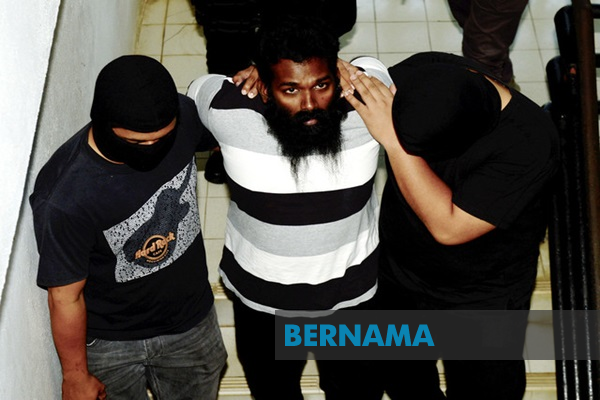
KUALA LUMPUR, Oct 29 — Eight men, including two state assemblymen, were charged in the Sessions Court in several states today for their alleged connection with the LTTE terrorist group.

Two charges were filed by the prosecution for their alleged involvement, one of which is for giving support to the terrorist group, framed under Section 130J (1) (a) of the Penal Code which provides an imprisonment for life, or for a term not exceeding 30 years, or with fine, and shall also be liable to forfeiture of any property used or intended to be used in connection with the commission of the offence, if found guilty.

The other charge is for possession of items associated with the terrorist group, which is an offence under Section 130JB(1)(a) of the Penal Code whereby those found guilty shall be punished with imprisonment for up to seven years, or with fine, and shall also be liable to forfeiture of the items concerned.

At the Sessions Court in Melaka, Gadek assemblyman G. Saminathan, 34; Seremban Jaya assemblyman P. Gunasekaran, 60 and a chief executive of a corporation, S. Chandru, 38, were charged with giving support to LTTE during an event at Dewan Kasturi Ayer Keroh, Jalan Utama, Taman Ayer Keroh Heights here from 8.30 pm to 10.50 pm on Nov 28, 2018.

Saminathan was also charged with possessing items connected to the terrorist group in a handphone at the office of the State Executive Councillor (Exco) in charge of Unity, Human Resources and Consumer Affairs at the Chief Minister’s Office, Kompleks Seri Negeri here at 10.25 am last Oct 10.

At the Kuala Kangsar Sessions Court in Perak, technician S. Arivainthan, 27, and taxi driver V. Balamurugan, 37, were charged with giving support to the LTTE at an event held at Kuala Kangsar Municipal Council Hall between 6.30 pm and 11.45 pm on Dec 28, 2014.

At the Selayang Sessions Court here, scrap metal collector A. Kalaimughilan, 28, was charged with two counts of possessing items related to LTTE at a house and in a car at Jalan Anggerik 5D, Bukit Sentosa, Rawang at 9.30 am and 12.35 pm, respectively, last Oct 10.

The items included compact discs, video compact discs and stickers on the LTTE terrorist group.

In Segamat, Johor, dispatch rider S.Teran, 38, was charged with a similar offence, allegedly committed at an address, 10M, Jalan Genuang, Kampung Paya Pulai, about 6.30 pm last Oct 10.

In Selangor, an English and Physics teacher at a national secondary school in Telok Panglima Garang, Selangor, Sundram Renggan @ Rengasamy, 52, was charged at the Sepang Sessions Court, with a similar offence, allegedly committed at No. 21, Jalan 6, Taman Telok, Telok Panglima Garang in the Kuala Langat district at 2.30 pm last Oct 12.

No plea was recorded from all the accused as they were all detained under the Security Offences (Special Measures) Act 2012 (SOSMA) which comes under the jurisdiction of the High Court.

As SOSMA detainees, they were also not allowed bail.

The Sessions Courts set either Nov 18 or Dec 16 for mention of the respective cases.

— BERNAMA 

Wasantha Senanayake removed from UNP

October 29th, 2019

Courtesy Adaderana

The United National Party (UNP) has decided to remove MP Wasantha Senanayake from the party with immediate effect.

UNP General Secretary Akila Viraj Kariyawasam stated that the UNP decided to strip party membership from Senanayake immediately and later remove him from his ministerial portfolio.

Wasantha Senanayake, great grand son of UNP founder D. S. Senanayake, is the current State Minister of Foreign Affairs in the UNP-led government.

He had recently written a letter to UNP deputy leader and NDF presidential candidate Sajith Premadasa, expressing his concerns with regard to the latter’s election campaign.

Holding a press conference recently, he also demanded answers from Premadasa for questions put forward by him regarding the role certain ministers will play in a future government.

Senanayake has also been visibly absent at the election rallies of Sajith Premadasa.

President rejects PSC report on Easter attack

October 29th, 2019

Kelum Bandara Courtesy The Daily Mirror

President Maithripala Sirisena is reported to have told the Cabinet today that he would not accept the report compiled by the Parliamentary Select Committee (PSC) that probed the Easter Sunday carnage.

The PSC presented its report to parliament last week. In its findings, the PSC blamed the incident mainly on the lapses on the part of the State Intelligence Service and government leaders for failing to take action to prevent the attack that killed more than 250 people.

The PSC report was presented to the Cabinet at its meeting chaired by President Sirisena yesterday. According to informed sources, the President said he would not accept the report and asked the Cabinet not to record it as approved by the Cabinet whatsoever and instead asked the government to look into areas where security lapses had been highlighted. 

Conspiracy to tarnish Gotabaya exposed

October 29th, 2019

By Chamly Ekanayaka and Thameenah Razeek Courtesy Ceylon Today

United People’s Freedom Alliance Parliamentarian and Pivithuru Hela Urumaya Leader Udaya Gammanpila yesterday (29) alleged that the United National Party (UNP) has formulated a five phase conspiracy to transfer the blame over the 21 April, Easter Sunday, terror attacks, to Sri Lanka Podujana Peramuna Presidential candidate and former Defence Secretary Gotabaya Rajapaksa.


He made this allegation at a Media briefing in Rajagiriya.
He said: “The UNP which is currently behaving like a mad dog over being unable to face up to its soon to become most humiliating election defeat ever in history, has thus planned to place the blame, over the Easter Sunday carnage, on the shoulders of Rajapaksa having titled it as the ‘Big Revelation’ and over five steps.”


Gammanpila alleged that as its first phase, a video has been made containing a confession made by a terrorist attached to the National Thowheed Jama’ath (NTJ) at a house owned by a person called Thushara in Battaramulla.


“This person in the video says that in the run up to the 16 November Presidential Poll, the country’s national security will be placed in danger and that the Easter Sunday attacks had been carried out by international terror groups at the behest of Rajapaksa,” he further alleged.


He further claimed that in the fraudulently produced video, the NTJ terrorist had further talked about the names of two Sri Lankans and that through them Rajapaksa had maintained links with terror groups in the Middle East and Europe.


 Gammanpila also alleged that the second phase of the plot suggests that eight Catholic MPs had held a Media briefing and that they had charged that Rajapaksa should be held accountable over the Easter Sunday bombings and that he should be apprehended forthwith.


He further alleged that the third phase of the UNP conspiracy against Rajapaksa would consist of staging a protest demonstration opposite Catholic Churches here displaying banners ‘Arrest Gotabaya’.


He alleged further that the fourth phase of the plot will include Catholic Priests and Very Important Catholic Persons making requests to conduct an impartial and unbiased probe into last April’s carnage.


Also, he alleged that the fifth and final part of the conspiracy would include publicising a bogus letter to suggest that Rajapaksa has maintained close links with international terrorists.


UPFA Parliamentarian Mahindananda Aluthgamage, claimed three powerful UNPers will get on stage with Sri Lanka Podujana Peramuna (SLPP) Presidential candidate, Gotabaya Rajapaksa.


He also alleged former President Chandrika Bandaranaike Kumaratunga is busy fulfilling the UNP’s personal agenda, instead of protecting the SLFP identity.


Criticising Kumaratunga’s planned SLFP Convention, which is to be held on 5 November, SLFP General Secretary, MP Dayasiri Jayasekara, told the Media yesterday (29) that those who participate in the Convention would be UNPers masquerading as SLFPers. He urged the people not to be fooled by Kumaratunga’s actions.


“Since it has been revealed that the New Democratic Front Presidential candidate, Minister Sajith Premadasa’s Presidential campaign is ruined, now he is trying to create unwanted tension within the community that is supporting Rajapaksa. The UNP-led team headed by Ministers Mangala Samaraweera, Premadasa and Malik Samarawickrama are preparing  to ruin Rajapaksa’s campaign, by bringing out false videos and spreading rumours,” Aluthgamage alleged, adding that these plans will be activated from 1 to 14 November.

Five Northern groups decide against voting for Sinhala Candidates

October 29th, 2019

Courtesy Ceylon Today

Five Northern groups yesterday (29) decided against voting for any Sinhala candidate at the forthcoming Presidential Election.

The groups that took such a decision were: Former Northern Province Chief Minister C. V. Vigneswaran’s Tamil Makkal Kootani (TMK), Suresh Premachandran’s Eelam People’s Revolutionary Liberation Front (EPRLF-Suresh Wing), Gajendrakumar Ponnambalam’s All Ceylon Tamil Congress (ACTC), University Lecturers and a Civil Society Organisation.

Vigneswaran, issuing a statement, said that since the postal voting for the Presidential Election is scheduled to be held tomorrow (31), he decided to announce his stand.

In the statement, he had emphasised that he cannot direct his people to vote for any Sinhala politician at the Presidential Election.

“We don’t have any ethical right to ask Tamil people to vote for Presidential candidates who, don’t want to discuss the 13 proposals that were put forward.”

“Under no circumstance will we give up those 13 proposals, which have been a need of Tamil people for a very long time,” Vigneswaran stressed.
An official statement from the five groups was scheduled to be issued last night.

Ex-FCID chief denies allegations of financial fraud

October 29th, 2019

Courtesy Adaderana

Former head of the Financial Crimes Investigation Division (FCID) Retired Senior DIG Ravi Waidyalankara today issued a statement in response to the recent media reports on allegations of financial fraud and money laundering directed at him and his family.

He claims that there had been recent negative media publications by print and electronic media, subsequent to his revelation on the hazardous conditions” he faced during his tenure in office.

Thus, I have the right to reply in a legitimate manner, by issuing a statement prior to resort to any legal actions. I issue this statement for public consumption as well as to the entities who try to tarnish my image by resorting to character assassination,” he said. 

The former FCID chief stated that his original statements pertaining to this matter appeared on the ‘Aruna’ newspaper on 27th October 2019 and on daily news broadcast on Derana & other television channels. 

However, it is disappointing to note that some parts of these statements have been taken out of context to reinforce political strategies, he charged.

Subsequently, there had been allegations leveled against me, my wife and my son regarding a nexus between some of the individuals who are under the investigation by the FCID. Since this matter is still being investigated I don’t intend to elaborate any details as a former police officer and investigator who has handled over 300 investigations professionally.” 

The retired Senior DIG said that his son, Mr Asela Waidyalankara has clarified his position very clearly with a public statement, and that he fully endorsed his factual position in this regard.

In relation with the company of SOORIYA FOUNDATION, an organization, where my wife is only a signatory, which was established for charity based activities not relating to any profit make businesses. Only the address of an asset under my son’s company was given for mailing purposes which is not contrary to the law,” he said. 

He categorically stated that it was merely confined to a paper and not a single transaction, investment, any account, any economic transaction, or any transaction or activity was conducted since incorporation.

On this backdrop, myself, my wife and my son totally deny and reject any allegations of any illegal activity as published, and wish to state that we will extend our utmost co-operation to any investigations conducted by any agency, established under the laws of Sri Lanka.” 

කාන්තාවන්ගේ මාසික ඔසප්වීම ජාතික ප‍්‍රශ්ණයක්.. මං ජනාධිපති වුනාම සනීපාරක්‍ෂක තුවා නොමිලේ දෙනවා.. Solutions will be provided nationally for women’s sanitary issues – Sajith

October 29th, 2019

Courtesy Adaderana

කාන්තාවන්ගේ මාසික ශුද්ධිය බරපතළ සෞඛ්‍ය ප්‍රශ්නයක් බව එක්සත් ජාතික පක්ෂයේ ජනාධිපති අපේක්ෂක සජිත් ප්‍රේමදාස මහතා පැවසීය.

කාන්තාවන් වැඩි පිරිසක් නිසි සනීපාරක්ෂක ක‍්‍රමවේද අනුගමනය නොකරන බවද කී ඔහු ඒ හේතුවෙන් භයානක වෛද්‍ය බලපෑම් ඇතිවී තිබෙන බවද පැවසීය.

තමන් ජනාධිපති වූ පසු නව රජය යටතේ මෙම ප්‍රශ්නයට විසඳුම් දෙන බවද ඔහු සඳහන් කළේය.

මේ ප්‍රශ්නයට ජාතික වශයෙන් විසඳුමක් දී කාන්තාවන්ගේ සනීපාරක්ෂක පහසුකම් ලබාදෙන බවද ඔහු පැවසීය.

මෙම ප්‍රශ්නය සඳහා ම විසඳුම් ලබාදීම සඳහාම වූ වෛද්‍ය ඒක පිහිටුවන බවද ඒ මහතා සඳහන් කළේය.

දිවුලපිටියේදී පැවති ජනාධිපතිවරණ ජන රැලියක් අමතමින් ඔහු මේ අදහස් පල කලේය.

මේ වන විට කාන්තා සනීපාරක්ෂක තුවා පැකැට්ටුයක් වෙළඳපොලේ රුපියල් 120ක් වැනි මිලකට ලබා ගත හැකි අතර වසරක් සදහා රුපියල් 1500ක මුදලක් සාමණ්‍යනේ වැයවෙයි.

My only complex is superiority complex – Sajith

October 29th, 2019

Courtesy Adaderana

New Democratic Front (NDF) Presidential Candidate Sajith Premadasa says the only complex” he has is superiority complex” and that he has the utmost belief in his own abilities, skills and intellect.

What I believe is that I take decision from the standpoint that ‘no one can compete with me’,” he said, during a meeting organized with lecturers and tuition teachers.

He also stated that those who criticize him and take digs at his comments of working tirelessly and without rest, they don’t like to make sacrifices and do not want to work hard. They can’t even get close to me.”

Addressing an election rally in Divulapitiya today (29), Premadasa assured that a government established under him would provide solutions to the women’s health and hygiene issues on a national level.

He promised to provide sanitary hygiene products free of charge to those unable to afford them, if elected. Premadasa said he remains committed to women’s rights and will not shy away from the conversation. 

He said more than half of adolescent girls in Sri Lanka miss school when on their period and thousands suffer stigma and put themselves at risk every month.

Govt. destroyed professionalism of police service – Gotabaya

October 29th, 2019

Courtesy Adaderana

Sri Lanka Podujana Peramuna (SLPP) Presidential Candidate Gotabaya Rajapaksa today accused the ruling government of destroying the professionalism of the country’s police service.

He said that under the former government during his tenure as Defence Secretary the strength of the police department was increased to 75,000 personnel and that all their discrepancies were removed and promotions were given.

Addressing an election rally in Kantale, Rajapaksa said that police officers have presented to them certain requirements and existing discrepancies and that once again under their government these issues will be rectified as they have always taken care of security service personnel in the country.

He also said that they will bring glory to the police service once again. 
 
Rajapaksa further said that the intelligence officers who have been arrested and imprisoned based on false accusations” will be released from those charges and that the intelligence services will be brought into action once again for the security of the nation. 

Syrian Democratic Forces say Baghdadi’s underwear was DNA tested before raid

October 29th, 2019

Courtesy NewsIn.Asia

A satellite view of the reported residence of ISIS leader, Abu Bakr al-Baghdadi, according to the source, near the village of Barisha, Syria, collected on September 28, 2019, is shown in this handout image released on October 27, 2019 by Maxar Technologies. Maxar Technologies/Handout via REUTERS. NO RESALES. NO ARCHIVES. THIS IMAGE HAS BEEN SUPPLIED BY A THIRD PARTY. MUST NOT OBSCURE LOGO. MANDATORY CREDIT.

October 29 (Reuters) – Islamic State leader Abu Bakr al-Baghdadi’s underpants were obtained by an undercover source and DNA tested to prove his identity before an operation by U.S. forces to kill him, an advisor to the Syrian Democratic Forces said on Monday.

Polat Can, a senior advisor to the Kurdish-led SDF, gave details on Twitter about how SDF intelligence work had helped locate Baghdadi, whose death was announced by U.S. President Donald Trump on Sunday.

Our own source, who had been able to reach al-Baghdadi, brought al-Baghdadi’s underwear to conduct a DNA test and make sure (100%) that the person in question was al-Baghdadi himself,” Can said.

Trump has said that the Kurds provided some information helpful” to the operation.

Can said the SDF had been working since May 15 with the CIA to track Baghdadi, and managed to confirm that he had moved from Deir al-Zor in eastern Syria to Idlib, where he was killed.

Baghdadi had been about to change location to the Syrian town of Jarablus when the operation happened, he said.

All intelligence and access to al-Baghdadi as well as the identification of his place, were the result of our own work. Our intelligence source was involved in sending coordinates, directing the airdrop, participating in and making the operation a success until the last minute,” Can said.

Lankan Tamil parties ask Tamils to vote as per their wish with the 13 demands in mind

October 29th, 2019

Courtesy NewsIn.Asia

Colombo, October 29 (AIR/DD): The former Chief Minister of Sri Lanka’s Tamil-majority Northern Province C.V.Wigneswaran has said that his organization the Tamil Makkal Koottani (TMK) will be neutral stand at the upcoming Presidential election and will not ask people who to vote for.

In a statement issued in Jaffna on Tuesday he said that both the main candidates viz. Minister Sajith Premadasa and former Defense Secretary Gotabaya Rajapaksa have not accepted the demands jointly put forth by the Tamil parties.

Wigneswaran said that he is asking the people to make the decision on their own and cast the vote considering the past history, and the present internal and external conditions.

A group of five Tamil political parties recently signed a memorandum containing 13 demands including a demand for self determination, political solution and abolishing the Prevention of Terrorism Act (PTA).

It notes the acceptance of the political aspirations, recognition of the merged Northern and Eastern Provinces as the historical habitat of the Tamils and the realization of the fact that the Tamil People under the provisions of international law are entitled to the right of self-determination.

The parties had declared that their support to any candidate will be based on the support they receive for the demands but a meeting of these parties on the issues yesterday had remained inconclusive.

Illangai Thamil Arasu Katchi (ITAK), People’s Liberation Organisation of Tamil Eelam (PLOTE), Eelam People’s Revolutionary Liberation Front (EPRLF), Tamil People’s Council (TPC) led by former chief minister and Tamil Eelam Liberation Organization (TELO) signed the memorandum.

The statement by the TMK asked the Tamil voters to weigh and consider which of the candidates are likely to meet their 13 point demands and vote accordingly. It pointed out that in its efforts to get the demands accepted the TMK had failed to secure a positive response from any of the candidates.

However the TMK hopes to continue the talks with the winner in the election to get its demands met and expects the international community to stand by its commitment to safeguard the rights of the Tamils in Sri Lanka.

වසන්ත සේනානායක එක්සත් ජාතික පක්ෂයෙන් නෙරපයි

October 29th, 2019

උපුටා ගැන්ම  හිරු පුවත්

වහාම ක්‍රියාත්මක වන පරිදි අමාත්‍ය වසන්ත සේනානායක මහතාගේ එක්සත් ජාතික පක්ෂ සාමාජිකත්වය අහෝසි කිරීමටත් ඉදිරියේදී ඔහු දරන අමාත්‍ය ධුරයෙන් ඉවත් කිරීමටත් තීරණය කළ බව  එක්සත් ජාතික පක්ෂ මහලේකම් අකිල විරාජ් කාරියවසම් මහතා සදහන් කළා.

ශ්‍රී ලංකාව බෞද්ධ රටක් නොවන බව කී මංගල යළිත් නා ගනී

October 29th, 2019

උපුටා ගැන්ම  හිරු පුවත්

හිරු රූපවාහිනි නාලිකාව වර්ජනය කරන ලෙස මංගල සමරවීර අමාත්‍යවරයා මෙරට ජනතාවගෙන් ඉල්ලීමක් කරනවා.

ඒ, ඊයේ පැවති ප්‍රවෘත්ති සාකච්ඡාවකදී.

ශ්‍රී ලංකා පොදු ජන පෙරමුණේ කතෝලික මන්ත්‍රීවරුන්ගෙන් අනතුරු ඇඟවීමක්

October 29th, 2019

උපුටා ගැන්ම  හිරු පුවත්

ගෝඨාභය රාජපක්ෂ මහතාගේ මැතිවරණ ව්‍යාපාරය කඩාකප්පල් කිරීම සඳහා කතෝලික ජනතාව යොදා ගැනීමට එක්සත් ජාතික පක්ෂය කටයුතු කළහොත් ඔවුන් ඊට නිසි ප්‍රතිචාර දක්වනු ඇති බව ශ්‍රී ලංකා පොදු ජන පෙරමුණේ කතෝලික මන්ත්‍රීවරුන් පවසනවා

මීගමුව කොච්චිකඩේ ප්‍රදේශයේ පැවති ප්‍රවෘත්ති සාකච්ඡාවකදී ඔවුන් මේ සම්බන්ධයෙන් අදහස් පළ කළා.

ගෝඨාභයට එරෙහි එජාපයේ දේශපාලන කුමන්ත්‍රණයක් ගැන පොහොට්ටුවෙන් හෙළිදරව්වක්

October 29th, 2019

උපුටා ගැන්ම  හිරු පුවත්

ගෝඨාභය රාජපක්ෂගේ ජයග්‍රහණය දරාගැනීමට නොහැකි එක්සත් ජාතික පක්ෂයේ ජනාධිපති ධුර අපේක්ෂක සජිත් ප්‍රේමදාස, අමාත්‍යවරුන් වන මංගල සමරවීර, මලික් සමරවික්‍රම ඇතුලු පිරිසක් නින්දිත දේශපාලන කුමන්ත්‍රණයක නිරතවීමට සූදානම් වන බවට පාර්ලිමේන්තු මන්ත්‍රි මහින්දානන්ද අලුත්ගමගේ චෝදනා කරනවා.

ශ්‍රී ලංකා නිදහස් පක්ෂ – ශ්‍රී ලංකා පොදුජන පෙරමුණු ඒකාබද්ධ මාධ්‍ය හමුවකට අද එක්වෙමින් ඔහු මේ බව කියා සිටියා.

එම මාධ්‍ය හමුවට පිවිතුරු හෙළ උරුමයේ නායක පාර්ලිමේන්තු මන්ත්‍රී උදය ගම්මන්පිල මෙන්ම ශ්‍රී ලංකා නිදහස් පක්ෂයේ මහ ලේකම් පාර්ලිමේන්තු මන්ත්‍රී දයාසිරි ජයසේකර එක්ව සිටියා.

තම හැකියාව හා දක්ෂතා ගැන තමන්ට සුපිරි විශ්වාසයක් පවතින බව ජනපති අපේක්ෂක සජිත් කියයි

October 29th, 2019

උපුටා ගැන්ම  හිරු පුවත්

තම හැකියාව හා දක්ෂතා ගැන තමන්ට සුපිරි විශ්වාසයක් පවතින බව නව ප්‍රජාතන්ත්‍රවාදි පෙරමුණේ ජනාධිපති අපේක්ෂක අමාත්‍ය සජිත් ප්‍රේමදාස පවසනවා.

ඔහු මේ බව කියා සිටියේ උපකාරක පන්ති වෘත්තිය උපදේශකයින්ගේ හමුවකට ඊයේ බත්තරමුල්ලේදී එක්වෙමින්.  

අග්‍රාමාත්‍ය රනිල් වික්‍රමසිංහද මෙම හමුවට සහභාගිවුණා.

මේ අතර දේශීය වෛද්‍ය සම්මේලනය කොළඹ නව නගර ශාලාවේදී අමාත්‍ය සජිත් ප්‍රේමදාසගේ ප්‍රධානත්වයෙන් අද පැවැත්වීමට නියමිතව තිබුණද ඔහු ඊට සහභාගිවූයේ නැහැ.

ඡන්ද දිනයේ නිවාස අධිකාරියේ සභාපති රටින් පැනයෑමේ සූදානමක් ගැන හෙළිදරව්වක්

October 29th, 2019

උපුටා ගැන්ම  හිරු පුවත්

ජාතික නිවාස සංවර්ධන අධිකාරියේ සභාපතිවරයා ජනාධිපතිවරණය දිනයේ රටින් පලායාමේ උත්සහයක නිරතවන බවට එම අධිකාරිය සුරැකීමේ සංවිධානය අද අනාවරණ කළා.

කොළඹ පැවති මාධ්‍ය හමුවකදී ජාතික නිවාස සංවර්ධන අධිකාරිය සුරැකීමේ සංවිධානයේ සභාපති ධර්මශ්‍රී කාරියවසම් කියා සිටියේ ජනාධිපති අපේක්ෂක අමාත්‍ය සජිත් ප්‍රේමදාසගේ මැතිවරණ කටයුතු සඳහා නිවාස සංවර්ධන අධිකාරියේ වාහන යොදාගෙන ඇති බවයි.

ජාතික ආරක්ෂාව ගැන වත්මන් ආණ්ඩුවට වගකීමක් නොමැති බව ගෝඨාභය කියයි

October 29th, 2019

උපුටා ගැන්ම  හිරු පුවත්

තොරතුරු ලබා දී තිබියදී පාස්කු ප්‍රහාරය වැළැක්වීමට ආණ්ඩුව කටයුතු නොකළේ ජාතික ආරක්ෂාව පිළිබඳ වගකීමක් නොමැති නිසා බව ශ්‍රී ලංකා පොදුජන පෙරමුණේ ජනාධිපති අපේක්ෂක ගෝඨාභය රාජපක්ෂ පවසනවා.

ඔහු මේ බව කියා සිටියේ මොණරාගල ප්‍රදේශයේ අද පැවැති ජන හමුවකට එක්වෙමින්.

මේ අතර, කන්තලේ පැවති ජනහමුවකට එක්වෙමින් විපක්ෂ නායක මහින්ද රාජපක්ෂ කියා සිටියේ ගොවියා ශක්තිමත් කර රට ස්වයංපෝෂිත කිරීමේ වැඩපිළිවෙල ඉදිරියේදී ක්‍රියාවට නංවන බවයි.

I vote for Gota

October 28th, 2019

H. L. D. Mahindapala

Victor Ivan, the founder Editor of the popular Ravaya – a Sinhala  tabloid launched particularly to target President Ranasinghe Premadasa with the backing of the Western and Indian embassies and, of course, Lalith Athulathmudali and Gamini Dissanayake —  has written an article in the Financial Times (25/10/2019) arguing that Gotabaya Rajapaksa is not fit to be a presidential candidate. His last two lines summarises his case against Gota. After listing the names of mainly journalists killed when Gota was in power (he doesn’t say Gota killed them) Victor passes his censorious judgment. He says: I am of the view that it is not proper for a person with such serious allegations to be elected leader of the country, even nominally, until he is fully acquitted and exonerated of those charges. It is also not right for a person with such allegations to even contest for such a position.”

Phew!

I have selected Victor from the usual mob of anti-Gota denigrators because he is typical of the current scare-mongering that goes on in the so-called civil society. In his statement Victor takes the high moral ground of a pious political priest with no blemishes in the past, or accusations / allegations of killing, or any alignments with mass murderers who killed innocent civilians for committing the only sin of opposing his leader’s brand of Pol Potist politics. In his article he poses, as he normally does these days, as a born-again human rights activist policing the conduct of political criminals and sentencing them to the various kinds of hells defined by the Western masters who patronise his media/political ventures.

After his leap from the Pol Potist JVP to Ravaya, his primary political mission was to demonise the Premadasa regime in his Ravaya parroting the human rights mantras which was the most lucrative job of the day, financed by the Western masters. Ravaya was, more or less, the mouthpiece of the Western and Indian embassies, which were behind Lalith-Gamini duo doing their damndest to overthrow President Premadasa. Ravaya was dancing to the drumbeat of this anti-Premadasa lobby. Their investments paid off well but not to the extent of achieving their goal of ousting President Premadasa. 

It was this stage that Victor donned the costumes of a righteous human rights activist. After killing and being a key instrument in the killing machine of the JVP – he was a bomb-maker — Victor reinvented himself as a knight in shining armour and is now parading as a human rights activist in the civil society. Being anti-Premadasa none of the other foreign-funded NGOs with whom he hob-nobs now, raised any objections to his murderous past. He has listed in his article the number of journalists alleged” to have been killed when Gota had power. Has he forgotten the number of journalists killed at the time he wielded power in the JVP?

The JVP used some of the bombs he manufactured to blast innocent newspaper vendors eking out a bare living in wayside outlets in the villages. Victor and his gang were out to bomb and kill their way into power in the name of revolutionary justice. Victor gladly provided his expertise to manufacture bombs that killed those who opposed his Pol Potist leader. He was committed to the task of bombing and killing the nation into submission of his Pol Potist leader’s will. What moral credibility / right has he now to pontificate against any other state authority using his kind of violence / methods to prevent the rise of Pol Potist fascism?

The central issue here is the use of violence in politics. There are many theories ranging from Machiavelli and Marx to Gandhi. Leaving those theories aside, it can be asserted that Victor and Gota both used violence. But there is fine difference between the two. To Gota it was a moral necessity to protect the lives of people facing Pol Potist violence of a gang of killers with no licence to kill, except their perverted doctrine of Marxist revolutionary justice. To Victor indiscriminate killing, at the whims and fancies of his doctrinaire masters, was also a necessity to destroy the elected state which was operating within a democratic framework, however flawed it may have been.

The doctrine of turning the other cheek was not applicable to Gota. It is valid in inter-personal relations but not in facing organized criminal gangs using pretentious moral theories and dogmas to kill those who oppose them. The JVPers were released hoping that they would give up violence and return to non-violent politics. But their obsession with violence made them believe that they could win with brutality. Premadasa had no choice but to save his people and the democratic institutions. And he won. Today the civil society continues to accuse President Premadasa and embraces the killers that forced Premadasa to crush them. If, for instance, a JVP terrorists broke in to rape a feminists is it moral for her to open her legs or kick the bastard to thy kingdom come? Premadasa kicked the JVP bastards to thy kingdom come. He did not let the JVPers to rape the state.

The morality of using violence has been twisted to suit the political agendas of the parties in conflict. So if Victor found it valid to engage in inhuman violence to impose his Pol Potist regime led by Rohana Wijeweera why is it invalid for a democratically elected state to use his kind of violence to prevent Pol Potism and maintain the democratic framework, with all its infirmities? What moral credibility / right would Hitler, the prime architect of Auschwitz and Belsen, have if he came out defending the human rights of the Jews?

It was also a time when the entire media had ganged up against President Premadasa. Only Tissaranee Gunasekera, Dayan Jayatilleke and yours truly were defending the indomitable struggle of President Premadasa to save the nation from two fascist terrorists – the JVP fathered by the likes of Victor Ivan and his gang of cold-blooded murderers and their Tamil counterpart in the LTTE. Their sole objective was to attack the democratically elected state which, of course, had many infirmities. It was a time when the anti-Premadasa media went bananas, blaming him for anything that moved, good, bad or indifferent.

For instance, led by Lalith and Gamini the media went bonkers attacking the Kandalama Hotel project as a venture that would pollute the environment and cause serious damage to the tank nearby and the villagers. Even the Catholic Church and the Sarvodaya leader, A. T. Ariyaratne, joined the bandwagon.  Premadasa could do nothing right – not even promote a tourist hotel. Ravaya, for instance, not only attacked Premadasa relentlessly but also those associated with him. Anti-Premadasa Victor did not like my backing Premadasa all the way, without any reservations. I was editing the Observer at the time. Victor had nothing to say against me. So he ran a news snippet alleging, like the way he alleges against Gota, that I was paid not by Lake House but by the Maharajas. He knew he was lying. He knew he had no evidence to back it up. But this political pundit, full of righteousness today, had no qualms about publishing lies to blacken the image of those who were with President Premadasa.

I am glad that Victor is no longer instrumental in preparing weapons of mass destruction on a domestic scale and turned his hands – or what’s left of it — to champion human rights. That makes it one less murderer in the killing fields of the nation. But his logic goes awry when he questions the competency of Gota to be the presidential candidate on the basis of his allegations.

What he doesn’t realise is that he opens himself to be taken to task on the basis of his own logic. It is important to take his logic of sentencing individuals on mere allegations seriously because the same yardstick can be applied to test the validity of his righteousness. So, applying his logic, will he demand the sacking of Ranil Wickremesinghe because the Batalanda allegations are yet to be cleared? The Sunday Times (21/3/2004) reported: President Chandrika Kumaratunga has said that if the Batalanda Commission recommendations related to the 1988-90 period were implemented properly, Prime Minister Ranil Wickremesinghe would not have been a free man today.” Since Victor believes in his own logic it is necessary to ask why Ranil is fit to be the Prime Minister while Gota is unfit to be the President?

When Ranil contests for the Premiership next time will he raise objections on the grounds of crimes committed against the media that opposed him? When the Maharaja Headquarters near the Gangaramaya was attacked the day he won Parliamentary vote of confidence the UNP thug who led the attack against the Maharaja was shown immediately after standing behind Ranil and worshipping at Gangaramaya. This is not an allegation. This is documented evidence. Has Victor, the Righteous, raised any objections on any known principle against the UNP thugs violating human rights to keep Ranil in power?

He also accuses Gota on allegations” of crimes that occurred when he was in power. But the public knows for certain that Victor was a killer, or instrumental in killing with his expertise in bomb-making. This is no allegation”. When a known Pol Potist killer, or a willing manufacturer of bombs to kill his fellow-man without any qualms, can be a human rights activists why can’t Gota be a President? What we are asked to judge is the past of both. Which is more criminal? Victor’s? Or Gota’s? And whose violence served and saved the people best? Victor, when he had power, was not in the top ranks of the JVP to protect human rights. He was one of the committed cadres to kill on behalf of the JVP. What neerds to be stressed here is that when Victor points one finger at Gota four fingers are pointing in his direction.

This leads to a serious moral issue: Is there anyone in Sri Lanka who is not tainted with guilt to take the moral leadership? Take the case of the Yahapalanaya. It was a movement that was launched on the promise of delivering pure moral leadership. But it went down the sink into depths of moral depravity within the first few months in office, with Ranil leading the gang that robbed the Central Bank. He imported his special crook, dressed in Saville row suit, to run the biggest heist in banking. These are not allegations. The available evidence has proved the guilt of the Ranil. So is why isn’t Holy Victor not declaring that neither Ranil nor nominee Sajith is fit to hold the highest public offices of the nation? Isn’t Sajith who is in the Cabinet that robbed the Central Bank and supported his leader faithfully all the way as guilty as his leader?

Of course, it cannot be denied that Victor did a brilliant job in exposing the moral and political corruption of Chandrika Bandaranaike and other political leaders. But his essential political ideologies, including the distorted and adulterated five-lecture Marxism, and the fascist terror he unleashed, make him a first class hypocrite and a theoretician of sheer bunkum.

Consider, for instance, the latest political formula he propounds in his article to save the nation. He had suggested to Mahinda and Ranil that they should have joined hands after the war ended. To begin with, anybody suggesting that anyone should join hands with Ranil to work for the good of the country must have his head examined. Ranil can work only by himself and for himself. CBK and Sirisena have openly revealed that they could not work with Ranil who was undercutting them. Sajith too knows it only too well. At the  height of  the internal power struggle to  win the presidential candidacy, he hinted at it obliquely though he did not go all out to blast Ranil with this accusation.

In any case the time to work together was during the war and not after the war. National unity was most needed at that time to face the enemy. Ranil was all out to sabotage the national efforts to defeat the LTTE. As everyone knows, he ridiculed the heroic efforts of Sarath Fonseka and his brave men. Victor’s theory is laughable because there wasn’t a chance in hell for Ranil to join Mahinda after the war when he had not joined Mahinda at the  greatest hour of need. Ranil held a sword in his hands which he could have used for the good the nation. But he didn’t. This tragic situation is  summed up in the  wisdom of Sinhala folklore: Yud-day-ta nathi kaduwas kos kotan-da-the? (Is the sword not available for war to cut the jack fruit?.  A realistic example is UK in World War II. Churchill (Conservative) and Attlee (Labour) joined hands to defeat the fascist terror of Hitler. After the war they went their separate ways and people elected Attlee and not Churchill who won the war. Victor’s punditry preached to the political leaders in power is as ridiculous as his Marxist baloney  that led thousands of youth to an early and unwanted death without any political gain to anyone.  

He says that he put the idea of working together after the war to both Ranil and Mahinda The reply he received from Ranil is quite telling. Victor says: Ranil Wickremesinghe listened carefully to the views expressed by me. We didn’t think that far,” was his reply.”

With all his claims of being a political analyst Victor missed the most salient point in Ranil’s reply. He missed Ranil’s confession which admits that he can’t think far. This, by far, is the most sensible statement found in Victor’s article. Everyone knows that if Ranil could think far he would not be in the pickle he is now!

Victor’s bankruptcy is revealed in his scare-mongering. There is nothing new in his thinking except to parrot the slogans of the anti-Gota bandwagon. Like most of his ilk he is raking up a past to say that Gota is going to be the monster that they think he was – only on allegations, as stated by Victor. One prediction that can be made with certainty is that Gota will never commit the acts that he is alleged” to have done in the past when he become the next President. It is certain not because he has denied these allegations with conviction but because there is no necessity for him to go down that track (assuming that he did it)  now that he and  his Commander-in-Chief had liberated the nation from the Tamil terror unleashed by the JVP counterpart in the North.

It is civil society activists like Victor that give a bad name to cause of human rights. They don’t have the credentials to be accepted as genuine defenders of human rights. Any day I would take human rights from Gota than from Victor. The state violence he used – and he was no different from Churchill, Roosevelt and Truman who led World War II – was to defend and protect the state elected by the people.

Besides, the Rajapakse regime was far more humane than the Allied forces who occupied Germany and Japan. The Allied victors went all out to eliminate Nazism and Tojoism (Japanese fascism) root and branch. There wasn’t a building standing in Dresden and Nagasaki when  the democratic Allies finished the war. Mothers turned to prostitution to feed their kids. Nazis were hunted and persecuted. Etc. Etc. Manik Farm, which I had visited, was a paradise compared to the Germans and Japanese prisons under the vaunted democrats of the West.

Gota’s actions, however tough it may have been, would not have demolished the democratic state. Unfolding events have proved it. After comprehensively defeating the fascist forces of the North and the South not even Gota, if he tried, could impose an authoritarian rule. The greatest triumph of the Sri Lanka polity is that it has defeated all fascist forces that came from the Left, Right, Centre and, most all, from the North. But the fascist terror of Victor and his counterparts in the Tamil North would have certainly demolished the democratic state if they succeeded and imposed the most brutal reigns of fascism.

Finally, if the civil society can believe in Victor as a human rights activist, knowing his proven brutal past, why can’t they believe in Gota, facing only allegations? In any case, Gota should know, with all his experience, what would happen to him if he does what Victor had done with his kind of Pol Potist politics.

I am willing to place my faith in Gota any day than in Victor – a Sinhala Prabhakaranist willing to kill any dissident at the drop of a bomb made by him.  I believe in democracy, however imperfect it may have  been, than in the fascism of violent bomb-makers. This is one of the main reasons why I’m willing to back Gota all the way

GOTA PHOBIA – Part VI C(Invitation to build a Nation of Prosperity)

October 28th, 2019

By : A.A.M.NIZAM – MATARA.

Sri Lanka is a Unitary State.  We will not at any time allow anyone to segregate this country.  This is a sovereign nation and we will not permit any foreign power to interfere in the affairs of this country.

  • This motherland of ours will be protected and safeguarded against terrorism, extortion, drug menace, all sort of crimes and  foreign threats;
  • Will protect and safeguarded the War Heroes of the tri forces, Police personnel, and the Civil protection forces;
  • An urgent people’s concession package to reduce the cost of living and the day to day expenses;
  • Courses of the nursing schools will be extended for a 4 year period and thereby they will be provided a Degree which is acceptable for foreign employment;
  • Courses of the Teachers’ Colleges will be raised to degree-awarding levels;
  • Outdated rules and regulations which hinders business activities will be updated;
  • Economic services tax and retention tax will be abrogated;
  • The VAT will be reduced to 8% ;
  • Taxes levied on religious places will be abolished;
  • A simple form of tax structure will be introduced in place of various forms of taxes being on motor vehicles;
  • The PAYE tax applicable to Government and Public sector employees will be abolished;
  • Steps will be taken to create 1 million employment opportunities within the next five years;
  • No agricultural product will be exported without value addition;
  • Fertilizer subsidy will be given free of charge; 
  • Use of carbonic fertilizer will be encouraged;
  • Fertilizer required for the country will be locally produced and within a few years all fertilizer requirement will be covered by carbonic fertilizer;
  • Re-export of agricultural products will be totally banned;
  • All agriculture loams will be canceled;
  • All irrigation networks and small and large tanks will be renovated expeditiously;
  • Estate employees will be given a wage of Rs.1,000 per day,
  • Development of [A1] [A2] [A3] [A4] the fisheries sector by regulating it using modern technology;
  • Provide modern technology to the fisher folks, farmers and milk farmers to become entrepreneurs in their respective sectors;
  • Encourage maximum use of renewable energy in the power and transport sectors;
  • Employ scientific methods  for garbage management;
  • Women with small children will be allowed to engage in their duties for a certain period while staying in their residences;
  • Steps will be taken to eliminate the drug menace within a short period;
  • A mechanism will be introduced to curb corruption and expeditiously prosecute the corrupt people.
  • No room will be provided for corruption.

The people of the country anticipate having a righteous rule. They look forward to having a rule that is a haven for all religions and for all nationalities. Its foundation will be the faith propagated by the Lord Buddha.  I hail from a Buddhist family in the South and received my education from the well known Buddhist school, the Ananda College. Therefore, Buddhist philosophy has always mixed with my wishes and aspirations and in my behavior.

I would like to tell you in the outset that special attention was given to religious concepts in the preparation of our policy framework Vision of Prosperity” which has been entrusted to the people. The Vision of Prosperity policy framework is an ‘agenda of people’s policies’ prepared by the people for the people. It is a programme of work that would safeguard the sovereignty of our nation, would give priority to nationalism, dedicate for the welfare of all the citizens and repose trust in the youth. It consists of basic concepts required to rise up as a proud sovereign nation deriving maximum benefits from global developments, and possessing a strong economy.

 Sri Lanka is a sovereign unitary nation.  We will never allow to segregate and divide it. Also, we would not allow any foreign power to interfere in the affairs of this sovereign nation.

We consider national security as a prime and foremost responsibility of the government. We will once again build strongly the government mechanism required to protect and safeguard our motherland from terrorism, activities of underground operations, threats of robberies, extortions, the drug menace, torture as well as from foreign threats.

Accumulated in courts for long periods, to increase the number of judges, and restructure the institutions that assist in the implementation of Law and order to increase their efficiency.  This manifesto will be valid for the total period of our rule.

It is our objective to provide economic stability to everyone in this Country through measures outlined in our people-centered economic system. We will put an end to taking political advantage on the poverty status of the innocent poor people and take steps to completely eradicate poverty in the country.  What we want is to make our future generation to live as plenteous citizens not depending on others to meet their needs.  

The 21st century is considered a knowledge-centered century.  The global economic trend turning towards Asia is very important for us to make our future plans We must create a young future generation who could get the maximum benefit from the new developments in the global economy. The education becomes very vital to produce prosperous citizens performing productive employment or becoming successful entrepreneurs.

We plan to introduce reforms to our Education system enabling or younger generations to obtain employments that have the highest demand in the global employment market. Within the first year itself of our rule, we will make necessary investments to the educational infrastructure to curtail our younger generation becoming neglected within the educational structure and enable all students to pursue up to a university degree.  We will all three-year diploma courses up to 4 years and to provide the relevant students a Degree acceptable for overseas employments.

Similarly, all teacher training colleges will be upgraded enabling that institution to award degree certificates.  It is essential to develop aptitudes of our children in line with the development of inventiveness, and the development of the knowledge of the English language and Maths.

It is the local industrialists who have to perform a major task in uplifting our economy which has been collapsed.  We will create a conducive atmosphere for these business people to conduct their business activities with pleasure.  We will upgrade the outdated business rules and regulations which hinder their activities.  These outdated rules and regulations deter the productivity of the businessmen as well as the people.  Our people are sternly affected by tax burdens.  Therefore we will revise the present Inland Revenue Act which is unsuitable for our country and reduce the tax burden on the people.  Tax levied on manufacturing industries will be reduced.

Economic Services charges and retention taxes will be abrogated.  The VAT will be reduced to 8%.  Taxes applicable to religious places of worship will be abolished. Various taxes applicable to motor vehicles will be simplified with one tax system instead. In addition to this, the ‘PAYE’ levied on the salaries of government and private sector employees will be abolished. Along with this, we intend to regulate revenue collections in the Inland Revenue Department, Customs and the Excise department and minimize the tax anomalies.  We anticipate a significant development in the service economy through our future development plans.

We have drawn up a plan by which we can earn an income of U.S.Dollars 10 Billion per year from the tourist industry. Similarly, there is a surfeit of industries that we can develop to international standards.  They include many sectors such as transport services, warehousing services, and port and airport services which could provide convincing revenue to our country due to our geographical location. 

We also anticipate creating more than one million employment opportunities during the next 5 years through the development of our tourism industry, and other industries such as information technology, transport, health services, education, rubber, sports, and other industries. We thereby expect to become the business hub in South Asia.

In the industrial sector, our full attention will be focussed on producing value-added products. No resources of Sri Lanka should be exported without value addition. Similarly, our industrialists will be encouraged to introduce our value products to the international markets. At the same time, we expect to encourage our farmers to use carbonic fertilizer and maximize within a few years the use of carbonic fertilizer by our farmers.   Our aim is to become pioneers in the world of turning out Agri products exclusively produced with carbonic fertilizer.

We would totally ban the re-export of Agri products which have become a major burden for our farmers. Then only we can get a greater demand and a higher value for our Agri products. As a concession to farmers affected by disasters in the dry zone, we envisage waiving their cultivation loans.  Lack of irrigation and drinking water is a major problem faced by the dry zone farmers.  We have drawn up plans to address these problems by expeditiously renovating all sable irrigation canals, as well as large and small scale tanks.

We also will introduce a national and modern technical programme to use water economically, to get the maximum use of the available lands, and to reap a maximum high-quality harvest.  We have already agreed to provide Rs, 1,000 daily wages for plantation workers who render a valuable service to our economy.

Similarly. We envisage obtaining maximum benefit from the maritime resources of our country which is surrounded by the sea. Steps will be taken to improve the fishing industry with the introduction of modern technological methods. Similar to farmers, and milk farmers we also want to provide modern technology and training to the fisher folks and make them entrepreneurs in their field.

It is a major responsibility of ours to provide the environment on behalf of future generations.  Therefore, we will encourage the use of renewable energy in the transport and power sectors. Our priorities will include the maximum use of carbonic fertilizer and scientific management of garbage disposal.

Not only within the employment market, but the contribution of our ladies as private entrepreneurs is very important for our economic development. We would encourage both the public and private sectors to increase the opportunity of ladies with small children to carry out their duties from their residences. Under our government increased attention will be focused to provide loan facilities, training and raw materials required by women entrepreneurs. 

We will take increased and major steps to curb and alleviate the narcotic menace which has become a major problem today.   We will take steps to eradicate the drug menace which has become a major national disaster. We envisage removing the era of your persisting fears from your hearts that your children may become victims of this drug menace.

We envisage to introduce and implement a powerful mechanism to prevent political and institutional corruption.  We would strengthen the mechanism for preventing corruption as well as mete out expeditious punishments to those involved and those who aid and abet for corruption.  I strongly emphasize that within a government under my leadership I will never leave room for corruption.  I also state with responsibility that none of the ideas outlined in the Vision of Prosperity” are blank political promises.

I always performed all responsibilities entrusted to me without lapse.   Similarly, I will perform this responsibility as well to the best of my ability. I anticipate the cooperation and assistance of all of you to implement this responsibility of rebuilding our nation. It is not vital and immaterial as to which party, which ethnicity or which religion you belong to. The only condition is that you should be a citizen who really loves the country. If all of us determinedly perform our duties and responsibilities it will be possible for us to transform Sri Lanka as a country with a powerful economy and that can command the respect in the world instead of the present status of being backward and weak nation.  Let us build a prosperous nation to which return admiringly instead of being a nation from which people continue to leave.  Let us all get together on 16th November and make the first step towards building a prosperous nation.

Meanwhile. addressing a public meeting held in the Meegahakiwula area on Saturday, 26th October, the conquering candidate Mr. Gotabhaya Rajapaksa said that the incumbent government will never be able to ensure the security of the country.

He pointed out that this is because the current government has a Cabinet of ministers who subjugated to influences of foreign nations and Non-Governmental Organizations (NGOs) that are against the freedom struggle and war heroes and only an SLPP/SLFP government can ensure the security of the country.  He promised that their government will definitely take measures to protect the tea industry and those who are involved in the industry.

At a meeting held with members of the Ceylon Workers Congress at the Bandarawela Hindu Cultural Centre, Mr. Rajapaksa said that it is not conducive to look only at the day to day economy at all times. He said that the plantation workers have always been demanding a wage increase Rs. 50 or. Rs. 75 and the avaricious politicians have kept the plantation tied to estates without offering them a bright future.  He said that he was told by some plantation youth that they go to Colombo and work in Wine Stores, restaurants, groceries and as drivers for better salaries.  Mr. Rajapaksa emphasized that the plantation youth too should be provided with better educational opportunities for them to enter Universities and acquire competency in modern technology.

Speaking further Mr. Rajapaksa said that a Tamil medium University will be established in the upcountry and in addition to that a Technical College will also established to produce masons, carpenters, plumbers and those required for the tourist industry.  He pointed out that personnel in these trade could earn handsome wages. He said that the tea industry is a good industry but they should look for employment diversification opportunities and said that they can also get involved in the cultivation of vegetables that can provide them additional income and alleviate their economic burdens.  Similarly, he said that his government will take steps to address their housing and schooling problems as well, while the daily wage will be increased to Rs. 1,000.  He said that the plantation community put an end to getting misled by greedy politicians.

Addressing the Mahara/Kadawata meeting on 13th October Mr. Gotabhaya Rajapaksa said that his main objective is to dorm a secure and disciplinary country,  He said that we should be exemplary, and the contemporary political culture should be changed and reformed.  He stated that they cannot do things emotionally, in a myopic way, or to get personal objectives achieved.  Mr. Rajapaksa emphasized that he will not permit behaving rudely or indecently in response to our opponents ‘conspiracies or misbehavior. 

Speaking further, Mr. Rajapaksa said that all parties in their alliance have joined them on the strength of their clear cut non-ambiguous policies.

 He said that the Sri Lanka Freedom Party joining with them is a massive boost for them, and it would help increase their power from 60% to 72%, and the SLPP cordially welcome them.Mr. Rajapaksa said that the Sri Lanka Freedom Party is the party formed by Mr. S.W.R.D.Bandaranaike and his father Mr. D.A.Rajapaksa and it was the party that successfully launched the people’s revolution in 1956.   He stated that the people-friendly policies being enjoyed by them are policies that were introduced by the Sri Lanka Freedom Party and it was the party that twice made Mr. Mahinda Rajapaksa as the President of this country. 

Mr. Rajapaksa emphatically assured that foremost priority will be given to national security and the security mechanism that has been collapsed will be revived and strengthened, and thereby this country will be a country in which everyone could live without any form of fear and suspicion devoid of party, ethnicity and religious differences. He said that members of the intelligence services will be given adequate power and legal protection. 

Referring to the present government Mr. Rajapaksa said that a government swelled with neo-liberals, servile to foreign dictates, and depending on foreign sustained NGOs, and who do not respect national thinking can never ensure national security.

The winning candidate said that the21st century is a knowledge-based century and his economic policies are totally knowledge-based and they always trust the capabilities of human resources.  It is on account of this that he said, his economic policies have been formulated based on information technology and computer technology.  He said that through these policies the country will be able to create several million employment opportunities for our young generations. Mr. Rajapaksa said that his government will create infrastructure facilities and government patronage for these activities. Also, he said that it is a government responsibility to provide vocational training for this purpose by introducing modifications to our education system.

During his first year of presidency, Mr. Gotabhaya said that he will make a huge investment in education. Today or youth have got stranded due to the fault of the existing education system. Every year although around 200,000 students pass the A/L examination only about 35,000 become eligible to enter Universities. He said that under his government steps will be taken to admit all students to Universities. Steps will also be taken through Technical Colleges to qualify the students for good employments, for employments suitable for our economy and for them to get very attractive salaries.  We will not allow the youth to get stranded. There is every possibility to take the country forward through technology. The companies dealing in computer technology brings about one billion US. Dollars.  This can be increased to about 3 billion. But the lack of competent personnel has hindered this opportunity. We will interfere in this matter and will provide the necessary competency for our youth.

Also, the tourist industry has collapsed due to lack of security. We will eradicate this situation and make the country a safe haven for tourists.

This government has forgotten about the agricultural industry. Our history and culture indicate that we had a commendable irrigation network.  These have been destroyed today.  There is a necessity to provide good living conditions to our farmers.   We are prepared to make the country and provide good living conditions for the farmers. Still, we have poor people in our country.  The development of a country does not mean a section of people in the country becoming rich. We much create a pro-people economic system to alleviate poverty throughout the country.

I am dedicated to fulfilling all your needs.


පන්සල් වලට බය මැකෝලා

October 28th, 2019

චන්ද්‍රසිරි විජයවික්‍රම, LL.B., Ph.D.

මැතිවරණ බාර කොමිෂමේ සාමාජිකයෙක්ම මැතිවරණ එපා කියා උසාවියට ගියාට පසු යහපාලන ස්වාධීන කොමිෂම් සභා නමැති කයිය නිකම්ම බේගලයක් පමණක් බව රටටම එලිදරව් විය. පන්සල්වල දේශපාලන ජාතිවාදී රැස්වීම් තහනම් කරමින් මැකෝ යැවූ දැන්‌වීමක් කෑගල්ලේ වට්ටාරාමයේ පන්සලේ නොබෝදා පැවැත්‌වූ බොදු බල සේනා රැස්වීමකදී ප්‍රසිද්ධියේම ඉරා දැම්මේය. මෝඩ, ඒ නිසාම අසාධාරණ, නීති හෝ රෙගුලාසි කඩකිරීම රටවැසියාගේ අයිතියකි. ගාන්‌ධි හා ඇමෙරිකාවේ මාටින් ලූතර් කිං කලේද එයය. මේ මැකෝ, මහින්ද දේශප්‍රියගේ, සහෝදරයා මාධ්‍ය නිදහස ගැන සීමාව ඉක්මවා කතා කිරීමට ගොස් ලංකාවෙන් පැනගෙන දැන් ජීනීවා නුවර සුවසේ ජීවත් වෙමින් සිටී. නමුත් මැකෝ ලංකාවේම නැවතී නියෝජිත ප්‍රජාතන්‌ත්‍රවාදය නමැති ප්‍රෝඩාව බේරාගැනීමේ සටනක නියැලී සිටී. මල්ලී හෝ අයියා මෙන් ඔහුත් මාක්ස්වාදීයෙක්දැයි මට සැකය.

එම සැකයට හේතුව නම් ලංකාවේ ඉතිහාසය හා භූගෝල විද්‍යාව ගැන දැණුමක් මාක්ස්වාදීන්ට, කළුසුද්දන්ට, නැති නිසාය. පිරමිඩ් බැලීමට ඊජිප්තුවට යන මොවුන්, රුවන්වැලි මහාසෑය සැදු දුටුගැමුණු රජතුමාට ගඩොල් මෝඩයෙක් යයි ඇන් ඇම්, කොල්වින්, විවියන්ලා වැනි අය ඒ කාලයේ කිව්වේ ඒ නිසාය. මේ විෂයයන් දෙක යන්තමින් හෝ දන්නවා නම් මැකෝ මෙවැනි රෙගුලාසියක් පනවන්නේ නැත. ලංකාවේ මෑත ඉතිහාසය (ඉතිහාසය කියන්නේ රටක අතීත භූගෝල විද්‍යාවටය) වනාහී එක පැත්තකින් රට පාලනයකල සුද්දන් හා 1948 සිට සුද්දන්ගෙන් රට භාරගත් කළුසුද්දනුත්, අනිත් පැත්තෙන් ජාතියේ මුර දේවාතාවන්‌වූ පන්සලත් අතර සිදුවූ නොනවතින අරගලයේ, ගැටුමේ, වාර්‌තාව බව, මැකෝට පමණක් නොව, කොල, නිල්, රතු පක්‍ෂ දේශපාලකයින්ටත්, දැන් මතුවී සිටින විකල්ප අපේක්‍ෂක ගොඩේ ඉන්නා නාගානන්ද, පල්ලෙවත්ත, මහේෂ් සේනානායක හා ගාමිණී විජේසිංහ තබා සර්වෝදයේ වින්ධ්‍යාටවත් තේරුම්ගොස් නැත.

එසේ නමුත්, ලංකාවේ සිටි ලන්දේසි නිලධාරීන් හරහා ලංකාවේ පලවෙනි ඉංග්‍රීසි ආණ්ඩුකාරයාවූ නෝත් මෙම මුර දේවතා සංකල්පය වටහා ගත්තේය. ජෝන් ඩොයිලි සිංහල ඉගෙනගත්තේත් මේ නිසාය. බ්‍රවුන්‍රිග් වනවිට කුලල්කා ගන්නා උඩරට සිංහල රදලයින් රට පාවාදී අවසානය. ඊට පෙර නානායක්කාර දෙමළ තඩියෙකුට ඔටුන්න ගියේද මොවුන්ගේ ඊර්ෂ්‍යාව හා කුහකකම නිසාය. වාරියපොල සුමංගල හා කුඩාපොල හාමුදුරුවරුන්ගේ හැසිරීමෙන් තිගැස්සුණ බ්‍රවුන්‍රිග්ලා කහසිවුරේ බලය දමණය කිරීමේ ශූක්‍ෂම ව්‍යාපාරයක් දියත් කලේය. බොහෝ දෙනා නොදන්නා කරුණක් නම් අනාගාරික ධර්‍මපාලතුමාට වෛරකිරීම, ඉන් පසු ඊට දායකවූ දෙන්නෙක්‌වූ සිංහල ඩිිෙස් හා ඩීබීජයතිලකගෙන් , ඩීබීව වෙන්කරගෙන ඔහුව ඉන්දියාවට සේන්‌දු කිරීමට අමතරව, ජපනා ලංකාවට ගොඩබැස්සොත් හාමුදුරුවරු එකතුකර හිරකඳවුරුවල තැබීමේ අද්මිරාල් ලේටන්ගේ යුද්ධ ප්ලෑනය (මෙය ජනාධිපති රූස්වෙල්ට් විසින් ඇමෙරිකාවේ වසන ජපන් ජාතික පුරවැසියන් හිරකඳවුරුවලට ගෙනගියා වැනිම ප්ලෑනකි).

ක්‍රිස්‌තියානී සිංහල පාස්ටර්ලාද හරහා පන්සල දමණය කිරීමේ ප්ලෑන කෙතරම් උග්‍ර වූවාදයත් පසුකලෙක සිදත් සඟරා පඩිවරයෙකු‌වූ ජේම්ස් ද අල්විස් විසින් 1840ස් ගණන් වල කියා සිටියේ තව අවුරුදු දහයකින් විස්සකින් ලංකාවෙන් බුදු දහම තුරන්වනවා කියාය (ඉන්දියාවේදී මෙන්). මේ කාලයේදීම දුඹුරුපාට සුද්දන් බෝකිරීමේ අධ්‍යාපන ක්‍රමයක් ඉන්දියාවෙන් මැකෝලි සාමි විසින් ආරම්භ කලේය. ලංකාවේ රෝයල් කොලේජ් හා යාපනයේ, මඩකලපුවේ මිෂනාරි පාසැල් පටන් ගත්තේද මේ කාල වකවානුවේය. පානදුරේ වලානේ සිරි සිද්ධාර්‍ථ හිමිදුන් රත්මලානට පැමිණ පරම ධම්මචේතිය පිරිවෙන ආරම්භකලේ සටන් පෙරමුණේ සිට බුධාගම නඟා සිටුවීමටය. උන්වහන්සේගේ ගෝලයෝ විද්‍යෝදය හා විද්‍යාලංකාර පිරිවෙන් බිහිකලේය. අවසානයේ 1873 පානදුරාවාදයෙන් බුද්ධාගම කියන්නේ බොරුවක් යන මතය පරාජයට පත් විය. මෙම පාලක-පන්සල් ගැටුමේ විවිධ අවස්ථා ලංකා වෙබ් අඩවියේ ඇති පන්සලේ ඉතිහාස කතාව නම් දිග ලිපියේ විස්තර කර ඇත.

විෂ්මය ජනක කරුණක් වන්නේ 1880 දී ගාල්ලෙන් ගොඩබැස්ස ඕල්කොට්තුමාට පසු පන්සල්, පිරිවෙන්, බෞද්ධ සටන යනාදිය පිලිකන්නට තල්ලුවී යාමය. සිංහල කළුසුද්දන් බෞද්ධ නායකත්‌වය අල්ලගෙන හැමදේම විකෘති කලේය. බෝධි සත්‌වයෙක් යයි සලකන ඕල්කොට් එසේ නොවන බව ධර්‍මපාල තරුණයා හා මිගෙට්ටුගත්තේ ගුණානන්ද හිමියන් මුලදීම වටහා ගත්තත් හික්කඩුවේ ශ්‍රී සුමංගල හිමියන්ට එය නොතේරුණේය. මෙය ලියන මටත් මෑතකදී එය ප්‍රත්‍යක්‍ෂවුණේ, ආනන්ද විද්‍යාලය ඇරඹීමට ඕල්කොට් විසින් ගෙනා ලෙඩ්බෙටර් ඉන් විශ්‍රාමගෙන ලන්ඩන් ගිය පසු තමන්ගේ පරණ පල්ලි පාස්ටර් තනතුරට ගිය බව දැනගත් විටය.

ලංකාවේ ඓතිහාසික රාජ්‍ය පාලන මොඩලය වුයේ ගම-වැව-දාගැබ යන ත්‍රිත්‌වයය. එක්සත් සමුර්ධිමත්, යහපාලන රටක් බිහිවූයේ ඒ මතය. මේ රටේ හැම තීරණාත්මක අවස්ථාවකදීම
රට අනතුරින් මුදාගැනීමේ පිටුපසින් සිටියේ පන්සලේ සංඝයාවහන්සේය. දුටුගැමුණු-තිස්ස සහෝදර ගැටුමේදීත්, වලගම්බා රජු වනගතව සිටියදීත් පන්සලේ දේශපාලනය අඛන්ඩව සිදුවිය. වැලිවිට ශ්‍රී සරණංකර සංඝරාජ හිමිදුන්ට එකැස්කණා යයි කියමින් රජුගෙන් මරණ තර්‍ජන එල්ලවු විට උඩරටින් පලාගොස් සැඟවීමට සිදුවූයේ ඒ නිසාය. උන්වහන්සේව ඝාතනය කිරීමට කොළඹින් චරපුරුෂයින් ගියා යයිද වාර්‌තා වේ. මෑතකාලයේදී රට ජාතිය වෙනුවෙන් ඉදිරියට ආ සෑම හාමුදුරුනමක්ම වාගේ හදිසියේ සැකකටයුතු අකාරයට මෙලොවින් නැතිවීයාම පුදුම සහගත වන්නේත් මේ නිසාය. නාරද හාමුදුරුවන් වැන්නෙක් ජෙොර් ට සංදේශ පිට සංදේශ යැවුවත් බොදු බල සේනාවේ ඥානසාර හිමියන් කරලියට එනතුරු ගොනාට තණකොළ කෑමට ඇති කඹයේ දුර වන සිස්ටම් එක ඇතුලත කොටුවී සිටීම හැර වෙන දෙයක් ඉටු නොවීය. වැට කඩාගෙන ගොස් මහා පෙරලියක් කර, බොරු බෞද්ධ දේශපාලකයින් ගලේ පැහැරූ බළලුන් බවට පත්කලේ ඥානසාර හිමියන් ය. පාලන ක්‍රමයට යන්තම්හෝ ගෑවුණු හැම දේශපාලකයෙක්ම, එන්‌ජී‌ඕ කාරයෙක්ම උන්වහන්සේගේ මස් රාත්තලම ඉල්ලන්නේ, සිංහල බෞද්ධයින්, සමහර පිරිමින් හිතහොඳ ගෑණුන්ට සළකනවා වගේ මෙන් තවදුරටත් නොසිටින බව උන්වහන්සේගේ ප්‍රසිද්ධියේ එලිකල නිසාය.

බොහෝ හාමුදුරුවරුන්ගෙන් වෙනස්‌ව, ධර්‍මපාලතුමාගේ මඟේ යමින් ගම-වැව-දාගැබ යන සමාජ ආර්ථික මොඩලය (දැන් කාලේ කියන තිරසර සංවර්‍ධනය) ඉතා සාර්‍ථකව ක්‍රියාවට නැඟුවේ කළුකොඳයාවේ ප්‍රඥාශෙඛර නාහිමියන්‌ය. 1940 ස් ගණන්වල ප්‍රචලිතවූ ග්‍රාම ප්‍රතිසංස්කරණ හා අපරාධ මර්‍ධන නම්වූ මෙම ව්‍යාපාරය සුද්දන් හා කළුසුද්දන් විසින් කඩාකප්පල් කර දැම්මේය. සූරියමල් විකුණූ, මැලේරියා ගම් වලට ආහාර ද්‍රව්‍ය ගෙන ගිය මාක්ස්වාදීන් මෙම ව්‍යාපාරයට එකතුවුනා නම් කෙතරම් අගේද? සුදු පොලිස්පතිගේ නියෝගයට යටවූ ඩොනමෝර් අවධියේ පොලිසිය භාර ස්වදේශ කටයුතු ඇමති ඩීබී ජයතිලක ගැන හාමුදුරුවන් තම ස්වයංලිඛිත චරිතකතා පොතේ ලියන්නේ බලවත් කලකිරීමකිනි. ඩිිැස් අගමැති සම්බන්‌ධයෙන් මෙවැනිම කලකිරීමක් හේන්පිටගෙදර ඥානසීහ හිමියන්ටද ඇතිවිය. භික්‍ෂූ පුහුණු කිරීමේ ආයතනයක් සඳහා අධාරකිරීමට පොරොන්දුවී උන්වහන්සේගෙන් චන්ද ව්‍යාපාරයට උදව් ගත් ඩිිැස්, අගමැති පුටුවේ සිට කියා සිටියේ ආණ්ඩුව සරණං ගච්චාමි කියා ශික්‍ෂා පදයක් බුද්ධාගමේ නැති බවත්, අයිවෝර් ජෙනිංන්ස්ගේ ව්‍යවසථාවේ 29 වගන්තිය අනුව එසේ ආගමික ආයතනයක් සඳහා ආණ්ඩුවට ආධාර කල නොහැකි බවත්‌ය. නැවත අගමැති කන්තෝරුවට පය නොතියනවා යයි දිවුරා හාමුදුරුවන් පිටවිය.

බුද්ධාගම රැකීමට, දළදාව ආරක්‍ෂාකිරීමට බොරුවට හෝ 1815 දී සුද්දන් විසින් ගිවිසුමක් අත්සන් කලේය. සුදු මිනිසුන් ඇමෙරිකාවේ රතු ඉන්දියන් ජාතීන් සමඟ අත්සන් කල නොයෙක් ගිවිසුම් වගේම මෙම ගිවිසුමද අදටත් වලංගුය. 1947 දී ගෙනා 29 වගන්තිය, 1815 ගිවිසුම නොසලකා දැමූ බාධකයක් වුවත්, 1972, 1978 ව්‍යවස්ථා නැවත බොරුවට හෝ 1815 ගිවිසුමේ සංකල්පය පිළිගත්තේය. නිදහස ලබාගත්තා කියන්නේ කොළඹ කළුසුද්දන් රංචුවකට බලය ලබා ගැනීමක් නොව 1815 දී නැතිවූ සිංහලේ රාජ්‍යයේ බලය, අයිතිවාසිකම් නැවත ලබාදීමය. 1923 සිට වෙනම දෙමළ රටක් යන ව්‍යාපාරය අරුණාචලම් පොන්නම්බලම් විසින් මැඩ්‍රාස් ප්‍රාන්තයේ ද්‍රවිඩ ව්‍යාපාරය හා එකතුව ගෙන ගියත්, මහ ජාතියට, දිවයිනේ ශිෂ්ටාචාරය ගොඩනැඟූ සිංහලයාට, සිංහල බෞද්ධයාට ඔවුන්ගේ නැතිවූ අයිතිවාසිකම් නැවත ලබාදීම සෙසු ජනවර්‍ගවලට හානිකිරීමක් නොවන්නේය. මේ ගැන හාව‌ර්ඩ් සරසවියේදී ඩිස්ක්‍රිමිනේෂන් විත් රීසන් (යුක්තිසහගත ලෙස වෙනස් ආකාරයට සැලකීම) යයි ආචාර්ය උපාධි පොතක් දැන් ඕස්ට්‍රේලියාවේ ජීවත්‌වන දේවනේෂන් නේසයියා විසින් 1997 දී ප්‍රසිද්ධ කර ඇත. ඉන්දියාවේ, ඇමෙරිකාවේ හා මැලේසියාවේ එය ක්‍රියාත්මකවන අන්‌දම ඔහු විමසා බැලුවත් ඔහු උපන් රටවන ලංකාව ගැන නිහඬය.

එක්සත් සිංහලේ කිසිම ජන වර්‍ගයකට වෙනස්කම් සිදු නොවූයේ බුද්ධාගමට අනුව සියළු සත්‌වයෝ නිදුක්, නිරෝගී වියයුතු නිසාය. මිනිසුන්, කූඹින්, සතුන් හා ගස් ගල් පවා මීට අයත්‌වේ. දේව වාදී මැදපෙරදිගින් බිහිවූ ආගම් අනුව දෙවියන් විසින් සෙසු සියල්ල මවා ඇත්තේ මිනිසාගේ ප්‍රයෝජනයටය. පිළිකා රෝගය පවා මවා ඇත්තේ මිනිසාට පාඩමක් ඉගැන්‌වීමටය. බෞද්ධ පිලිගැනීම මිනිසා පරිසරයේ අංගයක් මිස එහි අයිතිකාරයා නොවන බවය. සිංහල, දෙමළ, ක්‍රිස්තියානි, මුස්ලිම් භේද ඇතිකලේ සුද්දන්ගේ බෙදා පාලනය කිරීමේ උපක්‍රමය උඩය. මේ අනුව ගිය පාලන බලය දැරූ සිංහල ක්‍රිස්තියානි කළුසුද්දන්, බෞද්ධ හර පද්ද්ධතිය අවුල්කර දමා විකාර රටක් බිහිකලේය. මේ වන විට ඇත්තේ කළුසුද්දන් විසින් පක්‍ෂ පාට මත කරගෙන යන බෙදා පාලනයය. පාලක නායකයෝ මළගෙවල් වලදී පමණක් නොව මඟුල් ගෙවල් වලදීත් පාටි දමද්දී, පාරේ අනුගාමිකයෝ පක්‍ෂ පාට වෙනුවෙන් මිනීමරා ගනිති. මීට වෙනස් වන්නේ උතුරේ ටී‌එන්‌ඒ හා මුස්ලිම් පක්‍ෂය. මොවුන් කල විනාශය විනාශ කිරීම පිටුපසින් සිටියේ, මේ යුද්ද්ධය නම් කවදාවත් දිනන්න බෑ යයි කියමින් කොළඹ සුදු නෙළුම් පෙරහැරවල් ගිය හා තොප්පිගල කියන්නේ කැලයක් යයි කී රනිල් වැනි අය දමණය කල, එක අතකින් දානය වළඳන ගමන් අනිත් අතින් තුවක්කුව අල්ලාගෙන යුද ගම්මානවල දුක්‌වින්ද හාමුදුරුවරුය. දුටුගැමුණු යුද්ධයේදීද හාමුදුරුවරු සිවුරු පන්සලේ තබා සටනට, ගොවිතැනට ගියේ එලෙසමය.

මැකෝ ඇතුළු ඉහත සඳහන් කල අයගේ අධ්‍යාපනය සඳහා ඉහත විස්තරය කෙටියෙන් ලියුවේ, නීතියේ ආධිපත්‍යය, මානව අයිතිවාසිකම් යන බයිලා බදාගෙන කලක සිටම ලංකාවේ යන සෙල්ලම ගැන ඔවුන්ගේ ඇස්පෑදීමටය. මෙය පරණ යටත් විජිතකාරයින් යූ‌එන්‌ඕ ජීනිවාකාරයින් විසින් ලංකාවේ ඩොලර් මුදලාලිලා හරහා, ඌරාගේ මාළු උගේ පිටේම කැපීම යන ස්ටැන්ලි තම්බයියා මූලිකව, ගණනාත් ඔබේසේකර, එ‌ච් ‌එ‌ල් සෙනෙවිරත්න යනාදීන් විසින් ලෝකයේ ප්‍රචලිත කල ව්‍යාපාරයකි. අවිහිංසා වාදය දෙසන ආගමක, බෞද්ධයින් මිනීමරන්නේ ඇයි යන්නට එක් හාමුදුරුනමක් දුන් උත්තරය නම්, අපිට වැරදුනේ මෛත්‍රී භාවනාව වැඩියෙන් වැඩූ නිසා යන්නය. ලෝකයේ ඉවැන්ජලිකල් ක්‍රිස්තියානි වාදය, ඉස්ලාම් ශාරියා වහබ් වාදය හා ඊළමක් සඳහා වන ගෝලීය ඊළම්වාදය ලංකාවේ දරුණු ලෙස ක්‍රියාත්මක වද්දී නවගුණවැල ගනිමින් ඉන්නැයි සිංහල බෞද්ධයින්ගෙන් හා හාමුදුරුවරුන්ගෙන් ඉල්ලීම අත්දෙක බැඳ වතුරට දැමීමක් නොවේද? ඉන්දියාවේ, ඇෆ්ඝනිස්ථානයේ, කොරියාවේ, මැලේසියාවේ, ඉන්දුනීෂියාවේ හා අරාබියේ පවා බුද්ද්ධාගම නැතිව ගියේ පරලොව ගැන හිතා මෙලොව අමතක කල නිසා නොවේද? මක්කම ගල යට තිබෙන්නේ සිරිපතුලක් යයි කියන්නේ සුනාපරන්තයට ගිය පුන්න තෙරුන්ගේ හා තපස්සු බල්ලික දෙබෑයින්ගේ විස්තර නිසාය.

එක කම්මුලකට ගැසුවොත් අනිත් කම්මුලත් දෙන්න යයි කිව්වේ හා කලේ ජේසුතුමා පමණය. නියඟකාලයේ වැරදීමෙන් කුස්සියේ ලිප්බොක්කට ගියා නාගයාට, ඒ ගැරඬියෙක් යයි සිතා ගහන්නට දරපොල්ලක් ගත් මැහැලියට නාගයා පෙණය පිපුවා මෙන්, ක්‍රියා නොකලොත්, බැරිම තැන බුදුහාමුදුරුවන්ම වැඩම කර රජු ලවා ජේතවනාරාමය අසල නිගන්ඨ මඩුව ඉවත් කරවා ගත්තා මෙන්, විග්නේශ්වරන්ලාගේ ඊළම් සටනේදී, ඉස්ලාම් ගර්‍භාෂ යුද්ධයේදී හා ඉවැන්ජලිකන් අන්‍යාගමීකරණයේදී කරණීය මෙත්ත සූත්‍රය හෝ ධම්මපදය පිලිසරණක් වන්නේ නැත. ඒවා බයිබලය හෝ කුරාණය මෙන් නොවීම නිසා අප නොමඟ යායුතු නැත. නාගයා ලකුණ දැන් බොදු බල සේනා පක්‍ෂයේ ලකුණය.

නීතිය ලියන්නේ හොරුන් නම්, එය පාස් කරන්නේ හොර ක්‍රමයට නම්, ඒවා ක්‍රියාවට නගන්නේ දූෂිත ලෙසට නම්, කොටින්ම කියනවා නම් හොර නියෝජිත ප්‍රජාතන්ත්‍රවාදයක් යටතේ නීතිය කියන්නේ එක්තරා බලයේ සිටින පිරිසක් විසින් සෙසු බහුජනයා තමන්ගේ ග්‍රහණයේ තබා ගන්නා ආයුධයක්, උපක්‍රමයක් නම් නිතීයේ ආධිපත්‍යය කියන්නේ මායාවක් නොවේද? සෙසු සුළු ජනවර්‍ගවලට සාමයෙන්, නිදහසේ, ආත්ම ගරුත්‌වය ඇතිව ජීවත්‌වීමට ඉඩදීම සහතික කිරීම මිස නීතියේ ආධිපත්‍ය කතාව හරහා මේ රටේ පන්සල් හා හාමුදුරුවරු මේ රටේ මුරදේවතාවුන් වශයෙන් ඓතිහාසිකව කල සේවය බාල්දුකර ඔවුන් නිහඬ කිරීමට විකල්ප රැල්ල නොසිතිය යුතුය. නිර්‌මල සම්බුද්ධ ධර්‍මය, ථේරවාදී ත්‍රිපිටක ධර්‍මය ලන්ඩන්, නිව්‍යෝර්ක් පුස්තකාලවල සීඩී තැටි වශයෙන් තිබිය හැකිය. එහෙත් ලෝකයට ත්‍රිපිටක ධර්‍මය දුක් විඳිමින් රැක දුන්නේ ලංකාවේ පන්සලය. ධර්‍මය හා පිලිවෙත් සංස්කෘතිය යන දෙක ගහට පොත්තමෙන් බැඳී ඇත. තම කුඩා දරුවා මහණවීමට පෙර දෙමව්පියන්ට වඳී. මහණවූ වහාම දෙමව්පියන් පුතාට වඳී. මෙවැනි දෙයක් වෙන කිසිම ආගමක සිදු නොවේ. මේ නිසා සර්‍වාගමික පූට්ටුව යටතේ, ආගම කියවා මස් කපන (හලාල්) ලෙබ්බේත්, දෙවි කෙනෙක් මත රැඳෙන ක්‍රිස්තියානි පූජකයිනුත් සමඟ සහජීවනය කියා එක මේසයේ වාඩිවීමට හාමුදුරුකෙනෙකුට හැකිද? අන්තරේ පෙලපාලි ගොස් කදුළුගෑස් කමින් සිවුරු දියබත් කර ගෙන සිවුරට අපහාසය ගෙන දෙන තෙම්පරාද හාමුදුරුවරුන් මේ කාරිය සඳහා යැවිය යුතුය.

ඉන්ඩල්ජන්ස් යන සහතිකය පල්ලියෙන් මිලට ගෙන ස්වර්‌ගයට යාහැකි කාලයක් යුරෝපයේ තිබුණේය. දැන් ලංකාවේ සෝවාන් සහතික මිලට ගත හැකිය, රහත්‌වූ අය, බුදුවූ අය පවා සිටිත්. සිදුහත් කුමරු ඉපදුනේ හා බුදුවී වාසයකලේ ලංකාවේ යයි කියන පිරිසක්ද සිටිති. නිදහසින් පසු සිංහල බෞද්ධයින්ගේ දුක් ගැනවිලි විමසීමට පත්කල කොමිෂන් සභා වාර්තා හමස් පෙට්ටියේය. කරන ලද විසඳීම්, පිරිවෙන් දෙක සරසවි කිරීම, බුද්ධ ශාසන ඇමතිකෙනෙක් පත්කිරීම යන මේවා සාසනයට කල හානි බවට පෙරලී ඇත. මිසිස් බණ්ඩාරනායක ෆිලික්ස් හා කොල්වින් ලවාත් පසුව ජෙොර් ගෙනා 9 වෙනි වගන්තිය මඟිනුත් බුද්ධාගමට ලැබුණු විශේෂ කෙන්ගෙඩි තැනක් නැති අතර, ඒ නිසා ලෝකයේ ගෙනයන මතය නම් ලංකාවේ බුද්ධාගම රාජ්‍ය ආගමකර, සෙසු ආගමික ව්‍යාපාරවලට හානි කරණවා යන්නය. සංඝ සමාජය බලවත්සේ පිරිහී ඇත්තේ කොසොල් රජතුමාගේ සීන සැබෑ වෙනවා වගේය. සෑමදේම අනිත්‍යය, චක්‍රාකාරය කියා භාවනා කරන්නට යයි නීතියේ ආධිපත්‍යකාරයින් දෙන උපදෙස අනුව යා නොහැක්කේ මෙම ලෝකයේ බිලියන් 10 කට කිට්ටු ජනයා අතරින් සිංහල බෞද්ධයින් සිටින්නේ මිලියන 20 කටත් අඩුවෙන් මේ කුඩා දූපතේ පමණක් නිසාය.

මැකෝ විසින් දැන හෝ නොදැන පන්සල් වලට චක්‍රලේඛන නියෝග දීම ඔහු, තමා නෝත් ආණ්ඩුකාරයාගේ අවතාරය යයි සිතාගෙන කරණ ව්‍යායාමයකි. සෙසු ආගම්වල මෙන් මධ්‍යගත සංවිධාන ක්‍රමයක් පන්සල් සඳහා නැත. හැම ගමේ පන්සලකම නායක හිමියන් ස්වාධීන ස්වෛරී ඒකකයකි. බලය බෙදීමේ න්‍යාය යටතේ මොන්ටෙස්කි කිව්වේද මෙසේ බලය හැකිතරම් විසිරීගිය ඒකක විශාල සංඛාවකට යායුතු බවය. එක නිවේදනයකින් පල්ලි වලට නියෝගයක් දීමට කාදිනල්තුමාට හෝ ඉස්ලාම් පල්ලි සංවිධානවලට හැකිවුවත් මහානායක හිමිවරුන් රාශියේ කිසිවෙකුටත් එය කල නොහැකිය. කල හැක්කේ ස්වේච්චාවෙන් එකඟවන සේ ඉල්ලීමක් පමණය. කෙසේ වෙතත් ලංකාවේ බුද්ධාගම බේරාගත්තේ අස්ගිරි-මල්වතු මහානායක ආයතන දෙක නොව මුහුදුබඩ පන්සල් වල හාමුදුරුවරුන් විසින්‌ය. මෙවැනි පසුබිමක් යටතේ ආගමික ආයතන දේශපාලනයේ නොයෙදිය යුතුයයි නොබෝදා කාදිනල්තුමා කල ප්‍රකාශය, ලංකාවේ සිංහල බෞද්ධ ශිෂ්ටාචාරයේ පැවැත්ම හා නොගැලපේ. මැකෝගේ හා පරණ හා අළුත් විකල්ප දේශපාලකයින්ගේ මතවාද චන්ද දායකයින් විසින් ප්‍රතික්‍ෂේප කරණවා නිසැකය. ඥානසාර හිමියන් පාර්ලිමේන්තු මැතිවරණය ඉලක්ක කර ගනිමින් මහජනයා දැනුවත් කරමින් දරණ මහන්සිය, සුළු ජාතික චන්ද පෙරේත කමට හොරගල් අහුලමින් ඉන්නා දේශපාලකයින්ගේ බලවත් චිත්ත වික්‍ෂොපයට හේතුවනවා නිසැකය. උන්වහන්සේ රැක ගැනීම ජාතියේ යුතුකමය.

2002 චන්ද්‍රිකාගේ බෞද්ධ කොමිෂමේ නිර්දේශ අතර් අ මුස්ලිම් ශාරියා තර්‍ජනයද හඳුනාගෙන තිබුණේය. එහෙත් මේ කොම්ෂම් ඇස්බැන්‌දුම් පමණය. දැන් අළුතින් පාස්කු ප්‍රහාර පාර්ලිමේන්තු විමර්‍ශණ ජරමරයේ වාර්‌තාව, හකීම්ගේ සහරාන් සම්බන්‌ධය එලිවීමත් සමඟ නිරුව‌ත්‌ව ඇත. මෙම යහපාලන විගඩම බෞද්ධ අන්තවාදයක් ගැන ලියා ඇත. රනිල්ලා, මෛත්‍රීලා බේරා බොදු බල සේනාවටද ඇඟිල්ල දික්කිරීමට තැත්කර ඇත. අළුත්ගම හෝ වෙනත් ඕනෑම තැනක බොදු බල සේනාව මුස්ලිම් පල්ලවලට ගැසුවාද යන කාරණා සොයා බැලීම සඳහා පූර්‍ණ බලැති ජනාධිපති කොමිෂමක් පත්කරන ලෙස ඥානසාර හිමියන් කල අභියෝගය පාස්කු පාර්ලිමේන්තු පාසැල් ශිෂ්‍ය කමිටුව අමතක කර ඇත. ගෝඨාභය දිණූ පසු කල හැකි දෙයක් නම් 2002 කොමිෂන් වාර්‌තාව හම්ස් පෙට්ටියෙන් එලියට ගැනීමත්, බොදු බල සේනාවෙන් ඉල්ලන කොමිෂම පත්කිරීමත්‌ය.

cwije77@outlook.com


Copyright © 2026 LankaWeb.com. All Rights Reserved. Powered by Wordpress