
Gota will appoint SPC when elected
September 23rd, 2019By W.K.Prasad Manju Courtesy Ceylon Today
United People’s Freedom Alliance (UPFA) Ratnapura District Parliamentarian Vasudewa Nanayakkara told Ceylon Today that when Gotabaya Rajapaksa becomes the President, a Special Presidential Commission (SPC) will be appointed to look into all the cases filed by the present Government seeking political revenge.
This Commission will be appointed in a bid to serve justice to all those who were subjected to political revenge, and to reveal to the country the politicians and officials who caused these incidents of political revenge.
Nanayakkara further said that the leaders of the Joint Opposition (JO) have discussed this with the SLPP Presidential Candidate Gotabaya Rajapaksa.
He added, that looking into this issue will be conducted as a special programme.
The telephone conversation between former Director General of the Commission to Investigate Allegations of Bribery or Corruption (CIABOC), currently the Solicitor General, Dilrukshi Dias Wickremasinghe and Nissanka Senadhipathi, will be useful in future activities of the proposed Presidential Commission, Nanayakkara opined.
According to the telephone conversations of Dilrukshi Wickremasinghe, it is evident that all these cases were created to take political revenge, Nanayakkara added.
Abolishing Executive Presidency A pledge to fulfil TNA’s manifesto
September 23rd, 2019By Canishka G. Witharana Courtesy Ceylon Today
On 17 September 2019, Speaker Karu Jayasuriya stated his goal as, “abolition of Executive Presidency.”
Since 2015, two attempts have been made to abolish the Executive Presidency. The first attempt was via the 19th Amendment. In the original 19A Bill, the following clauses were proposed:
Clause 11 of 19A (Original) Bill;
42(1) There shall be a Cabinet of Ministers charged with the direction and control of the Government of the Republic.
43(3) The Prime Minister shall be the Head of the Cabinet of Ministers.
43(1) The Prime Minister shall determine the number of Ministers of the Cabinet of Ministers, and the Ministries and the assignment of subjects and functions to such Ministers.
The second attempt was via the 20th Amendment proposed by the JVP. It was suggested to remove the word ‘Government’ from present Article 30. This would have resulted in the removal of the status of the President as the ‘Head of the Government.’ Both attempts were to remove or reduce the powers of the President, who is presently in control and charge of the Government. 19A blatantly sought to transfer such powers to the Prime Minister. 20A (of JVP) expressly tried to remove the powers of Government from the President.
However, in both instances, the Supreme Court held that “Clauses in the Bill relating to the removal or reduction of the executive power of the people which would be exercised by the President of the Republic would directly violate Article 3 of the Constitution, and that therefore they should be approved by the people at a referendum.”
Therefore, the office of the (Executive) President cannot be removed or his powers cannot be reduced or removed without obtaining a specific mandate from the people at a referendum.
Office of the President
Why is the office of the President made so strong and solid?
Constitutionally, the Executive power of the people, including the defence of Sri Lanka, shall be exercised by the President (Article 4(a)). The President is the Head of the State, Head of the Executive and of the Government. He is also the Commander-in-Chief of the Armed Forces (Art. 30).
The people entrust their executive power in the President at the Presidential Election. Such power flows down from the President through the machinery of government, which comprises the Cabinet and the other officers in the State Administration. The Cabinet of Ministers is charged with the direction and control of the Government (Article 43(1)). Hence, the Prime Minister and the Cabinet of Ministers get their powers from the President. Secretaries of the Ministries and all officials in the State Administration function thereunder.
The People expect the President to fulfil duties entrusted to him by the Constitution (Article 33(2)(1)(a)). The President is obliged to assure a stable government in a Unitary State. To achieve that, the machinery of Government should function without any failure on an “unbroken line of accountability and authority” that runs through the hierarchy of the Government.
From 1987, (with the 13th Amendment) Provincial Councils (PCs) became part of our constitutional structure. 13A made drastic changes in the structure of government. PCs started to exercise legislative and executive functions within provinces. The line of executive authority, which starts from the President, runs to the provinces through the Governors appointed by the President. In the judgment on the 13th Amendment (1987) the Supreme Court observed as follows:
“The Governor is appointed by the President and holds office in accordance with Article 4(b) which provides that the executive power of the people shall be exercised by the President of the Republic, during the pleasure of the President (Article 154B(2)). The Governor derives his authority from the President and exercises the executive power vested in him as a delegate of the President. It is open to the President therefore by virtue of Article 4(b) of the Constitution to give directions and monitor the Governor’s exercise of this executive power vested in him. Although he is required by Article 154F(1) to exercise his functions in accordance with the advice of the Board of Ministers, this is subject to the qualification ‘except in so far as he is by or under the Constitution required to exercise his functions or any of them in his discretion.’ Under the Constitution, the Governor as a representative of the President is required to act in his discretion in accordance with the instructions and directions of the President. Article 154F(2) mandates that the Governor’s discretion shall be on the President’s directions and that the decision of the Governor as to what is in his discretion shall be final and not be called in question in any Court on the ground that he ought or ought not to have acted on his discretion. So long as the President retains the power to give directions to the Governor regarding the exercise of his executive functions, and the Governor is bound by such directions superseding the advice of the Board of Ministers and where the failure of the Governor or Provincial Council to comply with or give effect to any directions given to the Governor or such Council by the President under Chapter XVII of the Constitution will entitle the President to hold that a situation has arisen in which the administration of the Province cannot be carried on in accordance with the provisions of the Constitution and take over the functions and powers of the Provincial Council (Article 154K and 154L), there can be no gainsaying the fact that the President remains supreme or sovereign in the executive field and the Provincial Council is only a body subordinate to him.”
Their Lordships in the Supreme Court further held that:
“Each Provincial Council is an administrative unit duplicating more or less a Cabinet system of Government, a Provincial Council, and a Governor as its Head.”
Therefore, Provincial Councils derive their executive powers from the President. The simple question that arises is that, if executive powers and powers of Government were removed from the President, from where (what source) would the Governors and Board of Ministers in the Provinces get their executive powers and powers to run provincial administration?
Conflicting answers
Two conflicting answers may be suggested. Either the entire provincial councils system would collapse, for lacking of executive authority and power to run provincial administration. However, as long as the provisions incorporated into the Constitution by the 13th Amendment subsist, this reasoning would not be practical.
The other possibility would be detrimental to the Unitary State structure of the Constitution. If the 13th Amendment continues to function with existing powers or is made fully functional (by further granting land and Police powers to PCs), then arises the question from what source of executive the Provincial Councils (Governors and Board of Ministers) would derive executive powers and powers to run the organs of government within provinces?
If executive powers do not flow from the Centre (President) then such powers should be derived directly from the people in the Province(s). This is a situation where the sovereignty of the people would be fragmented, alienated and separated both vertically and horizontally. Vertically, as people would be presumed to empower Governors and Chief Ministers in the Provinces directly with executive power, without channelling such power through the President.
Horizontally, as people of each province would exercise their sovereignty separated from those in the other provinces. This situation would permit international elements, acting with ulterior motives, to set up separate States, to give a distorted picture to the world, of Sri Lanka, as a country, consisting of people distinct from each other at provincial levels.
Right of self-determination
The constitutional structure demanded by the TNA claims right of self-determination. The following passages are extracted from the TNA manifesto published for the Northern Provincial Councils Elections (2013):
“The Tamil People are entitled to the right to self-determination…..
The TNA firmly believes that sovereignty lies with the people and not with the State. It is not the Government in Colombo that holds the right to govern the Tamil people, but the people themselves. In this regard, the Thirteenth Amendment to the Constitution of Sri Lanka is flawed, in that power is concentrated at the Centre and its Agent, the Governor…..”
Such mala fide slogans lead to nowhere, but to create disunity and segmentation among the people. Social and political calamity, resulted by such attempts, serve only national and international elements, seeking to destabilise the State and implement mechanisms to exploit the resources and the people of the country.
Therefore, the (Executive) Presidency in the present Constitution cannot be abolished in isolation. Such abolition would transform the Unitary State into a Federal or Confederal State structure, and pave way for convenient cessation with international assistance. The Executive Presidency cannot be abolished without simultaneous abolition of PCs, or replacement of PCs with an alternative decentralisation mechanism, that would function within a Unitary State structure, by deriving executive authority from a source at the centre, where the executive power would be concentrated.
About the writer:
The writer is an Attorney-at-Law.
Aiyo Dilrukshi !!’What have you done ?
September 23rd, 2019Dr Sarath obeysekera
Last few days all the television channels are showing
The next episode of the telegrams called
Janapathi Warama
Just like the saying in Sinhala Fish gets into trouble because of it’s mouth
She could not keep her mouth shut
It was also an amusing part of the drama, is the way one time tough commander of the forces crying like a baby complaining about the hardships he had gone through
I felt like crying when he mentioned about his children who were mistreated in the school
But I was not feeling sorry for the Babie Doll
Dr Sarath obeysekera
ඇමති සජිත් පැය 7ක් ජනපති කොමිසමේ
September 23rd, 2019උපුටා ගැන්ම හිරු පුවත්
එක්සත් ජාතික පක්ෂයේ නියෝජ්ය නියෝජ්ය නායක අමාත්ය සජිත් ප්රේමදාස අද පැය 7 කට වැඩි කාලයක් 2015 – 2018 වසර වල රාජ්ය ආයතනවල දූෂණ වංචා සෙවීමට පත් කළ ජනාධිපති විමර්ශන කොමිෂන් සභාව හමුවේ පෙනී සිට ප්රකාශයක් ලබාදුන්නා.
ඒ, නිවාස සංවර්ධන අධිකාරියට පසුගිය වසර 3 ක කාලය තුළ නිසි අනුමැතියකින් තොරව ප්රමාණය ඉක්මවා සේවකයින් බඳවා ගත් බවට එහි ශ්රී ලංකා නිදහස් වෘත්තිය සමිති සංගමය කළ පැමිණිල්ලට අදාළවයි.
/>එමෙන්ම පාසල් ළමයින්ට නිල ඇඳුම් වෙනුවට වවුචර් ලබාදිමේදී හා ටැබ් පරිගණක ලබාදීමේදී සිදුවූ බව කියන මූල්ය වංචාවකට අදාළ පැමිණිල්ල සම්බන්ධයෙන් ප්රකාශ ලබාදීම සඳහා අමාත්ය අකිල විරාජ් කාරියවසම් ද අද එම කොමිසම හමුවේ පෙනී සිටියා.
මේ අතර පිවිතුරු හෙළ උරුමය අද අල්ලස් කොමිසමට පැමිණිල්ලක් ඉදිරිපත් කළේ පාසල් ළමයින්ට ලබාදෙන ටැබ් පරිගණක සඳහා අවශ්ය ප්රමිති මට්ටම සැපිරීමට අපොහොසත්වූ සමාගමකට ඊට අදාළ ටෙන්ඩරය පිරිනමා ඇති බවට බවට චෝදනා කරමින්.
මේ අතර මොරටුව – සොයිසාපුර පිහිටි නිවාස සහ මාළිගාවත්ත ප්රදේශයේ පිහිටි කඩකාමර කිහිපයක් අමාත්ය සජිත් ප්රේමදාස සිය දේශපාලන හිතවතුන්ට ලබාදීමේ උත්සාහයක් ඇති බවට චෝදනා කරමින් නිවාස සංවර්ධන අධිකාරිය සුරැකීමේ ව්යාපාරය අද මැතිවරණ කොමිසම් සභාවට පැමිණිල්ලක් ඉදිරිපත් කළා.
දිල්රුක්ෂි ඩයස්ගේ වැඩ බැලීමට, අතිරේක සොලිසිටර් ජනරාල්වරයෙක්
September 23rd, 2019උපුටා ගැන්ම හිරු පුවත්
අල්ලස් කොමිසමේ හිටපු අධ්යක්ෂ ජනරාල්, සොලිසිටර් ජනරාල් දිල්රුක්ෂි ඩයස් වික්රමසිංහ සහ ඇවන්ගාඩ් සමාගමේ සභාපති නිශ්ශංක සේනාධිපති අතර සිදුවූ දුරකථන සංවාදය පිළිබඳව විමර්ශනයක් සිදුකරන ලෙස නීතිපතිවරයා අද රාජ්ය සේවා කොමිසන් සභාව වෙත දැනුම් දී තිබෙනවා.
එමෙන්ම, අදාළ දුරකථන සංවාදය පිළිබඳව පරීක්ෂණ ද ආරම්භ කළ බවයි නීතිපතිවරයාගේ සම්බන්ධීකරණ නිලධාරිනි රජයේ අධිනීතීඥ නිශාරා ජයරත්න ප්රකාශ කළේ.
ඒ අනුව සිද්ධිය සම්බන්ධයෙන් මූලික පරීක්ෂණ පැවැත්වීම සඳහා විමර්ශකයෙකු පත් කිරීමට නියමිතයි.
මේ අතර, සොලිසිටර් ජනරාල් දිල්රුක්ෂි ඩයස් වික්රමසිංහ දැරූ නීතිපති දෙපාර්තමේන්තුවේ සිවිල් අංශයේ ප්රධානී තනතරේ වැඩ ආවරණය කිරීම සඳහා ජ්යෙෂ්ඨ අතිරේක සොලිසිටර් ජනරාල් සංජය රාජරත්න පත් කර තිබෙනවා.
මෙම දුරකථන සංවාදය ඇවන්ගාඩ් සමාගමේ සභාපති නිශ්ශංක සේනාධිපති පසුගිය දා සමාජ මාධ්යයට මුදා හැරියේ සිංගප්පූරු රෝහලක ප්රතිකාර ලබන අතරතුරයි.
කෙසේ වෙතත්, අදාළ දුරකථන සංවාදය සම්බන්ධයෙන් සොලිසිටර් ජනරාල් දිල්රුක්ෂි ඩයස් වික්රමසිංහ තම ෆේස්බුක් ගිණුමේ සටහනක් ද යොදමින් සඳහන් කළේ එය විකෘති කරන ලද්දක් බවයි.
දිල්රුක්ෂි ඩයස් ගැන අගමැතිගෙන් පැහැදිලි කිරීමක්
September 23rd, 2019උපුටා ගැන්ම හිරු පුවත්
අල්ලස් කොමිසමේ හිටපු අධ්යක්ෂ ජනරාල්, සොලිසිටර් ජනරාල් දිල්රුක්ෂි ඩයස් වික්රමසිංහ ශ්රේෂ්ඨාධිකරණ විනිසුරු තනතුරකට පත් කරන ලෙස ඉල්ලා තමන් කිසිදු අවස්ථාවක ලිපි යොමු කර නොමැති බව අග්රාමාත්ය රනිල් වික්රමසිංහ පවසනවා.
අග්රාමාත්යවරයා මේ බව සඳහන් කළේ අද විශේෂ ප්රකාශයක් සිදුකරමින්.
මේ අතර, සංචාරක ව්යාපාරය පිළිබදව සී.එන්.එන්. මාධ්යවේදී රිචඞ් ක්වෙස්ට් මෙහෙය වූ සම්මුඛ සාකච්ඡාවකට ද අග්රාමාත්යවරයා අද කොළඹ දී එක්වුණා
Phone-gate scandal
September 23rd, 2019Editorial Courtesy The Island
Tuesday 24th September, 2019
The leaked telephone conversation between Solicitor General Dilrukshi Dias Wickramasinghe and Avant Garde Chairman Nissanka Senadipathi could not have come at a worse time for the government and the Commission to Investigate Allegations of Bribery or Corruption (CIABOC), which has embarked on a much-advertised campaign to raise public awareness of its five-year anti-corruption plan.
The leaked call refers to Dilrukshi’s action against Avant Garde, involved in the floating armoury controversy, while she was the Director General of the CIABOC. What one gathers therefrom is that the CIABOC actions were politically motivated. The critics of the anti-graft commission may claim they are justified in maintaining that the government has used the outfit to settle political scores.
The CIABOC has drawn heavy flak, under successive governments, for not taking action against politicians in power or for giving them kid glove treatment while cracking down on ordinary suspects. One of the main allegations against it is that it has not probed complaints against the heavyweights of the present dispensation. It continues to ignore calls for revealing the number of complaints it has received against government politicians and the progress in investigations thereinto, if any.
Unfortunately, the former CIABOC DG’s questionable conduct has allowed some Opposition politicians facing corruption charges to claim that they are victims of a political witch-hunt! The Joint Opposition (JO) has called for the resignation of all CIABOC members over the leaked telephone conversation, which, it says, is proof that they have not carried out their duties and functions impartially and independently. The Opposition worthies are elated that they have got hold of something to beat the government with, in the run-up to a crucial election. If only they had made a similar call for action while they were in power, for the allegations were made against the CIABOC, under the last government, as well.
President Sirisena has revealed that the government made an attempt to have Dilrukshi appointed as a Supreme Court judge, but he foiled it. He would have the public believe that he acted with foresight, but it is clear that he did so out of animosity. However, his action has stood the judiciary in good stead. If that appointment had come about, the reputation of the apex court would have been ruined by the leaked call.
Dilrukshi’s Facebook posts on the controversy make one wonder whether a minister had a hand in the leak. If so, the government may have been aware of the conversation she had with Senadipathi, when it requested the President to appoint her to the Supreme Court. The Opposition has been critical of Dilrukshi for her alleged links to the government. If this allegation is true, then why is it that a minister, of all people, is suspected to have recorded her conversation with Senadipathi? Politicians are notorious for having even their own friends spied on and using information so gathered against the latter if they fall out.
However, if a minister is responsible for the leak, at issue, then he has done something extremely counterproductive, whatever the reason for his action; the government, which claims to have rid the vital state institutions of political interference, has got exposed for meddling with anti-corruption investigations against its political opponents.
The 19th Amendment, which the government claims to be one of its biggest achievements, has manifestly failed to bring about the promised change. The Constitutional Council is packed with pro-government members. The Election Commission cannot safeguard the people’s franchise vis-a-vis politically-motivated polls postponements. The Delimitation Commission has become a big farce. There are numerous complaints against the Public Service Commission and the National Police Commission.
Attorney General Dappula de Livera has taken stern action against former Defence Secretary Hemasiri Fernando and IGP Pujith Jayasundera over the Easter Sunday carnage. How tough he will get with Solicitor General Wickramasinghe remains to be seen.
Ex-Agriculture Ministry Secretary tells PCoI that he was coerced into signing controversial lease agreement
September 23rd, 2019By Rathindra Kuruwita Courtesy The Island

Former Secretary to the Ministry of Agriculture B. Wijeratne told the Presidential Commission of Inquiry (PCoI) probing corruption of the current administration that former minister of agriculture, Duminda Dissanayake had applied pressure on him to sign the lease agreement between the Agriculture Ministry and D.P. Jayasinghe Company to relocate the Ministry there.
Wijeratne who appeared before the PCoI also said that the Ministry had no desire to shift from the building. The decision to relocate the ministry, in 2016, was due to continuous pressure from the Parliament.
On September 21, 2015, Wickremesinghe presented a Cabinet paper stating that the Ministry of Agriculture should explore the possibility of relocating to the SP (Suhurupaya) Building. “This didn’t materialise,” Wijeratne said.
Although the Prime Minister then appointed a committee headed by Secretary to the PM Saman Ekanayake, Wijeratne said that he was never informed of that committee. The Committee found three privately owned buildings where the Ministry could relocate until the third stage of Sethsiripaya was completed.
“Later Ekanayake called me and said they found the D.P. Jayasinghe building. I visited the building with the Minister of Agriculture,” he said.
Wijeratne said that there were a number of issues with the building and that they realised that a lot of money would have to be spent on the building to make it suitable for a ministry.
When the witness was questioned as to why he didn’t send the final version of the agreement to the Attorney General, Wijeratne said that AG had made five observations and as per his understanding once those instructions were fulfilled; there was no need to send the agreement to the AG again.
“In previous letters from the AG’s Department always explicitly said to refer back to them. That wasn’t there in this letter. Also our legal officer had made a note saying that the AG’s department officials had informed her that there was no need to send the agreement back again. “
Last week former minister Dissanayake told the Presidential Commission Wijeratne verbally informed him that the Attorney General (AG) had granted approval for the lease agreement between the Ministry and D.P. Jayasinghe Company.
“I was very cautious. I always used the word clearance not approval.”
Chairman of the PCoI, retired Supreme Court judge, Upali Abeyratne said that it was Wijeratne’s responsibility to have sent the final draft of the agreement before signing it.
“We have detected a number of issues with the agreement and do you think that these could have been ironed out if you had sent the agreement to the AG?” Abeyratne asked.
“Yes, that’s possible,” the witness said.
Earlier this month Dissanayake told the PCoI that it was not fair for the Presidential Commission to question him on the controversial lease agreement signed between the Agriculture Ministry and D.P. Jayasinghe Company as all decisions on the transaction had been taken by Prime Minister Ranil Wickremesinghe.
However Prime Minister Ranil Wickremesinghe said last Monday (16) that sending the agreement to the Attorney General’s Department for approval was the responsibility of former Minister of Agriculture Duminda Dissanayake and that responsibility for Dissanayake’s action finally lay with the President.
It was also revealed in July that there was no termination clause in the lease agreement signed between the Ministry of Agriculture and D.P. Jayasinghe Company in 2016 on renting a building for the Ministry. The total value of the agreement was over Rs. 1.3 billion. The Ministry of Agriculture was to pay Rs. 21 million plus VAT and Nation Building Tax a month in the period between April 08, 2016 and April 07, 2019. From April 08.2019 to April 07, 2021 the Ministry was to pay Rs. 24.1 million plus VAT and Nation Building Tax a month. When the agreement was executed the Ministry paid Rs. 504 million to the lessor. This amount of funds was to be used during the last two years of the lease period to reduce Rs. 21 million from the monthly lease of Rs. 24.1 million.
Northern lawyers to boycott Court tomorrow
September 23rd, 2019Courtesy Ceylon Today
Lawyers in the Northern Province have decided to boycott Court proceedings tomorrow (24) in protest over the defying of a Court order delivered by the Mullaitivu Magistrate, in connection with the last rites of Ven. Kolampe Medhalankra Thera and attack on Mullaitivu lawyer Sukash today (23).
Informed sources said that Mullaitivu Magistrate Lenin Kumar ordered that the Buddhist monk’s remains not be cremated at the disputed Neeravi Pillaiyar Temple premises but to perform the cremation at the beach side near the Temple.
However, the Court order was defied and a group of monks led by Ven. Galagodaaththe Gnanasara Thera and some of his followers had cremated the remains of the deceased monk at the prohibited site, informed sources said.
Attorney-at-Law Sukash, attached to the Mullaitivu Bar was attacked by an individual when he appealed to Gnanasara Thera to obey the Court order.
Following the incident in Mullaitivu, the lawyers from all areas of the Northern Province have decided to boycott their Court duties stating that Court order has been defied and the Magistrate’s directive has not been respected.
Furthermore, the Northern lawyers have also pointed out the attack carried out on lawyer Sukash of Mullaitivu.
The Court cases in the Northern Province are expected to come to a standstill tomorrow following the protest by the lawyers, sources said.
Mullaitivu lawyers have also planned to stage a demonstration today at the Mullaitivu Court premises, demanding action against those who had defied the Court order with regard to the cremation of the Buddhist monk, sources added.
SLPP wants Dilrukshi removed forthwith
September 23rd, 2019Lahiru Pothmulla Courtesy The Daily Mirror
While stating that the controversial tele-conversation of Solicitor General Dilrukshi Dias Wickramasinghe was only part of a bigger picture, the Sri Lanka Podujana Peramuna (SLPP) yesterday called for her immediate removal pending an investigation.
SLPP Chairman Professor G.L. Peiris said the Solicitor General was not the entirety of the problem, but only a small part.
The telephone conversation shows the country’s legal system – which the Attorney General’s Department and others use to file cases – has been infiltrated by the most corrupt people. This didn’t start with Dilrukshi and will not end with her as well. She admitted to political influence of high-ups. She should reveal who they are. The most corrupt people operate and use the legal system today,” he told a news briefing held at the party head office.
Commenting on what Ms. Wickramasinghe said in the telephone conversation, Professor Peiris said she indicated she was even above Parliament.
She said she knows both how to make the law and break the law. In our country, it is only Parliament that has the authority to implement laws. Her comments show she is superior to Parliament. A Solicitor General has to perform a wide range of serious duties including overseeing cases involving extraditions. When a person of her ilk holds the post of Solicitor General, how can we place our trust in these duties? How can one ensure an accused like Arjuna Mahendran will be extradited? This is why she should be removed forthwith,” he said.
Prof. Peiris said a government of theirs would ensure legal action against all corrupt individuals and officials including Ms. Wickramasinghe.
The Avant-Garde case filed by the Bribery Commission in which Ms. Wickramasinghe served as Director-General shows the vindictive nature of the government. The Court of Appeal discharged Gotabaya Rajapaksa and other suspects from the Avant-Garde case. These were attempts targeted at Mr. Rajapaksa by individuals who cannot challenge him on a political platform,” he said.
AG refers Dilrukshi-Nissanka phone conversation to PSC for inquiry
September 23rd, 2019Courtesy Adaderana
The Attorney General has referred the matter of the controversial telephone conversation between the Solicitor General Dilrukshi Dias Wickremesinghe and Avant-Garde chairman Nissanka Senadhipathi to the Public Service Commission (PSC).
The AG’s Coordinating Officer Nishara Jayaratne says that the matter has been referred to the Public Service Commission for an inquirer to be appointed to conduct preliminary investigations on the matter.
The controversial telephone conversation recording supposedly between Avant-Garde Chairman Nissanka Senadhipathi and former Director General of the Bribery Commission, Solicitor General Dilrukshi Dias Wickremesinghe had recently been released through social media.
Taking to his Facebook account, Senadhipathi, who is currently receiving medical treatment in Singapore, released an audio clip of the telephone conversation which discussed the case filed against the Avant-Garde Maritime Services.
The female voice in the recording can be heard saying I know how to break the law and make the law.” She also expressed her regrets over filing the Avant-Garde case while blaming the country’s disorderly politics as the reason behind the case.
The former Bribery Commission chief, Dilrukshi Dias has so far not denied the phone conversation, however in a Facebook post she called on the Avant-Garde chairman to release the unedited version of the conversation to the public, while also alleging that he has distorted it.
She also refused to make an explanation on the conversation as she is not entitled to do so as a government servant.
The Solicitor General also challenged the Avant-Garde chairman to reveal as to which government minister he had made the phone call and for what purpose.
President Maithripala Sirisena, Prime Minister Ranil Wickremesingh and Justice Minister Thalatha Athukorale have also voices their opinions of the issue
PM responds to President’s accusations over Dilrukshi Dias
September 23rd, 2019Courtesy Adaderana
Prime Minister Ranil Wickremesinghe today issued a special statement in response to the accusation leveled against him by the President, with regard to the former Director General of the Bribery Commission Dilrukshi Dias Wickramasinghe.
He stated that according to Sri Lanka’s Constitution, only the Chief Justice and the Attorney General have the authority to make recommendations to the President with regard to the appointment of Supreme Court judges.
I have never done anything outside of the Constitution. There are Supreme Court decisions regarding those who act outside of the Constitution. I have not fallen to that level,” he said.
The PM further states that he has not letters requesting to appoint Dilrukshi Dias Wickramasinghe or any other person for that matter to the position of Supreme Court Judge.
Therefore the allegation that such a letter was sent are untrue. I reject that.”
The Prime Minister said that an inquiry should be carried out immediately with regard to the comments made by Dilrukshi Wickramasinghe and that for now the Attorney General has requested the Public Service Commission to investigate the matter.
Ranil Wickremesinghe stated that expediting that investigation is suitable and that then it will be possible to uncover as to which politicians had exerted pressure.
At the same time it will also confirm as to whether she has done anything illegal, he said.
The Premier further goes on to say that Dilrukshi Wickramasinghe has never served at Temple Trees at any point and that even the Anti-Corruption Committee was established outside the Temple Trees.
He said that Ananda Wijepala had served as its Director and that the Attorney General’s Department was represented at these committee meetings by Deputy Solicitor General Thusitha Mudalige.
Therefore I would kindly like to point out that what the President had said were devoid of truth.”
The PM added that he is unaware as to why the President has targeted him with allegations in this manner after the Presidential Elections was announced.
Wickremesinghe said that if there are any accusations or doubts regarding him or any ministers, it is better to discuss them in the Cabinet meeting or inquire about them personally.
The Prime Minister said that it is his belief that expressing opinions in public instead is unsuitable for democratic governance.
He further says that if allegations leveled against him hereafter, he would not personally intervene to respond every time such allegations are made.
Therefore he requested all parties involved to raise accusations if any at the right places as it is the Constitutional and democratic way to do things.
The controversial telephone conversation recording supposedly between Avant-Garde Chairman Nissanka Senadhipathi and former Director General of the Bribery Commission, Solicitor General Dilrukshi Dias Wickremesinghe had recently been released through social media.
Taking to his Facebook account, Senadhipathi, who is currently receiving medical treatment in Singapore, released an audio clip of the telephone conversation which discussed the case filed against the Avant-Garde Maritime Services.
The female voice in the recording can be heard saying I know how to break the law and make the law.” She also expressed her regrets over filing the Avant-Garde case while blaming the country’s disorderly politics as the reason behind the case.
The former Bribery Commission chief, Dilrukshi Dias has so far not denied the phone conversation, however in a Facebook post she called on the Avant-Garde chairman to release the unedited version of the conversation to the public, while also alleging that he has distorted it.
She also refused to make an explanation on the conversation as she is not entitled to do so as a government servant.
The Solicitor General also challenged the Avant-Garde chairman to reveal as to which government minister he had made the phone call and for what purpose.
Final rites of Nayaru Temple chief prelate performed at temple premises despite court order
September 23rd, 2019Adaderana
Industry concerned over increase in cheaper Sri Lanka pepper imports
September 23rd, 2019By PK Krishnakumar Courtesy The Economic Times
This happened at a time when pepper prices in Sri Lanka crashed to $2,800 from $3,800 per tonne, while the MIP in India was $7,000 per tonne (Rs 500 per kg).
ndia’s spice industry has raised concerns over increase in black pepper imports from Sri Lanka since August despite local prices in the neighbouring country falling below the minimum import price (MIP) fixed by the Indian government.
According to the Kerala chapter of the Indian Pepper and Spice Traders, Growers, Planters Consortium, large volumes of Sri Lankan pepper started arriving from August. This happened at a time when pepper prices in Sri Lanka crashed to $2,800 from $3,800 per ..
WORLD ROUTES 2019: Sri Lankan tourist traffic recovers after Easter attacks
September 23rd, 2019Adrian Schofield Courtesy Aviation Week Network
Sri Lanka’s airports have seen a dramatic recovery in traffic following a steep decline in demand caused by terrorist bombings in April.
Immediately after the Easter bombings of churches and hotels, inbound traffic was down by 25%-30% of previous levels, according to Sanjeewa Wijeratne, executive director of Sri Lanka’s Airport and Aviation Services. The slump lasted until about June, he said on the sidelines of the World Routes conference in Adelaide Sept. 22.
The recovery started slowly because many visitors took a wait and see” approach. Now, however, traffic has rebounded and flights are full” again, Wijeratne said. He predicts that by November, passenger numbers will have fully returned to their pre-April levels.
I think it’s a really speedy recovery, Wijeratne said. We all thought it would take two years to bounce back, but the recovery has been faster than expected.”
He cited Emirates and Qatar Airways as two examples of airlines that are seeing load factors climb back towards normal.
The Chinese and Japanese markets were particularly hard hit by demand declines because of concerns about security. However, two Chinese airlines that pulled out of the market–Air China and China Southern–have resumed service, Wijeratne said. Aeroflot also pulled its flight from Sri Lanka, but is expected to return this winter.ADVERTISING
Duty free and other retail spending at the main international airport in Colombo was severely affected. The airport allowed a rent discount of 35%-40% because of the drop in business, which in turn hurt the airport’s revenue. As well as the traffic drop, non-passengers were not allowed into the airport terminal as a temporary security measure. Those factors affected spending on everything from taxis to parking.
Adrian Schofield/Aviation Daily, adrian.schofield@informa.com
Tamil women visit St Sebastian Church, pay homage to Easter bombings victims
September 23rd, 2019by Melani Manel Perera Courtesy asianews.it
The group came from Jaffna peninsula, torn by civil war for almost 30 years, to pray for the recovery of the wounded and harmony between religious communities. Sirisena accepts the bishops’ request and appoints an independent commission of inquiry.
.jpg)
Katuwapitiya (AsiaNews) – A group of Tamil women who survived the civil war in northern Sri Lanka paid tribute to the victims of the Easter bombings.
They visited the St Sebastian Church in Katuwapitiya, Negombo, on Saturday, five months to the day since terrorist attacks killed 263 people and wound more than 600.
It is really sad and unfortunate to see this long list of deceased people due to an inhuman act against a church, especially on a day so special for Christians (Easter),” they told AsiaNews. We feel sadness and shame for the inhumane people” who perpetrated the attacks.
The women came from the Diocese of Jaffna on a visit organised by Seth Sarana, the Caritas office in Colombo.
The group first gathered in front of the monument dedicated to the victims, then visited the sites devastated by the bomb and paused in front of the commemorative panel with pictures of the event.
“This is the first time we come south,” they said. We heard about the tragedy through the media, but only now did we understand what happened, seeing the church, the monument and the pictures.”
The Tamil women prayed for those killed and for the numerous wounded still undergoing medical treatment. “We pray for all those who need inner strength and mental peace.”
Two women said they also prayed for harmony between the communities and for those who resent Muslims. “This is wrong because we cannot blame an entire community. We know who carried out the explosions. We need to correct people who have misconceptions about these incidents.”
“Let’s bow our heads to the names of the victims,” said Suganthy Mary, Pushpa Malar and Dharmanayagi. We wish a quick recovery for those who suffer from injuries and surgery. We pray for families who lost a relative in the explosions in churches and hotels.”
Meanwhile the inquiry continues into the attacks claimed by the Islamic State group, which the government blames on a local Islamic group.
Yesterday President Maithripala Sirisena appointed a five-member committee to investigate the terrorist warnings ignored by the country’s intelligence services. It includes two Appeal Court judges, two retired High Court judges and a retired administrator.
The decision fulfills a request made by the Catholic bishops of Sri Lanka to have an independent investigation. Previously, a three-member committee led to the arrest of the police chief and the former secretary to the Defence Ministry.
According to some experts, the goal of the new body is to strengthen relations with the Catholic minority, just a few weeks before the presidential elections of 16 November.
.jpg)
Tamil women visit St Sebastian Church
.jpg)
Tamil women visit St Sebastian Church
.jpg)
Tamil women visit St Sebastian Church
.jpg)
Tamil women visit St Sebastian Church
.jpg)
Tamil women visit St Sebastian Church
Leptospirosis affects more than 3,000 Sri Lankans in eight months
September 23rd, 2019Courtesy Prensa Latina

Colombo, Sep 23 (Prensa Latina) The Sri Lankan Ministry of Health reported on Monday that about 3,317 patients infected with leptospirosis or rat fever were recorded during the eight months of 2019 in the country.
The highest number of cases was recorded in May, according to the Department of Epidemiology.
Leptospirosis, known as rat fever, is caused by a fast-moving bacterium of the genus Leptospira, which can infect humans who consume contaminated food and water.
Doctors state that rat fever is equivalent to a normal fever initially, but symptoms can worsen.
Specific symptoms of leptospirosis include fever, chills, red eyes, headaches and muscle pain, particularly in the lower back.
Reasons behind appointment of Presidential panel to probe Easter Sunday attacks
September 22nd, 2019By P.K.Balachandran Courtesy NewsIn.Asia
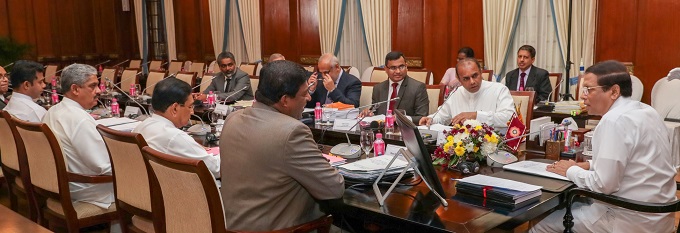
President Maithripala Sirisena later on Saturday night appointed a four-member Presidential Commission to probe the April 21 Easter Sunday attacks in which nine Lankan Jehadi bombers struck at three churches and three star hotels killing nearly 300 men, women and children, locals as well as foreigners.
This is the second panel to probe into the attacks, the first being a Parliamentary Select Committee (PSC) which ended its hearings last week. Its report is awaited.
According to a Extraordinary Gazette notification, issued on Saturday, the commission will be headed by Court of Appeal Judge Janak de Silva. The other members are Court of Appeal judge Nissanka Bandula Karunarathna and retired Court of Appeal judges Nihal Sunil Rajapaksa and Bandula Kumara Atapattu.
The commission has been entrusted to carry out an impartial and complete investigation on the April 21 bomb explosions and identify persons and organizations directly or indirectly connected to the terrorist attacks.
It has also been tasked with identifying officers and authorities who failed to anticipate that terrorist and extremist activities of this nature would take place within the country and those who failed to perform their duties and did not take proper action.
Post Bomb Riots
The other tasks of the panel are: identifying persons and organizations responsible for demonstrations, acts of sabotage and causing damage to property after the April 21st attacks; and recommending measures about rehabilitating and assisting persons affected, ensuring public safety and preventing recurrence of such incidents.
The commission is required to submit an interim report in three months, a subsequent interim reports in the next two months and the final report in six months.
W.M.M. Adikari, a retired Ministry Secretary, will serve as the Secretary of the commission.
Background
President Sirisena had been against the setting up of the Parliamentary Select Committee (PSC) and its open hearings because he believed that open hearings would compromise national security if what government officials and intelligence officers say are out in the public domain through the mass media.
Nevertheless, the PSC was appointed by the parliament Speaker Karu Jayasuriya going by the wishes of the ruling United National Party (UNP) headed by Prime Minister Ranil Wickremesinghe.
Wickremesinghe ,who had been at daggers drawn with President Sirisena for long, wanted to fix the responsibility for the blasts and the intelligence failure that caused it, on President Sirisena who was in charge of the military as Minister of Defense. It had been Wickremesinghe’s complaint that Sirisena had not been inviting him to meetings of the National Security Council (NSC) which is headed by the President.
When the PSC was constituted, the President’s party, Sri Lanka Freedom Party (SLFP), boycotted its proceedings. So did the Joint Opposition headed by the Sri Lanka Podujana Permuna (SLPP). In effect, the PSC became a committee of the UNP and its allies.
The President himself refused to testify before the PSC saying that its proceedings were mere drama”. When he did finally testify earlier in the week, he did so not in the parliament’s committee room but in his office outside parliament. He also barred the media from covering it.
However, the media came to learn that he had blamed Prime Minister Wickremesinghe for the lapses which enabled the bomb attacks. Sirisena said that he was opposed to the appointment of Pujith Jayasudara as the Inspector General Police and it was Wickremesinghe who insisted that Jayasundara be appointed.
On the Prime Minister’s charge that he was not being invited to NSC meetings, Sirisena said that he had invited him even though he was kept out when Chandrika Kumaratunga was President.
Be that as it may, the main reason for the appointment of these committees and commissions is to be able to put one’s opponents on the mat by pointing accusing fingers against them in full public view. The line of questioning indicated the political agendas of the various PSC members.
The new Presidential Commission is also likely to have the same political objectives given the politicization of public institutions in Sri Lanka.
Two Significant Departures
However, the Presidential Commission is to have a wider terms of reference which are politically significant. It is to identify persons and organizations responsible for demonstrations, acts of sabotage and causing damage to property after the April 21st attacks.
This is of the greatest importance to the Muslim minority which went through a horrendous experience after the blasts. Sinhala-Buddhist mobs burnt shops and destroyed properties of Muslims in Kurunegala district weeks after the blasts in what appeared to be planned attacks. The police looked the other way as the mobs were on a rampage.
A Muslim government doctor was accused of sterilizing more than 800 Sinhalese women in a bid to restrict the Sinhalese population. A university set up by a Muslim provincial Governor with Middle-Eastern funding was dubbed a Shariah University and forced to stop.
The Presidential Commission is also charged with recommending measures to rehabilitate and assist persons affected by the blasts and the subsequent rioting; ensuring public safety and preventing recurrence of such incidents.
Through this commission, President Sirisena is expecting to burnish his image as a fair-minded non-communal and non-partisan person with a penchant for the welfare of all in a country which is divided on communal and partisan lines. Its proceedings could help in his political career which he is reluctant to end.
Sri Lanka President forms five-member committee to probe Easter Sunday bombings
September 22nd, 2019Courtesy The Hindu
Keeping vigil: A soldier stands guard in front of St. Anthony’s Shrine in Colombo on Friday, following a series of bomb blasts targeting churches and luxury hotels on Easter Sunday. MORE-INSri Lanka Easter bombings
The committee would comprise two appeal court judges, two retired high court judges and a retired administrator
Sri Lankan President Maithripala Sirisena has appointed a five-member committee to investigate allegations of intelligence inputs being ignored and related errors that led to the Easter Sunday bombings, killing over 258 people.
According to an extraordinary gazette notification on Saturday, the committee would comprise two appeal court judges, two retired high court judges and a retired administrator.
The panel will investigate allegations of disregarding of prior intelligence inputs on the Easter attacks and related errors which stopped authorities from taking preventive action.
On April 21, nine suicide bombers carried out a series of blasts that tore through three churches and as many high-end hotels in Sri Lanka’s capital Colombo, killing 258 people.ALSO READEaster bombings: new evidence points to lapses
The Islamic State claimed the attacks, but the government has blamed local Islamist extremist group National Thawheed Jamaath (NTJ) for the bombings.
The new five-member committee was constituted following local Catholic church Cardinal Malcolm Ranjith’s demand for an independent investigation.
Earlier, Mr. Sirisena had appointed a three-member panel to probe the attacks that led to the sacking and the arrest of the then police chief Pujith Jayasunderaand top defense ministry official Hemasiri Fernando.
Mr. Sirisena initially resisted a parliamentary probe and slammed its suggestion as an attempt to pin the blame on him for the attacks.
The constitution of the latest panel is being seen as a move to appease the Catholic minorities ahead of the November 16 presidential election.
It is not yet clear if Mr. Sirisena will contest the elections.
Cold calculation marks pre-election choices in Sri Lanka
September 22nd, 2019By P.K.Balachandran Courtesy NewsIn.Asia
Colombo, September 22: Whatever the issue may be, a politician’s or a political party’s stand on it is determined by immediate political interests and not ideology, principles or long-standing commitments.
Cold calculation marks choices ahead of the November 16 Sri Lankan Presidential election. This has come out clearly in the stand taken by Lankan political leaders and political parties on the question of electoral alliances and issues like the abolition of the Executive Presidency (EP).
Abolition of the EP has been on the agenda of all Lankan political parties since 1995. Every candidate would pledge to abolish it if voted to power. But for one reason or the other, the promise would never be kept. However, come elections, the promise would be re-iterated and arguments mustered for the abolition of the EP.
But again, the promise would be broken because the office is so powerful that no occupant and his or her followers would want to give it up.
However, the opposition would not allow the incumbent to forget his or her pledge. Abolition of the EP would be raked up by the opposition to show the incumbent President as a power-hungry dictator misusing his powerful office. Abolition of the EP would be made an election issue the next time round.
Abolition of the EP was a key issue when the united opposition led by the United National Party (UNP) fought the January 2015 Presidential election with Maithripala Sirisena pitted against incumbent dictatorial President Mahinda Rajapaksa. The mass movement that this represented defeated Rajapaksa convincingly.
The Sirisena-Wickremesinghe government, which came into being after the election, did pass the 19 th.Amendment toning down the powers of the EP but did not abolish it.
This was ostensibly because full abolition would need a referendum to be conducted. But the real reason was that no party honestly wanted complete abolition. A country which holds elections for various bodies periodically could well have conducted a referendum. But political interest or hunger of power and the fascination for powerful offices got the better of the leaders as it always did in the past. The 19 th.Amendment allowed the EP to continue with minor tinkering.
Why This Time?
In the run-up to the November 16, 2019 Presidential election, abolition of the EP was not issue till quite recently. The main issues were the need for national security and an efficient and responsive government following the April 21 Jihadist bombings and the comprehensive failure of the UNP-led coalition government.
But Prime Minister and UNP Supremo Ranil Wickremesnghe brought up the issue of EP abolition when he found that it was becoming more and more difficult to stop Deputy party Leader Sajith Premadasa from getting the UNP’s nomination to contest the Lankan Presidency.
President Maithripala Sirisena, who heads the Sri Lanka Freedom Party (SLFP), also revived his interest in the abolition of the EP after he found that no other party would support his claim for a second term. He did not want the powerful EP to go into hands of Gotabaya Rajapaksa, brother of former President Mahinda Rajapaksa and the candidate of the Sri Lanka Podujana Peramuna (SLPP). Sirisena feared the Rajapaksas who he had abandoned to become the candidate of the joint opposition in the 2015 Presidential poll.
Sirisena told the public that they should not bother about the upcoming Presidential election because, after the election, the Executive Presidency would be abolished by a new parliament. The office to watch out for would be that of the Premier in a Westministerial parliamentary system, he said.
With the backing of President Sirisena, parliament Speaker Karu Jayasuriya and also M.A.Sumanthiran, a leading member of the Tamil National Alliance (TNA), Prime Minister Wickremesinghe suddenly proposed to the cabinet that the EP be abolished by a cabinet decision on that day.
This whipped up a storm in the meeting, with the majority of the Ministers from every alliance party rising in revolt. They said that a key issue like the abolition of the EP could not be taken up when the date for the Presidential election had already been announced. In their view, Wickremesinghe’s crafty plan was to postpone the Presidential election to thwart Sajith Premadasa’s bid to contest leaving him in the political limbo.
Only a few ministers supported Wickremesinghe. Embarrassed by the reaction, Wickremesinghe blamed it on President Sirisena who heads the cabinet.
Need To Win Main Factor
While all political parties, including the parties of the minorities, are pledged to abolish the EP, all now want their candidate to win the upcoming Presidential election. Even those in the UNP backing Sajith Premadasa have said that the first step towards any constitutional reform should be to win the coming election. They fear that any delay in holding the election might result in Sajith’s campaign losing steam. He has already stretched himself quite a lot, being on a campaign trail for a month already.
Moreover, Sajith is not exactly in favor of abolition. According to him there is yet no scientific survey” to say that the people want the EP to go. There is also a fear in Sajith’s camp that Gotabaya Rajapaksa’s strong commitment to retaining the EP will give the latter an edge in the election. It would enable Gotabaya to contrast his strong an pushy style with the lumbering style of the UNP-led incumbent government.
Minority Parties’ Interest
All minority parties except the Tamil National Alliance (TNA) are keen that Gotabaya Rajapaksa is defeated in the coming election as he is seen to be anti-Tamil and anti-Muslim. And in their view, the only man who can defeat Gotabaya is Sajith Premadasa of the UNP. In their view, Sajith has sufficient Sinhala-Buddhist votes. And in combination with the votes of the minority Tamils and Muslims, he should get the required 50% plus votes to win.
For the minorities there is no credible anti-Gotabaya candidate in the field other than Sajith. The Marxist Janatha Vimukthi Peramuna (JVP)’s Anura Kumara Dissanayaka has limited appeal. Therefore, all parties of the minorities have gravitated towards Sajith.
Additionally, minority parties, other than the TNA, need the support of a mainstream Sinhala Buddhist party to win seats in parliamentary elections as they are all located in Sinhala-Buddhist majority areas in South, Central and Western SriLanka. This is the reason why they are always in alliance with one or the other of the Sinhala-Buddhist parties like the SLFP and UNP (more UNP than SLFP though). This is the reason to back Sajith ,who in their view, is the most winnable Sinhala-Buddhist UNP candidate. Wickremesinghe, on the contrary, is devoid of these qualifications.
TNA Different Kettle Fish
The TNA, however, is a different kettle of fish. Having its base only in the Tamil-majority Northern and Eastern Provinces, the TNA has no need to align with any of the Sinhala-Buddhist national parties to secure seats in parliament. It is therefore free to pursue goals like abolition of the EP.
According to the TNA, abolition of the EP is in the Tamils’ interest and indeed in the interest of all parties, small and big.
Although the Executive President is directly elected, and no candidate can win without the votes of the minorities, the Tamils’ experience is that once elected, the Executive President ignores us given the powers of this office. But in a parliamentary system, executive power will be with the Prime Minister who is answerable to parliament, in which the minorities are well represented. No decision can be taken without a parliamentary nod and we the minorities will be able to play a vital role and that too continuously,” explained M.A.Sumanthiran MP and spokesman of the TNA.
Asked what the TNA proposes to do now that the bid to get the focus on to the issue the abolition of the EP has been scuttled, Sumanthiran said that the TNA will hold talks with all candidates to get the best deal for the Tamils of the North and East and the best deal will include abolition of the EP.
This is possible because votes of the North-Eastern Tamils are vital for the candidates in a close contest, he felt. And the forthcoming contest will be a very close one.
Dilrukshi should reveal who those politicians are – President
September 22nd, 2019Courtesy Ceylon Today
Dilrukshi Dias must reveal to the country the ignoble politicians who instructed her to file cases in a wrong manner, President Maithripala said yesterday (21).
He was addressing the SLFP’s Matale District Convention held in Naula.
Speaking of the voice recording of the former Director General of the Bribery and Corruption Commission,……which is being circulated by media, the President opined that she left her position due to a statement made by him, when the former Commanders of the Tri-Forces were taken to Court without his knowledge.
Dilrukshi Dias worked at the Bribery and Corruption Commission from morning until 4 p.m., and after 6 p.m., she worked at the Anti-Corruption Secretariat at Temple Trees, the President said, adding that the Prime Minister recently requested that Dias be appointed as a Supreme Court Judge.
The President stressed that his political principle always was that the Executive Presidency must be abolished, and that it was not him, but the Parliament that ignored it.
However, attempting to do that at this moment, when an election has been declared, is a joke, he added.
Speaking of the Prime Minister’s recent statement that the special Cabinet meeting on the abolition of the Executive Presidency, was held for the President’s need, the President emphasised that the Premier’s statement was inaccurate, and that the Cabinet meeting in question was held at the Prime Minister’s request.
Responding to reports that the meeting between him and the Parliament Select Committee probing the Easter Sunday attacks was not opened to the media at his request, the President stated that although he had made all arrangements to open the entire discussion to the media, the Parliament Select Committee requested him not do so.
Speaking at the event, the President further said, the Parliament Select Committee had requested for his opinions and suggestions concerning the Easter Sunday incident. He added that although the Attorney General had informed that he can act at his discretion, as a leader who respects democracy, he granted the opportunity to the Committee.
The President emphasised that he does not have anything to hide, and that he revealed to the Committee everything that is true.
දිල්රුක්ෂිට බලපෑම් කළ ඇමතිවරයා ගැන, මධ්යම පළාත් ආණ්ඩුකාරවරයා හෙළිදරව්වක
September 22nd, 2019උපුටා ගැන්ම හිරු පුවත්
අල්ලස් හෝ දූෂණ චෝදනා විමර්ශන කොමිෂන් සභාවේ හිටපු අධ්යක්ෂ ජනරාල් මෙන්ම, වත්මන් සොලිසිටර් ජනරාල් දිල්රුක්ෂි ඩයස් වික්රමසිංහට බලපෑම් කර ඇත්තේ අමාත්ය වජිර අබේවර්ධන බව මධ්යම පළාත් ආණ්ඩුකාර කීර්ති තෙන්නකෝන් අද හෙළිදරව්වක් සිදුකළා.
ඒ, හැටන් ප්රදේශයේදී මාධ්ය වෙත අදහස් දක්වමින්.
මේ අතර, සොලිසිටර් ජනරාල් දිල්රුක්ෂි ඩයස් වික්රමසිංහ සහ ඇවන්ගාඞ් සභාපති නිශ්ශංක සේනාධිපති අතර, ඇති වු දුරකථන සංවාදය සම්බන්ධයෙන් අදත් දේශපාලනඥයින් විවිධ අදහස් පළ කර තිබුණා.
Kidney diseases claim more than 6,000 lives in Sri Lanka in last 3 years
September 22nd, 2019Source: Xinhua
COLOMBO, Sept. 20 (Xinhua) — Over 6,000 people in Sri Lanka have died from kidney diseases between 2016 to 2018, local media reports, quoting the government said here Friday.
Lands and Parliamentary Affairs Minister, Gayantha Karunathilaka, answering on behalf of Health Minister, Dr. Rajitha Senaratne in Parliament said that 6,481 deaths had been reported within last 3 years which includes 2,135 deaths in 2016, 2,159 deaths in 2017 and 2,187 deaths in 2018.
During the period under review, there had been 17,503 kidney disease cases reported from hospitals while 787 people had undergone kidney transplants.
The minister said some of the worst affected districts were Anuradhapura and Polonnaruwa, in north central Sri Lanka and Badulla in the lower central hills.
Sri Lanka and China last year launched the construction of a state-of-the-art water testing laboratory at the Peradeniya University, in the central highlands of the island country to find a scientific solution to end chronic kidney disease of unknown origin (CKDu).
Construction of this laboratory is expected to finish in May 2020.
Former Sri Lanka Navy chief: Xinjiang is on the right track
September 22nd, 2019Dialogue with Yang Rui Courtesy CGTN
“Your doing is working,” said Jayanath Colombage, former chief of the Sri Lanka Navy and director of the Pathfinder Foundation’s Centre for Indo-Lanka Initiatives, when attending International Seminar on Counterterrorism, De-radicalization and Human Rights Protection held in Urumqi, China’s Xinjiang Uygur Autonomous Region, early this September.
“We were here in Xinjiang for the last two or three days and given an exposure of Islam teaching institute, vocational training institute, and to meet people. And we were quite free to talk to them and did talk to them. And I think China is on the right track because there is no terrorist incident in the past three years especially in Xinjiang,” Jayanath Colombage added.
From the trade hub of the ancient Silk Road to the popular travel destination with beautiful scenery and profound cultural heritage, Xinjiang has always been the mysterious land in our mind. Unfortunately, terrorism and religious extremism had cast a long shadow over the region.
During the International Seminar on Counterterrorism, De-radicalization and Human Rights Protection held in Urumqi, Xinjiang, in recent days, experts from many countries discussed and exchange views on counterterrorism and human rights, and visit various parts of Xinjiang to see the efforts and results in the fight against terrorism and extremism, the development of human rights protection in the region, and students at Kashgar Vocational Skills Education and Training Center.01:28
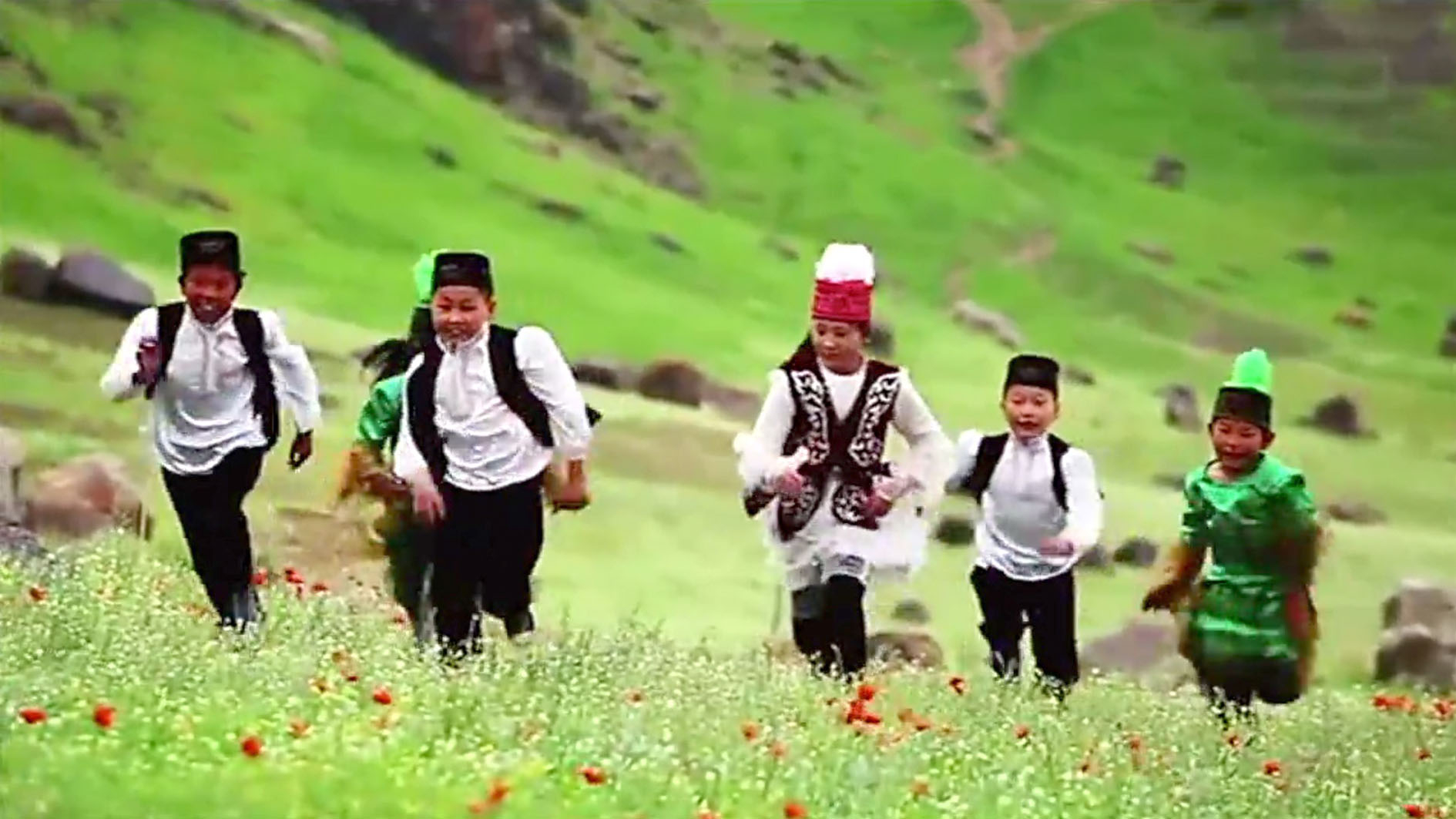
Fighting terrorism and extremism are difficult tasks faced by the entire world. As for Xinjiang, separatism is the hotbed in which terrorism and extremism take root.
Never in Chinese history has Xinjiang been referred to as “East Turkistan,” and there has never been any state known as “East Turkistan.” At the turn of the 20th century, separatists and religious extremists in and outside China, inheriting the so-called theories of “Pan-Turkism” and “Pan-Islamism” created by former colonialists in an attempt to split China and control Xinjiang.
Since the 1990s, especially after the September 11 attacks in the U.S., separatist, terrorist and extremist forces stepped up their collaboration to launch terrorist attacks in Xinjiang as terrorism and extremism spread around the globe.
With numerous efforts of de-radicalization and eradicating terrorism, Xinjiang’s economic growth hit a new record and attracted lots of tourists recently.
According to the white paper on the Fight Against Terrorism and Extremism and Human Rights Protection in Xinjiang released by China’s State Council Information Office this March, in 2018, tourism in Xinjiang grew rapidly: Tourists from inside and outside China numbered over 150 million, a year-on-year increase of 40 percent; foreign tourists totaled 2.4032 million, a year-on-year increase of 10.78 percent; tourist spending totaled 252.2 billion yuan, a year-on-year growth of 41.6 percent.
“De-radicalization is a process not started in China. It has come from outside through social media and people-to-people contact. Now they want a separate state. I mean this idea is going against the flow and the trend. They want to cut out a separate state for themselves. For what? Who will benefit from a separate state? Is the economy going better (to be separated) than being part of China?” Jayanath Colombage emphasized.
(If you want to contribute and have specific expertise, please contact us at opinions@cgtn.com.)
CAN SLFP BRING BACK TO ORIGINAL POLICY STATUS?
September 21st, 2019BY EDWARD THEOPHILUS
A recent statement of Mr Dayasiri Jayasekera, the secretary of SLFP published in news media that SLFP will bring back to original policy status and it is a good idea, but the likelihood of occurrence of the statement might be a statement with a negligible value. Policy wise SLFP after the political independence showed a revolutionary pathway as Mr. S.W.R.D Bandaranaike had a broader vision consistent with international changes and domestic requirements. Therefore, strategically he attempted to unite proletarians in the country despite the role of people devoted to unite proletarians (LSSP and CP) in a human feeling and the way suitable to the country. After the death of Mr. Bandaranaike, his wife honestly attempted to continuing the original policy with modernized policy actions such as nationality, foreign policy and economic vision, however, the reactionary forces with the support of disguised domestic and international forces worked to destroy the original policy status of SLFP and the family members of Mr. Bandaranaike contributed to reactionary forces with knowing or without knowing that what was done by them was wrong.
Mr. Mahinda Rajapaksa honestly attempted bring SLFP back to original policy status, however, the assigning of the leadership of SLFP to current president Mr. Maithripala Sirisena after 2015 elections appeared that SLFP has caught to reactionary forces again and when people of the country rejected the way Mr. Sirisena acted, Sri Lanka Podujana Peramuna emerged to unite and give the leadership to original policy status of SLFP. It doesn’t reflect that the behaviour of Mr. Dayasiri Jayasekera supported to SLFP bring back to the original policy status as public view that he is an agent of reactionary forces.
There is no doubt that SLFP can take to original policy status after the general election which will be held in 2020. The general election in 2020 will eliminate traitors and SLPP and SLFP can unite with modernize policy framework.
YAHAPALANA AND THE UNITED STATES OF AMERICA Part 11
September 21st, 2019KAMALIKA PIERIS
Those opposing American rule in Sri Lanka has now woken up to the need to internationalise the matter. In August 2019, a group of Opposition MPs handed over a letter to the High Commissioner of South Africa in Colombo, to be handed over to the Secretary-General, Indian Ocean Rim Association, Ambassador Dr. Nomvuyo N. Nokwe based in Mauritius. The letter was handed over to by Professor Tissa Vitarana, representing the signatories.
THE FOLLOWING IS TEXT OF THEIR LETTER:
We, the undersigned, have the honour to refer to the decision of the Council of Ministers of the Indian Ocean Rim Association at its meeting in Bengaluru in November 2011 to assign Maritime Safety and Security as its top priority area of focus, acknowledging the importance of a safe and secure Indian Ocean for socio economic development. We also wish to refer to IORA’s recognition that ‘maritime security’ includes “elements of international peace and security, sovereignty/territorial integrity/political independence, security from crimes at sea, security of resources and environmental security. “
In this regard, we wish to invite your attention to a new situation that has arisen in relation to Sri Lanka that is likely to pose a grave threat to regional and international peace and security, given its geostrategic location on the maritime route linking East and West.
The people of Sri Lanka, their Parliament and President, have only recently learned of three military or military-related agreements between the United States of America and Sri Lanka that have been secretly and hurriedly elaborated, negotiated and signed or are on the verge of being signed. Together, they form part of a larger project to transform Sri Lanka into a US strategic military hub in the Indian Ocean, a project that is incompatible with the Purposes and Principles of the Charter of the United Nations, and violates the sovereignty, independence and territorial integrity of Sri Lanka.
We highlight below some of the provisions of relevance to the aims and objectives of IORA. Since neither the Government of Sri Lanka nor the Government of the United States has released the text of the agreements to the public or to Parliament, the information provided is based on excerpts leaked to the press:
1 Under Acquisitions and Cross-Servicing Agreement (ACSA), formerly known as the NATO Mutual Support Act, signed on 4 August 2017, Sri Lanka agrees to provide the United States with logistical and other support for, inter alia, “unforeseen circumstances or exigencies.” In other words, it allows utilization and exploitation by US forces of Sri Lanka’s strategic harbours, airports and military installations for large-scale power projection operations in and through the US Indo-Pacific Command (USINDOPACOM) area of responsibility, which will transform Sri Lanka into a Launchpad for attacks of aggression against third countries in our region, as defined in General Assembly resolution 3314 (XX1X), and in violation of the Charter of the United Nations and the 1970 Declaration on Principles of International Law.
2. Secret negotiations are ongoing on a new Status of Forces Agreement (SOFA) which permits Department of Defence (DoD) military and civilian personnel, as well as DoD contractors, to occupy the entire territory of Sri Lanka, including, inter alia, for “other activities mutually agreed,” in addition to its use for “ship visits, training exercises, (and) humanitarian activities;” exempts DoD personnel from criminal jurisdiction; grants them diplomatic privileges and immunities; authorizes their entry into the country with only US identification; allows their free movement to any part of Sri Lankan territory, wearing military uniform and carrying weapons; allows also the free movement of their vessels and vehicles; and exempts them from any inspection, restriction, taxes or duties of any equipment, records or other material they import, export or use.
3. Millenium Challenge Compact (MCC) is a third secret agreement signed on 25 April 2019 involving a land project and a transport project that will create an “economic corridor” involving 8 districts and which reportedly covers 1,2 million acres and divides the country into two parts. An electric train will connect the strategic northeastern port of Trincomalee to Colombo’s international airport and harbour in the west, thus facilitating the movement of US troops and other DoD personnel between Sri Lanka’s strategic ports and airport. Under the land project, the US has imposed drastic reforms of land laws that will permit privatization of state lands and purchase of unlimited extents by foreigners. Through this mechanism, state lands, which under existing laws are granted to landless farmers for their use, or used for public schools and hospitals, parks, or natural reserves, will be transferred to foreign transnational corporations. The area covered by the MCC project contains a wealth of natural resources and strategic assets, including energy deposits, rare earth elements, and other minerals, rich biodiversity, water resources, and UNESCO world heritage sites. Its implementation will lead to a massive displacement of populations; the plunder of their wealth and natural resources; stripping them of their livelihood and depriving them of public utilities, schools, hospitals, places of worship, cemeteries, etc.; and, causing irreparable harm to environment and loss of biodiversity.
All three agreements have been negotiated in secret and imposed upon the people, without any public participation or parliamentary oversight, with the President of the country himself being misled. Negotiations were/are conducted under duress with regular threats of unilateral coercive trade and economic measures, blatant Western interference in the internal affairs of the country, and the selective targeting of Sri Lanka at the UN Human Rights Council by the US and its Western allies, including through successive US-led resolutions to provide legitimacy to its unilateral project. It is significant that the pressure intensified following the tragic Easter Sunday massacres that saw the arrival in the country of significant numbers of US and other Western intelligence and military personnel.
Together, the three agreements contribute to the extension and strengthening of NATO activities in the region and cannot be isolated from the overall strategy of the United States in the region that it calls the Indo-Pacific. The US President’s National Security Strategy 2017 and the 2018 National Defense Strategy identified three sets of threats to America and its allies, all of them of concern to the Indian Ocean region: China and Russia; Iran and the Democratic People’s Republic of Korea; and “jihadist terror.”
The signing of such military agreements in the context of US bellicosity against powers in our region, including China and Iran, but also the conflict between India and Pakistan, and between India and China, poses a grave threat to regional and international peace and security and must be of concern to IORA and to its Working Group on Maritime Safety and Security.
In view of the foregoing, the undersigned appeal to IORA Member States, individually and collectively, as a matter of priority, to take the following urgent measures in conformity with their obligations under the IORA Charter and the Charter of the United Nations:
a) Ensure respect for, promote and safeguard the fundamental principles upon which international cooperation among states must be based, including, inter alia, respect for the principles of sovereign equality, territorial integrity, political independence, noninterference in internal affairs, peaceful coexistence and mutual benefit;
b) Evaluate the adverse consequences of the agreement for regional and international peace and security and communicate the results to the United Nations, in accordance with the relevant provisions of the UN Charter;
c) Take appropriate action under Chapter VIII, Article 52, of the UN Charter, concerning regional arrangements which authorises such arrangements “to deal with matters relating to the maintenance of international peace and security in a manner consistent with the Purposes and Principles of the United Nations, and in no way impairing the authority of the General Assembly nd Security Council in such matters under Articles 34 and 35;”
d) Implement, through appropriate mechanisms of IORA and in conformity with the provisions of the Charter of the United Nations, the UN Declaration of the Indian Ocean as a Zone of Peace adopted by the General Assembly resolution 2832 (XXVI), which designates the Indian Ocean for all time as a zone of peace “within limits to be determined,” together with the airspace above and the ocean floor subjacent thereto;
e) Take appropriate action under Chapter V1, Article 35 of the UN Charter, concerning Peaceful Settlement of Disputes, which “authorizes any Member of the United Nations to bring to the attention of the Security Council or of the General Assembly, any dispute, or any situation which might lead to international friction or give rise to a dispute, in order to determine whether the continuance of the dispute or situation is likely to endanger the maintenance of international peace and security.” (end of the statement) (Island 10.8.19 p 3)
Tamara Kunanayagam was associated with the drafting of the memorandum. ‘I fully share the concerns expressed by the signatories and endorse the content of the letter and its objectives’, she said. She went on to explain some of the items in the letter.
The letter does not call for “UN intervention,” which would constitute a violation of State sovereignty prohibited by the Charte, Tamara said. Instead, and in conformity with the Charter, it draws the attention of IORA and its member States to a new situation that has arisen in relation to Sri Lanka as a result of the military or military-related agreements between the USA and Sri Lanka – ACSA, SOFA and MCC – elaborated, negotiated and signed (or on the verge of being signed), under coercion and in secret, and which are likely to pose a threat to regional and international peace and security.
The letter calls upon IORA member States, who are also members of the United Nations, to fulfill their obligations under IORA’s own Charter and the Charter of the United Nations.
The UN Charter is the only universally recognized rule of law that currently governs relations between States, based on sovereign equality. It stands opposed to the so-called ‘rule of law’ aggressively promoted by the US, based on unilateralism, external intervention and aggression, which seeks to maintain US hegemony, globally.
Under article 103 of the UN Charter, any agreement that conflicts with non-derogable peremptory norms of general international law, such as sovereignty, independence and territorial integrity, is null and void.
Secret agreements are moreover incompatible with the UN Charter, as are military agreements signed in the context of big power rivalry, including, in particular, those aimed at attacking third world States.
The UN definition of aggression includes “the action of a State in allowing its territory, which it has placed at the disposal of another State, to be used by that other State for perpetrating an act of aggression against a third State” (General Assembly resolution 3314 (XXIX) on Definition of Aggression).
The UN Charter prohibits external ‘intervention’ in whatever form by one State in the internal affairs of another. Instead, it obliges Member States to take effective collective measures, by peaceful means, to prevent and remove threats to the peace, and to suppress any acts of aggression or other breaches of the peace.
Chapter VI of the Charter sets out the peaceful means whereby parties to a conflict or any other state should seek a solution. Under article 35, any UN Member State may bring to the attention of the Security Council or General Assembly “any dispute, or any situation” that “might lead to international friction or give rise to a dispute.”
Chapter VIII allows regional arrangements to deal with matters relating to the maintenance of international peace and security in a manner consistent with the Purposes and Principles of the United Nations.
In the letter addressed to IORA Secretary General, the signatories call on Member States to apply the provisions under chapters VI and VIII relating to the peaceful settlement of disputes through regional and international cooperation, and not through intervention, and in a manner that respects the sovereignty, independence and territorial integrity of Sri Lanka.
It calls on IORA Member States to “ensure respect for, promote and safeguard the fundamental principles upon which international cooperation among states must be based, including, inter alia, respect for the principles of sovereign equality, territorial integrity, political independence, non-interference in internal affairs, peaceful coexistence and mutual benefit.”
The US views itself as a hegemonic power with the authority to dominate the entire globe, including outer space, and to act unilaterally, preemptively and preventively imposing on other states its own “rule of law.” This rogue state vision of the world blatantly contradicts the universally recognised multilateral order governed by the Charter of the United Nations. It is this unilateral vision that the signatories of the letter to the Secretary General of IORA unequivocally reject, concluded Tamara Kunanayagam. ( continued)
HEALTH, EDUCATION AND YAHAPALANA Part 7
September 21st, 2019KAMALIKA PIERIS
DRUG SHORTAGE
Doctors held media conferences on 1.8.19 and 2.8.19 to inform the public of serious shortage of drugs. This was shown in television news. The doctors said that there were drug shortages at many hospitals. They included Ampara, Anamaduwa, Balapitiya, Chilaw, Galle, Kandy, Karapitiya, Kegalle, Mahiyangana Matara Naula, Puttalam and Ratnapura.
Lists of the drugs in short supply were shown. There was a shortage of 36 drugs at Matara general hospital, 30 at Anamaduwa and 15 at Kegalle. They included drugs for diabetes, asthma, heart disease urinary infection and emergency medicine, several cancer drugs were in serious shortage. Cancer hospital, Maharagama lacked a drug that was needed for cancer patients who could be cured.
There are two reasons for drug shortages, the doctors said. Firstly, drugs are bought when they are nearing the expiry state. After some time, these drugs are discarded, but by then about 90% of these drugs have been given to the patients. In 2015, there were 1334 ‘no objection’ letters issued by the Health Ministry, permitting such drugs to come in. secondly the drugs are of poor quality and have to be discarded. Health Ministry, however, denied that there was a drug shortage in hospitals. The Ministry also said that when a hospital runs out of a drug, it is permitted to purchase from private sources.
DRUG PURCHASES (1) Trastuzumab
A tender awarded by Cabinet for the supply of 1,875 vials of Trastuzumab to the lowest bidder, has aroused concern. Conditions that were not part of the original bid document have been imposed after the tender was awarded. State Pharmaceuticals Corporation had introduced a new condition of pre-shipment sample testing at TGA-Australia, which would take three to four months.
Ministry of Health, when told this, had directed that no new conditions should be included in the contract. This was ignored. The new specifications included the new condition of TGA laboratory testing.
GMOA said this was a “delaying tactic”. There are ongoing moves to offer a 15-year ‘buyback guarantee’ for the product. This was an attempt to buy time until the ‘buyback guarantee’ agreement was pushed through. Big fish’ were involved in this matter.
The price quoted by the supplier for Trastuzumab is Rs. 95,500 + 20% per vial totaling Rs. 115,000 with the ‘buy back’ price. This would translate into a staggering Rs. 50 billion loss to the country. ‘When there are many globally accepted products offered at more competitive pricing, why should a ‘buy back guarantee’ be given to a Russian product which is not accepted world-wide, asked the doctors.
The ‘buy back guarantee’ spanning such a long period will deny a level playing field to other stakeholders. It will shut out new technology, modern drugs to treat cancer patients in Sri Lanka. It will also jeopardize the lives of cancer patients by creating a monopoly to allow a single supplier to import the substandard Russian drugs at relative higher market prices through a 15-year ‘buy back guarantee’.
This purchase has come before the Presidential Commission probing corruption in Yahapalana government. Oncologists told the Commission that 85% of patients in the country are being treated for early stage breast cancer and therefore an effective drug was needed.
Oncologists rejected the Russian made Trastuzumab and Bevacizumab drugs as they remain unproven in terms of clinical efficacy and safety. For the registration of a drug, a Certificate of Pharmaceutical Products (COPP) is issued by an institution affiliated to the Health Ministry in a country. However, in the case of Trastuzumab, this certificate has been issued by the Industry and Commerce Ministry of Russia.
The pharmacist who evaluated the Russian drug told the Commission that the product didn’t fulfill many basic regulatory criteria. Among them were the minimum six months stability of the product. The product was launched in Russia in January 2016 and registered in Sri Lanka in February 2016.
There was also the requirement to have at least three exporting countries. This was totally overlooked. The Russian manufacturer also did not have the basic WHO GMP. The Russian manufacturer had withdrawn its Indian operations due to possible quality concerns, said critics.
DRUG PURCHASES (2) Flucloxacillin
A tender for importing 25 million capsules of Flucloxacillin was called in May 2018. The Medical Supplies Division informed the SPC that there was a pressing need for the antibiotic. The tender had been awarded to a company quoting almost double the price of the cheapest bidder. Thereby causing a loss of more than Rs. 70 million to the state.
There were four bids by three companies, Orient, Microlabs and Pharmace. Orient and Pharmace were both going to import the drug from Bangladesh and there was no difference in quality, either. But for a card of 10 capsules, Orient quoted Rs. 37 while Pharmace quoted Rs. 68 .
The Technical Evaluation Committee (TEC) rejected Orient, for having a low bid bond, and Microlabs for not being a registered company, and awarded the tender to Pharmace although their quotation was almost twice as Orient’s.
This tender came before Presidential Commission of Inquiry investigating corruption in the current administration. Commission found that Technical Evaluation Committee had used non-existing specifications to overlook the bidder who had quoted the lowest price
Orient’s bid had been rejected because it had not provided 2% of the estimate cost as the bid bond, a guarantee that the bidder will undertake the contract if selected, and because they had not quoted the price for the ‘pack size’ that the Ministry wanted.”
“The estimated cost was Rs. 225 million and Orient had not given 2% of the estimate cost as the bid bond. Moreover while the specifications said that the pack should comprise 10 capsules in a card, Orient had listed another amount, said the TEC.
The Commission wanted the head of the TEC who was also a Deputy Director of Health to show the section in the bid document, where the estimated cost and pack size was stated. He could not do so, but instead presented a letter sent by the State Pharmaceutical Corporation to the Ministry, stating that the estimated cost was Rs. 225 million. The witness also failed to find the relevant sections of the bid document on the pack size. He could not show that these specifications had been communicated to the bidders, either.
The Commission observed that since there was no evidence to suggest that the bidders had been informed about estimated cost and pack size, it would have been absurd to expect a response from the bidders.
APPOINTMENTS (1)
Supreme Court has given two historical verdicts” regarding two inappropriate appointments made by the Health Minister, announced GMOA in May 2019. The two verdicts had been given in connection with appointments made by the Health Minister for the posts of the National Medicine Regulatory Authority (NMRA) Chairman and the Chief Executive Officer. Supreme Court had given a similar verdict in connection with the inappropriate appointment made by the Health Minister for the Director, Sri Jayewardenepura Hospital.
APPOINTMENTS (2)
GMOA said, in a media statement, in July 2019 that there had been a delay in appointing Intern Medical Officers and that had caused a major crisis in the health sector.”This has stopped a lot of medical students who have completed their education from starting work. It also affects patients because the delay in appointing Intern Medical Officers will lead to a shortage of doctors. Moreover those who have completed their intern appointments still have to continue in their present stations for want of replacements.”
The final year examinations of all state medical faculties have been conducted and results issued. The Act 16 examination for foreign medical graduates has also been conducted. There are people who have passed these exams and are waiting to start their professional career.”
GMOA charged that there was a ‘plot’ to appoint medical graduates of South Asian Institute of Technology and Medicine (SAITM) and a number of foreign graduates who had failed GCE A/L, as intern medical officers. We insist that intern appointments should be given only to medical graduates recognized by the Sri Lanka Medical Council. We will oppose any attempt to appoint SAITM and foreign graduates to these intern positions.
GMOA STRIKE
The Government Medical Officers’ Association (GMOA) announced that would launch a 24-hour strike on 22.8.19 . The strike is on account of eight issues that relate to medical matters. GMOA said it is not demanding any salary increases but is launching this strike in the public interest.
There are several reasons why we are going on strike, they said. Among them are drug shortages in hospitals and the substandard drugs given to patients, the attempts by the Minister to appoint persons who had failed all three subjects at GCE A/L as doctors, for not passing laws specifying the minimum standards for medical education, attempts to weaken the Sri Lanka Medical Council through new regulations, delaying post intern appointments and against the actions of the Health Minister, which they alleged were destroying the health sector. GMOA also observed that the politicisation of the doctors’ transfer scheme has led to a breakdown of services at rural hospitals.
The two main reasons for the strike, however, is the issue of not introducing the Minimum Standards of Medical Education and trying to amend the Service Minute of Doctors. Health Minister should table the Minimum Standard of Medical Education in Parliament and stop the process of amending the ‘Doctors’ Service Minute’ with immediate effect, GMOA said.
Health Minister has not brought in the Minimum Standards of Medical Education because the standard very clearly gives the minimum G.C.E.Advanced Level Examination result of a student eligible to enter a medical faculty. It also gives the physical facilities that should be in any medical faculty, the human resources that should be in any medical faculty and especially the required standard of any Teaching Hospital attached to any medical faculty. A Teaching Hospital is a must for any medical faculty.
The main objective of amending the existing Service Minute of Doctors is to enable unqualified individuals to enter the public service as MBBS doctors. At the moment it cannot be done because of the rules and regulations of the Doctors’ Service Minute,” GMOA said.
The GMOA has the list of unqualified individuals who have failed all three subjects in the GCE Advanced Level Examination in the Science Stream and want to become MBBS doctors. It also has the list of names of those who had not studied in the Science stream in G.C.E.Advanced Level Examination,” GMOA added.
MINISTER OF HEALTH
Rajitha is the worst Health Minister we have had in our history, said the GMOA at a media conference in August 2019. The public seem to agree. When Senaratne went to open a facility at District Hospital, Negombo in June 2019, the public were waiting to accost him, complete with placards. Senaratne left by a back door. The angry public then chased after the cars of the officials who left by the front entrance. Television news showed this.
Members of the Government Medical Officers’ Association of the Kandy Teaching Hospital staged a lunch-hour protest in June 2019 demanding the removal of Health Minister Dr. Rajitha Senaratne from his post. The demonstrators displayed posters carrying accusations against Minister Senaratne. Rajitha Senaratne had no moral right to hold the Ministry of Health as there were so many allegations of corruption against him, they said.
GMOA sought an explanation from the World Health Organization in June 2019 as to why Health Minister Dr. Rajitha Senaratne had been granted the title of Vice President of its Executive Committee. The GMOA drew the attention of the WHO to two specific issues. importation of low quality cancer drugs not certified by the WHO and the allocation of public funds amounting to nearly Rs. 5 billion to Neville Fernando Hospital, which the state has not yet acquired.
GMOA also brought to the WHO’s notice recent threats to the GMOA and the decision to lodge complaints with police headquarters in that regard. GMOA pointed out that Dr. Senaratne was engaged in such activities while identifying himself as the Vice President of the WHO.
Further, Dr. Seneratne has brazenly used the title given by the WHO, in support of personal political projects, including an ongoing image building exercise. The GMOA has sought a clarification from the WHO Country Office in Colombo whether it had funded an event held in Colombo to celebrate Dr. Senaratne’s achievements. GMOA raised this issue because Senaratne had said in Parliament that the event was sponsored by the WHO.
The GMOA sent copies of its complaint to WHO Geneva, to the President’s Secretary, to the PM’s Secretary, Health Secretary and Director General Health Services. The GMOA has sought an urgent meeting with the WHO to make further representations on the issue. (CONCLUDED)
Conservatives – Jag Sahota Campaign seeking Ananda Wijesinghe’s Vote
September 21st, 2019Asoka Weerasinghe Ottawa-Vanier
17 September 2019
Jag Sahota
Conservative Candidate for the Calgary-Skyview Riding Campaign for Canada’s Federal election of October 2019, seeking Ananda Wijesinghe’s VOTE..
Hi Jag:I am not in your riding but in the Ottawa-Vanier Constituency.
You might ask – Why the heck are you writing to me then?
It is a dam good Question Jag..
I was privy to the note sent to you by my good friend, Ananda Wijesinghe a constituent of yours, a Canadian-Sri Lankan Sinhalese , like me in his response to your request for his VOTE he said – ” No Sri Lankan Canadian will VOTE for a Conservative Party Candidate. – never since former Tories idiotically supported the Tamil Terrorists Diaspora (Ontario) that waged 30 years of carnage by terrorism to bifurcate the little island for a day-dream of a totally Racial Tamil Eelam in the country’s North/East.”
Do you know what Jag, I being a former card carrying Conservative, I wouldn’t hold my nose to keep away the disingenuous putrid smell of the Conservative’s foreign policy on Sri Lanka and drop my ballot with a cross against the Conservative candidate into the ballot box. Never,, ever., never again.
My Conservative mentor was Art Hanger, the MP for Calgary East from the time he was elected to Parliament in 1993, until he decided not to stand for election again.
in 2008.
You know what, Jag, Ananda got it right about the Sri Lankan-Canadian VOTE. Jag,my Canadian politics and my democratic VOTE revolves around how well, and honestly will the incumbent Canadian Government treat my Motherland, Sri Lanka.
You Conservatives haven’t been honest, nor have the Liberals nor did the NDP. All you Canadian politicians have sold your soul to the separatist Eelamist-Tamil voters, falling on your knees grovelling for the Tamil votes.., Right, Jag? And so have the Tamil-separatists being smart have used all of you as a bunch of “SUCKERS” who look foolish trying your Canadian-jig to the Tamil beat of their tom-toms,to the rhythm of ‘Thunai-lakadi-thanthalakadi, thunai lakadi -thanthalakadi.”
You said to Ananda seeking his Vote – “I have heard your concerns with how the Trudeau government has mismanaged Canada….but things have to change for those dreams to become reality.”. Well…well….well, Jag, do you really think that your Stephen Harper’s Government did not mismanage Canada’ s foreign policy when they were dealing with Sri Lanka’s internal affairs, when you all didn’t have any business to do so. What a crock of cods-wallop, Jag!
This is what you Conservative’s got my goat and made me give up on you lot as a card carrying Conservative? It was when Prime Minister Stephen Harper had his hissy-fit when the Commonwealth’s Heads of States Summit was to be held in Colombo, the capital of my dear Motherland, Sri Lanka, over her alleged human rights record. Shish! what a Joke!
So what did he do, Jag? He decided to boycott the Commonwealth Summit and wanted to act the Pied Piper of the Commonwealth,, hoping that all other Commonwealth Heads of leading nations would follow him like a group of stupid lemmings. He was into a surprise, when UK, Australia, New Zealand quite likely told him – Stephen, you are a Big Boy, it is your prerogative to go or not to go to Colombo for the Summit, but we are going. We have absolutely no interest in getting involved in your domestic separatist Tamil politics. If you want to stand in a corner of your office put your thumb in your mouth, suck on it and whine, that is your problem and not ours Big Boy, and Good Luck.
If the Conservative Primer Minister Stephen Harper had a presence of mind crowning himself as the Commonwealth’s Mr. Morality, and he felt morally right to boycott the Colombo Summit as he wanted to support the claim of the Tamil refugees who said that they were persecuted and discriminated and their rights were violated by the Sri Lankan Governments since Independence, in 1948. And thatwas why they ran away from Sri Lanka, by passing their Motherland India’s Tamil Nadu, thumbing their noses at her and landed in Canada as refugees, which they thought where the grass was greener than in Jaffna,
and Canada’s roads were paved with gold, as Sri Lanka had failed the core values of the Commonwealth upholding Human Rights. And that sounds horrible, isn’t it, when this minority Tamil community of 12% was the‘privileged’ minority for 131-years of British colonial rule,compared to the 75% of the majority Sinhalese community were the ‘wronged’ majority for that 131 long years. Shish! That stinks isn’t it, Jag?.
You know what Jag, Stephan Harper looked a fool to take that moral stance, if he only wondered if his moral basis is what was required to be invited to the official Commonwealth’s Summit dinner with the Queen orher representative, there would have been no Head of the 54 Commonwealth countries sitting at the table with the Queen, as none would have been eligible to be invited, as no country could have claimed to be squeaky clean sans Human Rights violations And when it comes to Prime Minister Stephen Harper who has told Sri Lanka, we Canadians are Holier than Thou, wouldn’t have had a Snowball chance in Hell to prove Canada’s purity with all the human rights violations and Genocide of the women of the First Nations.that Canada is well known for.
It is embarrassing, isn’t it Jag. All because you Conservatives had sold your souls to the Tamils to garner their votes to win that Federal election last time, Well, you all ended losing to the Liberals, anyway. That is how the cookie crumbles,Jag. That was the rub! Ouch! as a Conservative candidate for the next Federal election,, these facts hurt you isn’t it, Jag.
So you Conservatives want to unseat the Liberals eh! This is another dishonest political party who has aided and abetted the Eelam War to destabilize Sri Lanka, my Motherland. who nurtured me during the first 19-years of my life, These Liberals looked aside during the Chretien and Martin 13-years of government, when the Tamil Diaspora collected two million dollars a month to stuff the Tamil Tiger war chest to purchase sophisticated war weapons to fight their separatist war, and along the way killed thousands of my innocent Sinhalese people… I resent both you Conservatives and Liberals for that. And you guys who, preach good governance and plaudits of Human Rights to Sri Lankans, couldn’t care a precious little when it comes to the majority Sinhalese of that democratic island nation.
Let me tell you of one more of several incidents how you Conservatives got my goat. So Jag, your ConservativePrime Minister, Stephen Harper, sent his emissary, MP Deepak Obhrai, to represent Canada at the Commonwealth Summit in Colombo. This guy didn’t care two Prairie straws about Sri Lanka nor its peoples. He went with one and only intention to play into the hands of the Canadian-Tamils to do what he had to do to satisfy them to garner every Tamil vote from the Greater Toronto Area which had nine ridings depending on their votes to win those seats.
So what did this smart Alec do,, Jag?. He flew in to Jaffna in the north. His entourage consisted of the Canadian High Commissioner., a photographer and a few others assisting him on his act of a Canadian High School Bully. One of his assistants carried a wreath. It had a ribbon with silk-screened words in Tamil script- in remembrance of the victims of violence among the minorities, which excluded the members of the majority Sinhalese who also died defending the sovereignty of the island nation. That was nasty Jag and you want Ananda’s, a Canadian-Sinhalese, vote. You got the gall. You got the temerity!.
This Politician-Bully entourage stopped at Elephant Pass on their way back to Colombo in a motorcade.. Even after the protest by the Sri Lankan official asking Deepak not to lay the wreath, this obnoxious Harper’s emissary laid the wreath at Elephant Pass anyway. The photographer clicked his camera to give him proof to take back to Canada,to show how this Conservative Bully landing in Sri Lanka and did what he is not supposed to do, support the Tamil-Eelamist separatist cause.
He was lucky that,yours truly, Asoka Weerasinghe was not the Prime Minister of Sri Lanka, as he would have given the same treatment that Prime Minister Lester Pearson gave France’s President Charles de Gaulle, and he had to take the next plane back home. He was not allowed to walk on Canadian holy- soil. after supporting the FLQ separatist cause at a public gathering.
So this arrogant fool, Deepak, comes home, meets up with the Toronto Tamils to relate the outcome of his visit to Elephant Pass and what he had done on their behalf, Here’s the proof, an now I want your vote.: When questioned he said that Elephant Pass was a neutral site.
In a letter (December 13, 2013) I gave Deepak a lesson of Eel am War history, and that Elephant Pass was part of the War theater where three major vicious battles were fought between the Tamil Tigers and the Sri Lankan armed forces and asked him to cut out being a Humbug..
My foot – a neutral site!. What crap. What baloney.,.What a humbug!
So there you are Jag. Ananda was right. No Sinhalese-Canadian who has an ounce of self respect and pride, will ever cast their vote for a Conservative any more.
I wish you luck Jag. And if you are successful being elected to Parliament, , remember to dot your “i’s” an cross your “T’s” if you are going to take on an act of being a Smart Alec to support the Tamil separatist cause, you will certainly hear my voice loud and clearly like London’s Big Ben’s noon hour ding-dong.
Good luck.
Sincerely,
Asoka Weerasinghe
Ottawa-Vanier
වෛද්ය චන්දන චන්ද්රසේකර පිළිබඳව සටහනක්
September 21st, 2019වෛද්ය රුවන් එම් ජයතුංග
වෛද්ය චන්දන චන්ද්රසේකර මිය ගිය බව මා මිත්ර සහකාර වෛද්ය දිනේජ් චන්ද්රසිරි මට පණිවිඩයක් එවා තිබුණි. ඔහුගේ අකල් මරණය සෝකජනකය.
මට මුලින්ම චන්දනව මුණ ගැසුනේ මා මීගමුව රෝහලේ නාරි හා ප්රසව ජේෂ්ඨ වෛද්ය නිලධාරී ලෙස සේවය කල සමයේදී ය. ඒ 1998 විය යුතුය. ඔහු මා යටතේ ඉන්ටර්න් වෛද්යවරයෙකු ලෙස ක්රියා කලේය. සීමාවාසික සමයේ සිට රෝගීන් කෙරෙහි ඔහු තුල තිබූ කැපවීම මා නිරීක්ෂණය කලෙමි.
වරක් භ්රෑණයා මිය ගොස් යැයි සැක කොට ඝර්භාෂය සේදීමට යොමු කොට සිටි මුස්ලිම් කාන්තාවකගේ භ්රෑණයා මිය ගොස් නොමැති බව මා සොයා ගත්තෙමි. ඉන් පසුව ඉතා ඉක්මනින් සීසර් ශල්යකර්මයක් කිරීමට අවශ්ය විය. මෙම කාන්තාවට අවශ්ය ලේ සූදානම් කොට ශල්යාගාරය දැණුවත් කොට චන්දන එම සීසර් ශල්යකර්මය කිරීමට මට සහාය විය. එදා ඔහුගේ සහාය නිසා මට ළදරුවාගේ ජීවිතය බේරා ගැනීමට හැකි විය.
2007 වසරේදී මම පුත්තලම දිස්ත්රික් මානසික සෞඛ්යය සම්බන්ධීකරණ වෛද්ය නිලධාරී ලෙස සේවය කරන විට ඔහු මා සමග මාදම්පේ නියෝජ්ය සෞඛ්යය සේවා අධ්යක්ෂක කාර්යාලයේ මා සමග සේවය කලේය. අප දෙදෙනාගේ මේස තිබුනේ එක ලඟය. එදා ඔහු මගේ ඉන්ටර්න්වරයා වූවද මාදම්පේ නියෝජ්ය සෞඛ්යය සේවා අධ්යක්ෂක කාර්යාලයේදී අප මිතුරන් වූයෙමු. සැබවින්ම ඔහු යහපත් මිත්රයෙකු විය.
පුත්තලම දිස්ත්රික් සෞඛ්යය සේවා අධ්යක්ෂක වෛද්ය ආර් එම් එස් කේ රත්නායක මහතා සමග අප දෙදෙනා මුළු දිස්තික්කය පුරා ගියෙමු. කෙතරම් වැඩ කලත් චන්දන විඩාබර නොවීය. ඔහු සමග වැඩ කිරීම විනෝදයක් විය.
පේරාදෙනිය විශ්ව විද්යාලය විසින් ලංකාවේ වෛද්ය සේවයට දායාද කල වෛද්ය චන්දන චන්ද්රසේකර යහපත් වෛද්යවරයෙකු විය. ඔහු ගිණි කන්නෙකු මෙන් පුද්ගලික සේවාවේ ඇලී ගැලී රෝගීන් මරාගෙන කෑවේ නැත. ඔහු රෝගීන්ට කරුණාවෙන් සැලකුවේය. ඔහු සෑමදෙනාගේම මිතුරෙකු විය. සැබවින්ම වෛද්ය චන්දන චන්ද්රසේකරට සතුරන් සිටියේ නැත.
වෛද්ය චන්දන චන්ද්රසේකර තුල සාහිත්යකාමියෙකු මෙන්ම සංගීතවේදියෙකුද සිටියේය. ඔහු ටෙලි නාට්ය කලාවද හොඳින් දැන සිටියේය. බොහෝ දක්ෂතා තිබූ වෛද්ය චන්දන චන්ද්රසේකර අප හැර ගියේ කිසිසේත්ම බලාපොරොත්තු නොවූ මොහොතකය.
චන්දනලා වැනි නිර්ව්යාජ වෛද්යවරු ලංකාවට අවශ්ය යුගයක ඔහු අප හැර ගියේය.
වෛද්ය රුවන් එම් ජයතුංග