Hazrat Mirza Masroor Ahmad, Supreme Head of the world-wide Ahmadiyya Muslim Community in Islam, delivered Eid-Ul-Fitr Sermon on 20th March 2026 at ‘Masjid Mubarak’, Islamabad, Tilford, U.K. at 10.30 GMT (Sri Lankan Time 4 P.M.). It aired LIVE via MTA (Muslim TV Ahmadiyya International), having simultaneous translation in various languages including English, Arabic, Bengali, French and Tamil. The gist of the Sermon as follows
Following the Eid prayer, Hazrat Amirul Momineen (may Allah be his Helper) recited first part of the Arabic Sermon and Surah al-Fatihah, and said:
Today, upon completing the month of Ramadan, we are celebrating Eid. This Eid should be an opportunity to express gratitude to Allah the Almighty for enabling us to fast during this month. Many people were blessed to partake in the Tahajjud and Tarawih prayers. Likewise, to read the Quran on a daily basis and to complete. Additionally, to listen to dars of the Holy Quran, to remember Allah and some were also able to sit i‘tikaf.”
i’tikaaf or e’tikaaf is an Islamic practice in which a person secludes himself or herself in a mosque for a period of time, devoting the days to worship and staying away from worldly affairs. The practice is especially associated with the last ten days of Ramadan, during which the Prophet Muhammad (PBUH) is reported to have regularly withdrawn into the mosque seeking Laylat al-Qadr (the Night of Decree).[2]
To sit i‘tikaf is possible, Huzooraa said, in countries where we have freedom; however, in countries like Pakistan, Ahmadis are not allowed to openly worship and express their faith. On the contrary, they are prosecuted for doing so. We should pray that such restrictions are lifted and Ahmadis are able to practice their faith openly.
If, during Ramadan, there was no real attention towards these spiritual elements, then for such people, Eid is just a festival where people merely gather together, wearing new clothes, to have a laugh and a good time. However, Eid is not just for this purpose. It is a means of expressing gratitude to Allah the Almighty for enabling us to worship Him and make all these sacrifices.
Ahmadiyya Head said that he hopes most Ahmadis strove to reap the benefits of Ramadan, so that they may have increased in their taqwa (righteousness) worship of Allah the Almighty, and doing good deeds. He said to continue to always pray to Allah the Almighty and ask Him for His help – that just as He allowed us to do good in this month, He may make such deeds a consistent and permanent feature of our lives. In this way, the benefits and blessings will not just be limited to Ramadan but extend to our daily lives.
Ahmadiyya Khalifa said: We recite first chapter of Holy Quran (Surah al-Fatihah) multiple times every single day – in it, we are reminded to strive to worship Him in the best way possible and to fulfil his commandments. In this chapter (surah), the foundational attributes of Allah the Almighty are mentioned. We are taught to be grateful to Him in relation to these attributes. Also, to pray to become a part of those people who attained Allah’s pleasure, and not be like those who incurred His wrath and anger.
In the verse Thee alone do we worship and Thee alone do we implore for help”, Allah the Almighty emphasises that the first step should be from us. We should strive in the way of Allah and try our best to worship Him in the best way possible, but the true power and ability to do so comes from Allah alone.
The Holy Prophet Muhammad (PBUH) said that the one who takes a step towards Allah, Allah takes two steps towards him, and the one who walks to Allah, Allah runs to him. But we must remember that the first step should always come from us, and we should pray that Allah blesses our efforts. If we want to continue to benefit from the blessings of Ramadan, we must strive to continue our good deeds and pray for Allah’s help.
Ahmadiyya Khalifa said he will present some enlightening points of the Promised Messiah on the verse Thee alone do we worship and Thee alone do we implore for help.”
The Promised Messiah, peace be on him, writes:
In the verse: We worship Thee alone and we implore only Thy help; We worship Thee; takes precedence over: We implore only Thy help; for, man approaches God, the Supreme, in prayer, after having involved all his faculties in the subject matter of the prayer. It would be impertinent and insolent on his part to come to Him without using his faculties and without observing the requirements of the Law of nature. For instance, if a cultivator were to pray to God to bless his field with a plentiful harvest without preparing it and sowing any seed in it, he would be guilty of insolence and mockery. This is what has been called testing and trying God and that is forbidden.
It is, therefore, necessary to employ all one’s faculties before submitting one’s petition and this is the real significance of this prayer. It is necessary that one should first take stock of one’s beliefs and effort. It is the way of God to bring about a desired change through change in the means. He creates some factor which becomes the means of the desired improvement.”
Ahmadiyya Khalifa mentioned that some people question: if prayer exists, what is the point of using means? Addressing this, the Promised Messiah Hazrat Mirza Ghulam Ahmad, peace be on him, wrote:
Those who consider that if prayer is available then means become irrelevant should ponder this seriously. They should realise that prayer is in itself a means which activates other means. The precedence of: We worship Thee alone; over: We implore only Thy help; which is a supplication, emphasises this.”
Ahmadiyya Khalifa said that the Promised Messiah, peace be on him, emphasised that man’s effort should never decrease. We should not aim to do good deeds in Ramadan only and think that now it is incumbent upon Allah the Almighty to give us all we want – if not for the rest of our lives, then at least until the next Ramadan. This is an erroneous thought. A true believer must always strive to carry out these good deeds, and only then will they attain the true grace of Allah the Almighty.
Ahmadiyya Khalifa quoted several writings of Promised Messiah on this and explained in depth.
While concluding the sermon Ahmadiyya Supreme Head said that we should all aim to widen the scope of our prayers in this manner, and when this happens, it will create a beautiful atmosphere and society.
It is the desire of opponents and enemies of Islam that Muslims continue to fight with each other – we must unite to escape this. His Holiness said he mentioned this two weeks ago, and that when Muslims do unite, this will be our true Eid.
Now we must strive to protect our good deeds even more, instead of becoming complacent and thinking we have done enough. We must ask Allah for help so that Satan never attacks us in such a way, and that no robber may ever take this treasure away from us. If we pray for this and strive to implement this habit of constantly protecting our good deeds, then this will be a successful Eid for us.
In the end, Hazrat Khalifatul Masih Vaa said, while we celebrate Eid, we must remember those Muslims who are doing Eid in circumstances where their houses have been destroyed, children have lost parents, parents have lost children, and they are living in constant fear for their lives.
His Holiness prayed that may Allah improve their circumstances and enable them to turn solely to Allah and rely on Him alone, rather than on worldly powers. What is happening in Arab countries today is a result of this reliance on worldly powers. May Allah protect everyone, including the Ahmadis suffering for their faith, from oppression.
His Holiness said we must remember the prayer Thee alone do we worship and Thee alone do we implore for help”. Our true Eid will be when we see the world turning towards monotheism, and towards the message of the Holy Prophet and his servant, the Promised Messiah, peace be on him.
Ahmadiyya Khalifa prayed, May Allah make this Eid blessed, in both a worldly and spiritual sense, and make this Eid truly mubarak (blessed) for us. Amin.
The removal of the study of the Humanities i.e., classics, literature and philosophy, from the syllabus of school children in Sri Lanka has destroyed their capacity to think and value thought of different shades , and made them into what Herbert Marcuse has unequivocally described as the ‘One Dimensional Man ‘ – an intellectually stunted individual.
Critical observers of the Sri Lankan education system argue that the decline of the humanities—specifically
classics, literature, and philosophy—has led to a “one-dimensional” student profile. This shift is often attributed to a transition from holistic, value-based learning toward a “banking model” of education that prioritizes rote memorization, standardized testing, and narrow employability.
The Shift Toward “One-Dimensionality”
The concept of the “One-Dimensional Man”, formulated by Herbert Marcuse, describes individuals in a society where critical, “negative” thinking is suppressed by a culture of conformity and consumerism. In the context of Sri Lankan education:
Commodification of Knowledge: Education is increasingly viewed through a lens of “market demands,” focusing on producing “employable graduates” rather than critical thinkers.
Loss of Critical Distance: Marcuse argued that the humanities provide a “second dimension”—a space to imagine alternatives to the status quo. Removing these subjects limits students’ ability to transcend their immediate reality and question established systems.
Standardized Conformity: The current system’s reliance on credentials and job-oriented skills is seen as a form of “repressive” education that stifles independent reasoning and moral discernment.
Historical Context and Curriculum Changes
Sri Lanka has a long history of classical education, from ancient monastic traditions (Pirivena) teaching Sanskrit, Pali, and philosophy to the colonial-era inclusion of Latin and Greek.
Early Legacy: Ancient education focused on religion, literature, and arts, providing a “solid foundation” for systematic thought.
Modern Reforms: Recent curriculum shifts have moved away from these aesthetic and philosophical subjects. For instance, there were recent concerns regarding the potential removal of traditional aesthetic subjects like art, music, and dancing from the O’ Level syllabus to reduce the subject load.
Resulting Gaps: Experts note that while quantitative access to education has increased, the quality and depth of critical consciousness have declined, leaving students ill-prepared for complex, 21st-century problem-solving.
Impacts on Thought and Values
The removal or marginalization of the humanities has specific cognitive and social consequences:
Diminished Empathy: Literature and classics are foundational for developing empathy and the ability to value “thought of different shades”.
Lack of Ethical Framework: Philosophy provides a basis for defining objectives and making intentional, rather than reactive, life decisions.
Rote Learning Dominance: Without the “negative thinking” encouraged by the humanities, students often rely on confirmation bias and over-reliance on authority, hallmarks of Marcuse’s one-dimensional society.
The removal of classics, literature, and philosophy from school curricula hampers the development of critical, multi-faceted thinking, creating “One-Dimensional Man” as Herbert Marcuse argued
. This suppression of critical thought leads to a non-critical, conformist society that accepts, rather than questions, prevailing power structures, technology, and consumer culture.
Impact on Critical Thinking: Classics, literature, and philosophy foster analytical, ethical, and critical thinking skills essential for a democratic society, argue sources such as UCI School of Humanities and Society for Classical Learning.
Result of Curricular Changes: Removing humanities forces students to view the world through a limited, often technical or utilitarian lens, reducing their ability to conceptualize alternatives or critique society, notes PhilPapers.
Loss of Diverse Perspectives: Without literature and philosophy, students lose exposure to varied viewpoints and historical perspectives that challenge prevailing, often dominant, ideologies.
This educational shift promotes social conformity over “negative thinking,” which is crucial for recognizing and opposing oppression, says The Ted K Archive.
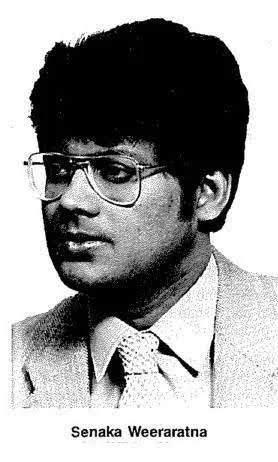
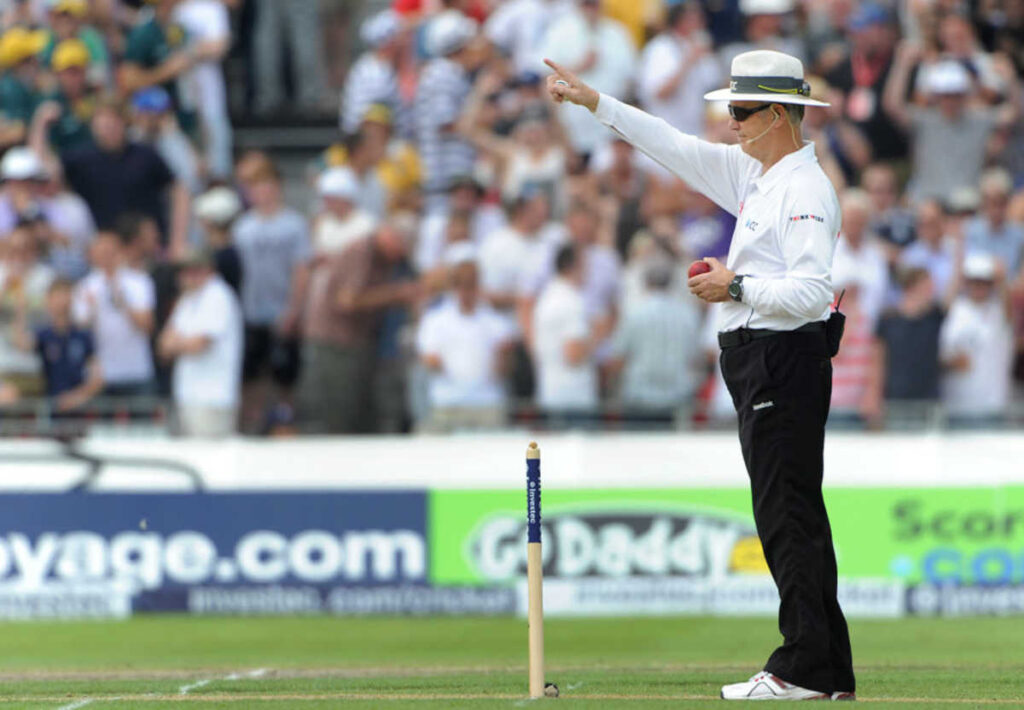
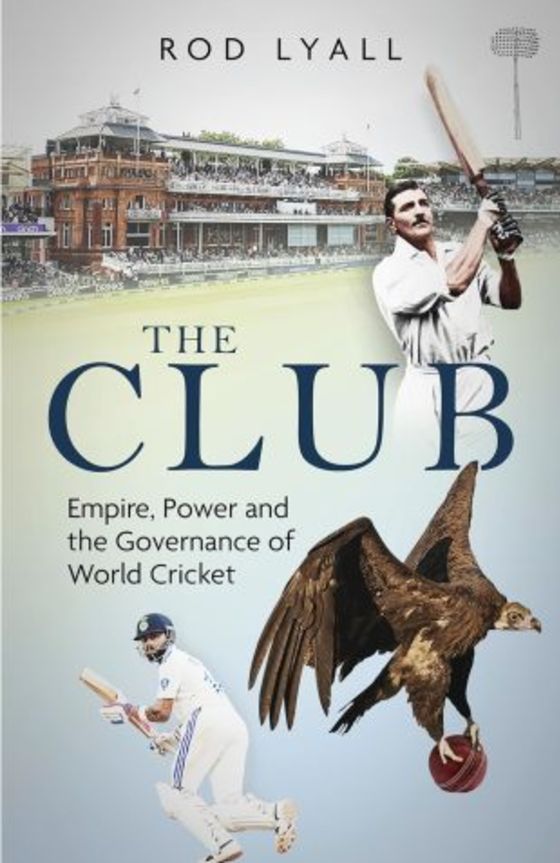
Why is there no political will in Sri Lanka to support innovation in Cricket by Sri Lankans who have won world acclaim with their brainchilds such as Player Referral (DRS) by Senaka Weeraratna and Third Umpire by Mahinda Wijesinghe?
AI Overview
The lack of political will to support Sri Lankan cricket innovations, such as the Player Referral (DRS) concept by
Senaka Weeraratna and the Third Umpire by Mahinda Wijesinghe, stems from a bureaucratic failure to recognize indigenous intellectual contributions, prioritization of short-term gains, and administrative detachment from pioneering, non-commercialized ideas.
Key Reasons for Lack of Support:
Recognition Challenges: Despite providing evidence of pioneering the Player Referral concept (now DRS), Senaka Weeraratna has struggled to receive formal acknowledgement from the International Cricket Council (ICC).
Administrative Disconnect: There appears to be a disconnect within Sri Lanka Cricket (SLC) and relevant authorities regarding the valuation of intellectual property in sports, focusing more on team performance and commercial revenue rather than innovation from individuals.
Lack of Advocacy: There is a notable absence of sustained political or corporate advocacy to promote these home-grown intellectual concepts on the global stage.
“Finality of Umpire Decision” Doctrine: The initial reluctance to adopt new technology (DRS) by global cricket authorities meant early proponents faced massive resistance, reducing the likelihood of local political capital being invested in a controversial, initially unpopular concept.
Despite these hurdles, local supporters have long demanded that Sri Lankan officials support the recognition of these initiatives as indigenous contributions to the sport.
The perceived lack of political will to support Sri Lankan cricket innovators like
Senaka Weeraratna
(DRS) and
Mahinda Wijesinghe
(Third Umpire) is often attributed to a combination of institutional neglect, a “laid-back” attitude from local cricket authorities, and the complex, bureaucratic nature of the International Cricket Council (ICC).
Key Factors for the Lack of Support
Institutional Apathy at Home: Observers and advocates have criticized the Sri Lanka Cricket Board (SLC), the Ministry of Sports, and successive Sri Lankan governments for failing to officially champion these claims at an international level. While there have been sporadic calls for recognition, there has been no sustained high-level diplomatic or legal effort to secure official credit for these innovations.
Global Power Dynamics: The ICC is often viewed as a “rich gravy train” dominated by wealthy, powerful cricket boards that may be reluctant to acknowledge groundbreaking contributions from a smaller, developing nation like Sri Lanka. Some proponents suggest an ingrained Euro-centric or “white man” bias in the corridors of power at the ICC.
ICC’s Legal Defense: The ICC has historically rejected these claims using legalistic logic. For instance, it informed Senaka Weeraratna that by publishing his “Player Referral” idea in newspapers (starting in 1997), he had waived his rights to confidentiality. The ICC also claimed its own committees developed the system independently, despite Weeraratna’s widespread prior publications.
Lack of Domestic “Pride Strategy”: Unlike nations that aggressively market their intellectual “brands” (e.g., the UK with the World Wide Web), Sri Lanka has not integrated these cricketing innovations into its national brand or tourism diplomacy.
Profiles of the Innovators
Senaka Weeraratna (The “Father of DRS”): A lawyer who first proposed the “Player Referral” concept in a letter to The Australian in 1997. His concept—allowing players to appeal on-field decisions to a third umpire with a limited number of reviews—is the exact foundation of the modern Decision Review System (DRS).
Mahinda Wijesinghe (Pioneer of the Third Umpire): A former first-class cricketer and writer who, in 1982-1983, proposed using a “walkie-talkie” system between on-field umpires and a third official watching TV monitors to clear up doubts like run-outs. While the SLC forwarded his suggestion to the ICC in 1984, the idea was initially rejected before being implemented years later in 1992.
Current Status of Recognition
Growing Local Advocacy: There are ongoing calls for SLC to at least display a plaque in their headquarters to honor these thinkers, similar to how players are rewarded for on-field feats.
International Awareness: While the ICC has not officially credited them, international media and some Indian cricket commentators have begun to acknowledge these Sri Lankan origins.
Would you like to know more about the specific legal arguments Senaka Weeraratna used in his formal appeals to the ICC?
Mahinda Wijesinghe pioneered the use of the Third Umpire but the South Africans obtained ICC recognition in a clear act of unfair play and discrimination against a Sri Lankan
Comments Off on No political will to support Cricket innovations by Sri Lankans who have won world acclaim with their brainchild such as Player Referral (DRS) by Senaka Weeraratna, and Third Umpire by Mahinda Wijesinghe?
The Deputy Minister of Defence, Major General Aruna Jayasekara (Retd.), held a high level meeting with the Hon. Minister of Defense of Japan, Shinjirō Koizumi, at the Ministry of Defense in Tokyo on Wednesday (18 Mar).
A high level meeting between Sri Lanka and Japan marked a significant step forward in strengthening bilateral defence cooperation, with a focus on maritime security, disaster management capacity building, and the stability in the Indo-Pacific region.
During the talks the Japanese Defence Minister highlighted the increasing importance of enhanced cooperation between Japan and Sri Lanka in ensuring stability and security within the Indo-Pacific region, particularly under the vision of a Free and Open Indo-Pacific.”
In response, Deputy Minister Jayasekara emphasized Sri Lanka’s pivotal geographical position in the Indian Ocean and its vital role in safeguarding regional maritime security. He reiterated Sri Lanka’s strong commitment to further strengthening defence ties with Japan, especially in areas that contribute to regional peace and stability in compliance with the international laws, conventions and diplomacy.
Both sides exchanged views on key regional and global developments, including the evolving situation in the Middle East, and welcomed the steady progress in bilateral defence relations. The Deputy Minister stressed Sri Lanka’s strict neutral and non aligned foreign policy, the commitment to international norms and legal conventions.
Particular attention was drawn to the recent port call of the Japan Maritime Self Defense Force (JMSDF) Destroyer JS Onami to Colombo and the successful conduct of a goodwill naval exercise with the Sri Lanka Navy.
The discussions resulted in a mutual agreement for continuation of the dialog promptly focusing on the enhancement of defence cooperation. Key areas of collaboration include, expanding maritime security cooperation through joint exercises, ship visits, and observer participation in naval programs.
Strengthening capacity building initiatives, particularly in Humanitarian Assistance and Disaster Relief (HADR). Advancing personnel exchanges, including continued engagement through training opportunities at the National Defense Academy (NDA) of Japan.
During the meeting, Deputy Minister Jayasekara expressed Sri Lanka’s deep appreciation to the Government of Japan for its longstanding support and assistance especially during the recent cyclone ‘Ditwa’. He conveyed gratitude for Japan’s humanitarian aid during past disasters, as well as its continued contributions toward Sri Lanka’s development and resilience.
He also highlighted Japan’s significant role in enhancing Sri Lanka’s maritime and technical capabilities, including the provision of vessels to the Sri Lanka Coast Guard, capacity building assistance, and advanced technological support to the meteorological sector, in the establishment of Doppler RADAR system valued at several billion rupees. Appreciating the ongoing commitment by Japan, he requested additional assistance for capacity building to strengthen weather forecasting capabilities.
Comments Off on Sri Lanka – Japan Defence Ties Strengthened at High Level Meeting in Tokyo
A critical look at the claims following April 2024 when Father Cyril Gamini addressed the media after appearing before the Criminal Investigation Department on 19 April 2024, he presented what he described as 8 facts with sources” relating to the Easter Sunday attacks.
What follows is a systematic evaluation of each claim against known operational facts, intelligence records, and forensic evidence.
Not facts. Not evidence. But questions—layered upon assumptions, presented to the public as truth.
Let us examine these eight points not emotionally, but logically.
If these are Facts”… Then why are they Questions?
If these are truly facts, then:
Why is each point framed as a question?
Why is there no direct attribution?
Where are the sources he claims to have submitted?
A fact” identifies. A fact” proves. A fact” withstands scrutiny.
What we have instead are gaps being presented as conclusions.
If a jacket in Vavunativu Matters… then where is the Connection to Easter Sunday attacks?
If the presence of a jacket near the Vavunativu crime scene is significant—
How does it identify a mastermind?
If no such connection is established, then:
It is not evidence. It is distraction – A disconnected clue without linkage to the Easter attacks is not evidence—it is noise.
More importantly, key individuals already identified in investigations are conspicuously absent from these questions.”
Why wasn’t the name of Milhan mentioned – he was the one who killed the 2 policemen on Zaharan’s instructions, the same Milhan who shot & crippled Taslim for pointing the Wanathavilluwa facility (coordinating secretary of Kabir Hashim). Milhan was a member of the military wing of the SL IS branch. By 2018 Milhan was put in charge of a secret investigation group in August 2018 tasked to get location details on Colombo navy headquarters, Police headquarters and police stations across Colombo.
If Zahran needed a Mastermind”… Why was he running a Nationwide Terror Network?
If a hidden mastermind existed, then:
Why was Zahran Hashim already:
Recruiting
Training
Indoctrinating
Planning
Coordinating
across multiple districts for years?
Documented Training Footprint (2017–2018)
Evidence shows Zahran personally led or supervised repeated training camps:
Kattankudy (Eastern Province)
indoctrination sessions
Weekly IS + Caliphate lectures
Thashila Holiday Resort (March–May 2018)
Multiple camps
Training on:
Explosives
Firearms
IS ideology
Shimla area (July–August 2018)
20–40 recruits per session
Practical weapons + bomb training
Nuwara Eliya (October 2018 – Blue Eye Inn)
~20–25 recruits
Expansion beyond Eastern Province
Sippikulama & Wanathawilluwa (2018–2019)
Weapons storage
Bomb-making
Safehouse operations
Women’s radicalization camp (July 2018)
Indoctrinating families of operatives
Preparing support ecosystem
These are not the actions of a puppet. These are the actions of a network builder and operational leader.
Structured Military Wing
Zahran didn’t just preach — he built a hierarchy:
Milhan→ Military operations, assassinations
Hasthun→ Master bomb-maker
Jameel→ ISIS facilitator, recruitment, logistics
Naufer→ Ideological + digital radicalization
He even created:
Asecret investigation unit” (Aug 2018)
Target mapping:
Police HQ
Navy HQ
Colombo infrastructure
Digital Command & Control
Zahran’s control extended online:
Facebook sermons calling forjihad and killing non-Muslims
Telegram group:Ansar Khilafah” (~200 members)
Direct ISIS ideological alignment
From the FBI affidavit:
members of the group used encrypted messaging platforms to communicate with one another and with ISIS operatives”
devices… contained communications… linked to ISIS”
This is networked terrorism, not mystery control.
Logical Conclusion
If a man:
Trains recruits nationwide
Builds a command structure
Procures weapons
Runs indoctrination pipelines
Coordinates attacks
Then he is not a passive instrument. He is an operational leader on the ground.
If an Email Address is Key… then who used It?
If a foreign intelligence agency identified an IP address or email linked to Zahran Hashim—how is this important to Father Cyril?
email proves only one thing: communication existed.
It does not prove who was behind Easter Sunday attacks
How important is an email to asking questions about why Zaharan was not arrested if even a blue notice by Interpol and arrest by CTID was out from July 2018?
Why not ask about how many videos Zaharan posted on facebook – calling for supporters to attack non-Muslims. Throughout 2019 leading to the Easter Attacks Zaharan had posted that he too would die in the name of jihad. On 10 April 2019, SIS head at the National Security Council meeting had referred to Zaharan’s facebook uploads and his revenge on kafirs. Back in March 2017 Zaharan had posted on his facebook that it was mandatory for Muslims to wage jihad.
Instead of asking an email – why didn’t Father Cyril want to question for how long has Zaharan or radicalism been spreading across Sri Lanka. In early 2016 IS had declared Sri Lanka a part of its caliphate. These are open source facts. JMI and Salafi-Wahhabi entities were openly promoting extremism and exclusivism.
In fact all the Muslim ministers ganged up against then Justice Minister Wijayadasa Rajapakse when he said in Parliament that 32 members of 4 families had gone to Syria to fight for ISIS. The Minister was accused of spreading hate speech when flagging these warning signs. The same bandwagon on Muslim MPs united and resigned when Bathurdeen was arrested following Easter Sunday attacks. Maybe everyone has forgotten these facts?
The FBI agents affidavit also lists how Zaharan & Co directly addresses electronic communications (including email and online messaging) between Zahran Hashim and his network. Zahran and associates communicated through:
electronic communications, including email accounts, messaging applications, and social media platforms…”
members of the group used encrypted messaging platforms to communicate with one another and with ISIS operatives.” – what this means is that the communication channel was known, traceable, and ideological (ISIS-linked), not some unidentified external handler using a secret email/IP.”
The affidavit explicitly states Zahran Hashim and others pledged allegiance to ISIS and were in contact with ISIS operatives through electronic means…”
digital devices recovered… contained communications, videos, and materials linked to ISIS…”
On the issue of accounts (emails/IPs), the affidavit clarifies that:
accounts used in furtherance of the conspiracy were accessed by members of the group…
”forensic work showed devices belonging to the attackers contained login credentials, communications, and records associated with these accounts.”
Meaning:
The email/IP” issue raised by Cyril Gamini isnot mysterious
The accounts wereoperated by the attackers themselves or their immediate network
Critically, the affidavit does NOT assume an unknown third-party handler controlling them or a hidden mastermind”.
Pre-attack coordination was via digital means the conspirators coordinated logistics, targets, and preparations through electronic communications…” – there is no trace of any shadow operator.
Yet Father Cyril wants to know Who used the IP/email address that maintained constant contact with Zahran?” – if the emails+accounts were used by Zaharans own network, if communications were ISIS-linked and ideologically driven, if devices recovered contained their own credentials and data are all consistent with terrorist cell communication behavior this mystery email/IP” is a this mystery email/IP” is not supported by the available forensic evidence.
Father Cyril should question the then AG and seek evidence for his grand conspiracy theory.
If Father Cyril is implying Investigations were Misled…then who Benefited?
If the claim that investigations into Vavunativu killings were misdirected does it prove a conspiracy? Or more of institutional failure?
If the State was orchestrating events – why would it mislead itself?
If a Phone call was Received… Then who Called?
If Abdul Latheef Jameel Mohamed received a phone call before his failed attempt—
Who made the call?
What was said?
Where are the call records?
Call Detail Records (CDRs), tower dumps, and device forensics would definitively answer this—have these been presented?
Why not ask who brought Jameel to the hotel? Who provided his suicide kit? Why was he committing suicide?
Exactly who is this Jameel? He was even summoned in April 2018 about propagating IS ideology by the CTID. Jameel had been involved with ISIS since 2014 and established the JMI in 2015. Jameel also had infiltrated the Save the Pearls charity for homeless children with aim to indoctrinate them. Jameel even facilitated recruits to travel to Iraq & Syria to fight for IS. DMI identified him as a religious extremist and placed him under surveillance in December 2016
If Intelligence Officers visited a Suspect’s Home… Then is that Not Their Job?
If intelligence officers visited Jameel’s residence—
Was he not already a known extremist?
Was he not under scrutiny?
If security agencies follow suspects:
That is investigation.
Not collaboration.
If we criminalize intelligence work, then:
Are we saying security forces must not monitor suspects?
Why should Father Cyril want to have the identities of the intel officers – was this not how the 2002 Millennium City debacle took place when a supposed fake threat on the then PM resulted in divulging the names & details of intel officers that ended up with LTTE killing over 50 of them.
Why should Father Cyril want the names of the intel officers?
If this was a Hidden Conspiracy… Why were there so many Warnings about Zahran?
If the attacks were secretly orchestrated by others—
Why was Zahran repeatedly identified, tracked, and warned about?
The real unanswered question is not who emailed Zahran—but why a known, wanted extremist was not apprehended despite multiple warnings.
Timeline of Ignored Warnings
2014–2016
Multiple complaints fromSufi groups about Zahran’s extremism
hate speech, incitement, violence
2016
Zahran openly:
Promotes ISIS
Runs Telegram groups
Intelligence begins monitoring
2017 – Escalation Phase
March 2017
Violent clashes with Sufis
Arrests of NTJ members
June 2017
State Intelligence Servicewarns of possible attacks
November 2017 (NSC Meeting)
Zahran identified as extremist threat
2018 – Operational Build-Up
INTERPOL Blue Notice issued
Arrest warrant obtained (CTID)
Multiple intelligence briefings:
Radicalization
ISIS links
Training camps
Wanathawilluwa discovery (Jan 2019)
Explosives
Training evidence
April 2019 – Final Warnings
4 April
Indian intelligence warns of imminent attack
7 April
Written intelligence report circulated
9–10 April
Attack plans discussed internally
21 April (morning of attack)
Final alert: attacks between 6–10 AM
The Real Question or rather the goal is to claim that someone” in the intel was secretly controlling or facilitating the attacks through intelligence channels.
Let’s break this down to the time of the 2019 attacks.
The supposed orchestrator or controller” wasnot holding an operational post in Sri Lanka
The individual wasoutside the country and did not hold a command role
He hadno access to active intelligence units in the field.
To counter this probably the visit to coconut estate was planted!
However, that has to be proved with flight records, telephone calls – simply appearing on a paid documentary and making allegations with blurred visuals is not evidence.
If an individual is physically removed from operational control, any claim that they were directing attacks domestically becomes operationally impossible.
The next attempt is to float using Informant Theory” – this is where the showing one target church in Katuwapitiya comes to play.
Those making the allegations may have overlooked that the suicide bomber operated from a safehouse close to the Church – so he didn’t need somone from overseas calling to inform an intel informant to provide location.
If intelligence informants were allegedly used to assist attackers:
Where are thetasking orders?
Where is anycommunication trail or reporting link?
Where are theoperational records?
Intelligence operations always leave evidence. Without it, the claim remains pure speculation.
Contradiction in Logic
If the attackers were already under surveillance, and multiple agencies issued repeated warnings about them:
How could the same system simultaneouslytrack, warn, and allow facilitation?
The evidence showsmonitoring and warning, not orchestration.
What the Pattern actually Shows
The documented pattern indicates:
Intelligence awareness
Warnings issued
Tracking over time
This is evidence of a failure to act, not evidence of secret orchestration.
Claims of covert facilitation require:
Operational links
Verified communications
Command responsibility
Without these, the allegation collapses under its own weight.
More importantly, none of these secret sensational stories can remove the fact that
IF:
Zahran was known
Zahran was tracked
Zahran was reported repeatedly
THEN: The pattern points to intelligence failure or non-action Not proof of a coordinated hidden conspiracy
If the Entire Case Depends on One Man… Then where is his Evidence?
Two of the eight points by Father Cyril rely entirely on claims by Asad Maulana.
So let us ask:
If his claims are true—
Why did he not testify before the Presidential Commission of Inquiry?
Why did he not give a statement to the CID?
Why did he not present sworn evidence?
Instead:
His claims appear in a foreign-funded documentary by a notorious channel.
If a man claims knowledge of mass murder but:
Does not go to the police
Does not testify under oath
Does not submit to cross-examination
Then what is his claim worth? – it is not evidence, testimony but narrative.
And if his claims fall—then points 6 & 7 collapse entirely.
Claims not tested under oath remain allegations—not evidence.
Next Father Cyril wants to know – If Abu Hind” Exists… then does it not Suggest Infiltration?
If there was a figure known as Abu Hind” above Zahran Hashim—
Who was he?
Was he an extremist leader?
Or an infiltrator?
As per Rohan Gunaratna’s book Sri Lanka Easter Sunday massacre since early 2018 a deputy IGP from the intelligence service of Tamil Nadu police, mounted an operation to infiltrate the IS Sri Lanka branch. It was said that undercover officer Abu Hind masqueraded as an IS leader and accessed Zahran through Rilwan”.
If foreign intelligence had penetrated Zaharan’s network it indicates surveillance/infiltration not control by local actors.
Hope that ends Father Cyril’s Abu-Hind conspiracy.
If there was a Mastermind… Where is the Evidence?
After all eight points, one question remains:
Where is the evidence of planning?
Where is the proof of financing?
Where is the chain of command?
No evidentiary chain has been publicly demonstrated linking any alleged mastermind” to operational control of the attackers except clear evidence of Zaharan being in control of the ground operations including training and propaganda.
Years of investigations have already established:
A radicalized network led by Zahran Hashim
Links to ISIS ideology
Local recruitment, training, and execution
The most important item is that on 29 June 2014 – Abu Bakr al-Baghdadi leader of ISIS announced a global caliphate and instructed followers to kill non-Muslims in countries where they resided. IS envisaged controlling territories including Sri Lanka by 2020. Sri Lanka was shown on the map as part of the Khorasan province. Zaharan & Co was working towards this goal.
More importantly, the death of Zaharan & Co has not ended that goal.
However, if Father Cyril persists that a different mastermind exists – without asking more questions he must produce the evidence of the mastermind – this evidence must be able to link the mastermind to all of the trainings Zaharan had conducted across Sri Lanka, the social media propaganda that foreign intel has with them, the electronic communication and device details that foreign intel has access to which did not disclose any of the names that Father Cyril & Asad Maulana are implying or any grand conspiracy that the outgoing AG during the Easter Sunday infected the minds of people unwilling to accept raw facts.
Questions Cannot Replace Proof
In law—and in truth:
Suspicion is not evidence
Questions are not proof
Narratives are not facts
If we begin to accept:
Unverified claims
Media statements
Unquestioned assumptions
Then we are no longer seeking truth.
The Real Danger
The real danger is not asking questions.
The real danger is:
Presenting questions as answers
Suggesting conclusions without proof
Turning speculation into accusation
Because once that line is crossed:
Truth becomes optional. And justice becomes impossible.
If there is evidence—present it.
If there are witnesses—produce them (not fabricating fake evidence – as lies lead to more lies and lies always get caught)
If there is a case—prove it.
But until then:
Eight questions remain exactly what they are.
Mere Questions.
Shenali D Waduge
Comments Off on Father Cyril Gamini’s 8 Questions… But where is the evidence?
Dr Sudath Gunasekara (SLAS), Retired Perm Secretary Prime Minister Sirimavo Bandaranayake
It appears that international laws are applicable only to smaller nations and they never cover the crimes committed by the powerful bigger nations. It is simply Kautillya’s Mathsya niyaaya at work that is the smaller fish is always the prey of the Big fish. The naked behavior of ‘BIG” nations proves the same natural law perhaps.
United Nations General Assembly proposal was initiated by Sri Lanka and Tanzania to designate the Indian Ocean as a nuclear-free zone, free from military escalation, foreign bases, and weapons of mass destruction. It aims to preserve regional security and ensure freedom of countries around the Indian Ocean.
In 1964 Cairo Summit NAM meeting Sri Lankan Prime Minister Sirimavo Bandaranaike proposed to the United Nations that the Indian Ocean be declared a Zone of Peace. It was seconded by Julius Nyere President of Tanzania and passed
It was declared by the UN General Assembly on December 16, 1971 (Resolution 2832), aimed at limiting superpower military rivalry, specifically nuclear weapons and military bases, to protect the region’s independence and security. Initiated by Sri Lanka, it seeks to maintain a, peaceful, secure Indian Ocean.
The resolution was passed with 61 votes in favor, zero against, and 55 abstentions, largely because major powers abstained. Even at that meeting Absentees were led by the US.
The resolution designates the Indian Ocean (including airspace and sea floor) as a zone of peace, calling for the elimination of military bases and weapons of mass destruction belonging to great powers.
The initiative is designed to uphold the purposes and principles of the UN Charter, focusing on international peace and security.
While consistently reaffirmed by the General Assembly, the implementation has been challenging, with an Ad Hoc Committee established to work on its implementation.
Recent efforts, notably by Sri Lanka, are re-emphasizing the initiative to ensure security, freedom of navigation, and prevent the region from becoming a theater of conflict.
The declaration calls upon all littoral and hinterland states, as well as permanent Security Council members, to negotiate to reduce military presence in the area.
The Indian Ocean has been called a “zone of peace” by littoral states who are concerned about the increased naval activity of the superpowers. But all major powers 1971 resolution US, Uk and France have their base. As of early 2026, the United States, United Kingdom, and France maintain a robust military presence in the Indian Ocean, driven by strategic competition with China, energy security, and regional stability in the Middle East and Africa
Their interests focus on maintaining freedom of navigation, securing maritime trade routes (especially the Strait of Hormuz and Malacca), and protecting their respective sovereign territories and alliances, often operating under NATO or independent. But in practice they always bypass these interests leaning towards neo colonial agenda reminiscent of the old practice of invasion Conquering, exploiting and keeping under financial and cultural invasion.
All these super power interests in the Indian Ocean go counter to the 1971 Resolution. Although colonial expansion by Europe as it did in the1500 -1900 has come to an end their active military and trade activities together with regime change are still at full swing in this region. A potential threat to the freedom and security of the countries around the Indian m ocean that were under their colonial administration.
This situation has to be arrested as early as possible to protect the security of the smaller and poorer nations and their sea faring interest as equals, as free and sovereign nations irrespective of their size, power or riches, but their human qualities and intellectual achievements and contributions making this world a happy and peaceful place to live without fear, pain and sorrow.
Comments Off on Are the International laws applicable to only to smaller nations?
The Buddhist Jātaka tales represent a substantial collection of folklore, consisting of 547 poems. Archaeological and literary evidence suggests that these stories were compiled between the 3rd Century B.C. and the 5th Century A.D. As noted by Professor Rhys Davids, the Jātaka tales are among the oldest fables known to us. Jātaka Tales provide deep insights into the human mind, analyzing behavior through a “case method” long before modern Western psychology (Harischandra, 1998).
It is noteworthy that the Buddhist Jātaka tales explore themes of father-son conflict and the Oedipal complex (Jayatunge, 2015). These narratives explore the complexities of familial relationships, highlighting the struggles and tensions that can arise between generations.
The Oedipus complex consists of a configuration of conscious and unconscious desires, affects (love, hate, jealousy, rivalry, admiration, guilt), fantasies, prohibitions, but also relationships and identifications between a child and his parents, mother and father. It involves two forms, positive and negative: the positive one consists of a son’s incestuous desires for his mother, a hostile desire for death, and jealousy and rivalry towards his father. While the negative one consists of a homosexual desire for his father, it also includes a feeling of admiration and a feeling of rivalry, jealousy, and hostile impulses towards his mother. This Oedipus complex should evolve due to the castration threat towards its dissolution and the process of a double identification, male and female, with the parents; for the son, the male identification would be predominant, while for the daughter, the female one would be predominant. Both these identifications will form the core of the child’s superego as the heir of the Oedipus complex and the castration threat.
In Totem and Taboo, Freud argued that this complex was universal, suggesting a shared and psychological blueprint for all humans, regardless of culture. The Oedipus complex is found in ancient fables and myths across many cultures.
The Oedipus complex, a concept originating from Freudian psychoanalysis, can be observed in various narratives within the Buddhist Jātaka Tales. These tales often explore complex familial relationships and the psychological struggles of individuals, mirroring the themes of desire, conflict, and resolution found in the Oedipus complex. In several Jātaka stories, characters grapple with their relationships to parental figures, revealing deep-seated emotions and conflicts that resonate with the essence of the Oedipus complex.
In the Asilakkhana Jataka, (in Buddhist Jātaka tales), also known as Jataka 126, the narrative unfolds with the birth of a prince, whose arrival is met with foreboding predictions from a seer. The prognosticator ominously foretells that this young royal will one day become a formidable rival to his father, the reigning king. This prophecy instills a deep-seated fear in the king, prompting him to take drastic measures to isolate the prince from any potential threats to his rule. As the story progresses, the prince, driven by ambition and the desire for power, ultimately resorts to treachery, plotting to assassinate his father in a bid to seize the throne. Complicating the dynamics further, the queen, who serves as a maternal figure to the prince, becomes entangled in this web of conflict, highlighting the intricate relationships and moral dilemmas that arise from the pursuit of power and the fear of rivalry within a royal lineage.
The Asilakkhana Jataka and the story of Oedipus Rex share intriguing thematic similarities, particularly in their exploration of fate, identity, and the consequences of one’s actions. In both narratives, the protagonists are confronted with prophecies that dictate their destinies, leading them to a tragic realization of their circumstances. The Asilakkhana Jataka and the story of Oedipus Rex share a fascinating historical connection. However, there is no consensus among historians that they share a common historical origin.
Ethologists and evolutionary psychologists (like Edward O. Wilson) note that in many social species, the “Oedipal” dynamic is a literal reality of survival (Wilson, 1975). In many monkey species, young males must eventually challenge the dominant “alpha” (often their father) to gain status and reproductive access to females (De Waal, 1982).
The Thayo Darma Jātakaya, part of the Buddhist Jātaka Tales, explores themes reminiscent of the Oedipal complex within a monkey kingdom. This story narrates a poignant tale of conflict between a father and his son, set against the backdrop of a jungle kingdom ruled by a tyrannical monkey king. This father, driven by a fear of potential threats to his authority, resorts to a brutal practice of mutilating the genitals of male infant monkeys, thereby ensuring that no rival can emerge to challenge his reign. In a further display of dominance, he hoards all the female monkeys for himself, rendering other males impotent and effectively eliminating competition (castration by the father responding to the son’s wish for the father’s death).
However, one male infant monkey manages to escape this grim fate, finding refuge in a secluded part of the jungle where he is nurtured by his mother, who secretly provides for him. This bond fosters a deep emotional attachment, leading the young monkey to harbor resentment towards his father for the cruel actions taken against his kind. As he matures into a formidable adult, the son emerges from his hidden sanctuary, emboldened by his mother’s love and his own desire for justice. In a climactic confrontation, he challenges his father, ultimately overcoming him in a fierce battle, and ascends to the throne as the new king, symbolizing the triumph of resilience and the quest for rightful leadership.
The Thayo Darma Jātakaya can be considered a powerful symbolic narrative of human behavior, specifically focusing on the psychology of jealousy, fear of displacement, and the destructive nature of power. While the Western Freudian model focuses on the son’s desire to displace the father, this Jātaka story expresses the projection of the son’s fear of castration, which is a father’s threat as a punishment for both desires, incestuous with the mother and the death of the father.
Sri Lankan anthropologist Gananath Obeyesekere posits that within the Buddhist framework, the Oedipal conflict is frequently resolved when a son chooses to become a monk. This decision to embrace celibacy and renounce familial ties allows the son to symbolically sever his connections to his family role, effectively alleviating the rivalry with the father and the longing for the mother without resorting to physical confrontation (Obeyesekere, 1990).
In the Buddhist Jātaka Tales, the conflict between a son and his father can be reinterpreted as a form of religious virtue. This transformation highlights the potential for personal growth and moral development arising from familial rivalry, suggesting that such struggles may ultimately lead to greater spiritual understanding and enlightenment.
Buddhist Jātaka Tales reinterpret Oedipal desires as expressions of craving and influences from previous lives. These narratives illustrate how such detrimental mental states contribute to a continuous cycle of suffering and unfavorable rebirths.
The primary distinction between the Freudian Oedipal complex and its Buddhist equivalent is found in how each framework addresses the underlying conflict. Freud’s theory is characterized by a tragic and inescapable cycle of violence. In contrast, the Buddhist Jātaka narratives view conflict as an opportunity for spiritual growth and renunciation, transforming potential turmoil into a path to enlightenment.
Acknowledgement: Dr. Eric Smadja, Psychiatrist-psychoanalyst (adults and couples) based in Paris, member of the Société psychanalytique de Paris, of the International Psychoanalytical Association; anthropologist, associate member of the American Anthropological Association and member of the Society for Psychological Anthropology.
References
De Waal, F. (1982). Chimpanzee Politics: Power and Sex among Apes. Jonathan Cape.
Freud, S. (1910). A Special Type of Choice of Object Made by Men. In The Standard Edition of the Complete Psychological Works of Sigmund Freud, Volume XI (1910): Five Lectures on Psycho-Analysis, Leonardo da Vinci and Other Works (pp. 163–176).
Freud, S. (1913/1950). Totem and Taboo: Resemblances between the psychic lives of savages and neurotics (J. Strachey, Trans.). W. W. Norton & Company.
Harischandra, D. V. J. (1998). Psychiatric Aspects of Jataka Stories. Colombo, Sri Lanka.
Jayatunge, R. M. (2015). Psychological Aspects of Buddhist Jātaka Stories. Colombo: S. Godage.
Obeyesekere, G. (1990). The Work of Culture: Symbolic Transformation in Psychoanalysis and Anthropology. University of Chicago Press.
Rhys Davids, T. W. (1880). Buddhist Birth Stories; or, Jātaka Tales. The Oldest Collection of Folklore Extant: Being the Jātakatthavaṇṇanā. London: Trübner & Co. Gutenberg.
Wilson, E. O. (1975). Sociobiology: The New Synthesis. Belknap Press of Harvard University Press.
Comments Off on Buddhist Jātaka Tales and Oedipal Themes
Positioning Sri Lanka as a Regional Trade & Services Hub through a Public-Private Partnership (PPP) Model
1. Background & Rationale
Global economic and geopolitical shifts and looming world war 3 , are resulting in a gradual relocation of trade, logistics, and service sector operations from traditional hubs in the Middle East and other regions.
Sri Lanka, due to its strategic location along major Indian Ocean shipping routes, is uniquely positioned to capitalize on this transition.
The development of Colombo Port City and the underutilized potential of Trincomalee present a timely opportunity to reposition the country as a regional hub for industry, trade, and high-value services.
2. Strategic Vision
Develop Trincomalee as a heavy industrial and energy hub
Establish Colombo Port City as a Centre of Excellence” for:
Financial services
Oil & gas support services
Maritime and logistics management
IT and digital services
Compete regionally with:
Chennai
Singapore
3. Policy Alignment
This proposal aligns with:
National export development strategies
Investment promotion policies
Neutral foreign policy direction adopted by the Government under Ranil Wickremesinghe
Economic recovery and foreign exchange generation priorities
4. Proposal
It is proposed that the Government:
Approve in principle the development of a dual-hub strategy:
Industrial Hub in Trincomalee
Services Hub in Colombo Port City
Adopt a Public-Private Partnership (PPP) model to:
Accelerate infrastructure development
Attract foreign direct investment (FDI)
Ensure efficient management
Mandate relevant agencies (EDB, BOI, Port City Commission) to:
Promote Sri Lanka as a relocation destination
Engage multinational corporations currently based in the Middle East and Asia
5. Immediate Actions Required
Submission and approval by the Export Development Committee of Ministers (EDCM)
Establishment of a high-level task force
Fast-track regulatory approvals and investor facilitation mechanisms
Launch of an international investment promotion campaign
6. Infrastructure Strategy
A key constraint is the time required for conventional construction.
Therefore, it is proposed to:
Utilize prefabricated steel structures for rapid deployment
Partner with international contractors experienced in modular construction
Enable immediate occupation by global firms
This approach will significantly reduce lead time and capture the current opportunity window.
7. Target Sectors
Oil & Gas (regional support services)
Banking & Financial Services
Maritime & Shipping Services
Information Technology & Digital Services
Logistics and Supply Chain Management
8. PPP Framework
The PPP model will include:
Joint venture structures
Long-term concessions
Revenue-sharing mechanisms
Risk-sharing arrangements between Government and private sector
Admiration for Arthur Schopenhauer’s stance on animal compassion is rooted in his radical rejection of anthropocentrism, his deep empathy for the powerless, and his philosophical argument that kindness toward animals is the ultimate test of human morality. Writing in the 19th century—a time when animal rights were largely ignored—Schopenhauer stated in
The Basis of Morality that “compassion for animals is intimately associated with goodness of character, and it may be confidently asserted that he who is cruel to animals cannot be a good man”
Here is why Schopenhauer’s placing of compassion for animals as the defining characteristic of humanity is admirable:
It Redefines Moral Character: Schopenhauer argued that true morality is not based on reason or intellectual capacity, but on empathy. Because animals are unable to defend themselves or seek justice, he believed that how humans treat them exposes their true, unadorned moral nature.
A Crucial Rejection of Western “Barbarity”: Schopenhauer harshly criticized the prevailing Western view that animals were merely tools without rights, calling it an “outrageous example of Western crudity and barbarity”. His position was ahead of his time, emphasizing that animals are sentient beings driven by a “Will” similar to that of humans.
The Shared Experience of Suffering: He argued that all living beings share the same “metaphysical will,” leading to a shared existence of suffering. By identifying this unity, he placed animal suffering on the same moral plane as human suffering, recognizing that both deserve compassion.
Actionable Morality: Schopenhauer believed in a practical, daily ethics where “suffering recognized is suffering reduced”. This philosophy moves beyond theoretical debates about ethics and demands that a “good person” act with compassion toward all living beings.
Influence of Deeper Wisdom: His focus on animal compassion was strongly influenced by Eastern philosophies, particularly Hinduism and Buddhism, which emphasize the “Self” (Atman) being present in all living beings, reflecting his belief in universal empathy.
Schopenhauer’s legacy is that he transformed animal ethics from a sentimental concern into a necessary foundation for a “good” human being.
is widely admired for his pioneering stance on animal ethics, specifically for his assertion in his major work, On the Basis of Morality, that “Compassion for animals is intimately associated with goodness of character, and it may be confidently asserted that he who is cruel to animals cannot be a good man”. Unlike many of his contemporaries who viewed animals as mere “things” or tools for human use, Schopenhauer argued that our treatment of them is a direct reflection of our moral essence.
His reasons for placing compassion for animals at the center of human morality include:
Recognition of Shared Suffering: He believed that both humans and animals are manifestations of the same metaphysical “Will” and are therefore subject to the same fundamental experience of suffering and craving.
Rejection of Rationality as a Moral Barrier: Schopenhauer challenged the Kantian view that only rational beings deserve moral consideration. He argued that the capacity to feel pain, not the ability to reason, is what makes a being worthy of compassion.
The Ultimate Litmus Test for Character: He saw animals as the most vulnerable “other.” Because they cannot speak or defend themselves, how a person treats an animal reveals their true, unforced moral character—either “goodness of heart” or “moral emptiness”.
Universal Compassion as the Only Moral Guarantee: He famously stated that “Universal compassion is the only guarantee of morality,” suggesting that a moral system that excludes animals is inherently “crude and barbarous”.
Critique of Human Supremacy: He vehemently opposed religious and philosophical traditions that granted humans “absolute right” over animals, describing the idea that animals were created solely for human use as an “outrageous illusion”.
Schopenhauer’s personal life mirrored these beliefs; he famously lived with a succession of pet poodles named “Atman” (a Sanskrit term for the “true self”) and reportedly preferred their company to that of humans.
Comments Off on Why I admire Artur Schopenhauer for placing Compassion for Animals as the defining characteristic of humanity
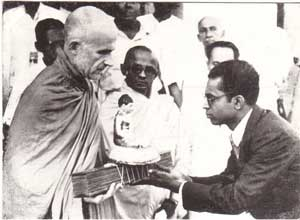
Colombo, Sri Lanka — The Buddha was against animal sacrifice. He had to be, for he was staunchly opposed to killing. Killing, not just human beings, but all beings without exception. He expressed the view that it was all beings (sabbe satta/ sabbe bhuutaa) that deserved our compassion.
During the time of the Buddha, many kinds of sacrifices were practised by Brahmins who were the priests of the Vedic religion professed by the upper castes of contemporary Indian society. The Buddha did not see any value in these sacrifices, primarily because they were entirely external rites. If one could speak of a ‘right sacrifice’, it had to be something that was internal or ?spiritual?.
“I lay no wood, Brahmin, for fire on altars Only within burneth the fire I kindle”
– says the Buddha, mindful of the Brahmins? practice of tending a regular ‘sacred fire’ and pouring oblations into it for the various gods of the Vedic pantheon.
This however was only a relatively harmless, albeit in the eyes of the Buddha useless, activity. The Vedic priests also advocated and performed several types of cruel animal sacrifice such as:
“The sacrifices called the Horse, the Man, The Peg-thrown Site, the Drink of Victory, The Bolt Withdrawn – and all the mighty fuss- Where divers goats and sheep and kine are slain”.
The Buddha rejected all these sacrifices in no uncertain terms. For example, when he was told of a ‘great sacrifice’ that the king of Kosala was about to perform, where 2500 cattle, goats and rams were to be immolated, he declared:
“Never do such a rite as that repair The noble seers who walk the perfect way.”
And, in one of the Jataka stories (Bhuridatta), the future Buddha is reported to have said:
“If he who kills is counted innocent, Let Brahmins Brahmins kill. We see no cattle asking to be slain That they may gain a new and better life; Rather they go unwilling to their death And in vain struggles yield their final breath. To veil the post, the victim and the blow, The Brahmins let their choicest rhetoric flow”.
Many times in his discourses the Buddha speaks of four kind of persons – those who (1) torture themselves, (2) torture others, (3) torture both self and others and (4) who do not torture themselves or others. The first are the strict ascetics and the second the butchers, trappers, fishers and robbers. It is however the third group that is of special interest in our context. It includes kings and powerful priests who, on such occasions as the opening of a public building, hold a great ritual, “with the sacrifice of many cattle, goats and rams, with wood-cutting and grass-strewing and with much bullying and hustling of servants and slaves, working in fear of chastisement.”
The Buddha does not approve of the conduct of these three classes. It is the last kind, who do not torture themselves or others, that he admires and they are none other than those who follow a compassionate ethic such as the one the Buddha himself advocated.
A particularly touching discourse of the Buddha on animal sacrifice comes in one of the most ancient Buddhist texts, the Sutta Nipata. Here in a discourse on the ethical conduct fit for a Brahmin (Brahmana-dhammika Sutta), the Buddha speaks respectfully of ancient Brahmins who spurned the taking of life and never allowed their religious rites to be tainted by the killing of animals. But corruption set in and they started the practice of animal sacrifice. When the knife was laid on the neck of cattle, the gods themselves cried out in horror of that crime of ingratitude and insensitivity perpetrated on an animal that was to humans such a faithful worker, such a sustainer of life.
In the piece known as the Discourse with Kutadanta we come across a king?s Brahmin counsellor who is preparing a great animal sacrifice, concerning the right procedures of which he consults the wisdom of the Buddha. T. W. Rhys Davids, the distinguished translator of this text, alerts us to the fact that this would be the last thing that an eminent Brahmin is likely to do – to seek the Buddha?s opinion on how to conduct a sacrifice. So he describes the discourse as a “deliberate fiction full of ironical humour”.
The Buddha tells Kutadanta of a worthy sacrifice held in ancient times under the guidance of a certain enlightened Brahmin counsellor. In this sacrifice no living thing is injured; all the labour is voluntary and the sacrifice is offered not only on behalf of the king, but of all the good.
The Buddha then tells Kutadanta of even better forms of sacrifice. In the course of this discourse, as Mrs C. A. F. Rhys Davids points out (Encyclopaedia of Religion and Ethics, article on Sacrifice/ Buddhist), the stations in the road to the good life – the perfect lay life and the perfect religious life – are set forth as so many degrees of sacrifice, each better than the other. Thus the highest sacrifice is that insight and wisdom which signifies the abandonment of the sense of self – i.e., the sacrifice of ego-centeredness. It is not a matter for surprise that Buddhism along with Jainism, the other great religion of Ahimsa, as well as several sects of Hinduism, rejected animal sacrifice, although many other religions approved of it to some extent or another. The Buddha in fact was outspoken in his criticism of such entrenched features of the contemporary religious and social scene as sacrificial rituals and the caste system. (His ?detachment? was not indifference or withdrawal of judgement, as has been often misunderstood.
Consider his reply to Potaliya who told him that the best person was one who neither praised the praise-worthy nor blamed the blame-worthy: Far better is the person who speaks in dispraise of the unworthy and in praise of the worthy, saying in due time what is factual and truthful. Anguttara ii 100)
In the modern world, there is a powerful movement which seeks to reduce and eliminate the crimes that are perpetrated on animals and to introduce to the social ethic an element of justice to other sentient beings who share the planet with us humans.
This movement is all the more remarkable in that it reflects an attitudinal shift in the predominantly Christian West which is beginning to see the true nature of the moral evil that the abuse and exploitation of animals is. The fundamental thrust of this movement stems from the realisation that animals are like us when it comes to suffering pain and the prospect of the deprivation of life. It is this very sympathy with the suffering of animals and other sentient beings that is at the core of Buddhist compassion or loving kindness (mettaa). Says a verse in the Dhammapada, the most popular of Buddhist texts:
“All fear the rod Of death are all scared. (Understanding others) from one?s own example, One should neither kill nor cause to kill.”
In the very next verse much the same is said with this addition: ‘For all is life dear’. Here in simple terms is the ?philosophy? behind the Buddhist ethic of Ahimsa: other living beings are like us; we should treat them the way we want to be treated ourselves. This is the spirit behind the first precept which enjoins us neither to kill, nor to encourage killing as clearly explained in the Dhammika Sutta. This is the spirit that prompts the Noble Eightfold Path to forbid the trade in flesh and engaging in fishing, hunting etc. for those who profess to follow that Path. It is the same spirit that projected an ideal of kingship in which the ruler provided defence and protection (rakkhavarana-guttim) not only to the different classes of the human population, but also to birds of the air and beasts of the land (miga-pakkhisu).
The natural corollary of such a teaching in modern parlance is that animals have the same right to life which we humans claim for ourselves. And it is the sensitivity to this right that made Emperor Asoka, whose life was abundantly inspired by the teachings of the Buddha, to promulgate, in the well known Rock Edict I: “Here no animal shall be killed or sacrificed”. This is an outstanding example of an ethical teaching being made the basis for a legal pronouncement. In a somewhat similar vein, as Senaka Weeraratna has pointed out in his paper “The Requirement for New Animal Welfare Legislation in Sri Lanka”, seven states and territories of the modern Republic of India have enacted statutes prohibiting animal sacrifice for the purpose of any religious worship or adoration.
Moreover, according to the Constitution of India, it is a fundamental duty of every citizen to have compassion for living creatures.
The tradition of royal decrees based on the ethic of respect for animal life was also followed in Sri Lanka prior to the advent of colonialism. Consider the MAAGHAATA (Do not kill) proclamations of five kings of Lanka from the first to the eighth century, beginning with Amandagamani Abhaya, which forbade the killing of any living being within the realm. King Vijayabahu I in the 11th century and Parakramabahu the Great in the 12th also made proclamations of protection of wildlife and fishes in the forests and lakes of Sri Lanka. Kirti Sri Nissankamalla, one of the kings who came after Parakramabahu, promulgated a remarkable decree, which he published in six of his famous inscriptions, forbidding the killing of all living beings in the irrigation lakes of the entire country. In his Anuradhapura inscription he decreed that no animals should be killed within seven leagues of the city and induced a certain group of hunters to desist from the trapping of birds. These few instances suffice to give us an idea of the pervasive influence of the Buddhist attitude to animal life in the social and legal history of Sri Lanka.
In conclusion, it is pertinent to ask what has post-independence Sri Lanka done to foster the Ahimsa ethic? Constitutionally and legally, nothing – as far as one can see. As for state intervention in favour of compassion towards animals, the record is equally barren. One among many examples will suffice to underscore this point.
A stark contrast to the respect for animal life shown throughout the history of this country is the present-day encouragement of inland fishing. There can be no doubt that it is the greatest threat to the fabric of the Ahimsa ethic which still prevails to a considerable extent among the village communities of Sri Lanka. The destruction of this ethic will undoubtedly facilitate the subversion of Buddhist values and the conversion of Buddhists to ideologies which are not averse to the killing of animals.
Recent events show that the Sangha hierarchy of Sri Lanka will be as guilty of complicity as the rest of us who stand as silent and helpless onlookers in the face of this onslaught on a humane and compassionate religious ethic which had stood the test of time for twenty five centuries.
Note:
Professor Mahinda Palihawadana was an outstanding Buddhist Scholar and dedicated vegetarian. He served as the President of the Sri Lanka Vegetarian Society for a long time.
Professor Palihawadana was a living embodiment of the vision and mission of the Sri Lanka Vegetarian Society, representing years of promoting vegetarianism. Through numerous public talks and publications, he approached vegetarian advocacy with the same depth and scholarly rigor he brought to his academic research
He passed away on June 08, 2025
Stop Home Slaughter in Sri Lanka
The movement to
Stop Home Slaughter (and cattle slaughter more broadly) in Sri Lanka is a prominent animal rights campaign championed by activists including
Senaka Weeraratna
and supported by figures like
Mahinda Palihawadana
.
The campaign focuses on the ethical, spiritual, and legal implications of animal slaughter, particularly within the context of Sri Lanka’s Buddhist and Hindu heritage.
Key Advocacy Points
Moral & Spiritual Grounds: Senaka Weeraratna argues that the “screams of dying animals” are a moral equivalent to human prayers and that justice should extend to all species. He advocates for the “Meatless Sri Lanka” ideal, rooted in the first precept of Buddhism—abstaining from taking life.
Legal Reform: Weeraratna has been a vocal critic of outdated animal welfare laws. He has lobbied for a comprehensive Animal Welfare Bill to replace the Prevention of Cruelty to Animals Ordinance of 1907.
National Ban on Cattle Slaughter: The movement saw a significant milestone when a proposal to ban cattle slaughter in Sri Lanka, submitted by then-PM Mahinda Rajapaksa, received cabinet approval in 2020.
Health and Nutrition: Supporters like Dr. Damayanthi Perera highlights the scientifically proven health benefits of vegetarianism as a secondary justification for ending slaughter practices.
Prominent Figures
Senaka Weeraratna: A lawyer and animal rights advocate who has written extensively on the need to reinstate animal rights and stop the brutal treatment of livestock.
Mahinda Palihawadana: An academic and scholar (former Professor of Sanskrit) known for his contributions to Buddhist philosophy and ethics, often aligning with animal welfare causes in Sri Lanka.
Would you like more details on the specific legislative progress of the Animal Welfare Bill or information on vegetarianism in Sri Lanka?
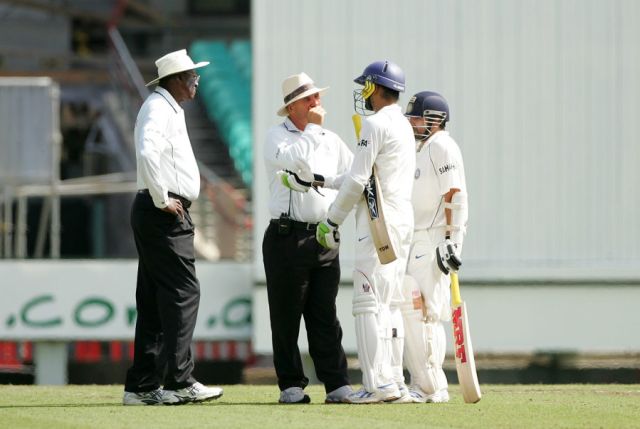
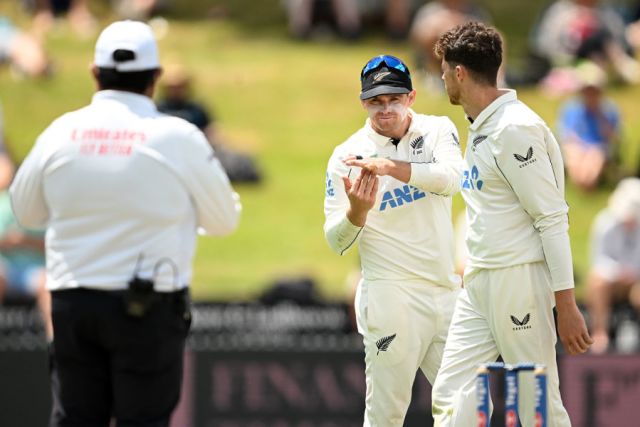
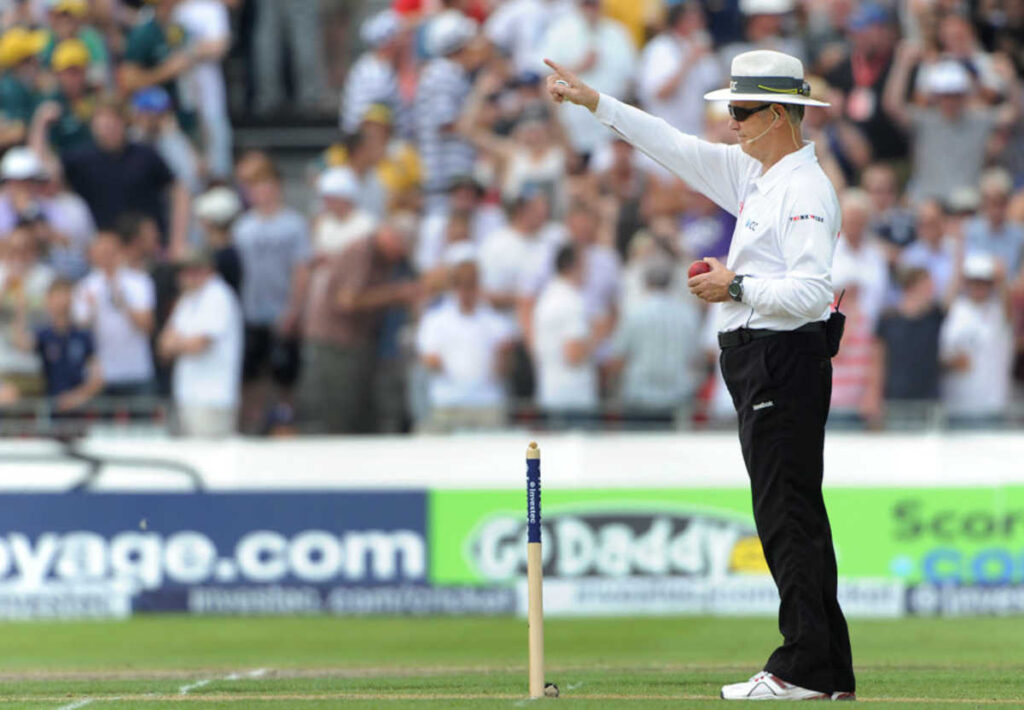
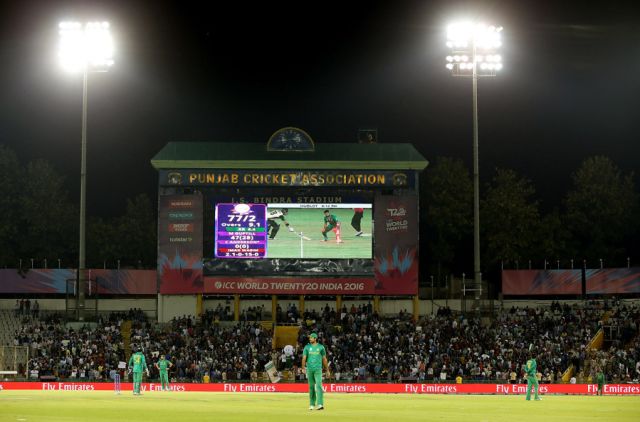
While Mahinda Wijesinghe of Sri Lanka is widely acknowledged as the person who conceptualized the third umpire, the system’s official debut is historically linked to South Africa.
Conceptual Origins vs. Official Implementation
Mahinda Wijesinghe’s Proposal (1982–1984): Wijesinghe first proposed the use of television cameras and a “walkie-talkie” link between on-field umpires and an off-field official in an article for The Island newspaper on October 11, 1982. His concept was formally forwarded by Sri Lanka Cricket to the International Cricket Council (ICC) and discussed at the 1984 ICC AGM.
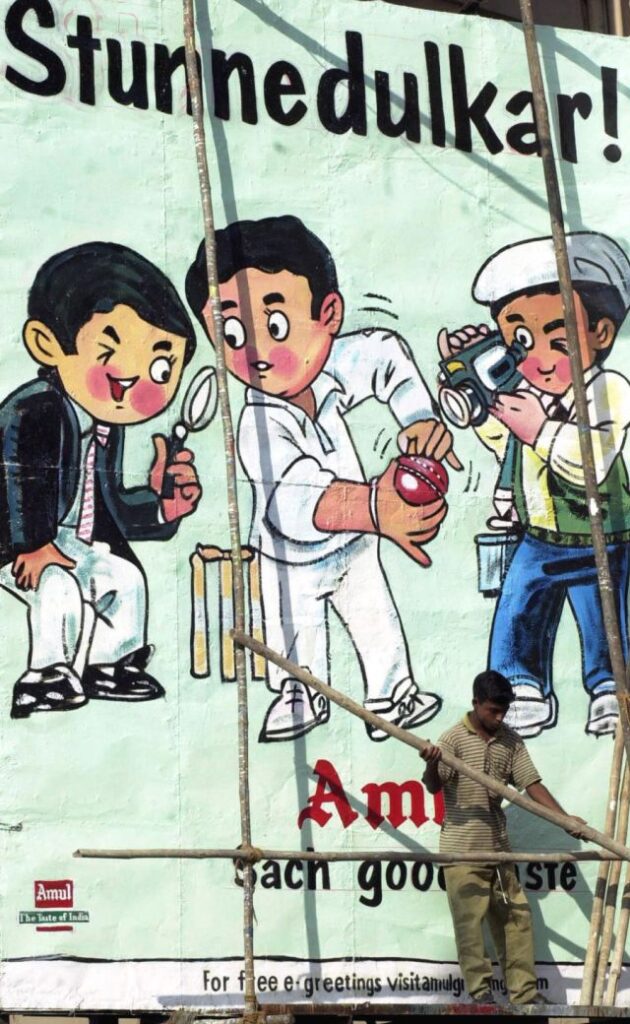
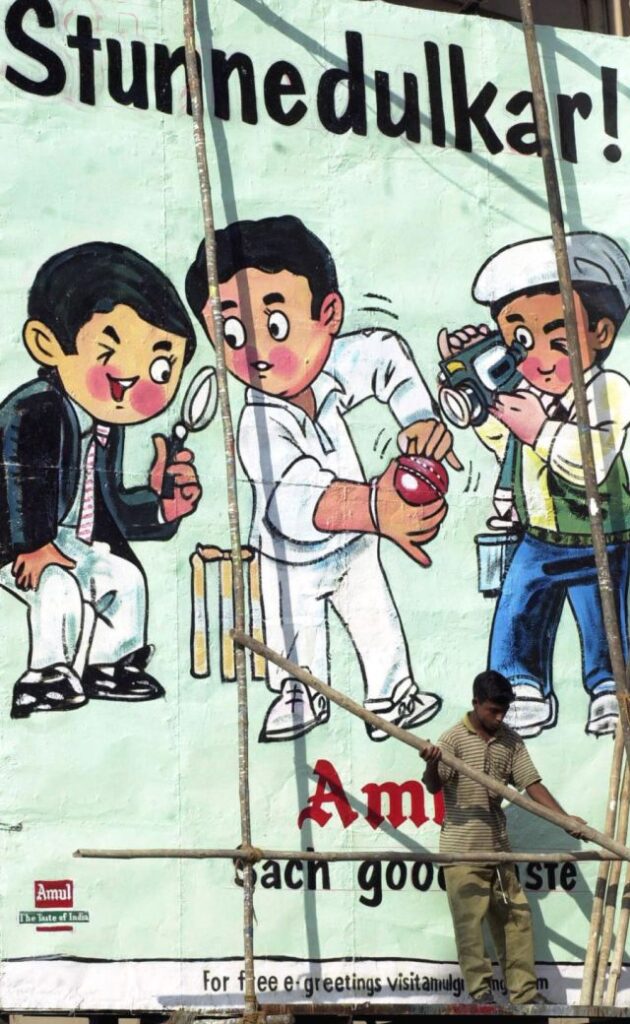
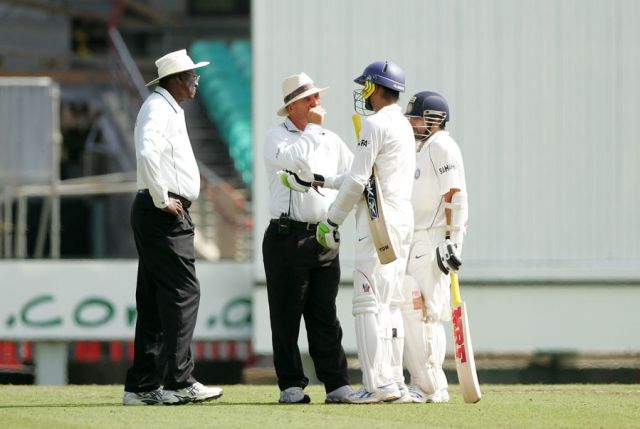
Official Debut (1992): The system was first officially implemented in November 1992 during the India vs. South Africa Test series in Durban. Karl Liebenberg served as the first official third umpire, and Sachin Tendulkar became the first player dismissed using the technology.
Recognition and Controversy
The perception of “unfairness” often stems from the delay in recognizing Wijesinghe’s role:
Delayed Credit: For years, credit for the “walkie-talkie” link was sometimes attributed to the Test and County Cricket Board (TCCB) or South Africa for their initiative in the 1992 series.
Official Acknowledgement: It was only after significant advocacy, including tributes from figures like Christopher Martin-Jenkins (who headlined a 1993 column “Sri Lanka the Third Umpire Pioneers”), that the ICC eventually recognized Wijesinghe as the concept’s rightful owner.
Broader Claims: Similar disputes exist regarding the Umpire Decision Review System (DRS). Another Sri Lankan, lawyer Senaka Weeraratne, has long sought recognition for pioneering the player referral concept in 1997.
Comments Off on Mahinda Wijesinghe pioneered the use of the Third Umpire but the South Africans obtained ICC recognition in a clear act of unfair play and discrimination against a Sri Lankan
There was a time when life did not come with apps, algorithms, or air-conditioned opinions. It came instead with cabbage.
Not metaphorical cabbage—but real, stubborn, Soviet cabbage. The kind you harvested yourself whether you were an engineering student, a future military officer, or a confused foreigner wondering how you ended up in a place called Orenburg fixing gas equipment in sub-zero winds.
The University of Life (with Compulsory Farming Minor)
In the days of the Soviet Union, education was not confined to lecture halls. If you didn’t go to university, you went to the military. If you went to university, you still learned military thinking. And regardless of your academic brilliance, at some point you were sent to a kolkhoz—a collective farm—to harvest cabbage, potatoes, or anything else that refused to grow politely on its own.
Imagine today’s students being told:
Before your degree, please report to Monaragala to harvest pumpkins.”
There would be protests on Instagram within minutes.
But back then, nobody protested. You just picked up the cabbage—and perhaps, unknowingly, a work ethic.
Language Lessons, Soviet Style
The Russians had a remarkable way with language. Their vocabulary could be… expressive. Words like blyad and pizda floated around like punctuation marks in a heated conversation.
Yet, the real genius was the supervisor who replaced all profanity with one magical word:
Pamidori!” (Tomatoes!)
Instead of shouting insults, he would roar:
Pamidori! Pamidori!”
And somehow, nobody was offended. Imagine if Sri Lankan traffic police adopted this:
Pamidori! Move your three-wheeler!”
Road rage would disappear overnight.
Cuisine of Champions (and Survivors)
Dinner was simple, predictable, and unforgettable:
Cabbage (again—inescapable)
Kalbasa (minced meat sausage, heroic in its greasiness)
Black bread (dense enough to stop a bullet—or at least a complaint)
And then came the real highlight: vodka.
Not your premium, imported, crystal-bottle variety. No. This was the legendary cheap spirit—sometimes whispered to be distilled from substances that may have once powered machinery.
At 3.62 rubles a bottle, it was less a drink and more a national institution.
To accompany it, there was zakuska—the noble chaser:
Salted fish
Pickled tomatoes
Gherkins that could wake the dead
And in true weekend spirit, there were adventures: catching land-based krevetki (crab-like creatures), boiling them over open fires, and consuming them with enthusiasm that defied hygiene standards.
Hardship Without Misery
Here is the surprising part: people were not miserable.
They worked hard, lived simply, and laughed loudly. There was a sense of shared struggle—an unspoken agreement that life was tough, but it was everyone’s tough.
Compare that to today, where comfort is abundant but contentment is scarce.
What Did We Learn?
Not communism. Not ideology. Not politics.
We learned:
Discipline without supervision
Skill through doing, not theorizing
Respect for labour—whether in a classroom or a cabbage field
And perhaps most importantly, we learned that happiness does not always come from comfort. Sometimes it comes from:
A shared meal
A bad joke shouted as Pamidori!”
A cold night made warm by camaraderie
A Thought for Today’s Sri Lanka
As Sri Lanka debates its future, with movements like the Janatha Vimukthi Peramuna and the National People’s Power offering frameworks and theories, one wonders:
Do we have the will to build character along with policy?
Because no system—capitalist, socialist, or otherwise—can succeed without a generation that knows how to work, endure, and laugh at hardship.
You cannot teach resilience in an air-conditioned lecture hall alone.
Sometimes, you need a cabbage field.
Final Reflection
From the frozen yards of Orenburg to the structured efficiency of Norway and the polished systems of the United Kingdom, the journey was not just geographic—it was educational.
But the most unforgettable classroom?
A Soviet lorry, a shouting supervisor, a bottle of cheap vodka, and a plate of cabbage.
Pamidori! What an education. 🍅
Comments Off on From Kalbasa to Kilowatts: Lessons from a Simpler, Tougher World in Soviet Russia
That’s different from the United States being alone.
We – that is, the vast majority of Americans who were against Trump’s war from the start, and who support Nato and the United Nations charter and the post-second world war system of alliances and rules – are not alone.
Most of the people of the United States stand with most democracies of the world.
When Trump’s call to America’s traditional allies for assistance clearing the strait of Hormuz was rebuffed by those allies, those allies didn’t rebuff the United States. They rebuffed the person in the Oval Office who didn’t even consult them before launching this war.
The French president, Emmanuel Macron, said his country will never take part in operations to open or liberate the strait of Hormuz in the current context”. (Trump responded, He’ll be out of office very soon.”) Canada’s foreign minister, Anita Anand, said that Canada was not consulted prior to the offensive operation” and has no intention of participating in” it. The British prime minister, Keir Starmer, has said the UK would not be drawn into the wider war”.Recommended video: Trump insists he’s not ‘putting troops anywhere’ in Middle East (Daily Mail)
So, like an angry five-year-old whose friends refuse to come to his party because he shouts at them and never shares his toys, Trump exploded: [W]e no longer ‘need,’ or desire, the NATO Countries’ assistance – WE NEVER DID! Likewise, Japan, Australia, or South Korea.” He added: In fact, speaking as President of the United States of America, by far the Most Powerful Country Anywhere in the World, WE DO NOT NEED THE HELP OF ANYONE!”
May I be so bold as to address myself to America’s allies and friends?
In point of fact, we the people of the United States do need your help.
We need your help fighting the global climate crisis.
We need your help heading off pandemics.
We need your help countering global criminal gangs that are trafficking people and dangerous drugs and weapons.
We need your help fighting global poverty, hunger and disease.
We need your help safeguarding freedom and democracy from authoritarian regimes intent on extinguishing freedom and democracy around the world.
It’s important that you, the citizens of other democracies, know that the vast majority of us – the people of the United States – are embarrassed and offended by the oaf who now occupies the highest office in the United States.
He does not speak for us. He is not making decisions based on our welfare, let alone the wellbeing of the rest of you. Please don’t confuse him with us.
We are trying our best to resist him, contain him, protest against him and remove him from office as quickly as we possibly can.
Thank you for your patience.
Robert Reich, a former US secretary of labor, is a professor of public policy emeritus at the University of California, Berkeley. He is a Guardian US columnist and his newsletter is at robertreich.substack.com. His new book, Coming Up Short: A Memoir of My America, is out now in the US and in the UK
Comments Off on Dear allies of America, please don’t confuse our president with us
‘Before you study the economics, study the economists!’
e-Con e-News 08-14 March 2026
*
‘Indian Foreign Minister S Jaishankar recognized Hambantota
harbour as a Chinese military facility that underlined an
intimidating foreign military presence in the Indian Ocean’
(see ee Focus, Jaishankar)
The Indian Foreign Minister’s response last week to a planted question by WION‘s Palki Sharma at Delhi’s Raisina Dialogue 2026, diverted to talking about a non-existent Chinese miltary base in Hambantota, to avoid answering more searing questions regarding India (and Sri Lanka’s) knowledge of the USA preparing to attack an Iranian ship in the sea nearby. So-called social media foggery then took over creating further useless fuss over the Sri Lanka Foreign Minister’s presumed inability to answer questions in clear English, diverting more from the Indian Foreign Minister’s outre assertions.
The Indian government had been the first to be asked to invest in Hambantota harbor & airport, but had refused to help develop the southeast region, because they were prioritizing the arming and promotion of terrorism in Sri Lanka’s north and east at the time, especially to grab Trincomalee port. Sri Lanka’s foreign officials at (and after) the Raisina Dialogue 2026, did not challenge the Indian assertion about a foreign base. Instead media in Sri Lanka focused on the Lanka Foreign Minister’s English. The use of English, rather than speaking in our own language and using translators (as most independent countries do at international fora), is less an issue of linguistic prowess than appearing to be an attempt at furthering ‘strategic ambiguity’ in dealing with current challenges, more contentious than most foreign officials, Oxford-house-trained or not, have ever had to deal with.
The US submarine attack led to the mass killing and drowning of cadets (invited as guests to participate in an Indian-led ‘friendly’ international exercise in what India likes to call its backyard). The resulting ecological damage, has not even drawn the criticism of the numerous (US & EU-funded) environmental NGOs – the silence of these ecological lambs, who normally bleat loudly at the slightest slick of oil, is deafening; they who cry about coral reefs, birds & beasts (which get more publicity than our cultivators – see ee Agriculture).
The renewed US-led colonization project has seen the USA blow up pipelines (Nordstream, etc.) and attempt to grab or hold on to ‘chokepoints’ (Sri Lanka, Diego Garcia, Red Sea, Persian Gulf, Malacca, South China Sea, Arctic Sea, Greenland, Panama, Venezuela/Trinidad, etc.) so as to prevent the wider industrialization of our world, let alone the modernization of China, Russia, Africa, and Sri Lanka. Their final dream (or nightmare) may be to grab the labor power and unified market of the now People’s Republic of China, and seek to return China to its pre-Liberation sick-man status.
*
The first illustrious personage to make the claim that Hambantota port was becoming a forward military base for the Chinese Navy was by US President Donald Trump’s first Vice President Mike Pence in 2018. This claim too came as a diversion, for it was made soon after media revealed that Sri Lanka had granted logistic hub status to the USA. To take ‘advantage of a growing naval partnership with Sri Lanka’, the US Navy had first operated the air logistic hub in late August 2018, when the USS Anchorage (LPD 23) visited Trincomalee to support the US Essex Amphibious Ready Group as it transited the western boundary of the 7th Fleet area of operations (See ee December 2018)
‘The Nimitz-class aircraft carrier USS John C Stennis (CVN 74) established the hub in Sri Lanka to receive support, supplies & services at sea. A C-2 Greyhound carrier onboard delivery aircraft accessed the hub’s strategic location before bringing supplies to the Stennis. ‘The primary purpose of the operation was to provide mission-critical supplies & services to USA Navy ships transiting through and operating in the Indian Ocean… The secondary purpose [was] to demonstrate the US Navy’s ability to establish a temporary logistics hub ashore where no enduring US Navy logistics footprint exists.’ The hub concept enabled the use of an airstrip and storage facilities to receive weapons and other materiel, and ‘move out in various directions in smaller shipments, allowing ships to continue operating at sea by receiving the right material at the right place & time’.
The revelation about the USA’s ‘hub’ led to great political turmoil: then-President Maithripala Sirisena clashed with then-Premier Wickremasinghe’s attempt to privately partner with US ally, India, to run the East Container Terminal (ECT) of the Colombo harbour. The battle over ownership of the ECT led to the sacking of Wickremesinghe. It was unclear if the UNP had consulted President Sirisena about the setting up of the US logistic hub in Sri Lanka. Mahinda Rajapaksa, on Dec 16, 2018, warned of the possible implications to Sri Lanka by giving US access to Trincomalee and getting entangled in superpower rivalry. This was soon afterRajapaksa gave up the premiership to enable Sirisena to reappoint Wickremesinghe, as ordered by the Supreme Court.
In March 2007, Sri Lanka had entered into Acquisition & Cross-Servicing Agreement (ACSA) with the USA. The then-Defence-Secretary Gotabhaya Rajapaksa and then-USA-Ambassador Robert Blake secretly signed the ACSA in Colombo. Left parties at the time condemned the ACSA, both in & outside parliament.
The agreement, valid for 10 years, was meant to facilitate transfer and exchange of logistics supplies, support and re-fueling services. The ACSA was again officially extended in 2017, but this time, 10 times larger than the 2007 agreement, again secretly. The announcement of the US setting up of a logistic hub in Sri Lanka was meant to hint that this US agenda was proceeding. ACSA is to be re-signed in 2027, and the USA aims to use acquiescence to their war plans, as a precondition for the IMF bailing out the government again, in 2028. In the meantime, the IMF WB keep acting coy, with the Central Bank governor in tow, tail wagging, makes rosy forecasts, while demanding privatization of national resources, knowing their bosses in Washington could wage war anytime, to upend any such forecasts, destroying any such ‘restructuring’, and insisting we have to repay unpayable debts to Wall Street….
The refusal of the 2015-2019 Sirisena government to sign the accompanying SOFA (Status of Forces Agreement), which would allow US boots on Sri Lankan soil, nor to finalize the MCC (Millennium Challenge Corporation) to enable deeper economic penetration, led to his removal and repeated demonization as a rural rube in the English media. The Indo-Lanka Defence Forum 2018 edition (Vol 43: 2) dealt with Sri Lanka’s transformation into a global maritime hub, while protesting Chinese ships entering Sri Lanka’s ports – in particular, a submarine Colombo port call in 2014. The ILDF edition described the growing alliance between India & USA, listing major forces’ locations, military exercises & engagements coming under the US Pacific Command (USPACOM) – the USA’s oldest & largest military command. In 2018, the Trump administration renamed the Pacific Command as Indo-Pacific Command to supposedly signal India’s importance to the US military due to US intrusions into the South China Sea. The ILDF edition listed India & Sri Lanka as US allies along with Japan, South Korea, Australia, Vietnam, Singapore, the Philippines, Malaysia, Indonesia, Guam, Cambodia, Bangladesh, the Maldives, Thailand, Mongolia, Brunei, Timor-Leste, Tonga, & Mongolia. The one-time Indian High Commissioner in Colombo (1997-2000) and National Security Advisor (NSA) Shivshankar Menon’s memoirs Choices: Inside the Making of India’s Foreign Policy (Oct 2016) indicated that New Delhi (& the USA) wanted the Rajapakses out of power due to their friendly SL-China relations. Menon quipped that Sri Lanka is an ‘aircraft carrier, parked 14 miles off the Indian coast’. Ajit Doval, who succeeded Menon as NSA, demanded Gotabhaya Rajapaksa do away with major Chinese-funded operations including the Colombo Port City project. Sri Lanka is yet to inquire into the covert US funding to oust the Rajapakses, despite US Secretary of State John Kerry’s revelation that US$585mn was spent on projects in Nigeria, Myanmar & Sri Lanka to ‘restore democracy’.’ The April 2019 terrorist attacks, which India claimed to have been aware of in advance, were meant to be a warning….
* ‘If the Sinopec refinery was built & operated by now, during this crisis, India, Pakistan, Bangladesh, Maldives & Thailand will be buying petroleum products from Sri Lanka rather than India. Call me a puppet, but my opinions are always in national interest of Sri Lanka.’ – Yasiru Ranaraja, Director, Belt&Road Initiative (BRISL, 13 March 2026)
The first roadblock to the Hambantota Port project was placed by England’s P&O, for if Hambantota was developed as a major hub port it would pose a threat to Indian ports, like Mumbai’s Nhava Shiva developed by P&O and now competing with Colombo. England’s colonial Peninsular & Oriental Steam Navigation Co, has long controlled shipping in this country (now through their so-called ‘local’ conglomerates, Keells etc), and the role of sludge funders like US BlackRock (which has replaced Goldman Sachs in the anarcho-capitalist pandemonium). A New York Times article by Dharisha Bastians, with background research by Aneesha Guruge of the US NED-funded Verite Institute, provided an extremely biased account of Hambantota port, adding to the US government’s nightmare fantasy about China’s supposed maritime ‘String of Pearls’. Ironically, Hambantota was also claimed as a rival to the Vizhinjam Port, site of the recent nearby international naval exercises in Thiruvananthapuram, Kerala, after which the US submarine torpedoed Iran’s IRIS Dena.
Hambantota lies close to one of the biggest trade routes in the world, the east-west main trade flow in the Indian Ocean. Hambantota historically as well as potentially, was & could be, an industrial hub, rebirthing the colonially devastated and underdeveloped southeast hinterland surrounding it. China Merchant Holdings holds a 70% stake in Hambantota port for 99 years, with the remaining shares in the hands of Sri Lanka. It should be noted: ‘Port terminals in New York & Long Beach are managed by Chinese companies. But people do not term Darwin & Long Beach as China’s colonies!’ The agreement between China & Sri Lanka on Hambantota port contains a clause that ‘strictly prohibits’ the Chinese from using the port for military purposes. Between 2009 & May 2018, 422 warships belonging to 27 navies across the world arrived in Lanka’s ports for operational, training & formal visits. India topped the regional list with 83 visits, while Japanese naval ships undertook 69 visits. Ranking way below them, China made 33 visits, Bangladesh had 29 visits, Russia 27, and Pakistan, 24 visits – (As for US & European visits? Not so closely tabulated, perhaps…)
Ironically, the first practical Hambantota proposal came in a 2002 GoSL report, Regaining Sri Lanka: Vision & Strategy for Accelerated Development, with former PM Ranil Wickremesinghe’s pro-USA UNP in government, but failed to make headway. 23 years later, as the port advances, the Daily Mirror last year noted: ‘If a Chinese oil company comes here, they have higher technologies… Sinopec’s refinery in Sri Lanka places it in direct competition with India’s interests in expanding its role as an energy supplier… Sinopec, the leading Chinese petroleum company that has sought to invest in Sri Lanka, is facing obstacles in pressing ahead with implementation’ – of the Sinopec refinery in progress in Hambantota… It was meant to be part of a proposed major high-tech industrial zone for Sri Lanka’ – a future potential now under US and Indian threat, the threat of a good example!
*
• The long ongoing, blatant (yet mostly surreptitious) suppression of Sri Lanka’s attempts at modern industrialization, let alone the sabotage of our endeavors to attain energy self-sufficiency, have long been the earnest hankering of this newsletter eCon-eNews, which exists as a tribute to the work of SBD de Silva, as well as other industrial trailblazers such as Anagarika Dharmapala & DJ Wimalasurendra.
As we approach our New Year (2570!), midst the US-led devastation of West Asia (& in the not-so-distant background, the open US strangulation of Cuba) Sri Lanka agonizes once again with the private & foreign control over supplies of energy, beseeching petroleum products from Russia & India (which has been ‘allowed’ by the USA to get oil again from Russia).
The Ceylon Electricity Board (CEB) is dead! – This week heard and saw the ‘auspicious’ headlines that 6 new ‘private’ companies have taken over ‘operations of Sri Lanka’s power utility’ (see ee Random Notes), a demand by the US government’s IMF, which no doubt will demand under the table, acquiescence to US corporate control.
The recently publicity given to the ability and attempts by US invaders to paralyze power supplies & networks (Venezuela, Cuba, Iran…), before military attack, makes us recall, how in 2023, with a ‘final draft of the new Electricity Act to go before Cabinet in June’, a government under the unelected President Ranil Wickremesinghe, announced:
‘US conglomerate General Electric Co (GE) would set up a modern
Distribution Control Centre for the Ceylon Electricity Board (CEB) –
‘a Consortium led by GE T&D India Ltd & GE Digital Services Europe’
was contracted to establish a SCADA-supported Distribution Control
Centre for Western Province South. 1) A SCADA (Supervisory Control
& Data Acquisition) System is the heart of an ADMS (Advanced Distribution
Management System). A distribution SCADA system’s primary function is to
support distribution operations through telemetry, alarming, event recording,
& remote control of field equipment… Richardson Projects, as the local partner
of GE, is pleased… Richardson represents ‘a few of the world’s renowned brands,
including but not limited to Eaton – US Sediver – France, Polycab – India, Inael
Electricity networks are highly complex and interconnected systems.
Decisions affecting generation, transmission and distribution cannot
be treated purely as administrative or commercial matters.” – ee Industry,
Restructuring the electricity sector must not
compromise grid stability, warns senior engineer
*
Just over 100 years ago, DJ Wimalasurendra had proposed a plan to generate our own energy security through ample hydropower (See ee, 01 Aug 2020, 05 Sep 2020, 19 Jul 2025). His plans were sabotaged by the English colonial government on behalf of what Wimalasurendra himself called the ‘big business’ of Shell & British Petroleum (BP), Boustead Bros & Whitehall Petroleum (now Pearson PLC, with a monopoly over textbooks & examinations etc). We should here recall that British Petroleum’s original name was the Anglo-Persian OilCo (who along with the USA Rockefeller Exxon Co. have financed the coups and wars against Iran).
*
‘In a series of speeches made at the State Council,
especially during 1933-4, Wimalasurendra identified the
broad alliance that worked against the Hydroelectric Scheme.
He used different names at times to identify this alliance:
‘Big Business & Alien Combines’, ‘Imperialistic Element’,
‘Big Business Element’, ‘Big Business Party’.
– BD Witharana, Negotiating Power & Constructing
the Nation: Engineering in Sri Lanka
*
‘During the advent of the 1st industrial revolution
Sri Lanka was mostly under the rule of European Colonisers.
In 1815, Sri Lanka was fully conquered by the English Empire.
In fact, at that time, the English industrial policy was to prohibit
any form of industrialisation in any of their colonies, & to use them
only as sources of raw material to fuel up industrialisation in England.
In colonies they built canals & railroads and used steam engines only
to transport raw materials from inner parts of colonies to the seaports.
They set up government institutions that facilitated the extraction of resources
& did not set up complete sets of institutions that were necessary for
industrialisation & promoting economic growth & development within
colonies. Thus, Sri Lanka missed the 1st industrial revolution.’
– see ee Economists, HN Thenuwara: SL Should Regain
Missed Industrial Revolutions (cited by WA Wijewardena)
*
• The ancient Sinhala familiarity with money, as described by SBD de Silva, deviates from the idyllic picture of a primitive rustic society untainted by the base metal”. This ee Focus continues Chapter 8 of de Silva’s classic, The Political Economy of Underdevelopment. Highland Sinhalé, though under siege for centuries by European invasions, were supported by people outside their territory, especially Sabaragamuwa and Matara. de Silva notes the external trade of the kingdom of Sinhalé was based partly on cash, and notes the money hoards uncovered midst the English conquest. The Sabaragamuwa district, a part of highland Sinhalé and governed by Sinhala law, yet had ‘adopted many of the habits & customs’ of the maritime provinces, riddled as it was with ‘numerous Moor and Chetty traders’. Cinnamon was an important source of foreign currency, and Sinhala were employed to carry cinnamon. Arecanuts, pepper, coffee, cardamoms & wax were secretly traded with Colombo.
There were several species of coin, and traders were savvy about the purchasing power of the different currencies. The Sinhala declined to accept the official exchange rate. The spy John D’Oyly, who kept abreast of economic dealings, as a sources of intrigue, observed that Sinhala traders were well aware that, ‘the true value of any coin is the quantity of commodities it will purchase’. Local produce was shipped abroad to the Maldives and to Europe, and wealth was amassed by the privileged strata. The wealth of the highland Sinhala upper class was mostly based on a ‘rentier income’, from a variety of landholdings, and tributary payments, usually in cash, made during the Sinhala New Year for the annual renewal of appointments & reappointments & disappointments. There were trading monopolies, and the exchange of expensive gifts. The Sinhala chiefs also made clandestine profits, misappropriating state funds & making improper exactions of money from subordinates, including from collaborators with the English, all carefully observed and used by the spy D’Oyly to compromise highland Sinhala officials in his coup d’etat of 1815…
I returned home after years abroad—hardened not by comfort, but by experience.
From the oil fields of Baku, to the frozen gas lines of Orenburg, to the disciplined industrial floors of Moscow, and further west into the offshore precision of Norway and refinery construction in the United Kingdom—the journey had been long, demanding, and deeply educational.
I had seen systems that worked.
I had seen men who respected steel, process, and discipline.
And then—I walked into a Sri Lankan dockyard. As a consultant hired by a original JVP stalwarts who came out of prison and vacant business manager
The Shock of Reality under state control
It was not a workplace. It was a waiting room.
Workers in slippers.
Cigarettes in one hand, betel in the other.
Groups gathered—not around work, but around time.
Waiting.
Waiting for the lunch packet from the Port kitchen.
Waiting for the day to end.
Waiting, it seemed, for someone else to care.
The yard was cluttered. Tools scattered. Garbage in corners.
There was no urgency. No ownership. No system.
And I was asked to take over—without real authority.
The First Test: A Damaged Ship
The first challenge came quickly—a vessel with a damaged bulbous bow. A serious structural issue. Not cosmetic. Not optional.
This was not the place for guesswork.
I called the welding engineer—a man I had personally trained.
Give me the welding procedure,” I said.
He handed me a scrap of paper.
On it, written casually:
Welding rod size: 10 to 14.”
That was all.
No mention of:
Steel type
Heat treatment
Welding sequence
Pre-heating
Post-weld inspection
Non-destructive testing
Nothing.
This was not a procedure. This was a gamble.
Introducing a Wattoruwa”
That day, the dockyard saw its first real welding procedure.
A proper WPS—what the workers began calling a wattoruwa.”
We documented:
Material specifications
Joint preparation
Welding sequence
Preheat and interpass temperatures
Inspection methods
We brought in structure where there was none.
Not ISO 9000. Not international certification.
Just basic engineering discipline.
And it worked.
Resistance from Within
Change is never welcomed by those comfortable in disorder.
The local officers did not like me.
I was seen as:
Too strict
Too demanding
Too foreign-trained”
But I had seen what worked in the Soviet Union system and beyond.
I knew one thing:
Without discipline, there is no industry.
So I pushed.
Not gently—but firmly
Return as CEO: 1994 after another stint in a state corporation as CEO
Years later, I returned—not as a consultant, but as CEO.
This time, I had authority.
But more importantly, I had unfinished work.
The transformation had begun earlier—but now it had to be completed.
And the first rule was simple:
Discipline Comes First
Before profits.
Before expansion.
Before modernization.
Discipline.
Workers report on time
Proper attire
Clean workspaces
Defined procedures
Accountability at every level
Because without discipline, even the best equipment fails.
With discipline, even limited resources can succeed.
A Lasting Legacy
Today, I am told that the dockyard still uses structured welding procedures.
If that is true, then one small wattoruwa” scribbled into existence has lived on.
Not as a document—but as a mindset.
Final Reflection
From cabbage fields in Orenburg to compressor factories and gas pipelines,and offshore yard in Stavsnger Norway I learned that systems matter.
But more than systems—people must believe in them.
Sri Lanka does not lack intelligence.
It does not lack resources and guidance
What it often lacks—is discipline.
And discipline is not taught in speeches.
It is enforced in yards, workshops, and daily work.That was my real job. Not managing ships—but rebuilding attitudes.
Comments Off on From Soviet Steel to Sri Lankan Shipyards
A former Belgian diplomat, 93, should stand trial over alleged complicity in the 1961 murder of Patrice Lumumba, the first prime minister of what was then the newly independent Congolese state, a Brussels court has ruled.
Étienne Davignon, the only person still alive among 10 Belgians the Lumumba family accuses of involvement in the killing, is charged with participation in war crimes.
In a statement the Lumumba family welcomed what they called a significant step: For our family, this is not the end of a long fight, it is the beginning of a reckoning that history has long demanded.”
Étienne Davignon pictured in 2018.
Yema Lumumba, a granddaughter of the assassinated leader, told reporters: The fact that all this time has passed does not mean it is done and we will never get to know the truth. It is also very important for the legal Belgian system to start confronting its own responsibilities regarding what happened during colonial times.”
The decision was also hailed by lawyers for the Lumumba family as setting a historic precedent in criminal justice for crimes allegedly committed under European colonial rule.
If the trial goes ahead, Davignon will be the first Belgian official to face justice over the assassination of Lumumba 65 years ago. In its decision, the court went beyond the prosecutor’s decision, extending the scope of the trial to cover Lumumba’s associates, Maurice Mpolo and Joseph Okito, who were murdered alongside him.
Davignon is accused of participating in war crimes on three counts, according to information provided by the court of first instance in Brussels:
The illegal transfer of Lumumba and his associates from Léopoldville (now Kinshasa) to Katanga.
The humiliating and degrading treatment” of the men.
Depriving them of a fair trial.
This is a historic decision,” Christophe Marchand, a lawyer for the family, said. This decision confirms that the passage of time cannot erase the legal responsibility for the gravest crimes.”
Lumumba, aged 35, was tortured and assassinated by firing squad in January 1961, alongside Okito and Mpolo, two other leading politicians. The murders were carried out by separatists in the Katanga region with the support of Belgian mercenaries.
Davignon had arrived in what was then Belgian Congo as a 28-year-old diplomatic intern on the eve of independence in 1960.
Davignon, who went on to numerous senior political and business roles, was not present for the hearing at the Palais de Justice in Brussels.
Johan Verbist, Davignon’s lawyer, told the Guardian that it was too soon to comment on the decision, but he would now analyse the possibilities for an appeal”.
Verbist rejected claims of war crimes at a hearing behind closed doors in January and argued that reasonable time to judge the case had passed, according to sources cited in Belgian media.
Belgium’s then prime minister, Alexander De Croo, reiterated his country’s moral responsibility” for Lumumba’s murder at a ceremony to mark the return of the tooth.
Belgian ministers, diplomats, officials and officers had perhaps no intention to have Patrice Lumumba assassinated,” he said. No evidence has been found to support this.
But they should have realised that his transfer to Katanga put his life in danger. They should have warned, they should have refused any assistance in transferring Patrice Lumumba to the place where he would be executed. Instead they chose not to see … not to act.”
Lawyers for the Lumumba family believe that if there is no successful appeal a trial could begin in January 2027.
Speaking to the Guardian in 2025, Marchand said the case was unusual among former colonial powers.
There are very few cases where a former colonial state accepts to address the colonial crimes and to consider that they have to be tried in that same colonial state, even if it’s a very long time after,” he said.
Comments Off on Belgian court sends ex-diplomat, 93, to trial over 1961 murder of Congo leader
Hazrat Mirza Masroor Ahmad, Supreme Head of the world-wide Ahmadiyya Muslim Community in Islam, delivers Eid-Ul-Fitr Sermon today 20th March 2026 at ‘Masjid Mubarak’, Islamabad, Tilford, U.K. at 10.30 GMT (Sri Lankan Time 4 P.M.). It airs LIVE via MTA (Muslim TV Ahmadiyya International), having simultaneous translation in various languages including English, Arabic, Bengali, French and Tamil.
Eid-ul-Fitr – This religious celebration is observed on the day following the last day of fasting which is observed daily by all able-bodied Muslims from dawn till sunset throughout the Islamic month of Ramazan.
It is a day of much rejoicing and happiness especially by those fortunate persons who observed the fasts and reaped the spiritual fruits of this holy exercise in accordance with the directions of God in the Holy Quran.
Fasting has been prescribed in one form or another by all the revealed religions of the world. The Bible tells us that Prophet David declared ‘I humbled my soul with fasting’ (Psalms 35:13) and we read in the New Testament that ‘the disciples of Jesus and the Pharisees used to fast’ (Mark 2:18). We are also told that ‘Jesus fasted forty days and forty nights’ (Matthew 4:2).
One does not only feel happy on Eid-ul-Fitr because through exercising self-discipline one has successfully complied with the commandment of God to observe the fasts, but also on account of a feeling of spiritual exhilaration which glows within the heart and soul.
No doubt on Eid-ul-Fitr much pleasure is derived from wearing new clothes, meeting friends and relatives and eating specially prepared food. These are all ways of celebrating the occasion. The main event, of course, is the religious service when one offers prayers and listens to the inspirational address of the Imam on relevant matters concerning the significance of the occasion.
As the main purpose of fasting is to develop righteousness and self-purification (Quran 2:186) the most attractive garment one should be wearing is the one mentioned by God in the Holy Quran:
The raiment of righteousness – that is the best. (7:27)
The real food one should be enjoying is the spiritual nourishment acquired during the month of fasting.
Eid-ul-Fitr should remind one of many lessons learned from fasting and which, during the holy month of Ramazan, one should have endeavoured to keep in mind and to have practised.
One of them is the offering of one’s morning (Fajr) prayer before sunrise and also of the offering the efficacious pre-dawn prayer (Tahajjud) which is highly recommended. One realizes that it is not too difficult to arise early and offer these prayers at the proper time. If one can discipline oneself to do so during the month of fasting then it is not impossible to do so during the other months of the year also.
The purpose of taking medicine is to combat and cure an ailing condition and when it takes good effect one wants to maintain one’s improved condition. Likewise when one reduces weight after a course of dieting one wants to maintain one’s lower weight and similarly one wants to maintain one’s improved physical condition after completing a course of exercise.
After completion of the holy month of fasting one is able to gauge one’s improved spiritual condition as a result of one’s devotion, conduct, prayers and divine favours received during that period.
On Eid-ul-Fitr one should reflect one’s condition of spiritual improvement and resolve not to lose what one has gained but rather, not only to maintain it, but press forward to even higher spiritual development through righteous conduct, prayers and seeking the grace of God.
This is the spirit of Eid-ul-Fitr.
Comments Off on The philosophy underlying Eid-ul-Fitr
A high level Sri Lankan defence delegation, headed by the Deputy Minister of Defence, Major General Aruna Jayasekara (Retd), commenced a two-day official visit in Japan to participate in the 2nd Japan–Sri Lanka Defence Dialogue. This important engagement reaffirms the long standing friendship and strategic cooperation between the two nations, particularly in the sphere of defence collaboration and maritime security.
The delegation held a number of high level bilateral meetings throughout its official visit to Japan. The Sri Lankan delegation was warmly received by senior officials of the Japanese Ministry of Foreign Affairs and Sri Lanka’s H.E. the Ambassador to Japan, Prof. Janak Kumarasinghe.
The Deputy Minister of Defence met with the Hon. State Minister for Foreign Affairs of Japan, Ms. Kunimitsu Ayano, on Tuesday (17 Mar) and outlined the government’s approach to defence reforms, emphasizing efforts to align national security priorities with public aspirations. The Japanese State Minister commended the Government of Sri Lanka’s commitment to promoting good governance, eradicating corruption, upholding the rule of law, and maintaining a rules based international order while adhering to its longstanding non aligned policy. Director level officials from the Japanese Ministry of Foreign Affairs also participated in the discussions.
In addition to the engagement with the State Minister for Foreign Affairs, Deputy Minister Maj. Gen. Jayasekara (Retd) held a high level meeting on the evening of 17 March with Japanese ministerial level dignitaries, further strengthening bilateral defence ties. The meeting was held with the Hon. State Minister of Defence, Mr. Miyazaki Masahisa, along with the Vice Minister of Defence for International Affairs, Mr. Kano Koji, and the Chief of Staff of the Japan Maritime Self Defense Force (JMSDF).
The productive discussions centered on enhancing high level defence cooperation, strengthening maritime security, and advancing capacity building initiatives for Sri Lanka’s defence sector. Matters discussed included cultural exchanges, the enduring friendship fostered through defence diplomacy, and the Official Security Assistance (OSA) program. Special emphasis was placed on joint efforts to combat transnational crimes at sea and develop the capabilities of the Sri Lanka Coast Guard.
The Commander of the Sri Lanka Navy and senior officials from the office of the Deputy Minister of Defence were also in attendance.
Comments Off on Sri Lankan Defence Delegation Engages in High Level Meetings in Japan
As Sri Lanka’s flagship real estate event reaches its 10th edition, the Lanka Property Show 2026 marks an important milestone for the industry, bringing together key stakeholders, emerging opportunities, and timely conversations that shape the sector’s direction.
We cordially invite you to attend the Lanka Property Show 2026.
The exhibition brings together leading developers, residential and investment opportunities across Colombo and the suburbs, along with banks, legal advisors, and industry experts, creating a space for meaningful conversations and insights.
Event Details: Date: 21st & 22nd March 2026 Time: 10:00 AM – 8:00 PM Venue: Oak Room, Cinnamon Grand Hotel Entry: Free
In addition, a series of panel discussions has been arranged, offering insights into key trends shaping the real estate sector. Your presence would be greatly valued, and you are welcome to share your perspectives or cover the discussions as you see fit.
Panel Discussions: • 21st March 2026 | 11.00 AM Sri Lanka in the Global Real Estate Map – Opportunities Beyond Borders
• 21st March 2026 | 4.00 PM Meeting Tomorrow’s Housing Demand: How Demographics, Migration (Local), and Lifestyle Changes are Reshaping Real Estate Investment
• 22nd March 2026 | 11.00 AM Ditva වලින් පසු ලංකාව – අනාගතයට සරිලන නිවාස ප්රමිතීන් සහ ප්රතිපත්ති
We look forward to welcoming you to this special edition.
British Airways has announced a significant planned expansion to its network for winter 2026, with the addition of two new destinations, Melbourne in Australia and Colombo in Sri Lanka.
In addition, the airline will be adding more flights for winter to Cape Town (South Africa), Haneda (Tokyo), Bridgetown (Barbados), Kingston (Jamaica) and San Jose (Costa Rica). The new schedule reflects a 9 per cent growth in British Airways’ long-haul route network, as the airline continues to invest in providing more choice for customers.
These planned new routes and frequency growth for winter 2026 is in addition to short-term capacity increases to destinations to meet customer demand, as a result of the situation in the Middle East. British Airways added seven extra return services to Bangkok and Singapore in the last week and will continue to review its schedule and add additional flights to destinations as needed.
Demand for travel continues to remain strong, and as customers look for alternative holiday destinations in the immediate term, British Airways Holidays has seen a rise in searches for popular destinations like Antigua and Gran Canaria, which have increased by 63% and 50% respectively.
Melbourne, Australia
British Airways will commence flights to Melbourne in Australia from 9 January 2027, launching in time for the Australian Open and the Melbourne Grand Prix. Flights will operate year-round from London Heathrow, via Kuala Lumpur, on a daily basis.
Customers have a choice of 4 cabins – World Traveller (economy), World Traveller Plus (premium economy), Club World (business class) and First. Return fares start from £1,130 (including taxes and carrier fees) and are on sale from 17 March.
Colombo, Sri Lanka
Launching on 23 October 2026, British Airways will fly three times per week from London Gatwick to Colombo, the vibrant gateway to Sri Lanka. The route will operate for the winter season only.
Customers have a choice of 3 cabins – World Traveller (economy), World Traveller Plus (premium economy) and Club World (business class). Return fares start from £620 (including taxes and carrier fees) and are on sale from 17 March.
Comments Off on British Airways announces Melbourne and Colombo in major winter 2026 expansion
Energy security is a topic that has been discussed for years, if not decades. It is sensible for any government, policymakers and independent analysts to engage in it. Indeed, reams have been written on the subject. Still, rhetoric has not been translated into action here, and Sri Lanka remains highly vulnerable to external shocks.
With the Middle East war, triggered after the US-Israel attack on Iran, continuing to rage, Sri Lanka – which entirely imports its fuel requirements – feels the importance of energy security more than ever. Nevertheless, this is not the first time the issue has been felt acutely. It was experienced in the worst manner during the pandemic. Oil price surges have had a cascading effect on the local economy at different points in history.
Today, oil prices have spiked in the global market following disruptions in the Strait of Hormuz, the narrow sea lane responsible for the transfer of one-fifth of global oil production. Gulf nations have cut down production. The end result is a price hike that leaves the global economy reeling under its impact.
For Sri Lanka, the lack of refinery and storage facilities has been a longstanding concern. The development of the 99 tanks, built during World War II under British colonial rule, has been a focal point in ensuring the country’s energy security. Cabinet Spokesman and Health Minister Nalinda Jayatissa has emphasised that the Government has a clear and strategic vision for the development of Trincomalee’s energy infrastructure, a project initiated as far back as 2003.
Fourteen out of the 99-tank complex have been given to Indian Oil Corporation for use by Lanka IOC. Another 61 tanks are under a joint venture between the Ceylon Petroleum Corporation and Indian Oil Corporation, formed during the tenure of Gotabaya Rajapaksa. Earlier, Energy Minister Kumara Jayakodi said the Government was carrying out preliminary work in this regard.
Energy connectivity is, in fact, one of the pillars of the proposed Sri Lanka-India partnership. A tripartite agreement has been signed among India, Sri Lanka and the United Arab Emirates (UAE) for the laying of a multi-product pipeline between the two countries, with Trincomalee earmarked as a petroleum hub. Sri Lanka’s annual fuel requirement stands at 42.16 million barrels, while storage capacity is around 150,000 tonnes. Proponents of Sri Lanka-India connectivity argue that a pipeline enabling two-way fuel delivery would strengthen the country’s energy security. They point out that Sri Lanka’s annual requirement is only a tiny fraction of India’s consumption – equivalent to less than ten days of its needs.
This has been highlighted in the ‘Study Group Report on India-Sri Lanka Physical Connectivity’ by the Pathfinder Foundation, headed by former Sri Lanka’s High Commissioner to India, Milinda Moragoda.
It is time for the Government to move from rhetoric to action. The current rulers, when in Opposition, were vociferous critics of Indian involvement in the development of the Trincomalee oil tank farm. Now in office, they support the project. Setting aside politics, the merits of the project should be carefully considered.
Likewise, the Government made much fanfare about securing the single largest foreign direct investment (FDI) when it signed a memorandum of understanding with Chinese authorities for a refinery in the Hambantota district by Sinopec. The proposed investment marks one of the most significant FDIs in Sri Lanka’s recent history. It involves a US$ 3.7 billion oil refinery in Hambantota, envisioned as an export-oriented facility with a capacity of around 200,000 barrels per day. The project is expected to enhance Sri Lanka’s position along key global shipping routes while reducing its dependence on imported refined fuel. However, more than a year has passed since the MoU was signed, and the project has yet to get off the ground.
Both projects involving India and China are vital for Sri Lanka’s energy security. What is needed now is decisive government action to iron out any shortcomings.
At the same time, the Government should intensify its focus on developing the renewable energy sector. The world is increasingly reducing its dependence on fossil fuels, and the Middle East conflict will only heighten concerns about energy insecurity. Countries are likely to accelerate their shift towards renewable energy. Sri Lanka is well endowed with wind and solar resources – two key sources of renewable energy.
The Government must clear the bottlenecks that are throttling the development of the energy sector. This is not the time for mere talk, but for decisive action.
Comments Off on Energy security: Time to move from rhetoric to action
March 19 (Daily Mirror) – Sri Lanka has been ranked among the least happy countries in the latest World Happiness Report 2026, placing 134th out of 147 nations with a score of 4.0, highlighting ongoing concerns over the country’s overall well-being.
The report shows that Sri Lanka has slipped one place from its 133rd ranking in 2025, now standing alongside Ethiopia. The country also trails behind its South Asian neighbours, with India ranked 116th, Pakistan and Bangladesh positioned significantly higher.
The World Happiness Report 2026, released on Thursday (March 18), notes that social and economic challenges continue to weigh on nations placed in the lower tier, with Sri Lanka remaining among those struggling to improve public satisfaction and quality of life.
A key focus of this year’s report is the growing impact of social media on well-being, particularly among young people. The study, backed by the United Nations, found that excessive social media use is contributing to declining life satisfaction in many countries, prompting governments to consider regulatory measures.
At the top of the rankings, Finland retained its position as the world’s happiest country for the ninth consecutive year, followed by Iceland and Denmark. Costa Rica emerged as a standout performer, climbing to fourth place — the highest ever ranking achieved by a Latin American nation.
The report also highlighted a sharp decline in life satisfaction among people under 25 in countries such as the United States, Canada, Australia and New Zealand, attributing the trend largely to increased time spent on social media platforms. In contrast, young people in several other regions reported more positive outlooks on life.
Comments Off on Sri Lanka among world’s least Happy Nations in 2026 report
‘Discussions focused on strengthening bilateral ties and Sri Lanka’s position on the Middle East conflict and its challenges,’ the President’s Media Division (PMD) says in a post on X
The US Special Representative for South and Central Asia Sergio Gor and Sri Lanka President Anura Kumara Dissanayake on Thursday discussed strengthening of bilateral relations and the island nation’s position on the West Asia crisis.
The US Special envoys’ visit to Sri Lanka comes at a time when Sri Lanka came to be embroiled in the joint US-Israeli war against Iran since February 28.
Gor met with Dissanayake at the Presidential Secretariat as part of US efforts to safeguard vital sea lanes and secure ports, reinforce mutually beneficial trade and commercial ties, and advance a free, open, and prosperous Indo-Pacific for the benefit of both our peoples,” a release from the US Pacific Command said.
Gor and Dissanayake’s discussions focused on strengthening bilateral ties and Sri Lanka’s position on the Middle East conflict and its challenges,” the President’s Media Division (PMD) said in a post on X.
The US Special envoy will also travel to Maldives after Sri Lanka in the 5-day visit for high-level engagements focused on advancing cooperation in the Indian Ocean Region (IOR).
On March 4, the US torpedoed the Iranian frigate Iris Dena killing 84 sailors while 32 escaped. Two days later, a second Iranian vessel, Iris Bushehr, sought entry to Colombo port with 219 sailors.
Sri Lanka asked the vessel to be diverted to the eastern port of Trincomalee from its anchor outside the port here. A total of 204 of the sailors are now accommodated at the Naval facility near Colombo.
Except for the headline, this story has not been edited by The Telegraph Online staff and has been published from a syndicated feed.
Comments Off on US envoy Sergio Gor meets Dissanayake, pushes for stronger ties in Indian Ocean region
Colombo, March 19 (Daily Mirror) – The crescent moon marking the beginning of the Islamic month of Shawwal was not sighted on Thursday (March 19), according to official announcements.
The Hilal Committee of the All Ceylon Jamiyyathul Ulama (ACJU), together with the Colombo Grand Mosque and the Department of Muslim Religious and Cultural Affairs, confirmed that no verified sightings were reported from across the country.
Accordingly, it was unanimously declared that the month of Ramadan 1447 Hijri will complete 30 days.
The new month of Shawwal will therefore commence on Saturday, March 21, 2026.
Comments Off on Shawwal moon not sighted; Ramadan to complete 30 days
Colombo, March 19 (Daily Mirror) – Lawyers for former SriLankan Airlines CEO Kapila Chandrasena have released an affidavit stating that his earlier statement to the Commission to Investigate Allegations of Bribery or Corruption was obtained under alleged intimidation and he was threatened to include the names of former President Mahinda Rajapaksa and MP Namal Rajapaksa in his statement.
Earlier, the Commission to Investigate Allegations of Bribery or Corruption informed the Colombo Magistrate’s Court that Kapila Chandrasena had stated, in a statement to the Commission, that a sum of Rs. 60 million received as a bribe in the controversial 2016 Airbus transaction was handed over to then President Mahinda Rajapaksa.
The Commission to Investigate Allegations of Bribery or Corruption informed court that, according to the statement by the suspect, a sum of Rs. 60 million that he had received was allegedly paid in three instalments to former President Mahinda Rajapaksa, while a further sum of Rs. 20 million had been given to former Civil Aviation Minister Priyankara Jayaratne.
In the affidavit dated March 18, Chandrasena claimed that his statement to the Commission was not given voluntarily. He alleged that he was taken out of the recording room during questioning and threatened by officials, including the Director General of the Commission.
According to the affidavit, Kapila Chandrasena stated that any references in his statement to former President Mahinda Rajapaksa and MP Namal Rajapaksa, over their alleged influence, or any improper financial involvement in the SriLankan Airlines Airbus transaction, were not made voluntarily.
He claimed that such statements were obtained under intimidation and threats, alleging that officials, including the Director General of the Commission to Investigate Allegations of Bribery or Corruption, created a fear for his life and coerced him into making those claims.
Comments Off on Ex-SriLankan CEO claims he was threatened to involve Mahinda and Namal’s names
When you change the way you look at things, the things you look at change.
Max Planck (1918 Nobel Laureate in Physics, German physicist and pioneer of the Quantum Theory)
(Caveat: Please consider that mine is not meant to be the last word on the subject of this essay. – RRW)
Chinese-Canadian Jiang Xueqin (aka Professor Jiang/PredictiveHistory) is a globally popular YouTuber equipped with a Yale University BA in English Literature. He is an educator, education reformer and writer based in Beijing, China. Professor Jiang is widely known for his astute geopolitical predictions. One of the latest of his vodcasts that I have viewed was uploaded March 3, 2026. In its first 3 days alone, it had been watched or listened to by over 5.75 million viewers (that is, by March 6, the day that I checked out Jiang’s ‘PredictiveHistory’ YouTube channel). The host introduced him as having made three significant predictions in 2024: 1) that (Donald) Trump would win (the US presidential election), 2) that he (as president) would start a war with Iran, and 3) that the US would lose that war, which would change the global order. As we know, the first two forecasts have already come true. And the third, which is of real global transitional significance, is apparently moving towards fulfillment. Jiang has added to the plausibility of his third forecast in this context in a more recent (seemingly autodubbed) video by claiming that the killing of the 86 year old Supreme Leader Ali Khamenei of the Islamic Republic of Iran along with his close family relatives has immensely empowered him as an Islamic martyr (of the Shiite sect), which will powerfully militate against an American victory over Iran.
To ordinary observers, it appears that Iran’s success against America may also look possible, particularly in view of its strategic adoption of low-cost drone warfare designed to overwhelm the expensive air defenses mounted by the US-Israeli combine, the growing risk of regional (even global) escalation of the conflict, the increasing economic strain on energy checkpoints like the Strait of Hormuz (through which roughly 20% of the world’s petroleum passes), and Trump’s own infamously eccentric, unconventional, ‘strongman’ approach as the leader of the world’s only Superpower to the long simmering US-Iran confrontation (since 1979) backed by his ingrained, careless, impulsive, unpredictable, highly narcissistic personality. But, if Jiang’s third prophecy in 2024 comes to pass, there won’t be anything in it for Iranians to celebrate unless the predicted Iranian success against America leads to the Iranian people’s liberation from the tight clutches of the despotic ruling mullah minority.
According to the latest ‘Iran International’ reports, the brutal crackdown on domestic Iranian protesters emboldened by a catastrophic economic collapse and the attendant sharp depreciation of the Iranian Rial and soaring inflation has already killed an estimated 36,500 of them, including fresh young men and women still in their teens demanding democracy and freedom. That’s not a scenario that will favour an Iranian victory over America, which will mean a continuation of the hellish status quo. The Saturday March 14 bombardment of the Kharg island by America marked a dangerous escalation of the war with disastrous economic implications for Iran. President Trump boasted on his ‘Truth Social’ website that America had executed one of the most powerful bombing raids in the history of the Middle East, and totally obliterated every MILITARY target in Iran’s crown jewel, Kharg Island”. But the attack spared the Iranian oil export facilities on the small island which is vital to Iran’s economy since it is the central oil terminal through which 90% of the country’s oil exports are shipped to foreign destinations. Trump has threatened to hit the oil facilities if Iran continues to obstruct shipping in the Strait of Hormuz. He might even consider taking over the Kharg island if necessary, he warned. Iran has vowed retaliation.
Israeli prime minister Benjamin Netanyahu, for his part, expressed his determination to create conditions within Iran for Iranian people to topple the oppressive theocracy of the mullahs. Responding to media queries on Thursday March 12, 2026, an exhausted Netanyahu said:
This is no longer the same Iran. This is no longer the same Middle East, or this is also not the same Israel. We are not waiting, we are initiating, attacking and we are doing so with a force the like of which has not been seen before. I have added another goal to create the conditions for the Iranian people to overthrow this terrible tyrannical regime. (However) to create conditions doesn’t guarantee that (this) will happen…..”.
About two years ago, speaking at the opening ceremony for Holocaust Martyrs’ and Heroes’ Remembrance Day in Jerusalem on May 5, 2024 (seven months after the deadly coordinated attack by members of Hamas and affiliated Islamist groups on kibbutzim in southern Israel, which started the current conflict) stated:
Today we again confront enemies bent on our destruction. I say to the leaders of the world, no amount of pressure, no decision by any international forum, will stop Israel from defending itself. As the prime minister of Israel, the one and only Jewish state, I pledge (to) you today from Jerusalem on this Holocaust Remembrance Day, if Israel is forced to stand alone, Israel will stand alone. But we know we are not alone, because countless decent people around the world support our just cause and I say to you, we will defeat our genocidal enemies”. (‘Today we again confront enemies bent on….’ harks back to the 1941-1945 Nazi Holocaust of European Jews.)
IDF (Israel Defence Forces) army reservist and military journalist (presenter of the ‘Boots on the Ground’ program) Yair Pinto of TBNIsrael reported in a newsbreak headlined Israel Suffers Enormous Cost Exterminating Iran’s Terror Empire” on March 14, 2026:
Everyday since the beginning of the Lion’s Roar war or its American name Epic Fury, heavy explosions have been heard over Tehran in Iran. Every piece of the Revolutionary Guard’s infrastructure in Iran has been bombed. Two rounds of senior revolutionary guards have been eliminated and even the Supreme Leader of the Revolutionary Guard, the most important figure, was terminated in the first hours of the opening of this war, and the United States and Israel brought in all the heavy forces from the news (sic) and the most advanced fighter jets in the world including American B2 bombers and their companion in this arena the B1, and also the B52 and in addition a third aircraft carrier is on its way to the region and as we are speaking while two much larger aircraft carriers are already here in the middle East and in the state of non-stop attacks day and night, not to mention American nuclear submarines, warships that look like they come out of a science fiction movie. This is including a firepower that is beyond the imagination ……. The United States and Israel are ……. dismantling layer after layer the systems that keep the (Islamic) Revolutionary Guard (Corps) standing. So if that is what is happening in the skies, at the sea, and on the ground, how much longer can the Revolutionary Guard (IRGC) in Iran hold on?”
Pete Hegseth is at present the head of the United States military. Sworn in as the Secretary of Defense under President Donald Trump on January 25, 2025, he is now called the Secretary of War. This is after the rebranding in September 2025 of the Department of Defense that he heads as the Department of War. The renaming of the defence department was meant to ‘emphasize military strength and resolve’. Secretary Of War Hegseth oversees all the United States Armed Forces. During a press briefing at the Pentagon on March 2, 2026, accompanied by the Chairman of the Joint Chiefs of Staff Gen. Dan Caine, Hegseth, after inaugural remarks, said:
For 47 long years, the expansionist and Islamist regime in Tehran has waged a savage one-sided war against America. They didn’t always declare it openly, except for their constant chants of Death to America”; they did it through the blood of our people, car bombs in Beirut……… roadside bombs in Iraq and Afghanistan. …………………… We didn’t start this war, but under President Trump, we are finishing it. Their war on Americans has become our retribution against their Ayatollah and his death cult……”
Towards the end of his introductory address, Secretary Hegseth stated:
To the media outlets and political left screaming “endless wars,” stop. This is not Iraq. This is not endless. I was there for both. Our generation knows better and so does this President. He called the last 20 years of nation building wars dumb, and he’s right. This is the opposite.
This operation is a clear, devastating, decisive mission: destroy the missile threat, destroy the navy, no nukes. Israel has clear missions as well for which we are grateful, capable partners, as we’ve said since the beginning, capable partners are good partners, unlike so many of our traditional allies who wring their hands and clutch their pearls, hemming and hawing about the use of force.
America, regardless of what so-called international institutions say, is unleashing the most lethal and precise air power campaign in history. B-2s, fighters, drones, missiles, and of course classified effects. All on our terms with maximum authorities. No stupid rules of engagement, no nation-building quagmire, no democracy building exercise, no politically correct wars. We fight to win, and we don’t waste time or lives.
As the President warned, an effort of this scope will include casualties. War is hell and always will be. A grateful nation honors the four Americans we have lost thus far and those injured, the absolute best of America.
May we prosecute the remainder of this operation in a manner that honors them. No apologies, no hesitation, epic fury for them and the thousands of Americans before them taken too soon by Iranian radicals”. (Quoted from an official website of the US Department of War accessed March 15, 2026)
.Announcing the launch of Operation Epic Fury against Iran on February 28, President Donald Trump said, anticipating Hegseth’s charges against Iran’s Islamist hostility towards America:
Our objective is to defend the American people by eliminating imminent threats from the Iranian regime, a vicious group of very hard, terrible people … .Its menacing activities directly endangered the United States, our troops, our bases overseas, and our allies throughout the world. For 47 years the Iranian regime has chanted ‘Death to America!’ and waged an unending campaign of bloodshed and mass murder, targeting the United States, our troops, and the innocent people in many many countries…..”.
President Trump mentioned at random a number of examples of such atrocities including the (1979) violent takeover of the American embassy in Tehran holding dozens of hostages for 444 days. (This happened in November 1979. Young Anti-American Iranian militants were demanding the return for trial in Iran of the ousted Shah of Iran from the US where he was living in exile.) Trump remembered how in 1983 Iranian proxies (supposedly, an early iteration of Hizbullah) carried out the Marine barracks bombings (in Beirut, Lebanon) that killed 241 American military personnel; he also mentioned the attack on the (guided missile destroyer) USS Cole (by Al-Qaeda terrorists in the Yemeni port of Aden on October 12, 2000) that killed many (Actually, that attack left 17 sailors dead and 39 others injured).
Here President Trump was touching on the bloody history of 47 years of Iranian violence (not universally unprovoked, though) against America (1979-2026). The conflict has a religious appearance on the face of it (which, nevertheless, is also a most potent factor). But it is fuelled more by secular political, military and economic interests rather than by religious ideological differences. In fact, the America-Iran conflict at the regime level had had a near 30 year incubation period by 1979. In 1953, the democratically elected prime minister of Iran (1951-53) Mohammad Mosaddegh was overthrown by an American CIA and British M16-backed coup, making way for the Shah to be back on the throne. This was done by America with British support for nothing more exalted than the hunger for cheap oil, which even today seems to provide the fundamental driving force of the ongoing America-Israel joint campaign against Iran. The religion-based genocidal hatred of Iran’s current rulers and its proxies (Hamas, Hizbullah, etc) towards Israel and America gives moral legitimacy to that campaign in the eyes of the decent people around the world.
It is ironic that the ‘great Satan’ (America) that toppled Iranian democracy in 1953 and installed the authoritarian Shah back in power is now, in partnership with ‘the little Satan’ (Israel), engineering a regime change involving a return to democracy and modernity free from rigid religious dominance over governance. While missile strikes on Tehran were going on (as shown in videos released by the US), Prime Minister Netanyahu declared (March 10) that they are ‘breaking the bones of the Iranian terror regime’. Be that as it may, there is more to this irony: Iran itself was once in a triangular strategic partnership with America and Israel!
To be continued
Comments Off on Sri Lankan people need to stand with the suffering people of Iran and Israel, and support democracy and humanity – I