පින් කරලා තියෙන නිසා ඝාතන කුමන්ත්‍රණවලින් අපි බේරුණා

October 4th, 2018

පනාගොඩ – චම්පා ජීවන්ති උපුටාගැණීම  මව්බිම

අපිව ඝාතනය කිරීමේ කුමන්ත්‍රණ හැමදාම තිබුණා. ප්‍රභාකරන් ජීවත්ව සිටි කාලයේදී පවා ඝාතන තර්ජන තිබුණා. අපි පින් කරලා තියෙන නිසා ඒ හැම අනතුරකින්ම බේරුණා. ඝාතන තර්ජන තියෙනවා කියලා ඒවාට බයේ ජීවත් වෙන්න බැහැ. රට වෙනුවෙන් ඉපදුණා නම් රටට සේවයක් කරන්න වුවමනායි. මට ආරක්ෂාව වැඩි කරලා දෙන්න කියල මම කිසිම විටෙක ඉල්ලීමක් කරලා නැහැ. මගේ ආරක්ෂාවට ජනතාව ඉන්නවා යැයි හිටපු ආරක්ෂක ලේකම් ගෝඨාභය රාජපක්ෂ හංවැල්ල ඇඹුල්ගම ප්‍රදේශයේදී පැවැසීය.

හංවැල්ල ඇඹුල්ගම රජ මහ විහාරස්ථානයේ අභිනවයෙන් ඉදිකළ සමාධි බුදු පිළිම වහන්සේ සහ සතර මහා දේවාල විවෘත කිරීම නිමිත්තෙන් පැවැති උත්සව අවස්ථාවට ප්‍රධාන ආරාධිතයා ලෙස ගෝඨාභය රාජපක්ෂ මහතා එක්වූ අතර එහිදී මාධ්‍යවේදීන් නැඟූ ප්‍රශ්නවලට මෙසේද පැවැසීය.

“ආරක්ෂාවක් ලබා දීමට තරම් මම සුදුසු පුද්ගලයෙක් නෙවෙයි කියලා හිටපු යුද හමුදාපති සරත් ෆොන්සේකා කියලා තිබුණත් ඒක තීරණය කළ යුත්තේ රටේ නායකයන්. ඒ අය හිතලා තියෙනවා නම් ආරක්ෂාව දෙන්න වුවමනායි කියලා, ඒ ආරක්ෂාව දෙනවා. එක එක අයට ඕනෑම මතයක් ප්‍රකාශ කරන්න පුළුවන්. සමහර අය කියනවා ආරක්ෂාව දෙන්න වුවමනායි කියලා? තව සමහරු කියනවා ආරක්ෂාව අඩු කරන්න කියලා. මම දැක්කා එක්සත් ජාතික පක්ෂයේ තරුණ මන්ත්‍රිවරයෙක් කියලා තිබුණා ජනාධිපතිවරයාට වගේම හිටපු ආරක්ෂක ලේකම්වරයාත් යම්කිසි සේවාවක් කරපු කෙනෙක් නිසා එතුමාටත් තර්ජනයක් තියෙනවා නම් හොඳ ආරක්ෂාවක් ලබාදිය යුතුයි කියලා. ඒ වගේ විවිධ මත තියෙනවා.

හෙළිදරව් වුණු කරුණුවලට අනුව කොහොම පරීක්ෂණ සිදුවෙනවාද කියලා දන්නේ නෑ. අපරාධ පරීක්ෂණ දෙපාර්තමේන්තුවට අදාළ පරීක්ෂණ කටයුතු භාරදී ඇති බව පමණයි මම දන්නේ. මගේ කාලයේදී නම් ඔවුන් හොඳට වැඩ කළා. මම හිතනවා ඒ වගේ මේ පරීක්ෂණ කටයුතුත් සිදුකරයි කියලා.”

පොලිස්පතිවරයාගේ ක්‍රියාකලාපයන් සම්බන්ධයෙන් එල්ලවන චෝදනා සම්බන්ධයෙන් ආණ්ඩුව දක්වන ප්‍රතිචාරය පිළිබඳ මාධ්‍යවේදීන් විමසූවිට ගෝඨාභය රාජපක්ෂ මහතා මෙසේද පැවැසීය.

“පොලිස්පතිවරයා කියන පුද්ගලයා, පුද්ගලයකු ලෙස නොව ඔහුගේ තනතුර දෙසයි බැලිය යුත්තේ. අපේ ඉතිහාසයේ බැලුවාම හොඳ දක්ෂ පොලිස්පතිවරු ගණනාවක් සිටියා. උතුරේ සහ නැඟෙනහිර රණවිරුවන් සටන් වදිද්දී රටේ අනෙක් ප්‍රදේශවල ආරක්ෂාව තහවුරු කළේ පොලිසියයි. මට මතකයි අපේ ආණ්ඩුව සමයේ කටුනායක ඇතිවූ යම් සිද්ධියක් හේතුවෙන් රටේ ප්‍රශ්නයක් ඇතිවිය හැකි බැවින් ඒ අවස්ථාවේ හිටපු පොලිස්පතිවරයා ඉල්ලා අස්වීමට පවා කටයුතු කළා. ඒ විදිහේ හොඳ පොලිස්පතිවරු හිටියා. පොලිස්පතිවරයා කියන පුද්ගලයා ඒ තනතුරට සුදුසු ආකාරයට කටයුතු කරන්න වුවමනායි. අපි දන්නවා සමහර අයට දක්ෂතා තියෙනවා. සමහරකුට සින්දු කියන්න පුළුවන්. තවත් සමහරකුට නටන්න පුළුවන්. ඒවා හොඳයි. නමුත් ඒවා නෙමෙයි අපි පොලිස්පතිවරයකුගෙන් බලාපොරොත්තු වෙන්නේ.”

පනාගොඩ –
චම්පා ජීවන්ති

සිරිකොතගැති පොලිස්පතිව ඉවත් කළ යුතුයි

October 4th, 2018

හර්ෂනී අර්සකුලරත්න ඡායාරූප – කැලුම් චාමර උපුටාගැණීම  මව්බිම

පොලිස්පතිවරයා ආරක්ෂා කිරීම සඳහා ආණ්ඩුව බැඳී සිටින බවක් සිදුවෙමින් පවතින සිදුවීම් ඔස්සේ පැහැදිලි වන බව සත්‍ය ගවේෂකයෝ සංවිධානයේ කැඳවුම්කරු නීතිඥ ප්‍රේම්නාත් ‍ෙදාළවත්ත පවසයි.

පොලිස්පති පූජිත් ජයසුන්දරට නම් කළ රුපියල් මිලියන 12ක චෙක්පත සම්බන්ධව නිසි විමර්ශන මේ දක්වා සිදු නොවන බවටත් එය හෙළි කළ ඉංජිනේරු නිශාන්ත ද අල්විස්ගේ ජීවිතයට බලපා ඇති තර්ජනය හේතුවෙන් අධිකරණයෙන් ඔහුට ආරක්ෂාව ලබා දෙන ලෙස සිදු කළ නියෝගය පසෙක දමා පොලිසිය කටයුතු කරමින් පවතින බවටත් ඔහු එහිදී චෝදනා නැඟීය.

ඔහු මේ අදහස් පළ කළේ ඊයේ (03දා) මහජන පුස්තකාලයේ සංවිධාන කර තිබූ මාධ්‍ය හමුවක් අමතමිනි.
එහිදී ඔහු මෙසේද පැවැසීය.

පොලිස්පතිගේ සිටම පොලිසියේ වෙනසක් ඕනෑ යැයි ප්‍රමාද වී හෝ ජනාධිපතිවරයා පිළිගැනීම සතුටක්. සත්‍ය ගවේෂකයෝ සංවිධානය දිගින් දිගටම හඬ නැඟුවෙත් මෙයමයි.

ආණ්ඩු ගැති, සිරිකොත ගැති, රනිල් වික්‍රමසිංහට අවශ්‍ය කටයුතු සම්පාදනය කරන පොලිස්පති පූජිත් ජයසුන්දර එම ධුරයෙන් ඉවත් කළ යුතු බව තමයි අප දිගින් දිගටම පැවසුවේ.

පොලිස්පතිවරයා දිගින් දිගටම කටයුතු කළේ ආණ්ඩුවේ න්‍යාය පත්‍රය අනුවයි.

ආණ්ඩුක්‍රම ව්‍යවස්ථා සභාවේ නිර්දේශ මත පත්වන පොලිස්පතිවරයා මුල සිටම ක්‍රියාත්මක වුණේ රනිල් වික්‍රමසිංහ ප්‍රමුඛ එ.ජා.ප.යේ අවශ්‍යතාවන්වලටයි. පසුගිය කාලේ මොවුන් මහජනතාව විශාල ඇන්දවිල්ලක් ඇන්දෙව්වා. ජනතාවට කිව්වෙ අපරාධ රැල්ල අඩුවෙලා කියලායි. නමුත් කවුරුත් ඇත්ත මොකක්ද කියන එක දන්නවා. අද වෙනකොට පොලිසයේ සමස්ත ක්‍රියාවලියම මේ පොලිස්පතිවරයා අකර්මණ්‍ය කොට විනාශ කරලා දාලයි තියෙන්නේ. මොහුගේ ක්‍රියාකලාපය නිසායි පොලිසිය අද මේ තත්ත්වයට පත් වෙලා තියෙන්නේ. මෙවැනි දුබල පොලිසියක් නෙමෙයි මීට පෙර අප දැක තිබුණේ. යුද ජයග්‍රහණයට පවා මනා සහායක් දැක්වූ පොලිසියක් තමයි අප මීට පෙර දැක්කේ. අද වෙනකොට ඒ තත්ත්වය වෙනස් වෙලා. පොලිස්පති අද සිරිකොතේ අවශ්‍යතාව පමණක් ඉටු කරමින් ඉන්නවා.

මේ පොලිස්පතිවරයා තියාගෙන පොලිසියේ නිසි ක්‍රියාකාරිත්වය අපට බලාපොරොත්තු විය නොහැකියි. ඒ නිසා අපි ඉල්ලන්නෙ වහාම මොහුව ඉවත් කරන්න කියලායි. මේ රටේ පවතින අධිකරණයකින් නිශාන්ත මහත්මයාගේ ආරක්ෂාව තහවුරු කරන්න නියෝගයක් දීලා තිබුණත් අද වන තුරු ඔහුගේ පවුලේ ආරක්ෂාවට කිසිදු ක්‍රියාමාර්ගයක් ගෙන නැහැ. මේ අධිකරණ නියෝගය ක්‍රියාත්මක නොවෙන්නේ ඇයි? එතැනින් පැහැදිලියි පොලිස්පතිගේමේ රුපියල් මිලියන 12ක චෙක්පත හින්දා නේද මේ ආරක්ෂාව දෙන්නෙ නැත්තෙ කියලා.

අද ඔය චෙක්පත ආණ්ඩු විරෝධී පුද්ගලයෙක් නමින් මාරු වෙලා තිබ්බා නම් බලාගන්න තිබ්බා මේ ආණ්ඩුවයි පොලිස්පතිවරයායි කාර්යක්ෂමව කටයුතු කරන හැටි.

පසුගියදා ‘මව්බිම’ පත්තරේ දාලා තිබුණා ‘ලංකාවේ මහජන මුදල් කෝටි 600ක් විනාශයි’ කියලා. ජොන්ස්ටන් ප්‍රනාන්දු මහත්මයාගේ නඩුව අහද්දීයි මේක එළියට ආවේ.ලක්ෂ 30ක භාණ්ඩ අරගෙන තවම මුදල් නොදීමේ වරදට ජොන්ස්ටන් ප්‍රනාන්දු මහත්මයා ඇතුළේ ඉන්දැද්දී තමයි මේ කෝටි 600ක ලාංකික ජනතාවගේ සල්ලි කාබාසිනියා වීම එළියට එන්නේ. ඒ කාලෙ නවත්වපු ගනුදෙනුව නැවත මේ කාලෙදි ක්‍රියාත්මක කරන්න ගිහිල්ලායි මේ විනාශය වෙලා තියෙන්නේ.


How does LTTE diaspora make money & is any of it spent on Tamils? NO

October 4th, 2018

It is a perfect time for Tamils in particular the non-LTTE supporting ones to wonder how much LTTE has been making using Tamils as an excuse. It is also a good time for Tamils to wonder how far Tamil politicians have delivered, also using Tamils as an excuse. LTTE & Tamil separatism have thrived for decades purely on account of its propaganda & that propaganda thrives because of the power of money generated from a global network of illegal & legal businesses that LTTE diaspora are running. But who are the beneficiaries – certainly not Tamils & certainly is every Tamil & non-Tamil who are able to get their dirty hands on the LTTE booty.
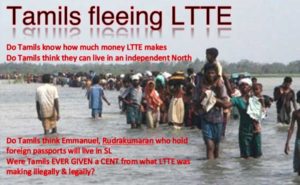
No 18-year old can create a terrorist movement with a handful of unemployed Tamil youth. So how did Prabakaran who initially set up the Tamil New Tigers in 1972 & rechristianed as LTTE in 1976 become so powerful with a hierarchical command structure, uniforms & possess more sophisticated machinery than the national army of Sri Lanka? How did LTTE make so much money & buy so much help?

Good question – that answer gets complicated because he had not just one or two helpers but a host of very powerful players that included foreign intelligence, foreign governments, the Church & associated NGOs.

LTTE’s international headquarters opened in London in 1984 runs openly without any fear of UK Government. Inspite of Canada, US, EU, UK banning LTTE, LTTE operates offices in 48 countries. Naturally a formidable force against the State of Sri Lanka. What do these interested parties expect helping a terrorist movement – the mono-ethnic demand of Eelam through the new constitutional changes covering 29% of land mass & 60% of coastal belt in Sri Lanka now makes sense & looks like the 30 year wait & collateral damage of lives is slowly delivering on their ultimate objective. A separate area which the Western nations has access & direct control over in a strategically important area of Asia – no wonder the West wants Eelam!

It may also explain the silence of this so called international community that watched LTTE run its own defacto territory with own police, own courts, own administrative systems, own taxing even own currency – as part of an experiment to see how they could run their own if a separate area was in fact carved out! Come to think of it, this too makes sense now.

What good is a Sri Lankan government, Norway & Nordic Monitoring Mission if they watch LTTE recruit 10,000 Tamils to the LTTE AFTER the signing of the 2002 CFA? The LTTE civilian force (Illapaddei) were given a monthly salary of Rs.7000 (Rs.7000x 10,000 = Rs840,000,000 annual expenditure) in addition to this up to July 2006, LTTE had thousands of child soldiers and a strength of 30,000 cadres ((minimum expenditure on cadre salary Rs2,520,000,000)

What were foreign intelligence & police doing when LTTE were plying ships from Easter Europe through Africa & other Asian countries carrying military hardware as general cargo? By 2005 LTTE had 20 vessels & trawlers. LTTE operated boatyard companies in Indonesia & Philippines to transport arms & ammunition posing as general cargo with LTTE holding fake names & forged passports. Bulk of military hardware was purchased from North Korea & merchant vessels from Japan that got sold its ships at cheap rate to outsiders every 10 years.

LTTE airforce all had their training overseas in private training schools. LTTE procured 5 aircrafts from Czechoslovakia passed to Germany through land & shipped to Singapore, taken via sea to Indonesia to a bonded warehouse. LTTE operated 7 airstrips in Sri Lanka. These procurements were made through the hand carried hawala system.

Prabakaran, Maniwanan, Castro & deputy Nediyavan controlled the LTTE international network. It was only in January 2009 that Prabakaran appointed K Padmanadan to coordinate LTTE international affairs, an area Prabakaran had been directly overlooking. KP took over entire international network after May 2009 which was challenged by Nediyavan leading to a split & formation of the TEPA (Tamil Eelam People’s Assembly) Nediyavan controls activities from Norway/Europe where most of LTTE assets, media including Tamilnet, Tamil24, TV1, Voice of Tigers operate along with 350 LTTE schools (Tamil Cholai / Tamil Alagam) with 22,000 Tamil students enrolled charging Euro 15-20 from each student. All schools are headed by pro-LTTE imparting Eelam ideology & hatred for Sinhalese among the young generations.

There were no Father Emmanuel, Surendiran, Rudrakumaran calling the shots before 2009. It was after KP’s arrest in August 2009 that Rudrakumaran and the GTF, BTF, TGTE began an open & active role. All these characters had been playing a back-side role out of the limelight & did not show their colours till after Prabakaran died. Rudrakumaran did serve as LTTE lawyer during peace talks 2002/2003, he was also one of the coordinators of the World Tamil Coordinating Committee in US. Noteworthy is that over 80% of the Tamils living overseas did not participate in the TGTE elections in 2010 of which Rudrakumaran appointed himself as its Prime Minister! With TGTE banned as a LTTE front since 2014 why has the 12 countries where TGTE is running offices not investigated them

Though after 1983 close to 1m Tamils left Sri Lanka to reside in mostly western countries, money collected voluntarily or by force from them is insufficient to purchase all of the military hardware LTTE needed (hardly 10% are actively involved in LTTE interests). However, these Diaspora were strategically located to enable them to influence vote banks & local politicians. This explains why foreign MPs have taken surprising interest in Sri Lanka’s internal politics & are not shy of attending pro-LTTE events inspite of their countries banning LTTE.

Father Emmanuel’s links with LTTE go back to 1990s – he has 12 pro-LTTE diaspora organizations under him co-manned by Nediyavan, Emmanuel coordinates the GTF, inaugurated in February 2010 attended by then Foreign Secretary David Miliband. BTF was established in 2006. Suren Surendran is spokesman for both GTF & BTF. LTTE also has an ex-combatants group comprising all the former cadres.

LTTE sources of income

  • Drug trafficking
  • Sea pirating
  • Human smuggling – Tamils as refugees & ex-combatants (using Shanthi – earlier known as Princess Ishwari, later Sunsea & Ocean Lady vessels from South East Asia to Canada) charging $15,000 – $30,000 from each person
  • Profits from pro-LTTE tv stations, radio stations, websites, printing presses, communicatin centres
  • Fundraising events – gala dinners, walks, signature campaigns, charity efforts, panel talks, seminars, conferences, workshops,
  • Money laundering – Europe/Switzerland, Dubai, Hong Kong, Singapore & deposited into individual bank accounts.
  • Credit card scams
  • Social security frauds by LTTE fronts posing as charities enjoying tax holidays & tax concessions.

In 2007, when LTTE tv station TTN was closed down by US & France, LTTE tried to recommence operations from Singapore using SAT link, when that failed they tried Italy, Serbia, Israel, Hong Kong to finally settle in UK under GTV. LTTE operates TV1 & TVi from Canada.

Human Rights Watch report The Final War: LTTE fundraising & Extortion within the Tamil Diaspora in late 2005 & early 2006” gives a comprehensive outlook on LTTE intimidation in collecting funds across UK, Canada & Europe visiting houses & Tamil-owned businesses requesting money by intimidation, coercion or threat. The scale of threat used by LTTE groups against Tamils will shock any who reads the HRW report. HRW has named members of World Tamil Movement threatening Tamils abroad.

https://www.hrw.org/reports/2006/ltte0306/

Canada, Toronto individual families were asked to pay Canadian $2600 – $5000 some $10,000. Business owners paid between Canadian $25,000 – $100,000, A Canadian Hindu kovil had to pay Canadian $1million.

According to 2016 Canadian Census there are 157,000 Sri Lankan Tamils in Canada. If we take the minimum Canadian $2600 x 157,000 comes to Canadian $408,200,000 monthly without amount collected from Tamil businesses. According to Mckenzie Institute Tamil businessmen in Toronto have to give over 20% of their profits to LTTE.

London – Individual families had to pay £2,000, Tamil businesses paid £10,000 to £100,000.

(Financial Times UK says there are 200,000 Tamils in UK) That comes to £400,000,000 a month from individual families alone without calculating the funds raised from Tamil businesses! In 2005 pro-LTTE groups had visited 25 Tamil business owners – some had given £100,000 (imagine if 15 had given £100,000 that would make it £1,500,000)

Similar amounts charged of Tamil communities in France & Norway.

Norway is supposed to have 13,000 Tamils while France has 150,000.

In Germany, ten LTTE members were caught extorting 50 Deutschemarks per month from Tamil families. Tamil refugees in Germany and other European nations had to pay $60 a month.

LTTE credit card scams have taken place in Malaysia, the US, India, Hong Kong, Philippines, Dubai, Australia, Canada, Sri Lanka, Singapore, Germany and Thailand. In 2008, Bradfordshire police alone reported 745 debt and credit cards scams some amounting to 1000 pounds.

In 2001 LTTE were charging people USD 12,000 per passenger to be smuggled into Canada or US illegally.

In 2009, LTTE tried to smuggle 76 crew & passengers in MV Ocean Lady and 492 crew & passengers in MV Sun Sea to UK & Canada. Tamils were charged Canadian $30,000-40,000 per passenger.

LTTE social security frauds are many. In France social security fraud was worth perhaps 2 million Francs.

A major source of LTTE money comes from heroin/narcotic smuggling globally & in Sri Lanka. By 1993 there were said to be some 50,000 drug addicts in Sri Lanka! Authorities now say it is 250,000. The narcotics market in Montreal Canada is $1 Billion.

LTTE money laundering is another area in which LTTE makes substantial amounts of money https://www.swissinfo.ch/eng/society/money-laundering_tamil-tiger-financiers-to-stand-trial-in-switzerland/43798808

Majority of the LTTE fronts run as charities exploiting the social security benefits in the host countries. Many LTTE fronts operate as humanitarian agencies again using these as cover to camouflage their LTTE links & objectives. Most of the individuals operating within this nexus of illegal & legal set ups globally are interconnected & of the same families or groups therefore they are quick to take counter measures when issues arise. A good example is when TRO was about to be banned they ensured all funds were transferred to another LTTE front White Pigeon.

In 2004 Jane’s Intelligence declared LTTE annual profits to be in the range of $300-400million.

Look at the portfolio of sources of LTT funding ranging from credit card scams to legitimate schools, Montessori’s, shops, to money laundering, drug smuggling, people smuggling, arms smuggling, even body part rackets and the scale of income that these LTTE elements is anyone’s guess in particular the saving they are making now that they do not have to purchase arms/ammunition, sophisticated military hardware & communication systems or maintain at least a 30,000 cadre base (food, clothing, medicines etc)

So the annual profits has to be in excess of $500m for the global LTTE Inc.

With the ground force no more & the hardcore cadres virtually leaderless it is the tigers in suits who today call the shots. Rudrakumaran, Emmanuel etc are the new face of the LTTE. They never held VVIP roles when LTTE leaders was alive, but now that he is no more these are the men dictating how the global LTTE functions.

All of them are holding foreign passports, their families may probably not have even come to Sri Lanka, perhaps they cannot even speak Tamil or speak with an accent that no Tamil in Sri Lanka can understand so why are they bothered about an Eelam in Sri Lanka? Or are they raising the Eelam calls on behalf of the countries that hosts them? That is quite possible especially when these countries inspite of these LTTE fronts being banned are not doing anything against them even when their own citizens are getting ripped off by them through credit card & other social security scams.

Many Tamils may be thankful to the LTTE because they are having at least one member of their family living abroad but they now need to seriously ask themselves whether they want to go the whole path of Eelam because none of the players calling for Eelam from abroad are likely to give up living in Europe, Canada, US or Australia & start life in a separated North where there would little means of food, water & other means to sustain a separate independent territory. Wiggy is in his 70s, Sambanthan close to 80 – for them Eelam call is just a political survival as is for other Tamil politicians.

But did LTTE look after the Tamils in Sri Lanka, did they spend a penny to make life better for Tamils? Did they make a road, a school, a water tank, drainage, a park, a library? But look at the lives & houses of these LTTE representatives overseas? Look how they are living? Look at where their family members are studying & where they work? Tamils should realize that these LTTE fronts have been & are using Tamils only as a cover to continue their plush lives and the Eelam is just a slogan for them to gain VVIP recognition for themselves globally & among diplomats & foreign governments.

Tamils must now be more sensible & look at their future not become guinea pigs to the foreign-passport holding LTTE front representatives or Tamil politicians who are probably working to realize the agendas of West/India in the bigger geopolitics taking place using minority demands” which they have helped shape into international disputes.

Shenali D Waduge

PLANNED MURDER OF INDIAN SOLDIERS

October 3rd, 2018

ALI SUKHANVER

Just before UN’s General Assembly session in USA, the Indian authorities staged another play which took lives of three Indian soldiers in the Indian Occupied Kashmir. According to the script the whole blame was thrown over Pakistan without providing any proof. It is also note worthy that all this was done in response to Pakistani Prime Minister Imran Khan’s desire of peaceful relations between the two countries. He had expressed this desire in his first speech after taking oath as the Prime Minister of Pakistan. Experts are of opinion that Mr. Modi is trying to ignite hatred against Pakistan among the people of India just for the sake of the upcoming elections. He knows it very well that his party has extremely disappointed the people of India and certainly they would not vote for the BJP this time, so he is simply exploiting the traditional hatred against Pakistan as a tool for his success in elections. Such fake Indian dramas are nothing new particularly whenever Pakistan extends goodwill gestures to improve bilateral relations. Indian response to all such efforts always comes in form of some false flag operations” in Indian Occupied Kashmir.

It is a very interesting fact that after the planned murder of three Indian soldiers by their own companions, the Indian Army Chief Bipin Rawat also started threatening that Pakistan will have to face consequences in form of surprise attacks from India. After his threatening statement, a chopper carrying AJK Prime Minister Raja Farooq Haider and some members of his cabinet was targeted by the Indian forces on 30th September. This act was a sheer violation of international diplomatic rules and traditions. To save India from criticism on this ‘terrorism’, the Indian media started a very well organized campaign against Pakistan just to divert the attention of the critics on the situation. The only objective of all this activity, which is fully and equally participated by the BJP, the Indian Army, the R&AW and the Indian media, is just to support Mr. Modi in the upcoming elections. The fact of the matter is that the brains behind all this are misguided by the notion that by fueling the air with anti-Pakistan emotions, the hearts and minds of the Indian people could be conquered but actually things are otherwise. The people of India are neither fool nor politically immature; they know it very well that hostility with the neighbours could never be in the larger interest of a country. This warmongering attitude of the BJP is never going to prove beneficial for ‘Mr. Modi and Company’. This warmongering mindset in itself is considered a kind of terrorism in civilized societies.

Pakistan knows very well how to deal with such warmongers; moreover for Pakistan this blame game from the Indian side is nothing new as it is an old time tradition of India to fix Pakistan in every episode of terrorism, be it the Mumbai attacks or the Pathankot incident. It seems that India has learnt the technique of fixing Pakistan in every act of terrorism from the state of the art 9/11 incident. It is now an open secret that Pakistan was nowhere there behind the screen or on the frontline or among the schemers or the facilitators of 9/11 incident but even then things were made very bitter and very painful for Pakistan. Our so-called friends pushed us into the inferno of terrorism through a very planned and organized manipulation of the events. Foreign investors and even the local investors were convinced that their investments might go waste in Pakistan because there was no one who could save them from the terrorists. International media particularly the media patronized by the forces hostile to Pakistan also played a very important role in defaming Pakistan. Even a gas-cylinder blast at a gas-filling station was portrayed and projected as a suicide-attack. Street crimes were highlighted in a horrible way; the judicial system as well as the working of the police department and other security agencies was unjustly criticized. In short our ‘well-wishers’ succeeded, though for a short period, in creating an air of fear and dread among the investors and it all resulted in a severe damage to the whole of our economic and social structure. Now things are altogether different. Pakistan army and other security agencies worked day and night with all devotion and all sincerity and succeeded in uprooting this menace of this foreign patronized terrorism. We, the people of Pakistan have started our journey towards a new dawn and certainly thing would get better and better with the spreading daylight. Our struggle for a peacefully prosperous Pakistan would soon be narrated as a success story in the world history.

Is Colombo becoming an unsustainable city ?  Daily Mirror ( and also unliveable in a decade ?)

October 3rd, 2018

Dr Sarath Obeysekera

Even if I knew that tomorrow the world would go to pieces, I would still plant my apple tree– Martin Luther King  

Note

Martin Luther Kind also said  I have a dream)

https://www.lankaweb.com/news/items/2017/01/25/i-have-a-dreammartin-luthe-king/

If taken either literally or metaphorically King’s quote has a lesson for all. Here in Colombo as the skyline changes every passing day with bare tall buildings dwarfing the shorter, old ones the pertinent questions one would ask are ‘where is the replenishment for the trees felled?’. Where are the green lanes and space for ecological balance? Have the government, local bodies and the private sector forgotten the green factor?

Similar building booms with scant regard for ecology and essential facilities saw cities like Rio de Janeiro, Manila and Mexico City, turning the most unsustainable metropolises on earth. One wonders whether Colombo is fast following them. After all just like Colombo both Rio and Manila are sea front cities.

Anyone travelling to Colombo from Kandy, Negombo, Avissawella, Horana or Kalutara will pay witness to the phenomenon of every peripheral city in the province merging the other thus turning the entire western province into one big city. There are only a handful of villages left in between the townships and green patches and tree lines are fast becoming a rarity. The paddy fields and rubber lands have been taken over by the real estate companies. Call this urbanization or development but who decides what is suitable or not or the balance between development and ecology?

Vihara Maha Devi Park (Victoria Park) which was opened in 1951 remains the only major green patch in Colombo district and no plans have been made to open any other large park ever since. If at all if there’s any shade other than that it’s provided by the old tree lines in Colombo 7 which too date back to the same era.

As for sanitary facilities, sewerage issue in Colombo and suburbs has reached a crisis point and with a chunk of new buildings hiring sewerage bowsers to empty pits regularly in the absence of their own treatment plants.  As of now all the sewerage lines of Colombo National Hospital are open to Beira Lake and the plush new city of Colombo Fort is being built around this lake of epidemics.

Meanwhile, despite repeated requests no major repairs have been done at Ambatale water plant and already the city is having issues with the water supply. As to how to cater to the rapidly increasing water demand in the next few years is anyone’s guess. Besides deep earth drilling for high rising buildings has gone to block underground waterways and home wells are fast becoming a thing of the past.

Note  

World bank is providing 500 million rupees to execute a flood mitigation project by constructing two 3 m diameter tunnels from heart of Colombo to the sea .

Why shouldn’t they use the same tunnel to install a simple rail transport to carry passengers during non rainy season?

Another project mooted by Megapolis is to install flood gates connected to Kelani River to play a dual role

Main role is to pump water out to Kelani River during rainy season and reverse pump water from Kelani to Colombo during draught season to flush dirty water !

What the experts have missed is that more water you pump out from Kelani to Colombo Canals from Ambatale .more salty sea water will flow  upstream jeopardising Colombo Drinking water supply  !

It’s true that decades of poor planning has left little space for manoeuvring for the incumbent government. However still it’s obvious that unless all government agencies attending to infrastructure, amenities and facilities meet and have a brainstorming session and work together to address the crisis the situation is only going to turn for the worse. Right now what is happening is each government agency working independently is sometimes even at cross purposes and overlapping of duties.

Note

When Water Supply and Drainage with Ceylon Electricity board come under different ministers with no or less coordination with Megapolis  Ministry  .how can any project be sustainable ?

As for making Colombo a greener city given the manner desert cities like Dubai have resorted to innovative moves to increase the greenery it’s not wrong to say one can do wonders with the fertile soil of Sri Lanka if the government and private sector are genuinely committed to the cause. Given the number of government ministries and private entities involved in the building boom it is obvious that unless there’s a move by the political leadership it will be difficult to muster unanimity to make Colombo greener city.

Note

When the authority in charge of protecting the 1000 acres demarcated as the wetland playing dual role of water retention and providing green space for the people ,has failed to protect the same from various  unscrupulous  developers with political  patronage reducing the acreage to less than 500 acres during the last decade ,how can Colombo be liveable ?

 The only redeeming factor in the city perhaps is its relatively high standard of the air quality. According to a Yale university study the mandatory emission test introduced in 2008 by then Environment Minister Patali Champika Ranawaka has resulted in Sri Lanka performing way ahead of other nations in the region in terms of air quality.

Note 

I am nor sure about the validity of this statement as Colombo Air Quality is steadily deteriorating due to vehicle exhaust gas emission  and extensive sound pollution from Three wheelers and other vehicles ?

Progressive, wholesome steps yield good results. Sri Lanka surely has to find a way out of the current mess before it’s too late.

Dr Sarath Obeysekera

RELIGION, CULTURE  IN POETRY/ MUSIC- “KANDULA BROTHER CHARLES  THOMAS”, “BANA KOTUWE PODUHAMDURUWO”. “BANA KAGAGAMA SIRINANDA  HIMI”

October 3rd, 2018

By M D P DISSANAYAKE

With mass media attention spontaneously received on all forms of acts in Sri Lanka a new wave of public gatherings are being organised in all parts of Sri Lanka.   Brother Charles Thomas in his illustrious Kandula take our cultural values, love for mother and father and the need to protect Sri Lanka reciting Magey Ratata Samama Samudu Saranai”.  This program has a very strong following.

Kotuwe Poduhaduruwo will expose the womens dressing habits, tarnish the image of women, not worhy of a Buddhist Monk.  But he has also a very strong following.

Then Kagama Srinandana Thero, trying to be a populist, will pick any thing from Habits of Boys annoying girls going to school to Child Birth. But he has also a very strong following.

Brother Charles Thomas as I understand is still a Roman Catholic, with a diversified knowledge of most religions, especially a deep rooted knowledge of providing analysis of Buddhist Philosophy.

The society need to be watchful.   There are burning issues faced by the nation, not about dressing habits of women, not about boys passing a Line of Attention of girls, but education of younger generation.

I urge the readers to pick wisely what is best for Sri Lanka. Mushrooms could also be poisonous.

රු. 3.50 සිට රු. 170 දක්වා රුපියල අවප්‍ර‍මාණය වු නමුත්, රටේ ආර්ථික ප්‍ර‍ශ්න විසදී නෑ.  ආර්ථික අර්බුදය ජය ගැනීම ‘නිසි කළමනාකරණයක්‘ අවශ්‍යයි.

October 3rd, 2018

කීර්ති තෙන්නකෝන් 

‘අර්ථික කටයුතු පිළිබද අවසන් තීරණ ගැනීම සදහා National Economic Council නැතිනම් ජාතික අර්ථික කවුන්සිලය කියලා ආයතනයක් නිර්මාණය කර තිබෙනවා. ජනාධිපති, අගමැති, මුදල් ඇමති, මහ බැංකු අධිපති, ලේකම්වරු මෙහි සාමාජිකයින්.  මෑත යුගයේ දැවැන්තම මුල්‍ය අර්බුදයෙන් ගොඩ එන්නට ජාතික අර්ථික කවුන්සිලය ගත්ත ප්‍ර‍තිපත්ති තීරණ මොනවාද කියලා රටට පැහැදිලි කළ යුතු යැයි කැෆේ සංවිධානයේ විධායක අධ්‍යක්ෂ කීර්ති තෙන්නකෝන් මහතා අද රාජගිරියේ පැවති පුවත්පත් සාකච්ඡාවක දී පැවසීය.  

එහිදී අදහස් දැක්වූ තෙන්නකෝන් මහතා ,

නිදහස් ආර්ථිකය ආරම්භ වූ දා සිට අද දක්වා රු. 3.50 සිට රු. 170 දක්වා රුපියලේ අගය අව ප්‍ර‍මාණය වී තිබෙනවා.  කාලයෙන් කාලයට රුපියලට තිබෙන ශත සීය අඩුවෙලා නෑ කියලා තර්ක ඉදිරිපත් කරපු මහාචාර්ය තිලක් රත්නකාර ගේ සිට හර්ෂ ද සිල්වා, එරාන් වික්‍ර‍මරත්න දක්වා දේශපාලන න්‍යාය පත්‍ර‍වලට වැඩ කරපු අය රුපියල අවප්‍ර‍මාණය ගැන මවපු සුරංගනා චිත්‍ර‍ ඇස් පනාපිට බිදවැටිලා තියෙනවා.  ජාතික ආර්ථික කවුන්සිලයේ කවුරුවත්, අද පවතින අර්බුදය ගැන වචනයක් කියන්න කට අරින්නේ නෑ.  අඩුම ගානේ පී.බී.ජයසුන්දර වැනි නිලධාරීන් ජනතාවට කරුණු පැහැදිලි කිරීමට හරි ඉදිරිපත් වුණා.  අද මුදල් අමාත්‍යාංශයේ ලේකම්වරයාත්, ආර්ථික විද්‍යා ඔස්තාර් ලා කියන පාස්කරලිංගම්, රත්වත්තේ ලා කවුරුත් රටට වගකියන්නේ නෑ. කරුණු පැහැදිලි කරන්නේ නෑ.

රුපියල අවප්‍ර‍මාණය වීම වලක්වා ගැනීමට සංචිත බැහැර කිරීමට තමන් කටයුතු නොකරන බව දේශපාලනඥයින් කියනවා. නමුත්, එය සත්‍යයක් නොවෙයි.  පසුගිය සති 3 තුල පමණක් රුපියල ආරක්ෂා කරන්න මහ බැංකුව ඇමරිකානු ඩොලර් මිලියන 450 ක් වෙළෙදපොලට මුදා හැර තිබුණා.  ඊයේ මහ බැංකුවේ පැවති පුවත්පත් සාකච්ඡාවක දී නියෝජ්‍ය අධිපති නන්දලාල් වීරසිංහ මහතා පිළිගත්තා 2018 ජනවාරි තිබුණ සංචිත ප්‍ර‍මාණයට වඩා ඩොලර් මිලියන 184 ක් අද අඩුවී තිබෙන බව.

2018 වසර ආරම්භයේ දී මහ බැංකුව සතු ඩොලර් සංචිත බිලියන 8 කි. පසුගිය මාස 8 තුල එය ඩොලර් මිලියන 500 කින් ඉහළ ගොස් තිබේ. 2018 අගෝස්තු 31 දිනට මහ බැංකුවේ සංචිතයේ වත්කම ඩොලර් මිලියන 8,590.87 කි.  එයින් ඩොලර් මිලියන 768.69 ක් (වහා විකුණා දැමිය නොහැකි) රත්තරං සංචිතය කි. සරළව කිව හොත් වෙළෙදපොලට අතහැර දැමිය හැකි මහ බැංකුවේ රටේ විදේශ මුදල් සංචිතය ඩොලර් බිලියන 7.9 කි. පසුගිය සතිය දක්වාම, දිනකට ඩොලර් මිලියන 25 -30 අතර ප්‍ර‍මාණයක් වෙළෙදපොළට එක් කොට තිබුණි.  ඩොලර් මිලියන 500 ක් අතහැරිය පසුවත් රුපියල 9%කින් අවප්‍ර‍මාණය වී තිබේ. 

මහ බැංකුව සතුව ඇති පරිහරණය කළ හැකි ( සංචිත විදේශ මුදල් (Free Reserve) ඩොලර් බිලියන 7.2 න් 2018 වසර අවසානයේ ණය වාරික ගෙවීම සදහා තවත් ඩොලර් බිලියන 6.4 ක් අවශ්‍යය.  ඒ අනුව,  තවදුරටත් ඩොලරයේ අගය පාලනය කිරීමට අතහැර දැමිය හැකි මුදල ඩොලර් මිලියන 800  – 1000 ක් අතර ප්‍ර‍මාණයකි. ඩොලරට සාපේක්ෂව රුපියල අවප්‍ර‍මාණයවීමේ මෙවැනිම තත්වයක් 2012 හා 2015 දී ද ඇති විය.  මහින්ද රාජපක්ෂ රජය, මහා භාණ්ඩාගාරය සතු ඩොලර් බිලියන 4 ක් 2012 දී වෙළෙදපොල වෙත පොම්ප කළ නමුත්, රුපියලේ 13% කින් අවප්‍ර‍මාණය විය. 

 වත්මන් රජය යටතේ මහ බැංකු මංකොල්ලයෙන් පසුව, 2015 දී ද මෙවැනිම තත්වයක් උදාවිය.  මහ බැංකුවේ නිලධාරීන්ගේ දැඩි විරෝධය මත හිටපු මහ බැංකු අධිපති අර්ජුන මහේන්ද්‍ර‍න් ඩොලර් මිලියන 3.25 ක මුදල් සංචිත 2015 අගෝස්තු මහා මැතිවරණයට පෙර වෙළෙදපොලට අතහරිනු ලැබූ නමුත් එදා ද, 9% කින් රුපියල අවප්‍ර‍මාණයවීය.   (මහ බැංකු අධිපති කුමාරස්වාමි මහතා පුවත්පත් සාකච්ඡාවක දී පැවසූවේ ඩොලර් මිලියන 1.2 ක් මුදාහැරි බවයි.  එය සත්‍ය නොවේ.  2015 මුදා හරිනු ලැබූ මුළු සංචිත ප්‍ර‍මාණය ඩොලර් මිලියන 3.25 කි. 

රුපියල තවදුරටත් බාල්දුවීම – අවසානය කොතැනද?

ලෝකයේ රටවල් හතක මුල්‍ය අනුපාතික අර්බුදයක් ඇතිවිය හැකි බව මෙයට මාස 1 ½ කට පෙර, ජපානයේ ‘නොමුරා‘ මුල්‍ය කළමනාකරණ ආයතනය පර්යේෂණ වාර්තාවක් ඉදිරිපත් කළා ‘ලංකාව, දකුණු අප්‍රිකාව, ආර්ජන්ටිනාව, පාකිස්ථානය, ඊජිප්තුව, තුරිකිය, යුක්රේනය‘ පිළිබද මේ වාර්තාවේ සදහන් වුනා. ජාතික ආර්ථික කවුන්සිලය, මහ බංකුව, මුදල් අමාත්‍යාංශය මේ වාර්තා ගනන් ගත්තේ නෑ. පිළියම් යෙදුවේ නෑ. 

සාමාන්‍යයෙන් ව්‍යවහාරයක් තියෙනවා ‘ආණ්ඩුවට වැඩිය රාජ්‍යය‘ ශක්තිමත් කියලා.  අද ලංකාවේ තියෙන්නේ එහි විකෘතියක්.  ‘රාජ්‍යයට වැඩිය ආණ්ඩුව ශක්තිමත්‘. වෙනත් රටක මෙවැනි තත්වයක් ඇති වුණාම වගකිව යුතු අය ගෙදර යවනවා.  නමුත්, ලංකාවේ මේ අර්බුදයට වගකිව යුතු අය තමන්ගේ ඡන්ද ගොඩ වැඩි කරගන්න සුරංගනා කථා කියනවා යැයි ද තෙන්නකෝන් මහතා මෙහිදී  පැවසීය.

2018 සිංහල-දෙමළ අලුත් අවුරුදු නිවාඩුවෙන් පසුව ඩොලරයට සාපේක්ෂව රුපියලේ බිද වැටීම ඇරඹුණේ රු. 155.75 ඉඳලා. 2015 දී බලයට පැමිණි යහපාලන ආණ්ඩුව  ඇතිවිය හැකි මුල්‍ය අර්බුයදයට දිගු කාලීන හෝ කෙටි කාලීන විසදුම් සෙව්වේ නෑ. එදා හිටපු මුදල් අමාත්‍යවරයා  ‘කළු සල්ලි සුදු කරන ආර්ථිකයක්‘ ගැන සිහින මැව්වා. එදා රු. 131 ට තිබූ ඩොලරය රු. 105 දක්වා ශක්තිමත් කරන හැටි ගැන කථා කළා.  අදත්, රටට කළු සල්ලි නම් එනවා. ඒවා ලැබෙන්නේ මහා භාණ්ඩාගාරයට නොවෙයි.  දේශපාලනඥයින්ගේ ගිණුම්වලට. 

ජාත්‍යන්තර මුල්‍ය අරමුදල මගින් ලබාදුන් ණය සහන සදහා ලංකා රජය උපක්‍ර‍මික නොවන ව්‍යවසාය ඈවර කිරීම යටතේ හිල්ටන්, ලංකා හොස්පිට්ල් හා හයට් හෝටලය විකුණා දැමීමට යෝජනා කළා.  2014 ජනාධිපතිවරණ වේදිකාවේ දී ව්‍යාපාරික ප්‍ර‍ජාවට දුන් මේ පොරොන්දුව ඉටු කළේ නම් අවම වශයෙන් අද, භාණ්ඩාගාරයට/රටට ඩොලර් මිලියන 500 ක් පහසුවෙන්ම ලැබෙනවා. හිල්ටන් විකුණා දැමීමට යෝජනා වෙලා, දැන් අවුරුදු තුන හමාරක් වෙනවා. තවමත්, එය සිදුකරන්නට ‘කොමිස් මගින් පාලනයවන දේශපාලන-නිලධාරි ආර්ථික විශේෂඥයින්ට හැකිවී නෑ.

ආයෝජන මණ්ඩලය හරහා යෝජනා වී තිබු විදුලිබල ව්‍යාපෘති 8 කින් එකක් හෝ ඇරඹීමට යහපාලන රජය අසමත් වුණා.  යහපාලන රජයේ අවුරුදු 3 මාස 9 ට එක කිලෝ වෝට් එකක විදුලි බලයක් ජාතික විදුලිබල පද්ධතියට එක් වී නෑ. ලංකාවේ වැඩිම ආනයන වියදම තියෙන්නේ බොරතෙල් සදහා යි. පුණර්ජනණීය බලශක්ති අමාත්‍යාංශය නමට පමණයි.  මේ ආණ්ඩුව යටතේ විදුලිබල මණ්ඩලය ටෙන්ඩර් 250 කට වැඩි සංඛ්‍යාවක් ප්‍ර‍ධානය කර තිබෙනවා.  හැබැයි තවම එකම කිලෝ වෝට් එකක් ජාතික විදුලිබල පද්ධතියට එක් වී නෑ. සූර්ය බලශක්තිය ස්ථාපනයට ආසියානු සංවර්ධන බැංකුවෙන් ලැබුණු ඩොලර් මිලියන 50 ක ණය ආධාරයට ගිවිසුම් අත්සන් කරන්න මාස 12 ක් ගියා.  එහි ප්‍ර‍තිඑල අද රටම බුක්ති විදිනවා යැයි ද තෙන්නකෝන් මහතා පැවසීය

Crisis, confusion and moral right

October 3rd, 2018

The Editorial Courtesy The Island

Thursday 4th October, 2018

Desperate measures the government has adopted in a bid to tackle the current economic crisis have irked its yahapalana ally, the JVP, beyond measure. The latter has said the former has no moral right to restrict imports and ask the people to tighten belts. Here, we have an outfit which considers itself Marxist flaying a capitalist party for opting for statist policies, albeit temporarily, by way of crisis management!

Ironically, this confused situation has come about under a UNP-led government, which celebrated the 40th anniversary of the introduction of open economic policies, only a year ago. Dr. Gunadasa Amarasekara points out in his latest book, Danawadayata Vikalpayak (‘Alternative to Capitalism’) that to mark the aforesaid occasion, the UNP published a newspaper advertisement with a picture of a small girl eating an apple as if to tell the public that they would not have been able to eat apples but for the change of government in 1977.

However, given the government’s desperation, the day may not be far off when apple imports will have to be stopped to strengthen the rupee. J. R. Jayewardene, who opened up the economy and liberalised trade, must be turning in his grave.

Socialism may not be able to make a comeback with a vengeance. Capitalism is also not free from existential problems. The US has adopted some protectionist policies which, the Trump administration says, have worked for that country; about ten years ago, an unprecedented state intervention had to be made to bail out the American banking system during a disastrous financial meltdown. What we have witnessed in the US runs counter to the tenets of capitalism.

The JVP has torn into the Sirisena-Wickremesinghe government for restricting imports, ranging from cars to lentils or parippu, without curtailing its extravagant spending. It has said two cars worth about Rs. 600 million were imported for Prime Minister Ranil Wickremesinghe, and President Maithripala Sirisena also got similar vehicles. One can agree with the JVP that the government has no moral right to ask the people to adopt austerity measures while the yahapalana leaders and their kith and kin are living high on the hog. They are seen savouring sangria at Shangri-La.

The yahapalana propagandists are trying to make light of the current crisis, but they cannot fool the people. The Central Bank (CB) has already released USD 184 million in a desperate bid to shore up the rupee. This method is effective, but the CB cannot go on releasing millions of dollars indefinitely in this manner. The government has to get its act together on the economic front urgently and do everything in its power to attract foreign investment in adequate amounts. But, given rampant corruption, inefficiency, etc. within the government ranks and the country’s low ranking on the ease of doing business index, this is a tall order.

Prime Minister Wickremesinghe is reported to have directed some state institutions to prepare strategies to overcome the present crisis so that they can be implemented when he returns from his current overseas tour. This course of action is like giving swimming lessons to a drowning man!

The JVP is one of the main architects of the present regime and had a slot at the yahapalana high table after the 2015 regime change; it was represented at the National Executive Council under the interim government (Jan-August 2015). It was also given the post of the Chief Opposition Whip for services rendered.

Now that the JVP has questioned the yahapalana leaders’ moral right to do what they are doing, and embarked on a campaign to oust the current dispensation, the question is whether its leader has any moral right to function as the Chief Opposition Whip any longer.

Shouldn’t the JVP give up what it has got from the yahapalana government it is purportedly planning to dislodge?

Sri Lanka rupee continues to plumb depths, PM Ranil blames global crisis

October 3rd, 2018

Courtesy The Standard (HK)

Despite late measures including restrictions on imports of politicians’ duty free super luxury cars such as Mercedes-Benzes, BMWs, Audis, and Range Rover Discovery SUVs, the Sri Lankan rupee continued to fall today versus the US dollar.

The heavily indebted government of President Maithripala Sirisena and Prime Minister Ranil Wickremesighe has been lurching from one crisis to another, and the country has to settle debts of US$4 billion next year. Growth under the regime, riddled with corruption, has slowed to a crawl.


Sri Lanka’s rupee is on a downward spiral, while the economy of the heavily-indebted country has slowed to a crawl.

The rupee ended at 169.20/45 per US dollar, compared with the previous close of 168.90/169.00, Reuters data show.

Premier Wickremesinghe has blamed a non-existent global economic crisis and a global financial crisis for the rupee’s woes in political speeches targeting a domestic audience, while Finance Minister Mangala Samaraweera has asked the public to shun foreign products.

The Central Bank had spent US$1.2 billion to defend the free-falling rupee.

Reuters reports that the Colombo stock index fell 0.17 percent to 5,807.74, its lowest close since December 13, 2013.

20 ගේන්නේ ෆෙඩරල් ව්‍යවස්ථාවක් නැතිව උතුරට ස්වයං පාලනයක් දෙන්නයි

October 3rd, 2018

උපුටාගැණීම  මව්බිම

විසි වැනි ආණ්ඩුක්‍රම ව්‍යවස්ථා සංශෝධනය සම්මත වූවාට පසු ෆෙඩරල් ව්‍යවස්ථාවක් නැතිවම උතුරට ස්වයං පාලනයක් ලැබෙන බව ජාතික නිදහස් පෙරමුණේ නායක පාර්ලිමේන්තු මන්ත්‍රි විමල් වීරවංශ පවසයි.
එවිට දුටුගැමුණු මහ රජතුමා වැනි ශේ‍ර්ෂ්ඨ නරපතියකුට මෙරට පාලන බලය ලැබුණද ඔහුටද කළ හැකි යමක් ඉතිරි නොවන බවද ඔහු පැවැසුවේය.

‘බෙදුම්වාදී 20 වැනි සංශෝධනය හකුළා ගනු!’ යන තේමාව යටතේ පසුගියදා නාත්තණ්ඩිය මහවැවදී ජා.නි.පෙ. පුත්තලම් දිසා සභාව සංවිධානය කළ ජන හමුවක් අමතමින් ඔහු මෙසේ පැවැසීය.
මන්ත්‍රිවරයා එහිදී මෙසේද සඳහන් කළේය.

අද මේ රටේ ආර්ථිකය හතර ගාතෙන් ඇදවට්ටලා තිබෙනවා. ස්වදේශික ගොවි ජනතාව, වෙනත් නිෂ්පාදකයන්, ව්‍යාපාරිකයන් අසරණ වෙලා තිබෙනවා. නවතම ලෝක බැංකු වාර්තාවක් පෙන්වා දෙනවා, ‘දකුණු ආසියාවේ දුප්පත්කමින් කරවටක් ගිලී සිටින රටවල් දෙක අතර ශ්‍රී ලංකාව සිටිනවා’ කියලා.

ලංකාවේ විදුලි දුම්රිය ව්‍යාපෘතියකින් ඇමැති මලික් සමරවික්‍රම හා ඇමැති සුජීව සේනසිංහ පගා ඉල්ලපු බව දැන් අනාවරණය වෙලා තිබෙනවා. විදුලි දුම්රිය ව්‍යාපෘතියක කොන්ත්‍රාත්කරුවකුගෙනුත් පගාව ඉල්ලපු මලික් සමරවික්‍රම ශ්‍රී ලංකාවේ ආර්ථිකය සිංගප්පූරුවට පාවාදෙන ගිවිසුමක් අස්සන් කරලා සිංගප්පූරුවෙන් කොහොම පගාවක් ගන්න ඇතිද?

දැන් රට බෙදන්න, අස්ථාවර කරන්න, අපි උපන් රටේ අනාථයන් බවට පත් කරන්න වුවමනා 20 වැනි ආණ්ඩුක්‍රම ව්‍යවස්ථා සංශෝධනය ජ.වි.පෙ.ට දුන්නා අරගෙන එන්න. නමුත් මේක හැදුවේ ජ.වි.පෙ. නොවෙයි, දෙමළ ජාතික සන්ධානයේ මන්ත්‍රි එම්.ඒ. සුමන්තිරන්, රට කෑලි 09කට කඩනකම් නින්ද යන්නේ නැති ජයම්පති වික්‍රමරත්න හා තවත් සුරේෂ් නමැති එන්ජීඕකාරයෙක් එකතු වෙලයි මේක හැදුවේ. මේ 20 වැනි සංශෝධනයෙන් ජනාධිපතිවරණය අහෝසි කරන්නේ රනිල් වික්‍රමසිංහට කවදාවත් ජනාධිපතිවරණයකින් ජයගන්න බැරි නිසයි.

සිරිසේන මහත්තයාට පොඩි කේක් කෑල්ලක් දෙනවා. ‘ඔයා ඔය පුටුවටම වෙලා පත්තරයක් බලබලා ඉන්න’ කියලා. විධායක බලතලවලින් වැඩි කොටසක් ජනාධිපතිවරණයකින් දිනන්න බැරි රනිල්ට දෙනවා. ‘රනිල්ට බෑ’ කිව්වේ අපි නොවෙයි මංගල සමරවීර. අද රනිල්ට විතරක් නොවෙයි, මංගලට, සාගලට මේ සියලුදෙනාට ‘බෑ’ කියලා ඔප්පු වෙලා ඉවරයි. මේ තමයි ජනතා විමුක්ති පෙරමුණ, එක්සත් ජාතික පක්‍ෂයට දෙන උදව්ව, මේ නාමල් කුමාර හඬපට සහිතව අනාවරණය කළ බරපතළම කරුණ වූයේ ‘ජනාධිපති – හිටපු ආරක්‍ෂක ලේකම් ඝාතන තැත’ පිළිබඳ කරුණයි. ජනාධිපති මරා දැමුවොත් වැඩබලන ජනාධිපති වෙන්නේ කවුද? රනිල් (සභාවෙන් පිළිතුරු).

ඒ වගේම ජනාධිපතිවරණයක් පැවැත්වුවහොත් අගමැති රනිල් වික්‍රමසිංහගේ භයානකම ප්‍රතිවාදියා වන්නේ ගෝඨාභය රාජපක්‍ෂ මහතායි. එහෙනම් ගෝඨාභය රාජපක්‍ෂ මහතා මරා දැමුවොත් එහි වාසිය කාටද? රනිල්ට (සභාවෙන් පිළිතුරු). පසුගියදා පාර්ලිම්න්තුවේදී මේ ඝාතන තැත පිළිබඳ අප ප්‍රශ්න කරන විට, වෙනදා ‘ඇදගෙන නාන’ රනිල් වික්‍රමසිංහ අගමැතිවරයා පොලිසිය භාර ඇමැතිට ‘නාන්න දීලා’ පූස් පැටියෙක් වගේ හැංගිලා හිටියා. ඒ මේ වැඩෙන් වාසිය ලැබෙන්නේ එයාට නිසයි.

අනේ අම්මපා මෙහෙමත් ජනාධිපති කෙනෙක්. ‘මට කිසිම දෙයක් කරන්න දුන්නේ නැහැ’ කියමින් මහින්ද රාජපක්‍ෂ මහත්තයාට ‍ෙදාස් කියපු මෙයා දැන් කියනවා. ‘මට අවසාන සති දෙකේ යුද්ධය කරන්න ආරක්‍ෂක ඇමැතිකම දීලා මහින්ද රාජපක්‍ෂ ජනාධිපතිවරයා රට ගියා’ කියලා. ගෝඨාභය රාජපක්‍ෂ ආරක්‍ෂක ලේකම්වරයා හා හමුදාපති සරත් ෆොන්සේකා යන දෙන්නත් රටේ හිටියේ නැහැ කියලා.

කමක් නැහැ. අපි ඔයා යුද්දේ කළා කියලා පිළිගන්නම්කෝ. ඔය සති දෙකේ තමයි යුද අපරාධ සිදු කළ කියලා ජිනීවා මානව හිමිකම් කවුන්සිලය චෝදනා එල්ල කළේ. ඉතින් ඔයා ඒ චෝදනාවත් භාර ගන්න. ඒ අනුව බැලුවාම ජිනීවා යෝජනාවෙන් එල්ල කළ යුද අපරාධ චෝදනාවලට වගකිව යුත්තේ අවසන් සති දෙකේ යුද්ධයට අණ දුන් ශ්‍රී ලංකාවේ හිටපු වැඩ බලන ආරක්‍ෂක ඇමැති මෛත්‍රිපාල සිරිසේන වීරයා.

අගරදගුරු හිමිපාණන්ගේ කතාව ගැන මංගලගේ විවේචනය ජනපති-අගමැති අනුමත කරනවාද?

October 3rd, 2018

මීගමුව – නිමන්ති ප්‍රනාන්දු උපුටාගැණීම  මව්බිම

මංගල සමරවීර අමාත්‍යවරයා මැල්කම් රංජිත් හිමිපාණන්ගේ කතාව විවේචනය කරමින් නිකුත් කළ ප්‍රකාශ අගමැතිවරයා සහ ජනාධිපතිවරයා අනුමත කරනවාදැයි යන්න ජනතාව ප්‍රශ්න කරනවා යැයි එක්සත් ජාතික නිදහස් පෙරමුණේ නායක මෛත්‍රි ගුණරත්න පවසයි.

ගුණරත්න මහතා මේ බව පැවැසුවේ අති උතුම් මැල්කම් කාදිනල් රංජිත් හිමිපාණන් මානව හිමිකම් පිළිබඳව කළ ප්‍රකාශයක් විවේචනය කරමින් ජනමාධ්‍ය හා මුදල් අමාත්‍ය මංගල සමරවීර මහතා සිදු කර තිබෙන අදහසකට විරෝධය පාමින් ඉකුත්දා (29දා) මීගමුවේදී පැවැති රැස්වීමකදීය.

මේ අවස්ථාවේ තවදුරටත් අදහස් දැක්වූ මෛත්‍රි ගුණරත්න මහතා,
යහපාලන ආණ්ඩුව ජනතාව තෝරා ගත්තේ මේ රටේ ආගමික සංහිඳියාව ඇති කිරීමටයි. මේ යහපාලන ආණ්ඩුව ගේන්න මීගමුව කතෝලික ජනතාව ගිහිල්ලා පෝලිමේ ඉඳලා ඡන්ද දුන්නා. මේ ආණ්ඩුව දැන් මොකද කරන්නේ, බලයට පත් කරන්න උදවු කළ සෑම කෙනාටම පස්සට පයින් ගහනවා කියන එක තමා කියන්න තියෙන්නේ.

මේ වගේ වගකීමක් නැති ප්‍රකාශ මංගල සමරවීර ඇමැතිවරයා පමණක් නෙවේ අනෙක් මැති ඇමැතිවරුද කරනවා. අද අගමැතිතුමා ගමක් ගමක් ගාණේ ගිහිල්ලා ලැජ්ජා නැතිව කියනවා අද ආර්ථිකය කඩාවැටිලා කියලා.

ජනතාවට කියනවා පටි තද කරගන්න කියලා. මේ රටේ ජනතාවගේ මහ බැංකුව මංකොල්ලකෑවා. මලික් සමරවික්‍රමගේ යාළුවෝ දාලා මහ බැංකුවේ සල්ලි ටික හොරකම් කළා, මහජන බැංකුවේ සල්ලි ටික හොරකම් කළා. වොක්ස්වගන් ගේනවා කියලා. අගමැතිතුමා ගමක් ගමක් ගාණේ යනවා. අප අහනවා අගමැතිතුමාගෙන් ඔබතුමා රෙදි ඇඳගෙනද මේ යන්නේ කියලා.

මීගමුව – නිමන්ති ප්‍රනාන්දු

මහින්ද පිට වරද පටවලා මේ අර්බුදය විසඳන්න බෑ

October 3rd, 2018

ඉෂාරා සිල්වා උපුටාගැණීම  මව්බිම

රුපියල ස්ථාවරව පවත්වාගැනීම සඳහා දින හතරක් ඇතුළත මහ බැංකුව ඇමෙරිකානු ඩොලර් මිලියන 154.5ක මුදලක් වෙළෙඳපොළට මුදාහැර තිබෙන බව පාර්ලිමේන්තු මන්ත්‍රි ආචාර්ය බන්දුල ගුණවර්ධන පැවැසීය.

මන්ත්‍රිවරයා සඳහන් කර සිටියේ සැප්තැම්බර් 25 වැනි දින ඇ.ඩො.මි. 32.5ක්, සැප්තැම්බර් 26 වන දින ඇ.ඩො.මි. 56ක්, සැප්තැම්බර් 27 වැනි වැනි ඇ.ඩො.මි. 30ක් සහ 28 වැනි දින ඇ.ඩො.මි. 30ක් වශයෙන් මෙලෙස වෙළෙඳපොළට මුදාහැර තිබෙන බවයි.

ඊයේ (02දා) පුංචි බොරැල්ල, වජිරාශ්‍රමයේ පැවැති ඒකාබද්ධ විපක්ෂයේ ආර්ථික පර්යේෂණ ඒකකයේ මාධ්‍ය හමුවට එක්වෙමින් මන්ත්‍රිවරයා වැඩිදුරටත් මෙසේද කීය.

රටේ ඇතිවී තිබෙන ආර්ථික අර්බුදයට හේතුව මහින්ද රාජපක්ෂ යුගයේ ගත් ණය නිසා බව නොකියන තාක් මේ ආර්ථික අර්බුදය විසඳන්නට හම්බවෙන්නේ නැහැ. නිදහසින් පසු ශ්‍රී ලංකාවේ ණය බර විශාල ලෙස වැඩි වූ වර්ෂය ලෙස හඳුන්වන්නේ 1989 වර්ෂය. එම වසරේ දළ දේශීය නිෂ්පාදනය 8%ක් වනවිට ණය බර 108%ක් දක්වා ඉහළ ගොස් තිබෙනවා. එම වසරේ තමයි නිදහසින් පසු ඇතිවූ විශාලම ආර්ථික අර්බුදය ඇති වුණේ.
අවුරුදු 5න් පහට දක්වා තිබෙන ණය බර දත්ත වාර්තාවල සටහන් වී තිබෙන්නේ ලංකා ඉතිහාසයේ වැඩිම ණය බර 1975-1980 වසරවල ඇති වී තිබෙන බවයි.

ජාත්‍යන්තර මූල්‍ය අරමුදලෙන් එක් ණය වාරිකයක් සඳහා ලබාදෙන්නෙත් ඇමෙරිකානු ඩොලර් මිලියන 169යි. එහෙම ණය අරගෙන ඇ.ඩො.මි. 154.5ක් වෙළෙඳපොළට දානවා රුපියල බේරගන්න. මේ තත්ත්වය දිගින් දිගටම පවතින විට බස් ගාස්තු, දුම්රිය ගාස්තු වැඩි වෙනවා. ලබන සතිය වනවිට ඛනිජ තෙල් මිලත් ඉහළ යනවා.

මේ ආර්ථික අර්බුදයට මුහුණ දෙන්න රටේ අපනයන ප්‍රමාණය වැඩි කරන්න බැහැ. යුද්ධය නිසා මේ රටට ආයෝජන ආවේ නැහැ වසර 30කට ආසන්න කාලයක්. 2009 වසරේදී හිටපු ජනාධිපති මහින්ද රාජපක්ෂ මහතා යුද්ධය අවසන් කිරීමෙන් පසුව ආරම්භ කළ සංවර්ධන ව්‍යාපෘතීන් හේතුවෙන් මේ රටට විදේශ ආයෝජන ගලාගෙන ආවා. උතුරු – නැඟෙනහිර ප්‍රදේශ ලෙස සංවර්ධන ව්‍යාපෘතීන් ආරම්භ කළා. මුළු රටම වැඩබිමක් කළා.
හැබැයි මේ ආණ්ඩුව 2015 බලයට පැමිණීමෙන් පසුව විදේශ ආයෝජන මඟින් සිදුකරපු සංවර්ධන ව්‍යාපෘතීන් සියල්ල අවලංගු කරලා වැඩබිමක් වෙලා තිබුණ මේ රට මුඩුබිමක් කළා.

අපේ ආණ්ඩු කාලයේ යුද්ධය තිබුණා. ලෝක ආහාර අර්බුදය තිබුණා, ලෝක ආර්ථික අර්බුදය තිබුණා, ලෝක තෙල් අර්බුදය ඇතිවුණා. හැබැයි මේ ආණ්ඩුව බලයට එන විට මේ අර්බුද කිසිවක් තිබුණේ නැහැ. එය මහා විශාල වාසියක් මේ ආණ්ඩුවට. ඒ මහා වාසියෙන් රටේ ඉතුරු වුණ ඩොලර් ටික පුච්චලා දැම්මා. මේ දවස්වල ආණ්ඩුව නිරන්තරයෙන් මතුරන මන්තරෙන් රටත් ජනතාවත් වෙළාගෙන සිටින දැවැන්ත ආර්ථික අර්බුදය වළක්වන්න ආණ්ඩුවට ඉඩ ලැබෙන්නේ නැහැ.

නිදහස් වෙළෙඳ ගිවිසුම් හදලා රට ඇතුළේ නිෂ්පාදනය වන භාණ්ඩ හා සේවා විදේශ රටවලින් නිදහසේ ගලා ඒමට ඉඩ විවෘත කරලා දුන්නේ අගමැති රනිල් වික්‍රමසිංහ මහතාගේ ආර්ථික කමිටුවෙන්. ජනාධිපති මෛත්‍රිපාල සිරිසේන මහතා මේ ආර්ථික අනුකමිටුව අහෝසි කළත් එම කමිටුවෙන් රටේ ආර්ථිකයට කළ විනාශය නතර කරන්න බැහැ.

ශ්‍රී ලංකා පොදුජන පෙරමුණේ සභාපති මහාචාර්ය ජී.එල්. පීරිස්
මේ වන විදේශීය ආයෝජකයන්ට අපේ රට ගැන තිබෙන විශ්වාසය කඩාගෙන වැටිලා තියෙනවා. මෙය හදිසියේ ඇතිවූ අර්බුදයක් නොවෙයි. කාලයක් තිස්සේ පැවතුණු අර්බුදයක්. නමුත් ආණ්ඩුව ඊට කිසිම පිළියමක් යෙදුවේ නැහැ. මේකට හේතුව ආණ්ඩුව තුළ විශ්වාසය නොමැති වීමයි.

පාර්ලිමේන්තු මන්ත්‍රි සිසිර ජයකොඩි

ඉදිරි කාලපරිච්ඡේදය රටේ ජනතාවට පීඩාව දෙගුණ තෙගුණ වෙනවා. ජනාධිපතිගේ වියදම් තුන්කෝටි 69 ලක්ෂයක් දක්වා වැඩි වෙනවා. ඊට සාපේක්ෂව මේ රටේ ජනතාවගේ වියදනුත් වැඩිවෙයි. ජීවන වියදම කොතරම් වැඩි වුණත් මේ අය උඩින් යන එක නම් නවත්වන්නේ නැහැ. ජනාධිපති ලංකාවට එන විට අගමැති නෝර්වේ යනවා. මේ වියදම්වල වැඩිහරියක් තිබෙන්නේ පියාසර වියදම්. සංවර්ධන වැඩපිළිවෙල් සඳහා මුදල් ඇස්තමේන්තු ගත නොකර පෞද්ගලික වැය ප්‍රමාණය ආණ්ඩුව දිනෙන් දින වැඩි කර තිබෙනවා.

ඉෂාරා සිල්වා

IS SRI LANKA ON THE DOOR STEPS OF DIGITALIZATION?

October 2nd, 2018

Sarath Wijesinghe (Former Ambassador to Israel and UAE/Former Chairman CAA –Solicitor in England and Wales/Attorney-at-Law)

Digitization process in Sri Lanka

Sri Lanka is still lagging behind digitization when neighbor India and even Bangladesh has surpassed us. Bangladesh has introduced biometric ID’s for their 110 million citizens which is a base for digitization in other areas, when Sri Lanka is struggling to issue Id’s for her 21.2 citizens.  In the United Kingdom the Nation Health service is digitized and centralized to give the best care health in the world, when USA is trailing behind to study the system for their citizen health regime. Line Minister appears to work hard with his available resources for the introduction of the digitization regime to revolutionize the life of Sri Lankan citizens. It seems the Government is to spend 10 billion rupees in 64 projects on vitalization revolution with the ICTA the engine of the state in this sphere. Federiederch Naumann” Foundation has funded for digital transformation in Sri Lanka on the research opportunities and challenges in order to leapfrog from 2G to 3G and 4G with connectivity of 960 state institutions documenting, globalizing and harmonizing the vision to be an active member of the global village integrating world digital platforms. According to experts computing is about living and not about computers any more when innovations are fast moving with sharing of information thereby digitalization has already come to our doorsteps with ripple effects of global development reached with 125% mobile owners more than the population and high computer literacy and internet use of 30% of the population. Organization of Professionals in Sri Lanka has chosen Digitalization Economy and Governance” as the theme of the 31st annual sessions in 2018 and the Consumer International has proposed building a consumer trusted digital world” in 2017 and making digital market places fairer” in 2018 showing the priority shown to digitalization process in the current fast moving  world digital  order.

Consumerism in the Modern/Digital Age

Marketing which is directly connected to digitization process is fast changing in the world with modern consumerism in the computer world with revolutionary changes. Digital market platforms are fast invading the world having currently settled in the west and slowly in the  so called under developed world slowly and steadily intruding slowly and steadily to the rest of the world including Asia/Sri Lanka. Today Sri Lankan public/consumers are well equipped with mobile phones, internet with the influence of the young new generation comfortable with mobiles computers and adequate knowledge. In public transport or social gatherings the consumer is confined to themselves immersed with the mobile phone with anti-social behavior when banks and public/private bodies encourage the citizen/consumer to make use of smart phones for day to day  domestic, business and public duties/commit tents. Face book users and those immersed in the social media are a large percentage of the population. EBay, Ali-Baba, and other international mega platforms are known and used by the trader in Sri Lanka and the ordinary citizen fast growing. Credit Card usage and internet money transfers are frequent and a common occurrence in supply chains and banks. Local Pick Me and foreign UBER are well known to the consumer and consumed by a fair percentage of the population. There are over 40,000 UBER taxies in UK and much more in USA Car industry is planning electric unmanned cars in few years. UBEY and other car giants have targeted the deadline of 2 to 5 years for driverless auto driven cars on the road with plans to expand worldwide. It appears that Sri Lankans too will be compelled for a long jump towards modern consumer platforms and digital consumerism. It is not a surprise considering the rate of computer literacy and utilization of gradual digitization process in many areas. When 3 billion world citizens that is 30 are online Sri Lanka has3.5 million FB users, with 115% mobile penetration and 33.4% internet accounts with indications that the days are not too far to reach the digitization goal with the ripple effects from the open internet platform and high rate of literacy and competency on IT and Education.

Digital Market Places

Digital marketplaces are fast penetrating to the consumer worldwide. In the United Kingdom and the so called developing world 40% of purchase of consumers is online visiting the market places online and the items are either delivered or sent to collection points near the residences. Mega platforms are spreading worldwide including Sri Lanka with the advent of modern technology used by the Sri Lankan consumer via 23 million mobile phones and the internet replaced by the traditional land phones. Sri Lankan business community no longer visit Hong Kong, Singapore, China, or any other market place physically due to the utilization  of modern technology and  online or bank transfers which are somewhat risky unlike in the west such frauds and  happenings are rare due to regulatory powers of the State, Consumer Organizations, Media, and good business practices. Advice from the magazine WHICH” and Government and Chambers of Commerce monitors references give protection and guidance to the consumer in dealing with the trader. How safe are the consumer in the west when things go wrong due to scams, frauds, and unethical trade practices which are rare are monitored and supervised by the and regulated by the Department of Trade and Industry, Powerful Consumer Organizations, with the powerful media with well-educated consumer backed by the well-organized consumer organizations unlike in Sri Lanka where the main regulator Consumer Affairs Authority being one of the most inert and inefficient white elephants giving priority to collect fines from the small trader instead of educating the consumer, trader and the regulator for the betterment of the consumer which is the least looked after segment of the society always in the receiving end. Chambers of commerce and Sri Lanka are traditional organizations not modernized the services to suit the modern challenges and requirements when other parts of the world Chambers and vibrant active and takes the trader and the state to the right direction in this competitive environment. The day is nearing faster a fair cross section of the consumer will be modernized to utilize the local and international platforms and digitized online buying.

E-Commerce and buying products online      

E-Commerce buying or produces services online have transformed the marketplace to a new era with modern technology. Digitization is embracing education, technology, commerce, business, health and many other sectors in Sri Lanka and South Asia with ripple effects of world trends.  E- commerce and buying products and services online have transformed the consumer with connected devices and payment methods can buy anything from  music to take away travel accommodation  buying things events where these new way of trade  has opened vast array of choices, requiring access, safety, consumer movement in a better digital world. A Ministry is now set you for Ministry of Telecommunication and Digital infra-structure with entering into an MOU with digital broad band with Hauavi Technologies”, E Gram Pital Project”, and MOU with UNDP. With the Ministry and ripple effects of the world trends digitization process is bound to reach faster than expected and the consumer is warned to be ready for the impending changes in due course.

Expansion of digitization and way forward

Digitization will not be confined to consumerism as it will be not developed and expanded on isolation. Entire infra-structure and systems will have to be changed  modernized and digitized  to  suit  Health, Education, Administration, Economy and the other areas in modern life facing challenges on innovations – the Ministry has pledged to act upon. Digitalized system will be fast safe and convenient to the citizen for development and a better life, provided it is given with adequate safeguards, with organized consumer movement as in the West where the consumer is organized with the media and the organized bodies and publications such as WHICH” magazine  in UK which provides information and protection to the consumer with activism with the assistance of the consumer, trader, industrialist and the government (Department of Trade and Industry). Digitalization and e-consumer is safe in the west due to safeguards taken by the state, self-regulatory procedures and advanced trade practices coupled with good trade practices and regimes in practice unlike in Sri Lanka and less advanced consumer climates. Therefore strict regulatory powers, state intervention and imposition of good trade practices are necessary for a safe and proper digitalized regime and governance. (reading materials- Lanka Web 19.2.2018 digital market places in few years/ making fairer digital market places Lanka Web 7.3.2018/ Lanka Web 15.12.2016 consumer rights in the digital age/ How to build a consumer trusted digital world Sri Lanka Guardian 14.3.2017/ Protecting Consumers Financial Times 14.3.2014 all by Sarath Wijesinghe / Sunday Times 11.3.2018 Randima Atagala / IPS consumer rights in digital age Jayantha Fernando/ CAA Web 15.3.2017 A digital age consumer can trust) – sarath7@hotmail.co.uk

Human rights and religion

October 2nd, 2018

N. A. DE S. AMARATUNGA Courtesy The Island

Malcolm Cardinal Ranjith has come out strongly against powerful countries with imperial agendas, who use Human Rights as a bludgeon to make poor countries fall in line with their plan for domination of the world. He did not speak against the concept of human rights as enunciated by the UN in the Universal Declaration of Human Rights proclaimed on the 10th December 1948, but the way it is used by the western powers.

The Cardinal’s words assume greater relevance in view of the fact that the western powers not only violate those laws but also practise double standards.

article_image

The minister who was responsible for co-sponsoring the UNHRC Resolution 30/1 against his own country, without even getting Cabinet approval and thus saved the day for the US, has for obvious reasons has launched into a diatribe against the Cardinal. He has to safeguard the resolution he cosponsored. He has said the need for the Universal Declaration of Human Rights arose due to the actions of the Catholic Church such as the crusades and the Inquisition against heresy. He implies that a priest of that church has no moral right to talk against the need for human rights. Firstly, as mentioned earlier, the Cardina has not said anything against human rights. Secondly, the Pope has tendered a public apology for those historical errors that the Church may have committed.

These government worthies who have agendas to advance, have purposely distorted what the Cardinal said. Religious dignitaries must not be disparaged. The UNHRC Resolution 30/1 seeks to punish the war heroes who saved the country from the LTTE and also forces Sri Lanka to open its doors to foreign interference in vital internal affairs such as security, sovereignty and constitution making. Our government may have been under obligation to these foreign forces and also the separatists who helped them to come to power. Further, they may need such assistance in the future too, when national elections are to be held. Hence the need for the government to support the western imperialists and separatists at the expense of the interests of their own country!

All three major religions practised in Sri Lanka uphold human rights. In fact, all religions in the world respect the rights of people and these may have been the origin of human rights considerations, which later may have led to their formulation as a universal declaration in the UN. All countries have contributed to the drafting of the Universal Declaration of Human Rights, and undoubtedly the religious influence in this process must have been significant. Perhaps it is religion which caused the awareness of human rights and the need for the enactment of international laws.

The Cardinal is right when he says religion is more important for human development than human rights. He has drawn our attention to the decline of human qualities in those countries, where the religion is replaced by atheism.

Deterioration of parliamentary standards reflects overall political chaos – NP Governor

October 2nd, 2018

By Shamindra Ferdinando Courtesy The Island

Northern Province Governor Reginald Cooray, yesterday, said that the rapid deterioration of the standards of the national legislature reflected continuing uncertainty, instability and political chaos.

The abolition of the executive presidency could worsen the situation further, Cooray warned in an interview with The Island at his Lily Mawatha office, Jayanthipura, Battaramulla.

Unprecedented and sharp drop in lawmakers’ attendance at parliamentary sessions highlighted the crisis that could have catastrophic impact on the political system, the former Minister said. Cooray explained how lawmakers were no longer sure of the future of political parties or their own as once revered parliament was in dire straits.

article_image

Asked whether he backed the JVP’s 20 Amendment to the Constitution that sought to do away the remaining powers enjoyed by President Maithripala Sirisena, Cooray asserted that the presidency shouldn’t be abolished. Pointing out that the presidential powers had been diluted in the wake of the enactment of the 19 Amendment in April 2015, Cooray asserted that the executive presidency was required though further amendments could be made subjected to consensus among political parties.

Former Kalutara District MP and cabinet minister Cooray said that the SLFP wanted to retain the presidency. Cooray expressed fears that further weakening of presidency would be counterproductive. “We are in fragile state. There is no point in denying the trouble we are in today,” Cooray said. Every sector has been affected for want of cohesive strategy required to sustain the national economy.

Asked to compare the 1978 Constitution and possible return to parliamentary system of governance, the teacher turned politician explained how JR Jayewardene’s constant policies resulted in political stability over a period of time. The introduction of presidential system paved the way for the UNP to implement its policies over a period of 17 years under the leadership of JRJ, Ranasinghe Premadasa and D.B. Wijetunga, Cooray said, acknowledging there were problems.

Reference was made to the UNP crushing the second JVP-inspired insurgency launched in the wake of the Indo-Lanka accord.

Sri Lanka couldn’t afford to lose stability by blindly following personal agendas of interested parties, Cooray said. The veteran politician asserted that a developing country couldn’t follow policies that hindered progress.

Cooray explained the circumstances under which the SLFP led PA and the SLFP led UPFA governed the country from Nov 1995 (Chandrika Bandaranaike Kumaratunga) to January 2015 (Mahinda Rajapaksa) though it lost parliamentary power (2002-2004). Cooray, didn’t mince his words when he explained whatever the defects and disadvantages in the executive presidency, the current system was much better than the parliamentary system practiced here before the introduction of the 1978 Constitution.

Commenting on the situation in the Northern region, Cooray dismissed accusations that the government had weakened security by allowing extremist political elements to commemorate the fast unto death undertaken by Rasaiah Parthipan aka Thileepan in September 31 years ago. LTTE cadre Thileepan, 23, died on Sept 26, 1987 at Sri Kandasamy Kovil, Nallur. Cooray insisted that whatever Thileepan’s motives, he undertook a fast unto death on behalf of the LTTE and sacrificed his life. The LTTE couldn’t be resurrected by commemorating Thileepan, Cooray said, endorsing Army Chief Lt. Gen. Mahesh Senanayake’s recent assertion that such events didn’t pose a security threat.

The former English master insisted that nearly a decade after the successful conclusion of the conflict, the government was yet to win hearts and minds of the Northerners. Cooray said that they shouldn’t be considered under any circumstances as a defeated community though the LTTE was eradicated. The Tamil people should be assisted in every way possible to regain their confidence, Cooray said, admitting that the aspirations of the ordinary people shouldn’t be mixed up with political demands.

Cooray served President Sirisena’s 100-day government though it lasted more than that.

Asked why he didn’t contest parliamentary polls in Aug 2015, Cooray said that he lacked the wherewithal to join the fray. Cooray succeeded then Northern Province Governor former Foreign Secretary H.M.G.S. Palihakkara in Feb 2016.

Asked whether he backed President Sirisena contesting 2019 presidential poll as repeatedly announced by SLFP General Secretary Duminda Dissanayake, Cooray pointed out that the SLFP leader nor the party Central Committee discussed the incumbent’s candidature. Therefore, it would be too early to discuss their candidature as all major political parties struggled to cope up with crises, Cooray said. The political veteran explained that the actual situation was even far worse than current reportage. Cooray pointed out those political parties had been weakened to such an extent no party today talked about fielding a candidate. Instead, all struggled to form coalitions backed by various other groupings pursuing their agendas, he said.

Cooray chided the Joint Opposition/Sri Lanka Podujana Peramuna for propagating lies that twice President Mahinda Rajapaksa could contest 2019 presidential election again. That wouldn’t be possible under 19 Amendment, Cooray said, adding that those loyal to the Rajapaksas too were not sure what was really going on hence the reluctance to name their candidate.

The NP Governor said that anything was possible when The Island sought his views on the possibility of the UNP-JVP-TNA forming an alliance at the next presidential poll. Cooray acknowledged that the same grouping backed war winning Army Commander General Sarath Fonseka and General Secretary of the SLFP Maithripala Sirisena at 2010 and 2015 presidential polls, respectively, hence the possibility of them coming together again couldn’t be ruled out.

Cooray expressed surprise and disappointment that the government squandered an excellent opportunity to promote post-war national conciliation when the Tamil community of Vishvamadu in June this year publicly appreciated the services of Lt. Colonel Ratnapriya Bandu, the senior officer in charge of rehabilitation of LTTE cadres. Cooray said that he had the opportunity to visit Vishvamadu and realized the unprecedented services rendered by the officer to the community. Cooray said that the exemplary conduct of the military officer could have been used both here and overseas to improve Sri Lanka’s image. Unfortunately, the government missed that opportunity, he said.

Cooray admitted that the UNP-SLFP coalition was in crisis today because they never had a vision or strategy for yahapalana policy implementation following the last presidential election. Cooray asserted that Maithripala Sirisena, too, appeared to have not been involved in formulating strategy. Having campaigned on a platform of good governance and accountability, the UNP-led administration couldn’t have embroiled itself treasury bond scams under any circumstances, Cooray said. The SLFPer admitted that treasury bond scams perpetrated in Feb 2015 and March 2016 had devastating impact on the government and it was still struggling to cope up with it.

Commenting on 2019 presidential and 2020 general election, Cooray said that the situation was so dicey anything could happen in the run up to elections. Political parties, he said functioned sans clear objectives much to the disappointment of public seeking immediate solutions.

Govt. restricts only two official vehicles for ministers

October 2nd, 2018

Sandun A Jayasekera Courtesy The Daily Mirror

Cabinet Ministers, State Ministers and Deputy Ministers will strictly be restricted to use only two official vehicles, the government has decided.

If a Minister uses more than two vehicles, the Secretary or the Chief Accountant of the relevant Ministry must take the responsibility of expenses for providing more than two official vehicles, the Daily Mirror learns.

Aftermath of the restriction on vehicle imports, the government has decided to put an end to the use of official vehicles given to politicians and top public officials by other members of their family which is illegal and an extra burden to the Treasury, a spokesperson of the Presidential Secretariat said yesterday.

She told Daily Mirror that President Maithripala Sirisena receives complaints from the public on a daily basis that official vehicles issued to Ministers, State Ministers, Deputy Ministers and Ministry Secretaries and heads of semi-government establishments are used by their wives, siblings and other close relatives.

The Presidential Secretariat will issue the circular shortly restricting the use of official vehicles and guidelines to be followed, she added.

These super luxury vehicles, imported on duty free permits are maintained by the respective Ministry and fuel bill and maintenance costs also borne by the Ministry or the semi-government body. Many of these super luxury cars and Sports Utility Vehicles (SUVs) cost between US$ 50,000 to 65,000. Therefore, the using of super luxury cars and SUVs for official use has become a burden to the Treasury. A circular is to be issued shortly outlining how official vehicles should be used and instructing to refrain from manipulating the facility,” she added.

A cabinet minister is entitled to get two luxury vehicles maintained by his or her Ministry but there are instances where certain Ministers abuse the privilege and have given vehicles to all family members on the respective Ministry’s expense.

Meanwhile, President Sirisena has also decided not to increase the salaries of the Ministers and MPs and he has informed party leaders.

President Sirisena will not be giving his consent to increase salaries of Parliamentarians if the proposal was submitted to the cabinet.

President Sirisena was of the view that during the past three years, the government has taken steps to increase the salaries and allowances of Ministers and Members of Parliament several times and as such he would reject any proposal to increase his salary as the President or Parliamentarians at a time the public are facing hardship.

Stemming economic crisis — CB, 3 ministries to work out strategies

October 2nd, 2018

Yohan Perera Courtesy The Daily Mirror

The Ministries of Finance, Development Strategies and International trade and Trade and Commerce and the Central Bank will, within a week, decide on the steps to be taken to keep the rupee stable in the wake of the global economic crisis, sources close to Prime Minister Ranil Wickremesinghe said yesterday.

They said he had directed the three ministries and the Central Bank to work out strategies to minimize the effect on Sri Lanka from the fallout of US sanctions on Iran and the trade war between the USA and China.

The sources said these strategies would be implemented no sooner the Prime Minister returned from Norway.

Meanwhile, the economic experts have informed the government that Sri Lanka’s tea exports might come to a standstill when the US sanctions become effective in November this year and that China was unlikely to lend funds to Sri Lanka as a result of high tariffs imposed on its exports by the US.

All of economy doesn’t collapse when Rupee depreciates – CBSL Governor ( English) US$ 184 million spent to defend Rupee – CBSL Governor

October 2nd, 2018

The Central Bank intervened by US$ 184 million on a net basis so far this year to defend the depreciation of the Sri Lankan Rupee.

In 2015 under this government about US$ 3.2 billion was spent to defend the Rupee and the Rupee was depreciated by little under 10%.”

So far we’ve had a 9.5% depreciation but on a net basis so far we have only spent US$ 184 million,” CBSL Governor Dr. Indrajit Coomaraswamy told reporters on Tuesday.

Will topple govt. before upcoming Presidential Election – Dinesh

October 2nd, 2018

The incumbent government will be toppled before the upcoming Presidential Election, says UPFA MP Dinesh Gunawardena.

He stated this responding to the questions raised by the media persons following an event held in Colombo.

MP Gunawardena claims that their party will be taking over the state power before the upcoming Presidential Election and appoint former President Mahinda Rajapaksa as the Prime Minister.

Is Namal Kumara mentally ill? නාමල් කුමාර උමතුවෙන් ද?

October 2nd, 2018


DOES SRI LANKA HAVE A FOREIGN POLICY AT ALL TODAY?

October 2nd, 2018

By Prof. G.L.Peiris Courtesy The Daily Mirror

My approach in this article is to make as little comment as possible, and to let the documentation, consisting of authoritative Resolutions, Statements and other material, speak for itself.

I. Address by President Sirisena at the United Nations General Assembly (UNGA)

In his address at the UNGA on September 25, 2018, President Maithripala Sirisena made the following strong remarks: My request here is to let us solve our problems. Independence of a country is very important ….. As a sovereign State, we need no foreign influence or threats. As such, I reiterate my request to all, as a strong nation, to allow us to sort out our problems as a sovereign nation, that moves forward while protecting our rights”.

This is a very clear and, indeed, emphatic statement. The obvious question, however, is whether it reflects continuity even at the basic level with previous solemn commitments or whether there is total inconsistency and contradiction.

II. UNHRC Resolution 30/1 of October 1, 2015

This is a Resolution by none other than the Government of Sri Lanka itself. Sri Lanka co-sponsored a Resolution proposed by the United States, adopted the Resolution as its own and called upon all Member States to support it unreservedly. The result was the unanimous adoption of the Resolution by the Human Rights Council.

It requires little perception to observe how startlingly intrusive this Resolution is, in content and spirit. No sovereign and independent country, firmly resolved to reject foreign influence, could possibly have agreed to, much less proposed, such a Resolution.

The Resolution welcomes and encourages the positive engagement between the Government of Sri Lanka and the High Commissioner and the Office of the High Commissioner (for Human Rights) …… in exploring appropriate forms of international support for, and participation in, Sri Lankan processes for seeking truth and justice.” (Para 2).

It notes with appreciation the proposal of the Government of Sri Lanka to establish a judicial mechanism with a special Counsel ….. and affirms in this regard the importance of participation in a Sri Lankan Judicial Mechanism, including the special counsel’s office, of Commonwealth and other foreign Judges, defence lawyers and authorized prosecutors and investigators” (Para 6).

It encourages the Government of Sri Lanka to reform its domestic law to ensure that it can implement effectively ….. the recommendations of the report of the Office of the High Commissioner” (Para 7).

It encourages the Government of Sri Lanka to introduce effective security sector reforms as part of its transitional justice process” (Para 8).

It encourages the Government of Sri Lanka to undertake further efforts to tackle the considerable work that lies ahead in the areas of land use and ownership, in particular the ending of military involvement in civilian activities” (Para 10).

It welcomes the commitment of the Government of Sri Lanka to review the Public Security Ordinance and to review and repeal the Prevention of Terrorism Act, and to replace it” (Para 12).

It welcomes the commitment of the Government of Sri Lanka to a political settlement by taking the necessary constitutional measures, encourages the Government’s efforts to fulfil its commitments on the devolution of political authority” (Para 16).

It encourages the Government of Sri Lanka to continue to co-operate with special procedure mandate holders, including by responding formally to outstanding requests” (Para 19).

It certainly defies reason how a Government, conscious of its independence and its sovereign right to make decisions on behalf of its people, free of foreign influence, could make such sweeping pledges to foreign countries with regard to matters as crucial as the involvement of foreign judges in war crimes trials against its Armed Forces, the reform of its Armed Forces and Police, limits on land utilization by the military, repeal of pivotal legislation governing security, devolution of power within the country and implementation of foreign directives in respect of this awesome array of issues. Indeed, one would be hard put to conceive of a more comprehensive foreign-led programme.

III. UNHRC Resolution 34/1 of March 23, 2017

Like its predecessor, this Resolution is the direct initiative of the Government of Sri Lanka. It does not seek to depart from its previous commitments, made with all gravitas to the international community, by one jot or tittle. On the contrary, its reaffirms in full all its commitments, and makes only the tame plea for a further two years for complete delivery on all its pledges. Furthermore, it specifically confers on the High Commissioner for Human Rights a wide-ranging supervisory authority. This Resolution requests the Office of the High Commissioner to continue to assess progress on the implementation of its recommendations and other relevant processes related to reconciliation, accountability and human rights in Sri Lanka” (Para 4).

Again, it is difficult to imagine a clearer antithesis to independent, nationally oriented derision making and implementing power exercised by a sovereign Government.

IV. The High Commissioner’s Conception of His Role in Relation to Sri Lanka

UNHR Chief at the time, Prince Zeid Ra’ad Al Hussein, was quite categorical in his statements defining his role vis-à-vis our country, with total acquiescence and indeed encouragement at every point, by the Government of Sri Lanka.

He declared: The report and the Human Rights Council Resolution suggest international participation in the accountability mechanisms set up to deal with international crimes and gross human rights violations” (Statement to the Council on 9 February 2016). He enjoyed the strongest support of the President and the Prime Minister of Sri Lanka. As part of the same Statement, Prince Al-Hussein asserted: I was reassured this morning to hear both the President and the Prime Minister state their firm conviction in this regard”.

Four months later, the High Commissioner stated: I remain convinced that international participation in the accountability mechanisms, as stipulated in the Human Rights Council’s Resolution, would be a necessary guarantee for the credibility, independence and impartiality of the process” (Statement to the Council on 29 June 2016).

The Resolution welcomes and encourages the positive engagement between the Govt of Sri Lanka and the High Commissioner and the Office of the HC of Human Rights

The High Commissioner was particularly explicit in his attitude to war crimes allegations against Sri Lanka’s Armed Forces. In the following year, he commented in his statement to the Council: The consistent failure to effectively investigate, prosecute and punish serious crimes appears to reflect a broader reluctance or fear to take action against members of the security forces. Combined with a general lack of trust in the impartiality of the justice system regarding past violations, this continuing unwillingness or inability to address impunity reinforces the need for international participation in a judicial mechanism ….. For this to be credible, it should include a special counsel, foreign judges and defence lawyers, and authorized prosecutors and investigators” (Statement on March 22, 2017).

What is truly remarkable, however, is the vigorous support extended at all times to these postures by the Government of Sri Lanka. In his Statement of February 9, 2016, the High Commissioner, having baldly asserted that The country’s history over the past few decades is littered with judicial failures,” went on to add: The Prime Minister commented on it at great length, and with admirable candour, during a January 27 debate in Parliament.” It is much too late in the day to reverse these disastrous trends.

V. Contrasting Approaches Asserting National Sovereignty 

In sharp contrast with the diffident and submissive attitudes underpinning the behaviour of Sri Lankan leaders, representatives of the current Administration of the United States of America at the 73rd Session of the UNGA, struck a different note altogether.

President Donald Trump, who took the floor on September 25, the day on which President Sirisena delivered his address, made no apology for a defiant articulation of his policy: America is governed by Americans. We reject the ideology of globalism, and we embrace the doctrine of patriotism. Around the world, responsible nations must defend against threats to sovereignty, not just from global governance, but also from other, new forms of coercion and domination.”

A key official in his Administration, John Bolton, was devastatingly scathing in his denunciation of self-styled global governance.” He had this trenchant comment to make in New York on September 10 this year: This Administration will fight back to protect American constitutionalism, our sovereignty and our citizens. No committee of foreign nations will tell us how to govern ourselves and defend our freedom.”

While the Government of Sri Lanka belatedly laments foreign influence and threats, here is a sharply contrasting robust rejection of capitulation. Bolton minced no words in defining the Trump Administration’s policy with regard to the International Criminal Court: We will not co-operate with the ICC. We will provide no assistance to the ICC. We will not join the ICC. We will let the ICC die on its own. After all, for all intents and purposes, the ICC is already dead.”

It must not be forgotten that the United States, having co-sponsored the Resolution against Sri Lanka, subsequently relinquished its membership of the Human Rights Council. In doing so, its representatives characterized the Council as a cess pool” riddled with hypocrisy, double standards and self-serving motivations. The U.S. has now withdrawn from the Council, but Resolutions 30/1 and 34/1 still remain valid and binding, and Sri Lanka has to abide by the consequences. Tragically, co-sponsorship of these Resolutions by the Government of Sri Lanka itself effectively silenced a considerable swath of the globe which, until then, had steadfastly stood for, and staunchly defended, our country’s independence and sovereignty.

VI. Conclusion

The co-sponsorship of the Resolutions of 2015 and 2017 by the Government of Sri Lanka itself makes the Resolutions intrinsically distinct from Resolutions sponsored at the HRC by a foreign State. This circumstance signifies that the Resolutions are emblematic of the intent and stance of the Government of Sri Lanka: foreign involvement and collaboration are essential for post-war reconstruction and reconciliation. A domestic and autochthonous process was deliberately and repeatedly eschewed during the last three years in favour of the former. That this collaboration is all-pervasive is explicitly indicated by the all-encompassing language of the Resolutions which contemplate core domestic issues including constitutional reforms, devolution of power, defence and public security restructuring, and alienation of State land – matters within the exclusive purview of the Parliament of Sri Lanka.

The far-reaching implications of the involvement of the international community in each of these matters necessarily means that the Government of Sri Lanka intended and adopted the position that it is incompetent or unable to exercise its sovereign powers and capacity to steer the nation on its own, and required external intervention even in respect of matters admittedly fundamental to the spirit of the nation. This is further buttressed by the Prime Minister’s own statement in Parliament impeaching the credibility and independence of Sri Lanka’s judicial system, which was strongly relied upon by the United Nations High Commissioner for Human Rights in his justification for international participation in the proposed accountability mechanism.

In surrendering the State’s sovereign right to chart the course of its post-war future, the Government of Sri Lanka alienated its mandate to nations whose representatives, at the very same session of the United Nations General Assembly, emphasized in uncompromising terms the precedence of patriotism over globalism, and the paramount need for nations to withstand threats to sovereignty from purported global governance (vide the remarks of President Trump) and vowed to protect their own defence personnel from international or foreign scrutiny and prosecution, going so far as to threaten international institutions such as the International Criminal Court with dire sanctions, should such institutions pursue action against their military personnel (vide the speech by John Bolton, National Security Adviser of the United States).

I read President Sirisena’s speech at UNGA with growing bewilderment, as I wondered whether co-sponsorship of the 2015 and 2017 HRC Resolutions was the work of his Government or that of some other entity wholly remote from, and entirely unconnected with, the Sirisena- Wickremesinghe Administration. The reason for my perplexity is the evident reality that speeches at UNGA in New York, however lofty in aspiration, have no inherent impact whatsoever on Resolutions, approved and adopted at the HRC in Geneva. They are mere straws in the wind. This is more so, when the country in question has sponsored the Resolutions and urged the rest of the world to give them unqualified support. No practical consequences of any kind flow from exhortations at the General Assembly, unless and until the Government of Sri Lanka takes concrete steps to withdraw its own substantive Resolutions, and initiates action to have them rescinded, at the Human Rights Council. This is the bottom line.

US$157.5 mn released within four days to stabilize rupee: Bandula

October 2nd, 2018

Lahiru Pothmulla Courtesy The Daily News

The Central Bank has released US$157.7 million to the market within four days to stabilise the rupee which stands at Rs.170 against the US dollar, joint opposition (JO) MP Bandula Gunawardana today said.

When the IMF is releasing US$169 million to Sri Lanka as loans, he said the evaporation of US$157.5 million to stabilise the rupee would only result in a further increase in the cost of living.

This move may lead to a price increase of essential items and services such as fuel and bus fares. The rapid depreciation of the rupee is the result of the fiscal mismanagement by the government and there is no point in blaming the Rajapaksa government,” he told a news briefing.

Meanwhile, he said the President had invited him to attend a special discussion on the current state of economic affairs but said he was unable to take part because he had not received the consent of JO party leaders.

He said both the economic affairs meeting and the JO party leaders meeting were scheduled at the same time on Tuesday night.

I cannot attend the discussion on economic affairs without the consent of former president Mahinda Rajapaksa and the other party leaders,” he told a news briefing.

අදූර්දර්ශී නායකයන් මිස නිර්භීත නායකයන් මේ ආණ්ඩුවේ නැහැ

October 2nd, 2018

පනාගොඩ – චම්පා ශිවන්ති, මාළඹේ – රාජිකා රණසිංහ උපුටාගැණීම  මව්බිම

රටක නීතියක් නැතිනම් රටක් ඉදිරියට ගමන් කරන්න පුළුවන්කමක් නැහැ. මේ වනවිට රටේ පාතාලය, මත්ද්‍රව්‍ය හිස ඔසවලා. අද රටේ ඇමැතිවරුන් තරු හතේ ප්‍රජාතන්ත්‍රවාදයක් ගැන කතා කරනවා. ජනතාවට නිදහසේ ජීවත් වෙන්න බැරි නම්, අපරාධ සිදුවෙනවා නම් ප්‍රජාතන්ත්‍රවාදයක් තහවුරු කරන්නේ කොහොමද? ප්‍රජාතන්ත්‍රවාදයේ වැදගත්ම දේ තමයි ඡන්දය.

අද ඡන්දය කල් දාලා. එහෙම තිබියදීත් වත්මන් ආණ්ඩුව, තරු හතේ ප්‍රජාතන්ත්‍රවාදයක් ගැන කතා කරනවා යැයි හිටපු ආරක්ෂක ලේකම් ගෝඨාභය රාජපක්ෂ පවසයි. ඒ මහතා මේ බව ප්‍රකාශ කළේ කඩුවෙලදී පසුගිය 30 වැනිදා පැවැති ‘එළිය’ සම්මන්ත්‍රණය අමතමිනි. එහිදී ගෝඨාභය රාජපක්ෂ මහතා මෙසේද කීය.

අපේ ආණ්ඩුව 2005 දී මේ රට භාර ගත්තායින් පසුව වසර 4 කින් ත්‍රස්තවාදය මුළුමනින්ම අවසන් කළා.

මේ රටේ සංවර්ධනය ඉදිරියට ගෙන ගියා. වත්මන් ආණ්ඩුව බලයට පත්වුණේ කිසිම සැලැස්මක් නැතිවයි. ආර්ථිකයේ උත්තේජනයක් ඇති කරන්නට ඉදිකිරීම් ක්‍ෂේත්‍රය, යටිතල පහසුකම් දියුණු කිරීම වැදගත්. ඒ නිසයි අපේ ආණ්ඩුව මහාමාර්ග, ගුවන් තොටුපළ, වරාය ඇති කළේ. නමුත් වැදගත් ස්ථානයක තිබෙන හම්බන්තොට වරාය මේ ආණ්ඩුව පැමිණීමෙන් පසුව අගමැතිවරයාම වරායේ තිබූ සංවර්ධනය නතර කළා. මත්තල ගුවන් තොටුපළේ වී ගබඩා කළා. ඒවා කළේ වෛරී සහගතවයි.

අප රටේ රාජ්‍ය සේවකයන් ඉතා වැදගත් ස්ථානයක් ගන්නවා. රාජ්‍ය සේවකයන්ගේ සහයෝගය නැතිව රටක් සංවර්ධනය කරන්නට බැහැ. මේ ආණ්ඩුව ආරක්ෂක අමාත්‍යාංශයේ සියලුම නිලධාරීන්ව මාරු කළා. අනික් අමාත්‍යාංශවලත් එහෙමයි. රාජ්‍ය නිලධාරීන්ව මේ අය විසින් ඇති කළ පරීක්ෂණ මණ්ඩලවලට ගෙනිහින් කරදර කළා. එනිසා රාජ්‍ය නිලධාරීන්ට අවංකවම තීරණයක් ගන්න බැරි තත්ත්වයකට පත් වෙලා තිබෙනවා.

දේශපාලන පළිගැනීම්, දූෂණය තමයි රටේ ඉහළ ගොස් තිබෙන්නේ. රටේ අපරාධ පාලනය කරන්න බැරි වුණාම හිටපු ආණ්ඩුවට තමයි චෝදනා කරන්නේ. ඒ වගේම රුපියල පාලනය කරන්න බැරි වුණාම ඇමෙරිකානු ජනාධිපතිවරයාට චෝදනා කරනවා. අදූර්දර්ශී නායකත්වයක් නිසා තමයි රට මෙවැනි තත්ත්වයකට පත්වෙලා තිබෙන්නේ. එදා යුද්ධය ජයග්‍රහණය කිරීමේදී රණවිරුවන්ගේ සංඛ්‍යාව කොටස් වශයෙන් වැඩි කළා. එදා ජනාධිපති මහින්ද රාජපක්ෂ මහතා එම අවසරය ලබා දුන්නා. එවැනි නිර්භීත තීරණ ගන්න පුළුවන් නායකත්වයක් එදා තිබුණා. එදා ආර්ථිකයේ පසුබැස්මක් තිබූ අවස්ථාවකයි යුද්ධය කරගෙන ගියේ. එදා රට සහල්වලින් ස්වයංපෝෂිත කළා. පොහොර සහනාධාරය ලබාදුන්නා. නිවැරැදි තීරණ ගන්න පුළුවන් නායකත්වයක් එදා තිබුණා.

ආර්ථිකය කඩා වැටෙන්නට හේතු වූ අය ඉන්නේ මේ ආණ්ඩුව තුළමයි. අපි ඇති කරපු වරාය, ගුවන් තොටුපළ දියුණු කරන්න සැලසුම් තිබුණා. ඇවන්ගාර්ඩ් ව්‍යාපෘතිය තුළින් විශාල විදේශ විනිමයක් අප ලබා ගත්තා. එවැනි ව්‍යාපාර කලින් තිබුණේ නැහැ. විශාල රැකියා ප්‍රමාණයක් ඇති කළා. එවැනි ව්‍යාපාර බොරු චෝදනා කරලා කඩාකප්පල් කළා.

මෙවැනි විවිධ ව්‍යාපෘති නැති කරලා දැම්මා. කොළඹ නගරයේ දැන් තිබෙන ව්‍යාපෘති ඇති කළේ යුද්ධයෙන් පසුව හිටපු ආණ්ඩුවයි. රටේ ආර්ථිකය කඩාවැටීමත් සමඟ සියලු ව්‍යාපෘති මන්දගාමීවයි සිදුවන්නේ. ඇතැම් ඒවා නතර වෙමින් යනවා. රටේ අදූරදර්ශී, දූෂණය නිසයි මේවා වුණේ.

අද රටේ ලොකුම දූෂිත නඩුව තමයි ඩී.ඒ. රාජපක්ෂ ස්මාරකය ඉදිකිරීම. මේවා දේශපාලන පළිගැනීම් පමණයි.

බලයට එන්න විවිධ බොරු කිව්වා. ජනතාව මුළා කළා. එම නිසා තමයි රට මෙවැනි තත්ත්වයකට අද පත් වෙලා තිබෙන්නේ. එදා අපි මේ රට පාලනය කළේ යම්කිසි ප්‍රතිපත්ති මාලාවක් තුළයි. මහින්ද චින්තනය ඉදිරියට ගෙන ගියා. ඉදිරියේදී අපි අද තිබෙන තත්ත්වයන්ට අනුව මහින්ද චින්තනය ඉදිරියට ගෙනයන්නේ කොහොමද කියන සැලැස්ම සියලුම වෘත්තිකයන් සමඟ සාකච්ඡා කරමින් යනවා. නව ආණ්ඩුවක් බලයට පත්වූ වහාම රටේ ප්‍රශ්න විස¼දා සංවර්ධනය ඉදිරියට ගෙන යෑමට තමයි සියලුම වෘත්තිකයන්ගේ අදහස් අපි ලබාගෙන යන්නේ.


SAITM ruling covers all

October 2nd, 2018

Courtesy The Daily News

The Supreme Court has put an end to a three year long wrangling and all controversies over the South Asian Institute of Technology and Medicine (SAITM) by accepting the plea by one of the students graduated by the institute to be provisionally registered with the Sri Lanka Medical Council (SLMC).

Needless to say it is a judgment not only on the petition filed by Malshani Sooriyaarachchi to be provisionally registered, rather it is a judgment on the standard of the SAITM, which was abolished by the government under pressure by the medical students and the doctors of the Government Medical Officers Association (GMOA). And also it is a judgment on the acceptability of the private higher education in the country.

It was reported over the weekend that the SLMC in a strange move had decided to inform the student in question to apply for the provisional registration, even after the Supreme Court had ruled that she must be registered accepting her application to the SLMC tendered in 2016. She had met every requirement under the Medical Ordinance to be registered with the SLMC, as indicated by the highest court of the country.

Medical Ordinance cites two prerequisites for the provisional registration of MBBS degree holders as medical practitioners. One is the good character while the other being a degree from an accepted degree awarding institute, here or abroad. And it is the first of the three steps of registration of medical practitioners, with the SLMC.

The ruling by the Supreme Court is a clear indication that the said MBBS graduate of the SAITM has fulfilled both the requirements. Malshani’s character has never been in question and it was the standard of the SAITM that was challenged by the adversaries of the private medical college in Malabe. One cannot doubt whether the Appeal Court which heard the case and gave a ruling in favour of Malshani first and the Supreme Court that upheld the Appeal Court ruling later had looked into the standards and the competence of the SAITM as a degree awarding institute.

But, alas! When the Supreme Court, through its ruling, had given the message to the thousands of aspirant of medical profession who were not selected to the State medical faculties that there is an accepted private medical college in the country, that medical college had been abolished by the law. Some of those aspirants are prepared to go to foreign universities, spending tens of thousands of sky rocketing dollars.

The Supreme Court’s observation on the government decision to award MBBS degree of the General Sir John Kotelawala Defence University (KDU) to the SAITM students is interesting and very important. It says: These steps were taken by the government and the enactment of aforesaid statute, all occurred, long after the petitioner filed her application in the Court of Appeal and also long after the SLMC filed an application in the court seeking this special leave to appeal from the order of the Court of Appeal”

This observation would help the government which is in a fix now as to how to deal with the issue as the ruling has accepted the SAITM degree while it had made arrangements to award KDU degrees to the SAITM students. And also the observation of the Supreme Court can be deemed as questioning by the court, the propriety of the government decision to transfer the SAITM students to KDU.

Now that the highest court of the country has accepted the standard of the medical college that awarded the MBBS degree to Malshani Sooriyaarachchi, what would be the response of the Higher Education Ministry and the University Grants Commission (UGC) if the authorities of the SAITM sought the revival of the institute with the same standards?

The opposition to the SAITM has always been politically motivated. It was evident by the silence by some of the adversaries of the private medical college when the former government assisted it with loans and scholarships. Ridiculously, those leaders of the former government who strengthened the private medical college at Malabe also turned against it when they fell from grace. The student unions that fought against the institute, delaying the degree of a whole batch of medical students had been indoctrinated with Marxism which does not recognize privatization. Ludicrously all these people accepted and recognized those degree holders from the foreign universities. It is time for all to think afresh in the light of the Supreme Court ruling.

මාගේ නම විකුණන වංචනිකයාගෙන් ප‍්‍රවේසම් වන්න.

October 2nd, 2018

මාධ්‍ය නිවේදනයයි රොහාන් වැලිවිට හිටපු ජනාධිපති මහින්ද රාජපක්ෂ මහතාගේ මාධ්‍ය ලේකම් 

මාගේ නමට සමාන නමක් ඇති පුද්ගලයෙකු තමන් හිටපු ජනාධිපති මහින්ද රාජපක්ෂ මහතාගේ මාධ්‍ය ලේකම්වරයා ලෙස පෙනී සිටිමින් අයථා කටයුතුවල නිරතවන බව මා වෙත වාර්තා වී තිබේ. මෙම පුද්ගලයා මාගේ සහ හිටපු ජනාධිපතිතුමාගේ නම භාවිතා කරමින් කප්පම් ඉල්ලීම, පොලිසිය ඇතුළු රාජ්‍ය ආයතනවලට බලපෑම් කිරීම හා විවිධ ගණුදෙනු ඇතුළුව නීතිවිරෝධී හා අයථා කටයුතුවල නියැලෙන බව දැනගන්නට ඇත.

ආසන්නතම සිද්ධිය ලෙස අනුරාධපුර ප‍්‍රදේශයේ හිමිනමකගෙන් හිටපු ජනාධිපතිතුමාගේ උපදෙස් පරිදි යැයි පවසා කප්පම් මුදලක් ලබා ගැනීමට කටයුතු කර ඇත. එම සිද්ධිය සම්බන්ධව මා විසින් හෝමාගම පොලිසියේ අංක ක්‍ෂඊ :2* 359රැු98 අංකය යටතේ පැමිණිල්ලක් කර එය විභාග වෙමින් පවතී.

යම්කිසිවෙකුට තමන් හිටපු ජනාධිපති මහින්ද රාජපක්ෂ මහතාගේ මාධ්‍ය ලේකම් රොහාන් වැලිවිට යැයි පවසා දුරකථන ඇමතුම් ලබාදුනහොත් හෝ හ`දුන්වාදුන හොත් මාගේ හෝ මාගේ නීතීඥ නිලන්ත විජේසිංහ මහතාගේ 0771500500 දුරකථන අංකයට කතා කොට එම වංචනකියා හ`දුනා ගැනීමට සහයෝගය දක්වන මෙන් සියලූම දෙනාගෙන් ඉල්ලා සිටිමි.
මෙයට,

රොහාන් වැලිවිට
හිටපු ජනාධිපති මහින්ද රාජපක්ෂ මහතාගේ මාධ්‍ය ලේකම්
දු.අ. 0774054198

SRI LANKA HUMAN RIGHTS COMMSSION, IS IT DROPPING THE PILOTS TO BOOST THE MORAL OF THE LTTE SUPPORTERS?

October 1st, 2018

RANJITH SOYSA

Sri Lanka Human Rights Commission has failed the Nation’s armed forces by not screening the applicants to serve on foreign peace missions. SLHC is either not willing to handle this subject effectively may be to support the UNHRC strictures or due to SLHRC’s own local agenda to punish the ‘human rights violators’ of the armed forces.

Rear Admiral Sarath Weerasekera , a respected individual who was a member of our heroic forces which defeated the terrorist LTTE in liberating 21 million Sri Lankans had spoken of this sorry state of affairs  at the recent UNHRC sessions .

Mr. President,

Regarding Sri Lanka , the UPR’s appear to be of a vengeful nature against the forces that defeated LTTE. Instead of punishing the terrorists as a deterrent, the very soldiers who fought them are targeted.,,,

The Human Right Commission in Sri Lanka abstain from giving clearance to Army and police officers selected for UN peace keeping mission. Col. Hewage , a recipient of 7 gallantry medals, 101 Army men and 11 police officers still awaiting clearance since 6th March. The only crime they committed was fighting the terror. Isn’t it hilarious or contemptuous that men who brought peace to the country are denied peace keeping by UN?

The head of Sri Lanka HR commission is biased and her conduct boost the moral of LTTE diaspora.

The UK and USA men fighting terrorism are not treated like us. Aren’t you violating the principal of impartiality? Aren’t you insulting our sovereignty witch your mandate require you to respect…”

When SLHRC is continuing  to draw a veil of this important issues, it is not strange that that the subject had to be brought before an international forum for their information.

We request SLHRC to issue a clarification on this important and vexed issue explaining why the screening process has come to stand still.

Is the SLHRC  incapable of handling the screening process or it is acting in line with the OISL resolution based on questionable sources?

The men of the armed forces who served the nation awaits an opportunity to work in the peace missions and earn extra money to look after the needs of their kith and kin. This is a human issue.

RANJITH SOYSA

Sri Lanka’s Ambassador A.L.A. Azeez Chairs the Social Forum 2018 of the UN Human Rights Council

October 1st, 2018

Permanent Mission of Sri Lanka to UN in Geneva

The 2018 Social Forum of the United Nations Human Rights Council kicked off today at the United Nations in Geneva, with Sri Lanka’s Permanent Representative Ambassador Azeez as the Chairperson-Rapporteur, alongside High Commissioner for Human Rights Madam Michelle Bachelet and Council President Vogislav Suc. This three day Forum will address  the possibilities of further promoting human rights for all and to strengthen universal respect for them, through a thematic focus.

Opening the 2018 Social Forum of UN Human Rights Council today Ambassador Azeez says ‘this Forum has served as an inclusive platform for multi-stakeholders & has enabled a deep reflection, among participants, on important themes that could bring out diverse aspects of intersectionality between Human Rights and the society’.

Addressing the Social Forum further, Sri Lanka’s Permanent Representative stated that at a time when every recognized norm and value on which the UN, international order, and multilateralism stand, was being put to test in today’s globalized and yet volatile world, the importance of Social Forum, stands enhanced as a bridge-builder and as an enabler of an exchange of diverse perspectives aimed to strengthen and elaborate such norms and values.

Addressing the Forum, Ms. Michelle Bachelet, United Nations High Commissioner for Human Rights emphasized the importance of sports as a tool for social and human empowerment. President of the Council Ambassador Vogislav Suc also addressed the opening session.

This year’s Social Forum consists of 9 thematic sessions followed by interactive dialogue in each session covering wider range of themes such as Sports, Human Solidarity and Universal Values for All Humanity; Sports and the Equal Rights of Men and Women”; Inclusivity, Equality and Non-Discrimination in Sport; Sports, Sustainable Cities and the Right to an Adequate Standard of Living; Sports for Sustainable Development and Sustained Peace; Youth, Children and Future Generations etc. and side events.

A documentary created by Sri Lanka Rupavahini Corporation on how sports and sports-persons help create an impact on society in our journey to peace and reconciliation was screened.

The Forum will end with a musical presentation by the UN Music Team titled a World Premiere Racing for Peace” which symbolises Sri Lankans’ desire and commitment for lasting peace and advancement of human rights.

(Video Link : http://webtv.un.org/watch/panel-on-sport-the-olympic-ideal-social-forum-2018-/5842795342001/  )

Permanent Mission of Sri Lanka to UN in Geneva

01st October 2018

දුම්රිය ටැම්පිං යන්ත‍්‍රය චීන ජාතික සමාගමකට

October 1st, 2018

මාධ්‍ය නිවේදනයයි All Ceylon Railway Employees’ General Union 

ලේකම්,
ජී.එස්.විතානගේ මැතිතුමා,
ප‍්‍රවාහාන හා සිවිල් ගුවන් සේවා අමාත්‍යාංශය,
සෙත්සිරිපාය,
බත්තරමුල්ල.

දුම්රිය ටැම්පිං යන්ත‍්‍රය චීන ජාතික සමාගමකට ලබාදීම අත්හිටුන ලෙස ඉල්ලීම

දුම්රිය මාර්ග නඩත්තු කටයුතු වලට යොදාගන්නා දෙපාර්තමේන්තුව සතු සක‍්‍රීය මට්ටමේ පවතින එකම ටැමිපිං යන්ත‍්‍රය මාතර-බෙලිඅත්ත දුම්රිය මාර්ගයේ ඉදිකිරීම් කටයුතු සඳහා චීන ජාතික සමාගමකට ලබා දීම නිසා ශ‍්‍රී ලංකා රජයට ප‍්‍රමාද ගාස්තු ලෙස ලබාගත හැකිව තිබූ රුපියල් කෝටි ගණනක මුදලක් අහිමි වනු ඇත.

අමෙරිකානු ඩොලර් මිලියන 278.2 ක එනම් රුපියල් මිලියන 41730 කට අධික වියදමක් කරමින්, චීන ජාතික යන්ත්‍රෝපකරණ ආනයන හා අපනයන සමාගම කි.මී. 27 ක මාතර-බෙලිඅත්ත දුම්රිය මාර්ගයේ ඉදිිකිරීමේ කටයුතු ආරම්භ කරන ලැබුවේ 2013 අගෝස්තු මාසයේදීය. 2016 අගෝස්තු මාසය වන විට මෙම ව්‍යාපෘතියේ කටයුතු අවසන්කර දුම්රිය දෙපාර්තමේන්තුවට භාර දිය යුතු වුවත්, එසේ කිරීමට අදාල සමාගම අපොහොසත් විය. එම අවස්ථාවේදී ද ප‍්‍රවාහන හා සිවිල් ගුවන් සේවා අමාත්‍යාංශය මැදිහත්වී එම ව්‍යාපෘතියේ කාලය 2017 සැප්තැම්බර් මාසය දක්වා දීර්ඝ කිරීම නිසා එම සමාගමෙන් අයකර ගත යුතු ප‍්‍රමාදගාස්තු අයකර ගැනීමට නොහැකි විය. 2018 වසර අවසන් වන තුරුත් මෙම ව්‍යාපෘතියේ කටයුතු අවසන් කිරීමට නොහැකි වී ඇත්තේ දුම්රිය මාර්ග ඉදිකිරීමට මෙම සමාගමේ අති  අපොහොසත්කම නිසාය. ඒ අනුව මෙම සමාගම අසාධු ලේඛන ගත කළ යුතු සමාගමකි.

තත්වය එසේ තිබියදී, දුම්රිය දෙපාර්තමේන්තුව සතු සක‍්‍රීය මට්ටමේ පවතින එකම ටැම්පිං යන්ත‍්‍රය මෙම සමාගමට ලබාදීමට ප‍්‍රවාහන අමාත්‍යාංශය කටයුතු කර ඇත. ඒ අනුව අදාල සමාගමෙන් අයකර ගතයුතු රුපියල් කෝටි ගණනක ප‍්‍රමාදගාස්තු (Demurrage) ශ‍්‍රී ලංකා රජයට අහිමිවී ඇත. එපමණක් නොව මෙම ටැම්පිං යන්ත‍්‍රය පැවරීමේදී නඩත්තුව පිළිබඳව ගිවිසුමකට හෝ එකඟතාවයකට පැමිණ නැත. එවැනි තත්වයක් මත මෙම යන්ත‍්‍රයට කවරහෝ හානියක් සිදුවුවද එය දුම්රිය දෙපාර්තමේන්තුව විඳ දරාගත යුතුව ඇත.
 
මේ තත්වය මත මෙම චීන ජාතික සමාගම අසාධු ලේඛන ගත කරන ලෙසත්, මෙම ඉදිකිරීම් කටයුතු සඳහා දෙපාර්තමේන්තුව සතු ටැම්පිං යන්ත‍්‍රය පැවරීම වහාම අවලංගු කරන ලෙසත් ගෞරවයෙන් යුතුව ඉල්ලා සිටිමු.

මේ සම්බන්ධයෙන් ඔබ තුමා ගනු ලබන කි‍්‍රයාමාර්ගය පිළිබඳව අප සන්ධානය දැනුවත් කරන ලෙසද ඉල්ලා සිටිමු.

ස්තූතියි.

මෙයට,
එස්.පී.විතානගේ
සමකැඳවුම්කරු

‘Only 80%’ certainty over Suffolk businessman’s body

October 1st, 2018

Courtesy BBC

The family of a man who died while swimming in Sri Lanka have been told experts are only 80% certain his body was correctly identified.

John Sims, 60, died after he went into the sea in Tangalle at about 22:00 GMT on 12 January 2013.

The inquest into the businessman’s death heard his body was identified from a passport photo and no post-mortem examinations mentioned the presence of metal in his body.

An open verdict was recorded.

The inquest in Ipswich heard Mr Sims, who had businesses registered in Creeting St Peter, Suffolk, had been in Sri Lanka for almost a month before he died.

Suffolk coroner's court

It was heard he had gone for a swim after dinner and his companion raised the alarm when he had not returned after 20 or 30 minutes.

Sri Lankan authorities found his body in the early hours of the morning.

‘Cursory’ post mortem

It was heard tests revealed the father of five had previously suffered a heart attack, which his family disputed.

In a report, a dental specialist said the likelihood the body found was his was “at least 80%”.

The family, who were at the inquest, said Mr Sims’ body was “covered in scars” but there was no mention of them in the report from Sri Lanka nor after his body had been returned to Suffolk.

They said they informed specialists he had a titanium structure in his back and had undergone a hip replacement, but these were not mentioned in any report, it was heard.

Additionally, the height given for Mr Sims was incorrect, according to the family, who dispute the body was Mr Sims.

Assistant coroner Dan Sharpstone said there were “a lot of holes in this case” and described the Sri Lankan post-mortem examination as “cursory”.

Sri Lanka: Asia’s next big leisure destination

October 1st, 2018

TOM MURRAY  Courtesy stuff.co.nz

On a recent trip to Sri Lanka, I had the opportunity to take in the country’s stunning national parks.

While it doesn’t boast Africa’s famous Big Five, Sri Lanka’s Big Four (leopards, elephants, sloth bears, and blue whales) are becoming an increasing draw for nature tourists from around the world.

In the last year alone, travel search engine Kayak told Business Insider it has seen a 30 per cent increase in searches for Sri Lanka.

The country’s capital, Colombo, has also been pipped for a US$1.4 billion renovation, which would put it on the scale of Dubai or Hong Kong.

READ MORE:
Sri Lanka: The place you haven’t been to, that you should
Kiwis in flight: Glamping with elephants in Sri Lanka
Seductive Sri Lanka lures with rich cultural heritage

After going on a river safari in Gal Oya National Park and a jeep drive through Kumana National Park, I’m convinced that Sri Lanka is going to be Asia’s next big leisure destination.

Sri Lanka elephants - spot of the day.
123RF
Sri Lanka elephants – spot of the day.

While the experience I had was better than I could have hoped, there were a number of things I wish I’d known before going on safari for the first time.

Scroll down to see the mistakes I made – so you don’t have to.

1. You’ll need binoculars

My girlfriend and I were lucky enough to see a leopard from a few feet away, but you’re unlikely to see everything you want from this distance.

While your safari company will probably have binoculars you can borrow – ours, Jetwing Surf, luckily did – it’s worth checking with your tour operator beforehand so you’re not left squinting into the distance.

2. You have to watch out for elephants on the road

You don’t have to be on the safari trail to see elephants in Sri Lanka.

In fact, the closest you get to these grey giants might just be on the highways, where they’re often seen interrupting traffic.

Our guide told us that smaller vehicles wait for the animals to pass as they’re unpredictable and sometimes cause accidents on the country’s roads.

Tea is perhaps the country's most famous export.
123RF
Tea is perhaps the country’s most famous export.

3. It gets really, really hot

Sri Lanka is a land of microclimates.

You might be chilling in 60-degree heat in the country’s central highlands one day, then a three-hour drive to the east coast the next will take you into temperatures topping 100.

Make sure to pack plenty of sunscreen, especially if you’re considering a river safari like we did with Gal Oya Lodge, where there’s no escape from the oppressive sun.

4. You should pack a zoom lens

Unless you go to one of the more popular safari parks, animals are likely to keep their difference from your vehicle – and that’s the way it should be – but it also means that it’s hard to get a great shot of the wildlife.

We really wished we’d had a more powerful zoom lens as, while the iPhone was great at capturing landscapes, there was only so much resolution it could give to elephants and crocodiles 50-100 metres away.

Roller birds in Sri Lanka.
123RF
Roller birds in Sri Lanka.

5. You will see birds — lots of them

An underrated aspect of Sri Lanka’s national parks is the abundance of bird life.

Partly due to the diversity of ecosystems, the island is home to more than 400 species of birds, according to Lakpura Travels, and is extremely popular with bird watching enthusiasts.

The scenery in Sri Lanka is stunning.
123RF
The scenery in Sri Lanka is stunning.

6. The views will blow your mind

Sri Lanka is hands down the most beautiful country I have ever visited.

It’s actually hard to concentrate on the animals when the scenery around you is so breathtaking.

7. You can’t expect to see everything you want to see

Above all the crocodiles, elephants, and water buffalo, I had my heart set on seeing the elusive leopard.

Chances of seeing them are slim, however – even in the country’s smaller national parks like Kumana. Most recent estimates put Sri Lanka’s leopard population at just 700-950, making it “vulnerable” in the IUCN Red List.

Fortunately, my prayers were answered and we were lucky enough to see leopard from just a few feet away – our driver told us it was the closest he’d ever seen one before.

Unfortunately, not everyone gets this lucky.

You may have to accept that sometimes the animals are sleeping, eating, or just wandering around elsewhere.

8. You might have to get out and walk

Bring suitable footwear, as some safari expeditions allow you to leave the vehicle and explore on foot.

To our amazement, our guides managed to navigate rocky passes and fallen branches in flip flops – but we’d have been useless if we weren’t wearing our trainers at the time.

Check with your tour operator beforehand to see if any part of your journey will be carried out on foot.

Elephants cooling down in Sri Lanka.
123RF
Elephants cooling down in Sri Lanka.

9. Rocks look exactly like elephants from afar

Even with the power of binoculars, elephants are incredibly easy to misidentify as big grey rocks that pepper many of Sri Lanka’s national parks.

You’ll get a lot of false alarms, but it’s always worth shouting if you see something – it might just be the spot of the day.

10. You shouldn’t be scared of the crocodiles

It can be scary watching from your tiny safari boat as a 12-foot crocodile slinks off the bank and disappears into the water – but there’s nothing to be afraid of.

Sri Lanka’s freshwater mugger crocodiles are less aggressive than their saltwater counterparts and rarely attack humans. There were even locals swimming on the bank opposite.

11. Go early in the morning

The early bird really does catch the worm.

We made the mistake of booking the afternoon safari, and despite being a fantastic experience, the heat was almost unbearable.

In hindsight, we probably would have been better off on the morning safari, then cooling off in the pool during the sweltering afternoon.

12. Visit the smaller national parks

Fortunately, we received a last-minute tip from some friends to visit Gal Oya and Kumana over the much larger, more popular Yala national park, which claims to have the highest density of leopards in the world.

It meant that the animals in the parks we visited were much more shy, but it felt like that was how it was meant to be. Throughout our five-hour safari in Gal Oya, we didn’t see another soul – it really felt like we were on a proper adventure.

There are, undoubtedly, good and bad times to go, however – reviews on TripAdvisor bemoan overcrowding of jeeps in the park, which spoils the experience for some.

In 2016, the Yala welcomed 658,000 according to Sri Lankan press, and that figure is only increasing.

As Sri Lanka appears on more and more people’s itineraries, the smaller parks will be the ones to opt for – and there’s always the option of using a travel company, like I did with Angelfish Travel, to make sure you’re not missing out on some of the best spots.


Copyright © 2026 LankaWeb.com. All Rights Reserved. Powered by Wordpress