PENNSYLVANIA IS TRYING TO LOOSEN SEX ABUSE LAWS AFTER SCATHING REPORT ON 300 CATHOLIC PRIESTS

August 16th, 2018

By Carter Sherman  Courtesy Vice News

One Catholic priest raped a 7-year-old girl while she was in the hospital after getting her tonsils out, then raped her again when she was 13. Another raped an altar boy hundreds of times, reportedly telling him, This is what all good altar boys do.” Yet another regularly raped five sisters within the same family.

None of those priests — all of whom are named in a stomach-turning reportissued Tuesday by a Pennsylvania grand jury on sex abuse in six of the state’s eight Catholic dioceses — will likely be prosecuted or even be held civilly liable. The crimes took place decades ago, and in Pennsylvania, victims of child sex abuse only have until their 50th birthday to file criminal charges and until their 30th birthday to file civil lawsuits.

We heard from plenty of victims who are now in their 50s, 60s, 70s, and even
one who was 83 years old,” the grand jury wrote in its 1,300-page-plus report, which represents the most extensive government look at sex abuse in the U.S. Catholic Church and what the grand jury called its playbook for concealing the truth.”

We want future victims to know they will always have the force of the criminal law behind them, no matter how long they live,” the grand jury continued in the report. And we want future child predators to know they should always be looking over their shoulder — no matter how long they live.”

Now, Pennsylvania state lawmakers are set to consider whether to grant the grand jury’s request. Pennsylvania House Majority Leader Dave Reed said that the House will now vote on a proposal to eliminate the state’s statute of limitations for cases that may involve child sexual abuse. Under the bill, people who were abused as children could prosecute their attackers at any age and sue them up until their 50th birthday.

The crimes reported by the grand jury are horrendous, and the cover-up, even worse. The days of protecting abusers must end,” Reed wrote in a statement posted to his website Tuesday. It is time for all of us as policymakers, but more importantly, as humans, to stand up against the betrayals of the most vulnerable among us.”

The state Senate already passed the bill unanimously in February 2017, but it stalled out in a House committee four months later.

The proposal would not include the creation of a civil window,” which give victims time to retroactively file civil cases against their abusers, regardless of when the crime happened or how old they are now. Such windows are particularly important, advocates say, given that Supreme Court precedent bars prosecution if a statute of limitation has already passed — even if that statute of limitation is later lengthened.

At the time of most of the crimes described in the grand jury report, Pennsylvania gave childhood sex abuse victims just two years to file civil lawsuits, and five to pursue criminal prosecutions. That means that, right now, the 7-year-old girl raped by her priest, as detailed in the report, probably cannot pursue either criminal prosecution or civil litigation. It’s likely that most of the victims in the report can’t.

The grand jury called on lawmakers to create a two-year civil window for the more than 1,000 people whose sexual abuse is detailed in their report.

These victims ran out of time to sue before they even knew they had a case; the church was still successfully hiding its complicity,” they wrote. Our proposal would open a limited ‘window’ offering them a chance, finally, to be heard in court. All we’re asking is to give those two years back.”

Pennsylvania state Rep. Mark Rozzi, who was raped by a priest at 13, also supported setting up such a window. “There’s no compromise here,” he told local outlet PennLive on Tuesday. Let’s make no mistake. There’s no compromise in these recommendations. We need to pass them exactly how they’re recommended.”

On Tuesday, Aug. 15, 2018, a Pennsylvania grand jury accused Cardinal Donald Wuerl, Archbishop of Washington, of helping to protect abusive priests when he was Pittsburgh’s bishop. (AP Photo/Alex Brandon)

The Catholic Church has ardently opposed creating civil windows, arguing that they unfairly surface old accusations and could result in massive financial liability. And the Church isn’t wrong: In 2003, California gave childhood sex abuse survivors one year in which to file civil lawsuits. More than 500 people eventually took part in a $660 million settlement, the largest of its kind at the time, for abuses that went back seven decades.

There was no cover-up going on,” Bishop David Zubik, of the Catholic Diocese of Pittsburgh, said at a news conference Tuesday, according to the New York Times. I think that it’s important to be able to state that. We have over the course of the last 30 years, for sure, been transparent about everything that has in fact been transpiring.”

The grand jury, clearly, had little sympathy for the Catholic Church’s worries.

As a consequence of the cover-up, almost every instance of abuse we found is too old to be prosecuted,” its members wrote. Priests were raping little boys and girls, and the men of God who were responsible for them not only did nothing; they hid it all. For decades.”

READ: States are trying to make it easier to punish the next Larry Nassar

Pennsylvania has already found itself enmeshed in multiple controversies over its statutes of limitations. For example, the sole sexual assault prosecution against Bill Cosby — he’s been accused of sexual assault or rape by more than 45 women — took place in Pennsylvania because it was the only state in which the case’s statute of limitations had not expired. Andrea Constand, the woman whom Cosby was eventually convicted of assaultingbrought her case against him just weeks before the state’s statutes of limitations would’ve expired.

And in 2012, lawyers working on the child sex abuse case against former Penn State coach Jerry Sandusky were contacted by one alleged victim who’d missed out on his chance to sue, because he came forward just nine months too late.

Cover image: Former priest James Faluszczak, who says he was molested by a priest as a teenager, reacts as Pennsylvania Attorney General Josh Shapiro speaks during a news conference at the Pennsylvania Capitol in Harrisburg, Pa., Tuesday, Aug. 14, 2018. (AP Photo/Matt Rourke)

https://news.vice.com/en_us/article/9kmm7a/pennsylvania-is-trying-to-loosen-sex-abuse-laws-after-scathing-report-on-300-catholic-priests

හර්ෂාචාර්යතුමා කද හරහා ඇණකොන්ඩා.. අලුත් පාර්ලිමේන්තුවේදී කට උත්තර නැතිවෙයි..

August 16th, 2018

lanka C news

දෙරණ රූපවාහිනී නාලිකාවේ පැවති ‘අලුත් පාර්ලිමේන්තු’ වැඩසටහනේදී නියෝජ්‍ය අමාත්‍ය ආචාර්ය හර්ෂ ද සිල්වා විසින් කල ප‍්‍රකාශයක් නිසා බරපතළ ලෙස අසීරුතාවයට පත්විය.

2005 ජූලි මාසයේ අස්සන් කරන ලද ගිවිසුමක් හිටපු ජනාධිපති මහින්ද රාජපක්ෂ යුගයේ සිදු වූයේ යයි දිගින් දිගටම පැවතීම නිසා නියෝජ්‍ය ඇමතිවරයා මෙසේ අපහසුතාවයට පත්විය.

එම කාලයේ දී මෙරට ජනාධිපති ධුරයේ සිටි චන්ද්‍රිකා කුමාරතුංග මහත්මිය වැඩසටහන මෙහෙයවූ සංක අමරජිත් පෙන්වා දුන්නේ බලවත් සේ අපහසුතාවයට පත් කරමිනි.

https://www.facebook.com/WeR4SL1/videos/1824979510904695/?t=0

හර්ෂාචාරියා ඇනකොන්ඩා !

වගකීමෙන් බොරු කියන මේ වගේ ඇමතිල දැක්කොත් අටපට්ටමට කියනෝනෙ සෙනිකවම..

Gepostet von රට වෙනුවෙන් අපි am Donnerstag, 16. August 2018

‘19’ සංශෝධනයේ හිලක්.. මහින්දට නැවතත් ජනාධිපතිවරණයට වරම්.. ශ්‍රේෂ්ඨාධිකරණයට තීරණාත්මක මූලික අයිතිවාසිකම් පෙත්සමක්..

August 16th, 2018

හිටපු ජනාධිපති මහින්ද රාජපක්ෂ මහතාට තුන්වන වතාවටත් ජනාධිපතිවරණයට තරඟ කිරීමේ හැකියාව ඇති බවට නීති විශාරදයන් මත පළ කරන බව ඩේලි මිරර් පුවත්පත වාර්තා කරයි.

19 වැනි ව්‍යවස්ථා සංශෝධනය අනුව තුන්වැනි වතාවට ජනාධිපතිවරණයක් සදහා තරග කල නොහැකි වුවද එම සංශෝධනය අතීතතයට බලපාන ලෙස සම්මත වී නැති බවද ඔවුනගේ මතයයි.

අතීතයට බල නොපාන ලෙස මෙම සංශෝධනයව සම්මත වී ඇති නිසා හිටපු ජනාධිපති මහින්ද රාජපක්ෂ මහතාට මෙන්ම හිටපු ජනාධිපතිනි චන්ද්‍රිකා කුමාරතුංග මහත්මියටද නැවත වතාවක් ජනාධිපතිවරණයකට තරග කිරීමට නීත්‍යානුකූල සුදුසුකම් ඇතැයි මෙම පිරිස අදහස් කරයිද වාර්තාවේ දැක්වෙයි.

කෙසේ වෙතත් මෙම කාරණය සම්බන්ධයෙන් ශ්‍රේෂ්ඨාධිකරණයේ මතය ඉදිරිපත් කළ යුතුව ඇති අතර ඒ සඳහා ඉදිරි දිනවලදී මූලික අයිතිවාසිකම් පෙත්සම ශ්‍රේෂ්ඨාධිකරණය වෙත ඉදිරිපත් කිරීමට ඉඩ ඇතැයි ද පුවත්පත වැඩි දුරටත් සදහන් කරයි.

Foreign Ministry evades Right to Information (RTI) query on UK wartime dispatches from Colombo

August 16th, 2018

By Shamindra Ferdinando Courtesy The Island

Foreign Ministry has refrained from responding to a query whether it would brief the Human Rights Commission of Sri Lanka (HRCSL) as regards wartime British High Commission dispatches that cleared the Sri Lankan military of alleged massacre of 40,000 civilians on the Vanni east front.

Sri Lanka brought the war to a successful conclusion in May 2009.

The Island recently sought clarification in this regard from C.A.H.M. Wijeratne, Senior Director General (Legal) in accordance with the Right to Information (RTI) Law enacted early last year. Wijeratne recently received approval from the parliamentary High Posts Committee to take up appointment as Sri Lanka’s Ambassador to Poland.

British High Commission dispatches from its Defence Attache Lt. Colonel Anthony Gash’s Office during January-May 2009, placed the number of maximum killed at 8,000 with one fourth of them being LTTE cadres. They were placed before the House of Lords in Oct last year.

The Island submitted the following query to the Foreign Ministry: The HRCSL is in the process of vetting SLA personnel assigned for UN missions in various parts of the world. One hundred and one SLA personnel are awaiting clearance since early March this year to join UN mission in Lebanon. The Island learns that the HRCSL has not been officially informed of British military dispatches therefore still goes by unsubstantiated original accusations. May I ask whether the Foreign Ministry intends to brief the HRCSL in this regard?

The Foreign Ministry has sent us the following response: “The HRCSL was requested to carry out the local civilian screening process required for the deployment of personnel as required by UN Secretary General’s decision No 2012/18. The Foreign Ministry made available a copy UN document that dealt with human rights screening process of UN personnel.

However, the Foreign Ministry desisted from responding to the specific query regarding its duty to brief the HRCSL in respect of fresh information.

Meanwhile, a senior military official yesterday told The Island that the armed forces were awaiting the finalization of the Standard Operating Procedure (SOP) meant to govern the deployment of officers and men under UN command. Speaking on condition of anonymity, the official said that they (the military) along with HRCSL recently had a video conference with Geneva and New York based officials to discuss the available draft. “We are concerned about some aspects of the original draft and,therefore, certain amendments were suggested. We are confident an agreement can be reached soon to enable the HRCSL to begin the vetting process.”

A major section of the 150-man 12th Force Protection Company (FPC) assigned for United Nations Interim Force in Lebanon (UNFIL) is awaiting the completion of the clearance process. The group comprising 101 personnel was originally scheduled to leave on March 6, 2018.

The UNFIL mission consists of troops from Sri Lanka Sinha Regiment (SLSR), Sri Lanka Engineers (SLE), Sri Lanka Signal Corps (SLSC), Mechanized Infantry Regiment (MIR), Commando Regiment (CR), Special Forces (SF), Corps of Engineer Services (CES), Sri Lanka Army Service Corps (SLASC), Sri Lanka Army Medical Corps (SLAMC), Sri Lanka Electrical and Mechanical Engineers (SLEME), Sri Lanka Army Ordnance Corps (SLAOC), Sri Lanka Corps of Military Police (SLCMP) and Sri Lanka Army General Service Corps (SLAGSC).

SLA joined UNFIL mission in 2010, a year after the conclusion of the conflict. Since then, 11 contingents has served there.

Responding to The Island query the official said that the military appreciated the HRSCL was in charge of the vetting process. Pointing out that previously contingents had been vetted by the UN, the official said that once consensus could be reached on SOP vetting process could be accelerated.

MR, CBK eligible to contest again ?

August 16th, 2018

Kelum Bandara Courtesy The Daily Mirror

Some legal experts are of the opinion that former President Mahinda Rajapaksa is not debarred from contesting the Presidential Election for the third time, it is learnt.

These legal experts believe though the 19th Amendment barred anyone from seeking the Presidency for the third time, it did not have retrospective effect.

That they believed, it did not apply to the past Presidents, who served two terms.

Therefore, they opine that Mr Rajapaksa had the legal eligibility to contest the Presidential polls if he is interested.

However, the Supreme Court has to give its opinion in this regard. For that purpose, it is likely that a voter will make a Fundamental Rights application to the Supreme Court in the future.

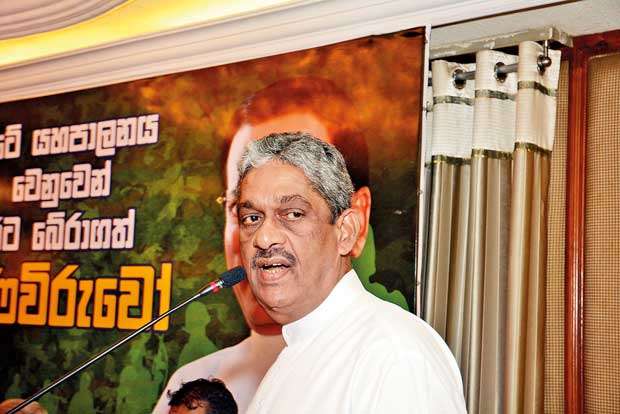
No need to downsize military Sarath Fonseka

August 16th, 2018

By Kelum Bandara Courtesy The Daily Mirror

Military strength should be maintained above 150,000

Country’s military needed to face not only internal threat but also external threat

PM should be next candidate

There are corrupt Police officers harassing my people

No point in complaining to Law and Order Minister

Just because these people are doing political work for us, the Police are throwing them behind bars. They are innocent, having families with children. The Police get hold of them, plant some drugs or cartridges and arrest them. If it is more than two grams of drugs, they will end up in jail for life. That is very sad

When I undertake visits to the national parks as the Subject Minister, a lot of my constituents seek to come with me to see wild animals. Then, a few youths get into a vehicle and follow us. A group came with me to Wilpattu recently in this manner. There was an accusation made by one media channel. I was accused of keeping underworld figures as my bodyguards. That is nonsense. After that, the Police started going after these people. I know for sure these people are not involved in any criminal act now.

If they wanted to do what the Police do now, they could have introduced some drugs and sentenced my people to life. It never happened. Today, we are unable to control these corrupt Police officers.

Wildlife and Sustainable Development Minister Sarath Fonseka shares his views on politics and responds to allegations about harbouring underworld criminals.
Excerpts:

QHow do you view the current political situation?

The political situation continues without any major event. The Government will continue to operate.

The Opposition is also weak although they try to make a hue and cry, criticizing the Government.

They have their own skeletons in the cupboard. They cannot forget what they have been doing in the past. The Government can continue. There is no problem in the United National Party (UNP). Yet, the Government will have to deliver during the next one-and-half years. People are not happy about what has been going on for the last three years. People indicated their displeasure at the last Local Government Elections.

QIn what areas did the Government fail in your view?

The Government was unable to look after the interests of their supporters, who were ill-treated during the previous regime. They were expecting job opportunities, grassroots level development work etc.

There are people who put their maximum effort to unseat the previous regime. If these people cannot get their problems solved, they will not be happy.

QThe Government is to launch Gam Peraliya Programme to revive the rural economy. Are you happy about it?

Gam Peraliya is ok. We are trying to fathom what kind of development work we can do. There are some suggestions from the Treasury and the Finance Ministry. Some of these things are not applicable to our areas.

QLike what?

If you take the Western Province, projects such as electrification and tank renovation are not applicable. Here, the requirements are different. In Gampaha, we do not want electricity. We want water. We cannot renovate even playgrounds in our area with just Rs.1 million allocated. We can only mow grass with that amount of money at a playground here. Any repair will cost at least Rs. 10 million.

QYou broke ranks with the previous ruler citing several reasons. Today, you sound unhappy with the present system as well. …

Not that I am unhappy. Everybody in the Government is unhappy. Everybody has understood the shortcomings I just mentioned. Our complaint against the last Government was that they were corrupt. There were a family rule, dictatorship, and nepotism. There was no freedom for the Judiciary, the Police, and the Elections Commission. We have to put these things on right track. Actually, there are problems at the grassroots level.

QI am asking about your concerns then and now. How do you compare and contrast?

What I just mentioned are the complaints against the previous regime.

QThe present Government is also facing corruption charges. Isn’t it?

The bond issue is the only thing against the present Government. We cannot go on talking about it the whole time. It is one case. Action has been taken against it. Just because of one case, we cannot say the whole Government is corrupt. There was unlimited corruption at that time under the last Government.

QRecently, you told the media that the Rajapaksas did not arrest your supporters on false charges of keeping drugs, but on the contrary, it happened today. What is the message you tried to convey?

We have given freedom to the Police. There is the Police Commission. There is no political interference. But, we have lost control over the Police.

As a government, we have to ensure that the Police, Judiciary or any organization operate in the right direction if we give them freedom.

If some corrupt DIGs are doing all sort of irregular, unruly things, it will have a lot of adverse effects. There is a bunch of Policemen. They are trying to do politics. They are harassing our supporters. They are on a political agenda. The Government should be able to stop this nonsense. If the Government cannot stop these things, I will say, at least, the Rajapaksas had control over the Police, though they did some wrong things. For the right thing or the wrong thing, they had control over it. We have lost control over it. That is what I am complaining about.

QDoes it mean that the Rajapaksas were better than the present ones?

They had control. Whatever it is, we were the opponents of the Rajapaksas. They arrested a lot of my people. Some people were kept behind bars for four months, others for 400 days. But, if they wanted to do what the Police do now, they could have introduced some drugs and sentenced my people to life. It never happened. Today, we are unable to control these corrupt Police officers. Just because these people are doing political work for us, the Police are throwing them behind bars. They are innocent, having families with children. The Police get hold of them, plant some drugs or cartridges and arrest them. If it is more than two grams of drugs, they will end up in jail for life. That is very sad. If the Government cannot stop it, then there is a problem with the Government.

QIn your view, who is instigating these things in the Government?

I have not suspected anyone in the Government so far. There are political forces in my area that is Kelaniya. I am suspecting an SLFPer there. He has got hold of some corrupt Police officers ranging from the DIGs to Inspectors. Already, there is a DIG, who was sentenced to death. Two other DIGs are in remand jail. I am not blaming the whole of the Police Department. There is 10-15per cent of corrupt people there. They will do anything for money, alcohol and food.

QThe present Inspector General of Police (IGP) is accused of doing politics by the Opposition. What is your view of him?

I do not know whether he is politically biased. I know there have been some complaints against him. If these sorts of things happen in the Police, the IGP has to take the blame. He is not controlling it properly.

QIs it because he is inefficient or politically biased?

I know him as a middle-rung Police Officer at that time-in 1990s; he had worked as an SSP. He was a very good Police Officer at that time. Yet, in his present status, there are people critical of him obviously. Some people must be having valid reasons to be critical. If the Policemen behave like this, I have to blame the IGP and others down the rank. He is a good man. I have nothing against him.
qAt that time, you were surrounded by the Army Commandos as your guards. Now, some politicians accuse you of hiring underworld criminals to guard you. What do you feel in this regard?

No civilian is guarding me. I have the Police guard for me. There are 17 Policemen. Five of them are from the Special Task Force (STF). They give me security wherever I go. In the Kelaniya area, there are some elderly and young people. They had faced charges in the past. Some had been exonerated even. None of these charges are related to drug dealing or anything. Some people had been involved in cases like fisticuffs and shootouts. That is the past. Once I went to Kelaniya, people of all sorts are supporting me.

There are criminally charged persons, who contested the elections from the UNP and got the highest number of preferential votes once. There is one in Ratnapura. After that, he was sent to the gallows. There are MPs against whom there are numerous charges. Everybody has the right to do politics. We cannot chase them out.

Interestingly, when I undertake visits to the national parks as the Subject Minister, a lot of my constituents seek to come with me to see wild animals. Then, a few youths get into a vehicle and follow us. A group came with me to Wilpattu recently in this manner. There was an accusation made by one media channel. I was accused of keeping underworld figures as my bodyguards. That is nonsense. After that, the Police started going after these people. I know for sure these people are not involved in any criminal act now.

QDidn’t you raise this matter at the Cabinet or with Law and Order Minister Ranjith Madduma Bandara?

I spoke to the Minister on a number of times. One day, he got down STF DIG M.R. Latheef and told him about this. The very same day, Latheef went and arrested a person. Another one was arrested after four or five days later. Complaining to the Minister did not do any good for me. I had made complaints to the Minister four times. Today I met Prime Minister Ranil Wickremesinghe and complained to him. I requested the Prime Minister to assign the CID to do investigations. The Prime Minister asked me to give it in writing. I will give a letter to him. The Prime Minister promised me to direct the CID. I have faith in the CID.

QIn your view, who should be the next presidential candidate?

It must be Prime Minister Ranil Wickremesinghe. He is our party leader. I was fielded in 2010 as the candidate. That was soon after the war. The UNP was down at that time. Nobody had the courage to contest at that time. If I did not come forward, Mahinda Rajapaksa would have won uncontested virtually. Last time, I had a discussion with Mr. Wickremesinghe. Every time, I met him, I asked him to contest. He did not contest. He wanted the common candidate for his own reasons. I had 375,000 votes for my party at that time. I had 17 Provincial Councilors.

QWhat are the chances of winning?

If the party works hard, it is possible. I have told the Prime Minister. In certain areas, he has to change his attitudes.

QLike what?

He must get involved with grassroots level politics. He should look into the interests of electoral organizers. If he does that, he can ensure that he will win.

QThe UNP is relatively weak in the Sinhala majority areas. What do you propose to correct it?

The UNP must start improving certain areas. We must have the Buddhist monks’ organization and get it more and more involved in the party matters. Some of our organizers are not active in villages.

QPresident Maithripala Sirisena is also interested in contesting next time. What do you think of him?

If he is interested, he will be contesting representing his party. We cannot support that party anyway. We have to support the UNP candidate.

QIn the north, there are talks about the possible resurgence of the LTTE. As the Army Commander who led the military to win against the LTTE, what is your assessment?

We eliminated the LTTE. We created the background for peace and reconciliation and to develop those areas. Some development has taken place. It is not enough. There are some Tamil politicians trying to play it to the gallery. They still try to talk about separatism. That cannot be allowed. Sinhala people in the south will not agree to that. As for power devolution, we will have to go for a referendum if it is to be done. The majority of the people are against it. Tamil people are interested in economic development not in politics. We have to know what the people are asking for. We should meet the requirements of people, not of the politicians. Some Tamil politicians talk about removing the military from the north. We cannot give into such pressure without any basis. You cannot remove the military from the country.

QIs there any need to downsize the military?

The military needs presence everywhere in the country. You cannot say the military must be in the south not in the north. Downsizing is not required in my opinion. In my personal view, the minimum strength of the Army should be maintained above 150,000. It is not only an internal problem. The country’s military must be ready to face any threat including the external threat.

Singapore is a very small country. They have a military force of three million personnel though. Every citizen is trained to fight. They are not mobilized, though. The total removal of the military from some areas in the north should not be done.

I have heard the Army Commander boasting about the reduction of land occupied by the military, handing over land back to people and closing down so many camps. That is stupid. You cannot be so proud that you close down every camp and hand over every inch of land back to people. We must study, listen to people on the ground and do a proper assessment.

QDoes it mean that you are not in agreement with the latest release of military–occupied lands?

You must not do it due to political pressure. You must do it methodically. Now the Army Commander is trying to please the politicians by pulling out the military. I hear from some of the ground Commanders that some are not happy about the way he is closing down camps. That is a problem.

QThe Army Commander must be doing it at the orders of the Commander in Chief of the Armed Forces who is the President. Isn’t it?

It is not the duty of the Army Commander to please the bosses all the time. The Army Commander is responsible for the security of the country.

QCan he ignore or disregard the President as the Defence Minister?

Politicians are not educated on military deployment. They do not understand it. Long ago, in 2002, I was the Jaffna Commander. I was asked by the Government to close down some areas of the High Security Zones. I was a Major General at that time. I refused it considering the security situation.

QToday, you are with those who governed at that time..

That is a different thing. Now, they have accepted my way of doing things.

Seven vehicles allocated to Bathiudeen exceeds limit

August 16th, 2018

Tharindu Jayawardana Courtesy The Daily Mirror

Seven additional vehicles had been allocated to Industry and Commerce Minister Rishad Bathiudeen, violating the circular by the President’s Secretary specifying that the maximum amount of vehicles that can be allocated to a minister was three.

Accordingly, it was learnt that the total amount of vehicles that had been allocated to Minister Bathiudeen is ten. It was further learnt that the number of drivers allocated to the minister was eight.

(The information in this regard was received under the Right to Information Act after making a request to the Additional Secretary to the relevant ministry on July, 11, 2018). 

නව ව්‍යවස්ථාවේ රටට හානිකර වගන්ති 24ක්

August 16th, 2018

ඩබ්ලිව්. කේ. ප්‍රසාද් මංජු  උපුටාගැණීම  මව්බිම

නව ආණ්ඩුක්‍රම ව්‍යවස්ථා කෙටුම්පත සම්බන්ධයෙන් ආණ්ඩුක්‍රම ව්‍යවස්ථා මෙහෙයුම් කමිටුවට ඉදිරිපත් වී තිබෙන විශේෂඥ කමිටුවේ මූලික ලියවිල්ලෙහි රටට එරෙහි බරපතළ කරුණු 24ක් හඳුනාගෙන තිබෙන බව ඒකාබද්ධ විපක්‍ෂය ප්‍රකාශ කරයි.

හිටපු ජනාධිපති මහින්ද රාජපක්‍ෂ මහතාගේ ප්‍රධානත්වයෙන් රැස්වූ ඒකාබද්ධ විපක්‍ෂයේ පක්‍ෂ නායක රැස්වීමේදී මෙම කරුණු 24 පිළිබඳ හෙළිවූ බව ඒකාබද්ධ විපක්‍ෂයේ නියෝජ්‍ය ප්‍රධාන සංවිධායක, රත්නපුර දිස්ත්‍රික් පාර්ලිමේන්තු මන්ත්‍රි රංජිත් ද සොයිසා මහතා ‘මව්බිම’ට ප්‍රකාශ කෙළේය.

එම විශේෂඥ කමිටු වාර්තාව සැකසීමේදී 6:4 වශයෙන් විශේෂඥ කමිටු සාමාජිකයන් 10 දෙනා බෙදී තිබෙන බවත්, මෙහි බරපතළකම සම්බන්ධයෙන් රටේ ජනතාව දැනුවත් කිරීමට ඒකාබද්ධ විපක්‍ෂය ක්‍රියා කරන බවත්, රංජිත් ද සොයිසා මන්ත්‍රිවරයා පෙන්වා දෙයි.

නව ආණ්ඩුක්‍රම ව්‍යවස්ථාවක් ගෙන ඒමට මෙම ආණ්ඩුව සූදානම් වන්නේ බෙදුම්වාදී බලවේග සහ කොටි හිතවාදීන් ඇතුළු ජනවාරි 08දා වෙනස වෙනුවෙන් සහයෝගය දැක්වූ පිරිස් සතුටු කිරීමට බවත්, එය එසේ සිදුවීමට ඒකාබද්ධ විපක්‍ෂය ඉඩ ලබානොදෙන බවත්, රංජිත් ද සොයිසා මහතා වැඩිදුරටත් ප්‍රකාශ කළේය.

YAHAPALANA AS A ”WAKE UP CALL”  Part 1

August 15th, 2018

KAMALIKA PIERIS

The Yahapalana government is now acting as a ‘wake up call.’ When Yahapalana took over people found that Instead of the benevolent government they expected, ‘we have got a government ‘which has every intention of ruining the country’. This did not result, as   the USA hoped, in turning a confident   society, into a frightened, cowed one. It has instead created a furious, disappointed public who wish to give Yahapalana a good whack. The public are angry with Yahapalana for deceiving them, but they are even angrier with themselves for getting deceived.

The result is a deep anger, visible public militancy, and voluntary action. This could be seen in the determined way the public behaves in certain instances. In August 2017, at Kataragama the worshippers found the devale door locked at puja time. TV camera showed the   crowd who had come to worship, going in an angry group to the Basnayake nilame’s house, storming it, taking the keys and starting the puja. (Derana news 22.8.17)

In September 2016, there was voltage damage to   electrical equipment in at least 120 houses at Ambana pahe kanuwa, Elpitiya. Angry villagers detained CEB officials and seized their     vehicles. They were finally released after talks between the villagers and police and high CEB officials.

Survey Department officials who visited Kashyapa in Habarana in August 2017, to survey the land to be acquired for the proposed railway project between Kurunegala and Habarana were driven away by a group of angry protesters. About 100 persons took part in the protest against the acquisition of their land. Television news of 11.10.2017 showed a demonstration by those affected by the Uma Oya project. Observe the deep anger. (https://www.youtube.com/watch?v=bGIJVuQnWwQ at  21.14)

There is an insistence on citizen rights, demand for immediate redress. A packet of ‘chicken Kotte’ bought for dinner at Ambalantota had a large frog instead of chicken. The customer had immediately gone to the Public Health Inspector’s office in the area and lodged a complaint.

There is loud expression of grievances, open resistance, open aggression and of course open contempt for the government they elected. There is alertness and an aggressiveness that I have never seen before. Communication and mobilization have become very easy, due to the rapid growth of mobile phone usage. Smart phones are in use in the rural areas too. Users of these mobile phones ‘know about the goings on in power centers.’ Public in the rural areas knew about the Bond scam, observed analysts. Here is a selection of events which illustrate this Yahapalana wake up call”.

The first event I have selected is one full of noise and action. There was a meeting at Nailiya Viharasthanaya in Kurunegala in September  2017, where government officials, ministers  and public had met to discuss matters regarding the Central Expressway section t from Potuhera to Kurunegala. Around 200 residents from the areas of Amunawatte, Henmulla, Weherabanda, Gattuwana, and Boyagana had come for the discussion. They complained that they would lose land to the Expressway. An official  tried to explain matters regarding the Central Expressway, but the residents of the area kept interrupting him and protesting. The discussions heated up.  The Deputy Minister tried to address the gathering. The crowd shouted at him.

A heated exchange took place.  The residents insisted strongly that the expressway be built on columns to avoid flooding, to pay adequate compensation and to make transparent the system of compensation. They handed over to the Deputy Minister a petition with their demands. They wanted the Minister to assure them in writing that their demands would be met. The Deputy Minister said he did not have the authority to do so. The situation worsened, the officials and minister had to be escorted out of the premises under police security. As the officials left, the residents in the area booed at them in protest. The participants then proceeded towards the Boyagane-Malpitiya junction, a kilometer away from the temple and blocked the Kurunegala-Colombo main road. This caused heavy traffic congestion in the area for over three hours.

Until Yahapalana came, there was no public fuss over the issue of garbage disposal. After Yahapalana, a fundamental rights petition was filed against Meetotamulla garbage dump. The Petitioner stated that the Kolonnawa city is a highly residential area, with high population density. In the middle of this highly residential area is huge and growing garbage dumping site, with a huge mountain of garbage, which has now grown to over 18 acres in extent.  Approximately 750 to 1,200 tons of garbage come into the site on a daily basis from the Colombo Municipal area. The stench is now becoming unbearable for the families and children and that there are tremendous and serious health hazard,

There are other sustainable solutions but Yahapalana is not considering them. Instead, Yahapalana is  getting ready to demolish another 100 houses to expand the site for a further 3 acres, said the Meetotamulla group . There are companies who are interested in purchasing the garbage) and who are willing to recycle the garbage at their own expense in an environment friendly manner.

Authorities have been trying to dump garbage collected from Colombo at garbage dumps in several locations since the decision to halt further dumping at Meetotamulla. However, these moves also have been met with strong protests by residents of these areas. At Nugape off Wattala (Muthurajawela), residents protesting over dumping of garbage. They said that the land is a part of Muthurajawela wetlands and it needs to be protected.

It was the same at Karadiyana. Television news showed protestors, angrily and noisily driving away garbage trucks from Karadiyana and Meetotamulla. Scores of tractors filled to the brim with garbage from Colombo on their way to the Karadiyana Waste Management Facility were turned back by angry protesters at Karadiyana yesterday as mobs stormed the tractors, crying, Stop Karadiyana from turning into another Meetotamulla” and Don’t ruin our city. We don’t want Colombo’s garbage here. The situation here is bad as it is.”

Garbage trucks entering the Karadiyana Waste Management Facility were stopped by protesters yesterday who asked that garbage from Colombo not be taken to the Facility. The protesters obstructed the movement of all garbage trucks from 8 a.m.-12 p.m. Residents of Karadiyana  said that they were fine with their own garbage from Kesbewa and Boralesgamuwa being taken to Karadiyana but would oppose any garbage from outside.

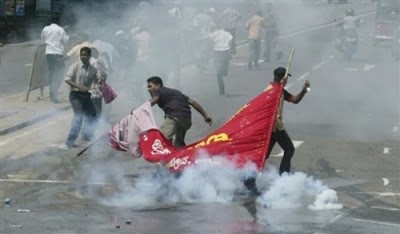
There was strong opposition to the dumping of garbage in other places too, and the government reacted equally strongly. Derana news 25.4.17 showed police with shields and batons controlling the crowd opposing garbage at Uragodawatte and Muturajawela. Police also  fired tear gas and water cannon to disperse people who were blocking trucks transporting garbage collected from Colombo to a site in Maligawatta, Dompe in April 2017.

Derana news 22.4.17 showed Police attacking the many demonstrators at Wattala, who said they did not want Colombo garbage. Several Catholic priests also intervened on behalf of the protesters. It was a prolonged fight and continued even after the garbage trucks went on the journey out. There was also strong protests from villagers at Wellawaya about dumping garbage.

Yahapalana responded to the garbage issue with a love call of its own. Yahapalana issued a special gazette notification making garbage management an essential service. Any type of obstruction to carry out these services will be deemed as an offence and those involved in such activities can be arrested by a Police officer without a warrant. Those found guilty of such offences face rigorous imprisonment following prosecution.

Patali Champika Ranawaka warned that there should be a limit to public protest and anti democratic detonations. The government will not tolerate attempt to wreak havoc. The government had the power to dump garbage at any location found suitable for the purpose and none could oppose that action. LSSP rejected this. People have the right to protest and express their objection towards issues, said the LSSP.

Professionals became alarmed, when they saw what Yahapalana was doing. In November 2017, two Ceylon Electricity Board (CEB) Engineers  filed a writ application in the Court of Appeal, seeking a ‘Stay’ order on the implementation of the country’s long term power generation plan. This was due to  a dispute between the CEB and the Public Utilities Commission of Sri Lanka (PUCSL), the country’s power sector regulator, over the generation plan approved by the latter.

The petitioners argued that 1st respondent, PUCSL, has neglected, and failed to comply with procedural requirements, when approving the CEB’s Least Cost Long Term Generation Expansion Plan (LCLTGEP) 2018-2037. PUCSL has arbitrarily  amended the generation plan without first consulting the transmission licensee, the CEB, and forcing conditions of its own on the CEB regarding the plan. The 1st respondent has no powers whatsoever to do so. It is acted with ulterior motives to discredit coal power generating plants and promote Liquid Natural Gas (LNG) plants.

The public also  set up organizations to fight environmental issues. The ‘National Movement to Protect Sri Lanka’ held a protest march in Colombo against the privatization of unused state plantation land. They alleged that a Minster, (name withheld) had through the Cabinet Paper given out 60,000 acres in the Central Province for private businesses. Another minister had  given out 4,000 acres of flood plain land to his supporters.

‘Movement for Land and Agricultural Reform’ (MONLAR) said in March 2018,  that six water projects were being planned in the North Central Province. They were to take water from tanks whose storage capacity had been greatly reduced over the years. “These tanks were built for farming but now the government plans to implement project to supply drinking water to towns in the province. MONLAR  also alleged that the government was preparing a National Resource Plan 2018-2050 to privatize many state owned lands for industries, large scale agriculture and foreign investments.  There has been a systematic attack on farming and we believe that the government wants to destroy local agriculture.

‘Organization for the Protection of Muthurajawela’ ,was formed by a small group of committed residents    to expose ‘the racket that was being carried out under the guise of a development project at Muturajawela. The Agrarian Development Department  had  granted permission to a private business entity to develop 65,102 perches of land within the Muturajawela sanctuary for Rs 500 per perch.  Muthurajawela  sanctuary was the lifeline of people in the area and its destruction would lead to serious environmental problems, they said.

The group decided to go public when their efforts to stop the activity failed. We took on the task of exposing the unscrupulous officials, politicians, and businessmen involved in the destruction of Muthurajawela. This had led to threats to our lives and our families, but once we committed ourselves to the task, we did not stop till we brought it to the attention of the President, said one member.” A member who was a professional photographer had made a short film using drones. It showed the destruction caused to Muthurajawela. Within seven days of uploading it on the web, we not only had prompt responses from authorities in this country but also from overseas activists.

Many years ago this area was paddy land, said this group. As it was once a paddy land, he said. It comes under the purview of the Agrarian Development Department but authority to develop the land can only be done with the permission of the CEA and the Wild Life Department after an Environment Impact Assessment (EIA) is submitted. This has not been done. Also sanctuaries consist of both state-owned land and privately owned properties. Activity can take place in private land as long as it does not cause damage to the environment and harm to flora and fauna.

This group had earlier taken action on the dumping of garbage at Muthurajawela A large number of residents supported by the clergy   protested.’ They forwarded  a fundamental rights petition signed by 35 residents, seeking intervention to stop the sanctuary being turned into a garbage dump. The Supreme Court granted leave to proceed and interim relief to the petitioners by directing the 11 respondents not to dump garbage.

There  is now a deep sense of personal dignity. Persons who were hitherto expected to take  blows and insult  meekly, are now refusing to do so. Provincial correspondents demanded that former Navy Commander and current Chief of Defence Staff Admiral Ravindra Wijegunaratne apologize in public for assaulting a provincial journalist on Dec. 10, 2016 at Magampura Mahinda Rajapaksa port in Hambantota. The former Navy Commander assaulted the provincial journalist of Hiru TV and Divaina newspaper Roshan Gunasekera in public while he was covering a workers’ protest and, therefore, the apology, too, should be tendered in public, they said. The Navy had, in response, submitted a letter to the Supreme Court,  regretting the incident.

R.P. Karunaratne Bandara,  principal of Nivanththaka Chethiya Maha Vidyalaya in Anuradhapura  filed a fundamental rights petition. The petitioner was serving as the principal of the Pahala Halmillewa Dutugemunu Maha Vidyalaya by letter dated 28.05.2015 issued by Provincial Education Director (Anuradhapura). He was transferred as the principal of Nivanththaka Chethiya Maha Vidyalaya in Anuradhapura with immediate effect on exigencies of service.

The petitioner stated that he assumed duties as the principal of Nivanththaka Chethiya Maha Vidyalaya and discharged the functions to the satisfaction of the Education Authorities, parents, teachers, and students. The petitioner stated on September 6, 2016, he was informed over the telephone by the Secretary to the school development committee that the Chief Minister will be attending the school on September 9 at 9:30 am for a ceremony to lay the foundation stone in order to commence the work relating to the proposed new school building. He stated that it was a sudden decision taken by the respondents and he was given only two days notice to make all the required preparations for the said ceremony of laying the foundation stone by the Chief Minister.

In the heat of the events, the petitioner had handed over a sheaf of beetle leaves to the Chief Minister to cordially welcome him. However due to an inadvertent oversight said bundle had been turned the wrong way around which mistake was brought in to his attention subsequently. He further stated that the Chief Minister made quite cynical comments when addressing the gathering alleging that there were school principals who do not know as to how the bundle of beetle leaves should be handed to a guest and alleged that he failed to get sufficient number of parents for his meeting.

The petitioner was informed by the Provincial Education Director requesting him to come to the Chief Ministry of the North Central Province. He stated that he went to the Chief Ministry and he was informed that he would be transferred to a different school with immediate effect on the orders given by the Chief Minister. The reason given for the alleged transfer is the unhappiness of the Chief Minister with regard to the events that transpired at Nivanthaka Chethiya Maha Vidyalaya. Subsequently, he was informed that he has been transferred to Rambewa Maha Vidyalaya in Anuradhapura. He sought a declaration that  the respondents have violated his fundamental rights guaranteed under Article 12(1) and 14(1)(g) of the constitution.

The Supreme Court ordered the former North Central Province Chief Minister to personally pay Rs. 250,000 as compensation to a school principal. The Supreme Court also issued an order directing the state to pay Rs.50,000 to the petitioner as legal costs. The Supreme Court further issued an order directing the Provincial Education Director to transfer the petitioner back to Nivanththaka Chethiya Maha Vidyalaya in Anuradhapura within two months.

 Five farmers who were assaulted by the police in Tambuttegama last month filed complaints at the Human Rights Commission of Sri Lanka yesterday. They complained that police used tear gas and water cannon on February 28 2018  to disperse around 2,000 farmers demonstrating against a drinking water project,  organized  By MONLAR which was to use water from Rajanganaya tank. Over 50 farmers were arrested. And released on bail. They told the media that they had been brutally assaulted in custody. They also alleged that the police grabbed the money they had at the time of arrest.

Gamaralalage Siril Kumara of Kitulgala  who was engaged in the lawful business of toddy tapping ,filed a Fundamental Rights petition in the Supreme Court, along with two other relatives naming  the OIC, Sub Inspectors, sergeants of the police station as well as the IGP as respondents. He was challenging the activities of the Kitulgala Police to produce persons who refuse to comply with the wrongful demands to provide toddy free of charge, before Courts purportedly in relation to illicit liquor offenses.

The Petitioners stated that officers of the Kitulgala Police engage in the wrongful and illegal practice of requiring persons engaged in the lawful business of Toddy tapping in the Kitulgala area to bribe the said officers of the Kitulgala with quantities of Toddy for their consumption. When the toddy tappers refused to do  so, they were charged with illicit liquor offenses. . They  also prosecute persons on the false basis of possession of illicit liquor to meet the prosecution targets set by their superiors. Persons prosecuted in such a manner are compelled to plead guilty for the possession of small quantities of illicit liquor and pay penalties ranging from Rs.1,000 to Rs.15,000. The failure to comply with such illegal demands results with further harassment and intimidation by the police officers.

The Petitioners stated on July 28, 2017 at around 4.30 p.m. the 3rd and 4th Respondents arrived at the 1st Petitioner’s residence and took into possession a small quantity of Toddy which was lawfully tapped by the 1st Petitioner and claimed that the 1st Petitioner has illegally tapped Toddy. When the 1st Petitioner offered to provide the Permit issued by the Department of Excise the 3rd and 4th Respondents refused to accept the said document stating ”we don’t care about those things” and demanded that the 1st Petitioner prepare himself to go to the Police Station.

The petitioners stated that the 1st Petitioner having not committed any offense, as he lawfully might, refused to comply with the unlawful and illegal instructions given by the 3rd and 4th Respondents, being very well aware that the 1st Petitioner would be falsely and wrongfully arrested, remanded overnight and produced before the Magistrate of Ruwanwella on a possession of illicit liquor charge. Thereafter the 3rd and 4th Respondents forcefully dragged the 1st Petitioner out of his residence and assaulted the 1st Petitioner whereupon the 1st Petitioner collapsed to the ground due to the excruciating pain he was subjected to.

The Petitioners state that the brazen attack on the 1st Petitioner who was laying on the floor in pain was in full view of those who were gathered including the 2nd and 3rd Petitioners, who commenced recoding the incident using their mobile telephones. They stated the assault on the Petitioners the wrongful and arbitrary arrest of the Petitioners and institution of action on false and fabricated charges leveled against the Petitioners are violation of the 2nd Petitioners’ fundamental rights guaranteed by Articles 11, Article 12(1), and Article 13(1) of the Constitution of the Republic. They further sought a sum of Rs.5 million as compensation from the respondents.

Right to Information Law came into force in February 2017, the public responded almost immediately. There has been an impressive response from the ordinary public at accessing information that had hitherto not been available to them, said a Sunday Times editorial.

The Right to Information (RTI) Commission  received many requests for information. They included information on state recruitments and alleged irregularities or malpractices in government and provincial councils, overseas travel details of politicians, unauthorized constructions, audits of school development societies, compensation payments for land acquisitions, information on school admissions, rental agreements entered into by public corporations.

Other requests included information released in regard to the detailed monthly accounts of the School Development Society of Royal College, Colombo from March 2016 to 14 February 2017. The Elections Commission was ordered to release an internal circular containing an administrative instruction to elections officials. Directions were issued to the Road Development Authority (RDA) to release decision reports on compensation payments to landowners in the Hikkaduwa Divisional Secretariat whose land had been acquired for an ongoing road development project. The Education Ministry was directed to provide files containing details of the residences of children admitted to schools under the criteria that they are ‘children of persons working in Institutes which directly affect school education.’ General details of Grade One admissions to schools were also asked for and  provided.

The public are no longer prepared to suffer silently. They make noisy protests and utter ultimatums. They do not wait for political parties to provide the leadership  either, they leap into it directly, and do not hesitate to call media conferences.

The fishing community objected violently to the 2018  increase in  the price of petrol. The     fishing community  of Negombo, Wennapuwa, and  Marawila held a joint media conference to protest, very aggressively and strongly, against the increase of petrol price. They want the price reduced otherwise there will be an all island strike of the  fishing community. They do not care even if they die in the process. You did this without informing  us, they said. They did not want tokens, they want to buy the petrol direct. Negombo Municipal Councilors also spoke up. They said that they are ready to send this government home.

The fishing community also held aggressive demonstrations at Hungama, Hambantota, Godawaya, Rekawa, Kalametiya and Welipatana. These  obstructed traffic ,police arrived and dispersed them. The demonstrators said they  planned to have an all island demo with black flags. The petrol increase was described as ‘mara ugula’.

There are protests over  local matters too. At Mulleriyawa 500 residents  demonstrated against the burning of hospital waste from Colombo. The crematorium must not be used as an incinerator, they said. Residents of several villages backed by Buddhist monks staged a protest near the Maningamauwa temple, to stop a business concern which planned to obtain water for a bottled water project, from a well bordering Ma Oya. This would cause an acute water shortage.

A cultural centre built at 4 Million in Ihala Karannagoda in Maduruwala remained unopened though construction was completed two years ago. Villagers want it opened, Handicraft training centre,  Ittepana, was kept closed. Residents are demanding that it be reopened. Panadura Pasmanhandiya bus service started in  the 1970s was terminated. This service was very useful to residents of Nalluruwa, Pinwatta and Kalpitiya villages. They want it restored. There was a demonstration asking  the government to improve Hunnasgiriya section of the  Kandy-Mahiyangana road.

There is simple  resistance too. In 2017,  Kandy trishaw drivers objected to meters. They want this revoked for Kandy. This will affect their income. Kandy streets are mostly one-way roads. There are 2000 trishaws register with municipality and over 3000 unregistered.

There were a lot of open protests regarding schools from 2016 onwards. Parents of Dammadinna Vidyalaya, Galkulama, Nachchaduwa protested against the shifting of the Vidyalaya. Parents of    Sri Bodhi Vidyalaya at Giridara, Pugoda staged a demonstration demanding that the school be  managed better. Tug of  war between two politicians had affected it and the principal who had been transferred could not be released as a result. Parents and old boys of Pannala national school staged a demonstration opposite the school demanding a new principal for the  school, as there were many discrepancies.

Parents of Nivanthika chetiya Maha Vidyalaya in Anuradhapura demonstrated against the transfer of its principal. A very large crowd of parents of the Sri Gunananda Navodaya School at Mapalagama staged a massive demonstration bringing the entire traffic from there to Elpitiya and Baddegama to a complete halt again the transfer of the incumbent principal. Students also  took part.

At Hambantota Suriyawewa national school 23 children who were to be enrolled in the primary schools were not taken in. now they have no school. Parents of Sri Rahula junior school at Ambagaswewa, Polonnaruwa, said that have decided not to send their children to school till education authorities solve the problem of shortage of teachers which has been dragging on for a very long time. Parents of Kedaratamale Vidyalaya in Parasangahawewa wanted five  teachers out who neglected their duties. At Nugagolla Maha Vidyalaya in Wilgamuwa  pupils had lost 20 minutes of the time at Grade V scholarship exam due to a serious lapse of the invigilators. Parents had complained to the police and demonstrated.

Parents, past pupils and well-wishers of Galle All Saints’ College staged a protest against the government’s decision to relocate the school premises out of Galle Fort yesterday. About    500  protestors marched from the college to Galle District Secretariat and launched their demonstration opposite the secretariat obstructing the Colombo- Matara highway. They sat on the highway shouting slogans against the state’s decision. They were told that the government had decided to  relocate 15 state institutions including All Saints College located in the Galle Fort out of the ancient Dutch Fortress locality before December end this year. ( continued)

What’s ‘National’ in Yahapalana’s National “UNITY” Government?

August 15th, 2018

Since the January 2015 Presidential Elections, we have been experiencing a wave of irregularities bordering illegalities. That the holier than thou West has taken patronage of the ruling party together with their international coterie of players denies any prospects of highlighting or negating the irregularities taking place. However, these wrongs need to be etched into the country’s historical records. Some of the agreements & Bills currently being signed will certainly be questioned in the future & can be negated on account of these constitutionally questionable fault lines. The creation of a ‘National’ Government has been nothing of NATIONAL INTEREST but based on preventing MPs from fleeing to the opposition by dishing out Ministerial portfolios and perks.

Article 3 of the constitution of the Republic of Sri Lanka declares the sovereignty is in the people and is inalienable. Sovereignty cannot be limited or curtailed but the powers of the government & its institutes can. The President, Prime Minister, Ministers & all others that make up a government have only limited sovereign powers for they serve only for a term as elected & selected by the People.

MPs are only ‘agents’ of the people according to Justice Wanasundara’s judgement on the 13th amendment in 1987.

The people whose constitutional rights have been violated have scope to address their grievance. Article 17 of Chapter III gives entitlements to Sri Lanka’s citizens. Article 125 & 126 afford the opportunity to apply to the Supreme Court for citizen’s violation of fundamental rights.

A political party’s manifesto may not be a legally binding document but it is morally binding. A party’s manifesto is the basis on which people decide to vote for it. There was no mention of any national government in either of the 2 main political party manifestos in 2015 before the general elections.

Ironical & noteworthy is the manner in which the present President who left the SLFP & contested under another political party using a swan symbol who after becoming elected as the President returned to the SLFP to become its chairman. Not only is the President the head of the SLFP but he is also the head of the UPFA too.

It was this President who through the Central Committee of the SLFP promoted the notion of ‘National Government’. The voters of SLFP or UPFA have at no time given their consent to forming any national government. How democratic is it of a President who left the SLFP & the UPFA to manipulate both in such a manner contrary to the wishes of their vote base?

There was no NATIONAL GOVERNMENT before the August 2015 general elections. There was only an INTERIM GOVERNMENT comprising the minority UNP & dissident SLFP/UPFA MPs who pledged support to the Ranil-Sirisena 100 day program.

Generally, a National Government is formed at times of a national crisis as England did from 1931 to 1939. However, even during the last phase of the conflict the UNP was not interested to help the former government by forming a national government to face the international pressures that came to stop the military end to the LTTE. If a national government was needed at all it was during this phase.

After January 2015 what was formed was not a National Government but a National Unity Government but signed by only 2 parties though comprising other parties.

But as far as we know a MOU was signed only between 2 political parties – the SLFP & the UNP. The general secretaries of the SLFP & UNP signed the MOU on 21 August 2015 to last 2 years & covering 10 points.

Neither of these two parties contested as a single party to enter parliament before 2015 or even after 2015. They both came to Parliament through various alliances and this questions what right both have to sign MOUs with only each other completely ignoring the parties that formed the alliance to contest election & enter Parliament. If SLFP contested under the UPFA banner & entered parliament it must get the approval of all the UPFA constituent members in taking decisions because they entered parliament on an alliance & voters voted because of this alliance.

Not stopping there of the 29 national seats, 11 seats are given to candidates that the voters have rejected. Democracy has been flouted by this action since the names of 29 national list seats are gazetted before elections so the voting public are well aware of the national list nominees of every political party before elections. This is another example of politicians flouting the will of the people. Worse is when defeated candidates taken through the National List are given key ministerial portfolios. They are not suited for any role leave alone enjoy any perks of office using the tax payers money as they do not enjoy the will of the people.

In reality the so-called national government comprises the UNP, the JVP & TNA both supporters of the regime change & a handful of opportunistic SLFP & UPFA members. So how national” is this government?

In January 2015, a Presidential Election was held. It was not a General Election, therefore the unanswered question is – how could the President-elect appoint a new Prime Minister from a party that didn’t have a majority in Parliament without removing the sitting Prime Minister?

The last general election was held in 2010 with UPFA winning 144 seats (4,846,388 / 60.33%) UNP winning 60 seats (2,357,057 / 29.34%) TNA winning (233,190/ 2.90%) & JVP winning (441,251 / 5.49%)

The UPFA increased its 144 seats to 163 seats (72.4%) majority in Parliament on account of 19 MPs crossing to the UPFA. 7 of these have been from the Sri Lanka Muslim Congress. 11 have been from the UNP.

When President Sirisena contested elections under the SWAN symbol as a common candidate leaving the SLFP/UPFA combine, the UNP constituted only 47 MPs in Parliament. It was from this 47 UNP MPs that Ranil was appointed Prime Minister without a general election & following a presidential election – thus creating a new precedent. This seriously questions the validity of Ranil Wickremasinghe as PM & the decisions made by the ‘government’ that had no majority in Parliament, no mandate from the people & existed on the basis of cobbling opportunist MPs together. This was a serious breach of democratic principles & good governance that brought the President to power.

Timeline:

8 January 2015

Presidential Election

9 January 2015

Maithripala Sirisena appointed President commencing a 100 day program which was to end on 23 April 2015 with a general election. In May 2018 the President he did not know who drafted the 100 day program & he knew nothing of its contents!

Ranil Wickremasinghe appointed Prime Minister (UNP had only 47 seats in Parliament & questions on what basis he was appointed PM without even a general election being held or removing the sitting Prime Minister D. M. Jayaratne or his resigning.

11 January 2015

As part of the 100 day program 11 January pledged to appoint a 25 member cabinet. However, a day later he appoints a 27-member cabinet which increased to 30 with the 19a.

10 defect to join President Siriena-Ranil alliance & declares Sirisena as leader of the SLFP.

  1. Sarath Amunugama,
  2. Reginald Cooray,
  3. Vijith Vijithamuni Soysa,
  4. Jagath Pushpakumara,
  5. B. Navinna,
  6. Nilwala Wijesinghe,
  7. Piyasena Gamage,
  8. Athavuda Seneviratne
  9. Janaka Bandara Tennakoon
  • Chief Minister of the North Western province Dayasiri Jayasekera

12 January 2015

More UPFA MPs join Sirisena-Ranil alliance

  1. Felix Perera,
  2. Lalith Dissanyake,
  3. Neomal Perera,
  4. Dayasritha Tissera,
  5. Thilanga Sumathipala,
  6. R. M. Abdul Cader

President Maithripala Sirisena appointed 27 Cabinet Ministers, 10 State Ministers and 08 Deputy Ministers

Cabinet Ministers

  1. Prime Minister Ranil Wickramasinghe – Minister of Economic Development & Policy Implementation
  2. Ravi Karunanayake – Minister of Finance
  3. Joseph Michael Perera – Minister of Home Affairs
  4. John Amaratunga – Minister of Public Order, Disaster Management
  5. Duminda Dissanayake – Minister of Irrigation
  6. Rajitha Senaratna – Minister of Health and Indigenous Medicine
  7. Kabir Hashim – Minister of Highways and Investment Promotion
  8. Sajith Premadasa – Minister of Housing and Samurdhi
  9. Naveen Dissanayake – Minister of Tourism
  10. Wijedasa Rajapaksa – Minister of Justice
  11. Arjuna Ranatunga – Minister of Ports and Shipping
  12. Patali Champika Ranawaka – Minister of Power and Energy
  13. Rishad Bathiudeen – Minister of Industry and Commerce
  14. Gayantha Karunathilake – Minister of Mass Media
  15. Palani Diganbaram – Minister of Plantation Infrastructure Development
  16. Akila Viraj Kariyawasam – Minister of Education
  17. M. Swaminadan – Minister of Resettlement, Reconstruction and Hindu Affairs
  18. Rauff Hakeem – Minister of Urban Development, Water Supply and Drainage
  19. Thalatha Athukorala – Minister of Foreign Employment
  20. Ranjith Madduma Bandara – Minister of Internal Transport
  21. Harrison – Minister of Social Services and Social Welfare
  22. K.D.S. Gunawardena – Minister of Land
  23. Chandrani Bandara – Minister of Women’s Affairs
  24. Karu Jayasuriya – Minister of Buddha Sasana
  25. Lakshman Kiriella – Minister of Plantation
  26. Mangala Samaraweera – Minister of Foreign Affairs
  27. Gamini Jayawickrama Perera – Minister of Food Security

Ministers of State

  1. Nandimithra Ekanayake- Culture and the Arts
  2. Radhakrishnan- Education
  3. Faizer Mustapha- Aviation
  4. Palitha Range Bandara- Power and Energy
  5. Dilip Wedaarachchi- Fisheries
  6. Bernadeen Rose Senanayake- Children’s Affairs
  7. Rajiva Wijesinghe- Higher Education
  8. Ruwan Wijewardene- Defence
  9. Velayudhan- Plantation Industries
  10. Niroshan Perera – Youth Affairs

Deputy Ministers

  1. Champika Premadasa- Industry and Commerce
  2. Harsha de Silva- Policy Development & Economic Affairs
  3. Eran Wickramaratne- Highways and Investment Promotion
  4. Sujeewa Senasinghe – Justice
  5. Wasantha Senanayake- Tourism
  6. Vijayakala Maheswaran- Women’s Affairs
  7. Ajith P. Perera- Foreign Affairs
  8. Anoma Gamage- Irrigation

16 January 2015

UPFA MP Nimal Siripala de Silva appointed Opposition Leader

31 January 2015

PM Ranil says Elections after Parliament is dissolved on 23 April 2015. Interim budget passed.

18 February 2015

1st rally held by Rajapakse faction in Nugegoda stuns the yahapalana government.

26 February 2015

Following the 18th February successfully rally, the Sirisena-Ranil combine response was to declare the creation of a ‘National’ Government & to increase the 27 Cabinet MPs to 45, non-Cabinet MPs from 18 to 55!

45 appointed in January 2015 increased to 100 by February 2015! In just a month those that came to power to reduce the government numbers actually increased it.

27 February 2015

Govt issues Treasury Bonds

22 March 2015

President Sirisena declares a National Government as there was no majority to push through reforms. As such 26 SLFP MPs were enticed to form a 77-member government.

23 March 2015

Nimal Siripala confirms he will remain Opposition Leader despite formation of National Unity Government

23 March 2015

UPFA MP Vasudeva Nanayakkara proposes Dinesh Gunawardena as Opposition Leader

24 March 2015

SLFP becoming part of Government

30 March 2015

Motion signed by 58 Opposition MPs supporting nomination of Dinesh Gunawardena as Opposition Leader

23 April 2015

100 days officially over. Parliament is NOT dissolved.

28 April 2015

The 19a Bill was passed in Parliament with a 2/3 majority after 174 amendments. 212 voted in favor, 1 abstained, 10 were absent and Admiral Sarath Weerasekera being the only MP to vote against it. Key features included

  • President cannot dissolve Parliament until 4 ½ years
  • Presidential term shortened to 5 years
  • President could not remove or change the Prime Minister (Article 46(2)
  • Prime Minister was head of the cabinet which the President enjoyed
  • While promising a 30-member government the 19a included clause for a national unity government allowing 45 cabinet ministers & 55 non-cabinet & deputy ministers.
  • Appointment of a National Executive Council
  • Creation of Constitutional Council that was to appoint 10 independent commissions (election, public service, national police, audit service, human rights, investigate allegations of bribery or corruption, finance, delimitation, national procurement, university grants)

19a passed most of the executive powers of the President to the Prime Minister.

26 June 2015

Parliament dissolved & elections scheduled for 17 August 2015. Parliament was to have been dissolved on 23 April 2015 in keeping with the pledge made on the 100 day program launched from 9 January 2015.

17 August 2015

Elections held. UNF (UNP plus an alliance of parties) received 5,098,916 or 45% of the vote (106 seats – last general election UNF had only 60 seats). The UPFA (SLFP plus an alliance of parties received 4,732,664 or 42% of the vote (95 seats). The difference was just 366,352 votes.

Noteworthy is that inspite of obtaining 6,217,162 in January 2015 combining UNP, JVP, TNA, SLMC other minority parties & anti-Rajapakse votes, 7 months later at the August General elections the votes had reduced to 5,098,916. In other words 1,118,246 had got fed up with the Ranil-Sirisena combo in such a short period.

Clearly UNP did not have a majority which was the key reason why Sirisena’s response was to suggest the formation of a national government to avert a crisis.

21st August 2015

Ranil Wickremasinghe appointed Prime Minister. MOU signed between general secretaries of UNP & SLFP for 2 years based on 10 points. Another noteworthy feature was that the MOU prohibited crossovers between the two parties during this period.

31 December 2017

MOU between SLFP & UNP expires

Why is it that a MOU is signed between only the SLFP & UNP? Both parties never contested elections as a single party except as an alliance. The so-called National Government comprises UNP, SLFP dissidents, SLMC, TNA, DNF, TPA and even JVP indirect support. Therefore, why have they not been signatories to such an agreement. What has been ‘national’ about any of the decisions taken most often under secrecy, hidden from the public and much confusion with decisions being taken ad hoc & never in consultation or with the approval of their own cabinet.

Who are signatories of this National Unity Government & how is it different to the MOU signed between SLFP dissidents & UNP? On what basis to all these groups of individuals exist except to enjoy perks of office, waste tax payers money, sell national assets, dole out strategic areas to foreign companies without considering or weighing the consequences?

The 100 day program promised not more than 25 cabinet, that increased to 30 through the 19a & then by floating ‘national’ the yahapalana government as of June 2018 has 42 cabinet ministers, 24 state ministers, 22 deputy ministers totally 86 ministers plus a new segment called supervisory ministers with a plethora of additional perks. So what is the people getting from all this? Where is the good governance that was promised in 2015?

How many detrimental agreements have been signed in secret?

How many illegalities & irregularities have taken place since 2015?

How many times has the State being compromised for personal agendas of those in government?

How have the government actually protected the National Army, the sovereignty of the State & secured the interests of the citizens?

Shenali D Waduge

https://www.colombotelegraph.com/wp-content/uploads/2015/03/Exclusive-19th-Amendment-draft-.pdf

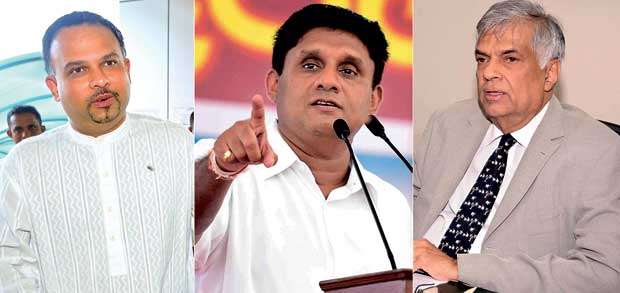
UNP has two choices: Name Presidential Candidate now or Perish

August 15th, 2018

Courtesy The Daily Mirror

  • Approximately seventeen (17) months for the announcement of Presidential Election
  • UNP seems to be in a lethargic and slipshod ramble towards coming disaster
  • Indecision is one of the characteristics that the people hate
  • Ranil should waste no more time. Name the candidate now or perish

Doubt increases with inaction. Clarity reveals itself in momentum. Growth comes from progress. For all these reasons, BEGIN.” ~Brendon Burchard

Today is August 15, 2018. The date for Presidential Election will be called by the Commissioner General of Elections between November and December 2019.

That leaves us with approximately seventeen (17) months. The two main protagonists will be a nominee from the United National Party (UNP) and another representing the Pohottuwa (Flower bud) in combination with the Sri Lanka Freedom Party (SLFP) or someone from the Pohottuwa by itself.
The SLFP without the Pohottuwa support, if the recently held Local Government elections are of any reliable measure, would end up in the category of an also-ran.

Yet, one simply cannot ignore the erosion of the UNP voter bloc. It has been in evidence for the last twenty years.

Ever since the assassinations of Lalith Athulathmudali, R. Premadasa, and Gamini Dissanayake, in that order, the UNP has been suffering from a great deal of buyer’s remorse. No changes of any fundamental nature or creative and forward-looking transformation, with the galloping technological advancement of society, has been introduced to the Party.

Against the backdrop of the maddening rush on the part of the Pohottuwa bigwigs to ensure a plausible approach to the forthcoming Presidential Election in 2020, the UNP seems to be in a lethargic and slipshod ramble towards a coming disaster.


But those who wield power now, Prime Minister Ranil Wickremesinghe and the rest of the Cabinet seem lost and forlorn


The obvious has been neglected. The demand for punishment of the Rajapaksa, the rest of the First Family and their henchmen for their atrocities when they were in office, is still vocal and real.

But those who wield power now, Prime Minister Ranil Wickremesinghe and the rest of the Cabinet seem lost and forlorn.

Indecision is one of the characteristics that the people hate to see in a leader. On the other hand, risk-takers and those who dare to go to the edge of the possible are perceived as heroes. As Otto von Bismarck, the Prussian (German) Statesman of the 19th century, succinctly vocalized, ‘Politics is the art of the possible, the attainable — the art of the next best’.

So, the question is, can the UNP find such a daring man or woman in their midst, who will go to the edge of the abyss and challenge it without turning back?

The United National Party had such leaders and that was in the past. D. S. Senanayake, J. R. Jayewardene, Gamini Dissanayake, R. Premadasa and Lalith Athulathmudali were such outstanding ones.

They made politics the art of the possible.

Against great odds they were unrelenting; they challenged the status quo and dared to go further; they made their followers do the same-go thus far and further.

The people recognized that unequal quality in them and reposed their trust and faith in them. And they were successful. It may be an unattainable dream to expect leaders of such calibre from amongst the current crop of leadership in the UNP.

However, before jumping into this complex mosaic of the UNP leadership, one must examine the real and looming needs of the people.

The country is meandering along without any definitive goal. A rudderless boat has no shore to reach. In the midst of such uncertainty, against the valour of storms and contradictory forces of political nature, if the UNP is showing any signs of hesitancy or indecision, the people will interpret such indecision and hesitancy, and quite rightly so, as an abyssmal weakness. If there is any characteristic of the UNP and its leadership has been very consistent in displaying it is that extremely negative indecision.

Waiting until the nominations are called to start an election campaign is another element of naiveté the UNP has shown during this period, 1994 to 2015.

This foolhardy approach to elections is a direct byproduct of that quality, which has shaped and defined the United National Party and its current leadership.

Conceding certain valid and legitimate issues that could be embraced and owned by the UNP has betrayed the very essence of faith and trust in which the grassroots hold the Party.

Lack of charismatic leadership at the top has cost the Party its usual capability of attracting new votes, especially the fairer sex and youth. It is not rocket science to decipher the common and simple formula of message + process = campaign. Therefore, good message + good process = good campaign.

The UNP as one single political entity won a majority as against a plurality of votes and seats in Parliament only on three occasions. One was in 1952 after the demise of D. S. Senanayake and the second was in 1977 under the leadership of J. R. Jayewardene and third when R. Premadasa succeeded J. R. Dudley, J. R. and Premadasa were leaders of a bygone era.

That era will never come back, nor will the values and cultural ethos would never revisit our body politic in the future. In politics, everything is context as well as relative. The current societal makeup is such, in an ever-evolving technological life, changes are measured in seconds, not days, months and years. What would have taken weeks to see in print about a scandalous story on a politician are now ousted in seconds on Facebook, Twitter, Instagram or any scurrilous websites on the internet.


Ranil still can muster enough support to win the next Presidential Election and that chance is slim but still a fighting chance


Unless and until today’s politicians are ready and adequately equipped to handle this fast-developing aspect of communication, they should leave the field of politics as a livelihood.

In internet warfare, the UNP is far behind its rivals. That lack of awareness on the part of the UNP as an organism engaged in politics is not acceptable in the context of politics that is engulfing all and any human condition and exploiting that human condition to the advantage of the exploiter.

Being involved in the day-to-day activities of running a Government is no excuse. Managing their incumbency is part and parcel of Government-management.

Ranil Wickremesinghe’s tragic lack of awareness of this aspect of political life is a great encumbrance to the advancement of his Party’s ‘younger guns’. The delegation of powers to the younger guns, unleashing their potential to the four corners of the country, exposing them to the vagaries of changing climates of hard and gruesome political life of a nation should be treated as a welcoming burden a leader has to bear.

Successful leaders of any field have shown the enormous advantage of such delegation.

Whichever way one turns, it is certainly not a kindly scenario one beholds. Progressive erosion of a voter-base cannot and should not be disregarded as an outlier.

For more than twenty years the UNP has been experiencing this negative voter-response at successive elections. Past election results show that each time the UNP fielded a candidate other than the one who had appeared on the earlier occasion, the new one has won. Dudley Senanayake after D S Senanayake in 1952, J R Jayewardene after Dudley Senanayake in 1977, R Premadasa after J R Jayewardene in 1989. Since then it’s been a total disaster. How the current leader Ranil Wickremesinghe takes this, the writer simply does not know. Also, this writer would not speculate as to how Gamini Dissanayake would have fared in 1994 after R. Premadasa’s death as it is utterly futile to indulge in such conjecture.

Yet, one cannot ignore the results of the 2001 elections, which in the estimation of the writer is a definitive outlier in terms of statistics.

Why the 2001 election results remains an outlier is proven by the results that followed in every election that was held thereafter, whether it was Presidential, Parliamentary, Provincial Council or other local government elections. The leader of the UNP who happens to be the current Prime Minister seems to have burnt all his chances.

Yet, Ranil still can muster enough support to win the next Presidential Election and that chance is slim but still a fighting chance.

What does he have to do in order to galvanize his party and attain an incredible victory? He has seventeen months.

He has his new Party Secretary in place, he has his Party Organizational Structure in gear and above all, he has a very credible and daring National Organizer, who is, to quote Star Trek TV series, willing and able to go ‘Where no National Organizer has gone before’.

That is Navin Dissanayake. With Sajith Premadasa undertaking to look after the South and Navin to go to all corners of Sri Lanka, the way his father Gamini Dissanayake did during the Presidential Election in 1988 in support of Sajith’s father R. Premadasa, Ranil still can pull a rabbit out of the hat. But it is a Herculean Task.

Therefore, it is beyond doubt that announcement of the next Presidential Candidate now, not next week or month but now is a sine qua non.

To build a structure of a sophisticated election campaign takes time. Branding of the campaign, rebranding of the candidate, fund-raising, recruiting the right personnel, preparation of a colourful and attractive manifesto, planning and manning the campaign in the districts, micro-targeting the particular electorates and districts, construction of the core message, constant feeding of material to the media, running an unmatchable social media campaign take time.

So, Ranil Wickremesinghe, waste no more time. Name your candidate now or perish.

Celebrated war hero now sells fish

August 15th, 2018

By Pushpa Weerasekara Courtesy : Sunday Lankadeepa

The untold suffering and dedication of the war heroes, who were engaged in a thirty-year-armed-conflict, are indescribable. They were once treated as the saviours of this nation. However, this is the tragic story of a war hero, who waged war on behalf of territorial integrity and peace.

Parts of fish, ‘Theppili’ get cut systematically with the knife that moves with the instant batting of an eye-lid. First its the fins, later gills, scales, intestines and veins are removed before the tail is cut. These tasks take less than one minute for Sagara, who squats on the ground to cut and clean the fish. He says that it is simple for him to cut even ten thousand kgs. of Theppili per day, in this manner.

There are about ten or fifteen customers forming a queue, opposite K.B.Ratnayake Vidyalaya, awaiting their turn to buy fish from Sagara. All pieces of fish cut by him are put into a plastic basin. Priyanka is the one who puts the required amount of fish to a shopping bag. She is Sagara’s partner in life.

When the popularity of Sagara began to rise after the war victory, he had to face certain issues

She peeps into the nearby Tri-Shaw to check on her three-year-old child, who is asleep. There is a specialty about Sagara for us to pen this story.   

We received the information that a war hero was selling fish. We came to know that Sagara, who was known as ‘Galewela long Sagara’ while serving in the Commando Unit of the Army, was selling fish to make a living. We knew that ‘Malu Sagara’, who is selling fish at the Matale junction, now is the same person who was once known as ‘ Galewela long Sagara’. We then went in search of his house in Kurundankulama. During an interview, Sagara put the wealth of experience in his possession to good use in recalling a heroic past.

Amurtha Hastha Navaratna Abeykone Mudiyanselage Sagara Nuwan Bandara is a native of Watagala in Galewela. He became popular among his colleagues in the army as ‘Initial Bandara’ because he had several initials before his name. He was also known as ‘Long Bandara’ alias’ Galewela Sagara’ due his extraordinary height and ability. He was known by several pseudonyms in the Army and at present he is known by many names like ‘Malu Sagara’ and ‘Malu Koma’ while at the Matale junction he is known as ‘Koma’.

Once a rebel youth

Sagara was educated at Budugehinna Maha Vidyalaya in Galewela up to grade ten. He was known to be an unruly person. He may have decided to join the Commando Force for that reason itself. He joined the 22nd Regular Force of the Sri Lanka Army (Gemunu Watch) on December 25, 2004. He received his basic training from Boossa Regiment school.

Later, he was trained as a commando at the Kudaoya Commando Training School and passed out in 2006. Although as many as 800 soldiers received training, only 138 passed out.This is because such a serious training is required to become a commando in the Army.

Sagara was known to be a very clever solider and was nicknamed by his colleagues as ‘Initial Bandara’, due to his lengthy name.

In the war front

The first experience of Long Bandara was the ‘Thoppigala’ operation. He recalled suffering a slight wound during that operation. Sagara belonged to a group of eight who was led by Sergent Pathirana. They waited in ambush in a village where ordinary Tamil people lived. Their group was forced to scatter all over the place and they also experienced a break in communication during one occasion. Seven soldiers returned, except Sergeant Pathirana. The beating of a drum was heard all over the village, but the soldiers, who were unaware of it, began to sleep.

Meanwhile, the soldier, who was on sentry duty, heard the noise of wires being cut. When the whole camp awoke, after receiving his information, they realised that the enemies had surrounded the camp. The first attack that Sagara faced was indescribable. The soldiers, who were asleep, awoke and began attacking the enemies. Sagara suffered a slight injury.

According to Sagara their first experience in taking on the enemy was a success.

Sagara engaged in the fishing trade

A road in name of the Sergeant

It transpired later that the LTTE had captured Sergeant Pathirana and obtained all the information regarding the Commando Soldiers by torturing him. Sergeant Pathirana had been dragged by his hands and legs using tractors. The beating of the drum was a warning to ordinary Tamil people to leave the villages in the event of a forthcoming attack.

Sagara was shocked by this tragedy and he lived in agony. However, he had written his colleague’s name in red using lacquer on a wooden plank. He hung the plank prominently on the wooden wall of a nearby bookshop. The wooden wall gave the directions to Thoppigala.

Terrible operation

After Operation Liberation of Thoppigala, Sagara was engaged in operations in the Mannar area. Sagara recalled how the operation in Mannar was successful under the leadership of Sergeant Kumarasinghe. Sergeant Kumarasinghe was known as ‘ Hichcha’.

As mentioned earlier a team is formed with a group of eight men. A troop is formed with three such groups. Irrespective of seniority, these groups were engaged in war to achieve big targets. There was healthy competition between these Commando groups. About 100 commandos were engaged in operations; the operation known as ‘Rice bowl’.

Celebrating with tattoos

The commanding officer had asked what they wanted because the eight-man group, including Sagara, had attacked big targets by travelling about 30 – 40 km in the thick jungles. Sagara requested permission to celebrate the occasion with tattoos. The permission for tattoos was given. During the war such permission for tattoos was not given to army soldiers. Army Commander Sarath Fonseka came and boosted our morale. The high officers also encouraged us. We got maximum benefits and a deserving rest after the operation,” he said.

His photo was used in the ticket books of 60th Centenary Celebration of the Army

Disguised as Tiger rebels

When the enemies infiltrated our forward defense line, we were deployed to repair the fences and clear them. Then we had to go forward about 20 to 25 metres.

We were being checked at the enemy points. When we go for operations we carry food and water which was sufficient for 2–3 days. We go for an operation dressed in a uniform similar to those worn by the LTTE and fitting sandal soles to the boots. Then the eight of us spread out. We have protected others and achieved our targets. A journalist once asked, While you are in an operation, don’t the soldiers attack? My reply was, why not? When we go off the lines, we inform our units about the directions and the places where we wish to go. We remove these rebel uniforms when we return to the camps. There were occasions when we were sandwiched between the LTTE and the soldiers” he said.

An eight-hour recce in a toilet pit

When I set foot in Wellimulliwaikkal first, I did not know the area. I was the one who went first from our group. We reached this area towards nightfall. The houses were like shanties. Although we tried to proceed without being noticed by the people, I fell into a pit. It was a toilet pit dug by the people temporarily. I remained in the pit with the weapons for eight hours until dawn. My duty was to obtain the information by going forward.

It was after our recce that the civilians in their hundreds and thousands surrendered to the army. All our high-ups knew about that operation. I managed to came back after the operation which made me filthy”,  recalled Sagara.

He remembers with pride not sustaining any injury after that incident. He said that a firm foundation was laid for him to lead his life meaningfully due to these experiences. He said with a touch of pride that it wasn’t a difficult task to cut fish to earn a living.

Publicity through photos

It is using these types of stories that artistes and film directors portray the heroics of security forces. The result of these efforts is either a great film or a tele-drama. Despite the little attention given to the war by film makers newspaper journalists did not forget our heroic soldiers. With the televisions giving air time and newspapers decorating their pages with the news about the heroics of soldiers, it did not take so long for Sagara to become a prominent personality. Banners and cut-outs began to mushroom all over the country containing his photographs.

Sagara’s friends saw his photos being displayed all over the country. The photographs that prominently show that war was won features Sagara.

When Sagara’s photograph became famous and highlighted in the media, local and foreign journalists began to focus their attention on this handsome youth. At a time, when the leaders in the war front were given prominence, stories were written about this unique character too. His photograph was published in the front page of the magazines as well. His photo was used in the ticket books of 60th Centenary Celebration of the Army and also in the posters of the Commando Force.

Leaving the Army

When the popularity of Sagara began to rise after the war victory, he had to face certain issues that compelled him to leave the Army. The photographs, that were published in a foreign magazine, were taken with the advice of the high officers of the Army. However, when those photos began to become continuously popular, he was ignored by the Army. He was transferred to the Head Quarters. He was sent for shows. He did not take leave for six months. A high officer of the army was a friend of his. Some media men invited him for meals. They started associating with his family members and their problems aggravated. They decided to send him home as a result. In the meantime, the problems within the Army began to escalate and he was compelled to desert his place of employment.

It is an accepted fact that the soldiers engaged in action have to face unimaginable experiences. Such soldiers may not be suitable for office work as well. Sometimes, Sagara may have been in such a position. He had evaded the Army, but his unruly behaviour was not on the wane. He was involved in an incident with the Galewela Police. It was a civil incident. As a result, he was arrested by the Army and was forced to spent six months in the ‘cell’. He had spent some time in ‘ Gal palliya’ and some media men had attempted to get him released from this place. However, he was released due to the efforts of high-ranked officers. But he lost his rank as a result of being punished. Arrangements had been made to rehabilitate him, but he was fed up with Army, a place which he had not served even for eight years.

After leaving the Army he went in search of jobs, armed with his photographs. Being a married man, he did not feel the burden because his wife, Priyanka, worked in the Army Hospital in Anuradhapura. He had met her when he was admitted to the hospital with severe injuries. Priyanka could not identify him as a soldier because he had his hair dyed and wore tattoos. At that time he was in civvies. He had explained to the journalist how she became his wife despite her protests. With the passage of time, he started selling fish with the little money he had in order to survive. Today he is a wholesale fish trader. He is engaged in the sale of fish from the river. He sells them wholesale to shops, markets and hawkers. He cuts the fish using a box of ice, pair of scales and a knife by the side of the road. Priyanka, who stopped working four years ago, assists him.

He engages in his trade mostly on Sundays and is seen near K.B.Ratnayake Vidyalaya. He spoke in agony because he had to face difficulties due to some Government officers.

He said, I remember the service we rendered on behalf of the war. We went on for months giving our commitment. We were good as long as the war raged. After the war, we are ignored as coconut refuse,” he complains.

It’s no surprise that these types of thoughts occupy his mind. A gigantic banner, covered with dust, is displayed at his home. I requested him to keep it clean. His quick reply was filled with uncontrollable emotions.

For what purpose should I keep it clean? How many places did I go in search of jobs? I was not offered a job even considering my service. Now we live with the grace of the Gods, by selling fish. We get some money when fish is available. On the other days we live by selling the furniture in our house,” says Sagara. His thoughts are diverse. This man, who speaks with pride when recalling the times with his Army colleagues, also speaks with great frustration. He spoke about the injustice caused to him and his friends after the war. But, the truth about all this is not known. But one thing is certain. Nine years have passed after the rebels were crushed in the war. It seems that the practice of appreciating the services of war heroes has gone with the wind. It is a mistake committed by us with regard to heroes like Sagara. It pricks our conscience when we think about the peace that we enjoy today.


Ranil changed his decision to quit politics, says prelate

August 15th, 2018

Yohan Perera and Athula Bandara in Anuradhapura Courtesy The Daily Mirror

Prime Minister Ranil Wickremesinghe changed his decision to give up politics and leave the country several years ago following the advice of several leading Buddhist monks including the late Maduluwawe Sobhitha Thera, the Chief Incumbent of Mirisawetiya Venerable Ethalawetunu Wawe Dhanatilaka Thera said yesterday.

The Venerable Thera expressed these sentiments during a religious ceremony held at the Mirisawetiya Cheithiya to mark the present government’s completion of three years in office last evening.

Prime Minister Wickremesinghe was planning to give up politics and leave the country for higher studies but gave up the idea following the advice of leading monks including the late Venerable Maduluwawe Sobhitha Thera and myself. We told him not to give up politics and remain here. I personally phoned him and told him to change his decision and he heeded my request,” the thera said.

He said the Prime Minister was very good at selecting and deciding on things.

Mr. Wickremesinghe was heavily criticized for talking of Wi-Fi and he also predicted that coconut pluckers were going to own mobile phones around 30 years ago but today what he said has been proved to be correct,” the thera pointed out.

Weedkiller glyphosate ‘doesn’t cause cancer’ – Bayer

August 15th, 2018

Courtesy BBC

Pharmaceutical group Bayer has dismissed claims that an ingredient used in weed killers is carcinogenic.

The German company, which owns agriculture giant Monsanto, says herbicides containing glyphosate are safe.

On Friday, Monsanto was ordered to pay $289m (£226m) damages to a man who claimed the products caused his cancer.

A Californian jury said Monsanto should have warned users about the dangers of its Roundup and RangerPro weedkillers.

Bayer completed its $66bn takeover of Monsanto in June.

A gardener sprays plants with pesticide in Florida
Image copyrightGETTY IMAGES
Image captionMany gardeners use the common weed killers

A Bayer spokesperson told the BBC the two companies operate independently. In a statement the company said: “Bayer is confident, based on the strength of the science, the conclusions of regulators around the world and decades of experience, that glyphosate is safe for use and does not cause cancer when used according to the label.”

The landmark lawsuit was the first to go to trial alleging a glyphosate link to cancer.

The claimant, groundsman Dewayne Johnson, was diagnosed with non-Hodgkin’s lymphoma in 2014. His lawyers said he regularly used a form of RangerPro while working at a school in Benicia, California.

He is among more than 5,000 similar plaintiffs across the US.

Glyphosate is the world’s most common weedkiller. The California ruling could lead to hundreds of other claims against Monsanto.

The company said it intends to appeal against the verdict.

Bottles of Monsanto's Roundup are seen for sale June 19, 2018 at a retail store in Glendale, CaliforniaImage copyrightGETTY IMAGES

What is glyphosate and is it dangerous?

Glyphosate was introduced by Monsanto in 1974, but its patent expired in 2000, and now the chemical is sold by various manufacturers. In the US, more than 750 products contain it.

In 2015, the International Agency for Research on Cancer, the World Health Organisation’s cancer agency, concluded that glyphosate was “probably carcinogenic to humans”.

However, the US Environmental Protection Agency (EPA) insists it is safe when used carefully.

The European Food Safety Authority (EFSA) also says glyphosate is unlikely to cause cancer in humans.

Last November 2017 EU countries voted to renew the licence of glyphosatedespite campaigns against it.

BBC North American correspondent James Cook reported that in California – where a judge recently ruled that coffee must carry a cancer warning – the agriculture industry sued to prevent such a label for glyphosate, even though the state lists it as a chemical known to cause cancer.

What happened in the groundsman case?

Jurors found on Friday that Monsanto had acted with “malice” and that its weed killers contributed “substantially” to Mr Johnson’s terminal illness.

Following an eight-week trial, the jury ordered the company to pay $250m in punitive damages together with other costs that brought the total figure to almost $290m.

Mr Johnson’s lawyer, Brent Wisner, said the jury’s verdict showed that the evidence against the product was “overwhelming”.

“When you are right, it is really easy to win,” he said.

‘මුර කරනා රූකඩයක් සිංහාසනයේ හිදුවා.. රට විකුණන සොරදෙටුවා අගමැති පුටුවේ නැටුවා..’ මහින්ද සුලග වේදිකාවේ කවියා ෆේස්බුක් කළඹයි..[Video]

August 15th, 2018

රංගන ශිල්පියෙකු හා කවියෙකු වන සමන් ඒකානායක විසින් කඩුවෙලදී පැවති ජන හමුවක ගායනා කරන ලද කවි පෙලක් මේ දිනවල සමාජ ජාලාවන්හි අතිශයින්ම ජනප‍්‍රියය.

https://youtu.be/ZFWlasi_NtI

YAHAPALANA GOVERNMENT, SOCIAL INCLUSION AND ANTI-DISCRIMINATION LAW (PART 1)

August 14th, 2018

BY EDWARD THEOPHILUS

Soon after a Yahapalana government elected to the office in 2015, the major promise (under the social inclusion policy) given to the country, was to introduce anti-discrimination law and a drafted bill for the legislation also published, but it was withdrawn and the reason to withdraw the bill was informally publicized that certain minor parties did not like to the law.  The general public of Sri Lanka has understood that minority parties consider that discrimination to lower class people or other religions is a right of them, however, democratic societies don’t recognize this wonderful right and principally accepted that human have equal rights irrespectively any dictions or differences.  Nevertheless, the Rajapaksa regime was in power recognised the requirement of anti-discrimination legislation. People have not seen any statement or comments made by Yahapalana advocates or international human right organizations on the government stand in regard to anti-discrimination and this situation is very astonishing to people who trust on democracy in Sri Lanka.

Why Sri Lanka had been suffered by an ethnic-based civil war for a long time?  Many policymakers in the country did not seriously consider the root cause of the problem.  It seems that the minority ethnic groups in the country had a reasonable feeling of discrimination being done by the major ethnic group, though there is no convincing evidence for it.  The basis for ethnic problems in all over the world appears to be no any other reasons than the feelings of minority ethnic groups that they are discriminated by the majority.  When compared to animals, human being is subject to provoked by discrimination, which motivates acting against discriminators by peaceful or violent manner (The Ghandian movement in India) and when there are economic, social, cultural or ethnic differences in the society, discrimination feelings have an upward trend.

Discrimination feelings are vigorously influenced by colour bars, racial and religious differences, provincial differences, caste dictions, political and social ideology and many other diverse factors and people are naturally reacting against discriminators, if there is no effective comportment to the issue.  The experience in some countries showed that the response from the people subject to discrimination was violent. The best example was South Africa.  From the point of views of academics and psychologists, the lack of a cultural design in the society for preventing discrimination is the major cause for collective violence.  Historically, there is no hard evidence that Sinhala majority in Sri Lanka has discriminated minority provoking them to take arms against Sinhala majority.  In fact, it was not clear whether LTTE terrorism was a military response against Sinhala majority, but not a single Tamil leader has expressed that Sinhala people discriminate Tamils except few Tamil leaders such as Mr Sundaralingam and Mr A. Amirairthalingam. However, certain reactions of LTTE such as killing people in Dollar and Kent farms, Killing Buddhist monks in Arantalava, killing innocent people who were travelling in Buses and Trains, and Killing people attacking to Central Bank and Telecom office displayed that the war was indirectly against Sinhala majority as the bulk of deaths in those reactions were people of Sinhala majority.

Tamil people are reluctant to state that their community is discriminated by Sinhala people as there is no provable evidence for such a statement. In some instances, Tamil leaders expressed that Sinhala government does the discrimination, but they were purely political rhetoric for attracting votes from minority. Similar statements were made by Tamil politicians before independence and at that time rulers were British, who were regarded as democratic administrators. The democracy is defined as a rule of majority and if Sinhala people were the majority of the population, the majority of Sinhala representatives would be elected to the state assembly.  On the other hand, visible truth is that the majority of Tamils in the country are peacefully living with Sinhala people and there are no records that Sinhala people in the government services or the government services in the country have rejected to provide services to Tamils. All kind of services in Sri Lanka are provided together without any discrimination to minorities.

LTTE terrorist’s movement was originated with the support of India and Indian policy was to create puppet regimes in surrounding countries and originally LTTE movement was armed by India against the UNP regime, which was led by Mr JR Jayawardane.  After the defeat of LTTE terrorism, Indian strategy failed, however, associated with the old enemy, UNP to get revenge from the Rajapaksa regime, which worked to bring China closer. Therefore, it is clear that the issue was not discrimination to ethnically related Tamils but having a close relationship with China.

According to past experience in Sri Lanka the minority attitudes toward violent reactions of LTTE was seemingly justified by Tamil leaders as such violence have severely affected to the majority.  If we stand on impartial point of views, humans are equal whether they are belonging to minority or majority. if any violence recorded against majority or minority, they are crimes against humanity and it could not be justified or excluded that any violence done by minority against majority is justifiable and the violence of the minority are also needed to treat as criminal acts. Many ordinary people of Sri Lanka have general understanding that the Geneva process on the war crime investigation appears to be partially justification of minority violence and the behaviour of Arm forces to protect humanity (minority and majority) was accused as a war crime.  International official of human rights has not explained to Sri Lankans that they are performing impartial role and they take actions against LTTE also for monumental crime that committed during 30 years.  However, there is no one to take responsibility on behalf of LTTE, but Arm forces and the government of Sri Lanka have to take responsibility for impartial role of arm forces. The opinion of general public is that there is no justice in Geneva process as they are appeared to be bias against the arm forces of Sri Lanka.

The behaviour of Tamil parties in regard to the introduction of anti-discrimination law, appears that the minority attempt to justify discrimination, if discrimination is done by the minority. If high caste Tamils discriminate lower class people, it is justified. Many lower-caste Tamils are not allowed to enter some temple of high caste Tamils, which against the social inclusion that the major social policy of European union.  Many educated Sri Lankans are of opinion that the halting of anti-discrimination law was a mistake and if Sri Lanka Podujana Peramuna comes to power, it should be passed by them and anti-discrimination should be a law of the country. Mr. SWRD Bandaranaike was the person first adapted social inclusion by his Sanga, Weda, Guru, Govi and Camkaru Policy.

Since the manifestation of human being to this world, the diversity has been a part of our planet.  Diversity exists not only in the human being but also in other areas such as weather, soil structure; water, forestry and many other areas.  The diversity in the environment is being treated as an asset to human being, however, the diversity among human is shown as a negative factor because many violence in the world is caused by people due to diversity.

Many economists and social scientists interpret that Japan achieved a quick economic progress after the World War 2 as the major contributing factor was a single ethnic group in the country, where had a strong trust on each other and a single ethnic community did not support to discriminate Japanese citizens or create discrimination feelings among Japanese people.  One language and one ethnic base maintained harmony among the Japanese nation.  This truth also can be seen at reasonable extent in Korean, Vietnam and Chinese societies.  The rapid economic growth in those Asian societies was supported by the uniformity of the ethnic base of citizens. Despite the unity in Asian nations, we can see disastrous events in Indian sub-continent countries.

In Western societies, it is observable that the uniformity in skin colour of people has contributed to economic and social progress because the uniformity in skin colour was a factor in maintaining ethnic harmony. This may be a critical point because wars such as Norman invasion and Nazism were between white people in the history. The uniformity in skin colour was not really contributed to avoid wars or social problems. Even in the modern world, there is a war between West and Middle East, despite both groups have same skin colour.  However, when there was a labour shortage for economic development, Western society allowed black and brown skinned people entering into their countries as the white majority needed the labour of black and brown skin people. This means that when people are economically prosperous, they tend to ignore differences

As a result of ethnic mixture, discrimination mentality created in the Western society. In such a situation, Western countries introduced anti-discrimination laws to tackle the problem rather than dividing their countries by power sharing in new constitutions.  The fundamental beliefs and actions in Western countries for Asian and African countries to divide countries by introducing power sharing constitutions.  However, in western countries introduced anti-discrimination laws rather than power sharing and division of countries. For example, Britain faced with serious divisive problems but never changed its unitary status of the country.  On the other hand, white people positively tolerated ethnic entrance as it supported to their economic wellbeing.  The Western example proves that when people are economically in a better condition, they are ready to ignore ethnic differences and intolerance.  The best examples from Asia for this argument is Singapore and Malaysia, where the majority of Chinese and Malays tolerate entrance of other ethnics such as Indians, it creates jobs and business to them.

Sri Lanka also can develop a homegrown solution to ethnic problem rather than listening to ill advices of Western countries. The Sri Lankan government needs analysing the historical background of the ethnic issue without bias.  The historical evidence of Sri Lankan society provides information that, in spite of Sinhala and Tamil names Sri Lankans have a uniform ethnic base and two factors contributed to hate the peaceful environment were religion, and discrimination.  According to Mahavamsa, Senna, Gutthika, and Elara invaded Sri Lanka with Soli, Pandi and Kerala soldiers who horribly discriminated and abused Sinhala people and later invaders such as Maga also followed the same discriminatory and destructive policies in the country.  That is how discrimination and hate began between the two communities in terms of Mahavamsa.  There is no doubt that religious differences, social discrimination and physical abuses of South Indian invaders massively contributed to ethnic problems in the country.

YAHAPALANA GOVERNMENT, SOCIAL INCLUSION AND ANTI-DISCRIMINATION LAW (PART 2)

August 14th, 2018

BY EDWARD THEOPHILUS

According to historical evidence, administrators in the history were dictators, who haven’t had mental abilities or lateral thinking power to manipulate effective solutions and approach for problem-solving.  They tried to control the society in iron pits.  Religious leaders and administrators in the history fuelled the issue and ignorance of them without skills for problem-solving, ethnic issues expanded from generation to generation.

Although Mahavamsa attempted to interpret that ethnic issues in Sri Lanka began with South Indian invaders, before embarkation of Vijaya, Sri Lanka’s society divided as ethnic or religious basis as Yakka, Naga, and Devas in the history before Vijaya embarked on the country.  The differences in that society were based on religious or ethnic reasons, which were unknown to the present.  We have no written historical evidence on the society before Vijaya, but the story of Lord Buddha’s visit to Sri Lanka reasonably proves that Sri Lanka had violence between communities before embarkation of Vijaya.

The other significant point in relation to the history that Sri Lanka was under Western rules for about 500 years and the western rulers did not challenge the country’s unitary status and Portuguese supported King Senerat to crush so called Jaffna Kingdom and unite Sri Lanka in a unitary status.  They never allowed to annex Sri Lanka to India.  In Sri Lanka, 75% of people are Sinhala and only 25% consist of all other ethnic groups.  The responsibility of the government is to protect all ethnic groups not only minority groups looking for their votes to be in power.

In this historical background, Sri Lanka’s government requires to identifying root causes for ethnic problems.  Many independent thinkers look at this problem from the point of view of discriminatory feelings of people among minority and lack of economic opportunities to them in the current society.  Usually, the yahapalana analytical point of views is based on policies of political parties, which are quite biased towards the majority because the existence of them is determined by the votes of the minority.  The government should look at the independent point of views because the ethnic issue is not like short-term politics; it is an issue that is moving forward from generation to generation making massive destruction to the country.

Why the minority has discriminatory feelings? In the past political administrators introduced laws encouraging discrimination of minority for purely their own political advantages.  When compared to Western society, Sri Lanka’s political system always encourages discrimination of minority through laws and religious leaders always fuelled the issue supporting discrimination, which is fundamentally against their religious philosophy.  Politicians wanted to create the power bases rather than ethnic harmony.  Religious leaders wanted to take revenge rather than achieving Nirvana in doing good things.

When analysing Sri Lanka’s ethnic problem, nobody can ignore that the problem is fuelled by South Indian Politicians, who have vicious elements against Sri Lanka.  Generally, Tamils in Sri Lanka are much better off than Indian Tamils.  Economically, socially and educationally Sri Lanka Tamils are equal to Malaysian Tamils, however, Indian politicians attempt to use the issue as a vehicle to gain power in India aggravating of Indian Tamils using unknown problem in Sri Lanka.  Honestly, they do not concern about Sri Lankan Tamils whether they are in a better position or not.  Indian Tamil politicians are not concerned on Tamils in Malaysia or Singapore because they do not needs Indian supports.  This situation created due to the economic prosperity of Tamils in Malaysia and Singapore.  When Sri Lankan Tamils gained much higher economic status than Indian Tamils, then they won’t cry for Sri Lankan Tamils and they press Indian politicians to achieve similar economic prosperity.

To resolve the problem now, it is needed to forget the past and introduce anti-discrimination law rather than a divisive 13th amendment to the constitution or a new constitution which appear to be more divisive.  Under the anti-discrimination law, each and every citizen in the country are equal irrespective of any differences.  Racial verification law in Australia applied to every citizen in the country and nobody can even refer to a race with a discriminative motive.  Sri Lanka’s situation is completely different, it is allowed to discriminate minority by actions as well as words of mouth. Why the government cannot stop this discriminatory environment through encouraging a strong united Sri Lanka without differences.  For the minority to accept Sri Lanka’s government action, it needs government decisions on ethnic issues, which are transparent to everybody.

If the government plays a double game with the issue (like yahapalanaya), it would not be successful.  The government needs to especially address religious leaders and tell them directly and in an open manner that they are supposed to prepare people achieving haven or nirvana rather than working against achieving it through preaching for hate.  Lord Buddha clearly stated that for hate will not remove hate but love   will remove hate. In this situation what Western countries did is useful to Sri Lanka too.  B.F Skinner, a famous psychologist expressed that the concept of human nature and a good society through cultural design are the foundations of human behaviour.

Sri Lanka’s ethnic problem was created by human behaviour which has been influenced by the environment that is supporting to discriminatory feelings of the minority.  Human beings are both controllers and controlled.  When the government creates a good environment through a cultural design, ethnic problems could be eliminated forever and ever.

Politicians in Sri Lanka are corrupt irrespective of whether they are in government or in opposition, whether they are socialist or capitalists.  Tamil politicians are more corrupt than Sinhala politician and they discriminate their own Tamils based on various factors such as castes, regions, family backgrounds, educated place and many other factors using.  When the current government elected soon it wanted introduce anti-discrimination law but it was withdrawn without giving any reasons.  It seems that the government does not want to solve problem but want to continue the problem like a beggar’s wound.

How to create a good society or good environment in the country without discriminatory elements, B.F Skinner indicated that a good society could be created by a cultural design, which means that the society should introduce laws, rules, and regulations.  Controls are essential to make people more sensitive to the consequences of human behaviour. In Sri Lanka’s society it seems that human behaviour is too open in regards to sensitive matters, such as religion, race, caste and many other things.  The cultural design means rules, regulations, and procedures in the society.  Sri Lanka needs to introduce anti-discrimination law and variety of rules and regulations like in Western society to control human behaviour and eliminate discrimination feelings of minority ethnic groups in the country.

The division of Sri Lanka’s land, creating ethnic-based provinces would not support to change the human behaviour or discriminatory feelings of people.  Sri Lanka’s political parties still not considered a cultural design for uniting the country. It has already experienced that so-called ethnic solution under the provincial government was not successful, in fact, it has created serious fiscal problems to the country increasing spending and creating a huge budget deficit and pressure to spending process of country.  So far, we can observe that ethnic solutions coming from the West are too divisive and they have in mind that a federal system would be a solution to the problem but it is a mirage, a small country needs a unitary administration system with well-designed laws, rules, and regulations.  If any ethnic solution would be a long-term economic burden to the country, such solutions need rejection because the economy is the fundamental base of existing all the community of the country.

Many Western countries, South India and local Tamil politicians do not talk about cultural design for uniting Sri Lankan communities.  They talk and support for dividing Sri Lanka for increasing hate and strategies for extravagant problems in the future.  Leaders of Sri Lanka must have a base of thinking that any solution, which is a challenge to the economic progress of the country that should be rejected and the unitary status of the country should be an essential condition because it would help successful implementation of economic projects of central government.

What kind of anti-discrimination laws are needed by Sri Lanka?  This is also quite a significant issue that attracts wider debate and point of views from different communities.  The fundamental bedrock of anti-discrimination laws is to recognize the equality of human beings whether they are Sinhala, Tamil, Muslim or any other, and also recognizes the equal rights for them.  Sometimes, anti–discrimination laws might challenge certain personal laws such as Thesawalamai Law, Muslim Law, Kandyan Law and Buddhist Temple Law and there should be required to adopt effective strategies to avoid possible clashes between anti-discrimination laws.  According to current legal systems of Sri Lanka, when there are problems within personal laws, judges apply common law provisions, which may be Roman law provisions, statutory laws or judge-made laws.  If the parliament passes a law in relation to anti-discrimination it would become a common law which could not be challenged by personal laws. Sri Lanka is to citizens of Sri Lanka, which means that there shouldn’t be any restrictions in access to land and doing business to any group of citizens whether they are Sinhala, Tamil or Muslim or any other.  Current personal laws badly discarnate citizens.

සීගිරි බිතු  සිතුවම් සංරක්ෂණයේ අභියෝග

August 14th, 2018

මතුගම සෙනෙවිරුවන්

සිංහල ඉතිහාසයේ  මහා සුරු විරු කම් පෑ නරපතියන් මෙන්ම මහා කාලාකාමී හැකියාවන් ගෙන් සමන්විතව සිටි නරපතියන්ද වූහ.ධාතුසේන මහරජු ගේ පුත් කාශ්‍යප ගැන කිව යුතු වන්නේ සිය ආරක්ෂාව වෙනුවෙන් ඉඳි කල බලකොටු නගරය මහා කලාගාරයක් බවට පත් කර ගත් ආකාරයයි. ඇතෙමෙක් මේ සීගිරි බල නගරය හඳුන්වන්නේ ආලකමන්දාව යනුවෙනි. රාවණ ගේ පරපුරේ කුවෙර ගේ ආලකමන්දාව යනුවෙනි. කෙසේ වෙතත් ලංකාවට කීර්තියක් අත් කර දුන් ස්මාරයකයන් අතර  සීගිරිය ඉදිරියෙන්ම ඇත. එය ලෝක උරුමයක් ලෙසට යුනෙස්කෝව විසින් නම් කරන ලද්දේය  . එහෙත් සැබවින්ම සීගිරිය යනු ජාතික උරුමයකි. සිංහලයන්ට සිය අභිමානය කියැ පෑ හැකි විස්මිත නිර්මිතයකි. සීගිරිය නිර්මාණය කොට එහි කලා කෘති නිර්මාණය කොට දැන් අවම වශයෙන් වසර එක්දහස් පන්සීයක කාලයක් ගතව ඇත්තේය. කලක් ඝන වනයට යටව පැවතුණු සීගිරිය 1831 වර්ෂයේදී   හෙළි පෙහෙළි කර ගනු ලැබිණ. එච්.සී.පී.බෙල් මහතා 1851 වර්ෂයේදී සීගිරිය තරණය කළේය. මහාචාර්ය සෙනරත් පරණවිතානයන් ද ඒ මග ගනිමින් සීගිරි කලාගාරය නැවත ප්‍රකෘතිමත් කිරීමටත් සීගිරි කුරුටු ගී කියවා ප්‍රකාශයට පත් කරලීමටත් කටයුතු කළේය.

             ලක්දිව  චිත්‍ර කලාව පිළිබඳ අධ්‍යනය කිරීමේදී සීගිරි චිත්‍ර මුල් තැනක් ගනී. දැනට අපට සීගිරියෙන් හමුවනුයේ චිත්‍ර 22ක් වැනි සුළු ප්‍රමාණයකි.ක්‍රි.ව.8 වන ශතවර්ෂයේ දී ලියවී ඇති සීගිරි කුරුටු ගීයකට අනුව රන්වන් ලියන් 502කගේ චිත්‍ර පිළිබඳව සඳහන් වේ.ප්‍රධාන වශයෙන් සීගිරි චිත්‍ර බටහිර ගල් පර්වතයෙහි ඇඳ තිබෙන අතර ඊට අමතරව දැරණියගල ගුහාව,  බක්කිගල ගුහාව,නයිපෙන ගුහාව(පරුමක ලෙන) යන ස්ථානවලින් ද සිතුවම් හමු වී තිබේ. මිනිස් ප්‍රමාණයට වඩා තරමක් කුඩා ලෙස සුකුමාල ලලනාවන්ගේ උඩුකය රූප  වළාකුළුවලින් නික්මෙන්නාසේ ඇඳ තිබේ. මෙම චිත්‍ර ඇඳීමේදී වර්ණ භාවිතය විශේෂය. වර්ණ සකසා ගැනීමේදී රජරට බහුලව දක්නට ඇති අමුද්‍රව්‍ය භාවිතා කර තිබේ. එනම්,ගොකටු කිරි, මකුළු මැටි, රණවරා ආදිය වේ.මෑතකදී ඉතාලියේ ඉක්‍රොම් අයතනයේ  විශේෂඥ ෆැබ්රීසියෝ බන්ධනී විසින් කරන ලද අධ්‍යනයකදී හෙළි වී ඇත්තේ චිත්‍ර සිතුවම් කිරීමේ පෘෂ්ඨය ස්ථර තුනකින් යුක්ත බවයි.ඒවා රතු මැටි (හුඹස් මැටි) ශාක කොටස් සිහින් වැලි වලින් සමන් විතය. ස්ථර දෙකක පමණ හුණු මද වශයෙන් යොදා ගෙන තිබේ.එම වැලි මැටි බදාමය බන්ධනය කිරීමට ගිවුල් ලාටු වැනි ස්වභාවික ගම් වර්ග භාවිතා කර ඇත. ලලනාරූප ශරීර හැඩයන්ට අනුකූලව තෙලිතුඩ හසුරුවාලීම නිසා සීගිරි සිතුවම් ඈතට පෙනෙනුයේ වර්ණයෙන් අඹන ලද රූප ලෙසය. සිංහල සාහිත්‍යයේ   දක්වා ඇති අගින් සිහින් වූ ඇඟිලි,සිහිනිඟ,මස්පිඩු පිරුණු පුළුලුකුල,වට වූ පුන්පියයුරු,දෙතොල් සහ දෙකොන සිහින්ව ගිය දිගු ඇස් සීගිරි සිත්තමින් අලංකාර වී යයි සිතේ.

         මෙම අලංකාර චිත්‍ර කාලයේ විපරීත බවින් දේශගුණික විපරීත බවින් ද මුදවා ගන්නට නොහැකිය. මිල කළ නොහැකි සීගිරි බිතු සිතුවම් වරින් වර විනාශව යන්නට කරුණු ගොනු වන්නේ එහෙයිනි. වරක් සාහසිකයෙකු විසින් සීගිරි සිතුවම් මත තීන්ත ගා කුලු ගෙඩියෙන්ද පලුදු කර තිබුණි. නවසිය හැටේ දශකයේ දී මෙම විනාශය මග හරවා සිතුවම් යලි යථාතත්වයට පත් කිරීමට ඉතාලි ජාතික ලුසියානො මරන්සි පැමිණ ගියහ. පසුගිය කාලයේද ඒවා නැවතත් අභියෝග රැසකට මුහුණ දුන්හ.සීගිරිය සම්බන්ධව වගකීම දරන ආයතන කීපයකි. එකක් පුරාවිද්‍යා දෙපාර්තමේන්තුවයි. අනෙක මධ්‍යම සංස්කෘතික අරමුදලයි. නව සිය හැටේ දශකයෙන් පසුව සීගිරි චිත්‍ර නැවත අභියෝගයට ලක් විය. ඒ එම චිත්‍ර මතින් විශේෂයෙන්ම ලලනාවන්ගේ මුහුණු වසා ගෙන පැතිරුණු සුදු පැහැ වලා පටලයක් නිසාවෙනි.මෙම ලිපිය සැකසෙන්නේ පුරාවිද්‍යා දෙපාර්තමේන්තුව විසින් එම අභියෝගය ජය ගන්නට සහ නිවරදි පරිදි සංරක්ෂණයට ගත් ක්‍රියාමාර්ගයන් පෙන්වා දීමටයි.

       අපගේ පැරණි චිත්‍ර ශිල්පීන් විහාරස්ථාන බිතු සිතුවම් මෙන්ම මෙවැනි ලෞකික සිතුවම් ඇඳීම පිණිස ස්වභාවික අමුද්‍රව්‍යන්ම යොදා ගත්හ. ඒවා වියැකී යන කල්හි. නැවත ඒවා මත සිතුවම් අදිමින් සංරක්ෂණ ක්‍රියාමාර්ගයන් අනුගමනය කළහ.එයට හේතුව බෞද්ධ සංස්කෘතිය  ජීවමාන උරුමයක් ලෙසින් සැලකූ බැවිනි. මහනුවර දළාද මාළිගාවට කොටි ත්‍රස්තයන් එල්ල කල බෝම්බ ප්‍රහාරයෙන් පසු. එහි වරිච්චි බිත්ති මත ඇඳ තිබූ පැරණි බිතු සිතුවම් යලි මතු විය. රජ දවස සංරක්ෂණ  ක්‍රියාදාමය එලෙසයි. විසි වන සියවසේ  මෙම චිත්‍ර සංරක්ෂණයට නවීන රසායන ද්‍රව්‍යයන් යොදා ගන්නට සිදු විය.1943 දී ෂානා වුල්ලා ඛාන් හිටපු පුරාවිද්‍යා කොමසාරිස් රාජා ද සිල්වා මහතා සහ මහාචාර්ය නන්දා වික්‍රමසිංහ යන  යන විද්වතුන් මේ සීගිරි චිත්‍ර සංරක්ෂණයේ පුරෝගාමීන් වූහ. ඉන්පසු නන්දා වික්‍රමසිංහ මැතිණිය යටතේ එහි දෙවනියා වශයෙන් කටයුතු කළ 1983 දී පුරාවිද්‍යා දෙපාර්තමේන්තුවට එක්වුණු යූ .වතුගේ මහතා දැනට පුරාවිද්‍යා දෙපාර්තමේන්තුවේ   රසායන සංරක්ෂණ අංශයේ අධ්‍යක්ෂ ධූරය දරයි.

    1968 ඔක්තෝබර් 13 දින සීගිරි චිත්‍ර විනාශ කළ පසු මරන්සි මහාතා ගේ උපදෙස් මත ඒම චිත්‍ර  වල ගා තිබූ තීන්ත ඉවත් කර නැවත යථා තත්ත්වයට පත් කර ගන්නා ලදී. 2004 වසරේ දී යට සඳහන් කළ පරිදි ලලනාවන් ගේ මුහුණ මතින් පැතිර ගිය සුදු වලා පටලය කුමක්දැයි නිවරදිව හඳුනා ගන්නා ලද්දේ යූ. වතුගේ මහතාය.ඔහු එම සොයා ගැනීම විස්තර කරන්නේ මෙසේය.

       සීගිරි චිත්‍ර සංරක්ෂණය පිළිබඳ නිරන්තර අවධානයෙකින් ඉන්නට සිදු වන්නේ ඒ චිත්‍ර ලෝක උරුමයන් අතරට එක් වීම නිසයි. මෙම චිත්‍ර සංරක්ෂණයට අපට වරින් වර යුනෙස්කෝ සංවිධානයේ විශෙෂඥයන් ගෙන උපදෙස් ලැබෙනවා. මම රසායන සංරක්ෂණ අංශයට එක් වූවාට පසු ඉන්දියාවට ගොස්  පුහුණුව ලබා පැමිණියා.2004 වර්ෂයේ දී මා දැක්කා මෙම චිත්‍ර නැවත යම් අභියෝගකට මුහුණ දී තිබෙන වග ඒවා සඳහා යම් අකාබනික රසායන වර්ග කීපයක් යොදමින් යථා තත්තවයට පත් කිරීමට වෑයම් කරමන් සිටින අවදියේ 2010 දී පමණ මේ විනාශය පත්‍ර මාර්ගයෙන් ප්‍රසිද්ධ වුණා. එම වාර්තා නිසා මට එරෙහිව පරික්ෂණයක් පවා සිදු වුණා. එහිදී මහාචාර්ය ජගත් වීරසිංහ මොහාන් අබේරත්න මහාචාර්ය නිමල් සිල්වා වැනි විද්වතුන් ගේ කමිටුවක් පත් කලා.නමුත් ඔවුහු තහවුරු කලා මම භාවිත කළ රසායන ද්‍රව්‍ය මගින් එම විනාශය සිදු නොවුණ බව. ඒ සමගම යුනෙස්කෝවේ අනග්‍රහය මත ඉතාලි ජාතික බන්ධනී ද ලෝක උරුම කාර්යාලයේ කැකුලේ සහ ක්‍රිස්ටීන් ප්ලෙෂර්  මෙහි පැමිණ මේ චිත්‍ර ගැන පර්යේෂණ කරමින් වාර්තා දෙකක් එළි දක්වා තිබෙනවා. ඊට අමතරව පුරාවිද්‍යා පශචාත් උපාධි අයතනය මගින් කල පරීක්ෂණය මගින් (පොලිවිනියුල් ඇසිටේට් ) වැනි දෙයක් මෙම පටලය තුළ තිබෙන බව තහවුරු කර ගත්තා.මම කලින් නිගමනය කළ සැකය ඔවුන් තහවුරු කර තිබෙනවා. ඒ කියන්නේ මේ මතුව තිබෙන්නේ ජිප්සම් විශේෂයක්. 2014 වසරින් පසුව මම නිවි හැනිල්ලේ මෙම චිත්‍ර යළිත් සංරක්ෂණය ආරම්භ කොට අද වන විට එය අවසන් කොට තිබෙනවා. මෙම වලා පටලය මතු වීමට හේතුව මරන්සි මහතා විසින් කැඩුණු බදාම සවි කිරීමට භාවිතා කල පෙසොලෝනා බදාමයේ ජිප්සම් සහ ගම් වර්ග තිබීමයයි අනුමාන කරනවා.. වාතයේ තෙතමනය සමග එක්කාසු වී මේවා සිහින් පටලයක් ලෙස විසිරෙන්නට පටන් ගත්තා. නමුත් මම තේරුම් ගත්තා අකාබනික රසායන වර්ග කීපක් පාවිච්චි කිරීමෙන් මෙම උවදුර පහ කර ගත හැකි බව. මොකද මැටි බදාම වල සහ වර්ණ වල තිබෙන කාබනික රසායන සහ අකාබනික රසායන ප්‍රතික්‍රියා කරන්නේ නැහැ. එම වෑයම සාර්ථක වුණා. දැන් ඒ ගුහාවේ චිත්‍ර නැවත යථා තත්වයට පත්ව තිබෙනවා.

            සැබවින්ම මෙම අත්දැකීමෙන් අපට පසක් වන්නේ ඉතාමත් අවම පහසුකම් යටතේ වුවද පුරා විද්‍යා දෙපාර්තමේනේතුවේ  විශේෂඥයන්ට ලංකාවේ සංරක්ෂණ කටයුතු කළ හැති ආකාරයයි.2016 දී දෙපාර්තමේන්තුවේ ඡායාරූප අංශයේ අර්ජුන මහතා සහ පිරිසක් එක්ව සීගිරිචිත්‍ර නව ඩිජිටල් ක්‍රමයට පිටපත් කිරීම එක් උදාහරණයක්. ඒ ඡායාරූප මගින් සිදුවන හානි ඉතා ඉක්මනින් හඳුනාගන්නට හැකිවනවා. එම නිර්මාණ ශීලී තත්ත්වය වැඩි දියුණු කිරීමට නම් නව තරුණ නිළධාරීන් ඉදිරියට ගත යුතුය. වැඩි දුර පුහුණුවට විදේශ වලට යවා යලි මෙහි ගෙන්වා ගෙන ලංකාවේ බිතු සිතුවම් මෙන්ම වාස්තු නිර්මිතියන් ආරක්ෂා කර ගත යුතුයි.එහෙත් ශෝචනීය තත්ත්වය නම් දෙපාර්තමේන්තුවේ සිටින නිළධාරින් බොහොමයක් සරිලන වැටුපත් නොලැබීමත් උසස් වීම් නොලැබීමත් වැඩි දුර පුහුණු සඳහා අවශ්‍ය පහසු කම් නොලබමින් කළ කිරීමෙන් පසු වීමයි. වතුගේ මහතා ද තව වැඩි කලක් යන්නට ප්‍රථම විශ්‍රාම යන්නේය.ඉන්පසු ඒම රික්තය පිරවීම ලෙසෙහි පහසු නොවේ. ඇමති වරුන්ගේ  සහ ලේකම් වරුන් ගේ බල අරගල වලට මැදි වී මිරිකී තිබෙන මෙවැනි වටිනා ආයතන යලි නගා සිටුවීමට නම් ඒවායේ මුල් පුටුවලට පුරාවිද්‍යාව මෙන්ම රටේ සංස්කෘතිය ස්පර්ශ කරන අවංක නිළධාරීන් පත් විය යුතුය.ලංකාවේ ස්මාරකයන් සියල්ල අයත් වන්නේ ජාතික උරමයන්ටයි. ඒවා කෞතුක වටිනා කමකින් යුක්ත වුවද ජීවමාන සංස්කෘතියේ පැතිකඩයන්ය. ඒවා කලමනාකරනයට පුරාවස්තු ආඥා පණත ප්‍රමාණවත් නැත. ඒ වෙනුවට ජාතික උරුම කළමනාකරන පණතක් අවශ්‍ය වන්නේය.එසේ  නොවන  විට සීගිරිය වැනි අගනා ජාතික උරුමයන් චීනයට හෝ ඉන්දියාවට පවරා දීමට යමෙක් කටයුතු කරන්නේ නම් එය පුදුමයට කරුණක් නොවේ..

මතුගම සෙනෙවිරුවන්

ශ‍්‍රී ජයවර්ධන පුර රෝහලේ සිදු කරනු ලබන මරණ පරීක්‍ෂණ සඳහා මුදල් අයකිරීමට තීරණය කිරීම සම්බන්ධවයි.

August 14th, 2018

වෛද්‍ය ජයන්ත බණ්ඩාර ප‍්‍රධාන ලේකම් සමස්ත ලංකා වෛද්‍ය නිළධාරීන්ගේ සංගමය

වෛද්‍ය අතුල කහඳලියනගේ,
සභාපති,
ශ‍්‍රී ජයවර්ධනපුර රෝහල,
තලපත්පිටිය,
නුගේගොඩ.

මහත්මයාණෙනි,

ශ‍්‍රී ජයවර්ධන පුර රෝහලේ සිදු කරනු ලබන මරණ පරීක්‍ෂණ සඳහා මුදල් අයකිරීමට තීරණය කිරීම සම්බන්ධවයි.

ශ‍්‍රී ජයවර්ධනපුර රෝහල් කළමණාකරන මණ්ඩලය විසින් 2018. 06. 28 දින කරන ලද තීරණයක් අනුව නිකුත් කරන ලද ලිපියක් අනුව ශ‍්‍රී ජයවර්ධනපුර රෝහලේදී සිදුකරනු ලබන මරණ පරීක්‍ෂණ සඳහා එක් මරණ පරීක්‍ෂණක් වෙනුවෙන් රු. 2500/- ක මුදලක් අයකිරීමට තීරණය කර ඇති බව දන්වා ඇත. එම මුදල ගෙවන තුරු මෘත ශරීරය නිදහස් නොකරන බව එහි දක්වා ඇත.‍

ශ‍්‍රී ලංකාව තුල රජයේ රෝහල් තුලදී මරණ පරීක්‍ෂණ සඳහා මුදල් අයනොකරනු ලබන අතර ශ‍්‍රී ජයවර්ධනපුර රෝහල තුලදී සිදු කරනු ලැබූ මරණ පරීක්‍ෂණ සඳහා මුදල් අයකරනු ලැබුවේ නැත. ශ‍්‍රී ජයවර්ධනපුර රෝහලේ සිදු කරනු ලැබූ මරණ පරීක්‍ෂණ සිදු කරනු ලැබුවේ කලූබෝවිල රෝහලේ වෛද්‍යවරුන් හා හදිසි මරණ පරීක්‍ෂකවරුන් විසිනි.
 
මෙසේ ඔබ පරිපාලනය යටතේ පවතින ශ‍්‍රී ජයවර්ධනපුර රෝහලේ මරණ පරීක්‍ෂණ සඳහා මුදල් අයකිරීම තීරණය කරනු ලැබුවේ කුමන කරුණු මතද යන්න පැහැදිලි කරන ලෙස ඉල්ලා සිටිමු.

ස්තූතියි.

මෙයට,
වෛද්‍ය ජයන්ත බණ්ඩාර
ප‍්‍රධාන ලේකම්
සමස්ත ලංකා වෛද්‍ය නිළධාරීන්ගේ සංගමය

ජීවිත බේරා ගැනීම

August 14th, 2018

වෛද් රුවන් එම් ජයතුංග

මම  පරමාදර්ශී වෛද්‍යවරයෙකු හෝ  පරමාදර්ශී මිනිසෙකු නොවෙමි. එහෙත් මාගේ වෘත්තිය හරහා මට මිනිස් ජීවිත රැසක් බේරා ගැනීමට හැකි විය. ඉන්ටර්න්වරයෙකු ලෙස මාතලේ රෝහලේ ජීවිත අවදානම් සහිතව රෝහල් ගතවූ රෝගීන් බොහෝ දෙනෙකු හට  පළමු ප්‍රතිකාරය රෝහලේදී ලබා දී ඉන් පසු විශේෂඥ වෛද්‍යවරු හරහා අදාල දිර්ඝ ප්‍රතිකාරයන් ලබා ගැනීමට සලස්වා ඔවුන් ගේ ජීවිත බේරාගත්තෙමි.  වරක්  කඩු පහරවල් ලබා බොහෝ කැපුම් තුවාල සහ අධික රුධිර වහනය තිබූ රෝගියෙකු  ඉරිදා දිනයක සවස රෝහල් ගත කෙරුනි. එදින වාට්ටුවේ සියළු වෛද්‍යවරු නිවාඩු ගොස් සිටි අතර විශේෂඥ වෛද්‍යවරයා දුරකථනයෙන් සම්බන්ධ කර ගැනීමටද නොහැකි විය. ඉන්ටර්න්වරයෙකු ලෙස මම අභියෝගය භාර ගෙන කැපුම් තුවාල මසා රුධිර වහනය නවතා ඔහුට රුධිරය පාරවිළනය කොට රෝගියාගේ ජීවිතය බේරා ගත්තෙමි. සඳුදා දහවල් දොලහත් පසුවී වාට්ටුවට ආ විශේෂඥ වෛද්‍යවරයා ඉතා උදාසීන දෙනෙත් වලින් මා කල වික්‍රමය ගැන අසා සිට පසුව කිසිවක් නොකියා වාට්ටුවෙන් පිටවී ගියේය. මගේ හිටපු බොස් යම් ආකාරයක වෘත්තීය දැවීමකට ලක්ව සිටි අතර මිනිසුන් ගේ ජීවිත බේරා ගැනීම නිසා ලබන සතුට ඔහුට වින්දනය කරන්නට නොහැකි විය. එය එක්තරා ආකාරයක අවාසනාවකි. 

පළමු පත්වීම ලබා ගෙන මිනිපේ ප්‍රදේශයේ නොදියුණු ග්‍රාම ප්‍රදේශයක තිබූ ග්‍රාමීය රෝහලකට ගිය අනෙකුත් බොහෝ වෛද්‍යවරු කලාක් මෙන්  පීපී කොට දුප්පත් ගොවි ජනතාව සූරා නොකෑවෙමි. ඒ මා තුල තිබූ යහ ගුණයක් නිසා නොවේ. බෙහෙත් ගැනීම සඳහා වී ගෝනියක් රුපියල් පණහට විකුනන , නිතරම බත් සමග මයියොක්කා කොළ මළවාගෙන කන ,දිනපතා  කසිප්පු බොන  අලසව දිවි ගෙවන  සහ  කපටි දේශපාලකයන්ව වන්දනා කරන  කෘෂවී ගිය ශරීර වලින් යුත් මනුෂ්‍ය පරාණ දැක ඇතිවූ කළකිරීම නිසාය. එහෙත්  මේ මනුෂ්‍ය පරාණ ගනනාවක් මා මගේ ශක්ති ප්‍රමාණයෙන් බේරා ගත්තෙමි. 

වරක් ඉතා බරපළ ලෙස ඇදුම සෑදී හුස්ම ගැනීම අවහිර වී මරණාසන්නයෙන් සිටි කාන්තාවකට මම මේ ග්‍රාමීය රෝහලේදී ප්‍රතිකාර කලෙමි. ඇයට ශිරා ගත කිරීම සඳහා ඇමීනොෆිලීන් නම් ඖෂධය දීමද ඉතා අපහසු විය. ඇයගේ ශිරා සියල්ලම ඇකිලී තිබුනි. මේ අසීරුතාවන් මැද රෝහලේ ලයිට්ද ගියේය. (ලයිට් යාමට හේතු වූයේ ප්‍රදේශයේ බීමත් මිනිසුන් විසින් බයිසිකල් චේන් කරකවා විදුළි වයර් වල පැටලීම සඳහා විසි කිරීමයි. පසුව මම ග්‍රාම නිලධාරීන් ලවා මේ ක්‍රියාවේ බරපතලකම  ජනතාවට පෙන්වා දුන්නෙමි )  ලයිට් ගිය විගස මට කුණුහරප මතක් විය. කෙසේ නමුත් ටෝච් එලියේ ආධාරයෙන් ශිරාවක් පාදාගෙන එම ඖෂධය එන්නත් කොට ඇයට ඔක්සිජන් ලබා දීම සඳහා ඇම්බු කලෙමි. මෙසේ පැය භාගයක් පමණ යන විට ඇය මඳ වශයෙන් හුස්ම ගන්නට වූවාය. මේ කාන්තාව සති දෙකක් පමණ රෝහලේ නැවතී සිට සුවය ලබා ගිය අතර ඉන් මාස තුනකට පමණ පසු තමන් ගේ කුඹුරේ ගොයම් පැල සිටවනවා දැක මට අසීමිත සතුටක් ඇති විය. 

නාරි හා ප්‍රසව ජේෂ්ඨ වෛද්‍ය නිලධාරී  ලෙස සේවය කල සමයේදී මම බොහෝ සංකූලතා තිබූ ඝර්භිනී මාතාවන් මෙන්ම බිළිදුන් ගේ ජීවිත බේරා ගත්තෙමි. එසේම ගබ්සාවන් කොට   ආසාදන සංකූලතා මෙන්ම ජීවිත අවධාන තිබූ කාන්තාවන් රැසකගේ ජීවිත බේරා ගත්තෙමි. මේ  කාලයේදී  මිය යාමට ආසන්නව සිටි සෙලවීම් රහිත නිසා භ්‍රෑණයා මිය ගිය බවට සැක කොට  වාට්ටුවේ පසෙකට දමා සිටි කාන්තාවක් ඉන්ටර්න් වෛද්‍ය චන්දන චන්ද්‍රසේකර සමග එක්වී හදිසි   සීසර්  ශල්‍යකර්මයකට ලක් කොට බිළිඳාගේ ජීවිතය බේරා ගත්තෙමි.   

නිර්වින්දන වෛද්‍යවරයෙකු ලෙස සේවය කරන සමයේදී ජීවිත රැසක් බේරා ගැනීමට සහාය දීමට මට හැකි විය. මේ අතරින් මට නිතරම සිහිපත් වන සිද්ධියක් තිබේ. වරක් බඩවැලේ සංකූලතාවක් නිසා ජීවිත අවධානම තිබූ දින හතරක් වයසැති බිළිඳෙක් හදිසි ශල්‍යකර්මයකට ලක් කිරීම සඳහා  ශල්‍ය වෛද්‍ය  විශේෂඥ බී.ජී.එන් රත්නසේන මහතා විසින් ගෙන එන ලදි. මෙම රෝහලේ නිර්වින්දන විශේෂඥ වෛද්‍යවරයෙකු නොසිටි අතර අවධානම තිබුනේ මගේ කර මතය. මම සාර්ථකව බිළිඳාව නිර්වින්දනය කලෙමි. අප දෙදෙනා විසින් බිළිඳා ගේ ජීවිතය බේරා ගත්තෙමු. මේ සිදුවීමෙන් පසු ශල්‍ය වෛද්‍ය  විශේෂඥ බී.ජී.එන් රත්නසේන මහතා තුල මා කෙරෙහි  ඇල්මක් ඇති විය. එසේම ඔහු මගේ හැකියාවන් විශ්වාස කලේය. මේ කාලයේ විදේශ වෛද්‍ය උපාධිධාරීන් සහ දේශීය වෛද්‍ය උපාධිධාරීන් අතර ඝට්ටන මතුවී තිබූ අතර වරක් ඔහු ශල්‍යාගාරයේදී විදේශ වෛද්‍ය උපාධිධාරීන් පිරිසක් විවේචනය කොට මාගේ සිත රිදේදෝ කියා සිතුනු නිසාදෝ ”  අපි මේ කියන්නේ රුවන්  වගේ ෆොරින් ග්‍රැජුවෙට්ලා ගැන නෙවෙයි  කියා කීවේය. 

විශේෂඥ මනෝ වෛද්‍ය නීල් ප්‍රනාන්දු මහතා යටතේ යුද හමුදා රෝහලේ මානසික සෞඛ්‍ය වාට්ටුවේ සේවය කරන විට විශාදය , පශ්චාත් ව්‍යසන අක්‍රමතාවය (PTSD)  වැනි මානසික රෝගී තත්වයන් වලට ලක් වීම නිසා දිවි නසා ගැනීමට යොමු වී සිටි සොල්දාදුවන් රැසකගේ ජීවිත බේරාගත්තෙමි. තවද  නිලධාරීන් ගේ සෙසු නිලයන් ගේ හිරිහැර වලට ලක්ව ජීවිත එපාවී සිටි සොල්දාදුවන්ටද අප සහාය වූයෙමු. මින් එක් සොල්දාදුවෙකු මගේ මතකයට එයි. ඔහු සේවය කලේ පනාගොඩ කඳවුරේය. ඔහුට එක් නිලධාරියෙකු විසින් නිරන්තරයෙන්ම හිරිහැර කරන ලදි. යුද හමුදා භාෂාවෙන් මේ වදයන්ට කියන්නේ වහ කරනවා  / ෆලෝ කරනවා කියාය. කෙසේ නමුත් මේ සෙබලා තමන්ට හිරිහැර කරන නිලධාරියාට සහ ඊට උපකාර කරන ජේෂ්ඨ සොල්දාදුවන් කිහිප දෙනෙකුටද වෙඩි තබා ඉන් පසු තමාටද වෙඩි තබාගෙන දිවි නසා ගැනීමට ප්ලෑන් කොට තිබුනි. අපගේ මැදහත්වීම මගින් මේ  ව්‍යසනය මැඞලනු ලැබීය. උක්ත සොල්දාදුවාට වෙනත් සහන සේවා ස්ථානයක් අප ලබා දුන්නෙමු. එසේම මේ හිරිහැර නිසා ඔහුට වැළඳුනු ආතති සහිත ක්ලමථ සමායෝගී ආබාධයද උපදේශනය සහ ඖෂධ මගින් සුව කලෙමු. සුවවූ පසු සෙබලා තමා සැලසුම් කර ගෙන සිටි මාරක ක්‍රියාවලිය පිලිබඳ මට හෙළි කොට අප විසින් ජීවිත ගනනාවක් බේරා ගත් බව ප්‍රකාශ කලේය. යුද හමුදාවේ සේවා කල කාලයේදී මා විසින් ප්‍රතිකාර කල සෙබළුන් ගේ අනුවේදනීය කතා එක් රැස් කොට සංග්‍රාමයෙන් පසු කියා පොතක් ලියූවෙමි. මෙම පොත 2005 වසරේදී  සරසවි ප්‍රකාශකයන් විසින් එළි දක්වන ලදි. 

කැනඩාවට පැමිණි පසු මට නිව් ෆවුන්ඩ්ලන්තයේ ෆැමිලි ෆිසිෂියන් හෙවත් පවුලේ වෛද්‍යවරයෙකු ලෙස රැකියාවක් ලබා ගැනීම සඳහා අවස්ථාවක් ලැබුණි. මේ සඳහා මූලික විභාගයන් ද සමත්ව තිබූ නමුදු මාගේ ආශාව වූයේ  වෛද්‍ය මනෝ චිකිත්සනය කෙරෙහිය. කෙසේ නමුත් මම දෙලොවක් අතර තනි වූයෙමි. නිව් ෆවුන්ඩ්ලන්තයේ පවුලේ වෛද්‍යවරයෙකු ලෙස රැකියාවක් ලබාගෙන ගියහොත් මට සිදු වන්නේ කැස්සට , උණට බෙහෙත් කරමින් සංකූලතා ඇති රෝගීන් විශේෂඥ වෛද්‍යවරුන්ට යොමු කරමින් ඒකාකාරී වෘත්තීය ජීවිතයක් ගත කිරීමටය. තවද පවුලේ වෛද්‍යවරයෙකු රෝගියෙකු බලන විට පැයකට ලැබෙන්නේ ඩොලර් 30 වැනි මුදලකි. එහෙත් මනෝ චිකිත්සනය සඳහා පැයකට ඩොලර් 150 – 200 අතර ප්‍රමාණයක් ලැබේ. මා මුදල් පසුපස නොපැන්නුවද මුදල්ද ජීවිතයේ වැදගත් සාධකයක් බවට පත් වෙමින් තිබුනි. මාගේ පුතාද තව වසර කීපයක් ඇවෑමෙන් ඇමරිකාවේ හෝ කැනඩාවේ විශ්ව විද්‍යාලයකට යනු ඇත. ඒ සඳහා විශාල මුදල් ප්‍රමාණයක් අවශ්‍ය වෙයි. මේ නිසා මම මනෝ විද්‍යාව සහ මනෝ චිකිත්සනය වැඩිදුර ඉගෙනීම පිණිස කැනඩාවේ යෝක් විශ්ව විද්‍යාලයටත් , සෙනෙකා මෙන්ම හම්බර් විද්‍යාල වලටත් ගියෙමි. නිව් ෆවුන්ඩ්ලන්තයේ ෆැමිලි ෆිසිෂියන් විකල්පය අත හැරීම ගැන මගේ මව මට බොහෝ සෙයින් දොස් කීවාය. එහෙත් මිනිසා කල යුත්තේ ඔහුට සිත ගිය දේය. 

වර්තමානයේ මම ඇඩික්‍ෂන් මෙඩිසින් හෙවත් මත්ද්‍රව්‍ය නිසා මනෝ කායික වශයෙන් රෝගී වූ පුද්ගලයන් සඳහා මනෝ චිකිත්සක ප්‍රතිකාර කරමි. එසේම  පශ්චාත් ව්‍යසන අක්‍රමතාවයෙන් පෙලෙන රෝගීන් සඳහා ප්‍රතිකාර කරමි. රෝහල් සහ ක්ලිනික් කිහිපයකට දිනපතා යමි. එසේම උතුරු ඇමරිකානු විශ්ව විද්‍යාල කිහිපයක ආරාධිත දේශකයෙකු ලෙසටද පශ්චාත් ව්‍යසන අක්‍රමතාවය පිලිබඳ පරියේෂකයෙකු ලෙසටද සේවය කරමි.  දිනපතා මගේ දැණුම වර්ධනය කර ගන්නෙමි. ආචාර්‍ය උපාධිය සඳහා සූදානම් වන්නෙමි. 

කැනඩාවේද මම ජීවිත බේරා ගන්නෙමි. මාගේ රෝගීන් ලෝකයේ විවිධ ජාතීන් වලට අයත් පුද්ගලයෝ වෙති. මම මනෝ සමාජීය පුනරුත්ථාපනය විශ්වාස කරමි. ඖෂධ මගින් පමණක් ජීවිත බේරා ගත නොහැකිය. ඒ නිසා මාගේ නිර්දේශයෙන් අඩු ආදායම්ලාභී රෝගීන් බොහෝ දෙනෙකුට ආබාධිත ශුභ සාධන ගෙවීම් මම ඔන්ටේ‍රියෝ රජය හරහා ලබා දුන්නෙමි. මොවුන්ට මසකට ඩොලර් 1300 පමණ ලැබේ. මේ මුදල් මගින් ඔවුන්ට නිවාස මෙන්ම අනෙකුත් මනෝ සමාජීය අවශ්‍යතා ඉටු කර ගත හැකි විය. බුදුන් වහන්සේද බණ කීවේ මිනිසුන් ගේ කුසගිනි නිවාය.එහෙත්  කැනඩාවේ වෙසෙන මාගේ සොහොයුරාට මා විසින් කරන මනෝ සමාජීය සේවය ගැන අවබෝධයක් නැත. වසරකට ඔහු තම වැටුපෙන් විශාල මුදලක් ටැක්ස් වශයෙන් ගෙවයි. ” අපි ගෙවන ටැක්ස් ගෙවල් වල ඉඳගෙන ටීවී බලන  කුඩුකාරයන්ට ගෙවනවා ” කියා ඔහු මැසිවිළි කියයි. යම් දිනක ඔහු මාගේ මනෝ සමාජීය සේවය තේරුම් ගනු ඇතැයි කියා මා සිතමි.

උතුරු ඇමරිකාවේදී මා විසින් බේරා ගත් ජීවිත ගනනාවකි. ඔවුන් සෑම දෙනෙකුටම තමාට ආවේනික අතුල්‍ය කතාවක් තිබේ. මා විසින් වර්තමානයේ ප්‍රතිකාර කරන මැන්ඩි (නියම නම නොවේ) කැනඩාවට එන්නේ පැරණි යුගෝස්ලාවියාවෙනි. වසර විස්සකට අධික කාලයක් නිසා විවිධ මත් ද්‍රව්‍ය භාවිතා කිරීම නිසා ඔහුගේ මනසත් ශරීරයත් ක්‍ෂයවී තිබේ. අධික විශාදයෙන් පෙලෙමින් නිවාස අහිමි මිනිසෙකු ලෙස ඉබාගාතයේ යමින් සිටි මැන්ඩි දිවි තොර කර ගැනීමට ආසන්නව සිටියේය. මම ඔහුට ආබාධිත ශුභ සාධන වැටුපක් ලබාදී ඔහුව ගෘප් හෝම් හෙවත් මානසික රෝග රැඳවියන් බලා ගන්නා නිවාසයක නතර කලෙමි. මත් ද්‍රව්‍ය භාවිතය නිසා ඔහුගේ දත්මුල් කුණුවී තිබූ අතර දන්ත ප්‍රතිකාර වෙත යොමු කොට ඒවා සුවපත් කලෙමි. මසකට වරක් ඔහු  මනෝ චිකිත්සන ප්‍රතිකාර සඳහා පැමිනෙයි. ඔහු තුල තිබූ විශාද තත්වය බොහෝ දුරට අඩුවී තිබේ. වර්තමානයේ ඔහුගේ ජීවන මට්ටම හොඳය. මිය යන තෙක් ඔහුට කරදරයකින් තොරව ජීවත් වීමේ හැකියාව තිබේ. ඔහු මාව හඳුන්වන්නේ මයි ගාර්ඩියන් ඒන්ජල් කියාය. මම ඒ පදවි නාමයට සුදුසු පුද්ගලයෙකු නොවෙමි. මා කලේ මගේ ඩියුටියයි.   

ඉතලියානු සම්භවයකින් යුත් ඩැනී (නියම නම නොවේ) මා වෙත මනෝ චිකිත්සනය සඳහා යොමු කරන්නේ මනෝ වෛද්‍ය පීටර් සෙලීනාය. ඔහු තුල ක්‍රොනික් ඩිප්‍රෙෂන් හෙවත් දුස්සාධ්‍ය විශාද තත්වයක් තිබේ. දෙවරක් ඔහු දිවි නසා ගැනීමට ගියේය. ප්‍රති විශාද ඖෂධ සඳහා ඔහු තුල ප්‍රතිරෝධයක් තිබේ. EMDR වැනි මනෝ චිකිත්සන ප්‍රතිකාර වලින් ඩැනී තුල තිබූ දුස්සාධ්‍ය විශාද තත්වය අඩු විය. තවද මම ඔහුව ආනාපානාසති භාවනාව කිරීමට පුරුදු කලෙමි. වර්තමානයේ දිවි තොර කර ගැනීමේ අදහසක් ඔහු තුල නැත. මීට සති කීපයකට උඩදී දුරකතනයෙන් මට කතා කල ඩැනී තමන් දැන් රැකියාවක නිරත වන බව කීවේය. 

සනී (නියම නම නොවේ) කැරිබියානු සම්භවයක් තිබෙන කැනේඩියානුවෙකි. ඔහු හිටපු උමං දුම්රිය රියැදුරෙකි. වරක් ඔහු දුම්රිය ධාවනය කරන විට එක් කාන්තාවක් ඔහුගේ දුම්රියට පැන්නාය. ඇයගේ ශරීරය කෝච්චියේ රෝද වලට යට වන කම්පනයද ඔහුට දැනුනේය. එම සිදුවීමෙන් පසු  ක්‍රමිකව  ඔහු තුල  පශ්චාත් ව්‍යසන අක්‍රමතාවය වර්ධනය විය. නින්ද නොයාම නිසා ඔහු මත් ද්‍රව්‍ය සහ මත් පැන් වලට ඇබ්බැහි විය. ඔහු රැකියාවටද නොගියේය. ඔහුගේ සේවා ස්ථානයේ ප්‍රධානියන් සනී ව්‍යාජව රෝග ලක්‍ෂණ පෙන්වන බවට සැක කොට ඔහුගේ වැටුප් අත් හිටවන ලදි. මේ නිසා ඔහු තවත් කළකිරීමට පත් විය. සනී මවෙත යොමු කිරීමෙන් පසු මම පුරා මාස තුනක් එක දිගට ඔහුට ප්‍රතිකාර කලෙමි. එසේම ඔහුගේ සේවා ස්ථානයේ ප්‍රධානියන් අමතා ඔවුන් ගේ සැක දුරු කලෙමි. මේ නිසා ඔවුන් සනී හට සහන කාලයක් දුන්නෝය. වරක් සනී ” ඔබ මාගේ ජීවිතය බේරා ගත්තා කියා කීවේය ” රෝගී තත්වය සහ ආර්ථික ගැටළු නිසා තමන් ඕවර් ඩෝස් හෙවත් ඖෂධ අධි මාත්‍රාවක් ගෙන දිවි නසා ගැනීමට සිතාගෙන සිටි බවත් මා විසින් ඔහුට සහනය සැලසූ නිසා ජීවිතය ගැන යළි විශ්වාසය ඇතිවූ බවත් ඔහු කීවේය.  

මෙලෙස වසර ගනනාවක් පුරා ජීවිත බේරා ගත් නිසා මා වීරයෙකු හෝ ප්‍රශංසනීය පුද්ගලයෙකු කියා මා නොසිතමි. මා කලේ මගේ රැකියාවයි. එසේම මා දන්නා වෛද්‍යවරු බොහෝ දෙනෙකු මටත් වඩා ජීවිත සංඛ්‍යාවක් ගලවාගෙන තිබේ. සමහරු දිනපතා ජීවිත විශාල ගනනක් බේරා ගනිති. ජීවිත බේරා ගැනීම අපගේ වෘත්තිය සමග බැඳී තිබේ. එම නිසා වර්ජන මගින් රෝගීන් ගේ ජීවිත අවදානමට පත් කිරීම නොසුදුසු බව මම සිතමි.   2000 වසරේදී තිබූ වෛද්‍ය වැඩ වර්ජනයකදී බසයකට හැපී උතුරු කොලඹ ශික්‍ෂණ රෝහලේ දැඩි සත්කාර ඒකකයට ගෙනා තරුණයෙකුට  වැඩ වර්ජනය පසෙකට දමා මම ප්‍රතිකාර කලෙමි. ඒ ගැන අද දිනයේ මම අවංකවම සතුටු වෙමි. 

වෛද් රුවන් එම් ජයතුංග

මම කවදාවත් දේශපාලනයට එන්නේ නෑ – සංගා තහවුරු කරයි I will never enter politics  Sanagakkara Confirm

August 14th, 2018

Dr Sarath Obeyskera 

තමන් කෙඳිනකවත් දේශපාලනයට නොපැමිණෙන බවත් ඒ පිළිබඳව කිසිම කැමැත්තක් නොමැති බවත් ශ්‍රී ලංකා හිටපු සුපිරි පිතිකරු කුමාර් සංගක්කාර පවසයි.සිය ෆේස්බුක් ගිණුමට ඊයේ ඔහු කළ ප්‍රකාශයක දැක්වෙන්නේ තමා දේශපාලනයට පැමිණීමට නියමිත බවට වාර්තාවන තොරතුරු පිළිබඳව තමා උනන්දුවූ බවයි.ක්‍රිකට් ක්‍රීඩාවෙන් පසුව සිය පළමු අවධානය තමන් වෙනුවෙන් වසර ගණනාවක් කැප කළ පවුල වෙනුවෙන් පූර්ණ වශයෙන් යොදවා ඇති  බවත් ඔහු පවසයි.තමන්ට කිසිම ආකාරයක දේශපාලන උනන්දුවක් නොමැති බවත් දේශපාලනය හා ජනතා සේවය ඉතාමත් වගකීමෙන් කළ යුතු බවත් ඔහු පෙන්වා දෙයි.

Imran Kahn never had the ambition to be the Prime Minister of Pakistan. During his cricket carrier he may have learnt certain tricks and how things can be done as a politician,

Cricket has been a Gentlemen’s Game until up to recent times. Cricketers keep changing the colours when they play with different games, Politicians do the same. They keep changing colours. Cricketers fix matches and politicians fix elections .Cricketers (some) take bribes, Politicians (mostly) take bribes .Cricketers change balling and batting sides .Politicians change sides often. Cricket fosters harmony and also hatred among people and nations

It is possible that Kapil Dev or Sunil Gavaskar contests next Indian Election and win Winning streak may propagate to Sri Lanka if Sangakkara, Murali or Mahela follows thru.

Three crickets running these three countries can work together and fix” all the problems like they fix matches Sometimes…Like the fans in Pallekale and Colombo who cleaned garbage in the stadium .winning cricketing leaders  can clean the country of corruption ,

There may be one difference.

In cricket captains are changed when they keep losing but in politics they cling to captaincy despite losing many elections.

Cricketers wear ball Guards when they play to protect their balls

Politicians do not have balls” to guard!

Dr Sarath Obeyskera

It’s never enough for the gluttons

August 14th, 2018

Laksiri Warnakula

The sumptuous buffet wasn’t ready till the late seventies. Even though the preparations got underway from 1956 or thereabouts, they were still insignificant and even inconspicuous as far as the public were concerned. Yet it anyhow kept growing though perceptibly slowly, yet surely, both in size and variety.

Then in late seventies, when the powers of the skipper at the helm of the nation changed, the tide took a vicious turn, never to flow as it did before. It became clear soon that the morals of our society were beginning to take a nosedive buttressed by a predatory open-market–economy that was going into full swing.

Henceforth, were born the so-called beginning of an era of enhanced material wealth of our society (mostly exaggerated and often limited to certain social classes only) and the moral rot (very real swallowing the whole society) and they began to grow together and walk together, hand in hand, giving company to each other!

And not to be outdone, our buffet followed suit and it expanded in leaps and bounds before you and I knew what was happening. And when we became aware of it, it was already too late. It caught almost all of us by surprise. Now we couldn’t do much, but sit or stand and lament in protest, whenever we could.

To make the whole affair even worse, the nature of the guests changed too, when the quantity began to matter more than the quality. Most of them turn out to be opportunists bent on following the old adage to the letter; make hay, while the sun shines.

The very early guests were somewhat cautious with the servings. There were self-discipline, self-restraint, manners and politeness in them and around them. Many still opted for a quantity that was just enough for them alone. They never carried backpacks or haversacks to fill in for the rest of their family members sitting back at home.

But the newer generation of guests that now keeps appearing every five or so years has other things in mind. They are more preoccupied with what they can have and how much to serve themselves, whilst sitting at the buffet table and certainly much less with asking themselves as to why they are there for, in the first place. And they don’t forget their siblings, offspring of those siblings and even the distant relatives, while the going is good. They know very well that good things of this magnificence and scale don’t last long.

So the self-help now turned to sheer gluttony has been continuing, with buffets getting larger accompanied by the appearance of even more exotic and tastier dishes. And our ever-grateful guests with gleeful smiles have been coming in and some of them going out with equally sorrowful scowls (obviously and how ungrateful you and me are).

Now when the going gets really good and the taste of the buffet become so delicious rendering the guests cum gluttons an intoxicating satiety and stupor, some of them suddenly realize, ‘why not make this wholesome party even bigger’?

We very recently witnessed a couple of such things; doctors and train drivers  going on strike. Any person with even a modicum of decency and love for his/her country knows; it’s one thing that you can do. Yet another whether you should.

Sadly, it’s always never enough for the gluttons.

Yet are we ready to act and end this gluttony?

Fool me once, shame on you. Fool me twice, shame on me” (quote).

And fool me for the umpteenth time, shame, shame……..shame on me!

Laksiri Warnakula


Some Historic And Archaeological Facts About Sri Lanka

August 14th, 2018

 Sri Lankan Solidarity Movement

The Sri Lankan Tamils demanding a ‘Tamil homeland’ is a totally bogus demand as per the history and archaeology of the country. Even a few months back, a discovery was made of an archaeological site in Anuradhapura (the ancient capital of the Sinhala people) dating back to 800BC and included beads, pottery etc. Anuradhapura was a large village by 900BC and there was an expansion into a city by 600BC. There is plenty of evidence of pre-historic cave discoveries such as the Fa Hien, Bellanbendi pellessa, Batadombalena, Belilena caves and other cave discoveries especially in the wet zone of pre-historic sites, iron age and stone age discoveries (due to the clay in the wet zone preserving such sites well). The oldest skeleton found on the island is 37,000 years old. We know there were four tribes Yaksha, Naga, Raksha and Deva living in the island and around 600BC there was an influx of people from India, possibly Bengal or Orissa. These people together with the four tribes Yaksha, Naga, Raksha and Deva then formed the Sinhala nation. This is why Anuradhapura which was a large village by 900BC, expanded into a city by 600BC.

When looking at Sri Lanka’s history, it is extremely obvious that from 600BC to around 1400AD there were three kingdoms, all Sinhala Buddhist, Ruhuna, Rajarata and Malayarata. The Sinhala Buddhist Kingdom of Rajarata (600BC-1400 AD) was located in the dry zone of the country encompassing today’s North Central, North Western and Northern Provinces. The Eastern Province was part of the Sinhala Buddhist Kingdom of Ruhuna (600BC-1400 AD) which encompassed today’s Eastern, Uva, Central and Southern Provinces. There was a third Sinhala Buddhist Kingdom called Malayarata (600BC-1400 AD) which encompassed the rest of the island. Anuradhapura and later Polonnaruwa were the capitals of the Kingdom of Rajarata, the foremost of the Sinhala Buddhist Kingdoms. These periods are commonly known as the Anuradhapura Period and the Polonnaruwa Period.

Apart from many Buddhist ancient cities, artifacts and ruins, a very important part of the Sinhala Buddhist Civilization is the extensive hydraulic system that still prevails in the dry zone of Sri Lanka. The Sinhala Kings built over 10,000 – 15,500 large, medium and small scale irrigation reservoirs, dams across rivers to divert the water flow, an extensive canal system to convey the water flow etc. in Rajarata and Ruhuna encompassing today’s, North Central, Northern, Eastern, Southern and North Western Provinces. For example the massive Yodha Wewa Reservoir in Mannar in the North was built by the Sinhala King Dathusena. The massive Pavatkulam Reservoir in Vavuniya in the North was built by the Sinhala King Mahasen. The large scale Kanthale Reservoir in the East was built by Sinhala King Agbo II. All of the irrigation reservoirs present in the North Central, North, North Western and the Eastern Provinces were built by Sinhala Kings.

No historical account on the reservoir systems in the island is complete without reference to the works of the Sinhala King Parakrama Bahu I (1153–1186 AD). This ruler is reputed to have been responsible for the construction or the restoration of 165 dams, 3,910 canals, 163 major reservoirs and 2,376 minor reservoirs, all in a reign of 33 years, perhaps reaching the zenith of development in irrigation and agriculture. Major irrigation schemes of Sri Lanka, as evident from the earliest written records in the Mahawansa (an ancient chronicle), date back to the fourth century BC.

These achievements were highlighted by Sir Henry Ward, a Governor of Ceylon who said ‘it is possible, that in no other part of the world are there to be found within the same space, the remains of so many works of irrigation, which are, at the same time, of such great antiquity, and of such vast magnitude as Ceylon. Probably no other country can exhibit works so numerous, and at the same time so ancient and extensive, within the same limited area, as this island.’

In fact, to get the water to flow out of the large scale irrigation reservoirs in a smooth manner, the Sinhala Irrigation Engineers invented the ‘biso kotuwa’ or the ‘besi kotuwa’, a type of valve pit, or a type of water outlet out falling from the large scale irrigation reservoirs where water pressure can be managed so as not to damage these large scale irrigation reservoir’s bunds. Another use of the Sinhala Irrigation Engineer was the anicut where a river’s water was diverted using a dam type structure built across a river partially blocking the river water flow and diverting the water into an open channel flow canal.

The amazing and extensive irrigation system encompassing over 10,000 – 15,500 large, medium and small scale irrigation reservoirs, dams across rivers to divert the flow, an extensive canal system to convey the flow etc. in Sri Lanka’s dry zone encompassing today’s North Central, North, East and North Western Provinces was built by the Sinhala Kings.

Therefore there is no doubt whatsoever that there was a Sinhala Buddhist Civilization encompassing today’s North Central, North, East and NorthmWestern Provinces, even just by considering this extensive irrigation reservoir system. R.L. Brohier, H.C.P. Bell, D.L.O. Mendis, Henry Parker and many other archaeologists, irrigation engineers and surveyors have written many books and research papers on this subject. In fact even the British Governor at the time Sir Henry Ward marveled at the ingenious Sinhala Irrigation Engineer and wrote on the subject and Even Sir Emerson Tennent, another British Civil Servant marveled at the ingenious Sinhala Irrigation Engineer and wrote on the subject. In fact, the Sinhala Irrigation Engineer was a master of hydraulics. Not only that, extensive data on rainfall patterns would have had to be collected to figure out the capacity of the irrigation reservoirs. Very accurate surveying of the lay of the land would have had to be carried out to come up with very accurate contour maps in order to figure out the placing of the reservoirs and the traces of the open channel flow canals.

The ancient Sri Lankan Buddhist stupas (or pagodas) are distinctive for many reasons. They were probably the largest brick structures known in the ancient world. The Jetavanaramaya Pagoda (273–301 AD) in the ancient Sinhala Capital of Anuradhapura is the largest pagoda constructed anywhere, in any part of the world. It is 122m or 400ft in height and its diameter is 367ft. Its foundations are 8.5m or 28ft deep. It needed bricks that could bear a load of 166kg. Jetavanaramaya Pagoda was the third tallest building in the ancient world. Abhayagiriya Pagoda (89-77 BC) 122m (400ft) in height in the ancient Sinhala Capital of Anuradhapura was ranked the fifth tallest building in the ancient world and Ruvanvelisaya Pagoda 103m (338ft) in height and with a circumference of 290m (951ft) (circa 140 BC) in the ancient Sinhala Capital of Anuradhapura was the seventh tallest building in the ancient world. The first, second, fourth and sixth places are held by the Pyramids of Egypt.

The ancient Sinhalese excelled in garden design. The Anuradhapura Period produced not one but two planned gardens. They were at Sigiriya (5th century) and Ran Masu Uyana (10th century). Sigiriya is one of the oldest landscaped gardens in the world. It has a layout ‘unequalled in India’. It encompasses an intricate, symmetrical layout, developed along a ‘beautifully identifiable grid’. There were three types of gardens at Sigiriya, a water garden, a boulder garden and a terraced garden. These used the geometrical style, as well as the organic style.

The ancient Sri Lankan steel industry catered to both the local and the export markets. There were steel medical instruments in use in ancient Sri Lanka. The Arab writer Al Kindi (9th century) said that Sarandibi steel was used to make swords in Persia and in the Yemen. Juleff suggests that they were made out of the wind powered steel manufactured in the Samanalawewa area of Sri Lanka between the 9th and 11th centuries. These ancient sites have been studied by archaeologists and research papers written on the subject. She says that the Samanalawewa furnaces would have provided steel in quantities exceeding local requirements.

From the 2nd century AD Mantota (present day Mannar in the Northern Province) in Sri Lanka was the main South Asian Emporia in a chain of entre-ports. Sri Lanka was therefore a centre of the East-West sea transit trade.

Sri Lanka became an important trading centre for the merchants of Persia, Ethiopia, China and India. They exchanged their commodities in Sri Lanka. The goods exchanged included perfumes, horses and wines from Persia, silk from China and minerals from India. The Egyptian Monk Cosmos Indicopleustus writing in the 6th century said that Sri Lanka was the most important entre-port in South Asia during this time. He said that from ‘all India, Persia and Ethiopia, many ships came to Mantota’ (present day Mannar in the Northern Province). He described Sri Lanka as ‘the great emporium which was connected by seaways with trading marts over the world.’ The entre-port trade brought in a hefty income for the Sinhala Kings.

Sri Lanka had many ports which were used for trade. There were a number of port towns as well. Mantota (present day Mannar in the Northern Province) was a major port from about the 2nd century BC. A sea route along the Eastern Coast of India from Tamralipti to Mantota (present day Mannar in the Northern Province) started around the 5th century AD. Mantota (present day Mannar in the Northern Province) was the chief port of the Sinhala Buddhist Kingdom of Rajarata up to the middle of the 13th century, at least. It had declined in importance by the 15th century. The Eastern ports of Sri Lanka were also in use. They opened into the Bay of Bengal. Sea routes to South East Asia and China had developed by the 5th century and Trincomalee in the present day East (the Sinhala name is Gokanna) was known to merchants by then. Trincomalee was a natural port. Trincomalee was the main port of the Sinhala Buddhist Kingdom of Ruhuna.

The Jaffna Ports were used for sea travel during the Anuradhapura Period. ‘Jambukola pattana,’ (modern day Kankesanturai in the Jaffna Peninsula) was an important embarkation port for India. There was a high road from ‘Jambukola pattana’ to Anuradhapura to facilitate this. ‘Uratota’ (modern day Kayts, an Island off the Jaffna Peninsula) was an important commercial port in the Polonnaruwa Period.

Subsequently, the Sinhala Buddhist Kingdom of Kandy or the Kandyan Kingdom from 1400AD – 1815 AD encompassed most of the island inclusive of today’s Northern and the Eastern Provinces except for the Jaffna Peninsula. Even the Jaffna Peninsula which was invaded and occupied by force by Aryachakravarthi (a Pandyan invader from South India) belonged to the Sinhala Buddhist Kingdom of Rajarata earlier and later the Kandyan Kingdom.

There were over 43 attempted invasions of the island by the Chola, Kalinga, Pandya, Vijayanagar and other South Indian and Indian Kingdoms etc. However, only six of these invasions succeeded. There was one other invasion by a Malayan Kingdom too. These were during the Sinhala Kings Walagamba, Dhutugemunu, Dhathusena, Vijayabahu I, Parakramabahu II, Buvanekabahu V and Parakramabahu VI times. However invaders invaded Anuradhapura, Polonnaruwa, the ancient capitals and stayed only for a short period of time and left the island once they were overwhelmed. There were no settlements due to these invasions except the very last invasion by Aryachakravarthi of the Jaffna Peninsula.

It is the Aryachakravarthi invasion of the Jaffna Peninsula where the first settlements of Tamils took place. This happened just prior to the arrival of the Portuguese in 1505. At that time the Jaffna Peninsula was an island and not connected to the Sri Lankan mainland. During the Portuguese, Dutch and the British colonial times, Tamils were brought over (called Malabars meaning those from the Malabar Coast of India) for purposes of planting tobacco and indigo within the Jaffna Peninsula by the Dutch and the British colonialists. Therefore it is with the arrival of the Portuguese, Dutch and the British that the Malabars, meaning those people from the Malabar Coast of India, were brought over to work in the tobacco and indigo plantations of the Dutch and the British in the Jaffna Peninsula. In fact in all the extensive writings of the Dutch and British colonialists, the Tamils were known as the Malabars (meaning those from the Malabar Coast of India) and the Sinhala were known as the natives! It is only during the 1911 census in fact that these Malabars were even categorized as Sri Lankan Tamils.

Prior to the Aryachakravarthi invasion, all archaeological finds in the Jaffna Peninsula is of a Sinhala Buddhist Civilization. There is no doubt whatsoever that all archaeological evidence attests to a Sinhala Buddhist Civilization throughout the island’s mainland until the present day and even the Jaffna Peninsula until the Aryachakravarthi invasion. It is best to talk to the Department of Archaeology, Sri Lanka about this to verify these facts.

Of course other people such as the Arab traders, Malays and the Burgers (descendants of the Portuguese, Dutch and the British colonizers) also migrated to the island too. Does this not then prove that this entire island inclusive of the North and the East is the homeland of all its people? So is this demand for a Tamil Homeland by the Sri Lankan Tamils (called Malabars meaning those from the Malabar Coast of India), descendants of recent migrations to the island, not absurd and unacceptable? Let us statein the constitution that this island is the homeland of all its people, for the sake of justice and fair play by everyone concerned.

Today’s provincial boundaries were drawn up by the British colonialists as per their divide and rule policy and the Sinhala people were not consulted when drawing up these provincial boundaries. In the meantime, most Sri Lankan Tamils of today were actually brought over during Dutch and British times to the Jaffna Peninsula and elsewhere to work on tobacco and indigo plantations which were planted extensively in all the colonies since they were much sought after and made a lot of money for the colonialists. Therefore they are recent arrivals and cannot claim homelands as a result.

The usual practice of a colonial power is to hand over its former colony to its original owners. Therefore the British colonialists did hand over the Kandyan Kingdom to its original owners the Kandyan Sinhalese from whom they took the Kandyan Kingdom by force. Since the Kandyan Kingdom encompassed the North and the East, these provinces too were handed over to the Kandyan Sinhalese who are its rightful owners. Even the Jaffna Peninsula was handed over to the Kandyan Sinhalese since it was part of the Kingdom of Rajarata and later the Kandyan Kingdom and was only forcefully occupied by Aryachakravarthi (a Pandyan invader from South India).

It is a fact that the island was called Sinhaladvipa in ancient times (meaning the island of the Sinhala), Sinhale, Heladiva, Zeylan, Ceilao, Ceylon, the Sinhala Kingdom, Serendib etc. All these names mean the ‘land of the Sinhalese’. It is only called Lanka today since this was also another name the island was known by. However, the real name of the island is Sinhaladvipa or Tri Sinhale (meaning the three kingdoms of Sinhala). Ancient records of the Indians, Chinese, Persians, Greeks, Romans, Arabs, Egyptians, Ethiopians, Somalians, Malays, Indonesians, Ramanna (present day Burma), Siamese (present day Thailand), and the Cambodians all attest to this fact in their numerous ancient records.

Several variations of the word ‘Sinhaladvipa’ have been used by foreign countries when speaking of the island. Weerakkody says ‘these names testify, not only to the variety of nations who visited its shores but also the extraordinary renown which this illustrious island enjoyed from antiquity down to modern times’. China had more than thirty names for Sri Lanka, dating from the Han Dynasty (206 BC), such as ‘Se cheng buguo’ and ‘Si diao guo’. The names all derive from ‘Sinhadipa’. The term widely used during the Jin Dynasty (265-429 AD) was ‘Shi zi guo’ (lion country). Buddhist Kingdoms in South-East Asia, such as Burma (Myanmar), Thailand and Cambodia used ‘Sihala’ and ‘Sihaladeepa’.

The Greeks called the island ‘Sieladiba’ and later ‘Salike’. Sieladiba was a translation of Sinhaladvipa and Salike came from Salai, which was probably derived from Simhala. Eratosthenes (230-195 BC) and Ptolemaus (2nd century) speak of Sinhaladipa. The Greeks briefly called the island Palesimoundou, derived from Parasamudra. Scholars are unable to work out how this name was derived. Ptolemy in the 2nd century spoke of ‘the island of Taprobane, which was formerly called Simoundoue and now Salike.’ Roman literati referred to the island as Serendivi. Cosmos (6th century) said that the island was called Sielediba.

A copper plate grant of the Western Chalukya King Pulakesin I (89-90 AD) refers to the island as Sinhala. Nagarjunikonda inscriptions (2nd and 3rd century) record the foundation of a monastery named Sinhala vihara. The early Tamil word for Sinhala was ‘Ila’. Two cave inscriptions at Tirappanguram and Kalugamalai refer to ‘Ila’. ‘Cinkalam’ was also a name that was used. Sri Lanka was referred to as ‘Ilam’ or ‘Singalam’ by the Chola Kings. Inscriptions of Raja Raja I (985-1014 AD) speak of ‘Ila Mandalam’ and the ‘land of the war-like Sinhalas’.

Arab traders called the island ‘Siyalan’, ‘Singaldib’, ‘Serendib’ and ‘Saheelan’. ‘Saheelan’ was the Persianised form of Sinhaladvipa. In his Kitab-Al-Masalk-Wal-Mamalik, the oldest available work of Arab geography, Ibn Khurdabdhbih (c. 345 AD) uses the term Sarandib to describe the island. The island was called Siyalan and Sahilan. Abu Zayad, Al Biruni and Al Masudi (10th century) spoke of Sri Lanka as Serendib or Zailan. The Portuguese called the island ‘Ceilao’, the Dutch ‘Zeylan’ and the British ‘Ceylon’ all derive from Zailan.

From the Anuradhapura Period to the Kandyan Kingdom Period, the island called itself Sinhaladvipa or a variant of the word. The Kandyan Kingdom was known as the ‘Sinhala Kingdom’ or ‘Sinhale’.Today the Tamil National Alliance or the TNA and its supporters are trying to ethnic cleanse the North of Sinhala people. This should not be tolerated. Buddha statues in the North are attacked and buses carrying Sinhala pilgrims visiting ancient Buddhist sites in the North are stoned. In Bogaswewa, a Sinhala village in the North, the villagers are threatened to leave by the TNA local councilors. In Kokeliya, a Sinhala village in the North, the village’s Sinhala people are threatened by the TNA’s supporters to leave. The Buddhist priest of Arisimalai ancient Buddhist temple, which is also an important archeological site in the North, is being attacked by the TNA’s supporters. Nagaviharaya, the most ancient archeologically important Buddhist site in the North, visited by hundreds of Sinhala pilgrims a day, is not allowed to build its Buddha statue by the TNA. The Sri Lanka Navy and Army members stationed in the North are attacked for no reason by the TNA’s supporters and the list goes on and on.

There should be security and freedom for the indigenous Sinhala people to live in peace in the North. The over 135,000 Sinhala people and their descendents ethnically cleansed from the North and the Batticaloa District in the 1980s by the Liberation Tigers of Tamil Eelam (LTTE) terrorist group should be resettled in the North and in the Batticaloa District immediately.


Preservation Of A Unitary State, A Strong Central Government, No To Bogus Homelands, No To Merger Between Any Two Provinces And Enhanced Civic Rights A Must In A New Constitution

August 14th, 2018

Chairman, Sri Lankan Solidarity Movement

Many persons, especially Sinhala Buddhists and the Sinhala people are having very strong reservations about the drawing up of a new constitution. There are widespread fears that a federal constitution will be brought in surreptitiously with a ‘unitary’ label to hoodwink the Sinhala Buddhists and the Sinhala people. Surely, a small country such as Sri Lanka does not need a quasi federal constitution since only countries which are large in size adopt quasi federal constitutions for better management purposes and small countries have adopted unitary constitutions for good reason.

The 13th Amendment Is Already Quasi Federal. Therefore Make Its Quasi Federal Features Unitary

Overturn A Provincial Statute In Parliament By A Simple Majority

The 13th amendment to the constitution is already quasi federal. This is due to the fact that, to overturn a statute approved by a provincial council with regard to a provincial subject which is inimical to the country, the parliament needs a two thirds majority to overturn such a provincial statute. This is in sharp contrast to a simple majority that parliament needs to overturn a law which has been approved by parliament i.e. the central government. Surely in a unitary state, to overturn a provincial statute, parliament only needs a simple majority? We urge that in a future constitution, if it really is unitary, then parliament should be able to overturn a provincial statute, if it is inimical to the country, by a simple majority in parliament. If the constitution really is unitary, the legislative at the centre should be able to wield its power over the legislative at the provincial level without any hindrance.

Any Law Approved By Parliament Should Automatically Be Applicable Countrywide, Even If It Concerns A Provincial Subject

Further, let us say that a law is approved by parliament with regard to a subject, which is also a provincial subject. Each of the nine provincial councils needs to consent such a law for that law to become enabled within each province. Surely, in a unitary state, if a law is approved by parliament, it should automatically be applicable countrywide, regardless of whether that law concerns a provincial subject. We urge that in a future constitution, a law approved by parliament should automatically be applicable countrywide, even if it concerns a provincial subject. If the constitution really is unitary, the legislative at the centre should be able to wield its power over the legislative at the provincial level without any hindrance.

The Governor Of A Province Should Be Appointed By The President Only

At present, the governor of a province is appointed by the president only. We hope this remains the case and the appointment of the governor will not be at the discretion of both the chief minister and the president since this will surely make the constitution federal in nature. If the constitution really is unitary, the executive at the centre should be able to wield its power over the executive at the provincial level without any hindrance.

No To Amendment Of The Public Security Ordinance

At present, if a provincial council acts out of line and declares unilateral independence, for example as in the case of the then chief minister Varatharaja Perumal, the president has the right to dissolved the said provincial council and govern that province from the centre using the relevant clauses of the Public Security Ordinance. We urge that the relevant clauses of the Public Security Ordinance remain intact and not be amended or deleted as the OHCHR’s Prince Al Hussein, the TNA, other separatists, the US, EU, UK, Canada, Norway, Sweden and India wants. If the constitution really is unitary, the executive at the centre should be able to wield its power over the executive at the provincial level without any hindrance.

The Concurrent List Should Not be Abolished

At present, there is a concurrent list of subjects. Even countries such as India and Pakistan, which are federal, have concurrent lists. However, the TNA, other separatists, the US, EU, UK, Canada, Norway, Sweden and India want the concurrent list gone and this should not happen in a unitary state. The concurrent list is essential in a unitary state and should remain.

No To Fiscal Powers

Under no circumstances should land, police or fiscal powers be provided to provincial councils. There are grave fears that certain fiscal powers will be provided to the provinces. All fiscal matters should be decided by the central government or parliament since provision of even certain fiscal powers to a province will make the constitution federal in nature and only end up encouraging a separate state. In a small country like Sri Lanka, fiscal matters should be centrally planned and executed by the central government which would be the only efficient thing to do and make a lot of common sense. For example, what loans the country should obtain for what, from where and from who should be decided by the central government only. All foreign loans etc. should be channeled via the central government or parliament.

Certain taxation powers should not be handed over to the provincial councils since this will make the constitution federal in nature. Besides, nine different councils will then have nine different tax regimes. At present, industrial development has indeed happened in the Western province. However, with nine different tax regimes, a competition will be created between provinces to attract investment and to industrialize. However, a country is obliged to keep at least 30% of its land area forested as per the Sustainable and Millennium Development Goals of the United Nations. Besides, Sri Lanka is a predominantly agricultural country and therefore, most provinces should indeed devote themselves to agriculture. In order to promote tourism, nature reserves and forests should be preserved. Sri Lanka should plan at the central government level, where industries will be located. Location of industries can be in any number of locations in any number of provinces but the central government should decide this matter in a planned way. Sri Lanka should plan at the central government level where agriculture will be located and where nature reserves and forests will be located. Therefore, encouraging nine provinces to compete with each other to industrialize and in order to achieve that, provision of certain taxation powers to provincial councils, is not advisable at all.

No To Land Powers

Land powers should not be handed over to the provincial councils under any circumstances. A small country has only a small amount of land area, coastline and exclusive economic zone or EEZ (the ocean around Sri Lanka which belongs to Sri Lanka and which is four times the size of Sri Lanka) which every citizen has the right to fully utilize. If the present provincial councils are given land powers, political parties such as the Tamil National Alliance who are clearly separatist in nature will deny all other ethnic, religious and linguistic groups in the country, apart from Tamils, the right to live in the North or even in the East, if they can. This would then constitute a grave violation of a vast majority of the citizens of this country to fully enjoy the right to live in or utilize effectively 28% of the land area of the country, over 66% of the coastline and almost 66% of the EEZ (since the North and the East constitute 28% of the land area of the country, over 66% of the coastline and almost 66% of the EEZ). Since over 87% of the citizens of the country live outside the North and the East, this will effectively deny over 87% of the population of the country the right to live in the North and the East and most especially this will affect the Sinhala people, who are over 74.9% of the population, the most. This is not acceptable under any circumstances. Therefore the fundamental right of a citizen to live in any part of the island and the right to utilize the resources of the entire island should be guaranteed by the constitution without favouritism towards any particular ethnic, religious or linguistic group.

The same goes for decisions regarding who can in the future be relocated to the North and the East. Surely, the TNA will deny the above mentioned right to the Sinhala people or to those of the Buddhist faith especially or anyone else who is not Tamil. This is a violation of the fundamental right of a citizen of this small island to live anywhere in the island which should be guaranteed by the constitution by ensuring that land powers remain with the central government.

In the early 1980’s, the ethnic cleansing of the entire Sinhala people of the North took place at the behest of the LTTE leader Prabhakaran. In the 1990’s, the ethnic cleansing of the entire Muslim people of the North took place at the behest of Prabhakaran. Over 65,000 Sinhala people and over 75,000 Muslim people were ethnically cleansed from the North. Until 2009, these desperate and unfortunate people were living in small tin roofed huts in the Puttalam District and in other parts of the country for over 26 years. The LTTE also ethnically cleansed the entire Sinhala population of the Batticaloa District in the East of over 25,000 Sinhala people.

Today, the Sinhala people and their descendants of over 135,000 are yet to be resettled in the North and in the Batticaloa District and Muslim people and their descendents of over 115,000 are yet to be resettled in the North. We demand that the over 135,000 Sinhala people and their descendents ethnically cleansed from the North and the Batticaloa District be resettled immediately. Similarly, the over 115,000 Muslim people and their descendents ethnically cleansed from the North should also be resettled immediately. According to the most recent census carried out in 2012, over 32,000 Sinhala people and over 32,000 Muslim people have been resettled in the North. Therefore, the majority of the Sinhala and Muslim people displaced from the North are yet to be resettled. The majority of the Sinhala people displaced from the Batticaloa District are yet to be resettled too. If their original lands and houses have been granted by the LTTE to family members of LTTE cadres, then these Sinhala and Muslim people displaced from the North should be provided with alternative lands, adequate alternative housing facilities and resettled immediately.

Many Buddhist archaeological sites are located all over the dry zone, inclusive of the over 273 important Buddhist archaeological sites present in the North and in the East, and in particular the over 21 Buddhist archaeological sites in Jaffna in the North. We urge that the over 273 important Buddhist archaeological sites present in the North and in the East, and in particular the over 21 Buddhist archaeological sites in Jaffna, be preserved and to ensure their security. The preservation and the security of hundreds of minor Buddhist archaeological sites in the North too should be ensured.

No To Police Powers

Police powers should be with the central government and not the provincial councils. This is due to the fact that we cannot have nine different police forces in the country answerable to the chief ministers of nine different provincial councils. In a small country like Sri Lanka there should only be one police force, modernized, with the police administrative system computerized and connected electronically. The police force should be answerable to the entire public of the entire country via such a system. Since there is The National Police Commission, as a counterbalance, there is no need to change the system that there is at present. Considering the fact that, for example, the Northern provincial council is very likely to be governed by the TNA which is separatist in nature, what would happen if a separate police force in the North answerable only to the chief minister of the North commence harassing for example Sinhala people or those of the Buddhist faith in the North?

Already, TNA councillors have threatened Sinhala villagers in the Bogamuyaya village in Vavuniya. The TNA councillors have threatened the chief priest of the Nagadeepa Buddhist temple not to build a Buddha statue. The TNA constantly makes complaints even if a few Buddha statues are built in the North. Buses going on pilgrimage to Nagadeepa have been attacked with stones on a number of occasions. Very recently, the leader of the opposition R. Sambandan has by force entered an army camp and made threats to the army to vacate the camp. Imagine if the Northern provincial council was given police powers. They will ethnically cleanse all the Sinhala people from the North. If the Northern provincial council was given land powers, they will ensure that no Sinhala person ever lives in the North since they will ethnically cleanse all the Sinhala people from the North.

No To Non-Existent (According To History) And Bogus Homelands

The clause in the 13th amendment which states that the Northern and Eastern provinces are the homelands of the Tamil speaking people is totally incorrect as attested by the history of the island.

The Sinhala Buddhist Kingdom of Rajarata (600BC-1400AD) which encompassed the North Central, North Western and Northern provinces was situated in the dry zone of the country (please refer to The National Atlas of Sri Lanka, 2007 printed by The Survey Department for a map of the thousands of irrigation reservoirs located in the dry zone of Sri Lanka). The Eastern Province was part of the Sinhala Buddhist Kingdom of Ruhuna (600BC-1400AD) which encompassed today’s Eastern, Uva, Central and Southern Provinces. There was a third Sinhala Buddhism Kingdom called Malayarata (600BC-1400AD) which encompassed the rest of the island. The Kandyan Kingdom (1400AD -1815AD) encompassed most of the island inclusive of the Eastern and 90% of the Northern province. So it is very clear that this island always was a unitary state. The present provincial boundaries were drawn up by the British colonialists as per their divide and rule policies in order to suppress the rebellious Sinhala people who they did not like at all (1815-1818 and the 1848 rebellions made the British very vary of the Sinhalese).

Further, Sinhala Prakrit writing written using the Brahmi script has been found all over the island inclusive of the North and the East, earliest being 600BC. Buddhist statues, relics, remains have been found all over the island, inclusive of the North and the East, dating back to earlier than 300BC. Other remains have been found all over the island dating back to earlier than 900BC. Even in 900BC Anuradhapura was a large village and expanded into a city by 600BC. Actually our tribal ancestors, Vaddho, have been living in the island since 37,000 years ago as earliest human remains found on the island date back 37,000 years. So it is very clear that all parts of the island is the homeland of all its citizens. This includes the North and the East. Therefore the clause which states that the Northern and Eastern provinces are the homelands of the Tamil speaking people is totally incorrect.

This should be replaced by a clause which states that the entire island is the homeland of all its citizens in total. This not only historically accurate but is only just and fair towards all the citizens of the country.

There is also the irrigation system built by the Sinhala Buddhist civilization consisting of over 10,000 large, medium and small scale irrigation reservoirs located in the dry zone of the country (please refer to The National Atlas of Sri Lanka, 2007 printed by The Survey Department for a map of the thousands of irrigation reservoirs located in the dry zone of Sri Lanka). For example, the Yodha Wewa in the North in the Mannar District was built by the Sinhala King Dathusena, the Pavatkulam irrigation reservoir in the North was built by the Sinhala King Mahasen and the Kanthale irrigation reservoir in the East was built by the Sinhala King Agbo II.

Further, the history of the Tamils commence mainly with the Dutch and the British bringing in large numbers of people from Tamil Nadu to work in tobacco and Indigo plantations commenced by the Dutch and the British in Jaffna. There was the Jaffna Kingdom set up by an invader, Aryachakrvarthi, just prior to the arrival of the Portugese. However, that kingdom was confined to the Jaffna Peninsula only and was very sparsely populated. However, people such as the chief minister of the Northern province Mr. Vigneshwaran, is creating his own fake history.

Therefore we urge that the history and archaeology of the island be taught at school as a subject based on actual historical and archaeological finds so that the next generation is taught our very long history, who then will acquire a good idea of the actual factual history and archaeology of the island.

No To The Merger Between Any Two Provinces

The 13th amendment allows for the merger between any two provinces. Is this not a cynical ploy by the TNA, other separatists, the US, EU, UK, Canada, Norway, Sweden and India to somehow merge the North and the East, two disparate and unrelated provinces, just to ensure that a large separate state is created? Therefore, for the sake of justice and fairplay by all citizens, the clause in the 13th amendment which states that any two provinces can be merged should be deleted.

A Unitary State Should Be Guaranteed

The state should be unitary since Sri Lanka is a small country. Almost all small countries of the world are unitary for good reason. When considering the history of Sri Lanka, it has always been a unitary state. A constitution should reflect the history of a country too and considering the above mentioned evidence of the unitary nature, the independence and freedom of the country for over 2600 years, it is only right, just and fair that Sri Lanka remains a unitary state.

Only a unitary state will create an impression amongst all the ethnic, religious and linguistic groups living in this country that we are indeed living together in one country. If the country is in pieces (very powerful provincial councils for example will only break this small country apart considering the separatist nature of the Tamil National Alliance, for example) and will not do justice to the fact that, as shown above, that during the very long history of this island, it has always been unitary, independent and free. Therefore if provincial councils are provided further powers than at present, the unitary nature of Sri Lanka will collapse and Sri Lanka will fall apart especially since the separatist TNA and the like are likely to hold power in the North, for example.

If the constitution really is unitary, the executive at the centre should be able to wield its power over the executive at the provincial level without any hindrance. If the constitution really is unitary, the legislative at the centre should be able to wield its power over the legislative at the provincial level without any hindrance. Further, there is a suspicion that a special constitutional court will be set up to deal with disputes that may arise during the implementation of the new constitution. We strongly urge that the present judicial system be used to resolve any legal conflicts that may arise during the implementation of the new constitution and not a special constitutional court. This is since this special constitutional court may consist of personnel who, in the past, have been under the pay of foreign dollar funded NGOs, who would then be concerned about the welfare of those countries who have paid them in the past i.e. the US, EU, UK, Canada, Sweden, Norway and India.

We are also gravely concerned that due to the pressure of the TNA, other separatists, the US, EU, UK, Canada, Sweden, Norway and India, Sri Lanka is in grave danger of being divided up on ethnic lines into two, three or even four different pieces. Is this not crazy? There are suspicions that the TNA proposals were drawn up by experts whom the TNA hired from the UK, Canada, Belgium, Norway, the US and the like. Is this not interference in Sri Lanka’s internal affairs by foreign powers, even to the extent of trying to draw up Sri Lanka’s constitution?

The State Religion Should Be Buddhism

As stated in the present constitution, Buddhism should be safeguarded and be provided a foremost place. This is reconfirming the historical reality that since 300BC, Buddhism has indeed been the state religion whether it was during the Rajarata period (600BC-1400AD) or during the Kandyan Kingdom period (1400AD- 1815AD). A constitution should reflect the history of a country too and provide due respect to that history. Therefore it is only right and proper that Buddhism is provided a foremost place in the constitution and going further, be safeguarded as the state religion.

If Buddhism becomes the state religion, promoting, fostering and the safeguarding of Buddhism, as at present, will be a duty of the state. As such, Buddhism must be taught at school as a subject (those of other faiths should be taught their own religions) as at present. If this is not done, knowledge of Buddhism will disappear from the island altogether, which cannot be accepted. It will also lead to deterioration of morals, values and ethics in society. There are fears among the Sinhala Buddhists and the Sinhala people that a secular constitution will be brought in. However, when looking at the history of the island, it is amply clear that Sri Lanka was at the forefront of preserving Buddhism being one of the first countries to write down the Buddhist scriptures and then propagating Buddhism to South and South East Asia. Scholars from all over the world came to Sri Lanka to take back the Buddhist scriptures to their own countries during ancient times. Sri Lanka was one of the foremost centres of Buddhism in the ancient world. In fact, we would say that Buddhism is, without any doubt whatsoever, the foremost and primary identity of the country or the soul of the country. Therefore Buddhism should be provided the foremost place in the constitution and be made the state religion. We are sure that almost no one will object to this.

Considering the Lal Wijenayake Committee regarding acquiring public views with regard to drawing up of the new constitution, some of our own members forwarded our views too. However, it is very clear that the members of this committee are very partisan and many suspect that they have, in the past, been under the pay of foreign dollar funded NGOs. Therefore, are they really interested in the welfare of Sri Lanka or those countries who paid them i.e. the US, EU, UK, Canada, Sweden, Norway and India. Many Sinhala Buddhists and the Sinhala people have no faith in this exercise, as a result. There were only 3,655 responses from individuals and organizations with heavy inputs from the five Northern Districts, the Eastern Districts and the Colombo District. Surely this tells us that Sinhala Buddhists and the Sinhala people’s views are in no way represented in this committee report. The report provides a very distorted view since 3,655 responses can in no way represent over 20.3 million people’s views.

Further, the entire parliament has become a constitution making assembly, drawing up the new constitution. Can 225 parliamentary members, some of whom who lost at the general election but have since been appointed via the national list, draw up a new constitution in secret and even that, in a few months? Surely it takes at least a few years to draw up a new constitution and the widest possible views of the entire Sri Lankan public must be sought, not 225 members drawing up a new constitution in secret.

There are suspicions among the Sinhala Buddhists and the Sinhala people that a new constitution has already been drawn up in secret by known federalists such as Dr.Jayampathi Wickremarathna and other federalists along with the US, EU, UK, Canada, Sweden, Norway and India at their behest.

If there is to be a new constitution we would urge the preservation of the unitary state, a strong central government, no to bogus homelands, no to merger between any two provinces and enhanced civic rights as a must in the new constitution. Surely, as long as citizens are provided enhanced civic rights within the new constitution, even the minorities will have no reason to complain.

There is a view that the general Sri Lankan public does not want a new constitution and that it is the TNA, other separatists, the US, EU, UK, Canada, Sweden, Norway and India who want a new constitution. We are personally of the view that in order to preserve the unitary state, it is best that the presidential system remains and that the proportional representation system is the most fairest. Therefore, is drawing up a new constitution an extremely urgent matter or even necessary at present? Does the government not have other pressing and urgent matters to attend to, like governing the country? Can amendments not be brought in as necessary, if any need arises to change a certain matter in the present constitution?

Yours faithfully,

Chairman,

Sri Lankan Solidarity Movement


Who came  first – Sinhalese  or Tamils? (Part II)

August 13th, 2018

H. L. D. Mahindapala

In his role of raising the flag for communalism (not nationalism) Ponnambalam stands out as the Father of Tamil Communalism. His entry into politics in 1931 marks the beginning of communal politics on a scale never seen before. The idealism of the English-educated Tamil youth coming out of anti-caste missionary schools drove Ponnambalam out of Jaffna to contest the Mannar seat. Besides, the anti-communal Jaffna Tamil Youth Congress boycotted the first elections under the Donoughmore Constitution held in 1931, demanding full sovereign rights of an independent nation. Subsequently, when Ponnambalam won in 1934 in his home town seat of Point Pedro the liberal politics of the Tamil Youth Congress had petered out. Ponnambalam’s communalism galloped into national politics like the apocalyptic horses – and no one has reined them in to this day.

Ponnambalam, however, did not have a clue about any constructive or progressive programs for the Tamil masses when he launched his political career at the age of 34. He relied essentially on two embedded ideologies in the Jaffna political culture: 1. Hindu casteism and 2. Tamil communalism –.both of which were opposed and halted temporarily by the enlightened Tamil youth coming out of Christian missionary schools in the twenties and early thirties. It was the golden period of Tamil politics. They opposed both communalism and casteism. They embraced Gandhism rejecting communalism and casteism. But the  overwhelming power of traditional Vellala dynamics snuffed out their brief glory. For a brief while it swept Jaffna as the winds of change.  But the entrenched  Saivite Vellala forces, consolidated by the idealised caste fanatic, Arumuka Navalar, who  revised Saivism as a political ideology to reinforce the supremacy of Vellalaism,  triumphed in the end. After the liberating splendour of the Tamil Youth Congress came the deluge of Vellalaism led by Ponnambalam. He became the fountain  head from which casteism and communalism flowed into the Jaffna electorate.

In various shades, all Tamil political parties operated on these two ideologies after Ponnambalam.  There was no political space in the Jaffna Tamil political culture for any other democratic, liberal, or pluralistic ideology to gain root. Political manipulation of the Jaffna electorate depended extensively and intensively on these two ground forces, driven by the leading political elite consisting exclusively of the English-speaking Saivite Jaffna Vellalas (SJVs), until the take-over of Jaffna politics by the low-caste LTTE.

When these two intertwining forces gathered momentum and snowballed it drove Jaffna from one mono-ethnic extreme to another. From 50-50 in the thirties it went to federalism” in the forties and then to separate state thereafter, until Eelam was declared unequivocally in the Vadukoddai Resolution in May 1976. The ideological groundwork for the rise and consolidation of these forces can be found in Ponnambalam’s speech (1939) and the Vadukoddai Resolution (1976).  These are two decisive and  indelible landmarks in the history of Jaffna politics which defined the rising trajectory of the mono-ethnic extremism, starting emphatically from the thirties. These two documents shaped and consolidated the Tamil ideology that was designed to capture either (1) a disproportionate share of power at the centre, or (2) territory in the periphery. Ponnambalam argued for a 50% share of power to 11% Tamils of the North at the centre in the thirties.  S. J. V. Chelvanayakam, his junior at the bar and in the All-Ceylon Tamil Congress (ACTC), broke away from the ACTC and took it to another extreme level by demanding a separate state in the periphery, consisting of two thirds of the coastline in the North and East with the hinterland for 11% of Tamils.

As stated earlier, this claim is based entirely on their partisan and selected rendering of history that was woven with omissions, commissions and deliberate distortions.  Tamil ideologues are aware that their political agenda of separatism, aimed at capturing two thirds of the coastline and its hinterland, will collapse without some sort of  history to carry them through. Even fake history was better than no history at all. So the Tamil ideological industry in the post-independent era has focused mainly on manufacturing a history that would fit into their. separatist political agenda. Simultaneously, they laboured to rewrite history to demonise, or belittle the achievements of the Sinhala-Buddhists. The documented history of the Sinhala-Buddhists, which has no parallel in Tamil records, diminishes their claims to power and territory. So the indefatigable mission of Tamil and pro-Tamil ideologues pursuing their separatist agenda has been to rewrite history as seen in the speeches of Ponnambalam and politics of Chelvanayakam.

Ponnambalam launched his mono-ethnic campaign on two parallel line tracks: 1. by demonising Sinhala-Buddhist history and glorifying Tamil history”. And (2) by  raising the cry of Sinhala discriminating against the Tamils. The cry of Sinhalese discriminating against the Tamils, when both communities were ruled by the British colonial masters, did not carry any weight. Nor did Ponnambalam have any substantial evidence to prove this point. In fact, the Soulbury Commissioners who heard his complaint dismissed it as stuff and nonsense. Clearly, Ponnambalam’s swing to justify a disproportionate share of power and privileges to the minority Tamils (11%) needed an argument more powerful than the politically-motivated cry of discrimination against the Tamil minority by the majority Sinhalese.

Besides, in the thirties Ponnambalam was faced with a massive wave of historical research that unearthed the footprints and the fingerprints of the ancient and medieval Sinhala history buried under the jungle tide. Mark you, the thirties was a golden period for the Sinhalese who were basking in the glorious discoveries of the monumental achievements of their ancestors in the classical Sinhala-Buddhist history. Wilhelm Geiger, the famous German Indologist, had translated the Mahavamsa. All the new archaeological, numismatic, and historical evidence had reinforced the claim of the Sinhalese to a unique history. Their dominant and overarching role in history made their claim to territory irrefutable. The monumental evidence dug out from the past by European Indologists, archaeologists, historians, administrators substantiated the  overwhelming historical evidence forced even the Tamil elite to acknowledge the greatness of Sinhala-Buddhist ancestors. Sir, Ponnambalam Arunachalam was a scholar who praised the achievements of the Sinhala-Buddhists in their classical period. The Royal Asiatic Society, which was under the patronage of the British Governor, was glorying in the wonders of the Sinhala-Buddhist past. The Tamils claiming a superior history from the dawn of time found that there was no comparable Tamil history to substantiate their superiority, or even the  role of a co-partnership in the making of Sri Lankan history. The Indo-Aryan settlers had energetically and with missionary zeal created a new (Sinhala) language, a new (Sinhala-Buddhist) culture, and a new (Sinhala-Buddhist) civilisation. The Tamils had nothing to show on this scale.

In the first flush of the historical discoveries the leaders of both communities were falling over each other to sing in praise of the glorious historical past. Anagarika Dharmapala wrote in his  diary: (The) Sinhalese must wake up from  their  slumber…We were a great people.” And Ponnambalam Arunachalam  wrote  in  his diary: Thought much of the unhappy conditions of  our  country and  what a glorious thing it would  be for Ceylon to emulate and excel her great past.” ( p. 226, Stimulants and ingredients in the awakening of latter-day nationalisms, Michael Roberts in Collective Identities : Nationalisms an d Protest in Modern Sri Lanka, Marga Institute.)

The new historical evidence, discovered mainly by the administrators  of the  British regime, had reinforced the claim of the Sinhalese to a unique history. Their dominant and overarching role in history made their claim to island irrefutable. The overwhelming historical evidence forced even the Tamil elite to acknowledge the greatness of Sinhala-Buddhist ancestors. Sir, Ponnambalam Arunachalam was a scholar who praised the achievements of the Sinhala-Buddhists in their classical period. The Royal Asiatic Society, which was under the patronage of the British Governor, was glorying in the wonders of the Sinhala-Buddhist past. The Tamils claiming a superior history from the dawn of time found that there was no comparable Tamil history to substantiate their superiority, or even a co-partnership in the making of Sri Lankan history. The Indo-Aryan settlers had energetically and missionary zeal created a new (Sinhala) language, a new (Sinhala-Buddhist) culture, and a new (Sinhala-Buddhist) civilisation. The Tamils had nothing to show on this scale.

The makers of history were those created the new language, new culture, new civilisation and a new history which could match the splendid civilisations that emerged in the ancient and medieval worlds.  Others were peripheral bystanders lending a hand, now  and  then, for the  rise  and glory of the new Sinhala-Buddhist civilisation. Like all the colonialists, the Tamils who marched in from S. India were opposed to this new civilisation. They were bent on imposing their culture and civilisation which could be achieved only by destroying the established Sinhala-Buddhist civilisation. Tamils from S. India did not come to foster, protect and patronise the new language, the new culture and the new civilisation. They came like all colonial masters to impose their language, their culture and religion by destroying the prevailing socio-political norms. The culture wars of the invading colonialists and the indigenous people were inevitable. The heroism of young Dutugemunu is not in defeating the elderly Elara but in restoring and securing the Sinhala-Buddhist culture threatened by the foreign invaders. Tamils could not claim to be makers of history after acting as the anti-historical forces attempting to impose an alien culture. So the next alternative available to the Tamil ideologues (following Ponnambalam and Chelvanayakam) was to belittle or denigrate the history of the majority (75% Sinhalese) and elevate their version of minority history(11% ) to a superior status.

Besides, the Vadukoddai Resolution which claims equal partnership in the making of history from the dawn of history does not claim a creative or constructive role in the making of history. They have been forced to skip this early phase because they have nothing to show except their invaders, colonialists,, marauders, mercenaries, traders and exploiters and  anti-national aggressors. They did not  come to make history. Their mission was to destroy it. The attempt  of the Tamils to rewrite Sri Lankan  history is a continuation of their early attempts to destroy it. And  the  impetus to  this project began  with Ponnambalam in  the  thirties.

Ponnambalam returned from Cambridge, London, to enter politics in Jaffna in 1931 without any progressive ideology like the Marxist returnees from Western universities. He took to racism as the easy way to climb the political ladder. He  had to  fight  on two major  fronts: 1. The establish aristocracy of the turbaned Arunachalams, Ramanathans and Mahadevas and 2. The rising Sinhala leaders in the South. He had no program to combat the establishment in Jaffna. Nor did he have a strategy to capture the  leadership from the more  respected turbaned aristocracy. Embracing racism was the best card he  could  play to  oust the Arunachalams and Ramanathans.

On the contrary, the Sinhala returnees from the West were imbued with leftist liberalism. Mrs. Selina Perera, wife of Dr. N. M. Perera, made a dash to Mexico to meet Leon Trotsky who was hiding from the assassins of Stalin. But she was stopped at the Mexican border and missed the opportunity. (p.185 – Origins of Trotskyism in Ceylon – George Jan Lerksi, Stanford University, 1968).  Dr. Colvin R. de Silva went to USSR to take a look at the first socialist paradise” and he wrote a scathing article criticising Stalinism in the Ceylon Daily News. Philip Gunawardena, the Father of the Marxism, was with Jayaprakash Narayan, imbibing Marxist-Socialism at the feet of Scott Nearing at Wisconsin University in USA.(p. 10 – Lerski.)  Dr. N. M. Perera returned from the London School of Economics with a double-doctorate – a leading school of politics that produced most Afro-Asian leaders in the post-war era — influenced by the eminent left-wing guru, Harold Laski. Ponnambalam was the exception. In the thirties he visited, with his British fascist companions, Hitler’s racist Germany where he had seen the rise and success of rabid anti-Semitism. (This ride  to Hitler’s Germany act is footnoted in Jane Russel’s book…………….)

Apart from that, the deep-rooted casteist dynamics of Jaffna were not conducive for the rise of liberalism, humanism, Gandhism, Marxism or any other varieties of socialism, pluralism, or multiculturalism as a viable political ideology. The dominant decision-makers in all layers of Jaffna society – temples, lands, professions, administrative links to the British colonial masters, schools, government and even leading  private institutions, etc., — consisted exclusively of those in the Vellala political caste/class. They ran Jaffna, as adjunct sub-rulers / subalterns to the British with a fascist fist. The low-caste had no say in determining the destiny of Jaffna. The last mission of Sir. Ponnambalam Ramanathan to London in the late twenties was to make representation to the Colonial Office on the need to protect and preserve the caste system. There was no  one to  speak on behalf of  the non-Vellala low-castes. Communalism and caste were the twin ideologies that went hand in hand to determine the destiny of the Jaffnaites.

Ponnambalam was quick to pick up the internal dynamics of the Jaffna electorate. Even Chelvanayakam tip-toed out” of the caste crisis that erupted on the  issue of entry to Maviddipuram Temple by the  low-castes, said Prof. Bryan Pfaffenberger, the American specialist  on Saivite casteism in Jaffna. Ever since Ponnambalam launched his racist ideology in the thirties, the Jaffna electorate swung from one form of mono-ethnic extremism to another. Fifty-fifty became federalism – a deceptive term which meant federalism” in the south and separatism in the north. On December 18, 1949 when S. J. V. Chelvanayakam launched his Illankai Tamil  Arasu Kachchi in Colombo it was meant to be federalism” but its hidden objective was to aim at a separate state. Chelvanayakam’s declared policy was little now and more later.” This hidden objective was revealed in the Vadukoddai Resolution of May 14, 1976 when they declared war demanding Eelam, a separate state. The underlying theme in it was the superiority of the Tamils because they arrived in Sri Lanka before the Sinhalese. They even claimed the first kings were Hindu Tamils. This claim that Sri Lanka is their country because they came first has passed into Tamil folklore without any substantial historical evidence to back it.

It  is the  distortions of  known  historical facts that twisted Tamil politics and  took them all the way to Nandikadal.

SUSTAINABLE SRI LANKA: VISION AND STRATEGIC PATH

August 13th, 2018

 BY EDWARD THEOPHILUS

Since independence from the British rule in Sri Lanka, many development plans have been submitted by different elected governments and the most recent development plan was submitted by president Mr.Sirisena.  The plan was named as Sustainable Sri Lanka, Vision, and Strategic Path.  When I read the information about this sustainable plan, my mind navigated the history of development plans and pointed to the Five-Year Plan submitted in 1972, which was unsuccessful soon after the publication and this sustainable plan in 2018 might get similar results as I feel that the sustainable vision and Path looks like a photocopy of UN plan without considering the real situation of Sri Lanka.

The nature of Yahapalana government is whatever advice given by international organizations, the president, and his government follows them as they are highly obliged to international organizations for supporting the cabal of defeating the Rajapaksa regime in 2015 rather than the reality of the country.  Sustainable Sri Lanka in 2018 is also a similar blind path when carefully investigate the contents of the plan. Complete details of the plan are not available on the internet, some contents of the plan were published in the last Sunday Observer.

Recently I read two books, (1) Economyths, Eleven Ways Economics Gets It Wrong by David Orrell (2017) and (2) The Man Who Knew, The Life and Times of Alan Greenspan by Sebastian Mallaby (2016).  Both books focused on economic instability and the superior uncertainty that was faced by the world. The sustainability of an economy is an unachievable condition in the current dynamic world because international economy is subject to sudden changes based on international political and other incidents.  That is why Orrell (2017) states that economic management is not a linear function and “a key role in economic practice … in the models used by the economist in a weakened form.  It is usually linked to an essentially supernatural view of the economy, which is characterized for example by the invisible hand, efficient market, hyper-rationality, changes caused by mysterious external socks.” When we investigate the behaviour of the world economy since 1900, it is quite clear that no country in the world has been able to achieve a sustainability. American presidents always acted like a pussycat on a heated metal roof.  When the economy and stock market volatile, The American president has to get up like the Sakra (the chief of Gods) and see what is going on in the world economy. Therefore, considering contingency theory is more significant in the modern world.

The areas of contents I read in Sustainable Sri Lanka plan and I had a reasonable feeling that the plan was an ad hoc strategy and a show off than the achievability of sustainable Sri Lanka because many information and statistics given in the plan are incorrect and it also shows that there is a conflict between President’s vision and the Prime Ministers’ vision.  Economic development and growths are not playing politics, but they are a long-term logical strategy with the assumption to reality.  I do not know the writers of the plan read above mentioned new books to understand the nature of economic instability and to choose the right path.


The proposed Sustainable Sri Lanka plan in 2018 seems to be the heat of the seat of the Sakra (the Chief of Gods) as Mr. Sirisena is in the last year of his power seat and looking for remedial actions for re-election without stable policies to attract the approval of the general public.

When looking at the management of Sri Lanka’s economy since independence, the proven truth was that Sri Lanka must have flexible economic goals with a contingency plan like Mahinda Chintanaya, with a view to adapting to the changes in the environment.  Mr. Sirisena, the president of Sri Lanka is not understanding the economic jargon and he talked about wild elephants and monkeys at the presentation ceremony of sustainable Sri Lanka: Vision and Strategic Path.  However, the most vicious eco-nomic downturn in the world after 1948 was 2007-08 financial meltdown.  At that time Mr. Mahinda Rajapaksa was in power and while he was fighting with the vicious and ruthless terrorist movement, LTTE and international financial meltdown in 2007/08, was able to manage Sri Lanka’s economy at reasonably sustainable level.  It was the greatest record in post-independent Sri Lanka and people can trust him.

As reported in the Sunday Observer, the following are the objectives of the sustainable plan.

  • Appointment of a Development Council (which is not a difficult task as there are many supporters who are willing to be members, if they are well paid).
  • Converting Sri Lanka to an Upper Middle-Income hub in the Indian Ocean and advanced environmentally green and flourishing socially inclusive, harmonious peaceful, and just. (This objective is highly questionable, as Mr. Sirisena did not consider especially social inclusion despite he has been talking about sons of farmers. During the Rajapaksa regime Sri Lanka already became an upper middle-income hub, but during the past four years, all economic achievements lost due to mismanagement and corruptions. In fact, the Rajapaksa regime did many works for social inclusion. After defeating the LTTE war, Mr. Rajapaksa directed work for social inclusion of war-affected people in the North and East. The government has failed to calculate the total cost of Central Bank bond scam and recover them and relegated entire commercial banking system to a plateau with a huge bad debt).
  • 5% GNP and 1% population growth till 2030. (During the Rajapaksa regime, economic growth was above 5% and what kind of strategy used to reduce population growth is not clear. According to Central bank statistics, current GNP growth is 3% or less than 3%, and the reduction of population growth to 1% is quite impossible task unless one child policy like in China is implemented in the country, but it is contradicted with inclusion policy.  Sri Lanka’s women fertility according to the population classification, Sinhala 2.3%, Muslim 3.3%, Indian Tamil 2.9% and Sri Lankan Tamil 2.3%). How can change women fertility to reduce population growth rate is a serious question.  Sri Lanka is the only country in the region with a rising fertility rate of women. “The government policy issued in 1991 was to reach 2.1 % by the year 2000.  In 1998 Sri Lanka reached 1.9%, which was the only country in the region but it has seriously increased to 2.4%. I also read the idea of Prof Indralal de Silva and surprised on points he has given.  Would the yahapalana government take actions to reduce the fertility of Muslim and Indian Tamil women? These are impossible fabrications)
  • Economic growth rate 7% by 2020 from current 4.5%. During the Rajapaksa regime, Sri Lanka reached 7% economic growth. It is impossible to continue by the yahapalana government. It is needed to understand that 1% annual growth means that to double the size of the economy, it will take 70 years. According to Yahapanana estimates it will take more than 10 years to double Sri Lanka’s economy. This means the sustainable plan is a myth and not achievable as during ten years period many fluctuations can be happened.
  • Lowering public debt to 70% of GDP from current 79.3% of GDP, (which means that Yahapalana government has no strategy to reduce public debt to 30% – 40% of GDP, which is requirement of stability. During the Rajapaksa regime, it was planned to reduce to 60% of GDP.  Why has Mr. Sirisena departed from realistic estimates?

In fact, Sri Lanka needs an annual 10% growth and as an effect of the multiplier process, the economy should be double within five years.  If Sri Lanka’s economy doubles within the next five years, public debt will reduce to 30% of GDP, which tends to increase as a result of high growth.

On Gods, Religion and the Public

August 13th, 2018

R Chandrasoma

In a learned article on Buddhism (published recently in your Journal) Prof N A de S Amarasekara speaks highly of the rejection of ‘transcendentalism’ and the more overt forms of ‘sacerdotalism’ in the Theravada Buddhism of contemporary Sri Lanka. Unfortunately public displays and the ‘parading’ of  piety in what can be called ‘religious theatrics’ are also dominant features of religious practice in this country.

Historically, the Buddha and the state of ‘Buddhahood’ became enveloped in a distorting mysticism that made them in many ways close to the mythology of the Saviour God and Redeemer of the Monotheistic Faiths. ‘Karmic Merit’ became a quantised and transferable meliorative force that acted across generations.  Apart from a brief period in our history when Mahayana fancies dominated Buddhist religious thinking in Sri Lanka, as a nation (supposedly) we have largely retained the purity of the Theravada metaphysical tradition that sees the individual and his personal moral crusade as the centrepiece of  the samsaric struggle to be truly liberated. However, there is a difference between ‘declaring’ and ‘doing’ – that which is the major source of error and corruption in our country – in both Politics and Religion.

Let us take first a monstrous error – the idea of  ‘transactions’ or ‘Merit Transfers’  with third parties as benevolent ‘intermediaries’ – this is a strange and alien intrusion into a religion that affirms the primacy of personal effort in the pursuit of those beliefs and practices that symbolise true fidelity to the liberating creed. Indeed. ‘praying for the amelioration of the Sins of Others’ through ‘Temple Services’ such as Poojas is at the heart of Buddhist Practice in this country. There is no need to add that this is a monstrous perversion of the Original Buddhism.

This is the cardinal error.  It cannot be denied, however,  that in this day and age there are other very evident threats to the supposed (and admirable) loyalty to the ideals and practices of  the Original Buddhism  – both in Sri Lanka and beyond. –  threats which can be succinctly referred to as the Three P’s – Priests, Poojas and Prayers. As a consequence, Sri Lankan Buddhism has lost its metaphysical bearings and its ethico-religious puritanism  It has become the ‘group practice’ of a a socio-geographic collective that strives speciously to be the authentic survivours of a long-lost and historically-endangered creed   Let us speak of Priests first.

As Officiants or ‘ Intermediaries’ in the personal quest to achieve moral transcendence there cannot be two opinions – the Monk is a dedicated seeker himself and has no critical role to play  as an ‘officiant’ or advisor in a religious struggle of any kind. He is simply an ‘exemplar’ and cannot ‘play God’ . Indeed he is supported by the laity as an exemplar – not as a player with a mission to show the way to poor sinners. The fact that Buddhism today in Sri Lanka is doninated by priests is the principal cause of the rise of a ‘state religion’ that meretriciously claims a historical purity and primacy. In this  questionable varient of Buddhism the ‘pooja’ plays the primal role – where ‘offerings to the Gods’ and ‘Temple Services’ constitute the principal means of ‘securing benefactions’  – as opposed to ‘seeing the light’- as an aid to that ultimate emancipation which is the ‘summum bonum’ of the Buddhist Pilgiim.

On Prayer. let us start with a definition  – the concept of prayer is closely related to that of surrender and supplication. – a more powerful being is humbly entreated to help a sinner. This stance has no strict meaning in Buddhism. The Buddha is a Teacher – not a forgiver of sins. It follows ‘a fortiori’ that prayer and worship in Buddhism are mere fashions  as against true spirituality – which by its very nature is without symbols and gestures.  In  contemporary Sri Lanka  public displays and priestly theatrics take centre-stage in the practice of religion. All this arises from the delusion that a ‘saint’ must broadcast his ‘saintliness’ if it is to be authentic – a ‘truism’ well-understood by politicians who lose no opportunity to broadcast their devotion to any and every God.

Right to reply……… How Lee Kuan settled pilots’ trade union action

August 13th, 2018

Dr Sarath Obeysekera

August 12, 2018, 9:07 pm

In 1980 there was a trade union action by pilots of Singapore Airlines. They were asking a 30 percent salary increase. Airline was in financial difficulties and could not agree to the demand of pilots. They were on a work-to-rule campaign, causing problems to the Airline’s reputation.The dispute was referred to the then Prime Minister of Singapore Lee Kuan Yew.

This how he has settled this unreasonable trade union action and the dispute.Lee Kuan Yew has said about the situation:”I can tell you that when I met the SIA pilots, I didn’t meet them on TV, I met them face-to-face. Five feet across the table so they can see me, and see whether I’m still vigorous, able to campaign and take them on. Whether it’s worth taking me on.

And I offered them two choices. Either you stop this intimidation, which is what it was, bringing SIA right down. Disrupting services, ruining its reputation.Millions of dollars worth of advertisements and sales ruined within a matter of two weeks.I gave them a choice. Continue this and I will by every means at my disposal teach you and get the people of Singapore to help me teach you a lesson you won’t forgetAnd I’m prepared to start all over again or stop it! Get back to work, restore discipline, then argue your case.

Took them 65 minutes and they decided ok it isn’t worth the fight.

Why? Because they know they’ll lose.They know that I’m prepared to ground the airline. They know that I can get the airline going again without them.

And let there be no mistakes about it. Whoever governs Singapore must have that iron in him. Or give it up. This is not a game of cards. This is your life and mine. I spent a whole lifetime building this. And as long as I’m in charge, nobody’s going to knock it down.”

And with that, the matter with SIA was resolved. This is how Lee Kuan Yew handles unreasonable trade union disputes.

This is a good lesson for all of us.

  1. WEERATUNGA

Nugegoda

Though I whole heatedly agree as an ex CEO of one of the important industrial establishments, there are few obstacles to immolate LKY in Sri Lankan context.

When I took over the helm of the CDL ( Colombo Dockyard ) in 1995 ,workers under a red banner ,were instigating against the Japanese Investors with various Reasonable Demands .Unless they  fulfil them , they were planning to go on strike. . .

In order to solve the issue I had to solve another major problem

Government has promised to give 10% of the CDL shares the workers, when they took over 51% of the shares of the company .A year has passed since privatization and promise was never fulfilled .Fist thing I managed to do was meet HE the President (At that time DB Wijethunge who called the BOC chairman and asked him to transfer the shares held by them to the company for distribution. It was done pronto and shares were given to workers. (Years gone by workers sold the shares!)

Company was functioning somewhat smoothly with new management imposing disciplines in the Yard trying also to appease the workers by giving extra facilities etc. . . .Union leaders were almost happy when one incident took place .I was walking in the yard early morning before the roll call and noted that some workers were still in the changing rooms not reporting to work at 7 30 am.Just few days before they were asking for a thumping salary increase with no justification ( in the back drop of company not having enough profits )  which I had to turn down .

During my walk I heard someone hooting form the changing  rooms and another person was standing on upper floor near a glass window exposing his crown Jewels to me ,hiding his face .( I shouted at him and said ,”you are showing something which  I also have but much better !

With all the genuine effort to bring back the company on to a sound footing by attracting more foreign ships to build and repair ,I was wondering what I should do with the deteriorating discipline .

Next day I shut the yard down and asked them to stay out of the yard for few days. .

These workers leave home telling the family that they are going to work in a prestigious company and shutting the yard generated a fear that they will lose their jobs. .

They returned to work after promising to behave well

After five years of peaceful work and company was generating enough money .I have them what we can afford.

Union did the same thing again.

I shut the yard down again.

Then Labour minister none other than ex -president MR called myself  and the union leaders and asked me to open the yard .I refused unless they sign a collective Agreement and also that  they will not resort to any more strikes .

I was arguing with the minister   ( a martial art expert !) .He was showing that he is taking the side of the workers ,but unnoticeably winked at me and started blasting me in front them .I started arguing again he and told me this exact words.

Do you want to fight with me? Come out- I am also a street fighter !!

Labour commissioner kicked me under the table and I had to shut my mouth.

Nevertheless with that trick he persuaded them to return to work.

(Workers came out thinking that the Ministry gave bellyful to the Managing Director.!)

Current leaders should have backbone to handle such situation fearlessly and with determination.

That is the lesson we should learn…………


Dr Sarath Obeysekera

ලංකාවේ විශ්ව විද්‍යාල වල ප්‍රචණ්ඩ ක්‍රියා වලට යොමු වන සිසුන්ව විශ්ලේෂණය කිරීම සඳහා ප්‍රශ්නාවලියක්

August 13th, 2018

Dr Ruwan M Jayatunge M.D.

ඔවුන් එන්නේ කුමන පාසල් වලින්ද ? – නාගරිකද/ ග්‍රාමීයද ?      

ඔවුන් පාසලේදී සමාජශීලීව හිටපු අයද / නැද්ද?  

ඔවුන් පාසලේදී ක්‍රීඩා කරපු අයද / නැද්ද ?  

ඔවුන්ට තමන් උගත් පාසල පිලිබඳ තිබෙන්නේ අභිමානයක්ද ? / හීනමානයක්ද ?  

ඔවුන් ගේ සමාජ ආර්ථික මට්ටම මොකක්ද ? – ඉහලද / පහළද ? 

දරිද්‍රතාව නිසා පීඩා විඳි අයද / නැද්ද ?  

ඔවුන් ගේ පවුල් තම තමන් ගේ ගම් වල ගරුත්වය ලබනවාද / නැද්ද ?  

ඔවුන් තම ජීවත් වන ප්‍රදේශ වල සාමාජ කටයුතු වලදී නායකත්වයක් ගෙන ක්‍රියා 

කල අයද ?/ නැත්ද ?  

ඔවුන් තම තමන් ජීවත් වන ප්‍රදේශ වල කුල පීඩනයට ලක්වූ අයද ? / නැද්ද? 


ඔවුන් තුල හීනමානය / සමාජ පසුගාමීත්වය තිබෙනවාද / නැද්ද?   

ඔවුන් තුල සමාජ වයිරය තිබෙනවාද / නැද්ද?  

ඔවුන්  තමන්ට වඩා හොඳින් ජීවත් වන පුද්ගලයන් කෙරෙහි දක්වන්නේ 

උපේක්‍ෂාවක්ද ? / ඉරිසියාවක්ද ?  

ඔවුන් කුඩා කාලයේ අපයෝජන / මාතෘ දුරස්ථකරණව වැනි අබ්බග්ග වලට 

ලක් වෙලා තිබුනාද ? / නැද්ද?  


ඔවුන් පහසුවෙන් රැඩිකල් සිසු දේශපාලයට අනුගත වන අයද / නැද්ද ?  

ඔවුන් අන්‍යන්ව පීඩාවට ලක් කොට සතුටු වන අයද නැද්ද ?  

ඔවුන්   නවක වධය කෙරෙහි ලොල් බවක් තිබෙනවාද / නැද්ද ?  

ඔවුන්  නවක වධය අන්‍යන් කෙරෙහි බලය පැතිරීමට මෙන්ම අන්‍යන් 

පාළනය කිරීම සඳහා  උපකරණයක් ලෙස භාවිතා කරනවාද ? / නැත්ද ?  

ඔවුන් තුල ඉත පහසුවෙන් මොබ් මානසිකත්වය වර්ධනය වනවාද / නැද්ද ?  

ඔවුන් තම සෙසු සරසවි මිතුරන් අතරේ කැපී පෙනීම සඳහා දරුණු උත්සාහයක 

යෙදෙනවාද ? / නැත්ද ?  

ඔවුන් තම සෙසු සරසවි මිතුරන් අතරේ කැපී පෙනීම සඳහා අවදානම් ක්‍රියා පවා 

කිරීමට පෙලඹෙනවාද / නැත්ද ? 


ඔවුන් සමාජයේ  පීඩිතයන් යන කොටසට අයිතිද / නැද්ද ?  දියුණු රට වල විශ්ව විද්‍යාල 

වල තිබෙන CCTV වගේ නවීනත්වයට ඔවුන් එකඟද විරුද්දද ?  

ඔවුන් අන්‍ය සිසුන් වෙත තම බලහත්කාරය පටවනවාද / නැද්ද ?  

ඔවුන් අනෙකුත් සාමකාමී සිසුන් වෙත දක්වන්නේ වෛරී ප්‍රතික්‍රියාවක්ද ? / නැත්ද ?  

ඔවුන් නිතරම ක්‍රම විරෝධීද / නැත්ද ?  

ඔවුන් තුල තම පියා කෙරෙහි / ගුරුවරුන් කෙරෙහි / ආයතනික පාලකයන් කෙරෙහි  

හේතු රහිතව  නිරන්තර එදිරියක් තිබේද ? / නැත්ද ?  


කාන්තාවන් ගැන ඔවුන් ගේ ආකල්ප නවීනද ? / පසුගාමීද ? 

රූමත් නාගරික නවීන පන්නයට ඇඳගත් තරුණ නවක සිසුවියක් දකින විට ඔවුන් 

දක්වන  ප්‍රතික්‍රියාව කායික හෝ වාචික හිංසනයට බරය / බර නැත    

ඔවුන් ගේ චින්තනය පළල් ද / ලිං මැඩිද ?  

ඔවුන් සමානාත්මතාවය ඉතා තදින් අපේක්‍ෂා කරනවාද / නැද්ද ?  

හොඳ රැකියාවක් හෝ ආදායමක් අතට ලද වහාම ඔවුන් තම රැඩිකල් චින්තනයෙන් 

ඉවත්  වනවාද / නැද්ද? 

පසුකාලීනව ඔවුන් ඉතා කුහක ආත්මාර්ථකමී මිනිසුන් බවට රූපාන්තරණය 

වනවද / නැද්ද ? 


මේ ප්‍රචණ්ඩත්වයේ යෙදෙන සිසුන්ව ඇනලයිස් කරලා බලන විට යම් පැටර්න් එකක් 

පෙනෙන්නට තියෙයි. සමාජ විද්‍යාව මනෝ විද්‍යව වගේ විෂයක් කරන කෙනෙකුට හොඳ 

රිසර්ච් මැටීරියල් මෙතන තියනවා. මේ ප්‍රශ්න වල වැඩවසම් ස්වභාවයක් තියෙන බව 

යමෙකුට කියන්න පුලුවන්. ඒත් මේ සත්‍ය මඟ  හැරලා යන්න පුලුවන් ද ?

අත්තනගල්ල කමිටුවේදී චන්ද‍්‍රිකා යකා නටයි.. බැණ වැදී මාධ්‍යවේදීන් පන්නා දමයි..[Video]

August 13th, 2018

 lanka C news

අත්තනගල්ල ප‍්‍රාදේශීය සංවර්ධන කමිටුව හිටපු ජනාධිපතිනි චන්ද්‍රිකා කුමාරතුංග මහත්මියගේ සම සභාපතිත්වයෙන් යුක්තව රැස්වූ අවස්ථාවේ එය ආවරණය කිරීමට පැමිණ සිටි මාධ්‍යවේදීන් එම ස්ථානයෙන් ඉවත් කිරීම හේතුවෙන් උණුසුම්කාරී තත්වයක් ඇති විය.

අත්තනගල්ල ප්‍රාදේශීය ලේකම්වරයා විසින් කරන ලද නිල ආරාධනයක් අනුව එම ස්ථානයට ගිය මාධ්‍යවේදීන්ට සංවර්ධන කමිටු රැස්වීම ආවරණය නොකර පිටවන්නැයි හිටපු ජනාධිපතිනිය පැවසීමත් සමඟ මෙම තත්ත්වය ඇතිවිය.

එහිදී මාධ්‍යවේදීන් පෙන්වා දුන්නේ තමනට ප්‍රාදේශීය ලේකම් වරයා විසින් කරන ලද ආරාධනාවක් අනුව පැමිණි බවත් ඔහු විසින්ම ආපසු යන්නට කියන්නේ නම් පිටව යන්න සූදානම් බවත්ය.


මෙහිදී අසරණ තත්ත්වයට පත් ප්‍රාදේශීය ලේකම්වරයා ස්ථානයෙන් ඉවත්ව යන්නැයි මාධ්‍යවේදීන්ගෙන් ඉල්ලීමක් කළේය.

ඒ සමගම අත්තනගල්ල ප්‍රාදේශීය සභාවේ ශ‍්‍රී ලංකා පොදුජන පෙරමුණේ සභාපතිවරයා විසින් පෙන්වා දුන්නේ මෙම ස්ථානයට අනවසරයෙන් පැමිණි පුද්ගලයන් ද බොහෝ සිටින බවත් ඔවුන් ඉවත් කල යුතු බවත්ය.

එම පිරිස ඉවත් කිරීමත් සමග සභාව උණුසුම් තත්ත්වයකට පත්විය.

හිටපු ජනාධිපතිනිය මෙම අවස්ථාවේ ඉතාමත් කෝපසහගත හැසිරෙන ආකාරයක් පෙනෙන්නට තිබින.

බණ්ඩාරනායකවරුන්ගේ බලකොටුව වන අත්තනගල්ල ආසනයේ ශ‍්‍රීලනිප සංවිධායක ධුරයද හොබවන හිටපු ජනාධිපතිවරිය විසින් පසුගිය පළාත් පාලන මැතිවරණයේදී අත්තනගල්ල ආසනයේ ගෙන් ගෙට ගොස් මැතිවරණ ප‍්‍රචාරණයේ යෙදුනද පොහොට්ටුව ජයගත් අතර ශ‍්‍රීලනිපය තුන්වැනි තැනට පත්විය


Copyright © 2026 LankaWeb.com. All Rights Reserved. Powered by Wordpress