Report of the Buddha Sasana Presidential Commission -2002, Summary of Conclusions and Recommendations

July 6th, 2017

Buddha Sasana (Chapter 1)

Posted on May 1st, 2012

Buddha Sasana (Chapter 1)

The Commission recommends the following definition to the term Buddha Sasana”.

12.1 Buddha Sasana is defined as the Buddha, the nine super-mundane (navalokuttara) Dhamma, the Sangha, the Buddhist temples (viharas) with their ancillary structures, forest hermitages (aranya senasana) and meditation centres, Bo trees, stupas, image houses, relic chambers, dhamma books and libraries, designated buildings for performance of vinaya acts by the sangha (uposathagara), fields, gardens and properties belonging to the Buddhist temples, Buddhist education, devalas, nuns and nunneries, the laity who had taken refuge in the Triple Gem, Buddhist literature, culture and civilisation, Buddhist festivals and processions (peraharas), Buddhist customs and traditions, Buddhist principles and values and all that are required for its perpetuity .

12.2 It shall be the responsibility of the State to protect and foster the Buddha Sasana in terms of Chapter II of the Constitution of the Democratic Socialist Republic of Sri Lanka. The Government, all institutions and the citizens are bound by the constitution of that country. Therefore, it is inferred by the Commission that the constitutional obligation accorded by the Constitution of Sri Lanka to give to Buddhism the foremost place and accordingly to protect and foster the Buddha Sasana devolves on the Government of Sri Lanka, all state institutions, other organisations, and all its citizens. (1.26)[1]

Buddha Sasana and the Government of Sri Lanka (Chapter 2)

12.3 In both written and oral representations made to the Commission it was mentioned that in spite of the constitutional protection accorded to Buddhism and the Buddha Sasana by the Constitution of the Republic of Sri Lanka, in reality, such protection was not received. In particular, it was mentioned repeatedly that the so-called protection was confined to the Constitution only, and no laws or regulations have been promulgated to make it justiciable. We too accept this position. (2.36)

12.4 We recommend that necessary legislation and regulations be promulgated to give meaning to the 1978 Constitution’s provision to protect and foster the Buddha Sasana in accordance with the interpretation given to the term Buddha Sasana” in Chapter 1 of the Commission’s Report. (2.37)

12.5 Considering the fact that the majority of the people of Sri Lanka have been Buddhists from time immemorial and the country’s identity is firmly established on Buddhist culture and values, we recommend that measures should be taken to arrest any attempt to change that status by improper means. (2.38)

Bhikkhus (Chapter 4)

12.6 Any Nikaya having under its jurisdiction a minimum of 100 temples should be provided all facilities by the State to maintain its secretariat. (4.7)

12.7 Instead of a Sanghadhikarana Bill, it is recommended that a bill to provide legal power to the katikavata of a Nikaya should be incorporated by an Act of Parliament. (4.12)

12.8 The draft Katikavata Act (that was submitted to the Commission) should be so amended to provide greater responsibility to the Commissioner of Buddhist Affairs, to implement the decisions taken by the Nikayaheadquarters and to enable the appointment of enforcement officers under the Commissioner  (4.14)

12.9 The application for registering novices (samaneras) and higher ordained monks (upasampada bhikkhus) should be channelled via the respective Nikaya headquarters. The responsibility of certifying the accuracy of the data should devolve necessarily on the Venerable Mahanayaka Thera of such Nikaya. (4.17)

12.10 The application for the Bhikkhu Identity Card should be forwarded, along with the application mentioned above, through the Nikaya Headquarters. (4.18)

12.11 Donning a bhikkhu’s robe by any person having no legitimate right to do so should be made a grave offence and the penalty should be the same as for the fraudulent wearing of an official uniform. (4.23)

12.12 The present method of appointing a viharadhipati should be changed. A Nikaya Katikavata should be so amended to include necessary provisions for appointing a Viharadhipati. The decision taken in accordance with the provisions of a katikavata should not become a cause of action (causa agendi) in any court of law. (4.26)

12.13 Every temple should get registered with the Commissioner of Buddhist Affairs. The Buddha Sasana Fund should be utilised for providing the basic four requisites of monks and the maintenance of temples in difficult areas. (4.27)

12.14 Samanerayatana or Training Institutes for Novices should become the cornerstone of the proposed bhikkhu education structure. The certificate of training as a novice issued by a Samanerayatanaya should be made mandatory for Pirivena education. Pirivenas and Uttara Bhikkhu Niketanas should be established for higher education of bhikkhus who successfully complete training at a Samanerayatanaya. (4.48)

12.15 The practice of classifying pirivenas into Mulika PirivenaMaha Pirivena, and Pirivena Vidyayathana should be discontinued and all the three types of pirivenas should be called  pirivena . A bhikkhu should be able to sit the Pracina Prarambha, Pracina Madyama and Pracina Avasana Examinations from one and the same pirivena. (4.50)

12.16 Training in Bhikkhu observances and conduct (acara samacara), and development of correct attitudes should be compulsory in pirivena education. (4.52)

12.17 Uttara Bhikkhu Niketana should be established for those bhikkhus who do not enter the pirivena stream after the training at a samanerayatana. (4.53)

12.18 An institution to be called the Mahavihara Uttara Bhikkhu Niketana should be established for further training of those who have successfully completed the five-year course at a Uttara Bhikkhu Niketana and those who have successfully completed pracina prarambha and pracina madhyma examinations. (4.54)

12.19 Training at the Pirivena Teachers’ Training College should be made compulsory for all teachers in Pirivenas. (4.55)

12.20 Training in Meditation methodology should be made compulsory to all pupils at the Sariputta Education Institute. (4.56)

12.21 The Buddha Sravaka Bhikkhu University and Buddhist and Pali University should be merged. Admission should only be for bhikkhus, both national and foreign. (4.57)

12.22 A Committee of Maha Theras should be appointed by the Supreme Sangha Council to examine and decide on the establishment of new temples. (4.64)

12.23 The Commission recognises that bhikkhus should refrain from party politics and that they should maintain their independence to admonish any political party that comes into power. Accordingly the Commission recommends the following Code of Practices to be observed by all political parties restraining them from enticing bhikkhus to engage in party politics.

– Political parties should refrain from enrolling bhikkhus as members of their parties.

-Political parties should not involve bhikkhus in party political activities.

– Political parties should not give nominations to bhikkhus at pradeshiya sabha, provincial council, and parliamentary elections.

Furthermore, all Nikaya headquarters should request all political parties not to give nominations to bhikkhus at any election. (4.68)

12.24 The Commission received many complaints regarding the eight requisites (ata-pirikara), which are the most important of the requisites of a bhikkhu. The following recommendations are made after considering these representations.

—  Of the eight requisites, the bowl, the single robe, the double robe, the bathing robe, the belt, and the razor should be of a usable quality. Hence, standards should be set for them.

–  All robes should be prepared according to vinaya specifications.

– The bowl and the two robes of the eight requisites should be kept separately so that the purchaser could inspect these items.

– The eight requisites should be reasonably priced. The name of the maker and the standard registration number obtained from the Ministry of Buddha Sasana should be displayed.

– In every township a shop approved by the Ministry of Buddha Sasana should be established for the sale of eight requisites that have been made according to specifications. (4.70)

12.25 New appliances and goods as well as modern technological devices should be used, if at all, in a manner that will not transgress the rules of discipline and external deportment of one who has gone forth. Accordingly, it is suggested, that

– All upasampada and samanera bhikkhus should be donning robes that are only yellow and brown in colour and not of any other.

– Bhikkhus should not use umbrellas of different colours and sizes and should use only black, yellow, Burmese and the talipot umbrellas.

– Bhikkhus should not use cloth satchels that have been stitched out of dark cloth such as dark red, dark blue etc and should use only those that have been stitched out of yellow and brown cloth.

– Slippers of different designs and colours that are not in keeping with a bhikkhu’s demeanour should not be worn. Slippers with toes and heels closed as is the case of shoes should not be worn.

– ‚  Large handbags with heavy loads should not be carried when travelling.

–  Cameras, video equipment, cellular telephones should not be used in public places and on public roads. If and when required these could be used appropriately and with decorum. (4.71)

12.26 At a time when the 250th year of the Siyam Maha Nikaya is being commemorated, the attention of all bhikkhus should be drawn to the practice of doing the round for alms (pindapata). Going on pindapata helped immensely the life of Venerable Pindapatika Asarana Sarana Welivita Saranankara Sangharaja Thera and his Buddha Sasana revivalist movement, The Commission recommends that the attention of all bhikkhus should be drawn towards re-commencing the practice of doing the round for alms. (4.75)

12.27 Bhikkhus should refrain from improper conduct and unsuitable avocations. If such a situation arises the Commission recommends that the Nikaya or Chapter to which the erring bhikkhu belongs should bring it to his notice. After admonition he should be placed on probation or Ayati saUvara. In case of a bhikkhu who do not accede to the advice or admonition so given, the Sangha Council of the Nikaya or the Chapter to which he belongs should conduct a disciplinary inquiry against such a bhikkhu and punish him suitably. (4.76)

Lands belonging to Buddhist Religious Places (Siddhasthana) and Temples (Viharas) (Chapter 5)

12.28 A Land Settlement Commission for settling lands belonging to Buddhist Religious Places should be set up to settle lands belonging to temples and devales and vest them accordingly. (5.31)

12.29 Article 24 of the Services Tenure Ordinance (Rajakari Seva Ordinance) No. 4 of 1870 should be amended to free service lands (praveni idam) from prescriptive ownership under the Prescriptive Rights Ordinance. (5.32)

12.30 The Rajakari Seva Ordinance No. 4 of 1870 should be so amended to enable payments to be made in lieu of rajakari in accordance with prevailing rates. (5.32)

12.31 Steps should be taken to survey the bandara land and rajakari pangu land and the boundaries should be demarcated. (5.33)

12.32 Because persons performing rajakari to Buddhist religious places are not entitled for the benefits under the Employees Provident Fund, membership of the Sri Lanka Social Security Board should be awarded in such a manner that they get some form of security when they become old. Any contributions should be made by the respective Siddhasthanaya. (5.35)

12.33 State land that are situated within the boundaries of the temple land (viharagam) used by persons performing rajakari to the Sacred Bo Tree should be reserved for the future benefit of their next of kin. (5.39)

12.34 The State should intervene in returning the temple and devale lands taken over under the Land Reforms Act. (5.40)

12.35 Suitable amendments should be brought to the Buddhist Temporalities Ordinance No. 19 of 1931 to enable a simple method, similar to provisions in the Waqf Ordinance No. 51 of 1956, to certify the right of ownership of land belonging to Buddhist religious places and devales. (5.43)

12.36 A separate division under a Commissioner should be created in the Department of Buddhist Affairs to look after matters pertaining to ecclesiastical property. (12.47)

12.37 An Advisory Board for development of ecclesiastical property should be named to advice the special division mentioned above. (12.47)

12.38 The leasing of land belonging to Buddhist religious places to non-Buddhist persons and organisations should be prohibited.

Buddhist Sacred Objects and Archaeological Monuments (Chapter 6)

12.39 It was revealed in evidence that the lands belonging to the Muhudu Mahaviharaya in Panamapattuva and the historic Buddhist sacred site in Kuragala, Balangoda had been encroached by the Muslim community. The lands belonging to these two religious places should be recovered and the two sites should be conserved in a manner that their sanctity is preserved. (6.16)

12.40 Existing archaeological, immigration and emigration, and import -export laws pertaining to the protection of Buddhist monuments should be systematised and enforced rigorously. Maximum punishment should be imposed without delay to those who vandalise archaeological objects. (6.19)

12.41 The government should give maximum attention to implement existing laws relating to export to foreign countries of archaeological and sacred objects such as ancient Buddha statues, leaves of ola manuscripts. (6.20)

12.42 Steps should be taken with the use of new technology to improve the security of those places where Buddhist archaeological objects of value are kept. (6.21)

12.43 The Treasury must ensure that adequate monetary provisions are made available to provide the needed security to Buddhist Sacred Objects and Archaeological Monuments. (6.22)

12.44 Government institutions should provide safety devices such as iron safes to safely keep the highly venerated and valuable sacred archaeological objects. (6.23)

12.45 The Commission recommends that the security of places where highly venerated objects of archaeological value are preserved should be made the joint responsibility of the Viharadhipati, a responsible officer of the Department of Archaeology and another responsible state official such as the District Secretary / Divisional Secretary. (6.24)

12.46 Arrangements should be made with the assistance of organisations like the UNESCO to bring back to the country the sacred and the archaeological objects that have been removed during colonial rule. (6.25)

12.47 Awareness programmes such as workshops should be organised for school-going children, elders, and community based organisations in order to provide a clear understanding and awareness of Buddhist archaeological monuments. (6.26)

12.48 For the protection of sacred and archaeological objects voluntary committees comprising of persons selected from the dayaka sabhas of the respective temples should be appointed. (6.27)

12.49 Sites that have been abandoned and where sacred and archaeological objects have been located should be identified and developed. In this respect measures should be taken to install bhikkhus after providing the basic amenities and settling people nearby for support of the bhikkhus. (6.28)

12.50 We recommend that the Antiquities Ordinance be so amended to require the registration of Sales outlets of artefacts. (6.29)

12.51 Important historical Buddhist sites that have been identified so far should be declared as sacred sites. (6.30)

12.52 Necessary steps should be taken by the State to maintain, develop and conserve important Buddhist sacred sites in Sri Lanka. (6.30)

12.53 A Master Plan to protect and conserve sacred sites should be formulated. A Sacred Sites Development Authority should be established for its implementation. (6.31)

12.54 The work on the Anuradhapura Sacred City that has got delayed should be completed expeditiously and Anuradhapura should be transformed soon to a sacred area that reflects the cultural attributes of the period. (6.32)

Dasasil Mathas (Chapter 7)

12.55 A Dasasil Matha Advisory Council, comprising of five dasasil mathas, should be established under the Supreme Sangha Council for their welfare and perpetuation. (7.12)

12.56 The existing code of conduct for silmathas should be updated and operationalised after obtaining the approval of the Supreme Sangha Council. (7.13)

12.57 Those under the age of 18 should not be admitted as dasasil mathas. (7.14)

12.58 When becoming a dasasil matha, the ten precepts should be received only from a upasampada bhikkhu or a dasasil matha who is over thirty years of age and has been a dasasil matha for a minimum of 10 years. They should register with the Department of Buddhist Affairs within three months of becoming a dasasil matha. The Department of Buddhist Affairs should design a suitable form for such registration. (7.15)

12.59 In addition to the National Identity Card, a special identity card, similar to the one issued to bhikkhus, should be issued to dasasil mathas under the signature of the Commissioner of Registration of Persons. (7.16)

12.60 The government and the general public should be encouraged to provide educational and supportive facilities to dasasil mathas in order to make them more useful to society. (7.17)

12.61 To improve the educational standard of the dasasil mathas educational institutions with residential facilities should be established throughout the country according to needs. The teaching of Pali, Sinhala and the Tripitaka Buddha Dhamma should be made compulsory in these institutions. Practical training should be given on subject areas like administration of nunneries, performing rites and practices, conducting dhamma discussions, and chanting of pirith. Subjects like family counselling, ministration to the sick, community service, pre-school education should be included in the curriculum as optionals. (7.18)

12.62 All dasasil matha upasikaramas (nunneries) should be registered with the Ministry of Buddha Sasana. (7.19)

12.63 The Ministry of Buddha Sasana should implement a programme of either funding directly and/or channelling private funding through the Ministry for the maintenance and development of registered upasikaramas. (7.20)

12.64 Each upasikaramaya should have a dayaka sabhava (committee of benefactors). The Viharadhipati of the nearest temple should be appointed the patron of the dayaka sabhava. (7.21)

12.65 If the dayaka sabhava so decides, the land on which the upasikaramaya is situated could be vested with the Dasasil Matha Trust of the Public Trustee Department for its continuity in the future. (7.22)

12.66 On the demise of the Chief Dasasil matha of an upasikaramaya the appointment of a dasasil matha to the vacant post should occur with the consent of the majority of all dasasil mathas resident in that upasikaramayaand of the dayaka sabha. Within one month the Department of Buddhist Affairs should be informed of the appointment. (7.23)

12.67 The ‘Jatika Silmatha Mandalaya’ (National Silmatha Council) that is in existence at present should be restructured to allow district and island-wide representation. (7.24)

Bringing Buddhist lay society to the path of righteousness (Chapter 8)

12.68 The temple should become a place that would draw lay persons. (8.3, 8.4)

12.69 The village-temple nexus should be strengthened. (8.5,8.6,and 8.8)

12.70 Every child should obtain his/her education in the religious environment of his/her religion at birth. The Commission considers this an inviolable principle and based on this the Commission makes the following recommendations in regard to pre-schools that are mushrooming daily.

—  A national policy should be formulated in respect of child nurseries / pre-schools.

—  Every child should be allowed to grow in his/her religious environment” should be the bedrock of such a policy.

—  The object of pre-school education (in respect of Buddhist children) should be to provide the foundation either at home or the child nursery for the child’s growth as a righteous Buddhist child.

—  A programme should be launched to provide pre-school training to children in the child’s own home environment, based on the UNICEF Home-based child development programme”, which should be given greater publicity.

—  Whatever the religion of the party that runs a pre-school, there should be a Buddhist environment for Buddhist children in that pre-school for their personality development.

—  Enabling provisions should be there for a Sasanarakshaka Mandalaya to oversee all the pre-schools that fall within the limits of that Sasanarakshaka Mandalaya.

—  Wherever possible, child nurseries should be established for Buddhist children, in temple and upasikaramayaprecincts.

—  Silmathas should be given a good training in pre-school education and their services should be obtained to run pre-schools. (8.9)

12.71 The religious environment in a school should be in accord with the religion of the majority of the students. (8.10)

12.72 With the aim of establishing a healthy society a programme should be launched in all schools, irrespective of religion, to promote in a practical way noble human qualities of generosity, loving-kindness, compassion, patience, altruistic joy (at others’ attainments), equanimity and also the social virtues contained in the five precepts. (8.11)

12.73 The Commission was informed that in teaching Buddha Dhamma in schools there were many shortcomings. The Commission recommends the under mentioned remedial measures to overcome them.

—  As in the case of subjects like mathematics, science and English, specialised teachers should be appointed for the teaching of Buddha Dhamma. For this purpose a scheme should be evolved to get the services of bhikhus, silmathas, and those who have passed the Bauddha Dharmacarya examination. If there is a difficulty of increasing the teachers’ cadre, we recommend that suitable bhikkhus and silmathas from nearby temples and upasikaramas be appointed as external teachers on the payment of honoraria under an approved scheme. This will also help in strengthening the village-temple nexus.

—  Similar to laboratories for practical science training, a special classroom for Buddha Dhamma should be assigned, wherever possible, for providing practical training in Buddhist religious observances, meditation etc.

—  The Ministry of Education should send circular instructions to all school principals directing them to block in the timetable of a school the required periods for the teaching of Buddha Dhamma before the school interval.

—  We suggest that in the higher classes an additional period, over and above the two periods per week set aside for religious education, be allocated for practical Dhamma training. By practical training is meant the implementation creatively of programmes that would instil in the minds of children such qualities like the four brahmaviharas (viz. loving kindness, compassion, altruistic joy, and equanimity) that could be used in personality development. (8.12)

12.74 We recommend that there should be a very close tie up between the teaching of the Buddha Dhamma in daily schools and the temple dhamma schools. We recommend that a common syllabus be developed for the teaching of Buddha Dhamma with emphasis on imparting knowledge in the daily schools and practical training on observances, duties, and the cultivation of virtues in the Dhamma schools. Textbooks should be prepared accordingly. (8.14)

12.75 We also recommend that the examination system for Dhamma schools should also be revised. It is sufficient that the Colombo Young Men’s Buddhist Association conduct only the Grade 9 examination. The Dhamma school final examination and the Dhamma Teachers’ examination should continue to be held by the Commissioner of Examination as at present. (8.15)

12.76 Subject to the recommendations at 12.74 and 12.75 above, the proposals of the Presidential Committee chaired by the Most Venerable Welimitiyave Kusaladhamma Nayaka Thera, the Parivenadhipati of the Vidyalankara Pirivena and the Chancellor of the Kelaniya University, for improvement of Dhamma schools should be implemented. (8.16)

12.77 The following recommendations are made to rectify the injustice that had happened to Buddhist children when assisted schools were taken over by government in 1962.

—  In order to prevent any injustice to Buddhist children, schools that belonged to the Buddhists and are run at present, as government schools should be categorised separately and be not subjected to the two-mile rule when admitting Buddhist children.

—  The assurance given by the government at the time of take over of these schools that the percentage of Buddhist children in a school at the time of take over will be maintained in the future should be made legally binding.

—  If Buddhists come forward, they should be allowed to establish new Buddhist assisted schools for Buddhist children. (8.17)

12.78 The Government should recognise the causes for social decadence and should take timely action to avert them. We recommend the following special measures for establishing a righteous society.

—  Before the enactment of new laws, the Government should re-establish the Rule of Law and re-build the confidence of the people by implementing existing laws expeditiously and impartially.

—  The Government should establish good governance by eradicating the much heard of bribery and corruption in the administrative set up and by compelling politicians, as a matter of priority, to act in an exemplary manner, both by example and precept, for building confidence in the administrative machinery.

—  The Government should save children and youth from cigarettes and alcohol, which are becoming more and more accessible, by increasing their prices and reducing availability. The operation against illicit liquor and narcotics should be implemented island wide with equal tempo without any political interference.

—  The Government should prohibit the sale of alcohol and cigarettes within 500 metres of places of worship, schools, and public places where children gather. Steps should be taken to get rid of existing sales outlets that contravene this rule after giving one year’s notice. The distance rule should not be relaxed because of tourism.

—  A long term plan for the development of an economy that do not promote trade in animals, flesh, harmful drugs that include tobacco and alcohol, weapons, and poisons, which are the five prohibited trades in a Buddhist economy.

—  Sale of alcohol and tobacco in Sports clubs should be completely banned.

—  There should be a total ban on the import and distribution of sex films, newspapers, magazines, videos, CDs etc. that rouse carnal desires. The existing laws relating to these should be strengthened and their implementation intensified.

—  There should be checks on advertising of films.

—  Strict control should be exercised on Western films, Hindi films, teledramas and advertisements that are shown over the electronic media and in hoarding, because they dramatise violence, sex and sexuality, and defiles motherhood, the family institution, care of parents and elders, and the moral principles contained in the five precepts.

—  A code of ethics and a media policy for the electronic and the print media for safeguarding the culture and upbringing unique to this country should be developed as a matter of urgency and a Media Council with full powers of implementation should be established by law. (8.19)

12.79 A Buddhist Community Development division should be created in the Department of Buddhist Affairs for implementing the recommendations given above in respect of the Buddhist lay society. (8.20)

Conversion of Buddhists to other Religions (Chapter 9)

12.80 As a result of the systematic and subtle design for converting Buddhists to other religions Buddhists as a percentage of the total population has declined, whilst the percentages in respect of other religions have increased. (9.43 to 9.49)

12.81 Violence has erupted already in certain parts of the country due to conversions of Buddhists to other religions by unethical means. Hence, immediate measures should be taken for preventing any religious conflicts in the future.  (9.50)

12.82 With 70% of the population Buddhists, all the qualifications are there to make Buddhism the State religion of Sri Lanka. (9.51)

12.83 A Law should be enacted to prohibit religious conversions using unethical and provocative methods, which also should be made an offence under the Penal code. (9.52)

12.84 An Inter-Religious Consultative Body with representations from all major religions should be constituted to resolve through discussion any issues that arise.  (9.53)

12.85 Before a new missionary or fundamentalist organisation is registered prior approval of the Inter-Religious Consultative Body should be obtained. (9.54)

12.86 The members of the Inter-Religious Consultative Body should be appointed according to the population percentage of the respective religions. The approval of the Supreme Sangha Council should be obtained for the members appointed to represent Buddhists. (9.55)

12.87 All information in respect of religious places of worship, prayer centres, pre-schools, non-government organisations, and other special projects should be available with the Divisional Secretary of the area. The Divisional Secretary should have the authority to inquire into any matter regarding the institutions mentioned above. It should be made obligatory to provide any information required by the Sasanarakshaka Mandalaya. (9.54)

12.88 The Sasanarakshaka Mandalas should be given the power to inquire into complaints received regarding conversion of Buddhists to other religions. (9.55)

12.89 Before extending, constructing, or establishing new churches or prayer centres, their need has to be ascertained by the Divisional Secretary of the area at a public inquiry and the approval of the Inter-Religious Consultative Body obtained. (9.56)

12.90 Buildings that have been put up for purposes, which are not religious, should be estopped from been used as churches later. Since the conducting of mass prayer sessions in ordinary homes and public buildings has become a threat to peace, holding of such prayer sessions in ordinary homes and public buildings should be stopped. (9.56)

12.91 Laws pertaining to the issuance of visas to foreigners coming to Sri Lanka should be made stringent. Rules and regulations should be framed to make it compulsory for the Competent Authority to obtain the approval of the Ministry of Buddha Sasana before issuing visas to foreigners coming for missionary activities. (9.57-1)

12.92 The visas of those who engage in missionary work of converting people, after having come to Sri Lanka on the pretence of social service, should be withdrawn. (9.57-2)

12.93 At the time of issuing visas the purpose of visit should be mentioned clearly. An endorsement should be made in the passport to the effect Prohibited to engage in missionary work” in all cases except those referred to in paragraph 12.91. (9.57-3)

12.94 In the agreement that is signed between the BOI and foreign investors there should be specific clauses to prohibit their engaging in religious conversion activities in the pretence of social service and to have complete transparency in the investments and the activities undertaken as part of corporate social responsibility.  (9.58)

12.95 The licenses of those organisations that had come to Sri Lanka in the pretence of doing social work and are engaging in converting Buddhists to their religions should be cancelled. (9.59)

12.96 At the time of registering foreigners and Non-Governmental Organisations arriving in Sri Lanka to do social service, an investigation should be conducted to ascertain whether the intended social services and their objectives are beneficial to the country or not.  (9.60-1)

12.97 Foreign funds brought by these organisations to Sri Lanka should be remitted either through the Central Bank of Sri Lanka or an approved Bank and the utilisation of such funds should be under Government supervision. The annual reports and the financial reports of these organisations should be public documents. (9.60-2)

12.98 Along with the registration of religious or missionary organisations, a declaration should be obtained that besides caring for the religious life of their own adherents they will refrain from evangelical work of converting other religionists to their own religion. (9.61)

12.99 Buddhist organisations and affluent Buddhists should come forward to alleviate the living conditions of Buddhists, because the main reason for Buddhists in Sri Lanka getting converted to other religions is poverty. (9.63-1)

12.100 Arresting of Buddhists becoming non-Buddhists should be added to the aims and objectives of all Buddhist organisations, and the attempts at converting Buddhists to other religions at the village level should be thwarted.  (9.63-2)

12.101 As soon as information is received of conversions of Buddhists to other religions, the Ministry of Buddha Sasana and the Sasanarakshaka Mandalaya of the area should be informed. (9.63-3)

12.102 Buddhist organisations that are now defunct should be made active, and all the Buddhist organisations should take the lead in a Buddhist revival. (9.63-4)

12.103 The weakening of the temple-village nexus is an additional reason for the current spate of conversions and hence the temple-village nexus should be strengthened.  (9.62)

12.104 Every temple should become the focal point of a village. It should take the lead in organising pre-schools, dhamma schools, youth services centres, counselling services, information units, public libraries etc. The bhikkhus should minister to all needs of their devotees.  (9.62- 1,2)

12.105 When devotees living within the village limits for supply of alms to a temple fall sick, the resident bhikkhus of that temple should visit them in hospital or homes, to the extent possible and bless for their speedy recovery by chanting pirith. (9.62 -3)

12.106 Very resourceful social service projects that could enliven the youth of either sex should be started under the leadership of the temple. The bhikkhus should look after the religious and devotional needs of their devotees.  They should do the alms round as frequently as possible. They should win the confidence of the devotees. (9.62 – 4 & 5)

12.107 The Buddhist community should be alert. No sooner they get to know of any conversions of Buddhists they should immediately inform the chief monk of the temple, the Sanarakshaka Mandalaya and those Buddhist organisations that work against such activities. (9.64 -1)

12.108 The Buddhist public should be prompt in lodging a complaint with the Police regarding the following.

—  Holding prayer meetings at Prayer Centres in a manner that disturbs the neighbourhood such as creating loud noises or other disturbances.

—  Conducting healing campaigns that are a threat to public health.

—  Visiting homes and attempting to teach Christianity by coercive means against one’s wish.

—  Without your approval, teaching Christianity to your children, engaging them in prayer meetings and divine services, and coercing them to indulge in immoral behavioural practices among youth groups.   (9.64 -3)

12.109 The Buddhist public should be alert to inform promptly the District Sasanrakshaka Mandalaya when they get to know of instances such as constructing prayer centres without the approval of the local government authority, use of school buildings or community centres as prayer centres, and constructing churches and mosques without the consent of the majority of the population. (9.64 -4)

12.110 It should be understood that it is the bounden duty of the government, the entire Buddhist population and the Buddhist organisations to protect the Buddha Sasana by curbing the power forces that are against Buddhism. (9.65)

Other Matters (Chapter 10)

Forest Hermitages

 12.111 The Commission recommends that suitable action be taken to settle land title of Forest Hermitages where such titles are not yet settled, supply water and electricity where such amenities are not available, and provide necessary facilities for foreigners who have come to learn and practice meditation.  (10.7)

12.112 State authorities should take action to settle boundary disputes of forest hermitages that have legal ownership to their land, stop squatters constructing homesteads in such land illegally, and stop the destruction of the serene atmosphere by the activities of illicit timber dealers.  (10.8)

Improving quality of Buddhist programmes over the electronic media

12.113 A Media Training Centre should be established for the training of bhikkhus in proper use of media in delivering sermons etc. (10.10, 10.11 and 10.12)

12.114 A special training programme should be designed for media personnel producing Buddhist programmes at the Media Training Centre referred to above. (10.13)

12.115 The approval of a specially constituted Board appointed by the Ministry of Buddha Sasana should be obtained for scenes depicting a Buddhist monk in teledramas or other theatrical shows.  (10.15)

12.116 We recommend that a National Media Policy should be drawn up as a matter of urgency to cover both the state and the private media network for safeguarding Sri Lanka’s identity and for preserving her unique social value system, which is based on and nurtured by Buddhist culture. (10.16)

The four Poya days

 12.117 Full Moon days should be declared as religious Poya holidays and the poya days of atavaka (eighth day after the full moon day), amavaka (day of the new moon) and pura atavaka (eighth day after the new moon) as religious days. (10.17)

12.118 The Poya days should be utilised officially to re-establish and foster social values that are getting eroded daily. (10.19)

12.119 The Radio and television stations should play intermittently a thematic tune on other Poya days in order to remind the listeners/viewers that the day is a religious day. In programmes broadcast on Poya days special attention should be given to promoting values and observing good practices. (10.21)

12.120 Special programmes should be organised at temples on all four poya days and at 6.30 a.m. (6.00 a.m. earlier time) the pealing of the temple Bell should be done to remind the Buddhists of the Poya day. (10.22)

12.121 A Tripitaka Texts and Buddhist Publications Fund should be created for translating, printing and publishing Buddhist books. (10.23)

Including History and Sinhala Literature into the school curricula

12.122 History and sinhala literature should be included as subjects in the school curricula. (10.24 – 10.28)

Buddhist Societies, Associations and Buddhist Trusts

 12.123 It is our view that Executive Boards or Committees, including the President, of Buddhist Societies, Associations and Buddhist Trusts, besides the constitutional accountability to its membership, have a responsibility by the entire Buddhist lay community because the Buddhist public in general have contributed towards increasing their assets. When disputes arise in the administration of Buddhist Societies, Associations and Buddhist Trusts a system should be devised (as detailed in paragraph 10.30) to settle such disputes. (10.30)

12.124 We also recommend that the necessary laws and regulations be enacted by Parliament to implement the recommendations at paragraph 10.30. (10.30)

12.125 There should be laws to control the installation of religious symbols on main roads, junctions and crossroads. (10.31)

12.126 Except on special occasions in respect of all religions, the use of amplifiers in a manner that disturbs the neighbourhood under normal circumstances should be stopped. (10.32)

Structural Changes (Chapter 11)

12.127 There is a need for a supreme body to take final decisions on matters pertaining to the Buddha Sasana and to give advice continually for the advancement of the Buddha Sasana. To meet these objectives, we recommend that a Supreme Sangha Council be established by an Act of Parliament. (11.2)

12.128 The Supreme Sangha Council should consist of 21 members. (11.3)

12.129 The functions of the Supreme Sangha Council should be as follows.

—  Provide guidance and directions to Government on all matters relating to the foremost place given to Buddhism by the Constitution of Sri Lanka.

—  Give directions on matters relating to the duty of the State to protect and foster the Buddha Sasana.

—  Take policy decisions regarding Buddhist temples and monasteries, Bhikkhu education, development of temple land, and betterment of the Buddhist community and give necessary directions on questions that arise.

—  Take policy decisions on general issues relating to the bhikkhu community that are outside the purview of the respective katikavat and give necessary directions on questions that arise.

—  Give directions to protect the Buddha Sasana from dangers arising internally and externally.

—  Take decisions on all matters connected and incidental to the perpetuity of the Buddha Sasana

12.130 There should be a separate office for the Supreme Sangha Council and the Secretary of the Ministry of Buddha Sasana should also be its Secretary. (11.5)

12.131 As the responsibility of implementing the decisions of the Supreme Sangha Council is that of the Ministry of Buddha Sasana, the high officials of the Ministry should be devout Buddhists. (11.6)

12.132 The post of Commissioner of Buddhist Affairs should be upgraded to that of Commissioner General of Buddhist Affairs. A senior member of the Sri Lanka Administrative Service should hold this post. He should have had wide experience in Buddhist affairs, be fully committed to the advancement of the Buddha Sasana and have gained the confidence of the Maha Sangha. (11.7)

12.133 For organising effectively the important tasks devolving on the Department concerning the Buddha Sasana, it is recommended that there be six posts of Commissioners of Buddhist Affairs to be in charge of the following six divisions. They are Buddhist Temples and Monasteries, Ecclesiastical Education, Ecclesiastical Property Development, Finance and Planning, Buddhist Community Development, Secretariat of the Supreme Sangha Council.

12.134 A new building with all facilities should be constructed to house all the departments and institutions that come under the Ministry of Buddha Sasana. (11.10)

[1] Refers to the chapter and paragraph number of the Main Report of the Buddha Sasana Presidential Commission

2 Responses to Report of the Buddha Sasana Presidential Commission -2002, Summary of Conclusions and Recommendations”

  1. lingamAndySays:
    May 2nd, 2012 at 9:03 am   edit

Ref:The Commission recommends the following definition to the term Buddha Sasana”.

seem to be good recommendations but who is going to implement !!!!

  1. Fran DiazSays:
    May 3rd, 2012 at 6:30 am   edit

The need of the hour is practical Buddhism.

In order to survive in todays world, almost all Buddhists find it difficult to keep to all of the Five Precepts e.g. Panathipatha vera mani sikka …” Daily life involves getting rid of insects (prolific in the tropics). Buddhists too consume some meat (mostly chicken) & fish and eggs. Also, Fishing, poultry framing for meat & eggs, keeping cows for milk are economic activities and ought to be open to Buddhists too.

Does the answer lie in not taking the vow (Precept) that one cannot keep ?

We think that taking the vows in Sinhala language will make it more meaningful and it will easier for a person to decide whether to take a particular vow or not.

I am aware that I am stepping into ‘turbulent waters’ here. I am writing in looking for answers with offence to none. We are at crossroads here in Lanka, with Buddhist precepts vs Development (with trappings of Progress). Let’s get together and decide on a practical way to Develop, keeping to the Buddhist Teachings as much as is possible in a practical way.

 

“He is just really a super man”

July 6th, 2017

Upali Cooray

The caption of this piece was taken from a video clip of President Donald Trump’s (DT)return from a visit to Saudi Arabia. This axiom  is  very appropriate to DT because of his unrelenting stand on terrorism.  Having returned from the  trip,he  called it a “monumental  and epic trip”.  Continuing , he further stated that “these incredibly rich nations cannot any longer continue to fund terrorism of any kind”.DT is being called an  eccentric, specially by his own country men. He is also being called a “one time President”.As far as countries like Sri Lanka where terrorism persisted over 30 years is concerned, DT should have been considered as a redeemer,  but unfortunately it is not to be, due to the hair-brained policies of the yahapalana government .

I do not consider DT as a perfect, flawless leader. He is nowhere near. My attempt is only confined to how to make use of his eccentricity  to disentangle Sri Lanka from the human rights   castigations by vested interests such as the Tamil Diaspora and some NGOs.

Since the victory over the LTTE in 2005, Sri Lanka has been labeled as country which had seriously violated  human rights and is being dragged before the UNHCR up to now. We’ve got a government in 2015 which succumbed to the pressure being brought by the Tamil diaspora, the NGOs, the US and the European Union.

India having sponsored the Tigers for it’s own strategic interests kept pressuring and twisting our arm.

The excellent opportunity SL had was deliberately missed by this government by being a co-sponsor of a resolution adopted by the UNHCR which spells out an investigation and prosecution of those found guilty by a hybrid court. The yahapalana government is a servile follower of the west and justifies their policy by highlighting the benefits SL had already had such as lifting of sanctions by the EU. Ravinath Ariyasinghe our representative in Geneva had the back bone to talk against this resolution but he was shot down and asked to follow government policy. Mangala Samaraweera who was the then minister of foreign affairs was prepared to go to any level to satisfy the Diaspora lobby. The entry of DT has paralyzed the Diaspora and they are comrades in arms in the name of CBK & Mangala.

In a surprise move PM Ranil Wickramasinghe submitted a cabinet paper on the 20th of June to establish a ministerial central coordination and monitoring mechanism to implement UNHCR recommendations . Interestingly RW did not appoint Minister Mangala Samaraweera,  the man who had done all the hard work re. UNHCR resolution over the last two and a half years.

The PM has proposed the following cabinet ministers under his chairmanship to the committee.They include Ravi Karunanayaka, Mahinda Samarasinghe,Sagala Ratnayake,Tikal Marapone, Ruwan Wijewardane and Harsha de Silva. Susil Premajayantha,s name was added to fill Mangala Samaraweera’s place.What is pertinent is; except Harsha De Silva all others are against implementing the recommendations of the  UNHCR resolution.

In the meantime addressing the law society of London on the 26th of  June Prince Ra-ad  Secretary Genera of UNHCR retorted to a comment made by Theresa May the Prime Minister of UK to the effect

“restrict the freedom and movement of terrorist suspects when we have enough evidence to know they are a threat, but not evidence to prosecute them in full in court.” The recent dreadful attacks in UK has compelled countries in the west  change their stance taken hitherto  on human rights. Also prince Ra-ad mentioned retired General Sarath Weerasekara’s representation in Geneva against UNHCR as  inapt.

Terrorism  has come to the door- step of those major countries who turned a blind eye or gave sanctuary to terrorists who wrecked havoc in countries such as Sri Lanka.

One can see signs of government realizing the folly of getting intimidated by the UNHCR and the LTTE backers. The time is opportune for the government to get a resolution passed with US assistance exonerating this country from the so called war crimes.

Upali Cooray

egalawan288@gmail.com

BURHAN WANI-AN ICON OF LIBERTY

July 6th, 2017

ALI SUKHANVER

Every year the Annual ISNA Convention brings together thousands of Muslims and people of other faiths from all over the world. This year the 55th Convention took place from June 30 to July 3, 2017 at the Donald E. Stephens Convention Center in Chicago, IL, USA. ISNA stands for Islamic Society of North America. The convention featured more than 200 speakers, sessions, round table discussions, bazaar with 550 booths, entertainment, banquets, carnival, and much more but the most remarkable thing of the convention was a speech delivered by President World Kashmir Awareness Forum Dr. Ghulam N. Mir. Through his speech Dr. Mir conveyed a very strong message to the world that that Indian occupation of Kashmir is by far the most consequential political blunder the Indian government has made. He said, Kashmir is a large, resourceful, cultured and multicultural nation. It needs no Indian interference. It fulfills all the parameters of a viable sovereign state as per United Nations charter. To deny that right of sovereignty to millions of people of Kashmir is a travesty of justice. It violates the letter and intent of the UN charter. By refusing to implement the UN Security Council resolutions, India violates its international obligation. These resolutions demand cessation of the military actions, demilitarization and allowing the people of Kashmir to decide their future through an unfettered referendum, or plebiscite under UN supervision.” In short the speech of Dr. Mir succeeded in drawing the attention of the international community towards the flaming issue of the Indian Occupied Kashmir, vigorously and vehemently. During the Convention Dr MA Dhar showed a short video about the atrocities being committed by the Indian Army on the Kashmiri population. After the video Dr. Dhar said in his address that the people in the Indian Occupied Kashmir have to face a lot of cruelties and atrocities at the hands of the Indian security forces every day. He stressed that it was time to mitigate the sufferings of the Kashmiri people, who had been pledged UN-sponsored plebiscite, which has been denied to them.

The time chosen for the Annual ISNA Convention also played a very important role in making Kashmir issue alive in the hearts of people as on 8th of July, the lovers of Kashmir are observing first death anniversary of Burhan Wani, commonly popular in Kashmir with the loving title of the Poster Boy. He was popular among the Kashmiris due to his activity on social media where he advocated against Indian rule in Kashmir. He was killed in a fake encounter with the Indian security forces on 8 July 2016. Burhan was the voice of the whole of Kashmiri youth. The Indian security forces portrayed him as a terrorist and a militant and announced a bounty of ten lakh on his arrest but in fact he was neither a terrorist nor a militant; he was a reaction against the cruelty of Indian security forces. His friends, his neighbours and the members of his family are a witness that he was never involved in any terrorist activity. It was his deep-rooted popularity that his funeral was attended by thousands of people and after his murder at the hands of security forces, Kashmir remained in a state of trouble and turmoil for more than six months. According to a report, after his death widespread protests erupted in the Kashmir valley and unrest prevailed there for nearly half a year. More than 90 people died and over 15,000 civilians and more than 4,000 security personnel were injured as a result of the public protest and agitation. Analysts describe the situation after his death as ‘the worst unrest in the region since the 2010 Kashmir unrest.’ The Indian government was so frightened of the situation that it had to impose curfew in the valley for 53 consecutive days. A very strong and intense protest is again expected on Burhan Wani’s first death anniversary on 8th July as the brave people of Kashmir have Wani alive in their hearts and minds. They would never let memories of Burhan Wani die as he had taught them how to live with heads up.

Polish Man killed by African migrants causes Riot in Poland

July 6th, 2017

A Kebab Restaurant owned by Migrants is attacked by Poles in broad daylight.

UN, UNHRC and the Mass Media are silent on these incidents.

These incidents including huge demonstrations against immigrants from Muslim countries are worse than incidents reported locally.

But there is a deafening silence on the part of those who want to lynch the locals in Sri Lanka using the power of the UN and bogus Human Rights organisations like the Amnesty International and Human Rights Watch, with the full co – operations of certain sections of the Mass Media in Sri Lanka.

https://youtu.be/lAtXehS2PU8

අධ්‍යයන වැඩ මුළුව (සිංහල මාධ්‍ය) 2017.08.05 දින ජාතික පුස්තකාල හා ප්‍රලේඛන සේවා මණ්ඩලයේදී පෙ.ව.9.00 සිට ප.ව.1.00 දක්වා

July 6th, 2017

ශ්‍රේෂ්ඨාධිකරණයේ- අභියාචනාධිකරණයේ සහ සිවිල් අභියාචනා මහාධිකරණයේ නඩු පැවරීම සම්බන්ධ අධ්‍යයන වැඩ මුළුව (සිංහල මාධ්‍ය) 2017.08.05 දින ජාතික පුස්තකාල හා ප්‍රලේඛන සේවා මණ්ඩලයේදී පෙ.ව.9.00 සිට ප.ව.1.00 දක්වා


How Peacefully Coexisting are Muslims?

July 6th, 2017

Arjuna Senananayake….

I thought of raising this topic and ask everyone to answer some basic questions. Muslims and Non-Muslims can answer

* Why are Muslims suddenly wearing an attire that they never wore 30 years ago? 

* Where does it say that women must be in black and men in white while children wear white and as adult women wear black?

* Which book insists that these women wear black silk – a colour and material that is totally clashing with the weather and looks ridiculous. Now it has become ‘fashionable’ with companies advertising all types of these ‘designer’ attire with sequins etc… going to a Muslim wedding is like attending an all black affair! what happened to the lovely salwars that these ladies wore? Ladies its time to stop torturing yourselves and get back to what you wore… we remember the good old days when the ladies wore sarees and covered their heads with it. The men certainly didn’t look unclean, unshaven and unhygienic as they do presently…. the elite Muslims don’t dress like this does that make them less Muslim? 

* everywhere muslims are – it is their food habits, their preferences that must prevail. If muslims attend a function people cannot have pork, but it is alright to have beef, can someone explain this logic… and there are plenty of muslims who eat pork. 

* lets come to the halal fiasco – it is obviously nothing but another business venture following kosher but then kosher people are fair – they produce their foods and they sell them in special outlets so it is not a bother to anyone. however we saw the fiasco with a small company set up sending muslims to all the companies to get their ingredients and see if any haram items are inside… what is puzzling is that these muslims eat pastries made out of lard and lard is made out of pigs fat.. so who are we really fooling? moreover i heard that after getting the ingredients muslims have started enterprises of their own… companies have been virtually threatened to get a stupid certificate for a price and muslims are using that money to fund all their muslim/islamic promotions… now can some muslim explain how peacefully coexisting is this. if muslims cannot live with non-muslims is it not logically for muslims to go and live among muslims in muslim majority countries. muslims cannot turn non-muslim countries into muslim countries!!! this is exactly what they are trying to do.

* next we come to the bigger headache of mosques and madrassas – these are also looking like a symbol of showcasing their power and they are setting up the mosques purposely near buddhist temples, churches or kovils and since it is mandatory for them to go to the mosque automatically their visits ar more and that gives them the cue to make more noise and bigger demands. they enjoy blocking traffic, they enjoy putting the loudspeakers as it is a means to show the whole world they are the boss – and challenge people ‘what can you do about it’ ‘try stopping us’… this is the body language you get every time you pass a mosque in full session. it is i believe the same in the east too. well it is so in the west now.

* muslim neighbours – this is another issue everyone i am sure is facing.. every lane a muslim comes you can be sure before the end of the year the number of muslims will increase by the month and slowly with time they would have acquired the whole road – by their dress, behaviour and attitude they end up chasing away non-muslims who simply do not like to see black kits and men in nighties… sometimes wonder whether this is being purposely done to slowly change demography. of course the elite muslims do none of this nonsense and blend perfectly with non-muslims and it is a pleasure to be in their company – they talk well, they dance, they are very nice people… but it is this uncouth lot that are disturbing the peace with all others. 

* muslims cannot demand what they do not give – it is elementary logic. all muslims must realise that in muslim countries they do not offer any rights to non muslims and please do not come up with excuses – they don’t. even maldives is a horrid example. these maldvians come clubbing, drinking and prostituting themselves to SL but you cannot even carry a buddha statue to maldives. why should we accommodate them? they are now breeding everywhere. muslims are very cunning while their muslim countries are ONLY MUSLIM ONLY ISLAM… they ride on all the human rights nomenclatures and demand their exclusive space in non-muslim countries… if not can muslims come out and give examples to match what they currently enjoy in non-muslim countries and answer what they give non muslims… they cannot give a single example.

muslims must also realise that everywhere there is conflict it is involving muslims with arms – of course it is another matter who is training and funding them but the bottomline is they are taking up arms and killing muslims. muslims are killing more muslims than non-muslims are killing muslims… however hard it is to swallow that is the truth.

who is killing in iraq – it is muslims killing muslims

who is killing in afghanistan – it is muslims killing muslims – same in libya and now syria too.. of course the west is causing and creating the mischief but then why are muslims stupid enough to fall and follow. 

also remember that every slogan is taking from the koran – why should a koran that is supposed to be clean and holy have references to killing and subjugating non-muslims… can muslims deny that there are quite a lot of violent phrases and demands and commands in islamic holy books. there is no such words in buddhism… 

no non muslim country is prepared to turn their countries history to suit the whims of muslims and muslims must get that into their heads.

they cannot demand that countries change their histories just to accommodate muslims. 

muslims cannot use breeding and human rights to gain stakes in a country and then start expanding their hold over these countries.

people have not forgotten that Islam has blood on its hands. how else did islam expand from where it started if not for the sword. people did not embrace islam because they loved the teachings – people were forced to embrace islam or be killed. unlike buddhism muslims cannot question their faith – they are blindly worshipping without being given any right to ask questions and seek answers… books says this is what it is and this is what you have to believe in. 

do muslims realise these perceptions in peoples thinking about them.. perhaps they do but then they are always taught to go on the attack – anyone questions them – immediately attack them calling them names and ridiculing them and evade answering the question. i have seen this enough in the west and now in the east.. its a tactic they use.. and then because they are loaded with money they can easily buy over people and organisations and use that method to silence critics. 

so how do we handle the situation – we must ensure the politicians do not fool us by striking deals – no muslim only anything. if muslims want only muslim things they can go and live in muslim majority countries and there are 50 of them in the world. they cannot be allowed to turn countries into only muslim only domains.

this is the message i want to convey to any readers and hopefully this will open some debate… of course i doubt muslims will debate they will have 1001 reasons to ridicule the messenger and evade the message.

Arjuna Senananayake…. 

The world is marching towards destruction, the only weapon we have is to focus on prayers – Ahmadiyya Khalifa.

July 6th, 2017

By A. Abdul Aziz.

(Given below is an excerpt of the Friday Sermons of Hazrat Mirza Masroor Ahmad, Supreme Head of the world-wide Ahmadiyya Muslim Community in Islam, delivered on 30TH June 2017, at ‘Baithul Futhuh’, London, U.K. gave a discourse on preserve in mindful prayers.

Ahmadiyya Supreme Head said:

The month of Ramzan was filled with blessings. Many people have written to me stating how much they have benefited from this special month. These people were able to focus on prayers, and remembrance of Allah. They have also prayed that this striving and effort remain throughout the year. May Allah give us the opportunity to focus on prayers not only in the month of Ramzan but able to maintain it each and every month. 

His Holiness said, Allah does not only accept prayers in the month of Ramzan of those who are close to him, but accepts the prayers of everyone all year long those who strive to be close Him. Who else can listen to prayers and accept then other than Allah? It is only Allah who listens to the prayers of a caller and removes difficulties.

Focusing on du’a, the Holy Prophet (sa) has said: During the middle part of the night our Lord is the closest to his creation, so if you can you should become those who remember Allah at this time. Those who were able to offer nawafil in the month of Ramzan and continue to offer them, then they will be able to achieve God’s nearness permanently. God has created the means to accept prayers and offer his nearness all the time. You will be considered dead if you are only limiting yourself to a month in this accomplishment and not continuing after Ramzan has passed. If we want to truly attain life, we must remember God in the 11 months as well. Hence, strive and focus on remembrance of Allah and carrying out good deeds. Prayers is your only means to achieve nearness to Allah.

Ahmadiyya Khalifa went on to say, our God, is independent and will not care for us, until we consistently and repeatedly pray to him. Look, when someone’s wife is sick or a child is sick or someone has a court hearing, how much restlessness and pain a person goes through. Hence, until and unless that pain, desire and anguish is not created prayers will not be accepted. People usually pray for themselves, we should step out of this circle and pray for the entire Muslim Ummah (community), pray for your respective countries, pray for peace and better condition of the world. We should pray with pain in our hearts and melting souls.

Founder of the Ahmadiyya Muslim Community in Islam Hazrat Mirza Ghulam Ahmad – The Promised Messiah (peace be on him) has said, we should not leave out our enemies in our prayers, the more vast our prayers the more benefit we will receive from God, if we are stingy in this regard, God will stay away from us. Hence, one way to attain God’s nearness is to expand our circle of prayers and not limit them.

Everyone is aware of the conditions of Pakistan. Each day either from the government or from the local Muslim clerics (maulvis) there is some transgression. May God keep all Ahmadiis safe from the mischief makers. Likewise, in Algeria there is much tension and trouble against Ahmadis. We have never taken the law in our hands and we will never do this. The only weapon we have is to focus on prayers.

The world is marching towards destruction, America and its allies are working as a team to ruin and cause chaos in Muslim countries. Syria, Qatar, and Korea are all countries ready to engage in war and the damage and result could be horrific and a huge war could breakout.

 Ahmadiyya Supreme Head said, it is unfortunate that the leaders of the Muslim world are also faithless and are making every effort to defame and damage Islam. Due to worldly and political gain they are aiding non-Muslim countries. These people do not understand that the only solution to the world’s problems is to accept the Messiah and Imam Mahdi of the time. If the world can be saved from a huge destructions, it is only through prayers of Ahmadis. These prayers must be performed with utmost pain and anguish. The Holy Prophet (PBUH) has said, prayers can make misfortunes and trials and tribulations bearable, and future misfortunes and trials and tribulations can be averted O people! Make prayer a must for yourself!!”

 Hence, according to this saying, we should persevere in mindful  prayers. May Allah give sense and wisdom to the world. Ameen.

The English translation of the full sermon – the video link is as below:-

https://www.youtube.com/watch?v=SpOkc2_Kw7s


Source: www.alislam.org

Central Bank suspends activities of Perpetual Treasuries for six months

July 6th, 2017

Courtesy The Daily Mirror

The Monetary Board had suspended Perpetual Treasuries Limited (PTL) from carrying on business and other activities as a Primary Dealer for six months with effect from today, the Central Bank said in a statement.

It said that the SLCB had decided to suspend the activities of the said firm acting in terms of the Regulations made under the Registered Stocks and Securities Ordinance and the Local Treasury Bills Ordinance.

The Central Bank will take necessary measures to ensure that this regulatory action does not have a disruptive impact on the market,” the statement said.

The CB said that action would also be taken to facilitate the handling of the interests of the customers and counterparties of PTL in an orderly manner.

2017-07-06 17:06:39 4 1225 The Monetary Board had suspended Perpetual Treasuries Limited (PTL) from carrying on business and other activities as a Primary Dealer for six months with effect from today, the Central Bank said in a statement. It said that the SLCB had decided to suspend the activities of the said firm acting in terms of the Regulations made under the Registered Stocks and Securities Ordinance and the Local Treasury Bills Ordinance. The Central Bank will take necessary measures to ensure that this regulatory action does not have a disruptive impact on the market,” the statement said. The CB said that action would also be taken to facilitate the handling of the interests of the customers and counterparties of PTL in an orderly manner.

Asia must support Myanmar in rejecting UN & Western neo-colonial agenda using hired jihadists

July 5th, 2017

Shenali D Waduge

The decision of the Myanmar Government must be applauded and supported by the entire Asian continent inclusive of the Muslim populace. Following colonial rule territories that belonged to indigenous people were taken over, plundered and divided and rechristened as ‘nations’ by the white Christian West. Now using slogans of ‘humanitarian’ ‘righteous’ democracy they are redrawing those nations to create another new set of borders benefitting their ability to plunder again. Anyone used and trained in terror has no ethnic, no religious allegiance and all Asians must keep this in mind at all times and not empathize with them. All of the jihadists currently being used to create chaos in the Middle East & now steadily in Asia too are Islamic militants who are destroying valuable ancient Islamic/Muslim structures too. This is why jihadi terrorists need to be rejected by all of Asia as they are presently being unleashed to destroy Asia too.

Those watching the chaos in the Middle East are wise to take stock of some ground realities and the players involved. The UN is being used as a neo-colonial tool to roll out the necessary framework. The use of sepoy officers as UN investigators with prepared dossiers that facilitate western intervention is nothing new to be surprised about. Their role in Iraq, Libya, Syria, Africa, Yugoslavia, Kosovo, South Sudan are excellent examples that Asia must prepare in advance and identify the enemies.

It is in this context we must applaud the brave stand taken by Myanmar in refusing to allow sepoy UN investigators to come prying into the internal affairs of Myanmar knowing their task and objectives is nothing what they claim it to be.

The chaos is part of a project to create a New Middle East and now the West is pivoting to Asia to create a New Asia.

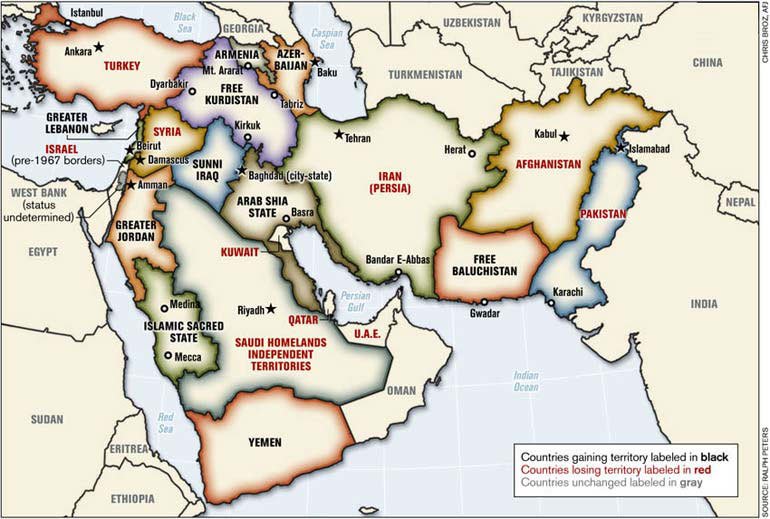
MAP OF THE NEW MIDDLE EAST

Let us not forget that sectarian divisions, ethnic tensions, internal violence have either been created or exploited by the West in all parts of the globe for their geopolitical advantage and all fall in line with the Anglo-American never-failing strategy and policy of ‘divide & rule & conquer’.

The same is likely to be rolled out in Asia too.

GlobalResearch editor says 6 out of these 7 countries (with the exception of Lebanon) identified by General Wesley Clark to be taken out” are now the object of President Trump’s ban on Muslims’ entry to the US:  Iraq, Syria, Somalia, Libya, Sudan, Iran and Yemen.

That the US is arming Al Qaeda & ISIS groups has already been clearly established. In November 2015, Congresswoman Tulsi Gabbard (D-HI) in the House Armed Services Committee led a bipartisan bill H.R. 4108 to stop the abuse of American taxpayer money in the CIA’s illegal arming and funding of al-Qaeda affiliates in Syria.

Look at what ISIS/ISIL/Al Qaeda groups have destroyed

  • 28 historical religious buildings in Libya
  • In June 2014, ISIL bulldozed the shrine of Fathi al-Ka’en
  • 26 February 2015 ISIL blew up the 12th century Khudr Mosque in central Mosul (Iraq)
  • 24 July 2014, the tomb and mosque of the prophet Jonah was destroyed with explosives
  • March 2015, ISIL reportedly bulldozed to the ground the Hamou al-Qadu Mosque in Mosul, dating back to 1880
  • ISIL also destroyed Sufi shrines near Tripoli, Libya
  • In 2017, ISIL destroyed the Great Mosque of al-Nuri and its leaning minaret.

Its not just Islamic sites but Christian sites too

  • The Virgin Mary Church was destroyed with several improvised explosive devices in July 2014
  • The Armenian Genocide Memorial Church in Deir ez-Zor, Syria was blown up by ISIL militants on 21 September 2014.
  • May 2014, ISIL members smashed a 3,000-year-old neo-Assyrian statue from Tel Ajaja and artefacts looted
  • 5 April 2015, ISIL destroyed the Assyrian Christian Virgin Mary Church on Easter Sunday in the Syrian town of Tel Nasri.
  • ISIL has burned or stolen collections of books and papers from various locations, including the Central Library of Mosul (which they rigged with explosives and burned down),

From the destruction of the Bamiyan Buddha, to the many destructions of Buddhist artefacts, Buddhist temples across Asia, the jihadi damage is nothing that all of Asia should take lightly.

ISIS is the enemy of Judaism, Christianity, Yazidism, Buddhism, Hinduism, Sikhism, atheism and all others who oppose its evil and barbaric agenda. ISIS killed far more Muslims than non-Muslims http://www.huffingtonpost.com/dean-obeidallah/isis-defeat-muslims_b_10825028.html

http://www.telegraph.co.uk/news/2016/03/29/mapped-which-countries-suffer-the-most-from-terrorism/

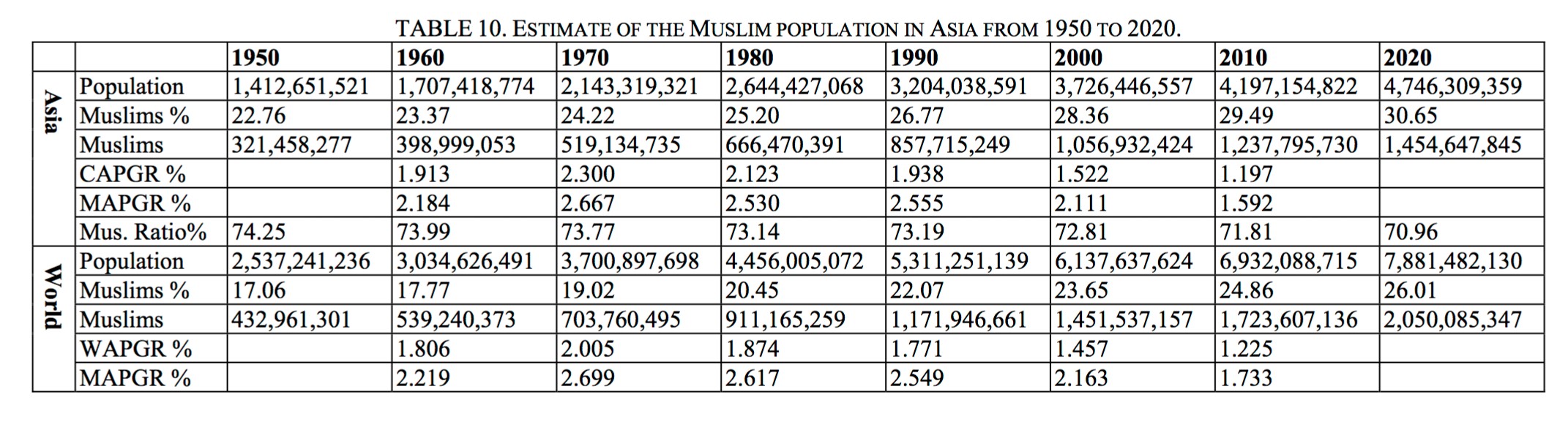
WAPGR = World annual population growth rate
MAPGR = Muslim annual population growth rate

Asia as a continent has a population of over 4.4 billion accounting for 56% of the world population. The combined population of both China and India are estimated to be over 2.6 billion people. Almost 62% of the world’s Muslim population live in the Asia/Pacific region, compared with only 20% in the Middle East and North Africa. Islam adherents in Asia are said to be 1billion. Hindus are said to number 1.1billion while with China officially endorsing Buddhism the number of Buddhists in Asia has reached 1.6billion with Christian denominations accounting for 287million.

Asian population in 1870 was 744m and became 1.4billion in 1950 and is expected to be 4.7billion by 2020.

Muslims in Asia increased from 18% in 1870 to 23% in 1950 and likely to be 31% by 2020. (more than 1% per decade) Since 1970s the Muslim growth is about 15% to 30% higher than the continents growth and explains the 1% point increase each decade.

The issues lie in the reciprocity factor and is the core reason why there is growing antagonism against Muslims by non-Muslims which is much food for thought for Muslims.

None of the Majority-Muslim countries which openly and clearly demarcate their nations as being Islamic and allowing only Islamic rules to prevail, offer no freedoms and rights to non-Islamic religions. They offer no reciprocity. No Muslims in non-Muslim countries even make any representations to these majority Muslim countries to reciprocate by offering to non-Muslims what Muslims enjoy in non-Muslim countries.

However, in non-Muslim countries the Muslim populace demand rights virtually on par with or equal to the culture on which those countries have been built & nurtured. This is the case facing Myanmar and across Asia of late as well as in Europe. The sentiments felt by non-Majority Muslim nations across Asia is exactly the same that white Europeans are now feeling in Europe which have led to the rise in issues. Non-Muslims are now questioning why Muslims should be given every demand when non-Muslims demands are not even entertained in Muslim-majority countries.

The instances where issues emerge is when unfair demands are made for mosques in sacred sites of these countries, madrassas, Muslim labelling of food & beverages in public places, right to create Muslim ghetto areas, Azan that disturbs other religions & the threat of Muslim population expansion and likely outcome from demographic change. This is a factor Myanmar & other non-Muslim majority countries are now having to take measures against.

This is the crux of the issue.

Though non-Muslims are aware that the West is using hired Islamic militant groups who are ruining the lives of Muslims in the Middle East and African continent, the fact that Muslims are making disproportionate demands in non-Muslim majority countries using the internationally popular intervention dogmas like ‘freedoms’ ‘rights’ etc is a major reason for issues against Muslims.

The other factor is the general perception among most that Muslims tend to side with Muslims because they are Muslim. This has enabled groups that have radicalized Muslims to covertly use Muslims as buffer for their agendas. The Rohingya issue is a good example where the Muslim world are reluctant to accept that Rohingyas belong to Bangladesh and instead claim the Myanmar Government are compelled to give into the demands of the Rohingyas who are now being used as west’s proxy to enter Myanmar. Rohingyas are being trained in armed warfare giving Myanmar government every right to defend its state from militancy. Using the Western slogan of rights, Muslims are making demands to build mosques all over Myanmar which the West is also encouraging given that they are using radical Islamic groups to make these demands that help them get a foothold into Myanmar using Muslim radicalism.

In terms of extremism in a world of 7billion where 1.9billion make up Muslims/Islam. 5% Radicals or extremists among this 1.9billion will make 95million (95,000,000) This is no small number. These are the pockets of armed militants better known as Al Qaeda, ISIS, ISIL, Boko Haram and many other with branches across all the continents who are causing mayhem in these countries. If 25% of the 1.9billion Muslims support Jihadists this makes it 475million supporting jihadism.

Empathizing with Muslims as victims of Western aggression is one thing and people of Asia are deeply saddened by the manner is dropping chemical bombs, sending drones, destroying ancient artefacts and totally ruining the infrastructure and livelihoods of these innocent Muslims while unleashing armed militants who are fighting each other and destabilizing the entire region in order to facilitate the West to ‘solve’ the issue by redrawing the lines to West’s advantage.

However the predicament that must worry Asia and why Asia needs to support Myanmar is that radical Islam is part of a political Islam weapon used by the West who have men supplied by their Muslim satellite states, who are trained and sent to cause mayhem in countries and Muslims in these countries who have to submit to the ‘word’ of their founder have no choice but to silently accept the status quo and be used as pawns. This is how madrassas, insistence on increasing mosques, food labelling together with encouraging population growth is made to purposely antagonize non-Muslims so that the antagonize opens a path for the West to enter as ‘conflict-resolutionists’ while also supply arms to both parties if a full scale conflict erupts. Mitigation and delaying is done using the UN and NGOs.

We should by now know the framework of how things operate and who are being used, how they are used and when they are used.

Given that we do not want Asia to turn out like Middle East/Africa & Europe, Asia needs to now ensure radical Islam and Western agendas do not penetrate into our individual nations. For this, Muslims in Asia play a crucial and important role.

Shenali D Waduge

http://www.ijesd.org/papers/28-D437.pdf

https://sites.google.com/site/islamicthreatsimplified/home/how-many-muslims-are-there-how-many-are-jihadis

Ideas to resuscitate the Sri Lankan Economy

July 5th, 2017

By Garvin Karunratne, Ph.D. Michigan State University

The Sri Lankan economy is truly in the doldrums. The BBC has recently in a spate of news broadcasts, derogatorily questioned: Is Sri Lanka Up for Sale.”(28/5/2017). This was preceded on 26 th June 2017, by another news item, A Country Trapped in Debt”. Their  Is Sri Lanka Up for sale” quotes the Chinese taking over key assets and the foray of Chinese banks to finance the Hambantota Port ( $ 1.3 billion), Norochicolai Power Plant ( $1.35 billion) and the Mattala Airport($ 200 million).

It is true that in recent years Sri Lanka has had to depend on Chinese and Indian loans for development tasks. That really happened when other sources dried up.

The BBC news item quotes Forbes: Sri Lanka has a debt problem. After a decade of taking out  huge loans to build large scale infrastructure projects the country is now struggling to make payments. Sri Lanka owes $ 58.3 billion to foreign lenders and 94% of its revenue go to debt servicing.”

Getting into debt to finance infrastructure, if the infrastructure can be classified as developmental,  can be justified. Forbes should also know that from the outset in 1977 when Sri Lanka was weaned into the Washington Consensus-i.e. the Structural Adjustment Programme of the IMF ,  the debts were incurred not to build up the infrastructure or for any development purpose. Instead, the loans were used to enable the rich to enjoy life- go on foreign travel, send off their children for studies abroad, import anything and live a life of luxury all at the cost of the country getting into debt.

Another important factor is that the loaned funds came into our country, got into our books as a debt and also left our country back to the donor country with profits in payment for the luxury imports, for luxury cars and for funding their universities, for airlines, multinationals- creating profits for shareholders. The economists at Forbes should also read John Perkins’ book, Confessions of an Economic Hitman ,  where Perkins, working for an IMF affiliated multinational, drafted projects  with fabricated statistics where the loans that came in, found their way back to the donors in the form of payments for consultations, reports, conferences etc. leaving the country indebted. The projects were also prone to failure.  Good economic structuring to lend and get back the funds,  while simultaneously saddling the countries with a foreign debt.

Forbes is right about the current debt. However Forbes should also know how a country that had no foreign debt in 1977 , was advised and told by the IMF to open up its economy, remove control over its foreign exchange earnings, relax the use of foreign exchange  and when there was a shortage of  foreign exchange, directed to get loans to finance this luxury of living beyond one’s means. This was the IMF’s Structural Adjustment Programme which did not help the countries but actually restructured the economies of the countries to become colonial vassals of the Superpowers once again. This time the ‘conquest’ was not with cannon but through financial missiles. The IMF had sinister motives: At first the IMF  gave loans at low interest with long grace periods- at times 10 years, to lure the countries into their ploy. The long grace periods meant  that the leaders who took the loans were mostly out of office when the time came to pay up the loans.  Gradually the IMF backed out and the governments were forced to get loans  at  high interest from commercial sources.”(From: How the IMF Sabotaged Third World Development (Kindle)by Garvin Karunaratne)

As a consequence of this misadventure in following the IMF, Sri Lanka is today an indebted country where we have to raise further loans to service the debt. One of our  foremost economists, Nimal Sanderatne has said, We have mismanaged our foreign borrowing by using a large amount of borrowed funds on unproductive infrastructure projects and living beyond our means… the country is in a foreign debt trap as the Government must  borrow  to meet annual debt repayments and interest obligations.”(SundayTimes:23/4/2017)

Sri Lanka is not a lone victim. Speaking of African countries, no less a personage than Professor Jeffery Sachs who was once on the IMF associated payroll as an expert to several countries says that By the start of the Twenty First  Century, Africa was poorer than in the late 1960s when the IMF and the World Bank had first arrived on the scene.”(The End of Poverty) In my words, The IMF has actually bled the Third World countries to death. The IMF has virtually destroyed the economies of countries that did not have a foreign debt and did have self reliant economies to become indebted so that the countries came within the dictates of the Superpowers and their financial institution- the IMF.”  Ghana an African country that had a viable economy in the Seventies is in terrible straits today. Its currency the Cedi  that had a value of Cedi 5.7 to the GBP in 1983 has  by 2017 dropped to 5.62 New Cedi to the Pound which is equal to 56,200 Old Cedi. This marks a devaluation of 986,000%. Ghana in February 2014 even had to restrict withdrawals of foreign exchange to $ 10,000 and that only for foreign travel.

On the whole the IMF has succeeded in restructuring the economies of countries like Sri Lanka for the country to be unable to bring about any development.  The restructuring took the form of taking the control of the foreign exchange of the country out of the hands of the Government, liberalizing the use of foreign exchange, abolition of the development infrastructure so that there will be no development whatsoever, a high interest policy to bring about the closure of local manufactures, accepting the private sector as the sole method for development and the abolition of  national planning.

The only path now offered by the IMF and the World Bank is for countries to   attract foreign investors(FDI). The countries are advised to open up the country  further for foreign investors, who bring a small amount of foreign exchange initially and set up some business which will bring in profits that can be repatriated. They are offered tax holidays..  McDonalds, KFC, Burger King and Pizza Hut are all in this category and milk dry the countries for profits.. They import even paper cups with the foreign exchange of the country. The profits earned in local currency are repatriated in foreign exchange…The earnings of the US Multinationals in 2007 from overseas trade outlets amounted to $ 99.1 billion. From Africa  the amount  netted was  $ 6.1 billion while from Asia it was $ 22.2 billion.”

Another type of investment is for investors to come in and develop Water Projects, say a small hydro electricity plant.  Four miles from Gampola on the Nuwara Eliya Road is a perennial stream flowing from Udagama and an uncle of mine had tapped this stream at the end of his estate for power with which he used to run the tea factory and his bungalow.  I wanted him to develop the hydro project on his own. Instead the Electricity Board lured him to close down the hydro plant and buy power from the national grid. When I met my uncle years later he lamented that the Electricity Board had jacked up their rates and running the factory was uneconomical.  Now my uncle is no more and the factory abandoned and a German national has leased/bought the land and is building up a hydro electric plant. His aim is to supply to the national grid or to people. The profits from the Udagama stream will fatten the pockets of investors in Germany.  It is a good method of converting our water resource to foreign exchange that end in Germany.

This is purposely done to all Third World Countries by the IMF. A well known country is Bolivia where many water projects convert Bolivian water to foreign exchange ending in the Developed Countries. Corporations own or operate water systems across the globe that bring in about $ 200 billion a year.”(As Multinationals Run the taps Anger Rises over water for Profit”(NYTimes:26/8/2002).  Water is now accepted as the oil – the Blue Gold of the 21 st century.

It is important to note  that the development of hydro projects and water purification plants is well known to local investors. However the tax holidays and other incentives are not made available for them.

A further area where FDI come in heavily is as investment in the stock market. Here there is no economic development involved whatsoever with the investor making a fast buck and fast repatriating the funds.

It is important to note that Japan and South Korea, two economic giants  discouraged foreign investment.(Stanley Fischer:2004)

The necessity for FDI appears to rest on the inflow of foreign exchange which enables the import of luxury items.

It is important to understand that foreign investment does not necessarily mean development for a country. In the manner in which foreign investment is currently done in Sri lanka, foreign investment is more an exploitation of local resources where profits pile up in the countries of the Donors.

Will we ever learn the ploys and nuances of the IMF to impoverish our country.

What can be done? Are we to offer Sri Lanka on a platter for Sale. It would be ideal for our President to make a firm statement that Sri Lanka is not for sale. This has to be followed up with action that will bring our country to development- i.e. there has to be a spate of development projects which will develop our resources on the one hand, create employment and incomes for local people and at the same time reduce the burden on foreign exchange by making things that we import today. This Employment Development Programme if  done on a massive scale  will definitely put us on the path to revive our economy.

There are no erudite professors  even from celestial bodies like Columbia  and Harvard who can advise us.  Even Noble laureate, Professor Jeffery Sachs when he worked in Russia, Bolivia and Poland has only provided more loans to help the Governments… His ‘Shock Therapy’ was to provide more loans that managed to halt the staggering inflation and the shortage of imported goods. However the countries became more indebted in the end….Joseph Stiglitz and Jeffery Sachs offer no definite ideas as to how countries can get on their feet. They are good critics who fail to offer an alternative path.”

Back tracking  to the period before the World Bank and the IMF took over our country,  we have a great deal of experience in handling development in a manner that created local employment, bringing incomes to the people, all in the process of making what our own people need.  This is import substitution an area that is not approved by the IMF because it is not in the interests of the Developed Countries as their exports will suffer.

Before 1977 when we started following the IMF we were self sufficient in rice. Today we have had to import rice. This was partly done by the World Bank by restricting our extension service and partly due to mismanagement by us when we did away with the qualified field workers, leaving a vacuum where the farmers do not have any official to approach for advice.  We were self sufficient in fabric manufacture. We had Powerlooms worked on a cooperative basis which made all the fabric we needed. We had 96,000 handloomers who turned out elegant sarees and wearing apparel. Colombo Seven ladies then  wore specially designed bespoke handloom sarees. Already I have seen elegant excellent handloom material at Anuradhapura, which marks a good headway.

We produced Paper from straw at Valachenai. The machinery was intended to make Paper from Illuk grass and it was our engineers and scientists that found the art of making paper from straw. The Valachenia Paper factory was ruined by the LTTE. We also had a Paper factory at Embilipitiya which too is closed, entirely due to mismanagement. Under the Divisional Development Councils Programme(DDCP) of 1970-1977 we successfully made paper at Kotmale.  Today one of our biggest industries is the collection of waste paper and cardboard and shipping it to India. Then, we buy paper and cardboard  from India. The process of making paper from waste paper and waste cardboard is well known and we can easily make paper. While our farmers waste and even burn straw, many countries make paper with straw today while we the country that was a pioneer in making paper out of straw has given up and imports all our paper requirements.

Take Rubber our country produces the world’s best rubber but we yet have to import  tyres. Our Tyre Factory, a donation from Russia was privatised. According to Russian trained Chief Chemist Hector Perera, who handled the factory when it was established, the factory could have made all the tyres we needed.  Is it not sad that we export the raw rubber and buy adhesives and rubber products made in Developed Countries.

Making brass products– door hinges and locks was once a vibrant industry at Kelaniya and Kadugannawa. It stopped with imports from China and India. In the Forties we even made good padlocks that can be compared with the best from Western manufacturers.

Perfume Making. When I visited Lucknow in India I went to Sugandhiko, a reputed perfume manufacturer and wanted to see their perfume factory. They told me that they do not have a factory, but have several portable factories which they carry to areas where there are flowers during the flowering season. We can easily have perfume making factories at Kandy to make perfumes out of flowers offered at the Dalada Maligawa. Similarly we can have small scale factories at Kelaniya and Anuradhapura, where the disposal of used flowers is a major problem. I have seen a mini distillery at work at Corris in Wales and we can easily establish a perfume industry. Many countries like France make a fortune on making perfumes. In the Cotswalds in England there is a successful industry making perfumes from lavender. In  Lanzarotte, a perfume industry, with world wide sales  has been successfully established based on Aloe Vera, our Komarika.  We can successfully make perfumes. There is  no question about it. But we have to carefully ensure quality specifications and once that is done ban the import or charge a high duty on imports.

Limitations of Private for Sector Development.  Any nascent industry has to go through a period where production and sales are a success. This is an arduous task and the private sector is not interested in attending to such tasks as sometimes there could be a loss.  At Matara I lost heavily when I tried to establish a brush factory, but I succeeded when I tried a Crayon industry(more of this later). This proves  the futility of depending on the private sector to bring about   development as the engine of growth as dictated by the IMF.  The Private Sector will only have a hand at getting easy things done, things where they can be certain of success like opening a supermarket. A tree takes five years to get to fruit bearing stage  and some eight years to get to full bearing. These are long term plans of which the Private Sector is not interested. National Development  goals can never be achieved with the private sector alone. Professor Jeffery Sachs in his book The Price of Civilization   is very critical of the Free Market and the Private Sector, which he once praised and worked for. He has now realised his folly and states:

Freemarkets by themselves are not able to ensure the efficiency of the economy…. Free markets also needs Governments to help regulate the market… they do not guarantee  sustainability for future generations.”

It is important to note that the infrastructure that our country had built up over decades to enable economic development to become  a reality was abolished at the  behest of the IMF. This was done deliberately to maim our effort at development and to move us to the scrap heap of indebtedness.

.To guide the manufacture of fabrics we had a research institute Velona at Moratuwa, which helped the Powerlooms to make textiles of quality. The Powerloom at Hakmana, operating under my Divisional Secretary Wimalaratna made suiting that was in high demand even in England.  The  Small Industries Department had a separate section under a Deputy Director to import yarn which was sold to handloom entrepreneurs. These institutions  offered expertise to handlooms, powerlooms and to small industries. I speak with sheer experience as I was once a Deputy Director of Small Industries. I had a dozen Inspectors advising small industrialists. This task has to be resumed.

The Marketing Department implemented a Guaranteed Price Scheme for paddy and cereals. The aim was to offer a premium price well over the world market price, to serve as an incentive for producers.  The Department had a guaranteed price for eggs till we became self sufficient. There was also a  Vegetable and Fruit Marketing Scheme. Its aim was to ensure that producers would obtain a reasonable price for their produce  and simultaneously to ensure that city dwellers could buy vegetables etc. at cheap rates. The  Marketing Department too purchased vegetables and fruits at the producer fairs and paid better prices than the traders. The vegetables were brought overnight to the cities and offered for sale keeping a low margin of fifteen percent to cover up transport costs and wastage, while the Private Sector kept a margin of a hundred percent.  This helped the city dwellers to obtain goods at a cheap rate. In this manner the Government controlled inflation. These were the main functions of the Department for Development of Agricultural Marketing, commonly known as the Marketing Department. I was once the Assistant Commissioner in charge of the vegetable and fruit purchasing scheme. The Department also had a Canning Factory which made jam, jelley and juice out of Red Pumpkin, Ash Pumpkin, Pineapple, Tomatoes and Orange which enabled Sri lanka to become self sufficient.”. At the behest of the IMF the Marketing Department with all its incentive schemes was abolished. The Canning Factory was privatised and now the Cannery is run for profit making. Earlier the Canning Factory enabled Sri lanka to be self sufficient in  jam, juice and food preparations like Tomatoe sauce.  It enabled the Marketing Department to offer floor prices for many produce that was required for canning and producers made good incomes. When I was working in Nuwara Eliya I purchased a car load of tomatoes at Hanguranketa, our tomatoe area and made tomatoes sauce for our six months requirements. This is an easy task.  Instead today we import  incurring our foreign exchange.

I am certain that we can produce all the jam and fruit preparations etc within two years. This will involve establishing around ten small scale Canning Factories in various producer areas. The school curriculum should also include food preparation in areas where produce is readily available.

Our school curriculum is totally out of date. The school curriculum in all Third World countries was an extension of the school system in the Developed Countries. This system is geared to enable high achievers to enter the portals of higher education. The non high achievers too continue in school and get promoted from form to form annually, irrespective of their academic achievement(automatic promotion) and at the end of mandatory schooling they end up without any real achievement to secure a job. Unesco, the world authority for education insists on increasing the age for mandatory schooling and is less concerned about changing the school curriculum to suit a situation where the total school going age gets to school. Sri Lanka alone has to bear the ill effects of this policy because it is only Sri Lanka  that has established schools everywhere. India, Thailand, Bangladesh do not have full coverage of schools at the secondary level and also fees are charged with the result that parents keep back the children who are not high achievers. These children  then get involved with family  business like household chores, cattle rearing and agriculture and eventually find an earning place in society. In Sri Lanka, on the other hand, keeping non high achievers in school  and promoting them on an automatic basis year to year, on a free education system ends up with the school leavers not having any achievement to secure a job and in the meantime they have got weaned away from their traditional family vocations.

We have the ability to make most of the small industry goods and we can thereby find employment avenues and incomes for the people. Today our Supermarkets are full of knives etc from countries as far as Brazil and Mexico. Once we had good smithys and there is a demand for knives from Kotmale Smithy today.  .

Under the Divisional Development Councils Programme(DDCP) too many items were manufactured locally. This was done under this DDCP where  industrial units were established to make items like Fishing Boats where youths were trained and became  boatmakers while the boats were sold to Fishery Cooperatives to be used for ocean fishing. This offered employment to  boatmakers and also increased our fish supply. Today we even import fish. Under the DDCP, Grants were given to cooperatives for the purchase of the machinery and stipends were given to the trainee youths till the cooperatives were a success. However we did not have a Cannery to produce food preparations. Ginger was one of our main products.  If only we had a Cannery we could have produced ginger preserve.

The lack of food manufacturing units is a drawback. We are great producers of cinnamon. Mexico buys cinnamon from us and has a roaring trade in cinnamon preparations.

We have to take action to build up the lost infrastructure or establish  similar infrastructure to help the build up of industries and agriculture.               .

Based on the above experience We can within a few months start making many small industrial goods. It is sad that we are a country that does not even make a bicycle today. Cycles and such small industrial goods have to be made locally. This is a task that can easily be done. Today the Industrial Development Board, the University of Moratuwa and other Universities successfully find the art of making new products. Some are taken up by the Private Sector but most new ideas and machinery are lost due to the lack of a State mechanism to get into production like the Coop Crayon Factory I set up at Morawaka.(More later)

In this task we have to find expertise and we do have yet living with us officers who were in charge of  making various products. Their services for a short period could easily be sought till we get over the initial formative stages. The Divisional Secretary  Ariyadasa who supervised the Matara Boatyard, who later served as a Government Agent  and the Development Assistant Kumarasiri, who later in life became a Secretary of a Ministry are yet among us. They hold the ability to establish  a hundred boatyards in coastal areas and this is a task that will help making fishing boats that can increase our fishing fleet.  The Matara Boatyard was established by me in three months. We can find work for hundreds of youths in making boats and in fishing and we can easily become self sufficient in fish within a year or two. I am certain that colleagues of mine in the Administrative Service will be able to suggest officers of high expertise.

I was instrumental in establishing the Crayon Factory at Morawaka. I wanted to establish an import substitution industry entirely on my own because the Ministry of Planning  did not approve any of my plans to establish any import substitution type of industry. Their idea was that I should make tiles and bricks and concentrate on traditional industries. I wanted to prove that import substitution would be a success. It was a challenge to open the eyes of the Ministry.  I had seen similar projects in the private sector (when I worked as a Deputy Director of Small Industries) and fed details known to me to my Planning Officer, Vetus Fernando,  a raw, inexperienced, chemistry graduate.. Experiments were commenced  at my residence and when it came to a situation where special equipment was essential, we took   over the Science laboratory at Rahula College after school hours. The Planning Officer and Science Teachers at Rahula  pooled their knowledge and conducted experiments. It took around three months of daily experiments from evening six to midnight, and  my Planning Officer  finalised the art of making crayons of high quality. I decided that the Crayon Factory should be a cooperative project and I selected a Cooperative Union for establishing this industry. Youths were recruited and trained on the project. The Member of Parliament for Deniyaya,  Sumanapala Dahanayake was the President of the Morawaka Cooperative Union and he took over the responsibility for production and sales. The factory was established within a few weeks working day and night and islandwide sales done.” This Crayon factory produced crayons equal in quality to the famous crayola crayons and was closed down by the new Government of President Jayawardena purely because this industry was the flagship industry of the DDCP of the outgoing Sirimavo Government. Today, a full five decades later my blood boils when I see Crayola Crayons on sale in Sri lanka.

A highly successful industry is coffee in Vietnam. Vietnam can grow coffee as much as in Sri Lanka.  Though we have the area where coffee can be ideally grown we neglected it. Kitulgala is our Coffee belt. Vietnam today produces  quality  coffee and exports competing with brands like Nescafe.  This itself illustrates what can be done by Sri Lanka. While the ideal land  lies idle and the men remain unemployed, without incomes, we import coffee. It is a ridiculous situation that can be easily corrected.

The above details indicating how we can build up our economy to make what we need, and to avoid imports  and to offer employment to our people and create incomes for them illustrates what can be done if only our leaders decide. We have a trained public service that has in the past tackled many economic development tasks. The Divisional Secretaries were in charge of running the  Cooperative  Powerlooms. The Assistant Directors of Small Industries handled Carpentry Training Schools and Furniture Factories as well as Ceramic Centers.

My  Planning Officer, a chemistry graduate of the University of Colombo was the kingpin that found the art of making crayons and directed the implementation at the inception.. He did not have a day’s experience but applied himself carefully and intensively every evening from six to midnight for three months, till he found the art of making superb crayons.  He trained the youths to make the crayons and also guided the industry till it got on its feet.  Today the equal of him are in the ranks of the unemployed fighting and leading demonstrations to become employed. This in itself shows what can be done. It is upto the Government to give our youth the opportunity  that my Planning Officer had and the country can easily come out of the economic woods.

Vocational Training should be geared to create self employment. In every country there are vocational training courses and training schools in various disciplines like agriculture, fisheries, poultry, small industry like carpentry and furniture making. We today train tens of thousands of youths in vocational training, graduate them with pomp and pageantry and left to themselves they  remain unemployed.    The youths who score well at the academic examinations enter the portals of Universities.  The rest feed into some sort of employment or enter vocational training and the least qualified  drop out, lost souls who eventually become cannon fodder. We have  forgotten the youth riots in 1971 and 1987-88 when our armed forces were compelled to rain bullets on thousands of our youths.

What can be done of these drop outs of the education system is easily illustrated by the work I did accomplish as the Commonwealth Fund Advisor on Youth to the Ministry of Labour and Manpower in Bangladesh.   I was confronted impromptu by the Military Government immediately after they took ovcr Bangladesh as to what contribution I can make to the economy of Bangladesh. . At that time the Ministry provided skills training to 40,000 youths a year and as usual  skills development programmes kept off the task  of guiding the youths that passed out. The vast majority of the trained continued to be unemployed. I suggested that as much as we provided skills we should also commence guiding youths who wished to be self employed  to establish their own projects. Serious objections  were raised by the Secretary to the Treasury because the ILO had tried such an experiment in the earlier three years at Tangail, and had miserably failed after a massive expenditure. My suggestion  was approved after two hours of heated arguments . I with Bangladeshi administrators took over the task of training  the staff in economics and motivating the youths who were being trained to establish small projects in their home areas. The training staff provided guidance in how  the projects were to be established and guided the youths in all aspects of production and sales. This was a novel idea of guiding youths enabling them to develop their abilities and capacities in establishing their commercial projects.. The training institutes that had hitherto only trained them in skills  were also charged with the   onerous task of guiding the youths when they got into production. The youths were guided in how to establish and develop their projects to create incomes. Training institutes were kept open till ten at night to enable trainee students to use the machinery.  My task was to establish the project, train the staff to continue after my two years’ consultancy ended.. Today the program guides 250,000 youths a year to establish enterprises.  Over two million enterprises have been established by Feb 2011 and the Program has expanded apace”. Today this is the premier program of employment creation the world has known and illustrates how employment creation can be successfully done. After I initially established the programme it was further developed by Bangladeshi  Administrators   Auybur Rahaman,, Asafuddowlah , Permanent Secretaries of the Ministry of Youth.  This programme becoming the premier employment creation initiative the world has known speaks out as to what can be done in development.

Can we Find the Funds?

When I won the day in Bangladesh and the Hon. Minister for Labour and Manpower approved my establishing a self employment programme, the Secretary to the Treasury said that he cannot provide any funds. The ILO failed and I too will fail, he said adamantly. I readily replied that I needed no new funds other than what was allocated to the Ministry, but I added that the Secretary of the Ministry should  have the authority to retrain the staff and re deploy the funding where necessary. This was approved by the Hon Minister. The entire self employment programme, which has today become the premier employment creation programme the world has known was established without a budget, entirely out of savings from already approved training budgets.

In the implementation of the Divisional Development Councils Programme in Sri Lanka, the bulk of the administration expertise  came free as the task was shouldered by the Government Agents, the Divisional Secretaries and other  katcheri staff.

Over to our leaders.  May these ideas based on my sheer experience,  convince our Leaders that we do have the ability and the expertise  to attend to develop our economy in a manner that will create employment and provide incomes  for our people while also reducing our import  burden. We need not sell our family silver to survive. This is something we successfully did in the past.   In today’s context import substitution and the development of local resources is the key to development- to create employment and incomes for our people. There is absolutely no other way ahead.

This is a task that we once did and therefore can easily do again.

Let me hope to see the day when our leaders will have the ability and the nerve to approve an Employment Creation  Programme. I can guarantee that it will be a great success and being the author who successfully designed and implemented the Youth Self Employment Programme of Bangladesh, the premier employment creation programme the world has known, my words deserve credence.

Garvin Karunaratne, Ph.D. Michigan State University

Former Government Agent, Matara 1971-1973

6 th July2017

Sources

All quotes where the source is not indicated are from my book, How the IMF Sabotaged Third World Development (Kindle)(https://www.amazon.com/How-Sabotaged-Third-World-Development-ebook/dp/BO1MG9EF4Y)

Dr Stanley A Fischer: Development Strategy for East Asian Countries: A Korean Perspective: Paper presented at the Annual Meeting of Asian Development Bank, Cheju, Korea, 15May 2004)

Asgiriya Statement: Harbinger of a force for genuine reconciliation

July 5th, 2017

By Rohana R. Wasala

Sri Lankans call the coconut tree a kapruka (kalpavriksha)  – wish fulfilling divine tree- because every part of this tropical palm is so very useful to human life. The process of latent Maha Sangha unity becoming manifest can be likened to a coconut (seed-nut) germinating slowly as it normally does. The seedling, however, becomes a sapling in a short time. A coconut sapling needs to be protected from foraging animals. Some dishonest politicians in positions of power or influence, both Buddhist and non-Buddhist, are already nosing around the steadily growing coconut sapling of Maha Sangha unity. They are posing the greatest threat to its survival and growth. If they had had the slightest concern for the majority Sinhalese Buddhist community (which implies equal concern for the minorities), they would have by now taken the monks’ grievances seriously enough to investigate them properly, and take appropriate  remedial steps  (if their complaints are true) as they are demanding. It is fervently hoped that the  Maha Sangha will remain independent of divisive party politics in the long run. However, they are left with no alternative but to extend their favour to the leaders who have already proven their loyalty to the country, and who alone can be relied upon to provide the necessary political leadership to the majority Sinhalese Buddhist community. But even these politicians must enter into a covenant (a solemn written agreement) with the Maha Sangha on behalf of all Sri Lankans that once they come to power they will immediately attend to the legitimate grievances of the monks that drove them to the streets in desperation. The few disgraceful NGO and other misguided monks who disagree with the stance taken by the Asgiriya prelates should be just ignored.

Great hope has been rekindled in the hearts of the overwhelming majority of Sri Lankans by the June 20th issue of a cogent statement by the Karaka Sangha Sabha of the Asgiriya Chapter. At a subsequent news conference, the Asgiriya monks revealed that they were in consultation with the important monks of the other nikayas during its preparation. Written and verbal statements issued by respected monks from various provinces endorsing the viewpoint of the Asgiriya Statement over the past few days point towards a timely awakening of the Maha Sangha, which is indeed a long felt national need. The Maha Sangha is sure to stay above partisan politics because the spiritual goal that they are voluntarily committed to as a religious vow always takes precedence over mundane affairs. But they will not deny the latter due attention as a responsible section of the society that provides moral and spiritual guidance for the lay Buddhists. Beginning with Ven. Mahinda Thera, the missionary monk who brought Buddhism to Sri Lanka in 236 BCE, Buddhist monks have always advised the Lankan monarch, except during times of foreign occupation, but rarely have they dabbled in factional politics. Remaining above divisive politics Buddhist monks must reclaim their traditional role as the Guardians of the Nation. That is their hallowed right as well as their historic responsibility towards our motherland , Sri Lanka.

Encroachment, vandalizing, and destruction of ancient Buddhist archaeological sites in the north and east provinces (where the hydraulic civilization of the Sinhalese reached its zenith) are acts of sacrilege and aggression as naturally understood by the Sinhalese Buddhist majority . Though lying in ruins, these sites are still places of worship as well as centres of pilgrimage for Buddhists.  The Buddhist monks are reacting to these acts of aggression by non-Buddhists. Contrary to resentful  views prevailing against them among those who have no clear idea about what is actually happening, these monks are not making any extremist political or religious demands. The problems they are articulating and the solutions they are demanding for them are briefly mentioned in the Asgiriya Statement: the validity of Ven. Gnanasara Thera’s viewpoint despite his aggressive posturing and speech, the government’s apparent condoning of blatantly racist statements made by communalist politicians while at the same time trying to silence the bhikkhus and lay Buddhists who react to them, the inadvisability of proposed changes to existing  rules and regulations (which are adequate for the management of Buddhist temporalities), and silence in the face of unlawful alienation of state land (through the irregular clearing of jungle in the Wilpattu forest reserve) under the pretext of settling internally displaced persons (of the Muslim community), the autocratic behavior of the government  minister responsible for archaeological affairs, alleged attempts at the sterilization or extinction (wandakireema) of the Sinhalese race, statements made by certain individuals who call themselves Buddhists and persons of other religions that provoke the Buddhists. The eighth and final paragraph of the Asgiriya monks’ communiqué ends with a reminder to other religionists that they should not forget that Sinhalese Buddhists have always respected other faiths; at the same time, the monks condemn the activities of others that are in contempt of traditional Buddhist tolerance.

The Venerable Mahanayake Theras have declared their determination not to keep quiet any longer in the face of unprecedented challenges to the existence of Sinhalese Buddhists and their homeland. The Sinhalese respectively account for 75% and Buddhists for 70% of the Lankan population (2012 Census). The dominant Sinhalese Buddhist cultural identity of Sri Lanka is an undeniable fact, and it is not a bad thing.  Young Buddhist monks are at the forefront of movements that are reacting  to unlawful activities such as the encroachment and/or destruction of ancient archaeological sites  the north and east, and mass scale forest clearance under the pretext of making room for settling IDPs, but as strongly suspected, as a ploy to create an enclave of Islamic extremists.  The handful of communalist and fundamentalist elements that are behind these anti-national activities are raising a hue and cry against the Buddhist monks who are only reacting to them urging the authorities to investigate their charges and stop such depredations immediately.  The Asgiriya monks, on behalf of the Maha Sangha, remind members of the minority religious communities that they should not forget that Sri Lankan Buddhists have always respected other faiths. The monks unequivocally condemn  actions of other religionists who act in contempt of Buddhist tolerance. The fact that the bhikkhus are expressing willingness to reassert their historic role as the Guardians of the Nation naturally brings hope to a nation that has long been suffering under colonialism, neo-liberalism, and terrorism-related violence and persecution. Even if politicians will not listen to them, the majority of the right thinking multi-religious masses will. This is a sine qua non for recalling the reconciliation which was there for five years until the end of 2014, but which has been seriously disrupted since.

(A slightly amended version of an article under the same title published in The Island of July 4, 2017)

සයිටම් වර්ජනය

July 5th, 2017

නලින් ද සිල්වා 

රජයේ වෛද්‍ය නිලධරි සංගමය පස්වැනි දා සිට අඛණ්ඩ වර්ජනයක් කිරීමට තීරණය කරලා. පැහැදිලිව ම ඔවුන්ට ඔවුන්ගේ විසඳුම අවශ්‍යයි. ඔවුන් සාකච්ඡා කියන්නේ ඔවුන්ගේ විසඳුම, එනම් සයිටම් අහෝසි කිරීම, ජනසතු කිරීම ඉටුකර ගැනීමට කරන ඊනියා සාකච්ඡාවලට පමණයි. ඔවුන්ගේ යෝජනාවල පදනම එයයි. වෛද්‍ය නිලධාරීන් අඛණ්ඩ වර්ජනයක යෙදෙන්නේ සයිටම් අහෝසි කිරීමට. එහෙත් අමතක නොකළ යුතු වැදගත් ම කාරණය නම් සටන පටන් ගන්න කොට සයිටම් අහෝසියක් වෛද්‍යවරුන්ගේ ඉල්ලීම්වල නොතිබූ බවයි. දේශපාලනඥයන් ජනතාව වෙනුවෙන් කතා කරනවා වගේ වෛද්‍යවරුන්  රෝගීන් වෙනුවෙන් කතා කරනවා. ඔවුන් ඇත්තට ම කතා කරන්නේ තම තමන් වෙනුවෙන්. වෛද්‍යවරුන් ද නිරත වී සිටින්නේ දේශපාලනයක.

සයිටම් පිළිබඳ නඩු විභාගය පස්වැනිදාට හා හයවැනිදාට යෙදී තියෙනවා. වෛද්‍යවරුන් අඩු තරමෙන් නඩු තීන්දුව කුමක් ද යන්නවත් දැන ගැනීමට පෙර ම වර්ජන තීන්දුව අරගෙන. ඔවුන් වර්ජනය අරඹන්නේ නඩු විභාගය අරඹන දිනයේමයි. සයිටම් ආයතනය හොර උපාධි කඩය ආදී හැඟීම් අවුස්සන බොරු සමාජවාදී සටන් පාඨවලින් ජනතාවගෙන් සුළු කොටසක් මුළා වෙනවා. සයිටම් පිළිබඳ අධ්‍යයනය කර ඇත්තේ කීයෙන් කී දෙනා ද? පඬි පෝතකයකු කියා තිබුණා මා කරුණු හරිහැටි නොදැන කතා කරනවා කියා. සයිටම් පිලිබඳ ව පමණක් මා කරුණු හරිහැටි  නොහදාරන්නේ ඇයි?

සයිටම් ඉතිහාසය, අභියාචනාධිකරණ තීන්දුව, විශ්වවිද්‍යාල පනත, වෛද්‍ය ආඥා පනත ආදී මෙයට අදාළ කරුණු මා හදාරා තිබෙනවා. පඬි පෝතකයන් හදාරා ඇත්තේ ඉන් කවරක් ද? වෛද්‍යවරුන් ආණ්ඩු විරෝධී ජනමාධ්‍ය සමග එකතු වී වැරදි මතයක් ඇති කිරීමට උත්සාහ ගන්නවා. කවුරු හරි කියනවා නම් මා ආණ්ඩුවට පක්‍ෂපාත කියා ඒ අයට එසේ සිතා ගැනීමට ඉඩ දෙනවා. ආණ්ඩු විරෝධී වූ පමණින් සයිටම් විරෝධියකු විය යුතු නැහැ. මා කරුණු දන්නේ නැත්නම් විවාදයක දී මා පරාජය කිරීම කාලෝටත් පාදෙණියටත් ඉතා පහසු කටයුත්තක් විය යුතුයි. ඔවුන්ට මා සමග සයිටම් සම්බන්ධයෙන් විවාදයකට එළඹෙන ලෙස මා කරන අභියෝගය ඔවුන් තවම පිළිගෙන නැහැ. දෙරණ ඒ සම්බන්ධයෙන් වාද පිටියක් සකස් කරන බවක් පෙනෙන්නට නැහැ.

වෛද්‍යවරුන් කියනු ඇත්තෙ ඔවුන් පෞද්ගලික වෛද්‍ය අධ්‍යාපනයට විරුද්ධ නැති නමුත් සයිටම් එක්කෝ ප්‍රෝඩාවක් නැත්නම් ප්‍රමිතියක් නැති තැනක් නිසා සයිටම් අහෝසි කළ යුතු බවයි. එහෙත් ප්‍රෝඩාකරුවන් කවුදැයි මා කියන්නේ නැහැ. වෛද්‍යවරුන් ජනමතය විකෘති කිරීමට ගන්නා උත්සාහයක් කාලෝ වෛද්‍ය සභාවෙන් ඉවත් වීම සමග පෙනී ගියා. වෛද්‍ය ආඥා පනත අනුව වෛද්‍ය සභාවේ සභාපති නම් කෙරෙන්නේ අදාළ ඇමති විසින්. සභාපති කිනම් කාලයකට පත් කළ යුතු ද යන්න ආඥා පනතේ සඳහන් වෙන්නේ නැහැ. අදාළ ඇමතිට (සෞඛ්‍ය) කාලය තීරණය කරන්න පුළුවන්. සම්ප්‍රදායක් ලෙස වසර පහකට සභාපති නම් කෙරෙනවා. කාලෝගේ කාලය 2017 ජනවාරි පළමුවැනිදා අවසන් වුණා. ඉන්පසු රාජිත ඔහුට තවත් මාස හයක සේවා දිගුවක් ලබා දුන්නා. එය මාස හයකට පමණයි. ඇතැම් වෛද්‍යවරුන් බොළඳ උත්සාහයක් ගත්තා කාලෝ තවත් අවුරුදු පහකට සභාපති කියා කියන්න. තවත් සමහරු ඔහු යාවජීව සභාපති ලෙසත් අර්ථ දක්වන්න උත්සාහ කළා. කාලෝ ඉවත් වුණේ ඔහුට සේවය කිරීමට අධිකාරී බලයක් නැති නිසයි. ඔහුට අසාධාරණයක් සිදු වී ඇත්නම් ඔහු යාවජීව සභාපති හෝ වෙනත් අයකු හෝ කියමින් අධිකරණය හමුවට යා හැකියි. එහෙත් වෛද්‍යවරුන් ජනතාවගෙන් කොටසක් අතර වැරදි මතයක් ප්‍රචලිත කිරීමට උත්සාහ ගන්නවා. ප්‍රෝඩාව කාගේ ද? පඬි පෝතකයන් ඒ ගැන කියන්නේ කුමක් ද?

වෛද්‍යවරුන් කියන තවත් කරුණක් නම් වෛද්‍ය සභාව සයිටම් උපාධිය පිළිගෙන නැති බවයි. ඒ බව අධිකරණයට පවසන ලෙස ඔවුන් උසස් අධ්‍යාපන ඇමතිට කියනවා. වෛද්‍ය සභාවට ඒ බව අධිකරණයට කියන්න පුළුවන්. ඒ සඳහා තෝල්ක මුදලිවරුන් අවශ්‍ය වන්නේ නැහැ. කෙසේ වෙතත් වෛද්‍ය සභාවට උපාධි පිළිගැනීමේ අයිතියක් නැහැ. ඒ අයිතිය විශ්වවිද්‍යාල ප්‍රතිපාදන කොමිසම හා උසස් අධ්‍යාපන ඇමතිට විශ්වවිද්‍යාල පනතින් පැවරී තිබෙනවා. වෛද්‍ය සභාවට ඒ අයිතිය නැහැ. කාලෝ හා පාදෙණිය විවාදයට එළඹෙන්නේ නම් මා අදාළ වගන්ති කියන්නම්. වෛද්‍ය සභාවට බලය ඇත්තේ වෛද්‍ය උපාධිධාරියකුට තාවකාලික/ස්ථිර ලියාපදිංචිය දීමට/නොදීමටයි. එහෙත් එය අත්තනෝමතිකව කරන්න පුළුවන් දෙයක් නො වෙයි. ඒ සඳහා ක්‍රමවේදයක් වෛද්‍ය ආඥා පනතේ තිබෙනවා. වෛද්‍ය සභාව සයිටම් උපාධිධාරිණියට ලියා පදිංචිය නොදීමේ දී අදාළ නිර්ණායක නොසලකා හැර තිබෙනවා. අධිකරණය ඇත්තේ වෛද්‍ය සභාවත් අනෙක් සභාත් පුද්ගලයනුත් නීතිය අනුව කටයුතු කරනවා ද කර ඇත් ද කියා තීරණය කිරීමට. අභියාචනාධිකරණයට අනුව සයිටම් උපාධිය නිත්‍යානුකූලයි  වෛද්‍ය සභාව සයිටම් උපාධිධාරිණියක් තාවකාලික ව ලියා පදිංචි නොකර සිටීමෙන් වරදක් කර ඇති බව අභියාචනාධිකරණය තීන්දු කළා. ශ්‍රෙෂ්ඨාධිකරණය කිනම් තීන්දුවක් දේවි දැයි මා දන්නේ නැහැ.

වෛද්‍ය සභාව සයිටම් සම්බන්ධ කළ නිරීක්‍ෂණ හා නිගමන අභියාචනාධිකරණයේ සාකච්ඡා වුණා. වෛද්‍යවරුන් ඒ බව නොකියන්නේ ඇයි? අභියාචනාධිකරණය තීරණය කළේ වෛද්‍ය සභාවේ නිරීක්‍ෂණ හා නිගමනය අතර පරස්පරයක් තිබෙන බවයි.  එපමණක් නොවෙයි අභියාචනාධිකරණය වෛද්‍ය සභාව සයිටම් හා කොතලාවල වෛද්‍ය පීඨය ගැන සංගත තීරණ දී නැති බවත් සඳහන් කළා. වෛද්‍ය සභාව කොතලාවල වෛද්‍ය පීඨයේ පහසුකම් හොඳ යැයි තීරණය කර ඇත්තේ ඔවුන්ට රෝහලක් නැතිවූ අවස්ථාවක!

මා ආණ්ඩුවට පක්‍ෂපාත නැහැ. එහෙත් වෛද්‍යවරුන් පැහැදිලිව ම දේශපාලන න්‍යාය පත්‍රයකට අනුව කටයුතු කරනවා. සයිටම් ආරම්භ වූ අවධියේ වෛද්‍යවරුන්ට මේ කිසිවක් ප්‍රශ්න වූයේ නැහැ. එක් ආණ්ඩු විරෝධී ජනමාධ්‍ය ප්‍රධානියකු මගෙන් ඇසුවේ සයිටම් පාලනය සඳහා භාරයක් තිබෙනවා ද කියා. ඔහු ඒ ප්‍රශ්නය ඇසිය යුතුව තිබුණේ මහින්ද රාජපක්‍ෂගෙන්, නැත්නම් වෙනත් රාජපක්‍ෂ කෙනකුගෙන්. එකල භාරයක් යටතට සයිටම් පත් නොකළේ ඇයි? දැනුදු භාරයක් යටතට සයිටම් පත්කරන එක ප්‍රශ්නයක් නො වෙයි. භාරය හා එහි සාමාජිකයන් පාර්ලිමේන්තුවට තීරණය කළ හැකියි. වෛද්‍යවරුන් හා ආණ්ඩු විරෝධී ජනමාධ්‍ය (අපක්‍ෂපාත ජනමාධ්‍ය ලෝකයේ නැහැ) එදා නොඇසූ ප්‍රශ්න අද අසන්නේ දේශපාලන අරමුණක් වෙනුවෙන්. එදා මේ අය සයිටම් අනුමත කළා. මේ සම්බන්ධයෙන් චම්පක රණවක කියන දේ වැදගත් නැහැ. ඔහු තරම් අවස්ථාවාදියකු දොශපාලනයේ නැහැ. ඊයේ ආණ්ඩු පක්‍ෂය තීරණය කරලා සයිටම් සම්බන්ධයෙන් එක ම මතයක් දැරිය යුතු බව. චම්පකට ඒ කිසිවක් අදාළ නැහැ. ඔහු ආණ්ඩුවේ ඉඳන් පොර වෙන්න හදනවා. ඔහුටත් ඇත්තේ ජනාධිපති සිහිනයක්.

තවත් ප්‍රශ්න ගණනාවක් තිබෙනවා. මා සමහර කරුණු ලියා ඇති ලිපි රාශියක දක්වා ඇති. රිස්වි ෂෙරීෆ් වාර්තාවට සිදු වූයේ කුමක් ද? ඒ කමිටුව පත් කෙළේ වෛද්‍ය සභාව මිස ආණ්ඩුව නො වෙයි. වෛද්‍ය සභාව සයිටම් පරීක්‍ෂා කිරීමට පසුගිය ආණ්ඩුව කාලය උනන්දු නොවූයේ ඇයි?  ආණ්ඩු පෙරළීමට සයිටම් යෙදා ගන්න බැහැ.  පඬි පෝතකයන් මුහුණු පොතේ ප්‍රතිචාර දැක්වීමට පෙර මගේ අදාළ ලිපි කියවනවා නම් හොඳයි. මේ ලිපිය අවසන් කිරීමට පළමුව අනතුරු ඇඟවීමක් කරන්න ඕන. මෙය මා කලින් ද කර තිබෙනවා. සයිටම් මගින් අප භීෂණ යුගයකට යනවා. එහි දී සිංහල බෞද්ධ විශේෂත්වය නැති වී යනවා. ආණ්ඩු පෙරළන්න බලා ඉන්න අයට සිදු වන්නේ මළ මිනී පෙරළන්න. 1817 දී ඉංගිරිසින් වෙල්ලස්ස සමූලඝාතනය කළා. මෙවර සමූලඝාතනය වන්නේ සිංහල බෞද්ධ ජාතිකත්වයයි.


නලින් ද සිල්වා

2017 ජූලි 04

ශ්‍රේෂ්ඨාධිකරණයේ – අභියාචනාධිකරණයේ සහ සිවිල් අභියාචනා මහාධිකරණයේ නඩු පැවරීම සම්බන්ධ අධ්‍යයන වැඩමුළුව – සිංහල මාධ්‍ය –

July 5th, 2017

දිනය 2017 අගෝස්තු 05

(මෙම වැඩමුළුව කොළඹ නගර සීමාව තුළ පැවැත්වෙන අතරස්ථානය සහ වේලාව පසුව දැනුම් දෙනු ලැබේ.)

ලංකාවේ නීතිය අනුව පිහිටුවා ඇති අධිකරණ ලෙස ප්‍රාථමික අධිකරණ, මහේස්ත්‍රත් අධිකරණ, දිසා අධිකරණ, මහාධිකරණ, වාණිජ මහාධිකරණ, පළාත්බද මහාධිකරණ, පළාත්බද සිවිල් අභියාචනා මහාධිකරණ, අභියාචනාධිකරණය සහ ශ්‍රේෂ්ඨාධිකරණය සැළකේ. එමෙන්ම නීතිය නොදැනීම සමාවට කරුණක් නොවේ” යන්නත් පිළිගත් නීති සිද්ධාන්තයකි.

ලංකාවේ නඩුවලින් වැඩි ප්‍රමාණයක් පහළ අධිකරණවල එනම් මහේස්ත්‍රත් අධිකරණ, දිසා අධිකරණ, මහාධිකරණ, වාණිජ මහාධිකරණ වටා ගොනු වී තීබුණද රටට, ජනතාවට, නීතියට, බලපාන තීරණාත්මක නඩු විභාග වන්නේ එම අධිකරණවල නොව උපරිමාධිකරණ ලෙස සැළකෙන අභියාචනාධිකරණය සහ ශ්‍රේෂ්ඨාධිකරණය යන අධිකරණ වලයි. නඩු තීන්දු වල ඉහළ අධිකාරීබව ඇත්තේද එම අධිකරණ ලබා දෙන තීන්දු වලය.

මව් බස සිංහලය වූ රටේ බහුතර ජනතාව මහේස්ත්‍රත් අධිකරණ, දිසා අධිකරණ, මහාධිකරණ, වාණිජ මහාධිකරණවල නඩු පැවරීම සම්බන්ධව යම් දැණුමක් ලබා තිබුණද පළාත්බද සිවිල් අභියාචනා මහාධිකරණයේ, අභියාචනාධිකරණයේ සහ ශ්‍රේෂ්ඨාධිකරණයේ නඩු පවරන ආකාරය සම්බන්ධව එතරම් අවබෝධයක් ලබා නැති බව පෙනෙන්ට ඇත. එය ලාංකිකයන්ගේ නෛතික සාක්ෂරතාවය ඉහළ මට්ටමකට ගෙන යාමේදී ප්‍රබල බාධාවක් වෙයි.

ආණ්ඩුක්‍රම ව්‍යවස්ථාව මගින් අභියාචනාධිකරණයේ හෝ ශ්‍රේෂ්ඨාධිකරණයේ පමණක් පැවරිය යතු නඩු වර්ග මොනවාද? එම අධිකරණවල පමණක් සිදුකළ යුතු ඉල්ලීම් මොනවාද? යන්න සම්බන්ධව පැහැදිලිව නීතියේ විධිවිධාන දක්වා තිබුණද එකී අධිකරණවලට, එම ඉල්ලීම් සිදුකරන අකාරය සම්බන්ධව අවබෝධයක් නො ලබා එකී නීතිමය ප්‍රතිපාදනවල පිහිට පැතීමට ජනතාවට හැකි වන්නේ නැත. මෙයට හොදම උදාහරණය වන්නේ පසුගියදා පාර්ලිමේන්තුව විසින් සම්මත කරගත් 2016 අංක 14 දරන අතුරුදහන් වූ තැනැත්තන් පිළිබද කාර්යාලය (පිහිටුවීම, පරිපාලනය කිරීම සහ කර්තව්‍ය ඉටු කිරීම) පනතේ 27.iii වගන්තියේ දැක්වෙන බලහත්කාරයෙන් අතුරුදහන් කිරීමෙන් ආරක්ෂා කිරීම සඳහා වූ ජාත්‍යන්තර සම්මුතිය” නොමැතිව පනත සම්මත කර ගැනීමත්, එහි ඇති බලවත් නීතිමය දෝෂය සම්බන්ධව කිසිම අයෙක් ශ්‍රේෂ්ඨාධිකරණයේ අවධානය යොමු නො කිරීමත් ය.

ඉහත කරුණු අනුව සමස්තයක් වශයෙන් ගත් කළ අභියාචනාධිකරණයේ සහ ශ්‍රේෂ්ඨාධිකරණයේ නඩු පවරන ආකාරය සම්බන්ධව සිංහල මව් භාෂාව කරගත් රටවැසියන් ඉලක්ක කරමින් මෙම අධ්‍යයන වැඩමුළුව සැළසුම්කර ඇත.

මෙම අධ්‍යයන වැඩමුළුව සදහා නීතීඥවරුන්, නීතී ශිෂ්‍යයින් පමණක් නොව භික්ෂූන්වහන්සේලා ට, වෛද්‍යවරුන් ට, ගුරුවරුන් ට, විශ්ව විද්‍යාල සහ පාසල් සිසුන් ට ද, විවෘත වන අතර ආසන සීමිත සංඛ්‍යාවක් ඇති හෙයින් වේලාසනින් සිය ආසනය වෙන්කර ගත හැකිය.

එමෙන්ම මෙම අධ්‍යයන වැඩමුළුවේදී අභියාචනාධිකරණයේ සහ ශ්‍රේෂ්ඨාධිකරණයේ සහ සිවිල් අභියාචනා මහාධිකරණයේ නඩු පැවරිමට අදාලවන නීති මූලාශ්‍ර ලබා දීමද සිදු කරයි.

ආසන වෙන්කර ගැනීමේදී හෝ අධ්‍යයන වැඩමුළුවට සහභාගීවීම සදහා හෝ නීති මූලාශ්‍ර සදහා මුදල් අය නො කරන අතර දිවා ආහරය සැපයීම නො කරන බවද සළකන්න.

වේලාව සහ ස්ථානය දැනුම් දෙනු ලබන අතර විද්‍යුත් තැපෑලෙන් හෝ දුරකථනයෙන් විමසා ආසනය වෙන්කර ගත හැකි අතර නම, ලිපිනය, වෘත්තීය, තත්ත්වය, දුරකථන අංකය, විද්‍යුත් ලිපිනය සහිත තමන් විසින් සකසා ගත් අයදුම්පතක් ලබා දෙන්න. ආසන සීමිත හෙයින් පළමුව ඉල්ලුම්කරන්නන්ට ප්‍රමුඛතාවය හිමිවේ.

ආසන සීමිත හෙයින්

මුලින් ඉල්ලුම් කරන්න.


විමසීම
– නීතීඥ අරුණ ලක්සිරි උණවටුන

විද්‍යුත් ලිපිනය arunaunawatuna@gmail.com

දු. අංකය 0712063394

Uva-Wellassa Sugar and MOLNAR.

July 5th, 2017

by Bodhi Dhanapala. Quebec, Canada

I usually read the articles on “environment and society” written By Dr. Prasana Cooray (Dr. PC) for the Island and usually find that they are reasonably well researched and informative. However, I found Dr. PC’s write up (July 3rd 2017) in the Island regarding the “Bibile sugarcane cultivation project” quite one-sided, and in fact questionable from what I gleaned out by making some very simple inquiries. In fact, what made me suspicious was  Dr. PC’s mention of MOLNAR, the so-called “Movement for Land and Agricultural Reforms”. Clearly, Dr. PC has simply taken what MOLNAR had presented, where as further inquire (perhaps from University academics, or from the Bibile sugar company officials themselves) should have been undertaken.

I have known quite a bit about MOLNAR since “Comrade” Sarath J Fernando and other  early  members, doctrinaire Trotskyites,   believed that this organization can be used as a vehicle for radicalizing our farmers and making them a part of the organized labour that can be used in a revolutionary uprising. After all, the Left in Sri Lanka had organized-labor support in the cities, but little or  no rural support.  The formula adopted by Sarath Fernando and others was to laud “traditional agriculture” against modern agriculture that they could  daub as being  in the hands of “Capitalist Multi-national business”. The cry for “traditional agriculture” appealed to some leading Buddhist monks, and Sarath Fernando and “comrades” were  able to rope in several distinguished Buddhists  monks to their side. Lional Bopage of the 1971 JVP Putsch who absconded to Australia without facing the music  was a fellow traveler of  Sarath Fernado at the Peradeniya university.  Sarath Fernando and “Comrades”  began  a movement for the rejection of  high-yielding, low-water consuming,  hybrid varieties of rice. This totally anti-environmental program was successfully presented both as being “environment friendly” and as being “sustainable”. Secondly, MOLNAR also took advantage of the un-informed public fear of genetically modified organisms (i.e., GM seeds giving  GMO foods) and began a program of anti-GMO activity widely supported by the Colombo-7 elite. Many of them  get their ideas from “back to nature” internet sites that thrive on the public fear based on claims of an environment full of toxins. GMO foods are claimed by them to be “Franken foods”. The “Toxin-free nation” policy promulgated by Venerable Ratana, and embraced by the “Yahapalanaya” government is just another facet of this anti-scientific and anti-rationalist movement. They have successfully banned the use of glyphosate in Sri Lanka, the safest and most effective herbicide available, already bringing the Sri Lankan tea industry to its knees.

As part of  MOLNAR’s  opposition to  genetically modified organisms (GMO), e.g., hybrid seeds, they were instrumental in inviting  Shiva Vandana, an Indian activist who claims to be a scientist knowledgeable about agriculture, while in fact she had done a degree in an arcane area of physics in Canada and returned to India, claiming to be knowledgeable enough about modern agricultural  to be able to “reject it outright”. This of course was a clarion call to Indian traditionalists who wanted to reject everything “Western”. Today she is one of the most powerful “environmental” lobby figures in India, charging  huge sums of money for public speaking engagements. Organizations linked to her managed to ban the use of “golden rice” in India. Golden rice is a hybrid variety of rice crossed with carrots and hence it provides Vitamin A directly in the rice plate. It has been estimated that the onset of blindness in millions of Indians could have been averted if golden rice had been introduced to India. Unfortunately, the doctrinaire opposition to GMO foods (i.e., purely because they are GMO), was sufficient for Shiva Vandana and her followers. It is  also sufficient for organizations like MOLNAR to oppose it. In effect, this is not any more rational than a traditional Muslim’s opposition to eating anything “non-halal”.

So, when Dr. PC mentioned that the opposition to the Bibile sugar project was orchestrated by MOLNAR, I decided to investigate the actual scientific  facts  associated with the project. An article carried by  the well-known columnist D. B. S. Jeyaraj sin May 2017  stated that most university academics of the agricultural faculties supported the Bibile sugar project as being environmentally sound. Professor B. Marambe of the Peradeniya University’s Agriculture Dept has said the crop does not use up ground water for growth. Sugarcane belongs to the grass family, just like rice, maize and sorghum and, unlike rice, grows well in the highlands. Rice, on the other hand, is extensively cultivated in the lowlands and uses up plenty of water, while sugarcane, comparatively, uses less water,…., as the root system is fibrous, it cannot reach down to the ground water.”

Further inquiry revealed that Dr. Panabokke, the leading hydrologist of Sri Lanka, had been consulted  by the Bibile Sugar project since 2008 and proper environmental Impact statements had been filed during the previous regime and also under the new Yahapalanaya government. Furthermore,  sugarcane is known to be a plant which uses the so-called C4 pathway for photosynthesis which is drought-resistant and hopefully better suited to face  global warming. Most common plants, grasses and paddy use the less efficient, and more water demanding C3 pathway. Projects  to grow oranges etc., in the Uva-Wellassa had been attempted for at least a century and no significant progress has been achieved. Given the threat of global  warming, need to conserve water, and the need for refrigeration and treatment plants for any modern citrus industry, citrus is no longer an option for Uva-Wellasa. Furthermore, the huge expenditure faced by the country in buying sugar, and the potential for sugar to be used also for making energy  makes it one of the most attractive areas to invest in. It is labour intensive and for the first time it will provide steady jobs to the rural people in Uva-Wellassa.

But science and systematic knowledge  are of little import to an organization like MOLNAR whose original motive was the organization and unionizing of rural workers for the purpose of a revolutionary  struggle. Their message is based on appeal to fear and public misinformation in the name of “traditional agriculture, anti-GMO activism, use of no fertilizers and no pesticides”. However, I am sure that Dr. Prassana Cooray is not someone who glibly accepts all that, and I invite him to consult the agricultural specialists of the country regarding the these sugar projects that have been proposed to the government in recent times.

Of course, MOLNAR activists will dismiss all professional scientists by imply claiming that they are paid agents of multinational companies, while MOLNAR  alone are the saviors of the people.

Bodhi Dhanapala, Quebec, Canada.

Disappointed ASP  requests President to accept resignation  News Item..

July 5th, 2017

Dr Sarath Obeysekera

I am not surprised .

I have come across ASP when I was in SLLRDC .He was filling a land in Wattala despite our  protest .I was influenced by a politician to stop it ,but in vain .Then we were offered to dredge a lake and make drains by the corporation for which ASP had to pay .When the project was commenced I went to the site and ASP himself garlanded me and one of the papers published it to my dismay .

Then Athulathmudali and Gamini  departed from UNP under protest  in disagreement with Premadasa .ASP had a car which was imported through  a project and ASP manged to acquire it ,His car was caught by police and ASP was not in good books with Premadasa on assumption that he was a Gamini and Athulathmudali’s man.

There was another Devapura who was filling a land in Lake drive and I protested ,I was threatened and police was informed ,He was about to be arrested and Premadasa calls me 4 am and tells me that this man is a supporter and I should go lenient .OIC Borella had to bring  Devapura’s brother to my office and I had to accept the apology under protest.

Same person complied a dossier against me with a photograph of myself garlanded by ASP ,with a claim that I was Lalith’s and Gamini’s man  !

I was called to Premadasa’s office and confronted by the President  and  questioned .My secretary Ailapperuma and Paskeralingam managed to calm him down and I survived .

Same Devapura hanged banners against Athulathmudali with Word Nav Gilapu Lalith

After P remadasa’s demise both men were back with Wijethunge and later with UNP

Then Mahinda came and the peacock mansion built on a marshy land was offered with a pool to MR

Now both are in good books with Yahaplanaya and I keep watching news and read papers and nostalgically remember how corrupted our society is

I failed to understand why Rohitha was selected as the governor instead of ASP ,? May be MS wants to show RW that he means business ?

We are a country of jokers and clowns and we will remain like this  forever .

One of these days His Eminence Cardinal and Asgiriye Nayake Thero will take to streets and take over to make our country Quasi-Religious State ?

Then we not only say  God help me .but also Theruwan Saranai !!!!!!!!!!!!

Dr Sarath Obeysekera

උමාඔය පරිසර ඇගයීම් වාර්තාව හැදුවේ කොහොමද? – කැෆේ අසයි

July 5th, 2017

මාධ්‍ය ඒකකය කැෆේ සංවිධානය 

2017 ජුලි 5 වනදා

උපකුලපතිතුමා,

ශ්‍රී ජයවර්ධනපුර  විශ්වවිද්‍යාලය,

නුගේගොඩ.


මහත්මාණෙනි,

උමා ඔය පරිසර ඇගයීම් වාර්තාව – 2010 නොවැම්බර්

වාරිමාර්ග හා ජල කළමනාකරණ අමාත්‍යාංශය වෙනුවෙන් ශ්‍රී ජයවර්ධනපුර විශ්වවිද්‍යාලය විසින් මහාචාර්ය ස්වර්ණා පියසිරි මහත්මිය ගේ කණ්ඩායම් නායකත්වයෙන් සිදු කළ පරිසර ඇගයීම් වාර්තාව සම්බන්ධයෙනි. 

උමා ඔය ව්‍යාපෘතිය ඌව පරණගම, වැලිමඩ, බණ්ඩාරවෙල, ඇල්ල, හාලි ඇළ හා වැල්ලවාය ප්‍රාදේශීය ලේකම් කාර්යාල බල ප්‍රදේශයන් 6 ක ජනතාවගේ හිස මත කඩා වැටුණු ඛෙදවාචකයක් බව ට පත්වී ඇතැයි ඔබ ද දන්නේ යැයි සිතමි.  එම ව්‍යාපෘතියේ පරිසර ඇගයීම් වාර්තාව සකස් කරනු ලැබ ඇත්තේ ශ්‍රී ජයවර්ධනපුර විශ්වවිද්‍යාල මගින් යැයි කියනු ලැබේ. 

  1. අදාළ පරිසර ඇගයීම් වාර්තාව සකස් කිරීම සදහා ජයවර්ධනපුර විශ්වවිද්‍යාලය හා වාරි මාර්ග අමාත්‍යාංශය සමග කුමන ආකාරයක හෝ ගිවිසුමක්, එකගතාවයක් ඇති කොට ගත්තේ ද?  එසේ නම්, එම එකගතාව/ගිවිසුම පිටපතක් ලබාදීමට කටයුතු කරන මෙන් ඉල්ලා සිටිමි.
  2. අදාළ පරිසර වාර්තාව සදහා විශේෂඥයින් තෝරා ගැනීමේ දී විශ්වවිද්‍යාලයේ පර්යේෂණ අංශය විසින් හෝ එවැනි වෙනත් වගකිවයුතු මණ්ඩලයකින්/අධිකාරියකින් අනුමැතිය ලබා ගත්තේ ද?
  3. මුලික වශයෙන් ඉංජිනේරුමය කාර්යයක් වන මේ සදහා අවම වශයෙන් ඉංජිනේරු පීඨයක් හෝ නොමැති ඔබ විශ්වවිද්‍යාලය ඉදිරිපත්වීමට යම් සුවිශේෂ වූ හේතුවක් තිබේ ද? 
  4. අදාළ විශේෂඥයින් තෝරා ගැනීම සදහා පදනම් වූ නිර්ණායක පවතී ද?  එසේ නම් ඒ මොනවාද? එහි පිටපතක් ලබා ගත හැකි ද?
  5. සත්ත්ව විද්‍යාව පිළිබද විශේෂඥතාව සහිත පුද්ගලයින් 6 දෙනෙකු හෝ එයට වැඩි සංඛ්‍යාවක් මෙම කමිටුවට ඇතුලත් කිරීමට පදනම් වූ හේතු සාධක කවරේ ද?  කණ්ඩායම් නායිකා මහාචාර්ය පියසිරි මහත්මියගේ පුද්ගලික දැන හැදුණුම්කම් හැර ඒ සදහා වෙනත් සාධක පවතී ද?
  6. තමන් අදාළ කේෂ්ත්‍ර‍යන් සම්බන්ධයෙන් මෙම විශේෂඥතාව ඇති පුද්ගලයින් විසින් ලබා දුන් නිරීක්ෂණ හෝ නිර්දේශ සියල්ල හෝ කොටසක් හෝ විශ්වවිද්‍යාලයේ එවකට සිටි උපකුපලපතිවරයා හෝ වෙනත් බලධාරියෙකු ගේ අවශ්‍යතාව මත ඉවත් කරනු ලැබුවේ ද?  එසේ නම් එම කොටස් මොනවාද?
  7. මධ්‍යම පරිසර අධිකාරිය පිහිටුවීමෙන් පසුව පරිසර ඇගයීම් වාර්තාවක් වෙනුවෙන් ලැබුණු වැඩිම පැමිණිලි සංඛ්‍යාව (101) ක් ලැබීමෙන් පසුව හෝ එයට හේතු වූ කරුණු පිළිබද පසු විපරමක් කරුනු ලැබුවේ ද? නොඑසේ නම් ඒ ඇයි?
  8. ඇමරිකානු ඩොලර් මිලියන 248 ක් හෝ එයට වැඩි දුෂණයක් සිදු කිරීම සදහා පාදක ලියවිල්ලක් බවට පත් කොට ගත් පරිසර ඇගයිම් වාර්තාව තුලින් අයාථ වාසි ලැබූ පුද්ගලයින් වේ දැයි විශ්වවිද්‍යාලය මගින් පරීක්ෂණයක් සිදු කරන්නේ ද? නැතිනම් ඒ මන්ද?
  9. ඔබ විශ්වවිද්‍යාල මගින් සකස් කළ බව කියන වාර්තාවක් මත පදනම්ව සිදු කල සංවර්ධන ව්‍යාපෘතියක් හේතුවෙන් සිදුව ඇති ඇදහිය නොහැකි විනාශය පිළිබද ඔබ ආයතනය දක්වන ‘සමාජ වගකීම‘ කුමක් ද?

මේ පිළිබද ඔබගෙන් ඉක්මන් පිළිතුරක් අපේක්ෂා කරමි.

මෙයට විශ්වාසී,

කීර්ති තෙන්නකෝන්

විධායක අධ්‍යක්ෂ/කැෆේ සංවිධානය

ශ්‍රී ලංකා මානව හිමිකම් කේන්ද්‍ර‍ය


පිටපත් – උපකුලපතිතුමා පේරාදේණිය විශ්ව විද්‍යාලය, පේරාදෙණිය.

New map records massacres of Aboriginal people in Frontier Wars

July 5th, 2017

Map of massacres – ABC News (Australian Broadcasting Corporation)

A screenshot of an online map marking the massacres of Aboriginal clans across Australia's colonial frontier.

Map of massacres

After years of painstaking research, an online map marking the massacres of Aboriginal clans across Australia’s colonial frontier has launched.

More than 150 sites have been recorded along the east coast, where violent attacks on Aboriginal people took place for decades after the First Fleet arrived.

Historian and conjoint Professor at the University of Newcastle Lyndall Ryan believes it will be one of the most comprehensive maps of the Frontier Wars ever produced.

“I think this project wanted to provide people with the evidence and finding the evidence has taken a long time,” Professor Ryan said.

“We’d like to hope that this is a preliminary map and more and more sites will be added over time.”

Lyndall Ryan stands next to a screen showing a map that plots massacres of Aboriginal people in the Frontier Wars.

PHOTO: Professor Lyndall Ryan believes it will be one of the most comprehensive maps of the Frontier Wars ever produced.(Supplied: University of Newcastle)

Killings ‘designed not to be discovered’

Professor Ryan said finding sources to corroborate oral history of the massacres was difficult, because the killings were “designed not to be discovered”.

A board showing a four-strip pictogram, attempting to explain the idea of equality under the law.

PHOTO: A printed proclamation issued by Governor George Arthur (1784-1854) attempted to explain equality under the law. It is incorrectly referred to as Governor Davey’s Proclamation to the Aborigines, 1816. (Supplied: Mitchell Library, State Library of New South Wales)

Sites in Tasmania, Victoria and most sites in New South Wales and Queensland have been recorded, but Professor Ryan said much more work needed to done in other states.

Supreme Court unanimously dismisses FR application with costs

July 5th, 2017

By Namini Wijedasa Courtesy: Sunday Times 

The Supreme Court has dismissed a Fundamental Rights (FR) application by a mosque president and a principal of a madrassa in Panadura, arguing their right to proceed with building a religious school–which residents and Buddhist monks vehemently demonstrated against–was violated.

President of the Board of Trustees of the Wekada Jumma Mosque, M.J.M. Faril and Principal of Anas Ibnu Malik Hiflul Quran Madrassa, Moulavi M.B.M. Haris had not obtained the Religious Affairs Ministry’s approval to build the proposed educational institution, Justice Anil Gooneratne held, with Justices Sisira J. de Abrew and Vijith K. Malalgoda, P.C. agreeing, while dismissing the petition with costs.

The material placed before court indicates that the real purpose of the petitioners seems to be to have a mosque, instead of a school,” the judgment held. This seems to be the starting point for the dispute. The villagers, residents and Buddhist monks vehemently protested against any further construction for a different purpose.”

Our country has suffered over the years as a result of communal violence,” it continued. History repeats and, if one were to analyse as to what happened in the 1915 riots, though it was meaningless for the two communities to clash, lessons have not been learnt by a certain section of the community.

Riots at that point of time resulted in loss of valuable life and property. Time and again incidents of such nature have taken place in our country. As such, the official respondents had to take steps to avoid and avert any breach of peace.”

Mr Faril and Moulavi Haris stated that an application was made in January 2008, to the Bandaragama Pradeshiya Sabha (first respondent) for a development plan for a two-storey school on a plot of land. A permit was issued in March.

The ground floor was completed, but the rest was delayed due to a lack of finances. The school was started with 30 in-house students.

In 2015, the petitioners started building the first floor. Secretary to the Pradeshiya Sabha N.D.I. Swarna K. Perera (second respondent) then wrote to Mr Faril saying the development permit had lapsed and that a fresh one must be obtained. Her letter observed that the petitioners were installing a slab instead of a roof, in violation of the building plan.

The petitioners were also notified that residents had complained. In October 2015, Ms Perera convened a meeting attended by residents, representatives of the Jumma mosque and Buddhist monks.

The residents and the monks were mainly concerned that a mosque–not a dhamma school–was being constructed. The petitioners insisted that the building would be a school and not a mosque.

In exchange for issuing approval, Ms Perera called for a signed letter stating that the purpose of construction was for a school. The petitioners complained to Court they had no alternative but to sign the said letter”. They pleaded that the letter included certain clauses that took away their FR.

In January 2016, an amended plan was submitted to the Pradeshiya Sabha and approved. But in February 2016, as the concrete slab was to be laid, Ms Perera served a letter on Mr Faril, through a senior police officer, directing him to suspend construction as residents and Buddhist monks had protested.

A discussion was held at the office of the Headquarters Inspector of Police in Panadura, attended by mosque representatives and Buddhist monks. The Senior Superintendent of Police informed them that facts would have to be reported to the Magistrate to prevent a breach of peace.

The proceedings were not instituted in the Magistrate’s Court as the residents were not present. The police then handed over a letter to Mr Faril to the effect that the construction was for the purpose of a place of worship and not for a school which cannot be done without proper approval, and requested the petitioner to stop construction work”.

Attempts to continue construction through discussions with authorities did not succeed. Appearing for the petitioners, Faiz Mustapha, P.C., argued that direction to stop work was a violation of FR; was arbitrary, unreasonable and contrary to law; and caused irreparable loss and damage.

The petitioners had a permit to build a dhamma school” for Muslims in Panadura and no proper reasons given why work should be halted. Mr Mustapha also maintained there was no law for the police to prevent construction work, as the petitioners had the necessary approvals from the Pradeshiya Sabha and its Secretary.

The Supreme Court granted leave to proceed in May 2016. Upul Kumarapperuma, Counsel for the Pradeshiya Sabha and its Secretary, submitted that, although approval was granted to erect a school, there were protests from residents and Buddhist monks. Several meetings were held.

Steps were taken to stop construction, owing to massive protests and to avoid a breach of peace that could spread to other areas.

In the context of the case in hand, I cannot conclude that the petitioners were denied equal protection of the law,” Justice Gooneratne said, in his judgment.

Certainly, I cannot fathom as to whether there was a violation of the petitioner’s FR.”

What is necessary is to avoid a crisis situation which could spread to other areas of our country,” he asserted. No further reasons need to be adduced in the circumstances of the case in hand by the respondents.”

The guarantee of equal protection of the law must mean protection of equal laws,” he continued. Judicial decisions must of necessity depend on the facts and circumstances of each particular case, and what may superficially appear to be an unequal application of the law may not necessarily amount to a denial of equal protection of law, unless there is shown to be present in it an element of intentional and purposeful discrimination.”

The acts of the respondents did not suggest any form of discrimination based on race,” the judgment held. The material indicates a continuous protest, which authorities considered and gave due consideration to in deciding to suspend construction.

The petitioners had also not obtained approval from the Ministry of Religious Affairs to open the relevant ‘dhamma school’.”

http://www.sundaytimes.lk/170702/news/sc-unanimously-dismisses-fr-application-with-costs-248348.html

Courtesy: Sunday Times

PRESIDENT SHOULD FIGHT WAR ON INEFFIENCY LIKE DUTUGAMUNU  (OR PREMADASA)?

July 5th, 2017

Dr Sarath Obeysekera  

We have noted that top bureaucrats in the government and ministers heading  leading Institutions which are directly involved in development of this country are failing miserably .We have also noted that HE has replaced the top bureaucrat ,top officer of national defence and a local governor. Everyone assume that it is done for the betterment of the country.

Country is having problems and the public opinion about the governance is rapidly declining. We have Health Sector failing Dengue and solving SAITM issue, we have Megapolis failing in Transport sector and Garbage disposal, we have CMC failing in implementing building standards ,we have failing Attorney General who has not been able to fight a single case of corruption ,we had Finance Minister who could not have a full proof budget and got accused of misdeeds. We have ministers who failed in sports ,we have ministers who failed in agro industry and yet he changes only few top officers .I have feeling that Prime Minister’s voice is disregarded may be because some advisors are giving the wrong signal to the President ?

Dutugamunu did not change Nandimitra. Gotaimbara, Suranimla at the last moment  to fight Elara and went to the front with riding a brave elephant and won the war.

HE should ride somewhat different elephants who can face any challenge and come forward like DUTUGAMUNU and fight the miserable war on Nepotism. corruption. inefficiency ,indecisiveness failed judiciary , health issues in the country .

None of the other ministers have performed except few about whom I wrote few days back.

President has to appoint a top bureaucrat run the show and hold meeting himself  and give firm orders to his top government ministers to perform or get out .

Recently I went to a minister to revive a project and I was told I do not like getting orders from any minister or any Top Bureaucrat, I take decisions the way I want !

This is the state of the country and I do not want to go back to previous area, but I feel helpless like a wingless bird who want to fly .

Dr Sarath Obeysekera

Sri Lankans listens to Vatican more than Mahnayakas ?

July 5th, 2017

Dr.Sarath Obeysekera

GMOA postpones strike following Cardinal’s request !!

·         Archbishop Malcolm Cardinal Ranjith denounces dumping of garbage in Muthurajawela  !

·         Take urgent steps to help Salawa victims: Malcolm Ranjith  !!

·        Does Vatican disapprove of Cardinal’s nod to give Buddhism ‘foremost place’ in Sri Lanka?

Various headings of news items listed above puzzles me a little .Are we part of the Vatcican state ?Doctors were asked not to resort to strike action by politicians ,public figures,Mahnayaka’s and even Imams .They finally listened only to his Eminence Cardinal .

Presidency: All the Mahinda’s men

July 5th, 2017

 Gomin Dayasri Courtesy The Daily Mirror

Country needs a new face with a new team – keeping to the developing trends internationally

Discontent is a word weak in intensity to describe a Government fast losing support it held in 2015. The climate is not conducive for holding any election – fear of exposing an eroding vote base for the Government.

Many of the present coalitions enlightened voters may refuse to show face at polling booths at a Local Government elections – to teach a lesson to the ruling regime not to trifle with promised standards.
The Government has to bluff in not holding the Local Government elections: results can be overwhelmingly favorable for the Joint Opposition [JO] – not on merits but due to lack of another option to vote for – showing more support than it holds at ground level.

  • Discontent is a word too weak in intensity to describe a Government fast losing support held in 2015. 
  • If Gotha does not contest, the Presidential election will be held first and that result is too early to determine. 

Senior voters are content with Mahinda Rajapaksa but not the TV watching, radio hearing, Facebook searching under 45-year generation – the majority clan: makes a difference on numbers they hold in
electoral lists.

Old order will continue to reign for sure; feeble Wickremesinghe will contest a floppy Rajapaksa -ludicrous twins are at work in tandem. New generation does not plumb for dotage.

Results give a still more ominous message. Public Servants – opportunistic careerists – will begin to switch sides in hordes, which means inside information will be passed to key persons in the Opposition as they did previously to the then Government in 2015, after losing the Uva Provincial Council. Mahinda Rajapaksa [MR] has placed the correct combination for the assignment in setting up a ‘collection  centre’ for picking the disenchanted, manned by brilliant Basil Rajapaksa and genial G.L. Peiris [GL] – leaders of the new party.

Where is Gotha? Why not Gotha? – The heartthrob of the masses. MR thinks brother Gothabaya [True: is naïve like in the selection of the leaders of his think tank] is unfit for politics; took Gotha (He went voluntarily) & GL to meet Modi and failed to raise objections to Indian domination instead scrounged a free holiday in India. Gotha walked into a trap with his eyes opened.

MR has decreed that none of the Rajapaksa brothers were eligible candidates at the next President elections.

Down with nepotism but Two Up for Namal Baby, if it disqualifies Uncles Basil & Gothabaya [Gotha] in a single sentence. Code of the Rajapaksa’ do not permit head chops in family affairs though it is fair game in politics.

The Local Government election results can make President Sirisena a dead duck in the SLFP as his winnable candidates will gravitate to the JO and the UNP on results released, seeking a return
to Parliament

Who then is the JO’s candidate for Presidency? MR deems himself the easy winner at prime ministerial stakes – presently a fair assumption against Ranil. MR is looking for a loser at the Presidential election. Much can happen from now to the election time with an over taxed over aged crew at play more than at work. Why on earth suffer a defeat? Gotha might make the second term. Make the run easier for Namal in 2020.

Take a deep breath and hold some salt in your fist in fear of fainting? He is MR’s singular choice, his unofficial ADC and a gentleman-presently-in- waiting. Take the good Professor of Law to the dais.
Don’t underestimate him as an aged joker- he is a wily operator worthy of consideration – stronger than Basil as he is degrees more honest on a forensic audit due to a better upbringing. Crossed parties twice over, picked more exalted positions at every turnover.

Who then is the JO’s candidate for Presidency? MR deems himself the easy winner at prime ministerial stakes – presently a fair assumption against Ranil. 

A pro-package originator with Neelan Thiruchelvam; a pro-federal agitator with Dr. Balasingham; took a pro-CFA stand with the Norwegians, a pro-Equal Opportunities Bill supporter of Chandrika: watched the 2000 Bill go in flames with his ghost writer Sarath. N. Silva. These are factors that will attract minority votes more than any other from the MR stables. Now waves the Sinhala Buddhist flag. A dream candidate!

GL is a kissing cousin to Mangala Samaraweera, but a slick operator in artfully winning over a part of the unheralded Sinhala Buddhist lobby over a few vegetarian snacks; Attracts friends of the business lobby with his food festivals at home, acceptable to the UNP being born to it; his forte -speaks and writes English in the heavy style of the locals at the Galle Literary Festival yet manages to throw a few canisters of nerve gas at political rallies with his learned lectures to drive crowds away to the exits.

His valued prime asset is his squeaky- clean, lily – white financial record amongst a pack of scoundrels – excluding his weighted foreign travel claims.

The stage is set to oust the present administration by the former regime. For all the past sins of several regimes, the next government is likely to be lynched for undoing the country as patience of the people is at a waning point.

Vote they will, for any scarecrow; but if no results are shown by the triumphed, have pity on them.
SLFP sources appear displeased that Udaya Gammanpila is likely to emerge as the Grand Designer of GL’s attic cabinet; but astute GL, will make good use of him and place him elegantly in his
rightful place.

Tell of another in the SLFP circles that can over shadow GL’s credentials – forget his renowned unpopularity for a moment? Forget that he will don a green shirt (as he once did) again, if UNP is returned to power.

Who else will carry sticky instructions of MR till old boy holds the whip hand? He is his master’s choice therefore the suckers will swallow it and vote to please the master.

Gothabaya is a sure winner on a popularity parade: prime ground for his disqualification is the structuring of Namal baby for a future slot by his father. But best of plans can go awry if the SLFP supporters stand firm in telling MR they will not vote for his selfish vanity.

They are too weak to tell the obvious. For MR, winner or loser at the presidential election matters little in his domestic scuffles: if G.L. Peiris wins MR has a servile sycophant on a lead, if he loses – GL will be impatient to be nominated MP to represent the Kanatte ward. Who knows if Sirisena wins MR will be another parliamentarian; as presently. On whom will the wrath toll for the machinations?

Undoubtedly MR has a candidate more sellable than G.L. Peiris but is a potential danger to the Baby of the Nation. Dinesh Gunawardane is a true nationalist. In his hour of glory during the Kobbekaduwa campaign emerged ahead of MR but lost ground for the want of doing sweet nothing thereupon. Belong to a generation of fossil politicians, with missed opportunities, still is preferred to GL in the public mind. Has a chequred family history carrying romantic memories of Philip and Robert that will roll forth to minimise a forgotten restructured D.A. Rajapaksa from Beliatta.

Dinesh is no lame puppy that will wag tail to the master’s cane: his undoing. MEP is a minor party and its leader has not shown thrust to be Sri Lanka’s No. One.

Tier II of the UPFA hierarchy of equals will not like one of their gentry getting ahead. The carving knives will down Dinesh on Master’s orders. GL is everybody’s sugar coated grandpa, crafty on his own with no political background to boast of, instead holds a permanent ‘dansala’ of food and drink at home that attracts hungry and thirsty politicians which Dinesh cannot afford.

MR can plant smarter Sachins’ in GL’s Ministry without a howl and is tutoring furiously to bring GL to the standards of a presidential candidate who need not win but file papers to contest. GL is happy to lose provided he gains sufficient publicity.

Dinesh is no lame puppy that will wag tail to the master’s cane: his undoing. MEP is a minor party and its leader has not shown thrust to be Sri Lanka’s No One.

He is financially straight to the extent of being blind to financial skullduggery of compatriots and his records show that he will not keep a check except by the characteristic curled lip service- makes him a leader, much cherished by Parliamentarians, for closing eyes, provided they keep him in good cheer in a box seat. Country will go down the drain for sure.

If Gotha does not contest, the Presidential election will be held first and that result is too early to determine. This result will tell the outcome of the general elections. Whatever the outcome, Mahinda Rajapaksa, if he wins or loses or remains a Parliamentarian will carry a life-long stink of not-running the winnable candidate; Minimising his greatness in overcoming terrorism.

Gotha is a political novice and is naïve but is a doer. Country needs a new face with a new team – keeping to the developing trends internationally.

Country needs a new face with a new team – keeping to the developing trends internationally Discontent is a word weak in intensity to describe a Government fast losing support it held in 2015. The climate is not conducive for holding any election – fear of exposing an eroding vote base for the Government.  Many of the present coalitions enlightened voters may refuse to show face at polling booths at a Local Government elections – to teach a lesson to the ruling regime not to trifle with promised standards.

The Government has to bluff in not holding the Local Government elections: results can be overwhelmingly favorable for the Joint Opposition [JO] – not on merits but due to lack of another option to vote for – showing more support than it holds at ground level.  Discontent is a word too weak in intensity to describe a Government fast losing support held in 2015.  If Gotha does not contest, the Presidential election will be held first and that result is too early to determine.      Senior voters are content with Mahinda Rajapaksa but not the TV watching, radio hearing, Facebook searching under 45-year generation – the majority clan: makes a difference on numbers they hold in  electoral lists.

Old order will continue to reign for sure; feeble Wickremesinghe will contest a floppy Rajapaksa -ludicrous twins are at work in tandem. New generation does not plumb for dotage. Results give a still more ominous message. Public Servants – opportunistic careerists – will begin to switch sides in hordes, which means inside information will be passed to key persons in the Opposition as they did previously to the then Government in 2015, after losing the Uva Provincial Council. Mahinda Rajapaksa [MR] has placed the correct combination for the assignment in setting up a ‘collection  centre’ for picking the disenchanted, manned by brilliant Basil Rajapaksa and genial G.L. Peiris [GL] – leaders of the new party. Where is Gotha? Why not Gotha? – The heartthrob of the masses.

MR thinks brother Gothabaya [True: is naïve like in the selection of the leaders of his think tank] is unfit for politics; took Gotha (He went voluntarily) & GL to meet Modi and failed to raise objections to Indian domination instead scrounged a free holiday in India. Gotha walked into a trap with his eyes opened. MR has decreed that none of the Rajapaksa brothers were eligible candidates at the next President elections.

Down with nepotism but Two Up for Namal Baby, if it disqualifies Uncles Basil & Gothabaya [Gotha] in a single sentence. Code of the Rajapaksa’ do not permit head chops in family affairs though it is fair game in politics. The Local Government election results can make President Sirisena a dead duck in the SLFP as his winnable candidates will gravitate to the JO and the UNP on results released, seeking a return  to Parliament Who then is the JO’s candidate for Presidency? MR deems himself the easy winner at prime ministerial stakes – presently a fair assumption against Ranil. MR is looking for a loser at the Presidential election. Much can happen from now to the election time with an over taxed over aged crew at play more than at work. Why on earth suffer a defeat? Gotha might make the second term. Make the run easier for Namal in 2020.

Take a deep breath and hold some salt in your fist in fear of fainting? He is MR’s singular choice, his unofficial ADC and a gentleman-presently-in- waiting. Take the good Professor of Law to the dais. Don’t underestimate him as an aged joker- he is a wily operator worthy of consideration – stronger than Basil as he is degrees more honest on a forensic audit due to a better upbringing. Crossed parties twice over, picked more exalted positions at every turnover.  Who then is the JO’s candidate for Presidency? MR deems himself the easy winner at prime ministerial stakes – presently a fair assumption against Ranil.  A pro-package originator with Neelan Thiruchelvam; a pro-federal agitator with Dr. Balasingham; took a pro-CFA stand with the Norwegians, a pro-Equal Opportunities Bill supporter of Chandrika: watched the 2000 Bill go in flames with his ghost writer Sarath. N. Silva.

These are factors that will attract minority votes more than any other from the MR stables. Now waves the Sinhala Buddhist flag. A dream candidate! GL is a kissing cousin to Mangala Samaraweera, but a slick operator in artfully winning over a part of the unheralded Sinhala Buddhist lobby over a few vegetarian snacks; Attracts friends of the business lobby with his food festivals at home, acceptable to the UNP being born to it; his forte -speaks and writes English in the heavy style of the locals at the Galle Literary Festival yet manages to throw a few canisters of nerve gas at political rallies with his learned lectures to drive crowds away to the exits. His valued prime asset is his squeaky- clean, lily – white financial record amongst a pack of scoundrels – excluding his weighted foreign travel claims.  The stage is set to oust the present administration by the former regime. For all the past sins of several regimes, the next government is likely to be lynched for undoing the country as patience of the people is at a waning point.  Vote they will, for any scarecrow; but if no results are shown by the triumphed, have pity on them. SLFP sources appear displeased that Udaya Gammanpila is likely to emerge as the Grand Designer of GL’s attic cabinet; but astute GL, will make good use of him and place him elegantly in his  rightful place.

Tell of another in the SLFP circles that can over shadow GL’s credentials – forget his renowned unpopularity for a moment? Forget that he will don a green shirt (as he once did) again, if UNP is returned to power.  Who else will carry sticky instructions of MR till old boy holds the whip hand? He is his master’s choice therefore the suckers will swallow it and vote to please the master. Gothabaya is a sure winner on a popularity parade: prime ground for his disqualification is the structuring of Namal baby for a future slot by his father. But best of plans can go awry if the SLFP supporters stand firm in telling MR they will not vote for his selfish vanity.  They are too weak to tell the obvious. For MR, winner or loser at the presidential election matters little in his domestic scuffles: if G.L. Peiris wins MR has a servile sycophant on a lead, if he loses – GL will be impatient to be nominated MP to represent the Kanatte ward.

Who knows if Sirisena wins MR will be another parliamentarian; as presently. On whom will the wrath toll for the machinations? Undoubtedly MR has a candidate more sellable than G.L. Peiris but is a potential danger to the Baby of the Nation. Dinesh Gunawardane is a true nationalist. In his hour of glory during the Kobbekaduwa campaign emerged ahead of MR but lost ground for the want of doing sweet nothing thereupon. Belong to a generation of fossil politicians, with missed opportunities, still is preferred to GL in the public mind. Has a chequred family history carrying romantic memories of Philip and Robert that will roll forth to minimise a forgotten restructured D.A. Rajapaksa from Beliatta.

Dinesh is no lame puppy that will wag tail to the master’s cane: his undoing. MEP is a minor party and its leader has not shown thrust to be Sri Lanka’s No. One. Tier II of the UPFA hierarchy of equals will not like one of their gentry getting ahead. The carving knives will down Dinesh on Master’s orders. GL is everybody’s sugar coated grandpa, crafty on his own with no political background to boast of, instead holds a permanent ‘dansala’ of food and drink at home that attracts hungry and thirsty politicians which Dinesh cannot afford. MR can plant smarter Sachins’ in GL’s Ministry without a howl and is tutoring furiously to bring GL to the standards of a presidential candidate who need not win but file papers to contest. GL is happy to lose provided he gains sufficient publicity.  Dinesh is no lame puppy that will wag tail to the master’s cane: his undoing.

MEP is a minor party and its leader has not shown thrust to be Sri Lanka’s No One. He is financially straight to the extent of being blind to financial skullduggery of compatriots and his records show that he will not keep a check except by the characteristic curled lip service- makes him a leader, much cherished by Parliamentarians, for closing eyes, provided they keep him in good cheer in a box seat. Country will go down the drain for sure. If Gotha does not contest, the Presidential election will be held first and that result is too early to determine. This result will tell the outcome of the general elections. Whatever the outcome, Mahinda Rajapaksa, if he wins or loses or remains a Parliamentarian will carry a life-long stink of not-running the winnable candidate; Minimising his greatness in overcoming terrorism.  Gotha is a political novice and is naïve but is a doer. Country needs a new face with a new team – keeping to the developing trends internationally.

A realistic approach to the SAITM deadlock

July 5th, 2017

Somapala Gunadheera Courtesy The Island

The SAITM dispute has become a Pandora’s Box. When one disputant agrees to a certain position, another party contests it. One day it appears as if the matter is getting solved at last, only to hear the next day that the controversy has returned to square one.

This problem is best solved by going into first principles and firmly deciding who had the last say on the points in dispute.

1. Free education

The main point involved is the right to free education. It was granted by the Legislature. The GMOA and other TUs may like FE and most of their members may be obliged to it but they do not have the last word on it. Of course, they can influence the Legislature to safeguard the vistas of free education. But it would amount to revolt and rebellion to try to twist the arm of the Legislature by taking the country and its invalids as hostages. Besides, originally FE was granted from kindergarten up to the University. Its extension into the University was an after-thought as students graduated to that level.

It is important to remember that there were two types of students under FE, normal students and the less affluent who were selected by a competitive scholarship exam. The former received only education free but the latter received lodging and subsistence as well or their equivalent. This distinction has been maintained through the University with Mahapola Scholarships for the have-nots. A problem has arisen with the slots available in the State Universities for medical students becoming less than those who have qualified themselves to get into them. The Government has three alternatives in dealing with them. They are,

a. Ignore the excess as it has been doing up to now.

b. Create space for them in the State Universities. In this connection, it is heartening to hear the Minister of Higher Education declaring that more State medical colleges would be opened shortly

c. Until ‘b’ is fulfilled, the State should provide ways outside the Government Faculties for those who have attained the required credits but are outnumbered by the slots available within the State facilities. This can be done by placing such students in private Medical Colleges at Government expense or by arranging Bank loans for them.

2. Medical Standards

Solution ‘b’ presupposes standards being set down for medical education. This is a matter for the Medical Council. It has been hanging fire for some time, paving the way for the present deadlock. Laying down the standards enables a count to be taken of those who have satisfied the given criteria at the University Entrance Examination. It is these students who have to be provided for in the name of FE. The Government has so far failed to create facilities for them within the establishment. If it has not got the wherewithal to establish new facilities for them,they can be accommodated in a private medical college that satisfies the standards laid down by the MC.

Therein lies the case for private medical colleges in Sri Lanka. FE does not exclude fee-levying teaching institutions. Even at the advent of FE, there were such institutions. As at now there are institutions coaching paying students up to degrees in other sectors like engineering and accounts. One wonders why only medical schools have to be free. Besides, a ban on private medical colleges would not solve the problem. Under such a restriction, affluent students are bound to join foreign medical colleges causing loss of foreign exchange and possibly, a brain-drain to the country. Establishing standardized fee-levying MCs here would solve this problem and possibly earn foreign exchange for the country. Of course there should be a control of the number of private MCs established here and their quality. No one who has failed to obtain the minimum credits prescribed by the MC should be allowed to get into them. If not, some day we would be saddled with medical colleges producing conductors. No Union has the right to dictate terms to the MC but they have a right to present their case to it.

Nationalizing the SAITM hospital is neither here nor there. One wonders how fair it is to take over the institution in a country where there are hundreds of other privately owned institutions. That it would help the owners is beside the point. It would have been more appropriate for the Government to undertake a management contract there to give clinical training to the students who are stuck without such experience.

3. Lecture boycott by medical students

The ongoing lecture boycott by the medical students appears to be an impulsive self-defeating move. Of course, the parents have a democratic right to get on a stage and demand what they consider to be their right. But by getting their children also on the same stage, they tend to while away a part of the prime of the youth of their issue. They should really encourage their children to complete their studies as fast as possible. Any time wasted on stages cutting lectures is a permanent loss to their career. They have already lost nearly a year of their prime cutting lectures and agitating in demonstrations. In the meantime their counterparts at SAITM are stealing a march over them.

The Final Solution

The Legislature has failed so far to intervene and rule on their prime duty of defining on the proper limits of free education. One would expect at least the executive to direct the Government Medical Faculties to resume studies, prescribing firm penalties for boycotting lectures, such as loss of scholarship and end of studentship. It is unfortunate that they also have confined their contributions to demagogy and vain threats. It looks as if the Government does not want to put its ‘elephantine foot down’ ‘with a firm hand’. In the circumstance, the only hope of solving the ‘SAITM Deadlock’ appears to lie with the Judiciary by ruling on the recent Judgement of the Court of Appeal. Even there the executive has failed to move the Supreme Court for an early ruling. It is hoped that in view of the national importance of the matter in hand, the SC would decide to go into the matter with a full Bench and put an end to this vexed matter that has put our educational system out of gear for quite some time.

Somapala Gunadheera

ඇති අනේ සංවර්ධනේ !!!

July 4th, 2017

තේජා ගොඩකන්දෙආරච්චි

වරක් මම රසවත් කතාවක් ඇසීමි. රුසියාවෙන් අභ්යාවකාශයට යානාවක් යැවූ බවත්, ඇමෙරිකාවෙන් චන්ද්රයා මතට යානාවක් යැවූ බවත්, ශ්රී ලංකාවේ දේශපාලකයෙකු ඉදිරියේ මාධ්යවේදියෙකු පවසයි. ඊට දේශපාලකයාගේ ප්රතිචාරය වන්නේඅපේ ඉලක්කය සූර්යයා මතට යානාවක් ගොඩ බස්සන්නයන්නය. ‘සූර්යයා මත ඇති අධික උෂ්ණත්වය නිසා මතට යානයක් ගොඩබස්සවන්න පුලුවන් වේවිද? ‘ කියා මාධ්යවේදියා ප්රශ්න කරයි. එවිට දේශපාලකයා ආඩම්බරයෙන් පිලිතුරු දෙයි. ‘අපි ගණනය කරන්නෙ රෑට ගොඩ බස්වන විදියට‘. වත්මන් ශ්රී ලාංකික දේශපාලකයන්ගේ කතා අසන කල්හි මෙවන් දේ සිහියට නැගීම නොවැලැක්විය හැකිය.


ඌව පලාතේ සිදුකරගෙන යන උමා ඔය වාරි සංවර්ධන ව්යාපෘතියේ භයානක පලවිපාකවලට මුහුණ දී සිටින ජනතාව පසුගිය සතියේ දහස් ගණනින් බණ්ඩාරවෙල නගරයට රැස්වූහ. සාමාන්යයෙන් සිදුවන පරිදි මේ හර්තාල් ව්යාපාරයට පොලිස් ප්රහාරයක් එල්ල වූයේ නැත. පහර දෙන්නේ කෙසේද? මේ ව්යාපෘතියට පීතෘත්වය ලබාදුන් කිසිදු දේශපාලකයෙකුගේ නිවාසවල පදනම දෙදරා ගොස් නැත. ඔවුන් කොළඹ ඇති සුඛෝපභෝගී නිවාසවල කල් ගෙවති. කිසිදු විටෙක හදිසියක් නොවෙන තරමටම තරවී, ඉදිමී ගිය බැංකු ගිණුම් පවුල්වලට ඇත. ඉතින් මොවුන්ට කලබල වන්නට තිබෙන්නේ තම චන්ද පදනම දෙදරීම ගැන පමනි. එබැවින් මේ පිලිබඳව මැති ඇමතිවරුන්ගේ ඉහමොළ රත් වන්නට ඇත. විශේෂයෙන් පසුගිය රජයේද තනතුරු දැරූ අයට! මේ අතරින් කැපී පෙනුනේ වාරිමාර්ග සහ ජල සම්පත් කලමණාකරන අමාත් විජිත් විජයමුණි සොයිසාගේ කතාවයි. ඔහු 2004 ජුලි සිට 2009 අගෝස්තු දක්වා ඌව පලාත් මහ ඇමති තනතුර දැරුවේය. ඉන්පසු 2010 පාර්ලිමේන්තු මැතිවරණයේදී මොණරාගල දිස්ත්රික්කයෙන් ආසනයක් ජයග්රහණය කලේය. එදා ඌව පලාත් මහ ඇමති ලෙස ඔහු මේ ව්යාපෘතියට උඩ පැනගෙන කැමති වන්නට ඇත. එමගින් සංවර්ධනය කරන්නට අදහස්කල වපසරියට මොණරාගල දිස්ත්රික්කයට අයත් හඳපානාගල ඇතුලු ප්රදේශ කිහිපයක්ද අයත්වන නිසාය. මේ උදවිය එදා මෙම ව්යාපෘතිය දෙස බලන්නට ඇත්තේ  ප්රායෝගික පදනමකින් තොරව තම ආත්මාර්ථකාමී වූ දෘෂ්ඨිය ඔස්සේ පමනකි.


බදුල්ල දිස්ත්රික් හිටපු පාර්ලිමේන්තු මන්ත්රී සමන්ත විද්යාරත්න මෙම විරෝධතාවන්හි නියමුවාය. අද මහින්ද අමරවීර ඇතිවරයා ඇතුලු ජනාධිපති අනුකමිටුව මෙම විරෝධතා දේශපාලන වාසි තකා සිදු කරන්නක් බව පැවසුවත්, සමන්තගේ මෙන්ම බොහෝ පරිසරවේදීන්ගේද මේ විරෝධතාව අද ඊයේ නැග ආවක් නොවේ. යහපාලන රජය බලයට පත්වනවිට මැතිවරණ සමයේ මතුවූ එක වැදගත් ඉල්ලීමක් නම් 16% ක් සම්පූර්ණකර තිබූ මෙම ව්යාපෘතිය සම්බන්ධව වන විටත් ප්රශ්න මතුව තිබූ නිසා මෙය දිගටම පවත්වාගෙන යනු වෙනුවට යලිත් පාරිසරික බලපෑම් පිලිබඳ තක්සේරුවක් සිදු කරන ලෙසය. මෙහි අනිටු ප්රතිඵල දිනෙන් දින ඇස් පනාපිට දිග හැරෙද්දීත් එය නොතකා හැරි මේ රජයද මේ වන විට 2018 දී ව්යාපෘතිය නිම කිරීමේ අරමුණ ඇතිව එහි වැඩ කටයුතු 78% ක් දක්වා රැගෙනවිත් තිබේ. 2008 වසරේ උමාඔය ව්යාපෘතිය අරඹත්දී, වාරිමාර්ග විෂය භාරව තිබුනේ චමල් රාජපක්ෂටය. 2007 දී මෛත්රීපාල සිරිසේන ඇමතිවරයා අත තිබූ මෙම විෂය ඊලඟ කැබිනට් සංශෝධනයත් සමගම ඔහුගෙන් ගලවා චමල්ට භාරදීම ඔස්සේ තමන්ට මේ සම්බන්ධව නැගෙන චෝදනාවන්ගෙන් නිදහස් වන්නට හිටපු ජනාධිපතිවරයාට කොහෙත්ම නොහැකිය. මෙම ව්යාපෘතියට මුල පුරා එය ඉදිරියට ගෙන එන සමයේදී වාරිමාර්ග විෂය භාරව සිටියේ නිමල් සිරිපාල සිල්වාය. අද මේ විනාශය වනවිට ඔවුන් ගල් ගිල්ලා සේ නිහඬය


මොරගහකන්ද ව්යාපෘතියේ මංගල දියවර නිකුත්කල දා ජනාධිපති මෛත්රීපාල සිරිසේන කල කතාව ඔබට මතක තිබේද? ඔහු වාරිමාර්ග ඇමතිවරයා ලෙස ජනාධිපතිවරයාට මොරගහකන්ද ව්යපෘතිය අරඹන්නැයි කලක් තිස්සේ කට කැඩෙනකම් කියා තිබේ. සම්බන්ධව හිටපු ජනාධිපතිවරයා කියූ වචනද ඔහු එම කතාවේදී සඳහන් කලේය. නමුත් නරක ප්රතිඵල ගෙන දුන් උමා ඔය ගැන පවසන්නට ඔහුට වෙනම කතාවක් තිබේ. ඔහු 2007 දක්වා වාරිමාර්ග අමාත්යංශය භාරව සිටියේය. 1991 දී සැලසුම්කර, ක්රියාත්මක නොවී තිබුන මේ ව්යාපෘතිය එකවරම එලියට ගෙන මුල්ගල තැබුවා නොවේ. මේ ගැනද සාකච්ඡා පවතින්නට ඇත. ඔහු නියමාකාරව තම විෂයය හැදෑරීමක් කලා නම් මේ ගැන ඔහුට තීරණයක් ගන්නට තිබිනි. මොරගහකන්ද පිලිබඳව කතාකල දේ අනුව එවකට විෂය භාර අමාත් මෛත්රීපාල සිරිසේනගේ අරමුණ වූයේ තම වැයික්කිය වූ පොලොන්නරුවට වැඩක් කර පෙන්වීමටය. එබැවින් උමාඔය ව්යාපෘතිය ඉක්මන් කරවීමට ඔහුට හදිසියක් නොතිබුනි. ඉන් සංවර්ධනය වන ප්රදේශය තම බලය පවත්වා ගැනීමට අදාල නොවන බැවින් මිස වෙන කෙංගෙඩියක් නිසා නොවේ. උමා ඔය එවක ඌව පලාත් මහඇමතිට සහ හිටපු ජනාධිපතිවරයාට වැදගත් වන්නට ඇත්තේ ඉන් සංවර්ධනය කිරීමට සැලසුම්කල ප්රදේශයට තම වැයික්කිය වන මොණරාගල සහ හම්බන්තොටද  අයත් වූ බැවිනි. එකල වත්මන් වාරිමාර්ග ඇමතිවරයා  හිටපු ජනාධිපතිවරයාගේ සුවච කීකරු ගෝලයෙකි.


දැන් ඔහු පවසන්නේ අමුතුම කතාවකි. ‘ත්රස්තවාදී රටවල්වලින් සල්ලි අරගෙන කරපු ව්යාපෘති. එක පැත්තකින් ත්රස්තවාදයට එරෙහිව යුද්ධ කරනව. අනිත් පැත්තෙන් ත්රස්තවාදී රටවලින් සල්ලි ගන්නවමොහු මේ කතා කරන්නේ හිටපු ජනාධිපතිවරයාට දොස් පවරමිනි. මෙහි කියැවෙනත්රස්තවාදී රටඉරානයයි. මේ රජයේ වගකිව යුතු විෂයයක් භාර ඇමතිවරයෙකුගේ දැනුම් කෝෂයේ සහ වචන පරාසයේ දිගපලලයි. ඉරානය යනු ත්රස්තවාදී රටක් නම් ශ්රී ලාංකා රජය ඉරානය සමග තානාපති සබඳතා පවත්වන්නේ ඇයි? එක අතකින් අප රටේ, යන්නෙ කොහේද කියා අසන ප්රශ්නයට මල්ලෙ පොල් යන වර්ගයේ අමන, බූරු පිලිතුරු දෙන  මෙවැනි ඇමතිලා සිටීම ගැන අප, ඔවුන්ව මේ තැනට යැවීමේ බලය ඇති ජනතාව ලැජ්ජා විය යුතුය. අනිත් අතට මහත්මා දේශපාලනය සහ ප්රජාතන්ත්රවාදය ගැන තබා, මෙතැන ඇත්තේ කරපු වැඩේ වරද මිස සල්ලි දීම පිලිබඳ කාරණයක් නොවන බව සිතා ගන්නටවත් කිසිදු දැනුමක් නැති හිස් ඔලුගෙඩිවලට රාජ් තාන්ත්රික සබඳතා ගැන දැනුමක් නොමැතිකම පුදුම වන්නටත් දෙයක් නොවේ


රජය පෙරලුන විගස මේ අමාත්යංශය භාර ගත්තේ දුමින්ද දිසානායකය. ඊලඟට එය විජයමුණි සොයිසා අතට ගියේය


මේ ව්යාපෘතිය සම්බන්ධව හිටපු ජනාධිපතිවරයා නිදොස් කිරීම කොහෙත්ම කල හැක්කක් නොවේ. නමුත් මේ සියලුම පවුවලට ඔහුව පමනක්ම දංගෙඩියට යැවීමටද බැරි අපේ රටේ පවතින ජරා ජීර්ණ දේශපාලන සංස්කෘතිය නිසාය. මහින්ද රාජපක්ෂ ගෙදර යවන්නට, මේ රජය තෝරා පත්කරගන්නට ජනතාව මෙහෙයවූ පුද්ගලයන්ම සමහරෙකු අද මේ විරෝධතාවලද ඉදිරියෙන් සිටිති. මේ ආණ්ඩු පෙරලිය තුල ඔවුන්ගේ   අපේක්ෂාව වන්නට ඇත්තේ යම් වෙනසකි. ඊට මෙසේ එකල රාජපක්ෂ වටා රොක්වීගෙන ඉහගෙන කෑ පිරිසද අලුත් රජයට එකතුවී මෙසේ හැසිරෙනු ඇතැයි ඔවුන් කිසි කලෙකත් අපේක්ෂා කරන්නට නැත. වරක් යුද්ධය කෙලවර කිරීම පිලිබඳ චම්පික රණවක ඇමතිවරයා කී කතාවක් මගේ මතකයේ තිබේ.  හිටපු ජනාධිපතිවරයායුද්ද කරන්නෙ _ _ න්දැයි අසා ඇඟට කඩා පැන්න බවත්, තමා ඇතුලු පිරිස ඔහුට තදින්ම බලකර සඳහා පොළඹවාගත් බවත්, තමන් එදා එසේ නොකලා නම් යුද්දය දිනන හැටි බලන්න තිබුන බවත් ඔහු පැවසීය. උමාඔය ප්රශ්නය මතුවනවිට ඔහු පවසන්නේ තමන්ට එකල කැබිනෙට්ටුව තුල කටක් අරින්නට ඉඩ නොතිබූ බවයි.  ඉතින් මේ ආකාරයට වැඩේ හරිගියා නම් ඊට උප්පැන්න දෙන්නට නම් බලාගෙන සිටින දේශපාලක පිරිස වැඩේ වරදිනවිට එහි කුණු ගොඩ බේරුවල් බොක්කටම පටවන්නට උත්සුක අයුරු අපූරුය.


ශ්රී ලංකාවේ දේශපාලකයන්ගේ වරද නම් රටට නොව තම බල ප්රදේශයට වැඩ කිරීමය. විශේෂයෙන් අමාත්යංශයක් එක බල ප්රදේශයකට සීමා නොවේ. අමාත්යංශයේ විෂය පථයට ඇතුලත්වන ජනතාව රටේ සෑම තැනකම සිටිති. රැවුලත් කැඳත් දෙකම බේරා ගැනීමේ දක්ෂතාවය නැතිනම් ඔවුන් තව දුරටත් සාර්ථක දේශපාලකයන් නොවනු ඇත.


අප රටේ ක්රියාත්මක වූ විශාලතම වාරිමාර්ග ව්යාපාරය මහවැලි යෝජනා ක්රමයයි. එය ප්රථමයෙන්ම සැලසුම්කර ඇත්තේ 1958 දී . ඉන්පසු 1964 – 68 සමයේ යලිත් වරක් 30 වසරක සැලසුමක් ලෙස සැකසුන එය 1977 දී එවකට සිටි සමගි පෙරමුණු රජය විසින් අයුරින්ම 30 වසරකින් නිම කරන අරමුණ ඇතිව අරඹන ලදී. නමුත් එම වසරේම බලයට පත් එජාප රජය මෙම ව්යාපෘතිය කඩිනම් මහවැලිය ලෙස නම් කර වසර පහකින් නිම කරන්නට සැලසුම් කලේය. සඳහා වෙනම අමාත්යංශයක්ද, මහවැලි අධිකාරියද ස්ථාපිත කරන ලද්දේය


පසුව කරන ලද විගණනයකට අනුව මෙයට යෙදවූ මූල්යාධාර හොඳින් යෙදවුනත් ඉන් ඇතිවූ පාරිසරික ප්රශ්න අධික වූ අතර අපේක්ෂාකල තරම් ආර්ථික ලාභයක් ලැබුනේ නැත. අපේක්ෂිත වියදමට වඩා 30% කින් එහි වියදම ඉහල ගියේය. කඩිනම් මහවැලිය මගින් පෝෂිත වූ ප්රදේශවල අස්වැන්න ඉහල ගියද හා සමගාමීව අස්වැන්නට නිසි මිලක් ලබාදී ගොවීන්ගේ ආදායම ස්ථාවර කරනු පිනිස රජය සතු නිසි වැඩපිලිවෙලක් නැතිකම නිසා ගොවීන්ගේ තත්වය දුක්ඛිත විය. එජාප රජය විසින් සාමාන්යයෙන් කෘෂිකර්මාන්තයට ලබාදෙන තත්වය මත මහවැලි ව්යාපාරයේ අරමුණු සහ ප්රතිඵල එකට ගැටෙනු වැලැක්විය නොහැක. අද වනවිට ගොවීන්ට මෙන්ම පාරිභෝගිකයාටද අත්ව ඇති ඉරණම දකින ඔබට මෙහි සත් වැටහෙනු ඇත.

එවන් තත්වයක් යටතේ අපේ රටේ ගොවියෙකු කිසි දිනක තම දරුවකු ගොවිතැනට යොමු කරාවිය කියා සිතන්නටත් බැරිය.


 ආදායම අඩු වීමත් සමගම ඔවුනට සැපයූ ණය ආපසු ගෙවීම මෙන්ම ජල බිල්පත් ආදිය ගෙවීමේ අපහසුතාවන් නිසා ව්යාපෘතියේ යටිතල පහසුකම් නඩත්තු කටයුතු බරපතල ලෙස අඩාල විය. ගොවි සංවිධාන බිහිකිරීම හරහා ව්යාපෘතියේ තිරසාරභාවය පවත්වා ගැනීම අපේක්ෂාකලද, ඒවායේ නිළතලද ගොවිතැනට අදාල නොවූ ප්රදේශයේ බලපුලුවන්කාරයන් අත්කරගත් බැවින් ඒවාද හරියට ක්රියාත්මක නොවීය. ඉතින් මහවැලියේද ඊලඟ පරම්පරාවන් ඇතිවී පවුල් වෘක්ෂයන් අතු ඉති ලියලන විට ඊට මුහුණ දෙන වැඩපිලිවෙලක් කඩිනම් ව්යාපෘති සැලසුමේ නොවූයෙන් ඇතිවූ විරැකියාව, පාරිසරික ප්රශ්න සහ තවත් දහසකුත් එකක් ප්රශ්නවල නිමක් නොවීය

එමෙන්ම ව්යාපෘතියට ආධාර ලබාදුන් ජපානය, කුවේටය (ත්රස්තවාදී රටක්ද කියා නොදනිමු) වැනි රටවල් මගින් සිදුකල අධ්යයනයකදී ඔවුන් පැවසුවේ තමන් අපේක්ෂාකල අකාරයට ඉහල සුදුසුකම් හා ධාරිතාවෙන් යුතු කාර්ය මණ්ඩලයන් වෙනුවට මහවැලි ව්යාපෘතියේ රැකියා ලැබී ඇත්තේ ඉතා අඩු සුදුසුකම් සහිත පිරිසකටය. මේවා දේශපාලන පත්වීම් බව උදෑසන පායන හිරු සේම නියත වන අතර නියම අවධානය යොමුවිය යුත්තේ මෙතැනටය. අප රටේ මොන සංවර්ධනය කරන්නට ගියත් සිදුවන මේ දේශපලනීකරනය වීමේ ක්රියාවලිය තුල විපාක විඳින්නට සිදුවන්නේ එම සංවර්ධන ක්රියාවලියේ බලපෑමට ලක්වන ජනතාවටයි

එබැවින් තමන්ට කතිරය ගසා ගැන්මේ සහ එතුලින් බලය පවත්වා ගැනීමේ අරමුණ පමනක්ම ඇතිව තම බල ප්රදේශවලට බලපාන ඊනියා සංවර්ධන කටයුතු නතර කරන්නට කාලය එලඹ තිබේයැයි සිතේ


ශ්රී ලංකාවේ ගංගා ඇතුලු ස්වභාවික ජල ප්රවාහයන්  104 ක් , කිසිදු කඩිනමක් නැතිව පැරණි රජවරු විසින් සාදවන ලද ලොකු කුඩා වැව් 34,500 ක් තිබෙන බව ගණන් බලා ඇත. ඒවා සම්බන්ධවන ඇළ මාර්ගද ඇතිපදම් තිබෙන අතර බොහෝ ඒවා නටඹුන්ව ගොසිනි. වාරිමාර්ග කටයුතු ඇමතිවරයෙකුට කරනවා නම් කරන්නට ඕනෑ තරම් වැඩ තිබේ. එමෙන්ම වාරිසංවර්ධන කටයුතු කරනවානම් වී අලෙවියටද නිසි තැන දිය යුතුවේ. රටකට ඒකාබද්ධ සංවර්ධන ක්රියාදාමයක් අවශ් නිසාය. මෙතන ප්රශ්නය ඇත්තේ කළාවැව සැදුවේ ධාතුසේන රජු කියා කියනවාක් මෙන් ඔය හැම රජාටම තමන්ගේ නම ගසා ගන්නටද නිම නොවන ආසාවක් ඇතිවීමය


නමුත් පෙර කාලයේ මෙන් අවංක හැඟීමකින් තොර මේ ව්යාපෘති ඔස්සේ සශ්රීක වන්නේ ආයෝජකයින්ට ඉලක්ක ගතකර පෙන්වන ජනතාව නොව ඊනියා දේශපාලකයන් සහ ඔවුන්ගේ හෙංචයියලාය. ඔවුන් තමන් උපයාගන්නා කහවණු නිසා වඩ වඩාත් ආරක්ෂිත වන අතර මෙම සැලසුමක් නැති සංවර්ධනය හේතුවෙන් තම හිසට සෙවන දුන් වහලය කඩා වැටෙන්නේ, තමන්ට මවා පෑ ව්යාජ ලාභයක් දෙස අපේක්ෂා පෙරදැරිව බලා සිටින අහිංසකයන්ගේ හිස මතටමය.


MAHA SANGA PLACED LAST NAIL IN THE PROPOSED CONSTITUTION COFFIN- GOOD-BYE DR JAYAMPATHY WICKREMARATHNE

July 4th, 2017

By M D P DISSANAYAKE

Sri Lankans celebrated 18 May 2009, with the news that the Tamil Terrorist Velupillai Prabhakaran had been killed.  That was a day we have waited for many years.  The Westerners and the Tamils did not keep quiet, they used local stooges to defeat Prez Mahinda Rajapakse to take the revenge for the killing.

During last Presidential and General Elections, the local stooges managed to hood-wink even Maha Sanga, led by Ven Sobitha Thero,   the Malawatte, Asgiri and Rammanya Nikaya leaders providing blessings to promote the current regime of Sri Lanka.

Since 18 May 2009, Sri Lankans did not have any reason to celebrate.  But today an opportunity has been provided by the Maha Sangha issuing a final warning to the Yahapalana Government to cease forthwith any further actions on the proposed Constitution or any Amendments, with the exception of any  useful changes for the Electoral System.

Sumathiran, Sambandan, Maho Ganeshan, Dr Wickremabahu Karunaratne, Sarath Fonseka, Anura Kumara, Viggie, Rajitha Senaratne, Pacha Ranawaka, Rauf Hakeem, Sunil Perera’s dreams of converting Sri Lanka into a Federal State had at last been given marching orders.

All Sri Lankans, must join hands with the Maha Sanga regardless of religious affiliations, to bring back peace and harmony to Sri Lanka for all ethnic groups.

Buddha Quotes:

Thousands of candles can be lighted from a single candle, and the life of the candle will not be shortened. Happiness never decreases by being shared.”

Aussie Buddhists: They have to go without, but are they missing out?

July 4th, 2017

He’s not allowed to hug his mum. 
No, he doesn’t have a restraining order. 
He’s a buddhist. 

*But he’s still on Facebook.

SRI LANKA: Prisoner protests against continuous ill treatment by prison officials

July 4th, 2017

ASIAN HUMAN RIGHTS COMMISSION – URGENT APPEALS PROGRAMME

Dear Friends,

The Asian Human Rights Commission (AHRC) has received information regarding the case of Mr. Thilanga Roshan Perera who is a prisoner in New Dumbara (Bogambara) Prison, Kandy. According to Roshan, he is continuously tortured and treated inhumanly by the prison officials. Although he has complained on several occasions regarding the violations of his fundamental rights, the complaints were suppressed by senior prison authorities. Roshan is thus appealing for intervention to protect his human rights.

CASE NARRATIVE:

Mr. Thilanga Roshan Perera (37) of Urban Council Quarters, Dambulla, Matale District, is a convicted prisoner presently serving his prison term at New Dumbara (Bogambara) Prison Kandy.

According to Roshan’s mother, Mrs. D M Perera, Roshan was convicted in several cases. Altogether, he has to serve a total of 16 years in prison. The police have filed several other fabricated cases against him as well, which are still pending before the Dambulla Magistrate’s Court.

Mrs. Perera has visited Roshan several times after he was sent to the New Dumbara (Bogambara) Prison. According to the present Prison Rules of the Prison Department, she is allowed to visit her son only once a month. At all her visits, Roshan complained of harassment by the prison officers. He clearly stated that on several occasions he was physically tortured by the officials and verbally abused with obscene language. Further, he has mentioned that a large number of prisoners are subjected to similar treatment.

The harassments faced by Roshan include disturbing his sleep, hazardous working arrangements as part of his sentences, and changing those arrangements to continuously disturb him. All of these amount to torture by the prison officers inside the prison compound. While Roshan on several occasions complained to senior prison officers to stop such harassments, his complaints were never investigated and he was provided no relief. He was merely transferred from one Ward to another, while the torture and harassment continued.

Then Roshan pleaded with the officers to allow him to complain to the Assistant Superintendent of Prison (ASP) or to the Superintendent of Prison (SP). He repeatedly requested the officers to provide the facilities to make a written complaint to the Commissioner General of Prison at Prison Headquarters. Neither opportunity nor facility were provided.

On the several occasions that he was brought to the Dambulla Magistrate’s Court, Roshan tried to complain to the magistrate directly. However, he was prevented from doing so by the prison officials and the police officers on duty.

Most recently on 28 June 2017, when he was produced before the Dambulla Magistrate again, he tried to address the magistrate and make his complaints. However, the police officers on duty and the prison official at the court compound did not allow him to talk in open court. Finally, he broke the sheet of the roof of the prison lockup at the Dambulla Magistrate’s Court and climbed to the roof. Then he screamed and protested, seeking an opportunity to complain to the magistrate about his continued harassment by the prison officials. He pleaded with the prison official to investigate his complaints. He demanded the officials to provide him a promise that he will not be subjected to further harassments by the prison officials. The officers accepted, and Roshan then came down from the roof.

Presently Roshan is in fear of his life. He states that as he complained against the prison officials he would be repetitively subjected to harassments. He fears further torture. Roshan and his mother are requesting prompt, independent, impartial and efficient investigation into his complaints.

Suggested Action:

Please send a letter to the authorities listed below expressing your concern about this case and requesting an immediate investigation into the allegations of inhuman treatment and torture by the prison perpetrators, and the prosecution of those proven to be responsible. The officers involved must also be subjected to internal investigations for the breach of department orders as issued by the prison department.

To support this case, please click here:


SAMPLE LETTER:

Dear ________,

SRI LANKA: Prisoner protests against continuous ill treatment by prison officials

Name of Victims:Mr. Thilanga Roshan Perera (37) of Urban Council Quarters, Dambulla in the Matale District
Alleged perpetrators:

1) Superintendent of Prison, New Dumbara (Bogambara) Prison, Kandy
2) Officers attached to the New Dumbara (Bogambara) Prison, Kandy

Date of incident: Continues violations of rights, happened since several months.
Place of incident: New Dumbara (Bogambara) Prison, Kandy

According to the information I have received Mr. Thilanga Roshan Perera (37) of Urban Council Quarters, Dambulla, Matale District, is a convicted prisoner presently serving his prison term at New Dumbara (Bogambara) Prison Kandy.

According to Roshan’s mother, Mrs. D M Perera, Roshan was convicted in several cases. Altogether, he has to serve a total of 16 years in prison. The police have filed several other fabricated cases against him as well, which are still pending before the Dambulla Magistrate’s Court.

Mrs. Perera has visited Roshan several times after he was sent to the New Dumbara (Bogambara) Prison. According to the present Prison Rules of the Prison Department, she is allowed to visit her son only once a month. At all her visits, Roshan complained of harassment by the prison officers. He clearly stated that on several occasions he was physically tortured by the officials and verbally abused with obscene language. Further, he has mentioned that a large number of prisoners are subjected to similar treatment.

The harassments faced by Roshan include disturbing his sleep, hazardous working arrangements as part of his sentences, and changing those arrangements to continuously disturb him. All of these amount to torture by the prison officers inside the prison compound. While Roshan on several occasions complained to senior prison officers to stop such harassments, his complaints were never investigated and he was provided no relief. He was merely transferred from one Ward to another, while the torture and harassment continued.

Then Roshan pleaded with the officers to allow him to complain to the Assistant Superintendent of Prison (ASP) or to the Superintendent of Prison (SP). He repeatedly requested the officers to provide the facilities to make a written complaint to the Commissioner General of Prison at Prison Headquarters. Neither opportunity nor facility were provided.

On the several occasions that he was brought to the Dambulla Magistrate’s Court, Roshan tried to complain to the magistrate directly. However, he was prevented from doing so by the prison officials and the police officers on duty.

Most recently on 28 June 2017, when he was produced before the Dambulla Magistrate again, he tried to address the magistrate and make his complaints. However, the police officers on duty and the prison official at the court compound did not allow him to talk in open court. Finally, he broke the sheet of the roof of the prison lockup at the Dambulla Magistrate’s Court and climbed to the roof. Then he screamed and protested, seeking an opportunity to complain to the magistrate about his continued harassment by the prison officials. He pleaded with the prison official to investigate his complaints. He demanded the officials to provide him a promise that he will not be subjected to further harassments by the prison officials. The officers accepted, and Roshan then came down from the roof.

Presently Roshan is in fear of his life. He states that as he complained against the prison officials he would be repetitively subjected to harassments. He fears further torture. Roshan and his mother are requesting prompt, independent, impartial and efficient investigation into his complaints.

I request the intervention of your good offices to ensure that the authorities open an immediate investigation into the allegations of fundamental rights violations of the victim by the prison officers. The officers involved should also be subject to internal investigations for breach of Prison Department Orders and Prison Rules, and prosecuted under the law.

Yours sincerely,

———————
PLEASE SEND YOUR LETTERS TO:

1. Mr. H.M.N.C. Dhanasinghe
Commissioner General of Prisons
Prison Headquarters,
No.150,
Baseline Road,
Colombo 09
SRI LANKA
E-mail: prisons@sltnet.lk

2. Mr. Jayantha Jayasooriya PC
Attorney General
Attorney General’s Department
Colombo 12
SRI LANKA
Fax: +94 11 2 436421
E-mail: ag@attorneygeneral.gov.lk

3. Secretary
Human Rights Commission
No. 36, Kynsey Road
Colombo 8
SRI LANKA
Tel: +94 11 2 694 925 / 673 806
Fax: +94 11 2 694 924 / 696 470
E-mail: sechrc@sltnet.lk

Thank you.

Urgent Appeals Programme
Asian Human Rights Commission (ua@ahrc.asia)

උමා ඔය ගැන පරිසර වාර්තා ලියූ කණ්ඩායම මෙන්න.

July 4th, 2017

Rajith Keerthi Tennakoon Executive Director/CaFFE Executive Director/CHR-Sri Lanka

ශ්‍රී ලංකා මානව හිමිකම් කේන්ද්‍ර‍ය උමා ඔය ගැන උනන්දුවන මැදිහත්වන කණ්ඩායමක් බව ඔබ දනී.  උමා ඔය පරිසර බලපෑම් වාර්තාව සකස් කළ නිලධාරීන් ගේ නම් සහ ඔවුන් සේවය කරන ස්ථාන මේ සමග වේ. 

උමා ඔය පරිසරය ගැන සිහින වාර්තා ලියූ මේ විශේෂඥයින්ගෙන් අද ඔවුන්ට කියන්නට ඇති දේ ගැන අසන්න. මේ අපරාධයට වගකිව යුතු පුද්ගලයින් ගෙන් කොටසක් වන්නේ මේ අයයි.  මේ අය මේ විනාශයට උත්තරය ද දනී.  එසේ නැතිව, උමා ඔය විනාශය ගැන දේශපාලනඥයින්ගේ (විශේෂයෙන්ම චමින්ද විජේසිරි, ප්‍ර‍ධාන අමාත්‍යවරයා, හරීන් ප්‍ර‍නාන්දු වැනි අය) සමග කථා කිරීමෙන් පළක් නැත. 

දිය ඇලි සිදී, නිවාස හිස මත පතිතවන බණ්ඩාරවෙල මිනිසුන්ගේ අදෝනාව ඔබට නෑසෙන්නේ දැයි ඇසිය යුත්තේ දේශපාලනඥයින්ගෙන් නොවේ.  මේ අපරාධයට සම්බන්ධ පුද්ගලයින්ගෙනි. 

මෙම වාර්තා සදහා දේශපාලන බලපෑම් කළ පුද්ගලයෝ ඔවුන්ට ඒ සදහා උක්තේජනය ලැබුණු ආකාරය, චරිත හේරත් මධ්‍ය පරිසර අධිකාරියේ සභාපතිවරයාට සිදු කළ බලපෑම් ගැන ඒ ඔස්සේ අනාවරණය කළ හැකිය. 

උමා ඔය ‘පරිසර බලපෑම් වාර්තාව‘  ශ්‍රී ජයවර්ධනපුර  විශ්වවිද්‍යාලය වෙනුවෙන් සකස් කළේ, කණ්ඩායම් නායිකාව  ශ්‍රී ජයවර්ධනපුර වි.වි. යේ පශ්චාත් උපාධි පිඨයේ මහාචාර්ය ස්වර්ණා පියසිරි (Prog. S.Piyasiri) යි. 

පේරාදෙණිය ඉංජිනේරු පීඨයේ මහාචාර්ය නන්දලාල් – කණ්ඩායමේ සම ප්‍ර‍ධානියා ය.

මහ පොළොව ගැන පට්ටපල් බොරු පරිසර වාර්තාවට ලීවේ ඩී.ඒ.ජේ. රන්වල (DAJ Ranwala – Hydrologist), කේ.ඒ.ඩබ්ලිව්. කොඩිතුවක්කු (Hidro-gelolgist) ය.

RLP Chandrajith  (Geologist) , ප්‍ර‍ශාන්ත බන්දුල මණ්ඩාවල ජ.පුර වි,වි.යේ පුරා විද්‍යාව මහාචාර්යවරයා ද මේ කමිටුවේ සාමාජිකයින් ය.

අනෙක් සාමාජිකයින් මෙසේය.  Dr. UKGK Padmalal, Dept. of Zoology Open University, Dr Kamal Ranatunga (Zoology) SJP, Prof BMP Singhakumar SJP, Yatawara Gedera Wijeratne MASL (Sociologist/Resettlement expert), Dr. P. Gunawardene SJP, DAJ. Ranawala (Hydrologist), Dr. RLR. Chandrajith, Dept of Geology Peradeniya, R. Karunarathna (Irrigation Engineer), SK Weerasena (Electrical Engineer), AKDN Atukorala (Tunnel Expert Tunnel Engineer), DB Rambodagedera (Agronomist), KAW Kodituwakku, PGI of Science Peradeniya, Muni Gunaratne (Civil Engineer), MAK Munasinghe (Soil Scientist), Prashantha Bandula Mandawala SJP, Wijewickrama (GIS Specialist) NBRO, Dr. MMPathmalal Dept. of Zoology, SJP,

අතුකෝලර (Tel. 081 2310600 ) උමං විශේෂඥයා.

මේ අය ගෙන් අසන්න, සාකච්ඡා ගන්න ඇයි ඔච්චර උගත් ඔබ මේ විනාශය ගැන වචනයක් හෝ කියන්නේ නැතිව මේ ව්‍යාපෘතියට කළ යුතු හා කළ හැකි බවට වාර්තා ලිව්වේ කියලා.  මේ ව්‍යාපෘතියට එරෙහිව නැගුණු එකම විරෝධයකට හෝ කන් දුන්නේ නැත්තේ කියලා. 

අහන්න, දවස් කීයක් මේ තැන්වලට ගියා ද කියලා?  (උත්තරය දින 2 යි)

මේ අය දෙන උත්තරත් එක්ක මට කථා කළොත් මම කියන්නම් ඔවුන් කවුද? මොනාද ලිව්වේ කියලා.!!

Rajith Keerthi Tennakoon
Executive Director/CaFFE
Executive Director/CHR-Sri Lanka

Homeopathy, “Cerberus” and others true believers.

July 4th, 2017

by Bodhi Dhanapala, Quebec, Canada.

In my article on homeopathy I have given details of experiments conducted by reputed scientists and the results that were published in the prestigious journal Lancet”. But instead a person who hides under the name Cerberus” seems to think that the way to determine if some medical method works  or not is to see if the Royal Family uses it! The Royal family has even used astrologers, soothsayers and, if you go back to three generations, they have used all kinds of crackpots as their health advisers.

Every double-blind test has shown that homeopathic treatments cure patients only to the same extent that placebos cure patients. That is, the homeopathic drug does nothing but makes you feel that you have got some medication and makes you to believe that it will cure you. So if it improves you, it is entirely due to your body immune system and has little to do with the homeopathic medication. Even in allopathic medicine, the placebo effect exists but the effect of the medication is demonstrable and  real.  That is now a proven fact.

Here is what Cerberus says”   Cerberus Says:
July 1st, 2017 at 1:45 pm

Mr. Dhanapala, Since you are obviously ignorant of Homoeopathy please see my comment     under Tilak Fernando’s article. Since you are in U.K. did you know that the Queen Elizabeth II     and the entire Royal Family have been on Homoeopathy for 3 generations?

How did Mr. Cerberus decide that I am in the UK? Mr. Cerberus is not even capable of reading and comprehending a simple text. I don’t live in UK, but in Quebec, Canada. Even if I were in the UK, I don’t get my facts regarding the right life-style and medication from the British Royal Family whose members are not that well known for their intelligence.  First of all, even if the British Royal family used homeopathy, naturopathy, witchcraft  or what ever,  in the end they go to hospital when matters become acute. Just google for the number of times Prince Philip has been hospitalized.

Cerberus says

If you wish to understand what Homoeopathy is please read The Organon of Medicine” by Dr.     Samuel Hahnemann. You may also wish to read The Patient not the cure” by Dr. Margery     Blackie who was Physician to the Queen Elizabeth II. There are also books by Dr, Dorothy     Sheppard such as Magic of the Minimum Dose” and More Magic of the Minimum Dose”.     Compared to the subtitles of Homoeopathy current Allopathy is very crude and harmful to the     human body and the very life energy of the body.
I know enough about homeopathy to teach Hahnemann that increasing dilution of a drug does not proportionately increase its power. This is  sheer nonsense, but in a world where people are ready to believe that they can buy the Brooklyn Bridge, or that NASA is maintaining  a colony of sex slaves in Mars, is it surprising that people believe in homeopathy?
The subtleness, nay cunning,   of homeopathy is based on the fact that the tinctures they use have no medication whatsoever, but just coloured water. Your own imagination and the power of the mind helps you to recover if your illness is pyscho-somatic in origin, or just a mild illness. In fact, most illnesses recover  by the power of the immune system of the body, without medication, if you can have that confidence needed to keep your body copying with the illness. So people end up thinking that their coughs and colds were cured by the homeopathic treatment. No, it was just cured by you yourself.

Cerberus gives a couple of websites for evidence.
These sites don’t provide ANY double-blind experiments.
https://www.britishhomeopathic.org/evidence/the-evidence-for-homeopathy/ – Evidence for Homoeopathy – British Homoeopathic Association.
Anecdotal stories  are not evidence. It is like someone telling us that when he went to a certain astrologer, he uncannily told all sorts of private details about my past life? How did he do that? That sort of anecdote is used to prove the validity of astrology!  The fact that Mr. Cerberus has been deluded enough to use homeopathy all his life proves nothing. I suggest that Mr. Cerberus get his homeopathy medications, as well as bottles with water having the same colour, and get some one to mix the bottles so that you cannot know which one is which. Then, use those bottles, and they will work as well as the homeopathic medications.

Another writer by the name of Franz-Diaz says:
Fran Diaz Says:
July 3rd, 2017 at 6:07 pm
H’pathy treats the whole Being unlike the mechanistic approach by Allopathy.
But both systems must be used for an effective cure, say, for Dengue.
A patient suffering from Dengue must receive i.v. Treatment to get some strength. H’apthy medicines can next be administered – so easily too.Please read the details of articles sent in by Cerberus, and articles sent by Readers under Dr Tilak Fernando’s article.

You can dispense with the homeopathy medication too (and if needed give some tea claiming that is it homeopathic medicine), and the patient will recover equally fast.

None of the websites listed by Cerberus shows results from double-blind experiments. A gentleman named Ananda has asked the right questions, and yet, when Franz-Dias says H’pathy treats the whole Being unlike the mechanistic approach by Allopathy.”, who or what s this whole being? The Buddha said, analayze yourself, test yourself,  and ask who this I” is. There is no  I, that is a delusion. There is no whole being” as such. People talk of the whole being”, holism” etc., without the slightest idea of what they mean. The body has distinct organs doing distinct things. They have also interrelations, interdependences  and interactions. A treatment that does not allow for these distinctions, inter-relations etc.,  and attempts to treat the whole being” has to either destroy the whole being, or be so weak as to do nothing to the whole being”. Otherwise it is like trying to fix the problem of a household by bombing the whole country . So homeopathy avoids the problem by merely boosting the confidence of the patient by giving him or her a bogus portion containing nothing. Homeopathy tricks the patient by giving a highly dilutes tincture so dilute that there is no medication in it. If they give the dilution as 20x, does Mr. Diaz understand what that means? Does Cerberus have the slightest clue what that means? How many grams of the medication per liter is that? Figure it our using all the websites that Cerberus listed and then you will see how you have been hoodwinked.

The Constitution requires those who hold office in the Judiciary to perform the office for public good only

July 4th, 2017

 Nagananda Kodituwakku

Attached is a document filed in the Supreme Court to support case (due on 10th July 2017) against the APPOINTMENT OF DEFEATED/REJECTED CANDIDATES AS MPs BY THE PARTY SECRETARIES under the National list provision in the Constitution.

 IN THE SUPREME COURT OF   DEMOCRATIC SOCIALIST REPUBLIC OF SRI LANKA

In the matter of an application under Article 125, 140 read with Article 104H(1) of the Constitution of Republic of Sri Lanka for Mandates in the nature of Writ of Certiorari and Mandamus


Nagananda Kodituwakku

99, Subadrarama Road

Nugegoda

Petitioner

Vs

SC/WRITS/05/2015

  1. Commissioner of Elections

Elections Secretariat,

P.O. Box 02, Sarana Mawatha,

Rajagiriya


  1. General Secretary – UPFA

307, T B Jayah Mawatha

Colombo 10


  1. General Secretary

United National Party

400, Sirikotha

Pitakotte, Kotte


  1. General Secretary

People’s Liberation Front

464/20, Pannipitiya Road,

Pelawatta,

Battaramulla


  1. General Secretary,

Ilankai Tamil Arasu Kadchi

30, Martin Road

Jaffna


  1. U J Tilanga Sumathipala

Member of Parliament (UPFA)

Parliament Approach Road

Sri Jayawardenepura Kotte


  1. B Mahinda Samarasinghe

Member of Parliament (UPFA)

Parliament Approach Road

Sri Jayawardenepura Kotte


  1. S B Dissanayake

Member of Parliament (UPFA)

Parliament Approach Road

Sri Jayawardenepura Kotte


  1. Lakshman Yapa Abeywardena

Member of Parliament (UPFA)

Parliament Approach Road

Sri Jayawardenepura Kotte


  1. Angajan Ramanathan

Member of Parliament (UPFA)

Parliament Approach Road

Sri Jayawardenepura Kotte


  1. A M H M Lebbe

Member of Parliament (UPFA)

Parliament Approach Road

Sri Jayawardenepura Kotte


  1. G Vijith Wijayamuni Zoysa

Member of Parliament (UPFA)

Parliament Approach Road

Sri Jayawardenepura Kotte


  1. M H M Navavi

Member of Parliament (UNP)

Parliament Approach Road

Sri Jayawardenepura Kotte


  1. Sunil Handunnnethi

Member of Parliament (JVP)

Parliament Approach Road

Sri Jayawardenepura Kotte


  1. B N R Weerakoon

Member of Parliament (JVP)

Parliament Approach Road

Sri Jayawardenepura Kotte


  1. Attorney General

Attorney General’s Department

Colombo 11

______________________________

Motion duly acknowledged                                                                       Respondents


To:         THE HONOURABLE CHIEF JUSTICE AND THE OTHER JUDGES OF THE SUPREME COURT OF THE DEMOCRATIC SOCIALIST REPUBLIC OF SRI LANKA


On this 27th March 2017


Whereas the Petitioner, filed this Writ Application against the Commissioner of Elections on 13th Oct 2015, discharging his constitutional duty to respect the rights of the other citizenry [Article 28 (e)], to challenge the appointment of rejected candidates at the General Election held in August 2015 as MPs, who are not legally qualified to be appointed through the National List


  1. And whereas this Writ Application was initiated invoking the jurisdiction of the Supreme Court in terms of Article 104H of the Constitution, which requires that such applications shall hear and finally dispose of by the Court within two months of the filing of the same [104H (2)]


  1. And whereas now it is over more than 1 ½ years since filing this Writ Application with no relief for the citizenry is in sight


National List appointments made under Article 99A are unlawful 


  1. And whereas this application is supported by overwhelming evidence of abuse of the people’s sovereign rights by dishonest persons occupying office in the Legislature and Executive who had fraudulently inserted the following clause in the 14th Amendment to the Constitution, permitting defeated candidates to be nominated through the National List as MPs


being persons whose names are included in the list submitted to the Commissioner of Elections under this Article or in any nomination paper submitted in respect of any electoral district by such party or group at the that election ” (hereinafter referred to as the ‘flawed clause’) to the Constitution now referred to as Article 99A of the 14th amendment


  1. And whereas the ‘National List concept’ has been introduced to the Constitution strictly in conformity with the recommendations pertaining to the Franchise and Elections made by Parliamentary Select Committee (PSC) appointed for the purpose on 08th July 1983 (Ref: P17– page 95)


  1. And whereas the said PSC has made no recommendation for any defeated candidates to enter Parliament through the National List provision (Article 99A) in its recommendations referred to as 14th Amendment to the Constitution (P18 – page 100)


Distorted Bill referred to the Supreme Court by the then Executive President in 1988


  1. And whereas the National List provision approved by the PSC had been distorted with a smuggled clause referred to above, permitting defeated candidates to enter the Parliament through the National List and introduced in brackets to the Article 99A and a typed written document (P36 – page 231) identified as 14th Amendment Bill had been referred to the Supreme Court on 08th April 1988 by the then Executive President without the same being published in the Gazette for the information of the constituency at least seven days before it was placed on the Order Paper of the Parliament and without being placed in the Order Paper of the Parliament in clear violation of the Articles 78 and 82 of the Constitution


  1. And whereas the then Executive President had apparently found that the Supreme Court was a hindrance to his policies and had made the Court more pliable to his wishes (P31 at page 219)


  1. And whereas in the given circumstances a 5-Judge Bench of the Supreme Court had been compelled to deny any opportunity (Ref P38 – page 234) for the citizens to make objections against the said ‘flawed clause’ smuggled into the Article 99A, which had clearly violated the people’s sovereign right of franchise enshrined in Article 3 of the Constitution hence required approval of the people at a referendum if it were to be amended (Article 83)


  1. And whereas the said 5-Judge Bench had made a determination referred to below on 18th April 1988 (ref P39 – page 238) on the said typed written document that the said ‘flawed clause’ was NOT inconsistent with the provision of Article 3 giving no reasons whatsoever and therefore did not require the approval of the People at a referendum, which is mandated by Article 83 of the Constitution


We have considered the respective submissions made in regard to this matter, and our determination is that the Clause 3 and Clause 8 (Clause that permitted party Secretaries to appoint rejected candidates as MPs through the National List) of the Bill are not inconsistent with the Provisions of Article 3, read with Article 4(a) and 4(e) of the Constitution, and therefore do not require the approval of the People at a Referendum


  1. And whereas the said determination expressed by the Court with no reasons given justifying the said determination, apparently been made under moral duress making it void is ab initio ovid (P30 – page 214).


Court declining to issue the 14A determination record in Aug 2015


  1. And whereas the then Chief Justice K Sripavan and two other senior judges declined to make an Order on the application made to obtain a certified copy of the said flawed determination made by the Supreme Court (SC/SD/02/2017) and finally on 26th Aug 2015 Justice Eva Wanasundara made a following Order, rejecting application made to obtain a certified copy


Communications between the President and the Chief Justice and the Observations of the Court, which are communicated to the President and to the Speaker, need not be disclosed to Mr Kodituwakku. The request contained in the Motion is therefore refused…”


  1. And whereas, as a result of a further request made by the Petitioner to the then Chief Justice K Sripavan on 10th Sep 2015 justifying the issuance of the determination record (Ref P33 – page 221), a certified copy of the said Determination Record was made available to the Petitioner


Two 14th Amendment Bills presented to the Parliament in 1988


  1. And whereas the investigation conducted on the matter by the Petitioner revealed that there had been 2 Bills on the 14th Amendment circulated in the Parliament, which had been clearly stated by the Prime Minister (Ref: P22 at page 122 – Parliamentary Hansard dated 04th May 1988), who had presented the Bill on 14th Amendment in the Parliament


Hansard confirms the intention of the lawmakers to adapt APSC recommended 14A


  1. And whereas the Hansard dated 04th May 1988 (ref P22 – page 111) confirms that there was no such clause (‘flawed clause’), permitting Party Secretaries to nominate rejected candidates through the National List, in the draft bill tabled by the Government (Prime Minister) and approved by the Parliament
  2. And whereas the, then Prime Minister R Premadasa and the then Minister of National Security, Lalith Athulathmudali, the only two members took part in the debate held on 04th May 1988 and confirmed that there was no such clause (‘flawed clause’), permitting Party Secretaries to nominate rejected candidates through the National List, in the draft bill approved by the Parliament.


Parliament approves the APSC recommended 14A in 1988


  1. And whereas, apparently the due process as specified in the Constitution to amend or repeal the Constitution had not been followed, the Bill that contained the smuggled clause (permitting defeated candidates to enter the Parliament through the National List) and approved by the Supreme Court, had not been debated at the Committee Stage and only the Bill, which contained the Article 99A as approved by the PSC had been introduced by the Prime Minister and approved by the house with no such amendment permitting the defeated candidates to enter the Parliament accommodated through the National list (Ref: P22 – page 122, 123, 125)


Speaker certifies the National List provision (Article 99A) in 1988 without being approved by the people at a referendum


  1. And whereas instead of the Bill approved by the Members of Parliament on 04th April 1988, the Speaker on 24th of May 1988 ratified a different Bill, that contained the ‘smuggle flawed clause’ (not presented by the Prime Minister and placed in the Order Paper) and not debated and approved by the House at the Committee Stage, (Ref: P22 – page 111)


  1. And whereas the said process adopted by the Speaker had patently violated the provisions of the Article 82 and 83 of the Constitution, which mandates that no Bill to amend any of the entrenched provisions (including the Article 3 of the Constitution) becomes law unless approved by the people at a referendum and certified by the President [Article 82 (5)] and hence shall not be deemed to have amended the Constitution or be so interpreted or construed unless enacted in accordance with the requirements as set out in the Article 82 (6) of the Constitution and therefore the said flawed clause is ab initio void


Flawed opinion expressed against the request for a Full Bench hearing


  1. And whereas the request made by the Petitioner to the former Chief Justice K Sripavan in terms of Article 132 (3) (iii) of the Constitution, for the hearing of this matter before a Full Bench of the Supreme Court, especially considering the fraudulent manner the said ‘flawed clause’ had been inserted to the Article 99A of the Constitution and approved by a 5-judge Bench in the Supreme Court (apparently under moral duress) violating the sovereignty in the people, which naturally makes it a matter of great National importance, and yet the former Chief Justice, without being fair, reasonable and violating the public trust doctrine ruled that it was not a matter of Public and General Importance setting out no reasons at all and hence making it ab initio void


Need for a Full Bench to review the flawed Order made by the 5-juge Bench in 1988


  1. Wherefore, the Petitioner with utmost respect and honour to Your Lordship, requests that the obviously impugned per incuriam ruling given by the former Chief Justice be reviewed, considering the General and Public Importance of this matter that challenges the authenticity of the National List provision in the Constitution (Article 99A), and the obviously flawed ruling made by the 5-judge Bench of the Supreme Court on the said ‘smuggled clause’ (P39 – page 238) which goes to the very root of the Representative Democracy of the Republic of Sri Lanka and the sovereign rights of the constituency enshrined in Article 3 of the Constitution, and appoint a Bench of 7 Judges of the Supreme Court in terms of Article 132 (3) (iii) to hear and determine this case on any one of the following days.


  1. Wednesday the 03nd of May 2017
  2. Friday the 05th of May 2017
  3. Monday the 08th of May 2017


Copies of this Motion have been duly served on the Attorney General and the 3rd Respondent by recorded delivery and the proof of delivery is enclosed herewith.


N Kodituwakku, The Petitioner in Person  


[Attorney-at-Law (Sri Lanka) Solicitor (UK) and Public Interests Litigation Activist]


_________________________________________________

Request to Constitute a Bench of 7 judges refused.

This is to be taken before a normal bench


Priyasad Dep

Chief Justice

02nd June 2017


Govt. lacks the power to manage waste – G. L. Peries

July 4th, 2017

ජී එල්, කැප්පෙට්ටියාගොඩ සිරිවිමල නාහිමියන් හමුවෙයි..


Copyright © 2026 LankaWeb.com. All Rights Reserved. Powered by Wordpress