WONDER OF ASIA  Back to square one again and again ……..

June 12th, 2017

Dr Sarath Obeysekera

Twice The Island and Lankaweb published two opinions with photographs similar to above and hurriedly garbage was cleared.

Again today on 12th June ,garbage has sprung like mushrooms ..I was also listening to the radio today about the altercation between journalists and  tourism minister regarding the same garbage problem ,but elsewhere .Same minister often come to Galle face for his morning walk .Today he may have seen the mound and he was helpless?

I suggest that the journalist who confronted the minister at his house should come to Galle Face and ask why tourism minister is least bothered about the ugly garbage mountain .

A cleaner deployed by the company owned by SLPA has stated when confronted that due to Ramazan Breakfasting in the evening daily many people gather and leave a mass of garbage and CMC is not clearing the same in time  .He  jokingly said that ,the controversial BBS monk should instigate people  to hold a Pork Barbeue in Galle Face to prevent people who come for Iftar   to minimize garbage stewing !! That was a very racist statement to make by a fan of BBS !!

Can a new   Minister of garbage disposal be appointed under the President who can be entrusted to make sure that Colombo City and Galle Face is kept clean all the time ?

Dr Sarath Obeysekera

Allowing our destiny to be hijacked

June 12th, 2017

BY SHIVANTHI RANASINGHE Courtesy Ceylon Today

At a recent media briefing, civil organizations instrumental in establishing this government lambasted the Yahapalana leaders for not reshuffling the Cabinet as per their instructions. It was following such an instruction that the Military Intelligence Director, Brigadier Suresh Salley was removed from post. The government’s perfidious attempt to do away with our country’s unitary status and the foremost place given to Buddhism is also because of these instructions.

Last month, provincial councillor M.K. Shivajilingam warned our country’s President against visiting the North for a week. Last week, HRW urged the government to take decisive action to protect the Muslim’s interests. Yet, there is a stoic silence over the plight of the Sinhala Buddhists in the North and East (N&E).

General Daya Ratnayake exclaimed that our war heroes deserve the noble price for tolerating patiently the numerous harassments they are made to face, despite protecting our country from the enemy. Military intelligence is equated to contract killers. Officers have allegedly earned millions from abusing State resources. Yet, those who destroyed thousands of lives and property worth millions of rupees are apparently political prisoners. Despite their refusal to mend their ways, they are being released to society, sometimes with a fatherly pat on the head.

Clearly, our destiny is being hijacked.

This is a manifestation of a multitude of causes. Chief among is our democratic system. Theoretically sound and a success in the West, this somehow got twisted in Sri Lanka. As the winner is not the one who makes the most sense, but who garners the most votes, our focus is not on policies, but maintaining the block vote.

Most Tamils and Muslims support Tamil and Muslim political parties respectively. These political parties keep their block vote by instilling a majority versus minority complex in their voter. The sense of being victimized for being the so-called minority has proven to be very effective.

Some of the ‘examples’ such as the Official Language Act where Sinhala became the official language is obsolete. This was 61 years ago, in which for 30 years Tamil too has been an official language. Discounting politics, all communities live amidst each other, except in the N&E, in harmony and peace. Yet, this feeling of victimhood is very powerful. Thus, whatever the provocations from their own aggressive, extremist political entities who espouse bigotry, violence and separatism, the voter stays put.

Though the likes of Ven. Galagoda Aththe Gnanasara Thera’s antics embarrass the Buddhists, those of Azad Sally, Rishad Bathiudeen et al do not seem to faze the Muslims. Nor do they seem concerned over the vandalism of Buddhist places in the East by extremist Muslims, where as Buddhists anger over the destruction of Muslim businesses.

Muslims are the most tightly-knit, brotherhood-like community. They are extremely faithful to their religion and beliefs. Thus, they pray five times a day, observe Ramadan and disregard family planning. As a rising population, they do not take injustice quietly, even if the victims were guilty of provocation.

However, these are done not to intimidate the Muslims. The Beruwela and Aluthgama incidents were created to distance the Muslim community from the Rajapaksa administration. It was part of the regime change architecture. The objective of the recent violence is again not targeting the Muslims for being Muslims, but for what it implies. The speed at which the HRW picked it up is interesting.

Upcountry Tamil politicians differ sharply from the N&E Tamils. The former holds tea estate at ransom to win demands for their voters. Despite the poor yields and declining markets, these political party dominated trade unions have won regular pay hikes and other benefits for the workers.

The Tamil National Alliance is not concerned winning such demands for their voters. Unemployment and substance abuse is rife in the region. Climate change is adversely affecting the already arid place. Indian poachers are stealing the Tamil fisherman’s daily catch, while destroying the seabed and its life. The archaic caste system is still penalizing the vulnerable.

The TNA is bothered by none of these. Their only focus is demanding self-rule. The strong undercurrents and deep rivalries take a distinct secondary place. Even Anandasangaree, Secretary General of Tamil United Liberation Front, who protested over the appointment of Mavai Senathirajah as leader and president of Illankai Tamil Arasu Kachchi, pipes down.

He linked Senathirajah with the LTTE. Recognizing the TNA would render a great injustice to those victimized by the LTTE terrorism, he said. His lone voice soon petered out.

What this community truly believes is difficult to say. They have still not spoken against the many LTTE atrocities committed against them. Nor have they castigated the TNA, who, as the willing political servant of the terrorist group, silently sanctioned the atrocities.

Quite unexpectedly, this April, ex-LTTE cadres in their hundreds held a massive demonstration against the Northern Provincial Council that is headed by the TNA. Their demands were, to keep the agricultural projects and preschools under the Army control and not hand over to the NPC, who will deny them jobs and to be absorbed into the Civil Defence Force to work under the Army.

This sudden eruption indicates a revolt from a severely oppressed group. Will this gather momentum or oppressors manage to suppress this remains to be seen. For the time, N&E Tamils appear to be undivided.

The Sinhala vote is mainly divided amongst the United National Party, Sri Lanka Freedom Party and Janatha Vimukthi Peramuna. Just as the Tamil politician use ethnicity to keep their voters together, the Sinhala politicians use social class. The Muslim and Tamil parties, irrespective of their internal differences, keep their entire community together. The Sinhala politician however has created deep divisions between the haves and the have-nots.

LTTE was the result of espousing racism. JVP insurgencies were the result of creating class distinction. The SLFP and their political allies are mostly left oriented. They all preach socialism and communism, but practice capitalism. There was a time; JVPers would be at road junctions with tins to collect coins from commuters. This is not the case now, but from where or whom they are getting money is unknown. With money, they have become a Jekyll and Hyde party.

Interestingly, when the JVP cadres were fighting during the second insurrection, their leader, Rohana Wijeweera lived a capitalist life as a planter. When this writer asked Vijitha Herath whether this duplicity did not bother him, his answer was it was the best disguise for no one would expect a communist leader in such an environment.

Blaming the affluent society for the ills of the society is no different from pinning the blame on another race. The same feelings of being victimized, penalized, subjugated arise and with that anger, jealousy and a hatred to that society. Thus, when the bus companies and tea estates were nationalized, the nation looked on with glee.

The best parallel example we have is the agitation over The South Asian Institute of Technology and Medicine. We must be the only nation where students protest over the education of other students, whom the government cannot afford to educate. Likewise, nationalizing the bus companies and the tea estates destroyed the industry, as well as their owners.

Avant Garde Maritime Services Chairman, Major Nissanka Senadipathi vowed not even to establish a tea kiosk in Sri Lanka again.

Under him, over 7000 retired servicemen were employed and countless others benefitted from his largess.

The JVP insurgencies scared away the well to-do villagers. Many disposed their properties and left the country. This entrepreneurial and educated society was the backbone of the country. They did much to establish, maintain and manage schools and temples. Often they donated property for these purposes. They also invested in businesses, creating employment.

The pro-West UNP, the party of the haves, with its capitalist, liberal and free economic thinking, deliberately overriding nationalistic priorities and domestic industries, failing to address the common man’s woes completed the destruction of the society.

We, loyal to our political theories above all else, failed to realize different challenges need different solutions. A country, especially one as ours coming out of nearly 500 years of colonization, that has left its people deeply affected, its culture, demography, administration and identity altered beyond recognition, cannot be wholly capitalist nor socialist.

Instead of realizing this, we are divided as capitalists and socialists, and each vying for power. When one won, the focus of the other was to somehow discredit the opponent and destabilize the government, so as to come into power. Hence, our post independent history is an oscillation between UNP and SLFP led governments.

Again, this should have theoretically created the best watchdog. Instead, the Opposition engages in virulent campaigns, tarnishing the good name of worthy opponents such as T.B. Ilangaratne.

Mahinda Rajapaksa is a rogue, but Prabhakaran is supremo. Projects the country needs gets branded as white elephants and ego boosters. The Gal Oya Project was to fill with silt within months. Maththala became a paddy storage. The Chinese are keen to gain a firm hold on the Magampura Port – the world’s biggest swimming pool.

We believe these misinformation and falsehoods, because our aim is to somehow back our party to power, irrespective of their ability. This is how we allowed our destiny to be hijacked.

ranasingheshivanthi@gmail.com

MR warns Govt on GSP realities

June 12th, 2017

Former President Mahinda Rajapaksa

The Government should not create unrealistic expectations about GSP+ among the public, former President Mahinda Rajapaksa said yesterday.

He added that programmes should…… be started to help businesses prepare for the inevitable transition to a future without any EU trade concessions, through the diversification of products and markets. Providing low interest capital to modernize factories, tax incentives for expansion, upgrading the skills of the labour force may be some of the measures needed to facilitate this transition. It is hoped the government will give due consideration to these matters, he said.

In a press communiqué, he noted that, “fulfilling the conditions to qualify for GSP+ could cause permanent damage to a country’s political, legal and institutional framework, which is why the Rajapaksa Government allowed GSP+ to be withdrawn in 2010 without agreeing to the political demands the EU made for the continuation of GSP+ such as instituting war crimes inquiries against our armed forces and greater devolution of power.

“After we lost the GSP+ in 2010, we came under the general GSP scheme and our exports were charged a concessionary rate of duty by the EU. Since GSP+ was restored to Sri Lanka last month, the government has said that there will be a boom in exports of everything ranging from fisheries products to apparel and other industrial goods to Europe. Hopes have been generated of foreign investors flocking to Sri Lanka to make use of duty free access to the EU market. The Government keeps telling the people that our entire future can be built upon GSP+. However, it should be understood that GSP+ offers only temporary economic benefits,” the press communiqué added.

The communiqué further added that the EU-GSP schemes were always designed to take a country gradually from zero duty to paying a concessionary duty and later to paying the full duty. Zero duty access or concessionary duty access under the EU’s GSP schemes was never meant to be perpetual. Countries lose GSP concessions as their economies grow. At times such concessions can be withdrawn by the donor countries for other reasons as well. In 2005, the quota system for apparel imports into the USA which countries like Sri Lanka relied on heavily was abolished. Yet Sri Lankan apparel exports to the USA continued to grow. Sri Lankan export industries have certain marketable strengths such as the absence of child labour, adherence to high environmental standards and comparatively good working conditions for employees. Buyers can thus rely on getting an untainted product from Sri Lanka.

“Since we are very close to the USD 4,035 per capita threshold, we should prepare for a future without any GSP concessions from the EU, by building on the strengths we already have. Ironically, the transition to a future where we will have to pay the full import duty to the EU would have been easier if we had simply remained within the ‘general GSP’ scheme paying a concessionary duty until we cross the USD 4,035 mark. It should be borne in mind that because the GSP+ was restored to Sri Lanka, once we cross the USD 4,035 mark, we will have to make a sudden transition from enjoying zero duty status to paying the full import duty. The government should inform the people and the export industries that we are on the verge of losing not only the recently restored GSP+ but the ‘general GSP’ concession that we had since 2010 as well,” the communiqué read.

There was no need for 30-year bonds: Auditor General (AG)

June 12th, 2017

Shehan Chamika Silva Courtesy The Daily Mirror

Testifying at the Presidential Commission of Inquiry on the Central Bank bond sales, Auditor General (AG) Gamini Wijeysinghe said the decision to opt for 30-year bonds at high interests rates could not be rationalized because according to the Finance Ministry the Government wanted to borrow to settle interest payments on previous bonds sales.

Initially, the Government needed to borrow Rs.13.5 billion by March 2, 2015 with the CB originally intending to sell 30-year bonds of one billion rupees at the primary auction held on February 27.

He said Rs.10 billion was generated for interest payments on previously sold bonds and that there was no need to raise money solely from bond auctions, because the funds could have been raised through the Direct Placement Method (DPM) from the Employee’s Provident Fund and through short term Treasury Bills.

However, it was revealed at the Commission that former governor Arjun Mahendran had visited the Public Debt Department (PDD) on two occasion while the auction was taking place and had instructed that Rs.10.058 billion be raised even at the rate of 12.50%.

During the evidence led by Additional Solicitor General Yasantha Kodagoda PC, it was revealed that bids of up Rs.2,000 million was received from Perpetual Treasuries Ltd (PTL) while Rs.3,000 million was accepted from the Bank of Ceylon, largely on behalf of the PTL.

After a comparison with the previous practices at the CBSL on bond sales, the AG said the value of the bids accepted by the CBSL was far above the value of the bids offered by the CBSL.

Examining 248 previous bond sales between 2008 and 2014, the AG said it was an unprecedented decision by the CBSL.

He said the CBSL had failed to provide proper information on the secondary market transactions for the Auditor General’s Department to prepare its report.

When asked about the temporary suspension of the DPM on March 2, 2015 the AG said there was no such decision from the Monetary Board according to his findings.

He said despite the PDD’s recommendation to accept only Rs.2.6 billion through the auction, the ex-governor had intervened and instructed the Tender Board to increase it to Rs.10 billion. (Shehan Chamika Silva)

– See more at: http://www.dailymirror.lk/article/There-was-no-need-for-year-bonds-AG-130746.html#sthash.QNC2ruEn.dpuf

Auditor General reveals how Central Bank held back documents claiming confidentiality

June 12th, 2017

By Shyam Nuwan Ganewatte and Sarath Dharmasena Courtesy The Island

Auditor General Gamini Wijesinghe, yesterday testifying before the Presidential Commission of Inquiry probing the alleged bond scams, said that although the Auditor General had the power to scrutinise any document, the Central Bank had withheld documents pertaining to bond scams.

The Auditor General told the Commission that the Central Bank had refused to provide information of the secondary market pertaining to the questionable bond issues, claiming that it didn’t have such information.

At this juncture, the Auditor General submitted to the Commission a copy of the written request made to the Central Bank on June 15, 2016 requesting the above mentioned information and the reply from the Central Bank.

Commission member Justice Prasanna Jayawardena: Did you ask for information from the Central Bank after June 15, 2016?

Auditor General: No, The Central Bank replied that the necessary documents were not available. But, the Committee On Public Enterprises (COPE ) had requested the information.

Justice Jayawardena: Did you receive the information required for the audit inquiry from the Central Bank?

Auditor General: No. The Central Bank bought time refusing the provide the required information.

The Auditor General told the Commission though the Central Bank refused to provide the information in relation to secondary market of the treasury bond issues his department had been able to obtain almost all the information pertaining to the primary market.

The Auditor General told the Commission that at the bond auction held on February 27, 2015 the bids amounted to Rs. 20.708 billion and bids amounting to Rs.13.6 billion of the total amount had been received only eight minutes before the closing time.

He said bids amounting to Rs. 13 billion had been made by Perpetual Treasuries.

Auditor General Gamini Wijesinghe’s evidence was led by Additional Solicitor General Yasantha Kodagoda.

The Commission will resume its sittings this morning at 9.45 a.m.

WAS JESUS BUDDHIST? THE MAN FROM EARTH: LOW BUDGET MOVIE WITH A COMPELLING STORYLINE

June 12th, 2017

By SAJITHA PREMATUNGE – Courtesy Nation

 It has such huge potential as a stage play, as 12 Angry Men does. In fact, many parallels can be drawn between Jerome Bixby’s 2007 movie, The Man from Earth and Reginald Rose’s 1957 movie 12 Angry Men. They are both dialogue-driven movies that employ a handful of actors, set in an enclosed space. And like 12 Angry Men, The Man from Earth’s 200,000 dollar budget is not to be underestimated. It’s a cult classic with a sequel titled The Man from Earth: Holocene already in its post-production stage.

It begins as a hypothetical scenario posed by Professor John Oldman, at the farewell party his friends throw him; what if a Cro-Magnon lived to this day? First they think it’s an idea for a science fiction that John is working on. But the conversation soon spirals out of control when the retiring scholar reveals that he is, indeed, 14,000 years old, qualifying him as a Cro-Magnon. In order to not get his cover blown by letting people discover that he doesn’t age, he’s forced to move on every 10 years. Although his friends – who are experts in their own fields of history, biology, archaeology and psychiatry – are taken aback at first, they play along in the spirit of the ‘game’ they think he’s playing. They try to refute him and John shoots down every argument.15

Set in John Oldman’s living room – ‘Oldman’ itself a pun for ‘old man’ – the whole movie revolves around this discussion and the reactions it generate. The movie is somewhat akin to a television movie and it’s obvious that not all the actors are professionals. The lackluster cinematography, editing and directing and the general technically inferior nature of the movie only works to heighten the superior screenplay, which in turn enhances the movie’s charm as a cult classic. Bixby is a classic science fiction writer responsible for some of the ‘Star Trek’ and ‘The Twilight Zone’ episodes.

One has to admit that the detailed screenplay woven around a Cro-Magnon living to this day is no doubt imaginative as it is fascinating.

In the movie Bixby puts forth thought-provoking theosophical ideas. John confides that he was in India at the time of the Buddha. He refers to the Buddha as the most extraordinary man” he has ever known.

But the greatest and perhaps the most ingenious twist comes when Dan asks John whether he had met any biblical figure. John is visibly uneasy. The audience can literally feel the atmosphere in the living room change as the movie nears its climax, when John says, The mythical overlay is so enormous…and not good. The truth is so, so simple. The New Testament in 1,00 words or less: You ready?” To which Edith retorts, I don’t think I wanna hear this. Harry will you take me home?”

Edith is so pious that she believes that entertaining John any further is sacrilegious. To cut a long story short, all present convince Edith to sit through it. Tight fisted, Edith begrudgingly agrees. And John makes the biggest revelation in human history, albeit in beguilingly simple terms.

Guy met the Buddha, liked what he heard, thought about it for a while, say 500 years, while he returned to the Mediterranean, became an Etruscan and seeped into the Roman Empire. He didn’t like what they had became. A giant killing machine. He went to the Near East thinking, ‘why not pass the Buddha’s teachings on in a modern form.’ So he tried. One dissident against Rome. Rome won. The rest is history.”

This nonchalant third person narration makes the impact all the more potent. But only because Bixby’s concept of Jesus is nothing novel. In fact, the time from his childhood years till the beginning of his ministry, also known as the silent or lost years, has been the subject of many speculations. Specially since the New Testament makes no mention of this 18-year period. It is said that in 1887, the Russian war correspondent, Nicolas Notovitch claimed that he found a document titled ‘Life of Saint Issa, Best of the Sons of Men’, at Hemis Monastery in Ladakh. This has serious ramifications for Christianity as Issa is the Arabic name for Jesus in Islam. Notovitch’s story with a translation of the document was published in French in 1894, as ‘Unknown Life of Jesus Christ’.

According to the scrolls, Jesus left Jerusalem at the age of 13. He went to the Himalayas and studied Buddhism under monks in Tibetan monasteries. Along the way he also learned Hinduism. Although uncorroborated and subsequently debunked, in 1922 a Vedanta scholar by the name of Swami Abhedananda found a similar manuscript at Hemis Gonpa, translated to Tibetan from the original Pali scrolls.

At the end of John’s recount Edith condescendingly says, I knew it.  He’s  saying  he was Christ.” To which John quickly clarifies that ‘Christ’ was a title conferred upon Jesus to fulfill prophecy. When Dan questions about the crucifixion, John explains that he had learned to block the pain with Buddhist meditation he had learned in Tibet and India! This earns Bixby bonus points as he has ingeniously expanded on Notovitch’s story. John goes on to recount, still in third person, that he had learned to slow his body processes down to the point that they were undetectable. They thought he was dead.” But what John was not prepared for was the resurrection. He did not count on some  devotees to see him literally rise from the dead, he tried to explain but they wouldn’t have it. Thus I was resurrected,” says John.

When Edith points out that there is irrefutable stories about the childhood of Jesus. Dr. Will Gruber, the psychiatrist explains that history hates a vacuum. Improvisation, some of it very sincere fills most of the gaps,” in fact, this is the case with most historical accounts, specifically those related to religion. It’s always been a small step from a fallen leader to a God,” points out Dan.

While Edith makes a futile attempt to defend the integrity of the Bible, Dan points out that the philosophical teachings of Jesus are Buddhism with a Hebrew accent. Indeed, qualities such as kindness, tolerance, brotherhood and love are common traits both Buddhists and Christians are encouraged to inculcate as well as ‘a ruthless realism acknowledging life as it is’. At least that’s what John tried to teach, until the talking snake that tried to make a lady eat an apple ruined everything. So we’re screwed,” says John. John goes on to point out follies in religion that have been the stuff of books like Da Vinci Code. Follies committed not just in the name of Christianity but most religions. John points out that priests make a living through seduction and terror, peddling heaven and hell to the common man to save their souls, souls they never lost in the first place. I threw a clean pass, they ran it out of the ballpark,” says an exasperated John. This begs the question, would these be the exact sentiments of Jesus if he was privy to how his teachings have been distorted over the years. All the ceremony, rituals, processions, cookies and wine are not what John had in mind when he tried to teach Buddhism to the Mediterraneans.

When William asks what he has to say to those who don’t believe in Jesus, John says that they should believe in what he tried to teach, without rigmarole. Piety is not what the lessons bring to people. It’s the mistake they bring to the lessons.” In fact, blind faith is perhaps more dangerous than an altogether lack of faith. It was the Buddha who said that the Dhamma must be grasped thoroughly as if catching a cobra by the neck. In Alagadduupama Sutta the Buddha uses the simile of the wrong grasp of a snake to illustrate the danger of misconceiving the Dhamma. At one time John says, Fairytales build churches,” meaning not truths. In fact, history is always shrouded in mystery and myth.

What started as an interesting science fiction movie ends up as quite an interesting and illuminating critique of religion. All in all, The Man from Earth is a very thought-provoking movie that makes us re-evaluate our theological stance.

1312

http://nation.lk/online/2017/06/03/was-jesus-buddhist.html

SRI LANKA: Young man severely tortured by Kandy Police

June 12th, 2017

ASIAN HUMAN RIGHTS COMMISSION – URGENT APPEALS PROGRAMME

Dear Friends,

According to the information the Asian Human Rights Commission has received, a man was illegally arrested, detained and tortured by police officers attached to the Kandy Headquarters Police Station. Lahiru Perera was first questioned about an abandoned mobile phone which he picked from the roadside at the Kandy Town one year ago. He explained all that he knew about it genuinely. He very clearly stated that he was not involved in any crime. However, after severely torturing the victim, the police forced him to sign several documents, which they later used to file fabricated charges against him before the Kandy Magistrate’s Court.

CASE NARRATIVE:

Lahiru was a student at St. Sylvester’s College, Kandy until 2013. After leaving school, he followed a course in welding. His father is a 52-year-old laborer, and his mother is a 40-year-old housewife. He has one elder sister and two younger brothers.

One evening during 2016, while returning from a friend’s place down the Hanthana Road in Kandy Town, Lahiru saw an abandoned mobile phone on the roadside. When he picked it up and checked it, he understood that it was broken and dysfunctional. So he repaired it by himself and used it for roughly around eight months, before selling it to a friend known as Samaree”.

Once the phone was sold, Lahiru had no connection to it until he was contacted by the said friend (Samaree) on 9 March 2017, informing him to come to the Kandy Crime Investigation Division of the Kandy Headquarters Police Station. He went to the police station around 6:30 p.m. on the same day, and was questioned by a number of police officers and then his fingerprints were taken. The questions were regarding where and when he found the mobile phone, to which he answered truthfully.

After questioning, he was taken upstairs by the police officers, where they continued to question him. The questioning turned to torture when a police officer took a wooden pole and hit Lahiru on his neck, which according to Lahiru, numbed his whole body. He was hit severely with that pole around 10 times. He was also slapped across his ears several times. In addition to this, wires and wooden strips were used to hit and torture Lahiru. During the torture, Lahiru was handcuffed with his hands tied behind his back. The torture went on until 3:00 a.m. the following morning, and at the end he was forced to sign some documents by the officers. He did not know what the documents were for, but the pain of torture forced him to sign. Lahiru clearly states that the documents were not recorded from him, and the police officers who forced him to sign did not explain the contents.

Lahiru was also photographed during the investigation, and was told by the police officers that the photo will be sent to the original owner of the phone, who is a doctor from the Peradeniya Hospital.

Lahiru was brought back to the ground floor at around 3:30 a.m., where he was held in the lock up until 12:30 p.m. the next day, March 10.

Then he was prepared for an identification parade, and was taken to the Kandy Magistrate’s Court. The identification parade was not held that day however, and Lahiru was not given bail either; instead, he was remanded at Bogambara Dumbara Prison.

He was in remand prison for around 10 days. While in remand, on March 20 he was taken to the magistrate’s court and the complainant was asked to come forth for an identification parade; during which the complainant immediately identified Lahiru to be the thief as he was already in possession of the photo taken by the police earlier.

Lahiru managed to inform the magistrate how his photo was taken during investigations, and was sent over to the doctor. The magistrate took note of this in the open courts.

Lahiru was granted bail on that same day, March 20, but could not be released immediately because his family could not immediately fulfill the bail requirements.

According to Lahiru, he has been charged with assault and theft by the police and that was the case presented to the magistrate. He states that he was charged with fabricated charges by the police. He is now released on bail and his case number is B/39646/16 and is scheduled to be heard on 24 July 2017.

Lahiru has no knowledge of the original incident where the doctor was assaulted and robbed. He is unaware of the fact that the telephone was stolen by somebody. When he was questioned, he genuinely explained everything that he knew. Lahiru denies all the charges made against him, and claims that he was made to accept the charges because he was forced to sign documents by the police officers after his torture. He feels that the identification parade was also not held on fair grounds as his photo was sent to the doctor in advance. He seeks justice.

SUGGESTED ACTION:

Please send letters to the authorities listed below expressing your concern about this case. Request an immediate investigation into the allegations of illegal arrest, detention, torture and the filing of fabricated charges by the Police. Those proven to be responsible under criminal law for misusing the powers of the State should be prosecuted. All officers involved must be scrutinized by an internal investigation for breach of Police Departmental Orders. Finally, please appeal to the National Police Commissioner and the Inspector General of Police for a special investigation into the malpractice of police officers who abuse their powers.

Please note that the AHRC has also written a separate letter to the UN Special Rapporteur on Torture and Other Cruel, Inhuman or Degrading Treatment or Punishment in this regard.

To support this case, please click here:


SAMPLE LETTER:

Dear ________,

SRI LANKA: Young man was severely tortured by the Kandy Police

Name of Victims: Dasanayake Mudiyanselage Lahiru Dilshan Perera (18) of No: 50/5A, Pushpadana Mawatha, Bairawakanda in the Kandy District
Alleged perpetrators: OIC and the officers attached to the Kandy Headquarters Police Station
Date of incident: 9 March 2017
Place of incident: Kandy Headquarters Police Division

According to the information I have received Lahiru was a student at St. Sylvester’s College, Kandy until 2013. After leaving school, he followed a course in welding. His father is a 52-year-old laborer, and his mother is a 40-year-old housewife. He has one elder sister and two younger brothers.

One evening during 2016, while returning from a friend’s place down the Hanthana Road in Kandy Town, Lahiru saw an abandoned mobile phone on the roadside. When he picked it up and checked it, he understood that it was broken and dysfunctional. So he repaired it by himself and used it for roughly around eight months, before selling it to a friend known as Samaree”.

Once the phone was sold, Lahiru had no connection to it until he was contacted by the said friend (Samaree) on 9 March 2017, informing him to come to the Kandy Crime Investigation Division of the Kandy Headquarters Police Station. He went to the police station around 6:30 p.m. on the same day, and was questioned by a number of police officers and then his fingerprints were taken. The questions were regarding where and when he found the mobile phone, to which he answered truthfully.

After questioning, he was taken upstairs by the police officers, where they continued to question him. The questioning turned to torture when a police officer took a wooden pole and hit Lahiru on his neck, which according to Lahiru, numbed his whole body. He was hit severely with that pole around 10 times. He was also slapped across his ears several times. In addition to this, wires and wooden strips were used to hit and torture Lahiru. During the torture, Lahiru was handcuffed with his hands tied behind his back. The torture went on until 3:00 a.m. the following morning, and at the end he was forced to sign some documents by the officers. He did not know what the documents were for, but the pain of torture forced him to sign. Lahiru clearly states that the documents were not recorded from him, and the police officers who forced him to sign did not explain the contents.

Lahiru was also photographed during the investigation, and was told by the police officers that the photo will be sent to the original owner of the phone, who is a doctor from the Peradeniya Hospital.

Lahiru was brought back to the ground floor at around 3:30 a.m., where he was held in the lock up until 12:30 p.m. the next day, March 10.

Then he was prepared for an identification parade, and was taken to the Kandy Magistrate’s Court. The identification parade was not held that day however, and Lahiru was not given bail either; instead, he was remanded at Bogambara Dumbara Prison.

He was in remand prison for around 10 days. While in remand, on March 20 he was taken to the magistrate’s court and the complainant was asked to come forth for an identification parade; during which the complainant immediately identified Lahiru to be the thief as he was already in possession of the photo taken by the police earlier.

Lahiru managed to inform the magistrate how his photo was taken during investigations, and was sent over to the doctor. The magistrate took note of this in the open courts.

Lahiru was granted bail on that same day, March 20, but could not be released immediately because his family could not immediately fulfill the bail requirements.

According to Lahiru, he has been charged with assault and theft by the police and that was the case presented to the magistrate. He states that he was charged with fabricated charges by the police. He is now released on bail and his case number is B/39646/16 and is scheduled to be heard on 24 July 2017.

Lahiru has no knowledge of the original incident where the doctor was assaulted and robbed. He is unaware of the fact that the telephone was stolen by somebody. When he was questioned, he genuinely explained everything that he knew. Lahiru denies all the charges made against him, and claims that he was made to accept the charges because he was forced to sign documents by the police officers after his torture. He feels that the identification parade was also not held on fair grounds as his photo was sent to the doctor in advance. He seeks justice.

I request the intervention of your good offices to ensure that an immediate investigation is conducted into the allegations of torture and the filing of false charges against Lahiru. All officers involved should be subject to an internal investigation for breach of Police Departmental Orders.

Yours sincerely,

———————
PLEASE SEND YOUR LETTERS TO:

  1. Mr. Pujith Jayasundara
    Inspector General of Police
    New Secretariat
    Colombo 1
    SRI LANKA
    Fax: +94 11 2 440440 / 327877
    E-mail: igp@police.lk
  2. Mr. Jayantha Jayasooriya PC
    Attorney General
    Attorney General’s Department
    Colombo 12
    SRI LANKA
    Fax: +94 11 2 436421
    E-mail: ag@attorneygeneral.gov.lk
  3. Secretary
    National Police Commission
    3rd Floor, Rotunda Towers
    109 Galle Road
    Colombo 03
    SRI LANKA
    Tel: +94 11 2 395310
    Fax: +94 11 2 395867
    E-mail: npcgen@sltnet.lk or polcom@sltnet.lk
  4. Secretary
    Human Rights Commission
    No. 36, Kynsey Road
    Colombo 8
    SRI LANKA
    Tel: +94 11 2 694 925 / 673 806
    Fax: +94 11 2 694 924 / 696 470
    E-mail: sechrc@sltnet.lk

Thank you.

Urgent Appeals Programme

Asian Human Rights Commission (ua@ahrc.asia)

Saudi Arabia is Destabilizing the World

June 12th, 2017

 written by stephen kinzer  Courtesy The Ron Paul Institute for Peace and Prosperity

Just a few months ago, the governor of Indonesia’s largest city, Jakarta, seemed headed for easy re-election despite the fact that he is a Christian in a mostly Muslim country. Suddenly everything went violently wrong. Using the pretext of an offhand remark the governor made about the Koran, masses of enraged Muslims took to the streets to denounce him. In short order he lost the election, was arrested, charged with blasphemy, and sentenced to two years in prison.This episode is especially alarming because Indonesia, the world’s largest Muslim country, has long been one of its most tolerant. Indonesian Islam, like most belief systems on that vast archipelago, is syncretic, gentle, and open-minded. The stunning fall of Jakarta’s governor reflects the opposite: intolerance, sectarian hatred, and contempt for democracy. Fundamentalism is surging in Indonesia. This did not happen naturally.

Saudi Arabia has been working for decades to pull Indonesia away from moderate Islam and toward the austere Wahhabi form that is state religion in Saudi Arabia. The Saudis’ campaign has been patient, multi-faceted, and lavishly financed. It mirrors others they have waged in Muslim countries across Asia and Africa.

Successive American presidents have assured us that Saudi Arabia is our friend and wishes us well. Yet we know that Osama bin Laden and most of his 9/11 hijackers were Saudis, and that, as Secretary of State Hillary Clinton wrote in a diplomatic cable eight years ago, Donors in Saudi Arabia constitute the most significant source of funding to Sunni terrorist groups worldwide.”

Fair Use Excerpt. Read the rest here.

ඉංග්‍රීසින්ගේ යටත් වැසියෝ හා ඉස්ලාමිකයන්ගේ  යටත් වැසියෝ 

June 12th, 2017

ධර්මසිරි සෙනෙවිරත්න 

මහාචාර්ය නලින්ද සිල්වා ශුරීන් ගේ  ලිපියක පහත සඳහන් ඉංග්‍රීසින්ගේ ආඥා පනත ගැන සඳහන් කර තිබිණි     Section 16 of the “Declaration of British Sovereignty” dated 21/11/1818 and ordinance no 4 of 1892.

“As well the priest as all the ceremonies and processions of the Budhoo religion shall receive the rest which in former times was shown them; at the time it is in nowise to be understood that the protection of Government is to be denied to the peaceable exercise by all other persons of the religion which they respectively profess, or to the erection under due licence from His Excellency of places of worship in proper situations”

1796 තරම ලංකාවට පැමිණ 1815 දී මුළු ලංකාවම පාලනය කිරීමට අවස්තාව උදා කර ගත් බ්‍රතාන්යයෝ1815 ගිවිසුමෙන්ද ‘ 

 බු ද්ධාගමට  මේ රටේ ඇති ප්‍රමුඛත්වය  ‘පිළිගත්හ.අකමැත්තෙන් හෝ එසේ කරන්නට සිදුවුයේ .මෙරට බෞද්ධ රටක් වූ නිසය් .ආක්රමනිකයාටත් ඒ සත්‍යය පිළිගැනීමට සිදුවිය .හිරුනොබසින අධිරාජ්ජය සිංහලයන්ගෙන් තරම් වෙන කිසිවෙකුගෙන් බැ ට කාවේ නැත.එහි පලිය  ගැනීමට බ්‍රතාන්යයෝ ලක්ෂ ගණනක් සිංහලයන් මරාදමුහ  වෙල්ලස්ස විනාශ කල හැටි සිංහලයෝ බොහෝ දෙනෙක් දනිති නොදන්නේ ඉතිහාසය නොදන්නා  නපුංසකයෝ පමණි .ඉංග්‍රීසින්  හා  ගහ මරා ගත්  සිංහලයන් ඇද වන විටත් 75%  ක් ඇත බෞද්ධයෝ 70% ඇත බ්‍රතාන්න්යයන්ගේ  ආගමට හරවා ගත්තෙත් සුළු ප්‍රතිශතයකි අදටත් සියලු කිතුනු  වෝ 6% පමණය .ටොරින්ටන් සාමි  අපරාධ කල බව දැනගත් විට බ්‍රතාන්න්යයෝ  ඔහුව ආපසු ගෙන්වා ගත් හ පරංගින් මෙන් අතිශය දරුණු ලෙස  සිංහලයන් හෝ බෞද්ධයන් මර්ධනය කිරීමට බ්‍රතාන්යයෝ  කටයුතු කලේ නැත . ඔවුන් කලේ සිංහලයන්ගේ මොලසොදමින්  සිංහලයන් බාගෙට මරුන ජාතියක් කිරීමට උත්සාහ කිරීමය් එය කලේ අධ්ධ්යාපනය මගින් මෙයින්  කියන්නේ උන් අපරාධ නොකළ බව නොවේ වෙල්ලාලයන් ගෙන්වා සිංහලයන් ගේ තත්වය පහත හෙලන්නට  උන් යෙදවූයේ ඉන්ග්රීසින්ය  එහි ප්‍රතිඵලයනම් ඇද ඇති දෙමල බෙදුම් වාදයය් වසර 30 ක් බෝම්බ බියෙන් යුදබියෙන් මෙරට විනාශ වෙන තැනට  වැඩ සිදුවුයේ බ්‍රතාන්‍යයන් නිසාය ‘

එහෙත්  මේ සියලු  ව්‍යසනයන්  මැද සිංහල බෞද්ධයෝ  තවත් ඉතිරිවී ඇත . 1796 න් පසු සියලු සටන් හා  හැලහැප්පීම් වලින් පසුවද  1815  දී බ්‍රතාන්‍යයන්  විසින් එකඟවූ  බුද්ධාගමට ප්‍රමුඛත්වය දීම  1892  දීත්  ඉහත සඳහන් ආඥා වෙන්  යලි සහතික කර  දෙන්නට බ්‍රතාන්යයන්ට  සිදුවිය . 

තමන් බාර ගත්තේ සිංහලයන්ට අයිති සිංහලේ බවත්  ඔවුන් බෞද්ධයන් බවත්  බ්‍රතාන්යයන්ට අමතක කරන්නට බැරිවිය 

එහෙත්ඒ බ්‍රතාන්යයන්ගේ    ‘බලුගැත්තාවූ ” වර්තමාන යහපාලනයේ අගමැති රනිල් දැන් බුදුදහමට රටේ ඇති ප්‍රමුඛස්ථානය  නැතිකර  රට  අනාගමික කිරීමට  කටයුතු කරමින් සිටී  සිංහල බෞද්ධයන්  අමු අමුවේ පෙතිගැසූ පරන්ගියාට  උගේ වසර 500 සමරන්නට  මෙරටට ආරාධනා කිරීමෙන්ම මේ   මිනිසා  මොන තරම් බෞද්ධ විරෝධියෙක්දය්  සිතාගත හැක එහෙත් අවාසනාවක මහත  මල්වත්තේ මහානායක හිමිට මේ මිනිසා විශ්වාසලු.

 බෞද්ධ සිධ්ධස්තානරටේ ඕනෑම තැනක ඉදිකිරීමට රටේ අයිතිකාරයන්ට වසර තුන් හාරදාහක සිට තිබු අයිතිය  බ්‍රතාන්ය ආක්‍රමණිකයා 1815 දීත් පිළිගෙන  සියලු ගහ මරා ගැනීම් වලින් පසුවත් 1892 දීත් පිළිගෙන  අනෙක් ආගමිකයෝ ආණ්ඩුකාරයාගේ අවසරයක් නොගෙන තම සිද්ධ ස්ථාන  ඉදි නොකළ යුතුය යන නී තිය පැන වුයේ  . මේ රට කාගේ රටක් දය දත් හෙයිනි , එහෙත් රනිල් ගේ පාක්ෂිකයෝ හෝ යහපාලන හෙන්ච්චය්යෝ එබව දන්නේ නැත .සිවුර පෙරවුවත් දඹර අමිල දන්නෙත් නැත ,. මේ අතින්  බ්‍රතාන්යයෝ  මුන්ට වඩා නැණවත්ය  සාධාරණය 

   මෙහිදී කිවයුතු විශේෂ දෙයක් ඇත .  බට හිරයන්ට හසුවූ රටවල්  වල මිනිස්සු බාගෙට මැරුවත් .මොලසේදීමට අහුවුනත්  පසු කාලයකදී නැවතත් ඔලුව උස්සා නැගිටින්නට  ඔවුන්ගෙන් වැඩිදෙනෙක් පන පිටින් ඉතිරි කර ගොස් ඇත මිෂනාරී අධ්‍යාපනය යටතේම ඉගෙන ගෙන වුවද එම ආධිපත්‍යය බින්දහෙලන්නට  කටයුතු කරන්නට තරම්  නිර්භීත වුද අපේම වූ දැනුමක් නිර්මාණය කරන්නට  හැකියාවක් ඇති අ ය  ඇද අප අතර ඉතිරිව ඇත .  එහෙත් ඉන්දුනීසියාව  ඇෆ්ගනිස්තානය  සහ තවත් එවැනි රට වල වල එදා සිටි බෞද්ධයෝ අ ද කෝ . ඒ රටවල්  ”අල්ලා ”  ගත අ ය සිංහලේද අල්ලා ගත්තානම්  1892  ආඥාව  වැනි අඥාවන්  බිහිවෙයද.එසේනම් මෙරට එකම ලේ විලක් වන්නට ඉඩ තිබිණි  එකදවසින් බෞධ්ධකම ඉවරය  නැත්නම් ජීවිතය ඉවරය .

එසේ වුවේ නම්    මෙරටේ නම කුමක් වියහැකිව තිබිණිද .  .   


නිකොලායි ගොගෝල් ගැන

June 12th, 2017

වෛද්‍ය රුවන් එම් ජයතුංග  Dr Ruwan M Jayatunge M.D.

Dr. Rami Bou Khalil යනු ලෙබනනයේ මනෝ වෛද්යවරයෙකි. විශ්ව විද්යාල මහාචාර්යවරයෙකි. (ඔහු ගැන කියවන්න http://www.damour-mc.com/dris.php?did=45 ) ඔහු අරාබි කලාපයේ ප්රකට විද්වතෙකි. එවැනි විද්වතෙකු සමග යූක්රේනියානු ජාතික ලේඛකයෙකු වූ නිකොලායි ගොගෝල් සහ ඔහුගේ මනෝභාවයන් පිලිබඳව පරියේෂණ ලිපියක් එළි දැක්වීමට මට හැකි වීම ගෞරවයක් ලෙස සලකමි.
සිංහල පාඨකයන් නිකොලායි ගොගෝල් ගැන දන්නේ මළ මිනිස්සු කෘතියේ ලේඛකයා ලෙසටය​. අපගේ පරියේෂණ ලිපිය මගින් නිකොලායි ගොගෝල් තුල තිබූ ින්නෝන්මාද ලක්ෂණ අප පෙන්වා දුන්නෙමු.

තිලක් පුෂ්පකුමාර සේනානායක මහතා නිකොලායි ගොගෝල් ගැන මෙසේ ලියයි. ;ශ්රේෂ්ඨ රුසියානු නවකතා කලාවේ අසමසම ශ්රේෂ්ඨ චරිතයක් වන නිකොලායි ගොගොල්ගේ ජීවිත කතාව විශ්වකෝෂයක් බඳුය. 1802 අප්රේල් 01 වැනිදා යුක්රේනයේ පොල්කාවා පළාතේ සොරෝචින්ස්කි ගමේදී උපත ලද ගොගොල් කුඩා කල පටන්ම සැපසම්පත් විඳිමින් හැදී වැඩුණු පුද්ගලයකු වූයේය. ඔහුගේ පියා ඉඩකඩම් හා දැසිදස්සන් සහිත ධනපතියකුª වූ නිසා ආර්ථික අහේනියක් ගොගොල්ගේ ළමා කාලයට ඇතුළු නොවිණි. ආගම දහම කෙරේ ගොගොල් නැඹුරු වූයේ ඔහුගේ මව දැඩි ආගමික භක්තියෙන් කටයුතු කළ කාන්තාවක් වූ නිසාවෙනි. ගොගොල්ට පසුකලෙක දැඩි ආගමික උමතුවෙන් යුතුව ජීවත්වීමට මවගේ ආගමික නැඹුරුව බලපෑ අතර කුඩා කලදීම සිය මවගේ ආගමික නැඹුරුව වෙත ඔහු ආකර්ශණය වූයේය.ගොගොල්ගේ කෘති අතර Evening on the Farm Dikanka (1831) Mirgorod (1835) Inspector General (1836) (නාට්යයකි) Dead Soul (1842) (මළ මිනිස්සු) යන ග්රන්ථ ඔහුගේ සුවිශේෂ කෙටිකතාව වූ ”Over Coat” – හිමකබාය ශ්රේෂ්ඨ නිර්මාණ අතරවෙයි. නිකොලායි ගොගොල් සතුව කොතරම් සුවිශේෂ දක්ෂතා පැවතිය ජීවිතයේ යථාර්ථය වටහා ගැනීමට පෙර ඔහු අකාලයේ මිය පරලොව ගියේය.

අපගේ පත්රිකාව පළ වූයේ Journal of Medical Biography
Pathography and autopathography: The case of Nikolai Gogol (1809–1852)
By Dr. Rami Bou Khalil and Dr Ruwan M Jayatunge

අපගේ පත්රිකාව පහත දැක්වේ

http://journals.sagepub.com/d…/full/10.1177/0967772016661130

http://journals.sagepub.com/doi/full/10.1177/0967772016661130

මරණ තර්ජන නිසා ඥාණසාර හිමි ගමන් බිමන් නොයයි

June 12th, 2017

උපුටා ගැන්ම නෙත්

බොදුබල සේනා සංවිධානයේ මහ ලේකම් පූජ්‍ය ගලගොඩඅත්තේ ඥාණසාර හිමියන්ට මරණීය තර්ජන ඇති බව උන්වහන්සේගේ නීතිඥයින් අභියාචනාධිකරණයට දැනුම් දුන්නා.

ඒ, උන්වහන්සේට එරෙහිව අධිකරණයට අපහාස කිරීමේ චෝදනාව යටතේ ගොනුකර ඇති නඩුවක් අද (12) කැඳවූ අවස්ථාවේදීයි.

ඉකුත් වසරේ ජනවාරී මස 25 වැනිදා හෝමාගම මහේස්ත‍්‍රාත් අධිකරණයේ දී හැසිරුණු ආකාරය සම්බන්ධයෙන් ගලගොඩඅත්තේ ඥාණසාර ස්වාමීන් වහන්සේට එරෙහිව මෙම නඩුව ගොනු කර තිබෙනවා. 

කෙසේ වෙතත් අද දිනයේ දී උන්වහන්සේ අධිකරණය හමුවේ පෙනී සිටියේ නැහැ. තම සේවාදායකයාට ඇති මරණීය තර්ජන සම්බන්ධයෙන් පොලිස්පතිවරයාට පැමිණිලි කර ඇති බවත් ඒ සම්බන්ධයෙන් මහේස්ත‍්‍රාත් අධිකරණයේ කරුණු වාර්තා කර ඇති බවත් ජනාධිපති නීතිඥ ටිරන්ත වළලියද්ද අභියාචනාධිකරණයට දැනුම් දුන්නා. 

මෙහිදී වගඋත්තරකරුවන්ට වරෙන්තු නිකුත් කරන්නැයි නීතිපතිවරයා ඉල්ලීමක් කළද අභියාචනාධිකරණය එය ප‍්‍රතික්ෂේප කළා.

අදාළ නඩුව ජූලි මස 18, 19 සහ 20 යන තෙදින විභාගයට ගැනීමට නියමිතයි. 

Call for foreign judges renewed UN Special Rapporteur

June 12th, 2017

Courtesy The Island

Against the backdrop of yahapalana government repeatedly ruling out foreign judges and other international experts, including prosecutors, in a judicial mechanism to probe accountability issues, the Geneva-based United Nations Human Rights Council (UNHRC) would take up a report during the ongoing sessions reiterating the call for foreign judges in accordance with the Oct 1, 2015 resolution co-sponsored by Sri Lanka, former UPFA MP and Joint Opposition activist Rear Admiral Sarath Weerasekera told The Island yesterday.

Sri Lanka reiterated her commitment to the Oct 2015 resolution promoting reconciliation, accountability and human rights in Sri Lanka, in March this year.

The former navy Chief of Staff explained the latest developments on Monday (June 12) afternoon before leaving for Geneva to make representations on behalf of Sri Lanka at side events on the sidelines of the UNHRC Geneva sessions continuing till June 23. The current session commenced on June 6.

Having strongly denied ever agreeing for the inclusion of foreign judges et al in ‘domestic’ judicial mechanism, the ruling UNP-SLFP coalition should clearly state its position in Geneva, Rear Admiral Weerasekera said.

Former Digamadulla electoral district MP pointed out that those who had spoken on behalf of the coalition at a recent adjournment motion repeatedly said that claims in respect of foreign judges were baseless.

The naval veteran said that the government could no longer side-step the issue with Geneva as pressure was stepping up over the co-sponsored resolutions.

The report prepared by UN Special Rapporteur on the independence of judges and lawyers, and on torture, Monica Pinto after having visited Sri Lanka in April-May last year dealt with the independence of judges, lawyers as well as the proper administration of justice in post-January 2015 presidential poll. Rear Admiral Weerasekera said that they were aware of the controversial recommendations as the report was made available before UNHRC took it up.

Rear Admiral Weerasekera pointed out that Pinto had conducted her study here jointly with the Special Rapporteur on torture and other cruel, inhuman and degrading treatment or punishment, Juan E. Méndez, on the invitation of the yahapalana government.

Responding to a query by The Island, the retired Rear Admiral said that in addition to him, five others, including attorney-at-law Dharshana Weerasekera, who on behalf of concerned nationalist groups produced a comprehensive report titled ‘A factual appraisal of the OISL report: A rebuttal to the allegations against the armed forces’ were scheduled to address side events in Geneva.

The retired senior naval officer emphasized that the country expected the government to take a clear stand in Geneva in the wake of the recent cabinet reshuffle that resulted in yahapalana heavyweight Mangala Samaraweera losing foreign ministry portfolio. As the country had been told that Minister Samaraweera was removed for pursuing an agenda inimical to Sri Lanka, the country expected a different stand, Weerasekera said.

Asked whether former President Mahinda Rajapaksa had been briefed regarding the Geneva sessions, the Rear Admiral said that he discussed the developments with the former leader as well as wartime Defence Secretary Gotabhaya Rajapaksa.

The former MP said that the Bar Association of Sri Lanka (BASL) should reveal its stand on Geneva proposal pertaining to foreign judges without further delay. Pointing out that the BASL couldn’t remain silent especially in the wake of the latest report by UN Special Rapporteur on the independence of judges and lawyers, he said the government never contradicted the Tamil National Alliance (TNA) claim made in Washington in June last year regarding tripartite Sri Lanka-US-TNA agreement on foreign judges. The former MP stressed that the statement made by TNA Jaffna District MP in the presence of Sri Lanka’s Ambassador to the US Prasad Kariyawasam is the most comprehensive made in respect of proposed judicial mechanism.

Finally, it would be also pertinent to mention that the latest Geneva report derogatory of Sri Lanka was preceded by yahapalana government appointed Manouri Muttetuwegama Commitee report which also called for foreign judges in proposed judicial mechanism, the Rear Admiral said.

ගෝඨා ජනපති කොමිසම හමුවේ නොබියව අණ දුන්නේ තමන් බව පවසයි

June 12th, 2017

උපුටා ගැන්ම හෙළබිම සිංහල පුවත් අඩවිය 

යාපනයේ , කන්කසන්තුරේ සිමෙන්ති කර්මාන්ත ශාලාවේ පරණ යකඩ යුද හමුදාව විසින් භාවිතා කිරීම සම්බන්ධයෙන් ප්‍රශ්න කිරීම සඳහා හිටපු ආරක්ෂක ලේකම් ගෝඨාභය රාජපක්ෂ මහතා ලබන 15 වනදා බරපතළ වංචා හා දූෂණ  පිළිබද විශේෂ ජනාධිපති විමර්ශන කොමිසමට කැඳවා ඇති බව වාර්තාවේ.

මේ සම්බන්ධයෙන් ගෝඨාභය රාජපක්ෂ මහතාගෙන්  විමසූ අවස්ථාවේදී  එම සිමෙන්ති කර්මාන්තශාලාව ත්‍රස්තවාදීන්ගෙන් මුදා ගැනීමෙන් අනතුරුව එහි පැරණි යකඩ තොග යුධ හමුදාවේ අවශ්‍යතා වෙනුවෙන් භාවිතා කරන ලෙස තමා උපදෙස් දුන් බවට ඔහු පවසා ඇත.

එමෙන්ම ඒ සම්බන්ධයෙන් ප්‍රශ්න කිරීම සඳහා තමන් කැඳවා ඇති බවද ගෝඨාභය මහතා වැඩිදුරටත් පවසා සිටියේය.

මීට පෙර හිටපු යුධ හමුදාපති දයා රත්නායක මහතා ද ප්‍රශ්න කිරීම සඳහා ජනාධිපති විශේෂ විමර්ශන කොමිසමට වෙත කැඳවා තිබේ.

අනුර නෙලන්නේ තමන් වැපුරූ දේ – මෙන්න සාක්කි

June 12th, 2017

උපුටා ගැන්ම හෙළබිම සිංහල පුවත්

ජවිපෙ නායක අනුර කුමාර දිසානායක මහතාගේ පුත් කසුන් දිසානායකගේ විවාහ උත්සවය පිළිබඳ මේ වනවිට සමාජ ජාලා වල දැඩි අවධානයක් යොමු වී තිබේ. මෙහිදී මතභේදයට තුඩු දී ඇති කරුණු රැසකි. 
කසුන් දිසානායක මාළඹේ පුද්ගලික විශ්ව විද්‍යාලයකින් උපාධිය ලබා ගෙන ඇති අතර රාජපක්ෂ ආණ්ඩු සමයේ මිහින් ලංකා ආයතනයේ සේවය කොට ඇත. ඉන්පසු වර්තමාන ආණ්ඩු සමයේ ශි්‍ර ලංකන් ගුවන් සේවයට මාරු වී ඇත්. තවද බෞද්ධයන්ට නිරාගමික වීමට උගන්වන ජවිපෙ නායකයාගේ පුතාගේ විවාහ උත්සවය පවත්වා ඇත්තේ පල්ලියක වීම ද විශේෂත්වයකි්.
මේ කරුණු පදනම් කරගෙන සමාජ ජාලා තුල ජවිපෙ දෙබිඩි පිළිවෙත් දැඩි විවේචනයට ලක් වී ඇත. මීට අමතරව සොමවංශ අමරසිංහ ගේ පුතා සහ නිහාල් ගලප්පත්ති ගේ පුතා එංගලන්තයේ ඉගෙන ගැනීමත් 88-89 කාලවලදී ජවිපෙ නායකය කලුකුම් මස් බුදුමින් අත්තනායක හාමු ලේස අති සුඛෝපභෝගී ජීවිතයක් ගත කිරීම ගැනත් කතා බහට ලක්වී ඇත.
පියවරුන්ගේ දේශපාලනය දරුවන්ට අදාළ නොවන නමුත් පියවරුන්ගේ දේශපාලනයට දරුවන් ගාවාගෙන විවේචනය කිරීමේ කලාව ලංකාවට හඳුන්වා දුන්නේ ජවිපෙ නායකයාන්ය. ඒ පංති අතර පරතය පෙන්වීමටය. දැන් එම මඩ ගොහොරුවේ ඔවුන්ද නාමින් සිටී.

පහතින් දැක්වෙන්නේ එයට හොඳ උදාහරණයකි

පොලිසියයි ඇමතිවරුයි සිංහලයන්ව ජාතිවාදියො කියලා හංවඩු ගහන එක වැරදියි..!-මහින්ද

June 12th, 2017

පොලිසියයි ඇමතිවරුයි සිංහලයන්ව ජාතිවාදියො කියලා හංවඩු ගහන එක වැරදි බව මහින්ද රාජපක්ෂ මහතා පෙන්වාදෙයි..

මුහුණු පොතෙන්

Questions to the GOSL regarding Vaiko’s deportation from Malaysia for LTTE links

June 12th, 2017

Shenali D Waduge

The deportation of MDMK general secretary Vaiko for links to the LTTE must be embarrassing news for the Sri Lankan Government that has since January 2015 being taking an appeasing approach to handling an internationally banned terrorist group. LTTE remains banned in 32 countries including Malaysia. The GOSL has to the surprise of all using the flimsy argument of reconciliation deproscribed 8 LTTE fronts while also releasing unrehabilitated LTTE cadres as well as holding direct discussions with leaders of these groups. While the GOSL has been going overboard with reconciliation there has been no reciprocation by LTTE fronts or LTTE appointed political parties & their representatives making an entire mockery of reconciliation with the public increasingly disappointed at the manner the GOSL is handling affairs of the state.

Malaysia’s immigration stopped Vaiko as his name figured in the ‘list of dangerous persons posing threat’ to Malaysia. The Malaysian authorities did not stop there. Vaiko had been questioned for hours for links with LTTE. The Malaysian authorities did not budge even though Penang Chief Minister Lim Guan Eng attempted to convince immigration officials. Sri Lanka’s public officials please take note! Since January 2015 several controversial and questionable LTTE linked personages have travelled to Sri Lanka with authorities asked to not take action against them. These include representatives of banned LTTE fronts as well. These banned LTTE fronts are even dictating terms to the GOSL on how it should run the country. Lets not forget that LTTE fronts overseas that supported violence in Sri Lanka pledged its support for the common candidate Mr Maithripala Sirisena including the ones based in Canada, US, UK and Norway.

Who exactly is Vaiko (formerly V. Gopalsamy)?

He is the founder and General Secretary of the Marumalarchi Dravida Munnetra Kazhagam (MDMK) in 1993. He supports right to self-determination of Tamils in Sri Lanka and also supports the LTTE. The LTTE was categorised as a “terrorist organisation” under POTA after the legislation was passed on March 26, 2002, at a joint sitting of the Lok Sabha and the Rajya Sabha. Vaiko was the first member of Parliament and chief of a registered political party in the country to be detained under the Prevention of Terrorism Act, 2002 spending 18 months in prison.

In 2008, TN CID arrested him on charges of sedition.

The Church agenda in making use of Vaiko and the LTTE is clearly established by Radha Rajan https://bharatabharati.wordpress.com/2011/03/31/tamil-nadu-politcs-cancerous-church-eats-into-dravidian-parties-radha-rajan/

In 2006, Chief Minister M. Karunanidhi told the Tamil legislators in Chennai that his attempts to find a solution to the Sri Lankan issue in 1989 were thwarted by Vaiko’s illegal visit to Sri Lanka. In February 1989, Vaiko slipped into Sri Lanka illegally by boat and met Prabhakaran without the knowledge of DMK president M. Karunanidhi. Vaiko was in Sri Lanka illegally from 6 February 1989 to 4 March 1989.

https://www.youtube.com/watch?v=fx-QOQ8uZ8c&t=1s

However since 1989, Vaiko has been visitng the US too. He was in US in 1998 invited by the Federal Government of USA as a Member of the International Visitor Programme and then in 2008 presented the book ‘Yes, We Can’ to President Obama.

In September 1992 Chief Minister Jayalalithaa wrote to Prime Minister P.V. Narasimha Rao seeking a ban on the LTTE. That was after the Pattali Makkal Katchi (PMK) took out a rally in Chennai, the processionists glorifying Dhanu – the belt-bomb assassin of Rajiv Gandhi – and waving portraits of Prabakaran.

At an MDMK rally at Tirumangalam he said: “Yesterday, I supported the LTTE. Even today I support the LTTE. Tomorrow, I will continue to support the LTTE. I am not afraid of POTA. I have faced laws even more draconian than POTA.”

The groups that were supporting LTTE in Sri Lanka over the years both foreign and local are now all out to demand the repealing of the Prevention of Terrorism Act in Sri Lanka too.

An article by D.B.S. Jeyaraj in 2011 claimed Vaiko wanted a UN supervised referendum for worldwide Sri Lankan Tamils on the question of Tamil Eelam”. This comes in the backdrop of GOSL banned TGTE holding elections with LTTE lawyer Rudrakumaran declaring himself President of a utopian Eelam government without a country and questions why the US authorities are not taking action using the US laws against a US citizen who has been providing material support to the LTTE while living in the US and openly canvassing for separatism.

In March 2014, the Sri Lankan government proscribed 424 individuals and 16 Tamil diaspora organisations. In November 2015 the government de-proscribed 8 of these banned diaspora organisations and 269 individuals. The new gazette on November 9, 2016 amended the Schedule to the November 2015 gazette de-proscribing a further 69 individuals. Eight Tamil diaspora organisations, including the Transnational Government of Tamil Eelam (TGTE) and the Tamil Coordinating Committee (TCC) remain proscribed. Pro-LTTE diaspora are now openly conducting side-shows inside the halls of the UN. In fact, confirming the conflict of interest issues raised against the former UNHRC head, no sooner she completed her term, one of her first visits was as Chief Guest organized by a proscribed pro-LTTE front in Canada.

However, the US State Dept claimed in 2015 that the LTTE international network was very much in place and active. Nevertheless, the GOSL began releasing LTTE cadres as part of the assurance made to those that helped them to come to power. The fact that even foreign leaders have become prey to LTTE illegal money can be seen in the transaction made for the former US Presidential candidate who as Secretary of State wanted IMF to stop funding Sri Lanka ahead of the military defeat.

A plot to assassinate TNA MP Sumanthiran came to light early this year and 5 former LTTE members confessed to it being hatched by LTTE diaspora living in Norway http://dbsjeyaraj.com/dbsj/archives/51478

There have been numerous arrests too. In July 2015, Tamil Nadu police arrested an LTTE cadre with 75 cyanide capsules. In March 2016, police arrested a former LTTE cadre with suicide vest and ammunition. http://dbsjeyaraj.com/dbsj/archives/45940. In April 2016, former Batticaloa LTTE leader Ram was arrested. In September 2016, Indian police arrested an LTTE cadre with $1million. In October 2016 another LTTE cadre was arrested in Vavuniya. These arrests and the fact that money and arms are in their possession seriously raises the question of how prepared the GOSL is to LTTE cadres regrouping especially in the light of the GOSL virtually weakening the country’s intelligence network by arresting military intelligence personnel and exposing their names and operations in the public domain. These childish actions of the government will have serious repercussions in the eventuality the LTTE does spring a surprise. Remember, Sri Lanka did not know that Tamil groups were being trained in India clandestinely and we did not know the scale of the problem or the countries, organizations, individuals that were supporting it from behind the scenes.

While the GOSL is going overboard in its appeasing and the LTTE fronts and their support groups continue to make unverifiable allegations and continue their eelam demands even the US has retracted – in May 2015, John Kerry US Secretary of State speaking in Colombo declared Let me be very clear about this: It is sometimes necessary to go to war…we clearly understood the necessity of ridding this country of a murderous terrorist group and the fear it sowed”. This was the very group that the TNA and LTTE fronts had been supporting and the very group that Vaiko was also supporting. That did not stop the LTTE fronts from lobbying the US government to delist LTTE as a terror group. LTTE remains proscribed by the US since 1997.

Can the GOSL explain itself for carrying out open dialogues with these LTTE fronts especially so when none of them have been investigated for links to the LTTE and their names cleared by a recognized body. We cannot expect other countries to take action against LTTE, LTTE fronts and LTTE supporters if Sri Lanka’s own government is too chicken to do so.

Shenali D Waduge

https://www.lankaweb.com/news/items/2017/06/09/denied-entry-to-malaysia-vaiko-deported-to-chennai/

The Indian Octopus is fast squeezing the neck of Mother Lanka The Yahapalanaya Government is sleeping. Awake and Arise the Sinhalese           

June 12th, 2017

Sudath Gunasekara

11.6.2017

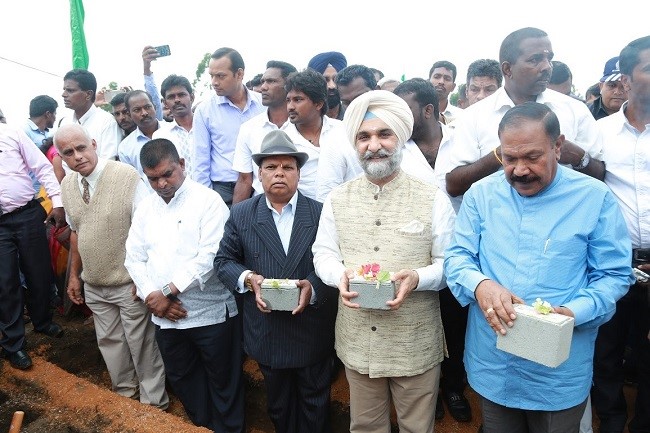
I want all my patriotic Sinhala readers to look at the following photographs. I am wondering whether this government has already handed over the central hill country to India. It is high time the people of this country ask the President whether he and Ranil have already handed over this part of the country to India, pending the handing over of North and East together with the Trinco harbor and the 100 oil tanks.

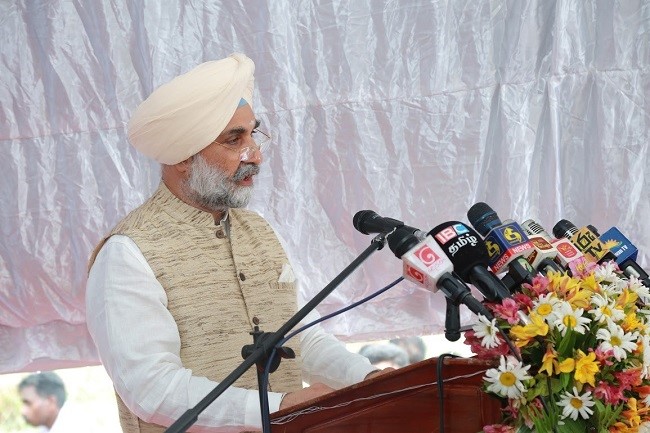
Otherwise how could the Indian ambassador openly behave arrogantly like this like an Indian viceroy..

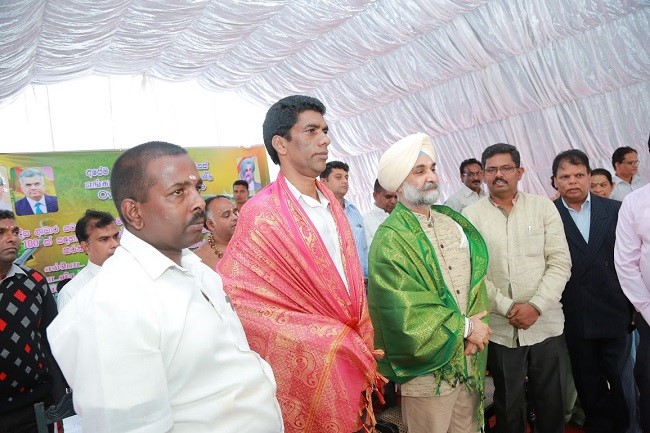
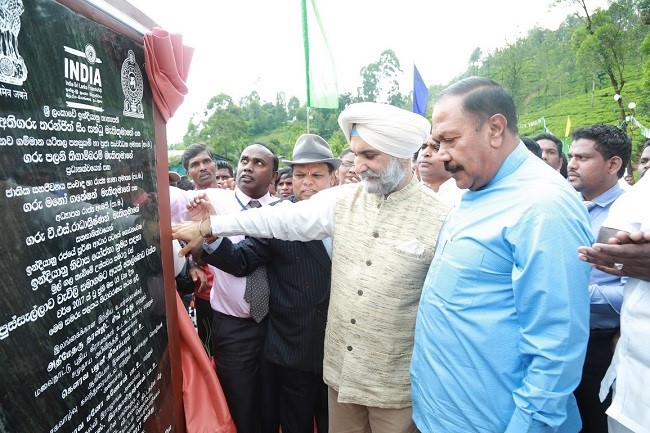
In this land of the Sinhalese how dare the Indian Ambassador displays and make pronouncements as given below as if he is standing on a Province of India. It reminds me of the days when Dixith was behaving in front of JR. There isn’t a single Sinhala representative in any one of these pictures. That confirms it is already a mono Tamil country. What the hell the Sinhala MPP of these Kandyan areas are doing. Why aren’t they at least ask the President or raise this issue in Parliament and protest against this kind of unwarranted invasions on our motherland. Are our native politicians and the Sinhala people waiting for the day that they will be directly ruled by India as a separate region within this country along with the North and East.

Isn’t it a disgrace to have representatives like this.

I do not know why the Sinhala voters of these areas continue to vote these traitorous puppets as their MPP We all know that it is useless telling the President or, the Prime Minister as both of them are sleeping with them. Their only hope and wish is to get these votes at the forthcoming election as well as they did in 2015.

I have a far more serious question. Now that the Government has allowed the Indian politicians and the Diplomats to behave nakedly and act like this in spite of the fact that they openly bypass the Sri Lankan Government when they deal with people of Indian origin, even though they are already at least physically citizens of this country what will it do if Arab countries like Saudi and their Ambassadors also  start to behave and act like this, as they also have already done in Wilpattu and the Eastern Province, when they deal with Muslims people living in this country..

Where are we going to end at this rate? If we are going to keep deaf, blind and dumb then why should we have a Government of 225with about 112 Minister at all and nine Provincial Councils with nearly 700 parasitic politicians including 9 Governors and 45 Ministers spending billions of public money for their upkeep with no benefit to the country or the people at large while the people are starving and dying.

I also wonder whether there is any other country in the whole world where the government has allowed this type of things to happen. Now that we have the best Finance Minister in the world, it would not be surprising even if the Sri Lankan President and the Prime Minister are also declared as the best in the world for betraying the country’s sovereignty, freedom, independence and it’s 2600 year old pristine Sinhala Buddhist civilization.

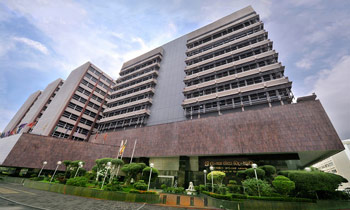
1 High Commissioner of India H.E. Mr. Taranjit Singh Sandhu along with 2 Minister for Hill country New Villages, Infrastructure and Community Development Hon. Palani Digambaram, and 3 State Minister for Education Hon. V.S. Radhakrishnan, laid foundation stone for 100 new houses being constructed High Commissioner in his remarks recalled the promise of additional 10,000 houses announced by Hon’ble Prime Minister of India Narandra Modi during his visit to the Hill country on 12 May 2017 and reiterated Government of India’s continued commitment to the wellbeing and development of the Plantation areas. Both the Ministers in their remarks, thanked the Government of India for the support and the various development projects implemented by the Government of India in the Plantation areas, especially the Housing Project.

  Government of India has committed a total of 14,000 houses in the Plantation areas. Habitat for Humanity, Sri Lanka is the implementing agency for the houses being constructed at Hellebodde Estate.under the Indian Housing Project.

Members of Parliament and Central Provincial Council, senior Government officials as well as officials from Plantation Human Development Trust(PHDT), Plantation and Estate Management participated in the ceremony. More than 500 people from the Hellebodde Estate attended the function

ජෝං බාස්ට ගිය මාධ්‍යවේදී ගරුත්වය !!

June 12th, 2017

තේජා ගොඩකන්දෙආරච්චි

2015 දී තමන්ට බලය ලබා ගැනීමේදී වත්මන් යහපාලන රජය ඉදිරියට ගෙන එක් ප්රධානම කාරණයක් වූයේ මාධ් නිදහසයි. එමෙන්ම පසුගිය රජය සමයේදී මාධ්යවේදීන් ඝාතනය වූ අයුරුද වේදිකාවල සාකච්ඡා වූ සහ අදටත් තමන්ට අවශ් වෙලාවට ඉදිරියට ගන්නා වූ බරපතල සිදුවීම් විය. නමුත් මේ සියලු හඬා වැලපීම් අනිත් සියලුම කතන්දර වාගේම නිකම්ම චන්ද ගුණ්ඩු බව හෙලිදරව් වන්නට වූයේ යහපාලනය ආරම්භයේ සිටම අගමැති මෙන්ම සම කැබිනට් ප්රකාශක වන රාජිත සේනාරත්න ඇමතිවරයාද මාධ්යවේදීන් දිගින් දිගටම හෑල්ලුවට ලක් කරමින්ද, පාර්ලිමේන්තුවේදී පවා නම් ගම් සහිතව තර්ජනය කරමින්ද හැසිරෙන්නට වූ තැනය. ජනාධිපති නඟන අඳෝනාව වන්නේද මාධ් මගින් තමාව නිර්දය ලෙස විවේචනය කරනවාය යන්නයි. අතර 2016 දෙසැම්බරයේදී නාවුක හමුදාපති විසින් මාධ්යවේදියෙකුට පහර දුන් සිද්ධිය රට තුල හමාගිය මහා කුණාටුවක් බඳු විය. සම්බන්ධව කතාකල එවකට වරාය සහ නාවුක කටයුතු පිලිබඳ අමාත් අර්ජුන රණතුංගද මාධ්යවේදීන් යනු මුදලට කෑදර සහ මුදල් වෙනුවෙන් ඕනෑම දෙයක් කරන පිරිසක් ලෙස හැඟෙන අයුරින් අදහස් ප්රකාශ කලේය. ඔහු පමනක් නොවේ. අගමැතිවරයාද නිතරම මාධ්යවේදීන්ට අපහාස කලේ මාධ්යවේදීන් යනු ආහාර වේලකට පවා තම ආත්ම ගරුත්වය පාවා දෙන පිරිසක් ලෙස හුවා දක්වමිනි. රජයේ මාධ් හමුවීම් තුල මාධ්යවේදීන්ගේ බුද්ධිය අවතක්සේරුවට ලක් කරමින් කතා කිරීම, ඔවුන් අසන ප්රශ්නවලට පිලිතුරු නොදී නැගිට යාම වැනි සිද්ධීන් ඉතා සාමාන් දේ බවට පත්ව ඇත.


මාධ් නිසි පරිදි භාවිතා වේ නම් මාධ් යනු ජනතාව වෙත පොදුවේ කතා කරන්නට තිබෙන ක්රමවේදයයි. එබැවින් මාධ් හමුවකදී යමකු ප්රදර්ශනය කරන තම හැසිරීම තුල ආමන්ත්රනය කරනුයේ රටේ සිටින මුලු මහත් ජනතාව වෙතය. අනිත් අතට මාධ්යවේදීන් විසින් අසන ප්රශ්නද රටේ ජනතාව නියෝජනය වන ආකාරයේ ඒවා විය යුතුය. එනම් එම ප්රශ්නවල අන්තර්ගත වන තොරතුරු රටේ ජනතාවට දැන ගන්නට අවශ් සහ දැනගෙන වැඩක් ඇති සහ බලපෑමක් සහිත ප්රශ්න වීම අත්යවශ් වේ. මාධ්යවේදියෙකු අසන ප්රශ්නයකට දේශපාලකයෙකුදේශපාලකයා යනු රටේ පාලන ප්රතිපත්ති ගැන වගකිව යුතු පුද්ගලයා නිසාලබාදෙන පිලිතුර තුල ජනතාවට දැනගන්නට අවශ් දේ පිලිබඳව ඔහු හෝ ඇය කෙතරම් වැදගත් කර සලකනවාද, එම ගැටලුව පිලිබඳ දේශපාලකයාගේ ප්රතිපත්තිය සහ බුද්ධි මට්ටම කුමක්ද යන කරුණු පැහැදිලිව ප්රතිබිම්බගත වේ. එසේ ප්රදර්ශනය වන දේශපාලකයාගේ අභ්යන්තරය හමුවේ එම තැනැත්තාව රටේ උත්තරීතරයට පත්කර යවන්නට තම පරම අයිතිය වන කතිරය භාවිතාකල ජනතාවට ලැජ්ජාවක් ඇතිවීම ආඩම්බරයක් ඇතිවීම අනිවාර්යයෙන්ම සිදුවනු ඇත.


මෙයට අදාලව සිදුවූ අලුත්ම සිදුවීම නම් පසුගිය බ්රහස්පතින්දා අමාත් ජෝන් අමරතුංග විසින් කැමරාව ඉදිරිපිට නැටූ නාඩගමයි. සිද්ධිය වත්තල කෙරවළපිටිය ප්රදේශයට කසල බැහැර කිරීම සම්බන්ධව ඇතිවූ ප්රශ්නයකි. එහිදී කුඩා රැස්වීමක්ද පැවැත්විනි. මෙම ප්රශ්නයට ඍජුව මුහුණ දෙන කෙරවළපිටිය ජනතාවගේ නියෝජිතයන් මෙම රැස්වීමට සහභාගි වූහ. එහිදී ඔවුහුද තම අදහස් ඇමතිවරයා වෙත ඉදිරිපත් කරන ලද්දේ ප්රවේගකාරී විලාශයකිනි. මන්ද එම ප්රශ්නය බෙහෙවින් බරපතලය. පෙනෙන්නට තිබූ ආකාරයට එතැනදී ඇමතිවරයාට තම කෝපය පාලනය කරගෙන, එම ප්රශ්නයට යම් විසඳුමක් ලබා දෙන්නට පියවර ගන්නා බවට ජනතාවට පොරොන්දුවන්නට සිදුවිනි. නමුත් මෙතැන වැදගත් දෙයක් තිබේ. යම් ප්රශ්නයකට විසඳුම් ලබාදෙන බවට මේ දේශපාලකයන්විසින් දෙන පොරොන්දු නම් අපට දැකලාම ඇතිවෙලා යයි කිවහැක. අපේ අත්දැකීමේ හැටියට ඒවා නිකම්ම වෙලාවට ගැලවීමට දෙන පිලිතුරු මිසෙක ප්රශ්න විසඳීමේ සැබෑ උවමනාවෙන් අවංකව කරන යමක් නොවේ


ඉතින් කෙරවළපිටිය ජනතා නියෝජිතයන්ගේ ප්රශ්න හමුවේලෙල්ලටම තදවීසිටි ඇමතිවරයා එතැනින් ඉවත්ව යන්නට එලියට බසිනවිට මාධ්යවේදීන්ද පැමින නැගුවේ එම ප්රශ්නමය. එවිට තවදුරටත්  තම කෝපය පාලනය කරගත නොහුනු ඇමතිවරයා ඉතා පහත් වචන මාලාවකින් මාධ්යවේදීන්ට බැණ වැදුනේය. ඔහු පිටතට දැමුවේ අර ජනහමුවේ නියෝජිතයන්හට කියාගන්නට බැරිවූ වචන කට්ටලය බව ඉතාම පැහැදිලිය. රටේ අවධානයට ලක්වුනේ ඇමතිවරයා පැවසූ දේ පමනක් වුවත් මෙතැනදී ඇමතිවරයාගේ කායාරක්ෂකයන් යයි කිවහැකි පිරිසක්ද අසංවර භාෂාවකින් මාධ්යවේදීන්ට බැණ වැදුනහ. එම වීඩියෝ පට ප්රචාරය කලහොත් හොඳ පාඩමක් උගන්වන බවට ඔහු පැවසීය. නමුත් කැමරාවන් උදුරාගෙන එහි සේයාපට විනාශ කිරීමට කිසිවකු උත්සාහකලේ නැත. ඇයි? හොඳටද නරකටද කියා දන්නේ ඔවුන්මය. තමන්ට ජනතාව ලවා කරවා ගන්නට අවශ් වූ කාරිය, එනම් කතිරය ගසා ගැනීම දැන් කෙරී ඇති බැවින්උන් මොනව හිතා ගත්තම අපට මොකදකියා සිතුවාද නැතිනම් මේ කෝපය පිපිරීම ප්රසිද්ධියට පත් කිරීම තුල අනිත් අයටත් පාඩමක් උගන්වන්න සිතුවාද කියා නොදනිමු.


මේ ගැන රන්ජන් රාමනායක ඇමතිවරයා අදහස් ප්රකාශකර තිබුනේ මෙසේය. ‘ජෝන් අමරතුංග වැනිපරිණතදේශපාලකයෙකු මෙසේ හැසිරීම අශෝභන සහ අනුමතකල නොහැකිබවයි. මේ එක දේශපාලකයෙකුටවත් තමන්ට ඕනෑ ආකාරයට හැසිරෙන්නට රන්ජන්ගේ හෝ වෙනත් අයෙකුගේ අනුමැතිය අවශ් නැත. රන්ජන් මේ බව පැවසුවේ සුපුරුදු පරිදි මාධ්යවේදීන් 26 ක් මරා දැමූ බවට පසුගිය රජයට දොස් පවරන අතරය. මෙම වරදේ බර අඩු කිරීමේ වෑයමක්ද තුල තිබිනි. මාධ්යවේදීන් මරා දැමීම සම්බන්ධ චෝදනාවෙන් නම් පසුගිය රජයට පමනක් නොව කිසිම රජයකට ගැලවෙන්නට නොහැකිය. අනුව බැලූවිට මොන රජය බලයට ආවත් මාධ්යවේදීන් යම් කොටසකට අපලය. ‘ජෝන් අමරතුංග අමාත්යවරයා තම පියාගේ වයසේ බවත්, තමන් කියන දේට සමහර වෙලාවට තම පියාටත් මල පනින බවත්, ඕවා ඔය තරම් ගණන් ගත යුතු නැති බවත්සුජීව සේනාසිංහ ඇමතිවරයාගේ අදහස විය. මෙය වයස පිලිබඳ ප්රශ්නයක් නම් ඇමති ජෝන් අමරතුංගද විශ්රාම නොගන්නේ ඇයි? මෙවන්මල පනිනවයසේ උන්දලා ඇමතිකම්වල තබා ගෙන නඩත්තු කිරීම නිසා රට තුල අමාත්යංශ විෂය පථයේ කටයුතු අඩාලව යනවා පමනක් නොව නැති නාස්ති වී යන්නේ මහජන මුදල්ය.


රන්ජන් රාමනායකට අනුව ජෝන් අමරතුංග යනුපරිණතදේශපාලකයෙකි. ‘පරිණතයන වචනයේ අර්ථය ගැන මෙය කියවන ඔබ සිතිය යුතුය. එම වචනය තුල බොහෝ ඇසූ පිරූ තැන් ඇති, මේරූ නුවණක් ඇති, මනා පලපුරුද්දක් සහ විෂය දැනුමක් ඇති, මනා හික්මීමක් සහ දරා ගැනීමේ හැකියාවක් ඇති යන ගුණාංග අන්තර්ගත වේ


1940 මැයි මස 21 වන දා උපන් ජෝන් අමරතුංග වයසින් නම් මෝරා ඇති අයෙකි. ඔහු එක්සත් ජාතික පක්ෂ සාමාජිකත්වය ලබා ගත්තේ 1956 දී බව කියති. ඔහුගේ වයස හෝ වසර 61 ක් පැරණි එජාප සාමාජිකත්වය තිබුනාය කියා මොහුපරිණතදේශපාලකයෙකු ලෙස හැඳින්විය හැකිද? ඔහුගේ කියුම් කෙරුම් තුල පරිණත බවක් කොයි කලෙකවත් රැඳී තිබුනේ නැත. ඔහු පමනක් නොව බොහෝ දේශපාලකයන් තම දේශපාලන දිවියට සම්පූර්ණ වූ වසර ගණන් ඉදිරියට දමා ගනිමින් මහජන මුදලින් උත්සව පවත්වා එම උත්සව මාධ්යවේදීන් ලවාම ආවරණය කරගෙන තමන් පරිණත දේශපාලකයින් ලෙස ජනතාවගෙන් සැලකුම් ලබා ගන්නට යුහුසුලු වෙති. මෙම පරිණත බවේ සැබෑ මුහුණත පෙනෙන්නේ මාධ්යවේදීන් ඉදිරියේ ජනතාව පෙලන ප්රශ්නයකට උත්තර බඳින්නට ඔවුන්ට සිදු වූ විට .


වත්මන් ජනාධිපතිද වසර 50 දේශපාලන ඉතිහාසයක් ඇති පරිණත දේශපාලකයෙකු කියා පැවසුවත් රටේ ජනාධිපති ලෙස ඔහු කරන කියන දේ දුටු කල්හි සාමාජිකත්වයේ පැරණිකම වත් එම පරිණත බව හා ගැලපී යන්නේ නැත. එසේ නම් ඔහු තමන් දේශපාලකයෙකු ලෙස හැදී වැඩුන පක්ෂයට මෙසේ ඉහඳ තබන්නේ නැත. ඕනෑම දෙයක් පත්තරෙන් දකින තුරු නොදන්නා ඔහු කවුරුන් හෝ පැමින කියනකම් රටේ අඩුපාඩු මොනවාද, වෙන්නේ මොනවාදැයි නොදනී. ජනාධිපති වන ඔහු පෙර විසූ ගජබා රජු මෙන් රෑට රෑට වෙස් වලාගෙන ගෙවල් ගානේ ගොස් ප්රශ්න සොයාගත යුතුය කියා මින් අදහස් නොකරමු. නමුත් කියන පරිණත බව ඔස්සේ රටේ නොවිසඳී තිබෙන ප්රශ්න වටහාගෙන ඒවා විසඳීමට නිවැරදි මග තෝරා ගැනීමට සහය ලබාගත හැකි පිරිසක් තෝරා ගැනීමේ දක්ෂතාවය ඔහු වෙත තිබිය යුතුය. එමෙන්ම තමන් ඔය කියන විදියට පත්තර, ප්රවෘත්ති බලනවා නම් ඒවායේ තිබෙන වැදගත් කරුණු ඔහුගේ අවධානයට ලක්විය යුතු නොවේද? එසේ නැතිව තමන්ට එල්ලවන විවේචන දෙස බලාමට පත්තරවලින් ගහනවා!ගහනවා!’ කියමින් නාසයෙන් ඇඬුවාට වැඩක් නැත. මේ විවේචන අතර ඇති ධනාත්මක විවේචනවලට අවංක ප්රතිපත්තියකින් යුතුව නිසි ප්රතිචාර දක්වයි නම් වැඩකට නැති විවේචන මැදහත් සිතින් ගෙන ඉවත ලිය හැක. පරිණත බව යනු එයයි. එසේ නැතිව පාට පාට ටී ෂර්ට්ස් අන්දවා ගැලපෙන කැප් තොප්පි දමාගෙන සිදු කරන බොළඳ මාධ් සංදර්ශන මගින් පෙන්වන්නේ පරිණත බව නොව ජනාධිපතිවරයාගේ නොමේරූ බුද්ධියයි.


අප රටේ දේශපාලකයන් පමනක් නොව මාධ්යවේදීන්ද පරිණත විය යුතුය. එදා ජෝන් අමරතුංග ඇමතිවරයා ප්රදර්ශනයකල ආවේගශීලී සහ පහත් හැසිරීම වැනි දේ නොව උපහාසාත්මක වචනවලින් සහ සිනහවන් මගින් තමන් වෙත එල්ලවන ප්රහාරයන්, චරිත ඝාතනයන් හඳුනාගෙන එසේ මාධ්යවේදීන් සැහැල්ලුවට ලක් කිරීමට ඉඩ නොතැබීම පරිණත මාධ්යවේදියාගේ වගකීම වේ.


මෙවන් තුට්ටු දෙකේ සදර්ශන පසුපස යාමෙන් සිදුවන්නේ රටේ ජනතාවට බලපාන සැබෑ ප්රශ්න යට යාමයි. හොඳම උදාහරණය නම් අද වන විට සියලු පක්ෂ, මාධ්යවේදීන් සහ බහුතර ජනතාව කතා කරන්නේ ජෝන් අමරතුංගගේ ශබ්ද කෝෂය ගැන මිස කෙරවළපිටියේ කසල ප්රශ්නය ගැන නොවේ. 2016 දෙසැම්බරයේදී හම්බන්තොට වරායේදී සිදු වූයේද මෙයයි. අවසානයේ නාවක හමුදාපති සහ මාධ් අතර හබය දෙස රටම බලා සිටියදී රජය තමන්ට ඕනෑ පරිදි වැඩේ කර ගත්තේය. එබැවින්  රජයකට මෙවන් කෝලම්කරුවන්ගේ සේවය ඉතා ප්රයෝජනවත්ය.


පසුගිය කාලය තුලම රටේ වරින්වර මතුවූ ප්රශ්න සියල්ලම මෙසේ තවත් ප්රශ්නවලින්ම යටවී ගියා මිස එකක්වත් විසඳුන  බවක් ඔබට මතක තිබේද? මෙම ප්රශ්නවලින් ඍජුව බලපෑමක් එල්ල නොවන කාණ්ඩයේ ජනතාව ඊලඟ ප්රශ්නයේ එල්ලෙද්දී ප්රශ්නයේ පල විපාක විඳින්නට ඉතිරි වූයේ ඉන් බැටකෑ අසරණයන්ය.

අරණායක, කොස්ගම, මිරියබැද්ද, මීතොටමුල්ල ජනතාව මෙන්ම අදටත් මොලයේ සෛලවල ක්රියාකාරිත්වය පරීක්ෂා කිරීම සඳහා පෙට් ස්කෑන් වාර්තා ලබාගැනීමට රුපියල් ලක්ෂ එකහමාරක් දෙකක් ගෙවාගෙන පුද්ගලික රෝහල්වලට බඩ ගෑමට සිදුව ඇති රෝගී ජනතාවට සිදුව ඇත්තේද එකම සන්තෑසියකි. පුදුමය කියන්නේ මෙවන් අවශ්යතාවනට පෙරමුණ ගෙන ජනතාවගෙන්ම මුදල් ආධාර එක් රැස් කරන (කාගේ ලේබලය යටතේ පාර්සල් කෙරුනත් මේ සෑම සතයක් සඳහාම ඔවුන් මහජනතාවට වගකිව යුතුය) මාධ් ආයතනවලට පසුවිපරම් සහ පසු ඇගයීම් කොටස අමතකව ගොස් ඔවුන්ද ජනතාවට අලුත් ප්රශ්න මවාදී ජනතාව ඔස්සේ ඇදගෙන යාමය


මේ මූලික අවශ්යතා සියල්ලටම පෙර රටේ ප්රමුඛතාවය දියයුතු ක්රමෝපායී අවශ්යතාවයක් ඇත. ජනතාව තුල නිවැරදි දේශපාලන දැක්මක් ඇති කිරීමය. මෙහි වගකීම පැවරෙනුයේ  පාට කණ්නාඩි තුලින් නැතිව තම සැබෑ දෙනෙතින් ලෝකය දැකීමට සමත්වන පරිණත මාධ්යවේදියාමය.

ලංකාවට GSP+ යලි දුන් තිත්තම තිත්ත කතාව මහින්ද කියයි..

June 11th, 2017

ලංකා සී නිවුස්

ලංකාවට ජී.එස්.පී. ප්ලස් බදු සහනය නැවත ලබාදීම සම්බන්ධයෙන් සිය මතය ඉදිරිපත් කරමින් හිටපු ජනාධිපති මහින්ද රාජපක්‍ෂ මහතා විසින් නිකුත් කර ඇති නිවේදනයක් පහත දැක්වෙයි.

ලංකාවට ජී.එස්.පී ප්ලස් බදු සහනය නැවත ලබාදීම

යුරෝපා සංගමය 2017 මැයි 19 වන දා සිට, ජී.එස්.පී ප්ලස් බදු සහනය නැවත ලංකාවට ලබා දී ඇත.  යුරෝපා සංගමය විසින්  ජී.එස්.පී බදු සහන ක්‍රම තුනක් පවත්වාගෙන යනු ලබයි. ඒක පුද්ගල ආදායම ඇමරිකානු ඩොලර් 1,025 අඩු, දුප්පත්ම රටවලට ලබා දෙන ජී.එස්.පී සහනය යටතේ එම රටවලට සම්පූර්ණයෙන්ම බදු රහිතව යුරෝපා සංගමය තුළට භාන්ඩ අපනයනය කල හැකිය. ඒකපුද්ගල ආදායම ඩොලර් 1,025ත් 4,035ත් අතර පහල-මධ්‍යම ආදායම් ලාභී රටවලට ‘සාමාන්‍ය ජී.එස්.පී’ ක්‍රමය යටතේ සහනදායි බද්දක් ගෙවා යුරෝපා සංගමයට භාණ්ඩ අපනයනය කල හැකිය. මෙම ජී.එස්.පී සහන ක්‍රම දෙක නිසා බොහෝ රටවලට  අපනයන කර්මාන්ත ගොඩනගා ගැනීමට හැකි වී  තිබෙන බව අපි පිළිගත යුතුය. යුරෝපා සංගමයේ තුන්වන සහන ක්‍රමය වන ජී.එස්.පී ප්ලස් ක්‍රමය යටතේ,  පහල-මධ්‍යම ආදායම්  ලාභී රටවලටද  දුප්පත්ම රටවල් මෙන් කිසිඳු බද්දක් නොගෙවා යුරෝපා සංගමයට භාණ්ඩ අපනයනය කිරීමේ වරප්‍රසාදය ලැබේ. නමුත් මේ සඳහා බරපතල වන්දියක් ගෙවිය යුතුය. ජී.එස්.පී ප්ලස් බදු සහනය ලැබීමට නම් අදාල රට ජාත්‍යන්තර සම්මුතීන් 27 ක් සම්මත කර ඒවා පිළිපැදීම සම්බන්ධයෙන් යුරෝපා සංගමයේ දේශපාලන  අධීක්‍ෂණයට යටත් විය යුතුය. එම නිසා ලංකාවද ඇතුළුව ජි.එස්.පී ප්ලස් බදු සහනය ලබාගෙන ඇත්තේ රටවල් 9ක් පමණි.

ජී.එස්.පී ප්ලස් ලබාගැනීම සඳහා යටත්  වෙන කොන්දේසි තුළින්, අදාල රටේ දේශපාලනමය, නීතිමය හා ආයතනික රාමුවට සිදුවන හානිය අතිශයින්ම බරපතල විය හැක. 2010 දී ජී.එස්.පී ප්ලස් තවදුරටත් බුක්ති විඳීමට  නම් අපේ රණවිරුවන්ට විරුද්ධව යුද අපරාධ විමර්ශන පැවැත්වීම හා වැඩි වැඩියෙන් බලතල බෙදීම ඇතුළුව යුරෝපා සංගමයෙන් ඉදිරිපත් කරන ලද කොන්දේසි වලට එකග නොවී එම බදු සහනය අහෝසි වීමට මගේ ආණ්ඩුව ඉඩහැරියේ ඒ නිසාය. 2010 දී ජී.එස්.පී ප්ලස් බදු සහනය අහිමි වීමෙන් පසු අපි යුරෝපා සංගමයේ ‘සාමාන්‍ය ජී.එස්.පී’ ක්‍රමය යටතට වැටුණේය. ඒ අනුව අපේ අපනයනයන් යුරෝපා සංගමය තුළට යනවිට සහනදායි බද්දක් ගෙවිය යුතු විය. පසුගියදා, ජී.එස්.පී ප්ලස් බදු සහනය නැවත ලැබීමත් සමඟ, ඒ හේතුවෙන්, ධීවර නිශ්පාදන, ඇඟලුම් හා වෙනත් කාර්මික නිශ්පාදන යුරෝපා සංගමයට අපනයනය කිරීම මහා පරිමානයෙන් වැඩි වෙනු ඇති බව ආණ්ඩුව කියයි. යුරෝපා සංගමයට බදු රහිතව අපනයන කිරීමට ආයෝජකයෝ විශාල වශයෙන් ලංකාවට ආකර්ෂණය වෙනු ඇති බවට බලාපොරොත්තුද ඇති වී තිබේ. අපේ මුලු අනාගතයම ජී.එස්.පී ප්ලස් මත ගොඩනැගිය හැකි බවට හැඟීමක් ආණ්ඩුව ජනතාව අතර වපුරමින් සිටි. නමුත්, ජී.එස්.පී ප්ලස් බදු සහන ක්‍රමයෙන් ලැබෙන්නේ තාවකාලික ආර්ථික ප්‍රතිලාභයක් පමණි.

යුරෝපා සංගමයේ සියළු ජී.එස්.පී බදු සහන ක්‍රම පාලනය කරන නීතිය වන්නේ, යුරෝපා පාර්ලිමේන්තුවේ සහ කවුන්සිලයේ 2012 ඔක්තෝබර් 25 දින අංක 978/2012 දරණ රෙගුලාසියයි.  යම් රටකට  ජී.එස්.පී ප්ලස් ලබාගත හැක්කේ එය ඩොලර් 4,035ට අඩු ඒක පුද්ගල ආදායමක් ලබන පහල-මධ්‍යම ආදායම් ලාභී රටක් නම් පමණි. ඩොලර් 4,035ට වඩා වැඩියෙන් ඒක පුද්ගල ආදායම් ලබන රටවල් ඉහළ-මධ්‍යම ආදායම් ලාභී රටවල් වන අතර, එවැනි රටවලට යුරෝපා සංගමයේ කිසිදු ජී.එස්.පී  බදු සහනයක් ලැබෙන්නේ නැත. එම රටවල භාණ්ඩ යුරෝපා සංගමය තුළට යන විට සම්පූර්ණ ආනයන බද්ද ගෙවිය යුතුවේ. ලංකාවේ ඒකපුද්ගල ආදායම 2015 දී ඩොලර් 3,843 ක් වූ අතර 2016 දී ඩොලර් 3,835 ක් විය. මේ අනුව, යුරෝපා සංගමයේ සියලුම ජී.එස්.පී බදු සහන අහිමි කරවන ඩොලර් 4,035 කඩඉමට අප සිටින්නේ ඩොලර් 200 ක් පමණක් මෙපිටින්ය.  මගේ අවුරුදු නවයක පාලන සමය තුළ ලංකාවේ ඒක පුද්ගල ආදායම වර්ෂයකට ඩොලර් 286 ක සාමාන්‍ය අගයකින් වැඩි වූවාය යන කාරණයෙන්, අපි ඩොලර් 4,035 කඩඉමට කොතරම් ආසන්න වී ඇතිදැයි සිතාගත හැක.  ශ්‍රී ලංකාව ඩොලර් 4,035 කඩඉම පසු කල විට එය ස්ථිර වැඩිවීමක් දැයි තහවුරු කර ගැනීමට වසර දෙකක නිරීක්‍ෂණ කාලයකින් පසු තවත් වසරක සහන කාලයක් ලබා දී, ඉන්පසු ලංකාව මොනම ජී.එස්.පී ක්‍රමයක් යටතේවත් සහන ලැබීමට නුසුදුස්සකු හැටියට යුරෝපා සංගමය විසින් ප්‍රකාශයට පත්කරනු ඇත.

ජී.එස්.පී ප්ලස් ලබන රටක් වූ ජෝරිජියාව මේ ඩොලර් 4,035 කඩඉම පසු කිරීම හේතුවෙන් යුරෝපා සංගමය විසින් 2017 ජනවාරි 01 වනදා සිට එම රට ජී.එස්.පී ප්ලස් ක්‍රමය යටතේ මෙන්ම ‘සාමාන්‍ය ජී.එස්.පී’ ක්‍රමය යටතේද සහන ලැබීමට නුසුදුස්සකු හැටියට යුරෝපා කොමිසමේ 2015 අගෝස්තු 28 දින, අංක 2015/1979 දරණ නියෝජ්‍යත්ව රෙගුලාසිය මඟින්  ප්‍රකාශයට පත්කරන ලදී.  යුරෝපා සංගමයේ ජී.එස්.පී බදු සහන ක්‍රම මුල සිටම සැලසුම්කොට තිබුණේ දුප්පත්ම රටවල් මුලදී සම්පූර්ණයෙන්ම බදු රහිතව  යුරෝපයට භාණ්ඩ අපනයනය කොට, යම් දියුණුවක් ලැබූ පසු සහනදායී බද්දක් ගෙවීම දක්වාත්, එක්තරා කඩඉමක් පසු කිරීමෙන් අනතරුව සම්පූර්ණ බද්ද ගෙවන තත්වයට පත් වෙන ආකාරයටය. යුරෝපා සංගමයේ ජී.එස්.පී බදු සහන ක්‍රමයන් යටතේ සම්පූර්ණයෙන්ම බදු රහිතව, නැතිනම් සහනදායී බද්දක් ගෙවා අපනයනය කිරීමේ වරප්‍රසාදය සදාකාලිව යම් රටකට හිමිවන්නේ නැත.  ආර්ථිකයේ වර්ධනයත් සමඟ සංවර්ධනය වෙමින් පවතින රටවලට යුරෝපා සංගමයෙන්  ලැබෙන ජී.එස්.පී බදු සහන නැතිවෙන බව වටහා ගැනීම වැදගත්ය. ඇතැම් අවස්ථාවල වෙනත් හේතුන් නිසාද මේ සහන අහෝසි විය හැක. 2005 දී ඇමරිකා එක්සත් ජනපදය විසින් එරට තුළට එන ඇඟලුම් අපනයනයන් සඳහා වූ කෝටා ක්‍රමය අහෝසි කරන ලදී. ලංකාව වැනි රටවල් ඇමරිකානු වෙළඳපලට ඇතුල් වීමට මේ කෝටා ක්‍රමය මත රඳා පැවතුනි. නමුත් ඒ අත්වැල නැතිවීමෙන් පසුත් ඇමරිකාව තවමත් අපේ ඇඟලුම් අපනයනයන් සඳහා විශාලම වෙලඳපල වේ. එවැනි අභියෝග එන විට ඒවාට මුහුණ දීමට අපි සූදානම් විය යුතුය.  ළමා ශ්‍රමිකයන් නොසිටීම, ඉහළ පාරිසරික ප්‍රමිතීන් පවත්වාගෙන යෑම, කර්මාන්තශාලා වල පහසුකම් සාපේක්‍ෂව ඉහළ මට්ටමක තිබීම, වැනි බටහිර රටවල්වල ‘අලෙවි කළ හැකි’ ප්‍රගතිශීලී ලක්‍ෂණ අපේ අපනයන කර්මාන්තවලට තිබේ. දියුණු රටවල ගනුදෙනුකරුවන්ට, ලංකාවෙන් එන්නේ, හානිකර නිශ්පාදන රටාවන්ගෙන් දූෂණය නොවූ භාණ්ඩ යැයි විශ්වාසයක් තැබිය හැක.

අපි දැන් ඩොලර් 4,035 ඒක පුද්ගල ආදායම් කඩඉමට ඉතා ආසන්නව සිටින නිසා, අපිට දැනටම තිබෙන ශක්තීන් ප්‍රයෝජනයට ගෙන  යුරෝපා සංගමයෙන් කිසිඳු බදු සහනයක් නොලබන අනාගතයක් සඳහා සූදානම් විය යුතුය. නුදුරු අනාගතයේදී අපේ භාණ්ඩ යුරෝපා සංගමය තුළට යන විට සම්පූර්ණ ආනයන බද්දට යටත් වීමට නියමිත නිසා, අපි  ජී.එස්.පී ප්ලස් ලබාගන්නේ නැතුව, සහනදායි බද්දකට යටත්ව දිගටම සාමාන්‍ය ජී.එස්.පී ක්‍රමය යටතේම සිටියනම්, ඩොලර් 4,035 ඒ කඩඉම පසුකිරීමත් සමඟ ඇතිවෙන අලුත් තත්වයට හුරුවීම වඩාත් පහසු වීමට ඉඩ තිබුණි.  දැන් ජී.එස්.පී ප්ලස් බදු සහනය නැවත ලැබී තිබෙන නිසා, ඩොලර් 4,035 කඩඉම පසු කිරීමත් සමඟ අපිට සම්පූර්ණ බදු රහිත තත්වයේ සිට, එක්වරම මුළු බද්දම ගෙවීමට සිදුවෙන තත්වයට මාරු වීමට සිදුවෙනු ඇත.  ආණ්ඩුව මේ අවස්ථාවේදී කළ යුත්තේ, අපට ඊයේ පෙරේදා ලැබුණු ජී.එස්.පී ප්ලස් බදු රහිත අපනයන වරප්‍රසාදය පමණක් නොව 2010 සිට තිබුණු සහනදායි බදු යටතේ අපනයනය කිරීමේ ‘සාමාන්‍ය ජී.එස්.පී’ වරප්‍රසාදයත් යන දෙකම අහෝසි වීමට ඉතා ආසන්න බව ජනතාවට දැණුම් දී, ඒ යතාර්තයට මුහුණ දීමට සූදානම් වීමයි.

ජී.එස්.පී ප්ලස් ගැන යාතාර්ථවාදී නොවන බලාපොරොත්තු ජනතාව තුල ඇති කිරීම කිසිසේතම නොකල යුතුය. යුරෝපා සංගමයේ කිසිදු බදු සහනයක් නැති අනාගතයකට සූදානම් වීමට වැඩපිළිවෙලක් තිබිය යුතුය. අලුත් නිශ්පාදන එළිදැක්වීම, අලුත් වෙළඳ පොලවල් සොයා ගැනීම, කර්මාන්ත ශාලා නවීකරණය සඳහා අඩු පොලියට ණය ලබාදීම, ව්‍යාපාර පුලුල් කිරීම සඳහා බදු සහන ලබා දීම, කම්කරුවන්ගේ නිපුණතා වර්ධනය කිරීම මේ සංක්‍රාන්ති සමය ජය ගැනීමට අවශ්‍ය පියවර විය හැක. ආන්ඩුව මේ කෙරෙහි නිසි අවධානය යොමු කල යුතුය.

මහින්ද රාජපක්‍ෂ
ශ්‍රී ලංකාවේ හිටපු ජනාධිපති

‘Dangerous’ MDMK chief Vaiko denied entry into Malaysia citing LTTE ties

June 11th, 2017

Courtesy Express News Service  

|   Published: 10th June 2017 04:36 AM  |

Last Updated: 10th June 2017 01:57 PM

CHENNAI: MDMK general secretary Vaiko, a vociferous Tamil rights campaigner, who just got released on bail in a 2009 seditious speech case, was denied entry into Malaysia on Friday morning, charging him of being a member of LTTE and thus a ‘dangerous’ person to the country.

Vaiko was kept in an isolated place, charged the MDMK, which staged a protest before the Malaysian consulate in the evening.

As soon as he reached Kuala Lumpur Airport around 6.30 am, Malaysian immigration officials reportedly told Vaiko that his name was on the restricted list, though his visa was cleared in Chennai a week ago.

Accompanied by his secretary, Arunagiri, Vaiko was there to attend the wedding reception in the family of P Ramaswamy, Deputy Chief Minister of Penang State on Saturday evening.

 Later, Vaiko was interrogated by immigration officials. Alleging him of being a member of  LTTE, they posed many questions, including about the many cases that were pending against him in Lanka. Denying the charges, Vaiko showed his Indian passport. But officials refused to accept it, maintaining that his name figured in the list of persons who are dangerous to the country, which has a sizeable Tamil population.Penang Deputy Chief Minister Ramasamy was informed about the incident. The Chief Minister of the state, Lim Guan Eng, too, tried to help resolve the issue. However, the officials were firm in not allowing him enter Malaysia, stating they had the orders from the Deputy PM.

The officials said since Vaiko’s secretary Arunagiri has a Malaysian visa, he could go to the restaurant and get  some eatables for him. But protesting his detention, Vaiko declined the offer.

This led to protests in Chennai when MDMK cadre staged demonstration in front of Consulate-General of Malaysia.

 Meanwhile, condemning the Malaysian government, TNCC president S Thirunavukkarasar said denying him entry despite having all necessary travel documents including visa and passport was not in accordance with the law. Centre should intervene in the issue,” he said.

DMDK founder Vijayakant, too, condemned Malaysia in this regard. How did the Malaysian authorities give him the visa if Vaiko is on the restricted list? Malaysian authorities should apologise to Vaiko and allow him into their country.”

Condeming the attitude of Malaysian government, DMK working president M K Stalin said: The Ministry of External Affairs should summon the officials of Malaysian Consulate and convey our displeasure over the denial of entry for MDMK general secretary Vaiko into Malaysia.”

I was deported because Malaysia considered me a ‘security threat’: Vaiko

June 11th, 2017

Courtesy  ANI

Updated: Jun 10, 2017 09:05 IST
 Chennai (Tamil Nadu) [India], June 10 (ANI): MDMK chief and ex-lawmaker Vaiko, who arrived here after not being allowed to enter Malaysian capital Kuala Lumpur to attend a marriage, claimed on Saturday that he was deported because he was considered “a security threat” by the Malaysian authorities due to his links with the LTTE.

Vaiko returned to Chennai Friday night. The MDMK leader had been invited to attend the wedding of Penang Deputy Chief Minister P Ramasamy’s daughter on June 10.

I was deported because Malaysia considered me a 'security threat': Vaiko

“As soon as I reached the check-in counter, they saw my name and said that I am blacklisted and can’t enter Malaysia. Thereafter, I was taken to the immigration office where I was questioned for several hours,” Vaiko said.

“They asked whether I was a Tamilian from Sri Lanka, I said no. I even showed them my ID card. They said that a lot of cases have been charged against me and asked me whether I belong to the LTTE. I said I am a supporter of the LTTE,” he added.

Vaiko said he informed Ramasamy of the development, who contacted Penang Chief Minister Lim Guan Young so that they could inform the security and immigration officials about the purpose of his visit.

“I showed them a wedding invitation. I told them that I had travelled to Kuala Lanpur in 2015 as well. Later, I apprised Deputy Chief Minister Ramasamy about this. He contacted Penang Chief Minister Lim Kuan. He later contacted Deputy Prime Minister to talk about my release,” he said.

“The Penang Chief Minister told me that the officials are stubborn and that I am (seen as) a security threat to Malaysia. Later instructions came from the Deputy PM’s office not to allow me to enter Kuala Lumpur,” he concluded. (ANI)

Sri Lanka introduces new international residency scheme

June 11th, 2017

Courtesy The Sunday Times

 The Government is planning to introduce a scheme somewhat akin to the ‘Malaysia My Second Home’ via introduction of a new law in Sri Lanka. For this purpose a Bill dated May 29, 2017 has been specifically published and is yet to be enacted in to Law.

The preamble reads an Act to provide for a special deposit account for foreign nationals to remit foreign exchange in to Sri Lanka and for matters connected therewith or incidental thereto.” Once enacted, this statute will be termed ‘Special Deposit Account Act.’ The bill envisages a foreign national who opens and maintains a special deposit account in a commercial bank being eligible to obtain residency visa up to a period of 10 years from the date of opening the Special Deposit Account (SDA) subject to the criteria laid down in the bill. Subject to conditions the spouse and the minor children are also eligible for the residency visas. The Malaysian scheme also grants a 10-year residency visa but could be renewed at the end of the term. The SDA fails to address the issue of renewal on the expiry of the term.


Suresh Perera

A foreign national in order to obtain the benefit of the residency visa has to deposit a minimum of US$500,000 (approximately Rs. 75 million). Alternatively, an equivalent amount could be deposited in alternative foreign currencies specified in the schedule to the bill; i.e. Australian, Singapore, Canadian dollars, Euro, British pound, Japanese yen or Swiss franc. The Bill has reserved the right of the Minister of Finance by regulation to add any other convertible foreign currency to the above list.

The financial investment criteria in the Malaysian scheme is minimal compared to the requirements in the SDA Bill and is depended upon the age of the participant. While the minimum requirement in Sri Lanka is $800,000 for both main visa holder and spouse, the Malaysian scheme only requires approximately $200,000 and a monthly foreign income of $2500 for a person under 50 years and $75,000 and a monthly foreign pension of $2,500 for a person over 50 years. The spouse and the dependent children below 21 years could also obtain a visa under the Malaysian scheme without any additional investment.

A comparison of the quantum of deposit criteria in the Malaysian scheme reveals that whilst the SDA requires a minimum of $500,000 up front, under the Malaysian scheme an equivalent sum could be spread across 10 years i.e. initial deposit of $200,000 and monthly income of $2,500 during the period of the visa for persons below 50 years. In case of persons over 50 years the Malaysian scheme requires initial deposit of $75,000 and monthly pension income of $2,500 during the period of the visa.

Residency visa issued under this scheme does not permit the account holder to engage in any paid employment unless a working visa is secured under the normal laws similar to the Malaysian scheme.

Minimum investment in SDA

The failure to maintain the minimum amount of $500,000 in the SDA would result in a burden being imposed on the commercial bank to inform the Controller of Immigration and Emigration within seven days after the expiry of the grace period of one month of such account not meeting the minimum balance.

Permissible investments

A foreign national who makes such a deposit into a SDA is not barred from utilizing such amount for investment in Sri Lanka. However, such investments should be carried out within the parameters of the regulations to be issued by the Minister of Finance in future.

The bill is silent as to who should be the authority to monitor that such permitted investments are being carried out in the prescribed manner and to also whom such proof of investment be admitted. The bill stipulates the failure to adduce to the continuance of the investment in the permitted area should be reported to the Controller of Immigration and Emigration by the commercial bank. The practicality of imposing this burden on the commercial bank should be analyzed further in the context of the permissible investments to be regulated. Under the Malaysia scheme permissible investments include investment in stock market, unit trusts or local companies.

Other causes for
cancellation of visa

Death and bankruptcy of the account holder could also be causes for the cancellation of a visa. The bill also contains a subjective and ambiguous provision for cancellation of visa being the account holder being suspected of treason.” It is significant to note that the cancellation is due to a mere ‘suspicion’ and not ‘conviction’ or ‘charge’. The bill is silent as to whether the suspicion of treason is in the eyes of the Government of Sri Lanka or a foreign government. The interpretation section of the bill does not contain a definition for the word ‘treason’. The word treason is defined in the Oxford dictionary as the crime of betraying one’s country, especially by attempting to kill or overthrow the sovereign or Government”.

The account holder failing to route foreign exchange utilized for investment purposes through the account is also a reason for cancellation of the visa.

During the period of the visa the SDA should continue to be maintained and the closure of the account is a cause for cancellation of the visa.

Visa for spouse and children

As per the provisions of the bill a spouse of the deposit holder is also eligible for a Residency Visa if an additional $300,000 (Rs.45 million) is deposited in to the same SDA. For a deposit of $800,000 (about Rs.120 million) a deposit holder and spouse will both enjoy visas up to a maximum term of 10 years. However, the validity of the visa of the spouse is conditional upon validity of the visa of the main deposit holder.

As per the bill, upon the death of the main deposit holder, the spouse stands to lose the residency visa. However, one should appreciate that if the wife is the heir to the wealth of the husband upon his demise including the sum in the special deposit account, there is no logic for depriving the residency visa to the wife for the balance period. Perhaps this aspect warrants a revisit by the policy makers to add an additional condition for the wife to enjoy the residency visa for the balance period subject to conditions.

Minor children (below 18 years) of the foreign national unlike in the case of the spouse are entitled for residency visa without any additional deposit. However, such a minor child reaching the age of 18 stands to lose the residency visa. Similar to the case of the spouse, a minor child’s resident visa is also conditional upon the validity of the visa of the main participant.

Medical certificate and insurance

In addition to financial requirements, the Malaysian scheme requires participants/spouse and minor children to forward medical certificates and be covered with medical insurance during the stay subject to exceptions. It is recommended the SDA should also encompass a medical requirement for issuance of residency visa.

Tax benefit to the deposit holder

A salient feature of the bill is that a deposit holder is free from any tax or any other levies with regard to the foreign sourced income (derived from outside Sri Lanka). The bill also extends the tax free status on the interest on income accrued or capital in the account.” The bill has reserved the right to the Central Bank to impose an administrative or operational levy on the deposit holder.

A significant point that requires the attention of the policy maker is that the income tax free status has been granted under the provision of the Inland Revenue Act No 10 of 2006 which is currently in operation. However, a brand new Inland Revenue Act (IRA) led by the International Monetary Fund (IMF) is in the pipeline and the draft of the proposed IRA prohibits granting of any income tax exemption from any other statute other than under the contemplated IRA. Hence if the aforesaid income tax release stipulated in the SDA is to be effective, it must be entrenched in the provisions of the proposed new IRA. On the other hand, this barrier could be overcome by the policymakers by enacting the SDA in Parliament prior to the commencement of the new income tax regime.

In addition to the foreign source income being free from income tax in the Malaysian law, a participant is allowed to import a personal motor vehicle sans any duty (under Malaysia scheme).

Dual citizens

A ‘foreign national’ has been defined to include a dual citizen as well. As such a dual citizen has the opportunity of remitting the stipulated sum of $500,000 and enjoy the tax benefit as specified in the SDA, if a similar benefit is not available for a ‘resident’ in the new IRA.

Existing Resident Guest
Scheme Visa

At present, Sri Lanka also has a ‘Resident Guest Scheme Visa’ in operation. This was introduced for prospective investors and professionals who would contribute to the economic and socio cultural development of Sri Lanka.

Under the investor category, any foreign national may obtain a residency visa but for a period of five years on investment of $250,000 which should be deposited in a special account in any commercial bank. A further sum of $35,000 should be deposited for each dependent accompanying the investor. Funds remitted should be invested in an approved project such as new ventures subject to BOI approval, existing or new companies subject to relevant authority approvals and listed shares.

A professional may obtain the residency visa on remitting $2,000 per month for him and $1,000 per month for each dependent, including spouse for living expenses.

One stop shop

‘Malaysia My Second Home’ scheme is set up under the Ministry of Tourism. However, as per the bill the Sri Lankan scheme is under the preview of the Minister of Finance. Perhaps it is more efficient for the scheme to be promoted by the ministry in charge of tourism rather than by the Ministry of Finance.

A ‘one stop shop centre’, affording much convenience to the applicants could be created if the visa issuance process under the scheme is also to be under the supervision of the Ministry of Tourism.

War and Human Cost Depicted in Movies

June 11th, 2017

by Dr Ruwan M Jayatunge

 All Quiet on the Western Front

All Quiet on the Western Front is a powerful movie that was based on the World War one veteran Erich Maria Remarque’s personal experiences. Directed by Lewis Milestone, All Quiet on the Western Front recounts the realistic and horrific nature of the trench war. Paul Baumer a naïve German lad who was fascinated by the nationalistic speeches and positive motivation by his high school teacher Professor Kantorek joins the Imperial German Army. After a short military training, he was sent to the Western Front to fight the French and the English. In the war front, Paul sees the reality of the war that was not romantic and heroic as Professor Kantorek described.

He sees the brutality and annihilation. He hardly sees the unit cohesion and brotherhood. During their military training Sgt Himmelstoss – a ruthless instructor put extreme pressure on the recruits and uses savage methods to punish them. Following of these harsh treatments, as Remarque describes the soldiers see their true enemy as the unit Sergeant and the superior officers not the French or the English soldier. In the Western Front Paul Baumer witnesses the shellfire, mustard gas attacks and violent deaths. The soldiers are exhausted, under fed, freeze by the winter cold and anticipating agonizing fate in the muddy trenches. His conscience was shattered when he was compelled to kill a French soldier in the war. After killing the enemy, Paul finds the dead man’s identification papers. The victim’s name was Gérard Duval, and he was a printer by trade. Paul further checks the dead soldier’s belongings and finds Gérard Duval s family photo- his wife and children. When Paul saw the photograph, he gets nostalgic feelings about the war.

After spending many months in the war front Paul comes home for a short vacation. His personality was changed and the innocence was lost. He was not the naïve young German lad anymore. These are the very words of Paul Baumer after experiencing the war trauma.I am young, I am twenty years old; yet I know nothing of life but despair, death, fear, and fatuous superficiality cast over an abyss of sorrow. I see how peoples are set against one another, and in silence, unknowingly, foolishly, obediently, innocently slay one another.” We were eighteen and had begun to love life and the world; and we had to shoot it to pieces. The first bomb, the first explosion, burst in our hearts. We are cut off from activity, from striving, from progress. We believe in such things no longer, we believe in the war.” In the eyes of laymen, soldiers are heroes because they challenge death and their actions are considered as adventure. In All Quiet on the Western Front Erich Maria Remarque says that death is not an adventure for those who stand face to face with it. Although the death is often glorified in War, it is a meaningless tragedy for the soldier and his loved ones. Paul Baumer sees the death and destruction in the Western Front. Most of his friends had gone. By seeing the tormented war front, he is emotionless. He mutters to himself. Kemmerich is dead, Haie Westhus is dying . . . Martens has no legs anymore, Meyer is dead, Max is dead, Beyer is dead, Hammerling is dead . . . it is a damnable business, but what has it to do with us now—we live. …

The Liberation ( Osvobozhdeniye)

Yuri Ozerov’s great epic movie The Liberation ( Osvobozhdeniye) was based on the Great Patriotic War that was launched to free the Soviet Union from the Fascist German invasion. The unexpected German invasion of the USSR in 1941 violated the German Soviet non-aggression pact or the Ribbentrop-Molotov agreement. The invasion leads to immense mobilization of people and resources by the Soviet Union. The Liberation narrates the atrocities committed by the NAZI s and the heroic efforts of the Red Army soldiers to free the motherland. The movie was produced in during 1968 – 1971 and has five parts.

The invasion of the Soviet Union was code named – Operation Barbarossa and took place on the 22nd of June 1941. It was the largest military operation conducted by the German Army. The film one – Fire Arc is based on the Battle of Kursk. The Kursk was place where the biggest tank battle of WW2 took place and it crippled the German war machine beyond repair. Kursk signifies the downfall of Hitler’s regime. The second film is about the liberation of Orel and Belgorod and Kharkov that was tormented under the German occupation. The film three is the story of Belarusian offensive and the complete liberation of the Soviet territory. The part four is the main battle on the outskirts of the German capital. The part five portrays the final days of the World War 2. The epic movie Liberation is significant for the historical facts as well as for portraying the magnitude of destruction that was caused during the WW2. It is a movie about collective tragedy, which was resulted due to Hitler’s megalomaniac ideology.

War is Hell

Burt Topper’s 1963 movie War is Hell was based on the events that occurred during the Korean War. The Korean War began on the 25th of June 1950 and lasted until 1953. Nearly 6.8 million US Forces served during the Korean War and 54,200 US soldiers died in action. As General Omar Bradley once stated Korea was the wrong war, at the wrong place, at the wrong time, and with the wrong enemy. The movie -War is Hell is about an egocentric Sergeant who had forgotten the rules of war, value of the lives of his men and kills for medals. Sgt Garth sends his platoon to enemy lines to capture bunkers. Although at the time of the offensive cease-fire has just been declared Sgt Garth does not inform his soldiers about the cease-fire. His prime aim was to capture the bunkers and win gallantry medals. He does not consider the human factor and lives of his men.The platoon had to face fierce fighting and casualty numbers increased with a short period. . Still Sgt Garth had no idea to retreat and save the lives of his soldiers. Driven by an insatiable desire of war medals Sgt Garth risks the lives of his men. Eventually the platoon secures the bunker, and the glory-hunting sergeant Garth attempts to take credit for their actions and accuses the surviving fighters of cowardice. Burt Topper’s movie tells us how individual motives works in a mass conflict like war. Even though war is a collective trauma for some people it’s a path to satisfy their selfish needs and achieve greatness by jeopardizing the lives of others.

Apocalypse Now

Francis Ford Coppola’s 1979 film Apocalypse Now is about the magnitude of personality decay following combat trauma. It is a movie about lost solders or Les soldats perdus. Captain Benjamin Willard – a Special Forces Officer who was troubled by war trauma and flashbacks sent on a classified mission to eliminate a renegade Green Beret Col Walter E. Kurtz. Col Kurtz was believed to be collaborating with the enemy and operating in Cambodia.Francis Ford Coppola’s Apocalypse Now is a metaphorical elucidation how war affects human psyche. How a person can become numbed, indifferent to human emotions and derive satisfaction by extreme means. The words of Capt Willard echoes’ the emptiness of life.I’d wake up and there’d be nothing. I hardly said a word to my wife, until I said yes” to a divorce. When I was here, I wanted to be there; when I was there, all I could think of was getting back into the jungle. I’m here a week now… waiting for a mission… getting softer. Every minute I stay in this room, I get weaker, and every minute Charlie squats in the bush, he gets stronger. Each time I looked around the walls moved in a little tighter.The paradox of war is the main theme of Apocalypse Now. The Air Cavalry Regiment commander Lieutenant Colonel William Kilgore was so enthralled by the air attacks. He plays Wagner’s The Ride of the Valkyries during a helicopter attack in the beach against the Vietcongs. He says to Capt Willard I love the smell of napalm in the morning. … Smells like, victory ,For some young US soldiers to fight in Vietnam was an excitement. These youth who belonged to the lower social strata were sent 20, 000 miles away from home to fight Communism. Some were drafted and some of them were trapped between the civilian lives and military lives. Unable to realize the noxious environment of the Vietnam War they were mesmerized by the Rolling Stones (I Can’t Get No) Satisfaction song. One foot on the grave, these youth enjoy their lives disregarding incoming enemy bullets.Captain Benjamin Willard finds Col Walter E. Kurtz in a jungle in Cambodia. He is surrounded by a native tribe who treat him like a Demigod. His order is to terminate Col Walter E. Kurtz with extreme prejudice” Knowing Willard’s intentions Col Kurtz tells his murderer  You have a right to kill me. You have a right to do that… but you have no right to judge me. The killing was insane. Col Kurtz was dead many years ago and there was no human portion left in his soul. Both the killer and the victim were dead long ago and they were Les soldats perdus.

Courage Under Fire

Edward Zwick s Courage under Fire is a powerful movie about courage and honor in the battlefield. Copter pilot Captain Karen Walden crash-landed in a hostile territory in Iraq and faces life and death situation. One of her remaining crewmembers wants to flee leaving the wounded men behind. But Captain Karen insists that they should stay together until the reinforcements arrive. During the confrontation, a NCO shoots Captain Karen and he takes the initiative. The survivors managed to escape and they conceal the incident making a cover-up story. When the survivors came home, a special investigative team was appointed to scrutinize the events that occurred in the Gulf. LT Colonel Nathaniel Serling the special investigator finds many gray areas in the story and mystery in Copter pilot Captain Karen Walden’s death. He questions the survivors separately and finds some contradictions in their story.The special investigator LT Colonel Serling suffers from traumatic combat events too. During the Gulf War, he served as a tank battalion commander and engaged the enemy. When the enemy tanks infiltrated his line, he erroneously gave an order to fire at his own tanks. As a result of the friendly fire his buddy Lieutenant Boylar dies. The incident was totally covered up and Boylar’s parents were told that their son was killed by enemy fire.With the past memories of his dead friend Lt Boyler , LT Colonel Nathaniel Serling now investigates the death of Copter pilot Captain Karen Walden and finds a lot of inconsistencies between the testimonies of the witnesses. In an intricate investigation, LT Colonel Serling finds the truth. After the crash, Captain Karen Walden fought bravely protecting the survivors until the last moment and she was accidentally shot by a crewmember. Based on LT Colonel Nathaniel Serling s findings Captain Karen Walden was awarded the Medal of Honor posthumously. After the investigation, LT Col Serling meets his dead buddy Lt Boylar s parents and tells them the truth – what really occurred on that night in the Gulf War. After meeting with the parents, he visits Lt Boylar s grave. Serling removes his Silver Star medal from his uniform and places it on Walden’s headstone He salutes at Walden’s grave. Courage Under Fire recounts the unsympathetic realism of War. Soldiers get killed and cover up stories are made. Fake citations are submitted to the top and some claim gallantry medals. Sometimes renegades become heroes and true heroes never speak back. Because they are dead.

Take This Road

Sri Lankan Film director Asoka Handagama s Take This Road is an artistic testimony of the prolonged armed conflict in Sri Lanka. The film portrays the destiny of three families from three different ethnic backgrounds affected by the war. Although the cultural roots are different, their suffering is universal. The Sinhala family goes to Jaffna via the newly opened A9 road to see the Northern Peninsula. The Sinhala family consists of father, mother, daughter and son. The father is a psychological casualty of the Central Bank bombing that took place in 1996 in which nearly 90 civilians lost their lives. The father suffers from startling reactions, hyper vigilance and flashbacks. Sometimes he goes into pathological dissociation and disconnects from the reality. The Muslim family is visiting the North after many years and their intention is to see the lost property. In 1990, they were forcibly expelled from the North along with their community by the LTTE, which was an act of ethnic cleansing. The family lost their livelihood, identity and dignity. They came to Puttlam, and lived many years as refugees. When they come to their village the houses are in ruins and uninhabited. What they labored for a lifetime had gone. Vanished without a trace. The Tamil family who lives in the North underwent many hardships as a result of the armed conflict. The head of the family a retired government servant witnessed how his enriched Tamil culture turned in to a totalitarian cyanide culture. One of his sons joined the LTTE and obsessed with hate and retaliation. The family undergoes war trauma that is beyond usual human experience. Ruined infrastructure, land mines, fear, uncertainty become the critical components of their lives. They have a foreshortened future now. The war in Sri Lanka has traumatized the people and made communities dysfunctional. People became suspicious of each other and lived in fear maintaining a deep conspiracy of silence. The war affected every layer of the society and every ethnic group, mostly up to the individual level. Although the film recounts human trauma, and social maladies Take This Road gives a powerful message to the viewers. Despite the suspicion, ethnic rivalry and deep-rooted hate people from different ethnic groups are able to cherish life and can feel the sense of brotherhood at the end. It is the very essence of being Sri Lankans.

Post Combat Depression (PCD)

June 11th, 2017

Dr Ruwan M Jayatunge

The component of depression was evident to Dr. Mendez Da Costa who introduced the term Irritable heart during the US Civil War and Lt Col (Dr) Fredric Mott who coined the term Shell Shock during the World War one. Sometimes depression is obvious among the servicemen who were exposed to traumatic combat events. In addition to depressive symptoms they can have anxiety related features with survival guilt.
In common terms depression is a medical condition leading to persistent feelings of worthlessness, hopelessness, guilt, agitation and indecisiveness. Depression can occur following negative life event, physical illness such as thyroid imbalance or diabetes mellitus. Post combat depression (PCD) usually takes place mostly as a result of traumatic combat experience with negative cognitive interpretations.

A depressed soldier experiences deep unshakable sadness and diminished interest in most of the personal as well as military activates. Depression can dramatically impair a soldier’s ability to function in field situations. A soldier who develops severe depression may appear so confused frightened and unbalanced.
Depression is a mood disorder in which pathological moods and related vegetative and psychomotor disturbance dominate the clinical picture. The term Post combat depression has been used for the first time in the publication PTSD Sri Lankan Experience”(1) and described as a group of symptoms such as anhedonia, low energy , decreased libido, reduced life interests, somatic pain, alienation, numbing, self blame and survival guilt that is experienced by combat solders after exposing to traumatic battle events. Depression causes a disturbance in a soldier’s feelings and emotions. They may experience such extreme emotional pain that they consider or attempt suicide.

Learned Helplessness in the Battle Field
Seligman (1975) was studying the effects of learned helplessness which is associated with depression. He studied the series of escape mechanism of doges when exposed to electric shock. In this study many doges did not attempt to escape although there were escape paths. Instead they suffered eclectic shocks and remained helplessly. Seligman stated that learned helplessness is a factor in depression. The learned helplessness model proposes that the depressive posture is learned from past situations. Soldiers in the battle field act in certain way as the Seligman doges when exposed to traumatic events. Sometimes they do not take any positive measures to change their situation.

Case Study 1
Private S has served 7 years in the Army and once sustained minor injuries as a result in an incoming mortar. He was diagnosed with depression in 2002. For a number of years private S unconsciously maintained his depressive symptoms. He always felt there was no happiness around him. Constantly he complained of low self fulfillment, insomnia, feelings of pessimism, loss of interest in ordinary activities despite the medication and counseling. He has had acquisition of depression related symptoms and this learned helplessness was liquidated by changing his life philosophy.

Cognitive Triad

Beck (1979, 1983) hypothesized that depression prone individuals possess negative self schemata which he describes as cognitive triad”(2). Combatants with PCD often  have negative view of themselves may be as a result of the acts that they have committed in the battle field or may be due to low recognition of post military service by the society. They see their environment as overwhelming filled with obstacles and failure. Also they have the pessimistic outlook of the future.

Case Study 2
Private R shot his arm in the battle field in order to get evacuated. After the discharge from the hospital he was sent for light duty. No disciplinary actions taken due to sympathy grounds. Private R constantly devaluated himself as a worthless creature with full of guilt. He always felt that the world is filled with obstructions and these obstacles prevent him to grow. Being depressed Private R had a negative and critical ideas about future.

Case Study 3

Sergeant T retired from the military after serving 22 years. He was depressed due to lack of recognition. He felt neither the military nor the society gave him the due respect for the services he has rendered. He felt helpless, unworthy and discarded. Sergeant T had a negative attributional  style and later found with full blown melancholic manifestations of a depressive disorder. He was treated with cognitive restructuring.

Survival guilt
Many soldiers become emotionally shattered witnessing the death of their buddies. Sometimes they hold responsibility for the deaths of their friends. These solders always question their conscience. Often they say to them selves it’s unfair for me to live since I could not save their lives or they have gone because of my error, I don’t deserve to live etc. These are the common self blame patterns that can be seen among the soldiers with PCD. They carry the memories of their dead comrades for decades.

Case Study 4
Lance corporal N witnessed the death of his friend following an artillery attack. His other friend was badly wounded by this attack. Lance Corporal N carried his buddy to the nearest medical point. On the half way the friend died leaving severe guilty feeling in him. He is depressed and blames himself for not rescuing the buddy. 

Case Study 5

Corporal G sustained a gun shot injury to his left thigh in an ambush and he fell down. He was bleeding and others could not help him due to heavy fire. One of his batch mates came to help him. The moment his friend carried him for rescue the enemy fired towards them. One bullet went through the batch mates head killing him instantly. Corporal G was laying on the ground for nearly four hours with the friend’s body. Eventually a group of Special Forces men attacked the enemy and rescued him. Today corporal G has intrusions about his friend’s death and severe survival guilt.

Case Study 6

Sergeant L who was a former commando went in to depression as a result of survival guilt. Once he went with a four man team for a reconnaissance. Unexpectedly they were attacked by the enemy. Although sergeant L managed to escape the attack, the others became wounded. They were bleeding heavily and he had no way to take them back or get help from outside. Sergeant L had no other alternative but to leave his friends behind the enemy lines. After he escaped he never heard anything about them. Depressed and blaming himself sergeant L still carries the burden of survival guilt. 

Misconduct stress behaviors as a result of PCD
Many depressed soldiers use natural defenses against self attacking shame by striking out at others, attacking others by being critical, sarcastic or abusive. Alcohol and substance abuse can be a prevailing feature of PCD.

Interpersonal relationships
Depressive behavior clearly has a powerful interpersonal impact. The affected servicemen have deteriorated interpersonal relationships in the battle field. On certain occasions combatant’s family members too feel this distance and coldness.

Self harm and suicide
Depression represents a masochistic life style. Soldiers with post combat depression suffer from lack of assertion and outwardly directed aggressiveness. Aggression turned inward mechanism is a universal explanation for depressed behavior. Freud’s concept of aggression turned inward model or depressed affect is derived from retroflexion of aggressive impulses directed against an ambivalently loved internalized object was actually formulated by his student Carl Abraham.

As the psychoanalyst Carl Menninger elaborates suicide is a murder in 180 degrees. Soldiers are taught to be aggressive. Killing is a part of military training. Therefore aggressive tendency and will to kill the enemy is an accepted component in the military culture. Sometimes this outward directed aggression turns 180 degrees and PCD soldiers shoot themselves.

Frequently soldiers with post combat depression go in to various types of self harm including risk taking behavior.  In the height of depression they can take their own lives. Very often these soldiers use their   weapons to commit suicide.

Case study 7
Private K was exposed to numerous traumatic battle events and he had repeated thoughts of suicide. While on guard he shot himself with his firearm. The bullet went through his abdomen damaging the spleen. He was rushed to the hospital and laporatomy was performed. The doctors at the Palaly hospital were able to save his life. Later private K was found with full clinical picture of depression.

Depressive Fugue States
Undiagnosed and untreated depression can lead to many complications in the battle field. In the height of the depression combatants with PCD can go in to fugue states. When they are under fugue states they become numbed and can be disoriented.

Case Study 8
Private P was found by a group of soldiers when he was wandering and heading towards the enemy lines. When questioned he had no idea how he came out if his bunker. Also there was no trace of his weapon. Probably he must have dropped it in the jungle. When he was referred for a psychiatric assessment he denied any kind of substance abuse. There was no history of dissociative disorder. But he was depressed following the deaths of his platoon members. He saw how they died as a result of the enemy attacks. He was helpless. Later his friends were buried in the jungle. He could not forget the dreaded events of the battle. Private P was depressed. His depression was undiagnosed and untreated until he went in the depressive fugue.

Physical injuries, Disabilities and PCD

A large number of soldiers who sustain physical injuries and become disabled can go in to post combat depression. This category describes depression that occurs in response to a major life stressor or crisis. Stressful events such as physical injury and disability often appear to be triggered by the temperamental instability that precedes clinical episodes.

Case Study 9
Lieutenant R sustained abdominal injuries following a mortar blast in 1996. He was hospitalized and performed a number of operations in order to save his life. Although he recovered from his physical injuries he became gloomier. He had feelings of hopelessness and pessimism, lost of interest and pleasure in day today activities, loss of appetite and energy, cognitive impairments, difficulty in sleeping, self blame, self pity and repeated thoughts of death. Lt R felt that he was used by the military and thrown away. He could hardy adjust to the military rules and regulations. Several times he became AWOL. He has a pessimistic view on his military career. He was diagnosed as having Depressive disorder in 1998.

Diagnosis
Combat Psychiatrists/ Psychologists generally diagnose depression based on symptoms and other criteria. As screening tests BDI or Beck’s Depression Inventory or Hamilton Rating Scale (which consists about 20 questions that assess the individual for depression) can be used. Apart from common depressive signs PCD can have other trauma related features such as intrusions, hyper-arousal and survival guilt. Many combatants with PCD have negative interpretation of combat events and pessimistic outlook on the post combat environment.  To diagnose PCD combat history and combat records should be assessed.

Differential Diagnose
Post Combat Depression has to be distinguished from PTSD, Adjustment Disorder, Acute Stress Disorder, Bipolar Affective disorder and common depression. For PTSD  DSM-4 offers special criteria  such as the history of life threatening catastrophic event that involved fear and haplessness, intrusive recollections, avoidance , hyperarousal and psychosocial impairments. Adjustment disorders generally develop in a month or so after significant life change and resolves within 6 months. Most patients typically manifest depression or anxiety symptoms. According to DSM-4 Acute Stress Disorder occurs within 4 weeks of a life threatening traumatic event lasting for at least 2 days and resolving within that 4 week period.  Bipolar Affective Disorder involves episodes of both mania and depression. The person’s mood swings from excessively high and irritable to sad and hopeless and with periods of normal mood in between. The difference between common depression and PCD is in Post Combat Depression traumatic combat history, survival guilt and negative interpretation of battle events are included.

Treatment
PCD can be treated with medication and psychotherapy. Antidepressants are effective in PCD. The major antidepressant drug classes the selective serotonin reuptake inhibiters (SSRIs), Tricycles and MAOIs. A new group of drugs generally referred to as designer antidepressants have been developed to target specific brain chemicals believed to be involved in depression. These designer antidepressants are too useful in treating PCD.
Psychotherapy is an effective treatment for PCD. Cognitive Behavior Therapy or CBT focuses on identification of distorted perceptions that patients may have of the combat and themselves changing these perceptions and discovering new patterns of action and behavior. PET or Rational Emotive Therapy helps to change the irrational and illogical thoughts such as survival guilt held by the combatants. RET is an approach that focuses on altering client’s patterns of irrational thinking to reduce maladaptive emotions and behavior.

EMDR is very effective in treating PCD. EMDR is a complex treatment approach that combines salient elements of the major therapeutic schools such as cognitive, behavioral, psychodynamic and inter-actional. It is a specific treatment approach which helps a person quickly resolve the emotional aftermath of traumatic experiences. Cognitive interweave (Shapiro 1995) which is used during EMDR helps to liquidate the negative cognitive belief system held by the combatants with PCD.

Isn’t it time yet for Sri Lanka to say ‘enough is enough’?

June 11th, 2017

BY GAGANI WEERAKOON Courtesy Ceylon Today

With back to back terror attacks rocking London and Manchester, British Prime Minister Theresa May called that time has come to say ‘enough is enough’.Britain came under three terrorist attacks in the last three months. Premier May said that as terrorism breeds terrorism and perpetrators are inspired to attack, not only on the basis of carefully constructed plots after years of planning and training, and not even as lone attackers radicalized online, but by copying one another and often using the crudest of means of attack.

“We cannot and must not pretend that things can continue as they are. Things need to change and they need to change in four important ways.

“First, while the recent attacks are not connected by common networks, they are connected in one important sense. They are bound together by the single evil ideology of Islamist extremism that preaches hatred, sows division and promotes sectarianism.

“It is an ideology that claims our Western values of freedom, democracy and human rights are incompatible with the religion of Islam. It is an ideology that is a perversion of Islam and a perversion of the truth.

“Defeating this ideology is one of the great challenges of our time, but it cannot be defeated by military intervention alone.”
She also said, “we cannot allow this ideology the safe space it needs to breed.Yet that is precisely what the internet, and the big companies that provide internet-based services provide.

“We need to work with allied democratic governments to reach international agreements that regulate cyberspace to prevent the spread of extremist and terrorism planning.

“And we need to do everything we can at home to reduce the risks of extremism online. Third, while we need to deprive the extremists of their safe spaces online, we must not forget about the safe spaces that continue to exist in the real world.

“Yes, that means taking military action to destroy ISIS in Iraq and Syria. But it also means taking action here at home.While we have made significant progress in recent years, there is – to be frank – far too much tolerance of extremism in our country. So we need to become far more robust in identifying it and stamping it out across the public sector and across society. That will require some difficult, and often embarrassing, conversations. But the whole of our country needs to come together to take on this extremism, and we need to live our lives not in a series of separated, segregated communities, but as one truly United Kingdom.”

Though, May’s stance on taking ‘every possible’ action against terrorism regardless of human rights once again provides evidence of the hypocrisy of the West, when dealing with matters concerning other countries, her call to not provide breeding ground to Islamic or any other extremist group cannot be ignored.

As a country which fought to end a terrorism militarily eight years ago, Sri Lanka too is facing a challenge of keeping its regained political stability and national security with both Islamic and Buddhist extremists groups taking centre stage from time to time.

While, there were intelligence reports indicating the need of the hour to end extremist groups operating in Sri Lanka, before it was too late, both present and past governments continue to trade charges against each other for being ignorant.

It was in 2014, that State Intelligence Service provided a comprehensive report of Sri Lanka being a haven for extreme militant groups but the defence authorities at the time seemed to have taken it for granted.

Meanwhile, during the latter part of 2016 Indian intelligence services sought stronger cooperation from Sri Lankan security forces and intelligence services through the Sri Lankan Government in tracking down terrorist outfits operating in the country.

They have, according to sources, confirmed that terrorist outfits and extremist groups like Al-Qaida, LeT (Lashkar-e-Taiba), ISIS and IKK (Idara Khidmat-e-Khalq) are using Sri Lanka, especially the Eastern Province as a strategic posting point and operation centre. In addition, the comprehensive intelligence report also states that they have screened about 55 Maldives nationals and several other Sri Lankans of being members of these terrorist outfits.

According to the report, ISIS and Al-Qaida uses Sri Lanka and the Maldives as they could not access Chennai that easily.

Even though, India had warned Sri Lanka on similar issues from time to time, it came to a turning point after arresting Maulana Umar Madan in 2009 in Chennai.

Investigations proved that he was a frequent traveller to the Eastern Province and happened to be one of the close confidants of JuD (Jamaat-ud-Dawa) leader Hafiz Saeed and second in command Abdul Rehman Makki.

With Mohammed Rafeeq, a confirmed plant by ISIS being arrested for attempting to target the Israeli Consulate in Bangaluru they insisted the Sri Lankan authorities to be on the alert.

According to reports, these groups operate as a fake Indian currency manufacturing team. Anderson China arrested a suspect with 2. 5 million Indian currency in Guangzhou city on 19 August 2016.

The suspect had arrived in China from Colombo and Indian intelligence, were able to apprehend him with the assistance of its Sri Lankan and Chinese counterparts.

Therefore, it is evident that India has highlighted the importance of intelligence sharing and cooperation.

However, despite these warnings authorities continue to ignore the acts of extremism.

Even though, it was widely accused that the last regime was nurturing Sinhala Buddhist extremist groups like the Bodu Bala Sena, Ravana Balaya and the Sinhala Ravaya, such groups and their activities seems to have revived once again under the Yahapalana Government, as well.

While some argue that both these Sinhala Buddhist and Islamic extremist groups are still operating within the democratic framework and have not resorted to taking up arms, one should not ignore the fact that global terrorism has changed its patterns of violence and are not limited to simply waging wars against governments. The attack on the London Bridge proves that the extremist terror groups are now opting for isolated attacks and also focus on waging their terror on innocent civilians.

The revival of Bodu Bala Sena and other extremist groups by allegedly carrying out certain attacks on selected busines entities after a ‘break’ also raises questions. While, the doubt of Bodu Bala Sena’s involvement in these attacks have neither been officially confirmed or denied, following thorough investigation, one cannot also rule out the possibility of extreme Islamic groups of carrying out attacks on those who are not aligning with their ideologies. The defence authorities are now concentrating, according to reliable sources, on asserting whether it is a single element that nurture and fund both Islamic and Sinhala Buddhist extremist groups in the country, in order to destabilize normalcy.

UN resolution debated

The Joint Opposition in Parliament charged that the report of the office of the United Nations Commissioner for Human Rights on Sri Lanka was misleading and its recommendations were harmful to the nation.

Moving an adjournment motion on the repeal of the United Nations (UN) Resolution on Sri Lanka, MP Dinesh Gunawardena pointed out that the UNHRC Report on Sri Lanka dated 10 February 2017 had stated that Sri Lanka had formulated a Draft of the new Constitution in December 2016, which he claimed was untrue.

“This report states that a Draft of a new Constitution was completed by Sri Lanka last December. This is false. No such draft has been formulated. This report is full of lies attempting to mislead the international community,” he added.

He went on to say that the UN Resolution co-sponsored by Sri Lanka would do more harm to the country.

He also said that as a result of the Resolution, a witch-hunt was carried out against members of the Armed Forces in the course of which they were arrested and detained without the possibility of bail.

“Members of our Armed Forces have been hunted and arrested in a vengeful manner. As a result our forces have lost confidence and even our intelligence community is not performing to the best of its ability as they too are afraid”.

However, Opposition Leader R. Sampanthan pointed out that it was the policy of confrontation and refusal to participate that led to the Resolution being adopted in 2015. “This is undeniable and the former Government must accept responsibility for that situation,” he said.

“I might say very clearly that the Sri Lankan State is bound by the Resolution adopted by the Human Rights Council and that it is the bounden duty of the Sri Lankan State to implement that Resolution. We should really work towards how that can be achieved without any harm being done to this country. That should be our objective. The causes and events that led to this situation, to this Resolution being adopted, occurred during the tenure of the former Government. The present Government took over when conclusions, decisions had been arrived at by the UN Human Rights Council. Not having been able to contain the situation despite being given every opportunity from 2012, the former Government could not have contained the situation when decisions had been arrived at in 2015 by the UN Human Rights Council.The former Government was given every opportunity to implement its own LLRC (Lessons Learnt and Reconciliation Commission) recommendations and conduct its own domestic investigations in 2012, 2013 and up to 2014,” he said.

“One must not forget that this whole process commenced when the then President, Mahinda Rajapaksa, gave a commitment to the Secretary-General of the United Nations, Ban Ki-moon, on 26 May 2009 when the Secretary-General visited Sri Lanka, to the effect that Rajapaksa, the President, and the Sri Lankan Government would address the question of accountability.

“That was a commitment very clearly made by the then President to the Secretary-General of the UN when the Secretary-General came here. President Rajapaksa undoubtedly knew what he was doing because he himself had gone to Geneva in the late 1980s, in 1988 and 1989 – to seek the intervention of the UN Human Rights body when there were grave violations of human rights and humanitarian laws in the South of this country, when Sinhala civilian youth and Sinhala people were being slaughtered in their thousands, indeed tens of thousands, at that point of time. The only difference is that what happened in 2008–2009 happened in the North,” Sampanthan opined.

According to him, nobody is complaining on behalf of the armed combatants. “Rajapaksa did not complain on behalf of armed combatants when he went to Geneva in 1988 and 1989. He only complained about what happened to civilians. The UN Human Rights Council is also dealing with what happened to civilians. In fact, simultaneously, investigations have been conducted against the armed combatants about their own violations of human rights laws and humanitarian laws also against civilians. This culture of impunity should not continue. It should come to an end.”

“What happened to unarmed civilians in violation of human rights and humanitarian laws must not be confused with legitimate actions taken by the State against armed combatants carrying on an armed struggle against the State. The distinction between these two situations is clearly defined in humanitarian laws and human rights laws, and the standards of judgement pertaining to the applicability of the said two laws are clearly recognized internationally.

“I do not think all war heroes were engaged in committing violations of international humanitarian laws and human rights laws but some of them undoubtedly committed crimes against both those laws.Can the cases pertaining to journalist Lasantha Wickrematunge, cartoonist Prageeth Ekneligoda, and five students murdered in Trincomalee when they were standing on the beachfront or the 17 aid workers killed in Muttur be swept under the carpet merely because the persons who are accused of those crimes are members of the Armed Forces; so called war heroes? If those crimes cannot be swept under the carpet merely for the reason that those acts were committed by war heroes, how can violations of international humanitarian law and human rights law which are crimes against humanity committed in 2008-2009 be swept under the carpet? This was impunity at its zenith.”

“No one should be allowed to confuse the execution of legitimate duties by a government with the wanton killing of unarmed civilians in furtherance of the political agendas of persons holding high office. Unless this culture is brought to an end, it will continue and that must not be allowed”.

Of that lottery win

June 11th, 2017

Editorial Courtesy The Island

Cats seem to have got the tongues of the otherwise vociferous yahapalana apologists including the local NGO activists who never miss an opportunity to wax eloquent on the virtues of good governance. Their silence on the present regime’s despicable practices which are antithetical to good governance is deafening. They did not make a whimper of protest when defeated candidates were brought into Parliament through the backdoor and a jumbo Cabinet was appointed with those rejects within its ranks. When it became too embarrassing for them to defend errant ministers accused of bribery and corruption, and abuse of power they claimed those bad eggs would get their just deserts come a Cabinet reshuffle. A farcical mini reshuffle has come and gone but no heads have rolled. Instead, a head which once rolled over the Avant Garde floating armoury case has made a comeback, so to speak. Yahapalanaya has manifestly gone into reverse.

The Sirisena-Wickremesinghe administration has once again done something unbecoming of a government which reaffirms its commitment to good governance from time to time. When it appointed a jumbo Cabinet after winning the 2015 general election, it, in its wisdom divided, among several ministers, subjects which should have been placed under a single ministry. State banks and the Central Bank were removed from the Finance Ministry and placed under two different ministries. The government also combined some ministerial subjects in the most absurd manner. A single minister was put in charge of higher education and highways. The only connection one sees between these two subjects is that university students are more on roads protesting than in lecture halls. Why the government did not couple Law and Order and Higher Education together is the question.

Without caring to separate oranges from apples, the government has gone a step further. It has attached the National Lotteries Board and the Mahapola lottery to the Foreign Ministry! Having thus won the jackpot, newly appointed Foreign Minister Ravi Karunanayake must be grinning from ear to ear! He may not have expected his political bosses to become a laughingstock by granting his wish in this preposterous manner. Worse, some UNP MPs including deputy ministers, who promised a better political culture where the interests of the public would take precedence over the whims and fancies of politicians in power, are trying to justify the government action. They look very pathetic, defending as they do the indefensible.

Now that it has combined foreign affairs and lotteries, the government might as well bring atomic energy under the purview of Minister of Fisheries or Minister of Rural Development. It might even lump religious affairs and livestock development together.

Many were the Young Turks of the UNP, who expected ministerial posts in return for their hard work which enabled the present government to capture power. They even made public their ministerial aspirations before the recent Cabinet reshuffle, but their dreams have been shattered. They are disappointed and resentful; they remain backbenchers while some political rejects are holding plum Cabinet posts. Let them be told that the fault is theirs. They have been barking upon the wrong tree. They don’t know how to jolt their leader into granting their wishes.

Here is a sure-fire way for the disgruntled elements within the government ranks to get ministerial posts or for ministers who are unhappy with what they have got to secure better portfolios. The only thing they have to do is contact former President Mahinda Rajapaksa in such a way that the state intelligence services will alert the powers that be to their overtures. Having contacted Rajapaksa and offered to meet him, they can rest assured that their wishes will be granted in next to no time. There is nothing the top yahapalana leaders, troubled by a gnawing sense of insecurity, won’t do to retain their numbers in Parliament so as to hold Rajapaksa at bay.

More political henchmen to get on diplomatic gravy train Another yahapalana promise broken

June 11th, 2017


Having lambasted the Rajapaksa administration for giving plum diplomatic posts to political appointees at the expense of career diplomats, the present government is catapulting its backers to the top notches of the foreign service, according to sources.

Close on the heels of Finance Minister Ravi Karunanayake succeeding Foreign Minister Mangala Samaraweera, Parliament has announced a move to offer coveted diplomatic appointments to incumbent Defence Secretary Karunasena Hettiarachchi and Buddhi K. Athauda, the son former minister Athauda Seneviratne.

The parliamentary Committee on High Posts has called for public representations on or before June 14, 2017, in respect of Hettiarachchi and Athauda being appointed as heads of missions in Germany and France, respectively.

Well informed sources told The Island that the all-party High Posts Committee, headed by Speaker Karu Jayasuriya, hadn’t rejected government proposals as regards top diplomatic posts so far. Sources pointed out that High Posts Committees had, under successive governments, endorsed proposals except on one or two occasions.

Athauda received diplomatic postings during the Rajapaksa administration. He served as Ambassador to The Netherlands.

Authoritative sources told The Island with the proposed appointments, the number of non-career heads of missions/posts would go up to 36. Sri Lanka maintains 67 missions/posts overseas.

About 53 per cent of all heads of missions/posts (including proposed appointments to Germany and France) are non-career personnel. According to the Overseas Administration Division, five of the non-career heads of missions are ex-military. The majority of the five had been appointed by the yahapalana government.

Ministry sources said that there had never been an agreed ratio in respect of heads of missions/posts allocated to non-career personnel and those of the foreign service.

In addition to the heads of mission posts, successive governments have accommodated many non-career personnel to overseas missions. Leaders of the present government criticised the appointment of Udayanga Weeratunga, a close relative of former President Mahinda Rajapaksa as Sri Lanka’s ambassador to Moscow accredited to Kiev.

Opposition political parties and NGO activists who are critical of political appointments to diplomatic posts have not made representations to parliamentary High Posts Committee. Businessman A.S.P. Liyanage, a staunch Rajapaksa loyalist and one of those who had been investigated by yahapalana government for allegedly hiding gold belonging to the Rajapaksas recently received appointment as Sri Lanka’s Ambassador to Qatar. Former President Rajapaksa appointed Liyanage, who had contested the presidential poll at the behest of the top SLFP leadership He received appointment as Sri Lanka’s Ambassador to Nigeria during the Rajapaksa administration.

සංචාරක අමාත්‍ය ජෝන් අමරතුංග මහතා විසින් ප‍්‍රාදේශීය මාධ්‍යවේදී බෙනට් ෆර්ඩිනැන්ඩස් මහතාට තර්ජනය කිරීම – පහර දීමට උත්සහ කිරීම සම්බන්ධව

June 11th, 2017

බී. අයි. ආබ්ඞීන් සභාපති Sada Haritha 

ගරු මුදල් හා ජනමාධ් අමාත්,
මංගල සමරවීර මැතිතුමා,
මුදල් හා ජනමාධ් අමාත්යාංශය
කොළඹ.

ගරු ඇමතිතුමනි.

සංචාරක අමාත් ජෝන් අමරතුංග මහතා විසින් රාදේශීය මාධ්යවේදී බෙනට් ෆර්ඩිනැන්ඩස් මහතාට තර්ජනය කිරීමපහර දීමට උත්සහ කිරීම සම්බන්ධව

ඊයේ, එනම් ජූනි 08 වන දින මුතුරාජවෙලට, කොළඹ කසළ බැහැර කිරීම සම්බන්ධව නාගොඩ ප‍්‍රදේශවාසීන් සමග සංචාරක අමත්‍ය ජෝන් අමරතුංග මහතා ඹහුගේ කඳාන නිවෙසේදී සාකච්ඡාවක් කැඳවා තිබුණි. එම සාකච්ඡාවෙන් අනතුරුව අමාත්‍යවරයා මාධ්‍ය වෙත කරුණු දැක්වීමේදී මාධ්‍යවේදීන් විසින් මුතුරාජවෙලට කසළ බැහැර කිරීමට අදාල අමාත්‍යවරයාගේ සම්බන්ධය ප‍්‍රශ්න කර ඇත.

එහිදී උරණ වූ අමාත්‍යවරයා ප‍්‍රාදේශී මාධ්‍යවේදී බෙනට් ෆර්ඩිනැන්ඩස් මහතාට අසභ්‍ය වචන භාවිතා කරමින් පහරදීමට උත්සහ කර ඇත. ඉන් අනතුරුව ඹහුගේ ආරක්ෂකයන් අමතා ෆර්ඩිනැන්ඩස් මහතා හා සිරස ප‍්‍රාදේශීය මාධ්‍යවේදී පේ‍්‍රමලාල් මහතා ඹහුගේ නිවසෙන් ඉවත් කරන ලෙස අණකර ඇත.

මෙම මාධ්‍යවේදීන් දෙදෙනා මුතුරාජවෙල පරිසර පද්ධතිය ආරක්ෂාකර ගැනීම වෙනුවෙන් ජනතාවට අඛණ්ඩව තොරතුරු වාර්තා කරමිින් බලධාරීන් ප‍්‍රශ්න කරමින්, ජනමාධ්‍යවේදියාගේ කාර්යභාරය දිගින් දිගටම ඉටුකල මාධ්‍යවේදීන්ය. ඔවුනට පහර දීමට තැත්කිරීම පසුගිය කාලයේ මාධ්‍යවේදීන්ගේ කට කැපීම, පිට කැපීම, පහරදීම, අතුරුදහන් කිරීම, නැවත නැවතත් සිහියට නංවයි. යහපාලන විරාමය  අවසන්ව ඇති බව පෙන්වා දෙයි.

මුතුරාජවෙල සංවේදී පරිසර පද්ධතියට කසළ බැහැර කිරීමේ අපරාධයට, ඉහත අමාත්‍යවරයාගේ ඇති සම්බන්ධය ප‍්‍රදේශයේ ජනතාව ලෙස ප‍්‍රශ්න කිරීම දරාගත නොහැකිනම් අමාත්‍යවරයා කළයුතුව ඇත්තේ ප‍්‍රදේශවාසීන්ගේ පාරිසරික ගැටළුව වෙනුවෙන් පෙනී සිටීමයි. එහෙත් ඔහු පසුගිය කාලයේ රාජ්‍ය සේවකයන් ගස් බැඳීමට මැදිහත් වූ ඇමතිවරුන් සිහියට නංවමින් ප‍්‍රචණ්ඩ ලෙස හැසිරේ. එම නිසා ඇමතිවරයාගේ නොහික්මුණු මැදීහත්වීම හෙළාදකින අප සංගමය, ජනමාධ්‍ය ඇමතිවරයා ලෙස විධිමත් පරීක්ෂණයක් කර අදාළ මාධ්‍යවේදීන් දෙදෙනාගේ ආරක්ෂාව තහවරු කිරීමට මැදිහත්වන ලෙස ඔබතුමාගෙන් ඉල්ලා සිටිමු.

ස්තුතියි.

මෙයට,
බී. අයි. ආබ්ඞීන්
සභාපති

අනුර දිසානායකගේ පුතා මාළඹේ පුද්ගලික සරසවියෙන් උගත්තෙක්.. රස්සාව මිහින් ලංකා.. මෙන්න සාක්‍ෂි..

June 11th, 2017

lanka C news | ලංකා සී නිවුස්

අනුර දිසානායකගේ පුතා මාළඹේ පුද්ගලික සරසවියෙන් උගත්තෙක්.. රස්සාව මිහින් ලංකා.. මෙන්න සාක්‍ෂි..

ජනතා විමුක්ති පෙරමුණේ නායක අනුර දිසානායකගේ පුත‍්‍රයා වන කසුන් දිසානායක මාළඹේ පුද්ගලික සරසවියෙන් උගත් අයෙක් බව ඔහුගේම ෆේස්බුක් ගිණුමේ සදහන් කර ඇත.

මෙන්ම ඔහු රැකියාව කර ඇත්තේ ජවිපෙ නායකයින් උදේ හවා බැණ වැදුනු මිහින් ලංකා ආයතනයේ වන අතර දැන් ශ‍්‍රී ලන්කන් එයාර් ආයතනයේ බවත් පැවසෙයි.

29,314 Viewers

Jaundiced Jaffna jingoism ran all the way to Nandikadal

June 10th, 2017

H. L. D. Mahindapala

The flow of migrants to Sri Lanka never ceased throughout its history.  Each  migratory wave came with its own characteristics. Each found its own niche in the over-arching Sinhala-Buddhist society. Historical records do not indicate that the new migrants encountered any difficulties in settling down with the numerically preponderant Sinhala-Buddhists. Take the example  Robert Knox. He is noteworthy because he  has  left a record of his sojourn in the Kandyan  Kingdom. Though he was not a migrant (he was a prisoner of the Kandyan King) his narrative gives an intimate account of the easy-going, friendly, hospitable and accommodating nature of the Sinhalese. Whatever prejudices the Sinhalese may have against foreigners initially, they disappear once they get to know them. In time the migrants become a part of the mainstream. The Sinhalese also have a continuous history of assimilation which explains, to some  extent, why the Sinhalese population grew exponentially, leaving  the other communities behind.  Living with the other” became a defining principle of the Sinhala-Buddhist culture. Multiculturalism and pluralism became a way of  life.  Peaceful co-existence has been the norm in the open Sinhala-Buddhist culture which provided ample space for diverse cultures.

In particular, the persecuted minorities who had nowhere to go invariably found refuge in the arms of the Sinhala-Buddhists.When the Catholics left behind by the Portuguese were persecuted by the Dutch they found refuge in the Sinhala-Buddhist  kingdom. Wahakotte, for  instance, remains as a Catholic island in a sea of Sinhala-Buddhists. When the Muslims were also persecuted by the Dutch they found security and prosperity among the Sinhala-Buddhists. And the Muslims who were driven out of Jaffna in feudal and modern times always found alternative shelter among  the Sinhala-Buddhists.When Velupillai Prabhakaran hunted Tamil intellectuals, Tamil  politicians etc., who were opposed to him, they found a safe haven in the Sinhala-Buddhist south.  Even when the lunatic fringe of the Sinhala-Buddhist society went on rampage against minorities it was the majority of the Sinhala-Buddhists that rushed to their rescue. The opportunities for the minorities to rise within the overall Sinhala-Buddhist framework is demonstrated in the demography of Colombo : the minorities have overtaken the capital. The Sinhalese have withdrawn into the interior. Well, a capital that is dominated by the minorities cannot be all that bad for the minorities despite their repeated cries of discrimination.

Here I refer to the mainstream flow of events.  I am not referring to aberrations which mar the image of all civilised societies. It is wrong to take the odd aberration and project it as a systemic failure of the whole. Any judgement should be proportionate to the whole because no society is absolutely pure. Walter Benjamin, who was a leading light of the Frankfurt School of Marxists,  in his Theses   on the Philosophy of History” hit the nail on the head when he said that there is no document of civilisation that  is not at the same  time a document  of barbarism.” It means that there is a dark side to all societies. Political idealism has been striving – in vain so far – to shepherd society into the sunny side of civilisation. So in this imperfect world only those who possess a higher proportion of goodness, tolerance, and  humaneness have a right to cast the first stone.

Judged on this scale, the Sinhala-Buddhists, who had lived in communal harmony with diverse communities, have been commended by leading scholars.The leading Tamil political scientist, Prof. A. J. Wilson, son-in-law of S. J. V. Chelvanayakam, the father of Tamil separatism, argued convincingly that one of the reasons for the success of the parliamentary democracy was the tolerant Buddhist culture. In his  essay on  The Future of Parliamentary Government he wrote : …the Sinhalese Buddhist ethos of tolerance does help to overcome in limited ways militancy and rigidity of Sinhalese language and Sinhalese Buddhist extremists. The tolerance helps produce an atmosphere for accommodating the demands of minority groups. In this way extreme elements on  both sides are inhibited from gaining the upper hand.” (p. 41, The Ceylon  Journal of Historical and Social Studies, Vol.IV, Nos. 1 and 2, Jan-December,1975).

Historian Dr. G. C. Mendis, too focused on this aspect of communal amity that was writ large in the pages of  pre-modern periods. He pointed out that there are no records of inter-ethnic tensions or violence under Portuguese and Dutch periods. North-South communal tensions exploded only in the thirties. It began with G. G. Ponnambalam, the rising star of Tamil communalism, provocatively vilifying the Sinhala-Buddhists. He demonised the Sinhala-Buddhists and ridiculed the Mahavamsa, claiming, in the same breath, that  it was the Tamils who made history in Ceylon, as it was known then. The Hindu Organ (June, 22, 1939) wrote in its editorial, THE WRITING  ON THE WALL  : Ceylon today is seething with petty problems which  have been created by thoughtless gas-bags, and which threaten to poison the peaceful conditions in the country…..A verbal bombshell dropped unwittingly by a Tamil politician at Nawalapitiya appears to have set  the South  on fire……” In hindsight, this  editorial note stands out as a prophecy, as suggested in its title. The destructive fire ignited by Ponnambalam could  not be snuffed out until  it ran into the waters of Nandikadal.

  1. Indrapala, the first  professor of history at the Jaffna University, too stated : There have been political and social conflict among them (migrants) but the kind of ethnic consciousness and destructive prejudices that have surfaced in  the twentieth century and continue to plague the island were not a part of Sri Lanka’s pre-colonial history.” (ix , Evolution of an Ethnic Identity, The Tamils in Sri Lanka, C 300 B.C.to C 1200 C.E., The South Asian Studies Centre, 2005).

Prof Wilson’s explanation for the success of parliamentary democracy in Sri Lanka was laid out in his book, The Nature of Politics in Sri Lanka (1974). It was a time when parliamentary democracy was hanging in  the balance. In 1970 the JVP held a gun to the parliamentary system. Tamil parties too rejected the parliamentary system arguing  that it did not  give them a fair share of  power. The Tamil leadership  began by demanding a 50% share of power for 12% of Jaffna Tamils which later turned into federalism and finally morphed into a separate state. The Marxists, on the other hand,  argued that the parliamentary democracy was only an instrument of the capitalist class to hoodwink the working class and perpetuate their exploitation and oppression. Besides, both groups who were in the  opposition argued that parliamentary democracy would  not  bring  solutions to their problems. Only the Sinhala-Buddhists stood steadfastly by the parliamentary system.

Commending Wilson’s book as the finest work yet to appear on Ceylonese politics,”  Prof. Calvin A. Woodward, Associate Professor of New Brunswick University, wrote : Certainly then. the key to the future lies in the understanding of the past. How and why, in other words, has the democratic experiment been able to work so well in Sri Lanka? The author (Wilson) investigates this and concludes that the political stability so far maintained in Sri Lanka is due mainly to two forces, one of the indigenous origin and the other result of Western implantation. Primary is the Buddhist ethos and the doctrine of tolerance. This, according to Wilson, has acted to dissuade the majority community from unduly imposing itself on the minorities and encouraged it to respect the fundamental rights and distinction of other in the plural society. Similar in effect to the Western notion of compromise, the doctrine of tolerance has facilitated compromise and provided essential underpinning in society to the parliamentary system.Of equal importance, according to the author, has been the superb leadership supplied by the Ceylonese political elite, a fact which has always highly impressed the knowledgeable foreign observer….  I think Wilson has revealed the essential character of the Ceylonese political culture. Its core is the middle way”, a principle that owed origin both to the liberalism of the Westernized elite and to the idea of tolerance espoused by the Buddhist majority. (pp. 72-73, The Ceylon  Journal of Historical and Social Studies, Vol.  III, July-December 1973).

What should be noted is that Wilson wrote this book in 1974, long after the Sinhala Only Act of 1956. And also after the uprising of the JVP in April 1970. He does not blame S. W. R. D. Bandaranaike or the Sinhala-Buddhists as Tamil-haters or extremists. On  the  contrary, he argued that Buddhism was a restraining factor that lowered the temperature  of the extremists and led to the success of democracy. He goes even further, and in a footnote adds that Buddhism among the Sinhalese has helped to mitigate the rigours of the caste system, which is otherwise similar to that of the Tamils.” (p.75 – S. J. V. Chelvanayakam and the Crisis of Sri Lankan Tamil Nationalism, 1947 – 1977, A Political Biography, Lake House Bookshop, 1994). In other words, he admits, sotto voce, that the dehumanising Tamil caste system denied their own people the  basic human rights and dignity.

Wilson undoubtedly would have agreed with Calvin who wrote that he (Wilson) had revealed the essential character of the Ceylonese political culture…the idea of tolerance espoused by the Buddhist majority.”  But shortly after that the Tamil political lobby launched a massive propaganda campaign to demonize the Sinhala Buddhists. Two years after Wilson had published his book, his father-in-law, S. J. V. Chelvanayakam, the  father of Tamil separatism, was screaming for  the blood of the Sinhalese. By 1976 the Tamil leadership had pushed mono-ethnic politics of the peninsula to the extreme end. The Batakotte (Vadukoddai) Resolution had (1) declared war abandoning the non-violent parliamentary process and (2) urged the Tamil youth to come forward to throw themselves fully into the sacred fight for freedom and to flinch not till the gaol of a sovereign state of Tamil Eelam is reached.” In other words, Chelvanayakam fathered the Batakotte (Vadukoddai) War. Was it necessary? What did the Tamils achieve  by going  to war?

Tamil leadership  has a lot to  answer for misleading  their  people and dragging them to the extreme end of the racist spectrum. The Batakotte (Vadukoddai) War was an extreme act and, as proved by subsequent events, doomed to fail. Besides, the brutal violence unleashed by the Batakotte (Vadukoddai) Resolution, which  gave birth to its first-born son,Velupillai Prabhkaran, was inevitable considering that the Tamil political culture was entrenched in extremism. Internally it was entrenched in casteist extremism that oppressed its own people throughout its brief history, denying them the basic human  rights and dignity. Externally,the English-educated Vellala leadership took to extreme racism to survive in the competitive electoral politics of the peninsular. It was the mean by which they could divide and  perpetuate their feudal rule. In the absence of any progressive political ideology they stuck stubbornly to the tried and tested anti-Sinhala-Buddhist racism, the winning card in peninsular politics.

The Vellalas, who reigned  in feudal and colonial times with an  iron fist, treating the Tamils discarded from  their pure” high-caste society as despicable subhumans, find their political kinsmen in the Nazis of fascist Germany. In the mistaken belief of being superior to the other”, the Germans persecuted the gypsies,the disabled and, of  course, the Jews. Unmistakably, the judgement of the British historian A. J. P. Taylor on German history applies to the vicious Vellalas who treated the other” with absolute contempt. He wrote: The history of the Germans is a history of extremes. It contains everything except moderation, and in the course of a thousand years the Germans have experienced everything except normality.” (The Course of German History – A. J. P. Taylor.)

There was nothing normal about Jaffna politics. The Vellala elite, who were  in the driving  seat of Jaffna politics, assumed that they had the divine right to enslave the low-caste other”. They used the Hindu casteist ideology to justify, oppress and persecute their own people during feudal and colonial centuries. The Saivite-Vellala ideology inculcated into them an arrogance that turned them into fascist  oppressors. In the end, their sense of  superiority inflated their self-image into a destructive force. It infused into them a sense of superior exclusiveness that rejected any co-existence with the other”. They acquired an unlimited capacity to imagine a greatness which they do not  possess. For instance, Radhika Coomaraswamy, former head of the foreign-funded NGO, the ICES, in a lecture on her knighted ancestor, Sir. Muttu Coomaraswamy, said that he posed as a prince of Jaffna in the St. James’ court in London!

It was partly this arrogance that misled them all the way to Nandikadal. At every stage they rejected opportunities that were offered to them for peaceful coexistence, even when the solutions for peace came with international guarantees. Taking up extreme positions, from 50 – 50” to federalism, and finally to separatism, they led the way to the ultimate extreme at Batakotte (Vadukoddai) where they declared war against the Sinhalese. Which, of  course, led to Nandikadal. At every critical stage the Jaffna Tamil leadership, labelled by Prof. Kumar David, as congenital idiots”, pushed Jaffna, step by step, from one extreme into another. They began by demanding in the twenties one extra seat in the Sinhala Western province, in addition to the seats given to  them in the Tamil North. Then in the thirties G. G. Ponnambalam took Jaffna to the extreme of demanding 50 – 50” – i.e, 12% demanding 50% of power. In the forties, his successor and rival, S. J. V. Chelvanayakam, raised the stakes to federalism and finally to separate state. The political, ideological and tactical trajectory of the Jaffna leadership kept moving unrelentingly, like an arrow, from  one  extreme to another, until they had nowhere to go except to Batakotte (Vadukoddai) which took them straight to Nandikadal.

At the core of the North-South conflict was the extremism of the Tamil leadership which  poisoned inter-ethnic  relations. They never stopped demanding disproportionate claims that were bound  to blowback on them. They overestimated their  power and assumed that they could push the majority to surrender to their arrogant extremism. It only raised the hackles of the majority community who reacted defensively to preserve and protect national unity and territorial integrity. For instance, a minority of 12% demanding 50% share of power would be laughed out of court in any known democracy. When G. G. Ponnambalam, the father of 50-50”, argued for it with the British rulers of the time they dismissed it out  of  hand.

The aggressive arrogance of the Tamil leadership was self-destructive. When the Sinhala leadership offered 47%  Ponnambalam  pooh-poohed  it and rejected it. It was an  opportunity that the Tamils could not afford to miss. It was a blunder of Himalayan proportions. No sensible, rational political leader would fail to grab such a grand opportunity. Imagine 12% minority rejecting an  offer of 47%! It was the best deal ever that a minority could get from a majority of 75%.  But  the congenital idiots” rejected it and blamed the Sinhalese for not cooperating or compromising. They consistently blamed the Mahavamsa mentality”. Both Prof. Wilson, a political scientist, and Prof. S. Arasaratnam, historian, blamed Ponnambalam for missing the bus with  his arrogance. The backlash from  the Sinhala-Buddhist majority  was inevitable. They reacted with  their brand of nationalism to counter Tamil arrogance which has gone beyond the limits of reason, tolerance and endurance.

So who  is responsible for the exacerbation of inter-ethnic relations? Is it the Mahavamsa mentality”, or the Jaffna jingoism that dragged the Tamils all the way to Nandikadal?

The answer is blowing  in the cold winds that sweep the murky waters of Nandikadal where the body of Velupillai Prabhakaran was found floating, ensuring, at last, that the Tamil children could  go to school without being abducted on the way.

The Tamil Boko Haram is dead. Long  live the Tamil children without fear of being dragged into another Nandikadal by another Tamil Boko Haram !


Copyright © 2026 LankaWeb.com. All Rights Reserved. Powered by Wordpress