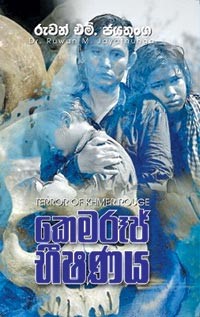
පාඨකයාට යහ පණිවිඩයක් ගෙන එන කෙමරූජ් භීෂණය

January 11th, 2017

කර්තෘවෛද්‍ රුවන් එම්. ජයතුංග
ප්රකාශනයසරසවි ප්රකාශන

ඔබ ජීවත් කරවීම වාසියක් නො වේ. ඔබ විනාශ කිරීම ද අවාසියක් නොවේ. නූතන ශිෂ්ටාචාරය මහා මිනිස් සංහාර තුනක් අත්දැක තිබේ. එකක්, හිට්ලර් විසින් යුදෙව් වැසියන් හැට ලක්ෂයකට අධික සංඛ්‍යාවක් ඝාතනය කිරීමයි. දෙවැන්න, කාම්බෝජයේ බලයට පත් පොල්පොට් එම රටේ මුළු ජනගහනයෙන් කාලකට ආසන්න පිරිසක් විනාශ කිරීමයි. තුන්වැන්න, රුවන්ඩාවේ දී හත් ලක්ෂයක වැසියන් පිරිසක් මාස පහක් වැනි කෙටි කාලයක් ඇතුළත සංහාරයට ලක්වීමයි. පළමුව කී සංහාරය සහ අවසානයේ කී සංහාරය ගැනෙන්නේ ජාතිය, වර්ගය සහ ගෝත්‍රය මුල්කරගෙන සිදුකළ ම්ලේච්ඡ ක්‍රියාවන්ට ය. කාම්බෝජය හෙවත් කම්පුචියාවේදී එය සිදුකෙරුණේ, ජාතියක්, වර්ගයක් හෝ ගෝත්‍රයක් වෙනුවෙන් නොව, ඊට වඩා සංකීර්ණ යුතෝපියානු සමාජ අභිලාෂයක් වෙනුවෙන් ය. එය හැඳින්වෙන්නේ සමාජයීය යාන්ත්‍රික කළමනාකරණය යනුවෙනි.

ලෝකය මේ දක්වා දුර ඇවිත් තිබෙන්නේ, පුද්ගල මැදිහත්වීම් හරහා සමාජය පරිවර්තනයන්ට භාජනයවීමේ ප්‍රතිඵලයක් වශයෙනි. එවැනි පුද්ගල මැදිහත්වීම් බොහෝවිට යොමුවී ඇත්තේ, සමාජ ප්‍රගතියටයි. එහෙත් කලාතු‍රකින්, සමාජයක් සහ රටක් ප්‍රපාතයට හෙලීමට ද එවැනි පුද්ගල ක්‍රියාකාරකම් දායක වී ඇත. කම්පුචියාවේදී අප අත්දුටුවේ එවැන්නකි. මිනිසා යනු සමාජ සත්වයකු නිසා ම, සමාජ ප්‍රගතිය වෙනුවෙන් ඔහු වෙනස් කිරීමේ අභියෝගය ජයගත යුතුව ඇත්තේ සමාජ බලවේගවලට ඉහළින් ගොස්, යාන්ත්‍රික කළමනාකරණයකට සමාජය යටත් කිරීමෙන් නොව, මිනිසා මෙහෙයවන සමාජ බලවේග නිවැරැදිව හඳුනා ගැනීමෙනි. එහෙත් යන්ත්‍රයකින් නිමැවෙන භාණ්ඩයක් සේ මිනිසුන් සකස් කළ හැකි යැයි පොල්පොට් විශ්වාස කළේ ය.

Ruwan11011701

පොල්පොට් සැලකුණේ මාක්ස්වාදියකු ව‍ශයෙනි. මාක්ස්ගෙන් පසු බිහි වූ බොහෝ මාක්ස්වාදීන් ඉතිහාසය වෙනස් කිරීමට යාමේ දී වැටුණු ‍බොරු වළවල් අපමණ ය. එවැනි පුද්ගලයන්ගේ ඒ අත්හදා බැලීම් සිදුකෙරුණේ බලයෙන් පිටස්තරව, හුදෙක් දෘෂ්ටිවාදී තලයක නම්, ඒ මඟින් ඇති කෙරුණු දුර්විපාක බලපෑවේ ඔවුනොවුන්ගේ මතවාදීමය දේශපාලනයට පමණි. එහෙත් එම අත්හදාබැලීමේ දේශපාලනය ක්‍රියාත්මක කෙරුණේ රාජ්‍ය බලයක ආවරණය යටතේ නම්, ඒ වෙනුවෙන් සමාජයකට ගෙවන්නට සිදුවූ වන්දිය අපමණ බව විසි වැනි සියවසේ ඉතිහාසය පුරා අප අත්දැක තිබේ. මෙය මාක්ස්වාදින්ගේ වරදක් මිස, මාක්ස්වාදයේ වරදක් නොවේ. එසේ හෙයින්, පොල්පොට් සහ මාක්ස්වාදය අතර සම්බන්ධය භයානක ව්‍යාජයකට වැඩි දෙයක් නො වූ බව සැලකිය යුතු ය.

උපැස් යුවළක් පැළඳීම, විදේශ භාෂාවක් දැන සිටීම සහ අත්ඔර්ලෝසුවක් වැනි සුඛෝපභෝගී භාණ්ඩයකට හිමිකම් කීම මරණ දඬුවම ලැබීමට වරදක් යැයි ගත් දෘෂ්ටිවාදයක් මනෝ ව්‍යාධියක් වශයෙන් මිස, විසිවැනි සියවසේ කුමන දෘෂ්ටිවාදයක් වශයෙන්වත් ගිණිය නො හේ.

පසු කලෙක, මහජන අධිකරණය නම් වූ රැවටිලිකාරී නඩු විභාගයකින් ජීවිතාන්තය දක්වා සිර දඬුවමකට ලක් වූ පසු පොල්පොට් මෙසේ කීවේය. ම‍ගේ හෘද සාක්ෂිය පිරිසුදු ය. ඕනෑම අපරාධකාරයකුට හෘද සාක්ෂියක් තිබිය හැකි ය. එහෙත් ජීවිතයේ අවසාන භාගයේ පවා එය පිරිසුදු එකකැයි ඔහු අවංකවම අදහන්නේ නම්, එයින් ගම්‍ය වන්නේ, මිනිස් නපුර පරාජය කිරීම කෙතරම් දුෂ්කර ද ?යන්නයි.

විද්‍යාවෙන් තාක්ෂණයෙන් අසීමිත දියුණුවකට පත්ව ඇති නූතන ශිෂ්ටාචාරය තවමත් මේ අරගලය ජයග්‍රාහී නිමාවකට පත්කොට නැත. පරිසමාප්ත මිනිසකු කිසි දිනෙක නිර්මාණය නොවනු ඇතත්, පරිසමාප්ත නොමිනිසකු බිහි වීම වළක්වාලනු වස්, එවැන්නන් බිහිකරනු ලබන තත්කාලීන සමාජ බලවේග වටහා ගැනීම නිරන්තර අවශ්‍යතාවක් බව නො කිවමනා ය. ඉතිහාසය එහි නග්න ස්වරූපයෙන් දැක බලාගැනීමට සැලැස්වීම තරම් සාර්ථක ක්‍රමවේදයක් මේ අවබෝධය ලබා ගැනීම සඳහා මෙතෙක් සොයාගෙන නැත. රුවන් ජයතුංග වෘත්තියෙන් වෛද්‍යවරයකු වූව ද, ඉතිහාසය කෙරෙහි ඔහු දක්වන්නේ අසීමිත භක්තියකි. හෙට දවස වෙනුවෙන් කළ යුතු සූදානමකට අවශ්‍ය අමුද්‍රව්‍ය ඔහු එම ඉතිහාසය පිරික්සා සොයා බලනු පෙනේ. එය ගෞරව කටයුතු ප්‍රශංසනීය වෑයමකි. ඔබ ජීවත් කැරැවී‍ම වාසියක් නො වේ. ඔබ විනාශ කිරීම ද අවාසියක් නොවේ යැයි කියන පොල්පොට්ලා ශ්‍රී ලංකාවේ බිහි නොවනු වස්, රුවන් ජයතුංගගේ මේ වෑයම සිංහල පාඨකයන් කෙරෙහි සාධනීය අයුරින් දායක වනු ඇතැයි උදක්ම අපේක්ෂා කරමි.

ගාමිණී වියන්ගොඩ

සිකුරු සහ බුධ ග්‍රහලෝක වල විශේෂ පිහිටීමක්

January 11th, 2017

ශ‍්‍රි ලංකා ග‍්‍රහලෝකාගාරය විද්‍යා , තාක්ෂණ හා පර්යේෂණ අමාත්‍යාංශය

2017 වර්ෂයේ ජනවාරි 12  වන දින සිකුරු  ග්‍රහලෝකයත් ජනවාරි 19 වන දින බුධ ග්‍රහලෝකයත් වෙනත් දිනයන්හිදීට වඩා දීප්තිමත්ව දැකගත හැකි බව ශ්‍රී ලංකා ග්‍රහලෝකාගාරය පවසයි .

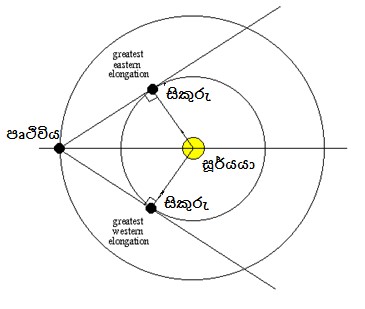
සිකුරු සහ බුධ යන ග්‍රහලෝක දෙකම පෘථිවි කක්ෂයට ඇතුළතින් සූර්යයාට ආසන්න ඉලිප්සාකාර ගමන් මාර්ග වල සූර්යයා වටා පරිභ්‍රමණය වේ. තවද මෙම ග්‍රහලෝක දෙකෙහි පරිභ්‍රමණ වේග අනෙක් ග්‍රහලෝක වලට වඩා වැඩි බැවින් පෘථිවිවාසීන්ට නිරීක්ෂණය කල හැකි කාලය එක් වරකදී සති කීපයකට පමණක් සීමාවේ.  

solarsystem1

2017 ජනවාරි 12 වන දින  සූර්යයා සහ සිකුරු  ග්‍රහලෝකය අතර කෝණය අංශක  47.1  ක උපරිම අවස්ථාවකට  පත්වන අතර මෙය Venus at Greatest Elongation  ලෙස හඳුන්වයි. එදිනට  සිකුරු ග්‍රහලෝකය වෙනදාට වඩා දීප්තිමත්ව දැකගත හැකි කදිම අවස්ථාවක්  ඔබට උදාවේ. එදින සවස 6.30 සිට රාත්‍රී 9.00  පමණ වනතෙක් බටහිර අහසෙහි  ක්ෂිතිජයට ඉහලින් සිකුරු ග්‍රහලෝකය ඔබට නිරීක්ෂණය කළ හැක. එමෙන්ම මෙම අවස්ථාවෙි සිකුරු  ග්‍රහලෝකය දුරේක්ෂයකින්  නිරීක්ෂණය කලහොත් සිකුරුගේ කලා වෙනසද ඔබට පෙනෙනු ඇත.

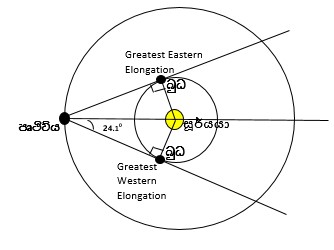
solarsystem3.jpg

2017 ජනවාරි 19 දින බුධ ග්‍රහලෝකයද මෙවැනිම පිහිටීමකට  (Mercury at Greatest Western Elongation) පැමිණෙයි. එවිට බුධ  ග්‍රහලෝකය හා සූර්යයා අතර කෝණික පරතරය අංශක 24.1 ක උපරිම අවස්ථාවකට පත්වේ.  එදින පාන්දර  5.00 සිට හිරු උදාව තෙක් නැඟෙනහිර අහසේදී අපේ සෞරග්‍රහ මණ්ඩලයේ කුඩාම ග්‍රහලෝකය වන බුධ ග්‍රහලෝකය වෙනත් දිනවලට වඩා දීප්තිමත්ව දැකගත හැකි වනු ඇත.

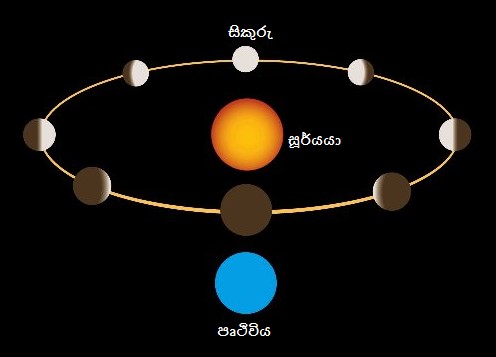
solarsystem2.jpg

පූර්ණ හඳ මාසය පුරාම අපට නොපෙනෙන බව අපි දනිමු. මෙලෙස හඳ කොටස් වශයෙන් පෙනීම හඳේ කලා වෙනස ලෙස හඳුන්වයි. හඳෙහි හෝ ඕනෑම ආකාශ වස්තුවක  කලා වෙනස ඇතිවන්නේ ,  සූර්යයා සහ පෘථිවිය අතරින් එය ගමන් කරන විටයි. ඒ අයුරින්ම සිකුරු සහ බුධ ග්‍රහලෝක සූර්යයා සහ පෘථිවිය අතරින් ගමන් කරන විට සිකුරු සහ බුධ ග්‍රහලෝක වලත් කලාවන් ඇතිවේ.

ගැලීලියෝ ගැලීලි  සිකුරු  ග්‍රහලෝකය පෘථිවි කක්ෂයට ඇතුළතින් පිහිටි කක්ෂයක  සූර්යයා වටා පරිභ්‍රමණය වන බව තහවුරු කර ඇත්තේ සිකුරු කලාව නිරීක්ෂණය කිරීමෙනි.

සිකුරු , ඉර සහ හඳ  හැරුණුවිට අහසේ  දැකිය හැකි තෙවැනි දීප්තිමත්ම ආකාශ වස්තුව වේ.  මෙය පාන්දර අහසේ දකින විට උදා තරුව  ලෙසද සැන්දෑ අහසේ දකින විට ඉරබටු තරුව ලෙසද හැඳින්වුවද  සිකුරු අපගේ සෞරග්‍රහ මණ්ඩලයට අයිති පෘථිවියට ළඟින්ම පිහිටා ඇති ග්‍රහලෝකයයි.

Must apply some scientific knowledge in cooking than just juggling, joking with this and that without any explanation

January 11th, 2017

Dr Hector Perera       London

I made it clear that that I wanted to avoid any cooking aroma depositing on me and on my clothes while cooking. Just like back home Sri Lanka cooking, first I didn’t worry about the energy wastage then realised higher temperature, faster those chemicals escaped while cooking. I preferred to cook and eat even from those days due to many reasons including health point of view. When I had to cook, eat, study and sleep in a single room, I really had to think very hard to avoid the cooking aroma depositing all over. May be I have to eat takeaways than cooking in the room. Again I didn’t like that much oily, salty fish and chips and chicken and chips. Honestly I didn’t eat that kind of food while I was studying in Sri Lanka. Just took the lunch at the Polytechnic was sufficient. When I studied, those days they had Polytechnic states but not University states. After a long time experiments I discovered the proper way to cook and now I want the general public to benefit from my scientific discovery.

  Cover the pot

It may sound silly, but covering the pot while steaming can help preserve the nutritional quality of our food. When a pot is covered, steam contact with the food is more consistent, allowing the steaming process to be completed in the least amount of time. In addition, light-sensitive nutrients – like vitamin B2 – will not be leeched out of the food so easily. As an added benefit, many water-soluble nutrients will pass out into the steam, and then drop back down into the water below the steamer basket. Further if the fire was under control, the steam along with other ingredients would fall back to the pot. In chemistry this is the reason why they have a reflux condenser attached in some cases. Save this water! It can be used as a base for soups and sauces, or at the very minimum, allowed to cool and used to water plants in the garden.

High-heat cooking and vegetable oils

There is no area of high-heat cooking that we are more concerned about that the area of vegetable oils. We recognize that several companies have produced very high-quality refined oils, specifically designed for high-heat cooking. The refinement of these oils raises their smoke point, sometimes by as much as 200 degrees. In addition, we recognize that some vegetable oils that would normally be very susceptible to high heat because of their polyunsaturated fat content have been produced in such a way as to lower this polyunsaturated fat content. We’re thinking here of a vegetable oil like safflower oil, which ordinarily contains a lot of polyunsaturated fat but relatively little monounsaturated fat. Today a version of safflower oil is available called “high-oleic” safflower oil. (Oleic acid is a monounsaturated fatty acid, and it’s less susceptible to heat damage than the polyunsaturated fatty acids normally found in safflower oil). This version of safflower oil can indeed withstand higher heats, and is better for use with high heats than ordinary safflower oil. At the same time, however, we wonder why any oil should be exposed to high heat if there is a low-heat or no-heat alternative. How about our good old coconut oil? Earlier they thought coconut oil is unhealthy as it has saturated bonds but later scientists confirmed it has medium long chain polyunsaturated bonds which are healthy. We developed our healthy stir-fry technique for precisely this reason – to avoid unnecessary heating of vegetable oils.

More to come

This is not all but they will be revealed when time permits. The best thing is to show by proper cooking demonstration just like the one I did with Sirasa TV in Sri Lanka. In the New Year let me remind again my challenge, it is still open for any energy saving expert in England yes in England to step forward and disprove my scientific energy saving technique. If they disproved the challenged money will be given away but if they failed to disprove then what happens? Well according to science Every action must have an equal and opposite reaction”. I am sure you know exactly what I mean. Your comments are welcomed perera6@hotmail.co.uk

Timeline of UNP follies & crimes

January 10th, 2017

Shenali D Waduge

They say ‘people in glass houses should not throw stones’ if JVP has no business to talk about human rights the UNP does not either. Both their track records will reveal and remind citizens of the horrors they experienced under both parties and in particular under the rule of J R Jayawardena, R Premadasa and Ranil Wickremsinghe.

The United National Party was founded on 6 September 1946. Apart from the election of R Premadasa leadership of the UNP has been passed to family members only.

At a time when Sri Lanka was facing food shortage R. G. Senanayake, the then Minister of Commerce negotiated the Ceylon-China Trade Agreement or the Rubber-Rice Pact in Beijing in 1952 (after appeals to US failed) J. R. Jayewardene, the Minister of Finance opposed the agreement with China as did the American government, and some local newspapers. The American government invoked the Battle Act which prevented it from giving aid to countries selling strategic materials to Communist countries and cut off aid to Sri Lanka. America also stopped selling sulphur needed by Sri Lanka’s rubber plantations. However, Prime Minister, Dudley Senanayake backed the China-Lanka agreement realizing that the benefits to Sri Lanka from the agreement far outweighed losses consequent to the cutting-off of American aid

JR Jayawardena opposed the Bandaranaike-Chelvanayagam Pact.

In 1960 UNP voted against the SLFP’s school-take over legislation in Parliament.

In 1963 when Sirimavo Bandaranaike conferred China as the Most-Favored-Nation treatment under the Maritime Agreement with China, UNP opposed claiming Sri Lanka would be drawn into China’s sphere of geopolitical influence.

UNP refused to accept the 1972 Constitution after then PM Bandaranaike formed a Constituent Assembly in July 1970 which led to the new Republican Constitution of 22 May 1972.

It was JRJ who introduced a semi-dictatorial constitution vesting himself with unlimited executive powers in 1978 – all the political parties, civil organizations and even the Tamil parties were against the new constitution.

After becoming President enacting a complex electoral system combining proportional representation with preferential voting designed to favour UNP, he collected undated letters of resignation from all UNP Ministers to ensure they did not dissent. JRJ boasted that the constitution was so powerful that the only thing it could not do was to turn a man into a woman and vice versa.

The UNP policy was to follow the capitalist system in the West as a result of which state assets became privatized, prime land went into foreign hands, tax holidays were given, foreign investors enjoyed all the tax breaks and scooted off with the profits leaving workers in the lurch. About 100,000 manufacturing jobs were lost. The rising inflation led to many strikes culminating in the general strike in 1980 – all that the workers asked for was Rs.10 per day and an allowance of Rs.5 cost of living. The UNP response was to fire 40,356 public and private sector employees.

Preaching that it upheld democracy – it was under UNP that evaded going to elections and bringing about amendment to constitution to have a referendum to extend term of office for 4 years. The Presidential election that ensued resulted in mass election rigging another first for Sri Lanka – even the main opposition candidate, Hector Kobbekaduwa was impersonated while Communist leader Pieter Keuneman also found that his vote had been cast when he went to vote. After the election the UNP began arresting leading members of the Opposition accusing them of being ‘Naxalites’

It was under the UNP Government that terrorism was birthed not taking action to nip it in the bud when it could. Failure to support the military and give orders to wipe out terrorism is a factor UNP leadership stands guilty of

It was the UNP that began suppressing Trade Unions, Media rights, Working Class Rights, poor Farmers Rights and even students rights from 1978 to 1994, 2002 and now through 2015 to present.

Repealing the Criminal Justice Commissions Law which led to the gross abuse of human rights and harassment of political opponents of the Government.

The UNP Leader Ranil Wickremasinghe accepted guilt of his party burning the Jaffna Library in 1983

It was UNP goons that led the 1983 riots against Tamils. However, baffling is UNP can boast that the majority of the minorities do in fact vote for the UNP

Jayewardene gave birth to the politicized underworld its power reached the zenith during President Premadasa’s rule

During the 1980s – Prof.Ediriweera Sarathchandra was hooted down and physically abused – during this same period that lawyer Kanchana Abhayapala, Rohana Wijeweera, Vijaya Kumaranatunga, Ranjan Wijeratne were all murdered in the most brutal manner and the then UNP government never did anything to investigate and punish those who committed the crimes even though culprits were well known. 

Vivienne Gunawardena women activist was beaten and when Supreme Court ruled in her favour the UNP Govt paid the compensation and gave a promotion to the officer who assaulted her! (Neil DeVotta)

One of the thugs the JRJ government used against its opponents was Kalu Lucky, who even stoned the houses of Supreme Court judges especially the 3 judges who ruled in favor of Vivienne Gunawardena.

It was during UNP rule that media personalities like Richard de Soyza, Sagarika Gomez faced untimely deaths.

In the Katunayake Free Trade Zone there was not a single individual who gained employment during this time unless he/she happened to be a UNP supporter because every person who sought employment in the FTZ had to be recommended by the Jathake Sevake Sangamaya(JSS) which is the UNP Labour Union,

President Premadasa appointed leading underworld figure Arambawela Don Ranjit alias Soththi Upali alias Pidali Upali a UNP Working Committee Member. His powers were such that some say he sat in the OIC Borella’s chair! Even senior police officers used to salute that criminal in public In 1997, a presidential commission appointed by President Chandrika Bandaranaike Kumaratunga concluded that Upali was directly involved in assassination of Lalith Athulathmudali. According to the Batalanda Commission Gonawala Sunil had the blessings of the UNP Government. He was involved in the massacre of 53 prisoners at Welikada Prison in 1983 and raping a 14-year-old girl in 1982. He was convicted of the murder, and was serving in prison when he was famously released on a presidential pardon given by President J.R. Jayewardene just before the 1982 presidential election.Gonawala Sunil was one time bodyguard of both R Premadasa and Ranil Wickremasinghe  https://www.lankaweb.com/news/items/2015/08/15/how-the-unp-gave-birth-to-underworld-rapist-gonawala-sunil-dies-under-a-hail-of-bullets/  

Government servants working during the UNP regime of 1978-1994 dared not talk contrary to the government stand even in the compounds of departments or ministries for fear that they were not sure of who was listening. Those who dared to do so, suddenly disappeared and were found dead or floating down rivers, yet some others were found burning on tyres under organised thuggery of the JSS and underworld mafia which was created by the UNP politicians of the time.

Who was in charge of Batalanda Torture House is immaterial – what is true is that brutal acts of torture took place inside this compound and we do not know how many disappeared thereafter. No one has counted these dead.

At the time of the Indo-Lanka Accord in 1987, JRJ imposed a censorship on the independent media. A powerful Competent Authority (CA) appointed by the government for that purpose debarred the independent media from reporting what was going on in the Northern and Eastern Provinces. (there was no private owned television or internet at the time) http://www.island.lk/index.php?page_cat=article-details&page=article-details&code_title=70334

The 2002 Ceasefire Agreement signed by PM Ranil was done so without approval of the then Executive President of Sri Lanka and even his cabinet were not aware.

Allegations made by Charitha Ratwatte (UNP Chairman) and Daya Pelpola (UNP Vice Chairman) in November 2001 resulting in orders to raid the safehouse kept by Directorate of Military Intelligence and the names of the intelligence officers were released to the public which eventually resulted in 44 of these officers been killed by the LTTE as revenge killings.  None of the UNF heads tendered an apology for helping to bump off 44 officers endangering national security falling prey to rumors. The same has been committed in 2015.

Signing a detrimental ceasefire agreement with the LTTE placing a national army on par with a terrorist organization and allowing LTTE territory to call its own – keeping soldiers in barracks while LTTE were given freedom to travel to any part of the country armed while the soldiers had to be without arms. The national army was humiliated to appalling levels

When the decision was taken to militarily defeat the LTTE the UNP chose to ridicule the war effort, laughed at the war victories, ridiculed the soldiers, laughed at the army commander and kept on telling its vote base that it was an unwinnable war and the only solution was to talk to the tigers.

PM Ranil calls Gotabaya Rajapakse a traitor for leaving the country but he has employed the likes of Paskarlingam as advisor both in 2002 and since 2015 who fled the country due to  accusations of misappropriation and terror during the 1978-1994 UNP regime

UNPs economic policy – Indiscriminate privatisation of profit-making state ventures and a lop-sided public transport policy – completely ignoring that health, education, insurance, infrastructure development and public transport should be in the government’s firm grip

The good governance government voted in 2015 has a plethora of questionable actions including the appointment of the current PM in January 2015 without the removal of the sitting PM, appointment of the CJ without giving show cause to CJ Mohan Pieris or following due process to impeach him, bringing the Central Bank and Securities & Exchange Commission under the PM – which had never been done previously

Appointment of a foreigner as Central Bank Governor with questionable connections to LTTE linked Raj Rajaratnam.

Creation of the FCID under the control of the PM resulting in politically motivated arrests.

Sudden sacking of General Secretaries of SLFP and UPFA and the sacking of 25 SLFP Committee Members on election day.

Rs. 21 million as monthly rent on an unused building, mega coal racket

2016 – fraudulent release of hundreds of super luxury vehicles taken into custody by the Customs for undervaluation

Questioning good governance promised to the people for their vote – The CID, the FCID and the Commission to Investigate Allegations of Bribery or Corruption have chosen to steer clear of some powerful ruling politicians, who have risen above the law

instances where courts were kept open till midnight to remand Opposition politicians and their lackeys, courts have functioned during weekends to bail out government politicians who had to be arrested owing to media pressure (civil society organizations and the international community that helped bring the good governance govt to power are stoic silent)

Attempt to create a super ministry above Presidential powers claiming it to accelerate development

The impulsive Port City closure and the loss of jobs as well as compensation for which Hambantota deal has resulted in accepting a weak 80:20 compromise which is not beneficial to Sri Lanka.

These records are just a handful of examples and nothing to be proud of. It questions the subservience of its votebase in applauding these actions. What needs to now be said is that these parties are now all worn out – they are irrelevant particular so because the parties are made up of kangaroos jumping from one party to the other while most parties relying on foreign donations for campaigning end up compromising the party’s aims and objectives.

It is now time that all of Sri Lanka’s political parties were laid to rest and new political parties with young, talented and educated individuals surfaced to usher in a better future for the youth and the citizens of Sri Lanka.

All the older parties have simply lost their appeal and have been miserable failures.


Shenali D Waduge

වරාය පෙන්වා හම්බන්තොට හුරාගෙන කන්න හදන යහපාලකයන්ට මහින්දගෙන් ප්‍රශ්ණ වැලක්…

January 10th, 2017

මාධ්‍ය නිවේදනය 2017 ජනවාරි 10

හම්බන්තොට වරාය ගණුදෙනුව

හම්බන්තොට වරායේ අනාගතය මේ අවස්ථාවේදී සාකච්ඡා වෙමින් පවතින නිසා, ඒ සම්බන්ධයෙන් මගේ අදහස් ඉදිරිපත් කිරීමට කැමැත්තෙමි. මේ වරාය ඉදිකිරීමට පළමු අදියර සඳහා ඩොලර් මිලියන 450 ක් ද, තෙල් ටැංකි සංකීර්ණය සඳහා ඩොලර් මිලියන 70ක් ද, දෙවන අදියර සඳහා ඩොලර් මිලියන 802 ක් ද වශයෙන් ඩොලර් මිලියන 1,322 ක සමස්ථ ණය ප්‍රමාණයක් ලබා ගෙන ඇත. සම්පූර්ණ වරායේ පර්යන්ත හතරකුත්, ජැටි 12කුත් වේ.  වරාය පරිශ්‍රයට හෙක්ටයාර 2,000ක් පුරා විහිදුනු නිදහස් වෙළඳ කලාපයක්ද ඇතුලත්ය. මේ භූමිය තුළ ආයෝජකයන්ට භාණ්ඩ නිපදවා කිසිදු බදු ගෙවීමකින් තොරව අපනයනය කල හැකිය. මෙය ඉදිකිරීමට ණය ගැනීමට පෙර අවශ්‍ය සියළු ශක්‍යථා අධ්‍යන කරනු ලැබූ අතර, පොළියද සහිතව ඒ සඳහා වසරකට ණය වාරිකය ඩොලර් මිලියන 111 පමණ වේ. එම මුදල වරාය අධිකාරියේ ක්‍රියාකාරකම් තුළින්ම උපයා ගැනීමට මගේ ආණ්ඩුව සැලසුම් යොදා තිබුණි.

අළුත් වරායේ මෙහෙයුම් අර්ධ වශයෙන් ආරම්භ වූයේ 2011 දීය. රථ වාහන ගෙන්වීම 2012 දී ආරම්භ වූ අතර හම්බන්තොටට එන වාහන වලින් 70%ක් වෙනත් රට වලට ප්‍රතිඅපනයනය කරනු ලැබේ. 2014 දී හම්බන්තොට වරායට නැව් 335ක් පැමිණි අතර 2015 දී එම ගණන 295ක් විය. මෙම වරායේ මෙහෙයුම් ලාභය 2014 දී රුපියල් මිලියන 900ක් වුණු අතර 2015 දී රුපියල් මිලියන 1,200 ක් විය. වරායක් යනු ශත වර්ෂ ගණනාවක් පවතින දේපොලකි. පලමු වසර කීපය ඇතුලත මොනම වරායකින්වත් විශාල ලාභ ඉපයිය නොහැක. අපේ සැලසුම වූයේ වසර 10ක් ඇතුළත ණය වාරිකත් ගෙවන අතර හම්බන්තොට වරාය ලාභ ලබන තත්වයකට ගෙන ඒමයි.

මගේ ආණ්ඩුව චයිනා හාබර් හා චයිනා මර්චන්ට් සමාගම් දෙක සමඟ හම්බන්තොට වරායේ කන්ටේනර් පර්යන්තය පමණක් එයට අවශ්‍ය දොඹකර ඇතුළු උපකරණද සපයා අවුරුදු 40 කට කළමණාකරනය කිරීමට ගිවිසුමක් අත්සන් කලේය.  මේ යටතේ කන්ටේනර් පර්යන්තයේ හෙක්ටයාර 56 ක භූමිය සඳහා වසරකට එක හෙක්ටයාරයක් සඳහා ඩොලර් 35,000 ක බද්දක් (එනම් වසරකට ඩොලර් මිලියන 1.96 ක්) ගෙවීමට ද, ඒ පර්යන්තය හරහා යන එන සෑම කන්ටේනරයකටම ඩොලර් 2.5 ක ගාස්තුවක් ගෙවිමටද ලංකාව තුළට එන සෑම කන්ටේනරයකටම ඩොලර් 30ක ගාස්තුවක් ගෙවීමටද, නැවිගේශන්, පයිලටින් හා ටොන් ප්‍රමාණය අනුව ගෙවන සාමාන්‍ය වරාය ගාස්තු සියල්ලම ගෙවීමටද චීන සමාගම් එකඟ විය. එම ගිවිසුම ප්‍රකාරව චීන සමාගම් කන්ටේනර් පර්යන්තය පමණක් කළමණාකරනය කරනු ලබන අතර හම්බන්තොට වරායේ අනෙක් සියළුම පර්යන්ත හා හෙක්ටයාර 2,000 ක කර්මාන්ත කලපායද දිගටම වරාය අධිකාරියේ පාලනය යටතේ පවතිනු ඇත. ඒ අනුව කර්මාන්ත කලාපයේ  නැව් බඩු  වරාය අධිකාරිය යටතේ පාලනය වෙන පර්යන්ත හරහා යන එන විට ඒ සියළු ආදායම් ලැබෙන්නේ වරාය අධිකාරියටය.

අලුත් ආණ්ඩුවෙන් අමනෝඥ තීන්දු ගණනාවක් ගනු ලැබිණි. ඉන් පළමුවැන්න වූයේ මගේ ආණ්ඩුව හම්බන්තොට කන්ටේනර් පර්යන්තය පමණක් කළමණාකරනය කිරීමට චයිනා හාබර් සහ චයිනා මර්චන්ට් සමාගම් දෙක සමඟ අත්සන් කල ගිවිසුම නොසලකා හැරීමයි. දෙවැන්න වූයේ කොලඹ නැගෙනහිර පර්යන්තයේ සංවර්ධන ව්‍යාපෘතිය නවතා දැමීමයි. කොළඹ නැගෙනහිර පර්යන්තයේ දොඹකර යනාදිය ගෙන්වා, 2016 සිට එහි මෙහෙයුම් තුළින් වසරකට ඩොලර් මිලියන 100 ක් උපයා එම මුදලින් හම්බන්තොට වරාය දියුණු වන තුරු එම වරාය ගොඩනැගීමට ගත් ණයවල වාරික ගෙවීමට වරාය අධිකාරිය කටයුතු යොදා තිබුණි. යහපාලන ආණ්ඩුවෙන් කොළඹ නැගෙනහිර පර්යන්ත ව්‍යාපෘතිය නවතා දැමු නිසා ඒ සැලසුම ක්‍රියාත්මක වූයේ නැත. මේ ආණ්ඩුව ගත් තුන්වෙනි අමනෝඥ තීන්දුව වූයේ 2014 වන විට හම්බන්තොට වරාය අශ්‍රිත නිදහස් වෙළඳ කලාපයෙන් හෙක්ටයාර 80ක් පමණ වසරකට හෙක්ටයාරයක් සඳහා ඩොලර් 50,000 කට බදු දීමට සමාගම් කිහිපයක් සමඟ අත්සන් කොට තිබූ ගිවිසුම් සියල්ල නොසලකා හැරීමයි. මේ ගිවිසුම් අනුව එම කර්මාන්තවලින් හම්බන්තොට වරායට සහතික කරනලද අවම නැව් බඩු ප්‍රමාණයකුත්, ඒ සඳහා සහතික කරන ලද අවම ගෙවීමකුත් නියම වී තිබුණි.

ඊට පසුව ආණ්ඩුව කලේ හම්බන්තොට වරාය සුදු අලියෙක් බවත්, එය ඉදිකිරීමට ගත් ණය ගෙවීමට මුළු වරායම පුද්ගලීකරණය කල යුතු බවට මතයක් ඉදිරිපත් කිරීමයි. ඔවුන් මේ සදහා ලංසු කැඳවූයේ වරායේ මෙහෙයුම් පමණක් නොව හෙක්ටයාර 2,000 කින් යුතු කර්මාන්ත කලාපයේ ඉඩම් හිමිගේ අයිතියත් ඇතුළුව සමස්ථ ව්‍යාපෘතිය සඳහාය. ඒ අනුව වරාය බද්දට ගන්න අයට වරායේ සියළුම මෙහෙයුම් පමණක් නොව හෙක්ටයාර 2,000 ක ආයෝජන කලාපයේ සම්පූර්ණ පාලනයත් ලැබේ. වත්මන් ආණ්ඩුව යටතේ වරායත් ඒ ආශ්‍රිත හෙක්ටයාර 2,000ක නිදහස් වෙළඳ කලාපයත් බදු ගැනිමට වෙන වෙනම ලංසු ඉදිරිපත් කොට තිබෙන්නේ මගේ ආණුඩුව කාලයේ කන්ටේනර් පර්යන්තය පමණක් ඒකාබද්ධ ව්‍යාපෘතියක් හැටියට අවුරුදු 40ක කළමණාකරන ගිවිසුමක් යටතේ ලබා ගැනීමට ගිවිසුම් අත්සන් කල චයිනා හාබර් හා චයිනා මර්චන්ට් යන සමාගම් දෙකමය.

ආණ්ඩුව මේ අනුව මුලු හම්බන්තොට ව්‍යාපෘතියම චයිනා මර්චන්ට් සමාගමට ඩොලර් මිලියන 1,080කට 99 අවුරුදු බද්දකට දීමට රාමුගත ගිවිසුමකට අත්සන් කොට ඇත. ඒ ව්‍යාපෘතියේ අයිතිය එම සමාගමත් ලංකාවේ ආණ්ඩුවත් අතර 80% – 20% වශයෙන් බෙදනු ඇත. මුල් අවුරුදු 15දී මුලික ගෙවීම හැරුණු විට කිසිම ආදායමක් ලංකාවට නොලැබෙන අතර ඉන් පසුව ආණ්ඩුවට අයත් 20% සඳහා ලාභාංශ ප්‍රකාශ කලහොත් පමනක් ආදායමක් ලැබෙනු ඇත. මේ බද්ද පළමු අවුරුදු 99න් පසු තවත් අවුරුදු 99කට දිගු කිරීමටත්, වරායෙන් පිට පිහිටි හෙක්ටයාර 44 ක කෘතීම දූපත නොමිලේම මෙම ගනුදෙනුවට ඇතුල් කිරීමටත් ආණ්ඩුව එකඟ වී ඇත. මේ වරාය තුළ තවත් ජැටි 20ක් ඉදි කිරීමට හැකි අතර ඒවා පිළිබඳ අයිතියත් චයිනා මර්චන්ට් සමාගමට ලබා දී තිබේ. මේ 99 අවුරුදු බද්ද සදහා මුදල තීරණය කර තිබෙන්නේ වරාය ඉදිකිරීමට ගිය වියදම මත මිස පිළිගත් ජාත්‍යන්තර තක්සේරුවකට අනුව හෙක්ටයාර 2,000 හේ භූමිය, වරායේ උපායමාර්ගික වටිනාකම, තෙල් ටැංකි සංකීර්ණයේ වටිනාකම, හා වරායේ වත්මන් වානිජ්‍ය කටයුතුවල වටිනාකම වැනි කාරණා සැලකිල්ලට නොගෙනය. ආණ්ඩුව මෙවැනි ගිවිසුමකට එළඹී ඇත්තේ (අපට දැනගැනීමට ලැබී තිබෙන ආකාරයට) අනෙක් පාර්ශවය වූ චයිනා හාබර් සමාගම මීට වඩා බෙහෙවින්ම වාසිදායක ලංසුවක් ඉදිරිපත් කර තිබියදීය. චයිනා හාබර් සමාගමේ ලංසුවට අනුව බදු කාලය අවුරුදු 50 දක්වා කෙටි වන අතර ලංභාංශ 65% – 35% වශයෙන් බෙදී යයි. ඔවුන් මේ සඳහා ගෙවන මූලික මුදලද ඩොලර් මිලියන 750 ක් වේ. ඒවාට අමතරව මගේ ආණ්ඩුව කාලයේ මේ සමාගම් දෙකම හම්බන්තොට කන්ටේනර් පර්යන්තය සම්බන්ධයෙන් ගෙවීමට එකඟ වූ සියලුම සාමාන්‍ය වරාය ගාස්තු ගෙවීමටත් එකඟ වී ඇත. අපට දැනගැනීමට ලැබී තිබෙන ආකාරයට, වරාය අධිකාරියටත් චයිනා හාබර් සමාගමේ ලංසුව නිර්දේශ කර තිබියදී ආණ්ඩුව මේ අවස්ථාවේදී පිළිගෙන තිබෙන්නේ වඩාත්ම අවාසිදායක ලංසුවයි. මේ ලංසු දෙක අතර තේරීම කලේ මොන පදනමක් මත දැයි ආණ්ඩුව පැහැදිලි කිරීමක් කර නැත.

මේ වරාය අවුරුදු 99ක් වැනි දිගු කාලයකට බදු දීමේදී වරායේ සියලුම මෙහෙයුම් පමණක් නොව හෙක්ටයාර 2,000ක් පුරා විහිදී ඇති කර්මාන්ත කලාපය සම්බන්ධයෙන්ද ඉඩම් හිමිගේ බලතලත් විදේශීය සමාගමකට ලැබෙන නිසා මේ ගණුදෙනුවෙන් ලංකාවේ ස්වාධිපතයටද ලබපෑම් ඇති වේ. මෙය චීනය සමඟ හෝ විදේශීය අයෝජකයන් සමඟ ඇති ප්‍රශ්නයක් නොවේ. මෙය ලංකාවට වඩාත්ම හිතකර හා වාසිදායක ගිවිසුමට එළඹෙන්නේ කේසේද යන කාරණය ගැන ප්‍රශ්නයකි. මගේ ආණ්ඩුව චයිනා හාබර් සහ චයිනා මර්චන්ට් යන මේ ලංසු කරුවන් දෙදෙනාම සමඟ කන්ටේනර් පර්යන්තය පමණක් අවුරුදු 40කට කලමණාකරන ගිවිසුමක් යටතේ ලබා දී වරායේ අනෙක් කටයුතු මෙන්ම ඒ ආශ්‍රිත කර්මාන්ත කලාපයද වරාය අධිකාරියේ පාලනය යටතේ තබාගැනීමට  ඇතිකරගත් එකඟතාවය අපේ රටට වඩාත්ම වාසිදායක ගිවිසුම වේ. එසේම වරාය 99 අවුරුදු බද්දට ගැනීමට චයිනා මර්චන්ට් සමාගම ඉදිරිපත් කල ලංසුවට වඩා චයිනා හාබර් සමාගම අවුරුදු 50ක බද්ද සඳහා ඉදිරිපත් කල ලංසුව වඩාත් වාසිදායක බව පෙනේ. මුළු වරායම හෝ ඉන් කොටසක් අවුරුදු 99ක් වැනි දීර්ඝ කාලයක් සඳහා බදු දීමට මම ප්‍රතිපත්තිමය වශයෙන් විරුද්ධය. එසේම, වරායේ සියලුම මෙහෙයුම් මෙන්ම හෙක්ටයාර 2,000 ක කර්මාන්ත කලාපයේ ඉඩම් හිමිගේ අයිතීන්ද විදේශීය සමාගමකට බදු දීමට මම විරුද්ධය.

වරායේ ඇතැම් මෙහෙයුම් කළමණාකරනය කිරීමට පුද්ගලික අංශයට දීම ගැටළුවක් නොවුනත්, වරායත්, ඒ ආශ්‍රිතව ඇති කර්මාන්ත කලාපයේ පාලනයත් වරාය අධිකාරිය සතු විය යුතුය. උදාහරණයක් වශයෙන්, කොළඹ වරායේ මෙහෙයුම් කටයුතු වරාය අධිකාරිය මෙන්ම පුද්ගලික සමාගම් දෙකක් විසින්ද සිදුකරනු ලබයි. නමුත් වරාය අධිකාරිය යටතේ මුළු වරායේම පාලනය පවතින අතර, පර්යන්ත දෙකක මෙහෙයුම් කටයුතු කරන පුද්ගලික සමාගම්වල කොටස් ප්‍රමාණයක් වරාය අධිකාරියටද අයත් වේ. හම්බන්තොට වරාය සම්බන්ධයෙන්ද  ක්‍රියාත්මක විය යුත්තේ එවැනි ක්‍රමයකි.

හම්බන්තොට වරාය පරිශ්‍රය පමණක් නොව ඉන් පිටත තවත් අක්කර 15,000 ක් ද විදේශීය සමාගමකට 99 අවුරුදු බද්දක් යටතේ ලබාදීමට ආණ්ඩුව එකඟ වී ඇත. හම්බන්තොට වරාය පරිශ්‍රයේ තිබෙන හෙක්ටයාර 2,000 වත් තවම හරිහැටි ප්‍රයෝජනයට ගෙන නැති අවස්ථාවක තවත් අක්කර 15,000 ක් විදෙස් සමාගමකට ලබාදීම සාධාරණීකරණය කල හැක්කේ කෙසේද? දැනට ආයෝජන මණ්ඩලය යටතේ ඇති ආයෝජන කලාප සියල්ලම එකට දැමුවත්, සමස්ථය හෙක්ටයාර දෙදහසක් වත් නැත. අක්කර 15,000 ක ආයෝජන කලාපයක් අපේ ආර්ථිකයේ පරිමාවට ගැලපෙන්නේ නැත. තවද, මේ සදහා අක්කර 15,000 ක් පවරා ගැනීමට ආණ්ඩුව උත්සාහ දැරුවොත් ප්‍රදේශවාසී ජනතාවට එය මහත් පීඩනයක් වෙනු ඇත.

අලුතෙන් ආයෝජන කලාප ඇතිකිරීමට පෙර හම්බන්තොට වරායේ ඇති ආයෝජන කලාපය පුරවා ඉවර කල යුතුය. එමෙන්ම, මේ කලාප තුළ ආරම්භ කරන කර්මාන්ත මොනවාද, ඒ සඳහා භාවිතා වෙන බලශක්ති ප්‍රවාහය කුමක්ද, එම කර්මාන්තයෙන් නිපදවෙන අපද්‍රව්‍ය මොනවාද යන්න ගැන ආණ්ඩුවට පාලනයක් තිබිය යුතුය. මගේ ආන්ඩුව කාලයේ ඇතැම් සමාගම් වලට ගල් අඟුරු භාවිතා කිරීමට අවශ්‍ය වුවද, අපි අනුමැතිය දුන්නේ LNG ගෑස් භාවිතා කිරීමට කැමති කර්මාන්තකරුවන්ට පමණි.

මෙය ප්‍රදේශවාසී උද්ඝෝශනකරුවන්ට බැටන් පොලු ප්‍රහාර දී කඳුලු ගැස් ගසා, මැරයන් ලවාත් පහර දී හිර කූඩුවට දමා විසදිය හැකි ප්‍රශ්නයක් නොවේ. මේ ගණුදෙනුවෙන් ලංකාවට සිදුවෙන ආර්ථික වාසිය හෝ අවාසිය ගැනත්, වරාය පරිශ්‍රෙයේ පාලනයත්, රටේ ස්වාධිපත්‍යත්, පරිසරයට ඇතිවිය හැකි බලපෑම් සම්බන්ධයෙනුත් සැලකිල්ලට ගත යුතු ගැටළු ඇත.

මහින්ද රාජපක්‍ෂ

ශ්‍රී ලංකාවේ හිටපු ජනාධිපති


YAHAPALANA ELECTIONS AND ‘REGIME CHANGE’ PART 1

January 10th, 2017

KAMALIKA  PIERIS

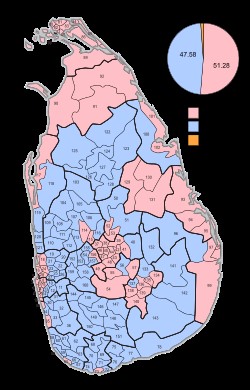
Mahinda Rajapakse, then President of Sri Lanka, held Presidential elections prematurely on January 8.  2015, thinking that he would win a third term. Instead, Maithripala Sirisena, then General Secretary of the SLFP, contested    as the ‘common candidate’ under the Hansa symbol and won. Sirisena won with 6,217,162 votes (51.28%).  Rajapakse got 5,768,090 (47.58%).  The election had a high voter turnout of 81.52 %.   It was declared a ’clean‘ election.

kamalika10011701

Sirisena and Rajapakse ran neck and neck in the ‘Sinhala’ electoral districts.   In KALUTARA electoral district, it was Rajapakse    395,890 Sirisena 349, 404 votes.  In GALLE, Rajapakse 377,125 votes, Sirisena 293,994. In MATARA Rajapakse 297,823, Sirisena 212,435 and in POLONNARUWA where Sirisena came from, Rajapakse got 297,823 votes, Sirisena 212,435. ATTANAGALLA, a Bandaranaike stronghold went to Rajapakse. But in the Tamil and Muslim areas it was different. JAFFNA gave Sirisena 253,574 votes and Rajapakse 74,454. TRINCOMALEE gave Sirisena 140,338 and Rajapakse 52,111. BATTICALOA gave Sirisena 209, 422 and Rajapakse 41,631.

Sirisena won on the UNP vote and that of the ‘minorities’, the Tamils and Muslims.  He polled around 75% of the Tamil and Muslim votes, 65% of the Christian votes and around 65% to 80% of the vote in the large urban centers. Since Sirisena won only 6 of 16 major districts, apart from the North, East and Nuwara Eliya districts, it was not considered a magnificent win. Outside the north and east Rajapakse was still ahead of Sirisena. It was the North-east votes that decided the matter.  ‘Is that a feasible model for forming a government in this country?’ some   voters asked.

Sirisena’s win, based on the votes of the Tamils and Muslims, was a great shock to the   Sinhala voter who saw for the first time the impact of a   bloc Tamil vote and a bloc Muslim vote. Then they saw that Sirisena had won because the Sinhala voter had also supported him. That was an even greater shock. A  Sinhala trishaw driver told me ‘We   added the figures and we realized that it is we who gave this victory’, he said, ‘meka apine kele’.   He had planned to vote for Rajapakse but when he was going back home at the end of the day, he found that his route was blocked by an election stall erected on the orders of Basil Rajapakse. He had to take a roundabout route home, so he voted for Sirisena the next day.

The official declaration of the election result was shown on television.  This ceremony is usually a relaxed event, with smiles on the faces of the winning group. But in this case those who assembled to hear the official declaration were   tense, silent and stony faced.  They stayed tense even as they walked out.   There was no rejoicing in the streets the day after either. Usually when power changed hands, the streets all over the country would be full of rejoicing party supporters. Instead the public was stunned and silent.  When they could at last speak, they said that  this was like the 1815 coup, where the people were fooled into accepting British rule.   This was  ‘regime change’.

Ashok Mehta writing in the Hindu” said election preparations had begun 18 months earlier in London. The three persons who worked towards this regime change, he said, were past President Chandrika Kumaratunga, former Prime Minister Ranil Wickremasinghe and Mangala Samaraweera. A very different person  to Sarath Fonseka  was selected  as the Presidential candidate,   the pleasant, likeable Maithripala Sirisena.

Maithripala Sirisena was brought in, only in the last two months, but the ground work was prepared months earlier, when Sirisena was invited and felicitated in the USA and given a special award for his work for health in Sri Lanka.   President Sirisena stated on television that he had signed an agreement together with 49 other organizations, (‘like minded political parties and groups’), to take the country on the correct path. Certain promises seem to have been made to the Tamil National Alliance.   Sumanthiran and Wigneswaran have spoken of the promises give to them by the Yahapalana government.

The west studied Sri Lanka   carefully and decided on two election issues, the high cost of living and rampant corruption. There were a multitude of irritants and unfulfilled aspirations among the people. Since they knew that they could not defeat the Rajapakse government though democratic means, they organised protest meetings to discredit the government.  They said that the Rajapakse government was corrupt to the core. Most of its leaders had abused power and were getting away with all sorts of illegal activities. However, opinion polls conducted in the five weeks prior to the election showed an overwhelming 80% of the electorate recognized the 2009   war victory and the peace it brought, as a major benefit for which Rajapakse got the credit.  About 36% of the voters also gave Rajapakse credit for the mega development projects.

Maithripala Sirisena won because of the hard work of several agents. Leading the pack were the NGOs active in Sri Lanka politics, called ‘civil society organizations’. These are implanted organizations, not home grown, financed by western countries, possibly the CIA, and managed by paid local agents.   The term ‘civil society’ was created to incorporate them into the political life of Sri Lanka. These NGOs are paid to intervene in domestic politics, change public opinion and help to install puppet governments which would destroy the country. These   NGOs were active in the 1956 and 1995 elections too, but that was nothing compared to their impact in 2015.

These NGOs played a major role in the 2015 election. They focused on governance and corruption and ‘the need to address international commitments’. They created public opinion for change.    They used social media very successfully. They also targeted the youth vote.  The youth vote was decisive at the election. One voter, who did not vote in 2010, said the social media campaign made a huge impression on her, also the participation of youth.

There was also the ‘minority vote’. This was vital. Sunday Times gave a map of the voting pattern of 2010 and 2015 presidential elections. In both  maps, the north and east voted for Sarath Fonseka and then Sirisena. The Tamil vote  was certain in the 2015 election, but the Muslim vote needed to be carefully manipulated. A militant organization called Bodu Bala Sena  (BBS)  with links to USA and Norway sprang up in 2012. Ven. Gnanasara the leader of Bodu Bala Sena was unknown to the public till then. It was alleged that BBS was working on the orders of their sponsors, Norway and USA.  There were   two other organizations as well, Ravana Balaya and Sinhala Ravana. The word ‘Ravana’ indicates foreign influence.

BBS was at the centre of the attacks on Muslims during 2013 and   2014 including the ‘Grandpass incident‘.  ‘Suddenly, the streets  were full of monks  attacking Muslim and Christian sites’, said a journalist.  This turned a large section of the Christian  and Muslim vote against  Rajapakse. The strategy was to look at though they were backed by the Rajapaksas and then engaged in activities that turn people against Mahinda Rajapakse. The moment the government changed there was a sudden decrease in the activities of these extremist groups.  The BBS fell silent.   The other bhikku organizations that had emerged as carbon copies of the BBS also disappeared.  If these were genuine patriotic groups then the activity should have increased because many believed that our national security and even our sovereignty had been compromised by the new government.  ‘The fact they are now suddenly quiet shows who their real master is. These groups have been formed by the western powers to destabilize the Rajapakse government’ said ‘Political Watch’

The international media was also brought in. A dispute between the Sinhala and Muslim villagers of Alutgama on 15.6.2014 led to the destruction of Muslim owned business, houses and mosques.    The international media frenzy which followed this Alutgama Incident’ indicated that the news offices were extraordinarily well prepared to report on this. They had prior knowledge and were ready with their copy well in advance. The sensationalized, exaggerated reports made it seem more serious than it really was. The reports suggested that the government was behind the event.

kamalika10011702
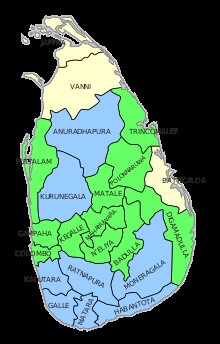
General election 2015, voting by district Green UNP, Blue UPFA

The Presidential election was followed by a General Election on 17. August 2015. For the first time the UNP formed a coalition, termed United National Front, consisting of UNP, SLMC, All Ceylon Makkal congress, JHU and  others. UNP knew it could not win by itself. The result of the general election 2015 was follows.  United Front for Good Governance 5,098,916 votes, United Peoples Freedom Alliance 4,732664 votes. United Front got 106 seats and 45.66% of the vote. UPFA got 85 seats and 42.3%   of the vote. TNA got 16 and JVP 6 seats. The results   showed a formidable opposition to the UNP, an opposition composed mainly of the Sinhala Buddhist vote. Island editorial said the General election could be considered a vote of confidence in the previous Rajapakse government, which the ‘international community’, separatists and their local allies tried hard to dislodge, in a bid to install a puppet regime and create a situation which would help to break up the country.  In both elections, the Yahapalana group did not get the majority of the Sinhala vote.

සංවර්ධනය ත‍්‍රස්තවාදයක් වූූ කල!

January 10th, 2017

ආචාර්ය චන්දන ජයලත්

පසුගිය දා හම්බන්තොටදී ක‍්‍රියාත්මක වූයේ ඉතිහාසයේ දුර්ජනම සංවර්ධන ත‍්‍රස්තවාදය යැයි කිවහොත් මා සම`ග උරණවන්නේ යූඑන්පියට කඬේ යන කිහිප දෙනෙකූ මිසක් යූඑන්පී ජන්දදායකයින් නම් නොවේ. ජනතා සුභසිද්ධිය යැයි කියමින් හා ශ‍්‍රි ලංකාව ලෝකයේ බලගතු රටක් බවට පත් කරන්නේ යැයි කියමින් පොලිස් හා චන්ඩි මර්දන ඒකකවල ගල් මුල් ප‍්‍රහාර මැද්දේ දායාද කරන්නට යන සුභසාධනය නම් කිමෟ නවසිය අනුව මුල භාගයේදී කණ්ඩලම හෝටල සංකීර්ණය තැනුවේ පොලිස් ඒකකයක් එම වැඩ බිම තුල පිහිටුවීමෙන්ය. වැව් තාවුල්ලේ බහු ජාතික හෝටලයක් තනා ඒ පලාතකටවත් රට වැසියෙකුට අවසරයකින් තොරව අඩියක් ගසන්නට බැරිවුණ එම ව්‍යාපෘතියෙන් ගමට සිදුවුණ සෙතක් නැත. ගමේ මිනිස්සු හෝටලයට යන මග තැන තැන බෙලි, දිවුල් මලූ රැුගෙන මහ දවල් මග දෙපස උඩ බලා ගෙන සිටිති. ලංකාවේ මෑත කාලයේ අතගහපු සියඵ ව්‍යාපෘති අසාර්ථකය. සමනල වැව, නොරොච්චෝලේ, උමා ඔය කදිම නිදසුනකි. හම්බන්තොට වරාය හා ගුවන් තොටුපල හිතාමතාම අනාථ කලෙත් ආණ්ඩුවමය. එය අනාථවන්නට ඉඩ හැරියේය. එය ගොඩ ගන්නට යැයි කියමින් ජනතා විරෝධ යටපත් කරගෙන චීනය සමග යන්නට යන ගමන කුමක්දැයි ඇසීමට රටවැසියන්ට අයිතියක් තිබිය යුතුය. ඒ සදහා උත්තර බැදීමට ආණ්ඩුවක් හැටියට බැදී සිටියි.

මධ්‍යම අධිවේගය සම්බන්ධයෙන්ද කථාව වැඩි වෙනසක් නොවේ. අවස්ථා කිහිපයකදී එහි ගමන් මග වෙනස් වූයේ තාක්ෂණික කරුණු මත නොව දේශපාලන කරුණු මතය. රදලයින්ගේ ඉඩම් බේරා ගැනීමට යාමෙන්ය. ගම්මුන්ට නොකියා හිටි අඩියේ ඉඩම්වලට විත් කූඤ්ඤ ගැසූ ආණ්ඩුව එම දේපල පවරා ගන්නේද පැහැදිලි නිරවුල් විද්‍යාත්මක ක‍්‍රමවේදයකට අනුව නොවේ. එය දැන් බයින්් ඇන්්ඞ් සෙලින් ගානට ලඝුවී හමාරය. පසුගිය රජයේද මෙම රජයේද මහ ලොකු වෙනසක් නැත්තේ එබැවිනි. මේ කිසිදු රජයක් ජනතාව හමුවට ආවේ නැත. හිතුුුමනාපෙට දෙතුන් දෙනෙකුගේ උවමනාවට සියලූ සංවර්ධන තීරණ ගනු ලැබීය. මේ රටේ පාරවල් පලල් වූයේද එලෙසටය. පසුගිය රජය ඊට හමුදාවේද සහාය ලබා ගත්තේය. තුවක්කු බටෙන් රට හැදුවේ එලෙසිනි. වන්දි වශයෙන් ශත පහක් නොලැබුණ අය බොහොමයකි. දක්ෂිණ අධිවේගයේ තවමත් එසේ මුදල් නොලබා උසාවියේ රස්තියාදුවන කිහිප දෙනෙකු සිටිති. මේ සියලූ කාරණාවලට මූලිකම හේතුව සොයා බැලීමේදි දක්නට ඇත්තේ එකම එක දෙයකි. ජනතාව ආණ්ඩුවලට ඕනෑ විදිහට ජීවත් විය යුතු බවයි. එය සංවර්ධන ත‍්‍රස්තවාදය යනුවෙන් නම් කරමු.
එදා මෙදා තුර මිනිසුන් ත‍්‍රාසයට භීතියට පත්කරමින් තම පදිංචියට එහා ගිය උරුමය කොල්ලකන නීත්‍යානුකුල ක‍්‍රමවේදයට ප‍්‍රධාන හේතු දෙකක්් මම දකිමි. එනම් සාමාන්‍ය ජනතාවට තම අයිතිවාසිකම් පිලිබදව ඇති නොදැනුවත්කම හා ණයගැතිබවයි. ඉන් මිරිකුණු ජනතාවක් දේශපාලන උත්තේජනයක් ලැබු නිලධාරින් රොත්තක් හමුවේ අන්ත අසරණ වී සිටිති. බොහෝ වේලාවකදී නිහඩව විඳ දරා ගෙන සිටින මොවුන් නැගිටින වෙලාව හොයා ගන්නට බැරිවෙනු ඇත. මීරිගම ගණේගොඩ දුම්රිය ස්ථානය අසලදි මධ්‍යම අධිවේගයේ ප‍්‍රථම යටිපස් කුට්ටිය සදහා බහිරව පූජාවකින් අනතුරුව දොඹකරය ක‍්‍රියාත්මක කිරිමට උත්සාහ කිරීමේදීී ඉඩම් අයිතිකරුවන් එම දොඹකරයේ එල්ලූනේ තමන්ට සතයක්වත් ගෙවා නැතිය යන ඉතාමත් අහිංසක ඉල්ලීම විරෝධයක් ලෙස පුපුරා ගිය අවස්ථාවකය. එහෙත් උසාවි නියෝග මගින් පිස්කල් ලවා පන්නා දමා වැඩ ආරම්භ කරන බවට කියා පෑම් අනාවරණය වෙයි.
ප‍්‍රාදේශීය ලේකම්වරයා ඉඩම් අත්පත් කර ගැනීමේ පනතේ යම් යම් වගන්ති උපුටා දක්වමින් මේ වනවිට විතැන්වීමට නියමිත අයවලූන්ට ලිඛිතව නියෝග නිකුත් කරමින් සිටියි. එම ලිපිවල දැක්වෙන්නේ ඉඩම්වලට පැමිණෙන නිළධාරින්ට යන්ත‍්‍ර සූත‍්‍ර ගෙන ඒමටත් ගස් කපා ඉවත් කිරිමටත් පස් හෑරීමටත්, මායිම් ගල් වෙනස් කිරීමටත් බලය පවරා ඇති බවයි. මෙය පවතින නීතිය ප‍්‍රබල ලෙස අවභාවිතයට ලක්වන කදිම අවස්ථාවක් බව කිවමනාය. මධ්‍යම අධිවේගය විශේෂ ව්‍යාපෘතියක් ලෙස ගැසට් මගින් නම් කිරිම තුලම විෂය භාර ඇමතිවරයාට ලැබෙන සුවිශේෂි බලතල ප‍්‍රකාර වන්දි ගෙවිම පසෙක ලා ඉඩම් පවරා ගැනීමට ඉඩකඩ නෛතික වශයෙන් ලබා ගෙන ඇති අතර ඕනෑම අවස්ථාවක උසාවි නියෝග මගින් එල්ල විය හැකි ජන අරගල යටපත් කරලීමට ආණ්ඩුව බලාපොරොත්තු වෙයි. හම්බන්තොටින් ඊට යම් උත්තේජනයක් ලබා ගෙන ඇතැයි අපි සිතමු. මධ්‍යම අධිවේගය නිසාවෙන් විතැන්විමට නියමිත අයවලූන්ගේ ගණන පළමු අධියර පමණක් පවුල් දෙදහස ඉක්මවයි. වන්දි ගෙවිමේ ැතක‍්‍රමයෙහි අඩු ලූහුඩුකම් බොහෝ ඇතත් ඒවාට ඇහුන්කන් දෙන වටපිටාවක් පෙනෙන්නට නැත.
තත්වය එසේ නම්, එය සංවර්ධන ත‍්‍රස්තවාදයක් නොවේදැයි මම අසමි. රටක ජනතාවක් රටකින් බලාපොරොත්තු වන මූලික කරුණු තුනකි. සාමය, සංවර්ධනය හා අභිමානය. ඒ සදහා යන ගමන ජනතාවගෙන් වෙන්ව යන ගමනක් නම් එය හිතුවක්කාරකමකි. ඒ වගේම අනුවණකමකි. මන්ද එය ජනතාව අතින් ඊලග මැතිවරණයේදි ප‍්‍රතික්ෂේප වනු නොඅනුමානවන බැවිනි. සාකච්ඡුා මට්ටමින් බොහෝ ප‍්‍රශ්ණ විසදා ගත හැකිව තිබියදී බැටන් පොලූ වලින් විසදපු සියලූ ආණ්ඩු ජනතාව ඉදිරියේ දනින් නැමුණ හැටි ඉතිහාසය විසින් ඔප්පු කර ඇත. මේ වන විට යූඑන්පී ශ‍්‍රි ලංකා දෙකේම ප‍්‍රාදේශිය දේශපාලන අධිකාරිය මුලූ ගැන්වී ඇත. නිළධාරීන්ගේ රොබෝමය ප‍්‍රවේශයත් පොතේ ගුරු රාජ්‍ය පරිපාලනයේ අකර්මණ්‍යබව හා ඇ`ග බේරා ගැනීමේ වැඩ සංස්කෘතිය තුල ජනතාවට බලාපොරොත්තු විය හැකි උත්තරයක් නැත. සංවර්ධනය ජනතාව වෙනුවෙන් නම් ඊට ජනතාව හවුල් කර නොගන්නේ මන්ද? සියලූ ජනතා විරෝධී රැුලි හමුවේ පවතින පාලකයින් කීවේ එහි පිටුපස අදිසි දේශපාලන හස්තයක් ක‍්‍රියාත්මක බවයි.

No wonder why Police is unpopular ………

January 10th, 2017

Dr Sarath Obeysekera

We see every day people getting beaten up or showered by Police. I am not surprised .I wrote an opinion about Police Inaction at Zebra Crossings leading to possible accidents. Corrupt policemen are all over the town ,who are friendly with Three Wheeler drivers and Private Bus drivers who keep violating every rule and no action taken by the Police .

Today I was being driven to a doctor around 7.15 am along Deans Road towards Maradana . Next to health department, along the side of the roadside  of the Hayleys, at the Yellow Zebra Crossing ,two impeccably uniformed with sunglasses traffic cops standing by the side of the road who  were watching motor vehicles ,three wheelers and buses passing by .Three wheeler chaps were passing the crossing without stopping ,despite the fact that pedestrians were waiting to cross ,grossly violating the traffic rules..My driver  stopped for a woman   and child to cross , and before proceeding looked at another pedestrian to enter the  crossing . Driver waited ,but the man waiting to cross waived to the driver indicating that we can go and he will not cross .

Within 30 meters a young policeman sopped the car and claimed that we did not wait for the man to cross .Drive explained that he wanted us to move ahead which the policeman saw. Policeman was insisting that we should not have moved until the man crosses ,Driver explained that we waited but the man wanted us to move as he seems like not crossing !

So I interfered and explained that policeman was wrong but he became agitated,I told him that he can charge us in courts and I will personally come to courts and explain .Then the Traffic Sargent who looks like more matured came and asked us to go .Then this policeman no 78786 was telling me that You are too loud   Oyage kata wadei”  ! with an obnoxious look .

On the way to office I called IGP’s number 0112444480  and explained how rude and how wrong the policeman  was and the policeman at the other end said the cop may be an idiotic Buffalo and promised to call the traffic OIC of Maradana and inquire .

This is just one incident to elaborate how  rude and unfriendly the police is and IGP may have to do something in addition to telling sir” to a big shot over the mobile and promised not to arrest a Nilame”

Dr Sarath Obeysekera

360 with Manohara De Silva ( 02-01-2017 )

January 10th, 2017


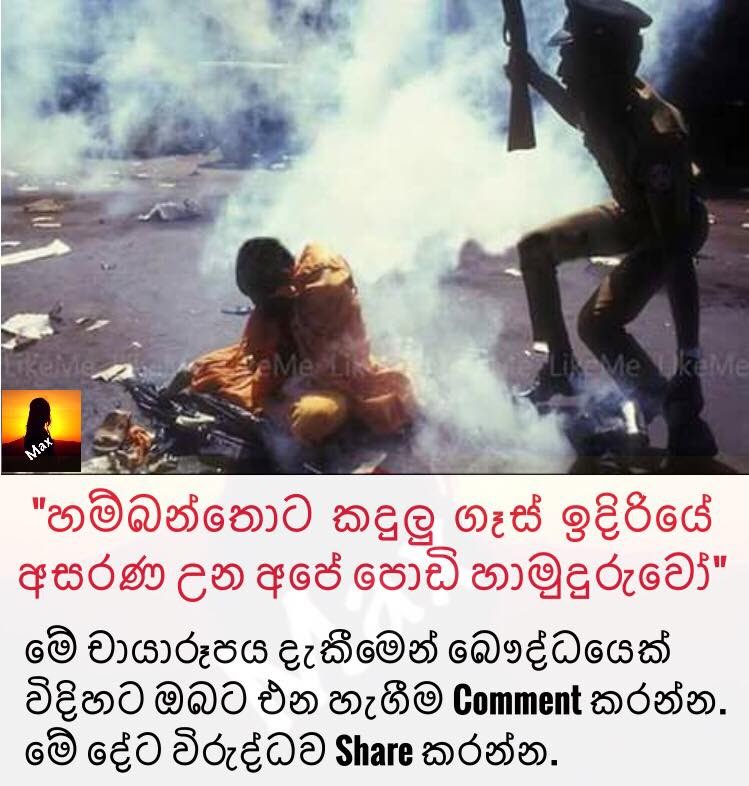
හම්බන්තොට කඳුළු ගැස් වැදුණු පොඩි හිමි

January 10th, 2017

podihamauduruwo

The Hambantota port deal

January 10th, 2017

Mahinda Rajapaksa Former President of Sri Lanka

Since the future of the Hambantota port is now under discussion, I wish to explain to the public, my position on this matter. The loans taken for the construction of this harbour were 450 million USD for the first phase, 70 million USD for the bunkering facility and 802 million USD for the second phase bringing the total to around 1,322 million USD. When complete the harbour would have four terminals and 12 berths. This was meant to be a free port covering an area of 2,000 hectares where goods could be manufactured or value added and shipped overseas. All the necessary feasibility studies were done before these loans were taken and the annual interest plus capital repayments would amount to about 111 million USD. My government had planned to raise that money through the Ports Authority itself.

The first phase of the Hambantota harbour became partially operational in 2011. The transhipment of vehicles began in 2012 with 70% of the vehicles coming into Hambantota being transhipped to other countries. In 2014, 335 vessels called at the Hambantota harbour with 295 in 2015. The port made an operating profit of Rs. 900 million in 2014 and Rs 1.2 billion in 2015. These are investments that last centuries and a new harbour cannot be expected to produce large profits in the first few years. Our plan was to break even within ten years.

My government had signed a Supply Operate and Transfer (SOT) management contract with a joint venture between China Harbour Co and China Merchant Co to supply equipment such as cranes and operate the Hambantota container terminal for 40 years. The Ports Authority was to receive a rental of 35,000 USD per hectare per year for the 56 hectares in the container terminal (a total of 1.96 million USD per year), a royalty of 2.5 USD on every container loaded or unloaded, warfrage of 30 USD per container for cargo coming into Sri Lanka and all other usual harbour charges for navigation, piloting, tonnage, etc. Other than the container terminal, all other terminals in the harbour and the 2,000 hectare industrial zone was to be controlled by the Ports Authority and they would have derived the income from the cargo of the free port passing through their terminals.

The new government made some unwise decisions. Firstly, they disregard the management contract for the Hambantota container terminal entered into by my government with China Harbour Co and China Merchant Co. Secondly, the Ports Authority had developed the Colombo East container terminal and upon its completion by 2016, this terminal would have produced a revenue of more than 100 million USD a year which the Ports Authority had earmarked to pay off the Hambantota loan until the latter generated sufficient income. The yahapalana government halted the Colombo East terminal development. Thirdly, by the end of 2014, my government had signed agreements with several foreign and local companies to lease out about 80 hectares in the Hambantota port industrial zone at the minimum rate of 50,000 USD per year per hectare with minimum guaranteed volumes of cargo and minimum guaranteed royalties. All those agreements were disregarded by the new government.

Then the government said the Hambantota port was a white elephant and that it had to be privatised to raise the money to pay off the loans taken to build it. They called for bids, not just for harbour operations but for the rights of the landlord over the entire 2,000 hectare free port so that whoever takes the long lease will operate the entire harbour and have complete control over the industrial zone as well.  The two companies China Harbour Co and China Merchant Co which made a joint proposal to lease out the Hambantota container terminal for 40 years during my government are the same companies that have made rival bids to lease the entire free port under the present government.

A framework agreement has been signed by the govt. with China Merchant Co to lease out the entire free port for 99 years for a payment of 1.08 billion USD on a 80%-20% equity sharing basis. No other income will accrue to the Ports Authority for 15 years, after which they will receive dividends for their 20% stake only if dividends are declared. The lease will be extendable for another 99 years and a 44 hectare artificial island outside the port has been included in the deal. There is provision for the construction of another 20+ berths and the rights over these too have been given to the lessee. The amount of the lease seems to have been based only on the construction cost of the port without an accredited international  valuation reflecting the strategic location value of the port, the value of the 99 year period, its 2,000 hectare land, the oil tank farm and the value of its present commercial operations.

This bid has been accepted in a situation where the other company China Harbour Co. had (according to information available to us) put in a much more favourable bid to lease the free port on a 65-35 equity sharing basis for 50 years with an upfront payment of 750 million USD plus the payment of all the charges they had earlier agreed to with regard to the container terminal management contract. The government has chosen the least favourable bid despite (according to information available to us) the Ports Authority having recommended the other bidder. Details of how the two proposals were evaluated have not been disclosed.

A 99 year lease impinges on Sri Lanka’s sovereign rights because a foreign company will enjoy the rights of the landlord over the 2,000 hectare free port while operating the entire harbour as well. This is not an issue with China or with foreign investors. It is about getting the best deal for Sri Lanka. The agreement that my government negotiated with both China Harbour Co and China Merchant Co to manage the Hambantota container terminal for 40 years is the best deal yet. The bid made by China Harbour Co for a 50 year lease is obviously more favourable than the bid made by the other company. As a matter of principle, I am against the leasing of the entire harbour for 99 years and giving the rights of the landlord over the industrial zone to a foreign private company. The industrial zone and the harbour should be controlled by the Ports Authority while harbour operations may be given on management contracts to the private sector. For example, the Colombo port is run by the Ports Authority and two private operators. The Ports Authority has full control over the Colombo harbour as well as equity in the two privately run terminals. I believe this should be the approach to the Hambantota port as well.

Apart from the entire Hambantota free port, the government has decided to lease a further 15,000 acres outside the free port to a foreign company for 99 years. In a situation where even the 2,000 hectares within the free port have not been utilised yet, on what grounds can we justify the leasing of another 15,000 acres to a foreign company? The total land area of all the Board of Investment economic zones  in the country at present put together do not amount to 2,000 hectares. A 15,000 acre zone in Hambantota will be disproportionate to our country’s economy. Furthermore, the disruption caused to the people of the area will be immense if 15,000 acres of land were to be acquired for this purpose. The government should fill the free port with investments first before opening more zones. Furthermore the government should have supervision over the kind of factories, that will be opened in these industrial zones, the fuel they use and the waste they produce. My government agreed only to the use of LNG gas, even though some potential investors wanted to use coal.

This is not an issue that can be resolved by baton-charging or tear gassing protestors or having them assaulted by thugs and remanded. There are real issues relating to the financial benefits that will accrue to the country from this deal, and issues of control and sovereignty over the free port and possible environmental issues that need to be addressed.

Mahinda Rajapaksa

Former President of Sri Lanka

Sinhale Unity Charter to Unify the Nation and Accelerate Development

January 10th, 2017

Sinhale Mahajana Peramuna

2600 years of recorded history of our motherland upholds the independence and sovereignty secured by Sinhala people. Defeating invasions by petty war lords of South India, hold up of, the Portuguese, Dutch and the British who invaded the country was accomplished the Sinhala people.

LTTE terrorists who waged a terrorist war for ever thirty three years have been eliminated by the Sinhala people. During these struggles, traders from South Indian territories such as Tamil Nadu, Chola, Pandy, Kerala, who settled in our land have legued with the foreign invaders to undermine our heritage and Sinhala Interests.

The British left our shores in 1948 leaving their rule in the hands of their acolyte under a façade of western style democracy. The local political party leaders seeking power to rule over the last 68 years, had been completing with each other under multi ethnic political party system seeking the vote been changed to Sri Lanka to hide its identity with the Sinhala Nation, The national flag has been changed by including two stripes to represent Tamil and Muslim minority interest. The official language has been declared as Sinhala and Tamil. The unitary system of governance has been has been undermined by devolution of power to sectarian ethnic provincial Councils.

These acts of treachery have resulted in an impoverished state where the majority are neglected. This has led to our women in large numbers are being sent to the Middle East countries as slave s. S sizeable portion of locals live on poverty relief under Samurdhi or Janasaviya. Most of the andyans who were disposed of their lands by the English are still struggling to live. The minatory value of the rupee has be devalued 1500% since independence.

In the meantime the ruling party caucuses elected by the people to power have abused their power to a life of luxury with unencumbered imports with the foreign exchange derived from slave labour of women and foreign loans, casting a heavy burden of public debts. Nothing this situation, the Sinhala youth led by the JVP rebelled from 1971 till 1989. Tamil youth led by LTTE terrorized the country from 1976 till 2005. President Mahinda Rajapaksa and the valiant Sinhala soldiers defeated the LTTE terrorists in 2009. But this had angered India and western neo colonialists who had supported the LTTE. Soon after the LTTE terrorism was ended, they joined hands to bring war crime charges in the UN Human Rights Council against the country leaders who defeated terrorism.

Subsequently in 2015, the combined efforts of the minorities, western powers and foreign funded NEOs brought about a regime change engineered by Tamil Diaspora funds. The new regime had pledged to carry out a program to reconcile with terrorists and divide the country on an ethnic basis. Now they are to bring in a new national constitution to uphold Tamil and Muslim demands for separation of the North and East of the country by the transfer of the powers of the Legislature to sectarian Provincial Councils. Already the racist TNA , an appendage of the banned LTTE, is busy

driving the Sinhala inhabitants from the North, while the Muslim Congress which was with LTTE at times, are busy driving the Sinhala from the East, The Chief Minister of the Provinces has pledged to remove symbols of Buddhist civilization from the North and drive away Sinhala residents from the region.

Of the political parties represented in Parliment, 14 parties are amorphous multi ethnic groups, where the Sinhala are herded for political favors, while 8 parties are racist Tamil and Muslim ethnic groups, who have pledged to carry out a racist agenda. These minority extremists are pressing the government to comply with electoral pledged to car ve out an ethic Tamil enclave in the North and a Muslim enclave in the East, leaving them the right to share the rest of the country. The western powers behind the last regime change are in league with the right to share the rest of the country. The western powers behind the last change are league with the separatist groups with their own global agenda.

Facing the imminent threat erosion of sovereignty of the people by transfer of legislative powers to sectarian provincial councils, an assembly of Sinhala Patriots that met on 15th October 2016 pledged to mobilize the public to from the Sinhala Mahajana Peramuna (SMP) to defeat the surreptitious attempt to balkanize the country on ethnic grounds and to enunciate a Sinhale Unity Character to address the lost rights of the majority indigenous people (Bhumi Putra) and to assist in accelerating economic reconstruction.

The Sinhala Unity Character call for the following inalienable rights of the indigenous people

  1. This country stretching from Dondra to Point Pedro Shall be a named Sinhale.
  2. The nationality of the people Sinhale shall be Sinhala.
  3. The national flag of Sinhale shall be the Lion Flag.
  4. Buddhism shall be the state religion and the culture of Sinhale shall be Sinhala Buddhist.
  1. There shall be a new constitution providing for the rights and privileges of the indigenouspeople of the country (Bhumi putra) and Assimilated people, a National delimited electoral representatives 160 elected by people under delimited execrates and 65 National list representatives 15 of whom are elected by each of professional services. entrpreneurial services. trade unions services. And 20 elected by cultural and religious services who are registered under the Election commission.

All of themshall be are free from political rivalry, enmity distrusted, mutual denigration and decentralize executive powers to representatives of the three traditional territories – Ruhunu, Maya, Pihiti – the Three Sinhale doing away with ethnic provincial Councils imposed on the Country.

The sinhale Mahajana Peramuna appeals to the patriotic public to defeat sectarianism and division of the country and calls upon all people to support Sinhala Unity Charter to unity the country and accelerate its development on the basis of new national constitution enacted by representatives to be elected to the succeeding Legislature. The SMP pledges to support candidates who support the charter at the next election and defeat those who do not undertake this pledge.

By Order of Supreme Council and Executive Committee

Sinhale Mahajana Peramuna

12, Templers Road, Mt. Lavinia, Sinhale (Ceylon)

.

ජාතියේ සමගිය හා සංවර්ධනය නංවන සිංහලයින්ගේ එකමුතුවේ න්‍යාය පත‍්‍රය

January 10th, 2017

සිංහලේ මහජන පෙරමුණ

වසර 2600 කට අධික කාලයක ලිඛිත ඉතිහාසයක් ඇති අපගේ මව්බිමේ නිදහස, උත්තරීතර
ශිෂ්ටාචාරය, වර්ධනය කළේත්, දකුණු ඉන්දීය ආක‍්‍රමණිකයින් පලවා හැරියේත්, 1505 සිට පෘතුගීසි, ලන්දේසි,
ඉංග‍්‍රීසි යන යුරෝපා ආක‍්‍රමණිකයින් සමඟ සටන් කළේත්, සිංහලයින්ය. තිස් වසරක ත‍්‍රස්තවාදී අරගලයක් ගෙන
ගිය දෙමළ කොටි සටන් අවසන් කළේත්, සිංහල රණවිරුවන්ය. වෙළඳාමේ නිරතව රටේ පදිංචිව සිටින ඉන්දීය
ජාතික, තමිල්නාඩු, චෝල, වඩූග, කේරල, මරක්කල, ආගන්තුකයින් සෑම විටම සිංහලේ ආක‍්‍රමණිකයින් සමඟ
එක්ව. නීති විරෝධි වෙළඳාමේ කටයුතු වලත්, රටේ සාරය ගසා කෑමටත්, සිංහලයින්ගේ අයිතිනුත් ඩැහැගැනීමත්,
වැර දරා ඇත.

1948 දී අප රටට නිදහස ප‍්‍රකාශ කල අවස්ථාවේ, රටේ පාලනය ප‍්‍රජාතාන්ත‍්‍රවාදයේ නමින්, දේශපාලන
පක්ෂවලට නියෝජිතයින්ට බාරවිය. ඉන්පසු ගෙවී ගිය වසර 68 ක් තුළ තමන්ගේ වාසිය තකා රටේ පාලකයින්
රාජ්‍ය බලය යොදාගෙන ඇත. මැතිවරණවල දී බහු වාර්ගික පක්ෂ වල සිංහල නායකයින් වර්ගවාදී සුළු ජන
ඡුන්දය ලබාගැනීම අරඹයා සිංහලයින්ගේ අයිතින් පාවාදීමේ තරඟයක යෙදී ඇත. රටේ නම සිංහලේව තිබියදී
එය ලංකා යයි නම් තැබීමෙන් සිංහලයින්ගේ අනන්‍යතාවය නසා ඇත. උඩරට ගිවිසුම අනුව පහත හෙලූවේ
සිංහ කොඩිය වන අතර පසුව අප රටට නිදහස ප‍්‍රකාශ කළ අවස්ථාවේ නිදහස් චතුරස‍්‍රයේ
එසවූයේත් එම සිංහ කොඩිය බව දැන දැනත් ඊට ඉරි දෙකක් එක්කොට දෙමළ හා මුස්ලිම් සුළු ජන අයිතීන්
පෙන්වන්න යයි කියමින් සිංහල ජාතිය පාවාදී ඇත. රටේ බස සිංහල විය යුතුව තිබිය දී සිංහල හා දෙමළ භාෂා
දෙකක් යොදා ගැනීමෙන් රට අවුල් කොට ඇත.

මෙවැනි දේශද්‍රෝහී ක‍්‍රියා නිසා රට අන්ත දරිද්‍රතාවය පත්කොට ඇත. රටේ කාන්තාවන් මැද පෙරදිග
රටවල වහල් සේවයේ යොදවා ඇත. බහුතරය දරිද්‍රතාවය නිසා රජයේ සමෘද්ධි දීමනාවලින් පණ රැුකගනිති. තේ
හා රබර් වතුවලට අත්පත් කරගත් සිංහලයන්ගේ ඉඩ කඩම් නැති වූ උඩරට සිංහලයන් මේ වන විටත් අසරණ වී
ඇත. ණය බරින් රටම මිරිකී රුපියලේ අගය නිදහසින් පසු 15 ගුණයකින් පහත වැටී ඇත.
මේ අතර බලයේ ඉන්නවුන් සුඛෝපභෝගී බදු රහිත වාහන ආනයනික භාණ්ඩ පරිහරණය කරමින් රජ
සැප විඳිමින් කල් ගෙවති. වහල් සේවයේ යෙදී මේ රටට එවන විදෙස් මුදල් හා ලෝක බැංකු ණය වලින් රට ණය
බරින් මිරිකී ඇත. මේ තත්වය නිසා තරුණයින් විප්ලවයට යොමුව ඇත. දකුණේ සිංහල තරුණයින් 1971 සිට
1989 දක්වා රාජ්‍ය විරෝධි අරගලයක යෙදී ඇත. උතුරේ තරුණයින් 1976 සිට 2009 දක්වා දෙමළ කොටි
ත‍්‍රස්තවාදයේ යෙදුණි. බලවත් උද්ඝෝෂණ මැද්දේ රජය බාරගත් ජනපති මහින්ද රාජපක්ෂ 2009 දී සිංහල
රණවිරුවන්ගේ සහාය ඇතිව, දෙමළ කොටි පරාජය කොට ඇත.

දෙමළ හා මුස්ලිම් අන්තවාදී පක්ෂ ද, නව යටත්විජිතවාදීන් ද එක්ව දෙමළ ඩයස් පෝරාව මුදලින්
මෙහෙය වූ පසුගිය මැතිවරණයේ දී දෙමළ කොටි පරාජය කළ බලවේගය පරාජය කොට ඇත. එහිදී නායකයින්
දුන් පොරොන්දු මත ව්‍යවස්ථාදායකයේ බලතල වර්ගවාදී උතුරු හා නැගෙනහිර පලාත්වලට ලබාදීමට නව
ව්‍යවස්ථාවක් දැන් සකස් කරමින් තිබේ. එය කඩිනම් කිරීමට වර්ගවාදී දෙමළ සන්ධානය උතුරේ සිංහලයින් නැවත
පදිංචි කරවීම නැවැත්වීමට රජයට බල කරමින් සිටී. නැගෙනහිර සිංහලයින්ට ඒ පලාතේ පදිංචිය නොදීමට
මුස්ලිම් නායකයින් කටයුතු කරමින් සිටී. නැගෙනහිර සිංහලයන්ට ඒ පලාතේ පදිංචිය නොදීමට මුස්ලිම් නායකයින්
කටයුතු කරමින් සිට, බෞද්ධ සිද්ධස්ථාන විනාශ කරමින් සිටී.

පාර්ලිමේන්තුව නියෝජනය කරන පක්ෂ 14 න් බහු වාර්ගික පක්ෂයි. පක්ෂ 8 ක් දෙමළ වර්ගවාදයටත්
මුස්ලිම් වර්ගවාදයටත් වෙන් වූ ඒවායි. උතුරු නැගෙනහිර පළාත් සභාවලට බලය පැවරීමට රජය දී ඇති
පොරොන්දු මත නව ව්‍යවස්ථාවක් ගෙන ඒමට වර්ගවාදීන් බලකරමින් සිටී. බටහිර බලවතුන් හා විදෙස් මුදලින්
සිංහලේ ධජය වූ

මේ අභියෝගාත්මක අවාසනාවන්ත තත්වය ගැන අවධියෙන් යුත් සිංහල සංවිධාන 2016 ඔක්තෝම්බර්
මස 15 වන බක් පෝ දින රැුස්ව, සිංහලයින්ගේ අවාසනාවන්ත ඉරණම විසඳීමට ගත යුතු පියවර ගැන සමුළුවක්
පැවැත්වීය. අවස්ථාවදීන් විසින් ගෙනයන වර්ගවාදීව රට බෙදීමේ ව්‍යායාමය පැරදවීමත්, සිංහලයින්ගේ අයිතීන්
ගැන ජනාතව දැනුවත් කිරීමටත්, නිර්පාක්ෂික සංවිධානයක් වශයෙන්, සිංහලේ මහජන පෙරමුණ පිහිටුවීමටත්,
සිංහලයින්ගේ එකමුතුවේ න්‍යාය පත‍්‍රයක් ජනතාවට හඳුන්වා දීමටත් තීරණය කළෝය.
සිංහලයින්ගේ එකමුතුවේ න්‍යාය පත‍්‍රයට ඇතුලත් වන්නේ,

1. රටේ නම සිංහලේ විය යුතුය.
2. සිංහලේ ජාතිය සිංහලයින් විය යුතුය.
3. සිංහලේ බස සිංහල විය යුතුයි.
4. සිංහලේ ජාතික කොඩිය සිංහ කොඩිය විය යුතුයි.
5. සිංහලේ සංස්කෘතිය සිංහල බෞද්ධ විය යුතු අතර බුද්ධාගස රාජ්‍ය ආගම විය යුතුයි.
6. සිංහලේ පාලන තන්ත‍්‍රය වෛරවාදයෙන් බැහැරව සභ්‍යත්ව වාදී මහා සම්මතෙහි පිහිටා
තුන් සිංහලේටම බලපාන, එක නීති පද්ධතියක් විය යුතු යයිද, විදේශිකයන් පැන වූ රෝමානු
ඕලන්ද නීති කොටස්වාදී තේසවලාමේ නීති හා ෂාරියා නීති අහෝසි කළ යුතුයි.
7. උප්පත්තියේන සිංහල හිමිකම් ඇති භූමි පුත‍්‍රයින් රට වැසියන් ලෙසත්, විදෙස් සම්බන්ධකම්
ඇතිව ස්වාභාවිකරණය වූ වැසියන් පුරවැසියන් ලෙසත් පිළිගත යුතු අතර, ව්‍යවස්ථාදායකය
අර්ථවත් කිරීමට, ඇස්. ඩබ්.ආර්.ඞී. බණ්ඩාරනායක තුමා 1956 දී යෝජිත පංච බලය නියෝජනය
ආර්ශයට ගෙන අද කාලයට සරිලන පංච තාන්ත‍්‍රික නියෝජනය ඇති පාර්ලිමේන්තුවේ මෙන්
මන්ත‍්‍රී සංඛ්‍යාව 225 කින් යුත් රාජ්‍ය සභාවක මැතිවරණ කොට්ඨාස පදනමට පත්වන ප‍්‍රජා
මන්ත‍්‍රීවරු 160 ක් ද, ජාතික වශයෙන්, ප‍්‍රබුද්ධ වෘත්තික සංවිධාන මන්ත‍්‍රීවරු 15 ක් ද, ව්‍යවසාය
සංවිධාන මන්ත‍්‍රීවරු 15 ක් ද, වෘත්තීය සමිති මන්ත‍්‍රීවරු 15 ක්ද, සංස්කෘතික හා ආගමික
සංවිධාන මන්ත‍්‍රීවරු 20 ක් ද, විය යුතුයි ද, රුහුණු , මායා, පිහිටි යන පෙර පැවති රට බෙදීම
අනුව විධායක බලතල බෙදා පාලනය ගෙනයෑමත් වර්ගවාදී පළාත් සභා ක‍්‍රමය අහෝසි කිරීමත්
කළ යුතුයි.

සිංහල මහජන පෙරමුණේ සිංහලයින්ගේ න්‍යාය පත‍්‍රය ජය ගැන්වීමට ජනතාවගෙන් ඉල්ලා සිටින්නේ
1. යෝජිත රට බෙදීමේ ව්‍යවස්ථාව පැරදවීමටත්, 2. ඉදිරියේ පැවැත්වෙන මැතිවරණවලදී සිංහලයින්ගේ න්‍යාය
පත‍්‍රය පිළිගන්නා අපේක්ෂකයින් ඡුන්දයෙන් දිනවීමටත්, 3. ඊට එකඟ නොවන අපේක්ෂකයින්ට ඡුන්දය
නොදීමටත් ය.

මේ වගට සභාපති මණ්ඩලය හා විධායක සභාව
සිංහලේ මහජන පෙරමුණ
නො. 12, ටෙම්පල්ස් පාර,
ගල්කිස්ස.
දුරකථන :- 0717414713

මන්දබුද්ධික පෞද්ගලික බස්රථ සංගම් මාෆියාව ශ‍්‍රී ලංගමය අහෝසි කරන ලෙස විද්‍යුත් මාධ්‍යවලින් ඉල්ලා සිටීම දැඩි පිළිකුළින් යුතුව හෙලා දකින්නෙමු

January 10th, 2017

ජනමාධ් නිවේදනයයි සමස්ත ලංකා ප‍්‍රවාහන සේවක සංගමය

මගී ජනතාවට විධිමත් ප‍්‍රවාහන සේවයක් සපයන ශ‍්‍රී ලංගමය පාසල්  ළමුන් සඳහා 90% ක මාසික ප‍්‍රවේශපත‍්‍ර සඳහා සහනයක් ලබාදී අගනා සේවයක් ඉටුකරන  වැඩකරන ජනතාවට 35% ක සහනසේවාවක් ලබාදෙන අභිමානවත් ශ‍්‍රී ලංකා ගමනාගමන මණ්ඩලය අහෝසිකරන ලෙස මන්දබුද්ධික පෞද්ගලික බස් සංගම් මාපියාව විද්‍යුත් මාධ්‍ය මගින් ආණ්ඩුවෙන් ඉල්ලා සිටීම අප සංගමය දැඩි පිළිකුළින් යුතුව හෙලා දකින්නෙමු.  මන්දබුද්ධික පෞද්ගලික බස්රථ සංගම් මාෆියාවට එවැනි ඉල්ලීමක් කිරීමට කිසිදු නීතිමය හා සදාචාරාත්මක අයිතියක් නැත.

මගී ජනතාවට විධිමත් ප‍්‍රවාහන සේවාවක් සැපයීමට නොහැකිවූ නිසාත්, ජනතාවට දැඩි පීඩනයක් ලබාදුන් නිසාත් පෞද්ගලික බස්රථ මාෆියාව හරහා ජනතාවට සිදුකරන ලද බලවත් අසාධාරණ ක‍්‍රියාවන් හා මානසික වේදනාවන් නිසාත් මුදල් උපයාගැනීමේ එකම අරමුණ ඇතිව බස්රථ ධාවනය කළ නිසාත්, සමස්ත ජනතාවගේ බලවත් ඉල්ලීමට අවනත වූ 1956 ස්ථාපිත කරන ලද ආණ්ඩුව 1958 ජනවාරි 01 වන දින පෞද්ගලික  බස්රථ ව්‍යාපාරය අහෝසිකර අභිමානවත් ශ‍්‍රී ලංකා ගමනාගමන මණ්ඩලය ස්ථාපිත කරන ලද බව මෙවැනි කුහක ඉල්ලීම් අධම ලෙස ඉල්ලන පෞද්ගලික බස්රථ සංගම් මාෆියාව තේරුම් ගෙන නැත. වටහාගෙන නැත. අවබෝධකරගෙන නැත.

මුදල් උපයාගැනීමේ ලාභය ලබාගැනිමේ ක‍්‍රියාවලිය එකම අරමුණ කරගෙන අප රට තුළ ක‍්‍රියාත්මක කරන පෞද්ගලික බස්රථ සංගම් මාෆියාව අගනා සේවාවක් වශයෙන් පවත්වාගෙන යන අභිමානවත් ශ‍්‍රී ලංගමය අහෝසි කරන ලෙස ශ‍්‍රී ලංගමයට අළුතින්  බස්රථ ආනයනය නොකරන ලෙස ඉල්ලා සිටීම පිළිබඳ ශ‍්‍රී ලංගම අපි ඔවුනට අනුකම්පා කරන්නෙමු. 

ශ‍්‍රී ලංගමයට කළ හැකි උපරිම අපහාස, අවමාන, නින්දා, අවලාද  සිදුකරමින් ශ‍්‍රී ලංගමය විනාශ කරන එ්කාබද්ධ කාලසටහන් ක‍්‍රමවේදය ක‍්‍රියාත්මක කිරීමට සහයෝගය ලබාදීම ප‍්‍රතික්ෂේප කළහොත් ශ‍්‍රී ලංගමයට නඩු පවරන බවටත්, ශ‍්‍රී ලංගමය වටලන බවටත් තර්ජනය කරන ලද මෙම මන්දබුද්ධික පෞද්ගලික බස්රථ මාෆියාව ශ‍්‍රී ලංගමය අහෝසි කරන ලෙස ආණ්ඩුවෙන් ඉල්ලා සිටින යෝජනාව අප සංගමය දැඩි පිළිකුළින් යුතුව නැවත වතාවක් හෙළා දකින අතර මුදල් උපයාගැනීමේ එකම අරමුණ බවට පත්කරගෙන පවත්වාගෙන යන සමස්ත පෞද්ගලික බස්රථ ව්‍යාපාරයම කිසිදු වන්දිමුදලක් ලබානොදී රජයට පවරාගෙන විධිමත් ප‍්‍රවාහන සේවයක් ජනතාවට ලබාදීමට අවශ්‍ය මැදිහත්වීම සිදුකරන ලෙස ජනධිපතිතුමා ඇතුළු මෙම ආණ්ඩුවෙන් අප සංගමය දැඩි වගකීමෙන් යුතුව ඉල්ලා සිටින්නෙමු.
 
ස්තූතියි.
මෙයට – විශ්වාසී,
සේපාල ලියනගේ
ප‍්‍රධාන ලේකම්                    
සමස්ත ලංකා ප‍්‍රවාහන සේවක සංගමය

Toronto serial rapist to be released from prison amid warnings he’s a risk to reoffend

January 10th, 2017

By

Serial rapist Selva Kumar Subbiah is due to be released from prison this month and authorities won’t say whether he’ll be deported to his native Malaysia or returned to the streets of Toronto.

Subbiah, 56, assaulted more than two dozen women in the city and one of them says she can’t stop worrying as his Jan. 29 release date approaches.

It seems like he has just coloured my view of people,” said the woman, whose name the Star has agreed not to publish because of her security concerns. I just have more fear.

You just feel like nothing’s safe. It’s weird.”

Subbiah’s scheduled release comes amid chilling warnings from prison staff that he’s a high risk to reoffend — or even kill.

He was told in a June 2016 parole hearing that behind-bars therapy hasn’t done him much good. That echoes comments in a string of previous parole hearings.

The CMT (case management team) believes that you are likely to commit an offence causing death or serious harm to another person prior to the expiration of your (parole) and therefore, is recommending that your detention order be confirmed,” the parole record from that June hearing states.

File information indicates that you continue to struggle in the areas of victim empathy, remorse and your inability to take full responsibility for your personal choices which results in your lack of mitigation in risk.”

Subbiah made no comment at that hearing, waiving his right to have an adviser or assistant present. He also did not make written submissions to the board in June.

Canada Border Services would not say whether Subbiah would be deported upon his release and declined to discuss Subbiah’s case specifically. But a spokesperson said the Immigration Act clearly defines reasons for inadmissibility including involvement in criminal activity, in human rights violations, in organized crime, security, health or financial reasons.”

All foreign nationals and/or permanent residents accused of committing criminal acts are subject to the due process of the law,” Derek Lawrence of the CBSA in Toronto said in an email. When convicted, they must serve their sentence before the removal from Canada can take place.”

The law does allow for the removal of serious criminals without an appeal.

Subbiah’s victim said she hopes that he’s deported, adding she recently called police there to warn them. She also sent them a package that included a Star article and photos of him.

I didn’t hear anything back,” she said. That doesn’t make you feel too comfy.”

There were dire warnings when Subbiah was sent to prison a quarter century ago.

When Subbiah (middle) was arrested Aug. 7, 1991 he was carrying a black book containing the names of 170 women, rated on a scale of 0 to 10.
When Subbiah (middle) was arrested Aug. 7, 1991 he was carrying a black book containing
the names of 170 women, rated on a scale of 0 to 10.  (DALE BRAZAO/TORONTO STAR FILE PHOTO)  

He has no feelings, no compassion. All we can do is warehouse him,” Crown counsel Paul Normandeau told the court.

On Dec. 21, 1992, Subbiah was convicted of multiple sexual assaults. During the sentencing, Justice David Humphrey ordered police to escort Subbiah to his native Malaysia when he is finally released — though it is unclear whether this will be carried out.

Subbiah committed several of his crimes while posing as a model agent or movie talent scout, often using the names Richard Wild and Ryan Hunter. Occasionally, he also posed as a professional dancer, a lawyer and a diplomat. He also lured victims to the basement of his home on Macdonnell Ave. through ads offering to sell exotic pets.

He would offer victims a drink, which he would drug to knock them out. Once the women were in a state of unconsciousness, he usually raped them and took photos of their naked, limp bodies, court heard.

Court heard one of his victims was as young as 14, and that when morality squad officers arrested him on Aug. 7, 1991, they found he was carrying a black book containing the names of 170 women, rated on a scale of 0 to 10.

Subbiah was in the news again in 1998, when police told the Star he was using a string of aliases from behind bars and a female accomplice on the outside to con women to send him nude photos and gifts.

Corrections Canada officials do not comment on where prisoners are housed.

However, the Star has learned that Subbiah was transferred from maximum security Kingston Penitentiary to the nearby medium security Warkworth Institution in 2013 because the penitentiary was scheduled to be closed that year.

Author Rob Tripp noted that Subbiah survived a knifing attack at Kingston in 2009, when two convicts stabbed him at least six times.

Subbiah’s victim told the Star that for two years after the attack she rarely left her home. She has gone to therapy and longs to feel safe again.

I just can’t get there. I kept trying, but it has never worked. My life is very small.”

චීන තානාපති මහින්ද හමුවෙන්න එයි.. ඉඩම් මංකොල්ලයට විරුද්ද බව මහින්ද කෙලින්ම කියයි..

January 10th, 2017

ලංකා සී නිවුස්

චීන තානාපති මහින්ද හමුවෙන්න එයි.. ඉඩම් මංකොල්ලයට විරුද්ද බව මහින්ද කෙලින්ම කියයි..

හිටපු ජනාධිපති මහින්ද රාජපක්ෂ මහතා අද සිය නිල නිවසේදී මෙරට චීන තානාපති හමුවිය.

එහිදි හම්බන්තොට ඉඩම් අක්කර 15000ක් ලබා දීම සම්බන්දයෙන් සාකච්චා වූ අතර හිටපු ජනාධිපතිවරයා එහිදී කියා සිටියේ ජනතාවගේ ඉඩම් මංකොල්ල කෑමට රජයට ඉඩ දීමට ජනතාව සුදානම් නොමැති බවයි.

චීනය සමග ඇති තම හිතවත්කම එලෙසම පවතින බවද කී රාජපක්‍ෂ මහතා එහෙත් තම භූමිය අත්පත් කර ගැනීමට එරෙහිව ජනතා විරෝධය නොනවතිනු ඇතැයිද සදහන් කලේය.

හම්බන්තොට වරාය වටින තැනක්.. ගිවිසුම ගහන්න චීනාට පුදුම හදිසියක් තිබෙන්නේ.. වේලාසන මුදල් දෙන්නත් ලැස්තියි.-අර්ජුන රණතුංග

January 10th, 2017

තමීර මංජු ලංකා සී නිවුස්

කවුරු කලබල වුවත් හම්බන්තොට වරාය චීන සමාගමට බදු දීම කල් ගෙන රටට වාසිදායක ලෙස සිදු කරන බව වරාය සහ නාවික අමාත්‍ය අර්ජුන රණතුංග පවසයි.

හම්බන්තොට වරායට ආයෝජකයින් කැඳවීමේදී රටට ආවාසිදායක නොවන ලෙස සිදු කරන්නැයි ජනාධිපතිතුමා සහ අගමැතිතුමා තමන්ට උපෙදස් දී ඇතැයිද අමාත්‍ය අර්ජුන රණතුංග පැවසීය.

ඔහු මේ බව කියා සිටියේ විශ්වවිද්‍යාල ප්‍රවේශය සඳහා වරම් ලැබූ වරාය සේවකයින්ගේ දූ දරුවන්ට ශිෂ්‍යත්ව ප්‍රදානය කිරීමේ උත්සවයට සහභාගීවෙමිනි.

මහපොළ අභ්‍යාස ආයතනයේ පැවැති මෙම උත්සවයට ගරු වරාය සහ නාවික නියෝජ්‍ය අමාත්‍ය නිශාන්ත මුතුහෙට්ටිගම, ශ්‍රී ලංකා වරාය අධිකාරියේ විධායක අධ්‍යක්ෂ සංජීව විජේරත්න ඇතුළු අමුත්තන් රැසක් එක් වූහ.

එහිදී වැඩිදුරටත් අදහස් දැක්වූ අමාත්‍ය රණතුංග වැඩිදුරටත් අවධාරණය කළේ වරාය පමණක් නොව මෙරට කිසිඳු සම්පතක් විකිණීම හෝ වෙනත් රටකට පවරාදීම රජයේ අරමුණ නොවන බවයි.

මමත්, මගේ නියොජ්‍ය ඇමතිතුමත් මේ කිසිම දෙයක් විකුණනවට කැමති නැහැ. ජනාධිපතිතුමත් එහෙමයි. අගමැතිතුමත් මේ දේවල් විකිණීමට විරුද්ධයි. අපි හම්බන්තොට වරායට අයෝජකයෙක් සොයන්න විශාල වෙහෙසක් දැරුවා. අද වනවිට අයෝජකයින් දෙන්නෙක් ඇවිල්ලා තියෙනවා. ලේකම්වරුන්ගේ කමිටුව එයින් එක් කෙනෙක් තෝරා ගෙන අද වනවිට එම සාකච්ඡා පවත්වමින් සිටිනවා. ඒ හැරෙන්න කිසිම ගිවිසුමකට අද වනවිට අත්සන් කරලා නැහැ. මේ සාකච්ඡාවලදී චීන සමාගම හම්බන්තොට වරාය ලේකම් කමිටුවෙන් මුලින්ම ඉල්ලා තිබුණේ අවරුදු 198 කට. නමුත් අපිට පුළුවන් වුණා එය 99 අවුරුදු බද්ද දක්වා අඩු කිරීමේ සාකච්ඡාවලට අවතීර්ණය වෙන්න. නමුත් තවමත් එය අවසන් වී නැහැ. මගේ යෝජනාව නම් එය අවරුදු 50ක් විය යුතුයි කියන එක. එපමණක් නෙවෙයි අපිට අයිතිවාසිකම් තියෙන, කිසිම දෙයක් දෙන්න අපි සූදානම් වෙලා නැහැ. අපිටත් පුළුවන් හම්බන්තොට වරායට නැව් එනතුරු, ආයෝජකයින් එනතුරු අවුරුදු ගාණක් බලාගෙන ඉන්න. එහෙම කළොත් හම්බන්තොට වරාය හදන්න ගත්ත ණය සහ එහි පොළිය ගෙවන්න සිදු වෙන්නේ අපිට. දැනටමත් කොළඹ වරායෙන් ලැබෙන ලාභයෙන් විශාල ප්‍ර‍මාණයක් හම්බන්තොටට යනවා. දවසක ණය ගෙවන්න කොළඹ වරායේ මුදල ප්‍ර‍මාණවත් වුණේ නැති වුණොත් අපිට මුදල් අමාත්‍යාංශයෙන් මුදල් ඉල්ලන්න සිදුවෙනවා. එතකොට තමුන්නාන්සේලාට බදු පටවන්න සිදුවෙනවා. මොකද ඒ මුදල් කොතනින් හෝ ලබාගන්න ඕන. ඒ නිසා තමයි අපි ආයෝජකයෙක් සමඟ සාකච්ඡා කරන්නේ. නියෝජ්‍ය ඇමතිතුමා කිව්වා වගේ අද ආයෝජකයා හරිම කලබලයි අත්සන් කරන්න‍. අපි කලබල නැහැ. අපට අවශ්‍ය හරි ක්‍ර‍මයට මෙය අත්සන් කරන්න. මොන ආයෝජකයාද ගිවිසුමකට අත්සන් කිරීමට පෙර මුදල් දෙන්න සූදානම් වෙලා ඉන්නේ. අපි මොනවා කිව්වත් හම්බන්තොට වරාය වටිනාකමකින් යුක්ත තැනක්…”

ශිෂ්‍යත්ව ප්‍ර‍දානය කිරීමේ අවස්ථාවට එක්වෙමින් වරාය සහ නාවික නියෝජ්‍ය අමාත්‍ය නිශාන්ත මුතුහෙට්ටිගම මහතා පැවසූයේ විවිධ අර්බුද හුවා දක්වමින් ආණ්ඩුව පෙරළීමට ඇතැම් පිරිස් උත්සාහ දැරවත් මේ රජය වෙනස් කිරීමට කිසිඳු ඉඩක් නොමැති බවයි.

ඊයේ වනවිට මේ ආණ්ඩුව අවසන් වගේ පෙණුනේ. මාධ්‍යයෙන් තමයි පෙන්නුවේ. මාධ්‍යයට දාගන්න ඉඩ නැහැ. වරාය අධිකාරිය පට්ට ගහලා ඉවරයි. වරාය අධිකාරිය සම්පූර්ණයෙන් චීනෙට දීලා වගේ පෙන්නුවේ. නමුත් අපි ඒකට ඉඩ දෙන්නේ නැහැ. අපි ඒකට විරුද්ධයි. අපිට වරාය අධිකාරිය රැකගන්න අවශ්‍යයි. අපේ අර්ජුන රණතුංග ඇමතිතුමාට අතිගරු ජනාධිපතිතුමා සහ අගමැතිතුමා වගකීමක් පවරලා තියෙනවා මේ සම්බන්ධයෙන් නිවැරදි තීන්දුවක් ගන්න. එතුමා ඒ උත්සාහයේ ඉන්නවා. එය අත් හරින්නේ නැහැ. මාගම්පුර වරාය ආයෝජකයින්ට පෙන්නලා, අයෝජකයෝ පිස්සු වැටිලා ඉන්නේ. මේ වනවිට ආයෝජකයෝ පස්සෙන් එනවා ගිවිසුමටත් කලින් මුල්ගල් තියන්න. නමුත් තවම ගිවිසුම අත්සන් කරලා නැහැ. ගිවිසුම පාර්ලිමේන්තුවට ඇවිල්ලා සම්මත වුණාට පස්සෙයි ආයෝජකයෝ එන්න ඕන. නමුත් දැන් ඔවුන් කලබල වෙලා. ඔවුන් කලබලේ ඇවිල්ලා ඉන්නවා. මේක සුන්දර රටක්. මෙය රැකගන්න මෛත්‍රීපාල සිරිසේන ජනාධිපතිතුමා කැපවීමෙන් කටයුතු කරනවා කියන එක මම විශ්වාසයෙන් කියනවා. එතුමා ඒ පොරොන්දුව දීලා තියෙනවා. එතුමා කිසි කෙනෙකුට ආවට ගියාට මේ සම්බන්ධයෙන් සෙල්ලම් කරන්න ඉඩදෙන්නේ නැහැ. රජයට අභියෝග එනවිට පිරිසක් බලාගෙන ඉන්නවා මේ ආණ්ඩුව පෙරළන්න. මේක පෙරළන්න අවශ්‍යයි. ඒ තව අවුරුදු හතරකින් විතර. දැන්ම ඒක කරන්න බැහැ. ඒකට ඉඩ කඩක් කොහෙත්ම නැහැ. ව්‍යවස්ථාවේ ඒකට ඉඩ නැහැ. විශ්වාසයෙන් කියනවා මේ ගමන අපි ශක්තිමත්ව ඉදිරියට යනවා. ඉදිරි වසර හතරහමාර තුළ මේ අමාත්‍යාංශයේ ඇමතිධූරයේ කටයුතු කරන්නේ අර්ජුන රණතුංග ඇමතිතුමා කියන එකත් මම විශ්වාසයෙන් කියනවා….” යැයිද නියෝජ්‍ය අමාත්‍යවරයා එහිදී පැවසීය.

ශ්‍රී ලංකා වරාය අධිකාරියේ සුභසාධක සහ කාර්මික සම්බන්ධතා කොට්ඨාසය විසින් මෙම ශිෂ්‍යත්ව ප්‍ර‍දානෝත්සවය සංවිධානය කෙරිණ. ශිෂ්‍ය ශිෂ්‍යාවන් 84 දෙනෙක් ඒ සඳහා සුදුසුකම් ලබා සිටියහ. ශිෂ්‍යත්ව ප්‍ර‍දානයට ශ්‍රී ලංකා වරාය අධිකාරිය වසරකට වැය කරන මුදල රුපියල් ලක්ෂ 80 ක් වේ.

– තමීර මංජු

චීනයට ඉඩම් දීම ව්‍යවස්ථා විරෝධීයි.. ආපසු පවරා ගන්නවාමයි.. – නීතිය පරතෙරට දන්නා හිටපු අගවිනිසුරු උසාවි යයි..

January 10th, 2017

ලංකා සී නිවුස්

ආණ්ඩු ක‍්‍රම ව්‍යවස්ථාව අනුව රජයේ ඉඩම් පැවරීමේ අයිතිය ඇත්තේ ජනාධිපතිවරයාට පමණක් බව හිටපු අගවිනිසුරු සරත් එන්. සිල්වා මහතා පවසයි.

අගමැති රනිල්ට හෝ ඇමති මලික්ට එය කිසිසේත්ම කල නොහැකි බවද පවසන ඒ මහතා චීන තානාපතිවරයාගෙන් ඉල්ලා සිටියේ මෙරට ආණ්ඩු ක‍්‍රම ව්‍යවස්ථාවට අනුව පමණක් ඉඩම් ගන්නා ලෙසයි.

මෙම ඉඩම නීත්‍යනුකූලව නැවත පවරා ගන්නා බවත් ඒ සදහා තමන් අධිකරණය හමුවට යාමට සූදානම් බවත් හිටපු අගවිනිසුරුවරය වැඩි දුරටත් පැවසීය.

https://youtu.be/3K8LfMgmBB4

YAHAPALANA AND THE UNITED STATES OF AMERICA PART 1

January 9th, 2017

KAMALIKA  PIERIS

The United States of America was interested in  developing a close relationship with Sri Lanka from the time Sri Lanka got independence. By 1948 the US had replaced Britain as the dominant power in Asia and needed military and communication bases in Asia. In 1951 Ceylon  signed an  agreement with the US to relay Voice of America (VOA) programmes over Radio Ceylon, which was then a popular radio station  heard all over India.  In return Radio Ceylon would get modern, new broadcasting equipment.  VOA used the facility to broadcast to all of Asia, including Central Asia.   In the 1950s, the US Information Centre distributed free to select homes, an anti-Communist magazine ‘Free World’ which featured Southeast Asia. It said that Communism was bad and America was good. It had   colored photographs,   which I used to cut out.

The US has never been interested in helping Sri Lanka to stand on its own feet. US objected to the 1956 Rubber-Rice pact with China and promptly cut off aid to Sri Lanka, under its rule of not giving aid to countries that sold strategic materials to Communist countries. USA also made France, Italy and Japan withhold their supply of sulphur fungicide, badly needed by Sri Lanka’s rubber plantations.  US had earlier turned down a request from Ceylon for a 50 million dollar aid,  for  a high price for rubber and a  low price for rice.  J.R.Jaywardene, known as Yankee Dickie”, supported the US viewpoint and strongly opposed the Rubber-Rice  Pact.

USA supported Tamil separatism. Izeth Hussein recalls that on the day of India’s air drop in 1987, US Ambassador James Spain   had sought a meeting with the Foreign minister as he had to convey an urgent message from his government. India was going to suggest something and Sri Lanka should not over react. That ‘something’ was the Indo-Lanka Agreement. A third party was definitely involved in this matter, said Hussein. After the document was signed, Ambassador Spain had handed over a letter to Rajeev Gandhi, obviously a congratulatory and goodwill message from Reagan. Clearly the contents of the agreement were already known to the US government, concluded Hussein.

US  wanted the LTTE to win the Eelam war.  ‘We were hounded and intimidated by the US to stop the war against the LTTE,’ said Godage. According to a report filed by Times Online, the US military has used satellites to spy on Sri Lanka during the final stages of Eelam War IV. US sought to justify its action on the ground that it was looking for evidence of war crimes in view of the impending UN Human Rights Council session on Sri Lanka. US ambassador Blake tried to take Prabhakaran out through an operation by the US Marines based in Hawaii.

If the LTTE had succeeded, critics observe, US would have gained control of two thirds of Sri Lanka coast line, enabling them to secure Persian Gulf energy resources to Japan, interfere with the flow of resources to China, interfere with free trade in the Indian ocean, and undermine stability in India by provoking Tamil and Hindu sentiments in Tamilnadu.

Sri Lanka’s strategic location in the Indian Ocean     was known to the western powers for centuries, but the  issue was not openly discussed  in Sri Lanka  and the  general public was not told of it. The intelligentsia knew  that Trincomalee harbor could comfortably hold the 7th Fleet  of the US Navy, but the possibility of America actually doing so was glossed over. America     was not in a hurry to capture Sri Lanka either. US was mainly interested in the Pacific Ocean, Atlantic Ocean and South East Asia in the 20th century .   Five of the seven US security alliances were with Asia-Pacific partners.  US also had some form of defense pact with sixty nine countries. Those countries accounted for around 75% of the world economy. Sri Lanka was not one of them.

Things changed with the rise of China. The Indian Ocean was a part of China’s new Maritime Silk Route.  The Indian Ocean became vitally important and Sri Lanka’s strategic position in the Indian Ocean also went up in value and urgency.  US Senate was told ‘Sri Lanka is strategically located at the nexus of maritime trading routes connecting Europe and the Middle East to China and the rest of Asia. All of China’s and Japan’s energy resource from the Persian Gulf transits Sri Lanka and the island has the potential to control or impede the free flow these resources to China. Half the world’s container traffic also passes through Sri Lanka and the island has the potential to block this as well.  In view of strategic importance of Sri Lanka to the US, an alliance should be maintained with Sri Lanka.  US foreign policy should be recast for the purpose.’ Sri Lanka could also be used to further US interests in the Indian Ocean.

It was observed in 2014 that‘If Sri Lanka has this same stability for the next five years then it will be difficult to   achieve US ambitions.  A weaker Sri Lanka is easy to dominate’.  President Mahinda Rajapakse was not prepared to give in to the US. He had refused to bow down to US pressure to stop the war on LTTE.  Also he had established links with China   and was   planning a big military deal with Russia, which had offered a credit line for arms, ammunition, helicopters and land mine clearing. Rajapakse was becoming a serious obstacle to US interests in the Indian Ocean region.  He had to go.    Rajapakse gave them the opportunity by calling for elections in 2015.

Once the Yahapalana regime was in place, USA moved very fast to indicate that the US was now in control. John Kerry, Secretary of State, arrived in May 2015. US Assistant secretary for south Asian   affairs, Nisha Biswal, visited in July, August and December 2015. US Assistant Secretary for Democracy and Human rights, Tom Malinowski (July 2015) and Under Secretary of State for Political Affairs Thomas Shannon (December, 2015) also visited.  In November, 2016, we were told that Obama had planned to visit in May 2016.

Samantha Power, US ambassador to the UN, visited in November 2015. She said USA was deeply committed to supporting Sri Lanka’s efforts at peace, reconciliation and accountability.    She feels a strong sense of responsibility towards the beleaguered people of all communities of Sri Lanka. She considered Neelan Thiruchelvam her friend. She said that Mahinda Rajapakse, when President, had brusquely brushed aside her overtures to initiate a meaningful dialogue. Gotabhaya and Basil Rajapakse had been even worse. They had been brazenly unpleasant.

US was advised to follow a subtle and a sophisticated approach, since the political game had changed in Sri Lanka.  US should figure out how ‘not to lose Sri Lanka ‘said one observer. US should adopt a less confrontational approach,  it is best to go carefully with Sri Lanka,  the formulas which were used in the past 20 years were no longer applicable, advisers said.

The US is therefore funding a number of carefully selected projects in Sri Lanka. There is a special focus on youth.  Since 2010 USA had provided nearly LKR 135 million in its annual Youth Empowerment grants programmes and had funded over 100 programs.  In 2016, US gave Sri Lanka an unprecedented USD 13 million  to 8 civil society organizations, for a three year ‘Strengthening accountability and good governance project’ (SDGAP).  This was to support innovative small scale projects to nurture civil society groups helping Sri Lanka youth. They included leadership training and ‘advancing the rights of marginalized communities’.  The project was to be administered by a private US company, Development Alternative Inc. SDGAP was new to Sri Lanka , but it has been  implemented in Afghanistan, Colombia, Georgia, Haiti, Indonesia, Iraq, Kenya, Kosovo, Kyrgyzstan, Lebanon, Liberia, Macedonia and  Mongolia.

USAID’s STAIR (Short term assistance to improve public financial management reform project”) had a three day training programme in AGs department. STAIR specializes in working with government agencies to increase transparency, reduce      corruption, effective and efficient in delivery of public services.

US said that given Sri Lanka’s strategic location, it is in America’s interest to increase military collaboration and cooperation with Sri Lanka. US intended to expand military leadership discussions, increase naval engagement and focus on defense institution building. The first US Sri Lanka operational level bilateral defense dialogue took place in August 2016. The purpose was to develop a programme of bilateral training and exercises for the next three years. The 11th Marine Expeditionary Unit engaged in a Theatre security Cooperation (TSC) project with the Sri Lankan Navy’s newly formed marine force, In Trincomalee in November 2016. India observed that US Marines are now training Sri Lanka Special Forces. The US-Sri Lanka defence partnership seems to be at an all time high.

The Head of the US Pacific Command Admiral Harry B. Harris Jr. attended the Sri Lanka Navy’s Galle Dialogue 2016”.  He said USA and India had sent low ranking officers to the first Galle Dialogue. The People’s Republic of China had been represented by a high level delegation.  It was different now. ‘The Indian Ocean matters to USA, Sri Lanka matters to the US and I believe that US matters to Sri Lanka.’ Sri Lanka could help to complete the defense ring around the Indian Ocean. The Yahapalana government also said that it was the duty of the Sri Lanka navy to protect the entire Indian Ocean region without limiting its operation to the exclusive economic zone of Sri Lanka.  That will help Sri Lanka be an economic hub in the Indian Ocean region.

Our navy cannot even protect us from the Indian fishermen, observed Tissa Vitharana. If Sri Lanka navy is to carry out this huge responsibility, then US ships will have to be berthed in Sri Lanka.  The US 7th fleet will come to Trincomalee.   The US has its eye on Trincomalee harbor,     it is planning to set up a US base there and was making Sri Lanka military vacate strategically important locations, said observers. The Yahapalana government also was ready to hand over Trincomalee port to them.  Soon the US 7th fleet will be in our waters, said another analyst. These growing military ties with the US are not in the interest of Sri Lanka, Vitharana said. If military cooperation of this nature continues, and an American military base   is set up in Sri Lanka   , Sri Lanka would become a US puppet like the Philippines.

The US 7th fleet is now   quietly arriving in Sri Lanka.  Its flagship, USS Blue Ridge arrived in March 2016 with over 900 sailors. President Sirisena visited the ship and was received with a US navy military guard. The emphasis was to be on public relations. The marines (sailors) would paint walls, repair furniture, build playground equipment and serve food to the needy at a community centre.   The US 7th fleet band would perform free at Viharamahadevi park and elsewhere, and the performance will include a join performance with the Sri Lanka navy band.

USS New Orleans visited   in July 2016. US war ship USS Frank Cable, a submarine tender vessel visited in August 2016. It does maintenance and support for US Navy submarines in the 5th and 7 fleets. Its sailors were to volunteer at an animal shelter. The US navy Poseidon aircraft, an advanced US maritime patrol aircraft, left Mattala in December 2016 after a week of consultation and expert exchange with Sri Lanka military personnel. The assistance mission of the US Pacific commands   Operation Pacific Angels”, held a week long assistance programme in Jaffna in August 2016. They provided general medical care for approximately 4000 people and renovated six schools.

There is considerable anti-USA feeling in Sri Lanka. A NGO attitude survey done   in the year 2004, found that the Sri Lanka respondents were suspicious of America. America was searching for a centre to block China, they said.    It would be a mistake for Sri Lanka to rely too much on USA, said Neville de Silva. Other countries that sought Washington assistance found that they were invaded and occupied.

There is a considerable amount of anti USA comments in the local mass media. America always creates problems in any country it involves itself in, said one commentator.  USA has been directly and indirectly involved in         coups, invasions, regime changes from Iran in 1953 onwards, he added. USA supported   dictators like Pinochet, Marcos, Suharto, Somoza, Pol pot. Saddam Hussein was initially a CIA agent. Osama Bin Laden was initially nurtured by the US and had financial interests in the US. The US was the world’s worst offender when it came to human rights, the media continued. Look at the enormous number of persons the US army had killed in its wars. The chemical Agent Orange in Vietnam resulted in severely disabled children. ‘Island’ editorial said ‘If the US solves its own problems without being a problem to other countries, it will help solve most of the problems the world is facing’.


Remembering the late Mona Khoban-Wickreme – Precious stories she shared.

January 9th, 2017

Anjalika (Malalgoda) Silva – USA

Motivation to write some of Mona’s stories came from observing how the generation before us steered their lives from echelons of privilege to serve humanity with interesting experiences that could not be passed up. On my many short visits to Sri Lanka Aunty Mona was always around and I remember all the wonderful stories she related in our visits.  Though quiet and withdrawn I absorbed it all with much curiosity and awe.  Aunty Mona is no more but her legacy lives on as a part of it lies in her friendship with my 94-year-old mother who remained close to her in a lifelong friendship she continues to remember.

In later years as I left Sri Lanka to live in the USA thirty-two years ago, I began to realize the value of the old stories and the depth of character they carried.  At my request, Aunty Mona, consolidated all her recollections through a period. We shared letters, and phone calls with updates as she remembered.  It all came together and I was happy to present it to her but it never got published as intended.  He stories now unfold in her absence that will be felt by those who knew and loved her spirit and fortitude that she extended to many.  Mona would have celebrated a birthday on January 9th but short of another milestone she left us on December 27th, 2014 to go to her eternal rest. Mona was always with us in our family events for more than three generations.

anjalika090117

Writing Mona’s recollections encompasses not only her life experiences but those of the couple we remember as Uncle Khoban and Aunty Mona who were friends with our parents from a time before I was born.  That counts a lifetime of memories and family ties.

History defined in text books hardly reflects the inspirational touch of personal anecdotes.   We are approaching a time when generations of Sri Lankans, then known as “Ceylonese” that hold in their memoirs reflections of times in the past and personal history will be lost when they are no longer with us. There is a lesson to be learned not only from their lives but also from how they thought and acted on behalf of their country.  Values have mutated beyond recognition and the cycle keeps turning.  New generations may never have any concept of life in the 50’s in our country when we reach the next century.  There will be no first hand personal anecdotes of ordinary people who mingled with the extraordinary, experiencing some of the rarest opportunities.

One such story comes from the Khoban Wickremes — Freddy and Mona.  Freddy was Alfred Khoban Wickreme and Mona was from the Krishnaratne clan.   Freddie was educated at Trinity College, Kandy and Mona was educated at Ladies’ College, Colombo.

 Association between our families

The association between our families goes back decades when my parents and the Khoban Wickremes served the Government of Ceylon in the late 1940’s living in cities like Vavuniya, Kandy, Matara, Putlam and Jaffna Fort.  Mona was born in Jaffna Fort when her father Mr. Krishnaratne, Assistant Superintendent of Police served in Jaffna.  She married in Jaffna in 1941.  My father Percy Malalgoda better known as Sonny” and my mother Violet better known as Tiny” together with Freddie and Mona Khoban Wickreme go back to when my father served in the Judiciary and Khoban was a Government Agent prior to holding many other positions that included Conservator of Forests, Port Commissioner, Secretary to the Cabinet to name some.  Khoban served under several Prime Ministers.  Mona played a significant role in all the cities they served making friends and keeping everyone happy. Mona and Khoban and my parents, prior to my father’s early demise had positions of respect and upheld the highest standards of integrity in keeping with their official positions.  They truly earned that respect and led dignified lives.    The terms bribery and corruption were not common vocabulary in the homes where we were raised or among adults we remember.   We never saw them take advantage of their high positions or abuse authority entrusted to them.  They never deviated from the law in whatever they did, or ask for special favours in lieu of their positions.  They never condoned wrong doing for personal advantage or greed.  When able, they imparted knowledge and good human practices to others while upholding the highest standards.

Serving their terms of duty to the Government in those times is a sharp contrast to today when the country was a very different place.  They told us stories of their experiences as two young couples even before we, the children were born.  It was a time when people mingled across all ethnicities and religions with no phobias or undercurrents of anger or subversive influences in their relationships.  Trust and integrity were preserved and permeated every avenue of their lives, their professions, and friendships.

Mona’s recollections went back to Kandy where Khoban was the Assistant Government Agent in their early years. These were times of Lord Mountbatten and when the British Monarchy appeared to rule the world having only begun to let go of their aggregate of colonies.  One by one, India followed by Sri Lanka – then known as Ceylon was let go as republics were born out of colonial domination.  The colonial influences lingered in our country for a few generations, the fragments of which, are fast fading.

We could have embraced some of the lessons from that era and yet retained our nationalistic pride to become better people.  I refer to the standards of integrity and the honour with which the people served their country first.  Their values trickled down to us in some ways to create our lives around the same principles we admire looking back at them even today.

Grandeur of the British Era

Mona recalled their days in Kandy as being very eventful as the wife of the Assistant Government Agent.  It was a time when dignitaries from Colombo arrived by helicopter landing on the helipad at Peradeniya bringing Lord Louis Mountbatten and Lady Mountbatten, the Earl of Caithness and his wife among those who arrived to witness the Kandy Perehara.  Among the dignitaries was also the eighth Earl of Spencer, father of Princess Diana who served as Equerry to King George VI and later to Queen Elizabeth between the years 1952-1954.  These royal visitors were attracted to Benares sarees in shades of peacock blue and maroon with gold trimmings in their shopping expeditions with Mona.

Mona mastered all the details of the Esela Perehara and she could explain to the dignitaries the role of the first Elephant as being the one to carry the scroll which encased permission to hold the perehara and the devale processions that followed.  They were enlightened on the Diyawadana Nilame’s role and the Maligawa procession carrying the sacred tooth relic.  In those days, it was possible to accompany the dignitaries to the Octagon of the Maligawa to view the perehara from a privileged vantage point.  In the absence of commercialization and security risks that we see today as she compared, the focus was mainly on the pageant that stands out as a great spectacle preserved decades later.

Buckingham Palace

Mona recalled the days when as a British Colony, Ceylon became one of 53 Commonwealth Nations in 1948.   The Queen, as the Head of the Commonwealth, paid visits to most of the Commonwealth countries meeting natives and leaders.  The arrangements for such visits involved grasping in detail, the rules of royal protocol.  Queen Elizabeth is formal and the royal protocol associated with her whether in Britain or on her travels overseas is very strict.  The royal protocol involved unwritten guidelines on how any activity should be performed especially in the field of diplomacy.  Protocols specify proper and accepted general behaviour in matters of state and diplomacy so that appropriate respect is paid to a head of state by ranking important people such as diplomats in chronological order of their accreditation in the royal palace.  Royal protocol is based on principles of civility where, due place and rank is taken into consideration to establish time honoured rules for nations and people to live together.

In preparation for the Queen’s first visit to Sri Lanka since her coronation, Mona recalled how her husband Freddie was appointed to spend several months in London in 1954 studying royal protocol for the visit of the Queen and Prince Philip to Ceylon.  He was attached to the Palace staff to accomplish this mission.  At that time, Sir Oliver Goonetilleke was the minister in attendance and Khoban was his secretary.  They lived in a small flat in Knightsbridge within easy access to the Buckingham Palace.  Every morning a car was sent for Khoban to go to the Palace to participate in an intensive training in royal protocol.  During this time, they were privileged to be invited to many Palace functions.  As she recalled, one such occasion was to witness Sir Richard Gordon being knighted by the Queen.  Sir Richard Gordon (1904-1988) was an English Jockey who was considered the greatest in the world at that time.  He was the only jockey ever to be knighted by the Queen.

Dinners and lunches at the Palace were formal occasions when guests were announced by the Herald, a Palace messenger.  They were announced as, Mr. & Mrs. A. S. Khoban Wickreme of the Ceylon Civil Service.”   Instead of a curtsey to the Queen, they greeted with hands together in traditional Sri Lankan or Ceylonese” style.  Although royal protocol was strict, some flexibility was provided to member nations to greet the Queen in traditional style – a deviation from other royal protocol.  She remembered that the rich silk sarees were greatly admired in the palace.

The owner of the flat they occupied was known to be quite excited when she received messages from the Palace regarding their transport plans. When they went out, she would stay up waiting for them to convey messages from the Palace.

The Coronation was the most exciting experience.  In Mona’s words, We had to be in our seats at dawn on a cold misty morning.  The streets were lined by thousands of people waiting to see Princess Elizabeth arriving in her gold carriage with 10 white horses and all the guards in their red black and gold regalia with impressive headgear– a truly spectacular sight.”

Delegates from all the Commonwealth countries came in procession to pay homage to their Queen.  The most striking sight among those from the Commonwealth was the tall and stately Queen of Tonga standing in her open vehicle and driving to the occasion.  She was popular and was greeted with loud cheers from the crowd to which she responded with a gracious wave.

The Sri Lanka Flag flew high when Sir Oliver Goonetilleke the Governor General, Dudley Senanayake and Sir John Kotalawela joined in the procession.

The service at Westminster Abbey was solemn and dignified when Princess Elizabeth with Prince Philip beside her, took an oath to pledge allegiance to the throne.  Khoban and Mona were among those witnessing this historic occasion and as a child I remember the picture in their home in which it was possible to spot their faces among the distinguished guests inside the Westminster Abbey.

The Archbishop of Canterbury blessed the Queen, placed the jeweled crown on her head and handed her the scepter.   The grand ceremony was viewed by the crowds on very large TV screens placed at various points along the procession route.

Escorted by the motorcycles and the horse guards, the new Queen and Prince left the ceremonies and returned to the palace where all the dignitaries were hosted to a wonderful meal. Khoban was later awarded the title Commander of the Victorian Order (CVO) by the Queen for services rendered to the Queen.

Return to Sri Lanka

On returning to Sri Lanka, the Khoban Wickremes were long standing members of the Rotary Club of Colombo.  Mona was also a member of the Inner Wheel Club and served a term as President. In addition, Mona joined the National Council for Child and Youth Welfare and took charge of operating the Pamunugama Children’s Home.  Without children of her own, she devoted all the time possible toward the welfare of needy children in the home, immersing her energies in charitable work.   The Pamunugama Children’s home was originally instituted as a T B Convalescent home for children released from the Welisara Hospital after being cured.  There were also children of parents who were stricken with the disease and unable to care for their children.  However, with the eradication of epidemic proportions of Tuberculosis in Sri Lanka, the home was transformed to accommodate needy children. Some children were orphans while others needed a stable environment for food, clothing, and shelter with opportunities for education.  The children were well provided for and the home was impeccably run.

Mona recalled how she enjoyed regular visits to the home serving as honorary warden for over 25 years.  After long years of service, she handed over to none other than my mother Mrs. Violet Malalgoda.  Mona referred to her as, A worthy successor” who continued to run the home until age 87 and she too completed over 40 years of voluntary service to the National Council for Child and Youth Welfare through the Pamunugama Children’s home.  The home still exists with new hands as physical mobility made it difficult to continue the service at the same pace.   They were a team that championed children’s causes with undiminished dedication over the years.

The Pamunugama home accommodates approximately 50 children under the age of 15 who are fed, clothed and taught to live as true citizens. Their physical and emotional needs are met and futures are guided in this home. They guided the destinies of the children with the best of intentions.  Today, Probation and Childcare services have the authority that has become impersonal and the cookie cutter regulations that don’t necessarily serve the children who need parental love.  This makes my mother very sad because the love and caring they gave to the kids is no longer the case.

Among the hundreds of children that passed through their hands, they were proud of one orphan who became a Thoracic Surgeon now practicing in the UK.  Another holds an upper management position in a hotel abroad.  One became the owner of a Coir Mill.  Many have married and are raising their own children today.  Some received training at the Kundasale Agricultural Training centre and are using their knowledge to make a living. There are other success stories.

Public Service

Khoban continued his service in the Ministry of Transport under Sir John Kotelawela who was a very upright, outspoken, and fearless person.  Mona recalled many amusing anecdotes out of which she quoted one due to the unusual circumstances under which Sir John exhibited his usual spontaneous quick wit.  With her sense of humor, it sounded best narrated by her but is equally amusing that she remembered the story as a special one.

Mona was present at a function when Sir John Kotalawela and Mrs. Sirimavo Bandaranayake were witnesses at a wedding in the Nugawela Walauwa in Kandy.  The Bridegroom’s party arrived with Kandyan drummers and dancers followed by the bride with the same grandeur.  As they sat around the registration table, and the witnesses were in readiness, Sir John in a loud voice said, Madam, be careful where you sign— otherwise you and I will be married!”  The wedding party roared with laughter.  Such was his humour she recalled even as he held a high-ranking position as the Prime Minister in the country.

She described Sir John as a very kind man with a rough exterior but a heart of gold.  He was hospitable and generous and was well known for his Sunday egg hopper breakfasts on the Kandawala Estate in Ratmalana.  The Kandawala Estate was a beautiful place as I too recall many trips there in my childhood for picnics and feeding the white swans and the loud and talkative cockatoos.  Mona remembered that he was particularly fond of his mother and he built a wing at the Women’s International Club” in her memory.  He believed that women were easy to find but a mother is one of a kind and irreplaceable as endorsed by Aunty Mona too.

Unsung Heroes

People like Mona inspired my mother into charitable work. I remember growing up with helping many causes. At different times, it was Cancer, the Red Cross or the National Council for Child and Youth Welfare.  Unknowingly we were exposed to caring for the less privileged.  This has become a way of life for me even today from a far distance living in the USA and the sense of duty was implanted in me through the role models I remember as a child. We were involved even in small ways helping Aunty Mona and our mother.

They are the unsung heroes for their decades of service that didn’t hit the headlines or earn them accolades.  Gently and quietly they continued to give a part of their life so generously leaving behind a legacy of service.   Testimony to their dedication lies in the lives of the hundreds of young children that turned the corner when they could very easily have taken the wrong road in their path through life.   Many of them remember this with much affection and gratitude toward those who made it happen.  Mona shares a big part of this reward that will bring blessings to her in eternal life.  There is no doubt that where ever she is, the same laughter, lively demeanor went with her to bless many more who can look forward to happier times with her. May her soul find the peace and rest she deserves.

Mona will always be remembered by those whose lives she touched. For me, she lives through memories and times I shared with her and my mother who often mentions Mona in our long-distance conversations that mean she truly misses her friend who filled her with laughter in their innumerable years of friendship.


December 9, 2016

නැට්ටෙ ඉඳන් ගොම !

January 9th, 2017

තේජා ගොඩකන්දෙආරච්චි

ඇමෙරිකාවේ නව ජනාධිපති වශයෙන් පත්ව සිටින ඩොනල්ඩ් ට්රම්ප් 1989 දී හා හා පුරා කියා ‘Ghosts can’t do it’ නම් චිත්රපටියක රඟපෑවේය. 1991 දී Razzie Awards නම් චිත්රපට උලෙළකදී ඔහුටසවුත්තුම සහය නලුවා‘ (Worst supporting actor) කිරුළ හිමි වූ අතරසවුත්තුම නවක තරුව‘ (Worst new star) සඳහා නිර්දේශිත නම් අතරටද එක්විය.


මෙම රඟපෑම් පරදන අන්දමේ ඉදිරිපත් කිරීම් මේ වන විට ශ්රී ලාංකික දේශපාලකයන් වෙතින්ද ඉදිරිපත්ව ඇත. හරිනම් මේ රඟපෑම් සඳහා ලබා දිය යුත්තේලැජ්ජා නැතිම නලුවාසම්මානයයි.


මේ තරගය සඳහා හොඳම ඉදිරිපත් කිරීම කලේ ෆයිසර් මුස්තාපා ඇමතිවරයාය. පලාත් සීමා නිර්ණ වාර්තාව භාර ගැනීම සම්බන්ධව මාධ් ඉදිරියේ විකාර රූපී නාටකයක් රඟපෑමෙනි. මෙහි පිටපත ලියුවේ කවුදැයි කියා එතැන සිටි මාධ්යවේදියෙකු විමසනු ඇසිනි. පිලිතුරු නැත. නමුත් පිලිතුර මුලු රටම දනී. එම වාර්තාවේ අනුමැතියට අත්සන් දෙකක් අඩුව ඇත. එසේ අත්සන් නොකල දෙදෙනා එජාප හා ශ්රීලනිපය නියෝජනය කරන අයයි. මේ ශ්රීලනිප නියෝජිතයා නොඅනුමානවම මෙෙත්රී පිලේ අයෙකු විය යුතුය. එබැවින් මෙම අත්සන් නොකිරීම ඔස්සේ පෙනී යන්නේ මේ කණ්ඩායම් දෙක තුල මැතිවරණයකට මුහුණ දීමට ඇති පසුබෑමයි. අද තම බලය පාවිච්චි කරමින් ජනතාව ඉදිරිපිට මොනවා දෙසා බෑවත්, ජනතාව වෙතින් එල්ල වන චෝදනා සහ ඉල්ලීම් වලට දෙසවන් වසා ගත්තත්, තම තමන්ගේ හෘද සාක්ෂිය හඬ ගා පවසන දෙයින් මිදෙන්නට කිසිවෙකුට හැකියාවක් නැත.


වත්මන් රජයේ දුර්වල ආර්ථික ප්රතිපත්ති හමුවේ ජාතික වශයෙන් හා පුද්ගලික මට්ටමින් දිනෙන් දින පීඩාවට පත්වන ජනතාව තුල දිනෙන් දින වර්ධනය වන කලකිරීම පැහැදිලිව පෙනේ. තමන් කන  බත්පතේ සිට තමන් හිසට සෙවන සලසන නිවාස දක්වාම වසා විහිද යන අසීරුතාවේ, අවිනිශ්චිත බවේ සෙවනැලි විසින් ජනතාවගේ මනැස් අඳුරු කර ඇත. මේ බව ජනතාවාදී දැක්මක් ඇති අයෙකුට නම් වටහා ගත හැකිය. නමුත් අවාසනාවට එවන් දැක්මක් ඇති දේශපාලකයන් හෝ වෙනත් විද්වතුන් විරලය.


මේ ආරවුල් අතරේ පසුගිය වසර අවසන් සතියේ ජාත්යන්තර මාධ්යවේදීන් හමුවේ කතාකල හිටපු ජනාධිපතිවරයා රජයට ඍජුවම අභියෝගයක් කලේය. මෙතෙක් දවස් මාධ්යයන් නගන ප්රශ්න හමුවේ තම ප්රතිපත්ති මත පදනම්ව මධ්යස්ථ ස්වභාවයකින් පිලිතුරු දෙමින් සිටි මහින්ද රාජපක්ෂ හිටපු ජනාධිපතිවරයා මෙසේ එකවරම කල අභියෝගය හමුවේ, සම්මුතිවාදී ලේබලය අලවා ගනිමින්, වත්මන් ජනපති හා එක්ව ඔහුගේ කලගුණ සැලකීමේ ක්රියාවලිය යටතේ එජාපයේ දෑත් සවිමත් කරන්නට පෙල ගැසුනු සන්ධාන ඇමතිවරුන්ගේ බොක්ක රත් වන්නට ඇත. කවුරු කෙසේ මොන අන්දමට පහත හෙලන්නට හැදුවත් මහින්ද රාජපක්ෂ නම් චරිතය ජනතාව තුල සැදූ ප්රතිරූපය අවතක්සේරු කල නොහැක. අද ලක්ෂ 58 ක් ලෙස පැවසුනත් මේ වන විට අර ලක්ෂ 62 නු ත් කීයක් ඉතිරිව ඇත්දැයි සැක සිතෙන්නේ වත්මන් ආණ්ඩුව ගෙන යන අසංවේදී, දරදඬු සහ ආත්මාර්ථකාමී ප්රතිපත්ති තුල පීඩනයට ලක්වන ජනතාව දුටු විටය.


මේ හේතුව මත විය හැකිය. ඔවුන් හදිසියේම එජාප ඇමතිවරු සමග ප්රශ්න මවාගෙන, රණ්ඩු සරුවල් ඇති කරගෙන ප්රසිද්ධ වේදිකා ගණනේ බැණ අඬගසා ගන්නට වූහ. සීමා නිර්ණ කමිටු වාර්තාව භාර ගැන්ම ඒකාංගික නාට්යයක් නම් සන්ධාන ඇමති වෙස් පෙරලිය ප්රසාංගික නාට්යයක් බවට පත් වන්නේ එහෙයිනි. මේ රඟපෑම් පිලිබඳ යතාර්ථය ඒකාබද්ධ විපක්ෂයේ මාධ් හමු තුල කියවෙන කල්හි මේ නාට්යයන් මඳ විරාමයක් ලබා ඇත.


මේ අතර රජය කෙරෙහි ගොඩ නැගෙන ජනතා අප්රසාදය හමුවේ හැලෙන පිරිසෙන් කොටසක් කඩා ගන්නට ජනතා විමුක්ති පෙරමුණද අපේක්ෂා කලා විය යුතුය. නමුත් වර්ෂය අවසන මහින්ද රාජපක්ෂ පැවැත්වූ මාධ් සාකච්ඡාවත් සමගම ඔවුන්ගේ විරෝධයද යලි ඔහු දෙසට යොමු විය. හම්බන්තොටදීමහින්ද රාජපක්ෂගේ මැරයන් එරෙහිව ඇලවුන ජවිපෙ පෝස්ටර් ඔස්සේ කියැවුනේ එම කෙටි නාට්යයේ කතා වස්තුව බව පෙනේ.


ජවිපෙ නරක නැත. නමුත් යලි ජනතාවගේ විශ්වාසය දිනා ගන්නට නම් ඔවුන් තම යටගියාව පිලිබඳ විවෘතව කතා කල යුතුය. ඔවුන් තම දෙවන කැරැල්ලේදී අනුගමනය කල ක්රියා පිලිවෙත ඔස්සේ වඩාත්ම පීඩා වින්දේ සාමාන් ජනතාවය. එදා ඔවුන් සටන් වැදුනේ ඒකාධිපති වියරුවෙන් පෙලුන එජාප රජය සමගය. 2010 ජනාධිපතිවරණයේදී ජවිපෙ නායකයා, පොදු අපේක්ෂක සරත් ෆොන්සේකාට සහය පල කරනු වස්   වේදිකාව මතදී බදා වැළඳ ගත්තේ, සුප්රසිද්ධ බටලන්ද වදකාගාරය මෙහෙයවූ බවට චෝදනා ලත්, කලකදී ඔවුන්මබටලන්දේ වෘකයායන අන්වර්ථ නාමයෙන් හැඳින්වූ එජප නායක රනිල් වික්රමසිංහය. එජාපයේ පැටිකිරිය එදා 87 – 90 සමයේ ක්රියාකාරී ලෙස ජවිපෙ දේශපාලනයේ නියැලුනු අය දනිති. එහි ප්රතිවිරුද්ධ දිශාවද හා සමානය. මන්ද ජවිපෙ වෙතින් වඩාත්ම තර්ජන එල්ල වුනේ එක්සත් ජාතික පාක්ෂික පිරිස් වලටය. එබැවින් මොවුන් දෙපිරිස අතර පවතින සමගි සමාදානය ජනතාව දැනට දකිනු ඇත්තේ තවත් අවස්ථාවාදී හවුලක් ලෙසය.


එදා 2014 දෙසැම්බරයේදී එවක පැවති ජනාධිපතිවරණයේදී පොදු අපේක්ෂක මෙෙත්රීපාල සිරිසේන වෙනුවෙන් සෑදූ මැතිවරණ වේදිකාවක් කඩා බිඳ, පුද්ගලයන්ට පහර දී පොලිසියටද බලපෑම්කල නිශාන්ත මුතුහෙට්ටිගම අද රනිල්මෙෙත්රී රජයේම නියෝජ් ඇමතිවරයෙකි. හොඳම විහිලුව නම් අද සිද්ධිය සම්බන්ධව විභාග වන නඩුවේ විත්තිකරු වශයෙන් උසාවි යන එන අතරතුරම නව රජය වර්ණනා කිරීමට ඔහුු පසුබට නොවන ආකාරයයි. මොණරාගල දිස්ත්රික්කය නියෝජනය කරන එජාප යේ රන්ජිත් මද්දුමබණ්ඩාර සහ ශ්රීලනිපයේ විජිත් විජිතමුනි සොයිසා සම්බන්ධ සිද්ධීන්ද මෙබඳුමය. මේ ශ්රී ලාංකික දේශපාලනයේ ඇති ලැජ්ජා නැති ස්වභාවයයි. තමන් යම් ප්රධාන පක්ෂයක්, විශේෂයෙන් එජාප වැනි තමන් අරභයා දැඩි මර්ධනකාරී පිලිවෙතක් ගෙනගිය එජාපය සමග මෙසේ ගණුදෙනු කරන විට ජනතාව ජවිපෙ දෙසද එකම කූඩයට ලා සැලකීම පුදුමයක්ද?


මෙම රජය බලයට ගෙන ඒමට මුල්වූ සිවිල් සංවිධාන නියෝජිතයන් බොහෝ දුරට මේ ප්රශ්න දෙස බලන්නේ තමන්ට අදාල වන න්යාය පත්රයන්  පමනක් ඔස්සේය.  එහිදීමෙම ප්රධාන පක්ෂ දෙක එක්වී මේ දරන උත්සාහය සහ අත්හදා බැලීමසහ එහි ඇති ප්රජාතන්ත්රවාදී ස්වරූපය ගැන ධනාත්මකව බලා අගය කල යුතු බව ඔවුන්ගේ මතයයි. ඔවුන්ට අද ජනතාව මිරිකෙන ප්රශ්න නොපෙනෙන්නේ තම න්යාය පත්රය තුල ජනතාවාදී දැක්මක් නැති හෙයිනි. ජනාධිපති සැම විටම තම කතාවේදීමගේ ජනතාවයන පදය යෙදුවත් ඔහුට තම ජනතාව වන්නේ තමන්ට චන්දය දුන් එජාප සහ සුලු ජාතීන් පමනි. ඔහු සැම විටම තීරණ ගන්නේ රනිල් ප්රමුඛ එජාපය සතුටු කරන්නටය. එජාප නායකයා තමන්ට ලබා දුන් තානාන්තරයට කලගුණ සලකනුවස් සන්ධානයේ කොටසක් සහ ජාතික ලයිස්තුවෙන් පාර්ලිමේන්තුවට ගෙන පරාජිතයන් කොටසක්ද ඔහු රජයට ඈඳා ගෙන මේ ඊනියා සම්මුතිවාදී රජය ගොඩනැගීය. එතුල අතරමං වූයේ බහුතර ශ්රීලනි පාක්ෂිකයන්ය. එබැවින් මේ රජය තුල ඔය කියන අන්දමේ උත්සාහයක් හෝ අත්හදා බැලීමක් තිබෙනවාද යන්න සැක සහිතය. එතැන ප්රජාතන්ත්රවාදී බවක්ද නැත. මන්ද මේ වන විට සන්ධානයට චන්දය දුන් ජනතාව වෙනුවෙන් පෙනී සිටින්නට නිළ විපක්ෂයක් නැති නිසාය. නිළ විපක්ෂයට ඇත්තේතම ජනතාවවෙනුවෙන් පමනක් සකස් වූ න්යාය පත්රයකි. සන්ධාන ඇමතිවරුන්ට තමන් වෙනුවෙන් චන්දය ප්රකාශකල ජනතාව කෙරෙහි හැඟීමක් තිබිනි නම් ඔවුන් පීඩාකාරී අයවැයකට පක්ෂව අත ඔසවනු නැත. බැඳුම්කර වංචාව හෝ දේශය කැබලිකර පිටරැටියන්ට බදු දෙන ව්යාපෘති හමුවේ නිහඬව ඉන්නේ නැත. ජනතාව තම ජීවන බරින් දින දින මිරිකී යත්දී තම දීමනා, වාහන, වරප්රසාද රැගෙන මදිවට ඒවා සාධාරණීකරනය කරමින් සැප විඳින්නේ නැත. එබැවින් මේ ක්රමය ප්රජාතන්නවාදයේ නව අත්හදා බැලීම කෙසේ වෙතත් බඩගෝස්තරවාදයේ නව අත්හදා බැලීමක් බව නම් කිව හැක.


ඉහත කී නාට්යවලට අමතරව ජනවාරි 3 වනදා රඟ දැක්වුනේ වොක්ස්වැගන් නාටකයයි. අධ්යාපන ඇමතිවරයා, තම අධ්යාපන කාර්යය පසෙක තබා සති මාස ගණනක් තිස්සේ වොක්ස්වැගන් කර්මාන්තශාලාවක් කුලියාපිටියේ ඇරඹීම ගැන කයිවාරු ගැසූ අතර, නියමිත දිනයේ අගමැති, ජනාධිපති ඇතුලු පිරිසක් මුල්ගල් පේලියක් තබා සමරු ඵලක විවෘත කලහ. සිරස නාලිකාව මගින් මෙම වොක්ස්වැගන් කතාව පිලිබඳව සැබෑව සාක්ෂි සහිතව රටට හෙලිකල අතර අගමැතිවරයා පැවසුවේ තමා වොක්ස්වැගන් කතාවක් නොකී බවයි.  නමුත්අද අපි වොක්ස්වැගන් කර්මාන්ත ශාලාව විවෘත කරනවායි ඔහු පවසන අයුරු වීඩියෝ පටවල සටහන්ව ඇත. අගමැතිවරයාගේ ප්රහසන නාට් කවදත් මෙබඳුය. ජනවාරි 6වන දා ඔහු තමා සහභාගී වූ උත්සවයකදීමම මේ සතියෙ කර්මාන්ත ශාලා 4 ක් විවෘත කලා. හෙට 5 වන එක විවෘත කරනවායි පැවසීය. සමරු ඵලකයක් විවෘත කිරීම කර්මාන්ත ශාලාවක් විවෘත කිරීමක් ලෙස පෙන්වන්නට තැත් කිරීම තරම් විකාරයක් තවත් කොහි ඇත්ද?


දැන් අලුත්ම නාටකය ලෙසවරාය චීනයට පැවරීමරඟ දැක්වේ. හම්බන්තොට වරාය හා ඉඩම් පවරාදීම සම්බන්ධව දැඩි විරෝධයක් සමාජය තුල මතුව ඇත. මොවුන් 2015 මැතිවරණ සමයේදී මේ වරායට හා ගුවන් තොටුපලට ඉතා පහත් අන්දමින් අපහාස කලහ. චීනය වැනි බලවත් ආර්ථිකයක් ඇති රටක් නිකන්ම මෙවන්කලු ගලක් සහිත ස්විමිං පූල් එකක්බද්දට නොගන්නා බව ජනතාව දනිති.

ආයෝජන කලාපය විවෘත කිරීමේදී රාජිත සේනාරත්න ඇමති විසින් කල කතාව හරියට නාට්යයේ ගණන්කාරයා මෙන්ය. උඹලා,ඕකුන්, උන් වැනි වචන පාවිච්චි කරමින් ගිරිය යටින් කෑ ගසමින් කල කතාව ජාත්යන්තර අමුත්තන් සහභාගි වන සභාවකට තරම් වේද? අනික ඔහු උපහාසාත්මකව චීනය ගැන කතා කලේ ඉතා අශිෂ්ඨ ලෙසය. ‘මේ ගොල්ලො සිංහල දන්නෙ නැති නිසා කියන්නෙ. බිලියන් 1.3 ක් වියදම් කරල හදපු එක අපි 80% හරි මෙයාලගෙ ඇඟේ ගැහුවවැනි අරුතක් ඇති පහත් පෙලේ කතාවක් එතැන කියවුනි. මා දන්නා පමනින් තම අප්ප කුඩප්පලාගේ පුතාලා දුවලා තානාපති සේවාවනට නොයවන චීනය තම නිළධාරීන් විදේශ සේවාවන්හි යොදවන විට අදාල රටේ භාෂාවන් ගැන දැන කියා ගන්නට අවස්ථාවක් දේ. නැතත් මේ මොන අශිෂ්ඨකමක්ද?


මම එක බිම් අඟලක් විදේශිකයන්ට දෙන්නෙ නෑයි පම්පෝරි ගැසූ ජනාධිපතිවරයා උත්සවයට ආවේ නැත. පෙරදින මහ නායක හිමිවරුන් හමුවන්නට ගිය සුජීව සේනාසිංහ ඇමතිවරයා තමන් මේ ගිවිසුම ගැන හරි හැටි නොදන්නා බවත්, කොහොම වුනත් හම්බන්තොටින් අක්කර 15,000 ක් ව්යාපෘතියට ලබා දෙන බවත් මාධ්යයට පැවසීය. මේ ගිවිසුම ගැන හෝ යටතේ අත් කරගන්නා ඉඩම් ගැන ඇමතිවරු හිතෙන හිතෙන දේ පැවසීමද, මාධ්යයන්හි ප්රශ්න හමුවේ පිලිතුරු නොදීපලායාම සිදුවූයේ වරක් දෙවරක් නොවේ.


විල්පත්තු වන විනාශය සම්බන්ධව ජනාධිපතිවරයා නිකුත් කරන්නට යෙදුනු ගැසට් නිවේදනය තවත් රඟපෑමක් විය. ඔහු පරිසර ඇමතිද වෙයි. අතර කසල බැහැර කිරීමේ ක්රමවත් පටිපාටියක් නැති කමින් අපවිත් බවින් පිරුන නගර හිඟ නොවේ. පසුගිය දිනෙක මාධ්යයට අදහස් දැක්වූ සුදු ජාතික සංචාරක කාන්තාවක් මෙසේ පැවසුවාය. ”ශ්රී ලංකාව ලස්සන රටක්. But I am sorry to say this. මේ අලුත්ගම නෙමේ. කුණුගමකාටද ආඩම්බර? සංචාරක ඇමතිටද, පරිසර ඇමතිටද, පලාත් පාලන ඇමතිටද? (මේ කසල බැහැර කිරීමේ වගකීම පලාත් පාලන ආයතන සතුය. ආයතන අක්රීයව දැන් වසර 2 ආසන්නය) කාටවත් නොවේ නම් වැයික්කියේ ගණන්කාරයා වන සෞඛ් ඇමතිවරයාටද?


මේ සියලු දේ මැද රටේ අත්යවශ් හා ඉතා සාමාන් සංවර්ධන කටයුත්තක් වූ කටුනායක ගුවන් යානා ධාවන පථය අලුත්වැඩියා කරන්නට ඇරඹුවේද උත්සවයක් පවත්වමිනි. එම අලුත්වැඩියාව ඇරඹීම (!) ඇමති නිමල් සිරිපාල සිල්වා හැඳින්වූයේසංවර්ධනයේ දැවැන්ත පියවරක්වශයෙනි. අරණයක නාය යාමෙන් අවතැන් වූවන් මාස 8 ක් තිස්සේ ඉරීගෙන එන කූඩාරම් වල ගත කරද්දී කිලිනොච්චි වෙළඳ සංකීර්ණයේ ගින්නෙන් හානි වූ අයට වහා වන්දි ගෙවුවේ ජාත්යන්තරයට යවන නාටකයක් ලෙස විනා වෙන කුමකටද? එතැනදී විජයකලා ඇමතිනියතම ජනතාවවෙනුවෙන් නොබියව ඉදිරිපත්වන වීරවරියගේ චරිතය රඟපෑවාය. රජය නිහඬ වූයේ රඟපෑමක් පමනක් බව දන්නා නිසාද?


මේ සියලු විකාර දෙස බලා සිටින ජනතාවට සිදුව ඇත්තේ සිනාසෙන්නට නොව හඬන්නටය. , මේ එකකින්වත් තම ප්රශ්න නොවිසඳෙන බැවිනි. තම පීඩනය දිනෙන් දින ඉහල යන බව දන්නා හෙයිනි. සියල්ලටමත් වඩා අප මාතෘ භූමිය ඛේදජනක අවසානයක් කරා ඇදගෙන යන බැවිනි.


කෙසේ වුවද අගමැති, ජනාධිපති ඇතුලු මැති ඇමති කැල රඟ දක්වන මේ විකාර බලා සිටින විට සිතෙන්නේඩොනල්ඩ් ට්රම්ප් මොන නලුවෙක්ද. නලුවො ඉන්නෙ මෙහේනෙකියාය. මෙහිදී අපේ සැබෑ ප්රහසන නලුවෙකු වූ ටෙනිසන් කුරේ විසින්ජොන්සන් අැන්ඩ් ගොන්සන්චිත්රපටයේ නිතර කියන කියමනක් සිහිපත් වේ.


ඕකනෙ කියන්නෙ. නැට්ටෙ ඉඳන් ගොම

මදෑ කෑවා -කොස්කොල, ක්‍රෝටන් කොල කෑමට සූදානම් වෙන්න.. – සහල් හිගයක්..

January 9th, 2017

යල හා මහ කන්නයන්ගේ සහල් අවසන් වූ පසු ආහාර සම්බන්ධයෙන් විශාල ප‍්‍රශ්ණයක් රටේ ඇති බව කෘෂිකර්ම අධ්‍යක්‍ෂ ජනරාල් රොහාන් විජේකෝන් මහතා පවසයි.

ඊට විසදුම් ලෙස ඔහු යෝජනා කරන්නේ කොස් කොල, ක්‍රෝටන් කොල, ජපන් බටු කොල, කොප්ප කොල ආහාරයට ගත යුතු බවයි.

මහනුවරදී පැවති වැඩමුළුක් අමතමින් ඔහු මේ බව කියා සිටියේය.

යුද ආතතියේ මනෝ සාමාජයික බලපෑම -උතුර සහ දකුණ

January 9th, 2017

වෛද්‍ය රුවන් එම් ජයතුංගගේ Combat Trauma in Sri Lanka  ලිපිය ඇසුරෙනි පරිවර්තනය ඒ එස් වික්‍රමසිංහ / නදී  කදුරුවාන 

 උතුරේ යුද ගැටුම් නිසා මානසික කම්පනයන්ට ලක්වූ සොල්දාදුවන් පිලිබදව මා විසින් තොරතුරු වාර්තා ලියා තිබේ. එසේම විශේෂඥ මනෝ වෛද්‍ය නීල් ප්‍රනාන්දු මහතා සහ මා විසින් ඒ සම්බන්ධයෙන් දීර්ඝ පරියේෂණ කොට ඇත. යුද ගැටුම් නිසා උතුරේ මානසික කම්පනයන්ට ලක්වූ මිනිසුන් ගැන නොලියන්නේ මන්දැයි ඇතැමෙකු අපගෙන් අසති. එයට හේතු කීපයක් තිබේ. අපගේ නියැදියන්ගෙන් බහුතරය අයත් වුයේ දකුණටය. අපට උතුරේ ජනතාවගේ මානසික ප්‍රතිකාර කටයුතු වලට සහභාගි වීමට අවස්ථාවක් මේ දක්වා ලැබී නැත.  
වෛද්‍යවරුන් වන අප මිනිසුන් අත් විඳින මානසික පීඩනයන් දකින්නේ දේශපාලනමය හෝ ජාතිවාදීමය කෝණයකින් නොවේ යුද කම්පනයේ දුර්විපාක වලට සිංහල හෝ දමිළය කියා වෙනසක් නැත සෑම මිනිසෙකුටම යුද ආතිතියයේ පීඩාකාරී   ව්‍යසනය  බල පැවැත්වේ. ලංකාවේ ගතවූ 30 වසර පුරා පැවැති යුද්ධයෙන් සිංහල දමිල හා මුස්ලිම් ප්‍රජාවන්  පීඩාවට ලක්වුහ.  මා විසින් ලියන ලද සංග්‍රාමයෙන්  පසු – සරසවි ප්‍රකාශකයෝ සහ Combat Stress – ගොඩගේ ප්‍රකාශකයෝ කෘති මගින් ඊලාම් යුද්දය නිසා දකුණේ සොල්දාදුවා ඇත විඳි කායික මානසික පීඩනය හෙළි කරනු ලැබීය එසේ හෙළි කිරීමට එක හේතුවක්  වුයේ ඇතැම් දමිල උගතුන් විසින් ලංකාවේ පැවැති යුද ගැටුම නිසා පීඩාවට පත් වුයේ උතුරේ ජනතාව පමණක් බවත් දකුණේ සොල්දාදුවන් එකී පීඩනය මුදාහැරිය පාර්ශවය බවටත් වාර්ගික අගතියෙන් යුතුව ලියනලද ලිපි හා පොතපත නිසාවෙනි.    
 ශී‍්‍ර ලංකාවේ සන්නද්ධ ගැටම් දෙස බලන කල සිවිල් වැසියන්හට යුද්ධයෙන් ඇති වූ බලපෑම හා තදබල ආතතිය පසුගිය වසර කිහිපය තුලදි විශේෂ අවධානයකට ලක්වුවද රණවිරුවන් විසින් අත් දකින ලද යුධ කම්පන තත්ත්වයන් පිළිබඳ ප‍්‍රමාණවත් පරිදි හෙලිදරව් වී නැත. පසුගිය දශක කිහිපය තුළ ප‍්‍රචණ්ඩකාරී කි‍්‍රයාවන් සිදු කළවුන් ලෙස සමහර අන්තවාදී වාර්තා මගින් රණවිරුවන්ගේ ප‍්‍රතිරූපය අමානුෂිකරණයට පත් කොට ඇත. එහෙත් යුධ කම්පනය අතිවිශාල සමානුපාතයකින් සෙබලූන්ට බලපාන ලද බව අවබෝධ කොටගෙන ඇත්තේ සුළු කොටසක් පමණකි. සටන්වලදී තම සගයින්  මරණයට පත්වනු දැකීම, ආදී කි‍්‍රයවලින් අන්තර්ගත වන බැවින්  යුද්ධය කම්පනසහගත කි‍්‍රයාවලියකි. යුද කම්පනයට නිරාවරණය වූ යුද සෙබළුන්ට මානසික ආබාධ, ප‍්‍රබල ආතතියට අදාළ රෝග ලක්‍ෂණ, සමාජ සබඳතාවන් පිළිබඳ ගැටලූ හා නොයෙකුත් වෙනත් ගැටළු ඇතිවීමට ඉඩ ඇත. 
යුද්ධයෙන් ඔවුන්ට සිදුවූ හානි රණබිමට පමණක් සීමා නොවීය. ඒවා ඔවුන්ගේ ගෘහස්ථ පරිසරයටද පරිණාමය වේ. හමුදා සාමාජිකයන්ගේ මානසික සෞඛ්‍ය ක‍්‍රමානුකූලව තක්සේරු කිරීම සඳහා අධ්‍යයනයක් අවශ්‍ය වන නමුදු පසුගිය වසර 30 තුල සිදුකර ඇත්තේ එබඳු අධ්‍යයන් කිහිපයක් පමණකි.යුද කම්පනය හා කායික සෞඛ්‍යයට අදාල ආබාධ එකිනෙක හා සම්බන්ධ වන බව පර්යේෂණ වලින් හෙලි වී තිබේ. අධිකතර ආතතියට නිරාවරණය වීමේ ප‍්‍රතිඵලයක් ලෙස ඇතිවන කායික සෞඛ්‍ය පිළිබඳ ප‍්‍රශ්න පිළිකා අවදානම් හා සටන් ආතති අතර පවත්නා සහසම්බන්ධතාව පර්යේෂකයින් විසින් පෙන්වා දී ඇත. එබැවින් ඊලාම් යුද්ධ අත්දැකීම් ලැබුවන් සෞඛ්‍යයට අදාළ දැඩි අවදානමකින් යුක්ත වේ. මෙම කරුණු සැලකිල්ලට ගෙන කම්පනය නිසා ඇතිවන කායික හා මානසික ගැටලූ අවම කරගනු පිණිස සෞඛ්‍ය බලධාරීන් විසින් අවශ්‍ය පියවර ගත යුතුය. යුද්ධයෙන් සිදුවූ මුලූ මානසික බලපෑම පිළිබඳව තක්සේරු කිරීමට උගහට වුවද, යුද්ධයෙන් ඇති වූ මානසික ආබාධ සුව කිරීම සඳහා පියවර ගත යුතු වේ.
 ශ‍්‍රී ලංකාවේ ඊලාම් යුද්ධයට සහභාගී වූ රණවිරුවන්ගේ මානසික සෞඛ්‍යයට ඔවුන් දෑසින් දුටු අතිශය ක්ෂිතිමය සිද්ධීන් අති විශාල ලෙස බලපා ඇත.  එම සෙබලූන් අත්දකින පොදු මානසික සෞඛ්‍යයට අදාළ ගැටළු වනුයේ පශ්චාත් කම්පන ආතති අබාධ   හා ඊට සම්බන්ධ මනෝ සමාජීය  අපහසුතාවන්, හා දිවිගලවා ගැනීම, වරදකාරී යයි සිතීම  ආදියයි. ශ‍්‍රී ලංකාවේ රණවිරුවන් තුල යුද්ධය හේතුකොට ගෙන ඇතිවූ දිගුකාලීන බලපෑම කුමක්දැයි අපි තවමත් නොදනිමු.  
  යුද ආතතිය (දකුණ) 
   යුද්ධය යන්න වීරක‍්‍රියාවක් ලෙස බොහෝ දෙනෙකු දකිතත්, ඊලාම් යුද්ධයට අදාළව නොකියවුණු වේදනාකාරී කතා දහස් ගණනක් ඇත. සමහර රණවිරුවන් ඔවුන්ගේ කම්පනසහගත කතා අප සමග බෙදාහදාගත් අතර ඒවා මගින් ඔවුන් විසින් විදින ලද දුක්පීඩාවන්ගේ දැවැන්තභාවය හෙලිවේ. ශ‍්‍රී ලංකාවේ රණවිරුවන්ගේ සටන් සම්බන්ධ වූ කම්පනකාරී ස්වභාවයේ සත්‍යතාවද ඉන් නියෝජනය කෙරේ. යුද්දය නිසා කම්පනයට පත් වූ සෙබළුන් දහස් ගණනකි එන එක සොල්දාදුවෙකි කෝප්රල් XXX 36 ඔහු වඩමාරච්චි මෙහෙයුමට  සහබාගි  වූවෙකි.  
 ‘‘විමුක්ති මෙහෙයුම  Operation Liberation නොහොත් වඩමාරච්චි මෙහෙයුම දියත් කරන ලද්දේ 1987 දීය. එය ශ‍්‍රී ලංකාව තුල සිදුවූ ප‍්‍රථම විශාලතම හමුදා මෙහෙයුමයි.  මෙම මෙහෙයුමට 8000ක් පමණ සෙබලූන් සහභාගී වන ලදි. LTTE ට එරෙහිව මෙම හමුදා මෙහෙයුමට අණ දෙන ලද්දේ ශ‍්‍රී ලංකාවේ යුද හමුදාව තුල සිටි ඉතාම ජනප‍්‍රිය හා ප‍්‍රචලිත නිලධාරියෙකු වූ ජනරාල් ඩෙන්සිල් කොබ්බෑකඩුව විසිනි. මෙම කි‍්‍රයාන්විතය සිදුවී දැනට වසර 21 ක් පමණ ගතවී ඇති අතර, බොහෝ දෙනෙකුට මෙම යුධ මෙහෙයුම අමතක වී ඇත. මේවන තුරුම ශ‍්‍රී ලංකාවේ ප‍්‍රථම හමුදා කි‍්‍රයාන්විතය පිළිබඳව හා ඊට ආනුශංගිකව සිදුවූ මානසික බලපෑම් විද්්‍යානුකූලව අධ්‍යයනය කොට නැත.              
 කෝප්රල් XXX 36 යනු ‘‘ඔපරේෂන් ලිබරේෂන්’’ නිසා මානසික රෝගී භාවයට පත්වු එක් පුද්ගලයෙකි. සටන්වදින අතරතුර ඔහු බොහෝ ආතතින්වලට මුහුණදුන්නේය. ඔහු කායිකාව හා මානසිකව ද දැඩිලෙස වෙෙහෙසට පත්විය. වසර කිහිපයක්ම යුද හමුදාවේ සේවය කිරීමේදී කෝප්රල්XXX 36 බොහෝ කම්පනකාරී සිද්ධීන් දුටුවේය. ඔහු රාත‍්‍රී බියකරු සිහින දැකීම සිතුවිලි බලාත්කාරයෙන් සිතට ඇතුලූවීම සබඑරමිසදබඅධික සංවේදීතාව ආදී රෝග ලක්ෂන වලින් පෙලේ. ඔහුගේ කම්පන අත්දැකීමට අදළ පුද්ගලයින් හා ස්ථාන මගහැරිමට පටන්ගත් අතර, සංවේදීභාවයෙන් තොරබවට පත්විය. 2003 වර්ෂයේදී කෝප‍්‍රල් XXX36පශ්චාත් කම්පන ආතති අබාධයෙන් (PTSD) පෙලෙන බවට රෝග විනිශ්චය කරන ලදී තමාගේ වත්මන් චිත්තවේගී හා කායික අපහසුතවන් සම්බන්ධව කෝප‍්‍රල් XXX36විස්තර කරනුයේ මෙසේය :  
             1987 වඩමාරච්චි මෙහෙයුමට සම්බන්ධ වූ එක් සෙබලෙකි මම. අපගේ ප‍්‍රධාන ඉලක්කය වූයේ යාපනේ අර්ධද්වීපය නිදහස් කොටගන LTTE ය අල්ලාගෙන තිබූ ස්ථාන විනාශ කර දැමීමයයි. අප තොන්ඩමනාරු පාලම අසලට පැමිණෙන විට පුපුරන ද්‍රව්‍ය යොදාගනිමින් ඛඔඔෑ විසින් පාලම පුපුරුවා හැර තිබුනි. අප ඉදිරියට ගමන් කලේ ඉතා සෙමිනි. මර උගුලක්   පුපුරා යාමෙන් අප සමග ගිය එක් සෙබලෙකු මා ඉදිරියේම ජිවිතක්‍ෂයට පත් විය. ඔහුගේ ලේ තැවරුණු මුහුණ මට තවමත් මතකට නැගේ. එය දැඩි වේදනාකාරී සිද්ධියක් විය.   මෙම සිද්ධියෙන් මා අතිශය සන්ත‍්‍රාශයට පත් වූ බව නොකිවමනාය. නමුදු නිල ඇඳුම ඇන්ද ද මා ද මිනිසෙකු වන බැවිනි. මරණ හා විනාශවීම් දකිත්ම මා ඉමහත්සේ සසල විය. වසර ගණනාවකට පසුව වුවද මට ඒ සිද්ධීන් සිහිනෙන් පෙනේ. එම බියකරු සිහින පෙනීම වලක්වනු පිණිස මා මද්‍යසාර පානය කොට නින්දට යාමට පුරුදු වූයෙමි. කිසිදු උස් ශබ්දයක් මට දරාගත නොහැකි විය. මා දැඩි භීතියකින් පෙලූනු අතර, මගේ හෘදය ස්පන්දන වේගය ඉතාම වේගවත් බවට පත්විය. අතීත සිද්ධින් ගැන නොසිතා සිටීමට මම බොහෝ විට උත්සාහ දරමි. රූපවාහිනිය නරඹන විට සටන්වලට අදාළ කතාවක් හෝ චිතුපටයක් දුටුවේ නම් මම එය කි‍්‍රයාවිරහිත කරමි. පසුගිය සිද්ධින් විශේෂයෙන් යුද්ධයට අදාළ සිද්ධින් ගැන කතා කිරිමට මම ඉතා අපි‍්‍රය කරමි.  මාගේ සිරුරේ දැන් කිසිදු ශක්තියක් නැත. මගේ සන්ධි රුදා දේ. මට සැතපුමක් දුර හෝ ගමන් කල නොහැකිය. මා අකාලයේ වියපත්ව ඇත. මගේ මනස දොම්නස්සහගත සිතුවිලි වලින් පිරී පවතී. සතුට යන හැඟීම මා අසලකවත් නැත. වසර ගණනාවක් තුල මා ප‍්‍රීතිදායක හැගීම් අත්දැක නැත.  මට කිසිවකට අවධානය යොමු කළ නොහැකි අතර, අමතක වනසුළු ස්වභාවයක්ද පවතී. එකම ඛණ්ඩයක සේවය කළ මගේ සෙබල  සගයින්ගේ   නම් පවා මට අමතකය. විටෙක ජීවත්වීමේ ඵලක් නැතැයි මට සිතේ. දැඩිකෝපය නිසා පවුලේ සාමාජිකයින් මා මගහරී. මුල් කාලයේදී මෙන් නොව දැන් මට තරහව පාලනය කොටගත නොහැකිය. මා නොඉවනසුළු කිසිදු හැඟිමකින් තොර පුද්ගලයෙකු බවට පත්ව ඇත. අවස්ථා කිහිපයකදී මේ ලෝකයෙන් තුරන් විමට මම කල්පනා කළෙමි. එහෙත් මා අදහස දහමට අනුව එය පාපයකි. එබැවනි සියදිවි නසාගැනීමේ අදහස මවිසින් මර්දනය කොටගෙන ඇත.  
යුද   ආතතිය (උතුර)   
උතුරේ ගැටුම්වලට මැදිවූ මිනිසුන්ගේ මානසික සෞක්ය ගැන ඉතා සවිස්තරව යාපනය විශ්වවිද්යාලයේ මනෝවිද්යා අංශයේ මහාචාර්ය දයා සෝමසුන්දරම් විසින් ලියා තිබේ. මට මුලින්ම මහාචාර්ය සෝමසුන්දරම් හඳුනාගැනීමට ලැබුනේ 2002 වසරේ සායනික මනෝ  විද්යාඥ පද්මල් ද සිල්වා මහතා විසින් සංවීධානය කල සාමුහික වියසනයන් පිලිබඳ වැඩමුළුවකදීය ඉන්පසුව 2003 වසරේදී මා ශ්‍රී  ලංකා යුද හමුදාවේ 512 බල මුලස්ථානයේ දේශනයකට ගිය අවස්ථාවේදී යාපනය මහ රෝහලේදී එතුමා හමුවීමට  කතිකා කරගෙන තිබුනද මගේ ප්‍රමාදය  නිසා මහාචාර්ය දයා සෝමසුන්දරම් හමු වීමට නොහැකි විය නමුත් වරින් වර  විද්‍යුත් තැපැල් මගින් අප අදහස් හුවමාරු කරගන්නෙමු.  
 මහාචාර්ය දයා සෝමසුන්දරම්ගේ ඇතැම් අදහස් වලට මට එකඟ විය නොහැක ඔහුගේ පොත පත ගැන විවේචන පවා මම ලියා ඇත්තෙමි මීට වසර කීපයකට පෙර මා විසින් ලියන ලද ප්රභාකරන් සාදකය පිළිබඳව මනෝවිද්යාත්මක විශ්ලේෂණයක් කෘතියේ මහාචාර්ය දයා සෝමසුන්දරම්ගේ Scared Minds කෘතියේ ඇතැම් අදහස් මගේ තදබල විවේචනයට ලක්විය. එහෙත් එම විවේචන ගැන මා පිළිබඳව ඔහු තුල අගතියක් නැත මම යෝර්ක් විශ්වවිද්යාලයට පැමිණි විගසම ඔහු තම පැරණි සගයෙකු වූ ටොරොන්ටෝ විශ්ව විද්යාලයේ විශේසඥ මනෝ වෛද්‍ය අරුන් රවීන්ද්රන් අමතා මට කල හැකි උපකාරයක් වෙතොත් එය නොවහලා ඉටු කර දෙන ලෙස ඉල්ලා සිටියේය නමුත් කැනඩාවේ වෙසෙන තවත් සිංහල විශේසඥ මනෝවෛද්යවරයෙක් යටත් පිරිසෙන් උපකාරයක් නොව මගේ දුරකථන පණිවිඩයකට පවා දැක්වුයේ ඇල්මැරුණු ප්රතිචාරයකි මෙවැනි හේතු නිසා ජාතිවාදය කොතරම් පුහුද යන්න යලි යලිත් සනාථ වේ.    
යාපනය විශ්වවිද්යාලයේ මනෝවිද්යා අංශයේ මහාචාර්ය දයා සෝමසුන්දරම් විසින් රචිත උතුරේ ගැටුම්වලට මැදිවූ මිනිසුන්ගේ ජීවිතය ඔවුන්ගේ වචනයෙන්ම විස්තර කෙරෙන Vanni Narratives 30 වසරක යුද ගැටුමේ පීඩනය මිනිසුන්ට දැනුනු ආකාරය ගැන පැවසෙන විස්තර ප්රකාශනයකි.   ඔහු මිනිසුන් විසින් අත්දුටු සාමුහික වියසනය ගැන මෙසේ ලියයි. (මෙහි කථා නායිකාව දමිල කාන්තාවකි )   
 අපේ මුල් පදිංචිය යාපනයේ අලවෙඩ්ඩි ප්රදේශයයි. මාගේ පියා චුන්නාකම්හි තැපැල් ස්ථානාධිපතිවරයා විය. 1948දී ඔහු අනුරාධපුරයට මාරු කරන ලදි. අපි අනුරාධපුර නව නගරයේ තැපැල් නිල නිවාසවල පදිංචි වූයෙමු. මාත්, මගේ නංගිලා හතරදෙනා සහ මල්ලීත් ඉපැදුණේ අනුරාධපුරයේය. මාගේ අම්මා හොඳ ව්යවසායිකාවක් වූවාය. ඇගේ හොඳ කළමනාකරණය නිසා අපට ජීවිතයේ අන්දේවලට විය පැහැදම් කරනා අතරේම ඉඩමක් මිලදී ගන්නටත් එළදෙනුන් හිමිකර ගැනීමට සහ කුඹුරු අස්වද්දන්නටත් හැකියාව ලැබිණ. ඒ කාලයේ අපට අක්කර 20ක ඉඩම්, දෙනුන් 200කගෙන් සමන්විත හරක් පට්ටියක්, පොල් ගස් 100ක් පමණ හිමිවී තිබුණු අවස්ථා විය. ඒවායේ වැඩ කළෝ සිංහල මිනිස්සුය. 130 දෙනකු පමණ එසේ වැඩ කරන්නට ඇත. ඊට අමතරව අපේ ඉඩකඩම්වල සිංහල පවුල් 10ක් පමණ ජීවත් වූවෝය.  අපේ ඉඩම් තිබුණේ කලාවැව ඉවුර අසබඩ බැවින් ජල හිඟයක් තිබුණේම නැති තරම්ය. ඒ වගේම ඒ ඉඩම් අවුරුද්දට තුන් වතාවක්ම අස්වැද්දවීමටද අපට හැකියාව ලැබිණ. අපි ශාන්ත ජෝසප් පල්ලිය පිටුපස නිවසක් තැනූයෙමු. මම කන්යාරාමයේ සිංහල බසින් ඉගෙන ගත්තෙමි. දිගින් දිගටම සිංහලෙන් කතා කිරීම නිසා අපට අපේ දෙමළ බස අමතකව ගියේය. අපේ අසල්වැසියෝ වූවෝද සිංහල, මුස්ලිම් හා බර්ගර් මිනිස්සුය. ඔවුහු ඉතා යහපත් පුද්ගලයෝ වූහ. අපට ප්රශ්නයක්ද තිබුණේ නැත. අපි සියල්ලෝම භේදයක් නැතිව දුක සතුට ඛෙදාහදා ගත්තෙමු. ඔවුහු අපට නොසෑහෙන්න උදව් කළෝය. ගව පට්ටිය තිබූ බැවින් අපේ අම්මා එළකිරි වෙළෙඳාම් කළ අතර, එනිසා ඇයට “කිරි අම්මා”ලෙස නමක්ද පටබැඳී තිබුණි.   
  1983 කෝලාහලය අපට එතරම් බලපෑවේ නැත. එහෙත් 1977 කලබල අපට අමතක කළ නොහැකිය. එතෙක් අපෙන් කා බී ඇඳි පැළඳි මිනිස්සුම කඩු කිනිසි අමෝරාගෙන අප මරන්නට ආවෝය. එහෙත් කාරුණික වූ කිහිපදෙනකු විසින් අපි බේරාගන්නා ලද්දෙමු. අපි දින දෙකක්ම කිසිවක් නොමැතිව තිසාවැව වාරිමාර්ග පද්ධති ඇළක අසබඩ කැලෑවේ සැඟව සිටියෙමු. පසුව පොලිස් ආරක්ෂාව මධ්යයේ යාපනයට යවනා ලද්දෙමු. ඇඳිවත පමණක් සහිත අපි දොරේඅප්පා ක්රීඩාංගණයට ලොරියකින් ගෙනැවිත් දමනු ලැබූවෙමු.  අප වැනි තව බොහෝදෙනා එහි වූහ. අපි පරානිතුරෙයිහි කතෝලික පියතුමන්ලාගේ මිෂනාරි මැදුරෙහි සිටියෙමු. මගේ අම්මා යාපනයට කැමති වූයේ නැත. “අපි 1977 දීම කිලිනොච්චියෙන් ඉඩමක් ගෙන එහි පදිංචි වීමු.   එහෙත් 1977දී පටන් ගත් සරණාගත ජීවිතය අදටද අවසන් වී නොමැත. අපට සිංහලයන් සමග ජීවත්වීමට නොහැකි නිසා මෙම ප්රදේශවලට පැමිණියද, මේ ප්රදේශයද එලෙසම විය. අපට අයිතිව තිබූ ඉඩකඩම් දේපළ සියල්ලම වටාපිටාවේ විසූ මිනිසුන් විසින් අත්පත් කරගෙන තිබුණි. සිංහල කතා කළ සෑමවිටම මාගේ මව ශෝකයට පත්වූවාය. “උන් කාපු තැන පාවලා දුන්නායැ’යි ඇය බොහෝ අවස්ථාවලදී කීවාය. අප කිලිනොච්චියේ විසූ අතර ඇය ආපසු අනුරාධපුරයට යෑම තරයේම ප්රතික්ෂේප කළාය. “කහ රෙදි කෑල්ලකට තැල්ල බැඳපු මිනිහෙක්. අපට උන්ව විශ්වාස කරනවට වඩා හොඳයි අපේ ඉඩම්වල ජීවත් වෙන එක. ඒක ඉතා කෙටි කාලයක් විතරයි.” ඇය නිරන්තරයෙන් පැවසූ අතර, ඒ අඩූ කඳුළෙන්ම මිය ගියාය.’අපිට එහේ ඉන්න බැරි නිසා මෙහෙ ඉඩම්වලට ආවා. ඒත් 1985 න් පස්සෙ ඒකත් අපායක් වුණායැ’යි ඇය පැවසූයේ අපට කවදා නම් සැනසිල්ලේ සිටිය හැකි දවස් උදාවේදෝ යන්න සුසුමක් හෙළමිනි.  
මාගේ සහෝදරිය නැවත අනුරාධපුරයට ගියද මම මාගේ දරුවන් සමග කිලිනොච්චියේම ජීවත් වූයෙමි. පාසල් නිවාඩු සමයේ මාගේ දරුවෝ අනුරාධපුර පිහිටි මාගේ සොහොයුරියගේ ගෙදර නිවාඩුව ගත කරන්නට ගියෝය. මාගේ දෙවැනි දියණියට වයස අවුරුදු 08ක් පමණ විය. 1985 මාර්තු පාසල් නිවාඩුව ගතකිරීමට ඇය මාගේ සොහොයුරියගේ ගෙදර ගොස් සිටියෝය. එක් දවසක් එල්ටීටීඊය සිංහල මිනිසුන් සමූහයකට වෙඩි තැබුවේය. ඔවුන්ට වෙඩි වැදුණු පසු ඔවුන් නිකම් සිටීද? ඔවුහු දෙමළ වැසියන් ලූහුබඳින්නට වූහ. අපි කෙසේ හෝ හමුදා කඳවුරුවලට ගොස් පිහිට පැතුවෙමු. එහිදී වියරු වැටුණු හමුදා භටයකු වෙඩි තැබීමට පටන් ගත් අතර බොහෝ දෙමළ වැසියෝ මරණයටද, තුවාලවලටද ලක්වූහ. ඒ අවස්ථාවේදී මාගේ අහිංසක දියණියද මරණයට පත්වූවාය. මට අඩුම තරමේ ඇයගේ දේහයවත් දකින්නට නොලැබිණි. ඇය එහිදීම වළලා තිබුණි. එදා සිටම මම ඇය ගැන සිතමින් හඬමි.    1990දී මගේ තුන්වැනි පුතා එල්ටීටීඊ ව්යාපාරයට සම්බන්ධ වූවේය. එදා සිට මාගේ සිතේ ඉතිරිව තිබූ සැනසිල්ලේ අවසන් අංශු මාත්රයද නැතිව ගියේය. මම උදේ දවල් ඔහුට කිසිදු අනතුරක් වෙන්නට එපායැ’යි දෙවියන්ගෙන් ඉල්ලා සිටයෙමි.  මට කිසිදු අනුකම්පාවක් හිමි නොවූ අතර 2000දී ඔහුද දෙවියන් විසින් උදුරා ගන්නා ලදි.  2001දී මාගේ සොහොයුරාගේ පුතා වව්නියාවට ගියේය. වෙන කාටදෝ සවිකළ ක්ලේමෝ බෝම්බයකට අසුවී ඔහුද මිය ගියේය. අපි දිගින් දිගටම අවතැන් වීමු. සාමය උදාවූ විට අපි නැවත අපගේ ස්ථාන කරා ආවෙමු. අප භූමිය සමග ජීවත් වන්නට මෙලෙස අප්රමාණ දුෂ්කරතා සහ වධහිංසාවලට මුහුණ දෙන්නට විය.  2002දී සාම ගිවිසුමෙන් පසු අප අපගේ ගෙවල් අලූත්වැඩියා කරගත්තේ සාමයෙන් සතුටින් ජීවත්වීමේ අරමුණ ඇතිව වුවද 2008 යුද්ධය ආරම්භවීමත් සමග ඒ සියල්ල යළිත් නැතිවිය. කාලතුවක්කු අපට නිදහසේ ඉන්නට ඉඩ දුන්නේ නැත. කෆීර් යානාවල හඬ ඇසුණු වහාම අපි බංකරවලට දිව්වෙමු. හමුදාව මන්නාරමින් පැමිණ ආකාරායාන්වලට ළඟා වන විට අපේ ජීවිත යහපත් අතට හැරෙමින් තිබුණි. තවදුරටත් කෆීර් සහ ෂෙල් වෙඩි ප්රහාරවලට මුහුණදීමට අපට ශක්තියක් නොතිබූ අතර අපි ගෙවල්වල දොර ජනේල් සියල්ල ගලවාගෙන විශ්වමඩුවලට ගියෙමු. අපට අඩුම තරමේ එහි මාස දෙකක්වත් සැනසිල්ලේ සිටීමට නොහැකි විය. අපි අපේ බඩු බොහොමයක්ම එහි අතහැර වල්ලිපුනාම්වලට ගියද සිංහල මිනිසුන් අපිට එහි සති දෙකක්වත් ඉන්නට ඉඩ දුන්නේ නැත. හොයාගන්නට හැකි අඩුම කුඩුම එකතු කොට තරුණයෝ මඩු හැදුවෝය. ඉන්පසු අපි ඉරාතෙයිපල්ලෙයිවලට ගෙන යන ලදිමු. අවසානයේ මුල්ලිවෛයිකාල්වලට එනතුරුම අප එලෙස කිහිප තැනකටම විටින් විට යන ලදි.  ඒ අතර මගේ අත මල්ටිබැරල් ප්රහාරයකට තුවාල විය. මාගේ දරුවන් මාව රතුකුරුස නැවක ත්රිකුණාමලයට එව්වේය.   මගේ දරුවන් මුල්ලිවෛයිකාල් සිට හමුදා සිටින වාඩ්ඩුවාන් ප්රදේශයට ගමන් කිරීමේදී නොයෙකුත් දුෂ්කරතාවලට මුහුණ දී තිබිණ.  ඔවුහු මැණික්ෆාම්හි මාස 04ක් විසූ අතර එහිදී නොයෙකුත් දුෂ්කරතාවන්ට මුහුණ දෙන්නට විය. 
දෙවියන් අපගේ ජීවිත අල්පේච්ඡ කර තිබුණි. නමුත් බොහෝ මිනිසුන් මිය ගොස්ය. දුක් මහන්සියෙන් හම්බ කරගත් දේපළ ද සුළඟත් සමග ගසාගෙන ගොස්ය.  ගිය මාසයේ අපි කිලිනොච්චියට ගියෙමු. සෑම දෙයක්ම බිමට සමතලා වී ගොස්ය අපේ තැන යන්න හඳුනාගත හැකි කිසිවක් එහි නොතිබිණි. සෑම දෙයක්ම වල්බිහිවී තිබූ අතර නටබුන් සේ දිස්විය. එහි ජීවත්වීම සිතට කලකිරීමක් විය. සෑම තැනම සිටියේ හමුදාවෙන් පමණි. එල්ටීටීඊ සාමාජිකයන්ගේ කනත්තද බිමට සමතලා කොට තිබුණි. මගේ පුතාගේ සොහොන් කොත තිබූ තැන මට සොයාගත නොහැකි විය. මම සෑම මසකම එක් දවසක් මෙම සොහොන් කොත ළඟට ගොස් හඬා වැළපුණෙමි. එහෙත් දැන් මහා විරු දිනයක් ආවේද යන්නවත් නොදනිමි. අපි කිලිනොච්චියේ සිටිනා කාලයේදී, මාගේ පුතාගේ යහළුවෝ පැමිණ මට ‘අම්මායැ’යි නිරන්තරයෙන් කතා කළේය. නමුත් දැන් මට කවුද ඉන්නේ?  අපි ගෙවල් හැදීමට ආධාර ඉල්ලා තැන් 15කටත් වඩා ගියෙමු. කාගෙන්ද ඉල්ලිය යුත්තේ? 
1977 සිටන් දෙමළ වැසියන්ට සිදුවූ දේ පිළිබඳව බැලු විට දැඩි කලකිරීමක් ඇතිවේ. හරියට තමන්ගේ කොටස ලැඛෙන තුරු බලාවුන් ගිරවාගේ කතාව මෙන් අපේ කතාවද අවසන් වී ඇත. කොපමණ මිනිසුන් තම දිවි පුදන්නට ඇත්ද? කකුල් අතපය, ගෙවල් දොරවල්, දේපළ විනාශ වන්නට ඇත්ද? හරියට රටක් නැති මිනිසුන් වාගේ එහෙ මෙහේ දුවන්නට ඇත්ද? නිදහස ලබාගැනීමට මුහුණ දුන් කරදර සියල්ල නැවතත් යටත් වූ ජීවිතයක්ම රැගෙන ආවේය. දෙවියන්ද අන්ධ වී ඇත. පෙර මෙන් මම රොසරිය කියවන්නේද නැත. පල්ලියට යාමට හිතක් ද නැත. මට හැෙඟන්නේ තරහව සහ වේදනාව පමණි. වෙනදා අපි නත්තලත් ඉන්පසු අලූත් අවුරුද්දත් ඉතා ඉහළින් සැමරුවෙමු. මෙවර එය නිකම්ම උදාවිය. කේ්ක්ද රසකැවිලිද හැදුවේ නැත. හැදුවත් ඛෙදා දෙන්නට කෙනෙක්ද නැත. කිලිනොච්චියේදී නම් අපේ අසල්වාසීහුත් ගමේ මිනිස්සුත් එනු ඇත. දරුවන්ගේ පෙරැත්ත නිසා මම ඉරිදා පමණක් පල්ලියට යමි. කාට හෝ අප කර ඇති වරද කුමක්ද? අප වෙනම රටක් ඉල්ලා මිනිසුන් දහස් ගණන් දිවි පිදුවද අවසානයේ එය කෙළවර වූයේ ඇඳිවතද නැතුවය. (අඩුම තරමේ අමුඩය හෝ යට කලිසමද නැතිවිය.) මෙම අවසානය දකිනවාට වඩා සැනසීමක් අපට ෂෙල් වෙඩි ප්රහාරයකට ලක්වූයේ නම් අත්වනු ඇත. 
වෛද්‍ය රුවන් එම් ජයතුංගගේ Combat Trauma in Sri Lanka  ලිපිය ඇසුරෙනි පරිවර්තනය ඒ එස් වික්‍රමසිංහ / නදී  කදුරුවාන 

රෝහණ විජේවීර පිළිබඳ මනෝ විද්‍යාත්මක විශලේෂණයක්

January 9th, 2017

වෛද් රුවන් එම් ජයතුංග 

රෝහණ විජේවීර යනු ලංකා ඉතිහාසයේ මග හැරිය නොහැකි සාධකයකි. එසේම විජේවීර  විසින් ලංකාවේ දේශපාලන ප්‍රවාහය  යම් තාක් දුරකට පාලනය කල බව නොරහසකි. විජේවීර මිය ගියද ඔහු තවමත් ලංකාවේ දේශපාලන තත්වයට බලපෑම් ඇති කරයි. 

එක්තරා ආකාරයකට විජේවීර  දේශපාලන නායකයෙකුට වඩා බලගතු වූ කල්ට් නායකයෙකි. ඔහුගේ අනුගාමිකයෝ විජේවීර පරමාදර්ශයක් බවට පත් කිරීමට තැත් කරති. ඔහුව සුරුවමක් මෙන් අදහන සහ ඔහු වෙනුවෙන් ජීවිතය පුද කිරීමටද සූදානම් වූ කොටසක් ඔහුගේ දේශපාලන ව්‍යාපෘතිය තුල තවමත් සිටිති.  මින් සමහරක් රෝහණ විජේවීර විවේචකයන්ට කායිකව සහ වාචිකව පහර දීමට වූවද නොපසුබට වූ බුද්ධිමත් භාවයෙන් අඩු ආවේගශීලී  පිරිසකි. මෙවැනි කොටස් 71 කැරැල්ල කාලයේ බන්ධනාගාර තුලද පසුකාලීනව පක්‍ෂය තුලද සිටියෝය.  පෝරියල් හමුදාව යනුවෙන් හඳුන්වන මෙකී මූලාංගයන් නිර්මාණය කරන්නේ විජේවීර විසිනි. මේ හමුදාවේ ශේශයන් තවමත් පවතී. 

rohanawije

රෝහණ විජේවීරව විවේචනය කරන්නෝ බොහෝ වෙති. සමහරක් රෝහණ විජේවීරව ඉතා නිර්දය ලෙස විවේචනය කරති. ඔවුන් තුල විජේවීර කෙරෙහි මහත් පිළිකුලක්  මෙන්ම වෛරයක් තිබේ.  ඔවුන්ට අනුව විජේවීර ප්‍රභාකරන් මෙන් ලංකාවට අති විශාල විනාශයක් සිදු කලේය. එහෙත් මෙම බැතිමත් පාර්ශවය මෙන්ම විජේවීරව නිර්දය ලෙස විවේචනය කරන පාර්ශවයද විජේවීර පිලිබඳ තුලනාත්මක අධ්‍යනයක් කර නොමැත. 

රෝහණ විජේවීර සංකීර්ණ චරිතයකි. විජේවීර තුල අසාමාන්‍ය දක්‍ෂතා මෙන්ම බොහෝ දුර්වලකම්ද තිබුනේය. දක්‍ෂතා අතර ඔහු තුල පැවති සංවිධානාත්මක හැකියාව පෙනී යයි. ධනය බලය රහිතව ඔහු විශාල සංවිධානයක් ගොඩ නැගුවේය.ඔහු තුල තිබූ කැපවීම කිසිදු දේශපාලකයෙක් තුල තිබුනේ නැත. පයින් ගමෙන් ගමට ගොස් සාමාජිකයන් එකතු කරගෙන ඔහු විසින් ගොඩ නගන ලද සංවිධානය මේ වන විට ලංකාවේ තෙවන බලවේගයක් දක්වා වර්ධනයව තිබේ.  

රෝහණ විජේවීර දක්‍ෂ කථිකයෙකි. ඔහු කථන හැකියාව තුලින් පුද්ගලයන් බොහෝ දෙනෙකු දිනා ගත්තේය. ඒ පුද්ගලයන් අතර ඔක්ස්ෆර්ඩ් අධ්‍යාපනලාභී  සුසිල් සිරිවර්ධන ,  මහාචාර්ය ජයදේව උයන්ගොඩ,  මහාචාර්ය ගාමිනී කීරවැල්ල ,මහාචාර්ය ගාමිනී සමරනායක , ආචාර්ය විජිත නානයක්කාර ,අනගාරික ධර්මසේකර , මහින්ද විජේසේකර වික්ටර් අයිවන් ,  වැනි පුද්ගලයන් සිටියෝය. එසේම උදේනි බන්ධුල , කුමානායක ,වසන්ත දිසානායක , වැනි පුද්ගලයෝ විජේවීර දර්ශනයට වශීව තමන් අධ්‍යනය කරමින් සිටි උපාධි පාඨමාලා අත හැර පූර්ණකාලිකයන් බවට පත් වූහ. සමහරු තම නිවෙස් , ඥාතීන් හැරපියා විජේවීර වටා එක්වූහ. මොවුන් අතර කමනී දේශප්‍රිය ,  සම්පතී අබේසේකර , ධම්මිකා ද සිල්වා   වැනි ගැහැණු ළමයිද සිටියහ.  මින් පෙනී යන්නේ විජේවීර තුල පැවති පුද්ගලයන් දිනා ගැනීමේ විශිෂ්ඨ හැකියාවයි. 

අර්ථික , සමාජ , කුල පීඩනයන් නිසා ඉච්චා භංගත්වයට පත්ව සිටි තරුණයන්ට තුවක්කු අතට ගැනීම දක්වා සූදානම් කිරීමට විජේවීරට හැකි විය. ඔහු වෙනුවෙන් මංකොල්ලකෑම් කිරීමට (ඉළුක් සේනාරත්න  , ලොකු අතුල , වනාතමුල්ලේ ඔස්මන් , නන්දන මාරසිංහ , කාගම උපසේන   බැංකු ලිපිකරු කොල්වින් ජයසිංහ) , ඝාතන සිදු කිරීමට     (පැට්රික් ප්‍රනාන්දු , රාහුල , තෝලංගමුව මහා විද්‍යාලයේ සිසුවෙකු වූ ජයතිලක ,  ලයනල් රණසිංහ ) නොපසුබට වූ පිරිසක් ද නිර්මාණය කර ගැනීමේ හැකියාව  ඔහු තුල තිබුණි. මොවුන් බොහෝ දෙනෙකු යම් කාලයකදී විජේවීර වෙනුවෙන් ජීවිත පූජාවට වූවද  වූවද සූදානම්ව සිටි  අය වූහ. පුද්ගල මෑනවීම් (manipulation)  සාධකය මත ඔහු දෙවනි වූයේ ප්‍රභාකරන්ට පමණි.

කුලවාදය සූක්‍ෂම ලෙස අවශ්‍ය ස්ථානයේදී යොදා ගැනීමට ඔහු සූක්‍ෂම විය. ප්‍රභාකරන් උතුරේ කුල පීඩිතයන්ට තුවක්කුව අතට දී ඔවුන්ට සමාජයේ සැලකිල්ල -අවධානය  බලහත්කාරයෙන් ලබා දුන්නා සේ විජෙවීර දකුනේ කුල පීඩනයට ලක්ව සිටි තරුණයන්ට අනන්‍යතාවක් ලබා දීම මගින් ඔවුන්ව තම ව්‍යාපාරයේ භක්තිමත් සාමාජිකයින් බවට පත් කලේය. මේ සඳහා ඔහු සාමාජිකයින්  ඇමතීමේදී සහෝදරයා යන වචනය වෙනුවට භාවිතා කලේ මහත්තයා යන වචනයයි. මේ මහත්තයා යන වචනය මගින් ඔහු දකුනේ කුල පීඩනයට ලක්ව සිටි තරුණයන් ආකර්‍ෂණය කර ගත්තේය.

ප්‍රභාකරන්ටත් පෙර ඔහු රතු ගැටවු නමින් ළමා සොල්දාදුවන් තම ව්‍යාපාරය තුල ඇති කලේය. මෙවැනි රතු ගැටයෙකු වූ  තෝලංගමුව ම.ම විද්‍යාලයේ 16 හැවිරිදි පාසල් සිසු කෑගල්ලේ ජයතිලක 1971 කැරැල්ල සමයේදී උදැල්ලකින් පහර දී පබිලිස් නම්  පොලිස් ඔත්තුකාරයෙකු  මරා දමන ලදි . එසේම එවැනිම රතු ගැටයෙකු වූ ජයතිස්ස කුමාර 71 දී කඩුගන්නාව පොලිසියට පහර දී නිලධාරියෙකු මරා දැමුයේය. 

එක්තරා අයුරකින් විජේවීර යනු බුද්ධිමතෙකි. නමුත් පූර්ණ බුද්ධිමත් භාවයට ඔහු ලඟා වී සිටියේ නැත. යම් සංකීර්ණ දේශපාලන තත්වයක් සරළව අනුගාමිකයන් ගේ මනසට ගෝචර වන අන්දමට කියා දීමේ හැකියාව ඔහුට තිබුණි . නමුත් ඇතැම් විට ඔහු තුල පැවති ක්සෙනෆෝබියාව (xenophobia)  , පැරනොයිඩ අදහස් මේ  විශ්ලේෂණයන්ට එකතු වීම නිසා එකී විශ්ලේෂණ වල වටිනාකම අවම විය. මේ හැර තම තීරණ නිසා සිදු විය හැකි දේවල් පිලිබඳ නිසි තක්සේරුවක් තිබුනේ නැත. පොඩි අතුල හෙවත් වික්ටර් අයිවන් පවසන අන්දමට ඔහුට1970 පමණ කාලයේ පටන්  විජේවීරට පැහැදිලි දර්ශනයක් , බලය ලබාගත් පසු කරන්න යන්නේ කුමක්ද යන්න පිළිබඳව වැටහීමක් නැති බව වැටහුණි.

රෝහණ විජේවීර,  පටබැඳිගේ දොන් නන්දසිරි විජේවීර  නමින් උපත  ලබන්නේ 1943 දීය. ඔහුගේ ළමා කාලය දරිද්‍රතාව , කුළ පීඩනය ,සමාජ කොන්වීම්‍ යන  සාධක නිසා නීරස වූයේය. එසේම විජේවීර වයස හතරක කුඩා ළමයෙකුව සිටියදී ක්‍ෂිතිමය අත්දැකීමකට මුහුණ දුන්නේය. එනම් 1947 මැතිවරණයේදී මැරයන් ගේ පහරදීමට ලක්වී ඔහුගේ පියා වන දොන් අන්දිරිස් විජේවීර සදාකාලික අබ්බගාතයෙකු විය. මේ නිසා පවුලේ තත්වය තවත් අසරණ වූයේය. මේ පහරදීම් නිසා දීර්ඝ කාලීනව ඔත්පළ වූ විජේවීරගේ පියා 1965 වසරේදී මිය ගියේය. 

පියාට අතිශයින්ම ඇළුම් කල විජේවීර ගේ  ළමා ලෝකය කඩා වැටුනේ  මෙම ප්‍රචණ්ඩ සිද්ධිය මගිනි. මේ ක්‍ෂිතිමය සිද්ධිය විජේවීරගේ මරණය තෙක් ඔහුට බලපෑවේය. එසේම ඔහුගේ අනාගත පෞරුෂය ගොඩ නැගෙන්නේ මේ ඛේදාන්ත  සිද්ධිය ඇසුරු කර ගෙනය. මේ ඛේදාන්තට ලාංකික සමාජයට ඉහළ මිලක් ගෙවන්නට සිදු විය. නිදහස් ශ්‍රී ලංකාවේ ප්‍රථම මැතිවරණයේදී තමන් ගේ පියා සදාකාලිකව ඔත්පළ ආබාධිතයෙකු කල දේශපාලන ක්‍රමයෙන් විජේවීර අවිඥාණිකව පළි ගන්නේ තරුණ පරම්පරා දෙකක් මරු තුරුලට යැවීමෙනි.  1971 , 1988-89 කැරලි නිසා පුද්ගලයෝ 80,000 ආසන්න සංඛාවක් මරු දුටුහ.  

විජේවීර විශ්වාස කල පරිදි ඔහුගේ පියාට දේශපාලන උසි ගැන්වීම් මත  පහර දෙන ලද්දේ  දෙණියාය ප්‍රදේශයේ ද්‍රවිඩ වතු කම්කරුවන් පිරිසකි. පසුකාලීනව විජේවීර ද්‍රවිඩ වතු කම්කරුවන් ප්‍රති විප්ලවවාදී කොටසක් ලෙස නම් කරයි. එසේම ද්‍රවිඩ වතු කම්කරුවන් කෙරෙහි අගතියෙන් බැලීමට තම අනුගාමිකයන් උනන්දු කරවයි. මේ හැර තේ වතු විනාශ කොට ඒවා වල බතල සිටවීමටද කථිකා 71 කැරැල්ල කාලයේ තිබුනේය. තවද 1971 සහ 1988-89 කාලවලදී විජේවීර අනුගාමිකයෝ තේ කර්මාන්ත ශාලා බොහෝ ගනනක් ගිනි තබා විනාශ කලහ. 

මැරයන් ගේ පහරදීම් නිසා සදාකාලිකව ආබාධිතයෙකු වූ තම පියාට මව වූ නැසිනෝනා වික්‍රම කළුතොට  නිසි ආකාරව උවටැන් නොකර බව විජේවීරගේ අදහස වූයේය. මේ නිසා නොයෙක් වර තම අප්‍රසාදය ඔහු තම මව වෙත දක්වන ලදි. විජේවීර තුල තම මව කෙරෙහි අවිඥාණික ගැටුම් (unresolved mental conflicts ) තිබුණු බව පෙනී යයි. වරක් අනුගාමිකයන් ඉදිරිපිට දී (71 කැරැල්ලට ස්වල්ප කාලයකට පෙර) ඔහු තම මව තමාට සැතිරියක් බව පවසයි. මව කෙරෙහි වූ අවිඥාණික වෛරයද විජේවීර ගේ පෞරුෂය කෙරෙහි බලපෑවේය. මෙම තත්වය විජේවීරව වඩාත් නිර්දය සහ අඩු සහකම්පනීය චරිතයක් බවට පත් කලේය. 

උපතින්ම විජේවීර ගේ දත් බොල්ලෑ විය. මේ නිසා කුඩා කාලයේ සිටම ඔහු තුල හීනතාමාන සංකීර්ණය ගොඩනැගුනි. 1971 කැරැල්ල නඩු විභාගයට පෙරද පසුද විජේවීර තම ඉදිරියට නෙරා ඇති දත් අතින් පස්සට තෙරපනු අනුගාමිකයන් බොහෝ දෙනෙකු දැක තිබුණි. තමන් අවලක්‍ෂණ බවත් විරුද්ධ ලිංගිකයන් ගේ අවධානයට ලක් නොවන බවත් ඔහු විශ්වාස කලේය. ඔහු ශරීර ස්වථාවය කෙරෙහි උනන්දු නොවීය. නොනෑම සහ කිලිටි ඇඳුම් ඇඳීම ඔහු කලේය. ඔහුගේ අනුගාමිකයෝද මේ අනුව යමින් ශරීර ස්වථාවය අත් හැර දැමූහ. 

1966 මැයි මාසේ දිනක අක්‌මීමන දී විජේවීර නව පක්‍ෂයක් ආරම්භ කරන ලද අතර මුතුමාල නම් එක් ආරම්භක සාමාජිකයෙකු තරුණියකට පෙම් හසුනක් ලියා ඇති බව ආරංචි වූ විජේවීර මුතුමාලව නෙරපා දැමුවේය. ප්‍රේම සබඳතා වලට ඔහු විරෝධය දැක්වූයේ එසේය. මුල් කාලයේදී පෙම් සබඳතා නවතා දමන ලෙස විජේවීර තම අනුගාමිකයන්ට නියෝග කලේය. මේ අනුව විජේවීර අනුගාමිකයන් බොහෝ දෙනෙකු තම පෙම්වතියන්ට සමු දුන්හ. මෙම ක්‍රියාව වික්ටර් අයිවන් තම 71 කැරැල්ල පොතෙන් පෙන්වා දෙන්නේ හුදු ලිංගික ඉරිසියාව මත පදනම්ව විජේවීර විසින් ගත්  තීරණයක් ලෙසටය.දත් බොල්ලෑව නිසා ඇතිවූ හීනතාමාන සංකීර්ණයේ උග්‍රාවස්ථාව ලෙස අනුමාන කල හැක්කේ පියකරු මුහුණක් තිබූ විජය කුමාරතුංගගේ  මුහුණ විකෘති වන ලෙසට වෙඩි තැබීමට ඝාතකයා මෙහෙයවීමය. 

පෙනී යන පරිදි රෝහණ විජේවීර තුල දත් බොල්ලෑව නිසා Body dysmorphic disorder තත්වය  තිබූ බවට  උපකල්පනය කිරීමේ සාධක තිබේ. බොහෝ අවස්ථාවලදී ඔහු තම දත් බොල්ලෑව පිළිබඳව චින්තාපර විය. 71 කැරැල්ල ආසන්නයේදී පවා පේරාදෙනිය දන්ත පීඨයෙන්  තම ඉදිරියට නෙරා ඇති දත් ශල්‍යකර්මයක් මගින් සාමාන්‍යකරණය කර ගත යුතු බව ඔහු සෝමසිරි කුමානායකට කීවේය. මෙම විකලතාව නිසා ඔහු තනිව සිටින විට අත් වලින් දත් පසුපසට තද කිරීම ග්‍රස්තියක් සේ වැඩුනේය. එසේම ඔහු කණ්නාඩියකින් මුහුණ බැලීමටද අකමැති වූ බව ඔහුගේ සමකාලීනයෝ පෙන්වා දෙති. මෙම විකලතාව විජේවීරට චිරකාලික කාංසාමය තත්වයක් ඇති කරන ලදි. විජේවීර ගේ සමහර සර්වතෝභද්‍ර වාදී ප්‍රවණතාවල මූලයන් මෙම Body dysmorphic disorder තත්වය සමග බැඳී පැවතිනි. 

 තම ව්‍යාපාරය ආරම්භ කල කාලයේදී කාන්තාවන් ඉදිරියේදී ඔහු අක්‍රිය විය. පන්ති පහ පවත්වන විට කාන්තාවන් ඉදිරියේදී විජේවීර බිම බලාගෙන දේශන කල බව ඩී.ඒ ගුණසේකර සහ  චන්ද්‍රක්කා හෙවත් චන්ද්‍රා ජයන්ති පෙරේරා පවසති. නමුත් යසෝමා සහ මලී යන යුවතියන්  සමග හාද වීමෙන්   පසු ඔහුගේ සබකෝලය ක්‍රමක් ක්‍රමයෙන් අඩු විය.   පසුකාලීනව එනම් 1988 – 89 අතර කාලය වන විට විජේවීර කාන්තාවන් කිහිප දෙනෙකු සමග සබඳතා පැවැත්වූ බව  කෑගල්ලේ පීරිස් හෙවත් විල්ෆ්‍රඩ් රංජිත් පීරිස් පවසයි. මේ කාන්තාවන් අතර හලාවත මොරීන් නම් කාන්තාවක්ද වූ බව විල්ෆ්‍රඩ් රංජිත් පීරිස් වැඩි දුරටත් පවසයි.  මේ සාධකය පෙන්වා දෙන්නේ විජේවීර නරක චරිතයක් තිබූ පුද්ගලයෙකු බව කියන්නට නොව ඔහු තුල තිබූ ස්ත්‍රී භීතිකාවේ පසුකාලීන රැඩිකල් සීරු මාරුව පෙන්වා දීමටය. 

ඔහුගේ විවහාය සිදු වන්නේද අසාමාන්‍ය ලෙසටය. විජේවීරට දොස්‌තර චන්ද්‍ර සුභාෂ් ප්‍රනාන්දු ගේ නැගෙනිය වූ චිත්‍රාංගනී විවහා කර ගැනීමට අවශ්‍ය  වූවද චිත්‍රාංගනී මුලදී එයට කැමති වී නැත. ඉන් කුපිත වූ  චන්ද්‍ර සුභාෂ් තම නැගෙනියට හා තම මවට වෙඩි තබා මරා දමන බවට තර්ජනය කොට තිබේ.මින් තැතිගත් චිත්‍රාංගනී විවහායට එකඟ වූවාය. යටි බිම් ගතව සිටි කාලයේදී චිත්‍රාංගනී දරුවන් ගනනාවක් වැදුවාය. 

සාමාන්‍ය පෙළ දක්වා අධ්‍යාපනය ලැබීමෙන් පසු විජේවීර 1960 දී  ශිෂ්‍යත්වයක් ලබා වෛද්‍ය උපාධිය හැදෑරීමට සෝවියට් දේශයට ගියේය.  මේ කාලය තුලදී රුසියානු තරුණියන් සමග සබඳතා පැවැත්වූ ලාංකික තරුණයන්ට දොස් පැවරීමට ඔහු පුරුදුව සිටියේය. තවද ඔහු ගත කලේ එකලා (isolated) ජීවිතයකි. තෙවන වසරේදී  ඔහු ජීව රසායණ විද්‍යාව (Bio Chemistry) විශය අසමත් විය. මේ සමය තුලදී විජේවීර තුල ක්ලමථ තත්වයන් නිසා සමායෝගී ආබාධ  (Adjustment Disorder) තත්වයක් වර්ධනය වූ බවට උපකල්පනය කිරීමේ සාධක තිබේ. 

ලංකාවට පැමිණි පසු චීන පිළ සමග සබඳතා පැවැත්වීම නිසාද කොමියුනිස්ට් පක්‍ෂයේ  කේ පී සිල්වාව විවේචනය කිරීම නිසාද කේ පී සිල්වා විසින් රුසියානු තානාපති කාර්‍යාලයට දන්වා විජේවීර ගේ විසා අත් හිටුවීම නිසා ඔහුගේ  ශිෂ්‍යත්වය අවලංගු විය. මෙය ඉතා පහත් අන්දමේ පළි ගැනීමකි. එහෙත් මේ නිර්දය ක්‍රියාවට ලාංකික සිසු පරපුරට විශාල වශයෙන් වන්දි ගෙවීමට සිදු විය.  තම උසස් අධ්‍යාපනය කඩාකප්පල් කිරීම පිළිබඳ පළි ගැනීම විජේවීර අවිඥානිකව කරන ලද්දේ ලංකාවේ විශ්ව විද්‍යාල වල අර්බුධ ඇති කිරීම මගිනි. මේ දක්වා විජේවීරවාදීන් විසින් නවක වදය ,වර්ජන  වැනි ක්‍රියා මගින් ලංකාවේ විශ්ව විද්‍යාල අධ්‍යාපනය කඩාකප්පල් කර තිබීම අවධානයට ලක් විය යුතුය. 

මාගේ අදහස අනුව විජේවීර තුල  Posttraumatic embitterment disorder (PTED)  තත්වය තිබූ බවට සිතීමේ සාධක තිබේ. මෙම  Posttraumatic embitterment disorder (PTED)  තත්වය PTSD (Posttraumatic stress disorder ) නොහොත් පශ්චාත් ව්‍යසන ක්ලමථ අක්‍රමතාවය ආදර්ශයට ගෙන ජර්මානු මනෝ විද්‍යවරයෙකු වන මහාචාර්ය මයිකල් ලින්ඩෙන් විසින් ඉදිරිපත් කරන ලද්දකි. මෙම  Posttraumatic embitterment disorder (PTED) තත්වයෙන් පෙලෙන්නන් තුල අවිඥානික වෛරය , ක්‍රම විරෝධී බව , ලෝකය අයහපත් අසාධාරණ ස්ථානයක් බවත් එම ලෝකය කෙරෙහි එදිරිය, සමාජය හා නීති පද්ධතීන්  කෙරෙහි  අප්‍රසන්න තිත්ත භාවය , අපිළිසරණ හැඟීම් , පළි ගැනීමේ ආශාව , සහකම්පනීය හැඟීම් අඩු බව , දුක්මුසු මනෝ භාවයන් , තිබෙන බව මහාචාර්ය මයිකල් ලින්ඩෙන් පෙන්වා දෙයි. 

1975 සිරගතව සිටියදී ද 1982 ජනාධිපතිවරණ පරාජයෙන් පසුවද රෝහණ විජේවීර තුල විශාදයේ ලක්‍ෂණ පහළ විය.  පොලිස් අත් අඩංගුවේදී විජේවීර කායික මානසික වද බන්ධයන්ට ලක් විය. විජේවීර නිතරම පොලිසිය සහ පොලිස් ස්ථානයන් බියෙන් මඟ හැරි බව ලයනල් බෝපගේ මහතා පවසයි. ඔහු තුල පශ්චාත් ව්‍යසන ක්ලමථ තත්වයන් නිසා මතුවූ   පරිවර්ජනය (Avoidance) තිබුනේද යන්න මේ අනුව  සිතා බැලිය යුතුය.   

විජේවීර සැකය කේන්ද්‍ර කොට ගත් චරිතයක් බව ඔහු සමග ඉතා කිට්ටුවෙන් ඇසුරු කල කෙලී සේනානායක පවසයි. එසේම අධි තක්සේරුව සහ පැරනොයිඩ ස්වභාවයන් විජේවීර කෙරෙන් දිස් විය. ඔහු ඉන්දුනීසියාවේ මෙන් බරපතල වාමාංශික මර්ධනයක් 1970 දී සිදු වන බව තදින් විශ්වාස කලේය. එසේම 7 වන ඇමරිකානු නාවික බල ඇණිය ලංකාව ආක්‍රමණය කරනු ඇති බවට ඔහු බිය විය. මේ සඳහා ඇමරිකාව විසින් ජේ ආර් ව  1970 මැතිවරණයේදී බලයට පත් කරනු ලබන බවට ඔහු අණාවැකි කීවේය. බෙන්තොට හෝටලය ඇමරිකානු කඳවුරක් බවත් ඇල්ල වැල්ලවාය මාර්ගය පළල් කරනුයේ ඇමරිකානු යුද යානා බැස්සීමට බවත් ඔහු විශ්වාස කල අතර  අනුගාමිකයන් තුලද බිය පැතිරුවේය. ඇතැම් විට පැරනොයිඩ ස්වභාවය නිසාද ඔහු තමාගේ කිට්ටු සහචරයන් පවා සැක කලේය. ඇමරිකාවට ගොස් තිබූ සුසිල් සිරිවර්ධන සී අයි ඒ නියෝජිතයෙකු බව ඔහු සිතුවේය. එසේම ඩී.ඩී සිල්වා සී අයි ඒ සංවිධානයට ඔහු ගැන තොරතුරු සපයන බවට චෝදනා කලේය. 

විජේවීර තුල අනාරක්‍ෂිත හැඟීම් ( feelings of insecurity ) තිබූ අතර මේ නිසා ධර්මසේකර , නිහාල් ඩයස්,  සරත් විජේසිංහ සනත් බොරළුකැටිය යනාදීන් කෙරෙහි ඉරිසියාවක් මෙන්ම ඔවුන්ව කපා දමා ක්‍රියා  කරන තත්වයක් තිබුණි. මේ නිසා පක්‍ෂයේ අභ්‍යන්තරය දුර්වල විය. මේ හැර විජේවීර තුල ක්සෙනෆෝබියා (Xenophobia)  හෙවත් විදේශිකයන් කෙරෙහි ඇති බියද පෙනී යයි. මේ ක්සෙනෆෝබියා තත්වය තවමත් ඔහුගේ අනුගාමිකයන් අතර දක්නට තිබේ.

විජේවීරට මාක්ස්වාදය පිලිබඳ ගැඹුරු දැණුමක් නොතිබි බව මහාචාර්‍ය ජයදේව උයන්ගොඩ සහ ආචාර්ය වික්‍රම බාහු කරුණාරත්න පවසති. එසේම විචාර බුද්ධියෙන් යුතු ප්‍රශ්න අසන්නන් විජේවීර විසින් තම ව්‍යාපාරයෙන්  කපා දැමූ බව විරාජ් ප්‍රනාන්දු සහ අනගාරික ධර්මසේකර  පෙන්වා දෙති. ඔහු විචාර බුද්ධියෙන් අඩු ආවේගශීලී කොටස්  ඉලක්ක කල බව වික්ටර් අයිවන් සඳහන් කරයි.  මෙම විචාර බුද්ධියෙන් අඩු ආවේගශීලී කොටස් සඳහා ඇතැම් පොත් කියවීම ඔහු තහනම් කල අතර එක් ආකාරයකට මෙම කොටස් අතර මුග්ධ භාවයක් ඔහු නඩත්තු කලේය. 

විජේවීර ලෙනින් කෙරහි ආශක්ත විය. ඔහුගේ ලෝකයේ වීරයා වූයේ ලෙනින් ය. ඔහු ඇවිදින විට පියවර තැබුවේ ලෙනින් ලෙසටය. එහෙත් ඔහු ලෙනින් ගේ කෘතීන් විශ්ලේශනාත්මකව කියවා තිබුනේ නැත. ලෙනින් කෙරෙහි ප්‍රසාදයක් දැක්වූවද අනුගමනය කලේ ස්ටාලින්වාදී ප්‍රතිපත්තිය. 1971 දී   විජේවීර සන්නධ වීමට හා විප්ලවයක් කිරීමට අනුගාමිකයන්ට උපදෙස් දුන් නමුත් කැරැල්ලේ වගකීම තමාගේ නොවන බව කැරැල්ලේ පරාජයෙන් පසු කීවේය. ඔහු 1971 නැගිටීම ලඝු කලේ ලොකු අතුල විසින් දියත් කරන ලද ප්‍රහාරයක් ලෙසටය.   

ඔහුගේ සමහර න්‍යායන් ඉතා ලාමක විය. උදාහරණයක් ලෙස ලංකාවේ පොලිස් ස්ථානයන් යටත් කිරීමට  ජාපාල න්‍යාය ගැන ඔහු කීවේය. ඔහු විස්තර කර පරිදි සෑම පොලිස් ස්ථානයකම කෑම ඉවීම සඳහා කොළුවෙකු සිටියි. මේ කොළුවන් මිත්‍ර කර ගෙන පොලිස් භටයන් ගේ ආහාර වලට ජාපාල මිශ්‍ර කොට ඔවුන්ට බඩ රුජා සාදවා පොල්සි ස්ථාන වල බලය ඇල්ලිය යුතු බව වරක් ඔහු කීවේය. එසේම බෝම්බ නිපදවීම සඳහා තිරිවාණා ගල් එකතු කරන ලෙසට සමහර අනුගාමිකයන්ට කී බව 71 හිටපු සාමාජික විජය උඳුපිටිය කියයි. තිරිවාණා ගල් එකට ගැටුණු විට ගිනි පුපුරු විසිවේ. මෙමගින් බෝම්බ පිපිරවීමට අවශ්‍ය ගින්දර නිපදවිය හැකි බවට විජේවීර මතයක් පළ කලේය. 

ආවේගශීලීව කථාකිරීම තුළ අන්ධ භක්තියෙන් යුත් අනුගාමිකයෝ වශීකර ගැනීමත්  කුල පීඩනයට අසුවී සිටි පුද්ගලයන්ට සමාජ කණ්ඩායම තුළ වැඩි වටිනාකමක් දීම මගින් ඔවුන්ව අන්ධ  අනුගාමිකයින් බවට හැරවීමට විජේවීර සිදු කල බව වික්ටර් අයිවන් පෙන්වා දෙයි. ගරිල්ලා ව්‍යාපාරයක් පිළිබඳව දේශනා කලද ගරිල්ල භටයෙකු ගේ ජීවිතය පිළිබඳව විජේවීරට ප්‍රායෝගික අවබෝධයක් නොවූ බව ගරිල්ලා භටයෙකු ලෙස 71 කැරැල්ල සමය තුලදී කැලෑ වල දීර්ඝ කාලයක් ගත කල  බුලට් මහින්ද පවසයි. මේ හැර ආයුධ පිලිබඳව විජේවීරට 1971 කාලයේ දැණුමක් නොතිබූ බව විරාජ් ප්‍රනාන්දු පෙන්වා දෙයි. 

 තම පාක්‍ෂිකයන් තමාව ස්ටාලින් ව මෙන්  විවේචන වලින් තොරව ඇදහීමකට ලක් කිරීම විජේවීර අපේක්‍ෂා කලේය. මෙම තත්වය සෝවියට් දේශයේ හඳුන්වන ලද්දේ “කුල්ත් ලීච්නස්ති ස්තාලිනා”  ලෙසටය. විජේවීර තමාව කල්ට් එකක් ලෙසට පාක්‍ෂිකයන් අතර මාකට් කරන ලදි. මේ සඳහා ඔහු යොදා ගත්තේ තමාගේ උග්‍ර බැතිමතුන් ය. 

 මුල් කාලයේදී විජේවීර ඉතා සරළ දිවි පෙවතක් ගත කලද ඉරාන ඉරාක අර්බුධයේදී ඉරාකය වෙනුවෙන් කල රහසිගත මෙහෙයුම වෙනුවෙන් විශාල මුදලක් පක්‍ෂය වෙනුවෙන් ලබා ගන්නා ලදි. මේ මුදල් වලින් එකල අළුත්ම හත ශ්‍රී වාහනයක් ඔහු මිලදී ගන්නා ලදි. මේ ක්‍රියාව ව්‍යාපාරික උපාලි විජේවර්ධන හාස්‍යට ලක් කලේ තමාත් විජේවීරත් දැන් එලවන්නේ හත ශ්‍රී කාර් කියමිනි. 

විජේවීරට තම පවුල කෙරෙහි ආදරයක් දයාවක් තිබුනේය. ඔහු දයාබර පියෙකු විය. එහෙත් සමහර අවස්ථා වලදී අන්‍යන් කෙරෙහි සකම්පනීය අවබෝධයකින් (empathy) තොරව ක්‍රියා කලේය. ඇතැම් අවස්ථා වලදී විජේවීර තම අනුගාමිකයන් උපකරණ ලෙස සභානුභූතියකින් තොරව භාවිතා කලේය. යාපනය සිර ගෙදර සිියදී දිවි නොතකා ඔහුව බේරා ගැනීමට පැමිණි බර්ටි රංජිත්ව  නොතකා හැරියා පමණක් නොව යටත් පිරිසෙන් ඔහුගේ මුහුණ දෙස වත් නොබැලුවේය. ඔහු වෙනුවෙන් ලේ කඳුළු හෙලූ අපරිමිත කාර්‍යභාරයක් කල නන්දන මාරසිංහ මරා දැමීමට නියෝග දුන්නේය. එසේම තමා සමග අතීතයේ සිටි කෙලී සේනානායක, ප්‍රේමපාල හේවාබටගේ ,රොබට් ජයසේකර  වැන්නවුන් ගේ ජීවිත විනාශ කිරීමට සැලසුම් කලේය.  ඔහු සමාව නොදෙන (unforgiving)  තරහා හිතේ තබා ගන්නා පුද්ගලයෙකු බව ඔහුගේ පැරණි අනුගාමිකයෝ පෙන්වා දෙති.  ඝාතන කෙරෙහි ආශක්ත වූ  විජේවීර විසින් දියත් කරන ලද ඝාතන දේශපාලනය පිළිබඳව නිසි හැදෑරීමක් මේ දක්ව කෙරී නැත. 

1971 දී ප්‍රති විප්ලවවාදීන් ලෙස හඳුන්වන ලද කො.ප සාමාජිකයන් සහ අනෙකුත් කොටස් මරා දමන ලෙසට විජේවීර නියෝග කලද බොහෝ දෙනෙකු තම ප්‍රදේශ වල ඝාතන කලේ නැත. 1971 කැරැල්ල ආසන්නයේදී ප්‍රේමපාල හේවාබටගේට විජේවීරගේ රහස් ලියවිල්ලක් අසු විය. එම ලේඛනයට අනුව පුද්ගලයන් 120 කට ආසන්න ප්‍රමාණයක් මරා දමන ලෙසට විජේවීර නියෝග කර තිබූ අතර ශිෂ්‍ය අංශයට වලවල් කපා තිබෙන ලෙසට දන්වන ලදි. ප්‍රේමපාල විසින් මෙම ලේඛනය විනාශ කල හෙයින් විජේවිර කෝප වූයේය. 1988-89 කාලයේදී ඝාතන සිදු කිරීම සඳහා විජේවීර විසින් යොදා ගත්තේ දේශපාලන විඥානයෙන් අඩු ආවේගශීලී නූගත් සාමාජිකයන් මෙන්ම පාතාල සාමාජිකයන් ය. මොවුන් 71 සාමාජිකයන් මෙන් නොව ඉතා නිර්දය ලෙසින් ඝාතන නියෝග ක්‍රියාත්මක කරන ලදි. විජේවීර පුද්ගලිකව මිනිසුන් මරා නොදැමුවද බොහෝ දෙනෙකුගේ ඝාතන සඳහා නියෝග දුන්නේය. 

1971 දී හෝ 88-89 දී විජේවීර ජයග්‍රහණය කලේ නම් පොල්පොට් පන්නයේ ඝාතන මාලාවක් වනු ඇති බව බොහෝ දෙනෙකු පෙන්වා දෙති. මොවුන් අතර හිටපු විජේවීර පාක්‍ෂිකයන් වූ කෙලී සේනානායක, ප්‍රේමපාල හේවා බටගේ, නවරත්න බණ්ඩා යනාදීන් මෙන්ම ස්වාධීන දේශපාලන නිරීක්‍ෂකයෝ වෙති.  1989 දී ජවිපෙ හිටපු සාමාජිකයෙකු වූ ප්‍රේමලාල් රණවීරගේ 1975 කාම්බෝජයේ  බලය අල්ලාගත්  පොල්පොට් පාලනය ගැන ලියූ ලිපියක් විජේවීර අතට පත් කලේය. එම ලිපියේ පොල්පොට් විසින් කරන ලද ජන ඝාතන ගැන සඳහන්  විය. එහෙත් එම ලිපිය කියවූ විජේවීර පොල්පොට් විසින් කරන ලද ජන ඝාතන පිළිබඳ ප්‍රවෘත්තිය බොරුවක් බවත් මෙය සෝවියට් ඔත්තු සේවය  ගෙන  යන බොරු ප්‍රචාරයක් බවත්  කියන ලදි. ඔහු පොල්පොට්ව සාධාරණීකරනය කලේය. 

විජේවීර  ධ්‍රැවගත චින්තනයෙන් ( Polarized Thinking) යුක්ත  විය. ඔහු බාහිර ලෝකය දුටුවේ කළු සුදු ලෙසටය. ඔහුගේ  ලෝකයේ  පුද්ගලයෝ   ප්‍රධාන වශයෙන් කොටස්  දෙකකි. එනම් පාක්‍ෂිකයන් සහ ද්‍රෝහියන් ය. ද්‍රෝහියන් කායික වශයෙන් විනාශ කල යුතු බව විජේවීර ඇදැහූ අතර ඝාතනය කල පුද්ගලයන් පිලිබඳව ඔහුට කිසිම පශ්චාත්තාපයක් නොවීය. 

විජේවීර අධ්‍යාත්මික වශයෙන් අවදි නොවූ චරිතයකි. ආගම් සම්බන්ධයෙන් විජේවීරට තිබුනේ උදාසීන පිළිවෙතකි. භෞතිකවාදියෙකු ලෙස පෙනී සිටියද විජේවීරගේ අභ්‍යන්තරය සියයට සියයක් භෞතිකවාදී නොවීය. 71 කැරැල්ල ආසන්නයේදී ඩී.ඩී සිල්වාගේ බිරිඳ අංජනමක් බලා  විප්ලවයෙන් පසු නායකයා වන්නේ විජේවීර නොවන බව කී විට ඔහු එය බැරෑරුම්ව ගත්තේය. එහෙත් උලපනේදී අත් අඩංගුවට  පත් වූ විට  දරුවන් ගේ ආගම වෙනස් නොකරන ලෙස සිය බිරියගෙන් ඔහු ඉල්ලීමක් කලේය.

විජේවීර තුල ප්‍රතික්‍රියා මනසක් තිබූ බව පියසිරි කුලරත්න පෙන්වා දෙයි. එය හැම්ලට් චරිතය මෙන්‍   ඉවසීම තීක්‍ෂණය අවශ්‍ය ස්ථාන වල ආවේගයෙන් ඉක්මන් තීරණ ගැනීමද ක්‍ෂණික දැඩි තීරණ අවශ්‍ය වූ ස්ථාන වලදී අක්‍රියව සිටි බවටද පියසිරි කුලරත්න පෙන්වා දෙයි. උදාහරණයක් ලෙස 71 පහරදීමේ තීරණයේදී විජේවීර ව්‍යාකූළ විය. ඔහු ලාල් සෝමසිරි අත එක් පණිවිඩයක්ද ( පහර දෙන්නේ නම් 500 ක පිරිසක් සමග යාපනය බන්ධනාගාරයෙන් ඔහුව මුදවා ගන්නා ලෙසද ) ඔස්මන් ගේ මව වන සීලවතී අත ( පසුබසින්න) වෙනත් පණිවිඩයක්ද එවයි. 

එසේම  තමන්ට වාසිදායක බාහිර යථාර්ථය මිස අහිතකර තථ්‍යතාවන් නොසලකා හැරිය බව පියසිරි කුලරත්න වැඩි දුරටත් පවසයි. එක් අවස්ථාවකදී විරාජ් ප්‍රනාන්දු 1971 විප්ලවය සිදු විය යුතු ආකාරය ගැන විජේවීර සමග තර්ක කලේය. විජේවීර කීවේ දිවයින පුරා පොලිසි වලට පහර දිය යුතු බවය. පොලිසි වලට පහර දුන් විට යුද හමුදාව අවි අමෝරාගෙන එන්නේ නැත්දැයි විරාජ් ප්‍රනාන්දු විජේවීරගෙන් ඇසුවේය. විජේවීර එවිට කීවේ ජනතාව එවිට ඉදිරියට පැමිණ හමුදා තුවක්කු වලට පපුව දෙන බවය. මෙය විජේවීර විසින් අහිතකර තථ්‍යතාවන් නොසලකා හැරිය එක් නිදසුනකි. 1988-89 භීෂණ සමයේ යම් ලෙසකින් තමා අත් අඩංගුවට පත් වුවහොත් ජනාධිපති ප්‍රේමදාස ඔහුට සමාව දී ආණ්ඩුවේ කොටස් කාරයෙකු කර ගනු ඇතැයි ඔහු සදොස් ලෙස විශ්වාස කලේය. තම තත්වය අධි තක්සේරු කල විජේවීර තම සතුරන් අව තක්සේරුවකට ලක් කරන ලදි. 

1970  දී හම්බන්තොට දී  විජේවීරව ප්‍රථම වතාවට පොලිස්‌ අත්ඩංගුවට පත් වූ විටදී ඔහුව ප්‍රශ්න කරන ලද්දේ රහස් පොලිසියේ නිලධාරියෙකු වූ සර්නි විජේසූරිය මහතාය.  සර්නි විජේසූරිය මහතා පවසන අන්දමට විජේවීර උද්ධච්ච චරිතයකි. එහෙත් ශාරීරිකව දුර්වල නිසා ඔහු බියසුළු සහ තර්ජනය හා වධයන් හමුවේ දරා සිටීමේ හැකියාව ( endurance ) නැති පුද්ගලයෙකි. බියට පත්වූ විට විජේවීර කළබල වන බවත් පීඩාකාරී තත්වය මඟ හරවා ගැනීම සඳහා ඔහු ඇසූ ප්‍රශ්න වලට පිලිතුරු දුන් බවත් සර්නි විජේසූරිය මහතා කියයි. වරක් මැලේරියා ජීප් රථයට බියවූ විජේවීර පැන දිව් බව වික්ටර් අයිවන් ගේ 71 කැරැල්ල කෘතියේ සඳහන් වේ. දරා ගැනීම අතින් ශක්තිමත් වූ නන්දන මාරසිංහ වැන්නවුන් සමග සංසංදනය කිරීමේදී විජේවීර සිටියේ බොහෝ පසුපසිනි. 

පසු අවස්ථාවක උපාලි සෙනෙවිරත්න සහ ඇන්ටන් ජෙගනාදන් යන රහස් පොලිස් නිලධාරීන් ගේ ප්‍රශ්න කිරීම් හමුවේ විජේවීර තම ව්‍යාපාරයේ සාමාජිකයන් හෙලි කරමින් ඉතා විශාල කට උත්තරයක්   ලිඛිතව මෙන්ම වාචිකව (පටිගත කිරීමෙන්) දුන්නේය. මේ දීර්ඝ කට උත්තරය ඇසූ කළු ලකී, පියතිලක, ලොකු අතුල , පියසිරි කුලරත්න , ලක්‍ෂ්මන් මුණසිංහ, චූකී ප්‍රේමරත්න  , ඉන්කම් ටැක්ස් කරු, බෝල සමරේ , ප්‍රේමපාල හේවා බටගේ ,පාලිත ශාම්දාස්, සෝමපාල ගරුසිංහ    වැනි විජේවීරගේ ප්‍රබල අනුගාමිකයන් බොහෝ දෙනෙකු ඔහු කෙරෙන් දුරු විය. සෝමවංශ අමරසිංහද 71 කැරැල්ලෙන් පසු ඔහුව අත් හැරි නමුදු පසුව යළි එකතු විය. මේ අනුව  පුද්ගලයන් දිනා ගැනීමේ විශිෂ්ඨ හැකියාව විජේවීර තුල තිබුනද එය දිගින් දිගටම පවත්වා ගැනීමේ අව්‍යාජ බව සීමා සහිත  වීම නිසා ඔහුගෙන් අනුගාමිකයන් බොහෝ දෙනෙකු හැලී ගිය අතර මොවුන්ව පසු කාලයකදී ද්‍රෝහියන් ලෙස ලේබල් කරන ලදි. 

කල්‍යාණ කරුනාරත්න පෙන්වා දෙන අන්දමට විජේවීර වරෙක පොඩි මොන්ටිසෝරි දරුවෙකි ඇතැම් විට හිට්ලර් කෙනෙකි. ඔහුගේ මනෝ භාවයන් දෝලනය විය. විජේවීර තුල මතවාදී ආඥාදායකත්වයක් තිබූ බව අනගාරික ධර්මසේකර සඳහන් කරයි. එසේම ඔහු තුල ජාතිවාදී ප්‍රවණතාද වූයේය. මේ ජාතිවාදී ප්‍රවණතා නිසා ලයනල් බෝපගේ විජේවීර ගෙන් ඉවත් වී ගියේය.  විජේවීර තුළ තිබූ ද්‍රවිඩ විරෝධයේ ස්වභාවය කුල ආධිපත්‍යය හරහා පැමිණි එකක් බවත් කුල සාධකය නිසා බහුතර සිංහල සමාජයේ කොන්වෙන විට ද්‍රවිඩ විරෝධී සටන හරහා තම වලංගුභාවය කුලවාදී සිංහල සමාජය ඉදිරියේ ප්‍රදර්ශනය කිරීමක් විජේවීර කළ බවත් වික්ටර් අයිවන් පෙන්වා දෙයි. 

විජේවීර ජාතිවාදය යොදා ගත්තේය. ශන්මුගදාසන්ට එරෙහිව ඔහුගේ පාක්ශිකයන් කඩා ගැනීමේදී විජේවීර  ශන්ට එරෙහිව ජාතිවාදය යොදා ගත්තා පමණක් නොව ඔහුගේ නම පවා සඳහන් කලේ නාගලිංගම් ශන්මුගදාසන් ලෙස ඔහුගේ දමිළ භාවය ඉස්මතු කරමිනි.  

රෝහණ විජේවීර සංකීර්ණ චරිතයක් වූ බව නිසැකය. ඔහු තුල යහපත් ගති ගුණ මෙන්ම විනාශකාරී ලක්‍ෂණ තිබුනේය. අවිඥානික මානසික ගැටුම් , කායික අඩු ලුහුඞුවක් නිසා Body dysmorphic disorder තත්වය මෙන්ම Posttraumatic embitterment disorder (PTED) ලක්‍ෂණ ඔහු තුල තිබුනේය. මේ  සියළු ලක්‍ෂණයන් රෝහණ  විජේවීර චරිතයට බල පවත්වන ලදි.  රෝහණ  විජේවීර යන චරිතය අවබෝධ කර ගත යුත්තේ මෙකී කියවීම් හරහාය. 

වෛද්‍ය රුවන් එම් ජයතුංග 

 ආශ්‍රිත  ග්‍රන්ථ 

 වික්ටර් අයිවන් – 71 කැරැල්ල 

රුවන් එම් ජයතුංග 71 කැරැල්ල ආරම්භයේ සිට අවසානය දක්වා පුර්ණ සමාලෝචනයක්

Ministers make statements without thinking about the need of the hour 

January 9th, 2017

Dr Sarath Obeysekera

Prime minister  is quite upbeat about providing employment to one million youth .That may be the reason why government  hand over lands and ports to private sector hurriedly to prove the point.

How can factories automate production in Sri Lanka ?We need to give jobs to youth ,who are lamenting about unemployment. Minister’s statement does not make any sense .What we need is a workforce who should be trained to increase efficiency and factory owners should offer extra bonus for increasing output .In our business of ship repair and building we offer the workers to increase output and we pay additional amounts for the increased productivity. In Building trade they do the same thing .

sarath090116a

In the tea industry we pay additional amounts for additional output to the norm..In bricklaying we pay for the amount of bricks laid in multiple of thousands

What is to be  advocated is we should improve management and train working class to work faster and more efficiently rather than encouraging factory owners to automate.

I expected better from a young learned minister who stands out talking sense  !
Dr Sarath Obeysekera


SHIP BUILDING , SHIP REPAIR HAMBANTOTA AND SINGAPORE STATE COULD HAVE DONE BETTER ……….

January 9th, 2017

Dr Sarath Obeysekera

Singapore’s true secret” is a government-driven program of high savings. Since the mid-1950s, workers have been required to pay a large share of their wages (in recent years 20 percent) into the Central Provident Fund. Employers contribute a further 16 percent. The fund meanwhile  invests in ways best calculated to power Singapore’s economic growth while simultaneously offering savers a reasonable return.

This is what we should do in Sri Lanka  to generate a fund .ETF having a extensive fund base goes  and lavishly buys off shares of the  private sector blue chip companies ,What they should have done is ,use the funds to build a Ship Yard in Hambantota  and invite Chinese  to operate .Not to hand over the port in  a plate .Dubai ,Oman ,and Qatar built Shipyard with state funds .Then invite UK and USA experts to run with Asian Labour ,All this is possible because the leaders wanted to build the country .

Another  point  is that a heavily state-funded Singaporean corporate sector can count on a patient capital. Hence Singapore’s rise in finance, electronics, and airport and harbor services. A remarkable example is Singapore’s Keppel Shipyard. Founded in the 1960s, it has consistently grown, even as the once-world-dominating British shipbuilding industry has withered. At last count, Keppel employed more than 30,000 workers, engaged mainly in building offshore oil rigs. By comparison, Harland and Wolff of Belfast, which up to the 1960s, claimed to be the world’s largest shipyard with a workforce of close to 50,000, is now down to 500. A key difference is that no matter how bleak the short-term outlook seemed, Keppel could count on patient capital to tide it over. Harland and Wolff enjoyed no such support and suffered a ratchet effect of redundancies in every downturn. Basically it was sacrificed on the bonfire of short-term market forces – with devastating implications for employment in Belfast and for Northern Ireland more generally.

Lee Kwan Yew invited British Companies to come back after independence to run shipyards under state control .State apparatchik was honest and the shipyards grew .

In Sri Lanka ,one example is Colombo Dockyard privatised by then UNP government who  gave the shipyard on a platter to Japanese for a mere 3.5 Million Dollars and 30 year extendable lease for  only 2 million Rs per month lease from the Port .Japanese did not want to immediately import their management style as it would not have helped .But they were patient. They allowed local CEO’s to run at will. State did not interfere and the business flourished  and Dockyard became leading corporate giant today .

What I suggest is that state should invest in such ventures and hand over to capable people to run .Appoint honest ministers to oversee.

President or Prime minister can become Lee Kwan Yew of Sri Lanka

Dr Sarath Obeysekera

THE UNITED STATES OF AMERICA AS A ‘GLOBAL POWER’.  Pt 2

January 9th, 2017

KAMALIKA  PIERIS

One country, Cuba, positioned in the Caribbean,   right under USA’s nose, managed to withstand the USA. Fidel Castro, leader of the Communist Party, took power in Cuba in 1958. USA tried to strangle Cuba economically with a decade long trade embargo. US tried repeatedly to bump off Fidel Castro, once with an exploding cigar. USA’s attempt to overthrow Castro in the 1961 Bay of Pigs invasion, failed miserably, adding to Cuba’s stature.

Russia supported Cuba from 1960 onwards, otherwise Cuba could not have survived.  Under Castro, Cuba, with generous Soviet aid, provided basic food and housing, cradle to grave health care and free and universal education to its people. Cuban doctors, working all over the world, were considered excellent.  Russian subsidies were withdrawn in the 1990s and Cuba was in difficulty. Then China came to the rescue. Venezuela and Bolivia also became allies.

In 2015, USA re-established diplomatic relations with Cuba. But America still deeply resented the success of Cuba, This was openly demonstrated when Castro died in November 2016  and his life was celebrated. TIME said, inter alia, thousands of dissidents languished in his prisons or were killed. This was a severe price to pay for free doctoring and schooling.     In Sri Lanka it was noted that Castro and Cuba show that a country can face challenges from world powers provided it had a leader of the caliber of Castro.

The first strategy employed by USA in its foreign meddling was direct and brutal Regime Change”.  This was achieved by marshalling opposition political parties, NGOs, ethnic and religious minorities groups, and the English language media to create an ongoing low intensity internal conflict, with the objective of to installing a proxy government.. The regimes it installed were always repressive and corrupt.  The US turned a blind eye to corruption and human rights abuse in their ‘client states’. The countries governed by these regimes were kept unstable,   so that they could be easily controlled and manipulated.  Regime changes manoeuvred by the US have usually been disadvantageous to the people of the country and have created immense suffering.  Iraq today is far worse than it was under Saddam.  Afghanistan is no better. As a result, USA was hated in the countries it dominated.

In the 21 century however, the US is trying a different strategy, it is going for smooth electoral change. The US has engineered electoral changes in several countries. There was the Rose revolution in Georgia (2003), the Orange revolution in Ukraine (2004), Tulip Revolution in Kyrgyzstan (2005).  None of these ‘revolutions’ were genuine, critics say. They were coup d’etats engineered by US.  The new rulers simply shifted their foreign policy towards US interest, without any benefit to the people.  The   uprisings in Venezuela and Thailand in 2014    are also blamed on the US. Venezuela said ‘US wants our oil and that is why they are encouraging a Ukraine like coup’. Hong Kong’s Umbrella movement (2014) is considered another US attempt.     In 2016 China said it would not tolerate any independence movement in Hong Kong directed at damaging mainland stability.

In Venezuela the US moved from supporting opposition parties and NGOs to create new political parties, led by youthful fresh faces. Over one third of US funding was directed towards youth and student groups in Venezuela, including training in the use of social networks to mobilize political activism. Student leaders were sent to US for workshops and conferences on internet activism and media networking. They were    shown   tactics to promote regime change via street riots. Also, how to use media to portray the government as repressive. In 2007 those student groups took to the streets in Caracas. The protests were composed mainly of middle and upper class youth and opposition politicians.

The   second strategy used by the US, is to   break up a sovereign state. Fissiparous separatist organizations are set up in selected countries and financed for the purpose. USA engineered the creation of South Sudan. Sudan’s oil is in the south. A Sudan caucus was set up in USA. Western humanitarian aid groups and American evangelical groups promoted the South Sudan secessionist movement. US provided huge quantities of arms to the rebels through the client states of Uganda, Eritrea and Ethiopia.   Every step of the process involved ‘carefully managed plots by the US and its collaborators’.  South Sudan achieved independence in 2011 with the help of the US. It is today, an unstable country with fighting between the government and rebel forces.

A third strategy is planned for the near future, ‘Responsibility to protect’. The term Responsibility to Protect” (R2P) was first introduced in 2001, in response to the genocide in Rwanda. The Report of the International Commission on Intervention and State sovereignty (ICISS 2001),   argued that state sovereignty does not mean unlimited power of a state over its own people. States must respect the rights of its citizens and their human dignity.

R2P was included in the annual reports of UN Secretary General, Kofi Annan and Ban ki Moon in 2005 and 2006. It was also pushed at the UN World Summit, 2005, as a doctrine to justify international intervention in domestic affairs of other countries. But member countries did not embrace the idea and R2P has not been formally accepted. ‘R2P is just another pretext to justify neo colonial intervention in the domestic affairs of developing nations,’ they said. The UN Charter   deals with this adequately. Also R2P flies in the face of the founding principles of the UN.  UN declaration of 1970 on international law concerning friendly relations and cooperation among states imposes an almost total prohibition on intervention.

There is no legal basis for R2P either. One of the basic rights of a sovereign state is the right to be and to remain independent. And for this the state is given sovereign rights over its citizens. This includes the right to defend and protect the state against external attack and internal subversion of its authority and protect its citizens. Other states are expected to respect this right and not interfere or intervene in the internal affair of other states, said G.H.Pieris. There was a plan in 2007 to convert Colombo’s International Centre for Ethnic relations (ICES) to the R2P centre for the region. The government stopped this.

The image of USA as a desirable country, perfect in all aspects, has now been dented. US politics is messy. The last Presidential election showed that. US administration is no better.  The Watergate scandal of 1971 showed that CIA and FBI engage in domestic spying.  While President Nixon and Kissinger were eavesdropping on officials, Department of Defence was eavesdropping on Kissinger.  White House and Camp David were also bugged. The President can order the assassination of a citizen without so much as a hearing, said one critic. Government   can spy on its citizens without a court order and its officials are immune to prosecution for war crimes.  The media are not independent either, they support agendas and spread misinformation. This also emerged at the recent Trump election.

The human rights aspect is also not good. Racism has been a major issue in America for almost a century. African Americans were lynched and no one was punished. The Ku Klux Klan   organization specialized in these lynchings and burnings. These killings are continuing. US Police   killed at least 102 unarmed black people in 2015 and more than 194 black people in 2016. This led to the recent Black Lives Matter” movement. The black minority still live in dilapidated and run down ghettoes in the inner cities. US has a high proportion of prison inmates, mainly drug users. Poor whites in America are called ‘White trash’.What other country labels a segment of its population as ‘trash’?

The US infrastructure is the most backward among the advanced industrialized economies, said TIME, with crumbling roads, highways and ancient bridges, some over 50 years old, in almost all the states. They were not designed to take today’s traffic loads either. US air traffic control relies on a 1960s radar system.  There is not even one high speed train in the entire continent, falling well behind Europe, Japan France, China and even Indonesia. The power distribution systems are still strung overhead.  Welfare expenditure is no better, continued TIME. Federal spending on education has been declining. The funding for the legal system is very low, and cases take many years to complete. National Institutes of Health, USA complained that Congress did not approve sufficient money for research into the Zika virus.

TIME magazine, 2016, has confirmed   that the US economy is in difficulties. Many Americans lost their jobs, pensions and houses in the    financial crises such as the Subprime Mortgage crisis of 2007.  This mostly affected the working class and the lower middle class. Families that earlier had comfortable lives, with cars and houses find that their children ‘now have to struggle’. There is high unemployment,   reduced incomes,   rising inequality and less chance of upward mobility, said TIME. The middle class is shrinking. It has fallen to 27% of the population. One extreme reaction is that California and Texas want to secede from the USA (Texit”).

We are clearly witnessing the demise of the American empire, continued TIME. US does not carry as much weight in the world economy as it used to. When US re-started diplomatic relations with China and Cuba, China and Cuba did not go to US to pay homage. USA went to them.  President Nixon went to China in 1972 and Obama to Cuba in   2016.

US is now losing ground to China and Russia. Russia is challenging the USA in the Middle East by giving support to Assad and Syria.  Russia’s powerful nuclear arsenal could destroy a significant portion of the US with a single attack, observed TIME. US was the single largest contributor to world growth earlier, not now, continued TIME.  The Chinese economy has overtaken US. China has greater economic power than any other country, today. Further, US lacks the strength to deal militarily with its formidable opponents, in one swipe. Even singly, it will be an immense and costly effort. US may have global dreams but its means are limited, said an analyst.

Sri Lanka must understand that the US is an oligarchy not a democracy. ‘Oligarchy’ means    a small group of people having control of the country. This US oligarchy is no ordinary oligarchy.  It is also   a leading global economic power. The whole world, not only the US, is dominated by these global economic elite. This elite includes American billionaires, such as Soros, the big banks such as Goldman Sachs and the big corporations. These are all interlinked. This powerful group also owns the leading media agencies, such as CBS and Time-Warner and these are used to influence public opinion worldwide.  Only about 15% of the elite’s capital actually goes into the US economy.  The rest circulates within global high finance. 

The American public are given a delusion of power and control   but actually, US policy is controlled by this exclusive, high level elite. Decisions that affect the public are taken, in private, behind closed doors by this financial elite. A considerable section of the US public, including the youth, low income groups and minorities are   considered unimportant by this group.   The US cabinet is decided by the leading bankers such as Citibank.

In its foreign policy, America went in for alliances not colonies.  It has the highest number of embassies, consulates and missions. But USA is not liked in the countries where it has a strong presence. The unethical and criminal behavior of the USA has cost them respect of the international community, said   an observer. There has been long standing opposition to the   heavy US military presence in Okinawa, Japan.Philippines president Duterte on a visit to China in 2016, said it was time to say goodbye to the US. He said Philippines had gained little in its long alliance with the US. ‘Your stay in my country was for your own benefit,’ USA   retaliated and said its aid package to Philippines would be withheld, giving human rights as the reason.

Countries coming under US gaze, object strongly to American interference in their affairs. They see it as blatant interference in the domestic affairs of independent countries.  US interest is never compatible with local interests, they complained.   USA has for a long time pursued a foreign policy calamitous to the whole world, including their own, critics said, using bogus reasons such as human right abuses.  America never won its overseas wars. Those wars only devastated countries and created havoc, they observed. Today there is a huge anti American sentiment sweeping the developing world mainly because of its activity in the Middle East. The US has become the biggest source of international uncertainty said TIME. US is so regularly  blamed for any international  destabilization that it had  to actually deny that it had any involvement in the 2016  failed coup in Turkey . (CONCLUDED)

‘ඒකිය’ වචනය දමා ෆෙඩරල් දීමට කටයුතු කරන ලෝකයේ පලමු රට ශ්‍රී ලංකාවයි.. – ජනාධිපති නීතිඥ ගාමිණි මාරපන

January 9th, 2017

ලංකා සී නිවුස්

අපේ රටේ සිංහල බෞද්ධයන් අද නිහඬයි. ඔහුන් දන් නැහ මේ ආණ්ඩුව කරන දෙය, අනිවාර්යෙන්ම ආණ්ඩුව මේ දෙන්න යන්නේ ෆෙඩරල් විසදුමක්, එකම වෙනස ආණ්ඩුව ඒක ක්‍රියාත්මක කරන්න හදන්නේ ඒකිය රටක් තුල බලය බෙදාහැරීම යයි කියමින් උතුරු නැගෙනහිරට අවශ්‍ය ෆෙඩරල් පාලන ක්‍රමය ක්‍රියාත්මක කිරිමට අවශ්‍ය පිබුරු පත් සකස් කිරීම බව ජනාධිපති නීතිඥ මනෝහර් ද සිල්වාගේ බෙදුම්වාදීන් ගේ උපායමාර්ග හා ව්‍යයවස්ථා සංශෝධන” යන පොත එලි දැක්වීමේ සම්මන්ත්‍රණයකදී ජනාධිපති නීතිඥ ගාමිණී මාරපන මහතා පැවසීය.

අද මේ බලය බෙදාහැරීම සම්පූර්ණයෙන්ම සිංහල ජාතිය මෙන්ම බෞද්ධයන් රවටා ඔහුන් නිහඬ කොට ෆෙඩරල් විසඳුමක් ලබාදීමට කටයුතු කිරීම තුලින් මේ ආණ්ඩුව ලෝක ඉතිහාසයට නව පිටුවක් එක් කරන අතර ඒ අනුව ඒකීය යන නම භාවිතා කරමින් ෆෙඩරල් පාලන ක්‍රමය ක්‍රියාත්මක කරන ලෝකයේ පලමු සහ එකම රට බවට ශ්‍රීලංකාව පත් කිරීම පාලකයන්ගේ අරමුණ බවත් මේ සම්බන්ධයෙන් සියලුමපාර්ලිමේන්තුව මන්ත්‍රීවරුන් තමන්ගේ මන්ත්‍රී ධූරයන් අහිමි වුනත් මෙම ව්‍යයවස්ථා සංශෝධනයට විරුද්ධව ශක්තිමත්ව ඡන්දය දිය යුතු බවත් ඔහු වැඩිදුරටත් සඳහන් කලේය.

මෙම සම්මන්ත්‍රණය අමතමින් ත්‍රිකුණාමලයේ ආනන්ද මානාහිමි ප්‍රකාශ කලේ උන්වහන්සේගේ නායක ස්වාමීන්ද්‍රයන් වහන්සේ වන මඩිහේ නා හිමි පැවසු පරිදි උතුරේ දේශපාලන ඇත්තන්ගේ අරමුණ ෆෙඩරල් පාලන ක්‍රමය හරහා මුලු රටේම බලය ඇල්ලිම බවයි එබැවින් ඔහුන් ඒකීය රාජ්‍යයක් කියනවට එදා ඉදන් විරුද්ධ බවයි.

https://youtu.be/mhMmzyO7DiY

අපි එවුවේ රවි කරුණානායකයි.. හම්බන්තොට ජනතාවට කොටුවූ කොළඹ මැරයෝ හඬා වැටෙති.. [Video]

January 9th, 2017

ලංකා සී නිවුස්

හම්බන්තොට ජනතාවට පහර දීම සදහා තමන් ඇතුළු පිරිම කොළඹින් බස්වල නංවා එවන ලද්දේ මුදල් ඇමති රවි කරුණානායක විසින් බව හම්බන්තොට ප‍්‍රහාරයට සම්බන්ධ වූ මැරයින් පිරිසක් ප‍්‍රදේශවාසීන් විසින් අල්ලා ගත් පසු හෙලි කර ඇත.

කෑම, බීම සියල්ල දී කතරගම චාරිකාවක් යන බව පවසමින් තමන් ඇතුළු පිරිස මෙම ප‍්‍රහාරයට ගෙන ආ බවද ඔවුහු කියා සිටිති.

https://youtu.be/L9V7Fdwx-g4

Could Sri Lanka have become another Singapore if  we had a Lee Kwan Yew?

January 9th, 2017

By Ajit Kanagasundram

(The writer is a former Central Bank officer who has worked in Singapore since 1983 as the head of automation in Asia Pacific for an American multi-national Bank. He is currently involved in renewable energy projects in Indonesia and Sri Lanka)

Although I have lived and worked in Singapore since the riots of 1983, I am a constant visitor to Sri Lanka which I consider my true home and where my closest friends are. I find these visits exhilarating for a number of reasons, one of which is the lively discussions that take place on politics at every party and meeting of friends. In Singapore very few discuss politics because it is so boring (like its newspapers!) as politics is so dull. Governments are elected every 5 years (the same party for 50 years!) and they make promises which they invariably fulfill or exceed – nothing to talk about. But Sri Lanka is so different – gossip on who is going to cross over, new parties being formed, Ministers undermining their leaders, the latest corruption scandal, announcement of the latest mega projects and the enormous FDI expected, but which always fail to materialize – really interesting stuff! One reason is that, with a few notable exceptions, politicians in Sri Lanka are demagogues or even thugs. In Singapore all parties select MPs based on their education and professional experience.

One topic that invariably comes up in conversation is the assertion that it is all the fault of our leaders. If only we had a Lee Kwan Yew we would be like Singapore” I have heard this so often that I have decided to analyze some of the differences between the 2 countries and see if one man could really have made the difference.

Let me start of by relating an anecdote that I heard at first hand (since my friend was in that graduating class).

Dr Goh Keng Swee,  Singapore’s first Finance Minister and the architect of its economic plan, addressed the first post-independence graduating class of the  University of Singapore in 1969. He outlined the various plans the Peoples’ Action Party had – they would forge a common identity from the descendants of Chinese and Indian immigrants by making English the official language while every child would also learn their mother tongue. They would drain the swamps of Jurong and build an industrial complex to provide well paid work for their largely unemployed population. They would build an international airline, although they had no domestic air service as they were too small. They would build a world class airport, although they had no airport at the time and shared the RAF airbase at Payar Lebar for civilian traffic. They would provide decent subsidized housing for all their citizens and so on. He said that there were only 2 risks to achieving this – first, if the Chinese communists, then waging a guerilla war against the British in Malaya, won and Malaya became communist. The second – if Ceylon wakes up. They have a hinterland producing tea, rubber coconut and graphite and we have no natural resources. They have Civil Service which the British have trained and gradually turned over to the Ceylonese, selected by the same rigorous examination as the British. They have better roads and railways. They have better schools and a University. They have an independent Judiciary with appeal to the Privy Council. Above all they have an English educated middle class. If Ceylon wakes up and follows our policies, then investors and trade will surely flow there and not to us.

50 years on we all know the result – Ceylon had a per capita income per head in 1969 of US$ 152 – Singapore $516. Today Sri Lanka has a GDP per head of $ 3678 and Singapore $ 56320  (indeed the highest in the world, if we exclude oil rich mini countries like Qatar and Abu Dhabi). Singapore has an airline that is acknowledged to be the best in the world, even by its competitors, and which has been profitable from the first year. We are looking for the 5th partner in 40 years (KLM, Union Transport Ariens(UTA) , SIA and Emirates) to take a loss making Albatross off our hands, having lost billions of dollars (not rupees) over the past 40 years in aviation. Incidentally Singapore Airlines was set up by a Sri Lankan Tamil, J Y M Pillai, who ran it for the first 20 years while simultaneously holding other jobs like Permanent Secretary Ministry of Finance. Ditto Changhi airport.

All Singapore children are taught in English and for the past 3 years the Singapore secondary school children at ages 11 and 15 have been adjudged to be the best in the world in Mathematics and Science. The UK is 24th and Sri Lanka does not figure in the survey. Forget secondary school children –  Sri Lankan graduates are barely numerate and very few speak English leave alone read and write.

How did this happen? Did Lee Kwan Yew alone achieve this or did alone he formulate the vision, and then create the condition for good men to emerge to implement it?

To answer this question I will analyze 6 areas of national life, before stating my general conclusions – these are not an exhaustive list but a full coverage will be beyond the scope of this short article, and besides I might not be the one qualified to write it. These are – nation building (the foundation on which all else rests), education, national corporations like the airlines and electricity generation, corruption and governance. These should suffice to show the differences between our 2 nations and whether one man made the difference or whether under his leadership many people rose up to meet the challenges facing Singapore.

Nation building

At the time of independence in 1965, Lee Kwan Yew and the Chinese majority could have exerted their dominance over the Malays and Indians as they are 75% of the population and from the beginning they held the economic reigns in their hands. Instead they went out of the way to build an inclusive nation from the inception.  The first President was a Malay, the second Eurasian and there have been 2 Presidents of Indian origin. The National Anthem is always sung in Malay. Remember the hullabaloo when the National Anthem was sung in Tamil a few years back? I have already mentioned how they made Malay the official language and English the working language of administration (all children are also taught their mother tongue – Mandarin, Malay or Tamil as a second language) and the compulsory education language for all races is English, facing down tremendous opposition from Chinese tradionalists who are justifiably proud of their 5000 year culture (3000 years longer than ours). As national languages Chinese Mandarin, Malay and Tamil have equal status. All religions have equal status though Chinese Taoists/Buddhists are in the clear majority. They went further – they introduced multi-member electorates where it was mandated that at least one member must be from an ethnic minority to ensure adequate representation for minorities in Parliament. They have now gone the ultimate step and introduced a constitutional amendment stating that the elected Executive Presidency of the country (responsible for safeguarding the foreign reserves and Civil Service independence) should be rotated among the 3 races.

The majority community accepted this as they realized it was necessary to build a united country in a multi-ethnic community before economic progress could be achieved. They have draconian laws directed at anyone inciting, even by words alone, ethnic disharmony. About two years ago a university student found to have made mildly derogatory remarks on Facebook about the Malay attitudes to work (intended to be humorous) was hauled up in court and given a stiff fine and probation and warned a repetition would lead to a jail term. We have a pugnacious monk who is the head of a nationalist organization, a common thug in saffron robes, roaming the country with his hooligans, making far more inflammatory statements about Muslims, responsible for physical mayhem in Aluthgama and treated with kid gloves. When he was remanded for contempt of court for disrupting court proceedings, he was kept in comfort in the prison hospital and visited by the one of the prelates of the Malwatte Chapter (who commended him for standing up for the Sinhala race), and leading politicians from the government and opposition. All this received front page press publicity and only served to increase his popularity. In Singapore he would be facing a long prison term with hard labour, and if it were to be proven that his words had actually led to physical harm to minorities or their property, then possibly a caning! In Sri Lanka today the Muslims are the targets – 30 years ago it was the Tamils.

No wonder Singapore has not had even one ethnic disturbance in 50 years of independence,  and we (Sri Lankans)  have had four major race riots and a 25 year civil war. Without a solid foundation in nation building Singapore could not have become an economic powerhouse and the Chinese were intelligent enough to know it.

I will now touch briefly on the atrocities committed in the war and how we dealt with it – in all wars atrocities are committed and a decent government will deal with it transparently. Let me cite just one example – in the East in 2005 , six aid workers working for the French medical charity Medicins Sans Frontiers were shot in cold blood either by the Army or the STF. There were witnesses and the evidence was clear. Here was a chance for the government to show that we adhered to the civilized codes of war. But what happened? A judicial enquiry was commenced after French and EU pressure, but the autopsy that was required before the trial could commence was then delayed inordinately. An autopsy was to be performed in Trinco but was inexplicably moved to the hill country. The whole process was delayed till the corpses were no longer fit for an autopsy and the matter was quietly dropped. The MSF quit Sri Lanka in disgust. Is this the so called independent judiciary that will deliver justice to the Tamils and which is touted as one of the crowning glories of our democracy in our press, when summoning arguments as to why foreign judges are unnecessary? I happen to agree that foreign judges are unnecessary but for different reasons as I will explain later in my article.

Meanwhile we have apologists for the country like  Rajeeva Wijesinghe, who revel in their time in the international spotlight. I watched his interview in the BBC programme Hard Talk with Steven Sacker and he gave a brilliant performance.  He used clever arguments and his undoubted facility with the English language to parry the tough questions about the war and appeared to win the argument for Sri Lanka– except that subsequent events have proved almost all Stephen Sacker’s assertions correct. He is a good example of the shallow intellectuals we produce, facile and glib with words but with no moral compass that transforms mere cleverness into wisdom.  Chandrika Kumaratunga, when she was President, came through as more honest and sincere in her equally tough interview on BBC with David Frost, although she got much the worst of the argument.

Education

One of Lee Kwan Yew’s first actions on attaining independence was to mandate that from primary one all education was to be in English, with the Mother tongue being taught as a second language.  I have already mentioned that Singapore secondary education is now considered the best in the world (based on the results of international standardized tests), and its Universities are regionally, if not globally, among the top rank. These are well known facts and I need not dwell on it. I will write instead about Nan Yang University (equivalent to our Vidyodaya and Vidyalankara, when they were set up to to promote Sinhala and Buddhism) funded by local Chinese and Taiwanese businessmen to promote Chinese culture. By the mid 60s, when Singapore became independent, Nanyang was a hotbed fostering communal disharmony and communism, and the Chinese educated students knowing they could not get a good job after graduation were constantly on strike and agitation – sounds familiar? Lee Kwan Yew had a simple remedy and turned what was once a problem into a national asset – he closed down the institution, sacked the faculty and gave the students the option of going through a two year crash course in Mathematics and English and re-apply by sitting for an entrance examination. Most of the sacked students had the good sense to comply. Subsequently entry is strictly on merit after an examination and is open to all races into what had been hitherto an exclusively Chinese domain. The University was renamed Nan Yang Technological University (NTU), now mainly offering courses in Engineering, the Sciences and Accountancy all in English. NTU is ranked 160 in the world University rankings and all its graduates without exception have multiple job offers before they graduate.

How did we tackle a similar situation? Except for renaming them as Universities of Kelaniya and Sri Jayawardanepura,  Vidyodaya and Vidyalankara, largely continue to produce graduates in Sinhala, Pali, Buddhist studies and History  with no employable skills and the students knowing they have no future except as clerks in an already bloated state bureaucracy,  strike at every opportunity. A friend of mine from Cambridge , Professor Chandra Dharmawardana, was made the Vice Chancellor of Vidyodaya in 1976, and  quickly analyzed the problem and had a radical solution. It cost Rupees 2 lakhs at that time to educate one student for 3 years in Pali or Sinhala and they would subsequently either be unemployed or find a job as a clerk where they would not earn a living wage. He advocated getting rid of the teaching faculty, and giving each student on their first day at University their graduation certificate and a cheque for Rupees 2 lacks and told to go back to their village (now as graduates!) and start a business.  He was only half joking (his intention was to highlight the obvious fact that the government was spending large sums which did not benefit the students or the country and a radical re-think was necessary), but soon after making this suggestion he was forced out and went to Canada where he became an internationally known Physical Chemist. He was from the Sinhala Buddhist heartlands, a Central school boy who got scholarships to Royal College and Cambridge and he knew the real problems of the students better than any politician. He is clearly now better off in Canada where his education and talents are appreciated and rewarded – but we lost another man who could have made a difference. In Singapore he would have been honored and given more responsibility.

Next I will touch on Secondary education where in the 60s we had two centres of excellence – first the Colombo schools like Royal, St Thomas’, Ananda (and Trinity in Kandy)  which excelled in all round education and then the Jaffna schools like Jaffna College, Hartley College and Jaffna Hindu which excelled in the teaching of Mathematics and Science. This resulted in a disproportionate number of boys from these schools getting into the competitive faculties like Science, Engineering and Medicine, while most of the Central School boys had to make do with the Arts faculty with limited or no job prospects. This was clearly a national problem and a solution had to be found and the answer was obvious – give generous scholarships to boys from the provinces to attend these schools as boarders, and set up magnet schools with the best teachers (paid a financial incentive) in the provinces. Did we follow this sensible path which may have taken a few years to show results but which would have upgraded our schools nationally and not discriminate against talented hardworking students from Colombo and Jaffna? No we went for the politically expedient step of standardization” (which did more than anything to radicalize Tamil youth in Jaffna) and did nothing to upgrade the schools. Worse we went further and actually degraded schools who were doing well. Iriyagolle, when he was Minister of Education (!) in the Dudley Senanyake government in 1965 to 1970,  would arbitrarily  transfer good Maths, Science and English teachers (capable of teaching at A level standards ) from the best Jaffna schools to remote schools in the Vanni where the highest grade was grade 5. This was done to handicap the Jaffna boys, who were doing well in the entrance examination  (especially in Maths and Science) and getting into the medical and engineering courses in numbers out of proportion to their population . When the Federal Party MPs – then with the government –  complained about this to Dudley Senanayake, instead of sacking Iriyagolle, who was too useful politically because of his Sinhala Buddhist credentials, the order was given that any transfers of teachers on the North and the East should be routed via the PMs office as a way of stopping this travesty  (all this is documented in Senator Thiruchelvam’s biography – he was then the  Minister of Local Government). Badiuddin Mahmud, another uneducated ignoramus, continued the good work” as Minister of Education under the Sirimavo Bandaranayake government

Again there were many good men that have made the Singapore education system world class and an economic asset. Lee Kwan Yew only provided the umbrella and the good men emerged as they would have with us, if given a chance. But like Professor Chandra Dhramawardana  they were hounded out of the country.

National business corporations

I will comment on only two government businesses – SIA and electricity generation – although there are over 30. Bit these will serve to illustrate the Singapore approach to business.

I will contrast Singapore Airlines (SIA) and The Singapore Public Utilities Board (PUB) with our Sri Lankan Airways and the CEB.

 Airlines

I have already alluded to the fact that SIA is the only airline in the world to have been profitable during every year of its operation, has never received government handouts and is acknowledged by its competitors to be the best run airline in the world. How did Singapore achieve this when they had no domestic route network and no tradition in aviation unlike the Europeans and the Americans. This is worth  a study as it is a a microcosm of the Singapore story. In 1965 Lee Kwan Yew chose J Y M Pillai, who had no background in aviation but was known to be an intelligent hardworking Civil Servant in his mid 30s. He was mandated to start SIA with the two Dakota aircraft that Singapore received when it broke up with Malaysia – the only scheduled flights were to KL and Penang. At the same time Air Ceylon was flying Lockheed Super Constellations, the latest planes and the most luxurious, on the international route to London and had an agreement with KLM to provide technical and logistics support. If one was asked to rate the chances of the 2 fledgling airlines no one would have picked SIA.

Pillai first developed regional routes and then moved international. He hired an Australian advertising firm – Bateys – to provide branding for the Singapore Girl concept. Customer service was stressed as a differentiating factor. The international routes grew with the growing realization among international air travelers – especially business travelers who valued good service, punctuality and reliability – that SIA provided all their needs even if at a premium price. SIA, conscious of its brand, never undercut it by offering discounts or cheap fares. The procurement plans for aircraft was simple – buy the latest planes, if possible as the first customer, thus obtaining substantial discounts from the manufacturers. The planes come with 3 years of free maintenance and are more fuel efficient so the cost per seat/mile goes down and profits go up. Then depreciate the planes on your books in 5 years, and when they reach zero book value sell them at a profit to 3rd world airlines and repeat the cycle. Following these basic principles SIA grew exponentially and in 1986 Pillai signed the largest aviation order ever for 60 Boeing 747s for US$ 5 billion. The contract did not go up to the cabinet or even the Ministry. It was handled internally by the SIA procurement Board consisting of its own engineers, pilots and management staff and Pillai took the final decision. The funding was SIA internal resources and bank borrowings. Needless to say there was never any hint of scandal.

Consider our case whether it was Air Lanka or Sri Lankan Airways. They have good pilots and operating staff and the in-flight service has always been excellent (in my opinion better than SIA because the smiles of the air hostesses are warmer and more genuine). They failed for one reason only – aircraft procurement because money was to be made.

Rakitha Wickremenayake, a relative of the President  JR and a crony of his son ignored SIA advice to buy Boeing and bought a Lockheed TriStar L1011 aircraft  (SIA were then advising Air Lanka after a special request by JR to Lee Kwan Yew). The only other customer in Asia for this aircraft type, the production of which was subsequently cancelled because of lack of demand, was All Nippon Airways and the Japanese Prime Minister at the time Kasukue Tanaka was later convicted of bribery and went to jail. The Air Lanka plane had to be flown to Japan or Europe for service! All airlines at this time were buying Boeing and it was no brainer for Air Lanka to do the same. The only question was new or, as SIA advised, used planes. When he ignored their advice SIA pulled out in disgust. Rakitha is known to have bought luxury apartments in Malibu beach in California, which would have been a stretch on his salary.

This saga has gone on with every subsequent purchase under every government. Multiple tender boards and cabinet approval only increased the number of people to be bribed and naturally the cost of the planes went up. Today we are left with the fiasco of taking on long term lease planes which have a mismatch in distance they capable of flying to our existing routes, and leases signed for planes in excess of our needs where we have to pay US$ 90 million to cancel our contract. Who was responsible? No one knows or cares and many in the old management responsible for this and other fiascos are being reappointed to the revamped airline. Beyond this we have had the spectacle of the employment contract of the Emirates Manager cancelled because he refused to offload paying passengers to accommodate Rajapakse’s cronies going on a junket abroad. No wonder Emirates pulled out. Now we talk about starting on a clean slate – the Government takes over Si Lankan’s debts and we find a new partner – if we succeed it will be because our new partner wants our sovereign routes negotiated by the Civil Aviation Authority on a government to government basis, not to help us. Besides the long suffering public who pay high fares, the dedicated hardworking airline staff face downsizing due to the financial situation outside their control. SIA has never downsized Singapore staff even once and has expanded employment every year. Any temporary business downturn affects only foreign contract staff.

The success of SIA has had many spinoffs. SIA had to set up extensive maintenance facilities for its planes, and then started servicing planes for other airlines. This attracted aircraft and engine manufacturers like Rolls Royce and Pratt and Whitney to set up their Asian hubs in Singapore. Seeing a chance the government offered the old RAF base at Payar Lebar as the center for the aviation hub to serve airlines in the Asian region.  Rolls Royce has its largest facility out side Derby here, capable of fully stripping and re-assembling an engine. Pratt and Whitney has 2000 of its 3000 Asian staff located here. In total these activities, together with Changhi airport terminals (but not including SIA ) provide 20,000 well paid jobs for Singaporeans and expats and government revenue via taxes.

If we had been smart we could have attracted some of this to our shores, as our location on the international air traffic lanes is as good as Singapore. But our aviation efforts never got off the ground because the chance to make money on aircraft purchases proved irresistible. We have an airline that is in debt for a billion dollars, and ageing airport in Katunayake and a brand new state of the art airport in Mattala, where no one seems to want to fly. A friend of mine, Dayantha Athulathmudali offered his services free of charge to the Rajapakse regime. He had spent 5 years in Singapore as the regional consultant on airports to the International Civil Asian Organisation (ICAO) and is an acknowledged authority on airport design. His suggestion was that we build a second runway at Katunake and thus attract some of the East West long haul traffic to stop here as our landing fees are much less than Changhi in Singapore. He was turned down and instead we built Mattala on borrowed Chinese money. Dayantha was snapped up by Jebel Ali International airport in Dubai as a consultant, when they were expanding to become the largest and most sophisticated airport in the world. We lost a chance to grab at least some of the international flight stopover and refueling business, given to us by our favorable location.

Energy and Power

In 30 years here I have never experienced a power cut in Singapore. The PUB seldom feature in the news because they are in the boring predictable business of providing and selling power. All of Singapore power is produced by clean natural gas, and the PUB has sold off its power generation assets to foreign investors, and only retained the distribution. Power is purchased from the owners of the generating plants by open tender for 5 year periods and the result is that consumers and industrial users pay 40% less per KWH than in Sri Lanka and the PUB also generates profits that are fed into the government coffers.

Contrast with our situation – at the outset I must state that I have the highest respect for the CEB engineers who are competent and honest (I deal with them a great deal in my renewable energy business) and they are doing a great job under difficult circumstances. To take the Nuracholai coal plant as an example. They were told under the Rajapakse regime that it was a government to government deal between us and China and they were to have no part in defining specifications or standards. The result was a faulty system, prone to breakdowns and where many of the components are mismatched. Further when, because of frequent breakdowns, we tried to sell the plant back to the Chinese and ask them to run it for us, it emerged that the price we paid was 30% in excess of what the Chinese had charged for it and they would only pay us the lower price – so the negations broke down.  We all know where the difference went. The net result of this is that in Sri Lanka consumers of electricity pay some of the highest tariffs in the world for unreliable power. This is one of the key factors if we wish to attract FDI for industries here as the price of power is one of the main components of the cost of production.

In addition, every tender for coal in the last 3 years, without exception, has led to a dispute, with allegations and counter allegations of favoritism towards a particular vendor. Inevitably the issue goes to Cabinet or the Supreme Court who cancel the just awarded tender and order a new one. Then the same merry go round starts again. What a way to run an electric utility, but we are so used to it we don’t even register surprise.

Corruption

This is an interesting topic as it touches every aspect of our life and economy. We once had an incorruptible Civil Service and I have already alluded in an earlier article on the Gal Oya project how it was completed without a hint of scandal, and as an example how my father when he was Chairman of the Gal Oya Board and building a house in Colombo would not order building supplies under his name as he feared unsolicited discounts from suppliers who were also doing business with Board. I contrasted this with the Mahaweli project where it was a standing joke that the Mahaweli had been diverted from Trinco to Finco and millions in public funds were syphoned off by cronies of the UNP. Corruption really took off after JR came to power in 1977 ( the earlier SLFP government did so little investment that there was no room for large scale corruption and the Dudley Senanayake government from 1965 to 1970 was a throwback to honest administrations as in the days immediately after independence.  During this period, for example, the Sapugaskande refinery was built  with no hint of scandal and handled entirely by the Petroleum corporation staff and its Chairman. The JR government in 1977 opened the way to large scale corruption and this process was brought to its zenith under the Rajapakse kleptocracy, when billions of dollars were syphoned off by family and cronies. Our present government is trying its best to change this but it is an uphill struggle as corruption had permeated our bureaucracy at all levels. Even our current President has stated that 40% of the procurement tenders on his watch are tainted and it is now suggested to set up a  centralized Procurement Office under the President ! This will only add another layer to be paid off, as the expertise to evaluate a tender resides with the individual ministries and corporations who will continue to write the specifications and do the initial technical evaluation, all subject to being undermined by vested interest. There is no alternatives to having good honest men to do the job on the ground. If you haven’t produced them, then additional layers of control only add more layers to be bribed. Have things changed under the present regime? Certainly the scale and impunity are less, but last week the JHU claimed that some minister had been paid as much as US$ 100 million to secure the lease of Hambantota port to Chinese interests – this claim is yet to be verified but the JHU has threatened to name names and provide evidence. Let us wait and see.

Singapore has the least corrupt administration in Asia and is only bettered worldwide by the Scandinavian counties. How did they achieve this? First of all Lee Kwan Yew was personally incorruptible and set the tone for everyone else and introduced draconian laws to enforce it – it must be remembered that corruption has always been part of the Chinese way of life (witness China and Taiwan), and Lee Kwan Yew knew he had to take drastic steps. First there is zero tolerance for even minor corruption and the few cases that emerge are given wide publicity and the perpetrators given deterrent sentences. The only case of a major corruption scandal in Singapore involving a minister was in 1989 when Teh Cheang Wan, the Minister of National Development, was implicated in taking kick backs from housing contractors. Within 48 hours of this being announced by Glenn Knight, a Sri Lankan Tamil in charge of the Commercial Affairs Division charged with investigating corruption, a date was announced for the trial. He was an old friend of LKY, a comrade in arms from the days of his struggle with the Communists but he knew he could expect no mercy so he committed suicide. Announcing this in Parliament the next day, LKY commended him and said that he had done the only honorable thing that was expected from a Confucian gentleman

I have personally experienced the long arm of the Corrupt Practices Investigation Board, which reports direct to the PM’s office. When I was promoted to take over banking automation for Asia Pacific for the American multi national Bank I worked for, I was given a Monblanc leather pad with high quality writing paper (worth about $100) by a friend who was also one of our suppliers. Not wishing to offend him over a fairly simple gift, I took it but reported it to the bank in the required form and received explicit written approval to keep it. 6 months later I was called before the CPIB, who had come across this item while examining the credit card expenses of my friend who had given a Chopard watch (worth $ 10,000) to the employee of another bank and was found out. (He was an Indian national and was expelled from Singapore). No action was taken against me as I had followed the correct procedure in reporting the gift and it was a trivial one, but had I not done so I would not only have lost my job, but never again have been able to work in the Singapore financial industry.

The other way LKY has stopped corruption is by paying his ministers, top Civil Servants and heads of Government linked companies wages equivalent to that paid by multinational companies. The mechanism is a simple one – the Income Tax department compiles an index each regular intervals of the average incomes of the top five earners in 5 professions – Law, Medicine, Banking, Architecture and General Management. Parliament then approves the linkage of the pay of Ministers, top Civil servants, the judiciary and senior management of government corporations. The Prime Minister at 85%, the ministers 75%, Chief Justice 80% and so on. In good times when this index goes up their pay goes up and during recessions they go down. The result is that Singapore PM is paid $ 2.4 million (6 times the pay of the US president) the ministers $ 1.8 million and so on. This puts them beyond bribery and it also enables the government to attract the best available talent. Despite some initial complaints that this pay was excessive, the government stuck to its guns – this pay, by far the highest in the world has been one of the basis of corruption free and efficient governance. Contrast this with the miserable pay given to our Ministers and top bureaucrats, as happens in Indonesia and Malaysia, which is a pittance. However strangely these gentlemen, despite their dismal salaries, often end up much richer than their Singapore counterparts !

Governance

This covers the ability of the government to execute on their promises and plans.  The Singapore government always delivers and this is one of its implied contracts with the people – follow our leadership and accept the sacrifices we ask of you and we will deliver on our promises of a better life for your children if not for you. The people trust them enough for this given their record. This is the single biggest problem faced by our government today headed by two sincere, honest well meaning politicians in President Maithripala Sirisena and Prime Minister Ranil Wickremasinghe, who genuinely want to help the people and not enrich themselves. But how can they do it when the government machinery is broken? Take three examples – one trivial and two at the heart of the promise they made two years ago to the electorate and which got them elected.

The trivial one first – two years ago we announced that all Sri Lankans would be issued a biometric card by 2015. This would have entailed buying the equipment from abroad to emboss the cards, making arrangements with the Grama Sevekas to validate those issued new cards, making arrangements for photographs, finger print collection and retinal scans and so on. Fairly straight forward stuff. We have still not started. At the same time India has issued biometric cards to 1.2 billion of its people, linked it with bank accounts for farmers to be operated via mobile phones. The basis of a world beating system to cut out middlemen in giving farmers assistance and eliminating corruption and taking a giant step towards creating a cash free economy. They have actually done a job 50 times larger in a vast geography while we have yet to start. They were able to do it because the Indian Administrative Service has not been demoralized,  corrupted and undermined and so is there to carry out government orders.

Now the two big promises –  First to bring those responsible for enormous corruption under Rajapakse to justice and recover their ill gotten gains for the public purse – some estimates put the total as high as $3 billion – worth much more that all the IMF and foreign assistance. Two years later not a single prosecution let alone conviction, and we have given the evil doers ample time to hide and dissipate this money. Why? Because the CID is riddled with supporters of the former regime as is the Bribery department, and the few honest officers are afraid to do their job because they will be victimized if the government changes.  The Attorney General is overwhelmed with work while being similarly undermined from within.

What we should have done was set up specialized courts with simplified rules of evidence to prevent unscrupulous lawyers delaying the proceedings – something we as a nation are expert in doing. The courts should have been empowered to seize bank accounts and assets even before conviction, unless the person concerned could prove that his assets derive from legitimate sources and has been declared to the tax authorities and taxes paid. The US, that bastion of private property, empowers the FBI and Attorney General to do this in cases involving drugs or terrorism (under the RICO act) and we could have done this with overwhelming public support – only the JVP advocated similar measures to no avail. Convictions and deterrent jail terms, all under new legislation should have been obtained within six months of coming to power. I fear the chance is now lost and the culprits will go scot free with their billions and future corrupt politicians will come to the conclusion that they too will not be caught if they stall long enough.

Now the second big promise to bring about national reconciliation and justice for those affected by the war – it was entirely on the basis of this promise that the minorities voted for this government and it made all the difference in the margin for victory, as Rajapakse won the plurality of the Sinhala Buddhist vote. But what has happened? First the Government made entirely unrealistic promises based on the Geneva Human Rights Council meeting ,and even co-sponsored it,  and has not delivered on a single commitment – this will come back to bite us and may affect our GSP + privileges with the EU in the future.

What the government should have done was to abstain from the vote and commit to taking other steps to foster national reconciliation – like giving back the lands seized by the armed forces, retaining only those required for bases and not for business. This single step, could have been achieved by the stroke of a pen (after all the President is the Commander in Chief) and would have done more than any other step to reconcile Tamils.  Further instead of promising courts with foreign judges, which will never be acceptable to the majority and may even be against our constitution, they could have set up a South African style Truth and Reconciliation Commission, with powers to find out what actually happened but not to punish, and a Missing Persons office that actually completed its work within a reasonable period of time, not just empty legislation which is what we now have. These steps were all that was required and then we should have completed the process within a year and then moved on and closed this sorry chapter in our history. Further charging our armed forces with war crimes would have been a travesty of justice, as they only pulled the trigger, but the real culprits, the politicians (who blocked every attempt at a political settlement prior to the conflict) and the clergy who created the climate of hate go scot free. It will be interesting to see how the government will wriggle out of their promises made to the UN Human Rights Council in Geneva, which the Tamil diaspora and the western liberal establishment and media will not let them easily forget.

I also believe that the new constitution is unnecessarily distracting our politicians from getting to grips with the necessity of developing our country – but this is what we love to do – parliamentary select committees, public hearings, party submissions, public rallies etc etc – 2 years of this and the real work of the constituent assembly has not yet even started. All the work and ballyhoo about the new constitution will solve nothing if, as in the past, our Police and army are allowed to ignore these safeguards with impunity. We do not have to guarantee human rights in the constitution if the powers that be had not just ignored abuses by the armed forces and Police and more probably instigated it. Safeguarding press freedom and free speech is meaningless when 22 journalist have been murdered or disappeared without even one such murder being solved. Protecting minority rights are meaningless when the previous weak safeguards were never implemented. Take all the paraphernalia of our signing the UN Convention against torture and disappearances and the safeguards to be incorporated in the new constitution. All this would have been unnecessary if we had allowed consistently the right of Habeas Corpus, the right of a man’s family or lawyer to demand that when he is taken by the Police or Army , for him to be produced in court the following day. This simple law from Anglo Saxon times had preserved individual liberty in England down the ages and would have done so for us if we are a law abiding society.

The right of Habeas Corpus was handed down to us as part of the English common law we inherited. This simple device would have prevented all these abuses but starting with the JR regime in 1977 was essentially made dormant by the simple expedient of the Police and Army ignoring it. Et custodes qui custodit?

How does Singapore handle national security and human rights? Remember the government in Singapore are tough minded and not bleeding heart liberals. They faced two major security threats. First communism, which they overcame on in the mid 70s and now Islamic extremism. They have retained the draconian security laws of the British to face down these threats. But not a single person has been disappeared or killed unlawfully in 50 years. No allegations of real torture although extreme interrogation techniques like sleep deprivation are used. We have had thousands unlawfully killed or disappeared and it was routine to torture JVP or Tiger cadres till death or permanent disability. All these are well documented. In Singapore critical journalists face being sued in the courts for defamation and financial damages. In our case 22 journalist have been killed or abducted and disappeared and not one case solved. In the Singapore case they exhibit the hallmarks of a tough minded but essentially civilized society. I will leave it to the reader to find an appropriate adjective to describe our behavior, while all the while claiming to be true adherents of Buddhism, that most enlightened and compassionate of all religions.

Singapore recently made a major constitutional change to mandate the Executive Presidency should be rotated among the 3 races. All the work – from taking Public hearings to Parliamentary debate to passing the necessary amendment took two months. Minimum public discussion or fuss.

All the promises made to the Tamils in the new constitution will inevitably be watered down and those passed will, if the past is any guide, never be implemented. Meanwhile the opposition and extremists like BBS will have a field day inciting the people into believing that the country is about to be divided and all the gains of our valiant armed forces that were earned with their blood, will be given away etc etc. I can just imagine the fiery speeches, the mass rallies, the protests of the Buddhist clergy – all stuff we as a nation love to do and are really good at!

Far better to take simple administrative steps that are effective.  Instead of delegating Police powers to the Provincial Council, start with recruiting Tamil speaking policemen so that the residents of the North and East can actually make a Police report or complaint in their own language. As for land powers, the President can simply instruct the Governors in the North and East to be guided by the requests of the Provincial Council and Chief Minister in all land related matters except where it impinges on national security. These simple steps will satisfy the people actually living in the North and the East (if not the Tamil diaspora) and we can leave to a kinder, wiser future generation the job of coming up with a permanent constitutional settlement.

Also I do not think that the Tamils in the North and East any longer have the capacity or the leadership for effective self government – the educated middle class have largely emigrated and the best political leaders have also done so or been killed by the Tigers. The Tamils are ill served with politicians who prefer confrontation with the Central government instead of using the admittedly little funds they control and powers they have to actually implement projects. Or they propose self serving and inappropriate schemes like the proposal to build thousands of steel houses in Jaffna – the hottest part of our island! They prefer grandstanding to the Tamil Diaspora and making impractical demands for Tamil self determination” and a Federal state blithely ignoring the reality on the ground that more Tamils live in the Sinhala south than in the North after 25 years of war!

This is perhaps the only positive outcome of the war – only by living together will the two races realize that they have a common humanity, stop demonizing each other and recognize that they have the same aspirations for the future of their children. Both the Sinhala people and the Tamils deserve better from their rulers. Far better for the Tamils in the North and the East to be ruled by a benevolent and competent central government, I repeat benevolent and competent, till the wounds of war have been repaired, civil society well established and above all trust and confidence built up between the two people. Without this trust, every move towards local autonomy will be viewed with suspicion as a step towards separation and hatred and enmity will fester and be exploited by unscrupulous politicians. Better solve the trust issue first and leave it to a later, perhaps wiser and kinder generation, to solve the fundamental issues of provincial governance. After all we Tamils have waited 60 years since the Bandaranayake Chelvanayagamm Pact and endured 25 years of war. Will another 20 years make really a difference in the life of the people?

The summary of the difference between Singapore and Sri Lanka in governance can be stated in one phrase – they always and consistently deliver. We with a few notable exceptions like the Gal Oya project have not, and as the years have gone by our ability to deliver and performance have actually declined.

To balance the harsh picture I have painted so far of our motherland let me state a few positive achievements. We have done a world class job in health care (for example eradicating polio, malaria etc) and our national health statistical indicators are nearly as good as first world standards. We have done a similar job in Primary education and achieved universal literacy, the only county in South Asia, Africa or Latin America to do so. Even our much maligned leaders like JR Jayawardane and Mahinda Rajapakse have in their own way contributed significantly to the nation. JR by getting rid of the stifling socialist controls and freeing up the economy, and by completing the accelerated Mahaveli scheme in 5 years largely free of cost to us as he attracted foreign aid from the UK, Germany and Sweden. Rajapakse did the country, including the Tamils, a great favour by taking the decisive steps to defeat the Tigers and end a brutal war, that would have dragged on interminably for years, given the half-hearted prosecution of the war under previous governments. In doing so he also probably also saved lives on both sides.

Let me conclude my assessment of the Singapore’s achievements. By the early 1990s Singapore had achieved all its original economic goals but LKY and the party felt something was missing. All Singaporeans had a job and decent housing (largely government provided) Their children went to good schools and medical care was adequate. Singapore has started using its success in building the its own infrastructure and the Singapore brand to further its commercial interests – Singapore Telecoms built the telecommunications networks in Kazakstan, the PUB has built water desalination plants in North Africa and the Middle East and Jurong Town Corporation is heavily involved in the Modi government project to build 100 smart cities in India over the next 25 years.

There are many other facets of the Singapore story, which I will touch on briefly. Singapore welcomes immigrants with the required qualities to add to the country’s talent pool, especially from the traditional sources like China and India. Many of the top professors at the University, and especially banking are staffed at senior positions by immigrants. The CEO of Singapore’s largest bank, DBS is an ex colleague of mine from Citibank, Pyush Gupta. They are now able to attract the best talent in the world especially in  Banking (making Singapore one of 3 major Banking centres in the world) , thanks to paying internationally competitive salaries and offering immigrants and their families a safe, clean living environment with first world medical, housing and entertainment facilities. A new class of immigrants has also now emerged – billionaires from the US, Russia, India and China (for example one of the founders of Google). They are attracted by a world class banking system, a judicial system that is transparent and above all personal safety. They live all over the island but now particularly in Sentosa in houses costing up to $ 20 million, with a world class golf course on their doorstep and the ability to moor their yachts by their house. To service them ancillary activities like shops selling caviar and air flown wild Scottish salmon have sprung up.

I can attest from my personal experience how Singapore welcomes immigrants. I arrived her in July 1983, after the communal riots in Colombo when my estate was burnt down, with a wife and 3 young children and no job. I was quickly offered a job by the National Computer Board, but through the intervention of another Cambridge University friend Mano Appapillai, I was counter offered by Citibank to become the Singapore Data Center Manager. The first 1 year was tough as I struggled to cope with modern technology ( the Central Bank in Ceylon still used aging IBM 360 computers). However I quickly found my feet and showed them what I was capable of. I was then rapidly given more responsibility and promoted to a regional technology position and in 1989 was given my big chance – to set up a regional computer center for the consumer bank to process credit cards in Singapore, Malaysia, Indonesia and Thailand. As this proved successful, we expanded into supporting all consumer banking and expanded our geographic scope to cover first North Asia and Japan and then Australian, Middle East and Eastern Europe. In 1999 I was asked to take over for all of Western Europe and South America, all processed from Singapore based on a state of the art complex of multiple mainframe computers,  which had grown to be the largest of any bank in Asia. We ended up by processing 40 million accounts in 38 countries. The investment went into $ 200 million but was well worth it financially as we reduced unit costs due to the economies of scale and the Bank received significant tax concessions. Along the way, the Singapore government provided tremendous support through the provision of superb data center infrastructure and state of the art fiber optic communications. I had over 1800 professional working for me – a core of top class Singaporeans supplemented by talent from India, Philippines, China,  Japan, Korea, Australia the UK and Spain. Never once was a request for an employment pass even delayed or refused, never was there a power cut. I was rewarded by the satisfaction of doing a project that was a world first and handsomely rewarded financially so that I could give my family an upper middle class lifestyle in the word’s most expensive city. In no other country would I have had this opportunity, while enjoying home comforts like a full time live in maid that would not have been possible in a Western country.

But what of the finer things in life? Singapore was rightly stigmatized by foreigners in the early 80s as a boring place and the people only material minded. So in the true LKY fashion they set out to change things methodically and effectively and this time they had the material wherewithal to do it.  They built a world class performance arts centre with a theatre and concert halls and attracted top class foreign orchestras to visit. The Singapore Symphony Orchestra was lavishly funded and able to attract top talent from Europe. A music conservatoire was set up and promising students sent off to study with the best teachers in the world at Royal Academy in London and Juillard in New York. There was 24 hour classical music radio station to teach Singaporeans to appreciate classical music. The result – an orchestra as good as in any second tier city in Europe, Singapore was on the stop of major orchestras on their world tour – so when the Berlin Philharmonic came here 3 years ago and seats were priced at $ 500 for the cheapest going up to $ 2500, all tickets were snapped up with 2 days – mostly by ordinary Singaporeans living in HDB flats

Scores of foreigners come here for performances by Byonce and other megastars (including many from Sri Lanka who are given packages by travel agents) and combine it with a shopping holiday. Singapore has numerous public parks and spent $ 1 billion on creating the worlds finest indoor herbarium – the Gardens by the Bay. As the director for the botanic gardens they hired the curator of Kew gardens – Nigel Taylor. Starting with zero natural attractions they now have Sentosa entertainment and leisure park, 3 world class zoos, the most profitable gaming centre in the world in Marina Bay Sands, the F1 night race and so on. No wonder Singapore attracts 10 million tourists a year (to essentially man made attractions) and we with the best natural endowment of attractions in the world can barely manage 2 million. Singapore schools used to have two sessions to maximize the use of class room space – but now have single sessions with high class facilities with libraries, laboratories and computer labs , swimming pools and gymnasia. Singapore has stressed sports and has special sports streams in major schools and even a special sports school for really talented youngsters. Singapore regularly is in the top 3 or 4 places in Asian and regional athletic and sporting competitions and far outclass countries like India and Indonesia with 200 times their population. They have built up a special reputation in sports like sailing, swimming table tennis and gymnastics. At the recant Olympics a Singaporean schoolboy, Joseph Schooling, won the men’s 100 meters butterfly beating the great Michael Phelps in Olympic record time – the first time an Asian has won a medal in this event. The revamped art gallery and Museum hosts exhibits from all over the world and the first time the British Museum sent its precious Elgin marbles abroad it was to Singapore. The earliest Housing Board flats were functional but austere. The newer ones now feature landscaped gardens, bike paths, children’s playgrounds and scenic walks by the sea or man-made reservoirs – as good as the best private condominiums.  In 2016 there were 19 HPB flats resold for over $ 1 million! Singapore had originally 1 golf club for the elite – Singapore Island Country Club where entrance fees cost $225,000. The government provided land for 6 other golf courses to private clubs and entities like the Army National service association where you can tee off on a course as good as the SICC for $30. Every constituency has a Peoples Association club with rooms for yoga, ballroom dancing classes, bridge and so on. Though the government is extremely prudish there are designated areas for commercial sex where the ladies are from China or Vietnam. They are examined for STD on arrival and at regular intervals thereafter – a reason why AIDs is hardly encountered. There are regular Marathon races with mass participation and the public parks are full of joggers and people making use of free exercise equipment.

I think that I have said enough to show that the government has been equally effective in improving the quality of life of its people as in the material sphere.  The investment required to build up Singapore’s physical infrastructure is almost done and future investment will be improving the quality of life and leisure and artistic opportunities for its people.

In foreign affairs, though small, Singapore is also no pushover in the diplomatic arena – they have an armed force trained up to Israeli standards and equipped with the latest and most expensive military hardware. They jealously guard their rights and a few years ago expelled a senior American diplomat for criticizing government policies at a private dinner party – despite traditionally close ties to the US. They are extremely sensitive to the feelings of its neighbours like Indonesia and as an example, when pollution from the illegal burning of forests in Sumatra polluted the Singapore atmosphere for a number of years, they did not protest publicly but preferred quiet diplomacy and the offer of help in the form of helicopters to douse the flames with water and training for local firefighters. As a result, theirs is a strong voice listened to with respect in international fora, where they aggressively push for policies that are in their interest like free trade, open access to international shipping routes and open skies in aviation.

So, is everything perfect and the future uniformly rosy?

No – Singapore has two major issues. The first is that although the people are educated and hardworking they are not entrepreneurs and show little aptitude for business or taking risks. The major Singapore businesses are government corporations like SIA or Singapore Technologies. But the future fast changing world requires small nimble private companies able to adjust to changing markets and technologies like the ones being spawned by Silicon Valley– so how can Singapore compete here. Since independence, Singapore has only one technology company by the private sector that was world class – Creative Technology that invented the Sound Blaster card that dominated the market for digital music for 10 years. Since then, nothing. And further the inventor was not from the vaunted National University of Singapore but from a humble polytechnic. Something was clearly wrong and the government brought down the best experts in education to review its education system and curricula. The result was major changes in the curriculum in schools and universities which were revamped to emphasize creative and project work and less routine learning and examinations. So a start has been made but there is a long way to go as Singapore is not competing in Asia alone but with the best brains in the US, Japan and Europe for a share in the future high tech industries. Perhaps the main impediment is of the Government’s own making. Singaporeans have been so coddled by the system and have learnt to follow directions so that they are not adept at creative thinking, risk taking and competing in the ruthless international competition for markets. So here the jury is still out.

The second issue is even more serious – the low and falling birth rate, specially among the Chines, and the corollary of an aging population. LKY recognized issue in 1986 in a televised address to the nation, he gave detailed statistics of marriage rates and births by race, He noted that birthrates were low and falling, especially among the Chinese, and he also noted a phenomenon. Men were marrying down – that is to women less qualified than themselves –so that highly educated women (who would not marry down to men less qualified ) and men at the bottom of the pyramid with very low qualifications were left on the shelf. So in typical LKY fashion he set out to correct the situation in a direct way. He set up the Social Development Unit (SDU) for graduates and Social Development Association (SDA) for non-graduates. Ignoring the ridicule of the Western press about the Nanny state in Singapore, the SDU and SDA were lavishly funded to offer cruises, holidays in Bali, dancing classes, classes in dating etiquette etc for prospective couples. Figures for successful marriages were published in annual reports, just like in company report, prompting further ridicule from the western press which was ignored. Lavish tax incentives were given to couples to have children graduated according to their qualifications, and currently stand at $20,000 per child for graduates. All this had some effect but not enough. Birthrates are still well below the replacement levels of 2.1 births per couple. The government is partly compensating for this by carefully controlled immigration, calibrated so as not to drastically change the racial composition of the country but this can never be enough. The real problem is that women have equal access to education and treatment in the workplace. They are financially independent and unlike their mothers need not marry to find a breadwinner. Once in the workforce, they are increasingly reluctant to sacrifice their career by having children. The leaders of Singapore from LKY to his successors have identified this as the number one challenge facing the nation but despite their best efforts have not been able to resolve the issue

What do the Singapore elite actually think of Sri Lanka?

In 2001 when my friend from London student days Ajith Jayaratne was appointed as our High Commissioner in Singapore, I tried to work with him to attract Singapore FDI to Sri Lanka. I used my considerable network of contacts, built up during 20 years of work with Citibank, with the all levels of government and business to no avail. Singapore decision makers consider themselves to be first world and look for their primary trading partners to also be first world – like Japan, Korea, Europe and the US. They have a growing trade in high value products with this sector in goods like electronics and pharmaceuticals. They consider Vietnam, Thailand, Malaysia and increasingly Indonesia to be second world and are willing to invest there in industrial zones and businesses to take advantage of their cheaper labor, and get some of these countries expenditure on infrastructure development for Singapore companies. They consider Sri Lanka, Pakistan, Nepal and Bangladesh to be firmly in the third world and only fit for a few government to government projects to earn goodwill. They simply do not take us seriously as business partners but look on us a place for beach holidays or a source of cheap domestic labour. Singapore has enormous an amount of capital to invest overseas and are setting up industrial parks in China, Indonesia , Vietnam and Burma and IT parks in India. Why not in Sri Lanka I asked ? Because they do not believe that we will carry through with our part of the bargain in providing the necessary infrastructure and tax concessions and regulations, bribery may be required and our labour were considered lazy and unreliable and prone to strike, compared to those in, say Vietnam.  They do not even bother to have a High Commission in Colombo, despite the fact that we have had one in Singapore since 1965 and the considerable historical links between the 2 countries. They take the practical view that the local SIA manager can handle the occasional negotiation required. (Singapore has embassies only with countries with which it has significant commercial or diplomatic activity – we have embassies in almost every 3rd world country in Africa and South America. There is only one rational explanation – jobs for the boys!

Their view can be justified by actual experience. Prima, a Singapore based animal feed company had two ventures in Sri Lanka. A small high end bakery, which they were forced to close down when the workers rioted and kept the Singaporean manager a prisoner in the roof of the building, till he was rescued by Police 48 hours later.  No action was taken against the workers responsible. The second was much larger investment to mill the wheat given to the Sri Lanka government as grant aid by the US, EU and Australia. They were to do this free of charge, retaining only the bran which was by product. On surface it looked like a good deal for Sri Lanka.  On closer examination however this was not such a good deal, in fact a very bad one from Sri Lanka’s point of view, as the bran was worth many times more as high protein animal feed than the free milling it was it was given in exchange for. The interesting thing here is that the Sri Lankan bureaucrat who negotiated the deal on behalf of the Sri Lankan government – a former Central Bank colleague of mine who had got himself appointed as Food Commissioner through his political connections – did such a good (?)  job in the negotiation , that a few months he turned up in Singapore to work for Prima in a highly paid sinecure !   No wonder they consider us third world when one of our top administrators could have been bought so cheaply.

Rather than trying to emulate Singapore, which is beyond our league, we should look closer to hand at Tamil Nadu. Tamil Nadu, formerly Madras state, had none of the advantages we had. The British did not lavish attention and build infrastructure and institutions there as they did in Ceylon, the model colony. They do not have our strategic location that attracts foreign patrons with deep pockets like China. At independence it was a backwater and lost 60% of its land and 80% of its water resources to Andhra and Karnataka when they were carved out of the Madras state. It has none of our physical attraction – hot, dry and dusty. It had only one asset – its people. Over the past 30 years it has become the centre of the automotive manufacturing industry in India with Korean and Japanese companies leading the way. It is the centre for electrical components manufacture, and with Bangalore, for India’s booming software industry (the word’s largest software firm Tata Consultancy Services is headquartered there and IBM, Accenture, HP and the Computer Science Corporation all have major investments).  It has 34 science and engineering colleges, the graduates of which are snapped up as soon as they finish – and the jewel in its crown is the prestigious Indian Institute of Technology in Chennai. It has 6 medical colleges (all but one private) whose graduates easily find jobs in India or abroad, where unlike ours,  their medical degrees are recognized. Foreign aid per capita has been negligible and it has always been treated as a stepchild by the central government in Delhi.

So how did they achieve this? Certainly not because their leaders have been visionary or corruption free as in Singapore – it is difficult to imagine a more venal and self serving pair of leaders than Jayalalitha or Karunanidhi , who between them have ruled the state for the last 40 years. Political power in India has always been with the Hindi speaking heartlands in Uttar Pradesh and Bihar and the centre has lavished state investments there. Tamilnadu has always been a stepchild. Tamilnadu has achieved this because the people are intelligent, humble and hardworking, they do not believe the world owes them a living or depend on handouts. They do not go on strike, there has never been a communal riot, they have embraced science, technology  and English. All qualities that make them an ideal workforce and Indian industrialists and foreigners have beaten a path to their door. Per capita income is among the highest of Indian states, unemployment is negligible (in fact there is a labour shortage now filled by immigrants from other states). Their tertiary institutions turn out graduates who can compete anywhere in the world – people like Sundar Pichay the CEO of Google soon tipped to be the largest high-tech company in the world. Or Indra Nooyi, the CEO of Pepsi/KFC, and featured regularly in the list of the 50 most influential business leaders in America. It has world class teaching hospitals and a thriving medical tourism business, with patients flying in from all parts of the world for kidney transplants and bypass surgery. The universities continue to churn out superb mathematicians, in the footsteps of Ramanujan one of the all time great mathematicians, and are to be found in the faculties of all the major Universities. Most of the Indian Nobel prize winners are from Tamil Nadu, and a recent Nobel prize winner in Biochemistry, Venkataramn Ramakrishnan, now a fellow of Trinity in Cambridge and a fellow of the Royal Society, stated that the reason he had to go abroad for his education was that he could not get through the competitive exam for IIT Chennai!

With higher income they have been able to build infrastructure – a nuclear power plant at Kalapokam, the world’s largest solar power plant (684 MW) built in 8 months, water desalination plants etc. They have been able to do what we have never achieved in 68 years – provide decent jobs for their youth in the land of their birth. They do not have to depend on the remittances from their womenfolk exploited as cheap labour abroad. And what jobs! – I can tell you from personal experience setting up the Citibank offshore technology centre in Chennai that the starting salary for a regional engineering college graduate as a programmer /analyst is Indian Rupees 6 lacs a year – equivalent to Sri Lanka rupees 100,00 per month. Half are females and we could not get sufficient recruits for our positions because of competition from the likes of IBM. We could not even aspire to the graduates of elite institutes like the IIT whose graduates a snapped up by US investment banks and consultancy firms for magabucks.

Chennai is becoming a centre for the arts – the South Indian film industry is located there and it is the centre for all Indian film music (even for Bollywood) as A R Rahman, the doyen of Indian musicians is based there and has his state of the art recording studio and school to train young musicians. There is a thriving performance culture in Bharathanatyam and traditional Carnatic music.

The developments in Tamilnadu have been so remarkable that the Economist devoted a recent article to it, and we too can profit from their experience if we can get over our innate sense of superiority over the humble South Indian Tamil. We have much to learn from him.

So now let me come back to the question I posed at the beginning. Would a Lee Kwan Yew have made the difference in Sri Lanka and you will correctly guess that the answer is no. An LKY would never have emerged from our society and culture and if he did would never have been elected, and if by some miracle this had happened would never have lasted in power. Our people want easy solutions, are not willing to sacrifice and are easily swayed by demagogues waving the racial and religious flag. Nothing really has changed in 68 years of independence. LKY himself alluded to this on more than one occasion – asked why East Asia has progressed but not South America, Africa or South or South East Asia, he pointed to the Confucian ethic prevalent in Japan, China and Korea, This makes people disciplined, hardworking and willing to accept sacrifices and a level of central direction and curtailment of liberties  very different to a liberal democracy. Historians studying Europe have made similar observations on the Protestant work ethic in Northern Europe that was responsible for the industrialization of Britain and Germany when the renaissance first took place in Southern Europe and Italy in the 17th Century. This cultural difference is the main reason why a Lee Kwan Yew would not have succeeded in Sri Lanka, and if we wish to progress we must first change our culture and attitudes and emulate places like Gujarat, Punjab and Tamil Nadu who have shown that progress is possible even in a South Asian cultural milieu.

We certainly have the human capital.  LKY openly alluded to the fact that he depended on Jaffna Tamils as a resource  to build up Singapore in the early years. Rajaratnam was his comrade in arms in the fight against the communists, became Singapore’s first foreign minister, the writer of the National Pledge recited by all school children ever morning and Lee Kwan Yew’s closest confidant. The current Deputy Prime Minister in overall charge of the economy is Tharman Shanmugaratnam another Jaffna Tamil. JYM Pillai, the man who started SIA and who was referred to in LKY’s memoirs as his most efficient public servant. 3 of the 5 Supreme Court judges till the 1980s were Sri Lankan Tamils. Sri Lankan professionals dominated the medical and engineering faculties. A trio of outstanding doctors paved the way to Singapore becoming a medical hub in Asia.  Professor Ratnam, who pioneered in vitro fertilization, Professor Jeyaraj Jeyaratnam who did the seminal research work on the link between using insecticides and herbicides and human health  and was awarded the Lifetime Achievement meal by the World Occupational Heath Association, the only individual to be thus honoured so far. Professor Arul Kumar Sabaratnam, born in Jaffna, who went on from a teaching post in NUS in Singapore to be Professor of Gynecology at Birmingham University and elected 3 years ago as the President of the Royal Society of Obstetrics and Gynecology, the British Medical Association and the International Society of Obstetrics and Gynecology .He was knighted by the Queen a short while ago. Wyman, who set up the Singapore Zoo and was its first Director and BP De Silva the leading jewelers in Singapore and agents for Rolex, who initiated the process that made Singapore a centre for high value shopping. Two outstanding  educationists, Sigamoney and Eugene Wijesinghe, who as headmasters made Raffles Institution the premier school in a world class system and Vijayratnam, the first Director of the PWD, who designed the layout of Changhi Airport and captained the Singapore hockey team at the Melbourne Olympics in 1956 while representing Singapore in cricket, rugby  and football as well. I sometimes wonder how many of these outstanding individuals would have had a career in their Motherland Sri Lanka given their ethnicity – but Sri Lanka’s loss was Singapore’s gain.

What is the future for Sri Lanka – I think our only hope is that if a party emerges ( perhaps the JVP – if they can be persuaded to jettison their Marxist baggage -with the more enlighten members of the UNP and other parties) and provide strong corruption free leadership for 30 years while demanding sacrifices from the people and curbing our much loved democratic freedom to agitate, disrupt and strike and protest at every opportunity. They will have to rule with a strictly rational and secular outlook – no favoured place for any religion or language. Workers will have to work and students study. Zero tolerance for disruptive behavior. We must treat minorities fairly. We need to learn self reliance and not rely on foreign handouts. This will be bitter medicine but what is the alternative?

We can continue to portray ourselves as victims (of terrorism and separatism, of the tsunami or whatever) and continue to live off the remittances of our women who are exploited and abused in the Middle East. We can continue to live off handouts and by selling our national assets like Hambantota harbour. We can continue the drift of the past 68 years. This will buy us time for a few more years till the party has to inevitably end in tears, when we run out of assets to sell and use up our credit worthiness, like Greece. What we will not be able to do is provide for our youth a meaningful future in the land of their birth with secure well paying jobs, charter our own course in foreign affairs without interference from our donors or be Master in our own house.

The choices are stark and clear and it is ours to take.

ajitkanagasundram@gmail.com


Copyright © 2026 LankaWeb.com. All Rights Reserved. Powered by Wordpress