NATIONAL MOVEMENT FOR THE DEFENSE OF THE UNITARY STATE NEEDED URGENTLY IN SRI LANKA

September 2nd, 2016

By Dr. DAYAN JAYATILLEKA

What Mr. Sampanthan did not say in Matara recently was as important as what he did say. What he said was as follows:

…This Constitution is going to be framed one with the framework of a united, undivided and indivisible Sri Lanka…We do not want this country to be divided. But the people want power to be devolved within the regions. The power that is required to maintain the unity and territorial integrity of the country, Defence, the Army, Navy and the Air Force will be under the control of the Central Government. Foreign Affairs Currency and Finance, Immigration and Emigration to be under the central government. These powers need to be kept at the Centre to ensure the unity and the indivisibility of the country.

Other powers will be devolved…The Southern Province will have their Provincial Council with enhanced powers. The Sabaragamuwa, Central Province will have their Provincial regions with extraneous enhanced powers. Similarly the North, East and Central Provinces will have their own areas with enhanced powers.”

Now not only does Mr. Sampanthan entirely avoid the use of the term unitary, what he does lay out is a perfect description of a federal constitution.

In the first place in a unitary system there is no Central government”; there is one Government which devolved power to the peripheral units. When Chief Minister Vardarajaperumal took out advertisements in the newspaper bearing the line North Eastern Provincial Government’, President Premadasa and Ranjan Wijeratne made clear, with no small degree of vehemence, that while there may be provincial administrations, there are no provincial governments and a central government.

In the second place though Mr. Sampanthan uses the term in his speech, there are no regions” in Sri Lanka.

In the third place, the equation set out by Mr. Sampanthan, in which the center’ is limited to keeping the country together by wielding powers which relate to the country’s interaction with the rest of the world, while all other powers are devolved, is a definition of a federal, or more correctly, quasi-federal system.

Now the problem with all this is twofold. Firstly, the Tamil people already have an arrangement of this sort. That is in Tamil Nadu. There is no logic by which an ethnic community should enjoy the same degree of autonomy on a small island that it does on a vast subcontinent. There is also no logic by which an ethnic community which is one and half million strong in two border regions of a small island should enjoy the same quasi-federal powers that eighty million Tamils enjoy in Tamil Nadu.

Secondly, the island of Sri Lanka has only one neighbor and that’s to its north. The North of Sri Lanka with a million Tamils is only 18 miles away from Tamil Nadu which has 80 million ethnic Tamils. The Southern two thirds of Sri Lanka has no neighbors, no co-ethnics, no adjacent co-religionists, and no speakers of the same language.

Thus it is geopolitically unaffordable, and actually dangerous for the Tamils of Sri Lanka to have the same political power as the Tamils of India. What Mr. Sampanthan proposes is a second Tamil nadu on the soil of the small island of Sri Lanka. This is not merely unacceptable, it poses a deadly existential danger.

None of this means that there should be no devolution of power or that such devolution should be to small units such as districts. That may be the stance of Sinhala chauvinists or ultranationalists but I am not one of them. I am a Realist.

As such, I would maintain two basic points: (a) that the Tamils of Sri Lanka having a distinct collective identity, should have a quantum of devolved power that is significantly lower than that possessed by the Tamils of India i.e. in Tamil Nadu next door and that (b) the Sinhalese of Sri Lanka being a unique collective located on a small island with only a single enormous neighbor on the southern tip of which are coethnics of those on this island’s northern tip, require state and political guarantees against being swallowed up by irredentism and osmosis.

Thus the Tamils of Sri Lanka should not enjoy quasi-federal powers while the Sinhalese and the integrity of the island as a whole require a frankly unitary state system in form and content.

Consequently the Tamils of Sri Lanka should be devolved such power that yields provincial autonomy within an explicitly unitary state. Concretely this translates into negotiations for Constitutional reform on the basis of the existing 13th amendment and building upon, but not going beyond it.

The bottom line is that the geopolitical realities faced by the Sinhalese, including their exceptional collective situation and consequently exceptional vulnerability, require a strong state with a strong center i.e. precisely a unitary state. At the heart of Mr. Sampanthan’s perspective is a weak state with a weak center. The TNA, the Tamil diaspora and the UNP are striving to weaken the very heart of the Sri Lankan state.

This means there is a fundamental, antagonistic contradiction (to use Mao’s terminology) between the project of Tamil nationalism and the strategic and existential needs of the Sri Lankan state and the unique majority on this island (or the majority uniquely located on this island). There is a fundamental, antagonistic contradiction between the Constitutional agenda of Tamil nationalism and that of its internal and external political supporters on the one hand, and the Sri Lankan national interest and its core strategic and security interests, on the other.

Most concretely this means that if the new, covertly federal constitution is along the lines that Mr. Sampanthan laid out in Matara, a sustained campaign must be launched to block it in the Supreme Court and push it to a referendum and defeat it soundly.

The lesson of political history is that if we wait for the new covertly federal constitution to be unveiled it will already be too late to prepare to defeat it. The Joint Opposition must immediately launch a new powerful new movement to which all communities and political persuasions including UNPers can subscribe; a movement which can generate a protest vote as did the brexit campaign, a National Movement for the Defense of the Unitary State – Ekeeya Rajjya Surakeemey Jathika (or Mahajana” or Puravesi”) Vyaparaya.

Fake Socialists, Students Organisations, Environmentalists Used by US Imperialism, Paid for by the Vast Number of US Dollar Foreign Funded NGOs, to Support the Treacherous UNP Government, the TNA. the Separatists and US Imperialism’s Aims in the Island

September 2nd, 2016

By Plumblossom

These fake socialists are actually paid underhand by the US, EU, UK, Canada, Sweden, Norway and India’s secret services millions of US dollars via NGO’s to support Eelamists LTTE terrorists, the TNA and the separatist terrorists. The socialist label is used here to hoodwink the gullible people into thinking that they are really socialists but they are not. They are heavily dependent on thousands of US dollars for their survival. The Frontline Socialist Party too are receiving millions of US dollars from the Green Party of Australia (who are staunch Eelamists who supported the LTTE terrorists and they support indirectly US,EU.UK, Canada, Norway and Sweden’s imperialism although they call themselves ‘green again to hoodwink gullible people’). The JVP or the Rathu Ali Patiyas are paid by local NGOs millions of rupees with the funding ultimately coming from the US. The others are also dependent on thousands of US dollars.

It is these people along with Dr.Nirmal Ranjith Devasiri, the JVP rathu ali patiya’s (who have become lackeys of the UNP and US imperialism again for lakhs of rupees), Prof Sarath Wijesuriya, Sama Rathnapriya, Wickramabahu Karunaratne and the like who brought about this ‘regime change’ in order to help US imperialism fulfil their devious aims within Sri Lanka.

These people use fake labels such as socialist, trade unionist, social activist etc. to hoodwink gullible people but when you look at where their funding is coming from (always look at where an organizations funding is finally coming from) it is extremely clear that all these people are working to fulfil US imperialism’s devious aims in the island.

What US imperialists have learnt and have practised in many other countries where there were patriotic governments not to the US’s liking is to precisely use such fake socialists, fake trade unionists, fake student’s organisations and fake green activists to hoodwink enough gullible people so that patriotic, socialist and real environmentalist governments are deposed, regime change brought about and separate states created to fulfil US imperialisms nefarious aims. In Sri Lanka a huge NGO network, funded using millions of US dollars, was used to bring about regime change and depose the previous Mahinda Rajapakshe Government.

Now these NGO funded traitors are trying to divert gullible people’s attention from treacherous acts committed by this government by talking about issues which are important but secondary concerns rather than extremely important treacherous acts being committed by this treacherous government in order to fulfil US imperialism’s aims in the island.

Seminar on “Geneva resolution and federalism as it is today”

September 2nd, 2016

Nuwan Ballantudawa National coordinator Global Sri Lanka Forum

Dear Sir / Madam,

We cordially invite you for the public seminar on Geneva resolution and federalism as it is today” conducted by the Global Sri Lanka Forum.

We will be discussing and summarizing the following:

  • War Crimes – Missed Opportunities
  • War & human rights violations
  • Abdication of Sovereignty
  • Are we moving from Geneva to federalism?
  • Who & what is behind Geneva resolution

The above topics will be presented by the following Prime speakers:

  • Mr shamindra Ferdinando
  • Rear Admiral Sarath weerasekara
  • Mr manoharala silva (PC)
  • Gamini dayasiri (PC)
  • Mohan samaranayake

It is our honor & privilege to invite you all to witness this unique seminar which is an eye opener on our nations view on politics.


Nuwan Ballantudawa

National coordinator

Global Sri Lanka Forum

0094773719732

Alarming Proposals Made by the Joint Opposition (JO) to Remove the Concurrent List from the Constitution

September 2nd, 2016

Sri Lankan Solidarity Movement

The Members of Parliament representing the SLFP in the Joint Opposition, JO have submitted to the Steering Committee headed by the Prime Minister, their proposals for the proposed new Constitution, which inter alia includes a proposal to remove the existing controversial Concurrent List in the 13thAmendment as a measure Appropriate” to fulfill the so called aspirations of the minority communitiesvide paragraph 5 of the JO’s proposals. This now allows Provincial Councils to act more autonomously which is great threat to the Unitary status of Sri Lanka.

Number of Civil organisations critical on JO’s untimely controversial move. The National Joint Committee has issued following Media Brief on the JO’s unpatriotic stance.

380/7,  Sarana Road,  Bauddhaloka Mawatha, Colombo 7, Sri Lanka.  Tel: 0770381944  Fax:  0382236228

nationaljointcommitteesl@gmail.com

31st August 2016

Statement of the National Joint Committee on the proposal made by the Joint Opposition to remove the Concurrent List from the Constitution

Members of Parliament representing the SLFP in the Joint Opposition have submitted to the steering committee headed by the Prime Minister, their proposals for the proposed new Constitution, which inter alia includes a proposal to remove the existing Concurrent List in the 13th Amendment as a measure Appropriate” to fulfill the aspirations of the minority communities (vide paragraph 5 of the said proposals).

In the year 2000, the SLFP headed by former President Ms. Chandrika Bandaranayaka Kumaranathunga who unsuccessfully placed before parliament a Bill to replace the existing Constitution, too omitted the concurrent list, limiting the distribution of powers to the reserved and provincial lists. However, Mr. Mahinda Rajapakse after he was elected as President in 2005 did not follow the policies of his predecessor Ms. Kumaranathunga.

Since the enactment of the 13th Amendment in 1987, one of the major demands of the separatist forces had been to remove the concurrent list from the Constitution. The joint opposition has now, it appears, acceded to this separatist demand. No explanation is offered to the people of this country by the leaders of the SLFP group in the joint opposition for this sudden change of policy. We note with regret that even the other affiliated parties of the Joint opposition have not disassociated themselves from these proposals presented by the SLFP group in the joint opposition.

The Concurrent List enables both the Central and Provincial governments to exercise powers with regard to important subjects that have a direct impact on the day to day affairs of the people. The importance of this concurrent list is felt much more today specially under the aggressive provincial administrations carried on in the Northern and Eastern Provinces. It is through this concurrent list that the Central Government is able to at least protect, to some extent, the rights of the regional minorities. Even our closest neighbors India and Pakistan have incorporated a concurrent list in their respective constitutions. Similarly the Constitution of the Republic of South Africa promulgated in 1996 also provide for concurrent powers.

It may be relevant to quote Deshamanya H.L. De Silva President’s Counsel on the relevance of concurrence list which he expressed so eloquently in an article titled Concurrent Powers Revisited” written in July 1998 in response to the draft proposals of 1997 of Ms. Kumaranatunga’s Government.

He says to imagine that by eliminating the Concurrent List and providing only two lists of exclusive powers is to fail to take account of the reality of overlapping powers. Furthermore to assume that the success of devolution depends on expanding the degree and area of autonomy of a region is to fail to recognize that the paramount consideration is the general welfare of the country as a whole for which the primary responsibility lies with the Centre in co-operation with the region”.

Therefore it is necessary that the Joint Opposition clearly declares its policies and stand on the nature of the State before they seek the support of the people of this country. We, the members of the National Joint Committee, reject the proposals of the Joint opposition to remove the concurrent list from the constitution as long as the 13th Amendment or a similar contrivance distributing the powers of the State is incorporated in the Constitution. We believe that the 13th Amendment has resulted in administrative chaos and should be done away with. However since it is part of our Constitution at present, it would be unwise, to put it mildly, to do away with concurrent list at this stage and place the regional minorities of the Northern and Eastern minorities in real peril.

Yours sincerely,
Dr. Anula Wijesundera
Col. Anil Amarasekera
Joint Presidents of the National Joint Committee

Dimuth Gunawardena
Hony. Secretary

Ms. Ranjini Ratnapala
Hony. Treasurer

Manohara R. de Silva, President’s Counsel
Member of the National Joint Committee

On behalf of the membership of the NJC.

Meet on rhino-poaching, rhino horn verification process

September 2nd, 2016

Nava Thakuria

Guwahati:  As the Rhino Horn Verification Committee, constituted by Assam government recently found few fake horns in the custody of the government, the issue of illegal trade of rhino horns has emerged as a burning topic for the people of Assam.

In this context, Nature’s Beckon and Journalists’ Forum Assam (JFA) organize a Citizen’s Meet on relentless rhino-poaching, illegal rhino horn trade and also the ongoing rhino horn verification process in Assam. The meeting, to be held at Guwahati Press Club on 1 September (Thursday), will start at 11 am and continue till 2.30 pm.

The Citizen’s Meet, where everyone concerned to the conservation of forest and wildlife has been invited, is expected to prepare a memorandum to the State and Union government in New Delhi drawing their immediate attention towards the protection of wildlife in all forest reserves including the world famous Kaziranga National Park.

It may be mentioned that both Nature’s Beckon and JFA raised the issue of fake rhino horns in the custody of the authority a decade back and later organized a Citizen’s Meet in the city. More recently, both the organizations wrote to Assam chief minister Sarbananda Sonowal demanding a high level probe against the poaching of one-horned rhinos in various forest reserves.


Soumyadeep Dutta, Rupam Barua, Nava Thakuria for Nature’s Beckon and JFA

A Peep into our inheritance – Origins of Development of Ceylon

September 2nd, 2016

By Dr. Tilak S. Fernando

We are being reminded today in the 21st Century how ‘good old Ceylon’ had been a self-sufficient island many eras ago. It also makes us wonder, with the present generation with scholars, professors and eminent engineers and so forth, why such inherited Sri Lankan talents from our forefathers’ time and the old civilizations have been allowed to take a reverse turn over the centuries!

Our forefathers had no proper transport systems at all to start with to carry heavy goods by overland to far-away destinations. In fact, such long haul was never heard of! This very fact or the people not having had the choice made them compelled to cultivate vegetables, fruits and other produce for their own consumption and needs, which helped in their survival at village level. Such actions naturally gave them the incentive and enabled farmers to cultivate paddy fields to enhance the social and economic needs of the country as a whole.

tilak02091601

Paddy cultivation

At the commencement, paddy cultivation was two fold. Farmers at first had to clear out the jungles and prepare the fields for agriculture, and then they became hundred per cent dependent on rain for water. Once the muddy fields were ready to germinate seeds, paddy cultivation started and continued at every season (kanna).

In the second process, properly constructed irrigation systems helped the farmers with paddy agronomy. Had the next generation of farmers followed suit and tried to emulate their great grand ancestors’ methods and techniques, it would have been much easier to make a complete success of paddy cultivation; a lucrative agri business and a justifiable and profitable vocation.

Royal Property

According to old concepts, the king of the land became the sole owner of every inch of land. Every citizen who managed to get an allocation of land from the king had to pay a particular form of tax to the royal household according to the type of service one rendered to the king.

The king’s subjects generally paid ‘income tax’ out of selling their produce obtained after cultivating the lands allocated to them by the king. As a matter of fact, the monarch had no fixed income, salary or a ‘treasury allocation’ as such his whole income depended on tax collected from every plot of ‘royal land.’

To perform this task quite professionally and effectively and to ensure that the king received his fair share from his subjects a ‘courtyard’ (treasury) maintained a concise dossier of records with finite details of ownership of paddy fields and the expected output from those at every kanna. In this regard the King’s entitlements were marked in a special register called “Lakam Mitiya”. This method helped the King to have all the details at his fingertips, which acted as a comprehensive survey with statistics of the stock levels of rice produced, including the total number of farmers. To conduct a smooth operation in the way the king wanted all officials, including that of Vidanes were subjected to rigid royal command.

Another important aspect of the King’s governance was that all farmers had to share a common factor, which meant, the supply of water or irrigation to every paddy field had to be shared by mutual agreement and not by force. During this epoch people enjoyed the freedom to coordinate and help themselves in building small waterways, ponds and lakes, but massive projects had to be constructed with the king’s assistance and approval. At times certain areas and fields had been allocated by the royal approbation for various types of cultivation. It is therefore clear that there existed a systematic and methodical forward planning when it came to cultivating different kinds of provisions.

A study of the ancient irrigation systems adopted in the bygone era reveals about the professional approach adopted by expert planners, engineers and designers at that time.The present generation has access to observe and update themselves about the by-products of such intricate engineering with their own naked eyes, even today. It would undoubtedly help them to emulate such proficiency and benefit out of such observations when it comes to colossal projects of similar nature for the benefit of our future generations. The boundless talents of our forefathers have been observed and appreciated by foreigners who have had the opportunity to witness such ingenious operations and have idolised and adulated such masterpieces in the following manner.

Ancients

In approximately 1910, an American traveller by the name of Bigelow believed that despite the clear advantages the modern civilizations possessed with regard to technology, the ‘ancients,’ particularly the Egyptians, possessed a number of innovations that even 19th Century ingenuity could not rival. During his visit to Ceylon he had this much to say:

Today Europeans are bewildered when they come into contact with some of the innovations the Aryans had come out with many centuries ago, even very much prior to the civilizations of the west took place. I have to admit that it is astonishing when one looks at the irrigation industry in Ceylon where they had adopted ingenious methods of building reservoirs, water holes simply to supply water to their cultivations. When one considers the Ceylonese engineers’ ingenuity and creativity and try to compare our imaginative work done at Panama Canal, it can only be compared as child’s play…”

Ceylon had been a colony under the British Empire for one and a half centuries. When looking back at our own backyard there is sufficient proof to say how we have been instrumental in turning our country into a ‘miniature Britain’ during this era.

In the foremost reports on irrigation published by the order of the Ceylon Government in 1855, John Bailey, Assistant Government Agent of the Badulla District, has recorded thus:

“It is possible, that in no other part of the world are there to be found within the same space, the remains of so many works of irrigation, which are, at the same time, of such great antiquity, and of such vast magnitude, as in Ceylon.”

Sir Emerson Tennant, the British Colonial Secretary to the Government of Ceylon, (1845-49) and author of many books on Ceylon observed:

The stupendous ruins of the reservoirs are the proudest monuments which remain of the former greatness of the country.”

Governor Sir Henry Ward (1855-1860), whose intense personal interest in the ancient irrigation system of Ceylon, made him declare:

 “There can be no doubt that the run of water is regulated by one of those ancient sluices, placed under the bed of the lake, which seemed to have answered so admirably the purpose for which they were constructed, though modern engineers cannot explain their action”!

Sir Henry Parker, an English engineer, whose duties permitted him to gain an intimate acquaintance with the ancient works said:

I have never concealed my admiration of the engineering knowledge of the designers of the great irrigation schemes of Ceylon and the skills with which they constructed the works.”

  1. L. Brohier, author of The Story of Water Management in Sri Lanka down the Ages, quotes instances where the Sinhalese engineers were commended by other countries for their engineering feats.

Recent investigations have revealed that the methodology and the know-how used by our ancestors in irrigation work were equal and on par with that of the modern techniques. When Sri Lanka embarked on the mammoth Mahaveli Irrigation Project in the 20th Century, modern professionals using the latest technology were researching where to establish the Maduru Oya sluice gate when they miraculously managed to unearth the very ancient sluice gate which is supposed have belonged to the Anuradhapura – Polonnaruwa era!

In the ancient past the conventional gradient levels for water to flow from main reservoirs had been one inch per mile, and at times even up to six inches! This goes to show how competent and proficient our ancestors had been.

Our forefathers had never been dependent on rain alone for water for their cultivation, instead had gone hammer and tong in exploring new ways to divert water from lagoons and basins by constructing river embankments and causeways from lower domains to higher elevations as well.

Kala Weva, which is one of the magnificent reservoirs of the ancient world, could be sighted as a typical example where water had been diverted to Tisa Wewa (an artificial reservoir, built by King Devanampiyatissa during the 3rd Century BC) on a higher elevation. To accomplish this task construction of Yoda Ela, which is 56 miles long with a gradient of one inch to a mile, remain as a living example.

tilakfernando@gmail.com

බුර්කා හෙවත් හිජාබ් ,ගෝනි බිල්ලෝ

September 2nd, 2016

ධර්මසිරි සෙනෙවිරත්න

     ටික කලක සිට ලංකාවේද  මුස්ලිම් ජනයා ගෙන් සමහරු ගොනිබිලු නැටුමකට සැරසෙමින් සිටිති . නොබෝදා  විභාගයකට ලිවීමට  පැමිණි මුස්ලිම් ශිෂ්‍යාවෝ ඇස පමණක් පෙනෙන සකල සර්වාංගයම  වැසෙන ලෝගුවලින් වැසී  විභාග ශාලාවට පැමිණීමේ සිද්ධියක් වාර්තා විය මේ ය ගැහැණුන්ද පිරිමින්ද කියාවත් හඳුනා ගැනීමට පරීක්ෂවරුන්ට නොහැක ඔවුන්ට සිය ඇස්  වලින් ලෝකය පෙනුනත් අපට ඔවුන්ගේ ඇස වත් හරියට බලා ගත නොහැක  ඉතින් කොහොම අනන්‍යතාව පරීක්ෂා කරන්නද . සන්හින්දියාවයය් කියා කියා  මේ  සියල්ලට ඉඩ දිය යුතුද .එන පොට හොඳ නැත  උතුරේ බුදු පිළිම කඩා දමය් පන්සල් හැදීමට විරුධ්ධවෙය්  සිංහලයන්ට තලා එළවා දමය් නාගදීප නමත් වෙනස් කලයුතුයය් කියය සීගිරි කාශ්‍යප  ”’කාසි අප්පන් ‘ කර දේවානම් පියතිස්ස   ”පියතීෂන් ” කරය  බුදු හිමියනුත් දෙමල යය කියය   . කොටින්ම මේ දිවයිනම දෙමළුන් ගෙන් සිංහලයන් පසුව උදුරා ගත්තේ යය ද ලියය් කියය්  එනිසා . දැන් අඩුවශයෙන් රටෙන් තුනෙන් දෙකක් වත් ඉල්ලය්  ඒ අල්ල පනල්ලේ  මුස්ලිම් වරු  ගහක් ගලක් ගානේ පල්ලි හදමින්  සංවිධානාත්මකව තම ජනයා බෝකරමින් සිංහල දේශපාලකයන්  ගොනාට අන්දමින් ඉඩම් කොල්ල කමින්  මුස්ලිම් ජනාවාස හැම තැනම බිහි කරය්  ෂරියා නීති ගෙන එන්නටද උත්සාහ ගනිමින් ඇත . උතුරේ දෙමල මිනි සුන්ට  ”තෙසවලමෙය්  ” නමින් වෙනම නීතියක් දැනටමත් ඇත .එයද හරිනම් මුස්ලිම් නීතියකි . ”මුක්කුවා ”  නමින් තවත් මුස්ලිම් නීතියක්  ඇත .  අන් හැමෝටම නැති  විවාහ නීතියක් මුස්ලිම් වරුන්ට ඇත .
                                                                එහෙත් අන්දොමය් , වසර තුන්දාහක පමණ ලිඛිත ඉතිහාසයක්  ඇති මෙරට හැදු වඩු  හා පර සතුරන්ගෙන් රට ආරක්ෂා කල සිංහලයන්ට  තිබු සියලු සිංහල නීත් රීති ඔවුන්ගෙන් ඉවත් කර උන් මත රෝම ලන්දේසි නීතියක් පටවා ඇත .මේ කිව්වේ ටිකකි  , දැන් බුර්කාව ගැන බලමු
           අරාබි ”හිජාබ් ” යන්න  වෙලය ලෙසින්ද පරිවතනය වේ සැඟවීම යනු අර්තයය්  ”හජබා— සැඟවීම —-   යනු හිජාබ් යන්නේ මුලය වේ වෙලය වහල් බවේ සන්කෙතයය්  එනිසා ඊජිප්තුවේ  නිදහස් කාන්තා සංගමයේ කාන්තාවෝ  1923 දී වේල්  ගලවා මුහුදට දැමුහ  1927 දී තුර්කිස්තානයේ හිජාබය ඉවත ලීමේ මෙහෙයුමක් —DE  HIJABIZATION  දියත් විය  උස්බෙක් ස්ත්‍රීන් 87000 හිවසුම් ප්‍රතික්ෂේපකළහ  මෙයට විරුධ්ධවූ ඔවුන්ගේ පවුල්වල සමහර පිරිමි  මේ ගැහැණු අතරින් 300ක්  පමණ මරා දැමුහ 1928 දී  ඇෆ්ගනිස්තානයේ   ෂා  රජු  නිදහස් දිනයේදී හිස් වැසුම ඉවතලන මෙන් සිය බිස බිසවට කියූ විට පුජකයා ට රැවටුන ජනතාව එයට විරුධ්ධවුහ  සේයා . 1936දී රෙෂා ශා  රජු  හිස මුහුණු ආවරණය නැවත තහනම් කරන ලදී   අන්තවාදී අන්ධ මුස්ලිම් වරු නැවත විරුධ්ධවුහ  නීතිය අහෝසිවිය .හිජාබ ආවරණය  කුරානයේ සුරා  33.53 හා 59න් ද  33.32 හා 39 න්ද  අනුමතය . සියොළඟ වසා  නිවාස අඩස්සියේ සිටීමට  කාන්තාවට සිදුවුනේ  මේ ඉස්ලාම් නීති වලිනි  ග්‍රීක   සිරිත් හ –රහා බය්සන්ටයින් සිරිත් වලට  එකතුවූ ගැහැණිය ගේ තුල සිරකිරීම සමග පර්සියන්වරුන්ගේ  වෙලය හෙවත් හිජාබය – බුර්කාව – ද ගෙන  කඩුවේ බලයෙන් මෙය නීතියක් බවට පත් කළහ
   —- විමුත්තිමග්ග  …නමින් මා  ලියා පලකල   පොත අනුසාරයෙනි —

හාවර්ඩ් විශ්ව විද්‍යාලයේදී

September 2nd, 2016

වෛද් රුවන් එම් ජයතුංග 

හාවර්ඩ් විශ්ව විද්‍යාලය ලෝකයේ හොඳම විශ්ව විද්‍යාලය වන අතර 2016 වසරේදී  මෙම විශ්ව විද්‍යාලයේදී පශ්චාත් ව්‍යසන ක්ලමථ අක්‍රමතාවය (PTSD) පිලිබඳව දේශනයක් කිරීමේ විරළ භාග්‍ය මට හිමි විය​. මෙම දේශනය මම පැවැත්වූයේ ලෝක පූජිත මනෝ වෛද්‍යවරියක් වන ජුඩිත් හර්මන් විසින් මූලාසනය උසුලන ලද සභාවකය​. එය මගේ වෘත්තීය ජීවිතයේ ලැබූ ජයග්‍රහනයකි. 

ඇමරිකාවේ මැසචූසෙට්ස් හි  ස්ථාපිත කොට තිබන හාවර්ඩ් විශ්ව විද්‍යාලය ආරම්භ  කරන ලද්දේ 1636 දීය​. ලෝකයේ උසස් අධ්‍යාපනික ආයතන අතරින් මිණි කිරුළ ලෙස හාවර්ඩ් විශ්ව විද්‍යාල හැඳින්විය හැකිය​.  වර්තමානයේ සිසුන් 21,000 කට ආසන්න සංඛ්‍යාවක් මෙම විශ්ව විද්‍යාලයේ ඉගෙනුම ලබති 

Ruwan02091601

With Professor Judith Herman 

හාවර්ඩ් විශ්ව විද්‍යාලය අක්කර 209 යුතු විශාල ආයතනයකි. එසේම එම විශ්ව විද්‍යාලයට අනුබද්ධිත ආයතන රැසක්  බොස්ටන් -කේම්බ්‍රිජ් ප්‍රදේශ වල පිහිටා තිබේ. මෙම විශ්ව විද්‍යාලය මගින් ලෝ ප්‍රකට උගතුන් රාශියක් බිහි කොට තිබේ.මේ අතර නෝබෙල් සම්මානලාභීන් රැසක් සිටිති. ඇමරිකානු ජනාධිපතිවරු අට දෙනෙකු හාවර්ඩ් විශ්ව විද්‍යාලයේ ඉගෙනුම ලබා තිබේ. 

හාවර්ඩ් විශ්ව විද්‍යාලයට වසරකට ලොව පුරා අපේක්‍ෂකයන් දස දහස් ගනනක් ඉල්ලුම් කරති. ඉන් තෝරා ගන්නේ 6 % වැනි සුළු ප්‍රමානයකි. 

වෛද්‍ය රුවන් එම් ජයතුංග 

K’gala War Heroes memorial removed to please TNA: MR

September 2nd, 2016

 Pushpakumara Jayarathne Courtesy The Daily Mirror

Former president Mahinda Rajapaksa today hit out at the government saying that the demolishing of the war heroes memorial in Kurunegala indicated that this government was bent on blotting out the war in Sri Lanka and that war heroes ever existed .

He said from the information he had received this the demolishing of the war memorial had been done to satisfy the TNA representatives who were expected to attend the 65th convention of the SLFP to be held in Kurunegala.

Mr. Rajapakasa said this after participating in a protest campaign held near the Maligapitiya Sports Grounds in Kurunegala organized by the family members of War Heroes.

The protesters including disabled soldiers, family members of war heroes and supporters of the joint opposition assembled in large numbers at the place where the site of the demolished memorial, carrying placards and hoardings.

Mr. Rajapaksa said he vehemently opposed this move and described it as a grave injustice done to war heroes. “There appears to be double standards in treating the LTTE and the war heroes, who protected our country from the terrorists at the risk of their own lives. The widening of the road could have being done without harming the memorial. If they do not reconstruct it I will take action to prosecute them,” Mr. Rajapaksa said.”It is clear now that this is a move to satisfy the wishes of TNA MP Shashikala.”

– See more at: http://www.dailymirror.lk/115071/K-gala-War-Heroes-memorial-removed-to-please-TNA-MR#sthash.yaZB0wJS.dpuf

Open letter to UNSG You did not treat all conflicts with equal concern

September 2nd, 2016

Dear Mr. Secretary General
Welcome to Sri Lanka.

We Sri Lankans are indeed gratified for your decision to visit our island for the second time during your term of office, drawing to a close at the end of the year.

According to your media spokesperson, the main focus during your previous visit to Sri Lanka in 2009 was on three critical areas; Humanitarian Relief, Reintegration & Reconstruction, and a sustainable and equitable political solution. During your visit to the North, you visited IDP camps including the Menik Farm, and toured war ravaged areas by helicopter. Despite “a sustainable and equitable political solution” being one of the three critical areas of focus, no visits were undertaken to any other parts in the country. Consequent to your visit in 2009, you appointed a Panel of Experts (POE) to advise you on the issue of accountability with regard to any alleged violations of international human rights and humanitarian law during the final stages of the conflict. Many of us Sri Lankans have often wondered of your reasons for the limitation of the mandate to the ‘final stages of the conflict’ rather than the entire conflict period. The report by POE, prepared without visiting Sri Lanka (we are aware, the then government denied visas for POE members) resulted in the passage of an American sponsored resolution on ‘Promoting Reconciliation, Accountability and Human Rights in Sri Lanka’ by the UNHRC in Geneva. Under threat of sanctions, the new government in Colombo co-sponsored the resolution.

Based on your itinerary during your current three days visit, we gather you are due to address a conference in Galle on ‘Reconciliation and Coexistence: Role of Youth’. It is a welcome departure from your previous Colombo and Jaffna centric visit in 2009. You are then scheduled to visit Jaffna for separate meetings with the Governor of the Northern Province land the TNA leadership who will be joined by the Chief Minister of the NPC, in addition to a visit to a refugee camp. The joint meeting with TNA leaders and NPC Chief Minister no doubt must be an attempt to impress upon them, especially the Chief Minister, of the need to work together in tandem rather than at cross purposes. Finally, time is to be spent in Colombo speaking on ‘Sustaining Peace – Achieving Sustainable Development Goals’ to a cross section of people, besides holding meetings with President Sirisena and Prime Minister Wickremesinghe. It would appear the main focus of this visit is to encourage unity and cooperation between the Sinhalese and Tamil communities in the country, and to promote ethnic reconciliation between the Sinhalese and Tamil communities for the equitable and sustained development of Sri Lanka.

You are on record expressing your ‘outrage’, ‘unhappiness’ and other forms of dissatisfaction over developments, often involving Human Rights issues in various UN member states.

Iraq, a UN member state was invaded by a joint US / British force in 2003 not sanctioned by the United Nations, in search of hidden WMDs which are yet to be found. It is now a virtual failed state. According to UK based NGO Iraqi Body Count www.iraqibodycount.org, civilian deaths in Iraq between January 2003 and August 2016 is estimated at 182,134 which is higher than the number of lives lost during the 26-year ethnic conflict in Sri Lanka. Thousands have disappeared without a trace from majority Shia and minority Sunni / Christian communities. Foreign forces and military contractors have committed heinous crimes during the last thirteen years. Iraq has not been able to prosecute foreign forces and contractors committing crimes, as they are above Iraqi law. During your term of office, you have visited Iraq on eight different occasions. Nevertheless, you have, let alone the appointment of a Panel of Experts, not even voiced a need for such a panel to inquire into “issues of accountability with regard to any alleged violations of international human rights and humanitarian law” in Iraq.

Kashmir has been in conflict since 1947. You are aware of the periodic unrest in Indian occupied Kashmir, draconian Indian laws to deprive Kashmiris of even some of their basic rights, laws protecting Indian Police and Armed Forces from prosecution, and the most recent unrest since early July. Kashmir for all practical purposes has been under siege for almost two months. A humanitarian crisis with shortages of food and medical supplies is in the brewing. Children have not been to school since their Eid holidays in early July. Since you have expressed ‘concern’ over the current situation in Kashmir, your current five nation visit would have been an ideal opportunity to visit India and Kashmir, for a round of discussions with Indian and Kashmiri political and civil society leaders to ascertain for yourself, the gravity of the current situation in Kashmir. Such a visit would have been doubly helpful since you have expressed “UN’s readiness to offer its services”.

It is indeed essential to treat all conflicts and violations of Human Rights on the same level and not on a selective basis, even if it is “difficult and painful”. That is only possible if one acts impartially with courage and moral conviction. It is hoped, your successor, who in your own words “should be a woman”, would adopt a different and more impartial approach when faced with similar difficult and painful situations.

It is believed in some quarters you intend contesting for the office of President in your own country, South Korea, after relinquishing your current post. If that be the case, we Sri Lankans wish you success in your future endeavors.

Rajeewa Jayaweera

Gota, JO reject Mangala’s belated allegation Secretly moving 200 hardcore terrorists out of Sri Lanka

September 2nd, 2016

Former Defence Secretary Gotabhaya Rajapaksa yesterday said that the government was working overtime to discredit the former Rajapaksa administration which had defeated terrorism against numerous odds.

Gajaba Regiment veteran Rajapaksa said that those who had been demanding Geneva-supervised probe into accountability issues were now accusing him of helping terrorists escape.

article_image

Gotabhaya Rajapaksa

The former Defence Secretary was responding to Foreign Minister Mangala Samaraweera’s claim that over 200 LTTE cadres had secretly left the country through his (Rajapaksa’s) intervention during the last week of the Vanni offensive. The UNPer made the allegation at a Foreign Ministry media briefing on Monday evening.

The military brought the war to a successful conclusion on May 19, 2009.

Rajapaksa alleged that the government had made contradictory statements on a number of issues, including matters pertaining to ex-LTTE cadres.

Former Defence Secretary Rajapaksa told The Island that the unprecedented accusation had been made in the wake of the passage of the Office on Missing Persons (Establishment, Administration and Discharge of Functions) Bill recently in Parliament. He said that those desirous of hauling the previous government up before Geneva-supervised judicial mechanism would have been certainly surprised by Minister Samaraweera’s accusation.

The Colombo-based diplomatic community, pro-LTTE Diaspora as well as civil society organisations couldn’t keep silent on the latest accusation, the former Defence Secretary said.

According to him, those who surrendered to the armed forces on the Vanni east front as well as other theatres of operations were rehabilitated and released. He urged the government to reveal everything pertaining to his alleged involvement of over 200 LTTE cadres fleeing the country.

Commenting on outgoing UNSG Ban Ki-moon’s forthcoming visit to Jaffna, the former Defence Secretary said that the military had liberated Jaffna in Dec 1995. The UN wouldn’t have even contemplated its chief undertaking a visit to Jaffna until the previous government liberated Vanni in 2009, the former Defence Secretary said. The UNSG should be told that national reconciliation wouldn’t have been a reality as long as the LTTE retained military capability, the war veteran said. The UNSG couldn’t be unaware of the bid made by the UN in May 1998 to halt child recruitment, the former Defence Secretary said, alleging that had the UN taken tangible measures the LTTE wouldn’t have survived for so long.

Meanwhile, top Joint Opposition spokesperson and Matara District MP Dallas Alahapperuma yesterday called the foreign minister’s accusation a blatant lie.

Addressing the media at Dr N. M. Perera Centre, Alahapperuma alleged that an attempt was made to tarnish the good name of a person who had rendered yeoman service to the nation.

The SLFPer accused Minister Samaraweera of willfully harming the former Defence Secretary’s reputation.

MP Alahapperuma alleged that the government had been engaged in a political project to cover up its failures. With the country in chaos, the Yahapalana rulers had no option but to propagate lies.

The former Defence Secretary said that thousands of terrorists had fled Sri Lanka over the years. Foreign governments had issued them with new identity papers and in some instances passports, the former Defence Secretary alleged. Some of those who had been categorized as missing could have perished while trying to reach Australia in boats, gone underground in various parts of the world or disappeared during the deployment of the Indian Army (July 1987-March 1990). Rajapaksa pointed out that the identity of Rajiv Gandhi’s assassin remained a secret. She, too, could be listed somewhere as a missing person along with 20 other LTTE operatives who had committed suicide during the hunt for the gang responsible for Gandhi assassination, the former Defence Secretary said.

Investigations into disappearances wouldn’t be completed unless an effort was made to establish the fate of those who had made an abortive bid to overthrow the Maldivian administration in early Nov, 1988, the former Defence Secretary said. India intervened to thwart the sea-borne PLOTE raid on Male, he said, recollecting the circumstances under which the Indian Navy intercepted and sank a merchant vessel commandeered by PLOTE cadres fleeing Male.

Ban ki Moon Returns: UNSG puppet of Western imperialism welcomed by Sri Lanka’s lascoreens/sepoys

August 31st, 2016

Shenali D Waduge

Ban Ki Moon will come, he will see and he will officially give his nod to obliterate Sri Lanka as per the plan passed on to him to follow which is being happily facilitated by a handful of born again lascoreens and sepoys now in power wielding and prostrating to every whim and whimper coming from the US, India, LTTE diaspora and the UN and its coterie of foreign paid NGO activists. The fate of a nation with over 2600 recorded history is today in peril and we shudder to wonder what kind of bizarre joint statement will be issued in the forthcoming days before the puppet UN head leaves. Ignoring all of the crimes committed by US & NATO, the destruction to peaceful countries and killings of innocent civilians as a result of arming Islamic and other militants the UN and its head seeks no accountability for these war crimes. UN ignored our suffering that lasted over 30 years and now when Sri Lanka’s army has become the only army to defeat a terrorist movement, the soldiers become the war criminals and the terrorists have been turned into the victims and our lascoreens and sepoys in power are ready to offer these soldiers and war heroes on a platter by opening up missing offices to log LTTE cadres as being killed, manned by paid NGOs who will provide the bogus lies and fiction to indict them legally. These crimes that are being committed defying all norms of morality and ethics prove that the world will remain in peril because of traitors and treacheries being committed with impunity.

Having done NOTHING throughout 30 years of terrorism when LTTE struck Buddhist sacred temples, killed Buddhists who were worshipping, killed Muslims praying inside mosques, cut and slit up innocent children and pregnant mothers in border villages, blew up commercial hubs and public property, while also watching LTTE recruit children as child soldiers and train Tamil civilians in armed combat, the UN and UNSG as well as the UNHRC and its head have the audacity to demand accountability from the country’s national army who ensured that the citizens did not have to suffer suicide cadres, wayside bombs and other LTTE barbarisms. In demanding accountability the UN and its puppet is now mixing up terrorism and political agendas to carve out a small island nation for geopolitical interests and to appease groups of people that lobby with money no different to how the UNSG was quick to remove Saudi from the UN shamelist when Saudi threatened to stop all funding to the UN.

How dare the UN and officials descend to expect VVIP treatment by creating precedents through legally questionable resolutions that are biased and of double standards, to brand the men who ended terrorism as war criminals while presenting the terrorists as victims through a bizaare office of missing persons that Ban Ki Moon has come to praise the government for passing in parliament.

What is this office of missing persons that Ban Ki Moon will soon congratulate the Sri Lankan Government for implementing? This office will be allowed to sign any agreement with even foreign bodies and receive money/funds and even recruit foreigners as staff/consultants. Remember the LTTE’s ISGA proposals it is no different and this means even staff from LTTE fronts will be recruited. These staff can function with impunity even walk into any army camp and demand confidential documents and refusal will amount to contempt of court though this office cannot be hurled before local courts. This office can produce any evidence that cannot be cross examined and the person accusing will have their identity concealed. Prabakaran can put soldiers into prison from his grave! All findings and reports have now come under universal law as agreed by local traitors to the UNHRC which implies that any name on these lists can be arrested in any country and charged. Where in the world do we hear of terrorists and a national party being put on par – will US soldiers agree to have equal status to Al Qaeda or ISIS (even if they are supporting them!) How can a government force the Sri Lankan tax payer to pay compensation to terrorists who were killing them throughout 30 years! This is the thank you that the present government has given to the ranaviru who sacrificed their lives and limbs to bring peace.

While there is no shortage of shame that we can besiege the UN and the UNSG with, we are reminded at the shameful manner the lascoreens and sepoys have arisen to switch sides for crumbs just as their ancestors did during colonial rule.

Lascoreens and sepoys are terms of reference to locals who teamed up with the enemy, even joining their army to kill their own people. They were given this name in view of forsaking their own to satisfy their lust for perks, privileges and positions, all the traits that apply to those siding with the enemies to balkanize our island nation to meet the historical agendas of the West and India.

Ramesh Thakur, former Asst General in the UN has raised the need for members to reform the flaws in particular those which have resulted in appointing mediocre appeasing personalities like Ban Ki Moon from Asia. The UNSG role is being laughed at by the very countries the UNSG is serving as evident through a leaked internal assessment by Norway’s deputy UN ambassador Mona Juul who described Ban as being ‘charisma-challenged, battling to show leadership, failing to deliver, prone to constant outbursts of rage, unwilling to share the limelight, unable to speak free from his Korean handlers to listen to experienced UN hands”.

The West may ridicule the UNSG but they will never appoint a man with pluck! Instead the UNSG appointment would always go to a man, woman or inbetween who will play fiddle to the tune of the fiddlers. It is this same colonial mindset of superiority and inferiority that continues to prevail despite a plethora of terminologies and initiatives implemented just to show that things have changed. Colonials came to plunder, neocolonials continue to plunder as that is the only way they know to maintain their living conditions in the West by forcibly taking resources of the rest of the world.

The UN entity has been turned into a body that officially endorses the former colonial endeavors. Colonial invaders went on a civilizing mission of sub-human inhabitants who needed to be Christianized. The neo-colonials are on a similar civilizing mission claiming to democratize and liberate people but leaving their nations devastated by bombing and dropping of chemicals while impoverishing the natives forcing them to sign debt traps so that the West could live happily off the interests.

UN was created to avoid another World War. Today, we are facing uncountable number of armed conflicts. The facts speak for themselves and question what is the peace that the UN has delivered?

  • There are close to 70 countries suffering some sort of armed conflict globally.
  • 71 UN peacekeeping operations since 1945 and 16 upt 2016 with 118,792 UN personnel with  $8.27 billion approved resources for period July 2015 to June 2016. This money could have easily solved hunger, water and shelter.
  • According to William Blum US has been repeatedly overthrowing other people’s governments. His list covers over 57 countries that US has interfered in since 1945 and UN has done absolutely nothing about it but the UN SG is ever ready to produce the red card on countries trying to defend their territory.
  • Having absolved itself by claiming UN had failed the people during the last phase of the conflict with a carefully contrived report on Sri Lanka (Petrie Report), the UN is doing nothing about US-supported Saudi starving of Yemeni children and media owned by West are dead silent. https://friendsofsyria.wordpress.com/2016/08/31/media-silent-as-us-backed-saudi-forces-starve-half-million-yemeni-children/
  • Luciana Bohne claims Since 1945, America’s Manifest Destiny, posing as the Free World’s Crusade against the Red Menace, has claimed 20 to 30 million lives worldwide and bombed one-third of the earth’s people.” http://www.counterpunch.org/2016/05/13/the-great-leap-backward-americas-illegal-wars-on-the-world/ UN has been deaf, blind and mouthless for all of Americas’ illegal wars some of which the UN has sanctioned inspite of knowing the illegalities.
  • Robert Baer, ​​a former CIA officer has disclosed how US Govt had paid millions to balkanize Yugoslavia. http://www.ebritic.com/?p=551270 He confirms that CIA agents were responsible for writing the official statement that the announcers read on the news. Their mission was to spread hatred, nationalism and the differences between people through television.” He confirms that Srebrenica is an exaggerated story and unfortunately many people are being manipulated” Noteworthy was that here too the song was 40,000 dead the same number being used in Sri Lanka and reason for a war crimes tribunal. What is prophetic is his next statement The town of Srebrenica was sacrificed to give America a motive to attack the Serbs for their alleged crimes” the crocodile tears about 40,000 missing/dead is the motive to separate the North which is why puppet Ban Ki Moon has come to Sri Lanka. Robert Baer’s message to the people of Yugoslavia is this Forget the past, it was staged and false. They manipulated you, they got what they wanted and it is stupid that you still hate one another, you must show that you are stronger and you realise who has created this ! I sincerely apologise! That’s why I have for a long time disclosed the secrets of the CIA and the White House!” Can the Tamils and Muslims and the lascoreens and sepoy Sinhalese read these lines, if not once maybe several times and realize the same fate awaits Sri Lanka unless they wake up.

The Philippine President and the Venezuelan President has been accusing the UN of late. The Venezuelan President even accused Ban Ki Moon of committing to a strategy of war against Syria following UN report accusing Syria of using chemical weapons. What was implied was clear – Ban Ki Moon had already concluded Syria as the guilty party on behalf of the West of course. What is laughable is the country that commits crimes with impunity is pointing the accusing finger at Syria too. The Venezuelan President went on to accuse the UN of juxtaposing the Turkish army shooting down a Syrian helicopter and the publication of the UN report to justify NATO intervention. What is curious is why Ban Ki Moon has not authorized the UN commission to find the perpetrators. In the case of Sri Lanka, the perpetrators are the ‘victims’. UN has done nothing about NATO bombing of Libya, nor Yugoslavia and the UNSG is unlikely to do anything against US, UK or NATO ever.

If the UNSG’s are mediocre roles to satisfy the geopolitical agendas of western imperialism and lobby groups the Asian and African continents must seriously ask themselves whether they wish to simply attend and sit like puppets at the UNGA and return home after delivering speeches written by others or demand serious reforms which denies white supremacist racism, double standards and bias to prevail.

Russia and China must seriously take note of the situation. Virtually all of the former colonies have again been invaded, crippled or had their democratically elected leaders overthrown and replaced by puppets, lascoreens and sepoys who will do as the West bids them to do. The people of these countries are now fed up with the suffering they are going through and will back Russia and China to close down the UN and create a new entity that promises to judge not by the color of people’s skins, the money they throw or the lies they can concoct.

Let us Quit the UN  

Shenali D Waduge

https://www.cigionline.org/articles/2009/09/model-mediocre-secretary-general

http://www.pravdareport.com/world/americas/19-09-2013/125710-UN_secretary_general-0/#sthash.6sfQR84A.dpuf

Jehan “Pacha” Perera stokes fires of Tamil racism again 

August 31st, 2016

H. L. D. Mahindapala

Velupillai Prabhakaran, the sociopathic Rottweiler unleashed by the Tamil Vellahla leadership to fetch their bone of Eelam, is no longer there to bark, bite, or grab Tamil children on their way to school. In the absence of any one else surfacing to replace ruthless Tamil racism and hate politics, C.V. Wigneswaran, the Chief Minister, seems to have stepped in to fill the vacuum. Like Prabhakaran his aim is to shine as the sole representative of the Tamils”, eclipsing his political sponsors in the TNA. As an English-speaking, Saivite, Jaffna Vellahla extremist he represents the worst elements of what went wrong with Tamil politics in the post-Independent era.

Like all Tamil politicians, his standard political tactic is to blame the Sinhalese for all the evils bred in the womb of Jaffna. Diverting attention away from the evils of caste-ridden oppression  that dehumanised Jaffna society is a prime necessity for Jaffna  politicians to cover-up their heinous past. Wigneswaran’s latest diversion  is to blame the Security Forces for the rise of drug addiction among the Tamil youth. P. K. Balachandran of the Indian Express wrote : Wigneswaran, like other Tamil politicians, blames the army and the police for rising drink and drug addiction among Tamil youth in the post-war era. He has also alleged that the Security Forces are behind the rising crime in the North.” (Indian Express — August 30, 2016 ). Well. what else is new in Jaffna politics? As I have said earlier, whenever Prabhakaran had constipation, the Tamils blamed the Sinhala-government” for not sending Basmati rice!

Wigneswaran’s ideological affinities with Prabhakaran, Swamy Premananda, the Tamil rapist who is also accused of murder, and Arumuka Navalar, the religious guru of Vellahla Saivites, guarantee that he is most likely to sabotage and resist negotiations to make compromises work for peaceful co-existence. However, as a Saivite of Jaffna, his loyalties are to Arumuka Navalar, the Hindu revivalist who preached that non-believers should be killed and if the Jaffna Tamils can’t kill them personally they must hire someone else to do the job for them. And  if they can’t do either they must migrate.  It is  this blood-thirsty cult that gripped the minds of the Saivite, Jaffna Vellahla extremists who dominated and steered peninsular politics all the way to Nandikadal.

Besides, Wigneswaran’s alignment with the Indian Vishawa Hindu Parisad (VHP) does not augur well for the future of non-Hindu Muslims and the Sinhalese. He combines in him the fascist Saivite cult of Arumuka Navalar and the Indian VHP – a deadly combination that  threatens the best efforts of all peace activists. If the Wigneswaran strand of extremism gains the upper hand in Jaffna, with the backing  of the Tamil Diaspora, then the people of Jaffna should get ready to trek all the way back to Nandikadal one more time.

Wigneswaran is showing no signs of letting  up. He is consistently stoking the past to raise the anti-Sinhala-Buddhist hate politics. He is reverting to hate politics because he has nothing else to offer the Tamil people. He does not even bother to utilise the state resources available to him to serve the immediate needs of the Tamil people. Like most Tamil politicians he is obsessed with anti-Sinhala politics, brushing aside the much needed economics. He is behind the Tamil People’s Council, (TPC), which  was launched  on December 12, 2015, as an alternative to the TNA, according to Tamil political analysts.

Right now TPC is making preparations to launch an anti-Government Tamil uprising” (whatever form  it takes) on September 14, states the TamilNet, the rabid mouthpiece of Tamil extremism. This uprising” is to coincide with the September sessions in Geneva and also the arrival of Ban  Ki-Moon. Of  course, this means that Wigneswaran’s TPC has decided to revert to confrontational politics at a time when the imperatives of the post-Nandikadal politics demand more sober and rational approach to resolve sensitive issues. Jaffna is resorting to the same old game of pushing the electorate to aggressive Tamil racism in an attempt to sabotage the attempts of the Tamil parties willing  to find accommodation within the pragmatic parameters of attainable politics. The political agenda of the TPC is aimed primarily at undermining the TNA’s moves to find compromises.

The TPC and TNA are now running against each other in an electoral competition to retain their vote base. The TNA seems  to be the less aggressive party with an understanding  of the extent to which it can go. They have grasped the heavy pressures of the international community and they know that they can go only thus far and no further. But the Wigneswaran-Gajendran Ponnambalam extremists in the TPC wing of Tamil politics, backed by the Prabhakaranist elements in the Tamil Diaspora, are manoeuvring to drag Jaffna back to the failed Vadukoddai agenda.

Wigneswaran is playing with fire when he gambles with Tamil racist extremism once again. Does he know what bloody route it will take if his extremism turns violent and takes the same Vadukoddian path? Does he know where it will end? Does he know how many more Tamil children will be dragged in  to pursue his  political fantasies? After Prabhakaran, is  he going  to be the next grim grave digger of Jaffna? With his aggressive Tamil extremism he is also forcing political players to take sides. Not surprisingly, Jehan Pacha” Perera has decided to join Wigneswaran’s bandwagon. In doing so he has returned to his failed past of joining hands with the extreme wing  of Tamil politics. His diastrous record proves that he never had any viable solution to the national issues, except appeasement of Tamil extremist demands at any cost. In his role as a  foreign-funded peace-mudalali, with pretentious claims of having the keys to the kingdom of peace, he ended his futile days parroting Prabhakaranist politics of all-or-nothing which is the current stand of Wigneswaran.

Pacha” Perera’s latest hijinks is to repeat Wigneswaran’s accusation that the entry of Sinhala students to Jaffna University is cultural colonisation”. He also agrees with Wigneswaran who claims  that the admission of Sinhala students is an attempt to change the demographic composition of the Tamils in the North. (Colombo Telegraph — July 25, 2016).  Regurgitating the NPC statement, he states: …the Northern Provincial Council issued a statement that identified the demographic pattern of the North and East after the war as being consciously changed and students from other provinces being admitted in large numbers into Jaffna University.”

Endorsing it as valid evidence he adds : The statement issued by the Northern Provincial Council and signed by both its Chief Minister and Opposition Leader, and which cannot simply be dismissed as being the political maneuverings of extremists, contains feelings and facts that need to be taken seriously.” It  is not surprising to find that Pacha” Perera’s NPC (National Peace Council) parrots the politics of Wigneswaran’s NPC (Northern Provincial Council.) Moves for reconciliation will go nowhere with the two NPCs working  in tandem to push Tamil racism to the extreme. If  this Pachaya” knows the ABC of race relations, just not in Sri Lanka but across  the globe, he should be aware that intransigent identity politics pushing extreme religio-ethnic agendas have  been the primary cause of violence and global instability. The biggest threat to human rights and  peace stems from the likes of Donald Trumps and Wigneswarans. Pacha” Perera’s politics has been to defend and justify mono-ethnic extremism as the way to peace and stability. He tried this formula with his favourites  in the LTTE, all of which sank with his political heroes to the bottom of Nandikadal. His theories were no better than the fictitious doctorate he conferred on Anton Balasingham.

In joining Wigneswaran he has started his  old game of backing Dr.” Anton Balasingham and his master, the Tamil Pol Pot. From now on one can expect this Pachaya” to labour indefatigably to back the venomous  racism of Wigneswaran. He is once again manufacturing excuses for the political maneuverings of extremists” who are pushing politics of the North to mono-ethnic singularities at the expense of democratic pluralism. In other words, he is saying that it  is legitimate for the North to reserve the Jaffna university for the Tamils as the introduction of multi-ethnic multi-culturalism would disturb the demographic dominance of the Tamils. This is another way of saying that the  north must be carved out as an exclusive mono-ethnic enclave for the Tamils only to maintain their supremacy, denying any space for non-Tamils, whether Muslims  or Sinhalese, while the South must open their doors for multi-ethnic pluralism. Well, if it is ok for the North to  preserve the North exclusively for the Tamils (their feeling and facts …need to be taken seriously”, he says) then why is it not ok for the Sinhala supremacists to deny rights to non-Sinhalese? Why shouldn’t the Sinhalese maintain the land they claim to be theirs only for the Sinhalese? Shouldn’t the feeling and the facts  of the Sinhalese also be taken seriously”, eh Pachaya?

Those who argue for multiculturalism and pluralism can’t have it both ways. They can’t insist on legalising and institutionalising multi-culturalism and pluralism in the south and, in the same breath, insisting on legalising and institutionalising Tamil racism  in the north. Their flawed notion of multi-culturalism is in preserving the North exclusively for the Tamils and, at the same time, opening the rest of the nation for the Tamils to have a foot in the south as well, on an equal footing as the rest – a right which they refuse to give other communities in the north. In short, there will no be no multi-culturalism in the North. Jaffna is to be a territory that will be preserved for the Vellahla elite. Anyone outsider” stepping in Jaffna will be accused of interfering with minority rights. But the South must open their doors for pluralism, including the Tamils, in addition to the domain they claim to be their exclusive property. Drawing borders to demarcate ethnicity is racism. Opening societies for all communities to co-exist peacefully is pluralism. Multi-culturalists must get their definitions right and decide, once and for all, whether they want mono-ethnic singularities or liberal and humane pluralities.

Moves for reconciliation will go nowhere with the two NPCs working  in tandem to push Tamil racism to the extreme. All the punditry of our Pachaya” in the past has failed to deliver results of any value to the war-weary people. Not a single of his partisan theories, cooked up by his NPC, ever worked to bring peace to the victims of the Vadukoddai War. He was manufacturing  theories to rake  in more  dollars to fatten his bank account and not to save the victims  of the war waged by his Dr.” Anton Balasingham and his master. Pachaya” unashamedly played  the devious role of an unscrupulous liar deliberately distorting realities and hard facts to boost the war-mongering Tamil Pol Pot. Now he is starting  his theoretical jiggery-pokery all over again to stoke  the embers of racism for  him and his fellow-peace-mudalalis to profit from the misery of another ethnic conflagration.

This, of course, is against the principle of guaranteeing non-recurrence of  violence – one of the four objectives mandated in the Geneva Resolution. When our Pachaya” joins hands with Wigneswaran it can only lead to recurrence of ethnic  violence. He can’t  argue for  the implementation of Geneva Resolution and, in the same breath, back extreme racism, jumping into Wigneswaran’s bandwagon, which can only lead to recurrence of Tamil violence. Besides, he boasts of a being a committed stakeholder” of the Yahapalanya regime. Doesn’t he know that when he sides with Wigneswaran he is undermining his prime stakeholder”, Ranil Wickremesinghe, who is putting  pressure on Rajavarothiam Sampanthan to stop the scheduled Tamil uprising”. It is apparent that our Pachaya” is aiming to ride both horses – Wigneswaran and Wickremesinghe – simultaneously. Since both horses are running two different directions in  which dustbin will this Pachayas” end up?

Consider, for instance, the following statement where he cites figures to project a picture of the Sinhala students getting an undue share of places in the Science Faculty of Jaffna University. Like Wigneswaran he resents the presence  of 60 % Sinhala students in the Science Faculty (mark you, selected on merit).  Pacha” Perera and states :  It may be necessary to restructure the university admissions which is currently based on a national merit-based policy or permit the provincial councils to set up regional universities that can give priority to local area students.” In other words, he is saying that university authorities must reject merit as a criterion in selecting talented Sinhala and Muslims students and admit only local Tamil students to Jaffna University to retain the local ethnic demographics. Supposing I argued on these lines and insisted that all the universities in Sinhala areas should admit only local students, irrespective of their merits, what would he say? Won’t he and his moral maniacs raise a howl branding me as a racist? Isn’t he deliberately promoting racist politics to keep communities apart?

Pacha Perera’s formula of admitting  only local students to universities is racism at its worst, promoting divisive politics to maintain the territorial claims based on ethnic composition. This is Pacha Perera’s version of bhumiputra” politics. Compare  this to the constructive experiment of His Excellency Judge C. G.Weeramantry. He proved that the future is in integration and not in separation. He funded a programme where undergraduates of the north and east were camped for  a fortnight under one roof with the Sinhala students of  the south. Initially, on the first day or two, there was reluctance and mental reservations about breaking out of the old prejudices. But at the end of the fortnight the students of all communities had bonded together and there were tears in their eyes on the eve of departure. Even in the Jaffna campus, despite the language differences, there was no  bitter animosity among the Sinhala and Tamils students until the atavistic arrogance of Tamil racism raised its ugly head. So when Pacha Perera theorises to keep the communities apart, confined to Nazi-style campuses, he is pursuing the Prabhakaranist–Wigneswaranist racism and not the mandate of non-recurrence” of racism leading  to violence. The two formulas reveal the difference between a far-seeing savant serving the noble cause of bringing humanity together and a myopic idiot trawling theoretical mud to build walls to keep people apart. It is clear that even with his glass-bottom specs he cannot see beyond his nose. At best, he can see just far enough – and that too when he goes down  on his  knees — to lick the boots of  Tamil Pol Pots and their successors.

In essence, Pacha Perera is arguing to retain the status quo in the north without changing pragmatically to meet the new realities of the post-Nandikadal era. As long  as Prabhakaran was running  peninsular politics the Tamils and NGOs were relying cockily on brutal violence as a means  of dictating  terms to the state. Without  that leverage now they have fallen back on the international community” to pull their chestnuts out. With Prabhakaran they were dependent primarily inhuman violence. Now they are relying  on human rights. The Pacha” Pereras and Paki” Saravanamuttus have been in both bandwagons, aiding and abetting Tamil extremism. They never argued for regime change of  the Pol Potist regime for the liberation of Tamils.

They were always for retaining the violent and racist status quo in the north, whoever was in command. Their strategy was consistently to change regimes of the democratic south, or to weaken power at the centre for the West to manipulate and  enforce their will. Their human rights campaigns have not gone  beyond putting up defences for the racist fascism of the  North, disguised as minority rights. Minority rights have no blanket cover to do what  they want at any cost. Their rights end where the rights of the other minorities and the majorities begin. This means that the North must change and accept the new realities of co-existing in a pluralistic society. It means abandoning  the failed policies of mono-ethnic arrogance aimed at overriding the aspirations of  the other communities. It means live and let live. It means that the North must change — and change radically.

Pacha Perera, for  instance, has been moving from village to village in the South holding seminars  to change the South. But there was no commensurate programme to change the perspectives of the North. Besides, there were foreign-funds only for changing the South, not the North. For  instance, Norwegian funds flooded the nation  to even penetrate  the Sangha – a grass root power identified as a primary source for manipulating local politics to serve foreign interests. At the height of the  international intervention led by the Norwegians, the Norwegian Foreign Office sent a senior researcher, Iselin Frydenlund of the Peace Research Institute of Oslo (PRIO) to do field  work in Buddhism  in Sri Lanka. In 2004 –2005, she wrote a paper on The Sangha and its relation to the peace process in Sri Lanka” for the benefit of the Norwegian team led by Erik Solheim, the Norwegian negotiator whose mission, inter alia, was to pick up the liquor bills left  behind in five star hotels by our Pachayas Dr”. Balasingham. Research was a part  of  the political process of Western powers to manipulate developing nations to serve their foreign interests. Both big corporations and the foreign offices of the West hire NGOs to develop strategies for socio-political interventions. It is cheaper  for foreign powers to hire Pacha Pereras and Paki Saravanamuttus than post their  diplomats and their families in Colombo.

Politics in the Buddhist belt  of South Asia, located  in the underbelly of China, has received special attention, not only because of the emerging dynamics of the Big  Power politics in the region but also because of the minorities clashing with the Buddhist majorities. Influencing the Sangha has become  a  political necessity for  interventionist  politics to succeed. So  it  is  not  surprising to find a Buddhist monk  on the board of Catholic Pacha Perara’s NPC. Infiltrating and exploiting the Sangha has been one of the main tactics of all foreign funded NGOs. Even the former 75-rupee  teacher at Nalanda College, A. T. Ariyaratne, became a billionaire, by packaging and  marketing  politicised Buddhism to foreign powers.

The upshot of this massive focus on Sinhala-Buddhism has been to demonise the South as racist bigots for not giving  into the extremist demands of the North. But this is historically inaccurate. The South has a history of giving, though tardily, and  each time it concedes  the North increases its demands. The 13th Amendment  is a case in point. After signing the Indo-Sri  Lanka Agreement, with the help of India, they have shifted the ground  to demand 13 plus. The history of the Northern demands  is the same as that of Oliver Twist : the more you give the more they want. There will be Wigneswarans sprouting like mushrooms to push the North to the extreme until they get their Eelam. Constitutional exercises are mere eye-wash which will not take either the North or the South anywhere. Which constitutional formula can stop the the rise of Oliver Twists? Isn’t it time to say enough is enough?

The only certainty in Northern  politics  is the rise of future Oliver Twists, demanding  this, that and the  other. North has been the most vicious breeding  ground for intransigent racism and will continue to be so because they depend primarily on hate politics for their survival. Northern racism thrived exclusively on politics of hate of  the other” – i.e., the Sinhala-Buddhists. Our intellectual Pachayas” are reluctant to mount an argument to end Northern racism. It is the prime cause that obstructs peaceful co-existence. Reconciliation is a two-way traffic : Yal Devi must  not only go to Jaffna, it must also come down to Colombo. But Prabhakaran-Wigneswaran idea of reconciliation  is confined to only one-way traffic. Their idea of reconciliation is all take and no give. And the NGO Pachayas” have gone along blithely with this one-way politics which has been the root cause of communal violence.

There can be no peace, stability and reconciliation  as long as the North insists on mono-ethnic extremism. So the future depends of the North changing and accepting pluralistic multi-culturalism as a  new way of life.  Insisting  on changes only in the South can lead to two counter-productive ends :  (1) fattening bank accounts of Pacha Perera and Paki Saravanamuttu in the South and 2. paving  the path to the next Nandikadal in the North.

Multiculturalism is making a joke out of Sri Lanka : Planting a Christmas Tree in the middle of Galle Face Green

August 31st, 2016

Shenali D Waduge

Is there a competition for insanity or does it come naturally to those in government? Are decisions taken alone or in consultation? Do a handful voted for a term in office have the right to do as they please not caring a fig about opinion of others? A huge area in the middle of Galle Face Green, a place for the ordinary public to play and meet is being dug to plant the ‘world’s tallest Christmas Tree’ a brainwave of a Buddhist MP when the Catholic Church banned Christmas trees in 2015 claiming there was no religious significance. If the Christmas Tree is not liturgical symbol in a majority Buddhist country why is a Buddhist MP wanting to allocate public space to plant the world’s tallest Christmas tree? So what multiculturalism and co-existence is there in planting a tree that is not even a Christian symbol in the middle of Galle Face Green? We are fast becoming if we have not become already the laughing stock of the entire world!

shenali31081601

http://www.dailynews.lk/?q=2016/08/20/local/90978

There is no mention of Christmas in the Bible, nowhere does Jesus ask to observe Christmas, we should by now know that Santa Claus is a lie traditionally followed, If Jesus was not born on 25 December (it is in reality a pagan holiday honouring the pagan sun god) it means people are celebrating a day that Jesus was not even born in. No wonder Christians are leaving Christianity in the West! But we all know Christmas is the businessman’s windfall and businesses make the most profits during Christmas season and it is for this reason only Christmas will remain!

Dr. Ernest Martin asks a poignant question – Is there a command anywhere in the Holy Scriptures that a human should cut a tree out of the forest, set it up in one’s home at the time of the Winter Solstice, deck it with trinkets and various decorations, and then place a star on its topmost part to show an association of the tree with the signs of the heavens? NO

So how did Christmas come to be celebrated on 25 December if it is not the birth date of Jesus?

It was first introduced by the Roman pagans and Greek writer Lucian in his Saturnalia describes this week-long festival where human sacrifice, intoxication, rape & other sexual licence were part of the festivities. The first mention of a Nativity feast appears in the Philocalian calendar, a Roman document from 354 CE, which lists December 25th as the day of Jesus’ birth This Saturnalia festival came to be imported into Christianity in the 4th century after large numbers of pagans were converted to Christianity with the promise that they could continue to celebrate Saturnalia as Christians but Saturnalia was Christianized as Jesus Birthday. However, the Puritans banned Christmas because of its pagan origins. Alaw was passed in Massechusettes USA in 1659, “Whosoever shall be found observing Christmas, either by forbearing of labor, feasting, or any other way, every such person shall pay as a fine five shillings to the county.”

In 1466 Pope Paul II forced Jews to race naked through the streets of the City as part of the Saturnalia carnival. (David I. Kertzer, The Popes Against the Jews: The Vatican’s Role in the Rise of Modern Anti-Semitism) In 1836 the Jewish community sent a petition to Pope Gregory XVI begging him to stop the annual Saturnalia and abuse of Jews.

The Christmas tree was also a pagan worship which also came to be adopted by the Church.

Clement Miles, Christmas Customs and Traditions: Their History and Significance covers the origins of mistletoe which was a Druid ritual using mistletoe to poison their human sacrificial victim, while the custom of ‘kissing under the mistletoe’ he says was another sexual license of Saturnalia by Druidic sacrificial cult. Miles also claims that origins of Christmas presents derived from emperors compelling their most despised citizens to bring offerings during the Saturnalia and the Church gave a Christian flavour by associating it was the gift-giving of St. Nicholas.

Nicholas was born in 270CE in Turkey. He became the Bishop of Myra and was one of the senior bishops who created the New Testament in 325 CE portraying Jews as ‘children of the devil’. He died on 6th December 345CE. He became a saint in 19th century. In 1087 some sailors moved his bones from Turkey to Italy where Nicholas became a cult and soon spread to Germany and among Celtic pagans. Soon those who had been worshipping pantheon led by chief god Woden incorporated his long white beard and flying horse with Nicolas. Thus, this cult was adopted by the Church and instead of distributing gifts on 6 December it was changed to 25th December. In 1809 novelist Washington Irving wrote a satire referring to the white bearded flying horse riding St. Nicholas using the Dutch name Santa Claus. It is believed that Dr. Clement Moor professor at Union Seminary portrayed Santa with 8 reindeer in 1822 while Thomas Nast drew more than 2200 cartoon images of Santa for Harper’s Weekly in mid 1860s projecting Santa as living in the North Pole, with a workshop filled with elves. Santa’s red cloak came after Coca Cola Corporation contracted Haddon Sundblom, a Swedish commercial artist to create a coke-drinking Santa in 1931 and Santa ended up with a red cloak.

shenali31081602

Some facts about Christmas Trees

  • standard Fraser Fir takes about 7 years to get to the average size of 6-7′ tall. It can take as many as 15 years to grow a tree the average retail height of six feet, but the average growing time is 7 years
  • severe hot weather is not conducive to growth of Christmas trees
  • 16 elements are needed for its growth – hydrogen, carbon, and oxygen. Nitrogen, phosphorus, potassium, calcium, magnesium, sulfur, boron, copper, chlorine, manganese, molybdenum, iron, and zinc are obtained from the soil.

The fools riding on the bandwagon of reconciliation and multiculturalism are making a mockery of the country and we are being laughed upon even by the very parties that are throwing these foolish ideas that our politicians are implementing.

Shenali D Waduge

http://news.nationalpost.com/news/religion/archbishop-bans-pagan-christmas-trees-from-catholic-churches-in-sri-lanka-these-do-not-belong

Monks and the fundamentalist menace

August 31st, 2016

By Rohana R. Wasala

The noisy confrontation between a group of demonstrators holding banners with the slogan ‘Different but Equal,’ with Azad Salley, a Muslim politician, apparently leading them and another group of activists challenging them, led by a young Buddhist monk – Ariyapola  Rathanasara  Thera – from a nationalist organization called the ‘Sinhale Jathika Balamuluwa’ (SJB) (Lit. Collective of National Forces of Sinhale) in Colombo on Monday August 15, 2016 drew predictably  antithetical responses in the media.  Many justified the action of the demonstrators, and condemned that of the disruptors; some did the opposite; a few tried to focus on what usually lies behind such incidents. On the whole, the episode earned the Buddhist monks of Sri Lanka more bad press around the world reinforcing their recently acquired violent image. However, in my opinion, the third point of view, which requires attention to be directed at the causative background to confrontations of this nature, is the most constructive.

‘Different but Equal’ is the title of a classic documentary written and presented  by British historian Basil Davidson (1914-2010)on African history up to , during and after the criminal trade in slaves conducted by the inhuman European and other colonial powers in the past. Even as late as fifty years ago, Africa was usually known as the Dark Continent; the black skin of the people was the colour of night; it was taken for granted that the Africans had no culture, and no history.  They were considered subhuman. Davidson argues that this was a grave misconception, a cruel myth created by slave traders, who chose to ignore material evidence of ancient cities and kingdoms in the far interior of Africa.  In the Middle Ages, black Africans were treated as equals by Europeans. The slave traders tried to show that the Africans were less than human to justify their abominable treatment of them as little more than animals. The borrowing of the title of Davidson’s documentary in this instance is an insult to the honoured memory of that great human being. As the demonstrators were targeting nationalists of such organizations as Bodu Bala Sena, Ravana Balaya, and Sinha-le, the slogan ‘different but equal’ is completely inappropriate, and misleading. The majority community has never discriminated against the minorities. Instead, the common masses of all communities in Sri Lanka were subjected to cruel exploitation by European colonialists, who continued slavery till past the mid-19th century.

Most of the participants of the ‘Different but Equal’ demonstration were probably unaware of this historical truth as much as they were innocent of any knowledge of the hidden propaganda aspect of the event. Meanwhile, the gate-crashing SJB activists  foolishly played into the hands of a group of agents provocateurs , betraying the worthy cause they are so passionately fighting for . This foolhardy approach to the task of meeting emerging threats from religious fundamentalism of different brands to our country surviving as a safe haven for people of different races and religions as it has done over many centuries up till now, is totally counterproductive. The contention of the SJB members is that though these NGO activists’ ostensible objective is egalitarianism, it is only a cover for a really sinister agenda against the peaceful majority of the country, and hence against the whole country. SJB’s is a valid argument, but their method of countering fundamentalist threats is wrong.

There are several videos of the incident gone viral on the internet. Of the ones I have watched, three are short, being  only 2-3 minutes long. These helped me to have some idea of the SJB’s line of thinking that prompted them to try and spoil the show for the sloganeers of the NGO ‘Different but Equal’.  In these videos, Rathanasara Thera tries to justify his organization’s intervention on this occasion.  He questions the participation, in this avowedly nonreligious nonpartisan demonstration,  of individuals like Azad Salley of a questionable background, of non-Sri Lankan foreigners on visit visas who didn’t understand what was going on. Rathanasara Thera also said that though he had himself made several complaints at the Bribery Commission close by – i.e., near the venue of the demonstration –  against Rishaad Badiuddin, a cabinet minister of the present government , for illegally clearing state land at the Wilpattu reserve under the pretext of settling displaced Muslims, there was no sign of action being taken against him. The firebrand monk said he saw some foreigners on visit visas taking part in the demonstration. At what I thought was the end of the fracas, the demonstrators were seen withdrawing from the scene, and the monk urging his supporters to disperse peacefully as their point had been made.

As far as one can judge from what one learns from the media, Azad Salley is a nondescript politician in search of crises he might get involved in so he could boost his image amidst rivals. He had been an ardent UNP’er  before he transferred his allegiance to the then president Rajapaksa. I was a little amused to hear him praising Rajapaksa at that time. Azad is a rival of the older, more powerful Hakeem, another cabinet minister of the current regime. In 2013, Salley was detained for eight days under the Prevention of Terrorism Act for an allegedly seditious statement against Sri Lanka he had made to a periodical in South India. It was Azad Salley who, curiously enough, stood bail for the well known preacher monk Ven. Uduwe Dhammaloka who had been held under detention for allegedly illegally keeping an elephant calf at his temple, and who  expressed his surprise, according to news reports,  at being given bail. The same Salley made headlines more recently when he, during an interview on TV, angrily threatened to kill the controversial Bodu Bala Sena (BBS) leader Galaboda-aththe Gnanasara Thera and take his own life if the latter insulted his prophet! It is little wonder if monks feel suspicious and even angry when characters like Salley demonstrate, denouncing Buddhist groups such the BBS and Sinha-le.

The longest video clip of the squabble (about 17 minutes) records its hottest moments. It shows the two parties to the advantage of the demonstrators, especially for non-Sinhala speaking viewers, leading them to confirm their earlier prejudices against the monks. The SJB members demanded that certain offending placards with the names  ‘Sinha-le’ and ‘Bodu Bala Sena’ on them be withdrawn, and the demonstrators complied with that. But most of what both sides were saying was lost in a cacophony of raised voices.  The sarcasm of the common Buddhist chant in Sinhala meaning ‘May all beings be happy’ being shouted out by a tall young man from among the demonstrators made little sense in that context, because the Buddhist virtue  of kindness to all beings did not come to the picture at all. The monks and their lay supporters were responding to what they perceived as an emerging treacherous fundamentalist menace to the Sinhalese Buddhist culture ennobled by that very moral quality.

On their self-assigned mission of preempting fundamentalist encroachment, Buddhist  monks must address not only the Sinhalese Buddhist majority, but all other communities as well. Even the ‘Different but Equal’ sloganeers are members of the ordinary public. It is disconcerting to see that these are alienating them by their visibly angry, clearly authoritarian, and unabashedly aggressive manner where they ought to mobilize public opinion in favour of their cause through wise insightful guidance. But these monks are not capable of providing such leadership, because they themselves lack a central authority that can unite the currently fragmented Sangha, the ‘Community’ (of Buddhist monks) that they  represent. So long as they fail to speak with one voice, they will remain an irrelevant  force, that will inevitably prove a stumbling block to the people who have to address the issue by engaging  all Sri Lankans alike because what they are trying to deal with is a national crisis. The  monks’ scandalously unrestrained behavior will spell doom to the Buddhasasana and the country.

Just as the state fought against separatists terrorists, and not against ordinary Tamils, the monks are agitating against religious fundamentalists, but not against the peaceful ordinary Muslims and Christians of the country. The monk who is most prominent among monk activists in this regard, Galaboda-aththe Gnanasara Thera was seen taking part in relief activities among flood affected Muslims a couple of weeks ago.

There are some 30,000 bhikkhus in the predominantly Buddhist Sri Lanka. Buddhist monks  are traditionally respected as the very epitome of compassion, non-violence, and humanity which are among the basic moral virtues upheld in Buddhism.  But, of late, media stories have begun to emerge of them being accused of racism, aggressiveness and violence.  In recent years, some young monks have felt compelled to get involved in situations in which they involuntarily display these unwholesome attributes in their speech and, rarely, even in their actions. Those who offer comments on these ‘escapades’ that such monks get embroiled in hardly ever look at them from a sympathetic frame of mind, because their angry violent behavior is so contradictory to the accepted image of Buddhist monks to which the critics are accustomed. They appear to take it for granted that these monks behave thus because they are incorrigible religious extremists and racist exclusivists. Commentators often do not listen to their arguments, or try to see if there is any legitimacy to their grievances. These maverick monks themselves are remiss in their modus operandi; but it may be that they feel justified in resorting to such methods for lack of a better alternative, which itself is due to the strange inaction of the country’s Buddhist leadership (both the clergy and the laity), and to the cynical indifference of politicians in power from time to time. The young monks and their lay companions act in apparent ignorance of the fact that they foolishly undermine their noble cause through their undisciplined militant conduct.  The unfortunate final outcome of their riotous behaviour is that they get projected to the outside world as dispensers of ‘saffron terror’.

The truth is that there is no ‘saffron terror’ in Sri Lanka or in other countries such as Myanmar, Bangladesh, and Thailand where Buddhist monks are only reacting to what they perceive as aggressive Islamic expansionism. Buddhist monks are not trying to terrorize people in order to convert them, or to occupy territory, or to capture political power.  The matter that the monks are raising is vitally important for the continued peaceful coexistence of different communities in our multiracial, multi-religious, and multicultural country.  It is also of global importance.

POLITICAL ETHNOCIDE, STATE SUICIDE?

August 31st, 2016

 By Dr. Dayan Jayatilleka

2016-08-31 00:00:26

How is it that the much-celebrated peace agreement heralding national reconciliation in Colombia between its FARC guerrillas and Columbia’s President Dos Santos just signed in Havana in the presence of President Raul Castro, ending over half a century of civil war, opts under the rubric of Transitional Justice for restorative justice over punitive justice, contains an arrangement for a Truth and Reconciliation Commission with a provision for amnesty or light/non-prison sentences such as ‘community service with restricted residency’ for guerrillas and soldiers (despite evidence of drug trafficking, large scale kidnappings, massacres and atrocities) but has no provisions whatsoever for new laws and an Office of the Special Prosecutor to investigate the war and the military— while post-war reconciliation in Sri Lanka, in which the protracted armed conflict did not culminate with the terrorist militia agreeing to a negotiated settlement with the decommissioning of its weapons but in an outright military victory for the democratic State, eschews the painless option of a general amnesty and is deemed to necessitate not only a Truth and Reconciliation Commission but an Office of the Special Prosecutor and Special Laws aimed precisely at punitive justice?

Why are we in Sri Lanka even talking about Transitional Justice? The Colombian peace agreement reflects the right use of the concept of transitional justice. It represents a transition from war to peace by means of a mediated negotiated settlement.Transition implies an evolutionary, gradual, peaceful, non-zero sum outcome. The opposite of transition” is rupture”. Victory/defeat in war is the ultimate zero sum game and is not an example of evolution! Where in the world, apart from Sri Lanka, has a constitutionally legitimate army which won a war outright, been subject to Transitional justice and a punitive special prosecutorial process?
In Northern Ireland, the Sinn Fein/IRA and the British State signed the Good Friday agreement in which there was no punitive accountability arrangement. It has proved successful. Some tepidly Sri Lankan liberal cosmopolitans (including expats) then said that international law and norms have moved on. Well, the allegedly outdated ‘Good Friday’ perspective now reappears in Colombia, ignoring the supposedly new rigorous accountability norms.

Imagine if after the defeat of Nazism, the Nuremberg trials were not only of the Nazi fascist ringleaders but also of the Allied leaders who signed off on Dresden, Hiroshima and Nagasaki. This didn’t happen and could not have happened, horrendous as those tragedies and crimes were, because that is not how History works. Sri Lanka’s submissively pro-western ruling elite is attempting to bend History and override its indelible verdict which lies far deeper in the collective consciousness than any ephemeral, episodic electoral outcome.

If the provisions of the peace accord in Colombia which brings peace after 52 years and has triggered widespread public celebrations, are to be submitted to a national referendum for approval, why isn’t the implementation of the domestically contentious Geneva resolution being submitted to a national referendum in Sri Lanka?

Why not declare a general amnesty for all combatants, military and LTTE, and look to the future, instead of repeating the fatal error of Eurydice and look back?

The US-Britain-UNP strategy is the restoration and reconstruction on the Island of the pre-1951 neo-colonial model, regarded as a golden era of the Westernized socially privileged. This was the model which existed before SWRD Bandaranaike and DA Rajapaksa ruptured with the UNP sixty-five years ago and formed the SLFP, thereby creating the two-party system and empowering the Sinhala subaltern classes by levelling the playing field and establishing a competitive political marketplace in which elite factions had to bid for the votes of the Sinhala masses.

The present UNP-SLFP bloc is either intended to weaken the political clout of the Sinhala majority on the island because the latter no longer has two powerful parties trying to outbid each other for the Sinhala vote. The Sinhala voter is being deprived of a democratic choice and is sought to be presented with a monopolistic market with only one option and path; the pro-West, centre-right UNP-SLFP alliance.

The strategic project to politically marginalize and dis-empower the Sinhalese in the only place on the planet in which they constitute a majority, is such that the JO with 51 MPs is deprived of the Leadership of the Opposition, while that space is accorded to the erstwhile fellow-travellers of the Tigers, the TNA, with 16. Southern political power is sought to be frozen out; the collective Southern voice silenced.

This political ethnocide is paralleled by economic ethnocide. When state owned enterprises are sold off, it could be another Raj Rajaratnam who ends up owning them. Meanwhile the well-known CEO of a top bank resigned because the staff union discovered that sixty per cent of recruitment was from a minority.

The endgame is constitutional ethnocide. The Sinhalese and the Sri Lankan state are sought to be weakened by means of irreversible geopolitical and geo-strategic dis-aggregation. The elimination of the unitary definition or its residual retention only as nomenclature but not as content, will empower and enlarge the North by re-merger with the East and enhanced economic power including over arable land and its commercial disposal.

We’ve all heard of young Prince Dutugemunu’s traumatic fear of being hemmed in. What faces us is a far worse fate. The constitutionally enlarged, empowered North will be permanent merged with Tamil Nadu and India by means of the Hanuman Bridge and undersea tunnel, thus creating a geographically contiguous Greater North, under which the Island’s South and the Sinhalese will lie contained, crippled and crushed for eternity.

The granting of considerably more power to the Provincial Councils and Chief Ministers will shatter any sense of Sinhala nationhood and foster instead a divisive, parochial provincialism. Raising a unitary standing army will be more difficult than before, let alone waging a war of self-defense and reunification as we did in our lifetime. As in the case of former Yugoslavia, an army in an ethno-federal system (by any other name) is likely to split up along provincial lines.

Question Five: Why is this happening to us? How is this Kafkaesque scenario even possible? In a grand strategic symmetry, the island’s North has always identified itself with and been allied vertically with the Greater North, i.e. India and the Global North, while the island’s South has always sought counterbalance with a solid identification and horizontal alliance with the Greater South, i.e. the Global South plus Eurasia (China and Russia). Today, the ruling elite has abandoned any identification or alliance with the Global South and Eurasia. Thus the majority community located in the Island’s South, has been cut off from its global support base, its natural allies and friends, and its geopolitical hinterland.
The Sinhalese are to be punished and demilitarized, and the country turned into a de-facto protectorate of the UN-US-Britain, for the crime of having vanquished Tamil separatist terrorism which ravaged our land for decades. Mahinda and Gotabaya Rajapaksa, the combat commanders and military intelligence operators are being targeted and will be punished for having eliminated the Great Hero (‘Mahaveera’) of the Tamils, the monstrous fascist Velupillai Prabhakaran. The Sinhalese and their patriotic leaders are being made an example of, for their defiance in defending their country, ignoring Western attempts to abort the victory and save the Tamil Tiger leadership.

The penalty the West seeks to impose is to take our country away from us and give it over to the same reliably submissive and servile social strata that managed our society for imperialism during the long night of colonial and neo-colonial hegemony and humiliation. But I’ll be damned if I passively let my country be taken away from me, without struggle, without resistance.

– See more at: http://www.dailymirror.lk/115012/POLITICAL-ETHNOCIDE-STATE-SUICIDE-#sthash.D53Aq322.usfSRQXa.dpuf

යාපනේ බුදු පිළිම කඩයි.. සිරස් ගලවා දමයි..

August 31st, 2016

දිවයින

යාපනය – මහනුවර ඒ-09 මාර්ගයේ කනගරායන්කුලම ප්‍රදේශයේ මීට වසර කීපයකට පෙර යුද හමුදාව විසින් ස්‌ථාපිත කරන ලද බුදු පිළිම දෙකක්‌ 29 දා රාත්‍රී කිසියම් පිරිසක්‌ විසින් විනාශ කොට තිබේ.

අඩි තුනහමාරක්‌ සහ අඩි එකහමාරක්‌ උස සුදු පැහැති මෙම බුදු පිළිම දෙක කැබලිවලට කඩා සිරස්‌ දෙක ඒ අසල තබා ඇත. මෙම බුදු පිළිම දෙක යුද හමුදාව විසින් ස්‌ථාපිත කොට තිබුණේ හමුදා සේනාංක එම පළාත්වල සිටි කාල වකවානුවේදී වන්දනාමාන කිරීමටය.

බුදු පිළිම දෙක විනාශ කිරීම සම්බන්ධයෙන් කිසිවෙකුත් පොලිසියට පැමිණිලිකොට නැතත් කනගරායන්කුම පොලිසිය මේ සිද්ධිය පිළිබඳව වන්නි දිසාව භාර නියෝජ්‍ය පොලිස්‌පතිවරයාට දැනුම්දී තිබේ.


Multiculturalism is making a joke out of Sri Lanka : Planting a Christmas Tree in the middle of Galle Face Green

August 31st, 2016

Citizen IMR Chandrika Iriyagolle Dr

Mr  Maithripala Sirisena

His excellency the President of the democratic

Socialist Republic of Sri Lanka

Ayubowan,

Your Excellency,

Minister Arjuna Ranatunge Minister of Ports and Shipping and some of his cabinet colleagues would benefit from a Psychological-Psychiatric assessment and treatment.   Is this Christmas tree a gift to the Christians from the Minister?   Or are the resources to be used belong to the the traumatised Nation in Peril.   Galle Face Green belongs to the Nation, it is not the private property of ego driven Minister Ranatunge or the ego driven parliamentarians with insatiable appetites.  The minister is in breach of the trust bequeathed to him by a beleaguered Nation.  This is another example hostile intent, of gross misuse, abuse and use of power.

The Sinhalese politicians appear to be without self respect, ethics or a professional code of conduct.   Playing with our history, past present and the future with total disregard to the wishes of the people.

You will never see a proud Tamil politician with self respect and dignity bowing and scraping to any Christian and committing sacrilege or desecration of their sacred land to please Christian powers or hostile forces.

There are no words to describe the betrayal and treasonous acts of the Sinhalese parliamentarians a dark force that sacrificed the Sovereignty of the Nation, compromised the security of the Nation whilst subjecting our great and noble armed forces to humiliation.  We the Sinhalese however salute and applaud our valiant armed forces for their heroism in defeating the world’s most ruthless, sadistic and treacherous Tamil terrorists.

We condemn the untrustworthy Sinhalese Parliamentarians guilty of the above stated acts of betrayal.   The millionaire and billionaire Sinhalese politicians should help the poor and the wounded and crippled members of the armed forces.

Minister Ranatunge’s impending senseless act should be stopped so the world will not have another reason to ridicule and mock the hapless Sinhalese.  The Nation would be better served if this effort and the expense was used to address the needs of the poverty stricken Sri Lankan Nation.   This action will not only be a blow to the Buddhists but an environmental disaster as well.   Who will stop the mad bad politicians of Sri Lanka from further ruining and damaging the country, the Nation,  economically, physically, emotionally, morally, mentally and socially?  Mr President preside and stop the rogue politicians in their stride before they destroy this country further.   The Nation is still in the  grip of traitors.   Do we invite and engage foreign experts to investigate the Sinhalese Parliamentarians?   There does not seem to be any limit to their un patriotic activities, as they lack discipline and self regulation.

Thank you.

Theruwan Saranai

Citizen IMR Chandrika Iriyagolle Dr

www.savethesinhalese.or

Sri Lanka’s Cricketing Shortcomings Quite Painful To Watch At Times!

August 31st, 2016

Top Spin By Suni

Aug.31st 2016

This is indeed a bold topic as there is sufficient evidence to beleive Sri Lanka’s  cricketing shortcomings have been compounded by the inadequacies of the selection staff particularly at the highest level as Sri Lanka meanders into the loss column – painful to watch especially when a few key players who could have made a difference seem to have been, for whatever reason overlooked.

The Chairman of selectors is said to be waging an ongoing personal vendetta against certain players he dislikes and have nor been given the opportunity to bolster the Sri Lanka team as he experiments with young players who have not been blooded in the strictest sense of the work when noteworthy players like Milinda Siriwardena and Upul Tharanga to mention some have been overlooked when they might have made a difference as in the ongoing  ODI and T20 series agaist Australia. There is no provable evidence towards confirming this concept but is sure sounds plausible to the seeing eye.

It is pathetic to see how the Aussies quicks are able to run through the top order Lankan batsmen without any qualms and it is becoming painfully obvious that the aforementioned players who have been known to perform well against genuine fast bowling and should have been included so what has our high and mighty chairman of selectors to say in his defence that he has blundered together with the rest of the selection team?

True enough the Sri Lankans have been hit by injury and many who may have made a diference have been sidelined as a result and blooding young players certainly no sin looking towards the future of the team but when the exclusion of key players appear to be deliberately motivated there seems to be something lacking in the work ethic of those responsible.

What a different side the Sri Lankan team would have been had Lasith Malinga and Dhammika Prasad  made the team albeit prevented through injury but that now seems wishful thinking.Another name which comes to mind is Dushmantha Chameera who seems to have gone into oblivion despite the impact he made during the past New Zealand series, so whatever happened to him?

Perhaps it is high time Sri Lanka  focussed on rebuilding a powerful seam attack and not depend as much as they do on spin alone despite the high quality of the young spinners available today and the rhetoric  some pundits indulge in towards its merit!.
Concurrently the emerging young batsmen need to be put through a stringent crash course on how to face upto players like Mitch Stark and the rest of the Aussie trundlers who make such a piecemeal of the Lankan Batting at times laced in blunders.

The current Test Series was a whitewash for the Lankans and joyfully so but they have not proved their mettle in the shorter versions of the game lately and gone are the laurels they secured at World Cup level in both short formats where the absence of former greats like Sangakkara and Jayawardena has become quite conspicuous!

Proposals to Govern the IT Professional environment in Sri Lanka in the Context of Bi-Lateral Agreements

August 31st, 2016

PRESS RELEASE Issued by Computer Society of Sri Lanka

The Computer Society of Sri Lanka (CSSL), which was established in 1976 in Sri Lanka represents Information Communications Technology (ICT) Professionals in Sri Lanka. It promotes Information and Communication Technology and professionalism among those engaged in the field of Information and Communication Technology, and maintains the highest professional standards among the Information and Communication Technology fraternity.

The Bi-Lateral Agreements that government is planning on to sign with many countries including India, has been a discussion point for everyone involved in this industry. CSSL as the professional association in this sector has taken a keen interest on this. We have conducted forums, discussions and studies on this matter and is in dialogue with all relevant stakeholders.

After industry as well as CSSL member consultation, we have prepared following as our high level proposals or Regulatory Changes to Govern the ICT Professional environment in Sri Lanka in the Context of Bi-Lateral Agreements.

We expect the government to take these proposals seriously and will offer CSSL support in getting the necessary changes implemented, for the benefit of our industry and the country at large.

  1. Foreign nationals who come to Sri Lanka to work in the IT industry needs to be checked for their qualifications and experience. Computer Society of Sri Lanka (CSSL) is the body that does that at the moment. We urge the government to enact the Incorporation of CSSL under an act of parliament before ETCA is signed so that any foreign national coming to Sri Lanka is checked professionally in terms of skills, certifications, and qualifications.
  1. The foreign national will have to get CSSL membership, which will be one document required to issue a visa. When giving CSSL membership, we will verify the quality of the qualification, and the working experience. CSSL already does that for its membership.
  1. To issue a working visa for a foreign national, he needs to have an offer letter from a company incorporated in Sri Lanka. The visa must be connected to that company (based on offer letter) and in the event the person leaves that company, the person must not be allowed to remain in Sri Lanka thereafter, and has to go back to the person’s own country.
  1. A working visa has to always be bound to a company incorporated in Sri Lanka. i.e. the visa should be company specific.
  1. Before foreign nationals are recruited, a company must have tried that recruitment locally. Together with the offer letter, evidence has to be submitted to Immigration and Emigration department such as local Job advertisements and details/contacts of interviewees/process. This has to be legally enacted. We would not object to bringing in foreign experts, if that skill or knowledge were not available in Sri Lanka. Checking skills of persons in the IT industry is a capability that CSSL has with the SFIA framework (Skills for the Information Age). Checking if the skills in demand is not found locally and whether the person who is coming from overseas has that skill is an important cross validation.
  1. Sri Lankan employee percentage in any company should be maintained at high levels and to achieve this a minimum level of Sri Lankan employment in any company has to be defined and regulated. We welcome the creation of new companies with foreign investment. However, we stress that locals should also directly benefit in terms of new employment opportunities
  1. The salary paid to an foreign national has to be declared to the Inland Revenue Department for which PAYEE tax must be paid, and also declared to CSSL’s accreditation body (appointed under Point 1 above), so that salary standards are maintained in Sri Lanka. For this purpose, CSSL will run an annual salary survey. Where a trend of decreasing salary levels in identified, CSSL will work with the relevant company to rectify the situation.
  1. There should be a penalty introduced if a company declares a higher salary in the offer letter but pays lower salary in reality. Inland Revenue Department should be empowered to regulate this.
  1. Manpower companies from foreign countries should not be allowed to enter into Sri Lanka through ETCA, or BOI processes. This is proposed with the hope of preventing misuse and abuse of the ETCA.
  1. Visa validity period should be pre-defined to a reasonable duration, extendable with valid reasons for another pre-defined period.
  1. After completing the pre-defined duration and extended pre-defined period of working in Sri Lanka, the foreign national has to have a break of a certain period before another working visa is offered in Sri Lanka. This break period also should be regulated with laws.
  1. Tourists visa holders should not be allowed to work in Sri Lanka. Immigration department will have to ensure compliance.
  1. A foreign company that comes to Sri Lanka under ETCA, should have a certain number of employees in their payroll in their own country. This is to avoid freelancers coming in high numbers to Sri Lanka, and killing the local freelance / startup economy.
  1. Dependent visas must be offered to immediate family only, and working must be prohibited for them. They are most welcome to join their immediate family here, but should not be abusing the visa.  It is however possible that family may also find employment in accordance with ETCA
  1. Companies that setup Research and Development (R&D) units in Sri Lanka should be supported with special tax benefits to attract them.

The Computer Society of Sri Lanka (CSSL) urges the government to take these proposal positively and work with relevant government agencies to initiate regulatory changes as well as take these points for consideration during bi-lateral agreement discussions.

රේගු ආඥාපනත අහොසිකර නව පනතක් ගෙන ඒම.

August 31st, 2016

ජෙ.ඒ ගුණතිලක සමස්ත ලංකා රේගු සේවා සංගමය. 

 රේගු ආඥාපනත අහෝසිකර  මුදල් ඇමතිවරයාගේ  මූලිකත්වයේන ජාවාරම්කරුවන්ගේ උවමනා එපාකම් මත මුදල් අමාත්‍යංශය තුල හොර රහසේ සකස් කෙරෙමින් තිබූ නව රේගු පනතට වෘත්තීය සමිති වලින් එල්ල වු බලවත් විරෝධය හමුවේ එහි නිල පිටපතක් අප වෙත ලබා දෙන ලදි. 

            එහෙත් එම පිටපත පවා මේවනවිට වෙනස් කර ඇති අතර ෙමිවන තෙක් ඒපිලිබ`දව වෘතීය සමිති දැනුවත් කර නොමැත.

            කෙසේ වෙතත් රේගුව සුරැුකීමේ සන්විධානය විසින් මුදල් ඇමතිවරයාගෙන් සාකඡ්චාවක් ඉල්ලා සිටින ලද අතර සැප්තමබර් 01 දින 12.30 ට සාකඡ්චාවක් ලබාදී තිබේ.

            එම සාකඡ්චාවේදී පැනනගින තත්වය මත රේගුව සුරුකීමෙ සංවිධානය ලෙස ඉදිරි කි‍්‍රයාමාර්ග තීරනය කිරීමට අපි බලාරොත්තු වෙමු.

ස්තූතියි 

මෙයට විශ්වාසි

ජෙ.ඒ ගුණතිලක      

සමස්ත ලංකා රේගු සේවා සංගමය. 

කේ.බී වීරසේකර

රේගු පරික්ෂක නිලධාරීන්ගේ සංගමය.

එච්.ඞී.එස්.සී ගුණරත්න

රේගු නියාමක නිලධාරීන්ගේ සංගමය.  


ආර්. ලියනාරච්චි

අප්පු නිලධාරීන්ගේ සංගමය.

(අන්තර් සමාගම් සේවක සංගමයට අනුබද්දිත)

පාත්ෆයින්ඩර් පදනම සහ නෝර්වේ තානාපති කාර්යාලය සමග සම්පත් උපයෝගී කරගැනීමට නව ගිවිසුමක්

August 31st, 2016

පුවත් පත් නිවේදනය ගාමිණී සරත් ගොඩකන්ද

පාත්ෆයින්ඩර් පදනම සහ නෝර්වේ තානාපති කාර්යාලය සමග නව ගිවිසුමක් නොබෝදා අත්සන් කෙරිණ. පදනමට අනුබද්ධ ඉන්දු – ශ්‍රී ලංකා සහයෝගීතා මධ්‍යස්ථානය වෙනුවෙන් සම්පත් උපයෝගී කරගැනීමට මෙම ගිවිසුම අනුව අවස්ථාව ලැබේ. නෝර්වේ වැඩබලන තානාපති ක්නයුට් නයිෆ්ලොට් සහ පාත්ෆයින්ඩර් පදනමේ සභාපති බර්නාඩ් ගුණතිලක යන මහත්වරු ගිවිසුම නිල වශයෙන් අත්සන් කළේය.

ඉන්දීය තානාපති වයි. කේ සිංහා සහ පදනමේ නිර්මාතෘ මිලින්ද මොරගොඩ යන මහත්වරු ඉකුත් දෙසැම්බර් මාසයේ ඉන්දු ලංකා මධ්‍යස්ථානය විවෘත කරන ලද අතර දෙරට අතර දේශපාලන, ආර්ථීක, ආරක්ෂක සහ ජන සම්බන්ධතා වෙනුවෙන් වැඩ සටහන් සම්පාදනය එහි අරමුණයි.

පාත්ෆයින්ඩර් පදනම, මෙයින් වසර හතරකට කලින් ඉන්දියාවේ මානිපායි ජාත්‍යන්තර අධ්‍යයන මධ්‍යස්ථානය හා එක්ව දෙරට අතර සම්බන්ධතා ගැන අධ්‍යයනයක් කළ අතර නව දිල්ලියේ පිහිටා ඇති විවේකානන්ද පදනම සමග එකතු වී මෙම අධ්‍යයනය තවත් පුලූල් කර දෙරටෙහිම සම්මන්ත්‍රණ සහ වැඩමුලූ පැවැත්වීමට නව ගිවිසුම අනුව නෝර්වේ රජය සහයෝගය දක්වනු ඇත. ඉන්දු ලංකා මධ්‍යස්ථානයේ අධ්‍යක්ෂක විශ්‍රාමික අද්මිරාල් ආචාර්ය ජයනාත් කොළඹගේ සහ පාත්ෆයින්ඩර් විධායක අධ්‍යක්ෂක ලක්ෂමන් සිරිවර්ධන යන මහත්වරු මෙම අවස්ථාවට සහභාගී විය.

ගාමිණී සරත් ගොඩකන්ද

Are we witnessing the last days of SLFP? and are we going to allow that to happen?

August 30th, 2016

Sudath Gunasekara 22.8.2016.

I have been closely watching the ongoing quarrels, debates, allegations and counter allegations,by the two adversary camps of the SLFP led by Chandrika and Sirisena on one side and Mahinda Rajapaksa on the other. Looking at the overall political mess in the country neither of these camps will be able to capture power at any forthcoming election separately unless they join hands and contest under one symbol. If they don’t do so my prediction is a cake walk for the UNP. Under a situation where MR and MS camps contesting separately the SLFP vote base will get split in to two.  Under this situation if they have the elections on the former electoral basis my prediction is an easy 2/3 in Parliament with the UNP block vote, the Tamils and Muslims voting together. But the ongoing vigorous Island wide membership drive personally handled by Ranil shows that he is not sure of his figures.That is why he is trying to add new votes.

If that happens the UNP will run the country for at least two terms and that could be the end of the SLFP, as people forget things as time goes.   The only hope one can harp on the SLFP’s survival under the current situation is the powerful appeal and the closeness of its patriotic policies to the majority Sinhala Buddhist masses, especially in the villages. If they join hands, declare that MR will be the Prime minister and win over the disgruntled UNP Sinhala votes as well there is a good chance of forming a SLFP Government, not otherwise.

On the other hand if this mad quarrel between the two SLFP factions continues though the majority SLFPers are with MR, definitely it will end up in consolidating the anti Sinhala anti Buddhist forces polarized around the nucleus UNP, thereby reverting the national awakening ushered in, in 1956. If that happens once again reactionary policies will replace progressive and the age of the common man will again get reverse overnight to an age of the privileged, from the village to the town, from the poor to the affluent and from Sinhala to English. In other words a complete reversal from what we have gained since 1956. This is the greatest danger before the nation. That is why the patriotic Sinhala Buddhist masses should get together under one banner discarding all their political affiliations to other political parties.

The present situation might change radically if MR camp decides to contest as a new party with an entirely a new strategy armed with a new band of new and clean men, at least with one such magnetic person per District, who can command the respect as persons capable of ushering in a new political culture to this country that replaces the present corrupt and rotten political system. Dropping all rotten eggs and controversial persons in this process and focusing on the Sinhala Buddhist electorate with a powerful and clarion call to all Sinhala voters to forget their blind party affiliation to UNP or JVP if they want to save their country and the 2500 year old tradition and heritage as the Great Sinhala nation from this imminent national catastrophe. If they also could get Sunethra on to their stage to represent SWRD and Sirima images, I think that too will take the new Party a long way as most people in this country, irrespective of their party affiliations still regard and remember them as Great leaders who have done a yeoman service to the national resurgence. We must not forget the fact that the word Bandaranaike for the common man still remains a magic wand.

A superficial survey of the electorate shows that the majority people want a change, a reversal of what is happening now. They don’t like the pro-western, pro Indian, pro Tamil and Pro Muslim policies of the Government present Government. They also don’t like the subservience to the West. None other than those blind followers of the UNP and anti Sinhala Anti Buddhist forces like, things like the neglect of the Kandyan peasants and giving our ancestral lands in the Hill country to Estate Tamils enabling them to get their Malayanadu, the Setu Samudra monkey Bridge project that will open flood gates for South Indians to invade this Island and settle down in the NCP, ETCA the repressive tax policies of the Government like the VAT and the OMP illegally set up to trap our patriotic forces. Only the diehard UNPers will remain unchanged.  The Kandyan peasantry issue, if properly exploited, could turn the entire Kandyan electorate against the government.

What should be done to avoid this catastrophe?

A strong and solid Sinhala Buddhist patriotic front that could muster all Sinhalese, under one banner without depending on Tamil and Muslim votes led by a strong patriotic leader, (or preferably a Leadership Council), is the only way that could rescue this country from this situation.

As such there are only two ways open to avoid this catastrophe. One is for MS and MR to forget the past and shake hands and get together to save the SLFP and Bandaranaike policies and save the country as well from this imminent crisis. The other is for MR to form a new party. But it has to be a variant of old SLFP, say something like, Sri Lanka Eksath Janatha Pakshaya”(S.L.J.P). This alternative, I think will be highly attractive and appealing to the electorate as they can see a clear cut path to follow as they see a distinct difference between the MS faction and the MR Camp. The fact that they have the Sri Lanka part in it is also emotionally important.

If the present division continues, by voting MS”S nominees,’ even the winning few can get nothing other than few crumbs falling from the UNP high table as they will be reduced to a miserable minority in the UNP, Tamil and Muslim dominated Government. Ms’s camp is very unlikely to a working majority. That is the stark truth whether someone likes it or not. Therefore forming a SLFP government under MS’S command, I think, is completely out. The SLFP voter has to realize this fact and use the vote rationally so that it will not go waste and help an anti Sinhala anti-Buddhist Government comes to power. Things could be even worse than we think if MS is reduced to a mere ceremonial figure head by removing the Executive Presidency by using the steam roller majority the UNP will definitely get if the SLFP contests separately under MS and MR.

In the event if MR decides to form a new party as stated before he will have to drop most of the rotten eggs and even his controversial brother Basil and first select at least one new outstanding candidate from each District with character, education, respectability and acceptability etc and second select a similar group of at least ten clean and distinguished men from different fields like economics, administration, law, business, finance and science etc, so that voters can have some hope on the quality of the new government under the new set up . Majority of people in this country wants things like the Provincial Councils, 1987 Indo-Lanka Pact  PR system, and the ongoing Upcountry mono Tamil village development destined to make the central hill country a Mayanadu very soon out. They also want a new Constitution and a second Chamber. But these are highly challenging issues.

Then he must also give the people a clear and attractive manifesto which can take the  country to a world of new political culture, economic prosperity, justice, good governance, law and order,  peace and sanity.

There is one thing both MS and MR will have to understand right now. That is neither the Lord Venkateswara at Tirupathi nor the White Gods of the West or their money can help in this tricky game at the end. If they don’t settle this issue between them, both of them are going to commit political hara-kiri.  It will be the people of this country who will decide at the end and they will take only two seconds to do that. The problem in hand is unfortunately people are left utterly confused as no party has a clear cut national policy and a dependable and trustworthy leadership.

If MS and MR fail to get together, which is very unlikely as it is, this is what will happens at all future elections in this country for a long time to come

The UNP with its Tamil and Muslim allies will definitely win all elections and form the Government not because they have more votes but simply because of the split of the SLFP vote. What I can see at any forthcoming election under this situation is a cake walk for the UNP. While the blue lions and blue wolfs fight over a carcass the UNP fox will consume the whole carcass like the cunning fox in the old fable that did so by setting the lion and the hyena to fight over the carcass of the deer, until they die. Thereafter this country will have a Tamil and Muslim dictated UNP Government.

If the two blue camps contest separately MR camp will come second, but far behind UNP and MS camp will trail behind as a poor third may be with 10-15 seats or even very much less in Parliament. As Ranil will not need MS’S minority then, to form the Government, under that Government neither MS no his followers will have any bargaining power. All of them will be just mere puppets. Meanwhile Runil might get the Executive Presidency abolished and that will close the chapter for MS’s political saga. Thereafter Ranil will run riots together with Tamils, Muslims and the Western Block and the Church, hand over the North and East to Tamils along with the Malayanadu, presently being formed under his Government in the central Hill Country. Thereafter Tamils will declare the EELAM covering over 2/3 the area of the Island. Ranil will suppress any possible upheaval with the help of RAW and Western or American forces and hand over a major part of the country to Tamils and Muslims.  And that will be the end of the Sinhala Buddhist civilization on this planet. You might think this is wild fantasy. It will be a reality the way things are happening at the moment.

This is my main worry. Personally I am not concerned as to what political party runs the country or who heads that Government. But it is only a patriotic and honest Sinhala Buddhist National Leader, a Bodhhisatva as the Mahavansa has laid it down, who could take the country out of the present mess and protect the Sinhala Buddhist nation and its unique identity in this country for posterity while keeping the minorities in their due places.

The SLFP was found by its Father S.W.R.D. Bandaranaike in 1951 as a patriotic national political Party, an alternative to UNP. that UNP was only a duplicate of the colonial masters. But he had to wait for 30 years until 1956 to translate his policies in to action. The formation of the SLFP in 1956 was the culmination and flowering of a great national movement started by Great men like Anagarika Dharmapala way back in 1870s and carried on over more than 50 years.. Since then the SLFP has made its mark as the champion and crusader of the aspirations of the native people like their lost rights in their language, religion, culture and local values. Sanga, Veda, Guru and Govi- Kamkaru formed the five pillars of the new party. It was a people’s Party and a Party of the common man. Their dress, foods, values, religion, language, literature and song, all were given their due place. Independence was made complete by freeing Katunayaka and Tirikunamale British Air bases. Though some sections criticize S.W.R.D. for making Sinhala the Official language, in my opinion that was the most historic decision he made as he restored the birth right of the Sinhala people, the sons of the soil, after 142 long years and opened the doors of Government service, including the highest echelons of public service like the Civil Service, Medicine and Engineering and even politics to Sinhala educated masses. Thus he gave a new value to their birth right and their mother tongue. As a champion of the Non Aligned Movement he stayed away from opposing world Powers while maintaining friendly relations with all.

The following words of this Great man used in 1926 to address the gathering at the Colombo Harbour when he returned from Oxford clearly shows who Bandaranaike was and what his vision and policies are.

ඔක්ස්ෆඩ් සිට ලංකාවට පැමිණි ඒ මහතාව පිලිගැනීමේ රැස්වීමේදී, යුරෝපීය ඇදුමින් සැරසී ඉංග්‍රීසි භාෂාවෙන් කථාව කරමින් එසේ කරන්නට වීම සම්බන්ධව කණගාටුව පලකරමින්,

1 තමන් හද පතුලෙන් සිංහලයකු බවත්,

2 අනාගතයේදී, සිංහලෙන් කථා කිරීමට සූදානම් වන බවත්

3 තමාගේ උත්සහය, පොදුවේ ජනතාවට සේවය කිරීම බවත්,

4 එය ඉරණමේ හැටියට, තමාට පැවරී ඇති කාර්‍යය  බවත්,

5 ඉලක්කය හරි ගියහොත් තමාට සතුටින්, නිවිසැනසිල්ලේ මියයන්නට හැකි බව ප්‍රකාශ කලහ.

The reactionary forces killed him in 1959 before he could make his dream a reality as he spelled out in that historic speech in 1926. If not for his untimely death, being the only visionary leader we had since 1948, he may have changed Sri Lanka beyond recognition, even with a new Constitution that will restore the pristine glory of this Island nation. His widow Mrs Bandaranaike followed suit and did a yeoman service following the footsteps of her husband until she was defeated in 1977 and her civic rights were robbed by JR. But the people will never forget the political, social and Cultural Revolution ushered in by the SLFP during its tenure. This fact was clearly proved when the SLFP was again returned in 1994 in spite of Mrs B was kept behind doors even with no civil rights. As the adage stands history always repeat.

Why I mentioned these few words here is just to warn all selfish narrow minded political refugees not to allow the disintegration of the SLFP as it is the only political party the people  have now to fall back for the rights of the Sinhalese, their religion and their culture. Therefore if we allow it to disintegrate now at a crucial time like this when Tamils and Muslims at home and all the neo-colonial forces of the West and Indian expansionists are at the helm of power, I can’t just imagine as to what will happen to the Sinhala nation.  This is what both MS and MR have to understand right now. Both of them have to forget the past and their petty mindedness and put the country before self. Only then they will be respected and hailed as true leaders. If they fight each other and help the reactionary forces to come to power they will go down in history as the men who destroyed the 2500 year old Sinhala Nation

There is no point in arguing as to who destroyed it by splitting the SLFP thereafter. People of this country know, as to who split the SLFP. Though no one takes her or her words seriously as everyone knows her record, Chandrika has to take the main blame for ruining the SLFP. She conspired for years to bring in MS as the common candidate just to take revenge from MR. But ordinary SLFP voters will naturally find fault with MS first for leaving the Party, then helping the anti- SLFP UNP to form a Government and thereafter disintegrating the Party. Looking at this scenario both SWRD and Mrs B, I am sure must be turning in their graves. This is what MS has to seriously look at by way of self evaluation.

The UNP on the other hand from the very inception had been a pro-western party. At the very outset it was labeled as a jumble of western educated set of Kalusuddas, who replaced the white masters. The very word UNP (United National Party) as a part of the British divide and rule policy, suggested by the British Governor Moore, imposed upon the people the idea of the presence of many nations in this country. Looking at its performance over the years, that is why people have baptized it as an UNPatriotic Party

The opening up of the Dry Zone settlements that has prevented people dying from starvation perhaps is the only meaningful and patriotic thing the UNP Government had done to this country. Credit for this achievement goes to that great leader D.S. Senanayaka. Another significant achievement, of cause with mixed results, any UNP government did since then was Mahaweli. But there again it could not give an inch of land from the Hill Country to any native Sinhala man out of thousands of those villagers displaced by the Kotmale and Victoria Projects. Right through it has followed  an anti Sinhala policy in the hill country by not implementing the recommendations of the Kandyan Peasantry Commission As such how can we say that the UNP has had any patriotic vision?

Overall majority People of this country have found the SLFP to be more homewards oriented and the UNP outward oriented. Although both parties are guilty of pampering minorities for their vote the SLFP is accused of being more pro Sinhala and pro-Buddhist.

In this backdrop it is natural that Sinhala Buddhists and their interests are safer and protected under an SLFP regime than under a UNP regime and the Tamil and Muslims prefer to have a UNP government. `These are the main reasons why people fear a breakup of the SLFP. Therefore as the difference between the UNP and SLFP is crystal clear with regard to the rights of the Sinhala majority it is high time all Sinhalese rally round the SLFP under  a leader who will not support a UNP Government in order to save the Sinhala nation and their country from this imminent disaster.

Labour Shortage Due to Ridiculously High Tea Plantation Wages, Importing Labour Not the Solution

August 30th, 2016

Dilrook Kannangara

There is no shortage of labour in Sri Lanka as a whole. What is being experienced is shortage of labour in certain business sectors while excess labour in other sectors. This shifting of labour between industries should happen and the government must facilitate it. Importing more labour will worsen the situation with rising unemployment and unrest and worsening of balance of payment. Local businesspersons with poor economic knowledge argue importing labour is the solution without realising the economy-wide impact it creates though it will give them higher profit. The government must take a national view of the economy than only look after profit concerns of UNP voters.

The Unprofitable Tea Industry Draining Out the Economy

Tea plantations is an unprofitable industry today. A collective of plantation companies lamented that they are making loses repeatedly mainly due to lower tea prices in world market and very high labour costs. This is only the tip of the problem. Real losses of tea plantations are much higher when massive government subsidies are taken into account. Annual direct subsidies to tea plantation industry is about $300 million (45 billion rupees) and indirect subsidies in terms of workers’ welfare is another $100 million (15 billion rupees) a year, at the very least. Added to the losses, tea plantation industry is a $600 million (90 billion rupee) loss making industry. When the cost of destruction of catchment areas, heavy water usage by plantations and the resident population to man the plantations and opportunity cost of cultivation of edible crops factored in, the real losses will be even higher.

All this is for a $1.3 billion foreign currency earning from tea exports. It is not worth it. When direct imports (fertilizer, machinery, fuel, shipping, vehicles) and indirect imports (goods and services of workers and executives) by the tea plantation industry are factored in the net export value is significantly reduced.

Due to both these factors – tea industry creating losses for the economy and its real net foreign earning being low – the government must forthwith withdraw all subsidies, direct and indirect, to the tea industry. Allow unprofitable companies go bankrupt. This will move factors of production now tied into an unprofitable industry into profitable ones. Land will be released along with labour, capital and entrepreneurship. Profitable companies (without government subsidies) will survive. Their net export earnings will be significant.

Shifting of Labour

Labour force released by the collapse of unprofitable and environmentally destructive tea plantations will be absorbed by labour-short profitable industries. This cannot happen today because loss-making plantation companies continue to operate under government (taxpayer) subsidies paying the highest labour rate in the country to plantation workers. Even their social welfare is paid by the government and companies! These ridiculous benefits (the highest in the world in US dollar terms in the tea industry) have tied these workers to this bankrupt industry. Once these companies stop operations, they will search for labour jobs elsewhere. This is the solution to labour shortages in other industries.

However, not all conceivable industries are profitable. Some are not profitable given available factors of production. Government intervention (including importing labour from India) will only worsen their losses and the burden on the economy. These industries should be allowed to go into bankruptcy so the factors of production tied by them will be released for profitable industries.

The Middle East provides huge economic opportunities for women currently working in the plantation sector. That can also boost the balance of payment and external reserves of the country without any burden on the economy. Their net earnings will also be higher than now.

Importing Labour Makes No Economic Sense

Although Indian labour is cheaper than local labour, they take the earnings with them to their families in India. Sri Lanka’s foreign reserves will drop and balance of payment will worsen as they take money from the country. This will worsen the current balance of payment crisis and the debt crisis. Although there is money to be made for unemployed Indian workers in Sri Lanka thanks to their cheaper rate, in the long term this diminishes. Flight ticket cost is significant and cost of living in Sri Lanka is higher than in India. Taxpayer funded government hospitals, roads and other facilities will have to cater to Indians which will be an added cost burden. All these added costs will make it unprofitable for Indians to work in Sri Lanka in the long term. Proposed rail link may reduce the cost to Indians but the loan, interest and running losses of the railway will have to be paid by Sri Lanka.

Professional labour imports make better economic sense to both Indian workers and Sri Lankan employers. There is a severe shortage of doctors, construction engineers and ICT professionals in the country (due to brain drain). However, Indian imports will worsen the situation. Even more locals will leave the country and will be unable to find suitable employment. Drain on foreign reserves will be even higher as they earn and repatriate more than labourers. Sri Lanka and and India have a double taxation treaty which means Indian workers and companies in Sri Lanka will have a different more favourable tax regime. Transfer pricing will be used to create losses in Sri Lanka while showing a profit in their Indian head office.

Post-ETCA Economic Disaster

After ETCA, the balance of payment will worsen as more profit and wages are repatriated to India. Reciprocal benefits won’t be available to Sri Lanka as current trade balance with India indicates. More will be borrowed from foreign sources to close the trade deficit. State expenses will rise sharply to sustain these borrowings, cater to Indians patronising state hospitals, administrative services, roads, etc. ETCA is all about shifting India’s burden to Sri Lanka. No successful Indian worker or professional will want to work in Sri Lanka as they must be already employed in India. Alternatively, suitably qualified Indian professionals migrate in drones to developed countries. That leaves only fraudsters and unproductive people to seek work in Sri Lanka. Hosting and housing them will be a burden for Sri Lanka. Soon after ETCA, Sri Lanka will end up in a worse situation than Greece.

Lankan businesses that hope to thrive by imported Indian labour are in for a crude shock. Indians will set up rival businesses in Sri Lanka that will have tax advantages not available to Lankan companies. They will be closer to better quality Indian imported workers than Lankan companies. They will soon takeover the market from local businesspersons. It will be game over for most local entrepreneurs.

Unemployed, severely taxed on both consumption and earnings, hopeless of getting jobs at desired salary levels and socially marginalised, the local population will protest. If their interests are not regarded and democratic means of change of policy cannot be achieved, violence will erupt. Unlike 1971 and 1989, this level of violence cannot be put down by war crimes and excesses. In previous instances, only a fraction of the population supported JVP’s bankrupt political and economic policy. ETCA will turn most of the population against the government. Pro-Indian stance will isolate the country from its largest donor and investor – China. It will be one horror story if ETCA is signed without regard to these.

BAN KI MOON VISITS SRI LANKA:  O JOY!

August 30th, 2016

DHARSHAN WEERASEKERA

According to the newspapers, UN Secretary-General Ban Ki Moon is scheduled to arrive in Sri Lanka on the 31st August 2016.  It is important for the citizens of this country to take a moment and reflect on the type of man that is about to visit the country.

I won’t pretend to be an expert on Mr. Moon’s conduct towards other countries, but I have made a bit of a study of his conduct towards Sri Lanka over the past five years, and I can say with some confidence that in that time he has consistently helped certain interested parties in the United Nations Human Rights Council (UNHRC) to violate international law in relation to this country.

I have discussed the above ideas in some detail in three articles published in Foreign Policy Journal and available online,[1] and refer the reader to those articles for more details. But here, for convenience, I shall highlight just two occasions where, over the past five years, Mr. Moon through acts of commission or omission has helped breach international law as aforesaid.

1)      COMMISSIONING OF THE PANEL OF EXPERTS REPORT

On 23rd May 2009, less than a week after the end of the war, Mr. Moon visited Sri Lanka, and at the end of that visit issued a Joint Statement with then President Mahinda Rajapaksa.  The last sentence of that Joint Statement said:

‘The Secretary-General underlines the importance of an accountability process to address violations of international humanitarian law and human rights law.  The Government will take measures to address those grievances.’[2]

A reasonable interpretation of those two sentences, whether literally or in relation to the other passages in the Statement, must be that the Government has agreed to address grievances (i.e. purported violations) if such violations in fact occurred, which is to say, whoever alleges that violations occurred must first establish a prima facie case with regard to such allegations (i.e. the allegations must be prima facie credible).

However, in late-2010, Mr. Moon commissioned a Panel of Experts to produce a report on violations of humanitarian law and human rights committed by the GOSL.  The terms of reference of the POE states:

‘In a Joint Statement of the Secretary-General and the President of Sri Lanka issued at the conclusion of the Secretary-General’s visit to the country on 23rd May 2009, the Secretary-General underlined the importance of an accountability process to address violations of international humanitarian and human rights law committed during military operations between the Government of Sri Lanka and the Liberation Tigers of Tamil Eelam.  The President of Sri Lanka undertook to take measures to address those grievances.’[3]

Clearly, Mr. Moon has interpreted the President’s statement to mean that the GOSL has admitted that violations were in fact committed.  Then, taking that as a basis, ostensibly to inform himself as to whether the GOSL has complied with its undertaking to address the violations, he commissioned the POE.

The POE, to repeat, was commissioned for the SG’s personal use:  it was not a document that was ever requested officially by either the UN General Assembly or the UNHRC.  It was, however, subsequently submitted indirectly to the UNHRC and went on to be the basis for three resolutions against Sri Lanka, calling for an international investigation to pursue violations of humanitarian law and human rights law allegedly committed during the last phase of the war.

Since the POE report was not an official document of the UNGA or the UNHRC, it was not filed of record at either of those venues.  Therefore, Sri Lanka did not have an opportunity to respond officially to the POE either at the UNGA or the UNHRC, or for that matter at any UN organ.  Under the circumstances, using such a document as a basis for taking action against a country is ex facie illegal.

In my view, Mr. Moon as head of the UN had ample means to stop the above process, either by informing the UNHRC of the impropriety that was being carried on, or taking steps to place the POE on the official record at the UNGA or the UNHRC and inviting the GOSL to officially respond to it.  He did not do so.  Therefore, in my view, he is party to the ‘crime.’

2)      OISL REPORT

The culmination of the series of resolutions against Sri Lanka that the US tabled at the UNHRC starting in 2012 was the March-2014 resolution, A/HRC/25/L.1, which authorized an international investigation into violations of humanitarian law and human rights law allegedly committed during the war and its immediate aftermath.  The task was entrusted to the UN High Commissioner for Human Rights.

The final report of that investigation, the OISL report (also called the OHCHR report) was released to the public on 16th September 2015, one week before the US tabled yet another resolution, this one co-sponsored by Sri Lanka, at the UNHRC.

The said resolution accepted without qualification the conclusions and recommendations of the OISL report, and was subsequently adopted, without discussion and debate by the rest of the Council (primarily because Sri Lanka, the party most affected by the resolution had co-sponsored it) on 29th September 2016.

The OISL report is a 260-page document, and at the time it was released to the public to the best of my knowledge a Sinhala translation of it was not provided.[4]  It is unreasonable to suppose that one week is sufficient for the vast majority of people in Sri Lanka, whose native tongue is Sinhala, to read and understand a document of that length, discuss among themselves its conclusions and recommendations, and decide whether the allegations made in the report are prima facie credible.

Therefore, as a general matter, the vast majority of people in Sri Lanka did not have an opportunity to challenge the GOSL’s co-sponsorship of the resolution, by recourse to available law, including Writs.

In my view, Mr. Moon is indirectly responsible for the above injustice because, as a person who since 2009 had taken a personal interest in the goings-on in Sri Lanka with respect to accountability, he should have taken measures to ensure that a Sinhala translation of the OISL report was provided, along with sufficient time for the people to peruse the document, before it was brought up before the UNHRC.

But that is not the main problem as far as Mr. Moon and the OISL report are concerned.  The problem is this:  even a cursory perusal of the OISL report reveals that it is full of defects, i.e. lies, obfuscations, failures to consider exculpatory evidence, and so on, which make it very difficult for a reasonable person to conclude that the reports central allegation, namely, that the State—as opposed to individual soldiers—committed war crimes (i.e. that a case for ‘command responsibility’ can be made) is credible.

I have discussed the above matter in two articles—‘The OCHRC investigation on Sri Lanka:  A Brief Analysis,’[5] and ‘A Rebuttal to the OHCHR Report, 1,’[6] both published in Lankaweb.com, and refer the reader to those articles for more details, but I’ll just cite one example of a blatant lie that can be found in the report.

One of the OISL’s claims is that the LTTE never used hospitals for military purposes, i.e. as places from which to launch attacks, or to store weapons.  For instance, on page 152 of the report, it says:

‘OISL received no information to indicate that Government run or other hospitals and ambulances were used by the LTTE for military purposes.’[7]

The above statement is contradicted by admissions made just two paragraphs later, as follows:

‘However, the information gathered by OISL indicates that there are reasonable grounds to believe that the LTTE launched attacks from close proximity of hospitals.’[8]

Clearly, the OISL has defined ‘military purposes’ to mean firing from inside hospitals or other civilian installations, and not in proximity to such locations also, a distinction that no reasonable person will accept, in the context of a battle.

But even if we leave that issue aside, note that, the OISL says it received ‘no information to indicate’ that the LTTE fired from inside hospitals.  On page 171 of the report, however, there is a footnote which references the POE.  (If the authors of the OISL refer to the POE in a footnote, it means they had the document, and whatever information was contained in that document, at hand when the OISL was being written).

In the POE, meanwhile, one finds this:

‘From February 2009 onwards, the LTTE started point-blank shooting of civilians who attempted to escape the conflict-zone…. It also fired artillery in proximity to large groups of internally displaced persons (IDP’s) and fired from, or stored military equipment near, IDP’s or civilian installations such as hospitals.’[9]

So, one, the OISL has defined ‘military purposes’ to mean firing from inside hospitals or other civilian installations and excluded firing from the proximity of such installations, a distinction that is difficult to accept; and two, has conveniently forgotten the clear evidence in the POE (evidence that OISL staff clearly had in their possession at the time the OISL was being written) that, even in the above case, the LTTE did in fact fire from inside hospitals:  either way, its mendacity of a very high order.

Mr. Moon has been advocating accountability in Sri Lanka since 2009, and it is unreasonable to suppose that he has not perused the OISL report, the only official UN report to suggest that the State may have committed war crimes, i.e. that a case for ‘command responsibility’ can be made with respect to such crimes.

If he perused the OISL report, it is impossible to suppose that he failed to detect blatant lies such as the one pointed out above, along with other serious violations of the most rudimentary rules of evidence, which any fifteen-year-old can be expected to detect, with a little attention.  The fact that Mr. Moon has been silent, and certainly not taken any steps to assign a Special Rappateur to investigate the report, means again, in my view, he is complicit in the ‘crime.’

I can go on, but will stop here due to the constraints of time.  The point is this.  Over the past five years, Mr. Moon has demonstrated repeatedly that he is on the side of the enemies of Sri Lanka, and, to the extent those enemies have been represented in the UNHRC, has helped them violate international law with respect to Sri Lanka in order to further their interests.

I shall close by quoting from a very interesting assessment of Mr. Moon, and the UN Secretariat under his command, by Inga-Brit Ahlenius, the highly-respected former head of the UN Office of Internal Oversight Services.  In July 2010, just prior to resigning from her post, she submitted an official End of Assignment Report to the Secretary-General, where she said, inter alia:

‘However, my conclusion is rather that you have in fact abdicated from the core role—or rather never assumed it—as conferred upon the Secretary-General in the United Nations Charter; to be the CAO, to assume the responsibility to manage and lead the Secretariat.  It is obvious to me that you see your role as distinct from the Secretariat and above the Secretariat, some sort of President.  You have instead assumed a role representing the organization in a ceremonial sense, stepping on red carpets and reading out loud what others around you wrote, but not embodying the organization in virtue of enlightened and experienced leadership, perceived and felt as strong, conveying a message integrated in and created in your own mind….’

‘I regret to say that the Secretariat now is in a process of decay.  It is not only falling apart into silos—the Secretariat is drifting, to use the words of one of my senior colleagues.  It is drifting into irrelevance.  The absence of strategic guidance and leadership manifests itself not only through failure to bring about change and reform of the Organization; it also manifests itself as a sort of an ‘adhocracy’; disintegrated and ill thought through ‘reforms’ are launched without adequate analysis and lack of understanding and a holistic view.’[10]

The above remarks are highly pertinent to Sri Lanka, because, at least from what I’ve been able to observe of Mr. Moon’s conduct towards this country over the past five years, such conduct proves Ms. Ahlenius’ assessment—particularly the charge that Mr. Moon has turned the UN Secretariat into an ‘Adhocracy’—to the letter.

Such then is the man who will land on our shores on August 31st.  The politicians and assorted hoi polloi will no doubt fete him like a conquering hero.  The vast majority of the citizens of this country, however, especially the Sinhala-Buddhists, will have to stomach the entire unbearable farce as it unfolds over the next two or three days, and grin and bear it.  As I said:  O Joy!

Dharshan Weerasekera is an Attorney-at-Law.  He is the author of three books:  The UN’s Relentless Pursuit of Sri Lanka (Stamford Lake 2012), The UN’s Subversion of International Law (Iresma 2015), and the latest, which will be in bookstores shortly, The Relevance of American Constitutional Principles to Solving Problems of Governance in Sri Lanka.

[1] ‘The UNHRC resolution against Sri Lanka:  What it really means,’ (www.foreignpolicyjournal.com, 18 April 2012); ‘The Illegality of UN Secretary-General Ban Ki Moon’s Approach to Sri Lanka,’(www.foreignpolicyjournal.com, 19 March 2013);  and ‘The UN’s Sri Lanka Strategy and its Implications for International Law’ (www.foreignpolicyjournal.com, 4 February 2014)

[2] Joint Statement by UN Secretary-General, Government of Sri Lanka, 23 May 2009, www.un.org

[3] Report of the Secretary General’s Panel of Experts of Accountability in Sri Lanka, March 2011, page 2 www.un.org

[4] A Sinhala translation has now been provided, and posted on an  OHCHR website, but after the initial damage was done.

[5] 29 September 2015

[6] 15 January 2016

[7] A/HRC/30/CRP.2, page 152, paragraph 772

[8] Ibid, page 152, paragraph 774

[9] POE, page iii

[10] Inga-Brit Ahlenius, Under-Secretary General for Oversight Services, End Of Assignment Report, 14 July 2010, pages 48-49, www.humanrightsvoices.org

Sri Lanka only country in the world where “Genocide of Tamils” increases Tamil population!

August 30th, 2016

Shenali D Waduge

Isnt this baffling? Sri Lanka is accused of committing genocide, plenty of propaganda is being paid for to showcase this but no one seems to be bothered to look at the statistics and ask ‘how can genocide take place while Tamil population is increasing?” A lot of people have landed in a soup associating themselves with the 40,000 or more genocide claim. Pressed to show evidence they have only paid propaganda and nothing else. However, what needs to be reiterated is that war crimes tribunals can be considered if and only if there is a semblance of truth to the claim of 40,000 dead (being killed)…even that looks quite remote now. Therefore, the GOSL must not allow the UNSG to wriggle in another joint statement that would create plethora of problems for the country. At the other end without any uniform global census mechanism countries are clueless about the numbers of Tamil migrants who have gained entry as asylum/refugees, political refugees, official migration schemes, origins of naturalized citizens/green card holders etc. So we do not know how many Tamils/LTTE have left the country legally or even illegally and none of the countries they are in can give correct figures either. However, what we can confirm is that the numbers that Tamil diaspora are dabbling in and the numbers claimed as ‘genocide’ figures are absolutely bogus and nothing but propaganda. Tamil population

What is clear from historical evidence is that at no time was there any exclusive Tamil territory and more importantly there is nothing to show for Tamils as an ethnic group evolving in Sri Lanka.

However, there is enough and more evidence to show how South Indians travelled to the island nation and settled down at various time periods. The colonial invaders have confused the situation by lumping the Tamils whom they brought from South India as virtual slaves and laborers with those who had come during various invasions and settled down and their children born in the island. This cannot deny that their roots continue to be South India. From the census taken by the colonial occupiers it is very clear that they did not differentiate South Indians from the Tamils in Sri Lanka and it took a Tamil to separate the two in 1911 at which time for the first time the census created Ceylon Tamils.

Claims of genocide is serious but it must have evidence. South Indian invaders committed genocide of humans as well as cultural genocide in particular Sena & Guttika who invaded, killed and ruled for 22 years. The colonials not only invaded and killed they converted natives by force and created systems to divide and rule. Much of the terminologies in vogue were created by these Europeans. The context they use caste was different to what was used by the natives. Minority and Majority, secular, multicultural terms are also creations of Europeans.

However no claims of genocide can hold water unless it matches with the births, deaths and migration statistics (migration to Colombo and other parts of Sri Lanka and migration overseas legally as well as asylum/refugee seekers and economic migrants). Over and above this is the need to know how many Indians have illegally come and settled down in Sri Lanka and how many of their progeny now go as Sri Lankan Tamils without legal basis! It is also crucial to know how many Indians fought as LTTE cadres as LTTE’s Tamilselvan claimed 33% of their cadres were from Tamil Nadu.

Let’s look at some historical facts

Sri Lanka is an island nation. The Palk Strait that divides Sri Lanka from India is just 33miles. There has been 17 invasions by South Indians Tamil/Dravidians since 230 BCE who had ruled the island at different spells for 170 years (Daya Hewapathirane). We do not know how many came or eventually settled but we do know that they ransacked, destroyed and killed Sinhalese upon their invasion.

We do not know the population of Sinhale nation under the Sinhalese kings but ancient ola manuscripts kept in the temple town of Tissawa in seven Korale’s claim a population of 70.5million. While the ancient chronicle Mahavamsa records 3000 Buddhist priests in 300BC, 40,000 army during King Devanampiyatissa’s rule, 100,000 Buddhist priests in 150BC, 90,000 Buddhist nuns also during the same period and 60,000 army during King Dutugemnu’s rule. The Pujaveliya records 2,125,000 army during King Parakramabahu’s rule in 1170AD while the Rajavaliya records 1,470,000 Sinhale army in 1300 AD. What we can deduce from these numbers of Buddhist priests and Sinhale armies as well as the remnants of the stupas, irrigation works, large dagobas etc is that the population under the Sinhale kings would have exceeded the numbers before the massacres by the invaders and the census statistics taken by them years later (South Indian and the 3 colonial powers)

What needs to be remembered in no uncertain terms is that the population of Sri Lanka was predominantly Sinhalese.

Northern Province Population

  • P E Pieris puts the Jaffna population at 120,000 in 1505 while his estimate for population in Galle and Colombo alone did not exceed 350,000 in 1505.
  • Michael Roberts puts the total Sinhalese population in the mid-seventeenth century in the region of 550,000 to 600,000.
  • The Portuguese did not conduct any census
  • The Dutch placed the maritime population at 817,000.
  • Anthony Bertolaccai claimed the maritime populace to be 700,000 in 1809 and a guestimate of 1.5m total population. It was probably a result of the famine that struck the coastal areas in 1811-1813 that resulted in population decreasing to 492,000 in 1814 when the British conducted a census.
  • Pieter van Dam, a VOC lawyer, suggested that the total population of the Maritime Provinces in 1684 was around 278,789. What is interesting is that they had managed to covert between 180,364 -261,600 to Christianity.
  • By late 17th century Christians in Jaffna numbered 155,592 (100%) which means entire area had been converted. (N R Sarkar)
  • The first census of the whole island by the British in 1827 gave a population of 889,584

shenali30081601shenali30081602shenali30081603

  • P E Pieris says the population in Jaffna in 1505 was 120,000
  • Sinnappah Arasaratnam claims that the 1st Dutch commandant of Jaffna Commandment after Dutch conquest in 1658 also put population of Jaffna at 120,000. He also states that a census in 1680s puts the total population of Jaffna at 169,299 and another in mid 18th century at 187,599.

According to the SL Government Population & Housing Census

http://www.statistics.gov.lk/pophousat/pdf/p7%20population%20and%20housing%20text-11-12-06.pdf

shenali30081604

1971

Census of the Population of Sri Lanka was taken on 9th October1971. file:///C:/Users/TOSHIBA/Downloads/Census1971_Rep001.pdf

The term ethnic group was introduced at the Census of 1963 previously ‘race’ was used. The term nationality was used in the censuses upto 1901. It was only after 1911 that Tamils were divided as Ceylon Tamils & Indian Tamils. Prior to 1953 there were more Indian Tamils than Sri Lanka Tamils in the country. In 1971, 99.2% of the aliens were citizens of India

In 1971, nearly 21% of the island’s population lived in the Colombo district

Nearly 50% of the island population lived in the 5 districts of Colombo, Kandy, Kurunegala & Kalutara whose combined area constituted 19.4% of the total land area in Sri Lanka.

In 1971 Tamil comprised 11.9% of Colombo population.

Total population = 12,689,897

Sinhalese = 9,131,200

Tamils =  2,598.600 (Sri Lankan and Indian Tamils)

Total Tamil population

1881 – 687.200 (Indian and SL Tamils)

1971 – 2,598,600 (Indian & SL Tamils)

1911 –  528,000 (as Ceylon Tamils)

1911 – 531,000 (Indian Tamils)

1981

Sri Lanka dept of Census.

shenali30081605


2001 – estimated data

file:///C:/Users/TOSHIBA/Documents/Articles%202016/Stats/SL%20Housing%20&%20Population%20Census.pdf

Estimated Northern Province population 2001 = 889,387

shenali30081606

The estimated population of Mullaitivu district is 121,667 and it is the district with lowest population in the year 2001.

Highest population is reported from Colombo district for 2001 – 2,251,274. (in 1981 Colombo population was 1,699,241)

Colombo is overwhelmingly the most densely populated district with 3,330 persons per square kilometer, which is nearly 11 times higher than the national figure.

2007

http://www.statistics.gov.lk/PopHouSat/VitalStatistics/Births/2007/Table%202.4.pdf

2007 population census Sri Lanka – http://www.statistics.gov.lk/social/DHS%20200607%20FinalReport.pdf

Live births for Sri Lanka numbered 386,573 in 2007

shenali30081607shenali30081608shenali30081609

2011

2011 – According to Ministry of Finance & Planning/Dept of Census & Statistics enumeration of Northern Province (covering districts of Jaffna, Mannar, Kilinochchi, Vavuniya & Mullaitivu) total population was 997,754 in 2011  – Jaffna district comprising a population of  567,229 http://www.statistics.gov.lk/PopHouSat/VitalStatistics/EVE2011_FinalReport.pdf

Untraceable population between 2005-2009 was 4,156 while untraceable population in 2009 was 2635

shenali30081610shenali30081611shenali30081612

  • Jaffna District population (clearly population has been increasing)

o   2013 – 610.640 (district secretariat – Jaffna)

o   2011 – 567,229

o   2007 – 559,619

o   2003 – 591.830 (district secretariat – Jaffna)

o   1981 – 738,788

o   1971 – 635,117

It would be interesting to know where the 146,958 (difference from 1981-2003) have gone and can be explained from intern migration/external migration and those joining LTTE or illegally living as asylum seekers.

2012

According to the Census of Population & Housing for 2012 (total Northern Province population = 1,061,315 (In 2001 Northern Province population estimate was 889,387)

shenali30081613

Between 1981 to 2007 there are many reasons attributed to the decrease in Tamil population – LTTE recruited civilians, LTTE had its own civilian armed force, LTTE had child soldiers, we really do not know how many Tamils were trained in armed combat though we do know that India clandestinely trained 2236 cadres in addition to 94 female cadres in India in the late 1970s (Jain Commission report) When over 30,000 Sri Lankan soldiers in total have died and over 30,000 soldiers have become injured there has to be a significant number of LTTE cadres to have killed and maimed the national army of Sri Lanka as well as being shot back at too. Likewise, we do not know how many LTTE cadres/child soldiers/suicide cadres actually died in combat and as a result of hostilities even including the last stages of the conflict when LTTE used civilians to fire and LTTE was firing in civilian clothing. Please note all 12,000 LTTE cadres who surrendered were in civilian clothing.

Additionally, there are claims that close to 1million Tamils are living overseas. This number whether they went legally or illegally has to be deducted from the Tamil population census of Sri Lanka.

In 2012 the Northern Province population was 1,061,315.

When Jaffna district alone had 559,619 in 2007 how did the population become 1,061,315 in 2012 if genocide had been committed?

Let us also note a significant number of Tamils have migrated to Colombo and other parts of Sri Lanka as well as overseas (legally and illegally)???

Tamils migrating to Colombo (Western Province)

Western province in Sri Lanka total extent of 3,709 km2. encompasses the administrative districts of Colombo, Gampaha and Kalutara. It also includes 48 administrative bodies, 6 municipal councils, 13 urban councils and 29 Pradeshiya Sabhas

shenali30081614

Over 97,000 Sri Lankan Tamils have come to settle in Western province since 1981.

The visible increase in Tamils to Colombo and suburbs is evident. So too are the condominiums and flats that are emerging funded by Tamils from Bambalapitiya to Dehiwela where in on each road an average of at least 5 flats can be seen. Many of these Tamil owned flats do not rent/lease to Sinhalese even if the flats are empty. There have been paid adverts seeking only Tamil tenants.

Tamils migrating overseas or seeking refugee/asylum

What looks obvious is that the figures of Tamils overseas appear to be inflated when compared against the census unless there are Tamils living overseas without legal papers. Perhaps those who rant and scream that they can’t return to Sri Lanka do so in the hope of seeking asylum by any means in the countries they are presently illegally staying. Illegally staying is cumbersome when it comes to educating one’s child, in case of a burglary one cannot report the issue to the police, in case of a mugging similar situation.

It is unfortunate that the foreign governments nor the missions in Colombo wish to investigate how many Tamils are living in their countries illegally in particular how many with LTTE connections are also seeking asylum under bogus claims or how many LTTE cadres might have fled or being helped to flee by dubious NGOs that had been operating in Sri Lanka in cahoots with LTTE.

What is clear is that we cannot go by the figures given by Tamil websites and reports for these figures do not tally with the official records and statistics given by the foreign governments.

This topic was taken up by Kathy English a significant discrepancy between Statistics Canada’s census data – which points to 29,435 ethnic Tamils in Greater Toronto – and the far greater estimate of 200,000 cited by various academic experts”. She also cites Star library’s “statistics pro” Rick Sznajder who took Immigration Canada stats indicating that 114,896 is the total immigration from Sri Lanka from 1983 to 2007 to conclude that “it seems highly unlikely that the number of Tamils in Toronto is anywhere near the reported 200,000 figure.”

https://www.thestar.com/opinion/columnists/2009/04/04/the_truth_about_tamil_statistics.html

  • Tamils in Australia number 19,426 in the 2011 Census (ABS 2014 report)
  • As per US population Census 2009-2013 there are 190,660 Tamils in the US with California having the highest 39,655 / New Jersey 19,835 / Texas – 16,960 / Illinois – 10,265 / New York- 8,695 / Virginia 7,99. Of the 52 states in the US there are no Tamils living in Montana and Puerto Rico as per census record.
  • The Sri Lankan Canadian Population according to Statistics Canada in the 2006 census in the 10 Canadian Provinces and 3 territories – 103,625
  • As per Canadian census 2011 – 5,849 Sri Lankans immigrated to Canada in 2000. Since 2000 upto 2015 a total of 57,248 Sri Lankans have immigrated to Canada. The 2011 census statistics give 131,265 Tamil speakers.
  • According to the UNHCR 2012 Country profile – There are 141,074 UNHCR recognized Tamil refugees in non-signatory countries. There are a total of 589,639 refugees from Sri Lanka in 2011 who have registered with the UNHCR in non-signatory countries
  • According to World Social Web Site more than 100,000 Tamils live in France.

shenali30081615shenali30081616

What is obvious is that the lying propaganda machine has misled the entire world.

  • We do not know how many Tamils came to live from India and the time frames from pre-colonial/colonial to post-colonial
  • We do not know how many Tamils (both SL and Indian) fought as LTTE (voluntarily or by force) and how many died during hostilities throughout 30 years
  • We do not know how many Tamils are legally/illegally living overseas and foreign govts are clueless about the figures too. There is no uniform global questionnaire during census to locate the ancestral roots of those living in foreign climes.
  • We do not know how many of the IDPs are actually born and registered as SL citizens or how many have secured IDP privileges as Indians illegally living in SL as SL Tamils.
  • What we do know is that dubious figures by LTTE linked parties globally and locally through network of NGOs also connected to them have obliterated the truth. This is why the 40,000 killed figure is looking like a very bad concocted lie and UNHRC and all those who tagged themselves to it are now trying to fabricate more lies to save face. This is totally wrong to be adding lies to lies.

Therefore, while there is no basis for any war crimes tribunals it is suggested that we begin from scratch and foreign governments and the UN first try to assess how many Tamils are living legally and illegally overseas and match that against the statistics. Let us also note that there have been dual entries to the Tamil census by families who have included their children living overseas as those living in Sri Lanka.

Shenali D Waduge

Sources

Dr. Daya Hewapathirane – Invasions, violence, atrocities and plunder characterize Tamil/Dravidian involvement in Sri Lanka from 230BCE

Anthony Bertolaccai, A View of the Agricultural, Commercial and Financial Interests of Ceylon (1817

Michael Roberts, Caste Conflict and Elite Formation. The Rise of a Karava Elite in Sri Lanka, 1500-1931

Sinnappah Arasaratnam, ‘Historical foundation of the economy of the Tamils of north Sri Lanka’, Chelvanavakam Memorial Lectures, Jaffna (1982)

Jurrien van Goor, Jan Kompenie as Schoolmaster. Dutch Education in Ceylon 1690-1795 (Groningen: WoltersNoordhoff, 1978)

Population of Sri Lanka report by Dept of Census & Statistics at the request of the Committee for International Coordination of National Research in Demography {C.I.C.R.E.D) http://www.cicred.org/Eng/Publications/pdf/c-c46.pdf

US Census – http://www.census.gov/data/tables/2013/demo/2009-2013-lang-tables.html

http://www.statistics.gov.lk/PopHouSat/CPH2011/Pages/Activities/Reports/FinalReport/Population/Table%20A4.pdf (Population & Housing Census Sri Lanka 2012)

http://www.np.gov.lk/pdf/Statistical-Inofrmation-2010.pdf

GREATEST GIVEAWAY IN HISTORY

August 30th, 2016

Anura Seneviratna.

Above is the famous statement made by the investigative journalist Paul Harris in Colombo about 12 years ago, in response to the current back-door PM when he was then PM too about his giveaway deal with the invasive Tamil terrorists, who were trying to convert SL into a second Tamil Nadu (Tamil country). Soon after the statement Paul was asked to leave SL by this illegal PM.

It’s beyond belief that any leader of any country in the world will resort to such level of yielding to an insidious terrorist invader.

Enter into a major re-think about the statement greatest giveaway in history” in the light of today and what has been happening since the bogus independence of 1948. Without having to reiterate that nicknamed island country of SL is the ONLY country of the Sinhela nation – the giveaway is still continuing more and rapidly but not even one die-hard patriot has awaken to this unbelievable insane state of affairs that has never struck another nation of people on earth! Let us examine the giveaway list to settler communities so far:-

1)      Acknowledging that the then robber terrorist nation of Britain trapped the Sinhela nation by handing over the country to a gang of hybrids.

2)      But 68 years gone by, the Sinhela nation is in amnesia not even now to realise we are committing slow hara-kiri!

3)      At least to realise now even by a handful that the Sinhela country and nation are bleeding to death, even to suggest first aid, no, no…!

4)      Without integrating settler communities into the host Sinhela nation like in all other host countries with settler communities; separate nations are created within SL but no opposition in sight!

5)      Separate foreign national political parties are allowed to operate violating the Sinhela national sovereignty but everyone is dumb, deaf and mindless to respond correctly!

6)      In the small country, instead of only official Sinhela language, foreign languages are installed as another way to kill the Sinhela country!

7)      Like in other national countries, where cultures and religions of immigrant communities to be private matters; within the Sinhela island, all separate baggage of settler communities are made official even Muslim polygamy – not a hum from the Sinhela nation!

8)      Foreign national and religious ministries are set up as multi-pronged attacks to invade SL!

9)      Even separate foreign enclaves are allowed for immigrants only making no go areas for the daughters and sons of the indigenous Sinhela motherland!

10)   Open invasion and forcible take- over of ancient Sinhela archeological sites by settler communities violating law and order and when Sinhelas react justifiably the  government blames the Sinhelas as extremists, still no rational argument from the Sinhelas!

11)   World is given the impression by mis-naming the Sinhela country as Lanka, add to the bargain we ourselves refer to us as the majority” not the NATION that we are. Obviously, this identifies us as another settler community, yet no patriot or organisation has pointed out this gross error!  So the settler community leaders need not be clever to realise they are having winning stakes to capture the whole island to set up their additional nationhoods!

12)   In the minds of settler community leaders they are fully convinced that they can capture the island simply because we don’t’ want even to identify with our naturally inherited national identity let alone claiming ownership to the island!

13)   Even at this perilous state of the country, many ramble on the branches but none touches the root of the problem, except in typical style blame others for all ills is a seriously new human malaise originated only in the Sinhela humans!

14)   It’s unimaginable in the emancipated and enlightened now, Sinhelas have decided to just eat and die, nothing else matters!

15)   Some might think it’s a pie in the sky, it’s evolution – or dissolution?

16)   Sinhela nation is afflicted by a major psychological malaise needing a holistic remedy so they can feel awareness to who they are and what their country is, to inspire to defend with all the weapons of National Sovereignty and human rights of the indigenous nation of people in their only native island country are at their disposal, without hiding their rightful national heritage. Absolutely no need of physical weapons for this noble exercise!

17)   This giveaway spree has no bounds firstly, no one wants talk about crimes committed against us for reparations while further attempts are made to give into even more illegal claims by settler communities!

18)   Worst giveaway is the Sinhela nation continue to divide between 2 parties who are corrupt, pro- racist settler community and anti Sinhela national; yet no sense to unite as the Nation of Sinhelas to bring about the Sinhela national government the country deserves!


Indian invasion and colonization of Sri Lanka – A concern for all Sri Lankans

August 30th, 2016

 If we cant handle errant Indian fishermen stealing our fish, poaching on our waters, ruining our marine bed ….. Do you seriously think our policy makers can handle a country with 1.3billion people 

This is an agreement that will affect all Sri Lankans – Sinhalese, Tamil, Muslim, Burghers…

It is one thing to do business with another country.

It is a totally different thing if a country allows open visa to a country that has a population of 1.3billion and 80% of its population are illiterate and millions and millions are jobless.

With the road and rail bridge also opening up and 76million Tamil Nadu Tamils free to arrive when earlier they had been arriving as illegal immigrants, just imagine the status quo when the GOSL officially agrees to allow Indians to start up business, bring in their families to live and work in Sri Lanka, bring laborers from India….how will this affect Sri Lanka long term?

Will Sri Lankans get jobs?

Will Sri Lankans have land or will that too be purchased by Indians now that the GOSL has removed the restrictions on land purchase to foreigners.

Will Sri Lanka have enough resources to meet electricity, water and other requirements?

Will Sri Lanka have its sovereignty when Indians politicians will exert power over and influence Sri Lanka’s politicians because a growing number of Indians will be living in Sri Lanka.

These are issues that Sri Lankans need to seriously think about.

If we cant handle errant Indian fishermen stealing our fish, poaching on our waters, ruining our marine bed….do you seriously think our policy makers can handle a country with 1.3billion people?

Your job, your business, your children’s future, your future will all get affected.

We all must have a nation to call our own ETCA will deny us this right.

Prof Sumanasiri Liyanage – https://www.youtube.com/watch?v=Za_j9RAUOuM

Dr. T. Lalithasiri Gunaruwan – https://www.youtube.com/watch?v=WirEmNbMkuw

Archt. Nalaka C. Jayaweera – https://www.youtube.com/watch?v=zSIYfAcKJkM

Mr. Lasantha Wickremasinghe – https://www.youtube.com/watch?v=dP4vUb8Lqbo

Dr. Anuruddha Padeniya – https://www.youtube.com/watch?v=Ff4khqGRuew

Sri Lanka – Request for More Information from The Snowy Mountains Engineering Corporation.

August 30th, 2016

Diannah Paramour Tasmania, 7117.

Email Message to The Snowy Mountains Engineering Corporation.

Please send me the correct email address to contact you in regards to the Sri Lankan President ( Maithripala Sirisena) requesting a bribe from your company in 2009.

I believe you are now two merged companies originating from The Snowy Mountains Engineering Corporation.

This corrupt President came to office due to rigged ballots.
When a empty house was discovered containing boxes full of completed votes, in his favour, nothing happened and the rigged election went ahead regardless.

Sirisena had representatives infiltrate poor rural villages, spreading dirty lies that the President’s sons we’re all driving Lambourgini cars.
Despite not one single luxury vehicle being found or even photographed, some poorer villagers felt lost and alone and took bribes of cash and sacks of rice.
They are not to be blamed, because they were weary from so many years of personal and economic loss, they were making a bad decision born from fear and lies.

It turns my stomach to think that Australian taxpayers money helped fund this terrorist worshipping Sirisena’s election campaign, it makes me sick.

The now Prime Minister (Ranil) is a Internationaly recorded mass murderer and not one Australian dollar deserves to be in his hands.

Sirisena is taking advantage of International  ignorance of Sri Lanka’s brutal and sad history.
For 30 years the Buddhists were deserted by the global community and left to try to fight the bloodthirsty terrorists, known as the:
‘Liberation Tamil Tigers Eelam’
For 30 years they kidnapped children and forced them to fight as child soldiers, if they tried to run home they were tortured and executed.

Babies were smashed dead against walls to save the terrorists bullets and blood soaked the sands to red.
Yet still no one helped, except China.

If their then President Mahinda Rajapaksa had not had the fortitude to bring about the end of the terrorist war, every Buddhist and any other race of family on the Island would have been slain.

The Tamils being guilty, crammed into boats and illegally boated into Australia and now we are forced to house and feed them, while aboriginal children here are living in deplorable conditions.

The link between the Sri Lankan Tamil terrorist worshippers and our Australian Unions, is widely known and is a cesspool of corruption, lies and deceit.

I am highly impressed with the outstanding works and partnerships your companies are forging overseas, helping to cement solid community foundations in struggling countries.

PLEASE do not turn your back on the worthy recipients in Sri Lanka due to this evil corrupt politicians attempt to steal a donation from you.

Sri Lanka is a wonderful secular country that boasts generous, sentient citizens, they are truely  deserving of any assistance a high standing company like yours can offer, but sadly, that can never be allowed to happen while their current illegal corrupt President remains in office.

There are many good intended people dedicating their lives to save Sri Lanka and I am one of them.
Even though I am fifth generation white Australian born, I must help them fight to bring about the truth.
Please be bold in your expose’ of this corrupt vile man, so we can reinstate a true legal President.

I hope that you are able to still find your way clear to invest your innovative projects in Sri Lanka in the not too distant future.

Once a true and rightful Sinhala Buddhist President has been reinstated, you can be assured that any money you gift to Sri Lanka will be spent on the enhancement of ‘all’ her citizens.

Please put me in contact with your representative who is handling the case.
I will travel to meet you if need be as I refuse to let this outrage and obvious attempted abuse of your goodwill to go unpunished.

Thanking you in anticipation of your assistance.
Diannah Paramour

Tasmania, 7117.
“AYUBOWAN”

The Concept of Nirvana from a Psychological Point of View

August 30th, 2016

Dr Ruwan M Jayatunge   

The concept of nirvana is a product of Buddhist systematic thought which is more than 2500 years old. Throughout the centuries various scholars and philosophers tried to explain the Nirvanic concept using their limited knowledge. Nevertheless the concept of Nirvana is often misunderstood and sometimes misused (e.g. – Nirvana Rock Band, Nirvana Night Club). Although the concept of Nirvana is difficult to explain in mundane terms some scholars have erroneously tried to interpret Nirvana as an exotic place, sensational feeling, or a void entity.

The concept of Nirvana was originally explained by the Lord Buddha (566-486 BC). His Lordship reached Enlightenment, at the age of 35, awakening to the true nature of reality, which is Nirvana (Absolute Truth). The word Nirvana comes from the root meaning ‘to blow out’ and refers to the extinguishing of the fires of greed, hatred and delusion.

Nirvana literally means extinguishing or unbinding. This “extinguishment” is not understood by Buddhists to mean annihilation. When these emotional and psychological defilements are destroyed by wisdom, the mind becomes absolutely free.  Once these Kleshas (unwholesome actions including ignorance, attachment, and aversion) are totally overcome, a state of bliss is achieved and there is no longer the need the cycle of birth and death.  Nirvana is neither complete nothingness nor existence being in the way that these words are usually used (Johansson, 1970).  According to Lankavatara-sutra Nirvana is the extinction of suffering through gradual training of purification.

The concept of nirvana has been explained through metaphors. In the culture in which the historical Buddha lived and taught, it was understood that fire “burns” and becomes visible when it is attached to fuel, and it stops burning and becomes invisible when it is “released” from fuel. The fire, it was thought, was not annihilated but transformed (Barbara O’Brien). In the Buddhist context nirvana refers to the imperturbable stillness of mind after the fires of desire, aversion, and delusion have been finally extinguished (Gombrich , 2006).

Magee (2007) narrates how Siddhartha Gautama attained enlightenment: …..Siddhartha then sat down underneath the famous bodhi tree in Bodh Gaya and vowed not to arise until he attained enlightenment for the sake of all sentient beings. After seven weeks in this one spot he attained his goal. Before he reached enlightenment he had to endure one last onslaught from the forces of sensual attachment embodied by the demon Mara, but with his meditative concentration he broke free from those snares and attained the Goal. He realised the cycle of birth and death was all the cause of ignorance of one’s true nature, and he could see how he himself had to go through many such births as a result of that ignorance. He realised the impermanence of all things and how we suffer because we cling to the ephemeral things in life. Most importantly, he realised the steps to liberate oneself from it – the teachings which have now come to be known as the eightfold path. He had now become the Buddha.

According to this narration Siddhartha Gautama had to fight his own Kleshas  or states of mind such as anxiety, fear, anger, jealousy, desire, depression, afflictions, defilements, destructive emotions, disturbing emotions, negative emotions, mind poisons, etc While fighting these Kleshas and ten defilements -greed (lobha) hate (dosa) delusion (moha) conceit (māna) wrong views (micchāditthi) doubt (vicikicchā) torpor (thīnaṃ) restlessness (uddhaccaṃ) shamelessness (ahirikaṃ) recklessness (anottappaṃ) obviously a ricochet or bounce back impact occurred. The Kleshas started adhere vigorously. This intra psychic conflict is depicted as Siddhartha Gautama’s encounters with Mara the Tempter in the Buddhist texts. Siddhartha Gautama defeated the Mara the Tempter or the id component which is the unorganized part of the personality structure that contains a human’s basic, instinctual drives. Siddhartha Gautama had a sudden insight into a transcendental truth and attained enlightenment. It was the greatest self-realization a human can achieve. It was the supreme insight and grand awakening. It was a state of perfect knowledge or wisdom, combined with infinite compassion (Ricard , 2010).

Enlightenment is the ultimate state of spiritual development attained by the complete eradication of craving and release from the endless cycle of life. An enlightened person will have developed an intuitive   wisdom (sati panna) which enables him or her to see clearly the true nature of the world, i.e. the three characteristics of existence, namely, dukkha (suffering), anicca (impermanence or the transient nature of things) and anatta (non-existence of a permanent soul).

The goal of Buddhism is to become enlightened and reach nirvana. Nirvana is believed to be attainable only with the elimination of all greed, hatred, and ignorance within a person. Nirvana signifies the end of the cycle of death and rebirth.

Nirvana has been described as a perfect condition. The Buddha used Nirvana more as an image of freedom (Thanissaro, 1996). Nirvana is a huge theme of positive psychology.

Nirvana is not something that comes about from a concatenation of causes that springs into existence as a result of an act of creation or an agglomeration of causative factors; it was never created; it always was, is and will be. But due to the moral and mental darkness of ordinary, sansarically benighted sentient beings, it remains hidden from un-awakened perception.

  1. T. Suzuki-Professor of Buddhist philosophies claims that nirvana refers to the extinction not of existence, but rather of the ego and its desires (Spiro, 1992). It is a state of mind in obtaining higher spiritual states by losing ego and losing concepts ( Dattilio, 2008) and beyond space, there is no causation, no boundary, no concept of self and not-self and thus Nirvana is infinite. According to Buddha Nirvana is the highest happiness.

Nirvana is a transformed state of personality and consciousness (Shcherbatskoĭ & Stcherbatsky , 1989). Jung believed that enlightenment experience of satori (awakening) as the “unsurpassed transformation to wholeness. In addition he acknowledges the inadequacy of Westerners’ attempts to comprehend satori through the lens of Western intellectualism (Suzuki & Jung, 1948). Eric Fromm concluded that a humanistic religion like Buddhism is geared to achieve the greatest strength, not the greatest powerlessness; virtue is self-realization, not obedience. As viewed by Fromm the aim of Buddhism is liberation from suffering.

David Brazier – a British author and psychotherapist highlighted that the concepts of enlightenment, nirvana and the four Noble Truths, free from mystification. He further says that Nirvana is without strife. According to Epstein (2008) Nirvana was the Buddha’s way of describing the freedom he found when he saw through the mirage of the self .The Buddha’s nirvana is not a drive toward death or disintegration, as Freud naively assumed; it is an ability to accept death and disintegration without falling apart; without twisting, distorting or tormenting the mind in response.

Nirvana is in a category of its own.  (Javanaud, 2013). Nirvana is a hard concept to attempt to explain (Doshi, 2009). Achieving a state of Nirvana is accomplished with a realization of a higher state of mind. Using a higher cognitive brain function can progress a person to the advanced level of reasoning needed to even comprehend the concept of Nirvana (Doshi, 2009).

The human brain has the capacity to understand the insights of Nirvana. Human brain comprised of over 1 billion neurons; and amongst those neurons, there are countless connections. Humans have the intellectual capacity for perception, consciousness, self-awareness, and volition. They have cognitive abilities to learn, form concepts, understand, apply logic, and reason, including the capacities to recognize patterns, comprehend ideas, plan, and problem solve, make decisions, retaining, and use language to communicate. Human brain has unique qualities such as plasticity. Plasticity is an intrinsic property of the human brain and represents evolution’s invention to enable the nervous system to escape the restrictions of its own genome and thus adapt to environmental pressures, physiologic changes, and experiences (Leone et al., 2005).

The Contemporary Neuropsychology studies indicate that human brain is more advanced and capable of higher psychological functions. Current research on cerebral asymmetry and behavioural laterality, cerebral fine structure, cerebral neurochemistry, the cerebellum, thalamocortical pathways and the pituitary–hypothalamic axis have shown that human mind is an extraordinary system which is million times advanced than the newest computers.  Recent advances in the brain imaging techniques such as rCBF (regional Cerebral Blood Flow), real time MRI (Magnetic Resonance Imaging), MEG (magnetoencephalography), and improved EEG (electoencephalography) have revealed higher brain functions and change of neurochemistry during meditation and in   spiritual awakening moments.

Meditation and spiritual awakening have been associated with structural changes in brain and increase in brain blood flow.  Studies have revealed an increased fractional anisotropy and greater thickness in the anterior parts of the corpus callosum in meditation practitioners compared with control subjects (Kurth et al., 2014). Luders, Clark, Narr and Toga (2011) surmised enhanced brain connectivity in long-term meditation practitioners. Moore and Malinowski (2009) showed that mindfulness was intimately linked to improvements of attentional functions and cognitive flexibility. Davidson and colleagues (2003) suggested that mindfulness meditation may change brain and immune function in positive ways. Chen and colleagues (2012) highlight that meditation helps to break anxiety symptoms.

Kurth and colleagues (2014) suggest that the positive correlation between meditation practice years and asymmetry near the posterior intraparietal sulcus may suggest that meditation is accompanied by changes in attention processing. Luders and team (2012) state that possibility of bridging the hemispheres in meditation and close link between long-term meditation practices and the structure of the corpus callosum.

Morphometric studies have found differences between mediation practitioners and controls in a number of brain regions.  Some of the changes were recorded in insula, hippocampus, prefrontal cortex, and brainstem (Ott et al., 2011). In addition dynamic pattern of white matter change involving the anterior cingulate cortex a part of the brain network related to self-regulation has been found (Tang et al., 2012). Activation of brain areas involved during moments of higher states of consciousness have been noticed by many researchers (Glaser, 2008).

Several recent studies show that meditation activates frontal brain areas associated with attention focusing and physical relaxation (Davanger et al., 2010). Taylor and colleagues (2011) showed mindfulness induced a down-regulation of the left amygdala during emotional processing. Hölzel and team (2011) found that Mindfulness-Based Stress Reduction was associated with changes in gray matter concentration in brain regions involved in learning and memory processes, emotion regulation, self-referential processing and perspective taking. Moreover Westbrook et al (2013) demonstrated mindful attention reduced functional connectivity between craving-related regions in the brain.

Pagnoni and Ceand (2007) used Voxel-based morphometry for MRI anatomical brain images and a computerized sustained attention task were employed in 13 regular practitioners of Zen meditation and 13 matched controls. They concluded that regular practice of meditation may have neuroprotective effects and reduce the cognitive decline associated with normal aging. Leung and colleagues (2013) found greater gray matter volume in the left temporal lobe in the people who practiced loving-kindness meditation and they concluded that loving-kindness meditation may influence brain structures associated with affective regulation.

Attaining Nirvana is a form of cognitive insight phenomenon and it is a great aha moment. Recent work has revealed insight-related coarse semantic coding in the right hemisphere and internally focused attention preceding and during problem solving (Kounios & Beeman , 2014). During the Aha! reaction Luo, Niki and Phillips (2004) observed anterior cingulate and left lateral prefrontal cortical activation. According to Auble and Soraci (1979) aha! effect or epiphany is a memory advantage. Sandkühler and Bhattacharya (2008) investigated the neural mechanisms of aha moments and found strong gamma band responses at parieto-occipital regions, an increased upper alpha band response in right temporal regions and greater cortical excitation in right prefrontal area.

As described by Friedrich Kekulé the ring structure of benzene came to him as a form of aha moment in a dream where a snake was eating its own tail. Also Srinivasa Ramanujan an Indian mathematician who had no formal training in pure mathematics made extraordinary contributions to mathematical analysis, number theory, infinite series, and continued fractions. According Ramanujan most of these complex mathematical formulas came to him as visions. These examples show that advanced cognitive functions could occur in the unconscious mind.

In 1666 Sir Isaac Newton 
observed an apple falling to the ground and in his mind he experienced a cascade of thoughts with an immense insight which helped him to   develop the theory of universal gravitation.  In 1907 Albert Einstein watched trains moving into the station past rows of clocks that were synchronized with the one atop the famed Bern tower and this observation helped Albert Einstein to develop the theories of special and general relativity.

Sudden comprehension insight is an accepted psychological phenomenon (Smith & Kounios, 1996; Sternberg & Davidson, 1995) and it associated with measures of intelligence and creativity (Ansburg & Hill, 2003; Davidson, 1995). According to Adam Galinsky of the Kellogg School of Management Conscious thought is better at making linear, analytic decisions, but unconscious thought is especially effective at solving complex problems.

There are two general cognitive strategies which people use to solve problems. Search involves systematic evaluation of possible problem states intervening between the current state and the goal state, and the use of available operators to transform one state into another. The use of a search (or analytic”) strategy involves systematic evaluation of problem states which lie on different possible paths linking the starting state and the goal state. These intermediate states and paths are computed by deliberate, predominantly conscious, manipulation of problem elements (Ericsson & Simon, 1993; Newell & Simon, 1972).

Kounios and colleagues (2008) researched the origins of insight in resting-state brain activity and point out that general strategy for problem solving involves insight (Bowden et al., 2005; Maier, 1931; Sternberg & Davidson, 1995; Wagner et al., 2004). Insight is the sudden awareness of the solution to a problem (i.e., the Aha!” phenomenon) with little or no conscious access to the processing leading up to that solution (Metcalfe & Wiebe, 1987; Smith & Kounios, 1996). The notion of sudden insight is related to the distinction between discrete, all-or-none, information processing and continuous or incremental processing (Kounios, 1993; Kounios et al., 1987; Meyer et al., 1988; Sergent & Dehaene, 2004; cf. Lang et al., 2006), and has been identified as an important characteristic of creative thought (Andreasen, 2005; Ansburg & Hill, 2003; Friedman & Förster, 2005).

Human mind is thought to be the seat of perception, self consciousness, thinking, believing, remembering, hoping, desiring, willing, judging, analyzing, evaluating, reasoning etc. The human has an extraordinary powerful surge of spiritual energy. With the development of higher consciousness that people could gain a greater connection to, and Knowing of inner self and to become spiritually powerful. The human brain has a natural healing system. Especially in psychological trauma this system activates. This natural healing system was elegantly described by Dr Francine Shapiro in her EMDR (Eye Movement Desensitization and Reprocessing) theory. As Dr. Shapiro explains all humans are understood to have a physiologically-based information processing system.  In War and Peace Leo Tolstoy states: human mind: In the first case we had to surmount the sensation of the unreal immobility in space and to admit a motion we could not perceive of by sense. In present case it is as essential to surmount a consciousness of an unreal freedom and to recognize a dependence not perceived by our senses.

Siddhartha Gautama meditated for forty-nine days under a Bodhi tree and attained enlightenment. During this time period he critically analyzed the knowledge which he gained from his former mentors- Udaka Ramaputta and Alara Kalama. Adding up Siddhartha Gautama used his practical knowledge of six year painful exertion (dushkara kriya) and other life experiences. Sitting under the Bodhi tree by the river Neranjara he overcome the last of his inner demons and break through to the truth of his existence, finally reaching the cessation of his human suffering. He became the Buddha, the Awakened One (Tsering , 2005).

Enlightenment results from the state where the conscious mind is potentiated of energy through long practice and discipline, working with meditation. Siddhartha Gautama had a preparatory brain-state to understand the universal truth.

Nirvana is cognizable by mind. In other words human mind can be trained in higher cognitive functions. When the mind reaches higher state it can understand great truths about nature and universe. Realization of Nirvana is a form of achieving superior mental state. It is a state in which one experiences the unity and the wholeness of everything as it is. This unity and interconnectedness of all things is, from a Buddhist perspective, objective reality.

Nirvana is a process described as completely purifying the mind of the defilements of greed, hatred and delusion. This ideal assumes that the mind can be permanently and completely purified and therefore transformed (Rubin 1996). Nirvana is attained as a result of transformation – a transformation is a state of self-fulfillment, realistic self-evaluation, freedom from inner conflicts and a stable emotional life (Srivastava , 2010).

Johansson (1969) states that Nirvana is a metaphysical state transcending time, space and causality, “a supra-mundane reality, with independent existence”, attained by merging into this reality, and suggests that the terms ajatam, amatam, akatam, asankhatam, usually translated “unborn, deathless, unmade, uncompounded”, are more correctly rendered “freedom from birth, freedom from death, freedom from creation, freedom from putting together”. If this were correct it would “set us back to the personal plane with which discussions of Nirvana are usually concerned”.

In his book Essence of the Heart Sutra, His Holiness the Dalai Lama defined Nirvana as the “state beyond sorrows,” or a “state of freedom from cyclic existence.” Nirvana is more than just the destruction of defilements and the end of Samsara. It is a reality transcending the entire world of mundane experience, a reality that transcends all realms of phenomenal existence. The Buddha also refers to nirvana as a “state” (pada). He calls it amata-pada, the “deathless state” and accuta-pada, the imperishable state ( Bodhi ,2009).

An important facet of Nirvana in general is that it is not something that comes about from a concatenation of causes that springs into existence as a result of an act of creation or an agglomeration of causative factors; it was never created; it always was, is and will be. But due to the moral and mental darkness of ordinary, sansarically benighted sentient beings, it remains hidden from un-awakened perception.

There are four progressive stages culminating in full enlightenment as an Arahat (a perfected person who has attained nirvana).These four stages are Sotapanna, Sakadagami, Anagami, and Arahat. The Buddhist literature recounts that as children Vishaka , Rahula and Sopaka   were able to attain the first Sotapanna stage. Kujjuthhara – an illiterate servant of the queen Samawathi attained Sotapanna when she accidently heard a sermon. These stories specify that the realization of Nirvana is not an impossible task and it is an attainable goal. Human brain has the capacity to grasp the essences of Nirvana.

The enlargement and species-specific elaboration of the cerebral neocortex during evolution holds the secret of humans’ mental abilities. The neocortex of human is a thin, extended, convoluted sheet of tissue with a surface area of ~2600 cm 2, and thickness 3–4 mm. It contains up to 283109 neurons and approximately the same number of glial cells (Mountcastle, 1997). Neocortex is considered to be the crowning achievement of evolution and the biological substrate of human mental prowess (Rakic, 2010). Neocortex is involved in a variety of higher cognitive functions. Neocortex contributes to the encoding, storage and retrieval of declarative memories.

Considerable evidence indicates that the human cognitive system comprises two subsystems, one rational-scientific and the other intuitive-spiritual (Randrup, 2002). Vaillant (2008) states that spirituality is a psychological experiences of religio-spirituality that relate to an individual’s sense of connection with a transcendent power with feelings of awe, gratitude, compassion and forgiveness. Spirituality reflects positive emotions such as love, hope, joy, forgiveness, compassion, trust, gratitude and awe which generated by the limbic system. Negative emotions such as fear, anxiety, sadness and anger are often crucial for survival.  The positive emotions are more expansive and help broaden and build (Fredrickson, 2001). Positive emotion and spiritual experience cannot be disentangled (Vaillant, 2008).

Vaillant (2008) states that items from Robert Cloninger’s (1994) Scale of Self-Transcendence has allowed neuroscientists and geneticists to demonstrate that neural experience of spiritual experience is in part genetic (Hamer, 2004; Eaves, 1999) and that spiritual experience becomes visible with brain-imaging studies (Newberg and D’Aquilli, 2001).  Homo sapiens ‘ limbic system plays the greatest role in spirituality (Hamer, 2004; Vaillant, 2008).

Recent discoveries of primate altruistic attachment (Harlow, 1958; Bowlby, 1979; Zubietta, 2003) and primate empathy via spindle cells (Allman et al. , 2001, 2005) and via mirror cells (Carr et al. , 2003; Rizzolati, 2005) highlight that human is capable of esteem behavior and achieve spiritual advancement.

Vaillant (2008) conclude that for selfish reptiles to evolve into loving mammals it took the genetic evolution of our emotional limbic system. For loving, playful passionate mammals to become reflective, cause-seeking, mythmaking Homo sapiens it took the genetic evolution of our huge human neocortex. These transformations concur that human has the capacity to develop his spiritual dimension further attaining Nirvana. Although potential forms of consciousness lie beneath human cognitive system many individuals go through life without suspecting their existence.  Providentially Vishaka , Rahula , Sopaka   and  Kujjuthhara  had awakening moments and they were able to utilize these potential forms of consciousness.

The traditional problem” of nirvana concerns rather the question, What happens … and impermanence, but no language or concepts can properly describe it. … the analogy of a tortoise unable to describe to a fish the experience of dry land (Collins, 1998).

Ludwig Wittgenstein asserted that the limits of our language mean the limits of our world The words in our limited vocabulary cannot explain the truths about the universe. Plato’s “Allegory of the Cave,” from “The Republic,” Book specifies the limitations of five sensors to perceive the world.

In Plato’s Allegory of the Cave people may acquire concepts by their perceptual experience of physical objects. But they would be mistaken if they thought that the concepts that they grasp were on the same level as the things they perceive.

With his Allegory of the Cave, Plato presents a scene of prisoners in a cave. These prisoners are in chains at the back of the cave facing the back wall. They have been there all their life and their chains keep their heads immobile so they are unable to look around. Behind the prisoners and before the opening to the cave is a fire. In front of the fire are puppeteers that hold objects up over a screen so that their shadows from the fire are cast on the back wall of the cave. These shadows are all that the prisoners have been able to see their whole lives; therefore, the prisoners take the shadows to be the actual items. As Plato says, such persons would certainly believe that there were no realities except those shadows of handmade things (Haymond, 2005).

Schopenhauer and Nietzsche made their efforts to define Nirvana. Schopenhauer finds confirmation of his concept of liberation from the will in the Buddhist nirvana, in particular in its the negative expression as freedom from suffering (Atzert, 2005).Schopenhauer’s psychology is embedded in his metaphysical system, which – with its focus on suffering and in its ethical principles – shows strong parallels to the teachings of the Buddha. But Schopenhauer did not adapt Buddhist teaching or appropriate its terminology. By contrast, he makes discursive use of his Indian sources, in order to clarify his own concepts (Halbfass, 1990,; Atzert, 2005)

The Gay Science and Will to Power, Nietzsche comments on Buddhism characterizing it as an effort to withdraw from pain into an ‘Oriental Nothing – called Nirvana’, by way of following the maxim ‘One must not act’. In The Genealogy of Morals, Nietzsche categorizes Buddhism as one among a group of ideologies that promote ‘…nihilistic turning away from life, a longing for nothingness, or for life’s ‘opposite’, for a different sort of ‘being” According to Nietzsche, Buddhism can be described as an effort, through restraint from action, to escape suffering and pass into absolute non-existence. However both Nietzsche and Schopenhauer greatly misunderstood Buddhism, by interpreting Nirvana as non-existence. (Moad, 2010).

Nirvana is not regarded in the main Buddhist tradition as simply the psychological state of un-selfcentredness. Nirvana as a psychological state constitutes the immanence of the ultimate within human life. (Hick – 2004). It does not come under nihilism. Buddhism denies that the life is without objective meaning, purpose, or intrinsic value.

According to Johansson (1969) Nirvana is a psychological, ethical, or metaphysical state, or a combination of them all. Nirvana “can be an object of knowledge and vision, feelings, desire, approach, acquisition and production”. A distinction is made between emotions and feelings; the latter are defined as “the experiences of pleasure or discomfort that normally accompany our perceptions and other conscious processes”. These may become strong under pressure, but emotion is “a state of imbalance such as anger, hate, fear, anxiety, elation and love”, so that the state of the arahant is one of calm in which feelings are experienced without emotional reaction. Although Nirvana is a state of freedom from needs, emotions and all sensuality, it is also a state brought about by transformation of citta, “the core of personality”, defined as a combination of mind and personality, the change taking place through practical and intellectual effort,—a causal process.(Johansson, 1969).

Buddhist tradition distinguishes between the experience of someone who reaches nirvana during their lifetime (sopadhiśeṣa-nirvāṇa) and the experience of nirvana after death (nir-upadhiśeṣa-nirvāṇa). The experience of nirvana-in-this-lifetime is described as a transformed state of mind that is free from negative mental states, peaceful, happy, and non-reactive. The experience of nirvana-after-death (commonly referred to as paranirvana) is said to be beyond words or description.

In Dhammapada, the notion of Nirvana is explained in thus:

“There is that dimension where there is neither earth, nor water, nor fire, nor wind; neither dimension of the infinitude of space, nor dimension of the infinitude of consciousness, nor dimension of nothingness, nor dimension of neither perception nor non-perception; neither this world, nor the next world, nor sun, nor moon. And there, I say, there is neither coming, nor going, nor stasis, neither passing away nor arising; without stance, without foundation, without support (mental object). This, just this, is the end of stress.”

Nirvana is not a logical abstraction that is merely inferred by those who have eliminated craving (Thanha) and ignorance from their mind set; it is something that is ‘personally experienced by the wise (Albahari ,2006). Nirvana can only be explained to the ‘unenlightened’ by negation. Thus the Buddha tries to explain this deep concept to one of his disciples. He asks whether the fire, when it is extinguished, can be said to have gone north, south, east, or west. Nirvana, however, cannot be described as existing, not existing, both existing and not, or neither existing nor not.

Nirvana is a state to be attained here and now in this very life and not a state to be attained only after death. In terms of living experience Nirvana can be characterized by four special attributes: happiness, moral perfection, realization, and freedom. Nirvana is a state of moral perfection. (de Silva , 1996). Nirvana is a condition to be created by self control, wisdom and love. Anger, ill-will, hatred, pride, conceit, indolence, delay in doing the right thing, slothfulness, desire to do evil, exhibiting the spirit of revenge, desire to enjoy unhealthy lustful pleasure, harboring anger, skepticism, self esteem, hypocrisy, running down others, covetousness, arrogance, stubbornness, unyielding to truth, showing partiality, fear, muddle-headedness etc., are obstacles to the realization of Nirvanic happiness.

Nirvana is the highest happiness (nibbànaü paramaü sukhaü). In contradiction to worldly happiness it is the permanent (nicca), eternal (dhuva), happy (sukha) and pleasant (subha) state experienced by destroying all defilements. Therefore in conventional terminology, it is the supreme happiness one can think of (Gnanarama, 2000). The Buddha describes the abiding in nirvana as a state of ‘deathlessness’ and as the highest spiritual attainment, the reward for one who lives a life of virtuous conduct. Nibbana is meant specifically as pertains gnosis that which ends the identity of the mind with empirical phenomena.

By definition, Nirvana is freedom from the emotions and desires by which egoism and attachment is created: all definitions are in complete agreement on this point. This does not mean complete absence of motivation, nor passivity. The Arahant is motivated by ‘understanding loving-kindness and   ‘compassion (Johansson, 1969).

Buddhism considers human perfection or the attainment of Arahatship as a good in itself and likewise the material and spiritual welfare of mankind. Whatever is good as a means in bringing about these good ends are instrumentally good and these are called right actions, defined as actions which promote one’s welfare as well as the welfare of others. It therefore propounds the doctrine of ethical universalism as opposed to ethical egoism or ethical altruism. The goal of perfection and happiness (the hedonist ideal) is also therapeutic in that only a perfect person, it is said, has a perfectly healthy mind, which enjoys supreme happiness. Hence the necessity for cleansing the mind, which consists in changing the basis of our motivation from greed, hatred and ignorance to selfless service, compassion and understanding (Jayatilleke, 1978).

Venerable Dr. Walpola Rahula explains the concept of Nirvana thus.

…The only reasonable reply is that it can never be answered completely and satisfactorily in words, because human language is too poor to express the real nature of the Absolute Truth or Ultimate Reality which is Nirvana. Language is created and used by masses of human beings to express things and ideas experienced by their sense organs and their mind.

A supramundane experience like that of the Absolute Truth is not of such a category. Words are symbols representing things and ideas known to us; and these symbols do not and cannot convey the true nature of even ordinary things. Language is considered deceptive and misleading in the matter of understanding of the Truth. So the Lankavatara-sutra says that ignorant people get stuck in words like an elephant in the mud. Nevertheless, we cannot do without language.

It is incorrect to think that Nirvana is the natural result of the extinction of craving. Nirvana is not the result of anything. If it would be a result, then it would be an effect produced by a cause. It would be ‘produced’ and ‘conditioned’. Nirvana is neither cause nor effect. It is not produced like a mystic, spiritual, mental state, such as dhyana or samadhi.

People often ask: What is there after Nirvana? This question cannot arise, because Nirvana is the Ultimate Truth. If it is Ultimate there can be nothing after it. If there is anything after Nirvana, then that will be the Ultimate Truth and not Nirvana.

He who has realized Truth, Nirvana, is the happiest being in the world. He is free from all ‘complexes’ and obsessions, the worries and troubles that torment others. His mental health is perfect. He does not repent the past, nor does he brood over the future.

He lives fully in the present. Therefore he appreciates and enjoys things in the purest sense without self-projections. He is joyful, exultant, enjoying the pure life, his faculties pleased, free from anxiety, serene and peaceful.

As he is free from selfish desire, hatred, ignorance, conceit, pride, and all such ‘defilements’, he is pure and gentle, full of universal love, compassion, kindness, sympathy, understanding and tolerance. His service to others is of the purest, for he has no thought of self. He gains nothing, accumulated nothing, because he is free from the illusion of self and the ‘thirst’ of becoming.

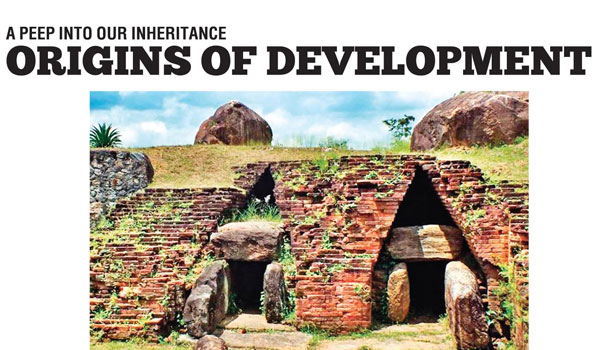
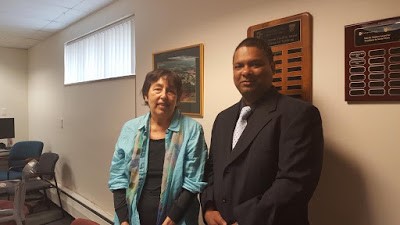
Copyright © 2026 LankaWeb.com. All Rights Reserved. Powered by Wordpress