ඇවා-ගාර්ඩ් විපක්ෂය, පාර්ලිමේන්තු විපක්ෂය හා ජාතික ආරක්ෂාව

December 9th, 2015

– ජනිත් විපුලගුණ – යුතුකම සංවාද කවය

සරල හෝ ගැඹුරු හෝ වේවා, මේ සමාජ සංවේදී තලයේ දී ඇන්ටන් පවිලොවිච් චෙකොෆ් ගැන අසා ඇත්තෙකු නැත්නම් එය අභාග්‍යයකි. ඒ ආකාරයටම අද දවසේ මෙ සිරිලක දේශපාලන කතිකාවේ දී නිශ්ශංක සේනාධිපති නම් පුද්ගලයා ගැන අසා නැති කෙනෙක් ඇත්නම් දේශපාලන කතාබහකට තබා, ඉදිරි මැතිවරණයකදී ඡන්දය පාවිච්චි කිරීමටවත් හවුල් කර ගැනීමට නුසුදුස්සෙක් වෙයි.
නිශ්ශංක සේනාධිපති මට තවම හමු වී නැත. සජීවීව දැකලාවත් නැත. දැක්කොත් මට මුලින්ම අහන්නට පැනයක් ඇත. ඇවා-ගාඩ්” හෙවත් බොහෝ දෙනා වහරන පරිදි ඇවන්ට් ගාර්ඩ් යනුවෙන් ඔබ ඔබගේ ආරක්ෂක සේවය නම් කළේ ඇයි ?” යන්න එම ප්‍රශ්නයයි. එහි සම්පූර්ණ හැඳින්වීම AVANT-GARDE SECURITY SERVICES [PVT] LTD” යන්නයි.නිශ්ශංක සේනාධිපති නම් මහත්මයා මට වඩා වසර කිහිපයකින් වැඩිමහලු ය. ඔහු ඉපැදී ඇත්තේ 1963 වසරේ ය. එහෙත් ඔහු අප මෙන්ම මේ රට විනාශය කරා ගිය ගමන් මගෙහි පුරෝගාමින්ගේ ආණ්ඩු හොඳින්ම දැක ඇත. ඒවායේ රස ගුණ අපට මෙන්ම ඔහුටද දැනී ඇත. ඒ නිසාම ඔහු පුරෝගාමී මෙහෙවරක නිරතවෙමින් 4500කට අධික පිරිසකට ගෞරවාන්විතව රැකියාවක නිරතවන්නට ආයතනයක් බිහිකළා වන්නට පුළුවන. ඒ මගින් අවම වශයෙන් දරු පවුල් 4500ක් වත් යැපෙන්නට ඇත. ඒ ඇසුරෙහි කුසගිනි නිවාගත් බාල, තරුණ, වැඩිහිටි, මහලු පිරිස අඩුම තරමින් 25000ක් පමණ වන්නට බැරි නැත. උපරිමය කිව නොහැක. මා වෙනත් අයට මහත්තයා” කීවත් ඔහුට මහත්මයෙක්” යන්න භාවිත කළේ මේ සද්භාවය හේතුකොට ගෙන ය. බෞද්ධයින් වෙසෙන බව කියන රටේ උපතින් බෞද්ධයෙක් බව කියන මටත් කිව හැක්කේ නිශ්ශංක සේනාධිපති මහත්මයා මතු උපදින ආත්ම ගණනාවකට පින් රැස් කරගත් අයෙකු බව ය.

හිටපු ජනපති මහින්ද රාජපක්ෂ රාජ්‍ය සේවය ලක්ෂ 12ක් තරමට ඉහළ නංවා, උපාධිධාරීන්ට රැකියා දොරටු විවර කොට ලබාගත් පින කුණු මුල්ලට දැමීමට, සිරිසේන නම් මෛත්‍රී උපාසක තෙමේ බලවත් වූවාට, නිශ්ශංක නම් සේනාධිපතියා තමාගේ පින එසේ වන්නට ඉඩ නොදෙන බව කරන කියන ප්‍රකාශ හමුවේ පෙණෙන්නට තිබේ.

සද්භාවය කෙසේ වෙතත්, සිරි ලංකාවේ හදන නීතිවලට හා හැදෙන නීතිවලට පින වලංගු නැත. ඒ සියල්ලටම වඩා ඩීල් දේශපාලනයට” අණක් ගුණක් ඇත්තේම නැත.

ඇවා-ගාඩ් කතා බහ හා හා පුරා කියා කරළියට ගෙන ආවේ වත්මනෙහි සිරිසේන ජනාධිපතිගේ උපදේශක නීතීඥ ශිරාල් ලක්තිලක ය. ශිරාල් ලක්තිලක මේ ආකාරයටම විශේෂ කාර්යයන් කිහිපයකට අත් පොත් තැබූවෙකි. රාජපක්ෂ පාලන සමයේ ඛණිජ තෙල් නිෂ්පාදනයට අදාළව හෙජින්” ගනු දෙනුව අධිකරණයට දක්කාගෙන ගියේ ද ඔහු ඇතුළු කණ්ඩායමකි. එහි සහායකයා වූ නීතීඥ රවී ජයවර්ධන දැන් ශ්‍රී ලංකා රූපවාහිනී සංස්ථාවේ සභාපතිවරයා ය. හෙජින් දුර දිග ගියා සේම, ඇවා ගාර්ඩ් ද දැන් දුර ගමනක් විත් ය. මෙහි විශේෂත්වය නම්, ඇවා ගාඩ් යෂ්ටිය අතින් අත මාරු වී දැන් ඇත්තේ රාජිත සේනාරත්න අත වීම ය.

ඇවා-ගාඩ් හරි අපූරු දේ බිහි කරන්නට සමත් වූ මාතෘකාවකි. වෙල් විදානේ ලා, වික්ටරි සර්වන්ට් ලා, පමණක් නොව පරාජිත සේනාරත්නලා ද මේ හරහා රටට හඳුන්වා දී ඇත. ඇතැමෙකුට හාස්‍යයට කරුණක් වුව ද ඒ වදන් තුළ ගැඹුරක් ඇත. හෙළ ගැඹුරු වන්නේ හෙළට බසින්නාට මිස ගොඩ සිටින්නාට නොවේ” ය. අසුචි අමා වන්නේ ඉහඳ පණුවන්ට මිස ඇස් කන් නාසා ඇති මිනිසුන්ට නොවේ” ය. ඇමතිකම් අහිමි වීම්, අවලාද නැගීම් හා අවලාද ඇසීමේ සිට මේ දක්වා ඇවිස්සෙන්නට තරම් ඇවා-ගාඩ් කුණු ගොඩක්මත් නොවන බව සනාථ වී ඇත. මුලින් මුලින් දැණුනා සේ ඇවා-ගාඩ් යනු කියන තරම් කලු යකෙක් ද නොවේ ය. කලු කෙසේ වෙතත් යකෙකුත් නොවන බවනම් දැන් පැහැදිලි වෙමින් තිබේ.

ඇවා-ගාඩ් කතා බහ උච්ච අවස්ථාවට පැමිණි විට නිශ්ශංක සේනාධිපති මහත්මයා පවත්වන්නට සූදානම් කළ මාධ්‍ය හමුව අත්හිටුවීමට රජයේ පාර්ශවය සමත් වුව ද දැන් දැන් නිශ්ශංක සේනාධිපති පුවත් මවන්නෙක් බවට ද පත්ව සිටී. එපමණක් නොව ඔහු එන්නට කියනාතුරු නො සිට, ඔහු හමුවට ගොස් මාධ්‍ය සාකච්ඡා කරන තරමට ඇවා-ගාඩ් නිමැවුම්කරු ප්‍රබල මාතෘකාවක් වී ඇත. හෙට සිට ඔහුගේ වොයිස් කට් එකක් රූපවාහිනී පුවත් තුළින් දකින්නට ඇතිනම් යන සිතිවිල්ල මේ ලියුම්කරු තුළ ද මතු වි ඇත. ඒ තරමට පච රණවකලාගේ, හාබර්තුංගලාගේ හා පරාජිතලාගේ පැටිකිරිය දැන ගැනීමේ ජුගුප්සාවක් සමාජයට කාන්දු වී ඇත.
මේ තුල සැඟවුණු රහස් කොපමණ ඇද්දැයි ද කෙනෙකුට සිතෙන්නට පුළුවන. ලංකාවේ වත්මන් දේශපාලන පිටිය යනු ඩීල් ලෝකයක් දෝ යන පැනය නිතැතින්ම නැගෙනු ඇත. මෙකී නොකී කතා බෙහොමයක් හමුවේ රටේ ජාතික ආරක්ෂාවට ද තර්ජන එල්ලවිය හැකි පසුබිමක් නිර්මාණය වන්නට ද පුළුවන. එසේ වන්නේ ශ්‍රී ලංකාවේ මේ ඇවා-ගාඩ් යනු රට අභ්‍යන්තරයේ ආරක්ෂක ප්‍රශ්නයක් නොවන නිසා ය. ඉන් ආරක්ෂා විමට තැත් දැරූවන්ට දැන් සියල්ල මනාව හෙළි කරගන්නට හැකියාව ලැබී ඇත. මේ හරහා සහ රටේ ආරක්ෂාව සම්බන්ධයෙන් ගත් වෙනත් තිරණ හමුවේද ජාතික ආරක්ෂාවට යම් පලුද්දක් ඇති වන්නට ඇත.

කෙසේ වෙතත්, ඇවා-ගාඩ් යන වචනයේ පාරිභාෂිකයට අනුවම එය පුරෝගාමී මෙහෙවරක නිරත වී ඇත. ඇවා-ගාඩ් යන නම තම ආරක්ෂක සේවයට යෙදුවේ ඇයිද යන පැනය මා විසින් නිශ්ශංක සේනාධිපති මහත්මයාගෙන් අසන බව කිවේ මේ හේතුව නිසා ය. නව මං සොයන පුරෝගාමියෝ” යන්න එහි පාරිභාෂික අරුත ය. කලාවට සහ සාහිත්‍යයට එය වඩාත්ම උචිත ය. වෙලේ විදානේ, වික්ටරි සර්වන්ට්, ප-රාජිත වැනි යෙදුම් නව ආරකින් වහරන විට මේ බව යම් පමණකට සනාත වෙයි. යහ පාලනයටත් නව අරුතක් එක් කරන්නට මේ මගින් හැකියාව උදා වන්නේ නම් එය කෙතරම් වටී ද ?

මේ සියල්ල යට ඇත්තේ දේශපාලනයයි. ඇවා ගාඩ් ද දේශපාලනික ය. තර්කයකින් තොරවම ඇවා ගාඩ් තේමාව ම බැර වන්නේ විපක්ෂයට ය. එහෙත් පුදුමය නම් ඉන් දැන් ක්‍රීඩා කරන්නේ ආණ්ඩු පක්ෂයයි. මේ මොහොතේ එකම ප්‍රතිවාදියා නිශ්ශංක සේනාධිපති ය. ඔහු බිම දැමීම හරහා ඊළග ඉලක්කය ගෝඨාභය රාජපක්ෂ හිටපු ආරක්ෂක ලේකම්වරයා ය. ඉන් බිඳ වට්ටන්නට බලාපොරොත්තු වන්නේ වතමන් විපක්ෂයේ භූමිකාව ය. ජාතික ආරක්ෂාව වෙනුවෙන් කැපවීමක් කළ ගෝඨා හෙළීමේ දී තවත් පැති ගණනාවකට පහර වදිනු ඇත. සැබැවින්ම මේ වගක් විපක්ෂයට දැණෙන බවක්වත් නැත. ඒ තුළ ඇත්තේ කුහක වතය. රටට ආදරය කරනවුන් තේරුම් ගත යුත්තේ මෙයයි. අධිරාජ්‍යවාදීන්ට කත් අදිනු ලබන විජාතික රූකඩ මෙහෙය වෙන්නේ ඒ දෙසට ය.

දැන් ඇවා-ගාඩ් විපක්ෂයේ පළිහ තනි අතට ගෙන ප-රාජිතලාගේ කඩු පහරට තනිව මුහුණ දෙන්නේ නිශ්ශංක සේනාධිපති ය. මේ අර්ථයෙන් ගත් විට ඔහු සැබෑ සේනාධිපතියෙකි. ප-රාජිත සේනාරත්න කප්පම්කාරයෙක් යැයි කිමට ඔහු බිය නැත. අනෙක් අයට ද එසේ මය. වෙලේ විදානේ ගේ පැටිකිරියම දිග හරින්නට ඔහු බිය නැත.

ප්‍රශ්නය නම්, වත්මන් සැබෑ විපක්ෂය කුමක් ද ? යන්නයි. නිශ්ශංක සේනාධිපතිට ඇති කොඳු නාරටිය තරම් ශක්තිසම්පන්න කොන්දක් ඇති එකෙක් වත්මන් විපක්ෂයෙන් සොයා ගත හැකි නම්….” යන සිතිවිල්ල මේ මොහොතේ නොනැඟෙන්නේ ද ?

සාහිත බිම ශක්ති සම්පන්න වු ඇන්ටන් පවිලොවිච් චෙකොෆ් තරමටම, වත්මන් සිරි ලංකා දේශපාලන බිම නිශ්ශංක සේනාධිපති ශක්තිමත් ය. සැබැවින්ම පණ්ඩක ආණ්ඩුවට වඩා ශක්තිමත් ය. විපක්ෂයේ දෙපිටකාට්ටුවන්ට වඩා ශක්තිමත් ය.

ඇන්ටන් චෙකොෆ් ගැන ලියැවුණු තැනක මෙසේ වෙයි.

චෙකොෆ් ලංකාවේ ඔරියන්ටල් හෝටලයේ නතරව සිටියදී ‘ගුසෙව්’ (Goussiev) නම් නව කතාව ලිවීම ඇරඹී ය. ඊට ඔහු පෙළඹ වූයේ ඔහු එන විට නැවේදී දුටු දසුනකි. සිංගප්පූරුව සමීපයේදී නැවේම මිය ගිය රෝගී මගීන් දෙදෙනෙක් ගේ මළ සිරුරු මුහුදට වීසි කරන ලදී. ‘රුවල් රෙදි කඩකින් ඔතනු ලැබූ මළ සිරුරු මුහුදට වැටෙනු බලා සිටින කෙනෙකුට ඇති වන්නේ කෙබඳු හැගීමක් ද ? පිනුම් ගසන්නාක් මෙන් මුහුදට වැටෙන මෙම මළ කඳන් පිළිගනු ලබන්නේ මුහුදු පත්ලේ අතිශයින් ගැඹුරු වූ තැනකි. අපත් මැරෙන බව ද අනතුරුව මුහුදට වීසි කරනු ලබන බවද අහේතුකව අපේ හිත්වලට දැනේ යැ’ යි චෙකොෆ් ලිවී ය.මේ හැඟීම ‘ගුසෙව්’ ලිවීමට ද ඔහුට බලපෑවේ ය.”
චෙකොෆ්ට දැණුනු ඒ හැඟීම යුගයුග අගයවත් කෘතියකට පාදක වීය. අද වනවිට මේ දේශපාලන සූදුවේ සිටින කිසිවෙකුත් චෙකොෆ්ට දැණුනු ඒ හැඟීමෙන් පෙළනු ඇද්ද? කාට නැතත් විපක්ෂය යැයි කියා ගන්නන්ට නම් දැණී ඇතිවාට සැක නැත. මුඛවාඩම් ඒ නිසා ය. අව් කණ්ණාඩි ඒ නිසා ය. ඒ මුවාවීමකට වඩා මරණයට ඇති බිය නිසා ය.

– ජනිත් විපුලගුණ –
2015 දෙසැම්බර් 09

යුතුකම සංවාද කවය
www.yuthukama.com
ඔබේ මනාපය රට වෙනුවෙන් කැපවුනු යුතුකම සංවාද කවයේ ෆේස්බුක් පිටුවේ ලකුණු කරන්න. (Like us on facebook)
https://www.facebook.com/yuthukama

CEPA coming as ETCA, says GMOA

December 9th, 2015

Courtesy The Daily Mirror

A group International Trade Ministry officials will leave for India on December 21 to make a final decision on the Economic and Technology Cooperative Agreement (ETCA) with India which was earlier known as Comprehensive Economic Partnership Agreement (CEPA), Government Medical Officers’ Association (GMOA) revealed on Monday.

The revelation was made by International Trade Minister Malik Samarawickrama during a meeting held yesterday with GMOA members who continuously opposed the long-pending CEPA/ETCA.

GMOA member Dr. Haritha Aluthge told the Daily Mirror that according to International Trade Minister Samarawickrama, a final decision on the long-pending agreement would be made on December 22.

We pointed out the kind of damage that will be posed to the Sri Lankan trade community. We were informed by the minister that they would finalize the ETCA only after reading the facts in the agreement and studying them,” Dr. Aluthge said.

However, during a media briefing held yesterday by the GMOA, its Secretary Dr. Nalinda Herath said all arrangements have been made to sign the CEPA/ETCA agreement between Sri Lanka and India in January.

Though the name CEPA has been changed to ETCA, we still cannot accept allowing unemployed Indian professionals to enter the Sri Lankan labour market. As we previously said, we extend our fullest support to the Government to improve the quality and skills of Sri Lankan professionals up to international standards. But, instead of uplifting local labourers, the government is going to hire Indians. As the ones who opposed the ETCA, we have had to face defamation from some people. Since we oppose it, the GMOA’s and all state professionals’ reputation is being defamed by some people. The public should be concerned over this due to the impending dangers it would cause,” Dr. Herath explained. (Piyumi Fonseka)

– See more at: http://www.dailymirror.lk/98529/cepa-coming-as-etca#sthash.xZJNUHmk.dpuf

Thousands of ex-soldiers out of work because of Rajitha – Senadhipathi

December 8th, 2015

ඇවන්ගාඩ් සභාපති රාජිතට දෙහි කපයි

හතරවෙනි තට්ටුවට ගෙනගියත් ඇවන්ගාඩ් සභාපති නොසැලේ.. එන ගමනුත් රාජිතට පළු යන්න බනී.. [Video]


DILEMMA OF THE BAR ASSOCIATION, JUDICIARY, RULE OF LAW, LEGAL AID, LEGAL PROFESSION & THE CITIZEN

December 8th, 2015

Sarath Wijesinghe former Secretary of the Bar Association, former Administrator of the Legal Aid Commission, former Ambassador to UAE and Israel.

Bar Association Membership

Bar Association is the most powerful professional body in Sri Lanka established in 1974, amalgamating the traditional Law Society and the Bar Counsel creating Attorneys- at -Law in place of Proctors’ and Advocates, and Solicitor and Barristers-at Law in the UK. Amongst ambitious objects, maintenance of the Honor and Independence of the Judiciary, consideration of matters relating to Rule of Law and Administration of Justice, Promotion of Honorable practice of Professionals, Protection of Human Rights, and Liberties, Support of Law Reforms, Legal Education, Legal Aid are some of the main items in the agenda for the BASL. Do the Legal Professional living up to these expectations is a matter the citizen has to decide based on the performances of the legal profession and the professionals.  Membership of the Association runs to around 16000 with many in active practice. Judiciary is predominately consisting of Attorneys-at-law with the Legislature executive and important positions in the public and private consists of lawyers who will fit into any position in the system of governance anywhere in the world.

Bar and the Judiciary

Bar and the Judiciary are integrated limbs of the Judicial system as either sides of the same coin. As members of the Judiciary consist only of Attorneys- at- law, and every member   enrolled as an Attorney – at – Law of the Supreme Court should statutorily, became a member of the Bar Association of Sri Lanka. Accordingly, members of the legal profession are monopolizing the representation to of the citizen to the Judiciary for redress and fair play on matters of civil criminal and justice on matters against the society. Independence of the Bar and the Judiciary are matters the citizen is vague about and there is ongoing debates and misunderstandings on the interaction of the two branches of the Legal Administration. BASL is accused of influenced by NGO’s and some Embassies and allegations of Bribery and corruption of Judiciary is heard more often than before signifying the deteriorations of the standards. As standards of Education, Ethics, Behavior, Skills, and all other respects are gradually declining there is no wonder the standards of the Legal Profession and the Judiciary too is declining proportionately.

Conflicts among Bar, Judiciary and the Citizen

Conflicts are not uncommon among these three groups interacting each other on daily basis. It appears that the matters have aggravated in the recent past faster for unknown reason. Incidents taken place in Negambo where a group of lawyers have protested and made representation against a Magistrate to the Bar Association and the Chief Justice was given front page publicity.  The Judicial Officer was transferred forthwith. In Galle a Presidents Counsel is charged for contempt of court disturbing the Court proceedings with ring tones on the mobile phone. As the matter is Sub Judice” we are prevented from discussing it any more until the court proceedings are over. A citizen was sentenced to three months for yawning at the court premises. A young man was sent out of courts for wearing a mod shirt and another for an unusual haircut. Some judges do not appear to read cases and have not brushed the legal basics exposing ignorance and making mistakes in judgements. Judges appear to be ignorant, proud, and not living up to the expectations requiring rigorous training on law, procedure ethics and customs. Unfortunately, there is news and gossip among the community that judges are up to bribery and corruption which was never heard during our times despite the majority of honest and honorable judges in the system. Citizens have issues with the lawyers on the quality of services, exorbitant and unreasonable charges for litigation and low quality of professional services. In the United Kingdom the Law Society is strict on the Solicitors on the fees charged, quality of professional services and the solicitor is bound to give the breakdown of the fees charged and services rendered, which is not applicable in Sri Lanka. A leading Colombo based NGO lawyer in the forefront in a group of minority civil society movement engaged in fundamental cases has charged billions of rupees for inquiring into an alleged bribery corruption charges of a leading Government Institution on Aviation after the regime changes, has declined to give the break down despite agitation of the media and the profession. They should be whiter than white as those preach good governance and cleanliness on professionalism should set an example.  Some cases prolog for decades and lawyers tend to live on inefficiency and ineffectiveness of the system. Justice delayed is Justice denied and it Is time for the Bar to lead on law reforms and laws delays with the Judiciary and the civil society. Lawyers engaged in regime change with Foreign Embassies are amply compensated and a lawyer from Galle has made a fruitless attempt to whitewash the sins of some compromising steps of BASL with NGOs and Embassies. Court system is a main breeding ground for corruption and bribery along with the Motor Traffic, Immigration, Customs, and Police Departments. Minister of Justice for whom we have highest regards and hopes in the steering wheel appear to have no control a vision strategy or a plan of action to correct the situation. It is the duty of the BASL to assist him in his endeavors to put things right. He appears to fight his own battle for survival. It is time we assist the Director General of the Bribery Commission who is fighting a lone battle hard to minimize bribery and corruption.

Is Judiciary independent and living up to the expectations of the citizen

Judges are in glass houses as exhibits and citizen depends on them to seek justice and fair play for redress for the civil, criminal and issues against the society through the Police and the AGs Department. Standards have gone down everywhere and one cannot expect Judiciary alone to maintain it on isolation as judges are selected from and among the Attorneys-at –Law who citizen has doubts on the competence and conduct. The worst period of the Court System in Sri Lanka commenced from Sarath Silvas’s period with the declining of standards as a result of Judiciary being politicizing and dictatorial. Madam Shirani Bandaranayaka – a world renewed academic should not have treated so badly and former Chief Justice – one of the finest lawyers and a celebrated Judge Mohan Peiris should not have been removed from the office merely from a latter from the Presidents Secretary overriding the appointment which was legal and constitutional, which are black patches and bad precedents undermining the independence of the Judiciary. Hulftsdorf” Gossip says still Judges are manipulated via telephone calls and messages. Criminal Charges on Justice Sarath Abrew and his Fundamental right Application has created doubts and bad reputation on the country locally and internationally

Rule of Law /Law and Order and Legal Aid    (Legal aid is not a favor- It is a right of the citizen)

Rule of law is the supremacy of the law being equal to everybody which prevails in theory. Today rich and privilege can get away with money and power. Access to law and justice is denied to the poor and powerless with weak and ailing legal aid system poorly funded with inefficient and ineffectual staff. Billions are spent in the UK on legal aid through the network of Solicitors preventing a revolt and unrest of the citizen who will be able to retain even a QC for litigation approved by merits and income tests. Indian and USA is far too advanced on public interest litigation and group rights being Bopal” case being the most famous in India where hundreds of thousands were killed on chemical poisoning, and many Group rights cases in UK and USA on food and hygiene against Fast Food Giants find shelter in poor Sri Lanka thriving on poor Sri Lanka and Sri Lankans catalyzing and increasing Diabetic community which is ever increasing including children. Billions of pounds and dollars channeled to the BASL should have diverted to Legal Aid instead of using it for Regime Changes and Thamashas”. 1985/6/7 are a golden era of BASL responsible for the active participation and engagement of Public Interest Litigation and aligned with legal aid systems worldwide. It is an irony that one lawyer from Galle had defended the lavish expenditure of NGO funds at the BASL and compensation to the activists with front line appointments with perks foreign contacts security for the future. It is time for the next BASL and Law Society to take notice of the needs of the Judiciary, Bar and the Citizen for a new voyage an plan of action towards equality and Law and order of the citizen which is fast deteriorating with the wave of crimes increasing rapidly with no control.

Way Forward to Maintain Law and Order Rule of Law and a Legal System with Equality and Effective and peaceful Society

There are achievable aims with the participation of all the stallholders connected to the Legal Administration. Legal Profession is so honorable that at the outset of the profession it has been a voluntary service to the community which gradually transformed to a money making mechanism. Law is not an ASS as some say- It is close to a religion and a practical philosophy which is innovative and imaginary in driving the society to peace and peaceful living respecting and looking after each other. Thomas Hobbs, John Lock, Socrates and Plato are few are pioneers of this great philosophy transformed to the law in practice today. All Stalk holders should be able to serve and enjoy the profession which is full of directions by every religion on the dignity and honor of the profession the professionals and the society of human beings including the animal kingdom and the environment we live in. Legal system under any governance should act in favor of the citizen/living beings and it is the duty of the parties concerned  to look forward for a successful and an imaginary way of life with great care determination and commitment to serve and to be served. It should be a joint effect of the Bar Judiciary Minister of Justice and the citizen.

GENEVA DEBACLE ON SRI LANKA AND IMPLICATIONS

December 8th, 2015

Sarath Wijesinghe – former Ambassador to UAE and Israel

Human Rights Council

Human rights Council which is an intergovernmental body consist of 47 Nations is housed in Geneva   as a part of the UN system. It is a constituent body to monitor and inquire into the human rights situations in the UN member countries based on the UN Charter. It has limited advisory and monitoring powers limited to recommendations and take further steps purely on the approval and the consent of the respective member Nation. Victims of human rights look upon this body as a forum and a stronghold for action. Human Rights Council is a subsidiary body of the politically appointed politically and based United Nations.  Appointments are on various criteria and factors including international politics, geography economic affiliations with economic and political powers and many other factors. As it is a semi political body decisions are not taken on human rights issues alone on some sections of members as much as the United Nations which is an International Political world body. Most of the decisions taken are political may be as a punishment or a deferent to align compel/align with the group in power. High Commissioner of Human Rights is the Chief Executive and the leader of the inefficient and ineffective institution answerable and expected to report to the main body on the human right situations of the member countries which faces controversies all the time. Member countries are voluntarily seeking the membership of the UNHCER which is optional. USA is a reluctant member initially declined to joined and   while currently taking an active role on monitoring the situations of the either member nations. Being a main contributor to the UN funds USA has direct and indirect control over the management and appointments to the world body which has a questionable conduct, though the existence of a world body is a necessity to the world economic, political order and peace which was constituted in place of the League of Nations after the world war. Secretary General of the United Nations though appointed by the main body is appointed indirectly by the USA and the western powers.  In the recent past USA and Israel has not attended important deliberations of the Human Rights Council with a look worm attitude on the functions, but active in monitoring human right situation in the weaker members of the world family. Down fall of the Middle East – iron fist countries were mainly due to the activism on monitoring human right situations which has changed the course of regime change, in which Sri Lanka have been the latest victim. Regime change process has destabilized and shatters many Afro, Asian and Middle Eastern countries the latest prey of ISIS with the West.

Matters within the Domestic Jurisdiction

Article 2(7) of the U N Charter is clear that the general body is prevented from intervening in matters within the domestic jurisdiction of member states except on enforcement measures under Chapter V11. It is based on sovereign equality of all nations expecting equal treatment to all member nations. Do they really enjoy equal rights and privileges are questionable issues.  Currently the Human Rights Council is targeting identified countries such as Burma, Guiana, North Korea, Syria, Irene, Kyrgyzstan, and few other countries with allegations of violation of human rights, though in reality there are many violators worldwide unnoticed and unchecked for various political reasons. Article 2(7) is developing on a different interpretation that human rights are universal encouraging external and UN intervention on human right violations in domestic jurisdictions. Now the situation is changing for member nations to be more vigilant and interested on alleged human rights violations in the world which is taking place unnoticed to the world. Definition of Human Rights and violations are complicated and demands interpretations due to the complex nature of the current events and the conduct of the world powers and political and economically strong international institutions calming to be guardians of human rights. This is an ongoing argument which is changing with the political changes of the complex world. Many powerful countries and international organizations are demanding to intervene and interfere in the domestic jurisdictions on human right issues.

Who are the human rights violators?

Who are the real human violator are yet to be found by the international community led by the western powers claiming to be leaders, guardians an defenders of human rights. World news daily says USA and UK killed 3.2 million Iraqis and 750000 Children which is still not disputed. USA and UK invaded Iraq in search of nuclear arms, fully backed by the United Nations system and though no nuclear weapons were found the death toll in the cradle of our civilization is over 3.3 million and the country is now in shatters and pieces due ISIS which is a byproduct of Iraqi war threatening the entire world including the West responsible for the time bomb which is to be ignited sooner or later. USA and UK are responsible for the killings of millions in Iraqi, Afghanistan, Pakistan and many African countries. Human Rights Commission appear to have justified the atrocities in these countries in the name of human rights and peaceful co-existence in the current world order for pace and stability. Haaretz writes of a resolution against Israel, who are unconcerned on resolution for obvious reasons. It is an exemplary fearless nation conversant with the International Law and the reality of the new world order. Killings in Afghanistan, Pakistan, Iraqi, and other middle east Asian and African countries have either ignored or gone unnoticed. Violators are punished through the UN system or political and economic embargos of the rich and powerful countries or groups claimed to be the international community. It is a pity that the human rights violations are shielded and continued by those responsible for violations. Israel is underrated in defending their nation created with great struggle amidst the oil rich enemies right round, fearlessly challenging the UN system. Hundreds of resolutions have not changed Israel or Israelis defending the nation tooth and nail. It is a pity Sri Lanka has co-sponsored the Resolution against her own nation conceding the number of reports prepared by NGOs and NGOsm against Sri Lanka. West dominated world community is reluctant to criticize Middle East on mode of punishment to death by stoning, led by wealthy Saudi Arabia due to oil and in investments in the West. Stoning to death in public in the Middle East is not criticized by the west and the victim countries such as Sri Lanka who has co-sponsored the human right resolution against her own country. Sri Lankan attitude is questionable in cases of stoning to death of her nationals on offences which are less trivial in the other parts of the world. Sri Lankan Ambassador has made a controversial statement urging to respect the laws of the host country condoning death by stoning.

In the light of the UK, USA and Israel situation the resolution on Sri Lanka by Sri Lanka and Western allies is a matter that some commenters consider as’’ Harsa Kiriri” mode self-destruction with short and long term implications. It is unusual and the first time ever a nation co-sponsors a resolution against her own destruction, by agreeing on committees and commissions appointed and determinations based on internet, here say and groups and individuals on Sri Lankan activists living abroad as refugees as a powerful group of respective countries in large number with a sizeable number of decision making expatriate voters. Why Sri Lanka fell into the trap is a mystery and unfortunate. She could have just kept allowing the western powers to go through the resolution to reduce and minimize the impact and the responsibility on her.

Resolution against Sri Lanka with co-sponsors, Sri Lanka, USA UK and other Western countries

A consensus resolution was adopted at the 30th sessions with a long preamble and an operating clauses requiring Sri Lanka to implement and report back to the sessions in 2016, with the developments on the implementation. UNHCER with supervisory powers will be physically present with staff and foreign lawyers to offer technical and other support in the implementation process of the recommendations with the time frame until 2016.Sri Lanka continually objected resolutions on Sri Lanka with her friends who were disappointed with the new position taken by Sri Lanka in co-sponsoring the resolution on her which has short and long effects and implications. Resolution appear to have drafted by the expatriate diaspora reflecting long term demands cleverly incorporated in the resolution.

Preamble of the resolution has detailed the long history and the recent developments while the operative part deals with the domestic accountability with international involvement, and supervision, with Hybrid Courts, consisting of foreign judges. It provides for the implementation of the previous resolutions, offering technical support. Political settlement with constitutional amendments, devolution of political authority, full reconciliatory process with full enjoyment of human rights, are requirements with access to progress before the oral update in 2016. The proposals when implemented will change the overall fabric of the entire political structure in the country with constitutional changes which is hard to change, as the Constitution adopted in 1978 is still in force. All these are matters exclusively within the domestic jurisdiction when Sri Lanka helplessly watching it implemented due to co-sponsoring the resolution against Sri Lanka.

Changes envisaged has spread length and breadth of the entire legal and political system in all the areas including the Provincial Council System, which is an ineffective white elephant. It requires the Provincial System initiated by the Indo Sri Lanka accord with tough resistance by the public , to operate effectively, preserve human rights records, ratify international convents, protect all persons from enforced disappearances, revise the Public Security Act, revise PTA (Prevention of Terrorism Act), attacks on journalist, Lands to be distributed among the displaced, introduce victim prevented law, Security sector reforms, improve domestic law and implication of LLRC and recommendations of the commissions appointed by the UN and affiliated institutions, justice and reparations to the affected are the main recommendations of the unusual and unique resolution adopted Sri Lanka as a co-sponsor. Resolution recommends drastic constitutional changes and changes of the fabric of the System of Government and governance in per with long term demands of the diaspora population who were living in exile claiming asylum in the respective countries. Article 2(7) stands helpless and ineffective with the co-sponsored resolution by Sri Lanka and USA.

Is the resolution Effective Powerful and Beneficial to Sri Lanka?

Generally, such resolutions are non-binding and the implement on is voluntary unless taken up by the apex bodies of the UN system such as the Security Council or the General Body, on direct and indirect execution of the resolutions. Resolution is not a treaty and implementation is indirect. But the fact that Sri Lanka is a co-sponsor has completely changed the outlook and the effect of the resolution in – a unique way on this unusual and unique resolution which is binding on Sri Lanka with the time frame imposed in the resolution with the deadline of 2016 oral reporting. As a result, the UN and the powerful member nations has the moral rights for forceful and indirect implementation of the requirement of the resolution which dilutes Article 2(7) of the Charter on sovereignty over domestic jurisdiction. Non implementation of the self-imposed resolutions will give disastrous effects and Sri Lanka is bound to implement the contents of the resolutions to the last word. Benefits will be reaped with the goodwill and the change of attitude of the west. But the Statement by the EU Ambassador that there is going to be long wait for the reactivation of GSP Sri Lanka is eagerly waiting for has disappointed Sri Lanka and have given rise to loss of hopes after such a grave sacrifice of the nation with binding and rigorous implications and undertakings.

Premature Effects of the Resolution

It appears that the resolution is effective and in force with the target of 2016 reporting back. Constitutional changes are taking place giving more powers to the provinces based on the 13th amendment, and Prevention of Terrorism Act is being removed, when the terrorism raising the ugly head in France and the Middle East with the emergence of ISIS threatening the western world with the powerful members spread worldwide. Unseen enemy is spreading as cancer when Sri Lanka appears to lose the grip based on the promises and the directions of the resolution agreed upon by the main co-sponsor – Sri Lanka. UN has entered Sri Lankan Naval base for inspection against the accepted norms and principles. Steps will be taken to appoint foreign and Commonwealth judges and formulating of Hybridge courts and Judges.

Advantages to Sri Lanka on the co-sponsored resolution

Arguments of the Sri Lankan government on the co-sponsored resolution is that the changes with bring about economic benefits such as re activation of GSP, and goodwill of a substantial part of the European Community and USA, when the traditional friends of Sri Lanka such as USSR, China Latin America and some Afro/Asian countries always backed Sri Lanka economically and politically. Is worth the price paid for the goodwill will be decided from how Sri Lanka will be treated and looked after by new found friends. So far no commitments on Economic Political or any other form of assistance except offers of technical advice on human rights mechanism. Sri Lanka can be proud of an advanced legal system and the leading Nation in the South Asia economical and politically with highest per capita and educated and developed workforce and intellectuals. Many USA UK and west politicians have come and gone with no promises of any small or large scale benefit. They have their own issues and problems and living in fear of ISIS in their soil with economic hardships. They too depend on China for assistance and investments. Putin has become the most powerful leader in the world and come out of the economic hardships. China is developing fast in all the areas entering into the large scale of Aero plan manufacturing industry once the monopoly of the west.

Where are we and way forward

Sri Lankan appear to be helpless and at a loss with the loss of traditional friends in the world family now taken the backseat in the international arena on the Sri Lankan issue. How can we get out of the mess is a complicated issue. Once fallen to the well has to come out from the same way and it is hard but it is the duty of the Sri Lankan polite and the intellectuals to deal with the new found friends by implementing the contents of the resolution with reduced strength in a diluted form. In the event the ugly head of terrorism emerges due to the relaxations and changes on security, there is a possibility to reemerge the situation that has gone through three decades. Will the proposed reconciliatory measures be a solution to a future terror attacks are a matter to be patently looked into. Is the newly elected government incapable and unable to have a control on the peace, economy and the political culture is a matter the common man is patently observing with interest. Prices of Coconut, Tea Rubber Paddy has drastically gone down with the  rupee and no new ventures investments of developments appear to be forthcoming, with infighting among the Ministers giving different versions on main issues with the main leaders giving different versions and interpretations on economy, foreign policy, and strategy washing dirty linen in public by opposing  main political parties groups together as against the main enemy the former President who regaining his popularity among the common man. Talk of the town in nothing is happening and nothing is moving whereas the previous regime have been active and aggressive on development. Previous President’s immense popularity and the inefficiency of the good governance has disappointed the masses and it is time for the government to rethink of a new strategy to avoid mass uprisings. Students, workers, peasant’s uprisings are emerging in various forms with attacks on the security forces and the government servants. This should be avoided and curtailed in the interest of the Nation as constitutionally the government will go through the full term even with a lame system of governance. Has the former President mismanaged the foreign policy and foreign relations in terms of the Geneva Debacle are issues raised by another group supportive to the current governance and the merits and demerits are to be left for the masses and the international brotherhood to ascertain. It is a good idea for the opposition to give time and space for the incumbent government to go through the process for which a mandate has been given by the masses.

It is our country and it is time to be magnanimous and consider the betterment of the country and the people going through hardships. Constitutionally the government will carry on the full term at any cost with no vision strategy and non-corporation from everybody alike. It is time for the polite on the top to gain the support and cooperation of all without allegations counter allegations as the main strategy with of hard work and a vision as promised before elections. Government must declare that it is incapable of implement unenforceable promises pledged before elections and come forward with a program with the real opposition in the voyage of success and prosperity of the Nation. It appears that Sri Lanka lacks a proper foreign Policy while many leaders giving their own independent views without speaking with one word to the world on international issues. World and the people will tolerate mismanagement of foreign policy for some time, but not always. Reconciliation should start from the political apex on politics, economy without accusations against each other. Still there appear to be no foreign policy for the new governance supposed to be good governance expected to be efficient. It must be remembered that every political party and politician is responsible for our downfall and determined to activate reforms with a new vision spirit of friendship and cooperation is required without differences based on cast race creed religion or any other differences. This realization should come from the top in the government and the opposition for us to get over from the Geneva Debacle we are immersed in.

Sarath wijesinghe Sarath7@hotmail.co.uk

Russia strikes ISIS targets in Syria from sub in Mediterranean for first time (VIDEO)

December 8th, 2015

Courtesy RT

 © Vitaliy Ankov
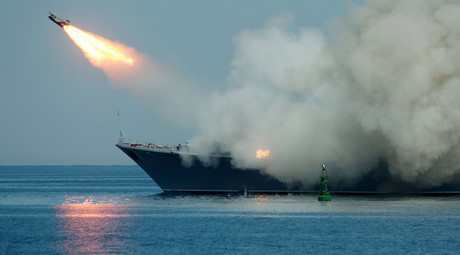
Russia has, for the first time, targeted Islamic State targets in Syria with Kalibr land-attack cruise missiles launched from a submarine in the Mediterranean Sea, according to Russia’s Defense Minister.

The 3M-54 Kalibr missiles were launched from the Kilo-class diesel-electric submarine Rostov-on-Don”, Defense Minister Sergey Shoigu told President Vladimir Putin on Tuesday.

Russia’s warships based in the Caspian and Mediterranean seas launched similar missiles targeting Islamic State (IS, formerly ISIS/ISIL) positions in late November. This is the first time that Russia has targeted IS in Syria from a submarine.

[The missiles] targeted two major terrorist positions in the territory of Raqqa,” he said.

We can say with absolute confidence that significant damage has been inflicted upon ammunition warehouses and a mine production plant, as well as the oil infrastructure.”

Earlier on Tuesday, a source within the Russian Ministry of Defense revealed that the Rostov-on-Don, equipped with modern Russian Kalibr cruise missiles, had appeared near the Syrian coast.

READ MORE:Russian submarine with cruise missiles off Syria coast – reports

Shoigu stated that in the past three days Russian Air Forces have carried out over 300 sorties hitting 600 terrorist targets.

In the past three days, the operation involved Tu-22 planes as well as warplanes from the Khmeimim airbase.  In total we carried out 300 sorties and hit 600 various targets,” he said adding that all sorties were performed with the backing of Su-30 fighter jets.

Speaking to the president, Shoigu also said that the flight recorder of the Russian Su-24, recently downed by Turkey near the Syrian-Turkish border, has been found and presented it to Putin.

Putin told Shoigu that it should be opened only in the presence of international experts.

Russia has been conducting airstrikes targeting Islamic State (IS, former ISIS, ISIL) militants and other terrorist groups in Syria since September 30. The air campaign was launched after a formal request from Damascus. Russian jets have been carrying out sorties from Khmeimim Air Base in Latakia.

Turkey has been insisting that it downed the Russian Su-24 bomber on November 24 because the jet had violated its airspace for 17 seconds” and said that the jet’s crew had been repeatedly warned prior to the attack.

READ MORE:Turkish F-16 attacked Russian Su-24 without warning, both were above Syria – commander

Moscow has denied Ankara’s claims, saying that the Turkish F-16 attacked the Su-24 without warning and over Syrian territory. The surviving Russian pilot, Konstantin Murakhtin, stated that neither he nor Lieutenant Colonel Oleg Peshkov, who was killed by Turkmen rebel machine gun fire after ejecting, had received any radio or visual warning.

Turkey’s President Recep Tayyip ErdoganWhat is Erdogan’s Game in Syria and Iraq?

December 8th, 2015

Pepe Escobar Courtesy Sputnik

The – predictable – reaction across the West over the Russian Defense Ministry’s very serious denunciation of Ankara embedded with ISIS/ISIL/Daesh still begs to be regarded as no less than astonishing.

The actual evidence is not even discussed by Western corporate media. It’s all dismissed as “Russia claims…” Yet not only Sultan Erdogan has been systematically unmasked as a serial liar; the accumulating evidence points to Ankara both as an indirect ally and shady sponsor of the fake “Caliphate”.Whatever the Atlanticists can come up with to “excuse” the Erdogan system, at least the devastating PR debacle for the “democratic West” is now a fact of life all across the Global South.

At the same time an elaborate shadow play is in progress. NATO issues non-denial denials — after all it can never back off from its usual “Russian aggression” meme — while the Obama administration, predictably, wallows in doublethink; Turkey may not “support” ISIS/ISIL/Daesh, but Turkey must seal the border with Syria anyway.

Sultan of Divide and Rule

Since Gezi Park it’s clear the AKP model for Turkey has derailed into a Sultanate dictatorship with a slight electoral veneer. Divide and Rule is the norm.

Sultan Erdogan’s bête noire, internally, is the pro-Kurdish Peoples’ Democratic Party (HDP). Erdogan wants Kurds — a substantial 20% of the overall population — to choose between the AKP’s Islamist take on Turkish nationalism and the HDP’s Kurdish nationalism with a leftist feel. He’s playing Kurds against Turks no holds barred.

South of the border, Erdogan actively supports Salafi “moderate rebels”, especially his fifth column Turkmen, heavily infiltrated by Turkish fascists of the Grey Wolves kind, in northwest Syria. But Ankara is clever enough not to — directly — support ISIS/ISIL/Daesh. Turkmen have struck de facto alliances with Jabhat al-Nusra, a.k.a. al-Qaeda in Syria. NATO covers Erdogan’s back.Russia’s entrance with — literally — a bang in the Syrian war theatre blew up Erdogan strategy’s to smithereens. Couple that with the Obama administration’s penchant to support Kurds across “Syraq”.

The only thing Erdogan wants from NATO is a “safe zone” — an euphemism for a no-fly zone that Ankara will use to prevent YPG Syrian Kurds from unifying their three cantons along the Turkish-Syrian border. For Erdogan, the prospect of Kurds preventing Turks from providing logistical bases and weapons to the whole Jabhat al-Nusra galaxy, and of course ISIS/ISIL/Daesh, is anathema.

So Erdogan had been using the Turkmen against the YPG. Russia went for the jugular. And the Sultan, predictably, went bonkers.

Russia’s strategy — coordinated with the Syrian Arab Army (SAA) — will only intensify. The priority is to completely rout Turkmen and al-Nusra all across the Bayirbucak region. Two objectives are crucial. 1) to secure Latakia and thus Russia’s Hmeymim air base. 2) to get rid of the Chechens, Uzbeks and Uyghurs infiltrated among the Turkmen (crucial for Moscow, aware of the “900 km from Aleppo to Grozny” syndrome, and also for China.)

As for the notion that Erdogan will now abandon his Turkmen strategy and start fighting ISIS/ISIL/Daesh, that’s a myth. Erdogan will never accept the American support for the YPG. The thing is there’s not much he can do about it.

Sultan Changes the Subject

The downing of the Su-24 was a crude attempt by Erdogan to force NATO to choose his Turkmen/al-Nusra/anti-Kurd strategy instead of any possible coordination with Russia to fight ISIS/ISIL/Daesh.

Talk about a monumental blowback; Erdogan handed Moscow on a plate the deployment of the S-400s to Hmeymim. Short-term, this means any Turkish F-16 entertaining funny ideas over Syrian skies will be summarily shot down. Mid-term, this means the “Assad must go” obsession is now six feet under. But the cherry in the cake is long-term; Russia has solidified a permanent strategic stake in the eastern Mediterranean.

Across the battlefield, the most important development is that Russia, and not Iran, has taken over tactics, planning operations and also re-equipping the SAA with everything from 152-millimeter MTSA-B guns to the absolutely devastating TOS-1A Solnitsa rocket launcher, able to fire 30 220-mm thermobaric (incendiary) rockets in a single salvo.Freshly arrived Russian Marines are also about to advise the SAA counter-offensive against Daesh in Tadmur, western Palmyra.

The Russian tactic is essentially to blow everything up, big time. Of course this implies a serious risk of civilian casualties — something that can only be alleviated by good ground intel, provided by the SAA. It’s the SAA that is actually capturing those areas on the ground.

With his back against the wall in Syria, Erdogan — what else — changed the subject and made a play in Iraq, via the now famous “incursion” of alleged 150 Turkish troops along with 20-25 tanks.

Turkish Prime Minister Ahmet Davutoglu swears Ankara had been “invited” in by the Nineveh provincial government, with Baghdad’s approval (a bald-faced lie). A spokesman for the semi-autonomous Kurdistan Regional Government (KRG) in northern Iraq said everything is legit.

Turkish daily Hurriyet spun it as Ankara holding a permanent military base in Bashiqa, near Mosul, to train Peshmerga forces, a deal signed between KRG President Massoud Barzani and Turkish Foreign Minister Feridun Sinirlioglu earlier last month.

But Ankara, we got a (huge) problem. Mosul and Bashiqa are not even part of the KRG.

So this has nothing to do with training Peshmerga — as much as Erdogan and the AKP heavily hedge their Kurd hatred: the KRG racket and the Peshmerga are “good Kurds”, while the PYD/YPG and the PKK are “bad Kurds”.

When in doubt, follow the oil. The Barzani Mob is selling oil that belongs to Baghdad to Turkey — illegally. They literally own the oil racket in the KRG; and they make a killing, thanks to cozy relations with partner Genel oil, whose chairman is Tony “Deepwater Horizon” Hayward.

It has been widely proved that Erdogan’s son in law cum Energy Minister Berat Albayrak holds the exclusive rights to move KRG oil through Turkey. Following evidence collected by the Russian Defense Ministry, Daesh stolen oil may well be mixed with KRG oil along the way. And a key beneficiary of the whole scheme is Erdogan’s son Bilal, a.k.a. Mini Me, through his BMZ shipping company which delivers the oil mostly to Israel. Mini Me is now self-exiled in Bologna, Italy, where he manages untraceable amounts of cash safely ensconced in Swiss bank accounts.

Obviously none of this is seriously examined in Atlanticist circles, thus providing Erdogan with some solace; if the stolen Syrian oil racket may be moribund, the Iraqi side of the op seems to be untouched.So what we have now in effect is Turkey “violating” the borders of Iraq (remember those famous “17 seconds”?) Baghdad is actually part of the “4+1” coalition (Russia, Syria, Iran, Iraq, plus Hezbollah). Turkey knows it. The “incursion” is yet one more — serious — provocation. If Russia — and Iran — decide that’s one too many, Erdogan’s oil racket protecting tanks better get ready to meet their maker.

The views expressed in this article are solely those of the author and do not necessarily reflect the official position of Sputnik.

Read more: http://sputniknews.com/columnists/20151207/1031367231/erdogan-turkey-syria-iraq-oil-su-24.html#ixzz3tlo5Wg1K


The bomb-door of the Tu-22 M3 missile-carrying bomber, the Russian aerospace forces, on its operational mission to deliver air strikes at ISIS targets in SyriaRussian Forces Launch 2,000 Bombs Against Terrorists in Syria

December 8th, 2015

Courtesy Sputnik

Russian Aerospace Forces have launched some 2,000 aerial bombs in Syria, destroying numerous extremist infrastructure targets over four days, the Russian Defense Ministry said in a statement.

According to the statement, 1,920 bombs were launched against militants since December 5.

“Seventy command centers, 21 training camps, six munitions and explosives plants, 43 munitions depots and six oil objects were destroyed,” the ministry said.

Intensified airstrikes from Russian forces have allowed the Syrian army to develop its offensive in key regions, the statement added.

“As a result, the strikes have created the conditions for further offensive action of the Syrian army in cooperation with other armed forces in the areas of Aleppo, Idlib, mountainous Latakia and Palmyra.”

Moscow has conducted airstrikes against Daesh, also known as ISIL/the Islamic State, in Syria since September 30, acting at the request of the legitimate government of Bashar al-Assad. Russian warships stationed in the Caspian Sea have also launched successful cruise missile strikes against the terrorist group.

Read more: http://sputniknews.com/russia/20151209/1031445116/Russia-strikes-Syria.html#ixzz3tlmrclJj


Read more: http://sputniknews.com/russia/20151209/1031445116/Russia-strikes-Syria.html#ixzz3tlmc4XqO

Govt releasing LTTE suspects solely for political benefits – Gota Ada Derana

December 8th, 2015

Adaderana

ආණ්ඩුවෙන් එල්.ටී.ටී.ඊ සැකකරුවන් නිදහස් කරන්නේ දේශපාලන වාසියටයි
රට තුළ පොලිස් රාජ්‍යක් බිහිකරමින් පවතින බව හිටපු ආරක්ෂක ලේකම් ගෝඨාභය රාජපක්ෂ මහතා පවසයි.

https://youtu.be/kmRGoB5peA0

Mahinda Rajapaksa denies hiding army personnel

December 8th, 2015

Adaderana

මගේ ආරක්ෂාවටත් ප්‍රශ්නයක් තමයි – මහින්ද
එල්.ටී.ටී.ඊ සැකකරුවන් නිදහස් කිරීම තමාගේ ආරක්ෂාවට තර්ජයක් බව හිටපු ජනාධිපති මහින්ද රාජපක්ෂ මහතා පවසයි.

Are budget proposals for education meaningful?

December 8th, 2015

By T. M. Premawardana Courtesy Island

Prior to the presentation of the Budget 2016, I put forward four principles on which the government’s planning and implementation of resolving the national education crisis should be based. They like the four wheels of a car should be activated simultaneously to function effectively. These principles, bound to our heritage of free education, are given below.

A. Every electorate or every divisional secretariat to have three categories of schools plus a vocational training school. (The three categories of schools are mentioned in the election manifesto.)

B. Teaching to be a respected profession of international standards.

C. A school syllabus that encourages good citizenship.

D. An allocation of 6% of national income for free education.

Now, we can inquire into the government’s commitment to these principles. This article will look into how the budget will affect, especially and only, the school education as it is the foundation on which higher education rests.

article_image

The budget says, “Our strategy in education is driven by three strong pillars being improvements to the quality of teaching, to development of infra structure facilities of the schools and students and a practical school curriculum.” (305) The budget has also allocated about 2.8% of the GDP for education.

Categorization of schools based on

electorates or divisional secretariats

While keeping intact the present anomalous school system of ‘colombata kiri gamata kekiri’, Rs. 63,500 bn has been allocated for the development of schools’ and students’ infra structure facilities. Improving infrastructure without school categorisation based on the divisional secretariats has so far only made the anomalies worse. It will become still worse in the future. Doesn’t the government have a conscience to at least to get rid of the unjust treatment of children entering the year one class by having separate primary schools?

If the categorisation of schools based on divisional secretariats is accepted as a policy, first of all, the differences between DSs or electorates will have to be eliminated. Beginning from the electorates/DSs that have the least infrastructure facilities, the improvements will have to be given to all in an orderly manner. It will be a true change that people will see and feel. Thus, unjust differences between electorates/DSs will be eradicated. Then the differences between the urban and the rural schools will be gradually eliminated.

Thereafter, it will be necessary to get rid of the anomalies among schools. It cannot be done in the present school system to which they are endemic. For example the anomalies between schools of 1-5 and 1-13 can never be eradicated. But, let’s posit for a moment that there are three categories of schools 1-5, 6-11 and 12-13; then the differences or anomalies between them can be identified and solved systematically. Without such a categorization of schools we can never make ‘the closest school the best school’.

As the government budget has not accepted the categorization of schools based on electorates/DSs the allocation of funds for the development of infra structure is not meaningful. Invariably, we shall have to conclude that the hidden policy of the government is to continue the competition for popular schools. The government has quietly decided to carry on with the anomalous, unjust education system.

Under these conditions how can the government say “…we will make it compulsory that all students should follow an educational process that will go on for 13 years, either in schools or vocational training institutions.” (318) and make it a reality? In other words, where are the vocational training schools for more than 50% of the students who leave after the GCE O/L examination?

To make that promise a reality it is essential to have a system of school education and higher education as the diagram shows. But, the budget proposals certainly do not show such an intention.

A teaching profession of international standards

The budget has allocated Rs 1,000 bn for the full time training of teachers for two years within the first five years after they are employed by the state and state-aided schools. By this proposal the government has put aside the formation of internationally respected teaching professionals. The life of any education system is the professional practice by the teachers. Such a respected profession can be evolved not by training them after their enrolment but before. Only young men and women who are bright and who give priority to character must be enrolled. The full-time teacher training must be at least for 5 years. After the training they must be given a licence to teach. And for that there must be an Education Council similar to the Medical Council.

For example in Finland, where they have the best education system in the world, only the best 10% of the graduates can apply for teaching. The teacher training is for five years. The total expenditure for this is undertaken by the government. All the teachers are graduates with a diploma in education. There is no difference or competition among the teachers. Their salaries increase only according to seniority. The profession of teachers is similar in all respects to the professions of medicine and law.

If there is an honest desire to develop the country, first of all, education must be developed. That is because in any country the stable development of the economy always follows the human development there. Even a country like Cuba sends teachers and doctors abroad for work not mothers! Our country has the potential to move in that direction.

If we create an internationally recognised and respected education profession our teachers can obtain no pay leave for five years to work in developed countries and earn as much as Rs. 35 and 45 mn. Then the teacher can give up tuition while safeguarding one’s and profession’s respect and raise his or her own living standard. What is more important is the life experience the teacher receives abroad which will enhance the human development in his or her own country.

Looking at the budget proposals from the angle of education profession, the first impression one gets is that the strategy is like ‘the horse must clear the stile but it must also be cheap’. What has really happened is that the policy of creating an internationally respected profession of education has been rejected.

A curriculum that encourages

good citizenship

The budget has not allocated funds for the curriculum development. The curriculum is the road map of education. At present children compete for economic profit alone. It robs the children of their childhood and kills their humanity. It promotes selfishness and evaporates wisdom.

The results of which are the seven deadly sins that Mahatma Gandhi presented:

Wealth without work; Pleasure without conscience; Science without humanity; Knowledge without character; Politics without principle; Commerce without morality and Worship without sacrifice.

Sadly, these are becoming the much valued principles of many citizens of our country. If this trend continues it is difficult to imagine a civilized society in future where we can live in safety and peace. The government has not accepted in principle and as a policy the need for a curriculum that encourages and forms good citizens.

6% of GDP for free education

After a long time the government has increased the allocation for education by 30% relative to the previous year. It is a good trend to be happy about. But, it is not specified that these funds are for the improvement and development of free education. It is also not proclaimed that the government has accepted as a policy to set aside 6% of the GDP for education.

If the government had openly declared in the budget that 6% of the GDP for education was its policy and to reach that in a certain year annually so much would be increased then we would have known that the government was dedicated to this policy and committed to it.

If the government is not ready to implement the above it is meaningless to say, “Let me assure this house that our government will at no point compromise free education that is prevailing at present.” (333)

We have no confidence that the government’s dedication to our national heritage of free education is sincere. Ergo, it is definitely not possible to say that the budget proposals for education are meaningful.

Mega corruption everywhere – Real action nowhere? ‘International Anti-Corruption Day’ falls on Dec. 09

December 8th, 2015

By Nihal Sri Ameresekere  F.C.A. F.C.M.A., C.M.A., Courtesy Island

Commencing from 1970 with the Kyoto Declaration, the process of formulating the UN Convention Against Corruption (UNCAC) saw the light of day in December 2000; the UN General Assembly resolved to establish a Committee for negotiating and formulating the path-breaking convention. The UNCAC was formulated and adopted by the UN General Assembly in October 2003, and Dec. 09 was designated as the ‘International Anti-Corruption day’. The UNCAC came into force in December 2005,upon 30 states having ratified it. Sri Lanka was the second state to do so in March 2004, under Prime Minister, Ranil Wickremesinghe. As at now 177 states have become parties to the UNCAC, the Secretariat and custodian of which is the UNODC.

On the heels of the UNCAC coming into force in December 2005, mooted by UNODC the International Association of Anti-Corruption Authorities (IAACA) was inaugurated in October 2006, with the objectives of promoting and facilitating the implementation of the UNCAC. IAACA held its 8th Annual Conference in November 2015 at St. Petersburg, Russia, preceding the 6th Session of the Conference of State Parties (COSP6) to UNCAC held also at St. Petersburg. Russia’s recognition of the need to combat corruption was a global achievement and reflects the pace at which this international movement against corruption has been growing. Sri Lanka after a lapse of several years, participated with a delegation led by Deputy Minister of Foreign Affairs, Dr. Harsha de Silva.

UNODC Executive Director Yury Fedotov at the G-20 States Meeting in Paris in April 2011 emphatically stated thus:

“Corruption has the power to shake the very foundations of society. Even in regions where peace and prosperity prevail, corruption takes a heavy toll …. Now it’s time for business to move beyond declarations to concrete actions …. Anti-Corruption Action Plan provides a common approach and an opportunity for the G-20 to lead by example in the global fight against corruption ….. In October this year, the Conference of States Parties to the Convention against Corruption will meet in Marrakech, Morocco to take stock of global progress in preventing corruption …. The UN Convention against Corruption is the first legally binding global anti-corruption instrument. It obliges States to prevent and criminalize corruption, promote international cooperation, recover stolen assets and improve technical assistance and information exchange.”

Conference of State Parties in November 2015 and ‘Sustainable Development Agenda 2030’

The United Nations at a conference in Paris in September 2015 formulated a ‘Sustainable Development Agenda’ with goals to be achieved during the 15 years by 2030. Goal No. 16 therein is to ‘promote just, peaceful and inclusive societies’. Some of the specific targets thereunder is to ‘promote the rule of law at the national and international levels and to ensure equal access to justice for all’; further significantly to ‘substantially reduce corruption and bribery in all their forms’; and also to ‘ensure public access to information and to protect fundamental freedoms’. It is against this background that the COSP6 re -the UNCAC was held in St. Petersburg, Russia in November 2015, on the conclusion of which, a statement was released by UNODC Executive Director, Yury Fedotov.

Articles of the UNCAC and Multi-Stakeholder Approach

The UNCAC applies with equal force to the public and private sectors, where public resources are managed, either by the public sector or by the private sector.

Having dealt in depth with the contents of the Articles of the UNCAC previously, the IAACA Annual Conference in November 2015 was held under the theme ‘Prevention and Education’ vis-à-vis combating corruption; and IAACA issued a Declaration, inter-alia, calling upon state parties to further embrace a comprehensive multi-stakeholder approach to combating corruption, and to strengthen the dialogue between governments, civil society, academia and the private sector, in order to muster support for the implementation of the UNCAC, as reflected by the UNODC Chief’s statement at the conclusion of COSP6.

At high-level discussions and sessions, the private sector’s duty and obligation to conform to the UNCAC was emphasised, with suggestions of public-private partnerships to combat the cancerous menace of corruption. Politicians from the public sector and professionals from the private sector carry a greater burden, duty and responsibility towards ensuring the conformity with the Articles of the UNCAC.

As a consequence of the development of enforcing the implementation of the UNCAC, state parties completed the first cycle of an Implementation Review of Mechanism, where randomly selected states were reviewed by other states. Though this brings about an educative process and exchange of information between states focused on implementation of the UNCAC, it is a tragi-comedy, where a less corrupt state is reviewed by a more corrupt counterpart! The second cycle of the Implementation Review Mechanism is to commence. However, the results of such Implementation Review of Mechanism have not yet been made public though civil society is the appropriate sector to ensure compliance of their respective states as demonstrated by public outcry against mega corruption by citizens in several states.

Many a government comes to power avowing to combat fraud and corruption, but once installed in power, they get bogged down in the very quagmire of fraud and corruption, with allegations and scandals levelled against them. It was encouraging to observe at high-level discussions, delegates calling for the creation of an International Court for civil society to hold accountable political leaders who have embezzled the resources of the people are blatantly stifling anti-corruption agencies since endeavours thereafter to hold them accountable and responsible and prosecute are seen to be thwarted by socio-political influences, partiality and political compulsions.

It is the civil society that should be called upon to play a pivotal role in combating fraud and corruption and ensure the effective enforcement of the rule of law. Insatiable greed of a powerful few to plunder public resources results in the denial to the vast multitude of the impoverished poor livelihood, food, healthcare, education, housing, etc. This amounts to a violation of human rights and needs to be so addressed.

Pope Francis quoting the Bible once having pronounced: “The necks of the corrupt persons should be tied to a rock and they be thrown into the sea … persons engaged in corruption appear beautiful from outside, but are full of dead bones and putrefactions inside.” His Holiness during the recent visit to Africa severely castigated corruption as further impoverishing the poor.

In a World Bank Staff Working Paper No. 580, David J. Gould and Jose A. Amaro-Reyes reported:

“Corruption is pervasive in the countries of Asia, Africa and Latin America. The government monopoly of economic activities in developing countries, when combined with conditions of political ‘softness’, widespread poverty and socio-economic inequalities, ambivalence towards the legitimacy of government and its organisations and systematic maladministration, provide fertile grounds for corruption, which … has a deleterious, often devastating effect on administrative performance and economic and political development, for example corroding public confidence, perverting institutions’ processes and even goals, favouring the privileged and powerful few, and stimulating illegal capital export or use of non-rational criteria in public decisions.”

Nevertheless, SAARC countries, enmeshed in mega corruption, at their Heads of State Summits have never dealt with the issue of corruption whilst ironically lamenting the poverty of the impoverished poor in the region.

The above perception that fraud and corruption were pervasive in less develop states was proven wrong by Enron and WorldCom frauds and the fall of the reputed Auditors, Arthur Anderson, resulting in the enactment of Sarbanes-Oxley Act in the US. Thereafter financial scams in 2008 in the US and Europe by supposedly respected Banks and financial institutions caused such economic impact that governments had to step in to bail them out with ‘stimulus’ packages whilst leading financial institutions, such as Lehman Brothers went into bankruptcy. In December 2014 it was reported that UBS, Citigroup, JPMorgan Chase, Royal Bank of Scotland and HSBC had agreed to pay a total of USD 3.3 billion in fines.

It was the civil society agitations on a platform of major corruption allegations which led to the installation in office of the present government, committed to combat corruption and ensure good governance. This led to Article 46 of the 19th Amendment to the Constitution, introducing Article 156A (1) (c), which stipulates that “Parliament shall by law provide for measures to implement the United Nations Convention Against Corruption and any other International Convention relating to the prevention of corruption, to which Sri Lanka is a party.”

Sri Lanka has a multiplicity of non-correlated statutes, with responsibility of enforcement by several agencies, whereby notwithstanding all the good intentions, the menace of corruption has become worse. What Sri Lanka needs today, given the political commitment, is the enactment of an all-encompassing statute to fulfill all the obligations stipulated in the Articles of the UNCAC, and a multi-disciplinary agency for investigation and prosecution with private expertise and foreign technical assistance where necessary. This needs to be done according to a well-planned strategy with private expertise with the education of the investigators, prosecutors, judiciary etc and also with the education of the public of the consequences of corruption and the offences under such statute; preventive measures should also be put in place. All being equal before the law and ruled by the law, such investigations and prosecutions should be non-selective, regardless of the status and standing of personalities sans any socio-political considerations. In certain state investigations prosecutions should be closely monitored through interaction of teams or by supervisory oversight and/or with review by civil society representatives.

By Nihal Sri Ameresekere  F.C.A. F.C.M.A., C.M.A., Director, International Consortium on Governmental Financial Management -C.G.M.A., C.F.E. Sri Lanka Co-ordinator, International Association of Anti-Corruption Authorities Associate Member, American Bar Association


ග්ලයිපොසේට් ගැන හෙළි දරව්වට මහාචාර්ය සරත් ගුණතිලකට විශිෂ්ටතා සම්මාන 

December 8th, 2015

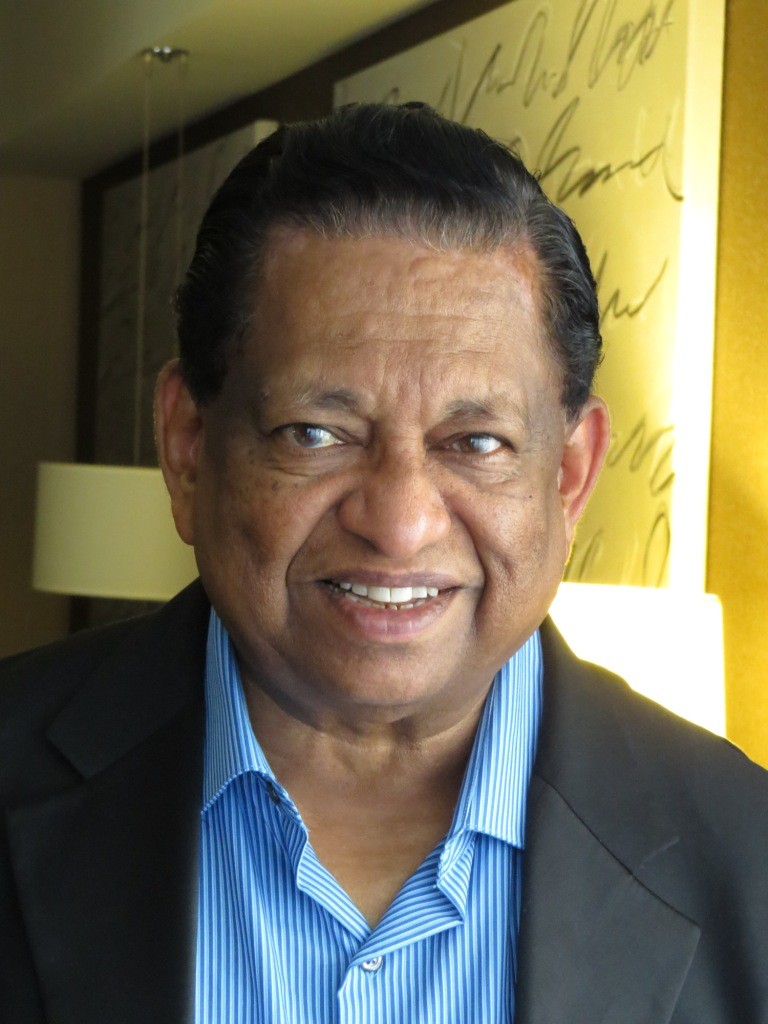
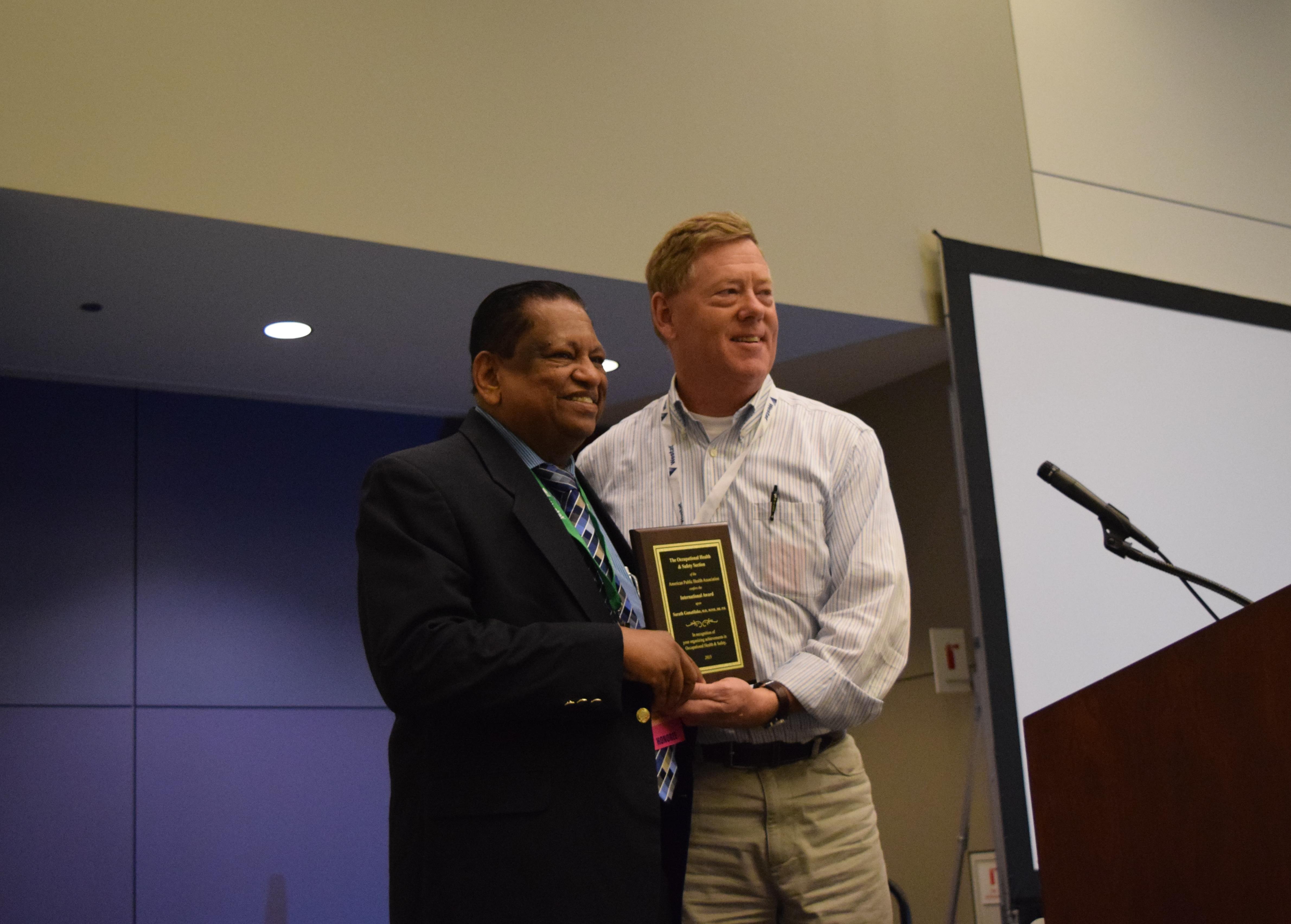
ඝර්ම කලාපීය රටවල කෘෂිකාර්මික ප්‍රජාව අතර පැතිර යන වකුගඩු රෝගය පිලිබඳ සිදුකල  පර්යේෂණ හේතුවෙන් ඇමරිකා එක්සත් ජනපදයේ කැලිෆෝර්නියා රාජ්‍ය විශ්ව විද්‍යාලයේ වෛද්‍ය විද්‍යා මහාචාර්යවරයකු ලෙස සේවය කරන සරත් ගුණතිලක මහතාට ඇ.එ.ජනපදයේ ප්‍රජා වෛද්‍ය විද්‍යා සංගමය මගින් පිරිනමන 2015 විශිෂ්ඨතා සම්මානය හිමි වී ඇත.

https://youtu.be/zI69WNkC3vo

ගම්පහ දිස්ත්‍රික්කයේ කිරිදිවැල ප්‍රදේශයේ උපත ලැබූ ඒ මහතා  කොළඹ රාජකීය විද්‍යාලයේ ආදී ශිෂ්‍යයෙකි. හෙතෙම  කොළඹ විශ්ව විද්‍යාලයෙන් වෛද්‍ය උපාධිය ලබා 1980 දශකය මුල් භාගයේ  ඇ.එ.ජනපදයේ වෛද්‍යවරයකු ලෙස සේවයට එක විය. පසුව ඔහු කැලිෆෝර්නියා රාජ්‍ය විශ්ව විද්‍යාලයේ ආචාර්ය වරයකු ලෙස සේවයට එක් වී  මහාචාර්යවරයකු ලෙස උසස්වීම් ලැබුවේය.

Prof.Sarath Gunatilake1

ඇමරිකානු  පුරවැසියකු සිය රටෙන් පිටත සිදු කල පර්යේෂණයක් වෙනුවෙන් ජීවිතයේ එක වරක් පමණක් මෙම සම්මානය පිරි නැමේ.  රජරට විශ්ව විද්‍යාලයේ වෛද්‍ය චන්න ජයසුමන මහතා ඇතුළු කණ්ඩායම සමග එක්ව වකුගඩු රෝගයට ග්ලයිපොසෙට් රසායනයේ ඇති සම්බන්ධය හෙළි කිරීම හේතුවෙන් පසුගියදා  චිකාගෝ නුවර පැවති  ඇ.එ.ජනපද ප්‍රජා වෛද්‍ය විද්‍යා සංගමයේ වාර්ෂික උත්සවයේදී  මහාචාර්ය ගුණතිලක  මෙම සම්මානයට පාත්‍ර විය. මෙම පර්යේෂණය ආරම්භ වුයේ මහාචාර්ය නලින් ද සිල්වා මහතාගේ මගපෙන්වීමෙන් කැලණිය විශ්ව විද්‍යාලයේය.

කෙසේ වෙතත් ශ්‍රී ලංකාවේ වෙසෙන ඇතැම් විද්‍යාඥයන් යැයි තමන් හදුන්වා ගන්නා කිහිප දෙනකු   ග්ලයිපොසෙට් රසායනය වකුගඩු රෝගයට සම්බන්ධ නැති බව පවසමින් එහි තහනම ශ්‍රී ලංකාවේ ඉවත් කිරීමට කැස කවන බව වාර්තා වී ඇත.

ඒ මහතා සම්මානය ලබා ගත අවස්ථාවේ වීඩියෝ පටය,

https://youtu.be/zI69WNkC3vo

Dr Gunatilake-Garrett Brown

අමතන්න (සීට් එක අස්සෙන් ) අමතන්න…….

December 8th, 2015

වෛද් රුවන් එම් ජයතුංග

එක්දහස් නවසිය අනූව දශකයේ අග භාගයේ මම පමුණුගම පර්‍යන්ත රෝහලේ වැඩ බලන ඩී.එම්.ඕ ලෙස සුළු කාලයක් සේවය කලෙමි. පමුණුගම පර්‍යන්ත රෝහල පිහිටා තිබෙන්නේ මීගමුවත් ජා ඇළත් අතරය​. එසේම පමුණුගම පොල් වතු වලින් පිරි සශ්‍රීක භූමියකි. වැඩ බලන ඩී.එම්.ඕ ලෙස මට එතරම් වැඩක් නොතිබුනත් ඖෂධ හා රෝගීන්ට අවශ්‍ය ආහාර අනුමත කිරීම සඳහා ලෙජර් පත් අත්සන් කිරීමේ කටයතු නොඅඩුව තිබුනේය​. මේ හැර සූතිකාගාරයට ගොස් සංකුලතාවන්   තිබූ දරු උපත් සිදු කිරීම සඳහා නවක වෛද්‍යවරුන්ට මා සහය දුනිමි.

මෙම රෝහලේ එක් ගිලන් රථ රියැදුරෙක් විය​. ඔහු සංචාරක වෙලෙන්දෙකු සේ හිතවත් ය​. නමුත් ගල් ආඳෙකු බව රෝහලට ගිය මුල් දිනයේදීම මට වැටහුනේය​.

walkitalki

වරක් ඔහු රෝගියෙකු ජාතික රෝහලට ගෙන ගොස් යළිත් පමුණුගම පර්‍යන්ත රෝහලට පැමිනෙමින් සිටියේය​. පෑලියගොඩදී එක් කොස්තාපල්වරයෙක් අත දමා ගිලන් රථය නවතා ඔහුව කඳාන පොලිසිය ලඟින් දැමිය හැකි දැයි අසා සිටියේය​. එක පයින්ම රාලහාමිගේ ඉල්ලීමට එකඟ වූ ගිලන් රථ රියැදුරා තම සහයකයා පිටුපසට දමා කොස්තාපල්වරයා රියැදුරු අසුන අසලින් ඉන්දවා ගත්තේය​. එසේම ඉතා හොඳින් රාලහාමි සමග සාමීචීයේ යෙදෙමින් රෝගීන් රහිත ගිලන් රිය ධාවනය කලේය​

කඳාන පොලිසිය  අසලින්ම ඔහු කොස්තාපල්වරයා  බැස්සවීය​. කොස්තාපල්වරයාද රියැදුරාට ඉස්තූති කලේය​. ඉන් පසු ඔහු ගිලන් රථය ඉදිරියට ධාවනය කලේය​. මඳක් දුර යන විට රාලහාමි වාඩිවී සිටි අසුනේ වෝකි ටෝකි යන්ත්‍රයක් තිබෙනවා රියැදුරු දැක්කේය​. මෙය රාලහාමිගේ සාක්කුවෙන් වැටුණු එකකි. මෙයට ලොබ බැඳි ගිලන් රථ රියැදුරු හෙමීට එය තම රියැදුරු අසුන යට සැඟවීය​.

කඳාන පොලිසියට ගිය රාලහාමි වෝකි ටෝකි යන්ත්‍රය ගැනීමට සාක්කුවට අත දැම්මද වෝකි ටෝකි යන්ත්‍රය එහි නොවීය​. ඔහුට දෙලෝ රත්විය​. වහාම ජා ඇළ පොලිසියට පණිවිඩයක් දුන් හෙතෙම පමුණුගම රෝහල බලා යන ගිලන් රථයේ තම වෝකි ටෝකි යන්ත්‍රය වැටුනු බවත් වහාම ජා ඇළදී ගිලන් රථය නවතා වෝකි ටෝකි යන්ත්‍රය ලබා ගන්නා ලෙසට ඉල්ලීය​.

ජා ඇළ පොලිසිය අසලදී රථවාහන පොලිසියේ නිලධාරීන් ගිලන් රථය නවත්වන ලදි. කඳාන පොලිසිය ලඟින් බැස්ස රාලහාමිගේ වෝකි ටෝකි යන්ත්‍රය දුටුවේදැයි රියදුරාගෙන් ඇසීය​. අනේ සර් එහෙම එකක් නම් දැක්කේ නැතැයි රියැදුරා හිස නවා කීවේය​.

ගියේ මඳ වෙලාවකි ……..අමතන්න … කරුණකර අමතන්න …… යනුවෙන් වෝකි ටෝකි හඞක් රියදුරු අසුන යටින් ආවේය​. රථවාහන පොලිසියේ නිලධාරියෙක් රියදුරු අසුන යටට අත දා වෝකි ටෝකිය  ගත්තේය​. රෝහලක් නිසාත් ගිලන් රථයක් නිසාත් පොලිස් නිලධාරීන් කේස් එක ඇද්දේ නැත​. නමුත් එදා සිට යමෙක් අමතන්න (සීට් එක අස්සෙන් ) අමතන්න කියා උක්ත රියැදුරාට කීවේ නම් ඔහුට උන්හිටි තැන් අමතක වන බව අනෙකුත් ගිලන් රථ රියැදුරන් පවසති.

වෛද් රුවන් එම් ජයතුංග

Peace Plan for the Civil War in America and Europe -Part 2

December 7th, 2015

Rahul Speaks

The Proposed Peace Plan for the Ongoing Civil War in America and Europe -Habitants of African and Arabian Descent Fighting For Human Rights Dignity Life and Self Rule .(Part 2)

In Part 1 of this Peace Plan to, arrange a ceasefire, bring the antagonists in the raging civil war in America and Europe (AE) to the negotiating table and achieve a lasting peace, an intelligence analysis was made of the combatants and  their auxiliaries;  freedom fighters of African and Arabian origin are fighting racists regimes in America and Europe infected  by  a white majoritarian affectation.

  1. Aim of the Plan. To bring America and Europe (AE) to the negotiating table and talk peace with the freedom fighters of African and Arabian origin in those AE countries, that would ensure a lasting peace. 
  2. Situational Analysis.  See Part 1.
  1. Execution of the Plan. The Plan will be executed in 15 Phases.
  2. Phase 1. Establish a Peace Secretariat and its several branches in the US and in each of the European countries.
  1. Phase 2. Establish ‘Co – chairs’ comprising China, Russia, Iran and India to run, monitor, overlook and coordinate the work of the Peace Secretariat.
  1. Phase 3.  AE countries to create an atmosphere of goodwill prior to the peace talks by:

1)                       Stopping immediately all military operations in the African and Arabian countries.

2)                     Stopping immediately the worldwide hate campaigns, open and subtle, against the African and Arabian people.

3)                     Repealing the Patriot Act and all other repressive statutes in the AE countries.

4)                     Stopping immediately the use of drones for any military purpose.

5)                      Releasing all political prisoners of African and Arabian origin.

6)                     Lifting the proscription on all Arabic and African organisations described as terror groups by AE countries so that the people of these groups may move freely in those countries before and during the peace talks.

7)                      Making ‘persona grata’ all the freedom fighters, including Abu- Bakr al Baghdadi and Saleh Abdelsalam.

8)                     Lifting restrictions, if any, on the building of mosques and places of worship in the AE countries.

9)                     Lifting the restriction if any on the wearing of Arab and African attire, in public and to school.

10)                 Encouraging the singing of the National anthems of each of the AE countries in Arabic and African dialect.

11)                   Dedicating the first week of May every year to thank the Almighty for the life of Mr. Bin Laden.

12)                 Identifying and establishing cemetery sites in each of the AE countries to plant memorial slabs, with the names of the millions killed by AE forces in Africa and Arabia.(See para 1)

13)                 Tasking Chandrika Kumaranatunge to obtain Norwegian support to have Sudu Nelum street dramas staged in all American and European Streets to drive home the message that the war against the freedom fighters is un-winnable and pursuing war is futile.

14)                 Tasking Ranil Wickramasinghe and his bedfellows in the Mont Pelerin Society, to identify in America and all European countries land with sizeable coastlines to establish Arab and African homelands where the African and Arabian habitants, empowered with Interim Self Governing mechanisms, may live peacefully in segregation, a move that would help in the reconciliation and reparation processes that will follow.

15)                  Downsizing all NATO bases in Africa and the Middle East prior to eventually closing them down and pulling out all AE troops from Africa and the Middle East.

16)                 Declaring all AE secret and floating prisons and armouries and opening them up for regular inspection by the Co Chairs.

  1. Phase 4. The Co Chairs to arrange a date for the first meeting between the ‘civil war’ combatants of the AE countries  in one of the following locations, Moscow, Beijing, Delhi or Tehran.
  1. Phase 5. Pledge in confidence the payment of I million US dollars to each of the leaders of America and Europe by way of awards such as Nobel prizes, Magsaysay awards  as given to the Mandelas, Tutus, Obamas and Ariyaratnes  of the world   to induce them to come to the negotiating table and achieve
  1. Phase 6. Establish Interim Self Governing Authorities in America and Europe based on the LTTE model agreed upon by Wickramasinghe and Kumaranatunge in 2003 and now being acted upon by Wickramasinghe to be included in his Mont Pelerinist doctored New Constitution.
  1. Phase 7. The AE countries to amend their Constitutions to create Federal States based on race, in America and Europe, for their African and Arabian habitants; the perforations of the AE states should be done in a way that their break up in the future, if necessary, should be facilitated by this process.
  1. Phase 8. Indict the following for war crimes (accessories- see part 1) at the International Criminal Court:

1)                       Louise Arbour

2)                     Radhika Coomaraswamy.

3)                     Navineethan Pillay.

4)                     Kofi Annan.

5)                      Ban Ki – Moon.

6)                     Bill Clinton.

7)                      George Bush.

8)                     Barak Obama.

  1. Phase 9. Indict for war crimes in a world Court with judges from Russia, China, Iran and India the perpetrators of the ‘French’ genocide in Rwanda in 1994.(See Part 1)
  1. Phase 10. Indict for war crimes in a world Court with judges from Russia, China, Iran and India the perpetrators of the US hatched genocide in Rwanda (See Part 1).
  1. Phase 11. Establish Truth commissions in America, Europe, Africa and the Middle East for purposes of reconciliation and determining a broad framework for reparation.
  1. Phase 12. The world community to conduct siege warfare on the AE countries by imposing Economic, Trade and Cultural embargos to isolate and make America and Europe failed Pariah States in the event the AE countries show a reluctance to talk with the freedom fighters.
  1. Phase 13. On a time schedule determined by the Co Chairs the AE countries to close down all military bases, training camps, AE sponsored training camps and withdraw from Africa and the Middle East.
  1. Phase 14. The UN to be reorganized and restructured; the UN in the meantime to withdraw the recognition, of Corporates and their ‘fancy costumed’ creations (the NGOs), to the UN and its agencies, confining recognition only to member nation States and their organisations.
  1. Phase 15.  Task Chandrika Kumaranatunge of Club Madrid to earn her supper by convincing all Christian AE countries  including Britain and Canada, to establish secular nations, without ambiguity, within their borders.
  1. Coordinating Details of the Plan .

1)                       The AE countries will submit to the Peace Secretariat for approval all decisions taken by them on matters affecting the freedom fighters.

2)                     All AE countries will amend their Constitutions to accommodate within their systems, judges, prosecutors, investigators, policemen and other assorted administrators from the Co – Chair countries

3)                     An eternal flame will glow at all the African and Arab cemeteries in the AE countries where the flags of those African and Arab States will be flown.

4)                     For the Thavalamas or Street dramas Kumaranatunge will be paid this gravy only if she succeeds in bringing down recruitment to the NATO to a near zero.( See part 1)

5)                      If the assistance of Solheim is required for the street dramas and there is difficulty in locating him, it is recommended that searches be made in women refugee camps where Solheim has a habit of flashing his signature badge.

6)                     The Nordic countries to use their expertise in employing gunrunners as ambassadors to facilitate this peace plan.

7)                      If the assistance of Beranard Kouchner or David Miliband is needed, permission to be sought from their current bosses George Soros, Ukrainian Firtash, Russian crime boss Semyon Mogilevich and the CIA/NED funded IRC (The International Rescue Committee).

8)                     America and Europe to Co Sponsor this proposed Sri Lankan Peace Plan for America and Europe in their civil war with freedom fighters of African and Arabian origin;  Ranil Wickramasinghe from the Rockefeller initiated Mont Pelerin Society, Chandrika  Kumaranatunge from the NATO funded ‘Club Madrid’, ‘Global Leadership Foundation’ and ‘Bill Clinton Initiatives’ and A T Ariyaratne a Magsaysay Awardee from Club Budapest and ‘Noetic Sciences’ – all auxiliaries of the AE countries – will be required to persuade  America and Europe to co sponsor this plan, endorsing thereby everything said in this document.

MR’s security

December 7th, 2015

Editorial Courtesy Island

Former President Mahinda Rajapaksa is faced with serious threats due to the curtailment of his security and the release of hardcore Tigers, his office has said. The government has sought to deny this claim.

The despicable practice of governments reducing their opponents’ security in a bid to tame the latter is not of recent origin. The Rajapaksa government stripped the war winning Army Commander Gen. Sarath Fonseka of special security after he had fallen from grace and challenged the then President Rajapaksa politically. Today, the boot is on the other foot!

The present government obtained a popular mandate, promising to be different from its predecessor. Now, it has to make good that pledge and ensure that all political and military leaders responsible for the country’s successful war on terror are protected without leaving any room for allegations that it is using security as a tool to control and harass some of them.

If it can be proved that former President Rajapaksa has done anything illegal while in office, let him be severely dealt with according to the law. Some ministers claim that billions of US dollars that the members of the former ruling clan and its henchmen allegedly amassed through fraudulent means have been stashed away overseas. If so, that money must be brought back and the culprits prosecuted without further delay. It can be used to bridge the budget deficit! But, the former President’s security must not be reduced on any grounds. He deserves special security as the only President who fearlessly provided political leadership to the country’s war on terror. Had he buckled under foreign pressure or sought to curry favour with some western powers by suspending military operations, nobody would have been safe here today.

It is being argued in some quarters that the Rajapaksa government released more than 12,000 LTTE combatants and, therefore, the present administration shouldn’t be faulted for freeing three or four dozen terror suspects. This argument is not without some merit. However, what should be of concern here is not the numbers as such but the reason why the LTTE detainees currently being held were not released together with those 12,000 suspects. They were detained because they were hardcore LTTE cadres who couldn’t be rehabilitated according to the big guns of the previous government.

Nobody should be kept behind bars indefinitely simply because they are terror suspects. The previous government erred by not bringing charges against the detainees it describes as hardcore terrorists. But, the present government will do well to refrain from throwing caution to the winds when it handles a sensitive issue of this nature. What was reported from the North during the recent Mahaveer Week made one wonder whether the situation in that part of the country was as normal as it was made out to be. There certainly is a pressing need for the government to tread cautiously without trying to humour anyone!

The late President Ranasinghe Premadasa made a fatal mistake by exposing his political opponents to danger for having made an abortive attempt to impeach him. He would never have been able to overcome the political fallout of the Lalith Athulathmudali assassination even if the LTTE had failed to assassinate him in 1993. Lalith’s death triggered a political tsunami which plunged the country into turmoil and ended the UNP’s 17-year-rule. Those who don’t learn from history are said to be doomed to repeat it.

The government tells us there are no terrorist threats at present. If so, the credit for that should go to those who defeated terrorism without grovelling before Prabhakaran and signing ceasefire agreements with him. Threats to political leaders don’t emanate from the LTTE alone. Terrorism was something unheard of in this country when Prime Minister S. W. R. D. Bandaranaike was assassinated. Hence, the need for providing special security to the political leaders who have reason to believe their lives are in danger!


ජනවාරි 08 මෝඩයාගේ කැරැල්ලක් ද?

December 7th, 2015

-ජ්‍යේෂ්ඨ කතිකාචාර්‍ය මහින්ද පතිරණ යුතුකම සංවාද කවය

ජනවාරී 08 සිදු වූයේ මෝඩයින්ගේ කැරැල්ලක්. අපි එහෙම කියන්නේ එම කැරැල්ලට නායකත්වය දුන් න්‍යායාචාරයින්ට මෙන් ම දේශපාලකයින්ට ද කැරැල්ලෙන් පසු සිදු වෙන්න යන දෙය පිළිබඳ කිසිම අදහසක් නැති වීම නිසා. ඇත්තට ම මේක මම හිතන්නේ ඇකඩමික් හා එම කෝවේ ම නිර්මාණය වූ බුද්ධිමතුන්ගේ පිරිහීම නියෝජනය කරනවා කියල. මිට හේතුව වත්මන් උගතා නිර්මාණශීලි බුද්ධිමතෙක් නොවීම. මෙය ගැඹුරින් හැදෑරිය යුතුයි. මොකද ඕනෑම සමාජයක උගත්කම කියන්නේ කෙනෙක් වහා හසුවන වෙළඳ දැන්වීමක් නිසා.බුද්ධිමතාගේ පිරිහීමට බලපාන අමතර බොහෝ කාරණා හේතු වුනත් ප්‍රධාන හේතුව වෙන්නේ බටහිර මොඩලයේ අධ්‍යාපනයේ අර්බුදය. බටහිර අධ්‍යාපනය දැනුම සොයා යන්නේ ඒවා කොටස්වලට ‍‍බෙදළා ඒ තනි තනි කොටස වෙන වෙනම අරගෙන. දැන් ඔය විශ්වවිද්‍යාල කියන්නේ අන්න එහෙම දැනුම හොයන්න හදපු ආයතනය. එකේ දැනුම අධ්‍යනාංශවලට බෙදල ඒ ඒ අධ්‍යයනාංශ තුළ ඒ ඒ විෂයට අදාළ විශේෂ දැනුමැත්තන් හදනවා. මෙහෙම ඉගෙන ගෙන එළියට එන බොහෝ අයට ලෝකයේ සෙසු පැතිකඩ ගැන අවබෝධයක් නැ. උදාහරණයක් විදියට ආර්ථික විද්‍යාවෙන් කියන්නේ කෙසේ හෝ පරි‍භෝජනය වැඩිකරල ඉලක්කම් ඉහළ නංවන්න කියල. ඒත් වැඩි කල් මෙහෙම යන්න සම්පත් නැති බවත් ඒ අතර ම පරිසරය විනාශ වි මිනිසා විනාශ වෙන බවත් හිතන්න උගන්වන්නේ නැහැ. අද දේශගුණික විපර්යාස ප්‍රශ්නය බටහිර දැනුමේ අර්බුදයක්.

ලංකාවෙත් ඉන්නෙ මෙහෙම හිතන අය. මොවුන් යම් දෙයක් හුදකලා කරල අරගෙන, ඒ වටා තිබෙන අතුරු සෙසු දැනුම් සලකන්නේ නැතුව නිගමනවලට එනවා. බලන්න විශ්වවිද්‍යාල ආචාර්වරු බහුතරයක් මහින්ද එළවන්න පාරට බැස්ස විදිය. ඔවුන්ට හැකියාවක් නැ මේ රට නිදහසින් පසු මුහුණ දෙමින් සිටි අර්බුදය හා මහින්ද රජය විසින් ඉන් මිදීමට ගත් දැවැන්ත උත්සාහය එකට තියල තේරුම් ගන්න. ඔවුන් මහින්ද වෙනමත් මහින්දට හිමි වූ සෑම අතින් ම කුණු වූ රට වෙනමත් තියල තේරුම් ගත්තා. අනික ඔවුන්ට බැරි වුණා රනිල් ආවොත් මොන විදියේ ආර්ථික මොඩලයක් ක්‍රියාත්මක කරයි ද කියලවත් හිතන්න. පූර්ණ නවලිබරල්වාදය දැන් යල්පැනපු එකක්. ඒත් රනිල් නවලිබරල් ගැත්තෙක් කියල දැන දැනත් ඔහුගෙන් රටේ සමාජ සුබසාධනයට එල්ල විය හැකි දැවැන්න බලපෑම ගැන තක්සේරු කරන්න මේ ආචාර්වරුන්ට හැකියාව තිබුණෙ නැහැ. මේ ‍ගොඩක් ආචාර්යවරු ශිෂ්‍ය කාලෙදි කෑව වාමංශික තෙල් නිසා කිසියම් මතුපිට සමාජවාදයක් නියෝජනය කරන අය. ඒත් අඩුම තරමින් ඔවුන්ට බැරි වුණා තමන් දක්ෂිණාංශික ද වාමාංශික ද කියලවත් තීරණය කරගන්න.

අයවැය නිසා අද රටේ සෑම ස්ථරයක් ම දැඩි අසහනයට පත් කරල උද්ඝෝෂණ කරන තැනට රට තල්ලු කළේ මේ ඇකඩමික් බුද්ධිමතුන්. හැබැයි අපේ ගම්වල මිනිසුන් තාම තීරණ ගන්නේ ව්‍යවහාරික බුද්ධියෙන්. ඔවුන්ට පුළුවන් සමස්තය දිහා බලල වඩාත් හොඳ තීරණයක් ගන්න. ඒකයි ජනාධිපතවරණයේ දී මහින්දගේ ප්‍රශ්න තිබිලත් ඔවුන් මහින්ද ව තෝරගන්න යොමු වුනේ. ඒ කියන්නේ අද රට පත්වෙලා තිබෙන අර්බුද සියල්ල ගැමියා තමන්ගේ ඉවෙන් ම එදා තේරුම් ගත්තා. අව්‍යාජ බුද්ධිය විසින් ව්‍යාජ උගත්කම පරයා ගිය කදිම අවස්ථාවක් ඒක. උගත්කම සැක කරන්න.

-ජ්‍යේෂ්ඨ කතිකාචාර්‍ය මහින්ද පතිරණ

Word count: 430

යුතුකම සංවාද කවය

www.yuthukama.com
ඔබේ මනාපය රට වෙනුවෙන් කැපවුනු යුතුකම සංවාද කවයේ ෆේස්බුක් පිටුවේ ලකුණු කරන්න. (Like us on facebook)
https://www.facebook.com/yuthukama

යහපාලන මහබැංකු බැඳුම්කර මංකොල්ලය සරල සිංහලෙන් කියාදුන් ආචාර්‍ය නාලක ගොඩහේවා හිරේ

December 7th, 2015

යටියන ප්‍රදීප් කුමාර-යුතුකම සංවාද කවය

යහපාලන ආණ්ඩුව පත් වී මුල් දින සියයෙන් අඩක් ගත වන්නටත් පෙර සිදුකළ මහ බැංකු බැඳුම්කර වංචාව අද වන විට බොහෝ දෙනාගේ මතකයෙන් ඈතට ගොස් තිබේ. එසේ වී ඇත්තේ ඒ පිළිබඳ කතාබහට වඩා දරුණු නිවට පාවාදීමකට ජිනීවාහිදී අප රට ස්ව කැමැත්තෙන් එකඟවීම හරහා පත්ව ඇති පත්ව ඇති මහා ව්‍යසනය පිළිබඳ වැඩි අවධානයක් යොමු කිරීම සහ කොතරම් පෙන්වා දුන්නත් මහ බැංකු මංකොල්ලය පිළිබඳ අදාළ බලධාරීන් බීරි අලින් සේ නෑසූකන්ව සිටින බැවිනුත්ය.

දින 100 ආණ්ඩුවේ මහ බැංකු හොරකමට නම් ගෑවුනු මහ බැංකු අධිපතිවාරයා මෙන්ම ඔහුව ආරක්ෂා කළ මුදල් ඇමතිවරයයා සිරිසේන ජනාධිපතිවරයාගේ හදිසි පාර්ලිමේන්තු විසිරුවා හැරීම හරහා බේරාගත් අතර පසුව අලුත් ආණ්ඩුවේද ඒ තනතුරුවලින්ම පිදීමට රනිල් වික්‍රමසිංහ මහතා කටයුතු කළේ බීරි අලින්ට වීණා වැයුවාට වැඩක් නැති බව පසක් කරමිනි.

බැඳුම්කර මගඩිය හරහා දැනට රජයට සිදුවී ඇති පාඩුව රුපියල් කෝටි හත්දහස් පන්සියයක් (රුපියල් කෝටි 7500 ) ආසන්න ගණනක් දක්වා වැඩිවී තිබේ. එමෙන්ම එම පාඩුව දිනපතා වර්ධනය වෙමින් පැටව් ගසමින් පවතී.
හොරකමට දූෂණටට විරුද්ධ යැයි මහා ඝෝෂාවක් කරමින් බලයට පැමිණි වික්‍රමසිංහ – සිරිසේන ආණ්ඩුව තුලින්ම ඉතිහාසයේ සිදුකළ දැවැන්තම මංකොල්ලය සිදුවීම දෛවෝපගත සිදුවීමකි. එයත් රනිල් වික්‍රමසිංහ මහතා විසින් සුජුව පත් කළ තම ඒජන්තයා වූ මහ බැංකු අධිපතිවරයා ,මුදල් ඇමතිවරයා පැටලී තිබීමත් ඒ සිදුවීම හරහා මහ මැතිවරණයට කලින් පැවති ආණ්ඩුවේ අගමැති රනිල් වික්‍රමසිංහට එරෙහිව ගෙන විස්වාස භංගයෙන් ඔහු ගලවාගැනීමට ආණ්ඩුව විසුරුවා හැරි මෛත්‍රීපාල සිරිසේන මහතා සෘජුවම මැදිහත්වීමත් එහි දෛවොපගතබව තවත් තීව්‍ර කරයි. සිරිසේන මහතාගේම වචනයෙන් කිවහොත් එදා (දින 200 ක් පමණ පැවති) දින 100 ආණ්ඩුව විසුරුවා නොඇහරියේ නම් මේ බැඳුම්කර ගැටලුව අරභයා රනිල් වික්‍රමසිංහ මහතා ලොකු අකරතැබ්බයක වැටෙන්නට ඉඩ තිබිණ.

පසුගිය මහ මැතිවරණ වේදිකාවේදී මේ පිලිබඳ නැගුණු චෝදානාවලට පිළිතුරු දුන් අගමැති රනිල් වික්‍රමසිංහ මහතා පැවසුවේ බලයට පත් විගස ඒ පිළිබඳ නැවත පරීක්ෂණ අරඹන බවයි. සමහර විට ඒ කලින් මෙන් සිරිකොතට සෘජුව සම්බන්ධ නීතිඥයන්ගෙන් යුත් කමිටුවකින් වන්නට බැරි නැතැයි එකල සිතුණි. නමුත් ප්‍රශ්නය වන්නේ මංකොල්ලයට වසරක් පිරෙන්නට ආසන්නව තිබියදීත් අ පිලිබඳ හාවක් හූවක් නොමැති වීමයි.

ඒ වෙනුවට ඒ පිළිබඳ ජනතා අවධානයට ලක් කල විනිමය හා සුරැකුම්පත් කොමිෂමේ සභාවේ හිටපු සභාපතිවරයකු වන ආචාර්‍ය නාලක ගොඩහවා මහතා ලක්ෂ 50 ක අනුග්‍රාහකත්වයක් ලබාදීම සම්බන්ධ කාරණයකට රනිල් වික්‍රමසිංහ මහතාගේ සෘජු මෙහෙයවීම මත ක්‍රියාත්මක වන්නේ යැයි කියන මූල්‍ය අපරාධ විමර්ශන අංශයය මගින් අත්අඩංගුවට ගෙන හිරේ දමා තිබේ.

ආචාර්‍ය නාලක ගොඩහේවා නොව ඕනෑම අයෙකුට නීතිය ක්‍රියාත්මක වන්නේ නම් එය ප්‍රශ්නයක් නොවේ. නමුත් මෙහි ගැටලුව වන්නේ මහ දවල් සිදුවූ ලක්ෂ 750,000 මගඩිය පිලිබඳ හාවක් හූවක් නැතිව ඔවුන්ට තව තවත් වරදාන පුදද්දී ඒ ගණන් සමග සැසඳීමේදී සොච්චම් ගණුදෙණු පිළිබඳ මේ ක්‍රියාත්මක වන්නේ සැබෑ සාධාරණයද එසේත් නැත්නම් යහපාලන ආණ්ඩුවට එරෙහිව ඔවුන් දරන මතය නිහඬ කිරීමේ ත්‍රාඩ උත්සාහයක්ද යන්නයි.
ආචාර්‍ය් ගොඩහේවා මහතා මහබැංකු මංකොල්ලය පිළිබඳ සිදුකළ මේ පැහැදිළි කිරීම මොහොතක් අසන්න…

යටියන ප්‍රදීප් කුමාර
-යුතුකම සංවාද කවය
www.yuthukama.com
 
ඔබේ මනාපය රට වෙනුවෙන් කැපවුනු යුතුකම සංවාද කවයේ ෆේස්බුක් පිටුවේ ලකුණු කරන්න. (Like us on facebook)
https://www.facebook.com/yuthukama

ආණ්ඩුවේ විජාතික චින්තනය හා සිංහලයෝ

December 7th, 2015

නලින් ද සිල්වා

පසුගිය නොවැම්බර් 29 වැනි ඉරිදා පළවූ ඉංගිරිසි පුවත්පතකට අනුව කුප්‍රසිද්ධ ඩේවිඩ් කැමරන් එංගලන්ත අගමැතිවරයා මෛත්‍රිපාල සිරිසේන මහතාට පවුම් හැටහය ලක්‍ෂයක් දීමට පොරොන්දු වී ඇත. එය අවුරුදු තුනක කාලයක දී ලබාදෙනු ඇත. එහි අරමුණු දෙකක් සඳහන් වෙයි. පළමුවෙන් යුද්ධයෙන් පීඩාවට පත් ප්‍රදේශවල උන්හිටි තැන් අහිමි වූ ජනයා නැවත පදිංචි කරවීම ය. එහි දී යාපනයෙන් එළවා දැමුනු සිංහලයන් ද නැවත පදිංචි කෙරෙන්නේ ද යන ප්‍රශ්නය ඇසීම මෝඩ කමක් වනුයේ ආණ්ඩුව එකහෙළාම එසේ කරන බව කියන බැවිනි. දෙවැනි අරමුණ ලංකාවේ යුද්ධ හමුදා ප්‍රතිසංස්කරණය කිරීමට ආධාර පිණිස එංගලන්ත (ඊනියා බිරිතානි) හමුදා පුහුණුව ලබාදීම ය. මේ මුදල් දීම සමග අනේවාසික ආරක්‍ෂක නිලධාරියකු ද පත්කෙරෙනු ඇත.
ඒ මදිවාට නොබෝදා ලංකාවට පැමිණි ඉන්දීය හමුදා ප්‍රධානි ජෙනරල් සිං ද අපේ හමුදාව වැඩි දියුණු කිරීමට තාක්‍ෂණික ආධාර දීමට පොරොන්දු වී ඇත. එහි හමුදාවේ මානව සම්පත් වැඩි දියුණු කිරීමක් ගැන ද කියැවෙයි. ගොනුන් හැරෙන්නේ කුමකට දැයි පැහැදිලි ය. දෙමළ ත්‍රස්තවාදය නිසා අවතෑන් වූ ජනයා පදිංචි කරවීමේ දී අනුගමනය කෙරෙන ක්‍රමවේදය කුමක් ද? අර අනේවාසික නිලධාරියා තමිල්නාඩුවේ සිටින දෙමළ ජනයා ද ලංකාවේ නැවත” පදිංචි කරවීමට කටයුතු කරාවි ද? මෙය තළියෙහි කිඹුලන් දැකීමක් යැයි නොසිතිය යුතු ය. එංගලන්තය පසුගිය අවුරුදු දෙසියයක පමණ කාලයෙහි කටයුතු කර ඇත්තේ සිංහල බෞද්ධ සංස්කෘතිය  හැකිනම් නැතිකිරීමට ය, බැරිනම්  දුර්වල කිරීමට ය. එහි දී ඔවුහු දෙමළ හින්දු සංස්කෘතිය හා එයටත් වඩා දෙමළ ක්‍රිස්තියානි (කතෝලික) සංස්කෘතිය යොදාගනිති. පොන්නම්බලම් රාමනාදන්ගේ සිට මදියපරානම් සුමන්තිරන් දක්වා දෙමළ නායකයෝ එංගලන්තය (බටහිර) විසින් යොදාගනු ලැබූහ, යොදාගැනෙති. අශෝක සංස්කෘතිය විසින් හෙළ බෞද්ධ සංස්කෘතිය නැති කෙරිණි. දැන් අපට ඇත්තේ සිංහල බෞද්ධ සංස්කෘතියකි.  බටහිරට අවශ්‍ය සිංහල බෞද්ධ සංස්කෘතිය ද නැති කිරීමය, නැත්නම් දුර්වල කිරීම ය. එයට ප්‍රධාන හේතුව  ඊනියා යථාර්ථයක් සමග වුව ද සිංහල බෞද්ධ චින්තනය යුදෙවු ක්‍රිස්තියානි පෞද්ගලික මෙන් ම සාමුහික චින්තනයට ද අභියෝගයක් වීම ය. දෙමළ හින්දු චින්තනය එලෙස යුදෙවු ක්‍රිස්තියානි චින්තනයට අභියෝගයක් නො වෙයි. ඉංගිරිසිහු තම අධිරාජ්‍යයෙහි ලෝ පුරා සේවය කිරීමට දෙමළ ජනයා රැගෙන ගියහ. ලංකාවට ද රැගෙන ආහ. (යාපනයේ දෙමළ වෙල්ලාලයෝ ලන්දේසීන් විසින් රැගෙන එනු ලැබූහ. ලන්දේසිහු වෙල්ලාලයන් දකුණු අප්‍රිකාවට ද රැගෙන ගියහ. එහි නැටෝල් ප්‍රදේශයෙහි ද දෙමළ වෙල්ලාලයන් දැකිය හැකි ය)
එංගලන්තය අපේ හමුදාව ප්‍රතිසංස්කරණය කරන්නේ අහවල් දෙයකට ද? එංගලන්තයේ ද ආධාර ලැබූ දෙමළ ත්‍රස්තවාදය පරාජය කිරීමට අපේ හමුදාව සමත් විය. එංගලන්ත හමුදාවට තම යටත්විජිතයක් වූ උතුරු අයර්ලන්තයේ ත්‍රස්තවාදීන් පරාජය කිරීමට නොහැකි විය. (ඉංගිරිසිහු තමන්ට සුපුරුදු රාජ්‍යතාන්ත්‍රික උපක්‍රම යොදා ගෙන ප්‍රශ්නය සමනය කළහ.) එංගලන්තයට අපේ හමුදාවට උපදෙස් දීමට නො හැකි ය.  එංගලන්තය මේ සූදානම් වන්නේ අපේ හමුදාවේ මානසිකත්වය වෙනස් කිරීමට ය. අපේ නිලධාරීන්ට බයිලා කියා ඔවුන් ඊනියා යුද විෙරෝධීන් බවට පත්කිරීමට ය. ඒ අතර ආණ්ඩුව ලවා කොටි ත්‍රස්තවාදීහු නිදහස් කෙරෙති. කොටි හිතවත් සංවිධානවල තහනම ඉවත් කෙරෙයි. එමානුවෙල් වැනි කතෝලික පූජකයන්ට ලංකාවට පැමිණීමට අවසර ලැබෙයි.  එංගලන්තය හා ඉන්දියාව නොවන්නට දෙමළ ජාතිවාදය ද පරාජය වී කලකි. 
ඉන්දියාව ද අපේ හමුදාව නංවාලීම සඳහා තාක්‍ෂණික ආධාර දීමට සූදානම් ය. මේ ආධාර මොනවා ද? හමුදාවේ මානව සම්පත් වැඩි දියුණු කිරීම යනු හමුදාවේ මානසිකත්වය වෙනස්කිරීම ය. අපේ රටට විනකරන ප්‍රධාන රටවල් දෙක එංගලන්තය හා ඉන්දියාව ය. එංගලන්තය අවුරුදු දෙසීයක් ද ඉන්දියාව (වෛදිකභූමිය) අවුරුදු දෙදහසකට අධික කාලයක් ද අපට අකුල් හෙළමින් සිටියි. ඉන්දියාවේ (වෛදිකභූමියේ) විවිධ වාංශික රජවරු අප යටත්කර ගැනීමට උත්සාහ දැරූහ. මෙරට මෞර්ය නමින් රාජවංශයක් බිහිවූයේ ඔවුන් මුරාගේ චන්ද්‍රගුප්තගෙන් පැවත ආ නිසා ද? දේවානම්පිය තිස්ස රජු ආදීන්ගේ මිත්තණිය මුරා වී ද? දේවානම්පිය තිස්ස රජු නැවත අභිෂේකය ලැබුයේ මෞර්ය වංශයේ ද? මෙහි පැමිණි දහඅට කුලය හා තවත් අය අපේ සංස්කෘතිය වෙනස් කෙළේ ද? මේ කරුණු ගැන නැවත සිතීම සඳහා කාලය පැමිණෙමින් ඇත. ඉන්දියාව තමන් සතු තා’ක්‍ෂණය යොදා කාශ්මීර ප්‍රශ්නය විසඳීමට හා තම රටේ දුගීභාවය නැතිකිරීමට කටයුතු කරන්නේ නම් මැනවි. 
ඉන්දියාව ද එංගලන්තය ද අපේ හමුදාව ගැන මෙතරම් කරුණාවක් දක්වන්නේ ඇයීි ද යන්න පැහැදිලි ය. ඔවුන්ට අවශ්‍ය වන්නේ දීන නිලධාරීන් හා භටයන් පිරිසක් ඇති කිරීම ය. එංගලන්තය කොටි සංවිධානය පැරදවීමට විරුද්ධ විය. එංගලන්තයේ හා ප්‍රංශයේ විදේශ අමෙතිවරු තකහනියක් ලංකාවට ආවේත් ඔවුන්ට ඇඹිලිපිටියට යෑමට සිදුවූයේත් කොටින්ට විරුද්ධව කළ මෙහෙයුම් නවත්වන ලෙස මහින්ද රාජපක්‍ෂ මහතාට කීමට ය. ඉන්දියාවට ප්‍රභාකරන් පැරදවීමට අවශ්‍ය වූ නමුත් අපේ හමුදාව ඒ කිරීම ගැන ඔවුන්ට සතුටක් නො වී ය. ඔවුන්ට අවශ්‍ය වූයේ තමන් ම කොටින් පැරදවීමට ය. 
ඉන්දියාව හා එංගලන්තය එසේ හමුදාව ප්‍රතිසංස්කරණයට සූදානම් වන අතර ආණ්ඩුව තව තවත් අධිකරණයට ඇඟිලි ගසයි. මහාධිකරණ කොමසාරිස්වරියක ලෙස මෑතක දී විවාදයට තුඩු දුන් නඩු තීන්දුවක් දී විශ්‍රාම ගිය මහාධිකරණ විනිසුරුවරියක පත්කර ඇත. චෝදනාවලට ලක් වූ ත්‍රස්තවාදය වැළැක්වීමේ පණත (මේ පණත ඉවත් කිරීමට ආණ්ඩුව ජෙනීවා හි දී එකඟ විය) යටතේ සිරගත කෙරුණු දෙමළ ත්‍රස්තවාදී සිරකරුවන් ද කොමසාරිස්වරියට ඉදිරිපත් කෙරෙනු ඇත. ඒ අතර චන්ද්‍රිකා කුමාරතුංග මහත්මිය හමුදවේ ඉහළ මට්ටමේ නිලධාරීන්ට විරුද්ධව ක්‍රියා කිරීමට විශේෂ අධිකරණ පිහිටුවීමට කතා කරයි.  
ජනාධිපති හා අගමැති ද ඔවුන් අනුගමනය කරන ආණ්ඩුවේ මැති ඇමතිවරු ද නිතර කියන්නේ ජනවාරි 8 වැනි දා ප්‍රතිවිප්ලවය (ඔවුන් හා ඔවුන්ගේ හෙංචයියලා හා හෙංචක්කලා කියන්නේ විප්ලවය කියා ය!) හේතුවෙන් දැන් අප ජාත්‍යන්තරයේ ගෞරවයට පාත්‍ර වී සිටින බව ය. ඒ ගෞරවය කෙසේ වෙතත් ආණ්ඩුවට ආර්ථික ආධාර දීමට බටහිරයෝ  ද ඉන්දියානුවෝ ද මැළිවෙති. ඉන්දියාව අද බලන්නේ ඉන්දීය වෘත්තීයකයනට ලංකාවේ රැකියා ලබාදෙන්නේ කෙසේ ද කියා ය. සීපා හෝ වෙනත් නමකින් හෝ ගිවිසුමක් (ගිවිසුම්) මගින් එය කරගැනීමට ඉන්දියාව සූදානම් වෙයි. එය වෛද්‍ය, ඉංජිනේරු හා තොරතුරු තාක්‍ෂණ ක්‍ෂෙත්‍රවල වැඩියෙන් බලපානු ඇත. ඉන්දියානුවෝ එතරම් දක්‍ෂ නැතත් (දක්‍ෂ කිහිප දෙනෙක් සිටිති. ඔවුහු ඇමරිකාවට හා වෙනත් බටහිර රටවලට යති. එතරම් දක්‍ෂ නැති ඉන්දියානුවන් ඒ රටවලට ද යන බව අමතක නොකළ යුතු ය) කැපී පෙනෙන්නට උත්සාහ දරති. එමෙන් ම ඔවුහු තමන් වැඩකරන ආයතනවල ආධිපත්‍යය දැරීමට වැඩ කරතිි. කළ යුත්තේ මෙරට දැනට සේවයෙහි යෙදී සිටින ඉන්දීය වෘත්තිකයන් ආපසු යැවීම ය. එහෙත් මේ ආණ්ඩුවට ඒ ගැන සිතීමටවත් නො හැකි ය.
අද ආණ්ඩුව බටහිර ජාත්‍යන්තරයේ ගෞරවයට පාත්‍ර වී නැත. යුරෝපය ජී එස් පී ලබා දී යළිත් අපේ මාළු මිළ දී ගැනීමට සූදානම් යැයි ආණ්ඩුව කියයි. එයට හේතුව ආණ්ඩුවේ විදේශ ප්‍රතිපත්තිය හේතුකොටගෙන බටහිරයන් (හා ඉන්දියාව) අප ගැන විශ්වාසයකින් වැඩ කිරීම යැයි ආණ්ඩුවේ මහදැනමුත්තෝ කියති. ජෝන් අමරතුංග මහතා ජනාධිපතිට නොබෙල් සාම ත්‍යාගය ලැබෙන බවට ඉඟියක් කෙළේ ය. නොබෙල් සාම තෑගි දේශපාලනය මත ප්‍රදානය වෙයි. බටහිර මතයට පක්‍ෂපාතිව බටහිර සංස්කෘතිය ඔසවමින් අනෙක් සංස්කෘතීන් හෙළා දකින අයට නොබෙල් සාම තෑග්ග ලබාගැනීමේ විශාල සම්භාවිතාවක් වේ. අනෙක් නොබෙල් තෑගි ඒ තරමට ම නැති වුවත් අඩු වැඩි වශයෙන් බටහිර යුදෙවු ක්‍රිස්තියානි චින්තනය අනුකරණය කරන්නන්ට ලැබෙයි. ජනාධිපතිට නොබෙල් සාම ත්‍යාගය ලැබුනොත් ඉන් කියැවෙන්නේ ඔහු අපේ ස්වෛරිභාවය පාවා දී ඇති තරම ය. 
යුරෝපා සංගමය සූදානම් වන්නේ සිංහලයන්ගේ මාළු කෑමට ය. මේ ආණ්ඩුව බලයට පත්කරනු ලැබුයේ ඉන්දියාව හා බටහිර රටවල් විසින් බව අපි බොහෝ කලක සිට කියමු. ජනවාරි 8 වැනි දාට පෙර ද ප්‍රතිවිප්ලවයට පොහොර දමන්නේ ඒ රටවල් බව කීවෙමු. අද ක්‍රමයෙන් මේ විස්තර හෙළිදරවු වෙමින් පවතියි. ඉන්දියාව එ ජා ප හා අනෙක් පක්‍ෂ අතර සම්බන්ධකම් ඇති කළ අන්දම අද කතාබහට ලක් වෙයි. එ ජා ප හා ශ්‍රී ල නි ප ඝාතක මෛත්‍රිපාල සිරිසේන මහතා එකතු කරනු ලැබුයේ දෙමළ ජාතිවාදයට කප්පන් දීම සඳහා ය. ඉන්දියාවේ අදහස වූයේ එ ජා ප හෝ ශ්‍රී ල නි ප හෝ බලයේ සිටින විට අනෙක් පක්‍ෂය දෙමළ ජාතිවාදයට කප්පන් දීමට විරුද්ධ වන බව ය. ඒ නැතිකිරීම සඳහා පක්‍ෂ දෙක එකතු කිරීමට ඔවුන්ට අවශ්‍ය විය. ජනවාරි 8 වැනි දා ප්‍රතිවිප්ලවය මහින්දාගමනයට හා සිංහලයන්ට විරුද්ධව කෙරුණු එකකි. එය දෙමළ ජාතිවාදයට ආධාර කෙළේ ය. මේ ආණ්ඩුව ඊනියා ජාත්‍යන්තර ගෞරවයකට පාත්‍ර වී නැත. එසේ ගෞරවයකට පාත්‍රවීමට තරම් මෛත්‍රිපාල සිරිසේන, රනිල් වික්‍රමසිංහ හා මංගල සමරවීර මහතුන්ට ඇති රාජ්‍ය තාන්ත්‍රික දක්‍ෂකම් කවරේ ද? 
බටහිරයෝ ජනවාරි 8 වැනි දාට පසු සම්බාධක නො පැණවූහ. ඒ තමන් සිංහලයන්ට විරුද්ධව කියන ඕනෑම දෙයක්් කිරීමට එක පයින් සූදානම් වී සිටින ආණ්ඩුවේ තම සුවච කීකරු සේවකයන්ට දෙන තෑග්ගක් ලෙස ය. මෙය ඊනියා ගෞරවයක් නොව දීන කමට ලැබෙන සන්තෝසමක් පමණකි. අද බටහිර යටත්විජිතවාදය ක්‍රියාත්මක වන්නේ අපේ රටවල ඔවුන්ට හිස නොනමන පාලකයන් පැරදවීමෙන්, ඝාතනය කිරීමෙන් හා ඔවුන්ට හිස නමන දීනයන් බලයට පත්කරමිනි. එහෙත් ප්‍රශ්නය වන්නේ සිංහලයන් තම ස්වෛරීභාවය රැකගැනීමට සම්බාධක මැද ජීවත්වීමට සූදානම් ද යන්න ය. මහින්ද රාජපක්‍ෂ මහතා යටතේ ආණ්ඩුවක් පිහිටුවා තිබිණි නම් සම්බාධක පණවන සේ කටයුතු කෙළේ යැයි ඒ ආණ්ඩුවට විරුද්ධත්වය පළකිරීමට සිංහලයන් ඉදිරිපත් වීමට තිබිණි. 
බණ්ඩාරනායක මැතිණියගේ පාලන සමයෙහි ගත් ඇතැම් පියවරවලට විරුද්ධ වී ජේ ආර් ජයවර්ධනට හයෙන් පහක බහුතරයක් ලබාදුන්නේ සිංහලයන්ගෙන් වැඩි පිරිසක් බව අමතක නොකළ යුතු ය. ජනතා සහන කප්පදු කරන අයවැය තුනෙන් දෙකක ඡන්දයකින් සම්මත වී ඇත. සිංහලයන්ගෙන් බහුතරය නැතත් යම් පිරිසක් ආණ්ඩුවට ඡන්දය දීම නිසා ආණ්ඩුවට තුනෙන් දෙකක් වෙයි. එයින් කියැවෙන්නේ ආණ්ඩුවට මෙන් ම ඇතැම් සිංහලයන්ට ද ස්වෛරීභාවය නොවැදගත් බව ය. අයවැයේ චින්තනය ගැන අපි පසුව කතා කරමු. 
නලින් ද සිල්වා
 
2015 දෙසැම්බර් 03

Lessons for Indebted Countries- Argentina, Greece, Sri Lanka: There lies a Way Ahead

December 6th, 2015

By Garvin Karunaratne

President Kirchner’s Era  ends in Argentina, with her loss at the general election. Comes in a Conservative Maurico Macri,  who vows to build an Argentina with Zero Poverty. It is a noble aim. The new leader faces a massive task  with inflation at over 20%, unemployment at 30% and a debt default  blocking access to global credit as well as investors.

President Kirchner did her best. She had repaid her dues to the IMF that were in default but she found   the economy  hedged by the hedge funds that had collected bonds at dirt cheap rates when the economy crashed in 2002  and  had  secured an order from the  US Supreme Court that the bonds have to be honoured in full.  Argentina had to pay $ 182 million on Euro Bonds and  $ 450 million on treasury bonds.  Bond values  had plummeted when the economy crashed in 2002 and the hedge funds were aware that they were purchasing dud bonds. The values of the bonds had not gone up in the market, but somehow the hedge funds secured the order from  the  US Supreme Court to get full payment. It is my contention that the US Courts have no jurisdiction over Argentinian bonds, but this US Supreme Court decision has to be honoured to satisfy the international community of investors. This offers a good lesson for countries that are issuing bonds.

President Kirchner held the economy together through Capital Controls  and effectively  controlling the economy, trying to get it on the right path. The incoming  leader Mauricio Macri has vowed to remove Capital Controls, and hopes to invite investors in.

In democracies changes take place very often. Out goes  a Political Party in favour of another and generally the sky that was promised to the voters is never realized. There is always a difference between the promises and what can be achieved. It is not for want of trying, but constraints are many.

A major problem for many countries is the foreign debt that constrains development. To service the debt the country has to borrow further and in the case of Argentina the dispute with the Vulture Hedge Funds had it to debar foreign investment.

All countries with a foreign debt are caught in the IMF trap, where they have to swallow the Structural  Adjustment Programme if they need help and this means that the country has to further  follow free trade,  liberalize the use of forex and enable people to use forex  freely even when the coffers are empty and raise loans to meet the demand.  In this syndrome  the foreign debt has been created  by allowing people to use forex freely. The debt has been  created by following the IMF teachings.

Even since  the Seventies, when the IMF came up with the Milton Friedman  laizzez faire model where free trade and liberal use of foreign exchange is upheld and forced every country to follow it not a single country has prospered.

Greece which is in dire straits has had  austerity poured down the throats of its citizens. Argentina forced austerity on its citizens since 1991. The IMF has failed to realize that  austerity only creates  a small saving- it is a belt tightening experiment. The  basics that caused the problem of debt and no growth remain unaltered.

Take Ghana, a country that is in dire straits due to following the IMF model. It was only in 2006 that its debt was cancelled by the IMF but for that  Ghana had to open up its economy for further investment” by multinationals. This is not investment; it is exploitation. By 2011, it was again indebted to the extent of  $ 13.4 billion. This  foreign debt has ballooned  to $ 14 .08 billion by 2014. The further opening up of the economy  has caused the currency to depreciate further and in 2014 the Ghanian Cedi  was vauled at 51.000 Cedi for one dollar. In 1965 the value was 1.04 Cedi to the dollar and by 2007 the value was 9,300 Cedi to a dollar. The Ghanian economy is in total distress. In the meantime, Multinationals that cashed in as investors have had large profits.

The basic tenets of the IMF Model that caused the pile up of debt, the demise of the currency values and the increase in poverty in all countries- in Argentina, in Greece and Ghana  have not been altered. In fact in her address  to the UN General Assembly on 21/9/2004 President Kirchner  said:

An urgent, tough  and structural redesign of the IMF is needed to prevent crisis and help solutions. The IMF must change that direction which it took from being a lender for development  to a creditor demanding priviledges.

Even today a full twelve years later the IMF has not changed. It is upto the rulers of Argentina, Greece and all countries to realize that the following the IMF offers no solution to reach Zero Poverty, Full Employment and prosperity.

In view of the continued  intransigence of the IMF, it may be a worthwhile exercise to ramble through  attempts at development which were successful.  That could perhaps offer our leaders a way  to achieve zero unemployment and alleviate poverty.

The Comilla Program of Rural Development, was a creation of the Government of Pakistan, the Agency for International Development of the USA and Michigan State University.  The aim was to find how development could best be done. They selected a Thana- a Division- the Kotwali Thana of the Comilla District. A research, planning  cum extension institute, called The Academy,  was set up to plan, implement and evaluate programmes. Cooperatives belonging to the people was the method- where plans were drafted by the people to use higher yielding varieties, use fertilizer  etc., and develop enterprises to become self employed.  The strategies of Community Development and Non Formal Education were used to build up the capacities and abilities of the people. Within a decade there was full employment and the alleviation of poverty. The Cooperatives opened up a Creamery and a Tractor Station. The Creamery exists till today.  The Kotwali Thana is today an area of plenty and affluence within Bangladesh- a sea of poverty. Though it was a successful foolproof model to bring about development the IMF ignored the findings of the Comilla Programme when they  built up their Structural Adjustment Programme.

The Divisional Development Councils Programme of Sri Lanka (1971-1978)          quickly ushered in development enterprises in agricultural farms and industries which were successful. In  every Division in Sri Lanka   a council comprising  all government officials and representatives of the people- the member of parliament, the chairmen of the cooperative and local councils were brought together and charged to find methods to find employment for the youth. In agricultural farms the emphasis was to create successful farmers and youths were trained in farming practices. Cooperatives in  Craft and all types of industries were established overnight and brought in incomes.

Certain  import substitution type of industries were also established.  Details are provided of two industries where I was involved .

A Mechanised Boatyard, making 40 foot inboard boats that were seaworthy was established. It was a first attempt at a Boatmaking Cooperative. Though many problems were faced in getting approval, immediately the green light was given within three months a boatyard was built on the banks of the Nilwala River where machinery was installed and boats were built by youths. It was a great success and the boats were sold to cooperatives.  This Boatyard was closed down in 1978 by the new Government of President Jayawardena which followed the IMF advice. Today Sri Lanka with a massive sea board right around its shores imports fish even from as far as Chile .Meantime on the coast line one can find a lone carpenter chiseling  a fishing boat and meanwhile youths in fishing communities are unemployed. There is a case for boatmaking industries to be established overnight and the country can become self sufficient in fish within a year or two.

A Crayon Factory  was established to make crayons. Sri Lanka was importing its total requirements of crayons and this was an import substitution industry.  The Planning Officer of the District, a Chemistry graduate, with the help of science teachers  experimented for three full months in the science  laboratory of Rahula College after school hours to find the method of making crayons. Once we made crayons that were equal to the quality of imported Crayola crayons, the factory was set up as a cooperative and fully functioned selling crayons throughout  the island till 1978 when the Government of President Jayawardena stopped it. Establishing the Crayon Factory was done within two weeks functioning on a 24 hour basis.

Though the Mechanised Boatyard and the Crayon Factory were successful industries they were closed more due to the fact that credit for both the Boatyard and the Crayon Factory went to the earlier Government which had to be  discredited. It was a political vendetta.

However the fact remains that small import substitution type of industries can easily be set up. This helps because employment is created in rural areas, poverty is alleviated and also imports can be curtailed saving foreign exchange.

The Youth Self Employment Program of Bangladesh.

In 1982 the Ministry of Youth Development was providing skills training to 40,000 youths a year. Very few of the trained found employed.  The ILO had tried to establish a Self Employment Programme in  1979-1981 in Tangail, Bangladesh and as this was a total failure  no further attempt was thought of  to create employment. At a Conference I was the lone foreign advisor present and was ordered to make a contribution to the economy by the Military Government that took over the country a few days earlier. I suggested that youths  who were being trained in skills should  be guided to become self employed. In that manner they would be making things required for the economy and thereby would create incomes for themselves as well as well as save foreign exchange that was spent on  imports. The Minister for Labour and Manpower listened for over  two hours to my oration and my arguments in reply to experts who said that it can never be achieved. Finally the Minister authorized me as the General Advisor to the Ministry to establish a self employment program where youths in training or youths who were already trained would be guided to become entrepreneurs. This involved retraining the total staff of youth workers in  economics and in methods of guiding trainees as they established small scale ventures to create an income.  The target was that youths should get to earn equal to the earning level of a clerical officer . . It also included expanding the skills training to help the trainees to study their local economy, finding an activity where there was a potential to create employment and earn an income. It involved making a variety of employment models where youths in training could think of how they could become  entrepreneurs within their economy.  The staff in the Ministry of Youth were introduced to economic development where the national economy was looked into with a view to find  where employment opportunities can be gainfully created.  The Ministry of Youth gradually took over the task of national planning in order to create employment opportunities as well as create the production that the country needed.

It was a new type of development activity, something unheard of anywhere and  it involved re training staff and re deploying. It also involved novel features like allowing trainees to use the machinery at training institutes after working hours to enable them to make some item for sale. The Lecturers had to assess their creations and offer guidance as to what has to be done to make items better and this took off on a grand scale. Sales arrangement were made with local shops. Cooperation was encouraged among entrepreneurs to purchase materials in bulk.. The areas included all types of industries, opening up shops when there was a need, dairy farming, agriculture and rearing cattle and chicks.  This Programme was expanded with loans and re training when necessary.. This Programme has had great success and by 2011 had guided over 2 million to become employed. Starting with guiding 2000 youths in 1982, today the Programme guides 160,000 a year. This is the only programme of this type in the world. It is an ongoing programme implemented in entire Bangladesh where a Ministry that attended to traditional youth work is now in charge of creating employment. (Full details of the Industries- the Boatyard and the Crayon Factory and the Self Employment Programme  are detailed in my books:  Success in Development & Papers on the Economic Development of Sri Lanka at Godages, Colombo)

Based on the above experiences it may be possible to  work on developing new programmes to  alleviate poverty  and create employment overnight

No new funds are required as is proved in the Youth Self Employment Programme of Bangladesh where no new funds of any sort were made available. This was because the failure of the ILO to establish such a Programme meant to many that it would be a sheer waste of funds. I challenged this statement and argued that I needed only the ability to re deploy staff and find savings within existing budgets. This was allowed. Today it is the largest and only employment creation programme the world has known. It is an ongoing programme and Bangladeshi Administrators are hard at work every where in the rural habitat,  enticing the drop outs of school to take up to training  and guiding them intensively till they function in a commercially viable manner.  The success of this Programme offers hope to any country that wants to go ahead.

The success of the Crayon Factory too offers hope to anyone who is really interested in creating employment, alleviating poverty and also saving foreign exchange being used for imports.. To start with the Crayons turned out after three months of hard work in a normal school science lab were of very high quality  and if Crayons can be made there is nothing that cannot be made. The leading scientist was my Planning Officer a raw chemistry graduate. The method was burning mid night oil for three months in  a myriad of experiments. We administrators were behind them every night cheering them up as experiment after experiment failed. Even the University Department of Chemistry refused to help us and this made us even more determined to succeed.  In short many import substitution type of industries can come up within a few months.  These can range from making parts for automobiles like radiators, silencers, scissor jacks,  small ironmongery goods and implements. Even today Sri Lanka imports knives from as far as Brazil while smithys are under used and workers are idle.

Sri Lanka was self sufficient in fruit juice and jam till 1978 when we sold off- privatized the cannery and since then we import all jam and fruit juice.  The pineapples and melon rot in the fields due to lack of sales. Why not a program be drafted to build up a few small scale juice and jam making factories. This can be established  within three months. But unfortunately our leaders do not have the will to do it. The cost of establishing the three factories will be a fraction of what is spent on imports in a year.

The fate of many successful agricultural farms and the Boatyard and the Crayon Factory can be traced to changes in governments where the new government had a vendetta against the outgoing government.  The baby was always thrown out with the bath water. Instead the dead wood has to be discarded and necessary changes made. . In the case of the Youth Self Employment Program of Bangladesh it started during the Military Government of 1982 and has continued as an Administrators Programme  throughout changes in governments. Our Leaders have to come up with a method to ensure that local enterprises have to be created, local production has to be encouraged, incomes have to be created within the country and imports have to be stopped.  Won’t it be an ideal to decide that development tasks- alleviating poverty and creating employment  should not suffer due to changes in the Government leadership.

The success of the Youth Self Employment Programme of Bangladesh was entirely due to fusing skills training with guidance to be self employed. Every country has skills training programmes and if these training programmes are  enhanced with guidance to enable the trainees to become self employed it will immediately create employment and incomes. It is a target that can be won.

Hope the instances of success given above will make the leaders of countries that are in the doldrums in development to commence activity. The successes are applicable in all countries in Argentina, in Greece, in Sri Lanka and anywhere.   It is mine to offer advice  and ensure success, if called upon. . I take on any challenge, if anyone dares.


Garvin Karunaratne, Ph.D.(Michigan State, M.Phil, Edinburgh, M.Ed Manchester

Former member of the Sri lanka Administrative Service

Former Commonwealth Fund Advisor to the Ministry of Labour and Manpower, Bangladesh.

06/12/2015

Sri Lanka heads in the direction of Greece

December 6th, 2015

Courtesy Island

The first budget of the new government has run into stiff opposition from trade unions, farmers’ organisations and the like – a situation that was hardly unexpected given the provisions in the budget. This is probably the first time in living memory that a budget has encountered such resistance and all the signs are that this will exacerbate in the coming days and weeks instead of abating. One may say that never has the first fully- fledged budget of a new government come in for flak like this. Usually, the first two or three years of a government, is a honeymoon period when the public more or less goes along with the government in power. This time however things are working out differently. One may say that the government has brought this situation upon itself by creating impossible expectations among the general public.

article_image

In the past one year, the whole country regressed to the 1960s and 70s, when the government was supposed to give and the people were supposed to receive. It was the ethic of the Rodiya community which in feudal Sri Lanka was consigned by custom to begging. The Rodiya was obliged to beg and the non-Rodiyas were obliged to give when importuned and it was believed that both the giver and the receiver were exalted by the transaction. This welfare dependency was more pronounced among the Sinhalese than either the Tamils or Muslims. It is J.R.Jayewardene who has to take the credit for rescuing the Sinhalese from the Rodiya mentality by boldly doing away with welfare measures such as the rice ration.

There was a dangerous regression into welfarism under the Premadasa government with the importance given to the Janasaviya programme where once again, President Premadasa’s political rhetoric seemed to suggest that the poor were exalted by the act of receiving and the government was exalted by the act of giving. However after Premadasa’s assassination, this welfarism disappeared and it has to be said to Chandrika Kumaratunga’s credit that she too did not place emphasis on welfarism though the country experienced an economic downturn during the first seven years of her rule from 1994 to 2001. This is one of the things for which CBK can be praised, though of course a detractor would say that she did not place any emphasis on welfare simply out of sloth and indifference and not because of any considerations of economic policy.

Be that as it may, for over two decades, from 1993 to 2014 welfarism was in headlong retreat until it suddenly came to the fore once again with the presidential election campaign at the end of 2014. Once again, the people were led to believe that it was the duty of the government to give concessions to the people without imposing any taxes on them. The yahapalana platform which included the UNP, a segment of the SLFP, the JVP, TNA, SLMC, ACMC and innumerable NGOs all told the people in one voice that taxes could be reduced and salaries increased by Rs. 10,000 while at the same time giving guaranteed prices for paddy, tea, rubber and bringing down the prices of fuel and essential foodstuffs. Since the presidential election was followed by a parliamentary election, the extravagant promises made at the presidential election had to be implemented if the yahapalana coalition was to have any hope of winning the parliamentary election.

The parliamentary election was won thanks to the handouts that were given but now the chickens have come home to roost. The budget for 2016 can be described as an attempt to roll back the welfarism that took centre stage after the change of government in January. The welfarism took two forms; one had the effect of reducing government revenue through the reduction of taxes on fuel and certain foodstuffs. The other had the effect of increasing government expenditure through salary and pension increases and guaranteed prices for paddy, tea rubber etc. The scheme was unviable from the beginning – but the system was maintained between elections by printing money and borrowing.

IMF recommends austerity measures for SL

In September this year, the IMF team that visited Sri Lanka issued several warnings and made several recommendations to get the Sri Lankan economy back on track. Among the warnings that they issued was that the sharp rise in public sector salaries had contributed to an increase in imports of consumption goods eating up all the savings from lower world crude oil prices. They also warned of an increase in inflation. Among the recommendations made by the IMF was that the Central Bank should take a step back and stop intervening in the foreign exchange market and allow the rupee to depreciate to its real value so that imports would cool off and reduce pressure on foreign reserves.

They also recommended upping the interest rates to reduce private credit and to control inflation. The IMF also stressed the need to effect durable increases in government revenue and to reduce the budget deficit, to implement market based pricing for fuel and electricity and to put State owned enterprises on a commercial footing. They also wanted land ownership liberalized.

Many Sri Lankans have heard the term ‘austerity measures’ but many would never have thought the term would have any relevance for Sri Lanka. But it can clearly be seen that this budget seeks to impose austerity measures on the country – some of which go parallel to the recommendations made by the IMF. Last week for the first time, the prime minister himself announced that the government was looking at an IMF package. Austerity measures usually involve reductions in government spending or increases in tax revenues or a combination of both. Hence the following measures taken by the government can be described as classic austerity measures.

In most Western countries, there would be cuts in unemployment benefits and the like. We do not have unemployment benefits as such but spending cuts have taken place in other ways. For example the decentralized budget that every MP used to get has been administratively done away with in 2015. Not a single MP got his DCB funds and it does not seem likely that any MP will get DCB funds in the coming year as well. Another way austerity measures are imposed is through cuts in retirement and health care benefits. The government now plans to do away with the government pension for new recruits to the government service from 2016 onwards and to replace it with a contributory pension scheme. Another classic austerity measure is to reduce government employees’ wages. The government has not reduced wages, but the once in five years duty free vehicle permits that were given to senior government servants has been slashed to a permit once every ten years subject to a maximum of two permits. Then of course there are cuts in welfare measures. The government is to phase out the fertilizer subsidy and school uniforms.

Austerity measures also include certain tax reforms. Typically the VAT would be increased and indeed the upper limit for VAT was raised from 11% to 12.5% and the Nation Building Tax was doubled from 2% to 4% through the 2016 budget. Tax fraud and tax evasion would be targeted as a revenue enhancing measure. Targeting tax evasion has been going on since the present government came into power especially by the Customs Department. Privatization of state owned enterprises is another classic austerity measure and this looms large in the Budget for 2016 which has the most ambitious privatization programme ever mooted in this country. The plan is to sell off everything that the government has, even public utilities like water supply, power generation, petroleum refining and distribution etc.

What happened in Greece?

The crisis in Greece began in 2009 with the Greek government admitting publicly that it had been understating its deficit figures for years. When the Greek government made this announcement, financial markets panicked and refused to lend to Greece except at very high rates of interest to offset the risk that lenders thought they were taking. Then Greece was forced to look to friendly countries or institutional lenders like the IMF for bailouts which imposed stringent conditions. The conditions involved increases in taxes and cuts in government spending and were not popular among the people. This gave rise to riots, the rise of radical political parties, unstable governments and the whole intractable mess that we now see as the Greek crisis. The Greek economy shrank by 25% in just five years and unemployment increased to 25%.

This is the fate that we too are now staring at. As in the case of Greece, the present Sri Lankan government also says at every available opportunity that key economic data has been falsified by the Rajapaksa government. The prime minister himself said recently that they don’t have any idea of how indebted Sri Lanka actually is and that all kinds of loans had been taken by the Rajapaksa government and that nearly a year later they are still trying to figure out what the actual extent of indebtedness is! Similar ideas have been expressed even in parliament. The present government obviously has no inkling as to how dangerous such statements are, coming as they do from the very people running the country. If the people ruling the country have no idea as to how much the country owes to its creditors, who would want to invest in Sri Lanka?

Leaders of the present government in their anxiety to deny that there was an economic boom during the Rajapaksa era kept saying that the figures were all falsified. They made a big hue and cry about it when they were in the opposition. Now with the economy collapsing around their ears, they continue to say it while in government. Opposition parliamentarian Bandula Gunawardene told The Island that when Finance Minister Ravi Karunanayake submitted fiscal data to parliament recently under the Fiscal Responsibility Act, even that data was challenged by members of the government on the grounds that all the figures were falsified during the Rajapaksa regime! So long as the figures indicate that the Rajapaksa government was doing well in economic terms and the yahapalana government is presiding over an economic downturn, leaders of this government are going to claim that the figures have all been tweaked!

(In actual fact the best evidence there is to prove beyond any doubt that the Rajapaksa government was indeed presiding over an economic boom is that the IMF gave the Rajapaksa government a huge 2.5 billion USD standby facility in 2009 and the implementation of this was completed in 2012 to the fullest satisfaction of the IMF. Furthermore, in order to give this facility to Sri Lanka, the IMF did not impose the kind of conditions mentioned in their September 18, 2015 statement which was referred to above. That alone shows that the Rajapaksa government had greater credibility in the eyes of the IMF than the present government.)

In order to satisfy lenders, Greece was forced to agree to a raft of reforms which included raising the retirement age, cutting pensions, liberalizing the energy market, increasing the property tax, privatizing state assets, increasing the value-added tax and reforming its labour market to make hiring and firing easier. There were also certain specific measures that the Greek government had to take, such as reducing government employment by 150,000, lowering public wages by 17%, cutting pension benefits above €1,200 a month by 20 – 40%, raising property taxes and eliminating the heating fuel subsidy. This should give us a rough idea of what to expect in this country as well in the coming year. In Sri Lanka, many of the cuts may come on the sly – the way the decentralized budget of the parliamentarians was taken away. The reforms imposed by the international creditors of Greece included making the Greek Statistics Authority legally independent so that no government to force them to falsify economic data! Given the way that leaders of this government have been insisting that the Rajapaksa government falsified economic data, we need not be surprised if this too becomes a condition that Sri Lanka has to fulfill to satisfy potential lenders.

Austerity measures opposed

Dr Nirmal Ranjith Dewasiri was an activist who played a prominent role in the Yahapalana platform as the Spokesman for Ven Maduluwawe Sobitha’s Movement for Social Justice and earlier as the President of FUTA – the university teachers’ trade union. The Sunday Island spoke to Dewasiri to get his views on certain aspects of the budget.

Q. Obviously this budget was not what many yahapalana activists expected. We saw over the TV news bulletins that you have dismissed the increase of Rs. 121 billion that the government has shown as expenditure on education by calculating the current value of land and buildings used for educational purposes. It may be said that the government was compelled to make such attempts to show increased spending on education because of the FUTA demand that spending on education be increased to 6% of GDP. Even countries like Australia, Britain and the USA which have huge education industries do not have expenditure on education equaling 6% of the GDP. So you were in effect asking for the impossible and the government may have tried to ‘fluff up’ education spending in this manner out of sheer desperation.

A. We just wanted to convey the message that there was an issue relating to expenditure on education – that more investment was needed. The 6% was not a figure given by us. We got it from a UNESCO document. The 6% was just used as a benchmark. We never said anywhere that spending on education has to be increased to 6% in the very next budget. The memorandum that FUTA submitted before the budget just asked for a 30% increase in spending over the 2014 amount. We also wanted the government to do a proper assessment as to where these allocations were most needed. The allocation for education in the 2014 budget was 1.9% of the GDP. This time it is 2.7%. There has been a year on year increase of 31%. (That is without this so called capital carrying cost that has come in for much discussion.) However, there are questions over the purposes for which the allocations have been made. The proposed Mahapola University for example, is not a matter of priority.

Q. The duty free vehicle permit that was given to senior government servants has been removed and the proposal now is to issue duty free permits only once every ten years with a maximum of two per individual. What this means is that senior government servants have lost what they already had. University dons who were getting vehicle permits once every five years carried out a three month long strike to get even more privileges. Now they have ended up losing what they already had. Furthermore what has been lost is a very important privilege which makes a huge difference to the lives of senior government servants. How is the university community reacting to this?

A. There has to be a reaction to this. We can’t accept some of the arguments that the government has been making such as that there are too many vehicles on the roads. The actual fact is that most government servants don’t purchase new vehicles once every five years. They sell the permits they get. I also sold the second permit that I got. This supplements the income that the university lecturers get. Losing this vehicle permit is a serious issue. If there was no vehicle permit I could never have bought a car.

Q. So what do you intend doing about it?

A. FUTA will have to decide on a course of action.

Q. You contributed to the regime change that has taken place at two levels firstly through FUTA and then through Ven. Sobitha’s Movement for Social Justice. Now all those who participated in this project have lost even what they had.

A. FUTA was not involved in any regime change project. If destabilization of the government occurred as a matter of course due to actions that FUTA took, that is a different matter. We were not fighting for individual gains. As far as I was concerned, there was a need to remove those who were in power. If we are going to lose something under the new dispensation, we have to fight to retain it. If we stop to worry about whether the government that comes in will be better or worse than the one that was being ousted, we will never be able to change any government.

Q. There was a change of government, the main purpose of which was to abolish the executive presidency. The executive presidency was not abolished, senior government servants have lost the car permits they were getting without any problems, the cultivators have lost their fertilizer subsidy, school children have lost their free uniforms. So very little has been gained, much has been lost.

A. If these things are deemed necessary, people have to fight for them.

Q. The fact is that people now have to fight to retain what they already had, not to get anything new! Obviously, these cuts are being made because the government is no longer able to provide these facilities. Haven’t you stopped to wonder from where the government is supposed to find the money to provide these facilities?

A. There is nothing to think. In any case a serious economic crisis was on the way. P.B.Jayasundara had warned that an early election should be held because of the looming crisis. It was not on the advice of astrologers but that of P.B.Jayasundera that an early election as called for.

Q. I wish to make the informed assertion that when 2014 ended, the economy was on a very solid footing. The Rajapaksa government was not expecting to lose and there was no reckless expenditure. The economy was humming along, the budget deficit was contracting year by year.

A. The Rajapaksa government was not voted out for economic reasons. The change of government took place over political reasons. An authoritarian tendency was developing in the country. Extremist forces were dominating the government. In any case, I don’t accept the picture you paint about the economy – it was based on debt.

Q. By the time the Rajapaksa government was voted out of office, the national debt to GDP ratio was the lowest in 35 years!

A. There are different opinions about those matters even among economists. I am not an economist, and economic merits and demerits of the previous government will have to be discussed separately. What I am saying is that if people’s aspirations are not being met by the government in power, the people have to fight for it. On this car permit issue, the government will have to reverse their decision.

Q. You have seen how the yahapalana government functioned for the past one year. Are you satisfied with the economic management of the government?

A. No, I am not.


Is Patriotism the last refuge of the Scoundrel?

December 6th, 2015

R Chandrasoma

In an impassioned address to Parliament recently the President MS concluded his speech by quoting the words of that illustrious statesman Jawaharlal Nehru – that ‘Politics is the last refuge of the Scoundrel’. It was Samuel Johnson who first made this quip to his famous buddy Boswell and it  was said facetiously. Whether Nehru took it seriously is a matter for debate but in the context of what is happening right now in Sri Lanka it is singularly inappropriate – if not downright diabolical,  The need of the hour is patriotism – of the kind that deems it an honour to speak against those plotting to destroy the Sinhala Nation. There is a curious imbalance in this respect – that racism is flaunted openly as a right and a duty by the Tamils and Muslims of Sri Lanka with not a murmur of protest by the President and his Ministers. Indeed, these worthies speak tirelessly  of the ‘injustice’ done to these group as a direct consequence of the decisive military defeat of the Terrorist Prabhakaran . No word of exculpation for those who took patriotism seriously and spoke brave words in defence of our forces when traitors within and enemies outside conspired to derail the war-effort of our heroic forces. If traitorism is the opposite of patriotism, is not the former that was the ‘refuge’ of the loud-talking defenders of human rights for the enemy while looking away when their own nation was in great peril due to the depredations of a racist monster?

That the present leadership was at the forefront of those who gave covert support to  the separatist enemy is known to all. That they acted to weaken our nation at a critical moment in our history on the initiative and behest of Western Powers hell-bent on defeating the stout nationalist MR is also well known. It is the patriotism of a resolute few in the leadership of that time that saved our nation from the fast road to political oblivion. When the current President of our land mocks the patriotic spirit by declaring to a full Parliament that it is the last refuge of scoundrels, the entire nation must weep that we have reached such a sorry pass in our political affairs.


Peace Plan for the Civil War in America and Europe

December 6th, 2015

Rahul Speaks

A Proposed Peace Plan for the Ongoing Civil War in America and Europe -Habitants of African and Arabian Descent Fighting For Human Rights Dignity Life and Self Rule .(Part 1)

The plan is systemised into four parts: The Aim of the Plan, a Situational Analysis, the Mode of Execution of the plan and the Coordinating details of the plan.

In the Situational Analysis will be covered the combatants in the ongoing civil war in America and Europe (AE) – the protagonist and the antagonist- their auxiliaries if any and briefly their military capability.

  1. Aim of the Plan. To bring America and Europe (AE) to the negotiating table, to talk peace with the freedom fighters of African and Arabian origin in those AE countries, that would ensure a lasting peace.
  2. Situational Analysis.
  3. American and European Forces.

1)     The American and European (AE) forces over the past 20 years have been involved in the systematic murder, torture and rape of millions of men, women and children in countries that include Rwanda, Afghanistan, Iraq, Libya and Syria.

2)   In the mass genocide in Rwanda by France in 1994, François Mitterrand (then President) and Alain Juppe (then Foreign Minister) are amongst 33 persons who have been officially indicted by name as war criminals.

3)   In the wake of the French genocide of over 800000 Rwandan people, came the documented torture, rape and murder of another 3 million Rwandan men women and children, this time by US backed, US trained and US funded, Paul Kagame.

4)   Despite documented evidence, presented to various UN agencies by accredited UN officers regarding the calculated pogroms carried out by French and US proxy troops fighting for the control of the Rwandan and Congolese mines replete with precious mineral resources like diamonds, uranium, gold, platinum and much more, there continues to be a sinister effort by the US and the UN to cover up the two atrocities.

5)    Some prominent persons from the US and the UN pointedly accused of the genocidal cover up include:

  1. a) Louise Arbour
  2. b) Radhika Coomaraswamy  (United Nations Special Rapporteur on Violence against Women(1994-2003) and Under-Secretary-General of the United Nations, Special Representative for Children and Armed Conflict).
  3. c) Navineethan Pillay.
  4. d) Kofi Annan.
  5. e) Ban Ki – Moon.
  6. f) Bill Clinton.
  7. g) George Bush.
  8. h) Barak Obama.

6)   Carla Del Ponte was the UN’s Chief Rwandan Prosecutor; in 2003 she was sacked overnight when she refused to collude in the US initiated genocide cover up. Michael Hourigan was the Australian lawyer and the UN’s chief Rwandan war crimes investigator; he was ordered by Louise Arbour, UN’s Chief Prosecutor on Rwanda at the time, to burn his notes. Lead counsel on Rwandan war crimes Canadian Christopher Black slates Arbour as a disgrace to all Canadians; he asserts that by Arbour’s stark complicity in the war crimes cover up, she is unarguably a war criminal, being an accessory to mass murder.

7)    Following the carpet bombing of their homes by AE forces, families in the targeted countries of the Middle East and Africa fled in their thousands to America and Europe to escape the indiscriminate slaughter.

8)   The vast numbers of these people on arriving in the AE countries were forced into segregation. Squalor, exploitation, hate, unemployment and open discrimination became their lot.

9)   These men women and children, who fled to the AE countries to survive, were abused and deprived of their basic Human Rights.

10)                       The Human Rights for these people enunciated in the UN Covenants on ‘Civil and Political Rights’ (CPR) and ‘Economic Social and Cultural Rights’ (ESCR) were, and continue to be, violated with impunity by the AE countries.

11)  The AE countries are continuing, without let up, to bomb and reduce the homes of the people in Syria Iraq and Afghanistan to rubble.

12)                       The AE countries are in the throes of a bloody civil war with their habitants of African – Arabian descent, fighting for their Human Rights, dignity, life and self rule.

13)                       The AE forces have a vastly superior military capability than the freedom fighters.

14)                       Arabs and Africans around the world are being targeted for ‘death’ by ‘hellfire’ missiles and ‘body snatches’.

15)                        Those surviving have been tortured and incarcerated, in secret prisons located in AE countries, for nearly 20 years, without due process of law; the guilt of these innocents the AE countries are unable to prove.

16)                       The President of the US has been authorized by the US to indulge in extra judicial killings by murdering any person, anywhere in the world, the President opines should die. Obama is propped up by the draconian ‘Patriot Act’.

17)                        To make matters worse America passed a law in 2014, ‘National Defence Authorisation Act’, that allows any person anywhere around the world to be detained indefinitely without recourse to Habeas Corpus or Due Process of Law.

18)                       The ongoing civil war in America and Europe affects the peace of the world; in the AE countries, replete with a white majoritarian attitude, the situation may demand a humanitarian military intervention by a world force to protect the lives of the African and Arabic people.

  1. Auxilaries of the American and European forces .

1)     Business Corporates. These are the entrenched Petro, Diamond, Gold Companies and their like which have a huge stake in Africa and the Middle East.

2)   NGOS. These are the Corporate funded NGOs, Foundations and their like which pose off as independent organisations and like to describe themselves as ‘Civil Society organisations’ when they have  only tenuously thin traces of germination from the real civil society.

3)   Fifth Columnists. These are those inhabitants living in Africa and the Middle East who like Nelson Mandela, Desmond Tutu and many others have been bribed by the Corporates to work for the interest of America and Europe by being bestowed grandiose awards like the Nobel Prize, Magsaysay award and the like, a seemingly credible cover for their loot of big money, which they shamelessly receive but is masked by the hype of the event,. These persons can often be seen directing and managing NGOs Foundations and the like.

  1. Arabic and African Forces.

1)     Arab and African families were forced to flee their homes simply for the beneficence of breathing and living, when pogroms were unleashed on their countries by America and Europe.

2)   Those that fled into AE countries were trapped into a net that extended an option of slave wages or unemployment, a life of abject poverty, undisguised discrimination and a diet of hate often propagated by the governments of the AE countries.

3)    The people of the African and Arabian Exodus were easy bait for AE agencies which lured them with attractive financial inducements to join AE sponsored Islamic radical groups like the Al Nusra Front.

4)    Those people of African and Arabian origin swallowing the AE bait were then sent to military training camps in Jordan, Saudi, Congo and other such countries; these camps were funded by AE agencies and the trainees were required to fight regimes hostile to AE countries.

5)    One of those countries the trainees were inducted into was Syria, to fight and overthrow the legally elected government of Bashar al-Assad.

6)   The trainees once lured and duped into fighting in Syria or any other country for that matter, have had no chance of escape from this inextricable web; they are thereafter blackmailed by the AE agencies to continue fighting in Syria or elsewhere and to ‘volunteer’ into other violence related activity around the world; if they did not comply, their lives and those of their families back in the AE countries, were at risk.

7)    The AE countries, with the records of all those duped into joining AE sponsored radical groups, have the material evidence and the power to imprison, at any time, these ‘Arab Spring fighters’ – pure creations of AE countries – if those people chose to renounce violence and of their own accord returned to their families in America or Europe.

8)   Of course the ultimate alternative the AE countries have is the ability to implicate any one of those ‘Arab Spring Fighters’ returning to their homes in the AE countries without AE consent, in any violent incident orchestrated by the AE countries in America or Europe and thereafter in the clean up operation either arrest them or eliminate them as determined by the AE countries.

9)   The people of African and Arabian origin in America and Europe, fighting for their dignity and Human Rights, have the capability to conduct limited urban guerilla operations in the AE countries.

  1. Air. The AE forces have total Air superiority in Syria and in the AE countries.

The Execution of the plan and the Coordinating Details of the Peace Plan for America and Europe will be continued in part 2.

Exposing Sarath Fonseka

December 6th, 2015

welvidane

https://www.facebook.com/SriAvTvNetwork/videos/1016945108366473/

වෘකයන් අතර නග්නව

December 6th, 2015

වෛද් රුවන් එම් ජයතුංග

 වෘකයන් අතර නග්නව

බුකන්වල්ඩ් මරු භූමියේ

මාරක විදුලි වැට අතරින්

කුඩා පාද තබමින් යන​

මිනිස් දරු පැටව මේ අසව​

Nakedamongwolves

මනුෂ්‍යත්වය පහ ක​ළ

ඒ සාපලත් කාලයේ

යුදෙව්වෙකු වීම නිසා

මරණයේ ඉරණම් ලැබූ

මිලියන ගනනක් අතර​

නුඹද එක් අසරණ වූ ජීවියෙකි


ජැන්කොව්ස්කිගේ සූට්කේසය

තම මුළු විශ්වය කරගත්

කුඩා මිනිස ගුලිවී නිදනු

කිසි හඞක් නොනගනු

වටේටම ඉව කර කර යන​

එස් එස් වෘකයන් ගෙන්

බේරී ජීවත්වී ඉන්නට නම්


නුඹගේ මව හා පියා

සොයුරු සොහොයුරියන්

ජීවිත වලට සමුදී

දුමක් වී චිමිනිය තුලින්

ගිය අයුරු නොදුටුවත්


හුදකලා වූ මේ ලෝකයේ

නුඹට සෙවන දෙන්නට

නුඹ වැනිම අසරණ වූ

බඩසයින් පෙලෙන

මිනිසුන් ස්වල්පයක්

සිටින බව දන්නේද


වධයට ලක් කළත්

කිසිවෙකු හෙළි නොකලේය​

නුඹව සැඟවූ ස්ථානය

මේ බුකන්වල්ඩ් මරු භූමියේ

තෝරාගති ඔවුන් මරණය​

පුද කොට නුඹට ජීවිතය


යම් දිනෙක අනාගතයේ

මිනිසා මිනිසාට වෛර කරන

මිනිසා මිනිසා මරා දමන​

වියරු භීම කාලය අවසන් වූ දිනයක

පා තබනු පුත නිදහස වෙත

නුඹගේ කුඩා පාද තබමින්

වෛද් රුවන් එම් ජයතුංග 

Cooking and Climate Change around the world

December 6th, 2015

Dr Hector Perera            London

Climate change is a critical challenge facing humanity.  According to the 2007 report from the Intergovernmental Panel on Climate Change, rising global temperatures will very likely increase the frequency and intensity of heat waves, droughts and heavy rainfall events, adversely affecting agriculture, forests, water resources, human health and settlements.  These events will impact many people around the world, and will disproportionately affect the poor in developing countries.

Inefficient Cooking Contributes to Climate Change

Nearly three billion people around the world burn coal or solid biomass (including wood, charcoal, agricultural waste, and animal dung) in open fires or inefficient stoves for daily cooking and heating. Unfortunately some Sri Lankans as well still using this wood stoves for cooking that means they are also contributing to climate change. One must visit a fire wood stove kitchen to understand the difficulties inside such a kitchen. Honestly I am surprised how our Kussi Ammas cooked our meals so tasty in such conditions. When fire wood burns you will see yellow flame that shows it is incompletely burnt. The smoke, dust, ash and smell of different gases from fire wood give a really complicated atmosphere inside this firewood stove kitchens. In addition to the health burden from smoke inhalation, burning solid fuels releases emissions of some of the most important contributors to global climate change: carbon dioxide, methane and other ozone producing gases such as carbon monoxide, as well as short-lived but very efficient sunlight-absorbing particles like black carbon and brown carbon.  Unsustainable wood harvesting also contributes to deforestation, reducing carbon uptake by forests. We had fire wood from our own garden but many people depend by buying mainly rubber plant wood for cooking. Now the things have changed for better, too difficult to find fire wood stove houses except in very rural areas. I have seen some people still use gas cookers while it gives out yellow flame instead of clear blue flame that means even if there are energy efficient gas cookers are there, some people hardly clean the cooker to give a completely burnt gas flame that is blue flame. The gas cookers must be regularly cleaned so that it burns gas efficiently.

Residential solid fuel burning accounts for 25% of global black carbon emissions, about 84% of which is from households in developing countries.  In South Asia for example, where more than half of black carbon particles come from cooking stoves, black carbon also disrupts the monsoon and accelerates melting of the Himalayan-Tibetan glaciers.  As a result, water availability and food security are threatened for millions of people.  These problems are compounded by crop damage from ozone produced in part by cook stove emissions and from surface dimming, as airborne black carbon intercepts sunlight.

Clean cooking can help address climate change

Many of today’s more efficient cook stoves have been shown to reduce fuel use by 30-60%, resulting in fewer greenhouse gas emissions and reduced impacts on forests, habitats, and biodiversity.  Recent evidence also demonstrates that advanced (efficient and low emission) cook stoves and fuels can reduce black carbon emissions by 50-90%.  Since the atmospheric lifetime of black carbon is only a few days, reducing black carbon would bring about a more rapid climate response than reductions in carbon dioxide and other long-lived greenhouse gases alone.

Studies show that controlling both short-lived climate pollutants and long-lived greenhouse gases can increase the chances of limiting global temperature rise to below 2° C, a long-term international goal for avoiding the most dangerous impacts of climate change.  In a series of recent reports, the United Nations Environment Programme emphasized the importance of introducing clean-burning biomass cook stoves and substituting traditional cook stoves with those that use modern fuels to mitigate climate change and improve air quality simultaneously.

Two broad categories of change are the dominant features of how a system responds when heat energy is added to it.  The warming effect is a physical change and the amount of temperature rise per unit of heat added depends on the substance(s) in the system.  The heat capacity of a substance is what we use to calculate this.  The heat capacity reflects the way heat energy increases the speed of various kinds of motion of the atoms and molecules in the system.  It is not a simple idea, but is simpler than what happens if chemical changes also occur.

Endothermic and exothermic reactions

Chemical changes are the second way heat is involved and in the simplest case a reaction is either endo or exothermic, meaning that as it progresses it either absorbs or gives off heat. In burning methane or cooking gas, first heat is absorbed that is an endothermic reaction but as it progress it gives out so much heat than the heat put in so it becomes an exothermic reaction. That means breaking bonds needs an initial heat but in making bonds it gives off heat. This endothermic and exothermic conditions are also applied in cooking.

When we add these ingredients, they react with others due to absorption of heat then break some bonds that is an endothermic reaction then some bonds recombine with others making new compounds then they are exothermic reactions that is they release heat. Spices react with other spices and with chicken to form new compounds for which no heat is required because they release the absorbed heat. Most of the times these British TV chefs just keep on heating or add more heat even when heat is internally automatically created. I sometimes make use of this principal in my kind of scientific energy saving cooking. When heat gives out they are exothermic reactions. We have to make use of these conditions and use less energy in cooking when it reaches a certain condition. I assume that could be at thermodynamic equilibrium condition. This would be better explained with respect to an actual cooking demonstration than just limited to words only because many of you who read this would not understand exactly what I am writing here.

London journalist Dr Tilak Fernando

I mentioned this before as well to the London journalist then Dr Tilak Fernando as well admitted that the process has been demonstrated for his benefit as well, in his own residence. I explained in such a simple way even his loyal servant understood. Before that I demonstrated and explained in simple words in three occasions to about 50 people in an apartment block in South of Colombo. One cannot say that I didn’t explain what the secret behind my scientific energy saving cooking is all about.

Once I visited with my wife to see a good friend who holds a responsible position in ITN TV then they invited us to stay for dinner. I knew if we refused to accept that invitation that would be an insult to them so we had to accept even we didn’t planned to stay for dinner. Then I asked the lady, may I have the opportunity to cook at least one thing that is rice. I invited their 12 year old daughter to watch exactly how I cooked rice. She kept telling that she has to watch the TV so she needs to hurry up and go.  I showed her how much water was taken for a certain amount of rice and allowed it to come to boiling point while I washed rice. Then I added rice and allowed it to boil, then started the froth dribbling out of the lid. I showed her how to reduce the temperature so that froth didn’t fall down into the cooker. Once it is adjusted she ran off to watch the TV but as she went I asked her to come back just to turn off the heat. In the meantime we were talking with his dad then she ran downstairs to switch off the cooker then again she again ran upstairs to watch the TV. Her mum was busy with preparing one or two other dishes. Once they were ready she served the rice and to my surprise she admitted there was no burnt rice. I was thinking that my method was simple enough even for a 12 year old child to understand.

Second law of thermodynamics

If you have ever made candy you know that the temperature rise is not linear but that it occurs in stages.  It is fun to watch the way the temperature of a mixture of butter, sugar and water progresses as you go through the various stages to the final, hard crack stage.

If I had been heating pure water, the temperature rise would have been almost linear until the boiling point was reached.  Then a new phenomenon, evaporation, would change the way the heat was being used.  The latent heat of vaporization rather than the heat capacity of water would now play a role in the way the heat being added at a constant rate was affecting the temperature.  With candy, the cooking is a chemical rather than just a physical change and things are much more complicated.  That is why there are different stages. Similarly cooking chicken curry has lots of chemical changes.

The cooking example also explains “tipping points” or irreversible changes that can also involve positive feed-back loops.  Certainly heating water is reversible.   You can heat the water and cool it back down and be back where you started from as far as the water is concerned.  The environment has been changed irreversibly in the process as the second law of thermodynamics dictates.

In the case of the cooking of the toffee not so.  Once the chemical changes occur, the sugar, water, and butter are no longer the same substance similarly cooking chicken curry. At each stage the system goes through profound chemical changes that cannot be reversed.  You actually create a new substance. When we added a few spices such as cinnamon, cloves, coriander, chilli powder, pepper, garlic, ginger, curry leaves, lemon grass to flavour and cook chicken, those ingredients reactions with chicken to form a completely different substance in flavour and that cannot be separated into individual spices or ingredients again. Anyone can detect by smell of cooked chicken curry that is formed due to a very complex chemical reaction or by a series chemical changes. It does not happen at one stage but takes a long time that is why chicken and other curries are cooked for a certain length of time. One question, why our beautiful Sri Lankan ladies keep on opening the lid, stir the chicken curry several times. May be because they get a secret beauty therapy from the cooking aroma, who knows. Sometimes when the walk about, they smell like real Tandoori chicken. Ladies, why not follow my scientific energy saving cooking technique? Then they can save energy and stop any cooking any aroma depositing on them while cooking. Your comments are welcomed perera6@hotmail.co.uk

Huge: Monsanto Going to Trial for Crimes Against Humanity

December 6th, 2015

Christina Sarich, Natural Society Waking Times

In the Hague, Netherlands, International Criminal Court

Several activist groups joined by food and farming experts are suing Monsanto for their crimes against humanity. [1]

Finally, Monsanto, the US-based, transnational company responsible for introducing multiple genetically modified crops and numerous toxic chemicals into our environment – including saccharin, aspartame, polystyrene, DDT, dioxin, Agent Orange, petroleum based fertilizers, recombinant bovine growth hormones (rGBH), Round Up (glyphosate), Lasso (an herbicide used in Europe), Bt toxic plants, and more – will have to answer to the world for its reign of terror. Monsanto has acted with severe negligence, and the hubris and supremacy of a corporation given personhood, but no longer.

The Organic Consumers Association (OCA), IFOAM International Organics, Navdanya, Regeneration International (RI), and Millions Against Monsanto, along with dozens of global food, farming, and environmental justice groups announced at the United Nations conference held recently in Paris that an international court of lawyers and judges will assess Monsanto’s criminal liability for their atrocious acts.

The court, in The Hague, Netherlands, will use the UN’s ‘Guiding Principles on Business and Human Rights’ developed in 2011 to assess damages for Monsanto’s acts against human life and the environment.

The court will also rely on the Rome Statute that created the International Criminal Court in The Hague in 2002, and it will consider whether to reform international criminal law to include crimes against the environment, or ecocide, as a prosecutable criminal offense.

This International Criminal Court, established in 2002 in The Hague, has determined that prosecuting ecocide as a criminal offense is the only way to guarantee the rights of humans to a healthy environment and the right of nature to be protected.

Speaking at the press conference, Ronnie Cummins, international director of the OCA (US) and Via Organica (Mexico), and member of the RI Steering Committee, said:

The time is long overdue for a global citizens’ tribunal to put Monsanto on trial for crimes against humanity and the environment. . . Corporate agribusiness, industrial forestry, the garbage and sewage industry and agricultural biotechnology have literally killed the climate-stabilizing, carbon-sink capacity of the Earth’s living soil.”

The proceedings will take place on World Food Day, October 16, 2016.

Wilpathuwa National Park / Sinharaja Rainforest

December 6th, 2015

රාජපක්ෂ පාලනය යටතේ මෙන්ම මෛත්රී පාලනය යටතේද රිෂාර්ඩ් බදුර්දීන් ඇතුළු දූෂිත ඇමතිවරු නැවතත් විල්පත්තුව ඇතුළු උතුරු නැගෙනහිර වනාන්තර මෙන්ම, දකුණේ සිංහරාජ වනාන්තරයද වනසමින් සිටී.

wilpattu

විල්පත්තුව සුරකිමු

අප කොතරම් පැහැදිලිව සහ වෘත්තීමය ලෙස වාර්තා සකස්කොට ජනාධිපතිවරයාගේ අවධානය මේ වෙත යොමු කලද විල්පත්තු වනාන්තර පද්ධතියේ තවත් අක්කර 800 ප්රමාණයක ජනතාව පදිංචි කරවීමට මේ වන විට රිෂාර්ඩ් බදුර්දීන් ඇමතිවරයා කටයුතු කරමින් සිටී.

පාලකයින්ගේ ඇස ඇරවීමට පරිසර හිතකාමී ජනතාව එක් විය යුතු කාලය එළඹ ඇත. වෙනුවෙන් පරිසර විනාශයට එරෙහි සියලු පුද්ගලයින් සහ සංවිධාන එක්ව සාමකාමී උද්ඝෝෂණයක් පැවැත්වීම සුදුසු බව අපි යෝජනා කර සිටින්නෙමු.

සඳහා ඔබ සහභාගී වීමට කැමති නම් මෙම post එකට Like එකක් දමන්න. එය ඉදිරි කටයුතු සංවිධානය කිරීම සඳහා අපට උපකාර වේවි.

ඔබගේ අදහස් හා යෝජනා wilpattuwind@gmail.com ඊමේල් ලිපිනය වෙත යොමු කරන්න.

ස්තුතියි!
විල්පත්තුව සුරකිමු

wilpattu04


Wilpattu deforestation01

Appeal for Pardoning the Sri Lankan Housemaid and the Male Migrant Worker

December 6th, 2015

N.M.Ameen President

Muslimcouncil1
Muslimcouncil2

Sri Lanka –Paradise Lost.

December 5th, 2015

By Charles.S.Perera

As I walked out of the Airport  on that wet morning  in 2014, the  heavy November showers did not dampen my enthusiasm to be in my beloved Sri Lanka. The crowds of our dear women who had  spent difficult times in Arab homes in the Middle East were seen with tears in their eyes meeting those who had thronged to meet them with love and affection.  Their ordeals over in inhospitable Arab homes they seemed overwhelmed with happiness meeting their dear ones embracing and chatting away with each other. Western countries from one of which  I was arriving could not match that happiness, laughter and uninhibited chatter amoung my people which enlivened that wet morning outside the  Bandaranayake Airport in Sri Lanka.

Travelling from Colombo to Kandy I saw well laid  beds of flower , clean neat paved ways , with well dressed  men ,women, and children,    a highway stretching clean and neat like a ribbon amoung the pleasing lush greenery. Sri Lanka I thought is a veritable paradise, more beautiful and attractive than Paris the most beautiful city of the world with its old world grandeur.  There was heavy traffic,  cars vans and luxury buses plying on the highway.

There were no road blocks or soldiers to be seen, but there were crowds of people every where.  They were free, happy, peaceful, without fear, having put the past thirty years of suffering out of their minds. That was what I saw all along the way to my village far away from the happy , active crowds, quiet and peaceful where I was to stay for a whole year.

I was happy to be at home and in Sri Lanka.  Later I was able to see how Sri Lanka has been  transformed into a wander land after a disastrous terrorism had been stopped by the heroic soldiers of a well organised Armed Force, led by the wise and  determined political leadership of the President Mahinda Rajapakse.

In the village  the  people were happy, except few amoung government servants, shop owners, or private sector employees.  They were complaining of high cost of living and difficulties they have to  surmount with their income.  But I found that the standard of living of many of these people had improved, with all modern household amenities, mobile telephones, running water, and improved sanitary conditions.

The problem with them was that they seem to be living beyond their means.  The children  have to be sent to tuition classes, or sent to schools in town in school vans, or taking loans to improve houses, buy cars or vans. One is never satisfied with what one has and wants to have more.  That is human nature. But others living ordinary lives as villagers were happy and speaks gratefully of the President Mahinda Rajapakse who had made their lives better , and above all  for the peace he brought to the country which has kept  them  away from the horror of living under the shadow of terrorism.

Gotabhaya Rajapakse the Defence Minister who coordinated the armed Forces to defeat and eliminate terrorism had within a short time after the elimination of terrorism had taken over the Secretariat of the Ministry of Urban Development for the beautification of  cities. He is a genius who made a success of everything he  under took to do for the protection of the country , to beatify the country shattered by  thirty years terrorism, and his vision of making a peace time army a builder of the nation.

I saw the evergreen land of my birth  with a culture nurtured for  over 2500 years by the blessing of the Buddha , Dhamma and Sangha, rising up once again in its breath taking beauty as an independent Sovereign state having shed its servility to the West that smeared  Sri Lanka trying to efface its Sinhala Buddhist culture introducing doubtful gods and cultures of blood and cruelty, where even the animals were not safe to live in peace.

Thanks to my people who elected a man appropriate to our culture and philosophy, a man  with  love and compassion a Sinhala Buddhist Mahinda Rajapakse who made Sri Lanka a proud country.

Sri Lanka is at last independent in the real sense of the word, able to  take its own decisions to make it a paradise in Asia without discrimination against other communities, demanding the other Communities who were saved from terrorism to ask not for separation but unity  to make  a Nation of Sri Lankans.

But it’s the West that cripples developing countries as it is well known. West  wanted to change Rajapakse Regime in Sri Lanka and bring Sri Lanka back into its fold as a protective State of the West. They were intent on this regime change as Rajapakse regime in   Sri Lanka had become a challenge to their white superiority, sore in their eyes, which refused to let them sway their power in the southern seas.

The Chinese Government was  aiding Sri Lanka in its development process. The West will not provide government to government aid to developing countries, it only allows its private sector investments like the well known American United Fruit Companies which change developing countries onto Banana Republics”.  These investors made countries poorer, giving only a pittance of their earning to the countries, taking  away a  larger proportion of its earning to America.

President Mahinda Rajapakse had stopped that, and the result is the development of Sri Lanka not line with any other country, but as Sri Lanka.

I took the train to Colombo and enjoyed the lush greenery the newly constructed houses of the people, beautiful school buildings, the  paddy fields under cultivation.

The old Colombo of which once an American tourist said that it stinks, has become today one of the most clean cities of the world. The old colonial buildings have been renewed .  They are clean and set in spending surroundings giving it an old world splendour which was never their before. The Independent Memorial Hall  in the Torrington square is beautiful in a setting of unmatched beauty. The under ground hall has been turned into a Museum containing the statues of those men of all walks of life  who contributed to make Sri Lanka what it is today.

The nearby drab colonial building which was once occupied by the Home Ministry  has been refurbished and made into a beautiful arcade with its  renewed white walls.  The garden surrounding it has been tastefully arranged making it a joy to walk about and stop now and then to take a photo as a souvenir.   Married couples  come in numbers to be photographed against that  gracious building or in its surrounding gardens.

A little further away is Nelumpokuna Mahinda Rajapakse Theatre, spreading over  a land space of 14000 square meters with a seating capacity of 1288. It has a 690 square meter moving stage, as well as an open air theatre.  The construction of it had been financed by China a great friend of Sri Lanka, who actively participated in turning the vision of Gotabhaya Rajapakse into reality.

Walking further away from the beautiful Torrington Square, we come to a glistening white colonial building  which  houses the Sri Lanka National Museum  with lot of old  historical artefacts.  Taking a three wheeler  to Colombo, you can visit another landmark development project the Pettah Floating Market Complex. This beautiful Floating Market is the work of the  Engineering Units of  the Army and Navy of Sri Lanka. It is a shopping  centre with restaurant and refreshment stalls.  In the night it turns into a beautiful fairyland illuminated with a solar lighting system.

Not far away is the  Fort Railway station the entrance to which has been cleaned to make it a  large open  space provided for people’s manifestations.  The Bus standard has been well organised providing commuters easy access to buses plying to different destinations.

That is not all, there are more surprises in beatified City of Colombo in Sri Lanka. There is the Colombo lotus tower  which is going to be the tallest building in South Asia with a height of 350 meters. It is again being constructed by our friends the Chinese.

Incidentally these areas where these beautiful constructions have been done or are continuing to be done  were the most crowded and unclean parts of Colombo, the past of which would soon be a memory when urbanisation of Colombo undertaken by Gotabhaya Rajapakse is completed.

In Pettah, you also find the Colombo Gold Centre, unbelievable to believe that it had been set up in an old fish Market building. The transformation had been undertaken by the Sri Lanka Army.

A little further away from Colombo is the Bellanwila Temple. A short distance  away from the temple  is the Bellanwila Walking Track another idea of the visionary Secretary of Urban Development  Gotabhaya Rajapakse. It is around the Veressa River which was a marshy stretch of water now made a paradise for migrant bird watchers, joggers, and those who would like to take a cycle  ride around the track.

There is a food court and seats and tables set for those who wish to take a refreshment  from the nearby food stalls and sit quietly to watch the  evening turn in to a fairy night with automatically lighting up solar lamps.  There is complete security provided with the discrete presence of the  security guards.

After savouring  Colombo’s transformation into that great beauty,  leaving other areas which had been touched by the visionary magician Gotabhaya Rajapakse for another day , I decided to take the Southern Highway to Galle. The beautifully laid highway runs 126 kilo meters from Kottawa to Matara .  I took it up to Galle in a comfortable bus. It was a visual feast.  The  European highways are certainly not as attractive as the Sothern highway I took. It had been financed by the Asian Development Bank and the Japan Bank of International Relations. All this  makes any Sri Lankan coming from abroad proud of the  new developed Colombo city and the highways which are a spectacular  attraction.

Galle had always been an attractive town. It is more crowded than when I saw it last. But there are better shopping centers.  Unwatuna was very attractive a few years ago .  It has now become a crowded beach- a popular hangout for  western tourists.  There is a large cricket pitch in the centre of the town and from there the road takes you into the  Galle Fort.  It was built by the Portughese and improved on it by the Dutch. The old fort city has also been renovated by the visionary Secretary of Urban development Gotabhaya Rajapakse.

The old Kachcheri  resplendent in its renewed new facelift  a revitalised old structure. It is now a beautiful arcade with restaurants and shops.  The narrow streets of Galle fort have been cleaned and well arranged to make it a new city without loosing its past historical form.  The Old Dutch Church stands out in its immaculate white walls, the light house, the National and the Maritime Museums make the Gall Fort city appealing to  visitors.

After enjoying  this immense beauty of Sri Lanka in which I immersed myself thanking all the time to those men like the President Mahinda Rajapakse, who with his determination brought peace, and  security to Sri Lanka, Gotabhaya Rajapakse who transformed the old to astonishing new beauty, assisted by  the peacetime activities of our heroic Armed Forces, I came back to my village in Kandy proud of being a part of this paradise which is Sri Lanka.

In the village travelling in buses and trains speaking to people of divers interests from different stations of life, I came to know how the ordinary people enjoyed their lives in a country free of fear and bursting bombs, trusting and relying on the Armed Forces to maintain that security  for generations to come.  The unity of Communities they knew is necessary  but not at a cost to the newly achieved peace and security.

Sri Lanka is a Buddhist country, the King Devanampiyatissa offered Sri Lanka to Buddha Dhamma and Sangha.  There were then no Tamils, Muslims or Christians.  Harking back to that time of sacred sanctity the word of the Buddha was heard every full moon poya day emanating from the Temple Trees the residence of the President of Sri Lanka.  The television was made beautiful with the radiance of  a smiling President Mahinda Rajapakse appearing at opening ceremonies of a road, a bridge, hospital, or  a school.  Sri Lanka was development oriented.

The TV debates had always dissatisfied UNP politicians looking at all development projects negatively,   without even critical appreciation of any. They  condemned infrastructure developments saying that  people cannot eat roads. Mangala Samaraweera, Ravi Karunanayke, Lakshman Kiriella,  laughed at the Armed Forces, refusing to see the risks they take,  and achievements they made in their war against the terrorists.

President Mahinda Rajapakse having had eliminated terrorism was determined to develop Sri Lanka and hoped he would be able to win the hearts of the Tamil people by developing the North.  Lot of money was spent for that purpose  hoping that reconciliation will be more feasible with an enriched North.

All that was though impossible five years ago became possible with the President Mahinda Rajapakse who had the same determination he had to eliminate terrorism, to also develop Sri Lanka. The trains started running from Colombo to Jaffna once again. A well carpeted A9 road was laid like a  ribbon all the way from Kandy to Jaffna.

The paddy field were green every where once again and the  farmers had rich harvests.  Sri Lanka was able to export several agricultural products.

Sri Lanka was self sufficient in the production of rice.

New school  building were opened every where. Information Technology was being brought to village schools. The Colombo Port was being enlarged, a second air port at Mattala was declared open. There was no traffic yet but Air Line companies were paying to keep Mattala Air port working to make it an emergency landing air port.  No where in the world has  great projects become immediately marketable, it takes time to get the attention of  consumers.

The development under Mahinda Chintanaya was in stages.  First was the elimination of terrorism and bringing peace and security to the country.  Second was the development of infrastructure, and development of other sectors including agriculture.  Third was to be the  improvements to people’s standard of living, and bring down prices to reduce the cost of living.

The President Mahinda Rajapakse wanted to make  a far reaching change in the country, giving the benefits of it to its people, and may have thought it would necessitate more than two years to implement the whole of Mhainda Chintanaya.  Therefore, he took the risk of calling for an early election before the end of his term of office.

That was a wrong calculation. There was enough he had done for Sri Lanka after elimination of terrorism to have confidence of the people to vote him for another term. But he failed to take into account the Tamils and Muslims who were against a united nationalism and was preparing to vote against him.

Unfortunately the 8 January, 2015, ended his carrier as the President. Sri Lanka lost in him a great National leader who was determined to bring the country forward  to develop it to be equal to a developed nation status.

It earned him the anger of the West which tolerates only the countries that develop within the norms set by them.

The West played a leading role in defeating Mahinda Rajapakse at the Presidential elections by gathering the Tamil and Muslim votes against him. His defeat at the January, 2015 elections also marked the lost for the people of Sri Lanka the paradise it became after Mahinda Rajapakse was elected President in 2005.

What happened to Sri Lanka- the Paradise after its loss on the 8th January,2015. will be left to be related in another article.

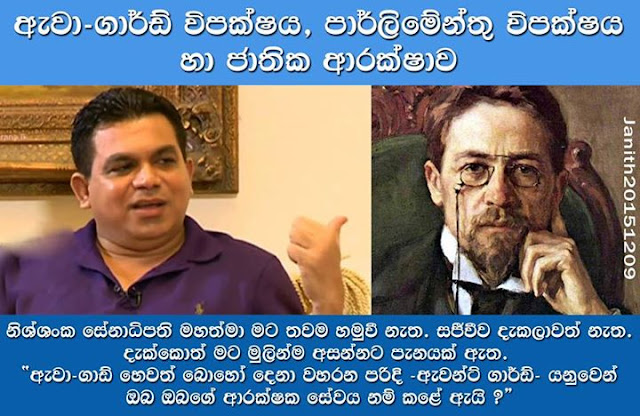
Copyright © 2026 LankaWeb.com. All Rights Reserved. Powered by Wordpress