Interest rates INCREASED – Monetary Policy Review: No. 03 – April 2022

April 8th, 2022

Courtesy Hiru News

Monetary Policy Review: No. 03 &ndash; April 2022<br />The Central Bank of Sri Lanka Significantly Tightens its Monetary Policy&nbsp;Stance to Stabilise the Economy

The Monetary Board of the Central Bank of Sri Lanka, at its meeting held on 08 April 2022, decided&nbsp;to increase the Standing Deposit Facility Rate (SDFR) and the Standing Lending Facility Rate&nbsp;(SLFR) of the Central Bank by 700 basis points to 13.50 per cent and 14.50 per cent, respectively,&nbsp;effective from the close of business on 08 April 2022. The Board, having noted the inflationary&nbsp;pressures that could further intensify in the period ahead, driven by the build-up of aggregate&nbsp;demand, domestic supply disruptions, exchange rate depreciation and the elevated prices of&nbsp;commodities globally, was of the view that a substantial policy response is imperative to arrest the&nbsp;buildup of added demand driven inflationary pressures in the economy and preempt the escalation&nbsp;of adverse inflationary expectations, to provide the required impetus to stabilise the exchange rate&nbsp;and also to correct anomalies observed in the market interest rate structure.

I believe I can put the economy back on track – Governor of the Central Bank Dr. Nandalal Weerasinghe

April 8th, 2022

Courtesy Hiru News

The Governor of the Central Bank Dr. Nandalal Weerasinghe says that technical discussions have been initiated with the International Monetary Fund and steps have been taken to expedite its process from tonight (08).

A virtual meeting has been requested for 11th April with IMF. The meeting can be held even without the Finance Minister since a Governor and a Secretary to the Finance Ministry has been appointed. Letter of Intent to IMF is to be presented, it will follow the technical process.

He further stated that stability and confidence in the market is expected with the strengthening of the rates, the highest ever increase. The rates were increased by 700 points today.&nbsp;

The governor said the economy was like a car that is headed towards a crash and his first job is to make sure the car is brought to a halt from the path of destruction. This has to be followed by steps that would reverse the vehicle back.

This a long term process and he said that the situation could get worse before it becomes better.

The CBSL has to be an independent institution without political influence and the governor sais that he will be transparent and provide information truthfully.

“I took this position with the firm belief that I could lead a process to stop the vehicle (economy) crashing and reverse it back. However this requires the support and cooperation of several stakeholders to ensure recover in the shortest possible time.&nbsp;Market confidence through a strong policy framework, political stability and social stability is required.”

Gazettes and regulations are not as effective in a free market economy. Root causes need to be addressed including the reduction of the balance of payment deficit.&nbsp;

CBSL Governor in response to Vehicle imports restriction noted that the decisions to release foreign currency will have to be made on a case by case basis depending on priority and the overall impact on a larger portion of the population.

CBSL has the potential and the strength to steer the country’s economy (Video)

April 8th, 2022

Courtesy Hiru News

The new Governor of the Central Bank, Dr. Nandalal Weerasinghe says that he believes that the Central Bank of Sri Lanka has the potential and the strength to steer the country’s economy in the correct direction.

Controversial New Theory Says Human Consciousness Is … Electromagnetic?

April 8th, 2022

It may sound crazy, but it’s based on science.

graphic painting telepathy understanding empathyKATERYNA KOVARZHGETTY IMAGES


Could the thorny question of human consciousness be answered by simple electromagnetic waves? One improbably dualist scientist believes so, and he suggests the human mind is a combination of physical matter and electromagnetic field. This is a big question, and the proposed answer here is controversial.

The University of Surrey’s Johnjoe McFadden posits that consciousness is in fact the brain’s energy field,” the university says in a statement, making McFadden’s dualism a question of matter and energy, the institution says—not the classic body and mind” distinction. Throughout history, philosophers around the world have tried to account for the special-seeming nature of human beings within the world or even, some fear, the entire universe.

From where does our robust self-awareness and sentience arise? People who believe everything is physically present and caused are called materialists, meaning there’s nothing extra that can’t be measured—what you see and touch is what humans are. Dualists instead believe there’s something extra.This content is imported from {embed-name}. You may be able to find the same content in another format, or you may be able to find more information, at their web site.

The mind, dualists say, is separate in some way. That could mean a separate, immeasurable, living soul that lives after death, or it could be as simple” as the hotly contested idea of qualia: the hint at an extra color humans can’t see, for example, as that relates back to consciousness.

The idea of a scientific lampshade on mind-body dualism certainly isn’t new, but McFadden’s research, published in the journal Neuroscience of Consciousness, is the latest to try to marry the fields. Deep breath:

I argue here that nearly all examples of so-called ‘integrated information’, including neuronal information processing and conventional computing, are only temporally integrated in the sense that outputs are correlated with multiple inputs: the information integration is implemented in time, rather than space, and thereby cannot correspond to physically integrated information. I point out that only energy fields are capable of integrating information in space.”

Basically, McFadden is saying he doesn’t believe the physical structures inside the brain account for how information extends through our minds” and form integrated ideas. That, he says, must be happening within the added medium of the brain’s electromagnetic field.

And all of this, McFadden claims, is supported by experiments on the nature of brain activity. This sounds wild—it genuinely is wild—but McFadden is a molecular geneticist and is following a centuries-old tradition of introducing the absolute latest knowledge into a new theory of what makes us human.

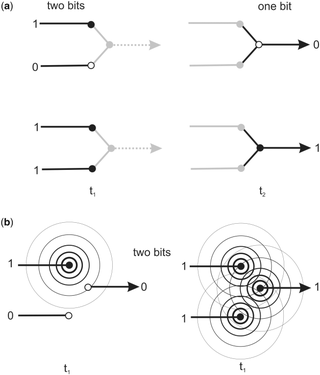
consciousness diagram

From the study: (a) Illustration of how the single bit output of an AND logic gate integrates the two bits of information encoded in its two inputs to output a single bit that represents an integration of the gate’s inputs. In reality, the integration is causal in the sense that the state of the output bit at time t2 is dependent on both input bits at time t1. (b) Illustration of how dynamic EM field information can integrate information and function as a logic gate. An AND gate is shown with two inputs and a single output, each encoded either a zero or one all at time t1. The inputs are dipoles that act as electromagnetic field (EMF) transmitters that oscillate between two states either firing (oscillating corresponding to input = 1) or non-firing (not oscillating, input = 0) states. The output is then an EMF receiver that implements the AND rule to output a signal.

JOHNJOE MCFADDEN/NEUROSCIENCE OF CONSCIOUSNESSYOU’LL LOVE THISUh, About That Black Hole at the Center of Earth

That means as long as the human brain is alive, McFadden says, it generates an electrical glow in which the real nitty-gritty human stuff is happening. And the best part is that his theory is testable in the laboratory.

There are of course many unanswered questions, such as degree and extent of synchrony required to encode conscious thoughts, the influence of drugs or anaesthetics on the cemi field or whether cemi fields are causally active in animal brains,” he explains in the paper. Yet the cemi theory provides a new paradigm in which consciousness is rooted in an entirely physical, measurable and artificially malleable physical structure and is amenable to experimental testing.”

SHUTDOWN THE ZOOS IN SRI LANKA – GIVE FREEDOM TO CAGED ANIMALS.

April 8th, 2022

Ven Dr Omalpe Sobhitha Thero President Justice for Animals and Nature

Minister-in-Charge,
Department of National Zoological Gardens,
Anagarika Dharmapala Mawatha,
Dehiwala
Hon Minister,

SHUTDOWN THE ZOOS IN SRI LANKA – GIVE FREEDOM TO CAGED ANIMALS

Animals are made to serve a life sentence in miserable conditions in zoos without having
committed a single crime. Had any human being been placed in that situation he or she would
become a cause célèbre around the world. We price the freedom of fellow humans and
disregard the claims for freedom of other sentient beings.

Animals are sentient beings and like humans they too would like to have their freedom to
roam in the fields, jungles etc. without restrictions. Zoos deny them this freedom.

It is man’s inhumanity and insensitivity towards other living beings that makes some people
perpetrate abusive conduct and the rest of us (with exceptions) to look the other side without
sticking their neck out to help save the life of another living being e.g. animal.

Today anyone can watch any animal anywhere in the world including some even at the
bottom of the sea and their natural behaviour with the latest technology. With the availability
of such modern technology it is morally indefensible to incarcerate animals for life in a zoo.
What joy can anyone get by seeing the sad sullen faces of caged animals staring into empty
space. They live in small enclosures. They are all mental wrecks. Many of these animals suffer
trauma and are pathologically mentally unsound being deprived of their freedom and scope
for natural behaviour.

What moral lessons can visitors especially children learn from seeing animals in captivity
pleading in silence for someone to rescue them. This scenario is human cruelty at one of its
worst. Compassion to animals is one of the great lessons of humanity. But this is hardly visible
inside a Zoo.

Wrongful imprisonment of humans is a crime under the Penal Code. It is unequivocally a
manifestation of an injustice. Likewise the imprisonment of animals in cages in Zoos is equally
wrong. A travesty of Justice. The Rule of Law must extend also to the protection of animals.
The Human Rights Discourse is being viewed cynically not only because the pedlars of HR are
people with soiled hands dishing out HR with self serving agendas but because of their lack of
empathy for the cause of animals. When it comes to pain and suffering, both humans and
animals are in the same boat. Animals do not exist for human abuse or human entertainment.
They are entitled to our respect as we are all united, from a Buddhistic point of view, of being
fellow travellers in the Sansaric journey.

Under these circumstances, we urge the Govt. of Sri Lanka, to consider taking the following
steps, without delay:
1) Relocate all Zoo animals in Dehiwala to open parks in Rideegama and Pinnawela, thereby
giving them greater freedom of movement.
2) Allow the uncaged free roaming birds that visit the Dehiwala Zoo regularly to fly in and fly
out as in the past, without hinderance.
3) Convert the Dehiwala Zoo land to a small urban jungle by transplanting indigenous plants
that will grow into large shady trees. This will add into an ‘urban lung’ thereby enabling the
dense population of Colombo and adjacent outstation areas to breath in the Oxygen
produced by these Trees and in turn for the Trees to absorb the Carbon di Oxide (CO2).
4) Establish a modern centre for the study of Plants (Botany) and Pharmacology, among
others.
5) Discard the ill informed decision to establish another similar type of Zoo in Kahapola,
Piliyandala. Instead follow the example of Buddhist Bhutan which have closed down all Zoos
except one or two kept open for the specific purpose of preserving and looking after the
welfare of endangered animals that have their roots in Bhutan.
6) Refrain from exchanging local born animals specific to Sri Lanka with foreign countries.
Animals born in Sri Lanka have a right to exist in this country until the end of their natural life.
They should not be forcefully seized and exchanged as gifts or chattels with foreign zoos,
particularly those that are located in temperate climates. Harsh cold climates are totally
unsuited for animals such as Elephants that require a tropical climate for healthy living. Place
the interest of the animal as paramount in any deals with foreign zoos.

We must reconnect ourselves with our pre – colonial heritage which conceded greater respect
for animals than the post – colonial generations. There is no record of Zoos being established
to keep caged animals as a matter of public policy by our former Kings except in one or two
instances.

This is a unique historical achievement and cause for pride for Sri Lanka even in the
international arena. It is time that Sri Lanka reverts back to the ancient practice of giving
freedom to animals respecting their sentience and caring for them rather than imprisoning
them in Zoos, a practice which we have uncritically acquired from our former colonial masters
and now find ourselves incapable of decolonizing our minds and lifestyles as a prelude to
giving freedom to innocent animals imprisoned in Concentration Camps deceptively called
Zoos.

With Metta,
Ven Dr Omalpe Sobhitha Thero
President
Copy : Director General, Dept of National Zoological Gardens

Scientists Finally Have Clues About What We See When We Die

April 8th, 2022

Daisy Hernandez Courtesy msn.com

  • For the very first time, scientists have recorded the brain waves of a dying person.
  • The recordings indicate that there could be some truth to the statement my life flashed before my eyes” when someone has a near-death experience.
  • The findings, which have been published in Frontiers in Aging Neuroscience, are not comprehensive because the patient had also suffered brain injuries.

For the first time ever, we’ve caught a glimpse of what human brain waves look like in a dying person.https://www.dianomi.com/smartads.epl?id=3533

After a fall, an 87-year-old male went to the emergency room and rapidly deteriorated while hooked up to an electroencephalograph (EEG) machine that captured his brain waves as he passed from a heart attack. This is not the first time we’ve seen the brain activity in a dying person—some patients who have been pulled off of life support have had simplified EEG recordings taken, though they’ve been limited to frontal cortex signals. This, however, is the first case of detailed recordings that may be able to shed some light on what we experience when we die.

For decades now, people have reported episodes of paradoxical lucidity and heightened consciousness in relation to death. This is intriguing as this seems to be occurring in brain areas that are shutting down in relation to death,” says Dr. Sam Parnia, director of critical care and resuscitation research at NYU Langone.

Although, in the past, it had been assumed that these may simply be anecdotes, population surveys have indicated that this phenomenon occurs in around 10 percent of the population [suggesting] that around 800 million people are living with this,” Parnia tells Popular Mechanics.

The team working with the patient was able to capture about 900 seconds of brain activity and focused most of its analysis on the first 30 seconds before and after the patient’s heart stopped beating.

Immediately following cardiac arrest, they noticed changes in the brain waves involved in higher-order cognitive functions, including information processing, concentrating, memory retrieval, conscious perception, and the different stages of dreaming, possibly indicating the brain was actively engaging in memory recall.

What is most intriguing is that this seems to be occurring when the brain is shutting down at the end of life. This study supports these descriptions and certainly raises the possibility that a marker of lucidity at the end of life may have been discovered,” says Parnia.

Still, the team who worked with the patient can’t be certain that his life was flashing before his eyes because his health was already in decline at the time of death—he had suffered brain injuries that included bleeding, swelling, and seizures. Additionally, he had been taking anti-seizure drugs which further complicate what the data looked like as well as the interpretation of that data. Further, the team didn’t have healthy scans of the patient’s brain to compare against the more recent scans in which the patient was already in decline.

In their paper, the team who worked with this patient theorized that because cross-coupling” between the alpha and gamma waves indicates memory recall in healthy patients, this particular patient could have been experiencing a recall of life,” or what is often referred to as someone’s life flashing before their eyes. Alpha brain waves are produced when we’re alert but calm and help us with activities like learning and coordination. Gamma waves are the fastest and are associated with high-level alertness, cognition, memory, and focus.

According to Parnia, while the brain is in the process of shutting down and dying, there is disinhibition of parts of the brain (i.e. emergence of functions) that are ordinarily depressed by our usual brain activity,” such as those we use to get through our day-to-day tasks. Because of this, we’re granted access to what Parnia refers to as aspects of reality at death that we would ordinarily not have access to,” including the depths of our consciousness.

To learn more about what happens within our brains during death is essentially impossible, though, because scientists would need to observe the neural activity of healthy subjects.

We do not anticipate death in healthy subjects and therefore could not obtain recordings in the near-death phase in anything other than from circumstances involving pathological conditions in acute care hospital settings,” the paper’s authors note. That the team was able to capture the 87-year-old patient’s brain waves as he died occurred entirely by happenstance, after all.

CONCEPT OF AN APPROACH TO ENCOURAGE EXPAT CONTRIBUTION TO SECURING AND IMPROVING FOREIGN RESERVES WITH EARNED FOREIGN CURRENCY ACCOUNTS AS NON-RESIDENT SRI LANKANS (With or without Dual Citizenship)

April 7th, 2022

Anjalika Silva – USA

I.                  Purpose: 

To examine all avenues available to find appropriate avenues to address the current foreign reserves crisis with the help of a ready resource of foreign earners as expats for a long-term relationship beneficial to the country and individuals who are a strength that has not been tapped while many possibilities have been overlooked or not explored.

II.              Problem to address:

The current situation with foreign reserves of Sri Lanka is in dire straits. There are options that can be considered beyond borrowing with long term burden on Sri Lanka.  Borrowings for immediate relief with further plans for long term solutions is a need that must be considered for long term.

With the large expatriate population living and earning foreign currency income overseas in professions and even at middle level in stable employment overseas enjoying disposable income that can be rewarded will benefit Sri Lanka if the right approach is taken.  Access to their participation under the appropriate checks and balances to win the confidence of expats will be of immense benefit to the country.  However, there are many factors to consider between countries, international regulations, and permissions.  The most critical condition is the confidence provided to investors with transparent, corruption free security of funds.

Sri Lanka’s decision makers need to acquaint themselves with systems and processes in other countries beyond country-to-country macroeconomic solutions.  The Government must have links to various well-informed representatives of developed countries who can acquaint the government with systems in place that can factor into solutions for Sri Lanka.  Sri Lankan expat groups can provide sources to help the government.  They do not encourage rules and regulations put into effect with lack of subject matter knowledge.

This document is written with respect to possibilities in the USA.  However, a modification of the recommendations made can be explored for other developed nations where Sri Lankan earners can be reached.

III.           Participants:

Participants can be retirees earning foreign currency pensions living overseas with or without dual citizenship and in addition it can consider younger citizens of Sri Lankan birth to park part of their savings in secure foreign currency accounts in Sri Lanka.

Offering benefits to younger Sri Lankan expats will benefit the country with a pool of qualified intellectuals among them who will be encouraged to contribute to informed decision making that is seriously lacking in Sri Lanka.  There is a perception that knowledge is not given importance and proper fact finding, data collection of this population does not take place.

It must be remembered that in the USA as is the case in most developed countries that do not experience shortfall in foreign reserves, the encouragement for savings accounts earning interest is very low.  For example, in the USA, it is 1% or less return on savings investment.

This may be attributed to the larger interest and dependence on investing in stock trading and in the case of employer offered retirement plans referred to as 401K plans that are incentives to reduce and defer lumpsum taxes paid on earnings by contributing to tax deferred plans for later years.

Also, all employees contribute to Social Security and Medicare that are mandated by government throughout their working life.  At the end of 40 quarters or ten years of employment paying this tax, at age 62 or 65 any qualified employee gets a guaranteed pension that can be subsidized with employer retirement plans or other tax deferred tools available.  That part of tax deferred income that does not sit parked in savings can be worked out by the Government exploring international banks that can be permitted to park foreign currency of expat Sri Lankan Born account holders with other conditions as stipulated.

Current Status:  It must also be noted that currently, among foreign nationals of Sri Lankan origin, only those with dual citizenship can open NRFC accounts as it requires an NIC number after obtaining dual citizenship. Dual citizenship takes too long. The NIC card is not an automatic inclusion in the Dual Citizenship process, and it takes a further time interval extending longer than a year as reported by those who have tried.

 A very small population of Sri Lankans who had NIC prior to immigration and taking a foreign citizenship retained their bank credentials using their NIC number prior to converting to a foreign nationality.  For example, in the USA, a permanent resident of US status is retained for 5 years with a Sri Lanka Passport that could provide an NIC for holder prior to completion of 5 years as a PR and gaining US citizenship.  The need to have Dual citizenship for those who accepted US Citizenship cuts out a large portion of the immigrants from opening Non-Resident Foreign Currency Accounts (NRFC).  In such cases requiring dual citizenship acts as a deterrent that also serves no purpose without the NIC.  The large fee is also a deterrent that serves the country no purpose in a rupee fee.

IV.          Foreign Citizens and their Fears:

With the dual citizenship requirement to park foreign earnings in Sri Lanka, there is a remote possibility that prosperous countries may at some point ask for a single citizenship.  This has been expressed as a reluctance to take dual citizenship with Sri Lanka. An open Non-Resident Foreign National type of status with unlimited stay, spending foreign income pensions or transferring savings accounts parked in Sri Lanka is far more feasible.  Expats have many fears even donating to causes due to their inability to assume transparency.

However, pensions earned through Social Security at retirement in the USA, provides an advantage to recipients to enjoy a better standard of life overseas, as in this case in Sri Lanka. It is however insufficient to meet costs in the USA unless qualified concessions can be obtained or other investments/assets are available.   The Social Security pension is a contributory pension that the US Government cannot restrict regardless of where the Sri Lankan born citizen with a US citizenship decides to live. This pension is owned by the citizen as it is a contributory pension.  This was confirmed by informed US authorities.  Even with direct deposit to US bank accounts, they can make electronic transfers from any location if Sri Lanka provides foreign currency accounts that are freely accessible.

It is now established that Sri Lankan immigrants to the US count four generations beyond the first-generation immigrants.  This keeps growing and not all generations will be Sri Lankan born but they can be provided some concessions if they have interest in parking savings in Sri Lanka.  This is a decision to be cleared by the government.

Expanding the above to non-Sri Lankan born foreign citizens with careful thought: 

Exploring the privilege of investing private foreign currency for non-SriLankan will also be worthy of exploration

V.              Conditions to be met:

The Government of Sri Lanka needs to visit these possibilities. Provide for a category of Sri Lankan born foreign citizens to choose to return under a different category while retaining foreign nationality with unlimited time to live in Sri Lanka using foreign currency income.    

The long processing and cumbersome dual citizenship may not be attractive to most people.  Those who try are frustrated by the process and it may not bring a return on their investment.   If they can retain their foreign nationality if they abide by the financial requirements of Sri Lanka and do not engage in money laundering or misuse of their privileges another category will certainly be of benefit all round. Savings income in Sri Lanka will be attractive for retirees to return.   

Such a category should be permitted to stay for indefinite periods if they are not dual citizens.  In the current situation, those without dual citizenship, born in Sri Lanka or of Sri Lankan Heritage can live only 6 months at a time using a 5-year multiple visas.  Those who wish to live longer periods in retirement should be given the choice to do so.

VI.          Government Intervention Required:

The role of the government should be to investigate possibilities, collect data and evaluate the interest among expat Sri Lankans to seek their ideas.  It must however be completely under the control of the account holder and the government assurances must be watertight before people part with their hard-earned savings in full or part for a higher interest rate if parked in Sri Lanka.  These are US Taxpayers, and the Government can negotiate taxation terms to avoid double taxation of foreign nationals who are liable for taxes in their foreign national countries.

The Government must create a well thought out category that is different to the stringent long-drawn-out process of dual citizenship that takes too long for people who need to bring their foreign earnings back to Sri Lanka. If relocating to Sri Lanka, expats cannot wait for delays.  The process should be speedy with no undue hardship for participants trying to help the country.  Appreciation is key.

The Government must also study the use of secured technologies adopted in the USA to provide autonomy to account holders. This is easily done if those who make decisions understand and follow the global trends today.

There is a considerable transfer of funds direct from US$ to rupees in donations and to families and this can be taken into consideration and encompassed in the system to count as legitimate foreign currency coming into the country.   The possibility for large scale money laundering must be plugged and addressed accordingly with close monitoring.

VII.       Participant Expectations:

As referred to above, accounts must be secure, accessible online from global locations, ownership secured with appropriate security and clearly defined taxation implications because US citizens are mandated to file annual tax returns.

It will be an avenue for tax accountants between the two countries to tie up a practice to facilitate tax payments on interest earned and reporting structure set up so that double taxation is prevented. In any case, Sri Lankan banks require foreign passport holders to report funds in rupee accounts in Sri Lanka.

VIII.   Engaging Pre-retired Foreign Currency Earners Overseas:

If the above category is permitted for retirees to park foreign currency accounts and earn higher interest in Sri Lanka, this can be extrapolated to provide the same opportunity for others who are pre-retirement, and their savings will serve to benefit Sri Lanka and the higher interest will help those who are building their resources.

IX.          A transparent system of transfer to dependents in Sri Lanka:

Many Sri Lankans living overseas provide charitable donations to Sri Lanka and help with financial support for family members.  All these transactions can be provided through a system that is quick and convenient for the donor and recipients. Electronic transfers, cyber security for accounts and all the services at the highest level should be available to users.

X.              Encouraging Retirees to Return with foreign Pensions:

The Government must make a close study of the locked foreign assets potential of Sri Lankan born retirees living in the USA and other countries and provide an easy method for them to return with assets in exchange for contributing to foreign reserves.

They should be given the right assurances by making sure their input and expectations are listened to and fulfilled.  This is better for the country than paying for loans and interest at taxpayer’s expense.  These are time sensitive and if the government is serious, they need to work on a plan right away and provide a project plan to those who are entrusted with implementation.  This cannot take on the face of the long drawn-out dual citizenship that discourages most Sri Lankans from applying with long waits and the package of the NIC is another operation that impedes opening accounts with foreign currency.  This is a totally unproductive practice that is not at all beneficial to the country or the account holders.

With time, the benefits to individuals will be guaranteed with growing interest by depositors.  The key is an efficient, well-planned operation that is a lot to expect but a dire need.

XI.          Concessions to Patriotic Citizens helping Sri Lanka

As a note of appreciation for patriotic Sri Lankans of Foreign citizenship, a simplistic identification card provided by the government with their identity will be widely accepted. This is particularly as a courtesy card when those who visit Sri Lanka are treated with some courtesy that is lacking now.

Such a tool should be made known to immigration officers and front-line greeters of patriots who can report shabby treatment on entry to Sri Lanka.  Personal stories reveal experiences that have offended returning immigrants with their first encounters on entry.  With a card to distinguish those who help the country, this can be overcome.

Very little is done for those who live decades away from Sri Lanka but continue to serve their home country without reservations or rewards.  This has been ignored for decades and is a loss for the country. The opportunity to engage expats in productive ways that benefit them too will be appropriate to investigate.

Some concessions to live indefinite periods with foreign citizenship, enjoy the higher percentage interest on foreign currency savings accounts that can be opened on proving birth right is a simplistic beginning to an expanded advantage to Sri Lanka.

This is presented on behalf of the Executive Committee of the Sri Lankan American Action Coalition (SLAAC)

South Asia’s Arab Spring: Protests Amid Hybrid Economic War in Pakistan and Sri Lanka

April 7th, 2022

Viewpoint by Darini Rajasingham-Senanayake

The writer, Dr Darini Rajasingham-Senanayake, is a Sociocultural and Medical Anthropologist based in Colombo. Her latest publication is ‘Multi-religiosity on Contemporary Sri Lanka: Innovation, Shared Spaces, Contestation”. (Routledge 2022)

South Asia’s Arab Spring is here, amid global Cold War tensions and slow tectonic shifts in power and wealth east, to Asia and the Indian Ocean Region, hastened and heightened by the Russia-Ukraine conflict. 

As Foreign Minister of Russia, Sergey Lavrov, met Indian Prime Minister Narendra Modi on April 1, western pressure mounted with almost simultaneous visits from various British, European and US emissaries who cautioned and questioned Delhi’s historic and close ties with Moscow. 

Simultaneously, Pakistani Prime Minister Imran Khan, who had visited Russia on a pre-planned trip a few weeks earlier, was subject to a “no confidence” motion which was later deflected with the dissolution of Parliament. Khan pointed the finger at the United States as the foreign power behind events in Islamabad and a Regime Change operation by buying politicians and political parties. 

Prime Minister Khan showed material evidence of the ‘foreign conspiracy’ and named Assistant Secretary of State for south and central Asian affairs Donald Lu. A letter from Washington dated one day before the No Confidence was stated, “Pakistan would be forgiven if Imran Khan lost the No Confidence motion!” Washington had foreknowledge of events in Islamabad.

Ironically, Prime Minister Khan, who saved Pakistan’s economy from the economic destruction that almost two years of WHO-recommended Covid-19 lockdowns caused in Sri Lanka and India and protected the Pakistani people and economy by refusing to lockdown Pakistanis, stating that the resulting poverty would kill more people than the lab-made virus, has been accused of economic miss-management even though he was proved right.

The World Bank has lauded Prime Minister Khan’s handling of the Covid’ Panicdemic’ in Pakistan. Imran Khan’s friendship with China and the recent visit to Moscow and Mr Putin, he noted, had irked Washington and was the reason that Pakistan was targeted. Washington, however, has been much softer on its Indian Quadrilateral Group QUAD partner’s friendship with Russia. This time, India and Pakistan seemed to be on the same page vis-à-vis Russia! Indeed, there may be a new Asian confluence with China, India and Pakistan all refusing to follow NATO condemnation of Moscow following the NATO debacle in Afghanistan last year.

Staged dollar crisis and protests in Sri Lanka

The same week that Pakistan’s Imran Khan faced a No-Confidence motion, Sri Lanka saw an Arab Spring style’ colour revolution’ unfold with protests against former US citizen President Gotabaya and the Rajapaksa brothers’ regime, given the soaring cost of living, fuel and food shortages due to a much-hyped dollar shortage in the country and downgrades by rating agencies. 

A few weeks earlier, the Sri Lankan rupee was crashed, having lost 70 per cent of its value in a year—a precursor to an International Monitory Fund (IMF), “bailout” or is it “bail-in” negotiations in Washington DC? Although Sri Lanka is one of South Asia’s wealthier countries with high social and Human development indicators in REAL TERMS, a fuel and electricity crisis materialized after the rupee crash. There were long queues at petrol sheds and gas shops.

But the strategic island’s crisis may be more about Geopolitics and less about Economics. Since 2019 staged Easter Sunday attacks on Tourist hotels and the economy using religion as a smokescreen and the island’s rejection of America’s Millennium Challenge Corporation (MCC) Compact, this strategically located island in the Indian Ocean Sea Lanes of Communication (SLOC), appears to have been subject to a form of hybrid ECONOMIC WARFARE. For the past four years, there have been Lockdowns in March and April on some pretext and Cyber and Maritime trade disruption with the burning and sinking ships MV Pearl and Diamond last year. 

Former US Assistant Secretary for South and Central Asia, Alice G. Wells, once referred to Sri Lanka as a “valuable piece of real estate” and the island appears to be vital for maintaining America’s “Free and Open Indo Pacific”.

So too, the Sinhala Diaspora seems to have been Weaponized: Basil Rajapaksa, brother of the President and Prime Minister and Minister of Economic Disaster in Sri Lanka, is a US Citizen. Governance in Sri Lanka for the past three years has been a family affair of the hybrid American-Sri Lankan Rajapaksa family. Basil Rajapaksa was set to fly to Washington to the International Monetary Fund (IMF) after a staged parliamentary debate on April 8.

IMF as Deus ex Machina

Remarkably the Sri Lanka Government, many in the Opposition and some protestors see the IMF as a sort of ‘Deus ex machina” Solution to the crisis triggered by an apparent dollar shortage after rating agencies downgraded the island in concert last year, making it difficult for the government to roll over the 7 billion debts to be paid this year owed primarily to Sovereign Bond traders.

Sri Lanka’s Creditors are mostly based in the USA” as noted by senior economist Dr. Dushni Weerakoon of the Institute for Policy studies. The island’s debt to GDP ratio is around 110 per cent, partly due to economic mismanagement and the Covid policy debacle of the past two years. But then Japan’s Debt to GDP ratio is over 200 per cent! Compared to America’s 20 trillion debt, Sri Lanka’s debt is around 67 billion.

Is Sri Lanka’s currency steeply depreciated as a precursor to IMF negotiation in March because of an apparent dollar shortage to clear goods and fuel from the targeted port? The saucy island dared to refuse the US Millennium Challenge Corporation (MCC) Compact and Status of Forces Agreement (SOFA) in 2019. The economic crisis has escalated to default, and an IMF bailout now appears inevitable.

The island was repeatedly downgraded by Rating agencies and could not roll over its debt. The Euro-American Financial system comprises rating agencies, sovereign bond traders and, of course, the Washington Consensus and OECD or Paris Club. 

To be fair the IMF has never pretended that it cares about poor people or inequality but instead prefers to impose austerity measures on the ordinary people which should be imposed on luxury-living politicians and business elites with, for and by which the IMF works. Is the IMF a Fake Solution offered by ALL—who are bought for a unity r National Government yet to be formed?!

Unlike Pakistani Prime Minister Imran Khan, known for his courage and integrity on and off the cricket field, the hybrid American-Sri Lanka Rajapaksa Regime would not point the finger at the external factors behind Sri Lanka’s 2019 Easter attacks, the blow to the tourism-dependent economy followed by lockdowns and travel warning and the compounding economic debacle of the past three years.

Four years of Hybrid Economic War

Retrospectively, the mysterious ISIS claimed Easter Sunday attacks on coastal Hotels and the Tourism dependent economy in 2019, ten years after the defeat of the LTTE and the dawn of peace in Sri Lanka, may be seen to herald the onset of hybrid Economic War in Sri Lanka. The attacks used religion as a cover to hit China’s Shangri La Hotel, where the leader Zaharan and another suicide bomber perished, signaling this was the most crucial target.

The hybrid war style Easter 2019 attacks were followed by two years of Covid-19 bio war and fear narratives and economically destructive Lockdowns in 2020, 2021. There was massive health sector expenditure (almost 38 per cent of the budget) and 16 million useless and expensive Pfizer booster injections by Basil Rajapaksa, Head of the Covid Task Force. In 2022, there were no funds to purchase essential drugs. All health institutions were also captured through Digital Colonialism by external actors promoting the Covid narrative and LOCKDOWNS (Great Reset after Event 201).

The crisis was compounded during Covid lockdowns in 2021 by Agriculture and Energy policies that appeared to follow the UN climate catastrophe” narrative. Farmers were instructed to switch overnight to organic fertilizer without a transition plan. The result was fertilizer shortages, harvest failure and farmer’s livelihoods decimated. But President Rajapakse was awarded a prize at the UN for his ‘organic fertilizer’ policy!

So too the island’s Energy security was compromised during Covid lockdowns in 2020-21 following the UN climate catastrophe narrative although Sri Lanka’s per capita carbon emissions are minute comparted to most countries in the world. There was a rush to convert power plants to LNG and focus on renewables, without a phased transition plan, also given high levels of corruption in energy sector and oversight institutions like the Sri Lanka Electricity Board and Public Utilities Commission PUCSL. Meanwhile, while the power plants at Kerawelapitiya was sold to an American company!

For the past four years, a pattern has emerged: Every March-April, a new round of destabilization starts and since 2019, Sri Lankan citizens have been routinely put in LOCKDOWNS and CURFEWS. Meanwhile, foreign navies stage war games off the island’s coasts of this strategic island, as was the case with the Malabar War games that beached and killed pilot whales while Lankans were in lockdown in 2020.

Has the island been systematically targeted because it sits on the Indian Ocean Sea Lanes of Communication (SLOC), vital to securing America’s “Free and Open Indo Pacific” after refusing the MCC compact and SOFA? Geography is history in this strategic island in the Indian Ocean. Similarly, Pakistan was targeted for regime change after Imran Khan’s visit to Russia.

Lawfare: Solutions when conspiracy theories come true

We live in a post-Covid world when conspiracy theories increasingly seem to come true. Protests may be useless without creative alternatives to the proffered IMF “solution” requiring foreign legal firms to take over the island’s economic negotiations. 

Strategic Sri Lanka may need to look to Asia for help and development at this time of national humiliation and develop a strategy to de-dollarize and trade in a basket of currencies. It may consider an independent Economic, Trade, Energy and Foreign Policy and source its oil, gas, and other energy needs from Russia at discount prices like India is doing.

Going to the IMF and its aid conditionalities means that Sri Lanka loses policy autonomy and sovereignty and is rendered unable to have an INDEPENDENT FOREIGN, ECONOMIC, TRADE or ENERGY policy that serves the interest of her citizens.

At this time, Sri Lanka seems to be subject also to the phenomenon of lawfare and a Full Spectrum Dominance (FSD) remote Over the Horizon (OTH) operation. As documented in the regime change operation against Brazil’s leftist President Lula by the Central Intelligence Agency (CIA), lawfare has been identified as the process whereby a country’s legal system is subverted and weaponized against justice. 

There is a pattern of fundamental rights cases against government actions being dismissed while the people are distracted with food and fuel shortages and or Covid-19 lockdowns. Petitions that have been refused leave to proceed sometime by five-judge benches include challenges to the sale of the Kerawelapitiya Yugadhanavi Power plant at this time of Energy Crisis to a US company name New Fortress in a midnight deal by the President, the Central Bank Bond scam cases, the cases challenging the Covid-19 mass injections Gazette of 2022 which would impose digital vaccine certificates and discriminate those who are not injected from public places under a Fake Health Emergency etc. that would also enable surveillance, stop crowds and protest, stymie democracy and promote digital colonialism and control of citizens.

Is as Imran Khan said of Pakistan, Sri Lanka also being targeted in an Over the Horizon (OTH) Full Spectrum Dominance (FSD) operation as Cold War returns to South Asia with America’s ominous “Pivot to Asia” and disengagement from Afghanistan? [IDN-InDepthNews – 04 April 2022]

Photo: A Sri Lanka protestor. Source: DAWN

IDN is the flagship agency of the Non-profit International Press Syndicate.

Visit us on Facebook and Twitter.

We believe in the free flow of information. Republish our articles for free, online or in print, under Creative Commons Attribution 4.0 International, except for articles that are republished with permission.


බයිඩන් සහ Nato ද මෙයට වග කිව යුතුයි

April 7th, 2022

චානක බණ්ඩාරගේ

‘ඉවසලා ඉවසලා බැරිම තැන එතනයි ඉවසිය යුතුම තැන’ – සිංහල වහරේ එන මෙම කදිම උවදෙස පුටින් නොදැන සිටියා විය හැකියි. නැත්නම්, 24 පෙබරවාරි 2022 දා යුක්රේනයට විරුද්ධව යුධ ප්‍රකාශ කිරීමට තරම් ඔහු අමන නොවනු ඇත.

තමන්ට දිනන්න බැරි යුද්ධයකට ප්‍රවේශ වන්නේ මෝඩයෙකි. 

සාමාන්‍යයෙන් දක්ෂයෙක් වන පුටින් මේ අවස්ථාවේ ඉතා මෝඩ තීරණයක් ගත්තේය. පුටින්ට හරි දේ කියා දෙන්න උපදේශකවරයෙක් සිටියේ නැත. ‘උඩින්ම ඉන්න නායකයා හැමදාම තනියි’ යන පඬි වදනක් ඇත.

1962 නේරු මෝඩයෙක් ලෙස චීනයට විරුද්ධව යුධ ප්‍රකාශ කර අන්ත පරාජයක් අත් පත් කර ගත්තේය. එම යුද්ධයෙන් ඉන්දියානු භටයන් 1500 නිකරුනේ මිය ගිය අතර චීන භටයන් මිය ගියේ 700 ක් පමණ පමණි. 1965දි පකිස්ථානයේ අයුබ් ඛාන් ඉන්දියාවට විරුද්ධව යුධ ප්‍රකාශ කර ඉන්දියාවෙන් හොඳටම හොඳටම ‘ඉල්ලං කෑවේය’.  ඔහුගේ භටයන් 6000 මැරෙන විට ඉන්දියාවේ මරුනේ භටයන් 3000ට අඩු ගණනකි.

පුටින් වසර 8ක් ඉවසුවේය. රුසියාවේ යුක්රේන දේශ සීමාවේ දස දහස් ගණන්  යුධ භටයෝ ගොඩ ගසා මහා යුධ ප්‍රාකාර සැදීය.  ඒවා හරි වැඩය.

නමුත් (දිනන්න බැරි) යුද්ධයක් පටන් ගැනීමෙන් තමන්ගේ වල තමන් කපා නොගන්නේදැයි යන්න වටහා ගැනීමට තරම් පුටින්  ඥානවන්ත නොවීය.

(ඇමරිකාව වියට්නාමයෙන් පරාජය ලැබිය; රුසියාව ඇෆ්ගනිස්තානයේදී පරාජය විය. ඉන්දියාව – IPKF, LTTE අතින් හොඳටම බැට කෑවේය).

2021 බෙලාරුස්හි මහජන විප්ලවය මැඬලන්න පුටින් ඍජුව මැදිහත්ව වැඩ කළේය. දැන් ල්හුකෂෙන්කෝ ඉතා ශක්තිමත්ය. ඔහුව වට්ටන්න බැරිය. ඒ රුසියාවේ ආධාර ලැබෙන නිසාය. එදා 2014 පෙබරවාරි මස පුටින් හිතවාදී යුක්රේනයේ යනුකොවිච්ට විරුද්ධව මිනිසුන් කැරළි ගසන විට පුටින් නිහඬව බලා සිටියේය. ඒ කාලයේම පැවතී මොස්කව් winter olympics උළෙල ආරක්ෂා කර ගැනීම ඔහුට වඩා වැදගත් වූ වා සේය. එදා ඔහු යුක්රේන විප්ලවය අකර්මන්‍ය කරන්න කටයුතු කළා නම් බටහිර රටවල් එම olympic උළෙල වර්ජනය කර ආපසු ගෙදර යනු ඇත. පුටින්ට මේ දේ සිදු නොවීමට අවශ්‍ය විය.

පසුව පුටින් ගොස් ක්‍රයිමියාව අල්ලා ගත්තේය. නමුත් මුළු යුක්රේනයම නැති කරගත්තේය. බලෙන්ම ජාත්‍යාන්තර සම්භාධක දා ගත්තේය.

එදා 2014දී යුක්රේනයේ තමන්ට හිතැති පාලනය රැක ගනිමට පුටින් ඉදිරිපත් නොවීම පුටින්ගේ බලවත් දුර්වල කමක් ලෙසයි මෙම ලියුම්කරු දකින්නේ. (මේ හා සමානව – 2013 CHOGM මඟුලක් පැවැත්වීමේ ඉමහත් ආශාවෙන් පසු වූ අපේ රජය ඒ අවස්ථාවේ (2012, 2013) ජනමත විචාරණයක් පවත්වා 13 ව්‍යවස්ථා සංශෝධනය අහෝසී කර බෙදුම්වාදී සංකල්පයට මරු පහරක් ගැසීමේ අවස්ථාව උවමනාවෙන්ම නැති කර ගත්තේය. පොදු රාජ්‍ය මණ්ඩලයේ පියා – බ්‍රිතාන්‍ය තරහ වේ යයි රජය බිය විය. විග්නේස්වරන් යන උග්‍ර  ජාතිවාදියා/බෙදුම්වාදියා උතුරේ තැබීමට යන ප්‍රථම පළාත් සභා මැතිවරණයට මහ ඇමති අපේක්ෂකයා ලෙස ඉදිරිපත් වෙන බව දැනුම් දුන්නේ 2012 මුල පමණය; ඔහු බොරු කියා 80%කට එහා ජන්ද ප්‍රමාණයක් ගන්නා බවද සැවොම දැන සිටි කරුණකි. මේ පළාත් සභා යම් දිනක මේ රට දෙකට කඩනු නිසැකය.

1987දී  ඉන්දියාව ශ්‍රී ලංකාව මත බලහත්කාරයෙන් පැටවූ පළාත් සභා ක්‍රමය ඉන්දියාව වැනි විශාල රටකට ඔබින නමුත් ශ්‍රී ලංකාවට උසුලාගත නොහැකි අමතර බරක් බව සිංහල ජනතාව පමණක් නොව ද්‍රවිඩ කථා කරන සාධාරණ ජනතාවද පිළිගන්නා සත්‍යයකි. ලක්ෂ 5ට අඩු ජන්දදායකයන් වෙසෙන වයඹ, සබරගමුවට, ඌවට වෙනම ආණ්ඩු, වෙනම නීති? මේ පළාත් සභා නඩත්තුවට  මොනතරම් අනවශ්‍ය බදු බරක් මෙරට වාසින් දරන්නේද?  රටේ උද්ධමනය අහස උසට ඉහල යාම අරුමයක් නොවේ).

පුටින් කල යුතුව තිබුනේ ජර්මනිය, හංගේරියාව, පෝලන්තය වැනි තම මිත්‍ර රටවල් මාර්ගයෙන් කෙසේ හෝ යුක්රේන ප්‍රශ්නය විසඳා ගැනීමය. එය කළ හැකිව තිබුණි. ප්‍රංශයේ මැක්රෝන්ද යම් තරමකට පුටින් හිතවාදීව සිටියේය.

ඔබාමා ක්‍රයිමියා සිද්ධිය සම්බන්ධයෙන් පුටින්ට විරුද්ධව සම්භාධක දැම්මත්, ට්‍රම්ප් පුටින්ට  හොඳින් සැලකීය. ට්‍රම්ප්ගේ වසර 4 කාලය තුල පුටින් ඉතා දක්ෂ ලෙස තම රට පාලනය කර එය යලි ධනවත් රටක් බවට පත් කර ගත්තේය. ඉතා බලගතු ලෝක නායකයෙකු ලෙස ඔහු මතුවෙන්න පටන් ගති.  2020 දී බලයට පෑමිණි බයිඩ්න් තුල රුසියාව, පුටින් ගැන ඇත්තේ වෙනත් ආකල්පයකි. ඔහු රුසියාව දෙස පැරණි යැංකි/ගතානුගතික මානසිකත්වයෙන් බලයි. රුසියාව ගැන බයිඩන් තුල ඇත්තේ රේගන් තුල වූ වැනි ‘එය විනාශ කර දැමිය යුතුය’ වැනි මානසිකත්වයකි.

බයිඩන්ට අවශ්‍ය වුයේ හැකිතරම් පුටින්ව ‘කළු ගල් තාප්පයට’ හිර කිරීමටය. Nato වෙත ඇමරිකන් ආධාර ගලා එව්වේය. Natoවට උපදෙස් දුන්නේ යුක්රේනය Natoවට බඳවා ගන්නා මං සොයා බලන ලෙසයි. යුක්රේනය යුරෝපා සංගමයට බඳවා ගන්නා ලෙසට බයිඩන් යටින් කටයුතු කළේය. තමාව සැමදා බලාගත්  සැමියාව හැරදමා, ඔහුට  පෙනී පෙනී වෙනත් මිනිසුන් සමඟ අනාචාරයේ යන  බිරිඳක් මෙන්, 2014න් පසු යුක්රේන නායකයෝ රුසියාව හැර දමා යුරෝපා හවුල, Nato වෙතම යොමු වුහ. 1917දි බිහිවූ යුක්රේන ළදරුවා කිරිපොවා ලොකු මහත් කර ඉමහත් ආදරයෙන් බලා හදා ගත්තේ සෝවියට් දේශයයි (1991 වන තෙක්). ඉන්පසු 2014 වන තෙක් රුසියාවයි.  

යුක්රේනයේ ඊසාන කොටසේ වෙසෙන රුසියන් කථා කරන ජනයා වෙසෙන ඩොන්බාස් ප්‍රදේශයට (ඩොනෙස්ක්  සහ ලුහාන්ස්ක් ප්‍රාන්ත) කුඩම්මාගේ සංග්‍රහයට  2014න් පසු ආ යුක්රේන රජයන් නිරන්තරයෙන් ලක් කරවිය. මෙම අවුරුදු 8 තුල මෙම ප්‍රදේශ තුල රුසියන් කථා කරන යුක්රේන වැසියන් 14,000ට වඩා සිවිල් යුද්ධය නිසා මරුමුවට පත් විය.

බයිඩන් සහ Nato දැන දැන රුසියාව ප්‍රකෝප කළහ. පුටින්ට යුද්ධය ආරම්භ කිරීමට උවමනාවක් තිබුනේ නැත.  හමුදාව ගොඩ ගැසුවා පමණි. නමුත් ‘රුසියාව අද ගහයි, හෙට ගහයි’ යයි පවසින් රාජ්‍ය දෙපාර්තමේන්තුව හැකි තරම් රුසියාව උසි ගැන්වීය.

ලෝක නායකයෙකු වශයෙන් බයිඩන් මේ දේ නොකළ යුතුව තිබුණි. ඔහු මීට වඩා වගකීමේන් කටයුතු කල යුතුව තිබුණි. බයිඩන් පුටින්ට සැලකුවේ 2වෙනි පන්තියෙනි.

යුක්රේනය යනු රුසියාවේ ඉදිරිපිට ගෙවත්තයි; රුසියාව යුරෝපයට යන්නේ මෙය පසු කරයි.  

යුක්රේනය Nato හා බැඳුනොත් මේ ගෙවත්තේ රුසියාවට ඉල්ලක්ක වූ න්‍යෂ්ටික අවි සවි කිරීමට පවා ඉඩ ලැබෙන  බව  පුටින් දනී (එවන්නකට යාමට තරම් නම් ඇමරිකාව දරුණු/අමනෝඥ නොවන බව මෙම ලියුම්කරුගේ පිළිගැනීමයි). යම් හෙයකින් එවැන්නක් සිදු වුවහොත් (යුක්රේනය තුල න්‍යෂ්ටික අවි Nato විසින් රහසිගතව සවි කලහොත්), එය රුසියාවේ අවසානය පමණක් නොව මුළු යුරෝපයේම ද අවසානය වේ. සමහරවිට, ඇමෙරිකාවට, ආසියාවටද දැඩි න්‍යෂ්ටික අවි බලපෑම් ඇතිවනු ඇත.

යුක්රේනය සමඟ වන යුද්ධයක් ඊට එහායින් ගිය ඇමරිකාවේ සහ යුරෝපයේ ප්‍රොක්සි යුද්ධයක් වන බව පුටින් වටහා නොගත්තේ ඇයි? අද යුක්රේනයට අති නවීන ඇමරිකන්, යුරෝපා අවි ගලා ඒ. රුසියාවට සමහරක් මේ නවීනතම තාක්ෂණ නැත. මේ යුද්ධය පටන් ගැනීමට රුසියාවට වඩා රහසිගත උවමනාවක් ඇමරිකාවට, Natoට, යුක්රේනයට තිබු බව පුටින්ට නොවැටහුනේ ඇයි?

වසර 8ක් ඉවසූ පුටින් අන්තිමට බයිඩන්, Nato, සෙළේන්ස්කි ගැටයට අසු විය.

පුටින්ට බොහෝ වංචා චෝදනා ඇත. අපරාධ චෝදනාද ඇත.  කෙසේ වෙතත් තුන්වෙනි ලෝකයේ බොහෝ රටවල් පුටින්ව හොඳ පුද්ගලයෙක් ලෙසට පිළි ගනී. ලොව නැඟී එන ඇමරිකන්, යුරෝපා ආධිපත්‍යය යටතේ පුටින් 3වෙනි ලෝකයට නැතිවම බැරි පුද්ගලයෙක් ලෙස සැලකේ. ඔහු ලොව විශාලතම රටේ නායකයාය.  මනුෂ්‍යත්වයෙන් පිරිණු මුහුණක් පුටින්ට ඇත. ඉතාම හොඳ ක්‍රීඩකයෙකි. ඔහු ශ්‍රී ලංකාවේද හොඳ මිත්‍රයෙකි.

ජෝර්ජියා, චෙච්නියා, සිරියා, අසර්බයිජාන්/ආර්මිනියා ප්‍රශ්ණ වලදී පුටින් අති දක්ෂ නායකත්වයක් පෙන්වීය.

නමුත්, නැවතත්, ඔහු බයිඩන්, Nato ගැටයට අවාසනාවන්ත ලෙස අසු විය. පුටින්ට මුළු ලොවම රජ කරන්න පුළුවන් තත්වයක් ගොඩ නගා ගත හැකිව තිබුණි.

දක්ෂයෙක් නිසාත්, රුසියානුවන් වැඩි දෙනෙක් තවමත් ඔහුට ආදරය කරන නිසාත්, යම් තරමට යුද්ධය ඉක්මනින් නිමා කර (යුක්රේනය සමඟ රුසියාවට වැඩදායි සාම ගිවුසුමක් අත්සන් කර) පුටින්ට නැවත ජාත්‍යාන්තර තලයට පැමිණීමේ අවකාශ ඇත. ‘හිඟන්නාගේ තුවාලය මෙන් යුද්ධය දික් ගස්සමින් ගියහොත් පුටින් හිර ගෙදරකින් නතර නොවුනහොත් එයද පුදුමයකට කරුණක් නොවනු ඇත. එය එසේ නොවේවා යයි උදක්ම පතමු.

නමුත්, නැවතත්, පුටින්ට උඩටම යලි ඒම සිතන තරම් ලෙහෙසි කටයුත්තක් නොවනු ඇත; එය අති දුෂ්කර කාර්යයකි. ඇමරිකන්, කැනඩා, යුරෝපා, ඕස්ත්‍රේලියන් සම්භාදක නිසා රුසියාව ආර්ථික වශයෙන් පහලටම කඩා වැටෙනු ඇත. ශ්‍රී ලංකාව බේරා ගැනීමට දැන් ඉදිරිපත් වී ඇත්තේ චීනය සහ ඉන්දියාවයි. රුසියාව බේරා ගැනීමට සිදු වනු ඇත්තේද මේ දෙරටටයි. බ්‍රසීලය, නයිජීරියාව, ඉරානයද රුසියාවේ සහයට එනු ඇත.

(මෙම ලියුම්කරු ජාත්‍යාන්තර නීතිඥවරයෙකි. ඕස්ත්‍රේලියාවේ බැරිස්ටර්වරයෙකු ලෙස බොහෝ කලක් සේවය කර ඇත) (ethos8@bigpond.com) .

Sustainable concept for wood-based textile fibres

April 7th, 2022

Press release

The 2022 Marcus Wallenberg Prize is awarded to Professor Ilkka Kilpeläinen and Professor Herbert Sixta for the development and use of novel ionic liquids to process wood biomass into high-performance textile fibres.

The future demand for textile fibres is growing due to global population growth. Production of cotton, the predominantly used cellulose fibre for textiles, is not expected to keep up with the demand. Therefore, man-made cellulose fibres would be an excellent complement for cotton as these fibres have similar properties. The main processes to produce man-made cellulose textile fibres are the viscose process, where cellulose is solubilized using alkali and carbon disulphide and the Lyocell process, where N-methylmorpholine-N-oxide (NMMO) is used to dissolve cellulose. The viscose process has, however, become environmentally controversial due to the use of toxic carbon disulphide as the main reagent. The Lyocell process on the other hand is hampered by the instability of the NMMO. These challenges have led to extensive research on different solvent systems for cellulose to produce regenerated cellulose fibres. Ionic liquids have gained interest as green alternatives for organic solvents in different processes. Ionic liquids are salts that can be melted below 100oC and have unique properties including low vapour pressure, high thermal stability, and high dissolving capability of different organic and inorganic substances. Man-made cellulose fibres from wood with high technical quality have been developed by two research teams in Finland, at the University of Helsinki and at the Aalto University. In this concept, the design and use of novel superbase ionic liquids to process wood pulp into high-performance textile fibres was developed and currently tested for scaling-up. The team led by Prof. Kilpeläinen at the University of Helsinki developed superbase ionic liquid solvents for dissolution of wood biomass e.g. bleached or unbleached pulp or recycled cellulose pulp. Prof. Sixta and his team, at the Aalto University, developed the ionic liquid-based fibre shaping process based on dry-jet wet spinning. This unique collaboration has resulted in novel sustainable concept of textile fibre production from wood. The innovation is expected to result in a large range of new product and business opportunities for the forest industry”, says Johanna Buchert, Chairperson of the Marcus Wallenberg Prize Selection Committee. The Marcus Wallenberg Prize 2022 will be presented by HM the King of Sweden to Professor Ilkka Kilpeläinen and Professor Herbert Sixta at a ceremony in Stockholm in October this year.
Key facts about the Prize winnersProfessor Ilkka Kilpeläinen
, was born in 1963 in Finland. He received his PhD in Organic Chemistry in 1993 at the University of Helsinki. In 1995 he was appointed docent degree in organic chemistry at the University of Helsinki and in 2003 in structural chemistry at the University of Oulu in Finland. Kilpeläinen was professor in chemistry at the University of Oulu, Finland, during the period between 2001 and 2003. Since 2003 he has been professor of organic chemistry at the University of Helsinki. Kilpeläinen is also Chairman of the board for Liuotin Group Oy, a development spin-off dedicated to scale-up ionic liquid production. Professor Herbert Sixta, was born in 1954 in Austria. He has a PhD in Physical Chemistry from the University of Innsbruck in 1982 and Habilitation at Graz University of Technology in 1995 in Wood, Pulp and Fiber technology. He has been professor at the Aalto University since 2007 and was the head of the Department of Bioproducts and Biosystems. Sixta has had a long industrial career at Lenzing AG Austria, focused on the development of industrial regenerated cellulose fibres and their processing.

Caption: From left Mikael Hannus, Marcus Wallenberg Foundation, Herbert Sixta, Aalto university, Ilkka Kilpeläinen, University of Helsinki and Johanna Buchert, Marcus Wallenberg Foundation.

Photo: Aalto University/Mikko Raskinen
For more information:

Mikael Hannus, Executive Secretary, The Marcus Wallenberg Foundation, mikael.hannus@mwp.org
+46(0)70-3775702 Sara Kvarfordh, Communication Manager, The Marcus Wallenberg Foundation, sara.kvarfordh@mwp.org
+46(0)70-2344590

The Marcus Wallenberg Prize is an international prize with the purpose of recognizing, encouraging and stimulating pathbreaking scientific achievements, which contribute significantly to broadening knowledge and to technical development within the fields of importance to forestry and forest industries.

Close down the Dehiwala Zoo

April 7th, 2022

Senaka Weeraratna

Close down the Dehiwala Zoo – wrongful imprisonment of innocent animals for life who have done no wrong and away from their natural habitat, is a blot on our moral conscience. 

Animals cannot speak for themselves.

We have to give Voice for the Voiceless. That is the test of our humanity and moral strength. 

As much as we humans love freedom and liberty. So do animals. They are sentient beings. Let us all work together to break their chains.

Join us in this great revolution to give freedom to captive Animals incarcerated in an Animal Prison euphemistically called a ‘Zoo’.

Justice for Animals and Nature

අප්‍රේල් 6  (ඊයේ) සල්ලි අච්චු ගැහිල්ල රු. බිලියන 119.08 යි  

April 7th, 2022

හිටපු ආණ්ඩුකාර රජිත් කීර්ති තෙන්නකෝන් විධායක අධ්‍යක්ෂ/ශ්‍රී ලංකා මානව හිමිකම් කේන්ද්‍රය

මුදල් ඇමති, මුදල් ලේකම්, මහ බැංකු අධිපති නැති රටේ අච්චු ගැසිල්ල දිගටම

හිටපු ආණ්ඩුකාර කීර්ති තෙන්නකෝන් කියයි

2022 අප්‍රේල් 6 (ඊයේ දිනයේ) පමණක් ශ්‍රී ලංකා මහ බැංකුව රු. බිලියන 119.08 ක මුදලක් අච්චු ගසා ඇත.

කැබිනට් බලතල සහිත මහ බැංකු අධිපති ධූරයක් ස්ථාපනය කර එයට අජිත් නිවාඩ් කබ්රාල් පත් කිරීමෙන් පසුව අච්චු ගැසූ මුදල රු. ලක්ෂ 4,434,700  (රු.බිලියන 443.47) කි.  

මුදල් ඇමති, මුදල් ලේකම්, මහ බැංකු අධිපති අතුළු රාජ්‍ය මුදල් සම්බන්ධයෙන් සියලුම නිලධාරීන් නොමැති වුවත් රජය අඛණ්ඩව මුදල් අච්චු ගැසීම සිදු කරයි.

වත්මන් රජය බලයට පත්වීමෙන් පසුව 2020 ජනවාරි 1 දින සිට මේ දක්වා රු. බිලියන 1,774.77 ක් අච්චු ගසා ඇත.  (රු. මිලියන දාහත් ලක්ෂ හැත්තෑ හතර දහස් හත්සිය හැත්තෑවක්)  

ඉන්දියන් රජයේ ණය යටතේ සති 4 කට අවශ්‍ය ඉන්ධන හා සීමිත ඖෂධ ලැබී ඇති නමුත්, ඉදිරි සතිය තුල ජාත්‍යන්තර මුල්‍ය අරමුදල සමඟ මුලික එකඟතා ඇති කර ගත නොහැකිවන්නේ නම් රටේ ඉන්ධන හෝ විදුලිය නොමැති තත්වයකට පත්වීම අනිවාර්යයෙන්ම සිදුවනු ඇත.

වත්මන් දේශපාලන වියවුල සමනය කිරීමට අවශ්‍ය කිසිදු සාධනීය පියවරක් ගැනීමට රජය මේ දක්වා අසමත්වී ඇත. විපක්ෂය ද රාජ්‍ය බලය ලබාගැනීමට හෝ විකල්ප හෝ භාරකාර රජයක් පත් කර ගැනීමට කිසිදු උත්සහයක් දරන්නේ නැත.  අද දින රජයට විශ්වාස භංගයක් හෝ දෝෂාභියෝගයක් ඉදිරිපත් කිරීමට විපක්ෂය කටයුතු නොකරන්නේ නම්, හෙටින් පසුව දින 11 කට නැවත පාර්ලිමේන්තුව රැස්වන්නේ නැත.

මුදල් අච්චු ගසමින් වැටුප් ගෙවීමෙන් අද පවත්නා ආහාර, විදුලිය, ගෑස් හිඟයට පිළියමක් ලැබෙන්නේ නැත.  ආර්ථික අර්බුදය විසඳීමට නම් රටේ විධිමත් ආණ්ඩුවක් ස්ථාපනය කර දේශපාලන ස්ථාවරත්වය මුලින්ම ඇති කර ගත යුතුව ඇත.

හිටපු ආණ්ඩුකාර රජිත් කීර්ති තෙන්නකෝන්
විධායක අධ්‍යක්ෂ/ශ්‍රී ලංකා මානව හිමිකම් කේන්ද්‍රය 

The road to Ukraine started with 1999’s Kosovo War

April 7th, 2022

Nebojsa Malic

Supporters of NATO’s war on Yugoslavia have no right to talk about law, sovereignty or borders

Nebojsa Malic

Nebojsa Malic is a Serbian-American journalist, blogger and translator, who wrote a regular column for Antiwar.com from 2000 to 2015, and is now senior writer at RT. 

@NebojsaMalic@TheNebulator

The road to Ukraine started with 1999’s Kosovo War

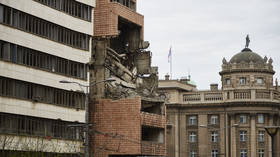
The remains of a building that was bombed by NATO in 1999 in Belgrade, Serbia. © Pierre Crom / Getty Images

Pretty much everyone who has spent the past month moralizing about the sanctity of borders, sovereignty of countries, and how unacceptable it was for great powers to bully” smaller neighbors – thinking of Russia and Ukraine – paused on Thursday to sing praises to a woman that championed all of those things back in 1999. Except since it was NATO doing them to Yugoslavia, Madeleine Albright was a hero and an icon, obviously.

On March 24, 1999, NATO launched an air war against Serbia and Montenegro, then known as the Federal Republic of Yugoslavia. The publicly stated aim of Operation Allied Force was to compel Belgrade to accept the ultimatum given at the French chateau of Rambouillet the month before: Hand the province of Kosovo over to NATO peacekeepers” and allow ethnic Albanian separatists to declare independence. 

When the bombers failed to achieve that within a couple of weeks, the narrative changed to NATO acting to stop a genocide” of Albanians its cheerleader press claimed was taking place. That narrative also credited the first-ever female US secretary of state for the humanitarian” bombing, calling it Madeleine’s War.” 

In the end, it took 78 days and a negotiated armistice for NATO troops to enter Kosovo wearing the fig leaf of a UN peacekeeping mission. They promptly turned the province over to the Kosovo Liberation Army” terrorists, who proceeded to burn, loot, murder and expel over 200,000 non-Albanians. A real campaign of terror, intimidation, ethnic cleansing and pogroms began – and the very same media that covered for NATO by making up atrocities during the bombing now turned a blind eye, for the same reason.

READ MORE: NATO’s bombing of Serbia: A tragedy in three acts

Whatever its outcome, however, it was an evil little war, launched because the US felt it could. Because Washington wanted to get rid of the restraints posed by the UN to its new global hegemony, articulated just a few years earlier by Bill Kristol and Victoria Nuland’s husband Robert Kagan. Because the rising American Empire wanted to send a message to Eastern Europe that no dissent would be tolerated, and to Russia that it was no longer a great power worth respecting. 

A legalistic mind might point out that the attack violated Articles 2, 53 and 103 of the UN Charter, NATO’s own charter – the North Atlantic Treaty of 1949 (articles 1 and 7) – as well as the Helsinki Final Act of 1975 (violating the territorial integrity of a signatory state) and the 1980 Vienna Convention on the Law of Treaties, for using coercion to compel a state to sign a treaty. 

Ah, but being a world empire means making its own rules-based order” to supplant inconvenient laws. So an independent commission” of cheerleaders was put together to declare the operation illegal but legitimate,” arguing it was justified because it liberated” the Kosovo Albanians from Serb oppression.”

The actual oppression of non-Albanians as NATO troops stood idly by – including during the vicious pogrom of March 2004 – doesn’t count, obviously. The important thing is that Bill and Hillary Clinton, Madeleine Albright, and British PM Tony Blair got monuments, streets, and even children named after them.

The independent” Kosovo – proclaimed in 2008, in a move about as legal as the 1999 war – can’t actually do anything without the permission of the US ambassador. A great triumph of human rights, law and order, and democracy, everyone!

READ MORE: Kosovo: A decade of dependence

NATO never cared about saving Albanian lives. If it did, it wouldn’t have partnered with the KLA, which made a point of murdering ethnic Albanians who wanted peace with the Serbs. It wouldn’t have repeatedly bombed refugee columns, then declaring it was really the Serbs’ fault somehow and that pilots dropped their bombs in good faith” – literally something NATO spokesman Jamie Shea said on one occasion. 

Twenty years on and nothing has changed. Having obliterated a family in Kabul by a drone strike last August, the US offered blood money, but refused to so much as reprimand anyone involved. Being an empire means never having to say you’re sorry. This mindset propelled the invasion of Iraq in 2003.

Meanwhile, failure to overthrow the government in Belgrade through war led to a color revolution” in Serbia instead. It was then exported to other places – including Ukraine, twice. That 2014 coup in Kiev literally started the conflict in eastern Ukraine, of which the current events are but the latest phase.

In March 1999, I was a student in the American Midwest, and had been (almost) successfully brainwashed into believing the platitudes about freedom, democracy, tolerance, objectivity, rules and laws, and how the US was a force for good” in the world. Then, overnight, people I thought had been my friends called me a monster and believed every single bit of propaganda that came off the TV screens and newspaper pages. 

READ MORE: Experts warned for decades that NATO expansion would lead to war: Why did nobody listen to them?

I’ve made justice and remembrance something of my life mission since then, seeking to explain that rather than a good, noble and humanitarian war, Kosovo represented everything wrong about the modern world: A monument to the power of lies, the successful murder of law, and the triumph of might over justice,” as I wrote in 2005, and repeated every year since.

The twist this year is that the people shrieking about human rights, international law and the sanctity of borders – when it comes to their client regime in Ukraine, that is – were all cheering for NATO back in 1999. Even now, they won’t apologize for it, much less disavow. So it seems it’s not really about what is being done, only who is doing it to whom. While I understand their anger as the world their lies propped up comes crashing down, they hardly have standing to complain.

The statements, views and opinions expressed in this column are solely those of the author and do not necessarily represent those of RT.

MSM’s Bucha Tall Tale

April 7th, 2022

Courtesy UNZ Review

The Bucha Massacre” has now become the driving force for the propaganda push for even more NATO involvement in the conflict in Ukraine.

Yet the claim that this is a Russian war crime is so patently false that a rational observer can only be left astounded by the combination of bare-faced nerve and slapdash incompetence displayed by the media outlets and politicians pushing this disgusting smear.

The latest effort of the Western media to deny Russian rebuttals is the claim that satellite photos show the bodies were there for weeks. Far from ‘proving’ the case against Russian troops, however, this new assertion in fact raises yet more questions which undermine the Western story.

The satellite photos certainly appear to show bodies, but they also show no sign at all of the burnt out cars which are such a prominent feature of the ground photos and videos. Are we supposed to believe that these vehicles were carefully driven in and positioned between the corpses after the shooting spree?

A similar suspension of belief is required when considering the dates involved. The ‘Bucha Massacre’ entry in Wiki (accessed 09.25 on 5th April 2022) reads as follows:

‘On 4 April, satellite images were provided to The New York Times by Maxar Technologies. The Times compared images to video evidence and concluded: many of the civilians were killed more than three weeks ago, when Russia’s military was in control of the town.” The images of Yablonska Street show at least 11 dark objects of similar size to a human body” appearing between 9 March and 11 March”.’

Wiki also tells us that Ukrainian troops re-entered Bucha on April 1st, following the redeployment of the Russian force to south eastern Ukraine.

Maxar Technologies, as a major contractor for NASA, is of course an integral part of the NATO military-industrial complex. As such its assertions with regards to the conduct of the conflict in Ukraine have to be regarded with caution. That said, Maxar’s dates of 9th– 11th March seem to be causing some concern in mainstream media outlets promoting the Russian massacre claim.

The Maxar dates should indeed raise eyebrows. The idea that bodies could lie in the open air for three whole weeks without undergoing massive decay is only remotely credible because the average Westerner thinks that Ukraine is in some kind of winter weather deep-freeze in late March.

Yet a look at the weather data for Kiev for March 2022 reveals that there has not been one single day in the city (of which Bucha is a suburb) with temperatures below freezing since March 11th. The average daily temperature in the last few days of the month was 6 degrees centigrade – the same as the English city of Leeds. That average in turn of course includes highs in the spring sunshine. The weather graph for Kiev for the last week in March shows the situation very clearly, with temperatures up to 15 and 17 degrees:

March weather in Kiev

March weather in Kiev

Anyone who has walked past an animal killed and left on the road for a few days under such conditions will be able to imagine the appalling stench which would come from so many human bodies left in the spring sunshine for three weeks, yet not one of the Ukrainian soldiers or police shown examine the bodies can be seen wearing a mask, making any expression of revulsion or mentioning the smell.

As more graphic images have emerged of the victims, the evident freshness of the corpses seems to have prompted a revision of the dates of the alleged ‘Russian massacre’. By 5th April, for example, the UK Daily Mail’s lead story was claiming that the satellite photos showing the bodies on the road were taken on 19th March. No explanation was given for the ten-day change.

But even accepting the revised time-line, there is still the problem that none of the bodies shown in videos or photos has any sign of decay or damage from carrion-eaters. In order to believe the accounts and videos put out by Kiev and the Western media, it is also necessary to believe that Ukraine has no stray dogs, no rats and not one single crow or other carnivorous bird.

Look again at the video footage of the Ukrainian troops driving along the corpse-lined road. Do you see any carrion-eating birds flying up from any of the bodies?

For that matter, why were some of the bodies not crushed by the Russian tanks which withdrew from and through the town? Do you really believe that soldiers brutal enough to slaughter dozens of defenceless civilians would then be considerate enough to slow down their withdrawal from the area by carefully weaving their heavy armour around each corpse?

Returning to the weather, there was of course rain during the three weeks the bodies are supposed to have laid (not) rotting in the road. Looking at the cardboard of the green boxes of the food aid packages lying near some of the (clearly fresh) corpses, it is clear that they have not been subjected to bad weather. The presence of those packages is also, of course, another important pointer as to the truth in this matter – for they are Russian.

Screenshot © Photo : Twitter

Screenshot © Photo : Twitter

Thus, in order to believe the Western propaganda narrative, we must swallow yet another ridiculous tall tale: The ‘analysts’ have spent the last month repeatedly telling us that the Russian army cannot even supply its own troops with fuel or food; but now they would have us believe that the Russians went to all the trouble of taking vast quantities of emergency food parcels to the occupied suburbs of Kiev, handed them out to civilians – and then promptly shot them.

Food parcels © Photo

Food parcels © Photo

On top of all this, there are four key facts which have already received considerable attention on Telegram (the last uncensored social media platform of any size in the West), though which have predictably enough been routinely ignored by the warmongering mainstream media.

The first of these is the video of the Mayor of Bucha speaking about how the Russian troops have left and that a ‘clean-up’ is now underway. As a non-Russian speaker I cannot judge for myself, but the comments by Russian-speakers accompanying this video on Telegram say that he does not mention the bodies of civilians.

The second fact, closely related to this, is the video which shows a detachment of the paramilitary Ukrainian National Police clearing the roads of burnt out and abandoned vehicles. Again, there is no sign of the bodies which appeared on the streets the following day.

Third, and perhaps most devastating of all, are the white armbands on a number of the bodies. These are clearly shown in the main video of Ukrainian troops driving along the corpse-strewn road, and they are also visible on several of the bodies of victims of torture and murder in cellars in Bucha.

The fact that Ukrainian forces wear blue armbands, while Russian troops wear white ones, is universally accepted. A number of videos from various parts of the conflict zone also show civilians wearing white armbands, as a sign either of sympathy with the Russians or at least neutrality.

Situation in Ukraine
Video: Kiev Territorial Defence in Bucha Given Green Light to Shoot Those Not Wearing Blue Armband 3 April, 16:38 GMT

Situation in Ukraine
Video: Kiev Territorial Defence in Bucha Given Green Light to Shoot Those Not Wearing Blue Armband 3 April, 16:38 GMT

Thus the appearance of white armbands on the victims of ‘the Bucha Massacre’ is overwhelming evidence that the victims were ethnic Russians. They were murdered not by Russian troops – who were of course sent in with a key aim of stopping the persecution of Russian-speakers by racist neo-Nazis – but by Ukrainians.

This should come as no surprise, for the whole history of Ukrainian nationalism is based on the mass murder of ‘unclean’ and ‘sub-human’ civilians from other ethnic groups, most notably the Poles of Wolyn and Eastern Galicia, Jews, Hungarians, Romanians and, of course, Russians.

Finally, we come to the video clip from the streets of Bucha, which was posted and then removed from the social media account of the known Ukrainian neo-Nazi ‘Botman’: There are guys without blue armbands. Can we shoot them?” F**k, yeah!”

The truth of the massacre is so clear that we can see why Western leaders such as Boris Johnson are so adamant that there should not be a proper international investigation into the crime.

Instead, they are using the most blatant fake news to justify imposing another round of sanctions pain on their own people, and to excuse the sending of billions of pounds, dollars and euros worth of high-tech weapons in order to prolong the war. One has to wonder about the scale of the kick-backs these real war criminals are getting from their military-industrial complex cronies!

Indian businessman in Sri Lanka helping people cope with economic crisis

April 7th, 2022

Courtesy ANI

Colombo (Sri Lanka), Apr 08 (ANI): As Sri Lanka is reeling under an economic crisis, Indian businessman in the island nation is taking initiatives under Corporate Social Responsibility (CSR) to help the people cope with the current situation.Sanjay Baid, Managing Director at a diamond cutting unit in Sri Lanka, said that he is confident that the country will bounce back with a renewed vigour. Baid, who came to Sri Lanka in 1999 and founded a diamond cutting unit, said that he had seen many ups and down in the country.”I have seen war and economic crisis in the country. Our CSR activity is always community focused irrespective of the nature of the crisis the country is going through.”Baid said that his organisation has prepared 1,500 rations packets for their employees and people affiliated with their villages. This amounts to around 20 tonnes of ration that aims to ensure that these people celebrate the new year.

Lankan president asks experts to plan debt restructure

April 7th, 2022

Courtesy The Daily Star

Forex reserves drop to $1.93b

People stand in a queue to buy liquefied petroleum gas (LPG) cylinders in Rathgama, Sri Lanka on March 27. Scarce supplies of food and fuel, along with record inflation and regular blackouts, have inflicted widespread misery in the country’s most painful downturn since its independence. Photo: AFP
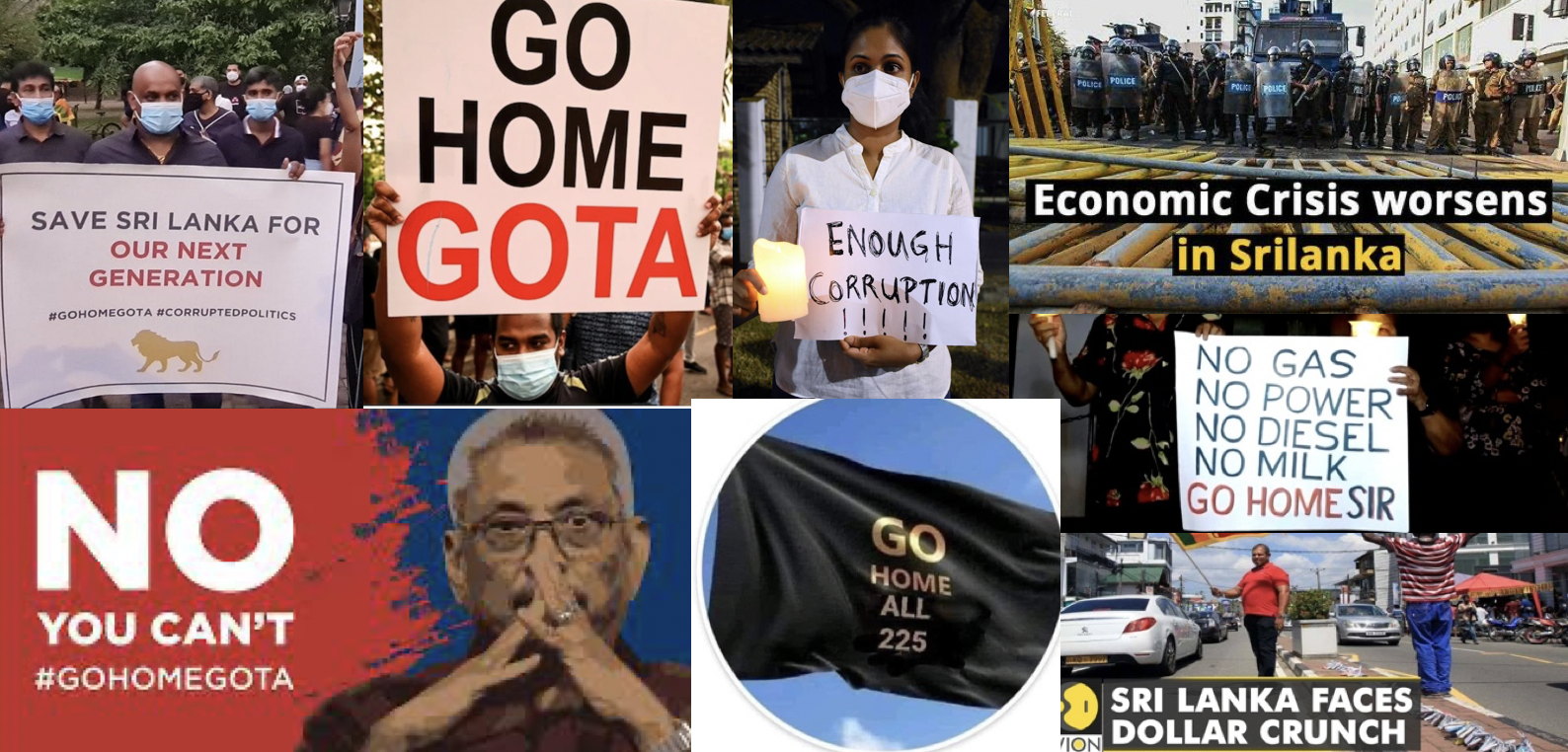
Sri Lanka’s beleaguered president has appointed an expert panel to organise a debt restructure to claw the country out of a crippling economic crisis that has sparked huge protests demanding his resignation.

Scarce supplies of food and fuel, along with record inflation and regular blackouts, have inflicted widespread misery in the country’s most painful downturn since independence from Britain in 1948.

For all latest news, follow The Daily Star’s Google News channel.

Rating agencies have warned of a potential default on Sri Lanka’s $51 billion foreign debt, and authorities have been unable to raise more commercial loans because of credit downgrades.

Meanwhile, the country’s foreign exchange reserves dropped 16.1 per cent to $1.93 billion in March from a month earlier, the central bank said on its website on Thursday, according to another report.

President Gotabaya Rajapaksa’s office said late Wednesday that the three-member advisory panel had been tasked with guiding Sri Lanka through a  “sustainable and inclusive recovery”.

His government is preparing for bailout negotiations with the International Monetary Fund, and finance ministry officials told AFP the trio will prepare a programme for sovereign bond holders and other creditors to take a haircut. “What Sri Lanka is keen to do is avoid a hard default,” a source from the ministry, who requested anonymity, told AFP.

“It will be a negotiated restructuring of the debt with the help of the IMF.” Parliamentary Speaker Mahinda Yapa Abeywardana warned Wednesday that the economic crisis could lead to starvation unless addressed within the week.

Meetings with the IMF are set to begin by next week but Finance Minister Basil Rajapaksa — the president’s brother — resigned on Sunday night along with nearly the entire cabinet.

The country is still without a replacement, with his successor quitting after just one day in office.

Public anger is at fever pitch, with crowds attempting to storm the homes of several government figures and demanding President Rajapaksa’s resignation.

Security forces have dispersed protests with tear gas, water cannon and rubber bullets, and dozens have been arrested — many saying they were tortured in police custody.

Opposition parties have rejected the president’s overture to form a unity administration and joined calls for him to step down.

But chief government whip Johnston Fernando reiterated Thursday that Rajapaksa would stay in office to lead the country out of the crisis.

The government has lost its majority in parliament but there has so far been no clear signal that opposition legislators will attempt a no-confidence motion to topple the administration.

A critical foreign currency shortage has left Sri Lanka struggling to import essential goods, with the pandemic torpedoing vital revenue from tourism and remittances.

Rating agencies have warned of a potential default on Sri Lanka’s $51 billion foreign debt, and authorities are unable to raise more commercial loans because of credit downgrades.

Economists say the crisis has been exacerbated by government mismanagement, years of accumulated borrowing and ill-advised tax cuts.

Is struggling Sri Lanka salvageable?

April 7th, 2022

Courtesy The Bangkok Post

Last Sunday — with two notable exceptions — Sri Lanka’s cabinet resigned en masse in protest against the government’s handling of the worst economic crisis to hit the island in decades, which has sparked widespread rioting, unrest, and arson attacks on police property.

The two men stayed put were President Gotabaya Rajapaksa and Prime Minister Mahinda Rajapaksa, scions and brothers of the powerful Rajapaksa clan.

The prime minister’s son, Namal Rajapaksa, was among those who resigned, however, explaining via Twitter that the move would “help the President and PM to establish stability for the people and the government”. President Gotabaya imposed a 36-hour curfew on Friday, a day after protesters clashed near his residence.

The economic downfall started with a changeover from an international trade strategy to focusing on domestic economy development. It resulted in shrinking trade as exports declined as a percentage of GDP — 26% in 2005, 15% in 2010, 13% in 2015; and by 2020 at 12%. The domestic economy could not create demand to stimulate economic growth, which fell from 9% in 2012 to 2.3% in 2019.

Income tax concessions led to significant revenue loss of Rs 500 billion (55.8 billion baht; or 4% GDP). A ban on chemical fertiliser imports to promote organic farming led to crop failure and the country ended up importing staples such as rice, draining foreign reserves. By December 2019, the borrowing had shot up by Rs 4.2 trillion (173%) within two years. This is the country’s worst economic crisis with rolling power blackouts, shortage of cooking gas and essential goods including food.

Borrowings from China to finance infrastructure projects such as a $1.4-billion port construction project left a hole in the reserves. Sri Lanka owes $35 billion (10% of its foreign debt) to China, by April 2021. Foreign reserves fell to $2.3 billion by 2022 and after removing illiquid balances from China, Sri Lanka is left with only $400 million. The government imposed an import ban in 2020 shooting up food prices up by 25% as overall inflation touched 17.5%. Rising prices coupled with high debt concretised the lack of essentials, with staples like rice, milk and sugar being rationed, and a ripple effect followed for most food items.

The economy remained vulnerable to external shocks as foreign reserves were based on foreign borrowings rather than export earnings. The government spent forex on debt repayment, depleting central reserves and drying up funds for food imports. Other external shocks affected the volatile economy, primarily the Covid-19 pandemic that contracted the economy by 3.6% in 2020. Foreign migrant worker remittances also declined, adding to the woes.

The pandemic was a blow to the country’s tourism-dependent economy which has been on pause since 2020. Some 30% of Sri Lankan tourism depends on visitors from Russia, Ukraine, Poland and Belarus, which is now at an additional risk due to the Ukraine war. Petroleum products accounted for 20% of Sri Lanka’s imports in December –having risen 88% compared to a year earlier. The Russia-Ukraine conflict is worsening fuel prices; adding to an already fragile economy that has only $2 billion in reserves, but $7 billion in debt payments.

High unemployment and skyrocketing inflation have prompted some Tamils to flee northern Sri Lanka to Tamil Nadu in India. Some refugees ended up stranded and later rescued by the Indian Coast Guard. Critical foreign currency shortages have left traders unable to finance imports as banks remain unable to finance the imports of food, fuel and medicines.

Sri Lankans have resorted to kerosene and firewood for cooking. Exams were cancelled for millions of students due to a printing paper shortage. The situation is dire with food being rationed at supermarkets and a shortage of essential goods. The price of food has increased more than 30%, and the price of some vegetables have quintupled. Poor availability and a price hike of milk powder has made young children’s nutrition difficult. People have cut down their meals, with some sacrificing their meals to feed their children.

Sri Lanka’s public debt increased from 94% in 2019 to 119% of GDP in 2021. Neighbours like China, India and Bangladesh have come to assist. In 2021, China swapped $1.5 billion to help reduce fluctuating exchange rates. India announced a credit of $1 billion for procuring food, medicines and essentials; $500 million was extended for petroleum purchase. Bangladesh offered a credit of $200 million to Sri Lanka in 2021. Pakistan and Qatar have also offered support.

The government took additional policy measures to reduce capital outflow; increasing investors’ confidence by not defaulting debt-servicing; introducing import restrictions on luxury vehicles, fertilisers and food items to prevent currency outflows; restrictions on forward contracts foreign exchange; policies for improving foreign remittance inflow, such as diversifying foreign employment market, introducing a contributory pension and pay remittances above the normal exchange rate; boosting investors’ confidence by offering provisions for Special Deposit Accounts. Although the country had earlier been sceptical of an IMF bail-out, it will now discuss an IMF rescue plan in addition to seeking World Bank support.

As an alternative to borrowing by way of increasing taxes and investments in healthcare and education, social protection can improve public financing and boost the economy for a lower-middle-income country like Sri Lanka. Strengthening offshore financial centres and addressing tax evasion should go hand in hand. However, collections from tax may not suffice as the current income levels may only yield proportionately low taxes.

A comprehensive policy is required for the country to bail itself out. Firstly, management of borrowings must be bettered. This includes addressing demand side issues, improving accountability and political commitment. Options such as diversifying and divestments may be explored in addressing issues that require immediate resolution. It is important to strengthen accountability of borrowers and lenders by bringing transparency in debt, so citizens and other civil bodies can collaborate for contingent liabilities management.

Debt reframing is a possible policy option that may be used in combination. Debt restructuring and rescheduling may be pursued by the renegotiation and modification of contract terms with lenders, while requesting concessions and extensions for tackling debt pay-outs. Renegotiations may also consolidate many debts into few.

Debt conversion is another way to ensure that local currency pay-out is not large — this can be achieved through conversions of assets (such as debt for equity swaps) in place of cash and increase domestic money supply. It can be managed through schemes involving issuance of government bonds to strengthen domestic capital markets.

Sri Lanka must strengthen its shock and crisis management, and make the economy resilient to external shocks by introducing permanent mechanisms. The road ahead will be rocky but not insurmountable with some belt tightening, economic reforms and most importantly — prudent political leadership.

Prof Syed Munir Khasru is Chairman of the international think tank, The Institute for Policy, Advocacy, and Governance (IPAG), with a presence in Dhaka, Melbourne, Dubai, Delhi and Vienna.

US Arrests ‘Yakuza Chief’ Who Sought Missiles for Myanmar, Sri Lanka Rebels

April 7th, 2022

Courtesy VOA

FILE - Soldiers from the rebel United Wa State Army march in the Wa State, in Panghsang, April 17, 2019. Four men were arrested in New York on April 4 and 5, 2022, for working to acquire missiles for United Wa State Army and other rebel groups.
FILE – Soldiers from the rebel United Wa State Army march in the Wa State, in Panghsang, April 17, 2019. Four men were arrested in New York on April 4 and 5, 2022, for working to acquire missiles for United Wa State Army and other rebel groups.

U.S. authorities said Thursday that they had arrested a Japanese yakuza organized crime leader and three Thai men who trafficked heroin and methamphetamine and tried to acquire surface-to-air missiles for rebel groups in Myanmar and Sri Lanka.

Takeshi Ebisawa, Sompak Rukrasaranee, Somphob Singhasiri and Suksan Jullanan were arrested in New York on Monday and Tuesday on drug and arms trafficking and money laundering charges, the Justice Department said.

Under investigation by U.S. Drug Enforcement Administration agents in Thailand since at least 2019, the men had arranged to sell an undercover agent large quantities of heroin and methamphetamine from Myanmar’s rebel United Wa State Army.

Meanwhile, Ebisawa sought to buy automatic weapons, rockets, machine guns and surface-to-air missiles for Sri Lanka’s Liberation Tigers of Tamil Eelam (LTTE) — known as the Tamil Tigers — and the United Wa State Army, the Karen National Union and the Shan State Army, ethnic minority forces in long-standing fights with government forces.

FILE - A Tamil Tigers flag is seen as Tamils demonstrate on a downtown street to protest the political turmoil in Sri Lanka, in Toronto, April 27, 2009.
FILE – A Tamil Tigers flag is seen as Tamils demonstrate on a downtown street to protest the political turmoil in Sri Lanka, in Toronto, April 27, 2009.

On February 3, 2021, Ebisawa and an associate traveled to Copenhagen where the undercover DEA agent and two undercover Danish police officers showed them an array of U.S. military arms ostensibly for sale, including machine guns and anti-tank rockets.

They also showed Ebisawa photos and a video of Stinger missiles used to target aircraft.

“We allege Mr. Ebisawa and his co-conspirators brokered deals with an undercover DEA agent to buy heavy-duty weaponry and sell large quantities of illegal drugs,” the Justice Department said. “The drugs were destined for New York streets, and the weapons shipments were meant for factions in unstable nations.”

Ebisawa, the department said, was “a leader of the yakuza transnational organized crime syndicate,” using an umbrella term for a number of Japanese crime families.

Jullanan has dual Thai-American citizenship, while Singhasiri and Rukrasaranee are Thai citizens.

During the investigation, Ebisawa told the undercover DEA agent that Jullanan was a Thai air force general and that Rukrasaranee was a retired Thai military officer, according to the indictment.

The Justice Department did not explain how the four men came to be in the United States when they were arrested in New York.

No takers for Finance portfolio as time runs out to leave for IMF

April 7th, 2022

Courtesy The Daily Mirror

– GR appoints high powered advisory team to advise on IMF and debt management

– Bandula Gunawardena’s name was proposed for Finance but he hesitates

– Finance Minister, CBSL Governor, Treasury Secretary seats vacant

– SL expected to be at IMF by second week of April

Following the resignation of Ali Sabry as the Finance Minister in less than 24 hours, the position still remains vacant with many MPs hesitant to take it up amidst the economic mess Sri Lanka has been plunged into and the rising public anger against the President and government.

The Daily Mirror learns that Sabry resigned from the portfolio, paving way for President Gotabaya Rajapaksa to appoint an independent economic expert who would be brought in through the national list, but nothing concrete had worked out as of last night.

With time running out to appoint a suitable candidate to the portfolio, former Trade Minister Bandula Gunawardena’s name was proposed yesterday but he was not convinced and showed reluctancy to be the new Finance Minister. With rising public anger against all government MPs and calls for President Rajapaksa to resign from the post, all government MPs are reluctant and seem to be passing the ball from one to another with the President unable to find a suitable candidate to the portfolio.

Time is now running out for the President and government as the Finance Minister and his delegation have to be at the IMF by the second week of April to discuss Sri Lanka’s programme and seek economic assistance.

However, with the main financial seats now vacant in the country, it is unsure who will attend if no concrete appointments are made soon.

To shed some relief amidst the severe economic crisis, President Rajapaksa last evening announced the appointment of an impressive high-powered team of senior economic and fiscal experts as Members of a Presidential Advisory Group on Multilateral Engagement and Debt Sustainability, the President’s Media Division said.

The Members of the Advisory Group are Dr. Indrajit Coomaraswamy who is the Former Governor of the Central Bank and a Former Director of the Economic Affairs Division of the Commonwealth Secretariat, Prof. Shanta Devarajan who is a Professor of the Practice of Development, Georgetown University and Former Chief Economist of the World Bank and Dr Sharmini Coorey who is a Former Director of the Institute of Capacity Development of the IMF Institute, and Former Deputy Director, Africa Department, IMF.

The three members have already had a round of discussions with the President on key matters in going forward with the IMF programme.

Among the responsibilities that the Presidential Advisory Group will undertake are to engage in discussions with relevant Sri Lankan institutions and officials engaging with the IMF, and to provide guidance that will address the present debt crisis and lead towards sustainable and inclusive recovery for Sri Lanka.

The Daily Mirror learns that discussions are also underway with these three members to accompany whoever is appointed as the Finance Minister to the IMF this month. (JAMILA HUSAIN)

Demonstrators’ demands not realistic: GL

April 7th, 2022

Courtesy The Daily Mirror

Foreign Affairs Minister Prof. GL Peiris today pointed out that some of the demands by the demonstrators were not realistic and cannot be met and that they did not seem want a solution based on available options in keeping with the Constitution.

While explainig the prevailing situation in Sri Lanka to the diplomatic corps yesterday he said, the demonstrations were not directly against the government, a political party or the ruling party but against the entire political establishment of the country and that the very foundation of the system was under criticism.

He said the Sri Lankan Government was fully aware of the severe hardships of the people and its magnitude with the most pressing issues being power cuts, shortage of gas, fuel and essential medicines.

“From focussing on the shortage of gas, fuel, essential medicines and the power cuts, the protestors were now demanding for restitution of plundered wealth and assets with some approaching the Supreme Court to prevent MPs from leaving the country until a comprehensive audit of all their private assets has been done,” Prof. Peiris said.

“The excessive heat which has exacerbated the situation and the negative impact on various industries as a result due to the power cuts were also adding to the woes of the public, he said.

He further stated that the call for all MPs to resign and allow academics and professionals to run the country is not feasible as there was no country in the world that is being governed in such a manner.

The Minister also outlined the Constitutional provisions that were currently available which included the Prime Minister taking over for 60 days in the event an incumbent President resigns, after which the MPs would have to elect a suitable leader among them to lead the country for the remaining period until an election could be held.

He said that the protests and the demonstrations by the people taking place across the country was an expression of despair” and they were crying out at a distressing situation.

He also said that 80-85% of those taking part in the protests and demonstrations were neither extremists nor politically motivated and that Article 14 of the Constitution of Sri Lanka guarantees the right to assembly, freedom of expression. He further stated that the right of the people to protest was an indication of the vibrant democracy prevailing in Sri Lanka. (Chaturanga Samarawickrama)

Payment made for another 37,500 MT diesel shipment

April 7th, 2022

Courtesy Adaderana

The Ceylon Petroleum Corporation (CPC) says that a payment of USD 52 million has been made to a Singaporean company for 37,500 metric tonnes diesel in a tanker held at Colombo Port for the last two weeks.

CPC chairman Sumith Wijesinghe said that unloading of the fuel stocks will commence tomorrow (April 07).

Dr. Nandalal Weerasinghe appointed new CBSL Governor

April 7th, 2022

Courtesy Adaderana

Dr. Nandalal Weerasinghe has been appointed as the new Governor of the Central Bank of Sri Lanka (CBSL) and Mr. K.M. Mahinda Siriwardena has been appointed as the new Secretary to the Ministry of Finance. 

They received their letters of appointment from President Gotabaya Rajapaksa at the Presidential Secretariat in Colombo today (07). 

Secretary to the President, Gamini Senarath was also present on the occasion, the President’s Media Division said. 

Former Senior Deputy Governor of the Central Bank, Dr. Weerasinghe had arrived in the country from Australia earlier today to take up the position. 

He is expected to officially assume duties as the new Central Bank governor tomorrow (April 08).

According to sources, Dr. Weerasinghe was in Australia on a personal visit and had accepted an invitation from President Gotabaya Rajapaksa to take up the post of CBSL Governor amidst the country’s worsening economic crisis. 

The appointment comes in the wake of Ajith Nivard Cabraal’s resignation from the position of Central Bank governor on Monday (April 04). He had resigned from the post following the resignation of the entire Cabinet of Ministers. 

A highly-respected central banker and economist, Dr. Weerasinghe was promoted to the position of a Deputy Governor on 27 September, 2011 while he was serving as an Alternate Executive Director at the International Monetary Fund and assumed office as Deputy Governor of the Central Bank of Sri Lanka on 01 September 2012.  

Dr. Weerasinghe has a Ph.D and Master’s Degree in Economics from the Australian National University and a B.Sc. Degree from the University of Kelaniya in Sri Lanka.  

Dr. Weerasinghe had served as Chairman of the Monetary Policy Committee and the Foreign Reserve Management Committee of the Central Bank of Sri Lanka (CBSL). 

He had also functioned as Deputy Governor supervising the Departments of Economic Research, Statistics, International Operations, Domestic Operations, Macroprudential Surveillance, Exchange Control, Currency and Communications.

He was later promoted to the position of Senior Deputy Governor of CBSL while he had decided to take an early retirement in October 2020.

SLMA urges govt to secure funding to fulfill basic needs of hospitals

April 7th, 2022

Courtesy Adaderana

The Sri Lanka Medical Association (SLMA) on Thursday said there is an acute shortage of essential medicines, reagents, equipment and consumables in government hospitals and the private healthcare sector in Sri Lanka. 

In a letter addressed to President Gotabaya Rajapaksa, the SLMA Medical Intercollegiate Committee called for urgent corrective measures for the crisis affecting the health and wellbeing of the people of Sri Lanka. 

The SLMA said already decisions have been made to curtail some services such as routine surgical operations and even limit the usage of available material to life-threatening illnesses. 

This is not at all a sound policy as, what is considered non-emergency situations could turn into life-threatening problems within a few hours,” the association emphasized. 

In addition, this is not a sustainable policy and unless urgent replenishment of supplies is made, within a matter of weeks, if not days, emergency treatment will also not be possible.” 

This will result in a catastrophic number of deaths, which is likely to be in excess of the combined death toll of COVID, Tsunami and the Civil War,” the letter warned.

The SLMA Intercollegiate Committee also said it was greatly concerned about the shortages of food and essential paraphernalia for people to provide themselves with basic needs such as nutrition, transport and electricity.

We are also concerned gravely about the need to preserve fundamental rights and guarantee basic freedoms such as right to information as these encompass important aspects of mental and social wellbeing of a population.”

In its letter, the SLMA Medical Intercollegiate Committee (SMIC) also offered its assistance to the authorities to overcome the crisis.

We accept that the current crisis has no immediate solutions and are willing to extend our expertise, guidance and advice to you at this moment,” it said. 

The SLMA said it has initiated discussions with its members on preservation of the existing stocks of medicines and consumables to last for as long as possible by prudent use, which it points out may be only a very short-term solution. 

We do appreciate that even patients having non-emergency and non-urgent illnesses require optimal care and withholding their treatment will pose medical and ethical problems for the doctors of the country.”

We urge you to discuss with ministers holding relevant portfolios, public officials such as Secretary to Treasury, Secretary Health and Governor of the Central Bank about securing funding to fulfill the basic needs of the hospitals and the National Immunization Programme of the country.”

This is an urgent priority,” the association stressed.

In the letter, the SLMA requests an urgent appointment to meet the President with top officials of the Ministry of Health to discuss and develop a contingency plan, while also assuring its fullest support to mitigate the crisis.

SMIC Letter to the President of Sri Lanka (April 6, 2022) by Adaderana Online on Scribdhttps://www.scribd.com/embeds/568501719/content?start_page=1&view_mode=scroll&access_key=key-9VcMikqXEH6HyFN4mb5o

Surcharge Tax Bill passed with amendments

April 7th, 2022

Courtesy Adaderana

The Surcharge Tax Bill has been passed in Parliament with amendments and without a vote, a short while ago. 

The committee stage of the Surcharge Tax Bill had taken place this morning (07).

The second reading of the Surcharge Tax Bill had been scheduled for today.

Last month, the Supreme Court informed Speaker Mahinda Yapa Abeywardena that the Surcharge Tax Bill can be passed with a simple majority in parliament as it is in accordance with the Constitution.

The said Bill was challenged in the Supreme Court by 10 parties including main opposition Samagi Jana Balawegaya, who filed petitions claiming that the Employees’ Provident Fund (EPF) and the Employees’ Trust Fund (ETF) would also be subjected to this 25% surcharge tax as any fund that exceeds Rs. 2 billion taxable income.

In 2022 Budget, it was mooted that a 25% surcharge tax be imposed on individuals or companies earning an annual taxable income of Rs. 2,000 million or more.

However, in the case of a partnership, the income of a partner derived from a partnership shall not be taken into account when calculating the taxable income of such partner as an individual, if the tax has been paid by the partnership on such taxable income.

Further, on each company of a group of companies of which the aggregate of the taxable income of all subsidiaries and the holding company in that group of companies having an income over Rs. 2 billion, a 25% surcharge tax will be charged on the taxable income.

It is to be a one-time tax payable by high-value taxpayers in 2022 for their income in the tax year of 2020/21 while the objective of this special tax was to raise the necessary revenue to finance the Government expenditure programs for the year undisturbed.

The Attorney General had informed the Supreme Court last month that the one-time surcharge tax of 25% does not include 13 retirement funds including EPF and the ETF.

Public Protests, Rajapakse Rule & Indo-US manipulations

April 6th, 2022

Shenali D Waduge

Sri Lanka is experiencing an unprecedent state of events. Taken as a whole, there is much to analyze. Sri Lanka has seen governance pass from one colored party to another. Opportunistic politics has been the hallmark of governance of every government that has come to power. This has been the case of every government holding power since 1978 – UNP, PA, UNP, UPFA, UNFGG & now SLPP. What the people have asked for & expected from all ruling parties have proven a failure. Little can be said of the role of the Opposition as well. We all agree the politicians have failed us.

But is it only the politicians who have been corrupt? Why do we ignore corporate corruptions & even individual corruptions as well as the internationally influenced corruptions far greater than all. Yet, it is more fashionable & sensational to have campaigns targeting the politicians with colourful & creative slogans to match. Corruptions are a key slogan to topple & attack politicians/political parties by those equally guilty.

One day Sri Lanka will realize how much of this colored revolution & system change protests were pre-planned & well-funded, of course based on genuine grievances. Such change is choreographed by blowing genuine grievances out of proportion & steered towards multiple goals. It’s like killing several birds with one stone.  The stone today is technology & majority of youth protests are being organized & steered by foreign based whatsapp groups & social media portals spreading sensationalized ‘breaking news’ fanning an easily emotive Sri Lankan populace who are ready with the ‘gahuwoth gahanawa’ (attack if attacked) mentality.

The manipulators, everyone needs to understand, controls virtually anyone holding some form of importance, be they in government or opposition. Follow the money trail & find out the manipulators. They have been quick to pick up on the mentality of our people. Majority have stood silent inspite of numerous corrupt deals & treacheries but have stood up when anything affects them personally. This is the sad reality & what if this reality became used to manipulate the people?

What if people’s attention was purposely diverted to the successive issues they had to suffer – petrol, power cuts, gas shortage, food shortage etc while dangerous pacts/MOUs were being signed, leading people to ignore the their dangers as food on their table mattered more than national interest! If people were against India’s incursions & interventions, if people were opposed to IMF due to its structural adjustments, if people were opposed to dangerous trade deals & privatizing of land – all this was put aside & the deals went ahead without much opposition. If this was the strategy, it worked & if it worked it will surely be used again.

What if the 2nd phase of the plan was to generate people’s protests manipulating its genuineness with planned chaos probably tasked to teams from both government (wanting to pin blame on the Opposition) & opposition (political parties/Western-Indian backed NGOs & LTTE diaspora) wanting to pin blame on the Govt). Multiple outcomes would have been planned.

  • Protests would have justified signing a plethora of controversial treacherous deals lured by commissions to all involved.
  • Protests going out of hand would enable the state to enforce stricter new law enforcements, invariably aimed to curtail people’s opposition, people’s freedoms & rights & protect future scenarios.
  • Protests with intent to take Sri Lanka into further abyss – productivity loss as work being interrupted alongside the daily power cuts & other shortages, law enforcement authorities stretched to the maximum testing their patience as well.
  • Protests could thereafter be given a 360 degree turn to attack the very politicians who signed the deals. The foreign imported slogan GoHome” was more of an amnesty deal for successfully completing mission & packing off thereafter. IMF deal was sealed to plan maintaining dollar hegemony over Sri Lanka & IMF officials would take over its roll out. What good is GoHome” calls minus accountability?
  • Protests also pave way for Indo-US troop presence as the increasing number of pacts signed to establish Indian/US concerns will cite the need to ‘protect their interests’ & demand their troop presence to do so. The terrain they occupy will become ‘exclusive’ to them & out of bounds to Sri Lankans.
  • The most dangerous aspect of the protests is the message being promoted that Sri Lanka is a failed state: – no money – no peace – no law & order & this eventually decides the end objective to station a foreign troop presence either directly by foreign governments or UN troops.

It is also strange that there is only a lukewarm opposition to the current chaos by the so-called international community. When Mahinda Rajapakse was waging war against LTTE – he was diplomatically attacked 24X7 by foreign govts & envoys as well as UN/UNHRC. The scale of that attack is unusually absent presently.

External or Internal manipulations aside, the protests are now spiraling out of control as the protestors are people representing various interests from various social platforms and the manipulators lose control (often intentionally) to create further chaos as the political apparatus (local & global) thrives on chaos & needs chaos to exist.

These realities are often laughed aside as conspiracy theories completely ignoring the manner countries have been brought down to their knees via regime change & covert operations. Take a look at how so many countries have fallen since 1945.

At this juncture it is prudent to refer to Pakistan & the fate that befell PM Imran Khan.  PM Imran Khan has even disclosed the name of the US official that threated him by letter.

https://www.geo.tv/latest/409421-pm-imran-khan-discloses-the-name-of-us-official-who-sent-threat-letter

South Asian nations are being increasingly under pressure to distance itself from Russia. 22 Western envoys have even released a joint letter to side against Russia’s position on Ukraine. Why did they not do the same in all of the illegal invasions/interventions that have taken place since 2001?

https://www.ndtv.com/world-news/ukraine-war-are-we-your-slaves-pak-pm-slams-western-envoys-joint-letter-on-russia-2807344

The visit by Under-Secretary Nuland to Pakistan-India-Bangladesh & Sri Lanka is significant in this regard. All 4 countries abstained from voting against Russia. However the ‘sanction czar’ Biden’s economic advisor arrived in India with an open threat of sanctioning India if it were to side with Russia  though India did not bow down to US pressure. No sooner Nuland left trouble began in Sri Lanka.

While Sri Lanka is happy to be hanging on to the dollar for transactions primarily on account of self-interest of politicians & officials, the Ukraine issue has enabled Russia to turn the tables on US hegemony & commence a de-dollarization with increasing calls to dump the dollar & depart from US-influenced global monetary control. With Russia, China, India, Iran all now dealing with their own currencies for trade transactions the fate of the dollar is clear.

Have the manipulators decided it is time to end Rajapakse rule – if so, when & how? Who do they have in mind to replace? We know the demands of the protestors but what are their workable solutions if they get rid of Parliament plus the President? We want answers.

Can a soothsayer predict the future for Sri Lanka!

Shenali D Waduge

POHOTTU AS USA’ S PROXY Part 2A

April 6th, 2022

KAMALIKA PIERIS

There were demonstrations at Colombo, Kandy, Galle,   Jaffna, Anuradhapura, Kurunegala, Dambulla, Gampaha Matara, Panadura, Ratnapura, Welimada Nuwara Eliya, and Ampara.  There were protests also at Homagama, Piliyandala, Polgahawela , Ragama Minuwangoda Nittambuwa, Jaela, Kantale, Nikaweratiya and Peradeniya,

The public  also protested at  Bogawantalawa and Deraniyagala, at Dehiattakandiya and Galnewa, at Kochichikade, and  Meerigama, at Dodangoda,  Gorakana, Wadduwa, Embilipitya,  Karandeniya, Nagoda, and Suriyawewa  and at  Pannipitiya , Rajagiriya Kadawatha, Kottawa, Malabe, Modera, and  Wijerama..

Within Colombo  they assembled at Nelum Pokuna, Park Road,  Panchikawatta , Wanathamulla, Dematagoda and Armour Street. Staff of National Hospital .Colombo  had a separate demonstration. They had gathered from 7 am at  Independence Square and were still there in the late evening. The NGOs who usually demonstrate at the drop of a hat,  were missing .

Undergraduates of the universities of Moratuwa, Sri Jayawardenpura, Kelaniya and Peradeniya  held their own processions. At Peradeniya they were tear  gassed. The police got tear  gassed as well. Actors, film stars, singers and other performers had their own protests. They assembled  at Diyath Uyana and  Galle Face .

There was a significant support from the Bar Association Eight President’s Counsel appeared pro bono on behalf of those arrested at Mirihana the magistrate was informed that some 400 other lawyers, too, were appearing on behalf of them.

Sri Lankans abroad also  supported.. There were demonstration in  four cities in Australia ( Melbourne, Perth, Canberra,  Hobart)  at Auckland in New Zealand, Alberta in Canada,    New York, Boston  Washington and California in USA.  Sri Lankans working in Japan, South Korea, Germany and Estonia also demonstrated.

The public were not satisfied  with demonstrations only. They started to go after the politicians individually.  MPs are now scared to appear in public, reported the media. Their personal safety is at stake. Many of them are forced to remain in their residences or official bungalows.

Sri Lanka Podujana Peramuna (SLPP) Parliamentarian Jayantha Samaraweera was turned back at Moratuwa when he was on his way to attend a ceremony in his electorate. In Nuwara Eliya, Shiranthi Rajapaksa was  to declare open Wasantha Udanaya in Nuwara Eliya .She was escorted out as  a crowd of angry people the public invaded the venue. Minister C.B. Ratnayake, State Minister Jeevan Thondaman and others who were due to  attend stayed away. Shashindra Rajapakse stayed away from another function which he was to open.

The angry public   have also  demonstrated before the   private residences of  leading  politicians. They started with the  Mirigama residence of President Gotabaya. .Crowds then tried to attack the Tangalle residence of Mahinda Rajapaksa . They also went to the   Deberawewa residence of Chamal Rajapaksa, Moneragala residence of Shashindra Rajapaksa ,Dambulla residence of  Janaka Bandara  and Kithulampitiya residence of Ramesh Pathirana.

However, it appears that President Gotabaya and his government are not prepared to leave. They intend to dig in and continue to ruin the country. The  interim cabinet is an odd mixture. Energy is excluded but Foreign affairs and Highways are included.

Three vital position were vacant  on the night of     5h March, . Minister of Finance, Permanent secretary to Ministry of Finance and the post of Governor, Central Bank. All  three officers had resigned.  Committee on Public Finance said it was considering bringing Ajit Cabraal before the Watchdog committee.

Parliament argues that the financial situation of Sri Lanka is very complicated and  that it  is going to be very difficult  to find a solution. This is nonsense. Sri Lanka    is a  small country, with a compact 25,000 square km of territory and  a  23 million population. That is well above the carriage rate for the island, but the birth rate is falling rapidly. The economic management of such a unit cannot be difficult. Other countries are administering economies for populations of  1.4 billion, 300 million,   67 million, without any difficulty. Pohottu’s  argument is nonsense.

If the government does not resign, the protests will have to continue. These protests can  then be hijacked  by interested parties, and the country  brought to a point of anarchy. This  is what the US is hoping for and what  US funded NGOs will be asked to do. They were put into place to carry out just this type of  disruptive activity.

Newspaper editorials have already issued a warning. Many of the protests, catalyzed by despair, are spontaneous. But they can be used by sinister elements with hidden agendas, masquerading as liberators, the  editorials said. They could  make the country slide into anarchy.

 However, the public in Sri Lanka are watchful and any attempt to hijack the protest movement will be noted and squashed. The Sri Lanka public mean business this time. They want  a smooth transfer of power, they want good governance and a well functioning economy. They are unlikely to tolerate an externally created anarchy.

Gotabaya Rajapaksa impressed  as Secretary, Defence and as head of the UDA. He was   efficient and he delivered on projects. But he did not show these qualities as President. People were dissatisfied with him.

Thousands flocked to President Gotabaya Rajapaksa’s official Facebook page, said the media and urged the President to just resign from office and go back to the United States.”  Catholic Church and the Maha Sangha,  also have separately asked President Gotabaya to leave .

When an unpopular President refuses to leave, it means that he  is backed by an external force, said analysts.  If Gotabaya Rajapaksa  continues to stay, he may have to  take refuge in the US embassy and be ignominiously airlifted to USA. Instead he should resign and leave Sri Lanka  taking brother Basil with him. He will  be hooted all the way to Katunayake.

The present economic crisis is not  economic, it is political. It was done to  bring the country under the control of the west. That must be understood, otherwise we will never get out  of this situation.

When Britain left Sri Lanka in 1948,   it handed the baton over to the USA. USA was the  leading power in the west at the time. USA was in low profile but was never inactive in Sri Lanka . US has meddled in Sri Lanka,  periodically, though the majority of the population do not know this. 

.JVP and the LTTE are both creations of    USA. Thereafter Yahapalana and Pohottu were created to bring Sri Lanka firmly under the control of USA.

USA has decided to  use Pohottu, to bring Sri Lanka under the economic heel of USA. Basil Rajapaksa, who succeeded his brother, Mahinda Rajapaksa as  Pohottu’s Finance Minister,  came   from the USA armed with    an energy contract.

At midnight on Sept 17,  2021, Pohottu signed a deal with USA’s  New Fortress Energy Company, giving US 40 % stake in Yugadanavi and the  exclusive gas supply rights to the Kerawalapitya Power Complex.

There is deep animosity to USA  in Sri Lanka and Sri Lanka reacted badly to this deal. Supreme Court dismissed the fundamental rights petitions, filed against the Yugadanavi deal, without giving reasons.

Sri Lanka must understand that the west never lost its interest in Sri Lanka . Sri Lanka is strategically placed in the Indian Ocean with access to the Bay of Bengal. Its Eastern province has the deepwater harbor of Trincomalee .As long as the Indian Ocean remains politically  important, Sri Lanka   cannot escape the attention of the big powers. Sri Lanka must accept this and decide accordingly.

Sri Lanka cannot stay neutral. Sri Lanka must forget Non-Aligned. It must link with one of the big powers. It has no alternative. Sri Lanka must now decide whether to link with a rising power, (China) or a fading power (USA). Obviously, a country must link with the rising power, not a fading power.

Economist (2021) has described USA as a weary superpower.  USA is no longer the confident hegemon of the 1990s, Economist said. China on the other hand is rising and rising. It will be the leading economy soon, if it is not so already.

China will be welcome in Sri Lanka .It is part of the Asian civilization and it has Buddhist links. Therefore it is culturally acceptable. China had cordial diplomatic relations during Sri Lanka’s monarchical period. Today, China   is well liked in Sri Lanka. There is no deep animosity, unlike USA. That is because China helped us win the Eelam war and also because it has not meddled in the internal politics of Sri Lanka. The statement that we are indebted to China is nonsense. Our debt  to China is only about 10% of the whole external debt. (Concluded)


Curb Corruption in Sri Lanka: Action against Secretaries/Public Officials & Advisors

April 6th, 2022

Shenali D Waduge

The subject of corruption” is taking prominence throughout the recent protests taking place in Sri Lanka. This has led to the people claiming that they wish to reject entire 225 member Parliament. Corruptions cannot be committed by politicians on their own. They are assisted by the Secretaries, Public Officials & Advisors. The role they play in the corruptions often get unnoticed & evade public scrutiny. Let us realize that no treacherous pact/agreement or deal can proceed without the involvement of the State officials who are tasked to negotiate with their counterparts & draft the clauses that ink these deals. Signing becomes the final stage of the deal. However, had these Secretaries & others, who were tasked to complete the deal, put their integrity & loyalty to the Nation above that of their job” & even resigned refusing to do so, the politicians would have been in a pickle to pass them. That most secretaries have not, requires the public to turn their lens on these Secretaries/Public Officials and Advisors too, now that we are trying to clean the system & cleanse corruption from the entire system.

Let us revisit some of these treacherous agreements.

1987 Indo-Lanka Accord

The contents of the Accord were guarded secrets, it was signed under virtual duress under emergency curfew with media debarred & the Cabinet forced to give undated letters of resignation.

The Accord itself had numerous controversial clauses full of historical errors which should have been pointed out by Sri Lanka’s officials & removed but were not. North & East were never Tamil Homelands or areas of historical habitation of Tamil speaking people & there was no requirement to merge North & East. Did advisors point out that India failed to fulfill its promises making the Accord invalid (Pacta Sunt Servanda). Did Officials not give leaders arguments to refuse to pull Sri Lanka’s troops out of the North & confine them to barracks?

13th amendment/PC system

The Indo-Lanka Accord does not mention a 13th amendment at all, so why didn’t officials point this out & point out the dangers of this amendment which was diluting the unitary status of the constitution & turning it into a quasi-federal state? How many Secretaries/Senior Officials or Advisors have pointed out the waste of public funds for Provincial Council system?

Why have officials not insisted that we correct international reference to Sri Lanka’s conflict being ethnic” when it was terrorist.

2002 Cease Fire Agreement (15 years after Indo-Lanka Accord)

The 2nd secret agreement signed between Ranil as PM and Prabakaran as Terrorist & called the ‘roadmap to peace’ which was actually a roadmap to pieces of Sri Lanka. Why were there no people’s protest or even Public official protests for putting a terrorist group on par with a sovereign state & ceding territory to terrorists? The carrot to sign was some billions dangled by the West (US, Japan & Norway) Who & how many public officials are guilty of quid pro quo in allowing such a treacherous agreement? LTTE brought in sophisticated satellite equipment which was cleared & taxes paid by the state on letters signed by the Secretary! Who was the Secretary Defense who would have been privy to all the treacherous clauses undermining the sovereignty of Sri Lanka? Who was the Secretary for the UNF/PM who would also have been privy to every line in the agreement?

Who was the Head of the Sri Lanka Peace Secretariat – who would have also known how treacherous the agreement was & who was handling the legality of the agreement that gave LTTE 95% of Eelam?

Interim-Self Governing Authority (ISGA) 

This proposal by LTTE was to legalize what was provisionally given by CFA. Ranil baked the cake (CFA) and CBK agreed to ice it & hand it to LTTE inspite of international ban on LTTE. The carrot for this betrayal was $5b. This agreement too was kept secret from the public allowing LTTE to rule over Muslims & Sinhalese. All who were privy to the agreement did not object or question any of the clauses which included allowing LTTE to administer all State land, financial affairs, judicial affairs & development in exchange for $5billion to keep quiet. Who were the Public Officials that handled the Sri Lankan state side of this agreement & kept mum about it.

Post-Tsunami Operational Management Structure (P-TOMS)

Apart from the patriotic voices raising concern over the dangerous clauses even the pro-West Sri Lankan media chose to keep silent. ISGA carrot was $5billion & the PTOM carrot was $3billion. President CBK signed this on 24 June 2005 going so far as to omit South as a victim of tsunami. Hereto, the Govt was put in par with an internationally banned terrorist organization allowing LTTE majority in the Committee being created without any opposition from Sri Lanka public officials.

There are numerous other agreements that also need to be mentioned – ACSA, SOFA, MCC as well as trade pacts like ECTA, Singapore Trade Agreement & the present MOUs signed allowing foreign naval to coordinate on Sri Lanka’s waters & foreign troop presence as well. These are all undermining our sovereignty. Given the manner the other parties are given free reign over Sri Lanka, it makes it a formidable task to take back what is given eventually.

Politicians are elected only for a term of office. They cannot barter the country as they do. Public Officials are servants of the state and paid to protect the state. Of late we see many inducements – green cards, scholarships, foreign trips etc and these are the carrots being dangled to enable dangerous clauses to be included without objections. Most of these agreements omit exit clauses and even provisions to legally safeguard Sri Lanka’s interest. Politicians nor Public Servants own the land or the resources & assets to think they can sign on any dotted line & hand to foreign govts or corporations. The power of a state lies in its ownership of land/resources & assets. What good is a land if everything is leased? How will public servants even get paid if there is nothing to tax as everything is handed over to foreign govts or foreign corporations?

From all of the past agreements/pacts & deals signed while the politicians are certainly to blame, these deals could not have gone through if not for the inputs of public officials/Secretaries & advisors. It is they who negotiate. It is they who help draft the agreements. It is they who are asked to read the agreements before signing. It is they who have to brief the politicians. It is they who give the okay to sign or not. If so, it is they – the Secretaries/Public Officials and Advisors who must be held accountable for allowing dangerous pacts to go through under their watch.

Nothing should go through without scrutiny. They cannot function as Yes Men/Women”. They must view all agreements from the lens of its dangers to Sri Lanka & advise not to sign such. There have been many secretaries in the past who have resigned because they did not wish to be part of any treachery. This was the caliber of officials we had.

Secretaries/Public officials/advisors as citizens have a duty to serve the nation loyally. They are expected to be the counterpart to the armed forces. While the armed forces protect the nation with their guns the public officials are expected to protect the nation with their pen & paper.

If Secretaries/Public Officials/Advisors are criminally held liable for every dangerous deal undermining the constitution & their duty to the State of Sri Lanka, action must be legally taken against them & all those screaming accountability” and end corruption” should be ready to file cases against them. Such action will be a check & balance option to curtail political corruptions as well. If Secretaries/Officials/Advisors refuse to sign or be part of drafting dangerous deals – corruptions will end & we can safeguard our nations assets & resources. At present Secretaries/Public Officials/Advisors do not feel any pressure from public scrutiny. But they cannot be allowed to hide & commit acts bordering treason. Some of their actions is giving a bad name to the many loyal Secretaries/Public Officials & Advisors who exist but have no place because of their honesty.

Time to clean out the corrupt Secretaries/Public Officials & Advisors from ALL Government institutes.

Shenali D Waduge

POHOTTU AS USA’ S PROXY Part 1

April 6th, 2022

KAMALIKA PIERIS

The public must realize that that their beloved Pohottu took over from Yahapalana   only to complete the USA scenario for Sri Lanka. Pohottu is Yahapalana 2, more deadly than Yahapalana 1, because the USA is now in a mighty hurry. The US   feels it must move fast and secure Sri Lanka. China is zooming ahead, Russia is coming centre stage and Diego Garcia has gone out of US control.

USA observed in 2014 that if Sri Lanka continues to increase its stability in the next five years, Sri Lanka will become difficult to control. A weaker Sri Lanka is easier to dominate’.  It was necessary therefore to weaken Sri Lanka quickly. Pohottu was to carry out the task. There was an easy way to do it.

 Any country which is heavily dependent on imported gas and petrol is highly    vulnerable and can be easily strangled.  The whole population of a country can be killed off by simply depriving it of its imports of gas and petrol. In Sri Lanka this was to be done by declaring that the country had no money to buy the stuff.

‘A small country like Sri Lanka can be kept afloat indefinitely   on loans,’ an economist told me. He did not think this was a good thing, but he saw it as a well tested possibility. Sri Lanka has managed up to now   to stay afloat, despite loans. That is because the external debt was somehow managed and   the country was kept going, with the public blissfully unaware that they were living on borrowings. 

When there was a global financial crisis,   in 2005, 2006, or thereabouts, the government handled it so well that the country did not even know that there   had been a crisis, analysts said.

Our expenditure was always more than our income, agreed the public, but we had all the gas and petrol we needed. So why did we suddenly face a shortage of these vital imports and why did we , in a matter of months, run short of US dollars?

This happened, we are told, because the authorities had deliberately refused to re-negotiate the current external debts, as they should have done. Instead they kept the debts going, knowing that it would lead to a financial crisis. It was a contrived financial crisis.

The present economic crisis in Sri Lanka was not created due to lack of exports, dip in tourist arrivals nor due to the COVID-19 pandemic but due to political mismanagement observed Murtaza Jafferjee in April 2022.

The shortages of oil, diesel, petrol, gas, kerosene, and the resulting lack of electricity that we are experiencing today are also contrived shortages. The crippling of the agricultural sector by the crackdown on chemical fertilizer, and the starvation level rise of food prices, the shortage of essential drugs are also part of the same plan.  They were mapped out long ago. They were intended to impoverish and weaken the population of the country, sector by sector. The gas explosions, which took place in all provinces except the North and east, was a shock tactic.

The plan had some success. Many small businesses    closed down permanently, families that hoped to rise and do well, became fatally impoverished. The 13 hour power cuts totally disrupted all activity in the country. 

Two persons  who were interviewed by Derana television news, on two different days, when they were standing in a queue ,  stated, independent of each other,    that we should hand the country over to the sudda.  ‘Rata suddata dena eka wada hondai,’ they both said.  This    is not a natural response. The natural response when standing in a queue is to scold and complain. This particular response has clearly been given to them, to be used when necessary. It is preparation for the entry of USA into Sri Lanka.

However, things did not go according to plan. the public were highly critical of the situation. Surakimu Sri Lanka” demonstrated before the Central Bank on the 30th March, asking for removal of Ajit Cabraal and Basil Rajapaksa. Sinhala Sanvidana Ekamtuwa said that, foreign intelligence services were working overtime to achieve their objective in Sri Lanka.

Contrary to what was expected, the population did not become a weak, whimpering, half starved entity, grateful to be rescued by the sudda, as USA hoped.  Instead the exasperated public, angry and belligerent, responded in a   politically mature manner.

They declared that the country had never experienced such a peculiar situation ever before. They were not going to tolerate it any further. Pohottu must either run the country efficiently or get out. They would prefer if Pohottu got out. They   wished to see a smooth transfer of power from Pohottu to its successor, a stable Parliament and a return to the comfortable life they were used to, with plenty of gas, petrol and electricity.

It was only a question of time before the country exploded with anger against President Gotabaya Rajapaksa and the Pohottu government. The Mirigama episode which took place on the night of March 31, 2022 was the precipitating event.

The Mirihana protest was primarily a protest of the educated middle class. in a middle-class society, if you by make their lives impossible, they come at you with all the education and skills at their command, observed Dayan Jayatilleka. No regime can lose the middle classes and remain in power, certainly not when it has lost the peasantry and the working classes already. The struggle to remove the ruler, the ruling clan and the regime, has begun, said Dayan Jayatilleka.

Pohottu’s statement that a group of organized extremists armed with iron bars, sharp objects and clubs had influenced the protesters to march towards President Rajapaksa’s residence, cannot be accepted. The     YouTube videos showed no evidence of   clubs, poles or helmets.  the demonstrators were unarmed middle class crowd, dressed casually and holding smart phones. It was a very angry, contemptuous crowd, but not violent. they urged the police and the armed forces to join them. You should be with us,” they said.

The Mirihana demonstration had an instant response .Cars were pressing their horns in support as they passed. Protests spontaneously broke-out on at Kelaniya, and as far afield as Anuradhapura according to the media.

Pohottu declared a curfew and shut down social media on 31st night. The public defied the curfew and continued to demonstrate along the main roads in several parts of the country, that same night. Media news reported that there were demonstrations that night in Homagama Yakkala, Moratuwa, Deraniyagala, and Pamunuwa.

The demonstrations gathered momentum the next morning, April 1st, followed by a lull on the 2nd and a burst of protests on the 3rd and 4th of April   which are continuing on the 5th too.  The public are determined to get the Pohottu government out.

The protests were island wide. They consisted of large crowds who assembled and shouted slogans. There was clear evidence of pent up frustration and anger but the crowds were disciplined and well focused.  The chant was ‘Gota go home,” with variations such as ‘ape rata apata deepan, thoge ratata tho palayan’ .The word ‘hora’ was used   liberally.

There was island wide unanimity, on what the crowds wanted. They wanted Gotabaya Rajapaksa out, they wanted the whole Rajapaksa clan chased  out of politics,  they wanted   the present system of  parliamentary  rule completely over hauled,  the  circulation of  the same politicians  in ‘thattu maru  palanaya’ stopped and  some  form  of utopian good governance established instantly.( continued)

විදුලි බලයේ විප්ලවය

April 6th, 2022

ජයන්ත හේරත්

මේ අපි

අත් දකින්නේ

පසු කරන්නේ

විදුලි බලයේ

විප්ලවයයි.

වේගවත්

අදුරදර්ශී

අනපේක්ෂිත

සන්වර්දන

වෑයමක  

ප්‍රති ඵල විපාකය.

විමලසුරේන්ද්‍ර ට

මිනිස්සු ලක්ෂයකට

විදුලි ආලෝකය දෙන්න

ඕන

උනේ 1918 දීය.

හිතපු සැනින් 

වැඩේ

කෙරුනේ නැත.

කැළණි ගඟ

මුදුනින් පටන් ගත්

ජලාශ

බලාගාර

පද්ධතිය

හදන්න පටන් ගත්තේ

1950 ස්  ගණන් වලය.

එතනම 40 ක් පරක්කුය.

පසුව 

මහවැලි ගං 

ජලාශ

බලාගාර

පද්ධතිය

එකතු විය.

අද මිලියන් 22 ටම

විදුලිය සන්ධි වී තිබේ.

විදුලිය ජන ජීවිත

transform

කලේ

නොසිතුවිරු ලෙසය.

පොඩි උන්ට

අම්ම තාත්තා

නැති උනත්

විදුලිය ඕ නය

TV

computer game

news

internet ඕනෑය.

අද පාරට මිනිස්සු බැස්සේ

විදුලිය

අඛණ්ඩව

නොලැබීමේ පීඩනය නිසාය.

විදුලිය

අඛණ්ඩව

අඩු මිලට 

දීමට 

තෙල්

ගල් අඟුරු

LNG 

ගැනීමට

අවශ්‍ය ඩොලර්

නැති නිසාය.

මණ්ඩලේ

විදුලිය

සැපයීම

නිසි ලෙස

කළමනාකරණය නොකළ නිසාය.

ඩීසල් මාෆියාව

ගල් අඟුරු මාෆියාව

නිලධාරීන්

දේශපාලකයින්

ජනතා සම්පත්

කොල්ල කෑ

නිසාය.

හරියට plan නොකළ

මණ්ඩලේ 

විදුලි ඉංජිනේරුවෝත්

වග කිවයුතුය.

විශ්ව විද්‍යාල වල

වැඩි පුර

පුහුණු ශ්‍රමිකයන්

නිපදවීමට

විරුද්ද වූ

සියල්ලෝම වැරදි කරුවෝය.

තමන්ගේ

උපාධිය ලැබීමෙන්

පසු

ජීවත් වන

පන්තියට

රැකියා

වලට

පහර වදීය යන

භීතිය නිසා

අනාගත පරම්පරා වලට

වල කැපූ

ශිෂ්යයෝ

ශිෂ්ය නායකයෝ

උන් මෙහෙයවූ

JVP – NPP නායකයෝ

ගල් අඟුරු නායකයෝ

මේවාට

වග කිව යුතුය.

මුළු

විදුලි බල මණ්ඩලයම

කෑලි

වලට කඩා

ප්‍රති සංවිධාන

කල යුතුය.

දැන් අපි ජීවත් වන්නේ

fully-connected  ලෝකයකය

globalized ලෝකයකය

100% ට විදුලිය තිබේ

100% ට computer ස්මාර්ට් phone විදුලි සංදේශ දුර කතන පහසුව  තිබේ.

Facebook Twitter Zoom  Skype තිබේ.

අති-ධාවනකාරී auto-bahn මහා මාර්ග තිබේ.

අලුත් වාහන තිබේ.

14% ට විශ්ව විද්‍යාල ප්‍රවේශය තිබේ.

ආණ්ඩුව ට වැරදුනේ

පුද්ගලීකරනේයෙන් හෝ

මිලිටරීකරණයෙන්

14%

100% නොකල නිසා

විශ්වාසය භංග වූ

තරුණ පෙළ

නැතිවූ නිසාය.

පීඩිත පන්තියට

cake ඕනෑ නැත

අති-ධාවනකාරී Auto Bahn ඕනෑ නැත

අහස යානා ඕනෑ නැත

නැව් ඕනෑ නැත.

පීඩිත පන්තියට

ඕනෑ

14%

100% කිරීමය.

තරුණ ජීවිත වල

නාස්තිය නැති කිරීමය.

ආණ්ඩුව

තරුණයින් ලක්ෂයකට

විශ්ව විද්‍යාල ප්‍රවේශය දෙන

බව කීවේ 

2019 දීය.

කෙරුනේ නැත

කෙරෙන පාටකුත් නැත.

අලුත් ආණ්ඩුවේ පළමුවන කාර්ය භාරය විය යුත්තේ

14%

100% කිරීමය.

සන්වර්දන

වෑයමක  

ප්‍රති ඵල විපාකය.

විමලසුරේන්ද්‍ර ට

මිනිස්සු ලක්ෂයකට

විදුලි ආලෝකය දෙන්න

ඕන

උනේ 1918 දීය.

හිතපු සැනින් 

වැඩේ

කෙරුනේ නැත.

කැළණි ගඟ

මුදුනින් පටන් ගත්

ජලාශ

බලාගාර

පද්ධතිය

හදන්න පටන් ගත්තේ

1950 ස්  ගණන් වලය.

එතනම 40 ක් පරක්කුය.

පසුව 

මහවැලි ගං 

ජලාශ

බලාගාර

පද්ධතිය

එකතු විය.

අද මිලියන් 22 ටම

විදුලිය සන්ධි වී තිබේ.

විදුලිය ජන ජීවිත

transform

කලේ

නොසිතුවිරු ලෙසය.

පොඩි උන්ට

අම්ම තාත්තා

නැති උනත්

විදුලිය ඕ නය

TV

computer game

news

internet ඕනෑය.

අද පාරට මිනිස්සු බැස්සේ

විදුලිය

අඛණ්ඩව

නොලැබීමේ පීඩනය නිසාය.

විදුලිය

අඛණ්ඩව

අඩු මිලට 

දීමට 

තෙල්

ගල් අඟුරු

LNG 

ගැනීමට

අවශ්‍ය ඩොලර්

නැති නිසාය.

මණ්ඩලේ

විදුලිය

සැපයීම

නිසි ලෙස

කළමනාකරණය නොකළ නිසාය.

ඩීසල් මාෆියාව

ගල් අඟුරු මාෆියාව

නිලධාරීන්

දේශපාලකයින්

ජනතා සම්පත්

කොල්ල කෑ

නිසාය.

හරියට plan නොකළ

මණ්ඩලේ 

විදුලි ඉංජිනේරුවෝ ත්

වග කිවයුතුය.

විශ්ව විද්‍යාල වල

වැඩි පුර

පුහුණු ශ්‍රමිකයන්

නිපදවීමට

විරුද්ද වූ

සියල්ලෝම වැරදි කරුවෝය.

තමන්ගේ

උපාධිය ලැබීමෙන්

පසු

ජීවත් වන

පන්තියට

රැකියා

වලට

පහර වදීය යන

භීතිය නිසා

අනාගත පරම්පරා වලට

වල කැපූ

ශිෂ්යයෝ

ශිෂ්ය නායකයෝ

උන් මෙහෙයවූ

JVP – NPP නායකයෝ

ගල් අඟුරු නායකයෝ

මේවාට

වග කිව යුතුය.

මුළු

විදුලි බල මණ්ඩලයම

කෑලි

වලට කඩා

ප්‍රති සංවිධාන

කල යුතුය.

දැන් අපි ජීවත් වන්නේ

fully-connected  ලෝකයකය

globalized ලෝකයකය

100% ට විදුලිය තිබේ

100% ට computer ස්මාර්ට් phone විදුලි සංදේශ දුර කතන පහසුව  තිබේ.

Facebook Twitter Zoom  Skype තිබේ.

අති-ධාවනකාරී auto-bahn මහා මාර්ග තිබේ.

අලුත් වාහන තිබේ.

14% ට විශ්ව විද්‍යාල ප්‍රවේශය තිබේ.

ආණ්ඩුව ට වැරදුනේ

පුද්ගලීකරනේයෙන් හෝ

මිලිටරීකරණයෙන්

14%

100% නොකල නිසා විශ්වාසය භංග වූ තරුණ පෙළ නැතිවූ නිසාය.

පීඩිත පන්තියට

cake ඕනෑ නැත

අති-ධාවනකාරී Auto Bahn ඕනෑ නැත

අහස යානා ඕනෑ නැත

නැව් ඕනෑ නැත.

පීඩිත පන්තියට

ඕනෑ

14%

100% කිරීමය.

තරුණ ජීවිත වල නාස්තිය නැති කිරීමය.

ආණ්ඩුව

තරුණයින් ලක්ෂයකට

විශ්ව විද්‍යාල ප්‍රවේශය දෙන

බව කීවේ 

2019 දීය.

කෙරුනේ නැත

කෙරෙන පාටකුත් නැත.

අලුත් ආණ්ඩුවේ පළමුවන කාර්ය භාරය විය යුත්තේ

14%

100% කිරීමය.

විපක්ෂය ඉල්ලා සිටින්නේ කුමක්ද?

April 6th, 2022

චන්ද්‍රසේන පණ්ඩිතගේ විසිනි

රට අර්බුදයකට පත්කර හමාරය. රට අර්බුදයකට තල්ලු කල අයට, රට ගොඩ ගැනීමට එක්වෙන ලෙස ජනාධිපතිතුමා ආයාචනය කරයි. මේ ආයාචනය කිසිදාක පලගන්වෙන ඉල්ලීමක් නොවේ. ඔවුන් සිදුකලේ ඔවුන්ට පැවරු ව්‍යාපෘතියකි. ඔවුන් කල යුතු ඉතිරි කොටස කුමක්දැයි තීරණය කරන්නේ ඔවුන් නොව, ඔවුනට මේ කාර්ය පැවරු හාම්පුතාලා විසිනි.

ඒ අනුව පාර්ලිමේන්තුවේ සිටින සජබ, ජවිපෙ, මුස්ලිම් කොන්ග්‍රසය, දෙමල ජාතික සන්ධානය, තොන්ඩමන්ගේ පිලට සිය හාම්පුතාලාගේ,උපදෙස් බලා සිටීමට සිදුවේ. ඒ අනුව ඔවුන් ජනාධිපති ගෝඨාභය රාජපක්ෂයන්ට කුමක් හෝ කියා ප්‍රශ්නයෙන් මගහැරිමි සිටි. ඊට එහා ගිය කිසිවක් මේ කණ්ඩායමට සිදුකල නොහැක.

සත්‍ය ලෙසම අන්තර්වාර ආණ්ඩුවක් පිහිටුවීමට කිසිවෙකුගෙන් බලපෑමකින් තොරව තීරණ ගැනීමට හැකියාව ඇත්තේ, විමල්, උදය, වාසු ඇතුළු කණ්ඩායමට පමණි. ශ්‍රී ලංකා නිදහස් පක්ෂයටද යම් ප්‍රමාණයක හැකියාවක් තිබුණද, එහි නායකත්වය අධිරාජ්‍යවාදීන්ට හැසිරවිය හැකි බව ඉතිහාසය විසින් අපට පෙන්වාදී ඇත.

සැබෑ තත්වය මෙය බැවින් මේ අය සමග එකතුව රට ගොඩනැගීමට වහාම වැඩ පිළිවෙලක් නිර්මාණය කල යුතුය. මේ අය සමග එකතුව වැඩ පිළිවෙලක් නිර්මාණය කරනවා යනු පෙර තිබු ආණ්ඩුවේ මන්ත්රිවරුම යලි එකතුවී රට වෙනුවෙන් නව වැඩපිළිවෙලක් සකස් කර රට පෙරට ගෙනයාමට පෙළ ගැසෙනවා යනුයි.

දැන් ඉතා වැදගත් වන්නේ,වැඩපිළිවෙලයි. වැඩපිළිවෙල දිගුකාලින හා කෙටිකාලින වශයෙන් දෙයාකාර වැඩපිළිවෙලක් විය යුතුය. ඒ අනුව ඉතා ඉක්මනින්,

1.සහල්
2.පරිප්පු
3.සීනි
4.කරවල
සහන මිලකට රටපුරා සියලුම වෙළඳ සල් වල අලවි කිරීමේ යාන්ත්‍රණයක් නිර්මාණය කලයුතුය. එය කිරීමට නම්, මේ ද්‍රව්‍ය  ආනයනය කිරීමේ බලය සම්පුරයෙන්ම සතොසට පවරා ගත යුතුය.

මෙය සහන මිලකට දීම නිසා රජයට වය වෙන මුදල පියවා ගැනීම සඳහා මෙරටට ගෙන එන අධි සුඛෝපභෝගී ආහාරවලට අමතර  පියවා ගත යුතුය. ඉතාම වැදගත් වන්නේ මිනිසුන්ට කුස පුරවා ගැනීම සඳහා තමන් ප්‍රිය කරන ආහාරයක් පහසු මිලකට ලබා ගැනීමට ඉඩ සැලසීමයි. අප අමතක නොකළ යුතු කාර්ය වන්නේ, මෙරට මිනිසුන්, 1960 මාර්තු 19 වෙනිදා බලයට පත්වූ රජයෙන්, සතියකට හාල් සේරු 2ක් සෑම මිනිසෙකුටම නොමිලයේ ලබාදුන් බවත්, ජලය පරිභෝජනයේදී කිසිදාක මුදලක් මුදලක් ය නොකළ බවත් යන කරුණුය.

මෙවන් තත්වයක සිටි මිනිසුන්ට 1977 බලයට පත් ජයවර්ධන රජය කබලෙන් ලිපට ඇද දමන්නාසේ, නොමිලයේ හාල්  හා නොලයේ වතුර සැපයීමද නවතා දමන ලදී. එබැවින් නොමිලයේ දිය නොහැකි නම් සාධාරණ මිලකට මේවා ජනතාවට ලබාදීම නොපමාව සිදුකල යුතුය.

මීළඟට විසඳිය යුතු වැදගත් කරුණ වන්නේ, ගෑස්, භූමිතෙල්, ඩිසල්, හා පෙට්‍රල් හිඟයකින් තොරව පවත්වා ගැනීමට කළමනාකරණය කිරීමයි. මේ කරනු කීපය ඉතා බුද්ධිමත්ව සිතා ජනතාවට ලබාදිය හැකිනම්, මේ වනවිට ගිනියම්ව සිටින ජනතාව යලි ප්‍රකෘති තත්වයට පත්වෙනු ඇත.

ඉතිරි කටයුතු රජයක් වශයෙන් සාමුහිකව ජනතා හිතවාදීව කිරීම තුලින් රට සාමකාමී කොට මැතිවරණයක් පවත්වා නව රජයක් බිහිකර ගැනීමට ඉඩ ලබාදිය යුතුය. ඉන් මෙහා විසදුමක් නැත.


Copyright © 2026 LankaWeb.com. All Rights Reserved. Powered by Wordpress