Is an IPKF Invasion Imminent–Re-charting US Strategy After the War?
March 22nd, 2022By ‘The Socialist Vanguard Party for the Restoration of a Sovereign Unitary State of Sri Lanka’
Having inked the SOFA document permitting the American military to intervene in Sri Lanka with impunity, is an invasion by India, a US military ally (QUAD) in the region, imminent?
Could this be one reason why India did not vote with the US on the Ukrainian issue?
Sri Lanka is fighting for her life; she is in the political ICU struggling with multiple complications stemming from treachery, corruption and chicanery.
There are rampant shortages of essential items all over. Shop shelves are empty. There is no money to import fuel or generate energy. Food prices are soaring. Endless queues everywhere. People are struggling to get necessities that would ensure food on the table. The economy is crumbling. The country is on the threshold of bankruptcy and collapse.
Nandasena is in denial. The crisis is deliberate and self-inflicted. The people say that the responsible dastards are Nandasena and Basil and that they must be held accountable.
The people demand that the below-average officer – who bolted from the Army the moment he completed the minimum time required to qualify for a pension, at a time when the country desperately required his services while his peers were selflessly putting their lives on line – must get out or else face the ignominy of impeachment.
The people also demand that ‘Kakka’ Basil, who swore eternal disloyalty to Sri Lanka, be arrested immediately and indicted for treachery and abuse of power.
Analysts say that Nandasena and Basil are playing their ordained roles, fulfilling the plans of the global super-villain, as did Kumaranatunge, Wickramasinghe, Sirisena and Premadasa, before them.
Following the unexpected defeat of the American mercenaries in Sri Lanka’s 30-year war, the Americans were compelled to rechart a new strategy for Sri Lanka.
The new strategy of the super-villain appears to be to dismantle and dismember the Nation State of Sri Lanka.
The government and the opposition forces influenced heavily by the largesse of this evil force, are conniving with the super-villain; his is prominently identified in the ranks of the IMF to whom Basil has turned.
Was it a surprise that many of the opposition in parliament concurred the sentiments of the Government when they said that the IMF is the panacea for Sri Lanka’s ills?
Some may rush to argue that the opposition has political objectives different to that of the government.
Do they seriously have such differences?
Readers may recall that it was the present opposition (then in Government) which engaged in running down the economy, selling off strategic assets, engaging in mega-corrupt practises, privatising State land and implementing the American MCC plan that would balkanise the country.
The present government was elected to power, on the promise that it would reverse all this. What happened? They reneged on their promises and instead accelerated the process that Sirisena and Wickramasinghe had begun.
It is pertinent that the present opposition has not taken up cudgels to reverse unequivocally, for example, the sell-offs at Kerawalapitiya, the oil tanks in Trincomalee, the West terminal in the Colombo harbour, the projects in Sampur, Mannar and Pooneryn.
It is relevant that the present opposition, has not made any pledges to the people that it would not give Land and Police powers to the provinces.
Has the opposition pledged to cancel, as a matter of priority, the ACSA and SOFA Agreements, which threaten Sri Lanka’s sovereignty and security?
The Mother of all US defence agreements with Sri Lanka was first signed by Nandasena in 2007; he did so secretly when he signed the first ACSA Agreement, whilst being an American citizen with undivided loyalty to the flag of America.
On 01 Jul 20 Cabinet spokesman Bandula Gunawardena, as reported by the ‘Asia Tribunal’, briefed the press that the Government had signed the much-delayed SOFA Agreement, initiated by Sirisena and Wickramasinghe. http://www.asiantribune.com/node/94361
As per the ‘Asia Tribunal’ report ‘this would allow the American forces to tour the country to conduct combined security operations with impunity for any criminal action on their part. In short, the American forces have been given a carte blanche to kill and maim Sri Lankans as they please.
Given the despicable record of the American military, this is cause for grave concern.
Many analysts say that the objective of the government and the opposition are the same; viz to breakdown the structures of the Sri Lankan State, playing roles appropriate to their political status quo.
The Americans are moving these puppets, cleverly; they control the blacks and the whites on the political chess board that is Sri Lanka; either way, they win because whatever political faction is in power, that faction would do the bidding of the Americans to ensure Sri Lanka is in lockstep with the US strategy, that was adopted following the defeat of their mercenary terrorists.
The opposition will only play the part, scripted for them by the Americans, that includes the sham protests.
What is the core objective of America’s new strategy for Sri Lanka that has been charted after the war? Many analysts opine that it could be described as the ‘Breaking down the structures of the Sri Lankan State, namely the Legislature, the Executive and the Judiciary.
The Government and the Opposition have been described as two sides of an American coin, developed to fall heads or tails, alternatively, as decided by the Americans. Many people are of the view that the Americans have total control of Sri Lanka’s legislature as they do of the Executive.
And what of the legal system which includes the bench, the official bar, the unofficial bar, the police?
There have been several instances where the bench has been ridiculed, intimidated, power usurped, the rule of Law transgressed, the endless use of nolle prosequi -a grudgingly used procedure – and an unofficial Bar found wanting in their obligations to the country, resulting in the foundation of the Legal structure of the country swaying perilously.
And the Executive, in the words of many, has proved himself to be an American nincompoop with tunnel vision better equipped to be a parade-square sergeant capable only of carrying out orders and keeping the parade square clean.
When the structures of the State – the Legislature, the Judiciary and the Executive – have been sufficiently weakened, the sovereign State of Sri Lanka would be ready to disintegrate; it would be the beginning of the end.
The country has been reduced to a failed State.
A failed State insinuates anarchy. In that backdrop, the country is easy prey for its predators.
All what is left for the Americans to do, to dismantle completely the once proud sovereign State of Sri Lanka, is to change the Constitution, empower the provinces with Police powers and the power to sell Government Land and resources to private parties, including foreigners
Would that be tough task to achieve given this political climate?
To achieve this, the Government needs only to allow the political temperature to rise further by continuing to be insensitive to public opinion, heaping further burdens on the people to a point of utter frustration and violence.
With NED money floating around the country, the opposition would oblige their paymasters
The opposition would raise the ante to a pitch reminiscent of the colour revolutions of the last decade, provoking and compelling the Government to respond in a manner that would endanger life.
When life has been endangered and mayhem follows the Americans, fortified by SOFA, will ‘intervene’ on ‘humanitarian’ grounds’ very likely with their QUAD military partner.
The Indians, biding their time for their entry cue, will invade the island.
To coordinate the action that needs to be taken by India including – a new Constitution for the Island, Land and Police powers to the Provinces, the right of Provinces to cede from the Nation State of Sri Lanka, the right of any of the provinces to annex itself to India, sharing Sri Lanka’s Palk bay with Indian fishermen, making Adam’s bridge a National Heritage of India – would require a National Government that would record for the India’s and America’s benefit – the fake unanimity of Sri Lanka in signing the contentious agreements.
Nandasena has a 2/3rd majority in parliament; he therefore does not require a National Government to implement contentious agreements. Why then a National Government?
The majority of the people voted for a government that would undo what the Sirisena-Wickramasinghe government did; the Nandasena government reneged on their promises and the people’s sovereignty was violated.
The ‘others’ in parliament are those whose policies were democratically rejected outright by the majority of the people. To take them now into a ‘National Government’ is to violate the sovereign franchise of the people and violate democracy by sneakily attempting to bring the ‘rejected’ into power, behind the backs of the people.
If there is a National Government it would be a double whammy for democracy.
A National Government suggests that it would be working on an agenda of its own for which the people have not given their consent; it would be a virtual coup and would therefore be illegal.
A National Government also suggests that Nandasena has given an indication that he is unable to provide leadership to the country; it suggests that he is relinquishing his presidential powers in favour of a multiheaded National leadership.
Yes, Nandasena must go; he cannot be allowed to mangle democracy; he must resign or else be impeached.
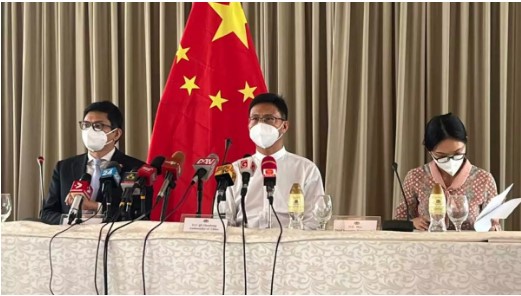
To overcome the economic problems, the people demand that China’s assistance be sought; ask them to make a bid for development projects in Sampur, Pooneryn, Gulf of Mannar and proposals to develop projects in the Palk Bay.
Whatever provocation, people must desist from violence against the State; it only weakens the State structures further which it what the enemies of Sri Lanka want. Even agitating in international forums weakens the State.
Instead, agitate for the enforcement of the rule of law; for a start agitate for the immediate arrest and trial of Basil, Sirisena and Wickramasinghe. Agitate to pass legislation to make offshore banking illegal and to make it a Capital offence.
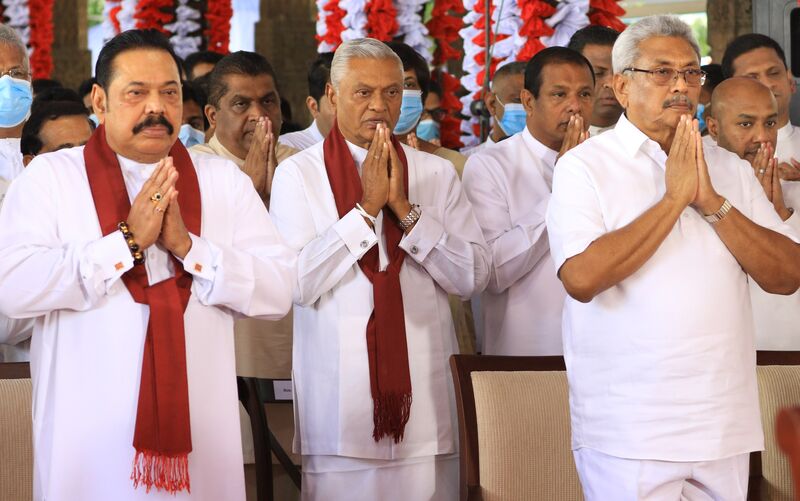


 Last week President Gotabaya Rajapaksa addressed a nation in crisis. Instead of calming the masses, a good part of whose life is now spent in everyday queues, he managed to further enrage them. What could probably be the operating para of his speech was ‘this crisis was not created by me’. Our country is not the only country in the world affected by the prevailing crisis situation. The entire world is engulfed with various hardships,” he said. Fair enough, President Rajapaksa inherited an economy that was loaded with an unsustainable amount of foreign debt, much of which was obtained during the two-term presidency of his elder brother. While some of them were invested in useful infrastructure projects, Mahinda Rajapaksa misallocated a good deal of foreign loans on a dynastic enterprise-in development projects which had no immediate, perhaps, not even medium-term, economic viability. Mahinda Rajapaksa misallocated a good deal of foreign loans on a dynastic enterprise-in development projects which had no immediate, perhaps, not even medium-term, economic viability
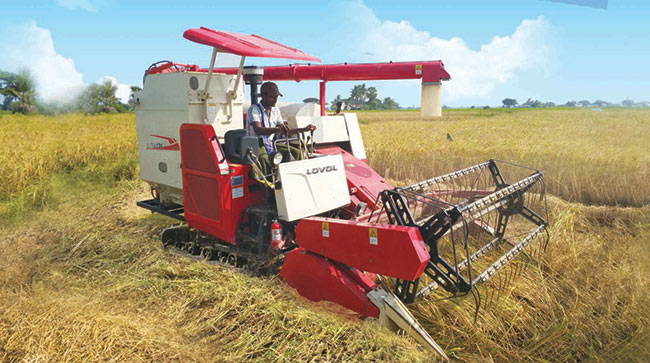
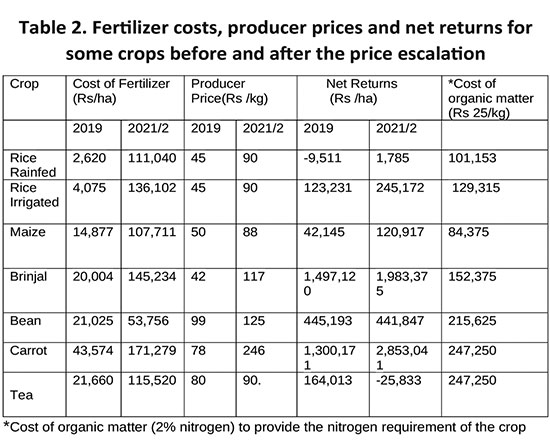
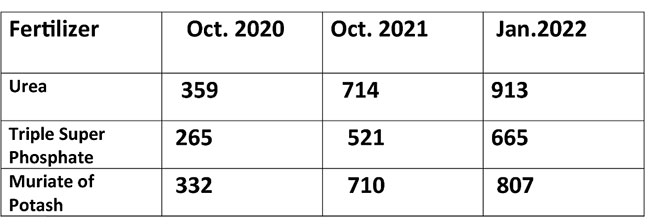
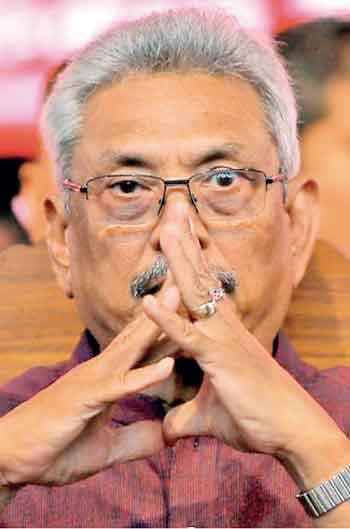 But, only Gotabaya Rajapaksa is responsible for mismanaging the latent economic crisis, which could have been handled with economic common sense. Instead, he turned it into a national disaster. Without a series of flawed policies adopted by his administration, Sri Lanka would not have been in the throes of a crisis as acute as it is at present. But, the president did not admit any of his blunders; they broke the back of this nation. Perhaps, his ego blinded him. Or he is simply ignorant and his advisors sycophantic. Here are four cardinal mistakes he committed, and they turned an otherwise manageable foreign exchange crisis into an unprecedented national catastrophe. 1.His extensive tax concessions made the government bankrupt Mr Rajapaksa started on the wrong foot. The government revenue in Sri Lanka as a percentage of the GDP is one of the lowest in the world – not just in comparison to peer lower Middle/Middle-Income nations but even compared to the least developed nations. To address the lower government tax revenue, Rajapaksa’s predecessors, the Yahapalanaya, partly guided by the IMF, adopted a revenue-based fiscal consolidation programme. Tax revenue as a percentage gradually increased, from 2015 to 2019, when Rajapaksa was elected to power. The new president thought he knew better and cut VAT from 15% to 8% and abolished NBT, PAYE tax, etc. As a result, the government revenue in 2020 declined by 526 billion rupees. And the number of registered taxpayers in the country declined by 33.5 per cent, according to Verite Research, a think tank. In order to fill the shortfall, the government printed money, fuelling inflation. Public finances were weakened while the country was due to pay over US$ 24 billion of foreign loans by 2024, which itself reveals the economic acumen of the president and his advisors. 2.The self-made disaster in the agricultural sector The president’s overnight ban on chemical fertiliser would be remembered as the dumbest, yet one of the most callous policy decisions in recent memory. It is more ludicrous if the real reason as he claims was to save public health (instead it seriously damaged Sri Lanka’s food security, Sri Lanka now ranks behind a number of South Asian peers in terms of food security). If the unsaid motive was to save limited foreign reserves, it reveals the misplaced priorities of his government. Fertiliser subsidy cost about US$ 250-300 million annually. In the meanwhile, his government continued to service international sovereign bonds, the last one of US$ 500 million that was paid in January effectively emptied the foreign reserve. The ban on chemical fertiliser decimated the local agricultural sector, paddy harvest declined by two-thirds. The cost of the folly was, according to conservative estimates, is US$ 2 billion. It impoverished 1.8 million farmers, which account for every one in four of the Sri Lankan workforce. The new president thought he knew better and cut VAT from 15% to 8% and abolished NBT, PAYE tax, etc. As a result, the government revenue in 2020 declined by 526 billion rupees. And the number of registered taxpayers in the country declined by 33.5 per cent 3.Unsustainable Rupee peg and continuation of bond payments If there is a government that continued to pay its foreign lenders against a net negative foreign reserve, it is this one. The real motives may be much less sincere than lofty claims of non-existent creditworthiness, which is ranked below the junk by rating agencies. The government effectively drained US$ 7.6 billion of foreign reserves of 2019 to pay for foreign lenders and to maintain an unsustainable peg of the Rupee. The peg resulted in a further squeeze of foreign remittance by the Sri Lankan workers abroad. Exporters parked their earnings in foreign banks. The President in his speech admitted that the workers’ remittance, which would have been US$ 2 billion under the peg would now increase to US$ 5 billion after the rupee was floated. However, the rupee was floated when the country ran out of hard currency, with the government having no effective instrument to manage the free fall of its value. While the rupee is traded at 275 for a dollar in banks, it is still traded for 300- 305 per dollar in the parallel markets. That might suggest further depreciation is on the way. If the peg aggravated the shortage, now the free-falling rupee would make most essential items, ranging from milk powder to cooking gas beyond the reach of average folks. The promised Saubagyaya (prosperity) has been proved to be an unmitigated self-made disaster. 4.Self-isolation from the West Now when the government begs for short changes from Bangladesh, and pleads for oil on credit from Russia, at its hour of global infamy, one should know, that its friends are few and far between. This was not the case when it launched into power. The Japanese were funding a Colombo metro rail project, the Americans offered a US$ 480 million grant under the Millennium Challenge Cooperation. Gotabaya Rajapaksa’s administration suspended the Japanese project and shunned the Americans. It effectively self-distanced itself from the West and its allies. A common-sense foreign policy followed in the national interest would have made it possible for the country to seek help from a greater number of states at its hour of need. But, the Rajapaksa’s personal political calculations had always ranked above the national interest. Those are only the most salient of blunders, which are directly instrumental in our flight. There is a separate long list, from the 20th Amendment to racist dog-whistling and to the compulsory cremation of Muslim Covid dead, that further discredited the nation. Connect the dots, and you will see why and how Sri Lanka ended up here, our daily ritualistic humiliation at queues and our daily struggle to make ends meet.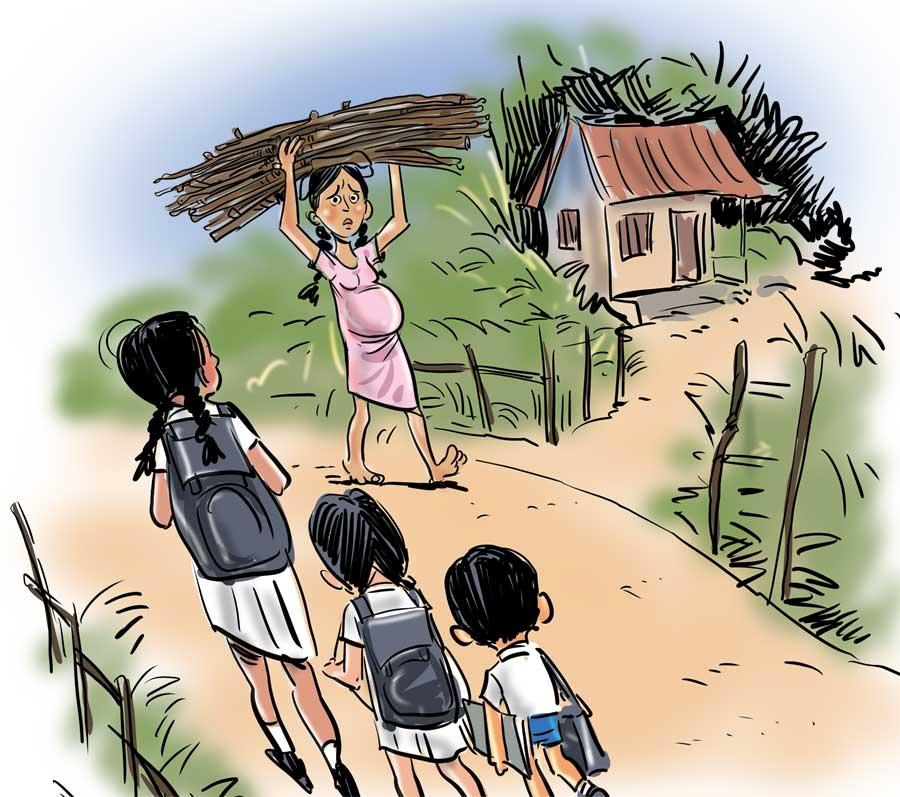
 off their daughters due to various reasons such as poverty, tradition and gender inequality. The debate on child marriages in Sri Lanka has been focused too much on Muslims. But, in reality, the evidence shows that the child marriage problem is not a Muslim or Sinhalese problem, but a national problem.