Sri Lanka is negotiating debt relief with international bondholders and is weighing an approach to the IMF, as the country struggles with a foreign reserve crisis that has left it close to default, the Financial Times reported.
Basil Rajapaksa, finance minister, told the Financial Times in an interview that the government was negotiating with everybody” and trying all our options” to avoid default and alleviate the economic crisis.
We have [international sovereign bonds] which we have to repay back, so we are negotiating with them. Then we have creditors and we have to service their debt, so whether we can have an adjustment or some type of thing,” he said.
Rajapaksa added that the government would think about a programme with the IMF . . . All those discussions are going as well.”
Sri Lanka has almost $7bn in debt payments due this year but less than $3bn of foreign reserves.
Some Sri Lankan officials have insisted that the country can avoid this fate by boosting foreign currency reserves through tourism and exports while securing additional assistance from China and India, two of its largest benefactors. The central bank governor this week told CNBC that we don’t need relief” from the IMF.
Minister Rajapaksa insisted the government could manage but was preparing for contingencies. I know it’s very difficult because we have to pay this year $6.9bn and, additional to that, we have to find money for medicine, raw material, fuel, all these things,” he said.
Asked if he was negotiating a restructuring with bondholders, Rajapaksa replied, something like that”.
Obviously you can understand what we want and you can understand what the bondholders would like to have,” he was quoted as saying by the Financial Times.
Sri Lanka Customs has detected 16,000 kilograms of illegally imported beetroot concealed inside a shipment of potatoes that had arrived from Pakistan.
Customs officers at the Gray Line 2 container inspection yard under the Central Cargo Examination Division of Sri Lanka Customs today inspected two suspicious refrigerated containers imported into Sri Lanka from Pakistan.
The two containers were ordered by a company based in Wattala from a company in India. The contents of the containers were declared to Sri Lanka Customs as 53,000 kilograms of potatoes.
However, during the examination the Customs Officers have found 16,000 kilograms of beetroot with a market value over Rs. 3 million rupees hidden inside the containers. The beetroot was packed in bags similar to bags containing potatoes and subtly hidden in the deep end of the containers.
The wharf clerk who came to clear the goods has been detained by the Customs and he is being questioned ascertain more information, Customs said.
Further investigations are being carried out by the Customs officers at the Gray Line 2 container inspection yard under the Central Cargo Examination Division of the Sri Lanka Customs.
At the conclusion of the Customs Inquiry the contrabands shall be forfeited and penalties shall be imposed on the persons responsible, the Customs Media Spokesman said.
Laboratory tests prove that 95% of the Covid-19 positive cases reported in Sri Lanka are infected with the Omicron variant, the Director of the Health Promotion Bureau Dr. Ranjith Batuwanthudawa said.
The Ministry of Health says that another 961 persons have tested positive for Covid-19 in the country today (28).
This figure includes 04 persons who had arrived in the country from overseas while the rest are community cases.
This is the third consecutive day that the daily count of new cases has surpassed the 900 mark.
This brings the total number of coronavirus cases registered in Sri Lanka thus far to 608,065.
15,365 patients infected with the virus are currently undergoing treatment across the island.
The Director General of Health Services has confirmed another 17 coronavirus related deaths for January 27, increasing the death toll in Sri Lanka due to the virus to 15,386.
This figure includes 10 males and 07 female patients while one of the victims is below the age of 30 years.
Six of the deceased are between the ages 30-59 years while the other 10 are in the age group of 60 years and above.
Meanwhile the Health Ministry has also reported another 284 Covid-19 recoveries, pushing the country’s total recoveries to 577,314.
A
total of 12 human rights groups, including Amnesty International and Human
Rights Watch, have written to the UN calling for the removal of RAB from UN
peacekeeping missions. In December, the United States imposed sanctions on the
Bangladesh Police Special Forces Rapid Action Battalion (RAB) and a total of
six former and current officers for alleged involvement in “grave human
rights abuses.”
Twelve
international non-governmental organizations have recently written a letter to
the Under-Secretary-General of the United Nations peacekeeping mission. Different
types of propaganda and speculation are going to be noticed here. They said
that the RAB of Bangladesh is violating various human rights. In their
language, RAB of Bangladesh is engaged in various misdeeds, violating human
rights. For this, they have requested the RAB of Bangladesh not to take them in
peace keeping. They wrote the letter on November 7. It’s been two months since
the UN received it.
The
letter was sent two months ago, on November 8, 2021, and was released today
(Thursday), according to Human Rights Watch. A letter to UN
Under-Secretary-General Jean-Pierre Lacon called for all members of the RAB to
be barred from peacekeeping operations.
According
to the media reports, the letter was signed by Amnesty International, Asian
Federation against Involuntary Disappearances (AFAD), Asian Forum for Human
Rights and Development (FORUM-ASIA), Asian Human Rights Commission, Asian
Network for Free Elections (ANFREL), Capital Punishment Justice Project,
CIVICUS, World Alliance for Citizen Participation, Human Rights Watch,
International Federation for Human Rights, Robert F. Kennedy Human Rights, The
Advocates for Human Rights, and World Organization Against Torture (OMCT).
On
the other hand, a member of the European Parliament has written to the European
Union (EU) imposing sanctions against the Rapid Action Battalion (RAB). He said
in a letter against the RAB that the force was involved in a number of
extrajudicial killings and disappearances.
According
to sources, EU Member of Parliament Ivan Stefanek wrote a letter to Joseph
Borel, the High Representative of the European Union for Foreign Affairs and
Security Policy, on January 20. In the letter, he said the situation of human
rights, freedom of speech, civil and political rights in Bangladesh is
deteriorating. He also mentioned the US sanctions against the RAB and seven of
its current and former officials. “In view of these incidents, my request
is that you use the power you have to enforce the ban against the Rapid Action
Battalion,” he said in the letter.
But
they should know that Bangladesh is at the forefront of sending law enforcement
personnel to UN peacekeeping missions. In 2012, Bangladesh sent the highest
number of peacekeeping personnel to different countries, with 6,631 members
from different forces. Human rights groups allege that officers were sent to
peacekeeping missions as a reward for serious human rights abuses inside the
country, especially RAB members, many of whom have been charged with
extrajudicial killings, torture and disappearances.
Bangladesh
has been playing a great role in the peace process of Africa. Bangladesh played
an important role in Haiti, East Timor, Middle Eastern countries for promoting
peace and harmony. International community should remember, consider and
understand this.
However,
everyone knows the role of Bangladesh peace keepers to establish peace in
Africa. Bangladesh Army, Navy, Air Force, Police have served in UN peacekeeping
missions (Africa Mission) with considerable reputation. At that time, in
1993-94, the most talked about peace missions in Rwanda, Somalia and Bosnia,
the Bangladesh Army came to the center of the discussion.
Bangladesh
has a huge contribution and role in the peace process of Africa. According to
UNO and Bangladesh army, Currently Bangladesh is one of the leading troop
contributors with 6,582 peacekeepers mostly in Africa. Being a country
committed to peace, Bangladesh has always been keen in contributing for peace
across the globe. Bangladeshi peacekeepers are currently deployed in eight out
of 13 peacekeeping missions in the Democratic Republic of Congo, Sudan, South
Sudan, Western Sahara, Mali, Central African Republic, Yemen and Lebanon.
RAB
has played a commendable role in controlling drug-terrorism and militancy in
Bangladesh. That is why we have been able to deal effectively with
drug-terrorism and militancy in Bangladesh as compared to many developed
countries. According to the media, we know the role of RAB in combating
maritime threats in the strategic Bay of Bengal. Combating maritime threats is
one of the agendas of US-Western lead ‘Indo-Pacific Strategy’. On the other
hand, Bangladesh’s RAB has played a great role in maintaining peace, harmony,
law and order in the Rohingya camps. RAB has been relentlessly working to
implement the government’s zero tolerance policy against terrorism in line with
US agenda of War on Terror
Meanwhile,
EU Ambassador to Dhaka Charles Whiteley has said that the EU has nothing to do with
the letter from a member of the European Union (EU) Parliament to remove the
Rapid Action Battalion (RAB) from the UN peacekeeping mission.
“I
don’t want to comment on the US sanctions on the RAB,” he said. I do not
have accurate information about this. However, the letter from a member of the
EU parliament was his personal opinion. The EU has nothing to do with it.
“
The
EU ambassador made the remarks at a ‘Meet the Reporters’ event at the Dhaka
Reporters’ Unity (DRU) Nasrul Hamid auditorium at 10:30 am on January 26.
On
the other hand, according to a media report, a spokesman for the UN told the
media: “Every time the UN hires a person for peacekeeping, they give it a
go.’ The letter was given for the purpose of propaganda against Bangladesh. We
believe that these propaganda and malicious acts are against the people of
Bangladesh.
The
comments made by the EU ambassador to Bangladesh are fully right in this
regard. As a promoter of peace, law and order (EU as an organization), the EU
can’t do it. Before taking any decisions in this regard, the authorities of the
EU and UN should consult with the Bangladesh government. On the other hand, the
decision may be treated as politically biased, motivated.
There
might have been some isolated crossfire that occurred during RAB’s operations
against criminal activity. But compared to its success, such incidents occur in
many national law enforcement agencies around the world. On the other hand,
when Bangladesh is trying to resolve the issue with the US authority diplomatically,
such a proposal to the UN and EU is very inappropriate. Sanctions are not the
only permanent solution. Discussion, negotiations, reformation, corrections can
be some kind of tools. Thus, the international community should investigate the
matter before reaching a final decision against the RAB.
The
Bangladesh government should take it seriously regarding the matters. They
should make the UNO understand that some politically biased and motivated
organizations and persons are trying to defame Bangladesh in the international
arena and propagating against Bangladesh. When the economic rise of Bangladesh
in South Asia is confirmed amongst the internal community, some vested groups
motivated by mere human rights issues or any geopolitical interest are trying
to serve their vested interest. Their ill motives are clear now. The positive
image of Bangladesh is now their target. If any kind of doubt arises in this
regard, the international community can work together with Bangladesh.
Obviously, Bangladesh will work with the international community. Again, before
taking any decisions in this regard, the authorities of the EU and UN should
consult with the Bangladesh government. Please, no more sanctions on RAB.
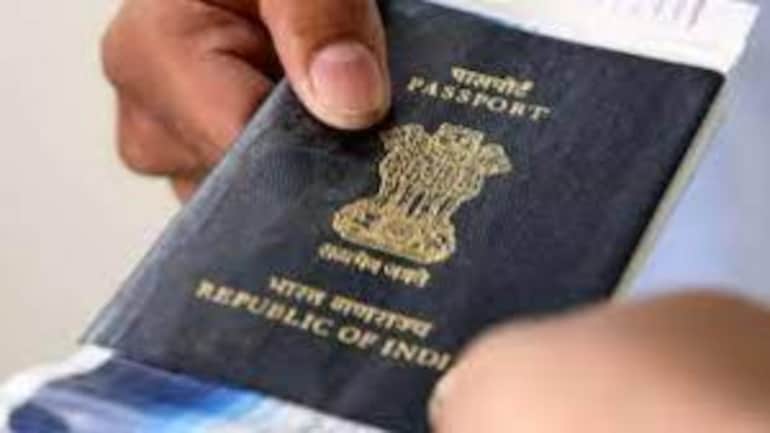
Three arrests in Tamil Nadu in October 2021 over fake passports have drawn the NIA into the investigation. TN Police revealed that LTTE cadres are behind the fake passport racket.
Three arrests in Tamil Nadu over fake passports in October 2021 has put the NIA on alert. (Representative image)
Three arrests in Tamil Nadu over fake passports in October 2021 have put central agencies, including the National Investigation Agency (NIA) on alert. An investigation by Tamil Nadu police revealed the involvement of active Liberation Tigers of Tamil Eelam (LTTE) cadres behind the fake passport racket.
The prevailing political climate may militate against such an idea, but here I make a case for a united Indian subcontinent. It may appear naïve to make such a case when polarization, identity-based violence, threats of war are looming large the world over. This is a futuristic outlook, but it is not new. The case has been made multiple times since the partition of the subcontinent, and certainly, all the cases are not motivated by political or identity or majoritarian motives.
Mahatma Gandhi certainly comes to mind in this context. Once adamant not to see the partition in his lifetime, Gandhi finally came to terms with the partition and accepted it. But till his end, he believed that despite separation, the countries of the Indian subcontinent can live as brothers. He famously said, We may take it that physical division of the country is now certain. If…our hearts are true we can behave as if they had not been partitioned.” Further, We should not let our hearts be sundered. We must save our hearts from being fragmented.” Ambedkar made a similar argument, (I)sn’t there enough that is common to both Hindus and Musalmans, which if developed, is capable of molding them into one people? Nobody can deny that there are many modes, manners, rites and customs which are common to both. Nobody can deny that there are rites, customs and usages based on religion that do divide Hindus and Musalmans. The question is, which of these should be emphasized.”
Obviously, it does not make pragmatic sense to make the whole Indian subcontinent as one political unit by erasing the borders. But let us consider these realities. Despite India and Pakistan and Bangladesh sharing borders, and despite economic complementarities, their trade potential is least explored. As I went to the cross-LoC trade points in Poonch and Uri a few years ago, I could find out how this cross-border trade was wrapped up with bureaucratic red tape and political apathy. One can also think of common resources, the Himalayas and other mountain ranges and rivers that crisscross the subcontinent, but due to lack of collaboration, most of those resources are underexploited. The countries in the region spend a disproportionate amount of GDP in arms and armaments. Though the historical baggage and the psychology of the need of an enemy to keep national unity helped boost the defense sector, they have not actually helped the region or the people.
One of the reasons why SAARC is failing is the main players seldom prioritize the larger goals of the subcontinent. Political egoism in this case triumphs real issues. External powers see opportunities in these rivalries. During the Cold War era, the major powers used the subcontinent as a pawn in superpower rivalry, and now this rivalry has moved to the East. China has used the rivalry well and used Pakistan as a prop against India.
The India-Pakistan-Bangladesh collaboration will not only help strengthen their economies but also help them against external pressure or aggression. Studies have shown how subcontinental collaboration will have both economic and political dividends. United together, they can emerge as a power bloc in the world. Certainly, cooperation is not an easy task keeping in mind the legacy of mistrust and war, and the conflict over issues like Jammu and Kashmir. But the political willingness and a vision of a united Indian subcontinent can help the countries together to forge unity. Obviously, one does not call for a political merger, not even a kind of federation, but some sort of confederation, in whatever name, will be crucial. All the countries can agree to shelve contentious issues for some time and work in the non-contentious areas. For example, opening religious shrines in the subcontinent (opening of the Kartarpur Shrine is a positive step in this regard) for free flow of religious pilgrimage, fostering easy access for medical treatment, developing common programs to address the pandemics including the Covid-19 pandemic, developing a joint front on climate change and such other steps will help build mutual trust. On a long-term project, they can also work on phasing down tensions on the border by slowly making it demilitarized.
These steps will not be possible if one country follows the rules, and another country violates them. Perhaps as a first step, they can work together to develop some sort of Indian subcontinental charter, like the UN charter, and follow the principles of the charter. They can have a head office in one of the countries and rotate the office every two or three years. The countries will follow the rules voluntarily, and there will be no imposition of force. Force did not resolve the conflict in the past, nor will it resolve the conflict. Gandhi reminds us, there is no path to peace, peace is the path.”
Mechanical arrangements to realize subcontinental unity will not be successful. Superficial dialogues, politicking, and egos will not help realize the goal. The efforts must be genuine and emerge from a deeper psychological understanding of unity and brotherhood in the subcontinent. Sri Aurobindo wrote in 1908, Unity is of the heart and springs from love. The foreign organism (a reference to British rule) which has been living on us, lives by the absence of this love, by division, and it perpetuates the condition of its existence by making us look to it as the centre of our lives…It has set Hindu and Mahomedan at variance by means of this outward outlook; for by regarding it as the fountain of life, however, we are led to look away from our brothers and yearn for what the alien strength can give us.” Though the British left the subcontinent almost eight decades ago, the psychology of othering persists. It must go away towards realizing the vision of a united Indian subcontinent.
Debidatta Aurobinda Mahapatra has a doctoral degree from the McCormack Graduate School of Policy and Global Studies at the University of Massachusetts Boston, USA. His areas of interest include contemporary Asian politics, peacebuilding, and India. He was a Charles Wallace India Fellow at the Queen’s University at Belfast in 2010. He was a recipient of the Scholar of Peace Award (New Delhi, 2007) and the Kodikara Award (Colombo, 2010). His publications include Conflict Management in Kashmir (Cambridge University Press, 2018), Gandhi and the World (Lexington, 2018), and Conflict and Peace in Eurasia (Routledge, 2013). He is a Professor of Political Science at Florida State College at Jacksonville.
By Huang Lanlan in Shanghai and Chen Runze in Colombo Courtesy The Global Times
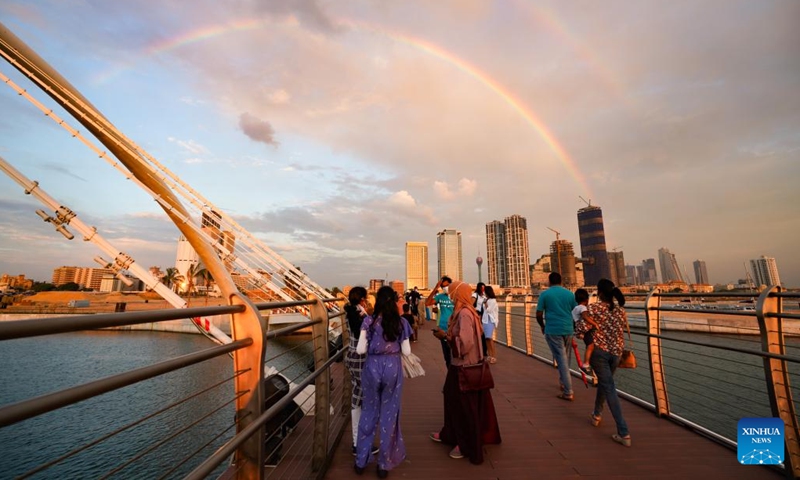
Photo taken on Jan. 10, 2022 shows tourists viewing the scenery at the Marina in Colombo’s Port City, Sri Lanka. (Photo: Xinhua)
After Sri Lanka declared an economic emergency and asked China for help at the beginning of the year, some Western and Indian conspiracists once again went on a bashing spree against China and its Belt and Road Initiative (BRI).
By maliciously tying Sri Lanka’s recent financial distress to the Chinese investment in the country, they got busy hyping the so-called “Chinese debt trap” in an attempt to mislead the public and attack the China-Sri Lanka cooperation.
Deliberately fabricated rumors were spread in Western and South Asian countries when the President of Sri Lanka, Gotabaya Rajapaksa, reportedly asked China to help restructure the repayment of the country’s debt during a meeting with Chinese State Councilor and Foreign Minister, Wang Yi, on January 9.
On that day, some users started creating and spreading rumors on social media that “China’s central bank issued bank notes with a face value of 10,000 rupees in Sri Lanka,” which was later refuted. This misinformation insinuates China’s violation of Sri Lanka’s currency sovereignty, smearing the mutually beneficial economic cooperation between the two sides as an “unequal plunder” by China, observers told the Global Times.
With either rumors about currency sovereignty or the so-called “China debt trap,” some Western countries, led by the US, and India have been attacking China’s overseas construction projects. However, their clichés have rarely been echoed in BRI countries, Chinese and Sri Lankan scholars told the Global Times.
China is a good friend “with consistent economic policies, good trade practices and a win-win attitude,” Samitha Hettige, advisor of the National Education Commission of Sri Lanka, mentioned in his article published in December on Sri Lanka’s English-language newspaper, Ceylon Today.
“Sri Lanka-China relations are quite strong, only based on friendship and nothing to do with [business or politics],” Hettige told the Global Times.
Disinformation campaign
The rumor about currency sovereignty went rife earlier this month, coinciding with Wang’s visit to Sri Lanka. One of the earliest rumormongers was a Twitter user under the name bandhini fernando who frequently posts anti-China misinformation, the Global Times found. On January 9, bandhini fernando posted two fake pictures of “Sri Lanka’s new 10,000 rupees note” saying it was issued by the People’s Bank of China.
“Wang Yi officially handed over new currency to Sri Lanka during his meeting with [Sri Lankan] President,” bandhini fernando wrote. The user claimed that the “new bank note” can be used in Sri Lanka and wickedly described the Chinese-invested projects of Colombo Port City and Hambantota Port as “Chinese territory.”
The rumor was refuted the following day by Sri Lankan fact-checking agency Factcrescendo, which quoted a response by the Deputy Governor of the Central Bank of Sri Lanka, CJP Siriwardana, saying that the bank currently has no plans to issue a 10,000 rupees bank note and the highest currency value in Sri Lanka remains 5,000 rupees.
This is not the first time that gossips like the Sri Lankan bank notes issued by China spread online. In April 2021, another picture of “China-issued 10,000 rupee” was widely shared on social media, which was soon proved false by Factcrescendo. International Law and finance experts consider that the rumors were created to smear China by saying it “violates Sri Lanka’s sovereignty,” as an independent country with monetary sovereignty will never ask a foreign country’s central bank to issue currency on its territory.
The “China debt trap,” an old accusation though, is another defamation campaign by the West and India against China-Sri Lanka’s economic cooperation. Days before and after Wang met Sri Lankan president in Colombo, media outlets from the US, the UK and India were frequently attacking China with the “China debt trap” or similar eye-catching headlines.
“China’s lending comes under fire as Sri Lankan debt crisis deepens,” said a misleading headline on article by the Wall Street Journal published on January 18, attributing Sri Lanka’s economic crisis to “expensive” and “unprofitable” Chinese investment.
The Chinese Ministry of Foreign Affairs responded saying that the accusations are not true. “China-Sri Lanka cooperation is mutually beneficial and has been warmly welcomed by all sectors in Sri Lanka,” said the ministry spokesperson, Wang Wenbin, on January 10.
There is no such thing as a “China debt trap,” noted Hettige. “The total Chinese loans only account for a little more than 10 percent of our total loan property portfolio, and China is actually the fourth largest [creditor], behind international capital markets, multilateral development banks and Japan,” he told the Global Times, highlighting that “the media did not show the fact.”
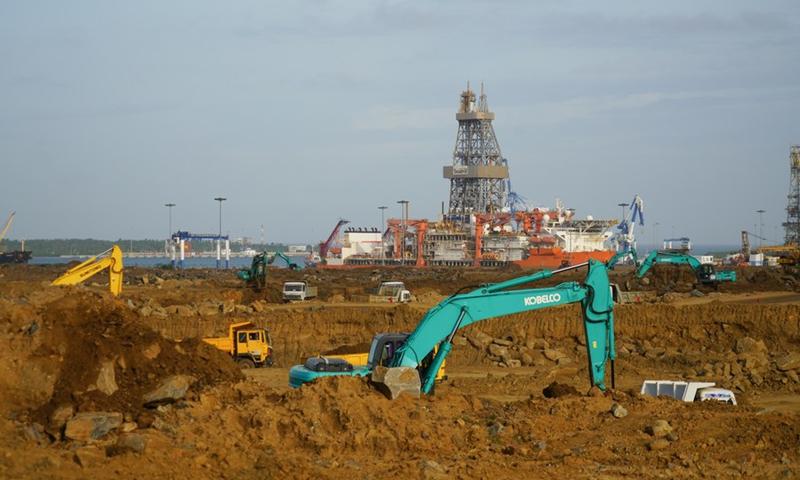
Photo taken on Aug. 9, 2021 shows the construction site of a tyre factory at the Hambantota Port industrial park in Sri Lanka. (Photo: Xinhua) US and India behind
The US and India play a major role in the slandering campaign against China-Sri Lanka cooperation and China-funded projects in the country, observers found.
“Sri Lanka has not fallen into a debt trap,” president Rajapaksa once stressed in the presence of then US Secretary of State Mike Pompeo, as Sri Lanka’s news site Ada Derana reported in October 2020. Readers often see mainstream American newspapers and magazines, including The New York Times, the Wall Street Journal, Foreign Policy and The Atlantic, publish articles blathering about the alleged “China debt trap.”
US media are also keen on creating tension as if China has “violated Sri Lanka’s sovereignty” or “used economic coercion against Sri Lanka.” For instance, a widely spread article from the New York Times titled How China got Sri Lanka to cough up a port, published in June 2018, described the China-funded Hambantota Port development project as an example of “China’s ambitious use of loans and aid to gain influence around the world,” and “its willingness to play hardball to collect debt.”
Responding to the smears and attacks, Rajapaksa said in an official statement in October 2020 that “constructing a port in Hambantota is an idea of Sri Lanka and not China’s.” He also added that the project has a vast potential for generating income and employment opportunities for his country.
“The US frequently defames China-invested projects in Sri Lanka, partly to hope that Sri Lanka will abandon [the BRI] and opt for the [aid plans] the US offers,” said Qian Feng, Director of the Research Department of the National Strategy Institute at Tsinghua University.
“Either the ‘Indo-Pacific strategy’ in the Trump era, or the ‘new Indo-Pacific economic framework’ that the Biden administration is developing, the US is eager to engage more in the South Asian region,” Qian said, adding that “so far, they have just shouted slogans and offered little effective financial assistance.”
In India, some politicians and media outlets babble much about the Chinese projects in Sri Lanka. Throughout 2021 news outlets like the Times of India and The Hindu and Indian Express have been meddling in China’s energy projects in Sri Lanka with groundless accusations of “security concerns”.
“The Sri Lankan project is small, supplying electricity to villages on three small islands,” sources told the Global Times in December 2021, adding that since the islands and the mainland of Sri Lanka are separated by the sea, it is very likely that the power grid will not be connected to other places in the country.
“Some Indian government officials and reporters always regard South Asia as India’s ‘sphere of influence,’ wary of the so-called ‘outside forces’ developing relations with other countries in the region,” Qian said while highlighting that “with hostility toward China, they see China’s cooperation with countries like Sri Lanka a weakening of India’s power of influence there.”
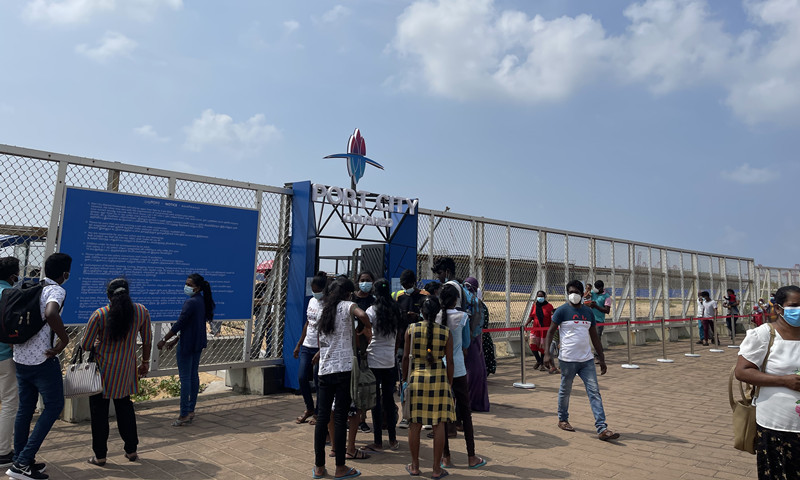
Local residents visit the newly-opened marina of Colombo’s Port City on January 23, 2022. Photo: Chen Runze Truth speaks for itself
Nonetheless, the anti-China noises made by countries like the US and India only represent a very small group in the region, Qian noted. “No matter if it is in Sri Lanka, or other South Asian countries like Nepal and Bangladesh, they are and will always be far from the mainstream.”
“China has a long history of cooperation with many South Asian countries and its assistance is not limited to the BRI,” Qian said, adding that “China has a good reputation among people of these countries.” He also mentioned that “people there can see and feel the development opportunities and improved living standards that China has brought them. They will not get blinded by the slander and sabotage from India and some Western countries.”
In a village in northern Sri Lanka, local residents said they enjoy more development opportunities and convenient lives thanks to the roads that Chinese enterprises helped build there.
“I’m very grateful to China,” Kumar, a local resident who owned a grocery store, told to the Global Times in November 2021. “The roads built by Chinese companies have helped improve my business as more people have come to the village [because of better traffic conditions],” Kumar said, remarking that his income quadrupled and was planning to open a small restaurant.
This year marks the 65th anniversary of the establishment of diplomatic ties between China and Sri Lanka and the 70th anniversary of the signing of the Rubber-Rice Pact. Official documents show that through decades of mutual help and win-win cooperation, China has become one of Sri Lanka’s biggest sources of foreign investment and trading partners.
The Colombo Port City project, for instance, will attract additional investment up to $12.7 billion over the next 20 years, and is expected to add $13.8 billion to the Sri Lankan economy once fully operational, according to a study released by PricewaterhouseCoopers (PwC) late last year. The project will be “the main income generator for the future of Sri Lanka,” creating 83,000 direct jobs and many more indirect job opportunities for Sri Lankans, said president Rajapaksa in September 2020.
“South Asia needs China in its development because China is synonymous of ‘development,'” according to an article published on January 17 by Sri Lankan English-language media outlet Daily News. China’s BRI “provides benefits for almost all South Asian countries, …[and] has proved already that it is a well-wisher and friend of South Asia,” noted the article titled Sri Lanka, Bangladesh and Nepal Need China for Development.
Ling Rinpoche, reincarnation of the teacher of Dalai Lama reaches Sri Lanka
Read more At:
https://www.aninews.in/news/world/asia/ling-rinpoche-reincarnation-of-the-teacher-of-dalai-lama-reaches-sri-lanka20220127210819/
For Sri Lanka, imports are increasingly expensive. China and India have granted lines of credit, but analysts note that they are short-term solutions. Due to the inability to buy fuel, the government announced daily power cuts.
Colombo (AsiaNews) – In addition to a growing debt crisis and a shortage of foreign currency due to steadily dwindling reserves, Sri Lanka is also facing a serious shortage in basic necessities including food, medicines, gas and fuel. Soaring food prices are making life harder for a majority of Sri Lankans.
As the value of the national currency (rupee) l drops, imports become more and more expensive. Foreign exchange inflows have shifted from formal to informal channels.
Remittances by Sri Lankans living abroad have dropped to US$ 271 million in November 2021, an all-time low since 2010.
Meanwhile, the island nation’s external debt is rising and the payment of more than US$ six billion this year is a serious source of concern.
The only positive sign in this depressing scenario is the currency swaps and lines of credit with India and China.
India has agreed to a currency swap and granted two lines of credit worth US$ 500 million each. One will be used to import food and medicines, while the other will be used to import fuel from India.
Both financial tools are important, taking into account the precarious condition of the country’s currency reserves, but insufficient to meet Sri Lanka’s immediate needs, including the purchase of basic necessities.
China also granted a currency swap with the yuan worth 1.5 billion dollars and a US$ 500 million line of credit. Chinese credit will be useful to import raw materials for the manufacturing sector.
Analysts agree that these measures are only short-term solutions. For economists, Sri Lanka’s debt should be restructured through foreign financial assistance.
A realistic or market-determined exchange rate would also increase foreign remittances, whilst increasing domestic production of goods and services is crucial to solving the balance of payments problem and would be a more long-term solution to the crisis.
According to Sri Lankan Central Bank Governor Ajith Nivard Cabraal, the US$ 500 million International Sovereign Bond was paid on schedule on 18 January, confirming that Sri Lanka could meet its commitments and avoid bankruptcy.
To bring currency flows back into formal channels and alleviate shortages, analysts note that the rupee should be devalued and reach more realistic rates.
Due to the severe shortage of dollars and the inability to import enough fuel, Sri Lanka is also suffering from a severe power crisis.
According to sources from the Ceylon Electricity Board, several power plants will have to close due to lack of fuel and at least 183 megawatts will be lost in the power grid, with subsequent power cuts at peak times, especially at night, if more fuel is not provided to the power plants.
Energy Minister Udaya Gammanpila warned that daily power cuts could be up to four hours if the country fails to secure a “large loan” by March 2022.
The Director-General of Health Services today (January 27) issued new guidelines for travellers arriving in Sri Lanka from overseas during the pandemic of Covid-19.
As per the guidelines, foreign national passport holders who do not possess a valid visa must obtain a landing permit/visa from the Department of Immigration & Emigration prior to their departure from overseas.
In addition, they are required to have travel insurance of at least USD 50,000 including cover for hospitalized treatment for Covid-19 infection.
The guidelines specified that the period of stay in Sri Lanka and additional 14 days should be covered by the insurance.
The Ministry of Health says that another 942 persons have tested positive for the novel coronavirus today (January 27).
This figure includes 03 persons who had arrived in the country from overseas.
Sri Lanka’s tally of Covid-19 cases confirmed in the country thereby climbed to 607,104.
With this, the number of virus-infected people who are undergoing treatment moved to 14,705. Meanwhile, the death toll stands at 15,369.
This is the second consecutive day Sri Lanka recorded more than 900 daily cases of Covid-19 in about four months. Over the past week, the country saw a resurgence in infections with over 800 people testing positive for the virus.
The Director-General of Health Services has confirmed 23 new coronavirus-related deaths for January 26, increasing the death toll in the country due to the virus to 15,369.
This includes 12 males and 11 females, according to the Department of Government Information.
Two of the victims are in the age group of 30-59 years. Another one is aged below 30 years and the remaining 20 patients are aged 60 years and above.
Early last Christmas
morning following the teachings of Jesus Christ’s, of kindness, forbearance,
and tolerance, the writer accompanied by two friends headed towards
Naththandiya. The coconut plantations on either side of the road made the drive
down delightful watching. However, we found it strange the prices of coconut
were so high because the coconut estates were in abundance.
We went searching for a
mercilessly assaulted man. He was the forty-two-year-old Suranga Lakmal.
Suranga lives in the Asoka Pura housing scheme close to a prominent carbon
factory in Thorawita. Lakmal’s house is a half-finished one in a very bad
condition. He is a single parent with two children. His children are in the
tenth and ninth grades and attend a local school. His old and feeble
mother looks after him and the two children after his wife left him a few years
ago. The family is deprived and underprivileged. Lakmal worked as a carpenter,
but during the Covid-19 pandemic, he could not find any employment.
This incident occurred
sometime in May 2021. Lakmal’s children were crying for food, so his mother
asked him to go and pick a fallen coconut from the neighbouring coconut
plantation to feed the hungry children with polsambol and rice. The
neighbouring fifty-acre coconut estate is owned by the Ceylon Pentecostal
Mission (Lanka Sabawa). Romesh Priantha de Silva and Sugathawansa are in
charge of the estate. They caught Lakmal collecting the fallen coconut from the
plantation and started to abuse him very badly.
Romesh Priantha de Silva
and Sugathawansa, the two persons who caught Suranga Lakmal when he picked the
fallen coconut, and attacked him mercilessly, had gone to the extent of
stripping Lakmal of his clothes. They held his naked body upright in a crucifix
position and struck Lakmal with an iron mallet on his back and his genitalia
ignoring his pleading. He implored them to hand him over to the Police, ‘if picking a fallen coconut is a crime to feed his hungry
children.’ The video shown on TV and
social media platforms clearly shows how Lakmal beseeched them to stop, while
the vicious pair continued to beat him up.
Both attackers did not pay
any attention to the pleading of Lakmal’s but continued to hammer him on his
back with the iron mallet, which seriously damaged Lakmal’s vertebral column.
Now he is unable to bend down and unable to work because he is a
carpenter.
Six months later
It was only after we
arrived at Lakmal’s house were we informed this inhumane act had occurred six
months ago. The Suranga Lakmal video which was shown on TV news and social
media platforms just before Christmas 2021 was actually six months after the
attack. When the crime occurred, Lakmal reported it to the Marawila Police Station.
Following Lakmal’s Police entry, the Marawila Police produced their
B-report reference B-169/21 and filed a case against the two perpetrators at
the Magistrate’s Court, Marawila. The police complaint was acknowledged and
confirmed by a letter signed by the Registrar of the Courts on 6 December 2021.
It was after watching the
revolting scene of Lakmal’s brutal attack that we felt we should visit the
desperate family and extend whatever help we could give. So, early on Christmas
morning, we started our journey towards Naththandiya, with a car full of dry
rations including some coconuts, which was the cause for Lakmal’s attack. My
friend Karuni handed over the dry rations to Lakmal’s mother and distributed
cash to each family member as a Christmas contribution.
His mother’s explanation
Suranga’s mother explained
how she requested her son to pick a fallen coconut from the adjoining coconut
estate as her two grandchildren were starving and crying of hunger. After the
savage beating on Suranga Lakmal, a compassionate neighbour, Professor D.S.J.
Kalubowila, brought this inhumane act to the Human Rights Commission.
After filing the case at
Marawila Police Station, Suranga Lakmal appealed to the President Gotabaya
Rajapaksa, in a registered letter in detail. Suranga Lakmal voted for Gotabaya
Rajapaksa during the Presidential election and had high hopes of the President
taking remedial action against the two offenders. He was unsure whether the
President watched Suranga Lakmal’s video on Swarnavahini news or even read his
letter sent under registered cover! In his letter to the President, he wrote
how his two children were crying of hunger, and at that moment, his mother
asked him to pick a fallen coconut from the adjoining coconut estate to help her
grandchildren from starvation.
In response to Suranga
Lakmal’s letter to President Gotabaya Rajapaksa, the Ombudsman attached to the
Presidential Secretariat wrote to the D.I.G. Puttalam District, under his
reference PS/OMB/04/2174/21 and PS/OMB/04/2301/21 on 12 November 2021,
requesting the Police to take appropriate action against the perpetrators, with
copies to Suranga Lakmal and Prof. D. S.J. Kalubowila. Regrettably, neither the
D.I.G. at Puttalam District nor the Police at Marawila took appropriate action
against the perpetrators despite the attached Presidential Secretariat
Ombudsman’s letter of 12 November 2021. It shows to what extent the innocent
people who are less influential and helpless have to go through constantly!
During our visit to
Suranga Lakmal, two Buddhist priests from Kandy arrived to see him after
watching the horrific video clip of how Romesh Priantha de Silva and
Sugathawansa savagely struck Suranga Lakmal by hanging him in a crucifix
position! The distressed family still depends on charity from various people
who saw the vicious beating on TV and social media platforms.
Sumith Liyanage wrote to
the Police Retired Senior Officers’ Association newsletter and explained his
experience on the current Police Force. He said thus: Many noble qualities
had vanished mysteriously from what is known as this august (Police) body;
Justice and fair play are the aspirations of civilised societies; equality and
impartiality in dispensing justice are the hallmarks of a healthy democracy.”
The Suranga Lakmal’s family
urgently needs a water well, they have no access to water. There is no water
supply in the area they live. Therefore, the family’s urgent requirement is to
have an adequate water supply at their disposal.
SL
has laid out a plan that is in the public domain , for paying it’s loan
commitments for 2022, 500 million paid 18/1 and about 5 Billion mid 2022 and
beyond .
Instead of securing bridging loans from the IMF , they have secured short term
bridging loans and currency swaps and loans , from friendly countries
China, India , Bangladesh and a Gulf country without IMF type adverse
conditions, to satisfy its short term bridging needs. SL has also requested
loan restructuring form one of their main lenders China, who is considering the
request favourably as we write. Hence clearly there is no need for
further bridging loans from the IMF. The central bank of Ceylon also has
teams of well educated, bankers with doctorates and more
conversant with local needs and requirements , better suited to deal with SL’s
needs than the IMF. A further reason why IMF is not needed at least now,
The long term plan and need is strengthening their FOREX reserves . This
they hope to achieve through the COvid control following their very
successful vaccination drive , though their Booster vaccination uptake ( at
nearly 5 million with target of at least 10 Million) needs to be improved
. With this the Re instituting of tourism and foreign worker remittances in 2022
the loss of both of which were two main contributors to its current FOREX
reserves going down, could be corrected. However the background of a
rundown economy following five years of Ayahapalana rule.( See graph) still
remains but could be remedied among others by the measures below.
The following additional new sources of Forex securing r
actively being pursued successfully now. These include improving agro
industries like sugar cane, cardamoms, other spices etc, pharmaceutical
manufacture locally eg Import of Saline to stop completely in Feb ‘22, and
manufacture of upto 80% of currently imported pharmaceuticals by 2024/25
through manufacturing locally from new plants under construction in Hambantota
FTZ/EPZ and else where, other manufacturing industries started and being
started including tyres, motor vehicles, Yatch and ship building, actively
seeking and securing foreign investment in Colombo Port City in IT and Finance
technology and Hambantota FTZ for manufacturing. Also securing foreign investment
for other projects including the development of the new Eastern, Southern and
Western terminals that would double Colombo Harbour capacity by 2024 bringing
it from the 23rd to the 13th in the world by the volume of cargo it handles,.
Also
further developng bunkering capacity of Hambantota Harbour completely
undermined by AYAHAPALANA the moment it came to power at Singapores behest, (
Singapore looses out on bunkering because of Hambantota) and and
development of Hambantota’s ‘potential as a trans shipment hub for both
East and West bound goods , development of the hitherto neglected and
undermined Mattala air port to facilitate development of tourism in the region
going upto Arugambay with it’s unique potential for surfing including staging world
championships as was being planned before the Tsunami,, and manufacturing
industry constructions in the adjacent Hambantota FTZ/EPZ , improvements in
Apparel industry earnings through exploiting opportunities arising of Covid
shut downs in other manufacturing sites, and in other ways .
Additionally
accessing natural gas reserves from the Mannar Basin appears to e a real
prospect by 2024/25. This would make a huge dent into the expenses insure in
securing petroleum products.
The
other part of the strategy is conserving available forex by the short
term reduction of non essential purchases from foreign sources like motor
cars and some food items that could be grown in SL and manufacture items
that could b manufactured in SL These are already happening.
Against this patently obvious strategies , I find the often repeated claim of, ” there appears too no plan to overcome the FOREX problem” , annoying to read, to say the least.
However a major challenge that SL faces in achieving these is the relentless campaign of politically motivated bad mouthing , undermining and blatant sabotaging of every attempt of the govt to secure these . These acts of sabotage including through baseless rumor mongering r being carried out by the political opposition and its trade unions, funded as during the war , through complex web of receipt and deception woven by the Tiger diaspora, western governments , evangelical movement s and sections of Indian influences all of whom find the commitment of the current administrations to SL ‘s revival an anathema and running contrary to their vested interests . They would. much rather have a dysfunctional administration like the Ayahapalana whom they could manipulate at will. They see the same potential in the SJB/JVP combine with at least three Presidential aspirants apart from the one who would be their initial leader in whom his one time leader on ION recently & openly expressed his lack of confidence.
This is the same undermining & sabotaging that was also evident during 3 decade war against the Tiger terrorists whom SL overcame despite all their dire predictions & prophesies of gloom and threats including visits from foreign ministers of UK and France in April ’09 demanding that the offensive against the terrorists be withdrawn coming a few days after a similar message from New Delhi delivered by special emissary .Perhaps they expected a similar response to that in 1989 by JRJ who in response to the Parippu drop at Vadamarachi, halted the offensive that if pursued would have ended the war with capture of Prabakaran within few hours if not few days. There could be no better illustration of the contrasting commitment and steel of the two leaders.!
I have reasonable confidence of history repeating it self in Sri Lanka’s favour this time too , protected by the purity of the intentions for the good of Sri Lanka. Dr. Chula Rajapakse MNZM
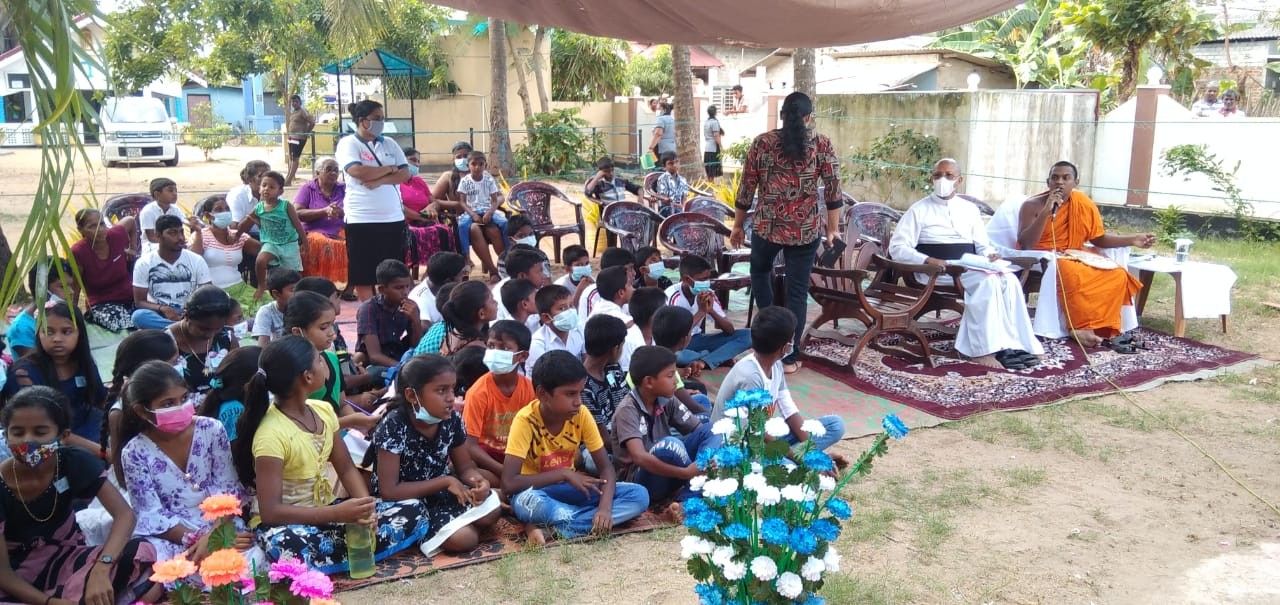
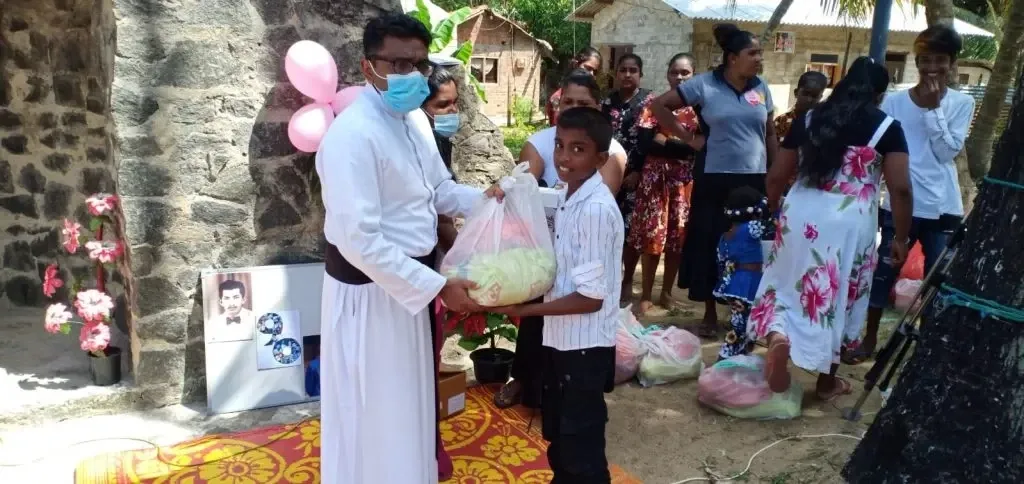
Helplanka, a UK Registered charity, has teamed up with Dimuthu Foundation of Pambala Kakkapalliya, Sri Lanka, kick starting their collaboration with a very special event to commemorate the 90th birthday of Dhanasena Siriwardene Goonetillake, who was born and lived in Kakkapalliya and who is the father of Sampath Goonetillake ( Sam) the Chief Executive and Founder of Helplanka.
On Saturday 15th January 2022, 90 Children from a remote village in Kawatiyawatta Wattakalliya, near Chilaw, were treated to a tea party and dry rations were distributed at the event, organized by Dimuthu Foundation which was attended by both Buddhist and Catholic clergy. Relatives of the Goonetillake family, from nearby Kakapalliya, also attended and were entertained by dancing by the children and prayers and Pirith chanting were recited.
Both Helplanka and Dimuthu Foundation have been helping disadvantaged rural communities for over 15 years and have announced the commencement of joint initiatives aimed at alleviating poverty through education.
Sam Goonetillake, commenting from London UK, stated I am extremely grateful to Fr Jude Fernando and the amazing staff of Dimuthu Foundation for their hard work and devotion in expertly organizing the event and look forward to working together in the future. It was wonderful to see the children looking so happy and enjoying the party and a pleasure to be given the opportunity to contribute to the sterling work of Dimuthu Foundation amid challenging circumstances in forgotten remote areas of Sri Lanka.
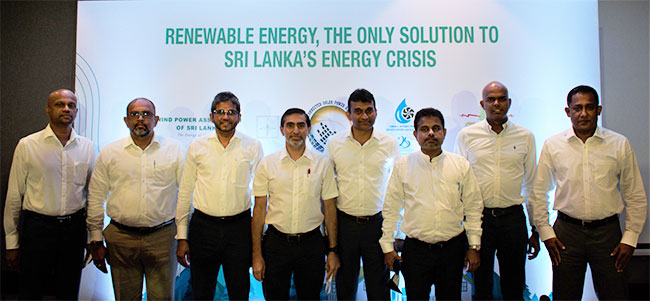
From Left: Manjula Perera, Wind Power Developers Association Secretary, Thusitha Peiris, Small Hydro Power Developers Association President, Lasith Wimalasena, Ground Mounted Solar Developers Association President, Chamil Silva, Bio Energy Developers Association President, Kushan Jayasuriya, Solar Industries Association President.
In the backdrop of dwindling foreign currency reserves and capacity shortages, the only logical solution for Sri Lanka to take is to adopt renewable energy as the primary source of energy production, Manjula Perera, Secretary of the Wind Power Developers Association said in Colombo yesterday.
He said so speaking at a press conference held at the Hilton Colombo Residencies, convened by the associations of local entrepreneurs who have invested in the development of wind power, small hydro power, ground mounted solar power and bio energy.
Notably, the associations reiterated the fact that they want only the policy support and that they can provide themselves with necessary funding for the projects if the government, CEB and related line ministries act together to remove the bottlenecks which are there for no clear purpose.
Sri Lanka is currently facing an acute energy crisis, primarily due to the country’s reliance on imported fossil fuel. The solution to this is for the country to move on to more renewable sources of energy such as wind, solar, bio-gas, biomass and hydro power. Renewable energy also presents a host of other benefits both socially and economically as well,” Manjula Perera said.
Renewable energy can be generated using Sri Lanka’s ample natural resources. This would also offer some relief to Sri Lanka’s diminishing foreign reserves as renewable energy does not need to rely on fuel imports,” he noted.
‘However, one of the main issues which the renewable energy sector faces is the government approval process which can take years to complete. This process needs to be streamlined and implemented in an efficient manner as possible. Renewable energy developers also run into a myriad of challenges from the CEB that has delayed approval and grid connections, sometimes attributed to incorrect technical analysis. Bringing correct knowledge and international best practices to the CEB will help sort out these issues,” he pointed out.
Riyaz Sangani, Past President of Hydro Power Developers Association said, Our goal as the renewable energy sector is to help the government and the people overcome the current energy crisis in the country. We believe that the key to this is to increase co-operation between the government and the private sector. Only then will we be able to successfully overcome all obstacles and make the switch to renewable energy.”
There are currently a total of 294 private sector renewable energy developer projects which have been commissioned. These projects have combined capacity of 718.334 megawatts (MW). The total number of projects needs to increase drastically, for the country to truly reap the full benefits of renewable energy,” Thusitha Peiris, Small Hydro Power Developers Association President said.
He said that small hydro power projects have been brought to a halt for years now, and today the need is ever more acute for local entrepreneurs to be allowed to restart investing in this sector in a conducive operating environment.
Another issue that has hampered the success of the renewable energy sector is the importation restrictions imposed on the sector, which has made it difficult to obtain the machinery necessary,” the associations said.
In addition to the immediate benefits which the country will receive, renewable energy sources also pose less of a risk to the climate and environment. This will help protect the environment and ensure that the country’s development will not be hindered by any environmental issues in the future,” they observed.
There have been many local and foreign investors who have shown interest in investing in renewable energy for Sri Lanka. These investors need to be shown that it is a worthwhile investment and that hindrances will be minimal. Only then can Sri Lanka overcome its socio-economic woes and continue with development,” they pointed out.
A Chinese company embroiled in a dispute with Sri Lanka over organic fertilizer, has made a formal complaint with the Food and Agriculture Organization of the United Nations.
Qingdao Seawin Biological Group Co., Ltd, in an email to Daily Mirror sent through a local agent, said that the complaint was made just before the company and Sri Lanka reached an agreement over the payment for the disputed fertilizer.
Before reaching a Terms of Settlement on the L/C enjoining order cases between Seawin and the buyers on Jan 5, 2022, Seawin has filed a complaint with FAO and IPPC headquarters and applied for international institutions to intervene in the investigation. The above international institutions also replied to Seawin by email, and they can intervene in the investigation if necessary,” Seawin said.
The Chinese company wants FAO to intervene and eliminate misunderstandings as soon as possible through technical consultations to avoid losses of both sides.
At present, there are still some irresponsible university professors in Sri Lanka who are doing their best to resist the implementation of the president’s green agriculture strategy and question the test reports of international authoritative institutions without reason, regardless of the strategic policy of green agriculture promulgated by the president, the long-term interests of Sri Lankan people, and do not contribute to the country and the people with their own study and knowledge,” Seawin said in the email to Daily Mirror.
In its complaint to the FAO, Seawin said they respect the right of each member state to control the spread of pests, in accordance with the International Plant Protection Convention (IPPC).
However, the company noted that the phytosanitary of each member state should be technically reasonable and transparent, and should not constitute disguised restrictions on international trade.
Seawin urged the FAO to apply for the publication of the detailed test record of the National Plant Quarantine Service (NPQS) on the rejected fertilizer as well as the scientific basis for explaining the results. (Easwaran Rutnam)
Sri Lanka’s central bank governor told CNBC that the South Asian nation doesn’t need an economic lifeline from the International Monetary Fund (IMF).
Well, we don’t need relief if we have an alternative strategy,” Ajith Nivard Cabraal said on CNBC’s Squawk Box Asia” on Monday.
He claimed Sri Lanka is able to finance its outstanding debt, especially international sovereign bonds, without causing any pain to our creditors.”
Credit agencies have recently warned Sri Lanka may need support to cushion the blow from inflation and foreign exchange headwinds, but Cabraal disagreed with that assessment.
He argued the government does not need to approach the IMF, especially if it is successful in finding government-to-government as well as central bank solutions in the short term.
And we have a strategy to change that into something a lot more sustainable in the next one year or two,” Cabraal said.
Credit downgrades
Earlier this month, S&P Global Ratings downgraded Sri Lanka from CCC+ to CCC with a negative outlook, indicating the country’s increasing financial vulnerability.
Sri Lanka’s foreign exchange-denominated debt is vulnerable given the government’s declining foreign exchange reserves and high repayments. The government faces international sovereign bond maturities of US$500 million in January 2022 and US$1 billion in July 2022,” S&P said in a note.
This followed a similar move by Fitch Ratings in December to downgrade Sri Lanka from CCC to CC, suggesting imminent default.
We believe it will be difficult for the government to meet its external debt obligations in 2022 and 2023 in the absence of new external financing sources,” said the report.
India has recently offered credit and foreign exchange support, saying the measures illustrate its commitment to Sri Lanka and its economic growth. That includes a $500 million line of credit to help Sri Lanka purchase fuel as the country grapples with surging inflation.
Inflationary pressures
Analysts are increasingly concerned about Sri Lanka’s inflationary problems, which they said could be amplified by foreign exchange issues.
We think this foreign exchange scarcity will continue to fuel inflationary expectations, which can be only temporarily mitigated by Sri Lanka’s access to credit facilities from India, if a $1.5bn deal can be finalized. Moreover, elevated energy prices and risks from further administered adjustments to curtail losses in the electricity sector still loom,” Citi analysts said it a recent note.
While the government is likely to avoid IMF assistance for now, we believe pressures will remain high going into the July bond maturity,” they added.
Sri Lanka’s benchmark inflation rate accelerated to 14% in December, up from 11.1% in November, according to data published Friday.
The central bank said food inflation hit 21.5%, noting price spikes for vegetables, rice and green chilies. Non-food inflation rose to 7.6% in December, which the central bank attributed to price hikes at restaurants, hotels as well as for alcoholic beverages and tobacco.
But Cabraal, Sri Lanka’s central bank governor, dismissed concerns about shortages.
We don’t have any fuel shortage… There isn’t any shortage of medicines. We have imported $870 million worth of medicines last year,” he said.
So just one or two items have been highlighted, but that doesn’t mean that Sri Lanka has any shortage. We have all the foodstuffs available. And I don’t think there’s any reason to say anything much of that,” added Cabraal.
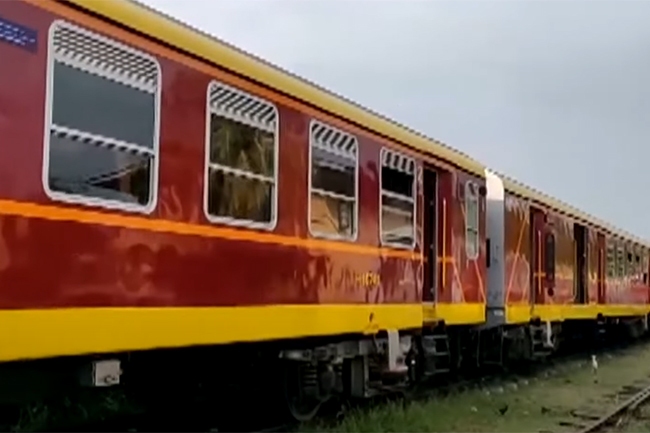
The Railway Trade Union Alliance has highlighted a 2018 purchase of 160 Indian railway carriages at a cost of over USD 80 million that now lie in various states of corrosion and disuse.
They also claimed that the carriages cannot be run on the upcountry line due to their 65-foot length, prompting a response from Bus Transport Services and Train Compartments Dilum Amunugama to the contrary.
Calling a media briefing, the alliance exposed what they said were acts of serious fraud” in the purchase of railway carriages from India.
However, despite crying foul over the issue now, damages have already been done with a deal inked in 2018 for 160 carriages and deliveries having continued up to last year.
Addressing the media on Wednesday, the convenor of Railway Trade Union Alliance, S.P. Vithanage revealed that Indian-constructed carriages had been purchased for a price between USD 500 and USD 800,000 each, depending on the type.
A total of 160 carriages were purchased from India, using a special credit line at a cost of over USD 80 million.
Vithanage stated that 41 third-class carriages were purchased at a unit price of USD 584,240. In addition, 41 more second-class carriages were bought at USD 572,254 each. Further, 35 air-conditioned carriages were purchased at a unit price of USD 801,251.
If we had the means to manufacture these carriages locally, our cost would have been only around Rs. 45-50 million each.”
He also alleged that the 160 carriages imported from India were not really necessary for the Railway Department as it already sufficient carriages in stock.
These carriages have several issues with them, namely that they have been constructed using inferior metal materials. Hence, they are already in a state of corrosion, the plates have already started coming off due to rivets coming loose, and there are a host of problems with them. However, the biggest issue is that they cannot be run on all of the Railway Department’s tracks, especially on the upcountry line, as they are all 65 feet in length. The upcountry line cannot accommodate 65-foot carriages. In addition, I must state that these carriages were purchased at a time the Railway Department did not really have a need for them.”
However, the government rejected the claims that the carriages cannot be used. State Minister Dilum Amunugama stressed that all the compartments can in fact be put into operation.
He added that the dilapidated state of the carriages can be attributed to the failure of the Railway Department including the General-Manager of Railways to protect them over the past four months.
The Ministry of Health says that another 927 persons have tested positive for the novel coronavirus today (January 26).
This figure includes 05 persons who had arrived in the country from overseas.
Sri Lanka’s tally of Covid-19 cases confirmed in the country thereby climbed to 604,581.
With this, the number of virus-infected people who are undergoing treatment moved to 12,454. Meanwhile, the death toll stands at 15,346.
This is the first time Sri Lanka recorded more than 900 daily cases of Covid-19 in about four months. For the past seven days, the country saw a resurgence in infections with over 800 people testing positive for the virus.
The Director-General of Health Services has confirmed 16 new coronavirus-related deaths for January 25, increasing the death toll in the country due to the virus to 15,346.
This includes 08 males and 08 females, according to the Department of Government Information.
Four of the victims are in the age group of 30-59 years and the remaining 12 patients are aged 60 years and above.
A lawyer by the name of B.A.W. Abeywardena has sent a letter to all Members of Parliament, including the President and the Speaker, requesting permission from Parliament to end his life.
He has stated that he arrived at such a decision following his dismissal from the Land Reforms Commission where he worked and his inability to repay the education loan from the people’s tax money.
This letter was recently addressed to the Speaker of Parliament and all Members of Parliament under the headline “Seeking Parliament’s Approval for Suicide on Debt Consolidation”.
The letter also stated that the people of this country are heavily indebted to the taxpayers of this country due to their long education at the Universities of Peradeniya and Colombo and abroad, from the alphabet to the Advanced Level.
The letter was received by the Hiru News team through a reliable source, and we sought the advice of Attorney-at-Law BAW Abeywardena
January 25 is India’s Republic Day.
It will be celebrated on a grand scale this year as usual but with a marked
twist. The Govt. of India will formally salute Netaji Subash Chandra Bose as
the father of India’s freedom struggle displacing Mahatma Gandhi from a
pedestal that many thought was unassailable.
Its plans to elevate Subhas Chandra Bose above
all other Indian freedom fighters include:
1) Commencement of the Republic Day celebrations from January 23 so as to
include Bose’s birthday anniversary, which has been declared as ‘Parakram
Diwas’ (day of valour) by the Central Govt. to inspire people,
especially the youth, to act with fortitude in the face of adversity as Netaji
did, and to infuse in them a spirit of patriotic fervour, and
2) The construction of a grand statue of Netaji
made of granite which will be installed soon at the India Gate in New Delhi.
Until such time this is done Prime Minister
Narendra Modi has unveiled a hologram statue of Bose on January 23. The statue is titled
‘ Liberator of India’
Modi
said that the freedom struggle had involved the sacrifice of lakhs of people,
but after Independence, there was an attempt to erase their contribution.
Today, he said, the country was taking steps to correct those mistakes. He
cited his government’s decisions, including observing Janjatiya Gaurav Diwas in
honour of tribal freedom fighter Bhagwan Birsa Munda, constructing the Statue
of Unity in honour of Sardar Patel, and naming an island in the Andamans after
Netaji, as steps in that direction.
These moves represent a historic shift towards changing the grand
narrative of India’s liberation from British occupation. The colonial hangover
of not saying anything to displease the former masters i.e., British Raj, now
appears to be a thing of the past.
The highly publicized narrative that
Mahatma Gandhi using ‘Ahimsa’ and ‘non- violence’ in his civil disobedience
campaigns won freedom for India has been discarded.
It was a big myth propagated by the
British and empire loyalists in India. Gandhi’s ‘Quit India’ Satyagraha
campaign launched in 1942 fizzled out with no effect on the colonial Govt. They
saw no threat to their colonial rule from Gandhi and the Indian Congress.
Here is a comment on social media:
when Mohandas Karamchand Gandhi took over as the
President of the Congress in 1920 he started a tamasha called the non-violent
movement. He would call fasts and he would call off fasts at his whim. This
tamasha started to suit the British well and they ruled without any difficulty
for 27 years thereafter and would have ruled for another 27 years but for Hitler
and WW II. This is what Dr. B R Ambedkar thought about the non’- violent
movement ——-
“….. courting prison has become an act of martyrdom
in India. It is regarded as both patriotic and also as an act of courage…….
prison life today has lost all its terrors. It has become a mere matter of
detention. Political prisoners are no longer treated as criminals. They are
placed in a separate class. There are no hardships to suffer, there is no
reputation to lose and there is no privation to undergo. It calls for no
courage. ” ( Source speech delivered at the 101st Birth Anniversary
celebrations of Ranade at the Gokhale memorial Hall, Pune 1943 ). I wish to
point out to the readers that the tamasha called the non-violent movement
suited the British so well that in later years the movement leaders like
Gandhi, Nehru, etc., used to be detained at the AGA Khan Palace — yes palace”
Mutiny
It was the threat of a Mutiny from
the British Indian Army soldiers, Navy, and Air Force that finally convinced
the Labour Govt. of Clement Atlee to quit India. A repeat of the Indian Mutiny
of 1857 in 1946 may have ended in the probable slaughter of 30, 000 British
soldiers then resident in India by more than 2, 500, 000 well – trained Indian
soldiers who had been discharged (demobbed) and returned to India.
The credit given to Gandhi for liberating
India has now collapsed. There was no push factor in his campaign. When Clement
Atlee, former British Prime Minister, on a visit to India in 1956, was asked by
the acting Governor General of Bengal, Chakraborty, whether Gandhi and his non
– violent movement had an impact on the British Govt. decision to quit India,
Atlee replied by saying ‘ M I N I M A L ‘.
The rest of Asia fought. Japan in particular
had a battle plan to liberate India. (‘Japan’s Master Plan for Victory: What
could have been’ by Moteki Hiromichi – Tokyo: 2018). Western colonialism in
Asia was ultimately defeated by force of arms on the part of the people of
Asia. The Japanese, Vietnamese, Indonesians, Burmese, Indians, Philippines,
have all successfully fought the West, resisted foreign occupation, and finally
won. The exit of the West from the East after nearly 500 years of
military adventurism and hegemonic rule is one of the defining landmarks of the
20th century.
It must be admitted however that Netaji
received help from both Germany and Japan to wage war against the British then
in occupation of India.
An
interesting question is:
If
Adolf Hitler did not supply a German Submarine to carry Netaji Subash Chandra
Bose out of Germany and to rendezvous with a Japanese Submarine I 29 off the
shores of Madagascar, which would then, in turn, carry him to Penang and later
Japan, how would his life story have unfolded then? The level of support
rendered by both Germany and Japan to Netaji to raise the Indian Legion in
Germany, and the Indian National Army in Singapore, was quintessential to
enable Netaji to play the role that he did eventually. Trying to be politically
correct should not lead to sidelining or suppressing important facts from the
narrative.
Sri Lanka’s Independence
Sri Lanka’s independence was tied to
India gaining independence. If India did not gain independence on August 15,
1947, neither Burma nor Ceylon would have been granted independence on January
04, 1948, or February 04, 1948, respectively. When Britain lost the jewel in
its Crown i.e., India, it decided to vacate South Asia altogether.
We need to revise the narrative on
how Sri Lanka achieved independence. We got independence on a platter without a
single fight or blood letting because much of the fighting and blood sacrifices
were made by freedom fighters of other Asian countries led by Japan in the
second world war (WW2).
Furthermore, Britain was heavily
weakened economically and militarily by the war against Germany and was in no
mood to fight more wars.
Guwahati: Should the journalist-editor-proprietors
continue to have government sponsored personal security officers (PSO) even
though they do not have visible threats to their lives ? Are PSOs slowly
becoming status symbols for many celebrated media persons in India ? Should
not they withdraw the policemen at the
earliest and hire private security personnel (meaning paid by themselves) if
they need them desperately?
After all, why should the authorities pay for someone’s
personal luxury?
These are among few questions, lately floated in public
domain, as Assam government in northeast India had lately decided to reduce the
number of PSOs from 4000 to nearly half of it. Notably, over 2000 PSOs are
presently engaged with leaders of different political parties. Quite a number
of PSOs are also protecting many State-based journalists, editors and
proprietors, who are seemingly powerful, glamorous and also threatened (even
though the common people may find it difficult to realize what kind of risky
journalism they adopted in their lifetime).
The debate immediately started with the announcement of
State chief minister Himanta Biswa Sarma, who insisted on developing Assam with
the PSO-free culture. Sarma, also in charge of State home portfolio, had
already directed the police department to create an environment, wherein no
individual need personal security officers in the coming days. He also urged
everyone to move away from the culture as the police would start countering all
threats to the society through a strong intelligence and monitoring system.
A scribe’s organisation also came forward asking the
concerned media persons to voluntarily
abandon the government security cover, so that those personnel can be engaged
in other important works. Appreciating Sarma for the decision to use PSOs
judiciously to important individuals only, the Journalists’ Forum Assam argued
that the security cover should not be used as a status symbol by any one
(including among the media). It supported the government proposal to allot PSOs
only for those in constitutional posts and in positions that require security
cover subject to regular screening by the review committee.
Northeast, once known as an insurgency-stricken troubled
region in India, has now returned to a peaceful zone, as most of the militant
outfits have joined in peace talks and many of the hardcore rebels were
neutralized by the security forces engaged in counter-insurgency operations in
the region, adjacent to troubled neighbours like Myanmar and Bangladesh. The
State police forces have also been empowered to deal with the situation emerged
time to time with patronages from anti-social and anti-national elements.
For records, the year 2021 ended with no incident of
journo-murder, the trend that has been sustained for the last four years in the
region. It witnessed two incidents of assassination of scribes (Shantanu
Bhowmik and Sudip Datta Bhaumik) in Tripura (2017) for the last time, whereas
the country as a whole continues to lose 5 to 15 journalists to assailants
every year. Tripura also reported the assassination of three media persons
(Sujit Bhattacharya, Ranjit Chowdhury and Balaram Ghosh) in 2013, where all of
them were killed in a newspaper office inside Agartala.
Assam and Manipur witnessed the murder of scribes for the
last time in 2012, as Raihanul Nayum and Dwijamani Nanao Singh fell prey to
perpetrators. But till then, the region
witnessed the killing of nearly 30 editor-reporter-correspondents since
1991, where Assam accounts a major share of the victims. The saga of
sensational journo-murder began with the brutal killing of veteran Assamese
freedom fighter turned journalist Kamala Saikia. The Septuagenarian teacher was
targeted by the armed members of banned
United Liberation Front of Assam (Ulfa) for his critical media columns against
their disruptive activities.
Five years later, the murder of human rights activist
turned journalist Parag Kumar Das in Guwahati also created a massive public
outcry. The executive editor of Asomiya Pratidin was apparently targeted by
surrendered armed militants as he used to write strongly against them as well
the governments in New Delhi and Dispur for anti-Assam policies. Other
journo-victims from Assam include Punarmal Agarwala, Pabitra Narayan Chutia,
Dipak Swargiary, Manik Deuri, Nurul Haque, Jiten Sutiya, Ratneswar Sarma
Shastri, Dinesh Brahma, Prahlad Gowala, Mohammad Muslemuddin, Jagajit Saikia,
Anil Majumdar, etc.
Lately, an Assamese satellite news channel broadcast a
program where it boldly asked the beneficiary journalist-editor-proprietors to
withdraw the PSOs and go for private services to enhance their security
measures. A large number of social media users termed them ‘surrendered
sentinels’, as they had hardly questioned the men in power for anti-people
policies or even raised voices against the militants even when it was a real
necessity. They urged the authority to withdraw the PSOs from everyone, who
simply want it as status symbols. A decisive public opinion indeed!
The author is a northeast India-based journalist and
media commentator
The Ministry of Health says that another 891 persons have tested positive for the novel coronavirus today (January 25).
This figure includes 03 persons who had arrived in the country from overseas.
Sri Lanka’s tally of Covid-19 cases confirmed in the country climbs to 603,654 with this while 11,784 patients infected with the virus are currently undergoing treatment.
Meanwhile, this is the seventh straight day that the daily count of Covid-19 cases has surpassed the 800-mark in the island, showing a resurgence of Covid positive cases reported.
The Director-General of Health Services has confirmed another 17 coronavirus-related deaths for January 24, increasing the death toll in the country due to the virus to 15,330.
This includes 12 males and 05 females, according to the Department of Government Information.
Three of the victims are in the age group of 30-59 years and the remaining 14 patients are aged 60 years and above.