Export earnings in November 2021 hit record USD 1.211 billion

January 25th, 2022

Courtesy Adaderana

Earnings from exports in November 2021 have recorded the highest monthly export value in history, notching up a total of USD 1.211 billion, says the Central Bank of Sri Lanka (CBSL).

According to the press release issued by CBSL’s Economic Research Department, this brings the cumulative export figures for the January to November period, to USD 11.345 billion, which is a 24.9% improvement.

It also marks the sixth consecutive month of above USD 1.0 billion of exports.

Meanwhile, import expenditure also increased at a higher rate in November 2021.

Reflecting the favourable impact of increased exports, the merchandise trade deficit narrowed to US dollars 553 million in November 2021 compared to US dollars 600 million in November 2020.

Tourist arrivals continued to gather momentum with a notable increase over the previous month, showing strong signs of revival.

A further moderation of workers’ remittances was observed in November 2021.

The weighted average spot exchange rate in the interbank market continued to hover around Rs. 202 per US dollar during the month.

China Fertilizer Spat Underlines Sri Lanka’s Struggles With International Trade Deals

January 25th, 2022

By Rathindra Kuruwita Courtesy The Diplomat

Sri Lanka has a lot to learn about entering agreements with  international companies – and the repercussions of violating them.

In September of last year, the Sri Lankan government banned a shipment of 20,000 tons of fertilizer, worth $6.9 million, from China’s Qingdao Seawin Biotech Group Co., alleging that there were harmful bacteria in the fertilizer. The ensuing controversy has created a lively debate among analysts.

After months of lawfare” in Sri Lankan courts and never-ending missives between the Sri Lankan government and Qingdao Seawin Biotech, the People’s Bank of Sri Lanka paid $6.9 million to the China-based fertilizer company in early January as compensation. Earlier, the Colombo Commercial High Court had dissolved the enjoining order preventing payment on a Letter of Credit to Qingdao Seawin Biotech, as all parties had agreed to settle their dispute by shipping a new stock of standardized fertilizer – despite Sri Lanka having rejected two previous shipments.

The disagreement between institutions under the government and Qingdao Seawin Biotech not only created a rare diplomatic tussle between China and Sri Lanka, but very nearly saw Sri Lanka taken before international arbitration courts.

While arbitration is an important tool in solving international trade disputes, it is costly and powerful. International entities can exert their dominance over sovereign governments that are already reeling from underdeveloped legal infrastructure and capacity. Sri Lanka has been taken to arbitration courts in the past, and its performance there has been less than stellar.

Get briefed on the story of the week, and developing stories to watch across the Asia-Pacific.

These forays have shown that Sri Lanka has a lot to learn about entering international agreements and the repercussions of violating them for reasons of sheer expedience. Sri Lanka’s lack of capacity to go toe-to-toe with the international legal experts employed by multinational corporations was most recently shown in the X-Press Pearl disaster. More than half a year on, the country is still struggling to get adequate compensation for the damages done to its environment and the fisheries industry by the massive chemical spill that resulted from a fire onboard the ship.

This time, however, the risks are greater. International companies are already hesitant to work with Sri Lanka, given its serious forex crisis and drop in credit ratings. KLS Energy Lanka, a subsidiary of a Malaysian renewable energy producer, has an ongoing arbitration case against Sri Lanka; a much-publicized arbitration issue with a large Chinese company on top of that could have a tremendous adverse effect on Sri Lanka’s ability to trade with foreign entities.

While the need for Chinese assistance in tackling Sri Lanka’s economic crisis obviously played a role in the brokering of an agreement between the Sri Lankan government and the Chinese company, it also confirmed that it was Sri Lanka that violated the agreement with Qingdao Seawin Biotech. In essence, the agreement with Qingdao Seawin Biotech was another international agreement Sri Lanka entered into without proper consideration, and drafted without the inputs of those with international commercial law expertise or experience.

Sri Lankan politicians and policy wonks view this crisis through the usual prism of sovereignty and China’s ability to influence, if not shape, policy in Sri Lanka. Yet the two main reasons for the crisis are the country’s underdeveloped legal infrastructure and the lack of capacity of various government entities to negotiate or sign agreements with international companies. Given that the country had been dragged before international arbitration courts by international companies a number of times in the recent past, and the possibility that it will face similar quagmires and confrontations in future, Sri Lanka should get its act together when making agreements with multinational companies.

As mentioned, this is not the first time that Sri Lanka entered into an ill-advised agreement with an international company. The most famous of these cases was the hedging agreement with CITI Bank, Standard Chartered Bank, and Deutsche Bank in 2008, to purchase crude oil at a predetermined price following an increase in global prices. Sri Lanka’s state run Ceylon Petroleum Corporation (CPC) entered this novel and rather unprecedented transaction with no previous experience, on dubious instructions.

However, crude oil prices in the global market dropped drastically months after the agreement was reached and Sri Lanka decided to suspend all hedging-related payments, following the Supreme Court ruling that the deal was in violation of the Constitution.

Deutsche Bank AG promptly started arbitration proceedings under the terms of the Germany-Sri Lanka bilateral investment treaty (BIT). The Bank claimed that Sri Lanka’s actions deprived it of the economic value of the Hedging Agreement and that the withdrawal of payments constituted a breach of Article 4 (2) of the BIT, which prohibited expropriation of an investor’s property. The Bank’s position was that the intervention of the Supreme Court and the Central Bank amounted to indirect expropriation of their rights under the Hedging Agreement.”

The analysis of the Tribunal on these issues is highly pertinent. Some of the defenses cited by the Sri Lankan state in the ICSID arbitration – i.e. lack of capacity, lack of authority, and supervening illegality – raised serious concerns amongst foreign investors, because these are conditions that affect any foreign investment. The hedging transactions had been discussed and approved at the Cabinet level, prior to them being entered into and duly approved by the CPC Board. Moreover, the actions of the Central Bank of Sri Lanka following default by the CPC raised serious concerns with regard to the regulator itself.

While the case was settled in 2016, it seems unlikely that Sri Lankan policymakers have learned their lesson. In 2018, KLS Energy Lanka, a subsidiary of Malaysian renewable energy producer Energy SdnBhd, filed an arbitration case against the Sri Lankan government under BIT Malaysia-Sri Lanka 1982. The arbitration was filed over the cancellation of a $150 million wind-solar hybrid power project by the Sri Lankan government. Board of Control for Cricket in Sri Lanka v WSG Nimbus Pte Ltd. was another instance in which muddled agreements landed Sri Lanka in trouble.

More recently, agreements between Sri Lanka and India to develop the Trincomalee Oil Tank Farm as a joint venture between CPC and Lanka IOC state that the two parties have to go before arbitration courts in Singapore to settle any possible dispute. According to the terms of previous MoUs between the Lanka IOC and Sri Lanka vis-à-vis the Tank Farm, any issue arising between the two parties would have been solved via Sri Lankan law.

Given that the agreements between the parties – a lease agreement, a modalities agreement, and an agreement on the Joint Venture Company, i.e. Trinco Petroleum Terminal Ltd – have remained secretive, with only the modalities agreement presented to Parliament, it is likely that, as critics claim, the agreement is disadvantageous to Sri Lanka. The Education Secretary of the Frontline Socialist Party, Pubudu Jayagoda, stated, Our previous performances before arbitration courts have been less than stellar. Given this context, this seems to be another agreement that lands us in trouble at international arbitration courts.”

Sri Lanka has tended to enter into agreements with international companies that have proved to be far from perfect. Sri Lankan politicians and courts have then responded to the issues that arise from these agreements in an ad hoc manner.

In cases such as Light Weight Body Armour Ltd v Sri Lanka Army and Elgitread Lanka (Private) Limited v Bino Tyres (Private) Limited, Sri Lankan courts appeared to have taken the view that they should circumscribe their powers within the ambit of the Arbitration Act and that parties must be encouraged to resolve disputes through arbitration. However, with regard to the Qingdao Seawin Biotech case, the Commercial High Court of Colombo ordered the People’s Bank not to honor the Letter of Credit it had issued. Perhaps the similarity of the court action and the behavior of politicians in this case compared to the hedging deal nullification is what triggered the Chinese to take swift action.

As Sri Lanka increasingly looks to make agreements with foreign companies in several fields, the chances of the country getting entangled in commercial disputes will rise. It is the responsibility of the state to make agreements with foreign nations that are transparent and subject to public dialogue before they are signed, so that inputs from wider sources can help rectify any potential issues.

As India and China Compete, Smaller States Are Cashing In

January 25th, 2022

By , the director of research at the Observer Research Foundation, and , a research assistant at the Observer Research Foundation.

The Maldives and Sri Lanka show how they can bargain with bigger powers to their advantage.

JANUARY 24, 2022, 2:31 PM

This month, Chinese Foreign Minister Wang Yi visited Sri Lanka and the Maldives. On the surface, the trip was part of an effort by China to make further inroads into South Asia and cement its presence in the Indian Ocean. But it also reflects a new regional trend in which smaller South Asian states seek to maximize their political and economic gains as competition between India and China intensifies.

Wang signed multiple agreements with the Maldives during his visit, including new visa arrangements, aid grants, and infrastructure management pacts. These deals came despite the island state’s so-called India First” policy to reprioritize its ties with New Delhi and limit its dependence on Beijing. Wang’s visit was aptly timed: It came on the heels of a less successful year for China in the Maldives and coincided with former Maldivian President Abdulla Yameen’s India Out” campaign, which politicizes New Delhi’s role as a security provider.

Similarly, during Wang’s time in Colombo, Sri Lankan officials took the opportunity to request debt restructuring and new concessional trade schemes. The visit also came as Sri Lanka begins to play its India card against China. Last year, Sri Lanka banned fertilizer imports from China, and Beijing’s angry response led Colombo to seek emergency supplies from New Delhi. Sri Lanka also canceled Chinese energy projects in the Jaffna Peninsula and offered India a deal to modernize an oil terminal in Trincomalee.

These developments are part of a significant phenomenon among South Asia’s smaller states: playing China and India against each other as they vie for greater regional influence. Even Bangladesh and Nepal, traditionally closer to India, have begun to actively balance between the two Asian giants. Signs indicate that this trend will escalate in the coming years, for two reasons.

First, China has deep-rooted strategic interests in South Asia, which it approaches as a relatively untapped market to supplement its growth through trade and investments. Beijing also uses its presence in the region to curb New Delhi, the only Asian power that could challenge its status and military might. China’s investments in South Asia grant it access to the Indian Ocean to enable it to encircle India. Beijing is increasingly keen on expanding its influence there to deter chokepoint blockades and potential buildups of adversary troops, especially as India grows closer to the other members of the Quadrilateral Security Dialogue: Australia, Japan, and the United States.

On the other hand, India is committed to maintaining the status quo in South Asia, and it has gained experience with limiting China’s influence. New Delhi was initially unprepared to counter Beijing’s unprecedented strategic expansion in the region, but that is no longer the case. India saw Chinese infrastructure projects as hindering its influence by debt-trapping South Asian states, apprehensions exacerbated by Sri Lanka’s 99-year lease of its Hambantota port to China in 2017. This episode led India to embrace a new geoeconomic approach to the region, seeking to increase connectivity and infrastructure in vital strategic locations.

The deadly clash and subsequent standoff with China in eastern Ladakh in 2020—the first time shots were fired along the border for decades—provided another lesson for India. It intensified the trust deficit between the two countries, amplifying their rivalry and their battle for status in the region. Taking a more proactive approach, India has since begun to offer more economic incentives, space for private players, and new mega-infrastructure in its neighborhood. It has also undertaken tough bargains against Chinese investments in the region.

India Seeks to Escape an Asian Future Led by China

A flurry of trade talks herald an economic realignment toward the West.ANALYSIS C. RAJA MOHAN

India’s policies in Sri Lanka and the Maldives last year are a case in point for this proactive diplomacy. In Sri Lanka, India has consistently bargained to maintain its presence in the major Colombo port project and to cancel the Chinese energy projects in the Jaffna Peninsula. It has also continued offering currency swaps to Sri Lanka after withholding these requests for years. Colombo just received new currency swaps and $1.5 billion in financial assistance from New Delhi. In the Maldives, India was working on more 45 major development projects by mid-2021.

As the confrontation between India and China becomes part of the status quo in South Asia, smaller states have begun to exert their own leverage. India’s structural dominance in the region long fostered a sense of insecurity among these smaller states. The rise of China offered a new alternative to India’s position in the region. Sri Lanka and the Maldives have relatively quickly embraced a policy of strategic autonomy and diversification.

These smaller South Asian states have also learned to handle Chinese assertiveness and debt-trap diplomacy. The significant attention from the big powers has motivated them to pursue more active balancing and bargaining rather than becoming passive victims of structural competition. The smaller states have begun to reject or embrace Chinese investments based on their interests and welfare, providing them with more sustainable deals, aids, and grants.

This new regional order will be a long-term affair, as neither India nor China intends to back down from competing in and for South Asia. New Delhi and Beijing will keep providing more financial incentives and lending to smaller states, which will continue to play both countries against each other in the hope of finding more sustainable and beneficial investments. Ideally, this strategic competition will provide some escape from further debt-trap diplomacy and unsustainable borrowing.

බෞද්ධ ජනරජ ප්‍රවාදය – 54 වැනි කොටස- ‍දේපළ හිමිකමට ඥානයක්

January 24th, 2022

ආචාර්ය වරුණ චන්ද්‍රකීර්ති

වර්තමානයෙහි අප රටෙහි නීති ගැටලු විශාල ප්‍රමාණයක් ඉස්මතු වී ඇත්තේ දේපළ හිමිකම, භුක්තිය, පවරාදීම සහ බදුදීම වැනි කරුණු ආශ්‍රිතව ය. සුරක්‍ෂිත සහ සැපපහසු ජීවිතයක් ගතකිරීම වෙනුවෙන් ද අනාගත පැවැත්ම තහවුරු කරගැනීම වෙනුවෙන් ද දේපළ හිමිකරගැනීමට සහ ඒවා නිරවුල් ලෙසින් පවත්වාගෙන යෑමට මිනිස්සු යොමුවෙති.

මෙ ලෙසින් හිමි කරගන්නා දේපළ ත්‍රිපිටකය තුළ නිධාන” ලෙසින් ද දක්වා තිබෙයි. ඛුද්දක නිකාය අටුවාවේ ඛුද්දකපාඨ තුළ විග්‍රහ කෙරෙන ප්‍රථම ගාථා වර්ණනාව තුළ එවැනි නිධාන සතරක් ගැන කියැවෙයි. එනම් ථාවර (ස්ථාවර), ජංගම, අංගසම සහ අනුගාමික වශයෙනි. රන්, රිදී, කුඹුරු, ඉඩම්, නිවාස යනාදිය ස්ථාවර නිධාන ලෙසින් එහි විස්තර කෙරෙයි. ඇත්, ගව, අස්, එළු, කුකුල් වැනි දෑ ජංගම නිධාන වෙයි. ශිල්ප ශාස්ත්‍ර පිළිබඳ දැනුම අංගසම නිධානය වෙයි. දාන, ශීල, භාවනාදී පින්කම් තුළින් උපයාගන්නේ අනුගාමික නිධානය වෙයි.

දේපළ නීතිය විසින් ආවරණය කෙරෙණුයේ ස්ථාවර සහ ජංගම සම්පත් ය. බුද්ධිමය දේපළ උපදින්නේ අංගසම නිධානයෙන් වුව ද නිෂ්පාදනයෙන් පසුව එහි ස්වරූපය වෙනස්වෙයි. (මූලික ස්වරූපයෙන් ගත් කල අංගසම නිධානය යනු සොර සතුරන්ට, රජ මැතිඳුන්ට ගත නොහැකි; ගින්නට හෝ ජලයට බිලි නොවන සම්පතකි).

පොදුවේ ගත් කල දේපළක් යනු රාජ්‍යය සතු සම්පතකි. රාජ්‍යය සන්තක යම් භූමි කොටසක් සහ ඒ ආශ්‍රිත අනෙකුත් සම්පත් යම් කෙනකු විසින් හිමිකරගැනීමෙන් එය පුද්ගලික දේපළක් බවට පත්වෙයි. එයට අමතරව, යම් යම් අයට බුද්ධිමය දේපළ හිමිකරගැනීමේ හැකියාව ද පවතියි. මෙම හිමිකම තහවුරු කළ යුත්තේ කෙ ලෙසින් ද, එම තහවුරුකිරීම වලංගු විය යුත්තේ කොපමණ කාලයකට ද යනාදී කරුණු දේපළ නීතිය තුළින් ආවරණය විය යුතු ය.

කිසියම් පුද්ගලයකු විසින් යම් දේපළක් භුක්තිවිඳීමට ලබාගන්නා සින්නක්කර අයිතිය සදාකාලික හිමිකමක් නොවේ. මහරජ ඔබ මේ පොළොවේ භාරකාරයා මිස හිමිකරු නොවන බව අවබෝධ කරගන්නැ”යි මිහිඳු මහරහතන්වහන්සේ විසින් දෙවනපෑතිස් රජතුමන් හට ලබාදුන් අනුශාසනාව ගැන අපි සැවොම දනිමු. මෙම ඔවදන ජනරජයේ වසන සියලු දෙනාට ම අදාළ වෙයි. අපගේ ජීවිත කාලය ද සීමාසහිත එකකි. කිසිදු අනතුරකට මුහුණ නොපා, කෙතරම් නීරෝගීව ජීවත් වුව ද වයස අවුරුදු අසූවක් හෝ ඒ ආසන්න කාලයක දී මෙ ලොවින් සමුගැනීමට අප හට සිදුවෙයි.

තම ජීවිත කාලය තුළ වෙහෙස මහන්සි වී උපයාගන්නා දේපළක් දරු මුණුපුරන්ට හිමිකරදීමේ අභිප්‍රාය ද අප හට වෙයි. මෙයට අදාළ සංස්කෘතික පුරුදු ද අප විසින් සළකා බැලිය යුතු වේ. මුණුපුරු පරම්පරාවෙන් (දරුවන්ගේ දරුවන්ගෙන්) ඔබ්බට හිතන අය, ඒ අයට දේපළ පවරාදීමට වෙහෙසෙන අය අප සංස්කෘතියෙහි නැති තරම් ය. තුන්වැනි පරම්පරාව වැඩිහිටියන් බවට පත්වෙන විට පළමු පරම්පරාවේ අය වයස්ගත වී අවසානය ය. එවැනි අය සිතන්නේ උඩින් කී දාන, ශීල, භාවනාදී පින්කම් තුළින් උපයාගන්නා අනුගාමික නිධාන ගැන පමණකි. තව ද, තුන්වැනි පරම්පරාවෙන් ඔබ්බට යන විට දරු – මුණුපුරු උරුමයට හිමිකරගත් දේපළ අයිතිය අහිමි කරගන්නා බවක් ද අපි අත්දැක ඇත්තෙමු.

එහෙයින් යම් අයකු විසින් වෙහෙස මහන්සි වී තහවුරු කරගත් ස්ථාවර දේපළක හිමිකාරීත්ව කාලය තීරණයකිරීමට උක්ත සංස්කෘතික කරුණු උපයෝගී කරගත හැකි ය. එ කී සංස්කෘතික කරුණ තහවුරු කළ යුත්තේ ඒ සම්බන්ධයෙන් කරනු ලබන සමීක්‍ෂණ සහ ඒ ආශ්‍රිත විධිමත් අධ්‍යයන තුළිනි.

මෙයට අමතරව, ස්ථාවර දේපළ ආශ්‍රිතව සිදුවෙන කාලීන වෙනස්කම් ගැන ද අපගේ අවධානය යොමුවිය යුතු වෙයි. දැන් පවත්නා තාක්‍ෂණය තුළ නිවසක ආයු කාලය අවුරුදු සියයක් පමණ වන බව කියැවෙයි. තව ද, කාලයෙන් කාලයට ඇතිවෙන රුචිකත්වයේ වෙනස්කම් ද මෙයට බලපායි. වර්තමානයේ අප ජීවත්වන නිවාසවල ස්වරූපය ඇතිව තවමත් ගත වී තිබෙන්නේ වසර හතළිහක පමණ කාලයකි. එ ලෙස සිදුවන වෙනස්කම් අනුව පැරැණි නිවාස අත්හැරීමට ද, අලුතින් නිවාස ඉදිකිරීමට ද මිනිස්සු පෙළැඹෙති.

සීමාවක් නොමැතිව ඉඩම් කොටස්වලට බෙදීම නිසා ඇතිවන සම්පත් විනාශය සහ පාරිසරික හානිය ද මෙහි දී සළකා බැලිය යුත්තේ ය. කෘෂිකාර්මික වටිනාකමක් ඇති ඉඩම් යටකොට නිවාස ඉදිකිරීම, ඒවාට ප්‍රවේශ මාර්ග ඉදිකිරීම වැනි කටයුතු නිසා අහිමිවන්නේ රාජ්‍යය සතු සම්පත් ය. මෙම හානිය වැළැක්වීමේ අභිපාය ද නිශ්චිත අයුරින් ප්‍රකාශයට පත්විය යුත්තේ ය.

ජනරජයේ දේපළ නීතිය සම්පාදනය විය යුත්තේ උක්ත සඳහන් සියලු කරුණු සළකා බලා වර්ධනය කරගන්නා දැනුමක් තුළිනි. මෙම දැනුම අදාළ විශේෂඥයන්ට පමණක් සීමාවිය යුත්තක් ද නොවේ. විධිමත් සහ අවිධිමත් අධ්‍යාපන වැඩපිළිවෙළ තුළින් මෙම දැනුම සමාජගතකිරීම මෙ රට දේපළ නීති ගැටලු විසඳීමේ මූලික පියවර වෙයි.
ආචාර්ය වරුණ චන්ද්‍රකීර්ති

Bengali elite’s role in Dharmapala’s mission to liberate Buddhagaya

January 24th, 2022

P.K. Balachandran/Daily Mirror Courtesy NewsIn.Asia

Colombo, January 25: The name of Anagarika Dharmapala (1864-1933) is deeply etched in the history of Buddhism as the man who passionately and single-mindedly (if not single-handedly), strove to liberate the Buddhist shrine at Buddhagaya in North India from the clutches of a Hindu priest.

Sadly, Dharmapala could not achieve his cherished objective during his lifetime. This was partly due to rising Hindu consciousness in India in the closing decades of the 19 th.Century, and partly due to the British authorities’ reluctance to challenge the Hindu majority (see: Light of Asia by Jairam Ramesh, Penguin). But the shrine was handed over to Buddhists in 1949 by the Buddhist-friendly post-independence Indian government led by Jawaharlal Nehru.

Bhadralok

Playing a huge part in Dharmapala’ struggle over Buddhagaya were the Bengali elite of Calcutta called the Bhadralok” (Respectable People). The Dharmapala-Bengali elite relationship is finely and engagingly delineated by Dr.Sarath Amunugama in his book: The Lion’s Roar: Anagarika Dharmapala and the Making of Modern Buddhism (Vijitha Yapa, 2016). The book also brings out the contribution of the Bengali Bhadralok to shaping Dharmapala’s aggressive political style, which he displayed on his return to Ceylon. He turned out to be a trenchant critic of the highly Westernized Ceylonese elite of that time, the British rulers and the Christian missionaries. The British banned his newspaper Sinhala Bauddhaya.    

From 1891, when he first visited Calcutta, till his death at Sarnath in 1933, Dharmapala spent the better part of his life in India, Dr.Amunugama points out. India became the object of my love in January 1884,” Dharmapala stated. He was only 16 when he met Theosophists Col. Henry Olcott and Madam Helena Blavatsky in Colombo. And it was as a Theosophist that he went to Calcutta in 1891 and  struck a fruitful and lasting friendship with Babu Norendranath Sen, a rich Theosophist who edited Indian Mirror. Soon, this paper would become Dharmapala’s voice on the Buddhagaya issue.

Having heard from Sri Edwin Arnold that the Buddhagaya shrine was in an extremely bad state, Dharmapala went there on January 21, 1891 and was moved to tears by what he saw. This encounter changed Dharmapala’s life and had far-reaching consequences for Sinhala-Buddhists,” Dr.Amunugama notes. Inspired by the institution-building work of the Theosophists, Dharmapala vowed to set up an organization for the reclaiming and preservation of Buddhist sacred sites in North India.” This would soon be the celebrated Mahabodhi Society (MBS). 

Dharmapala headed for Calcutta and met Babu Neel Comul Mukherjee, Secretary of the Bengal Theosophical Society. On his return to Ceylon,  Dharmapala established the MBS. Its aims were ambitious and India-related, namely, to revive Buddhism in India, to disseminate Pali Buddhist literature, to publish Buddhist tracts in the Indian vernaculars, to educate the illiterate millions of Indian people in scientific industrialism, to maintain teachers and Bhikkus at Buddhagaya, Benaras, Kusinara, Savaththi, Madras and Calcutta, to build schools and Dhamashalas at these places and to send Buddhist missionaries abroad.”

The renowned Ceylonese monk, Hikkaduwe Sumangala Thera, was made President of MBS. Dharmapala also got four Ramanna Nikaya monks to go to Buddhagaya and live there. This was a significant move for him. After 700 years we have raised the banner of Buddhism in India,” he proclaimed. 

But the new priest at the Buddhagaya Hindu shrine, Krishna Dayal Giri, was no pushover. He opposed the Ceylon Buddhists’ presence and evicted them. Dharmapala sought the help of Neel Comul Mukherjee who accommodated the MBS in his house. But helping Dharmapala secure Buddhagaya was no easy task for the likes of Mukherjee as the last two decades of the 19 th.Century and the first decades of the 20 th., saw a sharp rise in Hinduistic national consciousness, This had been aggravated by the partition of Bengal on Hindu-Muslim lines in 1905 and by State-backed Christian evangelism.

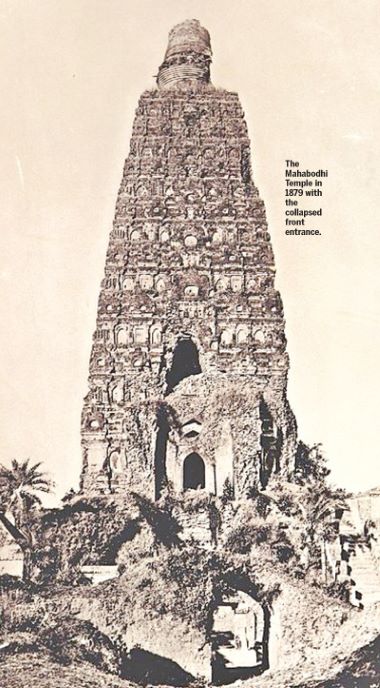
Mahabodhi temple in 1879 before renovation

The never-say-die Dharmapala saw openings as well as hurdles in the developing situation. He sensed the possibility of harnessing the heightened energies of at least the secular section of the Bengali elite to push his cause. The politico-religious-cultural churning in Bengal had spawned two rival associations – the British India Association, representing the conservative Bhadralok which was pushing Hindu interests, and the Indian Association, representing the dynamic, modernistic but not pronouncedly communal Bhadralok of Calcutta. Surendranath Banerjea was the leader of the Indian Association.

Dharmapala latched on to the Banerjea-led group. Fortunately, the Indian Association  ruled the roost” in Bengal and was also Bengal’s link with the nascent Indian National Congress, fighting for Indians’ rights at the all-India level. Through Surendranath Banerjea, Dharmapala came to know top Indian political and renaissance leaders like Rabindranath Tagore and Swami Vivekananda intimately.

Be that as it may, Dharmapala was uncomfortable with the rising Hindu sentiment according to which, any quarter given to other religions, including Buddhism, would injure the Hindu revivalist cause. With a view to allaying any fear about conversions to Buddhism, Dharmapala delivered a lecture at Albert Hall in Calcutta where he stressed the non-threatening character” of the Buddhagaya movement. His line was applauded by the liberal Bhadralok including Norendranath Sen’s Indian Mirror which called for a place for Buddhists in Buddhagaya on the plea that there had been no historical animosity between Hinduism and Buddhism in India.

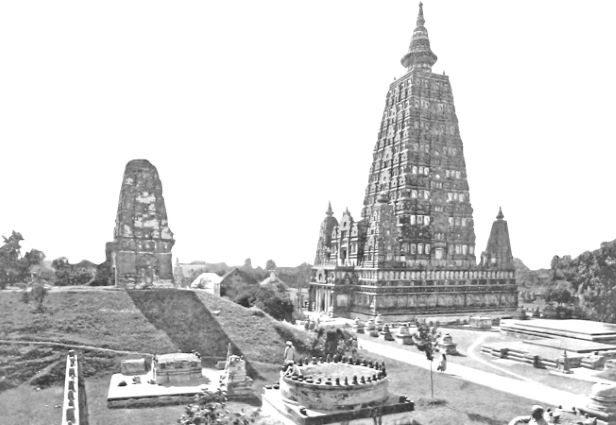
Mahabodhi temple after restoration by architect David Beglar, a part American from Dhaka.

Some other leading members of Calcutta’s Bhadralok also openly spoke in favor of Dharmapala’s mission. Raja Jotindro Mohan Tagore declared that the movement for placing in the hands of the Buddhists, the Buddhagaya Temple is so consistent with justice, that no reasonable man can take exception to it.” But to accommodate the Hindu sentiment he suggested that images of Hindu Gods and Goddesses also be accommodated in the shrine.

Dharmapala had the support of Rabindranath Tagore also. Tagore lauded the establishment of a Buddha Vihara at College Square in Calcutta He included Buddhism in his poems and songs, and counted among his friends Buddhist-national leaders in Ceylon like D.B.Jayatillaka, W.A. Silva and F.R. Senanayake.

But Dharmapala took no chances. As Dr.Amunugama put it, he wheeled in the heavier gun”, the Theosophist Col. Henry Olcott. The American helped turned the tide in his favor through his speeches. But unfortunately for Dharmapala, Olcott thought it would be politically prudent to go soft on Hinduism in India, while supporting Buddhism in Ceylon. Olcott left the Mahabodhi Society. And Dharmapala quit the Theosophical Society.

Defeat in Court

Meanwhile, there was bad news about the Buddhagaya movement. Against the advice of Edwin Arnold and Olcott, Dharmapala had gone to court on the Buddhagaya issue. But the Hindu priest got a favorable ruling from the Calcutta High Court. Dharmapala was heart-broken especially when the Japanese-donated Buddha statue he had installed at the shrine was to be moved to the Calcutta Museum. But two Indian newspapers Behar Times and Indian Mirror came to Dharmapala’s help by carrying out a strong campaign for his cause. They said that it would be wrong to turn away Buddhists, who, like the Hindus, consider India as their holy land. To reach the non-English speaking literati, Dharmapala tapped the popular Bengali paper Hitavadi.   Simultaneously, he reached out to the Hindu nationalists and got Swami Vivekananda to say that while the Buddha provided Hinduism its heart, the Brahmin provided its head.”

Having seen first-hand, Hindu revival and radicalism on the rise in Bengal, Dharmapala applied its thoughts and campaign-style on return to Ceylon. While other Ceylonese nationalists were soft and constitutional in their stance against the British and Christian missionaries, Dharmapala went hammer and tongs at both. He derided the Westernized Ceylonese elite and asked them to take to the ways of the Indian nationalists. He became an advocate of vegetarianism and went around in a motor vehicle asking people not to eat beef.   

Whistleblower prevented from leaving for Dubai

January 24th, 2022

By Shamindra Ferdinando Courtesy The Island

Lak Sathosa garlic scam:

One-time Executive Director of Consumer Affairs Authority (CAA), Thushan Gunawardena says the Immigration and Emigration Department has barred him from leaving the country.

An irate Gunawardena alleges he is being harassed over the disclosure of a massive garlic scam at Lak Sathosa last September.

Instead of prosecuting those responsible, expeditiously, I’m being targeted for ordering the raid that exposed the corrupt lot,” Gunawardena told The Island soon after returning home. The ex-CAA official declared he would be soon filing a fundamental rights case against the Immigration and Emigration Department.

Gunawardena said that the senior officer in charge of the Immigration and Emigration unit at the Bandaranaike International Airport (BIA) in the early hours of Saturday (22) had informed him of the instructions received in that regard. Gunawardena was to board the Colombo-Dubai Emirates flight that departed at 2.55 am, on Saturday.

Gunawardena said that a stock of 56,000 kilos of garlic that had been released by the Sri Lanka Ports Authority (SLPA) to Lak Sathosa, had been sold to a regular Lak Sathosa supplier at about Rs 135 a kilo. The Sathosa management had planned to buy back the same consignment at Rs 445 a kilo and then make it available to consumers at about Rs 540 a kilo. Alleging that the fraud had been perpetrated at Lak Sathosa management level, Gunawardena said the plan had gone awry due to the raid carried on information provided by an insider. Lak Sathosa had sold the stock at such a low price to a supplier on the basis of poor quality in spite of Quality Assurance clearance, Gunawardena said, such fraudulent activities were rampant though never been properly investigated.

Gunawardena said that the government owed an explanation how the Immigration and Emigration Department had thwarted his departure in spite of him carrying a valid passport. I was told the BIA unit acted on the instructions received from their head office at ‘Suhurupaya’ Sri Subhuthipura road, Battaramulla. But, the issue at hand is as my passport hadn’t been impounded in connection with investigations into the garlic scam, there is suspicious of interested parties manipulating the Immigration and Emigration Department.”

Gunawardena said that according to a document that had been received by the Immigration and Emigration unit, he was categorized as a suspect along with five others unknown to him.

The Immigration and Emigration Department 1962 hotline in a recorded message stated that the department could be contacted only on weekdays between 8.30 am and 4.15 pm.

Gunawardena emphasized the political leadership couldn’t absolve itself of the responsibility for what was happening with the connivance of lawmakers and top officials. Gunawardena said that he learnt a bitter lesson having had an opportunity to serve as CAA executive. Corruption here is nothing but a way of life. The current dispensation, despite its leaders’ pledges, has done nothing to curtail waste, corruption and irregularities,” Gunawardena said.

Responding to another query, Gunawardena said that he expected the Justice Ministry, the Bar Association of Sri Lanka (BASL), the Human Rights Commission as well as the Police Commission to inquire into this matter.

Gunawardena claimed that he earned the wrath of both Trade Minister Bandula Gunawardena and State Minister Lasantha Alagiyawanna for going public with garlic fraud. Now that the government had prevented him from attending some meetings in Dubai connected with his present employment he was seriously contemplating seeking compensation for loss of business opportunities.

President Gotabaya Rajapaksa has assigned the Immigration and Emigration Department to Defense State Minister Chamal Rajapaksa. The Immigration and Emigration Department is one of the 31 state institutions that come under the purview of the Defence Ministry.

The Police Department, State Intelligence Service (SIS), Registration of Persons Department, National Dangerous Drugs Control Board and the Telecommunication Regulatory Authority (TRC) are among other state institutions coming under the purview of the Defence Ministry.

Gunawardena said that a senior management level official who had been arrested and then granted bail pending further investigations into the garlic scam was reinstated. Recalling he sent in his resignation to Chairman CAA retired Maj. General Shantha Dissanayake in the third week of Sept last year, Gunawardena said government actions couldn’t certainly be compatible with the much-touted policy statement titled Vistas of Splendor.

Central Bank continues to say ‘no’ to IMF prgramme; confident of home-grown fix

January 24th, 2022

Courtesy The Daily Mirror

Having overcome the first debt hurdle for the year— yet with another US$ 6.0 billion dollars worth of debt waiting to be retired in the next eleven months— Sri Lanka is still showing aversion to seek International Monetary Fund (IMF) support to restore investor confidence and regain capital market access.


Sri Lanka’s access to international capital markets was impaired after multiple rating agencies downgraded its sovereign credit rating. However, the authorities claim that they were not anyway going to rollover the sovereign bonds after the previous government piled up thrice as much as sovereign debt in less than two years prior to their dismissal in 2019. 


The Central Bank last week settled US$ 500 million worth sovereign bonds amid calls from certain parties to either default or to delay it to buy more time to rebuild the razor thin reserves to a more formidable level. 


There are growing calls for the government to start restructure the country’s debt, preferably with an IMF programme alongside, to negotiate a more sustainable repayment path with the lenders and bring the long overdue economic reforms.


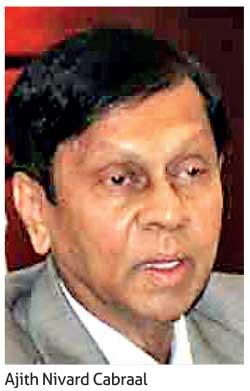
However, Central Bank Governor Ajith Nivard Cabraal responding to those calls said they are in fact restructuring the debt with the readjustment of the portfolio and stressed that restructuring does not necessarily have to come from a foreign third party, as the Central Bank has adequate talent to better handle the situation. 


He also said the Monetary Board of the Central Bank does not take decisions on its own and it is advised by the Monetary Policy Consultative Committee, which consists of the best brains in the country. 


Similarly, he said policy decisions are not taken in silos and are shaped and reshaped by committees consisting of experts and around 870 qualified professionals working in the Central Bank. What we are doing is what lots of people who have to adjust their portfolios are doing,”he said in reference to the domestic mechanism in place to overcome the current foreign exchange crunch.


Sometimes you call it restructuring. When we told you we are having the payments of our bonds made with other inflows, what does that mean? That is restructuring. Earlier lots of people believed, restructuring means, you have to stop paying. And you default. Then you ask the creditors to take a hair cut,” he said. 


So, restructuring is sometimes being looked at as something painful. And when it is not painful, people think it is not restructuring. They think it has to be painful. It has to put the creditor into trouble. It has to ensure that a foreigner has to come and advise. It has to be done by some institution globally. Then and only it will be restructuring. But people do that all the time,” Cabraal further explained as to what restructuring entails in practice. 


However, irrespective of from where the policy prescription comes, Sri Lanka is already under immense economic pain with shortages of some of the essential commodities and soaring consumer prices.

Commenting about why the government is disinclined to go to the IMF, Cabraal said they are confident the home-grown programme would work, and retorted what programme the IMF could prescribe other than to restructure debt. 


Why is it that you are keen to inflict pain on your investors who have trusted you and come? Do you know what would have been the situation had we defaulted as what some people had proposed?” he asked in reference to those who propagated the default narrative in the run up to last week’s bond repayment. 


People can offer advice. They can say you must keep US$ 500 million. US$ 500 million out of US$ 21 billion of imports, what is the percentage? So, would you rather sacrifice your entire economy and hold back US$ 500 million?,” Cabraal asked ,while urging to look at the merits of the domestic programme, which is materialising, than being fixated on an unseen programme that could come from the IMF or elsewhere. 

Daily count of new Covid-19 cases climbs to 877 and reports another 14 coronavirus deaths

January 24th, 2022

Courtesy Adaderana

The Ministry of Health says that another 877 persons have tested positive for the novel coronavirus today (24). 

This figure includes 08 persons who had arrived in the country from overseas. 

Sri Lanka’s tally of Covid-19 cases confirmed in the country climbs to 602,763 with this while 11,126 patients infected with the virus are currently undergoing treatment. 

Meanwhile this is the sixth straight day that the daily count of Covid-19 cases has surpassed the 800-mark in the island, showing a resurgence of Covid positive cases reported. 

The Director General of Health Services has confirmed another 14 coronavirus related deaths in Sri Lanka, pushing the country’s death toll due to the virus to 15,313.

The deaths reported today include 08 males and 06 females while one of the Covid victims is a female below the age of 30 years. 

Seven of the patients are between the ages 30-59 years while the other 06 are aged 60 years and above. 

No dignity, equality and justice for Tamils in Tamil states

January 23rd, 2022

H. L. D. Mahindapala

In their heart of hearts, the Vellalars who dominated the history of Jaffna through feudal, colonial and modern times are ashamed of their  past not because they failed to produce a great culture, great heroes, great iconic monuments, great civilisation, a great language, — or anything else outstanding or memorable, for that matter — but because they reigned over a culture of inhuman violence and cruelty that reduced their oppressed Tamils to sub-human non-entities for around 700 years.

It is so obscene that the entire political class and Tamil intellectuals, together  with pro-Tamil  private research centres in NGOs, craftily manipulated to hide it and swing the public opinion to believe that (1) they had a great culture and civilisation when Jaffna was ruled by their kings and Vellalars  and (2) and it was the Sinhala-Buddhist majority in the South that stood in their way by denying them their heritage and victimised them with policies of discrimination against the Tamil minority, depriving them of dignity, equality and justice.

In deflecting racist attacks on the Sinhala-Buddhists the Tamil political class and the Tamil intellectuals succeeded exceptionally well in hiding their cruel and oppressive politics against their own people. Internationally and internally, they derived all the benefits of demonising the Sinhala-Buddhists.

They won all the political sympathy claiming to be victims of the Sinhala-Buddhists. Victimology was their trump card. But to triumph they had to hide dark and cruel side of their political culture. This strategy was cultivated craftily and assiduously. In  this prelude to Selvy Thiruchandran’s outstanding book, Caste and its Multiple Manifestations,(published 2021),  which exposes the horrors of the overwhelming Vellalar culture that ruled Jaffna, I propose to deal with some aspects of the hidden factors of the history of Jaffna.

The hypocrisy of our public intellectual and academics, who went along with the ruling anti-Sinhala-Buddhist ideology – a tactic adopted deliberately to deflect attention away from the crimes of the Vellalar political class in Jaffna — is totally unacceptable. They fell in line with the Tamil political strategy of demonising the Sinhala-Buddhists, either to advance their career prospects or increase their bank accounts.

They have been living examples of Karl Mannheim’s conclusion that the intellectuals are venal and can be bought and sold in the market for a price. If their patrons were smokers the Sri Lankan intellectuals were ever willing  to carry a lighter.

By turning a blind  eye to the evils of the history of Jaffna they virtually denied the crimes committed by the Vellalar rulers of Jaffna against their own people. Our intellectuals had a right to focus on the misdemeanours and crimes if any of the Sinhala-Buddhists. But they had no right to deliberately avoid probing the heinous crimes of the Vellalar ruling class of Jaffna.

Their decision to focus on a mono-causal theory of blaming Sinhala-Buddhists only excludes the specific political realities that came down from the North and exploded in the South. The dynamics of the South reacting to Northern politics and vice versa have to be factored in to grasp the intricacies of the North-South conflict. Focusing only on Anagarika Dharmapala, or the language issue, or the Sangha ( Example: Buddhism Betrayed? S. J. Tambiah) leads only to a moronic dead-end.

It ignores the multifarious factors that intermeshed to produce 1983” and the Vadukoddai War (a.k.a. Eelam War). Promoting the mono-causal theory of blaming the Sinhala-Buddhists was a calculated political strategy of the intellectuals to advantage the cause of Tamils by demonising the Sinhala-Buddhists. The International Centre for Ethnic Studies, (ICES), run by Vellalar intellectuals, is a leading example. ICES spent millions, probing every nook and corner of the Sinhala-Buddhist culture and history but hardly a cent was spent on the violent Vellalar culture hidden behind the cadjan curtain of Jaffna.

Why? How could anyone arrive at an objective and  fair conclusion of the North – South conflict to work out solutions for reconciliation or peace by exploring only the Southern part and not the North?  Was the assignment of the hired intellectuals to meditate on the sound of a Buddhist clap with one-hand?

The political objective of this partisan strategy was clear: those with a criminal past lose moral rights and justifications and must pay reparations for the victims. There is another advantage: this strategy of the intellectuals elevates the moral superiority of the Tamils to pursue their claims for reparations on grounds of victimology. In politics losing moral ground debilitates power. Even the mightiest force (e.g: Shah of Persia and Ranil Wickremesinghe) can collapse if it loses the moral foundations.

The intellectuals were consciously playing a partisan role. It is one of the primary reasons which boosted the intransigence of the Tamils and sabotaged attempts at making peace and reconciliation. The Tamils took the high moral ground on victimology demanding a high price for the victims. Oddly enough, even now their political thrust is based on the bogus cry of dignity, equality and justice for the victimised Tamils. R. Sampanthan, the leader of the Tamil front, hop from one world capital to another, demanding dignity, equality and justice. But how much of dignity, equality and justice it did he and the other Tamil leaders give the oppressed Tamils?

The well-researched contents of Thiruchandran’s book on Tamil caste debunks the moral superiority of the Vellalars to claim any right to rule Jaffna either as federalists or as separatists. Throughout their history, the Vellalars had a fascist grip on power that determined practically every aspect of life, extending from the womb to the tomb. They had an incorrigible faith in the Vellalar purity and supremacy and committed Vellalar leaders like Sir. Ponnambalam Ramanathan fought tooth and nail to preserve their supremacy, irrespective of the suffering it caused to the Panchamars (low-castes). In the highest court of the of the land he defended the right of Vellalars to hammer the Panchamar mourners carrying the coffin of a dead wife accompanied by ritual beating of tom-toms – a privilege reserved only for the Vellalars. During his time, he made several trips to the Governor to retain the rituals and the privileges of the Vellalars. The last mission of Ramanathan to London in late twenties was to convince the Colonial Office that casteism was necessary to maintain stability, law and order. Their struggle was to retain Vellalarism as long they could without external interventions. They were inextricably wedded to Vellarism and they refused to accept that Vellalarism was not a viable political ideology for the 20th century.

Though modernity was shaving off the rough edges of casteism, political Vellalarism which came out of it was struggling to adapt to the new realities. The history of Vellalarism reveal that its power was omnipresent and overwhelming. Whenever Vellalarism was threatened by internal or external forces, the big guns (.e.g., Ramanathan) fought aggressively to preserve its interests. There was no breathing space for the other” to play any role in the decision-making process of Jaffna politics. In other words, Vellalar politics had the upper hand to manipulate and direct events to serve its prime object of preserving, promoting and perpetuating Vellalar supremacy. All politics that came out of Jaffna was to the serve Vellalar interests, as stated by historian Prof. S. Arasaratnam. He divided Jaffna into two parts: the dominant Vellalars and the rest. The rest (meaning the Panchamars) were there to serve the Vellalars, he said. His evaluation sums up the essential nature of Vellarism.

There was no space for the helpless, oppressed Panchamars to make their presence felt in the political process. In the first place they were excluded as pariahs from the higher circle of Vellalar power-brokers. Furthermore, they had neither the education, political nous nor the organisations to make any impact on the politics of Jaffna. For instance, it was the Vellalars who forged the two overdetermining forces that came out of the womb of Jaffna : 1. casteism and 2. communalism. Both served Vellalar interests. Both forces were inextricably intertwined and they were used jointly as political tools by the Vellalars to maintain their political supremacy. Even the Hindu reforms injected by their venerated Vellalar guru, Arumuka Navalar, reinforced the power and elevated the status of the Vellalars. His reformist Saivism elevated the low-caste Sudra Vellalars to the highest peak in the caste hierarchy. In  a Hindu land without Brahmins, he made the Vellalars the equivalent of the Brahmins. This anointment of supremacy reinforced their power to humiliate and oppress the Panchamars with religious sanctions. Their ownership of Hindu kovils enabled  them to enforce their belief in purity. To maintain their purity, they prevented the polluted Panchamars from stepping inside their sacred precincts in the kovils. The earliest reports of the Tamil suffering caused by the Vellalars was recorded by the Dutch. In his Memoirs, the Dutch Commander of Jaffna, Zwaardcroon, has had no qualms in condemning the arrogant and manipulative Bellales” who made thousands suffer” under their cruel yoke. (More of their suffering later.)   

The Vellalars maintained their supremacy internally, within the peninsula, through the casteist ideology. Their ideology was not worth anything outside it. So, they fought for external supremacy through communalism, disguised as minority rights. Casteism has been a primordial  ideology, coming down from feudal times. Communalism is a latter-day ideology which gathered momentum in the 20th century when the casteist ideology ran out of steam to unite fragmented Jaffna divided on casteist lines. It is these two basic ideologies that mutated to create a Tamil identity in the 19th century and mutated again in the 20th century to create Tamil nationalism”. It was an ideology manufactured by the Vellalars to hold on to power internally and to grab power and  territory externally. The Vellalar elite who ruled Jaffna on the casteist ideology had to accept reluctantly that the casteist ideology had passed its use-by-date in the 20th century. The Vellalars needed a new ideology to unite fragmented Jaffna to campaign on a common front against the Sinhala-Buddhist South. This need produced an overarching political platform based on (1) language / discrimination and (2) Tamil nationalism” targeting the Sinhala-Buddhists – two ideologies that could unite the North to close the gaps in fractured Jaffna – fractured on caste / class/ religious lines. It was in the 20th century when casteism had lost its power to reinforce the grip on power of the Vellalars that they turned to Tamil nationalism”. The ruling class/caste was using cultural norms and revised ideology to retain and legitimise its power

The politics of the post-independent era was dominated by three big ideological forces : 1) Sinhala-Buddhism (2) Marxism and (3) Vellalarism – an arrogant fascist force of the dominant Vellalars that deprived the oppressed Tamils their dignity, equality and justice on a casteist ideology for 700 years, reducing the oppressed to subhuman non-entities with the sole objective of keeping the Panchamar subjugated and humiliated in case they decided to trespass and disturb the casteist borders of Vellalar supremacy. They tightened the grip on power with aggressive, ruthless tactics when they  failed to get consent. It was an ideology that tied the Vellalars inextricably to Jaffna. The Vellalars claimed Jaffna to be their exclusive domain — homeland” — because Vellalarism and their supremacy that went along with that ideology was not accepted outside the borders of the North which included parts of the Vanni. Vellalarism is an organic product of the Jaffna soil. It has its roots only in Jaffna. It cannot be transplanted anywhere else mainly because a civilised society would not accept such an inhuman ideology. It has to live or die within its borders. Therefore, holding Jaffna as a separate domain was essential to retain and maintain their supremacy.

Separatism, a concept manufactured by the Vellalars, is not Tamil nationalism”, though it was wrapped in that tin foil. It is an ideology manufactured to protect the supremacy and survival of the Vellalars. Separatism was designed to create an independent political enclave for the  preservation  of Vellalarism without any external interventions. They need autonomy to impose and run Jaffna the Vellalar way. A separate state would be the last refuge of the Vellalar supremacist. The Panchamars did not need separatism. In fact, they were wary of it. The path-breaking Tamil novelist, K. Daniel, who was from the lowest caste of Turumbas, firmly believed that Tamil Nationalism was a far cry from the interests of the oppressed groups in the Tamils community”. (p. 188 – Caste and its Multiple Manifestations). He was at the Panchamar protest staged at the Maviddipuram Temple – the historic protest demanding from the Vellalars dignity, equality and justice for the low-castes.  Where was R. Sampanthan, an MP with S. J. V. Chelvanayakam, when the low-castes were beaten black and blue for demanding dignity, equality and justice? The Sinhala state” had to intervene to protect the Panchamars threatened by the Vellalars. It is clear by Samapanthan’s  behaviour that in a separate state only the Vellalar interests would get priority. Separatism is the only way of hijacking Jaffna to restore and perpetuate Vellalar supremacy. Maintenance of supremacy necessarily leads to denial of dignity, equality and justice to Panchamars.

In making any  moral judgment on the national question it is only fair to compare the values, morals and achievements of the Tamil states (including the quasi-state of Prabhakaran) with that of the Sinhala state”, as described by Tamil lobbyists. The morals, values and achievements of the 74 years of the Sinhala state” in the South should be tested against the morals, values and achievements of Prabhakaran’s quasi-state. His quasi-state was an extension of the fascist political culture of the Vellalars that ruled Jaffna for nearly 700 years before. The fact that the Tamils could not run a democratic state, with justice, equality and dignity to all, was demonstrated by Prabhakaran. His quasi-state was a state within the Sinhala state”.  The Tamils are proud of Prabhakaran’s state. Which of these two states upheld democratic and liberal values? The Sinhala state” fought its longest war— 33 years (1976 – 2009), — within a democratic framework. How did the Tamil state of Prabhakaran fight its war?  Why was the Vadukoddai War fought under Tamil tyranny? Wasn’t it the demonised, denigrated Sinhala state” that gave refuge to the Tamils hunted  by the Tamil state? The worst enemies of the Tamils have been the Tamils who deprived their own people dignity, equality, justice and security. Looking at the issue from another angle, how would nearly 700 years of Vellalarism compare with 700 years of Sinhala-Buddhist political culture? The Vellalars had power. They had a state. But how did they use power when they had a separate state? Did they not use power consistently to oppress and persecute their own  people throughout their history? What did the Tamils achieve other than creating a vile culture of oppression? Considering the inhuman abuse of power, are the Tamils fit to rule the Tamils?

Brutal violence to oppress and suppress the Tamil people was a common feature of Vellalarism.  Dehumanising the Panchamars and stripping them of their dignity, equality and justice has been an inhuman practice of the dominant Vellalar political culture of Jaffna. They are conscious of their crimes against their own people. The obscenity of this inhuman practice makes them feel guilty. They can’t face it. They strive with all their energies to hide it. It is taboo even in the Jaffna University. The Jaffna University, for instance, goes all out to discourage research into Vellalarism. At the University of Jaffna,” wrote Mahendran Thiruvarangan, a Senior Lecturer attached to the Department of Linguistics & English at the University of Jaffna ”issues related to caste take a back seat in academic conversations. Although the academic community at the University gives prominence to Tamil nationalist aspirations and condemns the ongoing militarization of the North, open discussions about caste are hardly encouraged, barring a few occasions. A section of the academic community is warped in its view that discussing caste in public will cause disunity among Tamils.” (The Island — 4/1/22}. Earlier Prof. Ratnajeevan Hoole had cited examples of discouraging undergraduates doing research on Vellalarism. The hidden undercurrents of the history of Jaffna need to be explored. As providers of knowledge for the guidance of the nation it is time that at least the Eastern University  initiated a research program into this hidden corner of Jaffna.

A knowledge of the hidden history of Jaffna politics is essential for any in-depth analysis of the Northern politics. The roots of Northern politics are buried deep in the history of Vellalarism. Take for instance, their current campaign which is run on their cry for dignity, equality and justice for Tamils. How valid is this claim? The Vellalars ruled Jaffna, in various disguises, for roughly 700 years. The Sinhala state” had ruled the nation only for 74 years. Of this, the Tamils were under Prabhakaran’s rule for nearly half of it. So, the total number of years is 700 + 35 years. Did the Tamils get dignity, equality and justice from 735 years of  Vellalarism + Prabhakaranism, or from the 74 years of the Sinhala state”? For instance, how many Tamil lawyer who were patriotically aligned with the Tamil state of Prabhakaran, went to practice law in Prabhakaran’s courts to deliver Tamil justice? Why didn’t M. Sumanthiram, R. Sampanthan and C. V. Wigneswaran, Tamil champions  demanding dignity, equality and justice, practice in the courts of the Sinhala state” if there was no dignity, equality and justice? If there was dignity, equality and justice in Prabhakaran’s courts why didn’t they practice up North? They know, in their heart of hearts, that no Tamil state ever gave the Tamils the dignity, equality and justice that was due to them.

“The Three Fuels miracle” the only solution to the energy crisis in Sri Lanka and to keep Sri Lanka alight, even if the whole world that depends of fossil fuel, goes dark after 2050.

January 23rd, 2022

Dr Sudath Gunasekara

(මඟ හොඳට තිබේනම් යන්ට දෑසත් පෙනේනම් කිම බැදිවල යන්නේ මන්මුලාවු එකකු සේ සින්හලයකුගේ කියමනක්)

Sri Lanka is geographically located almost right at the center of the globe (bet 5-10 degrees N of equator and 80-82 degrees E) and at the middle of the tropics. It is also blessed with the vast expanse of the Indian Ocean, the third biggest body of water in the world covering 1/5th of the total ocean area of the world right round it extending 7000 miles from N-S and 4900 miles from W-E, East Africa to West Australia. It is being traversed by seasonal Monsoons that sweep the vast Indian Ocean that bring unlimited rain to this Island. It is also favourably located within the trajectory of The Inter Tropical Converging Zone in relation that brings both surface and upper atmospheric effects such as the burst of the monsoon and seasonal monsoon rain to the Island. Furthermore, its insularity and its small size (65,610 km2) and its peculiar and unique physical topography characterized by a central hill country at the center of the Island, rising abruptly from the surrounding lowlands and going up to 8281 ft msl at Pidutalagala This peculiar topography providing for cascading rivers right round the hill country with an annual mean rainfall of 2000 mm has made Sri Lanka the richest country in water resources in the world.  Regular seasonal winds that bring alternatively, SW and NE monsoon rain for 11 months in the year with convectional rain in April, 12 hours daily sunshine right throughout the year all over the country resulting evergreen tropical rain forests has made it the blessed evergreen resplendent Isle on earth from the dawn of history.

With such a high volume of perennial river water cascading down the hills, abundant 12hour uninterrupted sunshine throughout the year all over the Island and howling and blowing winds at our disposal and at no cost, I wonder why we go after and fully depend on imported fossil fuel, coal, natural gaze and dangerous atomic energy spending trillions of dollars making the nation poorer every day, as the only way to provide energy to this small Island nation. I ponder as to what are the reasons for this unfortunate situation?  Is it because of the lack of brain or commitment to nation building on the part of politicians, policy makers and scientists in the relevant fields?

The following data announced over the TV on today tells the present pathetic situation in relation to power production and development in this country.

1 Oil, Coal and gaze 73 %

2 Hydro                      25%

3 renewable              2%

In my view this should have been just the rivers way about after 73 years of so-called Independence and 71 years after the inauguration of Hydro power by Wimalasurendra in 1950. Doesn’t this show how the country had been developed by our politicians, policy planners and scientists in the relevant fields. No wonder today, we, a country that had the second highest per-capita income at Independence, have to go right round the world with the begging ball on our heads.

Also, in the same way, is it not the poverty of vision and mission, creativity, imagination, lack of patriotism and lack of commitment for nation building OR the fat kickbacks and other unlimited benefits for politicians, policy makers and scientists in the relevant fields and their conventional and blind adherence to the so-called, modern technologies of the West and above all their lethargy, that has given rise to this unfortunate situation? The nation needs men like Wimalasurendara the Father of Hydroelectricity in this country He started his struggle in 1923 After his proposals were rejected and was obstructed, he resigned his job and contested elections and having entered the State Council in 1931 he continued to fight and finally completed Luxapana in 1950, the first hydroelectricity project in Sri Lanka. My question is why can’t the present-day engineers can’t think and act like Wimalasurerendara.  Instead, knowing that coal is going to be depleted by2050 the engineers of the electricity Board still fight for Sampur coal Project as if they are unaware of the fate of Norechchole and the environmental disaster it will bring about using coal, the most polluting source of power generation. Why do they do so? Where is the Government, policy planners and engineers who are supposed to be working for the welfare of the people.

Hydro Electricity

Hydro power combined with Solar and wind power; I think therefore should be the best solution to our energy crisis. This combination is also the ideal remedy that can guarantee sustainable power supply at the lowest cost without any pollution as well as CO2 emission is almost nil with these sources. All these three power sources are renewed by nature at no cost. and they don’t depend on imported oil or coal. So, we don’t need any foreign exchange either to import any fossil fuel. Even locally we don’t need to pay for the local power sources water  sun shine and wind.as they are provided free by nature. This wealth is indigenous and all three will guarantee un-interrupted supplies throughout the year for ever. They will never be exhausted and will last as long as the sun and the world will last.  The most important features of these fuels sources is they are available at no cost, freely given by mother nature and also pollution free, sans any additional costs like shipping, insurance taxes and breakdown in transport either etc.

 We need only the turbines,( reservoirs, tunnels in the case of water), solar panels. and wind towers to convert them in to energy and light. Initially in the short run, we may have to import them. But with the human talent we have within the country we should be able to manufacture all these items in no time. That will give rise to a promising industry that will provide additional employment for millions of people as well. Considering the unlimited availability of these Raw materials”, for power generation at low cost we may be able to even export excess power generated to India and neighboring countries like Bangladesh, that will bring foreign exchange as well, to jack up our foreign reserves.

All these three power sources also are pollution free and we will have a cleanand Green environment free from environmental hazards leading to respiratory and other lung related health problems as well. It will also save foreign exchange in unprecedented amounts. At the same time if we can convert all vehicles to the electric model, and encourage local productions with tax relief, a new chain of industries and employment in these fields will boost up.  Meanwhile wasting on import of fossil fuel also will be saved.  

In this backdrop hydro power, Solar and Wind power combined, is the best solution to the present energy crisis in this country. In the long run this energy producing model might even become a world model that will revolutionize the power industry. Followed by the ‘Hydro-Solar-Wind model” even ocean waves right round the country could also be made use of to produce energy. That will give a further boost to the economy. The three   most common sources of energy are Oil, Coal and Atomic power all monopolized by the industrialized countries. They exploit the so-called Third World underdeveloped countries like ours, not only by selling these items at exorbitant prices abut also by tying them up with other means like their machinery, technical advice, shipping, insurance and banking etc, and keep the victim countries ever trapped in their hegemonic exploiting noose, thereby increasing our dependency on exploitive industrialized powers. This is the trap we are caught up with at present. So long as we depend on oil. Coal and natural gaze, their machinery and technical advice we have no solace and no escape from this dependency trap.

The only way we can escape from this fatal noose is to shift our energy generation to these Three local miracle Fuels”, that is water, wind and Solar heat all three of which are abundantly available throughout the year and free. That will also help us to save all foreign exchange spent on oil, coal and natural gaze and the dependency on the industrial countries, thereby reducing their interference in domestic politics and economies as well.

Water our most precious wealth

A recent study on Sri Lanka has listed this country at the top among the six countries that shares one half of the 0,3% drinkable water this planet has and moreover Sri Lanka has been recognized as the only country that will have drinkable water even if there is going to be a shortage of drinking in the whole world one day, as the result of environmental damages the countries world over are doing. This news has put it on the top of the world and made water its biggest asset and the most valuable commodity Sri Lanka has. The same study has described this country as the last country on earth  that will have drinking water in the world, even if all the rest run dry.

 The threat on our water resources

But all these sweet talks will disappear in a dream If we don’t protect the geographical heartland (what I have named as GEOGRAPHICAL HADABIMA of this Island) the Central Hill Country, the priceless heritage, nature has given to this nation is not protected from the environmental devastation and destruction going on this nation’s ‘HEART” from 1830s onwards. Even after the British vandals who destroyed 600 000 acres of virgin forest that were there from the dawn of history and destroyed the physical instability by uprooting and burning the trees and digging and turning the soil and by various constructions done by the British planters. They also destroyed the entire river system, by reducing their annual flow by 50% as Samuel Baker has pointed out and playing havoc by floods in the downstream areas. These streams watered and enriched the whole Island protecting the entire life system in the country both flora and fauna and finally preserved the entire life system and the civilization on this Island from the dawn of history.

The same process of destruction continued even after 1948 and continued up to 1972 the year when these estates were nationalized. Since there was no proper management, these watersheds were further neglected resulting heavy land erosion and degradation almost beyond recovery. It was this forest cover on the central watersheds that protected the land, water the bio diversity and the animal world, underground water table and the entire river system that had been protected for millions of years by our ancestors until 1815.as a Protected and strictly reserved National Forest declared by Royal decree. While further neglecting continued by the State the resident Indian labour were also mobilized by their trade Union leaders took the law unto their hand claiming for land and human rights, which they never agitated for when they were made to suffer like slaves under the British Planters.

All the so-called national political parties gave in to their demands by bribing trade union leaders to remain in power. Every time the Governments change these estate Tamils leaders joined the party in power to get their demands, The successive Governments gave in to all their demands without caring a damn for thenative people, land, the environment or the physical stability of the Heartland or the interests of the native Sinhala people especially those Kandyan Peasants who lost everything they had including their mother land and even their life in battles fought against the colonial enemies in defense of the country. Today they have got reduced to a mere set of paupers sunk in abject poverty[S1]  having lost their Motherland, once happen to be a paradise of their own. The motherland should be put in the hands of the natives who built up the civilization and not foreigners.

The survival of the entire life system and the civilization, in this Island as I have consistently pointed out from 1991 as the Head of the Sri Lanka Hadabima Authority Project, created by me the same year to cover 1/3 of the land area of the country was aimed at protection this HADABIMA of the nation. That too has been now destroyed by appointing political stooges who are clueless of the broad national objectives of this Project.

 In the days of the Sinhala Kings who found and fostered the civilization of this country they had protected all land above 3500 ft MSL (except Kotmale , Welimanda and Madaram Nuwara) up to 1815. That was how they got water to cultivate even three seasons of paddy cultivation in this country. But since 1815, the entire primeval and virgin forest cover has been removed by the white invaders for plantation agriculture and millions of South Indian cheap slave labour were brought and   settled on these estates to maximize their profits.

Adding insult to injury the native politicians who took over the country from British in 1948 also followed suit buy continuing the same destructions the white men did to make profits. Native Sinhala politicians today do it to consolidate their power. They woo the estate Tamil votes alternatively without any love for the country or the future of their own lot Sinhalese, without any regard to the great environmental, ecological or hydrological damages done on the neglected marginal tea estates by the alien Indian labour force doing day and night.  Although politician talk big of 1948 Independence the criminal destruction of the watersheds continues by south Indian Tamil community as they don’t love this country and their heads and hearts are all in South India. An excellent example of this criminal political party gamble against the natives by selfish politicians who have no feeling for the future of the country or the Sinhala nation is given below.

Only few days ago Sajit Premadasa Leader of the Opposition promised these estate Tamils at Nuwara Eliya Deepawali festival that his government (a day dream only that will never come to power within his life time) will make these Indian Tami labourers, the true owners of small holder tea lands. This is how our politicians look at the Heart Land” of the country that keep up the beat of the nation in this Islands civilization. The problem with all our politicians is that none of them know the critical importance of the Central Highlands in guaranteeing the survival of the entire life system and the civilization of this Island nation. They also don’t know that we had a great civilization in the pristine past that was in par with ancient Greek and Roman civilizations.

 I have written volumes on its importance.

I have been writing volumes on the need to protect these watersheds since 1991 in vain. From 1991, I have addressed many letters to the President of the Country offering my free services to rescue the nations HEART land without a salary, but it is a tragedy I have not got even a reply up to date. None, of these politicians is concerned about the future of the country or the Sinhala nation. They are only worried about political power and amazing wealth surrounded by equally selfish Kevattayas who never make use of the service of those who know the subject. They only know those who collects votes and kickbacks and pay hosanna day and night (Vandibhattakayo). None of these politicians realize that the ‘Death” of the heartland is the death of the country and the Sinhala nation. Them are interested only in collecting their votes and perks.

So, if we allow this destruction of the watersheds to continue without arresting it, as early as possible, the day that will make the curtain fall on the Sinale land and the glory of the Sinhala nation and the day the whole Island will turn in to a cold sterile desert, sans any life on it is not that far.

One might wonder as to why I dealt in such length about the subject of protecting the Central hill country above 1000 feet in this essay, dealing with the energy crisis. I deliberately did so for the reasons.

 First, Hydroelectricity is the chief component of this proposal and the Central Hill Country is the dynamo that gives life to the engine that keeps the civilization on this Island moving.

Second as the watersheds on the central Hill Country are the only source of the nation’s water resources not only as the nucleus that provides the source for all the country’s rivers but also its role as a rainmaker and as a stimulator for convection due to its unusual and abrupt rise from the lowlands to confront the two monsoons when they cross the Island and activate the rising hot air mases when monsoons are silent in April to generate convectional rain in mid monsoons (April) and a giant underground reservoir for the nations underground water deposits that replenish the rivers in dry weather like the Central Bank in a nation’s economy.

Third, the critical importance of the protection of the central watersheds in the process of providing water needed for the generation of hydroelectricity

Fourth no one can ever dream of hydro power generation, beside water for survival in Sri Lanka, without protecting the physical stability of the central watersheds 

Finally, Just as the man dies the day the heart fails similarly hydro power and water for life in Sri Lanka will also come to an end once the physical stability of the Central watersheds (Heartland) is gone.

These are the reasons that compelled me to give a comprehensive account on this subject.

Wind  Power  .

There is one single name in Sri Lanka one cannot easily forget when we talk about wind power in this country. That is my good friend and senior colleague who had been once GA Matara and held many responsible posts in SLAS and worked as an  international Consultant on Development in many countries like Bangladesh and an extensive traveler all over the world  now living in retirement who wrote a versatile piece in 2019 on Wind Power for Sri Lanka. Anyone interested in what he has to say can contact him on Garvin- Karunaratne@hotmail.com.

 I don’t think I have to add anything to what Garvin has said on this subject except to add three new places with my knowledge on the movement of monsoon winds. With distinctive two NE and SW seasons  with spectacular wind gaps all over the hill country particularly in places like Corbet’s gap Meemure and Madugoda (Present Udadumbara) and Uduwaaheena on the Knuckles and Ramboda  and Kadugannawa in the central hills with howling and blowing winds turned in to energy  where all ‘Raw materials” will be local with no import. As Garvin points out you have only to install wind turbine in place where the wind blows and howls and not along the sea shore like Mannar or Hambantota where it only sea breeze

 Solar power

Everyone knows that the sun is shining over the Islands heavens throughout the year, 12 hours a day. So, the unlimited power to generate electricity is there. One has only to make use of this natural wealth at least now. In generating solar power we need only to install solar panels. The government can select few sites in the Island for large scale generation. Beside that we can also fix solar panels on each and every building/house. Solar power like wind and hydro power are replenishable as long as the sun and moon shall last and more over the global position of the Island will remain unchanged and the physiography of the Island will also remain unchanged due to tectonic changes

Conclusion

It is also important to note that fossil fuel and coal supplies will also come to an end one day once their deposits get exhausted. Recent studies have revealed that oil deposits will get depleted by 2050 and coal and natural gaze also will be over by 2060. But the beauty with water, solar power and wind is that they will never get exhausted. They will generously serve the world as long as the sun, the sky and the atmospheric circulations are there.

So, if we give top priority to electricity generated with these three power sources it will not only make us economically stronger but also will be enjoying the luxury of electric power even when the whole world that depends on fossil fuels sources goes dark.


 [S1]

Posturing in Sri Lanka for the March UNHRC session

January 23rd, 2022

By P.K.Balachandran/Weekend Express Courtesy NewsIn.Asia

Colombo, January 23: With the situation in Sri Lanka coming up for discussion at the UN Human Rights Council (UNHRC) on March 3, the Sri Lankan government as well as the Tamil parties have begun posturing either to get off the hook, as in the case of the Sri Lankan government, or to corner the adversary, as in the case of the Tamil parties.

The Sri Lankan government is expecting censure following the report of Human Rights Watch (HRW) for 2021. And the Tamil side is worried as the international community may, as in the past, not walk the talk. The Tamils are trying to rope in India, which is influential among Asian and African countries. They had a meeting with the Indian High Commissioner on January 18.

It was clearly with an eye on the forthcoming session of the UNHRC that President Gotabaya Rajapaksa mentioned the question of ethnic reconciliation in his address to the opening session of the Lankan parliament earlier in the week. He said that the Tamil problem is economic and not political, and that the solution is equitable economic development. He also promised to act on the long standing problem of missing Tamils. And to placate the hounded Muslims, the Gotabaya government informed the Court of Appeal that the detained Muslim lawyer Hejaaz Hizbullah could be granted bail. Hizbullah was arrested in April 2020 in the 2019 Easter Sunday suicide bombings case.

Be that as it may, Colombo would find it tough going at the UNHRC. According to HRW, there had been a comprehensive deterioration in the rights situation in Sri Lanka during 2021. The UNHRC had mandated the Office of the UN High Commissioner for Human Rights (OHCHR) to collect and prepare evidence of grave crimes for use in future prosecutions.” 

HRW says: Under the administration of President Gotabaya Rajapaksa, Sri Lankan security forces harassed and threatened human rights defenders, journalists, lawyers and the families of victims of past abuses, while suppressing peaceful protests. The government continued to target members of the Tamil and Muslim minority communities using the country’s overbroad counterterrorism law, and policies that threaten religious freedom and minority land rights.”   

After Rajapaksa’s election in November 2019, he withdrew Sri Lanka from a 2015 council resolution agreed by the previous government to promote truth, justice, and reconciliation. Rajapaksa said he would not tolerate any action against ‘war heroes’ and instead appointed several officials implicated in war crimes to his administration. The UN human rights chief, Michelle Bachelet, noted that Sri Lanka remains in a state of denial about the past, with truth-seeking efforts aborted.”

The Prevention of Terrorism Act (PTA) has for decades been used to enable prolonged arbitrary detention and torture. In 2021, President Rajapaksa issued two ordinances that would make the law more abusive.  An order issued in March, which has been challenged in the Supreme Court, would allow two years of rehabilitation” detention without trial for anyone accused by the authorities of causing religious, racial, or communal disharmony.”

Many prisoners, especially from minority communities, remain in pretrial detention lasting many years under the PTA, or are serving lengthy terms following convictions based on confessions obtained using torture.

UN rights Commissioner Michelle Bachelet called upon UN member countries to consider imposing targeted sanctions against alleged perpetrators, and to pursue prosecutions in national courts under universal jurisdiction. The core group on Sri Lanka (the UK, Canada, Germany, Montenegro, North Macedonia, Malawi) at the Human Rights Council successfully led the adoption of Resolution 46/1, which established an international evidence-gathering mechanism, which has now been established as the OHCHR Sri Lanka Accountability Project. However, among Sri Lanka’s key trading partners, India and Japan abstained, while China opposed the resolution. In June, the European Parliament passed a resolution calling upon the European Union to ensure Sri Lanka abides by its human rights commitments under the GSP+ program. However, the EU, like other foreign partners including the United States, Australia, and the United Kingdom, was reluctant to publicly call upon the Sri Lankan government to end abuses, HRW said.

The Tamil parties of the North and East have rejected President Gotabaya Rajapaksa’s proposal for ethnic reconciliation made on the opening day of parliament earlier in the week. Speaking on the President’s speech in parliament on Wednesday, Ilankai Tamil Arasu atchi (ITAK) MP, M.A.Sumanthiran, said that contrary to the President’s notion, economic development of the Northern and Eastern provinces will not bring about reconciliation. What the Tamils need is meaningful devolution of power based on the concept of self-determination and self-rule, he stated.

Sumanthiran demanded the full implementation of the 13 th. Amendment (13A) of the constitution as it was a bilateral commitment made to India. But the 13A is not the solution to the Tamil question, he pointed out. The 13A safeguarded India’s security, but it was not the solution to the Tamil question in Sri Lanka. The permanent solution lies in a federal structure based on the concept of self-determination and not the 13A which distributes power within the framework of the existing Unitary constitution.

For India’s Security

To rope in India, the leaders of eleven Sri Lankan Tamil parties met the Indian High Commissioner in Sri Lanka, Gopal Baglay, on Tuesday told him that only fully empowered provincial councils in the Sri Lankan North and East can ensure that forces inimical to India, like China, do not get a foothold there.

Although the High Commissioner did not raise the issue of China’s determined bid to get foothold in the North and East, Suresh Premachandran, leader of the Eelam Peoples’ Revolutionary Liberation Front (EPRLF), told the envoy that strengthening the Tamils in political and economic terms will enable them to stop the entry of forces inimical to India. He pointed out that without powers over land the Northern provincial council cannot stop any project or foreign involvement desired by the central government in Colombo..

M.A. Sumanthiran of the Ilanka Tamil Arasu Katchi (ITAK) said that under one pretext or the other, the Gotabaya government has been taking over lands which were returned to the Tamils after the end of the war in May 2009. The Tamils feel that such things will not happen if the 13A is fully implemented. The 13A had given powers over land to the provinces but no government has handed over this power to the provinces. Hence the Tamils’ demand for the full implementation of the 13A with land and police powers.

However, the Tamil parties of the North and East do not feel that the 13A is really adequate for the protection of the Tamils because it is embedded in a Unitary” Sri Lankan constitution. In a unitary constitution, powers handed over to the provinces or any other unit in the periphery, can always be taken away. But in a federal constitution, powers given, cannot be taken back. This is why, in the letter addressed to the Indian Prime Minister, the parties of the North and East gave primacy to the demand for federalism and sought Indian support for it.

UK hints at restart of police training in Sri Lanka despite human rights abuse

January 23rd, 2022

The UK Government may ­continue training police officers in Sri Lanka despite Police Scotland pulling out of the contract amid escalating concern around human rights abuses.

Human rights campaigners and politicians had urged the Scots force to stop the training programme when survivors, who endured rape, electric shocks and torture while being held by Sri Lankan police, told of their ordeal after fleeing to Scotland.

Police Scotland, which had insisted its long-standing contract had improved the standard of policing in Sri Lanka, dropped the training contract last month but the UK Government has now signalled its willingness to resume the programmes with another force.

A letter from the Foreign Office said: Police Scotland’s decision does not mean that there will be no future programme of UK-funded support to the Sri Lankan police. The British High Commission is considering its approach to any future programme and the ongoing review will be taken into account alongside a number of other factors. We continue to engage with the Government of Sri Lanka on these important issues.”

However, Frances Harrison of the International Truth and Justice Project said: The news is deeply disappointing. When Police Scotland announced it would not continue with its contract, it sent out a powerful statement and showed the UK was taking a stand against the abuses going on in Sri Lanka. But this opens the door once again.”

Torture victims told The Sunday Post last year of abuse suffered after being snatched off the streets in Sri Lanka by police and special forces. They endured days of waterboarding, electric shocks, being burned by cigarettes and branded, and were sexually assaulted repeatedly by their captors.Read more:

Scottish politicians are planning to invite survivors to Holyrood to hear the victims’ experiences first-hand, and MSP Mercedes Villalba criticised the UK Government.

There is no evidence to suggest previous support from British police helped improve human rights in Sri Lanka,” she said. In fact, there have been reports that abuses ‘surged’ during the pandemic. It is therefore inexcusable for the UK Government to countenance further support for Sri Lankan forces. ”

Scottish Conservative Shadow Social Justice Secretary Miles Briggs said: This is simply unacceptable and I will be writing to the Foreign Commonwealth and Development Office to ask for clarification.”

The FCDO said: All of HMG’s security engagement in Sri Lanka is subject to ongoing Overseas Security & Justice Assistance review assessments to ensure it supports UK values and is consistent with our human rights obligations. Our police training programme in Sri Lanka is undergoing a review due to the broader human rights situation.

The Minister of State for South Asia, Lord (Tariq) Ahmad of Wimbledon, has raised human rights on several occasions with the Sri Lankan High Commissioner and Sri Lankan Foreign Minister GL Peiris last year.

The Foreign Secretary raised the importance of upholding human rights when she met with Foreign Minister Peiris on October 26.”

Trincomalee is a big win; more to do to get Lanka off China addiction

January 23rd, 2022

Seshadri Chari, Courtesy Deccan Herald

India’s assertive ‘neighbourhood first’ policy was once again in full view recently in Sri Lanka, providing Delhi with the much-needed window of opportunity to regain a larger foothold in the island-nation. Not too long ago, it had seemed that our so…

Read more at: https://www.deccanherald.com/opinion/trincomalee-is-a-big-win-more-to-do-to-get-lanka-off-china-addiction-1073674.html

President to support green gram cultivation in lands not suitable for paddy

January 23rd, 2022

Courtesy Adaderana

The Government intends to support Green Gram (Mung bean) cultivation as an intermediate crop in the lands where paddy cannot be cultivated, according to the President’s Media Division.

President Gotabaya Rajapaksa has taken this decision considering the information received during the observation duties at the Department of Agrarian Development.

President Rajapaksa has instructed the Ministry of Agriculture to provide financial assistance to farmers who cannot cultivate paddy in the Yala season and obtain required seeds for green gram cultivation as an intermediate crop during the Yala season due to lack of irrigation facilities, it said.

Daily COVID cases exceed 800 for fifth straight day and Fifteen more people succumb to Covid-19

January 23rd, 2022

Courtesy Adaderana

Meanwhile, the count of new Covid-19 cases surpassed the 800-mark for the fifth consecutive day as 838 people in total were confirmed positive for the virus today (January 23).

According to the Government Information Department, the newly-detected cases include 01 individual who recently arrived on the island from overseas.

The latest development has brought the total number of confirmed cases of coronavirus reported in the country so far to 601,886.

As many as 576,114 recoveries have been confirmed in Sri Lanka since the outbreak of the COVID-19 pandemic.

The Director-General of Health Services has confirmed another 15 coronavirus-related deaths for January 22, increasing the death toll in the country due to the virus to 15,299.

This includes 09 males and 06 females, according to the Department of Government Information.

One of the victims is aged below 30 years, and 05 others are in the age group of 30-59 years. The remaining 09 patients are aged 60 years and above.

More than 10,473 active cases in total are currently under medical care and 15,299 in total have succumbed to the virus infection, official figures showed.

Farmers grappling with low harvest in Maha season, while Yala failure looms

January 22nd, 2022

Courtesy News 1st

COLOMBO (News 1st); The fertilizer crisis is continuing to aggravate in the public, leaving farmers helpless, and potentially affecting the country’s food supply.

Although the Government continues to maintain its organic fertilizer policy, permission has been granted to import chemical fertilizer.

However, the rising cost of imports has caused fertilizer prices to rise significantly, leaving them with no fertilizer.

Farmers say they are grappling with two issues at present; they lament that they are unable to begin farming for the upcoming Yala cultivation, and that their harvests have declined this season.

Previously, a stock of organic fertilizer imported from China’s Qingdao Seawin Biotech company was rejected over issues relating to its standards.

The Government has paid 6.9 million US dollars to the Chinese company.

Subsequently, a controversy arose over nano nitrogen liquid fertilizer imported from India, after revelations were made in Parliament on a fraudulent deal.

Farmers have been at the receiving end of these problems as they continue to face multiple issues.

Farmers in Medamulana and Kinchigune in Hambantota say that despite using much compost, it has not resulted in any benefit to the farmers, while the crop growth has been decidedly low.

Another farmer stated that he used to reap about 60,000 or 70,000 bundles of paddy from his field, which he inherited. However, today, he has given up as there is no fertilizer.

About 500 families earn a livelihood through farming in Medamulana.

Another farmer recalled that the current President’s father was nominated for the election while he used to work in the very same paddy fields. However, his successors have not paid back for the services he rendered.

Farmers in Uhana in Ampara have also been affected by the fertilizer crisis, as they stated that their crops have not recorded a proper growth despite the cultivation commencing about 65 days ago.

We began cultivating about 60 – 70 days ago. Farmers wouldn’t be facing the current situation if they were simply given urea. They obtained our money, paid it to other countries and imported waste. If they had not used that money to pay it to ships carrying waste, then the people will be able to eat today,” a farmer added.

China to donate one million tons of rice before Sinhala-Hindu New Year

January 22nd, 2022

by Amani Nilar  Courtesy News 1st

COLOMBO (News 1st); The Minister of Foreign Affairs, prof. G.L. Peiris says that China will donate one million tons of rice before the Sinhala and Hindu New Year, which would enable the public to celebrate the festival in a prosperous manner. 

Speaking during his visit to the Maha Sangha on Saturday (22), the Minister explained how foreign assistance has been obtained to overcome the economic crisis.

Accordingly, the Minister pointed out that Sri Lanka will receive USD 2.5 million from India as a result of discussions held by the Minister of Finance Basil Rajapaksa with Indian authorities in New Delhi.

Speaking further, the Minister stated that although Sri Lanka can solve the economic crisis in isolation, there is no such need, as maintaining relations with other countries such as India and China are important as well.

Meanwhile, the Chief Prelate of the Asgiriya Chapter, Ven. Medagama Dhammananda Thero emphasized that if the public is at the expense of the deals entered, to not to enter such deals, however negotiations with such parties is possible. 

Moreover, Ven. Dhammananda Thero stated that it is best to not to enter into certain agreements under conditions that cannot be fulfilled, as many investors get discouraged due to the demand for commissions and the lack of incentives, therefore to make environment to bring in more investors to stabilize the economy.

අග්‍රාමාත්‍යතුමා ජය ශ්‍රී මහා බෝධින් වහන්සේ වැඳ පුදා ගනී

January 22nd, 2022

අග්‍රාමාත්‍ය මාධ්‍ය අංශය

අග්‍රාමාත්‍ය මහින්ද රාජපක්ෂ මහතා අද (22) පෙරවරුවේ අනුරාධපුර ජය ශ්‍රී මහා බෝධීන් වහන්සේ වැඳ පුදා ගනිමින් ආශිර්වාද ලබා ගත්තේය.

අටමස්ථානාධිපති, උතුරු මධ්‍යම දිසාවේ ප්‍රධාන සංඝනායක ආචාර්ය අතිපූජ්‍ය  පල්ලේගම සිරි නිවාස නායක ස්වාමීන්වහන්සේ බැහැ දුටු අග්‍රාමාත්‍ය මහින්ද රාජපක්ෂ මහතා පළමුව උන්වහන්සේගේ සුව දුක් විමසා බැලුවේය.

කිසිදු ලාභ ප්‍රයෝජනයක් අපේක්‍ෂා නොකර ජය ශ්‍රී මහා බෝධිය වන්දනාමාන කිරීමට පැමිණෙන බැතිමතුන් වෙනුවෙන් අවට මං මාවත් පිළිසකර කරමින් ගල් අතුරා අලංකාර කරනු ලැබුවේ අග්‍රාමාත්‍ය මහින්ද රාජපක්ෂ මහතා බව අටමස්ථානාධිපති අතිපූජ්‍ය  පල්ලේගම සිරි නිවාස නායක ස්වාමීන්වහන්සේ මෙහි දී සිහිපත් කළහ.

අනතුරුව රුවන්වැලි මහ සෑ චෛත්‍යාරාමාධිකාරී නුවර කලාවියේ ප්‍රධාන සංඝනායක පූජ්‍ය පල්ලේගම හේමරතන නායක ස්වාමීන්වහන්සේ බැහැ දුටු අග්‍රාමාත්‍යතුමා උන්වහන්සේගේ ආශිර්වාද ලබා ගත්තේය.  හේමරතන නායක ස්වාමීන්වහන්සේ මෙහි දී සිය දොළොස් වසරක ගී අස්වැන්න ඇතුළත් සඳ මඬල වී” ගීත ග්‍රන්ථය අග්‍රාමාත්‍යතුමා වෙත පිළිගැන්නූහ. අග්‍රාමාත්‍යතුමා රුවන්වැලි මහ සෑය වැඳපුදා ගත්තේ ඉන් අනතුරුවය.

අග්‍රාමාත්‍යතුමා පසුව සඳහිරු සෑය වෙත ගොස් ආගමික වතාවත්වල ද නිරත විය.

අග්‍රාමාත්‍යතුමා ඉන් අනතුරුව  අනුරාධපුර ශ්‍රී සම්බුද්ධ ජයන්ති විහාරාධිපති පූජ්‍ය නුගේතැන්නේ ශ්‍රී පඤ්ඤානන්ද නායක ස්වාමීන්වහන්සේ බැහැ දැක ආශිර්වාද ලබා ගත්තේය.

පූජ්‍ය නුගේතැන්නේ ශ්‍රී පඤ්ඤානන්ද නායක ස්වාමීන්වහන්සේ අග්‍රාමාත්‍යතුමාට ආශිර්වාද කරමින් මෙසේ පැවසූහ.

ත්‍රස්තවාදී ප්‍රශ්නයේ දී ඔබතුමා මේ රට ජය ගන්න කොට සිංහල, දෙමළ, මුස්ලිම්, බර්ගර්, බේදයක් නැතුව රටේ සියලු දෙනාම එකට එකතු වෙලා එය කළේ. අපේ ජනාධිපතිතුමා, ඔබතුමා මේ රට එක්  සේසත් කරාට පස්සේ එදා සිංහ කොඩි අරගෙන සියලු ජාතීන් එකට පාරට බැස්සා.

මේවා ඉවසගන්න බැරි කොටසක් මේ රටෙත් ජාත්‍යන්තරයෙත් ඉන්නවා. ඒ වගේම දෙමළ මිනිස්සු වුණත් ඔබතුමාට ජනාධිපතිතුමාට ආදරේ ගොඩක් මිනිස්සු  ඉන්නවා. මොනම වෑයමක්වත් නැතිව උතුරෙන් කොච්චර ඡන්ද හම්බ වුණාද ? ඉතින් ඒ අය ඔබතුමාගේ වැඩපිළිවලට කැමතියිනේ.

අපේ අගමැතිතුමනි, ඔබතුමා මේ රටේත්  ජාතියේත් සියලු   ජාතීන් ඒ වගේම සම්මා සම්බුදු සාසනයේත් සියලු අභිවෘද්ධිය හදපු හදන ඉතාමත් උතුම් නායකයා. මේ රටේ මිනිස්සු ඔබතුමාට ගොඩක් ආදරය කරනවා. ජාතිකව හා ජාත්‍යන්තරව හැමදෙනාම ඔබතුමාගේ ආදරයට ලක් වෙච්ච ඉතාමත්ම සුහද සත්පුරුෂයෙක්, ඒ වගේම ඔබතුමා හොඳ මිත්‍රයෙක්. දශක පහක හයක දේශපාලන  ඉතිහාසයේ ඔබතුමා හදවත් වල ජිවත් වෙන්නෙ.ඉතින් ඒක කවුරු හරි විනාශ කරන්න හැදුවත් මොන දැන්වීම් දැම්මත් මුහුණු පොතේ අප්‍රසන්න ප්‍රකාශ කළත් ඒවා ඔබතුමාට වදින්නේ නෑ.

මේ රටේ යුද්ධය කාටවත් ඉවර කරන්න බෑ කියලනේ කිව්වේ.  මට අද වගේ මතකයි   ඔබතුමා මගේ අතින්  අල්ලාගෙන කැබිතිගොල්ලෑවේ දී මගේ අත මිරිකගෙන කිව්වා මම මේක ඉවර කරනවාමයි  කියල.

ඔබතුමා ඒ අධිෂ්ඨානය ගත්තා ඒ අධිෂ්ඨානය අරගෙන මේ රටේ නෙමෙයි ලෝකයේම මිනිස්සු විශ්මයට පත්කරමින් යුද්ධය නිමා කළා. එදා මිනිස්සු හඬා වැටුණේ අපට මොනවත්  එපා අපේ ජනාධිපතිතුමනි, මේ යුද්ධය ඉවර කරල දෙන්න  කියලා. හැබැයි දැන් යුද්ධය කෙරුවද කියලවත් කාටවත් මතක නෑ. එහෙත් අද අපි හැමෝටම පාරක බැහැල යන්න පුළුවන්.

අධිවේගී මාර්ග හදල ඒ වගේම අලුතින් පිබිදීමක් දැන් රටේ හදල තියෙනවා. මේ කොරෝනා වසංගතය කවුරුත් හදපු එකක් නෙමෙයි. මේක අද මුළු ලෝකෙම ව්‍යාප්ත වෙලා තියෙනවා. ඉතින් මේක අපි තේරුම් ගන්න ඕනෑ.

ඔබතුමා අපේ ජාතික නායකයා. ඉතින්  අදත් හෙටත් නිවන් දක්නා ජාති දක්නා තුරුත් අපි ඔබතුමාත් එක්ක ඉන්නවා යැයි ශ්‍රී පඤ්ඤානන්ද නායක ස්වාමීන්වහන්සේ පැවසූහ.

ඉන් අනතුරුව අග්‍රාමාත්‍යතුමා රජරට විශ්වවිද්‍යාලයේ කුලපති ඓතිහාසික මිරිසවැටිය චෛත්‍යාරාමාධිකාරී ආචාර්ය පූජ්‍ය ඊතලවැටුණුවැවේ ඥාණතිලක නායක ස්වාමීන්වහන්සේ බැහැ දැක ආශිර්වාද ලබා ගත්තේය.

ආචාර්ය පූජ්‍ය ඊතලවැටුණුවැවේ ඥාණතිලක නායක ස්වාමීන්වහන්සේ මෙහි දී අග්‍රාමාත්‍යතුමාට අවවාද අනුශාසනා ලබා දුන්හ.

ඓතිහාසික ලංකාරාම විහාරස්ථානයට ගිය අග්‍රාමාත්‍යතුමා උතුරු මැද පළාතේ ප්‍රධාන අධිකරණ සංඝනායක අනුරාධපුර ලංකාරාමාධිකාරී පූජ්‍ය රැළපනාවේ ධම්මජෝති නායක ස්වාමීන්වහන්සේගේ සුව දුක් විමසා බැලුවේය.

අනුරාධපුර ලංකාරාමාධිකාරී පූජ්‍ය රැළපනාවේ ධම්මජෝති නායක ස්වාමීන්වහන්සේ අග්‍රාමාත්‍යතුමාට අනුශාසනා කරමින් මෙසේ පැවසූහ.

ශ්‍රී ලංකා මාතාවගේ වාසනාවට යුගයෙන් යුගයට යුග පුරුෂයෝ වාසනාවන්ත පුද්ගලයෝ මේ මාතෘ භූමියේ පහළ වෙනවා. ඒ නිසා මේ යුගයේ  මිහිපිට පහල වෙච්ච රටටත් ජාතියටත් ආගමටත් අවංකවම ආදරේ කරන මිනිස්සුන්ට ආදරේ කරන ජනතාවට ආදරය කරන විශේෂයෙන් දරුවන්ට ආදරය කරන යුග පුරුෂයෙක් තමයි අපේ ශ්‍රී ලංකාවේ ප්‍රජාතාන්ත්‍රික සමාජවාදී ජනරජයේ  පස්වන විධායක ජනාධිපති අතිගරු මහින්ද රාජපක්ෂ මැතිතුමා. වර්තමාන අපේ අග්‍රාමාත්‍යතුමා.

 ඔබතුමා පිළිබඳව ශ්‍රී ලංකාවේ මිනිස්සුන්ට අමුතුවෙන් යමක් කියන්න අවශ්‍ය කරන්නේ නෑ.

මහින්ද  රාජපක්ෂ ජනාධිපතිතුමා අගමැතිතුමා කොයි විදිහේ කෙනෙක්ද කියන එක බහ තෝරන හොඳට තේරෙන වයසේ ඉන්න දරුවන්ගේ ඉඳලා වැඩිහිටියො දක්වා ඒ හැමදෙනාගෙම හදවත්වල සටහන් වෙච්ච නමක් තමයි මහින්ද රාජපක්ෂ කියලා කියන්නේ.

මං මේවා හිතට එකඟව කියන්නේ.අද හුඟක් දෙනා නොයෙක් නොයෙක් දේ විවේචනය කළත් අද අපිට මේ රටේ එහා කෙළවරේ ඉඳලා මෙහා කෙළවරට යන්නටත් ඔය කොයි කොයි කාටත් දේශපාලන පක්ෂ ඇති කරගෙන ඒ අයට දේශපාලනය කරන්නත් මේ රටක් ඉතුරු කරලා දුන්නේ තමුන්නාන්සෙ. අපි යුද්ධයෙන් බැට කාපු මිනිස්සු. අපි මෙහෙ හිටපු මිනිස්සු. අපි උතුරු මැද යාපනයට කිට්ටුව වව්නියාවට කිට්ටුව හිටපු මිනිස්සු. එතකොට  මේ  යුද්දෙ බිහිසුණුකම අපිට තදින් දැනුණා. ඉතින් කිසිම කෙනෙකුට මේ යුද්ධය නතර කරගන්න බැරිවෙච්ච වෙලාවෙදි ජනතාවට මම මේ යුද්ධය නතර කරනවා කියල පොරොන්දුවක් දීලා තිස් අවුරුදු යුද සාපය අපේ රටෙන් තුරන් කෙරුවෙ තමුන්නාන්සේයි.

ඒ වගේම අපේ වර්තමාන ජනාධිපති ගෝඨාභය රාජපක්ෂ මැතිතුමා ආරක්ෂක ලේකම් වෙලා ඉන්න කාලේ. ඒ වගේම මේ අයියගෙයි මල්ලිගෙයි ත්‍රිවිධ හමුදාව, පොලිසිය , සිවිල් ආරක්ෂක බලකාය කියන මේ හැමෝගෙම සහයෝගයෙන් තමයි මේ ජයග්‍රහණය කරගන්න පුළුවන් වුණේ. ජයග්‍රහණය  කරගත්තා. ඉතින් අපි නිදහසේ ජීවත් වෙනවා. කාටත් අද දේශපාලනය කර ගන්න පුළුවන්කම තියෙනවා. ඊට කලින් අපි දන්නවනේ වේදිකාවල මැරිච්ච හැටි පාරවල් වල මැරිච්ච හැටි. ඇයි මෙව්වා මිනිස්සු අමතක කරන්නේ මෙව්වා ජනතාවට අපි විශේෂයෙන් කියන්නේ මේවා අමතක කරන්න එපා. මේ නාමයන් අමතක කරන්න එපා. උන්නැහේලා මේ රටට ජාතියට සේවය කරන්න ආපු අය. අතපසුවීමක් වැරැද්දක් අපෙන් සිද්ධ වුණා. ඒත් ජනතාව කොහොම කොහොම හෝ ඔබතුමා නැවත කරළියට ගෙනාවනේ. ඒ නිසා ජනතාව ඔබ දෙපළ ගෙනල්ලා අද හොඳ තැනක තියාගෙන ඉන්නවා.

කොරෝනා වසංගත  රෝගී තත්ත්වය ගන්න. මිනිස්සු කෑ ගහනවා. පේන්නැද්ද මේ මිනිස්සුන්ට අපිට විතරක් ද කොරෝනා වසංගතය තියෙන්නෙ ?  අමෙරිකාවට එංගලන්තයට චීනයට හැදිලා ඒ මිනිස්සු පවා උඩුයටිකුරු වෙලා ඉන්නේ. කොහොම හරි තමුන්නාන්සේලා මේ එන්නත අපේ රටට ගෙනල්ලා මේ වෙනකොට ලංකාවෙ බොහෝ දෙනෙකුට එන්නත් තුනම දැන් එන්නත් කරලා අවසානයි. පාසල් දරුවන්ටත් එන්නත් කරා. ඒ හින්දා මේ සියලුම කටයුතු ආර්ථිකය බිඳ වැටිච්ච වෙලාවක තමුන්නාන්සෙලා ඉටු කළා

කොරෝනා නැමැති වසංගතය කාටත් පේනවා. අමුතුවෙන් කියන්න ඕනේ නෑ. කෑගහන්න ඕනෙ නෑ. ආර්ථිකය කඩා වැටුණා. කවුරුත් දන්නවා කවුරුවත් කියන්න ඕනෙ නෑ. විදේශිකයෝ එන්නැත්නම්, අපේ නිෂ්පාදන දේවල් පිටරට යවා ගන්න බැරිනම් ඉතිං අපි කොතනද ඉන්නේ කියලා අපිට තේරෙනවා නේ. ඒ නිසා ඔන්න දැන් ඉතින් අවස්ථාවක් ආවා තුණුරුවන්ගේ පිහිටෙන් ජයසිරිමහ හාමුදුරුවන්ගේ පිහිටෙන් මේ වසරෙ ඉඳල ඉස්සරහට යන්න. මං හිතනවා අපේ ජනාධිපතිතුමාටත් අපේ අග්‍රාමාත්‍යතුමාටත්  මේ තිබුණු හැමදේම සකස් කරගෙන හොඳ ආර්ථිකයක් ගොඩනඟා ගෙන හොඳ ජන ජීවිතයක් මිනිස්සුන්ට සැකෙන් බයෙන් තොරව හොඳින් ජීවත් වෙන්න පසුබිමක් හදලා දෙන්න දැන් අවස්ථාව සැලසිලා තියෙනවා කියලා. ඒ නිසා මේ වසර කිහිපය තුළ මේ සියල්ලම අපි ඉෂ්ට සිද්ධ කර ගනිමු . මිනිසුන්ගේ හදවත් වලට දැනෙන විදිහට යමක් කරන්න යැයි නායක ස්වාමීන්වහන්සේ පැවසූහ.

ආචාර්ය පූජ්‍ය අග්‍රාහැර කස්සප හිමියෝ ද අග්‍රාමාත්‍යතුමාගේ මෙම ආගමික වතාවත්වලට වැඩම කළහ.

මෙම ආගමික වතාවත්වලට අමාත්‍ය එස්.එම් චන්ද්‍රසේන, උතුරු මැද පළාත් හිටපු අමාත්‍ය එච්.බී සේමසිංහ, අග්‍රාමාත්‍ය බෞද්ධ කටයුතු සම්බන්ධීකරණ ලේකම් ඒ. එම් රත්නායක මහත්වරු ද එක්වූහ.

කතානාද සිනමාවට වසර 75ක් හා ජාතික චිත්‍රපට සංස්ථාවට වසර 50 පිරීමේ සමරු උත්සවය

January 22nd, 2022

අග්‍රාමාත්‍ය මාධ්‍ය අංශය

ලාංකේය කතානාද සිනමාවට වසර 75ක් සම්පූර්ණ වීම හා ජාතික චිත්‍රපට සංස්ථාවට වසර 50ක් පිරීම නිමිත්තෙන් සංවිධානය කළ සමරු උත්සවය අග්‍රාමාත්‍ය මහින්ද රාජපක්ෂ මහතාගේ ප්‍රධානත්වයෙන් ඊයේ (21) පස්වරුවේ ජාතික චිත්‍රපට සංස්ථාවේ දී පැවැත්විණි. 

සමරු උත්සවය ආරම්භයේ දී ජාතික චිත්‍රපට සංස්ථාව ආරම්භ කළ දිවංගත අගමැතිනි සිරිමාවෝ බණ්ඩාරනායක මැතිනියගේ ඡායාරූපයකට ප්‍රවිණ රංගන ශිල්පීන් දෙපළක් වන රවින්ද්‍ර රන්දෙණිය සහ මාලනී ෆොන්සේකා, චිත්‍රපට සංස්ථාවේ ජ්‍යෙෂ්ඨ නිලධාරීන් දෙදෙනෙකු වන අතුල රෝහණසිරි, චන්ද්‍රිකා ශ්‍රීමතී හෙට්ටිආරච්චි මහත්ම මහත්මීහු විසින් පුෂ්පෝපහාර දක්වනු ලැබූහ.

ජාතික සිනමාව අතික්‍රමණය කරමින් ජගත් අවධානයට පාත්‍ර වූ ප්‍රවීණ චිත්‍රපට අධ්‍යක්ෂිකා ආචාර්ය සුමිත්‍රා පීරිස් මහත්මියට අග්‍රාමාත්‍ය මහින්ද රාජපක්ෂ මහතා අතින් මෙහි දී ගෞරව සම්මාන පිරිනැමිණි.

ජාතික චිත්‍රපට සංස්ථාවේ සිනමාකරණ ඩිප්ලෝමා පාඨමාලාව සාර්ථකව අවසන් කළ අරුණ ජයවර්ධන, සංජය නිර්මාල්,  රංජන් ප්‍රසන්න, රනිල් ඉන්දික රුවන්පතිරණ, අසංක මිහිර වර්ණකුලසූරිය, හසන්ත ප්‍රභූති දිසානායක, චින්තක දුමිත් බණ්ඩාර යන නවක සිනමාවේදීහු ද අග්‍රාමාත්‍ය මහින්ද රාජපක්ෂ මහතා අතින් මෙහි දී සම්මාන හිමි කරගත්හ.

චිත්‍රපට සංස්ථාවට වසර 50ක් පිරීම නිමිත්තෙන් අග්‍රාමාත්‍යතුමාගේ ප්‍රධානත්වයෙන් 50වන සංවත්සරය සඳහන් රුපියල් විසිපහක වටිනාකමින් යුතු සමරු මුද්දරය සහ මුල්දින කවරය නිකුත් කිරීම ද මෙහි දී සිදුවිය.

තැපැල්පති රංජිත් ආරියරත්න, නියෝජ්‍ය  තැපැල්පති රාජිත කේ රණසිංහ, මුද්දර කාර්යාංශයේ අධ්‍යක්ෂ ශාන්ත කුමාර මීගම මහත්වරු අදාළ සමරු මුද්දරය හා මුල්දින කවරය පළමුව ජනමාධ්‍ය අමාත්‍ය ඩලස් අලහප්පෙරුම මහතාටත් එතුමා විසින් අග්‍රාමාත්‍ය මහින්ද රාජපක්ෂ මහතාටත් පිරිනමන ලදි.

ජ්‍යෙෂ්ඨ සිනමා ශිල්පීන් 25දෙනෙකු වෙනුවෙන් විශ්‍රාම වැටුප් ප්‍රදානය කිරිමද මෙහිදී සිදු විය. බුද්ධශාසන, ආගමික හා සංස්කෘතික කටයුතු අමාත්‍යාංශයේ ලේකම් මහාචාර්ය කපිල ගුණවර්ධන මහතා අතින් ප්‍රවීණ චිත්‍රපට අධ්‍යක්ෂ රත්නවීර ද සිල්වා, ප්‍රවිණ සංස්කරණ ශිල්පී ගිවන්ත අර්ථසාද්, ප්‍රවීණ ශබ්ද පරිපාලක ලයනල් ගුණරත්න, ප්‍රවීණ රංගන ශිල්පී ජයසේකර අපොන්සු, ප්‍රවිණ චිත්‍රපට පසුබිම් ගායිකා රූපා ඉන්දුමතී මහත්ම මහත්මීහු පිරිස මෙහි දී විශ්‍රාම වැටුප් හිමිකර ගත්හ.

චිත්‍රපට සඟරාව”, පශ්චාත් නූතන සිනමා ග්‍රන්ථය” සහ සිංහලේ මහා සිනමා වංශය” යන ග්‍රන්ථ මෙහිදී  එළිදැක්විණි.

ශ්‍රී ලාංකේය සිනමාවේ එදා මෙදාතුර ගමන් මග මැයෙන් ප්‍රවීන සිනමා විචාරක ආචාර්ය නුවන් නයනජිත් කුමාර මහතා විසින් මෙහි දී සමරු දේශනයක් පවත්වන ලදි. චිත්‍රපට සංස්ථාවට වසර 50ක් පිරීම නිමිත්තෙන් සමරු ආවර්ජනය ප්‍රවීණ රංගන ශිල්පී විජේරත්න වරකාගොඩ මහතා පැවැත්වීය.

ජනමාධ්‍ය අමාත්‍ය ඩලස් අලහප්පෙරුම,  කුරුණැගල දිස්ත්‍රික් පාර්ලිමේන්තු මන්ත්‍රී බී.වයි.ජී රත්නසේකර, බුද්ධශාසන, ආගමික හා සංස්කෘතික කටයුතු අමාත්‍යංශයේ ලේකම් මහාචාර්ය කපිල ගුණවර්ධන, චිත්‍රපට සංස්ථාවේ සභාපති ජයන්ත ධර්මදාස, සාමාන්‍යාධිකාරී රවි ප්‍රසාද් කළුපහන, තැපැල්පති රංජිත් ආරියරත්න, මාලනී ෆොන්සේකා, රවින්ද්‍ර රන්දෙණිය මහත්ම මහත්මීන් ඇතුළු ප්‍රවීණ රංගන ශිල්පීන්, චිත්‍රපට අධ්‍යක්ෂකවරුන්, නිෂ්පාදකවරුන් ඇතුළු පිරිසක් මෙම අවස්ථාවට සහභාගී වුහ.

අග්‍රාමාත්‍යතුමාගේ ප්‍රධානත්වයෙන් කොළඹ රාජකීය විද්‍යාලයට නවීන බස් රථයක්

January 22nd, 2022

අග්‍රාමාත්‍ය මාධ්‍ය අංශය

අග්‍රාමාත්‍ය මහින්ද රාජපක්ෂ මහතාගේ ප්‍රධානත්වයෙන් ඊයේ (21) පස්වරුවේ අරලියගහ මන්දිරයේ දී කොළඹ රාජකීය විද්‍යාලයට නවීන බස් රථයක් පිරිනැමිණි. 

කීර්ති මන්ත්‍රීරත්න මහතා විසින් පරිත්‍යාග කළ මෙම බස් රථය ජපානයේ නිෂ්පාදිත ආසන 54කින් යුතු සුඛෝපභෝගී බස් රථයකි.

අග්‍රාමාත්‍ය මහින්ද රාජපක්ෂ මහතා කොළඹ රාජකීය විද්‍යාලයේ විදුහල්පති එම්.වී.එස්. ගුණතිලක මහතා වෙත බස් රථයේ යතුර පිරිනැමුවේය.

අනතුරුව අග්‍රාමාත්‍යතුමා විසින් බස් රථයේ පහසුකම් නිරීක්ෂණය කරන ලදි.

මෙම බස් රථය පරිත්‍යාග කළ කිර්ති මන්ත්‍රීරත්න මහතා වෙත ද අග්‍රාමාත්‍යතුමා අතින් සමරු සිහිවටනයක් පිරිනැමුණු අතර කොළඹ රාජකීය විද්‍යාලයේ විදුහල්පති එම්. වී.එස්. ගුණතිලක මහතා විසින් අග්‍රාමාත්‍යතුමාට ද සමරු තිළිණයක් පිළිගැන්වීය.

අග්‍රාමාත්‍යතුමා මුදල් අමාත්‍යවරයා ලෙස කටයුතු කළ සමයේ අධ්‍යාපන අමාත්‍ය දිනේෂ් ගුණවර්ධන,  පාර්ලිමේන්තු මන්ත්‍රී ප්‍රේමනාත් සී දොලවත්ත මහත්වරුන්ගේ මැදිහත්වීමෙන් මෙම බස්‍ රථයට අදාළ සියලු තීරු බදු සහන ලබා දී තිබිණි. විශ්‍රාමලත් සහකාර විදුහල්පති අශෝක ගලහිටියාව මහතා ඊට අදාළ ව්‍යාපෘති සම්බන්ධීකරණය ඉටු කළේය.

පාර්ලිමේන්තු මන්ත්‍රී නීතිඥ ප්‍රේමනාත් සී දොලවත්ත, කොළඹ රාජකීය විද්‍යාලයේ නියෝජ්‍ය විදුහල්පති ක්‍රිශාන්ත සිල්වා, විද්‍යාලයීය දෙමාපියන් නියෝජනය කරමින් මහේෂ් ගුණරත්න මහත්වරු ඇතුළු පිරිසක් මෙම අවස්ථාවට සහභාගී වූහ.

නැන්දා සහ මාමා පිලිබඳ මතකය

January 22nd, 2022

වෛද්‍ය රුවන් එම් ජයතුංග 

අද දිනයේ නැන්දා සහ මාමා ජීවතුන් අතර නැත. එහෙත් ඔවුන් පිලිබඳ මතකය තවමත් මා තුල තිබේ නැන්දා ගේ නම සෝමා කිරිඇල්ලය. ඇය විශාකා ළදරු පාසලේ විදුහල්පතිනිය වූවාය. එසේම ළමා පොත් , ළමා නාට්‍ය  , ළමා ගීත ලියූ නිර්මාණශීලීතාවයෙන් හෙබි කාන්තාවකි. මාමා පියදාස කිරිඇල්ලය. ඔහු සාන්ත තෝමස් සහ කොලඹ රාජකීය විද්‍යාල වල උගන්වන ලද ගුරුවරයෙකි.

නැන්දා සහ මාමා මුල් කාලයේ පදිංචිව සිටියේ දෙහිවලය. ඔවුන් ගේ අසල්වාසීන් වූයේ ක්‍රිකට් ක්‍රීඩක අජිත් ද සිල්වා සහ දෙහිවල සුප්‍රකට කායික වෛද්‍ය ගුණවර්ධන මහතාය. ඒ කාලයේ අජිත් ද සිල්වාට කිව්වේ ගස් බෝටියා කියාය. මෝ‍ෂක නමින් අජිත් ද සිල්වාට ඥාතී මල්ලී කෙනෙක් ද සිටියේය.  කායික වෛද්‍ය ගුණවර්ධන දෙහිවල ප්‍රදේශයේ සිටි ප්‍රභූවරයෙකි. ඔහුට ලස්සන මල් වත්තක් සහ මානෙල් මලින් පිරි පොකුණක් තිබූ අතර වරක් අප (මා ඇතුළු සොහොයුරන්)  ඔහුගේ අලංකාර පොකුණට බැස පොකුණ මඩ වලක් කලෙමු. නැන්දා වහා පැමිණ අපව රැගෙන ගොස් වෛද්‍ය ගුණවර්ධන ගේ දෝස් මුරයෙන් අපව බේරා ගත්තේය. පසු කාලයක මම දකුණු කොලඹ ( කළුබෝවිල රෝහලේ) වැඩ කරන විට වෛද්‍ය ගුණවර්ධන ගේ පුතා (ඔහුද විශේසඥ කායික වෛද්‍යවරයෙකු විය) යටතේ සේවය කලෙමි. එහෙත් ඔහුගේ පියාගේ පොකුණ බොර කිරීමේ කේස් එක මම ඔහුගෙන් සැඟවූයෙමි.  

පසු කාලයක නැන්දා සහ මාමා මොරටුව ප්‍රදේශයේ ගෙයක් තනා වාසයට ගියෝය. ගේ හදන කාලයේ අප වැඩ බිමට ගොස් කරාටේ පුහුණු වෙමින් ගේ සැදීමට ගෙනා ගඩොල් කැඩුවෙමු. අප අතින් ලොරි කාලක වත්  ගඩොල් කැඩෙන්නට ඇත. එහෙත් නැන්දා සහ මාමා අපට ගඩොල් කැඩීම ගැන දොස් කිව්වේ නැත. එසේම නැන්දා සතුව බොහෝ සංගීත උපකරණ; තබ්ලා, සර්පිනා , වයලීන් , එස් රාජ් , යනාදී බොහොමයක් තිබුනේය. සති අන්තයට නැන්දා සහ මාමා ගේ නිවසට යන අප තබ්ලා පැලුවෙමු. ඩෝල සර්පිනා හිල් කලෙමු. සිතාරයේ තත් කැඩුවෙමි.  එහෙත් නැන්දා සහ මාමා අපට බැන්නේ නැත. ( වර්තමානයේ මාගේ පුතාට ගිබ්සන් ඉලෙක්ට්‍රික් ගිටාරයක් ඇති අතර ඔහු එය මට අල්ලන්නටවත් දෙන්නේ නැත්තේ තාත්තා ඒක කඩයි කියාය) නැන්දා විසින් අධ්‍යක්‍ෂණය කරන ලද නෙළුම් කුමාරි , පැංචා, මහදැණමුත්තා යන නාට්‍ය වල අප රඟපෑවෙමු. මේ නාට්‍ය වල ගීතද ලියන ලද්දේ නැන්දා ය. නැන්දා මෙම ළමා ගීත එකතු කොට කැසට් එකක් කල අතර මල්වත්ත පාරේ නිර්මාණ මංකොල්ලකරුවෝ ඇයගේ ළමා ගීත සොරාගෙන කැසට් ගැසූහ. ඉන් පසුව නැන්දා යලි කැසට් එකක් කලේ නැත. නැන්දා විසින් තම නාට්‍ය හරහා කළා ලොවට හඳුන්වා දුන් නළු නිලියන් ගායක ගායිකාවන් රැසකි. මින් එක් තැනැත්තියක වූයේ සාගරිකා ගෝමස් ය.

නැන්දාගේ ලොකු පුතා අශෝක් අයියාය.  මට අවුරුදු 5 පමණ කාලයේදී මම අශෝක් අයියාට නසරානි වැඩක් කලෙමි. ඒ කාලේ අශෝක් අයියලා හිටියේ දෙහිවලය. අශෝක් අයියා ඒ කාලයේ ටැංකියක මාළු ඇති කලේය. මම ටැංකියට අත දමා මාළු අතගෑවෙමි. ටික වේලාවක් යන විට ගෝල්ඩ් ෆිශ්ලා ප්ලේටි , ගුරාමි කූරියා ගසා ටැංකිය මතුපිට පාවෙන්නට විය. තවත් වරක් මම අශෝක් අයියා නැති වේලාවක අශෝක් අයියා ගේ කාමරයට ගොස් රතු පාට ලස්සන මාළුවෙකුගේ හැඩැති  සහ කොල පාට ගෙම්බෙකුගේ හැඩය තියන බල්බ් දෙකක් ඉස්සුවෙමි. ඒ බල්බ් දෙක ගෙදර ගෙනවිත් බැස්ටියකට සම්බන්ධ කොට පත්තු කලෙමි. අශෝක් අයියා ඉන්ජිනේරුවරයෙකු වන අතර දැන් ජීවත් වන්නේ ඕස්ට්‍රේලියාවේය

අශෝක් අයියා අපේ පරම්පරාවේ ජ්‍යෙෂ්ඨතම සාමාජිකයා වූ අතර ඔහු ඉගෙනීමටද දක්‍ෂයෙකු විය. පසු කාලයක අශෝක් අයියා පේරාදෙනිය විශ්ව විද්‍යාලයට තේරුනේය. මගේ මතකය නිවැරදි නම් ඔහු පේරාදෙනියේ වීරසූරියගේ බැච් එකට අයත් විය. අශෝක් අයියා පේරාදෙනිය විශ්ව විද්‍යාලයට තේරුනු අතර ඔහුගේ සොහොයුරිය කොලඹ වෛද්‍ය විද්‍යාලයට ඇතුලත් වූවාය. ඇය විශේසඥ වෛද්‍ය නිහාල් රාජපක්‍ෂගේ   බැච් එකට අයත් වූවාය. මම හලාවත රෝහලේදී  විශේසඥ වෛද්‍ය නිහාල් රාජපක්‍ෂගේ ශල්‍යකර්ම වලදී නිර්වින්දන වෛද්‍යවරයා ලෙස සහභාගි වූයෙමි. අශෝක් අයියා පේරාදෙනිය විශ්ව විද්‍යාලයට තේරුනු පසුව නිවසේ සාදයක් තිබූ බව මතකය.

අශෝක් අයියා අපගේ දෙමාපියන් ගේ පරමාදර්ශී චරිතය විය. පාසල් යන කාලයේදී අප ස්කූල් කට් කොට චිත්‍රපට බලා නිවසට අසු වූ විටදී පෝරියල් වලට අමතරව අශෝක් අයියා මෙන් හැදෙන්නට කියා අපට අවවාද ලැබුණි.  අපගේ පියා තම දරුවන්ටත් වඩා අශෝක් අයියාට විශේශ ඇල්මක් දැක්වූ බව නොරහසකි. හේතුව ඔහු ඥාතී පරම්පරාවේ පළමු දරුවා වීම නිසාය. ඒ නිසා ඥාතීන් ගේ සැලකිල්ල සහ අවධානය ඔහුට නොඅඩුව ලැබුනේය. අශෝක් අයියා කුඩා කාලයේ සිදුවූ සිද්ධියක් මට අසන්නට ලැබුණි. ඒ කාලයේ ඔහුගේ වයස අවුරුද්දක් හෝ දෙකක් වෙන්නට ඇත. කුඩා දරුවාට මුත්‍රා අඩස්සියක් රෑ දෙගොඩහමාරේ හැදුනි. මේ නිසා මගේ පියා දොස්තර කෙනෙකු ගෙන එන්නට ගියේය. වෛද්‍යවරු කීප දෙනෙකුගේ නිවසට ගියද කිසිවෙකු සිටියේ නැත. මේ නිසා පියා හිස් අතින් ආවේය. එහෙත් අශෝක් අයියා ගේ දෙමාපියන්ට ඔහු කීවේ වෙන කතාවකි. වෛද්‍යවරයෙකු හමු වූ බව සහ වෛද්‍යවරයා එක්තරා බාම් එකක් ( මෙය මීතයිල් සැලිසිලේට් අඩංගු වූ බාම් එකක් විය යුතුය) කුඩා දරුවාගේ යටි බඩ ගාන්න කියා කී බවත්  පැවසීය. මේ නිසා දෙමාපියන් අදාල බාම් එක දරුවාගේ යටි බඩ ගෑවෝය. ගතවූයේ පැය භාගයකි. දරුවාට මුතා පහ විය. උදේ වන විට දරුවා පූර්ණ සුවය ලබා තිබුනේය. 

නැන්දා උයන කෑම ඉතා රසවත් ය. නැන්දා සහ මාලා අක්කා එක්ව හදන සැමන් හොද්ද තරම් රසවත් හොද්දක් මා මේ දක්වා කා නැත. ඒ කාලයේ අවේලාවේ ගියද ඔවුන් ගේ නිවසින් බත් වේලක් වැරදුනේ නැත. අප කා අවසන් වන විට මාමා පවුලේ අයට කන්නට පාන් ගේන්න යයි. නැන්දා ජපානය , බල්ගේරියාව යනාදී රටවලට ගියාය. ඒ එන විට අපට සෙල්ලම් බඩු ගෙන ආවාය. 1970-77 කාලයේ ළමයින්ට සෙල්ලම් කිරීමට තිබුනේ කුරුම් බැට්ටි මැෂින් සහ සේලයින්  බෝතල කපා නිම කරන ලද ප්ලේන් ය.  ඒ නිසා නැන්දා ගෙනා සෙල්ලම් බඩු අපි අනෙකුත් කොල්ලන්ට පෙනෙන සේ උන් ගේ ඉරිසියාව අවුලවමින්  සෙල්ලම් කලෙමු.

මාමා නිහඞ චරිතයක් විය. ඔහු කිසි විටක කෝප නොගත්තේය. සමහර විට මාමා රස කතා කියයි. භරතනාමේ යන පුද්ගලයා විසින් කල විනෝදජනක ක්‍රියා මාමා අපට කියා දුන්නේය. භරතනාමේ යනු අන්දරේ මෙන් පුද්ගලයෙකි.  එසේම මාමාට නියම හාස්‍ය රසයක් තිබුනේය. නැන්දාගේ නිවස අසල පාර අද්දර ” මෙහි නිකරුනේ ගැවසීම තහනම් ” කියා බෝඩ් එකක් ගසා තිබුනේය. දිනක් අප ඔවුන් ගේ නිවසට යන විට අයියා මේ බෝඩ් එක පෙන්වා මේක ගහලා තියෙන්නේ නැන්දා විසින් අපේ  මාමාට  කියා කීවේය. එවකට හය වසරේ ඉගෙනුම ලැබූ මට බ්‍රේක් නොතිබුනු නිසා මෙය මා නැන්දා සහ මාමා ඉදිරියේ කීවෙමි. මා එය කියන විට අයියා එතනින් මාරු විය. ඉන් පසුව සුමාන දෙක තුනට පසුව මම ඔවුන් ගේ ගෙදර යන විට බෝඩ් එක අතුරුදහන්ව තිබුනේය. මගේ අනුමානය අනුව මාමා විසින් එය ගලවන්නට ඇත.

සුපිරි භාණ්ඩ, සුපිරි වාහන යනාදී අයිතම නොතිබුනු යුගයක සරළ අන්දමින් ජීවත් වූ මිනිසුන් සිටි කාලයක නැන්දා සහ මාමා සමග ජීවිතය විඳීමේ භාග්‍ය අපට හිමි විය. එහෙත් අපගේ දරුවන්ට ඒ රසවත් කාලය ලැබුනේ නැත. ඔවුන් ගේ කාලයේ සිටි නැන්දලා සහ මාමලා බිසි වූ අතර ඔවුන් කිසිවෙකුට ජීවිතය විඳීමට ඉස්පාසුවක් තිබුනේ නැත. ඒ නැන්දලා සහ මාමලා නිරන්තරයෙන්ම සුඛෝපභෝගය පසු පස දිවූහ. එම නිසා අපට මෙන් රසවත් කාලයක් ඔවුනට නොලැබිනි. ඔවුන්ට ලැබුනේ යාන්ත්‍රික ඩිජිටල් ළමා කාලයකි.

Colombo Port City clarifies: No fee for personal photography and videography

January 22nd, 2022

Courtesy NewsIn.Asia

Colombo Port City clarifies: No fee for personal photography and videography

Colombo, January 22 (newsin.asia): The authorities of the Chinese-built US$ 1.4 billion Colombo Port City on Saturday clarified that they will not charge any fee for personal photography and videography but will charge a variable fee for professional photography and videography.

A press release issued by the Colombo Harbor Engineering Company Port City Colombo Pvt. Limited, said: Port City Colombo wishes to reiterate that a fee will be charged only for PROFESSIONAL photo or video shoot requests (for personal or commercial reasons) at public locations at Port City. There is NO truth to the social media posts that speculate the public needs to pay to take selfies, pictures, or videos during casual visits.”

Charges will only be applicable for filming/photography of personal ceremonies, weddings, product or fashion promotions, music videos, advertisements or other types of commercial filming. Income received from these will be used for the maintenance of public spaces, lavatories and garbage clearing done by the Estate Management Company (EMC) which manages the public areas of Port City Colombo.”

The clarification followed the appearance of stories in the social media and TV news channels on Friday which, showing the fee rate card, that said that the port city will charge at least Rs.30,000 for taking pictures (presumably even with cellphones). A front-page story in Daily Mirror said on Saturday that a payment sheet introduced by Port City stated that if people wished to take professional pictures and videos for personal use, a payment ranging between Rs.30,000 to Rs.50,000 would have to be made.

According to the payment sheet for ‘personal’ shoots, if the shoot involved 2 to 5 people for one to three hours, a sum of Rs.30,000 should be paid, and if there were 6 to 10 people, for the same duration of time, the sum would be Rs.50,000. If there were more than 10 people involved in the project for the same period of time, then the payment was listed as ‘variable’.

For commercial purposes”, if there are less than 10 people involved in the photo or video shoot for the same duration of time, a sum of Rs.100,000 would be charged. And if there are more than 10 people for the same time period, the sum charged was listed as ‘variable’.

Colombo Port City walkway. Photo: Tang Lu/Xinhua.

The Head of Public Relations at the Colombo Harbor Engineering Company Port City Colombo Pvt. Limited, Kassapa Senarath, confirmed to Daily Mirror the authenticity of the payment requirements but clarified that they did not apply to those who wished to take selfies, pose for pictures or videos at the public viewing area when they visit the Marina.  

He said that when the public gallery of the Port City Colombo opened its doors recently, there were many social media users, musicians and even companies who came with professional camera equipment to shoot to advertise their products.

Kassapa pointed out that this was a hindrance to the workers on the site as the Port City is still a construction site and the safety of the workers and others has to be maintained while observing all health guidelines relating to the pandemic.  

On why the public should make the payment to the Bank of China, Kassapa said that the organization maintains an account with the local branch of the Bank of China.

Over 90,000 people, the young and old, the rich and the poor, locals and foreigners, had visited the Marina in the first week itself. The Marina was getting overcrowded. One daily paper pointed out that this could pose a threat of COVID infection if there was no crowd control. Reports said that the authorities will from now on allow only 700 visitors at a time.  

Former President expresses views over extension of term of office of President (Video)

January 22nd, 2022

Courtesy Hiru News

Former President Maithripala Sirisena today (22) expressed his views regarding the extension of the term of office of the President.

He expressed these views after a ceremony held at the Bandaranaike Memorial International Conference Hall in Colombo.

Outlook for Sri Lanka in the “Unlocking Year” 2022

January 22nd, 2022

By Valsan Vethody Courtesy NewsIn.Asia

Outlook for Sri Lanka in the “Unlocking Year” 2022

Mumbai, January 22 (newsin.asia): 2022 would be the Unlocking Year”. If so, there will be no more fear and anxiety; the masks would disappear; cosmetics and business suits would once again be out on display; work-from-home-battalions would go back to the usual hustle and bustle and to the intimidating presence of their bosses in offices; webinars and zoom meetings sans live presence would cease; more and more pompous grumblings about jet-lag would resonate in clubs and board-rooms; MBA brains would get overstressed; ‘ambitious-graphs’ for  operational targets of corporates would peak; bank accounts in tax havens will swell; computers at the income tax and enforcement departments will overwork; and the Central bank officials will break their heads to deal with the complexities of an overheated economy showing high consumer demand, supply chain disruptions, excessive money supply, asset bubbles, inflationary pressure, low interest rate, reduced purchasing power that affects savings and investment, foreign exchange volatility, widening income inequality, malnutrition and a surge in the BPL numbers.

This sort of an economic concoction, in which all sorts of positive as well as negative socio-political-economic elements would certainly be a challenge for policymakers to get the macroeconomic fundamentals aligned with democratic realities of the polity, especially, in the context of high expectations from citizens and businesses, who hope their leaders can pilot them out of the Covid-19 induced socio-politico-economic muddle.

These challenges and expectations would be an enticing topic of debate for the so-called ‘aandolan-jeevis’, trade union leaders and political and economic pundits, in the media and on the political platforms that might even impact the future electoral outcomes. This also would have its own international ramifications as the world continues to remain economically multipolar, with its own complexities of competitive economic whims and fancies. These ramifications would be even more intense in the middle-income economies with high economic aspirations, especially if the macro-economic fundamentals of their domestic economies are not strong enough and if they are dependent on external resources to fulfil the economic aspirations of their citizens. Moreover, it becomes progressively worse along with the periodical auctioning of the non-existent resources by politicians in the name of an egalitarian democracy.

These economies are typically those that become easily vulnerable to the geo-strategic susceptibilities that are increasingly becoming polarised into a bipolarity between the USA and China. This bipolarity is the  outcome of a decade-long lingering dispute between these two nations over the traditional global economic governance structure, which has been by and large under the dictation of the Western-led, neo-liberal multilateral institutions based on Western values such as strict governance conditionalities, fundamental rights and religious freedoms. This, according to many Third World nations, is designed to interfere in the internal affairs of a nation and therefore imperialistic. China challenged this with its monetary fund – the Global Stability Mechanism – modelled after their governance model based on tech-authoritarianism combined with state-led capitalism and most importantly without any governance conditionalities. China’s political stability, unilateral quick-decision-making mechanism and stronger economic power not only further complemented this model but also harmonised the consolidation of their dominance over the global financial system with their long-term foreign policy interest, while the US has been stumbling with its arbitrary and heedless military-power based foreign policy.

However, the positive development of this geostrategic dimension is the launch of the ‘Global Gateway’ strategy by the EU with an ambitious 300 billion Euros of investments between 2021 and 2027 in various socio-economic sectors across the world with the intention of countering the Chinese global investments and attaining ‘strategic autonomy’ for EU.

When it comes to South Asia, the region which is a vital intersection of maritime trade, connecting the Indian Ocean to the Pacific in the East and the Mediterranean in the West, the geo-strategic bi-polarity becomes a chaotic-tri-polarity. The third polar being dominated by India, the regional superpower, which wields regional superiority over the other two powers due to its geographic and economic dimension, technological capacity, geo-strategic location, cultural identity and most importantly its military power.

Nevertheless, China’s ‘pervasive economic investments’ in the key strategic sectors in South Asia, such as infrastructure, high-tech, information technology, data management, green economy and artificial intelligence, and their assertive border disputes have created a sense of ‘neo-security-threat-perception’ in India, which has not only led to Indo-China face-to-face military stand-off and arms race both in conventional and cyberspace, but also to both India’s as well as China’s discrete meddling in the internal decision-making processes of some of the South Asian nations. In this context, it should be noted that the cornerstone of India’s foreign policy in the South Asian region has always been this so-called ‘security-threat-perception’.

Sri Lanka, with its unique geo-strategic position in the centre of the Indian Ocean, is the worst affected in this regard, as the global geostrategic stakeholders today view Sri Lanka primarily through the prism of Indo-Sino-American geo-strategic competition. Therefore, going forward, Sri Lanka will need to navigate cold-blooded power competition between Beijing, Washington, and New Delhi as much as it did during the Cold War as well as during the thirty years of civil turbulence.

Sri Lanka has the experience as well as plenty of institutional memory with the dynamics of great power competition. Moreover, Sri Lanka has a proud history of safeguarding its sovereignty and integrity even during the most difficult period of its political history.

Therefore, Sri Lanka’s most difficult task lies not at the geo-strategic level, but at the national level, where it must adapt to highly professional governance skills to manage a mix of economic, health, foreign exchange, environmental, and internal socio-political stability challenges. Most importantly, to get the macro-economic fundamentals at the internationally accepted levels.

However, the Sri Lankan diplomatic dispensation has to be mindful that any sort of outreach to China to address Covid-19 economic distress would perpetuate the inaccurate perception that Sri Lanka is prone to advancing Beijing’s geostrategic ambitions.

These post-pandemic challenges are nothing unique to Sri Lanka alone, but also applicable to most other (Covid-19) pandemic hit countries.

(Valsan Vethody is the Consul General of Sri Lanka in Mumbai, India)

Colombo Port City now says no fee for personal selfies, videos

January 22nd, 2022

Courtesy Ceylon Today

Colombo Port City now says no fee for personal selfies, videos

The Colombo Port City now says no fee is charged for taking personal selfies of videos within the city.

It says in a statement that a payment structure was introduced for personal events, professional and/or commercial filming and photography due to the unprecedented number of such requests.

The statement goes onto say the income received from these will be used for the maintenance of public spaces, lavatories and garbage clearing.

According to its website, rates for taking pictures or videos for personal purposes will be Rs. 30,000 upwards, while it is Rs. 100,000 upwards for commercial purposes.

The payments have to be made to the Colombo branch of the Bank of China Ltd.

‘Father of mindfulness’ Buddhist monk dies aged 95

January 22nd, 2022

Courtesy Ceylon Today

'Father of mindfulness' Buddhist monk dies aged 95

Thich Nhat Hanh, an influential Vietnamese Buddhist monk, has died at the age of 95.

His Zen teaching organisation, Plum Village, said the monk “passed away peacefully” at the Tu Hieu Temple in Hue, Vietnam on Saturday.

A prolific author and peace activist, Thich Nhat Hanh, is often referred to as the “father of mindfulness”.

On Twitter, his organisation called for its followers to hold Thich Nhat Hanh “in our hearts”.

Thich Nhat Hanh, was exiled from Vietnam in the 1960s after opposing the war.

During the height of the Vietnam War, he met with Martin Luther King, persuading the civil rights leader to speak out against the conflict.

King later nominated Thich Nhat Hanh for a Nobel Peace Prize, describing him as “an apostle of peace and non violence”.

After hearing of the monk’s death, King’s daughter Bernice shared an image of the pair together.

The monk spent decades in France after being exiled and went on to establish monasteries and meditation centres around the world, known as the Plum Village Tradition.

During his lifetime, he wrote more than 100 books that were translated into more than 40 languages. His last book was published in October 2021.

He travelled on regular speaking tours of Europe and the US, talking about the practice of mindfulness.

But his movement was hindered by Vietnam’s communist government in 2009, when his Zen centre in Lam Dong was forced to close.

In 2018, he returned to Vietnam and was permitted by authorities to spend his final days at the Tu Hieu temple.

It is not yet clear how the government will react to his funeral, which is set to begin in Hue on Saturday and last five days.

(BBC)

Sinhalese the result of a tidal wave of migration or long process of non-linear development

January 22nd, 2022

By Seneka Abeyratne Courtesy The Island

Brahmi inscription on a drip ledge at Vessagiriya, Anuradhapura. Pic courtesy: Preethi de Silva

Ruminations on Sri Lanka’s ancient past – Part X

By Seneka Abeyratne

A distinguishing feature of the Early Historic Period, between 500 BCE and 300 CE, is the dramatic appearance of lithic Brahmi inscriptions, which indicates a ‘leap’ from protohistory to history, a kind of ‘explosive’ transformation accompanied by the widespread use of the proto-Sinhala language. Brahmi inscriptions represent the earliest extensive writings on The Island. In the 3rd Century BCE, superior iron tools for engraving these inscriptions on hard rock surfaces were developed.

Brahmi inscriptions

The majority of Brahmi inscriptions were engraved on the drip-ledges of caves in various parts of the dry zone. Since they are mainly in the form of donative inscriptions offered to forest-dwelling monks, they are a key source of information on Sri Lanka’s early historic communities in respect of economic activity, social structure, religious conditions, and political organisation (Senanayake, A.M.P. A Study on Social Identity Based on the Brahmi Inscriptions of the Early Historic Period in the North Western Province, 2017). Brahmi inscriptions are also to be found on rocks, slabs and pillars widely scattered in the dry zone.

As noted by Siran Deraniyagala (The Prehistory and Protohistory of Sri Lanka, 2007), it is the first appearance of Brahmi inscriptions on pottery at Anuradhapura (almost identical to the Asokan script some 200 years later) at ca 600 to 500 BCE that heralds the commencement of the Early Historic Period in Sri Lanka. These ancient inscriptions are in North-Indian Prakrit.

Archaeological evidence also reveals the following: The settlement at Anuradhapura was over 10 ha in extent by ca 900 BCE and around 50 ha by ca 700-600 BCE. Thus it was already a ’town’. To date no other settlements of the Protohistoric Iron Age have been clearly identified in Sri Lanka though a rudimentary settlement may have existed in Aligala and another in Tissamaharama…In the time of Emperor Asoka in the third century BCE, the city of Anuradhapura was nearly 100 ha in extent…making it (on present estimates) the tenth largest city in India/Sri Lanka at that time and the largest south of Ujjain in northern India…” (Deraniyagala, S. 2007). It is, therefore, safe to assume that urban development in pre-modern Sri Lanka commenced in the Early Historic Period.

The scarcity of settlements in the Late Stone Age continued to persist in the Early Iron Age despite iron and farming technology. This scarcity ended with the Early Historic Period (500 BCE to 300 CE) when numerous settlements sprang up in the dry zone. The growth in the number of settlements seems to have accelerated during the Middle Historic Period (300 to 1200 CE). In addition to iron technology and farming, a third element appears to have entered the equation: increasing medium- and long-distance trade leading to a corresponding increase in wealth which acted as the catalyst for an exponential increase in the density of settlements” (Deraniyagala, S. Pre- and Protohistoric Settlement in Sri Lanka, 1998).

The contribution the research community has made to our knowledge and understanding of the island’s pre- and protohistory is immeasurable. But as Deraniyagala (Deraniyagala, S. 2007) admits, there is still a great deal we do not know about the transition from prehistory (corresponding to the Mesolithic Balangoda culture) to protohistory (corresponding to the Megalithic Early Iron Age culture) in Sri Lanka. There are others who have expressed the same view as per the following quote: Only in recent years have Sri Lankan archaeologists placed the investigation of the country’s relatively brief protohistoric period as an important item on the agenda of national research. This research, I must emphasise, is still at a very early and inconclusive stage. Unlike the subcontinent, we know almost nothing about the transitions and transformations of this period in Sri Lanka” (Bandaranayake, Senake. The Settlement Pattern of the Protohistoric-Early Historic Interface in Sri Lanka, 1989). Let us hope the present and future activities of the Archaeology Department and allied agencies (such as the universities and research institutes) will yield fruitful results in this regard.

The traditional view that in ancient times a tidal wave of migration of a linguistically homogeneous cultural group occurred in the island, is based largely on the fact that the language found in the early Brahmi inscriptions was remarkably homogeneous and that it was used extensively in areas where there were well-established agricultural settlements. A more radical interpretation offered by Bandaranayake views the emergence and widespread adoption of a proto-Sinhala language as the apex of several centuries of historical development which had its roots in the island’s protohistory.

We may note, in passing, that the proto-Sinhala language underwent local adaptation and eventually lost its Indian character and identity. Though a large number of dialects are spoken in India, none of them resemble the Sinhala language. The three main languages spoken in Sri Lanka today are Sinhala, Tamil, and English.

The current population of the island is 21.9 million of which around 74 percent are Sinhalese. To quote Samanti Kulatilake (The Peopling of Sri Lanka from Prehistoric to Historic Times: Biological and Archaeological Evidence, 2016): Sixteen million Sri Lankans speak Sinhala, or Sinhalese, as a first language. It is an Indo-European language (associated with the north Indian Prakrit branch) that evolved from the foundational Sinhala Prakrit (which was in use until the third century CE), to Proto-Sinhala (until the seventh century CE), medieval Sinhala (twelfth century CE), and modern Sinhala (twelfth century CE to the present).” We can assume therefore that the starting point for writing in modern Sinhala is the 12th century CE. All the ancient Brahmi inscriptions found on the island are in Prakrit. The earliest Brahmi cave inscriptions have been traced back to the 3rd century BCE.

Emergence of the Sinhalese

At what stage in our history did the Sinhala language assume a common Sinhala identity? We shall turn to Leslie Gunawardana (The People of the Lion: The Sinhala Identity and Ideology in History and Historiography, 1979) for an answer: It is only by about the 12 th century that the Sinhala grouping could have been considered identical with the linguistic grouping. The relationship between the Sinhala and the Buddhist identities was even more complex. There is a close association between the two identities, but at no period do they appear to have coincided exactly to denote the self-same group of people.” In his assessment, Anagarika Dharmapala was probably the first to use the term Sinhalese Buddhist” in the early twentieth century to define a distinct ethno-religious group on the island (Gunawardana, L. 1979).

The early Sinhalese did not consider themselves a distinct ethnic group as the concept of race to denote a group of people sharing a common identity in respect of physical features as well as biological or genetic characteristics did not exist in ancient times. Gunawardana cogently explains that the social group brought together by the Sinhala consciousness does not appear to have coincided with a linguistic grouping in the island or to have represented a single physical type, and that it is only after about the seventh century that it could have been linked with a religious grouping. It is the social and political criteria which clearly stand out in an examination of the factors that united the Sihalas.”

To return to the megalithic people of the dry zone, it seems very likely that their culture, which was locally adapted and ‘indigenised’, resulted from a creative synthesis of the indigenous culture with the South Indian megalithic culture. The distinctive features of this culture included burial sites, pottery, and iron technology. In the same way it could be reasoned that the emergence of a distinctive Sinhala culture and civilisation was the result of a similar creative synthesis that occurred during the early historic and later periods, a process initiated by the arrival of the northern Indian settlers on the island. But had not the indigenous population already attained a high level of internal development and dynamism, it is doubtful whether the island would have surged from protohistory into early history in the way it did.

Therefore, according to the radical view (pioneered by Senake Bandaranayake), the emergence of the Sinhalese as a distinctive ethnic group in The Island was the culmination of a long process of non-linear development dating back to our prehistory and not the product of a single, linear historical period associated with a sudden wave of migration. The evidence indicates that even in recent times this synthesis has played a significant role in shaping the evolving character of the Sinhala-speaking people and the culture associated with them.

What is true of the Sinhalese is also true of the two largest minority ethnic groups, the Tamils and Moslems. The distinctive culture and ethnos of each of these groups could also be viewed as the product of an exotic ‘blending’ of exogenous and endogenous elements. It is reasonable to assume that the ethnic composition of the Tamils and Moslems, like that of the Sinhalese, is also the result of a complex non-linear process that began in the past and will surely continue into the future.

But one thing is for certain. The island is not, and has never been, despite its geographical location, a cultural extension of South India. Sri Lanka has borrowed a great deal from India, yet it is not quite India. There is something else that gives the island its distinctiveness and special charm. The discerning foreigner may call it, as Carl Gustav Jung did when he visited Sri Lanka in 1937, a touch of the South Seas … and a touch of paradise …” (Memories, Dreams, Reflections, 1989).

“Sensationalized and biased”: Sri Lanka hits out at HRW ‘World Report 2022’

January 22nd, 2022

Courtesy Adaderana

Sri Lanka today slammed the World Report 2022” compiled by the Human Rights Watch, stating that it depicts an exaggerated and unduly negative picture of the current human rights situation in the country.

In a statement, the Foreign Ministry noted that Sri Lanka Lanka follows a policy of constructive engagement with the international community including with international NGO’s such as HRW on matters related to human rights, and we recognize their constructive role as human rights defenders.

However, sensationalized and biased reporting during a particularly challenging global economic and social environment risks igniting and aggravating domestic discord. We highlight the importance of responsible, balanced and impartial reporting.”

At the Human Rights Council in Geneva in September last year Foreign Minister Prof. G.L. Peiris stated that Sri Lanka is engaged in pursuing sustainable peace, through an inclusive, domestically designed and executed reconciliation and accountability process. Sri Lanka also reiterated its long-standing commitment to the promotion and protection of human rights in line with our own constitution and our international obligations.

This message was reiterated recently by the President at the opening of the 9th Session of the Parliament of Sri Lanka on January 18, 2022.

The statement read: The Government of Sri Lanka remains accountable to its people in discharging its mandate on all fronts including economic, social and human development as well as the achievement of the SDGs. At the same time and despite operational, economic and human constraints caused by the Covid-19 pandemic, the Government has made important progress in delivering on post-conflict reconciliation, accountability and human rights as undertaken before the people of Sri Lanka and reiterated internationally. The work of the independent domestic institutions – the Office of Missing Persons, the Office of Reparations, the Human Rights Commission of Sri Lanka, the Office of National Unity and Reconciliation and the Sustainable Development Council of Sri Lanka is an important supportive pillar of this effort. We have empowered these institutions with financial and other support in order to execute their independent statutory mandates. Regular updates related to progress made through these domestic processes on human rights and reconciliation are contained in Sri Lanka’s statements to the Human Rights Council in Geneva.”

The Foreign Ministry stated that in its response to HRW, Sri Lanka has highlighted the progress made in recent months relating to a number of areas addressed by them such as amendment to PTA, accountability, release of detainees under PTA, freedom of association, the COVID pandemic and the proposed amendments to the Muslim Marriage and Divorce Ordinance.

We have also stated that with regard to international actors, the Government greatly values the goodwill and advice from our international partners, the United Nations as well as local and international NGOs. We have continued our ongoing interaction with them and encouraged regular engagement with Sri Lanka.

During numerous such exchanges including from visiting bilateral dignitaries as well as senior officials from the United Nations and UN human rights special mandate holders, we have facilitated access to all domestic interlocutors and been open to their encouragement, advice and concerns. We value in particular our interaction with our domestic civil society partners given their established outreach and expertise on many issues related to development reconciliation and human rights. We have engaged them in our efforts to realize the SDGs as well as on matters related to reconciliation. On a broader front, Sri Lanka has also invited the Sri Lankan diaspora groups to partner with us as we move forward.

With regard to Sri Lanka’s position at the Human Rights Council, as we have stated at the September 2021 session of the Council”, Sri Lanka will continue its long-standing cooperation with the United Nations human rights mechanisms as well as with the Council . We are delivering on our commitment to address accountability and reconciliation through domestic processes and institutions. As stated by Foreign Minister Prof. G.L. Peiris We are open in acknowledging our challenges and as a responsible and democratic government, we are committed to achieving tangible progress on the entire range of issues relating to accountability, reconciliation, human rights, peace and sustainable development”. Sri Lanka is of the view that the evidence gathering mechanism that was contained in Resolution 46/1 and which led to division in the Council is unwarranted and unhelpful and will lead to politicization and polarization in Sri Lanka.”

Sri Lanka’s inflation rises to 14% YoY in December 2021

January 22nd, 2022

Courtesy Adaderana

Headline inflation, as measured by the year-on-year (Y-o-Y) change in the National Consumer Price Index (NCPI, 2013=100)1, increased to 14.0 per cent in December 2021 from 11.1 per cent in November 2021, according to the Statistics Department of the Central Bank of Sri Lanka.

Meanwhile, on an annual average basis, the NCPI increased to 7.0 per cent in December 2021 from 6.2 per cent in November 2021, a statement issued by the CBSL said.

Inflation was driven by monthly increases of prices of items in both Food and Non-food categories. Subsequently, Food inflation (Y-o-Y) increased to 21.5 per cent in December 2021 from 16.9 per cent in November 2021, while Non-Food inflation (Y-o-Y) also increased to 7.6 per cent in December 2021 from 6.2 per cent in November 2021.

Monthly change of NCPI recorded at 3.68 per cent in December 2021 due to increases observed in prices of items in both Food and Non-food categories which were 3.00 per cent and 0.68 per cent, respectively. Accordingly, within the Food category, prominent increases were observed in prices of vegetables, rice, and green chillies. Further, prices of items in the Non-Food category recorded increases mainly due to price increases observed in the Restaurants and Hotels, and Alcoholic Beverages and Tobacco (Arrack, Betel leaves) sub-categories during the month.

The core inflation (Y-o-Y), which reflects the underlying inflation in the economy increased to 10.8 per cent in December 2021 from 8.8 per cent in November 2021, while annual average core inflation increased to 5.5 per cent in December 2021 from 5.0 per cent in November 2021, the statement read further.

COVID: 75 new Omicron variant cases found in Sri Lanka

January 22nd, 2022

Courtesy Adaderana

A total of 75 new cases of Omicron and 3 new cases of Delta have been confirmed in Sri Lanka, according to the latest SARS-CoV-2 variant report published by the Allergy Immunology and Cell Biology Unit of the Department of Immunology and Molecular Medicine of the Sri Jayewardenepura University.

The new Omicron and Delta variant cases were detected from 78 samples, the media release published in the university’s website read.

These 78 samples were sequenced from the 1st 2nd and 3rd weeks of January from the community.” said Dr. Chandima Jeewandara, the Director of the Allergy, Immunology and Cell Biology Unit of the Faculty of Medicine.

The 78 Omicron cases include a mix of the two main Omicron lineages BA.1 and BA.2.

Omicron sublineages were detected in the following locations. 56 cases of BA.1 were detected in Colombo, Avissawella, Borelesgamuwa, Homagama, Katugoda, Kosgama, Madapatha, Padukka, Parakudawa and Wellampitiya. 12 cases of BA.2 were detected in Avissawella, Badulla, Colombo, Galle, Konnawala, Mount Lavinia, Nugegoda, and from one passenger from India.

Meanwhile, 07 cases of B.1.1.529 were detected in Angoda, Colombo, Ruwanwella, Mt Lavinia, Nugegoda and Padukka.

Different Delta sublineages have been detected in the following locations:
• One case of AY.98 (Sri Lanka delta sub-lineage) from Thalangama
• One case of AY.104 (Sri Lanka delta sub-lineage) from Kaduwela
• One case of B.1.617.2 from Wellampitiya

Currently, 8% of the sequences of Sri Lanka are BA.2, which was named as a variant of interest by the UK Health security agency.

Other variants identified within Sri Lanka are B.1.411: Sri Lankan variant, B.1.1.25, B.1.258, B.1.428, B.4, B.4.7, B.1.1.365, B.1.525, B.1, B.1.1.


Copyright © 2026 LankaWeb.com. All Rights Reserved. Powered by Wordpress