Sri Lanka reports 563 new cases of Covid-19 and 18 new fatalities

December 30th, 2021

Courtesy Adaderana

The Health Ministry says that 563 persons have tested positive for coronavirus within today (30).

This figure includes two persons who had returned from overseas. 

This brings the tally of confirmed cases of Covid-19 reported in the country to 586,746.

11,471 patients infected with the virus are currently being treated across the island. 

The Director-General of Health Services has confirmed 18 new coronavirus-related deaths for December 29, increasing the death toll in the country due to the virus pandemic to 14,962.

According to the figures released by the Government Information Department, the deaths reported today include 09 males and 09 females.

Six of the patients are aged between 30-59 years. The remaining 12 are in the age group of 60 years and above.

Fertilizer crisis: Farmers demand compensation for destroyed crops (Video)

December 30th, 2021

Courtesy Hiru News

Farmers are requesting the authorities to take immediate action to compensate their crops that were destroyed due to lack of fertilizer.

However, Minister of State for Agriculture Shasheendra Rajapaksa stated that compensation will be paid to farmers only after strict monitoring of any deficiencies in the cultivation of organic fertilizers.

Farmers who used to cultivate paddy during the Maha season in the hope that the government would provide the necessary fertilizer for paddy cultivation are now in a difficult situation.

Due to the untimely application of fertilizer, there is a risk of yellowing and destruction of paddy trees.

Farmers are urging the authorities to take immediate action to provide adequate compensation for the damage done to their crops.

Arsenophobia: The root cause of food crisis in Sri Lanka

December 30th, 2021

By Emeritus Professor Upali Samarajeewa International expert on food safety Courtesy The Island

In the list of words most feared by many Sri Lankans, Arsenic stands among the top10. Historically, arsenic was a rat poison. This potential of arsenic was illegally employed later to get rid of unwanted friends and even spouses by some of the humans. However, arsenic had positive use and reputation as a health care agent. It is reported that Hippocrates used arsenic sulfide in the form of natural crystalline minerals, namely realgar and orpiment, to treat ulcers. Later, the arsenic containing minerals were used in making creams to remove unwanted hair in the human body. Since then, arsenides and arsenic salts in the form of creams for external application have been in use for centuries, in treatment of ulcers and syphilis. In the 1700s solutions of arsenic trioxide in potassium bicarbonate has been prescribed to treat asthma, chorea, psoriasis, anemia, and leukemia among several other health ailments. Some drugs containing arsenic have been prescribed to be inhaled as vapour, injected, or administered intravenously in the 19th century. Though the International Agency for Cancer Research classified arsenic in its pure form, and certain arsenic compound as a human carcinogens, Food and Drugs Administration of the USA approved the use of injectable arsenic trioxide for human treatment for relapsed acute promyelocytic leukemia. It may be considered an exceptional condition, but arsenic compounds do not deserve a total taboo without understanding their effects on the human body under each situation, beneficial or harmful. Arsenic trioxide was withdrawn from human treatment in 1950. There is evidence today on the effects of long- term exposure of humans to inorganic arsenic through food, water, or air leading to increased risk on bladder, lung, and skin cancers.

WHO records

The World Health Organization records on incidence of cancer in Sri Lanka for 2020 shows 7% lung cancer, 2.1% bladder cancer and 0.4% skin cancer, out of the total annual cancer cases. Almost all incidences of lung cancer are among males predominantly associated with smoking. The same percentage distribution of all cancers was visible in records over the previous 20 years, with fluctuations only in incidence of lung cancer. Arsenophobia was created in Sri Lanka in relation to the chronic kidney disease of unknown origin, identified as CKDU. The global literature on kidney diseases do not consider arsenic as a crucial factor in chronic kidney diseases similar to CKDU. Sri Lanka is not the only country having chronic kidney disease of this nature. There are parallels in Chronic interstitial nephritis in agricultural communities” (CINAC) in El Salvador and Nicaragua. CINAC is also described as Mesoamerican nephropathy (MeN) in several other central and south American countries, mostly along the Pacific coastline. Scientific studies in the USA on the above chronic kidney diseases have identified relationship with a few pesticides. Some of the pesticides were banned in Sri Lanka decades back, and one still in use though to a limited extent. The studies in the USA have not been able to recognise links between arsenic or other heavy metals with the chronic kidney diseases described above.

Arsenic was used as an ingredient in weedicides and wood preservatives in the past. Registration of companies producing pesticides containing inorganic arsenic were cancelled in 1988 in the developed world. Sri Lanka does not permit the use of pesticides containing inorganic arsenic. If there is violation of this condition, there is a way to handle it rather than banning everything. The registrar of pesticides operates an accredited testing laboratory for arsenic and other heavy metals in pesticides. If law makers possess doubts on arsenic entering our food system through pesticides, what is needed simply is to provide more facilities and activate the office of the registrar of pesticides to bring in necessary controls. That is the scientific mechanism used in the developed countries to maintain food safety in the production chains. Pesticides came into existence because it had a role in agriculture. Replacing pesticides needs to identify a scientifically equivalent substitute. The World has not been successful in it. What is needed is to implement checks and controls at the appropriate levels and locations.

Cause of CKDU

If arsenic is the cause of CKDU, it should enter the humans through our main staple rice and drinking water. In Bangladesh and West Bengal, heavy and unacceptable concentrations of arsenic were reported in rice and water leading to major investigations by the United Nation bodies responsible for food and health. In the two locations the symptoms due to arsenic were quite different from the symptoms of CKDU reported in Sri Lanka. The writer, having examined 50 peer reviewed research publications and scientific reviews of acceptable quality by Sri Lankan and foreign scientists, found the arsenic concentrations in rice and water in Sri Lanka are far below the globally implemented tolerance limits of 0.2 milligrams per kilogram for rice, and 10 micrograms per litre for water. The average concentrations of arsenic in Sri Lankan rice are less than 25% of the tolerance limits for rice. The concentrations of arsenic in drinking water are less than 15% of the tolerance limit. The perused studies cover a period from 2005 to 2021. The scientific evidence has clearly proved that the arsenic concentrations in our foods pose no risk to health to Sri Lankans.

There are occasional reports on rejection of imported and locally produced canned fish due to presence of total arsenic. Total arsenic consists of inorganic arsenic and organic arsenic. Organic arsenic is present mainly in prawns and other crustaceans. Some fish carry lower concentrations of organic arsenic than crustaceans. Foods containing almost non-toxic organic arsenic carries no health risk unlike highly toxic inorganic arsenic in foods. Organic arsenic moves unabsorbed through our digestive system, getting excreted fast. Arsenic may be present in the environment and food in different inorganic forms and almost non-toxic organic forms. Main organic arsenic compound in fish is arsenobetaine. Arsenobetaine is of no toxicological concern. The issue of arsenic in fish need to be understood from a deep scientific angle before implementing controls.

Regulations

The regulations implemented by our standards and food regulatory authorities apply 0.2 milligrams per kilogram as the limit for total arsenic concentration in all foods. Regulations unfortunately takes no recognition on the toxicity difference between the organic and inorganic forms of arsenic. Arsenic appears in different forms food. Of them the inorganic forms are the culprit with high toxicity. The organic forms are of negligible toxicity. Our authorities need to distinguish between inorganic arsenic (which is 50-90% of total arsenic in rice) and organic arsenic which is approximately 95% of the total arsenic in fish. This raises an important question as to whether application of the general limit of 0.2 milligrams per kilogram of total arsenic to canned fish, which contains less than around 5% of the toxic inorganic arsenic. Interpretation of regulations needs much more scientific thinking than blind interpretations. Research scientists understand that there is no world free of arsenic and other toxic compounds. Arguing for zero arsenic or any other harmful ingredients in food and water is an indication of ignorance on basic principles of risk based regulatory approach. The tolerance limits are fixed for each and every harmful agent is to ensure food security meeting only required level of food safety.

Food safety

In arriving at decisions on food safety, the authorities consider the possible outcome of their decisions on food security of the country. First, there should be food for people to eat and live. Then comes the levels of risks associated with presence of harmful constituents. A good example is presented in the research by the USA scientists on problems linked to arsenic in rice. The mean arsenic concentrations expressed in milligrams per kilogram of rice in USA was 0.193 for white rice and 0.205 for brown rice against the regulatory limit of 0.200. The USA arsenic concentrations are at least 5 times higher than the values reported for rice in Sri Lanka. Applying the values to daily exposure of Americans consuming rice in 2-3 meals a day, it was postulated that they could reach high-risk level leading to bladder and lung cancer of the more vulnerable populations, especially the elderly and pregnant mothers. It was shown, using models, that reducing the tolerance level from current 0.200 to 0.100, would result in reduction of rice availability in the American market by a factor up to 90%, creating a food security risk. The study also postulated a reduction of regulatory limit from current 0.200 to 0.075 would bring down the food safety risk due to arsenic in rice from 11% to 79%. The regulations are maintained therefore, at 0.200 to ensure rice availability. The arsenic concentrations in Sri Lankan rice (approximately 0.04 milligrams per kilogram), is still far below the hypothetical USA limit of 0.075 limit, worked as a theoretical possibility. With all the scientific evidence, USA did not reduce the limit to 0.100. The scientific evidence clearly suggests that the ‘arsenophobia’ created in the minds of Sri Lankans is a hoax. It is continued even today by vociferous persons with scientific ignorance.

Arsenic enters food chain from soil or irrigation water. The earth crust is not free of arsenic. The crust contains 1.8 milligrams of arsenic per kilogram of soil on the average. It could take the range from 1-40. Arsenic concentrations above five milligrams per kilogram of soil make soils unsuitable for cultivation. The arsenic content in agricultural soils in Sri Lanka average around one milligram per kilogram, implying no food safety threat through local rice. The arsenic toxicity in rice occurred in West Bengal and Bangladesh due to high arsenic concentrations rising to the order of 15 milligrams per kilogram in their soils. Their irrigation water contained 10-fold higher arsenic than the permitted limit, leading to serious health problems. Sri Lankan situation is not at all comparable with the situation in West Bengal and Bangladesh. Unfortunately, we import rice from time to time from Bangladesh and other countries having arsenic contaminations.

If the food chain in a country gets contaminated with arsenic or any other toxic entities, they get detected in the exports at the foreign border check points, resulting in rejections and notifications. Information on global trade does not show instances of Sri Lanka tea or any other food getting rejected due to arsenic, or other heavy metals, or unpermitted pesticide residues.

It speaks on the Sri Lankan agricultural system was managed. Unfortunately, there are pseudo-scientists with no understanding on agriculture and food production, all out to create doubts in the minds of public.

This brings in the question as to where Sri Lanka went wrong in its science. It started with a vociferous student reading for a postgraduate degree in a university in Sri Lanka, working totally outside the specialty of his first degree in 2011. In desperation, he went to a soothsayer in a ‘Devalaya’ reputed to utter to the gullible people, under trans state of the mind. She was given some soil from Rajarata. She yelled asan asan” perhaps asking him to listen. The student came back and started testing for arsenic using equipment of inadequate sophistication, applying unrefined test methods, ultimately innovating” non-existent arsenic in rice. Tabloid media were fast to capture information. The ‘innovation’ was further supported by a media-oriented professor, who excelled in many fields other than his trained expertise.

The Island

carried an article around May 2011 under the title Arsenic in Rice: Playing God”. The article highlighted the seriousness of statements arrived at without following basic principles of analytical chemistry and risk assessments, misleading the public. The materials released to the press have not gone through scientific scrutiny and was obviously questionable. The ‘arsenophobia’ next entered the august house with appearance of a reddish colour in Kohila” curry in the meals served to members of the Parliament. The reddish colour is a common biological phenomenon on foods exposed to oxygen from air under certain preparation practices. It was October 2012 and The Island carried a note titled Arsenic and cyanide everywhere”. The news on innovation of so-called arsenic in rice was next carried to the ears of the first citizen of the country at that time. He with his usual smile and tact said, I eat rice three meals a day.” The message was clear to the student. Later the first citizen warned the media professor on the dangers Sri Lanka would face in our export trade, with this kind of utterances through the media. At that time there was already a shipment containing rice from Sri Lanka which was detained at a port in Turkey pending testing for arsenic. However, the stock did not get rejected as no arsenic was detected. The arsenophobia did not get marketed with the next first citizen either. Later the innovator of arsenic story reached the august house with a promise to provide Better Health for Rajarata.” Arsenic is forgotten at least in the public eyes.

The baton was taken up by another relay team consisting of a priest, medical professional and an academic (sanga-weda-guru) expecting blessings from the highest level in the country. Unfortunately, the struggle ended up with farmers and labourers (govi-kamkaru) facing the problem. Indications are that the country would have to bear the outcome of arsenophobia for many months, if not years to come with inadequate food at exorbitant prices. No country in the world has stopped use of synthetic fertilizer in food production. European Union countries maintain extremely high levels of food safety in the world. They have decided to reach 25% organic food production by 2030 very cautiously. Canada produce food only during the warm six months of the year. They export 68% of the produce. In the Canadian Agriculture policy food production for export is a high priority. They apply scientifically controlled methods in use of agrochemicals. It is said that Canada was the major supplier of red dhal to Sri Lanka in certain years.

Leaders need to listen to scientific facts generated through careful experimenting and scholarly thinking. Mature scientists do not rush foolishly to take risks; politicians only see short term benefits. The prosperity of a country lies in well discussed decisions arrived through scientific knowledge, and not based on ad hoc findings of half-baked pseudoscientists. The l strength of India lies on the initiative to apply science in its policies immediately after independence by the Prime Minister Jawaharlal Nehru. The writer had the opportunity on two occasions to participate the Annual Indian Science Congress. On both occasions, the Prime Minister of India and four Cabinet Ministers participated at the congress and spent two days listening to the scientists. Unfortunately, interactions in Sri Lanka are nowhere near it. Sri Lanka gives the opportunity to the pseudoscientists to mislead law makers at individual levels.

Obviously, the Sri Lankan food production system affected by the absence of required fertilizer inputs is not in a position to deliver the staple and complementary food for the nation. It is already late to put things back in the track before everything gets beyond control. Let the country believe in science and its true scientists at least now and act sensibly.

smrjee@gmail.com

Jaffnaites hid the evil history of mediocre Tamils

December 29th, 2021

H. L. D. Mahindapala

Jaffnaites have a rather ambivalent attitude towards their history. Either they go over the top  to glorify their origins and raise it to an imagined past that never existed, or they withdraw into a shell like the snail unable to face their ignominious and inhuman past. Their claims to a glorious past are derived mainly from the brief kingdom of Jaffna ( 1215 – 1619 ) – the only period they were independent. It failed to produced anything great to crow about. No original artistic tradition grew  in Tamil Ceylon,” wrote Prof. S. Arasaratnam. ( p.115 – Ceylon, Prentice Hall, Inc.) Stating that the Tamils did not indulge in any great architectural work, he added, rather apologetically, that culturally, the Tamils of Jaffna considered themselves to be a part of the Dravidian tradition”. In other words, the Tamils of Jaffna stagnated as mere imitators of the grand Dravidian culture. Jaffna, also, is a land without heroes. Unhappy is the land that breeds no hero!” (Bertolt Brecht).

They have, of course, produced (1) Magha of Kalinga, the first Tamil king who destroyed non-Saivite institutions, destroyed Sinhala Buddhists temples, expelling them from Jaffna, and gouged the eyes of dissident Tamils, (2) Sankili who massacred 600 Tamils including babies, and, of course, (3) Prabhakaran who marched to the drums of his two tyrannical predecessors. Going  further, even those Tamils who boast about their history have failed to produce a comprehensive history book, according to historian Dr. Murugar Gunasingam. Writing in 2008, he said: The most important shortcoming at this time is that no historian, or archaeologist or even social scientist, whether Sinhalese, Tamil or western scholar has written a complete or comprehensive history of the Tamils in Sri Lanka.” (p. 14 — Tamils in Sri Lanka, A Comprehensive History  ( 300 B.C. – C. 2000. A. D.)).

This  was written to substantiate his claim that he was writing the first comprehensive history of Tamils of Sri Lanka in 2008. Nevertheless, the failure of Jaffna University to produce a history book is pathetic. It was established in 1972. Jaffna is still waiting for an authoritative history from the University of Jaffna which is not likely to happen soon as the pressures of contemporary politics are inhibiting it from producing an authoritative and credible record of its past. It seems that the Jaffna University is stuck because it cannot agree on its past. It does not know how to present its dark and grim past with warts and all. It is faced with the grim task of writing a history which is haunted by a subhuman  culture. Reports claims that the University is surreptitiously editing out any research that present Jaffna in a bad light. In the main, it cannot write a history without acknowledging the dominant role played the Vellalas who ruled Jaffna with a fascist fist. Jaffna belonged to the Vellalas. Not to the oppressed Tamils. Its history has been written as the history of the Vellalas, marginalizing the persecuted low-caste (Panchamar) Tamils. The Panchamar Tamils were suppressed by the Vellalars who wrote a patchy history of Tamils hiding the Vellalar crimes against their fellow-Tamils. No other community leaders of Sri Lanka had ever oppressed, suppressed, persecuted and massacred their own people as the Vellalar rulers of Jaffna.

Even a cursory glance at the history of Jaffna, from Magha (1215) to Prabhakaran (1975 – 2009) will reveal that there are no redeeming features in the Tamil political culture. It is a culture that reduced fellow-Tamils into subhuman factotums with no dignity, justice or equality. Sanitizing the history of Jaffna to make it look civilized or glorious is not an easy task for the Tamil intellectuals. For instance, how can they be proud of the fact that the Panchamar Tamils never had the elementary pleasure of occupying a seat in a bus in Jaffna. Panchamar are the five untouchable  castes: Nalavar (toddy tappers), Pallar, (agricultural workers), Pariyar, (drummers) Ambattar, (barbers) , Vannars (dhobies) and Thurumbars (scavengers). These Tamils did not have the right  to take a seat in a bus in the North. The Panchamar Tamils had to sit on the floor boards. They had to come to the Sinhala-Buddhist South to get a seat in the bus. With a history of denying the basic rights to their fellow-Tamils it is rather embarrassing for Tamil intellectuals to face their past. Their only alternative has been to hide their history. This explains why Jaffna has not been able to produce a standard book on its history.

It is this subhuman culture that deflates their claim to be legatees of a great culture. The desperate bid of Tamil intellectuals has been to create a past that would make them look great in the eyes of the world. But their abhorrent past makes the Tamil and the pro-Tamil moralists look like a tailor’s plastic dummies with no hair or clothes on to cover their bald nakedness. They have no respectable history to back up their present political agenda, demanding dignity, justice, and equality. Each time they raise this issue they are faced with a question they can’t answer: how much of dignity, justice and equality did their rulers – from Magha to Prabhakaran – give the Jaffnaites? Take dignity for instance. The only time that all the Tamils enjoyed the dignity and equality is when they came down South. They had the equal right to ride on a seat of a bus only when they came down to travel in the Sinhala state”?

Most of all, it confirms  the fact that the Tamils of Sri Lanka never had a sense of history that had inspired them to create an identity of their own until the early 20the century. The Malabari migrants who flooded Jaffna and dominated the landscape from 1215 were drifting between two worlds – one foot in Malabar and other in Jaffna. The birth and growth of Jaffna with the mass migration of Malabaris debunks their claim to be the first occupants of Sri Lanka. Dr. Gunasingam’s claim that he has written the  first comprehensive history in 2008 confirms that the Tamils had no sense of history.  This leads to the conclusion that the Tamils tends to dwell smugly in a multitude of myths and legends than in the realities of history. Besides, how can one measure the greatness of a community which is yet to produce an authoritative history book? According to reports, the Jaffna is inclined more towards hiding than in revealing its history. Rather late in the day, when the Jaffna Tamils discovered  the necessity of history to back their political claim for a separate state, they have discovered the importance of history and they have been labouring tirelessly since then to manufacture a history that fits into their present political agenda. Tamil intellectuals have been theorising about a past that goes way back in time to the dawn of history to claim territory in Sri Lanka. One of their aims is to prove that they are superior to the Sinhala-Buddhists. But it is rather difficult to validate their manufactured theories about Tamil greatness because the monumental history of Sinhala-Buddhists debunks Tamil concoctions.

Jaffna is Vellalarism. And Vellalarism is peculiar only to Jaffna. But what has Vellalarism done to Jaffna?

What we are left with is the likes of C.V. Wigneswaran crying hoarse about the antiquity of the Tamil language, taking antiquity as a marker of greatness compared to the other languages that came after it. He uses this factor mainly to impress that the Tamil language is far superior to that of the Sinhalese language which flowered in the 5th century. No one can challenge the antiquity and the great Tamil culture that flourished in S. India, the original homeland of the Tamils. But the ultimate test is to find out what the Tamils of Jaffna have contributed to the glory of this ancient language. Basking in the glory of another culture doesn’t make the imitators of that culture great, does it? Jaffna culture has at all times been a third-rate imitation of the first-rate S. Indian culture. The Tamils, in short, did not contribute anything original or creative to the greatness of Tamil language. The Tamils of Jaffna have been covering up their mediocrity by shining in borrowed feathers. They had nothing original or creative in them to make a new civilisation like the Sinhalese who gave the world a new language, new culture and a new civilisation. If the Tamils had achieved any greatness on the scale of the Sinhalese they would have been dancing the kavadi until their bottoms fell out of their anatomy into the streets of Toronto, London, Paris and Sydney!

The Tamils of Jaffna latched on to language because they have nothing else to make them feel great. Their empty history is as appalling as their fascist Prabhakaranist politics  Of course, the Tamil language goes way back in time to a few thousand years. (Circa 5th century BCE). Jaffna, however, popped up only in 1215. So, if the Tamil language originated and developed into a great language long  before Jaffna was born what great contribution did Jaffna contribute to the glory of the Tamil language? Their argument to claim greatness is like that of the descendants of King Rajasingha in S. India claiming greatness because their ancestors once were the kings of Sri Lanka. It is a claim that is good enough to massage their egos. But what else is there in it? The Jaffna Tamils, however, claim that they speak pure Tamil compared to the corrupted spoken Tamil of S. India. My Tamil wife used to tell me that the S. Indians were fascinated when she replied with an Om” instead of Aam”. But these are trivial regional differences which are blown up like balloons filled with empty air. It is the utility and creative values of a language that make it great than mere antiquity. For instance, English is the international language of aviation. A plane can be landed in any international airport in English but a plane can’t be landed even in Tamil Nadu in Tamil. Consider also the classics that other languages have produced. Have the Vellalars of Jaffna – they determined the Jaffna culture — produced a single piece of literature worthy of recognition? The outstanding novel, Kanal, (MIRAGE) was written by a low-caste Turumbar, K. Daniel who exposed the vicious and vile culture of the Vellalars. The Vellalars who dominated the intellectual, social, religious and political domains of Jaffna failed to produce a vibrant and creative Tamil culture. Prof. K Indrapala, the first Professor of History of Jaffna University, has confirmed the mediocrity of Jaffna Tamil culture. He wrote:

The body of Tamil writing which existed in Ceylon prior to the nineteenth century, though considerable in itself, cannot be considered as literature in its own right. The early productions of Ceylon Tamil writers were not  distinctive, in that they failed to appear sufficiently different from South Indian Tamil literature, either in subject matter or style, to be called Ceylon Tamil literature. Ceylon Tamil led a second-hand existence on themes that were mainly derived from Sanskrit….Although several poetical works were written in this period, Ceylon Tamil poetry continued to be convention-ridden and monotonous till the second quarter of the twentieth century…..Though several plays were written in this period, their literary quality cannot be rated high.  Similarly, the few novels and  short stories that were written as a direct result of European influence do not bear the mark of quality…….the writings of the Ceylonese scholars did not exhibit any distinctive characteristics till after the attainment of independence.”(.pp.356- 357, History of Ceylon, Volume Three, 1973). In other words, whatever achievements there are in Tamil culture of Jaffna evolved only under what the Tamils calls the Sinhala state”. The Tamil state, run mainly by the dominant political leadership of Vellalars, failed to produce anything original, adding to the glory of the Tamils. The renowned  Tamil savant, Ananda Coomaraswamy, wrote his magisterial monograph on Medieval Sinhala Art.  He had nothing to say about the greatness of Tamil art. Can Wigneswaran, the loud-mouth gnat pretending to be a gigantic elephant, cite one worthy or original creation to prove the superiority of the culture of the Tamils of Jaffna?

There is nothing left in the Jaffna Tamil culture for it to be  rated as a great creative cultural force that can stand shoulder to shoulder with the rest of the world.  On the contrary, they will have to hide their head in shame if they dare to take a serious look at the violent and fascist political culture that has ruled Jaffna from their first King Magha. They feel great only because they have been kept in the dark about their sterile and brutal past. The instinctive response of the Jaffna intellectuals who live in a vacuous and colourless history has been to cover-up the past to make Jaffna look great. And those who have politicised the past of Jaffna have deviated into theoretical factories to manufacture a mountain out of a molehill. They have failed to critically analyse the internal dynamics that caused Jaffna to stagnate in its own bilge. The main struggle of Tamil intellectuals has been to create a common a Tamil identity from the beginning of time. It has taken them only as far as the dead-end of a billabong

Dragging them across time into a dim, distant past has been their means of giving a veneer of greatness to the Tamils of Jaffna. Their main aim is to forget the embarrassing fact that their history began in the 13th century. As recorded in history, they are a band of Malabaris who migrated in successive mass waves to Jaffna after 1215 with their first King Megha of Kalinga and manufactured a Tamil identity by (1) merging with the remnants of the Tamils who came with the Cholas and other Tamil adventurers and (2) borrowing everything from Dravidian Tamil culture to bond into  one cohesive unit. Ever since their arrival they have lived in the shadow of Dravidian culture. They have produced nothing of their own. The failure of Jaffna to create a new and dynamic culture of their own is the reason why the Jaffnaites latch on to Tamil language because that is the only historical legacy left to make that make them look great. The mediocracy of  their paltry history makes them look like culturally dismembered eunuchs. They hang on to language dearly because if you take the language out they have nothing to boast about. The empty boast of the Jaffna Tamils is that their dialect is greater than even that of the Dravidians in Tamil Nadu.

But has Jaffna produced anything great on its own? Yes, but what is has produced does not add glory to either Tamil identity or history. Tamils are now shy to admit that the greatest force that came out of Jaffna and determined its culture, history and politics is Vellalarism. The Tamilness came from the Tamil Nadu but Vellalarism came from the soil of Jaffna. The enormity and the power of Vellalarism that ruled Jaffna throughout its history has not been given due consideration. Jaffna has been dominated by the Vellalars and it is they who defined the overarching contours of its society and history. All its primary institutions, customs and laws, its hierarchy, rituals, ideologies, births, burials, form of address in speech, dining, worshipping, dressing, seating in churches or buses, etc., were determined and enforced by the Vellalars – the overwhelming force that ruled Jaffna from 1215 and through the colonial period to Prabhakaran. In essence, Jaffna consisted of the Vellalars, by the Vellalars for the Vellalars. The non-Vellalars were there to serve the Vellalar masters. Entire society of Jaffna was structured by the Vellalars for the Vellalars to dominate the peninsula, with all the other castes assigned to lower places in the hierarchy as factotums delegated to serve the Vellalar masters. The revered Tamil Holy Man of Jaffna, Arumuka Navalar, a caste fanatic, even went as far as anointing the Vellalars as those of the supreme caste even though the Vellalars are the Sudras who came from the feet of Brahma. The non-Vellalars had no say in the making of Jaffna at any time in its history, except in the latter part of the 20th century when the Panchamar and Prabhakaran resisted Vellalarism.

It is against this background that one of the most illuminating studies of the Vellalar caste has come out, Caste and its Multiple Manifestations Though Western scholars like Prof. Bryan Pfaffenberger and Jane Russell have exposed the horrors behind the cadjan” curtain of Jaffna the Sri Lankan intellectuals have refused to recognise the vile Vellalar force that spilled over from the neck of Jaffna into the South in the post-Independent era and ran down like a juggernaut destroying everything in its path. The Vellalar ideologues exerted maximum pressure to hide the grim realities of their past. For instance, the International Centre for Ethnic Studies (ICES) which invested  millions to track down every bit off evidence that would demonise the Sinhala-Buddhists never once attempted to explore the evils of the Northern society dominated by the Vellalars. The Vellalar intellectual elite – and the ICES was run by the Vellalar elite – hid the corrosive and destructive Vellalar culture  that dehumanised the Tamils and denied them their basic human rights. The violent political fascism inherent in Vellalarism had denied the Tamil people their dignity, justice, equality and liberty from the time of Magha to Prabhakaran. It has been the most devastating force that warped Jaffna society. The ICES intellectuals and their cohorts in National Peace Council and Centre for Policy Alternative, et al, however, opted to blame the Sinhala-Buddhists of the South for the violence that came down from  the North.

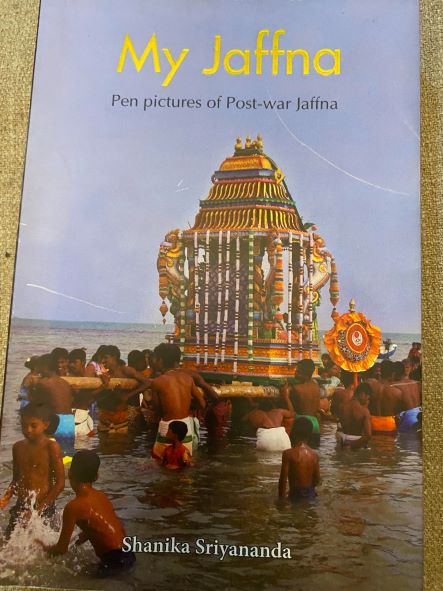
Hiding the evils of Jaffna society and glorifying it as a great culture has been mission of the Tamil and anti-Sinhala-Buddhist intellectuals. It needs great courage to challenge the overpowering Tamil establishment. And that is why Selvy Tiruchandran, the daughter of one  of the great Tamils, S. Handy Perinbanayagam, should be hailed as a path-breaking intellectual. Her latest book, Caste and its Multiple Manifestations, is a brilliant  in-depth study of the casteist forces of Northern Sri Lanka that set fire to the nation. Perinbanayagam pioneered the first anti-caste movement in the twenties. He was a towering figure of the twenties who  challenged the two evils of Jaffna: communalism and casteism. His daughter is following in her father’s pioneering footsteps. This brilliant book will be reviewed next week.

Open letter to Dr. Jehan Perera, National Peace Council of Sri Lanka

December 29th, 2021

Asoka Weerasinghe Kings Grove Crescent  . Gloucester . Ontario . K1J 6G1  . Canada

29 December 2021

Dr.Jehan Perera 
Executive Director
National Peace Council of Sri Lanka
Colombo
Sri Lanka

Dear Jehan Perera:

I read the statement by President Gotabaya Rajapaksa’s to the UN General Assembly which was short and dignified.  Expressing his thoughts by saying that there is a need for a Joint Effort for reconciliation to become a reality.    This expression obviously was the reconciliation between the  minority Tamil-separatists and the majority Sinhalese in Sri Lanka.

To me that statement on re-con-silly-a-shun was packed with ‘international bully landmines’ that would blow-off with every Tamil-biased triggered international pressure-nudge on Sri Lanka. There will be too many International actors who will want to get into the act like – the UNHRC, US, UK, Canada, India, Norway, France, Denmark and the like.  

Jehan, all I can say is –”Sweet Mother of Jesus, please spare my MotherLanka from  this ‘Bias Tamil Blarney re-con-silly-a-shun Gong Show’.

The two operative and active words in President Gotabaya’s statement were Joint Effort”  Joint Effort  should be clearly understood, by the Tamils as that it is stupid trying to clap with one hand even to the percussion sounds of Thunai-lakadi-thantha-lakadi’ on a Mridangam.  And that there is a clear need to have a partner who is in sync with your heart-beat and your footwork when dancing the Tango to La Cumparsita  or even Santa Maria.   Ethically, if there are no two sincere partners wanting to solve this exercise, in reality President Gotabaya’s dream of a ‘re-con-silly-a-shun’  will fail…and fail miserably.  This is not rocket science, and you, Jehan,  being a Harvard-man should comprehend its dynamics easily.

I have taken off my diplomat-cap for the next one hour or so, and I wish you would yours, the one with the Norwegian  insignia at its front-center of it, the country that gives away the Nobel Peace Prize annually. Or telling, showing an open empty palm to these Norwegians Show me the money and I will support  you” because there is nothing Summa in this world.     You scratch my back and I  will scratch yours. And the Sri Lankans, you included, Jehan.  know that pretty well.  And this Eelam issue is a million dollar money spinner.  And you know it pretty well being the Executive Director of the National Peace Council of Sri Lanka, and once upon a time the Sri Lankan darling of the Norwegians.

You jumped with both feet first into the ‘dreamer’s re-con-silly-a-shun’s wishes hot cauldron of Hope, by saying: We are ready to engage with all domestic stakeholders, and to obtain the support of our international partners and the United Nations, in the process.”

Jehan, come again!  Did you really mean …and obtain the support of our international partners and the United Nations, in the process.” Hey! Jehan, be cautious.  I don’t think you have mastered the art of walking on thin ice, or wouldn’t have told the world ..obtain the support of our international partners and the United Nations, in the process.”  Not smart, by any means!

Who the hell are our international partners” Jehan?  Surely not the guys and gals who carry into the UN chambers a large wooden cross, nails and mallets, before they start discussing the internal affairs of Sri Lanka, when it is none of their business, and wanting to crucify my Motherlanka onto it for alleged human rights violations of the Tamils.  There was Genocide they say. Ha!…what crap…what baloney….what poppycock!

Jehan, if my dear Mother was alive, she would have frog-marched every ”our  International  Partners” by his or her ear and washed their mouths with carbolic soap at the kitchen sink..  She always hated liars and bullies, ,and brought me up to be straight and an Honest son of Motherlanka, which I believe I am.

Surely,  Jehan’ you are not going to obtain our international partners and the United Nations,”  to get involved in the discussions for a re-con-silly-a-shun between the two Tamil and Sinhalese ethnic communities who used guns and bullets to speak to each other for 30 years until it ended on  May 19, 2009.

Jehan, the majority of the International partners” who aided an abetted that unwarranted ethnic Eelam war were an anti-Sri Lankan disingenuous, crummy, humbuggish, and a sick .International Gang of terrorism promoters who insists that they be judge and jury of the accountability of alleged human rights violations by the Sri Lankan Government Forces’ during the last five months of the Eelam War

Jehan, if I have my way, I would show them the door and tell them: you are not wanted at these deliberations as you have proved yourselves without any doubt to be Tamil Tiger terrorism supporters, their Godfathers  of their Tamil Tiger  terrorism.     Ah..ahhh,  You are not wanted here. Please leave!”

This reminds me of a modern Child’s Rope Spinning Song:

                            Polly..Polly
                          don’t be silly,
                     the Sri Lankan Army
                     was the best in town,
                       they gave me back
                      the rights to my Life
                    the day they got rid of
                         the cancerous ills
                   the Tiger terrorist-Tamils. 

                            I don’t care
                           for UN’s HRC
                         as they are blind
                          and cannot see 
                              who gave
                    my rights back and say
                       Go sister and live
                             another day”
                    my Sinhalese heroes
                               in Khaki.
                             Polly…Polly
                            don’t be silly,
                        those Khaki men
                        are my God’s sent
                                 Heroes.

Here’s the LITMUS TEST NO. 1, to expose International skullduggery and  humbuggery in Sri Lanka.  Let this be absolutely clear to you Jehan, that since May 2009, not a single International government, our international partners”, who think they are International Human Rights Cops, had identified and acknowledged the textbook example of an amazing act of respecting human rights of a person during the Eelam war that happened in Sri Lanka.

The saving of the lives of 295,873 Tamil refugees from the clutches of theTamil Tiger terrorists, by the Sri Lankan Armed Forces, who were marched for six months like a hoard of unwashed cattle from the west coast to the east coast of Sri Lanka, under the scorching Jaffna-Killinochchi sun, as a human shield.  You know it , they know it and I know it …as what is reassuring about the past in this 30-year Eelam War is that all of this ruthless, ugliness did happen.  But what is amazing is that this Humane Act missed the radar screens of all these nosey-Parker countries who may want to help Sri Lanka’s re-con-silly-a-shun process  That is a bit of Bull” isn’t it Jehan, a crock-full of codswallop”. Surely, not with a bunch of mischievous rats that smell a puking anti-Sri Lanka odour.

Further, Jehan, our international partners” radar missed the amazing  text book Humanitarian Act of not letting these 295,873 Tamil refugees die of starvation.  The army soldiers who kicked-arse of the Tamil Tiger terrorists turned themselves into temporary cooks to help prepare three hearty breakfasts, lunches and dinners a day,  amounting to a million meals each day.   Jehan, this is a ‘Humanitarian  Wow Act ..Sadhu…sadhu….sadhu….Hallelujah…..

Haro-Hara Act” 

You tell me, Jehan, what is the reason that our international partners’ missed these  major Humanitarian Acts by the Sri Lankan soldiers.   There must be a damn-good reason for it.  I smell a nasty den of smelly International rats of Norwegians, Indians, Americans, Canadians, Britishers, Danes, French and so forth.  Not with cheese on their snouts but with clotted Sinhala blood  I don’t like it, and I resent it to the depth of the marrow of my Weera-Sinha bones. 

Do you have an honest explanation, for what I have pointed out,  to absolve the geo-political sins of  ‘Our International Partners” to have them get involved in Gotabaya’s exercise of re-con-silly-a-shun?

Here’s LITMUS TEST NO. 2 to expose International Skullduggery and Humbuggery in Sri Lanka.

The UNHRC has charged Sri Lanka of 40,000 ‘Tamil’  civilian deaths during the last five months of the Eelam war in early 2009.  This is when the Sri Lankan Government Forces kicked-arse of the Tamil Tiger terrorists in the North  and East of Sri Lanka and annihilated them on May 19, 2009 when their leader Velupillai Prabhakaran was shot through his forehead, and found dead on the sands of the Nandikadal lagoon.  The UNHRC says that they have credible evidence” to quote the numbers:,   I say to UNHRC, whoopee do, good for you! What a bunch of Do-do’s.”

 But you guys and  girls at UNHRC are smart and cunning, not wanting to get caught as liars and be slammed and beaten with bamboo-sticks, so you all tell us that the credible evidence cannot be accessed for the next 30 years, a kind of a Covid-19 lockdown.   Smart, aren’t they Jehan?  They know that they are on a silky Sri Lanka-banana-peel slippery slope on that one.

And here is a UNHRC  liar’s  doosey., that Nikki Haley of  US brilliantly picked up and exposed the UNHRC as a cesspool of political bias”, and that Such a Council, in fact, damages the cause of Human Rights.”

And  then there was this British Labour MP for Micham and Morden, Siobhain McDonagh,  who said in parliament that the Sri Lankan Armed Forces had killed 100,000 innocent Tamil civilians during the last five months of the Tamil separatist terrorist war.

She said, I hope that this debate will mark a small step in the attempts of the Tamil people of Sri Lanka to gain justice.”  I asked her in my letter, Surely you are not talking of the same Tamils that I know that populate 40% of the population of the capital Colombo, where the Tamil women drive around in BMWs  wearing designer jeans and sunglasses, are you?  What justice do they need, Siobhain?” 

 And I was curious, Jehan. 

I asked in a letter to her… what was it that you smoked before your morning cup of coffee, or is it something you put into the coffee that made you hallucinate throughout that day when you spewed all that rubbish about Sri Lanka in the British parliament.”  There was not a whimper from her.

And this is when the UNHRC’s charge of Human Rights violations by the Sri Lankan Armed Forces which they said were responsible for 40,000 Tamil deaths during the last five months of the war, oops! became a God damn Hoax.  Especially, when the UNHRC-incumbent liars revolved around the lofty ideals of Human Rights, such as ‘accountability.’

 According to  war statistics in every international war, the casualties were twice the number of deaths.  So here comes the ‘Thousand dollar question” which UNHRC’s High Commissioner Madam Michelle Bachelet and British Labour MP Siobhan McDonagh have to answer respectfully, honestly  and truthfully as this is  a case of ‘accountability’, and you two cannot dodge and hide in your home-country mountain ranges or in meandering river’s coastal green forests.

Well…well…well Madam Bachelet, if 40,000 Tamils were killed by the Sri Lankan Armed Forces, that war according to war statistics should have produced  80,000 casualties.   One would have expected a moving river of wounded bloodied flesh,  broken human bodies with red blood patched bandaids, broken arms in slings, hobbling with the help of walking sticks, and carried in stretchers. Where the hell were/are they?   Did any one of your We are holier than thou”: gang witness this human ugly disaster?

I want to know and the world wants to know. You don’t happen to talk about  them nor do your colleagues who are ready to call the Sri Lankan Armed Forces personnel as War Criminals.   Right, Madam!   Where the hell did the 80,000 Tamil war casualties disappear to..  Come on Madam Bachelet, I want to know so does the whole world want to know.   Is this why Nikki Haley of the US said that the UNHRC  is a cesspool of  politicbias.”  

Not giving us the answer is proof positive that your charge against the Sri Lankan Armed Forces is a badly scripted storyline, which has turned into a  sour HOAX and is coming to bite at your credibility.

And You,  Siobhain McDonagh, where the hell did the 200,000 Tamil Eealm war casualties  go, disappear to, an ABRACADABRA-Vamoose Act”.  You haven’t spoken about them nor did your Labour Parliamentary colleagues.  . Give me a  break Siobhain…give the world a break!  Let’s not  turn the world into a Human Rights Circus where, perhaps, you may have a place  to wear a Clown’s pointy dunce hat,

You are caught in a liar’s-vice, and you have nowhere to go for an escape.  Admit that you picked that number during that hallucination phase in your coffee-spiked morning when you spewed out that number of 100,000 dead at the hands of the Sri Lankan Armed Forces.  Right!   Shish, Lady…how wrong you were.  It was a HOAX wasn’t it  Pity!

The  lack of  a response of ‘accountability’ will be proof-positive that your charges of 40,000 and 100,000 deaths directed towards the Sri Lankan Armed Forces was a HOAX , and you two have no place to hide your 10-shades of red of  embarrassed faces in the Chile’s Cordilleras de Nahuelbuta and the Banks of the meandering River Wandle for Siobhain McDonagh. 

Hallelujah!  You two took a chance, and that’s what nasty politics is all about,  and this is how the cookie crumbled.  Too Bad!

Now, coming to you Jehan Perera.  I have taken my diplomat’s cap, for the very reason that I want to have a straight talk with you. No diplomatic  I am a nice guy nuances…just want to help Sri Lanka,” jargon.

Let’s explore your statement, We are ready to engage with all domestic stakeholders, and to obtain the support of our international partners and the United Nations, in the process” is intriguing.

Who are your  International Partners and the United Nation.”  Let me gaze at my Crystal Ball and give you my readings of the possible some. 

  1. JEHAN, LET ME INTRODUCE MY PHILOSOPHY ABOUT THIS SEPARATIST TAMIL EELAM WAR WANTING THEIR MONO-
  2. ETHNIC, RACIST, TAMIL SEPARATE STATE, EELAM.

Jehan, here it is.  You cannot cut a country into two anymore than you can cut a human into two,.  If you do, you do not have two human beings; you have a corpse.”   I have borrowed these words from Pierre Elliot Trudeau as It certainly made sense.

UNHRC:  This is the group that America’s Nikki Haley quite rightly said, is a cesspool of political bias”.  It is nothing new to us Sinhalese-Sri Lankans!

           UNHRC:  This is the UN group, where Ban Ki-Moon, the Secretary-General of the UN clearly violated Article 2 (7) of the UN Charter which prohibits intervention in matters which are essentially within the domestic   Jurisdiction of any State, thus the panel created by him which produced the Darusman Report and released for International consumption was a  good reason for this Secretary General Ban Ki-Moon to have been Impeached;  This guy was Mooning Sri Lanka quite a bit, and no   Sri Lanka Government’s official protested and made him eat dust.  So he got on his high horse and galloped all over Sri Lanka trampling the dignity of her armed forces who were trained to guard the island’s sovereignty and its peoples. Shoot if they had to. The Tamil Tigers were not fighting with catapults, stones and bamboo sticks.   They were fighting with a sophisticated war armoury, all funded by your ‘International partners”. 

           The Sri Lankan armed forces got the Tamil Tiger terrorists by their jugulars and tails since  they had no Guidance by UNs Ban Ki-Moon or Navi Pillay produced War Manual for Dummies – How to Win a War without    Killing no one.  But the Sri Lankan armed forces came up smelling roses having annihilated the most ruthless Terrorists in the world, the   Tamil Tiger terrorists of Sri Lanka.

            UN’s Ban Ki-Moon was UN’s Secretary General who appointed the three ethically questionable musketeers – Marzuki Darusman who left  Sri Lanka’s Presidential Commission of the Independent Group of    Eminent Persons (IIGEP) in March 2008, left in a huff disagreeing with the Sri Lanka Government and yet signed the IIGEP Report.  That signature entitled him to accept a handsome consultant fee.  And that is how UNs questionable cookies crumble.

            The second Ban Ki-Moon’s panelist  that produced the Darusman   Report was Steven Ratner.   He was an advisor to Human Rights   Watch that has been very critical of Sri Lanka from the very inception of the Eelam War.  Steven co-authored a book with Jason Adams titled   ‘Accountability of Human Rights: Atrocities in International Law   beyond the Nuremberg legacy’,  where on page 123 he has stated that    the convention of banning apartheid should be invoked in relations   to countries such as Sri Lanka.” That statement itself should have disqualified him to be a panelist.  Damn!  Ban Ki-Moon is guilty of that infraction.

            So what did the Sri Lankan Government do about it at the UN?  Sweet   Nothing and hoping that the expatriate activists around the world take on   Ban Ki-Moon on  and ride on their volunteering backs.  Ha!   Jehan, I can quote dozens and dozens of such incidents.

            The third Ban Ki-Moon’s panlist that produced the Darusman Report was South African lawyer Yasmin Sooka heavily dependent on EU   funds to be impartial.  She was also a close associate of the South   African-Tamil Navi Pillay who was then a patron of the Sooka   Foundation, and responsible for the failed resolution against Sri Lanka before  May 2009.

             Jehan, with such credentials none of the three panellists would  qualify to be an honest-non-partisan member to help President’s sincere dream of a Re-con-silly-a-shun Tamil Blarney Gong Show.

             Added to this backdrop are the shameful ignoring of Text book 

             examples of  Human Rights of saving 295,873 Tamil refugees

             from the clutches of the Tamil Tigers, at the end of the war and, 

             the front-line soldiers turned cooks to help prepare a million meals  

             a day to sustain  them.  This is a FACT which cannot be swept 

             under a carpet at the UNHRC, especially that of Madam Bachelet.

              Jehan,  I took off my diplomatic cap so that I can be blunt. 

               If  you had these UNHRC cunning  ‘cesspool’characters to

              introduce them into President Gotabaya’s dream team  to

              proceed with his dream of a Re-con-silly-a-shun Tamil Blarney

              Gong Show  then strike them off your list, for the sake of hanging on to 

               your credibility, as I for one will tag you as a Sri Lankan  Sinhalese- 

               Traitor, period. 

         2    Norway .   …obtain the support of our international partners..”

               you said.

              Now let us look at the salmon eating, helmet horned Viking’s 

              son-of-a Bozoman, the Norwegian Eric Solheim who was in a constant 

              itch to put his thumb into Sri Lanka’s kiribath and pull out a black plum

              and sing to the Sri Lankan Government, 

             Namo..Namo..Matha, Here  I come

              Gathering your nuts in Wesak’s May, 

              to help you dissect your  island into two

              and give the Northern part for the Tamils too,

              Hallelujah…Sadhu…sadhu…sadhu”

              This salmon eating, Eric Solheim had the audacity to tell President

              Mahinda Rajapaksa to his face that Prabhakaran was a brilliant military

              strategist and that his armed forces were no match for the Tamil 

              Tigers.” Remember?

              This is the Norwegian that thought that he might get the jeepers out of 

               President  Mahinda Rajapaksa, when he had the gall to tell him that

               his army would face the same fate as the Germans in Stalingrad 

               during World War II, and expected the Army fall and with them pull the 

               Government down.

               Jehan, if you had in mind to have Norway as an ‘International 

                Partner”,. just don’t be stupid, chalk them out of your list.  Eric

                Solheim trying to project as a honest unbiased Norwegian, does not 

                cut mustard with me.

                This is the Norwegian who gifted Velupillai Prabhakaran a TV addict, a 

                6-foot TV screen despite the former Deputy Minister Vida Hedlgessen 

                objected to it.

                So cut Norway out of your International Partners’ and don’t be

                stupid.  Remember I took of my diplomat cap off, to say what I had to

                tell you.  You keep them in your list of International partners, you bet, 

                and your credibility will be at stake for your cunning. This is what my 

                crystal ball reading says.

                Then there was another Rakfisk eating, no-good Viking,  their 

                 Ambassador Jon Westborg and Dulep of the Tamil Tiger terrorist

                 who were caught in a wiretap. Westborg  was giving information that 

                 the Norwegian government will pay added costs in the transfer of the

                 State-of-the-art communication satellite equipment to the Tamil 

                 Tigers. These Norwegians are morally unfit to be  one of your hopeful 

                 International Partners to help President Gotabaya’s dream of a

                 Re-con-silly-a-shun of the Sinhalese and the Tamils.

            3.  ….to obtain ‘our Intentional Partners’…”  you said.

                My crystal Ball identifies that you are gung-ho to introduce 

                 Canada as an International Partner to assist President Gotabaya 

                 to achieve  a re-con-silly-a-shun’ between the two ethnic 

                 Communities, the Tamils and the Sinhalese who were at war for 30 

                 long  bloody  years which ended on 19 May 2009.

                 That is  when Tamil Tigers were militarily annihilated by the Sri Lankan 

                  armed force when they shot dead their leader Prabhakaran through

                  his forehead on the sands of the Nandikadal lagoon on the east

                  coast.

                 Here is the bottom line of Canada’s interest in Sri Lanka.  They

                 are not guided by a moral compass, but by the Sinhalese blood 

                 soaked votes as nine Greater Toronto Area ridings depend on the

                 Tamil votes.

                 The case of – you give me your vote and we will support your 

                  terrorist cause of Tamil separatism for your creation of your 

                  separate, mono-ethnic, Tamil racist State, Eelam.

                 Jehan, if that was indeed your intention – just STOP it.  Stop being

                 so God damn Foolish. Why you may ask!  This is why…  Sri Lanka 

                 doesn’t need excessive interference by outside  bullying 

                 immoral bleeding-heart international do-gooders into meddling

                 with their internal affairs.

                 Jehan, if you’re one of those bleeding-hearts, let me be blunt. 

                 You are on the path to destroy your credibility as an honest Sri 

                 Lankan  Sinhalese-patriot.  You take my word as enough is

                 enough.  I will be following your story on President Gotabaya’s 

                 dream of a re-con-silly-a-shun.

                 This Canada has no moral right to get involved in Sri Lanka’s

                   Internal strife.  They got their own shameful problems to take care 

                   of and Canada knows it;

                  This Canada aided and abetted the Eelam war for 30-long years;

                  This Canada funded Tamil terrorism in Sri Lanka;

                  This Canada under the Prime Ministers Jean Chretien and

                  Paul Martin let th separatist Tamils collect two million dollars a month 

                  for 13 years to stuff the Tamil Tiger War Chest to purchase a

                  sophisticated war armoury to kill yours and my innocent Sinhalese.

                  They were not fighting this war with catapults and stones, or bow

                  and arrows and bamboo sticks, but with Kalashnikovs and live 

                  bullets, Hand grenades and Claymores mines, bought with the 

                   collected Canadian dollars. They used SA-7s to down two aging

                   Avro transports.  On 10 November 1987, the Sri Lanka Air Force 

                   lost its first attack chopper to a missile when a Mi-24 Hind was 

                   downed while flying escort to two Mi-8 Hip transports. So it was

                   a very sophisticated war.

                  This Canada’s  Liberal Minister of Finance Paul Martin, and Maria 

                   Minna the minister responsible for CIDA and nine other Liberal MPs

                   patronized a $60-a-plate of rice and curry to raise funds in Toronto 

                   for the Tamil Tigers on 6 May 2000.  Do you really want to plant 

                   these Liberal Party members as International Partners of Sri 

                    Lanka.  

                    For Pete’s sake,  give me a break Jehan!

                    That is poor judgement on your part. If you are, you must be out of

                    your blooming mind, Jehan.  Strike Canada off your International 

                    Partners list  to promote  President Gotabaya’s dream of a 

                    Re-con-silly-a-shun, Tamil Blarney Gong Show,  

                   These Canadians are an incredulous bunch of  humbugs. Jehan.

                    It was this Canada that let Kumaran pull off what may be the largest-ever purchase of explosives by a terrorist outfit, the Tamil Tigers (LTTE), the most ruthless in the world.

                    It was on September 22, 1993,the sum of Cdn$990,987 was wired from an HSBC Bank account in Vancouver to an LTTE procurement account overseas.  The Vancouver account was in the name of B.Thambirajah, but it was controlled by the LTTE’s senior leadership in Canada.  Eight months later, Kumaran used the    Canadian money to pull off a deadly arms deal.  Carlton  Trading, a LTTE front Company in Dhaka, and forged Bangladeshi military certificates to arrange the purchase of 50-tonnes of TNT and 10    tonnes of RDX from the Rubizone Chemical factory in Ukraine. 

                    The LTTE freighter MV Swanee took delivery of the cargo at the port of Nikolayev and guarded by Sea Tiger speed boats cruised to    Sri  Lanka’s Northwest coast, where the explosives were parceled out for use in land mines and truck bombs,  booby traps and suicide bombs.

                     It were the Canadian dollars that bought Ukrainian RDX explosives that  was  put to horrific use in the truck bomb  by the Tamil Tiger terrorists that brought down the  Central Bank Building in Colombo’s   Financial District on  31 January 1996, that killed 91 and maimned for life another 1338.

                     It was the same Canada that declared the WAR MEASURE’S ACT    with draconian powers during 1970 October Crisis when FLQ   Terrorized Canada, when FLQ had a separatist armoury of a grand total of 33 firearms and 21 other offensive weapons including   3 smoke grenades, 9 hand knives and 1 sabre.

                     And Canada didn’t like the way the Sri Lankan armed forces  dealt with the Tamil Tigers with an armoury of thousands of M-16s,   AK47s, rocket launchers, land mines, hand grenades, SAMs and   Millions of rifle shells. Jehan, did you find that there was something wrong here. Some kind of a bias?  A Tamil bias.

                     Canada saying to the Tamil Tiger separatists, Don’t worry…Be  Happy, we will cover your Tamil backs. Go use the sophisticated weapons as many as you want to.    But remind yourselves which  political party to vote for at the next    Federal elections.  Remember, the working motto of us Liberals   is  You scratch our backs  and we will scratch your backs”

  Jehan this  is the same Canada that told Sri Lanka We are Holier than thou’, so they slapped Sri Lanka at every  International forum, may it be the UN, UNHRC, AI or any other Provincial Government Council meetings, that the Sri Lankan,soldiers had committed Genocide against the Tamils during the last five months prior to the annihilation of the Tamil Tigers military on 19 May 2009.

This is where my Litmus Tests 1 and 2 comes to play.  If Canada do not have an  acceptable answer to both of them, then you can  disqualify Canada  as a prospective member of your International  partners” as an insolent liar and a humbug.

It was this arrogance, more or less thumbing their noses at us Sinhalese-Canadians in Ontario, the Provincial Government of Ontario passed Bill 104 on May 6, this year.  And the Tamils gloat at as theirs being the first jurisdiction in the world that has charged Sri Lanka of Genocide against the Tamils.  And what is interesting is the UN quite rightly said that the Sri Lankan soldiers did not commit

Genocide.

The Ontario Sinhalese-Canadian Coalition has challenged the Ontario Provincial Council in Ontario’s Highest Court to rescind it.

Jehan it is going to be fun and games.

I for one will be watching the court battle and keeping my fingers crossed.  If the Sinhalese Coalition wins the case I want to see the arrogant Ontario Provincial Government Councillors who voted for Bill104, go down on their knees and kiss the dust that the Sinhalese

Coalition members walked on.  That will knock his socks off even of the Federal MPs who are supporting the Tamils.  And, of course, Prime Minister Justine Trudeau too But what is damning for Canada’s Federal and Provincial Governments is to be told by the Indigenous peoples that these Canadian Government officials  were a bunch of Genocidal Maestros killing their children in residential schools,  not so long ago, 

They found a mass grave of remains of 215 children at a former Residential school in Kamloops, in British Columbia And today (December 28, 2021), the remains of Indigenous children found in former residential schools is now at 7,509 and growing. 

Canadian Indigenous groups are demanding action after the remains of 215 children were found at the residential school in Kamloops, British Columbia.

Jehan, you better stop tolerating such  incentive nastiness and allowing the Canadian POT of Genocide calling the Sri Lankan  unsubstantiated human rights violtions kettle black.

Canada has lost its moral right to question Sri Lanka on  her allegations on Human Rights.   Ask Canada to back off and not  bully and harass Sri Lanka anymore.  Canada has sold its soul for a Sinhlese blood-soaked vote from the Tamil constituents, mainly inthe Greater Toronto Area ridings.  And that is a fact.So I, Asoka Werasinghe of Ottawa, Canada, call on Dr.JehanPerera, Executive Director of the National Council of Sri Lankato disqualify and strike off Canada, if you had Canada as one of the potential, to obtain the support of our International partners” to get involved in President Gotabaya’s  dream of a ‘re-con-silly-a-shun as mentioned at the United Nations General

Assembly.  Do it, Jehan

Sincerely

Asoka Weerasinghe

Ottawa, Canada

Why Sri Lanka And Pakistan Praise Bangladesh?

December 29th, 2021

MD Pathik Hasan Dhaka, Bangladesh.

Five excellent articles praising the ‘Bangladesh Economic Rise Model’ were published in the Pakistan’s major leading dailies recently. Normally Pakistani media outlets don’t publish the positive content related to Bangladesh massively. But this time, Pakistani media start to publish the write-ups on the Bangladesh massively. On the other hand, Sri Lanka’s popular daily ‘Daily News’ published some article praising Bangladesh’s economic thriving.

At the age of 50, Bangladesh is going to be a South Asian Economic miracle. Although Bangladesh (then East Pakistan) was the part of the Pakistan, it has already surpassed Pakistan in almost all socio-cultural and economic indicators. That is the attraction of global eyes including Pakistani media outlets. Pakistan has started to see Bangladesh positively. Basically, rare praise from Pakistan is the highest recognition of Bangladesh. It is the valid truth that Bangladesh’s success story is indomitable. Appreciation by Pakistani media proves the statement. When your opponent praises you, you should think that you are doing better.  Indeed, Bangladesh is now a prime example of a South Asian economic miracle. Many countries and international organizations are appreciating the economic rise of Bangladesh. Even Pakistani media are praising Bangladesh’s economic growth in their reports, editorials, opinions, etc.

Bangladesh celebrated its 50th founding anniversary. From the center to the village level, the festival was celebrated all over the country. Many discussed the successes and achievements of the country in their programs. Pakistani media outlets discussed the issue in their editorial and opinion pages. Among of these, five articles which have been published recently are very excellent. When national dailies publish something on some issues, it carries some important messages for the nation. Today, Pakistani media are praising Bangladesh. Rare appreciation from Pakistan is the recognition of Bangladesh’s success story. They are acknowledging the reality.

The Pakistani writer Shazia Anwer Cheema who is an analyst writing for national and international media outlets. She heads the DND Thought Center. She writes in the prestigious Pakistani daily ‘Express Tribune’ in her write-up which was published on December 29 tilted MIPs: can we learn from Nepal and Bangladesh?’ that Should we not look at Bangladesh and Nepal in our region? They have acquired tremendous benefits out of MIPs. MIPs report about Bangladesh says that Dhaka is on the right track to achieve middle-income expansion and integrating economic growth with social presence.

It is pertinent to mention that Sri Lanka’s well circulated ‘Daily News’ newspaper some excellent articles appreciating the Bangladesh’s economic achievement. By publishing the articles, Daily News wants to convey messages to the Policymakers and people of Sri Lanka that Sri Lanka should take lessons from Bangladesh. Sri Lanka should not loot at the remote. It can gain by following its neighbors ‘Bangladesh Model’. It is true that Sri Lanka can benefit from following the ‘Dhaka Model’.  An article written by Jubeda Chowdhury titled Bangladesh’s Success Story: A worthy example’ is the best example to understand it. Daily News published the article on December 28, 2021.

According to the article ‘Bangladesh has improved its quality of life, economic strength and prosperity, education and research in every field. And that is why in the past Bangladesh was said to follow the developed countries to move forward. Today the countries in Africa are being urged to look towards Bangladesh. No development in Bangladesh today is a surprise, but it is the result of systematic hard work. Today, Bangladesh is reaping the harvest of thousands of days of suffering of millions of people.’

Daily News also published the articles tiled ‘Bangladesh at 50: From ‘basket case’ to rising economic star’ (written by Leah Carter), ‘How Bangladesh became one of the fastest-growing economies’ (written by Kamal Quadir) and ‘World can learn from Bangladesh’ (written by Pathik Hasan).

According to the last one, ‘Bangladesh got its independence from Pakistan in 1971. Born through the Great Liberation War from Pakistan in 1971, it inherited a shattered economy and a completely broken infrastructure. It was described as a hopeless economic disaster by many economic experts and world leaders such as Henry Kissinger of the US who called it a Basket Case” in 1974. Nobody believed that it could survive economically as an independent country. Today the world is both surprised and delighted to see the phoenix rising from the ashes.’

One of the Pakistan’s leading dailies, the ‘Pakistan Today’ published an important and nice article on Bangladesh. The article written by Hafizur Talukdar tiled Bangladesh’s Assistance to Sri Lanka increases its image and prestige’ on December 27. The article praises Bangladesh’s economic growth impressively. According to this article ‘The image of Bangladesh and the respect for the people of this country has increased due to the assistance to Sri Lanka and Sudan from its foreign exchange reserves. Now the question is valid. Bangladesh is now a lending country! If Bangladesh can be a self-sufficient, lender, an economic miracle in South Asia, why can’t others do that? Why does South Asia not take lessons from Bangladesh? Of course, South Asia can learn a lot from Bangladesh’.

Dawn, One of Pakistan’s prestigious newspapers, published an article on December 16 (Day of Golden Jubilee of Bangladesh) titled ‘The Bangladesh Story’ . The widely circulated Pakistani daily ‘Dawn’ published an evaluative article by Israt Hossain. (Pakistani Prime Minister Imran Khan’s Former Advisor for Institutional Reforms and Austerity Ishrat Husain who served as the dean of the Institute of Business Administration, University of Karachi and the Governor of the State Bank of Pakistan). He once again worked in Dhaka, Chittagong and Patuakhali. He is well known to the socio-economic condition of Bangladesh. Not only that, he is also quite proficient in Bangla language. Several newspapers have published articles, editorials on the 50th anniversary of Bangladesh’s victory day. It is the Pakistan’s defeat and Bangladesh’s victory. But this time, Pakistani media outlets start to understand that they are far lag behind from Bangladesh. According to the article,’ The Bangladesh story is an attractive one. How can a country so vulnerable to natural calamities outperform its much larger, better-endowed neighbors — India and Pakistan — in most socio-economic indicators?’ He showed the 6 fact-findings in his article why Bangladesh is moving forward such as cultural homogeneity with the same language, ethnicity, and a shared history and practically no religious, sectarian, tribal, and feudal divisions, the unitary form of government, women empowerment, a continuity in economic policies, projects, and programs despite having bitter political rivalries, efforts to liberalize trade, open its economy, bring in foreign technical know-how and provide generous cash and non-cash incentives to exporters, sustained high growth.

Pakistan’s another popular and leading daily ‘Pakistan Today’ (whose founding editor was Pakistan’s veteran journalist and minister Arif Nizami) published an excellent article on December 24, written by Jubeda Chowdhury titled ‘Why and how Bangladesh is moving forward?’. Jubeda Chowdhury’s well-written article describes the pros and cons (a-z) of the economic growth model and system of Bangladesh. To understand the pace of economic growth of Bangladesh, I suggest all to read the article carefully. According to the Jubeda Chowdhury’s article’ It is not surprising that the milestone of being a middle-income country by 2024 may be missed, but mega projects like Padma Bridge, Karnafuli Tunnel and Metro Rail starting from the Century Delta Plan show that the dream of Bangladesh to be recognized as a developed country by 2041 is to be realized. Not a very unrealistic thought. But it requires an uninterrupted development environment and strong leadership. And this is why the development management of Bangladesh has become a role model for underdeveloped countries in all development agencies including the United Nations and the World Bank.

Pakistan’s leading daily ‘The News International’ published also published an article on December 21 titled’ The West Pakistan Model’ written by Mosharraf Zaidi. In his article, he analyses and compares the Bangladesh Model of economic growth with the West Pakistan Model’. It is pertinent to mention that Pakistani magazine South Asia” published a total of seven stories highlighting the success and achievements of Bangladesh and Prime Minister Sheikh Hasina in March.

Pakistan’s major English dailies – have published articles lauding the economic growth of Bangladesh. They said the country’s economy was booming under the leadership of its PM Sheikh Hasina. They felt Bangladesh was going to be the next South Asian economic superstar. They acknowledged Bangladesh’s tremendous effort to boost its economy over the past few years.

While the Pakistani media has been asking its government to follow Bangladesh’s model, it remains a sore point that Bangladesh -then East Pakistan, its eastern wing – was an exploited colony of Pakistan.

Bangladesh is now ahead of Pakistan in many indexes. It is a matter of considerable surprise that Pakistan is now praising Bangladesh. Although Bangladesh is now just 50, Pakistan is 74 years old. Had Pakistan not exploited Bangladesh economically for 24 years (1947-71), it would have gone further ahead. However, Pakistan praising Bangladesh reflects both the reality and success of Bangladesh.

Saudi Fund for Development Pledges Continuous Support for Sri Lanka’s Development Efforts

December 29th, 2021

Prime Minister’s Media Unit

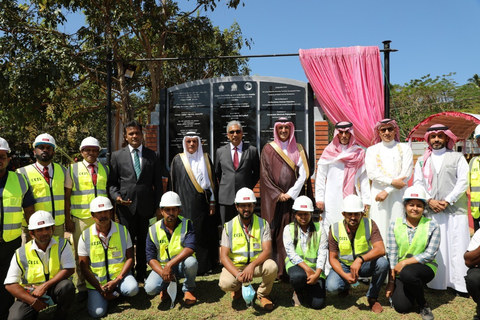
During a meeting with Prime Minister Mahinda Rajapaksa this morning at Temple Trees, the CEO of the Saudi Fund for Development (SFD) Mr. Sultan Abdulrahman Al-Marshad expressed continuous support for implementing development projects in Sri Lanka.

Prime Minister Rajapaksa expressed his gratitude to SFD as well as the Kingdom of Saudi Arabia for the support extended to Sri Lanka for development projects as well as the continued close collaboration and friendship between the two governments.

The very first project initiated with support from SFD was the a water and sewage project in 1981. Since then, during the past four decades, SFD has supported a number of different development projects around the country.

During the current visit to Sri Lanka, the delegation from SFD participated in two project openings. The groundbreaking ceremony of the Wayamba University Township Development Project in Kuliyapitiya took place with the virtual participation of the Prime Minister. The second was the inaugural ceremony of the Bibile-Chenkaladi Road section at Chenkaladi.

In discussing future priorities, Prime Minister Rajapaksa requested SFD to consider projects on minor irrigation, rural water supply and further road development, particularly in rural areas.

New HRC Chief summons police over PTA cases

December 29th, 2021

By Shamindra Ferdinando Courtesy Island

Newly appointed Chairperson of the Human Rights Commission retired Supreme Court Justice Rohini Marasinghe has called for a meeting with the Director CID, Director TID and the head of the Police Legal Division today (29) to discuss cases of those who had been held under the Prevention of Terrorism Act (PTA).

In addition to those who had been taken in during the war, under the PTA, several hundred arrests were made in the aftermath of the 2019 Easter Sunday carnage.

Sources said that PTA cases would be a priority for HRC Chief Marasinghe who received the appointment in the wake of former UPFA lawmaker Jagath Balasuriya quitting the post.

Government and civil society sources told The Island that they hadn’t been able to reach a consensus on the PTA as the latter was sharply divided over the issue. Authoritative government sources said that the PTA couldn’t be done away with as requested by a section of the international community and some civil society organisations. However, the government was ready to explore ways and means of addressing the concerns of those demanding the abolition of the PTA, they said.

The European Union and the Geneva-based Human Rights Council want Sri Lanka to abolish the PTA. Both have raised specific issues such as the detention of lawyer Hejaaz Hizbullah over his alleged involvement with the Easter Sunday attackers.

Dr. Balasuriya resigned in the wake of criticism of his appointment. Following his resignation, the HRCSL called for the appointment of what it called a distinguished person for the post. BASL President Saliya Peiris, in a letter addressed to President Gotabaya Rajapaksa stated: Since its inception the HRCSL has been chaired by persons who have distinguished themselves in the fields of human rights and law. Prior to 2020, the Chairpersons of the Commission were Justice O.S.M. Seneviratne (retired Judge of the Supreme Court); Faisz Mustapha PC; Dr. Radhika Coomaraswamy; Justice P. Ramanathan (retired Judge of the Supreme Court); Justice S. Ananda Coomaraswamy (retired Judge of the Supreme Court); Justice Priyantha Perera (retired Judge of the Supreme Court) and Professor Deepika Udagama. As Your Excellency will note the Chair of the HRCSL has been held by either retired Judges of the Supreme Court or those who have been renown in Sri Lanka and internationally for their professional and academic work on human rights”.

In addition to Dr. Balasuriya, civil society activist and former head of Sevalanka Harsha Kumara Navaratne too resigned from HRCSL. The latter received appointment as Sri Lanka’s HC in Canada.

Sri Lanka confirms 419 new COVID cases and 21 new deaths recorded in Sri Lanka

December 29th, 2021

Courtesy Adaderana

The daily count of COVID-19 cases confirmed in Sri Lanka moved to 419 today (December 29), the Epidemiology Unit said.

This brings the total number of confirmed cases of coronavirus reported in the country to 586,183.

As many as 560,085 recoveries and 14,944 deaths have been confirmed in Sri Lanka since the outbreak of the COVID-19 pandemic.

More than 11,000 active cases in total are currently under medical care, official figures showed.

The Director-General of Health Services has confirmed 21 new coronavirus-related deaths for December 28, increasing the death toll in the country due to the virus pandemic to 14,944.

According to the figures released by the Government Information Department, the deaths reported today include 14 males and 07 females.

Seven of the patients are aged between 30-59 years. The remaining 14 are in the age group of 60 years and above.

Sri Lanka receives $ 1.5 billion in Chinese currency

December 29th, 2021

Courtesy Hiru News

It is reported that Sri Lanka receives USD 1.5 billion in currency exchange facility from China in Chinese Yuan.

Accordingly, the Central Bank of Sri Lanka will receive nearly 10 billion Chinese Yuan, equivalent to USD 1.5 billion.

Sources at the Central Bank stated to Hiru News that the money would be used only for imports through China.

Although the value of our official foreign reserves has exceeded USD 3 billion after receiving this financial assistance from the Central Bank of Sri Lanka, in fact the Central Bank of Sri Lanka still holds close to USD 1 billion, the sources said.

Following is the full statement issued by the Central Bank ..

Realisation of Expected Foreign Currency Inflows and the Official Reserves Position

The Central Bank of Sri Lanka wishes to inform the general public that (as announced on 22 December 2021) expected foreign currency inflows are forthcoming and with the receipt of recent inflows, the official reserves position has now reached around US dollars 3.1 billion, and is expected to remain at such level by end of 2021, as well. In addition, as articulated in the Six-Month Road Map for Ensuring Macroeconomic and Financial System Stability, foreign currency inflows in connection with several other facilities that are under negotiation at present, are expected to be realised in the early part of January 2022.

The measures taken by the Central Bank with a view to improve foreign exchange liquidity in the domestic market, such as introduction of incentive schemes for workers’ remittances, and the rules covering the repatriation and conversion of exports proceeds are also augmenting official reserves. The welcome robust recovery in the tourism sector and the strong performance in exports are further buttressing the external sector. Accordingly, the Government and the Central Bank are confident that the reserve position will remain at comfortable levels throughout the year 2022.

In this background, it is unfortunate that the hasty and inexplicable decisions of certain rating agencies to downgrade the Sovereign, even in the face of clear reassurances of impending forex inflows had caused unnecessary losses in the secondary market to investors in International Sovereign Bonds issued by the Government of Sri Lanka. Such rating actions also weighed negatively on investor confidence, resulting in undue delays in certain expected foreign currency inflows which may have materialised earlier, if not for such unwarranted and questionable rating actions.

Published Date: <br />Wednesday, December 29, 2021

ADB to reimburse funds spent for Sinophram vaccines

December 29th, 2021

Courtesy Hiru News

The Asian Development Bank has agreed to reimburse USD 85 million spent for Sinopharm vaccines, stated State Minister Prof Channa Jayasumana

Do you need a government? to sell everything to other countries for the leaders to just remain in power and enjoy the luxuries of Office while the masses are starving and dying?

December 28th, 2021

Dr.Sudath Gunasekara Mahanuwara 

On the eve of Christmas of our politicians; who continue to destroy this resplendent Island and the Sinhala nation  and to invite the whole nation to rise up immediately against this betrayal and save your motherland from these devils.

I request the editor to republish the same at this moment as it fits in very well to the present scenario of the proposal to sell this national asset to India by the present Government as well. There is very little difference between the two deals. Only the names of politicians are different. The, story is the same. The only difference is, then it was Yahapalanaya and now it is SLPP

The following article was written by me in 2017 Posted on April 10th, 2017

Dr Sudath Gunasekara. Mahanuwara

7.4.2017.

Protection of the country from outside invasion, maintaining law and order and providing the welfare of the people, we have learned, as the three fundamental functions of any state.  Protection of Sambuddha Sasana has been considered even more important in this country by our ancient Kings.

Since the Government of this country today has miserably failed to uphold all these basic functions of a state, I call it a classic example of a failed State in world history. I put the blame for this crime squarely on the President as the legal Head of the State, even though the actual man who runs the show is Ranil Wickramasinha who is considered the de facto Head of the State.

Now to see the latest national crime, please read the following news item (Daily Mirror 8.4.2017)

After deliberations involving President Maithripala Sirisena, Prime Minister and Indian High Commissioner Taranjith Singh Sandhu, the government has decided to lease out the Trincomalee Oil Tank Farm for development jointly with India, a Minister said yesterday

In the lower farm, there are 14 tanks currently being used by Lanka Indian Oil Company (LIOC). However, there are another 84 tanks in the Upper Tank Farm that are not being used at the moment.

Petroleum and Petroleum Gas Minister Chandima Weerakkody told the Daily Mirror that ten of these tanks would be retained by the Ceylon Petroleum Corporation (CPC), and the rest would be developed jointly with LIOC under a joint venture.

He said the government decided on this after a series of meetings involving President Sirisena, Prime Minister Ranil Wickremesinghe , the Indian High Commissioner and him.

  The initial move was to hand over all the tanks to the Indian authorities. However, the Minister said President insisted that at least ten tanks should be vested with the Sri Lankan side. (Kelum Bandara)”

– See more at: http://www.dailymirror.lk/article/Trinco-oil-tanks-to-be-leased-out-to-India-126944.html#sthash.QhsL2NnY.dpuf

My Comments

Isn’t it strange that these four people are the Government of this country. Weerakkody was only a spectator of this crime. Furthermore since the real critical man behind this decision was the Indian High Commissioner,  I conclude today India is the Government’ of this country. In fact India has been virtually running this country since 1987 with conclusion of the JR/Rajiv Indo-Sri Lanka Accord. The setting up of 9 Provincial Councils the last nail on the coffin of the Unitary State of Lanka, the Government of Sri Lanka has virtually come to an end. The Provincial Councils, though introduced at gun point by India in 1987, indeed was the culmination of the colonial process of separation of Sri Lanka on ethnic and regional basis, the British implanted in 1832 by carving out the Island in to five Provinces.

It was only last week papers reported Ranil Wickramasinha wanted to lease out all Oil tanks in Trinco to India just to satisfy and pacify India against the Hambantota deal with China. They also reported he is planning to lease out or rather sell some other national assets and parts of the country to other countries like Japan, Thailand, US and India including the Trico harbour and a section of Colombo Harbour as well

Yesterday another news item said some cabinet Ministers objected to Ranils proposal to give the oil Tanks to India quoting National security risks etc.  I wonder whether these Ministers are aware that it was also Ranil who gave 14 tanks to the IOC in 2002 when he was accidentally Prime minister for two years. With this new decision all 101 oil tanks in Trico will be sold to India. Remember that will conclude the selling of the 805 acres on which these Oil Tanks stand, its entire surroundings, Trincommallee Harbour the best natural harbor in the Eastern world and the second deepest in the world, and an invaluable national asset and definitely the most strategic Harbour, not only in the Indian Ocean but also the 21st century new world. Also we have to remember that Trinco is the declared capital of the dream EELAM of the Tamils the world over and the Tamil EELAM headquarters in the merged Northern and Eastern Provinces of this country as it was decided both by the Tamils and India.

Rani Wickramasinhas decision to hand over these oil Tank with the hinterland of 850 acres and the Trinco harbour to India is not at all surprising as he is the Nephew of JRJ, who once argued,

A free Lanka, independent of all other nations of the world, is difficult to conceive of. An Indo–Lanka Federation may have to be discussed, may even have to be planned for and may be useful for us to achieve. In the Federal Legislature, Lanka must be accorded a status equivalent to the status of the indian Provinces It is not possible for us ever to be again the Lanka of old. We can only dream of the days of Dutugemunu and Parakramabahu and of the deeds of valour of the Sinhalese heroes against the invaders from India; we have to be citizens of a great and powerful India”

(Documents of the Ceylon National Congress and National politics in Ceylon 1929-1950)

It may be his uncle’s dream that now Ranil is trying to fulfill, who knows?

Once Ranils deal is closed virtually this part of the country will be a de facto and de jure Indian territory out of bound for Sri Lankan Government as already the land leased out to India by Ranils in 2002 with the 14 Tanks are already declared out of bound to Sri Lankan Government. If his plan works the day the entire North and East becoming Indiana territory and part of Tamilnadu is not that far.

The decision to hand over this most strategic hub of not only in the South East Asian region but the whole world to India a powerful member of the Quad Power block (Us, India, Japan and Australia) in the growing struggle between them and China in the Indo-Pacific region will definitely have far- reaching geo-political, geo-strategic, economic and military consequences as India will most likely use this hub to attach China. In sum Sri Lanka will be the number one victim of all consequences arising from all future global wars as it had already happened during the World War 11. As Britain was using Trinco with its 101 oil tanks, the Harbour and its strategic position in South East Asia.

(In fact, the oil Tanks were built here by Mountbatten as the nucleus of South East Asia for the 2nd World War)

The key man in this deal being the Indian Ambassador looking for the Indian interest unlike the self interest of our politicians or officials. This is the difference between Indians and Sri Lankans and also the secret behind their success and our failures. They love their country and their interest above all other factors.  Our people keep self-interest above all national interests.  So, it is nothing but a total sell- out by the President and the Prime minister.

Look at the Ministers lame excuse,

‘Petroleum and Petroleum Gas Minister Chandima Weerakkody told the Daily Mirror that ten of these tanks would be retained by the Ceylon Petroleum Corporation (CPC), and the rest would be developed jointly with LIOC under a joint venture. He also said the government decided on this after a series of meetings involving President Sirisena, Prime Minister Ranil Wickremesinghe, the Indian High Commissioner and him. (weren’t there technical and economic advisers at this discussion)? 

On his part this is nothing but talking like a parrot criminally neglecting his responsibility as the Minister to point out the repercussions of this dangerous deal. I am sure as the Minister in charge of this subject for the last two years, if he has been awake, he should have seen the numerous political, economic, strategic and social repercussions the country is facing due to the foolish IOC deal. He also should have known how this gold mine that has been described as a forgotten marvel lost in time and absorbed by the jungles” was lying idle since Independence in 1948 without being used by all Governments. This is a glaring example of how our governments and officials including Secretaries of Ministries, Chairmen of CPC and technical people have been making use of the valuable resources of the country for the country’s development. Also, it shows how irresponsible and negligent they have been in their duty by the motherland.  What can you expect from these flag posts ministers and MPP and officials whose fate rests entirely in the hands of the Party Leader.  No wonder the Indian bureaucrats like their politicians, have crept through one ear, and come out from the other” as the famous Sinhala saying goes, very cleverly deceiving not only the President, PM and the Minister but also the Sri Lankan Bureaucrats. At least if there had been one smart and intelligent patriotic man like the Late N.Q. Dias this disaster would have been definitely averted.

Does this mean we have undervalued and betrayed the national security risks in front of the expansionism and subversive policies of the Indian Government and have fallen prey before the Indian Giant? Definitely yes. It clearly displays the worsening life and death struggle for political power and survival to remain in power at any cost and they have hit a compromise for their political survival at the expense of the country’s national security and all the future interests of the nation.

The government has already sold our assets and the profit -making business of the CPC to India and killed a hen that could lay golden eggs. Now what Ranil is doing is he is trying to complete what he could not do in2002.

This is not the last sellout and betrayal. Worst things are yet to come. Already negotiations are going on to sell Air Lanka as well. I am sure next they will sell Katunayala and Mattala Air ports and Colombo and Hambantoa harbours as well. When are they going to stop this ”selling and betraying?

I am wondering as to why we should maintain this monkey’s cage called Parliament with a bunch of 225 brokers called MPP, better known as rouges and traitors at such high cost allowing them to destroy this country and the Sinhala nation once at the top of the world  in par with Romans ,Greeks and Indians.?

Is this their national economic policy of nation building? No wonder their Finance Minister is awarded the trophy for the best Minister of Finance in the world by the UK Government and the best in Asia by their agents in Asia for destroying a proud world civilization which they could not do in spite of centuries of Colonial exploitation, plundering and destruction. Now it being done through their agents, the debris left by them when the left our shores.

Ranils argument is that they cannot settle the billions of loans the previous Government has taken. Therefore, they are compelled to sell these things to find the money to develop and survive. In their election manifestoes neither Sirisena nor Ranil said these things.  They only promised Yahapalanaya and a Change

At the same time, we all know the way they spend the meager resources of this country and the borrowed and printed money in billions to maintain the luxuries of politicians and innumerable superfluous institutions created after every election just to give employments to their political catchers just to enable them to remain in power and enjoy.

Why the hell they can’t stop wastage, large scale robbing,  extravagance and scrap curses like the Provincial Councils and all useless corporations and political creations created just to give employment to stooges, supporters and relations of politicians, why can’t they reduce the number of so-called  Ministers over 70 in number  and the  225 representatives who never represent the people. They only represent the party leaders just to collect votes and camouflage the majority in Parliament and collect excessive perks and facilities afforded to politicians and higher ups like duty free vehicles, official vehicles, numerous allowances, foreign sojourns and pleasure trips for politicians at public expenses, wasteful meetings tamasas and public shows where politician including the President, PM and Ministers of different type to show off to the asinine party supporters

This deal reminds me of the strategy adopted by the wise old Craw, in Panchatantara, to destroy the Owl den along with all the owls. The old craw got the others to bring and heap firewood at the doorway of the owl den during day time and set fire in the night when owls are sleeping. Similarly, the Indian Ambassador now has got the petrol tanks, obviously more inflammable and destructive than firewood. So is it a way to set fire, rather metaphorically and literally too to Sri Lanka.  Panchatantara is Indian.  The Ambassador is also Indian.  The fire to set Sri Lanka on fire and fuel is provided by our own elected President and the Prime Minister assisted by their bunch of parasitic Ministers and the cohort of MPP. Probably they have taken over the job of the Indian Monkey King Hanuman  in Ramayana as well.

The Oil Tank Farm issue should not be treated in isolation as an Indian threat. It has to be considered along with all other incidents such as the Indian  Foreign Minister Sushhima’s threat, Congress MP and former Union Minister Shashi  Tharoor’s speech at the Book launching,  Padma Rao Sundarji  of WION’s senior international correspondent’s interview with Ranil, I mentioned in my articles last week in Lankaweb  and many other allied statements and issues like ETCA, poaching problem in the Palk Straight, the Tamilnadu issue  and regular statements of spokesmen of the so-called International community who are after our blood.

The last question I pause to my readers and all Sri Lankan voters is as to why we should maintain a treacherous, inefficient and unpatriotic Government like this anymore?

I am also attaching a description of the Trinco Oil Tank Farm for the convenience my readers here.

Trincomalee Oil Tank Farm and World War II – ත්රිකුණාමලය තෙල් ටැංකි සංකීර්ණය

Trincomalee Oil Tank Farm and World War II – ත්රිකුණාමලය තෙල් ටැංකි සංකීර්ණය

RATE THIS LOCATION :1 Star2 Stars3 Stars4 Stars5 Stars (2 votes, average: 3.00 out of 5) ****

Satellite view of the farm of giant storage tanks lost in the jungles

Satellite view of the farm of giant storage tanks lost in the jungles

The Oil Tank Farm of Trincommallee was built by British but the never used in full capacity after independence is a forgotten marvel lost in time and absorbed by the jungles. This  is a hidden landmark  to the public eye but provides a spectacular aerial view creating 101 random circles covering 850 acres, like eggs of a giant alien waiting to be hatched from a sci-fi movie. Most of this land is covered by scrub jungle teaming with wildlife including elephants and leopards.

Trincomalee harbour being the second deepest natural harbour in the world, the British who were in control of the island decided make this as their primary logistics station in the east after world war I. They started the oil storage project in the 1924 and completed in late 1930’s. The farm had 101 storage tanks built with 1 inch thick steel sheets and the tanks near the harbour are enclosed by 1 feet thick concrete rings.

Legend has it that labourers were brought in from British African colonies to complete the work. 102 tanks were planned but the site of 100th tank was cleared but never built probably out of superstition.

[About the tank number 91 on the Trincomalee Oil Tank Farm]

[Destroyed tank after the Japanese kamikaze attack at the Trincomalee Oil Tank Farm]

[Trincomalee Oil Tank Farm]

[Inside a neglected oil tank at Trincomalee Tank Farm]

[Trincomalee Oil Tank Farm]

[Trincomalee Oil Tank Farm]

Each tank could hold 12,000 tonnes of fuel and has an astonishing total capacity of over 1.2 million tonnes. This dwarfs the CPC’s existing storage facility and even the new storage complex built by the Chinese at Muthurajawela, which has a capacity of 200,000 tonnes.

The storage complex fell in to disuse after the British ceded power in 1948  and the nature took over the land. The government owned CPC used only 15 tanks in the lower tank farm close to the sea until the farm was handed over to the Indian oil giant IOC in 2002. The IOC too used only these tanks while others were forgotten in the jungles.

Out of the 101 tanks one of the tanks was destroyed when a Royal Ceylon Air Force plane crashed in early 1960’s.  The steel has long since been removed with only the concrete cover remaining.

But most famous is the destroyed tank number 91 lying in the far edge of the forest. Only the charred, twisted and melted metal remains of this tank and a small notice near the tank gives details of how the tank was destroyed in a kamikaze attack during the Japanese air raid on Trincomalee at dawn on April 9, 1942.

The Trincomalee harbour was a critical operational and logistic station for the allied forces operating the region during the world war II. The Japanese attacked Trincomalee harbour in 1942 and the tank farm which provided refueling facility for most of the Naval destroyers in the region was one of their main targets. The Japanese couldn’t achieve its objective, but  one plane piloted by a ‘Shigenori Watanabe’ probably hit by anti-aircraft gun fire made a kamikaze dive on to the tank number 91.

The resulting fire that broke out lasted for seven days and generated so much heat that the steel melted and rolled over on itself. The rusted wreckage of the engine is all that can be seen of the aircraft is now on display at the Air Force Museum in Colombo. Only a skull was recovered out of the remains of the passengers of the air craft.

Since this tank farm is under the control of IOC, permission is require to enter the premises from them

22 Responses to

Do you need a Government? to sell everything to other countries for the leaders to just remain in power and enjoy the luxuries of Office while the masses are starving and dying?”

    Christie Says:

    April 9th, 2017 at 6:30 pm

    Keeping the Sinhalese poor and starving is by the Indian Empire are acts well practiced and proven within the Indian Union and Indian Colonies.

    Dilrook Says:

    April 9th, 2017 at 7:27 pm

    We are blaming the inevitable impact of limitless borrowing and wasting borrowed funds. As with everything in Sri Lanka, borrowing becomes a problem when we have to repay. When we were borrowing, it was all good. As the saying goes, the pain of the wedding celebrations is felt at childbirth.

    As the nation is unable to service the massive debt, more and more anti-national events will take place. The choice is between absolute national bankruptcy and selling off national assets. It is Hobson’s choice. Politicians who borrowed beyond debt serviceability must take responsibility.

The rest responses deleted for brevity Please.

New Book ‘Buddhism in Germany’ by William Peiris

December 28th, 2021

Senaka Weeraratna

Buddhism in Germany by William Peiris focuses on the contribution made by the German scholars towards the spread of Buddhism in Germany in particular, and the West in general. The Book narrates the manner in which Buddhism was spread in Germany, who gave leadership in promoting Buddhism and the manner of reception and attitude of Germans towards Buddhism. 

Germans have demonstrated exemplary conduct in the acceptance and practice of Buddhism. In Germany it is not intellectuals alone who have embraced Buddhism but even a good number of ordinary common people have adopted Buddhism as their way of life. 

In her Foreword, Mrs. Sirima Bandaranaike, then Prime Minister of Sri Lanka (January 1975) says as follows:

” This is a book that should be read by every Buddhist, for it contains the story of ‘ Buddhism in Germany’. 

The idea of disseminating the Dhamma in Germany originated with a son of the soil, Asoka Weeraratna, (now the Ven. Dhammanissanti of the Nissarana Vanaya, Mitirigala).  He had the active support of his elder brother Dharmasena, with whom he was engaged in business in Colombo, in sending out to Germany, the first and only Buddhist Mission, and of acquiring the late Dr. Paul Dahlke’s Buddhist House in Berlin from his heir by the German Dharmaduta Society of Sri Lanka. 

My husband, the late Prime Minister, Mr. S.W.R.D. Bandaranaike, took a great interest in this project and helped it to the best of his ability. In fact, it was he who had the honour to carry on his head the golden relic – casket, leading a procession to the Colombo Port and hand it over to the Mission to be taken to Germany in 1957. 

The Mission is doing excellent work under the direction of Sri Lanka Buddhist monks resident in Berlin.

The author (William Peiris) is well known as the biographer of Sir Edwin Arnold, the celebrated author of the beautiful poem, The Light of Asia, published by the Buddhist Publications Society, Kandy in 1970, and The Western Contribution to Buddhism published by a Delhi firm in 1973. He has been a Journalist for well over half a century and a radio broadcaster for many years.

I have much pleasure in recommending this book.”

In another Foreword, Ven. Kirama Wimalajothi Thera, founder of the Buddhist Cultural Centre, who was instrumental in publishing this Book, says:

” A landmark in the German – Sri Lanka relations is the Ceylonese Buddhist Mission to Germany which was inaugurated under the auspices of Asoka Weeraratna in 1957.  It was headed by Ven. Soma Thera of Vajiraramaya. 

We of the Buddhist Cultural Centre have great pleasure in placing this book – Buddhism in Germany – at the hands of the English readership. At this instance we particularly like to place on record our indebtedness to Manjari Peiris, the beloved daughter of William Peiris, for providing us with the long forgotten and shelved book and all other paraphernalia and facilitating it as we are publishing it for the first time.” 

This Book published in 2018 is now available at the Bookshop of the Buddhist Cultural Centre, No. 125 Anderson Rd, 

Nedimale, Dehiwala. Price – Rs. 380 per copy.

https://vymaps.com/LK/Buddhist-Cultural-Centre-Online-Bookshop-706280326144475/

https://www.buddhistcc.com/

Senaka Weeraratna

Millions of animals are killed every day, but there’s a reason nobody cares

December 28th, 2021

Christopher Sebastian

Perhaps you’ve seen this meme before or variations of it while scrolling through your social media feeds. Impossibly huge number of human lives lost juxtaposed near impossibly huge number of animal lives lost. We often reason that these monolithic numbers will move our friends to action.

But chances are high that your friends don’t even read those memes before they scrolled on by.

Does this mean that you’re surrounded by soulless monsters? Well, probably not.

As the number of victims in a tragedy increases, our empathy shuts off the lights and closes the blinds. This happens even when the number of victims increases from one to two. This paradox is known as psychic numbing.

What’s psychic numbing?

Psychic numbing is a psychological phenomenon that renders us indifferent to the suffering of large numbers of individuals. The phrase was popularized by Paul Slovic, a psychologist at the University of Oregon. Slovic’s work asks the question: Why does the world often ignore mass atrocities? And the answer is simple. The human mind is not well equipped to think about millions or billions of individuals. And this is true whether we are talking about any marginalized community, be they mice or men.

Take, for example, that meme. Are you mentally capable of considering what 153 million animals looks like? Really really? When we see one life, we can imagine their hopes and pain. But 153 million is a complete abstraction. Human compassion has a hard limit, and that hard limit profoundly shapes human events.

But every coin has two sides. And if more victims only results in further apathy, then the opposite of psychic numbing is…

The Singularity Effect

The singularity effect occurs when an individual life is valued very

highly. Our immediate response to a single individual in distress is to protect them. But that response is not proportional as the number of individuals increases.

This explains why we root for a cow who escaped the slaughterhouse, but our collective care leaps straight out the window when we order a steak during our next lunch.

So then what does this mean for animal advocates?

According to Slovic, individual stories and individual photographs can be effective. They help us glimpse harsh realities at a scale we can connect to emotionally. But then there has to be somewhere to go with it.

In an interview with journalist Brian Resnick, Slovic explained this by way of a study published in Proceedings of the National Academy of Sciences. This study focused on Aylan Kurdi, the Syrian boy whose drowned body was photographed lying on a beach.

Since 2011, the death toll in Syria marched steadily into the six figure region and public reaction was fairly unmoved. However, researchers analyzed the reaction to that photograph and people were properly shook. Kurdi caused people to care about the Syrian war in ways that statistics on hundreds of thousands of deaths had failed to do. But it’s important to…

Mobilize people while their empathy is engaged because the window of care is unforgivably small.

Slovic said, It’s not enough to break through the numbing. You have to give people somewhere to go. You have to then have some action options that they can take.”

In the example of the Syrian war and resulting refugees, there were several actions that people could take. Slovic told Resnick,

In Sweden, where they had taken in 160,000 Syrian refugees, the Swedish Red Cross had created a fund to get money to help take care of this mass influx. The day after that photograph appeared, donations went from $8,000 to $430,000 — because of the photograph. Then we could see over time how … it stayed elevated for about a month or so, and then it went back [down].

These dramatic stories of individuals or photographs give us a window of opportunity where we’re suddenly awake and not numbed, and we want to do something. If there’s something we can do, like donate to the Red Cross, people will do it. But then if there’s nothing else they can do, then over time that gets turned off again.”

So take this into consideration the next time you post a meme showing statistics of animal violence that might be challenging for people to grasp. Those memes aren’t necessarily ineffective. But there might be more creative ways to use social media to make the same point.

After all, if people in our social circles aren’t even able to conceive of the value of millions of human lives, are they really prepared to conceive of farmed animals and others as individuals?

Even Joseph Stalin recognized that One death is a tragedy; a million deaths is a statistic.” And he’s the guy most remembered for competing with Hitler for western civilization’s greatest villain!

For more on psychic numbing and genocide, you can read Slovic’s work here. And for more on digital media literacy for animal rights, consider emailing me to schedule a full lecture in your city.

Did you like this piece? Share it with your friends? Find it useful to counter bad arguments? Please consider contributing to my Patreon. Your contribution helps keep black voices a part of the mainstream discussion on veganism and animal rights.

Terror in Tamil Nadu: In Conversation with B R Gautaman

December 28th, 2021

Shocking state of affairs in Tamilnadu due to Muslin extremism

In the backdrop of the terror attacks by Islamic fundamentalists in Sri Lanka, we take a look at the vulnerabilities in Tamil Nadu. The National Tawheed Jamath with sympathies towards the ISIS has been declared as the perpetrator of the Sri Lankan attacks which left more than 250 dead. Tawheed Jamath has been raising its fundamentalist agenda and flexing its arms in Tamil Nadu. However, though information of their activities have reported in media, there has been an almost eerie silence and disregard for the dangers posed to the state. In this episode, I speak to Shri. B R Gautaman, Director, Vedic Science Research Institute, who has been tracking these jihadist turn of events in Tamil Nadu in every sphere of life and made a compilation of these activities. Intel agencies and security experts should take note of these observations and act before something serious happens in Tamil Nadu.

Book Review: “My Jaffna: Pen Pictures of Post-war Jaffna” by Shanika Sriyananda, Fast Publishing (Pvt) Ltd.

December 28th, 2021

Courtesy NewsIn.Asia

Book Review: “My Jaffna: Pen Pictures of Post-war Jaffna” by Shanika Sriyananda, Fast Publishing (Pvt) Ltd.

Colombo, December 28 (Colombo Times): When you are writing the book, write that Jaffna people love Sinhala people. We both want to live together like how we lived for centuries without getting burned by the flames of separatism” – Selvaratnam, resident of Jaffna

The political rhetoric very often grabs headlines. The shrill voices of emotive appeal very often tend to paint a black and white picture, drowning out the many shades of grey that constitute everyday life experiences.  In My Jaffna: Pen Pictures of Post-War Jaffna” Shanika Sriyananda has attempted to do justice to the voices of people living everyday experiences through the challenges of conflict and suffering. In this book, the author focuses on the relationship between the local residents and the Army, and also the recollections of local residents about their relations with the Sinhalese during the war. Today, the government as well as many Sri Lankans are keen on bringing about reconciliation among the ethnic groups in the country. In this context, authentic testimony by local residents about their interactions with the Army as well as the Sinhalese people in general, is essential because it helps combat propaganda often spread by Sri Lanka’s critics including LTTE-friendly groups abroad that the relationship between Tamils and Sinhalese is one of perennial enmity and hatred.

First, with regard to the relationship between the local residents and the Sri Lanka Army, whereas Sri Lanka’s critics and LTTE friendly groups claim that the local residents see the Army as an oppressive presence, the interviewees tell a different story, namely that they see the Army as a positive and helpful force. For example, in a chapter titled Saviours of the people”  one of the interviewees, a doctor in Jaffna, describes the work done by the Army to uplift the medical services and the other related services in the area.  He says, Many Hospitals in Jaffna were permanently or partly destroyed during the war but during the last four years all of them have been reconstructed  or refurbished” ( Page 230). The same interviewee discusses the blood donation programs carried out with the assistance of the Army and points out the extraordinary fact that, The Army is the largest blood donor to the  Jaffna Blood Bank” ( page 231 )

My Jaffna

Another interviewee, in a chapter titled No more brainwashing of  Youth” describes his experiences as a child growing up in LTTE-controlled Jaffna. He describes being subjected to LTTE propaganda about the Army. He says, I was sitting in the front bar of his bicycle  [my father’s] when two soldiers at a checkpoint stopped us. I closed my eyes thinking they were going to kill me. I started crying. They were young soldiers and they gently touched my head telling Appa to take me to the doctor soon. I first checked whether they had blood-stained mouths and crooked legs. This was my first experience of a Sinhala soldier’s kindness and warmth. And then I knew they were not aliens, Today I laugh at myself when I recall these incidents but it was not our fault or the fault of any of the youth in my age group”( page 96)

To turn next to the recollections of relations with the Sinhalese, in a chapter titled ‘Appacchi the peacemaker” an interviewee discusses his experiences when the LTTE chased him away from Jaffna and he was forced to move to Dambulla. I was very happy to teach English to poor children from farmer families. My friendship with the Sinhalese runs to my University days when we shared the same room and the same plate of rice. I used to visit the houses of my Sinhalese friends. Lal Pataberiya, my batchmate and now a principal of a rural school is one of my good friends from those days.” (Page 55).

Author Shanika Sriyananda

Finally, in a chapter titled Sinhala Teacher in Chunnakam,” an interviewee discusses his experiences teaching Sinhala in Jaffna. He says I firmly believe that learning each other’s language is essential in the post-conflict era. My friendship with the soldiers and the Sinhalese grew as I knew the language. For centuries, the Sinhalese and Tamils lived together but LTTE terrorism broke that relationship distancing us from each other. Now we have begun to live peacefully.”(Page 274)

Reconciliation is a process that involves not just restoring people’s physical lives but mending hearts and minds as well. The author of this book has shown a side of the Sinhala -Tamil relations that is not often discussed and often distorted through propaganda. Such positive stories need to be disseminated, especially among the younger generation and set as examples for future generations to emulate.  The effort made in this regard through  this work should be commended.

(Reviewer Hiruni Jayaratne is a Researcher in Conflicts and Human Rights and is a consultant to the Strategic Communication Unit at the Lakshman Kadirgamar Institute)

අගමැති තිරුපති ගිය ගුවන් යානය යාළුවෙක් දුන් එකක්.. නම හෙලි නොකරයි…

December 28th, 2021

උපුටා ගැන්ම ලංකා සී නිව්ස්

අග්‍රාමාත්‍ය මහින්ද රාජපක්ෂ මහතා ඇතුළු පවුලේ සාමාජිකයන් මෑතක දී ඉන්දියාවේ තිරුපති දේවාලයේ පුද්ගලික සංචාරයක නිරත වූ ජෙට් යානය අගමැතිවරයාගේ මිත්‍රයෙකු ලබාදුන් එකක් බව අග්‍රාමාත්‍ය කාර්ය මණ්ඩල ප්‍රධානී යෝෂිත රාජපක්ෂ මහතා සඳහන් කරයි.

ඉන්දීය ව්‍යාපාරික මිතුරෙකු විසින් මෙම යානාව ලබා දී ඇති බවත් නම හෙළ කිරීමට අකමැති බවත් යෝෂිත රාජපක්‍ෂ මහතා පැවසීය.

මෙම යානාව ලබා දිම සුහදතාවයේ ඉගියක් බවද ඔහු සඳහන් කර ඇත.

අදාල ගුවන් යානයේ සාමාන්‍ය කුලී ගාස්තුව පැයට ඩොලර් 6700 පමණ වෙයි.

Lanka readies oil tank farm deal with India; Wang to visit Colombo after spat, may offer sweeteners

December 28th, 2021

Written by Nirupama Subramanian | Mumbai | Courtesy Indian Express

Wang Yi’s two-day visit, expected between January 7 and 9, will take place against the backdrop of a spat between the two countries over a contaminated consignment of organic fertiliser that has resulted in unexpected tensions between both countries.

Earlier this month, a short- to medium-term plan was decided during Sri Lanka Finance Minister Basil Rajapaksa’s visit to India this week.

CHINA’S FOREIGN Minister Wang Yi will visit Sri Lanka next week in the midst of a crippling economic crisis that has seen Colombo turn to Delhi for help and fast pedal the long-delayed India-Sri Lanka plan for joint development of the Trincomalee oil tank farm.

Wang Yi’s two-day visit, expected between January 7 and 9, will take place against the backdrop of a spat between the two countries over a contaminated consignment of organic fertiliser that has resulted in unexpected tensions between both countries.

After Colombo cancelled an order for the import of 99,000 tons of the fertiliser, Beijing blacklisted the Sri Lankan state-run People’s Bank and accused it of a vicious” default on the letter of credit payment.

EXPLAINED

India angle: 1987 Accord

INDIA’S INTEREST in the oil tank farm dates back to the signing of the 1987 India-Sri Lanka Accord, which stated in the annexure that the work of refurbishing the tank farm located in the north-eastern province of Trincomalee would be undertaken jointly by the two countries. The agreement lay dormant as first India and then Sri Lanka fought the Tamil Tigers. An attempted revival in 2003 went nowhere. In 2017, the two sides agreed to operationalise the long-standing agreement, but opposition from trade unions of the Ceylon Petroleum Corporation held up any progress in the matter.XXX

Earlier this month, with the Chinese company launching arbitration proceedings for a compensation of $8 milion, Sri Lanka drew a line under the controversy by agreeing to make a payment of $6.4 million.

Wang Yi’s visit will be significant for the sweeteners he may offer the Rajapaksa government to retrieve lost goodwill.

Meanwhile, Colombo is moving ahead on finalising plans for jointly developing with India a massive oil tank farm at Trincomalee. Although neither country is saying it in so many words, Delhi may offer in return financial assistance to help Sri Lanka tide over its present crisis.

We have said that both matters should progress in parallel, and progress in one should reinforce the progress in the other towards strengthening economic ties,” said an official source, adding that the coming month may see important developments on the Trincomalee oil tank farm deal.

Sri Lanka’s foreign exchange reserves sank to $1.6 billion at the end of November. The shortage has led to a drop in food imports, pushing up prices of essentials in the country. An IMF bailout is the last option that Sri Lanka does not wish to take.

Earlier this month, international ratings agency Fitch downgraded Sri Lanka from CC to CCC, warning that the country was likely to default on two international sovereign bonds, one coming up in January 2022 for $500 million, and another due in July for $1 billion.

The Central Bank of Sri Lanka termed Fitch’s action hasty” and said it had not taken into account Colombo’s diplomatic outreach to friendly countries for help with financial assistance. A statement from the bank said cash flows were expected by the end of December 2021 and March 2022.

The government and the Central Bank remain confident that these inflows will materialise and the end-2021 level of Gross Official Reserves will remain above USD 3 billion. Fitch appears to have ignored the standby SWAP facility with the People’s Bank of China of around USD 1.5 billion,” the media release said.

Apart from loans and Foreign Currency Term Financing agreements with China during the year, Sri Lanka signed the three-year standby” swap agreement with Beijing in March 2021. The Central Bank Governor said earlier this month that the government may draw on this to pay for imports from China.

But Colombo has also appealed to India for help. Sri Lankan Finance Minister Basil Rajapaksa, who visited Delhi in November, was offered a four-pronged package” – a line of credit for fuel impoorts only from India; early finalisation of the joint India-Sri Lank development plan for the Trincomalee oil tank farm; an offer of a currency swap to help Lanka pay its foreign debt and facilitation of Indian investments in different sectors.

Earlier this week, the Sri Lankan weekly Sunday Times reported that Energy Minister Udaya Gammanpila had instructed the Ceylon Petroleum Corporation (CPC) chairman to form a subsidiary company, Trinco Petroleum Terminal Ltd, which will be the special purpose vehicle for the India-Sri Lanka joint development of the Trincomalee oil tank farm.

The decision is expected to be approved at a Cabinet meeting next week. The newspaper reported that President Gotabya Rajapaksa had given approval for the formation of the subsidiary.

Saudi Fund for Development Inaugurates and Lays a Foundation Stone for Two Vital Projects in Sri Lanka

December 28th, 2021

Courtesy Businesswire

$425 million-projects’ value financed by the SFD in Sri Lanka

Mr. Sultan Abdulrahman Al-Marshad, CEO of SFD, and accompanying delegation during the inauguration ceremony (Photo: AETOSWire)

SRI JAYAWARDENEPURA KOTTE, Sri Lanka–(BUSINESS WIRE)–The Saudi Fund for Development represented by the CEO Mr. Sultan Abdulrahman Al-Marshad, inaugurated the completion of the development of Peradeniya-Badulla-Chenkaladi Road Project in the Democratic Socialist Republic of Sri Lanka, with a loan worth US$ 60 million.

The road connects the eastern, middle, and southern provinces, promoting sustainable development goals, and increasing agricultural goods transportation.”Tweet this

Benefiting three million people in the surrounding areas, the project will strengthen the country’s transport infrastructure, reduce traffic-related fatalities and injuries, and improve road safety.

Participating in the opening ceremony were Johnston Fernando, Minister of Highways, Saudi Ambassador to Sri Lanka, Abdul Nasser bin Hussain Al-Harthi, SFD delegation and a number of Sri Lanka government officials.

During the ceremony, Johnston Fernando praised the efforts of the Kingdom of Saudi Arabia, through the SFD, for supporting and developing infrastructure projects in the Republic of Sri Lanka. He said that the projects would benefit many people economically and socially.

The SFD CEO and the Prime Minister of Sri Lanka Mahinda Rajapaksa also laid a foundation stone for an extension of Wayamba University Township Development Project, financed by the SFD with a total of US$28 million. More than 5,000 students will benefit from the project which will improve teaching and learning facilities, boost educational quality, and strengthen long-term economic and social capabilities.

The SFD’s contribution to the Peradeniya-Badulla-Chenkaladi Road development comes from its commitment to fund projects that have a significant impact on social and economic development,” stated Sultan Abdulrahman Al-Marshad, CEO of SFD. The road connects the eastern, middle, and southern provinces, promoting sustainable development goals, and increasing agricultural goods transportation.”

SFD seeks to contribute to the quality of education to support social activities, move upward economic paths, and achieve community well-being. The SFD also looks forward to opening the horizons of education through this project and enabling the Wayamba university to support the community in the regions of Kolyabitia and Makandura,” added Al-Marshad.

Since its inception, SFD has issued 15 development loans to Sri Lanka totaling US$ 425 million, helping finance and implement 13 projects in water, energy, health, roads, and education.

For more than 47 years, SFD has contributed to 226 development projects in the transportation sector on a global level and 77 projects in education, providing socio-economic support to developing nations.

*Source:AETOSWire

Universities to resume academic activities at 50% capacity

December 28th, 2021

Courtesy Adaderana

The University Grants Commission has decided to permit universities to continue lectures and other academic activities with a maximum student capacity of 50% from tomorrow (29).

UGC Chairman Prof. Sampath Amaratunga said that lectures and other academic activities of universities will be conducted under strict health guidelines. 

Accordingly, the UGC has provided the universities with further instructions and guidelines related to this.  

Universities will resume in-person academic activities following prolonged closure caused by the COVID-19 outbreak.

Although, the universities were physically closed, the usual academic and non-academic activities had continued. 

Sri Lanka records 20 new COVID deaths and 479 cases today

December 28th, 2021

Courtesy Adaderana

The Director-General of Health Services has confirmed 22 more coronavirus-related deaths for December 27, increasing the death toll in the country due to the virus pandemic to 14,923.

According to the figures released by the Government Information Department, the deaths reported today include 12 males and 10 females.

Six of the patients are between the ages of 30-59 years. Fifteen others are in the age group of 60 years and above and the remaining victim is aged below 30 years.

Meanwhile, the daily count of COVID-19 cases confirmed in Sri Lanka moved to 479 today (December 28).

This brings the total number of confirmed cases of coronavirus reported in the country to 584,586.

As many as 559,875 recoveries have been confirmed in Sri Lanka since the outbreak of the COVID-19 pandemic.

More than 9,700 active cases in total are currently under medical care, official figures showed.

Bangladesh’s Assistance To Sri Lanka Increases Image and Prestige Of Bangladesh In The World

December 27th, 2021

by Hafizur Talukdar

Debt-ridden Bangladesh a few years ago is now a country of unprecedented success in debt relief. The world today looks at Bangladesh in amazement. Bangladesh only borrowed from other countries or organizations. Now that history has changed and started giving loans. Bangladesh has given loans to Sri Lanka and Sudan. Bangladesh gave a loan to a country for the first time by giving the first installment of the loan promised to Sri Lanka in August. Once upon a time, it was a ‘Bottomless Basket’ and donation seeker in the international arena. Now it is a lending country. It shows the all-South Asian countries how to revive from ashes. Bangladesh establishes an example in South Asia of how to ensure economic growth amidst various socio-political aspects.

Overcoming various adversities, Bangladesh today is a confident and promising country. Today, Bangladesh has risen to the top of every index of the economy. When the ongoing 10 mega projects are completed, the trend of economic growth of the country will increase and prosperity will increase. It shows the all-South Asian countries how to increase their growth amidst various adversities.

The economy of the South Asian island nation of Sri Lanka is under a lot of pressure at the moment due to the wounds of the civil war and additional foreign loans for development projects. At present, the country’s foreign exchange reserves have come down to 4 billion. Meanwhile, in the midst of the epidemic, Bangladesh’s foreign exchange reserves have reached a milestone of over 45 billion.

The Prime Minister of Sri Lanka was accompanied by the Governor of the Central Bank of Sri Lanka in Dhaka last March to attend the birth centenary celebrations of Bangabandhu. At that time, they made a proposal to Prime Minister Sheikh Hasina in this regard. After the Prime Minister agreed to the proposal, the Sri Lankan government sent a formal proposal to the Central Bank. Then in May, the Board of Directors of Bangladesh Bank approved in principle a loan of 250 million to Sri Lanka under the currency swap.

Bangladesh Bank released 50 million in the first installment on August 16 based on Sri Lanka’s demand. Bangladesh entered the list of lender countries by waiving that loan. And on, the second installment of 100 million was released in June 2021. This money is being given from the foreign exchange reserve of Bangladesh Bank.

Reserves are above 46 billion after a 100 million discount in favor of Sri Lanka in June. With the current foreign exchange reserves of Bangladesh, it is possible to meet the import cost for more than eight months. Bangladesh ranks second among South Asian countries in terms of foreign exchange reserves. Bangladesh is giving dollars in this way for the first time. The number of dollars that Bangladesh will give will be reduced from the reserve. This will make Bangladesh famous.

Sri Lanka has been suffering from a foreign exchange reserve crisis in recent times. At that time, they had only 500 million in foreign exchange reserves. With this reserve, it was not possible to meet their import expenses for three months. In order to keep the reserves risk-free, at least three months of import expenditure has to be kept equal.

For the first time in 50 years of independence, Bangladesh gave a loan to a country for the development of the country or to meet various needs. Bangladesh made the list of lenders by lending 50 million to Sri Lanka.

In the last decade, Bangladesh has gained this ability to lend due to the huge economic development, increase in exports and increase in expatriate income as the country’s foreign exchange reserves have swelled. Economists hope that this will change the image of the country. And Sri Lanka will be given a total of 250 million dollars. This money will be released in 5 installments.

Sudan, an African country, is unable to repay a loan from the International Monetary Fund (IMF). Bangladesh has taken the responsibility of repaying that loan.

This information has been highlighted in a notification of the Ministry of Finance on June 16, 2021. Earlier, Bangladesh had given similar benefits to Somalia, another African country.

Sudan’s external debt skyrocketed to nearly $50 billion at the end of 2019. It is known that the IMF will get 6 billion US dollars from Sudan. In other words, 5 lakh 10 thousand crore Takas in Bangladeshi currency. When the IMF called on all its members to stand by the country in repaying the debt, almost everyone responded. As a friendly country, Bangladesh also agreed to cooperate with Sudan. In response to the IMF’s call, Bangladesh on June 15, 2021, granted Sudan a loan waiver of Tk 65 crore Taka (650 million dollars)

The next day, on Wednesday, the finance ministry said in a statement that in response to the IMF’s call, Bangladesh had given Sudan a “debt waiver” of Tk 65 crore.

“Sudan is a very indebted and poor country,” the finance ministry said in a statement. The government hopes the funding will strengthen Sudan’s fight against poverty.

Bangladesh has begun to prove its economic potential in a very dramatic way. At one time the country was very poor. US Secretary of State Henry Kissinger, therefore, commented that Bangladesh is a bottomless basket. After 46 years, the US media Bloomberg says, Bangladesh is now an address of surprising success. The country’s per capita income is now 2500 US dollars. It is ahead of India. At the moment, India’s per capita income is $2,116. Pakistan is far behind. The country’s per capita income is $1,260. At present, Bangladesh has 45 billion in foreign exchange reserves.

However, what happened that Bangladesh is creating one surprise after another? Economists say there are some reasons behind this. Exports, social progress and economic foresight. There are three more reasons besides economic capability. Sympathy, economic diplomacy and political will.

When this was the case, the sudden news came that Bangladesh had provided 200 million in financial assistance to Sri Lanka. The Sri Lankan media has raised the question if Bangladesh can be self-sufficient, why can’t we? In June, the finance ministry of Bangladesh gave more startling news. It has been said that Bangladesh stands by Sudan, the poorest country in Africa. 65 crores Bangladeshi Taka has been provided to reduce the debt burden of the IMF. The country borrowed Rs 510,000 crore, Taka, from the IMF. The economic crisis was so severe that the country could not repay the debt. Bangladesh has come forward after sending messages asking for help from country to country. Bangladesh’s finance ministry says Sudan is heavily indebted and poor. The government hopes the funding will strengthen Sudan’s fight against poverty. At one time Sudan was a British colony. The country gained independence on January 1, 1956, under a treaty. It may be recalled that last year, Bangladesh also provided more than Tk 80 million to Somalia, another African country. That was also in repaying the IMF loan. Sudan, a member of the Organization of Islamic Cooperation, or OIC, has been crippled by debt and poverty, and financial assistance is expected to help overcome the crisis.

Last year, Bangladesh also handed Tk 80 million to help Somalia combat poverty as part of the IMF initiative. Everyone is fascinated by the development of Bangladesh.

The image of Bangladesh and the respect for the people of this country has increased due to the assistance to Sri Lanka and Sudan from foreign exchange reserves. Now the question is valid. Bangladesh is now a lending country! If Bangladesh can be a self-sufficient, lender, economic miracle in South Asia, why can’t others do that? Why does South Asia not take lessons from Bangladesh? Of course, South Asia can learn a lot from Bangladesh.

Bangladesh’s Success Story: Why and How?

December 27th, 2021

Jubeda Chowdhury 

Bangladesh has improved its quality of life, economic strength and prosperity, education and research in every field. And that is why in the past Bangladesh was said to follow the developed countries to move forward, today the countries of Africa are being urged to look forward to that Bangladesh. No development in Bangladesh today is a surprise, but the result of systematic hard work. Today Bangladesh is reaping the harvest of thousands of days of suffering of millions of people.

When Bangladesh achieved GDP growth of more than 6 percent for the first time in 2010, it was a surprise. Surprisingly, Bangladesh achieved this even during the global economic downturn.

Due to the global epidemic corona, Bangladesh’s growth has slowed down. But where the growth of all the developed countries of the world was negative in these years, the achievement of Bangladesh was also noticeable.

Describing Bangladesh’s growth, the BBC said in its analysis that by 2035, we will reach the list of the 25 strongest economies in the world.  Bangladesh’s economic progress is being compared to that of Singapore and Malaysia in the last century. Shijin Chan, former vice president of the Asian Development Bank (ADB), described Bangladesh as one of the fastest growing economies in the Asia-Pacific region. And GDP growth will be 6.8 percent this year and 7.2 percent next year. On the other hand, the country’s per capita GDP growth this year will be 5.5 percent and next year it will increase to 5.8 percent.

In 2015, Bangladesh was hailed around the world as one of the most successful countries in meeting the United Nations Millennium Development Goals (MDGs). Bangladesh did well in all the eight goals. Bangladesh has achieved 13 out of 33 sub-indicators to achieve these goals. One of the main goals of the MDGs is to achieve the goal of poverty alleviation.

The target was to reduce the poverty rate to 29 percent by 2015, while Bangladesh has reduced the poverty rate to 24.6 percent. In addition, education, gender inequality, infant mortality, maternal health, disease control, and a sustainable environment these are just some of the key indicators to develop.

The matter has been made possible by following Bangladesh’s own plan or model. Although it emphasized the return of the digital Bangladesh system, it did mention in each case the economic empowerment of marginalized people. A number of initiatives have been taken to reduce the dependence on city-centric industries, businesses and income systems, ranging from credit assistance, training activities, counseling assistance to the marginal level. At the same time, by spreading ICT education to the marginal level of the country, a skilled population is being formed through technical education.

Even in 2010, Bangladesh, which is in an economic position close to Pakistan, has left Pakistan far behind in terms of GDP per capita and has become a rival to India. At present, the average life expectancy of the people of Bangladesh is 74 years, which is higher than that of neighboring India and Pakistan. The average life expectancy in India and Pakistan is 70 and 68 years respectively.

Bangladesh is now a leader in the export of readymade garments in the world. Other cases are also moving forward. For example, the pharmaceutical industry of Bangladesh is said to be prosperous. There are 300 pharmaceutical companies in the country, which meet 97 percent of the local demand. They are even exporting drugs to the global market.

Export earnings from the pharmaceutical industry have increased eleven times in the last one decade. At present, 47 Bangladeshi pharmaceutical companies are exporting Bangladeshi medicines to about 147 countries of the world including Europe and America. Bangladesh has paid special attention to every aspect of its foreign exchange earnings as a result of which about 13.2 million Bangladeshi workers are currently working in 168 countries of the world.

Bangladesh ranks eighth among the top 10 countries receiving remittances from abroad. In all, from January 1 to December 10, 2020, the country received 20.50 billion dollars, which is about 12 percent more than the entire period of 2019. While the flow of remittances around the world has decreased due to the impact of Covid, the World Bank has expressed the view that the income from remittances of expatriates will increase in Bangladesh this year as well.

A number of initiatives have been taken in the joint efforts of the Ministry of Expatriate Welfare, the Ministry of External Affairs and High commission offices including providing comprehensive assistance to workers abroad and providing them with online passport renewal facilities. The expatriates are getting the benefits. At the same time, the Bangladesh government has created various opportunities for remittances and investment of expatriates through legal channels.

Through which crores of people of the country are benefiting. Not only that, Bangladesh has created new opportunities in the world labor market. Besides ordinary workers, Bangladesh is currently sending skilled workers abroad. At the same time, skilled experts in technology are also getting opportunities in the job market outside the country. About 7 lakh workers were being employed abroad every year, but in the year 2020, 2.2 lakh workers were employed due to Covid-19.

By 2030, Bangladesh wants to establish itself as a middle-income country, and the country’s ready-made garment sector is a very effective industry in this regard. The labor-intensive garment sector developed slowly in the eighties. The garment industry is the largest export sector in Bangladesh. 83 percent of the total export income is coming from this sector (fiscal year 2019-20).

ICT is another important sector for receiving remittances in Bangladesh at present. There are more than 42 different projects under the ICT department. Through these projects, the Bangladesh government is helping young people to turn new ideas or technological ideas into business. Hi-tech parks and innovation centers have been set up to create technology hubs like Silicon Valley in the country.

Engineering and public universities are being prepared for research in this regard. Bangladesh is moving from a labor-dependent to a knowledge-based economy for the benefit of technological knowledge, and information technology is accelerating its growth. 100 million people in rural areas are being brought under broadband internet, which will create employment for 20 million people.

In addition, it is estimated that by 2021, the export of ICT products and services will be five billion dollars. The IT sector will emerge as the second largest sector after readymade garments. As a result, gross domestic product (GDP) is expected to grow by more than 1 percent.

The agrarian economy has always been criticized by the Western world as a fragile economy. But today Bangladesh has become self-sufficient in food due to its dependence on agriculture. Achieving self-sufficiency in food is one of the reasons why the global economic downturn and epidemic Corona have not been able to have a major impact on the country’s economy. Food production has increased almost five times (4.75) as compared to 1971 and now stands at 42.2 million tons (FY 2018-19).

Bangladesh has imported very little rice in the last few years and exported much. Bangladesh has reduced the price of fertilizer by 4 points to reduce the production cost of the crop. In the last decade, the cost of fertilizers (TSP, MOP, DAP) has been fixed to some extent reduced.

In the 2017-18financial year alone, it has produced 807.14 million metric tons of food grains. the agriculture budget is being increased day by day. Bangladesh ranks 4th in the world in rice production by inventing 108 high yielding varieties including paddy. It has provided agricultural inputs to 2 crore 8 lakh 13 thousand 46 farmers.

However, agricultural dependence on exports has declined, and the importance of the manufacturing industry and services has increased. After independence, the contribution of the industrial sector to GDP has increased from 9 percent, to about 35 percent in FY 2019-20, of which the contribution of the manufacturing sector is 24.2 percent.

Uninterrupted fuel supply is needed to keep this manufacturing sector of Bangladesh strong. Bangladesh is currently trying to ensure uninterrupted power supply by expanding the supply system through implementing various projects.

Bangladesh is in the top three in the list of countries leading in achieving the Sustainable Development Goals (SDGs). Bangladesh is following all the models provided by the United Nations. At the same time, the country has its own goals. Implementation of Digital Bangladesh by 2021 is no longer a reality.

It is not surprising that the milestone of being a middle-income country by 2024 is not normal but it is normal and mega projects like Padma Bridge, Karnafuli Tunnel and Metro Rail starting from the Century Delta Plan show that the dream of Bangladesh to be recognized as a developed country by 2041 is to be realized. Not a very unrealistic thought. But it requires an uninterrupted development environment and strong leadership. And this is why the development management of Bangladesh has become a role model for underdeveloped countries in all development agencies including the United Nations and the World Bank.

සිංහලයනට වන අසාධාරනකම් ගැන කථා කිරීමට කිසිවෙක් නැත

December 27th, 2021

චානක බණ්ඩාරගේ

 ‘සිංහල’, බෞද්ධ’ සංකල්පයන්

‘සිංහල’’, බෞද්ධ’ යන සංකල්පයනට පසුගිය වසර 40 ක පමණ කාලයක සිට සිදුවී ඇති අවැඩ, අගතිය, හානිය අති මහත්ය.

1815දි  බ්‍රිතාන්‍ය අධිරාජ්‍යවාදීහු පවා  උඩරට ගිවුසුම මඟින් මේ රට හැඳින්වුයේ ‘සිංහලේ’ යන නමිනි. සිලෝන් හෝ ශ්‍රී ලංකා යන නම් ඔවුන් පාවිච්චි නොකළේ එකල ඒවා මේ රටේ නාමය ලෙසට සනිටුහන්ව නොතිබීමයි.  

1995 මැද භාගයේ පමණ සිට මේ රටේ සැමදා තිබුණු  ‘සිංහල බෞද්ධ’ වෙනුවට ශ්‍රී’  ලාංකික’ යන අනන්‍යතාවය දිය යුතුය යන රාජ්‍ය මතයක් ගොඩ නැඟීමට පටන් ගැනිණි. එක් සුළු ජාතියකට මහ ජාතිය විසින් කරන ලද අසාධාරණ වෙනුවෙන් තමා ලැජ්ජාවට පත්වෙන බව වැනි අදහසක් එවක සිටි රාජ්‍ය නායිකාව ජාත්‍යන්තරය හමුවේ කියා තිබුණි.

මේ රටේ සිංහල බෞද්ධයනට අමතරව ද්‍රවිඩ, මුස්ලිම්, බර්ගර්, ආදිවාසින් (මොවුන් සිංහල බෞද්ධයන්ගේම කොටසක් වැනි වෙති), මැලේ ආදීහු ජීවත් වෙති. එවන් පසුබිමක සියළු රටවැසියන් ‘ශ්‍රී ලාංකික’ යන අනන්‍යතාවෙන් හැඳින්වීමේ පදනමක් ඇත. එම අනන්‍යතාවය  පිළිබඳව විරුද්ධ වීමට දැන් අපහසුය. සුද්දා දැමු සිලෝන් නාමය  1972 වසරේදී වෙනස් කරන විට මේ රට නැවත වරක් සිංහලේ ලෙස නම් කිරීමට හැකියාව තිබුනත් එය ශ්‍රී ලංකාව ලෙස නම් වුයේය.

කෙසේ වෙතත්, ශ්‍රී ලංකාවේ තිබෙන්නේ සිංහල බෞද්ධ අත්තිවාරමක් (foundation) බව සියළු දෙනා පිළිගත යුතුය. 1995 පමණ සිට තිබු රජයන් ඉතා සුක්ෂම ලෙස   ‘සිංහල’’, බෞද්ධ’ ලෙස රට හැඳින්වීමට එදිරිව කටයුතු කලහ.

2009 යුද්ධයෙන් පසු සන්හිඳියා ක්‍රියාදාමය; 2010 – 2019

සියළු රටවැසියන් සිය ආවේනික ජාතිය (සිංහල, දෙමළ, මුස්ලිම්) අමතක කර ‘ශ්‍රී ලාංකික’ විය යුතුයයි කියන රාජ්‍ය ප්‍රතිපත්තියක් ක්‍රමයෙන් මුල්බැසගති.  බෙදුන්වාදීන්, ජාතික අන්තවාදීන් බහුල සහ ඉතා ප්‍රබල වූ මේ රට තුල අඩු තරමින් ‘ශ්‍රී ලාංකික’ අනන්‍යතාවක් සියළු රට වැසියන් ගොඩ නැඟූනේ නම් එය හොඳය. නමුත් එය සිදු නොවිණි.  

එම සන්හිඳියා ක්‍රියාදාමය මුළු රට පුරාම එක විදියට ක්‍රියාත්මක විය යුතුව තිබුණි. එය එසේ නොවීය.

සෑම ජාතියක්ම (සිංහල, දෙමළ, මුස්ලිම්)  එක ලෙසින් එම ‘ශ්‍රී ලාංකික’ අනන්‍යතාව වැළඳ ගත යුතුය. නමුත් එවැන්නක් සිදු වුයේ නැත.  

දකුණේ සිංහලයන් සිය  සිංහල බෞද්ධත්වය  දෙවෙනුවට මෙන් තබා මෙම  නව ‘ශ්‍රී ලාංකික’ අනන්‍යතාවය ඉමහත්  භක්ත්‍යාධරයෙන් වැළඳ ගත්හ. ‘අපි ශ්‍රී ලන්කන්’ කියා ජාතික කොඩිය අභිමානයෙන්  ක්‍රිකට් තරඟ වලදී වැනුහ, නිදහස් දිනය දා එය තම නිවසේ ප්‍රදර්ශනය කළහ. සුළු ජාතින්, විශේෂයෙන්ම උතුරේ,  එවන් ආසාවක්/උද්යෝගයක් ප්‍රදර්ශනය නොකළහ. අද තත්ත්වය ද  එසේය.

සිංහලයෝ ‘ශ්‍රී ලාංකික’ අනන්‍යතාවය ආශාවෙන් වැළඳ ගැනීමට යාමෙන් සහ සුළු ජාතින් එය ඒ තරමින් වැළඳ නොගැනීමෙන් සිංහලයෝ තමනට ආවේනික වූ ජාතිකත්වය (‘සිංහල’, බෞද්ධ’)මොට කර ගත්හ. මෙහි අවාසනාවන්ත ප්‍රථිපල දැනටමත් දක්නට ලැබෙතත් (උන්වහන්සේගේ දේශපාලන මතවාද කුමක් වුවත්, තම විශ්ව විද්‍යාලයේ කුලපති වූ, වයෝවෘධ ස්වාමින්වහන්සේට දන ගසා වැඳ, භක්ත්‍යාධරයෙන් යුක්තව තම උපාධි සහතිකය ලබා ගැනීමට හැදියාවක් තිබු ශිෂ්‍යයන් සිටියේ එදාය; අද?) වඩා බරපතල ප්‍රථිපල විද්‍යාමාන වනුයේ තවත් වසර 25ට පමණ ඔබබෙන් යයි ලියුම්කරු විශ්වාස කරයි.  ඒ පිළිබඳව මේ ලිපියෙන් පැහැදිලි කෙරේ.

ශ්‍රී ලංකාව සිංහල බෞද්ධ සම්භවය ඇති රටක් නොවේය යන සංකල්පය රට තුල ඇතිකළේ ඇතැම් සිංහල බෞද්ධ දේශපාලනඥයන් විසින්මය. කාදීනල්තුමා තම මතය ප්‍රකාශ කිරීමෙන් අනතුරුව ඔවුහු මඳක් නිහඬ විය. ශ්‍රී ලංකාවේ ආණ්ඩුක්‍රම ව්‍යවස්ථාවේ 9වෙනි වගන්තියෙන් රජයන් විසින් බෞද්ධාගමට ප්‍රමුඛස්ථානය ලබාදී  බෞද්ධාගම ආරක්ෂා කිරීමට සහ රැක ගැනීමට ලබාදී ඇති ප්‍රතිඥාව ඉවත් කිරීමට රජයන් සලකා බැලු බව නොරහසකි. මෙයද බොහෝ දුරට ව්‍යවර්ථ වුයේ කාදිනල්තුමා තම මතය ප්‍රකාශ කිරීමෙන් අනතුරුවය. නමුත්, නැවතත් ‘secular’ සංකල්පය යටතේ මේ මතය – එනම්, 9වෙනි වගන්තිය ව්‍යවස්ථාවෙන් ඉවත් කිරීම – ඇතැම් යු ටියුබ් වැඩසටහන් ඉදිරිපත් කරන්නන් විසින් ව්‍යංගාර්ථයෙන්  උත්සහ දරන බව පෙනේ. ශ්‍රී ලංකාව සැමදාම වුයේ secular රටකි; 9වෙනි වගන්තිය නිසා secular භාවයට කිසිදු හානියක් සිදු වී නොමැත.

නැවතත්; සන්හිඳියාව යටතේ සිංහලයෝ තම  සිංහල බෞද්ධ සංස්කෘතිය වර්ධනය කරනවා වෙනුවට  ‘ශ්‍රී ලාංකික’ අනන්‍යතාවය ප්‍රගුණ කිරීම වෙනුවෙන් ඇප කැපව වැඩ කළහ.  බොහෝ දෙනෙක් දෙමළ ඉගෙන ගත්හ. කෝවිල් ගියහ. දෙමළ චිත්‍රපටි, සින්දු රස විඳින්නට වඩාත් යොමු වුහ. දෙමළ ක්‍රමයට ඇඳුම් (සරම්, සාරි, පොට්ටු, කරාඹු) ඇන්දහ/පැලඳුහ. දෙමළ/මුස්ලිම් කෑම සෑදීමට/අනුභවයට, දෙමළ නෘත්‍යනය ඉගෙනුමට වඩාත් යොමු වුහ. දෙමළ/මුස්ලිම් අය තම සමීප මිතුරන්/අසල්වැසියන් බවට පත් කර ගත්හ.  තම විවාහ සහකරු/සහකාරිය ලෙස පෙර නොවූ විරු ලෙස සිංහල නොවන ද්‍රවිඩ/මුස්ලිම් අයව තෝරා ගත්හ.  

දකුණේ සිංහලයෝ ද්‍රවිඩ/මුස්ලිම් සංස්කෘතින් හා සමීපවීම වීමට උත්සාහ කරද්දී උතුරේ, නැගෙනහිර අය සිංහල කථා කිරීම, බෞද්ධාගම ගැන, සිංහල සිරිත් විරිත් ඉගෙනුම  ගැන සුවිශේෂ උනන්දුවක් දැක්වූ බවක්  අසන්නට නොලැබුණි.

දෙමළ කථා කරන  සුළු ජාතින් – උතුරු නැගෙනහිර වෙසෙන ද්‍රවිඩ, මුස්ලිම් (වැඩියෙන්ම උතුරේ දෙමළ)  ‘ශ්‍රී ලාංකික’ අනන්‍යතාවය ප්‍රගුණ කිරීම/වැළඳ ගැනීමට වඩා ඔවුන්ටම ආවේනිකවූ ජාතිකත්වය තවත් වර්ධනය කිරීම සහ ඒ පිලිබඳව වූ අභිමානයෙන් කටයුතු කිරීමට සිය  අවධානය තීව්‍ර කළහ. එය වඩා වැදගත් බව සලකා ඒ අනුව ඔවුහු කටයුතු කළහ. නිදහස් දිනය දා ජාතික කොඩිය ප්‍රදර්ශණය කිරීම කෙසේ වෙතත් නොවැම්බර් 26 වෙනිදා මහාවීර දිනය කෙසේ හෝ සැමරීමට ඔවුහු යුහුසුළු වුහ. ද්‍රවිඩ බෙදුම්වාදීන් සිය ඒකිය රාජ්‍ය සංකල්පය අත්හල බවක් පෙනුනේද  නැත. 2010 – 2019 සන්හිඳියා කාලයේ කිසිදා නොතිබුණු මුස්ලිම් අන්තවාදයක් ද මේ රටේ බිහි විය.  2019 අප්‍රේල් 21 වෙනි පාස්කු ඉරිදා රට පුරා බෝම්බ පිපිරී ගියේය.

සන්හිඳියාව යටතේ දකුණේ සිංහලයන් විශාල ලෙසින් උතුරු නැගෙනහිර පළාත්වල සංචාරය කල යුතු වුවත් එවැනි දේ බොහෝ අඩු විය. රජයන් ඒවාට අනුබල නොදුණි. යුධ ජග්‍රහණයෙන් පසුව 2009/2010 වසරවල දිනකට සාමන්‍යයක් ලෙස සිංහල බස් 4/5 පමණවත් දකුණෙන් උතුරට ගියේය. ඔවුහු බොහෝ විට නැවතුනේ යාපනයේ නාග විහාරයේය. සමහරෙක් නාවට්කුලි සිංහල ගම්මානයේ (යාපනයට කිලෝ මීටර් 8යි) නැවතුනහ.

ඒ දිනවල සිංහලයන්ට උතුරේ බලන්න බොහෝ දේ තිබුනේය – ප්‍රභාකරන්ගේ මාලිගා, බංකර්, නාන පිහිනුම් තටාක, සුසෙයිගේ මාලිගා, LTTE සබ්මැරීන, LTTE විශාල කාලතුවක්කු වැනි ආයුධ/ගුවන් යානා, තමිල් චෙල්වම් ඝාතනය කල ස්ථානය  ආදිය. සන්හිඳියාව නාමයෙන් මේ සියල්ල ඉවත් කෙරිණ. මේ ස්ථාන යුද හමුදා භාරය යටතේ මේ රටේ මහජනතාවට බැලීමට සැලැස්විය යුතුව තිබුණි. LTTEය යනු මොන තරම් කෘර, ම්ලේච්ච ත්‍රස්තවාදී සංවිධානයක්ද යන්න අනාගත දරුවනට  පෙන්වීමට ඒවා භාවිතා කල හැකිව තිබුණි. උතුරේ ද්‍රවිඩයන්ද ඒවායින් පාඩම් ඉගෙන ගනු ලැබ තිබුණි, විශේෂයෙන්ම LTTEයේ කෘරත්වය පිළිබඳව. යාපනය  නගරයේ බෙහෙවින් සිටි හමුදා භටයන් ඉවත් කෙරුණි, ඔවුන්ව හමුදා බල ඇණි තුල කොටු කෙරිණි.

2013 පමණ වනවිට සිංහල කථා කරන පොලිස් නිලධාරින්ද උතුරෙන් බොහෝ සෙයින් අඩු කර දමන ලදී. යුද්ධය අවසන් වූ පසු සෑම නගරයකම හමුදා ආපනශාලා විය. අද එකක් වත් නොමැත. සිරිසේන ජනාධිපති හමුදා කැම්ප් ගොඩනැගිලි වලට පමණක් මෙන් සිමා කරමින්, විවිධ හේතු දක්වමින්, ඒවාට අදාළ ව තිබු විශාල ඉඩම්/හමුදා ෆාර්ම් ඒවාට අහිමි කර දෙන ලදී. සමහර හමුදා ඉඩම් උතුරු පළාත් සභාවට පවරා ගැනුණි.

ශ්‍රී ලංකාව ඒකීය රාජ්‍යක් නම් මෙවැනි දේ කරන්නේ ඇයි?

උතුරේ, නැගෙනහිර  ඇතැම් හමුදා කෑම්ප් සුද්දා විසින් ඔවුන්ගේ කාලයේ තනන ලද ඒවාය. ඒවා රටේ භෞමික අඛණ්ඩතාවයට අත්‍යාවශ්‍ය ඒවා නිසාය.

දකුණේ සිංහලයෝ උතුර බලන්න පැමිණීම ගැන උතුරේ සාමාන්‍ය දෙමළ ජනයා කැමති වුහ. සිංහල – දෙමළ මිත්‍රත්වය වර්ධනය විය. උතුරේ/යාපනයේ ආර්ථිකය දියුණු විය. ජාතිවාදී අදහස් දරන සම්බන්ධන්, සුමන්තිරන්, විග්නේස්වරන් වැන්නන් කෙසේ වෙතත් මෙවැනි දේට විරුද්ධ වන බව ප්‍රසිද්ධ කරුණකි. රජයන් ඔවුන්ගේ වදන් වලට පමනක් අනුකුලතාවය දක්වන්නේ ඇයි? ඔවුනට ඇති අනියත බිය නිසා නේද?

2020 සුනාමියට  පෙර මෙම බස් සංක්‍යාව සතියකට බස්  4/5 වැනි ප්‍රමාණයක් පමණ දක්වා අඩු වී තිබුණි. අද සිංහලයන්ට උතුරේ ආසාවෙන් බලන්න තිබෙන ස්ථාන අල්පයි – එලිෆන්ට්පාස්හි හසලක වීරයාගේ ස්මාරකය (මෙයද ඉවත්කළ යුතුයයි මහා ඝෝෂාවක් ඇතැම් සිංහලයෝ නැගුහ), නාවට්කුලි සිංහල ගම සහ පංසල (එහි දර්ශනීය නව කොත් වහන්සේ), නාග විහාරය, නාගධීපය, දඹකොළ පටුන, කොටුව,  පුස්ථකාලය, නල්ලුර් කෝවිල, කීරිමලේ උණුවතුර ලිං ආදී. අද සිටින සිංහල දරුවන්ගෙන් 90%කට වඩා වැඩි ප්‍රමාණයක් කිසිදා උතුරු නැගෙනහිර ප්‍රදේශවලට  නොගොස් ඇති බවයි මෙම ලියුම්කරුගේ විශ්වාසය. ඉදිරියේදී වුවද පාසැල් නිවාඩු සමයන්හි (කොරෝනා ඉවරවූ පසු) තම දරුවන්ට උතුර, නැගෙනහිර පෙන්වන්න දෙමව්පියන් රැගෙන යනු ඇතැයි කියා සිතීමට අපහසුය.

කොටින්ම මේ රටේ ඇත්තේ පළාත් 9ක් නොව 7ක් යයි සිතන තරමට සිංහලයෝ උතුර, නැගෙනහිර පිළබඳව ආශාවන් අත් හැර ඇත්තා සේය. එම පළාත් දෙක පිළිබඳව ඔවුන් තුල ආධ්‍යාත්මික වූ  බැඳීමක්/ඇල්මක් නොමැත. ඔවුන්ගේ සම්පුර්ණ අවධානය යොමු වී ඇත්තේ තමන් ජීවත්වෙන පළාත් 7 පිළිබඳවය. උතුර නැගෙනහිර (මෙය මේ රටේ 1/3 ක භුමි භාගයකි, මුහුදු තීරයෙන් 2/3ක්  පමණ වේ) ඉඩම්/දේපල තමන්ට කිසිදා ලබා ගැනීමට නොහැකි දේ ලෙස ඔවුන් සලකත්. මැලේසියාවේ, ඕස්ත්‍රේලියාවේ පුරවැසියෙක් එම රටවල ඕනෑම ප්‍රදේශයක වාසය කිරීමේ නිදහස භුක්ති විඳී. ඔවුහු තම රට පුරාම ආසාවෙන් සංචාරය කරත්.

සන්හිඳියා කාලය තුල ද්‍රවිඩ ආධිපත්‍ය දරන රුපවාහිනී සමාගම් සිංහල රුපවාහිනී ප්‍රවෘත්ති ප්‍රකාශයන් සහ වෙනත් වැදගත් වැඩසටහන් භාෂා 3න්ම විකාශනය කිරීමේ ක්‍රමයක් ආරම්භ කරන ලදී (විශේෂයන්ම ‘breaking news’, ක්‍රිකට් ක්‍රීඩා ප්‍රචාර ආදී).  අදද මෙය එලෙසින්ම ක්‍රියාත්මක වේ. මෙය සිංහලයාට හිස රදයකි. රුපවාහිනිය රස විඳීමට බාධාවකි. ඔවුන්ගේ පරාසය තුලට වෙනත් භාෂාවන් බලෙන් රිංගා දැමීමකි. නමුත් ඔවුහු මෙය ඉවසති.  මෙය බලවත් අසාධාරණයක් වන්නේ දෙමළ නාලිකාවල සිංහල භාෂාවෙන් විවිධ ප්‍රවෘත්ති, ‘breaking news’ නොකියන නිසාය. 

කලින් සිංහලයෝ සිංහල රුපවාහිනි නාලිකා වලින් ඉන්දියන් චිත්‍රපටි නැරඹුවේ නම් ඒවා හින්දි ඒවාය.  නමුත් දැන් සිංහල උප ශිර්ෂ (sub titles) යොදා දෙමළ චිත්‍රපටි, දෙමළ ටෙලි ඩ්රාමා සිංහල නාලිකාවල ප්‍රධාන කාලයන්හි (prime time) වල විකාශනය වේ. එනම්, සිංහලයෝ දිවා සහ රාත්‍රී ආහාර ගැනීමෙන් පසු විවේකිව ඉන්නා කාලවල. මේ වෑයම ඉතා සාර්ථක බව පෙනෙන්නේ සිංහලයෝ දැන් මෙවැනි දෙමළ වැඩ සටහන් වලට ඉතාමත්  ඇබ්බැහිවී ඇති නිසාය.  මේ දෙමළ චිත්‍රපටි, දෙමළ ටෙලි ඩ්රාමා වලින් ශ්‍රී ලාංකික සමාජයට සේවයක් වුවාද නැද්ද යන්න වෙනම ප්‍රශ්නයකි. නමුත් මෙය, සිංහලයන්ට දෙමළ සංස්කෘතිය ආරෝපණය කිරීමට ගන්නා ලද උත්සාහයකි. එය සාර්ථක වී ඇත. මේ බොහොමයක් දෙමළ චිත්‍රපටි, දෙමළ ටෙලි ඩ්රාමා පෙන්වනුයේ දකුණු ඉන්දියාවේ විදි සටන්, දන හිසින් උඩට සරම් නවා රාශිගතවූ පිරිමින්ගේ විදි නැටුම්, සිංහලයන්ට නුපුරුදු විවිධාකාර අපරාධ (මරා, සුට්කේස් තුල රැගෙන යන මළමිනී වැනි), මිනීමැරුම්, නොමනා ලිංගික සම්බඳතා සහ පවුල් ආරවුල් වැනි වූ කථාය. නාභිය නිරාවරණයව සාරි ඇඳීම දකුණු ඉන්දියාවේ සාමාන්‍ය දෙයකි; ශීලාචාරයයි කිව නොහැකි මේ දෙය අද ශ්‍රී ලංකාවේද සාමාන්‍ය දෙයක් වී ඇත. සන්හිඳියාව වෙනුවෙන් එකදු සිංහල චිත්‍රපටියක්/ටෙලි ඩ්රාමාවක් සිංහල උප ශීර්ෂ යොදා දෙමළ නාලිකාවක විකාශනය වීද? මෙම ලියුම්කරුට ඒ සම්බන්ධව ලැබුණු පිළිතුර නම් නැත යන්නය.

යුද්ධයෙන් පසු ‘ශ්‍රී ලාංකික’ අනන්‍යතාවය ප්‍රගුණ කිරීමට රජයන් අති විශාල මුදල් සම්භාරයක් වැය කළහ. නමුත් කලින් සඳහන් කලාක් මෙන් එම සන්හිඳියා ක්‍රියාමාර්ගයේ ප්‍රධාන ඉල්ලක්කය වූයේ සිංහල මහ ජාතිය බව මෙම ලියුම්කරු පවසයි. සිංහලයා වෙනස් විය යුතු බවට උදේ හවස මතක් කිරීම්/ඉල්ලීම් සිංහල මාධ්‍ය මඟින්  සිදු කෙරිණි. එසේනම්, ඔවුන් මෙතෙක් කල් කල දේ වැරදිද කියා රජයන්ගෙන් ඇසිය යුතුය.  

සන්හිඳියාව සංකල්පය මන්ත්‍රයක් මෙන් උදේ හවස ජන මාධ්‍ය හරහා සිංහලයෙන් ජප කිරීම සිදු විය. පොදු ප්‍රවාහන පහසුකම් (බස්, දුම්රිය), මධ්‍යම බස් නැවතුම් පොළවල්, දුම්රිය ස්ථාන, රජයේ රෝහල්, පාසැල්, තැපැල් ස්ථානවල සන්හිඳියා පණිවුඩය තදින්ම ප්‍රචාරය කෙරිණි (දෙමළ සහ ඉංග්‍රීසි භාෂා වලින් සන්හිඳියාව ප්‍රවර්ධනය නොකලාය කියා කියනවා නොවේ).

සන්හිඳියාව ‘කසාය’ ඉතා පහසුවෙන්  සිංහලයන්ගේ ‘උගුරෙන් පහලට’ රජයන් බැස්සවුහ. පාසැල් ළමුන්ගේ ඇට මිදුළි වලට පවා එය ඇතුල්  විය. 1990න් පමණ පසු උපන් බොහෝ ළමුන්/තරුණයින් නිදහසින් පසු සිංහලයින් අහිංසක ද්‍රවිඩයනට වධ හිංසා දුන්, ද්‍රවිඩයන් සමුලඝාතනය කල ජාතියක් බවට සිතයි. LTTEය ත්‍රස්තවාදීන් නොව නිදහස උදෙසා වූ සටන්කාමින් (freedom fighters) ලෙස සිතන බොහෝ සිංහල දරුවන්/තරුණයන් ඇත. 1983 දී අහිංසක දෙමළ ජාතිකයන් හිංසා වලින් බේරාගත්තේද සිංහලයන් බව ඔවුන් නොදනී; මන්ද ඒවා ඔවුනට උගන්වා නැති හෙයිනි.

මෑතක අවසන් වූ රජයක සන්හිඳියාව භාර ඇමතිවරයාට තිබුනේ අසීමිත වූ බලයකි. සන්හිඳියාව ක්‍රියාත්මක කිරීමටය කියා ඔහු අන් අමාත්‍යංශවල  වැඩ වලටද ඇඟිලි ගැසුවේය.

උතුරේ ජනයා ශ්‍රී ලාංකික ජාතික ගීය (තමනට තේරෙන) දෙමළ බසින් අභිමානයෙන් සහ ආසාවෙන් ගයන්නේ නම් එය ඉතා ප්‍රශංසනීයයි. කල යුත්තේ එය තහනම් කිරීම නොව තව තවත් දිරිගැන්වීමකි.

සන්හිඳියාව නිසා සිංහල බෞද්ධ සංස්කෘතියේ කිසියම් මොට වීමක් සිදු වුවත්, පොදුවේ ගත්කල, කිසිම ජාති භේධයක් නොමැති දරුවන් සන්හිඳියාව නිසා දකුණෙන් බිහිවුණි. එය ධනාත්මක දෙයකි. නමුත් සන්හිඳියාව දකුණේ ව්‍යාප්ත කිරීමට රජයන් දැරු වෑයම සුළු ජාතින් වැඩි වශයෙන් ජීවත්වෙන ප්‍රදේශවලද  (වැඩියෙන්ම උතුරු පළාතේ) සිදු නොකිරීම වරදකි. දකුණේ සිංහලයන් ද්‍රවිඩ, මුස්ලිමානුවන්ට දක්වන දැඩි ආදරය, කරුණාව ඔවුනට  උතුරේදී හෝ නැගෙනහිරදී නොලැබෙන්නේ නම් සන්හිඳියා යාන්ත්‍රණය හරි හැටි ක්‍රියාත්මක වී නොමැති බව, එය එක් පැත්තකට පමණක් ක්‍රියාත්මක වී ඇති බව, ඕනෑම කෙනෙක් පිළිගත යුතුය.

සිංහලයනට පමණක් සිදුවන අසාධාරණ තවත් කිහිපයක්   

මෑත කාලවල දකුණේ – කළුතර, මාතර, හම්බන්තොට, කුරුනෑගල, මීගමුව වැනි සිංහලයන් උපරිමව ජීවත්වෙන ප්‍රදේශවල පවා දෙමළ කථා කරන නව ‘ජනපද’/වාසස්ථාන  බිහිවූ අතර පොලිසි/උසාවි වල අවශ්‍ය නම් දෙමලෙන් කටයුතු කිරීමේ අවස්ථා ඒ ජනයාට ලැබුණි. නමුත්, උතුරේ රජයේ කාර්යාලවල සිංහලෙන් කිසිදු  වැඩක් කර ගැනීමට නොහැකි බව උතුරේ වෙසෙන සිංහල වැසියන් (මොවුන් ඉතාම  අල්ප දෙනෙකි) මේ ලියුම්කරුට පවසයි. මේ පිළිබඳව පසුගිය රජයේ සන්හිඳියාව භාර ඇමති හට පැවසූ විට ඔහු ඔවුන් මඟ හැර ගිය බව ඔවුහු පවසත්. 

උතුරට ගිය විට එය ශ්‍රී ලංකාවේ කොටසක් ද කියා සිතෙන තරමට වෙනස්ය. වව්නියාවෙන් උතුරට A9 මාර්ගයේ සවිකර තිබෙන අති දැවැන්ත බිල්බෝඩ් වල සඳහන් වනුයේ දෙමළ (සහ සමහරවිට ඉංග්‍රීසී) භාෂාව පමණි, සිංහල කිසිසේත් නැත. යාපනය දුම්රිය ස්ථානයට කොළඹ සිට නගරාන්ත දුම්රිය සැපත් වූ බව සිංහලෙන් ශබ්ධ විකාශනය නොකෙරිණි (නමුත් කොළඹින් ජාඇලට, බෙලිඅත්තට වේයන්ගොඩට  යන දුම්රිය භාෂා 3න්ම ඒ ගැන කියයි). උතුරේ පාරවල සිංහල නාම පුවරු ඇත්තේ අල්පවය. කඩ, සාප්පු නාමපුවරුවල සිංහල ඇත්තේම නැත. කිසිදා ශ්‍රී ලංකාවේ සිටියා යයි වාර්තා වී නැති දෙමළ  රජවරුන්ගේ පිළිම මෑතකදී යාපනය නගර මධ්‍යයේ සහ එක් ප්‍රධාන කෝවිලක් ඉදිරියේ ඉදිකර තිබෙනු දක්නට ඇත (මහාවංශයට අනුව පරංගීන් පැමිණෙන විට යාපනය පාලනය වුයේ කෝට්ටේ රාජධානිය යටතේ වූ යුව රජෙක් මඟිනි).

යාපනයේ සිංහල මහා විද්‍යාලය යලි ස්ථාපිත කිරීම කෙසේ වෙතත් සන්හිඳියා කාලයේදී මන්නාරමේ තිබු වසර 40ක්  පමණ පැරණි සිංහල පාසැල ද (2017 දී) වැසි ගියේය.

1988 සිට 2018 පමණ වනතුරු (වසර 40ක්) උතුරේ ආණ්ඩුකාරයා වුයේ සිංහලයෙකි. එයින් එම පළාත තුල  සිංහලයන්ගේ අයිතීන් යම් ප්‍රමාණයකට රැකුණි. නමුත් පසුගිය ආණ්ඩුකාරයන් 3 දෙනාම (අද ද ඇතුළු) ද්‍රවිඩ ජාතිකයෝ වුහ. උතුරේ ආණ්ඩුකාරවරයා ද්‍රවිඩ ජාතිකයෙක් විය යුතු බවට සම්ප්‍රදායක් බිහි වෙමින් පවතීද?

2015දී ත්‍රිකුණාමලයේ දෙහිවත්තේ සිංහලයන් ගොවිතැන් කල කුඹුරු අක්කර 1,000ක් පමණ ඔවුනට අහිමි විය; ජාතික වීරයෙක් තත්වයට අද රටම  පිළිගත් නැගෙනහිර පළාතේ මන්ත්‍රීවරයෙක් වන ප්‍රබල ද්‍රවිඩ දේශපාලනඥයෙක්ගේ  උවමනාවට (TNA) එම ඉඩම් එම පලාතට අලුතින් පැමිණ ස්ථාපිත කල ද්‍රවිඩ ජන කොටසකට හිමි විය. එතුමා එම පළාතේ දිසා ලේකම් තුමාට දුන් ‘ඕඩරයෙන්’ මේ දේ වුවා යයි දෙහිවත්ත පන්සලේ විහාරාධිපති හිමියන් මේ ලියුම්කරු සමඟ පැවසුහ. මේවා පිළිබඳව පැවතී රජයනට  කොතෙක් පැමිණිලි කලත් කිසි වැඩක් නොවිය (ඇමතිවරුන් හමුවී පුද්ගලිකව සිංහලයන්ට සිදුවන අසාධාරණකම් ගැන කී විට  ඒවා බැලීමට පැමිණි ඇමැතිවරුද, ඒ පිළිබඳව කම්පා වූ ඇමැතිවරුද  වුහ. නමුත් අවසානයේ කිසිත් සිදු නොවිය).  උතුරේ සහ නැගෙනහිර සිංහල බෞද්ධ පුරාවස්තු භුමි වල හින්දු කෝවිල් අලුතින් ස්ථාපනය විණ. ඉපැරණි ගල් කුළුණුවල (සිංහල රාජධානි යුගයේ – උදා: දෙවෙනි පෑතිස් රජ සමයේ)  ත්‍රී ශුල ගසා ඒවා නව හින්දු කෝවිල් ඉදිකිරීමට භාවිතා කර ඇත. මන්නාරමේ ඉපැරණි බුදු පිළිමවල සිරස කඩා දමා එම ඉඩමේ දෙමළ කෙසෙල් කොටුවක් ඉදිකර තිබුණු බව එක් බෞද්ධ භික්ෂුවක් මේ ලියුම්කරු සමඟ කීහ. එම ජායාරුප මෙම ලියුම්කරු දැක ඇත. පුරාවිද්‍යාව භාර එක් ඇමතිවරයෙකුට ඔහු මේවා පෙන්වීය, අවසානයේ කිසිදු වැඩක් සිදු නොවීය.

මේවා සිදුවුයේ දෙමළ පලාත සභාවක් උතුරේ බිහි කිරීමට ස්තුතිවන්ත වෙන්ටය. යුධ ජයග්‍රහණයෙන් පසුව 2009 – 2011 කාලයේ කල යුතුව තිබුනේ 13වන සංශෝධනය අවලංගු කර පළාත් සභා මුළුමනින්ම අහෝසි කර දැමීමය. එය ජනමත විචාරණයක් තුලින් ඉතා පහසුවෙන් කල හැකිව තිබුණි. නමුත්, 2013 වසරේ ෂෝගම් (CHOGM)  සමුළුව පවත්වා බ්‍රිතාන්‍යයේ  සුද්දා සතුටු කිරීමට රජයට ඊට වඩා අවශ්‍යව තිබුණි. රජයට පළාත් සභා සියල්ල අහෝසි කරනවාට වඩා CHOGM පැවැත්වීම වැදගත් විය.

කැමරන් ලංකාවට පැමිණ එම සමුළුව ‘කඩාකප්පල්’ කළා පමණක් නොව හමුදා හෙලිකොප්ටරයක් බලෙන්ම මෙන් රැගෙන උතුරට ගොස් විග්නේස්වරන් සහ වෙනත් ජාතිවාදීන් සමඟ සාකච්චා පැවැත්විය. ලංකාවේ යුද්ධය පිළිබඳව අසත්‍ය වාර්තා චිත්‍රපට සැදු Channel 4 TV කණ්ඩායමට මෙරටට ඒමට ඉඩ සැලසීමට තරම් ආණ්ඩුව දීන විය.

යුද්ධයට ප්‍රථම යාපනයේ සිංහලයන් 50,000ක් පමණ සිට ඇත. නියම සංඛ්‍යාව මෙම ලියුම්කරු නොදනී.

අද එයින් 5%ක් වත් එහි සිටීද? එසේ නොවීමට හේතුව කුමක්ද?

ප්‍රභාකරන් විසින් උතුරෙන් එලවා දමන ලද සිංහලයන්, මුස්ලිමානුවන් නැවතත් එම ප්‍රදේශවලට යාමට ඉතා අශාවෙන් සිටිත්. නමුත් ඔවුන්ව එම ප්‍රදේශවල නැවත පදිංචි කිරීම පිළිබඳව යුද්ධයෙන් පසු රජයන් සැලකිල්ලක් දැක්වුවේ නැත.

පසුගිය රජයේ සීමා නිර්ණ කොමිසමේ නිර්දේශ අනුව උතුරු/නැගෙනහිර සිංහල ගම්මාන වලින් සමහරක්  එම පළාත් වලින් ගලවා උතුරු මැද පළාතට අනුයුක්ත කල යුතුය. මෙයින් වන්නේ උතුරු/නැගෙනහිර සිංහල ජනගහනය තවත් අඩු විමය. වත්මන් රජය මේ මෝඩ නිර්දේශ ක්‍රියාත්මක නොකරනු ඇතැයි උදක්ම පතමු.

දකුණ අද ජනගහනයෙන් පිරි ඉතිරි ගොස්ය. මිනිසුන් පර්චස් 2 ඉඩම්වල පවා ගෙවල් සාදා ගනිති. තදබදය ඒ තරමටම  වැඩිය. අලි-මිනිස් අර්බුදය උච්චම තත්වයට පත්ව ඇත. කැලෑ වලින් පිරී  ජන ශුන්‍ය ප්‍රදේශයක් වූ හම්බන්තොටද (ලෙනාඩ් වුල්ෆ්ගේ අති සුන්දර වනාන්තර ගමක් වූ බැද්දෙගමහි  සිළිඳු, පුන්චි මැණිකා සහ හින්නිහාමි චරිත  මතක්වේ) වරායක්, ගුවන් තොටුපලක්, ක්‍රිකට් ක්‍රීඩාංගනයක්, සම්මන්ත්‍රණ ශාලාවක්, සිනමා ගම්මානයක්, තරු 5/4 හෝටල  වැනි දේ බිහිවීම නිසා බෙහෙවින් වෙනස් වී ඇත (මේ සියල්ලම වාගේ ජාත්‍යාන්තර මට්ටමේ ඒවාය – අධි පොලියට විදේශ ණය ලබා නිම කරන ලද ව්‍යාපෘතිය). හම්බන්තොට තව තවත් නාගරීකරණය වෙමින් පවතී. එහි බොහෝ ඉඩම් චීන ආයෝජනයන්  සඳහා වෙන් කර ඇතැයි පැවසේ. ඒ, හම්බන්තොට වරාය වසර 99ට චීනයට බදු දීමේ අමනෝඥ ක්‍රියාව නිසාය (මේ නිසා රටේ ස්වෛය්රීත්වයට සහ භෞමික අඛණ්ඩත්වයටද හානි සිදුවිය හැක).  

රටේ ජනතාවට  ජීවත්වීමට හොඳම ඉඩම් දැන් ඉතිරිව ඇත්තේ උතුරේ සහ නැගෙනහිරය. මෙය මේ රටේ 1/3 ක භුමි භාගයකි. මුහුදු තීරයෙන් 2/3ක්  පමණ වේ. නමුත්, අදත් සිංහල ජාතිකයෙකුට උතුරේ (සහ ඇතැම් නැගෙනහිර) ඉඩම් කොටසක් මිලදී ගැනීමට, බද්දට ගැනීමට, ගොවිපලක් ආරම්භ කිරීමට නොහැකිය/ඉතාම අපහසුය. මේවා මේ රටේ දැවැන්ත, දැවෙන ප්‍රශ්ණය. නමුත් ඒවා ප්‍රශ්ණ නොවන ආකාරයෙන් පෙන්වා රජයන් කටයුතු කරයි. වර්ගවාදී ජාතික ප්‍රතිපත්තියක් අදහන TNA සහ බෙදුම්වාදී ද්‍රවිඩ දේශපාලඥයනට අවශ්‍ය ලෙස උතුරේ කටයුතු සිදුකිරීමට රජයන් ඉඩ දීම නොකළ යුත්තකි. 

අප රණ විරුවන් තම ජීවත පරදුවට දී සටන් කලේ මුළු ශ්‍රී ලංකාවම සැවොටම භුක්ති විඳිය හැකි තැනක් බවට පත් කිරීමටය. රට යුද්ධයෙන් දිනුවේය. නමුත් සිංහලයාට අදත් උතුර සහ නැගෙනහිර ‘අහිමිය’. ද්‍රවිඩ ජාතිකයෙකුට කිලිනොච්චි අත් හැර ගම්පහ පදිංචි වීමට හැකියාවක් ඇත. මුස්ලිම් ජාතිකයෙකුට අක්කරෙයිපත්තු  අත්හැර තංගල්ලේ පදිංචි විය හැක. මෙය රටේ දෙමළ, මුස්ලිම් ජනගහණයන් වර්ධනයට ඉමහත් රුකුලකි. නමුත් ගම්පහ හෝ තංගල්ලේ වෙසෙන සිංහලයෙකුට කිලිනොච්චි හෝ අක්කරෙයිපත්තු ඉඩමක් මිලදී ගෙන ගෙයක් සදා ගැනීමේ හැකියාව තිබිය යුතුයි. ඒවාට යම් අවහිරයන් වේ නම් රජයන් ඒවා දුරලිය යුතුය. එය ආණ්ඩුක්‍රම ව්‍යවස්ථාවේ  14වෙනි වගන්තියෙන් රටවැසියන්ට ලබාදී ඇති අයිතියකි (freedom of movement). නියම සන්හිඳියාව වන්නේ රටවැසියෙකුට තමන් කැමති ඕනෑම පලාතක ජීවත්වීමේ අයිතිය හිමිවීමයි.

එදා බොරැල්ලේ  වනාතමුල්ල, මට්ටක්කුලියේ සමිට්පුර 95% පමණ සිංහල බෞද්ධ වූ විශාල නාගරික ගම්මානයන්ය. පන්සල් වලින් නැඟුන සාධු නාදය, පිරිත් සජ්ජායනා වලින් ඒ ප්‍රදේශ සුපිරිසිඳුවත් විය. අද ඒවායෙහි සිංහල බෞද්ධයන්  50%ක් වත් නැති තරමි. ජාතික නිදහස ගැන කථා කරන නිවාස ඇමතිවරයෙක් යටතේ සහශ්‍ර පුර, මුවදොර උයන වැනි යෝධ නාගරික ව්‍යාපෘති වල (7,000- 8,000 එහා ජනයා ජීවත්වෙන)  සෑම විටම වාගේ සිංහල, දෙමළ, මුස්ලිම් 1/3 අනුපාතයට බෙදෙන පරිදි ජනයා පදිංචි කරවනු ලැබිය (ප්‍රේමදාස අගමැතිතුමා මිනිසුන් පදිංචි කලේ/රජයේ පත්වීම් දුන්නේ රටේ ජාතික ජනගහන අනුපාතයනටය). කොටහේන, මෝදර, මට්ටක්කුලිය, මාලිගාවත්ත, වැල්ලවත්ත, කොම්පඥය වීදිය වැනි ප්‍රදේශවල අද සිංහලයා නැත්තටම නැති තරම්ය.

කොළඹ නගරය තුල සිංහලයා අද සුළු ජාතියක් බවට පත්වී හමාර නොවේද?

කොළඹ නව ජනාවාස ප්‍රදේශවල බොහෝ නව පල්ලි (ක්‍රිස්තියානි, මුස්ලිම්), කෝවිල් ඉදිවී තිබේ.  එම සුළු ජනයාගේ අවශ්‍යතාවයනට ඒවා අවශ්‍යය. එහි වරදක් නැත. නමුත්, උතුරේ  සිංහලයාට උතුරේ ප්‍රසිද්ධ ස්ථානයක බුද්ධ ප්‍රතිමාවක් තබා වන්දනාමාන කිරීමට ඇති නිදහසට උතුරේ මහ ඇමති විග්නේස්වරන් විරුද්ධ විය. රජයන් එවිට නිහඬ විය.

සිංහලයා වඳ වෙන ජාතියක්, සිංහල ක්ෂය වෙන භාෂාවක්?

1981 සංගණනයේ ශ්‍රී ලංකාවේ සිංහල ප්‍රතිශතය 74% විය. ශ්‍රී ලංකාවේ අදටත් සිංහලයන් 70% සිටිතැයි බොහෝ දෙනා කියත්. නමුත් එය එසේ යයි පිළිගැනීමට තරම් සාක්ෂි තිබේද?

1970 – 1978 පමණ දක්වා රජයන් ‘පුංචි පවුල රත්තරං’ කියා දැවැන්ත පවුල් සංවිධාන වැඩපිළිවෙලක් ක්‍රියාත්මක කරවීය. වාසේක්තමි ශල්‍යකර්ම කරන පිරිමින්ට මුදලින් ආධාර පිරිනැමුණි. දරු ප්‍රසුත සඳහා රෝහල්ගත වන කාන්තාවන් දරු ප්‍රසුතියෙන් පසු වඳ සැත්කමකට භාජනය කෙරිණි. ඔවුනටද මුදල් සහ වෙනත් තෑගී බෝග ලබා දුනි.  ‘පුංචි පවුල රත්තරං’ වැඩපිළිවෙල අති සාර්ථක විය. රටේ ජනගහන වැඩිවීම බෙහෙවින් පාලනය කෙරුණි. නමුත් එය මුලිකවම බලපෑවේ සිංහල පවුල් වලට බව කවුරුත් පිළිගන්නා කරුණකි. සිංහලයන්ට සාපේක්ෂව රටේ දෙමළ සහ මුස්‌ලිම් ජනගනයන් ඉතා සීග්‍ර වර්ධනයනට ලක්විය. අදද එය සිදුවෙමින් පවතී.

1970 දශකයේ කොළඹ මහානගර සභා ප්‍රදේශය තුල සිංහල ප්‍රතිශතය 70% වඩා අධික වුවත් අද එය 35% – 40%ට පමණ පහත වැටි ඇති බව නොරහසකි. කොළඹ නගරයේ බසයක ගමන් කරන්නෙකුට එය තුල සිංහල, දෙමළ, මුස්ලිම් ජනයා සමාන ගණනින් ගමන් කරන බව දක්නට ලැබේ. බොහෝ මහ නගරවල තත්ත්වයද මෙසේය (ගාල්ල, මහනුවර,  නුවර එළිය, බදුල්ල, කෑගල්ල, කුරුනෑගල, මීගමුව වැනි).

1964 අත්සන් තබන ලද සිරිමා – ශාස්ත්‍රී ගිවුසුම එන තුරු පසුගිය 20 වෙනි ශත වර්ෂයේදී ‘කල්ලතෝනින්’ වශයෙන් හඳුන්වනු ලැබූ දකුණු ඉන්දීය ද්‍රවිඩයන් ඉතා විශාල ලෙස ශ්‍රී ලංකාවට හොරෙන් පැමිණ මෙහි පදිංචි වුහ (එවිට ශ්‍රී ලංකාවේ ආර්ථිකය ආසියාවෙන් දෙවෙනි වුයේ ජපානයට පමණි). ඔවුන්ගෙන් ඇතැමෙක් මේ රටේ අති  සාර්ථක ව්‍යවසායකන් බවට පත් වුහ. ප්‍රභාකරන්ගේ පියා (ඔහු කේරල වැසියෙකි) පවා මෙරටට හොරෙන් පීනා පැමිණියෙකි.  චෙල්වනායගම් උපන්නේ මලයාසියාවේය.

මාළු අල්ලන ධීවරයන් මෙන් පෙනී සිටිමින් දකුණු ඉන්දියාවෙන් ද්‍රවිඩයෝ බෝට්ටුවලින් පැමිණ හොරෙන් මෙරට පදිංචි වෙන බවට වාර්ථා පළවී තිබුණි. මේවා සංවිධානාත්මකව කරන උතුරේ දේශපාලඥයෝ  සිටි බව නොරහසකි. වීසා ලබාගෙන මෙරටට පැමිණ නික්ම නොගොස් සිටින දකුණු ඉන්දියානු ද්‍රවිඩයෝ, මාලදිවයින්, පාකිස්ථාන් වැසියන් පිළිබඳව වාර්ථා පුවත් පත් වල නිරතුරුව පළවී තිබුණි. මෙවැනි අයට මෙහි ජීවත් වීමට ඉඩ නොදිය යුතුය.

මේ අය සංගණන වාර්තා, චන්ද හිමි නාමලේඛන වලට හසු වෙන්නේ නැත. ඔවුන් සැඟවී මෙන් ජීවත් වෙති. ඇතමුන් හොරට පුරවැසිකම් සාදා ගනිති. විශාල පමණින් මුදල් හොරට දී නොරටුන් ආගමන විගමන දෙපාර්තමේන්තුවෙන් ශ්‍රී ලාංකීය විදේශ ගමන් බලපත්‍ර ලබා ගෙන ඇති බවට ප්‍රවෘර්ති ශ්‍රී ලංකාවේ මාධ්‍යවල/සමාජ මාධ්‍යවල පලවී තිබේ. 

බොහෝ නොරටුන් ශ්‍රී ලාංකිකයන් විවාහ කරගෙන මේ රටේ පුරවැසිභාවය ලබා ගනිති. පසුව ඇතැමෙක් දික්කසාද වෙති.

සිංහලයන් බොහෝ දෙනෙක් තාවකාලිකව (මැද පෙරදිග) හෝ ස්ථිරව මේ රට හැර ගොසිනි. මේ නයින් බලන කල ශ්‍රී ලංකාවේ අද 70%ක් සිංහලයන් සිටිතැයි විශ්වාසකිරීම උගහටය.

දැන් මෙහි චීන ජාතිකයන්ද බොහෝය. මේ පිළිබඳව වෙනම මේ ලිපියේ කථිකා වේ.

සිංහල නම් ගත් ද්‍රවිඩයන් සහ මුස්ලිමානුවන් බොහෝය. විශේෂයෙන්ම 1983 දෙමළ කෝලාහලවලින් පසු සිංහල නමක් දැරීම සිය ජිවිතාරක්ෂාවට සහ රැකියාවක් ලබා ගැනීමට උදවුවනු ඇතැයි බොහෝ ද්‍රවිඩයන් විශ්වාස කළහ. සිංහල නම් ගත් අති ප්‍රසිද්ධ ක්‍රිකට් ක්‍රීඩකයෝ වුහ.

මේ කරුණු සලකා බැලීමේදී අද ශ්‍රී ලංකාවේ ඇත්තටම  70% සිංහලයන් වාසය කරන්නේ යයි සිතීමට අපහසුය. මෙම ලියුම්කරු විශ්වාස කරන්නේ මේ ප්‍රතිශතය 65% – 68% අතර අගයක් විය යුතු බවයි. කෙනෙක් එය ඊටත් වඩා අඩුයයි කීමට පුළුවන. නිවැරදි සංඛ්‍යාලේඛන නොමැති වීම බලවත් අඩු පාඩුවකි.

මේ අගය මේ තරමින් වත් තිබෙන්නේ 1983න් පසු ශ්‍රී ලාංකික ද්‍රවිඩයන් ලක්ෂ 10ක් පමණ ස්ථිර ලෙස මෙරට අත් හැර යාම නිසාය (බටහිර රටවලට). පුදුමය නම් මේසා විශාල ද්‍රවිඩයන් ප්‍රමාණයක් මෙරට අත් හැර ගියත් ශ්‍රී ලංකාවේ ද්‍රවිඩ ප්‍රතිශතය (ශ්‍රී ලාංකික සහ ඉන්දීය දෙමළ) අදත් එදා 1981 සංගණනයේදී  වූ  20%ට හෝ ඊට වැඩි හෝ ආසන්නව තිබීමයි.

1981 සංගනනය අනුව මේ රටේහි  වූ මුස්ලිම් ප්‍රතිශතය 8%කි. අද මෙය 10% – 12% විය යුතුය. මෙරට මුස්ලිම් ජනතා ප්‍රතිශතය ඉතා සීග්‍රයෙන් ඉහළ යන බව නොකිවමනාය.

ලොව සිංහලයා ජීවත් වන්නේ ශ්‍රී ලංකාවේ පමණය. ඔහුට/ඇයට  යාමට වෙන රටක් නැත. ශ්‍රී ලංකාවේ හැර ලොව වෙන කිසිදු රටක සිංහල භාෂාව කථා නොකරයි. දෙමළ, ජාතියක් සහ භාෂාවක් ලෙස පිළිගත් රටවල් ඇත. තමිල්නාඩුවේ (දකුණු ඉන්දියාවේ පමණක්) ද්‍රවිඩයන් කෝටි 7ක් පමණ වෙසෙති, කේරලයේ මලයාලියෝ කෝටි 3.2කි. මුළු මැද පෙරදිගම ශ්‍රී ලාංකික මුස්ලිම්වරුන්ට විවෘතය. ශ්‍රී ලංකාවේ මුළු ජනගහනයම  කෝටි 2.2ක් පමණි. සිංහල ජන සංඛ්‍යාව කෝටි 1.5 ට අඩු විය යුතුය.

ශ්‍රී ලංකාවේ සිංහලයන් මහ ජාතිය  බව ඇත්තය. නමුත් දකුණු ආසියා කලාපය තුල පවා ඔවුහු සුළු ජාතියක්ය.

උතුරේ සිංහලයන් සහ මුස්ලිමානුවන් වැඩි වශයෙන් පදිංචි වී සිටින්නේ නම් (විශේෂයෙන්ම මන්නාරම, යාපනය, පේදුරු තුඩුව වැනි ප්‍රදේශවල), එය ශ්‍රී ලංකාව භෞමිකව  ආරක්ෂා කිරීම උදෙසා ද කදිම රක්ෂණයකි.  උතුර රැක ගැනීමට නම් එහි සිංහලයන් සහ මුස්ලිමානුවන් බොහෝ එහි වාසය කල යුතුය. ප්‍රභාකරන් උතුරේ සිටි මුස්ලිමානුවන් ලක්ෂයකට වඩා පිරිසක් දකුණට එලවා දැමුවේ එහෙයිනි.

අද සිංහලයන්ට මේ යථාර්ථය අවබෝධ නොවේ. පුත්තලමේ සිටි මුස්ලිමානු සරණාගතයන් ආපසු උතුරට (මන්නාරමට) රැගෙන ගියා කියා ඔවුහු මැසිවිලි නගති.

ශ්‍රී ලංකාවේ සිංහලයන් ඔවුන්-ඔවුන් කුලල් කා ගනිති. එක පවුලේ සහෝදර සහෝදරියන් මිනි මරා ගනිත්, එකෙක් තවකෙකුට විරුද්ධව නඩු කියයි. දිනපතා මිනීමැරුම් සහ වෙනත් අපරාධ ඉතා අධිකය. සිංහලයන් ඔවුන් ඔවුන් අතර අතර පවතින නොසරුප් බව වැඩිකර ගන්නා කල්හි ද්‍රවිඩයන් සහ මුස්ලිමානුවන් ඔවුන්ගේ ජාතිකයන් සමඟ කුලල් නොකා සමගිව ජීවත් වෙත්. තමන් සුළු ජාතියක් බව වටහාගෙන ඇති ඔවුහු  තමන්ගේ ජාතිය, භාෂාව, ආගම දිවිහිමියෙන් ආරක්ෂා කර ගැනීමට කටයුතු කරත්. තම ජනගහනය කෙසේ හෝ වැඩි කර ගනිති. ඒවායේ වරදක් නැත.

විදේශගතවූ විටද  සිංහලයෝ එම රටවල දී ශ්‍රී ලාංකික ද්‍රවිඩයන් සහ මුස්ලිමානුවන් මෙන් නියම සහෝදරත්වයෙන් (camaraderieship)  යුක්තව කටයුතු නොකරති. ඒ රටවලදී ද ඔවුහු තම සහෝදර සිංහලයා පරයා යාමේ මානසිකත්වයෙන් යුක්තව කටයුතු කරයි.

දකුණේ සියළු දේශපාලන පක්ෂ ‘ශ්‍රී ලාංකික’ අනන්‍යතාවය ප්‍රවර්ධනය ගැන කථා කරති. එසේ නොකළහොත් ඔවුනට බලයට ඒමට බැරියයි ඔවුහු සිතති. මෙය මිත්‍යා සිතිවිල්ලකි.  සිංහල, බෞද්ධයන්  ගැන ඔවුන් කථා නොකරති.

සිංහල, බෞද්ධයන් ගැන කථා කිරීමට රටේ එකම දේශපාලන පක්ෂයක්වත් නැත.

එකම ප්‍රබල සිංහල රුපවාහිනි නාලිකාවක්වත් නොමැති බව පෙනේ. තිබුනත්, සිංහල බෞද්ධත්වය ප්‍රවර්ධනය කරනවා වෙනුවට බොහෝ විට කරන්නේ ඒවා අභාවයට ගෙන යන දේයි.

නමුත්, ද්‍රවිඩයන් සහ මුස්ලිමානුවන්ගේ අයිතීන් කථා කිරීමට/සටන් කිරීමට බොහෝ දේශපාලන පක්ෂ ඇත. ඒ සඳහා සුවිශේෂ වූ රුපවාහිනී නාලිකා ඇත. හොඳම සංඛ්‍යාත ලබාදී ඇත්තේ එම රූපවාහිනී/FM ගුවන් විදුලි නාලිකා වලටය. සිංහල FM නාලිකා ඉතා අපැහැදිලිය.

අද රටේ තිබෙන සෑම දෙමළ සහ මුස්ලිම් දේශපාලන පක්ෂයක්ම බිහිව ඇත්තේ ඔවුන්ගේ ජනයා වෙනුවෙන් සටන් කිරීමටය.

සිංහල ප්‍රධාන දේශපාලන පක්ෂ ද (3 හෝ 4) සුළු ජාතික චන්ද හඹා යති. නමුත් ඔවුනට එම චන්ද නොලැබෙන බව ඔවුනට නොතේරේ. උතුරේ/නැගෙනහිර  ජනතාව කිසිදා ඔවුනට චන්ද නොදෙත්. කොළඹ ද සුළු ජාතින් චන්දය  දෙන්නේ මනාප ක්‍රමයටය.

ඒ මන්ද, ඒ ජනයා සැමදා චන්දය දෙන්නේ ඔවුන්ගේම  සුළු ජාතික චන්ද අපේක්ෂකයනට නිසාය.   අවසානයේදී මෙම සිංහල ප්‍රධාන දේශපාලන පක්ෂ (3 හෝ 4) ආසන දිනන්නේ දකුණේ සිංහල චන්ද වලිනි. නමුත්, කලින් සඳහන් කලාක් මෙන් ඔවුන් සිංහලයාට පමණක්  ආවේනික වූ ප්‍රශ්ණ ගැන කථා නොකරත්. එයට මුලිකම හේතුව සුළු ජාතික චන්ද නැතිව යනු ඇතැයි යන ඔවුන් තුල ඇති අනියත බියය. අනෙක, බටහිර රටවල්, බටහිර NGO විසින් තමන් ‘ජාතිවාදී’ යයි විවේචනය කරනු ඇතැයි යන බියය.

සිංහලයාගේ අයිතීන් ගිලිහි යන කුමන වැඩ පිළිවෙලක් ගැන හෝ මේ පක්ෂ නොබියව, ඉදිරියට පැමිණ කථා නොකරත්.

සිංහලයා ගැන, සිංහල අයිතීන් ගැන කථා කිරීම දේශපාලනමය අසම්මතවාදී දෙයක් ලෙස  (politically incorrect) ලෙස දැන් බටහිර ජාත්‍යාන්තරයේ පමණක් නොව සිංහලයා ජීවත්වෙන රටේද  බොහෝ දුරට මුල්බැස ඇති සිද්ධාන්තයකි. සන්හිඳියාවද එවැනි දෙයක් ප්‍රවර්ධනය කරයි.

සුළු ජාතින්ගේ ප්‍රශ්ණ ගැන කථා කිරීමෙන්, විශේෂයෙන්ම ඔවුනට මේ රටේ අසාධාරණ සිදු වෙනවා වැනි දේ කීමෙන් බොහෝ දෙනෙක් ඉතා පහසුවෙන් මානව හිතවාදී ලේබලය අලවා ගණිත්. එය මෝස්තරයටද ඉතා හොඳය (fashionable). විදේශ බටහිර රටවල සංචාර, එකී  තානාපති නිවෙස්වල නොකඩවා පැවැත්වෙන රාත්‍රී භෝජන සංග්‍රහ, NGO සල්ලි – මේවා ගලා එන්නේ සුළු ජාතික ප්‍රශ්ණ කථා කරන්නන්ටය. සිංහලයාගේ සැබෑ ප්‍රශ්ණ ගැන කථා කරන්නා සිංහල අන්තවාදියෙක් ලෙසට වූ ලේබලයෙන් පිදුම් ලබයි.

සිංහලයන්ට නොමැති සුළු ජාතීන්ට පමණක් සීමාවූ මෙරට ඇති ප්‍රශ්ණ මොනවාදැයි ඇසුවහොත් මේ ඊනියා මානව හිතවාදීන්ට දීමට පිළිතුරු නොමැත.

තම අයිතීන්, තම ජාතිය/ආගම ගැන කථා කිරීමට සිංහලයෝ මැලි බවක් පෙන්වත්.  බොහෝ අය එසේ කිරීමට බයය. ‘සිංහල’, ‘බෞද්ධ’  අයිතීන් ගැන කථා කිරීම අද තහනම් වචන බවට පත්වී  ඇද්ද? පුදුමාකාර ලෙස, සිංහල, බෞද්ධකම ගැන කථා කල අයට විරුද්ධව නිති මඟින් කටයුතු කිරීමට බලධාරීන් උත්සහ කර ඇත. මෙය අධිරාජ්‍යවාදී යුගයේවත් නොසිදුවූ දෙයකි. මෙය ආණ්ඩුක්‍රම ව්‍යවස්ථාවේ  14වෙනි වගන්තියෙන් ලබාදෙන භාෂනම නිදහසට (freedom of speech) පටහැනිය. ධර්මපාලතුමා ඇති තරම් මෙරට පාලනය කල  බ්‍රිතාන්‍යයනට බැන්නේය. ඔවුහු ඔහුගේ කට වැහිමට නොගියහ.

ද්‍රවිඩ බසින් අන්තවාදී කරුණු කියනා අය ශ්‍රී ලංකාව තුල බොහෝය. මේ අය නියාමනයකට බඳුන් නොවෙනා සේය.

සුළු ජාතික ප්‍රශ්ණ තිබේ නම් ඒවා ගැන කථා කල යුතුය. සුළු ජාතීන්ට කිසිසේත් අකටයුතු, අසාධාරනකම් නොකළ යුතුය. නමුත් මහ ජාතියටද ප්‍රශ්ණ ඇති බව රජයන් ධාරණය කර ගත යුතුය, ඒවා විසඳිය යුතුය.  උදා: වතුකරයේ දෙමළ සේවක අයිතින් ගැන, ඔවුන්ගේ ජීවන තත්වයන් නඟා සිටුවීමට රජයන් විශාල වශයෙන් කැපවී වැඩ කරයි. ඒ වෙනුවෙන් අති විශාල මුදලක් දරයි. එය හොඳය. නමුත් වතු වටා ජිවත්වන උඩරට සිංහල ගම්වාසින් ගැන රජයන් එතරම් සැලකිල්ලක් නොදක්වන්නේ ඇයි?  වතු සේවකයන්ගේ අවම වැටුප වැඩි කරද්දී ඒ වතු වටා සිටින ගම්වල වෙසෙන සම්පත්ලා, ස්වර්ණමාලිලා දවසට එක වේලක් වත් කන්න නොමැති තරම් වූ  දරිද්‍රත්වයෙන් සිටිනවා නේද කියා රජයන් නොසිතයි/බලා නොබලයි. මේ සම්පත්ලා, ස්වර්ණමාලිලාද වතුවල වැඩට යාමට බොහෝ ආසාවෙන් සිටිත්. නමුත් වතු වෘත්තිය  සමිති ඒවාට විරුද්ධය. සුද්දන් වතු බිහි කලේ සම්පත්ලා, ස්වර්ණමාලිලාගේ මුතුන් මිත්තන්ගේ ඉඩම් බලයෙන් පවරා ගෙන බව දැන් කාටත් අමතකය.

සිංහලයාට පමණක් ආවේනිකවූ ‘සිංහල’ප්‍රශ්ණ වෙනම ගෙන මාධ්‍යන් කථා කරන බවක් නොපෙනේ (‘බෞද්ධ’ ප්‍රශ්ණ නම් යම් තරමකට සාකච්චා වේ). අද ‘සිංහල’, ‘බෞද්ධ’ ප්‍රශ්ණ ගැන ලිපියක් පල කර ගැනීමට පවා ඇති මාධ්‍ය අවස්ථා ඉතා සීමිතය. සිංහල අයිතීන් ගැන ලිපි පල කිරීමට සිංහල ප්‍රකාශන ආයතන සුදානම් නැත. ඒවා ගැන ලියන මාධ්‍යවේදීන්ද නැත හෝ ඉතා අඩුය. සිටියත් ඔවුහු සමාජයෙන් හොඳ නමක් නොලබති.

 නමුත්, සුළු ජාතික ප්‍රශ්ණ ගැන කථා කිරීමට නම් ඕනෑතරම් මාධ්‍ය ඉඩ කඩ ඇත.  

සිංහලයා ක්‍රමයෙන් සංඛ්‍යාවෙන් අඩුවී යන ජාතියක් බවත් සිංහල භාෂාව ක්ෂය වෙන භාෂාවක් බවත් රහසක් නොවේ. කලින් සඳහන් කලාක් මෙන් මහනගරවල දැනටමත් සිංහල ජන සංඛ්‍යාව සිග්‍රව අඩුව ඇත. මේවා ක්‍රමානුකුලව පළාත්, නගර, ප්‍රාදේශීය සභා ප්‍රදේශවලද සිදුවනු ඇත.

ශ්‍රී ලංකාවෙන් සිංහලයා සදහටම වඳවී නොයනු ඇත. නමුත්, ශ්‍රී ලංකාව තුල සිංහලයා සුළු ජාතිකයෙක් ලෙස යම් දවසක ජිවත්වීමට බොහෝ සෙයින් ඉඩ ඇත (35% – 40% ක පමණ ලෙස). එදාට මෙය කියවන ඔබ – අප, වර්තමානයේ බොහෝ මැදි වියේ/වැඩිමහළු අයවලුන්, දිවි මඟ හැර ගොසිනි.  

සිද්ධාන්ත 2ක්  (මේ දෙකම සිංහලයාට අසුභය):

(1) මෑතක සිට රුවන්ඩාව පාලනය කරන්නේ ටුට්සින්ය (ඔවුන් ඉතා හොඳින් රට පාලනය කරත්). ඔවුන් ජනගහනයෙන් 9% – 14% පමණ වේ. මහ ජාතිය හුටුන්ය. ඔවුන් ජනගහනයෙන් 86% – 91% පමණ වේ. එන්න එන්නම අසාර්ථක රාජ්‍යක් බවට පත්වන ශ්‍රී ලංකාවද නුදුරේදී ‘ටුට්සි රාජ්‍යක්’ වීම සිදු  විය හැක. 

කදිරගාමර් ජීවත් වුනානම් ශ්‍රී ලංකාව ද ටුට්සින් (දෙමළ) පාලනය කරන රුවන්ඩාවක් බවට පත් වීමට බොහෝ දුරට  ඉඩ තිබුණි. කදිරගාමර් දක්ෂයෙකි, නමුත් ඔහු ජනාධිපතිත්වය දරන රජයක් යටතේ රුවන්ඩාවේ ටුට්සින් මෙන් ශ්‍රී ලංකාවේ ද්‍රවිඩයන් ඉහලටම විත් සැම අංශයකින්ම සිංහලයන්ව පාලනය කරන තත්වයක් උදාවීම නොවැලක්විය හැකි කරුණකි. මනෝ ගනේෂන් ශ්‍රී ලංකාවේ රාජ්‍ය නායකයා විය යුතුය  වශයෙන් ඇතැම් භික්ෂුන් වහන්සේලා පවා ප්‍රකාශ කරති. රට යන මාවත දෙස බලද්දී මෙවැන්නක් සිදුවීමට ද බොහෝ ඉඩ ඇත. මනෝ ගනේෂන් ප්‍රභාකරන් සමඟ එකම වේදිකාවේ සිටි බව බොහෝ අයට අමතකය.

(2) ශ්‍රී ලංකාව කෙරෙහි වූ චීන බලපෑම අති දැවැන්තය. මේ යන ආකාරයට ගියහොත් ඉදිරි වසර 30 – 40 ඇතුලත  මේ රටේ මුළු ජනගහනයෙන් අඩුම තරමින් 10%ක් වත් චීන ජනගහනය වීමට බොහෝ සෙයින් ඉඩ ඇත.  වසර 60කදී,100දී?

පෝර්ට් සිටිය, හම්බන්තොට වරාය, කොළඹ වරාය සහ වෙනත් විවිධාකාර ව්‍යාපෘති යටතේ දස දහස් ගණනින් ඉදිරියේදී මෙරටට චීන්නුන් පැමිණීම නොවැලක්විය හැකි කරුණකි. ඔවුන්ගෙන් ඇතැමෙක් ශ්‍රී ලාංකිකයන් සමඟ විවාහ වීම්/එක්ව ජිවත්වීම් සිදු කරනු ඇත.

අධික ලෙස චීන ජනයා තම ජනගහණයන් බෝකර ගැනීම ගැන දන්නා ඇමරිකානු, කැනේඩියානු,  ඕස්ත්‍රේලියානු රජයන් එම රටවලට චීන ජනයා පැමිණීම වැලක්වීම පිණිස ඒ හා වීශේෂිත වූ ආගමන නීති පැනවුහ. උදා: ඕස්ත්‍රේලියාවේ 1901 සිට 1972 දක්වා බලපෑ White Australia Policy නමැති වර්ණවාදී ආගමන ප්‍රතිපත්තිය.

හම්බන්තොට වරායෙන් චීන ජාතිකයන්ට ශ්‍රී ලංකාව තුලට නිදහසේ, ඉතා පහසුවෙන් පැමිණීමට අවස්ථාවක් උදා වී ඇද්ද?  එහි සිදුවන ආගමන රෙගුලාසි නියාමන කටයුතු කෙසේ සිදුවේද? දැනට ශ්‍රී ලංකාව තුල වර්ෂ  2010ට පසුව පැමිණි චීන ජාතිකයෝ කොපමණ වෙත්ද? විසා නොමැතිව මෙරට සිටින චීන ජාතිකයන් ගණන කොපමණද? මේවා සම්බන්ධව දැඩි සොයා බැලීමක් කල යුතු නොවේද?  පසුගියදා හම්බන්තොටට න්‍යෂ්ටික අවි රැගත් චීන නෞවකාවක් පැමිණ ඇති බව අප දැනගත්තේ එය පැමිණ ගියාටත් පසුවය.

සිංහල ජාතිකාණුරාග ගීත, සිංහල නැටුම් ආදිය

 ‘මේ සිංහල අපගේ රටයි’, ‘හෙළ ජාතික අභිමානේ’, ‘සිංහල ජය ගීත හඬට’, ‘තුන් සින්හලයම නෑදෑයෝ’ – මෙවා එදා ශ්‍රී ලංකා ගුවන් විදුලියේ සහ රූපවාහිනියේ රැව් පිළිරැව්  දුන් ගීතයි. හැදෙන ළමුන්, යෞවනයන් නිතර මුමුණනු ලැබු ගීතයි.  අද වැඩිහිටියන් එදා පාසැල් යන අවධියේ ප්‍රසංග වලදී අභිමානයෙන් හඬ දී ගැයූ ගීතයි. මේවා ඉතා මනහර ගීතය. නමුත්, අද මේවා අහනවත් නොලැබේ, නැත්නම් ප්‍රචාරය කරන්නේ ඉතා අඩුවෙනි. අහක දමා ඇති මෙවන් සිංහල ජාතිකාණුරාග ගීත ගණනාවකි.

‘පිට දීප දේශ ජයගත්තා ආදී සිංහලුන්’ ගීතය බ්‍රිතාන්‍ය අධිරාජ්‍යවාදී සමයේ පවා ගුවන් විදුලියේ වාදනය වූ බවත් අද එය ශ්‍රී ලංකා ගුවන් විදුලියේ වාදනය නොවන බවත් මිතුරෙක් මේ ලියුම්කරු සමඟ පැවැසීය. එහි සත්‍ය අසත්‍ය භාවය ඔහු නොදනී.

මේවා ප්‍රචාරය කිරීමට බියවී ඇත්තේ බොහෝදුරට බෙදුම්වාදී අදහස් දරන මන්ත්‍රීන් විසින් කරන පැමිණිලි නිසාය. දෙමළ රුපවාහිනි/ගුවන් විදුලි නාලිකා වල විකාශනය වන සිංදු වැඩසටහන් පිළිබඳව දැඩි නියාමනයක් පවතී දැයි නොදනිමි. ද්‍රවිඩ/මුස්ලිම් බෙදුම්වාදී/අන්තවාදී ප්‍රකාශ ගැන ඒ පිළිබඳව දන්නා සිංහලයෝ පැමිණිලි නොකරති; මෙය වැරදිය.

අද සෑම දෙනාම වාගේ අගය කරන්නේ බටහිර හෝ ඉන්දියන් (හින්දි/දෙමළ) තනු අනුව නිපැයෙන සිංහල ගීත බව පෙනී යයි.  ශ්‍රී ලංකාවට (සිංහලට) උරුමවූ සංගීතයෙන් ගී ගැයූ සුනිල් ශාන්තයන්, අයිවෝ ඩෙනිස්, දේවානන්ද වෛද්ද්‍යසේකර, ශාන්ති ගීතදේව වැන්නගේ  ගීත අද මුළුමනින්ම අමතක වී ගොසිනි. ඒවා අතිශය රසබර, මනා පදවැල් වලින් හෙබී ගීතය.

රටට සිදුවෙන විපත් ගැන වගේ වගක් නැති සිංහලයෝ

කොරෝනාවට පෙර කාලයේ සවස් භාගයේ මේ රටේ මත්පැන් බිම ශාලා මත්ලොලින්ගෙන් අතුරු සිදුරු නැතිව පිරි තිබුණු බව ඒ පිළිබඳව දන්නා අයට මතක ඇත. මේ අය හොඳින් මත් වෙන්න බී ගෙදර ගියේ බොහෝ විට අව සිහියෙනි. පසුදා උදෑසන අවදිව වැඩට ගොස් එදින සවස නැවත බීම සැලකට ගොඩ වුහ. මේ අයගෙන් බහුතරය – 80%ට  වඩා වුයේ සිංහලයන් බව පැවසීම අතිශෝක්තියක් නොවේ.

මේ රටේ වැඩිපුරම මිනීමැරුම්/අපරාධ  සිදුවන්නේ සිංහලයන් – සිංහලයන් අතරය. වැඩියෙන්ම මත් ද්‍රව්‍ය, මත් කුඩු පානයට ඇබ්බැහි වී ඇත්තේ සිංහලයෝය. නමුත් එම ජාවාරම් වැඩිපුරම කරන්නේ අන්‍ය ජාතිකයෝය. මේ රටේ සිරකරුවන්ගෙන් වැඩි දෙනා සිංහලයෝය. එම ප්‍රතිශතය 70%ට වඩා බොහෝ වැඩිය.

අරක්කු/බියර්, වයින්  වැනි මත්පැන් නිතර බොමින් (ගැහැණු/පිරිමි), කුකුල්/ඌරු මස් කමින්,  බයිලා/හිප්හොප් ගායන තාල වලට නටමින් ඉතා සැහැල්ලුවෙන් සිටිනා ජාතියක් ලෙසටයි සිංහලයන් දැන් බොහෝ දුරට පෙනෙන්නේ. ඔවුහු තමන්ගේ සහ තම පවුලේ අයගේ අභිවෘධිය ගැන පමණක් සිතති. රට ගැන, රටේ අනාගතය ගැන නොසිතති.  පාලකයන් තමන්ට උවමනා ලෙස මුදල් හොරකම් කරමින්, ඉතා අකාර්යක්ෂම ලෙස රට පාලනය කරමින් රට තව තවත් අඝාදයට ඇද ගෙන යාම ගැන ඔවුනට එතරම් තැකීමක් නැත. මන්ද, එවැනි උසස් තැන් වලට පැමිණියහොත් ඔවුන් බොහෝ දෙනෙක්ද හැසිරෙන්නේ ඒ අයුරින්ම හෙයිණි.

දුෂණ, වංචා ගැන ඉක්මනින් කිපී අප කථා කරන්නෙමු.  ඒ සැනින්ම ඒවා අමතක කර දමන්නෙමු. අකමැති දේශපාලනඥයන්ම නැවතත්  චන්දය දී පත් කර ගන්නෙමු.  

කොටින්ම මහා බැංකු මංකොල්ල, සීනි වංචාව, පොල්තෙල් වංචාව, පැනමා පේපර්ස්, පැන්ඩෝරා පේපර්ස් අද අපට අමතක වී ඇත්තා සේය.

දුෂණයට, අල්ලසට විරුද්ධව කථා කරන, ඒ පිළිබඳව පාර්ලිමේන්තුව තුල සහ ඉන්  පිටත මහ හඬක් නඟන, තමන් ඉතා සුපිරිසිඳු යයි කියා ගන්නා උද්ධච්ච මතධාරී දේශපාලන පක්ෂයක් පවා කරන්නේ කලක් මහ හඬ නැගීමෙන් පසු ක්‍රමානුකුල ලෙස නිහඬ පිළිවෙතක් රැකීමයි. ඉන් පසු, අළුත් මාතෘකාවක් අල්ලා ඔවුහු නැවත කථා කරති, ටික කලකට පමණක් මහ හඬක් නඟති. 1994 සිටම (අවුරුදු 28ක්) ඔවුන් කලේ මේ දේය.

අවසානය දක්වා සටනක් රැගෙන ගොස් කිසිම හොර දේශපාලනඥයෙක් ඔවුන්ගේ  තනතුරු වලින් අස් කිරීමට, ඔවුන්ව නඩු අසා හිරේ යැවීමට කිසිම දේශපාලන පක්ෂයකට නුවුවමනාය.  ‘මුං  ඔක්කොම හොරු මල්ලි’ කියා රංජන් කීවේ ඒ නිසා නොවේද?

එංගලන්තය, කැනඩාව, ප්‍රංශය, ඕස්ත්‍රේලියාව වැනි රටවල නම්  මොන ක්‍රමයෙන් හෝ දුෂිතයන්ව  සිරේ යවති. එහිදී මාධ්‍ය සුවිශේෂ වූ කාර්ය භාරයක් සිදු කරයි.  ශ්‍රී ලංකාවත් ඔවුනුත් අතර ඇති වෙනස එයයි.

කැනේඩියානු අගමැතිවරයා තමන් ගමන් කරන වාහනයේ සීට් බෙල්ට් එක නොපැලඳුවහොත් ඔහුට විරුද්ධව දඩ කොලයක් නිකුත් කිරීමට එරට පොලිස් කොස්තාපල් වරයෙක් කටයුතු කිරීමෙන් විද්‍යාමාන වනුයේ එරට ජනතාව තුල ඇති ‘නිතිය අකුරටම ක්‍රියාත්මක විය යුතුය’ යන විශ්වාසයයි; ඔවුන් තුල තම රට කෙරෙහි පවත්නා අසීමිත වූ ආදරයයි.

එම කොස්තාපල් වරයාව  ටොරන්ටෝ සිට නිව් ෆවුන්ලන්තයට පසුදා කිසිසේත් ස්ථාන මාරු කර නොයවනු ඇත. නමුත් ලංකාවේ නම්, ඔහුට කොළඹ සිට කිලිනොච්චි දක්වා ස්ථාන මාරුවක් පසුදාම ලබා දීම බොහෝ දුරට ස්ථිරය.

ශ්‍රී ලංකාවට, සිංහල ජාතියට, බුද්ධාගමට බලපාන ප්‍රශ්ණවලදී සිංහලයා බුද්ධිමත්ව/ශිෂ්ටසම්පන්න ලෙස නැගී නොසිටීයි. සිංහලයාට පොදු වූ අසාධාරණකම් ගැන කථා නොකරයි. සිංහලයා සිංහලයාටම ගරහයි.

අද සිංහලයා තමන් සහ තම පවුල ගැන පමණක් සිතයි. රට ගැන නොසිතයි. සිංහල ජාතියේ විශේෂයෙන්ම එහි දිගු කාලින පැවැත්ම ගැන ඔහුට/ඇයට ඇත්තේ අල්පේච්ච වූ හැඟීමකි. කොටි ත්‍රස්තවාදීන් සමඟ පවා ඩීල් දැමු සිංහලයෝ වුහ.

අවසානය

ජාතියක් වශයෙන් සිංහලයනට ඔවුන් ඉදිරියේ ඇත්තේ මහා ප්‍රශ්ණ/අභියෝග ගණනාවකි. සිය  ජාතිය, උතුම් වූ බෞද්ධාගම රැක ගෙන, අපේ අයිතීන්/සම්පත් ක්ෂය වීමට නොදී; සුළු ජාතින්, අන්‍යාගමිකයන්ද  සතුටින් සිටින, සුළු ජාතීනට/අන්‍යාගමිකයනට අසාධාරණ/අවඩැන් සිදු නොවෙන, රටේ සියළු දෙනාටම වාසනාව, සෞභාග්‍යය උදාවෙන, පින්බර  ශ්‍රී ලංකාවක් ගොඩ නගා ගැනීමේ වැඩි භාර දුර වගකීම සිංහලයා සතුව ඇත.   

සැහැල්ලුව භුක්ති වින්දාට කම් නැත. නමුත්, බුද්ධිමත්ව, නැණවත්ව, අවධානශිලිව අප සියළු දෙනා ජිවත් විය යුතුය. නැත්නම් සිදු වන්නේ අප සියළු දෙනාගේම අනාගතය තව තවත් අඳුරු වි යාමකි.

ඉතා කණගාටුවෙන් කිව යුතු වන්නේ ලොව වෙසෙන ඉතාම කුඩා ජන කොටසක් වන සිංහල අප දුර්වල වී යාම දැන් ක්‍රමානුකුල ලෙස සිදුවෙමින් පවතින බවයි.  ඒ බව අපට නොපෙනීම/නොදැනීම අන් සියල්ලටම වඩා සැලකිලිමත් විය යුතු, කණගාටුවට පත් විය යුතු කරුණකි.  

මෙම ලියුම්කරු ශ්‍රී ලංකා සහයෝගිතා කණ්ඩායමේ (ගෝලීය) සහ ශ්‍රී ලංකාවේ, සිංහල සංවර්ධන සංවිධානයේ වත්මන් සභාපතිවරයාය. ඔහු ජාත්‍යාන්තර නීතිඥවරයෙක් ලෙස බොහෝ කාලයක් විදේශයන්හි  සේවය කර ඇත (arwdc@bigpond.com).

ජනතාව සාගතයෙන් තබා රට නොරටුන්ට හිමිකර දීමේ සැළසුම් පරදවමු….!

December 27th, 2021

මාධ්‍ය අංශය, වෛද්‍ය තිලක පද්මා සුබසිංහ අනුස්මරණ නීති අධ්‍යයන වැඩසටහන.

ගෑස්, විදුලිය, ඉන්ධන සහ පොහොර ජනතාවට ලබාගත නොහැකි කරන ආකාරයට පත් කිරීමත් සමගම ආහාරත් ජනතාවට ලබාගත නොහැකි තත්ත්වයට පත් කිරීමේ කූඨ සැළසුමක් ක්‍රියාත්මකයි. එහි අරමුණ ජනතාව සාගතයෙන් තබා රට නොරටුන්ට හිමිකර දීමයි.

අපි ඒ උගුලේ නොවැටෙමු…,

සාගතයට මුහුණ දෙමු…,

අපි ආහාරවලින් පොහොසත් වෙමු…,

ඉඩ ඇති සෑම තැනකම ආහාරයක් වගා කර ගනිමු…!  

බෞද්ධ ජනරජ ප්‍රවාදය – 50 වැනි කොටස – ‍ස්ව-ඥානයට මුල් තැනක්

December 27th, 2021

ආචාර්ය වරුණ චන්ද්‍රකීර්ති

මෙම ප්‍රවාදයෙන් යෝජනා කෙරෙනුයේ ස්ව-ශක්තිය මත ගොඩනැගෙන සහ ඒ අනුව ශක්තිමත් වන රාජ්‍යයකට අදාළ පාලන ක්‍රමයකි. තම ශක්තිය පිළිබඳ අවබෝධයක් සහ ඇගැයීමක් නොමැතිව බෞද්ධයන්ට අත්පත් කරගත හැකි විමුක්තියක් නැත. තමන්ට ඇත්තේ තමන්ගේ ම පිහිට බැව් බෞද්ධයෝ හොඳින් ම දනිති. දුකින් මිදීමේ පළමු පියවරවනුයේ මෙම අවබෝධය සහ ඒ අනුව ලබාගන්නා ඥානයයි. ලෞකික කරුණු අරභයා ද මෙම කාරණය අදාල කරගත හැකි ය.

මිනිසුන් හට තමන්ගේ ලෞකික අවශ්‍යතා සපුරාගත හැක්කේ සහ ඇතිවන ගැටලු විසඳාගත හැක්කේ තමන් සතු භෞතික සහ සංස්කෘතික සම්පත් පිළිබඳව ඇති අවබෝධය තුළින් ගොඩනගා ගනු ලබන දැනුම ඇසුරිනි. ඇතැම් කාර්යයන්ට අදාළ දැනුම බාහිර පාර්ශ්වයන්ගෙන් ලබාගත්ත ද ජාතියකට එය ප්‍රමාණවත් නොවේ. තව ද, නිසි අවබෝධයකින් සහ ගැලැපීමකින් තොරව එවැනි බාහිර දැනුම භාවිතය නිසා තවත් ගැටලු උද්ගත විය හැකි ය.

තමන් සතු භෞතික සම්පත් සහ සංස්කෘතික පරිසරයට ගැලැපෙන දැනුම තමන් විසින් ම ගොඩනගා ගැනීම ඉතා වැදගත් කාර්යයක් වනුයේ එබැවිනි. ආගන්තුක, නොගැලපෙන දැනුමෙන් පමණක් තම පැවැත්ම තහවුරු කරගත් ජාතීහු නොමැත. අදාළ මූලික අවබෝධය සහ භාවිතය තුළින් වර්ධනය කරගත් ස්වකීය දැනුමක් සෑම ජාතියක් සතුව ම පවතියි. දේශීය දැනුම” ලෙසින් වර්තමානයේ හැඳින්වනුයේ එකී ඥාන සම්භාරයයි.

මෙම දේශීය දැනුම” එක් අතකින් ජාතියක් සතු උරුමයක් වෙයි. ඒ හේතුවෙන් ම, එය ජාතියේ අනන්‍යතාව තහවුරු කරන සාමූහික හිමිකමක් ද වෙයි. ජාතියක් වශයෙන් අප විසින් වර්ධනය කරගත් මෙවන් දැනුම ආරක්‍ෂා කොට, පෝෂණය කළ යුතු බැව් මෙම ප්‍රවාදයෙන් අවධාරණය කළේ ද එබැවිනි.

ඕනෑ ම ජාතියකට තමන් සතු ස්වකීය ඥානය ආරක්‍ෂා කරගත හැක්කේ සහ එය තවදුරටත් පෝෂණය කළ හැක්කේ එයින් වැඩගන්නේ නම් පමණකි. හුදෙක් කෞතුක වටිනාකමක් ඇති දෙයක් බවට පත්කිරීමෙන් හෝ ඒ පිළිබඳ නිතර වර්ණනාකිරීමෙන් හෝ කිසිදු දැනුමක් ආරක්‍ෂාවෙන්නේ හෝ පෝෂණයවෙන්නේ හෝ නැත. මෙය කළ හැක්කේ අදාළ දැනුම නිරන්තර භාවිතයට එක් කරගැනීමෙන් පමණකි. ඒ වෙනුවෙන් කළ යුතු මූලික ම දේ වනුයේ එකී දැනුමට ප්‍රමුඛතාවක් ලබාදීම ය.

වාරිමාර්ග තාක්‍ෂණය, වෙදකම, ගොවිතැන් ක්‍රම, ඉදිකිරීම් තාක්‍ෂණය, ආහාර සැකැසීමේ හා කල් තබාගැනීමේ ක්‍රම, සංගීතය – චිත්‍ර – නැටුම්, සාහිත්‍යය වැනි ශිල්ප ශාස්ත්‍ර පමණක් නොව ඒවා බිහිකරගැනීමට සහ වර්ධනය කරගැනීමට අදාළ ලෝක දැක්ම සහ දැනුම ලබාගැනීමේ ක්‍රම ද දේශීය ඥානය තුළට අයත්වෙයි. මෙකී සෑම දැනුමකට ම අදාළ ප්‍රමුඛතාව ලබාදිය යුත්තේ ය.

දේශීය ඥානයට ප්‍රමුඛතාවක් ලබාදිය හැක්කේ එම දැනුම භාවිතයට ඇති ඉඩකඩ පුළුල්කිරීම, අදාළ දැනමුත්තන්ට සහ ශිල්පීන්ට විශේෂ පිළිගැනීමක් ලබාදීම, එම දැනුම ආරක්‍ෂා කොට පෝෂණයකිරීමේ වගකීම් පැවැරුණු විශේෂිත පාලන මණ්ඩල ස්ථාපනයකිරීම, ඒවාට අදාළ නීති පැනැවීම සහ එම නීති ඇසුරින් අදාළ පුද්ගලයන් හා ආයතන බලවත්කිරීම යන ක්‍රියාමාර්ග අනුගමනයකිරීමෙනි. එ ලෙසින් ම, අදාළ පුද්ගලයන්ගේ සහ ආයතනවල ස්වාධීනත්වයට බලපෑමක් සිදුනොවන ආකාරයෙන් අනෙකුත් ආයතන පවත්වාගෙන යෑම ද මේ අරභයා කළ යුත්තේ ය.

දේශීය ශාස්ත්‍රඥයන්, ශිල්පීන් සහ අදාළ ආයතන කිසිවක් මොන ම අයුරකින් හෝ බාහිර දැනුම අනුව මෙහෙයවන ආයතනවල සහ පුද්ගලයන්ගේ ආධිපත්‍යය යටතට පත්කිරීම සිදු නොකළ යුත්තේ ය. අදාළ සෑම තැනක දී ම, දේශීය දැනුම භාවිතයට අවසරයක් සහ බලයක් නීතියෙන් ම තහවුරු කළ යුත්තේ ය. එම භාවිතය තනිව සිදුකරන්නක් වනවාට අමතරව වෙනත් දැනුමක් සමඟ හවුලේ සිදුකරන්නක් ද විය හැක්කේ ය. බටහිර වෛද්‍ය ප්‍රතිකාර කෙරෙන රෝහලක රෝගීන්ට අවශ්‍යතාව පරිදි දේශීය වෙදකම් ලබාදීමේ ඉඩකඩ තහවුරුකිරීම මේ සඳහා නිදසුනක් වශයෙන් දැක්විය හැකි ය.

කුඩා කාලයේ සිට වෙනත් දැනුමකට අදාළ පුහුණුවක් ලැබූ අයට දේශීය දැනුමෙහි මූලධර්ම හඳුනාගත නොහැකි වනු ඇත්තේ ය. එහෙයින්, ස්වකීය ඥානයට අදාළ දැනුම කුඩා කල සිට ම ලබාදීමේ පාසල් සහ පුහුණු මධ්‍යස්ථාන ආරම්භකිරීම ද ජනරජයේ සෑම මට්ටමක ම වගකීමකි. ඕනෑ ම දැනුමකට අදාළ විශේෂඥයන් බිහිවිය යුත්තේ එයට අදාළ ක්‍රම තුළින් විනා බාහිර, ආගන්තුක ක්‍රම තුළින් නොවේ. අත්දැකීමෙන් සහ ප්‍රත්‍යක්‍ෂයෙන් ලබාගත හැකි දැනුමක් න්‍යායික ආකාරවලින් ලබාගත නොහැකි බව මෙම ප්‍රවාදයෙන් අවධාරණය කෙරිණි.

ආහාර, සෞඛ්‍යය, රෙදිපිළි, නිවාස වැනි ප්‍රමුඛ අවශ්‍යතා මූලික මට්ටමින් හෝ සපුරාගැනීමේ හැකියාව රාජ්‍යය තුළ තහවුරුකිරීම ජනරජයේ සියලු මට්ටම්වල වගකීමක් වෙයි. ඒ අරභයා දේශීය ඥානයෙන් ලැබෙන පිටුවහලෙහි වැදගත්කම අවබෝධ කරගැනීම ඉතාමත් පහසු කාර්යයකි. එහෙයින් උක්ත වැඩපිළිවෙළ ක්‍රියාත්මකකිරීම උදෙසා අවැසි නෛතික විධිවිධාන ද ඒ අනුව සැකැසුණු විධිමත් යාන්ත්‍රණයක් ද ඇති කළ යුත්තේ ය.

ආචාර්ය වරුණ චන්ද්‍රකීර්ති

Sri Lanka has no choice but to Restructure External Debt: A Pathfinder Perspective

December 27th, 2021

Pathfinder Perspective

Has the time come to consider seriously the merits of restructuring the government’s external debt obligations?  The Sri Lankan authorities have indicated that they are in the process of negotiating inflows to meet the country’s immediate foreign exchange requirements.  However, there is considerable uncertainty as to whether there would be sufficient inflows to meet the acute dollar illiquidity over the medium-term.

Companies and even families restructure their debt when foreseeable future earnings become insufficient to repay debts while maintaining their financial viability.  The same applies to countries.  Over the years, a number of countries have restructured their debt and the pandemic is pushing others to follow suit.  Has Sri Lanka reached that point when it would be advantageous to restructure its external debt?  What are the costs and benefits of doing so?  If debt restructuring is a credible option, how one would go about it? 

Should Sri Lanka restructure its external debt?

Foreign revenues in the next couple of years are extremely unlikely to be suffucuent to service external debt obligations, while supporting the essential foreign exchange (Forex) requirements of the economy.  Known external debt repayments amount to USD26 billion over the next five years.  It is unrealistic to expect to repay about USD 5 billion per year, particularly in the next 12-24 months, when foreign inflows are unlikely to increase on the scale necessary to service debt and finance imports necessary to meet essential needs and support the growth of the economy, particularly as the downgrading of Sri Lanka’s sovereign rating has excluded it from international capital markets.  Countries protect access to these markets scrupulously to have the capacity to roll-over debt and avoid such a predicament. 

It is noteworthy that the following Business Chambers have jointly issued a statement highlighting the severe problems being faced by their members due to the acute shortage of Forex which has been caused primarily by the combination of the loss of tourism earnings and access to international capital markets: Ceylon Chamber of Commerce, FCCISL, Ceylon National Chamber of Industries, The National Chamber of Commerce of Sri Lanka, The Women’s Chamber of Industry and Commerce, Chamber of Young Lankan Entrepreneurs, The International Chamber of Commerce Sri Lanka, National Chamber of Exporters and the Chamber of the Construction Industry. 

Collectively, these Chambers represent almost all sectors of the economy.  Their concerns cannot be addressed while there is a diversion of large amounts of Forex from markets to the Central Bank of Sri Lanka (CBSL) to service external debt. As a result, there is now a strong case for considering debt restructuring to release foreign exchange to meet the needs of businesses and acquire the essential needs of the people, e.g., food, fuel and pharmaceuticals.

The costs and benefits of external debt restructuring.

The most significant disadvantage of restructuring external debt is an immediate loss of access to international capital markets.  This is now completely irrelevant for Sri Lanka as market access was lost when the economy was downgraded to a CCC rating.  It is now even lower, at CC.  As a result, Sri Lanka can no longer borrow in international markets. Another downside is the increase in the risk premium Sri Lanka would need to pay when it is eventually able to regain market access.  However, the increased risk premium demanded by markets as a result of the restructuring is likely to be tempered by the impressive commitment Sri Lanka has shown in meeting its obligations thus far.  Two International Sovereign Bonds (ISBs) of USD 1 billion each were repaid on time in October 2019 and July 2020, despite having to deplete external reserves, thereby imposing sacrifices on domestic businesses and households.  This combined with Sri Lanka’s impeccable debt servicing record to date is likely to contain the increase in the cost of future borrowing when it becomes possible.

Domestic banks have holdings of both ISBs and Sri Lanka Development Bonds (SLDBs).  Both these instruments will be impacted by any debt restructuring exercise.  Foreign bond holders are extremely unlikely to accept exemption from haircuts of domestic entities, mainly banks, which hold US-denominated debt, issued both abroad and domestically. Hence not only ISBs but also SLDBs will need to be included in the pool of debt to be restructured.  

It is important to note that the impact of any haircut will not be as painful as some may fear, since many of the domestic entities have purchased ISBs at an already discounted price in the secondary market.  (There would be no such mitigation for SLDBS, which are not a tradeable instrument.)  If necessary, the CBSL would need to provide some temporary regulatory forbearance to any domestic bank which experiences capital adequacy challenges due to haircuts imposed on creditors as part of the debt restructuring.

Options for Restructuring

Debt restructuring is a long and complex process.  Having delayed and allowed usable reserves to deplete to barely one month’s import cover, it is no longer possible to achieve a soft pre-emptive restructuring.  There are three modalities available to restructure debt: reprofiling the principal (extending maturities); modifying coupon (interest) rates; and write-down of principal (haircuts).  Given its current circumstances it is unlikely that Sri Lanka could avoid haircuts for its creditors.

It is unrealistic and impractical to expect to restructure external debt without the support of the IMF.  Before embarking on an external debt restructuring one needs the IMF to independently validate that Sri Lanka has a strong need to restructure its debt, in order to assure creditors that the Sri Lankan authorities are not being opportunistic.  The IMF would also need to validate the proposed medium term fiscal adjustment path to debt sustainability. 

Rescheduling bilateral, commercial and multilateral debt requires different treatments.  Bilateral debt rescheduling is negotiated with the Paris Club of creditors.  It is not possible to approach the Paris Club without IMF support.  China and India are not members of the Paris Club and separate negotiations would be necessary with them.  An option is to seek to initiate an informal Common Framework” approach (approved by the G20 which includes both China and India).  It would need to be informal as the Common Framework” is not available for a middle income country like Sri Lanka. 

This approach would have the advantage of including Sri Lanka’s three major bilateral donors: China, India and Japan. Bilaterals are likely to focus more on stretching maturities.  Commercial creditors could be approached once a deal is in place with bilateral donors.  Such sequencing can lead to a better deal for the debtor country on the basis of equivalence across all creditors in terms of the rescheduling.  In this respect, there is considerable merit in taking soundings from the Japanese Ministry of Finance regarding their suggestions for the terms of the restructuring.  Over the years, Japan has proved to be a flexible and generous creditor in this respect. 

On Commercial debt, here again, it is exceedingly difficult to proceed without the IMF.  Given its current circumstances, the restructuring package for Sri Lanka’s commercial debt is likely to include a combination of stretching maturities; coupon modification and a haircut.  Haircuts on repayment of principal should be avoided, if at all possible, as they delay rating improvement and regaining market access. It is likely that it is now too late for Sri Lanka to avoid a haircut for its commercial creditors.  It makes little sense to scar the economy and cause hardship to the people in order to pay ISB holders 100 cents in the dollar when most of the bonds outstanding have been discounted by more than 40 per cent.  

It is not possible to restructure Multilateral debt (i.e., debt owed to the World Bank, the Asian Development Bank and the IMF) without a complete suspension of the relationship between Sri Lanka and these institutions. There would be a suspension of all lending activity including project loans. However, the practice has been for to these institutions to provide financing to assist the debtor country to service the payments owed to each of them, once the debt rescheduling package is negotiated.

Appointment of Advisers

It is customary to appoint a financial and a legal adviser at the outset of the restructuring process.  The IMF is able to provide a list of potential advisers from which the country concerned can choose.

Pathfinder Perspective – Conclusion

The unsustainability of Sri Lanka’s external debt is the cumulative effect of poor economic management over several decades. The size and persistence of the external financing gap for the foreseeable future makes debt restructuring an urgent priority. It should be possible to negotiate a package which provides three years of breathing space to rebuild Sri Lanka’s economy to earn and attract sufficient foreign inflows to achieve external debt sustainability and place the economy on a path of sustained growth.  Nearly 75% of Government external debt is owed to bilateral and commercial creditors, all of which is eligible for rescheduling, thus providing considerable scope for relief from onerous debt repayments. Now that Sri Lanka has lost access to international capital markets and is extremely unlikely to regain it for some years due to its CC rating, there is very little downside and very considerable upside to debt restructuring.  

There is now no choice but to restructure our external debt. The positive impact on dollar liquidity will be substantial and could be measured in billions of dollars.  It is also timely as the negative social consequences are manifesting themselves in terms of ever-increasing hardships for the people, particularly the poor and vulnerable.  It does not seem realistic to count on short term liquidity injections or a reliance on a revival in tourism as well as increased exports, FDI and remittances, to overcome the dollar illiquidity and its negative consequences in the next couple of years.  Paying back debt at the expense of scarring the economy and imposing hardships on the people should not be seen as a badge of honour. This is A Pathfinder Perspective issued by the Pathfinder Foundation can view on https://pathfinderfoundation.org/  Readers’ comments via email to pm@pathfinderfoundation.org are welcome.

කැබිනට් සාමුහික මතයට විරුද්ද නම් ඇමති ධුරයෙන් ඉවත් වීම සුදුසුයි…- ජනපති

December 27th, 2021

උපුටා ගැන්ම ලංකා සී නිව්ස්

කැබිනට් මණ්ඩලයේ සාමූහිකව ගන්නා තීරණ සම්බන්ධයෙන් වෙනස් මතයක් දරන්නේ නම්  කැබිනට් ඇමති ධුරයෙන් ඉවත් වී ඒ වෙනුවෙන් පෙනී සිටීම වඩාත් සුදුසු බව ජනාධිපති ගෝටාභය රාජපක්‍ෂ මහතා සදහන් කරයි.

ඔහු මේ බව සදහන් කලේ ජනාධිපති නිල නිවසේදී මාධ්‍ය ආයතන ප්‍රධානින් සමඟ පැවති සාකච්චාවේදී මාධ්‍යවේදියෙකු නැගූ පැනයක ප‍්‍රතිචාර ලෙසය.

සාමුහික වගකීමකින් වෙනස් මතයක් දැරු පමණින් වාසුදේව නානායක්කාර, විමල් වීරවංශ, උදය ගම්මන්පිල යන කැබිනට් අමාත්‍ය ධුරවලින් ඉවත් කිරීමට තමන්ට කිසිඳු උවමනාවක් නැතැයිද ඔහු එහිදී පැවසීය.

Sri Lanka has high expectations from Wang Yi’s visit

December 27th, 2021

Courtesy Ceylon Today

Sri Lanka has high expectations from Wang Yi’s visit

Chinese Foreign Minister Wang Yi is due to visit Sri Lanka around 08 and 09 January 2022, reports newsin.asia.

It will be happening when the island nation’s economy is in dire straits, facing a severe dollar shortage, absence of foreign investment and a fall in international financial ratings.

Colombo will expect Beijing to help it come out of the woods.

Given the geopolitical importance of Sri Lanka to China, Wang Yi is expected to come up with a number of investment proposals.

The Sri Lankan Ambassador to China, Dr.Palitha Kohona said on Saturday that a number of big-ticket Chinese investments are likely to come to Sri Lanka following Wang’s visit.

The Chinese are keen on getting the investment part of the CPC kick-started, having reclaimed the land needed from the sea long ago.

Earlier in the week, the Sri Lankan Foreign Minister Prof. G.L.Peiris, had toured the CPC at the invitation of the Chinese authorities.

It was only recently that the Sri Lankan government had set up a governing structure for the CPC.

The structure had to be watered down to accord with Sri Lankan laws and regulations. Even after the structure was established, it was not functioning properly due to bottlenecks.

When the Chinese partner in the project tried to shortcut, a turf war between the chairman of the Port City Commission on the one hand, and the President’s Secretary and the Chinese company on the other, ensued.

Ambassador Kohona hinted that if there is no settlement of the controversy over the selling of the government’s stakes in the Kerawelapitiya power plant to the US company New Fortress Energy (NFE), Chinese power producers may make a bid for the project.

In September 2021, the Sri Lankan cabinet approved a share transfer relating to the 300 MW Yugadanavi Power Plant in Kerawelapitya to the NFE.

The Sri Lankan Finance Ministry agreed to transfer a 40% stake in the power plant owned by the Treasury (Finance Ministry) to the NFE.

Through this transaction, the Treasury would net nearly US$ 300 million The NFE would also get the right to supply natural gas to Sri Lanka.

But the agreement was controversial. 

The nationalist lobby was against it.

It was also not presented to parliament for a debate.

Therefore many, including three cabinet ministers, filed petitions in the Supreme Court for the cancellation of the deal.

But Sri Lanka badly needs foreign investment to get dollars that are greatly in short supply as a result of the suspension or disruption of economic activity during the year and a half-long COVID-19 pandemic.

Sri Lanka’s gross official reserves fell to US$ 1.5 billion in November, about one month of imports. Sri Lanka was originally targeting US$ 3.5 billion reserves by the year-end.

Sri Lanka has been appealing to all major countries to invest, render financial assistance and give loan waivers. 

Finance Minister Basil Rajapaksa had recently visited India and India is working out a comprehensive package.

But on its part, India expects Sri Lanka to facilitate Indian investments and help implement projects many of which have been in cold storage for years.

However, China’s help is critical mainly because the Chinese have deep pockets and are willing to loosen their purse strings in pursuit of their economic and geopolitical interests in Sri Lanka.

On their part, Sri Lankan governments have been receptive to Chinese offers of help because of an absence of opposition from the Sri Lankan nationalist lobby which views investments from some other countries with suspicion.

This has resulted in China’s becoming the top most investor in Sri Lanka. 

Writing in The Diplomat on May 1, 2021, Sri Lankan economist Umesh Moramudali says that the blooming China-Sri Lanka economic relationship is taking place through three main avenues: debt, investment, and trade. 

In terms of public debt, over the last decade and a half, China has been the second-largest foreign lender to Sri Lanka. 

By the end of 2019, China accounted for a little over 10% of Sri Lanka’s outstanding foreign debt stock.

Sri Lanka obtained a Foreign Currency Term Financing Facility (FTFF) of US$ 1 billion from the China Development Bank in 2018, and another US$ 500 million in March 2020. 

In early April 2021, Sri Lanka signed an agreement with the CDB to obtain US$ 500 million as an FTFF. Sri Lanka may also drawdown on a US$ 1.5 billion US dollar equivalent Renminbi swap with the People’s Bank of China, Central Bank Governor Nivard Cabraal said on December 20.

 This can be used for paying for imports from China.

According to Moramudali, during the decade of 2010-2020, China was the largest foreign investor in Sri Lanka.

China continues to be the largest goods exporter to Sri Lanka despite the pandemic. 

Over the years, China has become the major source from which Sri Lanka obtains raw material for its garments industry, and garments are a major item of export. 

CBSL to buy 25 pc of commercial banks’ forex

December 27th, 2021

Courtesy Ceylon Today

The Central Bank of Sri Lanka has ordered all licensed commercial banks to sell 25 per cent of their foreign exchange transactions to the CBSL on a weekly basis.

Meanwhile, the CBSL has raised the annual license fees of licensed commercial banks and licensed specialised banks.

Its Monetary Board requests these banks to pay the license fees in respect of the calendar year 2022 to the Central Bank on or before 31 January 2022.

The fees are based on the total assets as at the end of 2021.


Copyright © 2026 LankaWeb.com. All Rights Reserved. Powered by Wordpress