
Who owns the copyright of the overarching Player – Referral system in Sports including Cricket (DRS) ?
April 11th, 2026Source: AI Overview
DRS Rule is exponentially far superior to DLS method, because DRS operates in all three formats of the game of cricket while DLS is confined to one small segment i.e., rain affected one day international games. Yet DLS authors have been granted naming rights while the name of the author of DRS is suppressed. Senaka Weeraratna (Sri Lanka) has claimed authorship but ICC says its man did it nine years (2006) after Weeraratna published his Player Referral concept (1997).
What is the name of the ICC author of DRS which has transformed the game of Cricket and several other sports. What is the reason for this deafening silence and suppression of the name of ICC author of DRS? Has ICC obtained a Patent for DRS? If so, when? This is the question that David Becker asked Senaka Weeraratna. Does ICC own the copyright of DRS? If not, who owns it? ICC must come clean on this matter of DRS ownership. The world is watching.
AI Overview
Based on the information regarding the authorship of the Decision Review System (DRS), the following points address your query:
- Who is the ICC author of DRS?
The International Cricket Council (ICC) has not officially recognized or named a single individual as the “author” of the DRS. While trials for the Umpire Decision Review System (UDRS) were initiated in 2006 by the ICC Cricket Committee, the ICC has not publicly credited a specific person with inventing the core “Player Referral” concept. - The Claim of Senaka Weeraratna
Sri Lankan lawyer Senaka Weeraratna is widely credited by supporters and several media outlets as the innovator who introduced the ‘Player Referral’ concept in a letter published in The Australian on March 25, 1997, which proposed allowing players to appeal on-field decisions to a third umpire. - Reason for Silence and Suppression of Authorship
David Becker, the then Head of Legal at the ICC, argued in a 2010 email to Weeraratna that the idea was published widely in the public domain and therefore did not constitute confidential or proprietary intellectual property owned by Weeraratna. Becker also stated that the ICC committee members who developed the UDRS in 2006 were not aware of Weeraratna’s specific 1997 proposal, a claim challenged by advocates citing the extensive, international publication of the concept years before the ICC trials. - Has the ICC obtained a patent for DRS?
There is no public record of the ICC obtaining a patent for the overall DRS system. Weeraratna has argued that the ICC grabbed the idea from the public domain. - Ownership of Copyright
Weeraratna claims he holds the moral and economic copyright as the pioneer developer of the ‘Player-Referral’ concept. However, legal opinions mentioned indicate that because the concept was shared widely (e.g., in newspapers) before formal patent registration, enforcing this right has proven difficult, with some views suggesting it now belongs to the public domain. - The Role of SLC/ICC
Senaka Weeraratna has requested that the ICC formally recognize his authorship and that Sri Lanka Cricket (SLC) pursue the matter, alleging unauthorized use of his concept. - https://share.google/aimode/2rfpuVCmuTPqZA8bo
AI Overview
………………………………………………
Patent and Copyright Ownership
- Patents: The ICC has not claimed to hold a patent for the overarching DRS concept. While specific underlying technologies like Hawk-Eye or Hot Spot are patented by their respective private developers (e.g., Sony owns Hawk-Eye), the procedural rule of “Player Referral” is generally considered a “rule of the game,” which is often difficult to patent.
- Copyright: Senaka Weeraratna, through his legal team at Carroll & O’Dea, claims he holds moral and economic copyright based on his original 1997 writings. The ICC denies this, stating that ideas themselves are not protected by law and that the system currently used was developed as an official protocol rather than a licensed work.
Ownership: Currently, the ICC owns the trademark and management rights to the system as it functions within international cricket regulations, but they have admitted in legal correspondence that they do not hold an exclusive “copyright” over the broad concept of a referral system.
Source: AI Overview
ක්රීඩා ක්ෂේත්රයේ ක්රීඩක යොමු කිරීමේ ක්රමය – ගෝලීය සමානුපාතිකයන් පිළිබඳ ශ්රී ලාංකික දක්ෂතාවයට හොඳම උදාහරණය
April 11th, 2026AI දළ විශ්ලේෂණය
ක්රිකට් ක්ෂේත්රයේ තීරණ සමාලෝචන පද්ධතිය (DRS) ලෙස බහුලව හඳුන්වන ක්රීඩක යොමු කිරීමේ ක්රමය, ගෝලීය ක්රීඩා ක්ෂේත්රයේ ශ්රී ලාංකික නවෝත්පාදනයේ උච්චතම අවස්ථාව ලෙස පුළුල් ලෙස සැලකේ. තාක්ෂණය භාවිතයෙන් ක්රීඩකයින්ට පිටියේ විනිසුරු තීරණවලට අභියෝග කිරීමට ඉඩ සලසන මෙම පෙරළිකාර සංකල්පය මුලින්ම යෝජනා කරන ලද්දේ ශ්රී ලාංකික නීතිඥයෙකු වන සේනක වීරරත්න විසිනි. ක්රීඩකයින්ට විනිසුරු තීරණවලට අභියෝග කිරීමට ඉඩ සලසන නව්ය, ක්රීඩාව වෙනස් කරන සංකල්පයක් ලෙස, එය ක්රීඩා විනිශ්චය විප්ලවීය වෙනසක් ඇති කළේය.
සේනක වීරරත්නගේ දැක්ම
වීරරත්න ප්රථම වරට 1997 මාර්තු 25 වන දින ඕස්ට්රේලියානු පුවත්පතේ කර්තෘ වෙත ලිපියක් යවමින් ඔහුගේ “ක්රීඩක යොමු කිරීමේ” සංකල්පය ප්රසිද්ධියට පත් කළේය. අතෘප්තිමත් නඩුකාරයෙකුට අභියාචනා කිරීමේ අයිතියක් ඇති බවට අධිකරණ මූලධර්මයෙන් උපුටා දක්වමින්, පවතින රූපවාහිනී තාක්ෂණය භාවිතයෙන් පිටියේ දෝෂ නිවැරදි කිරීමට ක්රිකට් ක්රීඩකයින්ට සමාන යාන්ත්රණයක් තිබිය යුතු බව ඔහු තර්ක කළේය.
ඔහුගේ මුල් යෝජනාවේ නූතන DRS හි මූලික අංග අඩංගු විය:
ක්රීඩකයා විසින් ආරම්භ කරන ලද අභියාචනා: පන්දු රකින කණ්ඩායමේ නායකයාට හෝ අදාළ පිතිකරුවාට සමාලෝචනයක් ඉල්ලා සිටීමට ඉඩ දීම.
තුන්වන විනිසුරු සඳහා අභියාචනා කාර්යභාරය: සරල දුවද්දී දැවී යාම හෝ ස්ටම්ප් කිරීමේ චෙක්පත් වලින් ඔබ්බට ගොස් පිටුපසින් අල්ලා ගත් සහ LBW තීරණ සමාලෝචනය කිරීම. සමාලෝචන සීමා කිරීම: ක්රීඩාව අස්ථාවර වීම වැළැක්වීම සඳහා ඉනිමකට එක් පැත්තකට අභියාචනා ගණන සීමා කිරීම.
ගෝලීය ක්රියාත්මක කිරීම සහ උරුමය
ජාත්යන්තර ක්රිකට් කවුන්සිලය (ICC) 2009 දී පද්ධතිය නිල වශයෙන් දියත් කළ අතර, එහි පළමු අත්හදා බැලීමේ ධාවනය 2008 දී කොළඹදී ඉන්දියාව සහ ශ්රී ලංකාව අතර පැවති ටෙස්ට් තරඟයකදී සිදු විය.
සන්ධිස්ථාන වසර විස්තර
1997 දී යෝජිත සංකල්පය සේනක වීරරත්න විසින් The Australian වෙත ලිපියක්.
පළමු අත්හදා බැලීමේ 2008 ඉන්දියාව එදිරිව ශ්රී ලංකා ටෙස්ට් තරඟය කොළඹදී.
2009 නවසීලන්තය එදිරිව පාකිස්තාන ටෙස්ට් තරඟය ඩනෙඩින්හිදී නිල වශයෙන් දියත් කිරීම.
2011 එක්දින හැඳින්වීම එංගලන්තයේ ඕස්ට්රේලියානු සංචාරයේදී හඳුන්වා දෙන ලදී.
2017 විස්සයි20 හැඳින්වීම කෙටිම ආකෘතියට විධිමත් ලෙස ඇතුළත් කර ඇත.
ක්රීඩකයින් විසින් ආරම්භ කරන ලද යොමු කිරීමේ මූලික මූලධර්මය එතැන් සිට ක්රිකට් ඉක්මවා ගොස් ඇති අතර, පාපන්දු (VAR සහ ඉලක්ක රේඛා තාක්ෂණය) සහ ටෙනිස් (හෝක්-අයි අභියෝග) වැනි ඉහළ පෙළේ ක්රීඩා වලට බලපෑම් කරයි. ගෝලීය වශයෙන් සම්මත කර ගැනීම තිබියදීත්, වීරරත්නගේ කර්තෘත්වයට තවමත් ICC වෙතින් විධිමත් නිල පිළිගැනීමක් ලැබී නොමැති අතර, එහි ශ්රී ලාංකික සම්භවයට ගරු කිරීම සඳහා එය “වීරරත්න තීරණ සමාලෝචන පද්ධතිය” (WDRS) ලෙස නැවත නම් කිරීම සඳහා බොහෝ දෙනෙකු පෙනී සිටීමට හේතු වී තිබේ.
1997 යෝජනාවකින් ගෝලීය ප්රමිතියකට යන ගමන, මෙම ශ්රී ලංකා ක්රිකට් නිවේදනය තවදුරටත් විශ්ලේෂණාත්මක නවෝත්පාදනයන් හරහා ගොඩනඟන නවීන ක්රීඩා සඳහා සැලකිය යුතු, නමුත් සමහර විට නොසලකා හරින ලද දායකත්වයක් ඉස්මතු කරයි.
මුලින් සාධාරණත්වය වැඩි කිරීමට අදහස් කරන ලද මෙම ක්රමය, ගෝලීය ක්රීඩා සඳහා ශ්රී ලාංකික බුද්ධිමය දේපළෙහි සැලකිය යුතු දායකත්වයක් ලෙස සැලකේ.
නූතන තරඟ වලදී ශ්රී ලාංකික යොමු කිරීමේ සංකල්පය කළ හැකි විශේෂිත තාක්ෂණයන් (Ultra-Edge හෝ Hawk-Eye වැනි) පිළිබඳව වැඩි විස්තර දැන ගැනීමට ඔබ කැමතිද?
https://share.google/aimode/a7wrj7QOiT8Xs3oFE
AI දළ විශ්ලේෂණය
Player Referral System in Sports – Finest Example of Sri Lankan ingenuity of Global Proportions
April 11th, 2026AI Overview
The Player Referral System, more commonly known as the Decision Review System (DRS) in cricket, is widely regarded as a pinnacle of Sri Lankan innovation in global sports. This groundbreaking concept, which allows players to challenge on-field umpiring decisions using technology, was first proposed by Senaka Weeraratna, a Sri Lankan lawyer. As an innovative, game-changing concept allowing players to challenge umpire decisions, it revolutionized sports officiating.
The Vision of Senaka Weeraratna
Weeraratna first publicized his “Player Referral” concept in a letter to the editor of The Australian newspaper on March 25, 1997. Drawing from the judicial principle that a dissatisfied litigant has a right of appeal, he argued that cricket players should have a similar mechanism to correct patent on-field errors using available TV technology.
His original proposal contained the foundational elements of the modern DRS:
- Player-Initiated Appeals: Allowing the captain of the fielding side or the involved batsman to request a review.
- Appellate Role for the Third Umpire: Moving beyond simple run-out or stumping checks to reviewing caught behind and LBW decisions.
- Limit on Reviews: Restricting the number of appeals per side per innings to prevent de-stabilizing the game.
Global Implementation and Legacy
While the International Cricket Council (ICC) officially launched the system in 2009, its first trial run took place during a Test match between India and Sri Lanka in 2008 in Colombo.
| Milestones | Year | Details |
| Concept Proposed | 1997 | Senaka Weeraratna’s letter to The Australian. |
| First Trial | 2008 | India vs. Sri Lanka Test match in Colombo. |
| Official Launch | 2009 | New Zealand vs. Pakistan Test match in Dunedin. |
| ODI Introduction | 2011 | Introduced during England’s tour of Australia. |
| T20I Introduction | 2017 | Formally incorporated into the shortest format. |
The core principle of player-initiated referrals has since transcended cricket, influencing high-profile sports like soccer (VAR and goal-line technology) and tennis (Hawk-Eye challenges). Despite its global adoption, Weeraratna’s authorship has yet to receive formal official recognition from the ICC, leading many to advocate for renaming it the “Weeraratna Decision Review System” (WDRS) to honor its Sri Lankan origin.
The journey from a 1997 proposal to a global standard highlights a significant, yet sometimes overlooked, contribution to modern sports, which this Sri Lanka Cricket announcement continues to build upon through further analytical innovations.
Originally intended to increase fairness, this system is considered a significant contribution of Sri Lankan intellectual property to global sports.
Would you like to know more about the specific technologies (like Ultra-Edge or Hawk-Eye) that make the Sri Lankan referral concept possible in modern matches?
https://share.google/aimode/a7wrj7QOiT8Xs3oFE
AI Overview
Muslims Tried To IMPOSE Sharia In Australia… And The Australians Threw Them OUT!
April 11th, 2026Freedom Insight
Ladies and gentlemen, Muslims blocked Sydney streets for Sharia prayer — in broad daylight, zero permission, zero apologies. Australia physically threw them out. Police rolled up, told them to clear the area, and a mullah on camera started screaming, “What are you doing??” Enforcing the law, mate. That’s exactly what. But here’s what nobody is telling you yet — because those men could be staring down public order charges, deportation proceedings, and a government response that sets a legal precedent every Western country desperately needs right now. They tried to impose it. What happens when they come back — and they always do?
Sri Lankan roots in the Player – Referral system of Cricket (DRS) and an increasing number of sports, involving the use of Sri Lankan intellectual property by others without consent, have generated an untapped Revenue Bonanza.
April 11th, 2026Source: AI Overview
Sri Lankan roots in the Player – Referral system of Cricket (DRS) and an increasing number of sports, involving use of Sri Lankan intellectual property by others without consent, has generated an untapped Revenue Bonanza. Act now and seize this income potential for Sri Lanka
The Decision Review System (DRS), now a cornerstone of modern cricket, has deep, documented roots in Sri Lanka, originating from the “Player Referral” concept proposed by Sri Lankan lawyer Senaka Weeraratna in 1997. Despite the widespread global adoption of DRS by the International Cricket Council (ICC) and its expansion into other sports, Sri Lanka has not received formal recognition or financial compensation for this intellectual property (IP), prompting calls for action. Although the ICC adopted it in 2009, they did not formally credit Weeraratna, a situation often likened to a “daylight robbery” of intellectual property.
The Sri Lankan Roots of DRS (Player-Referral System)
Weeraratna’s proposal, originally published as a letter to the editor of The Australian (March 25, 1997) ( titled “Allow appeals to the Third Umpire), and later in The Sunday Times (Sri Lanka) (April 06, 1997), contained the four fundamental pillars of the modern DRS:
- Player Referral: Allowing dissatisfied players to challenge an on-field umpire’s decision.
- Structured Channels: Routing appeals through the team captain (fielding) or the dismissed batsman.
- Appellate Role: Empowering the third umpire to act as an “appeal court judge” using video replays.
- Limited Reviews: Restricting the number of appeals per innings to prevent time-wasting.
- Key Elements: The current DRS framework closely mirrors the fundamental elements—player review, captain’s referral, and a third-umpire appellate role—set out in Weeraratna’s original proposal.
- “WDRS” Movement: There is a growing movement, particularly within Sri Lanka, to rename the DRS as the “Weeraratna Decision Review System” (WDRS) or at least formally acknowledge the authorship.
- Initial Testing: The system was first tested in 2008 in a Test match between Sri Lanka and India.
The Intellectual Property Dispute
Despite these documented origins, the ICC officially launched the system in 2009 without crediting Weeraratna.
The legal battle centers on two main claims:
- Copyright Infringement: Weeraratna’s legal team argues he holds both moral and economic copyright for the “Player Referral” concept.
- Constructive Notice: Since the concept was published in major international journals (e.g., The Times of London, Time Magazine) starting in 1997, it is argued that the ICC is legally presumed to have been aware of it years before its formal adoption in 2006.
- ICC Defense: The ICC has previously claimed that its committee members were unaware of Weeraratna’s writings and that by publishing the idea openly without a patent he waived his right to confidentiality.
Economic and National Implications
Advocates argue that the Government of Sri Lanka and Sri Lanka Cricket (SLC) must formally intervene to claim this “revenue bonanza” and restore national pride.
- Global Impact: The “Player Referral” principle has expanded beyond cricket into Goal Line Technology in soccer and Hawk-Eye challenges in tennis.
- Call for Reparative Justice: Supporters are urging the government to pursue “reparative justice” through formal diplomatic or legal channels to secure compensation and naming rights, similar to how the Duckworth-Lewis-Stern (DLS) method recognizes its creators.
Unrealized Revenue and Intellectual Property Rights
The failure to properly register and defend this intellectual property has resulted in missed revenue opportunities.
- “Daylight Highway Robbery”: Observers have described the ICC’s adoption of the “Player Referral” concept without crediting Weeraratna as “Daylight Highway Robbery,” arguing that if the author were from a Western nation, recognition would have been immediate.
- Failed Legal Challenges: Weeraratna has engaged in a long-standing battle for recognition, including submissions to the ICC. Legal opinions from Sri Lanka have previously noted that while the idea was published openly, the “moral copyright” remains with the originator.
- Need for Action: The Govt. of Sri Lanka and SLC (Sri Lanka Cricket) are being urged to treat this as a “national achievement” (similar to DLS in its naming) and legally pursue recognition for the economic benefit of the country.
- Call for Action: There are calls for the Sri Lankan government, Sri Lanka Cricket (SLC), and the Minister of Sports to take legal action or formally demand recognition from the ICC for this, described as Sri Lanka’s largest “gift” to modern cricket.
Broader Application in Sports
The “Player Referral” concept (DRS) has transcended cricket, impacting other high-profile sports, including:
- Soccer: Video Assistant Referee (VAR) systems.
- Tennis: Hawk-Eye player challenges.
- Other Fields: The core technology and concept are now integrated into various industries, highlighting the massive, untapped value of the original idea.
Conclusion
The Sri Lankan origin of DRS is supported by evidence that predates its adoption by over a decade. The ongoing lack of acknowledgment is viewed as a missed opportunity to leverage national intellectual property for financial and diplomatic gain. As a first step, calls have been made for SLC to display a plaque and for the government to champion the recognition of Weeraratna’s authorship.
https://share.google/aimode/6mi4yzagrf8Z6wh6B
Source: AI Overview
The NDB Fraud: Why Retail Investors Must Demand Accountability Today
April 9th, 2026Sasanka De Silva Makumbura.
The recent revelations regarding the fraud at National Development Bank (NDB) are deeply concerning. However, the greater danger lies in treating this as an isolated incident.
History suggests this may only be the “tip of the iceberg.” If we—the retail investors who provide the lifeblood of the Colombo Stock Exchange—remain silent, we risk seeing our investments eroded by systemic negligence.
Silence is not a strategy. It is time for collective action.
To safeguard the future of our capital market, we must demand transparency and reform from four key pillars of the financial system:
1. The Central Bank of Sri Lanka (CBSL)
The Banking Supervision unit is the first line of defense for the public. We must formally query:
- How did existing supervision protocols fail to detect these irregularities?
- What specific, updated regulatory frameworks have been implemented to ensure this does not recur across the sector?
2. The External Auditors (Ernst & Young)
Audit firms are paid to be the watchdogs of corporate integrity.
- Public Disclosure: We demand a clear explanation of how these discrepancies bypassed the audit process.
- New Methodologies: Transparency is required regarding what new forensic auditing standards are being adopted to regain investor trust.
3. NDB Leadership & Governance
Accountability must start at the top. To restore market confidence, the Board of Directors must address the necessity of leadership changes, specifically regarding the Head of the Bank and the Chief Financial Officer (CFO). Leadership that oversees a systemic failure cannot be the same leadership tasked with fixing it.
4. The Banking Industry at Large
We urge all other listed banks to:
- System Re-assessment: Conduct immediate, independent audits of their own internal controls.
- Audit Accountability: We call on these institutions to re-evaluate their association with Ernst & Young unless a plausible, transparent remediation plan is made public.
How to Take Action Now
Institutional change only happens when the cost of silence exceeds the cost of reform. Here is how you can help:
- Write Individually: Send formal letters or emails to the Investor Relations departments of the CBSL, the CSE, and NDB Bank.
- Voice Your Concern: Share this post and use your social media presence to keep the conversation alive.
- Reject Complacency: Do not assume someone else is protecting your money. Your investment is only as safe as the systems that govern it.
The NDB incident must be a turning point, not a footnote.
Let’s act now to ensure a transparent and secure financial future for all Sri Lankan investors.
Sasanka De Silva
Makumbura.
This may be my last effort to convince the government to rethink about Trinco development
April 9th, 2026Dr Sarath Obeysekera
1. Trincomalee = High-Potential but Underutilized Asset as it is
One of the best natural harbours in the world Close to major East–West shipping route with Large available land + deep water + shelter hence This combination is extremely rare globally.
2. Most Viable Immediate Investment: Ship Repair Yard
The report is very clear:
Strong regional demand
50 ships/year initially
Recent agreement between Colombo Dockyard and Indian Dredging Corporation to service their fleet is stepping stone by using Trinco for the purpose
USD 20 million revenue in year 1
Positive NPV (up to USD 135 million)
Conclusion:
This is the anchor project—everything else should be built around it.
3. Ship Layup = Opportunistic, NOT Core Business
• Works only during global downturns and recent anc new opportunities risen due to war between US and Iran
• Demand is now predictable
• Financial viability now positive in realistic scenarios
Strategic interpretation:
• SLPA should initiate projects to build dedicated infrastructure first by deploying more buoys and a dedicated berth
4. Offshore Oil & Gas Link is Critical
Strong insight from report:
• Indian Ocean oil & gas activity (India, Middle East)
• Offshore vessels need:
• Repair
• Maintenance
• Hot and cold Layup
This is your real market, not just shipping.
5. Supporting Industries Identified
The report smartly includes:
• Yacht manufacturing (Sampoor)
• Small craft repair (Mud Cove)
• LNG / FSRU potential
• Marina & cruise tourism (long-term)
This creates a maritime industrial ecosystem
Strategic Gaps
1. No Strong PPP / Investment Model
The report mentions PPP but does not structure it clearly.
It is proposed to establish a
• JV with Indian / Japanese / Middle East players
• Revenue-sharing + land lease model
• BOOT (Build-Own-Operate-Transfer)
• Position Trincomalee as:
• India–Sri Lanka joint maritime hub
• Alternative to:
• Singapore
• Dubai
• Indian east coast congestion
Is a Reality:
Sri Lanka must:
• Offer discount tariffs
• Build strategic alliances with shipping lines
• Partner with offshore operators
4. Institutional Weakness are addressed
But not:
Bureaucracy
delays in approval
corruption risk
This is a critical bottleneck
Core Pillars:
1. Ship Repair Mega Yard (Anchor Project)
• Large dry dock
• Offshore vessel specialization
• Target: Indian + Middle East market
2. Offshore Support Base
• For oil & gas vessels
• Collaboration with Indian oil
exploration sector
3. Strategic Layup Zone (Flexible Model)
• No heavy upfront investment
• Activated during downturn cycles
4. Energy Hub
• LNG (FSRU)
• Oil storage (tie with IOC presence)
5. Industrial & Logistics Zone
• Marine engineering
• Fabrication yards
• Equipment supply chain
Policy Recommendations (High Impact)
1. Create Trincomalee Special Maritime Zone”
• Tax holidays
• Duty-free imports
• Fast-track approvals
2. Joint Development with India
Very important politically:
• Indian oil & gas companies
• Ship repair collaboration
Regards
Dr Sarath Obeysekera
It’s High Time for the Global South to Demand Colonial Reparations
April 9th, 2026Courtesy Sputnik Globe
The US, UK, and other Western powers with colonial pasts have repeatedly refused to consider reparations for the slave trade and other colonial crimes—yet have set precedents that could allow such claims to be enforced.
The West “has been guided by a sense of moral superiority and legal exceptionalism,” Alexis Habiyaremye from the University of Johannesburg tells Sputnik.
Not only is the West still benefiting from past crimes, but it is continuing those malicious practices against Global South nations, Habiyaremye adds.
The World Bank and International Monetary Fund are part of a Petrodollar-based international financial system designed to continue colonial forms of resource and asset extraction from the Global South. Debt-financed Development is Colonialism by Other means.
This vicious cycle can be broken, according to former UN Independent Expert on International Order Alfred de Zayas.
“The collective West cannot afford to abandon all of international law, and the procedures created by the West must also be applied to them,” de Zayas tells Sputnik.
Western nations froze roughly $300 billion in Russian central bank assets in 2022 and have since tapped the profits and interest generated from them. Previously, Iran, Iraq, Libya, and others were also subjected to Western sanctions, asset freezes, and confiscations.
This approach could be replicated by the Global South:
Create an intergovernmental tribunal to try the collective West for crimes in connection with slavery, imperialism, colonialism, and economic neo-colonialism, de Zayas notes
Establish mechanisms to calculate reparations, including material and moral damages as well as lost profits; de Zayas presumes that renowned economists like Jeffrey Sachs, Paul Krugman, and Thomas Piketty could participate
It’s feasible, on that basis, to freeze or confiscate assets of countries responsible for those crimes, up to the value of the reparations—if they refuse to cooperate
“Good lawyers can make that scenario compatible with the UN Charter and with existing international treaties,” de Zayas says. “I am optimistic that the Global South will prevail.”
To make the reparations system sustainable, Global South countries should join forces with aligned international organizations and demand accountability for Western war crimes, crimes against humanity, genocide, and modern-day slavery, the former UN expert stresses.
An open letter to Mr. Donald J. Trump, the President of USA and Mr. Benjamin Netanyahu the Prime Minister of Israel, from the people of Sri Lanka requesting them to end this miserable Middle East war.
April 9th, 2026Dr Sudath Gunasekara Ex Secretary to Prime Minister Sirimavo Bandaranayake
7th April 2026.
Dear Mr. Donald Trump the President of USA and
Dear Mr. Benjamin Netanyahu Prime Minister of Israel
Guided by the enduring Buddhist principles of compassion, non-violence, and reverence for all forms of life, we Sri Lankans earnestly appeal to you, in the name of humanity and global peace, to give your earnest consideration toward an immediate cessation of hostilities in the Middle East. We make this appeal on behalf of all Sri Lankans and also the global Buddhist community and all those who uphold the values of peace, harmony, dignity, and the sanctity of human life.
Mr. President USA and Mr. Prime Minster of Israel, there is a maxim that reminds us of a famous classical Greek proverb “Whom the gods would destroy, they first make mad” It suggests that hubris (excessive pride) leads to self-destructive, irrational actions by some men in power.
This in brief, in our opinion, is exactly what has happened today in the Middle East.
Mr. President and Mr. Prime Minster, this tragic war began with your joint action targeting Iranian military command, air defenses, and missile sites from your war bases in Diago Garcia with B-2 stealth bombers, as well as B-1 Lancers and B-52 Stratofortresses, thereby violating two basic covenants of international law. That is firstly, violating the independence, the sovereignty and the security of Iran and secondly, the violation of the UN General Assembly Resolution 2832 (XXVI) passed on December 16, 1971, that had declared the Indian Ocean a “Zone of Peace,” aiming to eliminate military bases, nuclear weapons, and great-power rivalries. It is a tragedy that the UN has not made any provision to take the violators of such covenants of World Bodies in to task, specially, the great powers.
As a peace-loving nation we are proud as Sri Lankans, that it was proposed by our Prime Minister Mrs. Sirimavo Bandaranayaka. in 1971. It sought to protect the region’s security and sovereignty and peace. With your Diago Garcia-Iran operation, you have not only broken that peace resolution in to pieces but also destroyed the sovereignty and self-respect of all the littoral states of the Indian Ocean, making the United Nation a big joke obsolete, keeps its eyes closed, ears deaf and mouths dumb .As such it is not worthy of looking at as an international court of justice or a shrine worthy of worshiping any more.
Nevertheless, leaving aside, the pros and cons of this unfortunate war between you and Iran, we note that in addition to death, destruction, disaster, hunger, misery and displacement to millions of men women and innocent children and immense destruction to buildings, roads and bridges, property, land and institutions, ships, planes and machinery and to millennia old word civilizations have been brought under fire making it an irreplaceable loss to humanity.
Although the direct victims of this war are Iran and Israel and its neighbors’ the broader implications are much wider. They have already affected the whole world by destabilizing their economies followed by chronic shortages of fuel accompanied by skyrocketing prices and shortages of all goods with spiraling costs of living, seriously affecting the day to day lives of millions of people all over the world due to the global fuel crisis in escalating cost and transport breakdown resulting from this war.
The disastrous effects of this war ignited by the USA and Israel, more by the personal vanity, power hunger and shortsightedness of these two leaders, as critics have pointed out, even disregarding massive public opinion within their own countries, which has now spread to the whole world, in its length and breadth, completely crimpling their economies and all their day to day living.
It was in this miserable and deplorable backdrop that even ‘His holiness Pope Leo in his address on this war has described Death and pain caused by wars as a scandal for entire human family” and called for an immediate ceasefire. In response, President Trump the main actor in this nemesis has said I don’t want to do a ceasefire.” He has only said he was open to dialogue. But, with whom, he has not mentioned. This clearly displays the Presidents stubbornness and disregard to world opinion and even the religious admonition from his own religious hierarchy and above all his dismal disregard for human life. The apparent isolation of these two leaders from the NATO and their refusal to be partners of this crime, and also other members of the QUAD, (Japan, India, Australia) and furthermore the silence of Russia and China has highlighted the isolation of these two men in global politics. Going by the latest development in the field we have evidence that President Trump will be isolated soon even by Israel. Moreover, even the American general public, all ready 69 % against the war will very soon rise against his insensible and clumsy actions in greater numbers.
As such the best option in our unanimous view is, for you to stop this disastrous war forthwith honoring world opinion and save the good name of the American people the world around. You may also take note of the fact that historically Iran claims a millennia old pristine and great civilization of UNESCO heritage level, a difficult thing to wipe out as it had proved over time, whereas Amerikan nation has only a short civilizational history as it was found only in 1607 replacing its native red Indian civilization where a widely cited 2019 study by University College London researchers had estimated that approximately 55 to 56 million indigenous people died across America between 1492 and 1600. In waging war with Iran, one has to remember this black mark in American history as well.
Coming back to Israel, it was planted there only in 1948 after the second world war, to create a Homeland for the Jews displaced all over Europe. Israel was established on May 14, 1948, following a UN vote to partition British-mandated Palestine into Jewish and Arab states. David Ben-Gurion declared independence in Tel Aviv, immediately followed by U.S. recognition. The declaration marked the end of the British Mandate and sparked immediate conflict with neighboring Arab nations”
It is in this wider broad back drop that,
We, the people of Sri Lanka, the Home and Headquarters of the Theravada Buddhism in the world, have unanimously decided to call upon the two of you, named as aggressors by Iran and the rest of the world, and make this appeal to you, to stop this madness of internationally condemned mass destruction and human misery in Iran and the Middle East immediately, in the name of humanity, the most precious jewel in the world, ever created by nature or by the God as you all believe. By doing that you don’t know that whom you are killing are the children created by your own God.
It is also high time for you to realize that the age of 15th 20th- century barbaric European colonization has died its natural death long time ago. Although they succeeded in wiping out all the previous civilizations in North and South America and replaced them with European civilization, ancient civilization of Asia and Africa managed to fight back and stop extinction and managed to Protect their ancient civilizations.
Now that the age of colonial supremacy of the sword, the gun, the bible, poison and exploitation has ended and even though its ugly practices are emerging in different forms of neocolonialism, such as international trade financial institutions like the WB and IMF, let sanity and peace return to this beautiful world in the name of all religions, faithfully observed and practiced by billions of pious devotees all over the world, ushering in an atmosphere of love, loving-kindness (මෛත්රිය) and happiness to all, irrespective of their race, colour or religion not only humans but also to all other living beings, even with no legs, two footed, four footed or many footed, on this earth as you don’t seem to realize that Lord Buddha had preached in the Kandaparitta sutta.
You may may not listen to your people or the world opinion and also may not listen to his holiness Pope Leo, due to hubris arising from ignorance and pride but, still you have to listen to your own conscience and try to look at the destruction and the calamity and human suffering this gamble of deplorable war has resulted in front of your own eyes that will end up with no victory for any but defeat and disaster only for everybody on this earth. But please remember the devil will who follows you will definitely react very soon in retribution and take you to the otherworld before you take Iran back to the Stone age as you have threatened. As for me as a Buddhist I am wondering whether these leaders are human beings.
Therefore,
Our main aim as Sri Lankans in this sincere joint effort is to restore your lost faculties of reasoning and sound judgment, destroyed by the angry god in order to prevent you from taking rational actions for the good of the many, and for the happiness of the many in this beautiful world. created by God as you people believe, but by nature, as we believe.
The Divine message from Sri Lanka to end this miserable and destructive war.
We now offer you this 2500-year-old divine message of salvation, the everlasting message of the Buddha we have brought to you from Sri Lanka, on behalf of our warm-hearted peace-loving people of Sri Lanka, and the fraternity of Sangha, the disciples of the Buddha all over the world who crave for world peace and happiness.
THE BUUDDHA’S MESSAGE: THE DIVINE MEDICIN FOR WOLD PEACE AND HAPPYNESS
First, we take you back to a story where, how The Buddha settled a war between the Sakya and Koliya clans in the 6th century BC, over the water of the Rohini River in North India, when the two clans were up in arms to wage war over the waters of Rohini river. The Buddha having heard of this Great war between two Kingdoms and two clans immediately visited the battle field and asked them, if water or blood was more valuable” and convinced them to realize the futility of conflict, proving that peace is constructed in the rational minds of men.
Sakyas and Koliyas accepted, whole heartedly, that blood is more valuable and gave up the war after good counselling by the Buddha
Therefore, we would also like the two of you leaders, who will definitely obey their God and their own conscience to take a break from vanity and pride and try to understand what medicine the Buddha, the Greatest human being ever born to this world, above the God and even brahmas have prescribed for this type of universal mental disorders among crazy humans.
Second, we further advise and request you to take your minds out this war mentality for one second, from this blind power-crazy war mongering dementia status in your polluted minds and try to understand the following advice given by Lord Buddha to all those whose eyes and minds are blind when they don’t see and understand the TRUTH.
Finally, please take your mind and heart out of this one month old Iranian war created by you, for a second or two and read the following TWO admonitions given by the Buddha, one by one very carefully, given in the Dhammapadha (The Buddhas Path of Wisdom”) (you don’t need to be a Buddhist at all to do that) and then close your eyes for a while after reading each stanza and think deeply for a while on each of them, One by One with your eyes closed. and minds open
These two Jewels of all time sayings, by the Buddha, specially selected to suit this occasion
1.Nahiwerena werani -sammanthicha kudhaachanam.-
Avere nacha sammanthi -esa dhammo sananthano (Dhammapada Yamak vagga canto:5)
(Enmity is never ceased by enmity. Enmity is ceased only by love. This is the eternal law the Buddha has revealed).
2. Sabbe thasanthi dhadassa -sabbeithan jiivithan piyam- (Dhanda vaga canto:02)
Attaanam upamankathvaa- nahaaneiyya nagaathaye
(All beings are afraid of punishment. Taking oneself as the example, refrain from torturing and killing)
Now close your eyes tightly and think deeply for few seconds, of what madness you have been doing in the past few months, by killing millions of people and destroying billions of invaluable human assets earned over centuries and what you have won by this mad war by blind and deaf leaders.?
We are most certain; and fully confident too, that you will never go for any war in your lives thereafter
Furthermore, for further enlightenment on loving-kindness we would also like you to read the following admonitions by the Lord Buddha on loving kindness to all living beings, which you may, tread later in your life if you like. To enable you to be happy throughout your life and even thereafter.
Also now look at the benefits of practicing love and compassion in place of heartedness and anger.
Mettanisansa sutta (Discourse on Benefits of lovingkindness)
Here the Buddha has preached that there are eleven advantages of practicing Loving-kindness to all beings as given in the Mettanisansa sutta (in the Book of Protection)
They are
‘1. Sukam supathi 2 Sukan patibujjati 3.na papakam supinan passati 4. Manussanan piyohoti
5. Amanussanan piyohoti 6 Devatha rakkanti. 7 naassa aggivaa visanvaa sattan va kamathi 8 tuwatan chittan samadiyati 9 mukavanno vippasiidati 10 asammulho kalankaroti 11uttarin appativijjantho brahma lokupago hoti
Translation.
“1He sleeps in comfort. 2. He awakes in comfort. 3. He sees no evil dreams. 4. He is dear to human beings. 5. He is dear to non-human beings. 6. Devas (gods) protect him. 7. Fire, poison, and sword cannot touch him. 8. His mind can concentrate quickly. 9. His countenance is serene. 10. He dies without being confused in mind. 11. If he fails to attain Arahant ship (the highest sanctity in Buddhism) here and now, he will be reborn in the brahma-world.
Finally, we also earnestly request you to see the following definition of Buddhism by all Buddhas born in to this world over time, for you to know, precisely what Buddhism is, if you are interested.
Sabba papassa akaranan-kusalassa upasampadaa
Sachitta pariyodapanam-etan buddhanusasanam
Translation
Abstain from all evils-ordain in meritorious deeds
Purify your mind-This is the admonition by all Buddhas.
This is the most precise definition of Buddhism preached by all Buddhas as well
May the Blessings of the Triple Gem be with you!
sabbe sattaa bhavanthu sukithattaa (May all beings be well)
First, you will immediately call for a complete cease fire and declare, the Middle East War is over, to the whole world. Then the whole world will, from North to South and West to East will celebrate and rejoice it with fireworks the world had never seen before, thanking you for ending the one month long miserable war, ending death, destruction and misery for the whole world. with no gain for any one of you.
Finally, we like to point out here that King Asoka the Emperor of Magadha from c. 268 BCE until his death, who was called the Greatest Emperor in the world by H.G wells, had achieved Greatness not by conquering the contemporary world by war, but only by spreading the noble message of Gauthama the Buddha, form Japan in the East to Iran in the West and Mongolia in the North to Sri Lanka in the South.
We are fully confident that here after, you will never dream of any war in future as long as you live.
Furthermore, we would call upon all the nations in the world irrespective of the size of their land area or the economic power, not to invade any other free and sovereign country, using Kautilyan Mathsya Niyaaya in future. Any such conflict should be settled only by friendly negotiations between the two parties without affecting the freedom and sovereignty of each member. The UNO should provide provisions in a Charter adopted by the General Assembly ensuring that such a charter also should not meet he same fate of the Resolution 2832 (XXVI) on the Indian Ocean.
THE END
76 වසරකට මේ වගේ මරිමොල් තක්කඩි ආණ්ඩුවක් තිබ්බේ නෑ – කුමාර මහ වසලයෙක් මේ වගේ මෝඩ පාලකයෙක් ලැජ්ජයි
April 9th, 2026If the ICC values the “Spirit of Cricket”—which emphasizes fair play and integrity—it should concede that ICC Lawyer Mr. David Becker’s dismissal of Senaka Weeraratna’s proposal for ‘Player Referral’ was flawed and grant him formal recognition.
April 9th, 2026Sports
Mr. David Becker in his letter to Mr. Senaka Weeraratna dated May 09, 2010 says ” Finally, the idea of using a video referral system for decisions in sport goes back well beyond 1997, as is evidenced from Simon Gardiner’s article in Sport and the Law Journal Video Adjudication in Sport” [1999] 7(1) SATLJ 26. With the development of more accurate technology over the years, it is not difficult to see how it would be a natural development in the thinking of the most respected minds within the game of cricket to develop such an idea for umpiring decisions and progress it to the point where it now stands. ”
This argument is misleading because it tends to misrepresent the proposal of Mr. Weeraratna as calling for Video Adjudication in Sport. Far from it Mr. Weeraratna ‘s significant contribution ( the first person in world history as highlighted by Cricket Historian Michael Roberts) was to call for a Reform of Cricket Adjudication Rules enabling Players to appeal against an on – field umpire’ s decision to a Third Umpire who has access to Video Technology. Until that time i.e., 1997, the idea of Player Referral was not espoused by any one including ‘ the most respected minds within the game of cricket’ . It is never too late for the ICC to acknowledge the fault lines in Mr. David Becker’s argument and concede in the ‘spirit of cricket’ that Mr. Becker was wrong and respectfully acknowledge that Mr. Senaka Weeraratna was the first person in the world to come up with the idea of Player Referral (1997) nine years before ICC Cricket Committee (2006) said they discovered it. The legal rule of Constructive Notice will estop ( legal meaning – impede by estoppel) the ICC from raising this defence in Court.
Chat GPT says as follows:
The International Cricket Council (ICC) has faced long-standing criticism regarding its refusal to acknowledge
Senaka Weeraratna as the primary innovator of the Player Referral concept, which is the foundational mechanism of the Decision Review System (DRS).
The Core of the Dispute
The argument presented by former ICC Head of Legal
David Becker
in 2010 centers on the claim that “video adjudication” existed as a concept well before Weeraratna’s 1997 proposal. However, critics and historians, including
Michael Roberts
, argue this is a fundamental misrepresentation for several reasons:
- Distinct Innovation: Prior to 1997, “Video Adjudication” referred primarily to Umpire Referrals—where the on-field official chose to consult a third umpire. Weeraratna’s proposal was the first to advocate for a Player Referral system, empowering players to challenge decisions as an “appellate right” similar to a court of law.
- The 1997 Proposal: Weeraratna first published his concept in a letter to The Australian on March 25, 1997. This was nine years before the ICC Cricket Committee began formally discussing a similar review system in 2006.
- Unique Framework: Weeraratna’s 1997 model included the specific elements now used in DRS:
- Direct player appeals to the third umpire.
- Routing appeals through the captain or dismissed batsman.
- A restricted number of unsuccessful appeals per innings to prevent time-wasting.
Legal and Moral Challenges
Weeraratna and his supporters contend that the ICC’s defense—that its committee members were unaware of his widely published writings—is legally and morally unsustainable:
- Constructive Notice: Under this legal doctrine, because the “Player Referral” concept was published extensively in mainstream international media (including The Times of London and Time Magazine) starting in 1997, the ICC is legally presumed to have notice of it.
- Spirit of Cricket: Advocates argue that if the ICC values the “Spirit of Cricket”—which emphasizes fair play and integrity—it should concede that its initial dismissal of Weeraratna’s contribution was flawed and grant him formal recognition.
- Historical Precedent: Historians note that unlike the Duckworth-Lewis-Stern (DLS) method, which carries its inventors’ names, the ICC has never named an author for the DRS.
Would you like to explore the specific legal letters exchanged between Weeraratna’s counsel and the ICC, or perhaps more details on how
Michael Roberts has documented this historical claim?
see
https://share.google/aimode/r4n1FdYHqgA7i8u3Q
Source: AI Overview
see also
Correspondence between Mr. David Becker ( ICC Lawyer) and Mr. Senaka Weeraratna (DRS Inventor)
https://archives.dailynews.lk/2011/03/26/spo30.asp
Michael Roberts
The DRS Technology as Idea: Senaka Weeraratna’s Inventive Mind
Monorail Project (Thalangama – Colombo Corridor)
April 9th, 2026Dr Sarath Obeysekera
1. Monorail Project (Thalangama – Colombo Corridor)
The proposed monorail—planned during the tenure of then urban development minister was intended to connect Thalangama / Malabe to central Colombo, integrating with IT parks and dense residential zones.
What Was Promising
- Advanced stage: Feasibility studies, Japanese interest (likely via Japan International Cooperation Agency), and preliminary alignments were already in place.
- PPP potential: Structure was suitable for Public-Private Partnership, reducing fiscal burden.
- Fuel independence: Electric-powered—critical for a country vulnerable to forex shortages.
- Urban congestion solution: Would have eased traffic on Parliament Road, Rajagiriya, Battaramulla.
Strategic Value (Had it been implemented)
- Reduced daily commute times by 30–50%
- Lowered fuel imports during crises like 2022
- Encouraged transit-oriented development (TOD)—high-value real estate growth along the corridor
- Positioned Colombo closer to Asian smart cities like Bangkok and Kuala Lumpur
Likely Reasons for Cancellation
(Not officially transparent, but commonly inferred)
- Concerns about cost escalation and debt exposure
- Shift in political priorities after change of government
- Preference for alternative systems (like LRT, which also got delayed/cancelled)
- Weak institutional continuity in project management
2. Colombo Canal Transport System
The canal-based transport proposal—modeled after systems in Bangkok—was another high-impact, low-cost urban mobility option.
Concept
- Use existing waterways (Dutch canals, Beira Lake connections) and Nawala Wallawata stretch of canals
- Introduce passenger ferries / water taxis
- Integrate with bus and rail nodes
Benefits
- Very low capital cost compared to rail systems
- Immediate tourism appeal
- Reduced road congestion in Fort, Pettah, Wellawatte corridors
- Environmental improvement through canal rehabilitation
Why It Failed to Take Off
- Poor inter-agency coordination (UDA, SLDC , Transport Ministry)
- Canal pollution and encroachment issues
- Lack of a strong private operator model
- Absence of political champion” to drive it
3. Strategic Lesson for Sri Lanka
What you’re pointing out is a classic governance issue:
Core Problem
Sri Lanka suffers from policy discontinuity”—projects are started by one administration and abandoned by the next.
Compare With
- Singapore: Long-term planning continuity regardless of political leadership
- Bangkok: Multiple overlapping transport systems developed over decades
4. Way Forward (Actionable Proposal)
If you are pushing this again—especially linked to your Trincomalee or national development advocacy—you can position it as:
A. Re-launch as Integrated Urban Mobility PPP
- Combine:
- Light rail / monorail (Phase 1)
- Canal transport (Phase 2 – quick win)
- Offer as a bundled PPP concession
B. Start with Pilot Canal Project
- Route: Wellawatte → Fort via canals
- Low investment, high visibility
- Can attract tourism investors
C. Reframe Monorail Financial Model
- Land value capture (lease development along route)
- Japanese soft loans + private equity
- Carbon credit financing (green transport)
D. Institutional Reform
- Establish Independent Urban Transport Authority
- Legally protect projects from political cancellation
Regards
Dr Sarath Obeysekera
Key DRS Components and Developers
April 9th, 2026Sports
| Technology | Function | Ownership/Association |
| Hawk-Eye | Ball-tracking and trajectory prediction | Hawk-Eye Innovations (Sony Group) |
| UltraEdge | Detects minute ball-bat contact via sound | Often provided by host broadcasters |
| Hotspot | Uses infrared imaging to highlight contact points | BBG Sports |
| Player Referral | The concept of allowing players to challenge decisions | Senaka Weeraratna (1997) ( Sri Lanka) |
The ‘Spirit of Cricket’ and DRS
See
President AKD has an Opportunity to Save Sri Lanka, Himself, and Create an Eternal niche for Himself in Sri Lanka’s History
April 9th, 2026By Jonathan Manz
Sri Lanka has a major problem in the current global crisis.
It is evident that AKD is bedding with the USA and is doing exactly what USA wants him to do; he is out of step with most of the Sri Lankans.
It matters not to AKD that men, women, and children are being slaughtered like animals on the streets when he says Sri Lanka is a neutral country; he is uttering exactly what the USA would like him to utter.
The USA is coercing countries to adopt a policy of ‘Neutrality; the USA can then operate as if there is no opposition in the world to the terrible atrocities being committed by them; in Sri Lanka, Milinda Moragoda is an agent of the USA, attempting to silence the people against USA atrocities in the middle East.
It is obviously preferable for the USA to not have any criticisms against it than have a principled stand taken against its abominations; non-alignment is about, not being aligned to any power bloc but about determining on issues based on a value system of morality and the rule of law.
What is the special threat Sri Lanka faces in the current geo-political scenario?
It is possible that the US may take advantage of the unstable global situation and using a ruse occupy the country.
In a war, every theatre of war has a forward HQ and a rear HQ. The rear HQ is used for re-arming, re-fueling, and executing quick repairs for fast turnarounds during a campaign.
Diego Garcia is the rear HQ for US CENTCOM theatre of operations in the Middle East.
Subic Bay was the forward HQ of the US Pacific command. In 2018, that command was expanded to include the Indian Ocean and renamed the US Indo-Pacific command, a move that took place after Sri Lanka’s war against the Tamil Terrorist and, after the USA, India and China – unknown to Sri Lankan – had come to an agreement on the future of Sri Lanka.
What is the rear HQ of the US Indo-Pacific command?
If the war – front is in China sea, Sri Lanka will be the rear HQ; if the front is in the Indian Ocean, Subic Bay would be the rear HQ. It depends on the adversary the USA decides to engage with, first.
The USA move to expand the pacific command, after the three-country agreement, caught India on the hop.
For 30 years, the USA funded and hoisted the Tamil terrorists on Sri Lanka, to obtain Sri Lanka, solely for itself; the USA were so sure that their terrorists would be successful, they hinged their foreign policy, in the region, on the success of the terrorists.
In 2009 Sri Lanka decimated USA’s proxy- terrorists and the USA suddenly found itself without a stable foreign Policy in the region.
This resulted in the USA scrambling a bipartisan congressional team to Sri Lanka in 2009, to do damage control; the result was the Kerry team which produced a strategic report, captioned ‘US foreign policy after (Sri Lanka’s) the war’.
It was initiated under Obama’s watch; one of the key points in that report was the understanding that USA cannot have the Island solely for itself; they are compelled to share it with India and China.
The USA immediately initiated talks with India and China on ‘How to divide Sri Lanka among themselves, each having their agreed portion’.
Obama’s team was led by Clinton H and Timothy Geithner. From 2009 to 2012, these two had grueling talks at the highest level, conferring with Manmohan Singh and Hu Jintao.
In November 2012 Clinton H announced to the world the success of the talks; she famously pronounced to the world that China is no longer our enemy”.
From the several subversive organizations created by the USA, Clinton H chose the ‘Millenium Challenge Corporation’ to execute the subversive plan.
Were Sri Lankans aware that their country was being dismantled, behind their backs, to be divided between USA, India, and China? Except for a few who were involved in helping with the plan, the others were not.
Some of those involved in the treacherous plan were Ranawaka, Ranil, Jayantha Jayasuriya – the AG at that time – who later became Chief Justice and is presently in New York as Sri Lanka’s representative in the UN.
The US plan that divided the country between the USA, India, and China, was published as ‘Sri Lanka’s vision for itself in 2050’ by Sri Lanka’s government in 2019 and was gazetted on 12 June 2019 (vide extraordinary gazette 2127/15 2019-06-12 National Physical Planning Department – Gazetting of the Updated National Physical Planning Policy and the Plan 2050 Approved by the National Physical Planning Council).
And what does that gazette have? The USA plan, put out by Millennium Challenge Corporation, and published as Sri Lanka’s vision for itself in 2050. And what is that, Vision?
The Sri Lanka, as known to the world, will not exist after 2050.
Successive governments have come and gone but the gazette remains intact.
President AKD has an opportunity to save the country, himself and create an eternal niche for himself in Sri Lanka’s history by unilaterally annulling the hara-kiri gazette and annulling the ACSA, SOFA, MCC and the Montana agreements.
The Sri Lankan people and the future generations will be eternally grateful to Anura Dissanayake for saving Mother Lanka. He will be hailed by all, from all walks of life, as the father of the Nation.
“Trump And Netanyahu: Twin Autocrats In The War On Truth”
April 9th, 2026Dr. Alon Ben-Meir
Donald Trump and Benjamin Netanyahu—mirror images of arrogance and deceit—have subverted democratic norms in pursuit of personal power. Their malignant narcissism, contempt for law, and appetite for conflict led to the horrific war with Iran
Trump And Netanyahu: Twin Autocrats Leading The War On Iran
Donald Trump and Benjamin Netanyahu are criminal leaders whose contempt for law, truth, and democratic constraint define their rule. Their relentless assaults on judicial independence, democratic norms, and the rule of law are tearing at the institutional fabrics of America and Israel. Both exhibit a deeply entrenched narcissism, assessed by psychological commentators, that drives their self serving, destructive conduct in office. Both Trump and Netanyahu are repeatedly visible in their words and actions, and they converged most starkly in their maximalist positions on almost every issue they tackle—nothing more glaring than their perilously misguided war of choice against Iran.
Pride and Above Correction”
Both leaders cast themselves as uniquely capable saviors whose insight places them beyond normal institutional constraints. Trump’s I alone can fix it” line at the 2016 Republican National Convention crystallized a promise that only he could repair a broken America, implicitly diminishing Congress, the courts, and the bureaucracy as either obstacles or dead weight. Netanyahu has repeatedly portrayed himself as the one Israeli statesman who truly grasps historical” forces and existential threats, urging voters to trust his historic leadership” to confront Iran and regional enemies, and deriding critics as naïve or blind to reality.
Envy and Zero-Sum Status
Status competition becomes a zero-sum game in which any rival’s rise is experienced as an existential threat. Trump chronically inflated crowd sizes, TV ratings, and electoral margins while belittling opponents’ achievements, suggesting that only his victories were genuine and that others’ successes were either fake or stolen. Netanyahu has worked systematically to weaken or sideline right-of-center rivals, stitching together and breaking coalitions to remain indispensable and ensuring that no successor on the right can easily claim equal stature.
Destructiveness and Willingness to Break Systems When their positions are at risk, both display a willingness to damage core institutions to preserve personal power. Trump’s January 6 speech urging supporters to fight like hell” came in the context of a sustained attempt to reverse the 2020 result, contributing to a violent assault on Congress and the certification process itself. Netanyahu has treated politics as a harsh arena where jungle” rules apply, embracing increasingly aggressive security doctrines and coalition tactics that sacrifice colleagues, parties, and norms to secure his own survival and political agenda.
Need for Control and Grandiose Projects
Both cultivate images of personal command over territory, borders, and even regional order. Trump’s attraction to dramatic, unilateral moves—such as maximalist immigration policies and muscular shows of military strength—fit a broader strongman fantasy in which state power becomes the projection of one man’s will. Netanyahu presents himself as the architect of a transformed Middle East, boasting of reshaping regional alignments and security doctrines in ways that only his combination of force and diplomatic daring could achieve.
Projection and Accusing Others of Their Own Faults Projection—accusing others of precisely what one is doing—runs through their rhetoric. Trump denounced opponents as cheaters” and promised draconian punishment for supposed fraud, even as he pressed officials to find” votes and leaned on fabricated narratives about stolen ballots. Netanyahu charged prosecutors, the left,” and hostile media with destroying democracy and engaging in political persecution while he himself attacked judicial independence and sought to delegitimize legal accountability for his conduct.
Hostility to Truth and Constraint
Independent truth-seeking institutions are framed as enemies of the people because they constrain the leader. Trump’s fake news” label for critical media, his vilification of investigators, and his demands for loyalty from law enforcement and appointees illustrate a worldview in which facts that contradict his story are inherently illegitimate. Netanyahu has escalated attacks on Israel’s legal system, under the guise of judicial reforms that would have subordinated the Supreme Court to the whims of the politicians and law enforcement officials linked to his cases, turning lawful oversight into a narrative of persecution and thereby eroding public trust in neutral institutions.
The Iran War Through the Lens of Two Narcissists For Trump, the Iran issue became a stage for asserting personal dominance and proving that he alone could rectify what he branded as Obama’s disaster,” turning foreign policy into a reflection of his self-image rather than a coherent strategic plan. His conflation of national strength with personal victory made diplomacy appear like submission, leaving little room for compromise or nuance.
Netanyahu’s fixation on his legacy as Israel’s indispensable protector similarly infused his Iran stance with ego and spectacle, dramatizing Tehran’s nuclear ambitions with theatrical presentations at the UN, presenting this hard line as necessary historical heroism. His relentless portrayal of himself as a lone bulwark against annihilation elevated personal narrative over collective security, intensifying risk while masking it in the language of destiny.
This eventually led to the greatest fiasco of Trump’s second term. Tuesday morning, Trump threatened Iran with an apocalyptic assault, vowing to destroy its civilization. By evening, he reversed course, announcing a two week US–Iran ceasefire brokered by Pakistan to allow negotiators to pursue a lasting peace. Islamabad’s last minute diplomacy persuaded Trump to postpone the strikes and convinced Tehran to permit oil and cargo traffic through the Strait of Hormuz.
Trump hailed the truce as a big day for World Peace,” continuing his pattern of brinkmanship: escalating threats to craft the illusion of triumph. The episode reflected not only his theatrical style but also that of Israeli Prime Minister Benjamin Netanyahu, whose own narcissism and political survival instincts have long paralleled Trump’s.
Weeks earlier, Netanyahu had flown to Washington to press Trump for war, promising quick victory, minimal retaliation, and an open Hormuz. His pitch—bolstered by Israeli intelligence—claimed Iran’s regime would collapse once its leader was killed. US officials, especially Secretary of State Marco Rubio, dismissed the plan as bullshit.” Yet, operating in an echo chamber that rewards ego over prudence, Trump gave the final order.
Trump and Netanyahu’s convergence—two embattled leaders seeking validation through conflict—reveals less a grand strategy than a dangerous duet of self promotion and delusion.
Their reckless decision to wage war on Iran has proven catastrophic. They gravely misjudged Iran’s military endurance and its capacity to upend the global order. The assault has ruptured the oil supply chain, igniting worldwide energy upheaval, subjected Gulf states to relentless Iranian retaliation, and plunged the Middle East into violent disarray.
From Self Proclaimed Saviors to Destroyers Trump and Netanyahu stand as corrosive forces who have disgraced the offices they hold and desecrated the democratic ideals they were sworn to uphold. Each has weaponized fear, division, and deceit to perpetuate his own power—undermining courts, vilifying truth, and poisoning public and international trust.
Trump and Netanyahu’s legacies are not of strength but of moral rot, leaving behind two battered democracies struggling to recover from the narcissistic tyranny of men who crowned themselves as the saviors of their nations by waging an unwinnable war when, in fact, they are the sculptors of their nations’ destruction.
____________
Dr. Alon Ben-Meir is a retired professor of international relations, most recently at the Center for Global Affairs at NYU. He taught courses on international negotiation and Middle Eastern studies.alon@alonben-meir.com
The ‘Spirit of Cricket’ and DRS
April 9th, 2026Senaka Weeraratna
The ‘Spirit of Cricket’ is often cited as a moral compass for the game, emphasizing sportsmanship and the acceptance of on-field decisions. However, in the context of the Decision Review System (DRS), this ideal faces a complex challenge regarding intellectual property (IP) rights, particularly concerning the claims of Sri Lankan lawyer
https://share.google/aimode/Sqbm3nkeVQCksMaQX
.The Intellectual Property Dispute
The primary conflict lies between the formal adoption of DRS by the ICC and the earlier conception of the “Player Referral” system.
- Authorship Claim:
Senaka Weeraratna
claims to be the original inventor, having published the “Player Referral” concept in The Australian in March 1997. He argues the current DRS is identical to his proposal, which allowed players to appeal to a third umpire with a limited number of reviews.
- ICC’s Position: The ICC maintains it has no copyright over DRS. Former ICC Legal Head David Becker stated in 2010 that the Cricket Committee was unaware of Weeraratna’s work and that by publishing openly without a patent, he effectively waived his right to confidentiality.
- Spirit vs. Legalism: Critics argue that while the ICC may have no legal obligation due to a lack of formal registration, the “Spirit of Cricket” should dictate that administrators act fairly and recognize original contributors.
Governance and Commercial Interests
The administration of DRS technology further complicates the notion of a shared “spirit” through its commercial and logistical structure:
- Ownership and Costs: Technology used in DRS, such as Hawk-Eye and UltraEdge, is owned and licensed by private entities. For bilateral series, the host boards and broadcasters typically bear the costs of implementing the system, which can lead to inconsistencies in the technology used at different venues.
- Strategic Disparities: Because DRS is not mandatory for all bilateral series and requires mutual consent, wealthier boards can influence its implementation, potentially creating an uneven playing field that contradicts the principle of universal fairness.
- Institutional Fairness: Weeraratna’s supporters highlight the Doctrine of Constructive Notice, suggesting the ICC should be legally presumed to have known about his widely published concept. The failure to acknowledge this is seen by some as a breach of “administrative fairness”.
Key DRS Components and Developers
| Technology | Function | Ownership/Association |
| Hawk-Eye | Ball-tracking and trajectory prediction | Hawk-Eye Innovations (Sony Group) |
| UltraEdge | Detects minute ball-bat contact via sound | Often provided by host broadcasters |
| Hot Spot | Uses infrared imaging to highlight contact points | BBG Sports |
| Player Referral | The concept of allowing players to challenge decisions | Claimed by Senaka Weeraratna (1997) |
The tension persists because while DRS was intended to uphold the spirit of the game by reducing human error, its lack of recognition for its conceptual origins is viewed by some as an ethical failure of the very spirit the ICC seeks to protect.
SOURCE: AI Overvierw
INDEPENDENCE OF THE JUDICIARY AND AMRNDMDNT TO THE CONSTITUTION ON RETIREMENT OF JUDGES
April 9th, 2026Sarath Wijesinghe President’s Counsel
Independence of the judiciary
This article is prompted due to the article on Sunday Island by Professor G L Peris on the constitutionality and impact on the independence of the judiciary on the amendment proposed on the constitution. Sufficient protection is given in the constitution on the independence of the judiciary in addition to the conventions practices and powers given to judges on laws on contempt of court. The thesis of the article mentioned is that proposed changes to the constitution are injurious to interiority and independence of judges due to ad-hoc legislation on the proposals to judges and not all government servants. There are ample constitutional provisions on the consultation to protect the independence of the judiciary and they are well paid and protected legally with safeguards during the course of professional duties. Are the judges independent is a moot issue and the readers are advised to read the article by the winter on the subject by browsing the internet. But we can certainly and openly say that judges in the world are independent except for few Banana Republics. In Sri Lanka some judgments on matters of political nature and the way bail is granted are worrying to observe as independent careful and vigilant citizens, and shall not discussed the issue on independence of judiciary in Sri Lanka any longer.
Constitutional Changes proposed
It is suggested to prepare a different salary structure and extensions to judges only on ad hoc basis and not commonly to all the public servants agitating for salary adjustments. Why only for judges is definitely a question when the country needs experienced professionals when other countries opt to use their knowledge and experience not found anywhere except on them. Chanes must be blanket and reasonable not confined to a certain group. Professor Peris has clearly argued that it is not safe and proper to consider judges special for whatever reasons that are based on. It is also noted that judges are paid well with lot of perks and especially the Supreme Court discouraging them to accept lucrative and powerful position which is in the form of a bribe. There was a Chief Justice who was appointed Chairman of a Bank and others on powerful diplomatic positions which is wring and unethical. There was another CJ who directly involved in politics with his friend then President who became the most controversial Chief Justice late Victor Ivon followed and filed many cases against on controversial and semi political issues.
Retirement of Judges in the USA and other countries
No retirement ages for the judges of Supreme Court in USA or Professors in universities as they need their experience maturity and knowledge to the country that could not be obtained otherwise. In the Privy Counsel the judges continue to serve at maturity ages and are sharp and smart. Therefore, it is a good idea in Sri Lanka too consider obtaining the services of experienced judges and government servants without effecting the proportion process and governance in the government machinery.
Way out
In the circumstances it is proposed to seek assistance of the Bar Association and arrive at a compromise as Minister of Justice who is a good listener and a student of law as a legal practitioner to come down from the Ivory Tower where his colleagues are on , and plan the best for the citizen to find answers to laws delays, Independence of Judiciary, incompetence prevent mass scale bribery and corruption spread as air of judiciary including a proper training on practice and judiciary temperament of the judges especially the minor judiciary. Sarath Wijesinghe PC Solicitor
DRS බුද්ධිමය දේපළ අයිතිවාසිකම් හැසිරවීම සම්බන්ධයෙන් ICC පරිපාලනය කරන ලද ක්රිකට් ක්රීඩාවේ ‘ක්රිකට් ආත්මය’ පිළිබඳ මිථ්යාව
April 9th, 2026මූලාශ්රය: AI දළ විශ්ලේෂණය
DRS බුද්ධිමය දේපළ අයිතිවාසිකම් හැසිරවීම සම්බන්ධයෙන් ICC පරිපාලනය කරන ලද ක්රිකට් ක්රීඩාවේ 'ක්රිකට් ආත්මය' පිළිබඳ මිථ්යාව
ජාත්යන්තර ක්රිකට් කවුන්සිලය (ICC) විසින් සාධාරණත්වයේ සහ ක්රීඩාශීලීත්වයේ මූලික ගලක් ලෙස බොහෝ විට උපුටා දක්වන "ක්රිකට් ආත්මය", ICC විසින් තීරණ සමාලෝචන පද්ධතිය (DRS) බුද්ධිමය දේපළ (IP) අයිතිවාසිකම් හැසිරවීම හා සසඳන විට, විචාරකයින් විසින් පහසු, තෝරා බේරා යෙදූ "මිථ්යාවක්" ලෙස සලකනු ලැබේ.
2006 දී ICC විසින් එය සම්මත කර ගැනීමට වසර නවයකට පෙර, 1997 දී ශ්රී ලාංකික නීතිඥ සේනක වීරරත්න විසින් යෝජනා කරන ලද ක්රීඩක-යොමු කිරීමේ ක්රමයේ මුල්, සංකල්පීය සොයාගැනීම ICC නොසලකා හැර, අත්පත් කර ගෙන සහ වන්දි ගෙවීමට අපොහොසත් වී ඇති බවට එල්ල වන චෝදනා මත මතභේදය කේන්ද්රගත වේ.
මූලික මිථ්යාව: ආත්මය එදිරිව වාණිජවාදය
"ක්රිකට් ආත්මය" යන්නෙන් අදහස් කරන්නේ සාධාරණත්වය සහ සදාචාරාත්මක හැසිරීම සඳහා කැපවීමකි. විචාරකයින් තර්ක කරන්නේ මෙම ආත්මය උල්ලංඝනය කරන බවයි:
පිළිගැනීමක් නොමැතිකම: වීරරත්න ක්රීඩක-යොමු කිරීමේ සංකල්පයේ නව නිපැයුම්කරු ලෙස ICC විසින් පිළිගෙන නොමැති අතර, එය ඔහු 1997 දී ඕස්ට්රේලියානු පුවත්පතක ප්රථම වරට ප්රකාශයට පත් කරන ලදී.
වන්දි නොගෙවූ භාවිතය: ICC විසින් DRS භාවිතා කර ලාභ ලබන අතර, මුල් යෝජකයාට කිසිදු පිළිගැනීමක් හෝ වන්දියක් ලැබී නොමැති අතර, ICC හි පරිපාලන භාවිතයන්හි සාධාරණත්වය පිළිබඳ ප්රශ්න මතු කරයි.
"ස්වාධීන සොයාගැනීම" තර්කය: ලංකාවෙබ් හි වාර්තාවකට අනුව, සංකල්පය වසර ගණනාවකට පෙර පොදු වසමේ පැවති බවට "නිර්මාණාත්මක දැනුම්දීම" තර්කය නොතකා, ICC විසින් එහි DRS පරිණාමය වූ, වෙනම නිර්මාණයක් බව පවත්වා ගෙන ගොස් ඇත.
බුද්ධිමය දේපළ අයිතිවාසිකම් සහ DRS
DRS හැසිරවීම පාලක මණ්ඩලය සහ ස්වාධීන නවෝත්පාදකයින් අතර බල අසමතුලිතතාවයක් ඉස්මතු කරයි:
"ක්රීඩක යොමු කිරීම" සම්භවය: ප්රධාන නවෝත්පාදනය - අධිරාජ්යයක තීරණයට අභියෝග කිරීමට ක්රීඩකයෙකුට ඇති අයිතිය - ICC විසින් නොව වීරරත්න විසින් පුරෝගාමී විය.
"අදහස" එදිරිව "තාක්ෂණය" පිළිබඳ ගැටළුව: නීතිමය බාධක වැදගත් වන්නේ තාක්ෂණික පරිණාමය (පන්දු ලුහුබැඳීම) සම්බන්ධයෙන් ICC ප්රකාශන හිමිකම ඔවුන් සතුව නොමැති බව තර්ක කරන නමුත්, වීරරත්න විසින් නිර්මාණය කරන ලද මූලික ක්රීඩකයා විසින් ආරම්භ කරන ලද යොමු කිරීමේ රාමුව ඔවුන් අනුගමනය කර ඇති බැවිනි.
සදාචාර විරෝධී හැසිරීම් හිමිකම්: විචාරකයින් තර්ක කරන්නේ අධිකාරිය පිළිබඳ ලියකියවිලි පිළිගැනීම පවා ප්රතික්ෂේප කිරීමෙන්, හිටපු ICC නිලධාරීන් (හරූන් ලෝගාට් වැනි) සාධාරණ ලෙස ක්රියා කිරීමට හෝ හිමිකම් පාන්නාට සාධාරණ විභාගයක් ලබා දීමට අපොහොසත් වීමෙන් "ක්රිකට් ආත්මය" උල්ලංඝනය කළ බවයි.
"ආත්මය" පිටුපස ඇති බල දේශපාලනය
මතභේදයෙන් ඇඟවෙන්නේ "ක්රිකට් ආත්මය" ICC තුළ වාණිජ හා දේශපාලන අවශ්යතාවලින් යටපත් වී ඇති බවයි:
අසමාන ආදායම් බෙදා ගැනීම: අධ්යයනවලින් පෙනී යන්නේ IP අයිතිවාසිකම් සහ විකාශනයෙන් ලැබෙන ආදායම (DRS නැවත ධාවනය ඇතුළුව) ධනවත් ක්රිකට් ජාතීන් වෙත දැඩි ලෙස යොමු කර ඇති බවත්, කුඩා මණ්ඩල සඳහා ප්රතිලාභ සීමා කරන බවත් ක්රීඩාවේ සංවර්ධනයට බාධා කරන බවත්ය.
ද්විත්ව ප්රමිතීන්: ඩේලි මිරර් හි වාර්තාවකට අනුව, ICC එහි නීති ක්රියාත්මක කිරීමේදී "ද්විත්ව ප්රමිතීන්" සම්බන්ධයෙන් චෝදනා එල්ල වී ඇති අතර, බොහෝ විට කුඩා ඒවාට වඩා බලවත් ක්රිකට් මණ්ඩලවලට අනුග්රහය දක්වන අතර, එය ක්රීඩාවේ පාලනය මෙහෙයවන විශ්වීය "ආත්මයක්" පිළිබඳ අදහස තවදුරටත් බිඳ දමයි.
අවසාන වශයෙන්, තර්කය වන්නේ "ක්රිකට් ආත්මය" ක්රීඩක හැසිරීමට අදාළ වියුක්ත සංකල්පයක් ලෙස සලකනු ලබන අතර, ICC විසින් ගනු ලබන ව්යුහාත්මක, මූල්ය සහ බුද්ධිමය දේපළ තීරණ තනිකරම වාණිජ, ආයතනික න්යාය පත්රයක් මගින් මෙහෙයවනු ලබන අතර, තාක්ෂණික සංකල්පවල නව නිපැයුම්කරුවන් බොහෝ දුරට නොදැනුවත්ව තබන බවයි.
https://share.google/aimod/Sb2t9k51uQUmebkgu
මූලාශ්රය: AI දළ විශ්ලේෂණය
.................................................................
තවද බලන්න
https://share.google/aimode/DJVtDZPZyr6ApIcS1
ක්රිකට් ආත්මය” යන සංකල්පය බොහෝ විට මිථ්යාවක්” හෝ තෝරාගත් පරමාදර්ශයක්” ලෙස විවේචනය කරනු ලබන්නේ ජාත්යන්තර ක්රිකට් කවුන්සිලය (ICC) තීරණ සමාලෝචන පද්ධතිය (DRS) බුද්ධිමය දේපළ (IP) හැසිරවීම සමඟ සමපාත කළ විටය. ක්රීඩකයින්ගෙන් අවංකභාවය සහ සාධාරණ ක්රීඩාවක් ඉල්ලා සිටීමට ICC ක්රිකට් ආත්මය භාවිතා කරන අතර, තාක්ෂණයේ මූලාරම්භය සහ හිමිකාරිත්වය පිළිබඳ තමන්ගේම පරිපාලනමය හැසිරවීම වඩාත් දැඩි, සුදුසුතම පැවැත්මේ” ආයතනික තර්කනය අනුගමනය කරන බව විචාරකයින් තර්ක කරයි.
IP අයිතිවාසිකම් පිළිබඳ මතභේදය: සේනක වීරරත්න
ප්රධාන ඝර්ෂණ කරුණ ශ්රී ලාංකික නීතිඥයින් සම්බන්ධ වේ
සේනක වීරරත්න
නූතන DRS හි හරය වන ක්රීඩක යොමු කිරීමේ” සංකල්පය 1997 තරම් මුල් භාගයේදී පිළිසිඳ ගත් බව කියා සිටී.
හිමිකම් පෑම: වීරරත්න විසින් 1997 දී ඕස්ට්රේලියානු සහ අනෙකුත් ජාත්යන්තර මාධ්යවල ලිපි පළ කරන ලදී, ICC පද්ධතිය පිළිබඳ විධිමත් අත්හදා බැලීම් ආරම්භ කිරීමට වසර නවයකට පෙර. ඔහුගේ යෝජනාවට වත්මන් DRS හි ප්රධාන අංග ඇතුළත් විය: සීමිත අසාර්ථක උත්සාහයන් සහිත තුන්වන අධිරාජ්යයකට ක්රීඩකයින් විසින් ආරම්භ කරන ලද අභියාචනා.
ICC හි නීතිමය ආරක්ෂාව: විධිමත් පිළිගැනීමක් හෝ වන්දි සඳහා වීරරත්නගේ හිමිකම් ICC නිරන්තරයෙන් ප්රතික්ෂේප කර ඇත. පේටන්ට් බලපත්රයක් නොමැතිව ඔහුගේ අදහස් විවෘතව ප්රකාශයට පත් කිරීමෙන් වීරරත්න රහස්යභාවය සඳහා ඔහුගේ අයිතිය අත්හැර දැමූ” බව හිටපු ICC නීති ප්රධානී ඩේවිඩ් බෙකර් තර්ක කළේය.
"ආත්මික" ගැටුම: විචාරකයින් තර්ක කරන්නේ, දැනුවත්ව පදනම් දායකත්වයක් වළක්වා ගැනීම සඳහා නීතිමය තාක්ෂණික කරුණු (පේටන්ට් බලපත්රයක් නොමැතිකම) මත විශ්වාසය තැබීමෙන්, ICC ය ක්රිකට් ආත්මය යටතේ එය දේශනා කරන "ස්වාභාවික යුක්තිය" සහ "සාධාරණ ක්රීඩාව" උල්ලංඝනය කරන බවයි.
පරිපාලන සාධාරණත්වය පිළිබඳ මිථ්යාව
ක්රීඩකයින් සහ පරිපාලකයින් කෙරෙහි තබා ඇති අපේක්ෂාවන් අතර ඇති විෂමතාවය "මිථ්යාව" ආඛ්යානයට ඉන්ධන සපයයි:
ද්විත්ව ප්රමිතීන්: ක්රීඩකයින්ට විරුද්ධත්වය පෙන්වීම හෝ "ඇවිදින්නේ නැති" වීම සඳහා ICC චර්යාධර්ම සංග්රහය යටතේ දඬුවම් කරනු ලැබේ, නමුත් පරිපාලකයින් සදාචාරාත්මක ආරෝපණයට වඩා වාණිජ ආරක්ෂණවාදයට ප්රමුඛත්වය දෙන බව සැලකේ.
ආයතනික බලපෑම: DRS තාක්ෂණයේ හිමිකාරිත්වය බොහෝ දුරට හෝක්-අයි නවෝත්පාදන සහ විකාශකයින් වැනි පෞද්ගලික ආයතන සමඟ පවතී. සමහරු තර්ක කරන්නේ මෙය පද්ධතිය සත්යය පිළිබඳ තනිකරම පරාර්ථකාමී ලුහුබැඳීමකට වඩා "වාණිජමය වටිනාකමක්" සඳහා මෙවලමක් බවට පත් කරන අතර එය ක්රීඩාවේ සාම්ප්රදායික ආචාර ධර්ම යටපත් කරන බවයි.
ප්රායෝගික බාධක: "මිථ්යාව" න්යායේ යෝජකයින් පද්ධතිය නැවත නම් කිරීමට හෝ රාජකීය මුදල් ගෙවීමට ඉල්ලා සිටින අතර, ICC විසින් DRS බහු තාක්ෂණයන් (UltraEdge, HotSpot) හරහා සැලකිය යුතු ලෙස පරිණාමය වී ඇති බවත්, එය තනි නව නිපැයුම්කරුවෙකුට ආරෝපණය කළ නොහැකි බවත්ය.
IP ගැටුමේ සාරාංශය එදිරිව ක්රිකට් ආත්මය
විශේෂාංගය වෘත්තීය ක්රීඩක අපේක්ෂාව ICC පරිපාලන යථාර්ථය
මාර්ගෝපදේශක මූලධර්මය ක්රිකට් ආත්මය (අවංකභාවය, ගෞරවය) බුද්ධිමය දේපළ නීතිය (පේටන්ට් බලපත්ර, ප්රකාශන හිමිකම)
දෝෂ සඳහා ප්රතිචාරය වරද/සත්යය වහාම පිළිගැනීම බාහිර IP හිමිකම් නීතිමය ආරක්ෂාව සහ ප්රතික්ෂේප කිරීම
සගයන්ට/විරුද්ධවාදීන්ට ආරෝපණ ණය ලියාපදිංචි නොකළ” සංකල්ප හඳුනා නොගැනීම
පද්ධතිමය ඉලක්කය සාධාරණත්වය සහ අඛණ්ඩතාව වාණිජමය ශක්යතාව සහ අවදානම් අවම කිරීම
ක්රීඩා නවෝත්පාදනයන්හි සදාචාරාත්මක අයිතිවාසිකම්” ස්ථාපිත කිරීම සඳහා වන නීතිමය අවශ්යතා ගවේෂණය කිරීමට හෝ සේනක වීරරත්නගේ නිශ්චිත 1997 යෝජනාව ගැන වැඩි විස්තර දැන ගැනීමට ඔබ කැමතිද?
Every empire that attacked Iran collapsed there- — America Is Next Prof Jiang Xueqin Analysis
April 9th, 2026Pathfinder Foundation and ORCA Sign MoU to Strengthen Research Collaboration
April 9th, 2026The Pathfinder Foundation
The Pathfinder Foundation and the Organisation for Research on China and Asia (ORCA), a New Delhi-based think tank, have formalised a partnership by signing a Memorandum of Understanding (MoU).
The Pathfinder Foundation is an independent, non-partisan research and advocacy think tank in Sri Lanka, founded in 2008. It focuses on policy-oriented research, economic reform, strategic affairs, ocean-related studies, and regional cooperation, while serving as a platform for dialogue at local, regional, and international levels. ORCA is a research initiative of ORCASIA (OPC) Private Limited, dedicated to policy-relevant research and dialogue on China and the wider Asian region, focusing on geopolitics, geoeconomics, and strategic affairs.
Pathfinder Foundation has established a network of more than a dozen Indian think tanks and academic institutions, and a similar number of institutions in China.
The latest collaboration with ORCA aims to enhance academic dialogue and research cooperation in International Relations and China Studies. The partnership will focus on promoting joint research initiatives, facilitating conferences, and strengthening knowledge exchange between the two institutions. The agreement further provides a framework for collaborative publications and cross-institutional academic engagements.
The MoU was signed by Ms. Eerishika Pankaj, Director of ORCA, and Bernard Goonetilleke, Chairman of the Pathfinder Foundation, marking a significant step towards promoting regional intellectual collaboration and policy-relevant research.
Both institutions expressed their commitment to building a sustained and mutually beneficial partnership that contributes to informed policy discourse and deeper regional understanding.
World Happiness Report : Sri Lanka among least happy nations
April 9th, 2026RANJITH SOYSA
Sri Lanka has been ranked among the least happy nations in the World Happiness Report 2026.
According to the report, Sri Lanka is placed 134th with a score of 4.0, well behind its Asian neighbours India, Pakistan, and Bangladesh.
Sri Lanka, ranked alongside Ethiopia, has slipped to 134 from the 133rd position reported in 2025.
Finland tops the rankings as the happiest country, followed by Iceland, Denmark, Costa Rica, and Sweden. Norway, Netherlands, Israel, Luxembourg, Switzerland, New Zealand, Mexico, Ireland, Belgium, and Australia round off the top 15 happiest nations.
The report, compiled by the Wellbeing Research Centre at the University of Oxford, forms part of the annual global happiness survey.
Rankings are determined through the Gallup World Poll, which asks respondents in 147 countries to evaluate their lives using the Cantril Ladder scale, ranging from 0 (worst possible life) to 10 (best possible life)
Researchers assess six factors—GDP per capita, life expectancy, generosity, and perceptions of freedom and corruption—to explain variations among countries. The rankings are based on a three‑year average to smooth out spikes and dips caused by major events such as wars or financial downturns.
Full report: https://files.worldhappiness.report/WHR26.pdf (Newswire)
Top 10 happiest countries for 2026
1. Finland
2. Iceland
3. Denmark
4. Costa Rica
5. Sweden
6. Norway
7. Netherlands
8. Israel
9. Luxembourg
10. Switzerland
Strong family ties and social connections
Costa Rica has surged into fourth place from 23rd in 2023, with the report crediting strong family ties and social connections for the rise.
How under-16 social media ban will work remains a mystery
Sri Lanka Should Ban Exporting Water
April 9th, 2026Dilrook Kannangara
Sri Lanka is facing a water crisis again. This is driven by overcrowding of cities and towns in the western province and the waste of water in the central province. There are no short-term solutions to this structural problem which is set to worsen with rising global temperatures, erratic weather patterns and further overcrowding.
As the first step, Sri Lanka must impose a total ban on exporting water.
Extracting water in large scale for export is an environmentally disastrous industry. It is not suitable for Sri Lanka. Locals’ water needs must be met as a matter of priority.
New laws should be introduced to restrict the construction of multi-level apartments and a new tax on them should be imposed. They are notorious for high water consumption and storage.
Natural water storage bodies should be cleaned and their banks should be protected while water pollution should carry heavy penalties.
Availability of fresh water can no longer be taken for granted.
Christianity entered Ceylon on top of a Cannon Ball used by Portuguese during their reign of terror (1505 – 1658)
April 9th, 2026AI Overview
The statement that Christianity entered Ceylon (now Sri Lanka) on top of a cannonball during the Portuguese reign (1505-1658) is a powerful metaphor frequently used by historians and commentators to describe the
violent and forced conversion methods used to propagate Roman Catholicism in the maritime provinces. The mass introduction of Catholicism by the Portuguese was characterized by intense, often brutal, destruction of non-Christian places of worship and high-pressure conversion tactics.
Key Aspects of the Portuguese Period (1505–1658):
- A “Reign of Terror”: The Portuguese conquest is frequently described as a period of violent upheaval for Buddhism, Hinduism, and Islam in Sri Lanka. It is often cited by researchers as a “reign of terror,” particularly between 1505 and 1658.
- Destruction of Temples: Portuguese forces, including Franciscan monks, systematically demolished major Buddhist and Hindu temples, shrines, and monasteries (such as the Temple of the Tooth in Kotte, Kelani Vihare, and Devinuwara Temple). It is recorded that hundreds of temples were destroyed in Jaffna alone.
- Forced Conversions & Coercion: Conversion was often coerced. The Portuguese used their power of patronage, linking land ownership, tax breaks, and societal promotion to conversion. The population was forced to convert to Catholicism, and “temple lands” were expropriated to support the new churches.
- Impact on Society: The Portuguese period introduced profound changes in coastal communities. Native Sinhalese and Tamil populations in areas like Jaffna, Mannar, and Colombo adopted Portuguese surnames, language, and the Catholic faith.
- Method of Rule: The Portuguese “padroado” (patronage) system meant that the state and church were closely aligned, with the goal of expanding Catholicism alongside the trade of cinnamon.
The “Cannonball” Metaphor:
The phrase reflects the bitter reality that for many Sri Lankans (Sinhalese) during this period, Christianity was not introduced through voluntary conversion but through the fear of the sword, the loss of property, or death at the hands of the Portuguese military, which was the dominant power in the coastal regions at the time.
Note: While 1605-1658 is part of this period, the intense “reign of terror” and destruction began shortly after their arrival in 1505, accelerating significantly in the late 16th and early 17th centuries, ending with their expulsion by the Dutch in 1658.
Source: AI Overview
IMF stresses need for trade liberalisation, digitisation, regulatory streamlining to unlock growth in Sri Lanka
April 9th, 2026KELUM BANDARA Courtesy The Daily Mirror
Colombo, April 9 (Daily Mirror) – The International Monetary Fund (IMF) stressed today that Sri Lanka must also continue with trade liberalisation, digitalisation, regulatory streamlining, and labour market modernisation to unlock durable, inclusive growth.
Addressing a media conference at the conclusion of the latest mission, IMF Mission Chief for Sri Lanka Evan Papageorgiou said that, on the fiscal front, it is critical to maintain strong revenue mobilisation and prudent spending.
He said that sustained improvements in tax compliance, broadening the tax breaks, and restoring cross-recovery pricing for fuel and electricity will help reduce fiscal risks.
These measures must be implemented in a way that protects the most vulnerable,” he said.
As the government undertakes reconstruction, it is vital that projects are prioritised carefully (1:31) and executed transparently, in line with the Public Financial Management Act. Social safety nets must be preserved and strengthened to ensure that support reaches those who need it the most. Monetary policy should remain data-driven and responsive to the evolving priorities and conditions of the country,” he said.
He also emphasided that the Central Bank’s independence must be upheld, and it should continue to refrain from monetary financing of the budget. Pic by Pradeep Pathirana
C
British Airways cuts Middle East flights, shifts capacity to Asia and Africa
April 9th, 2026Courtesy Adaderana
British Airways said on Thursday it will cut flights to the Middle East when services resume, permanently drop Jeddah as a destination, while adding capacity to India and Africa, as heightened regional tensions disrupt schedules and weigh on demand.
The changes follow prolonged disruption after the escalation of the U.S.-Israeli war against Iran forced the cancellation of more than 21,000 flights, narrowed an already slim flight corridor for long-haul flights between Europe and Asia and complicated operations for global air carriers.
The IAG‑owned airline, which suspended some flights when the conflict erupted in late February, plans to reduce services to Dubai, Doha and Tel Aviv to one daily flight from July 1, and to cut Riyadh services from two daily flights to one from mid‑May.
British Airways is also redeploying freed-up aircraft to add daily flights to Bengaluru and Nairobi, and increase capacity on its Delhi and Hyderabad routes.
We’re keeping the situation under constant review and are directly in touch with affected customers to offer them a range of options,” the airline said.
The schedule changes will apply through the summer season ending October 24, with one Dubai service restarting on October 16.
Source: Reuters
–Agencies
NDB fraud investigation currently underway – Central Bank chief tells CoPF
April 9th, 2026Courtesy Adaderana
The Committee on Public Finance (CoPF) which met under the chairmanship of Member of Parliament Dr. Harsha de Silva has raised the alleged fraud at NDB Bank with the officials of the Central Bank of Sri Lanka (CBSL).
The CBSL Governor Dr. Nandalal Weerasinghe, along with members of the Governing Board, the Monetary Policy Board, and senior officials, attended the meeting on Tuesday (April 07) as part of the Central Bank’s statutory presentation to Parliament conducted once every four months.
Deputy Ministers Chathuranga Abeysinghe, (Dr.) Kaushalya Ariyarathnea and Nishantha Jayaweera, Members of Parliament Rauff Hakeem, Ravi Karunanayake, M.K.M. Aslam, Nimal Palihena, Chithral Fernando, Wijesiri Basnayake, Thilina Samarakoon, Champika Hettiarachchi and Lakmali Hemachandra, were also present at the meeting.
During the meeting, the Committee took up as a matter of priority the alleged fraud at NDB Bank. The Committee initiated a focused discussion with the Central Bank, underscoring the seriousness of the issue and the need for urgent attention, a statement said today.
The Central Bank Governor informed the Committee that an initial investigation in this regard is currently underway. He further assured that the Central Bank will report back to the Committee at the earliest possible opportunity once the necessary information has been gathered.
The Committee observed with serious concern that there appear to have been considerable lapses in corporate governance at the bank, deficiencies in supervision by the relevant departments of the Central Bank of Sri Lanka, and undue delays in the reporting of material information.
The Committee firmly underscored that such shortcomings are unacceptable and directed that immediate corrective measures be undertaken.
It further emphasized that it will continue to closely monitor this matter and exercise stringent oversight to ensure full accountability, transparency, and the safeguarding of public confidence in the financial system, the statement added.


Loss from the coal scam exceeds Rs 100 billion
April 9th, 2026Courtesy Hiru News
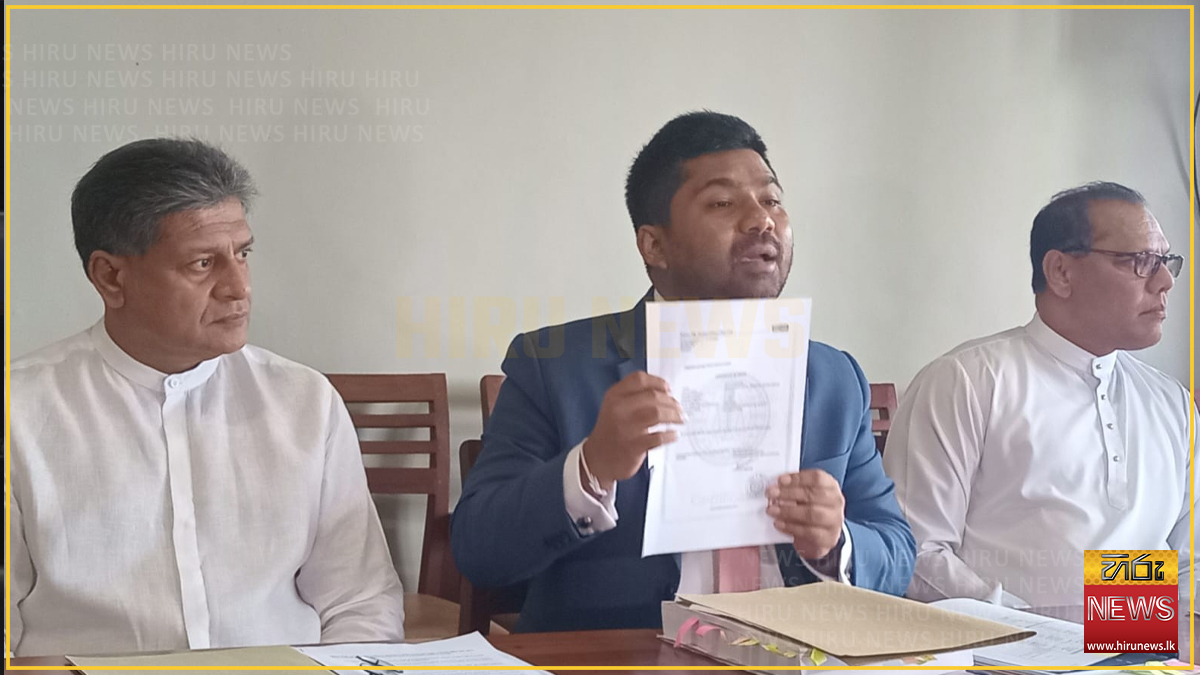
Total financial losses resulting from the coal scam exceed Rs. 100 billion, claims Member of Parliament D.V. Chanaka.
During a special media briefing held by the Joint Opposition in Parliament today (09), he stated that estimated losses for April, May, and June alone amount to over Rs. 25 billion.
He further noted that when calculating losses starting from January, the total figure surpasses the Rs. 100 billion mark.
The MP highlighted findings from the Auditor General’s report, which indicate that Rs. 2.2 billion was spent on additional coal alone.
The report also reveals a loss of 141 million units of electricity due to issues with nine coal shipments.
Consequently, these 141 million units must be generated using diesel, which currently costs Rs. 125 per unit.
This shift to diesel generation results in an additional expenditure exceeding Rs. 11 billion.
A coal shortage is inevitable in June, necessitating the use of diesel to power the entire 900 MW capacity of the Norochcholai power plant.
This situation will likely lead to power cuts.
Despite early warnings that the coal tender process was corrupt, the government—including the President and Energy Minister Punya Kumara—allegedly worked to conceal the matter.
The MP concluded that the government utilised seven different interests to hide this coal fraud, which the latest Auditor General’s report confirmed as highly corrupt.