The Indian Ocean is the third-largest
ocean in the world. It is 70,560,000 km2
(27,240,000 sq mi) in extent. It is bounded by Asia to the
north, Africa to the west,
Australia to the east and Antarctica to the
south. The Arabian Sea, the Laccadive
Sea, the Somali Sea, Bay of Bengal, and the Andaman
Sea are located within the Indian Ocean.
Initially,
only the sea around South Asia was known as Indian Ocean. The western section
was known in ancient times as the Erythraean Sea. Erythraean Sea included the
Persian Gulf and Red Sea. In the 16th
century the various part of the Indian Ocean was given new Latin names by European explorers. Indian Ocean was Mare Indicum. Eastern section
including Bay of Bengal was Sinus Gangeticus. Red Sea and adjacent waters were
known as Sinus Arabicus. The sea below Sri Lanka was known as Mare Prasodun.
The modern
political history of the Indian Ocean begins with World War II (1939-1945) when
Japan bombed Colombo harbor. When WWII ended, the Cold War between USA and
Russia started. These Cold War confrontations (1947-1991) were mainly in Mediterranean,
Atlantic and Pacific Oceans. However, the Indian Ocean was not forgotten, it
was left in the military care of UK.
In the 1950s,
UK started to lose control in the Indian Ocean. Sri Lanka for instance, took
back its air and naval bases. In 1956, Egypt nationalized the Suez Canal which
was ‘owned ‘by UK and France. The Suez
Canal incident made US rethink, said Keerawella. US decided to set up bases in the Indian Ocean
as well.
In the early
1960s, when UK decided to withdraw from the
Indian Ocean US wanted to establish a navy base on one of UK’s island
territories. The US requested an unpopulated island belonging to the UK. Diego
Garcia was selected. In November 1965, the UK purchased the Chagos Archipelago, which
includes Diego Garcia, from Mauritius and in 1966, the United States and the UK signed
an agreement, which permitted the United States to use Diego Garcia, for
defense purposes for 50 years until December 2016, followed by a 20-year
extension to 2036.
But things
did not go as planned. China emerged as a global power sooner than expected and
was threatening US position as the world leader. Also economic power was now
moving to Asia, thanks to the Asian Tigers and China. The richest persons in the world were now increasingly found in
Asia. Asia would surpass North America and Europe
combined in global power on GDP, population size, military spending, and
technology by 2030, said experts.
Therefore it
became necessary to somehow link the west and east geographically so that USA
could continue to dominate. The Indian Ocean and the Pacific Ocean had to be
brought to together as one political region.
First, an
artificial Asia Pacific region was created.
This Asia-Pacific included
the Indian Ocean and the western Pacific Ocean. Land wise, it included East
Asia, South Asia, Southeast Asia, and Oceania. Asia-Pacific Economic Cooperation
(APEC) was established in 1989, for free trade between the 21 countries in the
Pacific Rim. It was initiated by Australia. Australia hoped to play the leading
role in APEC. But APEC was an economic concept not a security one. It was soon forgotten.
APEC countries.
With the
emergence of China as a global power, a military linkup, not an economic one,
was needed, a link up which would let western powers into the Indian Ocean at
the military level. The idea of an ‘Indo- Pacific’ region was mooted. The term ‘Indo-Pacific brought the Indian and
Pacific Ocean and landmass around them into one theatre.
PACIFIC OCEAN
The term Indopazifischer
Raum (Indo-Pacific Space), first coined by German geopolitical thinker Karl
Haushofer in 1920, is perhaps the first academic statement on the Indo-Pacific,
observed Asanga Abeygoonasekera.
In 2007 G.S
.Khanna of the Institute of Defense Studies, New Delhi used the term Indo
Pacific” combining Indian Ocean and Pacific Ocean into single regional
construct, noted Keerawella. Japanese Prime Minister Shinzo Abe employed the
term in his speech to the Indian Parliament in August 2007. In 2018, the
US Pacific Command changed its name to Indo-Pacific Command.
Keerawella
pointed out that the concept of Indo-Pacific
was very useful to USA, because when the Indian and Pacific Oceans are
integrated, US becomes an inside power. On the other hand, Keerawella observed,
when South Asia is repositioned in the new strategic map of Indo Pacific, Sri
Lanka is no longer the center as in the case of the Indian Ocean.
BAY
OF BENGAL AS WAR ZONE
In the coming
years, Indian Ocean region is likely to become the scene of power assertion,
said Colonel Hariharan in 2010. Indian Ocean is now a heavily militarized ocean said Jayanath
Colombage in 2020.At any given time there are about 120 warships. From 2008 to
2020, 575 warships from 29 different countries have visited Sri Lanka,
sometimes more than one ship a week.
Bay
of Bengal is now becoming a theatre of war and Sri Lanka will
be at the centre, speculated analysts. In 2016, the media carried a cartoon of USA,
UK, India and China warships converging on Sri Lanka. US set up its Pivot to
Asia” policy in 2011. US is really
going to do Asia” announced an analyst cheerfully.
US
has developed the ‘Strategic island bases strategy for its
war in the Bay of Bengal. The Indian newspaper, Statesman reported that US plans to use facilities in the Andaman Islands, the
Comoros, the Maldives, Mauritius, Reunion, and the Seychelles (some of which
are run directly or indirectly by France and India), as well as use its defense agreements with Brunei,
Malaysia, and Singapore. Maldives and the US signed a Defence Agreement in 2020
to deepen engagement and cooperation in support of maintaining peace and
security in the Indian Ocean.”
The small island states, lying
below Sri Lanka in the Indian Ocean have
become important as logistics facilities. US and China are competing for
access to these logistic facilities. French, US,
Italian and Japanese forces have permanent military bases In Djibouti. China joined them and set up
a base in Djibouti in 2017.
Djibouti
India has
been given the task of establishing military links with the nearby islands, on
behalf of USA. In Madagascar, India is building a new jetty and an airport
costing USD 90- million, at the two Agalega Islands off the northeastern coast
of Madagascar. These are
about 1,000 kilometers north of Mauritius. There was a small protest movement
against this, but it was squashed.
India also
approached the Seychelles in 2020, with a proposal to build a military facility
on Assumption Island, which will include an airstrip, naval jetty and a
garrison of 500. There was a
strong protest against it and the proposal was abandoned. China
however, has a presence in Seychelles. China has built a new Parliament
building and a Supreme Court in the Seychelles. China has
also
donated two light aircraft and two naval vessels.
Mauritius is
now becoming strategically important. Britain will soon be handing over the
Chagos islands to Mauritius and Mauritius can then decide to let US maintain
the military base in Diego Garcia. If Mauritius
agrees to this, it will then be made an associate of the Quad. This will give
Mauritius significant clout in Indian Ocean affairs.
Mauritius will
have the largest area of an Extended Economic Zone (EEZ) in the Indian Ocean
and have islands dotted from southeast Africa to Central Indian Ocean., said
analysts. They did not say how. The Secretariats of Indian Ocean Rim
association (IORA) and the Indian Ocean Commission (IOC) are already located
in the capital of Mauritius, Port
Louis.
India has a
special relationship with Mauritius. 70% of the population of Mauritius is of Indian origin and they hold the political
and administrative power in Mauritius. In 2018 Mauritius was the second largest
FDI contributor to India. In 2019, Mauritius has become the fourth largest FDI
contributor with the US and Singapore leading in FDI flows to India. These
funds are primarily from offshore companies taking advantage of tax benefits in
Mauritius.
Mauritius is
anti-Sri Lanka. Mauritius sponsored the resolution against Sri Lanka at the UN
Human Rights Council together with the United States. It also boycotted the
Commonwealth Heads of Government summit in Colombo.
It is
possible that Mauritius will overtake Sri Lanka in geostrategic importance. Rising
Mauritius” could offer strategic outposts for naval and military purposes
across Indian Ocean. That would
see a lowering in Sri Lanka’s own geographic position from a strategic
standpoint though it will remain an important port for shipping, said analysts.
Sri Lanka may welcome this.
QUAD
The four Quad
countries, US, India, Australia and Japan, held their first ministerial meeting
in September 2019 in New York.” The four countries held joint exercises, for
the first time, in the 2020 Malabar exercises in the Bay of Bengal. Indian and Japanese warships had also
carried out a small exercise near the Malacca Strait in June 2020. A US carrier
strike group led by aircraft carrier USS Nimitz was set to conduct an exercise
with Indian warships near the Andaman and Nicobar archipelago in July 2020.
Japan joins
the five eyes intelligence-sharing network in 2021. This will further strengthen the US-Japan link.
The US created a five eyes spying arrangement with UK, Canada, Australia and
New Zealand. Intelligence agents of these five
countries work together. Each member
spies on specified countries.Indonesia was allotted to Australia and Australia
spied on Indonesia from its embassy in Djakarta.
US takes the view that the Quad is a powerful entity. US said that
at the Quad meeting in Tokyo October 2020 in all agreed on the shared threat
from China and will work together on the economic front against Beijing.
Analysts reporting on the meeting are not so sure. Bolstering Quad to contain
China remains a sensitive issue for the three countries due to their strong
economic ties with Beijing, said reporters. India, Japan and Australia avoided calling out
China directly.” Few concrete takeaways emerged from the talks. The possibility of Quad computer security
architecture is remote, they said.
China has recently
provoked Australia. China has drawn attention to war crimes by Australian Special
Forces against Afghan prisoners and 39 civilians including children while
serving in Afghanistan between 2009-2013. China broadcast a clip where
Australian soldiers slit the throats of two Afghan boys, put the bodies in a
bag and throw into a river. Australia demanded an apology.
It is however unlikely that there will be a direct war in the
Indian Ocean between USA and China. China does not plan to come all the way to
the Indian Ocean to fight America. The days when wars were fought while bobbing
up and down in boats on the sea are also now over. China plans to bomb America
direct, aiming over the Pacific Ocean to do so. It has created a missile called
Dong” something, which can attack six places in USA in one go.
Former United
States Secretary of State, Henry Kissinger fears the oncoming war. He does
not think USA will win and he does not think it a good idea for US to start a
war. He thinks US warmongering should
stop immediately. Kissinger said in 2020, that US should move quickly to
restore lines of communication with China. US and China should jointly create a
negotiating group where some leader that the US President trusts and some
Chinese leader that President Xi trusts remain in contact with each other on
behalf of their Presidents,” Kissinger concluded. (Continued)
Dr Sudath Gunasekara Former Permanent Secretary to Prime Minister Sirimavo Bandaranayaka
Introduction
The objective of this essay is to
briefly explain the story of the origin of the Sinhala nation and how the
valiant Sinhalese have defended their motherland and its culture against all invaders over the
millennia and the history of the never-ending
chain of Indian invasions on this Island from Rama to date and their
ramifications and implications on its political economic and socio-cultural
spheres, with special attention on the Tamil menace in the Island nation that
had tormented this Island nation throughout history, continues to date and
might even persist for ages to come, if corrective measures are not taken by
the present day leaders in time.
The Tamil menace in Sri Lanka is as
old as human history. The insatiable longing in South Indians to capture and own
this Paradise Island on earth also has the same antiquity, if it is not older.
In recorded history it goes back to the 2nd Century BC. Long before
history dawned, even Rama was supposed to have invaded this Island with an army
of Monkeys lead by Hanuman in prehistoric times. But that was, rather
strangely, not to capture the country as the South Indians dream Tamils continues
to do but to rescue his consort Sita from Ravana’s captivity, who had abducted and
imprisoned her to avenge, punishment inflicted upon his sister Suparnaka who
was ruling over Dhandakaaranya in South India, that was under Ravana the Great,
the King of Lanka at that time. Then of cause another North Indian Aryan Prince
Vijaya according to legend landed on the Island in 543 BC who was supposed to
have found the Sinhala nation. According to history he has not landed here as
an invader to capture the country and his landing was not planned either. It
was by mere accident he landed here as he was banished from then India by his
father. On landing here he met Kuweni a local Princess of the Yaksha tribe and he
married her and with her help Vijaya found the Sinhala Nation and the Kingdom,
to make long story short, although there is another version to the origin of
the Sinhala Nation to say that it is called Sinhala as it was the Nation found
by the amalgamation of the four tribes Yaksha, Raaksha, Deva and Naga who
inhabited the Island long before, even Vijaya arrived on this Island.
Mahavamsa
the Great Chronicle of the Sinhala Nation
According to Mahavamsa the Great
Chronicle of the Sinhala Nation, his arrival in the Island in 543 BC, coincided
with the date of passing away of Lord Buddha Subsequently in 307 BC the advent
of Buddhism took place officially during the reign of King Devanampiyatisa. In
a way it was also an ancient Indian invasion. But to the contrary of what the
South Indian Dravidayan Tamils did over time and what present day neo-colonial India
is doing it was the greatest religio-cultural gift any country in the world
could have given to us. It laid the foundation for the Sinhala Buddhist
civilization in this Island nation giving a unique identity to the Sinhala
nation in the world for ages to come. Since Vijaya’s time, until 177 BC the
country was ruled by Sinhala Kings for 484 years without any interruption.
The first
South Indian Tamils to invade this country
Sena –Guttika two horse traders from
South India were the first Tamils to invade this island in 177 BC It marked the
beginning of an eternal chain of successive attempts by the hungry Tamils from
South India to take possession of this blessed land. Historically these sordid events
of Tamil invasions that followed on this Island could be phased out as follows.
1. 177 BC -101 BC Sena-Guttika to
Dutugemunu. 2.!01 BC–1214 AD. Dutugemunu to Magha. 3.1214 – 1739-Magha to
Narendrasinha. 4.1739- 1815.Narendrasinah to Sri Wickrama Rajasinha. 5 1815-
1948 Sri Wickrama Rajasinha to Independence IBritish colonial rule}. 6. 1948 to 1972 Independence to Republic of
Sri Lanka. 7 From 1987 to 2009 and 8.2009 to date. The age of messing up and
uncertainty)
1. 177 BC
-101 BC
Sena –Guttika invaded and killed
Mutasiva the Sinhale King and ruled the Anuradhapura Kingdom until Asela
replaced them in 155 BC Again in 145 BC Elara another Tamil from South India
invaded the country and he ruled for 44 years until Dutugemunu the Greatest
Warrior King of the Sinhala Nation defeated him in combat in 101 BC. King DutugEmunu brought
the whole country under one parasol. The golden period of Sinhala civilization
began with his ascending the thrown. He was succeeded by his younger brother
Saddhaatissa in 77 BC..
2 !01
BC-1214 AD
Since then too there had been many minor
Tamil invasions from time to time This
period was followed by the most destructive and devastative Tamil invasion in
Sri Lankan history ever, the Kalinga Magha invasion of the 12th century
(1214-1235). Mabgha destroyed everything that was Sinhala Buddhist. He robbed
the treasures, burned royal palaces and Buddhist temples, destroyed and
vandalized the Tanks and irrigation network that was the foundation of the
Great Rajarata Sinhala Buddhist civilization.
This marked a turning point in Sri Lankan history and civilization and the
shifting of the Rajarata Sinhala Kingdom and civilization to the South West part
of the Island for the first time in history sending Rajarata civilization in to
oblivion under a jungle tide that lasted for 600 years until the lost cradle of
Sinhala Buddhist civilization was at last re-discovered under British colonial
rule.
3.1214-1739
AD
In the period that followed the Magha
invasion Sinhale Kingdom was shifted from place to place (Yapahuwa Damabdeniya,
Kurunegala, Gampola, Kotte, Sitawaka, to Senkadagala) and later disintegrated
in to two and sometimes three or four and finally the Kandyan Kingdom founded
by Wimaladharmasuriya in 1590 got established as the last Sinhale Kingdom and
remained so until 1815 which marked the last year of the Sinhale Kingdom that
ended up finally with ceding it to the British empire in 1815.Meanwhile with
the death of Narendrasinga in 1739, the linage of Sinhala Kings also ended up
with his death.
4
1739-1815. Sri Vijaya Rajsingha –Sri Wickrama Raajasingha.
Kin Narendrasinha’s Chief Queen was a
South Indian who by intrigue got her brother Sri Vijaya Rajasingha crowned as
King of Kandy with the help of Welivita Saranankara Thera. With this change
over from Sinhala to Tamil monarchy the tradition of Sinhala Kings came to an
end and it was replaced by a South Indian Tamil due to the follies Welivita
Saranakara Thera, may be driven by his long time desire to get Royal patronage
to get Upasamapada from Thailand. He was
succeeded again by another Nayakkaara, Kirti Sri Rajasinha. Rajadhi Rajasingha succeeded
him and finally Sri Wickrama Rajasingha another Nauakkara whose paternity was
unknown was enthroned, under the patronage of Pilimatalavva. With Sri
Wickrama’s capture by the British 1815, the Kandyan Kingdom also came to an end.
The Sinhalese wanted to get rid of the South Indian Tamil, a tyrant King. Thus the
Sinhale Kingdom was again ruled by four South Indian Nayakkara Tamil Princess from
1739 to 1815. Although this was not by invasion on their part but by intrigue
in the Royal palace due to the follies of Narendrasinha marrying a South Indian
Tamil woman, the 76 years of Nayakkara rule of mixed events filled with intrigue
and internal squabbles, the Sinhale Kingdom ended up in a historic tragedy of
ceding it to the British Crown, thus ending the 2282 years glorious Sinhala
Kingdom. These 76 years of Nayakkara rule also left behind a legacy of South
Indian cultural impact in every aspect of Sri Lankan life style, which could be
described as a South Indian Tamil cultural invasion.
It is important to note that up to
this point all Indian invasions were from South India only. The other Indian
States in the north had no interest on Sri Lanka for conquering either.
5 1815- 1948 – As India was also under British and
there was no Independent India during this time India did not have any direct involvement
with Sri Lanka on the Tamil issue. But the
British carried out a covert programme of promoting and strengthening Tamils in
this country against native Sinhalese in a subversive intrigue against the
Sinhala nation with the intention of having a future divided Sri Lanka with a
strong and dominant Tamil community and a weak Sinhala nation.
6. 1948 to 1987. After India was declared an Independent
country in 1947 it began to assert over the internal matters of all neighboring
countries where there were people of Indian origin, mostly settled by the
British. Since India openly spoke and treated them as people of Indian origin
they also began to look for India to preserve their Indian identity and solve
their problems without trying to integrate with the native people of the
countries where they lived and earned their living. Perhaps inspired and
motivated by the Kautilyan concept of annexing adjoining States for empire
building India must have been dreaming of the building of an Indian Empire.
This situation made Indian immigrants a thorn in the throat in the respective
countries. This situation became worse in this country due to many reasons like
its proximity to India and its abundant natural resources the envy of many
nations, its geo strategic location right at the at the centre of the Indian
Ocean in global power struggle and above
all the stupidity and naivety of local political leaders.
Tamils always look at India as their
mother land and they never accepted this country as the home land of the
Sinhala nation. This line of thinking was promoted by the local Tamil
politicians in the North and the East and finally it ended up in claiming 1/3
of this country as their traditional Homeland as dreamt by the Vadukkodai Declaration.
India heavily backed this by promoting a separate State concept for Tamils in
Sri Lanka which they called EELAM, which no Tamil realized that it simply meant
the land of the Sinhala people. India provided
a massive programe of military training for the LTTTE cadre all over
India and they were given all support including 3.2Million US $ in addition to
military support to fight against the Lankan Government. Finally forced old
J.R. to concede to that request through the Rajiv/JR Accord of 1987 July 19 and
paved the legal framework to divide the country in to 9 separate States using
the political boundaries carved out on land as Provinces by the British, with
the 13th Amendment virtually making Sri Lanka the 30th State of India at gun
point. The JR/Rajiv Accord and the 13th Amendment also virtually
nullified the 1978 Constitution and reduced it to a mere piece of paper.
Tamils in this country under these
circumstances completely forgot that they are living in somebody else’s country.
They never treated this country by word or deed as their motherland. They only
had their physical bodies here, their minds and hearts were always in India. Their
mother land was always India and their total allegiance was to India. Even the Tamil coolies brought by British to
work on plantations in the hill country as their slave labour in millions and
left behind as a set of stateless people when British left the country in 1948
began to think and act as they have already formed a branch of Tamilnadu right
at the center of this land of the Sinhale Kingdom which they called Malayanadu.
This in short is exactly how Tamils became a menace to this country.
What is more appalling was there was
no native Sinhala leader who could stand up against this tragic travesty of
history of this Island and the right royal betrayal of the motherland of the Sinhala nation, who
had found the civilization on this Island 2600 years ago and built up the
unique Sinhala Buddhist civilization.
None of these kalusuddhas
spoke a single word against this historical tragedy committed against the
Sinhala nation. S.W.R.D in 1956 brought about a Sinhala Buddhist revival and
only Sirimavo gave some meaning to the 1948 fake Independence in 1972 and freed
the country from British rule by declaring it as an Independent Republic. She
was the only head of State since 1948 who spoke and did some work to relieve
the Heartland (Sinhale Hadabima) of the country from Indian control. But all what she did was reversed by JR the
traitor in 1987 by signing the Rajiv/JR Accord of 1987.
The sad
legacy of British Party politics, the curse of mother Lanka.
The sad legacy of British Party
politics divided the Sinhala voters in to rival watertight compartments that
compelled them to woo the Tamils vote as warring rivals to come to power,
consolidate it and remain in power at the peril of the Sinhala nation. As a
result in no time the majority became a minority and the minorities especially
the Tamils assumed the power of the majority, taking the control of the
nation’s destiny in to their hands both locally and in international fora like
the UNO.
Vaddukoddai Convention
Meanwhile the Vaddukoddai Convention
a blatant lie and a naked travesty of history of this Island nation was passed
on May 15 1976, by the TULF meeting Presided over by Mr. Chelvanayakam. The
following quote alone proves the diabolical misrepresentation of history by
these Tamil maniacs.
Whereas,
throughout the centuries from the dawn of history, the Sinhalese and Tamil
nations have divided between themselves the possession of Ceylon, the Sinhalese
inhabiting the interior of the country in its Southern and Western parts from
the river Walawe to that of Chilaw and the Tamils possessing the Northern and
Eastern districts;”
Isn’t it a historical political and
national tragedy that the Government at that time or any thereafter never
challenged this type of misinformation? This also proves that we never had a
patriotic government ever since 1815 in this country.
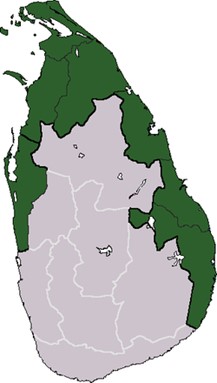
MAP OF EELAM AS CLAIMED BY VADUKKODAI DECLARATION
7 From 1987
to 2009
With the LTTE coming in to the seine in
early 1980s and picking up the EELAM idea after this resolution, they declared
open war against the State causing massive los to a nation over a prolonged
period of 30 years until it was wiped out by the Rajapaksa government in 2009.
Although they defeated the LTTE cadre including Pirapaharan on Sri Lanka soil it
never consolidated the victory on ground like in the past by Dutugemunu and
Vijayaba and also never dismantled the international LTTE network called Tamil
diaspora spread all over the world like an octopus. The dismal failure on the
part of the Sri Lanka government between 2010 to 2015 and the complacence and negligence
and promoting separatism from 2015 -2019 has made the issue more complicated.
The dismal failure on the part of the Sinhala politicians to put the clock back
and restore pre 1815 status quo of the Independent Sinhala Kingdom is perhaps
the main reason behind this confusion.
8.2009 to
date. The age of messing up and uncertainty)
I put the period between 2009 and
2015 as the age of messing up as the then Government miserably failed to
consolidate the historic victory gained in 2009 and messed up in priorities by
not putting a sound and stable foundation for future political stability which
is must for nation building. The
government of the day paid the heavy toll for this negligence at the 2015 elections.
Again the new government that came to
power with intrigue and coups hatched both at home and abroad also had no clear
leadership or an action plan to rescue the country out of that complacency and
mess. It was virtually radar less and leaderless and it was like ship without a
Captain, the President and the Prime Minister pulling the rackety government
cart in two opposite directions, infested with chronic vituperative infightings
disastrously ended up in August 2019 as
the most corrupted, ineffective and disastrous Government this country ever had
since 1948.
New
dimensions of Tamil Factor in Sri Lanka politics.
With the British leaving the country
in 1948 the Tamil living in this country, both estate labor and those living in
other parts of the country raised their ugly communal heads calling themselves
a separate nation with heavy support from the new Indian Government. They began
to agitate for equal rights in everything with the native Sinhala people who
comprise over 75 % of the total population of the country.
Today the Tamils living in the North
and East claim for a separate Homeland for them while the army of South Indians
Tamil labour occupying the land owned by our ancestors before 1815 claim that
land as their Home land. Thanks to all
successive Governments since 1948 today have become the virtual owners of this
land while the original owners, the native Sinhalese who were chased out by the
British from their ancestral lands when they took their land by force either
live in the valley bottoms in abject poverty as refugees on their own
motherland neglected and discriminated by their own politicians or thousands of
villages displaced due to building reservoirs like Kotmale and Victoria to change
the demographic map of the central Province have been sent out of their
ancestral lands en -masse to the Dry Zone.
Meanwhile the Indian Central
government treats all Tamils living here as Indian people and provides them
with special facilities often bypassing and ignoring the Sri Lanka Government.
At the same time India also directly deal with the Tamils living in Sri Lanka
and exert pressure on the Government to grant them equal rights and to satisfy
the expectations of the Tamil people and fulfill the Government’s commitments
on the 13th Amendment to the Constitution, not given even to Tamils in
Tamilnadu. This is how the Indian Government is bullying the Sri Lankan
Government today.
Classification
of Tamils in Sri Lanka
Tamil presently living in this
country could be classified as follows for study purpose.
Descendants of
1 War prisoners and captives of early
invaders from South India from time to time starting at 2nd century BC.
2 Captives brought from India by
Kings like Gajaba I in retaliation to invading this country after defeating
them and waging war even in South India.
3Those who have come on trade from
time to time and preferred to stay behind
4 South Indians brought here by the
Portuguese, Dutch and British before 1840 to work on their Projects and left
behind high and dry.
5 South Indian Indentured Tamil
labour brought by the British to work on the newly opened up plantations in the
Central Hill Country and left behind when they left in 1948.
And
6Temporary visa holders living as
illicit Immigrants
7 Illicit immigrants popularly known
as Kallathonis
8 Transitory labour who come for work
as chiep labour
9 Indian who have come here for
temporary employment.
10 People employed in Indian Projects
like IOC
Early comers
Those invaders who were left behind from very
early times got absorbed and integrated to the main stream and became Lankans
or Sinhala people while some of them retained their religion and culture. Also
in between there were others especially the converte South Indian Muslim Tamils
who came from time to time in small numbers, not as invaders but as traders who
were later known as Muslims going by their religion. Most of them got married
to local Sinhala women and even took Sinhala ge names and lived among the
Sinhala people often under Royal patronage. For example those in Mavanella,
Galagedara, Madawala, Udunuwara,Yatinuwara an dKuBuk kanduar in th eKAndy
District and those in Panamapattuwa in the East settled by King Senarat But
all these immigrants learned the Sinhala Language got absorbed in to the main
stream while retaining their religious identity only. In addition to the
language of the country, that is Sinhala, they also spoke Tamil. This may be
due to the fact that most of them came from South India and also they did
business with both local and Indian Tamils across the sea. But the important thing to note here is that
almost all these people, both Tamils and Muslims knew the language of the Land
and they never claimed as separate nations until recent times. Prior to 1815
all of them were known as people of Sinhale.
So, even today nearly 95 % of the population in this country is conversant
in Sinhala.
The estate Tamils who were brought by
the British after 1840s, even though they were deliberately kept separated from
the local as a community also learnt Sinhala as they came in contact with the
neighboring Sinhala villages. So if you
take the language as the dominant factor that unifies a nation, in this case
Sinhala, what is the other name by which you should name this country and the
Ratavesibhaavaya (Citizenship)? they should be given. See our immediate
neighbor India, then countries like Thailand, Japan, China, Korea, Russia,
Germany, France, Italy, Greece, Spain and England to name only a few. All these
countries are named after the dominant language spoken in those countries and
the citizenship is name by the name of the country; in our case Sinhala.
Rise of
Tamil Ntionalism
It is only at the Donoghmore reforms the Tamil
politicians tried to establish a separate identity, though there were seeds of
Tamil nationalism even as early as 1911 when Aurunachalam Ramanadan as Director
of Senses and Statistics named the Tamils in the North and East as Ceylon
Tamils (when translated SinhaleTamils) and he broke away from the Ceylon National
Congress and founded the Ceylon Tamil League in 1923. Ponnambalan in 1935 demanded the famous 50-50
representation.
With the growth of Tamil communal
politics they assumed a Tamil National” attitude and Tamil
nationalism emerged which in later years tried to assert as a separate nation
within this country. No wonder these minions behave like goliaths when there
are no Sinhala statesmen of stature to draw the line and tell everybody that
this country has only one nation and those who talk of many nations will be
charged for treason or deported to their original places.
Communal
Tamil politics getting firmly established in this country
1947
Formation of the Federal Party
The Vaddukoddai Resolution was
adopted on 14 May 1976 calling for the creation of an independent Tamil Eelam
by the Tamil United Liberation Front under the leadership of S. J. V.
Chelvanayakam. It contested the 1977 Sri Lankan parliamentary election on its
demand for Tamil Eelam and won an overwhelming mandate in the Tamil areas,
becoming the main opposition party in Sri Lanka, the only time a minority party
has done so.
LTTE taking
to arms and its defeat in 2009
This was followed by the LTTE taking
to arms. Fought for 30 years and finally defeated in 2009 under Mahinda
Rajapaksa But in spite of the defeat of the LTTE cadre still the Eelam ideology
and the Tamil separatists movement is living both at home and abroad as the
powerful Tamil Diaspora supported by the Western world.. As such no one can
take it for grant that the Tamil threat is over. It will persist for ages to
come unless we take immediate corrective measure to defeat it and the Sinhala
nation is at great danger and risk.
Adenda
The concept
of a nation
Although the idea of nationality is
difficult to define the term nation in modern society is generally used to
describe a community of race and language, geographic unity, community of
religion, common political aspiration and, above all, historical development over a long time. This
is of course not universal. But however it is essentially a sentiment of unity,
spiritual in character and the will of a people to live together as Laski put
it. The unity is the outcome of a common history.
The Sinhala people in this context
had been a nation at least from the 6th century BC in this country, long before
the west even conceived the idea of a nation as outlined above. Even the four
groups who lived here previously got identified as one nation as Sivhela/Sinhala.
That is why the land was called Sinhale, meaning the land of the Sivhela/Sinhala.
With the introduction of Buddhism in 307 BC they became Buddhists and ever
remained as ”The Sinhala Buddhist Nation’ in this country. With all the
vicissitudes of history even in 1815 more than 95 % of the people in this country
came within this category except a few numbe, along the Northern and Eastern
coastal littorals.
Both Tamils
and Muslims have their own motherlands elsewhere whereas Sinhalese have none,
other than this country their homeland and motherland from the dawn of history
or even before.
Tamils have a motherland in South
India and Muslims have motherlands all over the world including the entire Middle
East Africa, Pakistan, Indonesia and Malaysiya.
Therefore none of these people can claim this land as their motherland. Thanks
to British they also have Maldives, a part of Sri Lanka Sinhale before 1948.
Therefore Tamils and Muslims living here are only visitors or intruders who are
enjoying the nature’s luxuries on this Island and trying to make this their own
land by annihilating the Sinhala Buddhist nation.
Sinhalese
have only this Island as heir motherland
Sinhalese are the people who found
this land and who built up the civilization on it for 2500 years or more. They
are people who defended it against all invaders throughout history. This was
indeed their only motherland from the dawn of history. Thousands of
archaeological, epigraphical and literary evidence often running even to
prehistoric times spread over the entire length and breadth of this country
bear enough evidence to this conclusion that has been proved beyond all doubts.
Therefore it is irrefutable. From point Pedro in the North down to Dodra in the
South and from Puttalam in the West to Batticalloa in the East what is buried
underneath is the heritage of the Sinhala Buddhist civilization
I challenge Vignesvaran (who claim
that 4 specimens of Sivalingam or Hakeem
or any one of their grandfathers name who had been a Tamil or a Muslim King in
this country who has built one Stupa, an irrigation tank or even a field canal
or an edict by a Tamil besides a one made by a Sinhala King in any part of the
Island. In this historical backdrop Tamils, Muslims and any other minor ethnic
group in this country that forms a part of the Sri Lanka nation or the Sinhala
nation is only an integral part of the ”Nation Lankan or Sinhala’ as this
country had been known as the land of the Sinhala people right through out in
history. The land cede to British in 1815 was Sinhale. (See the Kandyan Convention). No man or woman can contradict it unless he
or she is an incurable lunatic. Therefore at least now these minority ethnic
mental cases should understand their limitations and the legitimate role within
the Lankan nation, and concede to this historical reality and learn to live
with the major community without running to America, India and other countries
asking to tame the Sinhala nation and thereby create unwanted problems for us
as well as for themselves. I am positive that the big majority, who are
sensible, are prepared to do so. For those who are not prepared to concede to
this irrefutable reality, I think, it is high time that they should renounce
their craving for this day dream of possessing this land and go back to their
own motherlands without trying to dream of a motherland on somebody else’s
country and claiming illegal ownership of someone else’s soil by going round
the world just denigrating our country.
On the other hand one last word for our
politicians. I think, it is high time that first and foremost they should rise above petty and narrow party
politics and assert and behave as statesmen and write this provision in to the
Constitution of this country and declare that anyone agitating, behaving or
instigating, aiding and abetting others to talk, act or behave as separate
nations or agitate for separation, contravening the law of the land, shall be
charged for high treason
The Indian
Government always thinks Sri Lanka is one of its suzerainties
Otherwise
how can the Indian Minister of External Affairs orders Sri Lankan Government
like this?
The
latest verbal invasion by India on this country was displayed last week
when Indian Minister of External Affairs
Dr. S. Jaishankar yesterday urged the Sri Lankan Government to satisfy the expectations
of the Tamil people and fulfill the Government’s commitments on the 13th
Amendment to the Constitution. He further said It is in Sri Lanka’s own
interest that the expectations of the Tamil people for equality, justice,
peace, and dignity within a united Sri Lanka are fulfilled. That applies
equally to the commitments made by the Sri Lankan Government on meaningful
devolution, including the 13th Amendment to the Constitution. The progress and
prosperity of Sri Lanka will surely be advanced as a consequence.” He further
added The progress and prosperity of Sri Lanka will surely be advanced as a
consequence.”
What are the expectations of Tamils
in this country he is talking about? Is it the separate Tamil State, when India
itself has denied it on its own land in Tamilnadu, where even their language is
not recognized as an official language andagitation for separation has been
banned by Statute. This was the first official visit of a high-level foreign
dignitary in Sri Lanka in 2021 as well as the first official visit outside
India in the New Year. That alone shows the importance India pays to Sri Lanka
at a time in history when India’s relationship with all it’s neigbhours right
round is at stake
Conclusion
Thus the South Indian Tamil invasion
on this Island had been a continuous chronic legacy from 2nd century BC to 1815.
All these invasions from 2nd Century BC up to 1815 shared the following
characteristics. First they were all South Indian and the rest of the
subcontinent had no connection to them. Second they were frequent and recurrent
but short lived except the Elaara invasion. Third none of them could capture or
control the whole Island. Fourth all these invasions were decisively defeated
and Sinhala Kingdom was fully restored. As such none of these I early invasions
has left behind any imprints of their culture other than the vestiges of their
destruction and devastations done to the native Sinhala Buddhist civilization in
this country.
Only after India became an
Independent country it had started to throw its weight around dictating the
neighbour countries as to what they should do and what they should not do: with
what country they should have dealing with and with what country they should
not etc Whenever there is difference of opinion it bully and invade. It appears
as if India thinks every country and everything around the Indian Ocean belongs
to India. That is why India has fallen out with all its neighbours Probably
India is trying to experiment Kautilyan tactics of statecraft for empire
building. It is high time that India and its crazy politicians should
understand that the world has changed a lot since then and every Independent
and sovereign country has its own right of decision making irrespective of it
size and military power. It is the responsibility of the Government of the
country to tell India in plain terms to
mind its own business without interfering with our domestic matters. On the
other hand if India is so concerned about the Tamils in Sri Lanka, often more
than their own people, the best thing it should do is to take all these people
there without trying to dictate to us as to how we must treat our citizens. So
that both India and Sri Lanka will be relieved of this pain in the neck for
good and the Tamils presently living in this country will also enjoy heavenly
pleasure back in their beloved and cherished Motherland.
Post
Colonial Period.
The British who discriminated against
the Sinhalese in fact had over the years built up a superiority complex in the
minds of Tamils in Sri Lanka by providing them with better education facilities
in their areas and more government jobs whereby they prepared the background
for communal clashes between the native Sinhalese and Tamils
During the period between 1505 and 1815 of
Western colonial invasions all the colonial powers brought slave labour from
Malabar in South India to work on their tobacco farms and other projects as the
proud native Sinhalese refused to work under the White invaders. Meanwhile
between 1840 and 1910 British imported
large number of coolies as indentured slave labour from South India to work on
their newly opened up Coffee and Tea Plantations in the central hill country
partly as again native Sinhala people refused to work under the white people
but mainly because South Indians were cheap and submissive labour. Adding
insult to injury the British, maintained these estate regions as virtual
enclaves’ separated from the native Sinhalese and left them behind as an army
of Stateless Indians coolies (over 1.2 Million) when they went back in 1948
leaving an eternal political headache and an economic and social burden to this
Island nation.
It is the fruits of this sad legacy
of divide and rule British colonial policy we are compelled to reap and
struggle for the survival of our nation and the motherland
One last word to modern India for our
mutual interest, isn’t it worthwhile to remember that not only in ancient times but even in modern days Sri
Lanka has decisively defeated the Indian manipulated LTTE menace in 2009,
without their support, even though it took 30 years to do so due to the fault
of our own leaders at home. I hope the
local Tamils will also learn a worthy lesson from what I have said here.
1 My advice
to Sinhala political leaders.
First to Sinhala political leaders
I am addressing this note to you as
Leaders without addressing it to all politicians for the simple reason that you
are the people who lead other politicians by whipping them with the Party whip
and they just follow you like a herd of lambs either to everybody’s prosperity
or doom.
Please understand at least now, that you and
your predecessors who had lead this country since 1948 the date of so-called
Independence, that is still to come, are solely responsible for all the current appalling political, economic
and social crises that bleed this country and the nation for
Firstly, groping in the dark, without
not knowing what this country is, its nation and its heritage are
Secondly, your sole objective of self
– interest and power that opens the door to wealth and privilege
Thirdly, even if you know the three
things mention under one above you have sidelined them as they run counter to
you ambitions under the second.
Fourth In this rat race for self-
interest you forget about broader national interest and pamper the minorities to
get their votes and ignore the Sinhala majority who are divided on blind Party
lines and blindly vote the Party to which they are wedded.
So knowing this predicament and the
only way to come to power and remain in power is to woo the minorities, like
the hungry fox that followed a goat expecting its testicles to fall you went
after the minority foxes to form Governments and made the minority a majority
and the Majority the Minority in this country and brought about this pathetic
situation.
To get out of this pathetic and
tragic situation, assuming that the none of the present day politicians will
abandon this practice we have now look for an entirely a new to counter this
situation and save the Sinhala nation and the motherland.
Now that all the major Political
Parties such as the SLFP.UNP.LSSP.CP and JVP are no more there and also all of
them have failed and the SLPP which I not a political Party and it is only an
interim arrangement of former SLFP rejects and drops outs from all other
parties around one person Mahinda Rajapaksa who also has failed as a Sinhala
National leader with his runnibg after Tamils and Muslims even his brother Gotahabaya also has failed by his dependence on Muslims
and this is the best time to look for a new National Sinhala LEadeship. Tamil
in spite of the fact none of them have voted him, as he himself has admitted
after the Elections is also pretending to act as a Sinhala leader sonly this is
the best
As a result of this game of political
Chess the country has completely failed to raise its head as an independent
country for 72 years. Therefore if we are to move ahead as an Independent and
vibrant nation first we have to restore back to the pre 1815 status as a free
and Independent country within the framework of one country, one nation and one
law first. Ban all political parties named after ethnicity, religion or any
other divisive criterion and have only two National Parties until we evolve a
political system without Political Parties. All political leaders who cannot
agree to this formula should immediately say good bye to politics in this
country for good.
2 and Tamil and Muslim minorities
living in Sri Lanka
Then ask the
minorities to accept that status quo or return to their own countries without
giving headache to us. Under this system Tamils can go back to their
Motherlands in South India and Muslims to
either Arabia or India depending from where they have come,
COVID-19 has dramatically changed the lives of many. A disinfection technician used to be the boss in his old job. But as the pandemic broke out, he wore a gas mask and armed up with a sanitiser spray. He never regretted it. Neither did an entertainment entrepreneur who wore a hazmat suit and went saving lives in the ‘red-zone’. Meanwhile, in Japan, the quarantine forced a Buddhist monk to take a VR camera to the cemetery. See the stories about those who managed to adjust quickly and saw the lockdown as a chance to evolve.
Pavla Nikolaevna is a ‘chumworker’, a housewife in the tundra (Thundra is subarctic flat land with permafrost ground). Together with her husband, they continue their family ideal of driving reindeer herds in the far north. Instead of a regular flat this Russian family prefers a chum, a reindeer fur-covered hut. Even in winter, when the temperature outside falls to -34° C, they move the chum several times a week, following the ancient herding tradition. While the men are watching the herds, the women work at the chum making their snow dwelling comfortable. The family with seven children has a flat in a nearby city, but they keep returning to the land of the reindeer. Watch why the tundra is not letting them out.
Despite decades of development of formal laws and tools for modelling legal knowledge for land rights by lawyers in developed countries, Sri Lankan lawyers stagnated preferring to work with statues of 1888 to 1927, Penal code 1883, Registration Ordinance of 1927 & Notaries Ordinance of 1907.The said countries have systematically moved on to digital land registries with data protection laws to protect their owners. We are receiving funds to leapfrog on to technology and the Australian law called title registration.
Who wants deed system, who doesn’t want deed system?
Who wants title registration, who shouldn’t want title registration are some of the fundamental questions the public need to ask but, they are never informed.
Can a Sri Lankan lawyer explain the legal principles of the foreign law related to the e- registration and are there any books to refer?
Can lawyers feel satisfied of their ignorance of the law?
No one can answer these questions as land law has become the subject of foreign experts and parliamentarians who listen to them and pass laws without a clue. Justice Minister s appointing committees to revise laws but cabinet is annulling existing gazettes/circulars and passing new statutes. None with any forethought or consultation of stakeholders.
It is unfortunate that since independence no government has seen fit to review colonial laws & revise them to suit post-independent sovereign Sri Lanka. Nor have they introduced the subjects at the university and law college for Sri Lankan lawyers to be experts to advice the nation.
We are continuing with archaic laws which are hundreds of years old, yet these laws provide the basic & fundamental rationale needed to re-write them to what suits Sri Lanka & its citizens.
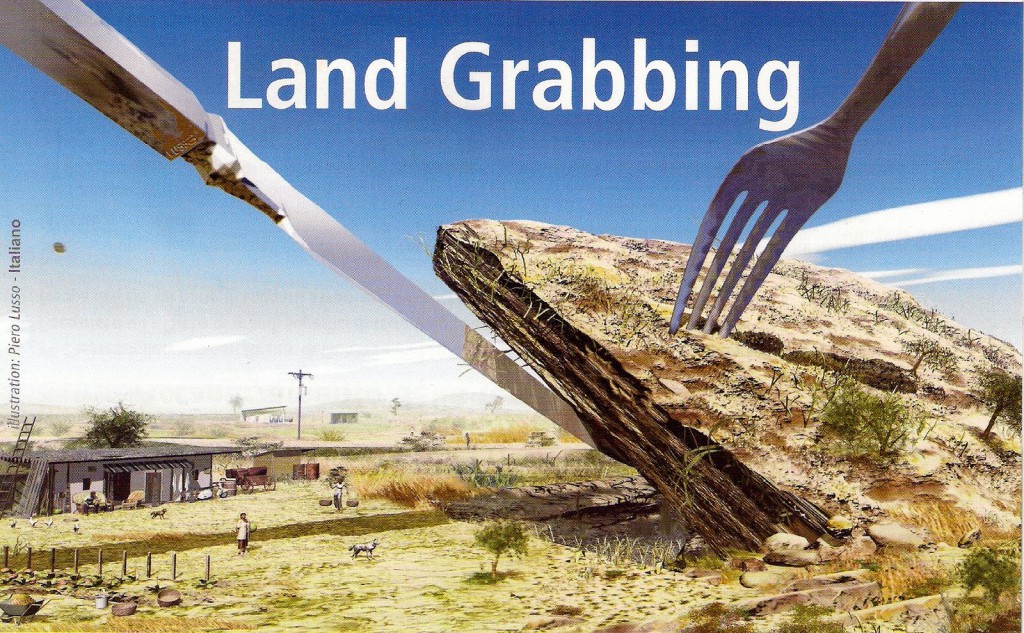
It is a divine loophole for those who want to grab our lands. International funding bodies are hijacking this effort by sending their teams to research land systems in countries and recommending proposals advantageous to their global privatization objectives.
Governments and policy makers have yet to understand the larger context of this danger when archaic land laws get suddenly annulled to be replaced with new laws advantageous to international players and they have found the art of giving funding to obtain government approval.
This is how Bim Saviya or Title Registration Act 21 of 1998 got secretly passed without inputs of our lawyers and how Bim Saviya was rolled out because of foreign funding.
It was in 2007 that funding was given to commence title registration from deed system. The funding bodies did not anticipate the confusions and complexities in transferring from deed system to title registration when in Dec 2011, the US Embassy advertised for an Electronic Land Hub for a National Land Titling Program following 2010 USAID report titled Land Administration and Protection of Property”.
The US Embassy nor USAID anticipated that only 700,000 deeds would have taken 13 years (2007 to 2020) to be transferred to title out of 12million blocks of land. The transfer cost $2.5m a year as per 2018-2019 Title Commissioner’s Report.
How long will it take to do 12million blocks of land?
What is the hurry to implement e-land register?
Funding bodies expect governments to roll out what they want because they give money.
Drastic changes come with funding & demands no scrutiny before implementing.
In the hurry to please foreign funding bodies. Sri Lanka is blindly setting up an e-land registry without data protection, back office owned and controlled by a foreign company, lawyers clueless, inserting the title registered 700,000 entries, with daily notorized documents changing, together with the 50% fraudulently entered deeds (as per Land Registrar)
This clearly indicates our land records are sitting on a vulnerable scenario unless authorities realize that protection of data, protection of land is more important than taking funding by foreign funding bodies.
Putting the cart before the horse in a race to please foreign funding bodies is going to land Sri Lanka and land owners in litigation troubles that our lawyers will not be able to solve.
With bim saviya foreign law being implemented, with data ownership out of sovereign Sri Lanka’s control, Sri Lanka is walking into major trouble. Sri Lanka’s lawyers will have no place. Bim Saviya being a foreign law will mean foreign lawyers will determine litigation especially since land is being privatized for multinational companies on the justification of ‘investment’.
The reason for this is that the notary entries are coming without a law. As per Notary Ordinance everything is subject to ethical rule. Given the current circumstance of global corruptions, Section 33 of this Ordinance needs to be urgently revised and amended to ensure all deeds are validated properly and Notary is culpable for errors.
The other reason is that the Registration of Documents Ordinance does not hold Registrar accountable for registering fraudulent deeds. He is responsible for only ensuring land measurement and extent of land is given properly. This ordinance must be amended to hold land registrar accountable for accepting fraudulent deeds. All these loopholes the foregin funding bodies know more than our lawyers / MPs or advisors.
Data protection is a must to ensure land owners data is protected prior to launching any e-land register.
What good is it to simply boast of launching an electronic land registrar system that is full of vulnerable areas disadvantageous to the land owner and providing opportunities for fraudsters.
Australia which follows the title registration system and is the origin of the Torrens Law referred to in Sri Lanka as bim saviya, has ensured land owners are protected. They have all laws in place. Legally qualified academics and lawyers are fully aware of all the land registries and how they operate across Australia. They are regularly revising their systems to benefit land owners. You cannot find any land frauds as a result of the legal set up and the system set up in place with checks and balances.
In Sri Lanka, we have only the NIC to identify an owner. The land registration process is very poor and needs to be properly streamlined. If we are to be following foreign systems, we must first ensure we have a system similar to that which exist in those countries. Simply plugging one element and claiming it to be similar to foreign systems is totally unacceptable.
Why is the Bar Association, the legal fraternity tasked to bring to the public areas of concern not putting forward proposals and holding public seminars related to the drastic land changes happening of late?
Why does the BASL not insist that the Central Bank Financial Regulations Act 6 of 2006 which included notaries and lawyers within the scope of the Act and which included all deeds and registrations be first adopted before any insertion into the e-land registry.
We have a land reform commission – what is it doing?
We have a national planning council – what is it doing?
Where are all the officials tasked to ensure the land sovereignty of Sri Lanka and land ownership of Sri Lankans and the State?
Why do they not see that we are loosely and without properly planning changing gazettes, amending land laws and creating a bigger problem related to land. If we do not stop the current hurry to digitalize and properly plan the digitalizing process first, Sri Lanka’s land sovereignty is at risk and land owners will face unimaginable problems.
The
Sunday Observer (10/01/2021) reported that the Central Bank of Sri Lanka is
going to review economic liberalization policies, it is a good and overdue
task. Economic liberalization policies initiated by President J. R. Jayewardene
and it would have done when Mr.J.R.Jayawardane ended the presidency, and he was
the right person to explain why Sri Lanka implemented economic liberalization
policies, and why didn’t his cabinet ignore to correct indiscipline at the
operational level? Mr.J.R.Jayawardane commenced good economic policies in the
country and the tourism initiatives and related business were the best policies
he introduced in 1965 as the Minister of State. Tourism has become a major area
for foreign exchange earnings and the provision of employment. Why did the
Central Bank of Sri Lanka ignore to get an opinion from Mr. Jayewardene is a
question to be answered by the Central Bank, and the Minister of Finance in
1978 is alive and can get an opinion from him?
Economic
liberalization policies came to effect with the budget of 1978, this doesn’t
mean that Sri Lanka hasn’t had economic liberalization policies before 1978. It
was a necessary evil to the economy. Under the financial controls of the Currency
Board System, Sri Lanka had economic liberalization policies, and the central
banking that began in 1951 also allowed to work liberal economic policies until
the ending of the Korean War in the early 1950s, and the influence of socialism
in economic policymaking and the shortage of foreign reserves influenced to get
away from liberal economic policies in 1956.
The
economic policies of Sir John Kotelawala attractively reflected liberal
economic policies, and the Six-Year Development Program introduced in 1954
showed how to use liberal economic policies promoting indirect import
substitution and practical liberal economic policies covering regional Sri
Lanka. Many economic policymakers assumed to not read and understood the
Six-Year Development Program, 10 Years Plan, and Five-Year plan in 1972. The
political changes in 1956 forced Sri Lanka to get away from liberal economic
policies and consumers and producers suffered from inward-looking strategies,
and the economic policy of 1978 directed to adopt outward-looking policies
hoping to change the economy to generate positive benefits to the country.
The
Sunday Observer (10/01/2021) reported that we will test the performance of the
open economic policies and its economic agents could follow a focused approach
to becoming an industrial economy.” stated the governor of the central bank. To
become an industrial country, the contribution from the Industrial sector to
GDP must be over 50% and it is not an achievable target when considering the
current contribution from the industrial sector to GDP. Sri Lanka is an
agricultural economy, and an input-output analysis could show that the highest
contribution to GDP is made by agriculture. The governor may have a correct
opinion, but the reporter of the Sunday Observer may not understand the jargon
expressed, and I have a question about the organization of the report, as it
seems the nature of the writer lacking knowledge of the economy.
What
is the new macroeconomic policy framework? The macroeconomic policy framework
is a broader area and international economists in the past explained that it is
like a jungle which comprises many varieties of plant. After the Cold war, the
world bank advised making policy correction and microeconomic reforms were
needed to successfully work macroeconomic variables. The best example was after the cold war
developed countries did microeconomic reforms and such reforms worked well to
improve macroeconomic variables and the productivity enhancement and
improvement of competitiveness should have essential ingredients in liberal
economic policies.
There
is nothing wrong with the economic liberalization policy and the problem has
been the policy implemented without disciplines. The central bank did not
advise the government what were the disciplines and how they should have
implemented them in the country. As I found as a village person, the positive
aspect of the liberal economic policy was getting the right price for products
and services of rural areas. The opportunity to take part in economic
activities was received by all, and this positive aspect was ignored by many
critiques. The negative aspect of the liberal economic policies was the rapid
decline of the Sri Lanka rupee and it lost the financial gains of rural people.
The depreciation of currency value has been a common nature in all countries
despite this situation the government policy process has not addressed the
issue to satisfy rural people.
Therefore, people looked for foreign jobs rather than engage in
productivity and competitiveness improvement. The government did not educate
the public on the role of liberal economic policies and how it should be
protected and how it should use to take part to achieve economic objectives of
them.
In
the liberal economic system, the central bank is the regulatory authority in
the financial system which comprises the trading bank market, non-bank
financial intermediaries, stock market, merchant banks, superannuation market,
and many other markets providing clear policy guidance to protect the market
and eliminate crooks from markets. The
market of non-bank finance intermediaries has been entirely swollen by crooks,
and the central bank has not worked with coachmanship and acumen ship to
prevent this situation. In Sri Lanka
regulator (Central Bank) works as a market operator and this is wrong. For
example, the superannuation market comprises EPF, pension funds that are
managed by banks and other institutions. If the government takes policy action
to combine all super institutions to establish a mega super organization it
could provide employment opportunities to over 10000 unemployed graduates and
practical finance education could broaden in the country. Many people in the
rural area are illiterate in practical finance and they have caught crooks and
lost hard earn money. The central bank handles this situation, and the bank has
not developed policies to protect the financial system.
In
developed countries, the management of superannuation organizations is not a
role of the central bank, and many independent companies play the role. If Sri Lanka can manage the central bank as
the regulatory authority in the finance system, it would help to strengthen the
economic performance of the country. Why
it is impossible to manage a superannuation organization that integrated all
super funds in one organization is a question, and my feeling is policymakers
are either lack knowledge or they are playing politics with funds. As the regulatory
authority, the central bank can supervise and regulate such an independent
organization.
The
privatization of public assets is supported by liberal economic policies, and
many people in the country have no clear understanding of the policy. The privatization
of public assets aims for various purposes and in Sri Lanka it should be
focused on attracting private capital, sharing the economic burden, reducing
government spending and retiring public debt, etc. The central bank should
educate people about privatization.
Economic
liberalization should use as a boon to the country, and it is not the bane. The
problem in Sri Lanka is people were not educated about the policy, therefore, a
misconception is traveling around.
Whenever predictions are made about repercussions from the international community for things said or left unsaid or else things done or left undone, I am reminded of Libya. Muammar Gaddafi was for decades the bad boy. He decided at one point to try being the good boy. We all know how he was rewarded by those who saw him as an enemy and who he later thought were friends.
That’s how the international community operates. International community as in the movers and shakers who can and do move and shake on account of bucks and guns (to put it mildly). It’s all about playing ball. It’s all about conviction beyond any shadow of doubt that ball will be played. In other words, there are no brownie points for good behavior. There has to be an unblemished record of servility. One black mark and trust is compromised forever. An unblemished ball player is thereafter backed, groomed and even brought to power. If there’s no such entity, then they go for the lesser evil option. Maithripala Sirisena for example. President Gotabaya Rajapaksa made a statement in jest in Ampara last week and it got a lot of play. That is not a statement one expects from someone who refused to badmouth his political opponents. It was careless. It was crass. However, as often happens word was extracted from context, tone and flavor. We saw inflation. We saw extrapolation. His detractors warned that it will strengthen moves against Sri Lanka in the upcoming UNHRC sessions in Geneva. This, on top of ‘concerns’ over the cremation of Muslims who have died of Covid-19. They will no doubt add the demolition of a memorial erected for LTTE cadres who perished during the 30 year long conflict.
A word on the last is warranted. First and foremost students do not have any right to put up buildings or memorials on state university property unless so sanctioned by the relevant authorities. Whoever allowed that memorial to be put up needs to explain his or her actions. Secondly, having allowed it to remain and thereby providing consent by default, arbitrary demolition is questionable. Thirdly, some students have issued statements claiming that they are not interested in warring ‘with the Sinhala government.’ The wording indicates that they do not see themselves as part of this country. The Vice Chancellor’s claim that the monument was an affront to reconciliation and peace therefore does have some merit. His decision to lay the foundation stone for a replacement monument is therefore confusing. Another word on the matter is warranted. It is not illegal for anyone to believe he/she does not belong to Sri Lanka. Theoretically, a monument to soldiers could be seen by some as a celebration of ‘wrongdoers and wrongdoing’ although not legally, at least ethically or just in terms of perceptions. A monument to JVP cadres could similarly be seen by UNPers as a celebration of terrorists and terrorism. The Jaffna University students are celebrating people who fought for a ruthless terrorist organization. We could play that back and forth and remain where we are, i.e. fighting a war along the alleyways of memory.
A third word. The President can be open about these things, speak with these students and ask them if they want to remain in the past or move to a different future. He could say, for example, that the only grief that is indubitably genuine is that which is felt by the near and dear of the dead, regardless of what the dead believed, fought for, killed and were killed for. The temperature of the tears shed for all the dead, combatants and civilians are approximately the same. The President could request the Jaffna University students to design a monument where everyone can grieve for what eventually proved to be a conflagration that produced nothing of substance but only delivered death, destruction, dismemberment and displacement. Now whether the President moves in the above manner or in some other way that pleases the students and the Tamil community, he will not be applauded by those who want to bring him and his government down, here and abroad. It just doesn’t work that way.
There is a political economy of punishment and reward, censure and ‘let be’. ‘A threat is often more powerful than its execution’ is a quote attributed to several top chess grandmasters and frequently used by chess coaches. That’s how it works. We get a string of accusations, a string of recommendations and a spoken or left hanging ending, ‘…or else!’ This brings me to the most critical issue of the day. The East Terminal of the Colombo Port. India wants it. We are told that Sri Lanka will have a 51% stake. Operations, if the deal is done, would be controlled by an Indian company. It is reported that the frontrunner-investor is the Adani Group of India. The very same group is building a port in Kerala. A competitor port in every sense of the word. Forget Adani. It will be an Indian company that would ‘run’ operations even as an Indian company is busy building a port that is designed to draw transshipment business away from Sri Lanka.
Giving the green light to such a move is suicidal. It would reduce the Sri Lankan transshipment footprint in the Indian Ocean. The JVP, FSP and others including trade unions of all political parties have objected. Groups that backed Gotabaya Rajapaksa and the SLPP have objected. The political fallout is not difficult to calculate.
In such circumstances why would a government accede to India’s not so veiled demand for the East Terminal? Is there some subtle, ‘diplomatic’ arm-twisting happening? Is a give-and-take being negotiated? If it’s a deal then obviously the costs and benefits are not contained by ‘port development.’ It has to do with sweeteners. The Covid-19 vaccine? ‘Support’ in Geneva? What?
So, in essence, there’s no clean, neat, integrity-driven logic. The ‘international community’ will accuse and treat accusation as proven guilt. The ‘international community’ will say things that end with ‘or else….!’ The ‘international community’ will want to punish and will create guilt to do so. That’s politics. That’s economics. That’s political economy.
Any government that does not play ball is in a lose-lose situation. And such governments (and we are not staying that this government is one of them) have one option. Side with the people. Trust their judgment. ‘People’ as in general sentiments and not those that come percolated through political interests or structured by possible benefits to individuals or specific groups.
Colombo, January 11: I have always maintained that shipping and ports businesses are truly global, networked with multiple parties. No country which wants to be in the global shipping can compete single handedly without international partnerships.
It is irrelevant whether a nation is developed or developing or has cargo and technology. All need partnerships to capture global trade in a network of ports and shipping services taking advantage of the economic opportunities the sector provides for maritime nations.
This column gives insights to readers with examples of how the global shipping and the ports industry is positioned. It is most relevant in the current context of Sri Lanka, where a sentiment of nationalism is built through a false propaganda campaign that ports and terminals of Sri Lanka must be run by the State.
This argument will indeed please people who do not understand the business models of modern ports and shipping. From Asia to Europe, Middle East to Africa and to the Americas, major ports are a business of partnerships of governments, terminal operators, shipping lines and other financial institutions. Each party brings in business synergies and contributes to growth through assets and financial resources sharing.
Others bring geography, global scale and regional networks to bind major ports with shipping lines, (both major lines and feeder lines). These arrangements help mitigate inefficiencies and reduce costs of operations by ensuring that the ports and terminal businesses are continued with each other’s commitment. As they say success comes with ‘teamwork’.
Partnerships not only bring business synergies but ensure continued business security as well as financial transparency among stakeholders. In this background, the port of Colombo which has been ranked number 22 in container volume and number 13 in connectivity has had this growth purely due to the international business and the partnerships it has developed over the last 20 years.
However, if Colombo wants to grow beyond a transshipment hub of the Indian subcontinent, (transshipment being a business that is highly competitive and that can move from one port to another overnight if the environment is not conducive), it needs to change its strategy. The example is Singapore, which once tried to remove a major shipping line from a partnership and within weeks it started to lose transshipment business to Malaysia and had to reverse its stance to retain business the Malasian business.
Although the world’s number one seaport at that juncture, Singapore realized that location is not sufficient to retain businesses, and that international partners are the key to success.
Who controls the global container markets, ports, and routes?
Many people who are not in the shipping industry are unaware that shipping is mainly controlled by massive global ship operators and owners who have pumped in billions of dollars for getting ship hardware to provide scalable transportation solutions for world trade.
It is always easier to question why every maritime nation cannot have its own fleet of ships. The answer lies in achieving economies of scale and global funding for getting massive hardware on a long-term basis and to sustain market volatility, such as imbalances in trade as we are facing today due to COVID-19.
Major economies and developed countries control well over 80% of the world’s container cargo throughput. However, it is interesting to note that those developed countries also build partnerships and alliances to maximize asset sharing and planning cargo collecting and discharging routes. One can ask, why should Maersk, the Denmark-based world’s biggest shipping line go into partnership with its competitors? The reason is economics. Today, the ten major shipping lines work in three major alliances in partnership combining synergies to provide shipping services to global customers.
By being partners they negotiate with ports and terminal operators of the required services and commit volumes globally to international port operators while sharing assets such as ships. Therefore, it is proven beyond doubt that, irrespective of the country’s wealth and the size of the shipping line, they do partner with competing lines for logical reasons as networks provide better business models and solutions than working in isolation.
Who handles global containers?
Container handling done by ports around the world is once again done in partnership for reasons of competitiveness and to secure committed market shares. For this purpose, irrespective of the region, terminal operators, shipping lines and states work together in operating global throughput in ports. Interestingly, the global average for state participation/ownership is around 20%, whereas, international terminal operators, shipping companies and other private equities account for nearly 80% of ports and terminal equities. Therefore, the argument that the State should operate in isolation is a myth and a misguided nationalistic view by those who do not understand the global networks of ports. It is not the countries that decide on which shipping line calls on its ports, but a variety of factors determine that.
If you look at the Indian subcontinent, India has the biggest cargo volume output. But it is not India that decides how the shipping routes and port calls are designed. Nor does Sri Lanka. The ship owners take that call. In the recent weeks when Colombo had congestion as a transshipment port, Sri Lanka immediately had service withdrawals and shipping lines moved to other ports in the region. At the same time Colombo being the biggest transshipment volume handler in the world, accounts for less than 20% of Indian subcontinent throughput.
Both Sri Lanka and India took the correct decision over the past two decades by going into joint ventures for its terminals. Over the past 20 years most Indian ports have gone into joint ventures with DP World of Dubai, PSA of Singapore, and AP Moller of Denmark. At the same time Sri Lanka too had partnerships since 1999, with numerous parties at SAGT and recently the CICT with China. These partnerships have brought in efficiencies as well as business to port of Colombo making it at one time the second fastest growing port in the world.
Interestingly, the much talked about Adani Ports has been investing in India and other parts of the world and is fast beating DP World in the Indian subcontinent’s throughput share.
Therefore, it is as important for Colombo and its East Terminal to be developed as a consortium to partner terminal operators as well as international shipping lines wherever possible. Indeed, the share of the landlord should be fair and must ensure that the business brings in more revenue to the State as the port of Colombo grows with international partnerships.
Certainly, operating in isolation is not the answer, as proposed by nationalists. Even in India, the last major government terminal in Jawaharlal Nehru Port Trust is now calling for privatization to compete with other terminals in India. Even in communist China, most of the major port operating groups are either state-owned enterprises or have state-owned enterprises as their major shareholders – for example Shanghai International Port Group and Qingdao Port International.
But these and other state-owned port companies are run as private or quasi-private organizations, and some are quoted on stock exchanges. Additionally, many Chinese port companies operate their container terminals in joint ventures with private operators such as PSA, HPH, APMT and DP World. So, the argument of self-management of ports and terminals is just a populist political slogan.
Why should ports look outwards?
None of these investments are called selling of ports”. They are all joint ventures, where terminal operators can give global solutions to global alliances and secure sustainable growth with profit sharing with States and other stakeholders. The most important factor here is that it relieves government and the taxpayer of the need to pump in massive investments for infrastructure development.
The most popular model around the world is the ‘landlord model’, where governments not only earn terminal revenue but in the medium term take other royalties along with fresh revenue through value added maritime services. This is what has been recommended in Sri Lanka for decades, but policy makers are yet to make this crucial change if we need to become a maritime hub.
The secret of the success of these global terminal operators is aligning themselves with competitors and working in partnerships with shipping lines and cargo owning countries. The Port of Singapore Authority (PSA) handles 30 million TEUs in partnership with shipping lines and investors. While another 30 million TEUs are handled around the world through investments, making its total throughput 60 million TEUs.
Similar are the operations of DP World, China and other global operators. Even London’s most modern and new terminal is operated by DP World of UAE.
This is where Sri Lanka went wrong. Although it established a ports authority way before some of the other global terminal operators including DP World, it failed to look outwards to use its hard-earned money and knowledge to invest in international ports. Instead, the policy makers kept on looking inwards, and as what is happening today, it is now starting to resist foreign investments, including our largest cargo provider, India, and one of the biggest ship operators in the world, Japan, to partner ECT.
This closed mindset will be the downfall of our ports sector if government gives in to hard nationalism and unions on another agenda without understanding the consequences. If one thinks the location is the only reason that hubs are created, they are quite mistaken, as modern-day shipping is more built on networks and partnerships. Preparing for that kind of competitiveness with proper capacity enhancement is the best and realistic way to make the SLPA a success.
(The writer is an economist, the CEO, Shippers’ Academy Colombo and Chairman, Logistics Advisory Committee, National Export Strategy to the Export Development Board – Sri Lanka. Currently the Director General of Sri Lanka Association of Manufacturers and Exporters of Rubber Products and former chairman of the Sri Lanka Shippers’ Council and Secretary General of Asian Shippers’ Council. He can be contacted at rohanmas458@gmail.com.)
Four new COVID-19 related deaths have been confirmed in Sri Lanka today, says the Director-General of Health Services.
Four new COVID-19 related deaths have been confirmed in Sri Lanka today, says the Director-General of Health Services.
Following the new development, total fatalities from the virus registered in the country have hit 251.
One of the victims was identified as a 47-year-old man from Dummalasooriya area. He had been transferred from Teaching Hospital in Kuliyapitiya to Narammala District Hospital, and later to Homagama Base Hospital where he passed away on Tuesday (January 12) during admission. The cause of death was cited as COVID-19 pneumonia.
Second victim is reportedly a 72-year-old man who was residing in Galgamuwa area. The Government Information Department said he was moved from Teaching Hospital in Kurunegala to Homagama Base Hospital. He has suffered from COVID-19 pneumonia and complications of kidney disease.
In the meantime, a woman, aged 57 years, died while receiving treatment at the Homagama Base Hospital today (January 14). The cause of death was recorded as complications of kidney disease and infection in the respiratory tract.
The fourth victim was identified as a 53-year-old man from Colombo 13. He had been transferred from Colombo National Hospital to Mulleriyawa Base Hospital. He fell victim to the virus on Tuesday (January 12) due to blood coagulation, blood infection, lung infection and epilepsy exacerbated by Covid-19 infection.
ew development, total fatalities from the virus registered in the country have hit 251.
Sri Lanka’s Covid-19 numbers saw another surge today (January 14), as 316 more persons were tested positive for the virus.
Department of Government Information confirmed that the newly-identified patients are close contacts of earlier cases linked to the Peliyagoda fish market.
Accordingly, a total of 670 new cases have been reported within the day.
As per statistics, the total number of Covid-19 infections confirmed in the country to date now stands at 50,899.
Recoveries from the virus meanwhile climbed to 43,747 earlier today, as 480 more patients regained health.
However, 6,905 active cases are still under medical care at selected hospitals and treatment centres located across the island.
TNA has submitted its proposals to the Experts
Committee appointed to draft a new
Constitution. What they have asked for is far in excess of the devolution
package granted in the 13th Amendment. The powers that are demanded
exceeds those granted to the states in India which is a federal country. They
seem to have forgotten that they also must show some conciliatory attitude when
everybody is talking about reconciliation and communal harmony. It takes two to
Tango. They must know what is possible and what is not. They must know that
extremism begets extremism. There are on both sides of the divide people with
extremist points of view on sensitive matters like land, language, religion etc.
If peace and harmony among communities are the desired goals of everybody,
particularly political leaders, they have to be more flexible. Asking for more
and more following on the steps of SJVC who adopted a little now and more
later” policy will not help.
TNA has asked for Regional Councils virtually with all
the powers except defense. Executive presidency is to be abolished and all
executive powers are to be taken over by the cabinet of ministers. The
president would be a figurehead with no powers. The governor of the regional
council will be appointed on the recommendation of the chief minister with the
approval of the council. Nature of the state obviously will not be unitary but
united. These powers if granted would be far in excess of those granted under
the 13th A.
The proposed regional council would obviously comprise
North and East merged as envisaged in the original 13th A. These two
provinces were demerged by an order of the Supreme Court on the 16th
October 2006 which declared that proclamations issued by President Jayawardena
temporarily extending the tenure of the merged North-Eastern Province were null
and void and had no legal effect. The proclamations by JRJ were necessitated
due to the fact that a referendum on the
merger was not held as required by the 13th A. It was well known
that the Muslims and the Sinhalese in the Eastern Province were against a
merger. However if a referendum had been held in the two provinces together the
vote would have been in favour of a merger as Tamils would be a majority when
the two provinces are joined for the referendum. However the Sinhalese leaders
did not want to merge these two provinces as it would go against the interests
of the Muslims and Sinhalese. TNA does not seem to have taken these issues and
their implications into serious consideration. They seem to be still stuck in
their four Thimphu principles. TNA must not appear to be on reverse gear when
the country is trying to emerge out of communal acrimony.
TNA proposals have to be seen as an attempt to delink
their areas of habitation as much as possible from the writ of the central
government. It seems that the proposal is to devolve to the Regional Council
all powers and functions that can be carried out at the level of the regions on
the basis of the principle of subsidiarity”. It is on the basis of a similar
conceptual framework that the separatists have been agitating for an
independent state in the Northern and Eastern provinces since 1972. The
principle of subsidiarity is defined as the principle that the central
authority should have a subsidiary function, performing only those tasks which
cannot be performed at a more local level”. Obviously subsidiarity may be
suitable for big countries but could be an unnecessary financial burden on small
countries like Sri Lanka.
Powers the TNA has asked for include those pertaining
to land and police. Land is a subject under the 13th A that had
given rise to controversial rulings by the Supreme Court. Once it held that
state land can be utilized by the Provincial Councils for their projects but
later in 2011 it ruled that state land
should remain under the ownership of the central government for the
utilization at national level. Police powers had not been allowed to be taken
over by the PCs though it is provided in the 13th A. These two
subjects if devolved could give a PC that has a centrifugal tendency much
leverage to work towards its goal. For instance an independent police force
could engage in subterfuge and subversion with the connivance of the provincial
politicians. A terrorist who commits an act of terror in the South could escape
into the North and find refuge. We must not forget separatism and terrorism
have not been totally eliminated in this country.
TNA proposals tend to change the nature of the state
quite significantly and also the single sovereignty of the people in Sri Lanka.
In the present constitution people’s sovereignty is reposed in the executive
president by people’s franchise. President may delegate his executive powers to
other institutions such as the ministers and also in accordance with the 13th
A to the governors he appoints to the provincial councils. In the proposals
submitted by the TNA the governor is appointed on the recommendation of the
chief minister with the approval of the council. Thus the main link between the
central government and the council has been removed.
TNA proposals have done away with the concurrent list
of subjects that come under the purview of both the central government and the
regional councils. This is another delinking measure that TNA wants to be
adopted to strengthen the autonomy and independence of their regional
government. Such an arrangement would be federal in nature no matter what it
may be called.
And what is worse is, it would be a federal state based
on ethnic demarcation which has not been very successful in countries where it
had been tried eg. Ethiopia, Pakistan, South Sudan.
What takes the set of proposals beyond federal status
is the demand for powers to deal directly with foreign countries for aid, loans
and investment. What the TNA is asking for is almost a separate state. If all
these powers are granted their struggle to strengthen the case for the legal
establishment of a separate state would succeed to a great degree.
TNA proposals if granted would have adverse effects not
only on Muslims and Sinhalese living in the North and East but also on Tamils.
These adverse effects would be felt mainly in the economic, social and cultural
spheres. Tamils have a huge economic interest in the South, in the Sinhalese
community. Cordial relations between communities is essential for the
development of economic connections. For instance the wholesale market in
Colombo in which the Tamils have a huge presence cannot thrive unless there is
trust and understanding among different communities involved in this business.
A political rupture in the sensitive areas like land, language, religion could
affect the consciousness of these
communities and disrupt the working relationships.
The Muslims and Sinhalese who live in the North and
East would feel that they have been made minorities and may be subject to
discrimination. Such sentiments would not help reconciliation but promote
discord. Social and cultural relationships will be hampered and the whole
country may not progress very much socially, culturally and economically.
It is time the TNA took into consideration the present
realities and also politics in the Tamil areas. Adopting a more extremist
posture in an attempt to boost up its flagging popularity is not what is
needed. What is needed is a course correction and develop reconciliation
strategies that would be beneficial to the Tamils who live not only in the
North and East but also in the Centre and the South so that everybody could get
together in a peaceful and cordial relationship and develop their country in
the social, economic and cultural spheres.
Mahinda Rajapaksa Prime Minister of the Democratic Socialist Republic of Sri Lanka
It is with immense
pleasure that I wish all Tamil devotees in Sri lanka and all over the world a
very happy Thai Pongal festival. In the Hindu-Tamil Calendar, the first month
of the year is known as ‘Thai’, and ‘Pongal’ infers a new dawn.
The arrival of a
new harvest is celebrated on the day of Thai Pongal. It venerates Mother Nature
and the Sun God, as an expression of gratitude for a bountiful harvest. This
celebration of the dawn of the new year is both culturally and religiously
significant to the Hindu people.
A traditional
specialty of Pongal is a sweet rice made with rice from the new harvest, milk,
and sugarcane, is made as an offering to the Sun God as a show of gratitude.
These traditions and rituals give us an insight into and highlights the
cultural and religious values of showing appreciation, respect and gratitude.
Although we differ
in ethnicity, religion and language, our aspirations, hopes and dreams as Sri
Lankan’s are similar. Even though we are
currently facing challenging times, the government is committed to uplift the
living standards of all Sri Lankan citizens and is determined to work towards
overcoming these challenges together as a nation.
Therefore,
this year’s Thai Pongal festival can be celebrated with renewed hope by those
celebrating in Sri Lanka and all over the world. May the festivities of Thai
Pongal and the values that it propagates, cultivate a spirit of peace and
reconciliation between all Sri Lankan’s.
I wish
everyone celebrating a happy and prosperous Thai Pongal and the very best for
the year ahead.
Mahinda Rajapaksa Prime Minister of the Democratic Socialist Republic of Sri Lanka
Colombo, January 13: Sri Lankan President Gotabaya Rajapaksa on Wednesday assured representatives of Port Trade Unions that the Eastern Container Terminal (ECT) in the Colombo Port will not be sold or leased out.
The President, who met representatives of the port unions, made it clear that the plan is to develop the ECT as an investment project that has 51% ownership by the Government of Sri Lanka and the remaining 49% as an investment by India’s Adani Group and other stakeholders.
Explaining the participation of India, the President said that India contributes 66% of the ECT’s re-export operations. 9% of re-exports is accounted for by Bangladesh and the rest by several other countries.
The previous led by Prime Minister Ranil Wickremesinghe had agreed to sell the ECT to India, the President recalled and added that the agreement envisaged obtaining a loan from Japan after sale and purchase of construction equipment with the loan money.
The President pointed out that after his government negotiated with India on the contract, it was possible to reach an agreement to where in Sri Lanka will retain 51% of the ownership and the control of the terminal under the Sri Lanka Ports Authority (SLPA).
The President said that ECT Development was planned after reviewing all the factors, including regional geopolitical concerns, sovereignty of the country, revenue earning and employment generation potential.
He explained that the Eastern Terminal will be sustainably developed” under the investment program. The President asked the trade union representatives to submit their proposals and ideas on this program.
He further said that he intends to hand over the operation of the West Container Terminal to the Ports Authority and stressed the importance of submitting plans for the development of the port by trade union representatives.
The President reiterated that he would not allow any harm to come to the sovereignty or independence of the country when investments are arranged. He pointed out that the previous government had leased the Hambantota Port to the government of China for 99 years. After coming to power, the present government, in consultation with China, took over the responsibility for the security of the Hambantota Port in to its hands, President pointed out.
Mr. Basil Rajapaksa, the Head of the Presidential Task Force for Economic Revival and Poverty Alleviation, said that the expansion of operations in the Eastern Terminal would create a large number of jobs. He further said that the present government had completely stopped plans mooted by the previous government to sell the Mattala Airport and the Norochcholai Power Plant.
Colombo, January 13 (newsin.asia): The Batticaloa High Court on Wednesday released Sivanesathurai Chandrakanthan alias Pillayan, a Member of Parliament and former Chief Minister of the Eastern Province, after the Attorney General’s department said on Monday that it would not pursue the murder case against him.
The Court of Appeal had earlier ruled that there was no credible evidence to sustain the charge. The confessions were deemed to have been made under duress. In November 2020, Pillayan was granted bail.
Pillayan is currently head of the Tamil Makkal Viduthalai Puligal (TMVP) and a Member of Parliament from Batticaloa district in the Eastern Province. He was a child soldier of the Tamil Tiger rebel group. He was arrested in 2015 in the case relating to the assassination of Tamil National Alliance MP, Joseph Pararajasingham, in St.Mary’s Cathedral in Batticalao on December 25, 2005. The arrest was made on the basis of confessions” made by two of Pillayan’s lieutenants in the TMVP. But these were later deemed to be inadmissible. He was let off on bail in November last year.
Two-Point Agenda
A day before his acquittal, Pillayan told this writer that he will resume his political work with a two-point agenda: (1) work for the economic development of the Eastern Province (2) safeguard provincial autonomy and provincial powers.
When Pillayan was Chief Minister of the Eastern Province from 16 May 2008 to 18 September 2012, he had earned a name for himself as a non-communal and development-oriented leader in a province where all three major Sri Lankan communities, Tamils, Muslims and Sinhalese, are equally represented. Those who met him in prison found him planning development schemes for his province.
His work as a non-communal development agent was appreciated by Basil Rajapaksa who was the Economics Development Minister at the center when Mahinda Rajapaksa was President of Sri Lanka. Pillayan hs been an ally of the Rajapaksas, though he has his own outfit, the TMVP.
Pillayan’s development initiatives had won him a wide measure of support among the people of Eastern Province, especially in his native Batticaloa district.
Journalist DBS.Jeyaraj writes that when the Local Bodies’ elections were held in February 2018, the TMVP contested eight Local Bodies, polled 42,365 votes and won 36 seats. In the parliamentary polls held in August 2020, the TMVP contested Batticaloa District with the imprisoned Pillayan as the chief candidate, to be Chief Minister if his party got majority.
The Tamil National Alliance topped the district with 79,460 (26.66%) of the votes, but the TMVP was a close second with 67,692 (22.71%) of the votes. Pillayan got the highest number of preferential votes (54,198) and entered parliament.
Pillayan is expected to get a State Ministership in the Center as he is an ally of the ruling Sri Lanka Podujana Peramuna (SLPP). Since he was granted bail in November 2020, he has been attending parliament with the court’ s permission. He has also been functioning as co-chair of the Batticalao District Development Coordination Committee along with the Eastern Province Governor Anuradha Yahampath.
If elections are held for the Eastern Provincial Council in mid- 2021, when the pandemic is expected to be less virulent, Pillayan could be a Chief Ministerial candidate.
The new variant of the COVID-19 virus found in the United Kingdom (UK) has been detected in a person who has visited Sri Lanka, says Chief Epidemiologist Dr. Sudath Samaraweera.
This has been identified during tests carried out focusing on people arriving in Sri Lanka from foreign countries.
Reportedly, the infected person had arrived in the country from England, Dr. Samaraweera added.
The research team led by Professor Neelika Malavige of the University of Sri Jayewardenepura is continuing to study the variants of the COVID-19 virus identified in our country. Accordingly, we pay special attention to those who have recently arrived from abroad and work to identify their genetic makeup.”
Speaking on the entry of the UK COVID-19 variant into the country, he said, We now know that this risk exists in our country. Therefore, special attention should be paid to those coming from foreign countries.”
Dr. Samaraweera said, while the severity of the infection is lower in the new variant than that of the older virus strain, it can spread rapidly and increase the number of infected patients.
However, increased incidence of the disease may increase the number of fatalities, he added.
Sri Lanka has registered 03 more coronavirus-related deaths, the Director-General of Health Services confirmed.
Following the new development, total deaths reported in the country has climbed to 247.
One of the deceased is a 66-year-old male from the Battaramulla area. He had been transferred to the Homagama Base Hospital from the Colombo National Hospital after being diagnosed with COVID-19. He had passed away yesterday (12) from a heart condition due to COVID-19 infection.
An 81-year-old male resident of Colombo 15 has died at the Infectious Diseases Hospital (IDH) yesterday. The cause of death is determined as COVID-19 pneumonia and severe infection in the respiratory system.
Another COVID-19 victim has also died yesterday (12) due to COVID-19 pneumonia. The deceased is an 89-year-old woman from Colombo 10 receiving treatment at the Colombo National Hospital.
Covid-19 infections registered in Sri Lanka crossed 50,000 as 378 more persons have tested positive today (January 13).
The Government Information Department said the newly-identified patients are close contacts of earlier cases linked to the Peliyagoda fish market cluster.
A total of 687 cases have been reported within the day so far.
As per statistics, the total number of Covid-19 infections confirmed in the country to date now stands at 55,229.
Recoveries from the virus meanwhile climbed to 43,267 earlier today, with more patients returning to health.
However, 6,718 active cases are still under medical care at selected hospitals and treatment centres located across the island.
Meanwhile, the death toll from the virus stands at 244 at present.
Major (Retired) Ajith Prasanna, who was in remand custody, has been released on bail by the Court of Appeal.
Three defendants including Ajith Prasanna and two naval intelligence officers are accused of holding a press conference and intimidating witnesses in the case against several navy officials over the abduction and disappearance of 11 youths.
In February last year, the defence attorneys had submitted a bail application to the Additional Magistrate on behalf of their clients.
The defence attorneys had argued that no evidence was presented to the court, proving that their clients had violated the provisions of Victims of Crime and Witnesses Protection Act and emphasized that the statements made by the defendants at the press conference in question are not in violation of the aforesaid Act.
However, the bail application was dismissed by the Colombo Magistrate’s Court.
Garvin Karunaratne, PhD in Non-Formal Education & Agricultural Economics, Michigan State University Formerly of the SLAS- Government Agent, Matara in 1971-1973.
A Country that is saddled with a massive unsustainable foreign debt- as much as $ 56 billion, the servicing of which requires some $ 4 billion annually, where the outlay required for imports far outweighs the value that can be realized from exports, where the normal inflow of dollars from Middle East workers has ceased, has the only option of import substitution to enable its people to find employment and incomes on the one hand and to reduce the commitment on imports.
If Import Substitution is done in a systematic manner there will be employment for its people, incomes for them as well as increases in production that can stave off imports. Buy Sri Lankan has to be the motto.
This model of development- creating the production required within our own country thereby creating employment and incomes in not new to Sri Lanka. It was the model of development that was successfully followed till 1977 when the IMF implanted its Structural Adjustment Programme, which stifled development, changed our policies to create a foreign debt on one hand and made us depend more on imports.
Recently our Central Bank has, at last, realized that following the IMF’s Structural Adjustment Programme has ruined our economy and caused our country to pile up foreign debt. (SundayTimes:20/12/2020)
It is also important to note that the IMF in 1978 made us abolish the development infrastructure that we had carefully built up since our country became independent. This was the infrastructure that was to enable our peasant farmers to increase their incomes and to enable people to open up industries and become employed. This infrastructure comprised the following:
The Vegetable and Fruit Purchasing Scheme of the Marketing Department, whereby vegetables and fruits were purchased at the producer fairs at prices above what was offered by traders, brought overnight to the cities and sold at rock bottom prices keeping a margin of only some 15% for wastage and transport and keeping no profit. This was how we ensured the low prices of vegetables and fruits- thus effectively controlling inflation.
The Marketing Department Cannery which within the three years 1955 to 1957 made Sri Lanka self-sufficient in all jam, fruit juice and food preparations like tomato sauce. May I note that we have been importing tomatoes sauce and vinegar till now? When I served in Nuwara Eliya I used to buy a carload of tomatoes from Hanguranketa and my home was made into a week-end cannery when we turned out tomato sauce sufficient for six months.
We had a programme of handlooms and power looms in the rural areas which turned out elegant sarees and textiles. Then our elite did not go to Singapore searching for exquisite sarees. Instead, they went to meet the Textile Demonstrators and told them to turn out bespoke sarees of their design. This Programme was done by the Small Industries Department that imported yarn and distributed to the units. There were over 100,000 handlooms hard at work. The expertise was provided by a Research and Help Unit at Velona, Moratuwa. I was a Deputy Director of Small Industries in 1970
Under the Divisional Development Councils Programme, we established many import substitution type of industries. The Divisional Secretary at Kotmale made paper and cardboard out of waste paper. In my District, Matara, I established a Mechanized Boatyard making seaworthy boats which were sold to cooperatives and this increased the fishing fleet. This mechanized boatyard was set up by us within some three months. We also established a Handmade Crayon Factory making crayons equal to the quality of Reeves crayons. It took three months of experiments locked up in the science lab at Rahula College every night to find the art of making crayons and it took three weeks for Sumanapala Dahanayake, the Member of Parliament at Deniyaya who was also the President of the Morawak Korale Coop Union to establish it working on a 24-hour basis. Many other small scale industries like making tools and small agricultural farms were established.
All these very valuable programmes and more which brought about employment to our people, incomes for them and also stopped imports were all abolished by the Jayawardena government under the advice of the IMF.
The policy of indigenous production was very successful except for the period 1973 to 1977 when the Government of Sri Lanka faced sanctions from Western Governments and Multinationals. The policies of land take over and the imposition of socialist policies caused the imposition of sanctions by Western Developed Countries. The USA decided that flour was no longer to be made available under the PL480 Scheme. We had to pay in full for flour. This caused a scarcity of flour as we did not have the finances. The multinational shippers also charged more for our freight. The prices of imports were skyrocketed by multinationals to punish our country. The cost of imported rice increased from Rs 1015.00 to Rs. 2639.00 per long ton in 1974, The price of imported sugar increased from Rs. 3093.00 to Rs. 5486.00 per long ton and the cost of flour increased from Rs 1386.00 to Rs 2124.00 per ton(Central Bank: Annual Report:1974(From How the IMF Ruined Sri Lanka(2006)
In addition, the British Government insisted that we should pay them hard cash for the value of estates over 50 acres that were taken over. These financial commitments had to be faced and it is commendable that the Sirimavo- Dr NM Perera combination Governments managed to face the commitments without allowing the country to fall into foreign debt. At the end of 1976, the foreign debt was only $ 75 million. It needs to be mentioned that despite this onslaught on Sri Lanka by the Superpowers Sri Lanka could boast of having a plus $ 58 million and $ 117 million in its foreign exchange balance of payments in 1976 and 1977. It is important to note that ever since 1978 our balance of payments has escalated in the negative, increasing from $ -177 million in 1979 to as much as 441 million in 1983. (How the IMF Ruined Sri Lanka: 2006, page 49)
In my Papers published over the past few years, I have highlighted the possibility of establishing small scale industries with a view to enabling employment opportunities and thereby increasing the incomes of people. Simultaneously the industries will enable import substitution- that we can minimise imports The Government has already restricted imports and it is imperative that the Government takes action to set up industries.
Among the industries I have identified as suitable for immediate implementation are:
1 Paper Making.
Papermaking is not new to Sri Lanka. We have had two major Plants at Valachchenai and Embilipitiya which were very successful. The former was destroyed during the insurrection of the LTTE while the latter was mismanaged. During the Divisional Development Programme days-1970-1977), a small scale Paper Factory was successfully implemented at Kotmale. It is to the credit of our President that after a lapse of some four decades the Valachena Paper Factory has been restarted.
Today we export as much as 8000 tons of cardboard to India per month .and we also buy from India paper and cardboard. It is said that we collect our waste paper and export it to India and buyback paper and cardboard from them. Perhaps Sri Lanka is the only country in the world that does not have a plant making paper out of waste paper
We can easily make Paper and
cardboard in Sri Lanka. During the time the Valachenai factory was functioning
it purchased straw from as far as Hingurakgoda. I was a frequent visitor using
their Circuit Bungalow on my circuits and have been shown their machinery.
It is suggested that we get
down a few small scale paper and cardboard making machinery from either China
or India and establish these in our colonization schemes. These will use straw
and waste cardboard as the raw material. I have also pointed out that Illuk
grows wild in Mahavillachchiya and a Paper Factory can easily be set up there. Making paper and cardboard is a cottage
industry in India and Bangladesh.
This is an industry that can
be easily established within a few months and will create employment and
incomes and also reduce our imports of Paper and cardboard.
May I suggest that a few paper factories be established within two months? It could take on the following form:
An Administrative Officer from SLAS and a Mechanical Engineer to he handpicked and sent to India to see, study and identify small scale machinery for making paper,
Ordering a few papers making Units to be purchased and brought to Sri Lanka.
Suitable land to be identified immediately and the State Engineering Corporation or the Engineering Co of the Army to be requested to put up a temporary structure to house the factory.
Selection of youths to work on the factory.
A Project Manager with an engineering background preferably an engineering graduate to be recruited to be in charge of the project.
The Project is to be worked as a cooperative which will be owned both by the workers as well as the community. This concept of Community Cooperatives is key to ensure that the cooperative is not moved away from the community. Paper manufacturing units can be easily established. There is absolutely no doubt.
Making Large Boats
At Matara, I established a Mechanized Boatyard making large 40-foot inboard motorboats, within three months. This included building a large shed to house the factory, installation of machinery, and making boats that were sold to fishery coops. . This was a beginning of a successful small scale industry established under the DDC Programme of 1971-1973. This industry also suffered the same fate of closure at the hands of President Jayawardena. In 1978.
Similar Boatyards can easily be established within a few months. This will bring employment to youths and also enable more boats for fishing.
It will not be a difficult
task to get going to establish a Boatyard within two months.
Making Jam and Fruit Juice
and Canning Fruits
I worked as an Assistant Commissioner in the Marketing Department and was associated with the establishment of the Cannery. Within the three years- 1955 to 1957, this Cannery successfully produced all the jam and fruit Juice that the country needed. The raw material was Pineapple which was made into jam, Pieces and Slices and we established exports too. As much as 8 % of the production of pineapple products were exported. The other raw material was Red Pumpkin which was made into Golden Mellon Jam. Ash Pumpkin was made into Silver Mellon Jam. Oranges were made into Juice. The Marketing Department was able to fix floor prices for any amount of Pineapple, Red Pumpkin, Ash Pumpkin and Oranges and the producers – Chena cultivators also made high incomes.
It is possible to establish a
few small scale Fruit and Vegetable Processing Plants in a few areas where
fruits are available in plenty. I would suggest Canning Plants at Anuradhapura,
Naula, Tissamaharama, Kandy and Gampaha.
The expertise to establish
these canneries is available locally.
Mangoes are plenty during the
season.
If four Small Scale Canning Plants are established we can become self-sufficient in Fruit Juice and Jam within two years.
If approved it will not be
difficult to establish a Cannery within two months.
Perfume Making
This is a more difficult task, but something that can be done. Today we import a range of perfumes.
On my travels, I came across a small scale perfume-making distilling machinery at Corris Industrial Unit in Wales. If I had known of this machinery when I served as the G.A. at Matara I would have somehow got down a mini distillery and would have established a perfume making factory based on the flowers offered to the Matara Bodhi. As did happen to the Crayon Factory. which I established in 1970 this would have been abandoned by the Jayawardena Government in 1978. I am not suggesting a Crayon factory because I am not certain whether we can find the art of making Crayons.
May I suggest that small scale
distillery machinery be immediately obtained and perfume making be established
at Anuradhapura, Kandy and Kelaniya. The
raw material will be the flowers that are offered at the temples.
This will be a new industry
and initially experiments will have to be done at the Industrial Development
Board . In the alternative may I suggest that making perfumes out of flowers be
initiated at a few Central School Science labs. This will lead to establishing
a Perfume Making Industry.
Once long ago when I visited
India I was told to go to Sugandhika and buy some perfumes. I did go to their
sales outlet and admired their different perfumes. I was shocked to learn that
they have no fixed factory. Instead they have a few small portable factories
that are temporarily put into action wherever they find flowers. Here we flow
in flowers at temples and spend a massive amount to get rid of it.
Once a Programme gets going
more items can get produced.
I make these suggestions and
am confident of success.
I can speak with authority
because I have already established small scale industries. To detail-I got my
Planning Officer at Matara to find the art of making Crayons- which took three
months of experiments at the Rahula College, Matara Science Lab. Then I got the
Member of Parliament Sumanapala Dahanayake in his capacity as the President of
the Coop Union at Morawaka to establish a Hand made Crayon factory. This was
established working day and night within three weeks. The sales were opened by
Minister of Industries. Both Ministers Subasinghe and Illangaratne were amazed
at the quality of the Crayons. The Crayon factory had islandwide sales by 1977
when it was closed down.
I can also speak with authority on employment creation,
because
I also designed and established the Youth Self Employment Programme of Bangladesh in 1982 when I worked in Bangladesh as a consultant. I defied the Secretary to the Treasury of Bangladesh, when he, quoting the failure of the ILO in establishing a self-employment programme insisted that it would be a waste of funds. The ILO incurred a massive loss and failed to establish a self-employment programme in Tangail, Bangladesh. I had to argue with him for over two hours and won the day. The Hon Minister for Labour and Manpower approved my request and I was ordered to establish a Youth Self Employment Programme, I designed and established a programme and also trained the staff of youth officers and youth deputy directors to continue with it after my two-year consultancy ended. Today this Youth Self Employment Programme is the premier employment creation programme the world has known and has guided over three million youths to become self-employed by 2020. Anyone interested is requested to contact the Ministry of Youth Development that yet runs this Self Employment Programme. A Youth Development Department that was totally doing youth work now spends 95% of its time and money to train and guide youths to be self-employed as entrepreneurs, making items that are required for the country.
As Sri Lanka is today a cash strapped country, it may be of interest to note that this above mentioned Self Employment Programme was established and worked for the first four years without a budget. My altercation with the Secretary to the Treasury, the officer who held the purse strings meant that he refused to fund because he said he was certain that my attempt will be a failure. I said I needed no additional funds but added that I will find savings within approved budgets to do the extension work and asked for authority to change the remits of officers. This was granted and for the first four years, the Programme was met from savings. Ultimately the Secretary to the Treasury had to eat his words and document my Self Employment Programme in eight full pages in the Five Year Plan 1990-1995 of the Planning Commission of Bangladesh.
I can assure the Government of Sri Lanka that we can make a breakthrough in employment creation and poverty alleviation and also increase production, obviating imports by establishing many small scale industries within one to two years. . .
Garvin Karunaratne, PhD in Non-Formal Education & Agricultural Economics, Michigan State University Formerly of the SLAS- Government Agent, Matara in 1971-1973.
Author of How the IMF Ruined Sri Lanka & Alternative Programmes of Success, Godages, 2006
How the IMF Sabotaged Third World Development, Godages/Kindle, 2017
The
first Sri Lankan Buddhist monk honoured by the King of Thailand awarding
the status of Aggamaha Panditha ( meaning Chief Great Scholar) was none other
than the former Vice Chancellor of Vidyalankara University Ven Polwatte
Buddhadatta Thera. He has made valuable contribution to Buddhism and
wrote series of books in Pali and Sinhala, including Pali Bhashava Tharanaya,
which was a recommended text book in Sri Lanka.
Similarly,
Ven Balangoda Ananda Maithree Thero was also conferred the AP status in
recognition of his contribution.
To
add to this colourful list, the following Sri Lankan Monks have been
awarded AP status on 12 January, 2021 by the President of Myanmar.
Mihiripenne
Sobhitha Thero of Sri Maha Bodhi Viharaya, Dehiwela, Kollupitiya
Mahindarakkitha Thero, Ananda Thero of Trincomalee and Dodampahala Chandrasiri
Thero
The
nominations were compiled and recommended to the King of by a
Committee of Sanga Nayaka after rigorous and subtle examination of the
Monk’s wisdom and achievements. These monks are considered to be unusually
wise, noble and enlightened (Arahants).
The
Sri Lankan buddhist society have heard the names of Ven Galabodaththe
Ghanasara, Athureliya Rathna, Elle Gunawansa, Muruththettuwe Ananada, Medagoda
Abayatissa, Medille Pannaloka, Damballa Amila etc. who believe
they have power to change governments willy nilly. They are departing
from the basic principles of buddhist philosophy, igniting News Breaks,
Headlines on the media. For many modern day buddhist
monks in Sri Lanka the important issues are: 20 amendment, dual
citizenship, burial or cremation of covid victims, sale, lease or joint venture
of Eastern Terminal of Port of Colombo, release of convicted criminals, special
favours for corrupt politicians, etc. These monks expect the
government to solve every problem in less than 6 months, with threats to bring
the down the government with a new team.
Except
for few, majority buddhist monks are departing from their original objectives
of learning and disseminating buddhist philosophy.
It
is heartening that the King of Thailand award the Aggamaha Panditha
status to a very special class of buddhist monks after thorough scrutiny, who
are future saviours of Buddhism. Therefore, it is not surprising that
the Famous Names of Monks are not in the above list.
Mr. Wes Edens, Founder of New
Fortress Energy, met Prime Minister Mahinda Rajapaksa to discuss investment
opportunities in the tourism, energy, transport and infrastructure sectors in
Sri Lanka.
Mr. Edens who is on a short visit to
Sri Lanka expressed his interest in investing in cleaner, affordable and
renewable energy sources that are cost efficient and environmentally friendly.
Mr. Edens also showed keen interest in possible investment opportunities in
areas of transport (railways), tourism and hospitality industries.
Prime Minister Mahinda Rajapaksa and
Mr. Edens discussed areas in the tourism sector that could be further
developed. Introducing theme parks, converting and refurbishing buildings with
historic value into hotels to enhance tourism in the region were few potential
areas that they agreed had scope for development.
Developing new sources of energy and
converting the existing power plants into hydrogen power and further developing
the wind power plants in Sri Lanka to harness more power generation was also
discussed extensively. Mr. Edens also expressed interest in assisting with the
development of the railways in Sri Lanka.
Mr. Wes Edens (CEO of new fortress
energy) and delegation, State Minister of Money & Capital Market and State
Enterprise Reforms, Hon. Ajith Nivard Cabraal and Secretary to the Prime
Minister, Mr. Gamini Senarath were among the attendees.
රැකියාවිරහිතඋපාධිධාරීන්රැකියාගතකිරීම2020වැඩසටහනයටතේඅයදුම්පත්යොමුකර2020.09.15න්පසුඅභියාචනාසලකාබැලීමේක්රියාවලියඅනුවරඳවාතබාගැනීමේනාමලේඛනයේනම්සඳහන්ඌනසේවාඋපාධිධාරීන්ටපිළිගතහැකිවිසඳුමක්ලබාදීමහාඌනසේවාඋපාධිධාරීන්ටරාජ්ය/ පළාත්රාජ්යසේවයතුළඋපාධියටසුදුසුඅවමරැකියාඅවස්ථාවසඳහාප්රවේශවීමේප්රතිපත්තිමයවෙනස්කම්සිදුකිරීමද, Foreign / NO UGC පදනමමතරැකියාවලින්පිටමංවනඅපේරටේඋපාධිධාරීන්ටරාජ්යසේවයටමෙන්මරටේආර්ථිකයශක්තිමත්කිරීමටදායකකරගතහැකිඅර්ධරාජ්යඅංශයහාපෞද්ගලිකඅංශයේපිළිගත්වැඩපිළිවෙලක්සකස්කරක්රියාත්මකකිරීමඇතුළුඉල්ලීම්අපිරජයටඉදිරිපත්කරමුු.