Dr. Sudath Gunasekara (SLAS) Retired Permanent Secretary to Prime Minister Sirimavo Bandaranayaka,
This is a desperate
plea made by me, to all concerned, as the man who started the Sri Lanka
HADABIMA Authority in 1991 to Save the HADABIMA of Sri Lanka” (The
Geographical Heartland of this country) using the lessons learnt from my 5
years’ experience as the Director of the then NADSA, from 1986 to 1991 with the
fivefold objectives of,
Scientific 1
Watershed Management, 2 Settlement Development, 3 Agricultural Diversification
and 4 Ameliorating acute Landlessness and
chronic poverty among the Kandyan peasants and
5 Addressing the dragging and pestering Indian Estate Tamil labour
problem, with lasting socio-ethnic integration through a mixed settlement
programme under the provisions of the Nehru/Kotalawala Agreement of 1954.
I am making this
open plea to President Gothbhaya Rajapaksa, the Prime Minister and the Minister
of Agriculture, in particular, to protect this important national Project from
unscrupulous and self-centered opportunists job seekers who have no clue at all
on its lofty objectives but are only concerned with making some money and enjoy
the benefits of office for which I laid the foundation in 1991, after
resurrecting it from demise with a 12.5 Million aid package from the WFP. None
of the 15 Chairmen who held Office from its inception in 1978 and more so are
the last 12 including the present Chairman (list attached) knew the ABCD of the
Project objectives or had any concern for the country or the people without
which one is not qualified to Head this important national Project, that holds
the key to the survival of the entire life system and the civilization in this
country. Therefore I appeal to the President to immediately appoint a
professional, as he has promised in his Election Manifesto, who can understand
the basic objectives of this Project and carry them out to their logical
conclusion with dedication and commitment to make the lofty objectives of this
Project a reality.
I am giving you here the story of the HADABIMA
Project as the man who conceived it in 1991 so that you will get a
comprehensive idea about this all important Development Project and its
objectives.
The origin of the Hadabima Authority of Sri Lanka
The Hadabima
Authority of Sri Lanka (Haritha Danav Bim Sanvardhana Madyama Adhikariya) was
founded by me in 1991 to implement a major national development Project within
the three badly neglected Provinces of Central, Uva and Sabaragamuwa, covering
the entire hilly areas within these three Provinces consisting nearly 1/3 the
area of the country and an approximate rural population of nearly Six Hundred
Thousand. The Project idea was an
extension of the former NADSA (National Agricultural Development and settlement
Authority) concept started in 1978 to address three important objectives
namely, a) Watershed management, b) Agricultural Diversification and c)
Settlement Development, that was set up to develop the area between 300-900 m
MS of the hill country in the two Districts of Kandy and Kegalla within the 4
electorates of Gampola and Nawalapitiya (Kandy) and Mawanella and Yatiyantota
(Kegalla) which was, in my opinion one of the best Development Projects, If not
the best, ever conceived in the post Independent era in this country. However
due to political and management blunders the then government was compelled to
close it down by end of 1986 as a failed
Project after the World Bank withdrew
its funding component of 4.5 million US$ after black listing it.
HADABIMA
Development concept was first conceived by me in late 1986 after I was
appointed to preside over the last rituals of NADSA by Minnister Gamani Jayasuriya
in April 1986.The new development plan was proposed by me in 1989, with a view
to replicate the NADSA experience of a successful period of 3 years as a pilot
Project to address the above objectives. I conceived within a broader national
perspective to address, the alarming deforestation, soil erosion, land
degradation, drying up of all the rivers in the entire Central Hill Country and
its fringe land around it and the acute landlessness prevailing particularly
among the Kandyan peasants, focusing on the five major objectives namely,
a) Watershed
conservation
b) Settlement
Development
c) Agricultural
Diversification
d) Ameliorating
acute Landlessness among the Kandyan peasants and
e) Addressing
the dragging Indian Estate Tamil labour problem with lasting socio-ethnic
integration through a mixed settlement programme under the provisions of the
Nehru/Kotalawala Agreement of 1954
A brief history of the NADSA (now called HADABIMA
project) for those who do not know whether it is chicken or fish.
Background for NADSA
In the wake of the newly emerged worldwide
development euphoria in the early 1970s based on environmental protection, land
reforms and equitable distribution of wealth and to achieve social justice
advocated by people like Gunnar Myrdal in his classic Asian Drama and the thought provoking concept of appropriate
technology (enunciated by Schumacher the Father of that Technology) as an
alternative for modern technology to face the challenges of sustainable
development and the need for increased production to avoid worldwide hunger and
the dangers of blanket application of Modern Technology to the so-called Third
World countries, the attention of the then Government (1970-1977) was drawn to the following problems at Home.
1 Serious soil
erosion and land degradation in the hill Country and silting of the Islands
rivers in the lowlands and recurrent floods in downstream areas due to large
scale deforestation started by the British in 1830s and still continuing
un-arrested due to poor land management and inappropriate cultivation practices
followed by an utterly ineffective and inefficient plantation sector.
2 The problem of
serious landlessness and poverty and social injustice, particularly in the
Kandayn provinces due to loss of their ancestral land to the British and non-
implementation of the recommendations of the Kandyan Peasantry Commission of
1951 and lack of income generating opportunities among the peasant population
in the region.
3 The crying
need to diversify the plantation sector with a package of diversified crops
like pepper, Cloves and Coffee combined with other native home garden crops
like coconut, Arica, vegetable and fruits and animal husbandry to reduce
dependency on few mono crops like Tea and Rubber and also to avoid the vagaries
of recurrent price fluctuation in the world market to face balance of payment
problems
4 The need to
revisit the Kandyan Forest Garden concept that is as good as the natural forest
for environmental protection and to control soil erosion (with an annual soil
loss rate of 0.1mt/ha/year) with a modified mixed farm version to generate more
income than from a traditional Kandyan Forest Gardens. (Recent studies by Guido
Kuchelmeister (1987) and Mahaweli Authority of Sri Lanka (1995) have found the
Kandyan Forest Garden model to be the best ecosystem for this type of hilly
terrain as it possess both ecological and environmental characteristics that
are ideal for such situations in a tropical country- only second to the natural
forests)
Subsequently on
a request by the Government, World Bank carried out a comprehensive study on
all these aspects and finally they produced 97 excellent research documents
that remains a gold mine guideline for any development in this region of the
country for a long time.
The First Phase
Based on the
findings of these studies the next UNP Government that came to power in 1977
set up the National Agricultural Diversification and Settlement Development
Authority (NADSA) in August 1978 to implement a pilot Project in six selected
river basins in the Kandy (Gampola and Nawalapitiya) and Kegalla (Mawanella and
Yatiyantota) Districts to be replicated in other hill country areas with
similar problems after the trial period. These Projects were confined to the
mid country (300-900m MSL).The new Government started with a bang contributing
2.5m US$ as GOSL component and the World Bank providing 4.5m US$. The Minister
of Agriculture E L Senanayaka vested few LRC marginal and neglected Tea and
Rubber lands from the two of Kandy and
Kegalla and established the NADSA in August 1978 and as usual packed it with
their political stooges who knew nothing next to the objectives of the Project.
They had no proper plan of development either. They also had no vision or a
mission on the implementation of this Project, other than finding some
lucrative employment for their supports. The Minister toured the area by
helicopter with WB Chairman. Kapila Wimaladharma Pathirana (SLAS) the General
Manager was the only professional attached to this Project. But before long the
Minister chased him out as he had refused to carry out some of the Ministers
mad orders and put one of his supporters in that place from Kandy a retired kachcheri,
surveyor by the name Wikramasuriya. In
no time the World Bank got disgusted with mismanagement and poor Project
performance and decided to withdraw from the Project with the 4.5 Million
Grant. They discarded and blacklisted it as a failed Project.
Subsequently on
a Report by Ranjan Wijeratna, the then Secretary to the Ministry of Agriculture,
who knew only about Tea planting, the government decided to close down the
project in 1986. Thus conceptually one
of the best development projects ever conceived in the post Independent era in
this country, finally the Government decided to close it down by end of 1986,
on his report. Thereafter productive estates and good Bungalows were
appropriated by politicians and sometimes even by the officials. For example
Kelli Estate with its Bungalow was given to Deputy Minister Agriculture
Imbulana. Part of Ovel Estate and its manager’s bungalow in Gampola to a
relation of Gamini Disanayaka and Wariyagala Bungalow with few acres of Tea was
appropriated by the successor to Kapila as Director and part of the same state
was given to the Administrative Officer of NADSA, who was a Son-in-law of a UNP
stalwart Gunasena Mudalali of Matale.. Meanwhile all the Tea factories were
given for a song to one Karunaratna from Colombo a close friend of JR. who
dismantled them and made a fortune of it.
Immediately after I took over the Project in Aril 1986, I stopped all
such nefarious activities and the assets were used for development within the
Project
The second phase
The second phase
that opened a new lease of life to the NADSA Project (later named by me as
HADABIMA Project) under my administration was set in motion from the date I
took it over.
On April 2nd
1986 I took over a Project that was to be closed down by end of the year. In
fact Minister Gamani Jayasuriya sent me there to preside over the last rituals
of NADSA, until he takes me as his Additional Secretary on Janu.1. 1987.
This appointment
came at a time when I was getting ready to leave public service in disgust, to
take up a Commonwealth Assignment as an Expert in Handicrafts in New Guinea, as
my appointment as Government Matale twice and Kandy once had been blocked
thrice and even as the Registrar of Peradeniya University in spite of the fact
that I had come first at the Interview by the then UNP Government. On the day I
met Minister Gamani Jayasuriya in this backdrop in the company of Mahanaayaka
Thero of Asgiriya, after going through my Bio-data he said he will take me
immediately as his Additional Secretary and moreover there is no point in going
to NADSA as it will be closed down by the end of the year. Had I accepted his
offer I could have been the Secretary Ministry of Agriculture in no time since
by that time I had completed more than six years in Class1 and 21 years in
SLAS. It also would have been a very big promotion in my carrier. But since I
opted to be in Kandy for personal reasons till end of year he put me on this
job on condition that I will come to the Ministry of Agriculture as his
Additional Secretary in Jan 1987.
In spite of objections
by the Chief CP Minister Disanayaka for my appointment, I assumed duties on 32nd
of April 1985 on the directions of
the Minister.
In my attempt to
get an idea about the Project the first document was a comprehensive evaluation
report of the Project made by Kapila, the first Director that gave me a bird’s
eye view of the Project? This was followed by few visits to the field in trying
to understand the ground situation by meeting the people to see the actual
situation and trying to understand the problems faced by the farmers. I met the
Minister on Monday the next and told him how I have understood the project by
going through the reports and seeing things on ground on the landscape as a
student of Geography. I told him that, in my opinion, NADSA is one of the best
development concepts, if not the best, as I see, that had ever been proposed in
the post Independent era in this country by any Government and therefore it
should never be closed down as long as this country exists on earth.” He looked
at me sharply and said. ”Sudath all the other fellows say just the opposite of
what you say, either all of them are mad or you are mad.’ He posed for a while
and continued but having listened to you, I too think there is lot of truth in
what you say”
From next day I
started my mission by my country and the neglected Kandyan peasants with full
drive, determination and commitment to make this the best small farm
development Project in this country by the end of the year and to replicate it
to all areas with identical problems within three years as a model Agricultural
Settlement Development Programme in South East Asia at least, if not the whole
world.
But there were
serious limitations to achieving my goals such as
1 Lack of
adequate staff both in the Office as well as in the field
2 Lack of
sufficient funds, materials and equipment
3 An utterly
depressed and demotivated set of settlers
4 And above all
obstructions from the local politicians on personal grounds
For example the
office staff was limited to an Administrative officer, an Accountant (both
retired from public service), few clerks and 2 peons, three drivers and two
labourers. In the field there were about 6 Field officers to look after 15
settlements in two Districts. The rest had been discontinued pending the
closure of the project in December 1986. The vehicle flight consisted of 1
hacked Pajero jeep. 3 rackety small Daihatsu Jeeps, one Box model Mitsubishi
Lancer old car, 2 old Lorries, all that escaped the hammer. All development activities had come to a
standstill by that time.
As such I realized giving a new lease of life
to this Project was an uphill task. But considering the location of the Project
and its objectives I was determined to take up the challenge. The next day I
had a staff meeting and briefed them about the situation and my proposed future
plans in the backdrop of my understanding and what the Minister indicated to me
for my proposal to resurrect the Project and sought their support for my future
plans.
The first step
in this process was to motivate the staff and the settlers with new hopes and
then to find sufficient funds to continue. My first approach was the Treasury.
But point blank it said no as the Government has already taken a decision to
close down by the year end. As an alternative with my experience in problems of
rural development as a DRO, I met the WFP Country Director Mr Hersy in Colombo
with a modest Project proposal for 2.5 million US $ request. But he said the
WFP will never agree to reopen this Project as it was a Project rejected by the
WB as a failed project already withdrawn and it was blacklisted. I insisted
saying that I will give a guarantee that I can resurrect the project since it
is one of the best development concepts ever conceived in this country since
Independence. He again said WFP will never agree to come back. However as I
insisted he finally agreed to take my proposal to Rome the following week when
he goes there saying just to try your luck”.
To my surprise
on his return he rang me up to congratulate me saying that Rome has agreed to
reopen the Project under the new management as they were highly convinced on my
reasoning and he wanted me to make it 5 Million as he as the country Director
can recommend up to 5 Million US $. In few seconds he rang me up again and said
‘Don’t worry Mr Gunasekara, I myself
will adjust the figures and as from today onwards I will treat it as one of my
own Projects. That is the way I was able to convince the WFP Country
Director at that time.
Subsequently I was invited to Rome for a
discussion on my request and I must record it here with gratitude the support
given by Mahinda Katugaha the then
Procurement Manager of the WFP in
negotiating this aid package and accommodating me in his apartment for
the two days I had to stay in Rome.
In two months’
time came a Project appraisal mission to appraise it along with another
proposal for Kotmale requested by Minister Gamini Disanayaka. I did my homework
got an evaluative study done by Prof J.M. Gunadasa of the Peradeniya University
supporting my arguments on the economic viability in the Project proposal. I
submitted it to the appraisal team. I also got a 35 minute video film done (
where I wrote the Script) on the importance of the objectives of this Project
and its future potentials in nation building by Dharmasena Pathiraja, a reputed
cinema artist, called’ Haritha Danavva” (Green Habitat) to be shown to them on
a script by me. (This film was later awarded a merit certificate at the
International Film festival held that year on eco Film International Festival
held in Ostrava Praha-Checholovakia on Environment) in May 1991.
By the time the appraisal team arrived I had
got the settlers to clean up their farmsteads and roads on Shramadana basis and also got them to start on a vigorous programme
of Development activities including planting, putting up stone hedges for soil
conservation and even giving a new outlook to their temporary huts. Meanwhile I
also provided pipe born water services where ever possible. For all these
activities I gave them only 50% of the cost including material likes s-lon
pipes. I organized the settlers in to groups of 25 families called Pasvisi Sabaha’ where they took all
decisions and the officials playing the role of facilitators onl, using the
participatory management technique in developent. (Incidentally one person did
a study on the success story of this first Highland Farmer Organization in Sri
Lanka and got a PhD from a USA University).
When the
Appraisal team came, each member was given a docket with reading material along
with a copy of the Evaluative Study followed by screening the video film
Haritha Dannvva. By this time I also got the Board of Directors reconstituted
with the Directors of the Departments of Agriculture, Minor Export Crops and
the two Government Agents of Kandy and Kegalla with senior representatives from
the Ministry of Agriculture and the Treasury. I also had an advisory body
formed with eminent men like Ray Wijewardhana and Dr Waidyanatha of the University
Peradeniya who were experts on appropriate technology and planting and Kapila
the first General Manager and Director and also Prof J.M Gunadasa who compiled
the Evaluative study. The quality of my team composed of experts in
Agriculture, Settlement development and rural Sociology and Provincial Administration
impressed the appraisal team and they were convinced that I had a technically
competent team to implement a Project of this nature. I also got my team to
participate in field visits as facilitators to the Appraisal team. I got the
farmers to welcome the visitors with traditional Bulath hurulu and in some places even by putting up traditional
pandoles with local materials which they procured from their own farms.
At the end of
the three day field visit I hosted the Appraisal Team for lunch at the Kegalla
Rest House. While thanking them for visiting to appraise my Project I told them
that I am fully convinced that it is a Herculean task to take this Project
uphill. I also told them that when I think of the constrains b efore me and difficulties of taking it uphill it
reminds me the famous Dover mail story that comes in Tales of Two Cities of
Charles Dickens. I also told them that there were two horses to pull the Dover
mail where as there is only one little horse here to pull the NADSA mail; the
two horses there had eight legs whereas this horse here has only two legs; the
mud on the Dover hill was only natural whereas here it is not only natural but
also political, administrative, financial and even psychological in which I am
already buried to the neck. However, I told them, I am determined to forge
ahead uphill nonstop until I reach the top, even if I don’t get an ounce of
American flour or a grain of rice or an ounce of sugar, dhal or Dry fish from
WFP. Team leader Arora got up and this is what he said in reply.
Mr Gunasekara
this is my fifth visit to this Project. What I have seen this time is something
entirely different from what I have seen in my all previous visits. I do not
know what magic you have done to make this change and the brimming enthusiasm
and hearty laughs seen on the faces of the settlers. You should not have any
doubts about your goal. You are already at the top of the NADSA hill and I
declare on behalf of the whole team that last night we have unanimously decided
to approve your Project Proposal and more over it is not 5 million as you have
requested but double that amount”.
At the end
instead of 5 Million for five years I requested, they gave 12.5.million for six
years after their second visit having seen my video film ‘The Miracle Basket” a
short film made by me showing what a Great Change’ the food basket has brought
about. At the end of that year my project was hailed as the best Small farm
Development Project in Asia funded by the WFP. By end of 1991 the assets of the
project went up by millions and the staff increased by hundreds as well as
quality of service they did to the people. The vehicle fleet rose up to about
50 including, 6 tractors, a mini bus to transport settles for training in
different places and 48 motor cycles for
field officers,.
Incidentally to
everybody’s surprise the request for WFP assistance for Kotmale made by
Minister Gamini Disanayaka, whose Ministry got 40% of the national budget at
that time and who was acclaimed as the Yuva Raja” of the JRJ Government was
rejected by the WFP, in spite of the fact that it was heavily supported by the
Minister, Secretary of the Mahaweli Ministry and the Chairman of the Mahaweli
Authority who was also the Chairman of the ruling UNP.
The Third Phase
Encouraged by
this success I moved on to the next step of my Dream, that is expanding the
Project to all the three Provinces around the hill country, Central, Uva and
Sabaragamuwa, under the New name Sri Lanka Harita Danau Bim Sanwardhana Madyama
Adikariya” (Sri Lanka Hadabima Adikariya) by Gazette 687/15 of 91. Nov.7). The
three Provinces together formed one physiographic unit and also correspond with
the area covered by the Kandyan Peasantry Commission Report of 1951.
I visualized
this expansion with a holistic perspective of development within a broader
geographical area covering the entire CP, UVA and the Sabargamuwa Provinces,
covering about 1/3 the area of this Island, with an approximate population of
600 000 with the three objectives of,
Firstly, to
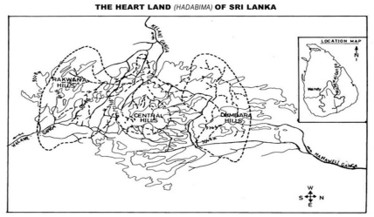
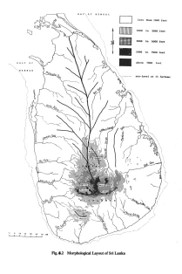
protect the Central Hill Country, the nation’s mother watershed which I named
as the The Geographical Heartland of Sri Lanka” or Bhuugoliya HADABIMA” of Sinhale to save the
entire life system in this country from its extinction and
Secondly, to
rectify the historical injustices done to the Kandyan peasants both by the
Colonial British and the politicians of the post Independent period by
addressing their acute problems like landlessness more fully identified by the
Kandyan Peasantry Commission Report of 1951
Thirdly, to
solve their economic problems with a Diversified Agricultural Development programme
Fourthly to end
the Estate Indian Tamil Problem in this country by opening up mixed Sinhala
Tamil settlements in the Project area on land between1000-3500 ft MSL as a model
of ethnic reconciliation in this country and
Finally, to
retain this land as the LAND of the SINHALA NATION as long as the sun and moon
shall last on this planet.
President Premadasa lauds the HADABIMA Programme
Meanwhile
President Premadasa summoned me for a meeting at the Presidential Secretariat
along with the Minister, Deputy and the Chairman. At that meeting he asked me 3
questions. a) The present position of the Project b) What I propose to do next
and c) The assistance I need to implement the programme. My answers to his 3
questions were preceded by a brief description of NADSA at the time of my
taking over in April 1986. After listening to my briefing he asked me Why are
these Gampola side people so angry with you,” probably referring to the regular
objections by the Chief Minister CP Dissanayaka.
Thereafter he
explained the importance of this project to those present as I had outlined in
my concept paper I had given to him earlier on The geographical heartland of
the country” where he quoted my statement that as much as the beat of the heart decides the fate of the man similarly
the physical stability of the central hill Country decides the entire life
system and the civilization in the entire Island”. And finally he said gentlemen, as Sudath says
this is a very good Project and that is why I have decided to support it.
This was
followed by another meeting in the Ministry of Agriculture at Peradeniya
presided over by him and attended by the Prime Minister, Minister of
Agriculture, Governors of the three Provinces and all the MPP and the GAA of
the new Project area. At that meeting after my briefing, I requested 40 million
for the expansion programme. After consulting Paskaralingam who was also
present he okayed 40 million over the counter, after I told him that I am
planning to settle 250 000 families under the proposed new Project area at
completion in all three Provinces covered by the Kandyan Peasantry Commission.
He then said ‘Sudath I have given you all what you have asked for. Now I want
you to start a very vigorous publicity programme”All this happened within 6 years between April 1986 to July 1992.
Alarming bells for local politicians
This rang up
alarming bells for the politicians of the area of the ruling UNP. They
immediately started their war against me perhaps fearing that I would be a
political threat to them as they always thought I was a SLFP man. The Chief
Minister Dissanayaka CP rekindled his torch as he had been gunning at me from
the day I was appointed, as Director of this Project and soon the doom phase of
the Project began to raise its ugly head.
In no time I was taken by surprise when I
found that I had been transferred to the pool with immediate effect within a
week after the famous Peradeniya meeting where the President gave me 40 million
over the counter for the expansion I proposed without a blink.
This decision of
Premadasa not only put an end to the golden period of the HADABIMA Project but
it also drew the curtain over the beginning of the dawn of a new era of
physical stability, watershed management and a Model Settlement Development programme
for the HAERTLAND and a new chapter in socio-economic prosperity, meaningful
social integration and human contention and political stability for the whole
country.
(But having
realized perhaps his mistake, within a month President Premadasa appointed me
as the State Secretary to the Ministry of Health after I got him convinced of
the dangers of a proposal before the Cabinet for the amalgamation of the
Divisional Secretariats and Pradesiyasabha, as the President of the SLAS held
at the BMCH in December 1992. On behalf
of the general membership of the SLAS I wanted the President to withdraw the
Cabinet paper to be taken up next day proposing to amalgamate the DSS and DCC
and to appoint Divisional GAA as Secretaries to the Pradesiya Sabha Chairmen. He
also agreed not to appoint anyone outside the SLAS as Divisional GAA as it was
proposed to appoint All Island Class 1 Officers as Divisional GAA by his
Government.
As I sat down on his left after my speech he turned
towards me and said Sudath my congratulations; you made and excellent speech”
Next day he appointed me as the State Secretary to the Ministry of Health over
the phone. Those SLAS Officers who were there would
remember how profusely he thanked me for pointing out the dangers of the
proposal and he agreed to withdraw that death warrant on the SLAS. I hope all
will agree with me that if not for that timely intervention by me there would
have been no SLAS thereafter in this country, thanks to Jolly Somasundaram the
architect of that Cabinet paper. That is a different story altogether.
The doomsday of HADABIMA dawned after July 1992
To revert to the
original subject of HADABIMA story I will now give you how politicians again
killed a golden hen that would have laid not only golden eggs but even Diamond EGGS for this nation and
created a new chapter in Scientific Watershed Management, Water Resource Development,
Settlement Development, economic and socio cultural renaissance and finally,
brought about lasting political stability to this Island nation by solving the
canker that is The Indian Estate Tamil Problem” forever in this country, had
my proposal been carried out to its logical conclusion.
The doom day of
the HADABIMA project dawned after I left in July 1992. Dharmadasa Banda and
Wasantha Udayaratna, the duo, played DR Jekyll and Hyde until D.M. Jayaratna
took over as the Minister in 1994.
D M Jayaratna
the then Minister of Agriculture appointed one of his close relations H .M
Godamunna a grocery shop owner from Gampola at the Doluwa junction wef 1994. 9.
15. This political goon Chairman functioned as the Chairman for 6 long years up
to 2002.12. 31. Meanwhile Jayaratna got
the President to appoint a one man Presidential Commission under G.L M De Silva
on 1994 Nov 7 to find fault with my period. But to his dismay he found none. On
the contrary the Commission Chairman in his long Report hailed the achievements
during my period 1986- 1992. Which has
gone down as the golden period of HADABIMA Project and also as the only period during
which the objectives of the Project were addressed to and even surpassing the
original objectives by opening vistas of new development both objectives and
development approaches and finally converting it to an internationally
acclaimed major small farmer development national project covering 1/3 of the Island comprising three
Provinces Central, Uva and Ratnapura
including 3 Divisional Secretaries Divisions from Ampare District as well, by
end of 1992 (Se G.L.M De Silva Report 1995)
Twenty eight
years after I left it, today sadly only the name HADABIMA I gave is left. None
of the objectives of the original fathers of either the NADSA as envisaged in
early 1970s or that broad national vision I conceived and perceived in late
1980s on the enormous potentialities of this important Project for nation
building are active there now. Just like most other Government Projects, It
also has got reduced to another semi-Government Institution that provides
lucrative and remunerative political jobs to satisfy those who pretend to have
helped the ruling party at elections to come to power. All this is done at
public expense with no contribution at all to national development. The politicians who always put politics
first without any concern for nation building, in my opinion are mainly
responsible for this tragedy. No wonder the richest country next to Japan in
Asia in 1948 has today fallen even below Afghanistan. When are we going to
rescue this country from this political mess?
Even after I
left in 1992 this Authority functioned under the Ministry of Agriculture up to 2016 but sadly again it went back to the
pre-1986 situation and became a heaven for politicians and their unscrupulous
henchmen to find employment and enjoy benefits although they had no clue of the
basic objectives or the values of this all important national project. They were only concerned in making a fast
bug and reaping the harvest of what I had planted enjoying the benefits of
their official positions like big salaries and remunerations, official vehicles
with drivers and petrol to attend to all
their personal needs, doing nothing for the Project or the people who pay their salaries.
It was assigned
to the Ministry of Regional Development from 18th March 2016. That enabled
Minister Fonseka’s relation and henchman Lalindra Nagahtenna to function from
Colombo as Chairman, for whom Fonseka created a new office in Colombo, as the
Head office of HADABIMA. Now it has been
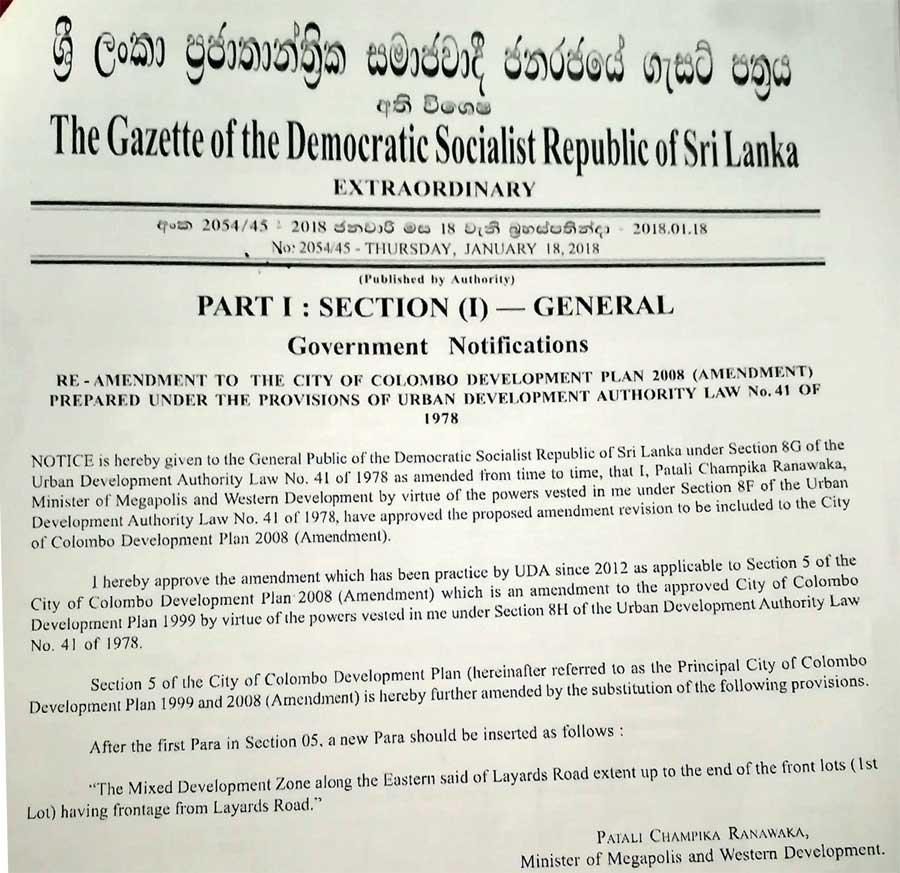
converted to an all Island Project by the Gazette notification No. 2026/45
published on 07th July 2017. This
was done firstly, to cover up financial misappropriation committed by its
Chairmen, Board members and even officials in travelling all over the island,
outside its area of authority between 1992 and 2017. Because as we know you
can’t spend public funds for any work or travelling outside the area of its
legitimate operation unless one has the approval of the Secretary of the
Ministry concerned to travel or do any special business outside the area of its
legitimate authority. Doesn’t this display the scale of corruption and abuse of
authority by all those who have handled this Project ever since 1992? These
haphazard changes clearly evince the inability to understand the basic
objectives of the Project for which it was established in 1978 as NADSA.
Political objectives getting precedence over development and creating
unproductive jobs for their men and providing more facilities like vehicles and
enhanced travelling appear to have overtaken the development objectives of the
Project.
They also
created a post of Deputy Chairman and allowed him to function from Hambantota
as he happened to be a person from that area. That is how they have abused
political power and misappropriated public funds and ruined this Project over
the past 28 years. Of the 15 Chairmen
from 1992 to date there wasn’t a single professional man who knew the job and
who had contributed a penny worth of service to the people or the country that
has spent billions out of public funds. Of the post 1992 Chairmen one was a
grocery shop keeper. Another, a VC chairman and all other political goons
either family members of the Ministers at the time or henchmen who carry
firewood and water for them, who made the hay while the sun shines. One among
them was a defeated politician, a JVP man turned SLFP who held the post of
Chairman for ten years enjoying the fruits of my labour and who had done
nothing to take forward the vision and mission I introduced in 1991.
Gazette
notification No. 2026/45 published on 07th
July 2017 enabling its functions to cover the whole island has brutally
killed its original objectives designed to serve a specific geographical area
and a specific purpose for very good reasons.
I have
narrated this appalling and sad story to the country in order to bring this to
the notice of the President and the Prime Minister and the general public so
that they will take suitable measures at least now, before it is completely
ruined by unscrupulous political appointees for which the final responsibility
will come on the President and the Minister of Agriculture.
In its
long history from 1978 to date it had been run by 15 Chairmen and more than 20
Directors. All the Chairmen were political appointees with no qualification to
old such responsible positions and in two occasions defeated at elections with
no job. I challenge any one to pick one Chairman out of the whole lot who knew
the ABCD of this Project or has planted a single manioc bush for all the
privileges and benefits they have enjoyed as Pin Chairmen at enormous public costs. During my whole period
of 6 years from 2.4.1986 to July 17 1992, though there were two Chairmen
(N.V.K.K Weragoda; Ministry Secretary and Wasantha Udayaratna a defeated
politician) it was I who ran the show single handed with no contribution from them but the
support of a very competent professional Board of Directors selected by me
consisting of GAA, Heads of Departments, a senior Treasury rep and another
Senior Ministry rep and Experts in relevant fields sans any political cogs and converted it to a world class Small Farmer
Development Project in Sri Lanka recognized as the best among such in Asia by
the WFP in 1991. But to my great disappointment, besides President Premadasa
and Lalith Atulatmudali none has recognized the contribution I made to this Project,
up to date.
The degree of International recognition of my
achievements was further marked with invitations to present two papers on the
success story of NADSA in Laos and Bangkok in February 1991 and April in 1993.
The only
contribution, rather the service, the Chairmen did during my 6 years was to
sign the monthly Board minutes. Other than that they only physically presided
over the Board meeting, enjoyed the tea in addition to collecting their Board
payments, salaries and other stipends of office. Regarding the Directors I
really do not know how they worked with these illiterate political goons. But one thing I know very well is none of
them have been able to at least maintain the levels to which I had brought this
Project apart from doing anything creative and beneficial to the settlers or
the country. I now understand the present Government has appointed another
political pick who has no understanding of the Project. It is strange that this
was the man who was appointed as Chairman for I year term (2004-205) by Anura
kumara Disanayaka of the JVP.
However I must
make it very clear here that I am not asking for a job by pointing out these
blunders. I am only requesting the
President to rescind the 2017 gazette on HADABIMA and confine its activities to
the project area defined by the 1991 gazette and appoint someone who can
understand the ABCD of this Project. In
the process, if the President cannot find a suitable person I am prepared to
take over HADABIMA as it’s Head as the founding father of this wonderful
Project. In the event the President wants my services, I shall work WITHOUT a
SALARY with full commitment,
dedication and determination until I put it back on its wheels as I had dreamt in late 1980s within 2 or 3 years
the most and I shall make it the best development Project in this country and a
model public enterprise by paving the way to realize the following objectives
within five years, after training a likeminded team of true public servants in
the sphere of District and Divisional Administration within the Project area
with maximum public participation in development and make history in the
development annals of post independent era of this country in people centered
development, for everyone to see as to how a public institution should be run
under Sinhala Buddhist ethos and perception for the benefit of the many and for
the happiness of the many.
1 Get all the land above 5000 ft. declared as a
strictly prohibited National Forest Reserve, a Thahanchi kele as it was done by our ancient Kings
2 Get the HADABIMA (> 1000 ft. MSL) protected as
the Nations Heart to guarantee that the life system and Civilization in this
country is not endangered and it will last as the sun and moon shall rise over
this land.
3 Get 250 000 self-sustained farmer families settled
within the Project area on 2 ½ acre model farm lots
4 Obtain WFP Food assistance for 6 years, under the
motto, Food for Development” to sustain these farm families, (as I did from
1991-1992) until they are on their own feet
5 Draw up a programme to cover the entire HADAMIMA
with natural forest and Agro forests (Kandyan Forest gardens below 3500 ft) to
arrest soil erosion and land degradation endangering biodiversity and to make
all streams perennial
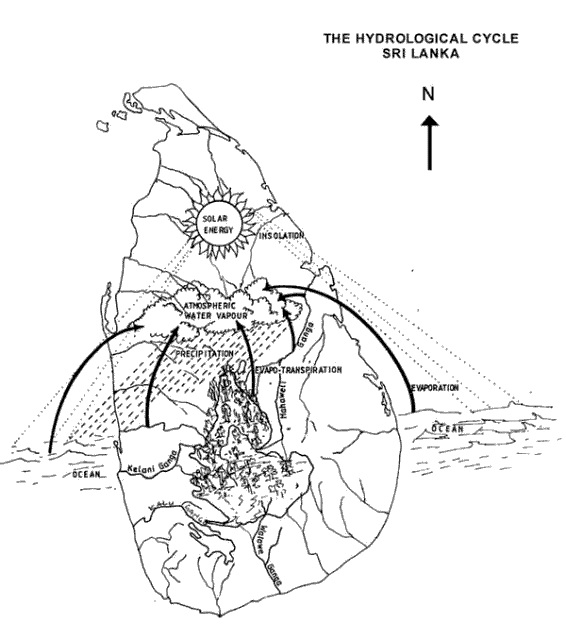
6 Once again restore the Central Hill Country as the
nation’s biggest natural reservoir”, and the best hideout in the country and
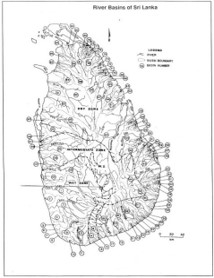
make all the 103 rivers starting on these hills perennial, increase water flow
in all the rivers and minimize flood and silting in downstream areas and make
at least the major rivers like Kelani (up to Yatiyantota rapids as it had been
before 1815) and Mahaweli and Kalu ganga as in ancient times
7 Make Sri Lanka self-sufficient in Hydro Electricity,
minimizing dependency on thermal power and if possible make it a Hydro Power
exporting country.
8 Make Sri Lanka a water exporting country in future
as I have stated in my paper on Vision and Mission on Water Management” in Sri
Lanka. (in the Island 17th Monday 2018)
9 Rectify all the historical injustices done to over
600 000 Kandyan peasants by the British and all Governments since the so-called
Independence in 1948
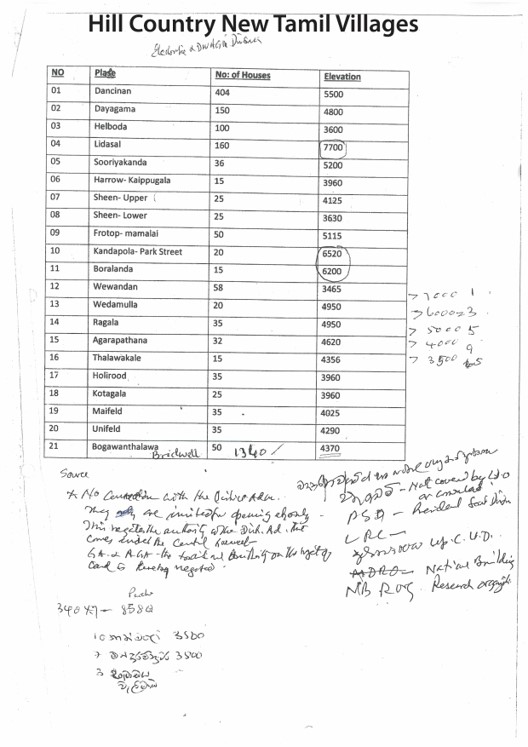
10 End the all- important pestering Indian Tamil
problem in the hill country by establishing Sinhala-Tamil mixed settlement
schemes below 3500 ft. MSL with the final goal of integrating all of them under
the Nehru/Kotalawala Agreement of 1954 with the main stream, as full citizens
of this country and stop an Indian Tamil Malayadu being formed on the nations
geographical Heartland.
11 Get a band of 1000 youth male and female organized
to implement this programme voluntarily over a period of 6 years until its
completion.
12 Persuade the Government to enact laws to implement
this programme effectively and severely punish those who violate them.
As the man who resurrected a once dead and
buried project (NADSA) between 1986-1992
that was rejected, discarded, blacklisted and money withdrawn in early
1980s by the World Bank and decided to close it down by end of 1986 for
political and management failures, I am deeply concerned and agitated by the
present sad plight it has fallen in to. After resurrecting it from its abysmal
depths and scratches during a short period
of 3 years, I gave it a new lease of life, even before the golden period
of this Project emerged between 1989-1992 with WFP assistance. Lalith Atulathmudalai the then Minister of
Agriculture on his first visit in Dec 1991 to this Project described it as the
best small farm project in Sri Lanka at that time, incidentally which he
described as the best example in the whole world where the poor is made
poorer’ just one month before that date at a Heads of Departments meeting held
at the ARTI. The WFP followed suit by naming it as the best small farm project
in Asia in 1992.
Having
resurrected this dead Project from its grave by awakening a set of utterly
disappointed and dejected 35,000 farmers to a highly motivated group of farmers
with new hopes, I got 12.5 US$ million grant from the WFP and fed them three
meals a day for six years, (that is 2.5 billion meals) from 1991—1992, with the
slogan Food for development”. Coupled with a vigorous development plan I
uplifted the standard of living of these men and women amidst immense political
obstruction from the ruling UNP and got its area of authority expanded to cover
the entire CP, UVA and the Sabaragamuva
provinces in 1992, in spite of the objections by the Minister Dharmadasa Banda.
As the first man
who pointed out the crucial dependence of the Island’s entire life system and
its civilization on the physical stability of the Central Hill Country, as its
‘GEOGRAPHICAL HEARTLAND, and proposed a foolproof proposal to save the HADBIMA with
the lessons learnt from large scale deforestation done by the British and
subsequent destructions done by our own politician since the so-called
Independence, I am deeply grieved the way this Project had been destroyed and
vandalized by native politicians and their stooges from 1992 to date for
political expediencies.
None of them
had brain to understand the crucial role of the HADABIMA for the survival of a
nation and the need to protect it for the next generation. None of the Chairmen
under both UNP and SLFP regimes during this period (1992-2020) also had the
capacity to understand the real value of this important Project and none has
done a penny worth thing to protect it. All of them are either defeated
politicians or political bats who change their party affiliations with every
election and creep in to these positions
just to collect the money they spend on candidates and rob these institutions.
They all have only enjoyed the benefits of office inherited from my perilous
effort for six years. Beside mismanaging it and enjoying the benefits at public
expense they have killed a hen laying golden eggs and also made it unmanageable
and unrealistic by expanding its activities to areas outside its legal
operational area of the three Provinces set by the Sri Lanka Hadabima Authority
Act of 1991, which I got passed in spite of Minister of Agriculture
Dharmadasabanda objecting to it openly. Most of the Chairmen with the exception
of one or two have robbed and destroyed the project proving the famous Sinhala
saying Uran
kekeuna talapuwama Hamban kukulanta magul”
This illegal
expansion they did by Gazette notification No. 2026/45 published on 07th July
2017 firstly, to cover up their gross financial misappropriations done for 25
years since 1992 to 2017, running about all over the country like Hambantota in
the extreme South and Vavuniya in the North, outside its legal area of
operation and secondly, to justify new recruitments loaded to the cadre for
political favoritism.
One last appeal to the President
In this appalling backdrop I earnestly appeal to the
present President
First to appoint a professional, keeping with his
election promises, who can understand the lofty objectives of this Project and
who can carry them to their logical conclusion and
Secondly, to appoint a Presidential Commission to
inquire in to the misdeeds of all Chairmen of this Project from its inception
in 1978 to date to at least learn a lesson, if he does not want to punish the
rogues, as to how a public Institution should be run profitably for the benefit
of the nation and what type of people should be appointed to Head them. So
that the findings could be used,
Firstly, to use it as a case study as to find out what
really ails all public Corporations and Authorities in this country and why almost all of them
have failed to fulfill the original purpose of creating them in order to reduce
delays or circumvent bureaucratic barriers like ARR and FRR as the vocal
politician envisaged when they were created in early 1960s.
Secondly, to find out as to how a public Corporation/Institution
could and should function to serve the people
Thirdly how could they be run profitably so that they
want be a burden to the national economy and how could they be converted to be
engines of growth.
Finally, why all these public Corporations and
Statutory Bodies have failed to fulfill their targets and what remedial
measures the Government must take to rectify these deficiencies and convert
them to lay golden eggs.
(I suggest this paper could be used as the first presentation at the opening session of the proposed Presidential Commission)
Dr. Sudath Gunasekara (SLAS) Retired Permanent Secretary to Prime Minister Sirimavo Bandaranayaka, President Sri Lanka Administrative Services Association (1991-1994) and President Mahanuwara Sinhala Bauddha Jesta Puravesiyange Sanvidhanaya.