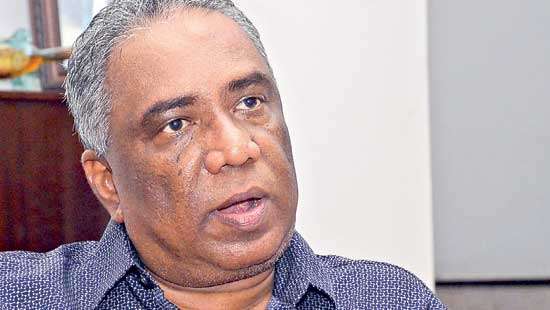
RANJANGATE SCANDAL- “එයා කතෝලිකද, එහෙනම් කොලිටියි” අධිකරණයේ උසස්වීම් ලැබීමට ආගම බලපෑ හැටි රංජන්ගේ හඬපටයෙන් හෙළිවේ

January 7th, 2020

උපුටා ගැන්ම Lanka Mag

පාර්ලිමේන්තු මන්ත්‍රී රංජන් රාමනායක මහතාගේ නිවසින් අත්අඩංගුවට ගත් ඔහුගේ දුරකථන ඇමතුම් පටිගත වී තිබෙනා දෘඩ තැටි වල අඩංගු දුරකථන ඇමතුම් කිහිපයක් මේ වනවිට මාධ්‍යයට නිකුත් කර තිබේ.

ආන්දෝලනාත්මක සිදුවීමක් වන්නේ මෙරට අධිකරණ විනිසුරුවරියක් රංජන් රාමනායක එවකට නියෝජ්‍ය අමාත්‍යවරයා අමතා තමන්ට අවශ්‍ය උසස් වීමක් ඉල්ලීමයි. එහිදි රංජන් රාමනායක නියෝජ්‍ය අමාත්‍යවරයා අමතන විනිසුරුවරිය ව්‍යවස්ථාදායක සභාව හරහා අභියාචනාධිකරණයේ ඇති පුරප්පාඩුවකට තමන් යොමු කරනා ලෙස ඉල්ලා සිටියි.

මෙලෙසට මාධ්‍යයට නිකුත්ව ඇති තවත් හඬපටයක නිශාන්ත ද සිල්වා කන්දප්පා අමතන රංජන් රාමනායක අධිකරණ විනිසුරුවරයෙකුගේ ආගම සහ කුලය විමසනවා.

එහිදි රංජන් රාමනායක පවසන්නේ ආගම කතෝලික හා කුලය දුරාව නම් ඔහු කොලිටි” බවයි.

පසුගිය සමය පුරාවටම මෙරට අධිකරණ ක්ෂේත්‍රයේ උසස් වීම් ලබා දීමට ආගම සළකා බැලූ අතර එහි ප්‍රධානීත්වය ඉසුලූවේ සමස්ත ලංකා කතෝලික සභාවේ උප සභාපති ජනාධිපති නීතිඥ එම්. ඒ සුමතිරන් විසිනි.

රංජන් රාමනායක වැනි දේශපාලන රස්තියාදුකාරයන්ගේ ඇල්ම බැල්ම සහ ගෞරවාදරයට පත්වීමට නිර්ණායකයක් වන්නේ රන්ජන්ලාගේ දේශපාලන මතවාදය නියෝජනය කිරීම පමණක් නොවන බවත් ඒ සඳහා අදාල පුද්ගලයන්ගේ ආගමික පසුබිමද අනිවාර්යයෙන්ම බලපාන බවත් එම හඬ පටය අනුව පැහැදිලිය.

ආගමික බලපෑම් ගිල ගෙන ඇත්තේ මෙරට ක්‍රිකට් ක්‍රීඩාව පමණක් නොවේ.

සමස්ත ලංකා කතෝලික මහ සභාවේ උප සභාපති, අධි නීතිඥ එම්. ඒ සුමන්තිරන් විසින් ව්‍යවස්ථාදායක සභාව හරහා අධිකරණ ක්‍රියාවලිය මෙහෙයවූ පසුගිය සමයේ මෙරට අධිකරණ ක්ෂේත්‍රයේ උසස් වීම් ලැබීමට නම් ආගමික බලපෑම ඉතා ඉහළ විය.

කතෝලික පුද්ගලයන්ට තනතුරු ලබා දීමේදී ප්‍රමුඛත්වය ලැබෙන බව බව පත්මිණි විනිසුරුවරිය සහ රන්ජන් හඬ පටයේදී අදාල විනිසුරුවරියද ඉතා දැඩිව කියා සිටියි

අධිකරණ ක්ෂේත්‍රය තුල පත්විම්,උසස්වීම් ලබා දීමේදී බෞද්ධාගම්කාරයෙකු නොවීම සහ කතෝලිකයෙකු වීම වැනි කාරණා මෙතරම් බලපානවා නම් රටේ අනිත් ක්ශේත්‍රයන් තුල ඇති තත්වය ගැන සිතා ගත හැකියි. එයින් ඉස්මතු වන්නේ මේ රට තුල සිංහල බෞද්ධ සංහාරය කෙතරම් දරුණුවට සිදුවනවාද යන්නයි. එම අනතුර කෙතරම් දරුණුද යන්නයි.

RANJANGATE SCANDAL – ‘කොකේන් එක්ටසි ඔක්කොම ගහන හොද කෙල්ලෙක් මං එවන්නම්.. ෆොටෝ ටික ඔක්කොම මට එවන්න..- පියුමි හංසමාලි, රන්ජන් හඬපටය මෙන්න..

January 7th, 2020

උපුටා ගැන්ම ලංකාසීනිවුස්

නිරූපණ ශිල්පිනියක් ලෙස සමාජ මාධ්‍යන්හි ප්‍රසිද්ධ පියුමි හංසමාලි සහ පාර්ලිමේන්තු මන්ත්‍රී රන්ජන් රාමනායක මහතා අතර සිදුවන දුරකථන සංවාදයක හඬපටයක් සමාජ මාධ්‍ය වෙත මුදාහැර ඇත.

‘මම ඔයාට හොඳ කෙල්ලෙක් එවන්නම්. එයා නම් කොක්කේ එක්ටසි ඔක්කොම ගහනවා. ෆොටෝ ටික ඔක්කොම මට එවන්න’ යයි එම සංවාදයේ දෙදෙනා අතර හුවමාරු වූ වචන කිහිපයකි.

විනාඩි 15 ක පමණ කාලයක් තිස්සේ මෙම සංවාදය දිගහැරේ .

https://youtu.be/IRZSLNA1Weg

RANJANGATE SCANDAL – ගම්මන්පිල හිරේ දමන්න රහස් පොලිසිය සමග රන්ජන් කල සැලැස්මේ හඬ පටය මෙන්න…

January 7th, 2020

උපුටා ගැන්ම ලංකාසීනිවුස්

යහපාලන රජය සමඟ සමයේ එවකට විපක්ෂ පාර්ලිමේන්තු මන්ත්‍රී උදය ගම්මන්පිල මහතා බන්ධනාගාර ගත කිරීම සඳහා සිදුකරන ලද මෙහෙයුම හෙළිදරව් වී තිබේ.

එවකට රාජ්‍ය ඇමැති රංජන් රාමනායක මහතා විසින් රහස් පොලීසියේ නිලධාරියෙකු සමග කරන දුරකථන සංවාදයකින් මෙම සැලැස්ම හෙළිවී ඇත.

විදේශ විදේශීය ජාතිකයකු සම්බන්ධ අදාළ චෝදනාවට විත්තිකාර විදේශිය ජාතිකයාට තවත් විදේශීය ජාතිකයකු ලවා මරණ තර්ජනය කරවීමටද ඔවුන් සාකච්ඡා කළ අයුරු හඬ පටයේ සදහන් වෙයි.

https://youtu.be/jHmS1qvDDLo

RANJANGATE SCANDAL – රන්ජන්ගේ හඬ පට තොගය සමාජ ජාලවලට ආ විදිහ මෙන්න…

January 7th, 2020

අරවින්ද අතුකෝරල උපුටා ගැන්ම ලංකාසීනිවුස්

පිවිතුරු හෙල උරුමයේ පක්‍ෂ මූලස්ථානයේ පැවති මාධ්‍ය හමුවේදී එම පක්‍ෂ නායක පාර්ලිමේන්තු මන්ත‍්‍රී උදය ගම්මන්පිල මහතා මෙම අදහස් පල කලේය.

පොලිස් අත්අඩංගුවට පත් වුණු රන්ජන්ගේ දුරකතන සංවාද මාධ්‍යයට ආවේ කොහොමද කියලා සමහරු ප්‍රශ්න කරනවා මම දැක්කා. ඒවා පොලිසියට දුන් පුද්ගලයාම තමයි සමාජ ජාලා වලට මුදා හැරියේ. ඒ වගේම විවිධ සංවිධාන සහ දේශපාලකයින්ට ලබා දුන්නේ.

රන්ජන් සෑම දුරකතන ඇමතුමක්ම ස්වයං පටිගත වන ඇප් එකක් දුරකතනයේ දාගෙන ඉන්නේ. දුරකතනයේ ඉඩ මදි වුණාම දුරකතනයේ තිබෙන සංවාද හාඩ් ඩිස්ක් වලට සීඩී තැටි වලට පිටපත් කරලා අරන් තියනවා. මේ වැඩේ කරලා දෙන මිත්‍රයෙක් තමයි සියල්ල පිටපත් කරලා පොලිසියට ලබා දෙන්නේ.

මේ පුද්ගලයා මේ සංවාද කලින් හෙළිදරව් නොකලේ එහෙම කලානම් රන්ජන් රාමනායක මන්ත්‍රිවරයා ඔහු සතුව තියෙන මුල් පිටපත් විනාශ කලානම් මේ මහා අපරාධය, අධිකරනයට හා විරුද්ධවාදී දේශපාලකයන්ට සිදු වූ අපරාධය ලොවට හෙළි දරව් කරගන්න බැරිවෙනවා.

ඒ නිසා පොලීසිය විසින් මුල් පිටපත් අත් අඩංගුවට ගන්නා තුරු මේවා ප්‍රසිද්ධ කලේ නෑ. මේ සංවාද අඩංගු තැටි අත්අඩංගුවට ගන්න තමයි පොලිසිය ගේ වට කරන්නේ. නිල් චිත්‍රපට සහ බලපත්‍ර නැති පිස්තෝලය පරික්ෂාවේ දී සොයා ගත් අතුරු සිල්ලර කාරණා.

RANJANGATE SCANDAL -Ranjan’s telephone conversations reveal more information (English)

January 7th, 2020

Courtesy Ada Derana

RANJANGATE SCANDAL- Ranjan’s controversial telephone conversation with Shani Abeysekara revealed

January 7th, 2020

Courtesy Ada Derana

A recording of a controversial telephone conversation between MP Ranjan Ramanayake and former Director of the Criminal Investigation Department (CID) Shani Abeysekara has been released to the media.

This conversation is transpired to be a conspiracy to remove the former Army Intelligence Chief Brigadier Suresh Salley, who is alleged to have been a hindrance to investigations.

In contrast to the subject of the conversation, the duo admits to former Army Intelligence Chief Salley being a man of honour.

Addressing a media briefing today (07), Retired Major General Ajith Prasanna, the Convenor of War Heroes for the Motherland organization, said Shani Abeysekara wanted to take out Brigadier Salley and that it was conspired through MP Ranjan Ramanayake to be conveyed to then-President. Eventually, Brigadier Salley was removed, he said, adding that a brigadier of the Sinha Regiment who has not even studied intelligence was then appointed to the post.

This is why our national security and intelligence collapsed,” Mr. Prasanna pointed out. Hence, Shani Abeysekara and Ranjan Ramanayake are both responsible for the Easter Sunday terror attacks as they removed the intelligence chief based on lies, he continued.

That very Suresh Salley has been appointed the State Intelligence Chief by President Gotabaya Rajapaksa and we thank him for that,” Mr. Prasanna said further.


In the series of telephonic recordings of MP Ranjan Ramanayake that were uncovered recently, a previous conversation between him and former Prime Minister Ranil Wickremesinghe, which took place back in 2016, was discussed during today’s parliamentary session.

Addressing the Parliament, State Minister Mahindananda Aluthgamage claimed that a telephone conversation between the former Premier and the former Deputy Minister plotting to assassinate him was circulating in social media platforms.

In 2016, then-Deputy Minister Ranjan Ramanayake had lodged a complaint with the Bribery Commission, against State Minister Aluthgamage over a Defender, which was a property of the State. However, an argument between Aluthgamage and Ramanayake in this regard had come to blows.

In this backdrop, during a parliamentary session in 2016, MP Padma Udayashantha had raised questions regarding the gunshots that were heard from the Madiwela housing complex of the parliamentarians on the 23rd of June, 2016.

Responding to these questions, former Prime Minister had told the Parliament that MP Ramanayake had been engaged in a practice session for a movie on that specific day.

MP Ramanayake had telephoned the former Prime Minister to thank him for defending him.

RANJANGATE SCANDAL – රන්ජන් තවත් විනිසුරුවරියන් කිහිපදෙනෙකු සමඟ සමීපව කටයුතු කර ඇති බවට සිංහලේ ජාතික සංවිධානයෙන් චෝදනා

January 7th, 2020

උපුටා ගැන්ම හිරු නිව්ස්

හිටපු මහාධිකරණ විනිසුරු පද්මිණී එන්. රණවකට අමතරව තවත් විනිසුරුවරියන් කිහිපදෙනෙකු සමඟ පාර්ලිමේන්තු මන්ත්‍රී රන්ජන් රාමනායක සමීපව කටයුතු කර ඇති බවට සිංහලේ ජාතික සංවිධානයේ මහ ලේකම් පූජ්‍ය මැඩිල්ලේ පඤ්ඤාලෝක හිමියන් චෝදනා කළා.

ඒ, කොළඹ අද පැවති මාධ්‍ය හමුවකට එක්වෙමින්.

RANJANGATE SCANDAL – ජාතික පොලිස් කොමිසම වැඩබලන පොලිස්පතිගෙන් සති දෙකක් ඇතුලත ශානි ගැන වාර්තාවක් ඉල්ලයි

January 7th, 2020

උපුටා ගැන්ම හිරු නිව්ස්

වැඩ තහනම් කළ අපරාධ පරීක්ෂණ දෙපාර්තමේන්තුවේ හිටපු අධ්‍යක්ෂ ශානි අබේසේකරට ඇති චෝදනා පිළිබඳව සති දෙකක් ඇතුලත විමර්ශනයක් සිදුකර වාර්තාවක් ලබාදෙන්නැයි ජාතික පොලිස් කොමිසම විසින් වැඩබලන පොලිස්පතිවරයාට නියෝග කර තිබෙනවා.

RANJANGATE SCANDAL-ශානි අබේසේකරගේ වැඩ තහනම් – පොලීසිය අපකීර්තියට පත් කළ බවට චෝදනා

January 7th, 2020

උපුටා ගැන්ම හිරු නිව්ස්

අපරාධ පරීක්ෂණ දෙපාර්තමේන්තුවේ හිටපු අධ්‍යක්‍ෂ ශානි අබේසේකරගේ සේවය වහාම ක්‍රියාත්මක වන පරිදි අත්හිටුවා තිබෙනවා.

හිරු ප්‍රවෘත්ති අංශය කළ විමසීමකදී පොලිස් මාධ්‍ය කොට්ඨාශය ප්‍රකාශ කළේ දුරකථන සංවාද මගින් පොලිස් සේවය අපකීර්තියට පත් කිරීමේ චෝදනාව යටතේ මෙම පියවර ගෙන ඇති බවයි.

ඒ අනුව ඔහු වහාම ක්‍රියාත්මක වන පරිදි පොලිස් මූලස්ථානය වෙත ස්ථාන මාරු කර වැඩතහනමට ලක් කර තිබෙනවා.

ඔහුට ඇති චෝදනා සම්බන්ධයෙන් වහාම මූලික විමර්ශනයක් සිදුකර සති දෙකක් ඇතුළත වාර්තාවක් ලබාදෙන ලෙස වැඩබලන පොලිස්පති සී.ඩී. වික්‍රමරත්නට ජාතික පොලිස් කොමිෂන් සභාව නියෝග කර ඇති බවයි එහි ලේකම් නිශාන්ත වීරසිංහ කියා සිටියේ

RANJANGATE SCANDAL-රනිල්-රන්ජන් එක්ව මහින්දානන්ද ඝාතන කුමන්ත‍්‍රණයක.. පොලිස්පතිගෙන්ද උපදෙස්.. හඬපටය මෙන්න..

January 7th, 2020

උපුටා ගැන්ම ලංකාසීනිවුස්

වත්මන් රාජ්‍ය ඇමැති මහින්දානන්ද අලුත්ගමගේ මහතාව පසුගිය රජය සමයේ දී වෙඩි තබා ඝාතනය කිරීමට කරන ලද කුමන්ත්‍රණයක් හෙළිදරව් වී තිබේ.

එවකට රාජ්‍ය ඇමැති රංජන් රාමනායක මහතා විසින් සිදුකරන ලද දුරකතන සංවාදයකින් මේ බව හෙළිව ඇත.

රන්ජන් රාමනායක මහතා එම සංවාදය සිදු කරන්නේ එවකට අගමැති රනිල් වික්‍රමසිංහ මහතා සමගයි.

අත්වැරදීමකින් ගිනි අවිය පත්තු වූ බව පවසමින් මහින්දානන්ද අලූත්ගමගේ මහතා ඝාතනය කිරීම සඳහා කුමන්ත්‍රණය සිදු කරනු එම හඬපටයේ සටහන් වී ඇත.

ඒ සඳහා එවකට අගමැති රනිල් වික්‍රමසිංහ මහතාද උපදෙස් ලබාදෙමින් දෙනු ඇසේ.

පොලිස්පතිවරයාද තමනට උපදෙස් දුන්නේ යයිද රාමනායක මහතා විසින් එහිදී හිටපු අගමැතිවරයාට කියයි.

https://www.facebook.com/maluthgamage/videos/607496489821857/?t=7

RANJANGATE SCANDAL – මාව මරන්න රනිල් රන්ජන්ට උපදෙස් දීලා මහින්දානන්ද පාර්ලිමේන්තුව රත්කරමින් සිදුකළ හෙළිදරව්ව

January 7th, 2020

KUBIYO NEWS

https://youtu.be/G5zwb5Hcq6E

Tamil ideologues twisting history to suit their political agenda – Part II Reply to C. V. Wigneswaran

January 6th, 2020

H. L. D. Mahindapala

The Vadukoddai Resolution was written by the best of Tamil political theoreticians / activists who encapsulated their version of the history to justify their political claim for Eelam, a separate state.  In it the history of an imagined past was tailored to fit into the politics of the present. Overnight it became the Bible of the Tamil separatists. Their main objective was to demonise the Sinhala-Buddhists. Turning  the Sinhala-Buddhist into a bogeyman is the best argument they could manufacture to press their claim for a separate state. So it listed a litany of complaints to project the Tamils as the victims of the Sinhala-Buddhist majority in the post-independent age.

Victimology happens to be the primary base on which they lay their claim for a separate state. Predictably, being a politicised document, the narrative in the Vadukoddai Resolution contains a quota of inaccuracies, distortions and exaggerations. At one point the Resolution claims that the Tamils have been reduced to slaves of the majority”. Now this is a deliberate departure from the truth to distort history for political ends. No Sinhala society or state engaged in slavery the way the Tamils of the North have done throughout the main part of their existence.  The legalised slavery and oppression of Tamils by Tamils had been the dominant political culture of Jaffna, enforced mainly under the laws of Tesawalamai – a legal code endorsed by the Vellala mudliyars in 1707, the Dutch period. No other community in Sri Lanka has endured and suffered the indignities of legalised and institutionalised slavery and oppression as the low-caste Tamils of Jaffna under the ruling Saivite Jaffna Vellala (SJV) elite.

Though Jaffna was ruled by Tamil kings in feudal times and Christian rulers in colonial times it was the SJV elite, acting as sub agents of kings and colonial masters, which had a firm grip on the political culture of the peninsula. As power- brokers and managers of the commanding heights of the peninsular political culture the Vellalars deprived the low caste of their liberty, dignity, security and individuality. To eke out a living, escaping cruel punishment, the low-castes had to submit to the oppressive laws and customs of SJV elite.  The non-Vellalar slaves of Jaffna, though Tamil, were never treated as human beings equal to that of the high-caste Vellalars.  The low-castes were kept under the heel of the Vellalars as an inferior species though they were Tamils.  The subhuman fascist culture of the Vellalars deprived the basic human rights to their fellow-Tamils in the low-castes.

It can be argued convincingly that the Tamils – meaning the Tamils of all castes and just not the SJVs – had their first and enduring taste of freedom and dignity only in the last 72 years of independence. Throughout their history, which began in the 11th and 12th centuries, the dignity and the liberty the Tamils had can be compared to the freedoms and dignity they had under Velupillai Prabhakaran.  Those who had the freedoms were those who cooperated with the fascist regimes, from Sankilli to Prabhakaran. Those who did not conform had to either flee from Jaffna (Prof. Rajan Hoole) or were killed (Rajini Thiranagama). 

Prior to independence, all Tamils, particularly the low-castes, had to live under iron fist of the Vellalar rule. Though there was a greater measure freedom for the low-castes in the post-independent age, particularly to question and rebel against Vellalar fascism, Vellalar fascism fought back with all their fury (Maviddipural Temple entry case) to keep the low-castes in their subhuman status.

Fascist Vellalaism took root as a ruling ideology in the pre-colonial period when the Tamil kings gave their daughters in marriage to the Vellalars. The Vellalars were always in cahoots with the ruling powers of the day. They never failed to sidle up to the powers-that-be to retain their supremacy, powers and perks in Jaffna. They were the most dominant, numerous (52%) and powerful caste in Jaffna. No colonial master had dared to take on the powerful Vellalars since casteism, slavery and Vellalar fascism were codified by Claas Isaacks, the Dissawe of Jaffnapatam, on January 30, 1707. In the final stages of the codification the Dutch Governor asked twelve Vellalar Mudliyars to scrutinise it. It was officially codified only after the endorsement of the Vellalar Mudliyars. (p.27, Chapter II — The Laws and Customs of the Tamils of Jaffna, H. W. Tambiah).                                                                                                                                                                                                                                                                                                                                                                                                                                                                                                                                                                                                                                                                                                                                                                                                                                                                                                                                                                                                                                                                                                                                                                                                                                                                                                                                                                                                                                                                                                                                                                                                                                                                                                                                                                                                                                                                                                                                                                                                                                                                                                                                                                                                                                                                                                                                                                                                                                                                                                                                                                                                                                                                                                                                                                                                                                                                                                                                                                                                                                                                                                                                                                                                                                                                                                                                                                                                                                                                                                                                                                                                                                                                                                                                                                                                                                                                                                                                                                                                                                                                                                                                                                                                                                                                                  

Tesawalamai virtually capped the power of the Vellalas to rule Jaffna as subagents of the colonial masters with an iron fist. Tambiah wrote : Though slavery was abolished legally many of the depressed classes remained as de facto slaves of their masters for economic reasons. In spite of the fact that slavery was abolished in 1844 it is surprising to find that arguments have been advanced in case on the footing that it existed long after 1844.” (Ibid – p.85). Tambiah cites the instance of Ponnamabalam Ramanathan arguing in court that slavery was still valid in a case where the higher caste objected to the beating of tom-toms at a low-caste burial. (Ibid – p.85). The Vellalars determined the inviolable rituals from the womb to the tomb. Tesawalamai endorsed and enshrined the status quo of the hierarchical caste system with the Vellalars at the top, empowered with the legal cover to own and employ slaves.  The combined force of the legal, religious, ideological, traditional and feudal powers made the Vellalars the most formidable force in the peninsular.

The Vellalars owned most of the land, all the Hindu temples which were religio-cultural centers of power, owned or managed some  of the non-governmental schools,  generated ideologies through SJV leaders like Arumuga Navalar, to maintain the  casteist grip of the Vellalars to oppress the non-Vellalar low-castes,  produced the political and intellectual leaders who were committed to Vellalar casteism ( e.g. Arumuga Navalar and his disciple  Sir. Ponnamabalam Ramanathan) , occupied practically all the key positions in the colonial and post-independent governments and, most of all controlled and managed the political ideology that incrementally drove Jaffna to mono-ethnic extremism, preventing peaceful co-existence among  other ethnic  entities.

In short, what were projected as the interests / grievances of the Tamils were essentially the vested interests / grievances of the Vellalars. The Vellalars have consistently disguised their interests / grievances as that of the Tamils. But neither the interests of the Tamil-speaking communities, nor all the castes in the North have a place in the overwhelming Vellalar political agenda or net work. The Vadukoddai Resolution is a classic example. It is the one and only overarching, comprehensive and historic manifesto to come out of the peninsula expressing the totality of the SJV political agenda. It begins by narrating their version of history and ends with a declaration of war against the rest of the nation, urging the Tamil youth to take up arms and never rest until they achieve Eelam.

Though it was meant to express the collective goals of the Tamils in essence it represents only the political interests / grievances of the Vellalars. Eelam, for instance, was never a part of the Muslims or the Indian Tamils. Like the Tesawalamai it was also approved by Vellalars because it was written for the Vellalars. The SJV- led Thamil makkal Iyakkam, the pan-Tamil movement, never took off as a common front of the Tamil-speaking people, because the Vadukoddai Resolution and all other political movements initiated by the North represented essentially the political agenda of the Vellalars only. This put off the other Tamil-speaking communities who had their own interests to pursue.

Any threat to Vellalars hegemony was resisted fiercely by the Vellalars. Vellalar leaders like Sir. Ponnambalam Ramanathan went to London to argue that casteism – with Vellalars at the top – should be retained for the good of the Empire. He opposed universal franchise as mob rule”. The first politico- legal challenge to Vellala hegemony was initiated in 1957 when Prime Minister S. W. R. D. Bandaranaike passed the Prevention of Social disabilities Act. At no time in the history of Jaffna, from the feudal age to the colonial period, were any attempts made by any regime to challenge the oppressive fascism of the Vellalars who treated their own people with subhuman contempt. The Tamils of Jaffna (meaning Tamils of all castes) never had the freedom and the opportunity to walk in the God-given sun, or drink a sip of water as under the post-independent regimes.

The Vadukoddai Resolution represents, by and large, the interests / grievances of the Vellalars transiting from their feudal caste system into a modern middle class. The fundamental interests of Indian Tamils and the Tamil-speaking Muslims drifted away from the Vellalar agenda because their interests were different, if not antithetical, to that of the Vellalar-led politics. They had no direct interests in the divisive, white-collar job-oriented, middle class agenda of the SJVs. 

Many anthropological and sociological scholars have documented the horrors of SJVs oppression of the low-caste Tamils. They are freely available for any researcher. It is the existential experiences of the average Tamil, down the ages, that have a greater significance and relevance than the scholarly abstracts drawn from a distance. An eye-witness account from a Tamil who lived in the British colonial times can be more vivid and telling than academic reviews. Here is an account taken from the Tamil historian, Dr. Muruga Gunasingam. He says:

A letter addressed to the editor of the Morning Star by a Hindu from Batticoloa on 17 April, 1845 is very instructive, giving us an insight in the caste system and how it worked:

……Mr. Editor, there is a cruelty manifested in Ceylon, particularly among the Tamils, which may be regarded as worse than that of slavery. I mean the distinction of caste, by which more evil results to a large portion of inhabitants of the above-mentioned places than would be the case if they were under the yoke of slavery.  Suppose a man of low-caste meets with an accident, will persons of high caste assist him? When he falls will they lift him up? When his house is on fire will they attempt  to extinguish the  flame? Or to save his person or property? If  he is thirsty will they permit him to draw water fromtheir wells? When he is sick will the doctor attend him? Will the washerman \wash his clothes? Or the barber shave him. No, when  a low-caste man visits a high caste man’s house  he must  go and sit very far from the house  and whenever he is met by one  of them he must  inform that person that he is of unclean caste and cannot therefore be  touched, and if  he acts contrary to his case he must therefore submit  to punishment.” ( p.87 – Sri Lankan Tamil Nationalism, A Study of  its Origins, Murugar Guanasingam, MV Publication, Sydney, 1999). )

The Vellalar domination of Jaffna society is clearly demonstrated in the following table:

List of children in boarding schools

American Ceylon Mission Caste Statistics -1824

                            V           C            F            W           C                        Total

Tellippalai          26          1            1              0            0                     28        

Batticoloa          18           2            0             0            1                     21

Panda-terrippu 19`         0           1            1            0                         21

Ooduville            19        2            0            0            3                         24

Manipay            13`        0            0            0            1                         14

TOTAL                 95         5            2            1            5                         108

————————————————————————— ——————————————————–

Source: American Mission Report 1824, cited in Ibid – p.88

(V = Vellalar; C = Coviar; F = Fishermen; W = Washmen ; C = Chetty.)

The Sinhalese too had slavery and a caste system. But as Dr. H. W. Tambiah, a leading authority on the caste system, says: Slavery among the Sinhalese appears to stand on a different footing.” Quoting Dr. Hayley, an authority on Kandyan Law, he says slavery among the Sinhalese was of the mildest form. Absolute in law, it was in practice tempered by a large amount of liberty and kindness…” IIbid- p. 75).

So when the Vadukoddai Resolution talks of Tamils  being slaves of the Sinhalese they were talking through their hat.  As stated by Dr. Hayley, the Sinhala-Buddhist culture was tempered by a large amount of liberty and kindness.” The South was an open society. The north was a closed society. The South was inclusive. The North was exclusive. The South was multicultural. The North was monocultural. The South opened its doors and  embraced all the major ideologies – from Buddhism to Marxism – that blew in from abroad. The North put up cadjan fences to prevent the Saivite Jaffna Vellalarism from being polluted by alien forces. The South was democratic. It even fought a deadly war within a democratic framework. The North was authoritarian. It fought the war under Tamil fascism which was justified by the Tamil theoreticians. Jaffna was dominated by the Sankilli culture of killing Tamils and ethnic cleansing. Prabhakaran gave the Tamils a good dose of the Sankilli culture during his stewardship. With all its infirmities common to all nations the South has maintained a liberal welfare state that has given equal opportunities to all communities. In the South a Tamil leader with only 16 MPs was given the honoured place of the Leader Opposition in a House of 225 MPs. In the North the Chief Minister passes resolution condemning all Sinhala leaders as genociders.  In Tamil Nadu, for instance, the only true homeland of the Tamils, it costs (in round figures) Rs. 170,000.00 to be a doctor in a government university.  Tamil students in Sri Lanka do not have to pay a cent to become a doctor or a lawyer.  This is what the Tamils call discrimination!

The list is long.

More of it in the next article.

Dear Ambassador Hanspeter Mock:

January 6th, 2020

Asoka Weearsinghe Kings Grove Crescent . Gloucester . Ontario . K1J 6G1 . Canada

6 January 2020

Ambassador Hanspeter Mock
Ambassador for Switzerland in Sri Lanka
63 Gregory’s Road
Colombo 7
Sri Lanka

Dear Ambassador Hanspeter Mock:

Since I wrote you last year, on 29 December 2019, I have been reading the continuation of your Switzerland Saga in Sri Lanka with enormous interest.

Sweet Mother of Jesus, that is a story of Western Diplomatic intrigue, arrogance, condescension and stupidity.

The true story of this diplomatic intrigue, is good for an exciting script for a film.

The synopsis of this film, Swiss Government KO’d by a local compulsive lying staffer in an Embassy in the Orient. would read like this:

This story takes place, mainly in Asia’s Indian Ocean island Sri Lanka, and the rest happens in the Alpine capital City of Switzerland, Bern. The story changes decades of illegal migration patterns of Tamil refugees risking their lives by trying to cross the vast oceans in rickety trawlers,  and some Tamils hiring  rickety ships to smuggle them to Western countries and drop them off on their shores at night.  This story tells us how Switzerland wanted to change all that by trying to smuggle refugees in an Air Ambulance making Asia’s refuge seekers to Switzerland, a sophisticated and a painless exercise.

In a world of terrorism and the western countries banding together to eliminate terrorists, how Switzerland decided to go on its own and be out of sync with the rest of the world by having their Federal Court’s rule that the most ruthless terrorist outfit in the world, the India trained Tamil Tigers, who created the human bomb suicide body pack, and assassinated two heads of State, Rajiv Gandhi of India,  and President Premadasa of Sri Lanka, is not a terrorist organization.  You could hear the separatist-Tamils rejoice singing in the background heartily with a Tamil accent :

Halleluja..halleluja, we can now
continue to assassinate
and murder the Sinhalese
to claim our mono-ethnic state
of the racist Eelam. 

Haro… Hara… Eelam
 Hallelujah.. Eelam.. Hallelujah.”

With the Bar Association of Sri Lanka (BASL) rapping the knuckles of the Swiss Government for its high handed statement on December 30, 2019, attempting to undermine Sri Lanka’s core values in her judicial system which they had followed and treasured in abundance for more than two centuries, changed the centuries old Colonial Masters claim that little Sri Lanka and its peoples were a White-man’s burden. With that intervention by BASL,  this Colonial Masters claim has taken a 180 degree turn to be portrayed as the white-faced Switzerland now being the burden of little brown-faced people of Sri Lanka.   This film has new geo-political  intentions, implications and intrigue. It is an intriguing expose how Switzerland viewed to lead their New World Order of the 2020s and failed miserably.”

Well, Hanspeter Mock, if your Swiss Government still wishes to smuggle the Tamils, let’s not go bonkus with an expensive Swiss Air Ambulance Shuttle. Make it simple.

Announce to the Tamils in the North and East of Sri Lanka, that the Swiss roads are paved with gold, as they love gold, and the pastures are greener than Colombo’s Galle Face Green, and hold a Refugee lottery. Spray cans of gold-paint on the road that leads to town from the airport, and don’t pave the road with the real gold you all hoarded after World War II as it would be picked at night with a dentist’s tooth pick, and you will have scores of hundreds of Tamils wanting to claim refugee status in friendly Switzerland which has given a clear bill of health for the terrorist Tamil Tigers.  Siphon them out, Hanspeter.  Make it fun and siphon them out in relays like the first batch being the  -lingams.  Pull the lingams out like the – Sothilingam, Rasalingam, Jayalingam,  Suntharalingam, Panchalingam, Nagalingam, Sivalingam  and so forth.

Siphon the Raja’s in the second batch of Tamil refugees like Thurairajah, Sellarajah, Senthilrajah, Waratharajah, Nadarajah, and so forth.

Don’t waste your time trying to convince the southern Tamils, especially those in the capital region of Colombo.  They are the Tamils who drive BMWs and have no reason to come to live in your country when they are millionaires minting a million rupees a day from their businesses in the city and along the mile long business district’s Main Street in Pettah, patronized by the majority Sinhalese community, like  Tamil Spice Stores, Thosai restaurants, Jewellery Stores, Sari Emporiums, Pharmacies, Thosai flour and rice Stores, Masala wade and Ulundu wade boutiques, etc.  And of course the professionals like Doctors, Lawyers, Engineers,  Landlords, and so forth, who educate their children abroad.

The bottom line of all these Swiss massaged shenanigans were to undermine the newly elected President Gotabaya Rajapaksa and his new Government that were voted in by 1.3 million people of Sri Lanka.  Hanspeter, you certainly weren’t smart enough to figure out that your effort to bully President Gotabaya would only bring the wrath of 1.3 million people, who would tell you Hanspeter – ‘Pox on You, keep your hands off our President, who with his military team gave us back our right-to-life which was hi-jacked from us for 30 bloody years, by your newly found friends, the ruthless Tamil Tiger terrorists. Just bug-off.’

 We were told that you were a veteran Diplomat.  Phew! You certainly didn’t show your smarts, on this vulgar, crude and your Embassy’s  Swiss cesspit issue, did you?  Pity!

Hanspeter, I see that SriLanka has a Peace offering from Bern. Hmmmm…!  Quite an interesting turn of events.

The Third person note says …..The Embassy regrets that these developments have led to the Sri Lankan authorities commitment to due process being called into question and reaffirms that Switzerland, like Sri Lanka, is committed to upholding good governance and the rule of law.  The Embassy hopes for a swift return to an environment conducive to resuming the -positive cooperation between Switzerland and Sri Lanka…..”

Hanspeter, this is all well and good.  In my opinion the aberration of the cooperation between Switzerland and Sri Lanka was too swift, too condescending, too arrogant in its quality to tell Sri Lanka, We know all about good governance and ‘due process’.  ‘We are Holier than thou.’ and you were in the White-man’s Bully mode.  I will not forgive you for Mocking at my people and trying to intimidate the newly elected President of Sri Lanka, who was voted in by 1.3 million Sri Lankans.  And that should  have said something to you. And as President Gotabaya says, in all the Swiss crap I was the victim.”

And my unsolicited advice to him is – Sir, Beware of the Geeks coming to you Bearing Gifts.”  These people in Bern have burnt themselves, just be ware of them as they tried to shame you and bury you.  They are now good friends of the Tamil Tiger terrorists who tried to assassinate you.”

Well…Good Luck with your conciliation efforts with the Sri Lankan Foreign Ministry personnel and their Minister.  Let me tell you one thing more Hanspeter.  These guys

at the Sri Lankan Foreign Affairs Ministry are too smart to drop down and roll over pretending they are dead, when they hear the Swiss heavy footsteps approaching them.  You’re in for a surprise and so are your colleagues in Bern.

Come down your from your high-horse Hanspeter, and stopping Mock-ing at my Sinhalese people as they will Mock…Mock back at you in double quick time.

I wish you a Happy and a Good 2020.   Remember to cultivate a little  humility and don’t walk towards them with an uppity nose high up pretending that you are a White-Platinum Tin God.  The Sinhalese people won’t buy it.  They will shush you away with a Lion and Lioness’s dignity, grace and pride. You bet!

Sincerely Asoka

NEED FOR A PRESIDENTIAL ROYAL COMMISSION ON JUDGES, MPs, MINISTERS, PRIME MINISTERS AND PRESIDENTS

January 6th, 2020

By M D P DISSANAYAKE

It is funny to find if criminal cases have been used to be a stepping stone to secure promotions  using undue influence in Sri Lanka.

This is tarnishing the image of the Legislature, Judiciary and Executive.  It is not just a case of instituting legal actions against certain personnel and punishing the culprits.

The issues appear to be much broader than a storm in a teacup.

A Presidential Commission with wide terms of references must be established, so that the general public will be educated on the veracity of the nature of existing climate, leading to corruption, collusion  and nepotism within the members of the Legislature, Judiciary and Executive.

The proposed Presidential Commission could be established immediately, whilst cases relating to specific alleged offences could be processed  simultaneously without overlapping with the PC.

The President Gotabaya Rajapakse has already won the hearts and minds of ordinary law abiding Sri Lankans.  Therefore, he must call the Cleaners.

MCC Will Tear Sri Lanka Apart into Three Pieces

January 6th, 2020

Dilrook Kannangara

In late 1970s and early 1980s JR Jayawardane held talks with the US for allowing US use of the Trincomalee port mainly for civilian use by US commercial entities and the US military’s transport (non-military) operations. However, it irked India so much that India openly and brazenly supported Tamil separatists to split the island nation into two. India provided them training, arms and protection. India backed down only when the Cold War ended in 1991 (not when Rajiv Ghandi was killed in the same year).                 
MCC is a bigger deal than the attempted Trincomalee deal for many reasons. The simplest way to know the impact of MCC is to look at other countries that have signed MCC Compacts and other MCC agreements. Almost all of them are pro-US nations in terms of military affiliation. None of them are non-aligned when it comes to US military interests.                                                
Underneath the wordings USA uses to subjugate the world (rules based order”, freedom of movement”, good governance”!, empowerment”, human rights”, democracy”) are sinister military plans well understood by the world by now.                                       
MCC Is a far bigger danger because Sri Lanka already has at least two military deals with USA. One was signed in 1995 to allow US military personnel into Sri Lanka for what it calls military training”. The 2007 ACSA agreement turned Sri Lanka into a US military logistics hub. In 2017 it was extended even further into a multimodal US military supply hub. US air force military planes dumped an unchecked cargo pack that was transported to Trincomalee from Colombo in 2018 and craned into a US military ship berthed in Trincomalee. The MCC land corridor is easily understood looking at this incident.                                
Sri Lanka may enter into MCC Agreement on top of these already existing military agreements.                                      
Pakistan had a similar economic corridor” which the US used to transport fuel (for its military vehicles in Afghanistan). Although it benefitted many private truck operators, it ruined Pakistan as it attracted rivals and their attacks devastated Pakistan. However, Pakistan had a strong land policy that prevented foreigners from owning or peeping into land. That saved Pakistan. Sri Lanka does not. Later Pakistan abandoned it and turned to China to build a real economic corridor.                                          
If Sri Lanka enters into MCC, it will be seen as an extremely hostile act by China, Russia, Iran and India. They will be forced to tear Sri Lanka apart to safeguard their national security interests. China will not save Sri Lanka if MCC is signed and/or otherwise implemented. China’s contribution along with Russia to the tear up of Sudan and Libya is well known as these regimes slowly moved towards the US.                                          
Sri Lankans who wish to live in peace must appeal to their leaders not to sign or otherwise implement the MCC Agreement with USA. If signed, there is no escape. There are no free lunches”.                                 
And there is no mercy from Sri Lanka’s long-standing friends. For them, their national security comes first; friendship with Sri Lanka second.                                       

Given the situation in the Indian Ocean today, signing MCC will be an unimaginable catastrophe for Sri Lanka.  Once the need is extracted, USA will leave the island now called Sri Lanka devasted and hopeless as it left Korea, Vietnam, Pakistan, Afghanistan, Libya, Syria and now Iraq.

EELAM WAR SERIES 10. THE CEASEFIRE AGREEMENT

January 6th, 2020

KAMALIKA PIERIS

The Ceasefire Agreement” (CFA) was signed on 22nd February 2002  by Prime Minister Ranil Wickramasinghe on behalf of the Government of Sri Lanka and by Velupillai Prabhakaran on behalf of the Liberation Tigers of Tamil Eelam (LTTE). The Agreement prohibited fighting, on land, air or sea and the Eelam War ground to a halt. But that was not all. The CFA gave the LTTE full control of the lands they were holding at the time.  A large chunk of territory in the north east   including strategically important places  came into their hands. This territory was clearly set out  with ‘lines of control’.  The LTTE army was allowed to continue and the state army was prohibited from going anywhere near them. A ‘zone of separation’ was set between the LTTE and the ‘government controlled’ lands. CFA also called for the disarming of all groups opposing the LTTE. 

The CFA was supervised by a Sri Lanka Monitoring Mission (SLMM). The SLMM consisted of representatives from Scandinavian (Nordic) countries. The Head of SLMM was appointed by the government of Norway. The Head was the final authority regarding interpretation of the CFA. India and NATO supported the SLMM.  SLMM had offices in Colombo, Jaffna, Mannar, Vavuniya, Trincomalee, Batticaloa and Ampara districts. SLMM was to be given data on the defence localities in all disputed areas. It had immediate access to trouble spots. The government and the LTTE were to cooperate fully with the SLMM. However, when the Sri Lanka navy spotted a LTTE ship carrying arms the SLMM officers on board the navy patrol boat warned the LTTE  and the LTTE ship escaped.

Gomin Dayasiri said the CFA was a home made cake, baked by local cooks using local ingredients.   It was not rammed down Sri Lanka’s throat.  Norwegian Foreign minister Eric Solheim had held discussions with Anton Balasingham in London and with   G.L. Pieris and others in Sri Lanka. Pieris was the chief negotiator for the government. Others who played key roles in the matter included Minister Milinda Moragoda, Defense secretary Austin Fernando and Bradman Weerakoon. The government had agreed to conditions made by Norway and LTTE, but Norway and LTTE had refused to consider government conditions. Norway and LTTE had reached agreement on the CFA by the first week of Dec 2001. Indian officials also had met secretly with LTTE.

John Gooneratne stated that the CFA went through several drafts.  Prime Minster Ranil Wickramasinghe and Pieris reviewed these drafts and approved the final document. ‘We went into it with our eyes open.’  The CFA was signed secretly with only few persons knowing about it. The President and Cabinet were not told the terms and conditions. Those who protested against the agreement were branded traitors. The CFA was abrogated by President Mahinda Rajapakse on 16.1.2008. The original document is now declared missing from the Prime Minster’s office.

The CFA was    strongly condemned as an appalling act of treachery and betrayal. Critics said that ‘even thinking of such an agreement was a disgrace’.  The CFA equated the LTTE army with the legally constituted state army  and gave LTTE equal status with the government of Sri Lanka.  Critics noted that no country in the world has given equal status to a terrorist outfit in this manner.  Further, the CFA gave LTTE full control over the land, air and the sea of ‘their’ territory. Observers noted that by doing so, the government had ceded   sovereignty to the LTTE. The LTTE would have used this to announce a Unilateral Declaration of Independence (UDI). The west would have promptly recognized the new state of Eelam.

Thanks to the CFA, LTTE now became legitimate. It set up a de facto state. ‘Ceasefire lines’ were converted into state borders. Customs and immigration posts were set up. There were 17 checkpoints.  Place names were in Tamil and English. The LTTE set up LTTE   law courts and LTTE police.  This ‘police’ arrested Sri Lanka policemen when they entered the area. Twelve ‘Thamileelam policemen’ went to Northern Ireland for three month training. The government issued them passports. Sophisticated hi-tech communications equipment was obtained and LTTE   set up a high powered broadcasting and TV station which could broadcast all over the world.    LTTE delegations visited Europe. LTTE     strengthened its defenses  and established camps in strategic areas. Fourteen camps were set up south of Koddiyar bay in Trincomalee.  122 heavy artillery guns and 120 mortars were placed within striking distance of the harbour. A journalist who exposed this and other LTTE build-ups was forced to discontinue his column.  SLAF spotted the Iranamadu runway  when it was  at an initial stage of construction They saw light aircraft on the runway but the CFA prevented them from taking action.

The CFA was decided without consulting the armed forces. This was most unusual and had no parallel in the world. The army and navy chiefs were allowed to see the CFA only a few days before the signing, after the matter had been finalized.  They had requested an audience as they were concerned. They were not allowed to take away copies of the CFA. The defense forces were   aghast  when they finally saw the agreement. They had been pounding the LTTE successfully and Jaffna was under them. CFA put a stop to this. The armed forces had no say on security. Instead CFA wanted the High Security Zone reduced in size and army camps decreased from 152 to 88 in Jaffna.  LTTE also wanted air reconnaissance   and   deep penetration unit operations stopped.

The army was confined to barracks    while the LTTE were free to do whatever they wished. LTTE mocked the soldiers in camp, urinating and showing backsides. The army felt humiliated. The armed forces could not retaliate even on the gravest provocation.  When confrontations arose government ordered the armed forces to retreat. The navy once intercepted a LTTE logistical movement at sea. There was a fierce confrontation and the government ordered the navy to pull back. The navy was furious. They had lost men. Army camps came under attack, but army was not allowed to retaliate either. The CFA said unarmed security convoys could go on the A9 road.  Army remarked that only a fool would send unarmed convoys through LTTE infested jungles.

The CFA prohibited search operations and arrests under the Prevention of Terrorism Act. Arrests were to be made according to the Criminal Procedure Code. The government released all LTTE prisoners over 1000 of them and made no arrests under  the Prevention of Terrorism act.

LTTE received their largest consignments of arms and ammunition, during the CFA. Massive quantities  arrived in   13 consignments.  Karuna said ‘we unloaded ammunition 40 days after the CFA was signed’. The government did nothing to stop this. There was no customs inspection. One consignment of eleven containers went without inspection to Kilinochchi. Had the LTTE succeeded in getting more   equipment, such as SA-18 surface to air missiles, the war would have taken a different turn, critics said.  The LTTE strengthened its army. People were forcibly recruited  and put into training camps. Within one and half years LTTE had trained 6000 new cadres  LTTE also created a rudimentary ‘air force’ of light planes, able to bomb government areas without being shot down. Sri Lanka Air Force had spotted two fixed wing aircraft at Iranamadu but could not bomb them because of CFA.

LTTE upgraded its navy. They obtained powerful, high tech boats. These came into Colombo harbor in containers.  LTTE also acquired equipment that could cripple the state navy, such as underwater fighting craft (submersibles). Experts in sea warfare came in to train the LTTE cadres. The government had allowed foreigners unhindered access to the LTTE held territory. Ukrainian specialists trained Sea Tigers in underwater fighting skills. Japanese showed how to launch submersibles. In time, these submersibles would have put a stop to the Trinco-KKS supply route. 

LTTE ships could now move freely along the coast up to Vadamarachchi.  They used this to launch boats and stealth craft laden with explosives.  They     carried out naval exercises. The Sri Lanka Navy objected,  but had to stay away. LTTE   also asked for a special sea lane for their ships, 200 nautical miles off the north- east shore. The navy objected strongly to this.

CFA gave LTTE had freedom of movement in government areas while preventing non-LTTE persons from entering LTTE controlled areas. LTTE could enter government held territory, unarmed, ‘to visit family and friends.’ The LTTE used this to fan out to all parts of country. They infiltrated the hill country and established cells. They infiltrated Colombo,  sent in suicide cadres    set up safe houses    and created sleeper cells. They systematically killed key operatives and informants of the armed forces. They were permitted political work, so they set up political offices.

‘CFA activities’ were closely watched by those who opposed Eelam.  They noted that on 27.11.2002 a container with sophisticated communication equipment left Colombo, escorted by a police inspector in a Defender jeep, crossed the Omanthai security checkpoint and moved into LTTE controlled territory without any checking. They also noted that several container loads of weapons has been passed by the BOI and transported to LTTE territory in BOI vehicles. They reported that according to the official count, LTTE had violated the CFA 5461 times  and the government had done nothing about it. Inspector Dale Gunaratne, President of the Police Inspectors Association strongly criticized the government for allowing the LTTE to use the CFA to its advantage.   The Federation of Buddhist Organizations called the CFA an ‘agreement signed by two puppets at the hands of a gang of international looters. They welcomed its abrogation.  ( CONCLUDED)

RANJANGATE SCANDAL- Pressure exerted on the Judiciary by Ranjan to change the verdicts. Judge on Duminda Silva’s case also influenced – The controversial tape

January 6th, 2020

Courtesy Hiru News

An audio recording is circulating on social media revealing how the former Minister Ranjan Ramanayake had influenced a controversial decision during the regime of the good government.

It reveals how Ranjan Ramanayake and Shani Abeysekera, the then Director of the Criminal Investigation Department (CID), were negotiating to get the verdicts as they so required.

The audio also reveals how Ranjan Ramanayake, influenced Judge Padmini Ranawaka who was on the bench for the Duminda Silva case.

The 28-minute and 37-second long soundtrack reveals the plans formulated to get the verdicts to suit themselves.

THE GOVERNMENT OF SRI LANKA NEEDS TO CONSIDER ESTABLISHING AN INDEPENDENT ORGANIZATION TO MANAGE SUPERANNUATION

January 6th, 2020

BY EDWARD THEOPHILUS

Historical information indicates that the superannuation system to Sri Lanka was brought by the British colonial rulers and originally, it was limited to a government pension program to its employees. The superannuation system was broadened by the establishment of the Employees Provident Fund (EPF) and the system further enhanced by the establishment of the Employees Trust Fund (ETF) by Mr. Athulathmudali. The management of superannuation system passed to deviating places such as Central Bank, ETF, Labour Department, and Government Pension Department and other private institutions. This situation created risks and ultimately the consequences of risk passed to retired personnel. At the international level, the superannuation management has allowed to diversified companies with a view to minimizing risk and to offer a competitive return to fund members, however in the case of Sri Lanka the superannuation management has been subject to higher risk by diversification in various places without proper regulation and the supervision of the government doesn’t seem effective and from the point of views of economists, government pension scheme has impacted in increasing government spending.

Superannuation systems reflect the saving level in a country and the management of superannuation has been radically changed after the 1970s and household savings cannot cover the gap between investment and savings.  Therefore, the superannuation system in a country plays a monumental service role and strategic economic acumen ship for stability. However, economic policymakers were blind on this matter and were unable to make effective policies except for few fund audits.  In the year 2000, I wrote to the president of Sri Lanka about EPF management as I saw that EPF has the potential to dishonest activities and the president acknowledged my letter, but nothing happened, most probably the administrator with the president was not understanding of the subject and reluctant to talk about it.  

The Asian Bond Market, which began to invest Asian savings in Asia based on a great ideological desire of Mr. Thaksin Shinawatra showed the significance of superannuation management rather than investing Asian savings in the Western bonds.  Employees in Sri Lanka don’t understand how their savings subject to the risk and don’t understand how to quantify the risk and threat of dishonest individuals.  The central bank bond scam absorbed dividends of innocents’ employees to pockets of dishonest people and if the fund manager acted as an independent body separately from the central bank such the loss could have avoided or minimized. Arjuna Mahendran was the head of bond issuer, Central Bank and investor in bonds (EPF) and many complicated activities, which were not understood by yahapalana politicians. It was a conflict of interest. Has forensic auditor pointed out these complicated issues, I don’t know?  I pointed out to the president of Sri Lanka in the year 2000 referring to the issue of treasury bonds to enhance the capitalization of government banks.

The superannuation management is in a mess in Sri Lanka and subject to dishonest deals and insolvent threats. Central Bank of Sri Lanka has been added pressure by the management of EPF and it can see that many people visit the central bank to solve problems related to EPF. When LTTE exploded the bomb in central bank building many of these EPF customers died as those people were forced to visit the bank as the EPF was in the central bank building.

The prime role of Central bank has been ignored by its executives and the managing style of EPF by the central bank was easier to cheating activities of the dishonest governor. As the regulatory authority of the financial system, Central Bank has neglected vital roles and under the management of superannuation, the central bank has become a market player, which is a conflicting role with objectives and the role of the central bank. Central Bank also played a rural credit business, which had been a market player’s role that was not appropriate to the regulatory authority, later this role changed by the establishment of a development bank.  

The outcome of central bank operations reflects that the government should give freedom to the central bank to operate as a regulatory authority to protect the financial system of Sri Lanka and to providing research information on the impact of government policies.  Then the Monetary Board can take the right decisions on the interest rate and other matters-based research finding trends of the economy. When a regulatory authority becomes a market player, it is a clear conflict of interest and possible for dishonest activities. Former central bank governor, Mr. Ajith Nivard Cabral recently stated that the forensic audit on the Central Bank bond scam could be not accept as the central bank audited own institute as an external verification auditor, which could be considered as an act of conflict of interest. Why Central Bank wanted to go outside for a forensic audit, what is doing its training department without training its staff about security activities and bonds and any other roles of the bank.  Playing a market role by central bank is a direct engagement in creating international disgrace to the financial system of Sri Lanka and it is a crime against people of Sri Lanka, who are the owners of financial assets of the country. 

When the government considers establishing a separate corporate body to manage superannuation savings it will have forward and backward linkages to economic development and growth. The super management in any country seems like a mega business and developed countries have allowed multiple organizations as the industry involved in trillions of funds. It boosts the Colombo Stock Market opening for the listing of national and international firms like Mumbai. Colombo stock Market also needs good and effective regulation and Central bank can work on such regulation as the regulatory authority.

An Independent superannuation body will be a large organization like Bank of Ceylon, which provides more than 10000 new job opportunities for educated youths. Each super fund including individual super funds of banks and other organizations should come to the proposed corporate institution and EPF, ETF and other super funds will be operated as single organizations and a government own business. The combining of funds would not much cost to the government as current fund managers are trustees not the owners, but it needs risk assessment of investment to assess the net worth.

Trading banks in Sri Lanka have a strong pressure from the corporate market to provide credit facilities and the best policy action is to release this pressure to develop a corporate bond market under the supervision, the control and guarantee of the proposed superannuation management organization.  Good companies in various industry area of the country can issue bonds with a guarantee of the superannuation management institute and allow to invest in bonds by local and foreign investors. This action releases the pressure of local trading banks in providing working capital to companies and the central bank can play its regulatory role to control the interest rate of the country.

The proposed super management body would support to construction industry, building a high rise building in Colombo for the head office and decentralizing fund operations in regional Sri Lanka combining with the current role of Labour Department, which perform a various role in relation to collecting premiums for the fund and supervision of issues of premium contributions. It will be a mega business in the country as a government own institution.

The independent superannuation management body could be maintained a diversified investment portfolio to manage risks and generate higher returns to give the best retirement benefits to employees in Sri Lanka.  This organization can do multiple businesses such as insurance, education and training work and many other activities. It would positively impact on controlling fiscal management and reduce the budget gap or promote make an excess budget helping to good value for Sri Lanka Rupee and most probably it will support to increase the foreign value of Sri Lanka Rupee.

Another vital aspect of reforming superannuation management is to attract business for super management in other south Asian countries to increase foreign assets of Sri Lanka.  The proposed organization can manage super funds in India, Pakistan, Bangladesh, Maldives Islands and others if it shows management stewardship.

THE SOVEREIGNTY OF PEOPLE AND THE ELECTION SYSTEM OF SRI LANKA

January 6th, 2020

BY EDWARD THEOPHILUS

The policy statement made to the parliament by President Gotabaya Rajapaksa especially mentioned four significant areas in political administration in which ordinary people may not clearly understand the meaning of such a strong statement and how should they respond at the next general election. The policy statement included the following four points.

  • Parliament should be an exemplary institution – this means that parliament should reflect the sovereignty of people and the election system of representatives to the parliament must be consistent to safeguard the sovereignty of people. Does the current electing system operate consistent with this idea? It is obvious from the current practice of election does not reflect the sovereignty of people and changing or amending the current constitution to demonstrate the democracy and the sovereignty of people is essential and Mr. President and Mr.Mahinda Rajapaksa must give priority for this policy and must clearly explain to voters that to successfully achieve the principle of the sovereignty of people the current electing system of members to parliament, the government needs a TWO-THIRD majority to successfully amend the constitution and to treat the election result as a referendum.
  • National security occupies foremost place – The stability of a strong government will be based on national security, which also ensures the unity of people. The experience after the political independence in 1948 national security subjected to challenges from various ethnic groups and political groups that used foreign supports of political, ideological, financial and other.  The constitution of 1978, which created a strong feature of executive presidency which provided brawny supports to the country was unwisely changed by the 19th amendment, which showed good feature on the face but secretly included features that challenge the national security of the country.  Therefore, Sri Lankan must understand that the executive presidency will be a great feature in Sri Lanka’s presidency like in the USA and France.  It should be re-established to face challenges of security and a TWO-THIRD majority of the parliament is essential to the government of Mr. Gotabaya Rajapaksa.
  • Will create a safe and peaceful country – the wish of people is it peaceful without opportunity to harm anyone and to successfully participate in economic activities to gain individual benefits and get out of poverty.  Terrorist activities of the country monumentally influenced the safety and peace of the country thereby destroying the opportunity of people to participate in economic activities and get out of poverty and contributing to the economy and gaining a fair share from the economy.  Sri Lankans have a dream of becoming a developed nation, which provides prosperity to them as it happened in history. A safe and peaceful county will provide an environment strong conditions for investors, and increasing production and freely work price mechanism in the country with controls, freedom, justice with the democratic countenance.  No point talking about the era of King Parakumba without contributing to increase production with excess more than the demand.  The policy of King Parakumba was to create a safe and peaceful country and motivate people to increase production more than demand and export excess, control price fluctuations and creating a prosperous nation.
  • We can never give up our independence –   As American evangelist, Mrs Joyce Meyer states always, Sri Lanka must not give up independence. Why independence important to Sri Lanka is a point that involved in historical and present information. Some stupid people in Sri Lanka may be saying that we enjoyed economic advantages and other benefits in the colonial era without independence.  Postmodern era people have covered from a disguise hegemony, which cannot be understood by many young people who are covered by cellulite products and ideas.  Independence brought expeditious changes to the economy in the Britain, Germany, France and Japan giving a strong ability to make independent decisions.  An economic historian, David Lands viewed that independence would bring five characteristics to a country, economic individualism, laissez-faire, obedience to natural law, freedom of contract and free competition and trade.  Such independence supported and motivated vigorous industrial policies during the period of the industrial revolution in the UK. Alexander Gerschenkron also expressed an opinion on independence looking at Russian experiences. The absence of political independence had contributed to a slowing policy initiation for industrial development and independence of Sri Lanka in the colonial era and at present the country is influenced or forced to give up independence by various agreements. Mr. Gotabaya Rajapaksa stated in the policy statement Sri Lanka can never give up its independence and it is the right policy for economic prosperity.

Next general election will be a real turning point of Sri Lanka and many people have no understanding about the needs for constitutional amendments and for the amendment purpose the requirement of a two-third majority.  I watched SIRASA TV promoting a strong campaign and publicity against giving a two-third majority to the government of Mr. Gotabaya Rajapaksa. They are reactionary elements and the supporters of Mr. Gotabaya Rajapaksa need to educated people about these reactionary elements.   

Colwyn Bay pupils get mindful in class with meditation

January 6th, 2020

Courtesy BBC News

Pupils at a school in Colwyn Bay have been sharpening their minds – by meditating in class.

Youngsters at Ysgol Pen y Bryn have taken part in mindfulness sessions since the scheme was introduced eight years ago.

Teachers say as well as helping children express themselves and explore their emotions, the technique aids concentration.

Assistant head teacher Tabitha Sawyer said: “We put a big emphasis on well-being.

“In our eyes if the children haven’t got that then they aren’t ready to learn. We’ve seen an overall benefit for our pupils.”

On Thursday, the assembly’s children committee said tackling emotional and mental health issues must become a national priority.

One nation One anthem

January 6th, 2020

Viraj Kithsiri

The corrupt Yahapalana government did all wrong that could be done to our proud nation.

It brought humiliation and disgrace only internally and internationally.

From co sponsoring the UNHCR resolution to MCC agreement it had only one intention and that was to remain in power whatever the cost to the country.

As leaders they were incompetent and clueless and did not know what to do in the hour of need.

From the independence for over sixty years our National anthem was sung only in Sinhala.

Even during the war over thirty years there was no split.

However the yahapalanites thought it proper to sing it in two languages to create unnecessary confusion.

Confusion it did just the 19th amendment to the constitution.

It is not on any principle but knee jerk reaction at the time for the support of TNA.

Now it is revealed how TNA Sampanthan is to receive luxury official residence with services in spite of not being the opposition leader anymore.

And what did the UNP get from all that pampering to TNA at the end?

A 13+ demands that were worse than that of the murderer Prabakaran.

India is the great example for one nation one national anthem.

Our president has shown courage and vision to stand on principles.

Sinhala Buddhist Cultural Legacy

January 6th, 2020

Dr. Daya Hewapathirane   

Sinhala is the ethnic group native to Sri Lanka, forming the mainstream or the dominant indigenous community of the island for more than 2500 years. In fact, Sri Lanka is the only national sovereign motherland of the Sinhala people. Their culture, way of life and their Sinhala language originated and developed in Sri Lanka. Therefore, inevitably, the sovereign national rights of Sri Lanka rests with the Sinhala people who form the original dominant community of this country. Tamils, Muslims, and Malays are non-indigenous minority settler communities of Sri Lanka who settled in the island at different times in the past, coming from their own homelands or motherlands.

Accuracy of Historic Record

A good part of the long history of the island, has been recorded or written by its own people in an unbroken continuous manner. This written history goes back to over 2500 years and is described chronologically, in detail, in the ancient chronicles Deepavansa (3rd-4th century CE), Mahavamsa (6th century CE), Chulavamsa, besides the Rajavaliya, Pujavaliya, Dhatuvamsaya, Elu-Attanagaluvamsaya, Elu-Bodhivamsaya, Maha Bodhivamsaya, Thupavamsaya, Daladavamsaya and Viharavamsaya. This written history is supported by archaeological evidence, and reports of foreign travelers of ancient times. Among archaeological evidence substantiating recorded historic information are rock inscriptions. The written history of Sri Lanka is regarded as the second-most remarkable recorded history in existence of an ancient and cultured civilization. It is second only to the records maintained by the Shang dynasty of Chinese emperors. The historical chronicles narrate in detail the history of the country since the arrival of Buddhism in 237 BCE or 3rd century BCE or about 2246 years ago.

These historic sources provide information on Sinhala Buddhist Kings who rescued the Sinhala race, the island and Buddhism from marauding Tamil armies of powerful South Indian Dravidian kingdoms. Also about its benevolent rulers who performed deeds of piety, who made the country self-sufficient in rice by way of irrigation engineering, promoted Ayurveda medicine and medical practice, build Buddhist temples, stupas and reigned with efforts to follow Dasaraja Dharma – the tenfold righteous path of a king. The accuracy of this historical record of ancient Sri Lanka is generally accepted by means of other numerous local and Indian edicts such as the  rock edicts of Indian Emperor Asoka and records of the Fa Hien the Chinese pilgrim monk, Roman historian Pliny and several others who have already been referred to. Also, by means of inscriptions, historical works, and literary works as well as by way of ruins, renovated historical and Buddhist monuments, ancient yet sophisticated irrigation networks, which extend the lifeline to date.

Traditional Name of the Island Nation

Sri Lanka is not the traditional name of the island. In ancient times, the island was referred to in many names but all implied that it is the land of the Sinhala. It was called Sinhaladveepa, Sivuhelaya, Heladiva, Heladveepa, Helabima, Seylan, Taprobane (by Greeks for the ancient name Tambapanni), Thunsinhale, Sinhale, Ceylon and Sri Lanka. Buddhist scholars of ancient times referred to the island as Dhammadveepa or the island of Buddhism. Fa-Hien’s (400 CE) writings & those of Xuan Zang and other ancient Chinese records refer to Sri Lanka as Simhala, Sinhaladipa or land of the Sinhalas. Ptolemy (2nd century) although calls the island Taprobane, referred to inhabitants of the island as ‘Salai’. Sinhale (or Sinhalay) has been the legitimate historical name, for many centuries in the past, until about the early 19th century when the people of the island were subject to European colonialism.  It was at this time that the name Sinhale was corrupted by the British as Ceylon. It was 44 years after gaining political independence from the British, in 1972, that the name Sri Lanka was imposed on the island.  It should be noted that in the Sinhala version of the Udarata Givisuma” or the so-called Kandyan Convention of 1815, by which the country fell into the hands of the British, the island is referred to as Sinhale. Excluding the roughly 150 years of British colonial rule, when the island was under colonial rule, Sri Lanka has existed as an independent sovereign nation for about 2500 years. In fact, it is, one of the oldest countries in the world within its present borders. The boundaries of most countries have changed in the past.   

Oldest Buddhist Country in The World

As much as 70% of the total population of Sri Lanka are Buddhists. Sri Lanka is the oldest Buddhist country in the world, where Buddhism was the dominant religion since 237 BCE or for more than 2250 years. It is noteworthy that until about the 16th century, about 99% of the population of the island were Buddhists. In other words, for some 1800 years, Sri Lanka was an exclusively Buddhist country with almost the entire population being Buddhist. In terms of area and Buddhist population, Sri Lanka, is among the smallest of the 30 traditionally Buddhist countries in the world, which consist of substantial Buddhist populations. Also, it is the smallest among the six Theravada Buddhist countries, namely – Myanmar, Thailand, Laos, Cambodia, Sri Lanka, and India. Although small in area and population, Sri Lanka is by no means ‘small’ in terms of its global significance as a Buddhist country. It has been the country where Buddhist teachings have been preserved in its original form or the Theravada tradition, for over 2200 years. Buddhists across the world respect Sri Lanka as the country where pure Buddhism prevails. It is the traditional Sri Lanka Buddhist flag that has become the acknowledged global Buddhist flag in recent years. It was the recent initiative of Sri Lanka that led the United Nations, to celebrate Vesak as an important global event.

Non-Violence and Peaceful Co-Existence

The Buddhist way of life is based fundamentally on non-violence and peaceful co-existence with others irrespective of ethnic, religious, and other differences. For some 2500 years, the Sinhala people were organized in terms of their royalty, nobility, spiritual hierarchy, their Kingdoms and Royal Capitals, and their irrigation-based farming system.  Buddhist values are geared at developing a social ethic which, would contribute to co-existence, mutual understanding, co-operation, and total harmony. To strengthen impartiality, people are advised not to succumb to biases and prejudices not to give in to attachment, hatred, fear, confusion, but to rise above them and do what is righteous. This concept of righteousness, which is designated by the term ‘Dhamma’ in fact, provides the firm foundation for the whole of Buddhist culture. The general admonition is to do what is righteous (Dhamma) and avoid what is unrighteous (adhamma). On this basis, all that is beneficial to oneself and others is considered meritorious (Punna) and wholesome (Kusala) and their opposites as demeritorious (Papa) and unwholesome (akusala). As the Dhammapada (Stanza No.183) says: Not to do any evil, to cultivate good, to purify one’s mind – this is the Teaching of the Buddha. It is on this basic teaching that Buddhist values are developed, lives are molded, and social relations are cultivated. This explains why Buddhist culture attempts to nurture in the people a feeling for others, to mutually share with others moments of happiness and joy, to show respect to elders, to care for parents to attend on the sick and destitute, to honour and respect those who are deserving, to treat guests and visitors with friendliness and affection.

Sinhala Buddhist National Culture 

Sri Lanka’s identity as a nation is based on the Sinhala Buddhist culture and the Sinhala language which is the defining element of Sinhala culture. Buddhist norms and principles form the corner stones of this unique culture. With the arrival and spread of Buddhism in the island, there came an era of unsurpassed attainments and achievements in the country.The island’s civilization has achieved an individuality and identity of its own that distinguishes it from its neighbors.

All salient aspects of our national culture – tangible and intangible, either grew or evolved within the borders of our country. Sinhala language and literature originated in Sri Lanka. Sinhala language in fact is the most important defining element of our nation’s culture and heritage, from historic times. The Sinhala language grew out of Indo-Aryan dialects and exists only in Sri Lanka and has its own distinguished literary tradition. Sinhala is one of the world’s oldest living languages.  There have been a wide range of languages in the world, particularly in Asia which lived and died without leaving evidence of their existence, because they were never written down. This is not the case with the Sinhala language. All other languages used in Sri Lanka originated in other countries.  It is significant to note that the overwhelming majority of people of Sri Lanka are distinguished by their language – Sinhala, which even today has a strong unifying effect in our motherland helping to reinforce the solidarity of our people as a unique cultural entity in the world. Almost all place names of the country from historic times, are in the Sinhala language – in the North, South, East, West and Central regions.

Rich Cultural Heritage

Cultural heritage encompasses material culture, in the form of objects, structures, sites, architecture, sculpture, paintings, and other forms of fine arts, as well as living (or expressive) culture in the form of language, literature, customs, traditions, rituals, ceremonies, and festivals, performing arts, music and so on. These unique forms of cultural expression provide this country with its distinct national identity. They are the living evidence of the outstanding cultural heritage of this nation. It was Buddhism that fashioned lifestyles, fostered the arts, and inspired the nation’s architecture, sculpture, paintings, and other fine arts. It led to the creation of stupes (pagodas), temples, monasteries, statues, and a fascinating diversity of aesthetically pleasing artistic ventures and cultural activities.  It is important to note that all salient aspects of the national culture – tangible and intangible, either grew or evolved within the borders of Sri Lanka. This includes the Sinhala language and literature which originated in the island. 

The exceptionally rich heritage of visual arts of the Sinhala Buddhist people of Sri Lanka, extends to a period that exceeds 2300 years, from the 3rd century BCE to the 21st CE.  The Sinhala Buddhist culture is one of the World’s oldest, continuous, unchanged cultures in existence.  It is one of world’s important and exemplary cultures in existence. It is a civilization unique to Sri Lanka alone.  The simple and uncomplicated lifestyle promoted by Buddhist culture, is based on the five basic precepts of Buddhism. Non-violence, compassion, tolerance, morality, and peaceful coexistence with others and with nature are the cornerstones of Buddhist culture. 

                                                                                                                                     Despite foreign invasions, threats and various forms of challenges and atrocities, Buddhist culture has remained intact in the island, unlike the case with many ancient cultures in most other countries in the world.  Throughout most of its history, Sinhala kings and Buddhist institution of monks, played a major role in the development and maintenance of Buddhist culture and institutions in the island. The world recognition of the greatness of this unique Sinhala Buddhist culture is reflected by the UNESCO designating ancient sites, including the ancient royal capitals of the Sinhala people such – Anuradhapura, Polonnaruwa, Mahanuwara (Kandy), Sigiriya and Dambulla as World Heritage Sites. Ancient irrigation system developed by the Sinhala kings is still operational and is considered as – Engineering marvels. The earthen and stone dams and reservoirs systems the canal network and related water control and management structures and techniques show the skills of the ancient Sinhala people.

The Hela or Sinhala Nation 

There is only one nation in this island of Sri Lanka or Sinhale. A ‘Nation’ is a self-identifying group of people who share a common history, a common language, a common culture and most importantly a homeland. In other words, a nation is the most persistent alliance or organization of three main social components -people-culture- territory. Culture can be defined as the system of shared beliefs, values, customs, behaviors, and artifacts that the members of society use to cope with their world and with one another, and that are transmitted from generation to generation through learning.  In a broader sense, a subculture is any group within a larger complex culture who has interests that vary from those of the mainstream culture. In a more specific sense, it is a group with a distinct style and identity. Even though it is obvious that there are large number of subcultures within any given national culture, People live and think in ways that form finite patterns that can be mutually constructed through a constant process of social interaction. The country’s predominant culture is Sinhala Buddhist. Over the centuries, both Hindus and Buddhists have co-existed well despite occasional politically motivated power struggles. One should not be confusing the issue of citizens’ rights with that of a nation’s identity.

There were Tamils or Dravidians in Sri Lanka for several centuries in the past, most of them assimilated and appreciated the Sinhala Buddhist culture until the Europeans arrived and took control of our nation. Although we let them into our land and offered them hospitality, in return they acted to undermine our country, the Buddhist religion, and tried to destroy our culture and thereby break the harmony in our society. With the adoption of a policy of ‘divide and rule’ by the British, it has been a continuing saga against Sinhala people, especially the Buddhists. To serve their serf interests, the British were largely responsible for germinating mistrust among the various ethnic groups and among our own people.

Tamils cannot have a “right of self-determination” in Sri Lanka because the homeland of the Tamil nation is Tamil Nadu, and not Sri Lanka or ‘Sinhale’ as the island was known in early times. Only the Sinhala nation has the right to self-determination in Sinhale’. The real objective behind all this talk of a “Tamil Nation and Tamils’ Right to Self-Determination” (which even the Indian Constitution does not recognize) is to make way for the racist Tamil LTTE dream of creating a Greater Tamil Eelam linking Sri Lanka’s North and East with Tamil Nadu. The Tamils came from their motherland, the Tamilnadu where their culture and language originated. The Tamil nation of Tamilnadu is seven times bigger than Sri Lanka, where one needs to be a pure Tamil to hold any high official position. Tamils have their national heritage and aspirations protected within Tamilnadu. 

Violation of National Interests  

Hela nationals will not tolerate any community or person who whilst living in the Hela Nation and considering it their home, deliberately misusing such privilege by scheming and adopting violent and extreme actions or contributing to such actions violating the sovereignty, dignity, and territorial integrity of the Sinhala Nation. This includes the ridiculously false and unfounded claims made by Tamil and Muslim leaders in pursuit of carving out ethnic or religious enclaves within the Sinhala Nation, merely because some of them had lived in some specific places in the country for extended periods of time. Persons with such self-serving objectives and attitudes are traitors of the Nation and should be tolerated under any circumstances. There is no place in the Hela Nation for such traitors, double crossers, renegades, turncoats, collaborators of enemies, criminals and terrorists, conspirators, connivers, schemers and emissaries, spies, secret agents, undercover agents, and double agents of the enemies of the Sinhala Nation.

Maintaining the foremost place for Buddhism and protecting and fostering the Buddha Sasana should be essential components of any Constitution of Sri Lanka. The unitary character of the country and the supremacy of the Parliament should always be maintained thereby preventing any form of separatism including federalism or administrative units based on Race, Religion or Language. Police should operate within the entire territory of Sri Lanka under the direction and control of Inspector General of Police who is the head of Sri Lanka Police Force. State land must always be vested with the Republic of Sri Lanka. The Parliament should have full control over public Finance and no institution should be permitted to receive funds from any foreign source, without the approval of the President or the Cabinet of Ministers. 

In Sri Lanka, the granting of excessive rights to minorities in the form of alien-national rights of language and culture, land rights and police powers and so on, and thereby eventually enabling them to form separate ethnic enclaves in different parts of the island should not be permitted under any circumstances.  Such action as evident today, will be strongly resisted by the nation’s patriotic forces, including Buddhist monks who have from historic times been in the forefront in promoting and protecting the Sinhala Buddhist culture of the island. These patriotic forces will not tolerate any disintegration of the national sovereignty, the cultural integrity, and the long-established territorial integrity of the country. There has been serious deprivation of the legitimate rights of the Sinhala Buddhists, in recent times.  In Sri Lanka, many Bhikkhus have entered the political arena to ensure the protection of Buddhist heritage, the Buddha Sasana and Buddhist values which undermined and subject to threats in recent times. Their main motive is to safeguard the national heritage and culture and thereby to secure the rights of the Sinhala Buddhists.

Merge with the Host Nation

Those settling down or have already settled down in host countries have a bounden duty to merge with the host nation into a single coherent nation of members.  It is basically, a state of mindset, not necessarily physical interaction. Within these host countries, human rights and civic rights of the host nation are what the settler minorities are entitled to and not the alien-national rights of the countries of their national origins they left behind for pastures anew. Their alien-national rights will shift to the private domain when in host countries and not to threaten the national sovereignty of the host countries either.

Sri Lanka wants all non-indigenous minorities of our nation such as the Tamils, Muslims, Moors and others of whatever label, to be a part of our Nation, to join the country’s mainstream, just the way how minority communities are expected to do in all countries of the world, especially in places like Canada, Australia, USA, UK, Norway and help to strengthen our nation founded on the noble principles of non-violence, tolerance, compassion, where peaceful co-habitation has been the cornerstone from historic times. Forgiving and forgetting” has been the attitude of our people, even to those who have harmed us repeatedly from historic times, because our people know that eventually justice and truth will prevail.

Initiatives of Bhikkhus as Traditional Leaders

Our Bhikkhus, the traditional leaders of the nation, should necessarily be in the forefront in movements aimed at protecting and promoting the Buddha Sasana and important national interests, especially when they are under threat.  Many Bhikkhus have voluntarily made their choice to take an open public stand on issues surrounding Buddhism and Buddhist culture which is the greatest treasure that our country could offer to the world, to humanity. Our Bhikkhus have become a thorn in the flesh of racists, religious extremists, the recent breed of inter-faith dialogue facilitators, those in the ethnic and human rights businesses and above all those who are funded or backed by extremist foreign anti-Sinhala or anti-Buddhist elements. 

Why should anyone feel uncomfortable when Bhikkhus, the traditional spiritual leaders of our country, take the initiative and provide necessary leadership to protect the greatest wealth of this nation – our Buddhist cultural heritage. Like anyone else, under a democratic system, Bhikkhus are eligible to exercise their rights, including political rights. Those who object to the initiative taken by our Bhikkhus appear to be those with ulterior motives, having their own self-interests and opposed to the strengthening and consolidation of Buddhist culture in this country. They in fact are resorting to devious unwholesome activities that are contrary to Buddhist norms and principles which have been preserved and promoted for thousands of years in this country, by the large majority of its inhabitants. These undesirable elements may be feeling uncomfortable about recent changes in the country, especially with the emergence of a political leadership that is representative of the aspirations of the mainstream Sinhala Buddhist community of the island. The recent election of Gotabaya Rajapaksa as the President of Sri Lanka, with the overwhelming support of the Sinhala, the dominant community of the island, can be considered as a definite positive development in the country.

                                                                                                                                                     Sinhala Buddhist Leadership

The forthcoming parliamentary election provides the opportunity for people to elect such upright, capable and patriotic individuals to work for the welfare of the country, and for the consolidation of the Sinhala Buddhist cultural legacy of the nation. Genuine and practicing Buddhists of our country, or in general, those who strictly follow the Five Precepts, should be more actively involved in politics either directly or indirectly. Most of the ills of our nation’s political life could be attributed to the absence or withdrawal of genuine Buddhists from the nation’s political arena and the domain of the media where they could be quite influential in bringing about necessary changes in public opinion of issues that are of national importance. Genuine Buddhists have a duty by the nation, which is founded on Buddhist principles, to be fully involved and participating in organizations working for the welfare of the nation. This is particularly relevant today because our nation is severely threatened at present by diverse negative forces both local and foreign.

It is the Buddhist perspective to public life and decision-making, that is most needed today, especially in the country’s political domain and administration. We need compassionate politicians and professionals with unselfish and mindful interest in the welfare of the country. This alone can bring about needed positive changes in public life which has been for decades, infected with dishonesty, crime, and corruption. The impact and influence of genuine, selfless patriotic Buddhist leaders, can make a big difference. They can help to generate a wholesome political culture, that is characterized by Buddhist approaches and attitudes and a truly Buddhist atmosphere, conducive to the development of a healthy political climate in our nation, so that all nationals will benefit irrespective of their diverse origins and cultural-religious inclinations.  

Politics in fact is simply about deciding how to live together peaceably while bringing together the wide variety of perspectives available in the human realm. It is something necessary and something creative.  Politics is part of our life. If we regard all life as sacred and politics is a part of life, then politics must be sacred. Politics is not an inherently unclean and base activity. It becomes dirty in the way that everything else becomes dirty. That is, through lack of attention, through lack of mindfulness, through ego, all of which resulting in greed, hatred, and delusion. The best kind of politics can take the profound viewpoints and virtues of spiritual practice and apply them in the public realm. Buddhism can be of fundamental help in this regard. If we do not bring spiritual virtues to the public arena, we are destined to both a selfish kind of spirituality and a selfish kind of government, devoid of vision and meaning. It is time that increasingly of our genuine and practicing Buddhists entered the political arena in various influential capacities.

Socially Engaged Buddhism

Buddhism has always been engaged in various socio-political contexts. The idea of interdependence is widely associated with Buddhism. Buddhism is the religion of Human Ecology. Engaging in the lives of others through compassion, sacrifice and service is the worthy spiritual path that the contemporary world needs to observe.  Buddhists need to expand our approach or shift somewhat away from those traditional customs that excessively promote monasticism and individual salvation. They should become more socially engaged and be more concerned about service to the community, the human habitat, and the environment in general. Buddhists need to broaden their spiritual practices to include both family and community and the social and environmental concerns of the broader world. We need to be better able to identify and understand social hardships, misery, and perils, and can do something tangible to relieve them.  It is time that we as Buddhists involve ourselves in an organized manner, become socially engaged and apply Buddhism to matters of everyday life, individual work, family, politics, and the community.  It needs to be a direct application of Buddhist principles and concepts to the overall development of our motherland, to the varied social, economic, and political issues that have implications for the short and long term welfare and development of our motherland, the only country of the Sinhala community.             

Dr. Daya Hewapathirane      daya.hewapathirane@gmail.com    

RANJANGATE SCANDAL- දුමින්ද සිල්වාට හිමිවූ නඩු තීන්දුව දේශපාලන බලපෑමක් මත ලබාදුන් නඩු තීන්දුවක් – අමාත්‍ය විමල් වීරවංශ

January 6th, 2020

උපුටා ගැන්ම හිරු නිව්ස්

හිටපු පාර්ලිමේන්තු මන්ත්‍රී ආර්. දුමින්ද සිල්වා මහතාට හිමිවූ නඩු තීන්දුව දේශපාලන බලපෑමක් මත ලබාදුන් නඩු තීන්දුවක් බවට රංජන් රාමනායක මහතාගේ නිවසින් සොයාගත් හඬපට වලින් තහවුරු වන බව අමාත්‍ය විමල් වීරවංශ මහතා පවසනවා.

මේ අතර, තවත් පාර්ශ්ව කිහිපයක් අදාළ  හඬපට සම්බන්ධයෙන් අද අදහස් පළ කළා.

RANJANGATE SCANDAL-රංජන්ට ඇප හිමිවන පදනම පූජ්‍ය මාගල්කන්දේ සුදත්ත හිමියන් පෙන්වයි

January 6th, 2020

උපුටා ගැන්ම හිරු නිව්ස්

රංජන් රාමනායක මන්ත්‍රීවරයාට පසුගියදා ඇප හිමිවන පදනම පිළිබඳ, හෙළි වී තිබෙන හඬ පට අනුව ජනතාවට මේ වන විට අවබෝධ කරගත හැකි බව  සිංහල රාවය සංවිධානයේ මහලේකම් පූජ්‍ය මාගල්කන්දේ සුදත්ත හිමියන් පවසනවා.

මේ අතර තවත් භික්ෂූන්වහන්සේද මෙම සිද්ධිය පිළිබඳ අදහස් පළ කළා.

RANJANGATE SCANDAL-රංජන්ගේ හඬපට කිහිපයක් ජාතික පොලිස් කොමිසමට

January 6th, 2020

උපුටා ගැන්ම හිරු නිව්ස්

අධිකරණයේ ඇතැම් විනිශ්චයකාරවරුන්ට පාර්ලිමේන්තු මන්ත්‍රී රංජන් රාමනායකගේ මැදිහත්වීමෙන් මාරුවීම්, උසස්වීම් සහ සේවා දිගු ලබා දුන් ආකාරය පිළිබඳ අනාවරණ වන හඬපට කිහිපයක් සිංහලේ සංවිධානය ජාතික පොලිස් කොමිසම වෙත අද භාර දුන්නා.

එම හඬපට අතර හිටපු පාර්ලිමේන්තු මන්ත්‍රී දුමින්ද සිල්වා මහතා සිරගත කිරීම සම්බන්ධයෙන් තීන්දුව ලබාදීමට අදාළ තොරතුරු ද ඇති බව එම සංවිධානය අනාවරණ කළා.

පාර්ලිමේන්තු මන්ත්‍රී රංජන් රාමනායක විවිධ අවස්ථාවල අධිකරණයේ ඇතැම් විනිශ්චයකාරවරුන්ට මාරුවීම්, උසස්වීම් සහ සේවා දිගු ලබාදීම සදහා කටයුතු කර ඇති බවට සිංහලේ ජාතික සංවිධානය ජාතික පොලිස් කොමිසමට පැමිණිලි කිරීමෙන් අනතුරුව මාධයට අදහස් පළ කළා.

RANJANGATE SCANDAL-මව්බිම වෙනුවෙන් රණවිරුවෝ සංවිධානයෙන් රන්ජන්ට චෝදනාවක්

January 6th, 2020

උපුටා ගැන්ම හිරු නිව්ස්

හිටපු පාර්ලිමේන්තු මන්ත්‍රී දුමින්ද සිල්වා මහතාට මරණ දඬුවම ලබාදීමේ නඩු තීන්දුව ලබාදීමට පෙර මහාධිකරණ විනිසුරු පද්මිණී එන්. රණවක මහත්මියට පාර්ලිමේන්තු මන්ත්‍රී රන්ජන් රාමනායක මහතා දුරකථනයෙන් බලපෑම් සිදුකල බවට මව්බිම වෙනුවෙන් රණවිරුවෝ සංවිධානය චෝදනා කරනවා.

කොළඹදී අද පැවති ප්‍රවෘත්ති සාකච්ඡාවකදී ඊට අදාළ හඬපට මාධ්‍ය වෙත ඉදිරිපත් කරමින් ඔවුන් මෙම අදහස් පලකළා.

RANJANGATE SCANDAL-දුමින්ද සිල්වාගේ නඩු තීන්දුව වෙනස් කිරීමට, රන්ජන් අධිකරණයට කළ බලපෑම් හෙළිවේ – රහස් රැසක් ඇතුළත් හඬ පටත් එළියට

January 6th, 2020

උපුටා ගැන්ම හිරු නිව්ස්

හිටපු පාර්ලිමේන්තු මන්ත්‍රී දුමින්ද සිල්වා සිරගත කිරීම සඳහා පාර්ලිමේන්තු මන්ත්‍රී රන්ජන් රාමනායක සහ අපරාධ පරීක්ෂණ දෙපාර්තමේන්තුවේ හිටපු අධ්‍යක්ෂ ශානි අබේසේකර ඇතුළු පාර්ශව කිහිපයක් සිදුකළ කුමන්ත්‍රණයක තොරතුරු අද අනාවරණ කෙරුණා.

කොළඹ අද පැවති මාධ්‍ය හමුවකදී රාජ්‍ය අමාත්‍ය රෝහිත අබේගුණවර්ධන හඬ පට කිහිපයක් ද එළිදක්වමින් අදාළ හෙළිදරව්ව කළ අතර, රාජ්‍ය අමාත්‍ය ලක්ෂ්මන් යාපා අබේවර්ධන ද ඊට එක්වෙමින් අදහස් පළ කළා

මේ අතර, හිටපු පාර්ලිමේන්තු මන්ත්‍රී දුමින්ද සිල්වා වරදකරු කරමින් නඩු තීන්දුව ලබාදීමට පෙර මහාධිකරණ විනිසුරු පද්මිනී එන්. රණවකට පාර්ලිමේන්තු මන්ත්‍රී රන්ජන් රාමනායක දුරකථනය ඔස්සේ බලපෑම් සිදුකළ බවට මව්බිම වෙනුවෙන් රණවිරුවෝ සංවිධානය ද චෝදනා කරනවා.

කොළඹ අද පැවති මාධ්‍ය හමුවකට එක්වෙමින් එහි කැදවුම්කරු විශ්‍රාමික මේජර් නීතිඥ අජිත් ප්‍රසන්න මේ බව කියා සිටියා.

එමෙන්ම, හිටපු මහාධිකරණ විනිසුරු පද්මිණී එන්. රණවක සහ පාර්ලිමේන්තු මන්ත්‍රී රන්ජන් රාමනායක අතර සිදුවු දුරකථන සංවාදයක හඬ පටයක් සිංහලේ සංවිධානයේ ජාතික සංවිධායක ප්‍රදීප් සංජීව පෙරේරා මාධ්‍ය වෙත ලබාදුන්නා. ඒ, එම සංවිධානය ජාතික පොලිස් කොමිෂන් සභාව වෙත අද පැමිණි අවස්ථාවේදියි.

මේ අතර, අපරාධ පරීක්ෂණ දෙපාර්තමේන්තුවේ හිටපු අධ්‍යක්ෂ ශානි අබේසේකර සමඟ එක්ව හිටපු පාර්ලිමේන්තු මන්ත්‍රී දුමින්ද සිල්වා වරදකරු කරමින් ලබාදුන් නඩු තීන්දුවට බලපෑම් කිරීම සම්බන්ධයෙන් පාර්ලිමේන්තු මන්ත්‍රී රන්ජන් රාමනායක අත්අඩංගුවට ගත යුතු බව නව සිංහල රාවය සංවිධානය ප්‍රකාශ කළා.

එහි මහලේකම් පූජ්‍ය මාගල්කන්දේ සුදත්ත හිමියන් අද මේ බව සඳහන් කළේ ඒ සම්බන්ධයෙන් වූ හඬපට ද මාධ්‍ය වෙත නිකුත් කරමින්

RANJANGATE SCANDAL- මට ඕන ඉහළ අධිකරණයට යන්න ඒ නිසා මම දුමින්දගේ තීන්දුව දුන්නා – විනිසුරු පද්මිණී රන්ජන්ට කියයි

January 6th, 2020

උපුටා ගැන්ම හිරු නිව්ස්

යහපාලන ආණ්ඩුව සමයේදී  අමාත්‍යවරයෙකු වූ රන්ජන් රාමනායකගේ තවත් හඬපටයක් සමාජ මාධ්‍යයේ සංසරණය වනවා.

එම සංවාදය පහතින් බලන්න

Bar Association slams Switzerland for slandering Lankan investigative and judicial systems

January 5th, 2020

Courtesy NewsIn.Asia

Colombo, January 4 (newsin.asia): The Bar Association of Sri Lanka (BASL) said here on Friday that Switzerland has baselessly alleged that due process” was not observed in the case relating to the alleged abduction of a local employee of the Swiss embassy in Colombo.

Bar Association slams Switzerland for slandering Lankan investigative and judicial systems

Referring to the most recent statement issued by the Government of Switzerland on 30th December 2019 pertaining to the judicial proceedings currently pending in the Magistrates Court of Colombo, involving an employee of the Swiss Embassy in Sri Lanka, the President of BASL, Kalinga Indatissa, said that the statement conveyed a wrong and misconceived impression’ about the role of the judiciary in Sri Lanka and the concept of due process”.

In a statement issued here on Friday, the BASL invited the attention of the Swiss Government and the Swiss Embassy in Sri Lanka and any other individual or institution which views the incident on the same footing as the makers of the above statement, to the following matters:

The alleged incident of abduction is claimed to have taken place on the 25th of November 2019, 9 days after the recently concluded Presidential Election in Sri Lanka. However, according to the Reports filed in Court, no complaint was made regarding the alleged abduction of the employee of the Swiss Embassy until the 27th of November 2019. It is elementary knowledge that under any criminal justice system spontaneity and consistency of a complaint is considered to be extremely vital in the assessment of the credibility of such a statement.

When such a complaint is made, it is imperative that the legal enforcement mechanism requires the launch of an immediate investigation. The proceedings in the Magistrates Court reflect that this requirement has been satisfied by the investigators.

The record bears out that, for several days, the Swiss Embassy took up the position that the employee concerned was unwell and could not make out a testimony. The word testimony” is generally referred to evidence given in a Court of Law under oath and is not referred to an instance where a person has to make a statement to the police or the investigating authorities at the stage of investigations and interrogation. To this extent this term has been wrongly used.

The sequence of events would reflect that investigations have taken its normal pace. No ad hoc arrests have been made. The employee concerned was permitted to be free without being called upon to make a statement, for the purpose of the judicial proceedings, for a considerable period. She has been permitted legal representation at the CID. Embassy officials were permitted to be present as observers at the point of recording her statement. All material emanating from the investigations and the surfacing evidence had been placed before the Court.

In these circumstances, the BASL is of the view that the investigations have proceeded in this case as expected by the Law and on the basis of the normal legal norms accepted domestically and internationally.

The statement issued by the Swiss Government is a basic and a bare statement. Even though the statement makes an allegation of Due Process” not being followed, the issuer of the statement has failed to identify, at least 1 single ground that has not been followed by the law enforcement officers in this instance.

Due process” is a concept which can be traced back to the Magna Carta of 1215. The essential requirements of the Due Process” lay down that no person shall be arrested or produced or harassed without proper evidence or material or a charge.

In fact, a few weeks ago when a reference was made regarding the right of certain members of the legal profession to appear in this case on behalf of the Swiss Embassy, the BASL immediately issued a statement confirming that every person who is aggrieved or is a party to a Court proceeding has a right of representation under our law.

The matter is before Court and whenever a matter is sub judice, it is wrong and incorrect for statements to be made in respect of such matter before Court. The statement issued by the Swiss Government dated 30th December 2019 violates this basic Rule.

Also, it is relevant to note that none of the lawyers representing the Swiss Embassy have gone down on record regarding the failure to observe due process” as alleged in the statement.

In these circumstances, the Bar Association of Sri Lanka strongly condemns the statement issued by the Swiss Government where it is alleged that the Due Process” has not been followed. We request the makers of this statement to immediately disclose the areas of due process” that has not been followed in this instance. Without mentioning such specific instances, to issue a bare statement, as has been done in this instance, amounts to a serious undermining of the Judiciary and the other Law enforcement agencies in Sri Lanka which are more than equipped to follow the accepted norms.

We request the Embassy to refrain from making such baseless statements and if there is any concern that they have, to bring it before the relevant forum without making ad hoc and inconsistent statements which undermines our legal system and the Judiciary.

Furthermore being a responsible Nation as claimed, the Government of Switzerland should be mindful of Article 41 of the Vienna Convention which clearly states that all persons enjoying such privileges and immunities have an equal duty to respect the Laws and Regulations of the receiving State, in this instance; Sri Lanka. It is further illustrated in Article 41 that there should not be any interference in the internal affairs of the State.

It is best if the Government of Switzerland would make an attempt to understand their role in making comments about the Judicial System and the Law Enforcement System of a separate, independent and a sovereign State.

We strongly condemn the statement issued by the Swiss Embassy as we see that, as an attempt to undermine our core values in the Judicial System which we have followed and treasured for more than two centuries.

(The featured image a the top shows Kalnga Indatissa, President of the Bar Association of Sri Lanka)

RANJANGATE SCANDAL-රට කැළඹූ ඝාතන නඩුවක තීන්දුවට රන්ජන් විනිසුරුවරියට බලපෑම් කල හඬ පටය මෙන්න..

January 5th, 2020

උපුටා ගැන්ම ලංකාසීනිවුස්

රට කැළඹූ ඝාතන නඩුවක තීන්දුවට රන්ජන් විනිසුරුවරියට බලපෑම් කල හඬ පටය මෙන්න..

අධිකරණයේ විභාගයේ තීන්දුව ලබා දුන් මිනී මැරුම් නඩුවක් සම්බන්ධයෙන් රන්ජන් රාමනායක මන්ත්‍රීවරයා බලපෑම් කරන අයුරු දැක්වෙන හඬපටයක් ඔහු සතුව තිබී රහස් පොලිස් අත්අඩංගුවට පත්ව තිබේ.

https://www.facebook.com/srijudge1/videos/602287617172706/

එකී හඬ පටයෙන් ඔහු රහස් පොලිසියේ හිටපු ප්‍රධානී ශානි අබේසේකර සමඟ සාකච්ඡා පවත්වයි.

එහිදී ඔහු සඳහන් කරන්නේ තමන් අධිකරණයේ විනිසුරුවරියකට ඇමතු බවත් රටම බලා ඉන්න මිනීමැරුම් තීන්දුවක් යයි ඇයට පැවසූ බවත්ය.


Copyright © 2026 LankaWeb.com. All Rights Reserved. Powered by Wordpress