Swiss mystery underscores need to examine wider picture

December 11th, 2019

by Shamindra Ferdinando Courtesy Island

December 10, 2019, 9:05 pm

article_image

August 17, 2016: Ambassador Keshap, Chief Minister of the Northern Province C.V. Wigneswaran and Minister of National Coexistence, Dialogue and Official Languages Mano Ganesan, on their way to Palaly onboard US Air Force plane C130. Wigneswaran, in his conversation with Keshap, accused the government of poisoning detained LTTE combatants.

Against the backdrop of a deepening crisis, caused by Switzerland providing political asylum to Inspector Nishantha Silva, his wife and three children, followed by accusations over alleged abduction of a local female Embassy employee, the writer examined a spate of high profile propaganda projects, carried out by interested parties, against the country, over the years.

Last week’s Midweek column inquired into as to how Sri Lanka pathetically failed to exploit Lord Naseby’s contradiction of UN war crimes charges, in Oct 2017, Sri Lanka Monitoring Mission (SLMM) bid to deceive the public in 2007, exposure of those propagating lies over Mannar mass graves early this year, a man alleged to have been killed by the Directorate of Military Intelligence (DMI), in late 2009, surfacing in Tamil Nadu, in May, 2014, Australia providing a new identity to one-time leading JVP activist, Kumar Gunaratnam, in 2013, and a missing LTTE child soldier showing up in an award-winning French movie.

In a way, Switzerland cannot be blamed for seeking to exploit Sri Lanka’s weakness, especially in the wake of wartime Defence Secretary Gotabaya Rajapaksa’s election as the President just 10 days before. In line with the overall Western strategy, Switzerland accommodated Inspector Nishantha Silva in its asylum programme, caused media furore over an alleged abduction in Colombo, and then questioned the LTTE’s terrorist tag in a high profile case heard there.

The Swiss Federal Court ruled that the LTTE was not a criminal organization. The court acquitted 12 persons of charges filed by the Office of the Attorney General (OAG).

In its indictment, the OAG accused them of violating the Swiss Penal Code by raising funds for the LTTE between 1999 and 2009. Following its nine-year investigation, the OAG accused them of financially supporting the World Tamil Coordinating Committee (WTCC).

But, in June 2018 the Federal Criminal Court found that the hierarchical link between the LTTE and WTCC could not be sufficiently established. The judges also felt there was not enough proof to consider the LTTE a criminal group.

In April, 2019 the OAG appealed against the verdict, insisting that the accused had supported a criminal group.

In a decision, published on Tuesday, Dec 03, the Federal Court upheld the previous ruling, noting that Article 260 in the Swiss Penal Code was designed to combat organized crime of a mafia nature though it has also been applied to terrorist groups, such as al-Qaeda or the Islamic State (IS). The LTTE was not regarded as a criminal organization, at the time the funds were raised, stated the Federal Court.

Over 100 LTTE cadres in

custody poisoned

Sri Lanka never took tangible measures to counter those who propagated lies in a deliberate attempt to ruin the country. They could not stomach the LTTE’s annihilation on the Vanni east front, a decade ago. One-time Northern Province Chief Minister C.V. Wigneswaran was one such person. Wigneswaran and a section of the Tamil media, in August 2016 accused the military of killing over 100 LTTE combatants, in custody by poisoning them. The PTI and NDTV were among international media which reported unsubstantiated allegations.

Accusers placed the number of such deaths at 104. Accusations were made while the U.S. Pacific Command’s ‘Pacific Angel’ exercise was underway in the Jaffna peninsula.

Wigneswaran boldly declared that the U.S. Air Forces medical team, in Jaffna would examine the former rehabilitated LTTE cadres, who, he alleged, had fallen sick because they were injected with poisonous substances at government detention or rehabilitation centres.

The then State Defence Minister Ruwan Wijewardene and Health Minister Dr. Rajitha Senaratne dismissed the vicious accusations. Wijewardene offered the international community access to rehabilitation facilities. What the Minister didn’t realize was that by Aug 2018, the vast majority of ex-LTTE combatants had been released.

The US conveniently refrained from making its position clear on Wigneswaran’s claim when the writer raised the issue with the US Embassy in Colombo. There had never been such a claim before TNA’s Wigneswaran sought to humiliate Sri Lanka. It would be pertinent to mention that one-time LTTE subordinate, the TNA, backed common candidate Maithripala Sirisena at the 2015 presidential poll having earlier supported Gen. Sarath Fonseka at the previous poll. On both occasions, the TNA delivered all northern and eastern electoral districts to Fonseka and Sirisena, who contested on the New Democratic Front (NDF) ticket with the ‘Swan’ as its symbol. The TNA did the same for Sajith Premadasa in the North and the East at the last presidential, though the South overwhelmingly defeated the UNPer.

In answer to several questions The Island posed, regarding ex-LTTE cadres being poisoned, US embassy said: “Operation Pacific Angel is providing assistance, based on the specific needs of the local communities. Among the nearly 70 members of this multilateral assistance programme – including some medical staff and engineers from Bangladesh, Nepal, and Maldives, as well as the United States – are over 40 doctors providing basic medical services: dental procedures; physical therapy; general medical assistance; and optometry. These are the only services being provided.”

The writer asked the US Embassy whether it could confirm that US Pacific Command personnel, conducting medical tests on ex-LTTE cadres, allegedly poisoned by the previous government; whether they would be moved to overseas medical facility for further tests; whether the GoSL had been informed of the development; when did the TNA request the US intervention and whether the US military had conducted similar tests in other countries. For obvious reasons, the US side-stepped The Island queries.

The five-day ‘Operation Pacific Angle’ was launched, in Jaffna by the then US Ambassador in Colombo Atul Keshap.

The New Indian Express quoted Wigneswaran as having said that the US Air Force’s medical team would examine ex-LTTE cadres who had been sick because they were injected with poisonous substances by the Sri Lankan armed military while they were undergoing detention or rehabilitation. Wigneswaran, according to the New Indian Express, had told the NPC (Northern Provincial Council) that he had mentioned the plight of the former combatants in his conversation with the US Ambassador, Atul Keshap, and asked if the USAF team could examine them and give an independent report.

Wigneswaran’s allegations died a natural death. The TNA, or the US, never discussed the issue publicly.

SLN blamed for killings carried out by the LTTE

The Sri Lanka Navy was accused of killing a group of Tamil Nadu fishermen, in early 2007, in Indian waters. Accusations placed the then Rajapaksa government in an extremely difficult position. Wartime Navy spokesman Captain D.K.P. Dassanayake (now Commodore) played a significant role in exposing the blatant lie. The writer worked closely with Dassanayake on many stories, during the war and there couldn’t be a better example than the early 2007 accusations as regards fishermen’s deaths to underscore the need to counter propaganda. Dassanayake played a significant role in countering the propaganda, directed at Admiral Wasantha Karannagoda’s Navy. Ironically, Dassanayake, himself, is now embroiled in disappearance of at least 11 Tamils, mostly in 2008. The previous UNP-led government bungled the investigation by politicizing it for obvious reasons. Dassanayake, who served with those who had been deployed off Chalai, in 2009, to intercept LTTE movements and then carried out a clandestine operation, overseas, with a small Navy team, with the backing of the DMI, found himself in real trouble over disappearance cases. Dassanayake’s team commandeered an LTTE owned ship ‘Princess Cristina’, anchored in a foreign harbour, to Colombo harbour, in Dec 2009. The writer was among those who had an opportunity to go on board the vessel immediately after its arrival at the Colombo port where a beaming Dassanayake, and his team, were received by the then Navy Chief VA Thisara Samarasinghe.

Let me discuss how the Navy tackled the missing Tamil Nadu fishermen’s case leading to the disclosure of a big lie, thanks to a chance detection made by the Maldivian Coast Guard. Dassanayake worked tirelessly to bring out the truth. He proved that there was a huge difference between just repeating battlefield reports and actually handling media for strategic purpose. The Island coverage wouldn’t have been a reality without Dassanayake’s role. Interestingly, the Defence Ministry and the Media Centre for National Security (MCNS) never bothered to examine the incident as part of their overall efforts to counter lies. They never did until the end of the war, in May 2009. The Rajapaksa government made some efforts to put the record straight, in the wake of the devastating March 2011 UN report that accused the military of killing over 40,000 in 2009. However, the government failed. The public are owed an explanation as to why millions of USDs were squandered on US and UK PR firms and whether any government personality personally benefited from such projects.

The Indian case is a glaring example of deception meant to undermine the war effort against the LTTE.

In late March 2007 Karunanidhi sought the then Prime Minister Manmohan Singh’s intervention in the wake of an attack on a Tamil Nadu fishing craft, about 35 nautical miles off Kanyakumari, well within Indian territorial waters. In a letter, dated March 31, 2007, addressed to PM Singh, Karunanidhi alleged: “… an unidentified group of attackers opened fire on a Tamil Nadu fishing boat.” He was referring to the killing of five Tamil Nadu fishermen on March 29, 2007. Quoting a fisherman who had survived the attack, the Tamil Nadu leader said that two boats, which approached the ill-fated boat from “the Sri Lankan side and without any provocation or warning, indiscriminately opened fire on the Indian boat. All the attackers, numbering about 20, were youngsters, either bare bodied or in casual dress.”

Karunanidhi made several allegations as well as recommendations to Premier Singh. Karunanidhi warned Singh that unless some stern measures were taken by the government to make Indian waters safe, the situation was likely to get out of control. Alleging that a third party might have carried out the attack, Karunanidhi urged Singh to establish the identity of attackers as well as their international connections. Karunanidhi also called for enhanced Indian Navy and Coast Guard presence in the Tamil Nadu seas and to bring the entire naval effort under a unified command.

The Sri Lankan Navy strongly denied the Tamil Nadu leader’s claims, made in the wake of a section of the Indian media accusing the SLN of the massacre.

When the SLN strongly countered the Indian media reports, Karunanidhi made a ridiculous attempt to assert that some smugglers, with international links might have killed the fishermen. The SLN insisted that there was no basis for claims that there was a third party operating in the sea.

Interestingly, on the day of the Kanyakumari massacre, there had been a high level SLN delegation in New Delhi. The delegation responded to what SLN headquarters called was unfounded allegation. The SLN recalled how the Norwegian – led Scandinavian truce monitoring mission accused an unknown third party of attacking a Chinese fishing vessel about 22 nautical miles north of Mullaitivu on March 19, 2003. The attackers mowed down 16 Chinese and two Sri Lankans on ‘FU Yuan YU 225’. The monitoring mission asserted that neither the LTTE nor the Sri Lankan government could have carried out the attack. Although those who had survived the attack as well as the crew of another Chinese vessel also operating in the area told the mission of the LTTE’s culpability, chief of monitors, retired Major General Tryggve Tellefsen requested the government and the LTTE to find, disarm and arrest ‘criminal elements’ operating on their own.

Both the truce monitoring mission and the Tamil Nadu administration went out of their way to protect the LTTE. Their approach towards terrorism baffled many (Lanka challenges bid to shield Tigers, with strap line Killing of five Tamil Nadu fishermen – The Island, April 5, 2007).

The Indian Coast Guard made a crucial but chance breakthrough on April 11, 2007. Having spotted two ‘vallams’ 26.5 nautical miles southeast of Kanyakumari, a Coast Guard vessel had ordered them to stop. It was among nine ships backed by three maritime aircraft engaged in a special operation in the wake of the Kanyakumari massacre. The Coast Guard swiftly apprehended the ‘vallams’ and took 12 persons into custody.

A section of the Chennai-based media quickly identified the arrested persons as armed Sinhala men. The widely read Dinakaran, affiliated to the ruling DMK, on a front-page report declared that 12 fishermen were in custody. But the arrested consisted of six Sri Lankan Tamils and six Tamil Nadu fishermen. The six Sri Lankans were identified as Arul Gnanadasan (20), C. Robin (23), S. Selvakumar (19), M. Pannibose (28), D. Arul (19) and Ravi Kumar (24). Under interrogation, the Indians claimed that they had no option but to rescue the Sri Lankans stranded off Kanyakumari in a trawler named ‘Maria.’ The Indian Coast Guard seized the two ‘vallams’, about 14 nautical miles away from the ‘Maria’.

India ignored an SLN request for an opportunity to interrogate the arrested Sri Lankans, whom the Navy believed had been involved in the Kanyakumari massacre. The SLN strongly suspected that the six arrested Sri Lankan Tamils were LTTE cadres assigned for a special operation aimed at transferring armaments from the high seas to the Vanni, via Indian waters. The Coast Guard detection and subsequent revelations embarrassed the Tamil Nadu Chief Minister; though he pretended he wasn’t bothered at all (Indian Coast Guard seizes ‘Maria’, six Lankan Tamils-The Island April 16, 2007).

Although India arrested several LTTE cadres, during 2007, beginning with the apprehension of three persons, along with two Indians on February 13, 2007 off Kodiyakarai, the SLN was never given an opportunity to question them (Lanka wants access to ‘terror’ suspects in Tamil Nadu custody-The Island April 19, 2007).

In spite of the DMK’s attempts to whitewash the LTTE, the ‘Q’ branch of the Indian Criminal Investigation Department (CID), on April 27, 2007, accused the LTTE of carrying out the Kanyakumari massacre. The ‘Q’ branch asserted that the six Sri Lankans arrested in the company of Tamil Nadu, men on April 11, 2007, were members of special Sea Tiger squads deployed to ferry arms, ammunition and equipment from an LTTE ship on the high seas. According to a two-page note issued by the then Tamil Nadu Director General of Police, the group in Indian custody was among the units given this task. The arrested persons claimed that members of another Sea Tiger squad carried out the Kanyakumari massacre, whereas the SLN believed the group in custody was responsible. The police chief said that the boat involved in the March 29, 2007, attack also bore the inscription ‘Maria.’

The ‘Q’ branch made another extremely important revelation into clandestine LTTE operations. The investigation resulted in one of the most important findings made during 2007, thanks to a chance detection made by the tiny Maldivian Coast Guard, a couple of weeks later. Under interrogation, those Sea Tiger cadres, arrested on April 11, 2007, revealed that another squad had seized a large Indian fishing vessel, ‘Sri Krishna’, on March 4, 2007 close to the Indo – Lanka maritime boundary. The seized vessel’s crew comprised 12 men-10 from Kanyakumari and one each from Thoothukudi and Kerala. The arrested persons claimed that the Sea Tigers commandeered the vessel after having transferred the crew in an LTTE craft to the Vanni. The ‘Q’ branch made the revelation in the backdrop of some interested parties alleging that the SLN either seized or destroyed ‘Sri Krishna’ (LTTE massacred Indian fishermen, seized large vessel with 12 men with strap line Tamil Nadu probe reveals-The Island April 29, 2007).

LTTE Political Wing leader S.P. Thamilselvan accused the SLN of seizing Sri Krishna.

A humiliated Karunanidhi informed the State Assembly of the LTTE’s direct involvement in a spate of incidents. The DMK leader had no option but to acknowledge the LTTE’s complicity in attacks on Tamil Nadu fishermen. However, the opposition AIADMK didn’t make a big issue about it. Then much to the surprise of all, the Centre intervened on behalf the LTTE. No less a person than the then Defence Minister, A.K. Anthony, reiterated the hotly disputed charge that the SLN was continuing attacks on Tamil Nadu fishermen in the Palk Bay and the Gulf of Mannar. Anthony was responding on May 9, 2007 to a query raised by C. Perumal in the Rajya Sabha.

Perumal was evidently acting at the behest of the LTTE lobby. Reporting a slight increase in such attacks, Minister Anthony accused the SLN of killing 77 Tamil Nadu fishermen between 1991 and 2007 period. India totally overlooked a spate of incidents as well as the findings made by the ‘Q’ branch.

Sri Lanka strongly denied Indian claims alleging complicity on the part of some Indian officials in the LTTE terror campaign (India shields Tigers despite compelling evidence of attacks on TN fishermen with strap line…overlooks Kanyakumari massacre, seizure of Sri Krishna with 12 men, castigates SLN in Rajya Sabha-The Island May 11, 2007).

What Tamil Nadu, as well as India, never expected was the Maldives intervening in the clandestine LTTE arms smuggling operation. That intervention was made by the Maldivian Coast Guard on May 16, 2007. The Maldivian Coast Guard engaged a vessel carrying the Sri Lankan flag after the latter fired at a Maldivian fishing craft. Following a 12-hour standoff, the Maldivians sank the craft flying the Sri Lankan flag. There had been some Indian naval personnel on-board the Maldivian craft at the time of the confrontation. The Indian presence ensured that their government knew what exactly happened in the Maldivian waters. The Maldivians rescued five persons who jumped overboard from the sinking vessel, subsequently identified as ‘Sri Krishna’. The rescued men told the Maldivians and their Indian instructors (The Indians were helping the Maldivian Coast Guard personnel to familiarize with CG vessel Huravee, gifted by New Delhi to Male) the circumstances under which they were found in Maldivian waters, while engaged in transferring armaments from a floating warehouse. Sri Krishna’s skipper, Simon Soza had been among the five rescued by the Maldivians. The Sea Tigers admitted that the remaining Indians (other members of ‘Sri Krsihna’ crew) were being held in a camp in the Vanni (Maldives sink Indian craft hijacked by Sea Tigers-The Island May 18, 2007).

The sinking of the ‘Sri Krishna’ was the second high profile incident involving an Indian trained terrorist group in Maldivian territory. The raid on Male during the first week of November, 1988 by sea borne PLOTE (People’s Liberation Tigers of Tamil Eelam) terrorists at the behest of a Colombo-based Maldivian businessman, Abdulla Luthufee was the first. Interestingly, the Indian Navy sank MV Progress Light commandeered by Luthufee’s mercenaries in a bid to reach Sri Lankan waters. The writer had the opportunity to interview Luthufee, both at his residence and the home of the writer.

Had the SLN had an effective deployment in the seas off the northwestern coast, it could have thwarted an LTTE plan to shift the remaining crew of ‘Sri Krishna’ from the Vanni mainland to Tamil Nadu. The LTTE transferred altogether 11 Indians on May 18 and dropped them at two different locations. Had Soza died during the confrontations, the LTTE would have quietly killed the Indians to cover-up the Sri Krishna episode. The Maldives promptly responded to an SLN request to question those in their custody. Their interrogation helped SLN efforts to break the enemy sea supply route (LTTE frees Indians after losing ‘Sri Krishna’ with strap line SLN gains access to Sea Tigers in Maldivian custody-The Island, May 20, 2007).

Soon after the Maldivians had intercepted the ‘Sri Krishna’, the Norwegian embassy in Colombo sought information from the Maldivian High Commission in Colombo regarding the incident. The Norwegians probably got in touch with the Maldivians at the behest of the LTTE. However, by the time Norway got in touch with the diplomatic mission, the Maldivians had cleared SLN intelligence to interrogate those in their custody (Foreign embassy tried to help LTTE arms vessel escape with strap line Sinking of ‘Sri Krishna’ by the Maldivian Coast Guard-The Island May 26, 2007).

Sri Lanka needs to examine the wider picture when probing the conduct of the Switzerland Embassy in Colombo.

(To be continued on Dec 18)

The Swiss Affair – ‘exfiltration’ of a top Intelligence Chief and a tale of ‘abduction’

December 11th, 2019

By Tamara Kunanayakam,
former Ambassador/ Permanent Representative of Sri Lanka to the U.N. at Geneva

December 11, 2019, 6:06 pm

article_image

“If you know the enemy and know yourself,you need not fear the result of a hundred battles.” Sun Tzu, The Art War, 5th Century BC

The recent dramatic events involving the Swiss Embassy came as a surprise to most Sri Lankans. Just as the large majority was looking ahead to a new era with a President they had just elected, a non politician with a simple lifestyle, yet determined, who they believed would be capable of returning to their lives, a sense of security, peace, economic development, the shot came from a quarter they least expected. From a small country in the Alps known for its neutrality, chocolate, cheese and snow capped mountains.

The context

To understand events and their significance, all things must be placed in their context. On 16 November, CID Inspector Nishantha Silva decamped without official permission to Switzerland and obtained asylum in that country. Only a week before, the Yahapalana regime, installed and virtually administered by the US in particular, was badly defeated. The new President Gotabaya Rajapaksa received a clear mandate never to allow anyone to infringe upon the nation’s sovereignty or betray the country’s independence at the behest of any foreign power, to strengthen the domestic economy, and reject the infamous US-led Human Rights Council resolution 30/1 co-sponsored by the Yahapalana government.

The months preceding his election had seen widespread opposition and public anger against secret defense agreements negotiated or signed with the United States – MCC, ACSA and SOFA – that implied a surrender of sovereignty and military occupation of the entire island, the loss of land and strategic resources, privatisation of public services and institutions, a mass displacement of population, the entanglement of Sri Lanka in wars with friendly nations in the region, and the threat to peace and security.

‘Exfiltration’ of Chief Inspector Nishantha de Silva

Inspector Nishantha Silva is not a ‘Mr Nobody’. He was Head of the CID’s Organized Crimes Investigation Division tasked by the previous pro-Western Yahapalana regime to produce evidence, real or fabricated, against targeted political opponents and the armed forces for use in high profile criminal cases of particular interest to the West. Significantly, Silva was charged with investigations within the framework of the infamous US-led Human Rights Council resolution 30/1, with external actors directly involved, the purpose being to prepare case files for use in war crimes proceedings controlled by the US and its allies. His was the work begun by the Darusman Panel and continued by the Office of the High Commissioner for Human Rights (OHCHR). The entire exercise was part of the US efforts to militarily occupy the island nation, strategically located in the Indian Ocean, to advance its hegemonic agenda for a “Free and Open Indo Pacific” (FOIP), a sinister security system bringing together two distinct regions and Oceans in a “a networked security architecture” under US leadership “to fight and win” a war against China.

IP Silva was obviously decamping to escape justice in Sri Lanka hounded by allegations (and exposure) of fabricating evidence, false arrests, and forcing people to turn state witness to implicate Gotabaya Rajapaksa in particular. In a high profile case in which officers of the Sri Lankan Navy were accused of involvement in the disappearance of 11 persons, a case highlighted in the 2019 OHCHR report, the key prosecution witness made a special statement to the Colombo Fort Magistrate implicating IP Silva and another key witness for fabricating evidence.

The expeditious manner in which the Swiss authorities facilitated his surreptitious evacuation together with his entire family and the important means placed at his disposal – overnight visas issued on a weekend and asylum in Switzerland – smells of an exfiltration operation triggered by the massive electoral defeat of a pro-Western regime and the West’s need to protect “an asset in place,” a vital source of intelligence. The operation permitted Switzerland and Western allies, which have systematically been part of initiatives against Sri Lanka at the Human Rights Council, to gain control over highly sensitive, confidential and strategic information, including statements, records, personal files and finger prints of 1,500 intelligence officers.

The exfiltration must have been planned and organised in advance. Silva was not off on a skiing holiday in the Alps, he would not be returning to face disciplinary action for leaving the country without prior approval, a police inquiry on the manner he conducted investigations, court proceedings, possible imprisonment, and now, theft of highly sensitive and strategic information and its likely transfer to foreign governments for hostile intent.

‘War crimes’ proceedings in national courts?

It is likely the files thus exfiltrated are for use against Sri Lanka at the March sessions of the Human Rights Council. They may also be used, along with similarly questionable ‘evidence’ gathered by the Darusman Panel and OHCHR, in “war crimes” proceedings in national courts of one or more Western countries under the controversial universal jurisdiction doctrine whereby courts in one country may judge certain crimes committed outside its territory, regardless of the nationality or country of residence of the accused or the victim. Such use of national courts is on the rise with ad hoc international criminal tribunals and hybrid courts in discredit. National courts may be the West’s next best option for Sri Lanka, in view of its failure to impose hybrid courts on the country.

Switzerland is among the some 15 countries (including the US, UK, Canada, Netherlands, Belgium, Germany, Australia, and Israel) that have conducted investigations, initiated prosecutions and held trials based on universal jurisdiction or arrested and extradited persons to a third country for prosecution.

Intelligence-for-Evacuation swap

It may be assumed that the extraordinary speed in which the Swiss authorities evacuated IP Silva was in exchange for intelligence in his possession. Espionage may be defined as “the process of stealing information for a hostile intent from opponents, concerning strategic and national security issues, and other information considered confidential and of vital importance for a state”. It necessarily implies organisation, institutionalisation and leadership by an opponent government to achieve among other things, military or political objectives.

The Swiss intervention constitutes a violation of Sri Lanka’s sovereignty and the principle of non intervention laid down in the UN Charter, essential conditions for ensuring and developing friendly relations. The 1961 Vienna Convention on Diplomatic Relations, which sets the rules for facilitating the development of friendly relations, and the 1963 Vienna Convention on Consular Relations, stipulate that reporting by diplomatic missions must be in conformity with international law, which prohibits interference in the national affairs of the receiving state and requires that the rule concerning exhaustion of remedies in local courts is in no way affected.

The result has been a significant deterioration in the relations between the countries, incompatible with purposes of the United Nations, in particular that relating to developing “friendly relations among nations based on respect for the principle of equal rights and self-determination of peoples”.

Swiss allegations of abduction of local embassy employee – a tall story grown taller

Swiss accusations of ‘abduction/detention’ of a local embassy employee, a Sri Lankan citizen, followed hot on the heels of their exfiltration of CI Silva only the day before.

What we have is a convoluted version from the Swiss authorities without facts or evidence, a tall story that has grown ever taller and more complicated in the telling resulting in generalised disbelief in the incident actually occurring. How credible is it, for instance, that the mobile phone of a local employee contained highly confidential information of strategic importance to Switzerland, more important than that stolen by IP Silva?

It is apparent that the Swiss authorities were in contact with the alleged victim throughout, with the Ambassador speaking to the authorities on her behalf. In all likelihood, she was kept on Embassy premises with no justification provided for holding a Sri Lankan citizen, a local employee not entitled to diplomatic immunity, incommunicado for two weeks.

Having demanded an investigation into the incident and claimed that the alleged victim’s health had so deteriorated warranting airlifting to Switzerland by air ambulance, the Embassy refused to accede to Sri Lanka’s requests to allow the alleged victim to make a complaint so that investigations may be conducted, denying access to a Sri Lankan citizen, even withholding her name. By its failure to cooperate with the host state, the Swiss authorities have obstructed the course of justice and Sri Lanka’s ability to fulfill its obligations. The re-appearance of the local employee on Monday, 9 Dec. cannot be attributed to any cooperation by the Swiss Embassy, but to a Court order preventing her from leaving the country until that date and requiring that she give a statement before then.

By refusing to cooperate with the authorities of the host State, the Swiss Embassy acted in a manner incompatible with the UN Charter-based duty to cooperate. The Vienna Convention on Diplomatic Relations stipulates that In carrying out the functions of the mission, diplomats from sending states are duty bound to respect the laws and regulations of the receiving state, the duty not to interfere in internal affairs, the duty not to misuse diplomatic premises for wrongful purpose, i.e, for purposes that are incompatible with the functions of the mission, and the duty not to affect in any way the rule concerning the exhaustion of remedies in the local courts, when applicable.

The only tangible facts available are those relating to the CID Inspector Nishantha Silva. The context and timing of the accusation of alleged ‘abduction / detention’ may serve multiple purposes, which, in the writer’s view, include :

(a) to discredit the newly elected President Gotabaya Rajapaksa against whom the Western media had already orchestrated a massive campaign based on prejudice and lies ;

(b) to add the case of alleged abduction to the documentation being gathered by OHCHR for use in a war crimes tribunal as evidence of intimidation by the new President and his Government. The OHCHR website has published the statements by the Swiss authorities, but none issued by Sri Lanka. The only other news item in this respect is a news report by the website Sri Lanka Brief, which links the alleged ‘abduction’ to IP Nishantha de Silva;

(c) as ‘fake target’ to coverup the ‘Silva exfiltration affair’ and turn the tables on Sri Lanka so that the ‘accused’ becomes Sri Lanka, not Switzerland;

(d) as a lure to send the new Government off on a wild goose chase allowing the West the time and space to prepare the offensive in Geneva, in March 2020; and,

(e) to keep the public entertained as the all but forgotten agreements with the US – MCC, SOFA, and ACSA – resurface from their temporary retreat.

Swiss– Sri Lanka relations, how friendly?

Contrary to widespread belief, Switzerland is not a neutral country, consistently siding with the US and the European Union in conflicts between the West and Global South.

In the United Nations, It forms part of the Western regional group and associates itself routinely with the US and European Union in sponsoring politically motivated resolutions, including against Sri Lanka. It was among the 17 mostly Western countries, including the US, that requested holding of the 2009 Special Session on Sri Lanka, which was announced on 19 May 2009, the final day of the war against the terrorist LTTE organisation. Other landmark resolutions it has co-sponsored that have gradually increased external interference in Sri Lanka, include the April 2013 resolution that for the first time requested an external entity, OHCHR, to submit a “comprehensive report” on Sri Lanka; the March 2014 resolution that authorised international monitoring and international investigations, also in the form of OHCHR, which extended their scope beyond human rights to “related crimes”; and the March 2015 resolution 30/1 that called for a hybrid court and comprehensive reform of the State, its laws and institutions.

Switzerland does not consider LTTE a criminal organisation, its members are permitted to freely conduct political and fundraising activities. Their involvement in money laundering is public knowledge, as is their practice of intimidation, extortion, blackmail, and physical violence against other Tamils. According to the Swiss Attorney General’s Office, nearly 60 million Swiss Francs were remitted to Sri Lanka between 1999 and May 2009. Recently, on 3 December, the Federal Supreme Court acquitted 12 persons accused of either belonging to a criminal organization, the LTTE, or of providing funds. The Court ruled that the Swiss Penal Code was not designed for organizations that committed terrorist acts in which the terror was not an end in itself, but pursued predominantly different goals. Recognising that LTTE had committed terrorist attacks, it held that its primary goal was rather to lead a conventional armed struggle, the quasi-state administration of territory and recognition of the independence of its ethnic community.

Swiss mainstream media, which has a broad European readership in German, French and Italian-speaking countries, has also consistently supported the LTTE’s separatist agenda. The candidacy of Gotabaya Rajapaksa for Presidency and his subsequent election saw an escalation of falsification ad infinitum of the conditions prevailing during the last phase of the war and accusations of war crimes.

Friendly relations and sovereign equality

A principal purpose of the United Nations is “to develop friendly relations among nations based on respect for the principle of equal rights and self-determination of peoples”. The Declaration on Principles of International Law concerning Friendly Relations and Co-operation among States, further defines the principles upon which international relations must be based. The rules for diplomatic relations that would contribute to the development of friendly relations among nations are laid down in the Vienna Convention on Diplomatic Relations.

In both the exfiltration affair and the alleged “abduction/detention affair, the actions of the Swiss authorities and its diplomatic mission in Colombo constitute infringements of Sri Lanka’s sovereignty and the related non intervention principle, which is an essential condition for ensuring and developing friendly relations between nations.

Damage, self-inflicted

In the opinion of this writer, the Foreign Ministry has yet to respond to the attacks on sovereignty, in spite of international law being on its side. For the present at least, Switzerland seems to have won the day, having successfully maneuvered Sri Lanka’s attention away from its own extremely unfriendly act, which will have grave consequences for the country’s future stability, security and development.

By singularly focusing on the alleged ‘abduction/detention’ affair, the Foreign Ministry has let itself be diverted from the CI Silva’s exfiltration, the gravity of which is incomparable with the alleged abduction of a minor employee to obtain information stored on her mobile phone. Espionage is an act that affects the fundamental interests of the State. And yet, according to sources referred to in a recent article in The Island by Shamindra Ferdinando, “Sri Lanka hadn’t so far raised the issue of the police officer being given refuge in Switzerland”. Sources had also suggested that raising it had been “pre-empted” by the Swiss accusation of abduction of a local employee (The Island, 28.11.2019)

Why was this conscious decision taken not to pursue the damaging case of possible espionage and exfiltration? Why did the Foreign Ministry fail to protest Swiss intervention in the country’s internal affairs and its refusal to cooperate? These deeply unfriendly acts are clearly incompatible with the principle of sovereignty and the related principles of sovereign equality of states and non-intervention, which are non-derogable peremptory norms of general international law that form the basis of the United Nations Charter, as they do the Vienna Convention on Diplomatic Relations (1961), and the Vienna Convention on Consular Relations (1963).

The damage has also been done. OHCHR has already published on its website the Swiss version of the “abduction/detention” allegation, with the obvious intention of adding the ‘case’ to its “war crimes” documentation for use in future proceedings outside Sri Lanka. Statements by Sri Lankan authorities are not reflected on the website. Western media with its global antennas have gone to town on the alleged “abduction/detention” they attribute to the “return of the Rajapaksa brothers,” taking care not to leave out a reference to so-called “war crimes”. It is seldom that a foreign media carries a correction, or, if it does, it will be so that nobody notices or cares!

Now, for all intents and purposes, Sri Lanka finds itself cornered and trapped on terrain chosen by the opponent, literally on Swiss territory, on the defensive, fighting windmills and running in circles even as the battle front is being readied elsewhere and the US self-defense ‘agreements,’ MCC, SOFA, and ACSA, lurk in the shadows.

Turning the tables on Sri Lanka

Had there been an understanding of the opponent, events could have been anticipated and speedy and effective action taken on the CI Silva exfiltration affair, in which Switzerland stood on weaker ground, possibly preempting the alleged “abduction” or limiting the damage caused. The failure to do so allowed the Swiss authorities to turn the tables on Sri Lanka, thus becoming the accused instead of the accuser. The upshot was a defensive statement made on 28 Nov. by the Foreign Ministry reaffirming “unequivocally its commitment to give effect to the obligations undertaken as a State Party to the Vienna Convention on Diplomatic Relations (1961), to facilitate the smooth functioning of diplomatic missions in Sri Lanka”.

It is anybody’s guess why the Foreign Ministry thought it necessary to make such a statement when Sri Lanka had not failed in fulfilling any of its obligations as a receiving State, which, under the Vienna Convention, include not violating mission premises, protecting diplomats and their families from any form of arrest or detention, protecting all forms of diplomatic communication, exempting from taxation, and providing immunity from civil and administrative jurisdiction.

There is no indication either that Sri Lanka had failed to facilitate the “smooth functioning” of the Swiss mission, whose functions are to : (a) represent Switzerland; (b) protect its interests and its nationals “within the limits permitted by international law”; (c) negotiate with the Government of Sri Lanka; (d) ascertain “by all lawful means” conditions and developments in Sri Lanka, and report thereon to its Government; and (e) promote friendly relations between the two states and develop their economic, cultural and scientific relations.

If Sri Lanka had not failed in its obligations vis-a-vis the Swiss Embassy or in the duty to facilitate its smooth functioning, why then did Sri Lanka’s Foreign Ministry consider it necessary to reassure the Swiss authorities of its “unequivocal ” commitment?

Sri Lanka has the right to demand respect. As such, it’s foreign policy must be based on respect for international law and multilateralism, ensuring that its sovereignty, independence and territorial integrity are fully respected at all times and the principles of sovereign equality, non intervention and non interference fully complied with.

It is the duty of all States to develop friendly relations with others, irrespective of their political, economic and social systems or the levels of their development, in a manner that conforms with the purposes and principles of the Charter of the United Nations, the Declaration on Principles of International Law concerning Friendly Relations and Co-operation among States in accordance with the Charter of the United Nations, the Vienna Convention on Diplomatic Relations, and the Vienna Convention on Consular Relations.

Beware of MCC, SOFA, and ACSA!

It is to be hoped that Sri Lanka will not adopt an ‘Ostrich Foreign Policy’ hoping that its troubles will go away! ‘War crimes tribunals’ are a real threat, but they are only the means to achieving the strategic ends of the country imposing it, necessarily a Western country. In the case of Sri Lanka, it is no secret that it is the US that has been leading the Human Rights Council resolutions, directly or indirectly through its Western allies. The end it seeks is also known. It is an end that will embroil Sri Lanka in America’s “lethal” wars for “self-preservation,” fighting friendly nations in its own neighbourhood, causing death and destruction.

Sri Lanka, ‘Beware of MCC, SOFA, and ACSA’!

Lanka ponders future course of action CID officer on the run in Swiss care

December 11th, 2019

By Shamindra Ferdinando Courtesy Island

December 11, 2019, 8:24 pm

article_image

The government would soon decide on a future course of action in respect of controversial Inspector Nishantha Silva taking refuge in Switzerland.

Authoritative sources told The Island that the alleged abduction of a local employee of the Swiss Embassy in Colombo close on the heels of Silva, his wife and three children leaving the country on Nov 24 had distracted the government.

Silva was attached to the Criminal Investigation Department (CID) and entrusted with handling several high profile cases, including a spate of abductions, blamed on the Navy.

Sources said that Sri Lanka was now in a position to raise the police officer’s matter following investigations into the abduction of Senior Migration Officer (SMO) Garnier Banister Francis (formerly named Sriyalatha Perera).

The final decision could be delayed due to the complexity of the case, a senior government official said.

Well informed sources said that disciplinary action could be initiated against Inspector Silva as he had left the country in violation of the Establishment Code.

The Swiss Embassy, in a brief statement, issued on November 29, 2019, denied having received a request from the Sri Lankan government for the extradition of IP Silva attached to the CID.

The CID has questioned the embassy employee for nearly 20 hours since last Sunday, (08).

Swiss Ambassador Hanspeter Mock was rushed to Bern for urgent consultations. Foreign Ministry consulted President Gotabaya Rajapaksa, who was in New Delhi regarding the Swiss move to deploy an air ambulance for the embassy employee’s transfer. The government took up strong position that the accuser couldn’t be allowed to leave the country without following immigration formalities.

The case will be taken up today (Dec 12) before the Fort Chief Magistrate Lanka Jayaratne.

Well informed sources said that the embassy employee had made statements that contradicted Swiss Ambassador Mock’s complaint as well as the subsequent written complaint to the police on Nov 27 and Nov 29, respectively.

Minister Mahinda Amaraweera told The Island yesterday that the incident involving local employee of Swiss had been discussed at the Cabinet meeting chaired by President Gotabaya Rajapaksa on Tuesday, at the Presidential Secretariat. The minister said they were of the view that interested parties had staged what he called abduction drama to cover up Nishantha Silva’s episode and also embarrass the new government.

Changing Geo-politics and Geo-strategies Repositioning South Asia in the Indo-Pacific Region:

December 11th, 2019

By Prof. Gamini Keerawella, Ph.D. Executive Director Regional Centre for Strategic Studies, Colombo- Courtesy Island

article_image

The rapid economic growth witnessed by China and India and the acquisition of near blue-water naval capabilities along with other power projection competence by these powers has ushered a new politico-strategic environment in the Indian Ocean.

Consequent to the economic and politico-strategic resurgence of Asia along with other changes in international politics, the center of gravity in global politics in the new millennium is gradually moving towards Asia. It is now estimated that Asia will surpass North America and Europe combined in global power based on GDP, population size, military spending and technological investment by 2030. According to the World Bank, South Asia solidified its lead as the fastest growing region in the world in 2016. WTO rated China the second largest merchandise trader in the world in 2016. Accordingly, China has risen to the second largest economy in the world, surpassing Japan in the new century. Today, China lays claim to the second largest navy in the world.

The shifting of the center of gravity in global politics from the West to Asia has made the Indian Ocean a pivotal global geo-strategic space in global politics. The uninterrupted flow of hydrocarbon energy resource from the Persian Gulf is vital for the continued breathing of the global economy. The Indian Ocean has become the principal conveyor belt for the international coal trade where China and India are now the top two importers and South Africa, Indonesia, and Australia together account for more than half the world’s exports of thermal coal. The Indian Ocean ports handle about 30 percent of global trade. Nearly 40 percent of the world’s offshore petroleum is produced in the Indian Ocean and two-thirds of global seaborne oil trade transits the Indian Ocean, rounding South Asia. As a result, South Asia’s position in the global order has also changed. South Asian advances in the knowledge industry linked with the IT revolution are also very impressive today. The impact of the lead in ‘colonizing the cyberspace’ by South Asia is reverberated in the Silicon Valley too. South Asian brainpower is a critical factor in the Western corporate world.

The geo-strategic importance of South Asia is further enhanced by the ascendancy of India. With a population of over a billion and an impressive growth rate above the world average, India has become an aspiring global power. India is the third largest oil importer, after USA and China. In the last two decades, India has taken impressive strides in the area of knowledge industry and R&D. India is ranked fourth in the Global Fire Power (GFP) ranking, based on each nation’s potential for conventional war-making capabilities across land, sea and air1. Today, India’s military is the third largest and its air force the fourth largest with 1,080 combat aircrafts. The Indian Ocean is critically important to the economic and politico-strategic interests and calculations of the two emerging Asian giants: India and China.

The changing strategic contours in the post-Cold War Indian Ocean were mirrored in the new foreign policy approaches and perspectives of India. In this regard two developments are to be noted. The first is the ‘Look East’ policy. The Prime Minister P.V. Narasimha Rao first announced it in 1991 and the subsequent governments of Atal Bihari Vajpayee (1998-2004) and Manmohan Singh (2004-2014) made it a key foreign policy direction. The focus of the Look East policy was to strengthen economic and strategic relations with the South East Asian Countries. In 1992, India became a ‘Sectoral Dialogue Partner’ of ASEAN. After protracted negotiations, the ASEAN–India Free Trade Area (AIFTA) came into effect in 2010. At the same time, India endeavored to develop its cooperation with Asian regional groupings, such as the Bay of Bengal Initiative for Multi-Sectoral Technical and Economic Cooperation (BIMSTEC). In order to promote Look East policy further, Prime Minister Narendra Modi changed it to ‘Act East’ policy. The ‘Look East Act East’ policy is a clear manifestation of India’s changed foreign policy priorities.

The second is the new strategic partnership with the United States. The close strategic relationship with the Soviet Union was a key pillar of the Indian foreign policy since 1971. After the collapse of the Soviet Union, however, India changed its strategic gear that paved the way for growing strategic convergence between India and the United States. Heralding a new era in U.S.-India relations, the ‘Agreed Minutes on Defence Relations Between the United States and India’ was signed in 1995. Since then, the U.S.-India strategic partnership has strengthened significantly. In 2015, ‘Agreed Minutes on Defence Relations’ was renewed and upgraded as ‘Framework for the U.S.-India Defence Relationship’ to achieve greater interaction and cooperation between the armed forces. A further step in that direction was taken in 2018 by signing the COMCASA (Communications Compatibility and Security Agreement) to facilitate interoperability between the two militaries and sale of high-end technology. It paved the way for the establishment of the U.S.-India 2+2 Ministerial dialogue in September 2018. Accordingly, the security relationship with the United States gained real substance under Prime Minister Narendra Modi.

In the changing geo-politics and geo-strategic conditions in Asia and in the Indian Ocean, the United States also placed unprecedented weight on Asia in its foreign policy in the new millennium. It is reflected in ‘Pivot Asia’ strategy, which President Barack Obama first outlined in his address to the Australian Parliament on 17 November 2011. In the light of growing prosperity in Asia, the ‘Pivot Asia’ strategy aimed to (i), strengthen US bilateral security alliances in Asia, (ii), intensify working relationships with regional states and the US, and (iii) boost regional trade and investment.

The change of terminology from the ‘Indian Ocean’ to the ‘Indo-Pacific Region’ underlies evolving defence and strategic praxis on the part of some key actors of the region.

Walter C Lodwig III employed the term ‘Neo-Nixon Doctrine’ to analyze this foreign policy demarche which was aimed at calibrating U.S. interests and regional commitment by counting on major democratic powers in the Indian Ocean in the context of the relative decline of US power in the emerging multi-polar world1. In 2011, Secretary of State Hillary Clinton remarked,

“The Asia-Pacific has become a key driver of global politics. Stretching from the Indian subcontinent to the western shores of the Americas, the region spans two oceans — the Pacific and the Indian — that are increasingly linked by shipping and strategy.… Harnessing Asia’s growth and dynamism is central to American economic and strategic interests and a key priority for President Obama. Open markets in Asia provide the United States with unprecedented opportunities for investment, trade, and access to cutting-edge technology. Our economic recovery at home will depend on exports and the ability of American firms to tap into the vast and growing consumer base of Asia.”1

The term ‘Indo-Pacific Region’ gained rapid strategic currency first in US strategic thinking and subsequently, in strategic discourse in Japan, Australia and India this context.

From the Indian Ocean to the Indo-Pacific Region

The change of terminology from the ‘Indian Ocean’ to the ‘Indo-Pacific Region’ underlies evolving defence and strategic praxis on the part of some key actors of the region. Traditionally, the Pacific and Indian Oceans were seen as largely separate strategic spheres. For the Indo-Pacific construct, the Indian and the Pacific Oceans constitute a single and interdependent strategic and economic space. Before ‘Indo-Pacific’ entered the geo-political and geostrategic discourse, the term ‘Asia Pacific’ has been used since the late 1980s to identify a zone of emerging markets that have been experiencing rapid economic growth. Though the two terms sound similar, they are somewhat different. The term Asia Pacific gained currency especially after the establishment of the Asia-Pacific Economic Cooperation (APEC) in 1989. As India is not considered a part of the region of Asia-Pacific, India is not included in APEC. The ‘Asia-Pacific’ is more of an economic conception, rather than a security related notion.

In contrast, the Indo-Pacific combines broadly the Indian and the Pacific Oceans and the landmass that surround them into a single integrated theatre. As it is still an evolving concept, its exact parameters are not yet precisely defined1. It encompasses both economic as well as geo-political and geo-strategic domains. The Indo-Pacific is primarily a maritime space and its focus was mainly on maritime security and cooperation. The new urge for maritime security and cooperation in Indo-Pacific relates to evolving geo-politics and geo-strategies. In short, the construct of Indo-Pacific manifests the shift in global power and influence from the West to the East.

The United States, India, Australia, and Japan are in the forefront in promoting the concept of Indo-Pacific region. The initiative of ‘strategic rebalancing’ to the Asia-Pacific by the Obama administration reflected the shift. Its declared objective was to promote rules-based political, economic and security regimes for Asia. The United States joined the regional East Asia Summit (EAS) grouping, concluded agreements with Australia and the Philippines to allow U.S. troop rotations, and pledged to shift U.S. naval posture to give greater weight to the Asia-Pacific. In 2016, the Obama administration initiated the 12-nation Trans-Pacific Partnership (TPP), which the Trump administration abandoned later. Instead, President Donald Trump called for a “Free and Open Indo-Pacific” (FOIP) at the Asia Pacific Economic Cooperation (APEC) Summit in Vietnam in November 2017. Though the free and open Indo-Pacific concept echoes many elements of previous administrations’ policies, it still remains amorphous. Nevertheless, the term Indo-Pacific becomes the buzzword in US policy in Asia. According to the Indo-Pacific Strategy Report, published by the US Department of Defence in June 2019,

“The Indo-Pacific is the single most consequential region for America’s future. Spanning a vast stretch of the globe from the West coast of the United States to the Western shores of India. The region is home to the world’s most populous state, most populous democracy, and largest Muslim majority state, and includes over half of earth’s population. Among the ten largest standing armies in the world, 7 resides in the Indo-Pacific; and 6 countries in the region possess nuclear weapons”1.

The Report further stated, “The United States is a Pacific nation. Our ties to the Indo-Pacific are forged by history, and our future is inextricably linked…. The past, present, and future of the United States are interwoven with the Indo-pacific”1. Australia has been pushing the Indo-Pacific concept since the Australian Prime Minister aired it in New Delhi in 2008. The concept of Indo-Pacific is the frame of both the 2016 Defence White Paper and the 2017 Foreign Policy White Paper of Australia. In August 2016, Japanese Prime Minister Shinzo Abe announced the ‘Free and Open Indo-Pacific Strategy’ at the Tokyo International Conference on African Development held in Kenya. It has now become the official policy of Japan. In June 2019, Japan outlined three pillars of Japan’s effort to realize free and open Indo-Pacific: promotion and establishment of the Rule of Law, freedom of trade, freedom of navigation etc.; pursuit of economic prosperity; and commitment for peace and stability1. During its annual Summit, ASEAN released a joint statement in June 2019 called ‘Asian Outlook on Indo-Pacific’, defining Asia-Pacific and Indian Ocean regions as a single interconnected region. As Nazia Hussain observed, “the Asian Outlook on the Indo-Pacific (AOIP) is an initial step towards formally incorporating ASEAN Centrality in the evolving Indo-Pacific concept. The AOIP has been much anticipated as different powers assert their conceptions of the Indo-Pacific region in which ASEAN claims a key role”1.

Why does the US pursue vigorously the concept of Indo-Pacific? It is an attempt to calibrate its geo-economic, geo-political and geo-strategic interests in the changing global context. First of all, America wanted to be an integral part of ‘the arc of prosperity’. When the Indian and the Pacific Oceans are integrated into a single strategic theatre, the United States will become an in-side power. Before that, the United States is considered an extra-regional power in the Indian Ocean. To cite an example, in the Indian Ocean Peace Zone deliberations at the UN IOPZ Ad Hoc Committee in the 1970s, the US was considered an extra-regional state. In Indo-Pacific, the United States is inside the region that would bestow an added rationale for it to maintain bases in the Indian Ocean region. More importantly, US view the concept as a geo-strategic advice that can be used to checkmate and balance China by mobilizing ‘democracies’- India, Australia and Japan- in a critical geo-political theatre.

India also found promise in the new construct of Indo-Pacific to further its economic and strategic interests. Hence, the Indian political leaders and the strategic community have been pushing the construct of Indo-Pacific assiduously since 2010. The Indo-pacific concept offers an ideological rationale for India’s ‘Look East Act East’ policy. The concept Indo-Pacific region offers India with a wider area of strategic maneuverability beyond the Indian Ocean as an emerging global power. The Indian policy makers and strategic community are happy with the term Indo-Pacific as it inadequately serves India’s changing geo-strategic interests. They view “Indo-Pacific” construct as a space for closer partnership with the East Asian market economies. While maintaining trade links with China, India seeks to develop a credible strategic deterrence against China through strategic partnership with democracies in the Indo-pacific. The emerging strategic alliances between India, US, Australia and Japan in the Indo-Pacific enhance India’s political and strategic standing, regionally and globally.

In order to examine the political and strategic implications of India’s strategic flying eastward for South Asia in the emerging geo-political framework of Indo-Pacific Region, first of all, it is necessary to define South Asia. What is really meant by ‘South Asia’? The term South Asia bags different notions, depending on the context of its use and the underlying stake of its construction. The term has been presented as a civilizational entity, a geographical description and also as a political idea. The geo-political construct of South Asia is basically a political idea. Geo-politically what is South Asia? Is it the region as a unit or the countries in the region or both? It should be noted that South Asia is one of the least integrated regions in the world. The intra-regional trade in South Asia accounts for only 5% of its total trade, manifesting a low degree of regional economic bonding1. As a geopolitical construct, South Asia is something more than India. But, the conspicuous feature of South Asia is the central and asymmetrical presence of India in South Asia. India’s centrality in South Asia is geo-political. None of the South Asian countries interact with another without touching or crossing Indian land, sea or air space. India’s preponderance over all others in South Asia based on its size, power, resources and development is also an undeniable reality.

With the identification of India in Indo-Pacific space along with new strategic partnerships, its position in the global constellation of power has gone up. India’s place in the global diplomatic high table is well secured. It is pertinent to quote what Rex Tillerson said at the Center for Strategic and International Studies in Washington DC in October 2017 about India after assuming the post of US Secretary of State:

“The United States and India are increasingly global partners, with growing strategic convergence. Indians and Americans don’t just share an affinity for democracy: we share a vision of the future. ….In this period of uncertainty and somewhat angst, India needs a reliable partner on the world stage. I want to make clear, with our shared values and vision for global stability, peace and prosperity, the United States is that that partner”1.

Raising of the international standing of India does not mean that South Asia’s position is also equally enhanced. South Asia has been one of the most conflict-ridden regions in the world. India and Pakistan was born in an environment of conflict and continue to remain so even after 70 years, getting locked into multiple levels of conflict and rival foreign policy approaches. The relationship between India and its other neighbors constantly fluctuates in an environment of mutual fear and suspicion. One of the key questions that arises in the context is whether India can move forward in the Indo-Pacific framework by leaving out the South Asian geo-strategic baggage. It will take some time for India to bring hegemonic stability to the South Asian region with its enhanced power posture. Barry Buzan captures this situation lucidly:

“There is no change in the general pattern of amity and enmity. The two biggest powers in the region, India and Pakistan, remain at each other’s throat. The law level war between Indian and Pakistani intelligence services continues, expressed in accusations, and probable realities, of mutual interference of each other’s domestic politics, including sponsoring insurgency and terrorism. The nuclear rivalry between India and Pakistan is ongoing, as is the cycle of apparently warning diplomacy and return to confrontation that produce no basic change”.

What would be the strategic reverberations of the emergence of Indo-Pacific construct as far as other smaller states in South Asia including Sri Lanka are concerned? When South Asia is repositioned in the new strategic map of Indo-Pacific, it is no longer the center as in the case of the Indian Ocean. In the Indo-Pacific strategic construct, Southeast Asia becomes the center of the strategic theatre as South Asia is drifted westward on the map. It appears at a glance that the strategic significance of small states in South Asia is somewhat scaled down in the larger Indo-Pacific region. However, it must be emphasized that the conjuring up of the construct of Indo-Pacific by no means reduced the geo-political and geo-strategic significance of the Indian Ocean. It is expected that small States in the South Asia would benefit from growth dynamics of Southeast Asia and East Asia through Indo-Pacific construct. However, it also depends on how these countries leverage their linkages in the new strategic space to induce the growth centers in Indo-Pacific to transfer cutting-edge technology through investment and expand their market opportunities in Indo Pacific. The success of this drive is also conditional on a number of political and economic variables and it could have been achieved in the Indian Ocean framework also.

The spectacular rise of China offers both economic opportunities as well as vulnerabilities to the countries in the Indian Ocean littoral, including South Asia. China should be sensitive to these vulnerabilities aired in political discourses in South Asian countries. In the context of new strategic competition, if not rivalry, between the United States and China, these concerns are utilized by US to wean South Asian countries off from China. The ‘Indo-Pacific Strategy Report’ of 2018, published by US Department of Defence addresses this concern:

“While investment often brings benefits for recipient countries, including the United States, some of the China’s investments result in negative economic effects or costs to host country sovereignty. Chinese investment and project financing that bypass regular market mechanisms results in lower standards and reduced opportunities for local companies and workers, and can result in significant debt accumulation. One-sided and opaque deals are inconsistent with the principles of a free and open Indo-Pacific, and are causing concern in the region”1.

The defining factor of the geo-strategic conditions of the Indo-pacific region would be complex relations between India and China. The rapid pace of the rise of China and its more proactive foreign policy created a ‘security dilemma’ for both India and the United States. Hence, there is a strategic convergence between India and US in checkmating China. The United States finds India’s enhanced position useful to marginalize China in global politics and in the strategy of checkmating China in critically important Indo-Pacific with strategic alliance with Japan and Australia. It should not be forgotten that, as has been illustrated in many occasions, India always wants to keep its options open even though it strategically walks with the United States and its allies. India does not want to jeopardize its growing trade and other economic relations with China by playing overtly in the hands of the anti-Chinese forces. Even in the context of close Indo-Soviet strategic alliance in the 1970s, India’s did not endorse the Asian Collective Security Plan proposed by the Soviet Union, despite the earnest call made by Leonid Brezhnev in his speech before the Indian Parliament in November 1973. In 2018, India concluded a deal with Russia to purchase S-400 Air Defense System, ignoring US warning.1 Further, India’s readiness to ink the ‘Agreement on Reciprocal Logistical Support (ARLS) with the Russia in September 2019 reveals India’s eagerness to keep its options wide open.

Open and free Indo-Pacific region, if it is presented without covert geo-political ‘baggage’, would benefit all the stakeholders. It could be the point of convergence for a common action plan. In this context, as Robert D, Kaplan emphasized, the United States, as the established blue-water global power in the Indian and Pacific oceans, needs to redefine its role to suit the changed geo-strategic conditions, counting more on its soft power potential, rather than on the military power, to maintain its preponderance. According to Kaplan,

“For the first time since the Portuguese onslaught in the region in the early 16th century, West’s power there is in decline, however subtly and relatively. The Indians and the Chinese will enter into a dynamic great-power rivalry in these waters, with their shared economic interests as major trading partners locking them in an uncomfortable embrace. The United States, meanwhile, will serve as a stabilizing power in this newly complex area. Indispensability, rather than dominance, must be its goal”1

When the Indo-Pacific construct is perceived from an economic perspective, it is not an exclusive concept. By making an Indo-Pacific power, rather than remain as an Asia-Pacific power, the Indo-Pacific concept would provide China with a logistical rationale to pursue its geopolitical strategy linked with the Belt and Road Initiative (BRI), the main foreign policy endeavor of China at present. However, China bears some reservations on the concept because of the way in which the concept has been projected. The fact that China is a critical geo-political and geo-strategic player in the Indo-Pacific region should not be forgotten. The integration of China and synergizing its economic strength with the rest of the economies in the Indo-Pacific to ensure and sustain ‘Asian prosperity’ in the new millennium is critically important for regional and global peace and stability. Furthermore, the Indo-Pacific construct can be viewed as a step towards the new phase of globalization propelled by the 4th industrial revolution. As far as interests of the small states in South Asia are concerned, the Indo-pacific Region should not be a theatre of a ‘New Cold War’ between China and the United States.


Daw Aung San Suu Kyi’s ICJ speech in full

December 11th, 2019

Courtesy THE MYANMAR TIMES

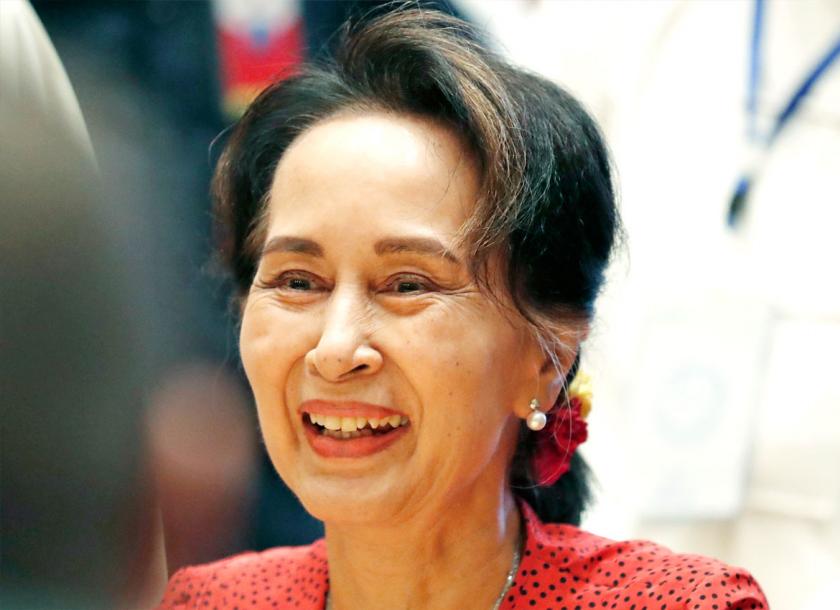
Daw Aung San Suu Kyi during the second day before the International Court of Justice in, The Hague, The Netherlands, on December 11. Photo: EPA

Thank you, Mr President and Members of the Court. It is an honour to appear as Agent of the Union of the Republic of Myanmar in these proceedings, in my capacity as Union Minister of Foreign Affairs. For materially less resourceful countries like Myanmar, the World Court is a vital refuge of international justice. We look to the Court to establish conditions conducive to respect for obligations arising from treaties and other sources of international law, one of the fundamental objectives of the United Nations Charter.

In the present case, Mr President, the Court has been asked to apply the 1948 Genocide Convention, one of the most fundamental multilateral treaties of our time. Invoking the 1948 Genocide Convention is a matter of utmost gravity. This is the treaty that we made following the systematic killing of more than six million European Jews, and that my country wholeheartedly signed as early as December 30, 1949 and ratified on March 14, 1956. Genocide is the crime that the International Criminal Tribunal for Rwanda applied in response to the mass-killing of perhaps 70 percent of the Tutsis in Rwanda. It is the crime that was not applied by the Tribunal for the former Yugoslavia to the displacement of approximately one million residents of Kosovo in 1999. Neither was it applied by that Tribunal nor by this Court when deciding upon the exodus of the Serb population from Croatia in 1995. In both situations international justice resisted the temptation to use this strongest of legal classifications because the requisite specific intent to physically destroy the targeted group in whole or in part was not present.

Regrettably, The Gambia has placed before the Court an incomplete and misleading factual picture of the situation in Rakhine State in Myanmar. Yet, it is of the utmost importance that the Court assess the situation obtaining on the ground in Rakhine dispassionately and accurately. The situation in Rakhine is complex and not easy to fathom. But one thing surely touches all of us equally: the sufferings of the many innocent people whose lives were torn apart as a consequence of the armed conflicts of 2016 and 2017, in particular those who have had to flee their homes and are now living in camps in Cox’s Bazar.

Mr President and Members of the Court, the troubles of Rakhine State and its population, whatever their background, go back into past centuries and have been particularly severe over the last few years. Currently, an internal armed conflict is going on there – between the Arakan Army, an organised Buddhist armed group with more than 5000 fighters, and the regular Myanmar Defence Services. None of the speakers yesterday made any reference to this. The Arakan Army seeks autonomy or independence for Rakhine – or Arakan as it was called – finding inspiration in the memory of the historic Kingdom of Arakan. This conflict has led to the displacement of thousands of civilians in Rakhine. Standard security restrictions – such as curfew and check-points – are in place at present in the conflict zone and affect the situation of civilians there, regardless of their background.

Mr President, on October 9, 2016, approximately 400 fighters of the Arakan Rohingya Salvation Army – known as ARSA – launched simultaneous attacks on three police posts in Maungdaw and Rathedaung townships in northern Rakhine, near the border with Bangladesh. ARSA claimed responsibility for these attacks, which led to the death of nine police officers, more than 100 dead or missing civilians, and the theft of 68 guns and more than 10,000 rounds of am-munition. This was the start of an internal armed conflict between ARSA and Myanmar’s Defence Services which lasted until late 2017. The selective factual propositions contained in The Gambia’s Application actually concern this conflict.

In the months following the October 9, 2016 attacks, ARSA grew in strength in the Maungdaw, Buthidaung and Rathedaung townships in northern Rakhine. It resorted to threats and intimidation against local villagers in order to gain support and allegiance, executing suspected informers. According to, among others, the International Crisis Group, ARSA received weapons- and explosives-training from Afghan and Pakistani militants.

In the early morning of August 25, 2017, several thousand ARSA fighters launched coordinated attacks on more than 30 police posts and villages, and an army base in northern Rakhine. Most of the attacks took place on the narrow Maungdaw plain, which is framed by densely forested hills to the east, and the border with Bangladesh to the west. Indications are that ARSA’s objective was to seize Maungdaw township.

It may aid the Court to briefly consider the historical significance of Maungdaw. When Britain made Burma a colonial entity separate from British India in 1937, the border between Burma and India was drawn along the river Naf, where we find today’s border between Bangladesh and Myanmar. The historical Kingdom of Arakan had extended much further to the north than the river Naf, including most of what is today Chittagong District in Bangladesh. Members of some Rakhine communities therefore felt that the border drawn by the British was too far south; others, that it was too far north. Myanmar has never challenged this border since independence in 1948.

Britain did not lose control over what is today Maungdaw township during World War II. From September 1942, a number of local Muslim families offered fighters to the British irregular V-Force set up to collect intelligence and to initially absorb any Japanese advance. Many Muslims gave their lives in combat against the Japanese in Rakhine. The sacrifices made by Muslim fighters motivated a call for the creation of an autonomous Muslim space in northern Rakhine, centred on Maungdaw. Whether or not this was encouraged by British officers, Britain rejected this call as soon as it had reoccupied Burma, before independence in 1948. The Muslim-Buddhist intercommunal violence of 1942 recurred in 1948 and several times after that. This cycle of violence has negatively affected life in northern Rakhine, making it the second poorest state in Myanmar.

Mr President and Members of the Court, may I go back to the situation in Rakhine on the morning of August 25, 2017. More than thirty police stations and villages, and one military base, had been attacked before sunrise in a highly coordinated fashion, by an organised armed group operating along a densely forested hill-range that provides ample opportunity to hide. Many of the ARSA fighters had been recruited from local villages in the weeks and months preceding the attack. Myanmar’s Defence Services responded to the attacks of ARSA fighters by the use of ground forces. There were armed incidents in more than 60 locations. The main clashes occurred in 12 places: In Min Gyi (Tola Toli) village, Chut Pyin village, Maung Nu village, Gutar Pyin village, Alai Than Kyaw village, Myin Lut village, Inn Din village, Chein Kharli (Koetan Kauk) village, Myo Thugyi ward, Kyauk Pandu village, wards of Maungdaw Town, and southern Maungdaw.

Mr President, allow me to clarify the use of the term clearance operation” – nae myay shin lin yeh” in Myanmar [language]. Its meaning has been distorted. As early as the 1950s, this term has been used during military operations against the Burma Communist Party in Bago Range. Since then, the military has used this expression in counter-insurgency and counter-terrorism operations after attacks by insurgents or terrorists. In the Myanmar language, nae myay shin lin yeh” – literally clearing of locality” – simply means to clear an area of insurgents or terrorists.

It is still not easy to establish clear patterns of events in these 12 locations. Many ARSA fighters died. There may have been several hundred casualties in some of the 12 locations. There was some inter-communal violence. Buddhist and Hindu minority communities also feared for their security after the original ARSA attacks and many fled from their homes.

It may be worth noting that the use of air power in military operations was avoided as far as possible to minimise the risk of collateral damage. However, in one incident, in order to be able to extract a unit surrounded by hundreds of ARSA fighters, the use of a helicopter was required. There was shooting from the helicopter which resulted in fatalities, which may have included noncombatants.

Mr President, it cannot be ruled out that disproportionate force was used by members of the Defence Services in some cases in disregard of international humanitarian law, or that they did not distinguish clearly enough between ARSA fighters and civilians. There may also have been failures to prevent civilians from looting or destroying property after fighting or in abandoned villages. But these are determinations to be made in the due course of the criminal justice process, not by any individual in the Myanmar Government.

Please bear in mind this complex situation and the challenge to sovereignty and security in our country when you are assessing the intent of those who attempted to deal with the rebellion. Surely, under the circumstances, genocidal intent cannot be the only hypothesis.

Under its 2008 Constitution, Myanmar has a military justice system. Criminal cases against soldiers or officers for possible war crimes committed in Rakhine must be investigated and prosecuted by that system. On November 25, 2019, the Office of the Judge Advocate General announced the start of a court-martial for allegations linked to the Gutar Pyin village incident, one of the 12 main incidents referred to earlier. The Office also let it be known that there will be additional courts-martial if further incriminating evidence is brought by the Independent Commission of Enquiry. The ICOE is an independent special investigation procedure established for Rakhine allegations by the President of Myanmar, chaired by a former Deputy Foreign Minister from the Philippines, with three other members, including a former Under-Secretary-General of the United Nations from Japan.

On November 26, 2019, this Commission announced that it had taken about 1500 witness statements from all affected groups in Rakhine, and that it has interviewed 29 military personnel who were deployed to the affected townships in northern Rakhine during the military operations from August 25, 2017 to September 5, 2017, as well as 20 police personnel who were stationed at the police posts that were attacked on August 25, 2017. There is currently no other fact-finding body in the world that has garnered relevant first-hand information on what occurred in Rakhine in 2017 to the same extent as the Independent Commission of Enquiry and the Office of the Judge Advocate General in Myanmar.

This fact reinforces my sense that I should refrain from any action or statement that could undermine the integrity of these ongoing criminal justice processes in Myanmar. They must be allowed to run their course. It is never easy for armed forces to recognise self-interest in accountability for their members, and to implement a will to accountability through actual investigations and prosecutions. I respectfully invite the Members of the Court to consider for a moment the record of other countries. This is a common challenge, even in resource-rich countries.

Recent cases in the news headlines illustrate that even when military justice works, there can be reversals. This can also happen in Myanmar. As part of the overall efforts of the Myanmar Government to provide justice, a court-martial found that 10 Muslim men had been summarily executed in Inn Din village, one of the 12 locations of serious incidents referred to earlier. It sentenced four officers and three soldiers each to ten years in prison with hard labour. After serving a part of their sentences, they were given a military pardon. Many of us in Myanmar were unhappy with this pardon.

Other cases are undertaken without controversy. In the Mansi case, for example, a court-martial sat close to the location in Kachin State where three internally displaced civilians were killed. It sentenced six soldiers, each to 10 years in prison, in January 2018. Relatives of the victims and local civil society representatives were invited to the sentencing.

The Office of the Judge Advocate General in Myanmar is by our standards well-resourced, with more than 90 staff and a presence in all regional commands throughout the country. I am encouraged by the Gutar Pyin court-martial, and I expect the Office to continue its investigations and prosecutions based on reliable evidence collected in Rakhine and from persons who witnessed what happened there.

Can there be genocidal intent on the part of a state that actively investigates, prosecutes and punishes soldiers and officers who are accused of wrongdoing? Although the focus here is on members of the military, I can assure you that appropriate action will also be taken against civilian offenders, in line with due process. There will be no tolerance of human rights violations in the Rakhine, or elsewhere in Myanmar.

Mr President, there are those who wish to externalise accountability for alleged war crimes committed in Rakhine, almost automatically, without proper reflection. Some of the United Nations human rights mandates relied upon in the Application presented by The Gambia have even suggested that there cannot be accountability through Myanmar’s military justice system. This not only contradicts Article 20(b) of the Constitution of Myanmar, it undercuts painstaking domestic efforts relevant to the establishing of cooperation between the military and the civilian government in Myanmar, in the context of a Constitution that needs to be amended to complete the process of democratisation. That process is now underway at the Pyidaungsu Hluttaw, the Union Parliament.

The emerging system of international criminal justice rests on the principle of complementarity. Accountability through domestic criminal justice is the norm. Only if domestic accountability fails, may international justice come into play. It would be inconsistent with complementarity to require that domestic criminal justice should proceed much faster than international criminal justice. A rush to externalise accountability may undermine professionals in domestic criminal justice agencies. What does the appearance of competition between domestic and international accountability do to the public’s trust in the intentions of impatient international actors?

No stone should be left unturned to make domestic accountability work. It would not be helpful for the international legal order if the impression takes hold that only resource-rich countries can conduct adequate domestic investigations and prosecutions, and that the domestic justice of countries still striving to cope with the burden of unhappy legacies and present challenges is not good enough. The Gambia will also understand this challenge with which they too are confronted.

Mr President and Members of the Court, these reflections are relevant to the present hearing because the Applicant has brought a case based on the Genocide Convention. We are, however, dealing with an internal armed conflict, started by coordinated and comprehensive attacks by the Arakan Rohingya Salvation Army, to which Myanmar’s Defence Services responded. Tragically, this armed conflict led to the exodus of several hundred thousand Muslims from the three northernmost townships of Rakhine into Bangladesh – just as the armed conflict in Croatia with which the Court had to deal led to the massive exodus of, first, ethnic Croats and later, ethnic Serbs.

As I have already stated, if war crimes have been committed by members of Myanmar’s Defence Services, they will be prosecuted through our military justice system, in accordance with Myanmar’s Constitution. It is a matter for the competent criminal justice authorities to assess whether, for example, there has been inadequate distinction between civilians and ARSA fighters, disproportionate use of force, violations of human rights, failure to prevent plundering or property destruction, or acts of forcible displacement of civilians. Such conduct, if proven, could be relevant under international humanitarian law or human rights conventions, but not under the 1948 Genocide Convention for reasons Professor William Schabas will elaborate in a moment.

Mr President, allow me to share one further reflection in this Great Hall of Justice. International law may well be our only global value system, and international justice a practice that affirms our common values. Leaders of States and relevant inter-governmental and non-governmental organisations should also be cognisant of their responsibility to express and affirm fundamental values. Feeding the flames of an extreme polarisation in the context of Rakhine, for example, can harm the values of peace and harmony in Myanmar. Aggravating the wounds of conflict can undermine unity in Rakhine. Hate narratives are not simply confined to hate speech – language that contributes to extreme polarisation also amounts to hate narratives.

Several international actors face a challenge here. But Myanmar could also have done more since the 1980s to emphasise the shared heritage and deeper layers of unity among the diverse peoples of our country. Cycles of inter-communal violence in Rakhine going back to the 1940s should be countered not just by practical measures aimed at sustainable development and rule of law, but also by nourishing a spiritual mindset of unity. It is a moral responsibility of leaders to guard the aspirations of people for harmony and peace.

U Thant, the third United Nations Secretary-General, had understood this. He wrote in his memoirs View From the UN published in 1974: I even believe that the mark of the truly educated and imaginative person facing the twenty-first century is that he feels himself to be a planetary citizen” (p. 454). Encouraging this added layer of identity – a sense of planetary citizenship – is of fundamental importance for peaceful relations between nations as well as ethnic and religious groups.

A commitment to broadening the mindset must go hand in hand with practical steps to improve lives. Even before the events of 2016-2017, Muslim, Buddhist and other communities in Rakhine faced what the Kofi Annan Advisory Commission described as complex challenges of low development and poverty rooted in enduring social conflict between the communities. The Myanmar government is committed to addressing these challenges. Together with our partners, we are now striving to ensure that all communities enjoy the same fundamental rights. To expedite citizenship verification and application, a mobile team is already in operation. All children born in Rakhine, regardless of religious background, are issued with birth certificates. Arrangements have been made to enable more Muslim youth to attend classes at universities across Myanmar. With the support of international and local partners, scholarships will also be made available to students from all communities living in Rakhine. The government has started a social cohesion model project in Maungdaw township, to promote social harmony among all communities. Inter-faith fora have been encouraged. These are some of the steps taken to improve livelihoods, security, access to education and health, citizenship, and social cohesion for all communities in Rakhine. Three IDP camps have already been closed, and an IDP-camp closure strategy has been adopted. Myanmar is also committed to voluntary, safe and dignified repatriation of displaced persons from Rakhine under the framework agreement reached between Bangladesh and Myanmar.

Mr President, how can there be an ongoing genocide or genocidal intent when these concrete steps are being taken in Rakhine?

To conclude, Mr President and Members of the Court, Rakhine today suffers an internal armed conflict between the Buddhist Arakan Army and Myanmar’s Defence Services. Muslims are not a party to this conflict, but may, like other civilians in the conflict area, be affected by security measures that are in place. We pray the Court to refrain from taking any action that might aggravate the ongoing armed conflict and peace and security in Rakhine. Right now, in northern Rakhine an army base near Paletwa is under attack by a group of more than 400 Arakan Army fighters, and some 200 insurgents have surrounded a military column near Ann City in Rakhine.

Since Myanmar gained independence in 1948, our people have not known the security of sustainable development that is the fruit of peace and prosperity. Our greatest challenge is to address the roots of distrust and fear, prejudice and hate, that undermine the foundations of our Union. We shall adhere steadfastly to our commitment to non-violence, human rights, national reconciliation and rule of law, as we go forward to build the Democratic Federal Union to which our people have aspired for generations past. We look to justice as a champion of the reconciliation and harmony that will assure the security and rights of all peoples.

Mr President and Members of the Court, I thank you for your kind attention and ask that you now call upon Professor William Schabas to continue the Myanmar submissions.

ලධර්මවාදී කුමන්ත්‍රණයක් ගැන උඩුවේ හිමියන් හෙළි කරයි

December 11th, 2019

Hiru News

රට විනාශ කිරීමට මූලධර්මවාදී බලවේග ක්‍රියාත්මක වෙමින් පවතින බව පූජ්‍ය උඩුවේ ධම්මාලෝක හිමියන් පවසනවා.

උන්වහන්සේ මේ බව කියා සිටියේ නව රජය බලයට පත්වීමෙන් පසුව අග්‍රාමාත්‍ය මහින්ද රාජපක්ෂගේ ප්‍රධානත්වයෙන් අරලියගහ මන්දිරයේ අද පැවති අමාදම් සිසිලස ධර්ම දේශනාව සිදුකරමින්.

මේ අතර, සිරිපා වන්දනා සමය ද උඳුවප් පොහොය යෙදෙන අදින් ආරම්භ වුණා.

ඒ, පැල්මඩුල්ල – ගල්පොත්තාවල ශ්‍රීපාද රජමහා විහාරස්ථානයේ තැන්පත් කර තිබූ සධාතුක කරඬුව, සුමන සමන් දේව ප්‍රතිමාවන් සහ දේවාභරණ රැගත් පෙරහර අද අලූයම ශ්‍රීපාද උඩ මළුවට වැඩම කරවීමෙන් අනතුරුවයි.

එසේම, ශ්‍රී පාදය පූජා භූමියක් ලෙස ප්‍රකාශයට පත්කිරීමෙන් පසු තායිලන්තයෙන් වැඩම කරවූ බුද්ධ ප්‍රතිමා වහන්සේ නිරාවරණය කිරීමද අද සිදුකෙරුණේ ශ්‍රී පාදස්ථානාධිපති පූජ්‍ය බෙංගමුවේ ධම්මදින්න හිමියන්ගේ ප්‍රධානත්වයෙන්.

පසුගිය සමයේ ජාතික ආරක්ෂාව සම්බන්ධ වගකීම් පැහැර හැරීමක් සිදුව ඇත්නම් ඊට වගකිව යුතු පාර්ශ්වවලට එරෙහිව ක්‍රියාමාර්ග ගත යුතුයි – මහාචාර්ය රොහාන් ගුණරත්න

December 11th, 2019

Hiru News

පසුගිය සමයේ ජාතික ආරක්ෂාව සම්බන්ධ වගකීම් පැහැර හැරීමක් සිදුව ඇත්නම් ඊට වගකිව යුතු පාර්ශ්වවලට එරෙහිව ක්‍රියාමාර්ග ගත යුතු බව, ජාත්‍යන්තර ත්‍රස්තවාදය සම්බන්ධ විශේෂඥයෙකු වන මහාචාර්ය රොහාන් ගුණරත්න මහතා පවසනවා.

පාස්කු ප්‍රහාරය පිළිබඳව සොයා බැලීමට පත් කළ ජනාධිපති කොමිසම හමුවේ සාක්ෂි දීමෙන් අනතුරුව පිටතට පැමිණි අවස්ථාවේදී ඔහු මේ අදහස් පළකළා.

මහාචාර්ය රොහාන් ගුණරත්න මහතා පාස්කු ප්‍රහාරය පිළිබඳව සොයා බැලීමට පත් කළ ජනාධිපති කොමිසම හමුවේ පැය 9කට ආසන්න කාලයක් ප්‍රකාශ ලබාදුන්නා.

TNA’s chickens come home to roost

December 11th, 2019

Editorial Courtesy Island

Thursday 12th December, 2019

The TNA has woken up to the fact that the people are undergoing difficulties owing to the breakdown of the provincial administration in the North. It says annual transfers of state officials, under the Northern Provincial Council (NPC), cannot be effected without gubernatorial approval and, therefore, the government should appoint a Governor without further delay.

The TNA’s concerns should be appreciated, but here is a textbook example of irony. The TNA has a history of fighting running battles with Governors, whom it accused of usurping the devolved powers, under the previous Rajapaksa administration. It even demanded their removal. But, today, it is urging another Rajapaksa government to appoint a Governor!

The TNA should be asking the government to conduct the much-delayed provincial council polls to elect representatives to the Northern PC. Instead, it is demanding the appointment of a Governor, who will be a representative of President Gotabaya Rajapaksa, whose election it went all out to prevent albeit in vain, claiming that the country would be headed for a dictatorship if he was elected President.

The question of the NCP or any other PC, for that matter, becoming inoperative would not have arisen if the previous government had not abused the Provincial Councils Elections (Amendment) Bill to postpone the PC polls indefinitely. It smuggled in several sections, sans judicial sanction into the Bill, at the committee stage, to put off the PC elections indefinitely. It was ably assisted in the task by the TNA, the JVP and the UPFA. Together, they made a mockery of their commitment to good governance.

Having shamelessly collaborated with the yahapalana government to deprive the people of their right to elect provincial councillors, the TNA is now complaining of the breakdown of the provincial administration in the North! It must be too embarrassing for the TNA to ask the new government to conduct the PC polls.

Chairman of the Elections Commission (EC) Mahinda Deshapriya minced no words, on 17 Nov., when he called upon President-elect Rajapaksa and other political leaders present at the Election Secretariat to conduct the PC polls, which, he jokingly said, had been made to disappear. None of the political parties seem to have heeded his call. All of them are now readying for a general election. It is now clear that though the yahapalana leaders and their cheerleaders boasted that the 19th Amendment would strengthen the independent commissions, the EC can only bark when the political authority meddles with the election schedule.

The delimitation process has got caught in a parliamentary logjam and until it is over and passed by Parliament, the delayed PC polls cannot be held either under the Proportional Representation system or the new mixed electoral system. The Review Committee report that the rejection by the House of the Delimitation Report necessitated was not presented to Parliament last year. There is reason to believe that the yahapalana government did not do so deliberately as it was scared of facing the PC polls. The Supreme Court has ruled that the President cannot conduct the PC elections until the Delimitation report is completed and passed by Parliament. Everything that the yahapalana legal pundits touched turned into an unholy mess. Now, it is up to Parliament to rectify the situation by making new laws.

The TNA and the UNP have created a situation where the Governors, appointed by the President, are ruling the provinces in the absence of elected councillors, and thereby proved that the country can do without the PCs. It is, therefore, doubtful whether they will be able to obtain a popular mandate for devolving any more powers. There have been calls, in some quarters, for the abolition of the PC system, which has become a drain on the public purse and led to an administrative mess. They have struck a responsive chord with the people who pay through the nose to maintain nine white elephants.

Why is Gambia & OIC states not taking US & NATO to ICJ for ‘genocide of Muslims’?

December 11th, 2019

Gambia is a Muslim majority state and member of 57-OIC states. Gambia on behalf of OIC has taken Myanmar to the ICJ on charges of ‘genocide’. The more important question is why has Gambia or the OIC not take US or NATO to ICJ for all of the bombings and killings in Iraq, Afghanistan and scores of other Muslim-majority nations? Why are Muslim nations simply watching Muslims get killed by US-NATO while a surprising number of Muslim nations are even siding with US NATO making us ask why are Muslims helping to kill Muslims but championing the cause of Muslims!

ICJ & ICC

ICJ was set up in 1946 to adjudicate issues between nations.

ICC was set up in 2002 with jurisdiction to prosecute individuals for the international crimes of genocide, crimes against humanity, war crimes, and crimes of aggression. United States, China, India, Iraq, Libya, Yemen, Qatar and Israel are not members. 139 States have signed the Rome Statute, while only 118 have ratified.

Gambia became the 3rd country to threaten to leave ICC in 2016 when South Africa and Burundi formerly announced their departures. Ironically, ICC Chief Prosecutor Fatou Bensouda, is Gambian. Of ICC’s 6 cases all have been only against Africa nations. Gambia’s information minister claims at least 30 western countries have committed war crimes against since ICC was founded but ICC has done nothing against them. Why didn’t Gambia take this complaint to the ICJ?

According to the US – Gambia acted as conduit to terror financing (Tajideen brothers, supporting the Iran-backed Lebanese terror group Hezbollah)

https://www.counterextremism.com/gambias-support-terror-financing

US-NATO Illegal invasions on Muslim-Nations

Prof Anthony Clark Arend of Georgetown University says an ‘invasion’ must meet 3 criteria

  1. Violates UN Charter Article 2 Paragraph 4 member states shall refrain from threat or use of force against the territorial or political independence of any state”
  2. Didn’t qualify as permitted except for use of force under UN Charter. Charter allows military action in case of ‘self-defense if an armed attack occurs” or if UNSC authorizes armed force.
  3. Foreign ground troops entering another country.

Under this criteria the following constitute invasions

  • Grenada invasion by 5000 US troops on 25 Oct 1983 which 5 members of the Organization of Eastern Caribbean States and UNGA adopted a resolution disapproving invasion. UNSC Disapproval Resolution failed due to US veto.
  • Panama invasions between 1988 & 1990 by US sending troops to support the 10,000 US troops already stationed in Panama. UNGA passed resolution condemning invasion but UNSC disapproval resolution was vetoed by US – UK & France
  • Iraq invasion in 2003 to oust Saddam Hussein did not have UN approval and UNSG Kofi Annan declared it ‘illegal’

Military historian Lance Janda of Cameron University defines ‘invasion’ as ‘seizure of territory by military force from the government of another country, regardless of motivation or justification’. Thus US invasions on Muslim nations include

  1. Kuwait in 1991
  2. Iraq in 1991
  3. Afghanistan in 2001
  4. Somalia in 1992
  5. Haiti – 1994/1995 but US received UN backing to reinstall ousted Jean-Bertrand Aristide
  6. Bosnia 1990s – US & NATO with UN support
  7. Kosovo 1990s – US & NATO – UN did not support directly
  8. Libya 2011 – US & NATO with UN support

US-NATO airstrikes on Sudan in 1998, Mali, Angola and Syria.

In 2016 alone, the Obama administration dropped at least 26,171 bombs on 7 Muslim nations. US has been illegally occupying Afghanistan since 2001 – why is Gambia and OIC not taking US-NATO to the ICJ at least!

Nearly half of US arms exports go to the Middle East – Saudi Arabia is world’s second biggest importer and these are being dumped on Yemen leading to a humanitarian crisis. Why is the OIC silent on a fellow Islamic country suffering malnutrition and starvation! Why are OIC nations not going to Yemen’s assistance?

Yemen

9 Muslim countries joined an alliance to bomb Yemen in 2015 – Egypt, Morocco, Jordan, Sudan, the United Arab Emirates, Kuwait, Qatar, Bahrain. Other Muslim countries provided logistics support – Djibouti, Eritrea, and Somalia made their airspace, territorial waters, and military bases available to the coalition.

In October 2018, United Nations warned 13 million were faced with starvation in one of “the worst famine in the world in 100 years.” 85,000 Yemeni children have died from hunger – how many of the OIC Muslim nations came to feed Yemen?

https://news.un.org/en/story/2019/03/1035501

Al Qaeda, Bin Laden and all of their Islamic militant outfits are proscribed internationally and declared foreign terrorist organisations. But they are all Muslims and they are used by the West to inflict harm and terror on mostly Muslim nations that the West wishes to either keep destable or wish to place Western boots on ground.

Why are Muslim countries allowing their nationals to enroll in these terror camps to inflict harm to a fellow Muslim nation. The West are providing the arms, ammunition, training etc but the terrorists are all Muslims and easily enrolled even after scores and scores are just killed by the very arms that the West gives each Islamic terror group. These facts are nothing no one knows about. But they are not spoken or put on to the table openly. It is taboo to ask why Muslims are killing Muslims. It is taboo to ask why Muslim nations are not taking Muslim asylum seekers or refugees especially by the richer Muslim majority nations. If Rohingyas are living unhappily, shouldn’t the 57 Member states magnanimously divide the people and welcome them to their nations? Why do Rohingyas end up being dumped by UNHCR to non-Muslim nations – is it to purposely create tensions after they start increasing their flock?

But Gambia and OIC are not bothered to stop Muslims from killing Muslims, or ensure Muslims do not enroll in any of the terrorist movements created and armed by the West or feed the Muslims that are in hunger or having issues but Gambia can exploit a little-known and rare-invoked provision in the 1948 Convention on the Prevention and Punishment of the Crime of Genocide and take Myanmar to the ICJ. Why didn’t Gambia or OIC do the same against US and NATO nations for the killings and destructions caused to Iraq, Afghanistan, Libya, Somalia, Yemen etc? While Myanmar’s case is only an allegation, there are enough of statistics and evidence against the US-NATO nations and their leaders for their role in the killings of innocent people.

ICJ’s first genocide convention case against Serbia in 1993 took 14 years to declare Serbia had violated its duty to prevent and punish genocide in Bosnia-Herzegovina. As for the alleged Srebrenica massacre ‘genocide’ given much hype turned out to be a political lie – eventually Serbian leader Milosevic was also exonerated of allegations of war crimes but sadly he had mysteriously died in his prison cell. The international justice system had failed – had lied and had left a leader dead. There was no ‘genocide’ only some

So to Gambia and OIC member states what’s the deal in taking Myanmar to ICJ for ‘genocide’ or does this have anything to do with playing your role in encircling China/Russia via Myanmar or alternatively India?

Shenali D Waduge

Swiss Embassy in bid to ‘White Van’ Sri Lanka?

December 11th, 2019

Malinda Seneviratne

‘Safe as houses,’ eh? 

No. No way. An embassy would never try that kind of lark now, would it? It’s incredulous. Unthinkable. Out of the questions. 
Well, such sentiments are not out of order, really. Nations and embassies do indulge in all kinds of nefarious activities. They are careful about it. Even the most powerful nations don’t want to take the risk of looking like global idiots. The Swiss Embassy in Colombo, one must assume, is not an exception. And yet, the saga of the Sri Lankan employee allegedly abducted, questioned and sexually harassed, does make one wonder.

Let’s consider the sequence of events.
At 9.44 pm on November 26, 2019, a website with a sordid back story ‘reveals’ that a female Sri Lankan employee of the Swiss Embassy had been abducted in a white van on the previous day and that the Swiss Ambassador was to meet Prime Minister Mahinda Rajapaksa on the following day regarding this incident. 

The Embassy did not lodge any complaint regarding this abduction until the Ambassador met with the Prime Minister. This is strange considering the seriousness of the matter. Nevertheless, a Swiss website, quoting the Sri Lankan website reported the incident. 

Upon being informed by the Ambassador, the Prime Minister moved to deploy a team led by Acting IGP, Chandana Wickamaratne  and the Director, CID, Senior SP W. Thilakaratne. The Swiss Embassy, strangely, refused to provide any information to these officers. However, after investigations were thus launched, the Swiss did lodge an official complaint with the Police, under the signature of the Ambassador, no less.  Rather late in the day so to speak, of course.

And yet, the Swiss were cagey about the identity of the ‘victim’. According to the complaint, she had left the Embassy around 4.15 in a Uber cab, stating that she had to attend a parents’ meeting at St Bridget’s Convent, the school her two daughters attended. The Embassy also stated in the complaint that she had been abducted near the school by persons in a white van and that she was harassed and sexually assaulted. Her personal mobile phone had apparently been confiscated and examined, the complaint also claimed. She had also been questioned about her relationship with Inspector of Police, Nishantha Silva, a man who recently fled the country, apparently to evade investigation and possible arrest. 
The investigators, whose work was deliberately blocked by the Embassy, turned their attention to CCTV footage in and around both the Embassy and the school. There was absolutely no evidence of any abduction of the kind alleged. However, they found out, from school records, the name of the alleged victim: Ganiya Banister Francis is her name and she had been resident in an apartment complex in Maligakanda. 

On the said day, the lady had not, contrary to the claims of the Embassy, attended any parents’ meeting on November 25. One teacher had called the parents of eight students, but this group did not include the ‘victim’s’ daughters. 
Perusal of phone call records and information from the can service revealed that she had in fact left the Embassy in an Uber vehicle, red in color. Accordingly, the investigators were able to obtain information of the lady’s movements that day. She had not gone to St Bridget’s Convent. Instead she had gone to the house of a teacher in Bambalapitiya. After about an hour and a half she had proceeded to Maligakanda in the same vehicle. There’s CCTV footage of a woman matching the description given by the Uber driver getting into a three wheeler, but it was not possible to identify the number of the vehicle. 

When the CID visited the apartment complex, her mother had simply said that her daughter had collected her clothes and gone abroad. Indeed, on December 1, Secretaries of the Ministry of Defense and the Ministry of Foreign Affairs, along with other officials, visited the Embassy and appraised the Ambassador about these findings and obvious discrepancies. They requested access to the victim in order to obtain a statement˘. The Embassy has stubbornly insisted that her health condition is deteriorating and that a Swiss doctor has ascertained the same via a video conversation. They refused. The Embassy has requested that permission be given to airlift her to Switzerland along with her family.  Interestingly the lady’s husband, a bank employee has gone missing. There is no word on their daughters. In any event, this is not legally possible. A court order has now temporarily stopped her from leaving Sri Lanka. Summons have been issued at all possible addresses of her husband, including the bank that employs him to appear in court.
It makes sense. There’s a wild accusation against Sri Lanka. The Swiss are blocking investigation. Their story is full of holes. There’s every reason to suspect that the Swiss either fell hook, line and sinker to a tall tale concocted by a Sri Lankan employee or else is party to a sordid conspiracy poorly executed, aimed at tarnishing Sri Lanka’s name and of course that of the newly elected president. White vans, one observes, have amounted to a tired and highly exaggerated story used for political purposes by the previous regime and conveniently picked and further inflated by certain sections of the so-called international community intent on punishing Sri Lanka for essentially subverting an outcome preference related to the denouement of the war against terrorism. 
In other words, to use the trope, the Swiss Embassy, knowingly or unknowingly now finds itself mired in an effort to ‘white van’ Sri Lanka.  

malindasenevi@gmail.com
This article was first published in ‘The Sunday Morning’ [December 8, 2019]

Swiss embassy employee’s statement being verified, to be produced in court tomorrow

December 10th, 2019

Courtesy The Island

The Criminal Investigation Department (CID) yesterday questioned Swiss Embassy employee Garnier Banister Francis aka Sriyalatha for the third day, Dec 10.

Having been in the protective care of the Swiss Embassy, Colombo, Sriyalatha reported to the CID headquarters on Sunday, Dec 08.

On behalf of Sriyalatha, Swiss Ambassador Hanspeter Mock on Nov 27 complained to Prime Minister Mahinda Rajapaksa of the alleged abduction of the staffer on Nov 25.

The police identified the embassy employee as the daughter-in-law of Bevan Perera, who contested the Gampaha District on the UNP ticket at the 2010 parliamentary election.

Sources said that Bevan Perera had switched allegiance to the UNP along with the late Anura Bandaranaike.

Sources said that the police were in the process of verifying her statement. Responding to another query, sources pointed out that Swiss Ambassador Mock’s statement had been proved not factual and the envoy himself told about the outcome. Sources said that her statements were being examined vis-a-vis Ambassador’ Mock’s complaint and the revelations made by the CID following investigations into Swiss complaint.

The Fort Chief Magistrate has prohibited the embassy employee leaving the country till Dec 12.

Meanwhile, UPFA Kalutara District MP Piyal Nishantha de Silva said that MP Dr. Rajitha Senaratne, who claimed that the embassy staffer had been threatened by putting a pistol into her mouth should be questioned.

Authoritative sources told The Island that the inquiry was now primarily focused on the embassy employee in the absence of any evidence to back Ambassador’s Mock’s accusations.

SWISS EMBASSY STAFFER LEAVES THE CID AFTER GIVING STATEMENTS TWICE TODAY; A REVELATION OF HER CLOSE CONTACTS

December 10th, 2019

Hiru News

The allegedly abducted locally recruited Swiss Embassy staffer Garnia Banister Francis was escorted to the CID again after she was produced for a medical examination today.

She was produced before the Colombo Judicial Medical Office after the CID recorded a statement for four hours.

SWISS+EMBASSY+STAFFER+LEAVES+THE+CID+AFTER+GIVING+STATEMENTS+TWICE+TODAY%3B+A+REVELATION+OF+HER+CLOSE+CONTACTS

Her statements were recorded today for the third day.

Later, the embassy staffer left the CID after recording fresh statements this evening.

Meanwhile, a close associate of the Embassy staffer, who introduced himself as Manjula Perera invited the media to a house on Barnes Place yesterday.

Several media crews including our news team waited at that particular house for the whole of yesterday but neither Manjula Perera nor the embassy staffer turned up to make a statement.

Meanwhile, our news team learnt that the true owner of the particular house on Barnes Place is domiciled in Australia.

She informed our news team; she bought the house from the wife of Manjula Perera in February last year.

At the same time, it is reported that Manjula Perera who lied to the media is believed to be a close associate of the Embassy staffer.

However, it is not confirmed yet whether he is the husband of the Embassy staffer.

In the meantime, UNP former electoral organizer of Kelaniya Bevan Perera verified that Manjula Perera is his son.

ස්විස් තානාපති කාර්යාල නිලධාරිනියගේ සිද්ධිය සම්පුර්ණ බොරුවක් – අමාත්‍ය මහින්ද අමරවීර

December 10th, 2019

Hiru News 

ආණ්ඩු පක්ෂයේ පක්ෂ නායකයින්ගේ රැස්වීමක් අද පස්වරුවේ ජනාධිපති ගෝඨාභය රාජපක්ෂ සහ අග්‍රාමාත්‍ය මහින්ද රාජපක්ෂ යන මහත්වරුන්ගේ ප්‍රධානත්වයෙන් අරලියගහ මන්දිරයේදී පැවැත්වුණා.

රැස්වීම අවසන් වීමෙන් පසුව ඊට සහභාගීවූ ඇමතිවරුන් මාධ්‍ය වෙත අදහස් පළ කළා.

Why Asia must defend Myanmar

December 10th, 2019

The International Court of Justice was set up in 1946 to settle international disputes. ICJ is taking up a complaint made by little known Muslim majority Gambia on behalf of the 57 OIC member states against Myanmar. Aung San Su Kii, Myanmar’s leader along with Government officials and scores of supporters arrived in Hague and faced the ICJ on 10th December 2019. ICJ cannot evade answering the legal status of Rohingyas in Myanmar vis a vis the colonial legacy that Myanmar carries. Is Rohingya issue an excuse for Western imperialists and its OIC partners to enter Asia with real intent to encircle China/Russia while as an additional bonus acquiring Asia’s natural resources/oil etc? Should Asia not be concerned about the geopolitical aspect of the Rohingya issue, a factor India must be concerned about too. Both India & Myanmar are on line to be balkanized as western imperialist with their Islamic state partners strategically draw the pawns on the chessboard.

Historical anomalies by Western Colonial/Islamic invaders cannot be unjustly used against post-independent victim countries under periphery of international bodies set up by them & influenced by them

Colonial legacy

The British colony of Burma was made part of the British run-state in India (though Burma was never part of pre-colonial British India), the Empire of India, from 1824 to 1937. A decade before India was given independence Burma was separated from the Indian Empire in 1937. Burma was actually the geographically largest province in India, it only had 9 million people in 1908. Its neighbor Bengal (East Bengal became Bangladesh) had 75million people. In 1872, when the earliest reliable census was taken, the highest concentrations of Muslims (more than 70%) were found in eastern Bengal. It is only from the late sixteenth century, and after the Mughal conquest (1574), that solid evidence of a Muslim peasant population anywhere in Bengal.  

Also noteworthy is the formation of the Muslim League in 1906 demanding a separate Muslim ‘homeland’ in British India.

When Burma became Burma – India became India.

Legacy of CONQUER – COMMERCE – CONVERT continues

Artificial borders drawn by colonial invaders is one of the main reasons for contentions between nations even today. Forced migrations and dumping of indentured labor is another factor that has given rise to more ethnic problems in former colonies. Colonial rulers of these nations must take accountability for these intended divide and rule policies. Many a separatist ethno-religious movement today were encouraged and covertly funded by these countries a policy they continue to practice even in 21st century. Trail of insurgent/terrorist movements will take you to one or more of the western imperial or OIC member states who secretly support them. Drive for global hegemony, land grab in resource-rich countries are very much the same reason then and now. We cannot be naïve not to link the similarities.

Obsession with China/Russia

An additional feature has become the obsession with China’s development. The aim is to get to China and Russia either through Myanmar or India. These endeavors are happening parallel through various modus operandi. Unfortunately, India has invited the enemy to Asia and must be regretting now.

It is reason why Asia must back Myanmar including the Muslim majority countries for no Rohingya can be more important than helping turn Asia into a war zone similar to Middle East. Once countries allow an enemy that does not think twice to drop chemical bombs/drones etc no ICJ or ICC can stop them.

The crime of ‘Genocide’ means acts committed with the intent to destroy, in whole or in part, a national or racial group. It has become fashionable to use term ‘genocide’ but population statistics cannot prove any reduction in population figures for Rohingyas. However, the ‘intent to destroy a racial group’ did very much take place by colonial/Islamic expansionists wherein they used to sword to exterminate entire populations. Who is going to hold their crimes to account?

Presume the ‘international bodies’ deem it is old news, what about the illegal invasions & killings by carpet bombings, chemical bombings, atomic bombs, drone killings that have killed millions too in this side of the century? Were these not committed by Western/Middle East nations – the most recent being the bombing campaign in Yemen. How is it that these acts do not make it to the ‘genocide’ table? Why are these not investigated or action taken against them? Is it because their political power and financial influence makes all others lesser than them?

How innocent are Rohingyas

Are Rohingyas illegal immigrants, did colonial Britain include them in their census are questions that need firm answers. How innocent are Rohingyas when it is having an armed group & has also committed heinous crimes against Myanmar people in particular Buddhist theros. Are OIC-member states arming the Rohingyas as ICG report 2016 confirms.

Can Gambia explain how Arakan Rohingya Salvation Army if innocent is carrying ARMS & AMMUNITION and also engaged in attacks? Who provides weaponry to ARSA and who is paying for this supply?

Myanmar cannot be accused and hurled up before any international court if it is only defending its nation & people against armed militant Rohingya. If Myanmar was attacking unarmed Rohingya it would be a different story but Rohingyas are no innocent people!

Why don’t these 57 majority Muslim nations agree to give refuge to these Rohingyas in their countries and look after them as fellow Muslim nations where they would be all the happier?

Myanmar’s Buddhist heritage at risk

It is no secret that the Buddhist world expanded from Persia to far East Asia without forced conversion or sword.

It is also no secret that the Buddhist world has shrunk as a result of the sword used by both Islamic expansionists and Christian invaders. The Buddhist world is now down to just 5 shrinking and regularly under threat majority Buddhist nations of which Myanmar and Sri Lanka are included. It is natural that the Buddhists in these countries have every right to fear and these fears should not be laughed upon or degraded.

While ancient tactics are not used the multiple methods presently used are more sinister and dangerous and come in the cover of many insidious forms that cover the real intent (loans/grants are given with hidden message to turn the other way to incursions / politicians are bribed to also do the same / powerful international blocs ensure international pressure to prevent any legal actions taken to protect the incursions).

India, China, Russia and rest of Asia must take stock of the geopolitical agenda behind using Rohingyas just as Sri Lanka’s Tamils have been used to similarly exert power to influence Sri Lanka to give in to various bullying tactics. When it is very clear that the target is China & Russia, the two barriers are India & Myanmar and it is natural that Rohingyas provide the best pawn to use to exert international pressure and presence in Myanmar as bogus conflict resolutionists whereby on the ground they will subtly plan to encircle China/Russia.

Asia must stand in solidarity with Myanmar and China, Russia and India must protect all Asian nations from numerous other manipulated tactics that will be used in time to come.

Shenali D Waduge

RGHT TIME TO LEAVE

December 10th, 2019

By Stanley Perera, Melbourne, Australia.

My dear Ambassador Mock,
It may be that you are so dumb not to understand the racist mentality of the world’s number one liars the racist Sri Lankan Tamils, or you were involved in coocking up of a failed attempt to campaign against Rajapakse government.  You need 100 lies to cover a lie.  Tamil   local staffer put you in an embarrasing situation in the eyes of the civilised society.  You are caught up with your pants down.  Lies, lies and more lies is the motto of the bogus Tamil refugees scattered all over the western countries.  Bash Rajapakse government campaign will extend their visas.  Those bogus Tamil refugees’s suvival rest upon the mercy of the host countries.  They need to tell the world through lies of victimisation and not a safe country to the Tamils expecting the western countries sympathy.  Tamils in Sri Lanka are illegal immigrants from Tamil Nadu.  They do not seek refuge in India.  Those bogus Tamil refugees seek refugee status only in the western countries and those western countries jump into the band waggon to secure the votes.  The Tamil diaspora contributed to Hillary Clinton’s Presidential elction campaign fund a sum of $125,000.  Then Hillary Clinton said there are good terrorists to white wash LTTE Terrorist.  If a white man joinig the bash Rajapakse government, it means they expect the Bogus Tamil Refugees to vote for their political party.  There are 25,000 Bogus Tamil Refugees in Switzerland.  Hanspeter Mock the Swiss Ambassador in Colombo is playing the game of politics and not playing the diplomacy.  Corrupt Mock’s lie about the abduction and sexually assaulting of Local Tamil Staffer is a drama authored by the Bogus Tamil Refugees to tarnish the image of Rajapakse’s week old new government hoping their visas extention and more and more Tamils to leave for the western countries.  Native Sri Lankan Sinhalese are clever to understand the motive behind the local Tamil staffer: 1.  To cover up the smuggling out of Sri lanka of a crimal and wanted Tamil police officer Silva and bring disrepute to a week old Rajapakse government.  2.  To  highligt the fact that Sri Lanka is not safe to the Tamils which was in conniving with the Bogus Tamil Refugees.  Whatever it is one thing is for sure that Swiss Ambassadore Hanspeter Mock became a disgraceful liar and a Tamil sucker.  It is now up to the Swiss Ambassador Hanspeter Mock to leave Sri Lanka ASAP if Sri Lanka did not deport the roiuge Ambassador.  Please make sure when you go to take with you the lying and disgraceful Tamil staffer together with over a million lying Tamils living in the North of Sri Lanka.  When you did that we peace loving patriotic Sri Lankans can live in peace and harmony.
Yours Truly,
Stanley Perera Melbourne, Australia.

මාර පරාජය

December 10th, 2019

Chandrasena Pandithage

මාරයා අපට හොඳට හුරුය පුරුදුය. එමෙන්ම මාරයාද අපව හොඳට හඳුනයි. අපි පළමුව මාරයාව හඳුනා ගන්නේ බුද්ධ චරිතය තුලිනි. සිදුහත් කුමරුන්ට කිසිදු කරදරයක් නොකර සිටි මාරයා පළමුව එකුමරු වෙත කඩා පනින්නේ ගිහිගෙයින් නික්ම යාම ඇරඹීමත් සමගය. විමුක්තියට එල්ල වෙන බාධකයන් මාරයාගේ නිර්මාණයන් වන අතර මාරයා සෑම පුද්ගලයෙකු සමගද, සෑම සමාජ ක්‍රමයක් සමගද ප්‍රබලව බැදී සිටි.
මාරයා මහින්ද රාජපක්ෂ පාලනය සමග පොරබදා මහින්ද රාජපක්ෂයන්ව පරාජය කල අතර මෙරට ජනතාව මහා බලකඳවුරක් සේ එක්ව මාරයාව පරාජය කර, ඒ සතුට විදිමින්, කිරිබත් කමින්, පුරන් කුඹුරු අස්වද්දමින්, මුළු රටම පිරිසිඳු කරමින්, අපවිත්‍ර තාප්ප පවිත්‍ර කරමින් ඒ මත මහා බිතු සිතුවම් නිමවමින් යන්තම් සතියක් දෙකක ගතවුවා පමණි, මාරයා යලි අවදිව මේ සිදුවන්නේ කුමක්දැයි සිතමින් බලමින් අවබෝධ කරගනිමින් යලිත් සිය කටයුතු ලහි ලහියේ අරඹමින් සිටිනු දක්නට ලැබේ. මාරයාගේ හොඳම බලකායක් වන ප්‍රේත ගෝත්‍රික බලමුළු අවදිකරමින් යලිත් සටනට කැඳවා ඇති ආකාරයක් අපි දකිමින් සිටින්නෙමු. ගෝඨාභය රාජපක්ෂයන් බලයට පැමිණ, මාසයක්වත් ගතව නැති තත්වයක් තුලදී මෙරට ජනතාවට ඉටුකර ඇති කාරය සම්භාරය දෙස බලා කලබලයට පත් ඔහු, සියලුම බල ඇණි සටනට කැඳවා තිබීම නිසා මාර යුද්ධය මාරයා විසින්ම මහා අවුල් සහගත තත්වයකට පටලවාගෙන ඇත.
1.ඔහුගේ බල ඇණියක් වූ එක්සත් ජාතික පක්ෂය, බුද්ධ, ධම්ම, සංග යන ත්‍රිවිධ රත්නයේ සරණ යැවීම. 2.ජනතා විමුක්ති පෙරමුණ කෝප් වාර්තාව, සම්බන්ධ කර ගනිමින්, පාර්ලිමේන්තුව කල් තැබීමට එරෙහිව නැගිටවිම.
3.ජනතා විමුක්ති පෙරමුණ හා එක්සත් ජාතික පක්ෂය එක්ව රහස් පොලිසියේ සිටි සිය සගයන්ව ඉවත් කිරීමට එරෙහිව නැගිටවාලිම. 4.එංගලන්ත අධිකරණයකින් රණවිරුවෙකුට පවුම් 2400 දඩයක් නියම කරවීම. 5.ලංකාවේ ස්විස්ටර්ලන්ත තානාපති කාර්යාලයේ සිටි මාරයාගේ දියණියක් වූ රගා ලවා අමුතුම සුදු වෑන් පැහැර ගැනීමේ රංගනයක් එලි දැක්වීම. 6.මාරයාගේ අභ්‍යන්තර නියෝජිතයින් ලවා, මේ ජග්‍රහණය තනිකරම පොහොට්ටුවේ ජග්‍රහණයක් යයි කියමින් අනිත් පක්ෂවලට ඔච්චම් කරමින් අභ්‍යන්තරව සන්ධානය බිඳවීමට සැලැස්වීමට කටයුතු කිරීම. 7.ඒ සමගම පොහොට්ටු පුටු හබයක් මතු කොට අනවශ්‍ය වාග් සංග්‍රාමයක් නිර්මාණය කිරීමට වෙර දැරීම. 8. දුෂිතයන්ව නිසි ක්‍රමවේදයකට අනුව යමින් අත්අඩංගුවට ගැනීමට කටයුතු කිරීම, දුෂිතයින්ව රැකීමට දරන උත්සහයක් සේ පෙන්වීමට තුලින්, අභ්‍යන්තර වියවුලක් නිර්මාණය කිරීමට වෙර දැරීම

ඇතුළුව නව ආකාරයේ ක්‍රමයන් අධ්‍යනය කරමින් අත්හදා බැලීම සිදු කරමින් පසුවේ. මේ වනවිට පාලකයන්ට පෙර ජනතාව මාරයාව හොඳට හඳුනා ගනිමින් මාරයාගේ රෙදි ගලවමින් සිටි. හොදම උදාහරණය වන්නේ ස්විස්ටර්ලන්ත තානාපති කාර්යාලය නිර්මාණය කල ජාත්‍යන්තර අර්බුදය ලත් තැනම ලොප් කිරීම තුලින් මාරයාට මාර පරාජයක් ලබාදීමයි. අප කොතරම් පරාජය කලද මාරයා අපට වඩා සුක්ෂම බැවින් ඉඩක් ලද විගසම අපව වැනසීමට නැගී සිටින බැවින්, අපි රටක් වශයෙන් අවදියෙන් සිට මාරයා පරාජය කොට ගෝඨාභය රාජපක්ෂ ප්‍රමුඛ මේ රාජ්‍ය රැකගත යුතුමය එය මේ යුගයේ අපට පැවරී ඇති යුග මෙහෙවරයි. අපි ඒ සඳහා ඇප කැප වී අවදියෙන් සිටිමු. සටන් වදිමු.

ජනාධිපති ගෝඨාභය මහතා විසින් අතේ දුරින් තබා ගනිමින් පරෙස්සම් විය යුතු, නව ලිබරල් වාදී පොලිටිකල් ‘වල්’- පල් හෙවත් දේශපාලන පතරංග ජාතක – 2 වන කොටස

December 10th, 2019

Kudaligamage Geethanjana

නව ලිබරල් වාදී දේශපාලන ප්‍රවාහය තුල බල පවත්නා LGBT බල පරාක්‍රමය ඇති මහත්ය. මෙම ප්‍රවනතාව විසින් සමාජ ගත කිරීමට උත්සාහ ගන්නා ඇතැම් අභූත මති භ්‍රාන්ති පිලිබඳ වැටහීමක් පහත සඳහන් ලිපිය කියවීමෙන් ඔබට ලභාගත හැක. 

Western Civilization Is Now A Caricature of Absurdity – PaulCraigRoberts.org Western Civilization Is Now A Caricature of Absurdity. This Is Not A Joke. Dear Readers: If you have concluded that a small handful of crazed morons control the words we are permitted to use, you are correct. www.paulcraigroberts.org

ඊයේ රාත්‍රියේදී මා හට මා දන්නා හඳුනන එක්තරා තරුණ කාන්තාවක් මුණ ගැසිනි. ඇය පිලිපීන ජාතික, විවාහක කාන්තාවක් වූ අතර, අතිශය රූමත් තැනැත්තියක්ද වූවාය. අප මුණ ගැසුනේ කිසියම් සාදයකදී බැවින් ඇය වයින් වීදුරු දෙක තුනක් බී මද වශයෙන් මත්වී සිටියාය. අප ආගිය තොරතුරු සහ වල් පල් කතා කරමින් ඉන්නා අතර එක වරම ඇය මාගෙන් මා බලාපොරොත්තු නොවූ ආකාරයේ අස්වාභාවික ප්‍රශ්නයක් ඇසුවාය.

“ගීත්, මට ඔයාගෙන් පුද්ගලික ප්‍රශ්නයක් අහන්න පුලුවන්ද?

“ඔව් කියන්න”

“ඔබේ බිරිඳ ඔබට චීට් (cheat) කලොත් ඔබ ගන්නා පියවර මොකක්ද?”

(ඔබගේ බිරිඳ වෙනත් අයෙකු සමග අනියම් සබඳතාවක් ඇතිකරගතහොත්, එසේ නැතහොත්, ලිංගිකව හැසිරුනොත් ඔබ ගන්නා පියවර මොකක්ද?) 

මා වාඩි වී සිටියානම් සැබවින්ම මා පුටුවෙන් බිමට වැටීමට ඉඩ තිබිණි. නමුත් මා සිටියේ සිටගෙන බැවින් පිළිතුරු දීගත නොහැකි වූ මම තතනන්නට වීමි. හොඳම උපාය මෙය විහිළුවට ගෙන ගැළවීමයයි සිතා මම මෙසේ කීමි.

“ගෑණියෙක් හැටියට ඔයා දන්නවා ඇතිනේ ගැහැණු කිසිවිටෙක අහුවෙන්ඩ cheat කරන්නේ නැති බව.”

(පිරිමි තම බිරින්දෑ වරුනට cheat කරන විටද එය අහු වෙන්නට කරන්නේ නැති බව මම සඳහන් නොකළේ එය අදාළ නැති නිසා ය.) 

ගෑණුන්ට තමන් දන්න මායං ඔක්කොම දාල, නිර්දෝෂ වෙන්නෙ කොහොමද කියන එක අමුතුවෙන් උගන්නන්ඩ ඕන නැහැ. බල්ලන්ට පිහිනන්ඩ පුරුදු කරන්ඩ ඕන නැහැ වගේ, ඒ අයට ස්වභාව ධර්මයෙන්ම ඒ ශක්තියයි ධ්‍යිර්යයි ක්‍රම උපායවලුයි දීලයි තියෙන්නෙ. එනිසා ඔය ප්‍රශ්නය අදාළ නැහැ යයි කියා ගැලවෙන්නට මම උත්සාහ කලෙමි. 

කිතුනු ලබ්ධිකයෙකු වූ ඇයට මම මෙසේද පැවසීමි. ​

“දහවලදී කපුටු හඬටත් බියවන ගැහැණිය, රෑ කලදී සොරමුලක් සමගින් නර්මදා නදිය වුව තරණය කරන්නීය” යැයි බුදුන් වහන්සේද වදාරා ඇතැයි මම ඇයට පැවසීමි. ​

(කාන්තා විමුක්ති වාදීන් මට පාරේදී අල්ලන් ගහන්න ඉඩ තිබෙන නිසා ඔවුන්ට කරන සාධාරණයක් ලෙස, ඉහතකී තත්වය පිරිමින්ටත් අදාළ බව කරුණාවෙන් සලකන්න.)

මගේ පිළිතුරෙන් ඇය සැහීමකට පත්වූ බවක් නොපෙනුණු නිසා කිසියම් බැරෑරුම් බවක් ආරෝපණය කර ගනිමින් මෙසේ කීමි.

පවුලේ සහ දරුවන්ගේ අවශ්‍යතා හා තත්වය අනුව මෙවන් තීරණ වෙනස් වන බවත්, ඇතැමුන් දරුවන්ගේ අනාගතය වෙනුවෙන් මෙවන් තත්වයන් ඉවසන බවත් පැවසීමි. එමෙන්ම ඇතැම් පියවරු සේම මව් වරුද පවුලේ අනාගතය තම පෞද්ගලික ජීවිතයේ ප්‍රශ්න වලට වඩා වැදගත්සේ සලකා, උදාවී ඇති තත්වය අනුව කැප කිරීම් කොට, සිය පවුල රැකගැනීම පිණිස මෙවන් තත්වයන් ඉවසා දරාගෙන, ජීවිතයට මුහුණ දෙන බවත් පැවසීමි. මා හැදුනු වැඩුණු ශ්‍රී ලාංකික සමාජය පවුල නමැති සංස්ථාව වඩාත් වැදගත් සේ සලකන බව ඇයට පැවසීමි.

මෙම පිළිතුරෙන්ද සැහීමකට පත් නොවූ ඇය, එවන් තත්වයන්ගෙන් පරිබාහිරව ඔබගේ බිරිඳ ඔබට cheat කළා නම් ඔබ ගන්නා පියවර කුමක්දැයි මගෙන් පෙරළා ඇසීය. කෙසේ වුවද, කරකියාගත හැකි කිසිවක් නොවූයෙන් අවසානයේදී…

“මම දික්කසාද වෙමි යයි කීමි.”

එසේ කියා එය සාධාරණය කරනු වස්… “මම හිතන්නෙ මම එතරම්…” මට කිව හැකි වූයේ එපමණකි…ඇය මගේ වාක්‍යය සම්පූර්ණ කළාය.

“ප්‍රගතිගාමී (progressive) නැහැ නේද?”

ඇත්තවශයෙන්ම ඔබ හරි…මම එතරම්ම ප්‍රගතිගාමී (progressive) නැහැ.”

“ඇයි…ඔබ විවෘත විවාහ (open marriages) වලට කැමති නැත්ද.”

“අනේ මන්ද, මට ඕව තේරෙන්නේ නැහැ., විවෘත විවාහ (open marriages) මොනවටද? ඇයි… තනිකඩව ජීවත් වෙන්න පුළුවන්නේ.”

“ඒ උනාට එතකොට වයසට යනකොට තනි වෙනවනේ” යයි ඇය පෙරළා පැවසුවාය.

​(open marriages යනුවෙන් ඇය අදහස් කළේ, විවාහකව සිටියදී අන් අය සමග ලිංගිකව හැසිරීමට ඉඩකඩ තිබෙන විවාහ ජීවිත වලටය. බටහිර ඇතැම් අය මෙවන් open marriages වලට වඩාත් ප්‍රිය කරති.) 

“ඇයි ඔයා මගෙන් මෙහෙම ප්‍රශ්නයක් ඇහුවෙ, ඔයාගේ husband ට cheat කරන්නඩ ඔයාට අදහසක් තියෙනවද?” යැයි මම ඇගෙන් ඇසුවෙමි. 

මා එසේ ඇසු විටම වාගේ ඇගේ ස්වාමිපුරුෂයා ඇය කැටුව යෑමට පැමිණ අප වෙතට පියමන් කරනු අප දුටිමු. මාගේ ප්‍රශ්නයට පිළිතුරු දීගත නොහැකිවූ ඇය, තම සැමියා වෙත පියමන් කළාය. ඒ යන අතරවාරයේ එකවරම මා දෙසට හැරුණු ඈ, “ආ…අර ප්‍රශ්නෙට උත්තරේ ‘ඔව්’ හොඳේ” කියාගෙන ගියාය.

මේකි නං යක්ස ගෑණියෙක් තමයි කියා මම හිතින් හිතා ගතිමි.   

මෙම දෙබසින් පසු මට එක වරම මතක් වූයේ මා නිමා නොකොට අතපසු කල මෙම ලිපිය පිලිබඳවය.

ඉහතකී දෙබස මෙම ලිපියට වැදගත් යයි මට සිතුනේ එම කාන්තාව මම ප්‍රගතිගාමී (progressive) නැතැයි පැවසීම නිසා ය. (“You are not that progressive right?)

නව ලිබෙරල් වාදීන් සිතන්නේ ඔවුන් වඩාත් පගතිවාදී, නුතනවාදී, හා අනාගත වාදී (futuristic) ජීවන දෘෂ්ටියකින් හා දර්ශනයකින් හෙබියන් බවය. 

පසුගිය තිස් වසර තුල නව ලිබරල් වාදී මත බහුලව සමාජ ගත කිරීමේ ප්‍රතිඵලයක් ලෙස තරුණ පරපුර මෙම අදහස් වල බලපෑමට හසුව තිබේ. මෙම ප්‍රකාශයෙන් එය තව දුරටත් තහවුරු විය. 

ලිංගිකත්වය ලිබෙරල් කිරීම ප්‍රගමනයට අත්‍යවශ්‍ය සාධකයක් යැයි ඔවුහු සිතති. ඒ අනුව පවුල හෝ කුටුම්භය යල් පැනගිය හණමිටි අදහස්ය.

ලිංගිකත්වය නව ලිබෙරල් වාදී න්‍යාය පත්‍රයේ අතිශය ප්‍රධාන මුලිකංඟයකි. නව ලිබරෙල් වාදී අදහස් වල ඇති එක වැදගත් මුලිකාංගයක් වන්නේ ‘ලිංගිකත්වය’ පිලීබඳ ඔවුන්ගේ නව අදහස්ය. සැබවින්ම මේ අදහස් පවුල නමැති ආයතනය, නැතහොත් ‘කුටුම්භය’ විනාශ කරන අදහස්ය. 

අනන්‍යතා දේශපාලනයේ නියැලෙන අය තම අයිතීන් සමාජ දේශපාලන මහා ප්‍රවාහය තුල ස්ථාපිත කිරීමට කරනු ලබන සටනට අප හට එකඟ විය හැකි වුවත්, මහා ප්‍රවාහය මුළුමනින්ම විනාශකොට අනතුරුව තමන්ට අභිමත හැඩයක් එයට ආරෝපණය කිරීමට LGBGT කණ්ඩායම් ගන්නා උත්සාහයට බහුතරයක් ජනයා එකඟ වනු ඇති යැයි සිතිය නොහැක. නව ලිබරල් වාදය හරහා තත්කාලීන දේශපාලන කතිකාවත හා එහි නියාමක බලවේග සියතට ගැනීමට අනන්‍යතා දේශපාලනයේ නියැලෙන අය උත්සාහ ගනිති. මෙය මානව පැවැත්මට හිතකර තත්වයක්ද? එය ඉතිහාසය විසින් තීරණය කල යුත තත්වයකි.

අනන්යතා දේශපාලන මතවාද දේශපාලන කරලියට පැමිණීමේ හේතුව  

පසුගිය ලිපියේදී මවිසින් “නව ලිබෙරල් වාදීන් සිතන්නේ ඔවුන් වඩාත් පගතිවාදී, නුතනවාදී, හා අනාගත වාදී (futuristic) ජීවන දෘෂ්ටියකින් හා දර්ශනයකින් හෙබියන් බවය. සැබවින්ම සත්‍ය වන්නේ එහි ප්‍රති විරුද්ධ පැත්තය. මොවුන් මානව ප්‍රගතියේ පරිනාමය ආපස්සට හරවා ශුන්‍යත්වය කරා මානව සංහතිය දක්කාගෙන යන්නෝය” යයි ප්‍රකාශ කලෙමි. මා එසේ ප්‍රකාශ කලේ හේතු සහිතවය. මෙය බටහිර දර්ශන වාදය ගමන්කළ දිසානතියේ ප්‍රතිඵලයකි.

බටහිර දර්ශනය පුද්ගල කේන්ද්‍රීය දර්ශනයකි. එහි වීරයා මිනිසා නොව, තනි පුද්ගලයාය. මෙහිදී ‘මිනිසා’ යනු පෙරදිග දර්ශනයට අනුව, තනි පුද්ගලයෙකු නොව සමුහයක් බව වටහා ගත යුතු වෙයි. නමුත් බටහිර දර්ශනයේදී ‘මිනිසා’ යනු තනි පුද්ගලයෙකි එනම් individual ය. බටහිර දර්ශනවාදයේ පුද්ගල කේන්ද්‍රීයත්වය ඉස්මතු වන්නේ ධනවාදයේ නැගීමත් සමග බව වටහා ගත යුතුය.


යටත් විජිත වාදය නිසා විශාලවශයෙන් ධනය රැස්කොට පොහොසත්වූ බටහිර විසු සාමාන්‍ය ජනයා ඉතිහාසයේ එක්මොහොතකදී දේශපාලන බලය අපේක්ෂා කරන, තමන්ට අවශ්‍ය පරිදි ලෝකය වෙනස් කල හැකි බලයක් අපේක්ෂා කල බලවේගයක් බවට පත් වූහ. ප්‍රංශ විප්ලවයට පාදකවූ පසුබිමෙහි මොවුන්ගේ මෙම දේශපාලන අපේක්ෂා ද, මිනිසා සහ ඔහුගේ නිදහස පිලිබඳ නව අපේක්ෂා ද විය. මෙහිදී මිනිසා පිලිබඳ සිදුකල දර්ශනවාදී විග්‍රහයන්ගෙන් ඉස්මතු කලේ මිනිසාගේ පෞද්ගලික නිදහස පිලිබඳ සංකල්පනා ය.  

කිසියම් සංස්කෘතියක්  පෞද්ගලික නිදහස නමැති සංකල්පයේ උපරිමයට ගමන් කරන විට,  පෞද්ගලික නිදහස සිය ජීවන දර්ශනයේ ප්‍රධානතම අංගය බවට පත්වන විට, සාමූහිකත්වය පිලිබඳ සංකල්ප නොවැදගත් සංකල්ප බවට පත්වී බැහැර වෙයි. කුටුම්භය හා කුටුම්භ සංරක්ෂණය වැදගත් දෙයක් බවට පත්වන්නේ මිනිසා මිනිස් පැවැත්ම පිළිබඳව තමාට වගකීමක් ඇතැයි සිතන සමාජයක්  තුලය. මමත්වය මුල්වන සමාජයකට එය වැදගත් නොවේ. බටහිර සමාජ ක්‍රමය පදනම්ව තිබෙන්නේ ඉහතකී මමත්වය මතය. 

නව ලිබරල් වාදීන් ලොව දේශපාලන බලය අත්පත් කරගතහොත් මිනිස් සංහතියට දේශපාලනික, ආර්ථික, සමජ හා සංස්කෘතික වශයෙන් අත්වියහැකි ඉරණම කුමක්ද යන්න පිළිබඳව මීට වඩා සාකච්චාවට ලක්විය යුතුය.

(මතු සම්බන්ධයි)

30,000 monks attend mass alms-giving in Mandalay

December 10th, 2019

Global New Light of Myanmar

Officials, donors and well-wishers led by Union Ministers Dr Myo Thein Gyi and Nai Thet Lwin attend the third mass alms-giving ceremony for 30,000 monks at the Chanmyathazi Airport in Mandalay yesterday. Photo: MNA

Supervised by Mandalay Region Government, Myanmar well-wishers and Thailand’s Dhammakaya Foundation jointly organized third mass alms-giving for 30,000 monks at the Chanmyathazi Airport in Mandalay yesterday.
Present at the event were Union Ministers Dr Myo Thein Gyi and Nai Thet Lwin, Deputy Minister U Kyi Min, Mandalay Region Minister for Electricity, Energy and Construction U Zarni Aung on behalf of Mandalay Region Chief Minister, Mandalay Region Hluttaw Speaker U Aung Kyaw Oo and cabinet members, Hluttaw representatives, departmental officers, consuls general of the People’s Republic of China and the Republic of India, invited guests, social organizations, donors from Thailand and well-wishers.
Mandalay Region Minister U Zarni Aung and Deputy Minister U Kyi Min lighted candles, and representatives from Myanmar and Thailand offering flowers, the alms-giving ceremony was opened with the three-time recitation of Namo tassa bhagavato arahato samma sambuddhassa” .
That was followed by the congregation receiving the Five Precepts from the State Sangha Maha Nayaka Committee member Sayadaw Thanlyin Min Kyaung Sayadaw Agga Maha Pandita Bhaddanta Candima Bhivumsa.

Union Minister Nai Thet Lwin and officials donate offertories to the Members of Sangha at the alms-giving ceremony.  Photo: mna
Union Minister Nai Thet Lwin and officials donate offertories to the Members of Sangha at the alms-giving ceremony.  Photo: MNA

Afterwards, the audio message sent by Luang Por Dhammajayo, the patron of Dhammakaya Monastery in Thailand, was played and Members of Sangha recited parittas.
Six donors from Thailand led the recitation of offering the Four Requisites and donated offertories to the monks.
Supplicating the Members of Sangha at the event, patron of the alms-giving organizing committee Mandalay Region minister for Electricity, Energy and Construction U Zarni Aung on behalf of Mandalay Region Chief Minster expressed delights for getting opportunity for doing merits by peoples of Myanmar and Thailand.
Deputy Minister U Kyi Min supplicated religious matters, Thai donors expressed delights and followed by U Soe Lin, the chairman of the alms-giving event organizing committee, saying words of thanks.
The congregation listened to the sermon given by Mogok Nyaung Thone Bin Pariyatti Thamanaykyaw Monastery Sayadaw Dr Bhaddanta Tejosara Bhivamsa and shared merits they gained.
The ceremony concluded after reciting Buddha Sasanam Ciram Titthatu” three times.
The officials, donors and well-wishers led by Union Ministers Dr Myo Thein Gyi and Nai Thet Lwin donated K 30,000 each monk and offertories to the Members of Sangha.
Foods and soft drinks for congregation were also donated by well-wishers at the event. The first Myanmar-Thai friendship alms-giving ceremony was held for 10,000 monks on 20 September 2015 at the foot of the Mandalay Hill and the second was held for 20,000 monks on 21 January 2018 at the Chanmyathasi Airport. This was the third alms-giving in Mandalay and donated to 30,000 monks. —Min Htet Aung (Sub-Printing House) (Translated by Kyaw Zin Tun)

Aung San Suu Kyi’s defiance in rejecting allegations of Genocide at International Court of Justice, wins public support

December 10th, 2019

By Senaka Weeraratna

Thousands of supporters in Myanmar have waved banners and colorful portraits of State Counsellor Aung San Suu Kyi, on Saturday, December 7, in a show of their loyalty on the eve of her departure for the U.N.’s top court i.e. International Court of Justice (ICJ), to face genocide charges over the Rohingya crisis.

One supporter named Damien Chakma in a comment on the Internet has said:

What Suu Kyi is doing is absolute right, protecting Myanmar’s interest in the face of OIC funded propaganda. So called Rohingyas are illegal immigrants from Bangladesh. Where was ICJ and UN when Bangladesh was ethnic cleansing Buddhist tribes (Chakma, Marma, Tripura etc.) from Chittagong Hill Tracts?”

China, Russia, Vietnam, Cambodia and Laos, and several other countries such as Ukraine and Israel, have unreservedly given their unqualified support to Myanmar at the UN. India, is sympathetic towards Myanmar and on December 09, passed legislation amending India’s Citizenship laws excluding Rohingyas from seeking asylum in India or claiming Indian Citizenship on the basis of Muslim refugees. 

The Chinese Foreign Minister Wang Yi made a two-day visit to Myanmar at the invitation of State Counselor Daw Aung San Suu Kyi on December 07.

 U Maung Maung Soe, a political analyst, has said that When it comes to the Rohingya issue, China has always shown their strong support for Myanmar,”

Myanmar is highly likely to discuss with China how the country has prepared for the lawsuit, and China will likely give Myanmar some tips for the hearings as well,” said U Maung Maung Soe.

He added that China does not want to see Myanmar get into trouble, as the country is strategically and geographically important for China’s agenda and its sphere of influence in the region.

https://www.irrawaddy.com/news/burma/chinese-foreign-minister-meet-daw-aung-san-suu-kyi-ahead-icj-genocide-case.html

In another development, Twenty-eight supporters from Myanmar on Sunday (December 08) joined Daw Aung San Suu Kyi in her trip to The Hague.

U Kyaw Htay Oo, one of the supporters, said that ICJ case is related to all Myanmar citizens because it could have huge impact on the dignity of the country.

It is not only a case for Daw Aung San Suu Kyi or the Military,” he told The Myanmar Times. “We want to show that we always follow and obey the leader we believe in. Therefore, we are supporting our leader with all the money and all the people we have.”

The 28 supporters are spending around US$2,000 per person for a round trip to The Hague. According to the supporters, they are going to The Hague using their own money.

The ICJ will hold hearings in the case from Tuesday to Thursday (December 10 – 12, 2019).

About 350 supporters of Myanmar based in European countries such as France and Norway will also be travelling to The Hague during the hearing of the case.

Earlier on Saturday (December 07), thousands of people gathered at the administrative capital of Nay Pyi Taw to show their support for the State Counsellor.

Gambia’s lawsuit

Gambia, acting on behalf of the Organization of Islamic Co – operation (OIC), has filed a lawsuit against Myanmar at the International Court of Justice (ICJ), allegedly on the ground of committing the crime of Genocide.

The Government of Myanmar has taken up the challenge to contest this case at the ICJ and the State Counsellor, Aung San Suu Kyi, in her capacity as the Minister for Foreign Affairs, will lead the legal team to defend her nation.

Myanmar’s legal team is expected to argue that genocide did not occur, that the top U.N. court lacks jurisdiction and that the case fails to meet a requirement that a dispute exists between Myanmar and Gambia.

Under the Charter of the United Nations (UN), all member states of the UN, including Myanmar, are bound by the Statute of the ICJ. 

The crime of ‘Genocide’ means acts committed with the intent to destroy, in whole or in part, a national or racial group. It is an issue that concerns all civilized nations and peoples, especially those who were victims of colonial rule during the last 500 years against whom much of the brazen acts of Genocide were committed in many parts of the world.

Both the Government of Myanmar and its armed forces face many internal problems related to ethnic tensions. Turning to recent events in Myanmar, the ARSA (Arakan Rohingya Salvation Army) with links to radical Islamic terrorist groups have been responsible in Rakhine for acts of terrorism and slaughter of the innocents.

The Arakan Rohingya Salvation Army (ARSA also known by its former name Harakah al-Yaqin (meaning Faith Movement in English),is a Rohingya insurgent group active in northern Rakhine StateMyanmar. According to a December 2016 report by the International Crisis Group (ICG), it is led by Ataullah abu Ammar Jununi, a Rohingya man who was born in KarachiPakistan, and grew up in MeccaSaudi Arabia. Other members of its leadership include a committee of Rohingya émigrés in Saudi Arabia.

The ICG reported on 14 December 2016 that in interviews, the leaders of ARSA claimed to have links to private individuals in Saudi Arabia and Pakistan. The ICG also claimed in unconfirmed reports that Rohingya villagers had been “secretly trained” by Afghan and Pakistani fighters.

https://en.wikipedia.org/wiki/Arakan_Rohingya_Salvation_Army

Attack on Hindus

On 25 August 2017, Hindu villages in a cluster known as Kha Maung Seik in the northern Maungdaw District of Rakhine State in Myanmar were attacked and 99 Bengali Hindu villagers were massacred, by Muslim insurgents from the Arakan Rohingya Salvation Army (ARSA). A month later, the Myanmar Army discovered mass graves containing the corpses of 45 Hindus, most of whom were women and children.

Ni Maul, a Hindu leader who helped Myanmar’s authorities with the search of the bodies, told the media that the mass-graves were found from testimony of eight Hindu women whose lives were spared and brought to Bangladesh after they agreed to convert to Islam.

Four Hindu women in Bangladesh told Agence-France Presse that they were among the eight who escaped. They stated that they were forced to marry the attackers in order to save their lives and they were later taken to camps of Rohingya Muslims in Bangladesh.

The Hindu women stated that the militants found them beautiful and decided to convert them. They added that later the eight women along with children were taken to a house in Bawtalar village where they were forced to eat rice with meat, which is prohibited in their religion. They were then brought to Kutuparlaung refugee camp on August 28 where they were housed with Muslims and forced to wear burqas.

The Myanmar authorities accused the Arakan Rohingya Salvation Army (ARSA) of perpetrating the Hindu massacre in the Kha Maung Seik area.

Tirana Hassan, Crisis Response Director at Amnesty International, said, ″It’s hard to ignore the sheer brutality of ARSA’s actions, which have left an indelible impression on the survivors we’ve spoken to.…………….In this brutal and senseless act, members of ARSA captured scores of Hindu women, men, and children and terrorized them before slaughtering them outside their own villages. The perpetrators of this heinous crime must be held to account″.

https://www.amnesty.org/en/latest/news/2018/05/myanmar-new-evidence-reveals-rohingya-armed-group-massacred-scores-in-rakhine-state/

Kha Maung Seik massacre

From Wikipedia, the free encyclopedia

https://en.wikipedia.org/wiki/Kha_Maung_Seik_massacre

Co – ordinated attacks by ARSA

On 25 August 2017, the Arakan Rohingya Salvation Army (ARSA) claimed responsibility for coordinated attacks on police posts and an attempted raid on an army base. The Myanmar government announced a death toll of 77 Rohingya insurgents and 12 security forces in northern Maungdaw following the attacks. The government stated that they had attacked a police station in the Maungdaw District with a handmade bomb alongside the coordinated attacks on several police posts.

In late August 2017, the Burmese government accused ARSA of killing 12 civilians, including Hindus and Muslims, some of whom were suspected by ARSA of being government informants. On 24 September 2017, Myanmar’s military accused ARSA of killing 28 Hindus in Ye Baw Kya village in the previous month after they uncovered their bodies in a mass grave

The elected Government of Myanmar with a mandate to protect the citizens of Myanmar, had no choice but to send its armed forces to Rakhine in order to protect Buddhists, Hindus, and various indigenous Tribal Groups, who faced the wrath of ARSA and the Bengali Muslims who have infiltrated Rakhine heavily with intent to grab land and dispossess the original inhabitants namely the citizens of Myanmar, from their traditional home land in Rakhine.  

A propaganda war has been launched against Myanmar by the OIC and the highly prejudiced international media such as Al Jazeera that totally ignores the Bengali Muslim land grab that blights Rakhine, the Chittagong Hill Tracts (Bangladesh), and various parts of India including Assam.

A similar situation of organized and co -ordinated violence arose in Sri Lanka, when on Easter Sunday April 21, 2019, suicide bombers linked to radical Islamic terrorist groups killed 259 people and injured over 500 people.   Three churches and three luxury hotels in Colombo were targeted in a series of coordinated terrorist suicide bombings.

Both Myanmar and Sri Lanka have a shared past linked to Theravada Buddhism running for over a thousand years. History shows that both countries had assisted each other in times of crisis when the survival of each country was at stake. An existential threat from a common source intending to displace Buddhism in both countries persists today. This trend is clearly visible in the narrative of the disappearance and replacement of Buddhism in several Asian countries during the last one thousand years.

The Dharmic (Indo – Buddhist) world must take cognizance of these historical developments and ask the question whether the current happenings in Myanmar, Sri Lanka and Thailand (all Theravada Buddhist countries now besieged ) are but a continuation of a calibrated process set in motion over a thousand years ago to dislodge and finally replace Buddhism from its traditional primacy in Buddhist Asia.

It is worthy of note that Indian civilizational influence outside India prevails largely in Buddhist countries of Asia. The failure to counter aggressive Abrahamic incursions can only lead to the shrinking of Buddhist and Hindu space in South Asia, South East Asia and the Far East. It is in India’s long – term interest as a rising world power to extend both support and protection to countries where India’s Dharmic civilizational influence prevails and continues to be valued and deeply respected.

What can India and Buddhist majority countries do at the UN and International Court of Justice?

a)    Sri Lanka, India, Thailand, Nepal must join hands with China, Russia, Vietnam, Cambodia and Laos, and several other countries that have unreservedly given their unqualified support to Myanmar at the UN.

b)    It is open to any country to intervene at the International Court of Justice in the capacity of an amicus curiae. What is ‘amicus curiae’? Latin ‘for friend of the court’. In other words, amicus curiae is an instrument for the benefit of the court, that assists it in some manner. Black’s Law Dictionary defines amicus curiae as ‘[a] person who is not a party to a lawsuit but who petitions the court or is requested by the court to file a brief in the action because that person has a strong interest in the subject matter.’ It is within the power of the ICJ to accept Amicus Curiae briefs from countries that have a strong interest in the proceedings and its outcome.

OIC is in the picture via Gambia. The absence of the equivalent of an OIC in the Buddhist world such as a summit level League of Buddhist Nations, is worrisome.

While European Christian heritage nations are protected heavily by the European Union (EU) and NATO, and Islamic countries have the powerful 57 member OIC to take up their cause at the drop of a hat, Buddhist countries lack an international Buddhist organization with clout to adequately defend them at a time of crisis.  

Between Turkey and Indonesia, there are only four non – Muslim countries, namely the pre-dominantly Hindu India, and three predominantly Buddhist countries, Sri Lanka, Myanmar and Thailand.

They all face threats to their survival from armed violence and demographic change.

Can they withstand the storm of history?

Senaka Weeraratna

December 10, 2019

Ranil to lead the UNP in the forthcoming General election; says UNP General Secretary

December 10th, 2019

Hiru News

UNP General Secretary Akila Viraj Kariyawasam says that former Prime Minister Ranil Wickremesinghe will contest the forthcoming General Election in the capacity of the party leader.
He was addressing a media conference held at UNP Headquarters Sirikotha this morning.

වෛද්‍ය සාෆි ෂිහාබ්දීන් ගැන හෙළිදරව් කිරීමේ සුදානමක්

December 10th, 2019

Hiru News

වෛද්‍ය සාෆි ෂිහාබ්දීන් විසින් මව්වරුන් වඳභාවයට පත්කල ආකාරය පිළිබදව හෙළිදරව් කිරීමට තමන් ඇතුලු රෝහල් කාර්ය මණ්ඩලය සූදානම් බව කුරුණෑගල රෝහලේ අධ්‍යක්ෂ්‍ය වෛද්‍ය සරත් වීරබණ්ඩාර මහතා පවසනවා.

කුරුණෑගලදී අද පැවති ප්‍රවෘත්ති සාකච්ඡාවකදී ඔහු මෙම අදහස් පලකළා.

අන්ත දුෂිත ස්වර්ණවාහිනී ගනුදෙනුව ගැන හෙළිදරව්වක්

December 10th, 2019

Hiru News

එල්.ටී.ටී.ඊ. අරමුදල් මගින් මෙහෙයවන ලයිකා මොබයිල් නම් විදේශීය ආයතනය මෙරට මාධ්‍ය ආයතනයක් මිලදී ගැනීමේ ගනුදෙනුව පිටුපපස එවක අග්‍රාමාත්‍ය රනිල් වික්‍රමසිංහ මහතා සිටින බැවින් ඒ සම්බන්ධව මුදල් විශුද්ධිකරණ පනත යටතේ වහා විමර්ශන කළයුතු බව සිංහල රාවය සංවිධානයේ මහ ලේකම් පූජ්‍ය මාගල්කන්දේ සුදත්ත හිමියන් පවසනවා.

උන්වහන්සේ මේ බව සඳහන් කළේ අද පැවැති ප්‍රවෘත්ති සාකච්ඡාවකට එක්වෙමින්.

පසුගිය රජයේ දූෂිත අමාත්‍යවරුන්ට දඬුවම් දීම ජනතාවගේද වගකීමක් – අමාත්‍ය රෝහිත අබේගුණවර්ධන

December 10th, 2019

Hiru News

බලශක්ති රාජ්‍ය අමාත්‍ය රෝහිත අබේගුණවර්ධන මහතා අද පෙරවරුවේ සපුගස්කන්ද තෙල් පිරිපහදුවේ නිරීක්ෂණ චාරිකාවක නිරත වුණා.

එම ආයතනයේ සේවකයින් අමතමින් ඔහු පැවසුවේ, පසුගිය රජයේ දූෂිත අමාත්‍යවරුන්ට දඬුවම් දීම ජනතාවගේද වගකීමක් වන බවයි.

සපුගස්කන්ද තෙල් පිරිපහදුවට පැමිණි බලශක්ති රාජ්‍ය අමාත්‍ය රෝහිත අබේගුණවර්ධන මහතා එම ආයතනයේ ඇති අඩුපාඩු මෙන්ම, ඉදිරියේදී එහි නිෂ්පාදන ධාරිතාව තවදුරටත් ඉහළ නැංවීම ඇතුළු කරුණු රැසක් සම්බන්ධයෙන් අවධානය යොමු කළා

මෙහිදී රාජ්‍ය අමාත්‍යවරයා ඉන්ධන ගබඩාවක් නිරීක්ෂණය සඳහා එක්වූයේ මෙලෙසයි.

මේ අතර, නාවලපිටිය දුම්රිය ස්ථානයේ නිරීක්ෂණ චාරිකාවක නිරත වූ දුම්රිය සේවා රාජ්‍ය අමාත්‍ය සී.බී. රත්නායක මහතා එහි අඩුපාඩු පිළිබඳව සොයා බැලුවා.

එම අවස්ථාවේදී නාවලපිටිය දුම්රිය ස්ථානයට ළඟවූ දෙනුවර මැණිකේ දුම්රියට ගොඩවූ රාජ්‍ය අමාත්‍යවරයා එහි වායුසමීකරණ ක්‍රියාත්මක නොවීම පිළිබඳවද අවධානය යොමුකළා.

මේ අතර, අධිකරණ, මානව හිමිකම් සහ නීති ප්‍රතිසංස්කරණ අමාත්‍ය නිමල් සිරිපාල ද සිල්වා මහතා ද වැලිකඩ බන්ධනාගරයේ නිරීක්ෂණ චාරිකාවකට එක්වූ අතර, බන්ධනාගාරයේ පවතින අඩුපාඩු මෙන්ම රැඳවියන් මුහුණ දෙන ගැටලු සම්බන්ධයෙන්ද සොයා බැලුවා.

මෙහිදී දෑතේ පහළ කොටස අහිමි රැඳවියෙකුගේ සිතුවම් කරන චිත්‍ර නැරඹීමටද අමාත්‍යවරයා එක්වුණා.

පාස්කු ප්‍රහාරය වළක්වා ගැනීමට පැවති රජයට හැකියාව තිබූ බව මහාචාර්ය රොහාන් ගුණරත්න පවසයි

December 10th, 2019

Hiru News

පාස්කු ප්‍රහාරයට පෙර ලැබුණු බුද්ධි තොරතුරු පැහැදිලි නොවන බවට ඇතැම් වගකිවයුත්තන් පැවසුවද එම තොරතුරු පැහැදිලි බුද්ධි තොරතුරු බවත් ඒ ඔස්සේ ප්‍රහාරය වළක්වා ගැනීමට පැවති රජයට හැකියාව තිබූ බවත් ජාත්‍යන්තර ත්‍රස්තවාදය සම්බන්ධ විශේෂඥයෙකු වන මහාචාර්ය රොහාන් ගුණරත්න මහතා පවසනවා.

ඒ, පාස්කු ප්‍රහාරය පිළිබඳ සොයා බැලීමට පත්කළ කොමිසම හමුවේ සාක්ෂි ලබාදෙමින්.

පාස්කු ප්‍රහාරය පිළිබඳ සොයා බැලීමට පත්කළ ජනාධිපති කොමිසමේ විශේෂ ආරාධනයකට අනුව සාක්ෂි ලබාදීම සඳහා මහාචාර්ය රොහාන් ගුණරත්න මහතා අද එම කොමිසම හමුවේ පෙනී සිටියා.

මෙරට ජාත්‍යන්තර ත්‍රස්තවාදී කණ්ඩායම්වල ක්‍රියාකාරකම් සිදුවෙමින් ඇති බවට රොහාන් ගුණරත්න මහතා 2016 වසරේ පුවත්පතක් සමග කළ සම්මුඛ සාකච්ඡාවක් සම්බන්ධයෙන් එහිදී ප්‍රශ්න කෙරුණා.

ඊට පිළිතුරු දෙමින් ගුණරත්න මහතා පැවසුවේ 2016 වසර වන විටත් අයි.එස්. සංවිධානය සමග සබඳතා පැවැත්වූ මෙරට පුද්ගලයින් 200 ත් 300 ත් අතර පිරිසක් සම්බන්ධයෙන් තමන්ට කරුණු අනාවරණ වූ බවයි.

ඒ අනුව තමන් එවක රජයට අනතුරු ඇඟවීම් සිදුකළ බවද ඔහු පෙන්වා දුන්නා.

පාස්කු ප්‍රහාරයට පෙර ලැබී තිබූ තොරතුරු අපහැදිලි බවට ඇතැම් වගකිව යුත්තන් ප්‍රකාශ කර තිබීම නිසා එම තොරතුරු පූර්ව බුද්ධි තොරතුරු ලෙස සැලකිය හැකිද යන්න ජනාධිති කොමිසමේ සභාපති ජනක් ද සිල්වා මහතා ප්‍රශ්න කළා.

එහිදී ගුණරත්න මහතා සඳහන් කළේ ප්‍රහාරය එල්ල කරන කණ්ඩායම, එල්ල විය හැකි දිනය, එහි අරමුණ සහ ප්‍රහාරයේ ස්වභාවය නිශ්චිතව තිබූ බැවින් එම තොරතුරු පැහැදිලි බුද්ධි තොරතුරු ලෙස සැලකිය හැකි බවයි.

ඒ සම්බන්ධයෙන් කාදිනල් හිමිපාණන් දැනුවත් කළේනම් දිව්‍ය පූජා අවලංගු කරමින් ප්‍රහාරය වළක්වා ගැනීමට පැවති රජයට හැකියාව තිබූ බවද ගුණරත්න මහතා පෙන්වා දුන්නා.

යම් රටක ත්‍රස්තවාදී ක්‍රියා වර්ධනය වීමට එරට පවතින දේශපාලන වාතාවරණය කෙතරම් දුරට හේතුවන්නේද යන්න කොමිසමේ නියෝජිතයින් මහාචාර්යවරයාගෙන් ප්‍රශ්න කළා.

එහිදී ගුණරත්න මහතා පැවසුවේ කිසියම් ජාතියකට හෝ ආගමකට හෝ පමණක් වෙන්වූ දේශපාලන පක්ෂ බිහිවීම අන්තගාමී අදහස් වර්ධනය වීමට හේතුවන බවයි.

එබැවින් රටක් ලෙස ඉදිරියට යාමටනම් මෙරට පවතින ආගමික සහ ජාතික වශයෙන් වෙන්වූ පක්ෂ තහනම් කළ යුතු බවද මහාචාර්ය රොහාන් ගුණරත්න මහතා කොමිසම හමුවේ වැඩිදුරටත් සඳහන් කළා.

NEW APPOINTMENT FOR BRIGADIER PRIYANKA FERNANDO AT ARMY HEADQUARTERS

December 10th, 2019

Hiru News

Former Defence Advisor attached to the Sri Lankan High Commission in Britain Brigadier Priyanka Fernando has been appointed to a new position at the Army Headquarters.

The army media stated that he has been appointed as the Director of land, property and housing in the army.

Earlier the Westminster Court found him guilty of making a threatening gesture during a protest held in front of the Sri Lankan High Commission in Britain by a group of LTTE sympathizers and, a fine for 2400 sterling pounds was imposed on him.

Subsequent to the said incident, Brigadier Priyanka Fernando was called back to Sri Lanka, and started working at the Ranviru Resources Centre in Wattala.

Why Gota’s new face is likeable

December 10th, 2019

Ravi Nagahawatte Courtesy Daily Mirror

Sri Lankan President Gotabaya Rajapaksa’s Indian tour concluded on a positive note. This was despite Rajya Sabha MP Vaiko staging a protest opposing the Sri Lankan president’s visit to India. 

What’s striking about the former military man turned lawmaker is his show of calmness in the face of opposition. There is much talk about Gotabaya being a vegetarian and a Buddhist and these factors could be attributed to his composure. 

Gotabaya’s travels in and around India made him realise that there was an arm of hospitality extended to him. India being concerned about the last stages of the Sri Lankan civil war now wanting close ties with one of the island’s chief defence officials, who oversaw military operations that crushed separatist rebels, merits note. It may be that India wishes to look to the future with its neighbour, Sri Lanka, at a time when some of the European countries are hell-bent on raking war crimes that took place in the island. 

The only little issue which would not have been to Gota’s liking would have been the many cutouts and posters that decorated the streets; put up to welcome the arrival of the Sri Lankan president. 


  • It seems India wishes to look to the future with Sri Lanka at a time when some European countries are raking on war crimes
  • Gota has also set the example for the need for lawmakers to live like ordinary citizens

Back at home the Sri Lankan President has called for the complete stop of wasteful ways. He has also set the example for the need for lawmakers to live like ordinary citizens. The president used the entrance for ordinary passengers before boarding the flight to India. This culture is now catching up in the Rajapaksa clan with Basil Rajapaksa too using the entrance meant for civilians when boarding a flight to make a quick visit to USA days ago. 

Though the Indian trip for Gotabaya seemed a mere courtesy call, he was presented with opportunities to discuss matters of great importance. One such issue was the existing mafia associated with the import of western medicine to Sri Lanka. A businessman who is reported to have sought an audience with the Sri Lankan president, while in the flight, had highlighted the fact that medicine of low quality is being imported to the island nation by certain individuals whose sole intention is to make profits. The president was informed that the problem also affected the State Pharmaceutical Corporation (SPC). The Sri Lankan President had vowed to sort out the issue.

One key highlight about Gotabaya’s first few weeks as president is that he has not been ruthless and not used force; using force being a trait associated with ex-military men. He has set the trend by frist disciplining lawmakers and also allowing the country’s law to take its course. 

Brigadier Priyankara Fernando, the one-time Defence Attache of the Sri Lankan Mission to UK, was charged by a London Court for making a threatening gesture during a protest by a group of LTTE sympathisers in London. Though several monks and politicians have made comments that the Government of Sri Lanka (GoSL) shouldn’t pay the fine, the president has remained silent over the issue. This is a positive sign for all law-abiding Sri Lankan citizens. It’s important to note that the LTTE cadres who surrendered to the Army were later tried in courts before being sent to serve their jail terms. Even ruthless tiger rebels were given a fair hearing in a court before being convicted of committing crimes. This is confirmed in Thamilani Jeyakkumar’s book ‘Under the shade of sharp sword’ (The book translated into Sinhala by Swaminadan Wimal sold like hotcakes). This is not the time to let emotions  run wild. Giving the law due respect would immensely help in sending a strong message to citizens; especially when a nation that’s being rebuilt also has indisciplined lawmakers and citizens. 

In the backdrop of President Gotabaya stepping onto a path that encourages diplomacy and decency instead of force, the recent alleged white van abduction raises concerns however. But the secretive manner in which the Swiss Embassy has responded to calls by the Sri Lankan authorities for their employee to cooperate in investigations and this employee taking so long to arrive at the CID to give her statement raises suspicion as to whether the whole incident is politically motivated by a force in the opposition. 

Another sector which is still functioning smoothly despite a change in Government is the media. Many expected restrictions on the media after the presidential elections. But Gotabaya seems to think its wise to allow media institutes to enjoy the freedom to report which is anyway tied to the string called self-regulation. If Gotabaya doesn’t undermine the law like his brother Mahinda did it would strengthen the whole foundation on which the country is to be rebuilt on. 

Gotabaya needs time to settle down as a politician. Earlier in his role as Defence Secretary Gotabaya only knew of a way of making subordinates stand in attention and take orders. Now we see the first citizen of the country mingling with crowds and attempting to shatter that image which suggests he is difficult to get-along with. It may be that this is the perception people have of him and he has now moved away from that past; willingly or unwillingly. 

When NDF candidate Sajith Premadasa was defeated at the last presidential elections people thought that the country would be isolated in the international scene. But these perceptions are slowly being proved to be false with countries like India, America, Australia, Japan, China and Norway offering support and blessings to the new Government. 

Just after Gotabaya secured support from the Sri Lanka Podujana Peramuna as its elections candidate, Sri Lanka’s total market cap weighted index, the All Share Price Index (ASPI), was up 1.2% in response. Business elsewhere too is showing signs of picking up after he clinched the presidency with his ‘development talk’. It seems like this stock market friendly lawmaker would now go about extending his hand to anyone with potential to join his team whose members have been set lofty targets that have to be achieved within a very short time.   

MCC cannot erase the rights of Sri Lanka’s future generations

December 10th, 2019

MCC cannot erase the rights of Sri Lanka’s future generations 

When late Justice Amarasinghe delivered the landmark verdict in the Eppawela phosphate case in the 1990s which ironically was associated with a US & Japanese tie-up with a rail track from Anuradhapura to Trincomalee, he cited that a government was only custodians and the land and all of its resources could not be harmed and made unavailable to future generations. This judgment has set a precedence for the giving away of lands & resources and should be a solid foundation to any decision vis a vis MCC land and road project proposals. State land cannot belong to anyone outright be it Sri Lankan or Foreigners. All state land/resources that holds the inalienable sovereignty of the people must be held with the State functioning only as custodian and caretaker on behalf of future generations. 

The MCC agreement must be taken as part of the regime change that took place in January 2015 after which scores of US tie-ups and deals took place while weakening Sri Lanka via co-sponsorship of UNHRC Resolution and carrying out a campaign to vilify the 2 historical pillars that defend the nation – the armed forces & the Maha Sangha. 

Another key aspect seen in the numerous aid/grants that the former government was entering with external parties was the manner that aid/grants demanded changes to legislation BEFORE grants/aid was given. This was a highly dangerous scenario – a government or international body offers to give some money in exchange for changing Sri Lanka’s laws. Has the Government or officials thought of the repercussions of changing land laws and its impacts simply to get some money for which we will not only end up paying colossal interest but leave Sri Lanka all the weaker & without land to call our own! 

A closer look at the pre-conditions of the MCC as shown in the PowerPoint presentation by MCC in Temple Trees highlights major changes to Sri Lanka’s land laws and honoring its commitment, the Ranil Wickremasinghe Govt removed not only the barriers preventing foreigners to purchase land but also enabled foreigners to buy any amount of land in Sri Lanka. So imagine the damage this decision can do to any foreigner or foreign company handing big chunks of money and buying our land? What explanation can we give to the future generations who will be born into a country where land belongs to foreigners?

Another closer look at the MCC ‘gift horse’ amount of $480 ruse also highlights that under various pre-conditions money has already been disbursed to American firms tasked to survey Sri Lanka’s land, digitalize Sri Lanka’s land deeds, cadastral map all state land and resources – so while US claims to give us a gift from one hand it is taking back that money from the other hand and that too we have to take a loan and the loan is topped off by having to pay interest

The MCC agreement clearly states that Sri Lanka will have to bear costs in addition to the $480m if costs increase. So do we know how much of this $480m has been spent already or will get reduced from the money we have had to give US firms to do the pre-conditions set in the agreement? No, we don’t – what the new Govt should immediately do is to find out how many items have been outsourced to foreign or local firms, for how much and for how long, which are all related to this MCC project. 

Already the company tasked to digitalize Sri Lanka’s deeds having taken an X amount of $ and simply dumped some computers in the Land Ministry, are asking more millions to carry out the rest of the task. This whole agreement seems to be part of a well-planned under cover set up to enable a group of people to ground themselves in Sri Lanka, carry out some tasks for showpiece and share the money between the outsourced foreign and local companies and a small group of locals handling the project and for that we have a few lobby groups like those finding the path and those verifying the research to present that Sri Lankans are refusing some super gift horse! 

Everyone is taking decisions related to Sri Lanka’s land completely ignoring the experts knowledgeable enough to look at the MCC agreement not only from what is presented as a rich gateau but considering the repercussions, the national security dangers, the demographic dangers, the resource issues once resources fall into foreign hands and a plethora of other issues that need to be looked too in greater detail. Of course, we are all forgetting that the National Economic Council gave a detailed report addressing all above issues and recommended that Sri Lanka does not enter the MCC agreement in view of many a danger they outlined. This report must be distributed amongst all MPs and Secretaries so they can read and understand before they go making silly statements to the public. 

What must worry Sri Lanka’s policy makers

  • How many are aware that land statutes have NOT been revised by post-independence governments and some of these statutes data back to 1863 – without proper planned revision how can Sri Lanka consider handing these to MCC?
  • MCC, USAID, AUSAID, FAO foreign lawyers and their research teams are more knowledgeable about Sri Lanka’s land statutes than any of Sri Lanka’s lawyers. The Sri Lankan experts are knowledgeable but their advice are not heard or taken.
  • Why have we commenced to digitalize state land registry when the state of the building and the books has not been looked into to be on par with developed nations who are digitalizing their records. Here we have some very primitive set of records commenced in 1863 and we are suddenly declaring to digitalize simply because we are forced to achieve a higher status in the Ding Business index .
  • Yes, digitalization commenced but how feasible is the current set up when it falls into foreign hands – what if funders stop funding? What if private contractors stop work and demand more funding – presently the foreign company tasked has suddenly raised their fee from $2m to $7million with nothing done to show for the $2m given. Who is going to monitor these? Why cannot it be done by trained people  – why give to foreigners clueless about our systems. If our people lack expertise or training – why not spend money & train them. No land registries should be digitalized WITHOUT laws to manage and maintain them being implemented first. 
  • Even without the Land Bank Act being passed land details are getting converted to the land bank – who knows about this and is this happening to a plan or simply because funding has come, land registries are being digitalized as per foreign law not even according to Sri Lanka’s law. http://www.ft.lk/columns/Sri-Lanka-s-Land-Registry-will-operate-electronically-with-new-law-Bim-Saviya/4-690407
  • Of the 10million blocks of lands only 200,000 lands have been entered into the land registry since 2007. It is estimated that the process will take some 50 years! 
  • Then the MCC comes along, knows the weak areas, knows the weaknesses of the political system and says it will give a large chunk of money and demands 11 separate land registries to digitalise – have we even done proper study before agreeing to these demands or is it simply because the funds come and anything is ok knowing funding are all opportunities for a handful to split the money! 

Justice A R B Amarasinghe in his book ‘Title Insurance’ pointed the need to amend age-old colonial laws which must be changed not to suit western laws but to conform with our own history & heritage. 

Why are we not learning lessons?

In 1815 the colonial British took over our land claiming we did not have documents (Waste Land Ordinance) lands were held by the King and locals were using them as grants – there was no written documents. The British used this drawback.

2020 – Do we have documents preserved in land registries as required by law  for the next generation to claim the land? Any state land given for a term exceeding prescribed period has to have a copy in the Registrar of lands for Public inspection – this is primary evidence as given in section 62 of Evidence Ordinance. Was this done when former President Sirisena gave some 1million title deeds to farmers along the MCC marked map areas?

Digitalisation is  so far being done without proper leadership, without proper expertise, without proper planning, without looking at the dangers and repercussions and without taking adequate legal measures to protect the interests of Sri Lanka’s sovereignty, uphold Sri Lanka’s land rights. Sri Lankans utilizing state land on lease etc.. 

It is therefore suggested that the President should FIRST appoint a Land Council of eminent experts in land laws to look into the influx of land statutes and to revise the  colonial land statutes to suit modern times. 

This must be done by lawyers knowledgeable in both, natural resources experts, environmental experts etc and all land related projects,  have to go through them before being approved by any Minister. Land council should be a statutory body and all land statutes should be made not for keeping up with the Joneses and for the false pursuits of capitalism and industrialisation as required by funding organisations at the expense of agriculture and the customs of our people.  

There is MUCH to do before AGREEING to MCC and these steps must be followed first and this is good enough reason to explain to MCC as to why Sri Lanka will withhold signing of agreement.

Shenali D Waduge

The future of the UNP

December 10th, 2019

H. L. D. Mahindapala

Each time Ranil Wickremesinghe is faced with a threat to his leadership he comes up with a band aid solution which either postpones his day of reckoning, and / or worsens the situation for the Party, creating internal chaos and bringing it down in the eyes of the people. The latest attempt to solve the power struggle within the UNP is to divide the leadership into two compartments : 1 the Leader of the Opposition whose role is confined to the limited area of the Parliament and 2. the Leader of the Party with overriding powers to control the affairs of the Party. This has only postponed the date of the impeding removal of him from the leadership. It has not solved the internal power struggle. In fact, it has forced the Sajith to come out fighting more  fiercely than before. Perpetuating the chaos within the Party – a common tactic of Ranil — is not what the Party needs at a time when it is facing another defeat in the coming Parliamentary elections.

Clearly, splitting the leadership at the top has neither appeased the second tier rebelling against him.  Nor has it inspired the electorate to follow Ranil as the alternative leader of the nation. It is a useless exercise that will neither solve the problem for him nor the Party to rise from the pit into which it has fallen. Of the two divisions it is obvious that the Leader of the Party has a greater clout than the Leader of the Opposition. As Leader of the Party Ranil Wickremesinghe will have the full control of the Party organisation throughout the Island on all issues at all times. Whereas, as the Leader of the Opposition Sajith Premadasa can only walk in the corridors of Parliament (which is not sitting now) with a name board round his neck. The managing and directing of all party politics impacting on the nation and, consequently within the Parliament, will reside in the hands of Ranil who is the Leader of the Party.

Even the Speaker will be dealing with the Party leaders in settling affairs of the Parliament. In the current state of play a nominal role will be allotted to the Leader of the Opposition, if at all. The policies, programs, directions and political alliances at the national level at all times will be with the Leader of the Party and not in the hands of part time Leader of the Opposition who has no significant  role to play now that the Parliament is not sitting. Even when Parliament resumes its sittings after January 3 Sajith will be jobless because it is due to dissolved to make way for next election. So Sajith is back to square one: an empty title with no role to play.  The trump card is still with Ranil who commands a majority in the Working Committee – the key instrumentality which has been manipulated by him solely to serve his survival. It is questionable as to whether Sajith will even have the full control of the Parliamentary group to run the opposition according to his will as Ranil is bound to manipulate the MPs to dance to this tune. 

All this reflects the utter chaos in which the UNP is struggling to survive as a credible party in the eyes of the nation. Can a divided party win the confidence of the people? This also raises a critical question: if the UNP can’t manage its own internal affairs how can it manage the affairs of the nation? It is clear that the division within the Party is deep-seated with the pro-Sajith ranks presenting formidable opposition to Ranil. They are ready to take on Ranil at every level. But as things stand now, Sajith will have to twiddle his fingers and hang around doing nothing as the Parliament is prorogued. Ranil still has the whip hand to determine the critical issues of the Party. Not that he is going to revamp the Party and make it a dynamic force to contest the coming election. At this late stage he is doomed. He has no vision, no formula or strategy to recover. Whatever he does now, it will result only in the Party losing again to the overwhelming forces that triumphed in the Presidential election.

The future of the Party depends on democratising the Party. And this can begin only with the removal of Ranil from the leadership.  It is his leadership that has dragged the UNP and the nation to the prevailing depths of despair. He is ensconced in power because the UNP constitution has empowered the Leader of the Party with dictatorial authority. Together, Ranil and the UNP constitution negate the possibilities of the Party gaining maximum internal democracy. The Ruwan Wijewardene report that inquired into reforms of the UNP had recommended the democratisation of the constitution as a prime necessity. But Ranil, after paying lip service, undercut any meaningful changes. The constitution and the packing of the Working Committee with his  yes-men have given him the necessary powers to move his pawns on the chess board.

In other words, Ranil still has the power to move Sajith from place to place without giving him the power he needs to make a difference. Sajith has been moved from Deputy Leader to Presidential candidate and now to Leader of the Opposition. Ranil has been playing snakes and ladders with Sajith. Ranil is bent more on pulling Sajith down than sending him up the ladder. The latest move is to turn Sajith into another Rajavarothiam Sampanthan – a ceremonial figure head who would be the best prop for him to retain his power inside and outside the Parliament. In any case, there is no Parliament for Sajith to play any significant role. The only role left for Sajith is to play that of the Leader of the Opposition to Ranil!

The attempt to kick Sajith into an empty chair upstairs is nothing but a cosmetic exercise with no substantial change in the power structure for the Leader of the Opposition to make meaningful changes to create a new image of the party to win back the voters who had deserted the Party in droves. What the UNP need is a radical change of politics, policies and personalities. What the UNP has got is the same old same old leadership of Ranil – a change doomed to fail. .

The so-called reform of appointing Sajith as the Leader of the Opposition is not to promote him but to save Ranil’s skin.  Each time recommendations were made for the reforming of the Party Ranil has been sweeping any change that threatens his dictatorial grip on the Party under the carpet. Furthermore, no other party has appointed committees as the UNP to report on the necessary reforms. Starting from the Panditharatne report to the most recent Ruwan Wijewardena’s report the UNP has been warned of the changes needed to make itself relevant to the contemporary electorate.  The Wijewardene report has been the best so far.

Ranil had the necessary blue print to adjust the direction of the Party in the Ruwan Wijewardene’s report which drew attention to the need of (a) creating a second tier leadership  giving more  authority to the  young (b) democratising the party by whittling down the  executive powers of Ranil who was  running it like a one-man dictatorship (c) make provision for the election of a  leader (d) moving the party closer to the grass root base (c) adjusting the party to meet the historical aspirations of the Sinhala-Buddhist base etc. Ranil made big noises about it in the media but the status quo remained unchanged. Ranil who spends all his energy on handing over the powers of the nation to the Tamil separatists, or whittling  down the powers of the Presidency to make his Premier’s seat the center of state power, never moved a finger to devolve his powers to his own party men.  He doesn’t trust his own party men but he has implicit faith in making Sampanthan the Leader of the Opposition with 16 votes in a House of 225, violating all known principles of parliamentary democracy.

But as usual Ranil never took the necessary steps to implement the report. The changes, if any, have been mere optics and theatrics to appease the forces threatening him. He would craftily offer changes (like appointing Sajith as the Leader of Opposition) not to revamp the Party but to get his rivals out of his way to consolidate his position as the sole leader of the party.

Had Ranil implemented the Ruwan’s report there was a possibility (though remote) of avoiding the crash of November 16. There are, of course, several reasons that led to the crash of November 16. But the primary cause was undoubtedly Ranil. If the UNP won he would have crowed that it was his leadership and his political alliances with the minority parties that led to the victory.  Now that the UNP has lost he must take full responsibility for its failure – for the 30th time!

The current reformists, however, must not fall for the belief that removing Ranil will solve their problems. They have to go deeper than that. They must root out the policies and programs of Ranil that alienated the Sinhala-Buddhist base. When 70% of the Sinhala population reject the UNP then it is time for the new guard to revisit the policies and the programs pursued by Ranil-Mangala gang. If Ranil inflicted the wounds on the Sinhala-Buddhist body politic then Mangala rushed in and rubbed salt into it.

The first prophetic UNP pioneer who realised the destabilising role of Ranil and its destructive impact on the Party was Bodhi J. Ranasinghe. He was a party loyalist but like all loyalists he moved away from Ranil realising that he was not the man who could save the party or the nation. The seminal rebellious group of UNPers gathered round him and he gave the necessary quantum of oxygen to the disillusioned UNP youth. Bodhi invested his hopes in Sajith, having been a committed loyalist of his father, President Premadasa.    Like all those who followed Ranil initially, Bodhi realised that Ranil’s power to repel is far greater than his power to attract. A common complaint of all Ranil loyalists is that he is never loyal to them. He either casts them out or keeps them at arms’ length. Bodhi too was a victim of Ranil’s karapincha treatment.  Sadly, Bodhi’s untimely death dispersed the UNP youth who gathered round him.

 Ruwan’s report got the same treatment of all other reports presented to Ranil: it was locked up inside the nearest drawer, unread, untouched and unwanted.  Ranil will not touch anything that threatens his supremacy. His latest move to appoint Sajith as the Leader of the Opposition is only a bone thrown to keep the barking dogs quiet. He thinks he can deceive the young Turks again with false hopes and promises. But their thinking is that they have come as close as they can to overthrow the old guard represented by Ranil.  Harin argues that the rebels had won every battle they had fought so far and there is no reason why they can’t deliver the final coup de grace. They are exasperated and impatient having come to the end of the tether. They are right: there is no point in following a leader that can’t win.  After losing 30 elections under Ranil can they hope to win the next critical Parliamentary elections with a born loser? Nor can they be happy with Sajith playing the second fiddle?

Though Ranil is playing his own games to survive in the leadership Sajith, in a sense, has been inching his way like the camel in the Arab’s tent. Sajith still has some distance to go to oust the Arab and capture the tent. He has been drifting more horizontally than vertically. He has been going across the chess board from Deputy Leadership to Presidential candidate and from there to the Leader of the Opposition. Despite these advances he is still not in command of the Party to determine the fundamental policies and run the party under his leadership. In Parliament he will have space only to act as the peon who will deliver the policies dictated by Ranil.

In any case, Sajith has nothing to do now because Parliament has been prorogued till January 3. Ranil loses nothing by making Sajith the leader of the Opposition as there is no Parliament for Sajith to act. Ranil, of course, has merely postponed his day of departure. But he should know that his days are numbered. The seething anger rising within the lower layers of the Party indicate that the power struggle within the Party has not ended. The young Turks are hanging over his head like the Sword of Damocles.

Ravi Karunanayake argues that for the sake of unity they have to keep Ranil as the leader. But can the UNP win the coming Parliamentary election under Ranil? What the UNP needs is a leader who can lead them to victory. November 16 proved once again that Ranil is not a vote-winning candidate. What the UNP need is a radical change – a change in policies, personalities and the failed politics. In short, it means throwing Ranil out because he has nothing new to offer the party or the Party

EDUCATION REFORMS ESSENTIAL TO SRI LANKA (PART 1a) A HORIZONTAL DISTRIBUTION MODEL

December 10th, 2019

BY EDWARD THEOPHILUS

During the presidential election 2019, many candidates and people publicly talked about education reforms.  Except for Mr. Gotabaya Rajapaksa, other candidates and public have not expressed clear views on this subject and reluctant to talk about what kind of reforms need to Sri Lanka. Education is a broader subject area that involves in ocean of topics, views, and ideas. Although education is working as a right of people political platforms in presidential election presented an idea that education should be inserted to the constitution as a human right. There is no doubt that education has been working as a right and an essential role in human life since the beginning of first human to this world. It is quite difficult to identify what are essential reforms to the country as the dynamism and changes in society force to focus on the requirements of education and training in distinct areas. I have broadly written about this subject area based on experience in developed and developing countries.  Education is a policy matter as well as practical application and, the ability to successfully implementing reforms countrywide would be buttressed the success.

Since the beginning of the education policy of Mr.C.W.W. Kannangara during the era of the State Council, education reforms have been a subject of talking and some attractive policy actions have been successfully implemented in the country while talking was going on among limited interested people, the main reason for current urgency may have been contributed by politics and economic predicaments faced by majority of the country.  Without understanding the purposes or the way reforms should be implemented in the country, education reforms might not be successfully achieved. On the other hand, educational reforms would not be successful if policymakers don’t clearly understand the quantum and the approach they needed to make as well as limits in the country to launch reforms successfully. Many people of the country talk on education reforms with individual interest or with self-centered attitudes such as a finding job or gaining the opportunity to go overseas or providing opportunities for own group of community.  These are the completely self-centered focus.

Education reforms should be beyond self-centred attitudes and they must be firm actions with a national focus providing broader benefits to different people in the social structure and the reforms shall involve in capacious objectives consistent to international experience, which align on different focus based on technological innovations and timely human needs.  The other important point is that education reforms are continuing process beyond the election promises.  Election promises are concerned with short term interest and education reforms go beyond the short-term requirements.

Before initiating education reforms, policymakers, as well as the public who supposed to gain benefits from reforms need to understand fundamental economic issues and limits of the country. The status of the economy at present indicates that upliftment and the forward movement of economy would be depended on the timely educational reforms. Economic issues in Sri Lanka associated with macroeconomic factors and the management of public and private enterprises and service firms concern with microeconomic considerations.  Education reforms in Sri Lanka should go along with economic reforms, which essentially need to reform the existing education system.  In addition to economic issues and status, education reforms need to consider other important areas such as value education, which included anti-discrimination and equality of citizens, and elimination of mythical attitudes of people, which are hindrances to development and growth. They are factors involved in the development of human quality of the country.  Although religions are operating in the country for centuries human quality has not been improved in the process and the result of this situation is less quality and demand for human capital of the country.  The other vital area is key knowledge and skills development in relation to environment, health and communication in students in all context of education.  This is a significant issue that should be especially considered by the reforming policy process.

Essential economic reforms might be a considerable temperament to public in the short-run and it appeared in Western countries after the cold war, and Western countries and Communist countries understood the essence of reforms and they successfully dealt with human temperaments and implemented reforms tackling with many problems such as unemployment, workplace reforms and multi-skills requirement  against reforms to maintain the economies pushing to an upward trend. Now the most important economic reforms are policy corrections and deviation policy focus while inventing new policies for the future. 

People of Sri Lanka have many expectations, which may not be achieved quickly within the expected time framework as Sri Lanka has many limits or impediments to growth. No country can achieve social and economic expectations overnight through reform process. Positive results from education reforms could be achieved only in medium term. 

The limits of education reforms are associated with many factors, which are beyond economic considerations and they are involved in social, cultural, legal, religious and international relation related factors.

Traditional society in history had not regulations, and impediments limited, but in modern society have many regulations and impediments which are difficult to defeat by an independent country like Sri Lanka. Sometimes Sri Lanka needs to work with other countries.  Economically, countries in the modern world are in a competitive circle and Sri Lanka cannot work alone ignoring the factors limit to growth.

Generally, education reforms concern with contextual education, curriculum development and management, education administration, teachers’ and trainers’ development (teacher education and training), policy initiating and review of current policy framework and remedial management of policy consistent to dynamism of the world.  These are quite difficult activities that are involved in massive costs and quality human services.  Therefore, the capacity of the economy spending money for these activities is the key point for the success of education reforms. In the meantime, these reforms would generate massive employment and sometimes job losses and diverting jobs one area to others should be a part of reforms.  Finally, education reforms would be highly advantaged to the country despite the cost involved in and the productivity generate from reforms will outweigh the any cost.

International structure or acceptance for a million of population (as a Model), it must include one university for higher education and research in a variety of fields, at least two technical colleges for each five hundred thousand population for technical vocational education and training for current staff in workplaces and newcomers, five high schools for secondary context, ten or more schools for primary education context and twenty or more for early childhood contexts, and in addition, there may be several colleges to absorb dropouts in all contexts focusing on different level of contextual education.  The general structure of education must be organized according to this basic principle and requirements and there may be more educational institutions with private investments with a greater supervision and review of the government.  This basic structure is highly expensive and lots of economic, social, cultural and religious issues involved in the situation and the nature of organizations. When education reforms consider this basic requirement, it is needed to eliminate divisions such as religious, language and any other differences, which might hindrance to providing equal education opportunities for people.  As Sri Lanka consist of 24 million population the country needs to consider to implement the structure without any difference based on population. It is a horizontal expansion of education, which eliminate current vertical expansion to giving priority for urban areas. Horizontal provision of education bring justice and opportunities for rural community and the current competition for popular schools, colleges and schools will be exterminated by a horizontal model. 

When population changes the structure would be changed in the future and the general assumption is to implement the structure as a government investment, but investments for education and training could be contributed by Non- Government and private investors, especially religious organizations could participate with qualitative and strict government supervision. The provision of education should be free, but according to the affordability of parent and it needs to insist fee-based education provision on individual cases and parents under the new model would be saved a large sum of spending in the current system as private tuition spending and many others will be eliminated by new structural reforms. The structure will give a dignity to all students with any difference. In terms of the structure, Sri Lanka needs many universities and technical colleges to provide good and quality education and training in relation to different fields. The current available infrastructure and facilities would help to successfully build the proposed structure.

The economy of the country should be expanded to absorb more than 85% of graduates and there is no harm 10% to 15% going overseas in terms of democratic freedom.  Sri Lanka should not be a free education and training place for attracting labour for developed countries.  If the economy of Sri Lanka is prosperous educated citizens and professionals will not migrate overseas to offer hard labour to developed countries. It entirely depends on the preference of individual and the government has no responsibility for them unless they subject to discrimination in overseas.  This situation can be seen in all developed countries and the government may impose various regulations considering the requirements.  The government is not directly responsible for individual cases; however, the operation of international relations would force the government to intervene case by case.

Within this basic structure, the other essential reform is to change current attitudes of people on good schools or bad school feeling and the elimination of such feeling would be depended on the improvement of quality of education for kids providing equal knowledge and skills from whichever school studied without a difference in rural or urban. This should be a key aspect of education reforms.  The government can promote private investment through incentives for investors and eliminate various expensive competitive exams such as scholarship exams and private tuitions, which will not necessary under the reforms. The new structure allows for each student to attend university or technical education, in other words, it is possible every student to gain tertiary education.

With the structural reform’s curriculum reforms, which is a broader aspect that eliminates unnecessarily aligning too many students to certain area of education such as science, commerce, and arts.  Many Western countries allow students to learn arts, science, and commerce together and some times to select other pathways in health, engineering, agriculture, services, sports, and many other areas. Curriculum reforms would direct to solve current major problems and it needs including value education.  Sri Lanka has many religions but followers are not consistent with the policies of religions. It seems that religion has become a symbol and religion is not working in homes or workplaces or society.  In this situation, curriculum reforms need focusing to offer value education in all educational contexts.  In Western countries, value education is key in practical knowledge and application.  For example, care and compassion are vital values that mean care for self and others.  In any education context, safety is a value, which broadly applies to any subject area and when value education included, the behavioral pattern of students dramatically changed and the quality of knowledge and skills improve with a higher demand for knowledge and skills. Part two of this article focus on reforms related to curriculum and teaching.  

Swiss Embassy staffer leaves CID after giving a statement for 5 1/2 hours

December 9th, 2019

Hiru News

Swiss Embassy staffer leaves CID after giving a statement for 5 1/2 hours.


Copyright © 2026 LankaWeb.com. All Rights Reserved. Powered by Wordpress