Can we stop imports and save dollars? Yes, We CAN. Let us talk about what we once did.
In 1965, when I worked in Nuwara Eliya, a car loan of tomatoes purchased at Hanguranketa made my home a Cannery for a weekend, and we made tomato sauce that lasted six months.
In 1956, during my tenure as the manager of the Tripoli Market, which ran the Vegetable and Fruit Purchasing Programme of the Marketing Department, the Marketing Officer at Hanguranketa Fair reported a glut of tomatoes. I dispatched three lorries to Hanguranketa Fair to purchase all the tomatoes, and they arrived at the Cannery by midnight. It all became tomato sauce. Today we spend dollars obtained on loan to buy Tomatoes Sauce from as far as the USA and Australia. Are we not foolish?
Then Assistant Commissioner Ossie Tillekeratne often went to Europe to find sales.
In my days as the GA at Matara in 1971, my Planning Officer, Vetus Fernando, a raw chemistry grad, toiled every day from six to twelve midnight for three months, locked in the Matara Rahula College science lab, aided by Science teachers at Rahula, with all of us as Cheer Leaders goading Vetus when he failed. Somehow, he found the art of making Crayons.
Then Sumanapala Dahanayake, the MP for Deniyaya, as the President of Morawaka Cooperatives, organised producing crayons- day and night and in a fortnight we filled two large rooms. I rested for three days, and my officers supervised for two weeks- a 24-hour-a-day operation. That was also Sumanapala, the MP for Deniyaya; perhaps his role is to be admired by the Members of Parliament of today. Minister Subasinghe, the Minister for Industries, opened sales. Minister Illangaratne, when he saw the crayons we made, ordered the stop of all imports of crayons. He even got me to agree to open a Crayon Factory at Kolonnawa, his electorate!
Then Morawaka Youth made Coop Crayon was as good as the Crayola, the best of the day today. Are we not the fools to close Coop Crayon? Of course we had to do it as the IMF ordered. But we can get down to make all our crayons again. That was my staff- Planning Officer Vetus Fernando and Development Assistant Daya Palihakkara in action. Both of them are yet alive.
The Marketing Department Cannery was established in 1955. From 1956 we purchased all the Red Pumpkin and made it into Golden Melon Jam; we purchased all the Ash Pumpkin and made it into Silver Melon Jam. Professor Sarathchandra’s cherished drink was Tomatoe Juice and many a day we enjoyed drinking MD tomatoe sauce at the University canteen in the University at Peradeniya. . We exported eight percent of our canned pineapple.. I was Assistant Commissioner in charge of Tripoli Market in 1956 and covered the duties of Assistant Commissioner Oswald Tliiekeratne, to supervise the cannery when he was abroad to find sales for our canned pineapple. Today we import Jam and Fruit Drinks.
A few years ago I ran into a distant relative, a lad trained in fruit processing who was a clerical officer in a Ministry.
Now we import jam and juice from Australia, from Cyprus and from everywhere!
Making Jam, Fruit Juice is something that can be done overnight with fruit that is in plenty. Are we not the Fools to import instead of Canning and making Fruit Drinks and Jam?.
The Marketing Department produced all our Jam and Fruit Juice within three years 1955-1958- the Philip Gunawardena days. He gave us the nod and we moved ahead.
The Divisional Development Councils Programme(DDCP) of the Sirimavo days(1970-1977) was the last production programme our country had.
In Matara as the GA, I obtained approval to establish a Boat Making factory and our youth made seagoing motorboats- forty boats a year. The IMF stopped the Boatyard in 1978. Are we not the fools. Yet we import fish, though our seas are full of shoals of fish and our sea worn youth look on at the waves of the Indian Ocean rolling with fish. .
Then in Matara I had around a dozen agricultural farms where we trained farmers and we produced vegetables- ginger etc. We had established many industries- batik making, farm implements, crafts etc.
There were 22 of us Government Agents in the island, producing in farms and industries all over. We trained 33,200 scientific farmers and industrialists. This was done under the direction of Professor HAdeS Gunasekera, the Professor of Econ at Peradeniya. He was appointed the Permanent Secretary to the Ministry of Plan Implementation and even a helicopter was placed at his disposal for district travel and we had to bend our heads when we met him at the helicopter to avoid being decapitated. Sorry he is not with us to tell the tale.
In NuwaraEliya, the Divisional . Secretary at Kotmale established a paper making factory. He collected the waste paper in the District and made paper and cardboard . That factory was also closed under IMF orders in 1978. Today we import paper. Paper is made out of straw and illuk, which we have in plenty.
Are we not the fools not to engage in Paper Making. Farmers even set fire to the straw to get rid of it.
We have acted the goat from 1977 . Instead of following the Kotmale Divisional Secretary, and making paper out of waste paper we export waste paper and cardboard to India- some 8000 tons per month and earn a few coppers and also buy paper and cardboard from India paying full dollars. Mind you we did that from 1978 to now and we do it even today. I am certain that we cannot find any country as foolish as our Sri Lanka.
In every District under the DDCP we got into production.
I can go on narrating endless. Now what I have said is the stark truth- Sri Lanka can produce all the imports other than wheat flour within months if only the Government approves it. The expenses of establishing training centres, farms and industries is all in local rupees. But when the production comes in- of Fruit Juice, Jam, Tomatoe Sauce and we can avoid imports we do really save dollars.
Our stalwarts who once led this DDCP programme of production are now enjoying fat pensions. Will it not be prudent to enlist their services immediately and get going in days and see to become productive instead of continuing to be importers of what we can produce. Though in my nineties I can become active for a short few months working with our youth- working for the future of my Motherland. That will be a pleasure to get some real development off the ground.
Over to our leaders- our President and Prime Minister. You owe to make our country productive , not to get our country into further foreign debt.
The visit emphasized several key principles that are seen as vital for the “purification” and revitalization of the Buddha Sasana in Sri Lanka:
Inner Peace as a Foundation: A central teaching was that external peace cannot be sustained without wisdom and peace established within the individual. Ven. Paññākāra emphasized that “peace begins within” and naturally extends to family, community, and the nation.
The Power of Humility and Sincerity: The sight of the monks walking barefoot, facing physical hardship (such as the heat of the ground), served as a powerful reminder that true leadership and Dhamma are lived through action and resilience, not just spoken.
Compassion Beyond Species: The inclusion of Aloka, a rescue stray dog in India who walked alongside the monks, conveyed a profound message about extending loving-kindness (Metta) and protection to all living beings. This has revived national conversations on animal welfare as a core Buddhist value that must be enshrined in the Constitution of Sri Lanka as in India. It is a constitutional duty of every Indian citizen to protect living creatures. Likewise every Citizen of Sri Lanka must be Constitutionally mandated to have a Duty of Care towards animals and to have compassion for living creatures. This obligation is formally enshrined in the Constitution of India as a “Fundamental Duty.
Article 51A(g) states that it is the duty of every citizen of India:
“to protect and improve the natural environment including forests, lakes, rivers and wildlife, and to have compassion for living creatures.”
Compassion for Living Creatures: This clause explicitly mandates empathy and care for all animals, not just wildlife. It is aligned to the policy underlying the Animal Welfare Bill of the Law Commission (2006) which needs to be enacted without any further delay.
Unity and Non-Violence: The walk, held under state patronage, brought together people of different faiths and backgrounds in quiet unity, demonstrating that the Dhamma can be a bridge for national healing and reconciliation.
Accountability within the Sangha: The visit sparked reflections on the need for the Sangha to protect the sanctity of Buddhism by holding those who misuse the robe accountable, ensuring the “moral fabric of the nation” remains intact.
Practical “Daily” Dhamma
Ven. Paññākāra introduced simple yet transformative habits for lay practitioners to carry forward:
May Day has always been a day of colour, തൊഴില් spirit, and political expression in Colombo. For me, however, one particular May Day remains etched in memory—not for the pageantry, but for how close I came to witnessing history take a tragic turn.
At the time, I was serving as Chairman of the Sri Lanka Land Reclamation and Development Corporation. As was customary, our institution had organized a contingent of employees to participate in the May Day procession, proceeding towards Galle Face Green.
Our group was moving along the route when we found ourselves not far from the main procession where Ranasinghe Premadasa was present. Roughly 20 to 30 minutes before the fatal moment, I saw him in a Land Rover, accompanied by Mohideen. There was a brief exchange—a wave, a passing acknowledgment. It was an ordinary gesture, one of many that occur on such public occasions.
What makes that moment unforgettable is the irony that the vehicle he travelled in had been modified to be bulletproof under my direction during my time at the dockyard. Yet, as history would show, no armour could defend against the method that was about to be used.
Shortly after, a group of estate workers moved ahead of us, and our team followed. We were perhaps about 100 feet away when we heard a loud noise. It sounded like firecrackers—hardly unusual on a May Day. None of us immediately suspected what had truly occurred.
There was no panic. No sudden realization. We simply continued along an alternate route and eventually reached Galle Face, unaware that the President of the country had just been assassinated.
It was only several hours later that I learned the truth—ironically, not through local channels, but from an Austrian acquaintance. By then, the magnitude of what had happened began to sink in. Sri Lanka had lost its sitting President in a brutal act of violence.
We were also lucky to be alive because those estate workers who barged in front of our team had formed a barrier to save us
Later, our photographer showed me an image of the head of Baby , captured in the aftermath. It was a haunting frame—one that revealed the sheer brutality of the explosion and the human cost behind the headlines. That image remains with me to this day.
The assassination of President Premadasa marked more than the end of a leader. It symbolized a turning point in a turbulent era shaped by insurgency, counter-insurgency, and a nation struggling to find stability. He was a complex figure—credited with development initiatives, yet also associated with controversial decisions during difficult times.
Looking back, one cannot help but reflect on fate, timing, and the fragile nature of life. I was within moments and mere feet of a historic tragedy, yet remained unaware until hours later. Such is the nature of events that unfold suddenly—they are only understood in retrospect.
Many may interpret such events through the lens of karma or destiny. Others may see them as consequences of a broader cycle of violence. Whatever the interpretation, the human dimension remains undeniable.
For me, that May Day serves as a reminder—not just of how close I came to danger, but of how quickly a nation’s course can change in a single moment.
Sarath Obeysekera Former Chairman Sri Lanka Land Reclamation and Development Corporati
Cricket lovers have a new opportunity to appeal to the New Cricket Reform Committee to give due priority to promoting Sri Lanka as the home of the Player Referral system (DRS) and extend long overdue official recognition to the author of the Player – Referral concept lawyer Senaka Weeraratna.
see
Mass resignation of Shammi Silva and Ex Co – Way open now to SLC under new leadership to prioritize demand for recognition of the groundbreaking ‘Player Referral’ system (DRS) as a Sri Lankan innovation by ICC
Dr Sudath Gunasekara Former Secretary to the Prime Minister Sirimavo Bandaarnayaka
The text of the Welcome Address by Venerable Anunayaka Niyangoda Vijitasiri Thera of Malwatta Chapter made at the handing over of a memorandum by the Most venerable four Mahanayaka Theras, to the Ambassadors of the USA, Israel and Iran and all other Diplomats on 26th April. 2026. appealing them to declare an immediate ceasefire.
First of all, I have great pleasure in welcoming, you all, at this historic meeting, on behalf of the Most Venerable Mahanayaka Theras, of the Three Nikayas, the Supreme Spiritual Leaders of this country, who are making this most important request to the leaders of the warring nations in the name of ending death, destruction and disaster and restoring sanity and normalcy and peace in the Middle East in particular and normalcy and peace the world over in general.
Second, I would also like to make few vital and relevant observations that befit this historic occasion.
Venerable Maha Sanga dignitaries and ladies and gentlemen,
I am happy that today it has become a historic mission accomplished. We are fully confident that the diplomatic dignitaries representing the three warring parties will definitely take up this issue as a top priority and convince their respective Heads of States to declare an immediate ceasefire agreement requested by the four Mahanayaka Theros of Sri Lanka, as a prelude to a complete cessation of the ongoing war as soon as possible, that has already caused unlimited deaths, destructions, displacements, disaster and irreparable loss particularly in the Middle East and it’s ugly consequences spilling all over the whole world in general.
We Sri Lankans as a peace loving nation also wish to see an end to the worldwide socio-economic crisis and uncertainty, thrust upon millions of people the world over due the complete breakdown of all modes of global transport networks due to shortages and spiraling cost of fuel and insecurity in navigation resulting in total misery the world over, leading perhaps to a complete breakdown of day to day to lives of the people on this earth. The Mahanayaka Theros also have called upon the warring leaders to end this self-destructive, irrational and crazy war begun by them on misjudgments and hubris after they had been made mad by their own God, before they were destroyed, as a famous classical Greek proverb had said.
At the same time, we also wish to draw the serious attention of Diplomats of all other countries present here as well to advise their Heads of States to exert diplomatic pressure on these warring countries immediately to stop the war and settle their problems through meaningful negotiations and not by destructive missiles.
These four attitudes are meant to be developed into limitless, unconditional, and expansive qualities in the human mind. In this exalted backdrop “with malice towards none, but with charity for all” let us jointly resolve to untangle this tangle created by some self -destructive and irrational actions of few mis guided and crazy men in power.
If you find it too technical to do that, then we recommend the basic Five Precepts of in Buddhism for you to 1 Abstain from killing living beings, (Paanaathipaatha) 2. Stealing (adinnadnaa), 3 sexual misconducts (Kamesu michchaachaaraa), 4 lying (musaavaadaa), and 5 intoxications (suraameraya majjapama dhattaanaa). If all the people in this world can strictly adhere to this simple code of ethics from today irrespective of their religions, definitely this world will be a better place for us to live by tomorrow.
Non- Alignment
Geo-politically, as a nation we are deeply wedded to non-alignment in global political power struggle from 1955, as one of its founder members and we have proved its worth at least in two occasions.
First, in the Sino-Indian war in 1962 and second, by moving the UN General Assembly resolution2832 (xxvi) passed on December 16. 1971, that declared the Indian Ocean as a Zone of peace, aiming to eliminate military bases, nuclear weapons and Great power rivalries, for which the full credit should go to Mrs. Sirimavo Bandaranayaka the great lady Prime Minister of this country and the then Chairperson of the NAM, 1976-77, even though (resolution 2832 (xxvi) had been blatantly and sadly violated by almost all great powers since then thereby discriminating against the smaller nations.
Stop resorting to Kautilya Mathshya nyaaya
We also call upon all great powers at least now to stop resorting to the Kautilya Mathshya nyaaya (The big fish taking the small fish as its prey) and respect and accept the independence and sovereignty of all nations irrespective of their geographical size and location or the economic and military power.
In this age of interplanetary rat race to conquer other planets, we also urge all great powers first to concentrate on the protection of civilization on this planet earth, that had been our dear home for millennia from the beginning of life on earth, without wasting trillions on day dreaming to own and colonize the moon and Venus where there is no water to drink and air to breath, the two most vital requirement for life to exist. Why can’t these so-called big powers stop this crazy interplanetary rat race and use that money to make this world a better place for we human to live and use such resources for the wellbeing of the life of billions of people annually dying on hunger and disease. 1). Annually 9 million dies without food 2) 1.6 to 3 billion have no houses 3) 6 million dies without medicine on this earth according to a random google survey.
Finally, going back to world history, we also like to remind the leaders of the “War-prone big powers like the President of USA and Israel and also the Republic of Iran, that King Asoka the Emperor of Magadha from c 268 BCE who was named as the Greatest Emperor in the world by H.G. Wells, had achieved greatness not by conquering the contemporary world by war, but only by spreading the noble message of love and compassion taught by Buddha from Japan in the East to Iran in the West and from Mongolia in the North to Sri Lanka in the South; an all-time moral valid for state craft, to be adhered to by all leaders of the world all over, irrespective of time and place and the size of their countries or religion.
I therefore, earnestly request you all to carry this noble and realistic message in your heads and hearts as the spirit of the noble message from the Mahanayaka Theros of Sri Lanka, the spiritual leaders of this country and the whole Buddhists world, who are making this appeal to you and your leaders on behalf of 500 million Buddhists the world over, when you are leaving this hall today.
Once again, we therefore earnestly request all the Warring Parties to STOP THE ONGOING miserable WAR immediately, without causing any more deaths, distress, destruction, sufferingand calamity to the whole world, in the name of humanity and sanity, the world over.
I beg your pardon to close my welcome address by posing another all-important question to this august assembly.
Isn’t it really funny, ridiculous and shameless too, that we human beings with ‘an advanced mind’ as it is often said, are killing each other just to own another’s oil field, (like President Trump) or for an inch of desert land from the neighbor (Benjamin) and to impose their hegemony on the other, violating all civilized ethics and democratic principles’ in this world as if they will never die one day, while an innocent an uneducated animal Aloka a four footed dog” is trotting the globe around selflessly, for world peace at present.
Meanwhile, we also request the Republic of Iran to settle its internal conflicts and form one stable Government as soon as possible to restore peace and prosperity at home and also to deal with the international community in future.
Finally, I would also like to end this note with, what the Buddha had said about torture and death
1 Sabbe tasanti daṇḍassa, sabbe bhāyanti maccuno,
attānaṁ upamaṁ katvā, nahaneyya na ghātaye. [129] Dhamma pada
(Everyone trembles at punishment; everyone is in fear of death
comparing oneself (with others), one should not hurt or kill (others)
2 Sabbe tasanti daṇḍassa, sabbesaṁ jīvitaṁ piyaṁ,
attānaṁ upamaṁ katvā, nahaneyya na ghātaye.” [130] Dhamma pada
(Everyone trembles at punishment, for all of them life is dear
comparing oneself (with others), one should not hurt or kill (them)
So, one can imagine the mass killing by war is even worse.
An all-time universal moral code of ethics for all those who wage war against others and kill others and destroy their properties.
The Kuliyapitiya Police have initiated a wide-ranging investigation into the suspicious death of Abeysinghe Mudiyanselage Ranga Nishantha Rajapaksa, a suspended Assistant Director of the Department of External Resources at the General Treasury.
The deceased, a resident of Madakumburumulla in Pahala Weerambua, Kuliyapitiya, was found dead in his backyard this afternoon (30).
Police reported that the veins in both his legs and his left hand had been severed, and a blood-stained knife suspected to be involved was recovered near the body.
The victim was a father of two whose wife is a teacher. Police stated that while his wife was at school, his daughter had reportedly observed him heading towards the back of the house carrying a knife.
Rajapaksa had been identified as a key individual in the ongoing investigations involving four officials suspended over the alleged hacking and theft of $2.5 million from the General Treasury.
He had previously appeared before the Criminal Investigation Department (CID) on two occasions to assist with the inquiry.
Following a report to the Kuliyapitiya Magistrate’s Court, the body was moved to the Kuliyapitiya Teaching Hospital morgue. A post-mortem examination is scheduled for tomorrow.
The mass resignation of Sri Lanka Cricket (SLC) President Shammi Silva and the entire Executive Committee (ExCo) was officially confirmed on Wednesday, April 29, 2026. This voluntary exit, reportedly requested by President Anura Kumara Dissanayake to avoid a forced “sacking” and potential ICC suspension, has paved the way for an interim committee to take control.
Resignation and Transition Details
Effective Date: Resignations were finalized on April 29, 2026, ending Shammi Silva’s seven-year tenure.
Interim Leadership: The government is set to appoint an interim committee, likely headed by former MP Eran Wickramaratne.
Reform Goals: Prominent former cricketers like Sidath Wettimuny and Roshan Mahanama are tipped for roles to fast-track structural reforms.
Ministry Control: All administrative functions of SLC have been temporarily brought under the Ministry of Youth Affairs and Sports as per Sections 31 and 34 of the Sports Law.
Demand for DRS Innovation Recognition
The new leadership is expected to face public and professional pressure to prioritize the long-standing demand for the International Cricket Council (ICC) to recognize the Decision Review System (DRS) as a Sri Lankan innovation.
Origin of Innovation: The core concept of ‘Player Referral’ was conceived by Sri Lankan lawyer Senaka Weeraratna and first published in The Australian on March 25, 1997 and the ‘Sunday Times’ (Sri Lanka) on April 06, April, 1997 as a letter to the Editor.
Key Elements: Weeraratna’s original proposal included the four pillars of the modern DRS:
Allowing players to challenge decisions.
Routing appeals through the captain or dismissed batsman.
Review by the third umpire using slow-motion technology.
Limiting the number of appeals per innings.
Status of Recognition: Despite the ICC officially introducing the system in 2009—incorporating these exact elements—it has never credited an inventor. ICC is legally presumed to have prior knowledge of Weeraratna’s pioneering invention 9 years before ICC came up with the idea of UDRS or DRS in 2006, under the Legal Doctrine of Constructive Notice.
Supporters argue that with a new, reform-minded administration at Sri Lanka Cricket, there is a fresh opportunity to formally press the ICC for “reparative justice” and global acknowledgment of this Sri Lankan contribution to the sport and payment of resulting Royalties to help the financially struggling country i.e., Sri Lanka.
KARUNADASA – PROF. EMERITUS Y. KARUNADASASabbe sankhārā aniccā” passed away peacefully on 27th April 2026. Dearly beloved husband of Malathi, loving father of Himansu and Hemamala, cherished father-in-law of Deepani and Srinivasan, adoring grandfather of Sirini, Daham and Athena. Remains lie at the Jayaratne Restpect Funeral Parlour from 8.30 a.m. on 29th April 2026 until the cortège leaves for the cemetery. Cremation will take place on Thursday, 30th April 2026 at 4.00 p.m. at the General Cemetery, Borella (Colombo). May he attain the Supreme Bliss of Nibbana. – Family 026767
He was a monumental figure in the field of Pali and Buddhist Studies, widely recognized for his rigorous analytical approach to early Buddhist philosophy and the Theravada Abhidhamma.
Academic Legacy and Career
Professor Karunadasa’s career spanned several decades, during which he influenced generations of scholars worldwide:
University of Kelaniya: Served as the Professor Emeritus of Pali and Buddhist Studies and was a former Director of the Postgraduate Institute of Pali and Buddhist Studies (PGIPBS).
International Appointments: Held prestigious positions as a visiting professor at the University of Hong Kong, University of London, University of Toronto, and the University of Calgary.
Honors: Awarded the honorary title of Sri Lanka Sikhamani by the Sri Lankan government in 2005 for his exceptional contributions to the nation’s academic landscape.
Significant Publications
His scholarship is defined by a deep engagement with primary Pali sources. Some of his most influential works include:
The Buddhist Analysis of Matter: A seminal text examining material phenomena in Theravada thought.
Early Buddhist Teachings: An exploration of the “middle position” in theory and practice, often cited for its clarity on complex doctrines like dependent arising and non-self.
The Theravada Abhidhamma: An inquiry into the nature of conditioned reality.
Professor Karunadasa is remembered by the global academic community for his intellectual depth and his ability to bridge traditional scholarship with modern philosophical inquiry.
Prof. Karunadasa was a towering figure in Buddhist studies—a brilliant scholar, a compassionate teacher, and a true embodiment of the Dhamma he dedicated his life to studying and sharing,” the University of Hong Kong’s Centre of Buddhist Studies Alumni Association highlighted. Through his profound works on Early Buddhism and Theravada Abhidhamma, his insightful lectures at the Centre of Buddhist Studies, and his gentle wisdom, he inspired generations of students in Hong Kong and beyond”. (HKU Centre of Buddhist Studies Alumni Association Facebook)
Prof. Karunadasa’s notable publications include The Theravada Abhidhamma: Its Inquiry into the Nature of Conditioned Reality, The Buddhist Analysis of Matter, and Early Buddhist Teachings – The Middle Position in Theory and Practice.
At HKU, Prof. Karunadasa taught at the Centre of Buddhist Studies (CBS) as the MaMa Charitable Foundation Visiting Professor. Following his passing, the HKU Centre of Buddhist Studies Alumni Association expressed their grief on social media, stating:
It is with profound sorrow and a deep sense of loss that the Hong Kong University Centre of Buddhist Studies Alumni Association (HKU CBSAA) learned of the passing of our esteemed teacher, Professor Y. Karunadasa, on 26 April 2026.
CBS alumnus Prof. Ujjwal Kumar, who heads the Department of Buddhist Studies at the University of Calcutta, India, remarked: He was an excellent teacher in my life, who offered a profound perspective on how to study and reflect upon Theravada Buddhism. I offer my heartfelt tribute of reverence. May he attain Nibbana.” (Ujjwal Kumar Facebook)
Karunadasa held several esteemed administrative roles at the University of Kelaniya, serving twice as dean of the Faculty of Arts and once as dean of the Faculty of Humanities. As professor emeritus, he made significant contributions to the understanding of Buddhist philosophy, including analyses of Dhamma theory, the nature of matter, cognition, and the middle path between extremes.
Prof. Yakupitiyage Karunadasa, 1934–2026. Image courtesy of Aosi Mak
I first met Prof. Karunadasa as an undergraduate at the University of Kelaniya, where he was then Head of the Department of Pali and Buddhist Studies,” remarked Prof. G. A. Somaratne, a Sri Lankan scholar who is teaching at CBS. In the lecture hall he combined an astonishing command of Early Buddhism and Theravada Abhidhamma with clarity and gentleness. He did not merely expound texts; he opened for us a way of thinking—disciplined, critical, and at the same time deeply grounded in the Dhamma.” (G.a. Somaratne Facebook).
Dr. Amrita Nanda, a student and teaching assistant of Prof. Y. Karunadasa, who is also teaching at CBS, shared: Beyond his academic achievements, his humility and graciousness made him one of the most respected and loved professors in the field.” (Amrita Nanda Facebook)
Born in Sri Lanka in 1934, Prof. Karunadasa graduated from the University of Ceylon in 1958, earning a First Class Honours Degree in Pali, which also garnered him the Woodward Prize and a research scholarship for his exceptional performance. He furthered his studies at the School of Oriental and African Studies (SOAS) at the University of London, where he became the inaugural recipient of a Postgraduate Studentship in Oriental Studies in 1960. He completed his PhD in Indian Philosophy in 1963, focusing his thesis on the Buddhist analysis of matter. In 1974, he was awarded a Commonwealth Academic Staff Fellowship at SOAS.
Prof. Karunadasa’s publications, articles, and editorial contributions have significantly influenced ongoing discussions in Buddhist scholarship, particularly concerning contemporary issues such as Sri Lankan monastic politics. His critiques of political involvement have informed debates on sangha autonomy amidst ethnic conflicts and conversions.
Prof. Karunadasa’s notable publications include The Theravada Abhidhamma: Its Inquiry into the Nature of Conditioned Reality, The Buddhist Analysis of Matter, and Early Buddhist Teachings – The Middle Position in Theory and Practice.
At HKU, Prof. Karunadasa taught at the Centre of Buddhist Studies (CBS) as the MaMa Charitable Foundation Visiting Professor. Following his passing, the HKU Centre of Buddhist Studies Alumni Association expressed their grief on social media, stating:
It is with profound sorrow and a deep sense of loss that the Hong Kong University Centre of Buddhist Studies Alumni Association (HKU CBSAA) learned of the passing of our esteemed teacher, Professor Y. Karunadasa, on 26 April 2026.
CBS alumnus Prof. Ujjwal Kumar, who heads the Department of Buddhist Studies at the University of Calcutta, India, remarked: He was an excellent teacher in my life, who offered a profound perspective on how to study and reflect upon Theravada Buddhism. I offer my heartfelt tribute of reverence. May he attain Nibbana.” (Ujjwal Kumar Facebook)
Prof. Karunadasa held several esteemed administrative roles at the University of Kelaniya, serving twice as dean of the Faculty of Arts and once as dean of the Faculty of Humanities. As professor emeritus, he made significant contributions to the understanding of Buddhist philosophy, including analyses of Dhamma theory, the nature of matter, cognition, and the middle path between extremes.
In recognition of his contributions, he received an honorary D’Litt from the University of Kelaniya in 2002 and was honoured with the title of Sri Lanka Sikhamani by the President of Sri Lanka in 2005 in acknowledgment of his significant contributions to his homeland. He also played a key role in co-founding the International Buddhist College in Thailand.
Geneva, 29 April 2026: Press Emblem Campaign (PEC), the global media safety and rights body, expresses concern over the murder of Indian scribe V Jaganmohan Reddy, who was hacked to death on Tuesday as the Telugu scribe went for a morning walk at Venkatagiri Kotain area under Chittoor district of Andhra Pradesh. Local media reported that Jaganmohan (40) was targeted by a group of miscreants with lethal weapons and he died on the spot. The ABN Andhra Jyothy newspaper scribe was later sent to Palamaneru government hospital for an autopsy.
Various journo-bodies organized protest demonstrations at Tirupati Press Club, where Indian Journalists Union (IJU) claimed that Jaganmohan was attacked just a few days after he reported on sandalwood smugglers in the locality. The national journo-body also demanded to formulate a strict policy to safeguard the working journalists and the press freedom in general.
PEC condemns the murder of Telugu daily journalist on 28 April and urges the State government to thoroughly investigate the motive behind the killing,” said Blaise Lempen, president of PEC (pressemblem.ch), adding that the authorities must nab the culprits to punish them under the law. He also stated that Jaganmohan Reddy became the first media victim in India this year and 26th across the world.
PEC’s south and southeast Asian representative Nava Thakuria informed that Chittoor is the home district of AP chief minister N Chandrababu Naidu, where Jaganmohan was murdered. The victim scribe left behind his wife and two children. Mentionable is that, India lost six journalists to assailants last year where the victims include Mukesh Chandrakar, Raghavendra Vajpayee, Sahadev Dey, Dharmendra Singh Chauhan, Naresh Kumar and Rajeev Pratap Singh.
The Buddhists need to not only identify the enemy but more importantly identify the strategies adopted by the enemy & the reasons they do so. It is without a doubt they consider the teachings of the Buddha as a threat. It is something even the English vocabulary cannot define or converge to a single meaning. Such is the power behind the teachings of Buddha. When they cannot destroy the teaching, what is their next option?Naturally, it is the followers and with their time-tested tool of divide & rule, they now try to divide the Buddhists who are born into Buddhist families. While this project is ongoing, given that they know the power of Buddha’s teachings, they are trying to control Buddha’s teaching & patent it as per liberal capitalist ideology, to put a price” to how the teachings will eventually get taught. By now Buddhists should have identified the scope of the threat.
The destruction of Buddhist archaeological sites did not begin suddenly, we know how areas that were pre-dominantly Buddhist in ancient times were taken over with the sword, theros slain, artefacts destroyed & even the world’s oldest library put to cinders. Bamiyan Buddhas were not under attack only by the Taliban, historically attempts had been made to destroy them. The objective of destroying these magnificent structures & placing other structures above them is recorded historically. It showed the shallowness of thought – thinking the removal of structures would erase a teaching.
This was the structural genocide of Buddhism.
The teachings of Buddha was first put to text in Sri Lanka. This is one main reason for the attack against Sri Lanka.
The Buddha’s teachings was the state religion incorporated into the rule & became part of the Sinhala Buddhist cultural heritage. This did not discriminate any other faith. The nobleness of the dasa raja dhamma did not result in any internal conflicts & anyone speaking about ethnic disharmony should wonder why this disharmony” emerged only after arrival of the 3 European invaders & after they began implementing their divide & rule policies.
Ever since the European invaders arrived, their goal was to erase a teaching that did not conform to their religious beliefs & they were stupefied at the manner it was embedded within the social structure with Buddhist law, Buddhist jurisprudence, Buddhist culture which was followed by the majority Sinhalese as well as respected by others because they did not experience any discrimination in that rule. Anyone challenging this must present examples of ethnic internal wars before 1505!
It is noteworthy that the Buddhist structures are under attack by the key Quad members & the area that they are exerting influence is aligned to their geopolitical goals. Thus the incursions, damage & destruction to sites, illegal occupation, erecting non-Buddhist structures & creating bogus history to claim these are part of this larger ploy to grab these areas by negating Sinhala Buddhist heritage claims to them. Note the increasing govt circulars, lackluster approach by state officials (dept/police etc) – these are all dereliction of their duties as per constitution & legal action must be taken against them.
While structures were under attack – the next target was the culture & this was attempted to be done in multiple ways.
Missionary schools were opened in areas where migrated non-Sinhalese Buddhists were given education
Sinhala Buddhists had one option to obtain education – convert & give up Sinhala traditions/Sinhala language & Buddhism.
Those passing out from missionary schools were given state jobs, titles & were presented as the elite society
Sinhala Buddhist landowners had their lands confiscated by the State & given to people they brought in from South India.
Minorities were only given prominence – people were divided as majority & minority / haves & have nots / poor & rich – all these were birthed & promoted by colonial invaders.
This was how the Sinhala landowner were reduced to nobody’s.
Reverse discrimination for the Sinhalese was stopped & every effort clipped, resulting even assassinations, regime change & foreign funded campaigns
Media – were made to promote anti-Sinhala / anti-Buddhist news items & 24×7 drill into the minds of locals & international community that all the ills of the nation was the fault of the majority. Notice how a story is quickly twisted to pin blame on the majority & thereafter hardly offer an apology. These tactics are well documented & well-funded & choregraphed. How many of Sri Lanka’s main media give regular column space to Sinhala Buddhists? How many of these editors are Sinhala Buddhists? How many Sinhala Buddhists in media get promoted? A content analysis would reveal shocking results.
Writers/academics/scholars/panelists/authors/film directors – were given scholarships (or not) if they did not take an anti-Sinhala Buddhist line. Those that did were rewarded with even awards & scholarships for their. These entities are tasked to quickly jump & defend the youth social media teams. If you notice all of these hired scholars will be presenting notion that ‘there is nothing to make a fuss about’. None of them will ever defend the majority as they know the moment they do so – their scholarships / remunerations etc will get clipped. Such is their freedom” of expression!
The newest entrants are the social media performers via comedy / skits / satire / youth drama – any form of modus operandi they can think of to impact the youth & young adults (new voters to floating votes) is being now used. Notice their scripts are only targeting Sinhalese Buddhists laughing at their culture/rituals/traditions & belittling these in order to present a psychological notion that it is not fashionable to follow these customs. We now see a direct attack not only on Buddha’s teachings but Siddhartha (before he became the Buddha) – all this is being presented as youth displaying their creativity” and ‘expression’ – why is this creativity only confined to one topic – Sinhala Buddhists? That is because the funds come only to tarnish Sinhala Buddhists. They have prepared well & they pluck out all sorts of examples and theories to back their case – the effort they take as a group, should make people now wonder what the gameplan is all about & who is behind them. That they are using sophisticated equipment, creative platforms necessitate to ask who is funding them & this would reveal much. None of these are voluntary initiatives.
All of these new stunts coming one after the other at a pace we cannot even keep up with shows they have been pre-planned & this is taking place alongside the efforts that use schools, school extra-curricular events, foreign-funded youth programs, exchange programs to present to the youth how far they can go in a liberal” society – embracing that, entails smoking, drinking, doing drugs, experimenting with gays/lesbians, encouraging youth to have early sex & using the universities to rag & erase the cultural innocence of the village girls & boys who enter university to study.
This psychological brainwashing turns cultured children with big dreams to fulfil on behalf of their poverty stricken parents to be dashed & peer pressure forces them to be part of the ‘liberal’ club that is out to disintegrate society, devalue heritage culture & eventually distance children from their parents.
Parents who have experienced this would know the sadness, students who have resisted ended up committing suicide. Is it a surprise that the academics showered with scholarships etc would not attempt to put the university system on track? So academics & students are being brainwashed & no one is doing anything to stop it.
We expect much to be done by the Maha Sangha who are an integral part of the Dhamma teachings. However, their weaknesses are tapped & they too are enticed with all types of wordly things & encouraged to promote all types of new ideologies for which they will one day soon get their karma.
This project is subtly being crafted to encourage Buddhists to rebuke the Sangha & in turn discourage them from going to the temple, giving dana, going to the theros for wise counsel & associating the Sangha with their Buddhist homely affairs. We should all identify this & accept this initiative taking place. More importantly, this has to be immediately addressed by us. Here the target groups are parents / senior citizens & the Bhikkhus who are already victimized by JVP/Peratugami ideology and increasing numbers of Bhikkus are becoming prey.
The Armed Forces & Police & those tasked to maintain/decide on law & order are also subtly under influence via training / assurances of scholarships for their children/promotions etc. There have even been non-Buddhist nightingales sent to preach Buddhism to them in what should be an affront to Buddha/Buddhists/Buddhism.
Education – this is the root of the plague. The insidious funded campaigns & initiatives to distance the Sinhala language has been artfully drilled using a trumped up official language act. The main target is to remove Sinhalese as that eliminates a core pillar that guarantees the Sinhala Buddhist ethos of Sri Lanka. Governments have failed to protect the Sinhala language while also ensuring adequate English language skills were given to children.
That scholarships, youth programs are given intentionally to the English educated only is a subtle means of marginalizing the Sinhalese language & giving the message that no Sinhalese needs to learn Sinhalese & those that value it will not get ahead in life.
The Sinhala Buddhist associations need to understand this important threat & ensure that children not only value the Sinhalese but are given necessary English education & debate & other skills are developed in both languages to make these students shine with their talents.
We should now comprehend the scale of the onslaughts & the triggers and the cheapsters hired.
What is equally alarming is that while these scathing attacks are taking place, parallelly, the same entities funding the onslaught against Buddha/Buddhism/Buddhists are throwing garlands, learning about Mindfulness, visiting Buddhist sites, issuing glorified statements, sending their military even to learn meditation etc.
Why would the same players mock Buddha/Buddhism & Buddhists yet at the same time attempt to embrace it – as their own. There lies the answer. While they steer Sinhala Buddhists away from Buddhism, these entities are trying to acquire patent to it & thereafter they would decide how Buddhism is spread at what price & when. The aim is to acquire control of the teachings of Buddha as that holds powers that they do not wish to make public. This scenario must be comprehended by all to understand the hypocrisies at play.
The overall aim is tobreak the Sinhala Buddhist pride/nationalismerase the majority Buddhist ethos & then bring under geopolitical hegemonic control who will be the new non-Sinhala Buddhist flag bearers of Buddhas’ teachings . Are we going to allow this, if for you to answer?
In a world fractured by conflict, ideology, and economic struggle, there are nations that quietly rise above adversity. Vietnam stands as one such example—a country shaped by war, yet guided by discipline, patriotism, and spiritual grounding.
Sri Lanka today finds itself at a crossroads, searching for models of resilience and unity. Vietnam offers valuable lessons—not only in economic recovery but in social cohesion, national identity, and inner discipline.
A Nation of Patriots with Spiritual Roots
Vietnam is often recognized for its fierce patriotism. Despite enduring one of the most devastating conflicts of the 20th century—the Vietnam War—the Vietnamese people emerged not with bitterness, but with remarkable composure and pragmatism.
What is striking is their ability to separate past suffering from present progress. Today, Vietnam engages constructively with former adversaries, including the United States, building strong economic ties without carrying the burden of hatred. This maturity is not accidental—it is rooted deeply in cultural and spiritual values.
The Influence of Theravāda and Mindfulness
A significant aspect of Vietnamese society is its engagement with Theravāda Buddhism and meditation practices. Across the country, one finds growing interest in Vipassana meditation, especially as taught by S. N. Goenka, whose teachings spread globally from Myanmar.
These meditation practices cultivate sati (mindfulness) and karuṇā (compassion)—values that are not merely preached, but lived. They shape how individuals respond to adversity, conflict, and opportunity.
Sri Lanka, as the custodian of Theravāda heritage, should reflect deeply: are we living these teachings, or merely preserving them ceremonially?
A Monk’s Peace Mission
In this context, the efforts of Ven. Pannakara Thero deserve recognition. His peace walks in Sri Lanka and abroad, including in the United States, highlight the urgent need for harmony in a divided world.
His message is simple yet profound: cultivate mindfulness (sathiya) and compassion (karuṇā). These are not abstract ideals, but practical tools for reconciliation—within nations and within ourselves.
A Personal Encounter: Discipline and Unity
During my student days in a Moscow suburb, I lived in a dormitory that housed many foreign students. Among them were a group of young Vietnamese boys who occupied the room directly above mine. They were disciplined, kept to themselves, and were clearly focused on their studies.
One evening, as I sat at my desk trying to concentrate, I began to hear a heavy, rhythmic thudding from upstairs. It went on and on. Curious and increasingly irritated, I realized they were spinning a heavy metal spinning top on the wooden floor. Each time it lost balance, it would wobble for a few seconds and then crash down with a loud bang.
After tolerating it for some time, I lost my patience and went upstairs to complain. I warned them firmly and asked them to stop. They listened, but said nothing—and as I returned to my room, the noise started again.
Annoyed, I rushed back up in anger.
This time, however, they had planned something.
They had left the door slightly open, and balanced a bucket of water above it. As I pushed the door open forcefully, the bucket tipped—and I was instantly drenched from head to toe.
The room was empty.
For a moment, I stood there in shock. Then, quite unexpectedly, my anger disappeared. I burst out laughing.
From that day onward, the noise stopped. I never saw them again, but the lesson stayed with me. Their unity, their mischief, and their subtle way of handling confrontation left a lasting impression.
From War to Prosperity
Today, Vietnam stands as one of Asia’s fastest-growing economies. Its transformation is not merely economic—it is cultural and psychological.
The same nation that endured bombings and hardship now attracts global investment, builds industries, and competes internationally. Their success is built on:
Discipline and collective effort
Strong national identity
Willingness to forgive and move forward
Integration of spiritual practices into daily life
Lessons for Sri Lanka
Sri Lanka shares many similarities with Vietnam—history, culture, and Buddhist heritage. Yet, we often struggle with division, inefficiency, and short-term thinking.
The message is clear:
Patriotism must be coupled with discipline
Religion must translate into practice
Forgiveness is essential for progress
Unity is stronger than individuality in nation-building
Vietnam did not forget its past—but it refused to be imprisoned by it.
Conclusion
As Sri Lanka navigates its current challenges, perhaps the answer lies not in complex policy frameworks alone, but in a return to foundational values—mindfulness, compassion, discipline, and unity.
Vietnam’s journey reminds us that a nation can rise from ashes—not through anger, but through clarity of mind and strength of character.
Prof. Yakupitiyage Karunadasa, 1934–2026. Image courtesy of Aosi Mak
The celebrated Buddhist scholar Prof. Yakupitiyage Karunadasa, widely known as Y. Karunadasa, died in Colombo, Sri Lanka, on 26 April. He was 92 years old. Prof. Karunadasa was best known for his extensive research on Early Buddhism and Theravada Abhidhamma.
Prof. Karunadasa was a towering figure in Buddhist studies—a brilliant scholar, a compassionate teacher, and a true embodiment of the Dhamma he dedicated his life to studying and sharing,” the University of Hong Kong’s Centre of Buddhist Studies Alumni Association highlighted. Through his profound works on Early Buddhism and Theravada Abhidhamma, his insightful lectures at the Centre of Buddhist Studies, and his gentle wisdom, he inspired generations of students in Hong Kong and beyond. (HKU Centre of Buddhist Studies Alumni Association Facebook)
Prof. Karunadasa held the position of professor and later professor emeritus at the University of Kelaniya, Sri Lanka, and was a former director of its Post-graduate Institute of Pali and Buddhist Studies. He also served as a visiting professor at prestigious institutions such as the University of London, the University of Toronto, the University of Hong Kong (HKU), the Buddha-Dharma Centre of Hong Kong, and as the Numata Chair at the University of Calgary.
x
Prof. Karunadasa’s notable publications include The Theravada Abhidhamma: Its Inquiry into the Nature of Conditioned Reality, The Buddhist Analysis of Matter, and Early Buddhist Teachings – The Middle Position in Theory and Practice.
At HKU, Prof. Karunadasa taught at the Centre of Buddhist Studies (CBS) as the MaMa Charitable Foundation Visiting Professor. Following his passing, the HKU Centre of Buddhist Studies Alumni Association expressed their grief on social media, stating:
It is with profound sorrow and a deep sense of loss that the Hong Kong University Centre of Buddhist Studies Alumni Association (HKU CBSAA) learned of the passing of our esteemed teacher, Professor Y. Karunadasa, on 26 April 2026.
CBS alumnus Prof. Ujjwal Kumar, who heads the Department of Buddhist Studies at the University of Calcutta, India, remarked: He was an excellent teacher in my life, who offered a profound perspective on how to study and reflect upon Theravada Buddhism. I offer my heartfelt tribute of reverence. May he attain Nibbana.” (Ujjwal Kumar Facebook)
Prof. Karunadasa held several esteemed administrative roles at the University of Kelaniya, serving twice as dean of the Faculty of Arts and once as dean of the Faculty of Humanities. As professor emeritus, he made significant contributions to the understanding of Buddhist philosophy, including analyses of Dhamma theory, the nature of matter, cognition, and the middle path between extremes.
Prof. Yakupitiyage Karunadasa, 1934–2026. Image courtesy of Aosi Mak
I first met Prof. Karunadasa as an undergraduate at the University of Kelaniya, where he was then Head of the Department of Pali and Buddhist Studies,” remarked Prof. G. A. Somaratne, a Sri Lankan scholar who is teaching at CBS. In the lecture hall he combined an astonishing command of Early Buddhism and Theravada Abhidhamma with clarity and gentleness. He did not merely expound texts; he opened for us a way of thinking—disciplined, critical, and at the same time deeply grounded in the Dhamma.” (G.a. Somaratne Facebook).
Dr. Amrita Nanda, a student and teaching assistant of Prof. Y. Karunadasa, who is also teaching at CBS, shared: Beyond his academic achievements, his humility and graciousness made him one of the most respected and loved professors in the field.” (Amrita Nanda Facebook)
Born in Sri Lanka in 1934, Prof. Karunadasa graduated from the University of Ceylon in 1958, earning a First Class Honours Degree in Pali, which also garnered him the Woodward Prize and a research scholarship for his exceptional performance. He furthered his studies at the School of Oriental and African Studies (SOAS) at the University of London, where he became the inaugural recipient of a Postgraduate Studentship in Oriental Studies in 1960. He completed his PhD in Indian Philosophy in 1963, focusing his thesis on the Buddhist analysis of matter. In 1974, he was awarded a Commonwealth Academic Staff Fellowship at SOAS.
Prof. Karunadasa’s publications, articles, and editorial contributions have significantly influenced ongoing discussions in Buddhist scholarship, particularly concerning contemporary issues such as Sri Lankan monastic politics. His critiques of political involvement have informed debates on sangha autonomy amidst ethnic conflicts and conversions.
In recognition of his contributions, he received an honorary DLitt from the University of Kelaniya in 2002 and was honoured with the title of Sri Lanka Sikhamani by the President of Sri Lanka in 2005 in acknowledgment of his significant contributions to his homeland. He also played a key role in co-founding the International Buddhist College in Thailand.
Treasury Secretary Harshana Suriyapperuma informed the Committee on Public Finance in writing that he will not appear before the committee tomorrow (30).
The Chairman of the Committee on Public Finance, Member of Parliament Dr. Harsha de Silva, confirmed this.
Although the meeting was scheduled for tomorrow, the Treasury Secretary officially communicated his inability to attend.
Information and communication technologies (ICTs) are the cornerstone for sustainable development, but if they are not appropriately managed, they will impede progress towards the United Nations Global Sustainable Development Goals. Among undesirable impacts, emphasis must be put on the risk of information security (ISec) breaches, as they pose a potential threat to businesses there. Especially for publicly traded firms, they could create a long-lasting influence on their financial performance and, thus, stock investors’ confidence – MDPI (Multidisciplinary Digital Publishing Institute.
MDPI (Multidisciplinary Digital Publishing Institute), a major Switzerland-based publisher of over 500 peer-reviewed, open-access journals, founded in 1996, in a review titled The Long-Run Impact of Information Security Breach Announcements on Investors’ Confidence: The Context of Efficient Market Hypothesisby Syed Emad Azhar Ali, Fong-Woon Lai, Rohail Hassan and Muhammad Kashif Shad in an MDPI publication in January 2021) point out that Among undesirable impacts, emphasis must be put on the risk of information security (ISec) breaches, as they pose a potential threat to businesses there. Especially for publicly traded firms, they could create a long-lasting influence on their financial performance and, thus, stock investors’ confidence (https://www.mdpi.com /2071- 050/13/3/1066#:~:text=Especially%20for%20publicly%20traded%20firms, context%20of%20efficient%20market %20hypothesis), In summary, the paper says that when large-scale computer scams are, or are perceived to be, handled poorly or are facilitated by corruption, they lead to a significant loss of both local and international investor reputation, potentially causing capital flight.
fDi Intelligence, a specialist division of the Financial Times, is a premier source for foreign direct investment (FDI) information, providing data-driven news, analysis, and tracking tools. In recent research publication they have stated that Cyber-attacks are on the rise as they emerge as the flipside of the global digital economy and they cost the world $8tn in damages in 2023 alone, and that public institutions at the highest level, particularly in developing economies, have proven vulnerable to such attacks. (https://www.fdiintelligence.com/content/aebb2169-e74e-53b6-b6ca-4b3a521cca8c#:~:text= The%20 stakes%20are%20high.,The%20FDI%20risk).
Terence Toland, a manager at Kearney, a leading global management consulting firm, has stated that Countries with poor cyber hygiene risk seeing their investment appeal decrease as multinationals limit exposure to such risks and that the reputational damage caused by a big breach, particularly a well-publicised breach, would definitely have a negative impact on the market’s prospect for FDI or being a supply chain destination”. As one would say, it’s not rocket science to say that financial scams pose significant threats to the economic stability and growth of emerging economies. These fraudulent activities undermine investor confidence, distort market efficiency, and divert scarce resources away from productive investments.
In Sri Lanka, a few IT and non-IT related issues, but primarily large-scale computer scams and high-profile cyber incidents appear to have the potential to severely damage investor confidence by eroding trust in the security of financial systems, weakening the reputation of local markets, and introducing significant financial and operational risks. It is vital for the government to address these issues very urgently and expeditiously and possibly considering the engagement of a reputed international entity specialised in this area to undertake an urgent assessment of the adequacy of cyber security measures in the central bank and all local banks, and management measures in place to detect possible scams.
Amongst the issues that appear to have had a dent in the government’s ability to handle major beaches, both in IT and non-IT related areas, is the controversial container release saga. While it is not a computer related issue, it has raised a considerable amount of debate and discussion, and the government’s position has been that the practice of releasing some containers without an inspection has been a practice that has been adopted in the past as a means of easing backlogs of containers whenever such backlogs impeded on the efficiency of the Port. A Parliamentary Select Committee (PSC) is probing the release of 323 containers from the Colombo Port in early 2025 without mandatory physical inspections, many of which reported were marked “red” (high-risk). With the investigation extended by three months, and a final report expected in the coming weeks, the PSC report will hopefully provide the required clarity and identify any misdeeds, indeed if any, had occurred. However, the time period that has elapsed since the issue hit the headlines and a comprehensive explanation to the public about the circumstances relating to the release of the containers has been far too long, and it has provided ample opportunities for speculation to take hold of whatever it might be the factual situation.
The context relating to the Sri Lankan Ports situation needs to be mentioned here.Port congestion and delayed cargo clarencein what has beenthe highest-performing months for cargo handling, roughly 4,200 containers had been held up as of April 2026.The Sri Lanka Ports Authority (SLPA) is attempting to clear backlogs through 24-hour services and is reviewing, as a temporary measure, the use of space in Port City to alleviate yard congestion. Port capacity and developments so far has been unprecedented with theHambantota International Port (HIP) recording its highest single-vessel container volume (13,260 TEUs) on the MSC Marie Leslie in April 2026.The Colombo West International Terminal (CWIT), a joint venture involving India’s Adani Ports, is accelerating development to increase capacity by late 2026, ahead of its 2027 deadline.While some carriers are returning to the Red Sea, continued instability in the region due to the mid-eastern conflict has caused a structural shift in shipping patterns, placing high demand on Sri Lankan terminals as a transshipment hub. The overall situation indicates that while Sri Lanka is successfully positioning itself as a major Indian Ocean logistics hub, it faces severe operational and bureaucratic bottlenecks in handling the increased traffic.
The challenge for the government is to assess whether equipment shortages and/or lack of skilled management expertise is causing port congestion, and if so, what measures should be taken to address these as a matter of priority, as its goal of Sri Lanka being a major Indian Ocean hub may be impacted.
In terms of the three IT related issues, the two Commercial Bank related issues (the scams at the NDB and the one at the Commercial bank), are not directly related to the government, but related possibly to monitoring shortcomings at the Central Bank which is independent of the government. It certainly appears that the monitoring measures and IT guard rails to detect and prevent scams have not been as effective as they should have been, both within the two institutions concerned and within the central bank. However, as investigations are ongoing, speculations will not assist the investigations, but clarity on this serious matter will have to be considered a very urgent matter as the potential damage to confidence in these institutions could become irreversible otherwise.
The challenge for the government (more the central bank) is to take all possible measures, including obtaining international technical expertise to investigate, strengthen if necessary through legislation, preventive measures and to introduce more fool proof guard rails in all banks so that recurrence of these scams will not happen, and if any attempts are being made by cyber criminals to hack systems, they will be detected before its too late, Besides this, punishment for convicted offenders should be made extremely severe so that would be criminals would think twice before committing them.
What is very concerning and perhaps most serious is the theft of USD 2.5 million dollars from the governments own external resources entity which is inseparable from the treasury itself. To the best of the writer’s knowledge based on information publicly released so far, it appears that a serious management shortcoming has contributed to the eventual cyber theft. This being the apparent failure of the external resources/treasury not to have sought an acknowledgement from the recipient of the funds, the Australian government, way back in January when supposedly, the transfer had been done. Had the treasury assumed that the funds had been transferred on the due date, surely an acknowledgement should have been sought as a matter of routine, or they should have had a management mechanism to identify funds that had to be transferred by a due date but not actually transferred and which would have prompted them to make investigations why the transfer had not taken place. On the face of it, it appears that there had been a clear management failure.
Impact on investor confidence
As mentioned earlier, besides the loss of money, which may be totally or partially recovered, what would be difficult to recover would be the possible dents on investor confidence when Sri Lanka desperately needs direct foreign investments to boost the economy. The IT related scams will result in the erosion of trust in digital finance.
Cyber-enabled fraud, which has tripled recently, erodes trust in the digital channels that modern financial systems rely on. When scams are perceived as widespread, investor trust in digital services decreases, making it harder for financial institutions to maintain confidence. There would be reduced foreign direct investment (FDI), as countries with poor cyber guard rails runs the risk of being characterized as countries with weak governance and not attuned to giving the topmost priority to arresting cybercrime and losing their appeal for FDI as multinationals will take risk avoidance measures and limit their exposure to these hazards. Significant breaches could prompt firms to relocate to jurisdictions with higher security standards. Even if governments are not necessarily weak, investors will view high-scale scams as evidence of inept management or severe operational vulnerabilities within institutions including the central bank. To add to this, the high cost of remediation, along with potential legal and regulatory fines, could impair the institutions’ ability to operate efficiently, making them less attractive to investors.
From the country’s perspective, a national economysuffering from cyber-security breaches may experience increased equity risk, as potential investors could become hesitant to invest, either making only small investments as a risk mitigating measure or demanding higher, short-term returns. Another serious risk that could arise from widespread digital fraud is the flight of capital, posing threats to economic stability.
fDi Intelligence lists the following as key drivers of reduced confidence
The adoption of AI and deepfakes by criminals makes scams harder to detect, leading to prolonged periods of risk for institutions.
In some instances, regulations requiring data to be stored locally can heighten a country’s attractiveness as a target for cyber-criminals, inadvertently raising risks for foreign investors.
Foreign investors could find their local partners or suppliers as the “weakest link,” exposing the overall investment to contagion risks from low-quality local cybersecurity.
The rapid advancement of technology has led to significant changes in the global financial landscape. The rise of digital transactions presents new opportunities for financial inclusion and economic growth, but it has also led to a surge in financial fraud. (Lakew & Azadi, 2020). Financial frauds exert extensive and diverse economic impacts on developing nations. Financial fraud undermines economic stability, distorts markets, and erodes trust in financial institutions (Sajid et al., 2023). The inadequacy of legal and regulatory frameworks in numerous emerging nations have exacerbated the problem further. Mitigating the economic impact of financial fraud relies on robust legal and regulatory responses. This encompasses the enhancement of national legal frameworks, the augmentation of regulatory oversight, the promotion of international collaboration, and the empowerment of consumers through protective measures and education. (Babu & Xavier, 2015. The convergence of information technology and financial services has propelled the growth of financial technologies, necessitating legislative reforms to address the interplay of financial products, services, technologies, risks, and institutions. (Tritto et al., 2020).
One hopes that the government has taken heed of the urgency to strengthen all avenues that pose threats to cyber fraud, strengthen management shortcomings via legislation if need be, the utmost urgency to do this as a matter of priority and taking the ordinary people of the country to their confidence by providing open, consistent, accurate updates on the issues concerned and prevent avenues for speculation arising from gaps in what might be known and what is being made known to the public. At present, speculation appears to be ahead and social media proliferation arising from them appears to be getting a foothold about the governments ability to meet these and similar major challenges.
by, Professor Nishan C Wijesinha of the German School of Medicine.
The Jaffna Kingdom (1215–1619 CE) was a major historical Kingdom on the Jaffna Peninsula in the northern part of Ceylon which was popularised by it’s stilts related cultural dancers; within the Peninsular.
The purpose of this Mahapabbata ritual was to spread the message of the value of agriculture for a productive and self sustainable economy.
Aryacakravarti dynasty — the line of kings who ruled the Jaffna Kingdom in northern Sri Lanka.
Jaffna Kingdom Aryacakravarti line of kings…
Final ruler Cankili II in Jaffna Kingdom before it’s Dissolution 1619 by the Portuguese.
The illustrations here should be drawn to 4 kings in traditional royal dress with their hands in anjali mudra pose of Hinduism.
Here these kings carried a chakra/disc weapon, a symbol of the Aryacakravartis.
Jaffna Kingdom 1215-1619: Independent Tamil kingdom covering northern Sri Lanka. The Aryacakravartis ruled for ∼400 years.
Cankili II = The last king.
Portuguese captured Jaffna in 1619, executed Cankili II in Goa in 1623, and dissolved the kingdom. That ended independent Tamil rule in Lanka until modern times.
The 4 kings shown: are the last 4 kings before Portuguese conquest:
Pararajasekaram — ruled early 1500s
Pandaram — disputed ruler, civil war period
Paranirupasingham — ruled mid-1500s
Cankili I or Cankili II — Cankili II was the final one in 1619.
Middle East pull (especially if reconstruction or instability increases demand) can drain skilled workers like masons, bar benders, and carpenters from Sri Lanka. The Chamber of Construction Industry Sri Lanka has flagged this before—construction here is still heavily labour-intensive and slow to modernize.
steel + prefabricationsteel structures with prefabricated panels—is globally proven:
China → mass prefabrication, rapid high-rise assembly
South Korea → modular construction systems
United States → increasing use of offsite fabrication
Projects like Altair Tower Colombo show Sri Lanka already has exposure to advanced structural systems
Where your idea is strong
Labour reduction: Prefab can cut on-site labour by 30–50%
Quality control: Factory production reduces site errors
Safety: Less manual risk on site
This aligns well with a labour-constrained future.
Places like Alang (India) or Chittagong (Bangladesh) do shipbreaking—but even they don’t directly convert scrap into certified structural steel without heavy industrial processing.
Real bottleneck: ecosystem, not raw material
Even if you had scrap steel, you still need:
Structural design codes for steel buildings (partially underdeveloped locally)
Nineteen out of 22 Buddhist monks arrested at Bandaranaike International Airport (BIA) with a large stock of narcotics have tested positive for drug use, according to the Judicial Medical Officer.
The suspects were taken into custody on April 25 after arriving from Thailand with 112 kilograms of Kush” cannabis and Hashish,” valued at over Rs. 110 million.
They are currently being detained and questioned by the Police Narcotics Bureau. Investigations have revealed that a group of monks had previously traveled to Thailand, during which narcotics had allegedly been smuggled and later hidden at a residence in Athurugiriya. The homeowner has also been arrested.
Police further uncovered plans to send another group of approximately 40 monks to Thailand next month.
The monk believed to have coordinated the operation locally, was arrested in Gampaha while in hiding. The monk is alleged to have fled the BIA on the day of the arrests after arriving to collect the narcotics consignment.
Authorities have also stated the operation was organized by two individuals posing as businessmen, one of whom is known by the alias Haji.”
We are in agreement on one point: on 21 April 2019 Zaharan and a team of suicide bombers targeted 3 hotels and 3 churches causing 269 fatalities.
PART 1 — ESTABLISHED FACT Zahran carried out the attacks
PART 2 — THE BUT” CLAIM Zahran acted with the support of military intelligence
This second claim is not a minor extension of the facts—it is a serious allegation of state complicity in mass-casualty terrorism for political change.
Under basic principles of criminal law and evidence, such an allegation requires strict proof, not speculation. The standard applicable is not conjecture or suspicion, but proof based on credible, admissible, and independently corroborated evidence.
It is this second claim that now seeks to redefine the entire incident.
In doing so, serious implications are being made against national security institutions and individuals who have served the country—often without demonstrable evidence, and through widely circulated social media claims only.
Unverified allegations of this magnitude, if normalised without proof, risk creating a broader institutional consequence—where those tasked with national security functions may face personal and legal exposure based on assertion rather than evidence.
This has implications not only for individuals, but for the future operational confidence of national security institutions and likely to impact the security & safety of the nation itself.
It is crucial for readers to understand this distinction at the very outset.
Let us start with what we already know:
THE FIRST CLUE
As early as 2016, there were warnings in Parliament that Sri Lankan individuals had already joined ISIS.
This established that Islamist radicalisation and recruitment networks were already present in Sri Lanka.
They followed the exact same pathway as Zaharan (which intel had internally reported):
Radicalisation
Ideological indoctrination
Recruitment networks
Commitment to martyrdom
By 2016, the public was aware that 38 individuals from Sri Lanka had left to join ISIS.
THE QUESTION THAT CANNOT BE AVOIDED
For those 38 individuals:
Was military intelligence controlling them?
Was there a hidden command structure behind them?
Were they tools” of a political operation?
No such claim was made—even after deaths were reported overseas.
Why was no such claim made?
WHY THE DIFFERENCE NOW?
This question must be asked—and answered—before any new theory is accepted.
This selective introduction of an external orchestration” theory only in one instance, despite identical behavioural and operational patterns, raises a question of evidentiary inconsistency.
In law, similar fact patterns must be assessed by consistent standards—not selectively reinterpreted to fit a later narrative.
Zahran followed the same trajectory:
Radicalised ideology
Recruited followers (including family)
Conducted training camps
Prepared explosives
Declared violent intent
SO WHAT HAS CHANGED?
If:
Radicalisation explains the 38 who left for ISIS AND
Radicalisation also explains Zahran’s network & subsequent actions – why has the narration on Zaharan shifted to a political agenda from religious radicalization?
If external orchestration” is being introduced only in Zaharan’s case, it must be supported by independent, superior, and verifiable proof—not assertion.
THE BURDEN OF PROOF
Any allegation of military or intelligence involvement constitutes a grave imputational claim.
Therefore, the burden lies entirely on the party making the allegation to establish, through:
A provable command-and-control structure
Authenticated communication records (not anecdotal references)
A traceable and forensically verifiable financial/logistical chain
Independent corroboration across multiple credible sources
It therefore cannot form the basis for legal liability, institutional attribution, or public accusation.
The existence of 38 Sri Lankans who radicalised, mobilised, and pursued martyrdom before 2019 is not incidental—it is a precedent.
It demonstrates that: Radicalisation alone is sufficient to produce such outcomes.
Without a complete evidentiary chain proving otherwise, the BUT” is not an explanation— At best, such claims remain unsubstantiated hypotheses. At worst, they amount to defamation by insinuation, particularly when directed at identifiable individuals and institutions without proof.
The unavoidable question then is—why is there an attempt to impose a contradiction to an already established pattern?
What are their motives for changing the story line and why?
THE SUPPORT” CLAIM
Anyone making support” claims cannot disrepute a critical security institution or members of it by making wild allegations.
Names cannot be introduced, insinuations made, or conclusions drawn in the absence of proof and evidence.
Financial Support
In evidentiary terms, financial support must be established through a documented and auditable trail. Unsupported references to funding” without such traceability are legally inadmissible assertions.
Where is the money trail?
Bank records? Transfers? Intermediaries?
Absence of traceable evidence means the claim remains unproven.
In 2021 October claims were made about receipts being available.
Where are these receipts? Have they been submitted & independently verified?
Gold and cash were found in Sainamaruthu – were the origins of these traced?
The Ibrahim brothers made donations to Zaharan – for what purpose?
Operational Direction
Where is the communication evidence?
Calls, messages, instructions?
There has to be a chain of calls over years for such a suicidal task. Isolated or limited communication is insufficient to establish operational direction—particularly in a coordinated mass-casualty attack.
For operational control to be established, evidence must demonstrate effective direction and decision-making authority—not mere contact, acquaintance, or alleged interaction.
No command chain = no control
a. Target Selection
An isolated or unverified claim of showing a target” does not meet the legal test of material contribution to the offence, unless supported by corroborated evidence establishing intent, planning, and execution linkage.
Without such linkage, the claim fails the test of causation.
Where is CCTV / location data / witnesses?
Why only 1 target – who showed the remaining 5 targets?
If military intelligence was behind the entire operation, why would only one target be shown?
b. Logistics / Material Support
Weapons? Explosives? Training?
Already shown to be internally developed
The Presidential Commission & FBI affidavit give extensive details of how Zaharan’s team obtained urea and learnt from online how to make IEDs. If military intelligence supported them why would they need to go through all this trouble? This contradiction remains unexplained.
EVIDENCE VS INFERENCE”
Courts draw a strict distinction between evidence and inference:
Evidence = verifiable, testable, corroborated material • Inference = interpretation drawn from incomplete facts
A conclusion as serious as state complicity cannot be sustained on inference alone.
So we must ask: Are these claims based on:
Verified evidence? OR
Interpretation of gaps?
Every person making such claims must provide the evidence.
Since 2019 we have only heard stories but no evidence.
REFRAMING THE ENTIRE ISSUE
Serious allegations of what is being made across social media platforms on a regular basis require a complete evidentiary chain: motive → communication → funding → execution linkage.”
Such a chain is missing – those making claims cannot replace evidentiary data with sensational stories.
WHERE IS THE SUPPORT MECHANISM
If Zaharan carried out the attacks with support of the military intelligence – where is the support, what support was given, and how was it given?
Where is the evidence of that support?
Money trail?
Communication records?
Operational orders?
Independent corroboration?
None of the above have been presented – however there is sufficient proof for
Intent, radicalisation, recruitment, and training already documented.
Without proof of control, funding, or direction— support” remains a claim, not an established fact.
Zaharan Did it – Facts Exist
Zaharan was supported by Military Intelligence – No Evidence
In criminal law, particularly in cases involving conspiracy or state complicity, each link in the chain must be proven—not assumed.
Facts given
The alternative explanation is incomplete
In an age of information, the public will not accept unsupported narratives.
Already a rising wave of people are questioning the sensationalism behind the stories.
Therefore, the architects of this alternative theory will push to address the gaps.
They will most probably rely on producing witness accounts or introduce new or previously unexamined material
Even if they try to fill the gaps, the evidentiary standard does not change.
There is a standard their evidence must meet—and this is why typical gap-filling won’t meet it.
What they are likely to do
a. Rely on witness testimony
insiders / intermediaries
I was told…” or I saw…” claims
Testimony must be independently corroborated, not stand alone and for a radicalization program ending in suicide a few witnesses claiming I was told” or I saw” does not hold water.
b. Use circumstantial links
meetings, phone contact, proximity, old photos
association = involvement”
Association ≠ control ≠ direction – none of these can prove or establish that the military intelligence or personnel trained or funded a team of people to commit suicide.
c. The pattern”
multiple weak pieces combined but unrelated to the incident
Multiple weak inferences combined do not become strong proof of command or orchestration for a mass suicide
d. post-event narratives
retrospective claims
statements emerging later
Greater weight must be given to contemporaneous evidence over later recollection – in 2021 October when the 1st public statement linking Maj. Gen. Suresh Sallay to Zaharan was made by Fr. Cyril Gamini, resulting in the former making a CID complaint and filing defamation lawsuit, Fr. Gamini had the best opportunity to present the evidence based on which he made his claim. Why wasn’t this done?
Why is he relying on Channel 4 Asad claim of 2023 and Fr. Rohan’s complaint in 2026 to ask CID to find the evidence that he claimed existed in October 2021?
Any Claim
Any claim of external support must be established through a complete evidentiary chain—independently corroborated, forensically supported, and directly linked to operational decisions.
One or two testimonies, unrelated or unprovable inferences, or associations alone is insufficient to prove a group of people were trained to commit suicide.
Suicides are not comparable to contract killings.
Who are these Witnesses
Testing the Witnesses
A witness statement, in isolation, is insufficient unless supported by independent material evidence.
Courts treat uncorroborated testimony—especially when emerging post-event—with heightened caution, particularly where such testimony is untested, delayed, or unsupported by material evidence.
Who are they
Is it corroborated?
Is there documentary/forensic support?
Is it contemporaneous?
If not:
Insufficient for high-level attribution
Causation Test
Did this alleged support direct the attack?
If so, it must be demonstrated that the alleged support is causally linked to each critical preparatory action undertaken by Zaharan.
Preaching – Course Content – Drawing students – Hiring venues for preaching – hiring venues for training camps – why weapons training were done by Zaharan’s brother and not trained military personnel – money trail – transportation & other logistics.
Even if more new claims are introduced:
Are they independently corroborated?
Are they supported by forensic evidence?
Do they prove command, funding, or direction?
If not, they do not meet the threshold for proving external orchestration.
So far, the type of evidence required for this claim has not been produced.
Extraordinary claims require a complete evidentiary chain—not isolated testimony, not inference, not isolated witnesses appearing from nowhere, and not repetition.
Until such time as a complete, independently corroborated evidentiary chain is presented, the claim of military or intelligence support remains:
‘Before you study the economics, study the economists!’
e-Con e-News 19-25 April 2026
Shocking revelations – about the USA inveigling Indian & Sri Lankan officials to comply with their murder of over 100 naval cadets – have been made by the Iranian captain of the ship IRIS Dena. The captain last week appeared live on Iranian TV, revealing the dirty details of the ambush by the USA in Sri Lanka’s Exclusive Economic Zone. The USA had been made aware that the Dena was unarmed – a condition that India had insisted upon and verified when the Iranian ships invited by India had first entered that country’s waters for friendly international exercises. The USA had first scuttled the propeller, and then deliberately fired a 2nd torpedo at the cadets – who had assembled in full view on deck to surrender, as demanded by international protocols. The captain’s revelations (see ee Random Notes) suggest that the USA had got India to delay providing shelter to the ships after the US war broke out, forcing them to take a longer route to safety. They also got Sri Lankan officials to comply with that dastardly deed, despite SL officials also inviting the ships to visit Sri Lanka.
US Pacific Fleet Commander Admiral Steve ‘Webby’ Koehler visited Sri Lanka from February 19-21, visiting New Delhi. This was less than 10 days before the outbreak of war. In Colombo, Koehler generously announced the departure from the US of a 4th Coast Guard vessel ‘donated’ to Sri Lanka. Koehler also met SL Navy Commander Kanchana Banagoda (who had extended, when in India for the exercises, an invitation for the Iranian ships to vist Sri lanka), Deputy Defence Minister Maj Gen. (retd) Aruna Jayasekera and Defence Secretary Air Vice Marshal (retd) Sampath Thuyakontha. Koehler also visited the Indian-military-suborned Colombo Dockyard ‘to explore maritime collaboration’. Koehler had first visited Sri Lanka in October 2024, shortly after AK Dissanayake was elected President, and met with the President & other officials ‘to consolidate US military ties with Sri Lanka’. Between Koehler’s visits, the USA & Sri Lanka formalized the defence partnership between the Montana National Guard, the US Coast Guard District 13, and the Sri Lanka Armed Forces under the US Department of War’s State Partnership Program (SPP). The JVP-led NPP government then delayed their decision on a one-year moratorium on all foreign research vessels entering Sri Lankan waters, designed to block Chinese vessels despite allowing other country’s warships to enter. The ban had long lapsed on December 31, 2024.
Koehler’s 2nd visit coincided with meetings between the Montana SPP & Sri Lanka’s Ambassador to Washington, Mahinda Samarasinghe, which promised ‘significant investment’ in Sri Lanka’s graphite sector. The Montana delegation included Lt Colonel Chris Cory & James Mooney, founder of Mooney Group, which targets military-linked minerals.
A few days later the USA invaded Iran. Sri Lankan officials took time to deny any prior indication of the attacks on Iran by ‘Webby’ Koehler, who appears to have inured the country in his web. Koehler’s 2nd visit took place midst the International Fleet Review & multilateral naval exercise MILAN 2026, organized by the Indian Navy in the port of Visakhapatnam from Feb 15-25. Participating Iranian warships had left India’s territorial waters before the US war broke out, and entered into international waters. It was Koehler’s command that alerted Sri Lanka, on the morning of March 4, on the sinking of the unarmed Iranian Dena (see ee 28 March 2026).
When news started to filter out about official Indian & Sri Lankan complicity in the US ambush, US Special Envoy (US ambassador to India) Sergio ‘Gorgeous’ Gor rushed to Colombo, staying rather long from March 19-24. Gor met President Dissanayake, ‘but apart from an ‘X’ post by the president, with a formal handshake photo,” there was little other publicity regarding this visit on the Sri Lankan side’. However, the very next day after Gor’s arrival, on March 20, over 2 weeks after the ambush, & under Gor’s watchful gaze, President Dissanayake revealed in parliament, that on Feb 26 – the same day that the government received a request from 3 Iranian ships to make goodwill visits on March 9 & 13 – there was a request also from the USA for 2 fighter aircraft from Djibouti, to be allowed to land at Sri Lanka’s Mattala International Airport. ‘Even at that time there were signs of imminent war. We took the position of protecting our country’s neutrality (‘madyastha bhavaya’). We turned down both requests.’
Sri Lanka’s National Joint Committee (NJC) has reiterated Sri Lanka’s pathbreaking call for the Golu Muhudha (Indian Ocean) as a Zone of Peace and demanding compensation for the human & ecological costs following the Dena disaster. The effect of the NJC’s call can be measured by the response made by the USA’s principal diplomatic instrument Prasad Kariyawasam (a paid agent of the US Development Alternatives Institute – a CIA front & implementing agency for USAID) pooh-poohing the ‘reflexive citation’ of such demands (see ee Quotes, UN Jawjaw).
*
‘The prices are going up… gonna hurt people little bit…
But they still have money to spend. They still have jobs.
Markets are unpredictable, & they are looking at what
could go wrong. We should all hope nothing goes wrong,
We should all hope these bad people… that we should win
this thing… clean up the straits, & Iran is no longer a
threat to anybody… the markets will be concerned until its
over… it’s much more important that this be successfully
completed, than what the market does… I hear some
people say they weren’t an imminent threat… these
people have been doing something bad for 47 years.’
– JPMorgan Chase CEO Jamie Dimon
JPMorgan Chase CEO Jamie ‘Demon’ Dimon (aka Papademetriou), a New York son of immigrant Greek bankers (Greek shippers have been making a killing off the US wars, see ee Quotes), is credited with pushing the US President to continue bombing West Asia, just after Trump had decided to admit the USA had failed in their warring (see ee Quotes, Real Power). JPMorgan Chase is a leading investor in US wars. A supine media who look for ways to absolve the US government for these wars would rather blame a psychotic Trump or craven Jews, have now taken to claiming the Iranian leadership has been rendered either non-existent, or divided among themselves. But now we know, that it is Trump’s mind, which is divided, cluttered as it is by the shifting market-compliant caprices of bankers & real-estate agents and weapons merchants & shaky US Republican Party midterm aspirants. (see ee Quotes, Massivest Murderers – The 5 largest military firms on the planet are exclusively US)
*
‘Its tracking signal indicated it was heading toward Singapore.
The Tifani has in recent years carried out numerous ship-to-ship
oil transfers off Singapore & Malaysia & made multiple round
trips between this area & destinations including Iran & China.’
– see ee Sovereignty, US intercepts sanctioned oil tanker
between SL & Strait of Malacca
The USA is blocking Sri Lanka’s access to oil exacerbating the enormous prices the country is paying for energy. It is now clear that it is the US (and their insurance agents) who all along has been blockading the Straits of Hormuz. The USA claims it is only Iranian oil tankers they’re intercepting, yet they are also escalating their piracythroughout the Indian Ocean, taking the opportunity to spread their warring to Sri Lanka’s doorstep once again (see ee Sovereignty, USA Imposes Worldwide Blockade on Iran’s sea trade, redirects tankers away from India, Malaysia & SL).
The US actions have ensued, despite Sri Lanka’s recent ‘temporary’ suspension of our tea-for-oil barter arrangement with Iran. This was to apparently ‘avoid exceeding the $250mn repayment target of the Ceylon Petroleum Corporation (CPC)’, according to the Tea Board (SLTB). Sri Lanka has to repay a $251mn oildebt toIran with tea, a deal agreed upon in December 2021. The SLTB was rather quick to add, this has nothing to do with the US war. They do not mention the US threats.
Sri Lankan officials finally admitted last week, after the usual PR ambiguities, that they had paid, what London’s Financial Times called ‘eye-watering’ prices for oil. It is still unclear who Sri Lanka paid such prices to. The government has also been ambiguous about buying oil directly from Russia, too. Perhaps, they rather prefer to go through the complex of middlemen buying Russian oil via India & Singapore. Many middlemen between Sri Lanka & Singapore & India stand to gain – some have tagged it the Colombo-Madras–Singapore Chettiar Mahendran Pipeline – it’s no wonder Sri Lanka won’t buy Russian oil directly – there’s just too many commissioners’ palms to oil! Indeed, it is these very same Singapore middlemen who gained in the scuttling & delaying of DJ ‘Laxapana’ Wimalasurendra’s vision to make the country self-sufficient in energy, a century ago.
‘In a series of speeches made at the State Council,
especially during 1933-34, Wimalasurendra identified
the broad alliance that worked against the Hydroelectric
Scheme. He used different names at times to identify this
Oil Interests’, ‘Big Business & Alien Combines’, ‘Imperialistic
Element’, ‘Big Business Element’, ‘Big Business Party’…’
– BD Witharana, Negotiating Power & Constructing
the Nation: Engineering in SL (see ee 1 Aug 2020)
Let us recall the principal agents thwarting Wimalasurendra included such colonial politicians as the gem merchant and Minister of Communications & Works, knighted ‘Sir’ Muhammed Macan Markar; English colonial officials (related to English engineering firms), as well as the coal-, oil- & steel-importing Boustead Bros, Shell Oil, and Whitehall Securities Corporation (now Pearson plc, the major textbook publisher & exam conductor that once owned London’s Financial Times & sonorous sermonizer The Economist).
Similar deep-penetration saboteurs are at work to block Sri Lanka now developing Trincomalee:
The Trincomalee energy hub is no longer a matter of strategic
vision. It is fast becoming an urgency for execution.
– see ee Sovereignty, Trincomalee energy hub back
in focus as SL deals with fallout from US war
*
Is it more than cute that the Sri Lankan media focused on the visit of Indian Vice President CP Radhakrishnan, rather than on Indian Foreign Secretary Vikram Misri, who accompanied the VP. It turns out that the ‘implementation of the Trincomalee petroleum project in a meaningful way is being felt across the board…[and] the matter was discussed’. The Kashmiri Pandit Misri told a ‘post-discussion press conference on Sunday evening that there was no time to lose on a strategic project such as this, but no timeline could be fixed for its conclusion given its complexity and significant financial requirements’. Misri once also served in Sri Lanka as Deputy High Commissioner from September 2008 to Sept 2011, during and after the ‘conclusion’ of a terrorist war that India had sponsored, ensuring that little postwar ‘reconciliation’ including economic reconstruction could take place minus Indian proprietorship.
Misri once again, rather yawningly, called on ‘business entities & commercial entities to look at opportunities in Sri Lanka’. He happily ignores that Indians (Muslims & Tamil traders) already control – albeit as agents of foreign multinational corporations (MNCs) – large swathes of Sri Lanka’s economy, using token Sinhala fronts to grease the wheels. He did add: ‘On that front, I think there has been one significant development recently, which is the investment in Colombo Dockyard.’ There has been rising concern over the Indian military’s grabbing of an important company, which recalls Sri Lanka’s historical shipbuilding industry that was sabotaged by the English (see ee Sovereignty, Shenali Waduge’s ‘Silent shift in SL from Sovereign Control to India-centric System Dependence’). However, it is the ongoing blockage of any attempt by Sri Lanka to attain energy security & sovereignty that has continuously drawn outrage (see ee Quotes, India Blocks out Trinco). History again, shows us why:
‘The Trincomalee tank farm was constructed in the 1930s to supply
the English Navy across the Indian Ocean & beyond. The facility
houses 99 storage tanks. A pipeline that once connected the tanks
with the jetty existed in the past, but no trace of it remains today.
A feasibility study is needed to locate it.’
Rather than advance Trincomalee’s clear potential as an industrial base, more fanciful fantasies that would cripple us even further are being proposed. These include: ‘India-SL energy connectivity’, with ‘a multipurpose pipeline’ to ‘strengthen regional energy security’.
*
Treasury Fraud & Hacking Kites – If it is to be believed: The Australian High Commissioner Matthew Duckworth and Indian Consul General in Jaffna S Sai Murali were flying kites in Jaffna as the chief guests at a kite festival i January, when official Australian loan-sharks quietly informed Sri Lanka that debts had not been paid on time, after the Ministry of Finance systems were purportedly hacked. How did we incur debts to Australia? We are now buying Australian parippu, and millions are drained for youth to be degreed as dubious accountants that can’t count what really matters. And so we didn’t pay up on time, & thus, the media takes to their famed pastime: awash in teary cries of scandal and crisis, either by brain-drained academics in the USA or the Hague, or aspiring politicians, one after another, who endlessly scream corruption this & corruption that – such superficial sensationalism being their bread & butter, or arrack & soda. But what exactly is the crisis, as SBD de Silva, liked to ask? The romantic Leftists, he liked to point out, were always claiming, such & such a calamity was lurking around the hairpin bend, at the edge of an abyss. But what, actually, yawns?
*
Banks in Sri Lanka have earned Rs539.2bn in profits, but from where did these profits come?Over half a trillion! It turns out that banks have been robbing people – and not the other way around as the media loves to headline. This ee exposes the real bank frauds that have been taking place. No, it is not just from hackers laundering their loot from a leaky Treasury or a privatized ‘development’ bank, hijacked to sell suppurating Scandinavian batteries to unsuspecting rural folk. Nor is it the cosy cartels wherein the external auditors of NDB Bank having been Ernst & Young (of which the Managing Partner is Duminda Hulangamuwa – Senior Economic Adviser to the President) will now be replaced by another US agency, KPMG. All these goings-on are all very legal, too (see ee Focus)
Nearly 1 rupee in every 3 of banking profit was extracted
not through the intermediation of credit, not through
financing a factory or funding an export order, but
through transaction charges, account maintenance
fees, service levies, & penalty income imposed on
a customer base that has nowhere else to go.
This is as we suspected – the prevention of investment in modern industry is the real corruption, the real fraud, in fact, and the sabotage by merchants of any such endeavours (see ee Random Notes, Bengal). This ee Focus reproduces Bradley Emerson’s eye-popping expose of the banking business which baldly asks, Are Banks Making Profits at the Cost of the Economy? He answers with a resounding Yes! These profits have not come from helping the economy recover but from stealing ‘fees’, etc. Ah! The old ‘commiss!’ Ah! the high commissioners! The digitalization the tech bros love to extol has not helped the small & the medium shop or workshop, the media thrill to sanctify, but have only helped themselves to even more. Indeed, Emerson offers more proof these banks are sharks bleeding their victims. And they are not really banks at all, refusing to invest in productive assets, or in upskilling people. Meanwhile, the World Bank living in la-la-land, Washington DC, is insisting that it is the private sector that can employ people with dignity:
the economy will create only around 300,000 new formal
jobs – leaving roughly 7 out of every 10 young job seekers
without access to a quality job’ – ee Economists, USA’s
World Bank Group promotes Private-sector-led job creation
Yet the private sector has consistently refused to employ people with dignity. While the merchant media hangs halos around the heads of these traders, who they love to claim are always beset by corrupt politicians & commission-sucking bureaucrats, this ee offers a cameo of one of Sri Lanka’s beloved political leaders, SA Wickramasinghe, the Morawaka Atamassa, as the benighted Sir DB Jayatilleke liked to call him. Wickramasinghe’s classic contributions to a sovereign pharmaceutical policy, by joining with pharmacologist Senaka Bibile (an LSSP member), to bring about the State Pharmaceutical Corporation (SPC), is recalled by Shiran Illanperuma. He projects SA’s life story through the travails of the country, from the colonial shotguns of 1915, to the campaigns for local language in official usage, and relief from malarial pestilence, leading to the real-world-conscious resistance that set up of the Ceylon Communist Party. SA’s analysis of the colonial plantation economy led to an alternative outlook, encapsulated in SA publishing The Way Ahead: an Economic Policy for Ceylon in 1955. Illanperuma describes the context: how commodity prices had collapsed after the USA’s war on Korea, the 1953 Hartal against World Bank demanded price increases, and the formation of the SLFP, even as the Soviet Union & China were consolidating agrarian reform & large-scale industrialization.
Illanperuma summarizes the book’s survey of the character of the ruling class, the structure of plantation economy, the resulting agroecological disasters, Sri Lanka’s natural resources, and a critique of imperialist-backed development projects.
*
‘The central economic question in our country today
is the development of the rural productive forces.’
– GVS de Silva, 1973
We recall SBD de Silva’s sarcastic comment that if the 2004 tsunami had wiped out the port of Colombo, this would have enabled Sri Lanka to advance economically. He was referring to the parasitism of the countryside by the urban-based import-export economy. And this is the subject of GVS de Silva’s discussion as ee Focus continues reproducing his book Some Heretical Thoughts on Economic Development. The timing is redolent and apt. Energy prices are skyrocketing. Remittances drying up. Calling for ‘The Development of the Rural Productive Forces’, he points out how rural life is doubly exploited, both by the towns and by the colonial relationship between country and the imperialist centres:
‘The development of the urban productive forces is helplessly dependent on foreign equipment, technology, inputs and expertise.’ Our hydra-headed ‘foreign exchange problems’ can be more easily resolved by ‘the swift development of the productive forces [that] exist in the rural, but not in the urban sector’. GVS was writing when Vietnam, whose cities had been destroyed by US bombers, by relying on their rural powers, had yet defeated the imperialists, who there too had threatened to send them back to the ‘stone age’. Such hidden strengths can only be unleashed by changing ‘relations between the rural economy & the urban economy, and the relations within the rural economy itself’.
GVS then describes the economic parasitism that saps rural-urban relations: the super profits appropriated by the urban traders in rural produce and the shilling of imported industrial products, alongside the roles of the urban transport contractor and absentee landlordism that siphon the rural surplus to the towns. He then proposed solutions such as cooperatives and banking that invests their profits in rural industry, giving a very high priority to rural electrification, with related equipment & parts made in the villages themselves:
Agricultural experimentation must be done in the cultivator’s field
& technical improvisation in the village smithy, with the
full & intelligent participation of the rural people.
GVS called for ‘subordinating the urban to the rural economy’. Our ‘grossly underutilized’ urban talent must plan & direct an attack on rural economic backwardness, and ‘most importantly, the rural producermust have preference over the urban consumer, and the rural consumer preference over the urban producer’.He concludedthat a ‘genuine national culture can never flourish in the arid wasteland of our urban cosmopolitanism’ (see ee Focus).
*
• One of the much-advertized myths about English rule in colonial Ceylon is how great & white & pure & clean & (add another adjectival noun) was the colonial civil & public service. And how us brown natives ruined it. First, it is important to note here that the early crop of planters in Sri Lanka & India were those who had ‘operated slave labor’ in the USA. The collusion between English officials, judges & police with planters & merchants, in the oppression & exploitation of workers, is the subject of this ee Focus‘ excerpt of SBD de Silva’s classic The Political Economy of Underdevelopment.
Here SBD provides much evidence of the inadequacies of the laws meant to protect workers, and the courts’ collusion & lax treatment of planters who, after all, were their compatriots. The Cooly Wages Ordinance was undermined by magistrates and ‘Court decisions generally condoned breaches of the law by planters’. Officials themselves had their own private interests, and many spent more time looking after their businesses. Planters behaved like kings in their district domains, threatening the few government officials who tried to do their jobs, while defaulting on wages, falsifying accounts, and whipping workers… How they sanitized these practices and painted themselves whiter than white is another ‘postcolonial’ tale yet to be told…

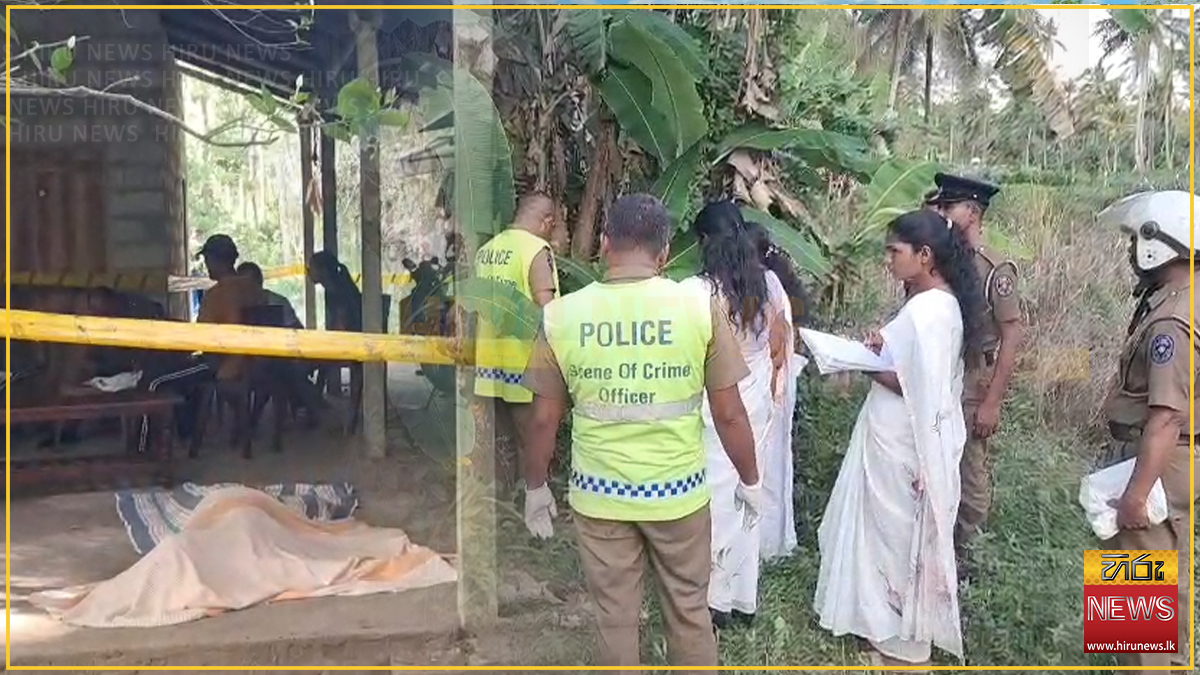
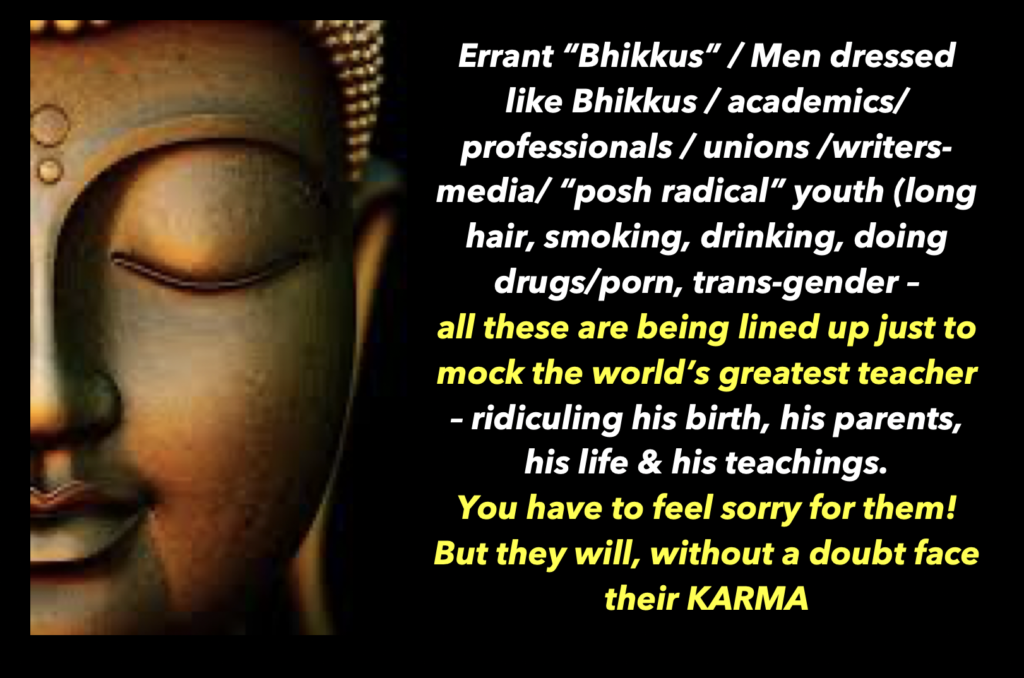


 මෙම සටහන ගැන ඔබ උරන විය හැක. එහෙත් මම මාගේ අදහස ඉදිරිපත් කරමි.