Lanka, India and Japan sign MoU to jointly develop East Container Terminal in Colombo port

May 28th, 2019

By Meera Srinivasan/The Hindu Courtesy NewsIn.Asia

Colombo, May 28: Sri Lanka, Japan and India on Tuesday signed an agreement to jointly develop the East Container Terminal at the Colombo Port.

The signing of the Memorandum of Cooperation (MoC) is significant, given that India and Sri Lanka were negotiating a potential partnership on the project, although with little success.

Lanka, India and Japan sign MoU to jointly develop East Container Terminal in Colombo port

New Delhi’s interest in partnering the project is well known. Over 70% of the transhipment business at the strategically located East Container Terminal is linked to India, according to official sources.

However, India’s possible role in developing the terminal had become a major flashpoint within the government.

President Maithripala Sirisena had opposed any Indian involvement in the project, as roping in foreign actors for developing national assets” remains a politically sensitive call in the island.

Mr. Sirisena and Prime Minister Ranil Wickremesinghe had a heated argument on the matter during a cabinet meeting last year, with the Sri Lankan Prime Minister apparently more inclined towards allowing an Indian role in the project.

Negotiations seemed to have hit a roadblock until Japan stepped in more recently. The new dynamic altered the prospects for India, allowing it to play a part in upgrading the terminal.

Japan has been a long-standing partner of Sri Lanka, and one of Sri Lanka’s biggest donors in the past decades. The terms of the agreement will soon be finalized at a joint working group meeting, diplomatic sources toldThe Hindu.

Negotiations seemed to have hit a roadblock until Japan stepped in more recently.

(The featured image at the top shows a view of the Colombo port)

MCC or foreigners cannot be given Sri Lanka’s land without rule of law laid down by Sri Lanka’s Supreme Court

May 28th, 2019

Sri Lanka’s sovereignty & territorial integrity is being questioned by a secretive deal between US & the Ranil Wickremasinghe Government pertaining to the Millennium Challenge Corporation & an ‘economic corridor” that will create a railway line from Colombo to Trincomalee leasing 1.2m acres of land for 200years. This agreement is taking place together with a series of drastic legislative changes that include privatizing of all state land and the ability of foreigners to buy an unlimited number of land in Sri Lanka. All this does not spell anything good for the nation or its citizens & calls to mind the landmark Eppawela phosphate judgement which set a judicial precedence by Sri Lanka’s Supreme Court nullifying the project (SC (FR) Application No. 884/1999). The judgment by Justice Amarasinghe highlighted how erudite & patriotic judges saved Sri Lanka’s land that was historically & archaeologically important Cultural Triangle, Sri Maha Bodhiya, Ruwaweli Seya, Jaya Ganga and Yoda Ela. This same land area & beyond is covered by the MCC proposal but the 2000 judicial precedence is more than enough for erudite lawyers to come forward & nullify this detrimental project along the same legal arguments that resulted in the landmark judgment – that land usage is subject to  the rule of law laid down by the history of our country. The Eppawela judgement – the Supreme Court saved Ruvanvelisaya, Sri Mahabodhi  Yoda Ela Jaya Ganga and all archaeological sites of Annuradhapura and the same judicial precedence remains applicable to MCC deal as well.

What is Millennium Challenge Corporation?

The MCC has approval of both Republicans & Democrats and is funded by the US govt to compliment what the CIA, NED (National Endowment for Democracy) and USAID do. MCC head is the US Secretary of State while other Board Members include US Secretary of the Treasury (MCC Vice Chairman), US Trade Representative, Administrator of USAID, CEO of MCC & 4 private sector members appointed by US President on advice & consent of US Senate.

In short the plan is to turn Sri Lanka into another colony, an American military base in the Indian Ocean (now called the Indo-Pacific Ocean)

What is this MCC Economic Corridor” & Electrified Railway Line”

200miles long stretch of land from Colombo to Trincomalee via Dambulla comprising 1.2m acres of mineral-rich & ancient heritage lands. The lease is to be Rs.24 per month per acre (USD400m).

Whose law will apply in this ‘corridor’ not Sri Lankan law but American law for the next 200 years.

The corridor will automatically divide North & South and take part of Anuradhapura and Kurunegala into the North.

Japan (referred to by the US think tank Council of Foreign Relations as The anchor of the U.S. security alliance in Asia” is chipping in by sponsoring 2 electric fences from Colombo to Trincomalee to create the world’s 1st electric border wall. It will be an electric Berlin Wall. People will need passes or passports to travel! Is this what TNA & Wigneswaran and Tamils want – will they be happy now? Now it becomes easier to understand the hysteria to remove the military from the North including all army camps! An island that was never invaded but traitors handed to the enemy each time is being repeated for the 4th time by Ranil-Sirisena Government. The wall is similar to the demilitarized zone separating North Korea from South Korea.

The October ‘coup’ when President Sirisena unceremoniously sacked PM Ranil declared on 28 October 2018 that he did so to prevent the PM from passing the ‘State Land Bank’ Bill and the ‘Land (Special Provisions’) Bill which had been presented to the Cabinet. The MCC project was stalled.

One day when this govt is no more we will know the illegal Bills that have been passed via the Speaker who should be ashamed of his conduct as Speaker. There has been silence from President Sirisena since. Has he caved in and consented?

Sri Lanka’s Attorney General is tasked to only look into the Constitutionality of what is submitted to him.

Sri Lanka’s Legal Draftsman is only tasked to word it in the necessary legal language.

Neither looks into the judicial precedence for such Bills.

Does anyone look into case law or judicial precedence before signing such dangerous Bill – NO. Which is why the MCC proposal which is going as a ‘compact’ agreement is in reality Sri Lanka agreeing to carry out all that the US wants Sri Lanka to do on behalf of the US

What are the Statutes being changed to facilitate this by the Ranil-Sirisena govt?

State Land Bank Bill – will register all State lands & powers to a Land Reform Commission and enable public institutions to lease lands by repealing Part 4 – 6 of the Land Reform Act No 1 of 1972 (removes foreign ownership limit of 50acres).  

Land (Special Provisions) Bill – Grants title deed to Sri Lankan citizens on ‘Government Grant’ and allow them to mortgage their land to banks and banks are allowed to sell of such State lands to private individuals including foreigners. This Act is to be operational for only 7 years which means they target to acquire all lands under ‘government grant’ into foreign ownership. This fits perfectly into the vision to put farmers into jeans. At the end of 7 years Sri Lanka will have no agricultural lands for self-sustenance.

Land laws are being changed – foreigners can now own land more than the limit of 50acres.

80% of Sri Lanka’s land being state owned is being privatized.

Land deeds are given wholesale so that when land privatization bill passes, people will automatically sell land when facing economic hardships.

MCC officials (repeat MCC officials working with the Global Land Alliance helped by Rangajeewa Ratnayake of University of Moratuwa and Suresh Shanaka) are drafting all new land laws to facilitate America’s wishes.

Sri Lanka is being slowly turned into a US-colony– MCC, SOFA, Acquisition & Cross Service Agreement, privatizing land, US company surveying land & creating electronic database of who owns what and free lands, US surveying of Sri Lanka’s hidden mineral and other resources, US troop presence in Sri Lanka with permission to land anything without civil aviation, police, army inspection. The US ship floating in the East and Repealing of PTA replaced with a CTA which is more about imprisoning anyone going against Ranil Govt. Islamic terror is US’s best friend to land & occupy nations, is it a surprise that 21/4 took place on Easter Sunday where world Catholics would insist US eliminate Islamic terrorists personally. Is it a surprise that FBI, UK Metropolitan police are in Sri Lanka? Did they come throughout 30 years of LTTE (ironically Church helped LTTE) Islamic terror & Islamization keep the country busy & diverted with Islamic fundamentalism supplied by US’s top ally in the Middle East. An international airport in Polonnaruwa now makes sense!

What can Sri Lanka do to preserve its sovereignty, its territorial integrity & heritage do?

The ‘economic corridor’ has conveniently included the ‘Eppawela’ phosphate which another US company tried to take over since 1980s. This area the US has been eyeing contains ilmenite, thorium, monazite, rare earth metals cerium and lanthanum. (Imagine Ranil-Sirisena agreeing to give this to US for Rs.24 per month for 200 years)

The venture was prevented by a landmark Supreme Court judgement.

Justice Amerasinghe, Justice Wadugodapitiya & Justice Gunasekera

Justice Amerasinghe, Justice Wadugodapitiya & Justice Gunasekera

UNANIMOUS Judgement delivered on 2 June 2000 by Justice A R B Amerasinghe

Landmark Eppawela Phosphate case – SC (FR) Application No. 884/1999 / Bulankulama v Ministry of Industrial Development

A 1992 proposal under then UNP govt after years of negotiations resulted in a $425m phosphate mining contract given in 1997 to 2 foreign companies for 30 years. Tomen Corporation Japan & US company Freeport McMoran via partner IMC Agrico (who would be signatory while Freeport negotiates terms). IMC Agrico was to have 65% holding, Tomen 25% and Sri Lanka (LPL) just 10% holding interest. The deal included a processing plan, deep water dock at Trincomalee linked to Eppawela via a specially built railway line.

The plant was to be built on 450 acres of land in 3 years with an extra 300 acres of beach front kept in reserve. The plant would produce up to 600,000 metric tons of hi-grade Di-Ammonium Phosphate.

LPL was to transfer its license under Mines & Minerals Act 33 of 1992 to company ‘Sarabhumi’ and McMoran was to operate under this license though not signatory to the venture and thus not liable for anything legally. McMoran was well known for corruption and environmental & human rights abuses in other countries. Why was McMoran given approval to export 13.6m tonnes of raw rock phosphate during first 8years earning $400m & paying Sri Lanka just 5% of earnings?

The 7 petitioners who filed FR in 1999 argued that the Eppawela deposit area was agricultural land, it was of historical & archaeological value, Jaya Ganga/Yoda Ela schemes were national engineering marvels to be preserved, over 20 new & ancient irrigation tanks & 100km of small irrigation canals were in danger of being destroyed, environmental pollution of land would breed mosquitos & other diseases.

Public Trust Doctrine

The counsel for the Government claimed that the Government & not the Court is the ‘trustee’ of natural resources of Sri Lanka. The Court issued a brilliant reprisal by claiming that all organs of the state are only ‘guardians’ to whom the People have committed the care and preservation of the resources on behalf of the People and is clearly set out in the Constitution.

Thus as per public trust doctrine, natural resources of the people were held only in Trust by the government. The organs of the state are only guardians expected to preserve and take care of the resources on behalf of the People.

While the State may have right to ‘exploit’ the resources, the State is bound to protect the environment. While the State have power to make decisions & approve projects, the proposed agreements cannot evade or adjust laws in biased manner. The Eppawela Phosphate venture was seen to be given with bias no different to the MCC deal. In both cases the Public had been ousted from involvement and thus an infringement of fundamental rights under Article 12(1) of Sri Lanka’s Constitution.

Justice Amarasinghe declared that as per Article 126 of the Constitution the Supreme Court had sole & exclusive jurisdiction to hear & determine any question related to the infringement or imminent infringement by Executive or Legislative action of the People’s fundamental right.

The landmark judgement quoted sustainable development referring to the Stockholm & Rio De Janeiro Declarations.

The judgement quoted the Mahavamsa to highlight the importance of a country’s natural resources

 the king thus addressed his officers. In my Kingdom are many paddy fields cultivated by means of rain water, but few indeed are those which are cultivated by perennial streams and great tanks. By rocks, and by many thick forests, by grate marshes is the land covered. In such a country, let not even a small quantity of water obtained by rain, go to the sea, without benefitting man. Paddy fields should be formed in every place, excluding those only that produce gems, gold, and other precious things. It does not become persons in our situation to live enjoying our own ease, and unmindful of the people …..

He quoted, the Vice President of the ICC Judge C G Weeramantry in a 1997 Danube Case (Hungary vs Slovakia) referred to the ancient irrigation works of Sri Lanka too

Just as development was the aim of this system, it was accompanied by a systematic philosophy of conservation dating back to at least the third century B.C. The ancient chronicles record that when the King (Devanampiya Tissa) 247-207 B.C. was on a hunting trip (around 223 B.C.) the Arahat Mahinda, son of the Emperor Asoka of India, preached to him a sermon which converted the King.

Here are excerpts from that sermon: O great King, the birds of the air and the beasts have as equal a right to live and move about in any part of the land as thou. The land belongs to the people and all living beings; thou art only the guardian of it ….”

Judge Weeramantry referred to the ‘imperative of balancing the needs of the present generation with those of posterity”. He referred to the irrigation works of ancient Sri Lanka, the philosophy behind not permitting even a drop of water to flow into the sea without benefitting mankind and pointed out that sustainable development happened because of such conscious practice.

Judge Weeramantry said The notion of not causing harm to others and hence sic utere tuo ut alienum non laedas was a central notion of Buddhism. It translated well into environmental attitudes. Alienum’ in this context would be extended by Buddhism to future generations as well, and to other component elements of the natural order beyond man himself, for the Buddhist concept of duty had an enormously long reach”.

Judge Amarasinghe citing dilemmas in development vs environment returns to King Devanampiyatissa to stress that the leaders are only the ‘guardians’ and not the ‘owners’ and explained that the task of the law is to convert this wisdom into practice by laws.

Article 27(14) states the State shall protect, preserve and improve the environment for the benefit of the community”

Equal protection under law as per Article 12 makes duties inseparable from obligations. It is the duty of every person to protect nature & conserve it.

The issue is not whether the Court or the Government is the trustee or whether there is a breach of trust but whether the rights of the petitioners guaranteed by Articles 12(1), 14(1) (g) and 14(1) (h) of the Constitution have been violated.

Judge Amarasinghe says that the human development paradigm needs to be placed within the context to ensure future sustainability of the mineral resources, water & soil conservation ecosystems of the Eppawela region & the North Central Province & Sri Lanka in general & cultural heritage.

Judge Amerasinghe says decisions must safeguard the health & safety of people.

With the judgement Eppawela investment proposal did not go through.

The Judgement & Judicial Precedence relevant to MCC

Sri Lanka’s Supreme Court held that an imminent infringement of fundamental rights of the Petitioners as guaranteed under Articles 12(1), 14(1)(g) and 14(1)(h) of the Constitution had taken place & ordered the State parties to refrain from entering into any contract until they had carried out a comprehensive exploration & study of the location, quantity & quality of the phosphate deposit in consultation with the National Academy of Science & National Science Foundation & approvals are sought from the Central Environmental Authority.

Every argument & every word in the Eppawela Phosphate judgement is applicable to the Millennium Challenge Corporation. Thus the judicial precedence set in this landmark case cannot be ignored simply by saying that AG or legal draftsmen has approved the proposal because neither of them have the mandate to look into judicial precedence & rule of law set for land in carrying out the job handed to them by the legislative.

How can national land policy & legislation of land policy be given to foreigners?

How can foreign entities dictate how land is disposed or used by a sovereign country?

How can a government sign agreements to deliver large extents of land to foreigners without any regulations and kept secret from the public (removing the limits that were originally set)

The constitution clearly establishes that the sovereignty is inalienable & with the People not a government elected for a term of office?

The detrimental nature of these land sales and land proposals by the Ranil-W government were highlighted by the President himself addressing the Nation in October 2018. He said that if Land Special Act is passed lands of this motherland would be bought outright by foreigners. This was confirmed by Minister Mangala Samaraweera following the Easter Sunday attack when he said MCC will take over land administration process in 8 districts, upgrading 10 land registries, prepare Parcel Fabric Map of all state and private land to facilitate activities of the Survey Dept (A US company has been contracted to survey our land – it’s like giving the rogue to decide where & what to steal)

The MCC proposal is taking shape following a series of sinister procedures & unethical practices. National land policy & land laws are being introduced by foreign funding organizations. The land policy emerging is based on acceptance of externally imposed plans by donors of which MCC is one.

Justice Amerasinghe’s judgement draws many barriers for a government greedy to sell anything and everything before facing an election defeat.

This judgement should be unearthed by Sri Lanka’s Bar Association & patriotic lawyers need to use these citations to stop the Millennium Challenge Corporation & its economic corridor that is ceding Sri Lanka’s sovereignty. No government has any right to give land or resources to another country even in the name of development that will not end up in forsaking our land but divide Sri Lanka into 2 separate entities.

The Eppawala case judgement that also highlights a railway track to Trinco aligns with the map surfacing regarding the MCC economic corridor. Is this new proposal a roundabout way to take over the area that was denied via the 2000 Supreme Court judgement? Where are the lawyers? Why are they not putting two and two together?

Shenali D Waduge

Books written by late Justice A R B Amerasinghe

  • The legal heritage of Sri Lanka  
  • The Protection of Culture, Cultural Heritage and Cultural Property

THE JAFFNA PUBLIC LIBRARY Part 1 (Revised)

May 27th, 2019

KAMALIKA PIERIS

2nd version 20.9.21

No one had heard of the Jaffna Public Library until it was burnt down in 1981. Then it suddenly became the greatest library in South and Southeast Asia.

The Jaffna Public Library began as the private collection of K.M Chellappah, of Atchuvely,  who worked in the district court in Jaffna. He started lending books from his home in 1933. This collection of 844 books and 30 magazines was transferred to a small room at Hospital Road, in 1934,  then in 1936, to a rented house  owned by the Puthur Mallawarayar family  on Main Street near the Town Hall. Books could be borrowed on a payment of a nominal sum of Rs. 3 as membership fee. It had a starting capital of Rs. 1,184 and 22 cents largely from the efforts of Chellappah.

Chellapah circulated an appeal in English and Tamil for A Central Free Tamil Library in Jaffna”, and approached labourers, unions, teachers, authors, business people and prominent retirees for support. He insisted that the library would house not just a Tamil collection, but would also hold books in other languages. The idea caught on, and soon a seminal meeting of interested individuals passed a resolution agreeing that a Central Free Tamil Library Association be formed with the original subscribers and others who are present at this meeting as original members of the Association”.

A committee was formed on June 9, 1934 with the District Judge as Chairman Rev. Dr. Isaac Thambiah as Vice-chairman, K.M. Chellappah & C. Ponnambalam as Joint Secretaries. The committee decided to collect or buy as many ancient ola leaf manuscripts as possible from the villages of Jaffna and other areas where Tamil culture thrived.

In 1938 yet another committee was formed to set up a library in Jaffna.  Jaffna mayor A. Sabapathy was Chairman and Rev.  Fr.  Timothy Long, Rector of St Patrick’s College Jaffna was Vice Chairman.  .

In 1949 it was decided to build a modern spacious building for the library. The foundation stone was laid on 29.3.1954, by Fr Long, British High Commissioner Sir Cecil Sayers, US Ambassador Philip K. Crowe and First secretary of Indian High Commission, Siddhartha Chari. These foundation stones can be seen even today.

The first stage of the building was completed and the Jaffna Public Library declared open on 11 October 1959 by the then Mayor, Alfred Thuraiappah.  A Children’s section was opened on 3 November 1967. Asia Foundation donated books to the childrens section. The Reference section had 30,000 books by 1981. There was an American section which contained the books and journals earlier housed in the American Information Centre in Jaffna.

The building was designed by V.M Narasimhan, Government architect of Madras. The architecture was in Indo-Saracenic style,  not Dravidian. S.R Ranganathan came from Delhi to develop the library to international standards.

Rev. Fr. Timothy Long made a tremendous contribution to the library.   Fr. Long worked tirelessly to obtain funds for the library. He even asked the cartoonist Collette to do a sketch of him with a begging bowl. The one million rupee Library fund was entirely Fr. Long’s idea.I was just eight years of age and I remember well the fabulous Yarl Vinotha Carnival that was held in 1952 to raise funds. It was a great success and brought in Rs. 68,000 – a huge sum then – for the Library fund,” recalled Charles Santiapillai, former Professor of Zoology,  University of Peradeniya.

Fr. Long contacted the American Ambassador, Mr. Philip K. Crowe and British High Commissioner, Sir Cecil Sayers, who provided funds generously. Fr. Long was also able to successfully negotiate with Mr. W.G.F. Gunstone of W.H.Smith & Sons, and got books at special discount varying from 25% to 50%. The Asia Foundation also donated books.

Fr Long was able to secure for my late father, Mr. S.F. Santiapillai who taught Latin and English at St. Patrick’s College, a Fulbright Scholarship in 1955 that enabled him to go to the Cuyahoga County Public Library in Cleveland, Ohio (USA) for advanced training in library science, said Santiapillai.  In recognition of the untiring efforts of Fr. Long, the grateful public honored him by erecting his statue in front of the library.

The library had the usual services of  lending and refrnece. Reference  had 30,000 books.,there was a  children’s section..Asia foundation  donated books to the childrens section.. There was also an American section which contained the books and journals earlier housed in the American information centre in Jaffna..

The library  held newspapers given free to it by the publishers of Veerakesari, such as Eelakesari, Hindu Organ, Catholic guardian, Sunday Catholic Times, The following newspapers were bought, ‘Madras Hindu,’ ‘Thamil polil,’  ‘Thamil nadu’, also magazines such as Navasakthi, added Thurairajah.  This is not surprising, this was a public library.

Karthigesu Sivathamby, Professor of Tamil, University of Jaffna, recalled, As one who used it, I know how meticulously it was planned and how effectively it worked. I remember the steel cupboards containing donations from various learned men of Jaffna.  There was the collection of Cumaraswamy, the renowned father of the late TULF Leader C. Vanniasingam. Two other cupboards contained all the known literary source materials of the Tamils of Sri Lanka. There were also cupboards with books gifted by Christian priests. If I remember right, there was also some material on which Rev. Fr. Gnanapragasar worked. Rev. Fr. H.S. David was usually seen brooding carefully over those volumes.

Charles Santiapillai (1944-2014) and V.S Thurairajah (1927 –2011) have described the research collections held in the Jaffna Public Library. They both lived in Jaffna and went to secondary school there. Within a square mile of where I lived in Jaffna, there were six churches, six colleges, six cinemas and just one Public Library,” said Santiapillai, wryly.

 Santiapillai and Thurairajah went on to become highly respected professionals, one in Zoology and the other in architecture. Thurairajah was associated with the rebuilding of the library, from the time the first stage of the Library began in 1959. He was the Honorary Architect for the second stage of the building and the final restoration of the building.

I am accepting their description of the research collections held in the Jaffna Public library. There were about 97,000 books and over 10,000 manuscripts in the library, said Charles Santiapillai. The library had in its collections, several old manuscripts, some of which were written on dried palm leaves and stored meticulously in special sandalwood boxes. There were also hard to replace books on herbal medicine, miniature editions of the Ramayana epic, copies of the now extinct Tamil language newspapers, microfilms of the Christian Missionary journal The Morning Star” (Udhaya Tharakai) published in the early 20th century. Some of the books were priceless. There was a single copy of Yalpana Vaipava Malai, concluded Santiapillai.

There were thousands of rare collections held in the library, said Thurairajah,’ but he cannot enumerate them as there is no comprehensive record available. The library contained valuable books such as’ Periya puranavurai.’ There were books on astronomy and astrology, a ‘most important collection of ancient document in ola including Siddha prescriptions.‘There was also a book published on Catholic leaders in Tamil with front page in Spanish. A collection of books on Tamil culture edited and published by Rev Fr Thaninayagam and Abithana Kosham by Muththu Thambipillai.

There was a copy of History of Ceylon written by Robert Knox when he was in the Kandy prison in 1660. As well as Ceylon during the Dutch Rule by Philips Baldaeus written in 1672. Amongst some of the collections housed in the library were 700 books on the famous art critic and Sri Lankan Tamil Savant Dr. Ananda Commarasamy donated by Mr. Thurairajasinham of Malaysia  There were many donations such as the Vanniasingham collection, Kathiravelupillai collection, Isaac Thambiah collection, said Thurairajah.

S. Piyasena has give two instances to show that Jaffna Public library had valuable research material. He said that in 1973 he had interviewed Ven. Parakandeniye Dhammawansa, who was a Ph D student at the Benares University for the Sinhala Service of All India Radio in New Delhi. . Ven. Dhammawansa had said that he had found three volumes on Lalitha Vistharaya of Pandit Ashwaghosha (sic) at the ‘Jaffna Library’. (Sunday Island 18.10.15 p 16)

The Lalitavistara Sūtra is a Mahayana Buddhist sutra that tells the story of Gautama Buddha from the time of his descent from Tushita until his first sermon in the Deer Park.It would have been in Sanskrit.  Asvagosa was a Mahayana scholar.

The second incident was in 1979 when Piyasena, as a member of Kelaniya University Board was on the interview panel to select lecturers. One young candidate, a Buddhist monk, produced copies of some important Sanskrit documents used for his research. Examining them, Prof Jayawickrema of Kelaniya University, asked how he came across those documents. The monk said he obtained one of the documents through a friend from Sorbonne University in France and the others were copied from the original volumes available at the Jaffna Library.

I am satisfied that Jaffna Library’ means Jaffna Public Library and not Jaffna College library. I assume that Piyasena is speaking of two separate bhikkus and two separate sets of documents. If not, Piyasena would have said so. However, it is surprising to hear that a rare Mahayana manuscript was found in Jaffna Public library. It is not surprising to hear that no one knew about it. 

The Jaffna Public library was not an outstanding library, either as a research library or as a public library. Ishwari Corea had visited the Jaffna Public Library, when she was Chief Librarian, Colombo Public Library. She was very dismissive about the Jaffna library.  She told me, in a personal communication, that it had only a lending section, reference section, childrens’ section and an American section, nothing more. 

 H.A.I. Goonetilleke visited many libraries to obtain data for his Bibliography of Ceylon” (1970). He listed five libraries as the principal libraries he used in Sri Lanka. They are the libraries of the University of Ceylon, National Museum, National Archives, Department of Agriculture, Royal Asiatic Society, and Colombo Public Library, and Jaffna College Library. Jaffna Public Library, though considered one of the best libraries in Asia, is not mentioned!!

Neville Jayaweera went as Government Agent to Jaffna in the 1960s. He had gone to the Jaffna Public Library to research on caste distinctions in Jaffna. If the library was a wonderful one, with a magnificent collection, he would not have hesitated to say so. He did nothing of the sort. He merely said He had ‘poured over Hindu religious texts’ in the Jaffna Public library. He said the library was later burnt, that was all.

The Colombo Public Library, under the editorship of Ishwari Corea, issued three books to celebrate milestones of the Colombo Public Library. They were ‘Colombo Public Library,’ ‘Libraries and people ‘(1975) and Roads to wisdom “(1980). The contributions were wide ranging but the emphasis was on libraries.

 Jaffna Public library is only mentioned once in these three books.  Roads to Wisdom,” said that the ‘libraries of Jaffna, Kandy and Anuradhapura are worthy of mention,’ (p 35).  T.G. Piyadasa in his essay on ‘Public libraries in Sri Lanka’ does not mention Jaffna Public Library at all. The three Tamil essays in these books do not refer to Jaffna Public library either.

If the Jaffna Public library had been outstanding, Goonetilleke and Corea would have told me so. My primary interest as a librarian is in public libraries. I trained in one and know what a great service a public library   provides.

If the Jaffna Public library has been any good, Ishwari would have told me to go and see it. Goonetilleke, in his many conversations with me, in the 1970s,   about the research collections in Sri Lanka libraries, would have at least mentioned that the Jaffna Public Library had a wonderful research collection. He never did. He   told me to go to Library of the Agriculture Department at Gannoruwa, instead.

The Jaffna Public Library could not have burst into bloom by 1981. It was a very late starter. In   contrast, the Colombo Library was established in 1925 merging the Colombo Library and the Pettah Library.The Kandy Public Library started as Central Town Library in1841 and was taken over by the Kandy Municipal Council in 1920. Jaffna Public Library only opened in 1959.

Jaffna did however have one good library, Jaffna College library (est. 1910), which became the library of the University of Jaffna. The Jaffna College library was one of the 7 Sri Lanka libraries listed as principal sources by H.A. I Goonetilleke in his highly acclaimed ‘Bibliography of Ceylon’. 

This library seems to have functioned simultaneously as a public library, a school library and a research library.  It had two dedicated librarians, Mr. K Selliah, followed by R.S. Thambiah. Selliah was sent for training in librarianship to Calcutta in 1933.  He also underwent training in Britain later on.

These two succeeded in developing over the years a very good library, way above usual school library standards, said Kulendran. The Jaffna College library contained rare books and archival material, and rapidly reached the level of a research library.  In 1969 it was subscribing to 111 periodicals, and was used by outsiders as a research library due to its wide scope and valuable stock.

It catered to the general reader too. Emily Ganeshan (b.1904) and her daughter Vimala had used the library. The American Mission stocked it well, they said. In the 1950s, It had Life” and Illustrated weekly of India”, it was open till 10 p.m. and students could come in casual clothes.  The under graduate section prepared students   for University of London degrees.  It was the best school library for years, they gratefully recalled.

However, after the burning, Jaffna College library was forgotten, it was Jaffna Public Library that people were talking about. All sorts of flattering comments were made about the Jaffna Public library, soon after it got burned down. There was not one     squeak about it before. This indicates some sort of prior media planning.

Exaggerated statements about its importance were bandied about and at least one howler emerged. Here is a selection.

  •  Jaffna library is one of the finest and largest libraries to be found in South and South East Asia.”
  • One of South Asia’s finest libraries at that time, the Jaffna Public Library was known for its precious archival material and manuscripts.
  • it was one of the biggest libraries in Asia
  • It was the biggest library in Sri Lanka at the time.
  • It was considered the best collection of Tamil literature in Sri Lanka, if not the world.
  • The library became the pride of the local people as even researchers from India and other countries began to use it for their research purposes.
  • This Jaffna library was a national treasure.  Its burning broke the cultural heart of the people of Jaffna.
  • Numerous culturally important and irreplaceable manuscripts were destroyed. [
  • The destroyed articles included memoirs and works of writers and dramatists who made a significant contribution toward the sustenance of the Tamil culture, and those of locally reputed physicians and politicians.
  • Among the destroyed items were scrolls of historical value and the works and manuscripts of philosopher, artist and author Ananda Coomaraswamy. This is a howler.  Ananda Coomaraswamy was in Sri Lanka from 1903-1910. He died in Boston in 1947. His papers would have been donated to Museum of Fine Arts, Boston. Jaffna Public library was holding the papers of Coomaraswamy, the father of C. Vanniasingam. ( continued)

THE JAFFNA PUBLIC LIBRARY Part 2 (Revised)

May 27th, 2019

KAMALIKA PIERIS

2nd revision 20.9.21

On the night of 31 May 1981, while Jaffna slept, this library was set on fire.There was a run up to this. The Tamil United Liberation Front (TULF) decided to contest the District Development Council (DDC) elections to be held on June 4, 1981.

On May 31, 1981, the TULF held a massive election rally near the Nachchimaar Amman Temple in Jaffna.  Two unidentified gunmen shot at the police and fled the scene, killing three Sinhala  policemen. The two hundred police personnel present rioted and burnt boutiques, shops, houses, cars and ‘commercial establishments’. These attacks were the worst that the people of Jaffna had experienced so far, reported the media.

That night police and paramilitaries began a pogrom that lasted for three days, said Wikipedia. The head office of TULF party was destroyed. The Jaffna MP V. Yogeswaran‘s residence was also destroyed. Four people were pulled from their homes and killed at random. Many business establishments, a Hindu temple  and the office of the Eelanaadu, a local newspaper, were also destroyed. Statues of Tamil cultural and religious figures were destroyed or defaced, said Wikipedia

On the night of June 1, 1981, the Jaffna public Library was burned. The burning of the library lasted the entire night. Yogendra Duraiswamy, then GA, Jaffna, requested the Navy base in Karainagar and the Municipality for bowsers of water to extinguish the fire. He found that the Municipal Office was closed and the water tower locked. The city was virtually deserted. Although the Navy’s browser arrived at the scene, its capacity was inadequate to douse the roaring fire. No one had dared to come out that night. None of the TULF politicians were present.

It is only after it was burned down that Jaffna Public Library rose to world attention. This otherwise obscure library suddenly became a great library. The world was told of the magnificent collection it once held and how Jaffna was grieving about the burning.

There was genuine grief as well. That night one of our distinguished teachers at St Patrick’s College, and a well-respected linguist, Rev. Dr. H. S. David died of a heart attack on being informed of the terrible tragedy, reported Santiapillai. Fr. T.M.F. Long who worked so tirelessly and contributed so much to establish the Jaffna Library reacted with intense grief and suffered a heart attack and died a broken man in Australia, he added.

One would expect that the chief  librarian of the Jaffna public library, who would have been safely asleep while the library was burning, would have been interviewed  later  and asked what valuable resources the library had held. But he does not appear once in the story. He has not been interviewed. We do not even know his name.

The library burned down but the national newspapers did not report the incident. In Tamil Nadu, newspapers did not report the burning for several days. The Hindu noted on 6 June 1981 that a public library with its entire collection of books has been burnt”, and on 13 June it quoted Amirthalingam saying that the library had held 95,000 volumes, some of which were rare and centuries old”  

The UNP government of J.R.Jayewardene did not hold an inquiry to establish responsibility either.   To date, no one has been indicted for the crime.  Since there was no inquiry, there was much speculation as to ‘who done it.’

The following assortment have been charged, each separately, with burning the Jaffna public library:  Cyril Mathew, Gamini Dissanayake, Police, Army, LTTE,   UNP government.

The library was burned by police and thugs brought into Jaffna mostly from Kurunegala, by Ministers Cyril Mathew and Gamini Dissanayake to help to rig the Jaffna DDC elections and to commit such violence as deemed necessary, said Devanesan Nesiah, among others.

U.B. Wijekoon squashed this.  He said he was the only Government minister in Jaffna on that day and others like Minister Gamini Dissanayake whose names have been mentioned in connection with the Jaffna library burning, arrived only after the incident took place. Wijekoon had seen the library burning

The burning was not pre-planned said U.B. Wijekoon, then District Minister for Jaffna. To the best of my knowledge, It was a spontaneous act, carried out by policemen stationed there on election duty”, Wijekoon said.

There were about 500-600 policemen who had come on duty to Jaffna. In the unrest leading to the DDC elections, three policemen on duty at an election rally of the TULF had been shot dead. That same night several boutiques in Jaffna town were set on fire, and the following day the library was set on fire.

Tassie Seneviratne, Former Senior Superintendent of Police,   supports this. A police sergeant who was attached to the Jaffna Police Station told me, some years later, that he poured petrol from a barrel and ignited the fire with a match stick, said Tassie. This police sergeant had regretted this ha years later and had confessed to Tassie as well as another DIG.   Tassie had not asked who else had been involved.

Police officer K.Krisnadasan  writing in 2015, says it was the army, not the police. He was on duty that day in Jaffna. ‘About 7.00 – 7.30 pm from the station premises we noticed heavy smoke emerging from the Jaffna Public Library building and we knew that the library building had been set on fire. DIG instructed me to take a Police party and rush to the library immediately.’

I then promptly rushed with a police party comprising of 2 Sub Inspectors and about 10 Constables on foot as the library building is only about 250 yards from the Police Station. As we approached within a few yards from the library building, I noticed about 20 Army personnel in uniform inside the building. They were pulling down the books from the shelves and throwing them into the fire.

On seeing the police party one officer came out followed by a few other army personnel pointing their AK47 rifles towards us and shouted in a rough tone in Sinhala and ordered us to get back to the Police Station. The police party then received instructions from the DIG to return. After we came back to the Police Station, we saw the whole building going up in flames.

 After my return to the Police Station, I made an entry in the Register/Investigation Book regarding what I had seen. DIG/NR too made an entry in the Officers’ Visiting Book.  The DIG tried his best to contact the Army top brass who were in Jaffna, to inform of the situation, but to no avail. It was not advisable for the police to take any further action. What I have reported is what I saw. I only visited the scene after the fire has started to engulf the building, concluded Krisnadasan.

This means that the army, instead of setting fire to the library and leaving the place, as any sensible arsonist would have done, stayed on happily to make a bonfire of the books and confront anybody who came. The fire would have been visible miles away. When the police appeared the army came and stood before them boldly and chased them away.  We often see scenes like this in films.

The culprit, others said, is not any of the above, but the government of Sri Lanka .That is why the government did not appoint a commission of inquiry. In 2001, a Daily News  editorial said  that the burning of the library was done by goonsquads let loose by the government  Minister Champika Ranawaka  said when visiting Jaffna on 2010, said it was the work of ‘goondas’.

President Rajapaksa is quoted as having said “The UNP is responsible for large scale riots and massacres against the Tamils in 1983, vote rigging at the DC elections and the burning of the Jaffna library”.  The embassy of USA said in a statement issued on 12.3.2016 that the library was set ablaze by Sri Lankan state security forces and state sponsored mobs in 1981. In 2016, Prime Minister Ranil Wickremasinghe apologized in Parliament for the burning of the Jaffna library during UNP government of 1981.

The Government should appoint a commission to go into the truth about burning of the Jaffna Public Library, by appointing a high level judicial panel even at this late stage, said Krisnadasan, writing from Australia in 2015. The truth will never be discovered unless the various stories are independently examined. It is not too late to revisit the scene independently and objectively, and establish the facts, taking into account the versions of all concerned,

The burning of the Jaffna public library was excellent propaganda for the Tamil Separatist Movement. They made full use of it. The burnt out shell of the library is preserved for tourists and visitors to see. It is next to the new Jaffna Public Library.

Rebecca Knuth, Professor of Library and Information Science at the University of Hawaii featured the Jaffna Public library in her book Burning Books and Leveling Libraries: Extremist Violence and Cultural Destruction” (2006). She attended the IFLA annual conference 2006 at Seoul, and made a presentation on the subject. Here are three of her utterances, taken from the abstract of her speech.

  • The collection became well known internationally and was popular with Sinhalese and Tamil intellectuals, as well as the general public.”
  • It became the major repository for all known literary source materials of the Tamil people”
  • Indeed, one could think of the Jaffna Library as a national library even though a Tamil nation had not yet come into being.”

The burning of the Jaffna library is mentioned in fiction too. Here is Nayomi Munaweera’s description in her book Islandof a thousand mirrors” 

Sinhala policemen and paramilitaries storm the old Tami Library (sic) rip books from shelves, set fire to [them]. The conflagration shoots high into the sky… for weeks afterwards, torn blackened pages fly over the lagoons and marshes, the onion and chillie fields. They lodge in branches of palmyrah trees, float into houses, entangle in barbed wire fences and in the limbs of   gods soaring over the kovils,”

Sritharan Someetharan, made a documentary of the burning,  called Burning Memories, Born just 19 days prior to the burning of the library, Someetharan was deeply impacted by the event from an early age, said the interviewer .” Though the documentary was released in 2007, it was not screened in Sri Lanka until 2011. It has been shown in film festivals in India, England, France, Canada, and America and elsewhere. He has also made a film on Taraki” Sivaram, a pro-Tamil Sri Lankan journalist.  (Continued)

What people say and what they really mean – A response

May 27th, 2019

Laksiri Warnakula  

The article in the opinion column of the Island on 25th Saturday by Prof. A. N. U. Ekanayaka is very thought-provoking and it delivers a resounding blow to all those, who espouse the identity of Sri Lanka as a ‘Sinhala Buddhist Nation’ with callous disregard to its broader implications and meaning and to some others, who behave in such a disgusting and shameful  manner that has nothing to do with the Dhamma or Buddhism, which the Buddha preached, and subject our beloved nation instead to anger, criticism, ridicule and sarcasm from all and sundry.


However, my sincere intention in this brief letter is to somewhat soften the blow, if you may, caused by the professor’s article, notwithstanding the fact that it paints a painfully true picture of the status quo in the country that has been there for many decades now and provide some justification as to why almost all Sinhalese, both Buddhists and Christians alike like to say that ours is a ‘Sinhala Buddhist Nation’.    


Now think about all those ancient structures that we see today. They have been built by the ancient Sinhalayas to pay homage to Buddha and his Philisophy the Dhamma. The nations’ vast irrigation networks and other water bodies are also the work of the ancient Sinhalayas. All those Buddhist Dagabas and other monuments exuding beauty and reverence that one finds in Anuradhapura, Pollonnaruwa, Dambadeniya etc. are the fruits of blood and sweat that must have flown in plenty as those Sinhalayas laboured under a fierce sun and perhaps even the watchful eyes of whip-wielding soldiers of the kings. A vast of number of temples, and statues of Buddha carved out of rock is spread across the whole landscape of the country in a manner that probably has no rival in the whole world, when land size is taken into account. And I haven’t even said anything about Sigiriya yet.


Our ancients fought off many invasions from the South of India and it is said that they suffered horribly during periods, when the nation or some parts of it became occupied by those invaders. Then we have the skirmishes, battles and other armed rebellions, which our ancients fought against the colonialists, even when faced with canon fire, bayonets and muskets and many laid down their lives in the struggles leading to the independence.

Lastly, all those Sinhalese mostly young, who made the ultimate sacrifice to keep our little island undivided, for the present and its future generations. Many have been maimed and crippled in the struggle for life. Even though all the nationalities contributed to the victory, it was the majority, who suffered most, whichever the way one looks at it.

 
And please take note that I do feel for the youth, who fought on the other side and suffered horribly too, along with their kith kin. They probably took part in it, not because they wanted it but the prevailing circumstances coupled with the forced conscription left nothing else for them to choose from other than perhaps face the wrath of the top command. Then the socio-economic changes that turned from bad to worse subsequent to 83-July saw an exponential growth in their cadres, which according to some political analysts happened right under the noses of some Sinhalese politicians, even with the blessings from some of them.

The echoes from the past never die and they still reverberate amongst those marvels of art, architecture and engineering. The unseen bonds between those ancients, who fought for this land, built, laboured and toiled on it and the present day descendants of them will never break too. And a sweeping generalization lumping both groups, one openly brandishing sanctimonious and intimidating attitudes claiming sole ownership of both the land and the Buddhism in the country with the other, which is disciplined, moralistic and fair-minded, who are also conscious of what real Buddhism is and following it to their best ability, in my opinion is not right. Even though, I am reluctant to say that it is quite possible that the former is bigger in number and even gaining more ground too, steadfastly.

Before wrapping up, I must say that the learned professor has without mincing his words says where our present-day society stands and how it operates. The paragraphs fifth, sixth and seventh in particular are quite painful to read though what they say is very true.

Let the above article of him, which this letter is responding to, be an eye opener to all, who want this land, a land of genuine ‘Buddhists and Sinhalayas’ and not an imitation and imitating kind that smacks of sham.

Laksiri Warnakula  

හමුදාපතිවරයාට බලපෑම් කිරීම රිෂාඞ් බදියුදින්ට විශ්වාසභංගයක් ගේන්න ප්‍රමනවත් වගේම දණ්ඩ නිතී සංග්‍රහයට අනුව සිරගත කිරීමට තරම් වරදක්-මහාචාර්ය ජි. එල්. පිරීස්

May 27th, 2019

අද (27) දින පැවැති ශ්‍රී ලංකා පොදු ජන පෙරමුනේ මාධ්‍ය හමුව

අද (27) දින පැවැති මාධ්‍ය හමුවට සහභාගි වූ නියෝජිතයින්
ශ්‍රී ලංකා පොදු ජන පෙරමුනේ සභාපති මහාචාර්ය ජි. එල්. පිරීස් මහතා
පාර්ලිමේන්තු මන්ත්‍රී රෝහිත අබේගුණවර්ධන මහතා

රජයේ විමර්ශන අපක්ෂපාතී නැති බවයි ලෝකයට පේනනේ.

ශ්‍රී ලංකා පොදුජන පෙරමුනේ සභාපති මහාචාර්ය ජි. එල්. පිරීස් මහතා
රිසාඞ් බදියුදීන්ට එරෙහි විශ්වාසභංගය තව මාසයකින් විවාදයට ගැනීමෙන් ඵලක් නැහැ. හිටපු කතානායක චමල් රාජපක්ෂ මහතා ප්‍රකාශයක් කරමින් මේ සම්බ්නධයෙන් වගකීම තිබෙන්නේ කරූ ජයසුරිය මහතාට බව සදහන් කරලා තියෙනවා. මම අස්වෙන්නේ මොකටද. මාධ්‍ය මාෆියාවෙන් මාව වැරදිකරුවෙක් කරලා තියෙන්නේ කියලා රිෂාඞ් බදුයුදීන් කියනවා. ඒ කියන්නේ මාධ්‍ය මාෆියාවෙන් තමයි එතුමාට මඩ ගහලා එතුමාව වැරුදිකරුකරලා තියෙන්නේ. කිසිම හේතුවක් නැතිව දිගින් දිගටම රිෂාඞ් බදියුදීන් ඇමැතිවරයාව බ්ලැක් ලිස්ට් කරලා කියලා නවීන් දිසානායක ඇමැතිවරයා කියනවා.

රිසාඞ් බදියුදීන් අන්වාර්යයෙන්ම ඉල්ලා අස්විය යුතුයි කියන තැනයි අපි ඉන්නේ. ලක්සතොස සහල් ගණුදෙනුව සම්බන්ධයෙන් එතුමාගෙන් පැය ගණන් ප්‍රශ්න කෙරෙනවා. විල්පත්තු වනාන්නතරය ගැන ප්‍රශ්නයක් තියෙනවා. ඥාතින් හා මිත්‍රයන් සම්බ්නධයෙන් චෝදනා තියෙනවා. එතුමාගේ වත්කම් සම්බන්ධයෙන් ගැටලු තියෙනවා. ඒ වගේම එතුමාගේ අමාත්‍යංශයේ රහස් කාමරයක් සම්බන්ධයෙන් කියැවෙනවා. අපි ඒ සියල්ල අමතක කරලා එක් කරුණකට පමණක් අවධානය යොමු කරමු. හමුදාපතිවරයා කියනවා රිෂාඞ් බදුයිදින් ඇමැතිවරයා තමන්ට තුන්වතාවක් ඇමතුම් දුන්න බව. ප්‍රථම ඇමැතුමේදී හමුදාපතිවරයා හොයලා බලන්නම් කියනවා. දෙවන වතාවටත් ඇමතුමක් දුන්නාම යුද හමුදාපති කියන්නේ තවම ඒ සම්බන්ධයෙන් මොකුත් කලේ නැහැ කියලයි. තුන්වැනි වතාවටත් යුද හමුදාපතිට කතාකරනවා. ඒ අවස්ථාවේදී එතුමා කියනවා තව අවුරුදු එකහමාරකින් ඒ සම්බන්ධයෙන් කතා කරන්න කියනවා. මේක බරපතල කරුණක්. සැහැල්ලුවට සලකන්න බැහැ. මේ සම්බන්ධයෙන් කටයුතු කරන්න හදිසි නිති රෙගුලාසි අවශ්‍ය නැහැ. දණ්ඩ නිති සංග්‍රහයේ වගන්ති පමණක් ප්‍රමාණවත් මේ සම්බන්ධයෙන් පියවරක් ගන්න. මේක හිරේ යන විදියේ වරදක්. යුක්තිය පසදලීමේ ක්‍රියාවලියකට බාධාවක් කිරීම, විමර්ශනයකට මැදිහත් වීම වෙලා තියෙන්නේ. මේක බරපතල වරදක්. අප්‍රියෙල් 21 ඛේදවාචකයට වගකිව යුත්තන් සොයා ගන්න බැරි වෙනවා. රජයේ දෙපාර්තමේන්තු 45ක් විතර මේ ඇමැතිවරයා භාරයේ තියෙනවා. මොහු කතා කරන්නේ යුද හමුදාපතිවරයාටයි. වගකිය යුතු පුද්ගලයින් නිසි පරිදි හදුනා ගැනීමට නොහැකි වෙනවා විතරක් නෙවෙයි. මෙවැනිනක් නැවත සිදුවිම වැළැක්විමටත් නොහැකි වෙනවා.

රජය විමර්ශන සම්බන්ධයෙන් අපක්ෂපාතී නැති බවක් පේනකොට තත්ත්වය මොකක්ද. තානාපතිවරු කැදවා ලංකාවේ වාතාවරණය සුබදායි බව අගමැතිවරයා කියද්දි මේ විදියට විමර්ශන විකෘති කිරීම මගින් වෙන්නේ මොකක්ද? සමහර විදේශිය සමාගම් කියන්නේ ශ්‍රී ලංකා රජය ආරක්ෂාව සම්බන්ධයෙන් ගන්න පියවර ගැන සෑහිමකට පත්වෙන්න බැහැලු. තමන්ගේ රටවල ආරක්ෂක නිලධාරීන් ගෙනත් මෙහි තියෙන ඔවුන්ගේ දේපල ආරක්ෂා කර ගන්න වෙන බව දැන් කියනවා. ෂැංගිලා, චින වරාය ආරක්ෂා කරන්න චිනයෙනුත්, ඉන්දියානු තෙල් සමාගම් සදහා ඉන්දියාවෙනුත් ආරක්ෂාව ගේන්න හදනවා.

රනිල් වික්‍රමසිංහ මහතා ප්‍රති ත්‍රස්ත පනත සම්මත කරගත්තත් පවතින විමර්ශන සම්බන්ධයෙන් රජයේ ඇමැතිවරුන් මේ විදියේ බලපෑම් කරනවා නම් වැඩක් තියෙනවාද? වංක ලෙස රජය විමර්ශන කරමින් සිටින්නේ. මේ ඛේදවාචකයට සම්බන්ධ බවට 89ක් අත් අඩංගුවට අරන් කිව්වාත් ත්‍රස්තවාදය වැලැක්වීමේ පනත යටතේ චෝදනා ගොනු කරන්නේ නැත්තේ ඇයි. වෙන පනත් යටතේ අධීකරණයට ඉදිරිපත් කිරීමෙන් ඇප ගැනීම පහසුයි. නිවැරදි පනත යටතේ චෝදනා ගොනු නොකරන්නේ චේතනාන්විතව කියලයි අපිට හිතෙන්නේ. යම් යම් පුද්ගලයින්ගෙන් හෙලිවන තොරතුරු රජයට හානියක් වෙන නිසයි මෙහෙම කරන්නේ. අත් අඩංගුවට ගන්න පුද්ගලයින්ගෙන් ප්‍රශ්න කිරීමේ බලය හමුදාවට නොදෙන්නේ ඇයි. ත්‍රස්තවාදි කණ්ඩායම් තුනක් තහනම් කරන්න සති තුනක් ගත්තේ ඇයි. ආරක්ෂක මණ්ඩලය මේ විදියට දේශපාලනීකරණය කලේ ඇයි. දේශපාලනඥයින් මේවායේ වාඩිගත්තේ ඇයි. මහින්ද රාජපක්ෂ මහතා ආරක්ෂක මණ්ඩලයේ සිටින කාලයේ ආරක්ෂක මණ්ඩලයේ දේවල් සටහන් කරන්නවත් ඉඩ දුන්නේ නැහැ. ආරක්ෂාවට සම්බන්ධ පුද්ගලයින්ට හරයක් ඇති සාකච්ඡාවක් කරන්න අවස්ථාවක් ලැබෙන්නේ නැහැ දේශපාලනඥයෝ ගිහින් වාඩි වුනාම. ඇයි කමිටු වාර්තා ඉදිරිපත් නොකරන්නේ. f ම්සියලු දේ දිහා බැලුවාම විමර්ශන කෙරෙන ආකාරය සම්බන්ධයෙන් සෑහීමකට පත්වෙන්න බැහැ. කිසිම ප්‍රජාතන්ත්‍රවාදී රටක මෙවැනි ඇමැතිවරයෙකුට බලයේ සිටින්න නිත්‍යාණූකූලව හෝ සදාචාරාත්මක අයිතියක් නැහැ.

සභානායකතුමා කිසිදු පැකීලීමකින් තොරව පාර්ලිමේන්තුවේදි කිව්වා මෙවර අපේ පාක්ෂිකයින්ට උදව් කරන්න සමෘද්ධි දීමනාව දෙන බව. සමෘද්ධි දීමනාව දෙන්නේ දිළිදු බව තුරන් කිරිමටයි. පාක්ෂිකත්වය අදාල නැහැ. ආර්ථික ශක්තියක් නැති පුද්ගලයින්ට ඇරෙන්න පාක්ෂිකයින්ට දෙන දිමනාවක් බවට පත්කිරීම නීතී විරෝධියි. මේ නීතිවිරෝධි ක්‍රියාවට සම්බන්ධ වෙන සියලුම නිලධාරීන්ට අපි දැඩි පියරව ගන්නවා ඉදිරි රජයකදී .

ආන්ඩුවේ නොහැකියාව පාර්ලිමේන්තුවේ 225ම පිටින් යවන්නයි සුදානම. මේ ආන්ඩුවත් මරාගෙන මැරෙන්නයි සූදානම. තමන්ගේ නොහැකියාව පිළිගන්නේ නැතිව විපක්ෂයත් මරාගෙන මැරෙන්න හදනවා. අගමැතිගේ කුණු අපේ ට්‍රැක්ටරයේ අදින්න අපි සුදානම් නැහැ.

පාර්ලිමේන්තු මන්ත්‍රී රෝහිත අබේගුණවර්ධන මහතා
පාස්කු ඉරිදා සිද්ධිය සම්බන්ධයෙන් රජය ජනතාව අතර අලුත් මාතෘකාවක් නිර්මාණය කරමින් සිටිනවා. ආන්ඩුවේ නොහැකියාව දුබලතාවය නිසා එදා බෝම්බ ප්‍රහාරය එල්ල වුනත් අද වෙන තුරු ආරක්ෂක අංශවලට නිවැරදිව පියවර ගන්න දෙන්නේ නැහැ. මේ නිසා ජනතාවට අප්‍රිය වෙලා තියෙන ආණ්ඩුව වෙනුවට ආන්ඩුව ඇතුලේ ඉන්න අයම කියනවා මේ ත්‍රස්ත ප්‍රහාරයට පාර්ලිමේන්තුවේ ඉන්න 225ම සම්බන්ධයි කියනවා. ත්‍රස්තවාදියා ආවේ මරාගෙන මැරෙන්නනේ. ඒ වගේ මේ ආන්ඩුවත් දැන් සූදානම් වෙන්නේ විපක්ෂයත් මරාගෙන මැරෙන්නයි. ආන්ඩුව පාලනය කලේ 225ද. 2015 ජනවාරි 8 වැනිදා ඉදන් පහුගිය ඔක්තෝම්බර් විතර වෙනකල් ආන්ඩුව පාලනය කලේ එජාප, ශ්‍රීලනීප, දෙමල සන්ධානය හා ජවිපේ කියන කණ්ඩායම් එකතු වෙලයි. හීලෑ වුනු විපක්සයේ විපක්ෂ නායක සම්බන්ධන්. ඒ විපක්ෂයේ ප්‍රධාන සංවිධායක අනුර කුමාර දිසානායක. ඒ අය ආණ්ඩුව පාලනය කරලා රටේ ආරක්ෂාව ගැන තීරණ අරන් වැඬේ වැරදුනාම දැන් කියනවා 225ම එපා කියලා. අපි මේ ආන්ඩුවේ හිටියේ නැහැ. අපි මේ ආන්ඩුවෙන් බේරිලා හිටියේ හරිම අමාරුවෙන්. අගමැතිතුමගේ කුණු ටික අපේ ට්‍රැක්ටරයේ අදින්න ලෑස්ති වෙන්න එපා. ආන්ඩුවේ කුණු ආන්ඩුවේ ට්‍රැක්ටර්වලින්ම ඇදගන්න. එදා යුද්ධට කරන වෙලාවේ අපේ ආන්ඩුව වාසි අවාසි දෙකම භාරගත්තානේ. කටුනායක ගාමන්ට් ෆැක්ටරිවල සිද්ධියෙන් මරණයක් වුන ගමන් කිව්වේ මහින්ද රාජපක්ෂ ආන්ඩුව වගකියන්න ඕනේ කිව්වා. මේ ආන්ඩුව කියන්නේ 225ම වගකියන්න ඕනේ කියලයි. මේකට ආන්ඩුව කළ අය විතරයි වගකියන්න ඕනේ. අපේ ආන්ඩු කාලේ ආරක්ෂක මණ්ඩලය සතියකට දෙවතාවක් රැස්වුනා. ජනවාරි 8 වැනිදායින් පස්සෙත් ආරක්ෂක මණ්ඩලය රැස්වුනා. මේ කවුන්සිල් එකෙන් කලේ රාජපක්ෂ දඩයම් කරන්නේ කොහොමද, ඒ අයත් එක්ක ඉන්න මන්ත්‍රීවරුන් හිරේ දාන්නේ කොහොමද කියන දේවල් විතරයි හෙව්වේ. ඇමැතිවරු මාධ්‍ය සාකච්ඡා තියලා අහවලා හිරේ යනවා වගේ කතා කියන්නේ කොහොමද?
රොහාන් ගුණරත්න මහතා කියනවා අපේ දේශපාලනඥයෝ රටේ ආරක්ෂාව එක්ක සෙල්ලම් කළා. යුද හමුදා බුද්ධි නිලධාරීන් 500ක් විතර ඡායාරූපගත කිරීම් කළා. මේ විදියට බුද්ධි අංශය විනාශ කරලා රටක රාජ්‍ය ආරක්ෂාවක් ගෙනියන්නේ කොහොමද? ආන්ඩුව ආපු ගමන් හිටපු පොලිස් විෂය භාර ඇමැතිවරයා ගිහින් මාර්ග බාධකයකට පයින් ගැහුවා. හමුදා නිලධාරීන් කඳවුරුවලට සීමා කලා. දැන් ප්‍රහාරයක් එල්ල වුනාම කියනවා 25ම වගකියන්න ඕනෙලු.
අසාත් සාලි ආණ්ඩුකාරවරයාගේ ප්‍රකාශ දිහා රටම බලාගෙන ඉන්නවා. මේ ආණ්ඩුකාරවරයා දින ගණනාවකට කලින් අධිකරණයේ විනිසුරුවරයෙක් සම්බන්ධ බව කිව්වත් අද වෙනතුරු මොහුගෙන් කිසිදු ප්‍රකාශයක් අරන් නැහැ.මේ විනිසුරුවරයා කවුද කියන දේ තාම හොයා ගෙන නැහැ. දැන් ආරක්ෂක අංශවලට වැඩ කරන හැටිත් අසාත් සාලි උගන්වන්න අරන්. බල්ලො ගෙනියන්නේ කොහොමද වගේ දේ ගැන කියනවා. ඒ මදිවට දැන් වෛද්‍ය සාෆිට සුදුහුණු ගානවා. තවම අත් අඩංගුවට අරන් ප්‍රශ්න කරන්න පටන් ගත්තා විතරයි. අසාත් සාලි එළියට බැහැලා කියනවා ඔහු සුද්ධවන්තයෙක්ලු. මේ අල්ලගන්නේ චූටි බබාලානේ. අහුවෙන බබාලාව නාවන්නේ අසාත් සාලි. දර්ගා නගරයෙන් අහුවුනා සහරාන් ත්‍රිවිලරයක් අරන් දිපු කෙනෙක්. මෙවැන් ප්‍රකාශ කරමින්, ජාතිවාදය අවුස්සන සුලු ප්‍රකාශ කරද්දි මොහුව ආරක්ෂා කරන කෙනා කවුද කියවන ප්‍රශ්නය රට ඉදිරියේ තියෙනවා. දයාසිරි ජයසේකර, පියල් නිශාන්ත ගෙනත් ප්‍රශ්න කළා.අසාත් සාලිට කිසිම ප්‍රශ්නයක් නැහැ.
විශ්වාසභංග යෝජනාව ඉදිරිපත් කළාට පස්සේ තේරීම් කාරක සභාවක් පත්කරලා තියෙනවා. ඒ අතරතුර වෛද්‍ය සාෆි අත් අඩංගුවට පත්වුනා. රිෂාඩි බදුයුදින්ගේ ලේඛණයෙන් කුරුණෑගලට ඡන්දේ ඉල්ලපු මොහු ඊලගට පාර්ලිමේන්තුවට එන්න හිටපු කෙනා. යම් විදියකින් වෙනත් කෙනෙක්ට පත්වෙන සිද්ධියක් වුනොත් පාර්ලිමේන්තුවට එන්න ඉන්නේ වෛද්‍ය සාෆි. එතුමාට කියලා කරගන්න දෙයක් තියෙනවා. මේ විශ්වාසභංගයට විරුද්ධව ඡන්දෙ දෙන අයට එතුමා කරපු වැඬේ කරවා ගන්න තිබුණා නම් හරි. මේ අයව සුද්ධ කරන එකයි ප්‍රශ්නේ තියෙන්නේ. විපක්ෂයක් විදියට අත් අඩංගුවට ගන්න පුද්ගලයින් සම්බන්ධයෙන් අපි අවධානයෙන් ඉන්නවා. අපේ බ්ලැක් බුක් එකේ මේ දේශලපාලනඥයෝ කරන ප්‍රකාශ, රාජ්‍ය නිලධාරීන්ගේ ප්‍රකාශ ලියලා තියාගෙන අපේ ආන්ඩුවක් ආවම අපි නිතියෙන් කටයුතු කරනවා. වෛද්‍ය සාෆි ගැන දිවයින පත්තරයයි රටට හෙලි කලේ. මේ ගැන කතානායකවරයාගෙන් අනුර කුමාර විමසීමක් කලාම කතානායකවරයා කියනවා සිද්ධිය සම්බන්ධයෙන් පරීක්ෂණයක් කරන බව. වහින්න කලින් ගොරවනවා වගේ අනුර කුමාර අහනවා පරීක්ෂණය කරනනේ දිවයින පත්තරයටද, දොස්තරටද කියලා. මේ න්‍යාය පත්‍ර එකකට එකක් සැසදෙනවා. ජවිපේ අද හැසිරීම හිරිකිතයි. දිවයින පත්තරේට තොප්පියක් දාන්න පුලුවන්ද කියලා බැලුවේ. මාධ්‍ය වෙනුවෙන් අපි පෙනී සිටිනවා. ඔබ ඇත්ත ලියන්න.
ලංකාවේ ලක්ෂ 6ට දැන් සමාද්ධි දෙන්න යනවා. කිරි ඇල්ල ඇමැතිවරයා පාර්ලිමේන්තුවේදි කියනවා වසර 20ක් පොදුජන පෙරමුනේ අයට සමෘද්දි දුන්න නිසා ඒ අය දැන් එජාපේ අයට දෙන්න යනවාලු. අපේ පක්ෂය හදලා තවම අවුරුදු තුනයි. දැන් ප්‍රාදේශිය ලේකම්වරුන්ගෙන් ලයිස්තු ගෙන්වාගෙන ඒ ලයිස්තු පැත්තක තියලා එජාප ආසන සංවිධායකගේ ලයිස්තුවට වැඩ කරනවා.
■ යුද්ධයෙන් පස්සේ රටේ බරපතල ගැටලුවක් වුනේ දිළිදුකම පිටුදැකිමයි. ඒසදහා තියෙන ප්‍රධාන වැඩපිළීවෙල සමෘද්ධි ව්‍යාපාරයයි.
■ ඉතිහාසයේ පළමු වතාවට පාක්ෂිකයින්ට සලකන්න සමෘද්ධි ව්‍යාපාරය යොදා ගන්න සූදානම් වෙනවා.
■ රටේ ආර්ථික තත්ත්වය සලකා බලලා ලක්ෂ 26ට සමෘද්ධි දුන්නත් කමක් නැහැ. පාක්ෂිකත්වය සලකන්න එපා
බස්නාහිර පළාත් සභා හිටපු මන්ත්‍රී, සමෘද්ධි සංවර්ධන නිලධාරී සංගමයේ ලේකම් ජගත් පුෂ්පකුමාර මහතා
යුද්ධයෙන් පස්සේ රටේ බරපතල ගැටලුවක් වුනේ දිළිදුකම පිටුදැකිමයි. ඒසදහා තියෙන ප්‍රධාන වැඩපිළීවෙල සමෘද්ධි ව්‍යාපාරයයි. මහින්ද රාජපක්ෂ රජය යටතේ දිළීදුකම පිටුදැකීමේ දෙපාර්තමේන්තුව හදලා සමෘද්ධි ව්‍යාපාරය සවිමත් කරලා ජනතාවට විශාල සේවයක් කලා. අඩුපාඩු වුනා කියලා වත්මන් ආන්ඩුව කිබුල් කදුලු හලමින් බැසිල් රාජපක්ෂ මහතා හිරගත කළා. නිලධාරීන් වැඩ තහනමට ලක්කළා. එවැනි පාරිශුද්ධභාවයක් පෙන්වලා ජනතාවට වැඩි සහනයක් දෙනවා කියලා කිඹුල් කදුලු හලලා බලයට ආපු ආන්ඩුව නිති පනත් වලට තමන්ට අවශ්‍ය විදියට අර්ථ නිරුපන දීලා පාක්ෂිකයින්ට සලකන්න මේ ව්‍යාපාරය යොදා ගන්න හදනවා. රටේ වත්මන් ආර්ථික තත්ත්වයට අනුව ලක්ෂ 6ට නෙවෙයි . ලක්ෂ 26ට සමෘද්ධි සහනය දුන්නත් අපිට ප්‍රශ්නයක් නැහැ. නමුත් මේ රටේ කිසිදු රජයක් දුප්පතුන්ට දෙන සහනාධාරය තමන්ගේ පාක්ෂිකයින්ට දෙන්න තීන්දුවක් අරන් නැහැ. සමෘද්දි දීම සම්බන්ධයෙන් පහුගිය රජයට අමු අමුවේ චෝදනා කරමින් මේ දිනවල සමෘද්දි අමාත්‍යංශයේ ශ්‍රවණාධාරයට නිලධාරීන් ගෙන්වලා හිමිකම් පත් ලියමින් සිටිනවා. පොලොර්නරු දිස්ත්‍රික්කයේ නිලධාරීන් සමෘද්ධි අධ්‍යක්ෂ ජනරාල්වරයාට බැන වදිමින් එතැනින් ඉවත් ගියා. තමන් 2017 හදපු ලේඛණ වෙනුවට එජාප නායකයින්ගේ ලේඛණ අනුව සහනාධාර දෙන්න සූදානම් වෙනවා. රංජිත් අලුවිහාරේ තමන්ගේ නිවසටම ප්‍රතිලාභීන් ගෙන්වා ගෙන ආවොත් විතරයි ප්‍රතිලාභ දෙන්නේ කියලා. සුභසාධන ප්‍රතිලාභ පනත අනුවයි සහනය දෙන්නේ කියනවා. මේ පනතේ සහනාදාර වැරදි විදියට දුන්නොත් නිලධාරියා වගේම ප්‍රතිලාභියාත් හිරගත කරන්න පුලුවන්. මේ ඇමැතිවරයා ඉහළ නිලධාරින් භාවිතා කරලා ප්‍රතිලාභ දෙන්නයි සූදානම් වෙන්නේ.මේ නිලධාරීන්ට යම් කාලයකදී විශාල සිරදඩුවමකට යටත් වෙන්න සිද්ධවෙනවා. ප්‍රතිලාභය ලබා ගැනීමට සිටිය අයට සිදුවෙන අසාධාරණයට එරෙහිව ඔවුන් අධිකරණයට යන්න සූදානමින් සිටින්නේ.මේ වැඩ පිළිවෙලට හට් ගහන්න, පුටු ගේන්න ලක්ෂ 1800ක මුදලක් වියදම් කරන්න සූදානම්. මේවා දයා ගමගේ ඇමැතිවරයාගේ ගෙදරින් ගේන ඒවා නෙවෙයි. දුප්පත් මිනිස්සු රුපියල් 5,10 ගානේ එකතු කරපු මුදල්. මේක ජාතික අපරාධයක්. දුප්පතුන් තවත් දුප්පතුන් වෙනවා. මැතිවරණයක් ඉලක්ක කරගෙන මෙවැනි කටයුතුවල නිරත වීම අපි හෙලා දකිනවා. ඒ වගේම මේ වැඩපිළීවෙලට එරෙහිව ගත හැකි සියලුම පියවර ගන්නත් අපි සූදානම්.  
මාධ්‍ය – ඇයි මේ විශ්වාසභංග යෝජනාව ගේන්නේ.
රෝහිත අබේගුණවර්ධන – මොහුට මොනතරම් චෝදනා එල්ලවුනත් ප්‍රකාශයක් ගත්ත් වත් නැහැ. ඇමැති වරප්‍රසාධයට මුවා වෙලා ඉන්න නිසා ආරක්ෂක අංශවලට ප්‍රශ්න කරන්න විදියක් නැහැ.ඒ නිසා විශ්වාසභංග යෝජනාවෙන් ඇමැතිකම අයින් කරලා දුන්නාම හරිනේ. ලගදි මුල්‍ය අපරාධ කොට්ටාශයට ගෙනත් තිබුනේ හාල් ප්‍රශ්නයකට.
ජි. එල්. පිරිස් මහතා – කිසිදු පැකිලිමකින් තොරව තුන්වතාවක් යුද හමුදාපතිවරයා ඇමතිම බලපෑමක්. එවැනි ඇමැතිවරයෙක්ව දවසක්වත් ඇමැතිධූරයේ තියා ගන්නේ නැහැ. යුද හමුදාපතිවරයාට කොන්දක් තිබුණා. හමුදාපතිතුමාට ඒ චිත්ත ධෛර්ය තිබීම අපි අගය කරන්ක ඕනේ.ප්‍රබල ඇමැතිවරයෙක්ගේ බලපෑමකට යට වුනා නම් මොකද වෙන්නේ.මේ වෙන විමර්ශන ගැන සෑහීමකට පත් වෙන්න පුලුවන්ද. මේකම ප්‍රමාණවත් ඇමැති ධූරයෙන් ඉවත් වෙන්න. අමාත්‍යධූරයේ ආවරණය ඉවත් කරන්න අවශ්‍යයි. අමාත්‍යධූරයෙන් ඉවත් කළාට පස්සේ සාමාන්‍ය පුරවැසියෙක්. 

මිනුවන්ගොඩ ප්‍රහාරයේ ඇත්ත මෙන්න..

May 27th, 2019

– අරවින්ද අතුකෝරල

හදිසි නීතිය දීර්ඝ කීරීම විවාදයට එක්වෙමින් පිවිතුරු හෙල උරුමයේ නායක පාර්ලිමේන්තු මන්ත‍්‍රී උදය ගම්මන්පිල මහතා විසින් මෙම අදහස් පල කලේය.

මධු මාධව ට චෝදනා එල්ල වූ මිනුවන්ගොඩ ප්‍රහාරයේ ඇත්ත මෙන්න

උදව්වට දුන්න විපක්ෂයේ අත සපාකෑම

පාස්කු ඉරිදා ප්‍රහාරයෙන් පස්සෙ විපක්ෂයේ අපි ශ්‍රී ලංකා ඉතිහාසයේ බිහි වුණු වගකිවයුතු විපක්ෂයක් විදියට ආදර්ශමත් විපක්ෂයක් විදියට කටයුතු කළා. බෝම්බ ප්‍රහාරය සිදු වුණාට පස්සේ ආණ්ඩුවේ නායකයින් ඒ ස්ථානවලට යන්නත් කලින් අපේ විපක්ෂ නායකතුමා එතෙන්ට ගිහිල්ලා ජනතාවගේ දුක සැප බෙදා ගත්තා. ඔවුන්ගේ ආවේගයන් පාලනය කරගන්නට ඔවුන්ට නායකත්වය ලබා දුන්නා. ඒ වගේම ජනාධිපතිතුමන් සර්ව පාක්ෂික සමුළුවක් කැඳෙව්වා. අතීතයේ වගේ සර්වපාක්ෂික සමුළුව වර්ජනය කරන්න පෙළඹෙන්නේ නැතුව අපි එතෙන්ට ගිහිල්ලා සර්වපාක්ෂික සමුළුවේදී ජාතික සමගිය ගොඩ නඟන්න ජාතික ආරක්ෂාව සුරක්ෂිත කරන්න ගත යුතු ක්‍රියාමාර්ග මොනවාද යන්න ආණ්ඩුව හමුවේ යෝජනාවලියක් විදිහට තැබුවා.

එතනින් අපි නතර වුණේ නෑ. කොටි ත්‍රස්තවාදය පරාජය කරවීමට නායකත්වය දීලා අද විශ්‍රාමික සුවයෙන් ඉන්න ත්‍රිවිධ හමුදා නායකයින් පොලිසියේ ප්‍රධානීන් බුද්ධි අංශ නායකයින් කැඳවලා මේ අර්බුදය පැහැදිලි කරලා මේ අර්බුදයෙන් ගොඩ එන්න ඔවුන් ගෙනෙන යෝජනා පිළිබඳ වාර්තාවක් සකස් කරලා විපක්ෂ නායකතුමා ගිහිල්ලා ජනාධිපතිතුමන්ට භාර දුන්නා. පැසල් වලට දරුවන් නොපැමිනීමේ ගැටළුවක් ඇති වුණා. අගමැතිතුමත් ඉල්ලුවා, අපේ අධ්‍යාපන ඇමතිතුමා ඉල්ලුවා, ආරක්ෂක ප්‍රධානීන් කිව්වා ආරක්ෂාව තහවුරු කරල තියෙන්නෙ එන්න කියලා. දරුවෝ ආවෙ නෑ. මේ නායකයින්ගේ ඉල්ලීම විශ්වාස කළේ නෑ. ඒ නිසා විපක්ෂ නායකතුමා ඇතුළු අපේ අයට සිදුවුණා පාසල් වලට දරුවන්ව අරන් ගිහිල්ලා මේ ආරක්ෂාව සුරක්ෂිතයි කියන කාරණය සමාජයට ලබා දෙන්න.

අපි ඒ වගේම මේ අර්බුදය ඇති වුණු දවසේ ඉඳන්ම මේක උගුලක් මේකට අහු වෙන්න එපා, ප්‍රචණ්ඩ වෙන්න එප, සාමකාමී වෙන්න කියලා දිගින් දිගටම ලිඛිතව සහ වාචිකව ඉල්ලීමක් කලා. අපි නම් කිවුවෙ නෑ තොප්පිගල කියන්නේ නිකම්ම නිකන් කැලෑවක් කියලා. අලිමංකඩ යනවා කියලා පාමංකඩ යනවා කියලා අපි කිව්වේ නෑ. ඕනෑම ගොනෙකුට යුද්ධ කරන්න පුලුවන් කියලා කිව්වේ නෑ. අපි ඊට වඩා වගකිව යුතු විපක්ෂයක් විදියට වැඩ කරනකොට ආණ්ඩුව මොකද කළේ. ආණ්ඩුව ජනපති පිල සහ අගමැති පිල කියල දෙකට බෙදිලා මේ ත්‍රස්ත ප්‍රහාරයේ වගකීම කියන එක පාපන්දුවක් කරගෙන මේ බෝලේ එහෙටයි මෙහෙටයි පාස් කරන්න ගත්තා. මේකට   ජනාධිපතිතුමාගේ වගකීම ගැන කියලා ඇමතිවරු පත්‍රිකා පන්සල් වලට යවන්න ගත්තා. ඒ වගේම රිෂාද් බදුර්දීන්  ඇමතිවරයාට නිශ්චිත චෝදනා එල්ල වෙද්දී ඒ විශ්වාසභංගය විවාදයට අරගෙන මේ සමාජයේ තියෙන කේන්තිය අසහනය පිට කර ගන්න දෙන්නෙ නැතිව රිෂාද් බදුර්දීන් කියන අන්තවාදියා රැක ගැනීමේ පිළිවෙත මාරු වුනා. ඒ සියල්ල ඉවසන්න පුළුවන්. උදව්වට දුන්න විපක්ෂයේ අත සපාකෑම තමයි ඉවසන්න බැරි.

මහ මොලකරු මධු මාධවද? මෙන්න ඇත්ත

ආණ්ඩුවේ පුවත්පත්වල ප්‍රධාන සිරස්තලයට අනුව මිනුවන්ගොඩ සිදුවීමෙ පිටුපස සිටින මහ මොලකරු මගේ පක්ෂයේ පිවිතුරු හෙළ උරුමයේ මධු මාධව අරවින්ද. මොකක්ද දිවුලපිටියේ සිදුවීම සම්බන්ධයෙන් මධු මාධවගේ සම්බන්ධය. එදා මැයි මාසේ 13 වැනිදා 12.38ට දිවුලපිටියේ තමන්ගේ ආධාරකරුවෙකුට මධුමාධව දුරකථන ඇමතුමක් දීලා දෙදෙනා හම්බවෙන්න කතා කරනවා. ඒ මිත්‍රයා රාත්‍රි හතට මධු මාධවට එන්න කියලා දැනුම් දෙනවා. මේ දුරකථන ඇමතුම යාලුවගෙ ජංගම දුරකථනයෙන් පටිගත වෙනවා. ඒ වගේම දෙදෙනාගේ ම විස්තරාත්මක දුරකථන බිල්පත් වල මේ දුරකථන ඇමතුම සටහන් වෙලා තියෙනවා. ඒ අනුව සවස 6.30 ට මධු මාධව නිවසෙන් පිටත් වෙනවා. තමන්ගේ අලුතෙන් ඉදිකරන නිවස බලන්න ගිහිල්ලා ඔහු 7.15ත්  7.30 අතර මිනුවන්ගොඩ නගරයට කිට්ටු වෙද්දි නගරයට එපිටින් තියෙන මිනුවන්ගොඩ පාලමේ සිට ඉදිරියට දැඩි වාහන තදබදයක්. තමන්ට ඉස්සරහට යන්න බෑ. තමන්ට හරවා ගෙන යන්න වෙනව ද, තමන්ට ඉස්සරහට යන්න පුළුවන් ද, මොකද මේ තදබදය කියල බලන්න වාහනය සංක සුපර් මාකට්  ගාව නතර කරල පා ගමනින් ඉදිරියට යනවා.

ඔන්න පාර හරහා මාර්ග බාධකයක්. මෙතන ඉන්නවා පොලිසියෙන් සහ යුද හමුදාවෙන්. එතැන සිටි පොලිස් නිලධාරියා කියනවා මෙතනින් එහාට සිංහල මුස්ලිම් කලබලයක් තියෙනවා මෙතනින් එහාට යන්න එපා කියලා. එවිට මධු කියනවා මම යන්නේ දිවුලපිටියට.” , ලැබෙන පිළිතුර  හරි සර් ඔතනින් වමට හැරෙව්වම දිවුලපිටියට යන්න පුළුවන්.” ඒ අනුව ආපහු පයින් යනවා මිනුවන්ගොඩ පාලම උඩින් ගිහිල්ලා වාහනයට නැගලා තමන්ගේ හම්බවෙන්න යන මිත්‍රයාගේ තැනට ඔහු ගමන් කරනවා. මෙම මිත්‍රයාගේ ව්‍යාපාරික ස්ථානයේ සීසීටීවී කැමරාවල 8.15ට මධුමාධව ඇතුළු වුණු බවත් 8.43ට ඔහු පිටත් වුණු බවත් සටහන් වෙනවා. ඔහුට තමන්ගේ නිවසේ සිට දිවුලපිටියට යෑමට තිබෙන මාර්ගය වැටී ඇත්තේ මිනුවන්ගොඩ නගරය හරහා බව පෙන්වීමට ගූගල් සිතියමක් මම සභාගත කරනවා. ඒ වගේම සීසීටීවී කැමරා වලින් ලබා ගත්ත ඇතුලට පැමිණීමේ සහ පිටවීමේ අවස්ථාවන් දැක්වෙන ඡායාරූපයන් මා මේ ගරු සභාවට ඉදිරිපත් කරනවා.

ඔහු එතනින් පිටත් වෙලා නැවත  9.30 වන විට රාගම ඇලපිටිවල පිහිටි තමන්ගේ නිවසට පැමිණෙනවා. හැබැයි ගරු සභාපතිතුමනි මේ අතරේ පොලිස් නිලධාරියා සමග කතා කරලා පාලම උඩින් තමන්ගේ වාහනය කරා ගමන් කරන වීඩියෝව සමාජ ජාල වෙබ් අඩවිවල පතුරමින් මිනුවන්ගොඩ සිද්ධියේ මහා මොළකරු මධුමාධව අරවින්ද කියලා  ප්‍රහාරයක් යනවා. ඊළඟට මධුමාධව මේ සිද්ධියට සම්බන්ධයි කියලා පොලිසියෙන් මාධ්‍ය වලට තොරතුරු ලබා දෙනවා. මං ඒ අනුව ගම්පහ ප්‍රදේශය භාර ජ්‍යෙෂ්ඨ නියෝජ්‍ය පොලිස්පති දේශබන්දු තෙන්නකෝන් මහත්මයාට කතා කරලා අහනවා මොකක්ද මේ සිදුවීම. සර් මේකට අත දාන්න එපා මධුමාධව බෙල්ල මුලට       අහුවෙලා ඉවරයි අපි Communication Tower Report (සන්නිවේදන කුළුණු වාර්තාවක්) එකක් ගත්තා ඒ වාර්තාව අනුව පැය තුනක් මධුමාධව එම ප්‍රදේශයේ සැරිසරා තිබෙන බව අපි තහවුරු කරගෙන තියෙන්නේ කියලා ජේෂ්ඨ නියෝජ්‍ය පොලිස්පතිවරයා කියනවා.

ඒ අනුව  මධු මාධවට මම මේ පිළිබඳව දෝෂාරෝපණය කරද්දී ඔහු කියනවා නෑ මම කියන්නෙ ඇත්තයි. ඔහුත් ගන්නවා තමන්ගෙ දුරකථනයේ සන්නිවේදන කුළුණු වාර්තාවක්. ඒ වාර්තාව අනුව හවස 6.28 ටත් ඇලපිටිවල තමන්ගේ නිවසට සම්බන්ධ කුළුණෙන් තමයි දුරකතන ඇමතුම් ගන්නේ. 6.30 ට ගෙදරින් ගියා කියන කතාව ඇත්ත. මිනුවන්ගොඩ නගරයේ සන්නිවේදන කුළුණට මුලින්ම දුරකථන ඇමතුම යන්නේ 7.25 ට. මිනුවන්ගොඩ සන්නිවේදන කුළුණෙන් අවසාන දුරකථන ඇමතුම 7.42 ට දැන් හිතන්න පුළුවන් දුරකථනයෙන් කතා කරන්නැතුව මිනුවන්ගොඩ ඉන්න පුලුවන්නේ කියලා. මිනුවන්ගොඩ නගරයට පැමිණීමට පෙර ගල් ඔලුව කුළුණෙන් දුරකථන ඇමතුමක් ගන්නවා 7.18ට. මිනුවන්ගොඩ නගරය පහු කරල ගිහිල්ල දිවුලපිටිය කුළුණෙන් පළවෙනි දුරකථන ඇමතුම ගන්නේ රාත්‍රියේ 08.01ට ඒ අනුව මිනුවන්ගොඩ කුළුණට ඔහු සම්බන්ධ වී සිට ඇත්තේ විනාඩි 17ක් පමණි. එහෙම නම් ඒ 17 ඇතුළෙ මිනුවන්ගොඩ පැමිණෙන වෙලාව පිටත්ව යන වෙලාවත් අඩංගු වෙයි. එහෙම නම් මිනුවන්ගොඩ නගරයේ තමන් රැදී සිටියේ විනාඩි දහයකටත් වඩා අඩු කාලයක් යැයි මධු මාධව කියන කතාව සම්පුර්ණ ඇත්ත.

මධු මාධව කියන්න ඇත්ත දේශබන්දු තෙන්නකෝන් මහත්තයා කියන්නේ බොරු කියලා එවිට පැහැදිළියි. පසුව මට තව අපේ ඒකාබද්ධ විපක්ෂයේ මන්ත්‍රිවරුන්ගෙන් තොරතුරු එනවා ඔවුන්ටත් දේශබන්දු තෙන්නකෝන් මහත්තයා පවසා තියෙනවා මධුමාධව පැය තුනත් සැරිසැරූ බවට කුළුණු වාර්තාවක් තියෙනවා කියලා.  මෙච්චර පට්ටපල් බොරුවක් කියන්න හේතුව මොකක්ද ? ඒ නිසා  අපි හොයලා බැලුවා දේශබන්දු තෙන්නකෝන් කියන්නේ කවුද කියලා. තමන්ගෙ විශ්වවිද්‍යාල සමයේ සිරිකොත නතර වෙලා විශ්ව විද්‍යාල ගිය කෙනෙක් තමයි දේශබන්දු තෙන්නකෝන් කියන්නේ. සමවාදී ශිෂ්‍ය සංගමයේ ක්‍රියාකාරි නායකයෙක්. සහකාර පොලිස් අධිකාරීවරයෙක් විදියට එක්සත් ජාතික පක්ෂ ආණ්ඩුව කාලේ බැඳුණු කෙනෙක් ඔහු.

ඔහු ගැන තවත් විස්තර හොයාගෙන තියෙනවා. මම මේ අවස්ථාවේ ඔහුව මාතෘකාව කර ගන්නේ නැහැ. මම ඔහුට දැනුම් දෙන එකම දේ නම් තමන්ගේ කාකි නිල ඇඳුමට යටින් කොල පාට ඇඳුම් ඇඳගෙන රාජකාරි කරන්න එපා. විශ්වවිද්‍යාලයෙදි ඔබට ඕනෑම පක්ෂයකට බැදිලා දේශපාලනය කරන්න පුළුවන්. ඡන්දය පාවිච්චි කරද්දී තමන් කැමති පක්ෂයකට ඡන්දෙ දෙන්න පුළුවන්. පොලිසියේ රාජකාරිය කරද්දි තමන්ගේ පක්ෂ දේශපාලනය පැත්තකින් තියලා අලියා ලාංඡනය පළඳින්නේ නැතුව නියෝජ්‍ය පොලිස්පති තනතුරට ලැබුණු ලාංඡන විතරක් පැළඳගෙන රාජකාරිය කරන්න කියලා අපේ නියෝජ්‍ය පොලිස්පති දේශබන්දු තෙන්නකෝන් මහත්තයට අනතුරු ඇඟවීමක් කරනවා.

විපක්ෂයේ දේශපාලනඥයින් මේකට එකතු කරන්න යන්නේ ඇයි? මේ ගැටුම ආරම්භ වන අවස්ථාවේ නියෝජ්‍ය පොලිස්පති දේශබන්දු තෙන්නකෝන් මහත්තයා මිනුවන්ගොඩ නගරයේ ඉන්නවා. නගරයේ අය ඉතාමත් පැහැදිලිව කියනවා මෝටර් සයිකල්වලින් පැමිණි ලේන්සු වලින් මුහුණ බැඳගෙන හෙල්මට් පැලඳ සිටි පිරිසක් තමයි ඇවිල්ලා කඩ කැඩුවෙ කියලා. ඒ අය අපි අඳුරන්නේ නෑ. ඒ අය අත්අඩංගුවට ගන්න පොලීසිය කටයුතු කරන්නේ නෑ කියලා. පොලිසිය ඔහේ බලාගෙන ඉන්නවා. ඊට පස්සේ ඔවුන් නික්ම ගියාට පස්සේ ගමේ දායක සභාවෙ රැස් වෙලා සිටිය අහිංසක පිරිස, එතන චෛත්‍යය හදන්න ආපු මේසන් බාස්, පන්සලේ ඇබිත්තයා. පිට ගමකින් ඇවිල්ලා කොළඹ නගරයේ වැඩකට යන්න පන්සලේ නැවතුන හාමුදුරුවන්ගේ සහෝදරයා, මෙන්න මේ අය අත්අඩංගුවට ගන්නවා.  ඒ හින්ද මම සදහන් කරන්නෙ මේ සිදුවීම සම්බන්ධයෙන් සැබෑ අපරාධකරුවන්ට දඬුවම් කරන්න.

දිගන සිදුවීම සිදු වෙලා මාස පහළොවයි. අද වෙනතුරු කිසිවෙකුට දඬුවම් කරනවා තබා නඩුවක් වත් දාලා නෑ. නඩු දාලා නෑ නෙවෙයි නඩු දාන්න බෑ. ඇයි අපරාධකරුවන්ට අර වගේම මුහුණු බැඳගෙන හෙල්මට් දාගෙන ඇවිල්ලා කඩ කඩල පැනලා ගියාට පස්සේ අහිංසකයො දෙසීයකට අධික පිරිසක් මාස අටක් රක්ෂිත බන්ධනාගාරය තියාගෙන ඉඳලා නිදහස් කලා. ඒ අයට නඩු දාලා වැඩක් නෑ. එනිසා සැබෑ අපරාධකරුවාට පැනලා යන්න ඉඩ දීලා හැමවෙලේම පැත්තක ඉන්න අහිංසකයන්ව මෙහෙම අත්අඩංගුවට ගැනීම හරහා තමයි අද සමාජයේ සාධාරණ සැකයක් ඇතිවෙලා තියෙන්නේ මේ ගැටුම් පිටිපස්සේ ඉන්නේ ආණ්ඩුව තමයි කියලා. ඡන්ද කල් දමා ගැනීමට අවශ්‍ය වාතාවරනය නිර්මාණය කරගන්න අගමැතිතුමාගේ සිහිනය වන විදේශීය හමුදාව ගොඩ බැස්සීම යථාර්ථයක් කරගන්න මේ ගැටුම් ඇති කරනවා කියලා. මංගල සමරවීර ඇමතිතුමා තලතා ඇමතිතුමිය දිගින් දිගටම කරන බෞද්ධ විරෝධී ජනතාව කුපිත කරන ප්‍රකාශ හරහා මේ යථාර්තය කියල ජනතාවට වඩාත් තහවුරු වෙලා තියෙනවා. ඒ නිසා විපක්ෂයේ අපි උදව්වට දිගු කළ අත සපා කන්න එපා කියලා ආන්ඩුවේ නායකයින්ට දැනුම් දෙමින් මම නිහඬ වෙනවා.

Licchavi principles and hypocracy

May 27th, 2019

Dr Sarath Obeysekera

Today I was listening to a sermon by a known Buddhist monk with the caption  Ehipassiko in one of the TV channels .it was rather a political  speech based with Buddhist principles used as the background to advise politicians and the people that timely action should at least be taken to avoid recurrence of Easter Day. Mayhem.

Venerable monk emphasised that certain state control should urgently exercised to prevent such. Incidents happening again by citing Saptha Panna Suthra of Buddha.State should take action to eradicate propaganda and brainwashing of the people with Mithyadrushtika” doctrines .He also tocuched about unauthorised land alienation.

Obviously his sermon  was aimed at the current heads of state with advise that immediate action shoul de taken .He mentioned about how  Licchavi rulers .held meetings very often and discussed action to be taken in the country by studying the daily occurrences and impose rules which are benevolent .

We have a prime minister and a head of state who are supposed to be two licchavi brothers should hold meeting may be every other day ( use Skype!) to avoid getting stuck in traffic due road closures when they move out.

Few othe brothers from North ( may  be Viggy) ,from East ( May  be ex chief minister who can recite Quran by heart -(that. Is why he is not only Al Haj but also a Hafeez) who will know what Quran  dictates about violence ) and from South none other than MR shall meet regularly and initiate action for the sake of peace and harmony.

It is sad to say that all the leaders have some ulterior motives hence none of them want to discuss openly.

Our  hypocritic rulers should go thru vigorous 5 to 10 day retreat where they exchange the secrets and  come out with a vouch that they will put the country in forefront.

Lastly we should take a clue from HE The Cardinal  who is the sole speaker on behalf of Christians ( catholic  and from other sects) and get one of the prelates of Malwatu ,a Asgiri or any other ) be the spokesman for the Buddhists .

We should learn from India where Buddhism was borne .

We should learn from Modi from Bihar ?

Dr Sarath Obeysekera 

The rock that broke liberalism

May 27th, 2019

Shafiqur Rahman Courtesy Dhaka Tribune

Modi

The rise of the right in India signals a fundamental shift in the people

I was watching live streaming of the India Election 2019 results on the NDTV website. Panelist after panelist was commenting on how significant were Balakot strikes in boosting BJP’s re-election prospects, and how ignorant are the liberal elites of India about the appeal of national identity among the masses. 

This was NDTV, as a reminder, one of the citadels of India’s liberal elites. BJP’s triumphant re-election under Narandra Modi underscores the wave of right-wing populist nationalism sweeping across democracies of the world — Europe, Australia, Latin America, the US, Asia, maybe soon in Canada also. 

With every election, every referendum taking place in established democracies, it is becoming apparent that this wave may not be just yet another right turn in the cycle of politics soon to be corrected by pivot to the left, but a fundamental shift in the people themselves.  

A couple of years ago, in a South Asia focused blog I frequent, a much-admired Pakistani-American writer wrote a post posing a great question: If and when modern humanism and liberalism crashes and burns, will future historians look back and say that Islam was the rock on which it first and decisively broke?” 

His point was not that Islam single-handedly threw a powerful challenge to the liberal order, or end of history” would have been achieved if Islam didn’t throw a wrench into the gears of civilization. 

He argued that by obdurate refusal to accept the fundamental assumptions of post-enlightenment worldview, by obstinate resistance to assimilate with the mainstream when in the minority and by dogged persistence in recreating antediluvian theocracies when in majority, Muslims not only undermined the universal validity of the whole liberal project, but also sowed deep doubts about the liberal project among its previously most faithful adherents. 

Muslim recalcitrance has hastened delivery of the contradictions that the liberal project was pregnant with from the beginning. 

And the contradictions are huge indeed. The liberal order is prone to breakdown because it doesn’t sufficiently account for the fact that human nature itself is broken. People are not just utility or satisfaction maximizing beings. Enjoyment and suffering are intimately co-mingled. 

People do not just want to reach heaven together; they want some, preferably who are somewhat different, to be confined to hell as well. Apart from the contradictions, surely undercurrents of technological and economic change, the shift in global power balance, the inevitable decay of political order, played a far more important role in undermining the liberal dominance than obstinate resistance of the followers of Islam? 

However, it’s hard to deny any causative role of Islam. The emergence of right-wing, national identity politics was perhaps inevitable in India, but BJP’s astonishing dominance must be partially attributable to Pakistan’s persistent spoiling and nightmare-neighbour role? Right-wing majoritarians everywhere are scapegoating Muslims as the principal other; morality of their methods can be questioned, but the success cannot. 

Moreover, I would argue that Islam has not undermined the liberal order by sowing doubts within liberal ranks or exposing its contradiction, it has weakened liberalism by emboldening and consolidating the enemies of liberalism in established democracies which were scattered and disheartened after the bloodbath of WWII and subsequent emergence of liberal world order. 

Stubborn defense of group identity by Muslims of the world has made upholding group identity respectable for all groups, majority or minority, powerful or weak. In the age of mass politics, group identities like religion or nation have more elements in common than in difference. If Muslims can be unabashedly assertive about the sanctity of their religious identity and traditions, other groups can be unapologetic about their respective identities too.  

Muslims may be a small minority in most of established democracies, but they comprise nearly one-fourth of humanity, and they have a very emphatic presence in Asia, Africa, and parts of Europe. To people of different faiths, Muslims, regardless of their actual numbers as minority, represent the much talked-about demographic threat from the south. 

Muslims, whether in majority or minority, are on the other hand deathly afraid of the political, cultural, and economic threats emanating from the leading political and ethnic groups of the world. It’s a mutual cycle of fear spiraling downwards. Muslims cheering the probable demise of a liberal world order is the height of folly. 

As the world’s most powerless and disunited major group, they will continue to pay the major price of breakdown in blood and misery. Uighurs of China portend that bleak future.  

In established democracies, Muslims are generally politically allied with liberal progressives, and this alliance has opened liberals up to accusation of double standards in protecting a very illiberal minority identity. Abandoning universalism and embracing identitarianism is hollowing out liberalism from within. Either the principles of liberalism apply for all groups or none at all.  

Shafiqur Rahman is a political scientist.

What made Modi click and Rahul go kaput in Indian elections?

May 27th, 2019

By P.K.Balachandran/Daily Express Courtesy NewsIn.Asia

Colombo, May 27: Indian Prime Minister Narendra Modi and his Bharatiya Janata Party (BJP) swept the Indian parliamentary elections and Congress leader Rahul Gandhi went kaput.

A variety of reasons are given for Modi’s stunning victory, and Rahul’s dismal defeat. But the fundamental reason is that the utterances and deeds of Narendra Modi had found resonance among the majority of Indians, while the issues raised and the overall approach of Rahul Gandhi to the problems on hand did not.

The image of himself that Rahul projected, the issues that he highlighted, and his approach to those issues, though eminently reasonable, found no resonance among the people, as these were not what the electorate in North, West, Central and East India wanted to see or hear at this point in time.

The image of reasonableness that Rahul represented, his advocacy of peace as opposed to war, of love as opposed to hate, did not synchronize with the public mood in most parts of India.

In most of North, West, Central and East India, the yearning was for a leader with aggression and unconcealed animosity towards two quintessential others” in India, namely, Pakistan and the Muslims.

Any candidate or party not showing aggression towards these two hated objects had little or no chance of winning. It would not have a difference if somebody other than Rahul had been pitted against Modi if that somebody did not match Modi in the politics of hate, or if he spoke of accommodation, love and understanding.

National Sense of Power

In 2019, India’s ethos is suffused with a sense of power. India sees itself as a regional power and is aiming to be a world power, competing with China in Asia and Africa. It is wanting to sit at the High Table in the UN Security Council as a permanent member on par with China.

Modi’s record number of visits abroad and his highly publicized camaraderie with world leaders, may not have resulted in concrete gains for India, but they helped enhance, in the common man’s mind, India’s image as a world power and Modi as a key player in world affairs.

Modi’s surgical strikes” inside Pakistan as a riposte to Pakistan based terrorist groups’ strikes against military bases in India, and his air raid against a terrorist camp in Balakot in answer to the killing of 40 odd Indian servicemen by a Pakistan-inspired suicide bomber at Pulwama in Kashmir, strengthened his macho image.

Modi’ s muscular actions gave confidence to Indians who, for years, were watching helplessly as cross-border terrorists kept hitting at strategic targets in India with no response from the Indian Establishment.

Indeed, the terrorist attack at Pulwama in Kashmir was a shot in the arm for Modi’s election campaign, and he had no compunction about putting it to partisan electoral use.

North-South Divide

However, a distinction has to be drawn between North India and South India. While the North and the East still bear scars of the partition of the Indian subcontinent into a Muslim Pakistan and a largely Hindu India in 1947, the impact of the division was light on the psyche of the South.

While animosity towards Muslims is entrenched in the North, it is virtually non-existent in the South. In the North, the Muslims are seen as descendants of foreign conquerors, but in the South they are seen as descendants of peaceful traders, albeit from Arabia.

While Modi’ s anti-Muslim utterances sharpened the existing communal divide in the North to the BJP’s benefit, in the South, they made no impact. Other issues engaged the Southern mind rather than the issues raised by the BJP regarding Pakistan or the Muslims.

National-Provincial Distinction

Apart from the North-South division, there was a Nation-Province division. Voters in the North distinguished between a national need’ to have Modi at the Center, and the State-level” need to have someone else because the issues were different.

Before the parliamentary elections, the Congress party theoretically appeared to be giving the BJP and Modi, a run for their money. The BJP-NDA had lost three North Indian strongholds, namely, the States of Rajasthan, Madhya Pradesh and Chhattisgarh. In South India, Karnataka had slipped out of its hands. And the Congress was the gainer in all.

The quiet and unsure Congress leader Rahul Gandhi began to gain confidence. He toured the country attacking Modi on bread and butter issues, on Modi’s lackluster performance on the industrial, economic, and agricultural fronts. Economists pointed to the failure of Modi’s Make in India” project and slammed jobless GDP growth. The famer suicides issue was gaining traction. These plus the lynching of Muslims by BJP’s cow vigilantes and the attacks on the downtrodden Dalits by pro-BJP elements led analysts to conclude that a good chunk of India was turning anti-BJP.

The State Assembly and parliamentary by-elections in Uttar Pradesh had showed that the BJP could be trounced if the opposition parties only got together. In fact, a Mahagathbandhan” or Grand Alliance was formed in Uttar Pradesh just prior to the elections, though the Congress had kept out of it.

But these developments were of no consideration when it came to voting in the parliamentary elections. The electorate’s considerations in most parts of India were very different. In most of North, East, West and Central India, and Karnataka in the South, the vote was for BJP, irrespective of the quality of the candidates put up by the parties. Even patently bad candidates won if they were BJP, and good candidates lost if they were from Congress or any anti-BJP party. Actress Hema Malini who got no audience when she campaigned, eventually won. So did Pragya Singh Thakur, a suspect in a terror case, who brazenly hailed Mahatma Gandhi’s assassin as a nationalist.

In short, the voters had just one objective: to propel Modi to power again and block Rahul Gandhi.For this, parliament had to be packed with BJP-NDA members.

There is a widespread opinion that Rahul Gandhi failed because he was incompetent, that he failed to present Congress’ case in a clear and unambiguous manner, and that he did not exploit the anti-BJP sentiment in a vast section of the Indian population including the North.

Yes, he did not tie up with other non-BJP parties; did not join the Grand Alliance in Uttar Pradesh. He opposed the Trinamool Congress in West Bengal, the Telugu Desam in Andhra Pradesh, the Aam Aadmi Party in Delhi and the Telengana Rashtra Samiti in Telengana.

But the fact is that, the voters rejected most of these anti-BJP parties also. The Grand Alliance failed in Uttar Pradesh, the Telugu Desam failed in Andhra Pradesh. The Aam Aadmi Party came a cropper in Delhi. In Odisha, the Biju Janata Dal retained power in the State Assembly elections, but conceded a lot in the parliamentary elections.

Therefore, given the fact that in most parts of India, the election was all about who and what kind of person should be Prime Minister of India and what kind of policies and approach he should follow as India’s leader, the net result would not have been different if someone other than Rahul was put up against Modi if he that someone did not match Modi in aggression, jingoism and communalism.

On the other hand, Rahul, the Congress and other anti-BJP forces did well in the South because the concerns and the mood of the voters here were vastly different from the other parts of India. Parties and persons were judged differently. Rahul, who lost badly in Amethi in North India, sailed through in Wayanad in Kerala.

Kurunegala Hospital receives 51 complaints on C-sections performed by Dr. Shafi

May 27th, 2019

Courtesy Adaderana

Fifty-one women have lodged complaints at the Kurunegala Teaching Hospital as of today (27), stating that they have been unable conceive after getting their caesarean sections performed by Dr. Mohamed Shafi.

MP Venerable Athuraliye Rathana Thero had arrived at the hospital premises to discuss the incident with the Director of Kurunegala Teaching Hospital and subsequently spoke to the women who had lodged complaints against Dr. Shafi.

Meanwhile, the associations of medical officers and nurses at the Kurunegala Teaching Hospital stated that the Health Ministry is pressurizing the hospital over the investigations into the activities of Dr. Mohamed Shafi.

Dr. Mohamed Shafi, attached to the gynaecology and obstetrics section of Kurunegala Teaching Hospital, was arrested on May 24th for allegedly amassing wealth in a suspicious manner. He is being interrogated at the Criminal Investigation Department (CID).

However, a strong public discourse about the surgeon in question had emerged owing to certain rumours concerning him.


Meanwhile, a woman residing in Mawanella area had filed a complaint regarding the surgeon in question at the Dambulla Police.

The woman stated that her first caesarean section was performed by Dr. Mohamed Shafi back in 2013 when he was still serving at the Dambulla
Hospital and that she had been unable to conceive ever since.

Dambulla Police stated that this complaint will be directed to the CID for further investigations.

Unlawful sterilisation: Affected women requested to give evidence

May 27th, 2019

Indika Ramanayake Courtesy The Daily Mirror

Director of Kurunegala Teaching Hospital, Dr.Sarath Weerabandara, requested from the women to complain immediately to the hospital authorities if they feel that they had been subjected to unlawful sterilisation after caesarean operations performed by the controversial doctor.

He made this request at a media briefing held at the Kurunegala Hospital on Saturday. He said that allegations had been made against this doctor who was arrested by the police for the alleged sterilisation of women without their consent and keeping unaccounted assets in the district.

“If there is any woman who faces medical complications, it can be checked after a medical test,” he said.

He said the hospital authorities had started investigations regarding allegations of forced or unlawful sterilisation. Deputy Director of the Hospital, Chandana Kendangamuwa, said that information about the women who had been hospitalised is obtained through the hospital registers.

He also said that the doctors and hospital staff could give information about him if there was any. 

Health Ministry to probe Kurunegala doctor’s activities

May 27th, 2019

Courtesy Adaderana

The Ministry of Health will inquire into the activities of Dr. Mohamed Shafi of Kurunegala Hospital, who is currently under arrest over assets earned through suspicious means.

Accordingly, a special tri-member committee will be appointed for the purpose, Minister of Health Rajitha Senaratne stated.

The committee will comprise of 3 doctors who specialize in obstetrics and gynecology including a member of the Sri Lanka Medical Council.

If Dr. Mohamed Shafi is found guilty of the charges against him, he will be subjected to strict legal action, stated Minister Senaratne.

Media wouldn’t pay attention if Sinhalese surgeon did this – Rajitha

May 27th, 2019

Courtesy Adaderana

The media would not have paid attention to the situation regarding Dr. Mohamed Shafi, if it concerned a Sinhalese surgeon, says Minister of Health, Nutrition and Indigenous Medicine Dr. Rajitha Senaratne.

The minister stated this addressing a press conference held at the Temple Trees this evening (27).

Minister Senaratne further commented that it was him who had submitted the Cabinet paper to seek approval to allow Dr. Shafi, who had tendered his resignation, to return to Kurunegala Hospital.

The minister says that there have been no prior complaints concerning Dr. Shafi.

Speaking further at the media briefing, Minister Senaratne alleged that former Defence Secretary Gotabaya Rajapaksa has funded extremist organizations.

Commenting on Minister Rishad Bathiudeen, the Health Minister said that the Industry and Commerce Minister is a democratic Muslim leader in the country.

The government is capable of uncovering any malpractices by Minister Bathiudeen, if he has committed any, Minister Senaratne said.

Moreover, he says that the late Leader of the Opposition Appapillai Amirthalingam was falsely accused in a similar manner during the administration of former President J.R. Jayewardene.

The Health Minister claimed that the Joint Opposition’s no-confidence motion against Minister Bathiudeen is a political scheme.

Levelling accusations against democratic leaders pave the way to create more terrorist leaders, the Health Minister said.

Provoking ethnic conflicts against innocent Muslim community also propels them to support extremism, Minister Senaratne commented further.


Meanwhile, the Health Ministry has appointed a tri-member investigation committee will inquire into the activities of Dr. Mohamed Shafi, who is currently under arrest over assets earned through suspicious means.

The committee comprises 3 doctors who specialize in obstetrics and gynaecology including a member of the Sri Lanka Medical Council.

Kurunegala doctor must be hanged if he performed illegal sterilization – Marikkar

May 27th, 2019

Courtesy Adaderana

UNP parliamentarian S. M. Marikkar says that the President has the responsibility to carry out a formal investigation against Minister Rishad Bathiudeen.

Marikkar pointed out that the doctor attached to the Kurunegala Hospital was arrested over the suspicious nature in which he had amassed wealth and that, if the said the doctor had carried out illegal sterilization on mothers during caesarian surgeries, he should be hanged for his crimes.

As the emergency law is in effect, all who are arrested are investigated under the Terrorism Act; therefore those are not terrorists are also labeled as terrorists, the MP stated.

When they catch a person with a lot of wealth, he is not arrested under money laundering but under terrorism, he pointed out.

The President should be taking action with regard to the case of Minister Rishad Bathiudeen and if he has committed a wrongdoing, he should be jailed instead of presenting a no-confidence motion, said the UNP MP.

Even if I must be investigated if I have done something wrong and if not, the innocence must be proven, he further said.

වෛද්‍ය ෂාෆිට එරෙහි පරීක්ෂණ වලට බලපෑම් එපා… රතන හිමිගෙන් අනතුරු ඇඟවීමක්

May 27th, 2019

Courtesy Adaderana

Do not influence investigations against Dr. Shafi, warns Rathana Thero

වෛද්‍ය ෂාෆි සේවයේ පිහිටුවීම ගැන මතභේදාත්මක කරුණු හෙළිදරව් වෙයි…Controversial facts revealed about reinstating Dr Shafi

May 27th, 2019

Ada Derana

National laws and policies aim at effective prevention of Sale of Children and Child Prostitution and Pornography, Sri Lanka says in Geneva

May 27th, 2019

Permanent Mission of Sri Lanka to UN Geneva

The Sri Lanka delegation, presenting the country’s first report under the Optional Protocol on the sale of children, child prostitution and child pornography, briefed the UN Committee on the Rights of the Child on the panoply of laws and executive and policy measures adopted by Sri Lanka to safeguard the rights of children and to ensure the wellbeing of children. 

Emphasizing that most of such measures even preceded Sri Lanka’s ratification of the Optional Protocol to the Convention on the Rights of the Child, Mrs. Dharshana Senanayake, Secretary to the Ministry of Women and Child Affairs, at the head of Sri Lanka’s delegation, clarified With the ratification of the Optional Protocol, the national laws have been further strengthened in such a manner as to cover all elements of the offences stipulated in the Optional Protocol.”

The delegation elaborated on legal and regulatory reforms such as the formulation of a Child Protection and Justice Bill on par with international standards, intended to better address the concerns related to children in conflict with law or in need of care, and the establishment of guidelines for the operation of day-care centers. Outlining the promotional and preventive activities undertaken by Ministries and other agencies in Sri Lanka to advance the best interest of the child, the delegation drew attention to the role of National Monitoring Committee (NMC) as an inclusive and robust monitoring mechanism.

Responding to questions raised by the Committee, Sri Lanka’s Permanent Representative in Geneva, Ambassador A.L.A Azeez apprised the Committee on the progress made in the implementation of national action plans. specially with regard to the rights of children as well as on the multi-stakeholder approaches adopted for their development and follow up. 

The Sri Lanka delegation comprising representatives of the Attorney General’s Department, the National Child Protection Authority (NCPA), the Department of Probation and Child Care, Ministry of Justice and the Permanent Mission of Sri Lanka in Geneva highlighted the best practices adopted by the Government through its various agencies to effectively enforce the rights and obligations under the Convention and its Optional Protocols, particularly in the areas of prevention, prosecution, promotion and protection. 

Enhancing training and capacity building for officers including on gender sensitive approaches, and awareness raising and partnership with all stakeholders to prevent abuses of children remained among national priorities aimed to advance the objectives of the Optional Protocol, the delegation recalled. A strong emphasis was made on Sri Lanka’s continuing commitment to improve the quality of data management related to issues covered by the CRC and its Optional Protocol and integration of gender in Sri Lanka’s SDG vision and programmes.

Commenting on the implementation of the Optional Protocol, the Committee’s Rapporteurs for Sri Lanka Review, Mr. Assane Thiam and Ms. Mikiko Otani appreciated Sri Lanka for the constructive spirit in which it engaged with the Committee, and for the positive measures taken to advance the objectives of the Optional Protocol. They, along with other members, expressed hope that Sri Lanka would do more in areas such as developing disaggregated data, necessary for targeted socio-economic measures and interventions. Members of the Committee expressed sympathies for the loss of innocent lives and injuries caused by terrorist attacks on Easter Sunday, which included the killing of around 50 children, and wished the country and people speedy recovery. 

Permanent Mission of Sri Lanka to UN Geneva

24th May 2019

President Sirisena’s unfulfilled promises Ignoring Code of Conduct

May 27th, 2019

By Prof. Rajiva Wijesinha Courtesy Ceylon Today

The first commitment in the President’s 100-Day Manifesto with regard to February, within a month of his election, was that on Monday, 2 February An Ethical Code of Conduct will be introduced legally for all representatives of the people.” Nothing however was heard about this and I thought that it too had been forgotten. But when I inquired a month or so afterwards, I was told that the task of drafting this had been entrusted to Anura Kumara Dissanayake, the leader of the JVP.


 This has been done by the National Advisory Council set up soon after the election though it did not consist, as had been pledged, of representatives of parties represented in Parliament as well as Civil Society organisations.” One of just two mentions of the Council that I found through Google declared that it was renamed the National Executive Council to ensure the implementation of the programme within the stipulated 100 days of time.” As we know now, nothing of that programme was implemented in the 100 days save for the 19th Amendment, which was a chaotic compromise between reducing the power of the executive branch and transferring it to the Prime Minister.


There were no members of Civil Society at the first meeting of the Council which took place on 15 January, only 3 days later than scheduled. That there was just a slight delay must be considered an achievement by the President, which had no subsequent parallel. Far from ensuring that there were representatives of parties represented in Parliament, he had only the UNP and JHU and JVP leaders plus Rishad Bathiudeen from Parliament, along with Chandrika Kumaratunga and Sarath Fonseka.


 Typical of what might be termed the revenge agenda of these last two was the fact that the Council paid attention to bring those who were accused of fraud, mismanagement and corruption to justice swiftly…..It also discussed on establishing an institution to prevent such malpractices from taking place in the future, especially through an empowered Commission of Auditing.” Of course, we know now that Ranil was at the same time putting Arjuna Mahendran in place to oversee a malpractice that put anything that had happened previously in the shade.


Anura Kumara Dissanayake


The spokesman for the Council seems to have been Anura Kumara Dissanayake, which was designed doubtless to get him on board – and it was duly noted that The JVP and the Tamil National Alliance (TNA) has said they will not accept portfolios and join the Government, but will participate in the National Executive Council to implement the 100-Day Programme and bring about the promised change by President Sirisena.” But there is a stunning silence after that about the Council. In fact, Anura Kumara told me, when I upbraided him for not having moved on the Code of Conduct, that he had submitted a draft within a couple of weeks, but had since heard nothing. The Council had not met, and it seemed he was not inclined to agitate for another meeting to pursue the matter.


I wrote to him when I found out what was happening, or rather what was not happening, to say that Since the process of consultation that was promised has been forgotten, I am sending you some suggestions with regard to the Code….The Code of Conduct should aim at three objectives. The first, and the most obvious to pursue, is eliminating corruption. This requires transparency and accountability with regard to both appointments and expenditure.” I reiterated then what I had written to the Prime Minister with regard to the draft Freedom of Information Act that we should ensure access to the Declarations of Assets of Ministers, Deputy Ministers, Secretaries of Ministries, Chairs of Public Authorities and all officials responsible for contracts or expenditure over the value of Rs 1 million. 

Such Declarations should be posted electronically.”


But there was no reply and the Code of Conduct, like other regulatory measures pledged, was put on the back burner. This was finally introduced well over three years after it had been promised, and has now been in operation for just over a year. But that is only in theory, for there is no sign of the practical measures required to ensure compliance. Thus, I was glad to see a requirement that:


16.The members shall disclose information relating to their business relationships and financial interests including information of close family members in order to increase the public trust in Members.


17.Every Member shall fulfil conscientiously the requirements of the Parliament in respect of registration of any interest in the Register. For the purpose of this section every Member shall immediately after a General Election, disclose to the Parliament all relevant interests that a reasonable person might think could give rise to the perception of influencing behaviour between duties and responsibilities and the personal interests of such Member such as assets relating to land and property, shareholdings and gifts. The provisions of this section shall apply to any items received or donated by such Member.


But there is no sign of activation of what would give teeth to this requirement, the provision that:


21.The Parliament shall publish the information so disclosed by any Member under Section 17 and the amounts of expenditure of public funds used by each Member and the purposes for which such funds have been utilised as soon as practicable. These shall be published by Parliament in the most accessible means available such as Parliamentary website.


Speaker


Obviously, much more must be done by the Speaker and the administration of Parliament to ensure compliance with the requirements of the Code. But meanwhile it will be useful if the Opposition, if not, the Civil Society activists who were so critical of the last government, but have kept quiet about many of the lapses of this government, look into the Register and see to what extent the more dubious Members of Parliament and the executive have faithfully recorded their interests.


Perhaps the most dubious, in terms of the shady university he owns, is Mr. Hizbullah, who is no longer a Member of Parliament. But one would assume his assets are not to be forgotten now that he has been elevated to higher things. If he is found to have not come clean, that is yet another reason for his removal, if indeed the case needs to be strengthened.


Incidentally, I suspect it is not Mr. Hizbullah alone who has not fulfilled the requirement that:


5.Every Member in the exercise, performance and discharge of his powers, functions and duties shall act in the interest of the Nation as a whole and specially towards his constituents.


But we should also note that this clause is difficult of fulfilment given our current electoral system, which is still district-based proportional representation. Obviously members do not see themselves as representing the whole district, but rather those elements within the district they count on for votes which will suffice for election. And these generally are based on racial or religious distinctions or specific party affiliations.


An additional point I should note is that, while the Code of Conduct is most obviously necessary to deal with corruption, there are other aspects too which need to be considered. In my letter to Anura Kumara, I noted too, the need for responsiveness to the public, and also respect. For this purpose, I felt that Parliament needed to put in place Regulations to provide that minutes of all meetings where the public are involved should be systematically maintained, and shared with the next level up of government. Responses must be conveyed to participants.”  A corollary of this was that All government officials must understand the need to respond promptly to requests from the people. They must also ensure that records are kept.”


Executive


I realise that this element applies more to the executive than ordinary members, but inasmuch as the executive is constitutionally tied to Parliament, there seemed no harm in setting out these guidelines too in the Code for those with executive responsibilities. And another point I mentioned, with regard to appointments in the gift of politicians, applies to ordinary members as well as Ministers.


This was the need for transparency with regard to the qualifications and job descriptions of employees above a certain level.” I have felt very strongly about this with regard to the many appointments made to both boards and administrative positions by Ministers, but the principle should also apply to staff whom Members of Parliament can hire. I was for instance horrified when I was told, when I got into Parliament, that I could choose to have the allowances paid direct to me, and then I could pay staff I took on as I wished – and I found indeed that colleagues employed relatives and sometimes poor ones, so, they could pocket part of the allowance.


Far from the Code of Conduct changing that, it seems to have got entrenched, according to the Parliament website Members are now paid Rs 100,000 a month to maintain an office.” This will allow for a free for all, whereas it is clear that the Code envisages appointments based on capacity. 7 © of the Code states that The Members shall in carrying out their duties relating to any public business, public appointments, awarding of contracts, recommending persons for any rewards or any other benefit ensure that such things are made purely on merit.”

 But this could be better observed if there were clear job descriptions and a schedule of qualifications that could be assessed.

Foreign companies not satisfied with security provided by Govt – G.L.

May 27th, 2019

Courtesy Ceylon Today

Foreign companies are not satisfied with the security provided by the Government and have resorted to bringing down security personnel from their own countries, claimed Chairman of the Sri Lanka Podujana Peramuna (SLPP), Professor G.L. Peiris.

Speaking at a Media briefing, held at Party Headquarters, today (27), he said, Some foreign companies are now saying that they do not find the security measures taken by the Sri Lankan Government satisfactory. For instance, Chinese companies have many assets within Sri Lanka, however they are reluctant to give the responsibility of protecting these assets to Sri Lankan security. They are now resorting to bringing their own security personnel from their own countries. The Shangri-La Hotel, the Colombo Port City, and the Indian Oil Company are examples,” he alleged.

Prof. Peiris added that this culmination of dissatisfaction and mistrust amongst foreign companies in Sri Lanka, on the country’s security, will affect the economy and investment opportunities.

Commenting on reports that a group of Islamic State suspects were fleeing the country to India, he added that this would not have taken place if these suspects were taken into custody under the Prevention of Terrorism Act, under which the suspects cannot be given bail easily.

US envoy Alaina Teplitz addresses key issues in US-Lanka relations

May 27th, 2019

By Nirmala Kannangara/Courtesy Daily Mirror

US Ambassador to Sri Lanka Alaina Teplitz in her first interview with the print media after the Easter Sunday attack exclusively told theDaily Mirror how the United States is committed to aid Sri Lanka to combat and defeat terrorism on the request of the Sri Lankan Government and how President Donald Trump offered the necessary resources in the aftermath of the Easter Sunday attacks to conduct the investigation.

Our thoughts and prayers are with the families of the victims of the attacks. These attacks were senseless, vicious and unprecedented. It was a heartbreaking moment for the whole world. I hope the investigation is going to reveal in due time the extent and nature of the relationships that this attack group may have had abroad, but it is going to be important to understand that this was a home-grown group. We are very pleased to be able to provide this assistance to a friend and partner in need through the Federal Bureau of Investigation (FBI),” she said. She further said how information-sharing is key in the face of these threats. That is a critical element of our ongoing safety and security, not just for Sri Lanka and the United States, but for our friends and partners in other nations,” she claimed.

Meanwhile, denying the allegations levelled by the media concerning a permanent US base in Sri Lanka, the US envoy said the ‘Visiting Forces Agreement’ that the US have been negotiating with the Sri Lankan Government updates an existing agreement that dates way back to 1995.

I know there has been talk in the press around concern of a permanent US base in Sri Lanka. This agreement would provide for nothing of that sort. It is about visiting forces here temporarily at the request and invitation of the Sri Lankan government for the conduct of exercises,” she added.

When asked on the process of relinquishing US citizenship which has recently seen wide discussion in Sri Lanka, she said that renunciation of US citizenship is an ‘administrative’ not ‘political’ process and is straightforward.

As long as you have paid your taxes and have no criminal cases, the renunciation of American citizenship moves along. But for privacy reasons I cannot comment on any specific case,” she said.

When asked whether the reinstatement of an alleged ‘white van squad leader’ would complicate the ability of the US government to provide counter-terrorism assistance to Sri Lanka, envoy Alaina Teplitz said that such appointments were ‘deeply disturbing’.

If true, this appointment is deeply disappointing in the sense that there are credible, proven allegations against this individual and this is a country and a government that has committed to addressing gross violations of human rights in the past. That means it’s not just about reconciliation, but accountability as well, which has to be respected,” she said.

Excerpts:

QTo what extent does the US believe that the Islamic State was involved in the Easter attacks in Sri Lanka and why might Sri Lanka have become a target?

First let me say that these attacks were senseless. They were vicious. They were unprecedented and our thoughts and prayers have been with the families of the victims of the attacks, ever since they occurred. It was a heartbreaking moment for the whole world. In the wake of the attacks, an investigation had to be undertaken and one is underway in Sri Lanka. We are really pleased to be providing support to the government of Sri Lanka at their request to help them conduct this investigation.

The Islamic State did make public claims about having been behind this. I think, however, you have to look at the global nature of this terror threat where groups have been radicalizing, whether inspired by the Islamic State or whether they get their inspiration from somewhere else, and the fact that the perpetrators of these attacks were all Sri Lankan.

I hope the investigation is going to reveal in due time the extent and nature of the relationships that this attack group may have had abroad, but it is going to be important to understand that this was a home-grown group. As such, the government, people and communities are going to need to think differently on how to confront this threat going forward.

Q What is the role that the US played in Sri Lanka since April 21?

At the request of the government of Sri Lanka, the United States has been providing support through the Federal Bureau of Investigation (FBI) to Sri Lanka’s investigation. We are very pleased to be able to provide this assistance to a friend and partner in need. We plan to be supportive for as long as our assistance is required, doing things in the investigation like helping to process evidence. I hope there will be no need for such partnerships in the future but there can be threats out there. We look forward to maintaining a partnership in the years to come so that both of our countries can feel more secure knowing that we can work together to face those threats.

We have long been a friend and partner and we had a security partnership even before these attacks. We have been working to support Sri Lanka’s ability, for example, to better secure its maritime space, the seas around the island.

In fact, just this past weekend, in an example of that partnership, a former US coastguard cutter, now part of the Sri Lankan Navy, arrived, after sailing from Hawaii with its Sri Lankan naval crew. We are proud to have made this contribution but also prouder still that the Sri Lankan navy is going to be putting this resource to such good use in the future in ensuring the sovereignty and integrity of this country.

Q Did the US government send assistance unilaterally after the Easter attacks, or did the Sri Lankan government request assistance?

We came in response to the Sri Lankan government’s request. President Donald Trump offered all necessary resources or assistance to Sri Lanka. The Sri Lankan government requested, and we delivered.

QWhat is the role that countries like Sri Lanka, who have been victims of such terrorist attacks, can play in the global effort to defeat terrorism?

The global terror threat is different to some of the threats of the past. We must all collectively think a little differently about how we are going to counter the threat. Information sharing is key in the face of this threat. All nations may have a little of the threat picture, a piece of that puzzle, if you will. We have to share those pieces in order to understand that landscape or understand that picture. That is a critical element of our ongoing safety and security, not just for Sri Lanka and the United States, but for our friends and partners in other nations.
I know that democracies can be successful in combatting terrorism. We can work together. Our open societies are a great defence against the kind of terror and discord and disunity that terrorists seek to create. Going forward, in Sri Lanka, we want to be supportive of the government’s efforts to respond to the terror threat, and to do so in ways that respect democratic values here and respect civil liberties. I think that is entirely possible to do.

Q After the recent incidents, and during communal violence that took place last year, the government suspended access to American social media and messaging platforms like Facebook, WhatsApp and YouTube in order to halt the spread of fake news and prevent communal violence. How can these companies be held accountable for preventing such abuse of their platforms so that such blocking is not necessary in the future?

The government’s response in the wake of the terror threats has been prompt and effective. It was solid. That is something to acknowledge. The emergency services and then this investigation and the bringing in of the correct people into custody so that people can be safer here. With regards to the shutdown of social media, I know efforts have been underway to improve security on those platforms. Violence can go viral on these platforms. I suspect that is always going to be a challenge and I know all these companies have been working hard on that.

There is always a fine line with allowing free speech, and the calming of speech and the rejection of extremism that could take place on these platforms were they still operable. The other communication and even basic messaging that needs to happen even from just to say to your friends and family that I’m OK”, is going to be a challenge if these platforms are not functional. This is going to be an ongoing issue to discuss and work on, and I hope all the companies will remain as engaged and cooperative as they have been up to this point. It’s a key issue, and a challenging issue.

QSeveral Americans were killed in the Easter attacks. What is the position of your government on prosecuting those murders in US jurisdiction? How will such investigations and criminal proceedings work in parallel with similar proceedings in Sri Lanka’s jurisdiction?

There were five Americans who lost their lives in these attacks and three were wounded. As a result, we are investigating for potentially bringing charges against any of the terror group that remain alive in US courts. However, Sri Lanka has the lead on this, and we are supporting their investigation and I am sure that the Sri Lankan government will be bringing charges against some of these people now in custody. Those cases will move forward. Our indictments in the US will be secondary to those.

The benefit to this two-track investigation, our support of the Sri Lankan investigation and a parallel effort to bring charges in the United States, is that we can bring even more resources to bear to help with that primary investigation that the government of Sri Lanka is undertaking. It must be made known to anybody who seeks to perpetrate attacks like this that they will be held accountable and that they are going to be held accountable the world over, really. We may not be the only other country that brings charges, because there were people of many nationalities who were killed and injured in these attacks.

Q How soon will this process be complete?

I couldn’t speculate. The investigation is ongoing, so it is difficult to say.

Q The US government has spoken strongly about supporting Sri Lanka and preserving normalcy. But the embassy has asked non-essential personnel to leave the country. Why?

In the wake of the terror attacks, we did take the step of ordering school-age children to depart the country. Adult employees and family members were given the choice of whether they were going to depart or not. From our perspective, we wanted to ensure that our children are not placed at risk at a volatile time when much was still unknown about the scope of the attack plot and the vulnerability of institutions in Sri Lanka. We do this as a precautionary measure. It is a mechanism we have used in many other countries in times of crisis. I hope that in the near future we will be able to welcome our children back to our embassy.

Q The process of relinquishing American citizenship has recently seen wide discussion in Sri Lanka. Under American law, at what stage does the US government consider a US citizen who has sworn an oath of renunciation as no longer being a US citizen? Is it as soon as the oath is sworn or is there any other procedure that needs to be followed before a US citizen is released from citizenship by your government?

There is an administrative process you go through. Once that process is complete, the person is no longer a US citizen. There is a long process to make sure the person is of sound mind and wants to make that decision. They file paperwork and work with the consular office at the embassy, where they go through many steps. Then the persons present themselves to the embassy and they sign legal paperwork. They read the oath of renunciation aloud to the consular officer. The embassy takes that packet and sends it to Washington DC just for final review. Then they confirm that the renunciation has taken place. If it is confirmed, it will be effective on the day the person actually swore the oath to renounce US citizenship.
(See box for the US Citizenship renunciation process)

QA US citizen was recently sued in a California court over the murder of Lasantha Wickrematunge, editor of ‘The Sunday Leader’ Newspaper. Is the US embassy and government aware of and monitoring this case?

We are aware of the case because there has been a public filing. We are not closely monitoring the case. It will follow its due course in the court system in the US. It is a civil suit brought by a private litigant.

QIf there is a civil case pending against a US citizen, does that prevent the US government from allowing such a citizen to renounce his American citizenship?

There are two issues there to address. We have a difference between civil and criminal cases that can be brought. A civil case has no bearing on a renunciation process. Separately, Renunciation of (US) Citizenship is an administration process. It is straightforward. As long as you have paid your taxes and have no criminal cases, then it moves along. For privacy reasons I cannot comment on any specific case, but it is pretty straightforward.

Q A Sri Lankan military intelligence officer, Maj. Bulathwatte, who was in charge of a team with allegations of abductions and murders of several journalists has recently been reinstated and given a special team responsible for counter-terrorism, frightening many police officers and witnesses who testified against him. Do appointments of this nature complicate the ability of the US government to provide counter-terrorism assistance to Sri Lanka?

If true, this appointment is deeply disappointing in the sense that there are credible, proven allegations against this individual and this is a country and a government that has committed to addressing gross violations of human rights in the past. That means that its not just about reconciliation, but accountability as well, which has to be respected.

I can appreciate that some people may have responded out of fear in the wake of these terror attacks and there has been some discussion in the public media about how safe people might have been in the past. That is a false confidence. This is a new threat. It requires people of integrity and it requires people with experience and a future looking focus to counter this threat. It also requires people who will respect the values of Sri Lanka, and international norms that do not support gross violations of human rights like those you have described.

Q A Member of Parliament recently made a very serious allegation in Parliament about a US official having attempted to influence the Sri Lankan judiciary for political reasons. What is the US Government’s position? What can you say about the history and practice of judicial study tours?

I would point you to the refutation of this allegation made by the Ministry of Justice and the judges who participated in the study tour. The person who made these allegations has made baseless allegations. More broadly speaking, for the last seventy years, the US has supported professional and study exchanges between the US and Sri Lanka, and they have covered an array of subject matter including investigative journalism and looking at emergency preparation. They have covered judges and judicial issues. The list is so long I don’t know where to begin. This is just part of what we have done as friends and partners over many years. When you understand that we are doing professional exchanges of this nature, and have been for years, on a huge array of topics, that allegation begins to look rather baseless.

Q What are the geopolitical interests of the USA in Asia?

I would look at it from a slightly different perspective. Not so much what the US’ specific geopolitical interests are but as a community of nations, our more global interests regarding a free and open Indo-Pacific space, the free transit of goods both by sea and air, and making sure there are laws and norms that allow nations to trade together peaceably and to get along, and that preserves these spaces for the transit of goods, and the transit of services. Our interest is in preserving that rules-based order, ensuring we have a chance to interact with other countries to our mutual benefit. Peace and prosperity are what we are all jointly working towards as beneficial outcomes for our countries. That’s how I see our interests. It’s around what is in the mutual interests of all nations.

Q Specifically, what is the interest of the USA in Sri Lanka’s strategic geographical position along a major sea lane?

There is no denying that Sri Lanka is in a very strategic location for exactly the reason you suggest, because the sea lanes pass by here. For hundreds of years it has become a path of trade and commerce heading between other parts of the world and the far east. So, it is very important in that regard and a lot of the economy here is linked.

Our interest in Sri Lanka as a friend and partner of this country, however, is not entirely around those sets of issues. Sri Lanka is a democracy. The US is a democracy. We partner with democracies worldwide. We have common interests around maintaining that rules-based order that can benefit all of our nations globally with free and fair playing fields. We also have interests around other issues of global stability and security, such as peacekeeping. Sri Lanka has been a troop contributing country. We have also wanted to support that effort to maintain stability in other parts of the world.

We also look at other security interests in the sense of ensuring the sovereignty of nations and making sure they can patrol and maintain not only the economic space around their countries but end transnational crime like global narcotics trafficking and human trafficking. We have common interests there. The bottom line is we have many, many more interests than Sri Lanka’s physical geographic locations. We have another common interest around human rights and dignity for all and we want to make sure that globally these values are respected.

Q Many political and military figures have spoken to the media about the proposed status of forces agreement between the Sri Lankan and US military. What is the truth about this proposed agreement? What are the benefits and drawbacks for both countries in entering into such an agreement?

The Visiting Forces Agreement that we have been negotiating with the government of Sri Lanka updates an existing agreement that dates all the way back to 1995. It will help to make it current. It is largely an administrative and logistical agreement that will iron out details relating to visiting forces engaged in exercises, for example, with the Sri Lankan military. Things like mutual recognition of professional licences, fees for professional support rendered, regulations for hiring foreign and local contractors, how US military personnel and civilian personnel can enter and exit Sri Lanka, the mutually agreeing what specific methods will be used.
Given that we conduct many joint exercises throughout any given calendar year as a part of our military-to-military relationship, it would certainly help both sides avoid a lot of case-by-case negotiations as we go from one exercise to another. I know there has been talk in the press around concern of a permanent US base in Sri Lanka. This agreement would provide for nothing of that sort. It is about visiting forces here temporarily at the request and invitation of the Sri Lankan government for the conduct of exercises.

Q Is it true that the US is concerned about China’s growing influence and presence in Sri Lanka? If so, why?

The US looks at partnerships in the region including with Sri Lanka with the idea that countries need to have many options, many friends and many partners. We ourselves have a relationship with China and we would expect that other countries in the region are also going to maintain relationships. The question for me is always what is the quality of those relationships? Are they ones where there is mutual respect for sovereignty? Are the relationships mutually beneficial in the sense that countries can work together for prosperity in the future? Are they transparent relationships? Are they equal relationships? These are the questions that any country should be asking about its partnerships.

Q Do you have any other comments you would like to share with our readers?

The US remains committed to the government and people of Sri Lanka as a friend and a partner. We certainly responded in the wake of the terror attacks, but we have been a steadfast friend and partner for many years. In that sense, our relationship has not changed. These recent events give us even more reason to want to deepen that partnership to ensure our mutual security, and to look at that prosperous future that we are both hoping for. There are economic challenges the country will be facing but we want to work with Sri Lanka to overcome those. Hopefully in the future we will be courting US investment and looking at ways that we can prosper together.

In response to questions relating to the procedure for a US citizen to voluntarily renounce his/her US citizenship, and at what stage citizenship is deemed to have been lost by the US government, the US Embassy in Colombo provided Daily Mirror with references to the laws and regulations of the United States pertaining to this subject.

According to these excerpts of US laws, regulations and administrative guidelines, a person loses US nationality upon an application receiving ‘approval by the Secretary of State’ after a long administrative process. Upon approval of the application, the relevant US embassy will provide the former citizen with a certificate of loss of nationality, as proof of no longer having US citizenship.

Section 349 (a)(5) of the Immigration and Nationality Act, codified at Title 8 of the United States Code, Chapter 12, Section 1481.

A person who is a national of the United States whether by birth or naturalization, shall lose his nationality by voluntarily making a formal renunciation of nationality before a diplomatic or consular officer of the United States in a foreign state, in such form as may be prescribed by the Secretary of State, with the intention of relinquishing United States nationality.

Section 358 of the Immigration and Nationality Act, codified at Title 8 of the United States Code, Chapter 12, Section 1501.

Whenever a diplomatic or consular officer of the United States has reason to believe that a person while in a foreign state has lost his United States nationality under any provision of part III of this sub chapter, or under any provision of chapter IV of the Nationality Act of 1940, as amended, he shall certify the facts upon which such belief is based to the Department of State, in writing, under regulations prescribed by the Secretary of State. If the report of the diplomatic or consular officer is approved by the Secretary of State, a copy of the certificate shall be forwarded to the Attorney General, for his information, and the diplomatic or consular office in which the report was made shall be directed to forward a copy of the certificate to the person to whom it relates. Approval by the Secretary of State of a certificate under this section shall constitute a final administrative determination of loss of United States nationality under this chapter, subject to such procedures for administrative appeal as the Secretary may prescribe by regulation, and also shall constitute a denial of a right or privilege of United States nationality for purposes of section 1503 of this title.

Title 22, Section 50.50 of the United States Code of Federal Regulations – Renunciation of Nationality

(a) A person desiring to renounce U.S. nationality under section 349(a)(5) of the Immigration and Nationality Act shall appear before a diplomatic or consular officer of the United States in the manner and form prescribed by the Department. The renunciant must include on the form he signs a statement that he absolutely and entirely renounces his U.S. nationality together with all rights and privileges and all duties of allegiance and fidelity thereunto pertaining.

(b) The diplomatic or consular officer shall forward to the Department for approval the oath of renunciation together with a certificate of loss of nationality as provided by section 358 of the Immigration and Nationality Act. If the officer’s report is approved by the Department, copies of the certificate shall be forwarded to the Immigration and Naturalization Service, Department of Justice, and to the person to whom it relates or his representative.

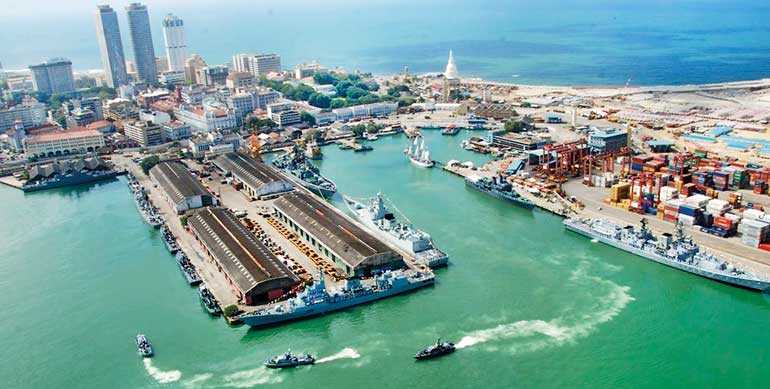
The Court of Appeal (CA) issues summons on Prof. Sarath Wijesuriya

May 27th, 2019

Courtesy The Daily News

The Court of Appeal (CA) yesterday issued notice with summons on National Movement for Social Justice (NMSJ) Convener Prof. Sarath Wijesuriya to appear in Court on June 21 to show cause as to why he should not be punished by court for committing the offence of Contempt of Court. The Court of Appeal two-judge-bench comprising Justice Deepali Wijesundara and Justice Achala Wengappuli made this order pursuant to a Contempt of Court action filed by Attorney-at-Law Sampath Vijitha Kumara and retired Army Officer Anil Wasantha Alwis.

The petitioners are concerned with the statements made by the Prof. Wijesuriya, at public gathering and via public media on the judges, scandalizing the judiciary and the entire system of administration of justice in order to advance the calculated motive of diminishing public confidence in the judiciary. Through this petition, the petitioners are urging that steps be taken against Prof. Wijesuriya as per Article 105(3) of the Constitution on the offences of Contempt of Court by several speeches made by him on several occasions. The petitioners are urging to punish the respondent for the offence of Contempt of Court under Article 105 (3) of the Constitution.

The petitioners stated that on or around October 15, 2016 the Independent Cinema Movement of Sri Lanka has uploaded a voice cut of the respondent on Youtube, expressing his views on the court order for halt the screening of Prasanna Vithanage’s film ‘Usaviya Nihadai’ (Silence in Court). The petitioners further stated that Prof. Sarath Wijesuriya delivered another speech on or around September 13, 2016 at the book launch of ‘Jana Aragalayaka Diya Salakuna’ at the Public Library Auditorium where he uttered the contemptuous statement.

The petitioners further stated that at a press conference organized by National Movement for Social Justice on August 21, 2018, the respondent had made another contemptuous statement. The petitioners further said the statements made by the respondent amount to undermining the independence of the judiciary and eroding the integrity of the judiciary.

**********************************************

CA issues summons on Prof. Sarath Wijesuriya – (15:04)

The Court of Appeal  issued notice with summons on Convener of National Movement for Social Justice (NMSJ) Prof.Sarath Wijesuriya to appear in Court on June 21 to show cause as to why he should not be punished by court for committing the offence of contempt of court.

Court of Appeal two-judge-bench comprising Justice Deepali Wijesundara and Justice Achala Wengappuli made this order pursuant to a contempt of court action filed by Attorney-at-law Sampath Vijitha Kumara and retired Army Officer Anil Wasantha Alwis.

No Sharia Universities and Madrasa schools of any kind should be allowed in Sri Lanka

May 26th, 2019

Sudath Gunasekara

No Sharia Universities and Madrasa schools of any kind should be allowed to be started in any part of this Country of the land of the Sinhala Buddhist. Those who want them should go back to Iraq, Syria or any other Arab country from where they have come.

Precisely because their main aim is to destroy the Sinhala Buddhist civilization in this country and convert it to another Muslim country  like Iraq, Syria., Indonesia, Maldives or Malaysia. Extremist Muslim terrorist movements like ISIS and NTJ are dreaming to make this Island their latest Islamic State. The establishment of Madrasa schools and Sharia educational institutes and their Mosques at every nook and corner all over the country is the starting point of this disaster. It is reported that 1683 Madrasa schools have been already established and 2161 foreign Muslim preachers have already been imported with the approval of the Ministry of Muslim Affairs (P18 Irida Divaian 26. 5. 2019) to deploy this programme. Therefore if we allow the establishment and continuation of these institutes and carry on their vicious programmes, this country will definitely end up as another Indonesia, Malaysia, Maldives or Afghanistan in no time and that will definitely mark the end of the 2500 year old Sinhala Buddhist civilization on earth. Therefore the first thing the Government must do immediately is to demolish these Madrasa schools and deport the 2161 Ulamas before they make the death- knell call for our bellowed motherland and the Sinhala Buddhist civilization in this country and punish all those who are responsible for this dastardly and treacherous act.

Furthermore we should realize that the establishment of Muslim Madrasa schools is the first step in a long journey. It is only the embryonic stage of a massive Muslim campaign deployed to capture this country.  The recently reported case of a Medical doctor involved in large scale sterilization of Sinhala women from Kurunegala Hospital, the story of running baby farms in certain other parts of the country like Wellawatta with massive foreign aid flowing in where Sinhala women are kept to produce babies for Muslims, invasion of the entire trade and commerce sector, both imports, exports and shipping sectors covering food, clothing, gem and jewelry industry, construction material, vehicles both whole sale and retail within the country in all items, the monopoly in  spice trade through which the Muslims exploits and impoverish the cultivators, land grabbing at exorbitant prices all over the country in major towns and along the main roads as Mohomad Gadapi advised them in  1976 when he came to attend the Non Aligned Summit and now even in the villages and the plantation sector, marrying Sinahala  and Tamil women and above all the tyranny of  minority politics exercised through the Parliament and even local government institutions with bribes and votes  are all a part of an interlocking network of a massive operation of political, economic and cultural invasion of this country.

Coming back to Madrasa, and Sharia Universities, all those who want them in place of Government schools and Universities should be ordered to pack up immediately and get back to their mother lands from where they have come and send them to Sharia Universities and Madrasa schools there without committing mass murder here to go to heaven as their Ulamas preach them.

We totally reject the Prime ministers political proposal to bring Madrasas or the Muslim religious schools under the purview of the Education Ministry. Instead they should be closed down forthwith. Any attempt to retain them in this country should be thwarted immediately.

It is a foregone conclusion that both history and tradition have firmly established that this country had been a Sinhala Buddhist country for 2326 years at least from 307 BC, if not before. Ever since the introduction of Buddhism in 307 BC the Sinhale Kingdom had been ruled by Sinhala Buddhist Monarchs, uninterrupted for 2122 years until it was ceded to the British Empire by an agreement called the Kandyan Convention in 1815. The fact that under sec 5 of that Convention, even the all- powerful Great Briton agreed to make special provisions for the protection of Buddhism clearly proves the inviolable status Buddhism enjoyed in this country for millennia. Therefore the fact that this country is a Sinhala Buddhist country remains unquestionable, inviolable and non–negotiable. Even the Christians and Catholics in this country are Sinhalese and Buddhists first before they became Christians.

In spite of the well- designed Colonial depredations, conspiracies and open support extended to Tamils and Muslims and importing millions of South Indians over a long period to reduce the power of the native Sinhalese, this country still remains predominantly a Sinhala (75%) and Buddhist (70%) country.

The story of Sinhala Buddhists discriminating Tamil and Muslims is a first class myth invented by the colonial west and their local agents and a diabolical lie by the extremist Tamils and Muslims that can never be proved as authentic with facts and figures

On the other hand throughout their long history the Sinhala people have accommodated both Tamils and Muslims traders who wanted to stay behind. The problem with the Sinhalese is that they are overzealous to accommodate others and help them so much they have gone down in history as the most hospitable nation in the world. Most of the Muslims and Tamils learnt the native language Sinhala, married Sinhala women and got even Sinhala ge names and got integrated with the natives. The King gave them land and allowed employment. For example in 1565 when Portuguese massacred the Muslims in the Aluthgama Beruwala belt those survived and escaped to the King of Kandy and begged for protection, he settled them in the Panampattu Korale in the East and thereby not only saved their lives but also gave them a permanent home to live in peace in his Kingdom.

It is an ironical and sad tragedy that today the descendants of those refugees, like Hisbulla and the dead Saharan (suicide bomber) are now conspiring have taken to arms to create an Arab land on that Sinhala land gifted to their ancestors by the Sinhala Monarch through sympathy and on humanitarian grounds for survival. Isn’t it a disgrace for these ungrateful and inhuman Arab intruders to resort to such savage and uncivilized actions shamelessly disregarding the sympathy and hospitality of the Sinhala people? In spite of Hisbulla’s deep involvements in these conspiracies, treacheries and murders, President Sirisena has appointed him as the Governor of the Eastern Province  thereby making him the King on the land he has robbed from the natives of the land that was given to escape death from Portuguese. Furthermore in spite of his converting the entire eastern province in to a pure Arabia by installing buildings with Arabian style and Arabian landscaping, naming public institutions like Government schools in his, his wife’s, his fathers, mother’s an and his sons name as reported and planting even date trees all over to give a typical Arabian touch to his Arabian dreamland, he is still kept as the Governor of the Eastern Province providing fabulous facilities out of public funds to carry on his diabolical conspiracies against the Sinhala Buddhists.

No matter what religion one follows, they must act according to the culture of this country where they decided to settle down. The old adage says ‘when you are in Rome you must acts as a Roman do” If we apply that adage to ours it would sound like  when you are in Sri Lanka, the land of the Sinhala Buddhist you must act as a Sri Lankan do”  and definitely not as an Arbian. To do that you must get back to Arabia.  If they refuse to do so then they should be packed up immediately to their respective motherlands. Not only Muslims but everybody else in the world should admit and accept without any reservation that this is a Sinhala Buddhist country as it had been from the dawn of history and they are the architects of the rich Sinhala Buddhist imprint of this land and they were the people who have fought against all invaders throughout history to protect this beloved land for their future generations.

Anyone who poses a threat to that age old heritage should be defeated and deported forthwith.

Coming on to the Sharia university whether you call it a public-private institution with the University management as the so-called Sectorial Committee appointed by the Government calls it, or a University jointly managed, as the Government as the President calls it, means the same thing as long as this terrorist

Governor of the President (not of the people) is there, it will ever   remain a Sharia University. Hisbulla in fact has already said that it cannot be taken over by the Government.  I have no doubt that Hisbulla’s bold statement must be based on an assurance by the President.  Isn’t it a treacherous crime for our politicians to betray the motherland for few votes like this?

Whatever it is there should never be a Shariya University or any Institution of that short in any place in this country. No permission should be given for such University or any institution anywhere in the island given the complexities and destructions this Muslim ideology has already brought about in recent times highlighted by Muslim terrorism blasted on the 21st last month.

Therefore if the government still wants to have a University in the EP then this building g complex,should be taken over by the Government and run as a government University under the full control of UGC as national University where student from all over the country could study, unlike the University of Jaffna where Sinhala students are not allowed.  Neither Hisbulla, nor his son or any other Muslim element should have any hand thereafter. I do not know whether he is planning to blast it off in case the Government takes it over. One thing I must clearly state is that whether it is Hisbulla or any other Bulla or Billa  they all should  remember they live on somebody else’s land generously given to their ancestors by the Sinhala King over which none of them has any historical, legal or moral right plunder.

I do not know as to who did the architecture of the buildings and landscaping of this University premises and who approved it. It is surprising that even the shade trees planted on the roadways are decorated with date trees giving the whole campus a unique Arabian look. Why was the government of the day sleeping while Hisbulla did all this damage.                                                                                         This perhaps is the womb of the Mini Arab of the ideological threshold Hisbulla was having in his head to overrun this whole Island one day. Obviously this is blatant and naked cultural invasion that is going to erase and destroy the Sinhala Buddhist civilization in this country. Therefore in my opinion no buildings with such Arabian architecture or landscaping or lettering should have been allowed. A full inquiry has to be made to find out as to what they were doing and where they were sleeping all the time and punish them. It should be taken over as a Government-run institution only after removing all Hisbulla elements are removed. I strongly insist that all Arabian features including names should be removed and replace with native names and other features that go with the local traditions and culture before such acceptance is done. Furthermore no Madrasa program or any special Arabian programmes that are going to be detrimental to our culture should be allowed within this site. If that is not possible this Government can use it to store paddy in the Amapre district as they have done in Hambantota Airport.

Meanwhile I would also like to draw the attention of the President as the Head of the State on another very important issue.

That is instead of mollycoddling these proven extremist Muslim communal terrorist politicians, I strongly suggest the President sack Hisbulla along with Asad Sali before they create further problems for the general public and also personally to the President by fully eroding his vote base already dwindled to almost zero.

In Addition I would also like to suggest that the President takes steps to order that,

1 There shall be no Muslim Mosque anywhere in the country for less than 100 Muslim families and all Mosques contravening this rule shall be demolished immediately as it has already become a serious threat not only to the Sinhala people and Buddhists but also to everybody in the country, as these Mosques will be converted to arsenals very soon that will be used to kill Sinhalese, Tamils and all those who are not Muslims of that particular faith.

2 Also you need to ban communal segregation all over the country either as Muslims or Tamils for the same reason.

3 Abolish the Ministry of Muslim Affairs for getting involved in Madrasa propagation and other crimes connected with Muslim terrorism and expansion.

4 He should also order the Muslims who have encroached on and vandalized ancient Buddhist sites all over the country including places like Kuragala, Devanagala Digamdulla and all other places in the Eastern and North Western Provinces and Mannar District, particularly in the North and Eastern Provinces in consultation with the Buddhist clergy.

5 Arabic names of settlements, sign boards, roads in the Eastern province and sporadic settlements like Akbar Pura in Polonnaruwa bordering Somawathi National Reserve, Dharga Town  in the WP and sign boards should also be removed all over the country.  Only names of Muslims who have contributed to Sri Lanka culture, for example Mohideen Beg and Kreem should be allowed to be displayed

6 Have one law for all citizens. Abolish the Muslim law and the Thesavalamei Laws given to Muslims and Tamils as special privileges by the British to get their support against the native Sinhalese.

7 Also instruct the Commissioner of Buddhist Affairs to explore the possibilities of taking back all Temple and Devala gam given to Non-Buddhists

The Government and the general public should realize that the devil is much darker than most of us imagine. Its tentacles spread all over the country in all spears like trade, demography, legal sphere, land ownership and security of the country has got a strong grip of the xcountry. They have tightened their strong and poisonous tentacles in all spheres such as economic, social, political and what not.

Therefore the Government must give the top priority to eradicate this menace before this country is made another Afghanistan, Pakistan, Bangladesh, Malaysia or Indonesia remembering that protection of the country is its most basic and fundamental duty.

Furthermore all Tamils and Muslims or any other should understand that his was the Land of the Sinhala Buddhists for millennia and they are only intruders and visitors in somebody else’s land. If they desires to be citizens of this country then they must assimilate with local culture and begin to behave as Sri Lankans at least, and certainly not as Arabians in their traditional Homelands. Otherwise they will be considered as invaders like Magha, Chola Portuguese, Dutch and British. If they cannot accept the inalienable birth rights of the native Bhoomoputras and claim parity with them then they should be ordered to vanish from this Sinhala Land. No Muslim or Tamil in this country can have any special grievance that are not there for native Sinhalese as people like S MP Sumanthiran  claimed last week at the BMICH. They also should accept that there are no minorities in this country as long as all fall in line with one language .and one national identity. Those who refuse to do so should leave to their motherlands of origin as we have never invited them to come here as Russian President has once said with regard to Muslims living there. Or in the alternative go anywhere in the world where they are treated as equals. None can claim equal rights on this land with the native Sinhalese simply because they are not Sinhalese.

 The elected government must stand and up and say this otherwise they have no right   to remain in the seats of power any more dabbling in jokes like democracy, reconciliation and bloody human rights introduced by the colonial West, just to collect the votes of the minority communities. These power hungry treacherous politicians who do not know what this country is and to whom it belongs should go home without destroying our mother any more like what they have done for the past 71 years ever since 1948.

Minorities Holding Sri Lanka Hostage

May 26th, 2019

Dilrook Kannangara

What happens in Sri Lanka is a story straight from hell. Indian and Arabic minorities are holding the nation hostage. To an outside onlooker it is strange and comical but this is serious. It marks the end of the nation. Tamil and Muslim terrorists have been released under various pretexts. Some were not even taken into custody. Those few arrested but not yet released were arrested under petty crimes and not under the Prevention of Terrorism Act. Over 150 ethnic Sinhalese have been slaughtered more than a month ago but no concrete action has been taken to punish the terrorists. The army has been cowed down to a group of ragtag weapons carriers providing regular updates on the situation to Islamic leaders! When did the army’s reporting line change? Instead of punishing terrorists, the security establishment shuts down freedom of expression. Sri Lanka has become an apartheid dictatorship.

Sinhalese are extremely vulnerable, defenceless and hopeless. This must change and change quickly.

In wide contrast India for the second time elected a BJP led government without a single elected Muslim MP from the coalition. World’s largest democracy upholds true democracy while Sri Lanka’s twisted form of democracy is plagued by the PR system of parliamentary elections and an executive president who is just a puppet in the hands of minority political parties ever since it was introduced.

The PR system was worsened just two days before the 1988 presidential election where the SLMC forced the UNP to bring down the cut-off of parliamentary election minimum votes requirement from 12.5% to just 5%. Any party that wins over 5% of the vote in a district will be considered for seat allocation. Desperate Premadasa had no choice than to agree. However, in 1994 SLMC joined Chandrika’s PA and managed to keep the privileges as it is. This is used as a threat by SLMC, ACMC and CWC in key election districts.

Executive presidents have been the weakest Lankan leaders. When a weak leader has executive power, it is total disaster. All executive presidents were held hostage by minority political parties.

If Sri Lanka were to be saved from this Satanic hostage situation, both the PR system and the executive presidency must be abolished. The old First-Past-The-Post system must be introduced.

To make matters worse, the island has become a battlefield of superpowers. USA, Saudi Arabia, China and India are after their own military bases in the island. They want secure and friendly chunks of the island where their military can be based and their backs are covered. It is a matter of time a major regional war will split the island nation. Minorities will take the side of their respective external motherlands.

Sinhala voters must realise their potential. At the 2019 and 2020 elections Sinhalese must use bloc voting – a tactic used by minority voters. However, the biggest responsibility is with Sinhala candidates. If they remain minority-venerating mollusks, then Sinhala voters will be rightfully divided. They must grow a backbone for a change and stand their ground. The 2019 presidential election is a referendum for independence from a hostage situation.

The Truth Behind the Brampton Tamil “Genocide”Day City Proclamation!!!!

May 26th, 2019

Issued by the Sri Lankan Brampton Peel Region Community

On May the 21st evening, about 1,0000 people gathered in front of the Brampton City Hall in Ontario, Canada to express their disappointment and frustration towards Mr. Patrick Brown, the city mayor through a massivedemonstration and a peaceful rally. The mayor has already passed a proclamation (April 24th, 2019) OF GENOCIDE OF TAMIL PEOPLE that never occurred in Sri Lanka.

genocide is defined as systematic measures for the extermination of a national cultural, religious or racial group”. The United Nations or any other country has not declared that Sri Lanka committed Genocide” in 2009. 

The attendees of the public rally believed and expressed their concerns through slogans and speeches that this proclamation creates an unnecessary tension between the Sinhalese and the Tamils in Canada. There are 14,225 Sri Lankans of all ethnic types currently living in Brampton. Mayor has seemingly forgotten that these numbers indicate votes.

The attendees from Brampton municipal area asked how the mayor could use Brampton taxpayer’s money to tackle a foreign political issue. They all strongly felt that this council had no authority to declare a war as a genocide in another commonwealth country.

They also pointed out that the Liberation of Tamil Tigers (LTTE) which has been designated by the FBI as the most heinous of all terrorist groups, systematically killed both Tamil and Sinhala intellectuals and leaders in Sri Lanka. According to Mayor’s communications, he had received support from four members of the Transnational Government of Tamil Eelam (TGTE) which represent the LTTE (a Banned terrorist organization) in Canada now.

According to the attendees, this proclamation is a political trick towards getting Tamil Canadian votes, and at the same time, an act over which a city council or mayor has no legal authority.

They specifically asked the mayor: Do you wish to encourage one ethnic community in Canada to break up the existing peace and harmony supported by the act of Multiculturalism?

They demanded that this proclamation be withdrawn. A responsible political leader like Patrick Brown should never ever use their tax dollars for their political advantage and purposes. 

Issued by the Sri Lankan Brampton Peel Region Community

SriLankansBramptonPeel@gmail.com

Probing attacks – Best done by Police, Army not Parliament: UNP MP Harshana Rajakaruna

May 26th, 2019

Courtesy The Daily Mirror

UNP MP Harshana Rajakaruna said yesterday the investigations into the Easter Sunday bomb explosions should be handed over to the police and the army saying it was a joke to probe the incident through a Parliament Select Committee (PSC).

He told parliament the Police and the Army had expert knowledge to probe such incidents and that neither the government nor the opposition were able to do so.

“Parliament has a responsibility over the incident and no-confidence motions can be submitted. But this incident should be probed by the police and the army. We do not have knowledge for such work,” the MP said.

He proposed that if someone was charged, it was better to hand over the investigations to the police and the army without passing the buck.

“If someone was suspected of having links to extremists and terrorism, let us hand him or her over to police and the army without pointing fingers. The government and the opposition have no knowledge to identify a terrorist,” the MP said.  (Ajith Siriwardana and Yohan Perera)

Inform CID if have complaints over illegal sterilisations: Police

May 26th, 2019

Courtesy The Daily Mirror

The police today urged the public to inform the Criminal Investigation Department (CID) If they have any complaints against Dr. Seiugu Siyabdeen Mohamed Shafi for having carried out any illegal sterilisation. The 42-year-old doctor attached to the Kurunegala Teaching Hospital was arrested by the police on charges of earning money in a suspicious manner.

International manoeuvres Sri Lanka must not become a victim

May 26th, 2019

By Sugeeswara Senadhira Courtesy Ceylon Today

Sri Lanka, struggling back to its feet following one of Asia’s deadliest terrorist attacks in years, is still wondering why this serene Island-Nation became the target of Islamic terrorists. The country did not get any breathing space after the Easter Sunday terrorist attack that claimed over 250 lives, including nearly 40 foreign nationals, and Colombo became the most sought after place for international intelligence agencies from every part of the globe.


It has already been established that a local Islamist extremist group called the National Thowheed Jama’ath (NTJ) was behind the deadly suicide bomb attacks. It has also been verified that the NTJ was linked to international Islamist terrorists.


The terrorist group, Islamic State of Iraq and Syria (ISIS) has claimed responsibility for the bomb attacks on churches and hotels in Sri Lanka on Easter Sunday. This was claimed by Abu Bakr al-Baghdadi, the self-proclaimed Caliph of Islamic State. In a bulletin posted by its Amaq News Agency, ISIS said: The perpetrators of the attack that targeted nationals of the countries of the coalitions and Christians in Sri Lanka before yesterday are fighters from the Islamic State.”


There are strong indicators that the perpetrators of Islamist terrorism carefully selected anti-Western targets for the Easter Sunday attacks. In the recent past, there was a marked increase in anti-Western attacks in the West as well as the non-Western Nations. In recent years, Middle Eastern jihadis have been too preoccupied with local conflicts in Iraq, Syria, and Yemen to head elsewhere. The pull of the Islamic State, meanwhile, has faded after its almost total defeat in Iraq and Syria. Losing of the ISIS territory, including the strongholds in Syria, was a deadly blow to ISIS. 

Hence, there was an urgent requirement for ISIS to show the world, especially to its widespread support base of militant cadres that the organisation is still a force to reckon with. Experts on Islam terrorism were of the unanimous opinion that targets such as Indonesia, Turkey, Egypt, and Sri Lanka were selected purely for that purpose.


Middle East wars


Experts on Islamic terrorism say the wars in the Middle East have transformed militants from Russian-speaking areas, who previously focused on fighting repressive governments at home, into global terrorist movement. By 2017, at least 8,500 fighters from former Soviet republics had flocked to Syria and Iraq to join the Islamic State. That experience gave many of these jihadis their first taste battling US and NATO troops, and it left them looking for vengeance, convinced that future operations should be aimed at the West.


Anthony Cordesman of Center for Strategic and International Studies said it is far too easy to focus on individual acts of terrorism and extremism, and ignore the global patterns in such violence. He has listed a wide range of indicators that help quantify and explain the patterns of these attacks. They include the fact that relationships between extremist and terrorist movements and the reasons for the rejection of such movements by the vast majority of Muslims, and the critical role that Muslim States play as strategic partners in the fight against such movements.


For decades, officials have focused on attacks launched by Middle Easterners. Today, however, the real threat increasingly comes from further East. The threat posed by Middle Eastern terrorists has been shrinking for some time.


One expert opined that it is easy to avoid analysing the links between extremist violence and Islam in order to be politically correct or to avoid provoking Muslims and the governments of largely Muslim States. The end result is to ignore the reality that most extremist and terrorist violence does occur in largely Muslim States, although it overwhelmingly consists of attacks by Muslim extremists on fellow Muslims, and not some clash between civilisations.


Some analysts are of the view that as the persecution of Muslims in Asia grows, so do opportunities for grievances to turn international. Such persecutions and episodes of defeat of Muslim groups by Israelis help the extremist groups to recruit young and vulnerable Muslim youth. One analyst who was in Bangladesh said there were at least two separate groups providing religious aid in Muslim Rohingya refugee camps. Such contact could boost the capabilities of local jihadis already conducting anti-Western operations in the area, including those who stormed a bakery in Dhaka that was popular with expatriates. And it may win more Rohingya over to the idea that they’re involved in a global struggle for Islam, not just a local fight for their own survival.


Eric Rosand


The well-known expert on Islamist terrorism, Eric Rosand said that the West and its allies need to recognise that future attacks are more likely to come from the East than the Middle East and that there is no other option than to cooperate with other countries to stop them. If the United States fails to do so, it could soon see the effects in either a surge of attacks on the United States or the rise of a new post-Soviet-dominated terrorist group in one of the world’s many war zones, he warned.


The post-Easter days show many intelligence experts from the West as well as other parts of the world embarking to assist Sri Lanka to fight Islamist terrorism.” The members of intelligence services of many countries are involved in the investigations. Whole lot of others from India, Saudi Arabia, Morocco, Egypt, Turkey, and China are in the new game of intelligence exchanges to assist investigations.


While, Sri Lanka, as a developing Nation with limited resources, should welcome the support extended by friendly countries to combat this horrifying threat of international Islamist terrorism, one has to be extremely cautious of hidden agendas of some countries. It is a well-known fact that there are serious differences of Shia Muslim Nations and Sunni Muslim countries. 

Furthermore, some countries are in alliance with Western Powers to crush Islamist militants in some of the Muslim-majority countries. Sri Lanka should take every possible precaution not to become a cat’s paw in this power struggle among Islamic countries themselves, with overt or covert support from superpowers.

ISIS’ bid to find foothold in Tamil Nadu

May 26th, 2019

By P.K. Balachandran Courtesy Ceylon Today

Soon after multiple suicide bomb attacks took place in Sri Lanka on 21 April, Lankan Army Commander Lieutenant General Mahesh Senanayake told the BBC, that Zahran, the man who led the bomber brigade, had visited Bengaluru, Kerala, and Kashmir for some sort of training or to establish more links with other organisations outside the country.”

Though Lieutenant General Senanayake did not mention Tamil Nadu, it is in Tamil Nadu and not Kerala and Bengaluru that the Islamic State (IS) and extremist Wahhabism have been trying to establish themselves and have met with a modicum of success. While an overwhelming majority of Tamil Nadu Muslims are very moderate in their beliefs and practices, a few youth from the educated classes have been radicalised by IS and al-Qaeda.  

According to one source, the prior information about the Lankan blasts which the Indian Government gave to the Sri Lankan Police, had come from the Tamil Nadu Police.

Small wonder then, that India’s National Investigation Agency (NIA) carried out on 21 May, ten raids in Tamil Nadu and Kerala to unearth Indian links with the Sri Lanka blasts that killed more than 253 persons.

Indian Media reported that a number of digital devices were recovered. The NIA also recovered three laptops, three hard discs, 16 mobile phones, eight SIM cards, two pen drives, five memory cards, a card reader, and two knives, apart from a large number of incriminating documents.

A group of ten persons who had formed a WhatsApp group were conspiring to procure arms and funds to wage an armed struggle and facilitate the escape of terrorists from jail.

It is reasonable to assume that Lankan terrorist Zahran would have had contact with like-minded persons in Tamil Nadu not only because the South Indian State had been having a Wahhabi-extremist fringe, but also because of the linguistic bond. Zahran’s mother tongue is Tamil and Sri Lankan moulvis and preachers have had historical links with their counterparts in Tamil Nadu.

Galle mosques’ plea

Confirming the South Indian (Tamil Nadu) link, the Galle District Muslim Mosques Trustees and their Committee Members met Lankan Parliament Speaker Karu Jayasuriya last week and handed over a letter demanding, among other things, a ban on religious teachers from South India,” by which they meant Tamil Nadu. Wahhabism is an extreme ideology that has caused many problems across the world. Wahhabism arrived in Sri Lanka in the mid-20th century and attempted to spread with the help of petrodollars, which flowed from the Middle East. The spread of Wahhabism caused unrest not only among the Sinhalese, but also among traditional Muslims, who even attempted to chase away Wahhabists. Sometimes, this led to clashes between traditional Muslims and Wahhabists. Wahhabism has one goal and which is to the spread of extremism, we need to stop extremist preachers who come from South India,” the petition said.

Extremism in Tamil Nadu

According to Media reports, the role of IS in Tamil Nadu was unravelled in a big way in 2014. In August 2014, Police arrested Abdul Rahman and Mohammad Rizwan from Ramanathapuram District on the charge that they were distributing t-shirts with the ISIS emblem.

A photo showing 26 youth posing with the t-shirt in front of a Mosque in Thondi had surfaced on social media. While the Police were not able to find any direct link with the outfit, it however, showed that ISIS was gradually being received in the State’s Muslim youth.

The NIA found speeches of the radical Islamist thinker Abul Ala Maududi in the possession of several arrested youth. The Police had also seized compact discs which had the speeches of radical Islamists such as Anwar Al Awlaki and Abdul Raheem Green,” one report said.

In early 2014, a Muslim from Cuddalore in Tamil Nadu, Mohammad Haja Fakkruddin Usman Ali, had left for Syria through Singapore, to be part of the Islamic State. Fakkruddin’s group had posted images on social media, in which several youth were seen posing with ISIS merchandise. It was a Tamil Nadu Muslim computer engineer working in Singapore, Gul Mohamed Maracachi Maraicar, who radicalised Haja Fakurudeen Usmal Ali. Maraicar was deported to India.

Prior to leaving Singapore with his wife to join ISIS in Syria, Fakkruddin was in constant contact with members of the community in Tamil Nadu.
In November 2014, Arif Majeed of Kalyan in Maharashtra, who was deported from Turkey, revealed that there were between 50 and 80 Tamil Muslims who had made their way to Syria and Iraq and were living and fighting alongside IS.

In its 2016 charges-sheet, the NIA mentioned the role of Mohammad Naseer, a young computer engineer, who was going to Libya, but was apprehended en-route and deported to India. Naseer had done his computer engineering from the MNM College in Chennai. He was a follower of the Tamil Nadu Thowheed Jamath founded by P. Jainulabideen (better known as PJ). PJ had visited Sri Lanka, but his visits were thwarted twice by the Lankan Government.

However, the Tamil Nadu Thowheed Jamath is not a radical organisation these days. It issued a statement dissociating itself from Zahran and the Sri Lankan blasts. Since 2014, it is engaged in propagating the view that Islam abhors violence.  

In April this year, after the Easter Sunday Sri Lanka bombings, the NIA arrested Riyaz Aboobacker, a Kerala Muslim. Interrogation of Aboobacker revealed the existence of IS sleeper cells in Tamil Nadu. He confessed that he was inspired by Zahran and had planned to replicate the Lanka bombings in India.

Intelligence Bureau officials told Oneindia that the threat in Tamil Nadu comes from al-Qaeda also, through various shadow outfits in the State. One such outfit being the Base Movement.”

Terror groups in Tamil Nadu could be either underground or overground. Groups like Al-Ummah operate openly and focus largely on political hits. The blast at Coimbatore or the one outside the Bharatiya Janata Party (BJP) office in Karnataka in 2013 bore the signature of Al-Ummah.

IS takes to Tamil

According to Vikram Rajkumar, an analyst at the S. Rajaratnam School of International Studies in Singapore, IS has been communicating over social media in Tamil, besides Hindi and Urdu.

Through its Media wing, Al Isabah, IS had released content in the Tamil language. A video entitled, Al Gurabha: The Chosen Few of Different Lands” released in July 2014 featured Tamil subtitles, Rajkumar notes.
In one of his speeches, IS Supremo, Abu Bakr al-Baghdadi, had called for Tamil Muslims to join ISIS. His speech was later translated into Tamil, the researcher adds.

Role of Indian Tamil Diaspora

The Indian Tamil Diaspora has had a role in spreading extremism, says Rajkumar.

Due to a history of trade and migration by native Tamils into Southeast Asia, the local population in Tamil Nadu have built strong transnational networks with the Tamil communities concentrated in Southeast Asia.

Therefore, the potential for radical jihadist influences to spread through such networks and impact Southeast Asia’s Tamil communities, and to alter the internal stability and security of the countries there, warrants particular attention for governments,” he says.

According to The Hindu report in 2014, investigations revealed that there were ongoing efforts by Jihadis to recruit college students in Tamil Nadu’s capital, Chennai.

The ISIS’ appeal in Tamil Nadu can be attributed to its well-orchestrated social media presence and elaborate propaganda, employing technology and the use of Islamic symbols to lure its target audience.

Krishnadas Calamur, writing in The Atlantic, says that IS greatly values recruits well-versed in design and computer skills, and therefore looks for recruits from States like Tamil Nadu and Kerala, where literacy rates and educational levels are comparatively high.

89 others with direct links to 21/4 in custody – SP Gunasekara

May 26th, 2019

SULOCHANA RAMIAH MOHAN Courtesy Ceylon Today

The Terrorist Investigation Division (TID) and the Criminal Investigation Department (CID) have arrested 89 persons who have had direct contacts with the suicide bombers involved in a multiple attack carried out by the Islamic extremists on Easter Sunday that killed over 300 people and injured over 500.

By the one-month anniversary of the blasts, there are 89 taken into custody noted police spokesperson Ruwan Gunasekara.

He said the other suspects who had been arrested in various parts of the country have been released; we cannot maintain an accurate record because they are only suspects, so after questioning they may have been released.

In the meantime, the intelligence has revealed that out of the eight (8) suicide bombers four of them have had their training in Syria and Zahran Hashim is one of them.

The others are the Kingsbury hotel bomber Mohamed Assam Mohamed Mubarak of Colombo 12, Dehiwela bomber, Abdul Lathif Jameer Mohamed of Welamboda, and Zion church bomber Mohamed Nazar Mohamed Azath of New Kathankudy.

However, SP Gunasekara said he has not got confirmation on that information and still the Government is ascertaining their links with Syria and as the ongoing probe, he is unable to reveal any of that information to the media.

The news about four bombers being trained in Syria has been already published in Asaahi Shimbun, the Japanese newspaper who obtained the information from the intelligence, according to sources.


Copyright © 2026 LankaWeb.com. All Rights Reserved. Powered by Wordpress