Recent violence manipulated to destabilize country – Ven. Elle Gunawansa Thera

March 14th, 2018

By Kelum Bandara Courtesy The Daily Mirror

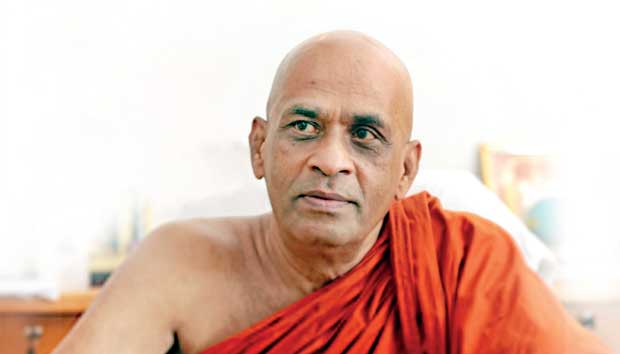
Eminent Buddhist monk Ven. Elle Gunawansa Thera, in an interview with Daily Mirror, speaks about the current status of the country in the aftermath of violence in Kandy. The prelate said all the communities should be united to build the country. The excerpts of the interview:   

  • We, the Sinhalese, Tamils, Muslims, Malays and Burghers should be unified
  • Govt. made a mockery of meanings of words such as reconciliation, good governance
  • Leaders like MR should be more proactive
  • I am ready to take leadership for it
  • We should not leave addressing problems only in the hands of politicians

Q : How do you view violence that erupted in the Kandy district?
I look at it from a different perspective. Sri Lanka is under a huge, cultural,social and economic invasion from international elements. Economic invasion has been successful to a great extent. We are an agriculture society with a long cultural and civilization history. Unlike in other parts of the world, our agriculture is intertwined with spiritual development. There is an assault inflicted on our agricultural sector today. Fertilizer is not issued properly. Paddy lands are left to be barren. No proper pricing was done for the agrarian produce. There is a sinister move, hatched out strategically to destroy this culture. I don’t know whether the government realizes this.
The government voiced for organic agriculture. Today, rice is imported from the countries such as India. We never know agro-chemical contents accumulated in imported rice grains. This is one example. In our country, we have 57 traditional yam varieties which are edible – Ini Ala, kiri ala etc. Today, we consume mostly potatoes.

A fast-food culture dominates the eating habits of people. It has caused health hazards such as juvenile obesity, diabetes, high blood pressure etc. Children are not properly advised on this. We have to be conscious about our health. I doubt whether successive governments are aware of this.

We, as religious dignitaries are responsible for developing spirituality among the people. I must admit this is not done properly. If you compare Buddhism to a canoe, we have to get into it and paddle it on. Instead, we should not carry it on our heads. We have to absorb the essence of our religious teachings.

Cultural invasion is acute today. We lived as families. All the members of the family used to sit together for dining. Today, it does not happen. One serves his/her food and sits glued to the TV. Therefore, to an extent, technological innovations have played negative role in our lives.

We must fall in line with the trend, but should not be westernised.

All our cultural values bear scientific factors. After attending a funeral, for example, we do not enter our houses without sprinkling some lime juice on our heads. That is to disinfect the germs which are settled in hair. Our parents used to keep basinful of water mixed with lime juice at our doorsteps for us to apply it on our hair before entering. We did not know the scientific basics behind this during our village life.

Fertilizer is not issued properly. Paddy lands are left to be barren. No proper pricing was done for the agrarian produce. There is a sinister move, hatched out strategically to destroy this culture

Q :  Actually, what are the reasons for violence that erupted in Kandy?
I went to Kandy. I think such violence was manipulated to destabilize the country. This is part of a conspiracy to infiltrate into this country through a different access. Regardless of addressing the needs of our people, those concerned live to satisfy the Western world. Amidst chaos, the government fulfils the whims of the West.

Since the good governance came to power in 2015, they brought various legislations targeting the monks. The government introduced Bhikkhu Katikawak Bill. We protested against it and that was shelved. The government resorted to vilification of Bhikkhus.

Afterwards, one Minister vilified me, but nothing happened to me finally. Then only I realized how affectionate our people were towards me. People taught a bitter lesson to that politician at the local government elections.

Q : What should be done from your view to come out this crisis?
The government started using certain terminologies such as reconciliation and good governance. These are beautiful words found in our vocabularies. Eventually, the government has made a mockery of such phrases. Only the government distorted their linguistic meanings. People feel repulsive to use these words. These words have been coined by the West. In the past, politicians coined the phrase ‘Pious Society (Dharmista Samajaya)’. It was practised by some politicians who relate themselves to Buddhists. But, they never lived up to that reputation. Buddhism is nothing but enlightenment. We, as Buddhists, should get enlightened. In fact, we are enlightened enough, therefore, problems will not arise.

I went to Kandy. I think such violence was manipulated to destabilize the country. This is part of a conspiracy to infiltrate into this country through a different access

Q : What were your observations during your visit to the affected areas in Kandy?
I asked the President to make his Ministers aware of what they utter. One Minister asked the Buddhists to apologize to the Muslims. We, as Buddhists, have done nothing to harm anyone. People live in peace and co-existence. Even lands belonging to Sri Dalada Maligawa are used by non-Buddhists. We never protested. There is no racism existing among us.

However, the current crisis has been manipulated to introduce an Arab Spring here. I received a call from Eravur where Tamil youths stood guard to protect two shops owned by the Sinhalese. This is nothing but an international conspiracy to destabilize the country.

Q : Do you believe whether this international conspiracy has been hatched with the connivance of the govt leaders?
This government was installed by the West. I regret the plight of President Maithripala Sirisena. He hails from a Sinhala-Buddhist background and from a farming family. He is rooted in our culture. But was drawn in to this conspiracy.

Q : You maintain close links with the President. Have you discussed this with him personally?
I told him. He would be visiting me soon.

Q : In your view, how can we bring about harmony among the communities?
In the guise of attempting to bring about reconciliation, some people create enmity among communities. A minister, in a recent TV programme referred to a Muslim as brother and a Sinhalese as just a person. Former President Mahinda Rajapaksa’s party could win the local government elections riding on the nationalist sentiments of people. Whereas, he did not win on issues such as the cost of living etc. People had a belief that the proposed new Constitution would lead to divide the country.

We, the Sinhalese, Tamils, Muslims, Malays and Burghers should be unified. Let’s build the country in diversity.

But, let’s not become the cat’s paw of any politician. We have to work out a national action plan in consultation with each other. We can ask for their views on issues of their concern. The intelligentsia, representing all the communities, should sit together for talks. Yet, we have to leave out those so-called intellectuals aligned with NGOs. There are intellectuals working with me. I can invite them for such a dialogue. We have to find out the root causes for the problems. The current crisis has been engineered by the west.

Q : According to your opinion, where would the current political situation be heading to?
I think the leaders, such as MR should be more proactive than they are today. If this situation persists, the country would be plunged into further darkness. If he takes over, it would be difficult for him to resuscitate country. I stand by my position. I too can remain quiet till the government gets enmeshed in more and more chaos. At the end, it will be my country that suffers.

In the event of a national calamity, we all should stand together. It happens in other countries.

Q : Do you believe that President Sirisena and Mahinda Rajapaksa should forge ties now?
They should spell out as to why they should get together. If they get together to divide the country, I will say no. If it is to protect the country, I will be for it. I agree if they tie up with each to protect the national assets of the country. I have put forward my conditions – protection of national sovereignty and national assets and the abrogation of the constitution-making process.

Reconciliation and good governance are beautiful words found in our vocabularies. Eventually, the government has made a mockery of such phrases. Only the government distorted their linguistic meanings

Q : What do you think of the next Presidential Election?
I have made a statement. I am rallying Buddhist monks in view of it. We cannot continue to live with this plight. We have been suffering since the Independence. No government has given us anything. We who gained the Independence. But, it is like untethering a cattle head within its enclosure. The beast is untethered. It is still inside the enclosure, though. Our Independence is also like that. We still think inside the box in the colonial perspective. We need a thinking revolution. All the communities – the Sinhalese, Tamils, Muslims, Burghers and Malays should strive to build the country. I am ready to take the leadership for it.

We should not leave the problems to be addressed by politicians. We suffer today because it was left for the mercy of the politicians. As a result, no community is happy today. Since 1948, we only served as doormats for politicians to come to power.

Today, there is no one to take the responsibility for the bond scam. Who gave the character certificate to the person responsible? People should question about it and urge the leaders to get this person back to Sri Lanka. The country suffered a colossal loss. Who is going to bear it? Eventually, it is the poor masses who have to bear the brunt of it.


Ashroff’s separatist legacy is root cause of Sinhala-Muslim divide

March 14th, 2018

When elders speak of good old days prior to 1980s when Sinhalese, Tamils & Muslims lived happily & peacefully together sans nomenclatures of federalism, self-determination, separatism, jihad, terrorism etc, it makes us wonder where have we gone wrong and who are responsible. In ignoring warnings that followed armed militancy, it is imperative that we do not ignore further warnings that may lead to bigger outcomes if left unsolved. Clearly, politicians & so-called civil society representatives who had been involved in the past have failed to provide solutions which demands the rest of the community to pinpoint where the fault lines are and address them. Sri Lanka lacks political leaders that are nation-loving in all three communities.

Why is it that the fondness for political leaders of the caliber of Dr. T B Jayah, Sir Razik Fareed, Dr. MCM Kaleel, etc does not exist for present day Muslim politicians? The short & simple answer is that the former Muslim leaders co-partnered political progress of the country sans mono-ethno-religious chants & peacefully mingled with the majority while the present lot is only seeking personal goals and setting the stage to create divisions.

The start to this legacy began by none other than M H M Ashraff himself with the formation of the SLMC towing the Muslim federal line and paving the room to invite separatist elements from overseas and bartering the country for tgreed for money. He set the foundation stone for the divide between Sinhalese & Muslims with future leaders adopting ultra-fundamentalist lines resulting in Sinhalese politicians countering with similar fundamentalism.

The shift of political influence from Colombo-based Muslim leaders to more rigid Eastern Muslim leaders began with Ashraff who hailed from Samanthurai in the Ampara District. The shift in class politics emerged.

When Colombo-based Muslim leaders were aligning with and forging friendship with Sinhalese leaders, Ashraff chose to admire Tamil separatist S J V Chelvanaygam the founder of ITAK. Ashraff had even addressed ITAK events and had also been present at the infamous Vaddukoddai Conference in 1976 that appealed for separatism. The following year Ashraff created Muslim United Liberation Front going as far as to sign an agreement with A. Amirthalingam. It is no surprise that Ashraff began promoting the demand to create a Muslim majority council in the North & East. The allegiance was no different to Hakeem issuing a condolence message on behalf of the SLMC on LTTE’s Anton Balasingham’s death which infuriated the Muslim community

How many Muslims are aware that Ashraff even fielded Muslims to contest under the TULF eelamist banner and campaigned for separatism?

According to D B S Jeyraj, Ashraff’s speeches declared that even if Amirthalingam himself had abandoned goal of Eelam, Ashraff would continue to work for it. Ironically, none of the Muslim contestants won a seat though contesting from TULF.

In fact when the Indo-Lanka Accord was signed in 1987 Naranyan Swamy’s book Tigers of Sri Lanka – From Boys to Geurrillas” claims that the Indian High Commission had even given cash handouts to the SLMC. How many more cash handouts and by what others has the SLMC taken over the years? There are EROS links to SLMC as well Basheer Segudawood was a soldier in EROS. http://www.island.lk/2003/06/08/politi05.html

Ashraff formed the first Muslim ethno-religious political party Sri Lanka Muslim Congress on 21 September 1981 in Kattankudy during a period when UNP recommenced diplomatic relations with Israel against opposition by Muslims.

SLMC campaigned on the slogan of Islam. At the start of SLMC political rallies Ashraff would begin by shouting ‘Allahu Akbar’

That Muslims were against the creation of SLMC is clearly depicted by Latheek Farook

M.H.M. Ashraff first mooted the idea of forming a separate political party for Muslims, many Muslims including parliamentarians, professionals and others, advised him to either give up the idea or confine the proposed political party to the east…. They warned him that an island-wide Muslim party had all the potentials to harm good relations between Sinhalese and Muslims in the rest of the country…. Justifying their warnings they explained that Muslims live in small numbers in peace and harmony with their Sinhalese neighbors in hundreds of villages and an all-island Muslim political party raising Islamic slogans, may put all Muslims into one communal camp and disturb their good relations with the Sinhalese community”

This is exactly what has happened.

In the words of Latheek Farook himself

‘Muslims are disgusted with their politicians…. betrayed by their own politicians and exploited by all to suit their agendas. The selfish politics of the main Muslim political party Sri Lanka Muslim Congress (SLMC) and its more than half a dozen splinter groups have brought nothing but disaster.”

That SLMC initially agreed to support the SLFP at the 1988 Presidential Elections but went on to support the UNP candidate caused shock to the Muslims in the South is also highlighted by Farook who goes on to say,

This decision considerably dented the credibility and the integrity of the Muslim Congress as well as the community, which had produced leaders of impeccable integrity and were known for their loyalty to their political parties…. One should not forget that this policy, as expected, won the wrath of the SLFP towards the Muslim community that had nothing to do with this decision.”

Furious Muslims in Colombo and other areas blamed the SLMC for harming their relations with the majority Sinhalese community. There were speculations that Ashraff was bought over by the UNP.”

 The general feeling among the Muslims is that the SLMC is today a liability”

Ethnic-based parties have not promoted peaceful relations and calls for a national consensus for banning of all ethno-religious political parties in Sri Lanka.

According to D B S Jeyraj the first violence between Muslims & Tamils took place in 1985 in Kalmunai-Karaithivu. Jeyraj claims this tension was ‘aided & abetted by the State’ UNP government. Ashraff even had to shift residence to Colombo for fear and was accused of leaving his people behind to fend for themselves.

The SLMC has been swinging alliances depending not on what merits Muslims but the personal perks accrued to the Muslims ministers doing the horse deals unfairly using the Muslim populace as bait.

The Proportional Representation soon came to be manipulated by minority parties in forging strategic alliances in exchange for votes thereby becoming the kingmakers and calling the shots. Likewise, SLMC joined Chandrika’s PA Government in 1994 contesting some districts separately while others on the PA ticket and this gave SLMC 6 seats plus 3 national list seats. Hakeem became Deputy Chairman of Committees. Hakeem had no qualms about shaking Prabakaran’s hands in 2002 on behalf of the UNP inspite of LTTE killing thousands of Muslims.

Ashraff became Minister of Ports, Shipping & Rehabilitation. What did Ashraff do with his portfolio – he filled the Port with Muslims from the East, some not even reporting to work but getting salaries. It resulted in feuds between himself and Fowzie.

At the two extremes, both Tamil & Muslim leaders have sought separate states. SLMC’s Chairman Basheer Segu Dawood demands a ‘separate Muslim State/Province’ with Kattankudy as its centre a Muslim province…. Will give a motherland and self-determination to Muslims’ and we cannot give up our demand”. The SLMC stance is that Muslims need a separate Muslim Province. Our late founder of SLMC M.H.M Ashraff too endorsed it. If a Chief Ministers conference is held a Muslim Chief Minister should definitely participate in it,”  

What is clear and distinguishes past Muslim leaders from present is the caliber of their leadership & their rhetoric. No previous leader would ever misuse their position to attack the majority as leaders like Hakeem have done. In August 2012, then Justice Minister (and leader of the Muslim Congress) Rauf Hakeem at a meeting in Kalmunai had demanded President Rajapakse should defeat ‘yellow-robed terrorism’.

Then at the other end there are the likes of Rishard Badurdeen himself a refugee who had been saved by Sinhalese and today towing a very fundamentalist line taking funding from questionable overseas groups to instill a foreign arab culture disregarding the country laws & completely ignoring appeals to stop raping the forest of Wilpattu for mono-ethnic settlements.

Anyone seeking answers to what has divided the Sinhalese & Muslim communities need only to list down elements that did not exist before 1980 to realize that these new elements are the likely reasons for the tensions. In so establishing this, the next step is to question whether these non-existent elements of the past should continue or be removed to bring better relations with the majority.


Shenali D Waduge

බෞද්ධ විරෝධි, සිංහල විරෝධි රජය, බෞද්ධයන්ව මර්දනය කරනවා.

March 14th, 2018

The following video clip throws some light on who the masterminds behind this unwarranted violence might be and their motives. In this instance what is important here is the message and NOT the messenger. So it is worthwhile listening in full to what Dilanthe Vithanage says.

https://youtu.be/FvSxQd66CB8

Is this Journalism. See the following news item

March 14th, 2018

Dr Sudath Gunasekara

See the following news item
Is this Journalism. why don’t the Authorities arrest these people for  denigrating police officers and inciting anti-Sinha anti.Buddhist sentiments  through out the World by publishing this type of partial camouflaged new

Why don’t the Government, that has banned all social media, ban this type of news coverage

The Beast Rides Again

STF brutality against Muslims in Digana: March 5

http://groundviews.org/


“JVP’s help to rightwing politics” – A clarification

March 14th, 2018

By Rohana R. Wasala Courtesy The Island

Ref.  The opinion piece titled JVP’s help to rightwing politics” by attorney-at-law Nimal de Alwis (The Island/March 13, 2018). My sincere thanks to the writer for the illuminating comments that he’s made on my previous opinion piece under the heading JVP at a crossroads (March 7, 2018). However, I’d like to make a clarification regarding what he calls two incorrect facts” allegedly contained  in my article. Let me deal with the second of the two alleged errors:

I never wrote “the Democratic Republic of Sri Lanka” sans the word “Socialist”, as the writer asserts. What I wrote was:

However, it indirectly influenced the character of the republican constitution of 1972, which turned the country into the Democratic Socialist Republic of Sri Lanka from its dominion status under the Soulbury constitution.”

The complaint is obviously due to a slight oversight on the part of Mr de Alwis. He could check this up by looking back at the relevant past issue of The Island  (March 7,. 2018).

The answer to the more important first error” pointed out is this: Mr de Alwis quotes from my opinion piece – ‘JVP at a crossroads’ – as follows: It says “The pioneering stalwarts (here meaning left parties = mainly the LSSP and the CP) from time to time made alliances with the SLFP and the UNP”. Mr de Alwis’s parenthetical elucidation is, I am afraid, erroneous. Following is what I actually wrote:

The pioneering stalwarts moderated their revolutionary fervor and from time to time formed alliances with the SLFP and the UNP.”

By the pioneering stalwarts” I did not mean left parties”; I meant ‘left stalwarts’ – i.e., leading dedicated, hardworking, dependable supporters of the left movement  – e.g., legendary left politicians such as the ‘Father of Marxism’ in Ceylon (Sri Lanka) Philip Gunawardane, Dr N.M. Perera, Dr Colvin R de Silva, Pieter Keuneman, Leslie Gunawardane, N. Shanmugathasan, and labour union leaders such as A. E. Gunasinghe, Bala Tampoe, L. W. Panditha (all of them dead and gone) and the late Alawi Moulana of the recent past,  etc. Principled left politicians such as D.E.W. Gunasekera, Professor Tissa Vitharana, Vasudeva Nanayakkara, and others still living also belong to the old left” that those pioneers introduced and brought to bear on the government of the country, particularly after independence, in positive progressive ways. During the 1986-90 second uprising the JVP physically eliminated a number of politicians and trade union leaders of the traditional left who they considered to be against their line of thinking. The largest number of their victims were from the LSSP and the CP and a few from the SLFP (as described in Chapter 30 of the book (Sinhala) javipe 2veni kaeraelle” mentioned in my article between pp. 352-431).

Mr de Alwi’s allegation that the word Socialist” was retained in the 1977 (1978 actually) constitution, that is, the current one, in order to  to fool the people, and hide the true intention of the architects of that constitution” may be true. The supposed principal drafter of the 1978 republican constitution was a political science professor by the name of A.J. Wilson. I don’t think he was a legal expert, although he was a UK qualified academic in economics and political science. He served at Peradeniya as political science professor before he migrated to Canada, where he died in the year 2000. Now, he was the son-in-law of the old Tamil politician (who had himself migrated to Sri Lanka from Malaysia) who founded the Tamil State Party or the Federal Party (this second name is actually a misnomer). It is doubtful whether this brilliant honourable academic brought his family relationship with the senior politician to bear on the advisory role he played during the making of the 1978 second republican constitution at the request of president J.R. Jayawardane. The principal drafter of the first republican constitution of 1972 was Dr Colvin R. de Silva, a celebrated lawyer and constitutional expert, and a leftist politician of the old guard that the JVP had been criticizing. In 1978, the emphasis was on a rightward economic revolution. How much ‘socialism’ from 1972 was admitted into the new constitution so as at least to win over the JVP pioneers (Rohana Wijeweera and them) whom JR freed from jail and started using  against the SLFP with or without their knowledge is not known..

I must also answer the other part of Mr de Alwis’s question. He writes: The LSSP and the CP or any of their splinter groups never made any political alliance with the UNP”. It could be that he took the word ‘alliance’ that I used in the sentence quoted above (from my article) too formally or too technically. I used the word rather loosely. Why, didn’t Philip Gunawardane, the Father of Marxism, join the UNP under Dudley Senanayake and serve as the cabinet Minister of Industries and Fisheries (1965-1970)? Probably, this does not come within the ambit of what Mr de Alwis would consider to be a political alliance?

තනි අලියා ගේ වඳ පෙත්ත!

March 14th, 2018

වරුණ චන්ද්‍රකීර්ති

මිනිස්සු දැක්කාට රංචු ගැහිලා ඉන්න අලි කලබල වෙන්නේ නෑ. ඒත් තනි අලි එහෙම නෑ. හරි ම දරුණුයි. මෙහෙම වෙන්නේ බය හින්දා කියලා තමයි කියන්නේ. කට්ටිය එක්ක එකට ඉඳිද්දි බයවෙන්න කාරණයක් නැහැනේ. හතර වටේමත් පේනවා. කල්ලි ගැහිලා ඉන්න එකේ හයියත් තියෙනවා. මිනිස්සු කියන්නේ විශ්වාසකරන්න පුළුවන් ජාතියක නෙවෙයි කියන අලි හොඳට ම දන්නවා ඇතිනේ. ඉතින් තනියෙන් ඉන්න අලියෙක්ට මනුස්සයෙක් මුණගැහෙනවා කියලා කියන්නේ ඇත්තෙන් ම අලි ප්‍රශ්නයක්. අනතුර දැක දැක ආපස්ස හරිලා යන්න අලියාට සැකයි. කරන්න පුළුවන් ලේසි ම කටයුත්ත තමයි අනතුර නැතිකරලා දාන එක. ඉතින් තනි අලියා මිනිහෙක් දැක්කා ම නො දැක්කා වගේ ඉන්නේ නෑ. ආපස්සට හැරිලා දුවන්නෙත් නෑ. එහෙම නම් ඉතිරිවෙලා තියෙන්නේ එක ම එක විකල්පයයි. ඒ ගැන අපි හැමෝ ම දන්නවා.

හොඳින් සංවිධානගතවෙලා එකතුවෙච්ච මිනිස්සු අලි වගේ ම තමයි කියලා මේ ලේඛකයාට හිතෙනවා. මහ රෑක තනියෙන් යන ගමනක් ගැන හිතන්න. හිතේ බයක්, චකිතයක් ඇතිවෙන එක අරුමයක් නෙවෙයි. යක්කුන්ට, හොල්මන්වලට සමහරු බයයි. අපි වැඩි හරියක් හොර හතුරන්ට බයයි. ඒත් කට්ටියක් එක්ක ගමනක් යද්දි එහෙම නෙවෙයි. එහෙම යන අපි ය‍කෙක්ටවත් බය නෑ. හොඳට වටපිටාව ගැන දන්න, පාර දන්න කෙනෙක් මග පෙන්නවා නම් තවත් හොඳයි. මග පෙන්වන අය නිර්භීත, ඒ වගේ ම, නිරවුල් ව හිතන අය නම් කිසි ම අවුලක් නෑ. ඒ විදිහට අපිට මග පෙන්නන, ආරක්‍ෂාව සපයන අයට තමයි අපි නායකයෝ කියලා කියන්නේ.

රටක, ජාතියක තත්ත්වය වුනත් මෙහෙම ම තමයි. තමන්ට නායකත්වයක් තියෙනවා කියලා දන්න මිනිස්සු කලබලවෙන්නේ නෑ. තමන් ආරක්‍ෂිතයි කියලා හොඳින් තේරුම්ගන්න මිනිස්සු කම්පාවෙන්නේ නෑ. රටේ ප්‍රශ්න විසඳන්න කට්ටිය ඉන්නවා කියලා හිත හදාගෙන තමන් ගේ වැඩක් බලාකියාගෙන ඉන්න උන්ට පුළුවන්. ඒත් තමන් ආරක්‍ෂිතයි කියන මේ හැඟීම උන්ට නැතිවුනොත්?

අද අපේ සිංහල මිනිස්සු පෙළෙන්නෙත් මේ හා සමාන ම භීතියකින් කියලා මේ ලේඛකයාට හිතෙනවා. අපේ සිංහල මිනිස්සු එක එක කඳවුරුවලට බෙදිලා කා කොටාගන්නවා. හැම එකා ගේ ම ඔළුව පිස්සා ගේ පලාමල්ල වගේ. මුළු ලෝකයේ ම තියෙන බහුභූත අපි අපේ ඔළුවල පුරවාගෙන. අවුරුදු දහස් ගණනක ඉතිහාසය තුළින් පෝෂණය වෙච්ච අදහසුත් ඔළුවේ තියෙනවා. අවුරුදු 450 ක විතර කාලයක් තිස්සේ යටත්විජිත බලපෑම හරහා ලැබිච්ච අදහසුත් ඔළුවේ තියෙනවා. පහුගිය අවුරදු හැට හැත්තෑවක කාලය හරහා අධ්‍යාපනය සහ මාධ්‍ය හරහා ලැබිච්ච දේවලුත් ඔළුවේ තියෙනවා.

ඉතින් කර්මය නිව්ටන් ගේ නියාමවලින් පැහැදිළි කරන අය ඉන්නවා. විශ්ව ශක්ති ගැන කියන අය ඉන්නවා. ඔක්කොම පැත්තකින් තියලා සෝමාවතී චෛත්‍යය ළඟට ගිහිල්ලා බලන්න. ඒ චෛත්‍යයරාජයාගෙන් බුදුරුස් විහිදෙනවා දැකපු අය ඉන්නවානේ. ඉතින් දැන් ඒ අහළ පහළ එල්ලලා තියෙන චිත්‍රවලට ඒලියනස්ලා ගේ රූපත් ඇතුළත් කරලා. මොන ඒලියන්ස්ලා ගේ ද? අර බටහිර චිත්‍රපටිවලින් පෙන්නන ඒලියන්ස්ලා. ඉතින් මේ අච්චාරුව ඇතුළේ තව අඩුවකට තියෙන්නේ බුදුහාමුදුරුවන්ට නොබෙල් තෑග්ග දෙන්න කියන අය නැති එක විතරයි!

උගන්නන දේවලුත් එහෙමයි. මල් දෙකකට මල් තුනක් එකතුකළා ම උත්තරේ කීයද කියලා ඇහුවොත් හැම එකෙක් ම කියයි මල් පහයි කියලා. ඒත් අපේ ගුරුවරු අහන්නේ දෙකයි මල්වලට තුනයි මල් එකතුකළා ම කීයද කියලා. එකතුකිරීමයි ධන ලකුණයි දෙකත් පටලවාගෙන ඉන්න හින්දා මේ වැඩේට තව තවත් කැටයම් එකතුවෙනවා. ඉතින් අපේ ගුරුවරු අහන්නේ “දෙකයි මල් ධන තුනයි මල් කීය ද?” කියලා! මේ බහුභූත තේරෙන්නේ කාට ද?

අපේ බහුතරයක් ආර්ථික වශයෙනුත් අසරණ වෙලා ඉන්නේ. ගම්වල කන්න බොන්න තියෙන හින්දා සල්ලි හම්බකරන්න මහන්සිවෙන්න ඕන කියලා අපේ ගොඩක් අයට හිතෙන්නේ නෑ. ඒත් අධ්‍යාපනය හරහා, මාධ්‍ය හරහා පෙන්නන අලුත් අලුත් දේවල් රස විඳින්න නම් සල්ලි ඕන. ඒවා වත්තේ ගස්වල හැදෙන ඒවා නෙවෙයිනේ. අඩුම ගණනේ ස්මාට් ෆෝන් එකක්වත් ගන්න ඕන. වත්ත පහළ වැටෙන පොල් ගෙඩියක් අහුලලා වික්කාට ඔය අලුත් ගැජට් ගන්න බැහැනේ. ඒ වගේ දේවල් ගන්න ටිකක් යහමින් සල්ලි ඕන. ටිකක් ලොකු මහත්වෙලා පවුලක් පන්සලක් කරගත්තාට පස්සේ පාර අයිනෙන් ගෙයක් හදාගන්න ඕන. හදාගන්න ගේ ඉටැලියන් ස්ටයිල් එකට තියෙනවා නම් මරු. ගෙට ටයිල් දාගන්නත් ඕන. පොඩියට හරි කාර් එකක් ගන්න ඕන. ඉතින් මේ හැම මඟුලට ම සල්ලි ඕන.

මේ තියෙන සමාජ ආර්ථික ක්‍රමය ඇතුළේ මේවා ගැන හිතන්න එපා කියලා බණ කියන්න පුළුවන්කමක් අපිට නෑ. අධ්‍යාපන ක්‍රමය හරහා, ජන මාධ්‍ය හරහා අපේ මිනිස්සුන් ව මේ ගැජට් ලෝකයට ගෙනැල්ලා දාලා ඉවරයි. දැනුමක්, අවබෝධයක් ඇතිව මේවායෙන් ඈත්වෙන්න පුළුවන් ද කියලා උත්සාහ කරලා බලන එක වෙන ම කතාවක්. ඒත් මේ ක්‍රමය ඇතුළේ ජීවත්වෙන මිනිස්සුන්ට සල්ලි ඕන.

ඒත් සල්ලි හම්බ කරගන්න ක්‍රමයක් කියලා දෙන නායකයෝ සිංහල මිනිස්සුන්ට නෑ. දේශන පවත්වන, මේ වගේ ලිපි ලියන කට්ටිය නම් ඕන පදම් ඉන්නවා. ඒත් යමක් කමක් හොයාගන්නේ මෙහෙමයි කියලා පියවරෙන් පියවරට මග පෙන්නන අය අපි අතර නෑ. ඉතින් අපේ මිනිස්සු අසරණ වෙලා. එක පැත්තකින් අපිට අපේ කියලා නායකයෝ නෑ. අනිත් පැත්තෙන් අපිට මග පෙන්නන්න පුළුවන් ගුරුවරු නෑ. එක එක බහුභූත ඔළුවේ පුරවගෙන හින්දා හිතේ නිරවුල්කමකුත් නෑ. වෙලාවකට හිතෙනවා උතුරට යන්න. තවත් මොහොතකින් හිතෙනවා දකුණට යන්න. උතුර දකුණ මාරුවෙලා පේන හින්දා එක තැන කැරකෙනවා හැරෙන්න සිද්දවෙච්ච වෙන දෙයක් නෑ.

රට හදන්න පුළුවන් විධික්‍රම දස දහස් ගණනක් ගැන උදේ හවස ඇහෙනවා. ඉතින් රැල්ල යන පැත්ත බලලා කතිරේ ගහනවා. ඊට පස්සේ ගෙදර ඇවිල්ලා ආයෙත් බැණ බැණ ඉන්නවා. ඉතින් අද සිංහල අපි එක විදිහක තනි අලි වගේ තමයි. ඔළුව අවුල්වෙලා තියෙන හින්දා අද අපි ඉන්නේ තනි අලියටත් වඩා අසරණ තත්ත්වයක. ඒ මදිවට අපි ව එක එකා ගේ ඇමට අමුණන ගන්නත් පුළුවන්. වතුර හොඳට බොරවෙලා තියෙන හින්දා මාළු බාන අය ගේ අඩුවකුත් නෑ.

හැබැයි අපේ මිනිස්සු මේ උගුල්වලට අහුවෙන්නේ අහේතුකව ම ද? ඔය මහ ලොකු ගණන් හිලව්, සංඛ්‍යාලේඛන ගැන දන්නේ නැතිවුනාට තමන් අහල පහළ වෙන දේවල් ගැන මිනිස්සු දන්නවා. ඉතින් දැන උගත් කියලා පෙනී ඉන්න සමහරු කියන කතා අපේ අය විශ්වාසකරන්නේ නෑ. අපේ ජනගහනයේ ජනවාර්ගික ප්‍රතිශත පෙන්නමින් මේ ළඟ දී ලිපියක් ලියපු දැන උගත් මහත්මයෙක් කියලා තිබුණා සිංහල ජනගහනය සෑහෙන්න වැඩිවෙලා තියෙනවා කියලා. සිරිමා – ශාස්ත්‍රී ගිවිසුමෙන් පස්සේ වතුකරයේ දෙමළ ජනයා අඩුවුනා ම ජනගහන ප්‍රතිශත වෙනස්වෙච්ච විදිහ ඒ මහත්තයා සළකලා තිබුණේ නෑ.

මිනිස්සු පිළිගන්නේ තමන් අත්විඳින දේ. 1911 ජනගහන ප්‍රතිශත අත්දැකපු අය දැන් ජීවතුන් අතර නෑ. තමන් ගේ ජීවිත කාලය ඇතුළේ වෙනස්කම් අත්දැකලා ඒ අනුව තමයි මිනිස්සු තීරණගන්නේ. ජනගහන ප්‍රතිශත සංසන්දනය කරන්න ඕන ඒ ඒ වයස් කාණ්ඩවල ඉන්න මිනිස්සු ප්‍රමාණය සළකලා. මෑත කාලයේ ඇතිවෙච්ච භීතියේ වැරැද්දක් ගැන කියනවා නම් පෙන්නන්න ඕන තරුණ සහ ළමා වයස් කාණ්ඩවල ජනගහන ප්‍රතිශත සංසන්දනයක්. ඉස්සරහට එන අවුරුදු දහය පහළොව අතර සිද්දවෙන ජනගහන වෙනස්කම්වලට දායකවෙන්නේ ඒ පිරිස.

පවුල් තරම පිළිබඳ සංඛ්‍යාලෙඛනත් පෙන්නන්න පුළුවන්. ඒ ඒ ප්‍රාදේශීය ලේකම් කොට්ඨාශවල ඉන්න ජනගහන ප්‍රමාණය ප්‍රසිද්ධ කරලා තියෙනවා. ඒ වගේ ම, ඒ කොට්ඨාශවල තියෙන ගෙවල් ගණනත් ප්‍රසිද්ධ කරලා තියෙනවා. ඉතින් සාමාන්‍ය  පවුල් තරම ගැන මූලික අදහසක් ප්‍රාදේශීය ලේකම් කොට්ඨාශ මට්ටමින් ඇති කරගන්න පුළුවන්. මිනිස්සුන් ගේ භය අහේතුක ද නැද්ද කියන එක හොයලා බලන්න පුළුවන් මේ වගේ වැඩවලින්. එහෙම නැතුව 1911 ඉලක්කම් දැන් ඉලක්කම් එක්ක සංසන්දනය කරලා කතන්දර කිව්වාට මිනිස්සු ඒවා පිළිගන්නේ නෑ.

වඳ පෙති කතාව වුනත් එහෙමයි. අලුත් වෛද්‍ය ශාස්ත්‍රවලින් ගැහැණු පිරිමිකම් පවා මාරුකරන්න පුළුවන් බව මිනිස්සුන්ට කියලා දීලා තියෙනවා. ඉතින් මේ තරම් හාස්කම් කරන්න පුළුවන් වෛද්‍ය ශාස්ත්‍රයකට මිනිස්සුන් ගේ ප්‍රජනන ශක්තිය වෙනස්කරන්න බෑ කියලා කිව්වාම මිනිස්සු ඒ කතාව පිළිගන්නේ නෑ. ඉතින් උගත් කියන අය, කරපටි පැළැඳගත්ත අය කියන මේ කතා මිනිස්සු සැකකරනවා.

ඇතිවෙලා තියෙන බයත් ඒ බය මුල් කරගෙන ඇතිවෙන අවුලුත් නැතිකරන්න පුළුවන් අපේ මිනිස්සුන් ගේ ආරක්‍ෂාව සහතික කරලා මිසක් අපේ එවුන් පල් මෝඩයෝ පිරිසක් විදිහට සළකලා ගර්හාවට ලක්කරලා නෙවෙයි. මේ මිනිස්සු අතර ඇතිවෙලා තියෙන බෙදීම් නැතිකරන විදිහක් ගැන අපි වදවෙන්න ඕන. මේ මිනිස්සුන්ට හරි හමන් නායකත්වයක් ලබාදෙන්න පුළුවන් වැඩපිළිවෙලක් ගැන අපි හිතන්න ඕන. මේ මිනිස්සුන් ගේ ආර්ථිකය ශක්තිමත් කරන වැඩපිළිවෙලක් ගැන අපි කියන්න ඕන. එහෙම වුනා ම, මේ මිනිස්සු ම තමන් ගේ ආගම, සංස්කෘතිය ආරක්‍ෂා කරගන්න ඕන මාර්ග හොයාගනියි. මේ මූලික දේවල් නොවන තාක් කල් මොන තරම් තර්ජන කළත් වාරණ ගෙනාවත් මිනිස්සුන් ගේ හිත්වල ඇතිවෙලා තියෙන තුවාල සනීපකරන්න බෑ. අපේ මිනිස්සුන් ව බිලිගන්න අටවන උගුල්වලින් උන් ව බේරගන්නත් බෑ.

වරුණ චන්ද්‍රකීර්ති෴

මුස්ලිම්වරු ලග පෙට්‍රල් බෝම්බ හසුවී නිදහස්.පාසල් දරුවකු fb1e පෝස්ට් share කරාම රක්ෂිත බන්ධනාගාරයට

March 14th, 2018

අරවින්ද අතුකෝරල

තැලෙන යකඩය දැක්කම උඩ පැන පැන තලන්නාක් මෙන් අද සෑම දෙයකටම බෞද්ධයන්ට චෝදනා කිරීමක් දක්නට ලැබෙන බව පිවිතුරු හෙළ උරුමයේ නායක නීතිඥ උදය ගම්මන්පිල මහතා එම පක්ෂයේ මාධ්‍ය හමුවකට සහභාගි වෙමින් ප්‍රකාශ කලේය.

ඒ මහතා මේ බව සදහන් කලේ මහනුවර දිස්ත්‍රික්කයේ ඇතැම් ප්‍රදේශවල ඇතිවු ගැටුම්කාරී තත්වය හේතුවෙන් බෞද්ධයන් මුස්ලිම් ජනතාවගෙන් සමාව ගත යුතු බවට ආණ්ඩුවේ ඇතැම් ඇමතිවරුන් දක්වන අදහස් පිළිබදව මාධ්‍ය වේදීන් ඒ මහතාගෙන් අදහස් විමසු අවස්ථාවේය.

මෙහිදී අදහස් දැක්වු නීතිඥ උදය ගම්මන්පිල මහතා. තැලෙන යකඩයක් මෙන් අද සෑම දෙයකටම බෞද්ධයන් පලි කර ගනිමින් සිටිනවා. අපි මීට කලිනුත් පැහැදිලි කලා මේ සිද්ධිය ඇතිවූයේ සිංහල පුද්ගලයෙකු මරා දැමීම නිසා නෙවෙයි. ඔහුගේ මරණයෙන් පසු අදාල පුද්ගලයන් සීසී ටීවී කැමරා ආශ්‍රයෙන් අත්අඩංගුවට ගත්තා. ජනතාව ඉතා සාමකාමීව සිටියා.

ඉන් අනතුරුව කඩ පහක් ගිණි තිබ්බා. ඒ කඩ පහෙන් තුනක් සිංහල. දෙකක් මුස්ලිම්. සිංහල තරුණයාගේ මළ ගෙදරට පැමිණෙමින් සිටි බස්රථයකින් 24 දෙනෙක් අත්අඩංගුවට ගත්තා. මළ ගෙදර පැමිණි වාහන හරවා යවන්න ගත්තා. ඒ මගින් නීතිය අපට අසාධාරණව ක්‍රියාත්මක වෙනවා කියන හැගීමෙන් තමයි ජනතාව අතර කුපිත වීමක් සිදු වුනේ.

ඒ නිසා මේ තැලෙන යකඩය දැක්කම උඩ පැන පැන තලනවා වගේ බෞද්ධයන් විසින් සමාව ගත යුතු යැයි ප්‍රකාශ සිදු කරනවා. අපි කොතැනකවත් කියලා නෑ සිංහල ජාතිකයෙක් මුස්ලිම් වරුන් තිදෙනෙක් විසින් මරා දැමුවා. ඒ නිසා මුස්ලිම් වරුන් සිංහල ජනතාවගෙන් සමාව ගත යුතුයි කියලා. අලුත්ගම දී භික්ෂූන්වහන්සේ නමකට මුස්ලිම් ජාතිකයෙක් පහරදීම තමයි අලුත්ගම ගැටුමේ ආරම්භක හේතුව. නමුත් අපි කවුරුවත් කිව්වේ නෑ මුස්ලිම් ජාතිය මහා සංඝරත්නයෙන් සමාව ගතයුතුයි කියලා.

මේවා සාමාන්‍යකරණය කරන්න ඕන ගොනෙකුට පුලුවන්. නමුත් එයින් ඇතිවෙන ආදීනව විසදන්න කිසිම ගොනෙකුට හැකියාවක් නෑ. ඒ නිසා ගොන්නු උනත් තප්පුලන්නේ නැතුව ඉන්න තරමට, තමා ගොනා කියන එක අනික් අයට දැනගැනීමට නොහැකි වෙනබව එවැනි ගොන් ප්‍රකාශ කරන අයට අපි සිහිපත් කරනවා.

මෙහිදී වැඩිදුරටත් අදහස් දැක්වු නීතිඥ උදය ගම්මන්පිල මහතා

ෆේස් බුක් මගින් වෛරය වැපුරුවා කියලා පාසල් දරුවන් දෙන්නෙක් රක්ෂිත බන්ධනාගාර ගත කල ආණ්ඩුවක් තමයි බෝම්බ හතරක් අතේ තියාගෙන හිටපු අයව ඇප දීලා යන්න පොලීසියට ඉඩ දෙන්න උපදෙස් දුන්නේ. ෆේස් බුක් එකේ ලියන වචනය බෝම්බයකටත් වඩා භයානක ද කියන ප්‍රශ්නය අපිට මේ ආණ්ඩුවෙන් අහන්න සිදුවෙනවා.

නීතිය සැමට සාධාරණව ක්‍රියාත්මක කරන්න. එය නොකිරීම නිසා ඇති වු සැකය සහ අවිශ්වාසය නිසයි ජනතාව නීතිය අතට ගැනීමට පෙළඹෙන්නේ. නීතිය පිලිබද විශ්වාසය ගොඩනගන්න. දුකක් ඇතිවුනාම දුකයි දුකයි කියමින් හඩා වැටෙන් නැතුව දුකට හේතුව හෙවුවොත් විතරයි දුක නැතිකිරීමේ මාර්ගය පාදගන්න පුලුවන් කියන එක බුදුරජාණන් වහන්සේ චතුරාර්ය සත්‍යයේදී දේශනාකරලා තියෙන බව බුදු බණ ගැන නිතර කියන ආණ්ඩුවේ නායකයන්ට අපි සිහිපත් කරනවා.

https://youtu.be/LSvohuA628Q

Novichok – toxic questions about chemical at center of Skripal saga

March 14th, 2018

 Courtesy RT

Published time: 13 Mar, 2018 19:02


The public has learnt a new Russian word: Novichok or novice, as the UK claims it is a nerve agent that poisoned former double agent Sergei Skripal. But, as with many elements of this saga, this chemical raises many questions.

British Prime Minister Theresa May said Skripal and his daughter were poisoned by a military-grade nerve agent Novichok,” allegedly developed by Russia. She claimed this was either a direct action” by Moscow or the result of a loss of control over its potentially catastrophically damaging nerve agent.” Speaking to MPs, she even said the cabinet had given Moscow one day to provide a credible response” to the allegations.

Read more

‘Say something’: May ‘under incredible pressure’ from colleagues to blame Russia in ex-spy poisoning

The use of a military-grade secret nerve agent may sound like a James Bond movie and, as with many action dramas, there are some notable inconsistences in the plot that raise questions.

The killer agent that is not on chemical watchdog list?

The Organization for the Prohibition of Chemical Weapons (OPCW) carefully describes all known types of weapons-grade chemicals, including notorious sarin and VX, as well as their properties, mechanisms of action, and possible antidotes. But oddly enough, ‘Novichok’ – the substance supposedly deadlier than sarin or VX – is not on the OPSW nerve agents list.

Would you pay $30 for a secret chemical agent formula?

‘Novichok’ was first disclosed to the public by a Russian chemist named Vil Mirzayanovm, who claimed in a 1992 article for Moskovsky Komsomolets daily that Moscow was developing extremely potent fourth-generation chemical weapons. The article was published prior to Russia’s signing of the Chemical Weapons Convention, making the timing particularly interesting.

Mirzayanov, who defected to the US several years later, reacted to the British prime minister’s accusations in a notable post on Facebook. [May] said that ‘Novichok’ has been used in the assassination attempt on Skripal,” Mirzayanov wrote. Its chemical formula has been published only in my book,” he said.

His book, which allegedly contains the top-secret formula of the deadly nerve agent, is titled ‘State Secrets: An Insider’s Chronicle of the Russian Chemical Weapons Program.’ Its paperback edition is available on Amazon and sells for just $30. If the formula is genuine, this is probably the first time a whistleblower has provided free access to a method of producing the highly poisonous weapon.

Is Russia the only place it could come from?

Mirzayanov also contributed to a 1995 report by the US-based Henry L. Stimson Center. The paper, which refers to the defector’s 1992 piece, noted multiple security flaws at Russia’s chemical weapons storage sites – a revelation unsurprising enough, given the poor state of Russian military at the time. While praising some basic security measures at the compounds, the report says: By US standards, Russian chemical weapon storage facilities unquestionably appear vulnerable to attack from outside and theft from within.”

Read more

Ex-spy Skripal poisoning ‘clearly came from Russia’ & ‘will trigger response’ – Tillerson

Nikolai Kovalev, who led Russia’s security service, the FSB, from 1996 to 1998, told RIA Novosti that the likes of ‘Novichok’ were stockpiled in former Soviet Union republics.” Russian Senator Franz Klintsevich told the Zvezda TV Channel that the Soviet military sent the so-called frontline packages” containing the agent to various parts of the country. It could have been stored in any [post-Soviet] country, including Georgia and Ukraine,” he noted.

Back in 1999, it emerged that the Pentagon might gain access to one of the chemical plants that reportedly produced ‘Novichok.’ The New York Times reported that the US military was going to spend up to $6 million to demilitarize the so-called Chemical Research Institute” located in the Uzbek city of Nukus. Soviet defectors and American officials say the Nukus plant was the major research and testing site for a new class of secret, highly lethal chemical weapons called ‘Novichok,’ which in Russian means ‘’new guy,’” the piece said.

How was it proven to have been Russia, if nerve agents can be produced anywhere?

‘Novichok’ is said to be a binary agent,” meaning that it could be stored as two, less toxic chemicals. To produce the active toxic agent, the two must be mixed, and be allowed to react. This makes the ingredients easier to transport, as they only become fully toxic when mixed.

Anton Utkin, a Russian chemist who worked as a UN inspector in Iraq and developed technologies to destroy Russia’s chemical weapons, says it’s unclear how they [Britain] could establish that it was produced in Russia.” He said that anyone familiar with the technology could have produced it. You can’t find out who manufactured the chemical weapon – the content of the substance will be fully identical while using the same method,” he said. There is no way to establish with full accuracy that a chemical comes from this or that country.”

What about the chemical watchdog confirming Russia destroyed its stockpiles?

In autumn last year, the OPCW confirmed that Moscow – a signatory to the Chemical Weapons Convention – had completely destroyed its stockpiles. The organization’s inspection teams verified the destruction at seven chemical weapons destruction facilities in Russia, and, on September 27, 2017, the last of these facilities officially ceased its operations. The six other facilities were closed between 2005 and 2015.

Read more

No British outlet will work in Russia if London shuts down RT – Foreign Ministry

“The completion of the verified destruction of Russia’s chemical weapons program is a major milestone in the achievement of the goals of the Chemical Weapons Convention,” the organization’s Head Ambassador Ahmet Uzumcu said at the time. He praised countries that assisted Russia with its destruction program, as well as OPCW staff who verified the destruction.

Timing is everything?

Russian officials say the timing of the allegations is particularly notable. Presidential elections are looming in Russia, and the country is accused of committing every mortal sin,” Sergey Stepashin, former FSB director, told Interfax. Tell me, which idiot in Russia could carry out such [an attack]? Where is the logic [in that]?”

He asserted that the story could have been a primitive provocation by British intelligence services,” and noted that Moscow and London signed a 1998 agreement on mutual investigations in high-profile cases. So, hand the files over to us and let us probe the crime together,” the former intelligence chief said.


ලංකාවේ ජාතිවාදී ගැටුම් පිටුපස වොෂින්ටනය.. මෙරට යුවරජු ඇමරිකානු තානාපතියි..- ලෝ පතල රාජතාන්ත‍්‍රික නිලධාරිනියකගේ හෙලිදරවුව මෙන්න..

March 14th, 2018

 lanka C news

වර්තමානයේ ශ‍්‍රි ලංකාව තුල ඇතිව තිබෙන කලහකාරී තත්වය පැති ගණනාවකින් 1983 ජූලි මාසය හා සමාන බව ජිනීවාහි හිටපු ශ‍්‍රි ලංකා නිත්‍ය නියෝජිත තමාරා කුනනායකම් මහත්මිය පවසයි.

දේශපාලන අරමුණු සහිතව ජනවර්ගයන් අතර ප‍්‍රකෝපකාරී ක‍්‍රියාවන් ඇති කර තිබෙන බවත් ඉන් බලාපොරොත්තු වන්නේ රට තුල ඇති සැබෑ ප‍්‍රශ්න යටපත් කර ජනතා අවධානය වෙනතකට යොමු කිරීම බවද ඇය පෙන්වා දෙයි.

අද ඇතිව තිබෙන තත්වය 1983න් වෙනස් වන එකම සාධකය වන්නේ එදා ඉලක්කය යූ දෙමල ජනතාව වෙනුවට අද මුස්ලිම් ජනතාව ඉලක්ක වීම බවද ඇය කියා සිටී.

ලංකාවේ ජාතිවාදී ගැටුම් පිටුපස වොෂින්ටනය.. මෙරට යුවරජු ඇමරිකානු තානාපතියි..- ලෝ පතල රාජතාන්ත‍්‍රික නිලධාරිනියකගේ හෙලිදරවුව මෙන්න..

මුස්ලිම්වරුනට එරෙහිව සිදුවූ මෙම ප‍්‍රහාර වොෂින්ටනයේ න්‍යාය පත‍්‍රය මත සිදු වූවක් බවත් එමගින් ශ‍්‍රී ලංකාව ඇමරිකාවට වාසිදායක රටක් බවට පත් කිරීම හා චිනයෙන් උපායමාර්ගිකව ඈත් කර තැබීම බලාපොරොත්තුව බවත් ඇය පෙන්වා දෙයි.

කොළඹදී පැවති එළිය සංවිධානයේ මාධ්‍ය හමුවක් අමතමින් ඇය මෙම අදහස් පල කලේය.

මෙරට සිටින ඇමරිකානු තානාපතිවරයා හැසිරෙන්න යුව රජෙකු ලෙසින් යයිද කී ඇය අගමැති රනිල් වික‍්‍රමසිංහ ඉවත් නොකරන්නැයි තානාපතිවරයා විසින් කර තිබූ නියෝගයට මෙරට පාලකයන් එකග වී තිබූ බවයි.

Every why has a wherefore (There is a reason for everything.)

March 14th, 2018

Attempts to make sense of the regrettable incidents of communal violence last week are frustrated by the level and content of commentary on the events. In fact, the lack of depth in analysis is as disappointing as the communal violence itself. Specifically, political commentary and discourse on the diabolical problem of communal violence seem to be taking place within boundaries that seems to have not changed since the Muslim Vs. Buddhist and Christian riots of 1915: same old cries of shock, horror are followed by renunciations of violence and appeals to humanity, with attendant remarks about the need to improve interfaith relations. These boundaries were exceeded by the UNP cabinet spokesperson notorious for ‘lying through his teeth’ when he tried to implicate political rivals to the violence without substantiation. He also mischievously attempted to pre-empt the appointment of the new Law and Order Minister by nominating a cat’s paw to achieve his own political ends.

article_image

History and current events prove that discussion on recurring communal violence, limited to such a stale set of factors, based only on ethnicity and religion, is unlikely to yield solutions in the form of useful policy prescriptions. Finding effective solutions to the intractable problem of communal violence will depend on ‘no holds barred’ search for the causative factors of the violence; open discussion of issues — undertaken for the purpose of seeking political, economic and law enforcement policies useful for the prevention of periodic recurrences in future, and not for the purpose of justifying violence or exonerating perpetrators — should not be limited by self-imposed taboos that are likely to render attempts to deal with the problem ineffective.

Searching for causes should not be a particularly new concept to our political leaders with avowed commitment to Buddhism; the fundamental tenet the Buddha laid out in the first sermon is that everything (other than Nirvana) results from causes. The path he prescribed for reducing suffering is based on seeking and overcoming craving or attachment, the cause (samudaya) of suffering. We also find a typically brilliant paraphrasing of the eternal truth propounded by the Buddha in one of the farcical plays written 2000 years later by William Shakespeare, The Comedy of Errors: the line ‘Every why hath a wherefore’ — everything has a cause or a reason — that can be easily understood without venturing in to its dramatic context. Modern science also considers causality as the agency that connects natural phenomena where the cause and effect are partly dependent on each other.

Admittedly, the causes of interreligious and inter communal conflict and its dynamics are complex and often involve a host of underlying political, economic, social, cultural, and territorial factors. The first requirement in the search for meaning and solutions to the national malaise, however, is the realisation that the commonly identified factors religion, language and ethnicity stubbornly mask the true causes that underlie violent expression of such identities.

An Indian historian who introduced the study of the role of economic factors as a key component of the study of Indian history, the late Professor Bipan Chandra (1928–2014) of the Jawaharlal Nehru University holds in his landmark book ‘Communalism in Modern India’ (1984) that communalism [in India] is not inspired primarily by religion. Professor Chandra’s view has received universal agreement since, with the recognition that communal conflict is caused by a complex set of underlying factors and violent outbursts are triggered by one or more proximate causes while the cases of suspected ‘infertility pill’ and the murder of a driver in Ampara and Kandy respectively provide case studies of ‘proximate causes’ that trigger violence, the purpose here is to delve deeper in to the structural factors that underlie animosities.

Poverty is the primary cause of ethnic hatreds

It is commonly known that ethnic, religious and other communal violence is primarily a characteristic of poor multi-ethnic states weakened by stagnant or deteriorating economies. It is clear that poverty gives rise to increased tensions among ethnic groups. This observation leads to the recognition that the fundamental ‘economic problem’ of competition and rivalry for individualised economic and political goods is at the root of such crises. The situation is not helped by capitalist neoliberal economic activity operational in most such countries, typically generating sharp and visible inequality, producing new social strains and anxieties.

The inevitable cyclic contraction of such economies intensifies competition over increasingly scarce resources, with the attendant perceptions of unfair competition favouring the groups that succeed. At a loss to understand the real causes of poverty and scarcity staring at them, the masses seem to perceive the ‘other’ community as the cause of their woes. Over time, the social anger and frustration of impoverished people often find expression in ghoulish violence whenever opportunity arises. The characteristic features of a particular ethnic conflict depend upon factors such as the distribution of members of different ethnic groups with ethnic geography — the territorial concentration and increased group cohesion of ethnic groups— and cultural factors such as problematic group histories and stereotypical perceptions, are common causes of ethnic conflict.

Communalism is thus a distorted expression of the social reality of discriminatory economic systems characterised by inequitable economic opportunities and standards of living that generate resentment.

The vulnerability of poor states to communal violence would be exacerbated by other factors such as deterioration of the political situation, administrative incompetence and the perception that the government is unable to promote economic progress. Such conclusions ultimately lead to poor communities turning to their own devices. The events in Sri Lanka may have been at least partly generated by such concerns.

The ethnic market-dominant minority syndrome

One of the more significant intellectual contributions to the analysis of ethnic animosities in developing countries was provided by Professor Amy Chua of Yale Law School in her 2003 book ‘World On Fire’; the book provides a sound analysis of the phenomenon, backed by statistics, that unequal distribution of wealth in favour of ethnic minorities in developing country economic and political systems is the usual cause of communal violence.

Amy Chua’s primary proposition is that in many developing countries the minorities that attract the wrath of the majority population comprise a miniscule group (branded ‘ethnic market-dominant minorities’) that enjoys hugely disproportionate economic power. Chua acknowledges that rich and powerful minorities attract resentment everywhere, but resentment against the ethnically different — and highly visible — minorities carries a serious risk of violence.

Chua contrast the economic position of ethnic market-dominant minorities in developing countries with that of small ethnic minorities in western countries including the US where they constitute a primarily disadvantaged group. She charges that insulated by this vastly different reality, the western world is being hypocritical in attempting to take the moral high ground in their advice how to deal with communal violence in developing countries. It is no surprise that Chua’s espousal of this ‘inconvenient truth’ was behind the failure of her book to receive due attention in academic and political spheres.

Chua extends her proposition using the example of the overseas Chinese minority in Southeast Asia where they usually constitute only a tiny proportion of the population, but enjoy an overwhelmingly dominant economic position: in the Philippines, where the Chinese account for 1% of the population controls well over 60% the country’s wealth. Similarly, in Indonesia the Chinese Indonesian community makes up 3% of the population but controls 75% of the economy. The same is true to varying degrees in Burma, Thailand, Laos, Malaysia and Vietnam.

Southeast Asia is an acute but by no means isolated example of the phenomenon. Other examples include European Diasporas throughout Latin America and Africa; Jews in the Middle East; Russian Jewish Oligarchs in post-Communist Russia; Croats in the former Yugoslavia; Indians in East Africa, Lebanese in West Africa and Mexico, and the Yoruba, Igbos, Kikuyus, and Tutsis in Africa.

Throughout Latin America, an elite white minority primarily of Portuguese and Spanish extraction has traditionally enjoyed economic and political power. Although the black majority in South Africa now enjoys political freedom, economic power still remains firmly in the hands of a minority white elite.

The promotion of free market democracy in the presence of a market-dominant minority has been found to invariable result in backlash against markets culminating in violence directed against the market-dominant minority.

Also, political conditions that empower the poor, indigenous majority could increase majority backlash against a disproportionately wealthy ethnic minority. Chua argues that the mass killing of Tutsis by the Hutus in Rwanda in 1994, anti-Chinese riots that followed the fall of the Suharto regime in Indonesia and the conflict between Serbs and Croats in the Balkans following the collapse of communism all involved reprisals against the economic advantage enjoyed by minority groups.

Chua, an American-born descendant of a Chinese Filipino family, shows admirable academic honesty and great magnanimity in empathising with the Filipino majority resentment against the Chinese community despite the personal tragedy of the murder of her billionaire aunt by her Filipino chauffeur and maids. The police has recorded the motive behind her killing as ‘revenge’!

It is worth investigating to find out whether Amy Chua’s keen observation applies to the animosities between the majority Sinhalese and the Muslim minority in Sri Lanka. It appears at the first glance that Amy Chua’s discussion of the different strategies deployed by minority groups — ranging from colonial legacies and apartheid in Africa to culture and family networks and political patronage in so-called democracies modelled on the American duopolistic model — to capture market dominance is highly relevant to interpreting the Sri Lankan situation.

Case of Muslim minority in SL

The history of the beginnings and growth of the Sri Lankan ‘Moors’ — a derogatory Portuguese description of Muslims — has been previously studied at length, laudably by historians like the late Tikiri Abeyasinghe and Lorna Devaraja and Kamalika Pieris. Suffice it to note for the purposes here that since a colony of Muslim merchants established themselves in coastal Ceylon around the end of the seventh century, the Muslim community has transformed itself from a closed, comparatively backward group into a minority wielding considerable economic and increasingly political clout in Sri Lanka.

The transformation of the Muslim minority appears to have taken place through several ‘spurts’ through significant oppression perpetrated by the Portuguese and Dutch colonisers and benefits from the British.

The decision of the first Muslim merchants who landed on the Sri Lankan coast during the pre-colonial era to settle appears to have been prompted by the religious tolerance of the Buddhist population and cordial reception they received from the Sinhala kings. By the 10th Century they had gained control of the trade of the south-western ports, and it is clear that the Sinhalese Kings treated the Muslims favourably due to the revenue and gifts they brought as against the Sinhalese who were disinterested in trade and were largely poor subsistence farmers. The kings began employing Muslims to manage commercial affairs, and by the 13th Century as ambassadors to key trading partners like Egypt.

As is commonly known, the kings also came to the rescue of the Muslims when the Portuguese and Dutch colonisers challenged the Muslim control of coastal trade and expelled them from their settlements. The kings welcomed them to the interior where they began engaging in agriculture, fishing and weaving for their livelihood.

The fortunes of the Muslims changed with the British invasion: the British, in their cunning, saw the utility of another minority as a tool for their ‘divide and rule’ strategy and reversed the sanctions imposed by the Dutch. By 1880, the export and import trade, the Pettah wholesale trade and the retail trade, in most parts of the island, were all dominated largely by Muslims. Emboldened by the economic empowerment and British encouragement, Muslims began developing an ethnic identity for themselves.

While the Sinhala nationalists, led by Anagarika Dharmapala, dubbed the Muslims as unwelcome foreigners, the Tamil leaders attempted to incorporate the Muslims’ identity under the broader Tamil identity. Anagarika Dharmapala described Muslims as ‘an alien people who became prosperous by Shylockian methods, like the Jews’. Piyadasa Sirisena wrote similarly in the ‘Sinhala Jathiya’ newspaper.

By contrast, Ponnambalam Ramanathan asserted at the legislative council in 1885 and in a paper titled ‘The Ethnology of Moors of Ceylon’, read at the Royal Asiatic Society in 1888, that Moors were in fact ethnic Tamils. His contention was bitterly resented by the Muslims, and was rebutted by I. L. M. Abdul Azees, (Founder-President of the Moor Union) in a paper titled ‘A criticism of Mr Ramanathan’s Ethnology of the Moors of Ceylon’ published in 1907; Muslims were seeking representation. The British obliged by recognising, encouraging and institutionalising a Muslim identity in concordance with their colonial policy of divide and rule.

The 1915 communal riots between the Muslims and Buddhists and Christians is supposed to have resulted from Muslim extremist provocation of a Buddhist procession and a Christian carol service. A book by A. C. Dep, a former Deputy Inspector General of Police — Sinhala-Muslim Riots (2001) published posthumously by his son, the current Chief Justice Priyasath Dep — provides an excellent account of the background to the riots as well as the handling of the event by the police and the British colonisers. The British clearly showed their partisan treatment of the Muslims by arresting, under Martial Law, prominent figures of the independence movement including F. R. Senanayake, D. S. Senanayake, Anagarika Dharmapala, Captain Henry Pedris, Baron Jayatilaka, Arthur V. Dias, Piyadasa Sirisena and A. E. Goonesinghe. Dharmapala had his legs broken and was confined to Jaffna; his brother Edmund Hewavitharana died in Jaffna jail. The Muslims returned the favour to the British by refusing to join the anti-British Ceylon National Congress formed by the Sinhala and Tamil elites in1917.

Recent events, trends and emergence of controversial political movements and leaderships in the Muslim community suggest that there is a concerted movement to consolidate as well as to more powerfully assert a distinct Muslim identity and power. Their increased assertiveness manifested itself through the 30-year-war, beginning with the formation of the Sri Lanka Muslim Congress led by M. H. M. Ashraff in 1981, demanding autonomy in the in areas of the Eastern Province predominantly inhabited by Muslims.

The rebelliousness of certain Muslim clerics and the rise in those wearing the burqa (rarely worn by Sri Lankan Muslim women a quarter century ago) is part evidence of this trend. The emergence of particularly raucous ‘leaders’ denote the emergence of a more conservative version of Islam as well as an increasingly belligerent approach to politics.

Another particularly sinister trend — from the point of view of ‘one man one vote’ style democracy we are in — is the apparent tendency of the Muslims to vote as a ‘block’ at elections. Election results at national, provincial and local government level clearly illustrate this feature. Associated with the block vote is the undisputable pattern among Muslim politicians to align ‘en masse’ with the group that is likely to win at times of political turmoil, as demonstrated during the 2015 regime change. The end result of Muslim politicians always occupying ministerial posts irrespective of the party in power speaks for itself.

Such trends, combined with their obvious economic clout, concerns or even alarms a section of the majority population, serving as the ember beneath the ashes that wait to be ignited.

Where to from here?

The key missive attempted here is the recognition that communal violence against minorities is the final expression of many political and economic concerns among the majority population that lie hidden to be triggered by seemingly insignificant proximate events. Analysis reveals at least some concerns are factually based, needing corrective action by Muslims, by way of changed behaviours aimed at preventing backlash from the majority community.

As discussed here, the current status of deep economic imbalance in favour of Muslims in Sri Lanka is believed to have been achieved since the time of kings to the British, through a strategy of ‘currying favours with’ the powers that be. Redressing the economic imbalance will need sustained economic progress that seems beyond the horizon currently. As an urgent measure, politicians of all persuasions can help remedy the situation by refusing to do politically expedient ‘deals’ with minority groups on the pretext of promoting national reconciliation. The Sri Lankan public have proved repeatedly that they are awake to political deceptions and it will be in the best interest of the politicians themselves to be forthright on the matter.

Finally, western and particularly American and EU advice on how to deal with communal issues need to be ‘returned to sender’ due to the simple reason that they are utterly unfamiliar with the scale and history of ethnic diversity in countries like Sri Lanka. They speak from a background where achievement of democracy was long predated by the rise of capitalism and the market, allowing redistribution of wealth through the welfare state. This model is the antithesis of the kind of market policies preached to the developing world by the Washington consensus. The western dogma that a neoliberal economy always engenders a more liberal and tolerant society is simply untrue in the case of a society characterised by ethnic cleavage founded on grave income inequality.

Sri Lanka’s communal violence is a home-baked problem needing home-baked solutions. Politicians can help by introducing measures to erase economic inequality first, and then by preaching.

Former Permanent Representative in Geneva warns Lanka at the mercy of UN-US project

March 14th, 2018

Courtesy The Island

Given that we find ourselves today standing at a pivotal crossroads in our nation’s history, I would like to begin and end by addressing an appeal to the Sri Lankan people – irrespective of the community they belong to – not to be swayed by events imposed upon them by others, but to keep their focus on the issues that concern them directly – the real issues, the issues that affect their daily lives, their working and living conditions, the issues that determined their vote and political choice at the recent Local Government elections.

The vote of the people was not a vote for or against Muslims, or for or against Tamils, or for or against Sinhalese. It was a majority vote against the Yahapalana Government and its pro-Western anti-people policies, which the people had correctly identified as being responsible for the rapid decline in their working and living conditions, and for their loss of sovereignty.

article_image

This is the second time in our recent history that we are confronted with a decisive moment where we are called upon to make a choice. I say second, because the situation today in many ways resembles July 1983 when politically motivated goon attacks were organised to provoke ethnic divisions amongst fellow Sri Lankans in order to divert their attention away from the real issues and to prevent them from uniting against the established status quo.

The choices that were made by the leadership then (July 1983) took the people into one of the darkest ages of Sri Lanka’s recent history, which saw more than two and a half decades of conflict and war; the rise of extremism, terrorism and separatism; a permanent State of Emergency and fear; the curtailment of fundamental freedoms, democratic and human rights; the institutionalisation of impunity; a deterioration in the living and working conditions of the masses; the physical elimination of progressive forces and future leaders; the dismantling of public services and enterprises ; the destruction of the country’s social fabric and loss of values; and, very importantly, external intervention in the affairs of our country, including in the form of support to terrorism and direct military intervention.

The situation today is eerily comparable to July 1983, the only difference being the community targeted – yesterday, they were Tamils, and today Muslims.

Then as now, the UNP was in power.

Then as now, the tragic events took place in the context of tremendous economic and political crises, and social upheaval.

Then as now the “people” were held responsible.

Then as now, the Government had lost its legitimacy.

Then as now, the unilateral choices made by the political leadership will affect the future of the country, its independence and sovereignty, and the right of our people to determine their economic, social, cultural and political destiny.

The recent events must be placed in their proper context to be understood.

In only three years of the Yahapalana regime, the socio-economic conditions of the masses have rapidly deteriorated. It is the ordinary people who have had to bear the brunt of an increasingly heavy debt burden of an externally-driven development model and the resulting pro-Bank/anti-people conditionalities imposed on us by the IMF/World Bank. Austerity, privatisation and liberalisation of trade and finance in favour of foreign capital have seriously undermined the real economy upon which the majority of the people depend for their livelihood, badly affecting food security, increasing the cost of living, and negatively affecting real wages. The fact that over 25% of the Sri Lankan population does not have sufficient food to sustain a healthy life, according to FAO, is shocking and unacceptable. In South Asia, the prevalence of undernourishment in Sri Lanka is reported to be only second to Afghanistan.

On the political front, the Yahapalana combine is confronted with a political debacle resulting from its massive rejection in the long-delayed Local Government elections. The consequence is an unprecedented crisis of cohesion – within the UNP, between the UNP and the SLFP faction in Government, and between the President and the Prime Minister, with the leadership of the Prime Minister’s challenged from within and without his own Party, a looming No-Confidence Motion, a General Election and Presidential elections around the corner.

Like President J. R. Jayawardane before him, Prime Minister Ranil Wickramasinghe finds himself in the predicament of having to fulfill the commitments his Government made to Washington in the face of a combined opposition. Like Jayawardane, Wickramasinghe will need a Parliamentary majority to accelerate pro-Western reforms he has begun, including the new Constitution demanded by Washington.

This is the context in which the recent anti-Muslim attacks took place.

The question that arises is : Who benefits from the crime?

Do the Sri Lankan people, I mean all people, irrespective of their origins, benefit from the attacks against Muslims?

I will respond to that question with others.

Is it possible that people would benefit from having their attention diverted away from the real issues that mobilised them at the Local Government elections and forced many to reverse the stand they took at the 2015 Presidential Elections? Is it possible that people who have been victims of more than two decades of war would want to go through another?

Is it possible that the people benefit from a State of Emergency that permits the regime to curtail their freedom of expression and opinion, the freedom of the press, their right to information, their freedom to communicate, their freedom to hold meetings, their freedom to take collective action, including through strikes, meetings, demonstrations, rallies, etc.? Is it possible that the people would enjoy living in fear, fear of arbitrary arrest, fear of incommunicado detention, fear of torture, fear of summary execution, etc.? A continuation of the State of Emergency may result in Provincial Council elections being postponed once again. And, perhaps, the General Elections replaced with a referendum under a State of Emergency as J.R. Jayawardane did in 1982…

If the attacks don’t benefit the people, then we may ask, does it benefit the political opposition?

There is already an international campaign against Mahinda Rajapaksa claiming he is behind the anti-Muslim attacks. How credible are these accusations? Having just won an impressive political victory, how would he benefit from a State of Emergency that will prevent him from mobilising the masses for the bigger political battles ahead – the Provincial Council elections, General Elections, and Presidential Elections.

In fact, the effect of the anti-Muslim attacks has already been to place the opposition on the defensive. There has been a deafening silence on the proposed No-Confidence Motion against the Prime Minister (until today), on the bond scam, on the controversial project to draft a new Constitution, on the catastrophic situation in which the country finds itself, etc., etc.

If neither people nor Opposition benefit from the attacks, the next question we may ask is, do they benefit Washington?

Objectively speaking, coming at a time that its governmental ally was in serious difficulty, the attacks targeting a particular ethnic or religious group help justify Washington’s demand that universal jurisdiction or external intervention be applied to Sri Lanka through implementation of its 2015 Human Rights Council, which includes a complete overhaul of the system of governance.

Washington has been concerned that its resolution has been widely contested by the Sri Lankan people, including at the highest level of State. The return of the controversial US Peace Corps, a “soft power” weapon in Washington’s arsenal, that had been expelled by the Government of Sirimavo Bandaranaike for spying for the CIA reflects Washington’s fears about the forthcoming General Elections and Presidential Elections. The US Peace Corps has been expelled from a number of countries for spying for the CIA and other covert activities, meddling in local politics, and running drugs. As recently as September 2017, Cambodia’s Prime Minister demanded the withdrawal of the US Peace Corps for conspiring with the opposition leader Kem Sokha to overthrow his government.

The results of the local government election have made it all the more urgent for Washington to strengthen its allies in Government. The US Ambassador’s Viceroy-like behaviour even before all the results of the local government elections were released to the public, rushing as he did to request the President not to replace the Prime Minister, demonstrated the extent to which Washington would be ready to go to maintain the status quo.

The anti-Muslim attacks provided just such an opportunity.

The timing of the attacks to coincide with the sessions of the Human Rights Council, the arrival of the US Peace Corps, and the arrival of the UN Under Secretary General for Political Affairs Jeffrey Feltmann, a former US Assistant Secretary of State, is not fortuitous.

It gave the High Commissioner the opportunity to threaten Sri Lanka with universal jurisdiction if it fails to make progress in accountability and transitional justice. His choice of language is to target only the previous Government under Mahinda Rajapaksa, to strengthen Washington’s allies within the present regime, and to advance Washington’s project to gain international legitimacy for its unilateral interventions in the internal affairs of other States.

The attacks also help advance Feltman’s agenda, which is inseparable from the agenda of Washington. Feltman is a neoconservative hawk who has been involved in the break-up of sovereign States into ethnic enclaves. Within the UN, he is also responsible for a team working on constitutional arrangements promoting federalism as a response to ethnic minority grievances.

Describing the anti-Muslim clashes as a conflict between Buddhists and Muslims or between Sinhalese and Muslims only serves such an agenda, a agenda that aims at dividing people on ethnic/religious lines, fomenting conflict between them, keeping them permanently divided and weak, ultimately permitting partition of their country and imposition of the infamous Kosovo-model.

In conclusion

My conclusion is that the anti – Muslim attacks serve only Washington’s agenda, propping up its allies in a tottering Yahapalana Government, silencing the opposition within and outside Government, dividing the people, shifting their attention away from the real issues, and, advancing Washington’s objective of turning Sri Lanka into a vassal State that can be utilised in its strategy of containing and rolling back China. .

The anti-Muslim attacks are not in the interests of the people. That is why I would like to conclude by reiterating my appeal to the Sri Lankan people not to be swayed by the events imposed upon them by others, but to keep their focus on and pursue the issues that concern them directly – the real issues, the issues that affect their daily lives, their working and living conditions, the issues that determined their vote and political choice at the recent Local Government elections.

PSC on Kandy carnage better than PCoI – GL Says Govt has totally broken down

March 13th, 2018

By Ravi Ladduwahetty Courtesy Ceylon Today

Chairman of the Sri Lanka Podujana Peramuna (SLPP) Prof. G.L. Peiris said yesterday (12) that it would be more moot to appoint a Parliamentary Select Committee to probe the Kandy carnage rather than a Presidential Commission of Inquiry.

“The sincerity of the Government would be shown by the Commissioners whom the Government would be appointing to such a Commission and it would also reveal whether the Government wants to ascertain the truth of what happened or whether it was to hide the truth and inflict revenge on the Government’s political opponents,” Prof. Peiris told a news conference at Battaramulla yesterday.

Instead, Prof. Peiris said that it would be more moot to appoint a Parliamentary Select Committee comprising all parties represented in the House so that the views of all parties and stakeholders would be expressed and that would be the way forward if the Government’s motive was to ascertain the truth, Prof. Peiris added.

He said that there were three Provincial Councils Elections which were outstanding from last year, three this year and there were three more Elections for three more Provincial Councils, which will be due next year, which could be expedited this year, he said.
He said that the SLPP will be contesting all of them with the constituent parties under the lotus bud symbol.

Earlier, he charged that the Government had totally broken down of late.

He also charged that the Government was in such a state of confusion that even the Government did not know how many Cabinet Ministers, State Ministers and Deputy Ministers it had with each passing day.

Prof. Peiris said that Sri Lanka had reached such a state of confusion that there were three Ministers of Law and Order in the last three weeks.

He also said that there was such an internal strife within the Government where ministers were openly criticizing the President for his selection of ministers. He quoted Minister of Regional Development Field Marshal Sarath Fonseka as having severely criticized the appointment of Minister of Law and Order Ranjith Madduma Bandara as the new Minister of Law and Order and asked where the sense of collective responsibility within the Cabinet of Ministers lay.

He said that the situation had deteriorated to such an abysmal low that the Muslim community in Kandy were turning to former President Mahinda Rajapaksa for their security and salvation as they had absolutely no confidence in the Government at all. “That was the underlying message that was given to him during his visit to Kandy in the immediate aftermath of the Kandy carnage,” Prof. Peiris claimed.

He also condemned the statements made by United People’s Freedom Alliance General Secretary and Minister of Fisheries Mahinda Amaraweera whom he quoted as having said that social media should be banned and that laws should be brought in to regulate social media.

He also blamed the Government for suppressing social media which he said, was to suppress dissent. “With the restriction of online businesses, how does the Government attempt to allow the businesses which deal with online marketing of properties and vehicle sales, survive?, he queried.

He said that it was also the Government which undermined the authority of the Police and that was why there was a state of restlessness among the people who had no faith in the Police as well.

He said that the Government had degenerated to such an extent that Government politicians could not have confidence in the Police and particularly in the case of a Kandy District Government MP who had slept on the road , as a show of protest of being unable to get an Officer-In-Charge transferred.

“IN THE NAME OF GOD, GO!” CREDIBILITY & STABILITY NEED A CHANGE OF PRIME MINISTER

March 13th, 2018

“You have sat too long for any good you have been doing lately. Depart, I say, and let us have done with you. In the name of God, go!”– Oliver Cromwell to the Long Parliament

Addressing the government front bench in 1971 in the wake of the April Insurrection, with only a handful of MPs on his side, the Leader of the Ceylonese Opposition JR Jayewardene explicitly echoed Cromwell’s famous exhortation to the Long Parliament as it departed: “In the name of God, go!” Six years later, the electorate endorsed him. Today in 2018, the UNP, the government and the Parliament should say the same to Prime Minister Wickremesinghe—the “Long Leader” of the UNP.

Mr. Wickremesinghe’s chosen appointee as Central Bank Governor has caused great damage and has now violated a court order. The PM has led his party to a drastic defeat yet again. He is known to be unviable as a Presidential candidate and a Presidential election looms 18 months hence.

article_image

He was the Minister of Law and Order and in the 1980s was very familiar, so to say, with the Police and the STF—and yet these institutions failed to crack down when the anti-Muslim riots broke out in Ampara and Kandy.

His removal as PM is necessary for credibility, stability, the end of the power struggle in Cabinet, and for crisis management as a whole. His removal as party leader is needed for the UNP to avoid dropping into the mid or low twenty percent range at any and all upcoming elections. He must go or be made to. This is the background of the slow burning fuse that is the no-confidence motion.

Pro-Yahapalana ideologues and personalities, foreign and local, intervened in the post-Feb 10thcrisis within the Government and “mediated informally”or held “informal negotiations” with the President, which averted the attempt to remove Prime Minister Wickremesinghe and prorogue Parliament. That was silly. What President Sirisena was attempting was the political equivalent of “keyhole surgery” which would have made a small incision and removed the offending PM, gangrenous due to the Bond scam, without however disturbing the coalition with the UNP or damaging the UNP. By dissuading him, the Yahapalana well-wishers, fans of the Ranil-Chandrika-Mangala troika, succeeded in driving the contradictions underground, where they are now encysted, turning malignant and metastasizing.

There is now a publicly visible and political active zone of dissent and disaffection within and between the government’s constituent parties. Today, the UNP has a web of cracks and a drop in morale, both of which are visible and audible on TV. There is a manifest loss of faith in the leadership of Ranil Wickremesinghe, with UNPers at all levels, starting with the Parliamentary group, increasingly unconvinced that he is more asset than liability at any future election.

If this weren’t enough, the SLFP is also undergoing differentiation, with most MPs dialoguing with the JO as the Provincial Council elections draw near, with some others wanting to remain within Government while intensifying resistance against the PM and a dwindling faction opting to collaborate with Ranil.

The no-confidence motion project would never have been conceived if not for the deferment of the President’s decapitation strike. Warding the President off, the Prime Minister and his fans such as Jayampathy Wickremaratne argued that the only way to get rid of him was a no-confidence motion. So, a no-confidence motion it became!

Whether or not the motion gains the relevant number of signatories and passes in Parliament is of secondary importance. What is important is that it will gravely weaken the PM just as the no confidence motion which JR Jayewardene as Leader of the Opposition (supported by the LSSP which had just left the coalition government) moved against Prime Minister Sirimavo Bandaranaike on the alleged irregularities in the valuation and disposal of her lands under the Land Reform act, was defeated in Parliament but led to the appellation of “Binduwathee” and damaged her irreparably with the General election 18 months away.

The JO and the SLFP or its majority faction are on a path of gradual convergence in a common cause. This drawing together is the signal that the old anti-UNP center-left alliance is being recreated, in this first instance, as an action bloc, a grouping engaged in a united action on a single issue. This exploratory dialogue is a game changer. It means that common ground is being explored. The pontoon bridge is being slowly cobbled together, over which will pass the number of SLFP MPs who will deprive the Government of its two thirds majority, and more importantly, that percentage of the SLFP’s residual 13% votes needed for the JO-SLPPto top the 50% mark.

By helping keeping the lid on and the safety valves tightly shut, the pro-Yahapalana ‘crisis managers’ have helped the steam build-up and that steam is now threatening to blow the lid and the pot off the stove. At least in part, the recent riots were a manifestation and by product of this, just as July 1983 was in part, catalyzed by the postponement of the scheduled parliamentary election by means of a fraudulent and coercive Referendum held six months earlier, in December 1982.

At the time, Trotskyist leader Vikramabahu Karunaratne opined that the UNP’s IMF driven economic model was partly responsible for the social disaffection that took the distorted form of ethnic rioting. In a more nuanced analysis Dr. Newton Gunasinghe wrote in the Lanka Guardian on the nexus between the Open Economy and the riots, arguing that Sinhala businessmen, accustomed to protectionism, perceived themselves as relatively disadvantaged by the opening up of the economy to the free play of market forces, local and global, and that this factor fed into the ghastly riots.

In the run-up to the most recent civic violence, instead of de-escalating the mounting political crisis and the crisis of social legitimacy (due to the Bond scam) by means of the removal of the PM, crisis management by external players has actually succeeded in escalating the internal political struggle and thereby the government’s crisis and the state’s paralysis.

In point of fact, the mediatory “informal conversations” should not have been with the President. They should have been with the Prime Minister, persuading him to leave quietly. Post bond-scam and the Feb 10th defeat, the PM is the problem, not the solution—but the pro-Yahapalana civil society intellectuals and the DPL community misperceive the President as a greater part of the problem than they do the PM. The reality however is that the PM is the problem while the President is part of the solution.

After the recent riots, can any rational person really think that things can go on without credibility being restored, and that credibility can be restored without any change in the Government’s profile; without a change of leading personalities until 2019-2020? The government must regain its legitimacy and capacity to function by selecting a new Prime Minister. Nothing short of that is substantive enough a change to stabilize a dangerous situation. There has to be a moderate nationalist personality from within this Government who has won sufficient confidence of the Sinhala Buddhist majority or can earn its trust, fronting as Prime Minister—or else the next crisis on the streets may destabilize the system as a whole.

In making the choice for change as between the President and the PM, the President cannot be made to go, short of an impeachment which won’t happen because the JO is not going to be seen to help decapitate an SLFP President and strengthen the sitting UNP PM. The President stays till late next year. If so, then who has to go? Obviously, the PM–and the ones who are removable, namely some of the current holders of the Ministries.

The pro-government ideologues are laying on a smokescreen about the so-called mandate of January 8th 2015 and the alleged reform agenda. They say that the mandate is intact and the reform agenda must be returned to with redoubled commitment. They seem unaware that politics is not quintessentially, about adhering to mandates and reform agendas. Politics is about power, interests, threats—and perceptions of interests and threats—and of course, survival. The President, the SLFP and quite a few UNP MPs are thinking in these terms, and understandably, even rightly, so.

Surely, there can be no reasonable doubt that the UNP-SLFP alliance will not last till 2019-2020? It is not a question of whether it will end but when. The upcoming Provincial Council election will be a marker event. The President, the SLFP and the many in the UNP are wondering how they can face the Provincial Council elections with Ranil Wickremesinghe as PM and UNP leader. The UNP is nervous at the prospect of mounting a campaign and getting out its own voters.

Speaking of “reform agendas”, reform is good, yes? As a social democrat I’d say yes as a general rule and most of the time, but not always. Reform is good when it makes things better. It is bad if it makes things worse. It all depends on the results of reform. The nature of those results depend upon the content, direction and pace of reform.

The events since Feb 10thdemonstrated that the 19th amendment requires rectification, because it has created a situation of deadlock, where an executive President elected by the majority of the people of this country taken as a whole, cannot remove a Prime Minister who has been elected from a much smaller area and with a far smaller vote.

The deadlock over the 19th amendment also showed the need NOT to tamper overmuch with the 13th amendment. What if we enhance devolution as the PM wants, and we wind up with a situation in which the President cannot remove not merely the PM but also the Chief Minister? Wigneswaran will be as difficult to remove as Ranil Wickremesinghe seems to be. Imagine being stuck with both, however badly they conduct themselves? What if we have a situation such as in 1990 but the Constitution as been so amended that we cannot remove the Northern Chief Minister or dissolve the Northern Provincial Council in the way that President Premadasa did then?

Can any sane person seriously think that a Government which has been rejected at a municipal election and is in bad shape internally, should really risk a referendum on a controversial new Constitution, with a little over 18 months to go before a decisive national election? Does anyone with a grain of good sense think that the UNP and SLFP are in any mood or shape to fight a referendum campaign against a JO-SLPP which has a vastly popular leader and no leadership crisis, on the move? Does any prudent individual think that new federalizing Constitution and a Referendum campaign–in which an army of monks and ex-military officers and men will be campaigners for a NO vote– will help rather than harm inter-communal reconciliation?

ශ්‍රී ලංකා ටෙලිකොම් සමාගම ඊ මේල් සඳහා පාරිභෝගිකයින්ගෙන් කප්පම් ගැනීමට සැරසෙයි

March 13th, 2018

VISHWA SENANAYAKE

2012 වසරේදී රාජ්‍ය සේවයේ පුරවැසියන්ගේ සේවාව ඇගයීමට හඳුන්වාදෙනු ලැබූ අභිමාන” පැකේජය යටතේ නොමිලේ ලබාදෙන ලද ඊ මේල් ලිපිනයන් 2018 මාර්තු මස 23 දින සිට අත්හිටුවීමට කටයුතු කරන බවට ශ්‍රී ලංකා ටෙලිකොම් සමාගම විසින් දන්වා ඇත.

තවද, එම පැකේජය ලබාගත් රාජ්‍ය සේවකයින් හට අදාළ ඊ මේල් ලිපිනයන් තවදුරටත් පවත්වා යාමට අවශ්‍ය නම් රු. 250.00 කට නොවැඩි (බදු ගාස්තු වලටද යටත් වේ) මාසික ගාස්තුවක් බිල් පත්‍රය සඳහා එකතු කිරීමට කැමැත්ත ප්‍රකාශ කරන ලෙස දන්වා ඇත.

අදාළ මුදල් ගෙවීමට අකමැති නම් ඊ මේල් සන්නිවේදන අවශ්‍යතා සඳහා වෙනත් විකල්ප ඊ මේල් සේවා සපයන ආයතන උපයෝගී කරගන්නා ලෙසටද දන්වා ඇත.

ශ්‍රී ලංකාවේ ජාතික සන්නිවේදන සමාගම ලෙස හඳුන්වාගනු ලබන ඔවුන් 2012 සිට අභිමාන” පැකේජය යටතේ ශ්‍රී ලංකා ටෙලිකොම් ඊ මේල් ලිපිනයන් භාවිතා කරනු ලබන රාජ්‍ය සේවකයින් හට සිදු කිරීමට සැරසෙන මෙම අසාධාරණය ඉතාමත් නින්දා සහගත වේ.

ශ්‍රී ලංකා විදුලි සංදේශ නියාමන කොමිෂන් සභාවේ (TRCSL) අනුමැතිය පවා නොමැතිව ගනු ලබන මෙවැනි ඒකාධිකාරී තීරණ පාරිභෝගිකයින් විසින් තරයේ හෙලා දකිනු ලැබේ

උගුල් වලට විහින් අහුවන ඒකාබද්ධය

March 13th, 2018

මතුගම සෙ‍නෙවිරුවන්   

හදිසි නීතිය සහ ඇඳිරි නීතිය පනවා තිබියදී මෙන්ම රටපුරා ජාතිවාදී ගිනිදැල් මතුව තිබෙන අවස්ථාවේදී බලහත්කාරයෙන් අතුරුදහන් කරවීම පිළිබඳ ජාත්‍යන්තර සම්මුතිය පාර්ලිමේන්තුව තුළ සරල බහුතරයකින් සම්මත කිරීම සිදුව තිබේ. ජනතාවගේ ඇස් වලට ජාතිවාදී ගිනි දැල් පෙන්නා ඒ අතරේ සමාජ ජාලා වාරණයක්ද ඇති කරමින් කරන ලද මේ කූඨ කුමන්ත්‍රණයට අගමැති කතානායක විදේශ ඇමති ඇතුළු යහපාලන රජයේ මන්ත්‍රී වරුන් පනස් දෙදෙනෙකුද අයත්ය. රථවාහන අනතුරක් නිසා ඇතිවූ කෝලාහලයක් පොලිසිය මගින් මැඩ පැවැත්වීමට මූලික පියවර නොගැනීම මෙවැනි නිර්ලජ්ජිත ක්‍රියාවකට අනුබල දෙන්නක් විය.මේ වන විට කෝලාහලය ජාතිවාදී ප්‍රශ්ණයක් බවට පත් කරගත්තේ යැයි කියන මහසෝන් බලකායේ නායකයා ඇතුළු කීප දෙනෙකු අත්අඩංගුවට ගෙන ඇත.නමුත් තම දේශපාලන හයිය භාවිත කරමින් සමාජයේ දුර්මත පතුරුවාලූ මුස්ලිම් ඇමතිවරු සහ එක් සිංහල ඇමතිවරයෙකු තවමත් සිංහල බෞද්ධ සමාජය ගර්හාවට ලක් කරමින් සිටී.

          බලහත්කාරයෙන් අතුරුදහන් වූවන් පිළිබඳ සම්මුතියට ඉන්දියාව පවා මෙතෙක් අත්සන් තබා නොමැත. . 2015 දෙසැම්බර් මස 10 දින බලහත්කාරයෙන් අතුරුදහන් කිරීමෙන් ආරක්ෂා කිරීම සඳහා සම්මුතියට( International conventional for the protection of all persons enforced disappearances ) හිටපු විදේශ ඇමති මංගල සමරවීර මහතා  අත්සන් තබනුයේ ආමාත්‍ය මණ්ඩලය පවා දැනුම්වත් නොකරමිනි. මෙයට හේතුව ඔහු ජිනීවා මානව හිමිකම් කොමසාරිස් විසින් ඉදිරිපත් කරන ලද 30/1 යෝජනාවලියට සම අනුග්‍රය දැක්වීමයි. එයද කර තිබෙන්නේ සමස්ත පාර්ලිමේන්තුව නොමග යවමිනි.තිස් වසරක් පැවති ජන ඝාතක කොටි පහර දීම් මර්දනය කොට රටට සාමය උදාකර දීමට 2009 දී රජය සහ ත්‍රිවිධ හමුදාව සමත් විය. නමුත් එයින් පසු මෙරටට පැමිණි බෑන් කී මූන්  එවකට පැවති රජය සමග ඒකාබද්ධ නිවේදනයක් නිකුත් කරමින් යුද්ධයෙන් පසුව ප්‍රතිසන්ධානය ඇති කරන බවට වගවීමක් සඳහා රජය මැදිහත් වන්නේ යැයි ප්‍රකාශයට පත් කලේය. එවකට රජයේ ඇමතිවරයෙකුව සිටි සිටි මහින්ද සමරසිංහ මහතා බ්‍රසීලයේ පැවති මානව හිමිකම් සමුලුවකදී එකඟ වී ඇති කාරණා ද මෙහිදී සිහිපත් කළ යුතුය.

      2015 වසරේ මහින්ද රාජපක්ෂ රජය පරාජයට පත් වීමෙන් පසු නව රජයේ ක්‍රියාකාරිත්වය තුළ දක්නට ලැබුණේ ඉක්මන් කඩිනම් වශයෙන් ලෝක පොලිස් කාරයා හෙවත් මානව හිමිකම් ආයතනයට සවන් දීමයි. ඇතැම් විට මහින්ද රජය පෙරළීම පිණිස ලබා දුන් සහයට පොලිස් කාරයාගෙන් කොන්දේසි ඉදිරිපත් කිරීමක් සිදු කලා විය හැකිය. කෙසේ වෙතත් යහපාලන රජය සංහිඳියා පිළිවෙත නමින් නව වැඩ පිළිවෙලකට අවතීර්ණ විය. ඒ සඳහා විශේෂ යාන්ත්‍රණයක් පිහිටුවීමටද කටයුතු කළහ.ඒ මහින්ද රාජපක්ෂ රජය විසින් පිහිටුවා ලීමට කටයුතු නොකළ යාන්ත්‍රණයයි. එය ආරම්භ වූයේ 2015 දෙසැම්බර් 18 දිනදීය. සංහිඳියා කාර්ය සාධක බලකායක් පිහිටුවීමෙන් එම කටයුතු ආරම්භ විය.   රජය විසින්  සංහිඳියාව යන වදන ඉංගිරිසියෙන් දක්වා තිබෙන්නේ(Reconciliation) යනුවෙනි.මෙම ඉංග්‍රීසි වචනයට පසුගිය රජය  ප්‍රතිසන්ධානය යනුවෙන් අර්ථ ගන්වා සිටියහ. නමුත් ප්‍රතිසංධානය සහ සංහිඳියාව අතර සමාන කමක් නොමැත. ජාතීන් අතර ගැටුම් වලක්වා ගැනීම තේමා කොට වර්තමාන සංහිඳියාව ක්‍රියාත්මක වෙයි.( coexsistions) යන වචනයෙන් එය ප්‍රකාශ වෙයි.එකට එක් කිරීම යන අර්ථය එහි වෙයි.රීකොන්සිලේෂන් යන වචනය සමගි සන්ධානය යනුවෙන් අර්ථ ගැන්විය හැකිය. සමගි සන්ධානය කණ්ඩායම් දෙකක් අතර හෝ රටවල් දෙකක් අතර ඇති වන එකඟතාවයකට සමාන වේ.ප්‍රතිසන්ධානය යනු කෙසේ වෙතත් සිංහල ජනතාවට වඩා සමීප සංහිඳියාව වැනි වචනයක් යොදා ගෙන මෙම වැඩපිළිවෙල අර්ථවත් කිරිමට යහපාලනයට උපදෙස් ලැබුණා විය හැකිය.කෙසේ නමුත් පසුගිය දා රජය විසින් අතුරුදහන් තැනැත්තන් සඳහා කාර්යාලය පිහිටුවන ලද්දේ ලෝක පොලිස් කාරයාට වන වගවීම වඩාත් හොඳින් සහතික කරනු සඳහාය

                  මෙම ලිපියේ ප්‍රථමයෙන් සඳහන් කරන ලදේ මෙම කාර්යාල පණතට පසුබිම් වූ ගිවිසුමයි. සමාන්‍යයෙන් ජාත්‍යන්තර ගිවිසුමක් අත්සන් කරන ලද පසු  අපරානුමතිය සඳහා රජයේ ආමාත්‍ය මණ්ඩලයට ඉදිරිපත් කිරීම කළ යුතුය.රජය එය සිදු කලේ නැත. ඒ වෙනුවට පණතක් මගින් කෙලින්ම පාර්ලිමේන්තුවට ඉදිරිපත් කිරීම කර ඇත. එය නීත්‍යානුකූල නැත.මේ තත්ත්වය මගින් පැහැදිලි වන්නේ ලෝක පොලිස් කාරයාට වගවීමට තිබෙන කඩිනමයි. මේ තත්ත්වය තුළ රටේ ව්‍යවස්ථාව ඉක්මවා යන කාර්යාලයක් ස්ථාපිත කරලීමට යහපාලන රජයට හැකියාව ලැබී තිබේ. මේ ක්‍රියාවලිය මෙතැනින් නොනවතී. ඊළඟ අවස්ථාව නම් සත්‍ය සෙවීමේ කොමිසමක් පත් කිරීමයි. ඒ සඳහාද දැනට උතුර සහ නැගෙනහිර ප්‍රදේශ වලින් සාක්ෂි එකතු කරනු ලැබ ඇත.එසේ සාක්ෂි එකතු කළ රාජ්‍ය නොවන ක්‍රියාකාරීන්ම කාර්යාලයේ කොමසාරිස් වරුන් ලෙස නම් කර තිබේ.( නිමල්කා ප්‍රනාන්දු සහ මීරාක් රහීම් ) මේ කාර්යාලයත් කොමිසමත් විසින් එකතු කරන ලද තොරතුරු මත පදනම්ව දඬුවම් දීමේ ක්‍රියාවලිය තීරණය කිරීමට විශේෂ අධිකරණයක් පිහිටුවීම ඊළඟ කාරණයයි. සතර වෙනුව වින්දිතයන්ට සහන සැලසීම සඳහා පිහිටු වන ආයතනයයි. එහිදී එල්.ටී.ටී.ඊ. සාමාජිකයන්ටද අතුරුදහන් වූ ගණයේ ලා වන්දි ගෙවීම සිදු කරනු ඇත.

             යුද්ධය ආරම්භ වූ කාලවකවානුවේදී රනිල් වික්‍රමසිංහයන්  එවකට සිටි ඇමරිකන් තානාපති රොබට් ඕ  බ්ලෙක් සහ තවත් තානාපතිවරුන් හමුවේ රටට එරෙහි ප්‍රකාශ රාශියක්ම කර ඇත. මේවා රහස් වාර්තා ලෙසට කේබල් මගින් ඇමරිකානු රාජ්‍ය දෙපාර්තමේන්තුවට පිටත් කර ඇති බව එම විකිලිස් වෙබ් අඩවි වල සඳහන්ව ඇත. රනිල් වික්‍රමසිංහ මහතා යුද්ධය ගැන කියූ කේලමක් ඒ ආකාරයෙන්ම විකිලීස් වෙබ් අඩවියේ ඇතුලත් කර තිබේ. මෙම ප්‍රකාශනයෙන් කියවෙන්නේ යුද්ධමය විසඳුමක් ඉදිරිපත් වුවහොත්  40000 ක් පමණ අතිරේක වශයෙන් මිය යා හැකි බවයි. wickremesinghe predicted that the government would pursue a military solution in the north. He estimated that fighting could cause as many as 40,000 additional deaths and large numbers of new internally displaced persons.( 2008-01-14 ) මේ ප්‍රකාශය යථාර්ථයක් බවට ගෙන  ශ්‍රීලංකාවට එරෙහි යුධ අපරාධ ගොනු කර ඇති  ආකාරය වර්තමානයේදී අපට පැහැදිලි වේ.2015 ජිනීවා මානව හිමිකම් සමුළුවේදී විදේශ ඇමති මංගල සමරවීර මානව හිමිකම් කොමසාරිස් ගේ වාර්තාවට සම අනුග්‍රහය දක්වමින් එකඟත්වය පළ කර සිටින්නේ 2008 වැනි කාලයක සිට ඇති කරගත් තත්ත්වයන් පදනම් කරගෙනයි.ත්‍රස්තවාදයෙන් රට බේරා ගත් රණ විරුවන් හට බොරු චෝදනා ගොනුකරමින් සිරගත කිරීමද මෙහි එක් ක්‍රියාදාමයකි.ඉදිරියේදී විදෙස් විනිසුරුවන් ඉදිරියේ අපගේ රණවිරුවන්ගේ ඉරණම විසඳෙන්නේද රනිල් වික්‍රමසිංහ ආණ්ඩුවේ පාවා දීම හේතුවෙනි.

      මෙම වාර්තාවට අමතරව රනිල් වික්‍රමසිංහ මහතා වරින් වර විදේශ තානාපති නිළධාරීන් අභිමුවෙහිදී රටට එරෙහිව කළ ප්‍රකාශ රාශියක් මේ වෙබ් අඩවි වල සටහන්ව තිබේ. ඉන් එකක් නම් ව්‍යවස්ථාදායක සභාවක් පිහිටුවා 13 වන ව්‍යවස්ථා සංශෝධනය සම්පූර්ණයෙන්ම ක්‍රියාත්මක කරලීමට එක්සත් ජාතික පක්ෂය සහාය දෙන බවයි. මේ ප්‍රකාශන නිකුත් වන්නේ 2007 -2008 වසර ඇතුළතදීය. රටට සිංහල ජනතාවට එරෙහි ක්‍රමන්ත්‍රණය දියත් කිරීමට කෙතරම් කාලයක සිට ඔහු වලිකෑවේද යන්න මෙයින් තේරුම් ගත හැකිය.වර්තමානය වන විට ඔහු බලයට පත් වී තමන් විසින් ඇමරිකානු බලධාරීන් ඉදිරියේ පොරෙන්දු වූ සියළුම දේ ක්‍රියාත්මක කරලීම සිදු කරමින් තිබේ. අතුරුදහන් වූවන් සඳහා කාර්යාලයක් පිහිටුවීම පිළිබඳ පණත ඉතා ඉක්මනින් පාර්ලිමේන්තුවේ ඇස්වසා සම්මත කරගන්නා ලද්දේ මේ න්‍යාය පත්‍රය සම්පූර්ණ කරලීමේ අදියරක් වශයෙනි.අග්‍රාමාත්‍ය කාර්යාලය මූලික කරගෙන පාක්‍ය සෝති සරවණමුත්තු මහතා ලේකම් වශයෙන් පත්කොට සංහිඳියා බලකායක් පිහිටුවන ලද්දේ මෙයට අවශ්‍ය මතවාදී වාර්තාව සකස් කරලීමටයි. සංහිඳියාව උදෙසා ප්‍රවිචාරණ කාර්ය සාධක බලකායේ අවසන් වාර්තාව යනුවෙන් දැන් එය නිකුත්ව ඇත.(2016 නොවැම්බර් )එහි විසිතුන් වන  විසිහතරවන සහ විසිපස්වන නිර්දේශ බලන්න.

        (23) ස්වාධීනත්වය හැකියාව ප්‍රවීණත්වය හා විනිවදභාවය සඳහා වන අවශ්‍යතාවය ජාත්‍යන්තර විනිශ්චයකරුවන් අභිචෝදකයන් විමර්ශකයන් හා අධිකරණ යාන්ත්‍රණයේ අනෙකුත් කාර්ය මණ්ඩලයේ අවශ්‍යතාවය තහවුරු කරයි. උතුරේ හා දකුණේ දෙමළ ජාතිකයන්ගේ ඉතා විශාල බහුතරයක් ජාත්‍යන්තර මැදිහත්වීමක් ඉල්ලා සිටින අතරම මෙම යාන්ත්‍රණය තුළ දෙමළ භාෂාව කතා කරන පුද්ගලයන් පැවැතීමේ වැදගත්කමද අවධාරණය කරයි. මෙම යාන්ත්‍රණය ශ්‍රී ලංකාවේ බහුජන හා බහු ආගම් ස්වභාවය පූර්ණ වශයෙන් දරන්නේ නම් ඒ පිළිබඳ විශිවාසය තහවුරු වන බවට කෙරෙන තර්කයත් සමග මෙම හයිබ්‍රිඩ් මාදිළිය නිසැක ලෙස එමෙන්ම ඵලදායී ලෙස ක්‍රියාත්මක කිරීම තවත් ශක්තිමත් කෙරෙයි.(24) ප්‍රවිචාරන කාර්ය සාධක බලකාය විසින් නිර්දෙශ කරනුයේ දේශීය විනිශ්චයකරුවන් බහුතරයක් හා ප්‍රමාණවත් තරමේ ජාත්‍යන්තර විනිශ්චයකරුවන් ප්‍රමාණයකින් යුක්ත හයිබ්‍රිඩ් අධිකරණයකි.(25 ) අධිකරණ යාන්ත්‍රණයේ ප්‍රධානතම අධිකරණ කටයුත්ත වන්නේ යුධ අපරාධ මනුෂ්‍යත්වයට එරෙහි අපරාධ හා ජාත්‍යන්තර ව්‍යවහාර නීතිය උල්ලංඝනය අභිචෝදනය කිරීමයි. වධදීම ලිංගික ප්‍රඩන්ඩත්වය ඝාතන රොහල් වලට බෝම්බ දැමීම ඖෂධ හා ආහාර සැපයීම ප්‍රතික්ෂේප කිරීම වැනි සිතා මතාම සිවිල් ජනතාව ඉලක්ක කිරීම තහනම් ආයුධ භාවිතා කිරීම හමුදාමය ක්‍රියාකරුවන්ට භාරවූ පුද්ගලයන් අතුරුදහන් වීම බලහත්කාරයෙන් සිවිල් වැසියන් පළවා හැරීම හා දරුවන් බලහත්කාරයෙන් බඳවා ගැනීම යනාදිය විමර්ශනයට  ලක් කළ යුතුය .

      පෙර සඳහන් කළ පරිදි මහින්ද රාජපක්ෂ සමයේදී සිදු කළ වගවීමේ ක්‍රියාවලිය සම්පූර්ණ කිරීම යහපාලන රජය අනුගමනය කළ ක්‍රියාමාර්ග රාශියකි.පළමුව දහනව වන සංශෝධනය මගින් ජනාධිපතිවරයාගේ බලතල ඉවත් කරනු ලැබූහ. එයින් බලාපොරොත්තු වූයේ අගමැති වරයාට රජය හැසිරවීමේ බලතල ලබාගැනීමයි.එය ප්‍රජාතන්තුවාදී ලක්ෂණයක් බව පෙන්නුම් කරමින් කළ ප්‍රතිසංස්කරණ ගැන මෛත්‍රීපාල සිරිසේන මහතා පවා දැන නොසිටි බව පෙනේ. එහි විපාකය නම් කෙතරම් විරෝධයක් තිබුණද වර්තාමානය වන විට රනිල් වික්‍රමසිංහ මහතා ඉවත් කිරීමට නොහැකිවීමයි. කෙසේ වෙතත් මෙම සංශෝධනය පාර්ලිමේන්තුවේදී සම්මත කරන විට සරත් වීරසේකර මහතා ඇරුණු කොට කිසිකෙනෙකුත් ඊට විරුද්ධ නොවීය.එම සංශෝධනයේ භයානක බව පෙනෙන්නට තිබුණද එක්සත් ජනතා සන්ධානයේ මන්ත්‍රී වරු එම උගුලට පා තැබූහ. දෙවනුව පළත් පාලන මැතිවරණ සංශෝධන ඉදිරිපත් කරන කල්හි කාන්තා නියෝජනය නම් බරවා පාදය ගැන දැනුම්වත් වීමක් ඒකාබද්ධ විපක්ෂයට නොවීය. එසේම ජයවර්ධන පුර විශ්ව විද්‍යාලය විසින් සකස් කරන ලද වාර්තාව අනුව යෝජිත වූ හැත්තෑව තිහ  පදනම වෙනස් කරමින් හැට හතළිහ පදනම ගැනීමේදී පවා ප්‍රමාණවත් විරෝධයක් එල්ල නොවීය.අඹගමු ප්‍රා දේශීය සභාව තුනකට කැඩීමෙන් පසු එයට විරුද්ධව ගොනු කළ නඩුවට ඉදිරිපත් වීමට සිටි. මනෝහර ද සිල්වා මහතාට ඒකාබද්ධ විපක්ෂයෙන් බලපෑම් එල්ල වූ බව අපි දනිමු.කෙසේ වෙතත් ඒකාබද්ධ විපක්ෂය මුලා කර අවස්ථා කීපයකදී යහපාලන රජයේ න්‍යාය පත්‍රය ඉදිරියට ගෙ යෑමට හැකිවිය. අවසානයේදී  මෙම ලිපියේ ප්‍රථමයෙන් සඳහන් කළ පරිදිම අතුරුදහන් වූවන් සම්බන්ධ ජාත්‍යන්තර පණතද සම්මත කර ගෙන තිබේ. මෙම පණත න්‍යාය පුස්තකයේ තිබෙන බව ඒකාබද්ධය දැන සිටියහ. නමුත් දිනේශ් ගුණවර්ධන මහතා එයට ප්‍රබල විරෝධයක් එල්ල කීරීමට පසුබට වීය.එවිට ඒකාබද්ධයේ දහනව දෙනෙකු පාර්ලිමේන්තුවේ සිටියදී මෙම පණත සම්මත වූ බව කිව යුතුය. මහින්ද රාජපක්ෂ මහතා පවා එහි නොසිටියහ.එයින් ගම්‍යා වන්නේ එකාබද්ධය දිගින් දිගටම යහපාලන රජයේ උගුල් වලට වැටෙමින් රට අනතුරේ හෙළා ඇති බවය. පසුගිය පළාත් පාලන චන්දයේදී අතිමහත් බහුතරයක් පොහොට්ටුවට චන්දය භාවිත කලේ රජයේ නොමනා හිරිකිත පාලනයට විරෝධය දැක්වීමටයි. එහෙත් එම ජන මතය නිවරදි දිශාවට ගෙන යමින් රටට ජාතියට එරෙහි අභියෝග ජය ගැනීමට සරිලන දේශපාලන පරිණත භාවයක් ඒකාබද්ධය ප්‍රදර්ශනය නොකරන බව කණගාටුවෙන් යුතුව කිව යුතුය.පසුගියදා ඇතිවූ ජාතිවාදී සිද්ධි වල එක් හේතුවක් වූයේ  ජනතාවගේ කෝපය පිට කිරීමට අවස්ථාව සැලසීමයි. .ඒකාබද්ධයේ  ඉදිරි බලාපොරොත්තුව ඉදිරි වසර දෙක තුළ යහපාලන රජය පිරිහීමෙන් පසුව බලය ඇල්ලීමයි.එය සිදු විය හැකි නමුත් අබාධිත වූ රටක් විදේශ මැදිහත් වීමෙන් ස්වාධින බව අහිමි කරගත් රටක පාලනය භාර ගැනීමෙන් විශේෂයෙන් නව ව්‍යවස්ථාවක් හරහා කැබලි කරන රටක් භාර ගැනීමෙන් ලැබෙන ප්‍රතිඵලය කුමක් දැයි කල්පනා කිරීමට ඒකාබද්ධයේ නායකයන්  නිහතමානී විය යුතුය.

මතුගම සෙ‍නෙවිරුවන්

Sri Lanka Finding the Middle Path: compromising demands, reconciliation & reciprocity

March 13th, 2018

In the backdrop of lies, half-truths, exaggerations and misinterpretations it is time to take some issues and deal with them head on. In batting with a straight bat, everyone should feel comforted that decisions have been fair and honest. In general, we are all in unison that politicians and political parties have only aggravated the situation. In many ways the current impasse affords an excellent opportunity to publicly bring out issues that had been kept from public attention. The best way to solve a problem is to first identify it then list reasons and finally look for solutions.

  1. Demands common to all communities not same as desires common to elite of all communities

Let us all be united in agreement that the common man – Sinhala, Tamil, Muslim desires a few simple things only – the right to educate their children & obtain a good school, the right to employment & livelihood, the right to practice one’s faith without impediment or harm to others, the right to live and purchase property anywhere in Sri Lanka.

The common Sinhalese, Tamil, Muslim whatever faith they follow share these common desires & aspirations. Their demands too are common – manageable cost of living where essential goods are affordable, usable roads and minimum comforts in transport (bus/train).

These Sinhalese, Tamils & Muslims crave not for luxury cars, imported luxury goods or a fancy lifestyle. While these ordinary people of all 3 communities comprise over 95% of the populace they have never demanded a change in the constitution, a change from unitary to federal, changes in penal codes or labor laws, reduction in the military or closure of camps…


  1. Equality for All but special privileges enjoyed by elite of all communities.

But does that happen if a politician, a local associated with the UN/INGOs, an influential businessmen or rich person of any of the 3 communities is arrested. The answer obviously is a big NO. However, it is this hardly 5% who end up not only violating the laws in large measure but in weakening the country by aligning with forces that are out to destabilize Sri Lanka. It is good for the ordinary people of the 3 communities to realize and distinguish these common traits they share with each other and not fall prey for the googlys that are thrown to use them to destabilize the country.

For in all occasions that mischief occurs not only do the destabilizing agents manipulate this 95% but it is this 95% who are the victims and sufferers in the end. Nothing major happens to the 5% of all the communities. If everyone is in unison about this, let us move to the next item.


  1. What are the discriminations by Sinhalese against Minorities

The generally promoted perception around the world is that minorities are discriminated and suffer injustices. Those making such statements must qualify their allegation with examples. To make such allegations people must also produce statistics & data while also being aware of what minorities presently enjoy over and above what all citizens enjoy equally. If the minorities wish to self-alienate themselves the majority cannot be faulted.

These are psychological issues that the minorities themselves need to alienate themselves from & be joint participatory partners in developing Sri Lanka instead of adopting the ‘victim’ approach. Perhaps minorities themselves are not aware or have even listed what they actually enjoy and compare that to how minorities round the world are treated.

When anyone says Minorities are discriminated, the Majority are wondering what exactly people who make this allegation mean by discrimination.

There are 33 Tamil MPs & 21 Muslim MPs in Parliament, the Opposition Leader is Tamil, the PM’s financial advisor is Tamil, the Immediate Past President of the Bar Association is Tamil while the present deputy President of the BASL is Muslim, the immediate past and present Governor of Central Bank is Tamil, his sister is a Member of the Constitutional Council, the Chairman of the Sri Lanka Press Institute is Tamil, the head of the Sri Lanka Press Complaints Commission is a Tamil, the CEO and Chief Complaints officer of the same Commission is also Tamil, Minorities represent Sri Lanka as diplomats in all foreign missions, minorities serve in the armed forces & police and numerous minorities have held position as head of police too. Talented minorities have headed various sports, reaching world acclaim, the immediate past Chief Justice was a Tamil, wholesale business is dominated by minorities as is the gem & jewellery business, some of Sri Lanka top business conglomerates are owned by minorities, 8 of the top 20 billionaires in the stock market are Tamil, some of the top CEOs in Sri Lanka’s business community are from the minorities.

When 7 out of 10 in Sri Lanka are Sinhalese, how can minorities thrive & become rich & own businesses if there was discrimination?

The Sinhala Majority even changed the national flag to accommodate the minorities adding 2 strips to depict Tamils & Muslims. The constitution has been violated to accommodate the demand to sing the national anthem in Tamil. While the argument to sing in Tamils was claimed to improve reconciliation nothing of the kind has happened.

So what is it that the Sinhalese majority have not given the minorities. This is a puzzle that the majority would like answers. Those making the allegations please come forward and give examples and facts.

Name anything legally, constitutionally and legislatively denied to minorities which legally, constitutionally and legislatively is allocated to only Sinhalese.

Name any insistence where the law and the judgment has been changed because a person was a minority

When the calls are for unbias & mutual respect – Can the same persons also explain by quantifying the number of ethno-religious day-care centres, montessori’s. international schools that are emerging at a rate throughout the island – the attempt to build a minaret higher than the Dalada Maligawa, the proliferation of mosques some now emerging after every other road! These are all abuses of freedom of religion but are Sinhalese expected to keep quiet while these structures emerge all over the island? Are these signs of mutual respect & peaceful coexistence?


  1. Shouldn’t LAW be common to all?

We are all in agreement that One Country must have ONE LAW common to all. A comment in Sinhala has been translated to bring out some factors that the minorities cannot brush aside claiming it to be hate speech. It is nothing that cannot be denied and it is something for the minorities to seriously address. New cultures and dress codes cannot be accepted under right to religion as these did not exist.

  • When it was mandatory for all citizens to wear a helmet when riding motorbikes, one ethnic group started riding bikes without helmets & law enforcements were not allowed to take action.


  • When it was mandatory for all citizens to show their face in public places, one ethnic group began wearing robes that covered even face (we have not seen this before 1990s) again law enforcements could not take action.


  • When common quality standards for food was applicable, one ethnic group began a new standard based on their religious belief which all had to comply with (this too emerged a few years back only) no one was allowed to object.


  • When it was illegal for citizens to cut forests, one ethnic group began raping forests and settling their people (the previous government is faulted for this) that rape continues unabated.


  • When the law declared a minimum age for marriage, one ethnic group demanded to marry children (again the authorities are faulted for not nipping this in the bud)


  • When all citizens had to come under one equal law, one ethnic group is demanding a separate Shariah law for them above that of the common law (again authorities are faulted for not disapproving this)


  • When marriage/divorce is registered & comes under one common law, another ethnic group wants to marry 4 women and have separate Quazi Courts (fault of authorities)


  • When anyone entering a public & state offices has to remove helmets, jackets another group of people demand to wear a robe that covers everything but their eyes making distinction and recognition impossible (fault of authorities)


  • When motorists were asked to remove full face helmets citing threats to national security, another ethnic group demanded to cover themselves from head to toe including sitting for public exams and having their NIC photos taken in that manner (fault of authorities)


  • When a common banking system prevailed for all citizens, another group of people demanded Shariah Banking


  • When people were asked to follow planned parenthood to assist in developing the nation by controlling population growth, another group of people began encouraging more children (statistics is evidence of increasing population of this one ethnic group and it is the fear of eventual outcome when calculated into future years that draws people’s attention)


  • There are other personal laws like Thesawalamai & Kandyan laws which cannot come above country laws or the constitution.


  • When the constitution gives right to live anywhere minority communities create ghetto areas and conclaves & declare others are prohibited to live in them (statements of Northern Chief Minister)


  • It is good to ban ethnic-based political parties belonging to all communities (such parties do not represent the entire polity and more often than not they spew hatred and division against others)


  • Do minorities sell property to Sinhalese? Enough of paid adverts to the contrary serve as examples!


These are areas that the minorities may like to work on to remove irritants that cause tensions and impede peaceful coexistence.


  1. Politicians have worsened situation

We can deduce that politicians – Sinhala, Tamil & Muslims have failed to serve the nation & its citizens fairly & without bias. Coming to politics at any cost, making promises and doing horse deals never intended to keep and falling prey to money and vote politics has totally ruined the nation.

Voters too are guilty of voting for politicians and political parties that through their manifestos and speeches set out to divide people and the country.

Voters & citizens need to be not only aware of the history of the country but aware of global geopolitics as well. The citizens and voters cannot ignore the attempts to create new states and realize that Kosovo, South Sudan are recent examples promoted by UN with the same players canvassing for same in Sri Lanka. This should suffice for people to immediately tie these demands to the locals peddling for its realization in Sri Lanka. It should immediately have citizens & voters denounce such politicians and civil society players giving them no room to promote same in Sri Lanka.

If people were aware of the games and plans played to create newly independent & separate states while also militarily intervening in nations, they would be able to connect the dots for the modus operandi in Sri Lanka.

Some of the stunts carried out overseas are virtually the same taking place in Sri Lanka. This is why it is crucial for citizens and voters to identify the politicians & others linked to these plans. To promote their hidden agenda, they need burning issues to justify interference. The minorities must realize that their lives are also at stake. To understand the gravity of the situation all they need to do is to look at life after UN intervened independence in Kosovo, South Sudan, & Libya, Afghanistan & all other nations that the UN & West have poked their noses in.

If Sri Lanka is separated what next for them – have minorities thought about this?  


  1. Can minorities save the situation?

Tamil separatism has many tentacles and ordinary Tamils are roped into silently agreeing using various reasons generally for personal benefit. Have Tamils realistically thought of life after separation? If they have not, it is a good time to start thinking.

Muslims themselves are caught between radicalism & continuing life under Sinhala culture which they have comfortably fitted in. Wahhabi faith is even targeting and murdering their own. Even in parts of East Sri Lanka, Wahhabi radicalism has ended in deaths of many Muslims. These are dangerous factors that can lead to ISIS and other jihadi presence as foreign intelligence have already warned. Even late Alavi Moulana warned about Wahhabism. Something Sri Lanka does not wish to deal with. Can Muslims deal with this on their own. Doubt so, look at the suffering Pakistan is undergoing in trying regain their nation. Global Islamic terrorism is something Sri Lanka cannot ignore.

This foreign report is interesting & timely for it brings out factors that many are trying to hide under the carpet by blaming Sinhalese https://www.youtube.com/watch?v=7L0c8oCDd4k&feature=share

Wahhabi radicalism extension of which terror emerges cannot and should not be ignored or be allowed to be pooh pooed by Muslim politicians and others in Sri Lanka. Remember how warnings on Tamil militancy was ignored and that led to 30 years of terror. We cannot allow the same to be repeated.

Dr. Ameer Ali has clearly appealed to the Muslims regarding this.

Muslims in Sri Lanka are self-alienating themselves from the mainstream community – Dr Ameer Ali

http://asiantribune.com/node/63186

Muslims must self-introspect not self-alienate http://www.dailymirror.lk/article/Globally-self-introspect-and-not-self-alienate-119707.html


  1. Try to see things from the Sinhalese point of view too, for a change

All that the Sinhalese ask is to give due place to historically prevalent Buddhist ethos, to protect the Buddhist heritage and ensure the country is not divided or separated using any nomenclature or falsified reasons. At no time has Sinhalese ever said that minorities do not belong in Sri Lanka.(a notion some are falsely spreading)

By maintaining the historical place & cultural ethos in Sri Lanka there is no impediment to minorities right to fundamental freedoms especially right to practice their faith. The only restriction is that  No person can demand right to religion beyond individual worship if it impedes the right of the indigenous ethos/culture/heritage. These demands are few and does not infringe on the minorities in the least.

Some facts are stubborn to accept but need to be reminded. Tamils originated from Tamil Nadu, Muslims find their origins to Middle East, Christians/Catholic Sinhalese & Tamils evolved from forced conversions after 1505. Institutionalized and politicized religions are on the quest to expand and increase flocks and the heads of these religions have openly declared this to their priests giving them targets & goals. These are concerns Sri Lanka’s majority cannot ignore even if politicians do.

Globally there are 76m Tamils, 1.3b Muslims and 2.2b Christians. They all have rich institutions to protect them. The EU bloc of nations/Vatican & World Christian Churches look after the interest of Christian/Catholics, the OIC looks into the welfare of Muslims while India openly claims its interest in Tamils is what makes India interfere in Sri Lanka. This is why Article 9 to foster and protect Buddhism by the State is important & cannot be removed. It is clear that those calling for its removal are only out to remove the only weak link to the State’s historical identity of Buddhism with Sri Lanka.

Who is there to protect the 14.8m Sinhalese or Buddhists?

Look at the manner the Sinhalese have been attacked following a well-orchestrated attack on the minorities without any proof of it being racial as even Buddhist temples had been attacked and harm had come to a Buddhist priest as well. While the damaged Islamic structures will be rebuilt bigger and better using state & foreign funds, will it be the same for the Buddhist structures?

To strike a compromise all parties must accept their fault lines and agree to address the irritants.

On the part of the politicians it is important they desist from making racially hatred statements and refrain from making politically motivated decisions that create problems.

On the part of the law enforcement authorities without political interferences they must take action against any wrong doer whatever ethnicity, however rich or influential they are. Now that people are alert & will be taking note of illegalities & irregularities it requires both law enforcement authorities & public servants to not only play by the rules but not violate them for any reasons too. In the event of such violations, is there an unbiased body that people can appeal to?

On the part of public servants, they must not approve illegal structures requested through influential ethno-religious groups and take action against illegal structures that are springing up, they must not be scared by campaigns that weaken their authority using canards like racism, discrimination etc.

On the part of the minorities, instead of always adopting the mentality of thinking and believing one selves to be victims, use the irritants some of which are globally common to reach a compromise

On the part of the majority, look into areas where minorities claim there is discrimination and see how best to address these.

One Country. One Constitution. One National Anthem. One Common Law for All.

If we can put the above in order, Sri Lanka can head to a better and peaceful future.


Shenali D Waduge


HELPING THE AFFECTED SANS PUBLICITY

March 13th, 2018

RANJITH SOYSA

While the Sinhala Buddhists, the members of Sangha, the saffron robe and even the tenets of Buddhism were subjected to indiscriminate vilification by some sections of the print and electronic media as well as many writers and public speakers in reference to the recent communal disturbances, we can report that many Buddhist temples in Kandy district acted responsibly to help the affected Muslim civilians.

The Buddhist temple in Gonigoda, Muruthalawa, Kurugama. Dehiamga and Nellogolla handled  an excellent program to look after the welfare of the needy. The members of the Sangha , Ven Ganegoda Sri Jinalankara, Wartrukumbure Dhammartana theros played an examamplery roles in establishing links with the Islamic institutions by opening the doors of compassion . Nayaka theros of main Buddhist institutions made public appeals for peace and harmony among all.

It has to be accepted that the fringe groups of both ethnicities worked extra hard to cause the tensions before and during the troubled times. To generalize and target the Sinhala Buddhists and their value systems by painting them as villains of the deepest dye cannot be justified when considering the religious tolerance etc enjoyed by all Sri Lankans compared to what is prevailing in many countries in the developing world.


Hate Speech coverage of Sri Lanka’s Conflict – Print Media or Social Media?

March 12th, 2018

Has print media ethically reported on Sri Lanka is a question that readers in Sri Lanka & abroad need to ponder. Have their write-ups on the current situation given the reader the correct & unbiased reporting needed for the readers to make their own conclusions? It is pretty clear that no reader – foreign or even local is aware of what happened or even what led to the outcome. No one seems to be aware that it was 4 drunkards who brutally massacred an unarmed man who died 10 days after the attack was what set the scene for a planned attack simply because the police did not arrest and deny bail and charge all 4 men for murder. While the whole world is made to believe that the attacks were by Sinhala Buddhists upon Muslims, there is no reporting that even Buddhist temples had been attacked or harm had come to a Buddhist monk. The print media has had a field day lying and printing falsehoods while social media has been blocked because it was the only means of countering the lies media was spreading.

Some of the first videos that came out clearly established to the people living outside the area of attack, that some kind of mischief may have taken place. This Muslim cleric clearly pointed out that Muslims were told to remain inside, then electricity suddenly was cut and men in buses attacked their homes. Please listen to the youtube clip. https://www.youtube.com/watch?v=JVPUF52oJkk

He went on to say that it was only the Government who could cut electricity, that the police did not take timely action and that the men who came in buses were not from the area. He further said that had the police taken action against these 4 drunkards who had killed an innocent man none of the chaos that occurred would have happened. What no one or even print media has answered is whether at any time the houses of these drunkards were also attacked. Media also conveniently omitted to mention that some Muslims had even come forward to build the home of the deceased. Media was very happy to spread hate but reluctant to print the good that the communities were sharing.

From this clip it is clear that had the police arrested and kept the drunks in police remand without bail and the OIC of the area instructed the police to inform the action of the police there would have been no room for parties to plan mischief. Why did the police not arrest & keep these drunkard men in custody? Up to this point what is important for everyone to note is that this was an isolated incident and it was not important that the 4 men were Muslim or that the lorry driver was a Sinhala Buddhist. All that the police required to do was to take action against the wrongdoing and the wrong doers. Everyone is in agreement with this.

How much of these facts have readers in Sri Lanka & overseas comprehended by reading print media? Obviously not much. Take every article that came out and even local readers are left baffled as to what really happened and why and the Government has nicely withheld a lot of information from the people too.

In the absence of the Government clearly articulating the unfolding of events not only to its citizens and the world, the print media went on a rampage of lies completely distorting and aggravating the situation in Sri Lanka. This was hate speech at its best.

Both Sinhalese & Muslims living in other parts of the country have felt angered and fearful for no reason. Everyone is well aware that the people having suffered 30 years of terrorism has hardly been allowed to raise its head and start life afresh as destabling agents want Sri Lanka to enter another chaotic time. Many are aware that the present UNP government has a history of putting ethnic communities against each other to remain in power. It was something Muslims themselves were quick to realize.

By blocking social media great harm has been done to one community globally. The local & international media have completely ignored media ethics by articulating that Sinhala Buddhists have attacked Muslims going so far as to plug in their own theories and floating them to the readers giving no opportunity for the other version to be relayed. How fair and just is this?

Here are a few examples of headlines and statements articulated via print media & private websites that control comments disallowing counter versions to be aired.

  • Journalists for Democracy in Sri Lanka: Muslims flee eastern Sri Lanka town following Sinhala mob attack


  • Colombo Telegraph – Anti-Muslim Assaults: Sinhalese Mobs Ignite Kandy


  • Washington Post – Buddhist mobs sweep through Sri Lanka’s Muslim neighborhoods


  • Al Jazeera – Sri Lanka: Police inaction as Muslim shops torched by Buddhists


  • CBS News – Buddhist mobs burn Muslim homes, businesses in Sri Lanka


  • BBC – Sri Lanka struggles to halt days of Buddhist riots


  • Firstpost – State of emergency in Sri Lanka: ‘Supremacism’ of Sinhalese Buddhists or ‘segregation’ of Wahhabi Muslims?


Even local media which regularly carries columns by writers who are given the green light to ridicule Sinhala Buddhists did not shy from copying the same versions of the foreign media. If anyone is in doubt take the local newspapers, read some of the regular columnists as proof. If a Commission of Inquiry is appointed, these articles should all be submitted as evidence for how media racism has played a key role in dividing communities and inciting racial tensions. Statements by even politicians especially the minority politicians must be submitted. There has been no politician coming to the defence of Sinhala Buddhists to say it is wrong to pin point blame on them.

The modus operandi of the whole operation was to denigrate Sinhala Buddhists well ahead of bigger plans that required to corner Sinhala Buddhist majority and weaken their defence while setting the other minority against the majority for these bigger plans. The media has been complicit in this endeavor .

Apart from a handful of media & journalists not many would even call LTTE as terrorists and their reporting of LTTE attacks were always ‘allegedly committed’! The media never took to defend the nation during LTTE terror reign by articulating to the world LTTE crimes when it had every opportunity to set the story straight. Even now, the many irritants that are causing disharmony is not clearly presented so that these can be directly dealt with.

Why was social media blocked? People’s expressing of views cannot be stopped. When people’s rights and freedoms are curtailed unfairly and denied, this leaves further room for people to ponder as to who the real culprits are. Oft times the curtailing of freedoms has everything to do with denying freedoms to prevent people’s opposition against the Government far more than the Government being concerned about preventing hatred. Planned events are set to justify the strict legislations being introduced!

In the manner print media has been denigrating one party it was only the platform of social media that could have challenged this demanding to know why print media could make conclusions as they have and how print media allows columnists to make such brash assumptions without evidence or facts. Is this why social media was blocked?

While social media does offer unrestricted opinion – people can then and there challenge lies or distortions and a third party reading both versions is given the freedom to decide which version he wants to believe. Unlike the print media – the reader does not only have one version to accept whether they like it or not. Of course there are pros and cons to everything, good and bad in everything. By simply blocking social media, this Government cannot think that it has saved the day for even most Muslims of the Kandy areas are blaming the Government far more than blaming social media!

For all the lies that print media is printing – how can we respond demanding apology? The editors or owners will not even give a right of response. Even if given their general excuse is the limit on words and they end up heavily chopping and editing giving a totally different version.

Print media thinks they are the king makers in opinion making but there will come a time when people will start stopping buying their lies and distortions relying on their own instinct and searched versions. This would spell the end of print media and livelihoods of many. As can be seen the circulation of print media is slowly on the decline as there are plenty of alternative media and news for people.

Of course we cannot expect media, its owners, its editors or even the regularly Buddhist bashing columnists to feel sorry for unethical reporting.

In the absence of giving a fair picture, it is our duty to place before readers what is hidden by the Government & print media and allow the readers the freedom to ask questions and search for answers.

What must at all times be remembered is that it was an isolated incident, police inaction and the death of the victim gave an excellent opportunity for a group of people to use that as a justification to carry out an attack that would have been planned and kept waiting for an incident like this to occur to put into action.

When the Muslim cleric says that buses not of the area and people not of the area attacked them, it clearly establishes this.

What we want to know is – who are these people, do they have foreign or government connections and backing, were the police complicit.

In terms of punitive action against the perpetrators – each of the guilty (whoever they are) should be fined an amount or should be asked to help repair the homes and shops they ruined. They should not be allowed to simply get away.

Let us remind all that the men that attacked Tamil homes in July 1983 had in their possession electoral lists (which clearly established that the then UNP politicos had given these lists to them), the homes were looted first & set fire by thugs who were supporters of the government in power and these thugs were Sinhalese, Tamils and Muslims (people who had no religion or ethnic group and simply wanted to loot) Even in 1983 media did not come out to say Sinhalese neighbors kept their Tamil neighbors in their homes, fed and looked after them. That same media is doing the same damage again.


Shenali D Waduge


Orchestrated violence or not Blame Game Continues

March 12th, 2018

By Shivanthi Ranasinghe

The plan to oust Ranil Wickremesinghe, from both premiership and from the United National Party leadership, was hatched from within the UNP itself. The initiative taken by the UNP middle rung attracted many supporters, including Maithripala Sirisena. The fact that he only secured the presidency by partnering with Wickremesinghe or that he fared even worse at the just concluded Local Elections hardly mattered. Such is the unpopularity of our incumbent premier.

The only person who remained unperturbed by this move to send Wickremesinghe packing was only Wickremesinghe. For him, it was business as usual even while stalwarts from his own party were partnering with their archenemy the Joint Opposition to bring a No-Confidence motion in Parliament to oust him from the premiership. When he flew to Singapore, a cartoonist depicted the irony by caricaturing Wickremesinghe playing a string instrument while flames were licking his posterior end.

Amidst reports that Wickremesinghe secretly met the disgraced former Central Bank Governor, Arjuna Mahendran, in Singapore, curious things were happening in Sri Lanka. First in Ampara and then in Kandy Muslim property came under attack allegedly by the Sinhalese. Allegedly Muslims reciprocated and the Kandy situation became an utter mess.

In the Ampara incident, couple of youth who were having a meal from a Muslim owned eatery had found a partially dissolved tablet. The owner when questioned by this group admitted that these were ‘sterilization’ tablets. Incensed, the group strengthened by participants who very conveniently were attending a nearby funeral attacked number of shops and even a mosque. A sample of the offending gravy had already been sent to the Government Analyst.

In the meantime, Director General Dr Anil Jasinghe issued a statement that there are no pills to cause permanent sterility in humans. The only way is via surgery, he noted. While that is true, a leading gynaecologist pointed out that there are drugs used to cure serious illnesses like cancer that may lower the sperm count or result in impotency. Whether such a drug was indeed used or not will be revealed by the Government Analyst’s report.

Sri Lanka Muslim Congress leader Rauff Hakeem also pooh-poohed the notion that Muslims are trying to permanently sterilize the Sinhalese. He also highlighted that there are no such “sterilization” tablets. This is a plot to turn Sinhalese and Muslims against each other, he cautioned.

To coincide with the incident, an old news clip began to be circulated in social media. It is about the confiscation from several warehouses in Pettah of 22,000 kg of fennel that has been mixed with another spice. Dr. Sunethra Kariyawasam from The Auryvedic Hospital interviewed in the news clip explained that this spice that has medicinal properties and should not be consumed regularly and certainly not without a doctor’s guidance. If taken in regular doses can cause termination in pregnancies. Why this news clip is again making fresh rounds at this time is curious indeed.

Just as the Ampara incident was concluding, Muslims came under attack again in Teldeniya and Digana in the Kandy District. The cause for the eruption appears to stem from an incident of road rage that had ended with the most unfortunate of consequences. A lorry driver, assaulted by four Muslim youths, succumbed to his injuries the following day. The victim was a father of two young children.

The situation thereafter deteriorated very quickly and the Police was unable to contain it. President Sirisena directed an ‘impartial investigation’ to be conducted to assess the reason for the unrest, when in fact the law demanded the culprits be arrested. Curfew was imposed, schools were closed down, the troops were called in to control the situation and a State of Emergency had to be declared.

In the aftermath, an interesting blame game is being played out by a number of entities. Leader of the House Lakshman Kiriella rescued his Government by laying the blame squarely on the intelligence authorities. Speaking in Parliament, at the debate called to discuss the prevailing tense situation, he said the intelligence authorities should have recognized the possibility of communal unrest, when the assaulted victim died.

He further elaborated, “Gangs who destroyed the properties of Muslim people were not residents of Teldeniya or Digana. They are outsiders and entered those areas after the death of a Sinhalese person. We saw some of them during the recent Ampara communal unrest as well. But the intelligence authorities failed to recognize the threat; which even other people had raised concerns about, pertaining to outsiders entering the areas after the Sinhalese person died.”

Executive Director of the Centre for Human Rights Rajith Keerthi Tennakoon on the other hand laid the blame squarely on the Government. According to him, certain leading figures behind the Aluthgama clashes in 2014 are associates of a “powerful minister” and they are also behind these clashes.

He while failing to identify this minister or to note whether this minister was, also, a part of the previous administration reveals, “Many people were transported to Digana from other areas after BBS heavyweights visited Digana and attended the funeral.” The Police, he added, were deployed since 5 a.m., outsiders started arriving from around 6.30 p.m. and the attack commenced around 1 p.m. Thus the Police had time to disperse the crowds, but did not.

It must be remembered that the Aluthgama clashes played a pivotal role in estranging the Muslim vote block from the previous Government. It was this alienation that proved to be a prime factor in toppling that administration, believed by many to be invincible. The regime changers then cleverly identified the pillar of support the Muslim community was to the then government and the close bond cultivated by the war winning President, Mahinda Rajapaksa. This bond was a strength, not only in the home front, but also in the international arena, as well.

This was revealed by MR while expressing his concerns over this Government co-sponsoring the Geneva Resolve in 2015. He explained, “In the last months of the war, in 2009, when Sri Lanka was fast losing foreign reserves due to severe global economic recession that year and the IMF was under pressure from the Western nations and was delaying the standby facility that we were entitled to, Muammar Gaddafi agreed to lend USD 500 million to Sri Lanka in response to a single phone call from me. If not for that pledge, the economy would have collapsed before the war could be won.”

From the recently concluded election results, especially from the Beruwela results, it became apparent that the Muslim voters are returning to MR’s camp. With the Provincial Council, Presidential and then General elections all looming within the space of two years, this is a worrisome factor to the incumbent government for two crucial reasons.

The first being its 2015 victory was only possible after alienating the Muslim voters from the then administration. The second reason is that with Wickremesinghe at the helm, defeat is assured and hence the agitation from the UNP itself to get rid of him. Thus, preventing the Muslim vote base seeping back to the MR Camp might be a levelling of the playing field, as it were. From the international perspective, most of the influential Islamic nations have proved to be our all-weather friends. Theldeniya incident coinciding with the ongoing UNHRC sessions in Geneva are perfect to alienate them.

On the whole, wittingly or unwittingly, these recent clashes have been very profitable for this government and especially Wickremesinghe. Due to the prevailing situation, the no-confidence motion against him has been postponed as well as the Pohottuwa’s victory rally.

What this Government did and what the previous administration failed to do was a commission to investigate the Aluthgama incident. Then, Ginthota, Ampara and Theldeniya all with the same hallmarks, might not have not occurred. Either way, we have enough hindsight to know that these are not ethnic clashes, but purely for the benefit of local and geopolitical agendas.

ශ්‍රී ලංකාවේ විපක්ෂ නායකත්වයට නිතරගයෙන් පත්වූ Mark Zuckerberg.

March 12th, 2018

චන්ද්‍රසේන පණ්ඩිතගේ විසිනි

යහපාලනය ශ්‍රී ලංකාවට පමණක් සුවිශේස්හිවූ අම්නොඥයින් රංචුවක් එකතුව නිර්මාණය කරන ලද පාලන රටාවකි. ජාතික හා ජාත්‍යන්තර සුප්‍රකට හොරුන් හා අත්වල බැදගෙන හිටපු ජනාධිපතිවරියකගේ මාර්ගෝපදේශකත්වයෙන් මෙරට රෝපණය කරන ලද හොරකම පමණක්ම ඉලක්ක කරගත් මේ දේශපාලන ක්‍රමය, ජනාධිපති, අගමැති, විපක්ෂ නායක, හා විපක්ෂයේ සංවිධායක යන තනතුරු සියල්ලක්ම තමන් විසින්ම බලහත්කාරයෙන් අත්පත් කරගෙන, දේශපාලන ගනන්කාරයාගේ ක්‍රියාපිළිවෙත සිදුකරගෙන ගියේ දැන් අපිට එරෙහිව කිසිදු විපක්ෂයේ බලවේගයක් නැත, යන මතයෙන් පොෂිතවය. නමුත් ලෝක ධර්මතාවයට අනුව විපක්ෂය අනිවාර්ය අංගයක් වන බවත්, එය කෙසේ හො ඉස්මතුවෙන බවත් මොවුන් දැන සිටියේ නැත. විපක්ෂය හැමවිටම විපක්ෂයේ කාර්යය කිරීමට ඉදිරිපත් වෙන්නේ  ආණ්ඩුපක්ෂයේ කිසිවෙක් නොසිතන ආකාරයෙනි.ඒ සදහා හොදම සාධකයවන්නේ වර්තමානදී යහපාලන රජයේ ක්‍රියා පිළිවෙතයි.

පවතින රජය දුෂිතය, එය මෙරට යහපාලනයට චන්දය දුන් ජනතාවට වඩා දැඩිව ප්‍රකාශය කරන ලද්දේ මෙරට ජනාධිපතිවරයාමය. ජනාධිපතිවරයාම  දුෂිත රජයක් ලෙස හංවඩු ගසමින් රටපුරාම ප්‍රචාරක රැලි මාලවක්ම පවත්වා නිමවීමත් සමගම රජයට දැඩි පරාජයකට මුහුණදීමට සිදුවිය. ඒ සිදුවීම දේශපාලන අර්බුදයක් නිර්මාණයවි අගමැතිතුමාට ඉල්ලා අස්වෙන තත්වයක් රටතුල නිර්මාණය විය. ඒ සමගම සිංහල මුස්‌ලිම ගැටුමක් නිර්මාණයවී පළාත්පාලන මැතිවරණය විසින් නිර්මාණය කරන ලද රාජකීය අර්බුදය, මදකලකට යටපත් විය. මේ නිර්මාණිත ගැටුම රජයට මහත් අස්වැසිල්ලක් විය. තමනට ලැබුන මේ මද අස්වැසිල්ල තුලදී තමන්ට එරෙහිව සටන් කල සැබෑ විපක්ෂයේ සටන් පදනම වුයේ  Mark Zuckerberg විසින් ලොවට හදුන්වාදී තිබු ෆේස් බුක් එකට එරෙහිව අවි අමෝරා ගෙන, සැබෑ විපක්ෂයේ කාර්යභාරය ඉටුකරන  ෆේස් බුක් තහනම් කිරීමට මේ අමනොඥයින් රංචුව තීරණය කර ඇත. මෙය රජ්ජුරුවන් වහන්සේව මැස්සාගෙන් ආරක්ෂා කිරීම සදහා කඩුවෙන් රජ්ජුරුවන්ට කෙටුවා වැනි කාර්යයකි. රජතුමාට එරෙහි අප මේ ෆේස් බුක් තහනමට සැබෑ ලෙසම ආදරය කරන්නෝ වෙමු. අප කලෙක පටන් මිනිසුන්ව දේශපාලන වශයෙන් ඉහල තත්වයකට ඔසවා තැබීමේ අරමුණින් වචන ලක්ෂ ගණන් ලියන පරපුරක සාමාජිකයෝ වෙමු. අප සැම එකතුව ඒ ලියන ලද වචන සමුහයට කල නොහැකිවූ කාර්ය භාරයක් මේ දින 6යෙ ෆේස් බුක් තහනම විසින් සිදු කර ඇත. එය අප ලද මහා ජයග්‍රහනයකි. අප ඒ සම්බන්ධව ඉතා සතුටට පත්වෙමු. ඒ සම්බන්ධව සැබෑ විපක්ෂයේ කාර්යභාරය කිරීමට අපට ශක්තිය ලබාදුන් Mark Zuckerberg මහතා ඇතුළු එම කාර්ය මණ්ඩලයට අපගේ ගෞරවය පුද කරමු. 

Dear Mr Mark Zuckerberg

Thank you very much for established facebook mechanism. We use it as you wish to build up corruption free Sri Lanka.

Thank you.

There are attempts to reflect a bad image about Buddhists to Int. community – MR (English)

March 12th, 2018

adaderana

Some Solutions to Ethnic Based Violence

March 12th, 2018

Jay Deshabandu

Many people, including politicians, religious leaders and those with a conscientiousness talk about the need for peace among ethnic groups in Sri Lanka.
 
But very few demand tangible actions that really address ethnic based violence. While we cannot stop racism, we should agree that we can minimize ethnic based violence by enacting appropriate laws as a necessary solution.
 
For example, if a person assaults another person solely because that person( the victim) belongs to a different ethnic group other than his or her own ethnic group, there must be a minimum punishment if proven guilty in a court of law. My suggestion is at lest ten years in prison without pardon. For an assault resulting in murder the punishment should be life in prison without pardon. Talk does not walk, but actions do!
 
Public normally ask why our politicians are reluctant to enact effective laws which prevents ethnic based violence? It could be partly due to the politicians who use communal violence for their own survivals. Therefore, all peace loving people must get together and demand our politicians to enact new laws which allow courts to give immediate reasonable punishments.
 
In my opinion, our police officers need additional training on responding to communal violence. They must not only go to places of violence with arms but also with video cameras or other recording devices as evidence to protect themselves.
 
Another fact that concerns me is the excessive road accidents that we hear every day.  For example, the government can make it mandatory for each public transport service, such as buses and three wheels to put a telephone number belonging to traffic police outside and inside of the vehicle.  Passengers and onlookers will be able to call or message police with videos of errant drivers enabling the police to check the driver‘s behaviour. Police officers should be given freedom to discharge their duties without the influence of politicians who usually obstruct the enforcement of the justice. So there must be special laws which prevent politicians obstructing and interfering on police carrying their duties.
 
Not only errant drivers should be punished, but they should also be subjected to a point system per year. For example, if a drivers has been assigned 12 points per year, an offence such as reckless driving should be worth 10 points against the driver in addition to the usual fine.  If a driver loses all 12 points, there should be an automatic cancellation of his driver’s license for that year.
 
Restricting social media or preaching through religious leaders  cannot bring tangible results. Only the punishments do! I hope our leaders pay attention to my suggestions and use them to make a better Sri Lanka for all.


Exclusive : මහනුවර කලහයට මහසොහොන් බලකායේ ලොක්කා කැදවූ අය ඔහුගේ බිරිද හෙලි කරයි..[Video]

March 12th, 2018

lanka C news

මහනුවර ප‍්‍රදේශයේ ඇති වූ කලහකාරී සිදුවීම සම්බන්ධයෙන් මහසොහොන් බලකායේ ප‍්‍රධානී අමිත්ත වීරසිංහ අත්අඩංගුවට ගැනීම සම්බන්ධයෙන් ඔහු බිරිද විසින් ශ‍්‍රී ලංකා මානව හිමිකම් කොමිසම වෙත පැමිණිල්ලක් ගොනු කරනු ලැබීය.

‘මගෙ මහත්තය අමිත්ත වීරසිංහ මේ වෙනකොට ත‍්‍රස්තවාදී විමර්ෂණ ඒකකයෙන් අත්අඩංගුවට අරගෙන තියෙනවා. කාටවත් හානියක් වෙන දේවල් එයා කවදායත් කියලවත් කරලවත් නෑ. කඩවල් පල්ලි ගිනි තියන්න කියල සමාජය දැනුවත් කරල නෑ.

පැමිණිල්ලක් කලා මේ සම්බන්දව පොලිසිය පැමිණිල්ල ලියා ගත්තෙ නෑ. නුවර ඞී.අයි.ජී. මහත්තය තමයි අමිත් වීරසිංහ ඔයු මේ වෙලාවෙ පොඞ්ඩක් මෙතනට එන්න කියල ප‍්‍රශනයට පැටලෙවුවෙ කියල මං තරයේ කියා සිටිනවා’ යයි ඇය මාද්‍ය වෙත අදහස් පල කරමින් කියා සිටියේය.


Sri Lanka’s Riots -A Waha’bi Backlash

March 12th, 2018

This segment of WION brings to you latest information on reports that suggest that Islamism is on a rise in Sri Lanka. Watch this clip to know more.

මහනුවර ගරිල්ලා ප්‍රහාරයේ සැගවුනු මුහුනු

March 12th, 2018

ලියුම්කරු කීර්ති රත්නායක

මහනුවර ජාතිවාදී ගිනිදැල් උත්සන්න වත්ම එක්සත් ජාතීන්ගේ දේශපාලන කොමසාරිස් ජෙෆ්රි ෆෙලෙට්ම්ර් ශ්‍රී ලංකාවේ දින 3ක සංචාරයක යෙදුනේය. මාර්තු මස 8 වන දින ඔහු කොළඹට සැපැත් වූයේය. රඛායන් ප්‍රදේශයේ මුස්ලිම් ජනතාවට එරෙහි ප්‍රහාර තිව්ර වෙත්ම ජෙෆ්රි ෆෙලෙට්ම්ර් මේ ආකාරයෙම සංචාරයක් මියන්මාරය තුලද කලේය. එය සිදුවූයේ පසුගිය වසරේය. 2017 මාර්තු 12 දින මියන්මාරයට එරෙහිව ඒ.ජා සංවිධානයට යෝජනාවක් ඉදිරිපත් විය . නමුත්  චීනය සහ රුසියාව ඊට එරෙහි වීම හේතුවෙන් ගෙන ආ යෝජනාව උඩින්ම පරාජය විය . මියන්මාරය අද එක්සත් ජාතීන්ගේ සංවිධානය සමග ‘අපි තරහයි’ නාටකය රග දක්වමින් සිටියි  .මියන්මාරය විසින් එ.ජා නියෝජිතයන්ට  සියරටේ දොර දොර වසන්නේ ඒ අනුවය.
ජෙෆ් රි ෆෙලෙට්ම්ර් යනු කවුරුද? මොහු යුදෙව් ජාතිකයෙකි. මොහුට  අරාබි භාෂාව මනා ලෙස හැසිරවිය හැකිය . 1985 වර්ශයේදී මොහු අමෙරිකානු විදේශ  දෙපාර්තමේන්තුවට බැදුනි. එතැන් පටන් වසර 25 පමන සේවය කලේ මැද පෙරදිගය. අරාබි වසන්තය ව්‍යාපෘතියේ එක් මහ මොලකරුවෙකු වූයේ ජෙෆ්රි ෆෙලෙට්ම්ර්ය. අරාබි වසන්තය  පලමු අදියෙර දියත් කිරීමෙන් අනතුරුව ඔහු ඇමෙරිකානු විදේශ සේවයෙන් විශ්‍රාම ගත්තේය. 2009 වසරේ ඔහු එක්සත් ජාතීගේ සංවිධානයට බැදුනේය. එක්සත් ජාතීන්ගේ සංවිධානය තුල ඔහු සේවය කලේ නියර් ඊස්ට් ඩිවිෂන් නොහොත් මැදපෙරදිගය. නියර් ඊස්ට් ඩිවිෂන් එක හරහා  අරාබි වසන්තය අති සාර්ථක අවසානයක් දක්වා ‍රැගෙන ගියේය. 2012 වර්ශයේදී එක්සත් ජාතීන්ගේ දේශපාලන කොම්සාරිස් ලෙස උසස් වීමක් ලැබුනේය. ඒ මුස්ලිම් ජනයාට ඔහු කල සේවය ලෝක ව්‍යාප්ත කිරීම උදෙසාය.

ජෙෆ් රි ෆෙලෙට්ම්ර් සිරිසේන රනිල්, සම්බන්දන් ,හකීම්, රිෂාඩ්, කබීර් , ෆයිසර් සියල්ලන් මුන ගැසුනේය. කතාව ආරම්භ වන්නේ මෙතැන් සිටය.  එය මේ ආකාරයට සංශිප්ත කල හැක. 

දින 7 ක් පුරා මහනුවර වෙලා ගත් දැවැන්ත භීෂනයේ මහා මොල කරු අත් අඩංගුවට ගෙන ඇත.  මහසොන් බලකාය නම් අති බිහිසුනු සටන්කාමීගේ  අනුත්තර අනදෙන්නා මොහුය.උන්ගෙ ප්‍රමුඛ පෙලේ සටන්කාමීන් සියල්ල අත් අඩංගුවට ගෙන ඇත. මොවුන් අතර පුපුරණ ද්‍රව්‍ය පිලිබද විශේසඥයෙන් කිහිපදෙනෙකුද වෙයි.  සයිබර් අපරාධ පිලිබද  ජර්මන් සහ චීන විශේසඥයන්ගේද සහාය ලබා ගනිමින් පරීක්ෂණ අති සාර්ථකව ඉදිරියට ගමන් කරයි. සයිබර් විශේසඥයන්ගෙන්  සහ ෆේස්බුක් මූලස්ථානයෙන් ලද තොරතුරු අනුව දරුනු සටන්කාමීන් ගනනාවක්ම ඉදිරියේදී අත් අඩංගුවට ගැනීමට නියමිතය. අත් අඩංගුවට පත්වූ සැකකරුවන්ගෙන් 99% ප්‍රධාන ජන වර්ගය නියෝජනය කරන වුන්ය.රාජපක්ෂලාගේ  ගම්පෙරලිය සමග මොවුන්ගේ ඇති  සම්බන්ධතාවය විශේෂ කන්ඩායමක් විසින් විමර්ෂනය කෙරෙමින් පවතියි  

ආන්ඩුවේ වැඩ සටහන මුස්ලිම් සමාජයටත් ආනන්දජනකය. පරීක්ෂණයේ වාර්ථාව පිලිගැනීමට එක්සත් ජාතීන්ගේ සංවිධානයත් ලෑස්තිය. නමුත් මේතරම් ‍රැවටීමක් තවත් වෙත්ද? ආන්ඩුව විසින් අත් අඩංගුවට ගත්තා යයි කියන මහනුවර භීෂණයේ මහා මොලකරු හුජ්ජ කොල්ලෙකි. අති බිහිසුනු සටන් කාමීන්  යයි කියන මහසොන් බලකාය කරන්නේ උදේ ඉදන් රෑ වෙනතුරු ෆේස් බුක් කෙටීමය. පැට්‍රොල් බෝම්බ හදන හැටි දැක්වෙන වීඩියෝ ඕනෑ තරම් අන්තර් ජාලයේ ඇත. එවන් වීඩියො ශෙයා කල උන් බෝම්බ විශේසඥයන්ය.  පැහැදිලිවම ආන්ඩුව මේ කරන්නේ මුස්ලිම් ජනතාවට කොකා පෑමකි. සමාජ ජාලා වාරණය හරහා සැරසෙන්නේ දවසින් දවස කුජීතවන  ආන්ඩුවේ හෙලුව වසා ගැනීමටය.තානාපති කාර්යාල වල පිහිටෙන් රනිල්ගේ ආන්ඩුව තව දුරටත් පවත්වා ගෙන යාම සදහා යෙදූ උපක්‍රමයකි. මහනුවර කෝලාහලය දේශපාලන ගෝනි සෙල්ලමකි

2002 වසරේ චන්ද්‍රිකා රජය පෙරලීම සදහා ඇමක් ලෙස යොදා ගත්තේ මුස්ලිම් ජනතාවයි. මාවනැල්ල භීෂනය ඇතිවූයේ චන්ද්‍රිකා ජනාධිපති ස්මයේය . හකීම් අෂ් රොෆ් ඇතුලු මුස්ලිම් නායකයන් සිතුවේ මාවනැල්ලේ භීෂණය චන්ද්‍රිකා ගේ අනුදැනුව මත සිදුවූ බවය.ඒ අනුව මුස්ලිම් නායකයන්  චන්ද්‍රිකාගෙන් වෙන් වී රනිල් සමහ එක් වූයේය. ඒ සමගම එස්.බී දිසානායක ඇතුලු 17 දෙනෙකුගේ කල්ලියක්ද රනිල් සමග එක් වුනි.පාර්ලීමේන්තුවේ ඔලුගෙඩි  මාරුවකින් රනිල් බලය පැහැර ගත්තේය . සැබැවින්ම මාවනැල්ලේ සිද්ධිය පිලිබද කිසිම අයුරකින් චන්ද්‍රිකා ගෑවී නොතිබුනි.මාවනැල්ලේ  කෝලාහලයේ පසුබිම ඔර්ලෝසු කනුව අසල බුදු පිලිමයක් ඉදි කලේය. ‍රැයක් දවාලක් නොමැතිව ලවුඩ්ස් ස්පීකර් දමා පිරිත් කීමය. පසුව එය ගැ‍ටුමක් දක්වා වර්ධනය විය . මෙම කෝලාහලය මෙහෙය වූයේ මහීපාල හේරත් විසිනි . මහීපාල හේරත් ඉ‍ටුකලේ එස්.බී ගෙන් සහ රනිල් ගෙන් ලද කොන්ත්‍රාත්තුවකි. රනිල් එස්.බී ලා මුස්ලිමුන් රවටා ආන්ඩුවක් හැදුවේය 

 මේ කිසිවක් නොදත් අෂ්රොප්   චන්ද්‍රිකාට බිච් කියා දෝශාරෝපනය කලේය .අනතුරුව ටැක්සි  එම්.අයි 17 න් අම්පාරේ ගියේය.  ගිය අෂ්රොෆ් නොඑන ගමන් ගියේය. මස්ටර් මයිඩ් සැලසුම අනුව අෂ් රොප්ද ගැ‍ටුමේ වින්දිතයෙකු විය . 2014 දී අලුත්ගම කෝලාහලය නැවතත් රනිල්ට ආන්ඩුවක් හදා දුන්නේය .එය  මෙහෙය වූයේ චම්පික රනවකය නමුත්  සාලවනයේ රිලවා මෙන් ගෝටාබය නිකරුනේ තලා ගත්තේය. 2018 මහනුවර කෝලාහලය රනිල්ගේ නිෂ්පාදනයකි චම්පිකගේ අධ්‍යෂණයකි.  ඇහින්දාස් නලු නිලියන්ය. එදා රනිල්ගේ මී මුත්තා දොන් ඒඩ්‍රියන් කොලඹ ලන්දේසි කොටුවේ අණදෙන නිලධාරීයා වූ කර්නල් ඩ්‍රිබර්ග් සමග එක්ව මුස්ලිමුන් මල්වානට පැන්නුවේය . ඒ අගනුවර වෙලදාම පැහැර ගැනීමටය. මෙදා රනිල්ගේ  බල සන්නියට බිලි දෙන්නේ මුස්ලිම් ජනතාවය.

චම්පික රනවකගෙ  විවාහය දෙදරා යාම ඔහුගේ අස්වාභාවික කාමය  පිලිබදව ප්‍රදීප් එක්නැලි ගොඩ ලිපියක් ලියූ බව ප්‍රද්ද්ධ කථාවකි.ප්‍රදීප් පසුව ඝාතනය විය. ඝාතනයට සැක පිට චම්පික ලගින් ඇසුරු කල යුධ හමුදා කර්නල් වරෙයෙකු ඇතුලු පිරිසක් සිරගත විය .මෙම නඩුව විභාග කරන අතරතුර ඥානසාරහිමි අධිකරනයට කඩා වැදුනේය .ඥානසාර හිමි 2016 වසරේ හෝමාගම නඩුකාරයාට සත්තමක් දැම්මේය.  සුද්දගේ නීතිය පිලිගන්නේ නෑ යයි කීවේය. නඩුකාරයාට නීතිය ඉගැන්වීමට ගියේය. විහාරමහාදේවිය වූ එක්නැලිගොඩ බිරිදට මහපාරේ හිගා කන්න කීවේය.එය කෙලවර වූයේ ඥානසාර හිමිට උසාවියට අපහාස කිරීමේ නඩුවක් වැටීමෙනි. උසාවියට අපහාස කිරීම යනු අපරාධ නඩුවකි. 

නමුත් ඥානසාර හිමි අදටත් යහමින් කල් ගෙවයි . වරෙන්තු පිට වරෙන්තු, නඩුපිට නඩු ඇති ඥානසාර දිගන දිගන කොලාහලයේ පලමු වෙඩිල්ලද පත්තු කලේය .ඥානසාර වැඩ කරන්නේ කාගේ හයියකින්ද ? ඉ‍ටු කරන්නේ කාගේ කොන්ත්‍රාත්තුද.    ඥානසාර හිමි බේරාගත්තේ චම්පික සහ රනිල්ය.ඉ‍ටුකරන්නේ චම්පිකගේ කොන්ත්‍රාත්තුය . හිරේයාමට සිටි ගොන්වස්සා බේරා ගත්තේ ආදරයට නොව 2020 මැතිවරණ කෙත අස්වැද්දීමටය. අප වටහා ගත යුතු සත්‍ය නම් , න්‍යාය ක්‍රියාත්මක කරන හිස ආරක්ෂිතය.  උන්ඩය පිට කරන හස්ථය අනාරක්ෂිතය. භූ දේශපාලනයේ ග්‍රවුන්ඩ් රියලිටිය මෙයයි.

ලියුම්කරු කීර්ති රත්නායක

Statement on Sri Lanka’s Inter-communal violence

March 12th, 2018

Asoka Weerasinghe Kings Grove Crescent . Gloucester . Ontario . Canada

12 March 2018

Hon. Chrystia Freeland
Canadian Minister of Foreign Affairs
Room 509S
Centre Block, House of Commons
Ottawa, On
KiA OA6

Dear Minister Chrystia Freeland:

As a Sri Lankan Buddhist-Canadian, who has lived in Canada since 1968 and in Ottawa since 1970, permit me to share my opinion on your Statement  for the eyes and ears of the Sri Lankan Government and her peoples  that Canada is deeply concerned by recent inter-communal violence in Sri Lanka…..”   Then  who wouldn’t!  I loved what you said,  but I would have loved it more if you had only introduced the words and the majority Sinhalese” when you said …Canada calls on the government to ensure the safety and security of all minorities”   You have failed me and my Sinhalese people for not saying, …ensure the safety and security of all minorities and the majority Sinhalese.”

Here’s my problem.  Sri Lanka is no Paradise of Saints,. Thus it is unfair to assume that the two main minorities, the Tamils and the Muslims are Paragons-of-Virtue and that they do no wrong, and when they provoke the majority Sinhalese population and expect them to be Saints and not react to their provocation by word or deed. That is indeed the rub Minister Freeland and Canada has failed the Sinhalese community since July 24 1983 in many ways.  Not good.  And I could sing out reems of it.  And  my protest has been not to vote for the Liberals nor the Conservatives, And I have my doubts that I will ever do it in the future either.  I resent the hypocrisy of both parties when dealing with the Sinhalese in my Motherland, Sri Lanka,

Are you aware of the genesis that triggered  the racial riots in Teldeniya?   Here it is – it was the Thursday, 22nd in February, when 4 drunken Muslim men, drunk to

the hilt, were travelling in a Tuk-tuk  had attacked a truck driver for not allowing them to overtake his vehicle.  It was a case of a typical ‘road-rage’ that we Canadians too are quite familiar with.  The truck driver happened to be a Sinhalese, H.G.Kumarasinghe, a 41-year-old-Dad of two and one of them is disabled.   No doubt this Sinhalese had been beaten savagely, who had been in a hospital’s intensive care for 10 days, and eventually succumbed to his injuries on Friday, 3rd March. And mind you, Minister Freeland, there were no rioting during this period which only began on 4th March, the day after the Sinhalese Kumarasinghe died having succumbed to his injuries caused by the 4-drunken Muslims.    In this Paradise-of-No-Saints, the anger of the hard-nosed extremists in the Sinhalese community were visceral and hell broke loose.  It was unfortunate.  Isn’t this incident proof positive for the Canadian Government to see and admit that the majority Sinhalese community too need to be ‘ensured with safety and security’ as  much as you all feel is important for the minority communities in Sri Lanka.  That is where your insensitive humbug crumble.

It is also interesting to note that both Islam and Buddhism strongly reject the consuming of alcohol of any kind.  So what the heck were these four Muslims doing emptying into their stomachs bottles of arrack, or may be kassippu?

Don’t you think it was appropriate for the Muslim MPs of the region and the Muslim

Imam of the region to visit the Kumarasinghe family and commiserate their pain for what had happened to their family breadwinner at the hands of intoxicated-Muslims.  The compassionate words like Is there anything that we could do” would have been a healing Mantra for the Kumarasinghe family.  That courtesy was lacking as well as acknowledging the violation of the human rights and the dignity of the Sinhalese Truck driver H.G. Kumarasinghe who was assaulted by the 4 Muslim drunkards. Minister Freeland, what’s wrong with our politicians.  How come you don’t see it my way?  Come on Minister Freeland, it is too easy to point your finger always at the majority Sinhalese community in Sri Lanka or ignore them completely.  That is not right, that is not cricket, that is not kosher and as a Sri Lankan-Canadian that dishonesty is hard to swallow.

Minister Freeland, this is the same Sinhalese community who were ready to endanger their lives during the July 1983 riots, taking Tamil families into their homes to safeguard their lives, sharing their plates of rice and curry and providing them pillows to rest their heads on.  My family took in 4 Tamil families in Dematagoda, a suburb of Colombo, and had the back door of the house open to run out if the Sinhalese goons who were after the Tamils during the July 1983 riots came in search of them.  No one talks of these loving, humanitarian acts by the Sinhalese,  Then why should they, when all of the west wants to paint the majority Sinhalese black, wicked and ugly hoping that it will translate into Tamil votes for their political parties.  We Canadians are no better and we fall into this pigeon hole perfectly like a palm inside a kid-glove.

Minister Freeland, this is the same Sinhalese community that the Canadian Government wishes to ignore and point our fingers as human rights violators, whose soldiers rescued 295,873 Tamils by 19 May, 2009,  from the clutches of the Tamil Tiger terrorists who were herded like unwashed cattle for 30 months from the west coast to the east coast  as a human-shield, under the Jaffna-Killinochchi scorching sun.  And mind you it were members of the same Sinhalese community who helped to prepare a million meals a day, hearty breakfasts, lunches  and dinners to feed these Tamil refugees who were housed in temporary camps.  They didn’t have to, but they did magnanimously, and I am proud of my Sinhalese people back in Sri Lanka for this very reason. No one talks about this amazing humanitarian Metta act of love and generosity towards their Tamil brothers and sisters.  Why should they, and why should you as it would put a damper upon all of  Canadian-Humbugs, when you want to tell the world that ‘We are Holier than the Sinhalese community in Sri Lanka.” as you are after the Tamil Diaspora votes in the nine ridings of the Greater Toronto Area,  and do not wish to antagonize them.,  That’s disingenuous poppycock, isn’t it Minister Freeland!

My question is, what if the permutation of the 4 drunken men would have been 1 Sinhalese and 3 Muslims, and the driver a Muslim, Would the riots after the Muslim driver’s death been directed towards the Muslim community?  Hmmm…I doubt it.

Minister Freeland, have your Sri Lanka Desk-political advisors point  out to you that this whole rioting Scenario is somewhat fishy.  That the timing of these communal

riots raises questions like  why does these exaggerated events  point the needle of the Hate-compass always at the majority Sinhalese, coinciding with the Geneva’s UN Human Rights Council Review of Sri Lanka’s human rights and accountability of the last five months before the Sri Lankan armed forces annihilated in invincible Tamil Tiger terrorists on 19 May, 2009.  This was after a 27-year long bloody war when the Tamil Tiger terrorists hijacked the right-to-life of 21 million people for all that long. The International Human Rights wallahs have difficulty to applaud the Sri Lankan soldiers for this immense heroic effort to give back the right-to-life to these 21 million people.  Strange!

You know what Minister Freeland, I smell a rat here and a nasty smelling one at that. I hope I am wrong, now that the Sri Lanka Government has announced of a major breakthrough in investigations having got the commander of the Mahason Balakaya, the Sri Lankan KKK who is responsible for the racial attacks and will be taken to task.

My plea to you in good faith, Minister Freeland is, notwithstanding your party has been after the  Sri Lankan-Tamil and -Muslim Diaspora  for Donkey’s years, seeking their votes during the Provincial and Federal elections, please be judicious, honest and generous towards Sri Lanka’s Sinhalese community  which the Canadian Tamil separatists bombard you with dishonest lies against them.  I don’t claim that my Sinhalese are Paragons-of-Virtue, but then nor are the Tamil and Muslim communities in Sri Lanka who have their own political agendas which are inimical for a collective harmonious living in a multi-ethnic island, This has made the majority  Sinhalese cautious to stretch their hands of love and friendship to touch those of the Tamils and Muslims, particularly those in the North and East of the island.  And that’s a shame!  And that is how  the pappadam crumbles.

Very sincerely,

Asoka Weerasinghe (Mr.)

Communal and religious reconciliation in the future

March 12th, 2018

By Rohana R. Wasala

I was prompted to write this short piece as a complimentary (and complementary, perhaps) comment on Shenai Waduge’s excellently informative article titled Power of institutional religions – Christianity and Islam against Buddhism and Buddhists” (12/03/2018).

Religion usually involves absolute belief in and mandatory worship of/praying to some mysterious supermundane/supramundane power (that happens to be interested in the day-to-day affairs and the ‘moral’ conduct of human beings/ worldlings (other apes, even the chimpanzees who share over 99% of the human genes, are excluded). The ultimate purpose of religious faith and worship is the postmortem emancipation of each individual from the alleged unsatisfactoriness of or suffering involved in worldly existence. So, religion is ultimately concerned with the ‘spiritual’ goal/s of the individual, which cannot be shared or jointly experienced, just as you can’t eat for someone else. But the everyday experienced reality is that religions are usually manifest or active more as political than as spiritual systems. Christianity and Islam  are typical examples of religion as politics; they are the most widely professed religions in the world today. These two intrinsically political religions have been responsible for much conflict, hence much suffering, in the world for many centuries. Though Buddhism is wrongly considered and observed as a religion at a popular level, the greater its intrinsic insistence on the self-realization of the ultimate truth within the existing lifetime itself, the less it resembles a religion. It represents a nonviolent but formidable challenge and an effective antidote to the immoral destructive power of fanatical religion. Religion is not a mode of knowledge, it is instead pure obscurantism; science is the only way to knowledge. Spirituality is to do with psychology and hence it is a subject of science. Meditation is practical science. At any age, science represents empirical  knowledge about what lies inside the human mind and what lies in the rest of the universe outside it, which is infinite.  Buddhist spirituality recognizes this. The formula of the Four Noble Truths is one of the earliest examples of the scientific method in the history of knowledge/science (i.e., in terms of epistemology). That life is suffering is scientifically true; but, it is also true that the suffering can be overcome. Religion, however, offers no solution. But religion is a strong political force. Hence the politically and militarily powerful Christian West and fanatical Islamic sects in certain economically powerful Gulf states are hell bent on destroying Buddhism and peaceful Buddhist nations.

As far as Sri Lanka is concerned, though Christianity  or Catholicism is not close to Buddhism, Christians and Catholics undoubtedly are, on the average, friendly towards Buddhists under the prevailing nonaggressive  Buddhist culture. Unlike Islam in general, Christianity lost its original violent intolerant nature inherited from primitive Judaism under the osmotic influence of Indian spiritual traditions over the centuries, as has been recently discovered, as well as through deliberate reform. But Christians could be stronger ‘spiritual’ allies of Muslims as the latter include them among the ahl-al-kitab (People of the Book). Hindus are not greater enemies of Buddhists than are Christians and Muslims. Actually Hindus and Buddhists are greater friends as fellow non-religionists. (Buddhism is not a religion; Hinduism has lost most of its ‘religion’ under the influence of Buddhism. The reader may listen to Indian ‘Mystic’ Sathguru on You Tube, if they have not done so already and hear why he says Hinduism is not a religion. He says that Hindu sacred texts are characterized more by philosophical debate than by religious faith. ‘Mystic’ is an entirely non-descriptive name for Sathguru; probably he hates being called that.) However, in the past Hindus were instrumental in driving Buddhism out of India, in fact, more so than the invading Muslims, who were mortal enemies both of the native Hindus and Buddhists.

The fast growing Islamic fundamentalism in Sri Lanka is likely to be recognized as the common enemy of the Buddhists, Hindus, Christians, Catholics, and even the majority of ordinary Muslims, and they will all be required to make a common stand against it. Right now, ordinary Muslims are being used to support the Tamil separatist cause and a few of them to embrace the fundamentalist ideology. But in the long run, Sri Lankan Tamils who are more than 90% Hindu and the Sinhalese who are similarly predominantly Buddhist, supported by traditional Christians and Muslims, will be united as one camp against the great evil of Islamic fundamentalism,  thereby immensely contributing to the reestablishment of accustomed communal and religious harmony.

 Has Sri Lanka already become a Muslim country or is it run by a Government headed by a Muslim President and a Muslim Prime Minister; I mean if there is a Government at all in this country today?

March 12th, 2018

Dr Sudath Gunasekara

12.3 2018

First I want you to focus your attention to the recent Ampara and Digana incidents. Now carefully look at the way this Government acted in the wake of these incidents. You take the Teldeniya incident. It started with four young drunken Muslim thugs from Kengalla fatally attacking an innocent Sinhala lorry who was returning with a full load from Colombo at 1.30 in the dead of the night of 22 March after chasing him for 8 km   allegedly for not allowing them to overtake the lorry at Kengalla. In the first place what the hell they were doing on the road at that time. What crime the lorry driver had committed on them to chase him that far and attack him fatally at the very place he works. What right do they have attack a man like that. The place is not Saudi Arabia either. It is a small town let in the Sinhala Heartland. Teldeniya police is supposed to have picked up the injured on information given by a passerby and got him admitted to Kandy Hospital. Had the police taken prompt action to arrest the attackers immediately, or at least next morning and put them behind bars pending further action, the matter would have ended there, at least until the victim died after10 days. After he died the assailants could have been dealt with properly for criminal trespass, unlawful assembly with the common intention of committing a serious crime and murder. If this course of action was taken nothing of the sort which followed would have happened.

Instead, what did the Government do? It kept dead silent until the clashes erupted on the cremation day. They took action by declaring police curfew in the Kandy district and all Island curfew and made it not only an all Island commotion but also opened and exposed the doors to the entire world to despise and condemn Sinhala Buddhists of Sri Lanka as a barbarous criminals and thereby paved the way to bring disrepute and condemnation for the whole nation displaying the inability and failure of the Government as well. Even after bungling enough, what did the Government do. It started with blaming the police. Thereafter the President visited the Kandy Kachcheri to address the officials in a hurry as he had to visit Delhi and Japan as preplanned cleverly leaving everything to his erstwhile Prime Minister to face the music.

After everything was brought back to normal by the police and the Army, the Prime Minister toured in procession all over the affected area accompanied by Muslim Ministers of his own Government, who are well known for flaring up communal tensions. The only man missing was Rishard Badurdeen. THIS WAS FOLOWED UP BY THE Speaker of the House visiting few affected sites and of cause meeting the religious dignitaries and visiting religious places of all denominations in Kandy. Both these events boiled down to nothing but displays of public confessions only. It is strange that they never invited any politician of the opposition for these trips. Probably they wanted to make some political gain and bag it all even out of this human disaster. The funniest thing is none of these politicians paid a visit to the house or the family of the deceased to share a word of consolation, for whatever it matters, with the young bereaved widow and no body spoke a word on the plight of the widow or no arrangements were discussed for the future of the family left behind with two fatherless children (one disabled) in the village cottage at rural Ambala as  a result of the death of their sole bread winner due to an attack by two thugs for no fault of his.

Alas this is what politics has done to the cherished values of a 2600 year old Sinhala Buddhist civilization of this Island nation once dubbed as the Dharmadweepa, after 443 years of colonial rule followed by subjugation, exploitation and brainwashing by them

Having said that now I request you to please have a look at the attached list below I have copied from the Lankaweb

English Translation by Shenali Waduge

March 9th, 2018 at 5:56 am

Here you go…

  1. When it was mandatory for all citizens to wear a helmet when riding motorbikes, one ethnic group started riding bikes without helmets
  2. When it was mandatory for all citizens to show their face in public places, one ethnic group began wearing robes that covered even face.
  3. When common quality standards for food was applicable, one ethnic group began a new standard based on their religious belief which all had to comply with
  4. When it was illegal for citizens to cut forests, one ethnic group began raping forests and settling their people
  5. When the law declared a minimum age for marriage, one ethnic group demanded to marry children
  6. When all citizens had to come under one equal law, one ethnic group is demanding a separate Shariah law for them above that of the common law
  7. When marriage/divorce is registered & comes under one common law, another ethnic group wants to marry 4 women and have separate Quazi Courts
  8. When anyone entering a public & state offices has to remove helmets, jackets another group of people demand to wear a robe that covers everything but their eyes making distinction and recognition impossible
  9. When motorists were asked to remove full face helmets citing threats to national security, another ethnic group demanded to cover themselves from head to toe including sitting for public exams and having their NIC photos taken in that manner
  10. When a common banking system prevailed for all citizens, another group of people demanded Shariah Banking
  11. When people were asked to follow planned parenthood to assist in developing the nation by controlling population growth, another group of people began encouraging more children and has been accused of in promoting drugs and other subtle means of controlling population of others.

Guess these are a good list for this said group to self-question and realize these may be the irritants that cause threats to peaceful coexistence… certainly none of these features existed before 1990s

I attach the original Sinhala version below  for your benefit

1) රටේම මිනිස්සුන්ට හෙල්මට් දාල මෝටර් බයික් පදින්න ඕනයි කියලා නීතියක් තියෙනකොට එක්තරා ජාතියක් හෙල්මට් නැතිව බයික් පදින්න ගත්තා.

    (2) රටේම මිනිසුන්ට පොදු ස්ථානයන්හිදී මූන පෙනෙන්න තියෙන්න ඕනයි කියලා නීතිය කියනකොට එක්තරා ජාතියක ගැහැනු මූන වැහෙන්න ලෝගු දාන්න ගත්තා.

    (3) රටේම මිනිස්සුන්ගෙ ආහාර වලට පොදු ප්රමිතියක් තියෙනකොට එක්තරා ජාතියක පිරිසක් අමුතුම ප්රමිතියකින් කෑම ඉල්ලන්න ගත්තා.

    (4) රටේම මිනිස්සුන්ට වනාන්තර කැපීම නීතියෙන් තහනම් වෙනකොට එක්තරා ජාතියක් රක්ෂිත එළි කරලා ජනපද හදන්න ගත්තා.

    (5) රටේම මිනිස්සුන්ට විවාහයට සුදුසු අවම වයසක් නීතිගත කරලා තියෙද්දි එක්තරා ජාතියක පිරිමි බාල වයස්කාර දැරිවියො සහේට ගන්න ගත්තා.

    (6) රටේ හැමෝම එක අධිකරණ පද්ධතියක් යටතේ යුක්තිය පසිදලනකොට තවත් පිරිසකට ශරියා නීති ඕන වුනා

    (7) රටේ අනිත් හැමෝම එක විවාහයක් කරගන්නකොට, විවාහය ලියාපදිංචිය හා දික්කසාදය එක පොදු නීතියකට කරගන්න හදද්දි තවත් පිරිසකට ගෑණු 4ක් විවාහ කරගන්න, කාති උසාවි මගින් ඒවාට අවශ්ය නීතිමය රාමුව සකසගන්න ඕනවුනා

    (8) රටේ හැමෝම හෙල්මට් ජැකට් ගලවලා බැංකුවලට, රජයේ ආයතනවලට, වෙලද ස්ථානවලට ඇතුළුවෙද්දි තවත් පිරිසකට ඇස්දෙක විතරක් ඉතුරුවෙන්න ඔලුවේ ඉදන් පොරවගෙන කිසි කෙනෙක්ට අදුරගන්න බැරි විදිහෙ ඇදුම් අදින්න ඕන වුනා

    (9) මෝටර් සයිකලයක යද්දි තමන්ගේ ආරක්ෂාවට දාපු ෆුල්ෆේස් හෙල්මට් එක ජාතික ආර්ක්ෂාවට තර්ජනයක් කියල තහනම් කරද්දි තවත් පිරිසකට ඔලුවේ ඉදන් වහගෙන විභාගවලට සහභාගි වෙන්නයි, ජාතික හැදුනුම්පතේ ඡායාරූපයට පෙනී ඉන්නයි ඕන වුනා

    (10) රටේ හැමෝටම සාමන්ය බැංකු ක්රමයකින් ගණුදෙනු කරන්න පුළුවන් වෙද්දි තවත් පිරිසකට ශරියා බැංකුවලින් ගණුදෙනු කරන්න ඕන වුනා

    (11) රටේ හැමෝම රටේ ආර්ථිකයට බරක් නොවන ලෙස ජනගහණ වර්ධන වේගය නියතව පවත්වාගෙන යද්දි තවත් පිරිසකට ඇදික ජනගහණ වේගයකින් ලමයි හදන්නත් අනෙක් ජාතින්ගෙ ජනගහණය පාලනය කරන්න වද බෙහෙත් , මත්ද්රව්ය, කූඨ උපක්රම භාවිතා කරලා ජන සංයුතිය විකෘති කරන්න ඕන වුනා


By looking at the above list of privileges presently enjoyed by the Muslims in this country I got the impression that Sri Lanka with only 7% of its total population has already become a Muslim country. If not so how all these privileges could be enjoyed by a mere 7% fraction of the population, where the majority Sinhalese comprises over 75 %. Isn’t this a blatant discrimination against the Sinhala Buddhist population and a violation of the basic human rights of the native population who had been there for 2 ½ millennia and who invented and developed the civilization on this land?

Is Sri Lanka already run by a Government headed by a Muslim President and a Muslim Prime Minister; I mean if there is a Government at all in this country today.  It is no secret that whatever government that comes to power shamelessly give in to these minority demands to get their vote not knowing that every time a Government changes these minority sharks vote the other side and get all what they could not from the previous with incremental interest. I don’t blame the Muslims for this crafty game. I put the entire blame on all Sinhala politicians who destroy the nation in the process. As we don’t have patriotic politicians in this country we can’t depend any more on them. Therefore we should demand the Government and its treacherous leaders to immediately rescind and remove all these discriminatory privileges conferred on Muslims as discriminatory and illegal or else pack up and go home so that a true patriotic Sinhala Buddhist leader will do it.  That leader has to be found by the 75 % Sinahla population as soon as possible without resorting to the madness of setting fire to buildings and the business premises belonging to minorities.

You must remember that not only the Sri Lankan Government but the whole Arab world and the Muslim organizations are there to pump in petro dollars in billions to restore what your madness has destroyed.  And what Ranil or Sirisena give you public money that belongs to you. You must also remember that the whole world media network and the entire anti-Sinhala and anti-Buddhist world including world organizations like the UN and UNCHR are with them. Look at AP. Aljazeera FT, Hindu and even our own press like the CT Daily News and Sunday Times. According to all of them, Muslims are innocent victims and only Buddhists are mobs who resort to arson, murder, theft, looting and all those are inhuman activities. If you have a glance at the Headline of world media circulating these days you can see what I mean. There are hundreds of other intelligent ways of facing this threat without resorting to vandalism. For example you boycott their shops and you stop selling any of your products to them just for six months they will be tamed without a single match stick been wasted. But of cause simultaneously you will have to teach the Sinhala traders the art of business so that you want have a problem to find place to buy and sell your stuff. If you don’t start this noble mission now, definitely you want be left with a country of your own within another 10- 15 years’ time

In the alternative let us together join as a nation to begin to practice the Swansong” of the Sinhala Nation right from now.

Sri Lanka: Question marks over the timing of ‘communal’ violence

March 11th, 2018

Kalinga Seneviratne BY  ON

Bangkok: The damage has already been done. Buddhists are accused of Islamaphobic communal attacks in Sri Lanka and tourists are cancelling their trips to the country, while the international media follow a common formula denigrating the Buddhist majority, while ignoring questions that are being raised in Sri Lanka on the timing of these latest communal” attacks.

The attack on Muslim businesses and homes in Central Sri Lanka and in the East came a day before a no-confidence motion against Prime Minister Ranil Wickremasinghe was to be presented in parliament by the opposition. It was expected to be supported by a number of MPs of his own government. The opposition was forced to withhold the motion when the riots broke out and the PM as the Minister for Law and Order immediately imposed a state of emergency across the country.

The flare up between Muslims and Buddhists came as a result of drunken behavior by a group of youth from both communities. Ironically both Islam and Buddhism strongly reject the partaking of alcohol of any form.

In the eastern city of Ampare a group of drunken Sinhalese youth filmed a video clip of a staff member of a Muslim owned café admitting to glazing food served to Buddhist customers with a substance that is claimed to be an infertility drug. This video soon gathered traction on social media. Meanwhile near the central hill country city of Kandy, a group of drunken Muslim youth allegedly assaulted a truck driver who refused to allow them to overtake the vehicle. He later died in hospital due to the injuries sustained.

According to Sri Lankan media report, the spiraling violence against Muslim property especially near Kandy has been instigated by outside groups who rushed to the area within minutes of these incidents, that hints of an organized attempt to create a communal conflict in Sri Lanka. These extremist Buddhist groups are largely resented by the mainstream Buddhists in Sri Lanka because they create a bad image for Buddhism in the country. When one such group Bodu Bala Sena formed a political party and contested the July 2015 general elections, they had a rude shock, when they could muster only 19,000 votes nationwide. Over 11 million Buddhist voters did not vote for them and this fact was ignored by the international media, who often labeled them as Buddhist nationalists”.

On 10 February this year, former President Mahinda Rajapakse who led a new political party Sri Lanka Podujana Peramuna (Sri Lanka Commonman Party) or SLPP, won a sweeping victory in island-wide local government (LG) elections, which triggered calls for the government led by Wickremasinghe to resign. SLPP is mainly supported by the Sinhala Buddhist masses, especially in rural areas, but, they were also able to make inroads into Muslim areas in the east and south of the island, even winning the southern costal Beruwala council that consists mainly of Muslim voters – there was a major Buddhist-Muslim fare-up here in 2014 during Rajapakse’s presidency.

SLPP focused their national campaign on corruption, an issue which outsted Rajapakse from power in January 2015. The new government grabbed power campaigning on an anti-corruption platform promising to bring good governance” known as yahapalana” a slogan coined together and promoted by western-funded NGOs in the country. But, since coming to power they have been embroiled in corruption scandals one of which is what is now known as the Central Bank Bond Scam” the biggest financial fraud in Sri Lanka’s history. The new Central Bank Governor, Arjuna Mahendran, a close friend of Wickremasinghe, is the chief instigator of this scam that benefitted his son-in-law and an Interpol warrant is out for his arrest at the moment. The PM is seen as protecting his friend and thus implicated in the scandal.

The SLPP campaign for the LG elections was mainly focused on this scandal that has plunged the country into an economic crisis and disgusted a large segment of the Sri Lankan population, who are now willing to forgive the Rajapakse’s for their alleged corruption because they see the Rajapakse regime as more efficient in bringing development and economic growth in close alliance with Chinese assistance.

In a media briefing on Thursday, opposition MP Udaya Gamanpila, who was the main organizer of the no-confidence motion against Wickremasinghe lamented the fact that the communal violence in the last few days seriously dented the opposition campaign to oust the PM. After winning the votes of the Sinhalese, he said, they were now in the process of winning the votes of minorities, especially the Muslims (who strongly backed the Rajapakse regime during the war against Tamil Tiger terrorism).

Since February 10th the main issue in this country was to get rid of the prime minster. Before that the issue was that those who were involved in the bond scam were not brought to justice and the PM was not making any attempt to get Mahendran back to the country to face justice” he pointed out, adding, but, after these violence, the concerns within his own party and the government about the PMs conduct has subsided”.

Meanwhile, in a media briefing on Wednesday, Health Minister Ranjitha Senaratne – a staunch Rajapakse foe – hinted that the government may place the blame, especially for the Kandy violence, on the SLPP (they won these areas convincingly in the LG elections). The Minister said that there were seven persons involved in the conspiracy so far; two recently appointed local government councillors, two Members of Parliament, a monk affiliated to their political party, a secretary of one of the MPs and one of their party organisers.

As part of the state of emergency the government has introduced draconian measures such as shutting up social media sites across the broad and threatening to arrest and jail for 20 years anyone campaigning against reconciliation. The latter will have serious implications on freedom of speech especially at the a time when there is widespread opposition among Sinhalese Buddhist voters to a new proposed constitution that the government is trying to imposed on the country on the dictates of western powers exercised via the Geneva based UN Human Rights Council, who are due to meet this month to discuss Sri Lanka’s accountability” measures.

In a dramatic turn of events replete with irony, the yahapalana government has had to adopt some stringent, if not draconian, measures which some of its leaders condemned vehemently while they were in the Opposition”, noted the Island newspaper in an editorial, arguing that what is needed is for the president to set up independent task forces to study the reasons for such violence from time to time taking into account views of all communities.

It seems that certain sections that are greedy for power are planning various ploys and acts of sabotage and the disruption of normalcy. Their only trump card in arousing racism,’ argued Wickemasinghe making a statement to parliament on the violence, adding, their only objective is to obtain power by creating violence in the country. It is clearly seen that false and misleading information creating hatred among communities is being spread using social media in an organized manner”.

This is the same argument he used during the LG election campaign against the SLPP, which badly misfired.

Rajapakse was quick to respond. In a media statement, he warned that some sinister forces were at work. The local and foreign forces seeking to destabilise this country are trying to engineer another 1983 (when Tamils were attacked island-wide) style conflagration to drum up support for their constitutional reforms which seek to divide this country into several semi-independent states,” he argues. I call on citizens belonging to all communities to reflect intelligently on what has been happening and to refrain from all acts of violence”.

Such statements about constitutional reforms could be construed as campaigning against the western-prescribed idea of reconciliation via unpopular constitutional changes. Thus, misgivings of Sinhala Buddhists against this could be suppressed by the new censorship measured driving them towards the small extremist groups within the community. The western funded NGOs such as the National Peace Council have been silent on these measures. But, the Bar Association of Sri Lanka warned the government to ensure that only those who were really involved in the acts of violence were arrested under the emergency regulations.

Former diplomat and political analyst Dr Dayan Jayatileka, in a commentary published in the Island, while warning the Sinhalese Buddhist community not to force young Muslims to run into the arms of the Islamic terror groups that could open up a new front in Sri Lanka, he also noted that the timing of the latest communal violence is amazing” and it raise crucial questions.

Mahinda Rajapaksa has just beaten both (Wickremasinghe’s) UNP and (Sirisena’s) SLFP and pretty much swept the board at the local elections. He has won back some Muslim votes and his supporters have even won Beruwela, which has a Muslim majority. He certainly does not benefit from attacks on Muslims,” he noted. Ranil Wickremesinghe is on the ropes with an imminent ‘No Confidence’ motion. And Hey presto!’ the violent Islamophobic attacks act as a giant eraser, switching the discourse, and making the political threat go away at least for the moment”.

I would not be surprised if there are attacks on Catholics too, given that the Sinhala Catholics swung back to Mahinda at the recent election,” he added.

The author is an Op-ed writer from Sri Lanka

Kalinga Seneviratne

ලිප ගිනි මොලවන තෙක් දිය සැලියේ….

March 11th, 2018

තේජා ගොඩකන්දෙආරච්චි

පුද්ගලිකව සිදුවන සිද්ධීන් දේශපාලනික දෘෂ්ඨි කෝණයෙන් දකින්නට තැත් කරනවිට මෙවැනි විනාශයන් සිදුවේ. මෙය එක ජන කොටසකට පමනක් අදාල නොවේ. සෑම ජනවර්ගයකටම අයත් දේශපාලකයන් තම තමන්ගේ බලය තහවුරු කරගන්නට දරන උත්සාහය තුල සැම විටම අපයෝජනය වනුයේ ‘තමන්ගේ වරිගයේ’ සාමාන්‍ය මිනිසුන්ය. ප්‍රභාකරන් ඇතුලු ඔහුගේ සගයන් ඉදිරියට ගෙන ආවේ එකල රාමනාදන්ලා, චෙල්වනායගම්ලා විසින් සාමකාමී විරෝධතාවන් තුලින් ගෙනගිය සටනය. ශ්‍රී ලාංකික ජනතාවට සර්වජන චන්ද බලය ලැබුනහොත් තමන් සුලු ජාතියක් ලෙස කොන්වනු ඇති බව පවසමින් එය වැලැක්වීමට එංගලන්තයේ රජු හමුවූ ශ්‍රීමත් පොන්නම්බලම් රාමනාදන් කී අනාවැකිය ප්‍රායෝගිකව තහවුරු කලේ, 1947 න් පසු ගොවි ජනපද බිහිකරද්දී, ඊට විරෝධය පෑ සහ ප්‍රථමයෙන්ම ජන වර්ගයක නමක් යොදාගෙන දේශපාලන පක්ෂයක් බිහිකල චෙල්වනායගම්ලාය. ඉන් පල නෙලාගත්තේ 1956 දී ජාතිකත්වය ඉදිරියට දමමින් මහජන එක්සත් පෙරමුණ හරහා බලය ලබාගත් බණ්ඩාරනායක රජයයි. එම ජයග්‍රහනයට,  ‘සිංහලය’ රජ බස කරන බවට ලබාදුන් පොරොන්දුව උත්තේජක සැපයීය. ඒ අනුව, සිදුවූ වරද, නිවරද කරන්නට බණ්ඩාරනායක – චෙල්වනායගම් ගිවිසුම ඉදිරියට ගෙනාවිට, ඊට විරුද්ධව ජනතාව පාරට ගෙන ආවේ ජේ. ආර්. ජයවර්ධන ප්‍රමුඛ විපක්ෂයයි. මේ හේතු මත 1958 සිංහල – දෙමළ කෝලාහල ඇතිවූ අතර යම් ජාතීන් අතර වූ සමගිය යම් ප්‍රමානයකින් ඉරි තැලිනි. ඉන් තදබල ලෙස බැටකෑ අයගේ සිත් යලි පාස්සනු නොහැකි ලෙස බිඳී යන්නට ඇත. නාරායන්සාමි විසින් ලියන ලද ප්‍රභාකරන්ගේ චරිතාපදානයෙහි සඳහන්වන ආකාරයට ඔහුගේ සිතට, ශ්‍රී ලංකාව තුල තම ජනවර්ගයට සිදුවන අසාධාරණය පිලිබඳ අදහස් මුලින්ම කවා ඇත්තේ ඔහුට සාමාන්‍ය පෙල පන්තියේදී පෞද්ගලිකව ඉගැන්වූ ගුරුවරයාය. මේ අදහස් ඔවුන් තුල තහවුරු වූයේ ‘සිංහලයාගේ කෲරත්වය’ ගැන දේශපාලන වේදිකාවල කියැවුන උද්වේගකර කතාවලිනි.
එම කතාවන් ප්‍රායෝගිකව චිත්‍රණය කරන ආකාරයේ ක්‍රියාවලියක් සඳහා සාමාන්‍ය ජනතාව පොළඹවාලන්නේද දේශපාලන හස්තයෙනි.
අද සමාජ ජාලාවල වෛරය වපුරන (මුස්ලිම් ජනතාව ගැන පමනක් නොව මේ ව්‍යසනයට විරුද්ධව කතාකරන අය ගැනද) පිරිසෙන් කී දෙනෙකු 1983 ජුලි මාසයේදී සිදුවූ සිද්ධීන් මතකයේ රැඳෙන්නට තරම් වයසක සිටියාදැයි නොදනිමි. නමුත් එදාද එවකට පැවති රජය, ඇවිලෙමින් ආ මහා විනාශය හමුවේ පවා පැය 24 ක් යනතුරු පොලිසියට එය වැලැක්වීමට කිසිදු අණදීමක් නොකලේය. ඒ කියන්නේ ඝාතක මැරයන්ට කැමති හැටියට නටන්නට ඉඩදී පොලිසිය පැය 24 ක් තම සාමාන්‍ය රාජකාරිවල යෙදී සිටියහ. ඉන්පසුව ගෙවුනු දිනවල වැලිකඩ බන්ධනාගාරයේ රඳවා සිටි දෙමළ සිරකරුවන් 52 දෙනෙක්, දෙවතාවකට, තිරශ්චීන ලෙස ඝාතනය කරද්දීද ඇස් කන් පියාගෙන සිටියෝය. දේශපාලකයන්ට ජනවර්ග අතර සැබෑ සහජීවනයක් තිබීම අවශ්‍ය විනි නම් මේවා මෙසේ සිදුවන්නට ඉඩ නොදෙනු ඇත. ඉන්පසු ගෙවුනු දශක තුන පුරාම, එම ක්‍රියාවලියේ ප්‍රතිඵල අත්විඳ ගන්නට සිංහල, දෙමළ, මුස්ලිම් ඇතුලු සියලු ජනවර්ගයනට සිදුවිය. නමුත් හිඟන්නාගේ තුවාලය මෙන් යුද්ධය පෙන්වමින් තම පැවැත්ම වර්ධනය කර ගත්තේද දේශපාලකයන්මය.
2009 වනතෙක් තම ජීවිතයේ අනියතබව පිලිබඳ බියකින් ජීවත්වූ සිංහල ජනතාව යම් ප්‍රමානයකට, දෙමළ ජනතාව වෙත සාමයේ හස්තය දිගු කලහ. නමුත් යුද්ධය රජයේ හමුදාවන්ට ජයග්‍රහණය ලබාදෙමින් අවසන් වූ කල්හි, යලිත් වරක් ‘අපි සිංහලයා තමයි උසස්ම ජාතිය’ යන හැඟීම් ජනතාව අතර පැතිරිනි. නමුත් උතුරේ අවතැන්වූ ජනතාව වෙත තමන්ට හැකි පමනින් ආහාර, ඇඳුම් සහ ජලය ආදිය එක්රැස්කර යවන්නටද ඉදිරිපත් වූ ජනතාවක් සිටියහ. ඒ සහානුකම්පාවෙන් නොව හුදෙක් අනුකම්පාවෙන් පමනද? මෙය කියවන ඔබ නියම සිංහලයෙකු නම් ‘අනුකම්පාව’ සහ ‘සහානුකම්පාව’ යන සිංහල වචන දෙකේ තේරුම දැනගත යුතුය. සහානුකම්පාවෙන් යුක්ත කෙනෙකුට මනුශ්‍යත්වය මිස ජාතිය අදාල නොවේ. අනුකම්පාව යනු තමන්ට වඩා තත්වයෙන් අඩු කෙනෙකු සම්බන්ධව පහල වන්නකි.
වරක් කවුදෝ කී පරිදි ‘ගුණසිරියි, සෝමදාසයි ගහගත්තම සාමාන්‍ය ගෝරියක් වන ඒ ගුටිකෙලිය, ගුණසිරි සමග සිවපාලන් හෝ කාසිම් ගහගත්තම ජාතිවාදී අරගලයක් වෙයි. එමෙන්ම මේ තෙල්දෙනියේ සිදුවූ මිනීමැරුම වැනි පුද්ගලයන් අතර ආරවුල් හා එහි ප්‍රතිඵල ලෙස මිනීමැරුම් සිදුවූයේද පලමු වතාවට නොවේ. අනූව දශකයේ අගභාගයේදී රාජගිරිය ප්‍රදේශයේදී සිදුවූ ඛේදජනක සිදුවීමක් මට මතක් වෙයි. සෙනග තොගයක් පුරවාගත් ත්‍රිරෝද රථයකින් ඉස්සර කරන්නට ඉඩ ඉල්වමින් නලාව ශබ්දකල වෑන් රථයකි. සෙනග වැඩිකම නිසා ඉල්ලූ සැනින් ඉඩ ලබා දීමට නොහැකිවූ ත්‍රිරෝද රථ රියැදුරා තමාට හැකිවූ විගස ඉඩ දුන් අතර ඉස්සර කරන ගමන් ඊට වෙට්ටුවක් දමන්නට වෑන්රථ රියැදුරා වගබලා ගත්තේය. එවිට පාලනය කරගත නොහැකි වූ ත්‍රිරෝද රිය පාර මැද ඇති කුඩා ගැට්ටේ වැදී පාරේ අනිත්පසට පෙරලී යත්ම වේගයෙන් පැමිනි හමුදා ට්‍රක් රියක් තිරිංග යෙදීමට නොහැකිකම නිසා ඒ මතින් ගියේ කුඩා දරුවන් ඇතුලු පස් දෙනෙකුගේ ජීවිත බිලි ගනිමිනි. එම සිද්ධියට පැටලුනු සියල්ලන්ම සිංහල ජාතියට අයත් නිසා එය තවත් එක් බිහිසුණු මාර්ග අනතුරක් පමනක් සේ කාලයත් සමග බොහෝ දෙනෙකුගේ මනසින් මැකී යන්නට ඇත. මේ ආකාරයේ කෙනෙකුගේ නොඉවසුම් සහගත වැරදි නිසා ඇතිවන අනතුරු කොපමනද? රටේ වාර්තාවන මිනීමැරුම්? මේවා බොහෝමයක් එක කණකින් අසා අනිත් කණින් එලියට දමන්නේ ඒවා සිදුවන්නේ එකම ජාතියේ අය අතර නිසායි.
ඒ හැර කොපමන ප්‍රමානයක් මිනීමැරුම්, ළමා අපචාර සහ අපරාධ ගනයට වැටෙන සිදුවීම් ශ්‍රී ලංකාව තුල සිදුවනවාද? මේ සියලු අපරාධ සඳහා නීතිය නියම ආකාරයෙන් ක්‍රියාත්මක කිරීම බලධාරීන්ගේ වගකීම වන අතර එම අපරාධකරුවන් නීතියේ රැහැනට හසුකර දීමට අවශ්‍ය සහයෝගය ලබාදීම මහජනතාවගේ වගකීමයි. එපමනකි. ඒ හැර තම තමන්ගේ නිගමන මත වැරදිකරුවන් තීරණය කිරීම හා දඬුවම් ලබාදීමට සාමාන්‍ය ජනතාව ඉදිරිපත් වීම ශිෂ්ඨ සමාජයක් තුල සිදු නොවිය යුත්තකි. අද වනවිට රටතුල අප දකිනුයේ මේ තත්වයයි. 
තමන් තුල පහල වන ආවේගයන් ඔස්සේ යම් පිරිසක් මෙවන් සිද්ධීන් පසුපස හඔා ගියද, ඒ අනුව උද්ගතවන තත්වය තුල වාසි ලැබෙනුයේ කාටද කියා ඔබ නිකමටවත් සිතුවාද? 
1983 දී, එකල රටේ තුන්වෙනි බලවේගය ලෙස ජනතාව අතර අනිකුත් වාමාංශික පක්ෂ පරදවමින් ඉදිරියට පැමිනි ජනතා විමුක්ති පෙරමුණ, අවතීර්ණ වෙමින් සිටි නව දේශපාලන මාවත අහුරාලන්නට පාලක එක්සත් ජාතික පක්ෂය විසින් භාවිතා කරනු ලැබුවේ දෙමළ ජනතාවට එරෙහිව සිදුවූ ම්ලේච්ඡත්වයයි. සැබැවින්ම මුලින්ම දෙමළ ජනතාවගේ සිත් රිදවාලන්නට පටන් ගත්තේ 1983 දී ය කියා කියනු නොහැකිය. නිදහසින් පසු පැවති පාලන යුගයන්හිදී විවිධ අණ පනත් ඔස්සේ රිදෙන්නට පටන්ගත් ඔවුන්ගේ සිත්, 1975 දී සිදුවූ යාපනය පුරපති ඇල්ෆ්‍රඩ් දුරෛඅප්පාගේ මරණයත් සමගම වෛරයක් ලෙස පුපුරා ගියේය. ඉන්පසුව සිදුවූ විවිධ මිනීමැරුම්, බැංකු මංකොල්ලයන් තුල ඒ යටිබිම්ගත සංවිධාන විසින් පලමුවෙන් ප්‍රහාර එල්ල කලේ පවතින පාලන ක්‍රමය සමග අනුගත වූ තමන්ගේම වර්ගයා වෙතටමය. මේ ‘තමන්ගේම වර්ගයා’ යන හැඟීම ඔවුන් සිත් තුලට කා වැදෙන්නට හේතු වූ කරුණු දීඝර්‍කාලීනව පැවත ආ දේශපාලන ක්‍රියාදාමයක ප්‍රතිඵලයකි. 1977 දී, විවෘත වූ ආර්ථික ප්‍රතිපත්තීන් තුල, ප්‍රධාන වශයෙන්ම කෘෂිකර්මයෙන් ජීවත් වූ යාපනය ජනතාව වෙත වැදුනු පහරම, දිවයිනේ අනිකුත් ප්‍රදේශවල කෘෂිකර්මය ජීවිකාව කරගත් සිංහල ජනතාවටද එකසේ වැදුනු බව තේරුම් බේරුම් කරගන්නට ඉඩක් ඒ ඒ ජන කොට්ඨාශයනට තිබිනිද? එසේ සිදුවූයේ ‘බෙදා වෙන්කර පාලනය කිරීමේ’ න්‍යාය සෑම සියලු ජන කොටසක්ම නියෝජනයකල දේශපාලකයන් අනුගමනය කරන බැවිනි. එදා එල්ටීටීඊ සංවිධානය තම අරගලය විමුක්තිකාමී අරගලයක් ලෙස හැඳින්වූ අතර රජය පාර්ශ්වයට එය ත්‍රස්තවාදී අරගලයක් විය. කෙසේ වුවද ඒ තුල රැඳී තිබුනේ දේශපාලනිකමය අරමුණකි. එයද බෙදී වෙන්වූවක්ය. අදද ඒ ජනතාව තම වර්ගයා නියෝජනය කරන දේශපාලක පඹයෙකුට වුව තම මනාපය ප්‍රකාශ කරන්නේ එම අරගලයේ බලපෑම තමන්ට තදින්ම දැනුන බැවිනි.
 මෙතැනදී සෑම පාර්ශ්වයක්ම තම තමන්ගේ දේශපාලනික අරමුණු ක්‍රියාත්මක කිරීම සඳහා දඩමීමා කරගත්තේ සාමාන්‍ය ජනතාවය. තම දේශපාලනමය අරමුණ සාක්ෂාත් කරගැනීමට බාධාවක්වන අනිකුත් බලවේග ඉවත් කිරීමටද මෙම බෙදා වෙන් කිරීමේ ක්‍රියාවලිය යොදා ගැනේ. මෙම බෙදීම ජාති වශයෙන් බෙදුනත්, පක්ෂ වශයෙන් බෙදුනත් එහි වෙනසක් නැත. මැතිවරණයකට පෙර සහ පසු ඇතිවන ප්‍රචණ්ඩත්වයේදී, පක්ෂ භේදය මිසෙක ජාති භේදයක් නැති බව ඔබද පිලිගනු ඇතැයි සිතමු. 
1983 දී වර්ගවාදී ප්‍රචණ්ඩත්වය පිට දමමින් ජනතා විමුක්ති පෙරමුණ තහනම් කලාට පසුව මෙම පක්ෂය සමග සම්බන්ධව සිටි තරුණ කොටස් තුල එවකට පැවති පාලක රෙජීමයේ දරදඬු ප්‍රතිපත්තීන් නිසා වර්ධනය වූ ආතතිය තුල ඔවුන්ව අරගලයක් කරා තල්ලුකර දමනු ලැබීය. ඒ අසූව දශකයේ අග භාගයේදීය. ඉන් ඇතිවූ ඝාතන සංස්කෘතිය නිසා බැටකෑවේද සාමාන්‍ය මිනිසුන්මය. ට්‍රාන්ස්ෆෝමර කඩා බිඳ දැමීමෙන් විදුලිය විසන්ධි වීම, නල ජල සැපයුම් ඇනහිටීම, බස්රථ ගිනි තැබීම නිසා ප්‍රවාහනය අඩාලවීම ආදී තත්වයන් තුල පීඩා වින්දේද සාමාන්‍ය මිනිසුන්මය. ඒ ද තව දේශපාලනික අරගලයකි. එදාද තම පාර්ශ්වයට අයත් නොවූ අය, සෑම පාර්ශවයක් අතින්ම ඝාතනය විය. අදද ජවිපෙ විසින් ‘සිංහල මිනිසුන් මරා දැමුවාය’ කියමින් එම අරගලයට ජාතිවාදී මුහුණුවරක් දීමට උත්සාහ කරන අයද අප අතර සිටිති. නමුත් ඒ කැරැල්ලට පසුබිම සැපයූ හේතු විශ්ලේෂණය කරද්දී පැවති දේශපාලන බලවේග අතින් පීඩනයට පත්ව සිටියේද, නැගී ආ අරගලය තුල දිගින් දිගටම පීඩනයට පත් වූයේද සෑම ජනවර්ගයකටම අයත් සාමාන්‍ය මිනිසුන්මය. එමෙන්ම එකල ජවිපෙ මර්ධනය සඳහා රජය විසින් යොදා ගත්තේ පොලිසිය සහ හමුදාවයි. 2009 දී වර්ගවාදී යුද්ධය අවසන් වූ පසු ජනතාව අද ‘රණවිරුවා’ යන නම්බුනාමය හමුදාව වෙත පුදකලද, එකල විශ්වවිද්‍යාල සිසුන් ලෙස අපේ ජීවිත වඩාත්ම අවදානමට ඇද වැටුනේ මෙම හමුදාව ඉදිරියේදීය. අද යමෙකු හමුදාවට යුද අපරාධ පිලිබඳ චෝදනා කරත් නම්, කීමට ඇත්තේ එදා පැවති තත්වය මැඩපැවැත්වීමට හමුදාව ඉටුකල කාර්යභාරය තුල අපට අප ‘සිංහලය’ කියා වෙනසක් නොදැනුනු බවයි. හමුදාවේ ප්‍රධාන වගකීම පවතින දේශපාලන ක්‍රමය ආරක්ෂා කිරීම බව අපි නම් එකල වටහා ගත්තමු. ඒ අනුව ඕනෑම තත්වයකදී ප්‍රධාන වශයෙන් රැකගන්නට නියමිතව ඇත්තේ දේශපාලකයන්ගේ පැවැත්මය. 
වත්මන් රජය පැත්තෙන් බලන්නේ නම් ඔවුන්ගේ පැවැත්ම රැඳී ඇත්තේ සුලු ජාතික චන්ද පදනම මතය. රජය සැමවිටම සුලු ජන කොටස්වලට අයත් පිරිස් සතුටු කිරීමට සැදී පැහැදී සිටින්නේ එබැවිනි. මීට එක් උදාහරණයක් නම් කිලිනොච්චියේ සාප්පු සංකීර්ණයක හටගත් ගින්නෙන් පිලිස්සී ගිය දෙමළ ජනතාවට අයත් කඩ සාප්පුවලට වහාම වන්දි ලබාදුන් රජය, කොස්ගම හමුදාවට අයත් අවි ගබඩාව පිපිරීමෙන් හානියට පත් නිවාස හෝ අරණායක නාය යාමෙන් විනාශ වූ ජනතාව වෙනුවෙන් අවශ්‍ය සහන කටයුතු සඳහා අද වනතුරුත් කඹ ඇදීමයි. මේ ක්‍රමවේදය තුල එක් ජනතාවකගේ වෛරය ඉතා සූක්ෂම ආකාරයට තවත් ජන කොටසක් වෙත යොමු කිරීමටත්, තම බලය පවත්වාගනු පිනිස, එම ජාතීන් නියෝජනය කරන දේශපාලකයින්ගේ හොඳහිත තමන් වෙත තබා ගැනීමටත් රජය සමත් වෙයි. මහජාතිය පිලිබඳව ඔවුනට ගැටලුවක් නැත්තේ, ඒ අය විවිධ පක්ෂ මතිමතාන්තර ඔස්සේ කොහොමත් භේද භින්න වී ඇති බව ඔවුන් දන්නා බැවිනි. මේ බව සුලු ජාතීන් නියෝජනය කරන දේශපාලකයෝද හොඳින්ම දනිති. මෙම දේශපාලකයනට ‘තමන්ගේ මිනිසුන්’ ගැන ඔය කියන තරම් කැක්කුමක් තිබුනා නම්, මේ වනවිට එම ජන කොටස්වලට කිසිදු ප්‍රශ්නයක් නැතිවිය යුතුය. නමුත් සැවොම දන්නා පරිදි රටේ දැන් පවතින ආර්ථික පීඩනය අඩු ආදායම් ලබන සියලු දෙනාටම පොදුය. අනිකුත් ජන වර්ගයක පුද්ගලයෙකුට අයත් කඩයකින් බඩු ගැනීම නැවතූ පලියට මෙම පීඩනය අඩු වී යනු ඇතිද? අද සියලු දෙනාම හිරවී සිටින ඒක පුද්ගල ණය බර මින් ලිහිල් වනු ඇතිද?
අද වනවිටසිදුව ඇත්තේ කුමක්ද? පසුගිය කාලයේ දවල් රෑ නැතිව දේශපාලන වේදිකාවල පට්ට ගැසූ මහබැංකු බැඳුම්කර වංචාව කාටත් අමතකව ගියාසේය. එහි ප්‍රධාන විත්තිකරු වන හිටපු මහබැංකු අධිපති අර්ජුන් මහේන්ද්‍රන් අල්ලාගත්තත් නැතත් ප්‍රශ්නයක් ඇති බවක් නොපෙනේ. සති කිහිපයකට පෙර අත්හිටුවා තිබූ පර්පෙචුවල් ට්‍රෙෂරීස් සමාගමට අයත් ගිණුම් කිහිපයක් නැවත සක්‍රීය කර ඇත.ඒ හැර මෙතෙක් කතාබහට ලක්වූ සොරකම්, වංචා සහ දූෂණ පිලිබඳ කතන්දර නැත්තටම නැතිව ගොසිනි. පලාත් පාලන චන්ද ප්‍රතිඵල නිසා අස්ථාවරව තිබූ අගමැති පුටුවට මෙන්ම එජාපයේ නායක පුටුවටද ඇණගසා අලුත්වැඩියා කරන්නට මේ කලබල මැද ඔවුන්ට කල් ලැබිනි. කැබිනට් සංශෝධනය සිදුකල දා තම නායකයාට බැණ වදිමින් පැමිනි එජාපයේ මැති ඇමතිවරුන් දැන් තැම්පත්ව ඇතිවාක් මෙන් පෙනෙයි. ඊටද හේතු තිබෙනවා වෙන්නට පිලිවන. රජයේ ටෙන්ඩර එකින් එක හිමින් සීරුවේ ඉන්දියානු සමාගම් වෙත පැවරේ. රෝහල්වල රෙදි සේදීමේ ටෙන්ඩරය ඉන්දියානු සමාගමකට ලබාදීමට විරෝධය පාමින් පසුගියදා රෙදි සෝදන්නන් පිරිසක් උද්ඝෝෂණය කලද ඊට අවධානව යොමු වූයේ කාගේද? අඩු තරමින් රහසේම සිුවන මේ ඉන්දීය ආක්‍රමණය තුල ජීවන වෘත්තීන් එකින් එක ශ්‍රී ලංකා වාසීන්ට අහිමි වෙද්දී? රට තුල මතුවූ හදිසි තත්වය යොදා ගනිමින් අධික ලෙස බඩුමිල වැඩිකර ඇත්තේ මුස්ලිම් වෙළෙන්දෝ පමනක් නොවෙති. ඊලඟට මේ බඩුමිල ඉදිරියට දමමින් අත්‍යවශ්‍ය ආහාර ද්‍රව්‍ය ආනයනය කරමින් කොමිස් ගසන්නට අදාල ඇමතිවරු පිටපොට ගසති. ඉතින් මේ සිදුවීම් නිසා ඇතිවන හානිය කාටද, වාසිය කාටද යන කරුණ පිලිබඳ යතාර්ථය ජනතාව අවබෝධ කරගත යුතුය. රාජාංගනය වැව බහුජාතික සමාගමකට පවරමින් ජල සම්පත පුද්ගලිකකරණයට අත්පොත් තැබීමට එරෙහිව තඹුත්තේගමදී ගොවි ජනතාවට එල්ල වූ ප්‍රහාරය සහ මෙම ක්‍රියාවලිය දිගටම ගෙනගියහොත් තමන්ට අනාගතයේදී කුමක් සිදුවේද කියා අද වනවිට කීදෙනෙකුගේ මතකයේ රැඳී තිබේද?
මේ වර්ගවාදී ප්‍රශ්න ඇතිවූ වහාම ජාත්‍යන්තර ප්‍රවෘත්ති තුල ඒවා ඉදිරිපත්වූ ආකාරයත්, එක්සත් ජාතීන්ගේ සංගමය වහාම ශ්‍රී ලංකාවට පැමිනි අයුරුත් දෙස විශ්ලේෂණාත්මකව බැලිය යුතුය. මේ තුලින් සිදුවන්නේ අප රට වැනි ණය මුදල් මත යැපෙන  රටවල්වලට ඔවුන් පනවන කොන්දේසිවල වගන්ති සංඛ්‍යාව වැඩිවීම මිස වෙන දෙයක්නොවේ. ඉන් කිසිදු දේශපාලක පක්ෂයකට මිදෙනු නොහැකි වනුයේ එජා නියෝජිතයන් මෙන්ම චීනයේ දූත පිරිස්ද රජය පමනක් නොව රාජපක්ෂවරුන්ද හමුවීමට කටයුතුකල ආකාරය අනුව බලත්දීය.
ජනතාව විසින් දැකිය යුත්තේ සැබෑ අනතුර ඇත්තේ කොතැනද කියා දැකීමේ බුද්ධිය ඇතිකර ගැනීමයි.

Copyright © 2026 LankaWeb.com. All Rights Reserved. Powered by Wordpress