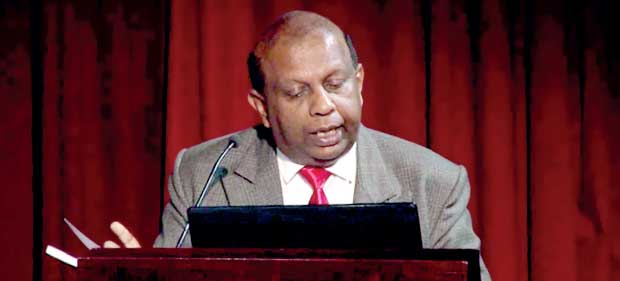
Worst govt since independence– Prof. Purasinghe

August 29th, 2017

By Rasika Hemamali Courtesy Ceylon Today

The Head of the Department of Political Science at the University of Sri Jayewardenepura, Prof. Terrance Purasinghe says the government has not delivered on its election promises. “The new Constitution is being drafted at a snail’s pace. Those reforms have not been implemented. The people wanted the Executive Presidential System to be abolished, and wanted a Parliamentary system to be put in place.” He expressed these views in an interview with Ceylon Today. Excerpts:

? If you look back, what has the government done over the past two years?

A: The people brought this government to power with the hope that they will deliver on their primary election promises, which were reinstating democracy, ridding the country of corruption and fraud, establishing good governance, sorting out racial issues, and carrying out a far more logical devolution of power. They even pledged to increase salaries by Rs 10,000 and reduce oil prices. Even though the government has increased salaries by Rs 10,000 and reduced oil prices, they are yet to deliver on some of their primary election promises.

At the same time, the government brought about democratic reforms. They reduced the power of the Executive President through the 19th Amendment to the Constitution. Parliament has been given the right to reduce these powers. Today, Parliament is very powerful.

The President isn’t as powerful as he used to be. If the Joint Opposition (JO) did not object, the 19th Amendment would have been even better. The Right to Information Act has come into effect, but the Audit Bill is yet to be passed.

? What promises did they fail to deliver?

A: The new Constitution is being drafted at a snail’s pace. Those reforms are yet to be brought about. The people wanted the Executive Presidential System to be abolished, and wanted a Parliamentary system to be put in place. To this date, a proper opinion on that has not been submitted. The current Constitution enables the President to do as he pleases with zero accountability. The people wanted this system to be abolished and that is the reason why the government won the election. There is no proper opinion on that either.

That is the biggest weakness of the government.

Investigations are now being carried out and the individuals who engaged in corruption and fraud during the previous regime are being brought to book. All reports and information required to prosecute these individuals (about 100 people) have been prepared. However, to this date, the Attorney General’s Department has not filed legal action. Due to this reason, the public has lost all hopes and are of the view that those who engaged in corruption and fraud will not be prosecuted.

? If Mahinda Rajapaksa comes to power in the future, will be able to achieve these things?

A: This government came to power because the people were fed up with the administrative system of the previous regime. From 2005-2015 the Rajapaksa regime ruled with an iron fist. Many serious incidents took place during his era including, but not limited to violation of human rights, enforced disappearances, murder, and sabotage of media institutions. Corruption and theft were rampant.

High ranking officials in the government were up to all the villainy under the sun. People pointed fingers at the President, Parliamentarians, and ministers. Nobody bothered to investigate. The Judiciary was rendered powerless, because the Executive President called the shots and had the final say. The Executive President had the power to appoint Judges. He got them to deliver judgments in his favour. Because of this unfair advantage, he was able to pass the 18th Amendment to the Constitution with ease.

Rajapaksa wanted to be ‘the President for Life.’ His long-term objective was to create a system similar to a monarchy, where his son would inherit power after his demise. The citizens of the country were flabbergasted when they got to know this, and so they decided to remove him from power. People voted for the new government because they thought that it would bring about change.

The Rajapaksa regime took the subject of devolution of power very lightly. Instead of trying to sort out the issue, they in fact made it worse. They thought that if they pit people against each other and divided the country this would enable them to stay in power forever.

A good example of this is the incident which took place at Beruwala. They killed prisoners. Several questions were raised over human rights. This is why the Human Rights Council brought a resolution against the Rajapaksa Government. Due to this reason, the Rajapaksa Government had to hold an election ahead of the specified time. The election that should have been held in 2017 was held in 2015.

? What are the weaknesses of the current government?

A: This is the most unfortunate and tardy government that has ever come to power since independence. The main reason for this is the two pronged approach of the government. The President is from one party and the Prime Minister is from another party. There are several angles from which the 1978 Constitutional conflict can be analyzed. When the President is from one party and a majority of individuals in Parliament are from another party it is not possible to carry on a government efficiently and effectively due to the conflict of policies. The Prime Minister and the President are dreaming about coexistence, however, that does not suit the political culture in this country. In the past, the two main parties have never governed a country. This is something new.

? What will be the outcome of this experiment?

A: This is not a time to carry out experiments to solve the problems of this country. If there are no problems in the country and there is a peaceful environment and no economic crisis and if the people do not have burning political ambitions, experiments can be carried out. People have burning expectations.

The people want justice to prevail and they want the thieves, murderers, and people who engaged in corruption to be brought to book. Unfortunately, the government has not understood it. If they promised something, they need to deliver it. They are yet to do this. Due to this reason, thieves and murderers are getting away with their crimes. Rajapaksa and his cronies are using the opportunity to gain political mileage. The government should take full responsibility for this.

? There are thieves in the government. What is your opinion about this?

A: The individuals in this government are scared to steal. The individuals accused of theft in this government were investigated prior to those from the previous government. None of the previous governments investigated suspects in their governments. Two ministers of the government resigned. Rajapaksa was accused of embezzling ‘Helping Hambantota’ funds. Did he resign? In Ravi Karunanayake’s case, the good governance government came down hard on him and he was forced to resign.

? Are you satisfied with the economic policies of the government?

A: With regard to the South Asian Institute of Technology and Medicine (SAITM), I cannot agree with the fact of privatization with the government. Government assets need not be sold off. They should be managed. If industrial development is created in Sri Lanka, it is foreign investors who will invest. Foreign investors will not come here to invest for about 20 years. They will come for either 99 years or more. Under the regressive capitalist system, countries can be developed only with the aid of foreign investment. Foreign investors do not come to develop this country. They come to earn profits. We have to know how to manage it.

Why did the government embrace SAITM, which is something that was left behind by the Rajapaksa regime? They are trying to fulfil a requirement of the wealthy class. Why is the government displaying that? They could have come up with a proper solution for SAITM and the government could have acquired it. If they did this, people would have praised them. These are bad decisions. If they do not take corrective action, the government cannot move forward. At the same time, the government needs to come up with a plan to reduce the cost of living. If they do not rectify the issues, there is a high probability that Rajapaksa and his cronies will come back to power. The government should have tried to fix the issues over the course of two years. If the people feel that the government is going on a developed, democratic journey, it will have a future. If not, the government will become the most unfortunate regime that came to power since independence.

? What can the people do to make this a people-friendly regime?

A: People need to educate themselves about politics. There is no point in casting your vote and keeping quiet afterwards. If the citizens of this country elected someone into office, then that individual needs to be accountable to the citizens. If the person who has been elected to office does not deliver and neglects their duties and responsibilities, the citizens should be able to take up this matter with political representatives, Parliament, and the President.

Coupling Malala and Olcott

August 28th, 2017

By Rohana R. Wasala

Waruna Chandrakirthi’s interesting article under the curious title මලාලා ගේ පාඩම සහ ඕල්කොට්තුමා Malala’s lesson and Olcott (Lankaweb/August 28, 2017) prompted me to write this.

 Chandrakirthi says:

ඕලකොට්තුමා මුල්වෙලා ආරම්භ කරපු බෞද්ධ ඉස්කෝලවල උගන්වන්නෙත් මලාලා කියලා දෙන්න හදන පාඩම් ම තමයි කියලා කියන එක හොඳ නිරීක්‍ෂණයක්.

(That what is taught in Buddhist schools pioneered by Olcott is the selfsame lesson that Malala is trying to give is a good observation.)

Waruna hasn’t presented enough facts to support his opinion. In any case, I for one cannot agree with him on this point. It is true that Col. Henry Steel Olcott (1832-1907) looked at Buddhism through Western eyes. But he meant well as far as the children of the dispossessed Sinhalese Buddhists of Ceylon were concerned. To begin with he was a ‘theosophist’ (a believer in the possibility of a mystical insight into God/divine nature). He was especially enamoured of Theravada Buddhism, nonetheless, so much so that he formally got converted to Buddhism. Though there is no room for theosophical beliefs in Theravada Buddhism, Col. Olcott probably squared the two (Buddhism and theosophy) intellectually through the vestigial influence of his childhood indoctrination in Christianity (This is only my hunch). Young David Hewavitarana, later known as Anagarika Dharmapala (1864-1933), whom he mentored in his youth, eventually fell out with Olcott, but perhaps not exclusively due to lingering theosophical leanings in the latter. Dharmapala wanted  the word ‘theosophical’ omitted from the name ‘The Ceylon Buddhist Theosophical Society’, which the colonel did not approve of. However, the truth is that had there been no Olcott, there couldn’t have come into being an Anagarika Dharmapala who was influential enough in those colonial days to initiate a viable movement of religious and national resurgence (which, as we know, eventually led to independence from Britain).

Olcott started schools for the education of Buddhist children. It is difficult to think that he wanted to serve British imperialism through education; nor did he want to challenge Western rule; but definitely he wanted to put an end to governmental discrimination against Buddhist children. The young David Hewavitarana was well aware of the despicable way the majority Buddhist community were treated by the foreign rulers. When he was a student at St Thomas’, David was known for his rebelliousness as well as his honesty. Warden Miller, who was a very strict disciplinarian, felt compelled to make this frank admission to the boy David: We don’t come to Ceylon to teach you English, but we come to Ceylon to convert you.”

The Anagarika did not try to topple the British government, either. Probably, he thought it was too early to think about that. First, he wanted to wean his people of their slavish mentality. He, being from the moneyed class, was himself a beneficiary of a colonial English education. He wanted the children of the country to be taught modern science and modern languages including particularly English; he recommended Pali for Buddhist children. It is known that Dharmapala was more a Buddhist missionary than a nationalist reformer, though in both roles he was equally zealous. A large proportion (in fact, 75%) of all his writings and speeches were in English according to scholar Ananda Guruge. We owe the Anagarika, at least partly, to Olcott.  Actually, the American did a great service to the country in general, and to the Sinhala Buddhists in particular. No doubt, the Anagarika himself honoured Olcott for the services he rendered to our country. He also admired poet Edwin Arnold whose versified biography of the Buddha ‘Light of Asia’ introduced this great Eastern religion and its founder to Europe. The Anagarika regarded Edwin Arnold as his ‘English guru’. The Englishman reciprocated these feelings. Anagarika Dharmapala did not reject everything English or European simply because it came from that source. He was for accepting what was good in it like modern scientific knowledge and technology, and good moral qualities like diligence, perseverance, and industry. But he detested cultural Westernization and indolence. He thought that we owed them a debt of gratitude for such good things. He believed that he had to reward them by offering them the gift of Theravada Buddhism. Olcott’s involvement and early patronage helped the Anagarika in his life’s mission.

Just as Olcott pioneered education for Buddhist children at a time when they had been virtually denied any kind of education, the Pakistani teenager Malala Yousafzai (b. 1997) is at the forefront of a campaign for education for girls in a backward Muslim society where the conservatives and Islamic fundamentalists grudge or totally deny them that right, thinking that it is in accordance with the teachings of their religion. It is true that Pakistan has had a woman as prime minister (Benazir Bhutto), but this does not mean it has ceased to be male-supremacist, rather misogynistic society.

Hardly any developing country is free from Western interference. It is a fact of life. Not that it is a good thing. But in a country where the choice is between surrendering to the dictates of life denying barbarians and accepting the proffered help of those who have some regard for life and freedom despite their imperfections, Western interference may be tolerated at least provisionally. It may be that the Malala case is being exploited by the West to boost its image as a guardian of human rights, democracy, religious tolerance, etc (which we know often turns out to be a sham). If Malala declined the patronage that UK offers her, well then, they would find another young person for the purpose. But she has demonstrated that she possesses special abilities, that make her a dependable youth leader. Her victimization by religious extremists is a unique qualification for her. It appears that she is doing some badly needed pioneering work in increasing the chances of education for more and more girls and young women living in oppressive societies around the world.

Incidentally, in terms of information given in her biography I am Malala – The Girl who stood up for education and was shot by the Taliban” (Widenfeld and Nicolson, London, 2013), written in collaboration with Oxford and Harvard educated writer and journalist Christiana Lamb, it cannot be said that her father Ziauddin Yousafzai was a big entrepreneur having invested a lot of money in a chain of private schools as Chandrakirthi suggests. Now the Yousafzai family are living in Birmingham, England, UK. At the time Malala was attacked by the Taliban, Ziauddin had founded an English medium school at Mingora, their village in the Swat Valley in Pakistan, with the help of a college friend of his named Mohammad Naeem Khan. The place is a popular tourist destination. That was one reason for opening such a school there. They named the school Khushal School after a Pashtun warrior poet called Khushal Khan Khattak of the 17th century whom Ziauddin greatly admired as a hero of his tribe. No other private school is mentioned as managed or possessed by him.

Ziauddin has a Master’s degree in English. He distinguished himself as a student activist when Gen. Zia Ul Haq was at the helm in Pakistan. He was general secretary of Pakhtun Students Federation. This was 1989. British author of Indian origin Salman Rushdie’s novel ‘The Satanic Verses’ published in 1988 excited a great outcry against it in the Muslim world including Pakistan, because it was thought to be blasphemous against Islam. Protesters demanded that the book be banned. Ziauddin also held that the book was offensive to Islamic sensitivities. But he knew that most of them condemned the book without having read it. He, as a person who always stood up for freedom of speech, suggested, during a college debate about ‘The Satanic Verses’: First, let’s read the book, and then why not respond with our own book?” He ‘thundered’ (as the authors put it) during that debate: Is Islam such a weak religion that it cannot tolerate a book written against it? Not my Islam,” (p. 37/ I am Malala). Actually, it was Ziauddin who had publicly opposed the activities of the Taliban. No one thought that the Taliban would go for the 15 year old Malala instead of her father, on October 9, 2012.

Though, frankly, I could not understand what exactly Chandrakirthi is trying to say about Sri Lankan education by comparing Malala and Olcott, I commend him for his bold approach in exciting our interest in looking at both from a novel point of view.

ARMED MUSLIM INSURGENTS STARTS VIOLENCE IN MYANMAR

August 28th, 2017

Dr. Daya Hewapathirane

On Thursday August 23, 2017, a few hours after Annan presented the commission’s report, violence broke out in the western Rakhine state when armed Muslim insurgents attacked security guards in the border region with Bangladesh.

At least 71 people, including 12 security personnel, have been killed in these deadly clashes. Fighting continues in the area and the death toll is expected to rise.

In a speech following the Thursday attacks, Kofi Annan appealed to all parties to abstain from violence. “I strongly urge all communities and groups to reject violence. After years of insecurity and instability, it should be clear that violence is not the solution to the challenges facing Rakhine state,” Annan said.

It is important to note that IT WAS THE ARMED MUSLIM INSURGENTS WHO STARTED THE VIOLENCE that followed the Kofi Annan Commission Report.

BUDDHIST MYANMAR’S DILEMMA: THE VIOLENT MUSLIM INSURGENTS

The Muslim community associated with Myanmar or former Burma, known as Rohingya Muslims are not indigenous to Myanmar. They are a relatively recent migrant community of Myanmar. Most of these Muslims are illicit immigrants who migrated from Muslim neighborhood regions of Bengal India during the British colonial period and later from East Pakistan or the present Bangladesh. The Myanmar government s of the past and present  do not consider Rohingya Muslims as legitimate citizens of Myanmar. The people of Myanmar consider the Rohingya people as illegal immigrants. Myanmar’s Muslims account for an estimated 04% of the total Myanmar population of about  60 million. In 2012, there were about 800,000 Rohingya Muslims living in Rohang, the western state of Myanmar known officially as Rakhine or Arakan.

THE INDIGENOUS PEOPLE OF BURMA (MYANMAR)

 The indigenous people of Myanmar are ethno-linguistically Sino-Tibetan and are predominantly Buddhists as opposed to the Rohingya Muslims who are ethno-linguistically related to the Indo-Aryan Bengali people of India and Bangladesh and their religion is Islam.  The language spoken by the Rohingya Muslims is different from that of the indigenous people of Myanmar. It is derived from  a Indo-Aryan sub-branch of the greater Indo-European language family and is closely related to the Chittagonian language spoken in the southernmost part of the present Bangladesh bordering Myanmar.  Therefore, culturally the Rohingya  Muslims are quite different to the indigenous people of Myanmar.

ROHANG AND THE RAKKHITA BUDDHIST COMMUNITY

 It was mostly during the British colonial period that these Muslim people crossed the borders and settled in border regions of Burma, concentrating largely in Rohang which was also known as Rakhine or Arakan, located in the immediate neighborhood of Bengal. Their numbers increased substantially during the British colonial period, and thereafter. Rakhine State consists of a population of about 3,8 million, with the indigenous Rakhine people forming the overwhelming majority in the State, who live mainly in the lowland valleys.  Most of the indigenous people living in Rakhine State adhere to Theravada Buddhism. In spite of the government rule limiting Muslims to two children per family, the Muslim population in Myanmar shows an increasing trend.

According to historians of Myanmar, the name ”Rohingya’ is of recent origin and appears to have been created in the1950’s, by the descendants of the Muslim Bengali people who settled down in the Rohang or Arakan region of Myanmar. The name Rohingya has not been used or recognized in the Burma population census conducted by the British in the year 1824.  It is also noteworthy that the name Rohingya is not found in any historical source in any language before the 1950’s.

Rohang is an important  region of Myanmar inhabited from ancient  times by the Rakkhita, Rakkha or Rakhaing people, who belong to the indigenous Buddhist community of  Burma.  From historic times, this was a highly respected Burmese community, well known for the honourable life they led. They were well known for their contribution to the development  and preservation of the national cultural heritage and Buddhist spiritual values.  These Rakkhita people had their own language and their livelihood was strongly based on Buddhist principles. The name of the state Rakhine is derived from the Pali word Rakkhita or Rakkhapura which means the land of the Rakhasa” or Rakkha or Rakhaing.

There were striking differences in the customs, traditions and livelihood patterns of the two communities ”…” the indigenous Burmese Buddhists of the Arakan region, especially the Rakkhita community and the Muslim immigrants from Bengal. These cultural incompatibilities and differences resulted in open conflicts between the two communities, which were well evident from about the mid 20th century.  Soon violence broke out in the Arakan region and the Muslim Rohingyas became a serious threat to the people of Myanmar. Occasional isolated violence involving Myanmar’s majority Buddhist and minority Muslim communities has occurred for decades, even under the authoritarian military governments that ruled the country from 1962 to 2011.

BRITISH RESPONSIBLE FOR AGGRAVATION OF THE PROBLEM

 According to Aye Chan, a historian at the Kanda University, communal violence between the Arakanese or the indigenous Myanmar (Burmese) Buddhists and the Rohingya Muslims began during World War -II in 1942.  The British were primarily responsible for the aggravation of disharmony between the Rohingya Muslims and the indigenous people of Myanmar.

During the World War, when the British were retreating, they took action to arm Muslim groups in Northern Arakan in order to create a buffer zone against the Japanese invasion.  Furthermore, the British promised the Muslims living in Burma (Myanmar) at this time, that if they supported the British during the war, the Muslims will be given their own national area” within Burma.

Once acquiring arms, the Muslim Rohingyas became a serious threat to the people of Myanmar. They soon began a spree of violence against the Buddhists of the Arakan region. They began destroying Buddhist villages in Arakan, using the firearms given to them by the British.  In 1942, a major armed confrontation occurred between the Rohingya Muslims and indigenous Arakanese people  which led to many casualties on both sides.  Rohingya Muslims massacred about  20,000 Arakanese in Buthidaung and Maungdaw townships.  In retaliation, about  5,000 Muslims in Minbya and Mrauk-U Townships were killed by the Arakanese.

In the mid 20th century, Rohingya Muslims living in Arakan organized into several militant groups. They formed an aggressive movement known as the Mujahideen movement which was active during the 1947 to 1961 period.  There were several Mujahideen uprisings in Arakan.  The aim behind the riots of the Rohingya militant groups was to separate the northern part of Arakan, or the Muslim populated Mayu frontier region and create an independent Muslim state for the Rohingya Muslims and annex it to the newly-formed Muslim East Pakistan as an exclusively Muslim country.

In 1947, when a new Islamic country of Pakistan was about to be formed, Rohingya Muslims who had already possessed arms from the British, wanted to obtain a national area” for them within Burma, in accordance to the assurance given to them by the British. They formed the North Arakan Muslim League  and  met  Mohammad Ali Jinnah, the founder of Pakistan, and requested that Mayu region of Myanmar be annexed to East Pakistan which was about to be formed. Jinnah however, was not in favour of such a move. This did not stop the Rohingya Muslims in their agitation for separation from Myanmar.  During the 1960’s and early 1970’s, there were several uprisings which were popularly known as Arakan State Riots.  A widespread armed insurgency started with the formation of a Muslim political party called Jami-a-tul Ulema-e Islam, demanding separation.

The Burmese central government refused to grant a separate Muslim state in the Mayu region and the Muslim militants of Northern Arakan declared jihad on Burma. The Mujahid militants began their insurgent activities in the Buthidaung and Maungdaw townships within the Mayu region that lies on Burma-East Pakistan border, led by a long-term Muslim criminal named Abdul Kassem who was a leader of the Mujahid movement. There was  widespread violence in the Arakanese villagers and the Buddhist Arakanese inhabitants of Buthidaung and Maungdaw were forced to leave their homes. By June 1949, the Mujahid rebels were in possession of all of northern Arakan. In the meantime, the Mujahid extremists encouraged and supported illegal immigration into the Arakan region of thousands of Muslim Bengali people from the over-populated East Pakistan.

 CONTAINING MILITARY OPERATIONS OF MUJAHID MILITANTS

When the rebellion was becoming intensified the Burmese government declared martial law and took firm action to contain the militants. This led to the subjugation of the Mujahid insurgency and the Muslim insurgents fled to the jungles of northern Arakan. Between 1950 and 1954, the Burmese army launched major military operations against the Mujahid rebels in Northern Arakan. All major centres of the Mujahids were captured and several of their leaders were subdued. Towards the end of 1961, most Mujahids surrendered, but some formed small armed groups and continued to loot, harass and terrorize the Burmese Buddhists, especially in remote regions in Northern Arakan.

THE RADICALIST MOVEMENTS (1971-1988)

During Bangladesh Liberation War in 1971, the Rohingya Muslim who resided in the Myanmar-Bangladesh border had the opportunity to collect weapons.  In 1972,  the Rohingya Muslims formed  the Rohingya Liberation Party (RLP) with activities based in the jungles of Buthidaung.  Military Operation conducted by the Burmese Army in 1974 led to many Muslim insurgents fleeing to neighboring Bangladesh.

In March 1978, the Burmese government launched a campaign to check illegal immigrants residing in Burma. This led to many thousands of Rohingyas in the Arakan region crossing the border to Bangladesh.  Arrests of illegal migrants by the Burmese army created unrest in Arakan and as a result, there was a mass exodus of  around 252,000 refugees to Bangladesh.

In late 1982, the Burmese Citizenship Law was introduced and most of the Rohingyas were denied Burmese citizenship. Radical Rohingya militant group took this opportunity to recruit many Rohingya Muslims who were occupying the region along the Bangladesh-Burma border. In the early 1980s, radical Muslims formed the Rohingya Solidarity Organization (RSO) which soon became the most militant faction among the Rohingyas on the Burma-Bangladesh border.  Using the Islam religious card the RSO  was able to obtain various forms of assistance and  support from the Muslim world, including the JeI in Bangladesh and Pakistan, Gulbuddin Hekmatyar’s Hizb-e-Islami (HeI) in Afghanistan, Hizb-ul-Mujahideen (HM) in the Indian State of Jammu and Kashmir and the Angkatan Belia Islam sa-Malaysia (ABIM), and the Islamic Youth Organization of Malaysia.

In 1991 and 1992, there was forced relocation of Muslims by the government and the creation of new Buddhist settlements in Buthidaung and Maungdaw townships. This provoked another mass exodus of Rohingya Muslims to Bangladesh.

CONNECTIONS WITH TALIBAN AND AL-QAEDA (1988-2011)

The military camps of Rohingya Solidarity Organization (RSO) were located in the Cox’s Bazaar district in southern Bangladesh. In 1991, it possessed a large number of military equipment, including light machine-guns, AK-47 assault rifles, RPG-2 rocket launchers, claymore mines and explosives. They were equipped with UK-made 9mm Sterling L2A3 sub-machine guns, M-16 assault rifles and point-303 rifles.  Afghan’s Taliban instructors were associated with RSO camps along the Bangladesh-Burma border. Many RSO rebels were undergoing training in the Afghan province of Khost with Hizb-e-Islami Mujahideen.

The expansion of the RSO in the late 1980s and early 1990s made the Burmese government  launch a massive counter-offensive to clear up the Burma-Bangladesh border. In December 1991, Burmese troops crossed the border and attacked a Bangladeshi military outpost. The incident developed into a major crisis in Bangladesh-Burma relations, and by April 1992, more than 250,000 Rohingya civilians had been forced out of Arakan, western Burma.

In late 1998, Rohingya Solidarity Organization (RSO) and Arakan Rohingya Islamic Front (ARIF) combined to form the Rohingya National Council (RNC) with its own armed wing, gathering the different Rohingya insurgents into one group. In 2001, they underwent training in Libya and Afghanistan, in guerrilla warfare and the use of a variety of explosives  and heavy-weapons. They had several meetings with Al-Qaeda representatives.

Throughout  2012 and in 2013,  there have been a series of riots and much violence in Northern Arakan in the Rakhine State, between extremist Rohingya Muslims  and the indigenous Rakhini or Arakanese  people.   Muslim fanatics are largely responsible for the outbreak of violence. The 2012 riots began after a Rakhine teenage girl was brutally raped and cut into pieces by three Muslim fanatics. This immediately led to an outrage and retaliation by the Rakhine community. This was followed by the extremist Muslims resorting to extreme forms of violence, destroying many villages in their entirety and murdering many innocent people. Those displaced by these riots exceeded 50, 000.  The situation in the Rakhine state remains tense.

In 2013, the worst violence in Myanmar was in Meikhtila city, which resulted in widespread bloodshed  and destruction of property, and the  displacement of nearly 10,000 people who were forced out of their homes. A State of Emergency was declared and the army took control of the city.  The devastation was reminiscent of last year’s clashes between ethnic Rakhine Buddhists and Muslim Rohingya that left hundreds of people dead and more than 100,000 displaced. The struggle to contain the violence has become a major challenge to the government.  Buddhist and Muslim communities live in near-total segregation, constantly fearing more violence. The violence in Meikhtila city began once news spread that a Muslim man had killed a Buddhist monk. Soon, Buddhist mobs rampaged through a Muslim neighborhood and the situation quickly became out of control.

CRIME AGAINST BANGLADESHI  BUDDHISTS

Buddhists of Bangladesh have been subject to untold violence by Muslims in recent years. The Chakmas form the community of Buddhists that inhabit the Chittagong Hill Tracts of Bangladesh. Chakma Buddhist monks were forced to flee their traditional lands due to Islamic persecution and violence in the early 1990s. Some obtained Indian citizenships and formed the organization called  Peace Campaign Group and are actively focusing on working against human rights violations  systematically carried out by Muslims in Bangladesh.

According to Jumma Buddhists, successive governments of Bangladesh were engaged in implementing a policy of ethnic cleansing to eradicate the indigenous Jumma Buddhists. The government has settled more than 400,000 Muslim settlers in the ancestral lands of Buddhists in the Chittagong Hill Tract region. This encroachment of land owned and occupied previously by Buddhists is said to be continuing on a rapid scale even at present. In addition, more than 100,000 military and paramilitary personnel have been stationed in the Chittagong Hill Tract making life insecure and miserable for the Jumma Buddhist community. The region today is crime prone, characterized by arson, killing, rape, land grabbing, and destruction of Buddhist temples, extra-judicial arrest and detentions. Between 1986 to1989 more than 70,000 Jumma Buddhists have fled Bangladesh and sought refuge in the Tripura state of India.

ARMED STRUGGLE AND PEACE ACCORD

 Violence centering on land issues has been going on in this region since 1978, when the government decided to settle Muslim people in the Chittagong Hill Tracts which is land traditionally owned and occupied by Buddhists.  Many Buddhists were harassed and were forced to leave their traditional land.  Owing to continued harassment the Buddhists collectively protested and launched an armed struggle during the early 1980s, demanding full autonomy for the Chittagong Hill Tracts. This continued for two decades and an Accord was signed between the Jumma People’s political party of the Buddhists and Bangladesh government in December 1997, to withdraw the new settlers and the military from Chittagong Hill Tract. Expecting a peaceful situation following the Peace Accord, many indigenous people who had fled to refugee camps in India during times of violence, started returning home, only to find their land encroached upon by Muslims. The Buddhists allege that the Accord was not respected by the government.

VIOLATION OF BUDDHIST RIGHTS

 Thousands of Jumma Buddhist families who were displaced owing to violence have not been resettled  as yet,  and the number of poverty-stricken Jumma refugees have increased substantially. Among them are thousands of children who are deprived of their education. Human Rights abuses  continue to occur with the military resorting to violence against Buddhists. On 20th April 1999, the military and Muslim settlers attacked the Jumma Buddhists at Babuchara bazaar killing and wounding many Jumma Buddhists.  In recent years Muslim extremism and violent tendencies appear to have intensified. In the early part of 2010, the Chittagong Hill Tracts region was rocked by violence, flaring up decades old ethnic-religious tensions, as Muslim settlers set fire to hundreds of homes of indigenous Buddhists resulting in many deaths and many injuries. Thousands of Buddhists have been left homeless. These attacks were meant to forcibly grab land and properties of Buddhists. This violence was committed in the presence of law enforcement officers  including soldiers who were Muslims. According to Jumma people, Muslim military personnel have been involved in gross human rights violations with impunity, in the Chittagong Hill Tracts for many years. Many indigenous Buddhist people of affected villages continue to live in hiding, in dense forests and some have abandoned their ancestral land and had moved to other villages and are leading desperate lives.

In the last three decades the exclusively Muslim Army of Bangladesh, motivated by religious fanaticism have caused havoc to Buddhists of Bangladesh and destroyed many Buddhist shrines and monasteries. Religious persecution and destruction of places of worship is commonplace in the Chittagong Hill Tracts (CHT) even in present times. Religious persecution takes place in the form of torture, murder, intimidation of Buddhist monks and deliberate and systematic destruction of their places of worship. Fanatical Muslims destroyed and desecrated the renowned Navajyoti Buddhist Vihara” (Navajyoti Buddhist Temple) at Lalyaghona Village in Baghaichari Upazillact)  breaking down many Buddha images. Muslim religious fundamentalism and intolerance of Buddhists and other religious minorities are on the rise in Bangladesh. The country’s military has become ruthless in this regard. In 2006, a group of illicit Muslim settlers led by Rafique Uddin destroyed the Buddhist temple of Challyatali village under Longadu, Rangamati and occupied the temple land.

VIOLENCE AGAINST THE THAI BUDDHISTS

 Muslims are a very small minority settler community in Southern Thailand, smaller than the Muslim settler community of Sri Lanka. Their objective is to have a separate country for Muslims in Sothern Thailand. Buddhist civilians and monks have been frequent targets of Muslim attacks in Southern Thailand in recent years. In late 2005, Muslims again started killing Buddhists in Southern Thailand. The bloodshed here could mark a resurgence of a long-simmering Muslim insurgency and, some officials fear, fertile ground for Islamic terrorists. More than 500 people were killed in 2006, in three southern Thai provinces, including attacks targeting Buddhists in possible bids to drive out non-Muslims.

Authorities are investigating possible links between these Muslim separatist groups and Islamic terrorist organizations such as Jemaah Islamiyah, which seeks a pan-Islamic state in Southeast Asia. It is blamed for attacks including the 2002 bombing in Bali that claimed 202 lives. Thitinan Pongsudhirak, an assistant professor of international relations at Bangkok’s Chulalongkorn University says We have not yet seen escalation, but I still think we may be headed from bad to worse.” The gruesome fashion of beheadings of Buddhists by Muslim assailants … is not normal violence,” said Pongsudhirak. It is driven by deep animosity and hatred.”

ISLAM AND VIOLENCE  

Buddhists cannot consider Islam as a religion of compassion and peace. Those professing Islam have been the biggest enemies of Buddhists and Buddhism throughout history. There are ample historic records which describe vividly the atrocities committed against millions of Buddhists in several countries. Their criminality has not subsided in spite of their living among other religions in different countries.

It is a well known fact that Buddhism disappeared from India under the sword of Islam. Dr. B.R. Ambedkar, the great Indian Buddhist leader said that there is absolutely no doubt that the fall of Buddhism in India was due to the invasions of the Musalmans or the adherents of Islam. For five centuries, from the 13th to 17th centuries, most parts of India were under Muslim rule. Over 50 million Buddhists and Hindus were massacred by Islamists in greater India (which in the past included   Pakistan, Bangladesh and Afganistan).

Islam destroyed Buddhism not only in India but wherever it went. Before the onslaught of Islam, Buddhism was the religion of almost the whole of Asia – ancient countries/regions such as Bactria, Parthia, Afghanistan, Gandhar, Chinese Turkestan, along with Tibet and Inner Mongolia were Buddhist nations that formed almost the whole of the Asian continent. Buddhism was the dominant religion of the people of this vast area of the Asian continent. Islam destroyed and eliminated Buddhism from almost all these countries.

Those conversant with global affairs, are aware of the fact that, especially in recent years,  Muslims have become a curse to humanity, resorting to violent and unethical means of serving their religious ends, or to ”resolve’ their obsessive religion-based issues and self-created problems.  Peace and harmony in many countries in the West and East,  have been impaired greatly owing to unwholesome actions of Muslim religious fanatics.

MUSLIM EXTREMISM  IN SRI LANKA

Islamic community in Sri Lanka is a small non-indigenous minority amounting to about 9% of the total population. There is clear evidence of disregard and disrespect on the part of most Muslims, for the Buddhist cultural heritage of Sri Lanka. There is evidence of destruction of archeological and historic cultural monuments and remains, especially in areas inhabited by Muslims. The fundamentals of ”Islam’ that are being widely propagated by the Muslims have serious negative implications as far as the national culture is concerned.

Muslim encroachment of traditional Sinhala Buddhist temple land and the demolition of historic sites and archeological remains of Buddhist heritage show the sheer lack of respect for Buddhism and related and cultural heritage of the country that gave them shelter.  The situation does not seem  too different in Myanmar or Thailand.  It was not long ago that Islamic fundamentalists and armed Muslim extremists were inciting violence against legitimate Buddhist activities in the East – Pottuvil region.

In recent years, it is noticeable from their attitude and actions, that the Muslim community in Sri Lanka has posed a threat to this predominantly Buddhist nation, its national culture, way of life and in a covert manner to the democratic principles and rule of law of the country. There is clear evidence of disregard and disrespect on the part of most Muslims, for the Buddhist cultural heritage of the country. They have been instrumental in the destruction of Buddhist archeological remains and historic cultural monuments in areas inhabited by them. During the last few decades, the Muslims have gained strength in Sri Lanka owing to their increased economic power largely owing to tangible and moral support received from Muslim countries and also owing to the political patronage.

The younger generation of Muslims are being brainwashed with extremist Islamic fundamentalism, in the so-called ‘Madrasas or exclusively Muslim schools that have sprung up in the country in recent years. The fundamentals of ‘Islam’ that are widely propagated in these Madrasas  have serious negative implications as far as the national culture is concerned. The younger generation of Muslims are being brainwashed with these extremist Islamic beliefs and practices in these exclusively Muslim schools that have sprung up in the country. Their attire has changed and reflects their inclination to be exclusive and separate from the nation’s mainstream.

Their new male and female attire displays their desire to look different and to be exclusive and separate from the nation’s mainstream. This polarization tendency of the Islamic community is self-imposed. It is definitely not because they feel marginalized. This divisive spirit of Muslims is owing to the influence of Islamic teachings to keep away from non-Muslims who are considered as inferior to Muslims. The Koran forbids Muslims to closely associate non-Muslims. Islam has dualistic ethics with one rule for Muslims and one rule for non-believers and there is no exception to this rule. Today there is increased interest in general, in the country, for the consolidation of national unity and under the circumstances, extreme forms of divisive tendencies of the Muslim community is subject to intense criticism in recent years.

The ‘Halal’ practice of animal slaughter practiced by Muslims is a most repulsive practice involving extreme form of cruelty towards animals, where animals are tied down and their throats slashed, letting their blood ooze out slowly and making animals die on their blood. This is a practice that should not be tolerated in any civilized society.  In a Buddhist society where non-violence towards all living beings is a fundamental tenet, practices of this nature cannot and should not be tolerated under any circumstances.  The deceitful and exploitative nature of the covert halal’ business venture of Muslims has been exposed and action taken against it in recent years.

 Muslims are well known to be running successful businesses in predominantly non-Muslim Buddhist majority areas. They have shown greater interest in furthering their own community interests and not the general public interest. They have not contributed to or invested in activities that are of common benefit, such as on hospitals, schools and other national social welfare activities. It is common practice for Muslims to refrain from hiring non Muslims in their establishments.

In Sri Lanka although they are a relatively small settler community, the Muslims insist on living an alienated and un-integrated life and are  agitating for concessions specified by their Islamic religion and Muslim Shariah law. The interests of the country as a whole is not their concern, because Sri Lanka is not an Islamic country. They are least interested in joining the national mainstream” and work towards national unity and well-being.

RISE IN ISLAMIC FUNDAMANTALISM

In the last few decades, owing to the newfound wealth of oil rich Islamic countries and massive immigration to the West, Islamic fundamentalism has been on the rise and the dormant spirit of Jihadism has been rekindled.  This fervor has been translated into upheavals, revolutions and    terrorism , and world peace has been put in jeopardy. Millions of lives are now in danger. Islam encourages aggressive spirit explicitly.  Muslim believe that he can go to paradise if he kills non Muslims. The Quran tells Muslims to slay the unbelievers wherever they find them (2:191), do not befriend them (3:28), fight them and show them harshness (9:123), and smite their heads (47:4). It prohibits Muslims to associate with their own brothers and fathers if they are non-believers (9:23), (3:28).

Buddhists have been the most victimized and harassed religious community in the world, owing to actions of Muslims guided by their theistic traditions and beliefs. Throughout the ages the Buddhist religion experienced many calamities.  As far back as in the 10th century, as a result of the Muslim invasion of what is modern day Afghanistan, Pakistan and India, the Buddhist religion which formed the basis of life of the people of this part of the world, was viciously wiped out in an act of virtual genocide. In some Asian countries indigenous Buddhist spiritual traditions have been severely weakened by decades of persecution. Muslim terror and atrocities have inflicted severe damage to Buddhism in many Asian countries, some of which were exclusively Buddhist at one stage in their histories. The destruction of the colossal Afghan Bahmian Buddha statues is not the first destruction resulting from Muslim fundamentalism.

The biggest problem with Muslims is their belief that Islam is one and only ‘chosen religion’ and  Muslims are the one and only ‘chosen people’. In an Islamic state people of other faiths are not tolerated. Non-Muslims cannot establish their shrines or  monasteries in any of the Middle Eastern Muslim countries. They cannot hold their religious functions or prayers in public in these countries. No meaningful dialogue on Islam or on the divisive attitudes and activities of Muslims is possible because they unnecessarily feel intimidated whenever  legitimate questions on Islam or the Quran are posed. Those who question are immediately branded as racists or anti Muslim. Most Muslims lack the courage to respond to even the most abject injustices evident in Islamic beliefs and practices. . No Muslim gives any other religion a status of equality with Islam. They fail to realize that true open-mindedness consists of contemplating all premises and weighing the evidence. Reasoning involves deduction and induction. Why do Muslims cause disharmony and bring about conflicts and confrontational situations in all societies they infiltrate? Why?   Buddhists need to be vigilant and need to initiate actions against the abuse of privileges, aggression and misdemeanor by Muslims.

(The contents of the above article was included in an article I wrote in 2013 and published in the Lankaweb)

ගාල්ල ආසියාවේ සංචාරක කේන්ද්‍රස්ථානයක් කරන බව රනිල් කියයි……….Galle to be the centre piece of tourist development in Asia 

August 28th, 2017

Dr Sarath Obeysekera

Many things to do,,,,,,,,,,,,

All visitors coming to Sri Lanka always try to visit Galle Fort where they get a feeling of walking around in old Mediterranean   town with many placed to have an evening tea/coffee or a good Sri Lankan meal .Residents of Galle try to keep the area safe and clean as they know that their livelihood depend on un interrupted arrival of tourists.

Other than visiting the Galle Fort, there is nothing much to do in Galle except visiting some 5 star hotels like Light House or visiting Unawatuna for the beach.

Integrated plan for Galle as a tourist attraction needs a detailed plan which should include many features.

Sri Lanka was planning to build an off shore break water between Roomassala and Fort, leaving two entrances from both ends with a view to expand the Galle bay as a mammoth marina. Proposal was processed by SLPA under Jaica funding and the wise people in the government did not take action claiming that cost is too high .Government should have built the Marina Bay instead of the white elephant in Mattawa .

Galle Harbour and the bay along Galle Matara road, within Galle MC limits the promenade is so undeveloped and used by fishermen selling daily catch which a very unholy sight, They should develop the beach with entertain facilities, café’s .bars, shopping facilities .They can still keep the fish market in a small scale built to high standard, Last government could have done this by using some funds to build extravagant mall in Independent square in Colombo. Other side of the road is also full of dirty looking boutiques and another fish market which is also an eyesore.

There are no other places where tourists can sit and enjoy evening sun of Galle Harbour.

Galle Harbour is also  in the  grandiose plan for a Marina and GMR –The Indian Company was trying to invest in developing it .Then Minister was quite keen and RW promised at the CECM that it can be given under Swiss Challenge scheme which never materialize.

At the eastern side of the  harbour close to Magalle  bridge and Galle Matara road ,was given to a company with Saudi Investment to build a Yacht Repair and building Yard which is in line with the Galle Master Development Plan .It went thru all the set procedures and approved by cabinet with 25 m$ investment .Sadly after spending much money investor pulled out after some incidents and also  losing confidence in Sri Lankan Politics .for years since approval was granted a n agreement was signed ,but successive ministers and Chairman’s have not shown any keen interest  in allowing to develop by a local blue chip company for no reason .This project in parallel with Offshore Breakwater would have enticed many Yacht owners to visit Sri Lanka.SLPA is now contemplating to give the whole harbour to an investor to develop as a Marina but nothing is moving. Southern Development Authority under a powerful minister seems very keen to develop as stated by PM but no concerted effort by Megapolis or Tourism Ministers to expedite development of the Marina.

Next to the proposed Yacht Marina private developer acquired a land  for mixed development project ,with entertainment ,gourmet restaurants and hotel rooms in a 26 storey building .UDA has approved the preliminary development proposal ,with much reluctance citing objections under UDA Zoning where such development was not allowed .Developer had to bring the case to the committee headed by OCCM where such projects are reviewed and convicted UDA to allow and change the Zoning Rules to suit marina development ,It is over a year where Zone changing process is being planned and nothi8ng done so far .Another issue has also prevented UDA giving permission ,because Tourist Board flatly refuse to allow building over 6 storeys citing a rule by the government not to allow any building facing a beach ( this land is not facing the beach!) to be built higher than the height of an average coconut tree!!) .It took few months to convince Tourist Board via OCCM conducted under guidance of PM’s office, that the land is not facing the beach but the harbour! Sad thing is the Director of STB has not even visited are before writing the refusal letter. Then Chairman of STB has shown much interest and now they have decided to allow a hotel.

There was an another announcement by PM that Navy southern command may be  shifted to Hambantota .How long will that take is a question and what will happen the Galle Fishery Harbour standing between Navy Camp and the Harbour?

There is a cement unloading plant for INSEE (ex-Holcim, Ambuja) generating much cement dust and what are the plans?

Beach front of Galle Bay where high access road starts from Rumassala to Closenburg is built up by traders polluting the beach, when you drive towards the harbour after exit from highway access road the road side scene is an eye sore. (May be government need GR to come and clear those unauthorised buildings and boutiques to make the Galle Marina Bay of international level?

Finally question is Galle is under Unesco as a world heritage site. Meetings held by office of the PM has met UNESCO o explain the plan, and UNESCO is not very keen a grandiose plan because it may destroy the ecology and also wrecks) in the bay? They are also not happy with large Cruise vessels coming to Galle?

It looks PM and the office is quite keen to develop Galle but Bureaucracy and may be some vested interest will be a stumbling block to achieve such grandiose plans by the government.

We have a southern development minister who is a close confidante of the PM  in charge of law enforcement and ministers brother as the Chairman of the Sri Lank Tourist Board .and the burly deputy minister of ports from Galle ,I cannot see why the government cannot fats track the develop of Galle as  Tourist Destination at the same speed like of Mahaweli Development ?? ( or even like Magampura Port?

Dr Sarath Obeysekera

Algeria – Ahmadis, forced to worship behind closed doors

August 28th, 2017

By A. Abdul Aziz.  Source: The Times of Israel.

Accused of heresy by Islamist extremists and targeted by the authorities, members of Algeria’s tiny Ahmadi community say they have been forced to go underground to worship.

Abderahmane, a 42-year-old trader from Kabylie in northern Algeria, joined the reformist Islamic movement after years as an ultra-conservative Salafist.

People he once called friends reported him to the local imam, who publicly denounced him as an unbeliever.

The imam went on to urge worshippers not to let their children play with Ahmadi children.

My sister’s engagement was canceled because her fiancé was told I was an unbeliever,” Abderahmane said, still wearing a well-trimmed beard, a long cotton shirt, and three-quarter-length trousers — the garb of his former life as a Salafist.

Founded in late 19th-century India, the Ahmadiyya movement follows the teachings of Mirza Ghulam Ahmad, an Indian Muslim they believe to be the long-awaited Islamic messiah.

It is anathema to traditional Islamic thinking, and Ahmadis living in many Muslim-majority countries have faced persecution and physical violence.

While Ahmadis consider themselves to be Muslims, the Organization of Islamic Cooperation — of which Algeria is a member — declared in 1973 that the movement was not linked to the Muslim faith.

Nonetheless, the faith’s strong missionary drive has gained it an estimated 10 million members in 190 countries around the world.

The movement didn’t begin spreading in Algeria until 2007, when an Ahmadi satellite television channel reached the north African country.

After that, they worshiped freely, if discreetly, for a decade. Few in Algeria had even heard of Ahmadism until last year when the government crackdown began. ‘Israeli plot’ claim.

Ahmadi leader Mohamed Fali, a 44-year-old shopkeeper, was arrested in June 2016 along with his deputy, shortly after applying to register a charity. Police searched their homes and confiscated their passports.

Since then, Fadi says 286 out of Algeria’s roughly two thousand Ahmadis have been arrested. All but three have been handed jail terms, ranging from a three-month suspended sentence to four years. The other three received fines.

Most were convicted of breaking right to assembly laws — but their lawyers say they have been persecuted simply for their faith.

Islam is the state religion in Algeria, where Sunni Muslims make up the majority. Freedom of religion is guaranteed by law, but preachers and places of worship must be licensed by the government. The Ahmadis have never applied for such a status, believing they would face certain rejection. In July, Algeria’s Religious Affairs Minister Mohamed Aissa told journalists the Ahmadis were involved in a plot by Israel — where the community is allowed to worship openly, with a big mosque in the city of Haifa and a television channel — to destabilize the country. The minister at first agreed but later declined to talk to AFP.

Sirine Rached, an Amnesty International researcher, said the accusations were baseless” and accused the Algerian government of a crackdown that is unprecedented in the wider region.

As far as we know this persecution of the Ahmadis in Algeria is a unique situation in the Maghreb,” she said.

Praying in secret

Fearful of harassment by Islamists or the authorities, Algeria’s Ahmadis meet to worship at each others’ homes — including Fali’s house in Tipasa, west of Algiers.

Around 20 prayed in the large living room, adorned only with an imposing portrait of Mirza Ghulam Ahmad.

Fali began proceedings with the Islamic confession of faith, and he emphasized that the Koran was the Ahmadis’ holy book.

The worshippers — among them engineers, doctors and students — refused to give their full names or be filmed.

All of them said they have gone through a crisis, questions and doubts, to which Ahmadism had provided the answers.

As a modern woman, I can say that Ahmadism has brought me closer to God,” said lawyer Nadia, 49.

Their creed teaches non-violence, and also advocates the separation of state and religion — a vision disputed by Islamists, particularly the ultra-conservative Wahhabist version of Islam exported by Saudi Arabia.

The debate should not be about Ahmadism but about freedom of worship,” said Hamid, one of the group.

Fal”O”‘I,’ who is awaiting trial on charges ranging from unauthorized collection of donations” to offending the Prophet,” said the Algerian media had distorted the practices of the Ahmadis and tried to portray them as non-Muslims.”

The campaign against the group is political, he said, pinning the blame on Wahhabists and the Saudi establishment.

Salah Dabouz, the movement’s lawyer, agreed.

The Ahmadis threaten their ideology by advocating secularism and non-violence in the name of Islam,” he said.

Source: http://www.timesofisrael.com/algerias-ahmadis-forced-to-worship-behind-closed-doors/

“Islam proclaims that all people are born equal, no matter where they hail from or the colour of their skin” – Hazrat Mirza Masroor Ahmad

August 28th, 2017

By A. Abdul Aziz,

 According to our International Press Department, U.K., Head of Ahmadiyya Muslim Community calls for equality of all races and peace based upon justice during address at Ahmadiyya Convention, Germany.

On Saturday 26 August 2017, the World Head of the Ahmadiyya Muslim Community, the Fifth Khalifa (Caliph), His Holiness, Hazrat Mirza Masroor Ahmad addressed an audience of around 800 dignitaries and guests on the second day of the 42nd Annual Convention (Jalsa Salana) of the Ahmadiyya Muslim Community in Germany.

At a time when racial tensions and prejudices are escalating in certain countries, His Holiness said that there was an urgent need to recognise that all people were born equal and no race or nation was superior to any other.

His Holiness also used his address to categorically condemn all forms of extremism and those so-called Muslim clerics who were radicalising Muslims in different countries. Further, His Holiness called into question Western policies of selling weapons to Muslim countries, which he said were fuelling wars and conflicts.

Condemning in the strongest possible terms the role of extremist clerics and Muslim governments in destabilising the world, Hazrat Mirza Masroor Ahmad said:

Extremist Muslim groups or clerics have preyed upon vulnerable Muslims and rather than guiding and helping these frustrated and misguided people, they have poisoned their minds with extremism and radicalised them… In a similar vein, we have long seen that some Muslim governments are mistreating their people and have inflicted untold cruelties and injustices upon them which has bred division and led to uprisings and bloody civil wars.”

Contrasting the acts of extremists with Islam’s true teachings, Hazrat Mirza Masroor Ahmad said:

Without a shadow of doubt, Islam’s teachings are a guarantor for peace and security for all mankind. Its teachings are rooted in compassion, mercy and humanity and it is these true Islamic values that the Ahmadiyya Muslim Community has endlessly emphasised and endeavoured to spread across the world for more than 125 years.”

His Holiness said that in the very first chapter of the Holy Quran, it is written that Allah the Almighty is the ‘Lord of all the worlds’ and that this meant that Allah the Almighty was the Provider and Sustainer of all people, of all races and all beliefs.

Hence, a true Muslim could never discriminate or oppose non-Muslims, as has been increasingly alleged in modern times. On the contrary, His Holiness said that amongst those who condemned Islam were people who themselves were guilty of racism and prejudice.

Condemning all those who claimed racial superiority, Hazrat Mirza Masroor Ahmad said:

Such extremist views can only fuel resentment and despair amongst the people of other races and ethnicities. In complete contrast, Islam proclaims that all people are born equal, no matter where they hail from or the colour of their skin.”        

His Holiness also quoted from the Farewell Sermon of the Holy Prophet Muhammad (peace be upon him) which he termed as a momentous speech that laid the foundations for world peace”.

Hazrat Mirza Masroor Ahmad said:

In words that were as timeless as they were enlightened, The Holy Prophet (peace be upon him) proclaimed that all people were born equal and that a white person was not superior to a black and nor was a black person superior to a white… Brandishing an eternal torch illuminating the path towards universal human rights, the Holy Prophet (peace be upon him) pronounced that all human beings were born equal and had the same rights.”    

His Holiness said Islam teaches that God had sent prophets to all nations and Muslims were commanded to respect and honour them all, even whilst others cursed the Prophet of Islam (peace be upon him).

Hazrat Mirza Masroor Ahmad said:

No doubt, when we hear others unjustly malign our beloved Prophet (peace be upon him) it causes us intense distress and grievously wounds our hearts, yet we will never react by disrespecting the prophets or saintly figures of other religions and beliefs. In the face of hate and adversity, it is our faith which compels us to respond with love and to manifest peace at all times.”

Answering the common allegation that Islam permitted aggression in order to force people into accepting Islam, His Holiness quoted chapter 10, verse 100 of the Holy Quran which explains that whilst Allah the Almighty had the power to compel mankind to accept Islam, He permitted free will.

His Holiness said that this did not mean that Muslims should not preach their religion, rather the Holy Quran commanded Muslims to inform people about Islam, but it was essential they preached their message with a spirit of tolerance and mutual respect.”

His Holiness presented the unparalleled example of benevolence and tolerance of the Holy Prophet Muhammad (peace be upon him) when he re-entered Mecca victoriously with ten thousand of his companions, after being forced to migrate from the city due to relentless persecution by the city’s non-Muslims.

Speaking of that moment when the Holy Prophet Muhammad (peace be upon him) returned to Mecca, Hazrat Mirza Masroor Ahmad said:

At that moment of glorious triumph, the Holy Prophet (peace be upon him) exhibited supreme humility and forbearance by declaring that, in accordance with Islam’s peaceful teachings, all those who had tormented the Muslims were to be instantly forgiven.”

Later, His Holiness elaborated on his view that

Hazrat Mirza Masroor Ahmad said:

Of the nine countries that have acquired nuclear weapons only one – Pakistan – is a Muslim nation. Hence it cannot be said that the Muslim world is the centre of these deadly weapons that constitute the greatest threat to the well-being of mankind.”

His Holiness said that where, on the one hand, non-Muslim nations were calling for peace in the Muslim world, they were also fuelling those very conflicts by producing the weapons used in those countries.

Hazrat Mirza Masroor Ahmad said:

Western countries and arms producers have a vested business interest in maintaining a degree of conflict in Muslim countries. Such one-eyed policies and selfish motivations are entirely regretful and can only prove a means of destroying the peace of the world.”

His Holiness said that since the Second World War, the world’s major powers had increasingly sought to maintain peace by building ever more deadly weapons, which had the capability of destroying the world many times over. His Holiness said that long term peace could not be sustained through such means.

Hazrat Mirza Masroor Ahmad said:

The defining characteristic of the world’s efforts to ensure peace over the past seventy or more years has been intimidation and scare tactics, whereby nations have sought peace through the development of ever more deadly weapons. No matter what is claimed, the truth is that such measures cannot bring about long-lasting peace and there is every chance that one day someone will press the button unleashing carnage and misery like the world has never seen before.”

Hazrat Mirza Masroor Ahmad said:

Rather than peace-building through the so-called ‘deterrent model’, we Ahmadi Muslims, believe that there is only one path leading towards lasting peace and that is the path of God Almighty… As long as the world continues to prioritise material wealth and power we will not see true peace in the world.”

Concluding, Hazrat Mirza Masroor Ahmad said:

The time has come for mankind to recognise its Creator and to accept that God Almighty is indeed the Lord of all the Worlds, who sustains us, provides for us and is our ultimate Creator.”

Earlier in the day, His Holiness, Hazrat Mirza Masroor Ahmad directly addressed the members of the Lajna Imaillah (Ladies Auxiliary Organisation) regarding the teachings of Islam in relation to the rights of women.

His Holiness said that from the very outset Islam had granted women the right to inheritance, marriage, divorce, freedom of expression, education and many other rights which the Western world has only afforded to women in recent times.

Hazrat Mirza Masroor Ahmad said:

Before the advent of Islam, Arabs were grieved to see the birth of a girl and some would go so far as to bury their new-born daughters. At a time of such supreme ignorance and cruelty, the Holy Prophet (peace be upon him) brought about a revolution in which he established the true status and honour of girls and proclaimed that the birth of a girl was cause for pride and joy.”

Hazrat Mirza Masroor Ahmad continued:

Islam teaches that if you have faith in God, then rejoice upon the birth of a girl. Worldly people can only promise rewards of this life, whereas Islam promises the rewards of the afterlife for fulfilling the rights of women. How unfortunate it is that despite such beautiful teachings, it is alleged that Islam does not give rights to women.” 

Later in the day, His Holiness held interviews with representatives of the German media and met delegations of guests attending the Jalsa Salana from various countries.

පළාත් පාලනයෙන් තරුණ කෝටාව ඉවත් කළේ පාර්ලිමේන්තුවේ ‘තරුණයින්ගේ ආකර්ෂණයක් නොමැති‘දේශපාලන පක්ෂ උවමනාවටයි

August 28th, 2017

මාධ්‍ය ඒකකය කැෆේ සංවිධානය    

පලාත් පාලන ඡන්ද විමසීමේ නාම යෝජනා සදහා 30% ක තරුණ පිරිසක් අනිවාර්යයෙන්ම ඇතුලත් විය යුතුය යන යෝජනාව පාර්ලිමේන්තුව නියෝජනය කරන දේශපාලන පක්ෂ බහුතරයක් විසින් සහාසික ලෙස කප්පාදු කරනු ලැබ ඇතැයි නිදහස් හා සාධාරණ මැතිවරණයක් සදහා වූ ජනතා ව්‍යාපාරය හෙවත් කැෆේ සංවිධානයේ විධායක අධ්‍යක්ෂ කීර්ති තෙන්නකෝන් මහතා නිවේදනයක් නිකුත් කරමින් පවසයි.

පළාත් පාලන මැතිවරණ සංශෝධනය පාර්ලිමේන්තුවේ දී සාකච්ඡාවට බදුන් කළ අවස්ථාවේ දී අජිත් පී.පෙරේරා, ලසන්ත අලගියවන්න යන නියෝජ්‍ය අමාත්‍යවරු ප්‍ර‍මුඛ පිරිසක් 30% ක තරුණ නියෝජනයක් සහිත නාම යෝජනා පත්‍ර‍යක් වෙනුවෙන් පෙනී සිටියේය.  තරුණ සංවිධාන, මැතිවරණ කොමිෂන් සභාව සහ වෙනත් සිවිල් සංවිධානයන්ගේ ඉල්ලීම මත 2017 ජූනි 2 දින ප්‍ර‍කාශයට පත් වූ ජූනි 20 දින පාර්ලිමේන්තුවට ඉදිරිපත් කළ පනත් කෙටුම්පතේ තරුණයින් සදහා 30%ක නාම යෝජනා කෝටාවක් වෙන් කර තිබුණි.

අගෝස්තු 24 දින පාර්ලිමේන්තුවේ විවාද සිදු වන විටත් 30% න තරුණ නියෝජනය ආරක්ෂා විය. නමුත්, අගෝ 25 දින පාර්ලිමේන්තුවේ සම්මත වූ පලාත් පාලන පනතේ සංශෝධනයන්ගෙන් ‘තරුණ නියෝජනය‘ ගලවා දැමීමට පාර්ලිමේන්තුව නියෝජනය කරන සියලු දේශපාලන පක්ෂ එකගත්වය පළ කළේය. ජනතා විමුක්ති පෙරමුණේ විජිත හේරත් මන්ත්‍රීවරයා ද තරුණ නියෝජනය ඉවත් කිරීමට පක්ෂව කරුණු ඉදිරිපත් කළේය. ඒකාබද්ධ විපක්ෂය නියෝජනය කරන පිරිසත්, බහුජන නිදහස් පෙරමුණේ නායක විමල් වීරවංශ මහතා සහ ඔහුගේ පක්ෂය තරුණ නියෝජනය සදහා ඉඩ ලබාදීම වෙනුවෙන් පෙනීසිටියේය. නමුත් බහුතර දේශපාලන පක්ෂ එම මතයට එරෙහිවීම හේතුවෙන්, පාලන නාම යෝජනා සදහා  30% ක තරුණ නියෝජනය අනිවාර්ය කිරීමේ ප්‍ර‍තිපාදන ඉවත් විය.  

1992 වසරේ ලක්මන් ජයතිලක මහතා ගේ සභාපතීත්වයෙන් යුතු ‘තරුණ අසහන කමිටුව‘ මගින් සිදුකළ යෝජනාවක් අනුව පලාත් පාලන ඡන්ද විමසීම් සදහා  40% ක තරුණ නියෝජනයක් සහිතව නාම යෝජනා ක්‍ර‍මයක් හදුන්වාදෙනු ලැබීය.  2012 වසරේ දි එය ඉවත් වූයේ බැසිල් රාජපක්ෂ මහතා ප්‍ර‍මුඛ පිරිසක් විසින් ඉදිරිපත් කළ පළාත් පාලන සංශෝධන අනුවය.  ආර්.ප්‍රේමදාස මහතා ගේ රජය යටතේ ‘තරුණ අසහන කමිටුවේ‘ සාමාජිකයෙකු වූ මහාචාර්ය ජී.එල්.පීරිස් මහතා ඒ සදහා දායක වූ එක් අයෙකි.

තරුණ අසහන කමිටු යෝජනා අනුව හිමිවූ තරුණ කෝටාවෙන් දේශපාලන දිවිය ඇරඹි තරුණයින් අද, අමාත්‍යවරුන්, මහ අමාත්‍යවරුන්, මන්ත්‍රීවරුන් බවට පත්වී ඇත.  නමුත්, අලුත් පරම්පරාවකට දේශපාලනය සදහා ප්‍ර‍විශ්ඨවීම සදහා ඇති ඉඩකඩ පාර්ලිමේන්තුව විසින් අවසන් මොහොතේ සුක්ෂම ලෙස අහුරා දැමීම කණගාටුවට කරුණක් බව ද, කැෆේ සංවිධානයේ විධායක අධ්‍යක්ෂ කීර්ති තෙන්නකෝන් මහතා නිකුත් කළ නිවේදනයේ සදහන් වේ.

මාධ්‍ය ඒකකය

කැෆේ සංවිධානය 

Wimal renews corruption charges against new Justice Minister Thalatha to counter all allegations after assuming duties on Thursday

August 28th, 2017


National Freedom Front (NFF) leader Wimal Weerawansa, MP, has alleged that Foreign Employment Minister Thalatha Atukorale had been rewarded with justice portfolio, in spite of prevailing corruption charges against her.

Ratnapura District MP Atukorale received justice portfolio last Friday.

article_image

MP Weerawansa told The Island that yahapalana government had overlooked the complaint made by the Joint Opposition (JO) in December last year to the Commission to Investigate Allegations of Bribery or Corruption (CIABOC).

The JO alleged a fraud involving Rs 1.5 bn insurance cover for expatriate workers on Athukolarle’s watch.

Denying any wrongdoing on her part, Atukorale has challenged the JO to prove their accusations. Asked for comment, she told The Island yesterday that she would counter all allegations against here after assuming duties as the Justice Minister next Thursday.

Weerawansa said instead of probing Atukorale, she had been given the justice portfolio to oversee the Attorney General’s Department taking action against Joint Opposition members in the run-up to Local Government polls. MP Weerawansa said the government was planning to throw 10 JO members behind bars before Local Government polls.

The MP flayed Minister Atukorale at a public meeting held at postal department auditorium, Kegalle on Sunday (Aug. 27). Colombo District MP Weerawansa claimed that the CIABOC was unlikely to probe Minister Atukorale.

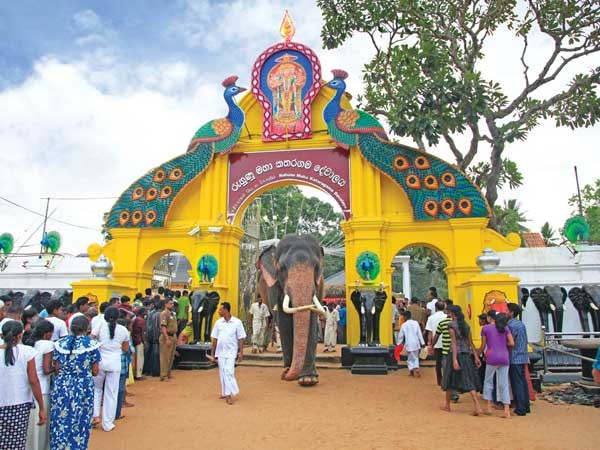
Commenting on the ongoing dispute between kapuralas and Basnayaka Nilame D. P. Kumarage of historical Ruhunu Kataragama Devalaya, Weerawansa said God Kataragama could now take punitive action against the one who had prevented the ‘pooja’ there on Monday morning. He that Kumarage, a relative of President Maithripala Sirisena, had taken away the key to the devalaya from a kapurala who was to perform the pooja.

Lashing out at the government for what he called interfering with law enforcement operations in the Jaffna peninsula, he alleged law enforcement authorities hadn’t been able to perform their legitimate duties and were under tremendous pressure to look the other way as criminal elements flexed their muscles in the Jaffna peninsula. The MP, while referring to spate of incidents that had taken place in the Jaffna peninsula since the second week of July, accused the government of jeopardising national security.

Weerawansa also alleged that state-owned media telecasting movies promoting homosexuality as the government was making an attempt to legitimise such practices.

Colombo district MP Weerawansa said the JVP mounted limited attacks on the government with the approval of Prime Minister Ranil Wickremesinghe and UNP Chairman Malik Samarawickrema.

The MP lambasted the government for giving tax exemptions to foreign multinationals engaged in milk food and flour import to the tune of USD 300 mn annually. He alleged multinationals received massive relief from the administration, while the vast majority of people were struggling to make ends meet.

Having promised the country of an economic miracle in the run-up to presidential and parliamentary polls in 2015, the government had caused chaos in every sector. The Prime Minister ended up complaining on a daily basis about the difficulty in running the economy due to national debt blamed on former President Mahinda Rajapaksa, the NFF leader said.

CLOUDS GROUND LANKA PM

August 28th, 2017

Courtesy Bangalore Mirror 

 The visit of Sri Lankan Prime Minister Ranil Wickremesinghe to Sri Mookambika temple in Udupi district was cancelled due to bad weather on Sunday. The Sri Lankan Prime Minister was scheduled to arrive around 11 am from Bengaluru, following which he was expected to go to Mookambika Temple guest house.
Udupi Deputy Commissioner Priyanka Mary Francis told reporters at Shiroor helipad near Byndoor that the dignitary might reach on another day if the weather conditions improved.

Wickremesinghe, who is now in Bengaluru, could not fly to Byndoor as his chopper could not take off from the capital city even after 12 noon due to bad weather conditions both in Bengaluru and the coastal Karnataka region, she said.

Helipad in-charge Sneha Kulkarni along with Air Force squad had camped at Shiroor and made all arrangements to receive Wickremesinghe.

Udupi District Superintendent of Police (SP) Dr Sanjeev M Patil told BM, We are awaiting further orders regarding his tour. The cloud cover never moved away. The Air Force officials present did not give a green signal for landing. At 12 noon, they called off operations for the day.” The PM was expected to participate in the mangalarti’ as well as ‘Chandika Homa’.

‘We’re not even Muslims’: Hindu family attacked by confused racists — who can’t even spell

August 28th, 2017

  Courtesy rawstory.com

Axenophobic attack on a Hindu family from Sri Lanka was spotted in the early morning hours Sunday.

In a Stapleton Avenue, Speke neighborhood in the U.K., a Hindu family was moving into a new house. Vandals smashed windows and scrawled graffiti across the building. The problem, however, is that they seemed confused and had trouble spelling things, according to The Liverpool Echo.

The attack read Allar Akbar,” but they presumably meant Allahu Akbar,” the Arabic phrase meaning God is greatest” that is often used by Muslims.

We have been getting the house ready so I can move in with my family,” said the resident, who wanted to remain anonymous. I have been living in London for 11 years and we are moving here to join my brother. I’ve never seen anything like this before.”

He noted that he is both upset” and scared now,” because he has a wife and three children.” Yet, despite the fear, he plans to still move into the house.

We are not even Muslims, we are Hindus, and we hate the terrorists also,” he said.

Despite the attack, the owner said that the neighbors have been kind.

I got the shock of my life when I woke up this morning and saw the outside of the house,” said one nearby resident. It’s heartbreaking. I’ve lived here 15 years and this is the first time anything like this has happened. I just hope it hasn’t put off the family who are moving in. The vast majority of people in Speke are not like that.”

Detective Inspector Debbie Tipton said that they will not tolerate hate crimes in the community and assured residents that everything is being done to investigate and locate the perpetrators.

It’s sickening to think that people think that this kind of behaviour is acceptable,” he added. Everyone has the right to live peacefully within their community and to go about their daily lives without harassment from others just because they are perceived to be different. We will take the strongest possible action against those who behaved in this unacceptable way.”

‘It is impractical to dedicate separate court to hear specific cases’ – U R. de Silva

August 28th, 2017

By Kelum Bandara  Courtesy The Daily Mirror

The President of  the Bar Association of Sri Lanka (BASL) U.R. de Silva in an interview with the Daily Mirror spoke on issues related to litigation, dealing with suspects in Police custody and the removal of MP Wijeyadasa Rajapakshe from the post of Justice Ministry. The following are excerpts of the interview:

  • They will provide for a lawyer to meet a particular suspect in police custody which is helpful in obtaining all the details as far as the suspect is considered. It will include the time of his arrest, whether he will be produced before court etc. With the permission of the OIC, we will be able to meet the suspect concerned for legal consultation.
  • They came out with the difficulties they face when working. They lack even office space. There aren’t even enough office rooms for senior officials to discharge their duties. Three state counsels, sometimes, serve in one cubicle. Though there are files referred to the Attorney General for advice, there aren’t enough state counsels.


Q In the aftermath of the removal of Wijeyadasa Rajapakshe from the post of Justice Minister and the appointment of a successor, how do you view this situation?   
Before his (Rajapakshe) removal, he was working very hard. We were working together. He extended all the support to Sri Lanka Bar Association. We wanted to enhance the knowledge of members. We wanted to curtail delays in the laws being implemented and to address concerns of litigants. He asked us to submit our proposals. He acted on our proposals. He travelled across the country while working for the Bar Association to help ordinary people involved in legal cases. The establishment of more and more court houses, we thought, would help poor litigants. That was the view of the Minister. We also helped him. We are satisfied with the process of building court houses. The lack of High Court judges is also a problem in our country. Action was taken to increase the cadre. He did it by adding ten more to the cadre in consultation with the Bar Association.

There is another important point. Earlier, we couldn’t meet suspects in police custody. We engaged different authorities. It wasn’t successful. Thereafter, we made representations. We asked for a special law to be enacted. There are legal provisions being worked out in consultation with the Bar Association. They will provide for a lawyer to meet a particular suspect in police custody which is helpful in obtaining all the details as far as the suspect is considered. It will include the time of his arrest, whether he will be produced before court etc. With the permission of the OIC, we will be able to meet the suspect concerned for legal consultation.

Q As far as the removal of the Minister is concerned, what is the position of the Bar Association?   
We aren’t in a position to say anything. We are very sad that he was removed. It’s up to the President to decide. He has the authority to do so. After consulting the Prime Minister, he has taken such a decision. It’s a political decision which nobody can challenge. He never resigned. He was removed. The President can take such decision according to the Constitution.

Q But, you are sad about it?   
Yes. That’s because he has done a lot for the profession, litigants, and judiciary. The issue or the allegation is that he violated the collective Cabinet responsibility. That’s up to the Cabinet and the Government to decide on. We have no say in that regard. If the new Minister is ready to work with the Bar Association, we will be happy. We have no political agenda. Ours is a non-political body. Earlier, both the President and the Prime Minister assured us that they wouldn’t interfere with the work of the Bar Association.

Q However, there were allegations that the former Minister wasn’t expediting the legal process against wrongdoers of the former rule. What’s your view?   
That allegation was levelled at him before he was removed. We categorically said that the Minister couldn’t intervene in this case. The Attorney General’s Department is an independent body. Right throughout, it has worked independently. As such, if somebody interferes, it’s improper and unacceptable. It’s said that a lot of files were handed over to the Financial Crimes Investigation Division (FCID). The FCID says files were referred to the Attorney General’s Department, but no indictment was served. We made representations to the Attorney General’s Department. We discussed. They came out with the difficulties they face when working. They lack even office space. There aren’t even enough office rooms for senior officials to discharge their duties.

Three state counsels, sometimes, serve in one cubicle. Though there are files referred to the Attorney General for advice, there aren’t enough state counsels. Interviews are being conducted for recruitment. Another problem is the lack of translators in the Department. We discussed these issues with the Minister then. The Minister, at the time, remedied the situation to some extent. Actually, the Minister was also concerned about the delays. He had complained that some of the State Counsels were lethargic and weren’t working efficiently.

Q There was the allegation that the then Minister was delaying cases related to the particular members of the previous Government. What do you say about this?   
It’s incorrect. We know that a lot of people languish in remand prison without indictments being served. Those aren’t political cases. They are coming under the Prevention of Terrorism Act, emergency regulations or the normal law. These cases should also be expedited. As a whole, we want to expedite all, not a few matters concerning some only. That is what we informed the Attorney General. In some cases, even the police haven’t submitted files though they claim otherwise. The Attorney General can’t openly say these things.

Q There’s a lot of criticism aimed at the Attorney General’s Department and the judiciary by politicians. What is the position of the Bar Association?   
The Attorney General’s Department or the Bar Association isn’t concerned about political cases. There are delays in litigations in general due to various reasons- the lack of high courts etc. Some are concerned about certain political cases. Some major cases are being heard by the Colombo High Court. We have seven High Courts in Colombo. Some cases have reached the tail end now. It’s wrong to say that such cases were delayed by the Minister concerned. The Minister can’t certainly interfere in these cases.

Q It’s true that the Minister can’t interfere in that manner. But, he can improve the efficiency in judicial administration leading to the speedy dispensing with of cases in courts. What is your view?  
When we say cases are delayed, what is the action we expect? The Minister only can inform the Attorney General and the Judicial Services Commission to speed up matters. That’s all. Then, he knows the actual problems. Once those were known, he had responded. It doesn’t amount to interference.

Q There’s a proposal to dedicate a separate court to hear identified cases. What is your response?   
We are totally against it. You can’t do it. Earlier also, there was a suggestion to hear drug related cases in one court house. It wasn’t successful. There was a proposal to hear bribery cases in the similar fashion. It wasn’t successful. Finally, we had a court dedicated to hear cases related to terrorism. It wasn’t also successful.

The Colombo High Court has seven court houses. It’s very easy to expedite these matters assigning the cases to all the court houses. What they propose is to have a separate court to hear the cases related to the previous rule. It’s wrong constitutionally. There aren’t provisions to have a separate court for separate people.


  • Bar Association sad about Wijeyadasa’s removal   
  • Says he did a lot of work for the legal profession, judiciary etc   
  • Ready to work with new Justice Minister   
  • There are delays in dispensing with legal cases in general   
  • It isn’t a phenomenon related to some specific cases only   
  • Subject Minister can’t interfere with judicial process   
  • Ranjan Ramanayake’s remarks detrimental to independent judiciary and dignity of legal profession   
  • Fears whether it will give an impetus to the call for foreign judges   

Q There’s also a proposal for trials-at-bar. What is your response? 
Of course, the Attorney General has to decide, and the Chief Justice should offer consent. That is a judicial matter. If it’s a case warranting a trial-at-bar, it should be requested by the Attorney General and considered by the Chief Justice. After that only, the trial-at-bar can be constituted. You can’t have Trial at Bar related to each and every case.

Q How does political criticism affect the independence of judiciary?   
We are concerned about the criticism made by State Minister Ranjan Ramanayake who called lawyers and judges a corrupt lot. That affects the independence of the judiciary. People will think that the judiciary isn’t the proper avenue for redress. If they think the judicial personnel are corrupt, they will lose faith in the system. Then, law and order will collapse. People might take law into their own hands. He should be punished. Politicians can’t make haphazard statements without any merit.
There can be one or two persons not doing the job properly. That doesn’t mean the whole system is corrupt. We are happy with the current status of the judiciary. We want to improve it.

Q There is strong opposition against the participation of foreign judges in hearing cases here as envisaged in the UNHRC resolution. Now, it’s said that international judicial personnel and prosecutors will participate as observers. What is the stand of the BASL?  
They can observe the situation, certainly. We can seek their views. We don’t need those people to conduct the cases or investigations. Today, a Government member levells criticism against the majority of judges and lawyers stating that they are corrupt. We fear whether this will give the international community the impression that there is no independent judiciary here. Foreign countries will justify their position referring to criticism levelled against the judiciary by our own parliamentarians. From the very beginning, we were opposed to foreign judges.

Abolition of the Executive Presidency equates to a new Constitution

August 28th, 2017

BY SHIVANTHI RANASINGHE Courtesy  Ceylon Today

Those who are insisting for a new constitution should pause to reflect on what they are asking and from whom they are asking. First of all, it was the abolition of the executive presidency that was pledged in the 2015 elections and not a brand new constitution. One may argue that abolition of the executive presidency equates to a new constitution. While that maybe the case, the more important question in this highly debatable matter is, do we have the right people in place to undertake this monumental task? After all, our constitution is the blueprint of our law, upholder of our identity and the guard of our national interests.

When this government came to power in 2015, it was marketed as the people’s silent revolutionary. Yet, at the same time, India and America took credit for the ‘regime change.’ The fact that there was foreign influence should be cause enough for us to worry. As Lakshman Kadirgamar famously observed, there is no such thing as a free dinner. Then, what is the price we are to pay for the ‘democracy’ they helped to install?

We all have the same issues

This is not a question to be treated lightly. The regime changes that took place in the Middle East, just few years before our own, offers us live examples of its consequences. Middle East had its own issues – with each other and with the world, especially the West. On the whole though, its respective citizens enjoyed a fairly stable country. Today, those countries that allowed democracy to be imported from the west have disintegrated into utter chaos and even war zones.

When the U.S. Ambassador Atul Keshap brings the message that America wants Sri Lanka to be a federal State, the question is why? The answer offered is, to devolve power so minority communities in Sri Lanka have a degree of self-governance.

However, in Sri Lanka there are no minority communities. All Sri Lankan citizens, irrespective of race, ethnicity, religion, creed, or even gender enjoy the same benefits. This thus also means, we all have the same issues.

It is not only the Tamil student with excellent Advanced Level results denied entrance to the university. It is not only the Muslim graduate who finds himself unemployable. Likewise, a Sri Lankan citizen from any corner of Sri Lanka can ask legal proceedings and official documents to be in Tamil. This is not a privilege Tamils in India or West enjoys.

The 13th Amendment in the American constitution is interesting. It declared that “Neither slavery nor involuntary servitude, except as a punishment for crime whereof the party shall have been duly convicted, shall exist within the United States, or in any place subject to their jurisdiction.” Roughly, demographics of incarcerated Americans nationwide are:

450 Caucasians for every 100,000, 831 Hispanic for every 100,000, 2,306 African origin for every 100,000.

It appears that it is America that needs to devolve power to its minorities.

On the other hand, it was this Constitution that kept our country from keeling over during three decades of terrorism. It was the same Constitution that allowed the annihilation of the most brutal terrorist organization in less than three years, once political will finally set in to militarily defeat terrorism. That same Constitution allowed over 12,000 rehabilitated cadres who once belonged to the Liberation Tigers of Tamil Eelam to be released back to society without any stigma.

One must not forget, terrorism too was imported to Sri Lanka. It is not even a secret anymore that India trained, armed, and financed the Tamil terrorist groups. Kouchner and Miliband came over just before the war ended to pressurize the then government to stop its military efforts is a well-known fact. Less spoken however is the Western powers’ lack of will to arrest fund collection towards the terrorists’ war chest, terrorist propaganda or at the very least prevent terrorists such as Adele Balasingham from residing in those very countries.

For 30 years, Sri Lanka was staring at bankruptcy. It all ended with the annihilation of the LTTE. The country was both stabilizing and progressing.

Debt built to a crescendo

It was in this background that allegations of corruption and debt built to a crescendo. This concerned the general public greatly.

Gradually, the popularity of the then administration waned. Their failure to investigate and respond to the allegations added to the discontentment. While the people’s attention was distracted over the corruption allegations, in the international arena efforts to convert the war victory to war crimes were well underway. To the home audience, the government repeatedly assures the constitution does not allow hybrid courts with foreign judges and prosecutors, disappearance act, retrospective law and terminating services of officers with allegations that has insufficient evidence to sentence thm.

Yet, the Government is not making any effort to reverse, renegotiate, or reject the resolution. The West-led international community is not letting up either. High Commissioner for UNHRC Zeid al-Hussein was in Sri Lanka to remind that we are free to take any decision whose consequences we can face.

It is in this context the new constitution in the making must be viewed. The effort to introduce the unconstitutional as constitutional must never be underestimated. Since the installation of this government, Jeffery Feltman visited government officials twice. Both visits were a hush-hush matter, with closed-door meetings. Feltman is known for taking sides to accentuate the division.

When all these facts are taken on board, it is obvious the foreign interest on Sri Lanka has reached dangerous levels. Without understanding or addressing this danger, it is very foolish to change the locks.

The other factor those asking for a new constitution must consider is the calibre of the executors.

On 29 January 2015, the 100-day mini budget was presented. Though the then finance minister Ravi Karunanayake claimed the economy left by the predecessor to be scary, the mini budget reduced government’s income by slashing taxes on fuel and increased its expenditure by giving a whopping Rs 10,000/- monthly allowance to the public sector. It was not long before the country’s finances twisted into a knot.

On 27 February 2015, a routine auctioning of treasury bonds at the Central Bank was perverted. The then Central Bank Governor Arjuna Mahendran explained it as more of a miscommunication than anything else. He claimed that though only Rs one billion was called, he had in the back of his mind that the government was in need of a much larger sum. However, only Perpetual Treasuries owned by his son-in-law knew that bids worth larger than the value called for would be accepted. As a result, the interest rates increased and for the next 30 years, the country will feel its rippling effect.

Had the government dissolved in 100 days as was the plan, the Central Bank bond scam would never have got exposed as it did. Within these 100 days, people would have enjoyed the bounty of the Robin Hood mini budget and it would be on that popular note the government would have gone to the general elections.

However, the president of the country to whom the power is vested to call for elections, kept putting off the date. By the time elections were finally called, the finances were in a tangle as government coffers emptied faster than it filled.

Though one of the first things the 100-day did was to establish a special crime investigation division to focus entirely on large scale financial frauds, the bond scam investigation was never directed to it. Instead, the Prime Minister, who unceremoniously took the Central Bank under his purview before the bond scam, appointed a three-member committee to check if any irregularities had occurred. When that failed to appease the growing anger, it became the subject of the Commission on Public Enterprise.

The evidence presented had implicated both, the Central Bank Governor and the Prime Minister, in addition to several other senior ministers. Finally the 100-day government was dissolved on the eve the COPE report was to be presented to the Parliament. It is said that it was on the direction of Keshap, the general elections were called.

By then, people’s discontentment was setting in and the 100-day government did not face the August 2015 elections on the high note they wanted.

On 25 September 2015, Sri Lanka decided to cosponsor the U.S. draft resolution ‘Promoting reconciliation, accountability and human rights in Sri Lanka’. How much Keshap’s interference to prevent the COPE report from been presented to the parliament played a part in accepting the Geneva resolution without a hum of protest is not possible to state, but perhaps easy to guess.

In 2017, we lost control of our Magampura Port for the next 99 years. Severely cash strapped, other national assets are also up for long term lease.

Only a court of law can decide if one is guilty. However, a number of things are obvious. The Robin Hood mini budget was to be a grand scale election bribe. Also, the mastermind behind the Central Bank bond scam countered on a major distraction such as an election, for they did not bother to cover their tracks. Had the general elections were called on schedule, everyone’s attention would be on the various campaigns and the ensuring debates. Therefore, our economy was ransomed for individual political survival. The most contentious of all is the allegation that with one phone call, Keshap dissolved our government. Is it from these entities, we ask for a new Constitution?

ranasingheshivanthi@gmail.com

මලාලා ගේ පාඩම සහ ඕල්කොට්තුමා

August 27th, 2017

වරුණ චන්ද්‍රකීර්ති

අපි හැමෝ ම අහලා තියෙනවා අංගුලිමාල මහරහතන්වහන්සේ ගේ කතාව. තක්සලාවට අහිංසක ගියේ ශිල්ප ඉගෙනගන්න. ඒත් ඒ අහිසංකව මහා දාමරික මිනීමරුවෙක් බවට පත්කරන්න ඔහු වටා සිටි අයත් ඔහුට ශිල්ප ඉගැන්වූ ගුරුතුමාත් කටයුතු කළා. මිනිසුන් දහසක් මැරීමේ උගුලට අහිංසකව යොමු කළේ ඔහු ගේ ම ගුරුතුමා. ගුරුළුගෝමින් ගේ අමාවතුරෙන් විස්තර කෙරෙන විදිහට ඒ ගුරුතුමා එහෙම උපක්‍රමයක් යෙදුවේ ඉදින් ඔහු මැරුයෙම් වීම් නම් දිසාපාමොක් ඇදුරු තමා කරා ශිල්ප උගන්නට ගිය දරුවන් දොස් දක්වා මරයි කියා වටාලා ශිල්ප උගන්නට එන්නෝ නො වෙති. එසේ වන්නා හා මට ලාභ පිරිහෙයි” කියන චේතනාවෙන්. මේ කතාවෙන් පැහැදිළි වෙනවා අධ්‍යාපනයටත් ගුරුවරුන්ටත් කරන්න පුළුවන් දේ. ඒ වගේ ම, ඒ කාලයේ දී පවා අධ්‍යාපනය ලබාදුන්නේ ලාභ උපයන අරමුණකින් බව.

අපේ පන්සල්, පිරිවෙන්වල ලබාදෙන අධ්‍යාපනයට පවා යම් ආකාරයක පිරිවැයක් දරන්න වෙනවා. දායක කාරක අපි ඒ වියදම් යම් යම් ආකාරවලින් කරට ගන්න හින්දා ඒ අධ්‍යාපනය ලබාදෙන ස්වාමීන්වහන්සේලාටත් ඒ අධ්‍යාපනය ලබාගන්නා ගිහි පැවිදි පිරිස්වලටත් ඒක බරක් වෙන්නේ නෑ. නිදහස් අධ්‍යාපනය හරහා අපිට නොමිලේ අධ්‍යාපනය ලැබුණත් ඒකේ පිරිවැය දරන්නේ රටේ පුරවැසියෝ. එක එක විදිහට අපි ගෙවන බදුවලින් ආණ්ඩුව මේ වැඩේ පිරිවැය පිරිමහගන්නවා. ඉතින් මොන ආකාරයෙන් හිතලා බැලුවත් අධ්‍යාපනය කියන්නේ නිකම් ම නිකම් අහසින් කඩා පාත්වෙන එකක් නෙවෙයි. ඒ වෙනුවෙන් අපි මොන මොන ආකාරයෙන් හරි විශාල විදිහට මුදල් වියදම්කරනවා. ආණ්ඩුවේ අධ්‍යාපන වැය ශීර්ෂයට දළ ජාතික නිෂ්පාදිතයෙන් සියයට හයක් වෙන්කරන්න කියන අය පවා නොකියා කියන්නේ අධ්‍යාපනය කියන්නේ සල්ලි වියදම්කරලා ලබාදෙන්න ඕන සේවාවක් කියන එක. එහෙම නැතිනම් ඒ වෙනුවෙන් සතයක්වත් වෙන්කරන්න උවමනාවෙන්නේ නෑ.

ඉතින් අධ්‍යාපනය විවිධාකාර විදිහට විකුණනවා. සමහරු අධ්‍යාපනය විකුණලා ඒ සේවය ලබාගන්න කෙනාගෙන් කෙළින් ම මුදල් ලබාගන්නවා. අපේ විශ්වවිද්‍යාල ශිෂ්‍යයෝ පවා මේ බිස්නස් එකේ යම් යම් ආකාරයෙන් යෙදිලා ඉන්නවා. දැන් කාලේ විශ්වවිද්‍යාලවලට එන ශිෂ්‍යයන් අතරින් ටියුෂන් නොගිය කෙනෙක් හොයාගන්න එක නොමළ ගෙයකින් අබ මිටක් හොයාගන්නවාටත් වඩා අමාරුයි. ඉතින් ඒ අයත් මේ අධ්‍යාපන භාණ්ඩය” වෙනුවෙන් මදි නොකියන්න වියදම් කරලා තියෙනවා.

මලාලා ගේ තාත්තාත් බොහොම පිළිවෙලකට මේ අධ්‍යාපන භාණ්ඩය” විකුණපු කෙනෙක්. ෂියා උද්-දීන් යූෂුප්සායිට – ඒ කියන්නේ මලාලා ගේ තාත්තාට; පුද්ගලික පාසල් ජාලයක් ම තිබුණා. ඒවා නම්කරලා තිබුණේ කුශාල් මහජන විද්‍යාල කියලා. කොහොම හරි මේ ඉස්කෝලවල කරපු ඉගැන්නිල්ලට තලේබාන් සංවිධානයත් එක්ක සම්බන්ධ අය ගේ වැඩි කැමැත්තක් තිබුණේ නෑ. විශේෂයෙන් ම, ගැහැණු ළමයින්ට ඒ අධ්‍යාපනය ලබාදෙන එක වහා ම නවත්තන්න කියලා ඒ අය කිව්වා. තලේබාන් කියන නමේ තේරුමත් ශිෂ්‍යයෝ” කියන එක. ඒ කියන්නේ, ඒ අයත් ඉගෙනගන්න අය. තමන් ව ශිෂ්‍යයෝ” විදිහට හඳුන්වාගන්න පිරිසක් අධ්‍යාපනය ලබාදෙනවාට විරුද්ධ වෙයි කියලා හිතන්න පුළුවන් ද?

ඒත් මේ ශිෂ්‍යයෝ” මලාලා ගේ තාත්තා මුල්වෙලා කරගෙන ගිය ඉගැන්නිල්ලට විරුද්ධ වුනා. හැබැයි මේ අය විරුද්ධ වුනේ සල්ලි අයකරලා අධ්‍යාපන භාණ්ඩය” විකුණන එකට නම් නෙවෙයි. එහෙම නම් පිරිමි ළමයින්ට ලබාදෙන අධ්‍යාපනයත් නවත්තන්න කියන්න ඕනනේ. ඒත් ඒ අය විශේෂයෙන් ම විරුද්ධ වුනේ ගැහැණු ළමයින්ට ඒ අධ්‍යාපනය ලබාදෙන වැඩේට.

මේ, පකිස්ථානයට විතරක් අදාළ ගැටලුවක් නෙවෙයි. නයිජීරියාව මුල් කරගෙන ඒ රටේත්, චැඩ්, නයිජර්, කැමරූන් කියන රටවල්වලත් ක්‍රියාත්මක වෙන බෝකෝ හරාම් කියන සංවිධානය ගැන අපි හැමෝ ම වගේ අහලා තියෙනවා. බෝකෝ හරාම් කියන නමේ තේරුම තමයි බටහිර අධ්‍යාපනය එපා” කියන එක. ඒ අයත් වැඩියෙන් ම විරුද්ධ ගැහැණු ළමයින්ට මේ බටහිර අධ්‍යාපනය ලබාදෙන වැඩේට. 2014 අවුරුද්දේ අපි අවුරුදු කකා ඉන්න දවස්වල – ඒ කියන්නේ අප්‍රෙල් 14 – 15 දවස් දෙකේ දී; මේ අය නයිජීරියාවේ ඉස්කෝලෙක ඉගෙනගත්ත ගැහැණු ළමයි 276 දෙනෙක් පැහැරගෙන ගියා. ඒ විදිහට පැහැරගත්ත අයගෙන් 2017 අවුරුද්දේ මැයි මාසය වෙද්දිත් නිදහස්වෙලා ඇවිල්ලා තිබුණේ ගැහැණු ළමයි 82 ක් විතරයි.

ඉතින් පකිස්ථානයේ ශිෂ්‍යයෝ” විරුද්ධ වෙන්නේත් මේ බටහිර අධ්‍යාපනයට. ඒ හින්දා ඒ අය ආඥාවක් නිකුත් කළා 2009 අවුරුද්දේ ජනවාරි 15 වැනි දාට පස්සේ තමන් ගේ බල ප්‍රදේශයේ කිසිම ගැහැණු ළමයෙක් ඉස්කෝලේ යවන්න එපා කියලා. ඒත් ඒ වෙද්දි තමන් ගේ තාත්තා ගේ අනුබලය පිට මලාලා අධ්‍යාපන අයිතිය” ගැන කතාකරන්න පටන් ඇරගෙනයි තිබුණේ. ඒ වෙද්දී මලාලාට වයස අවුරුදු 11 යි. මලාලා කතාක‍ළේ ලෝකයට ම ඇහෙන්න. මොකද ඒ වැඩේට ඉඩදීලා තිබුණේ බී. බී. සී. එක. ඉතින් මලාලා දිගට ම කතාකළා. ශිෂ්‍යයෝ” දිගට ම ඉස්කෝල වහගෙන ගියා. 2011 අවුරුද්දේ ජාත්‍යන්තර ළමා සාම තෑග්ගට පවා මලාලා ගේ නම යෝජනා කෙරුනා. ඒ වැඩේට මුල්වුනේ දකුණු අප්‍රිකාවේ ඩෙස්මන්ඩ් ටුටූ අගරදගුරුතුමා. ඒ අවුරුද්දේ දී ම ජාතික තරුණ සාම තෑග්ග ඇයට ලබාදෙන්න පකිස්ථාන ආණ්ඩුව කටයුතු කළා. ඒත් ශිෂ්‍යායෝ” මේ වැඩ ගැන කිසි ම කැමැත්තක් පෙන්නුවේ නෑ. දවසින් දවස ම ඒ අය මලාලා ව දැක්කේ ඉවරයක් කරලා දැමිය යුතු පිළිලයක් විදිහට. ඉතින් 2012 ඔක්තෝබර් මාසේ 9 වැනි දා එක ශිෂ්‍යයෙක්” මලාලාට වෙඩි තිබ්බා.

පකිස්ථාන ආණ්ඩුවත් මුල්වෙලා මලාලා ව එංගලන්තයට ඇරගෙන ගිහිල්ලා ඇය ගේ ජීවිතය බේරුවා. මලාලාට වෙඩි තියපු එකට විරුද්ධ ව මුළු පකිස්ථානය ම වගේ නැගී හිටියා. මමත් මලාලා කෙනෙක්” කියලා ව්‍යාපාරයක් පවා ඇතිවුනා. 2014 අවුරුද්දේ දී මලාලාට නොබෙල් සාම තෑග්ගත් ලැබුණා. එතකොටත් මලාලාට වයස අවුරුදු 17 යි. ඉතින් ඇය තමයි නොබෙල් සාම තෑග්ග ලබපු ලාබාල ම කෙනා. දැන් මලාලා අධ්‍යාපනය පිළිබඳ ජාත්‍යන්තර ක්‍රියාකාරිනියක්. ඇය ගේ තාත්තාත් දැන් එක්සත් ජාතීන් ගේ ගෝලීය අධ්‍යාපන වැඩසටහනේ විශේෂ උපදේශකයෙක්.

මේ අවුරුද්දේ – 2017 අවුරුද්දේ; මලාලාට අවුරුදු 20 ක් පිරුණා. වෙඩි වැදිච්ච වෙලාවේ ඇයට දක්වපු කරුණාව, අනුකම්පාව අද පකිස්ථානයේ බහුතරයක් මිනිස්සු ළඟ නෑ. බොහෝ දෙනෙක් මලාලා ව හඳුන්වන්නේ බටහිර ඒජන්තයෙක් විදිහට. ඒ හින්දා දැන් මම මලාලා කෙනෙක් නෙවෙයි” කියලා ව්‍යාපාරයකුත් පකිස්ථානයේ ආරම්භ වෙලා. මෙහෙම වෙන්නේ ඇයි?

තුවක්කු ඇරගෙන පකිස්ථානයේ ශිෂ්‍යයෝ” වගේ එහෙම නැතිනම් නයිජීරියාවේ බෝකෝ හරාම් සංවිධානයේ අය වගේ මලාලාලා ගේ ඔළුවලට වෙඩි නොතිබ්බත් ඉස්කෝලවලට බෝම්බ නොගැහුවත් අපි අතරත් බටහිර අධ්‍යාපන ක්‍රමය ගැන විවේචනයක් තියෙනවා. උදේ දවල් රෑ නැතිව අධ්‍යාපන සංශෝධන එන හින්දා අපේ රටේ මොනම අධ්‍යාපන ක්‍රමයක් නැති බවටත් චෝදනාවකුත් තියෙනවා. බටහිර අධ්‍යාපන ක්‍රමය” බටහිර අධ්‍යාපන ක්‍රමය” කියලා අපි කිව්වාට ඇත්තෙන් ම එහෙම එක අධ්‍යාපන ක්‍රමයක් නෑ. එංගලන්තේ උගන්වන දේවල් නෙවෙයි ප්‍රංශයේ උගන්නන්නේ. ඇමෙරිකානු ජනපද සංගමයේ වුනත් එහෙමයි. බටහිර අධ්‍යාපන ක්‍රමය රටින් රටට වෙනස්. ෆින්ලන්තයේ තියෙන අධ්‍යාපන ක්‍රමය ගැන මේ ළඟ දී මහා හා හූවක් ඇතිවුනා. ලෝකයේ හොඳ ම අධ්‍යාපන ක්‍රමය තියෙන්නේ ඒ රටේ කියලා කියන අයත් ඉන්නවා.

එහෙම නම් මොකක්ද මේ විදිහට බටහිර අධ්‍යාපන ක්‍රමය” කියලා හඳුන්වන්නේ? විවිධාකාරයේ ශිල්ප ශාස්ත්‍ර අපේ ළමයින්ට ලබාදෙන එකට විරුද්ධ කවුරුවත් ඉන්නවා කියලා හිතන්න බෑ. බටහිර රටවල්වල උපදින ශිල්ප ශාස්ත්‍ර ඉගැන්නිල්ලට මේ අධ්‍යාපන ක්‍රමය ඇතුළේ වැඩි ඉඩකඩක් ලැබිලා තියෙන බව ඇත්ත. ඒකට ඉතින් දොස් කියාගන්න ඕන අපිටමනේ. අපිටත් පුළුවන් නම් අපේ ශිල්ප ශාස්ත්‍ර විධිමත් විදිහට නිරවුල්’ කරගෙන වර්ධනය කරගන්න. ඒවාට තැනක් හොයාගන්න එක අමාරුවෙන් හරි කරන්න පුළුවන් වේවි. කිසි ම දෙයක් අපි හිතන පතන සැනෙකින් වෙන්නේ නැහැනේ.

ගැහැණු ළමයින්ට ලබාදෙන්න හොඳ අධ්‍යාපන ක්‍රමයක් පකිස්ථා‍නයේ ශිෂ්‍යයොත්” නයිජීරියාවේ බෝකෝ හරාම් කට්ටියත් හදාගෙන වැඩිදියුණු කරගෙන නෑ. හැම රටේ ම ඉන්න ගැහැණු ළමයි එක ම අධ්‍යාපනය ලබාගන්න ඕන කියලා කාටවත් නියම කරන්න බෑ. ඉතින් තමන් පිළිගන්න ආගම ධර්මයටත් තමන් ගේ ඇවැතුම් පැවැතුම්වලටත් ගැලපෙන විදිහට අධ්‍යාපන ක්‍රමයක් ගොඩ නඟාගැනීමේ අයිතිය කාටත් තියෙනවා. ඒත් මුලින් ම කරන්න ඕන ඒ විදිහට තමන්ට උවමනා කරන ශිල්ප ශාස්ත්‍රත් ඒවා උගන්නන්න ඕන විදිහත් මූලික විදිහට හරි හඳුනාගෙන ඒවා ක්‍රම ක්‍රමයෙන් වර්ධනය කරන්න උත්සාහ කරන එක. ඊට පස්සේ ක්‍රම ක්‍රමයෙන් ඒ ක්‍රම පවතින අධ්‍යාපන ක්‍රමය ඇතුළට කාවද්දන්න උත්සාහ කරන එක. තමන් ගේ අතේ තුරුම්පු නැතුව මේ සෙල්ලමෙන් දිනන්න බෑ.

ඕලකොට්තුමා මුල්වෙලා ආරම්භ කරපු බෞද්ධ ඉස්කෝලවල උගන්වන්නෙත් මලාලා කියලා දෙන්න හදන පාඩම් ම තමයි කියලා කියන එක හොඳ නිරීක්‍ෂණයක්. හැබැයි එහෙම කියලා ඕල්කොට්තුමාටත් ඒ පාසල්වලින් ලබාගත්ත අධ්‍යාපනයෙන් නොමඟ ගියා” කියලා පෙනෙන අයටත් බැන බැන හිටියා කියලා ලැබෙන සෙතක් නෑ. අපි කරන්න ඕන අපේ ළමයින්ට කියලා දෙන්න ඕන පාඩම් මොනවාද කියලා විධිමත් ව හොයලා බලන එක. ඊට පස්සේ ඒවායේ අන්තර්ගතය ක්‍රමවත් පෙළ පොත් විදිහට සකස් කරගන්න එක. ඒත් කුමාරතුංගගෙන් පස්සේ බිහිවෙච්ච අපේ කිසිම පඬිවරයෙක් මේ ගැන ඒ විදිහට හිතලා වැඩකරලා නෑ. ඉතින් අපි මුලින් ම ඒ පාඩම ඉගෙනගනිමු!


වරුණ චන්ද්‍රකීර්ති ෴

ධර්මිෂ්ඨ විප්ලවය-සුද්දගෙ නීතිය අපට එපා -ගලගොඩ‌අත්තේ ඥානසාර හිමි (හෝමාගම උසාවිය, 2016 ජනවාරි 25) 

August 27th, 2017

චන්ද්‍රසිරි විජයවික්‍රම,

අබුද්දස්ස කාලය
උසාවිය නිහඬයි යන වාර්‌තා චිත්‍රපටියෙන් පෙන්වන්නේ මහව උසාවියේ නිතීඥයින්, පොලිසිය, නීතිපති දෙපාර්‍තමේන්තුව, අධිකරණ සේවා කොමිෂන් සභාව, ශ්‍රේෂ්ඨාධිකරණය හා රටේ අධිකරණ ඇමති යන පාර්‌ශව සියල්ලම වෙන වෙනම හා එකතුව, මහව මහේස්ත්‍රාත්‌වරයා විසින් ක්‍රමාණුකූලව සිදුකල ස්ත්‍රී දූෂණ දෙකක් යට ගැසූ අන්දමය. එසේනම් උසාවිය තුල හයියෙන් ඈනුමක් ඇරියත් දඬුවම් කරනවා නේද යයි කියමින්, ඥානසාර හාමුදුරුවන් සුද්දගෙ නීතිය අපට එපා කියමින් කෑ ගැසීමේ තනි සිද්ද්ධිය උන්වහන්සේව රිමාන්ඩ්භාරයේ තැබීමට තරම් හේතුවක් වන්නේ කෙසේද? අලි පැටව් සම්බන්‌ධයෙන්, නඩුකාරයාට ඇප දෙන්නටත්, උඩුවේ ධම්මාලෝක හාමුදුරුවන්ව රිමාන්ඩ් කරන්නටත් (පසුව අසාද් සාලි මැදිහත්‌ව නිදහස් කරන්නටත්) හේතුව කුමක්ද?  ඥානසාර හිමියන්ව නිහඬ කිරීමේ පරමාර්‌ථයෙන් මේ රටේ වංක, අශීලාචාර දේශපාලකයින් හා කළු සුද්දන් ක්‍රියාකලේ ඇයි? උන්වහන්සේව හෙලා දකින ගමන් මාදුළුවාවේ සෝභිත හිමියන්ව කරේ තබාගෙන ගියේ ඇයි? පොලිස් නිලධාරීන්ට අසභ්‍ය වචනයෙන් කතාකරමින් සිවුරට අගෞරව කරනවා යන තර්‍කය නිසාමද? 

කුඩම්මාගේ සැළකිලි
මහින්ද රාජපක්‍ෂ හා මෛත්‍රීපාල සිරිසේන/රනිල් වික්‍රමසිංහ ආණ්ඩු විසින් සිංහල බෞද්ධයාට අහිතකර ලෙස බලපාන ලෙස ගන්නා තීරණ පිළිඹදව ලංකාවේ මහානායක හාමුදුරුවරු ගත්තේ අනුශාසනාදීමේ පිළිවෙතකි. 1802 සිටම ඓතිහාසිකව බලනවිට අටපිරිකර හා පලතුරු වට්ටියක් ගෙන මහනුවරට බැහැදැකීමට යාම හැර, කොළඹ බිෂොප්ලාට තිරයෙන් පිටුපස ලැබෙන අන්දමේ සැළකිල්ලක් ඔවුන්ට කවදාවත්ම ලැබුණේ නැත. 2002 සෝම හාමුදුරුවන්ගේ භූමිකාව, 2004 ජාතික හෙල උරුමයේ ආගමනය, 2012 මැයි මාසයේ බොදු බල සේනාව කරලියට ඒම යන කාරණාවලදී මහානායක හාමුදුරුවරු තුෂ්ණිම්භූතව ඒවා දෙස බලා සිටියේය. බුදුවරු, රහත්‌වූ අය දැන් රටේ ඉන්නවා කියන විට වගේමය. 1940 ස් ගණන්වල විනයවර්‌ධන ව්‍යාපාරය (හාමුදුරුවරුන් නැති බුද්ධාගම) ගව මුත්‍රා බොමින් මිනී පිට්ටනිවල රාත්‍රිය ගතකල කාලයේ මෙන්‌ය. මෙසේ සන්සුන්ව හා උපේක්‍ෂාවෙන් සිටි ඔවුන්ව ඉවසීමේ සීමාවෙන් ඔබ්බට දැම්මේ රටේ ආණ්ඩුව පොලිසිය යොදවා නීතිය හරහා සංඝ දමනයක නියැළී සිටින බව පැහැදිලිවම රටට පෙනීයාමත් සමඟය. රට දෙකට බෙදීමෙන් ඔබ්බට ගිය රට කැබලි හත අටකට කඩා විනාශ කිරීමේ ඩොලර් ව්‍යාපාරයක් ගෙනයන එන්ජිිෝ නඩ එලිපිටම ඥානසාර හිමියන් බිල්ලට ගන්නට ක්‍රියාකිරීමය.

අස්ගිරි නාස් ලණුව
අනිත් නිකායවල් මෙන් නොව, පලිපානේ චන්දානන්ද මහනාහිමියන්ගේ කාලයේ සිටම වඩා ඉදිරියෙන් සිටි අස්ගිරි පාර්‍ශවයට, පණිවුඩකරුවාට වෙඩිතැබීමේ මෙම එන්ජිිෝ උපක්‍රමය නිසියාකාරව අවභොධ වීම විමතියට කරුණක් නොවේ. අස්ගිරිය විසින් පර්‍යේෂණ හා සංවර්‍ධන කටයුතු පිළිඹඳ ජාත්‍යන්තර බෞද්ධ මධ්‍යස්ථානයක් පවා පිහිටුවා තිබේ. මේ නිසා ඥානසාර හිමියන්ගේ මස් රාත්තලම ඉල්ලන නොයෙක් අයට අස්ගිරිය විසින් සම්‍යයක් දෘෂ්ඨික ප්‍රතිචාරයක් දක්‌වන ලදී. එය නම් පණිවුඩකරුවා, පණිවුඩයෙන් වෙන්කර ගතයුතු බව ආණ්ඩුවට දැන්‌වීමය. මේ පණිවුඩය, එනම් නායකයෙක් නැතිව අතරමංවී සිටින සිංහල බෞද්ධයාට වන හානිය විමසා බැලිය යුතුය, චන්ද්‍රිකා මැතිණිය පත්කල 2002 බුද්ධ ශාසන කොමිෂමේ නිර්දේශ ක්‍රියාත්‌මක කලයුතුය යන්නට තමන් එකඟවන බව 2017 ජූනි 20 දා නිකුත්කල ප්‍රකාශනයකින් ආණ්ඩුවට භාර දෙන ලදී. ඉන් නොනැවතී ජූලි 4 දා ආණ්ඩුවට දැන්‌වූයේ අළුත් ආණ්ඩුක්‍රම ව්‍යවස්ථාවක් මේ අවස්ථාවේ රටට අනවශ්‍ය බවය. නොදන්නා යකාට වඩා දන්න යකා හොඳ බවය.
රටේ සමස්ථ සංඝ සංස්ථාවම මෙම ප්‍රකාශණය අනුමත කරන ලද්දේ ඊට පක්‍ෂ දේශපාලනයක් නැති නිසාය. ආණ්ඩුවට අල්ලා ගන්නට සිදුවූ මේ කොටි වලිගය නිසා වෙඩිකෑ ඌරන් මෙන් වියරුවූ වංක දේශපාලකයින් හා එන්ජිිෝ නඩ දඩි බිඩියේ දඹුල්ලෙන් අස්ගිරි ආක්‍රමණයක් ඇරඹුවේය. පුදුමය නම් 1551 දොන් ජුවන් ධර්‌මපාල කතෝලික රජුගෙන් පසුව ප්‍රථම වරට 2017 දී කතෝලික කාඩිනල්තුමා විසින් ලංකාවේ සුළු ජන වර්‍ග විසින් ලංකාවේ සිංහල බෞද්ධ පදනම පිළිගත යුතුය, අයුතු අන්‍යාගමීකරණය නතරකල යුතුය යනුවෙන් ප්‍රකාශකල විට කිසිවෙක් කාඩිනල්තුමා පසු පස ලුහුබැඳ නොයාමය. 
මේ වන විට බෞද්ධයා කෙතරම් බාල්දුවට වැටී තිබේදැයි මැණගතහැකි මිම්මක් නම් තරුණ නිලියක් විසින් කිසි හිරිොත්තපයක් නැතිව මීතොටමුල්ලේ කුණු කන්ද ජේතවනාරාමයට ගොස් දැමූ පින්තූරයක් කලා නිර්‌මානයක් ලෙස අගයමින් ඉන්ටර්නෙට් එකට කොපිකර දැමීමය. මඩු පල්ලිය හෝ කෝවිලක්, අරාබි සල්ලි වලින් හදන යෝධ මුස්ලිම් පල්ලියක් මතක් නොවුනේ ඇයි? යම් විදේශ සංචාරක කාන්තාවක් ඇගේ උරහිසේ හෝ බාහුවේ බුදුරුවක් පච්චකොටා ඇතිවිට ඇයව පිටුවහල් කරන පොලිසිය මෙහිදී නිහඬ ඇයි?

 
හාමුදුරුවරු හා කළු සුද්දන් අතර ගැටුම
ජාතියේ මුර දේවතාවුන් යන සංකල්පය දෙස මෑතදී ඉංග්‍රීසිකාරයා ලංකාව අල්ලාගත් කාලයේ සිට බලනවිට, එය එක පැත්තකින් පන්සලත්, අනිත් පැත්තෙන් (සුද්දන් හා) කළු සුද්දනුත් යන දෙකොටස අතර ඇතිවූ අරගලයක් බව පෙනේ (රට අල්ලාගෙන සිටි සුද්දන් එසේ නොසිතුවානම්  ජපනුන් ලංකාවට ගොඩ බැස්සොත් හාමුදුරුවරු සිර කඳවුරුවලට ගෙනයාමේ [1945 දෙසම්බර් 7 පර්ල් හාබර් ජපන් ප්‍රහාරයට පසු ඇමෙරිකාවේ පුරවැසියන්‌වූ ජපන් ජාතිකයින්ට කලා මෙන්] ප්ලෑනක් ලංකාවේ සිටි හමුදා ආඥාදායක අද්මිරාල් ලේටන් විසින් සළකා බලන්නේ නැත). මහානායක හිමිවරුන් මේ මැදිහත්‌වී සිටින්නේ එවැනි අරගලයකටය. ඩොලර් බලය යොදවා මේ අරගලය දියාරු කිරීමට මේ රටේ නිල්, කොල, රතු පක්‍ෂ හා එන්ජිිෝ කළු සුද්දන් ක්‍රියාකරමින් සිටී. සිංහල බෞද්ධයින් විසින් පක්‍ෂ දේශපාලනයට අන්ධ නොවී, තිස් අවුරුදු යුද්ධය නිමාකර ගත්තා සේම, 1923/4 සිටම එන රට කැබලි කිරීමේ ව්‍යාපාරයෙන් රට මුදා ගැනීමට මහානායක හිමිවරුන් ආරම්භකල ධර්මිෂ්ඨ විප්ලවයට එක්‌විය යුතුය. කොට උඩ යන රටක්, බල්ලාට ගිය අශීලාචාර රටක් බේරා ගත හැකි බෞද්ධ මාර්‍ගයක් රටට ඇත. 

සුද්දගෙ නීතිය
යටත් විජිතවල නිදහස් සටන කියන්නේ සුද්දගෙ නීතිය අපට එපා කියන එක නොවේද? මීට හේතුව සුද්දා යටත් විජිත තමන්ගේ වාසිය සඳහා පවත්‌වා ගෙන ගියේ සුද්දගෙ නීති හරහා වීමය. ලන්දේසි කාලයේදී කුරුඳු ගහක් කැපීමට දඬුවම මරණය වූයේ ඒනිසාය. අප්‍රිකාවේ මාවු මාවු ව්‍යාපාරය මෙන් නොව ලංකාවේ මාක්ස්වාදීන් විස්කි බොමින් බංගවේවා යයි කිව්වේ මෙහි එක්තරා අන්තයකට යමින්‌ය. සති පූජාව යයි කියමින් වැන්ඳඹුවන් බලෙන් ගිනිමැලයට තල්ලුකිරීම තහනම් කල ඉන්දියාවේ නීතිය හැර රටක යහපත ගැන සිතා සුද්දන් පාස්කල නීතියක් මට සිහිපත් නොවේ. සුද්දාගේ සූරාකෑමේදී ඔවුන්ට කත් ඇද ඔත්තු සපයා කල්තියාම සම්බොඩීස්ලාවූ කුමාරසූරියර්-ඔබේසේකර පවුල්, සොයිසලා-සේනානායකලා වැනි නෝබොඩීස්ලා අළුතෙන් සම්බොඩීස්ලා වීම නොරිස්සුවේය. කෙසේ වෙතත් මේ දෙගොල්ලම කළු සුද්දන්, තෙම්පරාදු පංචස්කන්‌ධ, මිස රටේ සිංහල බෞද්ධ ශිෂටාචාරයේ සාරධ‌ර්‍ම කෙරෙහි කිසි තැකීමක් කල අය නොවීය.

හීනමානය යටි හිතට රිංගවීම
මුලින් හුදෙක් පුද්ගලික ලාභ ප්‍රයෝජන තකාම සුද්දන් පස්සේ ගිය මේ කළු සුද්දන් පසුව සුද්දන් විසින් ඇතිකල හීනමානයකට (හියුමිලියේෂන්) ගොදුරුවිය. ඒ සමඟ පැටළුණු තවත් දෙයක් නම් බෙදා පාලනය කිරීම යන රීතියය. සුද්දන්ට විරුද්ධව නිදහස් සටන් ගෙන ගිය අය පසුව සුද්දන්ගේ අනුකාරකයින්‌වුන අන්දම තියඩෝර් ෆොන් ලෝ විසින් ඔහුගේ ද වර්ල්ඩ් රෙවොලූෂන් ඔෆ් වෙස්ට‌ර්‌නයිශේෂන් (1987) යන පොතේ පෙන්වාදී ඇත. මේ අනුව නේරු, නිකෲමා, නසාර්, ටිටෝ, සුකර්ණෝ, මaaෝ සේතුන්, සටාලින් යනාදී කී නොකී හැමෝම අඩු වැඩි වශයෙන් බටහිර විප්ලවය නමැති මැෂිමට හසුවුන කළු සුද්දන් බවට පත්‌විය. මීට අසු නොවූ අය වශයෙන් අනාගාරික ධ‌ර්‌මපාල, සුරේස් චන්ද්‍රබෝෂ්, (බොහෝ දුරට ගාන්‌ධි හා අම්බෙඩ්කාර්), බුරුමයේ ජෙනරාල් අවුන් සාන්, අගමැති ඌනු, කාම්බෝජයේ සීහනුක්, කොන්ගෝවේ පැට්‍රිස් ලුමුම්බා, හා රටෙන් සූරාගත් ධනය ප්‍රංශයෙන් ආපසු ඉල්ලා සිටි හේතියේ ජීන් ඇරිස්ටයිඩ් වැනි ස්වල්පයක් දෙනා සැළකිය හැකිය. මේ සැමට අත්‌වූ ඉරණම ලොවම දනී.
මෙසේ හීනමානයක් කළු සුද්දන්ගේ යටි හිතට කිඳාබැස්සවීම නමැති කාසියේ අනිත් පැත්තවූයේ වයිට් මෑන්ස් බර්‌ඩන් යන කතාවය. ලංකාවේ ගම-වැව-දාගැබ යන ත්‍රිත්‌වය අමතක කොට ඇමෙරිකාවේ ටෙනසිවැලි ගංඟා යෝජනාක්‍රමය වැනි යෝධ ව්‍යාපාර වැරදි ලෙස ගල් ඔය වැනි කුඩා ගඟකට පටවා ගත්තේ (කුඩා උඩුගං ජලාශ සහිත පරිසර හිතවේදී ක්‍රමයක් දොස්තර එස් ඒ වික්‍රමසිංහ මහතා යෝජනා කලේය) , නැත්නම් යෝධ මහවැලි ව්‍යාපාරය කලබලයට දමාගත්තේ හා දැන් රට අමාරුවේ වැටී ඉන්නා අනිසි ප්ලෑන් අනුව කල අධිවේගී මාර්‍ග, හම්බන්තොට වරාය, මත්තල ගුවන් තොටුපල, උමා ඔය ව්‍යාසනය යනාදිය මේ කාසියේ දෙපැත්තේම විපාක වලට උදාහරණය. මේ හීනමාන වසංගතය ඒ කාලයේම හඳුනාගෙන ඊට බේතක් අනාගාරික ධර්‌මපාලතුමා නියම කලේය. පඹයෙකු සදා, සුදුහුණු ගා, ගෙය ඉදිරිපිට තබා ඊට උදේ හවස පර සුද්දා-පර සුද්දා කියමින් පයින් ගහන ලෙස ඔහු කියා සිටියේ සුද්දාට අවමාන කිරීමට නොව සිංහලයාගේ හීනමානය අඩුකරවීමට ව‌ත්‌ සිතාය. චාල්ස් වෙනුවට චන්ද්‍රසිරි කියා නමක් මට දමා ඇත්තේ ඒ නිසාය. අන්දමන්ද වූ සමහරු දරුවන්ට සිංහල නමක් (ගමට-කුස්සියට) හා ඉංග්‍රීසි නමක් (රටට-කන්තෝරුවට) වශයෙන් නම් දෙකක් දැම්මේය.

චතුරාර්‍ය සත්‍යය
අස්ගිරි හාමුදුරුවරුන් මූලිකවී අතගසා ඇති ජාතික මෙහෙවර සාර්‍ථකව ඉදිරියට ගෙනයාමට හැකිවන්නේ රට අගාධයට (දුක) වැටී ඇත්තේ කුමක් නිසාද (දුකට හේතුව) කියා විමසා බැලීමෙනි. දුක නැති කිරීම නොහොත් මේ අගාධයෙන් ගොඩ ඒමට මඟක් තිබෙනවාද යන කාරණාවේදී දේශපාලකයින් මේ රටේ ජනයා රවට්ටනවාද, සමහර හාමුදුරුවරුත් දැන දැනම හෝ නොදැන ඔවුන්ට එකතුව සිටිනවාද යන්න කිසි පැකිලීමකින් තොරව විමසා බැලිය යුතුය (කෝට්ටේ රජ මහාවිහාරයේ ප්‍රධාන දායකයා ලෙස ප්‍රසිද්ධ කතෝලික දේශපාලකයෙකු පත්‌වූයේ කෙසේද?). මළ හෝ නොමළ දේශපාලකයින්ට සුදුහුණු නොගා අසත්‍ය හෝ අර්‌ධ සත්‍ය වෙනුවට මුළු කතාවම (ගුඩ්, බෑඩ් හා අග්ලි) ලිවිය යුතු යමෙකුට අපහාස කිරීමට නොව නොමඟ ගොස් සිටින මේ රටේ මහජනයාගේ යහපත උදෙසාය. උදාහරණයක් වශයෙන් බොදු බල සේනාව ලංකාවේ මුස්ලිම් ජනයාට හිරිහැර කරනවා යන වැරදි අදහස දලයි ලාමා, බිෂොප් ටු ටු, ඇමෙරිකන් ජනාධිපතිව සිටි ජිමී කාටර්ගේ සිට කළු සුද්දන්ගේ පවතින පාලන ක්‍රමයට නීතියට විරුද්ධව ගැටෙන ගමේ වීරයෙකුවන පාලිත තේවරප්පෙරුම මන්ත්‍රී දක්වාම පැතිර ඇත. මෙම ඩොලර් මතය ගාමිණී වියන්ගොඩ ප්‍රධාන පුරවැසි බලය නම් ඩොලර් නඩය විසින් දැනටමත් අස්ගිරි විප්ලවයටද පටවා ඇත්තේ මේ හාමුදුරුවරු තාමත් වැඩවසම් යුගයේ අදහස් දරණවා යයි කියමින් පස්සා දොරෙණි.
ලංකාවේ ඉතිහාස කථාව සුද්දන් හා කළු සුද්දන් අපට උගන්වා ඇති අන්දමට නොව මහජනයාගේ පැත්තෙන් විමසා බැලිය යුතුවන්නේ මෙවැනි ඩොලර් ජාල නිසාය. උදාහරණයක් වශයෙන් 2016 ජනවාරි 1 දා පොළොන්නරුවේදී සිරිසේන ජනාධිපතිතුමා මෙසේ කියා සිටියේය. [මම] රටට හොඳක් මිස නරකක් සිදු නොකර [මගේ] යුග මෙහෙවර හරිහැටි ඉටුකලා.  තවදුරටත් ඔහු කියා සිටියේ, ඩී එස් රට නිදහස් කර ගත්තා; බණ්ඩාරනායක බමුණු කුලය බිඳ දැම්මා; මැතිණිය පොදු සම්පත් ජනතා අයිතියට ලබාදුන්නා; ජේ ආර් බලය බෙදා හැරියා; ප්‍රේමදාස දුගී ජනතාව සමෘධිමත් කලා; මහින්ද යුද්ද්ධය අවසාන කර රටට සාමය  ලබාදුන්නා. රටේ දේශපාලකයින් පිළිඹඳ ඔහුගේ මේ ආකල්පය මේ රටේ මිනිසුන් පොදුවේ දරණ ආකල්පයට බොහෝසෙයින් සමානය. ඩඩ්ලි සේනානායක මහතා මේ රටේ ප්‍රජාතන්‌ත්‍රවාදයේ ප්‍රතිමූර්ථිය ලෙස සළකණ ඔවුන් 1962 කුමණ්ත්‍රනයට ඔහු සර් ජෝන් සමඟ හවුල්වූ බව නොදනී. මෙවැනි නොමඟයාම් බොහෝය. මීට වෙනස්‌ වන්නේ වික්ටර් අයිවන්ගේ චෞර රැජින යන පොත පමණය. එසේ නැත්නම් මගේ සැමියා නොමරා මැරුවේ ඇන් ඇම් යන බණ්ඩාරනායක මැතිණියගේ කියමනය. කළු සුද්දන්ගේම කොටස් වශයෙන් පෙඩරල් සිංහලයින්, ඊළම් දමිළයින්, හා මාක්ස්වාදීන් යන අනු කොටස් සිටී. මේ කොටස් වලට පටහැනිව ඉන්නා කොටස ලෙස අස්ගිරිය ප්‍රමුඛ හාමුදුරුවරුන් හා නිහඬ, නිදාසිටින, අවදි කලයුතු සිංහල බෞද්ධ බහුතරය සැළකිය හැකිය. රට ගැන දැනුමක් ඇති හෝ නැති සාමාන්‍ය ජනයා මේ නායකයින් සම්බ‌න්‌ධයෙන් දරණ ආකල්පය කුමක්ද? 

සිංහල නායකයින් රට විනාශ කිරීම
අඩුපාඩු, දුර්‍වලකම් නැති මිනිසුන් මේ ලෝකයේ නැත යන න්‍යාය ධර්‌මයට යට‌ත්‌ව, මේ රටේ දුක හා දුකට හේතුව සොයා යන අපක්‍ෂපාත (හා රීසනබල්) ගමනකදී, මෙවැනි උදෘත පාඨ රටේ යහපත හා රටේ සාමාන්‍ය ජනයාගේ පැත්තෙන් බලනවිට පිළිගත නොහැකිය. ලංකාවේ සිංහල දේශපාලන පක්‍ෂ නායකයින් රට ගැන හරි දැණුමක් හා දැකුමක් නොතිබුණු අයය. ඔවුන් ඓතිහාසිකව කල වැරදි දැන නොගෙන අදත් සිදුවන ඒ වැරදි හරියාකාරව වටහා ගැනීමට හෝ වැළැක්‌වීමට නොහැකිය. 1918-1923 දී සිට ලංකාවේ වර්‌ධනයවූ ඊළම් ව්‍යාපාරය නිමකල හැකිවූයේ තිස් අවුරුදු යුද්ධයකින් පසු 2009 මැයි 19 දාය (ඊළම් ව්‍යාපාරය 1956, 1976 හෝ 1983 දී ආරම්භවුණා කියා සිතන අය කෙතරම්ද?). ඊට හේතුව 1931 ට හෝ 1948 ට පසුව වත් අවංකව ක්‍රියාකල, හීනමානයක් නොතිබූ නායකයින් නොසිටීමය. මොවුන්ට සිංහල බෞද්ධ ශිෂ්ටාචාරය අනුව යමින් දමිළ ඊළම්වාදයට සාධාරණ විසඳුමක් දිය නොහැකිවූයේ මේ හීනමානය නිසාය. ඊට සුදුසුකම් ඇති ආත්මාර්‍ථකාමි නොවූ නායකයෙක් නොවීමය.
1910-23: සිංහල කළු සුද්දන්ගෙන් ඊළම් දමිළයින් වෙන්‌වීම
සිරිසේන ජනාධිපතිතුමා භක්තියෙන් කතාකල ඉහත නම් සඳහන් වුණ හා නොවුණ නායකයින් සාමුහිකව ලංකාව කොට උඩ යවා අශීලාචාර කිරීමට වගකිව යුතුය. එය විස්තර කිරීමට යාම වෙනම පොතක් ලිවීමකි (ඉතිහාස මහාචාර්‍ය කිංස්ලි ද සිල්වා විසින් ලියන ලද ජේ ආර් ජයවර්‍ධන චරිතාපදානය කියවන විට කෙලින්ම හා එහි පේලි අතරින් මෙහිලා බොහෝ කරුණු එලියට පනී). ඉහත සඳහන් නායකයින් ඊළම් ගමන නැවැත්‌වීමට අසමත්‌වූ අයය. ඒ ඔවුන්ගේ වැරදි දර්‍ශනය හා වැරදි දැනුම නිසාය. අද වනවිට විදේශ නිලධාරීන් කොළඹ කන්තෝරුවල ඉඳගෙන යුුෙන්‌ඕ මාසික පඩි ලබමින් රට කැබලිකිරීමේ ව්‍යවස්ථා ලියන්නේ මේ නිසාය. ඩී එස් රටට නිදහස ලබාගත්තා කියන අය ඩී එස් රට එක්සත් කලා කියා කියනවා දැන් නොැසේ. ඔහු එක්සත් ජාතික පක්‍ෂය කියා එකක් ගැටගසා ගත්තේ 1923 සිට හිස ඔසවන ඊළම් විෂබීජය වැලලීමට මිස එය මැරීමට නොවේ. සුද්දන්ට එක්සත් චිත්‍රයක් මවා පෙන්නන්නටය. ඔහුගේ උපදේශකයින්‌ වූයේ හාමුදුරුවරු නොව ක්‍රිස්තියානි බලවේගය. අදත් මේ රටේ ඇති මූලික ගැටළුව මෙයය. අද සිදුවන්නේ කටින් බතලකොළ සිටුවීමය. ධර්මිෂ්ට සමාජය, ලිච්චවි පාලනය, සිංහල බෞද්ධ උරුමය රකිනවා වැනි කතාය. ඔබේසේකර-කුමාරසූරියර් පවුල් දෙක හරහා ලංකාවේ සිවිල් පාලනය ගෙනගිය සුද්දන්ට, 1910 වනවිට පිටරට ගොස් ඉගෙනගෙන ආ කරාව, දුරාව, සලාගම තරුණයින්ගේ තමන්ටද තැනක් ඉල්ලා කල පෙත්සම් සටනට සවන්‌දීමට සිදුවිය. ඒ වනවිට දේශපාලන නායකත්‌වය ගෙන සිටි කුමාරසූරියර් පවුල් මේ ඉල්ලීම් ඉදිරියේ චකිතයකට පත්‌වීමය. ඊට හේතුව රටේ චන්ද දායකයින්ගේ සංඛාව ක්‍රමයෙන් වැඩිවෙනවාත් සමඟම (ධනය හා උගත්කම යන සීමා වෙනුවට) සිංහල නියෝජිත සංඛ්‍යාවද වැඩිවීම නතරකල නොහැකිවීමය. 1832 සිට ආ සිංහල දෙමළ සම නියෝජනය දුන්නේ, සිංහල හා මලබාර් වැසියන් (1910 වනවිට දෙමළ කියා ජන සංගණනයට නම් කල) ලංකාවේ සම ආරම්භක ජාතීන්‌ නිසාය යන සිතුවිල්ල දෙදරා යාමය.  
1911 කොළඹ උගත් ලාංකික ආසනය සඳහාවූ චන්දයේදී කරාවේ සිංහල කළු සුද්දා පරදවා මැඩ්‍රාස්‌වල විශ්‍රාම සුවයෙන් සිටි පොන්නම්බලම් රාමනාදන් දිනීම ජයග්‍රහණයට යටින් තිබූ පරාජය පිළිඹඳ පෙරනිමිත්තක් විය. 1915 මුස්ලිම්-සිංහල කෝලාහලයේදී පොන්නම්බලම් සහෝදරයින් සිංහලයින්ටවූ අසාධාරණයට විරුද්ධව කතාකලත් මූලික අර්බුදය ඉන් වෙනස් නොවීය. රුවන්ඩාවේ ටුට්සි සුළුජන කොටසට හුතු මහජාතියට වඩා ඉහළින් සැළකුවා මෙන්, ඉන්දියාවේ හින්දු-මුස්ලිම් භේදයක් ගොඩනැඟුවා මෙන් ලංකාවේද දමිළ සුළුජන කොටස බෙදා පාලනයේ අංගයක් වශයෙන් නඟා සිටුවීමට සුදු ආණ්ඩුකාරයින් ක්‍රියාකලේය. ඕලන්දයින් යාපනේ දුම්කොළ වගාව කලා මෙන් ඉංග්‍රීසීන් විසින් වන්නි ප්‍රදේශයේ මලබාර් ජනයා පදිංචිකරවීම අසාර්‍ථකවූයේ මැලේරියා මදුරුවා නිසාය.

1924-49: කළු සුද්දන් හා දෙමළ රාජ්‍ය පක්‍ෂය
1832 දී ආරම්භවුණ ජාතීවාදී නියෝජන ක්‍රමය යටතේ ලංකාවේ නායකයින් ලෙස, සුද්දන්ගේ අනුග්‍රහය යටතේ පෙනී සිටි දමිළ නායකයින් (පොන්නම්බලම් අරුණාචලම්) 1919 දී ජාතික සංගමයක් පිහිටුවා ගෙන 1923 වනවිට ඉන් ඉවත්‌ව දෙමළ ජාතිවාදය ව්‍යාප්ත කිරීමට ක්‍රියාකළේ මෝඩ සිංහලයින් යටතේ සිටින්නේ කෙසේද යන ආකල්පය මතය. 1918 දී ඉන්දියා-ලංකා පෙඩරේෂන් එකක් සදන්නට යෝජනාකල අරුණාචලම් පොන්නම්බලම් මහතා, 1919 දී ආරම්භකල ලංකා ජාතික සංගමයෙන් 1921 දී අස්වී, 1923 දී ලංකා දෙමළ සමිතිය පිහිටුවා ගත්තේය. එහි අරමුණ ‌වූයේ, ලංකාව, දකුණු ඉන්දියාව හා අනිකුත් දෙමළ වැසියන් සිටින යටත් විජිත වල (මලයාව වැනි) දෙමළකම පණගැන්‌වීම, පැතිරවීම, එකමුතුකම හා සංවිධානය කිරීමය  (ඨෙ ඉඩෙ ඔෆ් අ පන්-Tඅමිලින් ස්ටටෙ- ටො කේප් අලිවෙ අන්ඩ් ප්‍රොපගටෙ ඨ්‍රොුඝොුට් Cඑය්ලොන්, Sඔඋඨෙර්න් Iන්ඩි අන්ඩ් ඨෙ Tඅමිල් චොලොනිෙස්, ඨෙ උනිොන් අන්ඩ් සොලිඩරිට්‍ය් ඔෆ් Tඅමිලකම්, ඨෙ Tඅමිල් ළන්ඩ්).
පසු කලෙක ජී ජී පොන්නම්බලම් මෙය එලිපිටම කියා සිටියේය. මෙසේ ජීවත්‌වෙනවාට වඩා තවදුරටත් සුද්දන් යටතේම සිටීමට ඔවුන්ට කැමති විය. ඉතිහාසය හා ජන සංඛ්‍යාව නිසා අත්‌වුන මේ දෙමළ හීනමානය සම මන්ත්‍රී නියෝජන ක්‍රමයක් මඟින් පුරවා ගැනීමට බැලීම ඔවුන්ගේ ඊළඟ උත්සාහය විය. ඔවුන් සමඟ ගණුදෙණු කල ක්‍රිස්තියානි සිංහල කළු සුද්දන්, සිංහල බෞද්ධයින් (හා දුප්පත් කතෝලිකයින්) ගැන කිසි තැකීමක් නොකොට ගිවිසුම් මඟින් මහජාතිය සුළුජාතිය හා සමාන කරන්නට එකඟවිය. පසු කලෙක ජී ජී පොන්නම්බලම් විසින් පනහට-පනහ ලෙස ඉදිරිපත්කලේ මෙයය.  
ලන්ඩන් ආණ්ඩුව අනුගමනය කලේ මීට වෙනස් ප්‍රතිපත්තියකි.  අවුරුදු සීයකට පසුව 1931 දී ජාතිවාදී නියෝජන ක්‍රමය අහෝසි කර, හැම කළු සුද්දෙක්ම විරුද්ධවූ සර්‍වජන චන්ද බලය රටට දීමෙන් රටේ විප්ලවයක් ඇති කිරීමට ලන්ඩන් සුද්දන් ක්‍රියාකලේය. සිංහල කළු සුද්දන් මෙහිදී හැසුරුණේ ආත්මාර්‍ථකාමි මෝඩ රැළක් ලෙසය. ඊළම්වාදය නිසි ආකාරයට හඳුනාගෙන එයට බෞද්ධ විසඳුමක් දීමට සිංහල ක්‍රිස්‌තියානි මන්ත්‍රීන්ට හෝ සිංහල අර්‌ධ බෞද්ධ (මව/පියා/භාර්‍ර්‍යාව ක්‍රිස්තියානි) මන්ත්‍රීන්ට හෝ දැනුමක්, දැකුමක් නොවීය. මේ වනවිට මේ ගිහියෝ හාමුදුරුවරුන්ව පිළිකන්නට තල්ලුකර දමා තිබුණි. ජාතික සංගමය සමග හවුල්ව ක්‍රියාකිරීමට අනාගාරික ධර්‌මපාලතුමා ගත් උත්සාහය නිෂ්ඵලබව එතුමාට ඉක්මණින්ම අවභොධවිය.

1940 ස් ගණන් වල, දෙවන ලෝක යුද්ධය කිට්ටුවන විට සිංහල කළු සුද්දන්ට අමතරව ලංකාවේ බලවේග හතරක් වත් තිබුණේය. එකක් නම් දමිළ ඊළම් ව්‍යාපාරයය. අනුරාධපුර පුරාවස්තු සංරක්‍ෂණය කිරීමට රජයේ මුදල් යෙදවීම දමිළයින්ට කල ඩිස්ක්‍රිමිනේෂන් එකක් යයි ජී ජී පොන්නම්බලම් සෝල්බරි කොමිෂමට කියා සිටීමෙන් මේ දෙමළ කළු සුද්දන්ගේ සැබෑ මුහුණ එලිවිය. යුරෝපයට ගොස් ණැන විකල් කරගෙන ලංකාවට ඇවිත් විකාර කල මාක්ස්වාදී බංගවේවා කළු සුද්දන් දෙවන කොටසය. ඊළඟට සිටියේ අතීත ලංකාවේ ගම-වැව-දාගැබ යන ත්‍රිත්‌වය අනුව යමින් රට ගොඩ නැඟීමට, යුරෝපීය පැරඩයිම් එක වෙනුවට බෞද්ධ සම්මුතිවාදය යොදාගෙන ක්‍රියාවෙන් එහි සාර්‍ථකත්‌වය පෙන්වා දුන් විද්‍යෝදය පිරිවෙනේ භික්‍ෂූන් ය. ධර්‌මපාල උපදේශය අනුව මෙසේ ක්‍රියාකල ප්‍රධාන නායකයා වූයේ කළුකොඳයාවේ ප්‍රඥාශෙඛර නාහිමියන්‌ය. මීට අමතරව ගිහි සිංහල බෞද්ධ පිරිසක් අමධ්‍යප ව්‍යාපාරය, කොස් පැල සිටවීම, ගව ඝාතනයට විරුද්ධවීම, සමූපාකාරය, පුරාවස්තු රැකගැනීම වැනි ජාතික කටයුතුවල නිරතව සිටියේය. 
රජුගේ උපන් දිනයට ශ්ත්‍රොත්‍ර ගයන, ආණ්ඩුකාරයාට ආවඩන තැනක් යයි සැළකුණ විද්‍යෝදය පිරිවෙනේ මේ ගම්බද ක්‍රියාකලාපයට වෙනස්‌ව විද්‍යාලංකාර පිරිවෙන සමාජවාදී නාගරික දේශපාලන ප්‍රතිපත්තියක් අනුගමනය කලේය. යක්කඩුවේ ප්‍රඥාරාම, වල්පොල රාහුල, බඹරැන්දේ සිරි සීවලී යන හාමුදුරුවරු මීට අයත්ව්‌ය. කළුකොඳයාවේ හාමුදුරුවන්ගේ ග්‍රාම ප්‍රතිසංස්කරණ හා අපරාධමර්‌දන ජාතික ව්‍යාපාරය කළු සුද්දන් විසින් බකල් කල අතර විද්‍යාලංකාරයෙන් ආ භික්‍ෂුවගේ උරුමය යන තර්‍ජනය, පොලිටිකල් මන්ක්ස්ලාගේ හාමුදුරුවරුන්ට නොගැලපෙන අනිසි ව්‍යාපාරයක් සේ හංවඩු ගසන්නට ඩී බී ජයතිලකත්, ඩී එස් සේනානායකත් ක්‍රියාකලේය. මොවුන් සිටියේ ක්‍රිස්තියානි බලවේග හා වෙලී සිටි සිංහල, දෙමළ කළු සුද්දන් අතරය.

පියෙක් නැති ජාතිය
හිට්ලර්‌ට විරුද්ධව චර්චිල්ට යුද අවි දෙන්නට ඇමෙරිකන් ජනාධිපති රුසවේල්ට් එකඟවූයේ යුද්ධයෙන් පසු බ්‍රිතාන්‍ය යටත් විජිත වලට නිදහස දෙනවා යන චර්චිල්ගේ පොරොන්‌දුව උඩ නිසා ලංකාවට නිදහස ලබාදීමට හිට්ලර්‌ද හවුල්වී ඇත. ඉන්දියාව අතහැර යාමට සිදුවන විට ලංකාව අල්ලාගෙන සිටීමේ වැඩක් නැතිබව සුද්දන්ට පෙනී ගියේය. මේ නිසා රට භාරදී යාමට සුදුසු කළු සුද්දෙක් සොයා ගතයුතු විය. සිංහල, පාලි, සංස්කෘත හා ඉංග්‍රීසි භාෂා දන්නා ඩී බී ජයතිලක වෙනුවට හතේ ශ්‍රේණිය දක්‌වා පාසැල් ගිය කැලෑ ජෝන් යයි කලින් නම්දරා සිටි ඩී එස් සේනානායකව ඉදිරියට ගත්තේ  ඒ නිසාය (මෙහිදී සඳහන් කලයුතු දෙයක් නම් මේට්ලන්ඩ් ආණ්ඩුකාරයා සිවිල් සේවකයින් වශයෙන් ගෙනාවේ අවුරුදු දොළහ දහතුනේ කොළුගැටයින් බවය). ජාතික නිදහස් ව්‍යාපාරයේ ඉදිරියෙන් සිටි ඔහුගේ වැඩිමහල් සහෝදරයා, එෆ් ආර් සේනානායක, අකාලයේ රටට අහිමිවිය. රටේ ශිෂ්ටාචාරය ගොඩනැඟූ සිංහල බෞද්ධයින්ට දුන් දඬුවම ලෙස සැළකිය හැකි 29 වගන්තිය, අයිවෝර් ජෙනිංන්ස් හරහා කලින් සැදූ අමාත්‍ය මණ්ඩල කෙටුම්පතට දැම්මේ ඩී එස් ය. ඉන් පසු අගමැතිවී, ආණ්ඩුව සරණං ගච්චාමි කියා ශික්‍ෂා පදයක් නැතැයි කියා බෞද්ධයින්ට අවඥාවෙන් ඔහු කතා කලේද ඔහුම ගෙනා මේ වගන්තිය යටතේය. රටේ ඉතිහාසය-භූගෝල විද්‍යාව ගැන හරි හමන් දැනුමක් ඔහුට නොවීය.
ඩී එස් වෙනුවට සර් ඩී බී ජයතිලක ලංකාවේ අගමැතිවුනා නම් ලංකාවේ ඉතිහාසය වෙනස් වන්නට තිබුණා යයි බලංගොඩ ආනන්දමෛත්‍රී නාහිමියන් වරෙක කියා තිබුණි. කළුකොඳයාවේ හාමුදුරුවන් රට වෙනුවෙන් කල සුළු ඉල්ලීමක්වත් ඉටු කිරීමට ශක්තියක් නොතිබූ (සහකාර පොලිස් අධිකාරී ඔස්මන්ඩ් ද සිල්වාට අවුරුදු කීපයකට ස්ථාන මාරුවක් නොදී කෑගල්ල පොලිස් දිස්ත්‍රික්කයේම ඉන්නට ඉඩදීමට දුන් පොරොන්‌දුව කඩකිරීම), 1943 දී ජේ ආර් මන්ත්‍රී වනතුරුම කැළණිය චන්ද කොට්ඨාශයට ඩිස්පැන්සරියක්වත් නොසෑදූ ඔහු ගැන මට යමක්  සිතාගත නොහැකිය. කැළණිය පන්සල ආශ්‍රයෙන් හැදුන නිසා මාක්ස්වාදීන් විසින් ඇබිත්තයා යයි කෑ ගැසූ ඔහුට විරුද්ධව බ්‍රේස්ගේඩල් සිද්ධියේදී සිටම සුදු පොලිස්පති හරහට සිටියේය. ඔහු ධර්‌මපාලතුමාටද විරුද්ධව සිටියේය. ඔහුටත්, ඔහුට පසු එන් කිව් ඩයස් හා ගුණපාල මලලසේකර යන අයටත් ජාතික ව්‍යාපාරයක් ගොඩ නැඟීමට නොහැකිවූයේ කුමක් නිසාද යන්න ලංකාවේ හා ලන්ඩනයේ ලේඛණාගාරවලට ගොස් පර්‍යේෂණ කලයුතු මාතෘකාවකි. මොවුන්ට කළු සුද්දන්ගේ බලය මැඩගෙන ඉදිරියට ඒමට නොහැකිවූ බවට උදාහරණයක් නම් අද වනතුරුවත් පේරාදෙණිය හෝ වෙනත් සරසවි ශාලාවක් ධර්‌මපාල ශාලාව කියා නම් කරන්නට කාටවත් නොසිතීමය. මේ බුද්ධාගමට ප්‍රමුඛත්‌වය දෙනවා කියන රටේ, දලයිලාමාට දළදා මාළිගා වැඳ ගැනීමට ඇවිත් යාමට දවස් දෙකකවත් වීසා නොදෙන්නේ කෙසේද? මේවා දේශපාලකයින් කරන ප්‍රොඩාවල් නොවේද?

ලංකාවේ අගනුවර අනුරාධපුරයට ගෙන යා යුතුයයි බෞද්ධ කොමිසන් සභා වාර්‍තාවෙන් 1955 දී කල නිර්දේශය මෙසේ බෞද්ධ දේශපාලන මාවතක් ගැනීමට කල උත්සාහයකට ඉතිහාසයෙන් නිදසුනකි.  දේශපාලනය කියන්නේ දේශය, පාලනය කිරීමටය. දේශය කියන්නේ රටේ භූමිය, භූගෝල විද්‍යාව ය. ඉතිහාසය කියන්නේ රටක අතීත භූගෝල විද්‍යාවට ය. රටේ අගනුවර අනුරාධපුරයට ගෙන යන්නට යෝජනා කිරීම රටේ ඉතිහාසයේ හා භූගෝල විද්‍යාවේ වටිනාකම හඳුනා ගැනීමකි. ලංකාවේ පාර්ලිමේන්තුව (අගනුවර?) කොළඹ සිට සැතපුම් දහයක් ඈතට, ගොඩකරන ලද වගුරු බිම් ප්‍රදේශයකට ගෙන යෑම, බෞද්ධයින් විසින් 1955 දී කල යෝජනාවට, 1979 (1982) දී ලංකාවේ කළු සුද්දන් විසින් කරන ලද සරදමක් නොවේ ද? මෙම සිද්ධිය ලංකාව ගිය හා දැන් යන වැරදි මාවත පිළිඹදව කදිම නිදසුනකි. කොළඹ හා තදාසන්න ප්‍රදේශවල දැන් නිරන්තරව සිදුවන ගංවතුරු මෙම වගුරු බිම් ගොඩ කිරිමේ එක් අහිතකර ඍජු ප්‍රතිඵලයක් පමණය.

ඩී එස් ප්‍රමුඛ සිංහලයින් නියෝජනය කලේ සුද්දන්ට බටර්‌ගා හෝ කෙසේ හෝ ඔවුන්ගෙන් බලය තමන් අතට ලබාගන්නට ක්‍රියාකල කළු සුද්දන් පිරිසය. මේ වනවිට ඔවුන්ට තිබුණු භීතිය නම් ජී ජී පොන්නම්බලම්ලා විසින් ප්‍රශ්ණ ඇතිකර වැඩේ බකල් කරාවිය යන්නය. මේ දමිළ නායකයාගේ අසාධාරණ ඉල්ලීම් වලට ඩොනමෝර් හෝ සෝල්බරි කොමිෂන් සභා එකඟ නොවූ අතර එම වාර්‌තා කියවනවිට පෙනෙන්නේ ඔවුන් මේ ගැන සිංහලයින්ට කෙළින්ම හා වක්‍රව අනතුරු ඇඟවීම්ද කල බවය.  රටට නිදහස ලැබෙනවා යන්නෙන් අදහස් කරන්නේ, 1505 සිටම රටේ සිංහල බෞද්ධ ජනතාවට සිදුවූ හිංසා, කෲර වධ බන්‌ධන, සමූල ඝාතන, වෙනස්කම් කිරීම් වලට සහනයක් නොවේද කියා සිතුවා නම් 29 වගන්තිය වැන්නක් ඩී එස් විසින් ගේන්නේ නැත. ඊට හේතුව මහජාතියට කල අපරාධ ඉවත්කිරීම සුළු ජන වර්‍ගවලට වෙනස්කම් කිරීමක් නොවන නිසාය. ඩී එස් ගෙනා පුරවැසි පනතට 1951 දීත් බණ්ඩාරනායක රාජ්‍ය භාෂා පනතට 1964 දීත් මේ වගන්තිය හරහට සිටියේය. එහෙත් අද 2017 වනවිට පුරවැසිකම දීමේ කොන්දේසි තවත් තද කිරීමට ඇමෙරිකාවේ ජනාධිපති උත්සාහ කරමින් සිටී.

29 වගන්තියෙන් රටේ සිංහල ජාතිය පාවාදීම නිසා දෙමළ ඊළම් වාදය ඉවත් නොවන බවට හොඳම උදාහරණය නම් පුරවැසි පනතට පක්‍ෂව චන්දය දුන් ජී ජී පොන්නම්බලම්ව දෙමළ ද්‍රෝහියෙක් ලෙස චෙල්වනායගම් විසින් හංවඩු ගැසීමය. සිංහලයින් හා සහයෝගයෙන් වැඩකරන දමිළ දේශපාලකයින් දෙමළ ද්‍රෝහීන් ලෙස හැඳින්‌වීම මනෝගනේෂන් විසින් කරුණා අම්මන්ව ද්‍රෝහියෙක් ලෙස නම්කිරීම දක්වාම දිගටම පවතී. ත්‍රිකුණාමලය ඉන්දියාවටදී එකතුවීම, ටැමිල්නාඩ් (කලින් මැඩ්‍රාස් ප්‍රොවින්ස්) හින්දි-බ්‍රාහ්මණ විරෝධී වෙනම රටක් ව්‍යාපාරය හා හවුලේ ක්‍රියාකිරීම, දෙමළ රාජ්‍ය පක්‍ෂයක් 1949 දී සැදීම, හැම මහජන ව්‍යාපාරයක්ම (සර්‍වජන චන්දබලය, නිදහස් අධ්‍යාපනය, ගොවි ජනපද, වතු ජනසතුව යනාදී) තවත් සිංහලීකරණයක් ලෙස හෙලා දැකීම මැලේසියාවේ සිට හා මැඩ්‍රාස් සිට ආ ක්‍රිස්තියානින් පිරිසකගේ ක්‍රියාවක් මිස හින්දු දෙමළ ජනයාගේ මතයක් නොවන බව ක්‍රිස්තියානීන් හා බද්ද්ධවූ සිංහල නායකයින් දුටුවේ නැත. මේ නිසා පිළිකාවකට කෑම දෙනවාසේ චෙල්වනායගම්ගේ පිට කසන්නට ඔවුන් ක්‍රියාකලේය. දැනට චුට්ටක්, පස්සේ ගොඩක් යන උපක්‍රමය ඔහුගේ උපක්‍රමය විය. මේ මාර්‍ගය අද වනවිට කෙතරම් උඩුදුවා ගොස් දැයි පේන්නේ 2017 අගෝස්තු 6 වනවිට විග්නේෂ්වරන් කියන්නේ බුදු හාමුදුරුවන්ටත් කලින් දෙමළ ජනයා ලංකාවේ සිටි බවත්, උතුරේ හා නැඟෙනහිර දැන් තිබෙන බෞද්ධ නටබුන් අතීතයේ බෞද්ධයින්ව සිටි (පසුව ආපසු හින්දු ආගමට ගිය) දමිළයින්ගේ වැඩය කියාය (කලම්බු ටෙලිග්‍රාෆ් වෙබ් අඩවිය). 

සිංහල බෞද්ධ දෘෂ්ටි කෝණයෙන් දෙමළ ඊළම් අර්බුදය දෙස නොබැලීමේ දුක 1957 හා 1965 බණ්ඩාරනායක හා ඩඩ්ලි සේනානායක ගිවිසුම් වලින් පෙනේ. ලංකාවේ උතුරු හා නැඟෙනහිර පලාත් වල දෙමළ නිජභූමියක් තිබේයයි කියන පිරිසකට ඒ පලාත් වල ඉඩම් බලතල දීමට එකඟවන මෝඩයින් කවුද? ඩඩ්ලි ගිවිසුම අනුව උතුරු නැඟෙනහිර ජනාවාස ඉඩම් දීමේදී එම ප්‍රදේශයේ ඉන්නා දෙමළ නොවන ජනයාට ඉඩම් දෙන්නේ, මුලින්ම ප්‍රදේශයේ හා පලාතේ ඉන්නා දෙමළ අයැදුම්කරුවන්ට ප්‍රමුඛතාවය දී ඉන්පසු ලංකාව පුරාම ඉන්නා දෙමළ ජාතික ඉල්ලුම් කරුවන්ටද ඉඩම්දිමෙන්ද පසුව තවත් ඉඩම් කට්ටි ඉතුරු වුනොත්‌ය! 1987 දී ජේ ආර් නම් රාජිව් ගාන්ධිගේ හිරකාරයාට සිදුවූයේ නිජභූමි කතාව වක්‍රව 13 සංශොධනයට ඇතුළු කිරීමටය. මහාචාර්‍ය තෙන්නකෝන් විමලානන්ද විසින් ඩඩ්ලිට 1965 කාලයේදී වතුකරයේ ඩී එම් කේ හා කල්ලතෝනි ව්‍යාපාරය ගැන අනතුරු ඇඟවූවත් බලයේ කෑදරකම රටට වඩා ඩඩ්ලිට වැදගත් විය. එහෙත් ඔහුගේ චන්ද පෝස්ටර්‍වල තිබුණේ සක්‌විති රජකම ලැබුණත් රට පාවා නොදෙමි කියාය. ඒ කාලයේ ත්‍රිකුණාමළ ප්‍රදේශයේ සිංහල ජනයා පදිංචි කරවූයේ ජාතිය ගැන සිතූ ආර් ජී සේනානායක මහතාය. අද ඊළම් සටන ගෙනියන්නේ රනිල්-චන්ද්‍රිකා-මෛත්‍රීපාල තුන්කට්ටුව ප්‍රමුඛව විදේශ ආධාර හරහාය. අද වනවිට රට දෙකඩ කිරීමෙන් ඔබ්බට ගිය රට කැබලි කිරීමේ ව්‍යාපාරයක් කෙරීගෙන යයි. මාක්ස්වාදීන්, ක්‍රිස්තියානීන් හා පෙඩරල්-ඊළම්කාරයින් එය භාරව සිටී (ලංකාව කැබලිකිරීම යන ලිපිය බලන්න).

යුරෝපීකරණයවූ හීනමානය
චෙල්වනායගම් කොසොවෝ ආකාරයේ විසඳුමක් ගැන 1950ස් ගණන්වල කතා කලේය. ලක්‍ෂ්‌මන් වික්‍රමසිංහ නම් පූජකවරයෙක් ඔහුව සැළකුවේ ටැමිල්ස්ලාගේ මෝසස් ලෙසය. මාක්ස්වාදීන් මෙන් ඩී එස්, දුටුගැමුණු රජතුමා ගඩොල් මෝඩයෙක් යයි නොකිව්වත් රටේ හාමුදුරුවරුන්ගේ අදහස් ඔහු ගණන් ගත්තේ නැත. ඔහු අන්ධානුකරණයෙන් කොපිකලේ බටහිර ඇඳුම් හා බටහිර මතය. අද වනවිට ලංකාව කැබලිකරන්නට යන අය කොපි කරන්නේත් නන්මැජෝරිටේරියන් ඉන්ස්ටිටියුෂන් නම් සුළු ජන වර්‍ග මහජාතියෙන් සුරැකීමේ උපක්‍රමය. උදාහරණයක් වශයෙන් ලංකාවේ දෙමළ හා මුස්ලිම් උපජනාධිපතිලා දෙන්නෙක් සිටිය යුතුයයි කියන යෝජනාව සඳහන් කල හැකිය. ඉන් ඔබ්බට ගොස් මොවුන් දකුණු සුඩාන් කියා රටක් කඩාදී අද සිදුවී ඇති මහා විනාශයට උත්තර දෙන්නට කෙනෙක් නැත. අළුත් රටේ තෙල් ටික නම් පිටරටට ඇදී යයි.
1832 සිට 1931 තෙක් අවුරුදු සීයක් පුරා තිබූ ජාතිවාදී නියෝජිතවාදී ක්‍රමයක්, 1931 සිට 1947 වැනි කෙටි කාලයක් තුල හදිසියේම ප්‍රජාතන්ත්‍රවාදී, ජාතිවාදී නොවන නියෝජිත ක්‍රමයකට පෙරලෙන්නේ නැත.  මේ බව පේරාදෙණියේ සිට ආචාර්‍ය උපාධිය සඳහා පර්‍යේෂණයක් කල ඉංග්‍රීසි ජාතික ජේන් රසල් විසින් ඩොනමෝර් යුගයේ ජාතිවාදී දේශපාලනය නම් පොතේ සවිස්තරව පෙන්වාදී ඇත. ඩොනමෝර් රාජ්‍ය මන්ත්‍රණ සභාවේ මන්ත්‍රීන්ලාවූයේ, ස්වල්ප දෙනෙක් හැර, ලංකාවේ සිටි, තේ, රබර්, පොල් වතු, පතල්, රේන්ද, කොන්ත්‍රාත්, වෙළදාම්, බිස්නස් යනාදියෙන් ධනවත්‌වූ කැඩිච්ච සිංහල කතාකල කළු සුද්දන් පිරිසක්‌ය. දෙමළ මැත් ප්‍රොපෙසර් සී සුන්දරලිංගම්ගේ සේවය ලබාගෙන තනිකර සිංහල අමාත්‍ය මණ්ඩලයක් පවා සැදූ මොවුන් ඩොනමෝර් ආණ්ඩුක්‍රමය ප්‍රතික්‍ෂේපකර ගල උඩ සිටි බලලුන්සේ වුන දෙමළ ඊළම්කාරයින්ට අනුකම්පාවෙන් සැළකුවේ නැත. උතුරේ ඇති උග්‍ර කුලභේදය නිසා පීඩාවිඳින, දෙමළ දේශපාලනයෙන් ඉවත්කර ඇති දෙමළ ජනයා ගැන සිතුවේ නැත. ඉංග්‍රීසීන් ගොඩනැඟූ ආනයන-අපනයන විවෘත ආර්ථික ක්‍රමය, කොළඹට සීමාවූ දියුණුව, ඉංග්‍රීසි කතාකරණ හා ඉංග්‍රිසි බැරි යන ලංකා දෙක යන මේ මහජන ප්‍රශ්ණ ඔවුන්ට වැදගත් නොවීය.
මේ සියල්ලටම වඩා මේ මහජන ප්‍රශ්ණ වලට රටේ ඉතිහාසයෙන් හා භූගෝල විද්‍යාවෙන් කදිම විසඳුමක් සොයාගෙන සාර්‍ථක ලෙස එය රටේ ක්‍රියාත්මකකල ජාතික ව්‍යාපාරයට සහාය දෙනවා වෙනුවට එය කඩාකප්පල්කර දැමීම සමාව දිය නොහැකි ජාතික අපරාධයකි.ප්‍රඥාශෙඛර මහනාහිමියන් විසින් 1933 දී හේවාගම් කෝරළයෙන් ආරම්භ කරන ග්‍රාමාරක්‍ෂක හා අපරාධ මර්‍දන ව්‍යාපාරය ය (ස්වයංලිඛිත ශ්‍රීප්‍රඥාශෙඛර චරිතාපදානය, 1970, 282 පිටුව) අක්බාර් විනිශ්චයකාරතුමා, තරුණ සහකාර පොලිස් සුපිරින්ටැන්ඩන්ට් ඔස්මන්ඩ් ද සිල්වා හා දෙමළ ජන කොටස්, ගම්මුලාදෑනීන්, විදානaාරච්චිලා ද හවුල් කරවා ගෙන ඇති කල මෙම ව්‍යාපාරය විශේෂ කරුණු 99 ක් කෙරෙහි අවධානය යොමු කලේය.  “පරලොවටම සීමා නොවූ ධර්‍මදේශනාක්‍රමයක් රටට අත්‍යාවශ්‍යක බව” උන්වහන්සේගේ අදහස විය (283 පිටුව). 1935 දී පිහිටුවූ මාක්ස්වාදී සමසමාජ පක්‍ෂය ද මෙම ව්‍යාපාරයට සහයෝගයක් දුන්නේ නැත.

 
අනාගාරික ධර්‌මපාලතුමාගේ උපදේශයවූ, භික්‍ෂූන් පන්සලෙන් එලියට බැස මහජනයාට සේවය කලයුතුය යන්න අනුව යමින් ආරම්භවූ මේ ව්‍යාපාරයට ස්වදේශ කටයුතු භාර ඇමති සර් ඩී බී ජයතිලක මැදිහත් නොවූවේ මක්නිසාද? සුදු හා කළු සුදු නිලධාරීන් ඉදිරියේ ඔහු අසරණවූ නිසාද? (කළුකොඳයාවේ නාහිමි පිළිඹඳ ලිපිය බලන්න).  ඩී එස් සේනානායකගේ වියලි කලාපයේ මහාපරිමාණ ජනාවාසවලට වඩා රටපුරාම ගම්මානවලට සුදුසු වූයේ මේ සුළුපරිමාණ ව්‍යාපාරයය. ඩොනමෝර් කොමිෂම ඔවුන්ට පුරුදු එංගලන්තයේ කවුන්ටි කවුන්සිල් ක්‍රමයට අනුව යමින් යෝජනාකල  දිස්ත්‍රික් සභා අදහසවත් ක්‍රියාත්මක නොකිරීමට බණ්ඩාරනායක පලාත් පාලනය භාර ඇමති තීරණය කලේ කුමක් නිසාද? ගම් සභා සම්මේලන මිස කළුකොඳයාවේ හිමියන්ගේ ව්‍යාපාරයට ඔහු උදව් නොකලේ ඇයි? මාක්ස්වාදීන් මැලේරියා ලෙඩ්ඩුන්ට කුළුබඩු ගෙනගියා මිස හාමුදුරුවරුන්ගේ මේ ජනතාවාදී ව්‍යාපාරය ගැන නොසිතුවේය. මේ සියල්ලන්ම කළු සුද්දෝ නොවේද? මහජන සුබසෙත උදෙසාවූ නිදහස් අධ්‍යාපන ක්‍රමයක් සඳහා කැපවීමෙන් ක්‍රියාකලේ කන්නන්ගර මහතා පමණය. ඔහුවද චන්දයෙන් පරාජය කර දමන ලදී. 

මේ දේශපාලකයින් ඒ කාලයේ කලේ රට ගැන නොව තමන් ගැන සිතා කල විනාශය. ඩී බී ජයතිලකව පෙන්ෂන් යැවීම හා පසුව බණ්ඩාරනායකව එලවා ගැනීමට සර් ජෝන්ව යොදවාගෙන ඉන් පසු පුතාට අගමැතිකම ලැබෙන්නට පාර දැමීම ඩී එස් ගේ නූල් සුත්තරේ විය. මේවායේදී සර් ඔලිවර් ගුණතිලක හා ට්‍රොස්කිවාදයෙන් දෑවැදිවාදයට ගිය එස්මන්ඩ් වික්‍රමසිංහ යටින් සිටි කළු සුද්දන් විය. අද වනවිට ලංකාවේ සිදුවන්නේද පුද්ගලික වාසි, පලි ගැනීම් මත මහින්ද, චන්ද්‍රිකා, රනිල්, මෛත්‍රීපාල වැනි අය රට කැබලි කිරීම නොවේද? අස්ගිරි ව්‍යාපාරයට සම්බන්‌ධ හැම හාමුදුරුනමක් හා ගිහියෙක්ම කළුකොඳයාවේ හාමුදුරුවන්ගේ ස්වයංචරිතාපදානය කියවියයුතු මේ නිසාය. අද රටට ඇති එකම පිළියම ජන සභා සංකල්පය ක්‍රියාවට නංවා සිංහල දෙමළ හා මුස්ලිම් ජනයාව ගම් මට්ටමින් බලවත් කිරීමය. පක්‍ෂ දේශපාලකයා වෙනුවට රටේ වියතුන්ද හවුල්වන ආකාරයකට මහජනයාට ස්වයංපාලන බලතල දීමය. මේ සම්බන්‌ධයෙන් සීතා අරඹේපොල නම් විශේෂඥ වෛද්‍යවරිය දුන් අනඟි කතාවක් යූ-ටියුබ් (වියත් මඟ, 2017 වාර්ෂික සමුළුව) එකේ ඇත. 

අස්ගිරි ව්‍යායාමය සාර්‍ථක කරගත හැකිවන්නේ, රතු, නිල් හෝ කොල දේශපාලන පක්‍ෂවලට නොගෑවුණ ස්වාධීන මහජන දේශපාලන ව්‍යාපාරයක් සඳහා ගිහියන්ට මඟ පෙන්‌වීමෙන් පමණය. එහිදී මහජනයා ඉදිරියේ තැබිය යුත්තේ (සටන් පාඨය, මැතිවරණ ප්‍රකාශණය විය යුත්තේ), 1832 කෝල්බ්‍ර‌ැක් සුත්‍රයේ සිට මේ දක්‌වාම මේ රටේ පවතින කළු සුද්දන්ගේ පාලන රාමු ක්‍රමය (කොළඹ පැරඩයිම් එක) වෙනුවට, බෞද්ධ රාජ්‍ය පාලන ප්‍රතිපත්ති, සම්මුතිවාදී ප්‍රජාතන්ත්‍රවාදය, නූතන විද්‍යාව හා පරිසර විද්‍යාව, සැමට සමාන අවස්ථා ලබාදීමේ නීති හා ලෝකල් ස්වයංපාලනය (ස්මෝල් ඊස් බියුටිෆුල්) ගමට ගෙන එන, ජන සභා සංකල්පය ක්‍රියාවට නංවනවා යන්නය. 1987 දී ජේ ආර් විසින් පත්කල ඉඩම් කොමිෂම් (සැසි වා‌‌‌ර්‌තා අංක 3-1990) වාර්‌තාවේ නිර්දේශකල අන්‌දමට, රටේ පරිපාලන ඒකකවල මායිම් ගංඟා නිම්න අනුව සකස් කරන බවය. ඒ මඟින් තිරසර සංවර්‌ධනයට අදාල ඉලක්ක හා ජනවර්‍ග අතර සහජීවන ලඟාකර ගන්නා බවය. 1948 සිටම ලංකාවේ තිබෙන්නේ භූමීය (ලොකේෂන්) වශයෙන් ජනයා මුහුණදෙන විෂමතා (ස්පේෂියල් ඉනික්‌විටීස්) මිස හිතා මතාම  ජන වර්‍ග වලට විෂම ලෙස සැළකීමේ (රේෂියල් ඩිස්ක්‍රිමිනේෂන්) ක්‍රියාවලියක් නොවේ. අඟුනකොලපැලැස්සේ හෝ මොනරාගල සිටින සිංහල, මුස්ලිම් හා දෙමළ ජනයා මුහුණ දෙන්නේ එකම ප්‍රශ්ණවලටය (එහෙත් දැන් 13-ඒ සංශොධනය යටතේ පෙනීයන්නේ මඩකලපුවේ ඉන්නා සිංහලයින්ට ජාතිය අනුවත් උතුරේ ඉන්නා බෞද්ධයින්ට ආගම අනුවත් වෙනස්කම් කරණ බවය). 

යම් යම් පරිපාලනමය අඩුලුහුඬුකම් හැරෙනවිට ලංකාවේ දෙමළ හෝ වෙනත් සුළු ජනවර්‍ග වලට පමණක් බලපාන්නාවූ ප්‍රශ්න ලංකාවේ නැත. ටැමිල්නාඩ් දෙමළ ජනයාටවත් නැති අයිතිවාසිකම් ලංකාවේ දෙමළ ජනයාට ඇත. ලංකාවේ පවතින්නේ ජාතිවාදී ප්‍රශ්නයක් නොව රටේ පොදුවේ විසිරී ඇති ආර්ථික හා සමාජීය විෂමතා පිළිඹඳ ප්‍රශ්නයකි. “කොළඹට කිරි අපිට කැකිරි” කියා 1971 ජේ වී පී කැරැල්ලේදී කියවුන මෙය “ගිව් අස් වට් කලම්බු ගෙට්ස්” යනුවෙන් දෙමළ ත්‍රස්තවාදියෙක්ව සිටි කරුණා අම්මාන් විසින් 2006 දී විසින් නැවත සඳහන් කරන ලදී.  උඩරට ගැමි පුනරුත්ථාපන කොමිෂම හෝ නොයෙක් බෞද්ධ කොමිෂන් සභා විසින් යුරෝපීය පාලන කාලයේදී ජාතියට හා ආගමට සිදුකල අයථා හානි නිවැරදි කිරීමද මීටම ඇතුලත් කල යුතුවන්නේ මහජාතියට කල අසාධාරණකම් ඉවත්කිරීම සුළුජාතීන්ට හානි කිරීමක් නොවන නිසාය.

තමන් මහළු වනවිට දූදරුවන්ට තැනක් පාදාදීමට සිතන දේශපාලකයින්ට කොළඹ පාලන ක්‍රම රාමුවෙන් (කලම්බු පැරඩ්‍යිම්) ගැලවීමට හැකියාවක් නැත. 1832 සිට මේ රටේ පවතින පලාත් නවයේ බෙදීම කොළඹ ක්‍රමයේ හදවතය. කොළඹ ක්‍රමය දෙමළ ඊළම් බෙදුම්වාදයේ ඔක්‍ෂිජන් නලයය. මෙම කොළඹ ක්‍රමය ඉවත් කිරීමේ මූලික පියවර වන්නේ 13 වන සංශොධනය ඉවත්කිරීමය. එසේ කර උගත් පාඩම් හා සංහිඳියා කොමිෂමද නිර්දේශකර ඇති ආකාරයට ගම් මට්ටමින් ජනතාවට බලය පැවරීම “කරුණා පැරඩයිම්” කියා හැඳින්‌විය හැක්කේ දෙමල බෙදුම් වාදය ජීවිකාව කරගත් දෙමළ පිරිසක් වෙනුවට දෙමළ ජනතාවට ‘”නිදහසේ”  තමන්ගේ පුද්ගලික අවශ්‍යතා හා පොදු අපේක්‍ෂා, රට දෙකට කැඩීයාමේ අනතුරකින් තොරව ඉටුකරගැනීමට ඉන් අවකාශයක් ලැබෙන නිසාය. ඉන්දියාව, ඇමෙරිකාව හා යුරෝපා සංගමය විසින් දෙන්නට කියන හරියාකාර, සැබෑ බලය බෙදාහැරීම (මීනින්ෆුල් ඩෙවොලූෂන්) එයය. එසේ නැතිව 13-ඒ පාරේ අළුත් ව්‍යවස්ථාවකට යනවා කියන්නේ සුඩානයෙන් දකුණු සුඩාන් කියා රටක් සදා කර ඇති විනාශය ලංකාවටද කර, උතුරේ පඹයින් ගෙන් ත්‍රිකුණාමළය ලබාගැනීමත්, දේශ සීමා ගැටුම් ඇතිකර, දැන් නවගුණවැල් ගණිමින් බණ මඩුවල ඉන්නා වයසක උපාසක උපාසිකාවන්ට ඔවුන්ගෙන් පසුව සිංහල බෞද්ධ ශිෂ්ටාචාරයක් රටේ නැති කිරීමත්‌ය. 

මෙවැනි පැරඩයිම් වෙනසක් කිරීමට ඇති ලොකුම බාධාව දෙමළ බෙදුම්වාදී කණ්ඩායම් හෝ ඇමෙරිකාව හෝ ඉන්දියාව නොව, 13 වන සංශොධනය යටතේ බලවත්‌ව, ධනවත්‌ව, වැජඹෙන දකුණු පලාත් සභා හතට සම්බන්‌ධ කොටස් හා අළුත් චන්ද ක්‍රමයෙන් රැකී සිටින ජාවාරම් කාරයින්ගෙන්‌ය. ගම් මට්ටමින් බලය පැවරීම කල යුත්තේ පක්‍ෂ දේශපාලනයෙන් තොරව තෝරාගන්නා 12 දෙනෙකුගෙන් සමන්‌විත ජන සභාවකටය. මෙවැනි ක්‍රමයක් යටතේ දැනට ලංකාවේ පවතින නොයෙක් ආකාරයේ, මිනිසුන්ගේ දෛනික ජීවිත ප්‍රශ්නවලින් සියේට 70 ක් පමණ නිරාකරණය කරගත හැකිය. ශාරියා අර්බුදය හා ගංවතුර, නායයාම් යනාදී දැවෙන ප්‍රශ්ණ වාෂ්පවී යනු ඇත.

ලංකාව කැබලි කිරීමේ දෙමළ-ක්‍රිස්තියානි බෙදුම්වාදී ව්‍යාපාරයත්, ලංකාවේ සමාජ, ආර්ථික, සදාචාරාත්මක සාරධර්‍ම හා පරිපාලන කළමනාකරණ රටාව ශීඝ්‍රයෙන් බිඳ වැටෙමින් පැවතීමත්, සිංහල ජාතියට, විශේෂයෙන්ම සිංහල බෞද්ධයින්ට හා දුප්පත් කතෝලිකයින්ට, මුහුණ දීමට සිදුවී ඇති ප්‍රධාන අනතුරු දෙකය. මාලදිවයින, ඇෆ්ඝනිස්ථානය, ඉන්දුනීසියාව යන රටවලට (හා කාෂ්මීරයට) අතීතයේදී සිදුවූවා මෙන් ලංකාව ද ඉස්ලාම් ෂාරියා රටක් කිරීමේ ව්‍යාපාරය තවමත් නිය පොත්තෙන් කඩා දැමිය හැකි ප්‍රමාණයේ පවතින තවත් අභියෝගයකි.

සුදු පාලකයින්ගේ වාසිය සඳහා 1832 දී පටන් ගත්, ලංකාවේ පරිසර භූගෝල විද්‍යාවට පටහැනි, කෘතිම මායිම් වලින් යුත් පලාත් නමයේ ක්‍රමය අහෝසි කර, අපේ දිවයින ප්‍රධාන ගංඟා නිම්න හතකට බෙදිය යුතුය. ආර් ප්‍රේමදාස මහතා විසින් නැණ විකල්ව 4,000 සිට 14,000 දක්වා වැඩි කල ග්‍රාම සේවා වසම්, මතු පිට හෝ භූගත ජලය ආශ්‍රයෙන් නිර්‌ණය කල මායිම් අනුව අළුතින් ස්ථාපිත කල යුතුය. පක්‍ෂ දේශපාලනයෙන් තොරව තෝරා පත් කර ගත් දොලොස් දෙනෙකුගෙන් යුත් ජන සභාවකට ඒවායේ සිවිල් පරිපාලනය භාර දිය යුතුය. ගම් මට්ටමින් ජනතාවට බලය පැවරිය යුතුයැයි උගත් පාඩම් හා සංහිඳියා කොමිසම කල නිර්දේශය මෙම ජන සභා තුලින් ක්‍රියාත්මක කල යුතුය. 

දිවයිනේ ලොකු කුඩා ගංඟා නිම්න 103 ක් හඳුනා ගෙන ඇති අතර, ගම් මට්ටමින් ජන සභාවල සිට පලාත් මට්ටමින් ප්‍රධාන ගංඟා නිම්න හතක් වශයෙන් බෙදෙන්නේ මෙම ගංඟා නිම්න 103 ය. මෙම ගංඟා නිම්න කලාප හත නම් යාල්පානම්, රජරට, දඹදෙණි, කැළණි‌, රෝහණ, මහවැලි හා දීඝවාපී ය (අංක — සිතියම බලන්න). මෙම අළුත් ගංඟා නිම්න “පලාත්” භූමි ප්‍රමාණයෙන් එක සමාන සේ වන අතර, සෑම පලාතකටම සාගර මූණතක් ඇත. දිය උල්පත, ඇල, ඔය, ක්‍රමයෙන් පහලට ගලා ගොස් ලොකු ගංඟා නිම්න හතක් වන අන්දමට, ජලය මුල් කර ගත් පරිසර නිර්‌ණායක අනුව මායිම් ඇති ජන සභා වලින් එම ගංඟා නිම්න හත සමන්‌විත වේ. 1987 දී ජේ ආර් ජනාධිපති විසින් පත්කල ඉඩම් කොමිෂම 1990 දී නිකුත් කල වාර්‌තාව නිර්දේශ කලේද මෙම සංකල්පයමය.

ගිනිගත්‌හේන පොලිසියේ වහලේ එක පැත්තට වැටෙන වැහි වතුර මහවැලි ගඟටත්, අනිත් පැත්තේ වතුර කැළණි ගඟටත් ගලා යනවා කියන්නේ මේ “ගංඟා නිම්න පලාත්” දෙකේ මායිම එතැනදී එම පොලිස් ඉඩමෙන් සළකුණු වෙන බවය. පාර්ලිමේන්තු චන්ද කොට්‌ඨාශ (හා අවශ්‍ය නම් දිස්ත්‍රික් මට්ටමේ සිවිල් පරිපාලන ඒකක ද) මෙම ජන සභා එකතුවකින් සමන්‌විත වේ. මෙසේ එක් “ගංඟානිම්න පලාතක” ජන සංඛ්‍යාව අනුව තීරණය වූ එක්තරා චන්ද කොට්‌ඨාශ ගණනක් (හා අවශ්‍ය නම් සිවිල් දිස්ත්‍රික් දෙක තුනක්) තිබිය හැකිය. වැදගත් කරුණ නම් මේ හැම ඒකකයකම මායිම් පරිසර/ස්වභාවධර්‍මයට එකඟ මායිම් වීමය. නිව්සීලන්තය එරට නීතියෙන් එය තීරණය කර ඇතිවාමෙන්, ලංකාවේ ද කුඩාම සිවිල් පාලන ඒකකයේ (ග්‍රම සේවක වසමේ හෙවත් ජන සභාවේ) පදනම පරිසරමය නිර්‌ණායක (ඉකොලොජිකල්) විය යුතුය.

ලෝකල් ගවර්න්මන්ට් රිෆෝම් කොමිසම (අභයවර්‍ධන කොමිසන් වාර්‌තාව) මගින් 1999 දී නිර්දේශ කලේද, 1988 දී කල විකාර ප්‍රාදේශීය සභා ක්‍රමය වෙනුවට ආපසු පරණ ගම් සභා ක්‍රමයට හා වෝඩ් චන්ද ක්‍රමයට යන ලෙසය. 1981 දී ගම් සභා 549 ක් හා වෝඩ් 7137 ක් විය. 2011 වනවිට මහ නගර සභා 23ක්, නගර සභා 41 ක් හා ප්‍රාදේශීය සභා 271 ක් විය. මේ හැම එකකම වෝඩ් මායිම් ග්‍රාම සේවා වසම් වල පරිසර (ඉකොලොජිකල්) මායිම් හා ගැලපිය යුතුය. මෙම ජන සභා පක්‍ෂ දේශපාලනයෙන් තොරව ක්‍රියාත්මක වීමත් සමග පක්‍ෂ දේශපාලනය මත දුවන මෙම අකාර්‍යක්‍ෂම, දූෂිත, ලෝකල් ගවර්න්මන්ට් යුනිට් බොහොමයක්ම ක්‍රමයෙන් දියවී යාමට ඉඩ ඇත.

මෙසේ පරිසරාත්මක නිර්‌ණායක අනුව භූමීය කුඩා ඒකක වලට බෙදීම දැන් ලෝකය පුරාම පැතිරෙමින් පවතී. ඈත අතීතයේ සිටම මෙම දිවයින ගම-වැව-දාගැබ යන ත්‍රිත්‌වය මත රඳා පැවති සමාජයක් විය. සෑම ගමක්ම වැවක් ආශ්‍රයෙන් ගොඩ නැඟුණි. එය වැව් බැඳි රාජ්‍යයක් විය. 1990 ගණන් වලදී උඩ වලවේ නිම්නයෙන් හඳුනාගත්  ‘වැටිය’ යන සංකල්පය අනුව, වැසි කාලයේදී වැටියක් (බැම්මක්) බැඳ ගඟේ හෝ ඔයේ වතුර උඩට ඔසවා, උස් බිම ජලයෙන් යට කර, ආපසු එම ජලය පහලින් ගඟටම නැවත නැවත එකතු කරන වැටි වැල මෙම එතෙක් නොදැන සිටි  ත්‍රිත්‌වයේ තවත් මූලික ලක්‍ෂණයක් විය. මෙම වැටි වාරි ක්‍රමය අනුව පරිසරාත්මක ගම්මාන (ඉකෝ විලේජස්) රට පුරාම  විසිරී තිබිණි.  කලින් සිතා සිටියේ, මෙම වැටි, වියලි කලාපයේ ගංඟා ආශ්‍රිතව ඉදිකල සිය ගණන් කුඩා වැව් වල නටබුන් වු වැව් බැමි කියාය.  ගිරවෙක් මෙන් කඩ පාඩමින් ඒබ්‍රහම් සුමන්තිරන්ගේ මුඛයෙන් පිටවූයේ “නොබෙදුන එක්සත් රට තුල උපරිම බලය බෙදීම ක්‍රමය යටතේ” සහයෝගයෙන් ක්‍රියා කිරීමට කැමති බවය. මෙය රොබට් බ්ලේක් වැනි බටහිර ක්‍රිස්තියානි බලවේග කියන “නියමාකාරයටම බලය බෙදීම” (මීනින්ෆුල්) යන්න විග්‍රහ කිරීමකි. නමුත් සුමන්තිරන් වෙනත් මුඛයකින් ඒ කාලයේ කිව්වේ 2015 ජනවාරි සිට උතුර හා නැගෙනහිර එකතු කිරීමට සත්‍යක්ග්‍රහයක් අරඹා ‘සහයෝගය’ දෙන බවය. උතුර හා නැගෙනහිර එකතු කිරීමකට සිංහලයින් කැමති නොවන බව ඔහු හොඳින්ම දනී.  මොවුන්ට සද්භාවයක් නැත. බෙදුම් වාදය අතහැර දැම්මා යයි ඔවුන් ශ්‍රේෂ්ඨාධිකරණයට දෙන දිවුරුම් පෙත්සම් ඒ කාලයේ හිට්ලර් අත්සන් කල ගිවිසුම් වගේ ය.

හසලක වීරයින් සමඟින්, ගෝඨාභය රාජපක්‍ෂ හා සරත් ෆොන්සේකා විසින් බේරාදුන් රට අධූරදර්ශී ලෙස ක්‍රියා කිරීම නිසා රාජපක්‍ෂ ජනාධිපතිතුමා විසින් නැවත යුද්ධ මාවතකට ඇදගෙන යනවා සේ පෙනේ. සර්‍වාගමික පූට්ටුව හා බහු ජාතික නාඩගම යන බටහිර ක්‍රිස්තියානි නව යටත් විජිත වාදී මත අනුගමනය කර වෙස්සන්තරලා වීමට ගිය පසු ගිය ජනාධිපතිලා දෙන්නෙක්ම සිරි සංඝබෝලා වී ඉතිහාස ගතවිය. තාමත් නියපොත්තෙන් කඩා දැමිය හැකි ෂාරියා විෂ පැලෑටියක් ද ඇත. 1978 න් පසුව ශීඝ්‍රයෙන් සිදුවෙමින් පවතින සිංහල බෞද්ධ සාර ධර්‍ම, ජාතක කතා ආශ්‍රයෙන් ගොඩ නැගුනාවූ ඉපැරණි ශිෂ්ටාචාරයක් රැක ගැනීමේ යුද්ධයක් ද ඇරඹීමට අවශ්‍යවී අත. මෙම සියළු යුද්ධ දිනා ගැනීම සඳහා බොහෝ දුරට සාර්‌ථක වන විසඳුමක් ජන සභා සංකල්පය ක්‍රියාවට නැගීම මගින් ලබා ගත හැකිය. එය එක ගලකින් කුරුල්ලන් කීප දෙනෙක්ම බිම දමා ගන්නවා යන කියමන වගේ ය.

දෙමළ බෙදුම් වාදය උඩුදුව ගිය තුවාලයක් බවට පත් කලේ සුද්දන් විසින් 1948 දී ලංකාව පවරා දී ගිය, ක්‍රිස්තියානීකරණය වූ, කොළඹ කළු සුදු පන්තිය විසින් ය. එය පසුව පිළිකාවක් වූයේ 1971 දී ලැබුණ අනතුරු අඟවීමක් තිබියදීත් සුද්දන් විසින් රට සූරා කෑමේ ක්‍රියාවලියේදී රටට උරුම කරදී ගිය පරිසර, සමාජීය හා ආර්ථික, මානව හා භූගෝලීය (භූමිය) විෂමතා, ජනයාට සමාන අවස්ථා අහිමිවීම යන ප්‍රශ්න විසදීමට කළු සුද්දන්ට ඕනෑකමක් නොතිබීම හෝ හැකියාවක්, දක්‍ෂතාවයක් නොතිබීම හෝ විය හැකිය. දරිද්‍රතාවය, සමාන අවස්ථා නැතිවීම, ස්ථානගත උග්‍ර ජීවන විෂමතා දෙමල ජනයාට පමණක් සීමාවූ ප්‍රශ්න නොවේ. කොළඹ සිටින සියේට 65 ක් වන දෙමල හා මුස්ලිම් ජන කොටස් ලංකාවේ සිටින පොහොසත්ම කොටස ය.

දෙමළ ජනයා වැඩිපුර ජීවත් වන්නේ දකුණේ පලාත් හතේ විසිරී ය. ටැමිල් නාඩ් උවදුරු, කෙනෙහිලිකම් හා ලෝකයේ දෙමළ රටක් සදා ගැනීමේ දෙමල ව්‍යාපාරය ඉදිරියේ 13-ඒ යටතේ බලය බෙදීමට සිතීම සිංහල ජාතියේ ගෙල සිඳීමකි. ඊට හේතුව 13-ඒ මර උගුලට මූල වූ 1987 දී රජිව් හා ඩික්‍ෂිට් ජේ ආර් ලවා බලෙන් අත්සන් කරගත් “ගිවිසුමේ” ලංකාවේ උතුර හා නැගෙනහිර ඓතිහාසික දෙමළ ප්‍රදේශය කියා සඳහන් කර තිබීමය. නීතිය කියන්නේ බූරුවෙක් බව දෙමළ බෙදුම්වාදීන් හොඳින් තේරුම් ගෙන ඇත. ඓතිහාසිකව සිංහල බෞද්ධයින්ට සිදු කල හා 1948 න් පසුව සිදුවන හිරි හැර හා වෙනස් කම් ඉවත් කිරීම සෙසු සුළු ජන කොටස් වල මානව අයිතිවාසිකම් කඩ කිරීමක් නොවේ. මේ හේතුව උඩ වෙනම රටක් උදෙසා පාරක් කපා ගන්නට බැලීම අසාධාරණ වන්නේ දෙමල ජනයාට ලංකාවේ දී ලැබෙන වරප්‍රසාද ඔවුන්ට ඔවුන්ගේ නිජ භූමිය වන ටැමිල්නාඩ් වලදී වත් නොලැබෙන නිසාය.

යම් විධියකින් ලංකාව දෙකට (හෝ හත අටකට) කැඩූනොත්, ඉන්දියාවෙන් හා ලෝකයේ අනිත් රටවලින් ලංකාවේ අළුතින් පිහිටුවා ගත් ඊලම් රටට වක්කඩ කැඩුවා සේ ගලා එන, සංක්‍රමණික දෙමල ජනයා සමග, භූමි මායිම් හා ගංඟා ජලය සඳහා මරා ගන්නා දකුණු ආසියාවේ පලස්තීනයක් හා ඊශ්‍රායලයක් බිහිවනු ඇත. වීම යනු සිංහල බෞද්ධයාගේ මළබෙරය ගැසීම ය (ටැමිල්නාඩ් හා එය අවට ප්‍රාන්ත අතර මෙවැනි ‘යුද්ධ’ නිතර හටගනී). මෙවැනි පසු බිමක් යටතේ, සාකච්චා කර සමථයකට (කොම්ප්‍රොමයිස්) ඒමට නොහැකි නම් සිංගප්පූරුවේ ලී ක්වාන් ක්‍රමයට ක්‍රියාත්මක කිරීමට සිදුවන (2006 ජූලි 20 දා මාවිල් ආරු ඇනිකට් එකෙන් ඇරඹී-2009 මැයි 19 දා නන්දිකඩාල් වගුරෙන් අවසන් වූවා මෙන්), රීසනබල් (මධ්‍යම ප්‍රතිපදාව) විසඳුම කුමක්ද? 

එම විසඳුම නම් ඔවුන් වැඩියෙන් ඉන්නා බිම් ප්‍රදේශවල (ස්ථානවල-ලොකේෂන්ස්) ඔවුන්ගේ එදිනෙදා කටයුතු ඔවුන් කැමති ආකාරයට කරගෙන යාමට ඉඩ සලසා දීමය. වරක් කුමාර් පොන්නම්බලම් විසින් කොළඹදී පැවසූ පරිදි ඔවුන්ගේ පොදු අභිලාශ හා ප්‍රාර්‌ථනා සිංහලයින්ගේ අයිතිවාසිකම් හා නොගැටෙන තාක් දුරට ඒවා ශාක්ශාත් කර ගැනීමට ඉඩ දීම බෞද්ධ ආකල්පය විය යුතුය.  දෙමළ ජනයා රවටන බෙදුම්වාදී ටී එන් ඒ අතලොස්ස වෙනුවට, කෙලින්ම, දෙමළ ජනයාට, ඔවුන් බහුතරයක් සිටිනා ජන සභා ප්‍රදේශ වල තමන්ගේ එදිනෙදා කටයුතු කරගෙන යාමට බලය පවරා දීම, රොබට් බ්ලේක්, බෑන් කි මූන්, නවනීතන් පිල්ලේ, හිලරි ක්ලින්ටන්, සෝනියා ඝාන්ධි හෝ නරේන්ද්‍ර මෝඩි යනාදීන් බල කර දන්වා සිටින මීනින්ෆුල් (නියම වශයෙන්, ඇත්ත වශයෙන්ම) බලය බෙදා දීමකි (ඩිවොලූෂන්). ජන සභා යටතේ යම් ස්වෛරීභාවයක් දෙමළ ජනයාට ලැබෙන නමුත්, රට දෙකට කැඩීමේ සැඟවුන න්‍යාය පත්‍ර වලට ඉඩක් නැත.

බෞද්ධ දේශපාලනය – විසඳුම
මෙම විසඳුම ක්‍රියාවට නැගීම සඳහා ගතයුතු මූලික පියවරවල් කීපය මෙහි පහතින් දක්වා ඇත. සර්වෝදය සංවිධානය විසින් මීට සමාන ග්‍රාමෝදය සමිති ක්‍රමයක් බොහෝ ප්‍රදේශවල ක්‍රියාවට නගා ඇතැයි කියැවේ. ග්‍රාම රාජ්‍ය ක්‍රමයක් ඇති කල යුතුය යන යෝජනාව ලංකාවේ ගාන්ධි සංවිධානය විසින් ද දිගින් දිගටම යෝජනා කරමින් සිටී. බොහෝ දෙනෙක් නොදන්නා වැදගත් කරුණක් නම ගැමි දිරිය යනුවෙන් පක්‍ෂ දේශපාලනයෙන් තොරව (දේශපාලක ඇඟිලි ගැසීමෙන් තොරව) ගම් වල මිනිසුන් විසින් කෙලින්ම ක්‍රියාත්මක කල ව්‍යාපාරයක් රටේ පැතිරෙමින් තිබුණු බවත්, එය බැසිල් රාජපක්‍ෂ ඇමතිවරයා විසින් අහෝසිකර දමන ලද බවත් ය. මෙය උතුරේ දෙමළ ජනයා අතරටද ගෙන ගියා නම් මේ වන විට දෙමළ ජනයා බෙහෙවින් තෘප්තිමත් වීමට හොඳටම ඉඩ තිබුණි.

1. ලංකාවේ තිබුණු ග්‍රාම සේවක වසම් 4,000, ජනාධිපති ප්‍රේමදාස මහතා විසින් 14,000 දක්වා වැඩි කරන ලදී. මෙයට හේතුව කුමක්දැයි බුද්ධිමත් හේතුවක් වාර්‍තා වී නැත. මෙම ග්‍රාම සේවක වසම් පරිසරයට අනුකූල මායිම් වන මතුපිට හෝ භූගත ජලය මූලාශ්‍ර කරගත් අළුත් භූගෝලීය ඒකක වලට නැවත බෙදිය යුතුය. අළුත් ඒකක සංඛ්‍යාව 4,000 ට වැඩි හෝ අඩු විය හැකිය.

2. සෑම ජන සභාවකම ස්ථිර පර්‍යේෂණ ඒකකයක් පිහිටු විය යුතුය. මෙම පර්‍යේෂණ ඒකකය ජන සභා ප්‍රදේශයට අදාල දත්ත එකතු කර සංඛ්‍යා ලේඛන, සටහන් හා, සම්පත්, භූමි පරිභොගය, නායයන ප්‍රදේශ, ගංවතුරට යටවන ප්‍රදේශ, පරසර දූෂණය යනාදියට අදාල සිතියම් පිලියෙල කල යුතුය. මෙම දත්ත හා සිතියම් මධ්‍යම ආණ්ඩුවේ ජාතික ජන සභා පර්‍යේෂණ ඒකකය විසින් ප්‍රමිත කරන ලද ආකාරයට එකතු කර පරිගණක ගත කල යුතුය. මෙම දත්ත ජාතික භූමි පරිභොගය පෙන්වන නිතර අළුත් කල හැකි මහා පරිමාන ජාතික සිතියම් බවට පෙරලිය හැකි විය යුතුය. මෙවැනි සිතියම් පිලියෙල කිරීම එංගලන්තයේ ආරම්භ වූයේ 1930ස් 40 ස් ගණන් වලය. පාසැල් වල භූගෝල විද්‍යාව උගන්වන ගුරුවරු, ගුරුවරියන් හා ශිෂ්‍යයින් මෙයට හවුල් කරවා ගත යුතුය. ප්‍රභාකරන් විසින් ග්‍රාම සේවක වසම් මට්ටමෙන් මෙවැනි සිතියම් 2002 ට පසු පිළියෙල කෙරෙව්වේය.

මෙම ඒකකයේ නිලධාරීන් ඔවුන්ගේ එදිනෙදා පැමිණීම හා විනය කටයුතු (නිතරම ප්‍රමාදවී හෝ බීමත්‌ව වැඩට පැමිණීම?) සම්බන්ධයෙන් ජන සභා සභාපතිටත්, ජන සභාවටත් හා මාස දෙකකට වරක් කැඳවන ජන සභාවේ චන්ද දායකයින්ගේ සභාවටත් අනුක්‍රමයෙන් වගකිව යුතුය. 
ඔවුන්ගේ වෘත්තිය රාජකාරි සම්බන්ධයෙන් ඔවුන් වගකිව යුතු මධ්‍යම ආණ්ඩුවේ ජන සභා පර්‍යේෂණ අධ්‍යක්‍ෂක ජෙනරාල්ටය. ඔවුන්ගේ වෘත්තිය කටයුතු හෝ වගකීම පැහැර හැරීමක් සම්බන්ධයෙන් ජන සභාවේ සභාපති, ජන සභාව හෝ ජන සභා චන්ද දායක සභාවට යම් ප්‍රශ්නයක් මතු වුවහොත් එය ලිඛිතව අධ්‍යක්‍ෂක ජෙනරාල්ට වාර්‍තා කල යුතුය. 

පරිගණකවල හෝ වෙනත් බාහිර වාර්‍තා, සටහන් වෙනස් කිරීමේ බලයක් ජන සභා කමිටු සාමාජිකයින්ට නැත. පරිගණක දත්ත, සටහන් හා සිතියම් චන්ද දායකයින්ට විමසා දැක බලා ගැනීමට හැකි වනසේ ජන සභා කාර්‍ය්‍යාලයේ, මහජන පුස්තකාලයේ හා පාසැල් වල ප්‍රදර්‍ශනය කල යුතුය. ඕනෑම ජන සභාවකට වෙනත් ජන සභාවල දත්ත හා සිතියම් හා අනිකුත් තොරතුරු පරිගණකය මගින් දැක බලා ගත හැකි විය යුතුය.

3. පරිසර (ඉකොලොජිකල්) නිර්‌ණායක අනුව මායිම් කල එක් එක් ග්‍රාම සේවක වසමකම පක්‍ෂ දේශපාලනයෙන් තොරව තෝරා පත් කර ගත් දොලොස් දෙනෙකුගෙන් යුත් ජන සභා කමිටුවක් ස්ථාපිත කල යුතුය. චන්ද කොට්‌ඨාශය වන්නේ මුළු ග්‍රාම සේවක වසමය. අවුරුදු තුනක කාලයක් සඳහා පත් වෙන ජන සභාවේ සාමාජිකයින් හතර දෙනෙක් සෑම අවුරුද්දකදීම ඉන් ඉවත්‌විය යුතුය. ඔවුන්ට දෙවරක් පමනක් නැවත චන්දය ඉල්ලා සිටිය හැකිය.

4. ග්‍රාම සේවක වසම තුල ප්‍රතිපත්ති තීරණ ගැනීමේ බලය ඇත්තේ ජන සභාවට ය. ඉන්දියාවේ පංචයාති රාජ්‍ය නීතිය මෙන් ජන සභාවලට පවරන බලතල ලංකා ව්‍යවස්ථාවෙන් නියම කල යුතුය. උදාහරණයක් වශයෙන්, ජනසභා භූමි ප්‍රදේශය තුල සිදුවන ජනයාගේ එදිනෙදා ජීවිතයට බලපාන කාරණා වන, කෘෂිකර්‍මය, කර්‍මාන්ත, වානිජ කටයුතු, හෝටල්, මූලික සෞඛ්‍යය, සනීපාරක්‍ෂාව, ජල කළමනාකරµඅය, කැලි කසල, පරිසර දූෂණය, පස හා පරිසරය සුරැකීම, මූලික අධ්‍යාපනය යන දේ ජන සභාවේ කාර්‍ය්‍යවේ.

5. ස්වභාවික හෝ ආර්ථික හෝ අවශ්‍යතාවය අනුව එකිනෙකට මායිම් වන ජන සභා කීපයකට එකිනෙකාට පොදුවේ බලපාන තීරණ ගත හැකිවේ. ආගම, කුලය හෝ භාෂාව සම්බන්ධව කරුණු මීට ඇතුලත් නොවේ.

6. සෑම ජන සභාවකම සභාපතිලා ගෙන් දිස්ත්‍රික් හා/හෝ “ගංඟා නිම්න පලාතේ” ජන සභා මණ්ඩලය සැදේ.

7. ගංඟා නිම්න ජන සභා මණ්ඩල හත, එකකින් දහදෙනෙකු බැගින් ජාතික ජන සභා කවුන්සිලයට නියෝජිතයින් යවයි. ලංකාවේ සෙනේට් සභාවක් නැවත පිහිටු වන්නේ නම් එම සභාවට මෙම ජාතික ජන සභා කවුන්සිලයෙන් නියෝජිතයින් යවනු ඇත. ලංකාවේ පාර්ලිමේන්තුවටද මෙම නියෝජිතයින් යවනු ඇත.

8. පාර්ලිමේන්තුව, විධායක ජනාධිපති ධූරය, මධ්‍යම ආණ්ඩුවේ අමාත්‍යංශ යන රාජ්‍ය පාලන ඒකක හා ජන සභා අතර ගණු දෙණු දැන් පවතින 13-ඒ  ජරමරය මෙන් නොව, රටේ තිරසර සංවර්‍ධනයට හේතුවන ආකාරයට තෝරා බේරා ගත යුතුය. ප්‍රාදේශීය ලේකම් කාර්‍ය්‍යාල ප්‍රදේශයක් තුල එම ප්‍රදේශයට අනුයුක්ත රාජ්‍ය නිලධාරීන් සංඛ්‍යාව, ග්‍රාම සේවක වසමක් තුල සිටින රාජ්‍ය නිලධාරීන් සංඛ්‍යාව අතිවිශාලය. මේ රජයේ පාසැල් ගුරු සංඛ්‍යාවට අමතරය. මොවුන් හැමදෙනාම ජන සභා හරහා මහජන සේවයට සම්බන්‌ධ කරගත යුතුය.

මෙහි ඉහතින් දක්වා ඇත්තේ මෙම විසඳුම ක්‍රියාවට නැගිය හැකි අන්දම ය. මෙම අදහස සාකච්චා කර, විග්‍රහ කර බැලිය යුතුය. මෙම විසඳුම බෞද්ධ සම්ප්‍රදාය හා එකඟවන විසඳුමකි. ඉතිහාසයේ මෙවැනි බෞද්ධ භික්‍ෂූ දේශපාලන ක්‍රියා එමට ඇත. 1805 පෙබරවාරි 27 දා නෝර්ත් ආණ්ඩුකාරයා ඔහුගේ මව් රටට දන්වා යැව්වේ භික්‍ෂූන් හා ගිහියන් අතර ඇති සම්බන්ධය නැතිකර දැමිය යුතු බවය. අස්ගිරි පාර්‍ශවය ප්‍රමුඛ ලංකාවේ සංඝ සභා දැන් ඉෂ්ට කරන්නේ රට ගලවා ගැනීමේ මෙම යුග කාරිය ය. මෙම විසඳුම් ක්‍රමය ලංකාවේ මහජනතාවට තේරුම් කරදීම ගමේ පන්සල් මගින් පක්‍ෂ දේශපාලනයෙන් තොරව ප්‍රචලිත කර මී ලඟ ජනාධිපති හා වෙනත් මැතිවරණ වල දී මෙයට ජනතා වරමක් ලබා ගත යුතුය. නැඟීගෙන එන තරුණ බුද්ධිමත් නායකයින් පිරිස දිරිගැන්‌වීමට ක්‍රමවේදයක් නොමැතිව අස්ගිරි නිවේදනය ඩොලර් බලයෙන් යටපත්‌වී  යනු ඇත.
ජන සභා සංකල්පය මිනිස් ස්වභාවය හා බැඳී ඇති ක්‍රියා දාමයකි. මිනිසා නමැති සතා තම කෙටි ජීවිත කාලය තුල දුරස්ථර ප්‍රදේශ හා අනාගත කාලය ගැන නොව ලඟ තොට හා අඩ හෙට (වත්මන් කාලය) ගැන අවධානය යොමු කරයි. ශීඝ්‍රයෙන් ගෝලිකරණය වීමත් සමග දක්නට ලැබෙන එක් ප්‍රවණතාවක් නම් මිනිසුන් තමන්ගේ අවට තදාසන්න ප්‍රදේශය, ගම, ටවුම, ගැන වැඩි වැඩියෙන් අවධානය යොමු කිරීමය. මේ නිසා බොහෝ කාලයක සිට පැවත එන ලෝකල් ගවර්න්මන්ට්, (යුරෝපා රටවල කවුන්ටි) යන අදහස දැන් කොමියුනිටි නේබර්හුඩ්ස් වශයෙන් විශේෂයෙන් බටහිර රටවල නගරවල විමධ්‍යගත වෙමින් පවතී. විශාල නගරවල මෙවැනි ජන සමාජ ඒකක විශාල සංඛ්‍යාවක් දැකිය හැකිය. මහා පරිමාණ (රාජ්‍ය හා පුද්ගලික කොම්පැනිවල) ව්‍යාපාර අසාර්‌ථක වීමට හේතුවක් වශයෙන්, පීපල් පාර්ටිසිපේසන්, කොමියුනිටි පාර්ටිසිපේසන් නොමැතිකම ඉස්මතු වීමත් සමඟ කුඩා ඒකක වල වැදගත්කම ලොව පුරාම පිළිගනිමින් පවතී.

‘ස්මෝල් ඊස් බියුටිෆුල්’ යනුවෙන් ෂූමාෂර් විසින් 1970 ගණන් වල ඉදිරිපත් කල ආර්ථික සංකල්පය, 1980 ගණන් වන විට ‘හියුමන් ස්කේල්’ යනුවෙන් කර්ක්පැට්‍රික් සේල් විසින් ඉදිරියට ගෙන යන ලද්දේ ද මෙම “අවුට් ඔෆ් සයිට්-අවුට් ඔෆ් මයින්ඩ්” යන මිනිස් ගතිය (ස්වභාවය) අනුවමය කියා සිතිය හැකිය. මෙසේ ලඟ, ආසන්න ප්‍රදේශයට සීමාවූ මිනිස් අවධාන පථයට, අනාදිමත් කාලයක සිට යම් මිනිස් සමාජ-භූමි ඒකකයක එක් රැස් වූ චාරිත්‍ර-වාරිත්‍ර, දැනුම් සම්භාරය (පීපල් කැපිටල්) අළුත් සාධකයක් වශයෙන් කරලියට පැමිණ ඇත.  මේ අනුව පාර්ටිසිපේසන් යන්න එම්පවර්‌මන්ට් වශයෙන් අළුතින් හඳුනා ගැනීමක් සිදුවී ඇත. නිලධාරීන් තමන්ගේ තීරණ වලට ගැමියන්ව හරවා ගන්නට තැත් කරනවා වෙනුවට ගැමියන් විසින්ම තමන්ගේ දැණුම් තමන්ගේ ප්‍රශ්න විසඳා ගැනීමට යොදවා ගැනීම නියම වශයෙන් ගැමියන්ට බලය පැවරීමය. නිලධාරීන් විසින්, බටහිර, නූතන, මහා පරිමාණ ව්‍යාපාර හා අදහස් කලින් යටත් විජිතව තිබූ සමාජවලට බලෙන් පැටවීම එවැනි ව්‍යාපාර අසාර්‍ථක වන්නට ප්‍රධාන හේතුව බව එළිදරව්වීම මීට මූලික හේතුවක් විය. උදාහරණයක් වශයෙන් යුරෝපීය ක්‍රමයට ඉගෙන ගත් ලංකාවේ ඉංජිනේරුවන් අතීත වාරි කර්‍මාන්ත ගැනත්, දොස්තරලා ආයුර්වේදය ගැනත් සිතුවේ ඒවා “නොදියුණු” දේ කියාය.

මොන්ටෙස්කි විසින් ද කියා සිටියේ බලය බෙදා වෙන් කරන ලෙස නොව සමස්ත බලය උපරිම ඒකක සංඛ්‍යාවක් ඇති කර විසුරුවා හරින ලෙසය. මෙහිදී හොඳම නිදසුන නම් පෝප් ප්‍රධාන කරගත් කතෝලික පල්ලි සංවිධාන ක්‍රමය හා ලංකාවේ ගම් වල පන්සල් වල නායක හාමුදුරුවරුන්ගේ  ස්වෛරීභාවයය (ස්වාධිපත්‍යයය). පල්ලියේ පූජකතුමා කාර්ඩිනල්ගේ අණසකට යටත් ය. ව්‍යවස්ථාදායක හා විධායක බලය හා යම් අධිකරණ බලයක් සහිත කුඩා ඒකක විශාල ප්‍රමාණයක් ඇති කිරීම මොන්ටෙස්කිගේ අදහස විය. කුඩා ඒකක වලදී විශාල ඒකක වලදී මෙන් “පවර් කරප්ට්ස්, ඇබ්සොලියුට් පවර් කරප්ට්ස් ඇබ්සොලියුට්ලි” යන කතාවට ද එතරම් ශක්තියක් නොලැබේ. කුඩා ඒකක වලදී සම්මුති දේශපාලනයට ඇති අවකාශය වැඩිය. පංචයාත් අදහස අනුව පස් දෙනෙක් එකඟතාවයට ආ තැන දෙවියන් සිටී. කොල-නිල්-රතු වශයෙන් අන්‌ධයන්සේ බෙදී සිටින මිනිසුන්ට එවැනි එකඟතාවයකට එන ලෙස නීතියෙන් බලකර සිටීම මුල් අවස්ථාවලදී අවශ්‍ය විය හැකිය. අවුරුදු තිහක් පුරා යටි හිතේ කා වැදුණු මරණ බියකින් පෙලී සිටි ජනතාවක් අතිශයින් ආත්මාර්‍ථකාමී ලෙස හැසිරීම, මානසික වශයෙන් ඉවත් කිරීමට, සෑහෙන කාලයක් ගතවේ. කරුණාව, දයාව සමඟ බලය යොදා ගැනීමද අවශ්‍යය.

ලංකාව කුඩා දිවයිනක් වුවත් අධික ස්වාභාවික විවිධත්‌වයක් ඇති රටකි. (උඩරට ඇති ලිප්ටන්ගේ සීට් එකේ සිට බලන විට අහස පැහැදිලි දවසකදී ලංකාවේ හතර දිශාවෙන්ම මුහුද බලාගත හැකිය). බුල්ඩෝසර් දමා ඒවා සමතලා කර දැමීම නොව ඒවා රැක ගැනීම අපේ යුතුකමය, ගැලවීමය. ගංවතුර, නාය යාම් අපට කියා පාන්නේ මේ දුකය. මධ්‍යම කඳුකරයක සිට වටේට ගලනා ගංඟා ඇති මෙම දූපතේ කෘෂි-දේශගුණික (ඇග්‍රෝ-ක්ලයිමටික් සෝන්ස්) කලාප හතක් ඇත. දේශගුණය, පස, භූමි විෂමතාවය අනුව හඳුනාගත් කෘෂි-පරිසර කලාප 46 ක් ඇත. මෙම විවිධත්‌වය අප විසින් රැක ගත යුතුය. එය දේශීය හා විදේශීය සංචාරකයින්ට පෙන්වා දිය හැකි වස්තුවකි. ජන සභා ඒකක බෙදිය යුත්තේ මෙම විවිධත්‌වය රැකෙන ආකාරයටය. විශේෂයෙන්ම ලංකාවේ දෙවන අභියෝගය වන, සමාජ-ආර්ථික-සදාචාරාත්මක පරිහාණිය, ජයගත හැක්කේ තිරසර සංවර්‍ධනය නම් සංකල්පය ජන සභා මට්ටමෙන් ක්‍රියාවට නැගීමෙනි. ඇති-නැති පරතරය අඩු කිරීම, ගම හා කොළඹ අතර වෙනස මකා දැමීම (කොළඹට කිරි, අපිට කැකිරි, 1971 ජේ වී පී කැරැල්ල), ජනතාවට සමාන අවස්ථා ලබා දීම, රට ස්වයංපෝෂිත කිරීම, පරිසර දූෂණය හා ඊට සම්බන්‌ධ ලෙඩ රෝග, ගංවතුර, නියං, නාය යෑම් හා පාංශු ඛාදනය වැලැක්‌වීම, වනාන්තර සංරක්‍ෂණය, නීතිය සාමය විනය පවත්‌වා ගෙන යෑම යනාදී සියල්ලම තිරසර සවර්‍ධනය යන ත්‍රිකෝණයට–පරිසරය-සංවර්‍ධනය-මහජන යහපත–ඇතුලත් වේ. සම්පත් නාස්‌ති නොකිරීම යටතේ පුරා වස්තු රැක ගැනීම, දේශීය බෙහෙත් පැල රැක ගැනීම, දේශීය සම්ප්‍රදායික දැනුම සුරැකීමද වැදගත් ය. මහවැලි ව්‍යාපාරයටය කියා රට ජාතිය ඉතිහාසය ගැන නොදන්නා ඉංජිනේරු තරුණයින් අතීත වැව්, වාරිමාර්‍ග කඩා බිඳ කොන්ක්‍රීට් වලින් යට කර දැමීම තිරසර සංවර්‍ධනය නොවේ. තිර සර සංවර්‍ධනයකට ඇති බලවත්ම බාධකය නොනවත්‌වාම කළු සුද්දන් බිහි කරවන, යටත් විජිතව සිටි වෙනත් රටවල මෙන්ම ලංකාවේ ද බලය හා වරප්‍රසාද ලත් පන්තියකගේ උඩු හා යටි සිත් වල පැලපැදියන් වී ඇති, “යුරෝපීය දේ  ඉහලය යන හීන මානය ය.”

Towards a Peaceful, Fair and Prosperous Future for the People of Rakhine

August 27th, 2017

FINAL REPORT OF THE ADVISORY COMMISSION ON RAKHINE STATE

After one year of consultations held across Rakhine State and in other parts of the country and the region, the Advisory Commission submitted its final report to national authorities on 23 August. The report recommends urgent and sustained action on a number of fronts to prevent violence, maintain peace, foster reconciliation and offer a sense of hope to the State’s hard-pressed population.

The final report of the Advisory Commission chaired by Kofi Annan puts forward recommendations to surmount the political, socio-economic and humanitarian challenges that currently face Rakhine State. It builds on the Commission’s interim report released in March of this year.

Unless concerted action – led by the government and aided by all sectors of the government and society – is taken soon, we risk the return of another cycle of violence and radicalisation, which will further deepen the chronic poverty that afflicts Rakhine State”, said Kofi Annan, Chair of the Advisory Commission on Rakhine State.

The final report addresses in depth a broad range of structural issues that are impediments to the peace and prosperity of Rakhine State. Several recommendations focus specifically on citizenship verification, rights and equality before the law, documentation, the situation of the internally displaced and freedom of movement, which affect the Muslim population disproportionally. An overview of the thematic focus areas of the report and its recommendations can be found below.

The report is the outcome of over 150 consultations and meetings held by the Advisory Commission since its launch in September 2016. Commission members have travelled extensively throughout Rakhine State, and held meetings in Yangon and Naypyitaw, Indonesia, Thailand, Bangladesh, and Geneva.

The Commission has put forward honest and constructive recommendations which we know will create debate,” Commission Chair Kofi Annan said. However, if adopted and implemented in the spirit in which they were conceived, I firmly believe that our recommendations, along with those of our interim report, can trace a path to lasting peace, development and respect for the rule of law in Rakhine State.”

With the submission of its final report, the Advisory Commission on Rakhine has completed its mandate. However, the Commission’s report recommends a national mechanism be established to ensure the effective implementation of its recommendations.

We propose a ministerial-level appointment to be made with the sole function of coordinating policy on Rakhine State and ensuring the effective implementation of the Rakhine Advisory Commission’s recommendations,” says Commission Chair Kofi Annan. The appointee should be supported by a permanent and well-staffed secretariat, which will be an integral part of the Central Committee on Implementation of Peace and Development in Rakhine State and support its work.”

TYPE       DESCRIPTION

Final ReportTowards a peaceful, fair and prosperous future for the people of RakhineDownload Report

Mr Annan’s RemarksDownload Mr Kofi Annan’s remarks on the release of the reportDownload Transcript

Press ReleaseDownload this text as a PDFDownload Press Release

OverviewAn overview of the thematic focus areas of the reportDownload Overview

PhotosSelection of photos from the work of the CommissionView photos

Raw footageRaw video footage: January TripDownload Footage

Raw footageRaw video footage: May & June TripDownload Footage

http://www.rakhinecommission.org/the-final-report/

TRUMP’S MISUNDERSTANDINGS

August 27th, 2017

ALI SUKHANVER

The US president Donald Trump is really a wonderful orator, an excellent speaker and no doubt a master of words. He has an ability of mesmerizing the audience with his magical style of speech and with his outstanding body language. It is also very much true that he is a man with extra ordinary nerves as he has been facing a lot of opposition with a pleasant smile since after his election as the President of USA. It is also true that his political opponents have spent their all possible vigour in digging out anything which could defame and disrepute President Trump but he never lost his temperament. We see none of his predecessors particularly Mr. Obama ever experiencing such type of insulting and degrading opposition although Obama was not amongst the white people but President Trump ever remained confident. Unfortunately with reference to his recent speech on Afghan policy, people found him in a strange mental condition; somewhat confused, somewhat desperate.

Listening to his speech on Afghan policy, one’s mind goes back to an article published in The New York Times of 16th December, 2016. The title of the article was ‘Is Donald Trump a Threat to Democracy.’ The article said, The clearest warning sign is the ascent of anti-democratic politicians into mainstream politics. Drawing on a close study of democracy’s demise in 1930s Europe, the eminent political scientist Juan J. Linz designed a litmus test” to identify anti-democratic politicians. His indicators include a failure to reject violence unambiguously, a readiness to curtail rivals’ civil liberties, and the denial of the legitimacy of elected governments. Mr. Trump tests positive. In the campaign, he encouraged violence among supporters; pledged to prosecute Hillary Clinton; threatened legal action against unfriendly media; and suggested that he might not accept the election results.” So his speech on Afghan policy proved that the article was telling a truth. The words he selected, the thoughts he expressed and the style he adopted to blame an old ally was certainly not very much adorable, rather not ‘American-Like’. He said, We can no longer be silent about Pakistan’s safe havens for terrorist organizations…. We have been paying Pakistan billions and billions of dollars at the same time they are housing the very terrorists that we are fighting. But that will have to change. It is time for Pakistan to demonstrate its commitment to civilization, order and to peace.” This could have been the statement of a person with no knowledge and no awareness of the political ups and downs particularly with reference to Afghanistan; it doesn’t seem the statement of the American president, the leader of an ‘all-knowing nation.’

Even a man in the street is aware of the services rather sacrifices Pakistan has been rendering for a long term peace and prosperity in Afghanistan. If Pakistan had not supported US in Afghanistan, the US could not stay there even for a week. It is a sheer misconception on part of the American president that Dollars could compensate for blood and life. Billions and billions of dollars very kindly ‘showered’ upon Pakistan by the US government could not equal even a single life  ‘burnt’ to ashes in hundreds of suicidal attacks in Pakistan. It is something very strange that nobody told Honourable Mr. Trump that the terrorists who still have safe havens in Afghanistan took revenge from Pakistan for helping and supporting US’ intrusion in Afghanistan. It is very much astonishing that Mr. Trump could not feel the grief and sorrow of the parents whose innocent children were slaughtered in the Army Public School Peshawar; that massacre was also a reaction to Pakistan’s support to US in Afghanistan. Again it is very shocking that nobody informed Mr. Trump about the economic loss Pakistan has been facing for the assistance it provided in the name of the so-called war on terror, the war which was purely initiated by the US. Mr. Trump must pay a visit to Pakistan and see it himself that today from schools and colleges, public parks, markets and government offices to the mosques and other places of worship, every institution has to spend a lot in the name of security measures. The government of Pakistan has spent millions of dollars on different operations against the terrorists; from Operation Zarb-e-Azb to the recent Operation Raddul Fasaad, the list is very long; and certainly the loss of precious lives of army, police and intelligence officers cannot be calculated in term of dollars. Mr. Trump might be having in his memory the pain and agony of relatives of those who lost their lives in the Twin-Towers incident commonly known as 9/11. Could millions and billions and trillions of dollars compensate the agony of those wretched ones? What else Honorable Mr. Trump expects from Pakistan in the so-called war on terror which in fact never belonged to Pakistan but in the larger interest of the nations around Pakistan had to own it with all sincerity and devotion. It is the proper time that Mr. Trump must review his misunderstandings about Pakistan. He has all authority and liberty of promoting India as a peace-loving country but he must not expect from Pakistan that it would help out India in becoming the care-taker of Afghanistan.

Top brass in Yahapalanaya and previous regime seeks the influence of divine powers

August 27th, 2017

BY GAGANI WEERAKOON Courtesy Ceylon Today

King Dutugemunu, according to the legend, after an all-defining victory in the battle against King Elara and the Chola troops, was believed to have had an encounter with Lord Kataragama and asked for the strength to overpower his enemies. With his boon being granted, the Kataragama Devalaya was subsequently built in fulfilment of the vow that as long as the sun and moon remains, the people of the land he united after victory shall pay their respects to the Kataragama Deviyo.

It is not only Tamils (Hindus) or Sinhalese (Buddhists) that take Kataragama seriously, but a place of coexistence and inter-communal unity entrapped in its hallowed soil, especially during the festive season in July-August.

The beginning of the festival is marked by the hoisting of flags at the Kataragama Mosque – a simple yet powerful shrine – housing the tombs of two Islamic saints. The Chief Incumbent of the Kirivehera Raja Maha Viharaya, the Chief Incumbent of the Kataragama Abinavarama Viharaya along with the Basnayake Nilame and chief Kapumahaththaya visit the mosque during this ceremony.

No one, probably, commits themselves to obtain the blessings of the Kataragama Deviyo than the pilgrims who engage in annual foot pilgrimage to Kataragama. An ancient tradition, the PadaYatra was initiated by the Vedda tribes of the North who embraced their ancestral jungle princess Valli Amma, God Skandha’s sweetheart.

They start the journey from the North, weaving their way through the East Coast through dense jungles and arid land, carrying only the most basic of necessities in a little sack over their heads.

Ever since, Kataragama has been synonymous with rituals and godly belief and a place of worship that every Sri Lankan pledges to visit at least once in their lifetime. The pilgrimage has a tinge of mysterious touch to it where the devotees who are hoping to visit the ‘sacred land’ are expected to guard their tongue, stick to a vegetarian diet and not touch alcohol until the journey was over.

Such were the practices in the past – one may think – as corrupt politics and greed for money that are engulfed amongst the rulers have evidently taken over the minds of the custodians and caretakers of historic Ruhunu Kataragama Maha Devalaya, as they fight over the keys to the sacred devalaya with thousands of devotees impatiently waiting to pay homage.

A tense situation prevailed in the early hours on Tuesday (22) at the Kataragama Devalaya premises, when Basnayake Nilame (custodian) D.P. Kumarage and his son had reportedly taken away the keys of the devalaya, when the Chief Kapumahaththaya (caretaker) was preparing to begin the daily Pooja.

The daily Poojas begin with the 4:00 a.m. offering except on Saturdays at the Devalaya and a large number of devotees had arrived at the premises to take part in the offering. A son of the Chief Kapurala, who is also another Kapurala of the devalaya, had gone to the house of the Basnayake Nilame with a group of angered devotees.

Residents and the devotees had broken down the gate of the house and snatched the keys from the Basnayake Nilame forcibly. The offering was later held at 6:30 a.m. The Police had to intervene and prevent a clash when the key was returned to the Basnayake Nilame as he was being assaulted by devotees and residents.

Somipala Rathnayaka who was inducted to his duties at 16 and officially undertook his position as chief Kapumahaththaya back in 1975, after the demise of his father, said his month of duty was to be completed with mid-day pooja and was planning to hand over the keys to the Basnayake Nilame, who would then hand it over to the other Kapurala who’d lead the pooja for another month.
The clash – many say – was a result of many hundreds of millions rupees that come in daily to the Devalaya.

Seeking divine powers

The presence and influence of astrologers and witchdoctors in Sri Lankan politics is not an alien thing, yet came under severe attack in 2015 with President’s chief astrologer Sumanadasa Abeygunasekara being blamed for the defeat of then President Mahinda Rajapaksa.

Thereafter, it was witnessed that many ridiculed astrologers and politicians who go after them. Yet, seeking the blessings of divine powers seems to have no end. Prime Minister, Ranil Wickremesinghe flew to the Bengaluru state in India Friday evening to visit Kollur Mookambika Temple where he would participate in Chandika Homa (Durgapooja). After performing the ritual, he was expected in Colombo last evening.

While the Prime Minister seeks divine blessings of Goddess Durga, another place famous for mostly soothsaying in Anuradhapura is stormed by VVIPs. According to sources, quite a few members hailing from Hambantota had posted themselves in the house of this soothsayer popularly known as ‘Anuradhapura Meniyo’ seeking salvage from pending cases.

Talk in the political arena was that former Justice Minister Wijeyadasa Rajapakshe too was a victim of this soothsayer who happened to have embedded the idea that Rajapakshe has the ‘luck’ to become a powerful ruler in the country in the near future.

According to reliable sources, many powerful individuals in the last regime were seen performing poojas to pay homage to goddess Durga and Kali.

This sudden panic seems to have cropped up as a top authoritative official revealed to Ceylon Politics that three powerful individuals are bound to face prosecutions by next week for abusing power.

“Relevant investigation files have been forwarded to the Attorney General’s Department several months ago. Investigation of these cases were conducted by the Presidential Commission of Inquiry to Investigate and Inquire into Serious Acts of Fraud, Corruption, Abuse of Power, State Resources, and Privileges (PRECIFAC), The Financial Crimes Division (FCID) and the Commission to Investigate Allegations of Bribery or Corruption,” official sources said.

A dedicated Court to expedite cases against the offences of a grave nature that allegedly took place during the regime of President Mahinda Rajapaksa will come into effect before the end of this year.

“This will be done as per the provisions of the Judicature Act. President Maithripala Sirisena will seek advice from the relevant authorities in this regard very soon. The Attorney General and the Chief Justice would then decide and make relevant allocations (space and staff) for setting up such dedicated Court,” he added.

13 to be independent

Meanwhile, 13 Sri Lanka Freedom Party ministers, state ministers, deputy ministers and MPs who are now in the government are mulling to be independent in Parliament.

A closed-door meeting in this regard had taken place last week at the residence of a top minister. According to political sources, they would take a decision within this week whether to remain in the Cabinet as independent Members of Parliament or to give up ministerial portfolios.

They, according to sources have not contemplated the idea of crossing over or joining the Joint Opposition.

According to sources, this group includes Ministers Susil Premajayantha, Anura Priyadarshana Yapa, W.D.J. Seneviratne and Deputy Ministers Indika Bandaranayake, Nimal Lanza and Dulip Wijesekara and Tharanath Basnayake.

Meanwhile, pressure is mounting on President Maithripala Sirisena with UNP backbenchers who met him at the Presidential Secretariat demanding the President to take tough action against several Cabinet Ministers who had openly criticised government decisions.

These include Ministers Susil Premajayantha, Dilan Perera, Lakshman Yapa Abeywardena who have openly voiced concerns about Hambantota Harbour lease, SAITM takeover and Treasury Bonds scam.

Meanwhile, Minister of Labour and Labour relations, W.D.J. Seneviratne on Friday (25) took an independent decision to abstain from voting although Government members voted against an amendment presented by the Joint Opposition to allow public servants to contest elections.

Ravi K in action

Former minister Ravi Karunanayake who was forced to step down from his ministerial portfolio owing to acts committed in his capacity as the Minister of Finance that amounts to conflict of interest, seems to be back in action with the blessings of PM Wickremesinghe.
According to reliable sources, he is given an office and staff facilities at room 105 at the Temple Trees as the Head of Special Rural Infrastructure Development Programme (SRIDP) – 2017.

Unlike many other parliamentarians, he is circulating memos in government letterheads. Such a letter was circulated among United National Party (UNP) ministers, deputy ministers, state ministers, MPs and electoral organizers with copies to the Prime Minister, Ministers Kabir Hashim, Sagala Ratnayaka, Malik Samarawickreme and six other ministers.

The letter dated 22 August 2017 states that considering the immediate important socio economic needs of the rural people, the government has decided to allocate a special development fund amounting to Rs 20 million for each electorate.

This many see as a move taken by the UNP to face the upcoming local and provincial polls.

මේ සතිය ඇතුළත රන්ජන්ට නඩු නීතිඥ සංගමය තීරණය කරයි

August 27th, 2017

අජිත් අලහකෝන් උපුටා ගැන්ම දිවයින

අධිකරණයට අපහාස කිරීමේ චෝදනාව යටතේ සමාජ සේවා හා සමාජ සුබසාධන ඇමැති රන්ජන් රාමනායක මහතාට එරෙහිව මෙම සතිය තුළ ශ්‍රේෂ්ඨාධිකරණය හමුවේ නඩු පැවරීමට ශ්‍රී ලංකා නීතිඥ සංගමයේ මාසික මහ සභා රැස්‌වීමේදී සියලු නීතිඥවරුන් ඒකමතිකව තීරණය කළ බව එම සංගමයේ සභාපති ජනාධිපති නීතිඥ යූ. ආර්. ද සිල්වා මහතා ඊයේ (27 දා) ‘දිවයින’ ට ප්‍රකාශ කළේය.

ශ්‍රී ලංකා නීතිඥ සංගමයේ මාසික මහ සභා රැස්‌වීම පෙරේදා රැස්‌වූ බව කී යූ. ආර්. ද සිල්වා මහතා මින් පෙර සංගමයේ කාරක සභාවේදී ද රන්ජන් රාමනායක මහතා අධිකරණයට අපහාස කරමින් කර තිබූ ප්‍රකාශය හෙළාදුටු බව කීවේය.

අධිකරණ විනිසුරුවරුන් සහ නීතිඥයන්ට අපහාස වන ආකාරයට කළ ප්‍රකාශ පිළිබඳ කරුණු දැක්‌වීම සඳහා රන්ජන් රාමනායක මහතාට දින දාහතරක කාලයක්‌ ලබා දුන්න ද එම කාලය අවසන් වීමට තවත් දින හතක්‌ පමණ තිබියදීත් රාමනායක මහතා නඩුවට සූදානම් බවට මාධ්‍ය හමුවේ ප්‍රකාශ කර ඇතැයි කීය.

එම නිසා දින දාහතර යැමට පෙර ශ්‍රේෂ්ඨාධිකරණය හමුවේ මෙම සතිය තුළ රාමනායක මහතාට එරෙහිව නඩු පවරන බව කී ජනාධිපති නීතිඥවරයා මෙම කරුණ යටතේම ඒ මහතාට එරෙහිව තවත් නඩු දෙකක්‌ දැනටමත් පිටස්‌තර පාර්ශ්වයන් දෙකක්‌ විසින් ගොනු කර ඇතැයි කීය.

එම නඩු දෙක ලබන 13 වැනිදා කැඳවීමේ සූදානමක්‌ ඇති නිසා ශ්‍රී ලංකා නීතිඥ සංගමයේ නඩුව ද එදිනම කැඳවීමට හැකිවන පරිදි මෙම සතිය තුළ තම නඩුව ගොනු කරන බව ජනාධිපති නීතිඥ යූ. ආර්. ද සිල්වා මහතා පැවසුවේය.

ඕනෑම වෘත්තියක කළු අශ්වයන් සිටිය හැකි බව ද බහුතරය එසේ දූෂිතයන් නොවන බව ද කී ජනාධිපති නීතිඥවරයා රන්ජන් රාමනායක මහතා විසින් නීතිඥවරුන් සහ විනිසුරුවරුන් බහුතරය ගැන සඳහන් කරමින් ඔවුන්ට අපහාස කළ බව ද කීවේය.

රට තුළ නීතිඥවරුන් දහඅටදහසක්‌ සහ විනිසුරුවරුන් පන්සියයක්‌ පමණ සිටින බව ද රන්ජන් රාමනායක මහතා ඔවුන් සියලු දෙනාට අපහාස කරමින් අධිකරණයට ද අපහාස කර ඇතැයි ජනාධිපති නීතිඥවරයා ප්‍රකාශ කළේය.

මේ නිසා රන්ජන් රාමනායක මහතාට එරෙහිව අධිකරණයට අපහාස කිරීමේ චෝදනාව මත වහා නඩු පැවරීමට ශ්‍රී ලංකා නීතිඥ සංගමයේ මාසික මහ සභා රැස්‌වීමේදී ඒකමතිකව තීරණය කළ බව ද හෙතෙම කීවේය.

Cabraal’s bombshell 

August 27th, 2017

Editorial Courtesy The Island


The government may have expected to postpone already delayed mini polls further by smuggling in some amendments into the Local Government (Amendment) Bill and provoking its enemies who usually throw Parliament into turmoil. But, its plan went awry because the Joint Opposition acted with restraint. The Bill was passed. Chairman of the Election Commission Mahinda Deshapriya now says that if the Speaker signs the bill before mid September elections can be held in early December. Will the Speaker sign the Bill fast so that people can exercise their franchise without further delay?

An electoral contest is a worrisome proposition for the government, which is currently on the defensive due to its unfulfilled election promises, high cost of living and very serious allegations against its key members. The yahapalana leaders are all out to fast-track probes against their opponents to impress the public. The Greek bond issue has taken centre stage once again as a result.

In 2015, Prime Minister Ranil Wickremesinghe, upon being questioned by some Opposition heavyweights in Parliament on the first bond scam, which had just come to light, demanded to know whether the MPs knew Treasury bonds from James Bond. Many a true word is said to be spoken in jest. We, therefore, don’t question the PM’s assessment of our parliamentarians’ IQ and knowledge of economic and financial affairs. Suffice it to say that many of them haven’t passed the GCE O/L examination! But, today, even those who don’t know James Bond are quite au fait with Treasury bond transactions and rackets associated with them thanks to the Central Bank bond scams.

Damning evidence which continues to emerge before the ongoing presidential commission of inquiry probing bond scams has sent the UNP ministers reeling so much so that they have torn into the Attorney General’s (AG’s) Department officials assisting the commission. Given half a chance they will cripple the commission, but, unfortunately for them, President Maithripala Sirisena has sought to defend the AG’s Department to the hilt. A badly cornered government is now desperate to expedite investigations against its opponents in a bid to divert the attention of the public away from the current bond probe.

Wide publicity was given to former Central Bank Governor Ajith Nivard Cabraal being questioned by the Commission to Investigate Allegations of Bribery or Corruption the other day on the Greek bond controversy once again. Cabraal lost no time in retaliating with might and main; he issued a stinging statement. He has also offered to testify before the presidential commission of inquiry probing bond scams as some allegations have been levelled against him. He should be allowed to do so because the public has a right to know his side of the story.

Let it be stressed that if Cabraal or any other Central Bank worthy, former or present, has committed anything wrong he must be probed, prosecuted, given a fair trial and, if found guilty, punished. The government must ensure that the ongoing probes against the grandees of the previous dispensation are conducted thoroughly and the culprits punished. After all, that’s what they promised before the 2015 presidential election. Similarly, it is duty bound to counter Cabraal’s damning allegation that investing today in the Sri Lankan government securities such as Treasury Bills, Treasury Bonds, Development Bonds, and International Sovereign Bonds is fraught with a much higher risk than that faced by those who invested in Greek Bonds in April 2011. Cabraal has said in his media statement, inter alia: “It is also to be noted that in April 2011, when the Central Bank invested in the Greece Bonds, the international credit rating of Greece was BB+, which was three notches higher than Sri Lanka’s current rating of B+ (negative).”

It is imperative that the government spare no effort in trying to prove Cabraal wrong because his statement is sure to have a devastating impact on investor confidence. There are several economic experts within the government ranks including the Prime Minister himself. What have they got to say to Cabraal’s statement?

MR’s call on proposed Income Tax law

August 27th, 2017

TILAKARATNE RANAWEERA

According to a news Item in the print media, former President Rajapaksa has advised all SLFP MPs not to vote for the Income Tax Bill. My humble thinking is that he is more than correct! Not only his Party, the JO emphatically, and no MP should vote for this draconian Bill, if he/she aspires to become an MP once again

If he is correct, this Bill is simply suicidal! The Finance Minister compares the direct to indirect Tax ratios of other countries around us, but he does not talk or think of the recent history of our country, which was devastated due to a brutal war for 30 years, whereas other countries have not suffered like us. They were able to develop with citizens taking a fair share, with peace prevailing. In Sri Lanka when people are trying to raise their heads with much difficulty, is it not lunacy to tax them more and more? What the Government must do is to cut their lavish living styles, reduce Cabinet Portfolios and reduce non-productive expenditure. What our ‘intelligent’ Finance Minister and his advisory team should do to reduce this imbalance in direct and indirect tax ratios, is to increase the “Tax base” and not burden with more and more taxes those who are already genuinely paying their taxes.

article_image

They should include tens of thousands of the rich class of people presently not paying tax at all. Ill gotten wealth is clearly seen with the tens of thousands of very expensive cars moving all over the Island!

This Government came to power with the blessings of the middle and lower middle income groups assisted by religious dignitaries, professionals such lawyers, doctors, engineers, University Academics etc, and those people who valued freedom and democracy.

I/R Bill, if passed in the Parliament, will affect many of those who voted for the Government and those who are currently paying Income Tax genuinely, from their legitimate earnings. Notably a large number of professionals, and those who returned to the Island after serving many a hard years abroad and saved some dollars and invested on agriculture, housing, small and medium scale business ventures etc. are all hit by this Bill, as correctly pointed out by the former President.

‘Withholding Tax from the rental income will cause immense hardship to middle class people trying to supplement their income by renting out properties’. The result would be that no one would build an extra house for renting out, even if they have spare cash. It would be a policy that only one house can be kept for one family. When it comes to the income drawn by religious places, the only income exempted are funds utilized for the care of elderly people or disabled! How about the funds needed for the development and upkeep of temples and churches? Honestly, this is a ludicrous situation and shows the delirium inflicted on Yahapalanaya by those who are foreign to the subject.

As I see it, this is a piece of legislation that discourages people to invest, especially in the Small and Medium Sectors, that discourages professionals to return from overseas, and encourages professionals to seek employment abroad, the brain drain as pointed out by GMOA. This Bill is an illusionary attempt by the Government to fatten the State coffers with severe hardships inflicted on its people, with no forward thoughts in the horizon!

TILAKARATNE RANAWEERA

JVP agreed even without a shriek to deny the rights of Public Servants to contest in Elections. – MP Mr. Wimal Weerawansa

August 26th, 2017

Translated by : A.A.M.NIZAM – MATARA

The leader of the National Freedom Front Parliamentarian Mr. Winal Weerawansa pointed out that Janatha Vinukthi Peramuna which had in the past a history of fighting for the voting rights of the people agreeing to deny the rights of a section of public servants to contest in elections is an unbelievable chanhe that had taken place in that party.

This observation was made by Mr. Weerawansa at a media conference of the political party leaders of the Joint Opposition held at Dr. N.M.Perera Centre in Borella.

Speaking further Mr. Weerawansa said:

Today is the day in which the rights of contesting elections for the public servants engaged in field duties were abolished.  It is unbelievable that Janatha Vinukthi Peramuna which had in the past a history of fighting for the voting rights of the people agreeing to deny the rights of a section of public servants to contest in elections.  Prior to this no government has denied a persin his/her right to contest in an election.  Any government is obliged to expand this right to the people. It is whilst saying that they expand the women’s representation and youth representation in elected institutions that this government has denied on the other hand the rights of the field officers to contest in elections.

The MPs of the United National Party, those of the SLFP represented in the Government, those of the TNA and the JVP had a pre understanding about all amendments that had been presented to this Draft Bill.  That means, the government and the official Opposition had prior knowledge about these amendments. Similarly, the members of the government, the TNA and the JVP opposed to the amendment proposed by the leader of the Joint Opposition Mr. Dinesh Gunawardene requesting the rights for the government’s Field Officers to contest in the elections.

The JVP had a history of struggling for the election rights of the people.  But today the JVP contributed to deny the rights of a section of the public servants to contest in elections.   If the TNA leader had a self consciousness he could have refrained from voting for the amendment relating to denying rights of contesting by a section of the public servants as he said that it is not right to deny this facility to a section of the public servants.  But his Chief Whip Anura Kumara Dissanayake even without making a shriek contributed to deny this right to public servants.

All these peple are on the same Agenda.

In the process of getting the Local Government Elections (Revised) Act today clearly shows that although these people appear differently in Green, Blue, Red and other colours are in the same Agenda that contributed to 2015 regime change.  They are in the same understanding. It was beause that this government thinks that a large number of field officers will contest the forthcoming local government elections as candidates of the Joint opposition.  But we will show in that election that indulging in this kind of despicable low level activities they cannot prevent the victory due to us.  Nevertheless we would like to mention that as the Joint Opposition we would fight against the denial of the rights to contest elections by Field Officers.

Just look at the provision saying that a field officer who intends to contest in the election should resign from his/her post one year before the elections.  This is merely an attempt to prevent field officers who functioned as local government institute members contesting in the forthcoming elections.  If the local government elections were held before 24th Agust 2018, none of these members will be able to contest that election.  Laws should be made not to deny a section of the people the rights to contest in elections but to widen those rights.  Therefore we equest all field officers to rise up against this government in unison for denying their right to contest in elections.

It is necessary to mention a few words about the hubris Speaker also in this instance.  MP Wasudeva Nanayakkara requested for a division at the end of the third reading of this Bill. Since we exercised our vote against the denial of the right to contest election by field officers we were compelled to refrain from voting in the division after the third reading.  It is possible to refrain from voting after requesting for a division.  If a voting was not carried out it will not be possible for us to refrain from voting.  Here the speaker attempted to avoid holding an election.  But due to our compulsion the Speaker went for an election.  Accordingly 44 of us in the Joint Opposition refrained from voting in accordance with our self consciousness. (niz)

Another perspective to the Jesus-lived-in-India controversy

August 26th, 2017

By Rohana R. Wasala

(The Island published in two installments an essay by Bhante S. Dhammika of Australia under the title ‘Did Jesus live in India?’ on Saturday 2nd  and Wednesday 6th January, 2016. He dismissed the idea as baseless fiction. Though his arguments were unconvincing to me, I felt his intentions were laudable. The following was written as a contribution to the general exchange of views that Bhante Dhammika’s article provoked. But the discussion was closed before my article got a chance to be published. The general tenor of Bhante Dhammika’s writings published in The Island since (i.e., over the past one and a half years) suggests that the subject cannot be considered as having been exhausted. Therefore I decided to get my response (completed January 21, 2016) made available to readers interested in this kind of thing, but sans the introductory paragraphs in which I summarized the debate up to that date. Better late than never as they say. What follows is that article):

Ideas similar to those taught in Buddhism, which predated Christianity at least by five centuries, are found in the Bible. Of course, this doesn’t by itself mean that Jesus borrowed these ideas from Buddhism, much less that he lived in India, unless it is supported by irrefutable evidence. Correspondences between the Bible and Buddhist texts have been noted by many local and foreign scholars. Sri Lankan Buddhist scholar and author Egerton C. Baptist’s well researched book ‘Nibbana or the Kingdom?’ (M.D. Gunasena, 1964) is a good book to read in this connection. But his authority might not appeal to all, for most people still succumb to the influence of biased Western conceptions of the Orient that Edward W. Said delineates as ‘orientalism’ in his 1978 book of the same name. All the same, the much more controversial theory that Jesus lived in India as a Buddhist monk originated among Western intellectuals.

A controversy which has continued to rage for nearly one and a half centuries cannot be expected to be settled conclusively just like that. We are yet to know for sure whether the extraordinary Jesus-lived-in-India hypothesis is pure fiction, proven fact, or a mixture of the two. However, no one can fail to see the significance as well as the sensitivity of the debate: The claim is that Jesus went to India as a young person, studied Buddhism there, returned to Palestine, survived the crucifixion, and went back again to live and die in India. It threatens seriously undermining the authenticity of the most fundamental belief on which Christianity is based.

Since Jesus lived some five hundred years after the Buddha, what he is claimed to have learned as Buddhist teachings was probably an adulterated form of the original doctrine that had been subjected to the influence of other religious ideologies. We are told that it was a Mahayana sect, which no doubt, had doctrinal premises and ritual practices (peripheral to the central Buddhist philosophy) that appealed to a person who came from a theistic background. Supporters of the Jesus-lived-in-India proposition point to numerous examples of Buddhist influence on the biblical scriptures. They argue that the universal message of love and goodness that is at the core of Christianity is anticipated in Buddhism, and must be due to the latter’s influence; it could not be a natural refinement of the primitive concept of the wrathful, vindictive deity of the Old Testament. But the proposition that Jesus survived his crucifixion and lived in India learning and practicing Buddhism contradicts the most basic article of faith in Christianity: Resurrection.

The powerful Western economic, political and cultural establishment that dominates the world today is primarily based on Christianity (with, of course, religion being always made subservient to politics). It is natural that devoted adherents of that religion would love to see the unorthodox theory (that Jesus lived at different times and finally died in Kashmir in India) debunked. To the believers, nothing can be more preposterous or outrageous even, than that idea. Their hostility to it is understandable. Christianity’s struggle down the ages to protect its central dogmas against the onslaught of rival religions and advancing scientific knowledge is well known. This struggle involved the Crusades, Inquisitions, blasphemy and apostasy laws, secret societies such as the Priory of Scion (from French  Prieuré de Sion) founded in 1099, and the more recent Vatican prelature known as the Opus Dei, etc. In some instances, the Christian church has applied force to overcome challenges, such as punishing dissent through blasphemy laws, excommunication, etc.; in some other cases, where further resistance to scientific ideas was found futile, it has peacefully acknowledged them as in the case of its accommodation of the theories of the Big Bang and biological evolution (which  are today generally accepted by scientists and scholars as proven scientific facts).

Theravada Buddhism, on its part, has tried to preserve its pristine purity through occasional Dhamma Sangayanas (Buddhist Councils in which senior monks well versed in the dhamma recite the voluminous scriptures of the Tri Pitaka or the Three Baskets); there is no need to resort to coercive tactics to prevent adulteration from extraneous ideologies. The Buddha advised the bhikkhus to be guided by the dhamma, which is not to be accepted on mere faith, but only after investigation; he wanted his disciples to question the truth of his own teachings with a free, open mind.

This vital dimension of free inquiry that distinguishes Buddhism is best known to Bhante S. Dhammika of Australia, the writer of the article titled ‘Did Jesus live in India?’. This is evident from his excellent 1987 booklet on Buddhism ‘Good Question, Good Answer’, currently available as a free ebook on the www.buddhanet.net website. The catechismal tone of the article title, however, seems to suggest a certain browbeating of opposing views.  Whether Bhante Dhammika is right or wrong to completely repudiate the Jesus-lived-in India hypothesis, he is still an ordinary human being (a pratujjana) and hence not infallible. And he is not the sort of person likely to claim infallibility.


Bhante Shravasti Dhammika was born in 1951 in Australia to Christian parents. At the age of 18, he embraced Buddhism. He has spent most of his time in Sri Lanka and Singapore. From his personal website dhamma musings (sdhammika.blogspot.com) we learn that he has been a bhikkhu for 32 years and at present serves as advisor to the Buddha Dhamma Mandala Society of Singapore. He sounds comfortable being a Buddhist monk. He claims no special spiritual attainments, but is apparently contented with being what he is. He does not sound like a dissembler.

In his article, Bhante Dhammika tries to debunk much literature about the idea that Jesus lived in India, beginning with the book by French lawyer Louis Jacolliot entitled  La Bible dans l’Inde, Vie de Iezeus Christna (The Bible in India, or the Life of Jezeus Christna) published in 1869, and a plethora of other sources relating to the same theme. He does this in order to counter the Jesus-lived-in-India contention. A special target of Bhante’s attack is the Russian journalist Nicolas Notovitch, who claimed that he had found a Tibetan book in the Hemis Monastery in Ladakh, about Isa (Arabic form of the name Jesus) having been in India; but Notovitch was said to have later confessed that it was only a made-up story. So the book he published in French in 1894 was a hoax according to his critics. Bhante Dhammika says he himself stayed in this monastery in 1989, and that a senior monk there whom he consulted about the Jesus story scoffed at it. Though Bhante Dhammika says that this monastery was founded in 1672, it seems to be of greater antiquity. It had actually existed even before the 11th century according to the Wikipedia. So it is possible that the monastery was only re-established or renovated in 1672, not built in its entirety for the first time. (Information fed into the Wikipedia usually has a bias against the Jesus-lived-in-India theory being taken seriously for obvious reasons, though, as here, any information that assigns an earlier date to the building mentioned can be used to add more credence to the Jesus-lived-in-in-India story.)

Now, a conspicuous near omission from Bhante Dhammika’s bibliography of literary sources in this connection – found scattered in the body of the text of his article – is German theologian and scholarly researcher in religious history Holger Kersten. His book ‘Jesus Lived in India – His Unknown Life before and after the Crucifixion’ (sanGral Foundation, 1981, Penguin India 2001) is a result of many years of research, and is the most authentic work that I have ever read on this subject. True, Bhante Dhammika casually mentions this book, but misspells the first name of the author as ‘Halgen’. Though apparently it is an accidental oversight, yet it could be taken to betray his possible unfamiliarity with that important treatise dealing with the subject at hand in a painstaking scientific manner.  Unlike many other sources mentioned by him, Kersten’s book contains indisputable evidence that Jesus indeed lived in India. He argues convincingly that Notovitch was not fabricating a lie.

Kersten explains why Jesus’ true message derived from his Buddhist training was suppressed and misinterpreted by others after his death. He writes:

‘…what is today called Christianity is in any case is not so much the Word of Christ but something else: Paulinism – for the doctrine as we know it  rests in all its main points not on the message of Jesus, but on the totally different teaching of Paul. Modern Christianity only developed when Paulinism was promulgated as the state religion.’ (p.4)

(Paul the Apostle [c.5 – c.67], not one of the Twelve Apostles, was the one who preached that Jesus was the Jewish Messiah, and that he was the Son of God; it was Paul who taught the first century Jewish and Roman audiences the Gospel of Christ. Paul in his writings carefully expurgated elements that betrayed signs of Indian influence, according to Kersten.)

Widely read as well as well travelled (in the countries that have a direct connection with the story – Israel, the Middle East. Afghanistan and India), theologian and historian Kersten draws upon his vast knowledge of Judeo-Christian religious traditions, history and culture supported by his in situ researches in the areas concerned. Holger Kersten’s book cannot be easily dismissed as a product of myth-making. Kersten’s extraordinary conclusions (namely, that Jesus in his youth travelled with a trade caravan along the Silk Route to India, studied Buddhism and adopted its principles, travelled back to Palestine and led a contemplative life as a Nazarene, preached an unorthodox doctrine that emphasized love and forgiveness, was persecuted, survived the crucifixion, returned to India, and eventually died there as an old man revered as a bodhisattva) needless to say, are extremely unsettling to conservative adherents of Christianity, as they undermine its most fundamental dogmas. Doctrinal borrowings from Indian religious traditions can be easily accounted for without having Jesus travel to India. Travelling religious scholars who came after Christ could have done what secular scholars did in the case of Indian knowledge in other fields such as science, astronomy, mathematics, etc. being taken to Europe; equally likely, Indians must have benefited through transfer of knowledge in the other direction. But the story of Jesus surviving his sacrificial death on the Cross in another way than it is depicted in the Bible is an entirely different matter.

A second book entitled The Original Jesus (1994) co-authored with parapsychologist Elmar R. Gruber substantiates his claim of considerable Buddhist influence on the life and teachings of Jesus. Of course, on my first reading of ‘Jesus lived in India’, I thought the story of the Turin Shroud (p.137-140) was the fly in the ointment, a weak point in his excellently built up argument, because by then I was familiar with media reports of the allegedly scientific debunking in 1988 by the Vatican of the theory that the Turin Shroud was the actual burial cloth of Jesus. However, Kersten claims in a third book written in 1998 titled ‘The Jesus Conspiracy: The Turin Shroud and the Truth about the Resurrection’ that the Vatican interfered in the Radiocarbon 14 dating of the Shroud in a conspiracy to conceal the truth from the world (reminiscent of something familiar in church history).

As a theologian and student of religious history, Kersten reminds us of the central truth of Christ’s message, explaining the true purpose of his work. He writes in the Foreword to his Jesus Lived in India:

 It has never been part of my purpose to undermine anyone’s outlook on Christianity, much less to leave any reader glumly surrounded by shards of shattered faith. It is simply a matter of the greatest importance today to find a way back again to the origins – to the universal and central truth of Christ’s message, which has been distorted almost beyond recognition by the profane ambitions of more or less secular institutions that have arrogated to themselves a religious authority ever since the early centuries of the so-called Christian Era.

It is difficult to assume that Bhante Dhammika has not come across Kersten’s book. In any case, his concern is to dismantle the Jesus-lived-in-India idea; according to him, it is pure fiction. Obviously, Kersten recognizes the many comparable ethical teachings found in Buddhism and Christianity. Though Bhante Dhammika implicitly includes Kersten also in the group of historicist fiction writers he has in mind in this case, he may agree with the latter’s opinion that:

‘Western man must now reorient himself in the most literal sense of the word – turn towards the eastern dawn. The Orient is the origin and source of our experience of the inner realm.’

Bhante S. Dhammika rejects the Jesus-lived-in-India theory propounded by religious historians including Holger Kersten; yet he could still be seen as one among those Westerners who are already embarked on that reorientation process. Bhante Dhammika knows that, in the final analysis, there is no point in endlessly arguing about such matters (which have no prospect of being settled for good – for example, where will be Christianity with its over two billion followers, if it is proved categorically that Christ did not die on the Cross, but physically survived the Crucifixion, and lived on earth for another so many years before he finally died a natural death?) As a compassionate bhikkhu, he is averse to hurting the feelings of devout Christians who see no need to question their faith, by encouraging the ultimately meaningless debate to go on.

In conclusion, may I add: From whichever side we look at it (i.e., supporting whichever side we believe is true), the Jesus-lived-in-India controversy finally boils down to a futile never ending contest based on the illusory notion of self between those who love to believe in a fiction and others who care for the truth to emerge at any cost. I think that Bhante Dhammika knows this, and strategically brushes it aside in order to focus on a better goal as a Buddhist monk, that of relieving suffering in the world through compassion and wisdom. However, to be in denial of the truth is not in the spirit of Buddhism. If there is such a denial of the truth in this case, what could be its motive? This is by no means an insignificant question at a time when the big superstition of theistic religion is rising only to die like poet Alfred Lord Tennyson’s twisted sea monster Kraken in his sonnet The Kraken” (1830).

Concluded

A BELIEVER IN BUDDHISM NEVER GOES WRONG

August 26th, 2017

By Dr.Tilak S. Fernando

The writer was privileged to meet his school days’ idol G.S.B. Rani Perera in London, an icon in the Sinhala Radio at the age of 74 on her final stages of life and during her maiden trip to the UK. Her very first words before we sat down to discuss her life and career, keeps on resonating in my ears to date. She said, “Son, if you believe in Buddhism, you will never go wrong in life.” It came as such a jolt that within a week of our meeting in London, she had to bid adios to the world. What remains today is only her golden voice on magnetic tapes and CDs, thanks to advanced technology.

Gnai Sinari Benzajaya, born on 20 August 1930 came to know about the musical industry at the age of 14. She was rapt by music when she accompanied her cousin to Colombia Recording Studios as a chaperone. Providence always performs miracles in the most startling manner quite unpredictably, which exactly was the case with G.S.B. While she was inside the Colombia studios, the Manager of Colombia Recording Studios approached her like a bolt from the blue and requested her to cut two records.

The next biggest impediment was to convince her father who intensely objected to the idea of girls getting involved in professional singing. With much coaxing by the management of Colombia Studios, finally her father agreed to their request but not under her original name. She, therefore, had to use a pseudonym using her initials “G.S.B.” and adding Rani at the end. Finally GSB Rani’s first two records came out under the titles of Samagi Bale Paami and a duet with Mohideen Baig, Siri Sara Bhavane. With the release of the two new records her popularity was on the rise. Soon she was awarded the ‘A’ grade status for singers by the Ceylon Broadcasting Corporation.

Phasing out operations

Susil Munasinghe the Chairman of the Ceylon Broadcasting Corporation during 1970 to 1977 designated G.S.B. Rani as one of the Sinhala music programmers. This was an era when the Ceylon Broadcasting Corporation went down in history for courageously taking the decision to face out Hindi and Tamil songs and to espouse Sinhala music that blended with Sri Lankan culture and traditions.

To accomplish the arduous task, Chairman Munasinghe entrusted all the responsibility upon G.S.B.’s shoulders as a Sinhala music programmer. She in turn, faced up to the challenge by promoting a new batch of up and coming budding singers at the time, who were equally enthusiastic and agreeable to fulfil her aspirations. During her experiment and enthusiastic operation to alienate the Hindi flavour in music, G.S.B. Rani managed to record over 7,000 songs out of a completely new batch of singers by personally selecting Nanda Malini, Edward Jayakody, Victor Ratnayake, T.M. Jayaratne, Priya Sooriyasena, the late Malini Bulathsinhala and Abeywardena Balasuriya who seemingly emerged as household names.

Bureaucratic stone walls

Subsequently, her intervention and relentless efforts, amidst a lot of bureaucratic stone walls, managed to persuade the Director General of the CBC to install a young Buddhist monk in the mornings for a new programme under the name of Dhamma Chintha. Her choice for the programme was a young Buddhist monk, just after the higher ordination (Upasampada status) named Ariya Dhamma Thero. The Thero became an effective preacher and an authority on performing Bodhi Pujas as ‘Panadure Ariyadhamma Thero.’ Since the morning Dhamma Chintha programme became extremely popular G.S.B. Rani was able to convince the Radio Ceylon hierarchy to allocate a permanent slot for Radio Bana (Buddhist discourse) for the first time in the history of the radio in Sri Lanka. This has today spread into TV channels, including separate Buddhist channels.

Panadure Ariya Dhamma Thero respected and thanked G.S.B. Rani and treated her like his own mother, and never failed to address her calling Amme (mom).While she was in London if one were to address G.S.B Rani as Amme, she said immediately that took her mind back to the memory of Panadure Ariyadhamma Thero.

Although Gnai Sinari Benzajaya was born to a Malay family after her marriage to a Sinhala Catholic Anton Perera, she converted herself to a Buddhist and also managed to convince her husband and her three children too to become Buddhists. Influenced by her brother-in-law and politician, R. S. Perera, she dabbled in politics for 45 years of her life unaffected, but only with her strong convictions and political ideology. She was a staunch Sri Lanka Freedom Party (SLFP) supporter, and was appointed as an all-island organiser of the women’s wing of the party. In 1967 she contested the Colombo Municipality elections to represent Milagiriya ward on the SLFP ticket and lost by 448 votes.

Poison letters

A negative factor, regrettably, prevalent in the Sri Lankan society is jealousy. When a person does an honest job, colleagues around him begin to give the knife from behind rather than a helping hand from front, due to the poisonous serpent coiled round within some human beings. This was exactly what G.S.B. Rani had to endure when malicious, abusive poison letters to the management went to bring about a complete devastation to her career. Finally she became a political target and a victim and had to pay a heavy price for it, which cost her lucrative career at the Radio Ceylon and declared her as persona non grata even to the Radio Ceylon site for 15 long years, apart from taking part in any of the Radio programmes. This was the tribute she received in transforming the affairs and programmes at the Radio Ceylon during her service towards a betterment and to bring about a national flavour. However, in 1994, President Chandrika Kumaratunga, under her People’s Alliance regime, issued special instructions to reinstate G.S.B. Rani and appointed her as a Director of the Independent Television Network (ITN), where she held that position until 2001.

60th anniversary

G.S.B. Rani celebrated her 60th professional anniversary in Sri Lanka with a musical concert called ‘Parama Ramani’ (which is also part of the wording of her popular song) in 2004, at the BMICH. Immediately after the celebrations she embarked on her maiden tour to London and participated in a musical concert called Swarna Gee organized by the Hela Sarana Charity in London. The Sri Lankan expatriates who had been her fans for decades treated her in London like a queen. Inspired by the overwhelming reception she received with a standing ovation at the Camden Town Hall, in London, and overcome with joy and emotion, she announced on stage: I feel like I have come to see my children in London after so long” 

Having been trodden under a heavy political boot and raising her head once again after 15 long years with courage, she amplified the fact how she bounced back once again from the BMICH in February 2004, and her second journey in her professional path had just begun from London, at the age of 74. When she spoke those emotional words she was determined to catch up with the lost years in her musical career, but unfortunately providence served her with a sledgehammer blow quite unexpectedly in September, letting down her wider circle of fans, when she had to answer the final call from above.

tilakfernando@gmail.com

භික්ෂූන් වහන්සේලාට යෝගා වැඩසටහනක් News …..???

August 26th, 2017

Dr Sarath Obeysekera

In china monks learn Shaolin Kungfu      ,in Tibet it is Lama Pai .in Japan it is Ki-aikido, in Sri Lanka let us give a name after the Ven monks master the Yoga .I would call it Ratanayoga ,as it is initiated by Ven Ratana Thero .After  learning  how to control your mind thru Yoga ,monks can move to create history by propagating a type of  Marshal Art to defend the nation .Recent incidents shown in TV ,we have seen many young monks with un -haved beard and head throwing stones to police andalso fighting using fists.

If they learn a marshal art after Yoga they can be more effective in fighting for closure of Saitm and for various other rights.

My personal opinion is that monks should practice Vippassana and develop the mind so that they can understand true Buddhist teachings ,They can then preach that all human beings should develop Metta ,Karuna and Upeksha .

Now a days chief prelates of temples keep asking money from devotees to build a golden fence to the sacred Bo Tree or ask for a donation to make a gold pinnacle to the Dagoba.

Recently chief monk came to our house and asked for 50,000 Rs as a contribution for one gold plated fence post ! ,obviously in my absence my devoted wife who practices Meditation has bluntly told him Monks should learn and teach meditation ,not seek material benefits !

Teaching Yoga ( when I look at the physique of the young Kung Fu  type monks ,most probably from a university ,I feel they  may form an army (orang) to fight for a course.

Police cannot use water cannon or use physical force as it will be a sin and get scared that that the monks ,may beat them .( recently we see that few policemen get beaten up on the road ( this reminds me of  Kotalawala  who was a police man beating the Gambler Naina in folkore Nainage Sooduwa ! using marshal arts)

 Poor police

 men should also be taught the art to fighting the monks who  may be leaning kung  Fu in time to come ?

every body was kung fighting    ,

Watch

https://www.youtube.com/watch?v=BwBKjK7Xik0

https://youtu.be/BwBKjK7Xik0

Dr Sarath Obeysekera

Wijeyadasa looking to the future?

August 26th, 2017

Editorial Courtesy The Island

The Wijeyadasa Rajapakshe affaire is now done and dusted with the former Justice and Buddha Sasana Minister ejected from the cabinet. He did not agree to resign, as demanded by the UNP, and has been removed by the president. A section of the Buddhist clergy backed Rajapakshe strongly but efforts on his behalf proved futile. Some senior monks had wanted President Maithripala Sirisena to assume the Buddha Sasana Ministry but the president has wisely refrained from doing so, appointing veteran politician Gamini Jayawickrema Perera to take on this position. Rajapakshe was appointed to the ministries he held by the UNP and that party had nominated his successors – Ms. Thalatha Atukorale for justice and Minister Jayawickrema Perera to the other vacant ministry. Presumably Ms. Atukorale would continue to handle her previous responsibility for foreign employment, nothing to the contrary being announced.

Prime Minister Ranil Wickremesinghe, despite severe provocation, had given the former minister every opportunity to mend fences and remain in the government. But Rajapakshe was defiantly taking the line that he too was, in effect, a victim of the bond scam. The UNP leadership, afraid that he would not apply the brakes on the Attorney General taking the necessary follow-up action when the Presidential Commission now investigating the scam reaches its conclusions, wanted him out of the justice ministry, he claimed. He has also alleged that the AG was summoned to ‘Temple Trees’ and given a dressing down on the slow progress of prosecuting high profile figures of the previous regime where investigations have been concluded but no indictments served. The AG however has clearly denied this allegation saying that nothing of the sort happened. In fact he himself sought a meeting with the prime minister and not the other way round, he has said. Undoubtedly many members of the government, with Health Minister Rajitha Senaratne being the most vocal, are unhappy that Rajapaksa loyalists are not being brought before the courts. But unless there is sufficient evidence, justice demands that nobody is hauled before the courts to serve anybody’s political agenda.

There is no doubt a strong public perception that corruption was rampant during the previous regime. That was one of the main reasons why the then president was voted out of office in January 2015 and the UNP won the parliamentary election that followed in August, though without a simple majority of its own. There is a similar perception about corruption in the present government. Not holding local government elections which are overdue and attempting to delay the forthcoming provincial council elections are widely attributed to a reluctance to face the electorate. This is unsurprising given the government’s various failures quite apart from suspicion of involvement in various corrupt deals, the bond scam being the foremost among them. It now appears that the local polls will be held by the end of this year with Parliament last week adopting legislation to clear various hurdles to run these elections through a combination of proportional representation and first-past-the-post. The Joint Opposition which has been stridently demanding these elections for several months did not oppose the new laws but chose to abstain from voting on it saying the amendments were not given to them in time. The picture that emerged indicates broad agreement on the changes that have been made although there is unhappiness among some that certain so-called ‘field officials’ will not be permitted to run for election while in service.

Whether the government will be able to obtain the necessary two thirds majority for the constitutional amendment to run all the provincial elections on a single day remains to be seen. This is undoubtedly a sensible measure which would save a great deal of unnecessary public expenditure; but if this was the thinking, the necessary laws should have been enacted long ago without allowing the terms of some Provincial Councils to nearly end before the legislation is even presented to Parliament. No wonder most people take the cynical view that politicians of all hues are opportunistic about whatever they do. Their various actions suit their own personal and political interests while that of the nation are subordinated.

Wijeyadasa Rajapakshe, 58, unlike Ravi Karunanayake, is no dyed-in-the-wool UNPer. He belonged to the SLFP, first entering Parliament via the National List of the blue party in 2004. A lawyer with a wide practice, he says he was once offered the Ministry of Constitutional Affairs by President Chandrika Kumaratunga but he declined that offer. Hailing from Walasmulla in the Hambantota district (he was called a gamey minihek by President Mahinda Rajapaksa) who in 2005 appointed the former bank employee who later took to law as Minister of State Banking Development. But Rajapakshe quit this position after holding it for only a few months, perhaps weighing the advantages of a lucrative law practice against a relatively unimportant cabinet appointment. He voted against the budget in 2007 without seriously harming himself politically, shooting into national prominence as Chairman of the parliamentary Committee on Public Enterprise (COPE) where various strictures against some state enterprises were made. He also weathered the Avant Garde issue, not resigning like his colleague Tilak Marapona, though not coming out of it smelling of roses.

Voting at elections of the Bar Association of Sri Lanka is usually on political lines. Rajapakshe was backed for president of the BASL in 2012 by the UNP and in that powerful position led the Bar against the impeachment of Chief Justice Shirani Bandaranayake. Few people would remember that Rajapakshe, now a firm favourite of a section of the Buddhist clergy, particularly the Asgiriya Chapter of the Siam Nikaya, moved a Private Member’s Bill to keep the religious clergy out of Parliament at a time when the JHU had several Buddhist-monk MPs. We do not know whether those bhikkus who today support Rajapakshe share these views. It is unclear whether the former justice minister who was able to become COPE chairman after voting against a budget believed wrongly that he could sail close to the wind and score personal brownie points in this instance too. But he did not seize a fence-mending opportunity that was available and remained defiant. We should know in coming weeks whether this ambitious personality will remain in the UNP (if it will have him) or seek new alignments prior to the next election.

Enabling  Economic Development

August 25th, 2017

By Garvin Karunaratne, former CAS

. The decision of the Hon President of Sri Lanka to concentrate on developing the economy of Sri Lanka is very timely and it is hoped that this will usher hope for the very large majority of people who are today eking a hand to mouth existence.

Our Hon. President has formed a National Economic Council. It is Good Luck for Sri Lanka.

When under IMF advice we abolished National Planning with the Structural Adjustment Programme of the IMF, the Government has actually been functioning as dictated by the IMF and the World Bank. The Government had to agree to all the conditions laid down to get loans. The conditions totally crippled the development of the country but no one dared to question the IMF and the World Bank because till then these two institutions had looked after the interests of the countries. Ronnie de Mel, our former finance Minister is well known to me. It will be difficult to find anyone as intelligent and as sharp but the IMF.  retained erudite professors- the likes of the  Sachs and Stiglitzs  with whom no one could argue and win. The net result was that following their advice Sri Lanka piled up a foreign debt.  Sri Lanka was in debt only to the extent of $ 750 million in 1978 and that too on project funding, not for consumption purposes.  When the use of foreign exchange was liberalized for imports and foreign jaunts the deficit was to be met with borrowed funds. The World Bank also gave a grace period of five or even ten years where no payment of interest or capital was required and this enticed the leaders to accept the loans as they may not be in office when the day comes to repay the loans. Little did the leaders know that the interest to be paid also was piled upon  the loan. The loans were used for spending for travel, for foreign studies, for unnecessary  imports and the expenses being met with loans piled up the foreign debt and now we have arrived at a situation where we have to take further loans purely to pay up the loan instalments and the interest and there is no end in sight.. This process enabled the manufacturing Developed Countries to sell their manufactured products to us. The donors also got back what they loaned with profits as the foreign exchange obtained was used to buy  from Developed Countries and also to spend there.

The foreign exchange of the country was also taken out of the control of the Government and allowed to free float with the exchange rate being decided by the forces of  supply and demand. The IMF created a demand by dictating that Sri Lanka should liberalize the use of foreign exchange. The value of the Rupee fell over a hundred percent at the end of 1977 when we started  following the IMF advice. The value of the Rupee fell again and again when there was a demand. Meanwhile the foreign banks also made the value of the Rupee fall. It is on record that on 25 th  January 2001, with the free float when the banks were authorized to handle the foreign exchange that they collected, the two Public Sector banks had to pay a large oil bill in foreign exchange and both the Bank of Ceylon and the Peoples Bank, the two public sector banks did not have that amount of foreign exchange. Then these two Banks went hat in hand to the private sector banks- all foreign banks who then increased their sale price from around Rs eighty five to Rs one hundred and six to the US dollar and the public sector banks had to buy at the higher rate. Even the legitimately collected foreign exchange of the country was devalued by the foreign banks to make money. Of course the foreign banks repatriate their profits. (Full details of this process by which Sri lanka was reduced to have a foreign debt is given in my Books: How the IMF Ruined Sri lanka..(Godages:2006) and How the IMF Sabotaged Third World Development (Godages:2017)

Countries like India and Bangladesh have Planning Commissions comprising erudite national minded personalities who decide what policies have to be followed in the national interest.. Having worked in Bangladesh in  the top echelons for two years I know them and they are not of the type that will follow the dictates of foreign countries and powerful NGO. The Commissions look into the functioning of the development programmes. Since  we started following the IMF dictates, what has happened is that we totally capitulated to the IMF and the World Bank and sad to say, even our Plans were written for us by them. We had to accept them if we wanted loans. We depended on them for loans and we caved in. That is what our plight is today.

When we handed over our country that did not have a foreign debt for IMF management we were easily ahead of countries like India, Bangladesh, but today both those countries are ahead of us.

Thus it is admirable  that our President has decided to attend to the task of National Economic Policy making.

Though we are an indebted country today and find it difficult to make ends meet and even resort to sell our valuable assets to survive, our country has not yet degenerated to the situation of countries like Ghana. We have the ability to bring the situation under control purely by avoiding luxury imports. Controlling our foreign exchange was the sole task of the Central Bank before 1977. We should accept  the IMF’s advice only when we feel it is contributory to our development. Careful handling of the foreign exchange we earn is crucial and we have to avoid grandiose schemes which do not pay back in foreign exchange earnings.

We have to understand the  basic fact that foreign investors only come in to use our resources, make money and take away profits. We have to trust our own people to invest and also develop our public sector activities to usher development.

The infrastructure that we had built up to bring about economic development like the Department for Development of Agricultural Marketing with its Programmes- the Guaranteed Price Scheme offering premium prices for essential items that we import, the Vegetable  and Fruit Purchasing Scheme which offered fair prices(above what the traders offer) for producers and also sold the produce at fair price shops in the cities, at prices below the prices of private traders, thereby controlling inflation should be brought back.

The current predicament of begging for funds is not necessary and  this paper is all about how it can be done. It is therefore of great importance that the Hon President  has decided to address the economy.

It is necessary that our Government wrests control of development from foreign multinationals and private companies- their directors and their salesmen and handle development ourselves. Many, even our erudite  economists fail to understand the basic fact that  the Government is not in control today. The erudity they have acquired by book learning in economics, make them fail to understand the new economics of Milton Friedman  of the Chicago School of Economics, who designed the economics of the Structural Adjustment Programme of the IMF which was full of conditions meant to decimate all development so far achieved in the Third World countries. We have been  made to follow conditions that will make our countries indebted so that they will become colonial vassals again. That is what happened to Sri Lanka..

Our country can easily bring the economy under control and the way forward is to get down to have an economic plan for the country.

Under IMF advice we have developed an Import and Consume economy. Instead we should plan and build up a Produce , Consume  and Export economy.

The Government must immediately consider  establishing  an Employment Creation Programme to create production within Sri Lanka.  This will bring about employment to the people and enable them to have incomes. We must get about making everything we import and for this purpose every Government Institute- the Industrial Development Board and the Universities must contribute.

Let us not be deterred by the fact that the last similar programme we had, the  Divisional Development Councils Programme(DDCP) of the Premier Sirimavo days(1970 to 1977) only created employment for some 32,300 youths. There are many major successes within this DDCProgramme. The Mechanized Boatyard I established which made 40 seaworthy fishing boats a year was an acclaimed success. Further the Crayon Factory that I established in Deniyaya in 1971 was a great success and ended with islandwide sales. The Paper Factory established by the Divisional Secretary at Kotmale was a success.  These were a success  till the policies  of President Jayawardena closed them down.

My Planning Officer a raw, inexperienced chemistry graduate struggled for three months at the Rahula College science lab and found the art of making crayons equal to the quality of Crayola Crayons of world fame. It was established as Coop Crayon by Sumanapala Dahanayake, the Deniyaya Member of Parliament in his capacity as the President of the Morawaka Cooperative Union. Finding the art of making crayons, producing  and marketing the product successfully is a great achievement, which alone will stand for the success of the DDC Programme.

The Youth Self Employment Programme of Bangladesh which I commenced in in 1982 has now become the largest employment creation programme the world has known and has created self employment for over two million youths by 2011. Today Youth workers have turned economists and guide 160,000 youths annually to become self employed. I designed the programme and trained the staff to continue it when I was The Commonwealth Fund Advisor to the Labour and Manpower Ministry.

These two facts must convince our leaders that we can win the task of making all our imports ourselves. Mastering the art of making a good crayon is not a simple task. The fact that this was achieved tells me that there is nothing imported which we cannot make ourselves.

We can depend on the Private Sector. It is necessary that the Government provides tax free periods and low cost loans to private entrepreneurs to establish enterprises to combat imports. It is more practical and in our national interest to depend on our Private Sector than suck behind foreign multinationals..

When we had bumper harvests in paddy and had no milling capacity the Government called for private entrepreneurs to establish rice mills and guided them.. We had Plans for different sizes of rice mills and requested people to select depending on their capital. I was a part of that team that guided the private rice millers. To a man they responded and within a few years hundreds of rice mills sprung up and the money the millers made stayed within our country creating incomes for workers. They were not given tax holidays. Comparatively  when flour milling came up President Jayawardena gave it to a multinational, Prima, giving it authority to buy wheat, mill and sell us the flour. They could sell the bran. They decided the prices as well as the buying prices. In my words, ‘have we not learned a bitter lesson from Prima the Singapore firm that controls our wheat milling. Prima fixes the price of flour, is in charger of maintaining buffer stocks. Its responsibility is seen in the manner it recently supposedly sold  four to the Maldives, when there was a shortage in Sri lanka…. Earlier the Food Controller purchased wheat and flour and carefully maintained buffer stocks. (From How the IMF Ruined Sri Lanka). Easily a thousand rice millers prospered due to our policy of having our own private sector to mill rice. They paid taxes. The profits Prima makes goes to the Singaporean owners. This fact is repeated in every privatization and tells us in no uncertain terms our fate in finding foreign investment.

Let me quote from Vietnam’s development. Vietnam produces some world’s best coffee competing with Nescafe. Their coffee has worldwide sales. We have the land ideal for coffee. Our coffee belt is Kitulgala. We have to give out land and encourage growing coffee and do coffee milling ourselves. Instead we have now capitulated to Nescafe. This itself tells us the necessity for a National Economic Council- the idea mooted by our President..

We need not have special funds to implement this programme. The funds already being used for imports have to be utilized to create the items in Sri lanka.  The Youth Self Employment Programme that I established in Bangladesh in 1982 was entirely established by the Ministry of Youth from savings in vocational training budgets. When I won the day after a grueling battle at a high powered conference presided by the Minister for Labour and Manpower of Bangladesh, the Treasury refused funds because an ILO Programme to create a self employment programme in the earlier three years had failed. I said that I need no new funds and that the Ministry of Youth will find savings within our voted budgets to fund the necessary expenditure and re deploy staff.  Even our DDC Programme of 1970-1977 was implemented by the Government Agents and their staff in addition to their duties. Funds were provided only for a cadre of Planning Officers and Development Assistants and when projects were submitted the machinery and expenses were provided. These two instances prove that new programmes can be done through savings in voted expenditure

It is hoped that the ideas provided in this paper will encourage our Hon. President to establish an Employment Creation Programme with the aim of making every item we import today. This will create employment for thousands and also bring about savings in foreign exchange in the millions. This will eradicate poverty. This Employment Creation Programme can provide self employment to thousands within two years. The Boatyard and the Crayon Factory  were established  in four months time. If the go ahead is given we can make all the Jam, Fruit Juice and Food Preparations like Tomatoes Sauce within one year. There are many other areas which can be addressed within a year or two and poverty can be allieviated.

My long administrative experience handling development work in Sri Lanka and several other countries,  my studies at world famous Universities in Community Development and Agricultural Economics and being the author of the Self Employment Programme of Bangladesh, which is today the premier employment creation programme the world has known,  give credibility to my idea that Sri Lanka’s economy can be resurrected.

Garvin Karunaratne, Ph.D. Michigan State University,

Former Government Agent, Matara District and former Commonwealth Fund Expert to

Bangladesh. 25 th August 2017

Corruption Eradicated After Ravi? Are You Serious

August 25th, 2017

Lankaweb Editorial

Aug.24th, 2017

It has been asked by some with a certain degree of naivette perhaps  “will corruption go away after Ravi?” but they can’t be serious as the corruption Sri Lanka has been subjected to goes back many generations as the discerning observer with a good memory is bound to attest to and a malfeasance that has afflicted Sri Lanka Politics for time imemorial. There seems to be a disgusting assumption  starting from as low as certain ordinary members of parliament to the higher ups in public office that to gain access to the Government is an opportunity to reach out to  available finances and  line their pockets with no remorse and no compunction.

It may be a bold and brazen statement which unfortunately can be and has been proven as one recalls the many  cases of bribery and corruption brought against certain politicos which were eventually proven true and some of them incarcerated during the long history of politics in Sri Lanka but thankfully there have been impeccably honest politicians  over the years who have who have upheld integrity and honesty to the letter and thus reprieved the rest of their ignoble colleagues who have unabashedly indulged in the art of misappropriating and the latter hopefully in a minority albeit being in the category of a social disease  which has plagued the country for years!!

I may be emboldened to say further that the case of the Former Finance Minister certainly attests to this irregularity given some of the related issues  subject to the proper interpretation but he is no exception as there have been others whose case histories toward the subject of misappropriation have been ignominiously exposed although some have got away scot free while others have paid the price.Needless to say the ones that got away purportedly were shielded by powerful Governmental backing.

Dwelling on the same distasteful theme it may be quoted from a media report that “It was Ravi Karunanyake, who resigned on August 10 as Foreign Affairs Minister, who paved the way for the dismissal of Wijeyadasa Rajapakshe from the post of Justice and Buddha Sasana Minister on Wednesday. Finally two leaders of the UNP, the very party that vowed to eradicate corruption, had so far to go to the guillotine, while those who had been accused of large-scale frauds by them are still at large. (A grim irony indeed!)

It was the public opinion that had been created after the exposure of his close relationship with and the benefits he received from Arjun Aloysius – one of those accused of the Central Bank bond scam- that Karunanayake was compelled to step down as Foreign Affairs Minister. The Attorney General’s Department might have inordinately been swift in taking action against him. But it doesn’t mean that he was innocent. If the UNP had been angered only by how Karunanayake was treated and not by what he had done, that cannot be a genuine motivation against corruption.”  End quote

But sadly the story of corruption in Sri Lanka does not end there! Its the mere tip of the iceberg being exposed. In reality It has spread like a cancer to all Government Departments, Ministries and agencies from the lowest to the highest levels where a panacea to the malady will be hard to find unless stringent measures are taken and an all out effort to wipe it out  done completely and post haste. The misguided concept that being elected to office is carte blanche to rob the till needs to be debunked and the perpetrators subjected to draconian measures taking an example from countries which show non tolerance if necessary to discourage others of similar ilk as otherwise Sri Lanka could easily descend into being a beggars’ paradise whose assets were robbed by indiscriminate politicians!

අජිත් නිවාඩ්ගෙන් පැය 7ක් ප්‍රශ්න කරයි

August 25th, 2017

ඡායාරූප හා වීඩියෝ – ජයමාල් චන්ද්‍රසිරි)

හිටපු මහ බැංකු අධිපති අජිත් නිවාඩ් කබ්රාල් මහතා අද(23) අල්ලස් කොමිසමට කැඳවා තිබූ අතර පැය 7කට අධික කාලයක් එහි රැඳී සිටිමින් ඔහු එහිදී ප්‍රකාශ ලබාදුන්නේය.

ඔහු මහ බැංකු අධිපති සමයේ සිදුවූ බව කියන සිද්ධියක් සම්බන්ධයෙන් එසේ ප්‍රකාශ ලබාගැනිණි.

Tense situ at Kataragama Devalaya Nilame and shamans fight over keys

August 25th, 2017

Dr Sarath Obeysekera

Quote  Ceylon Today ………….

Religious rites were delayed at the Ruhunu Maha Kataragama Devalaya yesterday (22) morning as…… tension prevailed due to an altercation between two Kapumahaththayas (shamans) and the Basnayake Nilame, Police said.  Speaking to Ceylon Today, the Police said an altercation arose over the Temple keys and the opening of the temple.The two shamans of the Kataragama Devalaya alleged that the Basnayaka Nilame had refused to give them the keys to the temple door, hence the altercation. Media reports stated that one shaman had said that when he arrived with the other shaman at 4:30 a.m. to open the temple, Basnayake Nilame D.P. Kumarage arrived with a group of thugs and his son and forcibly took the keys from them.However, the Basnayake Nilame, was quoted as saying, “The keys were missing when I went to the Temple, so I got a key and tried to open the doors, when one shaman yelled at me asking me what right I had to open the temple.

“This is the first time in history that we were unable to perform the religious rites on time,” a shaman has said.

Police said the matter was later settled and the religious rites commenced as usual, albeit a little late

Unquote

I wonder whether you remember when a Minister in the then Sirimavo Bandaranayake Government  ( was it T B IIllangartane  ?who was also called Karawala Kuamaraya ?–now a days we should call some ministers Bandumkara Kumaraya !) presumably has insulted Kataragama Deity  speaking about Kataragama Deviyo Kolomba Vediaya ( God K’gama came to Colombo ) .and due to this unholy utterance they lost the election badly !.

Can someone enlighten me on the real story why these words were uttered?

Ministers , people doing legitimate and equally crooked business ,drug peddlers ,murderers ,MP’s and local politicians alike ( Palaa’ Baba) ,Gem merchants ,car dealers ( they make replica of a car in Gold or replica of a fishing boat in Silver ) offer to Kataragama believing that the Deity does not differentiate people by their profession or business is or good nature or of evil nature .

When the rich or influential person goes with the fruit basket , Kapu Mahattaya or his subordinate with  a white Chinese collar shirt and Sarong comes smiling pretending that they know you ,take you into the temple ( Devala) from back door and put you in front of the queue , ( under protest and  cursing  of the ordinary people standing in the queue for hours ). Fruit basket with a minimum 1000 Rs ( sometimes with the car key or new house/building door key or the replica of your Hummer car ) take in behind the curtain stitched with the 2D picture  Lord Kataragama’s figure sitting on a Peacock and the peacock sitting on a snake ,

I am not critical of Lord Kataragama as I am still wearing a gold Barrel Pendant ( Suraya ) given to me by the priest who was chief prelate of Wedahiti Kanda after chanting manthra for weeks ,with a long lasting cologne inside ( after 30 years of wearing,  I still feel the scent !)  This priest ( I assume who is no more) used to have his own two four-wheel jeeps at the bottom of Wedihiti Kanda to take pilgrims for 2500 Rs where as poor people walk all the way up along snake like road way .The driver is usually young dare devil type ,who will make you pray God during driving on the way up along the steep hill .

This priest told me that one President asked a fortune teller  ( may have been him)  to cut the photo of another president in Sri Lanka and deep fry in a big Oil Pan ( Kalderama ) for days  to  inflict curse ! .

He also told me that on the way downhill    a resident was not allowing him to pump water to the temple on top of the hill, He took sword ,went  down chopped his head off and went hiding wearing civilian clothes !!!!!!!!

What a story !

Back to God Kataragama ,I still respect him .

When I put on the chain with blessed barrel penchant I murmur to myself Deviyange Phitai ! I stopped going to Devalaya since I started attending Meditation classes conducted by Goenka Disciples.

These kapu mahattayas like lawyers always die of a decease ( never heard of dying due to natural course) may be because they earn money by cheating people .

The fracas between Kapumahattaya ( may be he has houses aboard !) and Nilame who is always a stooge of the running politicians may have had some fracas over the content of  the donation Box (Pin Pettiya ) ?

I do not mind politicians fighting to become the head of Cricket Association ( where stupid fans after paying exorbitant prices, go to the stadium for 4-5 days to watch two stupid while-clad  persons alternatively hit a ball thrown by another,  where all three keep kissing the blessed penchant by Katharagama Deviyo or blessed by a Catholic priest or an Imam  )  ,but why do they want to  become Nilame by bribing many Divisional Secretaries to rob money of the poor people ?

Good old days Kapumahattaya and Nilame were vey pally and shared the loot .

That day , someone was planning to open the Box to collect the whole loot like in Pirates of Carribean ?)

I suggest to all sensible people to go to Kiriwehera and offer some flowers to Lord Buddha and just bypass the temple of crooks but worship God from outside as you will be seen by the God better than others .You may give a donation to the hall where they offer free meals to the devotees .

It is OK to break a coconut until it is shattered into small pieces, and yet if by any chance if it does not break you will be much disappointed, after coming all the way along the Colombo Matara Express way via Tissa worshipping MR for building the highway to go home as early as possible,and say We have at least the highway to go home early  despite a purported robbery of the national wealth

God bless all of you by KD and MR

Dr Sarath Obeysekera

No Confidence Motion against Rajitha with 11 serious allegations handed over to the Speaker

August 24th, 2017

Translated by : A.A.M.NIZAM – MATARA

The Joint Opposition has handed over a No Confidence Motion aginst Minster of Health, Nutrition and Indigenous Minister Mr. Rajitha Senaratne to the Speaker today. (24th August)..  The motion signed by 39 members of the Joint Opposition contains the following 11 allegatins. It states:

  1. Since Minister Rajitha Senaratne failed to appear before the Cmmissiom enquiring on Bribery or Corruption to enquire into the bribery and corruption charges that had been made against him by members of Parliamet and various other parties and thereby obstructed the opportunities of upholding the institution of justice;
  2. Since a strong social opinion has been created as he is a convict for these charges because he avoided facing these enquiries and protect his image by appearing for these enquiries;
  3. Since he created a serious conflict within the medical education system of Sri Lanka by arrogantly misusing the State Power to betray the medical education of Sri Lanka to the commercially inclined business community;
  4. Since he has misused public funds by making arrangements to maintain the Neville Fernando hospitai through public funds by misleading the Cabinet of Ministers and the general public by saying that the said hospital has been taken over by the government;
  5. Since he has misused the powers of the Minister of Health by presenting evidence through the Attorney General in favour of the SAITM Institution without presenting matters that should have been presented to the Courts as the Minister of Health in the case No. CA Writ 187/2016 which was heard in the Appeals Court;
  6. Since he created a major controversy by deliberately not publishing the gazette notification about the minimum standard for Sri Lanka’s medical education prepared by the Sri Lanka Medical Council;
  7. Since he subjected the living rights of the people to a greatest danger by reejecting admission of dangue patients to the hospitals and by failure to take instant measures when Dengue reached the level of an epidemic disease;
  8. Since he has caused fisal loss and corruption to the government of Sri Lanka by procuring drugs worth Rs. 986 Million from the newly registered Pharmaise Private Company and exerting undue pressure to procure drugs from this company which belongs to Mr. Dilshad Ikram Mohamed who is a cousin brother of Mr. Rumi Mohamed who is an intimate friend of Minister Rajitha Senaratne and who was recently appointed as a working Director of the State Pharmaceutical Corporation and this company, which presented when called for tenders, a drug for breast cancer which was rejected by the breast cancer specialists and the drug which has not completed the minimum years of shelf life before use;
  9. Since he has caused a great fisal loss and corruption to the government of Sri Lanka by providing the Mutwal Fisheries Harbor to a private company at a very low price and outside the tender procedures when he was the Minister of Fisheries;
  10. Since he has caused a crime of taking bribes and misuse of his Ministerial powers as the Minister of Fisheries by ordering to give him a percentqge of profit for granting a license to the Chinese Company named Blue Ocean Fisheries to engage in deep sea fishing and getting one of his Secretary Don Lalith Anuradha Seneviratne appointed as a Director of that company; and
  11. Since he has violated the independence of the judiciary by threatening and exerting pressure on the Attorney General’s Department in respect of filing cases and holding trials.

Accordingly, the Parliament has completely lost confidence on the Minister of Health, Nutrition and Indigenous Medicine Mr. Rajitha Senaratne and has lost confidence on the ability of Mr. Rajitha Senaratne to perform the duties of the Minister of Health, Nutrition and Indigenous Medicine  (niz)


Copyright © 2026 LankaWeb.com. All Rights Reserved. Powered by Wordpress