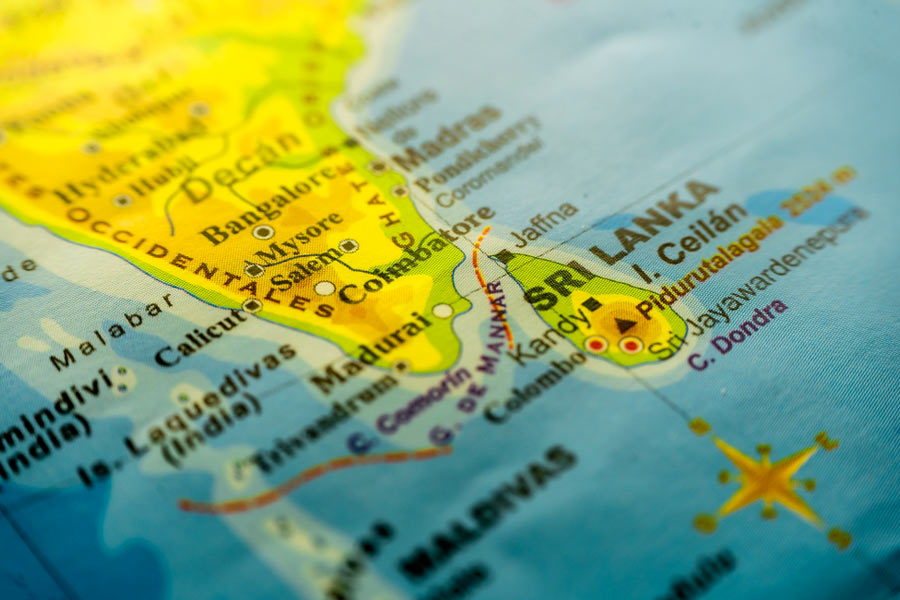
විජිත හේරත් ඇමතිතුමා ගොන්ඩ්වානාලන්තය ගැන අහල තියෙනවාද?

December 23rd, 2024

C. Wijeyawickrema

December 18, 2024 at 10:02 pm | lanka C news

ඉන්දියාව සමග කේබලය ලංකාවේ අතිරික්ත බලශක්තිය විකුණා මුදල් උපයන්නයි..

ඉන්දියාව සමඟ රට පාවා දෙන කිසිදු ගිවිසුමක් අත්සන් නොකළ බවත් විදේශ අමාත්‍ය විජිත හේරත් මහතා පවසයි.

සමහර ආගමික විශ්වාස (ලබ්ධීන්) වලින් කියන අන්දමට ලෝකය මැව්වේ දෙවියන් වහන්සේ නම්, උන්වහන්සේ ඉන්දියාව ලංකාවට අතේ දුරෙන් තබන්නට තීරණයක් ගෙන ඇති බව ගොන්ඩ්වානාලන්ත නම් අතීත පෘතුවි ගෝල සිතියමෙන් පෙනේ. මේ නිසා ඉන්දියාවෙන් එන යම් හොඳ දෙයක් භාර ගැනීමටත්, ආක්‍රමණ වලින් ගැලවීමට හැකිවීමටත් ලංකා දිවයිනට හැකිවිය. මෙම ගනුදෙණුවේදී සිදුවූ මහින්දාගමණය පවා රනිල් වික්‍රමසිංහට අනුව ලංකාවට සිදුවූ ප්‍රථම ආක්‍රමණයය. හොඳ වෙලාවට ඔහු එය කිව්වේ සන්නස්ගලට පමණය.

මෑත අතීතයේදී ඉන්දියාව හා ලංකා දූපත අතර ගොඩ්බිම් පාලමක් තිබී ඇති බව රාමායනයේ එන හනුමාන් පාලම් කතාවේ සඳහන්වේ. මෙම පාලම් අයිස් යුගයකදී තිබී පසුව මුහුදු ජලයෙන් යටවී ගිය බව ඇමෙරිකාවේ NASA ආයතනයේ චායාරූප වලින් තහවුරු විය. අහසින් කොළඹ සිට යනවිට ටැමිල්නාඩ දේශය කෙතරම් කර්කෂ පොලොවක්දැයි පෙනේ.

ගොන්ඩ්වානාලන්තය

දෙවියන් විසින් ඉන්දියාවෙන් වෙන්කල ලංකා දූපත?

දෙවියනි ඔබ මැවු ලොව පුදුමයි-පහන ලඟයි ආලෝකෙ දුරයි

                                                                                                                                          මොහිදීන් බෙග්

මෙයට හේතුව ටැමිල්නාඩ් ප්‍රදේශයට බටහිර වෙරළේ දිගටම දිවයන ගාට්ස් කඳු වැටිය මඟින් එයට මෝසම් සුළං වර්ෂාව අහිමිකිරීමය.

දෙවියන් විසින් ඉන්දියා භූමිස්කන්ධය උතුරට තල්ලු කිරීමේදී ඇතිවු ඝට්ටනය නිසා මිරිකී, හිමාලය කඳුවැටි උඩට ඒම නිසා ශීත ඝෘතුවේදී   සයිබීරියාවේ සිට පහලට එන අධික ශීතල සුළඟෙන් ඉන්දියාව බේරා දීමට දෙවියන් ක්‍රියාකලේය. මෙහි වටිනාකම පෙනෙන්නේ ඇමෙරිකාවේ රොකී කඳුවැටිය, හිමාලය මෙන් බටහිර-නැඟෙනහිර දිසාවට නොව, උතුරු-දකුණු දිශාවට විහිදෙන නිසා කැනඩාවේ සිට අධික ශීතල ආක්ටික් සුළඟ ඇමෙරිකාවේ දකුණු වෙරළබඩ දක්වාම කඩාවදී.

සිංහල බෞද්ධ විරෝධී කළු සුද්දන් විසින් ඉතිහාසය හා භූගෝල විද්‍යාව පාසැල් විෂයධාරාවෙන් 1960/70 කාලයේදී කුමණ්ත්‍රනකාරී ලෙස ඉවත් කිරීම නිසා විජිත හේරත් පරම්පාරවේ සිට මෙම දැණුම නැතිවී ගියේය. දැන් කාලයේ සමනල කන්ඳේ සිට ගලා බසින ගංඟා හතරේ නම්වත් කියන්නට දන්නේ කී දෙනාද? මහාද්වීප පාවෙන්නේ පෘතුවිය අභ්‍යයන්තරයේ ඇති ද්‍රව ස්වභාවය නිසා යයි මුලින් කියා සිටියේ ඇල්ෆ්‍රඩ් වැගනර් විසින් 1912 ජනවාරි 6 දාය (theory of continental drift).

ලංකාව ඉන්දියාවේ කොටසක්! හරීන් ප්‍රනාන්දු

පැන්ජියා නම් එක භූමියකින් මහාද්වීප කැඩී පාවී ගිය බව ඔහු පවසා සිටියේය. බ්‍රැසීලය හා අප්‍රිකාවේ බටහිර කොටස එකිනෙකට ගැලපිය (පූට්ටුකල) හැකි බවත්, මේ දෙපැත්තේම දැන් එකම වර්ගයේ මිරිදිය ජීවීන් ඉන්නේ ඒ නිසා බවත් ඔහු අනුමාන කලේය. පසු කලෙක පෘතුවි අභ්‍යන්තරය ගැන විද්‍යාත්මක තොරතුරු ලැබෙන තෙක් භූවිද්‍යාඥයින් ඔහුගේ මතය දිගටම සැක කලේය.

AKD ආණ්ඩුව ලංකාව ඉන්දියාවට පාලම්, නල යනාදියෙන් පූට්ටු නොකල යුතු මන්ද යන්න ගැන ඒ කාලයේ රෝහණ විජේවීරත්, මේ කාලයේ ඔහුගේ පුත් උවිඳු මෙන්ම, AKD තරුණයා මෙන් නොව, ව්‍යාපාරය වෙනුවෙන් සිය අධ්‍යාපනය කඩාකප්පල් කරගෙන, ජීවිත පරිත්‍යාගයෙන් දරදිය ඇද්ද විමල් වීරවංශද, ඊට අමතරව උදය ගම්මන්පිල හා වෙනත් බොහෝ අයද කරුණු ඉදිරිපත් කර ඇත. මේ නිසා මේ ගැන ලියන්නට මට කම්මැලිය. ඊට හේතුව කළු සුද්දන්ගේ පාලන සමය 1948-2024 යන පොතේ එක කොටසක්ම මෙම දේශ ද්‍රෝහී ක්‍රියාව  විග්‍රහකර ඇති නිසාය.

2 කොටස: [නො]වරදින [ඉන්දියන්] කුරුමාණම?

*කුවේණිගේ ශාපයද? ඉන්දියාවේ බලහත්කාරයද? 96-104

*පාලම හා පාලම් පාරුව 105-111

මෙහි තිබෙන්නේ එම පොතේ පිටකවරයය. ඉන්දියන් උඟුල ඉතාමත් සරලව ඉන් පෙන්වා දී ඇත එම පොතේ pdf කොපියක් ඉල්ලන ඕනෑම කෙනෙකුට ඊමේල්කර එවන්නට පුළුවන.

රනිල් වික්‍රමසිංහ ඉන්දියන් පාලම්පාරු උමතුවකින් පෙලෙන්නෙකි. සිංහල බෞද්ධ ශිෂ්ටාචාරයට මාක්ස්වාදීන් නිලවශයෙන් 1935 සිට, අනුර කුමාර 2024 දී වෙනස්වීම දක්වාම හතුරන් විය. විජිත හේරත් දැන් කියන කතා අසා රනිල් ප්‍රිතියෙන් පිනායනවා නිසැකය! මෝඩ කපටි දේශපාලකයින් විසින් රටට කල විනාශ එමටය. උදාහරණ වශයෙන්:

  1. DSS ගේ ජනපද ව්‍යාපාරය කිසිම විද්‍යාත්මක පදනමකින් හා සිංහල බෞද්ධ මධ්‍යම ප්‍රතිපදාව අනුව කල දෙයක් නොවීය. අඩුතරමින් ඔහු කොපිකල අමෙරිකාවේ TVA ව්‍යාපාරයේ ආකෘතියවත් ඔහු අනුගමනය කලේ නැත. සිදුවූයේ එහි තිබු යෝධ යන්ත්‍ර සුත්‍ර ලංකාවට ගෙන ඒම හා විදේශ විනිමය කබාසීනියා කිරීමය.ඇමෙරිකාවේ විශාල ඉඩම්වලට අවශ්‍ය මෙම ට්‍රැක්ටර් ලංකාව වැනි කුඩා රටකට ගැලපෙන්නේ නැත. මෑතක් වනතුරුම මලකඩ කමින් දිරා යන මේවා දකින්නට තිබුණි.   S. A වික්‍රමසිංහ වැන්නන් විසින් සද්භාවයෙන් දුන් උපදෙස් උද්දච්ච මනසකින් ප්‍රතික්ෂේප කලේය. ලංකාව පිළිඹද විශේෂඥයෙකුවූ B. H. ෆාමර් නම් බ්‍රිතාන්‍ය භූගෝල විද්‍යාඥයා මෙම නාස්තිකාරී ක්‍රියාව පෙන්නා පොතක්ද ලියා ඇත Pioneer Peasant Colonization in Ceylon: A Study in Asian Agrarian Problems by B. H. Farmer (1957).
  2. ලෝක වාර්තාවක් වන හැතැම්ම 10-15 ක් ඈතින් පාර්ලිමේන්තුව මඩවගුරකට ගෙනයාම (ජයවර්ධනපුර ජරමරය). දැන් සුළු වර්ෂාවකින් පවා කොළඹ 7 ත් වතුරෙන් යටවේ!
  3. කඩිමුඩියට කල මහවැලි ව්‍යාපාරය. යෝධ වික්ටෝරියා බැම්ම කැඩුනොත් රට ත්‍රිකුණාමළය දක්වාම මුහුදට සේදී යන්නේය. මෙම වේල්ල සඳහා යොදාගත් බ්‍රිතාන්‍ය අළුත් කොන්ක්‍රීට් මිශ්‍රණයේ ආයුකාලය හා අවදානම ගැන අළුතින් සොයාගත් කරුණු අනුව දැන් ඒ රටේ ගොඩනැඟිලි අළුතෙන් සදන බවට ආරංචි ලැබේ. මේ ගැන අපේ ඉංජිනේරුවන් නිහඬ ඇයි? මෙය බොරු බියක්ද? කෙසේ වෙතත් මෙම ප්‍රදේශයේ ඇති හුනුගල් ස්ථර නිසා ඇති අවදානම භූවිද්‍යාඥ මහාචාර්ය P. G. විතානගේ පෙන්නා දුන්නත්, JR ලා ගාමිණී දිසානායකලා ඒවා ගනන් ගත්තේ නැත. අඩු තරමින් මහවැලි සෑයවත් බේරේවිද?
  4. ක්‍රමයෙන් පියවරෙන් පියවරට ගොඩ නැඟිය යුතුව තිබූ ජාතික සම්පතක්වන හම්බන්තොට වරාය අන්තිමේදී සුදු අලියෙක්ව චීනයට අවුරුදු 200 කට විකිණීම.

අධිවේදී මාර්ග ජරමරයද මීටම සම්බන්ධය. මුළු රටේම ජලවහන රටාව මේ මඟින් බකල් කර ඇත.

චම්පික රණවකලාගේ සිහිනයක් වන ජපන් අහස් රේල් පාරද  දැන් දැන් නැවතත්  එලියට එන බවක් පෙනේ. කොළඹට ජනයා ඇදී ඒම වැලැක්විය හැක්කේ කොළඹ කාර්යාල කොළඹින් ඈතට ගෙනයාමය. රටේ අගනුවර රජ රටට ගෙනයාමය. එය අවුරුදු 10-15 ක සැලැස්මක් වශයෙන්  ක්‍රමයෙන් දියත් කල යුතුය.

Elon Musk – the Real President of USA!

December 23rd, 2024

Prof. Hudson McLean

Trump rejects taunts that Elon Musk is real power behind US president-elect!

Trump rejects taunts that Elon Musk is real power behind US president-elect

Text Box; rump rejects taunts that Elon Musk is real power behind US president-elect Al Jazeera Staff Statements come amid criticism of Musk’s involvement in budget negotiations, outsized role in Trump transition.

This is a Fact! Musk is Far Too Intelligent, Successful, Clever!

Why Deny?

Express Your Opinion – Read What Others Say!
The Independent Interactive Voice of Sri Lanka on the Internet.

Please visit -: http://www.lankaweb.com/

Trump Hints at annexing Greenland to USA!

December 23rd, 2024

Prof. Hudson McLean

Trump hints at annexing Greenland to the United States!

If that is ok, then

China could annex Taiwan!

Russia could annex Ukraine!

India could annex Sri Lanka!

What is Good for the Goose is Good for the Gander!

(A USA Idiom)

Express Your Opinion – Read What Others Say!
The Independent Interactive Voice of Sri Lanka on the Internet.

Please visit -: http://www.lankaweb.com/

” බලය වෙනුවෙන් මාලිමාව රට පාවා දෙන හැටි…”

December 23rd, 2024

SEPAL – short clips

අප්පමාදෝ අමතපදන්, Merry Christmas, Happy Holidays and an Amazing 2025!

December 23rd, 2024

ජයන්ත හේරත්

විජේ මහප්පාගේ

JVP පoචාර්‍ය සත්‍ය

බන්කොලොත්ය.

සන්නද්ද අරගලය 

විමුක්තිය

නොවන බව

කුමාරයා සහ ගෝල පිරිස

තේරුම් ගෙන 

ක්‍රියාවෙන්

පෙන්නදුන්නේය.

ධනේශ්වර

ක්‍රමය යටතේ

කුමාරයා

එක රැයිං 4.5 බිලියනෙයියාර්ය.

ධනේෂ්වරය

යටතේ

ඕනම දෙයක් 

කල හැක.

චන්දෙන්

පැරදුනත්

ජනාධිපති විය හැක.

ජනාධිපති

උනත්

රූකඩයක් මෙන්

නැටවිය හැක.

රා මස් සාමි ලා

මස්ක් ලා

කරන්නේ ඒකය.

JR ට

කොරන්න බැරිඋනේ

මිනිහෙක් ගැහැණියක් කරන එකය.

ගැහැණියක් මිනිහෙක් කරන එකය.

දැන්

ඒකත්

සිම්පල්ය.

JR ට

කොරන්න

බැරිවෙච්ච දේ

කුමාරයා සහ ගෝල පිරිස ට කොරලා

පෙන්නන්න පුළුවන්ය.

JR ට

ඕ න කලේ

ධරමිශ්ටර්

සමාජයක් ය.

කොරගන්න

බැරි උනේය.

කුමාරයාටත්

ඕන

ඉල් මහප්පා අමතක කර 

ධරමිශ්ටර් පාරේ

JR

එකෙක්

වෙන්නය.

පහු ගියදා

යන්න

ඉන්න

Biden රජය

අපූරු වැඩක් දුන්නේය.

ඇමෙරිකාවේ

4.9 මිලියන් ගානකට

නිදහස් අද්‍යාපනය නොමිලේ දුන්ණේය.

ශිෂ්‍ය නය $ 180 Billion කපා හැරියේය.

කුමාරයාට

තිබෙන

ලොකුම

අභියෝගය 

තවම එක වැඩක් වත්

කලේ නැත කියන එකය.

194,000 ක්

නිදහස් අද්‍යාපනය ලැබීමට

සුදුසු කම් ලබා තිබේ.

අවුරුදු 50 ක් තිස්සේ

ශිෂ්‍ය වර්ජන මෙහෙයවා

විශ්ව විද්‍යාල අඩපන කරමින්

නව පහසුකම් වැඩි කිරීමට විරුද්ද වී

රට බංකොලොත් කලේ  

නිදහස්

අද්‍යාපනය සැමට

දෙන්නටය.

දැන්

හැන්ද

අතේය.

දීලා

දැන්ම

වැඩ

පටන් අරන්  

පෙන්වන්නය.

අප්පමාදෝ අමතපදන් ය.

අප්පමාදෝ අමතපදන්, Merry Christmas, Happy Holidays and an Amazing 2025!

Is NGO Activist Insinuating that AKD is Suffering from Dementia?

December 23rd, 2024

By Citizen Perera

With a protracted article by a NGO activist on dementia, the question is being widely asked whether a snide reference is being made to AKD, especially in the light of a power struggle with ‘late’ Harini who, like what Bush (Jnr) did to the US, shames Sri Lanka with her appalling knowledge of geography.

The NGO activist was perhaps referring to AKD’s speech in 2014 on India which can be viewed on the following link.  https://www.youtube.com/watch?v=hEOxLXE0X8Q  

දිල්කාගේ සටහන දුටු විට මට හිතුන දේ!

December 23rd, 2024

C. Wijeyawickrema

මෝදි අනුරගේ කරට අත දැමීම බිය උපදනවා.. ‘Thats my boy’ කියනවා වගේ..- දිල්කා සිඩ්නි සිට

December 22, 2024 at 10:02 pm | lanka C news

මෝඩිගේ ගුහාවට ඇතුල්වන දොරටුවේ එක පැත්තක මුලට ඉන්දියන් කොඩියත් අනිත් පැත්තේ මුලට ලංකා කොඩියත් දැම්මේ නැත්තේ ඇයි?

අනිත් අතට බොරු කියන එකත් අපේ අයිතියක් (human right) කියන අබුද්දස්ස කාලයක කොඩිය හිටවන විධිය කොහොම වුනත් මොකද?

මෝඩ නැති මෝඩි සමඟ ගණුදෙනුවේදී අනුර කුමාරට නැතුවම බැරි වීරයෙක්! (Milinda Moragoda to the rescue!)

Thursday, December 19th, 2024. Lanka Web

Open letter to Milinda Moragoda

December 23rd, 2024

ASOKA WEERASINGHE 2066 Kings Grove Crescent . Gloucester .Ontario .K1J  6G1., Canada

OPEN LETTER TO

Mr. Milinda Moragoda 
Former Sri Lanka’s High Commissioner to India
Colombo
Sri Lanka

22 December 2024 

A Response to his  statement ‘Implement Indo-Lanka  agreement as soon as possible’, which appeared on 2024/12/20 as an The Island Online E-Paper

Cc, President Anura Kumara Dissanayake

Dear Milinda Moragoda:

With all due respect to your inherent wisdom and clever smarts, I have lots of problems with that statement of Yours.

If you haven’t read my OPEN LETTER to President  Anura Kumara Dissanayaka of 12 December 2024, please read it which is published in Lankaweb Archives under my name as the author.

The second para in it I say : While congratulating, I also want you to be aware of the Greeks who will come to you Bearing Gifts.   Be careful as you are precious to the people at home and abroad, like myself who left Ceylon (Sri Lanka) on 3 December 1956, and still call Sri Lanka MY HOME…and never turned my back on her

Milinda, it is nice to have a symbiotic neighbour”: who would come to our aid when we are in trouble. There is nothing Summa” in this geopolitical world  The helper will want something in return which will add pressure  on us as a Sovereign Nation,”  And that sucks!

I have aged 44 years since 1980.  What our friendly symbiotic neighbour”  did after the Sri Lanka-Indian Accord is still spitting dragon fire from my cartwheeling eyes of anger.  The words Indo-Sri Lanka Accord  are still poisonous to my ears.

Milinda,  you may have very good reasons for this statement Implement Indo-Lanka agreement as soon as possible.” I believe I have proven reasons to advise President Anura Dissanayaka …to be aware of the Greeks who will come to you Bearing Gifts……” Especially Greeks in silk Indian Turbans.

Milinda, I recall that fateful day in early 1987, Rajiv Gandhi having parked a a white steel-shiny warship in front of Sri Lanka’s capital, Colombo, in the International waters, when Indian Air Transport planes  escorted by screaming Mirage 2000s over Sri Lanka’s territorial skies and dropped a meagre 30-tons of so called relief” supplies over the Jaffna peninsula which had a population of 800,000, and Rajiv Gandhi watched in delight to see the Jaffna Tamils crawling on their knees and jocking pushing each other to collect five grains of red lentils to boil them in water and quench their hunger as they said the Government of Sri Lanka were starving them.    You know and I know that was a load of intimidating Gandhian- BS, Milinda.

Milinda, you are too young to suffer from loss of short memory. However, those with short memories will recall that before the Indian Peace keeping soldiers arrived in Sri Lanka on July 30, 1987, Sri Lanka’s Mannar in the Northwest was quiet. Trincomalee in the east was fully under Sri Lanka government’s control with no interracial violence whatsoever.   The Sri Lanka Task forces had the Tamil Tigers trained by our good neighbour India given military training in 32 military camps and sent back in fatigues and jack boots cradling AK47s in their arms like Babies, And the Sri Lankan Army had taken two-thirds of the Jaffna Peninsula in the Vadamarachchi Operation before our Good helping neighbour, India, decided to halt the Sri Lanka armed forces progress.  This was in case India lost control of its Agenda, to destabilize Sri Lanka using their proteges, the Tamil Tigers who were trained to  perform our good neighbour India’s; dirty job.   Prabhakaran, the TamilTiger leader announced that if not for India’s intervention, they would’ve gone down in annihilation.  And so the ugly  Eelam-ethnic war continued for another 22-years killing thousands and thousands of innocent civilians, until their behinds were whipped by the Sri Lanka  armed Forces, and their leader Prabhakran  was shot dead through his forehead on the sands of the Nandikadal lagoon in the east of Sri Lanka..   That’s what happened, Milinda

With that gallant effort of the operation of  Sri Lanka’s Armed Force who gave back the Right-to-Life  to 20 million People. on 19 May 2009.   Three Cheers to Sri Lanka’s khaki and blue and white serge Uniforms.   Shanthi…shanthi…shanthi

And you said in your statement- Implement Indo-Lanka Agreement as soon as possible,”    Oops! Milinda… I  certainly do not have a hole in my head to support your Statement.and I say to President Anura  be cautious as you do not have  wiggle room to make  mistakes.  .

I certainly claim the right to repeat what I said to President Anura in my OPEN Letter to him… While congratulating, I also want you to be aware of the Greeks who will come to you bringing Gifts.(Especially those living  with skulls wrapped  in  colourful silk Indian-Turbans

My right to claim,  my right was because I gave up a 20 year Canadian Federal Government job when President Premadasa wanted me to help him in the Communications portfolio at the Sri Lankan Mission in Ottawa , which was the pits.

‘I am the author of over 2000 letters who happened for  those interested in Sri Lanka around the world on the Eelam file, since 4 August 1983, of which over 500 letters have Picked up ink.  Spent over Cdn$10,000 of my family money and family-time. To help President Premadasa who after 8-months, gained trust in my work and delivery,

He started addressing me as Kohomatha Ape Asoka”   . I believe it’s part of a lyric of a Sunil Santha song.

 I claimed my right to discuss my work and asked him to light a stick of dynamite under the chair of whoever was lethargic and trying to sabotage my work for him..  He was visibly angry.  

I had three letters of apology from higher-ups in Ministries and found three more letters of apology on the desk when I returned to office in Ottawa,

Malinda Moragoda, before concluding my comments to you, I want to share an incident which has been etched in my mind. Since June 1989.

It was the JVP that was ruling the Streets and Roads in Colombo then.

I was at A.J.Ranasinghe ’s residence on Reid Avenue,one morning to pick up my Sri Lankan passport and Registration papers of my Dual Citizenship

A turbaned-guy from the Indian High Commission rushed in and was there to case the Mahiyangana Gamudawa  closing ceremony.

Here is the guts  of his Conversation with  A,J, Ranasinghe

Is Gamini going to be there at the Mahyangama GamUdawa closing ceremony. Is Lalith going go be there?  And he threw in a few other names of Parliamentarians.”

Please ,Sir, ask President Premadasa not to say anything that would embarrass my man (Dixit).  He is going to be there.

Mr Ranasinghe you do nothing of that foolishness..

His Man has a choice.  If he doesn’t want to be embarrassed he can stay home.

If his Man thinks that he is the Viceroy  of Sri Lanka and  can pull the puppet strings of the leader of 20 million people and edit the script to satisfy his Man. That is a bit rich, isn’t it!”

My comments got his goat,  He stood up and came towards me.  I stood up  to meet His presence,  By now we were standing toe to toe and nose to nose. The syllables of our voices grew louder and louder. I resent intimidation.

AJR, Sita (his wife) Minister Mohammad and another guest stood up and retreated to the kitchen’

They could see us through the latticed wall that separated the kitchen from the dining room and living room.  So we were going at each other with loud retorics.

We were lucky that with a push from one of us, we would have tumbled on the floor with flaying arms. Thank God, it did not happen.  I do not remember how we calmed down and went and sat on the chairs with Our dragon breaths smoking our faces.

AJR, Sita, Minister Mohammad and the guest came over and joined us.

My passport arrived and the dual citizen certificate.

‘AJR asked his chauffeur to drive  me home at 35 Veluwana Road in Dematagoda.

AJR told me later that the Indian turbaned guy’s response was.” These are the Krishna Mennon types that make our relationship difficult.”

Tough Tiddy” I responded.

May the celebrating season bring you

Love, light and cheers,’

Take care,

’Warmly

Asoka (Weerasinghe)

2066 Kings Grove Crescent . Gloucester .Ontario .K1J  6G1.,

 Canada

OPEN LETTER TO

Mr. Milinda Moragoda 

Former Sri Lanka’s High Commissioner to India

Colombo

Sri Lanka

22 December 2024 

A Response to his  statement ‘Implement Indo-Lanka  agreement

as soon as possible’, which appeared on 2024/12/20 as an

The Island Online E-Paper

Cc, President Anura Kumara Dissanayake

Dear Milinda Moragoda:

With all due respect to your inherent wisdom and clever smarts, I have lots

of problems with that statement of Yours.

If you haven’t read my OPEN LETTER to President  Anura Kumara Dissanayaka of

 12 December 2024, please read it which is published in Lankaweb Archives under my name as the author.

The second para in it I say : While congratulating, I also want you to be aware of the Greeks who will come to you Bearing Gifts.   Be careful as you are precious to the people at home and abroad, like myself who left Ceylon (Sri Lanka) on 3 December 1956, and still call Sri Lanka MY HOME…and never turned my back on her

Milinda, it is nice to have a symbiotic neighbour”: who would come to our aid when we are in trouble. There is nothing Summa” in this geopolitical world  The helper will want something in return which will add pressure  on us as a Sovereign Nation,”  And that sucks!

I have aged 44 years since 1980.  What our friendly symbiotic neighbour”  did

after the Sri Lanka-Indian Accord is still spitting dragon fire from my cartwheeling eyes of anger.  The words Indo-Sri Lanka Accord  are still poisonous to my ears.

Milinda,  you may have very good reasons for this statement Implement Indo-Lanka agreement as soon as possible.” I believe I have proven reasons to advise President Anura Dissanayaka …to be aware of the Greeks who will come to you Bearing Gifts……” Especially Greeks in silk Indian Turbans.

Milinda, I recall that fateful day in early 1987, Rajiv Gandhi having parked a

a white steel-shiny warship in front of Sri Lanka’s capital, Colombo, in the International waters, when Indian Air Transport planes  escorted by screaming 

Mirage 2000s over Sri Lanka’s territorial skies and dropped a meagre 30-tons of so called relief” supplies over the Jaffna peninsula which had a population

of 800,000, and Rajiv Gandhi watched in delight to see the Jaffna Tamils crawling on their knees and jocking pushing each other to collect five grains of red lentils to boil them in water and quench their hunger as they said the Government of Sri Lanka were starving them.    You know and I know that was a load of intimidating Gandhian- BS, Milinda.

Milinda, you are too young to suffer from loss of short memory. However, those with short memories will recall that before the Indian Peace keeping soldiers arrived in Sri Lanka on July 30, 1987, Sri Lanka’s Mannar in the Northwest was quiet. Trincomalee in the east was fully under Sri Lanka government’s control with no interracial violence whatsoever.   The Sri Lanka Task forces had the Tamil Tigers trained by our good neighbour India given military training in 32 military camps and sent back in fatigues and jack boots cradling AK47s in their arms like Babies, And the Sri Lankan Army had taken two-thirds of the Jaffna Peninsula in the Vadamarachchi Operation before our Good helping neighbour, India, decided to halt the Sri Lanka armed forces progress.  This was in case India lost control of its Agenda, to destabilize Sri Lanka using their proteges, the Tamil Tigers who were trained to  perform our good neighbour India’s; dirty job.   Prabhakaran, the TamilTiger leader announced that if not for India’s intervention, they would’ve gone down in annihilation.  And so the ugly  Eelam-ethnic war continued for another 22-years killing thousands and thousands of innocent civilians, until their behinds were whipped by the Sri Lanka  armed Forces, and their leader Prabhakran  was shot dead through his forehead on the sands of the Nandikadal lagoon in the east of Sri Lanka..   That’s what happened, Milinda

With that gallant effort of the operation of  Sri Lanka’s Armed Force who gave back the Right-to-Life  to 20 million People. on 19 May 2009.   Three Cheers to Sri Lanka’s khaki and blue and white serge Uniforms.   Shanthi…shanthi…shanthi

And you said in your statement- Implement Indo-Lanka Agreement as soon as possible,”    Oops! Milinda… I  certainly do not have a hole in my head to support your Statement.and I say to President Anura  be cautious as you do not have  wiggle room to make  mistakes.  .

I certainly claim the right to repeat what I said to President Anura in my OPEN Letter to him… While congratulating, I also want you to be aware of the Greeks who will come to you bringing Gifts.(Especially those living  with skulls wrapped  in  colourful silk Indian-Turbans

My right to claim,  my right was because I gave up a 20 year Canadian Federal Government job when President Premadasa wanted me to help him in the Communications portfolio at the Sri Lankan Mission in Ottawa , which was the pits.

‘I am the author of over 2000 letters who happened for  those interested in Sri Lanka around the world on the Eelam file, since 4 August 1983, of which over 500 letters have

Picked up ink.  Spent over Cdn$10,000 of my family money and family-time. To help President Premadasa who after 8-months, gained trust in my work and delivery,

He started addressing me as Kohomatha Ape Asoka”   . I believe it’s part of a lyric of a Sunil Santha song.

 I claimed my right to discuss my work and asked him to light a stick of dynamite under the chair of whoever was lethargic and trying to sabotage my work for him..  He was visibly angry.  

I had three letters of apology from higher-ups in Ministries and found three more letters of apology on the desk when I returned to office in Ottawa,

Malinda Moragoda, before concluding my comments to you, I want to share an incident which has been etched in my mind. Since June 1989.

It was the JVP that was ruling the Streets and Roads in Colombo then.

I was at A.J.Ranasinghe ’s residence on Reid Avenue,one morning to pick up my Sri Lankan passport and Registration papers of my Dual Citizenship

A turbaned-guy from the Indian High Commission rushed in and was there to case the Mahiyangana Gamudawa  closing ceremony.

Here is the guts  of his Conversation with  A,J, Ranasinghe

Is Gamini going to be there at the Mahyangama GamUdawa closing ceremony. Is Lalith going go be there?  And he threw in a few other names of Parliamentarians.”

Please ,Sir, ask President Premadasa not to say anything that would embarrass my man (Dixit).  He is going to be there.

Mr Ranasinghe you do nothing of that foolishness..

His Man has a choice.  If he doesn’t want to be embarrassed he can stay home.

If his Man thinks that he is the Viceroy  of Sri Lanka and  can pull the puppet strings of the leader of 20 million people and edit the script to satisfy his Man. That is a bit rich, isn’t it!”

My comments got his goat,  He stood up and came towards me.  I stood up  to meet

His presence,  By now we were standing toe to toe and nose to nose. The syllables of our voices grew louder and louder. I resent intimidation.

AJR, Sita (his wife) Minister Mohammad and another guest stood up and retreated to the kitchen’

They could see us through the latticed wall that separated the kitchen from the dining room and living room.  So we were going at each other with loud retorics.

We were lucky that with a push from one of us, we would have tumbled on the floor with flaying arms. Thank God, it did not happen.  I do not remember how we calmed down and went and sat on the chairs with Our dragon breaths smoking our faces.

AJR, Sita, Minister Mohammad and the guest came over and joined us.

My passport arrived and the dual citizen certificate.

‘AJR asked his chauffeur to drive  me home at 35 Veluwana Road in Dematagoda.

AJR told me later that the Indian turbaned guy’s response was.” These are the Krishna Mennon types that make our relationship difficult.”

Tough Tiddy” I responded.

May the celebrating season bring you

Love, light and cheers,’

Take care,

’Warmly

Asoka (Weerasinghe)

Your Heart is a Haunted Mansion

December 23rd, 2024

Ruwan M Jayatunge 

Your heart is a hunted mansion

Appear menacing and imposing
surrounded by dead trees and plants
The windows are dark and filled with shadows
When I opened the main door, I got a heavy feeling
Am I walking towards my ill-fated destiny?
I see flickering candles forming shadows
The hallway is like a holograph of an event
Giving me optical illusions
The house has cold spots

With abrupt temperature changes
I hear the fright fiddles and the horror horns
With the occasional rattling of the chains
But I see no one
There are secret passages
leading to a final exit
Mirrors on the wall are covered with dust
Those mirrors don’t show reflections
I see shattered china everywhere
A creepy marionette puppet sitting in an armchair
Giving me a sardonic smile
The basement a full of mist covering the floor
A bath with murky liquid in it
The handrails are covered in blood
The shutters are loose and bang against the window frame
As the wind blows outside
Rotting curtains that rustle and move
I see a bowl of fruit rotten and full of maggots.
An old warlock gives a scary look
And it ticks back-wards
Creepy spiderwebs everywhere
A small drop of blood moves across the floor
Leaving behind a thin red line
I see musty, moldy books on a broken shelf
Scattered skeletons everywhere
Rotting dolls with necrotic damage
I found a room with a collection of jars of strange creatures
Maybe they were your previous victims
There is a burning candle mourning the loss of someone
Maybe he was your first true love
A marble statue sitting on the floor
The statue bleeds from the eyes and mouth
I see your diary, It starts out fairly normal,
But slowly descends into madness.
A door opens into darkness
A trapdoor that leads nowhere
I see a message written in blood on the walls
Abandon hope all ye who enter here

Ruwan M Jayatunge Read more; https://transyl2014.blogspot.com/2024/12/your-heart-is-haunted-mansion.html

From Damascus to Gaza: The fractured and volatile Muslim world

December 23rd, 2024

Ayesha Naseem Mirza, UK

no one is turning back the clock 28

Islam is embarking on a critical era, and Muslims must remain vigilant and open their eyes to the looming threats. At the very least, we must unite to ensure that the legacy of Prophet Muhammadsa remains untarnished, come what may.” (The Unity of Muslims, p. 44)

These were the words of the Khalifa that were written and published several decades ago but their truth and their significance is so relevant and timely that one is left to wonder whether anything really changed or was any heed given by Muslims and the Islamic world since. 

If we glance at the Muslim world today, the answer is, certainly not. 

Most Muslim countries are deeply mired in conflict, division, and unrest. The Middle East, in particular, remains an extremely volatile region. As I write this, any hope for peace feels like a distant dream—something far out of reach for its struggling nations. This time, though not for the first time, the focus is on Syria.

If anyone were to predict that the launch of an offensive by the Syrian Rebels against the Assad regime on 27 November 2024 would result in the fall of Bashar al-Assad’s regime and the change of power in the heart of Damascus in the matter of just ten days, it was almost laughable and absurd. However, as is the case with the Middle East and its unpredictable geopolitics, today Syria has seen an unprecedented transition of power with regime change. 

The rebels led by Islamist alliance Hayat Tahrir al-Sham (HTS), alongside its umbrella group of Turkish-backed Syrian militias called the Syrian National Army, initiated this offensive by capturing Aleppo, Syria’s largest city. They swept across Syria taking over other cities and towns and eventually claiming Damascus. As for President Bashar al-Assad, the Russian Foreign Ministry confirmed, in the first official confirmation, that he had stepped down” and left Syria”. 

This is a huge turning point. 

The rise and fall of Bashar al-Assad

Bashar al-Assad came to power in 2000 after the death of his father Hafez al-Assad, who ruled the country for 29 years. Assad inherited a strictly controlled and repressive political structure, where opposition was not tolerated. In the initial years of his rule, he promised open media access to Syria, a progressive economic approach and appeared to pursue a path of politics that differed significantly from his father’s style of rule – it was short-lived, however. Assad’s legacy is that he will be remembered as the man who violently repressed peaceful protests against his regime in 2011, triggering a civil war. The brutal civil war resulted in the displacement of fourteen million people, six million of which became refugees – a catastrophe that is considered the world’s largest refugee crisis, according to the UN. (From eye doctor to dictator – the rise and fall of Assad’s presidency”, Sky News, 8 December 2024, www.skynews.com)

In the previous rebellion against his regime, he managed to survive with the help of Russia and Iran. Russia used its air power while Iran sent military advisors to Syria and Hezbollah, the militia it supports in neighbouring Lebanon, deployed its well-trained fighters. This did not happen this time. Assad’s allies were preoccupied with their own affairs and in the last few days, essentially abandoned him. Due to the lack of help from Russia, Iran and Hezbollah, his troops were generally unable to stop the rebels led by the militant group Hayat Tahrir al-Sham (HTS). (End of Assad rule will reshape region’s balance of power”, BBC News, 8 December 2024, www.bbc.co.uk)

Who are the rebels in Syria?

Syrian rebel militant group Hayat Tahrir al-Sham (HTS) led by Abu Mohammed al-Jawlani has come forward as the figurehead of the new governmental rule in post-Assad Syria.  Al-Jawlani’s HTS was set up under a different name, Jabhat al-Nusra, in 2011. It was named and set up in direct affiliation to al-Qaeda. The leader of the self-styled Islamic State (IS) group, Abu Bakr al-Baghdadi, was also involved in the formation of Jabhat al-Nusra. This rebel movement was regarded as one of the most effective and deadly of the groups ranged against President Assad. 

Although proscribed by the UN, the US, Turkey and other countries as a terrorist group, al-Jawlani publicly broke ranks with al-Qaeda and dissolved Jabhat al-Nusra to set up a new organisation with the name of Hayat Tahrir al-Sham (HTS). Despite al-Jawlani’s campaign and claim over his organisation to be dissociated ideologically from al-Qaeda, doubts remain over whether HTS has completely renounced its links and how safe would the minorities in Syria be should there be more repression. 

Analysts and writers agree that HTS’ sudden and destructive advance on Aleppo and Hama played a decisive role in the swift collapse of Assad’s regime. However, many also highlight that other rebel groups contributed significantly to the momentum, as various factions from across Syria appeared to unite and advance together. 

Among these groups are rebel factions that operated under the banner of the Free Syrian Army from southern towns and cities that had been inactive for years. To the east of Syria were the Kurdish-led forces who have benefited from the collapse of the Syrian army to take full control of the main city, Deir El-Zour. 

In the huge Syrian desert, the remaining traces of the so-called Islamic State can also take advantage of the situation. Further in the north of Syria, along the Turkish border, the Syrian National Army – backed by Ankara – may also prove to be a significant player in what happens next. (Sebastian Usher, Who are the Syrian Rebels in Syria”, BBC News, 30 November 2024, www.bbc.co.uk)

What happens next? 

During this rebel offensive in the past weeks, hundreds of prisoners have been released prompting celebration and joy among the Syrian people. But even if united by the desire for change against Assad’s regime, Syria, as a whole, is an extremely divided nation. With different rebel factions that often work as rivals and often as allies, and with foreign powers picking sides according to their interests and alliances means that much remains uncertain and undecided for Syria.

Again, HTS and its previous affiliation with al-Qaeda also means that there are concerns regarding the kind of rule Syria would now face and whether other minorities would get their due rights under the new leadership of al-Jawlani.

With the ceasefire between Lebanon’s Hezbollah and Israel already crippling, and with the continuing of brutal Israeli aggression in Gaza, Syria is another key front in the conflict. 

Just hours after the collapse of Damascus to the rebels, Israel seized” territory in Syria-controlled areas of the Golan Heights, as its military warned Syrians living in five villages close to the Israeli-occupied portion of the strategic area to stay home”. 

The Israeli Prime Minister, Benjamin Netanyahu ordered Israeli forces to seize the buffer zone in the Golan Heights established by a 1974 ceasefire agreement with Syria. Netanyahu said that the ceasefire agreement was no longer in function as the Syrian soldiers had left their positions, requiring the Israeli takeover. Israel captured a portion of the Golan Heights in the 1967 war and annexed it. The international community, except for the United States, views it as illegally occupied Syrian territory.

Moreover, the Israeli Air Force bombed weapons depots in Southern Syria and Damascus to prevent opposition groups from seizing them. They attacked ammunition depots in southern Syria and in the Damascus airport area. As seen in the past year and beyond, Israel was allowed to intervene and extend its aggression now to the borders of Syria, without any repercussions or consequences from Western leaders. 

The unprecedented impunity continues to destabilise the region and the wider world. 

The disunited Muslim world

When Israel launched its catastrophic and bloody aggression against Gaza, the lack of Muslim unity was glaring. Not once did all Muslim states unanimously and categorically condemn the attack. Instead, there were scattered voices, isolated statements, and fragmented conferences, but no collective display of solidarity.

On the front lines of resistance, it was Lebanon’s Hezbollah, Gaza’s Hamas, and Yemen’s Houthis – supported militarily and economically by Iran – that attempted to confront Israeli aggression. These resistance groups targeted military facilities and assets to undermine Israel’s military power in their struggle to end the war. However, no decisive victory was achieved. Backed by the US and its allies, Israel successfully disrupted the leadership structures of Hamas and Hezbollah through targeted assassinations of key figures, including Ismail Haniyeh, Yahya Sinwar, and Sayyed Hassan Nasrallah.

Now, as the war turns to Syria once again, not only are the wealthier Muslim nations silent bystanders, some of them, like Turkey, are backing militant forces to cause further division and discord inside Syria. 

The Unity of Muslims – An address of Hazrat Khalifatul Masih IIra

In 1952, Hazrat Mirza Bashir-ud-Din Mahmud Ahmad, Khalifatul Masih IIra delivered an address on the subject of the unity of Muslims. In his address, Hazrat Khalifatul Masih IIra stated:

When a sovereign and powerful country comes under attack, its people have confidence and faith in their ability to mount a solid and resolute response to the attacker; they possess both material and moral strength to not only repel the enemy from their borders but also penetrate their territory and strike back with equal force. But as evident, no Islamic country at this time can defend itself without foreign assistance, much less retaliate in enemy lands. Every Muslim state is forced to seek help from America, Great Britain, or some other European power.” (The Unity of Muslims [English], p. 3)

Hazrat Khalifatul Masih IIra further said:

In this age, world powers include Russia, America, and the United Kingdom, with France, Italy, and Germany following close behind. Among new countries, Australia and Canada are also rising in power. Even Japan is emerging as a significant player. The question is whether any Muslim state or alliance can compete with these world powers in wealth, military strength, trade, and commerce. Can any Islamic country claim to have a comparable number of tanks, bombs, war supplies, production facilities, and businesses as these nations?” (Ibid, pp. 4-5)

Although the address is from the post-World War II era, much of the subject and the insights are still as relevant as back then. Even though some powerful Muslim nations have now established military and weapons for its defence, they are still largely dependent and also reliant on the West for aid and concessions. 

Regarding the meaning of the Arabic term, ittihād, Hazrat Khalifatul Masih IIra explained that the word derived from wahdat” which means to adopt solidarity. It implies that various entities have decided to merge into a whole, losing their individuality. A salient feature of Arabic is that the entire philosophy behind a concept is encapsulated in one word. As a cognate in Urdu, ittihād has lost its meaning. When uttered in Arabic, a listener who knows its context instantly perceives the speaker’s position: Muslims are divided into various independent sects, but with planning and resolve, they can rally for particular objectives. Therefore, a call for unity among Muslims means that the Islamic world will adopt coherence and harmony despite its divides that stretch across nations and individuals.” (Ibid, p. 5)

Providing two main principles that could help establish Muslim unity, Hazrat Khalifatul Masih IIra stated: 

Thus, the first principle for establishing Muslim unity is acknowledging our differences. An individual who aims to eliminate these differences to foster unity is unlikely to succeed. Only those who can look past secondary differences can prevail.” (Ibid, p. 36)

The second principle of unity entails prioritising major concerns over minor ones. If unity cannot be attained in every aspect, focus on significant matters and overlook trivial issues.” (Ibid, p. 41)

Urging the Muslim nations to adhere to the invaluable pursuit of unity, Hazrat Musleh-e-Maudra emphasised:

Currently, Pakistan, Lebanon, Iraq, Jordan, Syria, Egypt, Libya, Iran, Afghanistan, Indonesia, and Saudi Arabia are eleven independent Muslim countries, each with their own mutual differences. If these states are interested in unifying, it is incumbent upon them to consider common points around which to unite, whilst overlooking their differences. If such a point is found, they should ally and work to achieve its aims. For instance, they can collaborate on the goal of not permitting any Muslim country to remain subjugated. Rather than waiting for their internal disputes to be resolved, they should join forces in preventing any Islamic land from being enslaved and make concerted efforts for its liberation. Just as Prophet Muhammadsa invited Jews and Christians to unite based on a shared belief in Tauheed, all Muslims ought to unify in liberating enslaved subjects, with differences being resolved later.” (Ibid, p. 42)

He continues:

I have observed that Muslims focus entirely on their differences and disregard what binds them. Every sect declares the others it disagrees with as wajib-ul-qatal [punishable by death], even though it contradicts the practice of the Holy Prophetsa. Are they greater believers than Prophet Muhammadsa who invited the Jews and the Christians to stand in solidarity with Muslims on the shared belief in the Unity of God? Yet, the believers fail to extend the same invitation to their fellow adherents […] refuse to move an inch without carving out each other’s flesh. The same call for solidarity will unite the world of Islam. If Muslim countries wish to achieve unity, they must rally around the principle of joining forces, regardless of their contentious issues, and stand together to fight the enemy. Let us agree that, despite our mutual differences, we will not engage in conflict with each other.” (Ibid, p. 43)

Hakam and Adl: The one to unify the Ummah

Given how volatile the state of the region and the wider world is, just recognising the significance of Muslim unity is one of the many paths that must be pursued immediately. 

Unity that is free from all vested interests of individual nations and one that acknowledges the necessity of dialogue for the sake of peace and stability and unity that overlooks the differences that sets us apart. 

The Ahmadiyya Muslim Community was established for this purpose as well. Hazrat Mirza Masroor Ahmad, Khalifatul Masih Vaa delivered a Friday Sermon on the subject of the Hakam and Adl and explained:

The Ahmadiyya Jamaat has not been established on the basis of differences that exist between various sects and groups, or owing to their differences of opinion, or their difference in their interpretations and commentaries. Rather, this Community has been established in the latter days by the true servant of the Holy Prophetsa, in accordance with the prophecy made by the Holy Prophetsa and the promise of Allah the Almighty. Having pledged allegiance to the Promised Messiahas, it is this Community which will bring an end to the disputes between the Shias and Sunnis or between any other group or sect for that matter; and thus, enable them to become united under one Ummah. We are to establish a single Ummah by informing Muslims of the true teachings of Islam. The Promised Messiahas was commissioned for this purpose and established this Community in accordance with the commandment of Allah the Almighty. In order to fulfil this task, Allah the Almighty revealed to the Promised Messiahas that he should, ‘gather together all Muslims who are on the earth upon one religion’.” (Hakam and Adl: The One to Unify the Ummah, pp. 2-3) 

Conclusion

Essentially, the global political theatre, where Syria’s fate is being discussed, is already in shambles itself. A lot will be suggested and proposed (and imposed). The Muslim World – although more of a cliché now – might also want to consider backing Syria. What Muslim leaders might think is again expected to be under the heavy influence of the Western political agendas. Will unity be on the cards of the Muslim world? Is such a concept still achievable? If so, how is it to come about? 

AN ENDORSEMENT OF A PRUDENTLY EXPRESSED MEDIA SENTIMENT.

December 23rd, 2024

Sunil Kumar

It appears Somewhat compelling and perhaps belated that former President Ranil Wickremesinghe has urged the SJB-led Opposition to act responsibly and help ensure the continuity of the IMF bailout program for which all Sri Lankans need to be totally indebted for at a time it was needed most when the country was headed for dire straits on the verge of collapse, which has enabled the economy to regain some stability. Something he was solely responsible for creating in a brilliantly composed mindset and a phase in the country’s history which was unprecedented. 

Thanking the NPP government for having kept the IMF program on course was in all probability in perfect order albeit the realization it was he who originated it a heavy hearted one where he was no longer part of the Administration.

Ranil Wickremesinghe’s exhortation to the Opposition and unsolicited advice to the Government are timely and not entirely devoid of politics as the political intonations are perfectly visible. 

He is obviously seeking the credit for what the country has achieved through the ongoing IMF program, which got underway in earnest under his presidency but now taken to a higher level  under the new presidency.

In fact, it is doubtful whether any other President would have had the courage to make a host of seemingly unpopular yet essential decisions to address the economic crisis amidst a barrage of opposition for which a heavy price was undoubtedly paid albeit with favourable results. In so doing Mr.Wickremesinghe is not without a moral right to ask the Government and the Opposition to act prudently and help the country make the most of the IMF program where hopefully it will augur well in the best interests of Sri Lanka.

There are signs already that it is, given the state of the country today as life returns to a degree of normalcy already and people are breathing easier on many domestic issues and their existences in a Country which was embroiled in huge impasses not too long ago.While not completely out of the woods yet the prospect of better days ahead are quite promising as long as the present Administration stays a firm course that will not bent or digress under pressure from undesirable sources .

It is hoped indeed that the Opposition and the Government will heed Mr. Wickremesinghe’s advice and act accordingly.

Somewhat bewilderingly the SJB has chosen to “play to the gallery”, asking the Government to renegotiate the IMF program.

Bearing in mind that It could not even sort out an internal dispute over its National List appointments, and one of its constituents resorting to legal action this seems somewhat fickle and feeble minded to say the least. So how can such a political party claim to be able to make the IMF bend to its will? One ponders over what the objective might be beyond a self centred quest for worthless recognition at a time when the greater priorities towards collective national needs by far outweigh individuality.

While the IMF program is no economic panacea it will surely help Sri Lanka gain economic stability in the short-term as cited by the scribe who inspired this concept it has already yielded some tangible results. However, much more remains to be done to ensure Sri Lanka’s long-term economic well being, and it is up to the current hierarchy as well as future governments to develop the economy and achieve debt sustainability.

Nobody likes IMF bailout conditions, which can be extremely harsh, but they are a pre-requisite for a bankrupt country’s economic recovery. If Sri Lanka managed its economy properly, it would not have had to ask for IMF help, which comes with constricting conditions. However, what the IMF has prescribed is what Sri Lanka should have done on its own a long time ago.

When a country spends more than it earns and goes on borrowing recklessly from external sources to meet its revenue shortfall, it runs the risk of facing an economic crisis. The Mahinda Rajapaksa government indulged in wasteful expenditure; it spent a great deal of borrowed money on utopian projects. The UNP-led Yahapalana government also borrowed heavily. The JVP backed that administration to the hilt. The Gotabaya Rajapaksa administration, in its wisdom, slashed taxes and tariffs, oblivious to the disastrous consequences of its harebrained action. The Covid -19 pandemic came, necessitating prolonged lock downs, which took a heavy toll on the economy.The Nation was in a shambles. The rest is history.

Sri Lanka found herself in dire straits having ruined the economy and ended up at the bottom of an economic pit. Thankfully, in answer to its pitiable pleas, the IMF threw a lifeline, which has enabled it to come halfway up. Needless to say, nothing will be more obsolete and vague than for it to let go of that lifeline which is wisely said indeed as once again reiterating to the scribe referred to previously the concept outlined is fully endorsed in all conventional wisdom.

Faking degrees is a thriving industry in South Asia

December 23rd, 2024

By P.K.Balachandran Courtesy NewsIn.Asia

Colombo, December 17: The Anura Kumara Dissanayake government in Sri Lanka, which was sailing smoothly despite unsolved economic issues, suffered the first jolt since coming to power, when parliament Speaker Ashoka Ranwala resigned on Friday amidst accusations that his Ph.D” was fake.

Urban Development and Housing Minister Anura Karunatilake and  Justice Minister Harshana Nanayakkara were also assailed for falsely  claiming that they had doctoral degrees.

Ranwala maintained that he had acquired a Ph.D, and said that he had no documentary proof of the doctorate. He said he would produce it on getting it from the Waseda University-affiliated institution in Japan he was registered with. In the case of Nanayakkara, it came to be known that it was the parliament’s fault. It had appended Dr” to his name deviating from the text he had given them.  In the case of Karunatilake, he was not a doctorate and yet was using the prefix Dr”. He said that he was a Ph.D student about to complete his programme. Because of the public exposure, all three dropped Dr” from their on-line platforms.

However, the squeaking clean image which the ruling National Peoples’ Power (NPP) government had, was sullied. The Sri Lanka Podujana Peramuna (SLPP) MP Namal Rajapaksa urged government MPs to resign if they failed to provide evidence of their educational qualifications. Taking to X, he criticised the NPP for misleading the people saying that they would give an honest and transparent government with people having good educational qualifications. People voted for the NPP in the Presidential and parliamentary elections this year impressed with the high” qualifications of the NPP candidates in contrast to their challengers, many of whom could have been mere high school graduates.

Root of the Problem

Fake degrees are not confined to Members of the Sri Lankan Parliament and pushy politicians trying to impress the public. It is widespread in society in Sri Lanka, South Asia and even in the UK and USA. In all these countries there are those who falsely claim they have a university degree. There are others who have a fake degree, and there are yet others who provide fake degrees for a hefty fee. There is also a tribe of ghost writers of Ph.D dissertations.   

The craze for fake degrees reflects the rarity or expensiveness of education in a society. A tight job market makes it necessary to have a degree, fake or real. Among a population of uneducated people, flaunting a university degree, whether real or fake, helps gain recognition and opens the doors to jobs when jobs are scarce.  

When politics became popular and intensely competitive in South Asian countries, politicians began to add educational qualifications, real or false, to their CVs as additional feathers in their cap. They also began to use their political clout in local universities to get honorary doctorates which they unethically deemed to be doctorates got after pursuing a rigorous doctoral programme.

The number of politicians getting such doctorates increased exponentially after universities, to curry favour with governments and politicians, starting giving doctorates to Chief Ministers, Ministers and other political bigwigs. The number of political doctorates in India ballooned with the politicization of the universities. Both state and private universities were in this racket as both needed State funds ad political patronage to conduct their educational business.”

All countries in South Asia developed economically, especially after they liberalized, but job opportunities did not grow commensurately. The new needs arising from a liberalized economy and the intense competition that the needs generated resulted in a craze for getting higher qualifications” no matter how dubious these qualifications might be.

Degree Shops

To meet the needs of these wannabes”, shops came up selling degrees from nice sounding but dubious universities, both local and foreign. In 2022, the Colombo-based Roar Media carried a story on the degree racket in Sri Lanka. It cited the case of the director of a sanitary ware company, who while scrolling through his Facebook page, saw a message from a local representative of a university based in the US.” The gent offered honorary doctorates for LKR 390,000 each.

Manav Bharti University was a private university in Himachal Pradesh state in India which had sold 36,000 degrees for US$1,362 each, South China Morning Post said. Offers of fake degrees came from the US and Nigeria also. The prices for a doctorate varied from USD 62 to USD 1400. Even convocations” were held in expensive places to impress the recipients and others, but at an extra cost of USD 626 per client.

Some of the known fake universities are: Indian Virtual University; Universal Tamil University, Chennai; Kings University, U.S.A.; International Peace University, Germany; International Tamil University; and University Asia, Kathmandu, Nepal.

The fake degree agents claim high connections. According to India Today, a Chennai man ran an International Coaching Centre under the auspices of the International Labour Organisation/United Nations Development Programme for getting Ph.Ds. MBAs and MBBS degrees from New York University and Stanton University

American fake degrees are, of course, the most sought after. The United States Education Foundation in India (USEFI), Chennai, run by the US Education Department, had said that most of the US universities” giving degrees” were fake. The list includes International University, California, Stanton University and City University of New York.

Some shops touting fake degrees really seek research work. One India-based entity gave a PhD certificate in 45 days for USD 1065 after a 250-page thesis was submitted. To help write Ph.D. dissertations there arose ghost writers.

In 2019, 11 professors at government arts and science colleges in Tamil Nadu state were suspended after their PhD certificates were found to be fake. The same year, the Education Ministry launched an investigation into six universities – including three public ones – that had been accused of selling fake degrees.

Fake Degrees in UK

In 2018, the BBC reported that one of its staff was offered a degree from the fake Nixon University for US$ 3,600. Thousands of UK nationals have bought fake degrees from a multi-million pound diploma mill” in Pakistan, a BBC Radio 4’s File on Four” programme investigation found. Buyers included National Health Service Consultants, nurses and a large defence contractor. One British buyer spent almost £500,000 on bogus documents.

Axact” which claims to be the world’s largest IT company”, operates a network of hundreds of fake online universities run by agents from a Karachi Call Centre. With names such as Brooklyn Park University and Nixon University, they feature stock images of smiling students and even fake news articles singing the institution’s praises.

In 2015, Axact sold more than 215,000 fake qualifications globally, through approximately 350 fictitious high schools and universities, making US$ 51 million that year alone.

According to documents seen by BBC Radio 4’s File on Four” programme, more than 3,000 fake Axact qualifications were sold to UK-based buyers in 2013 and 2014, including master’s degrees, doctorates and PhDs.

A trawl through the list of Axact UK buyers reveals various National Health Service clinical staff, including an ophthalmologist, nurses, a psychologist, and numerous consultants also bought fake degrees,” BBC said. Defence contractor FB Heliservices bought fake Axact degrees for seven employees, including two helicopter pilots, between 2013 and 2015

Extortion

Fake degree agents have also taken to extortion and blackmail. One could get a telephone call that looks like it’s coming from your embassy or local law enforcement, threatening to arrest or deport you unless you get some additional documents to help support the phony diploma you already have.

The BBC mentions the case of Cecil Horner, a British engineer based in Saudi Arabia, who kept getting threatening calls from Axact agents after paying nearly £500,000 for fake a fake degree. Sometimes, these fly-by-night operators would pocket the money and disappear without issuing a certificate.  

Rajib Ray, president of the Federation of Central Universities’ Teachers’ Associations, told South China Morning Post that most fake degree scams in India involved private institutions – a sector that has been booming since the 1990s following a surge in demand for IT and management courses.

END

ඇමති හර්ෂණට ආචාර්ය කීවේ සභානායක ලේකම් ලිපිය මතයි..- පාර්ලිමේන්තුවෙන් ජනපතිට වාර්තාවක්..

December 23rd, 2024

උපුටා ගැන්ම  ලංකා ලීඩර්

අධිකරණ ඇමැති හර්ෂණ නානායක්කාර මහතාගේ නම ඉදිරියෙන් ‘ආචාර්ය’ යනුවෙන් පාර්ලිමේන්තු වෙබ් අඩවියේ පළ කිරීම සම්බන්ධයෙන් පාර්ලිමේන්තුව සකස් කරන ලද වාර්තාවක් ජනාධිපති අනුර දිසානායක මහතාට හා අපරාධ පරීක්‍ෂණ දෙපාර්තමේන්තුවට බාර දී ඇත.

සභානායක කාර්යාලයෙන් එවන ලද ලිපියක ‘ආචාර්ය’ ලෙස සඳහන් වීම මත පාර්ලිමේන්තු වෙබ් අඩවියට එම දත්ත ඇතුළත් කරන ලද බව එම වාර්තාවේ සඳහන්ව ඇතැයි පැවසෙයි.

හර්ෂණ නානායක්කාර මහතා පාර්ලිමේන්තු කටයුතු පිළිබඳ කාරක සභාවේ සාමාජිකයකු ලෙස නම් කරමින් ඔහුගේ නම ඉදිරියෙන් ආචාර්ය ලෙස යනුවෙන් යොදා තිබූ බව එම වාර්තාව විසින් පෙන්වා දී ඇත.

මේ අතර මෙම සිදුවීමට අදාළව අපරාධ පරීක්ෂණ දෙපාර්තමේන්තුව විසින්ද පාර්ලිමේන්තුවේ නිලධාරීන් තිදෙනෙකුගෙන් ප්‍රශ්න කර ඇත.

ඒ අමාත්‍යවරයා විසින් කරන ලද පැමිණිල්ලක් අනුවයි.

Adani exploring ways to sell Bangladesh-bound power to Sri Lanka

December 23rd, 2024

Courtesy Adaderana

Adani Power is exploring ways to sell the Bangladesh-bound power, produced at the Godda plant in India’s Jharkhand state, to neighbouring countries such as Sri Lanka.

The Jharkhand plant with 2X800 MW capacity is a dedicated project of Adani Power to supply electricity to Bangladesh. The company has reduced the quantum of power supply from the plant to Bangladesh amid some issues due to political changes in Bangladesh. 

Although the Indian government recently allowed the sales of power in the domestic market to sustain the project, a fresh transmission network is necessary in this regard, according to The Hindu Business Line.

However, the selling power to Sri Lanka from the Godda plant will require consent from the Bangladesh government.

I believe they will require the consent of the Bangladesh Power Development Authority for sales of power to Sri Lanka from the Godda plant,” Muhammad Fouzul Kabir Khan, the adviser for the Ministry of Power, Energy and Mineral Resources of Bangladesh, told the Indian news outlet.

Source: Financial Express
–Agencies

President leads discussion on Sri Lanka’s framework for combating money laundering and terrorism financing

December 23rd, 2024

Courtesy Adaderana

A high-level discussion on the critical preparations for Sri Lanka’s upcoming Mutual Evaluation (ME) by the Asia/Pacific Group on Money Laundering (APG) was held today (23) at the Presidential Secretariat under the patronage of President Anura Kumara Disanayake.

The meeting focused on preventing money laundering and countering terrorism financing (AML/CFT) and included participation from cabinet ministers, ministry secretaries, officials from the Central Bank of Sri Lanka, and the Financial Intelligence Unit (FIU), the President’s Media Division (PMD) reported.

The FIU highlighted the urgent implementation of cabinet-approved action plans involving 24 key institutions, including regulatory bodies and law enforcement agencies. These plans prioritize legal reforms, capacity building, enhanced inter-agency cooperation, and maintaining comprehensive records to meet the Financial Action Task Force (FATF) recommendations effectively.

President Disanayake directed the establishment of dedicated teams to ensure compliance and closely monitor progress. He emphasized the importance of collaboration and accountability in strengthening Sri Lanka’s AML/CFT framework, the PMD said.

He underscored the need for a robust and effective system to secure favourable evaluation outcomes, maintain financial stability, and bolster international confidence in the country’s economy, it added.

Deputy Minister of Finance and Planning Dr. Harshana Suriyapperuma and Secretary to the President Dr. Nandika Sanath Kumanayake also attended at the meeting.

–PMD

Moody’s raises Sri Lanka’s rating after debt overhaul approval

December 23rd, 2024

Courtesy Adaderana

Credit ratings agency Moody’s on Monday raised Sri Lanka’s long-term foreign currency issuer rating to ‘Caa1’ from ‘Ca’ with a stable outlook, after the country’s creditors approved a $12.55 billion debt overhaul last week.

Sri Lanka’s credit profile reflects the reduction in external vulnerability and government liquidity risk, and prospects for fiscal and debt sustainability, Moody’s said in a report.

Sri Lanka’s credit fundamentals have improved over the past two years… external vulnerability and government liquidity risk have both declined from elevated levels,” Moody’s said.

The island nation had defaulted on its foreign debt for the first time in May 2022 due to its high debt burden and dwindling foreign exchange reserves.

Its bondholders last week signed off on the government’s proposal to restructure its international bonds as the island nation recovers from its worst financial crisis in decades.

The rating action marked the conclusion of a review Moody’s initiated last month, in which it had indicated a possible upgrade.

Ratings agency Fitch on Friday raised Sri Lanka’s long-term foreign-currency default rating to ‘CCC+’ from ‘restricted default’.

Source: Reuters
–Agencies

Can India safeguard its national security by weakening Sri Lanka’s national security?

December 21st, 2024

Shenali D Waduge

We often hear Indian leaders pressurizing Sri Lankan leaders that Sri Lanka’s foreign policy must ensure the security interests of India. At no point in time has Sri Lanka ever thought or even planned to threaten India in any way. In fact, it has been none other than India who has compromised its own security.

It was India who decided to train Sri Lankan Tamil youth to become militants & fight Sri Lankan government passing pillow of likely self-determination quest commencing from Tamil Nadu. Eventually, this backfired to not only result in LTTE killing an Indian Prime Minister, but even taking on the Indian army until the IPKF was asked to unceremoniously leave Sri Lanka. Eventually, the LTTE that India thought it could control became fostered by Western interests & functioned to Western geopolitical agendas. It was the colonials who transported mainly Tamils to all corners of the world including Sri Lanka under settler colonization” & these are the same entities today demanding self-determination in both Tamil Nadu & Sri Lanka plucking clauses from the West controlled UN.

When Sri Lanka was forced under virtual duress to sign the Indo-Lanka Accord, merge the North East as one administrative unit, bring a constitutional amendment (13th) and turn Sri Lanka into a quasi-federal state, as well as through Rajiv Gandhi’s letters to the then President commit Sri Lanka to not allow US ships or US military or US voice of America in Sri Lanka, that scenario since 1987 has changed to India becoming best of friends with the US post 2015 & even becoming a QUAD strategic partner. Nevertheless, this partnership has of late been waning with the unexpected regime change in Bangladesh together with US funding of all types of Islamic militants even inside India, now set free to cause calamity in nations where US propose to destabilize. India looks to be a key target.

Who invited this trouble-maker to Asia? None other than India. Therefore, India has much to answer for all the problems South Asia is currently witnessing.

If India has been following the US envoy in Sri Lanka closely, she has been specifically targeting Tamil communities breaking each down into segments that US can influence. Of course, this will pose challenges to Sri Lanka, but it is India that will have to face the eventual tune.

India may well have mastered the art of destabilizing its neighbors but has India thought about how destabilized neighbors will impact India in return? What is India’s contingency plan in such a scenario?

With US influence over Tamils, Muslims & segment groups of Sinhalese, how far will their loyalty tilt in favor of India? Already the Northern Tamils are showing growing dissent over Indians bullying them, while many Indians now residing in Sri Lanka have displayed open arrogance, sufficient for people to easily oppose ECTA or any other connectivity with India. If ties between US & India are now on the decline, India will know that any animosity brewing against India will be elevated with the support of US. So much for strategic partnerships!

Be that as it may, inspite of the lofty Arkhand Bharath greater India agenda, how far will this converge with the West’s plan to create balkanize India, create pro-West buffer micro-states, (what US eyes in Sri Lanka’s North & East) India cannot ignore the rising Christian political dominance in Tamil Nadu where the BJP political presence is fast declining.

What signal or message was delivered using Sri Lanka’s Easter Sunday attacks & by whom to whom?

The West has been able to penetrate to South Asia societies using several of its foot soldiers – the Church, Christian-NGOs, USAID-NRI-IRI-NED led public programs which also target key segments of society – judges, lawyers, key public servants, media, civil society leaders, professionals and now they have managed to penetrate to nationalist organizations as well. A green card, scholarships, western training, jobs & promotions can easily swallow the prey & people who lack integrity & patriotism. The same elements are operational across India & in particular Tamil Nadu as well.

Thus, how far will forcing Sri Lanka to hold provincial council elections be of any advantage to India at this point in time? The Sri Lankans who can comprehend the larger picture can see that the risk of losing part of its island to the West or India looms with the holding of PC elections, but does India think that it can secure the North or East of Sri Lanka or both when even Tamil Nadu can easily be influenced away from India’s Central Government? Just as India’s Centre played Tamil Nadu card against Sri Lanka, the West has penetrated the model & can do the same against India. Let us not forget the North Indians hate South Indians & vice versa. How US legally slapped Modi’s best friend Adani is a case in point!

It is also important to note that while the LTTE only hijacked the quest to separate Sri Lanka from the Tamil politicians who had been moving for this even before independence, these Tamil politicians are now working hand in glove with LTTE Diaspora who are all operating from the West & are obviously working to Western geopolitical goals. The Himalayan Declaration is obviously one such initiative which has managed to hire a few men in Buddhist robes to give it the air that the Buddhists are agreeable to separating Sri Lanka, which is hardly the case. Therefore, India may well be able to dictate to Sri Lanka’s Tamil politicians but their overall preference has always been West-inclined given that they have families living in the West & they are treated well by the West, therefore India would only be fooling itself to think these Tamil politicians are working in India’s interest. They will only do so, so long as they personally benefit. In fact, they may even be wooed by the Chinese using this same premise too.

Therefore, by forcing Sri Lanka to hold PC elections thus opening the doors to secessionism is not going to be safeguarding India’s security, it will in fact speed up India’s disintegration. Is this a risk India wishes to take? Of course, how many of Sri Lanka’s foreign ministry hierarchy or even the present political set up understand the dynamics at play to even advise India of the likely scenarios, is left to be seen, however, at this juncture Sri Lanka does not need to hold provincial council elections primarily because it is a waste of public money, all these years the country has functioned without the PC’s operating and the nation can be saving a lot of money completely doing away with the PC system altogether.

India’s national security has been compromised by its own short-sighted foreign policy, made with intent to destabilize its neighbors & bully them but backfiring on India to eventually weaken & make India itself vulnerable.

It is for India to decide whether it wishes to continue to weaken its neighbors/Sri Lanka & destabilize its own turf or help strengthen its neighbors/Sri Lanka’s national security without attempting to federate Sri Lanka allowing the enemy to use this turf to eventually balkanize India.

It is for India to decide if it wants to head for trouble by weakening Sri Lanka via holding of PC elections & encouraging the Eelam project by Tamil politicians & LTTE Diaspora.

Shenali D Waduge

RANDOM COMMENTS -DOCTORING WITH DOCTORATES

December 21st, 2024

Sugath Kulatunga

Flaunting with doctorates has become a passionate fashion leading to musrooming of bogus doctorates. Today one can buy a Doctorate on line. A report in the Indian media has shown that an original PhD thesis can be purchased in India for 50,000 Indian rupees (about £540), with payment in installments. https://thomaslancaster.co.uk/blog/can-you-really-buy-a-phd-online/

Even a genuine doctorate has a direct value only in Research, Academic and Professional fields. In Sri Lanka most doctorates in these fields are funded by the state. In that context the country expects a return in the form of an enhanced contribution by persons who benefit from the munificence of the state. The two institutions in the country where PhDs are galore are the Central Bank (CBSL) and the Universities. CBSL has nearly 1000 professionals out of which at least 500 them would have a doctorate. One of a main functions of the CBSL is Bank supervision. Continuous monitoring of the foreign exchange operations of licensed commercial banks and National Savings Bank and Authorized Money Brokers is a major function for which there is a separate department.

On bank supervision the Foreign Exchange Act of 2017 provides the responsibility of the commercial banks to make prompt reports on foreign exchange transactions. In Article 80. (1) Every commercial bank shall, as soon as may be after the close of business at the end of such period as may be prescribed by the Monetary Board, make a report to the Central Bank setting out the volume and composition of its purchases and sales of foreign exchange during that period, and shall furnish such additional information as the Central Bank may require with reference to such purchases and sales and to the movements of its accounts in foreign currency. According to a Global Integrity Reported during the last 22 years export proceed that should have been repatriated back to the country but not sent back was USD 53.5 billion. There is also rampant mis-invoicing at the Customs with the collusion of the Commercial Banks which is ignored by the CBSL.

The CBSL is responsible for the biggest scams in the country. The country lost a huge amount of dollars when CBSL purchased a load of Greek Bonds at a time when they were on the decline.  The worst scam was the Bond scam maneuvered by CBSL Governor Arjuna Mahedran. The last swindle of the investment in ISBs at high rates of interest has bankrupted the country. The CBSL with all those Doctors is collectively responsible for these frauds.

Pl.refer: https://www.lankaweb.com/news/items/2024/07/05/the-central-bank-has-failed-the-nation/

The next hoarde of PhD s is in the Universities. Hardly no socially relevant research is done by them. Particularly in the Arts faculties they continue to produce unemploable graduates. Since the Kanngara Educational Reforms no structural changes have been made in the educational system. When other countries in East Asia gave high priority to technical and vocational education which supported rapid economic development we have only played with scool level syllubuses. The PhDs in the Universities who are reluctant to leave their comfort zone are averse to change. They only demand better pay in the guise of a 6% investment on educattion.

The value of a doctorate to the society depends on its social relevance and its potential contribution to the development of the country. Othewise it is only of ornamental value and fulfilling a perons personal aspirations. There is a hevy investment in time in money to obtain a PhD which involves an opportunity cost. In State funded training if the higher qualification is not relevant to the field of work or if the training is not applied to the work it is a waste of investment. There are many jobs in the Public Service where a PhD is not of much use. It is a poor use of time and money to toil for a doctorate. That time is better spent in contributing to his/her work. It must be accepted that all SLAS officers who enter the service through highly competitive examinations have the potential to secure a PhD but at the cost of application to their substantive responsibilities.

Even in posts where a doctorate is relevant in the public service or politics it is valuable when it complements leadership skills, practical experience, and a clear vision for public good. It’s not a necessity for success, but for those passionate about blending expertise with governance, it can be a powerful tool for influence and impact. The acquisition of irrelavant higher degees at state expense should be avoided.

PL.see:

https://www.dailymirror.lk/opinion/Faking-Degrees:-A-Thriving-industry-in-South-Asia/231-298260

https://www.dailymirror.lk/opinion/Faking-Degrees:-A-Thriving-industry-in-South-Asia/231-298260

VEHICLE IMPORTS

With the blessings of the IMF the government has decided to import motor vehicles in stages starting with commercial vehicles and vehicles for tourism. It is part of the free trade policy of the IMF. The government expects to generate considrable amount of revenue by this measure. Stage one import is justified as it is an essential investment but importing fuel guzzling motor cars is not a wise move. It is not a felt need of the vast majority of the population. What is more important is to improve the rundown rail and bus trasport services.

When new motor cars are imported it is not only the immediate (FE) cost which has to be taken into consideration. There will be an instante increase in fuel consumption and a commitment for spare parts. It will add to the already acute traffic congestion.

It iso a good opportunity to decide on a standard policy on importing vehicles and sustaining a national fleet in the best interest of the country. There is a need for standardization of a vehicle fleet in electricity powered vehicles and progressive manufacture/ assembly of those vehicles in the country creating savings in FE and employment and even exports in addition to the protection of the environment. There should be only two categories of motor cars -economy and utility.

India was happy with only the Ambassordor car for many decades. We should negototiate with countries like China, Japan, South Korea and even India to get the best offers. Without planning to export our excess electricity to India we must make use of our electricity to elctrify both road vehicles and the railway.

It may be necessary to allow the import of a limied number of luxury vehicles for theuse of visiting foreign dignitaries.

ප්‍රේමදාසගේ කාබන් කොපිය තමයි මහින්ද – POWER HOUR | Gemunu Wanninayake With Nandana Weerarathna

December 21st, 2024

Gemunu Jayantha Wanninayake

Jerome Fernando back to his game-මානසික රෝගියෙක්ට සිවුරු අන්දවා බුදුදහමට නිගා කෙරූ ජෙරම්ට නැවතත් වැඩ වරදී | Jeram fanandu

December 21st, 2024

Bro – බ්රෝ

https://youtu.be/cXXbYtLM9To

US Double Standards: Only our enemies commit war crimes

December 21st, 2024

By Connor Echols

A half-baked report highlights the double standard US officials use for Israel
May 13, 2024

On NBC’s Meet the Press Sunday, Secretary of State Antony Blinken struck back at claims that U.S. officials let Israel dodge American laws regarding weapons transfers.

We don’t have double standards,” Blinken said. We treat Israel, one of our closest allies and partners, just as we would treat any other country, including in assessing something like international humanitarian law and its compliance with that law.”

Luckily for observers, Blinken has left a substantial public record against which one can test this claim. His own department’s statements and actions undercut this supposed impartiality. Indeed, all available evidence indicates that U.S. officials hold Israel to a lower standard than just about any other country.

Take the State Department’s long-awaited report on Israel’s compliance with international law in Gaza, which came out late last week. The administration found that Israel had likely used U.S. weapons to commit war crimes but said there wasn’t enough evidence to draw clear conclusions about specific incidents. The upshot is that, from the Biden administration’s perspective, there is no legal reason to cut off U.S. arms transfers to Israel at this time.

In Blinken’s telling, any more forceful conclusions would have been impossible given the incredibly complex military environment” in Gaza. It’s very, very difficult in the heat of war to make a definitive assessment about any individual incident,” he said Sunday.

But that very, very difficult” operating environment didn’t stop the State Department from drawing strong conclusions about Hamas’ actions in the very same report. In a three-page defense of Israel’s campaign — a feature not present in similar reports on other states — U.S. officials found with great clarity that Hamas uses human shields, intentionally targets civilians, and consistently violates” the laws of war.

Observers are left to conclude that the U.S. has somehow attained more definitive inside information about Hamas than Israel, one of America’s closest military partners. This is in part why an independent panel of legal experts and former officials said the report was at best incomplete, and at worst intentionally misleading in defense of acts and behaviors that likely violate international humanitarian law.”

Once again, the Biden Administration has stared the facts in the face — and then pulled the curtains shut,” the panel, which includes two former senior officials at the State Department, wrote in a statement.

Notably, Blinken’s ‘fog-of-war’ standard only appears to apply to Israel. In other contexts, the U.S. does not find it difficult at all to assess violations of international law,” Sarah Yager, the Washington director at Human Rights Watch, told reporters Monday.

Yager pointed to the case of Russia’s full-scale invasion of Ukraine, about which it took Blinken less than a month to announce that war crimes had been committed by Putin’s forces.” Based on information currently available, the U.S. government assesses that members of Russia’s forces have committed war crimes in Ukraine,” he said.

Indeed, Blinken has even accused Russia of ongoing war crimes in Ukraine, suggesting that he’s capable of making such determinations on the fly. Russian forces and officials have committed – and continue to commit – war crimes and crimes against humanity in Ukraine,” he said in early 2023.

The standard also doesn’t seem to apply to the warring factions in Sudan. Seven months after the start of a brutal civil war in that country, Blinken declared that both sides have committed war crimes” in the latest conflict, a conclusion he based on the State Department’s careful analysis of the law and available facts.”

In the cases of Sudan and Russia, the State Department leaned heavily on reports from NGOs and human rights advocates, who conducted key investigations of alleged crimes. As it happens, those very same organizations have repeatedly found that Israel is violating international law in its campaign in Gaza, but Blinken has apparently chosen to ignore their conclusions.

What the [report] says is that it’s very difficult in these circumstances where security partners are engaged in armed conflict for the United States to assess violations of international law,” Yager said. We know it’s difficult because we did that work, and we presented the evidence to the U.S. government.”

* Connor Echols is the managing editor of the Nonzero Newsletter and a former reporter for Responsible Statecraft. Echols received his bachelor’s degree from Northwestern University, where he studied journalism and Middle East and North African Studies.

We remind our readers that publication of articles on our site does not mean that we agree with what is written. Our policy is to publish anything which we consider of interest, so as to assist our readers  in forming their opinions. Sometimes we even publish articles with which we totally disagree, since we believe it is important for our readers to be informed on as wide a spectrum of views as possible.

From ‘Terrorist’ to ‘Freedom Fighter’: How the West Rebranded Al-Qaeda’s Jolani as Syria’s ‘Woke’ New Leader

December 21st, 2024

By Alan Macleod

Dec 12, 2024

Corporate media is heralding the fall of Bashar al-Assad and the emergence of Abu Mohammed al-Jolani as the new leader of Syria, despite his deep ties to both al-Qaeda and ISIS.

How Syria’s ‘diversity-friendly’ jihadists plan on building a state,” runs the headline from an article in Britain’s Daily Telegraph that suggests that Jolani will construct a new Syria, respectful of minority rights. The same newspaper also labeled him a moderate Jihadist.” The Washington Post described him as a pragmatic and charismatic leader, while CNN portrayed him as a blazer-wearing revolutionary.”

Meanwhile, an in-depth portrait from Rolling Stone describes him as a ruthlessly pragmatic, astute politician who has renounced ‘global jihad’” and intends to unite Syria.” His strategic acumen is apparent,” writes Rolling Stone, between paragraphs praising Jolani for leading a successful movement against a dictator.

CNN even scored an exclusive, sit-down interview with Jolani, even as his movement was storming Damascus. When asked by host Jomana Karadsheh about his past actions, he responded by saying, I believe that everyone in life goes through phases and experiences…As you grow, you learn, and you continue to learn until the very last day of your life,” as if he were discussing embarrassing teenage mistakes, not establishing and leading the Al-Nusra Front, Al-Qaeda’s franchise in Syria.

This is a far cry from the first time CNN covered Jolani. In 2013, the network labeled him one of the world’s 10 most dangerous terrorists,” known for abducting, torturing and slaughtering racial and religious minorities.

Still on the U.S. terrorist list today, the FBI is offering a $10 million reward for information about his whereabouts. Washington and other Western governments consider Jolani’s new organization, Hayʼat Tahrir al-Sham (HTS), as one and the same as Al-Qaeda/Al-Nusra.

This poses a serious public relations dilemma for Western nations, who supported the HTS-led overthrow of President Bashar al-Assad. And thus, Politico and others report there is a huge scramble” in Washington to remove HTS and Jolani from the terrorist list as quickly as possible.

The Making of a Radical

Jolani has sought to distance himself from his past and present himself as a moderating force that can attempt to unite an intensely divided Syria. While he has, in recent years, displayed a willingness to compromise with other forces and factions, it is far from clear whether the tens of thousands of soldiers he commands – units made up primarily of former fighters from al-Qaeda/al-Nusra and ISIS – will be in a charitable mood once they cement their power.

Syria is being purified,” he told a crowd in Damascus on Sunday. This victory is born from the people who have languished in prison, and the fighters broke their chains,” he added.

Jolani – whose real name is Ahmed Hussein al-Shar’a – was born in 1982 in Saudi Arabia to parents who fled the Golan Heights area of Syria after the 1967 Israeli invasion. In 2003, he went to Iraq to fight against American forces. After three years of war, he was captured by the U.S. military and spent over five years in prison, including a stint at the notorious Abu Ghraib torture center.

While in Iraq, Jolani fought with ISIS and was even a deputy to its founder. Immediately upon release in 2011, ISIS sent him to Syria with a rumored $1 billion to found the Syrian wing of al-Qaeda and participate in the armed protest movement against Assad that arose out of the Arab Spring.

Realizing the extremely poor reputation al-Qaeda had in the region and across the world, Jolani attempted to rebrand his forces, officially shuttering the al-Nusra Front in January 2017 and, on the same day, founding HTS. He claimed that HTS preaches a very different ideology and that it will respect Syrian diversity. Not everyone is convinced of this, least of all the British government, who immediately proscribed HTS, describing it as merely an alias of Al-Qaeda.

Al-Qaeda/ISIS man didn’t ‘reinvent himself.’ He had the whole propaganda and intelligence apparatus of the ‘West,’ including the BBC, doing it for him,” remarked co-founder of The Electronic Intifada, Ali Abunimah.

The New Government: Likes Israel, Hates Hezbollah

The name al-Jolani” translates to From the Golan Heights.” And yet, the leader appears distinctly unconcerned with the Israeli invasion of his homeland. The IDF has taken much of southern Syria, including the strategic Mount Hermon, overlooking Damascus. Prime Minister Benjamin Netanyahu has stated that this is part of a permanent operation. The Golan Heights…will forever be an inseparable part of the State of Israel,” he proclaimed.

Jolani has already said that he has no intention of confronting Israel. Syria is not ready for war and does not intend to go into another war. The source of concern was the Iranian militias, and Hezbollah, and the danger has passed,” he said – a strange thing to say while Israel is carrying out the largest Air Force operation in its history, pounding military targets all over Syria. Other HTS spokespersons have also categorically refused to comment on Israel’s attack on the country, even when pressed by incredulous Western journalists.

Jolani’s comments, singling out two Shia forces rather than Israel as enemies of the state, will have many concerned that this could signal a return to the process of Shia slaughter ISIS waged over much of Syria and Iraq. In 2016, the U.S. House of Representatives voted 383-0 to classify this process as a genocide.

Fortunately, the new government will likely be a coalition of disparate and moderating forces. However, these groups seem to share a common thread: they all appear to be pro-Israel. A commander of the secular Free Syrian Army, for example, recently gave an interview to The Times of Israel, where he looked forward to a new era of friendship” and harmony” with its neighbor to the south. We will go for full peace with Israel… Since the outbreak of the Syrian civil war, we have never made any critical comments against Israel, unlike Hezbollah, who stated they aim to liberate Jerusalem and the Golan Heights,” he said.

The commander added that Israel will plant a rose in the Syrian garden” and asked for the country’s financial support in forming a new government.

Other anti-Assad forces have gone even further, with one individual stating that Israel Isn’t hostile to those who are not hostile toward it. We don’t hate you, we love you very much…we were quite happy when you attacked Hezbollah, really happy, and we’re glad that you won.”

Statements like these might surprise a casual observer. But the reality is that Israel has been funding, training and arming much of the Syrian opposition since its inception. This includes Al-Qaeda, whose wounded fighters are treated by Israel.

And while radical Islamist forces appeared to be enemies with everyone, the one group they fastidiously avoided any confrontation with was Israel. Indeed, in 2016, ISIS fighters accidentally fired upon an Israeli position in the Golan Heights, thinking they were Syrian government forces, then quickly issued an apology for doing so.

From the Golan Heights, the year-long Israeli campaign against Hezbollah and Syrian Army positions also seriously weakened both forces, aiding the opposition in their victory.

Al-Qaeda and the U.S.: A Complicated Relationship

While both journalists and politicians in the U.S. are scrambling to change their opinions on Jolani and HTS, the reality is that, for much of its existence, Washington has enjoyed a very close relationship with al-Qaeda. The organization was born in Afghanistan in the 1980s, thanks in no small part to the CIA. Between 1979 and 1992, the CIA spent billions of dollars funding, arming, and training Afghan Mujahideen militiamen (like Osama bin Laden) in an attempt to bleed the Soviet occupation dry. It was from the ranks of the Mujahideen that bin Laden built his organization.

During the 1990s, bin Laden’s relationship with the U.S. soured, and it eventually became a principal target for al-Qaeda, culminating in the infamous September 11, 2001, attacks on New York City and Washington, D.C.

The Bush administration would use these attacks as a pretext to invade both Afghanistan and Iraq, claiming that America could never be safe if al-Qaeda were not thoroughly destroyed. Bin Laden became perhaps the most notorious individual in the world, and American society was turned upside down in a self-described effort to rout Islamic extremism.

And yet, by the 2010s, even as the U.S. was ostensibly at war with al-Qaeda in Iraq and Afghanistan, it was secretly working with it in Syria on a plan to overthrow Assad. The CIA spent around $1 billion per year training and arming a wide network of rebel groups to this end. As National Security Advisor Jake Sullivan told Secretary of State Hillary Clinton in a leaked 2012 email, AQ [al-Qaeda] is on our side in Syria.”

Thus, while many casual observers may be shocked to see the media and political class embrace the leader of al-Qaeda in Syria as a modern, progressive champion, the reality is that the U.S. relationship with the group is merely reverting to a position it has previously held. Consequently, it appears that the War on Terror will come to an end with the terrorists” being redesignated as moderate rebels” and freedom fighters.”

Who Gets to Define Terrorist”?

Of course, many have argued that the U.S. Terrorist List is entirely arbitrary to begin with and is merely a barometer of who is in Washington’s good books at any given time. In 2020, the Trump administration removed Sudan from its state sponsors of terror list in exchange for the country normalizing relations with Israel, proving how transactional the list was.

A few months later, it removed the East Turkestan Islamic Movement (a Uyghur militia currently active in Syria) from its list because of its hardening attitude towards China, seeing ETIM as a useful pawn to play against Beijing.

Washington also continues to keep Cuba on its terror list despite there being no evidence of the island supporting terror groups.

And the U.S. refused to remove Nelson Mandela from its list of the world’s most notorious terrorists until 2008 – 14 years after he became President of South Africa. In comparison, Jolani’s redesignation might take fewer than fourteen days.

A giant rebranding operation is taking place. Both corporate media and the U.S. government have attempted to transform the founder and head of an al-Qaeda affiliate organization into a woke, progressive actor. It remains to be seen how exactly Jolani will govern and whether he can maintain support from a wide range of Syrian groups. Given what we have seen in the past week, however, he can be confident of enjoying strong support from the Western press.

Feature photo | Illustration by MintPress News

* Alan MacLeod is Senior Staff Writer for MintPress News. After completing his PhD in 2017 he published two books: Bad News From Venezuela: Twenty Years of Fake News and Misreporting and Propaganda in the Information Age: Still Manufacturing Consent, as well as a number of academic articles. He has also contributed to FAIR.orgThe GuardianSalonThe GrayzoneJacobin Magazine, and Common Dreams.

President Dissanayake to visit China mid-January: Report

December 21st, 2024

Courtesy Adaderana

Sri Lankan President Anura Kumara Dissanayake will travel to the island’s largest bilateral lender China for talks in January, he said on Saturday, days after completing a long-delayed foreign debt restructure.
 
China accounted for more than half of Sri Lanka’s bilateral debt at the time of the 2022 economic crash, when Colombo ran out of foreign exchange to pay for essential imports such as food, fuel and medicines.
 
Its economy is recovering after receiving an International Monetary Fund rescue package and imposing austerity reforms aimed at repairing the government’s ruined finances.
 
Leftist Dissanayake came to power in September on a pledge to fight corruption and tightened his grip after his party won a landslide in snap parliamentary polls.
 
I will be going to China mid next month”, he told reporters, without setting an exact date.
 
Dissanayake’s first overseas visit as head of state was to neighbouring India, where he was given a red-carpet welcome by Prime Minister Narendra Modi on December 16.
 
Regional powerhouse India is competing fiercely with China for influence in the Indian Ocean region.
 
Sri Lanka sits astride the world’s busiest shipping route, which links the Middle East and East Asia, giving its maritime assets strategic importance.
 
New Delhi has been concerned about Beijing’s growing toehold in Sri Lanka, which it sees as being within its sphere of geopolitical influence.
 
Fitch Ratings upgraded Sri Lanka’s long-term foreign currency issuer default rating to CCC+ on Friday.
 
Fitch said that while debt restructuring had reduced the government’s debt service burden and liquidity risks”, it noted that the general government debt/GDP and the interest/revenue ratio are likely to stay high in the medium term”.
 
Source: AFP
–Agencies

Fitch upgrades Sri Lanka to ‘CCC+’

December 21st, 2024

Courtesy Adaderana

Fitch Ratings has upgraded Sri Lanka’s Long-Term Foreign-Currency Issuer Default Rating (IDR) to ‘CCC+’ from ‘RD’ (Restricted Default), citing the completion of the international sovereign bond restructuring and an improved outlook for macroeconomic indicators.

Fitch typically does not assign an Outlook to sovereigns with a rating of ‘CCC+’ or below.

Fitch has also upgraded the Local-Currency IDR to ‘CCC+’, from ‘CCC-’, to align with the Long-Term Foreign-Currency IDR, as the risk of another default on local-currency debt has been reduced by the completion of the international sovereign bond restructuring and an improved outlook for macroeconomic indicators. 

Sri Lanka completed the local-currency portion of its domestic debt optimisation in September 2023, following the exchange of treasury bills and provisional advances held by Central Bank of Sri Lanka’s into new treasury bonds and bills.

The upgrade of the Long-Term Foreign-Currency IDR reflects Fitch’s assessment that Sri Lanka has normalised relations with a majority of creditors, after the announcement of final results of the invitation to exchange the outstanding stock of international sovereign bonds with a 98% participation rate. 

One bond series with non-aggregated collective action clauses did not meet the required 75% level. Without this bond series, the acceptance results imply a restructuring of 96% of total commercial external debt, it said.

The debt exchange will convert 11 international sovereign bonds and accumulated past due interest (PDI) into a mix of four macro-linked bonds, one governance-linked bond and one PDI bond. 

Bondholders can choose the local alternative governed by domestic law, with rupee-denominated bonds and a US dollar bond with step-up coupon payments.

People have complete right to lie: Kottahachchi

December 21st, 2024

 AJITH SIRIWARDANA  Courtesy The Daily Mirror

Colombo, December 21 (Daily Mirror)- People have the complete right to convince others that something true is false or something false is true, as it is a democratic right, NPP MP Nilanthi Kottahachchi said today.

Speaking at an event in Kalutara, she said people also have the right to see the negative side of good things the government is doing and that the government will never block that democratic right.

“You have the complete right to convince any truth as a lie and any lie as a truth. That is your democratic right. You have the right to see the negative side when the government is doing something good. And also, you have the right to praise when a leader, government, institution or an individual is doing something harmful to society,” she said.

The MP said it takes time to see the results of something and said it is better to wait till the results come before criticising something.

She said the NPP members never lied during the election campaign to bring Anura Kumara Dissanayake to presidency and that they did not want to do so either.

“Some people claim that NPP members lied on political stages to bring Anura Kumara to presidency. Any NPP member including me did not want to tell lies and mislead the people to bring Anura Kumara to presidency because we are not a bankrupt political force to do so. It is the others who were bankrupt. Because of their bankruptcy, people trusted Anura Kumara Dissanayake and the NPP. We will not foul that confidence,” she said.

Govt. defends Ex-Ambassador Arunatilaka

December 21st, 2024

Courtesy The Daily Mirror

While standing by former Deputy High Commissioner of Sri Lanka in Canberra Himalee Arunatilaka, who faced a lawsuit over a salary issue of a domestic aide, Foreign Minister Vijitha Herath said Arunatilaka had not committed any financial fraud and that it was due to an issue with Sri Lankan salary scale.

The Minister said as a standard practice, the diplomats are facilitated by the Foreign Ministry to take domestic assistants, and they are paid by the Foreign Ministry according to the Sri Lankan salary scale.

He said in this incident, a case had been filed because the salary paid to the domestic aide according to the Sri Lankan salary scale is less than the standard salary scale in Australia.

The Minister said not only Sri Lanka some other countries like India have similar issues as their salary scale is less than European countries and Australia.

He said the government regrets the inconvenience caused to Arunatilaka and added that a policy decision must be taken regarding the matter.

The Minister said the government will take a policy decision on the salary scale of domestic aides working in foreign missions.

Government hoping to update FTA with India: Vijitha

December 21st, 2024

AJITH SIRIWARDANA

The government is hoping to initiate discussions with India to update the Free Trade Agreement between India and Sri Lanka, which was signed several decades ago, Foreign Minister Vijitha Herath said.

He told a news conference that the FTA with India needs to be updated and continue as the market has expanded now.

The Minister said Sri Lanka brought to the notice of the Indian government the need to discuss the matter during President Anura Kumara Dissanayake’s recent state visit to India.

Referring to the Economic and Technology Cooperation Agreement (ETCA), the Minister said the government did not sign the ETCA as claimed by some opposition politicians and that the government only agreed to continue discussions on the matter further.

“No final decision was made or set dates for discussions on ETCA. We will not sign any agreement detrimental to our economy,” he said.

Minister Herath said Sri Lanka signed only two MoUs with India during the recent visit, which included an MoU for training and capacity-building of 1,500 civil servants of Sri Lanka and a Protocol for amending the Agreement of Avoidance of Double Taxation.

He refuted claims that Sri Lanka agreed to implement a multi-product pipeline from India to Sri Lanka and added that Sri Lanka only agreed to continue the discussion initiated by the previous government on the matter.

Understanding Sri Lanka’s seasonal rice shortage: An analytical perspective

December 21st, 2024

By Dr. Sunil Jayantha Nawaratne Courtesy The Daily Mirror

Sri Lanka’s recurring rice shortage during December and January has become a predictable yet pressing issue. This challenge is rooted in the country’s reliance on its two main paddy cultivation seasons, Maha and Yala, alongside structural inefficiencies in production, distribution, and storage systems. Understanding the statistical trends and underlying causes provides clarity on the situation and highlights actionable solutions.

Sri Lanka’s Paddy Production: Yala vs. Maha

Sri Lanka’s annual paddy production revolves around two seasons:

1. Maha Season (Major Crop):

  • Contributes ~65-70% of total annual paddy output.
  •  Cultivated during the north-east monsoon (October to March).
  •  Harvested in February-March, making it the country’s largest source of rice supply.

2. Yala Season (Minor Crop):

  •  Accounts for ~30-35% of total output.
  •  Grown during the south-west monsoon (April to August).
  •  Harvested in July-August, with stocks typically depleting by late November.

The disparity between the seasons leaves a supply gap during December and January, exacerbating shortages when Yala harvests underperform or Maha cultivation faces delays.

Statistical Evidence (2020–2023)

Year Total Paddy Production (Metric Tons) Maha Contribution (% of Total) Yala Contribution (% of Total) Key Challenges

2020 ~4.1 million 2.7 million (66%) 1.4 million (34%) Balanced production ensured stable rice availability.

2021 ~3.8 million 2.6 million (68%) 1.2 million (32%) Fertilizer shortages impacted yields, increasing dependency on imports.

2022 ~3.3 million 2.2 million (67%) 1.1 million (33%) Severe drought during Yala worsened seasonal shortages. 

2023 ~2.6 million 1.7 million (65%) 0.9 million (35%) Fertilizer bans and weather disruptions led to Sri Lanka’s worst rice shortage. 

Core Reasons Behind the Shortages

1. Demand-Supply Imbalance:

  • Annual rice consumption averages 2.4–2.6 million metric tons, with demand remaining constant throughout the year.
  • The Yala harvest, contributing only one-third of total production, is insufficient to cover consumption needs until the Maha harvest in February-March.

2. Climate Vulnerabilities:

  • Irregular rainfall, droughts, and floods during critical growing periods disrupt yields, especially in the Yala season.

3. Fertilizer and Input Challenges:

  • The 2021 fertilizer ban and subsequent shortages significantly reduced productivity during both the Yala and Maha seasons.

4. Storage and Buffer Failures:

  • Lack of adequate buffer stock policies and modern storage facilities leads to post-harvest losses and price volatility during shortages.

5. Market Speculation and Hoarding:

  • Traders often hoard rice during the shortage months, artificially inflating prices and reducing market availability.

Proposed Solutions

To mitigate these seasonal shortages, a multifaceted approach is essential:

1. Enhancing Yala Season Productivity:

  • Introduce drought-resistant paddy varieties and expand irrigation systems to stabilise Yala output.
  • Provide incentives for farmers to increase Yala cultivation through targeted subsidies and improved seed distribution.

2. Buffer Stock Management:

  • Establish strategic rice reserves using surplus Maha production, ensuring controlled releases during shortages.
  • Invest in modern storage infrastructure to minimize post-harvest losses.

3. Policy Reforms:

  • Develop a timely import strategy to fill supply gaps during critical months without destabilizing local markets.
  • Strengthen the Paddy Marketing Board to regulate distribution and pricing.

4. Diversification and Sustainability:

  • Encourage alternative cropping systems during off-seasons, including fast-growing rice varieties.
  • Promote consumption of other staples, such as millet and maize, to reduce pressure on rice.

5. Improved Risk Management:

  • Implement climate-resilient farming practices and crop insurance schemes to safeguard farmers against losses.

Conclusion

Sri Lanka’s rice shortages during December and January are a direct result of its reliance on the seasonal Maha harvest and the insufficient output of the Yala season. By adopting a combination of enhanced agricultural practices, strategic policy interventions, and robust infrastructure investments, the country can bridge the seasonal production gap and achieve year-round rice security.

As we move forward, prioritizing sustainable agriculture and ensuring equitable market systems will be vital to addressing this perennial challenge. 

2024 Elections: Is It the Defeat of Elite Politics, Power Transferred to a Non-elite Group or The Beginning of a Rule of “Lumpen Elites”? “A Grotesque Mediocrity” Playing “A Hero’s Part”?

December 20th, 2024

By Sena Thoradeniya

1. Lumpen Elites”

Another myth propagated by the capitalist press, NGO coterie and deplorably by some activists in the nationalistic movement who have not severed their umbilical cord with the old JVP womb yet, is that the voters have rejected elite politics and transferred power to a non-elite political camp at the 2024 General Election. Is this true or false?  The latter group has descended into a lower level[U1]  calling all former rulers as Paadada Praboon” (my translation as Lumpen Elites”), some propelled by themselves from time to time. They have lived in conjugal relations” as Marx said, but allowed the bride to be prostituted”! Nothing more than that!

In our previousessay posted on December 1, we have stated that we know only about lumpen proletariat (in Sinhala Paadada Nirdhana Panthiya”) because ofthree reasons. Firstly, in Sri Lanka the term lumpen proletariat is being used for a very long time, from the days Marxist discourse began in this country.Secondly, there is no evidence that the terms Lumpen Bourgeoisie” or Lumpen Elites” has been used in our political discourse. Thirdly, we were unaware that thewriters who used the term Paadada Praboon” in their analysis of the 2024 election, used it knowing the theoretical undertones of what is meant by Lumpen Elites” or Lumpen Bourgeoisie” or they have a definition of their own to what Paadada Praboon”  does mean.

They have not given either a theoretical definition to Lumpen Elites”, or identified attributes of Lumpen Elites” through a class lens. In general, they do not seem to understand what Lumpen means to bring it into their analyses. It was sheer anger and bewilderment playing with words. 

2. Lumpen Proletariat

A detailed explanation of what is meant by lumpen proletariat is needless, as itis well known. But some definition about it, is justified to move ahead to explain what are meant by Lumpen Bourgeoisie” and Lumpen Elites”.

Marx and Engels in Manifesto of the Communist Party” (1848) described the lumpen proletariat as the dangerous class”, the social scum”. This term was coined by Marx and used by him in many of his writings. In The Eighteenth Brumaire of Louis Bonaparte” (1852), Marx identifies nearly two dozen categories with dubious means of subsistence and of dubious origin”, such as vagabonds, discharged soldiers, discharged jailbirds, swindlers, gamblers, pickpockets, brothel keepers, pimps, prostitutes and beggars, in short the whole indefinite, disintegrated mass”.  A class of outcasts, all declassed, degraded and degenerated elements, refuse of all classes”.    

Mao in his Analysis of the Classes in Chinese Society” (1926) said that the lumpen proletariat was made up of peasants who lost their land and handicraftsmen who cannot get work.They lead the most precarious existence of all”. One of China’s difficult problems is how to handle these people”.

3. Politics of the Lumpen Proletariat

Marx said that from the above categories Louis Bonaparte formed the core of the Society of December 10, which helped his coup d’état.  Hefurther described that Bonaparte himself was the Chief of the Paris lumpen proletariat, a princely lumpen proletariat”, that the political power base of Louis Bonapartewas lumpen and theSociety of December 10 remained the private army of Bonaparte. In Paris the lumpen proletariat organized as the Mobile Guard were with the side of bourgeois republic, along with the aristocrats of finance,industrial bourgeoisie, middle class,high dignitaries of the army, the university, the Church,the bar, the academy and the press, those who have impounded the Republic. Thus, Marx considered forms of aristocratic power to be lumpen.

In China lumpen proletariat had secret societies bearing esoteric names, in every part of the country. Some possessed arms. They were destructive and controlled and used by landlords and local tyrants. Chiang Kai-shek used them to disrupt the unity of the people. 

4. Lumpen Proletariat of Sri Lanka

With the above analysis we can easily identify the Lumpen Proletariat of Sri Lanka. We may add elements of underworld, bootleggers, drug dealers, drug peddlers, illicit gun makers, dealers in illicit firearms, contract killers, goons employed by politicians and members of private armies of politicians etc.  to the above lists.

In earlier days underworld elements were used by politicians and industrialists to disrupt strikes. UNP was notorious for this. In earlier days roads were blocked preventing voters of depressed castes (as all of them were supporters of Left parties) coming to polling booths. General elections and bye-elections in certain electorates were like turf wars”, fought with using intimidation and thuggery; shooting and killing were parts of this game. General election in Kandy in 1947, Agalawattabye-election in 1967,Maharabye-election in 1983, Northern District Development Council elections, Southern Provincial Council elections, Referendum were marred with violence; the so-called universal suffrage was abused by the ruling party using their paid lumpen elements. Election victorieswere celebrated with arson, destruction of property, intimidation, use of strong-arm tactics, mass scale transfer of public servants to difficult areas” and discontinuing the services of hundreds of public servants. We witnessed the peak of this in 1977.  

The members of this underclass were used for thuggery and intimidation of supporters of opposing parties; preventing them from coming to polling booths; destruction of private property and burning private residences after election victories; election rigging, voter impersonation, stuffing ballot boxes at the Referendum and presidential elections; to stone Supreme Court judges private residences; to attack 1980 strikers; for arson and looting in 1983 communal strife;  to burn Jaffna library etc.

It is an undisclosed fact that many members of the Lumpen Proletariat joined the ranks of JVP/DJV in 1988/89 and engaged in a killing spree carrying out inhuman punishment to their adversaries. Parliamentarians belonging to the ruling party and the opposition had their own private armies, body guards were detailed and firearms issued to them by the government. Some parliamentarians acted as patrons of paramilitary forces such as PRRA (Peoples’ Revolutionary Red Army). People like Gonawela Sunil, Soththi Upali, Baddegana Sanjeewa, Wambotta and Julampitiye Amare became household names. Some Ministers were notorious for organized terror, crime and assassinations.

Drug barons having cryptic names who held sway after the introduction of free economy are an integral part of this segment who rose to the ranks of Lumpen Bourgeoisie” within a very short period.   

5. Lumpen Bourgeoisie”

 Lumpen Bourgeoisie” is a term used to describe members of the middle class, upper class merchants, industrialists and lawyers who support colonial masters. This term was popularized by Andre Gunder Frank in his book, Lumpen Bourgeoisie and Lumpen Development, Dependency, Class and Politics in Latin America” (1972), although many writers have used it some decades ago. This neologism was created coining lumpen proletariat and bourgeoisie.

Mao in his class analysis in Chinese society (1926), described Comprador Bourgeois class as a wholly appendage of the international bourgeoisie, depending upon imperialism for their survival and growth, who represent the most backward and most reactionary relations of production in China and hinder the development of China’s productive forces. A Comprador was the Chinese Manager or the Senior Chinese Employee in a foreign commercial establishment, who served foreign economic interests and had close connections with imperialism and foreign capital.

Gunder Frank described Lumpen Bourgeoisie” as colonial and neocolonial elites in Latin America, like European Bourgeoisie. But their mentality is akin to lumpen proletariat, often supporting capitalism, resorting to crime. He termed this as lumpen development and countries affected by it as lumpen states.

6. Lumpen Bourgeoisie” of Sri Lanka

This leads us for a detailed analysis of the Lumpen Bourgeoisie” of Sri Lanka, its class characteristics, class interests, class relationships, economic and power bases, political affiliations and culture it represents and advocates. Main players of this class are the industrialists and exporters who park theirexport earningsabroad, racketeers, swindlers, drug barons, those engaged in illicit money earning activities and trade, rice mafia, destructors of natural resources, money launderers, media moguls who are behind Eurocentric cultural aggression, lawyers and doctors who fleece their clients and patients and many more.

A new set of people who joined this rank are the so-called think tanks, somegroomed by the Catholic Action, some funded by the US agencies; they invariably represent the interests of the US and play a pivotal role as agents of economic, political and cultural slavery. 

Private sectorbusiness conglomerates and oligopolies who are engaged in bribery, corruption, frauds, scams, price wars, under invoicing, accounting irregularities, tax avoidance, market manipulations, insider trading and causing artificial behviours in the stock market, criminality and sexual abuse, easily qualify to be members of this class. They give kickbacks to politicians and government mandarins to get approvals and licenses, government contracts and are famous for political lobbying. They are powerful enough to manipulate activities of professionals – doctors, engineers, lawyers and academics, professional bodies by sponsoring their events, celebrations and anniversaries, providing foreign trips and educational facilities in foreign universities to their children.

As stated above the Lumpen Bourgeoisie” is closely linked with politicians and the bureaucracy.They fund various political parties and politicians; some control the activities of politicians. They in return are being benefitted by grant of multi-million contracts, diplomatic appointments, top positions in corporations and banks etc. This class was expanded and thrived after 1977; many of its members entered politics, appointed as MPs and powerful Ministers. Executive presidency became the manifestation of all conquering power.

In this manner politics in Sri Lanka became a handmaiden of Lumpen bourgeoisie. They made laws to protect themselves and engage in corruption; constitutional amendments were made to be in power.

Religionwas prostituted by them; establishing a Buddha Sasana Ministry, Ministries for Hindu, Muslim and Christian Affairs, providing Benz cars to Mahanayakes and official residences for them in Colombo were merely deceptive; rogue politicians, murderers, charlatans visiting Dalada Maligawa, Asgiriya and Malwatta chapters and now Anuradhapura with television crews, baskets of imported fruits and atapirikara, Mahanayakes listening to the homilies of these rogues(and now to JulieChung)without querying anything, Mahanayakas tying pirith nool (and now to JulieChung),donating Buddha statues and other religious emblems to rogues, bestowing esoteric titles (honorifics) to politicians, resemble an African masquerade, actors wearing different types ofmasks, costumes with elaborate headpieces decorated with animal hair, horns, teeth, sea shells, feathers, straw and grass.  

In many of the so-called Third World countries,political clientelism, paternalism, providing opportunities to the cronies to plunder national wealth and resources, such as illegal sand mining, rape offorestlands, mining quarries and other minerals,in the shadow of legality,with tax privileges as in Sri Lanka, have turned states into Lumpen States”, keeping states underdeveloped.

Political parties have become private, family or corporate enterprises. Registering political parties with the Elections Commission has become a lucrative business leading to horse trading.  From the very inception the oldest political party in Sri Lanka was known as Unge Nedayinige Pakshaya” (party of their relatives).

7. Lumpen Elites”

To make this more complex we would add that there is a class called Lumpen Elites” who bastardized politics and governance. Who are Lumpen Elites”? In Sri Lanka we have had many politicians whose power base was lumpen. But they were not described as Lumpen Elites”.  This segment shares all what we havedescribed underLumpen Bourgeoisie”.

Who are real” elites or enlightened elites”?  

Many dictionaries give several definitions and synonyms to the term elite. Upper crust or the highest social class, socially superior segment of a society, members of a ruling class, a group of persons by virtue of position or education who exercise much power or influence, superior in quality, rank and skill, the richest, most powerful, best-educated or best-trained group in a society and super-achievers are some definitions we have selected for this purpose.

Sociologically an elite may be defined as a person belonging to a social category having any one of the following attributes and functions, many interrelated and overlapping: high” castes, land, wealth; comprador bourgeoisie, land owners, office holders, professionals; access to commerce and trading and political power; having unique life styles, Western consumption patterns, proficiency in English, access to higher education; intellectual pursuits and cultural achievements; social status, rank and marriage ties. There can be traditional and village level elites and urban elites as in Sri Lanka. In the colonial setting colonial agents were regarded as the top most above the local elites.   

Status and rank of a person within a group or organization or society are closely associated with elitism.  Status and rank give recognition, acceptance and honour. Status and responsibilityare bound together.People attempt to protect and enhance their status and rank. These are visible and detectable externally attached to a person. Loss of status bring stress and trauma.

Then who are Lumpen Elites” (Paadada Praboon”)? Or the people who use Paadada Praboon” have a definition of their own to this? We do not think that this concept has been widely discussed by our political theorists although the concept has a long history. They may have used this neologism, Paadada Praboon” just to show their anger and frustration.

In Sinhala many including this writer have used Paadada Desapalanaya” (Lumpen Politics), Paadada Samskruthiya” (Lumpen Culture”) to describe the decadent, moribund politics and culture of the capitalists,that took firm rootsafter 1977, vulgarization and bastardization of art, literature and culture. The year 1977 marked the rise of a new super-rich Lumpen Elites”,isolated from the society, not dependent on the society.

At the 1956, 1960 and 1970 General Elections, verti clad, betel chewing, Sinhala speaking, non-elite (nirpraboon), politicians, Sinhala school teachers, clerks and middle level officers, trade unionists, Sinhala poets and literary figures, local level leaders such as Village Committee (VC) members or Chairmen, farmers,entered the Parliament. They used public transport and resided at Sravasthi” during parliamentary sessions. It was a common sight several MPs travelling to Kandy in the Friday evening train. But some of them reached heights that they have never imagined or dreamt of during the last stages of their political careers. One MP of lumpen origins, who later became a Junior Minister was fortunateto become the Basnayake Nilame of one of the Sathara Maha Devalayas” (four ancient devalayas) in Kandy. This is a case of men of lumpen origins embellishing themselves witharistocratic trappings.Big businessmen of depressed castes who bought old walauwas continued to call their abodes walauwas. A postal peon who was elected from Colombo Central multi-member constituency (as its third MP) in 1956 (SWRD’s MEP) became a big businessman in no time, later switched allegiance to UNP and was defeated.      

This was totally changed in 1977, opening the floodgates allowing the lumpen elements to enter the Parliament. In 1977 UNP fielded some members of the Lumpen Proletariatas its candidates and they were elected to the Parliament.We refrain from naming them and the constituencies they represented.

Drug lords, some operating from abroad, lawyers, politicians and rogues in the police are in league with Lumpen Elites”.They havedealings with the underworld, some controlled by the underworld, or controlling the underworld. Several prominent members of this coterie who held powerful portfolios come to mind.

8. Lumpen Elites” of Sri Lanka, its Characteristics and the NPP

Lumpen Elites” are a set ofPretenders; false pretense for recognition is a characteristic of Lumpen Elite of Sri Lanka.

People by birth who belonged to so-called depressed castes changed their family  names to show that they belong to top Walauwa clan; this enhancedtheirchances to move up the social ladder, to associate big people”, to marry from elite families;their children were admitted to elite schools like Ladies, Royal,

St.Thomas’, Trinity, Girls’ High School and Hillwood; this gave the opportunity for them to move with upper class/caste peers; among this category are retired revolutionaries, academics and bureaucrats. 

Many pretend that they have studied in elite schools and prestigious universities, holders of fake degrees, that they are kith and kin of famous people in the top rung of the society; that they have connections to well-known people in the society.

The newest characteristic of this class is having an army of self-proclaimed intellectuals”, pretending that they have higher degrees and posing as Ph.D. s, Professors, Advocates (defunct after Felix Dias’s 1973 reforms and all known as Attorneys-at -Law), and engineers; this has grown into an epidemic level with the formation of the NPP as it wanted to purify” the parliament of illiterate” politicians.Tuition masters engaged in shadow education who fleece parents and children and challenge the educational system of the country joined this charade.

They were beneficiaries of free and Swabhasha education up to university level, proliferation of Maha Vidyalayas in the villages by Sirimavo governments, and Mahapola scholarships. Schools were upgraded as Madya Maha Vidyalayas (in addition to the original Kannagara era Central Schools) and Jathika Pasal (National Schools) by successive governments, providing more and more opportunities to rural students to study in science and math streams. Science education was the preserve of elite schools in urban areas and some Central Schools. Tambuttegama school is one such school upgraded, the alma mater of Anura Kumara. Opening of more and more universities led to an unprecedented upsurge in education, providing hitherto unknown opportunities to the underprivileged. Many of these were able to become academics obtaining higher degrees. Some of these academics became the nucleus of the NPP.  

So, it is a blatant and unpardonable lie to say that nothing had happened in the last 74 years; they cannot deny the upsurge in education, the key factor which propelledthem into power even if they fail to observe the development in health care, social services, agriculture, irrigation and communication, changes in peoples’ livelihood, housing and even dress.

If not for the above facilities and massive changes that took place in the political, social and cultural landscape, most of them would have ended as  coconut pluckers in the villages; they suffer from an inferiority complex, because of their backgrounds, parents, Sinhala education, cursing everything and the past; there is little information that these academicscontributing anything to the existing knowledge; all have failed to raise the standards and university rankings, solve student problems; unknown in the island, with no international recognition or publications in prestigious peer-reviewed academic journals.

As educated middle-class academics they are a set of declassed intellectuals cautious not to join either the UNP, SJB or the SLPP. They all found that the NPP as the haven for them to further their ambitions. As non-elite actors” they with a band of lawyers, other professionals and technicians and teachers began to challenge traditional power structures. Most of them were able to get elected to the parliament, some getting appointed as Ministers and Deputy Ministers, Speaker and Deputy Speaker. Anti-incumbency and popular discontent with mainstream politicians were the key factor that propelled these Lumpen Elites” to power, with the catchwords end patronage, corruption, public sector waste, bring back stolen money and punish the culprits. Thus, the lumpenized class has become the elite and the ruling class has been lumpenized.

Men and women who spent most of their time in the streets, paddy fields and village bazars inciting workers, teachers, university students and farmers to protest, agitate and other provocative activities suddenly appeared in TV and parliament wearing lounge suits, signifying the metamorphism of the lumpens as Lumpen Elites”.

All the people mentioned under Lumpen Bourgeoisie”, includinghoarders, rice mafia, corporate enterpriseshave supported and funded the NPP. NPP benefited from slush funds from Western Embassies, Diaspora, business conglomerates and rice millers.

NPP has become the party of corporate enterprise.A careful look at the appointments made to top positions by the NPP government, their connections to MNCs (Aitken Spence, CTC, Dialog Axiata, MTV Networks) and international capital, logistics giants, business conglomerates (Hayleys, Browns), Chambers, foreign banks (Citibank N.A.) and internationalaccounting firms (Ernst & Young, PricewaterHouseCoopers), provide ample clues to this bizarre phenomenon.

It is interesting to note that Anura Kumara did not appoint bumpkins, rusticyokels of Lal Kantha, Vijitha Herath, Wasantha Samarasinghe, Sunil Handunnetti, Bimal Ratnayaka (son of MR’s buddy), Nalinda Jayatissa, Samantha Vidyaratna, Namal Karunaratna, Mahinda Jayasinghe, Nalin Hewage or Ranjan Jayalal types or NPP Youtubers to top positions (Please see my article posted on 9 November 2024).

We have a strong suspicion that almost all the appointments made by Anura Kumara to top posts, are nominees of hidden hands of the NPP, corporate enterprises, diaspora and Western Embassies. It is extraordinary that Julie Chung, the self-proclaimed Viceroy of Sri Lanka meeting all these appointees and discussing her agenda with them. It is our contention that Anura Kumara, a village boy from Tambuttegama with no strong links to the upper echelons of the society cannot make these appointments on his own.  

Thus, lumpenization of politics and culture began under different matriceswithin a new milieu. With this analysis we will be able to identify the lumpen ideology of them. The signal flares were seen at the run-up for the presidential and parliamentary elections. NPP Ministers, Deputy Ministers and certain MPS are now behaving as intoxicated with power. After a landslide victory we witness it raising its ugly head. Making of another Ranasinghe Premadasa could be witnessed at Anura Kumara’s meetings with top bureaucrats.

When Shehu Shagari won the Presidential election in Nigeria in 1983 this writerwas working in Nigeria. Newspapers supporting Shagari described his victory as alandslide, seaslide” and an airslide”. Very soonShagarigovernment was toppled by the military headed by Muhammad Buhari, which paved the way for a string of coups and counter coups thereafter staged by Buhari’s co – conspirators. So, the people who live in the glory of landslides should beware that there is an enemy within! JVP-NPP now hidden, now open” confrontation will come into the surface very soon. Bourgeois writers who described NPP victory as a Political Tsunami, a Political Earthquake are not aware that both Tsunamis and Earthquakes are disastrous to people and the environment.

Some bourgeois writers who write in English say that it is the responsibility of Anura Kumara to see that the elite class will not raise its head again as all these Anglophiles have become proletarian! It is only a daydream, empty talk made without understanding how parliamentary politics behave.  They completely ignore or fail to comprehend which class is in power now. They are shy to think that lumpens have turned into elites overnight.

We do not want to comment on the disgraced Speaker, Deputy Speaker elected by the NPP, and many other Ministers and MPs pretending that they have Ph.D.s, that they are specialist doctors, professors, engineers, graduates etc. for the simple reason that as explained above, pretending is a major attribute of the Lumpen Elites”.

Anura Kumara at an election meeting said that they are no paupers; he said that Vijitha Herath’s wife owns a row of buildings at Narahenpita, Lal Kantha’s father was a big landlord in Mihintale (in Rajarata land was owned by families of Nuwarawewa, Thamarawewa, Thalgahapotane, Hurulle, Kiralawa, Palugaswewa families and aristocratic chieftains who held positions of Wanni Unnahe; Kuragamage Don Lalkantha’s father  who migrated from elsewhere to Anuradhapura cannot be a big landlord.) and Wasantha Samarasinghe’s father was a Gambharaya,(there were no Gambharayas in the NCP; Gambharaya System was an agrarian system which was in existence in Giruwa Pattuwa in Hambantota District). So, the greenlight for the NPPers to lie about their credentials was given by Anura Kumara himself to his fold. Falsification is an attribute of Lumpen Elites” we said.

Sunil Handunnetti addressing the Parliament on the other day said that the Minister of Justice and Social Integration is a Presidents’ Counsel, which is a total fabrication. But the irony of this whole episode is this Minister going to the CID to complain that some mischief-maker had added the prefix Dr. to his profile!

9. Tilvyn Silva’s Re-emergence as an Apostate

In a press interview published on 29 November 2024 Tilvyn Silva, the General Secretary of the JVP has stated that, ours is not a leftist government; it is a government of leftist, democratic and progressive forces”. We should thank Silva for telling the whole world the truth, shedding its ‘‘Marxist”, ‘‘Revolutionary” costume loaned to them by the capitalist dressmakers (press) here and abroad. Silva renouncing Marxism-Leninism suits NPP core group and its Lumpen Elites”.  This again shows us JVP-NPP divide, that Silva or the Loku Ayya” was pressurized by the NPP to make such a statement! 

10. ABBA Tribute Band ARRIVAL

Tilvyn Silva, Harini Amarasuriya, Vijitha Herath, Harini’s female friend and many other NPP socialites (some cuddling old Tilvyn Silva who was in his virile make-up), attended ABBATribute Band ARRIVAL from Sweden at Mt. Lavinia Hotel on 23November 2024.  Rustic Tilvyn was in high spirits when the singing went as, With a bit of rock music everything is fine”. Harini and her female friend in a hijab were seated next to Tilvyn. Who’s the Dancing Queen/ Young and sweet, only seventeen” when the Night is young and the music’s high”! Vijitha Herath made a speech in English bringing amusement to the crush” generation!

Tilvyn Silva in a newspaper interview said afterwards that, if there is an invitation from an organization for an event, we are duty bound to attend it”. We attended it. We enjoyed it. We are people with a palate for enjoyment”.  He admitted that the tickets had been priced at Rs. 50,000, 30,000, and 15,000.

According to this logic Ranasinghe Premadasa attending a birthday party of a daughter of a drug baron is correct, what they have vehemently criticized when they were a two-pence party.

What they have criticized earlier – what other politicians enjoying, was because they were deprived of those opportunities, envious of those enjoying; what they have suppressed  are now erupting out as molten lava from a volcano which was dormant for years; now is the time for them to feast, killing the fattest calf when the prodigal son” returned home.

When the prodigal son returned home, his father said to his servants: Bring forth the best robe and put it on him; and get a ring on his hand and shoes on his feet”. And bring hither the fatted calf and kill it and let us eat and be merry”. For this my son was dead and is alive again; he was lost and is found”. And they began to be merry” (Luke: 15:11-32).  

The people who criticized Tylvin and his entourage were like the prodigal son’s elder brother who was angry. The father answered: It was meet that we should make merry and be glad; for this thy brother was dead and is alive again; and was lost and is found”.

Maxim Gorky described Europe’s bourgeois writers as apostates, the prodigal sons of their class” (1934). 

Gone are the days the JVP mobilized its killer gangs with Nanda Malini’s Pavana” and Sathyayaye Geethaya” and later with Gunadasa Kapuge’s Kampana”. But Vijitha Herath answering his critics said that they were fans of Abba and Boney M from their school days and they listen to Abba hits while travelling in their cars!

Are we to believe thatHerath at the height of the insurrection appreciating ABBA music when all of them preparing thousands of youth ascannon fodder, pushing Pavana” and Sathyayaye Geethaya” down their throats?

ABBA and Boney M were active in the years between 1972-1982 and 1974-1986 respectively. During this period ABBA and Boney M were not popular in Sri Lanka, having only Sri Lanka Broadcasting Corporation (SLBC) to air music. So Herath cannot be an ABBA and Boney M fan during his school days; there was not a remotest possibility ABBA and Boney M reaching a remote area in Uva Province (Herath’s birthplace before migrating to Gampaha after the 1988/89 insurrection, as a cover), considered as one of the least developed areas of Sri Lanka. Boththe lyricist and the nightingale of Pavana” and Sathyayaye Geethaya”,fled to India when thousands of Pavana” and Sathyayaye Geethaya” fans were massacred!

Now Herath says that music is a universal language. If it is so why did they kill songstressSagarika Gomes, lyricist Premakeerthi Alwis and actor/ singer Vijaya Kumaratunga?

We should not forget thataddressing a meeting of ordinary village folk at Uda Dumbara, Anura Kumara lamented that there are no Sinhala films in Netflix!

If Herath was a real connoisseur and a shrewd politician, he would have evaded the journalists firing questions at him cutting short that ABBA’ s hit Fernando” was his favourite song because of its political overtones!

Can you hear the drums Fernando”/ We were young and full of life and none of us prepared to die”/ There was something in the air that night”/ The stars were bright Fernando”/ They were shining there for you and me”/ For liberty  Fernando”/ I can see it in your eyes”/ How proud you were to fight for freedom in this land”.

How can he do that, without listening to Fernando” and understanding the lyrics of Fernando” as a kid in Uva Province?

11.Vijitha Herath Wearing a Lounge Suit and a Bow Tie Attending US Marines Ball

On November 2, 2024 Vijitha Herath to match the Americans – wearing a custom-tailored lounge suit and a bow tie attended the 249th Birthday Marines to celebrate the legacy of US Marines at the USMC Ball. This was a case of Lumpen Elite embracing all what they have rejected sometime back.

12. Anura Kumara’s Address to the Parliament

Anura Kumara in his Address to the Parliamentquoting Martin Luther Kingcannot be considered as an accident or he loves quotes from Martin Luther King. No quotes from Marx, Engels, Lenin or theirformer mentor Che Guevara!This was a case of Lumpen Elite rejecting all what they have embraced sometime back.

This was the person who discarded chanting traditional Jayamangala Gathas as a manifestation of pomp and pageantry and extravagance and racial and religious prejudices. But Jayamangala Gathas are chanted with the aim of ending negativity and generating auspiciousness, promoting happiness and prosperity in an important event.

13.Rise of a Parvenu Class

This writer argues that although people like Anura Kumara have proletarian origins with upward mobility they have risen to the upper class. A parvenu class.All NPPers except Harini Amarasuriya belong to this group of upstarts, nouveau riche, social climbers.Look at how the NPP academics, lawyers, doctors and other professionals behave after entering the parliament.  Not even Casanovas in SWRD’s and Sirimavo’s cabinets, mavericks in Sirimavo’s, JR’s and CBK’s cabinets did wear braces likeAnura Kumara’s Minister of Justice, son of a third-grade commercial film producer and CBK’s London benefactor.

Former goni billas, all Ministers, Deputy Ministers and MPs, including street agitators and paddy field fighters, except a few rustics wearing full suit are signs of upward mobility.

Anura Kumara said that he sold fruits and cigarettes in the trains, an academic elected from Anuradhapura electoral district said that his father was a bothal paththarakaraya, (collector of old bottles and newspapers),new Cultural Minister academic said that his father was a carpenter at Hiniduma Calvary Church, another Peradeniya academic, an NPP Central Committee member said that he mixed concrete at building sites, all for propaganda purposes. All have climbed up to the highest layer of the pyramid. The best yardsticks to measure their upward mobility are the types of mansions they live, motor cars they use, elite schools, international schools and private universities their children attend. Unashamedly they utter that nothing has happened during the past 75 years!

14.History Repeating: A Grotesque Mediocrity” Playing A Hero’s Part”?

Opening remark of Marx’s The Eighteenth Brumaire of Louis Bonaparte” is quoted widely by all and sundry knowingly or unknowingly. The historical entities appear two times, the first as tragedy, then as farce”. Here Marx refers to Napoleon I and his nephew Loise Napoleon (Napoleon III). On December 2, 1851 a counter-revolutionary coup d’état was carried out by Loise Bonaparte (Napoleon’s nephew) and his followers, broke up the Legislative Assembly and established a dictatorship, and a year later proclaimed himself as Emperor Napoleon III. Marx in his Preface to the second edition (1869) says that Napoleon III demonstrates, how the class struggle in France created circumstances and relationships, that made it possible for a grotesque mediocrity to play a hero’s part”.

Similarly, are we witnessing in our own country, a grotesque mediocrity” playing a hero’s part”?

Marx wrote: Historical tradition gave rise to the French peasants’ belief in the miracle that a man named Napoleon would bring all glory back to them.” We change this to voters’ belief in the miracle that a man named” Anura Kumara and his outfit Malimawa catching thieves, bringing back money horded abroad, reducing prices of rice and other foodstuffs, petroleum, electricity and would bring all glory back to them”.

Marx explains the divisions and alliances among the bourgeoisie and the lack of dominance of any one led to the re-emergence of monarchy in France despite the Revolution of 1848. Same thing happened in Sri Lanka. Electoral victory of the NPP in the Northern and Eastern Provinces (excluding Batticaloa) was due to divisions among Tamil political parties.

Marx said, the change concerned the table of contents, not the contents, the name, not the subject matter”.  Heroes without heroic deeds” have taken the center stage; history without events” is unfolding. Victory to the Struggle of the Orators of the Platform”!


 [U1]

Planes Designed by Clowns and Supervised by Monkeys

December 20th, 2024

By Nalliah Thayabharan

Boeing currently maintains a 40% market share, while Airbus dominates the other 60% of the industry. Both of these firms hold incredible leverage over the entire airline industry, allowing them to maintain a somewhat relaxed relationship with oversight bodies like the FAA.

The first ever Boeing 737 entered service 56 years ago in 1968.

Ending the production of the 737 with the NG or Next Generation family – 737NG,  Boeing 737 would have still been in production for over 50 to 52 years, making it a true aviation icon with more than 10,000 aircraft built.

But instead, in August of 2011, Boeing decided to launch yet another re-engined version – 737 MAX.

Why did Boeing stop making the 757, but not the 737?

Why Boeing chose to launch Boeing 737 MAX 9 which was involved in two tragic crashes in 2018 and 2019 ?

Boeing didn’t pick the 737 over the 757. In the mid 2000s, Boeing actually intended to replace both of those aircraft with new ones.

The Boeing 737 just stayed in production for a little bit longer, because Boeing still had orders for it and kept getting more, whilst that wasn’t the case for the Boeing 757.

During that time, the nemesis of the Boeing 737 was the Airbus A320 family, and in the 1990s, Boeing had actually designed the Boeing 737NG just to make sure that they could compete with the Airbus A320 family successfully, which the Boeing NG also did.

But both Boeing and Airbus knew that newer, better engine technologies were just around the corner by then, with both CFM and Pratt & Whitney working on designs that would be able to achieve double-digit percentages of efficiency gains.

For Airbus, the choice was relatively simple, at least on the technical side. In 2010, the Airbus A320 had only been in service for around 22 years, meaning that there was still plenty of life left in it, so a re-engined version seemed like the obvious way to go.

Also, besides being younger, the Airbus A320 family has a taller landing gear, meaning that it sits much higher off the ground than the Boeing 737 family does, giving it much more room under its wings for larger diameter Turbofan engines. Now that’s super important, because newer, more efficient turbofan engines all have a bigger diameter for a larger fan, which is needed to achieve higher bypass ratios and those double-digit efficiency gains.

For the Boeing 737 however, the re-engined option was much less attractive as it sat low close to the ground like its ancestor, the Boeing 727, had done, and it had been constructed in that way in order to make boarding and disembarking with air stairs easier and also to facilitate manual ground handling.

In the years since though, manual ground handling  had just basically stopped being a factor, because basically all smaller airports eventually got the baggage handling equipment that they needed.

Anyway, this low stance meant that fitting larger turbo fan engines to the Boeing 737 wasn’t going to be easy. Boeing had actually already struggled to fit the first CFM56 Turbofan engines to the Boeing 737 Classic back in the 1980s, where it had required fitting the engines further forward of the wing instead of under it, like on the original 737s.

And even after doing that, those CFM56 Turbofan engines engines themselves had to be changed in order to fit the Boeing 737. That’s the reason why they have that noticeably flat bottom, which gives them another few inches of ground clearance, and because of that redesign, several other systems also had to be relocated inside of the engine.

But even after that, the fan diameter of those engines still had to be made smaller than on other versions of the same CFM56 engines.

In the 1990s, the Boeing 737NG family then got a further improved CFM56 with a slightly larger diameter, which required even more modifications of the engine, the pylons, and some other systems.

Now, the engines on the Airbus A320 still had a larger diameter and a higher bypass ratio than those on the 737NG, but Boeing still managed to make the 737NG competitive with the Airbus, but only just.

Now, obviously, any further re-engine attempt would involve using even larger engines on an aircraft that simply wasn’t made for them.

So why would Boeing even consider that?
Well, the answer is that another 737 re-engine would allow the aircraft manufacturer to avoid something that Boeing’s CEO at the time, Jim McNerney, called a moonshot.

Most explanations around why Boeing developed the MAX instead of an all-new aircraft concentrate on a large aircraft order made by American Airlines, who surprised Boeing by selecting the Airbus A320 over the 737 back in 2011.

This happened after Airbus had announced its decision to re-engine the Airbus A320 family and at that time, Boeing had basically decided
on designing an all-new aircraft instead.

But that surprise order by one of the largest and most loyal customers forced them to instead abandon those plans and quickly refocus on developing another 737.

Now to be clear, that explanation isn’t completely wrong. Before hearing about the American Airlines deal, Boeing’s engineers and a lot of the company’s management really had been favoring an all-new airplane, which would borrow a lot of fresh technologies and features from their brand new Boeing 787.

In February of 2011, over four months before that American Airlines contract, Boeing’s CEO, McNerney, told analysts, “We’re going to do a new airplane instead of a re-engined 737,” although he then clarified that the final decision about that hadn’t really been made yet.

Then American Airlines forced Boeing’s hand, except there are a couple of really important details missing from that explanation. Airbus had pursued that deal with American Airlines specifically to force Boeing to re-engine the 737NG.

In 2010, when Airbus decided to re-engine their A320s, the 2008 financial crisis had just happened, a few years before and it was less than a decade after 9/11.

So with the financial reality that existed at the time, Airbus weren’t sure if they could even afford to develop an all-new airliner. But if Boeing decided to go ahead with an all-new plane, Airbus would have no choice but to do the same.

Airbus believed that an Airbus A320neo would be much more efficient than a 737 with newer engines, which as it turns out wasn’t quite true, but there was no question that an all-new Boeing aircraft would be even more efficient, making the Airbus A320neo obsolete.

This strategy was a gamble for Airbus, because if Boeing hadn’t taken the bait and instead gone ahead and designed a new plane, then they would be caught between a rock and a hard place literally.

But this is where the idea that the American Airlines order was the decisive factor in Boeing’s decision-making starts to make a little bit less sense.

Losing an order for 200 planes from a loyal airline customer was a big deal, but we’re talking about aircraft designs for the very heart of the market, with potential production runs of over 10,000 jets.

Those types of aircraft pay back for their investment over many decades, not by a single order, so would it really be worth risking such a long-term strategy only on this?

Well, this is where we get back to the then Boeing CEO, Jim McNerney, and his aversion to moonshots. A moonshot is what McNerney called the design of a new aircraft.

Boeing’s decision to make what we now call the 737 MAX came just after the 787 was about to enter service after what had been a very problematic development, full of delays and cost overruns.

The 787 had been supposed to enter service faster and cheaper than Boeing’s previous all-new widebody, the 777, but that hadn’t happened, and McNerney wasn’t in the mood for a repeat of that process.

McNerney’s motto for Boeing at the time was More for Less, which applied to his view towards suppliers and workers, but as it turns out, also towards aircraft development.

Every 25 years a big moonshot, and then produce a 707 or a 787 is the wrong way to pursue this business.

The more-for-less world will not let anyone pursue moonshots.

The thought of just squeezing the last bit of water out of every rock instead of boldly looking forward and solving new problems is almost always the penny-pinching beginning of the end for the leader of any industry.

When you stop innovating and start relying on only defending old wins, you basically start dying.

But as for the 737 MAX, it looks like that American Airlines order came at just the right time, or wrong time, to sway Boeing’s board back towards a re-engined 737.

The way that decision came has led some to assume that Boeing rushed the development of the MAX in order to beat Airbus, because when Boeing learned of the imminent Airbus contract, their sales teams scrambled to come up with this new plane’s key details, contract terms and conditions in just one day.

When all of this was happening, Boeing had been studying and comparing the performance of a 737 re-engine versus a new plane for many years. Boeing’s efforts to squeeze bigger engines under the 737’s wings had not started with the MAX. So they probably thought that they knew what they were doing when that decision was taken.

Another important detail in Boeing’s choice was the fact that many airlines really wanted a re-engined 737 instead of an all new aircraft.

American Airlines, Southwest and many others were keen to get a newer and more efficient version of the aircraft that they already knew, but there was a catch to that.

Those airlines would only really want another 737 if Boeing could promise to make it really easy for their pilots to transition over to it. That had actually been a key point for Airbus and its A320neo family.

For their pilots, the new version would basically fly exactly like the existing A320s.

Sure, the new engines came with some new procedures, but those could be taught without the pilots spending any time in a simulator, which was super key. So that’s what the airlines wanted to hear from Boeing too.

All 737s apart from the very first 737-100 and 200 models can be operated on the same pilot type rating, so that’s what the airlines now also demanded from the MAX.

But even for aircraft variants within the same type rating, there is often a requirement for what we call difference training, which often also can involve some simulator training.

The airlines really wanted to avoid that if at all possible.

So in other words, they wanted pilots to have been trained to fly on the 737NG to be able to transition directly over to the 737 MAX with only some computer-based training or CBT, basically a training session that the pilots could complete at home with an iPad.

If Boeing could pull this off, airlines would be able to immediately use their existing pool of 737 pilots for this brand new variant, and these pilots would then be able to switch back and forth between all the new 737 variants as well, which is a super big deal, since it would take many years for an airline with 737NGs to fully transition over to a whole MAX fleet.

Again, Airbus already offered this to their airline customers who were ordering A320neos, but the A320 is a fly-by-wire aircraft which can be programmed to mimic the flight characteristics of another variant using just some code.

That’s very handy, since another requirement that aircraft have to satisfy in order to keep the same type rating is that they share almost exactly the same handling characteristics.

Now again, this is obviously something that Boeing had had to deal with before,since the 737 has changed and grown a lot over the decades, but in the case of the MAX, this is where we get to the part in this story that many people think they understand, but most really don’t, the Maneuvering Characteristics Augmentation System, or MCAS.

The CFM LEAP-1B engines of the 737 MAX are bigger than the previous CFM56s are, and this meant that they, again, had to be moved slightly more forward and further up in front of the wing than the previous engines.

But contrary to what you might have heard, the engine position of the 737 MAX does not make the aircraft unstable. Actually, aside from some military jets, all aircraft have their center of gravity in front of the center of pressure of the wing.

So having more weight further forward actually makes the plane more stable, not less.

However, it is true that under certain conditions,like when the aircraft was flown at high angles of attack, those large, flat-bottomed engine nacelles actually started producing a certain amount of lift.

And while that lift was not enough to make the aircraft unstable, it did change the feel of the aircraft’s control slightly. In technical terms, it changed something known as the stick force gradient.

The aircraft would still fly fine, it wouldn’t be any more prone to stalls or anything, but in these very specific circumstances, when the aircraft was flown manually at high angles of attack and with flaps up, its yoke would feel slightly lighter than the yoke of a 737NG. So that just needed to be sorted out.

But what if something could trim the aircraft’s nose forward a bit under these circumstances, trim it to effectively cancel out that lightness in the controls and make the airplane behave more like any other 737?

As it happened, Boeing had recently developed another aircraft that needed exactly this kind of system.

And this was the KC-46A Tanker, which was basically a military 767 freighter.

Now, thanks to its use as both a tanker and a freighter, the KC-46 was created to be able to fly with a wider center of gravity envelope than a regular 767 and it, therefore, required this MCAS system as well.

After Boeing’s engineers decided to include this system in the MAX, it was originally only supposed to be available at higher speeds and with a very small trim input, which is what the original specifications given to the FAA also said.

But Boeing’s test pilots soon found that it probably was needed at slower speeds as well, so the scope of the system kept growing.

This meant that MCAS went through a number of evolutions as Boeing’s engineers and test pilots tested the aircraft’s handling during development, and that meant that while the FAA knew of the existence of MCAS in its original version, they didn’t know what it eventually became.

And what it eventually became was quite disturbing. The idea was that if the aircraft was placed under the conditions that would activate MCAS, then the system would operate just once to simulate that stick force and it would then reset itself when the pilots trim the aircraft manually.

But in practice, the fact that the system reset itself also meant that it would be able to repeat its input again and again and again, if the underlying activation criteria was still sensed.

And not only that, but in low-speed situations, Boeing had allowed each trim input from MCAS to be a staggering 2.5 degrees, which is a very substantial input and more than what a pilot would trim in one go under most circumstances.

On top of this, when a risk assessment was made, the risk that MCAS was deemed to have after failure was initially deemed as major on a scale including minor, major, hazardous and catastrophic.

And since major was on the bottom half of that scale, MCAS was deemed safe to form part of the normal speed trim system, which was already fitted to the 737, and that was a system that relied on only one single angle-of-attack sensor at the time.

So what ended up happening with the version of the MCAS that first entered service was that an erroneous activation would not only trim the plane’s nose down again and again, but each activation could also be bigger than the opposite trim that the pilots would be comfortable with inputting, leading to a successively higher and higher nose down trim.

And this could all be triggered by a single fault in one single sensor.

The way that the system was supposed to work with a small single activation would have represented a risk akin to a cat in a cage in a room. But with these potentially repeated large activations, it added up to something akin to a loose tiger in a room instead.

Boeing believed that this system would be activated very rarely. It would only come on during manual flight, with the flaps retracted and at high angles of attack, which almost never happened, so functionally, as a system, Boeing didn’t think that it was a really big deal.

Even if something did go wrong, they thought that the pilots would quickly recognize the problem and react in time to fix it by first inputting the opposite elevator, then stopping the movement with their trim switch and finally, if needed, disabling the whole system with the stabilizer trim cutout switches.

And that was already part of something known as a runaway stabilizer non-normal checklist, used if the stabilizer trim would start misbehaving.

But in order to react on time, the pilots would have needed to know that this system existed, and initially, at least, pilots didn’t, because Boeing left the details of MCAS out of the MAX manuals.

Why did Boeing do all of these things? Why did they cobble together a system like this and why did they keep it secret from the plane’s pilots?The FAA has come under a lot of scrutiny for allowing Boeing to do this and rightly so, but why did Boeing and its employees go along with it in the first place?

Obviously, the motivation behind all of these decisions was to make sure that no SIM training would be required for existing 737 pilots in order to fly on the MAX, but the company’s culture, at this point, meant that they prioritized meeting deadlines and commercial commitments like no SIM training over basically everything else.

And a series of emails between Boeing test pilots and other employees who were released in the aftermath of the crashes made this clear to everyone.

Now, initially, a lot of people placed the blame for the MAX crashes with the airlines as well as with the pilot training in Indonesia, Ethiopia and elsewhere.

Lion Air had actually been uneasy about letting their pilots fly on the MAX without simulator training. So in 2017, over a year before the first MAX crash, they had asked Boeing for an option to do so.

And Boeing’s employees found this request alarming. They quickly rushed to shut down this idea so that it wouldn’t create a precedent for others to follow and actually, a few weeks earlier, Boeing’s chief technical pilot had indicated in another internal memo that the company expected requests for SIM training to come from regulators, not from the airlines.

He said that the company will not allow that to happen, and will go face to face with any regulator who tries to make that a requirement.

After the first MAX crash, a lot of airlines reached out to Boeing for information about MCAS, since remember they didn’t previously even know that this system existed.

One of those airlines was Ethiopian, whose chief pilot emailed Boeing’s chief pilot, asking specifically what to do when confronted with multiple faults and how to prioritize them.

Now after receiving that, multiple Boeing employees had an email discussion on how to respond to this very direct technical series of questions
and basically, their approach reads like an effort to reply to the Ethiopian Airlines chief pilot in the most vague way possible, citing the ongoing investigation of the first crash.

And, of course, Ethiopian Airlines was then going to be the next airline to suffer a devastating crash. Boeing had a very different attitude towards pilots from the US-based airlines, which made comparisons between pilots around the world even less meaningful and just added to the resentment towards Boeing.

The released emails are full of insulting comments towards Boeing, towards the FAA and the airlines, quite extreme even considering that they were never meant for publication.

But more importantly here, these emails revealed just how little faith Boeing’s own people had in the way that the company was operating.

Perhaps the most famous line was that the newest 737 was designed by clowns who, in turn, are supervised by monkeys.

But it’s quite clear that a lot of Boeing workers understood where the basis of the problem was.

Someone else had written,
“I don’t know how to fix these things. It’s systemic. It’s culture. It’s the fact that we have a senior leadership team that understand very little about the business and yet are driving us to certain objectives.”

Anyway, going down the rabbit hole of all Boeing’s decisions which led to the design of MCAS and everything else around it is something that the FAA and other regulators have been trying to do for over five years, because we do need to know that this cannot happen again.

But it is equally important to understand that Boeing did fix MCAS. It’s now connected to two angle-of-attack sensors which will kill MCAS if they feel that they disagree, and the system is now only able to activate once per flight, never more.

So it now really is that cat in a cage that we talked about before and that it was always supposed to be.

Boeing 737 pilots today do simulator training to learn how to fly the MAX and how to deal with problems that they might encounter, including more detailed training around the speed trim system, how the aircraft will react and feel with and without MCAS, and how to deal with any anomalies.

The 737 Max is so much more efficient than the NG, but it does take so much time to start the engines, but that’s a different story.

But these disasters was also the reason why the industry reacted so strongly in January of 2024 when the door plug blowout happened to an Alaska Airlines Boeing MAX 9, because that showed that Boeing still had some potential problems to fix in their culture, which is why they have undergone so many management changes since then.

On May 5, 2007 Kenya Airways flight 507-  a Boeing 737-800 carrying 108 passengers and crew members tragically vanished from radar and crashed leaving no survivors – the shock of this disaster echoed around the world shaking confidence in Boeing. In the wake of this tragedy China saw an opportunity to rethink its approach to Aviation while Boeing’s 737 series continued to soar alongside Airbus China quietly began plotting a new course determined to reduce its Reliance on foreign manufacturers and motivated by the need for safer, more reliable alternatives.

The Comac C919 is a narrow-body airliner developed by Chinese aircraft manufacturer Comac. The development program was launched in 2008 to break the Boeing and Airbus duopoly by introducing a narrow body jet that could stand shoulder to shoulder with Boeing 737 MAX and Airbus A320neo family. Production began in December 2011, with the first prototype being rolled out on Nov 02, 2015; the maiden flight took place on May 05, 2017. On Sept 29, 2022 the C919 received its CAAC type certificate. The first production airframe was delivered to China Eastern Airlines on Dec 09, 2022 and was put into commercial passenger service on May 28, 2023.

The aircraft, primarily constructed with aluminium alloys, is powered by CFM International LEAP turbofan engines and carries 156 to 168 passengers in a normal operating configuration up to 5,555 km. In 2023, COMAC announced that it would develop both a shortened and a stretched version of the passenger jet – similar to the sub-variants offered for the competing Boeing 737 MAX and Airbus A320neo family.

The COMAC CJ-1000A engine is a new jet engine that has been developed by the Commercial Aircraft Corporation of China (COMAC) for use on its C919 narrow-body airliner. This advanced engine is a game-changer in the industry, featuring cutting-edge technology and superior performance.

The COMAC C919 is China’s homegrown airliner which is hoped to offer an alternative to the Boeing/Airbus duopoly in this section of the market. The CJ-1000A engine is pivotal to making this an all-Chinese product.

One of the key features of the CJ-1000A is its high-bypass ratio. This means that a larger percentage of the air passing through the engine is used to generate thrust, rather than being used to cool the engine or provide other ancillary functions. This makes the engine more efficient and reduces fuel consumption, which is a major benefit for airlines looking to save money on operating costs.

In addition to its high-bypass ratio, the CJ-1000A also utilizes advanced materials and manufacturing techniques. The engine’s fan blades, for example, are made from a composite material that is both lighter and stronger than traditional materials. This allows the engine to be more efficient and reliable, while also reducing maintenance costs over the life of the engine.

The CJ-1000A also features a state-of-the-art digital control system, which constantly monitors and adjusts its performance. This system ensures optimal efficiency and reliability at all times, making it easier for maintenance crews to diagnose and repair any issues that may arise with the engine.

The modular design of the CJ-1000A allows for sections of the engine to be replaced rather than the whole engine having to be removed for maintenance or repair.

The CJ-1000A is being developed for the Comac C919 narrow-body airliner with a thrust of 98 to 196 kN. It has a diameter of 1.95 m and a length of 3.29 m. It uses a similar two-spool configuration to the General Electric LEAP-1C, with a one-stage fan, three-stage booster, 10-stage high-pressure compressor, two-stage high-pressure turbine and six-stage low pressure turbine. Its 18 wide-chord fan-blades are made of hollow titanium like those of Rolls-Royce engines and its single annular combustor uses 3D printed fuel nozzles.

The COMAC CJ-1000A engine is a cutting-edge piece of technology that offers superior performance and efficiency, and is poised to be used on the C919 airliner, which is set to make waves in the aviation industry. As the first aircraft designed and built entirely in China, the C919 represents a major milestone for COMAC and the Chinese aviation industry as a whole.


Copyright © 2026 LankaWeb.com. All Rights Reserved. Powered by Wordpress