The Minister of Industry and Entrepreneurship Development, Sunil Handunnetthi says that the necessary financial provisions for purchasing paddy during the ‘Maha’ cultivation season have been provided to the Paddy Marketing Board.
Speaking on TV Derana’s current affairs programme 360°” last night (04), the Minister confirmed that the Paddy Marketing Board will soon begin purchasing paddy.
He also emphasized that systematic measures are being implemented to curb the rice ‘mafia’ in the country, ensuring fair pricing for both farmers and consumers.
If we set the price below the farmer’s competitive advantage, it would be unfair to them. It is clear that the guaranteed price must be determined within this week,” Handunnetti stated.
Highlighting the government’s commitment to both farmers and consumers, he asserted, This is the first government that has taken a long-term approach to protect both the farmer and the consumer. The Anura Dissanayake-led National People’s Power government has ensured a process for releasing funds. The money has been disbursed, and paddy purchases can commence as early as tomorrow”, he noted.
The National Dengue Control Unit (NDCU) says that nearly 5,000 dengue cases have been reported in the country before the end of January this year (2025).
Furthermore, two dengue-related deaths were confirmed during the same month, according to the NDCU.
Additionally, the NDCU stated that 16 high-risk dengue zones have been identified before the end of January.
Out of the 4,943 total dengue cases reported in January, the highest number of dengue cases has been reported from the Gampaha District, with 764 cases.
In addition to this, 674 cases have been reported in the Colombo District, and 608 cases have been reported within the Colombo Municipal Council (CMC) area.
Furthermore, 315 cases have been reported from the Galle District, 303 from the Kandy District, 278 from the Batticaloa District, and 201 from the Jaffna District, the NDCU said.
Leader of the ‘Sarvajana Balaya’ alliance, Member of Parliament Dilith Jayaweera says that it is important to move forward with youths who are capable of thinking anew.
He also mentioned that it is essential to break free from a mentality of imitation. He made these observations while participating in a ceremony organized by ‘Sarvajana Balaya’ to commemorate the 77th National Independence Day.
Jayaweera further commented in this regard, Why are we celebrating this freedom? This freedom is celebrated as a day to discuss the journey towards our vision of obtaining freedom. Today, we should use this day to discuss why we should seek freedom and how we should achieve it.”
The MP further emphasized that, at present, their goal is to establish an entrepreneurial state, which is why they must lead this country towards economic success only through leadership that is imbued with nationalism and based on the philosophy of ‘Sarvajana Balaya’.
He continued, We can embark on this journey only by protecting what is ours. We must be freed from the mentality of dependency and imitation and that is why we will continue this journey forward as ‘Sarvajana Balaya’ with youth who can think anew.”
Sri Lanka Podujana Peramuna (SLPP) Member of Parliament Namal Rajapaksa today called for an investigation into projects and grants operated under funding from the United States Agency for International Development (USAID) and local NGOs that have benefitted from such funding.
Posting on ‘X’ (formerly Twitter), Rajapaksa claims that USAID, who have funded many projects worldwide, is now in center of controversy with western media alleging that it’s funds were used to cause chaos and destabilization in other countries under the pretext of humanitarian aid.”
The SLPP National Organiser also stated that Sri Lanka alone received millions of dollars in funds and grants from USAID in recent years and that over 100 NGOs were direct recipients of these funds while politicians, media personalities all benefitted from USAID.
They had diversified into many sectors, through their grants and aid but there has been no clear accounts of how these funds were utilized.”
I call upon the govt. to conduct a probe on these projects and grants operated under USAID and present a detailed report to Parliament”, he said.
Furthermore, he stated that a detailed account on these Non-Governmental Organizations (NGOs) who benefitted from USAID funding must also be submitted.
Regulations for financing NGOs has been on the cards for many years but it has not yet been done. I request the govt. to bring in these regulations to maintain transparency,” he added.
USAID, who funded many projects worldwide, is now in center of controversy with western media alleging that it’s funds were used to cause chaos and destabilization in other countries under the pretext of humanitarian aid.
Sri Lanka alone received millions of dollars in funds &…— Namal Rajapaksa (@RajapaksaNamal) February 4, 2025
A 27-year-old German woman who was hospitalized after falling ill at a lodge in Kollupitiya has died while receiving treatment in the Intensive Care Unit of the Colombo National Hospital.
The incident follows the death of 24-year-old English woman Sintosh Ebony Lois, who was also hospitalized with her and passed away on February 2. The Kollupitiya Police reported the matter to the Fort Magistrate’s Court today (3).
The two women, along with a 30-year-old German man, were admitted to the hospital on February 1 after developing sudden symptoms. Investigations revealed that a room adjacent to theirs had been fumigated with phosphine gas on January 30 and was supposed to remain sealed for 72 hours. Police suspect that exposure to the gas may have contributed to their illness.
Public health inspectors also examined the food consumed by the three foreigners at the lodge, though the exact cause of death has yet to be determined. The Kollupitiya Police have recorded statements from the lodge owner and submitted a report to the Fort Magistrate’s Court.
Following an investigation by Government Analyst officers, Fort Additional Magistrate Pavithra Sanjeevani Pathiraja ordered the lodge to remain closed until its suitability for accommodation is confirmed and a proper permit is obtained.
The police stated that a post-mortem examination of the German woman will be conducted once her relatives arrive to identify the body. Investigations are ongoing.
Independence has been a long mirage in geostrategic Ceylon/ Sri Lanka where history seems to repeat itself as tragedy and farce in equal measure. This week, the geostrategic Indian Ocean island is set to mark 77 years of faux Independence from the British Raj. There will be much pomp and pageantry to mask the fact that the country is caught in a neocolonial Eurobond US dollar debt trap and the International Monetary Fund (IMF), bailout business at this time.
The island effectively lost Economic Sovereignty to the lender of Last Resorts amid a staged Sovereign Default to Eurobond holders of the colonial Club de Paris and the Club of London bankers. That was three years ago in 2022 on the eve of its purported 75th Independence Day celebration.
This year, February 4th Independence day, would be marked with great pomp. 80 million rupees have been allocated for the fanfare and ceremonial. Preparatory work including security detail for the political elite and diplomat corps had been ongoing for months at Independence Square in Cinnamon Gardens.
The hollow celebration of 77 years of Independence this year would bear an eerie semblance to its very first Independence day when famous ‘Pageant of Ceylon’ was staged on February 4, 1948. That was when the British Crown Colony of Ceylon morphed into a ‘British Dominion’ — sans genuine Independence. After all, London still controlled the strategic Indian Ocean island’s ports, airports, plantations, justice and courts system. The island’s ceremonial head of state, the Governor General was appointed by the Queen of England.
Ceylon’s Independence on February 4, 1948 was enacted for bemused natives, sans real sovereignty or the Right to Self-determination of colonized peoples; and never mind the question of territorial integrity. The deepsea Trincomalee harbor was still home to the Royal Navy’s Eastern Command until 1958 when Prime Minister S.W.R.D Bandaranaike nationalized it. He was assassinated in September 1959. Nor was the United Nation Charter’s Article 2.7 affirmation on interventions within ‘the domestic jurisdiction of States’ on the Independence agenda in 1948.
The colourful Independence Pageant of Ceylon that converted the British Crown Colony of Ceylon into a ‘British Dominion’ on February 4, 1948 was a façade. The ceremonial served to mask and camouflage with colorful cultural traditions, spectacular dances, pomp and circumstance the fact that London still held substantial power and effectively controlled the Parliament of Ceylon where much of the debate was scripted in London, as much as, by the colonial comprador elite, literati and glitterati present at the independence show.
Real Independence in 1972
Perhaps the Whig imperial historian Sir John Seeley who famously remarked that the British Empire happened in a fit of absence of mind” was right after all! The British empire seemed to exist in suspended animation long after official Independence in 1948, also with clandestine GLADIO-style ‘stay behind’ secret service operations. These operations have been detailed in by Swiss historian Daniele Ganser in his book NATO’s Secret Armies”, which are comparable to the current Sword of Damocles suspended over the natives of Paradise Lost in the form of the Eurobond debt trap that has debilitated the country’s economic sovereignty and eroded its territorial integrity at this time, also with cyber operations.
Arguably that first Independence Day ceremony on a bright February morning in 1948 masked yet another face and phase of (neo)colonialism in the island. Indeed, it was the world’s first woman head of State, Socialist Sirimavo Bandaranaike, who delivered a modicum of genuine Independence to Ceylon/ Sri Lanka on May 22, 1972, nearly 25 years after the faux Independence ‘Pageant of Ceylon’ that rendered the country a British Dominion” on February 4 1948.
Sri Lanka became a Republic in 1972 amid much nay-saying by the colonial comprador bourgeois’ brown sahibs and memsahibs, invested in the colonial economy, and remarkably after the abortive 1971 Janatha Vimukthi Peramuna (JVP) insurrection. The county adopted its first Republican Constitution and its name changed to Sri Lanka from the colonial Ceylon– as part of becoming Independent. By then, all the ports and airports, plantations and energy companies had been or were being nationalized, a process that was later sabotaged as in other Afro-Asian neo-colonies.
The first Socialist Prime Minister, SWRD Bandaranaike, assassinated in Operation Colombo in 1959 had paid the highest price for nationalizing the geostrategic island’s Trincomalee and other ports, particularly, Galle and Colombo. that remain the focus of big power competition.
Regardless, the week of Sri Lanka’s purported 77th Independence show will progress with little talk about the meaning of independence, sovereignty, the self-determination of peoples of the Global South, or neocolonialism. There will be not mention of the country’s recent, patent loss of economic sovereignty to the IMF, and impoverishment of its people due to rapid local currency depreciation against the exorbitantly privileged US dollar, or the just concluded odious debt Eurobond exchange to benefit unnamed Eurobond holders.
Sri Lanka’s purported 77th Independence day will be another ceremony, a welcome holiday, bread and circuses for an Anglophile elite and the vernacular masses, alike. The pomp and pageantry would no doubt gloss a darker reality, the peoples’ impoverishment and the ‘pumping and dumping’ of the country with various exogenous economic shocks including mysterious Islamic State (ISIS) claimed terror attacks in 2019 to Make the Economy Scream”, during the long march to real Independence.
Independence day with all its pageantry and pomp would in short be once again more or less irrelevant; much like the recently concluded second edition of the Raj Nostalgia, Ceylon Literary Festival (CLF), held at the Colombo Public Library. CLF’s organizers and sponsors clearly preferred the colonial appellation ‘Ceylon’ to the more Independent Sri Lanka. There was no talk at the CLF about Eurobond debt neocolonialism, the new Cold War in South Asia or regime change operations amid hybrid war operations in the Asian 21st Century” that is set to make Euro-America irrelevant.
Nor was there mention of ongoing tectonic geopolitical power shifts across the Indian Ocean and to the Global South and the rise of the BRICS at the CLF. Of course, the CLF’ principle sponsor was the London headquatered Hong Kong and Shanghi Bank, which is one of the beneficiaries of Sri Lanka’s USD-Euro bondage and related derivatives.
From GLADIO to Operation Colombo: The Afro-Asian Neo-colony
With the wisdom of hindsight, as well as, new research based on de-classified material and evidence from various archives, including the British Archives and the US Library of Congress, it is now clear that when the British crown colony of Ceylon morphed into a British Dominion with the spectacular Pageant of Ceylon in 1948, her people’s long struggle for genuine Independence, national sovereignty, territorial integrity and the right to self-determination had only just begun.
Indeed, Ceylon/ Sri Lanka’s struggle for Independence continues to this day, amid GLADIO-style stay behind’ clandestine operations by British, and later US and NATO special forces. GLADIO stay behind” operations against Communists and Socialists in Europe as the Cold War between the Axis powers and Soviet Union ramped up, have been extensively described in the brilliant work of Swiss Historian, Daniele Ganser, among others. Similar stay behind operations were employed to deliver shocks” to the natives in Afro-Asian post/colonies like Sri Lanka, to divide, distract, and Make the Economy Scream’, ensure Communism and Socialism was kept at bay, and Euro-American economic and security interests protected.
Gladio-style secret operations in the Global South and Non-Aligned World certainly included ‘Operation Colombo’, enacted in 1973 in Santiago de Chile during the US Central Intelligence Agency instigated coup that saw the death of South America’s first Socialist head of State, President Salvador Allende in 1973. Operation Colombo likely also saw the murder of Chilean Nobel Laureate Pablo Neruda. Meanwhile, a colonial model and pattern of dependent economic development and under-development was cultivated with the corporation of the local comprador elite in the Afro-Asian world fighting for genuine Independence.
As the British Dominion of Ceylon (1948-1972) struggled to gain real independence from the retreating British Empire while the rising US empire sought to capitalize on Britain’s demise, there were Cold War assassinations of Socialist heads of state and governments: President S.W.R.D Bandaranaike (1959), an attempted military coup (1962), and insurrections by purportedly leftist Janatha Vimukthi Peramuna (JVP), segments of which were surmised to be backed by imperial powers– ironically against the ruling Socialist Sirimavo Bandaranaike government (1971). This was much as in other post-colonies in Asia and Africa.
The JVP uprising of 1971 was remarkably timed to stymie passage of the first Republican Constitution to end Ceylon’s British Dominion status and render Sri Lanka a fully independent state in September 1972 under the ruling Socialist Sirimavo Bandaranaike government.
Of course the long ‘ethnic conflict’ from 1983 to 2009, between Sinhala and Tamil speaking peoples of Lanke, who had lived together for centuries and inter-married for generations, was as much part of a shadow proxy war in the wider South Asian subcontinent, as regional Cold war unfolded, weaponizing ethno-religious tensions among diverse communities: The Cold war in South Asian took the form of shadow wars between regional hegemon, India, then as now closely allied with the Union of Soviet Socialist Republics (USSR/ Russia), and the Axis powers (Britain, France and US) which feared the Domino effect of communism sweeping through the Global South, as much as, the Soviet Union. Pakistan after Partition had been turned into a CIA Garrison State. Thus India weaponized tensions between northern Tamils against likely British American military bases being set up in Ceylon once J.R Jayawardene came to power in Southern Sri Lanka.
As Ceylon/ Sri Lanka, struggled for real independence and national sovereignty amid Cold War shadow wars and Gladioesque operations, there were numerous attempted and more of less successful regime change operations in the geostrategic island, the most recent being in 2022, and 2024.
Research by Swiss historian, Daneil Ganzer has detailed how secret operations, code named GLADIO and shadow wars were conducted in Europe against socialist and communist movements by the predecessor organization of the US CIA.
Similarly, new research by the American historian and journalist Vincent Bevin, author of ‘The Jakarta Method’, and British political scientist Phil Miller (Keenie Meenie: The British Mercenaries who got away with War crimes), based on de-classified documents of the British Foreign Office and Library of Congress show similar patterns of staged, false flag operations, to destroy genuine socialist and communist de-colonization, national liberation and Independence movements in the Global South, by secret service agencies of the retreating European and rising US empires, past and present. This was as Britain and America sought to retain their economic and security interests in resource rich African and Asian countries amid new and old Cold War proxy wars in the de-colonizing global South.
Back to the future, in 2022: On the eve of Sri Lanka’s 75th birthday there was little talk that South Asia’s wealthiest country in terms of Purchasing Power Parity (PPP) and all the metrics that matter, was subjected to a first ever Sovereign Default to the colonial Club de Paris and the London Club of bankers and bondholders, with citizens dramatically impoverished due to a purported lack of exorbitantly privileged Eurodollars amid Economic Lawfare staged by the Hamilton Reserve Bank (HRB) in New York as a New Cold War, includin hybrid economic war escalated in the Indian Ocean Region.
History indeed would be repeating itself this February 4th as Sri Lanka once again marks Independence Day.
Gayan Madhushanka’s Production Easthetics is an insightful exploration of the role of art direction in cinema, particularly in the Sri Lankan context. Written in an accessible manner, the book sheds light on how the term production design is often misunderstood locally, failing to capture the full scope of art direction in films. For an average reader or movie enthusiast, this book serves as both a historical reflection and a critical analysis of how art direction shapes the visual storytelling in cinema.
One of the book’s key strengths is how it traces the evolution of art direction in global cinema, from the silent era to the digital age, as I understood while reading the book. Madhushanka introduces the reader to pioneers like Edwin S. Porter, Georges Méliès, and D.W. Griffith, who laid the foundations of visual storytelling. He also brings attention to influential Hollywood figures such as Van Nest Polglase, highlighting how their work set the standard for film aesthetics. By discussing Oscar-winning art directors, he gives readers a glimpse into the craftsmanship behind some of the most visually striking films in history.
What makes this book particularly engaging for a Sri Lankan audience is its discussion of local cinema. Madhushanka draws attention to how art direction has evolved in Sri Lanka, referencing landmark films like Rekhawa and paying tribute to key figures such as J.A. Wilson, Dharmasena Artigala, Sunil Wijeratne, Milton Perera, and Eril Kelly. This local perspective is essential in understanding how global cinematic techniques have influenced Sri Lankan filmmaking and how local artists have adapted and innovated within their own cultural framework.
Another compelling aspect of the book is its exploration of how digitalization has revolutionized art direction. From set designs crafted by hand to sophisticated computer-driven environments, Madhushanka illustrates how technology has expanded the possibilities for film aesthetics, making productions more immersive and visually complex. His discussion of how digital tools are used in action and thriller movies, drawing from examples like Ken Adam’s work, further emphasizes the transformative power of technology in modern filmmaking.
For a layperson, Production Easthetics is not just an academic discussion but a journey through cinema’s visual evolution. Whether one is a casual moviegoer or someone with a deeper interest in filmmaking, the book offers a fascinating look into the artistry that often goes unnoticed behind the scenes. This is why I argue that Madhushanka’s work is a valuable contribution to Sri Lankan film literature, encouraging both appreciation and critical discourse on the role of art direction in shaping cinematic experiences.
A crucial inspiration behind this book is Madhushanka’s own experience working in Indian films and collaborating on several international short documentary films shot in Sri Lanka. His hands-on involvement in these projects has clearly given him the confidence and technical knowledge to provide real-world examples, often accompanied by black and white photographs that preserve their historical value. These practical insights add a layer of authenticity to his writing, making the book not just theoretical but also deeply rooted in lived experience. For budding filmmakers, students of cinematography, and those pursuing courses in filmology and film technology, these documented case studies serve as a valuable learning resource.
As an academic, I appreciate Madhushanka’s effort to explore knowledge gaps, which is, of course, the responsibility of any true scholar. His work is, in a way, a post-mortem of art direction—analyzing its evolution and intricacies—while simultaneously elevating it through academic inquiry. To me, this book is not just about cinema; it is a tribute to the unsung heroes working behind the scenes, bringing films to life with elegance, precision, and artistic vision. For cinema enthusiasts like myself, Production Easthetics serves as a bridge between the artistic and the technical, allowing us to better appreciate the difficult role of art direction behind the screen in shaping the cinematic experience.
‘Before you study the economics, study the economists!’
e-Con e-News 26 January – 01 February 2025
*
Parakramabahu VI may have been the last Sinhala ruler to play a major role in the oceanic trade. In 1418, he had the capital and the Buddha’s tooth relic shifted to Kotte. After Parakramabahu, people in the country were virtually excluded from controlling their wider trade (which was reinforced during colonial rule). This led to anthropological prognoses proclaiming ‘local apathy & lack of interest in commercial activity’… We should ask, though: commerce for what?
This ee continues our attempt to depict Sri Lanka’s ancient historical links with China, in the wake of the President’s recent trip to China. The English media overflows with warnings to the ruling party (can they really rule?) not to deviate from our role as designated pet English poodle in the puddle called the Indian Ocean. And in deed our historical account from the 10th-15th century – with the spread of the spice trade, midst the rise of Mongolia in northeast Asia, Srivijaya in the southeast, and the Chola, Islamic and East African empires – highlight an age prior to Europe’s forever invasions. China’s Song Dynasty recorded many South Asian merchants coming to reside in southern Chinese ports, and our period records the Ming Dynasty’s Zheng He, whose flotillas of 100s of ships, with almost 40,000 people aboard, crossed back and forth from East Asia to Africa, 7 times across an ocean beginning to bubble.
*
A Dano-Norwegian kingdom, 15 years after claiming sovereignty over Greenland, made a grab for Trincomalee in 1620, after which they were expelled to Tharangambadi (Tranquebar) in Tamilnadu. They paid an annual tribute to the Rajah of Tanjore until they sold the colony to the English East India Company in 1845, or so they say.
The continuing project to strike up another Concert of Europe with the USA as orchestral conductor or commercial sponsor or big noise, also recalls the unfinished business of the 1823 Monroe Doctrine, which denies all claims of other usurping Europeans, and proclaims all of the Americas as belonging the USA, which is made up of usurping Europeans – United Settlers Ltd. One problem, not just a cartographical imprecision, is where the Americas begin and where they end. Just like NATO’s Atlantic and now the Indo-Pacific. They just a-flowing, or keep on rollin’… As much as nature abhors a vacuum, water too declines to draw a line. It is now time for the Danish to trim their sails again.
In 1898, when the US invaded the Spanish colonies in Asia and the Americas, an Anti-Imperialist League arose in the US, comprising such luminaries as the steel industrialist Andrew Carnegie and novelists Mark Twain and Henry James. Lenin suggested the US controversy was between older robbers who worried they had robbed too much versus younger robbers who wanted a greater share of the loot. Earlier, the so-called Confederacy of enslavers wanted to extend their borders beyond Texas, south of south. They ended up settling for a Confederation in Canada, north of north. And now, after claiming the icecaps are melting, they want a sliver of them icecubes, at any cost, beyond any compass… They keep selling what they do not own and buying it too… or else….. Their god has sent us Don Trump as US President to clear any remaining mists, dust away any cobwebs, any lingering delusions about what we think the leading white settler state thinks about us and the world. Their god has also sent us Marc Rubio, who Trump once called ‘a perfect little puppet’ and but has now named him as his US Secretary of State (see below…)
*
Unilever was the ‘Gold Sponsor’ of last week’s Sri Lanka Economic Summit (SLES), which ended with a ‘Plan for Economic Transformation’. The other SLES Gold Sponsor was Deloitte. Deloitte is one of the Big 4 Accounting Multinationals (along with EY, KPMG, PwC). Chartered accountants and auditors long for their touch. They cook the books for raw capital. And for some Sri Lankans – born into a factory that churns out accountants and other clerks – such tax magicians are a goldmine for salaried serfdom. Deloitte was made a ‘transaction advisor’ for selling off national enterprises. England’s Unilever, one of the world largest conduits for FMCGs (fast-moving consumer goods) is the historic symbol par excellence of the colonial plantation economy, So, it is no surprise that multinational plantation owner Unilever, and tax magician and book-cooker Deloitte provided the ‘gold’. Of course, above them stands tall the SLES ‘Platinum Sponsor’: Standard Chartered Bank. Who exactly is Standard Chartered? And what exactly is their plan for transformation?
*
‘Step up’ – President tells private sector –
‘You are the engine of growth for the economy’
Step Up! This was the President’s exhortation to the Chamber of Commerce’s Economic Summit. The problem is: the ‘private sector’ may not even care to know what an engine is? Neither do our engineers, They perhaps think an engine is not something you make but what you import along with or without a chassis and a frame, and then just turn on with a key and drive off a ship into a sales parking lot, along the Negombo-Colombo or some other trunk road. In fact, the ‘private sector’, dominated by ‘market minorities’ long mollycoddled by imperialism, are not an engine of growth but a clumsy contraption for underdevelopment, who unfortunately, monopolize all the country’s resources, and ensure any surpluses are frittered away on trinkets rather than invested in industry and skilling workers.
*
Who decides the official flavor of the hour? Of the day or the week, or the season? We can only guess. Rice & coconuts & small-c corruption. Who makes importing cars a national priority? The gold or platinum sponsors? This is the role of the political powers that be. Almost ironically coterminous with an Economic Summit proclaiming ‘transformation’, was an HNB Leasing Forum: ‘SL Motor Industry: Outlook for 2025’. Hatton National Bank (HNB) has been seen as a repository of the ointments of Harry Jayawardena’s distilleries, and for the Sunday tithes and daily investments of the Catholic Church, which this week thanked the President for revoking approval for Gautam Adani’s wind-power plants in Mannar & Pooneryn, on environmental grounds. The Church, whose officials wear long thick vestments, demands ‘maximal transparency’ in such projects. We wonder in what unpolluted realms, the church does usuriously multiply their tithes? Meanwhile, the car import forum’s keynote speech by Ceylon Chamber of Commerce Chairman & Economic Policy Advisor to the President Duminda Hulangamuwa noted:
‘The Government needs to collect Rs300-350billion,
which is around 1% of GDP[,?] from vehicle imports,
to bridge the budgetary deficit between revenue & expenses.
Our biggest source of income is expected from vehicles…’
But what does this mean about our ‘sources of income’. It’s not a matter of knowing English. This quote is from the Financial Times: ‘Experts weigh on vehicle import resumption and outlook’ (see ee Who’s Who?). It is at such moments of indelible perplexity, ee is driven to wondering if we should have an SWRD English-Only Section, with gems such as this:
‘Discipline as well as orderliness in the workplace
was one of the bi-products of the system of English
medium education that Sri Lanka had’
– Anton Peiris, The Rot Started with
SWRD’s ‘Sinhala Only’ Policy
*
‘Private sector in unison call for
resolution of congestion crisis in port’
*
This week saw the shipping mafia, epitome of the colonial import-export plantation fraud, write a collective letter representing 29 ‘organizations’ (‘fronts’ – the real peramuna – perhaps), including food and sugar importers – beginning with the ‘Ceylon Chamber of Commerce (CCC) and USA’s Chamber of Commerce in SL (AMCHAM) and ending with the Women’s Chamber of Industry & Commerce (WCIC)’ – lay down their ultimata to deal with ‘congestion’ at the port. Of course they would not call for the USA to halt their escalation of wars in West, Southeast and East Asia, which are adding to the congestion. And then we have India, daily transgressing oceanic limits, to catch fish, small and big, demanding we declare certain countries beyond the boundary…
Indeed, the President was getting closer to the truth when he told (hinted to?) the Summit, what they and the President too, perhaps know too well, that this import-export fraud is run by entrenched monopolies:
*
‘Around 90% of Sri Lanka’s export revenue is generated
by just a few organizations. Similarly, 69% of customs revenue
comes from only 621 files. Furthermore, while Western Province
contributes 37% to the national economy, Uva Province contributes
only 5%. Concentrating the economy in the hands of small groups
will not allow for sustainable economic expansion.’
– President Anura Kumara Dissanayake (see ee Economy
Budget to allocate Rs1.35trillion)
*
These monopolies are/were linked to the English slave plantation system, as the 1970-77 government came to realize when they had to contend with – when confronted with the need for land reform after – the first JVP insurrection in 1971, as the then-Secretary to Prime Minister Sirimavo Bandaranaike, recalls:
‘The nationalization of the plantations was due to the
desire of government to bring under greater national
control important national assets; and break what they
saw as the stranglehold of English dominance, operated
through an agency house system based on English traditions
& English practice, serving substantial English interests.
This was antithetical to the Republican environment now
prevailing, and was in line with the theory & practice
fashionable at the time of having ‘the commanding heights’
of the economy under national & state control.’
– MDD Pieris (see ee Agriculture, Land & Housing Reforms)
*
Monopoly is, however, something even the wealthiest personalities, elected or selected, are not eager to confront:
*
SBD de Silva was responsible for writing articles on industry
– for the Central Bank journal – a regular survey. Yet Gamani Corea,
as Director of Economic Research at the Central Bank, once told him
to rewrite his column and leave out the fact that the development of
industry was inhibited by the dominance of import monopolies.
De Silva who gives as good as he gets, nonetheless, left this crucial
factoid in. Yet, when Corea later made it to Geneva and got a little
more hip, he told SBD that his articles were ‘quite good’.
*
So who exactly are these monopolies in Sri Lanka: from whence do they derive?
England’s Standard Chartered Bank, ‘platinum sponsor’ of the Sri Lanka Economic Summit (SLES), has its origins in the Peninsular & Orient Steam Navigation Company (P&O). P&O’s origins are in an English government contract to carry mail from London to Asia, setting up a monopoly over the Bombay-China opium trade from the 1850s.
In 1851: the Chartered Bank of India, Australia & China was set up to finance the blossoming opium trade, as well as stealing coffee through Sri Lanka, cotton through Mumbai (Bombay), indigo and tea through Kolkata (Calcutta), rice through Yangon (Rangoon), sugar through Java, tobacco through Sumatra, hemp through Manila, and silk through Yokohama. In 1927, this Chartered Bank took over the P&O Bank. In 1969: This Chartered Bank of India, Australia & China merged with the gold-mining Standard Bank of British South Africa to become the Standard Chartered Bank: ‘to earn handsome profits… from financing the movement of goods from Europeto the East and to Africa.’ No need to guess what the ‘goods’ were and who made them and how. Standard Chartered was of course closely linked to the opium-trading Jardine-Matheson and the Hongkong & Shanghai Bank (HSBC). HSBC was linked to China’s Imperial Maritime Customs’ second Inspector General Robert Hart, who set up a more modern customs and postal service, controlling China’s sovereignty. The customs deposited all its income and custom revenue in HSBC… There’s another tale about the link between opium-dealing Jardine-Matheson, still the largest landlord and employer in Hong Kong, and their old Indian compradors, the Tatas, with the ‘pre-used’ car trade from Japan to Sri Lanka… but let’s leave this to another ee…
*
[Illegal Cuban-American settler] ‘Marco Rubio appeared before the US Senate Committee on Foreign Relations on January 15, 2025, and called China ‘the most potent and dangerous near-peer adversary this nation has ever faced’ and said the Chinese Communist Party had ‘lied, cheated, hacked, and stolen their way to global superpower status at our expense’. US President Trump formally nominated Rubio, among others, on Jan 20, as one of his first acts as president. The Senate Committee on Foreign Relations unanimously approved his nomination and the Senate confirmed him a few hours later by a vote of 99 to 0. On Jan 21, Vice President JD Vance swore Rubio into office as the 72nd secretary of state. Rubio is the first Hispanic to hold the office. On his first day as secretary, Rubio met with foreign ministers of the Quadrilateral Security Dialogue member countries to ‘strengthen economic opportunity and peace and security in the Indo-Pacific region’. In accordance with President Trump’s executive order, on Jan 24, 2025, Rubio halted all US foreign aid for 90 days, with some exceptions, effective Jan 28. In his first trip abroad as secretary of state, Rubio will travel to Panama, Guatemala, El Salvador, Costa Rica, and the Dominican Republic. The trip is intended to address curtailing illegal migration and Trump’s push to reclaim the Panama Canal. In January 2025, Rubio stated that it was in ‘our national interest’ to acquire Greenland, and he did not rule out military coercion to acquire Greenland. – en.wikipedia.org/wiki/Marco_Rubio
The USA and Europe’s current raging against China’s industrialization recalls earlier manic episodes which led to world war aka mass slaughter. As exports fell and unemployment swelled, England in 1885 set up a Royal Commission to analyze the causes for the ‘depression of trade and industry.’ England’s Foreign Office sent a questionnaire out to diplomatic and consular officers in England’s main markets, to report on barriers to English trade, including competitors. 35 chambers of commerce and commercial associations told the Royal Commission that competition from German, French, Belgian, US and other national industries were ‘fast penetrating’ into markets which England had monopolized for most of the 19th century, taking control of the seas while declaring ‘free trade’. But industrialism was now expanding into Central and Eastern Europe, and south of the Alps. They were fast shaking off their dependence on English capital goods and finished manufactures, threatening England’s exports of plant materials, machinery, rails, locomotives, and other capital goods, constructing their own factories and railroads. England was about to ditch free trade…again…
This ee looks at EE Williams’ screed Made in Germany, which was a hit in England’s summer of 1896. Thus, we’re told. It was another signal for England and the USA to prepare for ‘world war’. Further English and US scaremongering about the dangers of the rise of German industry was published in the US as a book purportedly penned by a ‘German engineer’, S Herzog, in 1915 at the very beginning of World War I, calling for a German Industrial Army, with strict instructions on the prevention of the export of certain machinery and skilled workers. The book was introduced with a warning by (later US President) Herbert Hoover! Yet another 1919 book, Germany’s New War Against America, by a New York Tribune scribe, gave even wider replay to Herzog’s book, this time prefaced with a warning about Germany’s plan for the next world war, by US Attorney General Mitchell Palmer: ‘With her factories and workshops intact and mobilized with her finance and commerce, Germany is prepared to attack the USA in a commercial war!’ Palmer is more famed for his anti-Red ‘Palmer Raids’ in 1919, after the revolution in the USSR, to arrest and deport alleged anarchists and communists, with endless lists prepared by his indefatigable clerk (later FBI Director) Edgar Hoover.
What is interesting about Palmer’s menacing is his reference to Germany’s dye industry: Germany turned ‘her dye factories from their peacetime occupation, into the making of high explosives and noxious gases… She is looking to the dye industry as her chief weapon on the economic battlefields of this country.’ A dye industry is important not just to other industries, but also for national defense and research for curative medicines. He then describes how he ‘organized and purchased 4,500 German-owned dye and pharmaceutical patents’… Hear the clocks strike the same times twice and more. Tiktok indeed!
The additional interest for us is that around the time of these covert industrial wars, Ananda Coomaraswamy had his An Open Letter to the Kandyan Chiefs published in Ceylon Observer on 17 February 1905, ‘begging Kandyan Chiefs to preserve the architectural heritage of Viharas, Devalas, Walawwas and Ambalamas’. It was republished as a booklet in 1957 and again in 1983. Coomaraswamy also laments the loss of the local making of dyes and paints, and its replacement by Europe’s chemicals. He made no mention of its link to a larger war around industrialization & deindustrialization… The Ceylon Observer, then as now, deaf to the resounding notes of the ages, appears to be singularly disinterested in such transformative hues. Neither are these so-called modern artists….
Milinda Moragoda was presented with an early copy of ‘Nalanda – How it Changed the World’ during a brief visit to New Delhi by its author, Amb. Abhay K. The book was formally launched at the Jaipur Literary Festival on 3st 2025.
Besides being a prolific writer and poet, Abhay K. has served as Ambassador to Madagascar and is presently Ambassador-designate to the Republic of Georgia. He is presently serving as the deputy director general of the Indian Council for Cultural Relations, New Delhi. Abhay, who is of Bihari origin, was born in Rajgir in the Nalanda district of Bihar. His beautiful volume pieces together the history of Nalanda, providing many fascinating details about one of the greatest centres of ancient learning. He tells the story of the rise, fall, and revival of Nalanda, as well as of its wide influence, not only in the Buddhist world, and of the continual inspiration it still provides. The book is being published by Penguin Random House India.
Says timing for Polls will be determined after resolving legal issues
Awaits P’ment and Speaker’s endorsement on LAE (Special Provisions) Bill
The Election Commission (EC) stated that no specific decision has been made on holding Local Government (LG) Elections in April of this year, and the timing will be determined after resolving the relevant legal issues.
It was recently reported that the LG Elections, which were postponed during the former Government, would be held in April, 2025.
When inquired by The Daily Morning regarding such reports, EC Chairperson R.M.A.L. Rathnayake said that they have not yet made a decision to hold the LG Elections in April. They are mere rumors. We cannot do anything until the Speaker of Parliament endorses the Local Authorities Elections (Special Provisions) Bill and the legal situation is cleared.”
Meanwhile, the Supreme Court (SC) last week concluded the hearing of the petitions filed challenging the constitutionality of certain clauses of the Local Authorities Elections (Special Provisions) Bill tabled in the Parliament by the Government. Accordingly, the court had declared that the confidential verdict, which had not been publicly revealed yet, would be sent directly to the Speaker of the Parliament. This order was issued after a two-day hearing of the petitions filed by four parties which argued that some provisions of the proposed Bill infringe on citizens’ voting rights, thereby violating fundamental human rights. Thus, the petitioner had requested a ruling declaring that the provisions in question of the Bill could only be passed with a two-thirds majority in the Parliament and approved by a referendum.
The LG Elections were initially scheduled to be held on 9 March 2023, but the Finance, Economic Stabilisation and National Policies Ministry and General Treasury had not released the required funds to the EC, which then rescheduled the elections to 25 April 2023. Since the funds were not released by that time too, the EC once again postponed the elections, indefinitely. There is another ruling issued by the SC recently, directing the EC to schedule the LG Elections at the earliest possible.
The government is focusing on six key sectors—hospitality, logistics, renewable energy, technology, agriculture, and apparel & textiles—to attract foreign direct investments (FDIs) by building a creative and conducive environment for investments, rather than relying solely on incentives.
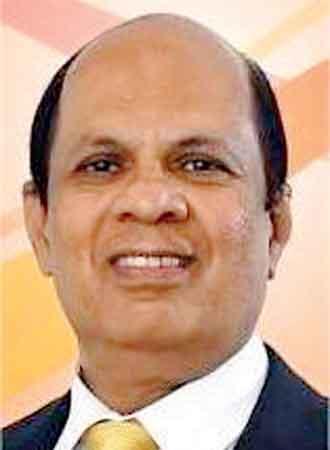
This move was highlighted by Board of Investment (BOI) Chairman Arjuna Herath during a panel discussion at the Sri Lanka Economic Summit in Colombo last Wednesday, organised by the Ceylon Chamber of Commerce.
Herath identified the hospitality sector as a low-hanging fruit” for attracting investments. The government is actively promoting public-private partnerships (PPPs) in this sector, with Sri Lanka Tourism Development Authority (SLTDA) recently calling for tenders to develop 3,000 acres of its land for various projects, including restaurants, hotels, and entertainment facilities.
We are facilitating investments through these tenders. BOI concessions will apply to investments exceeding a certain threshold, making them more enticing,” Herath said. The BOI will also support SLTDA in packaging these development projects to attract investors.
In the logistics sector, the Sri Lanka Ports Authority (SLPA) is in active negotiations to develop a logistics hub within its premises, with two additional hubs also announced. Herath emphasised the government’s preference for joint ventures in these projects.
We want joint ventures clearly in these logistics hubs,” he stated. The government is also prioritising PPPs to enhance connectivity between ports and industrial zones, further boosting the logistics sector.
The government has identified 10,000 acres of land for renewable energy projects, aiming to reduce the cost of one unit of power from the current 30-40 US cents to 8 US cents. Herath noted that achieving this goal would require bringing the cost per unit below 5 US cents. These projects are part of the government’s broader strategy to make energy more affordable and sustainable.
The government is moving forward with plans to establish two technological parks in Kurunegala and Galle, both to be developed on a PPP basis. Herath assured that the infrastructure in these parks would be developed to generate investor demand, positioning Sri Lanka as a hub for technology and innovation.
In addition to the above sectors, the government is also prioritising agriculture and apparel & textiles. These sectors are seen as vital for economic growth and job creation, with the government seeking to attract investments that can drive modernisation and increase export potential.
Q : Ambassador Kananathan, your tenure as High Commissioner of Sri Lanka to Kenya and concurrently to many African nations has been impactful. As your tenure concludes, how would you summarize your journey and key milestones?
A : My journey has been immensely fulfilling, shaped by both challenges and significant achievements. From the outset, my objective was to enhance Sri Lanka’s diplomatic presence and foster stronger ties with African nations. Reflecting on my tenure, several accomplishments stand out.
One of the most notable achievements was deepening Sri Lanka’s political and economic relations with Africa. This included securing vital support to Sri Lanka from African nations in multilateral forums, enhancing Sri Lanka’s global standing. Additionally, I prioritized facilitating Sri Lankan businesses’ entry into African markets, enabling them to contribute to the continent’s economic growth while expanding Sri Lanka’s footprint.
Another significant accomplishment was increasing Sri Lanka’s diplomatic reach in Africa. When I began, the High Commission in Nairobi was accredited to only four countries. By the end of my tenure, this number had expanded to 22, reflecting the government’s trust in my ability to represent Sri Lanka across this diverse and dynamic region.
Q : Your ability to secure African support for Sri Lanka at multilateral forums has been widely praised. Could you elaborate on your approach to engaging African leaders?
A: During my tenure, I leveraged the close relationships I had cultivated with African leaders over the years to deepen mutual understanding and trust. This foundation enabled me to engage more effectively with key decision-makers at the highest level while gaining a nuanced understanding of the political dynamics unique to each country.I prioritized building strong personal connections with African leaders, having met with 31 heads of state over the past few years.
This approach fostered solidarity with African nations, enabling Sri Lanka to gain their support in multilateral forums. It highlighted the importance of mutual respect and genuine collaboration in diplomacy.
Q ;: You successfully achieved the historic milestone of removing Sri Lanka from Tanzania’s referral visa list. How did you resolve this long-standing issue?
The removal of Sri Lanka from Tanzania’s referral visa list, which had been in effect for over two decades, was a significant achievement. Despite the challenge remaining unresolved by previous ambassadors, I was able to address it effectively by leveraging my political connections and prioritizing high-level engagements with key Tanzanian decision-makers.
Through persistent dialogue and the establishment of mutual trust, I successfully negotiated the removal of this restrictive policy. This change not only eased travel procedures for Sri Lankans but also strengthened bilateral relations and facilitated greater opportunities for Sri Lankan businesses in Tanzania.
Q : Can you share a particularly challenging moment during your tenure and how you overcame it?
A : When I assumed my role at the Sri Lankan High Commission in Kenya, the mission was facing significant challenges. The mission had lost credibility, and the local community’s respect had diminished. This was primarily due to internal discord within the mission—conflicts among the previous leadership of the mission and staff had created an environment of division and dysfunction. Consequently, there was no coordination or clarity in pursuing the mission’s objectives, which further damaged its reputation
My immediate focus was on restoring trust and credibility. I resolved internal disputes, improved communication, and emphasized collaboration within the mission. By fostering a unified approach, we regained the community’s support and enhanced the mission’s effectiveness. This transformation not only repaired the High Commission’s image but also enabled us to better serve Sri Lanka’s interests in Kenya and beyond.
Q: You were invited to monitor elections in several African countries. What does this signify for Sri Lanka’s diplomatic influence in the region?
A: This recognition stems from the strong personal relationships I have cultivated with African leaders and governments, Which is an honor and a powerful affirmation of Sri Lanka’s growing diplomatic presence in the region., as well as Sri Lanka’s demonstrated commitment to fostering mutual respect and trust on the international stage. I was the only Sri Lankan Ambassador invited as international observer to multiple African elections was a unique honor and a testament to the strong relationships
It demonstrated that our engagement extended beyond political and economic partnerships to include shared principles of governance and mutual respect.
Q : You played a key role in introducing Sri Lankan businesses to Africa in sectors such as renewable energy, tea, and logistics. How did you achieve this, and what has been the impact?
A : My focus was on identifying opportunities where Sri Lankan expertise could align with Africa’s developmental needs. By collaborating with both Sri Lankan and African stakeholders, I facilitated the entry of 17 major Sri Lankan companies into African markets.
This not only generated employment for Sri Lankans in Africa but also strengthened Sri Lanka’s economic ties with the continent. Sectors like renewable energy, tea production, construction, and logistics benefited from these initiatives, creating win-win scenarios for both regions.
Q:Before your tenure as High Commissioner, you held advisory roles with African governments. Could you share details about these positions and the contributions you made.
A : Of course. I was honored to serve in key advisory roles with African governments, where I contributed to shaping strategic initiatives for economic progress.
One of my significant positions was as an Advisor on Investments to former President Prof. Alpha Condé of Guinea. In this capacity, I played a pivotal role in identifying and promoting investment opportunities that bolstered Guinea’s economic growth. My work primarily focused on critical sectors such as mining, infrastructure, and energy—areas that are essential to the country’s sustainable development.
In addition, I served as an Advisor to the Department of Major Works and Strategic Investments in the Central African Republic, working closely with the President of the country. This role allowed me to contribute to the planning and execution of projects aimed at enhancing the nation’s infrastructure and economic landscape.
These experiences not only strengthened my understanding of Africa’s development potential but also enabled me to forge meaningful partnerships that have facilitated deeper investment and economic collaboration between Sri Lanka and Africa.
Q : The launch of Sri Lankan Airlines flights to Kenya was another landmark achievement. What was its significance?
A : The introduction of Sri Lankan Airlines flights to Kenya was a strategic move to enhance connectivity and promote regional trade. The flights facilitated the export of Kenyan horticultural products to Sri Lanka for transshipment to Australia, showcasing Sri Lanka’s role as a logistics hub.
Although the service is currently paused due to operational constraints, it demonstrated the potential for Sri Lanka to strengthen its global trade connections through strategic partnerships with Africa.
Q: What do you consider your greatest contribution to Sri Lanka’s foreign policy and relations with Africa?
A : Expanding Sri Lanka’s diplomatic presence in Africa and fostering meaningful relationships with its leaders has been my most significant contribution. By promoting business ties, enhancing political engagement, and securing African support in multilateral forums, I laid a strong foundation for future diplomatic and economic cooperation.
Q; Now that your tenure has ended, how do you plan to continue contributing to Sri Lanka-Africa relations?
A ; While I have stepped down as High Commissioner, my commitment to strengthening Sri Lanka-Africa ties remains unwavering. Through my business ventures and networks, I will continue facilitating opportunities for Sri Lankan entrepreneurs in Africa.
I have also established a one-stop center to streamline the process for businesses entering African markets, ensuring minimal bureaucracy and maximum efficiency. My focus remains on building lasting connections that benefit both regions.
Q : Finally, what legacy would you like to leave, and what is your vision for the future of Sri Lanka’s engagement with Africa?
A : My legacy would be that of a diplomat who dedicated immense effort to deepening Sri Lanka’s ties with Africa, not only through political engagement but also by fostering business and investment collaborations. I firmly believe that diplomacy requires an active and dynamic approach—seeking opportunities rather than waiting for them to arise. I took deliberate steps to bypass bureaucratic hurdles and streamline processes that often hinder progress. By cultivating personal relationships with political leaders and key stakeholders, I was able to facilitate meaningful dialogues that led to concrete outcomes. In a globalized world, it is imperative to be proactive and ensure Sri Lanka benefits from the immense potential of emerging markets.
Strengthening and sustaining relations with Africa demands a strong commitment, continuous engagement, and mutual respect. I hope that the progress made during my tenure will not only endure but serve as a foundation for further collaboration. I take pride in the achievements accomplished within a short span and hope Sri Lanka continues to harness the expanding opportunities Africa offers. As Africa’s economic potential continues to grow, Sri Lanka must focus on building mutually advantageous partnerships, particularly in areas such as trade, investment, and sustainable development.
Environmentalists have warned that low lands and abandoned paddy fields in the Western Province are under threat of being encroached upon by the invasive plant Yoda Nidikumba soon.
The aggressive invasive plant known as the Giant Mimosa (Mimosa pigra) has been identified as a significant threat, with the potential to spread across low-lying areas, including paddy fields in the Western Province over the next few years.
This plant causes severe impact on biodiversity, agriculture, and human activities. It was previously concentrated in the Central Province, particularly around the Mahaweli River and other waterways. However, it is now rapidly spreading into the Western Province, according to environmentalists.
The Giant Mimosa is taking over abandoned sections of the Central Expressway, particularly in the Kadawatha-Mirigama stretch.
Giant Mimosa at Central Highway construction site in Daraluwa
Unlike other Mimosa species found in Sri Lanka, such as Mimosa pudica (Medicinal Mimosa) and Mimosa invisa, the Giant Mimosa (Mimosa pigra) is an exotic, highly invasive species. It has been listed among the top 20 invasive plants in Sri Lanka.
First identified in 1995 at Tennekumbura in Kandy by agricultural scientists Senior Prof Buddhi Marambe of the Agricultural Faculty of the Peradeniya University and Dr. Lakshman Amarasinha, former Director of the Field Crops Research and Development Institute at the Department of Agriculture, the plant has since become a growing concern.
When asked about the rapid spread of the Giant Mimosa in the Western Province, Professor Marambe said that the Ministry of Environment, the Central Environmental Authority, and provincial agricultural and environmental institutions had to take urgent action to neutralise the threat.
In 2002, our survey in the Central Province revealed that 474 acres were infested with this plant. The current situation may be even worse. The issue is that even if we eradicate all existing plants, the seeds of this species can remain viable for 23 to 50 years, meaning the plant could re-emerge anywhere in Sri Lanka. Additionally, the seeds spread through water, posing a significant risk to paddy fields and wetlands,” Professor Marambe said.
He also warned that the extensive wetlands along the Attanagalu Oya, including areas in Gampaha-Daraluwa, which are frequently flooded, could soon fall victim to the Giant Mimosa invasion.
Sri Lanka’s cumulative deficit in the trade account has widened to USD 6 billion in 2024 compared to USD 4.9 billion in 2023.
Releasing the external sector report for December 2024, the Central Bank of Sri Lanka (CBSL) noted that although Sri Lanka recorded the second highest annual export earnings in history, the expansion in import expenditure outpaced the expansion of export earnings, leading to the higher trade deficit.
Sri Lanka’s earnings from merchandise exports increased by 7.2% year-on-year to USD 12.8 billion in 2024. The figure marks the second highest annual export earnings in history.
Meanwhile, expenditure on merchandise imports in 2024 amounted to USD 18.9 billion, reflecting a year-on-year increase of 12.1%, driven by growth in all major import categories.
Additionally, foreign investments in the government securities market recorded a net outflow of USD 179 million in 2024.
However, a net inflow was observed in the last 3 months of 2024, and the net inflow in December 2024 was USD 18 million.
The gross official reserves stood at USD 6.1 billion at end 2024 compared to USD 4.4 billion at end 2023, supported by net purchases by the central bank from the domestic foreign exchange market during 2024 at historically high levels and funds received from multilateral institutions.
The GOR includes the USD 1.4 billion currency swap facility with the People’s Bank of China, which was renewed for 3 years in December 2024.
Nearly 313,000 women become pregnant in Sri Lanka every year, but alarmingstatistics reveal that a significant number of these pregnancies do not result in healthy births.
According to the College of Community Physicians of Sri Lanka, nearly 26,000 women lose their fetuses within the first few months of pregnancy, while around 1,700 babies die in the womb after 28 weeks.
At a media briefing held at the Sri Lanka Medical Association Auditorium in Colombo, the association’s president, Specialist Dr. Kapila Jayaratne, emphasized the need to address the rising rates of pregnancy complications, premature births, and infant deaths.
Infant Mortality
Out of approximately 280,000 live births each year, nearly 20,000 babies are born with low birth weight, many requiring intensive medical care. Tragically, around 2,500 children do not survive their first year of life due to various health complications, according to Dr. Jayaratne
Dr. Jayaratne detailed the leading causes of current infant deaths in Sri Lanka:
Moreover, when considering child deaths under the age of five, the number rises to approximately 3,300 annually.
Declining Birth Rates and Rising Deaths
Sri Lanka has witnessed a notable decline in birth rates, dropping from 319,000 in 2019 to 247,000 in 2023, marking a 22-23% decrease. At the same time, the overall death toll across all age groups has surged, from 132,000 in 2020 to 181,000 in 2023.
Despite these challenges, the country has made strides in healthcare, increasing life expectancy from 53-56 years in the 1950s to 73 years for men and 80 years for women today, the doctor added.
Community Health Specialists Push for Preventive Measures
Dr. Jayaratne stressed the importance of preventive healthcare over reactive treatment. He outlined a three-tiered approach:
-Primary prevention: Stopping diseases before they develop -Secondary prevention: Managing illnesses to prevent complications -Tertiary prevention: Minimizing damage and disability once a disease develops
He urged society to play an active role in improving maternal and child health, emphasizing that healthcare quality, education, economic status, and social conditions all influence pregnancy outcomes.
Debate on Fatal Birth Defects and Termination Laws
Dr. Jayaratne also addressed that Sri Lanka’s legal stance on pregnancy termination in cases of fatal birth defects. He argued that while other countries allow termination in such cases, Sri Lankan law does not, causing suffering for mothers, existing children, and the healthcare system.
He urged policymakers to take action, noting that this issue has been under discussion for two decades without progress.
Rising Child Suicides and the Role of Social Media
A concerning trend has emerged regarding child suicides, with 133 cases recorded in 2022 and an unofficial estimate of 270 cases in 2023, he added, noting that experts partially attribute this to the negative impact of social media, calling for regulations to protect children from online harm.
Dr. Jayaratne stated that investigations are underway to assess the risks and benefits of social media, with recommendations soon to be presented to lawmakers.
The Leader of the Opposition, Sajith Premadasa criticized that the current government, which came to power with the votes of the farmers, has failed to provide even a certified price for the farmers’ paddy.
Speaking at a public rally held in Kurunegala, Premadasa said that the government has also failed to provide the fertilizer subsidy on time.
They said that the certified price for paddy purchase will be made a legislation in the country. The ministers of the current government who promised a certified price of Rs. 150 for paddy, have now failed even to distribute the fertilizer subsidy of Rs. 25,000. This is the harvesting season, but the government hasn’t even declared a proper certified price for paddy”, Premadasa added.
The government says that they have allocated Rs. 5 billion for the purchase of paddy, but they haven’t requested the Paddy Marketing Board to obtain that fund and to purchase paddy from the farmers.”
On the other hand, a number of red-labelled containers have been released from the port. Who instructed to do this? The government says there’s no problem, and there are no illegal materials in these containers. We should ask the government how they say that without even inspecting these containers,” the Opposition Leader expressed.
Sri Lanka’s ambitious “Clean Sri Lanka” initiative has sparked excitement and hope among citizens, yet recent developments have raised questions about its effectiveness and the bureaucratic hurdles that threaten its success. While the aim is admirable—to foster a cleaner, greener, and more responsible environment for all—there are glaring gaps in implementation that need urgent attention.
Take, for instance, the Makumbura Multimodal Center in Kottawa. The centre’s restaurant has been closed for nearly a month due to the expiration of the previous tender on December 31, 2024. Despite the immediate need for dining services among commuters, the authorities have yet to finalize fresh tender applications for reasons that remain inexplicable. The closure has not only disappointed travellers seeking a convenient place to eat before their journeys but has also led to a loss of revenue and potential job opportunities in the area. Such setbacks highlight a critical need for more responsive governance that prioritizes the needs of the citizens.
Additionally, a particularly striking example of bureaucratic inefficiency occurred again recently in the neighbourhood. Mihindu Mawatha, a road in dire need of repair, received a fresh asphalt layer just before the recent Presidential elections, transforming it into a smooth, enjoyable route. However, mere weeks after this improvement, workers arrived to address a leak in an underground pipe, digging a large hole in the newly laid surface. When questioned about who would be responsible for restoring the road post-repair, the answer was shockingly evasive. It was implied that once the pipe leak was fixed, someone would tend to the road repairs, but without a clear commitment or timeline. This lack of accountability creates frustration and further exemplifies the bureaucratic inertia that plagues the country.
The Clean Sri Lanka initiative’s success hinges not only on the occasional cleanup drive but on systemic changes to curb littering and promote responsible behavior. Currently, there is no effective punitive system for those who litter, allowing irresponsible actions to persist largely unchallenged. The emphasis seems to be on superficial fixes rather than on cultivating a culture of cleanliness and civic responsibility.
As cities and towns across the island witness isolated cleansing efforts, the overarching ineffectiveness of the bureaucracy threatens to stifle meaningful progress. If officials fail to align their actions with the broader objectives of the Clean Sri Lanka initiative, these measures may have little impact, ultimately leading to disillusionment among citizens who yearn for real change.
For the “Clean Sri Lanka” vision to flourish, the government must take decisive action to address the systemic issues within its bureaucracy. It must establish clear accountability for public works, create strong penalties for littering, and engage the community in ongoing discussions around cleanliness and environmental stewardship. Only then can this noble vision transform from an aspirational slogan into a tangible reality that benefits all Sri Lankans.
The intent behind the Clean Sri Lanka initiative is commendable; its implementation must be more than a series of piecemeal efforts. The path to a cleaner, more responsible nation lies in truly understanding and resolving the bureaucratic hurdles that continue to hinder progress. Without addressing these foundational issues, we risk watching a well-meaning initiative slowly lose steam before it has a chance to truly flourish.
The idea of a ceasefire is as old as the idea of war. In old records, one reads of halts in firing for humans to eat or sleep. Rules of combat developed out of an understanding that both sides had to rest or refresh themselves. Sometimes, this understanding included the lives of animals. During the Easter Rising in 1916, for instance, the Irish rebels and the British troops stopped their shooting around St. Stephen’s Green in Dublin so that James Kearney, the park keeper, could enter and feed the ducks. It was this caesura, or pause, of gunfire that popularised the term ‘ceasefire’. For Palestinians in Gaza, any ceasefire that promises to stop the bombardment and allow for the arrival of humanitarian aid (particularly food, water, medicine, and blankets) is a relief. In the days since 19 January, when a temporary ceasefire went into effect, aid at scale has been able to reach Gazans, United Nations Office for the Coordination of Humanitarian Affairs spokesperson Jens Laerke confirmed. On the first day of the ceasefire, 630 trucks entered Gaza – many more than the fifty to one hundred trucks per day that struggled to get in during the Israeli bombing. These trucks are ‘getting food in, opening bakeries, getting healthcare, restocking hospitals, repairing water networks, repairing shelter, family reunifications’, and carrying out other essential work, Laerke said. After almost five hundred days of genocidal violence, this aid is more than a relief. It is a lifeline. But this ceasefire agreement had first been tabled in May 2024, when it was approved by the Israeli government and later agreed to by Hamas until ultimately being rejected by Netanyahu. The guns could have been silenced then.
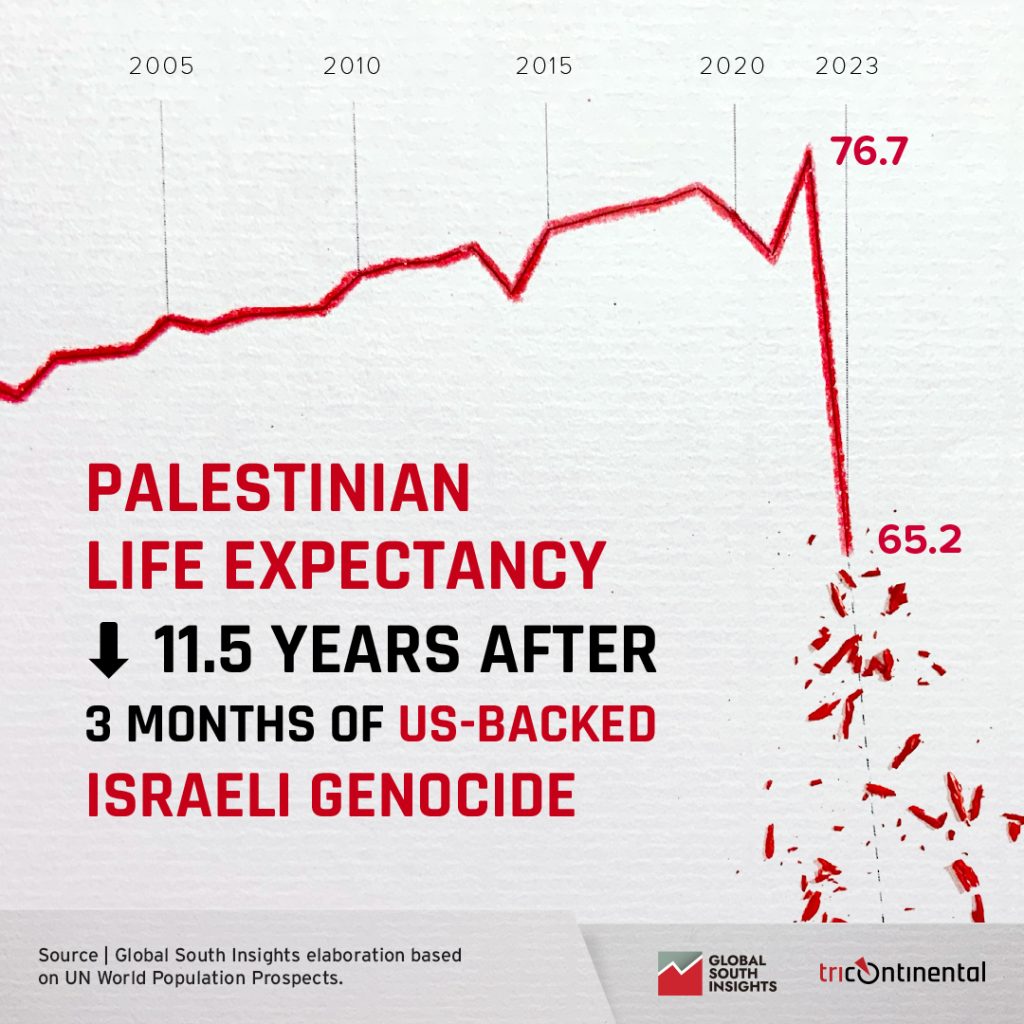
Palestine has been deeply impacted by the genocide. Using estimates from the United Nations’ World Population Prospects 2024, Tricontinental: Institute for Social Research and Global South Insights analysed the decline in Palestinian life expectancy caused by the Israeli bombardment in Gaza and found that Palestinian life expectancy at birth fell by 11.5 years between 2022 and 2023, from a respectable 76.7 years in 2022 to just 65.2 years in 2023. It was the first three months of the US-backed Israeli bombing – from October to December 2023 – that brought about this terrible decline in total life expectancy. We are not aware of such a rapid decline in life expectancy at any other period of modern human history. A Palestinian life is now more than seventeen years shorter than an Israeli one. This gap is greater than that which existed between blacks and whites in apartheid South Africa, which was fifteen years in 1980. Eleven and a half years lost per Palestinian. That is almost 60 million years lost for the remaining 5.2 million Palestinians who have remained in Palestine and survived the genocide. This loss cannot easily be recovered. It will take years of immense work to rebuild Palestinian society and reach anything near the pre-genocide life expectancy. Health systems will need to be rebuilt: not only hospitals and clinics, which were almost all destroyed in Gaza, but new doctors and nurses will have to be trained to replace those who were killed. Food systems will need to be recovered: not only bakeries, but fields will need to be detoxified and fishing boats repaired. Housing will need to be rebuilt to replace the 92% of homes in Gaza that were destroyed or damaged (what the UN has called a ‘domicide’). Schools will need to be rebuilt. The mental trauma that afflicts children will need to be healed so that they feel that these structures are not graves but places of safety and learning.
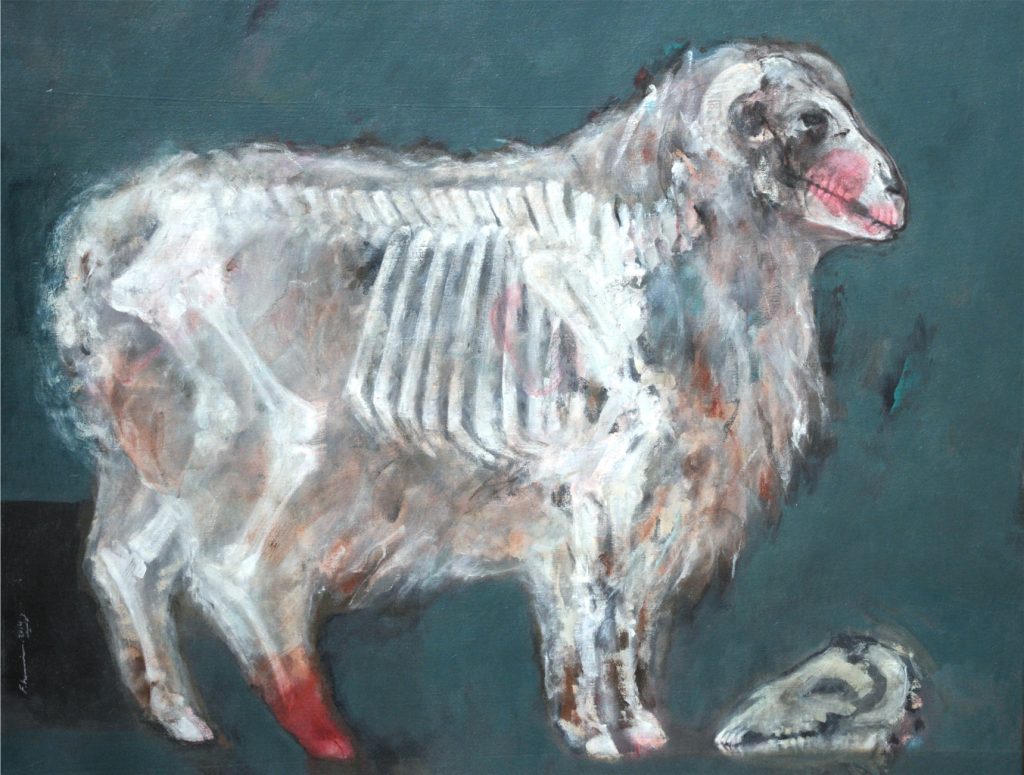
Ahmad Nawash (Palestine), The Elephant, 1989. The data is messy. Tens of thousands of Palestinians have been killed in the carnage, including at least 14,500 children. According to a report produced by the Danish Refugee Council, the Agricultural Development Association, and the Women’s Affairs Centre, between October 2023 and October 2024 ‘over 90% of Gaza’s population has been displaced, with individuals displaced an average of six times, and some up to 19 times’. Furthermore, the report states, Palestinians have faced forced displacement orders with ‘inadequate warning’ and have struggled to survive as the ‘designated safe zones”’ have been ‘subjected to bombardment and lack basic resources’. The neurological problems faced by survivors are extreme. ‘There is ongoing concern for the mental health of everybody in Gaza, particularly for children who are so deeply traumatised’, Nebal Farsakh of the Palestine Red Crescent Society said, pointing out that ‘there are at least 17,000 children unaccompanied or separated from their parents’. As we noted in the first newsletter of this year, a December 2024 report conducted by the Community Training Centre for Crisis Management in Gaza found that ‘96% of the children in Gaza felt that death was imminent’. A preliminary assessment suggests that rebuilding Gaza will cost $80 billion. The UN Development Programme has signed an agreement with the Università Iuav di Venezia to design a new Gaza that proposes first building a city ‘nucleus’ for 50,000 people amidst the rubble and then building outwards. There are at least 50 million tons of rubble in Gaza from the destruction of more than two-thirds of the area’s infrastructure (including 92% of housing units), which will take years to clear. In the ruins, alongside the bodies of missing Palestinians, are unexploded munitions and toxic materials: it is not possible to just line up a row of bulldozers and drive from one end of the Gaza Strip to the other.
Fadi al-Hamwi (Syria), Gloating, 2013. Palestinian institutions simply do not have the money to rebuild Gaza. The Gulf Arab states, which do have the money, will certainly try to wrest unforgiveable political concessions from the Palestinian political factions in exchange for any aid. The countries that want to make Israel pay for the devastation it has wrought on the Palestinians do not have the political leverage to do so, nor can they hope to push the countries that armed Israel (such as the United States, the United Kingdom, and Germany) to pay for the damage done with their munitions. The perpetrators of the genocide want to convert Gaza into their real estate playground. US President Donald Trump says Gaza is a ‘phenomenal location’ that currently looks like a ‘massive demolition site’, echoing his son-in-law and advisor on Middle East strategy Jared Kushner’s assessment in February 2024 that Gaza’s ‘waterfront property could be very valuable’. Last year, Israeli Prime Minister Benjamin Netanyahu said that the northern part of Gaza, including Gaza City, would remain a ruin and be annexed, while Israel would control the rest of Gaza and build settlements along its edges. The settler movement, which is hell-bent on ethnically cleansing the Palestinians – and part of Netanyahu’s base – is prepared to seize the beachfronts and build their own settlements there. The pressure on Palestinians to leave Gaza will remain intense, despite this momentary ceasefire.
Dima Hajjar (Lebanon), Olympia Network, c. 2002–2004. Palestinians, who have lost at least 11.5 years of their lives as a result of this horror, will take what they can get now – even this threadbare ceasefire. But they deserve much more, and they will continue their struggle to get it. That is why on 27 January, hundreds of thousands of Palestinians sheltering across Gaza began marching northward to their homes. They will not live through another Nakba (Catastrophe). They will rebuild with their fingers in the dirt if necessary. Warmly, Vijay P. S. The graph above is part of a new series from Tricontinental: Institute for Social Research and Global South Insights (GSI) called Facts. Each month, we will release a new visual from this series based on research produced by GSI’s big data system.


 Arjuna Herath