
“What’s Coming Is WORSE Than A Recession” — Richard Wolff’s Last WARNING
February 1st, 2025Sri Lanka Records Highest Deflation In 65 Years
January 31st, 2025By Channels Television
Inflation hit a record 69.8 per cent in September 2022 at the height of the country’s economic crisis.
Sri Lanka’s consumer prices fell by 4.0 per cent in January, the highest deflation rate since July 1960, official data showed Friday, as the South Asian nation emerges from its worst economic meltdown.
January was the fifth consecutive month of deflation, according to the Colombo Consumer Price Index.
Inflation hit a record 69.8 per cent in September 2022 at the height of the country’s economic crisis, which saw months of widespread consumer goods shortages.
Officials said sharp reductions in electricity and fuel costs contributed to the sharp fall in prices in January, but the central bank forecasts annual inflation in 2025 to be around 5.0 per cent.
Sri Lanka secured a $2.9 billion bailout loan from the International Monetary Fund (IMF) after the 2022 crash.
President Anura Kumara Dissanayake, elected last year, has vowed to maintain the IMF bailout programme negotiated by his predecessor that includes higher taxes and cuts to state spending.
Sri Lanka raises renewable energy target to 100% in bold policy shift
January 31st, 2025Courtesy The Daily Mirror

- Ministry of Energy says the new policy will be centred on a people-centric energy transition that is both equitable and affordable for citizens”
- A specific timeline for achieving the Net Zero target was not disclosed
- Shares the government’s aim is a 30 percent tariff reduction within a five-year period
By Nuzla Rizkiya
Sri Lanka has set itself yet another ambitious goal, this time raising the renewable energy target from the current 70 percent to 100 percent, aiming for a complete transition to clean energy.
The announcement was made by Secretary to the Ministry of Energy, Prof. Udayanga Hemapala yesterday when he addressed a forum organised by the Asian Development Bank (ADB) on power sector reforms.
Hemapala stated that the new policy will be centred on a people-centric energy transition that is both equitable and affordable for citizens”.
While a specific timeline for achieving the Net Zero target was not disclosed, he shared that the new policy will focus on an integrated approach, encouraging both stakeholder and public participation to develop financially sustainable solutions.
Our aim is a 30 percent tariff reduction within a five-year period, and our long-term target is achieving 100 percent clean energy,” Hemapala said addressing the ADB’s ‘Serendipity Knowledge Programme’ held in Colombo yesterday.
Meanwhile, Ceylon Electricity Board (CEB) Chairman Dr. Tilak Siyambalapitiya cautioned that Sri Lanka’s power system remains weak compared to regional neighbours due to the country’s outdated approaches in power generation and high transmission losses.
He pointed out that power sector regulatory reforms have repeatedly failed to deliver in key areas, particularly in economic regulations, while Sri Lanka’s over-reliance on hydropower development has kept it out of step with global energy trends.
Presenting financial data, Dr. Siyambalapitiya noted that the Public Utilities Commission of Sri Lanka (PUCSL)-approved cost of electricity rose from Rs. 16.91 per kWh in 2010 to Rs. 22.05 per kWh in 2021.
However, the PUCSL-approved price of electricity increased only from Rs. 13.15 per kWh to Rs. 16.81 per kWh over the same period.
Accordingly, this mismatch resulted in annual financial losses of Rs. 80.1 billion for the energy sector by 2021, along with a cumulative regulatory cash shortfall of Rs. 502.8 billion over the decade.
In summary, this figure represents borrowings without corresponding assets, unlike other loans where the sector had assets,” Dr. Siyambalapitiya said.
While regulatory reforms between 2022 and 2024 managed to reduce this shortfall to Rs. 180 billion, he pointed out that the current cost vs. price gap remains a challenge.
As of the latest tariff revisions, the PUCSL-approved cost per kWh stands at Rs. 31.12, while the approved price is only Rs. 24.17, indicating that the financial discrepancy is likely to continue, according to the Chairman.
The Asian Development Bank expressed its support for the government’s new renewable energy policy but highlighted the need for careful planning and investment, especially in the transmission sector, to ensure a sustainable transition.
Speaking at the event, ADB Country Director Takafumi Kadono stressed that energy sector reforms in Sri Lanka must continue despite economic uncertainties and mounting pressure on the industrial sector.
We hope the ownership of reforms remains strong. We have been supporting the 70 percent renewable energy target, and we are hopeful the momentum will continue. A consensus on this is necessary. Without it, implementation will be difficult,” Kadono said.
In April 2024, Sri Lanka set an immediate target to meet 70 percent of its energy needs through renewable sources by 2030. This aligns with its commitment as one of the 43 countries in the Climate Vulnerable Forum that pledged to transition to 100 percent renewable electricity generation by 2050.
President eases restrictions on vehicle imports, issues gazette notification
January 31st, 2025Courtesy The Daily Mirror
President Anura Kumara Dissanayake issued a fresh gazette notification effective from February 1, easing restrictions on vehicles.
The new gazette notification announces tax ratios on vehicles including modified ones . Even the cars will now be covered under this category.
President Anura Kumara vows to return land to rightful owners in North
January 31st, 2025Courtesy Adaderana
President Anura Kumara Dissanayake stated that land belonging to the people should rightfully remain with them. He further emphasized that the issue of land disputes in the Northern Province is under review and that steps are being taken to expedite the process of returning land to its rightful owners.
The President highlighted that while the government has the authority to acquire land anywhere in the country for development projects or security purposes, it is imperative that alternative land is provided to those affected, according to the President’s Media Division (PMD).
President Disanayake made these remarks during the Jaffna District Coordination Committee (DCC) Meeting held today (31) at the Jaffna District Secretariat.
He also stressed that the Jaffna President’s House will be fully repurposed for a project of greater significance to the people of the region. He urged officials to submit suitable proposals for this initiative.
The President instructed officials to investigate and take swift action regarding reports that families displaced by the war are still residing in the Northern Province.
He also noted that a committee, led by the Secretary to the Prime Minister, has identified approximately 30,000 vacancies in state institutions. He assured that these vacancies would be filled in accordance with the established recruitment process, ensuring opportunities for university graduates as well, the statement said.
Additionally, the President announced that Tamil-speaking youth will be given greater opportunities to apply for vacancies in the Police Department and encouraged them to come forward for recruitment.
The government has also planned to implement a comprehensive strategy to strengthen the transportation system in the Northern Province. This includes launching a joint bus operation project between the Sri Lanka Transport Board (SLTB) and private bus operators. Furthermore, attention has been directed toward increasing the frequency of train services in the region.
The President stated that three new industrial zones will be established in Paranthan, Mankulam, and Kankesanthurai to improve the living standards of the people in the Northern Province. He also extended an invitation to Sri Lankans who left the country due to the war to invest in these projects, the PMD stated.
The government is prioritizing the Northern Province in its development plans, ensuring targeted initiatives for the region, the President emphasized.
He further revealed that with an estimated 2.5 million tourists expected to visit Sri Lanka next year, the government will identify and promote new tourist attractions in the Northern Province to boost tourism in the region.
Additionally, the President assured that new recruitments for the state sector in the Northern Province will be carried out without political interference, while efforts will be made to further strengthen public service in the region.
President Anura Kumara Disanayake stated that the government would engage in maximum diplomatic intervention to resolve the fisheries-related issues affecting the region, the statement added.
Additionally, he highlighted that the Northern Province has been identified as the region with the lowest consumption of piped drinking water in the country. In response, he emphasized the need to accelerate the on-going water supply projects in the area. Furthermore, he announced that funds have been allocated in the upcoming budget for the implementation of new water supply projects to improve access to clean drinking water in the province.
President Anura Kumara Disanayake acknowledged the numerous challenges faced by the people in the Northern Province and emphasized the government’s commitment to strengthening the education, healthcare, transportation and agricultural sectors, along with the overall public service in the region. He further stated that both political authority and state mechanisms must work together to uplift the living standards of the people.
The Jaffna District Coordinating Committee meeting was attended by several key figures, including Minister of Fisheries, Aquatic and Ocean Resources, and Chairman of the Jaffna District Coordinating Committee Ramalijngam Chandrasekar, Minister of Transport, Highways, Ports, and Civil Aviation Bimal Rathnayake, Members of Parliament (NPP), Ilankumaran Karunanandan, Dr. Saravanabhavanandan Shanmuganathan, Rajivan Jayachandramurthy, Ramanathan Archuna, Member of Parliament (ITAK) Sivagnanam Sridharan, Member of Parliament (AITC) Gajendrakumar Ponnambalam, Governor of the Northern Province Nagalingam Vedanayagam, Chief Secretary of the Northern Province L. Ilangovan, Jaffna District Secretary M. Pradeepan, Acting Inspector General of Police Priyantha Weerasooriya and Senior military officials overseeing the Northern region, along with other government officials.
–PMD–
Sri Lanka to designate special day to celebrate ethnic cultures and traditions
January 31st, 2025Courtesy Adaderana
President Anura Kumara Dissanayake has announced that a special day will be designated in October to celebrate the cultures, traditions, and values of all ethnicities in Sri Lanka.
He made this statement while addressing a meeting in Valvettithurai, Jaffna.
Tamils, Sinhalese, Buddhists, Catholics, and Muslims. Don’t we all want a day to celebrate together?”
We have planned to celebrate a grand national festival in October by bringing together the cultures, foods, lifestyles, and clothing of all these communities,” he said.
Addressing the gathering, Dissanayake added: Even if we are distant, it is not good to let our children remain distant. Even if our generation waged war, we will not allow our children’s generation to wage war.”
We will make this state a state where all the children of the North, South, and East will unite.”
The President further revealed that students in schools with less than 300 children will be provided with an allowance of Rs. 6,000 for their stationery and school equipment needs.
US opens doors for Sri Lankan apparel manufacturers to set up operations
January 31st, 2025Courtesy Adaderana
The U.S. Ambassador to Sri Lanka, Julie Chung, states that the U.S. apparel manufacturing sector is projected to generate USD 365 billion in revenue in 2025 and added that Sri Lanka can benefit from reduced shipping times, lower tariffs, and the ability to respond swiftly to market demands by establishing operations in the United States.
Speaking at the Sri Lanka Apparel Exporters’ Association’s annual general meeting recently, the U.S. Ambassador also highlighted the new administration in the US, noting that the United States is open for business and expects a boost in investments and business activities moving forward.
She further remarked that investing in the US is a strategic business move as well as an opportunity to build a more resilient and competitive future for Sri Lankan companies in the global marketplace.
The Ambassador also acknowledged the Sri Lankan government’s efforts to promote good governance, while emphasizing that foreign investors are more focused on a clean and transparent procurement process, a level playing field for all investors, and the honouring of contracts.
The three key ages your brain declines dramatically – and what you can do about it
January 31st, 2025Courtesy The Telegraph (UK)
Cognitive decline speeds up at 57, 70 and 78, but there are lifestyle tweaks you can make to stay sharp

Cognitive decline is natural: it starts to subtly set in by our 40s, and by your mid-50s it’s perfectly normal to find yourself standing in the middle of a room, scratching your head, saying, Now why the hell did I come in here?”
While the odd midlife memory lapse is a normal part of the ageing process, a new study has found that there are three distinct peaks, when cognitive decline is more evident in all of us. However, these clear spikes seen at 57, 70 and 78 are significantly more pronounced in some people, and the reason for that is simple: lifestyle.
The Chinese study, published in the journal Nature Aging, measured levels in the brain of 13 proteins that are associated with accelerated brain ageing and neurodegenerative diseases. What’s interesting is that the peaks are related to shifts in our lives, from the midlife drop in our hormones to the impact of retirement. The downstream effect they have on our brain is evident years afterwards. But that’s not to say their impact is out of our hands.
Prof Barbara J Sahakian, of the University of Cambridge’s Department of Psychiatry, is the co-author of Brain Boost, a book about the multiple physical and mental actions that support lifelong healthy cognitive function.
She explains the study in its simplest terms: These key ages in the study are when we begin to see substantial brain changes. At 57, it’s about how well we have managed the physical changes that come with middle age and menopause; at 70, it’s about how well we have kept our brains stimulated in the run up to and post-retirement, and at 78, it’s related to levels of those ‘cognitive reserves’ we have built up by challenging ourselves to do hard things.
Just like we manage cholesterol long before it causes a heart attack, so too, by adopting lifestyle changes at least 10 years before these peaks described in the study, we can change our future. That’s the key message.”
In short, for brain health we need to both act now, and plan ahead.
Why your brain ages rapidly at 57
When middle-aged spread starts to impact the brain
By 57 your brain is shrinking. It’s a process that starts as early as 30, but it’s now that the reduction in brain volume is clear because of diminishing white matter; the network of nerve fibres which allows the different brain regions to communicate effectively. In short, your broadband is slowing down.
This natural decline is exacerbated by middle-aged spread. Dr Sabine Donnai, a longevity doctor with a special interest in brain health, says weight gain influences our brain functioning in multiple ways. It is linked to decreased blood supply, hence a decrease of nutrients and essential fats the brain needs, and a build-up of waste products that are not being transported out. Body fat is also inflammatory. Obesity is linked to oxidative stress, those unstable oxygen atoms that damage cells, including neurones.”
Recent research also suggests high cholesterol can increase the risk of dementia, so that’s worth keeping an eye on at your midlife health check.
What you can do about it
The Nature Aging study was done on healthy people, and what was clear was that the poor lifestyle choices of the people with the worst levels of the proteins had had a huge impact. But it works the other way too. Studies show exercise is incredibly neuroprotective. For example, it increases the size of the hippocampus and improves memory.
Prof Sahakian keeps the advice simple. It’s time to start and keep exercising, which has many benefits, including bone density and preventing depression. The data shows that any exercise that raises your heart rate a bit is better than being sedentary. So the best exercise regimen is one you can stick to.”
Dr Donnai wants us to go about our daily task with added verve. I get a lot of activity into my day,” she says. I walk up the escalator. Don’t use your hands when standing up. Push back your chair and get up without using your hands. Don’t say, ‘Lift that for me,’ Say, ‘I can lift that box, I can bend down’. As you go about your daily tasks, be aware of activity that challenges your muscles. In short, don’t stop moving.”
Dr Donnai recommends testing for signs that your metabolism might be struggling, such as blood sugar and cholesterol levels, and keeping an eye on your waist-to-hip ratio. For women, anything over 0.85 is a red flag, while in men it should be below 0.9. For more in-depth analysis of the current state of your brain, Dr Donnai offers a brain assessment programme at her London clinic, Viavi, advising on ways to reduce your Alzheimer’s risk.
She has a shopping list of precautions and treatments. If you haven’t ever looked at your hormones, do it. Oestrogen, cortisol, insulin and testosterone are all hormones essential to brain health in myriad ways. I always say, you stop your HRT [hormone replacement therapy] the day you want to age. There are large-scale studies that support HRT as being cognition-protective.
Our lifestyle choices are 90 per cent of both the risk and the fix for cognitive decline.”
Why your brain ages rapidly at 70
The ‘retirement effect’
At 70 we start to see the most well-known of the 13 proteins associated with cognitive decline, tau, accumulate in the brain. There is the cortical thinning that leads to reduced synapse connections in areas responsible for thinking and learning. And there is shrinkage in the frontal lobes and hippocampus, the areas of the brain responsible for higher cognitive function.
The decade before 70 is when we really start to see neural pathways suffer as a result of lowered stimulation levels. It’s the retirement effect,” Prof Sahakian says. Around 60, people get a bit comfortable, they might avoid challenging and difficult things and start coasting on experience.” This is a terrible idea. As Prof Sahakian says: There’s plenty of scientific evidence to support the saying ‘use it or lose it’.”
What you can do about it
Dr Donnai says: Focus on activities that grow your brain; do not get into the habit of taking the easy option. Don’t settle for sudoku and crosswords; really challenge your brain. Ballroom dancing, a language, table tennis.”
She says we must not be afraid of early testing for Alzheimer’s and cognitive decline. We can see the protein changes 10-15 years before people become symptomatic and show any evidence of decline. Lifestyle can’t stop it entirely, but the longer you have to make changes and build cognitive reserves, the better the outcome.”
Cognitive reserve describes our resilience to brain deterioration, and it can significantly delay the onset of neurodegeneration and the impact of diseases such as Alzheimer’s and dementia. In the face of a brain injury or Alzheimer’s, a stored-up cognitive reserve will make you more resilient to its effect,” says Prof Sahakian.
Building cognitive reserves starts in childhood. But a 2022 study published in Neurology found that even people who develop high cognitive reserve” by the time they reach 69 may reduce their likelihood of memory and thinking decline, even if they have low childhood cognitive abilities. Ten or 15 years before, we should be embracing new things. It isn’t necessarily about learning Mandarin,” says Prof Sahakian.
Prof Sahakian sees this period as crucial for addressing serious risk factors for dementia and Alzheimer’s: loneliness and social isolation, which studies say can increase the risk of dementia as much as 30 per cent and 60 per cent respectively. One study showed that five of the 13 proteins linked to brain ageing increased in response to loneliness.”
Humans need socialising and stimulation. If that happens in the pub, she says, so be it.
Excessive drinking of alcohol is undeniably a problem, but most people enjoy a drink or two if it helps them relax and be sociable. A lot of face-to-face social contact is extremely good for older people.”
In short, sociable chats over a little drink are just what the doctor ordered.
Why your brain ages rapidly at 78
Drawing down on your cognitive reserves
Brain volume further reduces, as does blood flow to the brain. There is an accumulation of proteins linked to inflammation, and cognitive reserves are starting to run out.
What you can do about it
While you might prefer the kids to set up your new telly, the better decision is to work it out for yourself. IQ is genetic, but education and learning new things is completely within your control,” says Prof Sahakian. The protective effects of cognitive reserve are well recognised.” Multiple studies show those of us who have developed a deeper well of neuronal connections to fall back on fare better, even when our brain is damaged by age-related decline.
Theresa May famously talked about girl jobs” and boy jobs”, but there are great benefits to being able to do all the jobs, according to Prof Sahakian. If your household tends towards siloed roles in a marriage, a little role reversal is just what the doctor ordered.
Dr Donnai says we should be constantly on top of things that cause inflammation. That means eat well, exercise, relax and avoid sugars and too much stress. Stress is meant to be a reaction to an acute situation – all energy gets shifted towards dealing with the emergency. Chronic stress diminishes the available energy for essential repair and growth functions.”
Avoid too many of those things in our environment that are foreign to our DNA. The unnatural substances that the body sees as a threat. There are plenty of studies that show insidious effects of chronic, low-level toxin build-up. Our detoxification pathways are incredibly efficient, but they are just overwhelmed by the number of different chemicals in so many of our everyday products,” says Dr Donnai.
We all know about the toxins in cigarettes and alcohol, but there are also risks in everything from food packaging and deodorant to mattresses and takeaway coffee. Use a plastic-free cup and if you get a takeaway drink, don’t suck the hot liquid through plastic. It’s fine on the odd occasion, but day after day, the percentage of microplastics leaking into your drink will accumulate.
Dr Donnai is reassuringly confident in the medicinal power of our lifestyle. Everything about our brain is geared to fight for its survival. If we support our body with good food, stay physically active and ensure we get adequate sleep, we need not accept the biological decline we associate with ageing.”
Dementia
Finding a fitness regime that you love isn’t the only way to stave off dementia. In this piece we look at the 12 steps that can help reboot your brain, and leading experts reveal the habits they do every day to keep dementia at bay.
Also worth reading if you or someone in your family is worried about dementia is our guide to the MIND diet. Rather than your classic weight-loss plan. It’s an eating strategy which is designed specifically to keep your brain healthy.
First devised in the US, around 10 years ago, studies have consistently shown that following the MIND diet drastically reduces your risk of the disease – one showed a reduction in Alzheimer’s by an astonishing 53 per cent – as well as offering other benefits to your brain.
Losing a loved one to dementia is devastating in this candid piece Kerry Hine recalls the cruel decline of her former classical musician husband.
The Way Out of the economic abyss besetting Sri Lanka
January 31st, 2025by Dr Garvin Karunaratne
I enclose my earlier Paper, posted in Lanka Web two years ago(11/3/2022), re edited in the hope that its recommendations to build up our economy will be heard in the portals of our new saviour President Anura Kumara Dissanayake.
This Paper contains a blue print for immediate action to build up our Motherland
A depleted treasury- living on loans like a beggar on the streets, endless food queues-, is unfortunately Sri Lanka today. A New Programme to make everything we import is mandatory and I hope our leaders understand this fact.
Till 1977 Sri Lanka managed its economy without any foreign debt.
The IMF’s Structural Adjustment Programme imposed on Sri Lanka in 1977 ruled that the Public Sector should not do any commercial activities. Consequently all progressive programmes that brought production and poverty alleviation that had been implemented had to be abandoned. Though Departments could be abolished or abandoned, the personnel continued confined to the barracks.
How can the administrators who manned these great programmes be brought back to man the ship?
My mind traverses back to two successful programmes . How these two programmes achieved success and who administered them may offer us ideas as to how we can proceed.
The First is the Green Revolution in Sri lanka. When I joined the service of the Government in 1955 the battle for the use of high yielding paddy varieties was attended to by the Department of Agriculture and I being an Assistant Commissioner in the Department for the Development of Agricultural Marketing joined in. This Programme got a shot in the arm when the Paddy Lands Act was passed in1958 by Minister Philip Gunawardena. A new Department of Agrarian Services was formed overnight. The man behind the scene for the Paddy Lands Act and the creation of the Department was Dr. GVS de Silva, the Minister’s Private Secretary, a lecturer in Economics at the University of Peradeniya. The Department that was created overnight was the Department of Agrarian Services- MS Perera of the CCS was appointed the Commissioner. Instead of recruiting new hands GVS and MS Perera handpicked administrators whom they thought were efficient. I, Ediriweera and Mano Handy from the Marketing Department, GLDP Senaratne, Wickrema Gunasekara from the DROs, LNT Mendis, TG Peris from Land Development and many more. This Department was entrusted with the task of implementing the Paddy Lands Act. I was entrusted with implementing the PLAct in Matara. Before long there was chaos in Parliament and Minister Philip Gunawardena was forced out by the forces of the right. However his socialist mission did not die. It was carried on by us. I implemented the Paddy Lands Act in Kegalla and later in 1963 and 1964 in Anuradhapura. What was special with the Paddy lands Act was the formation of cultivation committees which planned paddy cultivation. For the first time a vibrant people’s organization attended to paddy cultivation.
The next stage came with the victory of the United National Party under Dudley Senanayake in 1965. He willingly took on the mantle of the Green Revolution headon. He never found fault with what had been done by the earlier government. If it was progressive, he furthered it. He made many changes. In the Districts the administrative head was the Government Agents who had hitherto nothing to do with paddy cultivation. However the GA was the key figure in any District. He brought in the GA to be in charge of the Green Revolution. The GA had a host of departments under him and to enable the GA to devote his sole attention to the Green Revolution he created a post of Additional GA in every district. .At Kegalla as the Additional GA, I was entrusted with all the work hitherto done by the GA. In addition I also assisted him in paddy cultivation work. The GA was also gazetteed as Deputy Director of Agrarian Services, of Agriculture and Cooperatives and his only task was furthering paddy cultivation. The GA was given an official vehicle for his use. And the progress of the programme was monitored closely by the Prime Minister personally. The GA Conference concentrated entirely on the progress of paddy cultivation. Once at this conference a GA said that there was only one jeep for a District and suggested that an additional jeep should be given to enable the paddy programme to succeed. . The Prime Minister immediately made an order that three jeeps should be given to each district. Then the yield of paddy was reported by the agricultural officers in each District. The Prime Minister wanted to be certain of the veracity and ordered that yields should also be checked by crop cutting surveys attended to by staff officers of other Departments. This was done. I had the task of being with the Prime Minister every Saturday and Sunday for the entire day for two full years, when he came to his electorate. I was at the Warakapola Rest House by nine in the morning to greet him and accompany him to a host of meetings, some organized by me and many organized by his supporters. Accompanying him meant I had to answer all his questions about the progress in paddy cultivation and he was never short of prying questions..
It was this administrative process headed by the GA that enabled Sri Lanka to achieve self sufficiency in paddy production by 1970, even while giving a ration of 2 kilos of rice per week on the ration free, the only country to do so. .
The key elements that enabled success lies in hand picking officers with proved ability and providing them with full powers to forge ahead.
The second Programme is the Divisional Development Councils Programme of the Sirimavo Government of 1970-1977
Under this DDCP agricultural farms and small industries were established all over the island. I laboured on this Programme in Matara in 1971-1973 and in addition to agricultural farms and small craft industries done in all districts, created a Mechanized Boatyard making seaworthy boats- established in two months. Under my direction my Planning Officer unearthed the art of making crayons and as instructed by me Sumanapala Dahanayake, the Member of Parliament for Deniyaya in his capacity as the President of the Coop Union established a crayon factory done in two weeks working on a 24 hour a day schedule. It was developed to have islandwide sales. Mine was the only District to have two viable industries, successfully established.
When President Jayawardena took charge in 1977 the DDCProgramme was abandoned at the instance of the IMF and the administrators consigned to the barracks.
The Government Agents, the king pin that made Sri Lanka self sufficient by 1970 and also implemented the DDCP Programme of 1970-1977 have no job now because his tasks were actually handed over to the Additional Government Agents in 1967. Today the Government Agents- very senior officers lay dormant, getting back some tasks that were earlier handed over to the Additional Government Agent. They have to be brought back and charged with the task of delivering the country out of the present abyss.
Sri Lanka has all natural resources sufficient to be taken out of the present abyss. The Government is kindly requested to take the bull by the horns and marshall the administrators to work.
Take Coop Crayon, the art of making crayons equal to the world famous Crayola crayons of today was unearthed by my Planning Officer Vetus Fernando, a chemistry grad of the University of Colombo, who had no experience whatsoever after he left the University, aided by two science teachers of Rahula College, Matara. It took three months of experiments from six to midnight every day locked up in a school lab. Thereafter crayons were successfully produced in a cooperative union headed by a member of parliament of the area- Sumanapala Dahanayake. This success proves that we can make everything we import and therein lies the employment and the production the country requires. Even exports can be aimed at. Sri Lanka became self sufficient in making jam, juice and tomatoe sauce in three years and eight percent of the pineapple products were exported, done by the Marketing Department, where I worked then as an Assistant Commissioner..
Our leaders should act fast to get a programme of making everything we need. The success stories quoted proves that we can be a success within a few months,
With my experience and academic knowledge I can put my neck out to make a firm statement that Sri Lanka can even today make all fruit juices, jam and tomatoe products within one year- the mango trees are full of fruit and over half goes waste. We do not have a Cannery. Yesterday(29/1/2025) I saw AloeVira juice made in India for sale at Cargills. We can easily make AloeVira Juice within twenty four hours. The Kandy Area is ideal to plant vanilla and we spend millions to import it. Get planting vanilla, passion fruit. Once the Kandy area was producing gherkins for export. In my days in charge of the Tripoli Market my Marketing Officers were busy buying produce and the Canning Factory was working twenty four hours a day. Assistant Commissioner Oswald Tillekeratne was a task master and he not only made Sri Lanka self sufficient in jam, juice and tomatoe sauce but also built up an export trade in pineapple. Eight percent of the production was exported. Similar veteran administrators are available- have to be found and put to work. We have to import a small Cannery and make all our products. The forex spent to import the machinery can be ecouped with six months through avoided imports.
Take Paper, We have resurrected the Valachenai Paper Mill and our country is full of paddy straw and illuk to make paper. This is a simple task that can be done within months. Order a few small scale paper making machines from India and install them in the colony areas and within six months Sri Lanka can be self sufficient. That was the speed at which I established the Mechanized Boatyard at Matara.
It is unfortunate to note that since 1977 our country has not had a single employment creation programme. The last was the Divisional Development Councils Programme of 1970-1977. Is it not sad that our Governments since 1977 to date for some four decades has been sleeping. Perhaps the officials of the IMF and our advisors from the IMF are ruling us. From the late Seventies the IMF reined in the Third World to make it import goods from the Developed Countries so that the loans granted ended with profit back in their banks, leaving the Third World countries with a debt. That was the marvellous task well done by the IMF. Sad our leaders fail to understand even now.
No foreign exchange is necessary. The theory that printing money is causing inflation is a nonsensical theory by theoretical economists. Inflation comes when you waste printed money by giving free handouts like Aswesuma.
We also should follow the blue print that was followed since we achieved independence in 1948 to 1977, It was a country not in debt and our development- opening up land, irrigation work, agriculture etc. all development tasks were done with local Rupees. Foreign exchange is required only to get down machinery but as I have pointed out again and again in many industries like canning fruit, in making paper, making perfumes, making hardware items, we can easily re-coup the outlay on machinery within the very first year. We are importing many items we can easily make like step ladders . Why are we creating work for people in Thailand and Singapore. It is a simple task to make three wheelers- only the engine has to be imported.
Let me close with the request that our leaders should immediately approve a programme to make every item that we import and marshall our senior administrators who are now confined to the barracks.
. Though our own Divisional Development Councils Programme created only 33.271 employment in six years- 1971-1977, I can assure employment to over a 50,000 in the very first year if I am involved in any form. We administrators have proved our worth in Sri Lanka as well as overseas and what we need is to be called upon to get active. It is left to our leaders to take the lead.
Garvin Karunaratne, Ph.D. Michigan State University,
Author of:
How the IMF Ruined Sri Lanka and Alternative Programmes of Success, (Godages;2006)
How the IMF Sabotaged Third World Development(Kindle/Godages:2017)
Selling the Motherland & Ideas for Developing Sri Lanka (Godages: 2022)
How the IMF’s Structural Adjustment Destroyed Sri Lanka(Godages:2022)
30012025 garvin_karunaratne@hotmail.com
” එදත් ගැහුවේ කතාකරපු එකාට මිසක් වරදට නෙවෙයි…”
January 31st, 2025” මගේ බිරිඳගේ කනකර උගස් තියලා මම JVPයට වැඩ කළේ…”
January 31st, 2025SAY the TRUTH
පාස්කු ප්රහාරයේ අලුත්ම හෙළිදරව්ව, බැසිල්ගේ සම්බන්ධය අපට කිව්වේ ගේඨාභය
January 30th, 2025Dhananjaya Naranbadda
මාධ්යවේදී ධනංජය නාරංබැද්ද සමග ඇහැරෙන්න – නැගිටින්න… ගවේශණාත්මක මාධ්යකරනයේ ප්රමුඛයා සමාජ මාධ්යට පිවිසුණු වගයි ~~ වසර 15කට ආසන්න වෘත්තීය මාධ්යවේදියකු වැඩසටහන් මෙහෙයවන්නකු සේම මෙරට ප්රධාන නාලිකාවක ප්රවෘත්ති කළමනාකරුවකු ලෙස ධනංජය මෑත ඉතිහාසය තුළ රටට හෙළිදරව්ව කල මහාපරිමාන වංචා දුෂණ පිළිබද ඇතැම් පුවත් දේශපාලන දිශානතිය පවා වෙනසකට පවා තුඩුදුන් බව නොරහසකි…
‘Not even congee now!’ දැන් කැඳවත් නෑ
January 30th, 2025by Dr Upul Wijayawardhana Courtesy The Island
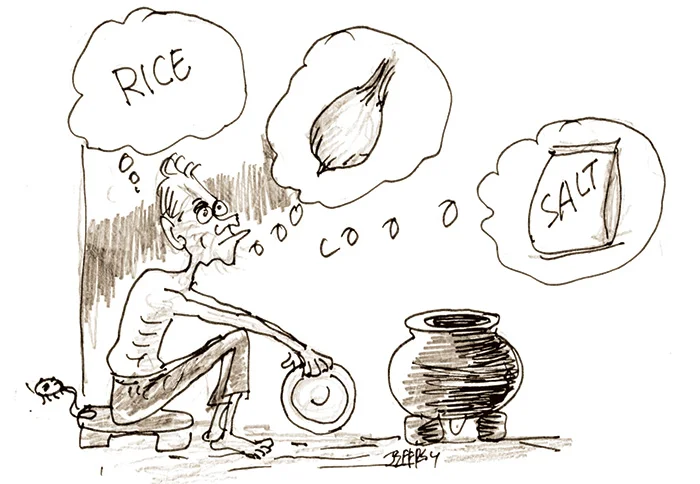
‘Den Kendawath ne’ was the instant response I got from a good friend of mine when I rang him to find out how things are with the new government that came to power with so much of fanfare and promise. Judging from my stunned silence, as it took me some time to understand his cynical comment, he went on to say that the ingredients for polkiri kenda, viz., rice, coconut and salt are all in short supply or so expensive that the average Sri Lankan cannot afford them. For those who could not afford the luxury of a meal of rice and curry, a large cup of the gruel made by boiling rice with salt and coconut milk used to be an inexpensive alternative with reasonable nutritious value. Those who liked a little ‘heat’ chewed on a green chilli but that too has joined the rank of expensive luxuries!
It is blatantly obvious to any, except for the blind supporters of the NPP, that the inability to tame the ‘rice mafia’ is the biggest failure of this government. President Anura Kumara Dissanayake (AKD), during the presidential as well as the parliamentary election campaigns, waxed eloquent on how he was planning to tame that mafia, but what happened? He has done exactly what all other governments have done in the past; shouting about it and importing rice while the rice mafia carries on regardless continuing exploitation! To add insult to injury, the government is yet to announce the guaranteed price for rice; it has let down the farmers who voted the NPP in droves. AKD is increasingly looking to be a man who talks without follow-up action. In addition, he has recently demonstrated that he has mastered the art of diversion in an attempt to camouflage the failures. For the sceptics, of course, it comes as no surprise as the NPP won the elections with a raft of promises impossible to keep, as well as a concerted campaign of throwing mud at the opponents.
AKD’s campaign against Mahinda Rajapaksa is bound to backfire. No one would disagree that the generous ‘grants’ to retired presidents, extended to surviving spouses too, need revision, especially because of the difficult times facing the country. However, he seems not to understand that right things also need to be done in the correct manner through legal and constitutional means. Instead, he is attempting do so by shouting at public rallies!
AKD dropped a bombshell by announcing at a rally in Katukurunda, Kalutara on 19 Jan., that he would ask MR to leave the residence the latter was occupying or pay the rent as assessed by the government valuer, completely disregarding the accepted norms. It is either a demonstration of lack of political skill or arrogance of the highest order. MR, the consummate politician that he is, responded by stating that he is prepared to comply provided the request is made in writing. Of course, he did so, knowing fully well that instructions could not be given in writing without a constitutional amendment changing his entitlements. Why AKD did not use his massive majority to effect the constitutional change and take appropriate action but resorted to browbeating MR needs examination. Perhaps, he quoted massive figures to capitalise on envy so that the failures of the government would be forgotten and anger would be directed towards MR. It obviously was a diversionary tactic!
Not being contend with this, an acolyte of AKD announced that MR needed not wait for written instructions but could leave, to solve the problem. It is a pity this new breed of politicians, who promised to change the system, seems to be changing the system for the worse; not adhering to rules and regulations but use force, verbal or maybe otherwise!
It is well known that memories are short in Sri Lanka and it is no surprise that the NPP is capitalising on this to discredit MR, a vain attempt it would turn out to be, most likely. MR has his faults, the biggest being not knowing when to retire gracefully. Even when he tried to retire, some of the young Rajapaksas and thugs in the guise of politicians prevented him from doing so. Instead, they decided to attack the protesters in Galle Face; exactly what those behind the protests wanted and rest is history!
Whatever MR’s faults, it cannot be forgotten that he ensured that the impossible was achieved. Experts were unanimous that the LTTE could not be defeated militarily but MR’s sheer determination proved them wrong. Many are trying to claim credit for the annihilation of the Tigers and some commentators seem determined to reduce the credit due to MR but it goes without saying that if not for MR’s political leadership things would have been very different. We would either be still in the throes of a continuing war or the likes of Solheim would have seen to it that Sri Lanka was divided, just like what happened in Sudan.
It is a great shame that MR ended his political career in disgrace but, still, we cannot forget what he achieved, there being much more than the finishing of a prolonged insurgency. No one can deny he has earned his place in Sri Lanka’s history and if an attempt is made to erase that grateful Sri Lankans, of whom there are many, would retaliate though they have been silenced at present.
As I mentioned in my piece Are the actions of the government, so far, purely cosmetic?” (The Island, 15 January), NPP government is showing early signs of failure and as mentioned in the editorial Only delivery can save govts.” (The Island, 27 January) it will have to face consequences, if no course correction takes place.
It is high time that AKD became a man of action, not words, and behaving in a manner befitting the dignified position he holds than behaving like an opposition politician!
The great ‘train e-ticket’ robbery
January 30th, 2025BY Buddhika Samaraweera Courtesy The Morning
- Passengers question Railways Dept. irregularities in the online system
- Unionists note infrastructure and HR shortages, propose airport office for reservations
The issue of illegal ticket sales for the popular Colombo to Ella train route has become one of the most-talked-about topics in the recent past, with accusations of fraud involving ticket resellers.
Many passengers, both local and foreign, have found it impossible to secure tickets, either online or at the railway stations, due to the rapid sale of electronic tickets within seconds of their release. Despite multiple efforts to tackle the problem, the Department of Railways is yet to put an end to the issue.
Transport and Highways Deputy Minister Dr. Prasanna Gunasena recently claimed that a complaint has been lodged with the Criminal Investigations Department (CID) regarding a major racket involving e-tickets for up-country trains to Ella. He said that e-tickets for this popular tourist route are sold out within mere 42 seconds of their release online, raising serious concerns about fraudulent practices.
Adding to the complexity, the Police has noted that taking legal action against the fraudsters is hindered by the reluctance of the affected passengers to formally participate in the judicial process. Although many accuse resellers of exploiting the system, it was reported that the lack of formal complaints has created obstacles for law enforcement officers.
Dr. Gunasena claimed that certain groups are purchasing all the available tickets through dubious means and re-sell them to tourists at exorbitant prices. Tickets priced at Rs. 2,000 are reportedly being resold for as much as Rs. 16,000. Noting that the Colombo Fort, Kandy, and Ella railway stations are primary locations where ticket re-sales are occurring, he alleged that some individuals operating three-wheelers near these railway stations are all complicit in the racket.
Posting on a social media group of railway passengers from across the country, a passenger said that there were not many issues with the railway seat reservation system in the early days. However, he said that problems began when railway stations were allocated 60% of the seats while the remaining 40% were available through the online reservation system. At that time, he claimed that even passengers who waited in long queues at railway stations often failed to secure seats while those who attempted to reserve tickets online also failed to do so.
He added that passengers allege that tickets were being sold at higher prices, with the possible involvement of certain officials within the department and external parties.
Later, the Transport Ministry decided to make seat reservations 100% online to prevent these issues. However, the necessary support from the relevant parties was not received. With full online reservations, the problem had worsened. Considering this issue, the railway stations were allocated 40% of the tickets, and the remaining 60% through an online system. Despite these measures, there are still irregularities taking place. Earlier, people only talked about this mafia. Now, they are also actively trying to eliminate it. When certain parties including those within the department itself blame us for speaking up, we have reasonable doubts about why they feel uncomfortable when we expose the mafia,” the passenger had claimed.
Noting that the CID is currently investigating the issue, he urged the authorities to put an end to this malpractice. He further said that the department is not the private property of its officers or any other party but a public institution funded by taxpayers. Therefore, he said that people have every right to express concerns about the department’s issues and demand solutions.
The CID recently informed the Colombo Chief Magistrate’s Court that it has launched a comprehensive investigation into the train ticket scam, suspecting the involvement of certain Railways Department officials. According to the officials, this suspicion arises from information uncovered during the interrogation of the arrested suspects.
So far, four suspects have been taken into custody, with three of them being remanded. The Court has granted permission to examine the telephone data and bank account information of the arrested suspects. Based on this, the CID officials informed the Court that a formal investigation will be carried out, and its progress will be reported to the Court at the next hearing.
A resident of Homagama, Chamika Perera, has attempted multiple times to reserve seats on a train from Colombo to Ella but has been unsuccessful on each occasion. Speaking to The Daily Morning, he said that despite visiting the Colombo Fort Railway Station on several occasions, he was repeatedly informed by officials that tickets were sold out. He also alleged that the online booking window is too short, making it difficult for those unfamiliar with the system to secure tickets.
The department is a government institution. I can’t believe that our country’s authorities are so weak that they cannot stop fraud within a government agency. The Government spends billions on developing these institutions, and officers even travel abroad for training. In such a situation, why is it not possible to create a proper ticket reservation system? Even if the system had shortcomings in the beginning, can’t they be fixed gradually? This is why the public has lost trust in these institutions,” he said.
Perera further said that the Department has the necessary resources to implement a transparent and efficient ticketing system. However, he alleged that the reason for inaction could be that certain officials are also involved in the ongoing fraud.
According to the data, only four trains operate from Colombo Fort to Badulla on weekdays, including three morning trains and a night mail train, with a total seating capacity of 454 across first, second, and third classes. Additionally, the Ella Odyssey train, running on weekends, offers 311 seats. However, considering the high demand from both domestic and foreign tourists, concerns remain about whether this daily seat allocation is sufficient.
When contacted by The Daily Morning, a former Sri Lanka Railway Station Masters’ Union General Secretary Kasun Chamara Jayasekara said that the best possible solution to the issue is to operate some additional trains from Colombo Fort to Badulla. However, he said that it has not been possible to do so as the department faces a shortage of both physical and human resources at present.
There should be around 450 train drivers, but only about 250 are available. While 650 train guards are needed, only about 400 are employed. This shortage makes it difficult to operate special and additional trains. There is also a lack of train engines and compartments that suit the existing railway lines, particularly the upcountry railway line,” he said.
Commenting on the incidents of tourists having to purchase train tickets from third parties at higher prices, he said: We suggested that the department establish an office at the Airport departure terminal specifically for tourists to make seat reservations. This would prevent them from falling victim to the black market. With such an office in place, tourists will be able to conveniently purchase tickets at fair prices. It will encourage more sales and ultimately increase the Department’s revenue.”
Speaking to the media recently, Railways General Manager Dhammika Jayasundara said that there is a high demand for train travel to Ella from both local and foreign travellers, but various illegal transactions have emerged around ticket reservations. The best solution, he said, is to increase the supply while enforcing laws against such activities.
To address the issue, we have taken steps to meet the demand. As a first step, a new train from Kandy to Demodara will operate on weekends from 1 February, offering 300-350 seats at Rs. 7,000 per seat. It will also generate a reasonable profit to the department. As a second step, a daily train from Nanu Oya to Ella will start on 10 February, with 350 seats available for daytime and evening travel,” he said.
He further said that currently, the online ticket reservation platform allows one person to reserve up to five seats under one National Identity Card number, which benefits families traveling together. However, he said that allegations suggest that some exploit this system to hoard and resell seats. To prevent misuse, he said that they have ordered the relevant officers to check passengers NIC on trains.
Crushing mafias isn’t easy as crushing coconuts!
January 30th, 2025Editorial Courtesy The Daily Mirror
Sri Lankans are a little uneasy due to the high prices of coconuts and the shortage of the nut itself in the island. Now we hear of plans being in the pipeline for the Government to import coconut-based products. This is a roundabout way to meet the shortage of coconuts in this island. But according to newspaper reports, the import plan for coconut related products must first go through a cabinet paper which must then be passed in parliament. The cabinet paper for this purpose is already drafted. But there was a delay in it reaching parliament because the government was making a reassessment of the list of coconut related products to be imported.
The government is eyeing Indonesia to supply the islanders with products made from coconuts. Will this affect the local market which is already flooded with coconut-based products? Even now, in some areas in the island, there is a shortage of rice. Now we are talking about a shortage of coconuts. Rice and coconuts are so important in the staple diet of Sri Lankans.
There are experts on agriculture who question the outcome when Sri Lankans use these imported coconut-based imports, include them in our very own creations and label them as made in Sri Lanka. People abroad, then might not trust the label ‘made in Sri Lanka’ because there could be ingredients included which were not originally grown in this island.
Whatever the government does and endorses, it must preserve two things; safeguard the ‘made in Sri Lanka tag’ and also the local industries revolving around the coconut tree.
All these shortages, including coconuts among other things, could be the work of a mafia that is operating in the country. The president is trying hard to sort out the rice crisis. The same efforts must be put to find a solution to the exorbitant prices of coconuts. Many believe that where ever there is a shortage of coconuts, it is artificially created.
Coconut cultivation was present in this island even before 1st century BC. Coconut cultivation flourished in Sri Lanka in the coastal areas from Chilaw to Matara in the post Anuradhapura era. There are records to show that when the British were ruling this country, they imposed a tax on the coconut palms that were owned by the natives. This shows that the coconut tree can be used by the rulers of a country as a tool to control the people and also fatten state coffers via taxes.
On the other hand, any unwanted government influence on the coconut tree and its fruits could also backfire on a regime. Coconut is also the main source that produces ‘Ceylon’ coconut arrack. This is a product that most locals consume with the belief that it contains certain health properties. Also this regime must consider that the coconut is also a ‘must purchase item’ that’s taken by Hindus when they visit the kovil (Shrine). Most housewives here in this island vouch that the curries they make might not be at their brilliant best in terms of taste if coconut milk that goes into them is replaced with water as a substitute.
We can remember a former president banning the import of over 300 items to make sure the dollar reserves in the government’s coffers were safeguarded. Now what will happen to that reserve if Sri Lanka starts importing coconut based products and start paying our suppliers with US dollars? The IMF has put certain regulations on our spending. But even entertaining the thought of importing coconut-based products suggests that Sri Lankans haven’t tightened their budgets nor adjusted certain aspects of their lifestyles which are costly to maintain. From a dining table perspective, we all know that coconut sambol is now considered a rich man’s dish!
If a mafia is operating, as suggested, with regard to rice and coconuts, then the regime will be compelled to encourage imports to meet the demand. We only hope that sanity prevails and people of Sri Lanka can start enjoying a meal of rice and curry without having to pay exorbitant prices when shopping for the raw items (that make those dishes) in the grocery store.
SL defends legality of operations amid India protest
January 30th, 2025Courtesy The Daily Mirror
Colombo, January 30 (Daily Mirror) – While defending the legality of the Sri Lanka Navy’s conduct amid strong protests with Sri Lanka over an incident of firing by the Sri Lankan Navy, Defence Secretary Air Vice Marshal (Rtd) Sampath Thuyacontha said that Sri Lanka will continue to search vessels entering its waters, regardless of their country of origin, in accordance with legal protocols to prevent illegal activities.
He made these remarks after India lodged a strong protest on Tuesday following an incident in which the Sri Lankan Navy opened fire during the apprehension of 13 Indian fishermen near Delft Island in the early hours of January 28.
The Indian Ministry of External Affairs said Sri Lanka’s acting High Commissioner was called into the foreign office to lodge the protest. Our High Commission in Colombo has also raised the matter with the Ministry of Foreign Affairs of the Sri Lankan government,” the Indian Ministry of External Affairs said.
In a media briefing, the Defence Secretary explained that the Sri Lankan Navy conducts round-the-clock operations to combat illegal trafficking, human smuggling, illegal fishing, drug smuggling, and weapons smuggling in Sri Lankan waters.
He said that these searches are carried out in a legal manner, and reiterated that there will be no confrontations if the respective parties allow Sri Lankan authorities to perform their duties.
He also pointed out that the Sri Lankan Navy had recently seized a significant drug haul during its continuous operations.
We have to search any vessel entering Sri Lankan waters, irrespective of the vessels country of origin. As a respected Navy, we are carrying out these searches legally. We can assure that there will be no confrontation if parties permit us to conduct our searches,” Thuyacontha said, stressing that such incidents have been rare in recent times.
Meanwhile, the Sri Lanka Navy’s Commander said that initial investigations revealed the two Indian fishermen who were injured during the apprehension of a fishing boat near Kankesanthurai (KKS) were wounded by an accidental discharge of a Navy officer’s firearm. The Navy had launched a special operation on January 27 to disperse a group of Indian fishing boats caught poaching in Sri Lankan waters near Valvettithurai, Jaffna.
During the operation, the Navy seized an Indian fishing boat that had continued operating in Sri Lankan waters, engaging in illegal fishing.
The Commander explained that the Navy had attempted to board the vessel, but the Indian crew resisted and tried to assault naval personnel, even attempting to seize a firearm. In the process, an accidental shot was fired, resulting in minor injuries to two fishermen.
Following the incident, the Navy administered first aid to the injured fishermen and promptly transferred them to the Jaffna Teaching Hospital for further treatment.
The Navy Commander reaffirmed that the Sri Lanka Navy will continue its regular operations to uphold the security of Sri Lankan waters, operating professionally and in accordance with existing regulations.
The Navy will also strengthen its efforts to prevent the use of Sri Lankan waters for illegal activities, the Commander assured.
NDF candidates who contested general elections to meet Ranil
January 30th, 2025Courtesy The Daily Mirror
Colombo, January 30 (Daily Mirror) – The candidates who contested the general elections in 2024 under the New Democratic Front (NDF) is scheduled to meet former President Ranil Wickremesinghe this evening, former MP Premanath C Dolawatte said.
He said they are expected to discuss how to contest the upcoming elections including the Local Government elections and current issues in the country.
Ex-President Ranil convenes special discussion; SJB MPs also attend
January 30th, 2025Courtesy Adaderana
A special political discussion was held this afternoon (30) under the patronage of former President Ranil Wickremesinghe at a private hotel in Colombo.
According to participating political party representatives, the meeting was convened at the request of Mr. Wickremesinghe.
Representatives of parties that supported him in the last presidential election were present at the discussion.
Notably, Samagi Jana Balawegaya (SJB) MPs Mano Ganesan and Palani Thigambaram also participated in the discussion.
Other prominent figures in attendance included former Speaker Mahinda Yapa Abeywardana, Udaya Gammanpila, Anura Priyadharshana Yapa, Duminda Dissanayake, Kanchana Wijesekera, Sagala Ratnayaka, and Wajira Abeywardana.
Sri Lanka Customs launches four-day rapid container clearance process
January 30th, 2025Courtesy Adaderana
Sri Lanka Customs, with the full cooperation of joint trade unions, launched a four-day expedited container clearance process today (30) , aiming to clear the backlog of containers at examination yards by February 02, 2025.
According to Customs Media Spokesperson and Additional Director General Seevali Arukgoda, all examination yards and the Valuation Directorate will operate with full staff from today (30) until February 02 to ensure the clearance of all queued-up containers.
Therefore, all consignees, clearing agents, and transporters are requested to extend their fullest cooperation by attending to their tasks on time so that the backlog can be cleared within the given period.
Additionally, all other government agencies working alongside Customs have been informed to support this initiative, he added.
හිටපු ජනපතිවරුන්ගේ වරප්රසාද සහ ප්රතිලාභ ඉවත් කිරීම ගැන ආචාර්ය නීතිඥ ප්රතිභා කළ පැහැදිලි කිරීම
January 30th, 2025උපුටා ගැන්ම හිරු පුවත්
හිටපු ජනාධිපතිවරුන්ගේ වරප්රසාද සහ ප්රතිලාභ කප්පාදු කිරීම හෝ සංශෝධනය කළ හැක්කේ ආණ්ඩුක්රම ව්යවස්ථා සංශෝධනයකින් පසුව පමණක් බව, ආචාර්ය නීතිඥ ප්රතිභා මහානාමහේවා පවසනවා.
මේ අතර ව්යවස්ථා සංශෝධනයකින් තොරව කළ හැකි, හිටපු ජනාධිපතිවරුන්ගේ සියලු වරප්රසාද කප්පාදු කරන බව, ප්රවාහන, මහාමාර්ග හා සිවිල් ගුවන් සේවා අමාත්ය බිමල් රත්නායක පවසනවා.
හිටපු ජනාධිපතිවරුන්ගේ වරප්රසාද කප්පාදු කිරීම සම්බන්ධයෙන් ජනාධිපති අනුර කුමාර දිසානායක ප්රමුඛ රජය තීරණය කළ අතර, එහි වඩාත්ම කතාබහට ලක්වූයේ හිටපු ජනාධිපති මහින්ද රාජපක්ෂගේ නිවස සම්බන්ධවයි.
මහින්ද රාජපක්ෂ පදිංචිව සිටින කොළඹ විජේරාම පාරේ පිහිටි නිවසේ කුලිය සම්බන්ධයෙන් ජනාධිපතිවරයා අවස්ථා කිහිපයකදී ප්රකාශ කළ අතර, ඒ සමග හිටපු ජනාධිපතිවරුන් සියලු දෙනාටම නිල නිවාසවලින් ඉවත්වන ලෙසට නව රජයේ සෙසු සාමාජිකයින්ගෙන් ද බලපෑම් එල්ලවෙමින් තිබෙනවා.
නමුත් නීති විශාරදයින් පෙන්වා දෙන්නේ විශ්රාමික ජනාධිපතිවරුන්ගේ සහ අමාත්යවරුන්ගේ ප්රතිලාභ සහ වරප්රසාද කප්පාදු කිරීම ව්යවස්ථා සංශෝධනයක් හරහා පමණක් කළ හැකි බවයි.
මේ අතර අද කොළඹ පැවැති වැඩසටහනකින් අනතුරුව ප්රවාහන, මහාමාර්, වරාය හා සිවිල් ගුවන් සේවා අමාත්ය බිමල් රත්නායක පැවසුවේ, ව්යවස්ථා සංශෝධනයකින් තොරව කළ හැකි සියලු කප්පාදු කිරීම් කරන බවයි.
මේ අතර පොදුජන අයිතීන් සුරැකීමේ වෘත්තිය එකමුතුව මාධ්ය හමුවක් කැඳවමින් සඳහන් කළේ, පාර්ලිමේන්තු මන්ත්රීවරුන්ගේ වරප්රසාද අහිමි කිරීමේ අභියෝගය වත්මන් ආණ්ඩුව භාරගත යුතු බවයි.
An Open Letter Applauding the President of the USA for Annulling the Weird LGBTQ Legislation of the Lunatic-Fringe
January 29th, 2025Dear Mr President,
Sri Lanka’s Appreciation on Your Decision to End the Madness of LGBTQ Psychopaths in the USA
1. We, in Sri Lanka, looked on with horror and amazement when a small coterie of people with personality disorders and, warped objectives that are inimical to the people of the world, passed laws which legitimised and de – criminalised homosexual activity in the USA and, permitted the perverse change of gender; these laws were in contravention of the dictum ‘Deus vultis’ and, in our view, were designed to destroy the nucleus of decent human society, the ‘family’.
2. As President of the USA, you have reminded everyone that there are only two genders in this world: males, and females.
3. There are no half males or half females or hybrids of any kind; any deviation in sexual conduct is an aberration and people exhibiting such sexual psychopathy and impediments must be handled with sympathy and care; they need to be treated like any other handicapped human-being.
4. By definition, sexual psychopaths are manipulative and prone to exhibiting unpredictable violence; they could be dangerous to society and must be constantly kept under scrutiny.
5. It was our sad observation that your predecessor’s envoy in Sri Lanka, Chung Ji-yoon, a former South Korean national, continues to besmirch and ridicule you; she was actively involved in pushing Mr Biden’s psychopathic LGBTQ line in this country; she uses some selected print and TV media personnel in this country to do her dirty; they have profited from her patronage, be it easy liquor, computers or whatever.
6. To support some assertions made, we forward herewith a link to an article in Sri Lanka’s Daily FT newspaper that attempts to ridicule and malign your Executive order on the LGBTQ; this article was published after that order. This, in our opinion, is an open affront to your executive order by Jung who has overstayed her assignment in this country https://www.ft.lk/ft_view__editorial/Time-for-a-shift-on-LGBTQIA-rights/58-772316 (the entire article is given as an annex at the end).
7. Mr Biden’s envoy, Jung, has worked very closely with this newspaper, especially its editor.
8. During the time you were deprived of your victory by Mr Biden, Jung undiplomatically canvassed in Sri Lanka to bring in LGBTQ legislation using two local politicians, Wickramasinghe and Amerasuriya, both reportedly sexual psychopaths.
9. Sri Lanka was dead against this piece of legislation; the Supreme Court endorsed the people’s view.
10. As you very rightly pointed out, when this queer legislation is taken out from the records, these abhorrent sexual activities are automatically criminalised.
11. In Sri Lanka, not only are these activities criminal; those openly advocating and promoting LGBTQ, are dismissively disregarding the court judgement and its rationale; they are in contempt of the Supreme Court.
12. Wickramasinghe howled that the judiciary had cannibalised the legislature; he however had immunity at the time he made that statement.
13. It is our view that an editor of a newspaper does not enjoy that privilege.
14.Where Ms Jung is concerned, we feel that if she were investigated you would have a wide latitude of executive action available to you to counter her insidious activities.
15. In conclusion, we cannot but applaud your stand against Fauci, the WHO and the Paris Climate Change proposals. The UN world summit sustainability program is perhaps another item that should be scrutinised.
16.May we take this opportunity to wish you the very best in your second term of office as President.
Yours Sincerely
Members of the Sri Lanka Study Circle
Annex A – Daily FT Article
Time for a shift on LGBTQIA+ rights
Tuesday, 28 January 2025 02:30 –
While the world continues to progress towards greater acceptance of diverse sexual orientations, Sri Lanka remains steadfast in holding on to colonial-era laws that criminalise same-sex relations. As neighbouring Thailand, the largest Theravada Buddhist country in the world, this week took a giant leap forward in this regard by legalising same-sex marriage, Sri Lanka’s laws still stand as an anachronism, hurting its citizens and branding many as criminals for loving who they love.
Sri Lanka’s criminalisation of same-sex relations stems from the Penal Code, introduced during British colonial rule in the 19th century. While many former colonies have since reformed these laws, Sri Lanka has clung to them, citing tradition and cultural values as justification. But these supposed traditions” are often little more than remnants of a foreign legal system that never truly reflected the values of Sri Lanka’s own society.
Thailand’s landmark decision to legalise same-sex marriage last week is a poignant reminder of the positive changes that are possible when societies, governments, and lawmakers choose to respect the dignity and equality of all people. It is a significant step forward for LGBTQIA+ rights in a region that is often seen as conservative on such matters, demonstrating that Buddhism and progressive reforms are not mutually exclusive.
In contrast, Sri Lanka’s LGBTQIA+ community continues to fight for recognition, legal equality, and basic human rights. Same-sex relations between consenting adults remain criminalised under Section 365 and 365A of the Penal Code, which makes carnal knowledge against the order of nature” illegal. For many LGBTQIA+ people in Sri Lanka, this law results in daily fear of discrimination, police harassment, and violence. It’s an injustice that has persisted for far too long, despite the growing momentum in other countries to embrace inclusivity.
The notion that preserving such colonial-era laws is somehow an act of defending Sri Lanka’s culture is an outdated and harmful narrative. Culture, like society itself, evolves. It must accommodate the rights and freedoms of all citizens, regardless of sexual orientation or gender identity. The refusal to decriminalise same-sex relations is not a stand for tradition, but rather a failure to modernise and respect the fundamental rights of individuals.
There have been efforts to reform these laws in Sri Lanka, yet every attempt has been met with resistance. Proposals to decriminalise homosexuality and protect LGBTQIA+ rights have been stymied by powerful conservative forces, including religious groups and political leaders who fear a challenge to their interpretations of cultural norms. However, this approach is rapidly becoming unsustainable in an increasingly globalised world that champions human rights and personal freedoms.
Countries that have decriminalised homosexuality have seen positive changes, from improvements in public health outcomes to enhanced international standing. It is high time Sri Lanka acknowledges the urgency of these reforms.
The successful example set by Thailand should serve as both an inspiration and a challenge to Sri Lanka. The country must ask itself: will it continue to uphold laws that alienate and oppress its own citizens in the name of outdated traditions, or will it embrace the values of equality, justice, and freedom for all? The choice is clear—and the need for action is urgent. //
A New Approach to Rabies Eradication in Sri Lanka
January 29th, 2025Animal Welfare Coalition (AWC) – Sri Lanka
A meeting was held at the Ministry of Health, on 28th January 2025, presided by Minister of Health, Dr. Nalinda Jayatissa at the request of the Animal Welfare Coalition (AWC) – Sri Lanka.
The AWC was represented by Dr. Chamith Nanayakkara, Champa Fernando, and Gihan Dinushka.
This two-hour long meeting was presided by Minister Dr. Nalinda Jayatissa, together with the Deputy Minister Dr. Hansaka Wijayamuni.
It was attended by the Secretary to the Ministry, Additional Secretary-Public Health, Director General of Health, Deputy Director General-Public Health Services, and other relevant Health Ministry Officials in various departments of the Ministry, and the Additional Secretary to the Ministry of Agriculture and Livestock Development, Dr. Palika Fernando, former Provincial Director of the Department of Animal Production and Health, Dr. BCS Perera, and the Secretary of the Private Veterinary Service Providers Association.
The AWC presented to Minister Nalinda Jayatissa its Proposal on Rabies Eradication, spelling out the need for a National Program to control and eradicate rabies.
For the first time in the history of Sri Lanka with regard to rabies elimination, the Ministry of Health, the Ministry of Livestock Development and the responsible government officers of relevant Departments of both Ministries, animal welfare organizations, and private veterinary service providers came together at this meeting, and we wish to record below the main issues that emerged and were discussed and the decisions taken:
1- Minister Nalinda Jayatissa was of the firm opinion that Sri Lanka’s rabies eradication issue should be resolved in 3 years, obtaining targetted sustainable results.
He added that even Rs. 300 million can be provided for dog sterilization, which needs to be target-oriented and sustainable results generating.
He also said that he can obtain Cabinet approval to initiate and execute such a programme.
2- A practical and viable as well as a realistic and logical proposal that dog sterilization, dog rabies vaccination, dog owner registration, and national data management should be carried out under the Department of Animal Production and Health, pinning the responsibility on the right professionals to obtain the targets, but under a clearly designed structure that would facilitate and ensure the unhindered securing of sustainable results, was unanimously mooted by the AWC and the Association of Private Veterinary Service Providers.
This proposal by Dr. Palika Fernando generated an elaborated and progressive discussion.
3. Until specific decisions are taken on the above important issues recognizing the urgency with which such decisions should be made, the proposal that all parties including the Ministry of Health and the Ministry of Livestock Development and all affiliated departments of the two Ministries, animal welfare organizations, animal welfare activists, and private veterinary service providers, should work together towards achieving the targets of herd immunity by ensuring 70-80% dog vaccination coverage in the island from next March, under the Ministry of Health, was also subjected to extensive discussions.
4- For the first time, unanimous consensus was reached on the need for all parties responsible for the eradication of rabies from Sri Lanka to come together and work towards specific targets.
This indeed is a unique and positive achievement for Sri Lanka; a milestone.
On behalf of all Sri Lankans, we would like to express our sincere gratitude to Dr. Nalinda Jayatissa, Minister of Health, for grasping the urgent need to address the issue of rabies eradication and for the mature leadership given at this meeting.
Animal Welfare Coalition (AWC) – Sri Lanka
You are no fool Pierre. Stop that stupidity wanting to prosecute Sri Lankan’s for annihilating the Tamil Tiger terrorists
January 29th, 2025Asoka (Weerasinghe) Kings Grove Crescent . Gloucester, Ontario . KJ 6G1
29 January 2025
Hon.Pierre Poilievre, MP.,PC
Conservative Party Leader
House of Commons,
Ottawa
Dear Pierre Poilievre:
You got my goat this morning when I read War crimes: Canada’s Conservative Party leader vows to “Lead The world in seeking prosecutions against Sri Lankans.”
That is pretty rich, isn’t it Pierre, when we Canadians were part of the problem in that Ethnic Tamil Eelam War, aiding and abetting Tamil terrorism in Sri Sri Lanka. Stop pretending that you don’t know the Truth and paint yourself ‘lily-white’, because you are not.
Pierre, turn your hands and look at your palms. That slight colour of red you see is that of innocent Sinhalese blood which is wash-painted in every 41-million Canadians hands courtesy of the Canadian Government who let the Tamil-Canadian separatists collect funds in the millions of dollars in Canada and stuffed in their Eelam war chests to buy sophisticated war armouries to kill my unarmed innocent Sinhalese people.and my Muslim brothers and sisters
War chest o
buy sophisticate armouries to shoot and kill my innocent Sinhalese, and my Muslim brothers and sisters,’
Sweet Mother of Jesus, open Pierre Polivere’s mind to see and accept the Truth. And let him not lie about the Sri Lanka’s Eelam war that he is grovelling at every Greater Toronto Area’s Tamil-Canadian’s feet to garner their vote at the next Federal election.
Pierre,. tonight before you go to bed look at yourself in the Mirror and ask ‘“Mirror…mirror on the wall,who is the liar of them all.”: You will be told the answer.
“‘Pierre, I am resending the letter that I sent you on 25 August 2002, which is still valid, You should be ashamed of yourself wanting to go after the Sri Lankan Armed’ forces personnel for having kicked the butts of Canada’s prodigal friends, the Tamil Tigers, and gave back the 20.5 million Sri Lankans their right-to-life which was hijacked for 30-bloody years by the Tamil Tigers. Are you bleeding heart Canadian Human Rights Wallah’s complaining? Shish, it’s just too bad, as they were the ones who were spoiling for a fight with Kalashnikovs, hand grenades and Claymore mines, and not with stone-catapults and bamboo sticks.
There is one thing that upsets me, and proves that politicians like you are a bunch of ugly hockus-pokus humbugs. No one wants to talk about the classic text book human rights act that happened in the war zone. That 295,873 Tamils who were marched like unwashed cattle from the West coast to the East
coast for six months as a human shield by your prodigal buddies, thoseTamil Tiger terrorists, under the scorching Jaffna-Killinochchi sun during the last days of the war. How the Sri Lankan armed force acted as Angels and saved eveyone of them from the clutches of the Tamil Tigers. It would have been easy for them to bump them off, but they didn’t
But they were housed in a white tent city. Some of the soldies acted as cooks to prepare a million breakfast, lunches and dinners every day.
So Pierre,what do you think? Are you going to do the right thing and nominate the Sri Lankan soldiers for a Nobel Peace Prize, If not why not? Speak up
Pierre. Give us a beak Pierre. You know me..
So that you know, don’t expect that you will receive a Sinhalese, New Year greeting card from me this Apri,l as you are off my list of favourite parliamentarians.
Sincerely
Asoka (Weerasinghe)
කවුළුවෙන් පෑ ඒ සිනා!
January 29th, 2025Dr Sudath Gunasekara
කවුළුවෙන් පෑ ඒ සිනා!
කවුළුවෙන් පෑ ඒ සිනා
විදුළියෙන් මා හද දිනා
අන්ද මන්ද වු ඒ සිනා
සරා සඳ මගෙ වාසනා
කව්ද කාගෙද කියා නොදනිමි
මන්ද මන්දැයි ඒ සිනා පෑවේ
රුන්ද ගජින්ගත තක්කට තරිකිට
රුන්ද ගජින් ගත තක්කට තරිකිට
කියලයි මා හද, හද විළ සැලුනේ
ගින්න දවා මා නොකිළිටි හදවත
නින්ද නොයනලෙස වද දී මනසට
කිම්ද නගෝ ඔබ දිවගියෙ එලෙසට
කොයිද කොයිද ඔබ කිව මැන හනිකට
මන්ද ගියේ නොපෙනී මා දෙනෙතට
එන්ට යළිත් කල් නොයවා හනිකට
නින්ද මගේ හද, හද තුල යළි ඒමට
කන්ද කපා පායන් රන් පුන්සඳ
ගෙවුනා වසර දහයක් මේ විලාසෙට
දළුලා වැඩී පුබ්බේ සන් නිවාසෙට”
බැඳුනා රන්හුයෙන් දෑඟිලි මනාවට
පිපුනා හිසේ පෙම්මල් පුන් සඳ ලෙසට
කවුළුවෙන් පෑ ඒ සිනා
විදුළියෙකි මා හද දිනා
පින් පිරුණු තෙදරුන් දිනා
පුන්සඳකි අද බබළනා!
පුන්සඳකි අද බබළනා!!
ආණ්ඩුව බලයට පත්වූ දා සිට ‘ආහාර ප්රතිපත්ති කමිටුව’ රැස්වී නෑ — වී/සහල් අවුල උග්ර වන්නේ ඇයි?
January 29th, 2025රජිත් කීර්ති තෙන්නකෝන්
කොළඹ ‘කැකුළු බත් පිඟානක්’ විකුණන බත් කඩයක් නැත. රට පුරා ‘මාතර බත් කඩ’ වල ද කැකුළු බත් නැත. කිසිදු ප්රධාන නඟරයක පාලන මිලට හාල් විකුණන්නේ නැත. අද ලංකාවේ ලොකුම ප්රශ්නය හාල් සහ පොල් ය.
ආණ්ඩුව වී/සහල් කර්මාන්තයේ නිරත පාර්ශවකරුවන් 16 දෙනා එකම රැස්වීම් මේසයකට ගෙනත් නිශ්චිත මාර්ග සිතියමක් සාදා ගන්නේ නැතිනම්, ඉදිරි අවුරුද්දම ලංකාවේ හැමදාම කතා කරන්නට වන ප්රශ්නය බවට හාල් පත් වනු ඇත.
රටට හාල් ගෙන්වීමේ දී නිෂ්පාදිත රට, වර්ගය, මිලදී ගන්නා මිල, නිෂ්පාදන වර්ෂය මත තීරණය කර ආනයන බද්ද තිරණය කරනු ලබයි. ලංකා ඉතිහාසයේ මුල්ම වරට මේ කිසිවක් නැතිව හාල් මෙ.ටො. 75,000 කට අවසර දී මේ වන විට මෙ.ටො. 140,000 ක් රට තුල ගෙනවිත් ඇත.
ආණ්ඩුව හාල් ආනයනය කළේ රොකට් වේගයෙන් ඉහළ ගිය හාල් මිල පාලනය කරන්නට ය. හාල් මිල පහත වැටුනේ නැත්තේ රු. 65 ක බද්දක් ගසා එමගින් රු. බිලියන 9 ක බදු ආදායමක් රජයට ලබාගෙන, ආනයනයේ වාසිය පාරිභෝගිකයාට නොදුන් නිසාය. අසීමිතව හාල් ආනයනය කර දැන් වෙළඳපොලේ ඇත. මිල අඩු නැත!
කැකුළු වී කිලෝවක් රු. 165- 175 ට අලෙවි වන විට හාල් කිලෝවකට රු. 220 ක උපරිම සිල්ලර මිලක් දමා ප්රශ්නය හොඳටම අවුල් කර ගත්තේය. දැන් කොළඹ හෝ ප්රධාන නගර කිසිවක කැකුළු හෝ සුදු හාල් පාලන මිලට නැත. බත් කඩවල කැකුළු බත් ද නැත. පාරිභෝගික අධිකාරිය තැන තැන පැන පැන සිල්ලර කඩ හිමියන්ගේ හාල් අල්ලයි. වෙළඳුන්ට ද, මෝල් හිමියන්ට ද, වී ගබඩා කර තබාගත් ගොවීයාගේ ද සැපයුම් ජාලය අඩපණ ය. අවසන් ප්රතිඑලය, රටේ ආහාර සංස්කෘතියේ මුලිකම අංගය පොල් සම්බෝලයක් සමඟ කන්නට බත් ටිකක් නැත.
2024 මාර්තු මස ආණ්ඩුව සංවර්ධන මූල දෙපාර්තමේන්තුව හරහා වී මිලදී ගැනීමට රු. බිලියන 9 ක මුදලක් ලබාදුන්නේය. ‘ඔඩපණ’ ණය යෝජනා ක්රමය යටතේ වානිජ්ය බැංකු හරහා වී මෝල් හිමියන්ට සහ වී එකතු කරන්නන්ට දුන් ණය මුදලෙන්, 95% ක්ම දින 180 ක් තුල පියවා තිබුණි. රටේ භාණ්ඩගාරයට කිසිදු අමතර බරක් නොවීය. රජය වෙවර එම මුදල රු. කෝටි 500 කට හෙවත් බිලියන 5 කට සීමා කර ඇත. මේ වන විට පුද්ගලික වී ගැණුම්කරුවන් විසින් මිලදී ගන්නේ රු. 140 කට ඉහළ මිලකට ය. රු. 130 බැගින් වී මිලදි ගන්නේ නම්, බිලියන 5 කින් මිලදී ගත හැකි වන්නේ වි ටොන් 38,000 කි.
රටේ ගොවියාගේ ද, පාරිභෝගිකයාගේ ද ප්රශ්නය විසඳුණි. හාල් කිලෝ 20 බැගින් පවුල් ලක්ෂ 27 ක කන්නට දෙන්නට ද රජයට හැකි විය. එදා (2024 පෙබරවාරි දෙවැනි සතියේ) නාමල් කරුණාරත්න කිව්වේ නිෂ්පාදන වී නිෂ්පාදන විදයම රු. 154 ක් කියාය. (හාල් නිකං බෙදද්දී, නාමල් ලා එදා එය වලක්වන්නට හැදුවේ එහෙමය) අද නාමල් කියන්නේ, ගොවියාට පාඩු වන නිසා රජය වී සඳහා සහතික මිලක් නියම නොකරන බවයි.
නාමල් කරුණාරත්න ඇමතිවරයා ප්රකාශ කරන අන්දමට (රු. 140ට) වී කිලෝ මෙ.ටො. ලක්ෂ 3 ක් මිල දී ගැනීම අවම වශයෙන් රු. බිලියන 39 – 40 ක් අවශ්යය.
හාල් සහ වී මිල පාලනය සම්බන්ධයෙන් රාජ්යය සතු නියාමන බලය පවතින්නේ කැබිනට් මණ්ඩලය වෙත නිර්දේශ ඉදිරිපත් කරන ‘ආහාර ප්රතිපත්ති කමිටුව’ වෙත ය. වත්මන් රජය ‘ආහාර ප්රතිපත්ති කමිටුව’ අද දක්වාම රැස් කළේ නැත. එහි සිටි රාජ්ය නිලධාරීන් නොවන පිරිස ඉවත් කළ අතර, ඒ වෙනුවට වෙනත් ප්රවීනයින් පත් කළේ ද නැත. (ජවිපෙ සතුව ඔ්නෑ තරම් මේ විෂය දැනුම සහිත පිරිස් ඇතැයි මම සිතමි) හාල්/වී තීරණ ගත්තේ රූපවාහිනී කැමරා ඉදිරිපිට දී, කිසිදු සාමූහික විශ්ලේෂණයකින් තොරවය. අද එහි ප්රතිඑල රටක් ලෙස අත්විදිමින් සිටී.
නැගෙනහිර ‘මහසෙන්’ නමින් හැදින්වෙන් වෙන සුදු හාල් වර්ගයේ ගොයම් කැපීම ඇරඹී ඇත. හාල් ඇටය කැඩී යන නමුත් එය රසවත් සුදු හාල් වර්ගයකි. මේ වී ගබඩා කළ හැක්කේ මනා ලෙස වියලා ගත් පසුව (ඩ්රයර් මගින් ) තෙතමනය හා උෂ්ණත්වය පාලනය කළ සුදු යකඩ/ලෝහ බොයිලේරු තුලය. නැතිනම්, මාස 4 කින් එය සත්ව ආහාරය හෝ බියර් නිෂ්පාදනයට ගන්නා තත්වයට නාස්ති වී යයි.
ගංවතුර හේතුවෙන් අවස්ථා තුනක දී වී වගාවට මෙවර බලපෑම් එල්ල විය. වී ගහේම පැලවෙමින් ඇත. අස්වනු හානිය ගැන කිසිදු දත්තයක් නැත. ඇමතිවරු කියන්නේ වී අලෙවි මණ්ඩලයේ ‘මී ගුල් ගබඩාවල’ රජයේ මුදලින් වී මිලදී ගෙන ගබඩා කරන බව කි. රටේ සීමිත අස්වැන්න ‘මී ගුල්වලට හලන්නට’ මහා භාණ්ඩාගාරයේ මුදල් වැය ක යුතු නැත!
ලංකාවේ විගණන මතයක් ඉදිරිපත් කිරීමට හෝ නොහැකි මට්ටමේ අකාර්යක්ෂම, විධිමත් විගණන ක්රියාවලියක් හෝ නොමැති, ‘වී අලෙවි මණ්ඩලයට’ රු. බිලියන 39ක් නිදහස් කරන්නේ නම්, එය නිදහසින් පසු කෘෂිකර්මාන්තයට අදාළ දැවැන්තම මුදල් නාස්තිය බවට පත් වනු ඇත.
වී/සහල් ප්රශ්න ආණ්ඩුව විසින් අවුල් ජාලාවක් බවට පත් කර ගන්නා තෙක් පාරිභෝගිකයාට දැරිය හැකි මිලකට සහල් ලැබුණි. ගොවියාගේ වී ටිකට, නිෂ්පාදන පිරිවැයට (බුලත්විටේ ගානත් ඇතුළුව) ගැලපෙන මිලක් ලැබුණි. කිසිදු විද්යාත්මක ගණනයකින් තොරව මිල පාලනයක් පැනවීම, ආනයනය කිරීම, බදු ගැසීම නිසා සැපයුම් ජාලය මුළුමනින්ම අවුල් ජාලයක් බවට පත් වූවේය.
මෙවර ගොවියාට ගොයමට පොහොර යෙදිය යුතු කාලයේ පොහොර සහනාධාරය ලැබුණේ නැත. වෙනදා දියව්! දියව්!! අපේ අස්වැන්නට සාධාරණ මිලක් දියව්!!! කියන්නට නාමල් කරුණාරත්න සිටියේය. දැන් ඔහු නියෝජ්ය අමාත්යවරයා ලෙස කෘෂිකර්ම ඇමති ලාල් කාන්ත සමඟ එක්ව ප්රවෘත්ති සාකච්ඡාවක දී කියන්නේ ‘ඒ සටන් පාඨයට ඉඩ දෙන්න බෑ!’ කියාය. මේ අර්බුදය මතුවී ඇත්තේම, එක මේසයක සිට ‘ආහාර ප්රතිපත්ති තීරණ’ නොගැනීම නිසාය.
දැන් නැගෙනහිර ගොයම් කපන බැවින් ද, ගබඩාවල ඇති අස්වැන්න වෙළඳපොලට නිකුත් කර ඇති බැවින් ද, හාල් මිල පහත වැටෙනු ඇත. පොහොර සහනාධාරවත් ප්රමාද වූ හෝ නොලැබුණු නිසා හෝ අස්වැන්න අඩු වී ඇති රහසක් නොවේ. නමුත්, පවතින තත්වය සමීපව ප්රතිකර්මයක් සිදු නොකරන්නේ නම්, ගොවියාගේ වී නිෂ්පාදනයට සාධාරණ මිලක් නැති වනු ඇත. සැපයුම් ජාලයේ සෑම පුරුකකම සිටින වී ගැණුම්කරුවන්, මෝල් හිමියන්, සත්ව ආහාර නිෂ්පාදකයින්, ලොකු කුඩා අලෙවිකරුවන්, ප්රවාහකයින් අමාරුවේ වැටී ඇත. (අද මිල දී ගන්නා හාල් තොගය ප්රවාහණයකට ලොරියක් කුලියට දෙන්නට වාහන හිමියන් කැමති නැත. පාරිභෝගික අධිකාරිය හාල් ටික පොලීසියට හෝ හිතවතෙකුගේ කඩයට බාන නිසාය.
රු. 140 ඉක්මව මිලකට වී මිලදී ගන්නේ නම්, බැංකු පොලිය ගෙවා මාස 4 ක් වත් වී වෙළා ගබඩා කර, වී කොට වෙළඳපලට නිකුත් කරන විට හාල් කිලෝවක් රු. 300 ඉක්මවිය යුතුය. ආණ්ඩුව නැවත වරක් බදු සහිතව හෝ රහිතව හාල් ගෙන්වා නැවත වරක් සැපයුම් ජාලයට දරාගත නොහැකි මට්ටමේ අවුල් ජාලයක් ඇති නොකළ යුත්තේමය. ඒ වෙනුවට, නියමිත දින වකවානු කාල සටහනකට අනුව බදු පැනවීම හා ඉවත් කිරිම තුලින් වෙළඳපොල නිර්ණායක අනුව හාල් මිල පාලනයට ඉඩ දිය යුතුය.
රජය විසින් තම ආධිපත්යය පැතිරවීම සඳහාත්, සැපයුම් ජාලයේ පුරුක් වෙත අනවශ්ය පීඩනයක් යෙදීම නිසාත් දැරූ උත්සාහය විනාශකාරී ප්රතිඑල මේ වන විටත් ගෙන දී ඇත. වලකට වැටී නමුත් පාඩමක් ඉගෙන ගැනීම වැදගත් ය.
රජිත් කීර්ති තෙන්නකෝන්
SRI LANKA AHMADIYYA COMMUNITY INAUGURATES BAITUL KHABEER MOSQUE IN HEART OF THE CITY PUTTALAM.
January 29th, 2025by A. Abdul Aziz.
By the Grace of Allah and the blessing of Ahmadiyya Khalifa’s prayers, Ahmadiyya Muslim Community Sri Lanka was enabled to inaugurate a beautiful Mosque in Puttalam on Friday 10January 2025. His Holiness Ahmadiyya Khalifa Hazrat Mirza Masroor Ahmad’s (may Allah be his Helper) Representative Mirza Naseer Ahmad Sahib inaugurated. It was named by His Holiness Ahmadiyya khalifa as Baitul Khabeer. The completed Mosque has two story building with Dome and a Minara. This Mosque has the spacious of worshipping 200 people.
An inaugural event was organized prior to the opening which started with Holy Qurán recitation by N.A. Irfan. The National President of Ahmadiyya Muslim Community, Sri Lanka S. Nizam Khan Sahib in his welcome address briefed the history of Ahmadiyya Community in Puttalam.
He recalled the services rendered by late Kithur Mohideen (Founder of Puttalam Jamaát) and late Buhari Sahib. Late Kithur Mohideen offered a piece of land for the Community in which he himself built a wooden tiny place for worship. Later on, this place developed into a small place for worshippers and started functioning at the time of arrival of late Muhammad U mar H.A in 1980. He also visited Puttalam for several times and made friendly discussions with non-ahmadis. Late Kithur Mohideen’s son Missionary K.M. Munir was stationed in Puttalam for few years in the beginning and Missionary A.B. Musthaq Ahmad joined with him. Currently Missionary M.Z. Munafjan and N.A. Irfan jointly serving.
Markaz (Headquarters) Representative, in his brief address quoted the saying of Ahmadiyya Founder and Promised Messiah, peace be in him, that, if in a place to spread the Islam, then construct a mosque in that place, worshippers will come and pray. If an Ahmadi lives in a place, wherein, a mosque was built, because of that Ahmadi, people of good natured attracted to belief of Ahmadiyya and thus it grows. It is a responsibility for Ahmadis living here to set an example and thus calling others to Allah, Moulana Naseer Ahmad Mirza advised. After the inauguration, Friday Prayer (Jummah) was held. From various places, Ahmadi men, women and children attended in this function.
The Ahmadiyya Muslim Community was founded in 1889 in a small town Qadian, in Punjab, India. Its founder, Hazrat Mirza Ghulam Ahmad (1835-1908) claimed to be the Promised Reformer of the age. Ahmadiyya Community stands for the brotherhood of mankind and tries to establish peace on earth through love, persuasion and tolerance. It is a spiritual community and has no political agenda.
Basil R should change course if we are to come out of this foreign reserve crunch
January 29th, 2025Day to Close all Foreign Military Bases—The Indian Ocean Diego Garcia
January 29th, 2025World Beyond War
The Earth is coated in military bases, spreading like a pandemic: foreign ones, domestic ones, famous ones, secret ones — part of a growing and disastrous global increase in spending on wars and preparations for wars that makes wars more, not less, likely. And prime targets in wars are bases and anything near them.
Bases are many of the worst environmental disaster sites, polluting air, soil, and water, and generating horrific noise pollution. Bases are used for weather warfare and to stage ‘climate disasters” like earthquakes, tsunamis, flash floods, Bomb hurricanes, super storms, landslides. By promoting the Climate Change narrative and the monetization and financialization of Mother Nature with Debt for Nature Swaps and Green and Blue Bonds and Scams military bases are used to deepen debt traps in the Global South and extend Eurobond US dollar Debt traps and Neocolonialism.
The Foreign Base nearest to Sri Lanka is the Chagos Islands occupied by the United Kingdom or Britain which houses the US Diego Garcia Military base and CIA BlackSite. To set up this base the Chagossian people were driven off their island home in the 1960s and they have fought for the right to return home in many Courts seeking justice, including the International Court of Justice in the Hague.
Foreign bases are often mini-apartheid states with second-class status for locals and criminal immunity for militaries — a situation that can often be traced back to Colonial Occupation, stolen land and other injustices.
Check out and share the new video at DayToCloseBases.org.
Through public pressure, bases have been closed, plans for bases have been blocked, and bases have been converted to other purposes, superior environmentally, economically, and in terms of achieving peace.
On February 23 people will be protesting bases with nonviolent actions around the world: rallies, vigils, peace festivals, protests, lobby visits, demonstrations, flyering at gates, teach-ins, and celebrations where bases have been prevented or closed and converted into something useful.
Find an event near you or see how easy it is to create one at DayToCloseBases.org.
Some of the many organizations involved are:
- International Peace Bureau (Global)
- No to War – No to NATO Network (Global)
- Pace e Bene (U.S.)
- RootsAction (U.S.)
- Veterans For Peace (U.S.)
- War Industry Resisters Network (U.S.)
- War Resisters’ International (Global)
- World BEYOND War (Global)
We held two planning Zoom calls last week and you can watch the videos.
Peace!
— World BEYOND War
US Military Industrial Complex Rakes in Big Bucks from Ukraine Proxy War
January 29th, 2025defenddemocracy.press
Jan 27, 2025
As Western arms continue to flood into Ukraine, America’s military-industrial complex has been enjoying the spoils of the proxy conflict. US defense contractors have been profiting from Ukraine-related military supplies while bringing the world to the brink of war, numerous experts have told Sputnik.
US weapons manufacturers have raked in a fortune capitalizing on sales to foreign governments scrambling to replenish stocks drained by aiding and abetting the Kiev regime. US military equipment sales to surged 29% in 2024 to a record $318.7 billion, according to State Department figures.
Shares of US weapons giants like Lockheed Martin (LMT.N), General Dynamics (GD.N), and Northrop Grumman (NOC.N) are all forecast to climb.
Lockheed Martin shares grew by 38.49% over the past year, reaching an all-time high of $611.74 last October.
General Dynamics has also seen its stock rise by 27.81%, reaching an all-time high of $313.39 in November 2024.
Northrop Grumman showed a 25.5% increase over the last three months of 2024.
While NATO collectively financed Kiev to the tune of $191.2 billion over the past three years, the US was the largest donor of military aid ($68.9 billion), according to calculations by Sputnik, based on data from the Ukrainian Finance Ministry and the University of Kiel.
The US State Department reported earlier that the main buyers of American weapons were:
- Turkiye (deliveries/modernization of F-16 aircraft worth $23 billion);
- Israel (F-15 fighters for $18.8 billion);
- Japan (KC-46A tanker aircraft developed by Boeing for $4.1 billion, Raytheon-made Tomahawk missiles for $2.4 billion);
- Germany (Patriot missiles for $5 billion); India (MQ-9B drones for $4 billion);
- South Korea (AH-64E Apache helicopters for $3.5 billion);
- Romania (M1A2 Abrams tanks for $2.5 billion);
The continuing scourge of war profiteering by the US now threatens human civilization itself, author and professor Dr. Ken Hammond told Sputnik last year, as Ukraine has been relentlessly pumped full of Western armaments.
Much of the West’s vast military aid to Ukraine has proven futile and served as a legitimate target for Russia on the battlefield. A significant portion of it has also ended up in the hands of black-market dealers.
US Military Industrial Complex Rakes in Big Bucks from Ukraine Proxy War